OVERTON COUNTY HEALTH AND REHAB CENTER
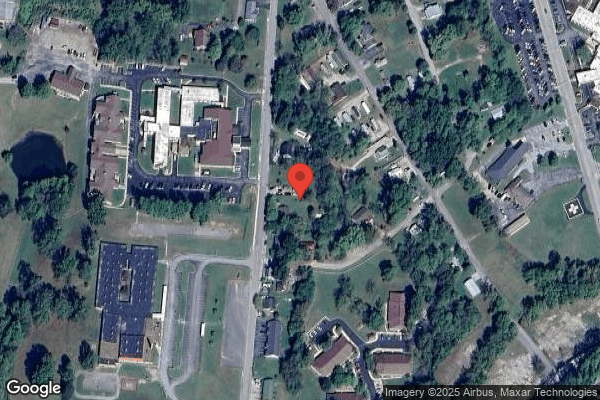
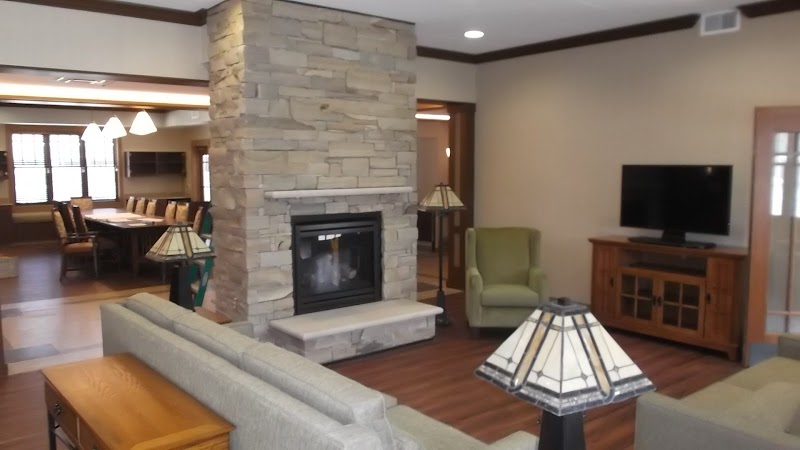
318 BILBREY STREET, LIVINGSTON, TN 38570 (931) 823-6403
Government - County 125 Beds Independent Data: November 2025
Trust Grade
85/100
#88 of 298 in TN
Last Inspection: May 2025

Inspected within the last 6 months. Data reflects current conditions.

Overview

Overton County Health and Rehab Center has a Trust Grade of B+, which means it is above average and generally recommended for care. It ranks #88 out of 298 nursing homes in Tennessee, placing it in the top half of facilities statewide, and it is the only option in Overton County. However, the facility is experiencing a worsening trend, with issues increasing from 2 in 2018 to 5 in 2025. Staffing is a strength, with a low turnover rate of 19% compared to the state average of 48%, but there is concerning RN coverage, as it has less than 95% of facilities in Tennessee. Although the center has no fines, which is a positive sign, there were specific incidents where the facility failed to document advance directives for several residents, did not accurately assess the discharge status for one resident, and did not secure identifiable information during medication administration for multiple residents. Overall, while there are strengths in staffing and no fines, the facility has notable areas for improvement in documentation and security practices.

Trust Score
B+
85/100
In Tennessee
#88/298
Top 29%
Safety Record
Low Risk
No red flags
Inspections
Getting Worse
2 → 3 violations
Staff Stability
✓ Good
19% annual turnover. Excellent stability, 29 points below Tennessee's 48% average. Staff who stay learn residents' needs.
Penalties
✓ Good
No fines on record. Clean compliance history, better than most Tennessee facilities.
Skilled Nurses
⚠ Watch
Each resident gets only 18 minutes of Registered Nurse (RN) attention daily — below average for Tennessee. Fewer RN minutes means fewer trained eyes watching for problems.
Violations
✓ Good
Only 5 deficiencies on record. Cleaner than most facilities. Minor issues only.
★★★★☆
4.0
Overall Rating
★★★★☆
4.0
Staff Levels
★★☆☆☆
2.0
Care Quality
★★★★☆
4.0
Inspection Score
Stable
2018: 2 issues
2025: 3 issues

The Good

  • 4-Star Staffing Rating · Above-average nurse staffing levels
  • Low Staff Turnover (19%) · Staff stability means consistent care
  • Full Sprinkler Coverage · Fire safety systems throughout facility
  • No fines on record
  • Staff turnover is low (19%)

    29 points below Tennessee average of 48%

Facility shows strength in staffing levels, staff retention, fire safety.

The Bad

No Significant Concerns Identified

This facility shows no red flags. Among Tennessee's 100 nursing homes, only 1% achieve this.

The Ugly 5 deficiencies on record

May 2025 3 deficiencies
CONCERN (D)

Potential for Harm - no one hurt, but risky conditions existed

Assessment Accuracy (Tag F0641)

Could have caused harm · This affected 1 resident

**NOTE- TERMS IN BRACKETS HAVE BEEN EDITED TO PROTECT CONFIDENTIALITY** Based on review of the Resident Assessment Instrument (RAI) Manual 3.0, medical record review, and interview the facility failed...

Read full inspector narrative →
**NOTE- TERMS IN BRACKETS HAVE BEEN EDITED TO PROTECT CONFIDENTIALITY** Based on review of the Resident Assessment Instrument (RAI) Manual 3.0, medical record review, and interview the facility failed to accurately assess the discharge status for 1 resident (Resident #83) of 3 residents reviewed. The findings include: Review of the RAI Manual dated 10/2024, revealed .The RAI process has multiple regulatory requirements .the assessment accurately reflects the resident's status .A2105: Discharge Status .This item documents the location to which the resident is being discharged at the time of discharge. Knowing the setting to which the individual was discharged helps to inform discharge planning . Review of the medical record revealed Resident #83 was admitted to the facility on [DATE] with diagnoses including Orthopedic Aftercare, Hypertension, Atrial Fibrillation, and Presence of Right Artificial Knee. Review of the Care Plan Report dated 1/27/2025 for Resident #83 revealed, .Focus .Potential for discharge to lower level of care .Goal .Resident/Responsible party/POA (Power of Attorney) will be aware of community resources prior to discharge . Review of the Discharge Minimum Data Set (MDS) assessment dated [DATE], revealed Resident #83 scored a 14 on the Brief Interview for Mental Status (BIMS) assessment which indicated the resident was cognitively intact. Further review revealed Resident #83's discharge status was coded as being discharged to .04. Short-Term General Hospital . Review of a Social Services progress note for Resident #83 dated 2/13/2025 at 11:10 AM revealed, .SW (Social Worker) spoke with [Named Home Health], and they have resident's referral and plan on admitting her to home health services in the morning . Review of a Discharge Summary note for Resident #83, dated 2/13/2025 at 5:05 PM, revealed, .Resident discharging home with daughter at this time . Review of the facility Transfer/Discharge report dated 2/13/2025 revealed Resident #83 was, .Discharging home with family and [Named Home Health] assisting with care . During an interview on 5/14/2025, at 10:28 AM, the Administrator confirmed Resident #83 was discharged home on 2/13/2025 and the MDS discharge asssessment was inaccurate. During an interview on 5/14/2025, at 10:40 AM, the MDS/Licensed Practical Nurse (LPN) stated Resident #83 was discharged home with home health on 2/13/2025. The MDS/LPN confirmed the resident's discharge MDS assessment dated [DATE] coded the resident as discharged to the hospital and was inaccurate.
CONCERN (D)

Potential for Harm - no one hurt, but risky conditions existed

Medical Records (Tag F0842)

Could have caused harm · This affected 1 resident

**NOTE- TERMS IN BRACKETS HAVE BEEN EDITED TO PROTECT CONFIDENTIALITY** Based on facility policy review, medical record review, observation, and interview, the facility failed to secure resident ident...

Read full inspector narrative →
**NOTE- TERMS IN BRACKETS HAVE BEEN EDITED TO PROTECT CONFIDENTIALITY** Based on facility policy review, medical record review, observation, and interview, the facility failed to secure resident identifiable information during medication administration for 3 residents (Residents #16, #52, and #23) of 4 residents observed for medication administration. The findings include: Review of the facility's policy titled, Electronic Medical Records, revised 3/2014, revealed .Electronic records are an acceptable form of medical record management .Only authorized persons who have been issued a password and user ID [identification] code will be permitted to access .The facility will make reasonable efforts to limit the use or disclosure of protected health information .Our electronic medical records system has safeguards to prevent unauthorized access of electronic protected health information . Review of the medical record revealed Resident #16 was admitted to the facility on [DATE] with diagnoses including Tourette's Disorder, Type 2 Diabetes, Mood Disorder, and Seizures. Review of an annual Minimum Data Set (MDS) assessment dated [DATE], revealed Resident #16 scored a 10 on the Brief Interview for Mental Status (BIMS) assessment which indicated moderate cognitive impairment. Review of the medical record revealed Resident #52 was admitted to the facility on [DATE] with diagnoses including Parkinson's Disease, Depression, Adjustment Disorder, and Pain. Review of an annual MDS assessment dated [DATE], revealed Resident #52 scored a 13 on the BIMS assessment which indicated the resident was cognitively intact. Review of the medical record revealed Resident #23 was admitted to the facility on [DATE] with diagnoses including Adjustment Disorder, Schizophrenia, Anxiety, Bipolar Disorder, and Pain. Review of an end of Prospective Payment System stay MDS assessment dated [DATE], revealed Resident #23 scored a 5 on the BIMS assessment which indicated severe cognitive impairment. During an observation on 5/13/2025 at 10:01 AM, Licensed Practical Nurse (LPN) A pushed a medication cart to Resident #16 and Resident #52's room. The medication cart contained a laptop used for accessing electronic health care records and a narcotic record book which contained residents' narcotic prescription information. LPN A opened the Electronic Medication Record Administration tab on the laptop. LPN A left the medication cart and entered Resident #16's room to perform hand hygiene. LPN A left the medication cart with Resident #16's medical record information visible on the laptop screen. During further observation LPN A returned to the cart, opened the narcotic record book, prepared Resident #16's medications, partially closed the laptop screen, did not close the narcotic record book, and entered Resident #16's room for medication administration. The resident's medical record was visible on the laptop screen and the resident's narcotic prescription information was visible. During an observation on 5/13/2025 at 10:05 AM, LPN A returned to the medication cart. LPN A re-opened the laptop, prepared medications for Resident #52, closed the narcotic record book, partially closed the laptop screen, left the medication cart, and entered Resident #52's room for medication administration. Further observation revealed Resident #52's medical record was visible on the laptop screen. During an observation on 5/13/2025 at 10:07 AM, LPN A returned to the medication cart and pushed the medication cart to Resident #23's room. LPN A prepared Resident #23's medications, partially closed the laptop screen, left the medication cart, and entered Resident #23's room for medication administration. During an interview on 5/13/2025 at 10:10 AM, LPN A stated he was unaware he left Resident #16's medical record visible when he performed hand hygiene, and stated he was unaware he left Resident #16's narcotic prescription information visible during Resident #16's medication administration. LPN A also stated he was unaware he should have completely closed the laptop screen to prevent visibility and access to Residents #16, #52, and #23's health information. During further interview LPN A stated he was not aware and did not know how to use the electronic medical record system safeguards intended to protect residents' health information. During an interview on 5/13/2025 at 2:10 PM, the Director of Nursing (DON) stated it was her expectation for nurses to use the electronic medical record system safeguards, and expected nurses to secure resident medical record information. During further interview the DON confirmed the facility failed to secure residents medical information during medication administration for Residents #16, #52, and #23. During an interview on 5/13/2025 at 2:18 PM, the Administrator confirmed the facility failed to secure resident medical information during medication administration for Residents #16, #52, and #23.
CONCERN (F)

Potential for Harm - no one hurt, but risky conditions existed

Deficiency F0578 (Tag F0578)

Could have caused harm · This affected most or all residents

**NOTE- TERMS IN BRACKETS HAVE BEEN EDITED TO PROTECT CONFIDENTIALITY** Based on facility policy review, medical record review, and interview, the facility failed to document advance directives educat...

Read full inspector narrative →
**NOTE- TERMS IN BRACKETS HAVE BEEN EDITED TO PROTECT CONFIDENTIALITY** Based on facility policy review, medical record review, and interview, the facility failed to document advance directives education and resident advance directive decisions in the medical record for 7 residents (Residents #3, #20, #24, #43, #56, #66, and #81) of 7 residents reviewed for advanced directives. The findings include: Review of the facility's policy titled, Advance Directives, revised 9/2022, revealed .The resident has the right to formulate an advanced directive .The facility defines the following .Advance care planning .Advance Directive .Living Will .Durable power of attorney for Healthcare .Prior to or upon admission of a resident, the social services director or designee inquires .about the existence of any written advanced directives .the resident or representative is provided with written information .information about whether or not the resident has executed an advanced directive is displayed prominently in the medical record . Medical record review revealed Resident #3 was admitted to the facility on [DATE] with diagnoses including Schizoaffective Disorder, Mood Disorder, Psychotic Disorder with Hallucinations, Anxiety Disorder, Unspecified Dementia with Behavioral Disturbance, Chronic Kidney Disease, Convulsions, Spinal Stenosis, and Parkinson's Disease without Dyskinesia. Review of a quarterly Minimum Data Set (MDS) assessment dated [DATE], revealed Resident #3 scored a 3 on the Brief Interview for Mental Status (BIMS) assessment which indicated severe cognitive impairment. Review of an admission Agreement dated 8/2/2010, revealed no written documentation of advance directive education for Resident #3 was discussed or provided to the resident's representative. Review of the medical record revealed no documentation for Resident #3's decisions regarding advanced directives to include advanced care planning, living will, and power of attorney. Review of the medical record revealed Resident #20 was admitted to the facility on [DATE] with diagnoses including Obstructive and Reflux Uropathy, Chronic Atrial Fibrillation, and Unsteadiness of Feet. Review of an admission MDS assessment dated [DATE], revealed Resident #20 scored a 13 on the BIMS assessment which indicated the resident was cognitively intact. Review of an admission Agreement signed 2/28/2025, revealed no writen documentation of advanced directive education for Resident #20 was discussed or provided to the resident or resident's representative. Review of the medical record revealed no documentation for Resident #20's decisions regarding advanced directives to include advanced care planning, living will, and power of attorney. Review of the medical record revealed Resident #24 was admitted to the facility on [DATE] with diagnoses including Parkinson's Disease, Dementia, Depression, Psychotic Disorder, and Pain. Review of a quarterly MDS assessment dated [DATE], revealed Resident #24 scored a 12 on the BIMS assessment which indicated moderate cognitive impairment. Review of an admission Agreement signed 4/6/2024, revealed no written documentation of advance directive education for Resident #24 was discussed or provided to the resident or resident's representative. Review of the medical record revealed no documentation for Resident #24's decisions regarding advanced directives to include advanced care planning, living will, and power of attorney. Review of the medical record revealed Resident #43 was admitted to the facility on [DATE] with diagnoses including Stroke, Depression, Hypertension, and Difficulty Swallowing. Review of a quarterly MDS assessment dated [DATE], revealed Resident #43 scored an 11 on the BIMS assessment which indicated moderate cognitive impairment. Review of an admission Agreement signed 8/23/2024, revealed no written documentation of advance directive education for Resident #43 was discussed or provided to the resident or resident's representative. Review of the medical record revealed no documentation for Resident #43's decisions regarding advanced directives to include advanced care planning, living will, and power of attorney. Review of the medical record revealed Resident #56 was admitted to the facility on [DATE] with diagnoses including Parkinson's Disease, Type 2 Diabetes, Anxiety, and Depression. Review of a quarterly MDS assessment dated [DATE], revealed Resident #56 scored a 14 on the BIMS assessment which indicated the resident was cognitively intact. Review of an admission Agreement signed 2/16/2023, revealed no written documentation of advance directive education for Resident #56 was discussed or provided to the resident or resident's representative. Review of the medical record revealed no documentation for Resident #56's decisions regarding advanced directives to include advanced care planning, living will, and power of attorney. Review of the medical record revealed resident #66 was admitted to the facility on [DATE], with readmission on [DATE], with diagnoses which included Malignant Neoplasm of Prostate, Secondary Malignant Neoplasm of Right Lung, Attention to Cystostomy, Gastrostomy, and Adult Failure to Thrive. Review of an end of Prospective Payment System stay MDS assessment dated [DATE], revealed Resident #66 scored an 8 on the BIMS assessment which indicated moderate cognitive impairment. Review of an admission Agreement signed 10/5/2023, revealed no written documentation of advance directive education for Resident #66 was discussed or provided to the resident's representative. Review of the medical record revealed no documentation for Resident #66's decisions regarding advanced directives to include advanced care planning, living will, and power of attorney. Review of the medical record revealed Resident #81 was admitted to the facility on [DATE] with diagnosis including Fracture of Lower End of Left Humerus, Generalized Anxiety Disorder, and Acute Kidney Disorder. Review of an admission MDS assessment dated [DATE], revealed Resident #81 scored a 15 on the BIMS assessment which indicated the resident was cognitively intact. Review of an admission Agreement signed 4/14/2025, revealed no written documentation of advanced directive education for Resident #81 was discussed or provided to the resident or resident's representative. Review of the medical record revealed no documentation for Resident #81's decisions regarding advanced directives to include advanced care planning, living will, and power of attorney. During a record review and interview on 5/14/2025 at 9:00 AM, the Social Services Director (SSD) reviewed the signed admission Agreements and medical records for Residents #3, #20, #24, #43, #56, #66, and #81. The SSD stated there was no documentation in the medical records to indicate the residents had received and understood the advance directive education provided or information regarding the residents advance directive decisions. During further interview the SSD confirmed the facility failed to document advance directives education and resident advance directive decisions in the medical record for Residents #3, #20, #24, #43, #56, #66, and #81.
Nov 2018 2 deficiencies
CONCERN (D)

Potential for Harm - no one hurt, but risky conditions existed

Accident Prevention (Tag F0689)

Could have caused harm · This affected 1 resident

**NOTE- TERMS IN BRACKETS HAVE BEEN EDITED TO PROTECT CONFIDENTIALITY** Based on facility policy review, medical record review, review of a facility investigation, and interview, the facility failed t...

Read full inspector narrative →
**NOTE- TERMS IN BRACKETS HAVE BEEN EDITED TO PROTECT CONFIDENTIALITY** Based on facility policy review, medical record review, review of a facility investigation, and interview, the facility failed to ensure the safety for 1 resident (#59) of 5 residents reviewed for accidents of 23 residents sampled. The findings include: Review of the Facility Policy Fall Risk Reduction and Management revised 2/2013, revealed .It is the policy of the facility to ensure a safe environment with the least restrictive measures while promoting the highest possible level of independence and quality of life . Medical record review revealed Resident #59 was admitted to the facility on [DATE] and readmitted [DATE] with diagnoses including Anxiety Disorder, Pain, Alzheimer's Disease, Arthritis, Dementia, History of Falls, and Fracture of the Left Femur. Medical record review of the 30 Day Minimum Data Set (MDS) dated [DATE] revealed Resident #59 scored a 3 (cognitively impaired) on the Brief Interview for Mental Status (BIMS). Continued review revealed the resident required extensive assistance of 1 or 2 staff members for activities of daily living and had 1 fall since admission. Review of a facility fall investigation dated 10/9/18 revealed .was called to hallway from another resident's room and observed resident sitting on right hip with back against geri chair [recliner] .no apparent injury . Continued review revealed .Immediate post-incident action .Educated staff to ensure geri chair is securely reclined in locked position . Further review revealed .Resident's legs had been reclined but resident was able to push the foot rest down and attempt to get up. Staff to ensure when geri chair is in reclined position that the lock is engaged securely for safety . Interview with Registered Nurse #1 on 11/27/18 at 10:09 AM, in the conference room, confirmed the level holder (locking device) on Resident #59's geri chair was not locked at the time of the fall.
CONCERN (D)

Potential for Harm - no one hurt, but risky conditions existed

Medication Errors (Tag F0758)

Could have caused harm · This affected 1 resident

**NOTE- TERMS IN BRACKETS HAVE BEEN EDITED TO PROTECT CONFIDENTIALITY** Based on review of the facility policy, medical record review, and interview, the facility failed to ensure a stop date was in p...

Read full inspector narrative →
**NOTE- TERMS IN BRACKETS HAVE BEEN EDITED TO PROTECT CONFIDENTIALITY** Based on review of the facility policy, medical record review, and interview, the facility failed to ensure a stop date was in place for as needed psychotropic medication orders for 1 resident (#41) of 5 residents reviewed for unnecessary medications of 23 residents sampled. The findings include: Review of the facility policy Antipsychotic Medication Use, last revised 12/2016, revealed .The need to continue PRN [as needed] orders for psychotropic medications beyond 14 days requires that the practitioner document the rationale for the extended order. The duration of the PRN order will be indicated in the order . Medical record review revealed Resident #41 was admitted to the facility on [DATE] with diagnoses including Alzheimer's Disease, Dementia, Anxiety Disorder, and Anemia. Medical record review of the Physician's Order dated 11/12/18 revealed .Valium [antianxiety medication] 5 MG [milligrams] tablet take one tablet by mouth every 6 hours as needed for anxiety . Continued review revealed no stop date for the Valium ordered on 11/12/18. Medical record review of the Medication Administration Record (MAR) dated 11/2018 revealed .Valium 5 mg tablet take one tablet every 6 hours as needed for anxiety .Order date 11/12/18 . Continued review of the MAR revealed the resident received a dose of the Valium on 11/26/18 and 11/27/18. Interview with the Director of Nursing (DON) on 11/28/18 at 1:13 PM, in the conference room, confirmed a stop date was not in place on the Physician's Order for the Valium on 11/12/18 and confirmed the resident received 2 doses of the Valium after the 14 days specified in the facility policy.
Understanding Severity Codes (click to expand)
Life-Threatening (Immediate Jeopardy)
J - Isolated K - Pattern L - Widespread
Actual Harm
G - Isolated H - Pattern I - Widespread
Potential for Harm
D - Isolated E - Pattern F - Widespread
No Harm (Minor)
A - Isolated B - Pattern C - Widespread

Questions to Ask on Your Visit

  • "Can I speak with families of current residents?"
  • "What's your RN coverage like on weekends and overnight?"

Our Honest Assessment

Strengths
  • • Grade B+ (85/100). Above average facility, better than most options in Tennessee.
  • • No major safety red flags. No abuse findings, life-threatening violations, or SFF status.
  • • No fines on record. Clean compliance history, better than most Tennessee facilities.
  • • Only 5 deficiencies on record. Cleaner than most facilities. Minor issues only.
Concerns
  • • No significant concerns identified. This facility shows no red flags across CMS ratings, staff turnover, or federal penalties.
Bottom line: Generally positive indicators. Standard due diligence and a personal visit recommended.

About This Facility

What is Overton County Health And Rehab Center's CMS Rating?

CMS assigns OVERTON COUNTY HEALTH AND REHAB CENTER an overall rating of 4 out of 5 stars, which is considered above average nationally. Within Tennessee, this rating places the facility higher than 99% of the state's 100 nursing homes. This rating reflects solid performance across the metrics CMS uses to evaluate nursing home quality.
How is Overton County Health And Rehab Center Staffed?

CMS rates OVERTON COUNTY HEALTH AND REHAB CENTER's staffing level at 4 out of 5 stars, which is above average compared to other nursing homes. Staff turnover is 19%, compared to the Tennessee average of 46%. This relatively stable workforce can support continuity of care.

What Have Inspectors Found at Overton County Health And Rehab Center?

State health inspectors documented 5 deficiencies at OVERTON COUNTY HEALTH AND REHAB CENTER during 2018 to 2025. These included: 5 with potential for harm.
Who Owns and Operates Overton County Health And Rehab Center?

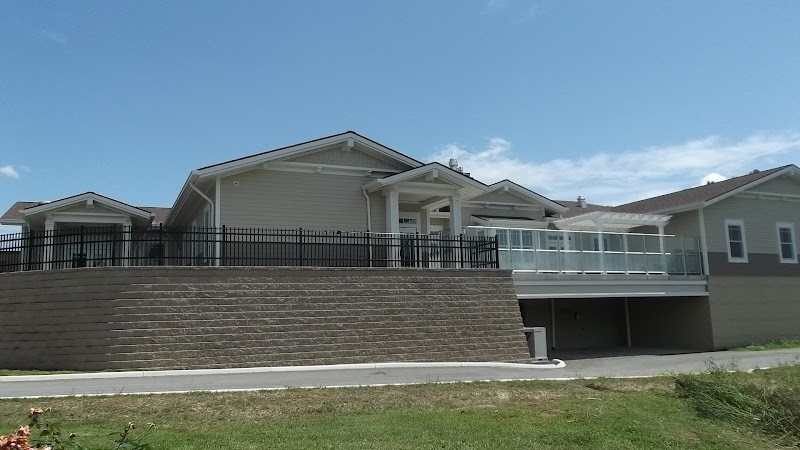
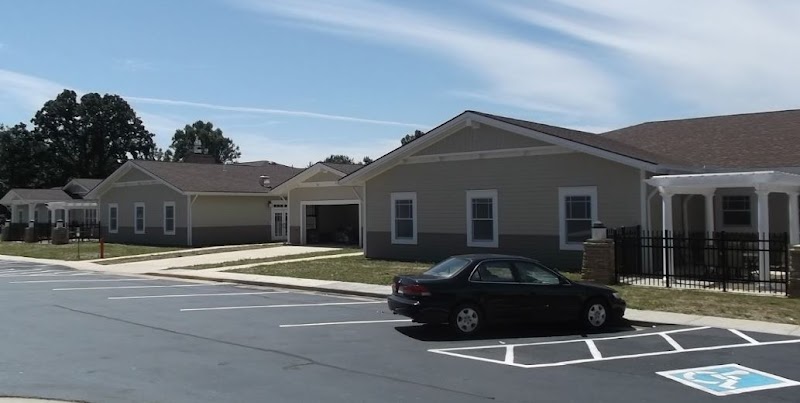
OVERTON COUNTY HEALTH AND REHAB CENTER is owned by a government entity. Government-operated facilities are typically run by state, county, or municipal agencies. The facility operates independently rather than as part of a larger chain. With 125 certified beds and approximately 86 residents (about 69% occupancy), it is a mid-sized facility located in LIVINGSTON, Tennessee.
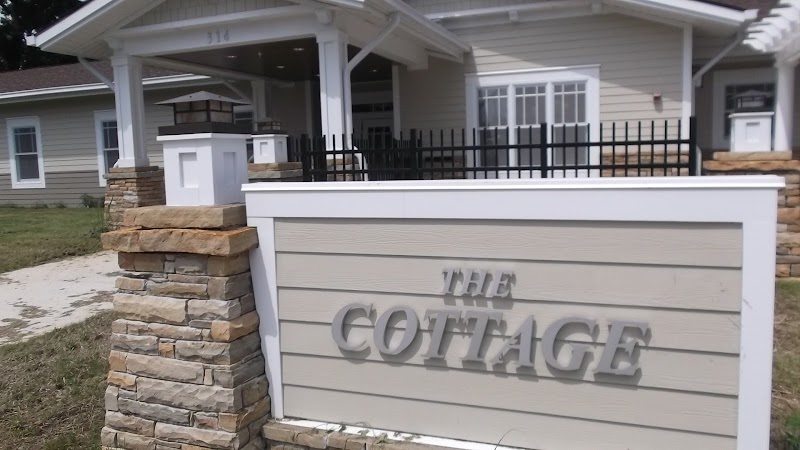
How Does Overton County Health And Rehab Center Compare to Other Tennessee Nursing Homes?

Compared to the 100 nursing homes in Tennessee, OVERTON COUNTY HEALTH AND REHAB CENTER's overall rating (4 stars) is above the state average of 2.8, staff turnover (19%) is significantly lower than the state average of 46%, and health inspection rating (4 stars) is above the national benchmark.

What Should Families Ask When Visiting Overton County Health And Rehab Center?

Based on this facility's data, families visiting should ask: "Can I visit during a mealtime to observe dining assistance and food quality?" "How do you handle medical emergencies, and what is your hospital transfer rate?" "Can I speak with family members of current residents about their experience?"

Is Overton County Health And Rehab Center Safe?

Based on CMS inspection data, OVERTON COUNTY HEALTH AND REHAB CENTER has a clean safety record: no substantiated abuse findings (meaning no confirmed cases of resident harm), no Immediate Jeopardy citations (the most serious violation level indicating risk of serious injury or death), and is not on the Special Focus Facility watch list (a federal program monitoring the lowest-performing 1% of nursing homes). The facility has a 4-star overall rating and ranks #1 of 100 nursing homes in Tennessee. While no facility is perfect, families should still ask about staff-to-resident ratios and recent inspection results during their visit.

Do Nurses at Overton County Health And Rehab Center Stick Around?

Staff at OVERTON COUNTY HEALTH AND REHAB CENTER tend to stick around. With a turnover rate of 19%, the facility is 27 percentage points below the Tennessee average of 46%. Low turnover is a positive sign. It means caregivers have time to learn each resident's needs, medications, and personal preferences. Consistent staff also notice subtle changes in a resident's condition more quickly.

Was Overton County Health And Rehab Center Ever Fined?

OVERTON COUNTY HEALTH AND REHAB CENTER has no federal fines on record. CMS issues fines when nursing homes fail to meet care standards or don't correct problems found during inspections. The absence of fines suggests the facility has either maintained compliance or corrected any issues before penalties were assessed. This is a positive indicator, though families should still review recent inspection reports for the full picture.

Is Overton County Health And Rehab Center on Any Federal Watch List?

OVERTON COUNTY HEALTH AND REHAB CENTER is not on any federal watch list. The most significant is the Special Focus Facility (SFF) program, which identifies the bottom 1% of nursing homes nationally based on persistent, serious quality problems. Not being on this list means the facility has avoided the pattern of deficiencies that triggers enhanced federal oversight. This is a positive indicator, though families should still review the facility's inspection history directly.