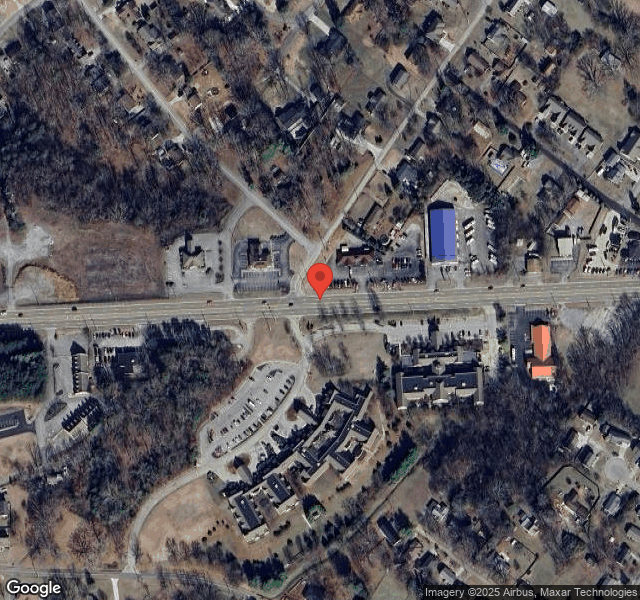

WOOD VILLAGE

2320 EAST LAMAR ALEXANDER PKWY, MARYVILLE, TN 37804 (865) 273-8300
Non profit - Corporation 76 Beds Independent Data: November 2025
Trust Grade
55/100
#225 of 298 in TN
Last Inspection: August 2023

Over 2 years since last inspection. Current conditions may differ from available data.

Overview

Wood Village in Maryville, Tennessee, has a Trust Grade of C, which means it is average and sits in the middle of the pack for nursing homes. It ranks #225 out of 298 facilities in Tennessee, placing it in the bottom half, and #5 out of 6 in Blount County, indicating that only one local option is better. Unfortunately, the facility is worsening, with issues increasing from 2 in 2020 to 9 in 2023. Staffing is a strong point, as it has a 4 out of 5-star rating and a 0% turnover rate, which is significantly lower than the state average of 48%. On the downside, there have been concerns about cleanliness, such as staff not wearing protective beard coverings while preparing food and expired food items being stored improperly, which could affect many residents. Additionally, there were issues with failing to ensure residents received information about advance directives, which is crucial for their care decisions. While there are positives, families should be aware of these weaknesses when considering Wood Village for their loved ones.

Trust Score
C
55/100
In Tennessee
#225/298
Bottom 25%
Safety Record
Low Risk
No red flags
Inspections
Getting Worse
2 → 9 violations
Staff Stability
○ Average
Turnover data not reported for this facility.
Penalties
✓ Good
No fines on record. Clean compliance history, better than most Tennessee facilities.
Skilled Nurses
✓ Good
Each resident gets 93 minutes of Registered Nurse (RN) attention daily — more than 97% of Tennessee nursing homes. RNs are the most trained staff who catch health problems before they become serious.
Violations
⚠ Watch
13 deficiencies on record. Higher than average. Multiple issues found across inspections.
★★☆☆☆
2.0
Overall Rating
★★★★☆
4.0
Staff Levels
★★☆☆☆
2.0
Care Quality
★★☆☆☆
2.0
Inspection Score
Stable
2020: 2 issues
2023: 9 issues

The Good

  • 4-Star Staffing Rating · Above-average nurse staffing levels
  • Full Sprinkler Coverage · Fire safety systems throughout facility
  • No fines on record

Facility shows strength in staffing levels, fire safety.

The Bad

2-Star Overall Rating

Below Tennessee average (2.8)

Below average - review inspection findings carefully

The Ugly 13 deficiencies on record

Aug 2023 9 deficiencies
CONCERN (D)

Potential for Harm - no one hurt, but risky conditions existed

Transfer Notice (Tag F0623)

Could have caused harm · This affected 1 resident

**NOTE- TERMS IN BRACKETS HAVE BEEN EDITED TO PROTECT CONFIDENTIALITY** Based on record review, and interview the facility failed to notify a resident/family in writing of a transfer and discharge for...

Read full inspector narrative →
**NOTE- TERMS IN BRACKETS HAVE BEEN EDITED TO PROTECT CONFIDENTIALITY** Based on record review, and interview the facility failed to notify a resident/family in writing of a transfer and discharge for 1 resident (Resident #61) of 3 residents reviewed for discharge. The findings include: Resident #61was admitted to the facility on [DATE] with diagnoses including Adult Failure to Thrive, and Unspecified Protein-Calorie Malnutrition. Review of Resident #61's nurse progress note dated 6/2/2023, showed the resident was transferred to a local hospital for evaluation and treatment due to rectal bleeding. Resident #61 was admitted to the hospital. Review of Resident #61's discharge Minimum Data Set (MDS) dated [DATE], showed the resident had an unplanned discharge to an acute care hospital. During an interview on 8/16/2023 at 1:30 PM, the Director of Nursing (DON) confirmed there was no written notification sent to Resident #61's family regarding transfer to hospital.
CONCERN (D)

Potential for Harm - no one hurt, but risky conditions existed

Deficiency F0655 (Tag F0655)

Could have caused harm · This affected 1 resident

**NOTE- TERMS IN BRACKETS HAVE BEEN EDITED TO PROTECT CONFIDENTIALITY** Based on the facility policy review, record review, and interview, the facility failed to develop a baseline care plan for 4 res...

Read full inspector narrative →
**NOTE- TERMS IN BRACKETS HAVE BEEN EDITED TO PROTECT CONFIDENTIALITY** Based on the facility policy review, record review, and interview, the facility failed to develop a baseline care plan for 4 residents (Residents #12, #30, #38, and #51) of 25 residents reviewed for baseline care plans. The findings include: Review of the facility policy titled, Resident Assessment/Care Plan Process, revised on 7/3/2019, showed .A baseline care plan should be completed within 48 hours of admission in accordance with the State Operational Manual guidelines . Resident #12 was admitted to the facility on [DATE] with diagnoses including Post-Traumatic Stress Disorder (PTSD), Parkinson's Disease, and Chronic Obstructive Pulmonary Disease. Review of Resident #12 's admission Minimum Data Set (MDS) assessment dated [DATE], showed the resident had a Brief Interview for Mental Status (BIMS) score of 15, which indicated the resident was cognitively intact. Further review showed the resident had no mood indicators, no behaviors, and a diagnosis for Post Traumatic Stress Disorder. Review of Resident #12's medical record showed no baseline care plan was developed for trauma informed care. Resident #30 was admitted to the facility on [DATE] with diagnoses including Chronic Obstructive Pulmonary Disease, Chronic Respiratory Failure with Hypoxia, and Depression. Review of Resident #30 's admission MDS assessment dated [DATE], showed the resident had a BIMS score of 12, which indicated the resident had moderate cognitive impairment. The resident was at risk for developing a pressure ulcer and had no pressure ulcer on admission. Review of Resident #30's medical record showed no baseline care plan for at risk for impaired skin integrity. Resident #38 was admitted to the facility on [DATE] and readmitted on [DATE] with diagnoses including Pressure Ulcer of Sacral Region, Juvenile Idiopathic Scoliosis and Parkinson's Disease. Review of Resident #38's 5-day admission MDS assessment dated [DATE], showed the resident had a BIMS score of 15, which indicated the resident was cognitively intact. Further review showed the resident required extensive assistance of 2 staff members for bed mobility, transfers, dressing, toilet use, and personal hygiene. Further review showed the resident had an unhealed, unstageable pressure ulcer. Review of Resident #38's medical record showed no baseline care plan was developed to address the resident's unstageable pressure ulcer. Resident #51 was admitted to the facility on [DATE] with diagnoses including Type 2 Diabetes Mellitus, and Chronic Kidney Disease. Review of Resident #51's admission MDS assessment dated [DATE], showed the resident had a BIMS score of 15, which indicated the resident was cognitively intact. Further review showed the resident required limited assistance with bed mobility, supervision with eating, and extensive assistance of 1 staff member with toileting, transfers, bathing, and ambulation. Continued review showed the following pressure ulcers were present on admission: 1 stage 2 wound, and 2 stage 3 wounds. Review of Resident #51's medical record showed no baseline care plan was developed for the stage 2 and stage 3 pressure ulcers. During an interview on 8/16/2023 at 11:00 AM, the MDS Coordinator confirmed a baseline care plan was not developed for Resident #12's trauma informed care, Resident #30's risk for impaired skin integrity, Resident #38's pressure ulcer, and Resident #51's pressure ulcers. During an interview on 8/16/2023 at 11:30 AM, the Director of Nursing (DON) confirmed Resident #12's PTSD was not addressed on the baseline care plan. Further interview confirmed Resident #30, Resident #38 and Resident #51's pressure ulcers/skin risk identified on admission assessments was not addressed on the baseline care plans.
CONCERN (D)

Potential for Harm - no one hurt, but risky conditions existed

Comprehensive Care Plan (Tag F0656)

Could have caused harm · This affected 1 resident

**NOTE- TERMS IN BRACKETS HAVE BEEN EDITED TO PROTECT CONFIDENTIALITY** Based on facility policy review, record review, and interview, the facility failed to develop a comprehensive care plan for trau...

Read full inspector narrative →
**NOTE- TERMS IN BRACKETS HAVE BEEN EDITED TO PROTECT CONFIDENTIALITY** Based on facility policy review, record review, and interview, the facility failed to develop a comprehensive care plan for trauma informed care for 1 resident ( Resident #12 ), anti-coagulant therapy for 1 resident ( Resident #27 ), and pressure ulcers for 2 residents ( Resident #38, and #51 ) of 25 residents reviewed for comprehensive care plans. The findings include: Review of the facility's policy titled, Resident Assessment/Care Plan Process, dated 7/3/2019, showed .A comprehensive care plan should be completed no later than seven (7) calendar days after the CAA [Care Area Assessment] completion date per RAI [Resident Assessment Instrument] guidelines . Resident #12 was admitted to the facility on [DATE] with diagnoses including Post-Traumatic Stress Disorder (PTSD), Parkinson's Disease, and Chronic Obstructive Pulmonary Disease. Review of Resident #12 's admission Minimum Data Set (MDS) assessment dated [DATE], showed the resident had a Brief Interview for Mental Status (BIMS) score of 15, which indicated the resident was cognitively intact. Further review showed the resident had no mood indicators, no behaviors, and a diagnosis for Post Traumatic Stress Disorder. Review of Resident #12's comprehensive care plan dated 7/13/2023, showed no documentation for trauma informed care. Resident #27 was admitted to the facility on [DATE] with diagnoses including, Fractured Femur with Repair, Anxiety Disorder, and Pulmonary Fibrosis. Review of Resident #27's admission MDS assessment dated [DATE], showed the resident had a BIMS score of 15, which indicated the resident was cognitively intact. Further review showed the resident required extensive assistance of 2 staff members for transfers, mobility, bathing, and toileting, and received 7 anticoagulants for the review period. Review of Resident #27's comprehensive care plan dated 7/21/2023, showed no documentation for anti-coagulant therapy. Resident #38 was admitted to the facility on [DATE] and readmitted on [DATE] with diagnoses including Pressure Ulcer of Sacral Region, Juvenile Idiopathic Scoliosis and Parkinson's Disease. Review of Resident #38's 5-day admisssion MDS assessment dated [DATE], showed the resident had a BIMS score of 15, which indicated the resident was cognitively intact. Further review showed the resident required extensive assistance of 2 staff members for bed mobility, transfers, dressing, toilet use, and personal hygiene. Continued review showed the resident had an unhealed, unstageable pressure ulcer. Review of Resident #38's comprehensive care plan dated 7/25/2023, showed no documentation of the unstageable pressure ulcer. Resident #51 admitted to the facility on [DATE] with diagnoses including Type 2 Diabetes Mellitus, and Chronic Kidney Disease. Review of Resident # 51's admission MDS assessment dated [DATE], showed the resident had a BIMS score of 15, which indicated the resident was cognitively intact. Further review showed the resident required limited assistance with bed mobility, supervision with eating, and extensive assistance of 1 staff member with toileting, transfers, bathing, and ambulation. Continued review showed the following pressure ulcers were present on admission: 1 stage 2 wound and 2 stage 3 wounds. Review of Resident #51's comprehensive care plan dated 7/21/2023, showed no documentation of the 3 pressure ulcers. During an interview on 8/16/2023 at 10:56 AM, the MDS Coordinator stated Resident #38's pressure ulcer was present on the 5-day MDS assessment dated [DATE]. The MDS Coordinator confirmed there was no care plan developed for the pressure ulcer. During an interview on 8/16/2023 at 11:00 AM, the MDS Coordinator, confirmed the pressure ulcers assessed on the MDS dated [DATE] for Resident #51 was not documented or addressed on the comprehensive care plan for wound care. Further interview confirmed Resident #27's anticoagulation therapy was not addressed on the comprehensive care plan. During an interview on 8/16/2023 at 11:02 AM, the MDS Coordinator confirmed the facility did not develop a comprehensive care plan for trauma informed care related to PTSD for Resident #12. During an interview on 8/16/2023 at 11:30 AM, the Director of Nursing (DON) confirmed Resident #12's trauma informed care related to PTSD was not addressed on the comprehensive care plan. Further interview confirmed Resident #38 and Resident #51's pressure ulcers/skin risk identified on admission assessments was not addressed on the comprehensive care plan.
CONCERN (D)

Potential for Harm - no one hurt, but risky conditions existed

Deficiency F0657 (Tag F0657)

Could have caused harm · This affected 1 resident

**NOTE- TERMS IN BRACKETS HAVE BEEN EDITED TO PROTECT CONFIDENTIALITY** Based on facility policy review, record review, and interview the facility failed to revise the comprehensive care plan for 1 re...

Read full inspector narrative →
**NOTE- TERMS IN BRACKETS HAVE BEEN EDITED TO PROTECT CONFIDENTIALITY** Based on facility policy review, record review, and interview the facility failed to revise the comprehensive care plan for 1 resident (Resident #16) to include fall interventions of 7 residents reviewed for falls and failed to revise the comprehensive care plan for 1 resident (Resident #30) to include a pressure ulcer of 3 residents reviewed for pressure ulcers The findings include: Review of the facility policy titled, Resident Assessment/Care Plan Process, last reviewed 12/21/2022, showed .Care plans should be revised as changes in the patient's condition dictates . Resident # 16 was admitted to the facility on [DATE] with diagnoses including Fracture of Left Femur, Difficulty in Walking, Muscle Weakness, and Vascular Dementia. Review of a 5-Day admission Minimum Data Set (MDS) assessment dated [DATE], showed the resident had a Brief Interview for Mental Status (BIMS) score of 10 which indicated the resident had moderate cognitive impairment. The resident required limited assistance of 1 staff member for transfers, extensive assistance of 2 staff members for toilet use and personal hygiene. Review of Resident #16's comprehensive care plan dated 7/21/2023 showed .AT RISK FOR FALLS .call light .within reach and encourage the resident to use it for assistance .Bed in low position .Encourage and assist to wear proper, non-slip footwear .Encourage to use handrails or assistive devices . Review of a facility Fall Investigation Form dated 8/8/2023, showed .found by staff on the floor at the foot of her bed .stated .getting up to go to bed .was in bed prior to getting up .Bruise noted to forehead with small abrasion between eyes .Bed alarm placed . Review of Resident #16's active Physician Orders dated 8/16/2023 showed .bed alarm .Order Date .8/8/2023 . Review of Resident #16's comprehensive care plan showed the care plan had not been revised to include a bed alarm. During an interview on 8/16/2023 at 10:00 AM, the MDS Coordinator confirmed Resident #16's comprehensive care plan had not been revised to include a bed alarm ordered on 8/8/2023. Resident #30 was admitted to the facility on [DATE] with diagnoses including Cellulitis of Left Lower Limb, Chronic Obstructive Pulmonary Disease, Need for Assistance with Personal Care, and Depression. Review of a 5-day admission MDS assessment dated [DATE], showed the resident had a BIMS score of 12 which indicated the resident had moderate cognitive impairment. The resident required extensive assistance of 2 staff members for bed mobility, dressing, toilet use, and personal hygiene. Further review showed the resident was at risk of developing pressure ulcers. Review of Resident #30's comprehensive care plan dated 7/18/2023, showed .at risk for .ALTERATION IN SKIN INTEGRITY . Review of a wound note dated 8/1/2023, showed .Rt [right] buttock stage 2 .4x5cm [centimeter] . Review of Resident #30's active Physician Orders dated 8/16/2023 showed .Bilat [Bilateral] buttock .cleanse NS [Normal Saline], pat dry, apply [paste] qid [four times a day] . During an interview on 8/16/2023 at 2:25 PM, the MDS Coordinator confirmed Resident #30's comprehensive care plan had not been revised to reflect the stage 2 pressure ulcer.
CONCERN (D)

Potential for Harm - no one hurt, but risky conditions existed

Deficiency F0698 (Tag F0698)

Could have caused harm · This affected 1 resident

**NOTE- TERMS IN BRACKETS HAVE BEEN EDITED TO PROTECT CONFIDENTIALITY** Based on facility policy review, medical record review, and interview the facility failed to ensure ongoing communication betwee...

Read full inspector narrative →
**NOTE- TERMS IN BRACKETS HAVE BEEN EDITED TO PROTECT CONFIDENTIALITY** Based on facility policy review, medical record review, and interview the facility failed to ensure ongoing communication between the facility and an outside dialysis center for 1 resident (Resident #164) of 2 residents reviewed for dialysis. The findings include: Review of the facility policy titled Interim Plan of Care for a Dialysis Patient, revised 8/2014 showed .Communication with the dialysis clinic will be documented on the dialysis communication form . Resident #164 was admitted to the facility on [DATE] with diagnoses including End Stage Renal Disease, and Congestive Heart Failure. Review of Resident # 164 's care plan dated 8/8/2023, showed Hemodialysis (HD) Monday-Wednesday-Friday at noon. Review of a physician's order dated 8/7/2023, showed complete daily maintence of line assessment for (Perm-Cath HD port) (a vascular access used to administer dialysis). Review of Resident #164's medical record showed no documentation the Dialysis Clinic Communication Form had been completed on 8/7/2023, 8/9/2023, 8/11/2023, and 8/14/2023 (the days resident was transferred to the dialysis clinic for dialysis treatments). During an interview on 8/15/2023 at 5:22 PM, Registered Nurse (RN) #2 charge nurse confirmed the Dialysis Clinic Communication Form had not been completed for Resident #164 for the days she had received dialysis treatments at the clinic. He stated dialysis staff usually call with any new orders or changes for the resident's care, the physician would be notified, and the new orders would be placed into the electronic medical record. During an interview on 8/15/2023 at 5:40 PM, the Director of Nursing confirmed the Dialysis Communication form should have been completed each time the resident was sent out for dialysis treatments and the form should be returned with the resident upon completion of dialysis.
CONCERN (D)

Potential for Harm - no one hurt, but risky conditions existed

Deficiency F0699 (Tag F0699)

Could have caused harm · This affected 1 resident

**NOTE- TERMS IN BRACKETS HAVE BEEN EDITED TO PROTECT CONFIDENTIALITY** Based on record review, and interviews, the facility failed to ensure 1 resident (Resident #12) of 25 sampled residents received...

Read full inspector narrative →
**NOTE- TERMS IN BRACKETS HAVE BEEN EDITED TO PROTECT CONFIDENTIALITY** Based on record review, and interviews, the facility failed to ensure 1 resident (Resident #12) of 25 sampled residents received trauma-informed care in accordance with professional standards of practice and accounting for a resident's experiences and preferences in order to eliminate or mitigate triggers that may cause re-traumatization of the resident. The findings include: Resident #12 was admitted to the facility on [DATE] with diagnoses including Depression, Post-Traumatic Stress Disorder (PTSD), Parkinson's Disease, and Fracture of Lower Right Tibia. Review of the facility's trauma informed care process showed .Upon admission trauma informed care screening is completed for each resident .Triggers may include .war .historical trauma . Review of a 5-Day admission Minimum Data Set (MDS) assessment dated [DATE], showed Resident #12 had a Brief Interview for Mental Status of 15 which indicated the resident was cognitively intact, had no mood indicators, and no behaviors. Further review showed .Psychiatric/Mood Disorder .Depression .Post Traumatic Stress Disorder . Review of Resident #12's comprehensive care plan initiated 7/13/2023, showed there was no identified problems or needs listed for PTSD/Trauma Informed Care. Review of a Trauma-Informed Screening dated 7/17/2023, showed .During the last 30 days how often have you experienced .Repeated, disturbing memories, thoughts, or images of a stressful experience from the past .Sometimes .Feeling very upset when reminded of a stressful experience from the past .Sometimes .Avoid situations or activities that remind you of a stressful experience from the past .Sometimes .Trauma Screening .Notes .[no documented information] . Review of a Psychiatric Evaluation dated 7/19/2023, showed .Seen today for evaluation of PTSD .Psychiatric Medications .Abilify [medication used for psychotic disorders] .requires current dose for stability related to PTSD . Review of a Psychological Diagnostic Interview dated 7/27/2023, showed .Army-retired after 24 yrs [years] .Not sleeping good .Regarding PTSD he said that TV programs, movies, and conversations about Vietnam. Pt [patient] said that so far he has not identified any triggers .Recommendations Please make sure the Staff does not engage him in conversation about his time in Vietnam or current political events related to military conflicts to avoid triggering . During an interview on 8/15/2023 at 2:58 PM, Resident #12 stated he had PTSD since 1971 after the Vietnam war. The resident's last triggered episode was on July 4th when he heard fireworks. Other triggers were movies, books, and when he was asked a lot of questions about Vietnam. He also stated Dr. T with the Veterans Administration (VA) was his physician, and he was evaluated every 4 months. He takes multiple medications for the PTSD, his medications had been adjusted multiple times, and the current regimen had him stable. The facility did not assess the resident upon admission to the facility for PTSD or interview him on what triggered the PTSD. Resident #12 had no triggered episodes at the facility since admission. During an interview on 8/16/2023 at 7:24 AM, Licensed Practical Nurse #2 stated she was unaware Resident #12 had a diagnosis of PTSD and what would trigger a behavioral episode. During an interview on 8/16/2023 at 7:28 AM, Certified Nursing Assistant #2 stated he was unaware Resident #12 had a diagnosis of PTSD and what would trigger a behavioral episode. During an interview on 8/16/2023 at 8:15 AM, Registered Nurse #3 stated she was unaware Resident #12 had a diagnosis of PTSD and what would trigger a behavioral episode. During an interview on 8/16/2023 at 8:57 AM, the Social Worker (SW) stated she had completed a Trauma-Informed Screening for Resident #12 after his admission to the facility. The SW confirmed she did not screen the resident for PTSD and what triggers could cause him to have an episode. During an interview on 8/16/2023 at 11:02 AM, the MDS Coordinator confirmed the facility had not implemented trauma informed care related to PTSD for Resident #12.
CONCERN (D)

Potential for Harm - no one hurt, but risky conditions existed

Infection Control (Tag F0880)

Could have caused harm · This affected 1 resident

**NOTE- TERMS IN BRACKETS HAVE BEEN EDITED TO PROTECT CONFIDENTIALITY** Based on facility policy review, observation, and interview the facility failed to maintain infection control practices while de...

Read full inspector narrative →
**NOTE- TERMS IN BRACKETS HAVE BEEN EDITED TO PROTECT CONFIDENTIALITY** Based on facility policy review, observation, and interview the facility failed to maintain infection control practices while delivering meal trays to residents on 1 of 2 units observed. The findings include: Review of the facility policy titled, Hand Hygiene and Handwashing, last reviewed 6/1/2023, showed .Handwashing and Hand Hygiene is regarded by this organization as the single most important means of preventing the spread of infections .Handwashing facilities or alcohol-based hand rubs are readily available in patient [resident] rooms .After removal of .gloves .wash hands .immediately .Alcohol hand gel may be used if hands are not visibly soiled .Hand hygiene shall be used in place of handwashing .After removing gloves .After passing out .meal trays .After .direct resident contact . During an observation of meal delivery on 8/15/2023 at 7:46 AM, on the 200 unit, revealed the following: Certified Nursing Assistant (CNA) #1 retrieved a breakfast tray from the meal cart with gloved hands. The CNA entered room [ROOM NUMBER], the meal tray was served/set up, the CNA removed the gloves, and exited the room without washing or sanitizing the hands. Further observation showed CNA #1 applied a new pair of gloves, retrieved another meal tray from the meal cart, and entered room [ROOM NUMBER]. The CNA touched the side rail of the bed, repositioned the resident, positioned the bedside table, the meal tray was served/set up, and placed in the residents reach. The CNA removed the gloves and exited the room without washing or sanitizing the hands. Continued observation showed CNA #1 applied a new pair of gloves, retrieved another meal tray from the meal cart and entered room [ROOM NUMBER], the meal tray was served/set up, the CNA removed the gloves, and exited the room without washing or sanitizing the hands. During an interview on 8/15/2023 at 8:12 AM, CNA #1 confirmed she failed to wash or sanitize the hands while delivering meal trays to residents on the 200 unit. During an interview on 8/15/2023 at 8:16 AM, Registered Nurse #1 stated it was the expectation of the facility for staff to wash or sanitize the hands when delivering meal trays between residents and after glove removal. During an interview on 8/15/2023 at 9:24 AM, the Director of Nursing (DON) stated it was the expectation for staff to wash or use hand sanitizer after meal delivery to each resident and after glove removal. The DON confirmed the facility failed to follow the handwashing/hand hygiene policy while delivering meal trays to residents on the 200 unit.
CONCERN (E)

Potential for Harm - no one hurt, but risky conditions existed

Deficiency F0578 (Tag F0578)

Could have caused harm · This affected multiple residents

**NOTE- TERMS IN BRACKETS HAVE BEEN EDITED TO PROTECT CONFIDENTIALITY** Based on facility policy review, record review and interview, the facility failed to document evidence the residents or their re...

Read full inspector narrative →
**NOTE- TERMS IN BRACKETS HAVE BEEN EDITED TO PROTECT CONFIDENTIALITY** Based on facility policy review, record review and interview, the facility failed to document evidence the residents or their representatives had received information to formulate an advance directive for 24 residents (Residents #2, #8, #12, #16, #20, #21, #27, #30, #38, #40, #47, #48, #51, #58, #59, #163, #164, #165, #167, #213, #214, #313, #314 and #316) of 25 residents reviewed for advance directives. The findings include: Review of the facility's policy titled, Advance Directives, dated 6/22/2023, showed .Upon admission .the business office will provide .information .resident's right to prepare an advance directive . Resident #2 was admitted to the facility on [DATE] with diagnoses including Chronic Kidney Disease and Congestive Heart Failure. Resident #8 was admitted to the facility on [DATE] with diagnoses including Cellulitis of Left Lower Limb and Essential (Primary) Hypertension. Resident #12 was admitted to the facility on [DATE] with diagnoses including Post-Traumatic Stress Disorder, Parkinson's Disease, and Chronic Obstructive Pulmonary Disease. Resident #16 was admitted to the facility on [DATE] with diagnoses including Vascular Dementia, Atrial Fibrillation, and Transient Ischemic Attack. Resident #20 was admitted to the facility on [DATE] with diagnoses including Back Pain and Pain in Right Knee. Resident #21 was admitted to the facility on [DATE] with diagnoses including Infection and Inflammatory Reaction due to Internal Right Hip Prosthesis, and Hypertension. Resident #27 was admitted to the facility on [DATE] with diagnoses including Fracture of Unspecified Part of Neck of Left Femur. Resident #30 was admitted to the facility on [DATE] with diagnoses including Chronic Obstructive Pulmonary Disease, Chronic Respiratory Failure with Hypoxia, and Depression. Resident #38 was admitted to the facility on [DATE] with diagnoses including Chronic Congestive Heart Failure and Parkinson's Disease. Resident #40 was admitted to the facility on [DATE] with diagnoses including Chronic Obstructive Pulmonary Disease, Chronic Respiratory Failure with Hypoxia, and Type 2 Diabetes Mellitus. Resident #47 was admitted to the facility on [DATE] with diagnoses including Acute Respiratory Failure and History of Falling. Resident #48 was admitted to the facility on [DATE] with diagnoses including Metabolic Encephalopathy, Adult Failure to Thrive, and Chronic Kidney Disease. Resident #51 was admitted to the facility on [DATE] with diagnoses including Type 2 Diabetes Mellitus, and Chronic Kidney Disease. Resident #58 was admitted to the facility on [DATE] with diagnoses including Encounter for Orthopedic Aftercare Following Surgical Amputation and Type 2 Diabetes Mellitus. Resident #59 was admitted to the facility on [DATE] with diagnoses including Displaced Fracture of Right Femur and Dementia. Resident #163 was admitted to the facility on [DATE] with diagnoses including Fracture to Left Femur and Type 2 Diabetes Mellitus. Resident #164 was admitted to the facility on [DATE] with diagnoses including End Stage Renal Disease and Congestive Heart Failure. Resident #165 was admitted to the facility on [DATE] with diagnoses including Malignant Neoplasm of Colon and Chronic Obstructive Pulmonary Disease. Resident #167 was admitted to the facility on [DATE] with diagnoses including Benign Prostatic Hyperplasia and Chronic Kidney Disease. Resident #213 was admitted to the facility on [DATE] with diagnoses including Encephalopathy and Urinary Tract Infection. Resident #214 was admitted to the facility on [DATE] with diagnoses including Type 2 Diabetes Mellitus, Chronic Kidney Disease and Dysphagia. Resident #313 was admitted to the facility on [DATE] with diagnoses including Pneumonia and Type 2 Diabetes Mellitus. Resident #314 was admitted to the facility on [DATE] with diagnoses including End Stage Renal Disease and Muscle Weakness. Resident #316 was admitted to the facility on [DATE] with diagnoses including Malignant Neoplasm of Lung, Acute Respiratory Failure and Dysphagia. Record review, during the initial screening process, showed no documented evidence Residents #2, #8, #12, #16, #20, #21, #27, #30, #38, #40, #47, #48, #51, #58, #59, #163, #164, #165, #167, #213, #214, #313, #314 and #316 or their representatives had received information to formulate an advance directive. During an interview on 8/15/2023 at 9:31 AM, the Director of Nursing (DON) stated the facility offered education related to advance directives on admission for every resident. The DON confirmed the facility did not have signed confirmation maintained in the residents' medical record for Residents #2, #8, #12, #16, #20, #21, #27, #30, #38, #40, #47, #48, #51, #58, #59, #163, #164, #165, #167, #213, #214, #313, #314 and #316 or their representatives had received information to formulate advance directives.
CONCERN (F)

Potential for Harm - no one hurt, but risky conditions existed

Food Safety (Tag F0812)

Could have caused harm · This affected most or all residents

Based on facility policy review, observations, and interview, the facility failed to maintain a sanitary kitchen environment by failing to ensure 2 of 3 kitchen staff wore protective beard coverings w...

Read full inspector narrative →
Based on facility policy review, observations, and interview, the facility failed to maintain a sanitary kitchen environment by failing to ensure 2 of 3 kitchen staff wore protective beard coverings while preparing food and by storing expired food items that were observed in 1 of 1 dry storage room and 1 of 1 walk in refrigerator with the potential to affect 68 of 72 residents. The findings include: Review of the facility's policy titled, Food Preparation Area, dated 5/24/2022, showed .Our facility maintains a clean, sanitary and safe food preparation area .food service tray line .assure that a sanitary environment is maintained . Review of the facility's policy titled, Food Storage, dated 7/27/2023, showed .Food storage areas .maintained in a clean, safe and sanitary manner . During an observation and interview on 8/14/2023 at 10:04 AM, with the Certified Dietary Manager (CDM) in the kitchen, the Food Service Manager and a dietary aide had beards and were preparing food with no beard coverings worn. The CDM stated staff with beards should wear beard covers to maintain a sanitary food preparation environment and confirmed the Food Service Manager and the aide were not wearing beard covers. During an observation and interview on 8/14/2023 at 10:20 AM, with the CDM in the walk-in refrigerator, the following expired food items were observed: 5- 4 ounce (oz.) nectar thick cranberry cocktails expired 6/2023 5- 4 oz. nectar thick orange juices expired 6/2023 2- 5 pound bags grated parmesan cheese (approximately 1/8 full) expired 5/2/2023 The CDM confirmed the food items were expired and available for resident use. During an observation and interview on 8/14/2023 at 10:35 AM, with the CDM in the dry storage room, the following expired food items were observed: 4- 12 count packages of flour tortillas (burrito size) expired 6/26/2023 The CDM confirmed the food items were expired and available for resident use.
Jan 2020 2 deficiencies
CONCERN (D)

Potential for Harm - no one hurt, but risky conditions existed

Deficiency F0657 (Tag F0657)

Could have caused harm · This affected 1 resident

**NOTE- TERMS IN BRACKETS HAVE BEEN EDITED TO PROTECT CONFIDENTIALITY** Based on facility policy review, medical record review, and interview the facility failed to revise the care plan for 1 resident...

Read full inspector narrative →
**NOTE- TERMS IN BRACKETS HAVE BEEN EDITED TO PROTECT CONFIDENTIALITY** Based on facility policy review, medical record review, and interview the facility failed to revise the care plan for 1 resident (#12) of 25 residents reviewed. The findings include: Review of the facility policy titled, Resident Assessment/Care Plan Process, revised 7/13/2019, showed .care plan that allows the resident to attain his/her highest practicable level of functioning and well-being including as a minimum .determining the residents' need for staff assistance and assistive devices or equipment to maintain or improve functional abilities .Care Plan should be revised as changes in the patient's condition dictates . Review of the medical record, showed Resident #12 had diagnoses including Dementia, Spinal Stenosis, Non-[NAME] Lymphoma, and Muscle Weakness. Review of the facility's falls investigation, dated 12/17/2019, showed Resident #12 had an unwitnessed fall from his wheelchair in his room. The Interdisciplinary team interventions implemented to prevent future falls included a reacher, non-slip pad, and chair sensor (device placed in chair or wheelchair to alert staff when a resident attempts to self-transfer). Review of the facility falls innvestigation, dated 12/23/2019, showed Resident #12 had an unwitnessed fall without injury from his wheelchair in his room. The nursing intervention implemented was chair sensor placed and therapy to review for proper wheelchair usage and operation. Review of the facility falls investigation, dated 12/29/2019, showed the resident had an unwitnessed fall from his wheelchair outside of the resident's room in the hallway. The nursing intervention implemented was a bed alarm and chair sensor alarm in the wheelchair. Review of the Comprehensive care plan, last revised 12/20/2019, showed the care plan was not revised to include the type of alarm or new fall interventions. During an interview with Registered Nurse (RN) #1 on 1/15/2020 at 10:10 AM, the RN stated he was assigned to Resident #12 on 12/17/2019 and 12/23/2019 and he did not revise the care plan after the resident's falls. During an interview with the Director of Nursing (DON) on 1/15/2020 at 12:45 PM, the DON stated nursing was responsible to revise the resident's care plan with new fall interventions after a fall, and the resident's care plan was not revised.
CONCERN (E)

Potential for Harm - no one hurt, but risky conditions existed

Accident Prevention (Tag F0689)

Could have caused harm · This affected multiple residents

**NOTE- TERMS IN BRACKETS HAVE BEEN EDITED TO PROTECT CONFIDENTIALITY** Medical record review revealed Resident #29 was admitted to the facility on [DATE] and readmitted on [DATE] with diagnoses inclu...

Read full inspector narrative →
**NOTE- TERMS IN BRACKETS HAVE BEEN EDITED TO PROTECT CONFIDENTIALITY** Medical record review revealed Resident #29 was admitted to the facility on [DATE] and readmitted on [DATE] with diagnoses including Congestive Heart Failure, Difficulty in Walking, Reduced Mobility, Lack of Coordination, Muscle Weakness, and Unsteadiness on Feet. Medical record review of the Discharge MDS, dated [DATE], showed a score of 14 on the Brief Interview for Mental Status (BIMS), indicating the resident was cognitively intact. The resident required limited assistance with most activities of daily living. Medical record review of the fall risk assessment, dated 12/26/2019, showed a score of 40. This indicated Resident #29 was identified as a moderate risk for falls. Medical record review of the admission MDS, dated [DATE], showed a BIMS of 13. This indicated the resident was cognitively intact. The MDS documented the resident had no falls since admission. Medical record review of a Medical Visit Note, dated 12/31/2019, showed, . She states that she is s/p [status post] fall several days ago at TCC [the facility ] but I did not seen [see] and [any] mention of this in progress notes Medical record review of a Medical Visit Note, dated 1/3/2020, showed, .Per nursing, pt [patient] was assisted to kneeling position by [a] CNA [Certified Nursing Assistant] on 12-29-2019 . Medical record review of an untitled, undated, facility report sheet, revealed .[Resident #29] .12/29 .Pt [patient] assisted to kneeling position by CNA - no injury . Interview with Resident #29 on 1/14/2020 at 8:17 AM, showed she had 1 fall since admission at this facility. Interview with the Administrator on 1/14/2020 at 10:27 AM, confirmed .there's no record of a fall investigation for [Resident #29] . Interview with Licensed Practical Nurse [LPN] #1 on 1/14/2020 at 3:36 PM, revealed, .it would be on our report sheet if they had a fall Review of her undated, untitled report sheet showed .Pt [patient] assisted to kneeling position by CNA - no injury . Ongoing interview with LPN #1 confirmed this was a fall. Medical record review of nurse's notes and interview with LPN #1 confirmed there was no documentation in the nurse's notes of Resident #29's 12/29/2019 fall. Interview with the DON on 1/15/2020 at 11:11 AM, confirmed the incident on 12/29/2019 was a fall and .it should have been investigated . Ongoing interview confirmed the facility failed to follow their policy .because it wasn't reported and the charting wasn't done right . Based on review of facility policy,review of facility documentation, record review, observation, and interview, the facility failed to implement a falls intervention after a fall for 1 resident (#12), and failed to identify and investigate a fall for 1 resident (#29) of 3 residents reviewed for accidents. The findings include: Review of the facility policy, Fall Prevention, revised 8/2009, revealed, .Procedure for reporting a fall occurrence: The registered nurse should conduct a physical assessment. Obtain vital signs .Notify charge nurse, physician, responsible party, and document .Complete the Post Fall Reporting Form . The registered nurse will document in the nurse's notes .1. Time, date, place of occurrence .2. Facts of the occurrence .3. Physician and family notified 4. Assessment and follow-up as appropriate .5. Changes to plan of care . Review of the Minimum Data Set (MDS) (a federally mandated comprehensive assessment tool used for care planning) dated 12/17/2019, showed Resident #12 required total staff assistance for transfers and limited staff assistance for toileting, dressing and hygiene. Review of the medical record showed Resident #12 had diagnoses including Dementia, Spinal Stenosis, Non-[NAME] Lymphoma, and Muscle Weakness. Review of the facility falls investigation, dated 12/17/2019, revealed a falls risk assessment score of 50 (45 or greater indicated the resident was at a high risk for falls). Resident #12 had an unwitnessed fall in his room. The intervention implemented by the Interdisciplinary Team to prevent future falls was a chair sensor (device used to alert staff if resident attempts to self-transfer). Review of the facility falls investigation, dated 12/23/2019, showed Resident #12 had an unwitnessed fall without injury from his wheelchair, in his room. The investigation showed a chair, bed or personal alarm was not in use. The nursing intervention implemented was .chair sensor placed . Review of the falls risk assessment, dated 12/23/2019, revealed a score of 45 (high risk for falls). Review of a Nurse's note, dated 12/23/2019, showed a chair alarm was placed to alert the staff to his changing positions. Review of the facility falls investigation, dated 12/29/2019, showed the resident had an unwitnessed fall from his wheelchair, in the hallway outside of his room. New interventions added included a bed alarm and a chair sensor alarm in the wheelchair. The investigation showed a bed, chair, or personal alarm was not in use at the time of the resident's fall from his wheelchair. Observation of Resident #12 with the Director of Nursing (DON) on 1/14/2020 at 3:00 PM, in the resident's room, showed the resident resting in bed, with a pad alarm on the floor beside the resident's bed, and a non-slip pad in the patient's wheelchair seat. During an interview with Registered Nurse (RN) #1 on 1/15/2020 at 10:10 AM, the RN stated he was the nurse on duty on 12/17/2019 and 12/23/2019. If a fall occurs the RN completes the falls investigation and was responsible for initiating an appropriate falls intervention to prevent future falls. Resident #12 had a fall on 12/17/2019 and the new intervention to apply a chair sensor was added. The resident had another fall from his wheelchair on 12/23/2019 and the new falls intervention was to apply a chair sensor. The RN stated he put a chair sensor in Resident #12's wheelchair on 12/23/2020 and was unsure why the chair sensor was not in the resident's chair at the time of the fall on 12/29/2019.
Dec 2018 2 deficiencies
CONCERN (D)

Potential for Harm - no one hurt, but risky conditions existed

Deficiency F0558 (Tag F0558)

Could have caused harm · This affected 1 resident

**NOTE- TERMS IN BRACKETS HAVE BEEN EDITED TO PROTECT CONFIDENTIALITY** Based on medical record review, observation, and interview, the facility failed to answer a call light in a timely manner for 1 ...

Read full inspector narrative →
**NOTE- TERMS IN BRACKETS HAVE BEEN EDITED TO PROTECT CONFIDENTIALITY** Based on medical record review, observation, and interview, the facility failed to answer a call light in a timely manner for 1 resident (#61) of 29 residents sampled. The findings include: Medical record review revealed resident #61 was admitted to the facility on [DATE] with diagnoses including Fracture of Superior Rim of Left Pubis, Dementia, Muscle Weakness, and Difficulty in Walking. Medical record review of the admission Minimum Data Set (MDS) dated [DATE] revealed the resident scored a 10 (moderately impaired cognitively) on the Brief Interview for Mental Status (BIMS). Further review revealed the resident was extensive assist with 1 person for bed mobility, transfer, walking in room, and dressing, and required limited assist with 1 person for toilet use and personal hygiene. Observation on 12/12/18 at 8:07 AM, in the resident's room, revealed the resident utilized a call light, requesting a nurse's assistance. A staff member answered the call light through the room intercom and said would send someone in. Observation revealed a nurse was in the hallway, 1 door down, with the medication cart. At 8:13 AM, the resident called for assistance the 2nd time. A staff member answered through the intercom and told the resident will send someone there. At 8:22 AM, the resident called for a 3rd time. Staff answered through the intercom and said would send someone. The resident informed the staff she needed to go to the bathroom and needed assistance to get out of bed. At 8:24 AM, Certified Nursing Assistant (CNA) #1 entered the resident's room to assist the resident to the bathroom (17 minutes to answer the call light from the first attempt). Interview with CNA #1 on 12/12/18 at 8:25 AM, in the resident's room, revealed staff were to answer the call lights as soon as possible. Interview with the Director of Nursing (DON) on 12/11/18 at 12:25 PM, in the DON's office, confirmed someone should have entered the resident's room before 17 minutes. Interview with the Administrator on 12/12/18 at 7:00 AM, in the conference room, revealed the facility did not have a policy for answering call lights. The Administrator stated staff were expected to answer call lights as soon as possible.
CONCERN (E)

Potential for Harm - no one hurt, but risky conditions existed

Food Safety (Tag F0812)

Could have caused harm · This affected multiple residents

Based on observation and interview the facility failed to ensure expired food was not available for resident use in 1 of 2 kitchen refrigerators observed. The findings include: Observation and intervi...

Read full inspector narrative →
Based on observation and interview the facility failed to ensure expired food was not available for resident use in 1 of 2 kitchen refrigerators observed. The findings include: Observation and interview with the Certified Dietary Manager (CDM) on 12/10/18 at 11:05 AM, in the kitchen, revealed, in a kitchen refrigerator, chopped bacon had been removed from the original package and was in a 1 gallon zip bag with the date the package was opened as 11/27/18. Continued observation revealed there was no expiration date on the package. Interview with CDM confirmed the chopped bacon should have been discarded 3 days after opening and there was no visible expiration date of the bacon.
Understanding Severity Codes (click to expand)
Life-Threatening (Immediate Jeopardy)
J - Isolated K - Pattern L - Widespread
Actual Harm
G - Isolated H - Pattern I - Widespread
Potential for Harm
D - Isolated E - Pattern F - Widespread
No Harm (Minor)
A - Isolated B - Pattern C - Widespread

Questions to Ask on Your Visit

  • "Can I speak with families of current residents?"
  • "What's your RN coverage like on weekends and overnight?"

Our Honest Assessment

Strengths
  • • No major safety red flags. No abuse findings, life-threatening violations, or SFF status.
  • • No fines on record. Clean compliance history, better than most Tennessee facilities.
Concerns
  • • 13 deficiencies on record. Higher than average. Multiple issues found across inspections.
  • • Grade C (55/100). Below average facility with significant concerns.
Bottom line: Mixed indicators with Trust Score of 55/100. Visit in person and ask pointed questions.

About This Facility

What is Wood Village's CMS Rating?

CMS assigns WOOD VILLAGE an overall rating of 2 out of 5 stars, which is considered below average nationally. Within Tennessee, this rating places the facility higher than 0% of the state's 100 nursing homes. A rating at this level reflects concerns identified through health inspections, staffing assessments, or quality measures that families should carefully consider.

How is Wood Village Staffed?

CMS rates WOOD VILLAGE's staffing level at 4 out of 5 stars, which is above average compared to other nursing homes.

What Have Inspectors Found at Wood Village?

State health inspectors documented 13 deficiencies at WOOD VILLAGE during 2018 to 2023. These included: 13 with potential for harm.

Who Owns and Operates Wood Village?

WOOD VILLAGE is owned by a non-profit organization. Non-profit facilities reinvest revenue into operations rather than distributing to shareholders. The facility operates independently rather than as part of a larger chain. With 76 certified beds and approximately 51 residents (about 67% occupancy), it is a smaller facility located in MARYVILLE, Tennessee.

How Does Wood Village Compare to Other Tennessee Nursing Homes?

Compared to the 100 nursing homes in Tennessee, WOOD VILLAGE's overall rating (2 stars) is below the state average of 2.8 and health inspection rating (2 stars) is below the national benchmark.

What Should Families Ask When Visiting Wood Village?

Based on this facility's data, families visiting should ask: "Can I visit during a mealtime to observe dining assistance and food quality?" "How do you handle medical emergencies, and what is your hospital transfer rate?" "Can I speak with family members of current residents about their experience?"

Is Wood Village Safe?

Based on CMS inspection data, WOOD VILLAGE has a clean safety record: no substantiated abuse findings (meaning no confirmed cases of resident harm), no Immediate Jeopardy citations (the most serious violation level indicating risk of serious injury or death), and is not on the Special Focus Facility watch list (a federal program monitoring the lowest-performing 1% of nursing homes). The facility has a 2-star overall rating and ranks #100 of 100 nursing homes in Tennessee. While no facility is perfect, families should still ask about staff-to-resident ratios and recent inspection results during their visit.

Do Nurses at Wood Village Stick Around?

WOOD VILLAGE has not reported staff turnover data to CMS. Staff turnover matters because consistent caregivers learn residents' individual needs, medications, and preferences. When staff frequently change, this institutional knowledge is lost. Families should ask the facility directly about their staff retention rates and average employee tenure.

Was Wood Village Ever Fined?

WOOD VILLAGE has no federal fines on record. CMS issues fines when nursing homes fail to meet care standards or don't correct problems found during inspections. The absence of fines suggests the facility has either maintained compliance or corrected any issues before penalties were assessed. This is a positive indicator, though families should still review recent inspection reports for the full picture.

Is Wood Village on Any Federal Watch List?

WOOD VILLAGE is not on any federal watch list. The most significant is the Special Focus Facility (SFF) program, which identifies the bottom 1% of nursing homes nationally based on persistent, serious quality problems. Not being on this list means the facility has avoided the pattern of deficiencies that triggers enhanced federal oversight. This is a positive indicator, though families should still review the facility's inspection history directly.