MOUNTAIN CITY CARE & REHABILITATION CENTER
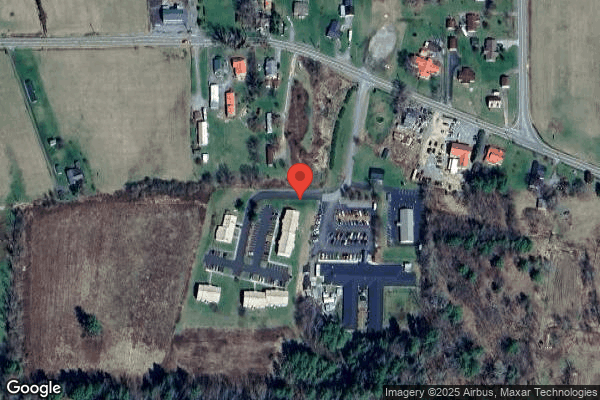

919 MEDICAL PARK DRIVE, MOUNTAIN CITY, TN 37683 (423) 727-7800
For profit - Limited Liability company 120 Beds SIGNATURE HEALTHCARE Data: November 2025
Trust Grade
78/100
#75 of 298 in TN
Last Inspection: October 2022

Over 2 years since last inspection. Current conditions may differ from available data.

Overview

Mountain City Care & Rehabilitation Center has a Trust Grade of B, indicating it is a good choice among nursing homes. It ranks #75 out of 298 facilities in Tennessee, placing it in the top half, and is the only option in Johnson County. The facility is improving, having reduced its issues from 5 in 2019 to just 1 in 2022. Staffing is a relative strength, with a rating of 3 out of 5 stars and a low turnover rate of 26%, significantly better than the state average of 48%. Notably, there were no fines reported, which is a positive sign of compliance. However, the inspector findings did reveal some concerns. For example, there was an issue where a resident's medication recommendations were not followed up on, and another incident involved a resident who fell while being assisted to the toilet due to inadequate precautions. Additionally, the facility failed to implement proper isolation precautions for residents with infections, which poses a risk for spreading illness. Overall, while there are notable strengths, families should be aware of these weaknesses when considering this nursing home.

Trust Score
B
78/100
In Tennessee
#75/298
Top 25%
Safety Record
Low Risk
No red flags
Inspections
Getting Better
5 → 1 violations
Staff Stability
✓ Good
26% annual turnover. Excellent stability, 22 points below Tennessee's 48% average. Staff who stay learn residents' needs.
Penalties
✓ Good
No fines on record. Clean compliance history, better than most Tennessee facilities.
Skilled Nurses
○ Average
Each resident gets 40 minutes of Registered Nurse (RN) attention daily — about average for Tennessee. RNs are the most trained staff who monitor for health changes.
Violations
⚠ Watch
13 deficiencies on record. Higher than average. Multiple issues found across inspections.
★★★★☆
4.0
Overall Rating
★★★☆☆
3.0
Staff Levels
★★★★☆
4.0
Care Quality
★★★★☆
4.0
Inspection Score
Stable
2019: 5 issues
2022: 1 issues

The Good

  • 4-Star Quality Measures · Strong clinical quality outcomes
  • Low Staff Turnover (26%) · Staff stability means consistent care
  • Full Sprinkler Coverage · Fire safety systems throughout facility
  • No fines on record
  • Staff turnover is low (26%)

    22 points below Tennessee average of 48%

Facility shows strength in quality measures, staff retention, fire safety.

The Bad

Chain: SIGNATURE HEALTHCARE

Part of a multi-facility chain

Ask about local staffing decisions and management

The Ugly 13 deficiencies on record

Oct 2022 1 deficiency
CONCERN (D)

Potential for Harm - no one hurt, but risky conditions existed

Accident Prevention (Tag F0689)

Could have caused harm · This affected 1 resident

**NOTE- TERMS IN BRACKETS HAVE BEEN EDITED TO PROTECT CONFIDENTIALITY** Based on facility policy review, medical record review, and interview the facility failed to prevent a fall for 1 resident (Resi...

Read full inspector narrative →
**NOTE- TERMS IN BRACKETS HAVE BEEN EDITED TO PROTECT CONFIDENTIALITY** Based on facility policy review, medical record review, and interview the facility failed to prevent a fall for 1 resident (Resident #59) of 3 residents reviewed for falls. The findings include: Review of the facility policy titled, Falls Policy, dated 7/19/2022, revealed .The intent of this policy is to ensure the facility provides an environment that is free from accident hazards over which the facility has control to prevent avoidable falls .Interventions are to be revised as indicated . Resident #59 was admitted to the facility on [DATE], with diagnoses including Parkinson's Disease, Anemia, Chronic Kidney Disease, and Muscle Weakness. Record review of a nursing progress note for Resident #59 dated 7/26/2022, revealed .CNA (certified nursing assistant) was assisting resident to the toilet when resident's leg became weak .CNA eased resident to the floor . Record review of the comprehensive plan of care revealed .Problem .resident is at risk for falls due to Parkinson's disease, weakness .Approach Start Date: 7/26/2022 .2 [staff] assist with all transfers . Review of a facility investigation dated 7/26/2022, revealed .Evaluation Notes: Resident was being assisted to toilet by CNA. Resident became weak and was lowered to the floor .Reviewed with therapy staff and they agree safer to transfer with assist of 2 at all times. Staff educated on transfer assist of 2 at all times . Record review of a nursing progress note for Resident #59 dated 9/20/2022, revealed .During transfer with CNA from chair to bed, resident lost footing, CNA was assisting resident with transfer and CNA lowered resident to the floor sitting with bottom down on floor .Resident stated .my feet just went out .no injuries observed and resident reports no pain or discomfort .Resident was then assisted to bed by staff x [times] 2 . During a telephone interview on 10/19/2022 at 12:48 PM, with the Director of Nursing (DON) present, CNA #1 confirmed she worked on 9/20/2022 when Resident #59 sustained a fall .CNA #2 was transferring resident by herself when resident had fall . CNA #1 also stated the Charge Nurse asked her to help CNA #2 assist the resident back to bed after the fall. During an interview with the DON on 10/19/2022 at 12:58 PM, confirmed the facility policy on falls was not followed.
Oct 2019 5 deficiencies
CONCERN (D)

Potential for Harm - no one hurt, but risky conditions existed

Comprehensive Care Plan (Tag F0656)

Could have caused harm · This affected 1 resident

**NOTE- TERMS IN BRACKETS HAVE BEEN EDITED TO PROTECT CONFIDENTIALITY** Based on facility policy review, medical record review, and interview, the facility failed to develop a comprehensive care plan ...

Read full inspector narrative →
**NOTE- TERMS IN BRACKETS HAVE BEEN EDITED TO PROTECT CONFIDENTIALITY** Based on facility policy review, medical record review, and interview, the facility failed to develop a comprehensive care plan for the use of an indwelling urinary catheter (a tube inserted into the bladder to drain urine from the body) for 1 resident (#71) of 5 residents reviewed for indwelling urinary catheters. The findings include: Review of the Facility's Comprehensive Care Plan Policy, last revised date 7/19/18, revealed .A person-centered Comprehensive Care Plan that includes measurable objectives and timetables to meet the resident's medical, nursing, mental and psychological needs is developed for each resident . Medical record review revealed Resident #71 was admitted to the facility on [DATE] and readmitted on [DATE] with diagnoses including Hypertension, Benign Prostatic Hyperplasia, Type 2 Diabetes Mellitus, Dementia, Retention of Urine, and Urinary Tract Infection. Medical record review of a Physician's Order Report dated 8/27/19 revealed .16 FR [french] /10 ML [milliliters] .CATH [indwelling urinary catheter] . Medical record review of a Resident's Progress Note dated 8/27/19 revealed, .catheter placed . Medical record review of a Physician's Order Report dated 8/27/19 revealed, .CATH CARE EVERY SHIFT . Medical record review of the Comprehensive Care Plan revealed no documentation for the use of an indwelling urinary catheter. Interview with the Minimum Data Set Coordinator #1 on 10/2/19 at 9:16 AM, in the conference room, confirmed the facility had not developed a comprehensive care plan for the use of an indwelling urinary catheter for Resident #71.
CONCERN (D)

Potential for Harm - no one hurt, but risky conditions existed

Medication Errors (Tag F0758)

Could have caused harm · This affected 1 resident

**NOTE- TERMS IN BRACKETS HAVE BEEN EDITED TO PROTECT CONFIDENTIALITY** Based on facility policy review, medical record review, and interview the facility failed to provide a rationale for the continu...

Read full inspector narrative →
**NOTE- TERMS IN BRACKETS HAVE BEEN EDITED TO PROTECT CONFIDENTIALITY** Based on facility policy review, medical record review, and interview the facility failed to provide a rationale for the continued use of an as needed (PRN) anti-anxiety medication beyond 14 days for 1 resident (#84) of 5 residents reviewed for unnecessary medications. The findings include: Review of the facility policy, Psychotropic Medications, last revised 9/5/18, revealed .The facility will make every effort to comply with state and federal regulations related to the use of psychotropic medications .A psychotropic drug .include .Anti-anxiety .the physician will review the medical record, medical history, and related factors .Documents rationale and diagnosis for use .Orders for PRN psychotropic medications will be time limited (i.e., times 2 weeks) and only for specific clearly documented circumstances . Medical record review revealed Resident #84 was admitted to the facility on [DATE] with diagnoses including Major Depressive Disorder, Paranoid Schizophrenia, Mood Disorder due to known Physiological Condition, and Anxiety Disorder. Medical record review of the 30 day Minimum Data Set (MDS) dated [DATE] revealed Resident #84 scored a 15 on the Brief Interview for Mental Status (BIMS) indicating the resident was cognitively intact. Continued review revealed the resident received Antianxiety, and Antipsychotic Medications. Medical record review of the Physician's recapitulation orders dated 12/20/18 and 1/1/19 to 1/31/19 revealed Clonazepam (anti-anxiety medication) 0.5 milligram (mg) every 12 hours PRN without a stop date documented. Medical record review of the Medication Administration Record (MAR) dated 1/1/19 to 1/31/19 revealed Resident #84 was administered 10 doses of the PRN Clonazepam from 1/4/19 through 1/31/19. Continued review revealed Resident #84 received the PRN Clonazepam for a total of 42 days (28 days beyond the 14 days). Medical record review of a Physician's .Active Order . form dated 2/28/19 revealed Clonazepam 0.5 mg PRN at bedtime without a stop date documented. Medical record review of the MAR's dated from 2/2019 through 7/2019 revealed Resident #84 received the PRN Clonazepam 4 months beyond the 14 days without a rationale documented by the Physician. Medical record review of a Physician's Order dated 7/1/19 revealed the PRN Clonazepam was discontinued (4 months after the recommended 14 day stop date). Interview with the Director of Nursing (DON) on 10/2/19 at 3:00 PM, in the DON's office, confirmed the Physician had not provided or documented a rationale for the continued use of a PRN psychotropic medication beyond the 14 days.
CONCERN (D)

Potential for Harm - no one hurt, but risky conditions existed

Unnecessary Medications (Tag F0759)

Could have caused harm · This affected 1 resident

**NOTE- TERMS IN BRACKETS HAVE BEEN EDITED TO PROTECT CONFIDENTIALITY** Based on facility policy review, medical record review, observation, and interview, the facility failed to correctly administer ...

Read full inspector narrative →
**NOTE- TERMS IN BRACKETS HAVE BEEN EDITED TO PROTECT CONFIDENTIALITY** Based on facility policy review, medical record review, observation, and interview, the facility failed to correctly administer medications for 1 resident (#1). The facility had a total of 2 medication errors of 35 opportunities resulting in a 5.71% (percent) medication error rate. The findings include: Review of the facility policy Medication Administration dated 9/2018 revealed .If it is safe to do so, medication tablets may be crushed .when a resident has difficulty swallowing .Long-acting, extended release or enteric coated [coated with a substance that prevents the medication from being released until it reaches the small intestine] dosage forms should generally not be crushed: an alternative should be sought . Medical record review revealed Resident #1 was admitted to the facility on [DATE] with diagnoses including Cerebral Infarction, Gastro-Esophageal Reflux Disease, Essential Hypertension, Long Term Use of Aspirin, and Chronic Pancreatitis. Medical record review of the Physician Order Report dated 9/1/19-10/1/19 revealed an order dated 9/16/19 .aspirin [a medication used to treat pain or thin the blood] tablet, delayed release . Continued review revealed an order dated 9/16/19 .metoprolol succinate [a medication used to treat high blood pressure] tablet extended release 24 hr [hour] . Observation of medication administration with Licensed Practical Nurse (LPN) #1 on 10/1/19 at 8:48 AM, outside Resident #1's room, revealed LPN #1 crushed the Metoprolol extended release, and crushed a chewable aspirin, mixed the medications with applesauce, and administered the medications to Resident #1. Interview with LPN #1 on 10/1/19 at 10:46 AM, at the 100 hall nurses station, confirmed Resident #1's aspirin order was for a delayed release tablet and the aspirin administered was a chewable aspirin. Continued interview confirmed the Metoprolol succinate order was an extended release tablet and it had been crushed for administration .it's the only way she can swallow it . Interview with the Director of Nursing on 10/01/19 at 2:52 PM, in the linen room, confirmed it was her expectation for delayed release medications to not be crushed. Continued interview confirmed it was her expectation for nurses to notify the physician to obtain an order for an alternative form of medication if a resident has extended release medications and the resident required their medications to be crushed for administration.
CONCERN (D)

Potential for Harm - no one hurt, but risky conditions existed

Infection Control (Tag F0880)

Could have caused harm · This affected 1 resident

Based on facility policy review, observation, and interview, the facility failed to maintain infection control practices during 3 of 9 medication administration observations. The findings include: Re...

Read full inspector narrative →
Based on facility policy review, observation, and interview, the facility failed to maintain infection control practices during 3 of 9 medication administration observations. The findings include: Review of the facility policy Cleaning and Disinfection of Resident-Care Items and Equipment revised 10/2018 revealed Resident-care equipment, including reusable items and durable medical equipment will be cleaned and disinfected according to current CDC (Centers for Disease Control) recommendations for disinfection .Reusable items are cleaned and disinfected or sterilized between residents . Observation of medication administration on 10/1/19 at 8:38 AM, on the 100 hallway, with Licensed Practical Nurse (LPN) #1 revealed LPN #1 entered a resident's room, placed a pulse oximeter (device placed on the fingertip used to measure the oxygen level in the blood) on the resident's finger, took the pulse oximeter off the resident's finger and laid it on the over bed table while administering the medications to the resident, then placed the pulse oximeter into her pocket and exited the resident's room. Continued observation revealed LPN #1 did not clean or sanitize the pulse oximeter after use. Further observation revealed LPN #1 entered another resident's room, placed the pulse oximeter on the resident's finger, then removed the pulse oximeter and exited the resident's room. Continued observation revealed LPN #1 did not clean or sanitize the pulse oximeter after use. Further observation revealed LPN #1 re-entered the first resident's room, placed the pulse oximeter onto the resident's finger, then removed the pulse oximeter and exited the room. Continued observation revealed LPN #1 placed the pulse oximeter onto the medication cart without cleaning or sanitizing it after use. Interview with LPN #1 on 10/1/19 at 9:04 AM, in the 100 hallway, confirmed the LPN did not clean the pulse oximeter after resident use .not unless their hands are dirty . Interview with the Director of Nursing on 10/2/19 at 1:48 PM, in the conference room, confirmed it was her expectation for the pulse oximeter to be cleaned with disinfecting wipes after use with each resident.
CONCERN (E)

Potential for Harm - no one hurt, but risky conditions existed

Drug Regimen Review (Tag F0756)

Could have caused harm · This affected multiple residents

**NOTE- TERMS IN BRACKETS HAVE BEEN EDITED TO PROTECT CONFIDENTIALITY** Medical record review revealed Resident #94 was admitted to the facility on [DATE] with diagnoses including Atrial Fibrillation,...

Read full inspector narrative →
**NOTE- TERMS IN BRACKETS HAVE BEEN EDITED TO PROTECT CONFIDENTIALITY** Medical record review revealed Resident #94 was admitted to the facility on [DATE] with diagnoses including Atrial Fibrillation, Acute Ischemic Heart Disease, Disease of Pancreas, Hypothyroidism, Cerebrovascular Disease, and Atherosclerotic Heart Disease. Medical record review of a Pharmacist Medication Regimen Review for Resident #94 dated 12/19/18 revealed .This resident is receiving a statin [a medication used to treat high cholesterol]. Please consider baseline and annual LFTs [liver function test] to monitor for side effects of atorvastatin [a medication used to treat high cholesterol] . Continued review revealed no documentation the physician had addressed the recommendation. Medical record review of the Physician Order Report dated 9/1/19- 10/1/19 revealed an order dated 8/13/18 .atorvastatin tablet .1 TABLET ORALLY AT BEDTIME . Interview with the DON on 10/02/19 at 12:22 PM, in the conference room, confirmed the physician had not addressed the recommendation dated 12/19/18 for liver function tests for Resident #94. Based on facility policy review, medical record review, and interview the facility failed to address or act timely upon the Pharmacist recommendations for 3 residents (#18, #84, and #94) of 5 residents reviewed for unnecessary medications. The findings include: Review of the facility policy, Psychotropic Medications, last revised 9/5/18, revealed .The facility will make every effort to comply with state and federal regulations related to the use of psychotropic medications .Reviews reports from the pharmacist consultant .If the physician determines there is to be no change in the medication; the physician will document the rationale in the resident's medical record . Review of the facility policy, Medication Monitoring Medication Regimen Review and Reporting, dated 9/2018, revealed .the consultant pharmacist incorporates federally mandated standards of care .the consultant pharmacist .gather pertinent information related to the resident's status .communicated to .the medical director .The nursing care center follows up on the recommendations to verify that appropriate action has been taken. Recommendations shall be acted upon within 30 calendar days .For those issues that require physician intervention, the attending physician either accepts and acts upon the report and recommendations or rejects all or some of the report and should document .rationale of why the recommendation is rejected in the resident's medical record . Medical record review revealed Resident #18 was admitted to the facility on [DATE] with diagnoses including Chest Pain, Dementia with Behavioral Disturbance, Chronic Kidney Disease Stage 3, Hypertension, Altered Mental Status, Presence of Cardiac Pacemaker, Atherosclerotic Heart Disease, Heart Failure, Atrial Fibrillation, and Mood Disorder with Depressive Features. Medical record review of a Pharmacist Medication Regimen Review for Resident #18 dated 12/22/18 revealed .This resident is on alprazolam [an antianxiety medication] .consider adding a stop date . Continued review revealed no documentation the physician had addressed the recommendation. Medical record review of a physician's order dated 2/12/19 revealed .alprazolam .x [times] 14 d [days] . (52 days after the recommendation by the pharmacist) Medical record review of a Pharmacist Medication Regimen Review for Resident #18 dated 12/22/18 revealed .The following medication(s) has/have not been used in this resident since 12/1/18 .ROBITUSSIN-DM [a medication used for cough] Please consider evaluation of continued need or discontinuation . Continued review revealed no documentation the physician had addressed the recommendation. Medical record review of a physician's order dated 9/28/19 revealed .Siltussin-DM [robitussin] .DC [discontinue] date .9/28/19 . (280 days after the recommendation by the pharmacist) Interview with the Director of Nursing (DON) on 10/02/19 at 10:17 AM, in the conference room, confirmed the pharmacy recommendations dated 12/22/18 had not been addressed timely by the physician for Resident #18. Medical record review revealed Resident #84 was admitted to the facility on [DATE] with diagnoses including Major Depressive Disorder, Paranoid Schizophrenia, Mood Disorder due to known Physiological Condition, and Anxiety Disorder. Medical record review of the Physician's recapitulation orders dated 12/20/18 revealed Clonazepam (an anti-anxiety medication) 0.5 milligram (mg) every 12 hours as needed (PRN) without a stop date documented. Medical record review of the Pharmacist Medication Regimen Review for Resident #84 dated 1/25/19 revealed a recommendation for the evaluation of the continued need for the Clonazepam 0.5 mg every 12 hours PRN beyond the 14 days. Continued review revealed the Physician did not provide or document a rationale for the continued use of the PRN Clonazepam beyond the 14 days. Medical record review of a Physician's .Active Order .As Needed . form dated 2/28/19 revealed Clonazepam 0.5 mg PRN at bedtime without a stop date documented. Medical record review of the Pharmacist Medication Regimen Review for Resident #84 dated 3/14/19 revealed a recommendation for the evaluation of the continued need for the PRN Clonazepam beyond the 14 days. Continued review revealed the Physician did not provide or document a rationale for the continued use of the PRN Clonazepam. Interview with the DON on 10/2/19 at 3:00 PM, in the DON's office, confirmed the Pharmacist recommendation had not been addressed or acted upon by the Physician for Resident #84.
Oct 2018 7 deficiencies
CONCERN (D)

Potential for Harm - no one hurt, but risky conditions existed

Deficiency F0554 (Tag F0554)

Could have caused harm · This affected 1 resident

**NOTE- TERMS IN BRACKETS HAVE BEEN EDITED TO PROTECT CONFIDENTIALITY** Based on facility policy review, medical record review, observation, and interview, the facility failed to complete an interdisc...

Read full inspector narrative →
**NOTE- TERMS IN BRACKETS HAVE BEEN EDITED TO PROTECT CONFIDENTIALITY** Based on facility policy review, medical record review, observation, and interview, the facility failed to complete an interdisciplinary team (IDT) assessment for self-administration of medications for 1 resident (#2) of 5 residents reviewed for medication administration of 37 residents sampled. The findings include: Review of facility policy Medication Administration General Guidelines dated 5/16 revealed .Medications are to be administered at time they are prepared . Residents are allowed to self-administer medications when specifically authorized by the prescriber, the nursing care center's Interdisciplinary Team (IDT), and in accordance with procedures for self-administration of medications and state regulations .The resident is always observed after administration to ensure that the dose was completely ingested . Medical record review revealed Resident #2 was admitted to the facility on [DATE] with diagnoses including Anemia, Congestive Heart Failure, Hypertension, Diabetes, Hemiplegia (paralysis of one side of body), Anxiety Disorder, Depression, and Chronic Obstructive Pulmonary Disease. Medical record review of Resident #2's current care plan dated 1/27/17 revealed the resident was not documented to self-administer prescribed medications. Medical record review of the Quarterly Minimum Data Set, dated [DATE] revealed Resident #2 had a Brief Interview of Mental Status (BIMS) score of 15, indicating the resident was cognitively intact. Medical record review of Resident #2's Physician's Orders dated 10/1/18 revealed there was not a physician order for self-administration of medications. Medical record review of facility revealed Resident #2 was not reviewed by the Interdisciplinary (IDT) team for self-administration of medications. Observation on 10/8/18 at 11:00 AM, in the resident's private room, revealed the resident was lying in bed watching television alone. Continued observation revealed a 30 ml (milliter) clear plastic medication cup with 10 pills sitting on the resident's bedside table. The cup contained the following medications: *One Carvedilol 25 milligram (mg) tablet (medication used to treat high blood pressure) *One Glipizide 5 mg tablet (medication to treat high blood sugar) *One Chewable Aspirin 81 mg tablet (medication to prevent blood clots) *One Amlodipine Besylate 5 mg tablet (medication to treat high blood pressure) *One Hydralazine 50 mg tablet (medication used to treat high blood pressure) *One Potassium CL (chloride) ER (extended release) 20 meq (milliequivalent) (medication to treat low blood levels of potassium) *One Calcium Acetate 667mg (medication to prevent high blood phospate) *One Lasix 120 mg (medication used to treat swelling and high blood pressure) *One Multiple Vitamin with minerals formula (supplement used to improve health) Interview with Resident #2 on 10/8/18 at 11:00 AM, in the resident's room, revealed, .I usually take them [pills at bedside] with lunch .when they are busy they leave them [pills at bedside] . Interview with Licensed Practical Nurse #7 on 10/8/18 at 11:05 AM, outside of Resident # 2's room, confirmed .I did not watch her take all of her pills .I don't leave any meds [medications] but hers [Resident #2] .those were her 9:00 AM meds . Interview with the Director of Nursing on 10/11/18 at 2:20 PM, in the conference room, confirmed .Absolutely not [resident to give own medications] unless self-administration .they [nurses] should not leave medications at bedside .she knew it wasn't policy .
CONCERN (D)

Potential for Harm - no one hurt, but risky conditions existed

Accident Prevention (Tag F0689)

Could have caused harm · This affected 1 resident

**NOTE- TERMS IN BRACKETS HAVE BEEN EDITED TO PROTECT CONFIDENTIALITY** Based on medical record review, observation, and interview, the facility failed to implement a fall intervention for 1 resident ...

Read full inspector narrative →
**NOTE- TERMS IN BRACKETS HAVE BEEN EDITED TO PROTECT CONFIDENTIALITY** Based on medical record review, observation, and interview, the facility failed to implement a fall intervention for 1 resident (#68) of 4 residents reviewed for falls of 37 sampled residents. The findings include: Resident #87 was admitted to the facility on [DATE] with diagnoses including Dementia, Difficulty in Walking, Repeated Falls, Alzheimer's Disease, Cognitive Communication Deficit, and Heart Failure. Medical record review of Resident #87's Care Plan revised 9/7/18 revealed .At risk for falls .Floor Mat . Observation on 10/9/18 at 8:04 PM, in Resident #87's room, revealed the resident was lying in bed and there was not a floor mat beside the bed. Observation on 10/10/18 at 2:45 PM, in Resident #87's room, revealed the resident was lying in bed and there was not a floor mat beside the bed. Interview with Registered Nurse #3 on 10/10/18 at 4:25 PM, on the 100 hallway, revealed proper fall risk interventions for Resident #87 included a floor mat on the left side of the bed. Continued interview on 10/10/18 at 4:28 PM, in the resident's room, confirmed the floor mat was not positioned in the floor next to the bed and the facility failed to implement the falls intervention for Resident #87
CONCERN (D)

Potential for Harm - no one hurt, but risky conditions existed

Respiratory Care (Tag F0695)

Could have caused harm · This affected 1 resident

**NOTE- TERMS IN BRACKETS HAVE BEEN EDITED TO PROTECT CONFIDENTIALITY** Based on medical record review, observation, and interview, the facility failed to implement oxygen therapy according to accepte...

Read full inspector narrative →
**NOTE- TERMS IN BRACKETS HAVE BEEN EDITED TO PROTECT CONFIDENTIALITY** Based on medical record review, observation, and interview, the facility failed to implement oxygen therapy according to accepted professional standards for 1 Resident (#62) of 8 residents receiving oxygen of 35 residents reviewed. The findings include: Resident #62 was admitted to the facility on [DATE] with diagnoses to include Multiple Sclerosis, Quadraplegia (paralysis of both arms and legs), Major Depressive Disorder and Osteoporosis. Medical record review of a quarterly Minimum Data Set, dated [DATE] revealed the resident had moderate cognitive impairment and received oxygen therapy. Medical record review of the Physician's Recapitulation Orders dated 10/1/18 to 10/31/18 revealed .02 [oxygen] up to 6 LPM [liters per minute] to try to maintain SATS [oxygen saturation] > [greater than] 88% [percent]. Observation on 10/8/18 at 11:35 AM, in the resident's room, revealed an oxygen concentrator (medical device to deliver oxygen) in the resident's room. Further observation revealed the oxygen concentrator was not turned on and the oxygen tubing was on the floor. Interview and observation with Licensed Practical Nurse (LPN) #3 on 10/8/18 at 11:40 AM, in the resident's room, revealed the oxygen was to be administered continuously. LPN #3 checked the resident's oxygen saturation and the results were 94% on room air. The LPN wet a paper towel with water, wiped the oxygen tubing off, placed the tubing in the resident's nostrils, and turned the oxygen concentrator to 2 liters per minute. Interview with LPN #3 revealed .I should have went and got new tubing instead of wiping it off with a wet paper towel . Interview with the Director of Nursing on 10/11/18 at 4:14 PM, in the admission office, confirmed the facility failed to follow accepted professional standards for oxygent therapy for Resident #62.
CONCERN (D)

Potential for Harm - no one hurt, but risky conditions existed

Deficiency F0744 (Tag F0744)

Could have caused harm · This affected 1 resident

**NOTE- TERMS IN BRACKETS HAVE BEEN EDITED TO PROTECT CONFIDENTIALITY** Based on medical record review, observation, and interview, the facility failed to monitor interventions to reduce behaviors of ...

Read full inspector narrative →
**NOTE- TERMS IN BRACKETS HAVE BEEN EDITED TO PROTECT CONFIDENTIALITY** Based on medical record review, observation, and interview, the facility failed to monitor interventions to reduce behaviors of dementia for 2 (#87 and #26) of 5 residents reviewed for dementia care of 39 sampled residents. The findings include: Medical record review revealed Resident #87 was admitted to the facility on [DATE] with diagnoses including Dementia, Repeated Falls, Alzheimer's Disease, Cognitive Communication Deficit, Heart Failure, and Major Depressive Disorder. Medical record review of Resident #87's care plan dated 3/14/18 revealed the resident was care planned for yelling out for help with an intervention to monitor and record behavior. Medical record review of Resident #87's Quarterly Minimum Data Set (MDS) dated [DATE] revealed the resident had a Brief Interview for Mental Status score of 5, indicating the resident had severe cognitive impairment. Further review of the MDS revealed Resident #87 had an active diagnosis of Alzheimer's Disease. Medical record review of Resident #87's Medication Administration Record (MAR) dated 10/1/18 to 10/31/18 revealed there was no monitoring for the behavior of yelling out for help. Multiple observations conducted daily during the annual Recertification survey 10/8/18 - 10/11/18, revealed Resident #87 frequently called out help me. Interview with Certified Nursing Assistant (CNA) #2 on 10/11/18 at 6:42 PM, at the 100 unit nurses station, revealed .it's all the time he hollers 'help me' .he hollers 'help me, help me' all night . Interview with Licensed Practical Nurse (LPN) #1 on 10/11/18 at 6:33 PM, at the 100 unit nurses station, revealed .he hollers out 'help me' it'd be an all the time thing if we charted it every time . Interview with the Director of Nursing on 10/11/18 at 7:34 PM, in the Conference Room, revealed .it would be there on the MAR; and if it's not, then it's not been documented . Resident #26 was admitted to the facility with diagnoses including Dementia with Behavioral Disturbance, Major Depressive Disorder, Anxiety Disorder, and Psychosis. Medical record review of Resident #26's Care Plan reviewed on 8/2/18 revealed .wandering will attempt to get out doors and has entered other rooms .Monitor and record behavior . Medical record review of the Medication Administration Records from 5/1/18 - 10/10/18 revealed no documentation of monitoring for wandering. Interview with the Social Services Director on 10/11/18 at 10:23 AM, at the 300 hall Nurses Station, confirmed there was no documentation of monitoring for exit seeking or wandering for Resident #26. Interview with the Director of Nursing on 10/11/18 at 5:26 PM, in the conference room, confirmed the social worker was responsible for initiating monitoring sheets. Continued interview confirmed exit seeking or wandering monitoring sheets were not implemented.
CONCERN (D)

Potential for Harm - no one hurt, but risky conditions existed

Medical Records (Tag F0842)

Could have caused harm · This affected 1 resident

**NOTE- TERMS IN BRACKETS HAVE BEEN EDITED TO PROTECT CONFIDENTIALITY** Based on medical record review, observation, and interview, the facility failed to maintain a complete and accurate medical reco...

Read full inspector narrative →
**NOTE- TERMS IN BRACKETS HAVE BEEN EDITED TO PROTECT CONFIDENTIALITY** Based on medical record review, observation, and interview, the facility failed to maintain a complete and accurate medical record for 1 resident (#85) of 39 sampled residents. The findings include: Medical record review revealed Resident #85 was admitted to the facility on [DATE] with diagnoses including Dementia, Repeated Falls, Abnormalities of Gait and Mobility, Abnormal Posture, and Cognitive Communication Deficit. Review of Resident #85's current care plan dated 4/12/18 revealed the resident was care planned for wandering with interventions .Monitor and record behavior . Review of Resident #85's Quarterly Minimum Data Set (MDS) dated [DATE] revealed a Brief Interview for Mental Status score of 3, indicating the resident had severe cognitive impairment. Further review of the MDS revealed the resident was coded as wandering that occurred 1 to 3 days. Review of Resident #85's Medication Administration Record dated 10/1/18 to 10/31/18 revealed behavior monitoring for wandering was consistently coded as 11, indicating no wandering behavior occurred. Multiple observations conducted daily during the annual Recertification survey 10/8/18 - 10/11/18, revealed Resident #85 wandered daily. Interview with Certified Nursing Assistant (CNA) #1 on 10/8/18 at 1:00 PM, on the 100 unit hall, confirmed Resident #85 was wandering. Further interview with CNA #1 revealed She's usually in and out of rooms. Interview with CNA #2 on 10/11/18 at 8:04 AM, on the 100 hall, revealed She is in and out of rooms. She gets around the building. Interview with Licensed Practical Nurse (LPN) #1 on 10/11/18 at 2:35 PM, at the 100 unit nurses station, revealed Resident #85 had dementia, did not know where she was, and she wandered. Interview with LPN #2 on 10/11/18 at 2:58 PM, at the 100 unit nurses station, confirmed the monitoring sheet indicated the resident had no wandering behavior this month. Further interview with LPN #2 revealed the resident had wandered this week. Further interview revealed Maybe they are just so used to her wandering that it is normal rolling around in her house and they aren't charting it as wandering. Interview with the Director of Nursing on 10/11/18 at 5:28 PM, in the Conference Room, revealed I'd agree it is not being coded correctly; the coding means it's not being documented correctly.
CONCERN (D)

Potential for Harm - no one hurt, but risky conditions existed

Deficiency F0925 (Tag F0925)

Could have caused harm · This affected 1 resident

Based on observation and interview, the facility failed to maintain an effective pest control program in 1 hallway of 3 hallways observed during the survey, affecting 1 resident (#7) of 39 sampled res...

Read full inspector narrative →
Based on observation and interview, the facility failed to maintain an effective pest control program in 1 hallway of 3 hallways observed during the survey, affecting 1 resident (#7) of 39 sampled residents. The findings include: Review of facility policy, Pest Control dated 1/2015, revealed .Our facility shall maintain an effective pest control program .to ensure that the building is kept free of insects . Observation on 10/8/18 at 11:00 AM, in Resident #2's room, revealed the resident lying in bed with a fly strip ribbon hanging from the ceiling above the resident. Continued observation revealed several small dead black insects on the hanging fly strip ribbon. Interview with the Maintenance Director on 10/10/18 at 5:14 PM, in the 300 nursing station, confirmed .issues with gnats within last 3 months .Have had residents complain about gnats . Observation and interview with the Maintenance Director on 10/10/18 at 5:19 PM, outside of Resident #7's room, confirmed .I installed fly trap [fly strip ribbon in the resident's room] for gnats .Does not seem sanitary [fly strip hanging above the resident's bed] . Observation on 10/11/18 at 8:35 AM, outside of Resident #2's room, revealed the resident lying in bed with the fly trap ribbon hanging from the ceiling above the resident's bed. Continued observation revealed several small dead black insects on the hanging fly strip ribbon. Further observation revealed a Certified Nursing Assistant delivered the resident's breakfast tray and placed the tray on the bedside table. Interview with the Director of Nursing on 10/11/18 at 2:26 PM, in the conference room, confirmed the fly ribbon was not sanitary to hang in a resident's room and the facility failed to follow the pest control policy.
CONCERN (E)

Potential for Harm - no one hurt, but risky conditions existed

Infection Control (Tag F0880)

Could have caused harm · This affected multiple residents

**NOTE- TERMS IN BRACKETS HAVE BEEN EDITED TO PROTECT CONFIDENTIALITY** Based on review of facility policy, medical record review, observation, and interview, the facility failed to implement isolatio...

Read full inspector narrative →
**NOTE- TERMS IN BRACKETS HAVE BEEN EDITED TO PROTECT CONFIDENTIALITY** Based on review of facility policy, medical record review, observation, and interview, the facility failed to implement isolation precautions for 2 of 2 isolation rooms observed, affecting 3 residents (#80, #25, #85) of 39 sampled residents. The findings include: Review of the facility's policy Isolation - Categories of Transmission-Based Precautions, revised January 2012, revealed Gloves and Handwashing .wear gloves .when entering room .Gown .wear a disposable gown upon entering the Contact Precautions room . Medical record review revealed Resident #80 was admitted on [DATE] with diagnoses including Heart Failure, Atrial Fibrillation, and Hypertension. Medical record review of Resident #80's Care Plan dated 10/7/18 revealed VRE (vancomycin resistant enterococcus - superbugs in the urine that have become resistant to the antibiotic vancomycin) in urine with an intervention to observe contact precautions. Observation on 10/9/18 at 1:26 PM, on the 100 unit hall, revealed Maintenance Worker #1 in Resident #80's room wearing no personal protective equipment (PPE), gown, or gloves, performing maintenance on the air conditioner. Maintenance Worker #1 then exited the room without performing hand hygiene. Interview with Maintenance Worker #1 on 10/9/18 at 1:29 PM, on the 100 unit hall, confirmed he did not wear PPE or gloves while in Resident #80's room, and did not perform hand hygiene before leaving or after exiting the room. Observation on 10/9/18 at 9:17 AM, on the 100 unit hallway, revealed Certified Nursing Assistant (CNA) #3 in Resident #80's room without PPE and gloves. CNA #3 exited the room with a dirty food tray and put the food tray in the tray cart without performing hand hygiene. Interview with CNA #3 on 10/9/18 at 9:18 AM, on the 100 hall, confirmed she was in Resident #80's room and did not put on PPE or gloves. Resident #25 was admitted on [DATE] with diagnoses including Parkinson's Disease, Type 2 Diabetes, and Hypotension. Medical record review of Physician's Orders dated 10/3/18 revealed orders for contact precautions. Medical record review of Resident #25's Care Plan dated 10/3/18 revealed .problem .scabies . Observation on 10/9/18 at 6:59 PM, on the 100 unit hallway, revealed Resident #85 was wandering and self-propelled into Resident #25's room. Interview with Licensed Practical Nurse (LPN) #6 on 10/9/18 at 7:00 PM, on the 100 unit hallway, confirmed Resident #85 was confused and wandered inside Resident #25's room. Interview with Registered Nurse #2 on 10/9/18 at 7:16 PM, on the 100 unit hallway, revealed .anyone should gown and glove in the hallway before entering contact precaution room . Interview with LPN #4 on 10/11/18 at 6:30 PM, in the Admissions Office, confirmed the facility failed to follow their infection control policy by not wearing gloves and gowns in the isolation rooms.
Understanding Severity Codes (click to expand)
Life-Threatening (Immediate Jeopardy)
J - Isolated K - Pattern L - Widespread
Actual Harm
G - Isolated H - Pattern I - Widespread
Potential for Harm
D - Isolated E - Pattern F - Widespread
No Harm (Minor)
A - Isolated B - Pattern C - Widespread

Questions to Ask on Your Visit

  • "Can I speak with families of current residents?"
  • "What's your RN coverage like on weekends and overnight?"

Our Honest Assessment

Strengths
  • • No major safety red flags. No abuse findings, life-threatening violations, or SFF status.
  • • No fines on record. Clean compliance history, better than most Tennessee facilities.
  • • 26% annual turnover. Excellent stability, 22 points below Tennessee's 48% average. Staff who stay learn residents' needs.
Concerns
  • • 13 deficiencies on record. Higher than average. Multiple issues found across inspections.
Bottom line: Generally positive indicators. Standard due diligence and a personal visit recommended.

About This Facility

What is Mountain City Care & Rehabilitation Center's CMS Rating?

CMS assigns MOUNTAIN CITY CARE & REHABILITATION CENTER an overall rating of 4 out of 5 stars, which is considered above average nationally. Within Tennessee, this rating places the facility higher than 99% of the state's 100 nursing homes. This rating reflects solid performance across the metrics CMS uses to evaluate nursing home quality.
How is Mountain City Care & Rehabilitation Center Staffed?

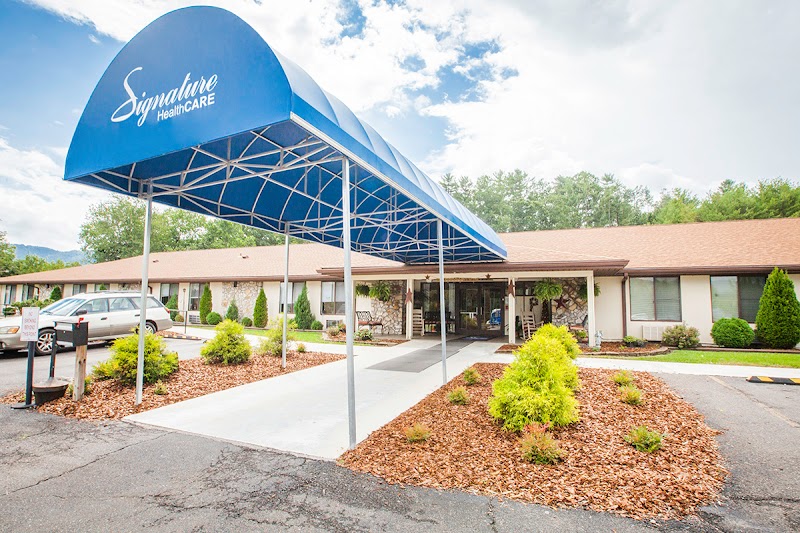
CMS rates MOUNTAIN CITY CARE & REHABILITATION CENTER's staffing level at 3 out of 5 stars, which is average compared to other nursing homes. Staff turnover is 26%, compared to the Tennessee average of 46%. This relatively stable workforce can support continuity of care.

What Have Inspectors Found at Mountain City Care & Rehabilitation Center?

State health inspectors documented 13 deficiencies at MOUNTAIN CITY CARE & REHABILITATION CENTER during 2018 to 2022. These included: 13 with potential for harm.
Who Owns and Operates Mountain City Care & Rehabilitation Center?

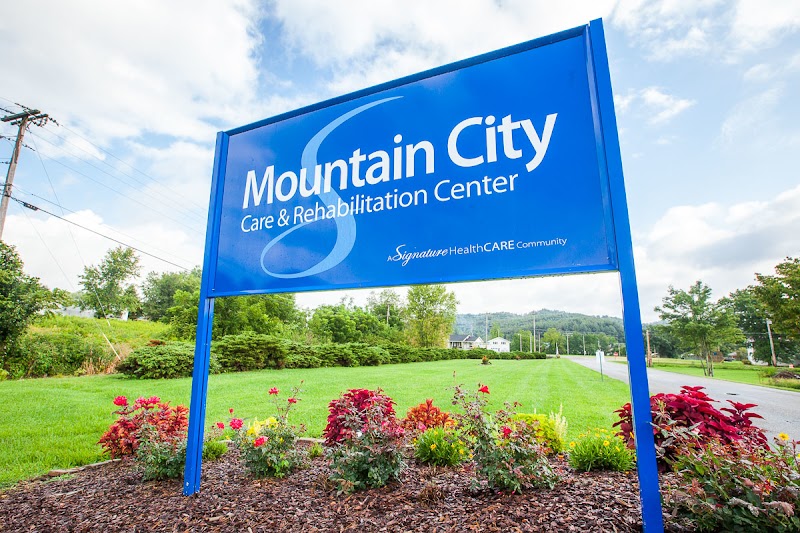
MOUNTAIN CITY CARE & REHABILITATION CENTER is owned by a for-profit company. For-profit facilities operate as businesses with obligations to shareholders or private owners. The facility is operated by SIGNATURE HEALTHCARE, a chain that manages multiple nursing homes. With 120 certified beds and approximately 73 residents (about 61% occupancy), it is a mid-sized facility located in MOUNTAIN CITY, Tennessee.
How Does Mountain City Care & Rehabilitation Center Compare to Other Tennessee Nursing Homes?

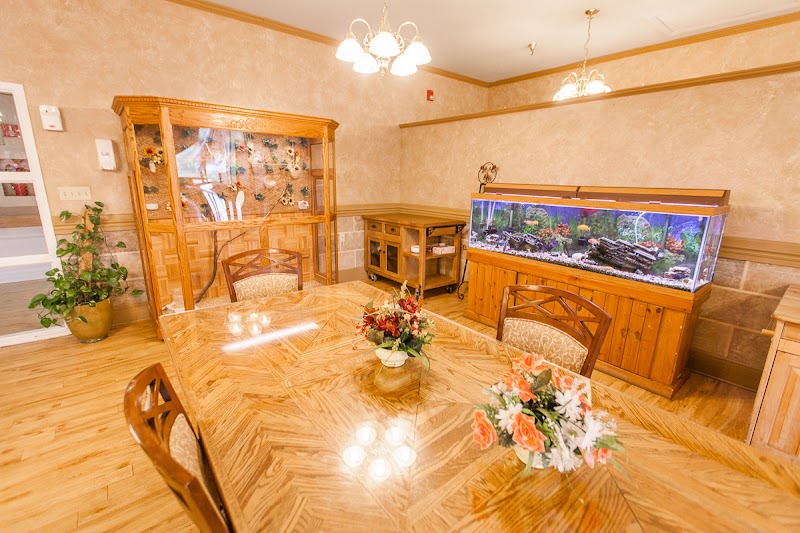
Compared to the 100 nursing homes in Tennessee, MOUNTAIN CITY CARE & REHABILITATION CENTER's overall rating (4 stars) is above the state average of 2.8, staff turnover (26%) is significantly lower than the state average of 46%, and health inspection rating (4 stars) is above the national benchmark.

What Should Families Ask When Visiting Mountain City Care & Rehabilitation Center?

Based on this facility's data, families visiting should ask: "Can I visit during a mealtime to observe dining assistance and food quality?" "How do you handle medical emergencies, and what is your hospital transfer rate?" "Can I speak with family members of current residents about their experience?"

Is Mountain City Care & Rehabilitation Center Safe?

Based on CMS inspection data, MOUNTAIN CITY CARE & REHABILITATION CENTER has a clean safety record: no substantiated abuse findings (meaning no confirmed cases of resident harm), no Immediate Jeopardy citations (the most serious violation level indicating risk of serious injury or death), and is not on the Special Focus Facility watch list (a federal program monitoring the lowest-performing 1% of nursing homes). The facility has a 4-star overall rating and ranks #1 of 100 nursing homes in Tennessee. While no facility is perfect, families should still ask about staff-to-resident ratios and recent inspection results during their visit.

Do Nurses at Mountain City Care & Rehabilitation Center Stick Around?

Staff at MOUNTAIN CITY CARE & REHABILITATION CENTER tend to stick around. With a turnover rate of 26%, the facility is 19 percentage points below the Tennessee average of 46%. Low turnover is a positive sign. It means caregivers have time to learn each resident's needs, medications, and personal preferences. Consistent staff also notice subtle changes in a resident's condition more quickly. Registered Nurse turnover is also low at 22%, meaning experienced RNs are available to handle complex medical needs.

Was Mountain City Care & Rehabilitation Center Ever Fined?

MOUNTAIN CITY CARE & REHABILITATION CENTER has no federal fines on record. CMS issues fines when nursing homes fail to meet care standards or don't correct problems found during inspections. The absence of fines suggests the facility has either maintained compliance or corrected any issues before penalties were assessed. This is a positive indicator, though families should still review recent inspection reports for the full picture.

Is Mountain City Care & Rehabilitation Center on Any Federal Watch List?

MOUNTAIN CITY CARE & REHABILITATION CENTER is not on any federal watch list. The most significant is the Special Focus Facility (SFF) program, which identifies the bottom 1% of nursing homes nationally based on persistent, serious quality problems. Not being on this list means the facility has avoided the pattern of deficiencies that triggers enhanced federal oversight. This is a positive indicator, though families should still review the facility's inspection history directly.