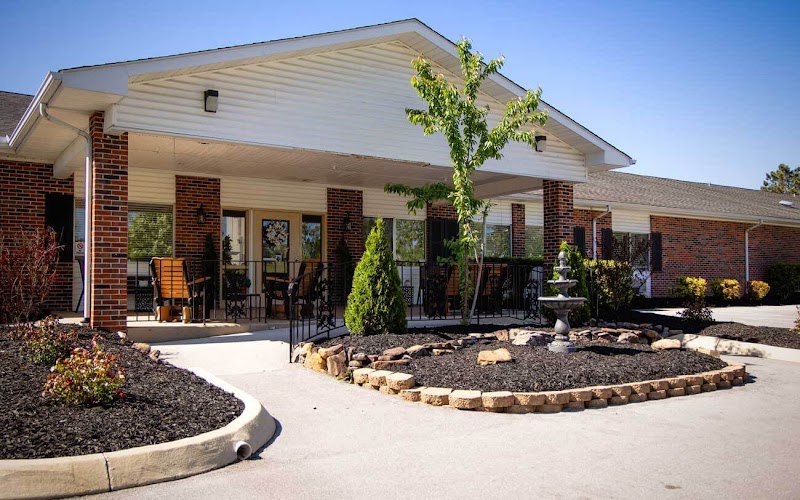

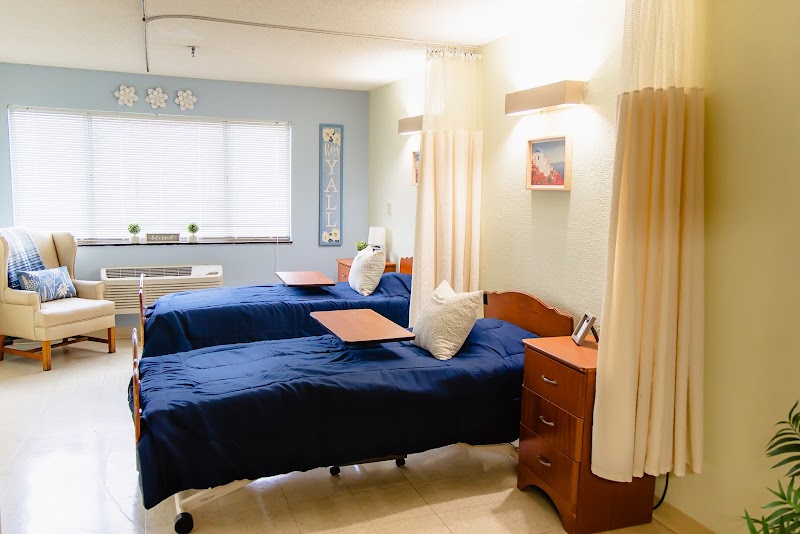
BUCHANAN PLACE

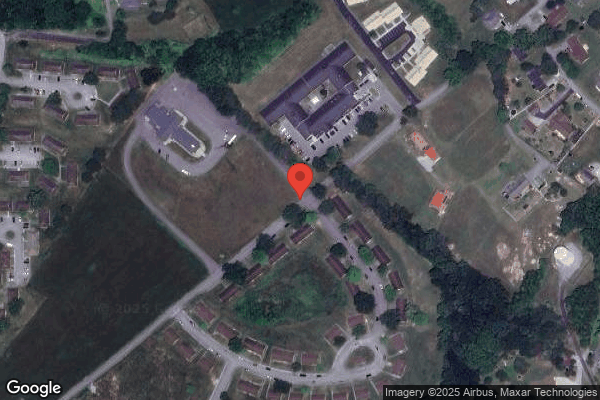
902 BUCHANAN RD, NEW TAZEWELL, TN 37825 (423) 626-8215
For profit - Corporation 134 Beds EXCEPTIONAL LIVING CENTERS Data: November 2025 1 Immediate Jeopardy citation
Trust Grade
41/100
#178 of 298 in TN
Last Inspection: June 2022

Over 2 years since last inspection. Current conditions may differ from available data.

Overview

Buchanan Place in New Tazewell, Tennessee, has a Trust Grade of D, indicating it is below average and has some concerning issues. It ranks #178 out of 298 facilities in Tennessee, placing it in the bottom half, and #2 out of 3 in Claiborne County, meaning only one local option is better. The facility is improving, with the number of issues dropping from 7 in 2022 to 3 in 2024, but it still has several areas of concern. Staffing is rated at 2 out of 5 stars, with a turnover rate of 48%, which is average for Tennessee, and it has good RN coverage, ranked higher than 81% of facilities in the state. However, there are some serious weaknesses; for example, a critical incident involved a resident who was left unsupervised for over an hour, potentially risking their safety. Additionally, the facility failed to properly manage food safety practices, which could affect the health of numerous residents. Another concern is the mismanagement of narcotic inventories, leading to possible misappropriation of medication, which raises alarm regarding the facility's control over medication safety. Overall, while there are some strengths, families should carefully consider the risks and improvements needed before making a decision.

Trust Score
D
41/100
In Tennessee
#178/298
Bottom 41%
Safety Record
High Risk
Review needed
Inspections
Getting Better
7 → 3 violations
Staff Stability
⚠ Watch
48% turnover. Above average. Higher turnover means staff may not know residents' routines.
Penalties
✓ Good
$8,021 in fines. Lower than most Tennessee facilities. Relatively clean record.
Skilled Nurses
✓ Good
Each resident gets 43 minutes of Registered Nurse (RN) attention daily — more than average for Tennessee. RNs are trained to catch health problems early.
Violations
⚠ Watch
16 deficiencies on record. Higher than average. Multiple issues found across inspections.
★★☆☆☆
2.0
Overall Rating
★★☆☆☆
2.0
Staff Levels
★★★★☆
4.0
Care Quality
★★☆☆☆
2.0
Inspection Score
Stable
2022: 7 issues
2024: 3 issues

The Good

  • 4-Star Quality Measures · Strong clinical quality outcomes
  • Full Sprinkler Coverage · Fire safety systems throughout facility
  • No fines on record

Facility shows strength in quality measures, fire safety.

The Bad

2-Star Overall Rating

Below Tennessee average (2.8)

Below average - review inspection findings carefully

Staff Turnover: 48%

Near Tennessee avg (46%)

Higher turnover may affect care consistency

Federal Fines: $8,021

Below median ($33,413)

Minor penalties assessed

Chain: EXCEPTIONAL LIVING CENTERS

Part of a multi-facility chain

Ask about local staffing decisions and management

The Ugly 16 deficiencies on record

1 life-threatening
May 2024 3 deficiencies 1 IJ
CRITICAL (J) 📢 Someone Reported This

A family member, employee, or ombudsman was alarmed enough to file a formal complaint

Immediate Jeopardy (IJ) - the most serious Medicare violation

Accident Prevention (Tag F0689)

Someone could have died · This affected 1 resident

**NOTE- TERMS IN BRACKETS HAVE BEEN EDITED TO PROTECT CONFIDENTIALITY** Based on facility policy review, medical record review, facility documentation review, observation and interviews, revealed the ...

Read full inspector narrative →
**NOTE- TERMS IN BRACKETS HAVE BEEN EDITED TO PROTECT CONFIDENTIALITY** Based on facility policy review, medical record review, facility documentation review, observation and interviews, revealed the facility failed to ensure 1 resident (Resident #6) received adequate supervision to prevent elopement (a situation which involves a resident leaving the premises or safe area without necessary supervision) from the premises of 7 sampled residents reviewed for accidents. On 6/18/2023, at approximately 4:15 PM, the facility staff were unable to locate Resident #6. The resident remained out of staff supervision for 1 hour and 12 minutes. The facility's failure to provide adequate supervision placed Resident #6 and 20 other residents, identified as having the potential for elopement, at risk for Immediate Jeopardy (a situation in which the provider's noncompliance with one or more requirements of participation has caused, or is likely to cause serious injury, harm, impairment, or death to a resident). The Administrator, Director of Nursing (DON), and [NAME] President of Clinical Operation (VPCO) were notified of the Immediate Jeopardy on 5/10/2024 at 10:45 AM in her office. The facility was cited Immediate Jeopardy at F-689. The facility was cited Immediate Jeopardy (IJ) at F-689 at a scope and severity of J which constitutes Substandard Quality of Care. The IJ began on 6/18/2023 and continued through 6/22/2023. The facility's corrective actions were completed on 6/22/2023. An acceptable Allegation of Compliance for the past non-compliance, which removed the immediacy, was provided by the facility on 5/10/2024 and was validated on site. The IJ was cited as past noncompliance for F-689 and the facility is not required to submit a Plan of Correction. The findings include: Review of the facility policy, Elopement Management Program, dated 12/26/2016 revealed .A system that addresses a resident's risk of elopement from the premises or safe area without authorization and/or necessary supervision to do so . Medical record review revealed Resident #6 was admitted to the facility's secure unit on 6/16/2023 with diagnoses including Pneumonia, Dementia, and Delusional Disorders. Review of an Elopement Risk assessment dated [DATE], revealed Resident #6 was assessed to be at risk for elopement due to his Dementia, comments about wanting to go home and exit-seeking behaviors. Review of a Brief Interview for Mental Status (BIMS) assessment dated [DATE], revealed Resident #6 scored a 2, which indicated the resident had severe cognitive impairment. Review of the facility documentation dated 6/18/2023, showed Resident #6 exited the secure unit at approximately 3:30 PM, by following a visitor out the secure unit door. The resident walked down the hallway and the front door camera showed the resident followed a group of visitors out the main entrance doors on 6/18/2023 at 3:37 PM. Continued review revealed Resident #6's son entered the facility and was unable to locate the resident. The facility staff were notified and searched the secure unit. When Resident #6 was unable to be located, a Code Pink (all staff conduct a head count of their residents and search for the missing resident throughout the facility) was initiated. Further review revealed a Certified Nursing Assistant (CNA) D drove her car and looked for the resident. Resident #6 was located at a gas station 1.1 miles away from the facility. The resident returned to the facility with CNA D in her car at approximately 4:15 PM. The resident was assessed for injury, none noted, and was placed with 1:1 supervision. Review of a nurse's note dated 6/18/2023, revealed the physician had ordered Resident #6 be placed with 1:1 supervision post elopement. During an interview on 5/7/2024 at 10:00 AM, Licensed Practical Nurse (LPN) B stated she was not working the day Resident #6 eloped from the facility. Continued interview revealed, after she returned to work the following day, Resident #6 received 1:1 supervision and all the codes to the keypads in the facility were changed. LPN B stated the staff was not allowed to give the codes to anyone except for Emergency Services Technicians. During a telephone interview on 5/9/2024 at 8:45 AM, CNA C confirmed she was working the day Resident #6 eloped from the facility and thought he must have followed a family member out of the secure unit. Continued interview revealed before the elopement, family members were allowed to have the access codes for the keypads. During an interview on 5/9/2024 at 1:15 PM, the DON and the Assistant Director of Nursing (ADON) revealed they had watched the camera footage which showed a time stamp of 3:37 PM, when Resident #6 exited through the main entrance doors. The resident was located and returned to the facility at 4:45 PM (approximately 1 hour and 12 minutes) after he eloped. During a telephone interview on 5/10/2024 at 8:30 AM, CNA D revealed Resident #6's son asked her if she knew where his father was and the CNA checked his room and the shower. The CNA then reported to her co-workers Resident #6 could not be located and they searched the secure unit. The CNA stated the nurse called a Code Pink and CNA D got in her car, drove around a housing development across the street and continued down the road. Continued interview revealed she saw the resident standing in the parking lot of a gas station and asked the resident if he would like something to drink, he said yes, got into the car with her, and she drove him back to the facility. The facility's corrective actions for the removal plan were issued to the surveyor on 5/10/2024. The corrective action plan included the following: 1. How the corrective action will be accomplished for those residents found to have been affected by the deficient practice. The facility held a Quality Assurance Performance Improvement meeting on 6/18/2023 which determined the root-cause analysis to be Resident #6 had followed a visitor out of the secure unit and then followed another group of visitors out the main entrance doors. The following facility staff members attended the QA meeting: Administrator, DON, Nurse Consultant, Assistant Director of Nursing, Unit Managers, Activities Director, Business Office Manager, and the Medical Director by phone. 2. How the facility will identify other residents having the potential to be affected by the same deficient practice. On 6/18/2023-6/19/2023, all residents were reassessed for elopement risk by the Director of the Secure Unit, ADON, and Unit Manager (UM). There were 20 residents at risk for elopement with no new residents identified. On 6/18/2023, all the doors in the facility were checked to ensure they were locked, secure, and functioning properly by the Maintenance Director. There were no concerns identified. On 6/19/2023, the facility conducted a 30-day look back of nurses' notes, the electronic medical record, and the 24-hour report log to identify residents for exit seeking behaviors, wandering or comments of wanting to leave the facility. A review of the elopement binders, located at each nursing station, was completed by the Nurse Consultant, DON, ADON, and UM. On 6/19/2023, facility Administrator, DON, UM, ADON, Social Services Director, Admissions Director, Dietary Manager, Minimum Data Set (MDS) Coordinators, Maintenance Director, Business Office Manager, Director of Care Coordination, Rehabilitation Manager, Dietary Manager, and Activities Director were educated by the facility's Nurse Consultant on policies, procedures, and processes. The training included: Elopement, Missing Resident, Door codes/alarms, Accident/Incident, Safety and Supervision, Implementation of Interventions and Resident Rights. The training was performed face to face to facilitate discussion and questions. Department administrative managers could not return to work until the education was provided, post-test administered related to elopement policy and procedures and 100% score obtained. If a manager did not score 100% on the post-test, the manager was immediately re-educated and post-test re-administered. This process continued until all managers obtained a 100% score on the post-test. All post-tests were reviewed for compliance by the Nurse Consultant. Continued education was conducted either in person or by phone with all other staff, completed 6/22/2023. If a staff member was not available to attend the education, they were to be provided the education prior to their next shift worked. The process was monitored by each department head. 3. What measures will be put into place or systemic changes to ensure the deficient practice will not reoccur? On 6/19/2023, the facility conducted a Code Pink drill daily on both shifts and continued to do so for 1 week. The drills continued for 4 weeks and then quarterly on various shifts and days. The facility implemented Guardian Rounds (walking rounds with visual observations done throughout the facility, observing for an increase in behaviors/wandering/exit seeking for residents) to be completed daily by department managers and the Manager on Duty for the weekends. The Removal Plan was validated onsite by the surveyor on 5/10/2024, which included review of the facility documentation to show each step had been completed and facility staff interviews. 1. Progress notes showed Resident #6 was discharged to a Psychiatric hospital on 8/8/2023 and did not return to the facility. 2. Review of a QAPI meeting sign-in sheet dated 6/18/2023 and interview with the DON/ADON confirmed the facility met and completed a root cause analysis. 3. Review of a facility document dated 6/18/2023 and interview with the Maintenance Director confirmed he checks all the doors daily for functionality and the doors are checked on weekend by the assigned department head designated as the Weekend Manager. 4. Review of the documentation of the drills and interviews with the Maintenance Director and Administrator confirmed the drills were ongoing and were being reviewed in the QAPI meetings. 5. Review of a census roster dated 6/18/2023 with the title Elopement Risk Evaluations written on the top of the document and interview with the DON/ADON confirmed the elopement assessments for all residents were completed by 6/19/2023. 6. Review of handwritten statements dated 6/18/2023-6/19/2023 and interview with the DON/ADON confirmed the 30-day look back was completed for all residents with no unidentified concerns. 7. Review of a sign-in sheet along with a copy of all policies, procedures, processes, and interviews completed throughout the complaint survey conducted on 5/6/2024-5/10/2024 revealed all staff were aware of the elopement management, Code Pink, where to find the elopement risk binders, and they were not to give the access codes to anyone, other than a co-worker to the facility doors. Interviews conducted on 5/10/2024 with 2 nurses and 3 CNAs assigned to the secure unit, confirmed the staff were aware of the location of the elopement binders, what to do for a Code Pink, and the keypad codes were not given to family members.
CONCERN (D) 📢 Someone Reported This

A family member, employee, or ombudsman was alarmed enough to file a formal complaint

Potential for Harm - no one hurt, but risky conditions existed

Free from Abuse/Neglect (Tag F0600)

Could have caused harm · This affected 1 resident

**NOTE- TERMS IN BRACKETS HAVE BEEN EDITED TO PROTECT CONFIDENTIALITY** Based on facility policy review ,medical record review, facility documentation review and interviews, the facility failed to pro...

Read full inspector narrative →
**NOTE- TERMS IN BRACKETS HAVE BEEN EDITED TO PROTECT CONFIDENTIALITY** Based on facility policy review ,medical record review, facility documentation review and interviews, the facility failed to protect 1 resident (Resident #12) from abuse of 19 residents reviewed for abuse. The findings include: Review of the facility's undated policy titled, Freedom from Abuse and Neglect Policy, revealed .Abuse is the willful infliction of injury, unreasonable confinement, intimidation, or punishment with resulting physical harm, pain or mental anguish .Instances of abuse of all residents, irrespective of any mental or physical condition, cause physical harm, pain or mental anguish .Willful, as used in this definition of abuse, means the individual must have acted deliberately, not that the individual must have intended to inflict injury or harm .Types of abuse may include: A. Physical assault or abuse 1. Hitting 2. Slapping .All residents will be protected from harm . Medical record review revealed Resident #12 was admitted to the facility on [DATE] with diagnoses including Major Depressive Disorder and Dementia with Psychotic Disturbance. Review of the comprehensive care plan for Resident #12 dated 4/7/2023, revealed the resident had wandering behaviors. Review of a significant change Minimum Data Set (MDS) assessment dated [DATE], revealed Resident #12 had severe cognitive impairment. Continued review revealed the resident exhibited physical and verbal behaviors toward others. Review of the Nurse's Note for Resident #12 dated 12/8/2023 at 7:12 AM, revealed .Resident [#12] was witnessed by [Certified Nursing Assistant-CNA B] to be struck multiple times in bilateral [both] arms and right lower jaw by another resident [Resident #21]. CNA B intervened to remove the resident [Resident #12] from the room. Resident [#12] has no visible injuries . The resident was assisted to the dining room where she watched television. Review of the facility document titled, Body Audit (skin assessment) for Resident #12 dated 12/8/2023, revealed the resident had no injuries. Medical record review revealed Resident #21 was admitted to the facility on [DATE] with diagnoses including Dementia with unspecified severity, with Other Behavioral Disturbance and Schizoaffective Disorders. Review of the comprehensive care plan for Resident #21 dated 6/8/2023, revealed the resident had aggressive behaviors. Review of a quarterly MDS assessment dated [DATE], revealed Resident #21 was moderately cognitively impaired. Continued review revealed the resident exhibited physical and verbal behaviors toward others . Review of a Nurse's Note for Resident #21 dated 12/8/2023, at 7:04 AM, revealed .Resident [#21] was witnessed by CNA B to strike another resident multiple times in bilateral arms. She also struck the other resident in the lower jaw. [CNA B] intervened to remove the other resident [Resident #12] from the room and the resident [#21] proceeded to try and strike [CNA B] .Notified [Unit Manager] my immediate supervisor of the situation, Assesed [assessed] the resident [#21] she is in her room . Review of the facility document titled, Body Audit for Resident #21 dated 12/8/2023, revealed the resident had no injuries. During an interview on 5/7/2024 at 3:57 PM, CNA B stated she heard a noise coming from Resident #21's room. CNA B stated Resident #12 had wandered into Resident #21's room and was standing at the end of Resident #21's bed with her arms folded. Continued interview revealed Resident #21 was swinging her arms, hitting Resident #12's arms. Continued interview revealed CNA B separated the residents and reported the incident to the charge nurse. During an interview on 5/9/2024 at 12:42 PM, the Assistant Director of Nursing confirmed the altercation between Resident #12 and Resident #21 occurred.
CONCERN (E) 📢 Someone Reported This

A family member, employee, or ombudsman was alarmed enough to file a formal complaint

Potential for Harm - no one hurt, but risky conditions existed

Drug Regimen Review (Tag F0756)

Could have caused harm · This affected multiple residents

**NOTE- TERMS IN BRACKETS HAVE BEEN EDITED TO PROTECT CONFIDENTIALITY** Based on review of facility policies, medical record reviews, review of facility investigations and interviews, the facility fai...

Read full inspector narrative →
**NOTE- TERMS IN BRACKETS HAVE BEEN EDITED TO PROTECT CONFIDENTIALITY** Based on review of facility policies, medical record reviews, review of facility investigations and interviews, the facility failed to maintain controls (chain of custody) on narcotic inventories which resulted in diversion of narcotic stocks for 3 of 20 residents (Residents #4, #9, and #35) of 20 residents sampled for misappropriation, of 35 sampled residents. The findings include: Review of the facility's, Medication Disposal and Returns Policy, effective 6/21/2017, showed .Nursing staff is responsible for removing all discontinued medications from the cart and/or storage areas. Full chain of custody should be documented to clearly indicate the removal of the medication from the cart and placed into a secure storage area for destruction .Two individuals .shall witness and document the destruction in the format required per the applicable state regulations .follow State Regulations regarding the timing of the destruction .Controlled substances not authorized by the physician for release to the resident at the time of discharge are to be destroyed . Review of the facility policy, Controlled Substances, Administration of Schedule 2 Controlled Medications, effective 6/21/2017, showed, .Administration of Scheduled Controlled Substances will be consistent with the policies for general medication administration with the additional requirement of logging all doses on the individual residents [Controlled Drug Receipt/Record/Disposition Form] All scheduled controlled medications removed from storage .will be entered onto the individual Resident's Controlled Drug Receipt/Record/Disposition Form .Any Discrepancies .must be immediately reported to the Director of Nursing .The facility shall maintain a record and signed scheduled medication count at each change of shift .by on-coming nurse .with off-going nurse .using facility approved form .Any discrepancies in the [ shift count] must be immediately reported to the Director of Nursing for further action . Medical record review showed Resident #4 was admitted to the facility on [DATE] with diagnoses including Alzheimer's Disease, Presence of Right Artificial Hip Joint, Adult Failure to Thrive, Unspecified Psychosis, Chronic Obstructive Pulmonary Disease and Generalized Anxiety Disorder. Review of the quarterly Minimum Data Set (MDS) dated [DATE], showed Resident #4 had a Brief Interview of Mental Status Score of 0/15, which indicated Resident #4 was severely cognitively impaired. Resident #4 had impaired thought processes, symptoms of delirium and was dependent upon one or two persons for all activities of daily living. Review of Physician Orders and the December 2023 Medication Administration Records showed Resident #4 was prescribed Morphine Oral Solution (a narcotic) 10 milligrams (mg) per 0.5 milliliters (ml) every 2 hours as needed for pain. Review of the facility investigation showed on 12/21/2023 Licensed Practical Nurse D (oncoming nurse) assumed care of Resident #4 after completion of the shift change medication cart narcotic reconciliation process around 6:00 PM. LPN D counted the narcotic inventories and signed off that all narcotic inventories were correct with LPN E, (the off-going nurse). Continued review showed around 9:00 PM (3 hours later) LPN D became suspicious the narcotic count previously performed was not accurate and asked another nurse (Registered Nurse, RN B) to recheck the narcotic inventories on the cart with attention to morphine supplies on hand for Resident #4, at which time, it was discovered the morphine inventory was actually 7.5 ml short (equal to 35 mg of morphine) of what was documented to be on hand. LPN D notified the Director of Nursing who verified the morphine supply documented on the facility Narcotic Reconciliation Forms was inaccurate and launched an investigation. Continued review of the facility investigation and witness statements revealed the following: -LPN E did not contact the facility for 7 days during the investigation, despite multiple attempts to reach her, and when eventually contacted, categorically denied misappropriation of the missing morphine and noted LPN D had counted the medication at shift change on 12/21/2023 and signed documentation that the count was correct at that time. -LPN D denied misappropriation and reported at that time during the shift count with LPN E, she expressed concerns to LPN E, the morphine inventory for Resident #4 appeared short but was assured by LPN E it was accurate and appeared short due to LPN E's failure to document missing doses given that morning, which LPN E reported to LPN D she would immediately correct. -LPN D did not stop the count, and report irregularities to the Director of Nursing at once. -LPN D discovered 3 hours later, LPN E had made no changes to the facility Narcotic Reconciliation Logs as she had promised, and there was no documentation of morphine administration to Resident #4 in the electronic records that day (MAR), during LPN E's shift, then reported the irregularity to the DON. -LPN E denied she made such statements to LPN D and categorically denied wrongdoing. Continued review of the investigation showed the missing morphine was never recovered, nor could the facility accurately identify when the missing morphine was misappropriated, or by whom and neither employee involved in the 12/21/2023 incident underwent drug testing in response to the incident. Medical record review showed Resident #9 was admitted to the facility on [DATE] with diagnoses including Presence of Left Artificial Hip Joint, Sacral Osteomyelitis, Left Hip Pain and Disruption of Surgical Wound. Review of the quarterly MDS dated [DATE], showed Resident #9 with a BIMS of 13/15 which indicated the resident was cognitively intact. Resident #9 required assistance of one or two persons for ADLs. Review of Resident #9's medical record showed he was discharged from the facility 3/2023. Medical record review showed Resident #35 was admitted to the facility on [DATE] and readmitted [DATE] with diagnoses including Left Femur Fracture, Encounter for Surgical Aftercare of the Digestive System, Chronic Pain, Unspecified Dementia and Sepsis. Review of the quarterly MDS dated [DATE], showed Resident #35 had a BIMS of 13/15 which indicated the resident was cognitively intact. Resident #35 required assistance of one person for activities of daily living. Review of the facility investigation dated 3/27/2023, showed on that date, the following: -The facility was contacted by a former employee who had left employment with the facility in 1/2022. -The former employee informed the facility she was landlord to a current employee (CNA B). -The former employee reported she had evicted CNA B from the property she rented to her and while clearing CNA B's possessions from the property, discovered multiple cards of controlled substances, in their original packaging from the nursing home, for multiple residents, all dated between June 2022 and August 2022. -The former employee reported to the facility she summoned law enforcement to the residence and local police had launched an investigation. -Continued review of the facility investigation and witness statements revealed CNA B categorically denied misappropriation of the medications during interviews with both police and the facility and denied knowledge of how they came to be found on the property she rented from the former employee. -The facility investigation also revealed all medications recovered by police were discontinued medications that had been slated for destruction at the facility when they were diverted, and police had discovered them with their corresponding Controlled Drug Receipt/Record/Disposition Forms attached to the cards. -The facility investigation failed to identify a potential alleged perpetrator (As CNA B had no access to secured areas where drugs were stored pending disposal). -The facility failed to identify how/when the discontinued medications had gone missing in the first place, or how the misappropriation of discontinued narcotics went undetected by the facility or it's pharmacy provider when drugs were destructed. Review of the police report showed, in total, local law enforcement recovered 7 (name of narcotic) 5 mg tablets, 34 (name of nerve pain medication) tablets, 19 (name of benzodiazepine) 2 mg tablets, 19 (name of narcotic) 10 mg tablets, 9 (name of another benzodiazepine) 0.5 mg tablets, and 2 (name of sleeping medication) 5 mg tablets. Local police ruled out the former employee as a suspect, based on dates on the prescriptions, found during their investigation. The former employee had not worked at the facility in the prior 6 months to the time the controlled substances were stolen from the facility and had no access to the facility, residents, or medications. The law enforcement investigation remained open and ongoing at the time of the State Agency Survey. Review of a facility investigation dated 11/18-20/2023, showed the following: -On 11/18/2023, around 10:30 AM, the facility Director of Nursing (DON) observed an on-duty staff member (LPN F) and spoke with her as the DON escorted a group of residents to a local holiday parade. At that time, nothing appeared [NAME]. -Continued review showed around 2:10 PM, upon return to the facility, the DON was informed by the unit manager LPN F was not feeling well and despite offers to be sent home by the unit manager, LPN F had declined. At that time, LPN F reported she had a migraine but showed no signs of impairment and was allowed to remain on-duty. -Continued review showed at 2:51 PM, the DON was informed by floor staff LPN F appeared impaired, with glossy eyes and she was falling over. -The DON was summoned to the floor and removed LPN F from the unit. LPN F struggled to ambulate to the business office without assistance. -At 3:05 PM, LPN F was questioned about substance abuse and denied it. LPN F was advised to submit a urine sample for drug testing. LPN F stated she was unable to provide a sample due to toileting earlier. LPN F was given a soda to drink so she could provide a urine sample. - Shortly after that, LPN F became obtunded, dozed off in the chair, then spilled her drink on herself. -After that, LPN F was aroused by observers, attempted to give a urine sample and was observed as she put water in the urine sample container for testing by observers. -LPN F exhibited hallucinations and stated there was water in the floor not visible to those observing her, her speech became incoherent. She initially refused transportation to a local hospital, citing her lack of health insurance. -The facility attempted to contact LPN F's spouse without success. At 3:55 PM, the DON and Unit Manager transported LPN F to a local hospital by private vehicle for evaluation as LPN F's mental status was obviously altered. LPN F required assistance to be transferred from a private vehicle into the emergency room (ER) and was mentally obtunded to the point she could not give accurate information to ER staff. - LPN F underwent drug testing in the ER where she tested positive for [names of 3 narcotic medication], received 3 doses of [name of the narcotic antagonist to reverse opioid effects on the central nervous system] and was admitted for further treatment. Further review of the facility investigation showed on 11/18/2023, the physician in the ER, informed the facility it appeared LPN F had overdosed on opioids. The facility conducted an audit of narcotic stocks on LPN F's medication cart and discovered multiple discontinued narcotics from a resident, who had passed away the day prior, remained stored on the cart, not disposed of, which included a vial of morphine sulfate 20 mg/ml concentration, which had 4 ml of the medication missing, (equal to 80 mg of morphine) which was unaccounted for on the corresponding Controlled Drug Receipt/Record/Disposition Form. All other medications on the cart were accounted for. During interview on 5/9/2024 at 2:10 PM, the DON confirmed the facility had experienced multiple incidents of narcotic diversion over the prior year, which the facility identified as related to the disposition of discontinued medications, slated for destruction, which were not promptly removed from the medication carts and placed in a designated lock box to await destruction or failure of floor nursing staff to ensure the Controlled Drug counts were accurate at shift change.
Jun 2022 7 deficiencies
CONCERN (D)

Potential for Harm - no one hurt, but risky conditions existed

Deficiency F0569 (Tag F0569)

Could have caused harm · This affected 1 resident

**NOTE- TERMS IN BRACKETS HAVE BEEN EDITED TO PROTECT CONFIDENTIALITY** Based on review of the facility's Resident Fund Statement, medical record review, and interview, the facility failed to ensure t...

Read full inspector narrative →
**NOTE- TERMS IN BRACKETS HAVE BEEN EDITED TO PROTECT CONFIDENTIALITY** Based on review of the facility's Resident Fund Statement, medical record review, and interview, the facility failed to ensure the trust fund accounts for 2 residents (#50 and #78) of 53 residents with trust fund accounts reviewed did not exceed the $2000.00 Supplemental Security Income (SSI) resource limit. The findings include: Resident #50 was admitted to the facility on [DATE]. Review of the facility's Resident Fund Statement report dated 1/1/2022-3/31/2022 revealed Resident #50 had a current balance of $10,761.88. Resident #78 was admitted to the facility on [DATE]. Review of the facility's Resident Fund Statement report dated 1/1/2022-3/31/2022 revealed Resident #78 had a current balance of $4,634.43. During an interview on 6/29/2022 at 8:54 AM, the Business Office Manager stated it was her expectation to keep resident fund statements under $2,000.00. She further stated she became aware of the resident fund statements that exceeded $2,000.00 after she was hired on 4/19/2022. She confirmed Resident #50 had a balance of $10,761.88 and Resident #78 had a balance of $4,634.43 (over the $2,000.00 limit). During an interview on 6/29/2022 at 10:44 AM, the Regional Business Office Support (RBOS) stated Resident #50 had a balance that exceeded $2,000.00 on 6/2020, his money was not pulled from his trust from 6/2020-4/2021, she is unsure why the money was not pulled, there was no change in his liability. She further stated the money may be owed to a vendor, but they will need to call Medicaid to see what happened. Continued interview with RBOS stated Resident #78 had a balance that exceeded $2,000.00. The RBOS stated money had been pulled to pay an outstanding debt and to pay life insurance policy for Resident #78, by the daughter. The money was last pulled in 2021. The RBOS stated the facility had not contacted the daughter to see why the money was no longer being pulled from Resident #78's account.
CONCERN (D)

Potential for Harm - no one hurt, but risky conditions existed

Comprehensive Care Plan (Tag F0656)

Could have caused harm · This affected 1 resident

**NOTE- TERMS IN BRACKETS HAVE BEEN EDITED TO PROTECT CONFIDENTIALITY** Based on facility policy review, medical record review, observation, and interview, the facility failed to implement a comprehen...

Read full inspector narrative →
**NOTE- TERMS IN BRACKETS HAVE BEEN EDITED TO PROTECT CONFIDENTIALITY** Based on facility policy review, medical record review, observation, and interview, the facility failed to implement a comprehensive care plan for Peripherally Inserted Central Catheter (a thin, long tube inserted into a vein in the arm for delivering medications and fluids) (PICC) care for 1 resident (Resident #5) of 19 residents reviewed for care plans. The findings include: Review of the facility policy titled, Care Plans and Baseline Care Plans, dated 6/2017 showed, .Care plans .developed for all .residents based .RAI manual guidelines .developed by the interdisciplinary team and revised as needed .resident .status or change . Resident #5 was admitted to the facility on [DATE] and readmitted on [DATE] with diagnoses including Injury at Level of Cervical Spinal Cord, Bacterial Infection, and Paraplegia. Review of the comprehensive care plan initiated on 2/7/2022 and revised on 6/28/2022 showed, .Potential for Infection/complication r/t [related to] .Picc line .Change .dressings .caps according to the line type change schedule .order set . Review of a physician's order dated 3/14/2022 showed measure catheter length of IV PICC line on admission and with each dressing change weekly on Sunday. Review of a physician's order dated 3/14/2022 showed, change needleless connector on admission and weekly on Sunday, as needed, and change after every blood draw. Review of an annual Minimum Data Set (MDS) assessment dated [DATE] showed Resident #5 was cognitively intact, had an IV (a tube in a vein that delivers medication and fluids), and was on isolation precautions. Review of physician's orders dated 6/14/2022 showed, change transparent dressing to IV (intravenous therapy) PICC line every Tuesday day shift. Review of the Medication Administration Record (MAR) dated 5/1/2022-5/31/2022 showed no measurement of the PICC catheter length. Review of the MAR dated 6/1/2022-6/30/2022 showed no measurement of the PICC catheter length. The MAR showed the dressing changes had been documented as completed weekly as ordered (observation showed no dressing change had been completed in 13 days). During an observation and interview in Resident #5's room on 6/27/2022 at 11:45 AM with Licensed Practical Nurse (LPN) #1, LPN #1 stated the double lumen PICC in the left upper arm of Resident #5 had a dressing dated 6/14/2022 and did not have caps over the ports. LPN #1 confirmed the PICC dressing had not been changed in 13 days. During an interview on 6/29/2022 at 3:17 PM, the Director of Nursing (DON) confirmed staff had not implemented the care plan for PICC dressing and lumen cap changes. The DON stated she expected staff to implement Resident #5's care plan.
CONCERN (D)

Potential for Harm - no one hurt, but risky conditions existed

Quality of Care (Tag F0684)

Could have caused harm · This affected 1 resident

**NOTE- TERMS IN BRACKETS HAVE BEEN EDITED TO PROTECT CONFIDENTIALITY** Based on the facility policy, medical record review, observation, and interview, the facility failed to follow physician's order...

Read full inspector narrative →
**NOTE- TERMS IN BRACKETS HAVE BEEN EDITED TO PROTECT CONFIDENTIALITY** Based on the facility policy, medical record review, observation, and interview, the facility failed to follow physician's orders for 2 residents (Residents #5 and #67) of 19 residents reviewed for physician's orders. The findings include: Review of the facility policy titled, Physician and Nursing Services, dated 8/2020, showed, .This center follows guidance found in Appendix PP of the State Operations Manual regarding Physician and Nursing Services . Review of facility documentation titled, THE NURSES' INFUSION MANUAL FOR POST-ACUTE CARE FACILITIES, .Administration of an Intermittent Infusion . dated 8/1/2021, showed, .will have a new sterile [free from bacteria] end cap placed on the end of the administration set upon completion of each dose .Equipment .Sterile end cap .When infusion is completed .Place a new sterile end cap on end of administration set . Review of the facility documentation titled, PICC /Midline Care, instruction form undated, showed, .PICC dressing change every 7 days and PRN [as needed] . Resident #5 was admitted to the facility on [DATE] and readmitted on [DATE] with diagnoses including Injury at Level of Cervical Spinal Cord, Bacterial Infection, and Paraplegia. Review of a physician's order dated 3/14/2022 showed, measure catheter length of IV PICC line on admission and with each dressing change weekly on Sunday. Review of a physician's order dated 3/14/2022 showed, change needleless connector on admission and weekly on Sunday, as needed, and change after every blood draw. Review of an annual Minimum Data Set (MDS) assessment dated [DATE] showed Resident #5 was cognitively intact, had an IV (a tube in a vein that delivers medicine or fluid), and was on contact isolation. Review of physician's orders dated 6/14/2022 showed, change transparent dressing to IV (intravenous therapy) PICC line every Tuesday day shift. Review of the Medication Administration Record (MAR) dated 5/1/2022-5/31/2022 showed no measurement of the PICC catheter length. Review of the MAR dated 6/1/2022-6/30/2022 showed no measurement of the PICC catheter length. The MAR showed the dressing changes had been documented as completed weekly as ordered. During an observation and interview in Resident #5's room on 6/27/2022 at 11:45 AM, Licensed Practical Nurse (LPN) #1, LPN #1 stated that the double lumen PICC in the left upper arm of Resident #5 had a dressing dated 6/14/2022 and did not have caps over the ports. LPN #1 confirmed the PICC dressing had not been changed in 13 days. During an interview on 6/28/2022 at 3:28 PM with Infection Control Nurse stated that the double lumen PICC line in the left upper arm of Resident #5 .should have been capped .the dressing should have been changed . and she expected the staff to follow the physician's orders for dressing changes. The Infection Control Nurse confirmed the staff had failed to change the dressing from 6/14/2022 to 6/27/2022 (13 days). During an observation in Resident #5's room on 6/29/2022 at 8:34 AM showed the PICC had been discontinued. During an interview on 6/29/2022 at 3:17 PM, the Director of Nursing (DON) confirmed the staff had not followed the physician's orders for dressing changes with measurements for the PICC on Resident #5. The DON stated it was her expectation for staff to follow physician's orders, for caps to be in place on the double lumen PICC, and measurements to be obtained as ordered by the physician. Resident #67 was admitted to the facility on [DATE] and readmitted on [DATE] with diagnoses including Type 2 Diabetes Mellitus, Heart Failure, Major Depressive Disorder, Anxiety Disorder, Viral Hepatitis, Alzheimer's Disease, Hypertension, and Kidney Failure. Review of the Order Summary Report showed an order dated 8/28/2020 for Complete Blood Count (CBC- a laboratory blood test) and Comprehensive Metabolic Panel (CMP- a laboratory blood test) every 6 months. Review of the medical record showed Resident #67 had a CMP drawn 8/5/2021 (10 months and 24 days ago). Review of the medical record showed Resident #67 had a CBC drawn 11/18/2021 (7 months and 11 days ago). During an interview on 6/29/2022 at 5:19 PM, LPN #2 stated she was responsible for ensuring labs were drawn according to the physician's orders. Resident #67 had an order for a CBC and CMP to be drawn every 6 months. LPN #2 confirmed Resident #67 last had a CMP drawn on 8/5/2021 and a CBC was last drawn on 11/18/2021. Continued interview confirmed the physician's order for CBC and CMP every 6 months had not been followed. LPN #2 was unaware why the labs were not drawn. During an interview on 6/29/2022 at 5:28 PM, the DON confirmed it was her expectation that physician's orders were followed. The DON confirmed Resident #67's physician's order for CBC and CMP every 6 months were not followed. During a telephone interview on 6/29/2022 at 5:41 PM, the Medical Director stated Resident #67's order for CBC and CMP every 6 months was ordered for routine lab work. The Medical Director stated it was his expectation that physician's orders were followed and was unaware that Resident #67's every 6 month CBC and CMP labs were not drawn according to the order.
CONCERN (D)

Potential for Harm - no one hurt, but risky conditions existed

Accident Prevention (Tag F0689)

Could have caused harm · This affected 1 resident

**NOTE- TERMS IN BRACKETS HAVE BEEN EDITED TO PROTECT CONFIDENTIALITY** Based on facility policy review, facility fall investigation review, observation, and interview, the facility failed to ensure t...

Read full inspector narrative →
**NOTE- TERMS IN BRACKETS HAVE BEEN EDITED TO PROTECT CONFIDENTIALITY** Based on facility policy review, facility fall investigation review, observation, and interview, the facility failed to ensure the correct mattress was placed on a bed frame resulting in a fall for 1 resident (#183) of 3 residents reviewed for falls. The findings include: Review of the facility policy Support Surfaces and Special Beds, undated, showed .complete patient assessment .patient's mobility .follow all safety measures to prevent injury to patients from accidental falls or improper positioning when placing them on special beds or mattresses . Review of the facility policy Falls, dated 2/2017, showed .identifies risk and establishes interventions to mitigate the occurrence of falls .when a risk factor for falls is identified a corresponding intervention addressing that risk factor is developed . Review of the medical record showed Resident #183 was admitted to the facility on [DATE] with diagnoses including Cerebral Infarction, Hyperlipidemia (high levels of fat particles in the blood), and Dysphagia (difficulty swallowing) following Cerebral Infarction. Review of a facility fall investigation, dated 5/26/2022, revealed Resident #183 was found laying on 2 pillows on the floor, next to the bed .with the mattress hanging over the bed approximately 8 inches .he was too close to the edge of the bed and the mattress was hanging over the side, he slid into the floor taking his 2 pillows with him . Further review showed the immediate action taken by the facility .bed and mattress changed . Review of the Falls Care Plan, initiated 5/26/2022, revealed .bed and mattress changed .review information .attempt to determine cause of falls .the resident needs prompt response to all requests for assistance . Review of the 5-day Minimum Data Set (MDS) assessment, dated 5/31/2022, showed a Brief Interview of Mental Status (BIMS) of 12, indicating moderate cognitive function. Review of the Functional Status showed Resident #183 required extensive assistance with 2 staff for bed mobility and transfer. Ability to roll from left and right required partial/moderate assistance. Observation of Resident #183's semi-private room revealed a standard mattress and frame (assigned bed) and a bariatric (obesity) mattress and frame (unoccupied) in the room. Resident #183 was discharged and not present in the room. During a telephone interview on 6/27/2022 at 7:00 PM, Licensed Practical Nurse (LPN) #3 stated he was informed by a Certified Nursing Assistant (CNA) Resident #183 had fallen out of bed .the mattress was too far over .it had with the mattress partially off of the bed frame .we switched mattresses .he didn't have a roommate and we moved the mattresses over [from unused bed] . During an interview on 6/28/2022 at 10:40 AM, Central Service stated the facility had mattresses in 2 sizes: standard and bariatric. Both mattresses had the same length, but the bariatric mattress equaled an additional 7 inches in width to fit the bariatric bed frame. During a telephone interview on 6/28/2022 at 1:17 PM, CNA #2 stated he was assigned to Resident #183 the evening of the fall .he was on a bariatric mattress .we changed the mattress the next day . During an interview on 6/28/2022 at 2:00 PM, with the Director of Nursing (DON) and the MDS Coordinator #2, the DON confirmed the Fall Care Plan included bed and mattress change as an intervention. She confirmed it was her expectation an appropriately sized mattress should have been placed on the bed and was the responsibility of the nurses to oversee correct mattress placement. During an interview on 6/29/2022 at 11:30 AM, CNA #2 confirmed he noticed a bariatric mattress on Resident #183's bed and informed LPN #3 the evening of the fall. He stated LPN #3 instructed him to replace the mattress with the properly sized mattress after Resident #183 slid off the bed.
CONCERN (D)

Potential for Harm - no one hurt, but risky conditions existed

Deficiency F0729 (Tag F0729)

Could have caused harm · This affected 1 resident

Based on review of facility Nurse Aide (NA-a noncertified employee performing direct resident care without completing the certification and competency evaluation) competencies and interviews, the faci...

Read full inspector narrative →
Based on review of facility Nurse Aide (NA-a noncertified employee performing direct resident care without completing the certification and competency evaluation) competencies and interviews, the facility failed to ensure employees working after June 7, 2022, the end of the COVID-19 Emergency Declaration Blanket 1135 Waivers, were actively seeking certification to become a Certified Nurse Aide (CNA) either through this challenge process or had enrolled in a traditional CNA Training program (NAT) for 4 NA employees (#1, #2, #3, #4) of 4 NA hired by the facility. The findings include: NA #1 was hired 12/7/2021 and had 470.18 logged hours worked as a NA. Review of the facility Temporary Nurse Aide Skills Competency Checklist showed NA #1 had completed it by 12/8/2021. Review of the Certification of Completion, Temporary Nurse Aide 8 Hour Training, dated 12/12/2021, showed NA #1 had completed her training. NA #2 was hired 4/12/2022 and had 44.7 logged hours worked as a NA. NA #2 had not completed the facility Temporary Nurse Aide Skills Competency Checklist or the Certification of Completion, Temporary Nurse Aide 8 Hour Training Course. NA #3 was hired 5/10/2022 and had 109.1 logged hours worked as a NA. NA #3 had not completed the facility Temporary Nurse Aide Skills Competency Checklist or the Certification of Completion, Temporary Nurse Aide 8 Hour Training Course. NA #4 was hired 6/14/2022 and had 44.7 logged hours worked as a NA. NA #4 had not completed the facility Temporary Nurse Aide Skills Competency Checklist or the Certification of Completion, Temporary Nurse Aide 8 Hour Training Course. During an interview on 6/29/2022 at 5:24 PM, the Infection Control/Clinical Educator and Minimum Data Set Coordinator #1 confirmed there were 4 staff members currently working in a NA capacity with the supervision of another CNA, none have challenged the process through application or have been registered in another NAT program through another facility.
CONCERN (D)

Potential for Harm - no one hurt, but risky conditions existed

Infection Control (Tag F0880)

Could have caused harm · This affected 1 resident

**NOTE- TERMS IN BRACKETS HAVE BEEN EDITED TO PROTECT CONFIDENTIALITY** Resident #22 was admitted to the facility on [DATE] and readmitted [DATE] with diagnoses including Aphasia, Bacterial Infection,...

Read full inspector narrative →
**NOTE- TERMS IN BRACKETS HAVE BEEN EDITED TO PROTECT CONFIDENTIALITY** Resident #22 was admitted to the facility on [DATE] and readmitted [DATE] with diagnoses including Aphasia, Bacterial Infection, Resistance to Multiple Antimicrobial Drugs, Neuromuscular Dysfunction of Bladder, and Chronic Viral Hepatitis C. Review of the Medication Administration Record (MAR) dated 6/2022 showed .Strict Contact Isolation .for Highly Drug Resistant Organism . During an observation and interview on 6/27/2022 at 10:40 AM, 2 signs were posted on Resident #22's door. The first sign read .STOP .CONTACT PRECAUTIONS EVERYONE MUST: Clean their hands, including before entering and when leaving the room .PROVIDERS AND STAFF MUST ALSO: Put on gloves before room entry. Discard gloves before room exit .Put on gown before room entry. Discard gown before room exit .Do not wear the same gown and gloves for the care of more than one person .contact isolation signage on door .Use dedicated or disposable equipment. Clean and disinfect reusable equipment before use on another person . The second sign read .Contact Precautions .TO PREVENT THE SPREAD OF INFECTION .Perform hand hygiene before and after patient contact .Wear gloves upon entering this room .Wear a gown upon entering this room .Use dedicated or single use disposable patient equipment. When this is not possible disinfection of common use items is recommended .Contact Infection Prevention if you have questions . A 3-drawer plastic storage bin was outside Resident #22's room that contained gowns and gloves. Housekeeper #1 and Housekeeper #2 exited Resident #22's room and wore only a mask as PPE. Housekeeper #1 and Housekeeper #2 stated they were .unsure .had not been told . when asked if Resident #22 was in isolation. This surveyor pointed to the signs on Resident #22's door and both housekeepers stated .don't know .never been told .we were told if we were not providing direct patient care or touching the resident, we were not required to wear gowns or gloves, only masks . Housekeeper #1 and #2 stated residents in isolation had garbage cans in the room and an isolation bin outside the room. This surveyor pointed to the 3-drawer bin outside Resident #22's room and asked if this was what they were talking about, and both housekeepers confirmed yes. Housekeeper #1 and Housekeeper #2 then entered Resident #22's room again and did not don a gown or gloves. Housekeeper #2 carried the mop in the room, mopped the floor, brought the mop out of Resident #22's room, placed the mop in the mop water, and mopped 4 other resident rooms without changing the mop water. During an interview on 6/27/2022 at 11:31 AM, the Director of Housekeeping stated staff were in-serviced in infection control upon hire and periodically through staff meetings. The facility Infection Control Nurse assisted with training and in-services. The Director of Housekeeping stated housekeepers were aware of residents in isolation by signage posted on the door and isolation carts outside the room. Continued interview confirmed it was the Director of Housekeeping's expectation that housekeepers wore PPE listed on the signage posted on the door for isolation rooms and mop head and water be changed after use in an isolation room. During an interview on 6/27/2022 at 11:44 AM, Housekeeper #2 confirmed she did not change the mop head and mop water after mopping Resident #22's room, and continued to mop 4 other resident rooms without changing the mop water or mop head. During an observation and interview on 6/27/2022 at 1:27 PM, LPN#1 entered Resident #22's room and wore a N-95 mask with the bottom strap hanging underneath her chin and a cloth mask underneath the N-95 mask. LPN #1 did not don a gown and gloves for the resident care interaction with Resident #22. When asked if Resident #22 was in isolation, LPN #1 looked at the door and stated yes. LPN #1 confirmed she did not don appropriate PPE (gown and gloves) for the interaction with Resident #22. During an interview on 6/28/2022 at 2:30 PM, the Infection Control Nurse confirmed the County was in a high transmission category for COVID-19. She stated the facility used the Centers for Disease Control (CDC) guidelines for PPE usage to mitigate the spread of COVID-19 in the facility. The Infection Control Nurse stated the CDC guidance as of 2/22/2022, required use of a face mask and eye protection in resident care areas. The Infection Control Nurse confirmed LPN #1 was unvaccinated against COVID-19 and had not correctly donned the recommended or required PPE before entering a TBP room and the use of a cloth face mask underneath an N95 mask was not the correct use for the PPE. During an interview on 6/29/2022 at 5:00 PM, the Director of Nursing confirmed it was the expectation of the facility that staff follow isolation precautions and don the appropriate PPE for residents in isolation. Continued interview confirmed it was the expectation that mop heads and mop water were changed after use in isolation rooms. Based on facility policy review, facility documentation review, medical record review, observation, and interview, the facility failed to ensure 3 of 38 staff followed infection control practices for 2 residents (Resident #5 and Resident #22) of 3 residents reviewed for transmission based precautions, and failed to ensure proper cleaning procedures were followed in 1 of 4 rooms reviewed for housekeeping services. The findings include: Review of the facility policy titled, Isolation Precautions for Infection Control, undated, showed .Contact .In addition to standard precautions .Gloves required upon entering room, Gown required if clothing may come into contact with the patient/resident or environmental surfaces or if the patient/resident has diarrhea . Review of the facility's policy titled, COVID-19 (an infectious disease caused by the SARS-CoV-2 virus) Education, Prevention & [and] Response Guide, dated 3/2022, showed .How to Properly Put on and Take off a Disposable Respirator .Do not allow facial hair, hair, jewelry, glasses, clothing, or anything else to prevent proper placement or come between your face and the respirator .The top strap (on single or double strap respirators) goes over and rests at the top back of your head. The bottom strap is positioned around the neck and below the ears .Checking Your Seal .Place both hands, over the respirator, take a quick breath in to check whether the respirator seals tightly to the face .Place both hands completely over the respirator and exhale. If you feel leakage, there is not a proper seal .If air leaks around the nose, readjust the nosepiece as described. If air leaks at the mask edges, re-adjust the straps along the sides of your head until a proper seal is achieved .If you cannot achieve a proper seal due to air leakage, ask for help or try a different size or model . Review of facility documentation titled, Personal Protective Equipment (PPE) Hazard Assessment Chart Housekeeping Services, undated, showed .Task .Contact isolation rooms .Vinyl gloves .Isolation Gown .Per IC [infection control] precautions face mask required .Cleaning Solutions .mop water .Changed after use in isolation rooms . Review of facility documentation titled, 5-Step Daily Room Cleaning form for In Service Program HOUSEKEEPING, for Housekeeper #2 and electronically signed on 5/3/2022, and for Housekeeper #1 electronically signed on 5/18/2022, showed .Mop all flooring surfaces .When damp mopping floors .Be sure to change the mop water every 3 rooms or sooner depending on the condition of the water . Review of facility documentation titled, Infection Control Overview & [and] Policy, for Housekeeper #2 and electronically signed on 5/3/2022 and for Housekeeper #1 electronically signed on 5/18/2022, showed .The purpose of this Infection Control Program .Investigate, control, and prevent infections in the facility .To comply with Centers for Medicare and Medicaid Services (CMS) guidelines .Preventing the spread of infection is the core of our environmental services department .Prevent and control outbreaks and cross-contamination using transmission-based precautions in addition to standard precautions .Using proper chemicals and personal protective equipment when cleaning an isolation room .Infections and diseases are transmitted in several ways .Airborne .Contact .Droplet .Contact precautions require the use of appropriate PPE, including a gown and gloves upon entering the contact precaution room .Proper Use of PPE .it is important for staff to use appropriate personal protective equipment (PPE) as a barrier to exposure to any body fluids (whether known to be infected or not) . Review of facility documentation titled, RECORD OF IN-SERVICE, dated 6/16/2022, showed .Please see the attached information regarding the bacteria Klebsiella Pneumoniae [a bacteria which can cause a serious infection] .Please follow all infection control practices to reduce the risk of transmission. *PPE must be worn each time you enter the room* . Review of facility documentation titled, Course Completion History, showed Licensed Practical Nurse (LPN) #1 completed education on Infection Control: Essential Principles on 8/1/2021, on Infection Prevention and Control on 2/12/2022 and Principles of Infection Control on 2/19/2022. Resident #5 was admitted to the facility on [DATE] and readmitted on [DATE] with diagnoses including Injury at Level of Cervical Spinal Cord, Bacterial Infection, Open Wound of Buttock, Left Ankle, Right Foot, and Paraplegia. Review of the Physician's Orders dated 2/3/2022 showed .Strict Contact Isolation Precaution . During an observation on 6/27/2022 at 12:45 PM, LPN #1 entered Resident #5's contact isolation transmission based precaution room. LPN #1 was observed wearing a cloth face mask underneath an N95 face mask and the N95 face mask had the bottom strap dangling underneath the chin. During an interview on 6/27/2022 at 12:50 PM, LPN #1 stated she had been un-vaccinated for COVID-19 and had not been given any instruction against the use of a cloth face mask with the use of a N-95 mask during resident care. LPN #1 confirmed she entered Resident #5 's transmission based precaution room without correctly donning the PPE.
CONCERN (F)

Potential for Harm - no one hurt, but risky conditions existed

Food Safety (Tag F0812)

Could have caused harm · This affected most or all residents

Based on facility policy review, facility memo review, observation, and interview, the facility failed to separate resident and staff food items in 2 of 2 resident nourishment rooms, failed to date an...

Read full inspector narrative →
Based on facility policy review, facility memo review, observation, and interview, the facility failed to separate resident and staff food items in 2 of 2 resident nourishment rooms, failed to date and label opened and/or prepared food items in 2 of 2 resident nourishment rooms, and failed to maintain a sanitary environment in 2 of 2 resident nourishment rooms possibly affecting 86 of 90 residents. The findings include: Review of the facility policy Facility Nourishment Refrigerators/and Nourishment Rooms, undated, showed .employees are to use the designated refrigerator in the employee break room. Any items that is not labeled, dated properly will be removed for safety . Review of the facility policy Use & [and] Storage of Food or Beverage from Outside Sources, dated 11/1/2016, .food or beverage that is brought in from the outside will be monitored .labeled with the resident's name, room number and dated . Review of the facility policy Resource: Food Safety for Your Loved One, dated 1/1/2017, showed .foods in unmarked or unlabeled containers should be marked with the current date the food item was stored . Review of a facility memo dated 4/14/2021 and taped to 2 of 2 resident nourishment refrigerators revealed .no personal items are allowed to be kept in the Nutrition Rooms .only Resident's belongings are to be stored in Refrigerator. It must have NAME AND DATE .ROOM NUMBER . During an observation and interview of the Harborside Kitchenette nourishment room on 6/29/2022 at 10:30 AM, with the Dietary Manager (DM) showed, inside the refrigerator labeled as the resident refridgerator, the following unlabeled, undated food items: 32 ounce (oz) opened hamburger dill pickles jar, a plastic bag with one 16-oz distilled water bottle, (identified) sliced banana cake in foil, 1 lunch tote with two 12-oz cans of lime soda water, small container of (identified) egg salad, 2 ham sandwiches, one 16-oz grated parmesan cheese, and one 8-oz green flavored smoothie drink. The freezer revealed 1unlabeled, undated, opened, melted, and refrozen 1-pint of peanut butter ice cream carton. During an interview the DM confirmed the facility failed to maintain resident and staff food items in a separate location and to date and label food items. Further observation revealed, under a dual working sink, an opened to air 40-pound bag of cat food, 1 paper towel roll with dried water spots, 1 coffee maker, 1 opened bottle of 16-oz dishwashing detergent, one 1-quart (qt) of liquid descaler, and two 1-qt cleaning vinegar solution. The inside of the cabinet showed black material on the walls and floor of the cabinet. During an interview the DM confirmed kitchen supplies and equipment were stored under a working sink. Continued observation and interview of the microwave showed dried food particles on the base, walls, and ceiling .it's filthy .looks like it's not been cleaned in a week . During an observation and interview on 6/29/2022 at 10:40 AM, of the Lighthouse Kitchenette nourishment room with the DM, showed in the refrigerator the following undated, unlabeled food items: one 16-oz opened hamburger dill pickle jar, one 32-oz refillable container with clear liquid, 3 small, dark colored cakes in a pizza box, one opened 1-liter of diet cola and 1-liter of opened orange soda, empty cheese wrappers, two 48-oz chocolate syrup bottles, two 22-oz caramel syrup bottles, and one 22-oz strawberry syrup bottle. The freezer revealed the following unlabeled, undated food items: 1 Korean style beef frozen entrée, and two 3-oz vanilla ice cream cups. During an interview the DM confirmed the facility failed to maintain resident and staff food items in a separate location and to date and label food items. Further observation and interview showed, under a dual working sink, 1 ice cream maker, one 32-oz peroxide multi-surface cleaner, two 32-oz all-purpose cleaner, one 32-oz empty cleaning bottle, 1 basin with 2 scrub sponges, 1 glass vase, 2 popcorn containers, 1 plastic lid, and 1 reusable drinking container with thick, flesh-colored liquid. On the floor of the cabinet showed a folded white blanket with dried colored stains. Under the blanket showed black debris on the cabinet floor and on the walls. During an interview the DM confirmed kitchen supplies and equipment were stored under a working sink. Continued observation and interview of the 1 of 1 microwave showed dried food particles on the base, walls, and ceiling. During an interview the DM confirmed the facility failed to maintain the cleanliness of the microwave. During an observation and interview on 6/29/2022 from 11:05 AM to 11:20 AM, with the DM and the Administrator, of the 2 nourishment rooms, the Administrator confirmed the facility failed to maintain separate areas for resident and staff food items .the policy is not being followed ., stated he was not aware kitchen equipment and other supplies could not be stored under a working sink, and the facility failed to maintain sanitary nourishment rooms for the residents.
Jun 2019 3 deficiencies
CONCERN (D)

Potential for Harm - no one hurt, but risky conditions existed

Tube Feeding (Tag F0693)

Could have caused harm · This affected 1 resident

**NOTE- TERMS IN BRACKETS HAVE BEEN EDITED TO PROTECT CONFIDENTIALITY** Medical record review revealed Resident #43 was admitted to the facility on [DATE] with diagnoses including Gastrostomy Status, ...

Read full inspector narrative →
**NOTE- TERMS IN BRACKETS HAVE BEEN EDITED TO PROTECT CONFIDENTIALITY** Medical record review revealed Resident #43 was admitted to the facility on [DATE] with diagnoses including Gastrostomy Status, Cerebral Infarction, Dysphagia, and Gastro-Esophageal Reflux Disease (GERD). Medical record review of the Quarterly Minimum Data Set (MDS) dated [DATE] revealed Resident #43 scored a 99 on the Brief Interview for Mental Status (BIMS) indicating the resident had severe cognitive impairment. Continued review revealed the resident received enteral feeding. Medical record review of the Comprehensive Care Plan dated 4/17/19 revealed the resident required enteral feeding related to swallowing problems and was NPO (nothing by mouth) with the intervention .See MD [Medical Doctor] orders for current feeding orders . Medical record review of dietary notes dated 4/17/19 and 6/24/19 revealed the resident received enteral feeding of Osmolite 1.5 (nutritional supplement) at 45 cubic centimeters per hour (cc/hr) with 30 cc/hr water flushes with no further recommendations. Medical record review of the Physician's Order Summary Reports dated 5/9/19, 6/10/19, and 6/24/19 revealed enteral feed of Osmolite 1.5 at 45 cc/hr with the water flushes at 30 cc/hr. Observation of Resident #43 on 6/23/19 at 9:19 AM, 11:55 AM, 12:10 PM, 2:53 PM, and on 6/24/19 at 7:35 AM, and 8:13 AM, in the resident's room, revealed the resident was lying in bed with the Head of the Bed (HOB) elevated 45 degrees. Continued observation revealed the resident had an enteral tube feeding which infused Osmolite 1.5 at 60 ccl/hr and the water flush at 45 cc/hr. Observation of Resident #43 and interview with Registered Nurse (RN) #1 on 6/23/19 at 8:13 AM, in the resident's room, revealed the enteral feeding pump was set to deliver the Osmolite 1.5 at 60 cc/hr with the water flush at 45 cc/hr. Continued interview confirmed the rate of the enteral feeding was not administered at the correct rate as ordered by the Physician. Interview with the DON on 6/24/19 at 11:15 AM, in the DON's office, confirmed the facility failed to administer the tube feeding as ordered by the Physician for Resident #43. Based on medical record review, review of facility policy, observation, and interview, the facility failed to check the gastric tube placement for 1 resident (#24) of 1 resident observed for medication administration by gastric tube; and failed to follow Physician's Order for tube feeding for 1 resident (#43) of 6 residents observed for enteral tube feeding. The findings include: Medical record review revealed Resident #24 was admitted to the facility on [DATE], with diagnoses including Diabetes, Psychotic Disorder, and Dysphagia. Review of facility policy, Medication Administered through an Enteral Tube, effective date 4/4/19, revealed .Procedure .(14) .Verify that the tube is functioning before administering medications, which may include: 14.1 checking gastric residual volume . Observation of a medication administration on 6/24/19, at 8:50 AM, revealed Licensed Practical Nurse (LPN) #2 prepared medication for Resident #24. Continued observation revealed the LPN #2 administered 10 milliliter (ml) water and listened with a stethoscope for placement of the gastric tube. Continued observation revealed the LPN #2 administered the medication. Interview with the LPN #2 on 6/25/19 at 8:35 AM, in the hallway, confirmed she had not the check placement of the gastric tube correctly before administering the medication. LPN #2 confirmed she had not followed the facility's policy to check the gastric residual. Interview with the Director of Nursing (DON) on 6/25/19 at 8:40 AM, in the DON's office, confirmed the gastric residual was to be checked prior to administering medication.
CONCERN (D)

Potential for Harm - no one hurt, but risky conditions existed

Infection Control (Tag F0880)

Could have caused harm · This affected 1 resident

**NOTE- TERMS IN BRACKETS HAVE BEEN EDITED TO PROTECT CONFIDENTIALITY** Based on review of the facility policy, medical record review, observation and interview the facility failed to maintain infecti...

Read full inspector narrative →
**NOTE- TERMS IN BRACKETS HAVE BEEN EDITED TO PROTECT CONFIDENTIALITY** Based on review of the facility policy, medical record review, observation and interview the facility failed to maintain infection control practices during tracheostomy (surgical formation of an opening into the trachea through the neck to allow passage of air) care for 1 resident (#69) of 1 resident observed for tracheostomy care. The findings include: Review of the facility policy, Performing Tracheostomy Care, dated 2018 revealed .Performed hand hygiene, gathered supplies .removed soiled dressing, discarded in glove .Performed hand hygiene, prepared equipment on bedside table .Opened sterile kit .Opened sterile tracheostomy dressing package .Opened inner cannula package .Applied sterile glove . Medical record review revealed Resident #69 was admitted to the facility on [DATE], with diagnoses including, Tracheostomy (Trach), Schizophrenia, Chronic Respiratory Failure, and Cerebral Infarction. Medical record review of a Physician's Order dated 5/16/19 revealed Trach care every day shift and every 24 hours as needed. Observation of Resident #69's tracheostomy care on 6/25/19 at 10:50 AM, in the resident's room, with Licensed Practical Nurse (LPN) #1 revealed with gloved hands the LPN, removed the old trach dressing, removed the inner cannula, inserted the new inner cannula, removed the gloves, opened and donned sterile gloves without disinfecting the hands. Interview with the Infection Control Nurse on 6/25/19 at 11:07 AM in the conference room, confirmed LPN #1 failed to follow the facility policy and failed to disinfect the hands after glove removal during tracheostomy care.
MINOR (C)

Minor Issue - procedural, no safety impact

Deficiency F0661 (Tag F0661)

Minor procedural issue · This affected most or all residents

**NOTE- TERMS IN BRACKETS HAVE BEEN EDITED TO PROTECT CONFIDENTIALITY** Based on medical record review and interview the facility failed to complete a discharge summary, which included a recapitulatio...

Read full inspector narrative →
**NOTE- TERMS IN BRACKETS HAVE BEEN EDITED TO PROTECT CONFIDENTIALITY** Based on medical record review and interview the facility failed to complete a discharge summary, which included a recapitulation of the resident's stay, a final summary of the resident's status at the time of discharge for 3 residents (#92, #94, #248) of 6 residents reviewed for transfer/discharge requirements. The findings include: Medical record review revealed Resident #92 was admitted to the facility on [DATE] with diagnoses including Anxiety Disorder, Atrial Fibrillation, Heart Failure and Cirrhosis of Liver. Medical record review of a Physician's Order dated 5/7/19, revealed resident to discharge home with home health . Medical record review of the facility' discharge transfer/discharge documentation dated 5/10/19, revealed no documentation of the recapitulation of the resident's stay or final summary of time of discharge. Medical record review revealed Resident #94 was admitted to the facility on [DATE], with diagnoses including Muscle Weakness, Streptococcus, and Methicillin Resistant Staphylococcus Aureus. Medical record review of the facility's transfer/discharge documentation dated 4/19/19, revealed no documentation of the recapitulation of the resident's stay or final summary of time of discharge. Medical record review revealed Resident #248 was admitted to the facility on [DATE], with diagnoses including Diabetes, Hypertension, Chronic Kidney Disease, and Traumatic Subarachnoid Hemorrhage. Medical record review of the facility's transfer/discharge documentation dated 1/24/19, revealed no documentation of the recapitulation of the resident's stay or final summary of time of discharge. Interview with the Minimum Data Set Coordinator on 6/25/19 at 12:20 PM, in the conference room, confirmed the transfer/discharge form was the only documentation the facility completed with the Physician's signature.
Aug 2018 3 deficiencies
CONCERN (D)

Potential for Harm - no one hurt, but risky conditions existed

Report Alleged Abuse (Tag F0609)

Could have caused harm · This affected 1 resident

**NOTE- TERMS IN BRACKETS HAVE BEEN EDITED TO PROTECT CONFIDENTIALITY** Based on review of the facility policy, medical record review, and interview, the facility failed to report an allegation of abu...

Read full inspector narrative →
**NOTE- TERMS IN BRACKETS HAVE BEEN EDITED TO PROTECT CONFIDENTIALITY** Based on review of the facility policy, medical record review, and interview, the facility failed to report an allegation of abuse timely to the Administrator and the State Survey Agency for 1 resident (#83) of 26 residents reviewed for abuse. The findings include: Review of the facility's Abuse Policy with an effective date of June 2018 revealed .Abuse means the willful (the individual must have acted deliberately, not that they must have intent to injury or harm) infliction of injury .All alleged violations involving mistreatment, neglect, abuse, or exploitation including injuries of unknown source .are reported immediately to the Administrator/Director of Nursing and to other officials in accordance with State law through established procedures (including to the State survey and certification agency). Immediately means as soon as possible: 1. Any allegation of abuse within two hours . Resident #83 was admitted to the facility on [DATE] with diagnoses including Alzheimer's Disease, Hallucinations, Low Back Pain, History of Falling, Abnormal Posture, and Chronic Kidney Disease. Review of a quarterly Minimum Data Set (MDS) assessment dated [DATE] revealed Resident #83 had severe cognitive impairment and had no mood or behavior issues. Further review revealed the resident required limited assistance with transfers, walking in room, and toilet use. Resident #10 was admitted to the facility on [DATE] with diagnoses including Delusional Disorders, Anxiety Disorder, Paranoid Personality Disorder, and Cognitive Communication Deficit. Review of a quarterly MDS assessment dated [DATE] revealed Resident #10 had severe cognitive impairment and no mood or behavior issues. Further review revealed the resident required limited assistance with transfers and walking in room. Observation of resident #83 on 7/30/18 at 10:40 AM, in her room, revealed her left hand and thumb wrapped with an ace wrap. Interview with Resident #83 on 7/30/18 at 10:40 AM, in her room, revealed when asked why her left hand and thumb were wrapped in an ace wrap, she stated a woman knocked me down over there (pointed at the bathroom door) and it hurt my hand. Interview with Licensed Practical Nurse (LPN) #1 on 7/30/18 at 11:50 AM, at the Harbor side nurse's station, revealed she had been the nurse on duty 7/28/18 and Resident #83 had been involved in a resident to resident altercation with her roommate (Resident #10) on this date. Continued interview revealed Resident #10 pushed Resident #83 down in the residents' room and Resident #83 had to be transferred to the emergency room for evaluation. Review of a nursing progress note for Resident #83 dated 7/28/18 at 1:00 PM revealed .resident stated she was walking back from the bathroom and stopped in front of her room mates television and room mate thought she was messing with her television and pushed resident down to the floor on her buttock . Review of a nursing progress note for Resident #10 dated 7/28/18 at 1:31 PM, revealed .Resident stated I pushed her down cause she was messing with my television . Interview with Resident #10 on 7/30/18 at 12:10 PM, in her room, revealed the resident did not remember having an altercation with Resident #83 on 7/28/18. Interview with the Administrator on 7/31/18 at 2:53 PM, in his office, confirmed he had no knowledge of a resident to resident altercation between Resident #10 and Resident #83. Further interview confirmed the altercation had not been reported to the state agency. Telephone interview with the Director of Nursing on 8/1/18 at 9:49 AM, confirmed she had been notified of a resident to resident altercation between Resident #10 and Resident #83 on 7/28/18. Further interview confirmed the altercation had not been reported to the state agency.
CONCERN (D)

Potential for Harm - no one hurt, but risky conditions existed

Investigate Abuse (Tag F0610)

Could have caused harm · This affected 1 resident

**NOTE- TERMS IN BRACKETS HAVE BEEN EDITED TO PROTECT CONFIDENTIALITY** Based on review of the facility policy, medical record review, and interview, the facility failed to investigate a resident to r...

Read full inspector narrative →
**NOTE- TERMS IN BRACKETS HAVE BEEN EDITED TO PROTECT CONFIDENTIALITY** Based on review of the facility policy, medical record review, and interview, the facility failed to investigate a resident to resident altercation for 2 residents (#10 and #83) of 26 residents reviewed for abuse. The findings include: Review of the facility's Abuse Policy with an effective date of June 2018 revealed .Anytime there is any allegation of abuse, neglect, exploitation, injuries of unknown origin or misappropriation, the center must report the alleged violation to the Administrator/DON [Director of Nursing] and initiate an immediate investigation and prevent further potential abuse. Based on the investigation findings, the center will implement corrective actions to prevent recurrence .All investigations shall be conducted by the Administrator/Director of Nursing or subject matter expert . Resident #10 was admitted to the facility on [DATE] with diagnoses including, Delusional Disorders, Anxiety Disorder, Paranoid Personality Disorder, and Cognitive Communication Deficit. Review of a quarterly Minimum Data Set (MDS) assessment dated [DATE] revealed Resident #10 had severe cognitive impairment and no mood or behavior issues. Further review revealed the resident required limited assistance with transfers and walking in room. Resident #83 was admitted to the facility on [DATE] with diagnoses including Alzheimer's Disease, Hallucinations, Low Back Pain, History of Falling, Abnormal Posture, and Chronic Kidney Disease. Review of a quarterly MDS assessment dated [DATE] revealed Resident #83 had severe cognitive impairment and had no mood or behavior issues. Further review revealed the resident required limited assistance with transfers, walking in room, and toilet use. Observation of Resident #83 on 7/30/18 at 10:40 AM, in her room, revealed her left hand and thumb had an ace wrap in place. Interview with Resident #83 on 7/30/18 at 10:40 AM, in her room, revealed when asked why her left hand and thumb were wrapped in an ace wrap, she stated a woman knocked me down over there (pointed at the bathroom door) and it hurt my hand. Interview with Licensed Practical Nurse (LPN) #1 on 7/30/18 at 11:50 AM, at the Harbor side nurse's station, revealed she was the nurse on duty 7/28/18 and Resident #83 had been involved in a resident to resident altercation on 7/28/18 with her roommate (Resident #10). Continued interview revealed Resident #10 pushed Resident #83 down in the residents' room and Resident #83 had to be transferred to the emergency room for evaluation. Review of a nursing progress note for Resident #83 dated 7/28/18 at 1:00 PM revealed .resident stated she was walking back from the bathroom and stopped in front of her room mates television and room mate thought she was messing with her television and pushed resident down to the floor on her buttock . Review of a nursing progress note for Resident #10 dated 7/28/18 at 1:31 PM revealed .Resident stated I pushed her down cause she was messing with my television . Interview with Resident #10 on 7/30/18 at 12:10 PM, in her room, revealed she had no recollection of an altercation with her roommate on 7/28/18. Interview with the Administrator on 7/31/18 at 2:53 PM, in his office, confirmed he had no knowledge of a resident to resident altercation between Resident #10 and Resident #83. Further interview confirmed the altercation had not been investigated. Telephone interview with the Director of Nursing on 8/1/18 at 9:49 AM, confirmed she had been notified of a resident to resident altercation between Resident #10 and Resident #83 on 7/28/18. Further interview confirmed the altercation had not been investigated.
CONCERN (D)

Potential for Harm - no one hurt, but risky conditions existed

Deficiency F0657 (Tag F0657)

Could have caused harm · This affected 1 resident

**NOTE- TERMS IN BRACKETS HAVE BEEN EDITED TO PROTECT CONFIDENTIALITY** Based on medical record review and interview, the facility failed to revise a care plan for 1 resident (#76) of 26 residents rev...

Read full inspector narrative →
**NOTE- TERMS IN BRACKETS HAVE BEEN EDITED TO PROTECT CONFIDENTIALITY** Based on medical record review and interview, the facility failed to revise a care plan for 1 resident (#76) of 26 residents reviewed. The findings include: Medical record review revealed Resident #76 was re-admitted to the facility on [DATE] with Rectal Prolapse and Polyp of Colon. Medical record review of the resident's care plan dated with an onset date of [DATE] revealed the resident's code status was Full Code. Further review revealed the staff was to administer CPR (cardiopulmonary resuscitation) if resident had an arrest. Medical record review of a Physician's order dated [DATE] revealed the resident's code status was updated to a Do Not Resuscitate [DNR]. Medical record review of a POST (Physician Orders for Scope of Treatment) form dated [DATE] revealed the resident was a Do Not Attempt Resuscitate (DNR - no CPR); Limited Additional Interventions - transfer to hospital if indicated. Interview with the Assistant Director of Nurses (ADON) on [DATE] at 3:30 PM, in the ADON's office, confirmed the care plan did not accurately reflect the resident's current code status.
Understanding Severity Codes (click to expand)
Life-Threatening (Immediate Jeopardy)
J - Isolated K - Pattern L - Widespread
Actual Harm
G - Isolated H - Pattern I - Widespread
Potential for Harm
D - Isolated E - Pattern F - Widespread
No Harm (Minor)
A - Isolated B - Pattern C - Widespread

Questions to Ask on Your Visit

  • "What changes have you made since the serious inspection findings?"
  • "Can I speak with families of current residents?"
  • "What's your RN coverage like on weekends and overnight?"

Our Honest Assessment

Strengths
  • • Licensed and certified facility. Meets minimum state requirements.
Concerns
  • • Multiple safety concerns identified: 1 life-threatening violation(s). Review inspection reports carefully.
  • • 16 deficiencies on record, including 1 critical (life-threatening) violation. These warrant careful review before choosing this facility.
  • • Grade D (41/100). Below average facility with significant concerns.
Bottom line: Trust Score of 41/100 indicates significant concerns. Thoroughly evaluate alternatives.

About This Facility

What is Buchanan Place's CMS Rating?

CMS assigns BUCHANAN PLACE an overall rating of 2 out of 5 stars, which is considered below average nationally. Within Tennessee, this rating places the facility higher than 0% of the state's 100 nursing homes. A rating at this level reflects concerns identified through health inspections, staffing assessments, or quality measures that families should carefully consider.

How is Buchanan Place Staffed?

CMS rates BUCHANAN PLACE's staffing level at 2 out of 5 stars, which is below average compared to other nursing homes. Staff turnover is 48%, compared to the Tennessee average of 46%. RN turnover specifically is 71%, which is notably high. RNs provide skilled clinical oversight, so turnover in this role can affect medical care quality.

What Have Inspectors Found at Buchanan Place?

State health inspectors documented 16 deficiencies at BUCHANAN PLACE during 2018 to 2024. These included: 1 Immediate Jeopardy (the most serious level, indicating potential for serious harm or death), 14 with potential for harm, and 1 minor or isolated issues. Immediate Jeopardy findings are rare and represent the most serious regulatory concerns. They require immediate corrective action.

Who Owns and Operates Buchanan Place?

BUCHANAN PLACE is owned by a for-profit company. For-profit facilities operate as businesses with obligations to shareholders or private owners. The facility is operated by EXCEPTIONAL LIVING CENTERS, a chain that manages multiple nursing homes. With 134 certified beds and approximately 85 residents (about 63% occupancy), it is a mid-sized facility located in NEW TAZEWELL, Tennessee.

How Does Buchanan Place Compare to Other Tennessee Nursing Homes?

Compared to the 100 nursing homes in Tennessee, BUCHANAN PLACE's overall rating (2 stars) is below the state average of 2.8, staff turnover (48%) is near the state average of 46%, and health inspection rating (2 stars) is below the national benchmark.

What Should Families Ask When Visiting Buchanan Place?

Based on this facility's data, families visiting should ask: "What changes have been made since the serious inspection findings, and how are you preventing similar issues?" "Can you walk me through typical staffing levels on day, evening, and night shifts?" "Can I visit during a mealtime to observe dining assistance and food quality?" "How do you handle medical emergencies, and what is your hospital transfer rate?" These questions are particularly relevant given the facility's Immediate Jeopardy citations and the below-average staffing rating.

Is Buchanan Place Safe?

Based on CMS inspection data, BUCHANAN PLACE has documented safety concerns. Inspectors have issued 1 Immediate Jeopardy citation (the most serious violation level indicating risk of serious injury or death). The facility has a 2-star overall rating and ranks #100 of 100 nursing homes in Tennessee. Families considering this facility should ask detailed questions about what corrective actions have been taken since these incidents.

Do Nurses at Buchanan Place Stick Around?

BUCHANAN PLACE has a staff turnover rate of 48%, which is about average for Tennessee nursing homes (state average: 46%). Moderate turnover is common in nursing homes, but families should still ask about staff tenure and how the facility maintains care continuity when employees leave.

Was Buchanan Place Ever Fined?

BUCHANAN PLACE has been fined $8,021 across 1 penalty action. This is below the Tennessee average of $33,159. While any fine indicates a compliance issue, fines under $50,000 are relatively common and typically reflect isolated problems that were subsequently corrected. Families should ask what specific issues led to these fines and confirm they've been resolved.

Is Buchanan Place on Any Federal Watch List?

BUCHANAN PLACE is not on any federal watch list. The most significant is the Special Focus Facility (SFF) program, which identifies the bottom 1% of nursing homes nationally based on persistent, serious quality problems. Not being on this list means the facility has avoided the pattern of deficiencies that triggers enhanced federal oversight. This is a positive indicator, though families should still review the facility's inspection history directly.