Decatur County Healthcare
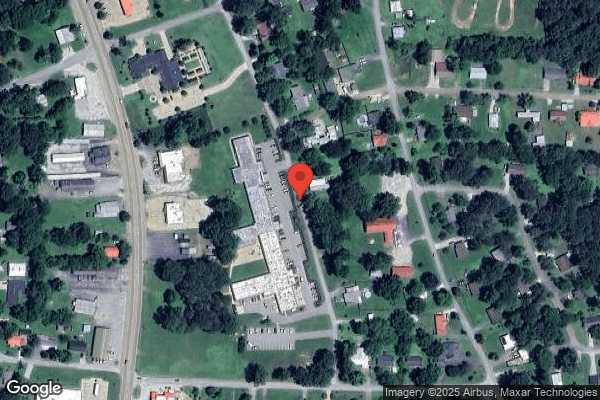
726 KENTUCKY AVENUE S, PARSONS, TN 38363 (731) 847-6371
For profit - Corporation 125 Beds AMERICAN HEALTH COMMUNITIES Data: November 2025
Trust Grade
80/100
#59 of 298 in TN
Last Inspection: October 2024

Within standard 12-15 month inspection cycle. Federal law requires annual inspections.

Overview

Decatur County Healthcare in Parsons, Tennessee, has a Trust Grade of B+, which means it is above average and recommended for families considering care options. It ranks #59 out of 298 facilities in Tennessee, placing it in the top half, and #1 of 2 in Decatur County, indicating it is the best local option. However, the facility is facing a concerning trend of worsening issues, increasing from 2 reported problems in 2022 to 3 in 2024. Staffing is a weakness, receiving a low rating of 2 out of 5 stars, with a turnover rate of 42%, which is still better than the state's average. Although there have been no fines, which is a positive sign, there are serious concerns about food safety practices, such as expired and improperly stored food items, and medications being left unsecured in resident rooms, which could lead to potential harm.

Trust Score
B+
80/100
In Tennessee
#59/298
Top 19%
Safety Record
Low Risk
No red flags
Inspections
Getting Worse
2 → 3 violations
Staff Stability
○ Average
42% turnover. Near Tennessee's 48% average. Typical for the industry.
Penalties
✓ Good
No fines on record. Clean compliance history, better than most Tennessee facilities.
Skilled Nurses
⚠ Watch
Each resident gets only 23 minutes of Registered Nurse (RN) attention daily — below average for Tennessee. Fewer RN minutes means fewer trained eyes watching for problems.
Violations
✓ Good
Only 5 deficiencies on record. Cleaner than most facilities. Minor issues only.
★★★★☆
4.0
Overall Rating
★★☆☆☆
2.0
Staff Levels
★★★★☆
4.0
Care Quality
★★★★☆
4.0
Inspection Score
Stable
2022: 2 issues
2024: 3 issues

The Good

  • 4-Star Quality Measures · Strong clinical quality outcomes
  • Full Sprinkler Coverage · Fire safety systems throughout facility
  • No fines on record
  • Staff turnover below average (42%)

    6 points below Tennessee average of 48%

Facility shows strength in quality measures, fire safety.

The Bad

Staff Turnover: 42%

Near Tennessee avg (46%)

Typical for the industry

Chain: AMERICAN HEALTH COMMUNITIES

Part of a multi-facility chain

Ask about local staffing decisions and management

The Ugly 5 deficiencies on record

Oct 2024 3 deficiencies
CONCERN (D)

Potential for Harm - no one hurt, but risky conditions existed

Deficiency F0761 (Tag F0761)

Could have caused harm · This affected 1 resident

**NOTE- TERMS IN BRACKETS HAVE BEEN EDITED TO PROTECT CONFIDENTIALITY** Based on policy review, medical record review, observation, and interview, the facility failed to ensure medications were proper...

Read full inspector narrative →
**NOTE- TERMS IN BRACKETS HAVE BEEN EDITED TO PROTECT CONFIDENTIALITY** Based on policy review, medical record review, observation, and interview, the facility failed to ensure medications were properly stored and secured for 1 of 1 sampled residents (Resident #277) when medications were found unattended and unsecured in the Resident's room. The findings include: Review of the facility policy titled, Medication Administration: Medication, Controlled and Biological Storage, Night/ Emergency Box and Backup Pharmacy Storage, dated 9/25/2024, revealed .It is the policy of this facility to ensure all medications housed on our premises will be stored .in locked compartments .medications must be under the direct observation of the person administering medications of locked in the medication storage area/cart . Review of the medical record revealed Resident #277 was admitted to the facility on [DATE], with diagnoses including Osteomyelitis, Diabetes, and Anemia. Review of the admission Minimum Data Set (MDS) assessment dated [DATE], revealed a Brief Interview for Mental Status (BIMS) score of 14, which indicated Resident #277 was cognitively intact and assessed for special treatments that included intravenous (IV) medications. Observation in Resident #277's room on 10/28/2024 at 9:35 AM, revealed 2 syringes filled with Heparin (a medication used to keep IV catheters open and prevent blood clots) on the chair next to the bed, unsecured and unattended. During an interview on 10/28/2024 at 9:46 AM, RN A confirmed that the medications should not be left at bedside unattended. During an interview on 10/30/2024 at 5:02 PM, the Director of Nursing confirmed that Heparin should not be left at the Resident's bedside unattended.
CONCERN (D)

Potential for Harm - no one hurt, but risky conditions existed

Infection Control (Tag F0880)

Could have caused harm · This affected 1 resident

Based on policy review, observation, and interview, the facility failed to ensure appropriate infection control prevention and practices during medication administration when 1 of 2 nurses Registered ...

Read full inspector narrative →
Based on policy review, observation, and interview, the facility failed to ensure appropriate infection control prevention and practices during medication administration when 1 of 2 nurses Registered Nurse (RN) C observed failed to perform hand hygiene between changing gloves during medication pass, and 1 of 1 Certified Nurses Assistant (CNA) B failed to properly handle and transport a soiled brief. The findings include: 1. Review of the facility policy titled, Infection Control, dated 11/20/2023, revealed . It is a policy of this facility to establish and maintain an infection prevention and control program (IPCP) designed to provide a safe, sanitary .environment .to help prevent the development and transmission of communicable diseases and infections .direct care staff shall handle, store, process, and transport linens so as to prevent spread of infection .All staff shall demonstrate competence in relevant infection control practices . Review of the facility policy titled, Hand Hygiene, dated 3/28/2024, revealed .Staff involved in direct resident contact shall perform proper hand hygiene procedures to prevent the spread of infection .the use of gloves does not replace hand hygiene. Perform hand hygiene after removing gloves .before applying and after removing personal protective equipment .including gloves . 2. During an observation on 10/30/2024 at 7:35 AM, revealed RN C entered Resident #29 ' s room to administer medications, sanitized, donned gloves, administered eye drops, removed gloves, did not perform hand hygiene, and donned another pair of gloves to administer oral medications. Upon completion of administering oral medications, RN C removed her gloves, did not perform hand hygiene, donned another pair of gloves to administer the second ordered eyedrops. 3. During an observation on 10/30/2024 at 8:04 AM, RN C entered Resident #227 ' s room to administer medications and performed hand hygiene before donning gloves. RN C helped the resident unbutton his shirt to gain access to the Peripherally inserted central catheter (PICC) (a thin flexible tube inserted into a vein in the arm and threaded into a large vein in the chest) line, removed her gloves, and did not perform hand hygiene before donning a new pair of gloves. RN C failed to perform hand hygiene after removing gloves during medication administration. 4. A random observation and interview on the 400 Hall on 10/30/2024 at 9:23 AM, revealed CNA B walked out of a resident ' s room with a dirty brief in her bare hand, walked to the other side of the hallway and placed the brief in a trash barrel. CNA B confirmed it was a dirty brief in her hand. CNA B confirmed the dirty brief should have been in a plastic bag before she walked out of the room. 5. During an interview on 10/30/2024 at 9:37 AM, the Director of Nursing (DON) was asked how should staff handle dirty briefs when exiting a resident ' s room. The DON stated, Put it in a bag and then it goes into a barrel in the hallway. During an interview on 10/31/24 at 7:15 AM, the DON confirmed that hand sanitization should always be performed after removing gloves.
CONCERN (E)

Potential for Harm - no one hurt, but risky conditions existed

Food Safety (Tag F0812)

Could have caused harm · This affected multiple residents

Based on policy review, observation, and interview, the facility failed to ensure food was stored, prepared, and served under sanitary conditions when the ice machine was found with black slimy residu...

Read full inspector narrative →
Based on policy review, observation, and interview, the facility failed to ensure food was stored, prepared, and served under sanitary conditions when the ice machine was found with black slimy residue on the inside trim of the ice machine and white residue running down the inside of the door. The facility had a census of 74 residents with 74 of those residents receiving a tray from the kitchen. The findings include: Review of the facility policy titled, Dietary: Ice Storage, dated 11/30/2022, revealed .Ice is to be maintained and served to patients in a sanitary manner . Review of the Named Company's invoice dated 4/15/2024, revealed the last time the ice machine was clean/sanitized was on 4/15/2024. Observation in the Clean Utility Room on the 300 Hall on 10/30/2024 at 8:09 AM, revealed a black, slimy substance on the inside trim and inside edge of the ice machine and white residue running down the inside of the door. During an interview on 10/30/2024 at 8:13 AM, the Dietary Supervisor (DS) stated that Maintenance is responsible for cleaning the ice machine. The DS confirmed there should not have been any black slimy substance or white residue on the ice machine. During an interview on 10/30/2024 at 8:21 AM, the Maintenance Director (MD) was asked how often the ice machine should be cleaned. The MD stated, .should be cleaned monthly through a contractor . The MD was asked should there be black slimy and white residue on the ice machine. The MD stated, .Probably not.
Aug 2022 2 deficiencies
CONCERN (D)

Potential for Harm - no one hurt, but risky conditions existed

Assessment Accuracy (Tag F0641)

Could have caused harm · This affected 1 resident

**NOTE- TERMS IN BRACKETS HAVE BEEN EDITED TO PROTECT CONFIDENTIALITY** Based on medical record review, observation, and interview, the facility failed to accurately assess residents for antipsychotic...

Read full inspector narrative →
**NOTE- TERMS IN BRACKETS HAVE BEEN EDITED TO PROTECT CONFIDENTIALITY** Based on medical record review, observation, and interview, the facility failed to accurately assess residents for antipsychotic medication use and Dialysis for 5 of 21 sampled residents (Resident #3, #9, #21, #33, and #64) reviewed for accuracy of Minimum Data Set (MDS) assessments. The findings include: Review of the facility's policy titled, Dialysis, dated 10/18/21, revealed .Residents who have End Stage Renal Disease (ESRD) and receive dialysis will be .identified in assessments . Review of the medical record, revealed Resident #3 was admitted to the facility on [DATE] with diagnoses of Hemiplegia, Chron's Disease, Malignant Neoplasm of Rectum, Anus, and Anal Canal, Diabetes, and Anxiety. Review of the Physician Order Sheet dated 2/2022, revealed Resident #3 did not have an order to receive Antipsychotic medication. Review of the Medication Administration Record (MAR) dated 2/2022, revealed Resident #3 did not receive Antipsychotic medications. Review of the quarterly MDS dated [DATE], revealed Resident #3 was assessed as having received Antipsychotic medications on a routine basis. Review of the Physician Order Sheet dated 5/2022, revealed Resident #3 did not have an order to receive Antipsychotic medication. Review of the Medication MAR dated 5/2022, revealed Resident #3 did not receive Antipsychotic medications. Review of the quarterly MDS dated [DATE], revealed Resident #3 was assessed as having received Antipsychotic medications on a routine basis. Review of the medical record, revealed Resident #9 was admitted to the facility on [DATE] with diagnoses of Hypertension, Diabetes, Cerebral Infarction, and Protein Calorie Malnutrition. Review of the Physician Order Sheet dated 5/2022, revealed Resident #9 did not have an order to receive Antipsychotic medication. Review of the MAR dated 5/2022, revealed Resident #9 did not receive Antipsychotic medications. Review of the quarterly MDS dated [DATE], revealed Resident #9 was assessed as having received Antipsychotic medications on a routine basis. During an interview on 8/17/2022 at 4:44 PM, MDS Coordinator #1 stated she coded Resident #9 as receiving Antipsychotic medications because she was receiving some type of psychotropic medication. Review of the medical record, revealed Resident #21 was admitted to the facility on [DATE] with diagnoses of Hypertension, Renal Insufficiency, and End-Stage Renal Disease. Review of a Treatment/Order Update/Change in Condition sheet dated 12/15/2021, revealed .Verbal Order Begin Date 12/15/2021 .3 Times Weekly .Dialysis on M [Monday]-W [Wednesday]-F [Friday] . Review of the Treatment Sheet dated 6/2022, revealed Resident #21 received dialysis on 6/13/2022, 6/15/2022, and 6/17/2022. Review of the quarterly MDS assessment dated [DATE], revealed Resident #21 was assessed as having a Brief Interview for Mental Status (BIMS) score of 14, indicating the resident was cognitively intact, with diagnoses of End-Stage Renal Disease and Dependence on Renal Dialysis, and Resident #21 was not coded as receiving dialysis services. During an interview on 8/17/2022 at 7:43 PM, MDS Coordinator #1 confirmed Resident #21 received dialysis and should have been assessed for dialysis services on the 6/19/2022 quarterly MDS assessment. Review of the medical record, revealed Resident #33 was admitted to the facility on [DATE] with diagnoses of Heart Failure, Chronic Kidney Disease, Myocardial Infarction, Atrial Fibrillation, Diabetes, and Failure to Thrive. Review of the Physician Order Sheet dated 6/2022, revealed Resident #33 did not have an order to receive Antipsychotic medication. Review of the MAR dated 6/2022, revealed Resident #33 did not receive Antipsychotic medication. Review of the quarterly MDS dated [DATE], revealed Resident #33 was assessed as having received Antipsychotic medications on a routine basis. Review of the medical record, revealed Resident #64 was admitted to the facility on [DATE] with diagnoses of Heart Failure, Cerebral Infarction, Malnutrition, and Dysphagia. Review of the Physician Order Sheet dated 7/2022, revealed Resident #64 did not have an order to receive Antipsychotic medication. Review of the MAR dated 7/2022, revealed Resident #64 did not receive Antipsychotic medications. Review of the annual MDS dated [DATE], revealed Resident #64 was assessed as having received Antipsychotic medications on a routine basis. Review of the Physician Order Sheet dated 8/2022, revealed Resident #64 did not have an order to receive Antipsychotic medication. Review of the MAR dated 8/2022, revealed Resident #64 did not receive Antipsychotic medication. Review of the quarterly MDS dated [DATE], revealed Resident #64 was assessed as having received Antipsychotic medications on a routine basis. During an interview on 8/17/2022 at 5:21 PM, MDS Coordinator #1 and MDS Coordinator #2 confirmed the MDS assessments were coded incorrectly for receiving Antipsychotic medications.
CONCERN (F)

Potential for Harm - no one hurt, but risky conditions existed

Food Safety (Tag F0812)

Could have caused harm · This affected most or all residents

Based on policy review, observation, and interview, the facility failed to ensure food was stored, prepared, and served under sanitary conditions when expired, opened, and undated food items were foun...

Read full inspector narrative →
Based on policy review, observation, and interview, the facility failed to ensure food was stored, prepared, and served under sanitary conditions when expired, opened, and undated food items were found in the dry food storage area. The facility had a census of 70, with 68 of those residents receiving a meal tray from the Kitchen. The findings include: Review of the facility's policy titled, Dietary: Food Storage, dated 8/5/2021, revealed .Product will be used or discarded within the appropriate time frame .spices should be dated with the delivery date and discarded after one year . Observation in the Kitchen on 8/15/22 beginning at 8:52 AM, revealed the following: a. a 16 ounce (oz) plastic container of ground mustard seasoning opened and dated 11/8/2019 b. a 18 oz plastic container of paprika seasoning opened and dated 4/14/2017 c. a 16 oz plastic container of salt free seasoning opened, undated, and no visible use by date During an interview on 8/17/22 at 9:49 AM, the Dietary Manager confirmed that all food and spices should have an open date and spices should be discarded after 1 year.
Understanding Severity Codes (click to expand)
Life-Threatening (Immediate Jeopardy)
J - Isolated K - Pattern L - Widespread
Actual Harm
G - Isolated H - Pattern I - Widespread
Potential for Harm
D - Isolated E - Pattern F - Widespread
No Harm (Minor)
A - Isolated B - Pattern C - Widespread

Questions to Ask on Your Visit

  • "Can I speak with families of current residents?"
  • "What's your RN coverage like on weekends and overnight?"

Our Honest Assessment

Strengths
  • • Grade B+ (80/100). Above average facility, better than most options in Tennessee.
  • • No major safety red flags. No abuse findings, life-threatening violations, or SFF status.
  • • No fines on record. Clean compliance history, better than most Tennessee facilities.
  • • Only 5 deficiencies on record. Cleaner than most facilities. Minor issues only.
Concerns
  • • No significant concerns identified. This facility shows no red flags across CMS ratings, staff turnover, or federal penalties.
Bottom line: Generally positive indicators. Standard due diligence and a personal visit recommended.

About This Facility

What is Decatur County Healthcare's CMS Rating?

CMS assigns Decatur County Healthcare an overall rating of 4 out of 5 stars, which is considered above average nationally. Within Tennessee, this rating places the facility higher than 99% of the state's 100 nursing homes. This rating reflects solid performance across the metrics CMS uses to evaluate nursing home quality.

How is Decatur County Healthcare Staffed?

CMS rates Decatur County Healthcare's staffing level at 2 out of 5 stars, which is below average compared to other nursing homes. Staff turnover is 42%, compared to the Tennessee average of 46%. This relatively stable workforce can support continuity of care.

What Have Inspectors Found at Decatur County Healthcare?

State health inspectors documented 5 deficiencies at Decatur County Healthcare during 2022 to 2024. These included: 5 with potential for harm.

Who Owns and Operates Decatur County Healthcare?

Decatur County Healthcare is owned by a for-profit company. For-profit facilities operate as businesses with obligations to shareholders or private owners. The facility is operated by AMERICAN HEALTH COMMUNITIES, a chain that manages multiple nursing homes. With 125 certified beds and approximately 78 residents (about 62% occupancy), it is a mid-sized facility located in PARSONS, Tennessee.

How Does Decatur County Healthcare Compare to Other Tennessee Nursing Homes?

Compared to the 100 nursing homes in Tennessee, Decatur County Healthcare's overall rating (4 stars) is above the state average of 2.8, staff turnover (42%) is near the state average of 46%, and health inspection rating (4 stars) is above the national benchmark.

What Should Families Ask When Visiting Decatur County Healthcare?

Based on this facility's data, families visiting should ask: "Can you walk me through typical staffing levels on day, evening, and night shifts?" "Can I visit during a mealtime to observe dining assistance and food quality?" "How do you handle medical emergencies, and what is your hospital transfer rate?" "Can I speak with family members of current residents about their experience?" These questions are particularly relevant given the below-average staffing rating.

Is Decatur County Healthcare Safe?

Based on CMS inspection data, Decatur County Healthcare has a clean safety record: no substantiated abuse findings (meaning no confirmed cases of resident harm), no Immediate Jeopardy citations (the most serious violation level indicating risk of serious injury or death), and is not on the Special Focus Facility watch list (a federal program monitoring the lowest-performing 1% of nursing homes). The facility has a 4-star overall rating and ranks #1 of 100 nursing homes in Tennessee. While no facility is perfect, families should still ask about staff-to-resident ratios and recent inspection results during their visit.

Do Nurses at Decatur County Healthcare Stick Around?

Decatur County Healthcare has a staff turnover rate of 42%, which is about average for Tennessee nursing homes (state average: 46%). Moderate turnover is common in nursing homes, but families should still ask about staff tenure and how the facility maintains care continuity when employees leave.

Was Decatur County Healthcare Ever Fined?

Decatur County Healthcare has no federal fines on record. CMS issues fines when nursing homes fail to meet care standards or don't correct problems found during inspections. The absence of fines suggests the facility has either maintained compliance or corrected any issues before penalties were assessed. This is a positive indicator, though families should still review recent inspection reports for the full picture.

Is Decatur County Healthcare on Any Federal Watch List?

Decatur County Healthcare is not on any federal watch list. The most significant is the Special Focus Facility (SFF) program, which identifies the bottom 1% of nursing homes nationally based on persistent, serious quality problems. Not being on this list means the facility has avoided the pattern of deficiencies that triggers enhanced federal oversight. This is a positive indicator, though families should still review the facility's inspection history directly.