BLEDSOE COUNTY NURSING HOME
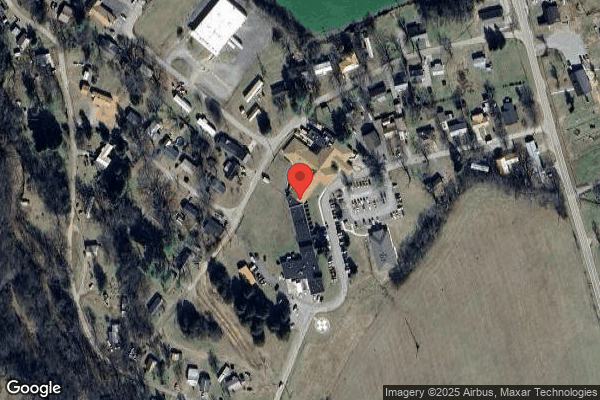
107 WHEELERTOWN AVENUE, PIKEVILLE, TN 37367 (423) 447-6811
Government - County 50 Beds Independent Data: November 2025
Trust Grade
50/100
Last Inspection: August 2023

Over 2 years since last inspection. Current conditions may differ from available data.

Overview

Bledsoe County Nursing Home has a Trust Grade of C, which means it is average and positioned in the middle of the pack among nursing homes. It does not rank among the top facilities in Tennessee or Bledsoe County, indicating limited options for families in the area. The facility is new to inspections, revealing four concerns that could pose potential harm, but fortunately, there have been no fines recorded. Staffing is a mixed bag: while turnover is at 45%, which is below the state average, there is less RN coverage than 95% of facilities in Tennessee, potentially impacting the quality of care. Specific incidents include not updating a resident's mental health assessments after new diagnoses and failing to manage medications correctly for residents, which raises concerns about the oversight of care.

Trust Score
C
50/100
In Tennessee
#112/223
Top 50%
Safety Record
Low Risk
No red flags
Inspections
Too New
0 → 4 violations
Staff Stability
⚠ Watch
45% turnover. Above average. Higher turnover means staff may not know residents' routines.
Penalties
✓ Good
No fines on record. Clean compliance history, better than most Tennessee facilities.
Skilled Nurses
⚠ Watch
Each resident gets only 16 minutes of Registered Nurse (RN) attention daily — below average for Tennessee. Fewer RN minutes means fewer trained eyes watching for problems.
Violations
✓ Good
Only 4 deficiencies on record. Cleaner than most facilities. Minor issues only.
☆☆☆☆☆
0.0
Overall Rating
☆☆☆☆☆
0.0
Staff Levels
☆☆☆☆☆
0.0
Care Quality
☆☆☆☆☆
0.0
Inspection Score
Stable
: 0 issues
2023: 4 issues

The Good

  • Full Sprinkler Coverage · Fire safety systems throughout facility
  • No fines on record

Facility shows strength in fire safety.

The Bad

Staff Turnover: 45%

Near Tennessee avg (46%)

Higher turnover may affect care consistency

The Ugly 4 deficiencies on record

Aug 2023 4 deficiencies
CONCERN (D)

Potential for Harm - no one hurt, but risky conditions existed

PASARR Coordination (Tag F0644)

Could have caused harm · This affected 1 resident

**NOTE- TERMS IN BRACKETS HAVE BEEN EDITED TO PROTECT CONFIDENTIALITY** Based on facility policy review, medical record review, and interview, the facility failed to resubmit a Pre-admission Screening...

Read full inspector narrative →
**NOTE- TERMS IN BRACKETS HAVE BEEN EDITED TO PROTECT CONFIDENTIALITY** Based on facility policy review, medical record review, and interview, the facility failed to resubmit a Pre-admission Screening and Resident Review (PASARR) after a new mental health diagnosis for 1 resident (#15) of 3 residents reviewed for PASARR. The findings include: Record review revealed Resident #15 was admitted to the facility on [DATE] with diagnoses including Major Depressive Disorder and Anxiety Disorder. Record review of the most recent PASARR Level 1 assessment dated [DATE], revealed Resident #15 had a mental health diagnosis of Anxiety Disorder. Record review revealed Resident #15 received a new problem/ condition of Delusions was added on 12/14/2022. Record review revealed no new Level II PASARR had been submitted to include a new diagnosis/ condition of Delusions with anti-psychotic medication use. Record review revealed a care plan had been initiated on 12/14/2022 for psychotropic medication use for Delusions . Review of the quarterly Minimum Data Assessment (MDS) dated [DATE], revealed Resident #15 had an active diagnosis of .Anxiety .Depression .Psychotic Disorder . and received antipsychotic, antianxiety, and antidepressant medications during the last 7 days. During an interview on 8/7/2023 at 7:52 AM, the Director of Nursing stated when a resident in the facility receives a new mental health diagnosis a PASSAR was to be resubmitted for the resident. During an interview 8/7/2023 at 8:11 AM, in the MDS office, the MDS Coordinator stated she was responsible for PASARR updates and confirmed the PASARR for Resident #15 was submitted to after a new diagnosis/ condition of Delusions.
CONCERN (D)

Potential for Harm - no one hurt, but risky conditions existed

Drug Regimen Review (Tag F0756)

Could have caused harm · This affected 1 resident

**NOTE- TERMS IN BRACKETS HAVE BEEN EDITED TO PROTECT CONFIDENTIALITY** Based on facility policy review, medical record review, and interview the facility failed to ensure the Physician reviewed and a...

Read full inspector narrative →
**NOTE- TERMS IN BRACKETS HAVE BEEN EDITED TO PROTECT CONFIDENTIALITY** Based on facility policy review, medical record review, and interview the facility failed to ensure the Physician reviewed and acted upon irregularities identified by the Consultant Pharmacist for 2 residents (#30 an #32) of 5 residents reviewed for unnecessary medications. The findings include: Review of the facility policy, Medication Regimen Reviews, revised 5/2019 revealed .The Consultant Pharmacist provides the Director of Nursing Services and Medical Director with a written, signed and dated copy of all medication regimen reports .Copies of medication regimen review reports, including physician responses, are maintained as part of the permanent medical record . Record review showed Resident #30 was admitted to the facility on [DATE] with diagnoses including Alzheimer's Disease, Failure to Thrive, Dementia, and Major Depressive Disorder. Review of a Consultation Report dated 3/30/2023 showed .[Resident #30] .psychotropic .w/o (with out) documentation of a specific diagnosis and benefit to the resident . Continued review revealed the Physician signed 6/15/2023 but did not respond to the Consultant Pharmacist recommendation. Review of a Consultation Report dated 6/29/2023 showed .[Resident #30] .psychotropic .w/o (with out) documentation of a specific diagnosis and benefit to the resident . Continued review revealed the Physician had not signed or responded to the Consultant Pharmacist recommendation. Record review showed Resident #32 was admitted to the facility on [DATE] with diagnoses including Dementia, Depression, and Chronic Kidney Disease. Review of a Consultation Report dated 3/30/2023 showed .[Resident #32] .chronic long term use of .narcotic .w/o documentation of specific diagnosis and benefit to the resident . Continued review revealed the Physician had not signed or responded to the Consultant Pharmacist recommendation. Review of a Consultation Report dated 4/27/2023 showed .[Resident #32] .chronic long term use of .narcotic .w/o documentation of specific diagnosis and benefit to the resident . Continued review revealed the Physician had not signed or responded to the Consultant Pharmacist recommendation. Review of a Consultation Report dated 5/25/2023 showed .[Resident #32] .chronic long term use of .narcotic .w/o documentation of specific diagnosis and benefit to the resident . Continued review revealed the Physician had not signed or responded to the Consultant Pharmacist recommendation. Review of a Consultation Report dated 6/29/2023 showed .[Resident #32] .chronic long term use of .narcotic .w/o documentation of specific diagnosis and benefit to the resident . Continued review revealed the Physician had not signed or responded to the Consultant Pharmacist recommendation. Interview with the Director of Nursing (DON) on 8/8/2023 at 8:22 AM, in the DON office, revealed the Physician's were in the facility at least monthly to review reports. Continued interview with the DON confirmed the Consultant Pharmacist recommendations were not acted upon.
CONCERN (D)

Potential for Harm - no one hurt, but risky conditions existed

Medication Errors (Tag F0758)

Could have caused harm · This affected 1 resident

**NOTE- TERMS IN BRACKETS HAVE BEEN EDITED TO PROTECT CONFIDENTIALITY** Based on facility policy review, medical record review, and interview, the facility failed to ensure a PRN (as needed) anti-psyc...

Read full inspector narrative →
**NOTE- TERMS IN BRACKETS HAVE BEEN EDITED TO PROTECT CONFIDENTIALITY** Based on facility policy review, medical record review, and interview, the facility failed to ensure a PRN (as needed) anti-psychotic medication was not used beyond 14 days without a rationale and without documentation of duration for 1 resident (Resident #15) of 5 residents reviewed for unnecessary medications. The findings include: Review of the facility policy titled, Antipsychotic Medication Use dated July 2022, revealed .Antipsychotic medications will be prescribed at the lowest possible dosage for the shortest period of time .PRN orders for antipsychotic medications will not be renewed beyond 14 days .the duration of the PRN order will be indicated on the order . Record review revealed Resident #15 was admitted to the facility on [DATE] with diagnoses including Major Depressive Disorder and Anxiety Disorder. Review of a Physician's order dated 5/11/2023, revealed an order for Seroquel (anti-psychotic medication) 25 milligrams (mg) every 24 hours PRN for anxiety/agitation. The order did not have a date the medication was to be discontinued. Review of the quarterly Minimum Data Assessment (MDS) dated [DATE], revealed Resident #15 had an active diagnosis of .Anxiety .Depression .Psychotic Disorder . and received antipsychotic, antianxiety, and antidepressant medications. Review of an After Visit Summary dated 5/11/2023, revealed an order for Seroquel 25 mg every 24 hours PRN for agitation, with no documentation of when the medication was to be discontinued. Review of the Psychiatric Periodic Evaluation dated 7/12/2023, revealed Seroquel 25mg Q24H (every 24 hours) was an active medication with current recommendations to continue medication with no stop date documented. During an interview on 8/7/2023 at 2:04 PM, the Director of Nursing (DON) stated Resident #15's order for PRN Seroquel should have been discontinued after readmission into facility from her hospital stay. The DON stated the hospital had changed Seroquel from scheduled to PRN and the medication reconciliation was missed post readmission. Further interview revealed it is not the facility's practice to have anti-psychotic medications ordered for PRN use. During an interview on 8/8/2023 at 8:52 AM, in the DON office, the DON confirmed the PRN Seroquel order should have been discontinued and was ordered for longer than 14 days without a rationale and without a specified duration.
CONCERN (D)

Potential for Harm - no one hurt, but risky conditions existed

Laboratory Services (Tag F0770)

Could have caused harm · This affected 1 resident

**NOTE- TERMS IN BRACKETS HAVE BEEN EDITED TO PROTECT CONFIDENTIALITY** Based on facility policy review, record review, and interview, the facility failed to ensure laboratory (lab) tests were obtaine...

Read full inspector narrative →
**NOTE- TERMS IN BRACKETS HAVE BEEN EDITED TO PROTECT CONFIDENTIALITY** Based on facility policy review, record review, and interview, the facility failed to ensure laboratory (lab) tests were obtained for 1 resident (Resident #33) of 16 residents reviewed for laboratory results. Findings include: Review of the facility's policy titled, Lab and Diagnostic Test Results-Clinical Protocol dated November 2018, revealed The physician will identify and order diagnostic and lab testing based on the resident's diagnostic and monitoring needs .staff will process test requisitions and arrange for test . Review of the admission Record revealed Resident #33 was admitted to facility on 3/7/2022 with diagnosis of Atrial Fibrillation. Review of the quarterly Minimum Data Set (MDS) dated [DATE], revealed Resident #33 had an active diagnosis of atrial fibrillation and received anti-coagulant medication 7 of 7 days. Review of the current care plan dated 3/7/2022, revealed Resident #33 was on anticoagulant therapy with interventions for labs as ordered. Review of Order Summary dated 8/8/2023, revealed orders for Coumadin 7.5mg (milligram) daily on Wednesdays and Fridays for a-fib (atrial fibrillation) and Coumadin 5mg daily on Monday, Tuesday, Thursday, Saturday, and Sunday for a fib. Review of a physician's order dated 6/23/2023, revealed an order to Redraw PT/ INR (blood test that measures blood clotting) 2 weeks from 6-22-23 on 7-5-23. Review of laboratory results for Resident #33 revealed the most recent PT/INR results were dated 6/22/2023. During an interview on 8/7/2023 at 1:31 PM, the Director of Nursing (DON) stated there was no results in the medical record for the PT/INR ordered on 7/5/2023. The DON stated the last PT/ INR obtained was on 6/22/2023. During an interview on 8/7/2023 at 2:01 PM, the DON confirmed Resident #33's PT/INR was missed on 7/5/2023 because it did not trigger on the MAR (Medication Administration Record) for the floor nurse to obtain the lab . During an interview on 8/7/2023 at 2:29 PM, the resident's Primary Physician stated Resident #33 is stable on Coumadin therapy with a history of stability while taking the medication. The resident's Primary Physician stated he was not concerned the lab draw was missed on 7/5/2023 . gave orders for facility to obtain PT/INR on 8/7/2023. The resident's Primary Physician stated the resident has a .history of routinely receiving PT/ INR lab draws monthly, however, in this case the lab (PT/INR) was ordered by an on-call Physician who ordered it sooner . The resident's Primary Physician stated the non-critical PT/ INR lab result for 8/7/2023 of 3.21 was not alarming to him and he would expect to see some INR's range higher for Resident #33. The resident's Primary Physician stated Resident #33 is stable at this time with no adverse effects from the missed lab (PT/INR). During an interview on 8/8/2023 at 8:52 AM, in the conference room, the MDS Coordinator confirmed the lab order did not trigger on the MAR due to a data entry error of not completing the scheduling details portion of the order. The MDS Coordinator stated to get the lab to trigger over to the MAR for floor nurse to obtain the lab, scheduling details of data entry must be completed.
Understanding Severity Codes (click to expand)
Life-Threatening (Immediate Jeopardy)
J - Isolated K - Pattern L - Widespread
Actual Harm
G - Isolated H - Pattern I - Widespread
Potential for Harm
D - Isolated E - Pattern F - Widespread
No Harm (Minor)
A - Isolated B - Pattern C - Widespread

Questions to Ask on Your Visit

  • "Can I speak with families of current residents?"
  • "What's your RN coverage like on weekends and overnight?"

Our Honest Assessment

Strengths
  • • No major safety red flags. No abuse findings, life-threatening violations, or SFF status.
  • • No fines on record. Clean compliance history, better than most Tennessee facilities.
  • • Only 4 deficiencies on record. Cleaner than most facilities. Minor issues only.
Concerns
  • • Grade C (50/100). Below average facility with significant concerns.
Bottom line: Mixed indicators with Trust Score of 50/100. Visit in person and ask pointed questions.

About This Facility

What is Bledsoe County's CMS Rating?

BLEDSOE COUNTY NURSING HOME does not currently have a CMS star rating on record.

How is Bledsoe County Staffed?

Staff turnover is 45%, compared to the Tennessee average of 46%. This relatively stable workforce can support continuity of care.

What Have Inspectors Found at Bledsoe County?

State health inspectors documented 4 deficiencies at BLEDSOE COUNTY NURSING HOME during 2023. These included: 4 with potential for harm.

Who Owns and Operates Bledsoe County?

BLEDSOE COUNTY NURSING HOME is owned by a government entity. Government-operated facilities are typically run by state, county, or municipal agencies. The facility operates independently rather than as part of a larger chain. With 50 certified beds and approximately 32 residents (about 64% occupancy), it is a smaller facility located in PIKEVILLE, Tennessee.

How Does Bledsoe County Compare to Other Tennessee Nursing Homes?

Compared to the 100 nursing homes in Tennessee, BLEDSOE COUNTY NURSING HOME's staff turnover (45%) is near the state average of 46%.

What Should Families Ask When Visiting Bledsoe County?

Based on this facility's data, families visiting should ask: "Can I visit during a mealtime to observe dining assistance and food quality?" "How do you handle medical emergencies, and what is your hospital transfer rate?" "Can I speak with family members of current residents about their experience?"

Is Bledsoe County Safe?

Based on CMS inspection data, BLEDSOE COUNTY NURSING HOME has a clean safety record: no substantiated abuse findings (meaning no confirmed cases of resident harm), no Immediate Jeopardy citations (the most serious violation level indicating risk of serious injury or death), and is not on the Special Focus Facility watch list (a federal program monitoring the lowest-performing 1% of nursing homes). The facility has a 0-star overall rating and ranks #100 of 100 nursing homes in Tennessee. While no facility is perfect, families should still ask about staff-to-resident ratios and recent inspection results during their visit.

Do Nurses at Bledsoe County Stick Around?

BLEDSOE COUNTY NURSING HOME has a staff turnover rate of 45%, which is about average for Tennessee nursing homes (state average: 46%). Moderate turnover is common in nursing homes, but families should still ask about staff tenure and how the facility maintains care continuity when employees leave.

Was Bledsoe County Ever Fined?

BLEDSOE COUNTY NURSING HOME has no federal fines on record. CMS issues fines when nursing homes fail to meet care standards or don't correct problems found during inspections. The absence of fines suggests the facility has either maintained compliance or corrected any issues before penalties were assessed. This is a positive indicator, though families should still review recent inspection reports for the full picture.

Is Bledsoe County on Any Federal Watch List?

BLEDSOE COUNTY NURSING HOME is not on any federal watch list. The most significant is the Special Focus Facility (SFF) program, which identifies the bottom 1% of nursing homes nationally based on persistent, serious quality problems. Not being on this list means the facility has avoided the pattern of deficiencies that triggers enhanced federal oversight. This is a positive indicator, though families should still review the facility's inspection history directly.