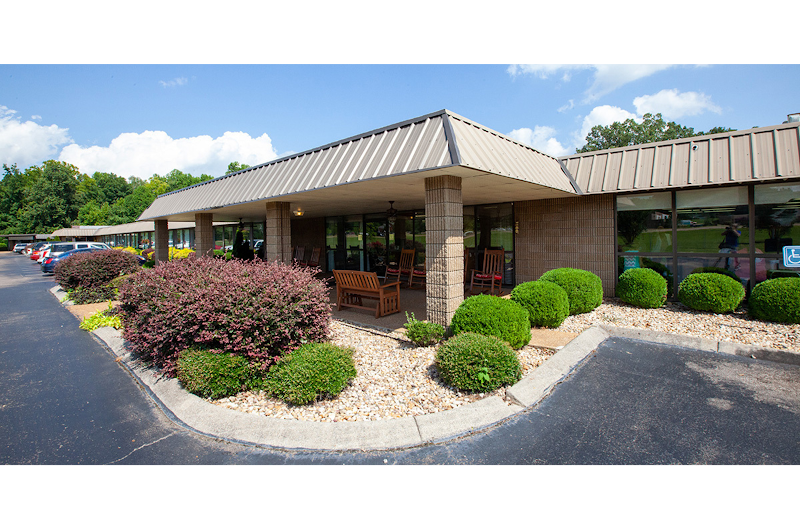
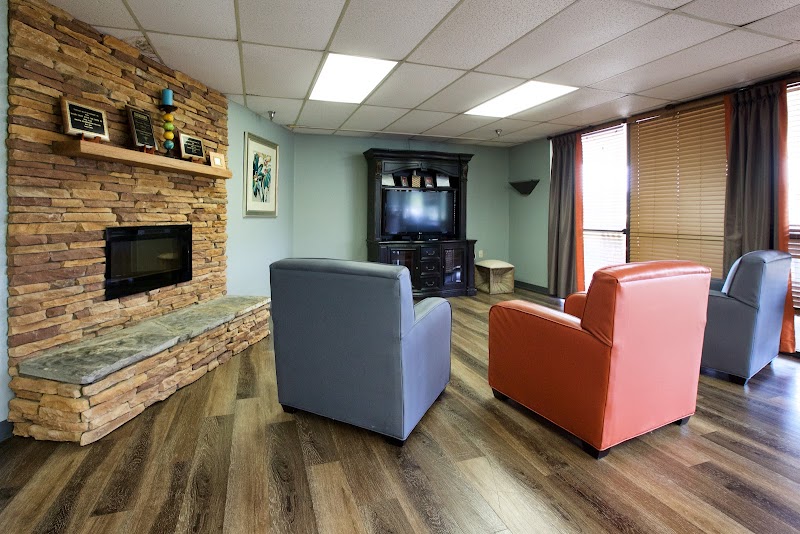
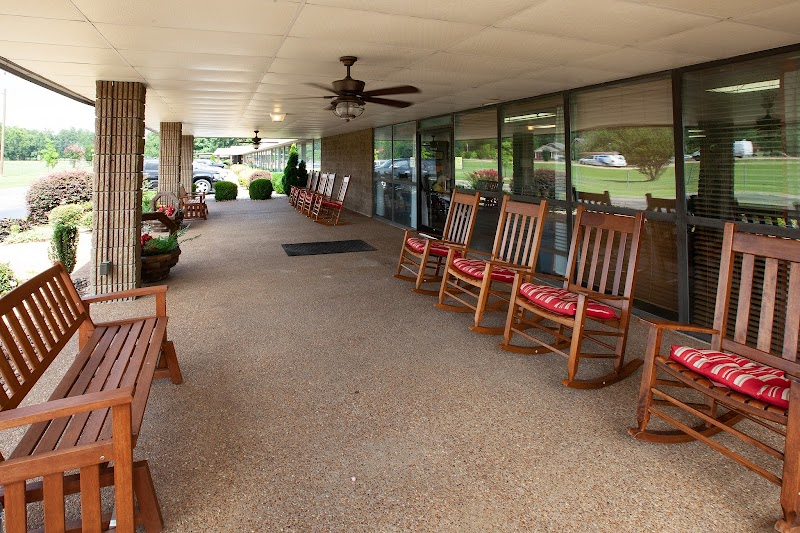

AHC MCNAIRY COUNTY

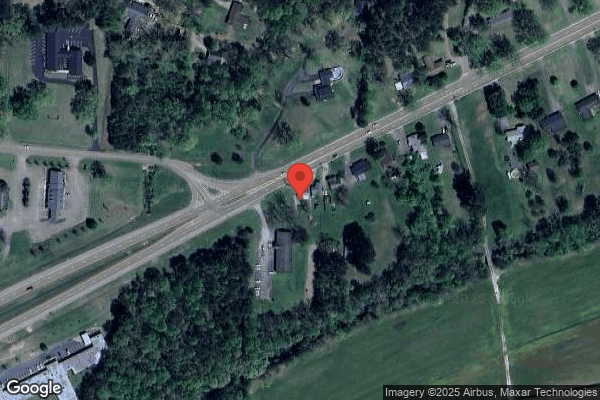
835 EAST POPLAR AVENUE, SELMER, TN 38375 (731) 645-3201
For profit - Limited Liability company 126 Beds PACS GROUP Data: November 2025 1 Immediate Jeopardy citation
Trust Grade
79/100
#3 of 298 in TN
Last Inspection: July 2025

Inspected within the last 6 months. Data reflects current conditions.

Overview

AHC McNairy County in Selmer, Tennessee, has a Trust Grade of B, indicating it is a good choice for families seeking care for their loved ones. Ranked #3 out of 298 facilities in Tennessee, they are in the top half, and they hold the top position among the two nursing homes in McNairy County. The facility is improving, with reported issues decreasing from seven in 2022 to three in 2025. Staffing is average, rated at 3 out of 5 stars, with a turnover rate of 27%, which is significantly better than the state average of 48%. However, the facility has been fined $9,331, which is average compared to other Tennessee facilities. A positive aspect is their RN coverage, which is adequate and ensures that registered nurses can catch problems that nursing assistants might miss. Some concerning incidents include a critical finding where a resident with severe cognitive impairment was able to exit the facility unsupervised, posing a serious safety risk, and multiple residents were not informed about their rights to create an Advanced Directive. Overall, while the facility has strengths such as a high-quality rating and good staffing retention, families should be aware of the safety and communication issues that need addressing.

Trust Score
B
79/100
In Tennessee
#3/298
Top 1%
Safety Record
High Risk
Review needed
Inspections
Getting Better
7 → 3 violations
Staff Stability
✓ Good
27% annual turnover. Excellent stability, 21 points below Tennessee's 48% average. Staff who stay learn residents' needs.
Penalties
○ Average
$9,331 in fines. Higher than 72% of Tennessee facilities. Some compliance issues.
Skilled Nurses
○ Average
Each resident gets 30 minutes of Registered Nurse (RN) attention daily — about average for Tennessee. RNs are the most trained staff who monitor for health changes.
Violations
⚠ Watch
12 deficiencies on record. Higher than average. Multiple issues found across inspections.
★★★★★
5.0
Overall Rating
★★★☆☆
3.0
Staff Levels
★★★★★
5.0
Care Quality
★★★★☆
4.0
Inspection Score
Stable
2022: 7 issues
2025: 3 issues

The Good

  • 5-Star Quality Measures · Strong clinical quality outcomes
  • Low Staff Turnover (27%) · Staff stability means consistent care
  • Full Sprinkler Coverage · Fire safety systems throughout facility
  • No fines on record
  • Staff turnover is low (27%)

    21 points below Tennessee average of 48%

Facility shows strength in quality measures, staff retention, fire safety.

The Bad

Federal Fines: $9,331

Below median ($33,413)

Minor penalties assessed

Chain: PACS GROUP

Part of a multi-facility chain

Ask about local staffing decisions and management

The Ugly 12 deficiencies on record

1 life-threatening
Jul 2025 3 deficiencies
CONCERN (D)

Potential for Harm - no one hurt, but risky conditions existed

Quality of Care (Tag F0684)

Could have caused harm · This affected 1 resident

**NOTE- TERMS IN BRACKETS HAVE BEEN EDITED TO PROTECT CONFIDENTIALITY** Based on policy review, medical record review, and interview, the facility failed to follow Physician's Orders related to urolog...

Read full inspector narrative →
**NOTE- TERMS IN BRACKETS HAVE BEEN EDITED TO PROTECT CONFIDENTIALITY** Based on policy review, medical record review, and interview, the facility failed to follow Physician's Orders related to urology referrals and failed to obtain an order for Percutaneous Endoscopic Gastrostomy (PEG) site care for 2 of 6 residents (Resident #21 and #33) sampled residents reviewed for hospitalizations and PEG feedings. The findings include: 1. Review of the facility policy titled, Enteral Feedings- Safety Precautions, dated November 2018, revealed .Purpose .To ensure the safe administration of enteral nutrition .Assess for leaking around the gastrostomy.with each feeding or medication administration.observe for signs of skin breakdown, infection and irritation.Document all assessments, findings and interventions in the medical record. 2. Review of the medical record revealed Resident #21 was readmitted on [DATE], with diagnoses including Hydronephrosis, Renal and Ureteral Calculous Obstruction (occurs when a kidney stone gets lodged in the tube that carries urine from the kidney to the bladder, Urogenital Implants (medical devices used to address urinary or genital problems), Urinary Tract Infection, Bacteremia (the presence of viable bacteria in the bloodstream), Sepsis (a life-threatening condition that occurs when the body's immune system overreacts to an infection), and Acute Kidney Failure. Review of the progress note dated 6/16/2025, revealed Resident #21 was transferred to the hospital on 5/31/2025 with progressive weakness, poor appetite, and mental status changes. He was found to have a kidney stone and kidney infection with sepsis. He underwent a medical procedure to remove the stone, and a stent was placed in his ureter (tube that carries urine from the kidney to the bladder) on 6/1/2025. He was diagnosed with Sepsis with acute renal failure and renal cortical necrosis (when the small arteries supplying blood to the outer layer of the kidney are injured). Review of the progress note dated 6/16/2025, revealed .N.O. [New Order] per [named Doctor] to refer to a urologist. Stated to hold off on other referrals hospital recommended at this time. To set up appt [appointment] tommorrow [tomorrow] . Review of the Physician's Orders dated 6/17/2025, revealed .Referral to Urologist s/p [status post] stent placement one time only for ureter Stent for 2 Days. Review of the progress note dated 6/18/2025, revealed .called [named Doctor] office .re [regarding]: need for appointment-spoke with [named staff] -states that resident will be a new patient and they will need a referral first-states that she will fax referral papers .as requested-awaiting referral papers . Review of the Care Plan dated 5/29/2025, revealed the care plan was not revised to reflect Resident #21's current medical status. Review of the 5-day Minimum Data Set (MDS) assessment dated [DATE], revealed a Brief Interview for Mental Status (BIMS) score of 10, which indicated Resident #21 was moderately cognitively impaired. During an interview on 7/22/2025 at 5:11 PM, Registered Nurse (RN) C confirmed that an appointment with urology was never made for Resident #21. During an interview on 7/23/2025 at 2:21 PM, the MDS Coordinator RN confirmed that the Care Plan should have been revised to reflect the resident status post hospitalization. During an interview on 7/23/2025 at 4:11 PM, the Director of Nursing (DON) confirmed the urology appointment should have been made and stated, .the ball got dropped. 3. Review of the medical record revealed Resident #33 was admitted to the facility on [DATE], with diagnoses including Hemiplegia and Hemiparesis, Diabetes Mellitus, Mild Protein-Calorie Malnutrition, and Dysphagia. Review of the admission MDS assessment dated [DATE], revealed a BIMS score of 11, which indicated Resident #33 had moderately impaired cognition, was dependent on staff for Activities of Daily Living (ADLs), and had a feeding tube (PEG). Review of the Physician's Orders for May, June, and July 2025, revealed no order for PEG site care. Review of the Treatment Administration Record (TAR) for May, June, and July 2025, revealed no treatment for PEG site care was completed. During an interview on 7/23/2025 at 8:32 AM, Licensed Practical Nurse (LPN) B confirmed there was no order for PEG site care and there should have been. LPN B was asked how staff would be aware of the need to perform care if it was not ordered. LPN B stated, .I would hope that they know to do it. Observation of Resident #33's PEG site on 7/23/2025 at 9:11 AM, revealed an undated 4x4 split gauze to area. The PEG site was clean and dry. During an interview on 7/23/2025 at 10:31 AM, the DON was asked who performs PEG site care and how do they ensure it is completed. The DON stated, .It will be signed off on the TAR.The nurse does it .they should do it daily . The DON confirmed there was no order for PEG site care and there should have been an order.
CONCERN (D)

Potential for Harm - no one hurt, but risky conditions existed

Accident Prevention (Tag F0689)

Could have caused harm · This affected 1 resident

**NOTE- TERMS IN BRACKETS HAVE BEEN EDITED TO PROTECT CONFIDENTIALITY** Based on policy review, Care Path Fall guideline, medical record review, observation, and interview, the facility failed to docu...

Read full inspector narrative →
**NOTE- TERMS IN BRACKETS HAVE BEEN EDITED TO PROTECT CONFIDENTIALITY** Based on policy review, Care Path Fall guideline, medical record review, observation, and interview, the facility failed to document falls, implement fall interventions, and conduct a neurological assessment for 1 of 2 (Resident #4) sampled residents reviewed for falls. The findings include: 1. Review of the facility policy titled, Neurological Assessment (Routine), dated 10/2023, revealed The purpose of the procedure is to provide guidelines for conducting a routine neurological assessment ( neuro checks).Routine neurological assessment is conducted to evaluate the resident for small changes over time that may be indicative of neurological injury.Routine neurological exams include assessing.mental status and level of consciousness.pupillary response.motor strength.sensation.gait.The following information should be recorded in the resident's medical record.The date and time the procedure was performed.The name and title of the individual(s) who performed the procedure.All assessment data obtained during the procedure.If the resident refused the procedure, the reason(s) why and the intervention taken.The signature and title of the person recording the data. Review of the facility policy titled, Falls and Fall Risk, Managing, dated 12/2007, revealed Based on previous evaluations and current data, the staff will identify interventions related to the resident's specific risks and causes to try to prevent the resident from falling and to try to minimize complications from falling.staff will identify and implement relevant interventions. Review of the CARE PATH Fall guideline signed by the Medical Director on 1/21/2025, revealed .Monitor Neuro checks x [times] 24-72* [hours]. 2. Review of the medical record revealed Resident #4 was readmitted to the facility on [DATE] with diagnoses including Dementia, Acquired Absence of Right Leg Above Knee, Acquired Absence of Left Leg Above Knee, and Depression. Review of the Physician's Orders for Resident #4 dated 5/14/2025, revealed .Bed pressure pad alarm when in bed to alert staff of residents attempts to rise unassisted. every shift.Chair/clip alarm while up in chair due to fall risk every shift. Review of the Incidents By Incident Type report dated 4/21/2025-7/21/2025, revealed .Un-witnessed Fall Incidents. on 5/23/2025, 5/26/2025, 6/4/2025, 6/20/2025, 6/23/2025, 7/7/2025, 7/16/2025, and 7/20/2025 for Resident #4. Review of the quarterly Minimum Data Set (MDS) assessment dated [DATE], revealed a Brief Interview for Mental Status (BIMS) score of 8, which indicated Resident #4 was moderately cognitively impaired with no behaviors. Resident #4 required partial/moderate staff assistance with bed mobility, substantial/maximal staff assistance with sit to lying, and was dependent upon staff with lying to sitting and transfers. Review of the Nurse's Note dated 5/26/2025, revealed .CALLED TO ROOM AND OBSERVED RESIDENT SITTING ON HIS BOTTOM IN THE FLOOR IN BETWEEN THE TWO BEDS, HE DIDNT KNOW HOW HE SAT IN THE FLOOR. HE THOUGHT HE WAS GETTING HIS WHEELCHAIR . There was no documentation in the medical record that a neurological assessment was conducted for Resident #4's fall on 5/26/2025. Review of the comprehensive care plan dated 5/27/2025, revealed .ASSESS FOR CHAIR/BED ALARM-applied Date Initiated: 2/1/2025 Revision on: 7/8/2025 .Bed alarm to bed, tab alarm when up in chair Date Initiated: 3/15/2025 Revision on: 7/8/2025 .education given to staff to put the bed alarm under bed sheet on top of mattress Date Initiated: 3/17/2025 Revision on: 7/8/2025.inservice staff to ensure bed alarm is in place Date Initiated: 6/23/2025 Revision on: 7/8/2025 . STAFF IN SERVICED TO USE BED PAN WHEN RESIDENT STATES HE NEEDS TO HAVE A BOWEL MOVEMENT AND TO REMOVE HIS BRIEF AND BOTTOM CLOTHING. STAFF ALSO IN SERVICED TO MAKE SURE THAT BED ALARM WAS ON BED,UNDER [BED, UNDER] RESIDENT AND IN WORKING ORDER WHEN HE IS IN BED. Date Initiated: 7/21/2025. There was no Nurse's Note documenting Resident #4's fall on 6/4/2025. There was no Nurse's Note documenting Resident #4's fall on 7/16/2025. Review of the Nurse's Note dated 7/20/2025, revealed .CNA [Certified Nursing Assistant] CALLED THIS NURSE TO RESIDENTS [Resident #4's] ROOM AND RESIDENT SITTING IN FLOOR IN FRONT OF WHEEL CHAIR FULLY CLOTHED ASKING TO FOR HELP [asking for help]. RESIDENTS BED ALARM DID NOT SOUND AS RESIDENT HAD BEEN IN BED HAVING A BOWEL MOVEMENT . Observation in Resident #4's room on 7/22/2025 at 3:35 PM, revealed Resident #4 was seated in the wheelchair (w/c) with a chair/clip alarm attached to the back of the w/c with alarm clip attached to the alarm strap, not the resident's clothing and no bed pressure alarm was present on the bed. During an interview on 7/22/2025 at 3:52 PM, Licensed Practical Nurse (LPN) E confirmed Resident #4's chair/clip alarm was not attached properly and that it should be attached to the resident's clothing. LPN E was asked if Resident #4 uses a bed pressure alarm when in bed. LPN E stated, .I'm not sure. LPN E asked CNA F if Resident #4 uses a bed alarm when in bed. CNA F stated, .no, he only has the clip alarm now. LPN E reviewed the electronic medical record and confirmed that Resident #4 did have an order for a bed pressure alarm when in bed. During an interview on 7/23/2025 at 2:40 PM, the Director of Nursing (DON) confirmed there was no documentation of a neurological assessment for Resident #4 on 5/26/2025. During an interview on 7/23/2025 at 4:11 PM, the DON was asked if she expected her staff to complete a neurological assessment on all un-witnessed falls. The DON stated, .I would prefer them to be done.
CONCERN (D)

Potential for Harm - no one hurt, but risky conditions existed

Incontinence Care (Tag F0690)

Could have caused harm · This affected 1 resident

**NOTE- TERMS IN BRACKETS HAVE BEEN EDITED TO PROTECT CONFIDENTIALITY** Based on policy review, medical record review, and interview the facility failed to obtain a Physician's Order for catheter care...

Read full inspector narrative →
**NOTE- TERMS IN BRACKETS HAVE BEEN EDITED TO PROTECT CONFIDENTIALITY** Based on policy review, medical record review, and interview the facility failed to obtain a Physician's Order for catheter care and failed to provide catheter care for 1 of 1 sampled resident (Resident #27) reviewed for indwelling urinary catheter. The findings include: 1. Review of the facility policy titled, Catheter Care, Urinary, dated August 2022, revealed .The purpose of this procedure is to prevent urinary catheter-associated complications, including urinary tract infections.Use a washcloth with warm water and soap (or clean bathing wipe) to cleanse the labia [folds of skin around the vaginal opening] Use one area of the washcloth (or wipe) for each downward, cleansing stroke.Change the position of the washcloth (or wipe) and cleanse around the urethral meatus [the opening of the urethra, a tube that carries urine from the bladder to the outside of the body]. Do not allow the washcloth/wipe to drag on the resident's skin or bed linen.With a clean washcloth (or wipe), rinse using the above technique.The following information should be recorded in the resident's medical record.The date and time that catheter care was given.The name and title of the individual(s) giving the catheter care . 2. Review of the medical record revealed Resident #27 was admitted to the facility on [DATE], with diagnoses including Retention of Urine, and Cerebral Infarction [occurs when a lack of blood flow to the brain causes brain cells to die]. Review of the admission Minimum Data Set (MDS) assessment dated [DATE], revealed a Brief Interview for Mental Status (BIMS) score of 15, which indicated Resident #27 was cognitively intact, required assistance with activities of daily living (ADLs), and had an indwelling catheter. Review of the Physician Orders for July 2025, revealed there were no active orders for catheter care. Review of the Treatment Administration Record (TAR) for July 2025, revealed, .B&B [Bowel and Bladder]: Foley catheter Care every shift and prn [as needed].start date.7/2/2025.D/C [discontinued] date.7/11/2025. Review of the TAR dated July 2025, revealed there was no foley catheter care documented after Resident #27's return to the facility on 7/18/2025, following hospitalization for altered mental status (AMS) and urinary tract infection (UTI). Catheter care was not documented for 6 days. During an interview on 7/23/2025 at 8:00 AM, Resident #27 was asked if staff provided catheter care. Resident #27 stated, .I was told catheter care should be performed daily, but it is not always done. Sometimes they do it and sometimes they don't . During an interview on 7/23/2025 at 9:33 AM, LPN A was asked if Resident #27 had an order for catheter care. LPN A was unable to provide an order and confirmed residents with indwelling foley catheters should have an order for catheter care. During an interview on 7/23/2025 at 10:21 AM, the Director of Nursing (DON) was asked about the process to ensure catheter care is provided. The DON confirmed there should be an order for catheter care to be completed and documented daily.
Dec 2022 1 deficiency 1 IJ
CRITICAL (J) 📢 Someone Reported This

A family member, employee, or ombudsman was alarmed enough to file a formal complaint

Immediate Jeopardy (IJ) - the most serious Medicare violation

Accident Prevention (Tag F0689)

Someone could have died · This affected 1 resident

**NOTE- TERMS IN BRACKETS HAVE BEEN EDITED TO PROTECT CONFIDENTIALITY** Based on policy review, facility investigation review, weather website review, medical record review, and interview, the facilit...

Read full inspector narrative →
**NOTE- TERMS IN BRACKETS HAVE BEEN EDITED TO PROTECT CONFIDENTIALITY** Based on policy review, facility investigation review, weather website review, medical record review, and interview, the facility failed to ensure a safe environment with adequate supervision to prevent elopement for 1 of 3 sampled residents (Resident #1) reviewed for elopement/wandering behaviors. The facility's failure to ensure residents were adequately supervised resulted in Immediate Jeopardy when Resident #1, who had severe cognitive impairment, exited the rear dining room door and self-propelled her wheelchair (W/C) approximately 100 feet across the back parking lot. Immediate Jeopardy (IJ) is a situation in which the provider's noncompliance with one or more requirements of participation has caused, or is likely to cause, serious injury, harm, impairment, or death to a resident. The Administrator, Director of Nursing (DON), Assistant Director of Nursing (ADON), and the Regional Nurse Consultant were notified of the Immediate Jeopardy (IJ) on 12/5/2022 at 12:15 PM, in the Administrator's Office. The facility was cited Immediate Jeopardy at F-689. The facility was cited at F-689 at a scope and a severity of J, which is Substandard Quality of Care. The IJ existed from 11/20/2022 through 11/28/2022. The Immediate Jeopardy was removed onsite when the facility implemented a corrective action plan. The corrective actions were validated onsite by the surveyor on 11/28/2022. The facility was cited for past noncompliance for F-689 and is not required to submit a Plan of Correction. The findings include: Review of the facility's policy titled, Elopements and Wandering Patients dated 6/21/2022, revealed, .facility ensures that residents .who are at risk for elopement receive adequate supervision to prevent accidents and receive care in accordance with their person-centered plan of care .Elopement occurs when a resident leaves the premises or a safe area without authorization .and/or any necessary supervision to do so . Review of the medical record revealed Resident #1 was admitted to the facility on [DATE] with diagnoses of Encephalopathy, Seizures, Rheumatoid Arthritis, Anxiety, and Hallucinations. The admission Minimum Data Set (MDS) assessment dated [DATE], and the quarterly MDS dated [DATE], revealed Resident #1 had severe cognitive impairment and required extensive assistance with activities of daily living. Review of the Wander book, a list of residents with high-risk for elopement, revealed 12 residents listed including Resident #1. Review of the Care Plan dated 10/23/2022 revealed, .has physical behavioral symptoms directed at others .10/23/22 .Resident wandering in and out of residents [residents'] rooms .has exhibited Wandering Behavior .11/18/22 .Episodes of exit seeking behavior noted .11/20/22 .Exit seeking behavior noted-Initiated Q [every] 15 minutes checks x [times] 24 hours . Review of the nurses' notes dated 11/20/2022 at 18:48 [6:48 PM] written by Licensed Practical Nurse (LPN) #1 revealed, .This nurse observed employee pushing resident in W/C from outside into facility at approx. [approximately] 1450 [2:50 PM]. Assisted resident to nurses [nurses'] station via W/C. Resident alert, confused .Impaired cognition limits resident's ability to explain what occurred .Resident has been up in W/C this shift self-propelling self about facility with frequent redirection required from staff . Review of Timeanddate.com website revealed the outside temperature on 11/20/2022 at 2:50 PM was 41 degrees Fahrenheit. During an interview on 11/28/2022 at 12:51 PM, the Administrator was asked about the elopement incident for Resident #1 on 11/28/2022. The Administrator stated, She [Resident #1] was seen at 14:40 [2:40 PM] in the facility and spotted at 14:50 [2:50 PM] in the parking lot by [named Floor Technician #1] .There are no videos of the incident . During an interview on 11/28/2022 at 1:21 PM, Dietary Aide #1 was asked about the elopement on 11/20/2022. Dietary Aide #1 stated, I was in the dish-washing room, and it [dish machine] was very loud. When it [dish machine] shut off, I heard a door alarm going off. When I looked out the window to the dining room, I didn't see anyone. It [door alarm] goes off often when staff go out and do not close it quick [quickly] enough. I went over and checked the door and pressed on the door but not forcefully. It didn't open. I did not see anyone outside. I guess she [Resident #1] had gone around the corner. There was no one in the dining room .[Named LPN #2], came in and asked me about if I had seen the resident [Resident #1]. This was after we had found her. LPN #2 walked over and pushed on the door, and it opened without a code . During an interview on 11/28/2022 at 1:36 PM, LPN #1 was asked about the elopement incident. LPN #1 stated, I noticed a staff member bringing her [Resident #1] inside from outside. She didn't have any complaints or perception of being outside .He [Floor Technician #1] said he had seen her between the Veterinarian Office and the facility and brought her back in .She [Resident #1] was around the 300 Nurses' Desk the last time I had seen her propelling herself in her wheelchair. I called the ADON [Assistant Director of Nursing] since she was the only number in my phone. I had seen the resident [Resident #1] about 2:35 PM, and she was brought to the desk at 2:50 PM. During an interview on 12/1/2022 at 10:12 AM, Floor Technician #1 was asked about the incident of Resident #1 exiting the facility. Floor Technician #1 stated, I was outside waiting on my ride, and I saw her [named Resident #1] in the back parking lot propelling her wheelchair . The facility's corrective action plan was verified by the surveyor on 11/28/2022 through medical record review, observations, staff interviews, in-service logs, review of audits, review of meeting minutes, and review of maintenance logs and invoices. 1. On 11/20/2022 at 2:50 PM, Resident #1 was assisted back into the facility. The surveyor made observations of Resident #1 in the facility asleep in her room. 2. On 11/20/2022 Resident #1 was assessed by LPN #1 with no injuries. This was verified by the surveyor by interview with LPN #1. 3. On 11/20/2022 a 100 percent (%) bed count conducted to ensure all residents were accounted for. This was verified by the surveyor by conducting staff interviews. 4. On 11/20/2022 Resident #1's elopement risk assessment was revised by LPN #1. This was verified by the surveyor through review of the elopement risk assessment. 5. On 11/20/2022 Resident #1's Care Plan was revised to include an intervention for elopement risk. This was verified by the surveyor through review of the Care Plan. 6. On 11/20/2022 the Responsible Party was notified of event. This was verified by the surveyor though medical record review. 7. On 11/20/2022 the Director of Nursing (DON) interviewed Resident #1, and the resident was found to have no psychological harm resulting from the event. This was verified by the surveyor through interviews. 8. On 11/28/2022 Resident #1 was scheduled to be seen by the Psychiatric Nurse Practitioner. This was verified by the surveyor though review of the medical record. 9. On 11/20/2022 the South Dining Room door was assessed by the DON, and found that the magnetic lock was not functioning appropriately. A door monitor was put in place until the door was repaired. This was verified by the surveyor through staff interviews and review of the door company invoice for repairs. 10. On 11/20/2022 the Director of Maintenance adjusted the door so it functioned properly. This was verified by the surveyor through interviews and review of the last 6 months of door checks performed by maintenance staff. 11. On 11/20/2022 at 8:00 PM, hourly checks were initiated for the South Dining Room door until the completion of repairs. This was verified by the surveyor through review of the recorded door check logs and staff interviews. 12. On 11/20/2022, every 15 minute checks were initiated for Resident #1 beginning at 11/20/2022 at 3:00 PM, until 11/22/2022 at 6:00 PM. This was verified by the surveyor through review of documented every 15 minute check logs for Resident #1 and staff interviews. 13. On 11/20/2022 all other doors were assessed by the DON, Administrator, and Director of Maintenance, and all were functioning properly. This was verified by the surveyor through review of the last 6 months door check logs completed by maintenance staff. 14. On 11/21/2022, 11/22/2022, and 11/23/2022, the Social Service Director re-evaluated Resident #1 for any psychological harm. This was verified by the surveyor through staff interviews and medical record review. 15. On 11/21/2022 the door lock company was contacted and completed appropriate repairs. This was verified by the surveyor through review of the invoice for parts and repairs. 16. On 11/21/2022 elopement risk assessments were reviewed and updated on 100% of residents. All new admissions had elopement risk assessments completed. This was verified by the surveyor through review of all new admission resident elopement risk assessments and medical records reviews for other random residents. 17. On 11/21/2022 a policy review was conducted. The Regional Director of Operations and the Regional Nurse Manager educated the facility Administrator and Nurse Managers on monitoring elopement risks and concerns. This was verified by the surveyor through review of the in-service sheet. 18. On 11/21/2022 elopement drills were completed on day and night shifts. Education was provided after each drill. Elopement drills to be conducted on each shift for 7 days. This was verified by the surveyor through staff interviews and review of the completed elopement drills. 19. On 11/21/2022 online training was assigned to staff through Relias with a due date of 11/28/2022. The online training was verified by the surveyor through review of all active staff sign-in sheets for in-services and completion of Relias training on wandering and elopement. 20. On 11/21/2022 door checks were to be completed each shift for 2 weeks, then once daily for 2 weeks. This was verified by the surveyor through review of the door checks log sheet. 21. On 11/21/2022 the Interdisciplinary Team (IDT) met with the Medical Director and conducted a Quality Assurance and Performance Improvement (QAPI) review to discuss incident and interventions put in place and preventative measures. This was verified by the surveyor through review of the sign-in sheet for the QAPI meeting. 22. On 11/20/2022 at 4:30 PM, and 11/21/2022 at 10:00 AM, the Governing Body met to discuss the incident, interventions, and preventative measures put in place. This was verified by the surveyor through interviews. 23. Audit results of the exit doors and alarms, new hire education, new admission elopement risk assessments, and elopement drills will be reviewed daily Monday through Friday by the IDT to ensure compliance. Audit results review will occur for 4 weeks or until compliance is maintained. This was verified by the surveyor through review of audits.
Mar 2022 6 deficiencies
CONCERN (D)

Potential for Harm - no one hurt, but risky conditions existed

Transfer Notice (Tag F0623)

Could have caused harm · This affected 1 resident

**NOTE- TERMS IN BRACKETS HAVE BEEN EDITED TO PROTECT CONFIDENTIALITY** Based on medical record review and interview, the facility failed to notify the Ombudsman of emergency transfers for 1 of 2 samp...

Read full inspector narrative →
**NOTE- TERMS IN BRACKETS HAVE BEEN EDITED TO PROTECT CONFIDENTIALITY** Based on medical record review and interview, the facility failed to notify the Ombudsman of emergency transfers for 1 of 2 sampled residents (Resident #8) reviewed for hospitalizations. The findings include: Review of the medical record, revealed Resident #8 was admitted on [DATE], with diagnoses of End Stage Renal Disease Dependent on Hemodialysis, Hypertension, Diabetes, and Chronic Respiratory Failure. Review of a Nurses' Note dated 1/7/2022 at 11:03 PM, revealed .BP [blood pressure] 210/110 HR [heart rate/pulse] 72 RR [respiratory rate] 22 T [temperature] 97.4 ORAL O2 SAT [oxygen saturation] 80% [percent] 3L/MIN [liters per minute] BNC [by nasal cannula] .SEND TO ER [Emergency Room] FOR EVAL [evaluation] . Review of a Nurses' Note dated 1/7/2022 at 11:10 PM, revealed to send Resident #8 to the local Emergency Department. The facility was unable to provide documentation that the Ombudsman had been notified of the transfer to the hospital for Resident #8 on 1/7/2022. During an interview on 3/17/22 at 4:02 PM, Regional Nurse Manager #1 confirmed the facility should have notified the Ombudsman of the emergency transfer to the hospital.
CONCERN (D)

Potential for Harm - no one hurt, but risky conditions existed

ADL Care (Tag F0677)

Could have caused harm · This affected 1 resident

**NOTE- TERMS IN BRACKETS HAVE BEEN EDITED TO PROTECT CONFIDENTIALITY** Based on policy review, medical record review, observation, and interview, the facility failed to ensure Activities of Daily Liv...

Read full inspector narrative →
**NOTE- TERMS IN BRACKETS HAVE BEEN EDITED TO PROTECT CONFIDENTIALITY** Based on policy review, medical record review, observation, and interview, the facility failed to ensure Activities of Daily Living (ADL) assistance was provided related to shaving, nail care, and grooming for 2 of 2 sampled residents (Resident #2 and #67) reviewed for ADLs. The findings included: Review of the facility's policy titled, Resident Rights and Responsibilities dated 11/2018, revealed .The resident has the right to a dignified existence, self-determination, and communication with and access to persons and services inside and outside the facility . Review of the CNA [Certified Nursing Assistant] ASSIGNMENT SHEET dated 5/28/2014, revealed .Complete appropriate documentation .Routine patient care-nail care, hair care, dentures and mouth care .Men shaved daily .Full bath/Shower .Sponge bath offered on non-bath days .Bed linens changed on shower/bath days & as needed .Make sure patients are kept clean & dry . Review of the medical record, revealed Resident #2 was admitted to the facility on [DATE] with diagnoses of Parkinson's Disease, Hypertension and Heart Failure. Review of the Baseline Care Plan dated 3/9/2022, revealed .Self care deficit related to Parkinson's Disease and due to his inability to independently perform his activities of daily living staff to assist with ambulation, bathing, bed mobility, dressing, eating, hygiene, locomotion, and transfers .will be assisted with ADLs .Bathing-Bath/Shower .3x [times] week/prn [as needed] as tolerated alternating days with bed baths .Assist with hygiene as needed .Dressing-Assist with clothing that is clean .Assist with dressing as needed . Observation in the resident's room on 3/14/2022 at 9:22 AM, 11:34 AM, and 5:15 PM, revealed Resident #2 was unshaven with whiskers growing out of both sides of his face and neck, his mouth was drooling, he was wearing a gray shirt with a brown spot on the front of his shirt and a blue pair of plaid pants with a dried black spot on the right leg of his pants. Observation in the resident's room on 3/15/2022 at 7:40 AM, 11:45 AM, and 4:00 PM revealed Resident #2 was unshaven with whiskers growing out of both sides of his face and neck, had a body odor, he was wearing a gray shirt with a brown spot on the front of his shirt and blue pair of plaid pants with a dried black spot on the right leg of his pants. During an interview on 3/14/2022 at 5:30 PM, Registered Nurse #1 confirmed Resident #2 needed to be shaved and his clothes needed to be changed. During an interview on 3/15/2022 at 4:30 PM, CNA #3 confirmed Resident #2 did not receive a bath today. CNA #3 also confirmed that Resident #3 needed to be shaved and his clothes needed to be changed. CNA #3 was asked how often Resident #2 should receive a bath. CNA #3 stated, .men should be shaved daily and should have a sponge bath or shower with a change of clothes daily . Observation in the resident's room on 3/16/2022 at 7:25 AM, revealed Resident #2 returned from having a shower accompanied by CNA #4 and by the resident's son. Resident #2 and his son confirmed today was the first day he had received a bath, had been shaved, or had his clothes changed in several days. During an interview on 3/16/2022 at 7:40 AM, CNA #4 stated, .I'm not sure if he [Resident #2] had a bath since Saturday [3/12/2022] 4 days ago .I knew he hasn't been shaved in a while I don't think they even changed his clothes .I gave him a shower today and a shave .he is supposed to get showers 3 times a week, and a bed bath on the other days .we document the ADL's each shift .he wasn't charted for baths . During an interview on 3/16/2022 at 1:59 PM, Licensed Practical Nurse (LPN) #1 stated, .his ADL and care documentation appears that he [Resident #2] doesn't have documentation for bathing on 3/13 [2022], 3/14 [2022], or 3/15 [2022], or for his ADLs . During an interview on 3/16/2022 at 2:30 PM, the Director of Nursing confirmed Resident #2 should have had a bath, been shaved, and had his clothes changed daily. Review of the medical record, revealed Resident #67 was admitted to the facility on [DATE] with diagnoses of Alzheimer's Disease, Legal Blindness, Hypertension, and Adult Failure to Thrive. Review of the annual Minimum Data Set (MDS) dated [DATE], revealed Resident #67 had a Brief Interview for Mental Status (BIMS) score of 8, indicating moderately impaired cognition. She required extensive assist with personal hygiene and bathing. Review of the Care Plan dated 2/28/2022, revealed Resident #67 .Requires extensive assist with .hygiene .grooming .Clean and manicure fingernails as needed . Observation in resident's room on 3/14/2022 at 10:17 AM and 5:15 PM, and on 3/15/2022 at 8:17 AM, and 5:40 PM, revealed Resident #67 had fingernails with black/brown sediment underneath the nails to both hands. During an interview on 3/15/2022, LPN #3 confirmed Resident 67's fingernails on both hands were dirty and needed to be cleaned.
CONCERN (D)

Potential for Harm - no one hurt, but risky conditions existed

Deficiency F0692 (Tag F0692)

Could have caused harm · This affected 1 resident

**NOTE- TERMS IN BRACKETS HAVE BEEN EDITED TO PROTECT CONFIDENTIALITY** Based on policy review, medical record review, observation, and interview, the facility failed to monitor meal percentages and f...

Read full inspector narrative →
**NOTE- TERMS IN BRACKETS HAVE BEEN EDITED TO PROTECT CONFIDENTIALITY** Based on policy review, medical record review, observation, and interview, the facility failed to monitor meal percentages and failed to implement nutritional interventions for 3 of 5 sampled residents (Resident #9, #18, and #31) reviewed for nutrition. The finding included: Review of the facility's policy titled, .Physician Verbal Order ., revised 9/1/2017, revealed .Follow through with orders . Review of the medical record, revealed Resident #9 was admitted to the facility on [DATE] with diagnoses of Diabetes, Dementia and Mild Protein-Calorie Malnutrition. Review of the quarterly Minimum Data Set (MDS) dated [DATE], revealed Resident #9 had a Brief Interview for Mental Status (BIMS) score of 6, which indicated severe cognitive impairment. Review of the Care Plan revealed, .risk for weight loss .Interventions .Diet as ordered .monitor meal intake and offer substitute if resident eats less than 75% [percent] of meal . Review of the Activities of Daily Living (ADL) Verification Worksheet revealed meal percentages were not documented on the following days: a. 1/1/2022 at dinner b. 1/2/2022 at breakfast, lunch, and dinner c. 1/3/2022 at dinner d. 1/4/2022 at breakfast and lunch e. 1/5/2022 at breakfast, lunch, and dinner f. 1/6/2022 at dinner g. 1/8/2022 at dinner h. 1/12/2022 at breakfast and lunch i. 1/13/2022 at dinner j. 1/15/2022 at dinner k. 1/16/2022 at breakfast and lunch l. 1/17/2022 at breakfast and lunch m. 1/20/2022 at lunch n. 1/23/2022 at dinner o. 1/24/2022 at breakfast and lunch p. 1/25/2022 at breakfast and lunch q. 1/26/2022 at breakfast and lunch r. 1/27/2022 at breakfast and lunch s. 1/28/2022 at lunch and dinner t. 1/30/2022 at dinner u. 1/31/2022 at lunch and dinner v. 2/1/2022 at lunch and dinner w. 2/2/2022 at dinner x. 2/3/2022 at dinner y. 2/4/2022 at dinner z. 2/11/2022 at breakfast, lunch, and dinner aa. 2/12/2022 at dinner bb. 2/14/2022 at dinner cc. 2/15/2022 at dinner dd. 2/18/2022 at dinner ee. 2/19/2022 at breakfast, lunch, and dinner ff. 2/20/2022 at dinner gg. 2/22/2022 at dinner hh. 2/23/2022 at dinner ii. 2/25/2022 at breakfast, lunch, and dinner jj. 2/26/2022 at dinner kk. 2/27/2022 at dinner ll. 2/28/2022 at dinner mm. 3/2/2022 at dinner nn. 3/3/2022 at dinner oo. 3/5/2022 at lunch pp. 3/6/2022 at breakfast and lunch qq. 3/7/2022 at dinner rr. 3/8/2022 at dinner ss. 3/10/2022 at breakfast and lunch tt. 3/11/2022 at breakfast and lunch uu. 3/15/2022 at breakfast, lunch and dinner Review of the medical record, revealed Resident #18 was admitted to the facility on [DATE] with diagnoses of Diabetes, Severe Protein-Calorie, Chronic Kidney Disease, and Dementia. Review of the annual MDS dated [DATE], revealed Resident #18 had a BIMS score of 3, indicated severe cognitive impairment. Review of the Care Plan for Resident #18 dated 2/13/2022, revealed .At risk for weight loss .Interventions .Monitor meal intake .Diet as ordered .Dietary supplements . Review of the Physician Orders dated 3/1/2022, revealed .Ice Cream with lunch and supper .Soup with lunch and supper . Review of the meal ticket dated 3/14/2022, revealed .ICE CREAM .ADD SOUP W [with] .MEAL . Review of the ADL Verification Worksheet revealed meal percentages were not documented on the following days: a. 1/1/2022 at dinner b. 1/2/2022 at dinner c. 1/3/2022 at dinner d. 1/4/2022 at dinner e. 1/6/2022 at dinner f. 1/8/2022 at lunch and dinner g. 1/10/2022 at breakfast and lunch h. 1/12/2022 at breakfast and lunch i. 1/14/2022 at dinner j. 1/15/2022 at dinner k. 1/16/2022 at breakfast and lunch l. 1/17/2022 at breakfast and lunch m. 1/20/2022 at lunch n. 1/23/2022 at dinner o. 1/28/2022 at lunch and dinner p. 1/29/2022 at dinner q. 1/30/2022 at dinner r. 2/1/2022 at lunch s. 2/2/2022 at dinner t. 2/3/2022 at dinner u. 2/4/2022 at dinner v. 2/11/2022 at breakfast and lunch w. 2/12/2022 at dinner x. 2/14/2022 at dinner y. 2/16/2022 at dinner z. 2/25/2022 at dinner aa. 2/26/2022 at dinner bb. 2/27/2022 at dinner cc. 2/28/2022 at dinner dd. 3/2/2022 at dinner ee. 3/3/2022 at dinner ff. 3/5/2022 at lunch gg. 3/6/2022 at breakfast and lunch hh. 3/7/2022 at dinner ii. 3/8/2022 at dinner jj. 3/12/2022 at dinner Observation in the resident's room on 3/14/2022 at 12:36 PM, revealed there was no ice cream or soup on Resident #18's meal tray. During an interview on 3/14/2022 at 12:38 PM, Certified Nursing Assistance (CNA) #1 confirmed there was no ice cream or soup on Resident #18's meal tray. Observation in the resident's room on 3/15/2022 at 12:40 PM, revealed there was no ice cream on Resident #18's meal tray. Observation in the resident's room on 3/15/2022 at 5:21 PM, revealed there was no soup or ice cream on Resident #18's meal tray. During an interview on 3/16/2022 at 3:55 PM, the Regional Registered Dietician confirmed Resident #18 should have received ice cream and soup twice a day for lunch and dinner as ordered and stated, .would have definitely made a difference .think it would have helped . Review of the medical record, revealed Resident #31 was admitted to the facility on [DATE] with diagnoses of Heart Failure, Cerebrovascular Disease, Anemia, Diabetes, Adult Failure to Thrive, and Protein Calorie Malnutrition. Review of the Care Plan for Resident #31 revised 3/5/2022, revealed .At risk for weight loss .Therapeutic diet .Monitor meal intake .Dietary supplements . Review of the Physician Orders dated 2/17/2022, revealed .peanut butter and jelly [PB&J] sandwich with breakfast and lunch . Review of the meal ticket dated 3/15/2022, revealed .ADD PB&J [peanut butter and jelly] SANDWICH . Review of the ADL Verification Worksheet revealed meal percentages were not documented on the following days: a. 1/1/2022 at dinner b. 1/2/2022 at dinner c. 1/3/2022 at dinner d. 1/4/2022 at lunch e. 1/6/2022 at dinner f. 1/8/2022 at dinner g. 1/14/2022 at lunch h. 1/16/2022 at breakfast and lunch i. 1/23/2022 at dinner j. 1/28/2022 at breakfast and lunch k. 1/30/2022 at lunch and dinner l. 2/1/2022 at breakfast and lunch m. 2/2/2022 at dinner n. 2/3/2022 at dinner o. 2/13/2022 at dinner p. 2/14/2022 at lunch and dinner q. 2/25/2022 at dinner r. 2/26/2022 at dinner s. 2/27/2022 at dinner t. 2/28/2022 at dinner u. 3/2/2022 at dinner v. 3/3/2022 at dinner w. 3/7/2022 at dinner x. 3/8/20222 at dinner y. 3/11/2022 at lunch z. 3/12/2022 at dinner aa. 3/13/2022 at dinner Observation in the resident's room on 3/14/2022 at 12:40 PM, revealed Resident #31's lunch tray did not contain a peanut butter and jelly sandwich. Observation on 3/15/22 at 5:26 PM, revealed Resident #31's meal tray contained a meal ticket with instructions to add PB&J sandwich and the meal tray did not contain a peanut butter and jelly sandwich. During an interview on 3/17/2022 at 5:40 PM, the Certified Dietary Manager (CDM) was asked should residents receive what is ordered on their meal ticket. The CDM stated, Absolutely . During an interview on 3/17/2022 at 6:21 PM, the Assistant Director of Nursing (ADON) was asked should Physician Orders be followed. The ADON stated, Yes. The ADON was asked should meal percentages be documented. The ADON stated, Yes .
CONCERN (D)

Potential for Harm - no one hurt, but risky conditions existed

Deficiency F0761 (Tag F0761)

Could have caused harm · This affected 1 resident

Based on policy review, observation, and interview, the facility failed to ensure medications were stored appropriately and securely when 2 of 5 nurses (Registered Nurse (RN) #1 and Licensed Practical...

Read full inspector narrative →
Based on policy review, observation, and interview, the facility failed to ensure medications were stored appropriately and securely when 2 of 5 nurses (Registered Nurse (RN) #1 and Licensed Practical Nurse (LPN) #2) left medications unattended and unsecured. The findings include: Review of the facility's policy titled, Medication Administration: Medication .Storage, revised 9/20/2021, revealed .It is the policy of this facility to ensure all medications housed on our premises will be stored in the pharmacy and/or medication rooms according to the manufacturer's recommendations and sufficient to ensure proper sanitation .and security .All drugs and biologicals will be stored in locked compartments .during a medication pass, medications must be under the direct observation of the person administering medications or locked in the medication storage area/cart . Random observations in the resident's room on 3/14/2022 at 10:02 AM, revealed an unlabeled, unsecured medication cup containing 3 pills on Resident #65's over bed table. Random observations in the resident's room on 3/14/2022 at 10:25 AM, revealed an unlabeled, unsecured medication cup containing 1 pill on Resident #245's over bed table. During an interview on 3/14/2022 at 10:45 AM, RN #1 was asked should unlabeled and unsecured medications be left at a resident's bedside. RN #1 stated, .No they [residents] should have taken their meds [medications] this morning before I left their rooms . Observations in a the resident's room on 3/16/2022 at 8:30 AM, during medication administration, revealed LPN #2 left oral medications unattended and unsecured at the bedside. The medication cup contained Carvedilol, Amlodipine, Hydralazine, Singulair, Potassium Chloride, Mucinex, Losartan, Iron, Cranberry Extract, Lorazepam, Hydrocodone and Gabapentin on Resident #7's over bed table. LPN #2 went into the bathroom to wash her hands, came back to resident's bedside, and administered Resident #7's Advair inhaler. LPN #2 then went back into the bathroom to wash her hands, while again leaving the oral medications at the bedside out of sight, unattended, and unsecured. During an interview on 3/16/2022 at 5:25 PM, the Director of Nursing confirmed medications should not be left at the residents' bedside unattended.
CONCERN (D)

Potential for Harm - no one hurt, but risky conditions existed

Menu Adequacy (Tag F0803)

Could have caused harm · This affected 1 resident

Based on policy review, medical record review, observation, and interview, the facility failed to ensure 4 of 32 sampled residents (Anonymous Resident #1, #2, #3, and #4) had alternative food and menu...

Read full inspector narrative →
Based on policy review, medical record review, observation, and interview, the facility failed to ensure 4 of 32 sampled residents (Anonymous Resident #1, #2, #3, and #4) had alternative food and menu choices. The findings include: Review of the facility's policy titled, .Resident Rights and Resident Responsibilities, dated 11/2016, revealed .The right to reside and receive services in the facility with reasonable accommodation of residents needs and preferences .has the right to make choices .that are significant to the resident . Review of the annual Minimum Data Set (MDS) dated 11/2021 revealed Anonymous Resident #1 had a Brief Interview for Mental Status (BIMS) score of 10, which indicated moderate cognitive impairment. During an interview on 3/17/2022 at 3:48 PM, Anonymous Resident #1 stated, .they don't bring me what I want .don't like pimento cheese they bring me pimento cheese sandwich, don't like broccoli . Review of the admission MDS dated 10/2021 revealed Anonymous Resident #2 had a BIMS score of 13, which indicated intact cognition. During an interview on 3/15/2022 at 9:04 AM, Anonymous Resident #2 was asked how she felt about the food. Resident #2 stated, .we don't get menus, and no choices of what we want to eat .I would eat better if I got what I liked . Review of the quarterly MDS dated 2/2022, revealed Anonymous Resident #3 had a BIMS score of 15, which indicates intact cognition. During an interview on 3/16/2022 at 5:19 PM, Anonymous Resident #3 was asked about how she liked and enjoyed the food in the facility. Resident #3 stated, .I do not know what they have everyday, so I don't eat everything . Review of the quarterly MDS dated 1/2022, revealed Anonymous Resident #4 had a BIMS score of 15, which indicated intact cognition. During an interview on 3/15/2022 at 9:34 AM, Anonymous Resident #4 was asked about how he liked and enjoyed the food in the facility. Anonymous Resident #4 stated, .I should look forward to meals .but when the meal arrives late or the food is not what I would like, I don't have an option to get anything else .I don't know what type of food is coming as far as a menu, and no options for alternative food .you settle for what they bring you, no choices and I have to depend on them . Observation in the Dining Room on 3/14/2022, 3/15/2022, 3/16/2022, and 3/17/2022, revealed on the dietary board, the dated menus did not have alternative meals. During an interview on 3/17/2022 at 1:10 PM, Certified Nurses Aide (CNA) #5 was asked, how was it known what the residents were being served everyday for meals. CNA #5 stated, I don't. CNA #5 was asked how would the residents know what they were being served everyday. CNA #5 stated, They don't, we don't have menus . CNA #5 was asked if there was an alternate meal substitute. CNA #5 stated, Not that I know of .we offer sandwiches or soup . CNA #5 was asked if the residents had a choice of what they would like to eat. CNA #5 stated, No. During an interview on 3/17/2022 at 1:15 PM, CNA #4 was asked if there was an alternate menu residents can choose from. CNA #4 stated, Yes, but not everyday. CNA #4 was asked if residents had a choice of what they would like to eat. CNA #4 stated, No, they don't have a choice. During an interview on 3/17/2022 at 7:05 PM, the Certified Dietary Manager confirmed the residents were not receiving menu choices.
CONCERN (E)

Potential for Harm - no one hurt, but risky conditions existed

Deficiency F0578 (Tag F0578)

Could have caused harm · This affected multiple residents

**NOTE- TERMS IN BRACKETS HAVE BEEN EDITED TO PROTECT CONFIDENTIALITY** Based on medical record review and interview, the facility failed to provide information regarding a resident's right to formula...

Read full inspector narrative →
**NOTE- TERMS IN BRACKETS HAVE BEEN EDITED TO PROTECT CONFIDENTIALITY** Based on medical record review and interview, the facility failed to provide information regarding a resident's right to formulate an Advanced Directive for 32 of 32 sampled residents (Resident #2, #3, #8, #9, #17, #18, #20, #21, #22, #25, #31, #39, #42, #45, #47, #48, #49, #58, #60, #62, #65, #67, #72, #77, #78, #81, #82, #85, #88, #89, #245 and #246) reviewed for Advanced Directives. The findings include: Review of the medical record, revealed Resident #2 was admitted to the facility on [DATE] with diagnoses of Congestive Heart Failure, Parkinson's Disease, and Dysphagia. Review of Resident #2's medical record, revealed there was no Advanced Directive present and there was no documentation the resident or his legal representative was informed of or provided written information regarding his right to formulate an Advanced Directive upon admission. Review of the medical record, revealed Resident #3 was admitted to the facility on [DATE] with diagnoses of Alzheimer's Disease, and Parkinson's Disease. Review of the annual Minimum Data Set (MDS) dated [DATE], revealed Resident #3 had a Brief Interview of Mental Status (BIMS) of 9, which indicated moderate cognitive impairment. Review of Resident #3's medical record, revealed there was no Advanced Directive present and there was no documentation the resident or his legal representative was informed of or provided written information regarding his right to formulate an Advanced Directive upon admission. Review of the medical record, revealed Resident #8 was admitted to the facility on [DATE] with diagnoses of Acute Pulmonary Edema, End Stage Renal Disease, Diabetes, Anxiety, Seizures, and Depression. Review of the quarterly MDS dated [DATE], revealed Resident #8 had a BIMS of 14, which indicated he was cognitively intact. Review of Resident #8's medical record revealed there was no Advanced Directive present and there was no documentation the resident or his legal representative was informed of or provided written information regarding his right to formulate an Advanced Directive upon admission. Review of the medical record, revealed Resident #9 was admitted to the facility on [DATE] with diagnoses of Atrial Fibrillation, Diabetes, Anxiety, and Congestive Heart Failure. Review of the quarterly MDS dated [DATE], revealed Resident #9 had a BIMS of 6, which indicated severe cognitive impairment. Review of Resident #9's medical record, revealed there was no Advanced Directive present and there was no documentation the resident or her legal representative was informed of or provided written information regarding her right to formulate an Advanced Directive upon admission. Review of the medical record, revealed Resident #17 was admitted to the facility on [DATE] with diagnoses of Congestive Heart Failure, Meniere's Disease, Edema, and Anxiety. Review of the quarterly MDS dated [DATE], revealed Resident #17 had a BIMS of 3, which indicated severe cognitive impairment. Review of Resident #17's medical record, revealed there was no Advanced Directive present and there was no documentation the resident or his legal representative was informed of or provided written information regarding his right to formulate an Advanced Directive upon admission. Review of the medical record, revealed Resident #18 was admitted to the facility on [DATE] with diagnoses of Diabetes, Insomnia, Depression, Anxiety, and Encephalopathy. Review of the annual MDS dated [DATE], revealed Resident #18 had a BIMS of 3, which indicated severe cognitive impairment. Review of Resident #18's medical record revealed there was no Advance Directive present and there was no documentation the resident or her legal representative was informed of or provided written information regarding her right to formulate an Advanced Directive upon admission. Review of the medical record, revealed Resident #20 was admitted to the facility on [DATE] with diagnoses of Atrial Fibrillation, Congestive Heart Failure, Dysphagia, and Dementia. Review of the annual MDS dated [DATE], revealed Resident #20 had a BIMS of 6, which indicated severe cognitive impairment. Review of Resident #20's medical record, revealed there was no Advanced Directive present and there was no documentation the resident or her legal representative was informed of or provided written information regarding her right to formulate an Advanced Directive upon admission. Review of the medical record, revealed Resident #21 was admitted to the facility on [DATE] with diagnoses of Venous Insufficiency, Dementia, Anxiety, and Hypertension. Review of the annual MDS dated [DATE], revealed Resident #21 had a BIMS of 6, which indicated severe cognitive impairment. Review of Resident #21's medical record, revealed there was no Advanced Directive present and there was no documentation the resident or her legal representative was informed of or provided written information regarding her right to formulate an Advanced Directive upon admission. Review of the medical record, revealed Resident #22 was admitted to the facility on [DATE] with diagnoses of Parkinson's Disease, Atrial Fibrillation, Intellectual Disabilities, Anxiety, Diabetes, Insomnia, and Chronic Kidney Disease. Review of the annual MDS dated [DATE], revealed Resident #22 had a BIMS of 7, which indicated severe cognitive impairment. Review of Resident #22's medical record, revealed there was no Advanced Directive present and there was no documentation the resident or his legal representative was informed of or provided written information regarding his right to formulate an Advanced Directive upon admission. Review of the medical record, revealed Resident #25 was admitted to the facility on [DATE] with diagnoses of Chronic Obstructive Pulmonary Disease, Parkinson's Disease, Dementia, Seizures, and Congestive Heart Failure. Review of the quarterly MDS dated [DATE], revealed Resident #25 had a BIMS of 2, which indicated severe cognitive impairment. Review of Resident #25's medical record, revealed there was no Advanced Directive present and there was no documentation the resident or her legal representative was informed of or provided written information regarding her right to formulate an Advanced Directive upon admission. Review of the medical record, revealed Resident #31 was admitted to the facility on [DATE] with diagnoses of Heart Failure, Diabetes, Anxiety, Adult Failure to Thrive, and Neoplasm of the Bone. Review of the quarterly MDS dated [DATE], revealed Resident #31 had a BIMS of 10, which indicated moderate cognitive impairment. Review of Resident #31's medical record, revealed there was no Advanced Directive present and there was no documentation the resident or her legal representative was informed of or provided written information regarding her right to formulate an Advanced Directive upon admission. Review of the medical record, revealed Resident #39 was admitted to the facility on [DATE] with diagnoses of Diabetes, Depression, Insomnia, and Adult Failure to Thrive. Review of the quarterly MDS dated [DATE], revealed Resident #39 had a BIMS of 9, which indicated moderate cognitive impairment. Review of Resident #39's medical record, revealed there was no Advanced Directive present and there was no documentation the resident or her legal representative was informed of or provided written information regarding her right to formulate an Advanced Directive upon admission. Review of the medical record, revealed Resident #42 was admitted to the facility on [DATE] with diagnoses of Dementia, Depression, Insomnia, Anxiety, and Pseudobulbar Affect. Review of the quarterly MDS dated [DATE], revealed Resident #42 had a BIMS of 2, which indicated severe cognitive impairment. Review of Resident #42's medical record, revealed there was no Advanced Directive present and there was no documentation the resident or her legal representative was informed of or provided written information regarding her right to formulate an Advanced Directive upon admission. Review of the medical record, revealed Resident #45 was admitted to the facility on [DATE] with diagnoses of Colon Neoplasm, Anxiety, Parkinson's Disease, and Alzheimer's Disease. Review of the quarterly MDS dated [DATE], revealed Resident #45 had a BIMS of 9, which indicated moderate cognitive impairment. Review of Resident #45's medical record, revealed there was no Advanced Directive present and there was no documentation the resident or her legal representative was informed of or provided written information regarding her right to formulate an Advanced Directive upon admission. Review of the medical record, revealed Resident #47 was admitted to the facility on [DATE] with diagnoses of Dementia, Cerebrovascular Disease, Dysphagia, Psychotic Disorder, and Anxiety. Review of the quarterly MDS dated [DATE], revealed Resident #47 had a BIMS of 5, which indicated severe cognitive impairment. Review of Resident #47's medical record, revealed there was no Advanced Directive present and there was no documentation the resident or her legal representative was informed of or provided written information regarding her right to formulate an Advanced Directive upon admission. Review of the medical record, revealed Resident #48 was admitted to the facility on [DATE] with diagnoses of Dementia, Dysphagia, Adult Failure to Thrive, and Diabetes. Review of the annual MDS dated [DATE], revealed Resident #48 had a BIMS of 0, which indicated severe cognitive impairment. Review of Resident #48's medical record, revealed there was no Advanced Directive present and there was no documentation the resident or her legal representative was informed of or provided written information regarding her right to formulate an Advanced Directive upon admission. Review of the medical record, revealed Resident #49 was admitted to the facility on [DATE] with diagnoses of Embolus of Pulmonary Artery with Acute Cor Pulmonale, Anxiety, Dementia, Dysphagia, Bradycardia, and Depression. Review of the admission MDS dated [DATE], revealed Resident #49 had a BIMS of 4, which indicated severe cognitive impairment. Review of Resident #49's medical record, revealed there was no Advanced Directive present and there was no documentation the resident or her legal representative was informed of or provided written information regarding her right to formulate an Advanced Directive upon admission. Review of the medical record, revealed Resident #58 was admitted to the facility on [DATE] with diagnoses Congestive Heart Failure, Dysphagia, Anxiety, Neoplasm of Prostate, and Chronic Obstructive Pulmonary Disease. Review of the quarterly MDS dated [DATE], revealed Resident #58 had a BIMS of 8, which indicated moderate cognitive impairment. Review of Resident #58's medical record, revealed there was no Advanced Directive present and there was no documentation the resident or his legal representative was informed of or provided written information regarding his right to formulate an Advanced Directive upon admission. Review of the medical record, revealed Resident #60 was admitted to the facility on [DATE] with diagnoses of Pulmonary Hypertension, Hypothyroidism, Edema, and Pain. Review of the annual MDS dated [DATE], revealed Resident #60 had a BIMS of 13, which indicated the resident was cognitively intact. Review of Resident #60's medical record, revealed there was no Advanced Directive present and there was no documentation the resident or his legal representative was informed of or provided written information regarding his right to formulate an Advanced Directive upon admission. Review of the medical record, revealed Resident #62 was admitted to the facility on [DATE] with diagnoses of Peripheral Vascular Disease, Dysphagia, Diabetes, Psychosis, Anxiety, and Dementia. Review of the quarterly MDS dated [DATE], revealed Resident #62 had a BIMS of 7, which indicated severe cognitive impairment. Review of Resident #62's medical record, revealed there was no Advanced Directive present and there was no documentation the resident or her legal representative was informed of or provided written information regarding her right to formulate an Advanced Directive upon admission. Review of the medical record, revealed Resident #65 was admitted to the facility on [DATE] with diagnoses of Sepsis, Rheumatoid Arthritis, Osteomyelitis, and Gout. Review of the admission MDS dated [DATE], revealed Resident #65 had a BIMS of 13, which indicated the resident was cognitively intact. Review of Resident #65's medical record, revealed there was no Advanced Directive present and there was no documentation the resident or his legal representative was informed of or provided written information regarding his right to formulate an Advanced Directive upon admission. Review of the medical record revealed Resident #67 was admitted to the facility on [DATE] with diagnoses of Legal Blindness, Alzheimer's Disease, Polyosteoarthritis, Neoplasm of Breast, Dysphagia, and Obsessive-Compulsive Disorder. Review of the annual MDS dated [DATE], revealed Resident #67 had a BIMS of 8, which indicated moderate cognitive impairment. Review of Resident #67's the medical record, revealed there was no Advanced Directive present and there was no documentation the resident or her legal representative was informed of or provided written information regarding her right to formulate an Advanced Directive upon admission. Review of the medical record, revealed Resident #72 was admitted to the facility on [DATE] with diagnoses of Parkinson's Disease, Essential Tremor, Dysphagia, Anxiety, and Seizures. Review of the admission MDS dated [DATE], revealed Resident #72 had a BIMS of 5, which indicated severe cognitive impairment. Review of Resident #72's medical record, revealed there was no Advanced Directive present and there was no documentation the resident or his legal representative was informed of or provided written information regarding his right to formulate an Advanced Directive upon admission. Review of the medical record, revealed Resident #77 was admitted to the facility on [DATE] with diagnoses of Pulmonary Embolism, Chronic Obstructive Pulmonary Disease, Chronic Kidney Disease, Diabetes, and Congestive Heart Failure. Review of the quarterly MDS dated [DATE], revealed Resident #77 had a BIMS of 14, which indicated the resident was cognitively intact. Review of Resident #77's medical record, revealed there was no Advanced Directive present and there was no documentation the resident or her legal representative was informed of or provided written information regarding her right to formulate an Advanced Directive upon admission. Review of the medical record revealed, Resident #78 was admitted to the facility on [DATE] with diagnoses of Alcohol Abuse, Edema, Cellulitis, and Adult Failure to Thrive. Review of the admission MDS dated [DATE], revealed Resident #78 had a BIMS of 15, which indicated the resident was cognitively intact. Review of Resident #78's medical record, revealed there was no Advanced Directive present and there was no documentation the resident or her legal representative was informed of or provided written information regarding her right to formulate an Advanced Directive upon admission. Review of the medical record, revealed Resident #81 was admitted to the facility on [DATE] with diagnoses of Chronic Obstructive Pulmonary Disease, Dysphagia, Obstructive Sleep Apnea, Pneumonia, and Hypothyroidism. Review of the admission MDS dated [DATE], revealed Resident #81 had a BIMS of 12, which indicated moderate cognitive impairment. Review of Resident #81's medical record, revealed there was no Advanced Directive present and there was no documentation the resident or her legal representative was informed of or provided written information regarding her right to formulate an Advanced Directive upon admission. Review of the medical record revealed, Resident #82 was admitted to the facility on [DATE] with diagnoses of Parkinson's Disease, Dementia, Anxiety, Depression, Cerebral Infarction, and Heart Failure. Review of the admission MDS dated [DATE], revealed Resident #82 had a BIMS of 11, which indicated moderate cognitive impairment. Review of Resident #82's medical record, revealed there was no Advanced Directive present and there was no documentation the resident or her legal representative was informed of or provided written information regarding her right to formulate an Advanced Directive upon admission. Review of the medical record, revealed Resident #85 was admitted to the facility on [DATE] with diagnoses of Alcoholic Cirrhosis of Liver, Anemia, Chronic Obstructive Pulmonary Disease, Diabetes, Bradycardia, Atrial Fibrillation, Hypothyroidism, and Anxiety. Review of the quarterly MDS dated [DATE], revealed Resident #85 had a BIMS of 13, which indicated the resident was cognitively intact. Review of Resident #85's medical record, revealed there was no Advanced Directive present and there was no documentation the resident or his legal representative was informed of or provided written information regarding his right to formulate an Advanced Directive upon admission. Review of the medical record, revealed Resident #88 was admitted to the facility on [DATE] with diagnoses of Polyneuropathy, Hypokalemia, Irritable Bowel Syndrome, Anxiety, and Insomnia. Review of the quarterly MDS dated [DATE], revealed Resident #88 had a BIMS of 15, which indicated the resident was cognitively intact. Review of Resident #88's medical record, revealed there was no Advanced Directive present and there was no documentation the resident or her legal representative was informed of or provided written information regarding her right to formulate an Advanced Directive upon admission. Review of the medical record revealed, Resident #89 was admitted to the facility on [DATE] with diagnoses of Congestive Heart Failure, Chronic Obstructive Pulmonary Disease, Diabetes, Insomnia, Dysphagia, Sepsis, Neoplasm of Colon, and Dementia. Review of the annual MDS dated [DATE], revealed Resident #89 had a BIMS of 9, which indicated moderate cognitive impairment. Review of Resident #89's medical record, revealed there was no Advanced Directive present and there was no documentation the resident or his legal representative was informed of or provided written information regarding his right to formulate an Advanced Directive upon admission. Review of the medical record, revealed Resident #245 was admitted to the facility on [DATE] with diagnoses of Hypotension, Pneumonia, Anxiety, Chronic Kidney Failure, and Severe Protein Calorie Malnutrition. Review of the admission MDS dated [DATE], revealed Resident #245 had a BIMS of 12, which indicated moderate cognitive impairment. Review of Resident #245's medical record, revealed there was no Advanced Directive present and there was no documentation the resident or his legal representative was informed of or provided written information regarding his right to formulate an Advanced Directive upon admission. Review of the medical record, revealed Resident #246 was admitted to the facility on [DATE] with diagnoses of Cerebral Infarction, Neurologic Neglect Syndrome, Dysphagia, Parkinson's Disease, Anxiety, and Hypokalemia. Review of the admission MDS dated [DATE], revealed Resident #246 had a BIMS of 15, which indicated the resident was cognitively intact. Review of Resident #246's medical record, revealed there was no Advanced Directive present and there was no documentation the resident or her legal representative was informed of or provided written information regarding her right to formulate an Advanced Directive upon admission. The facility's admission packet contained an ADVANCE DIRECTIVE FOR HEALTH CARE form which the facility failed to complete on admission for the residents. During an interview on 3/14/2022 at 3:50 PM, Regional Nurse Manager #1 confirmed the residents did not have Advanced Directives, there was an admission check list sheet, a pamphlet the facility provides, and a Physician's Order for Scope of Treatment (POST) form. Regional Nurse Manager #1 confirmed there was no documentation the residents or representatives were informed of their right to formulate an Advanced Directive upon admission, and stated, .don't have what you asked for.
May 2019 2 deficiencies
CONCERN (D)

Potential for Harm - no one hurt, but risky conditions existed

Infection Control (Tag F0880)

Could have caused harm · This affected 1 resident

**NOTE- TERMS IN BRACKETS HAVE BEEN EDITED TO PROTECT CONFIDENTIALITY** Based on policy review, medical record review, observation, and interview, the facility failed to ensure practices to prevent th...

Read full inspector narrative →
**NOTE- TERMS IN BRACKETS HAVE BEEN EDITED TO PROTECT CONFIDENTIALITY** Based on policy review, medical record review, observation, and interview, the facility failed to ensure practices to prevent the potential spread of infection were followed when 2 of 6 (Licensed Practical Nurse (LPN) #1 and #2) nurses failed to perform proper hand hygiene during medication pass observations and when 1 of 1(Registered Nurse (RN) #1) nurses failed to clean a medication container during wound care observations. The findings include: 1. The facility's Hand Hygiene policy with a revision date of 4/2018 documented, .Staff involved in direct resident contact will perform proper hand hygiene .Use clean/ dry towel to turn off the faucet . 2. Observations in Resident #45's room on 5/7/19 at 8:00 AM, revealed LPN #1 administered medications to Resident #45. LPN #1 performed hand hygiene and turned off the water faucet with the same paper towel that she had used to dry her hands. Observations in Resident #100's room on 5/7/19 at 8:58 AM, revealed LPN #2 administered medications to Resident #100. LPN #2 performed hand hygiene twice during medication pass and turned off the water faucet with the same paper towel that was used to dry her hands. Interview with the Director of Nursing (DON) on 5/8/19 at 4:29 PM, in the DON Office, the DON was asked how did she expect staff to turn off the water after they washed their hands. The DON stated, .a clean paper towel . The DON was asked if it was acceptable to turn off the water faucet with the same paper towel that had been used to dry their hands. The DON stated, That is not the expectation . 3. Medical record review revealed Resident #84 was admitted to the facility on [DATE] with diagnoses of Diabetes Mellitus, Hypertension, Atrial Fibrillation, Fracture of Upper End Of Humerus, Pressure Ulcer Right Heel, Unstageable, Pressure Ulcer Right Elbow, Unstageable, and Pressure Ulcer Left Heel, Unstageable. A physician's order dated 3/26/18 documented, .Wound Care .CLEAN PRESSURE INJURY TO RT [Right] ELBOW WITH NORMAL SALINE OR WOUND CLEANSER SPRAY C [WITH] SANARA .X [times] 1 SPRAY COVER WITH TELFA AND ABSORBENT DRESSING DAILY . Observations in Resident #84's room on 5/7/19 at 3:30 PM, revealed wound care had been completed and RN #1 placed a spray bottle of Sanara on the overbed table without a barrier, left the room, and placed the bottle of Sanara in the medication cart without cleaning the bottle. Interview with the DON on 5/7/19 at 4:00 PM, in the 400 Hall, the DON was asked if the container of Sanara should have been cleaned before placing it back into the medication cart. The DON confirmed the container of Sanara should have been cleaned.
CONCERN (E)

Potential for Harm - no one hurt, but risky conditions existed

Resident Rights (Tag F0550)

Could have caused harm · This affected multiple residents

**NOTE- TERMS IN BRACKETS HAVE BEEN EDITED TO PROTECT CONFIDENTIALITY** Based on policy review, medical record review, observation, and interview, the facility failed to promote care that maintained r...

Read full inspector narrative →
**NOTE- TERMS IN BRACKETS HAVE BEEN EDITED TO PROTECT CONFIDENTIALITY** Based on policy review, medical record review, observation, and interview, the facility failed to promote care that maintained residents' dignity, respect, and quality of care while providing personal care for 3 of 15 (Resident #63, #81 and #34) sampled residents reviewed and failed to provide a dignity bag for 2 of 2 (Resident #37 and #308) sampled residents reviewed with indwelling urinary catheters. The findings include: 1. The facility's .Promoting/Maintaining Resident Dignity policy revised 11/17 documented, .It is the practice of this facility to protect and promote resident rights and treat each resident with respect and dignity as well as care for each resident in a manner and in an environment, that maintains or enhances resident's quality of life by recognizing each resident's individuality .All staff members are involved in providing care to residents to promote and maintain resident dignity and respect resident rights .When interacting with a resident, pay attention to the resident as an individual .Maintain resident privacy . 2. Medical record review revealed Resident #63 was admitted to the facility on [DATE] with diagnoses of Anemia, Anxiety, Dementia, Osteoarthritis, Diabetes, and Cerebral Infarction. Medical record review revealed Resident #81 was admitted to the facility on [DATE] with diagnoses of Parkinson's Disease, Depression, Dementia, and Chronic Obstructive Pulmonary Disease. Observations in the shower room across from the 300 Hall Nurses' Station on 5/6/19 at 9:12 AM, revealed Resident #63 and 81 were receiving showers. Resident #63 was in a shower stall, fully exposed, and the shower curtain was not pulled. Resident #81 was in the adjacent shower stall, fully exposed, and the shower curtain was not pulled. Medical record review revealed Resident #34 was admitted to the facility on [DATE] with diagnoses of Cerebrovascular Disease, Dementia, Depression, Anxiety, and Hypertension. Observations in the shower room across from the 300 Hall Nurses' Station on 5/7/19 at 9:40 AM, revealed Resident #34 was seated in a shower chair outside the shower stall. Resident #34 was completely unclothed, uncovered and exposed. Certified Nursing Assistant (CNA) #1 and CNA #2 were standing in the shower room talking. Interview with CNA #1 on 5/7/19 at 1:45 PM, in the 300 Hall, CNA #1 was asked if CNA #2 was assisting with Resident #34's personal care in the shower room. CNA #1 stated, No, she was just in there to get a brief out of the cabinet. Interview with the Director of Nursing (DON) on 5/8/19 at 5:47 PM, in the Conference Room, the DON was asked how staff should provide personal care in the shower room. The DON stated, .Not having the resident openly exposed, behind the curtain, covered with a towel . The DON was asked if a resident should be completely naked sitting in a shower chair in the middle of the shower room. The DON stated, No, I would think she would have something over her . 3. Medical record review revealed Resident #37 was admitted to the facility on [DATE] with diagnoses of Anxiety, Hypertension, Edema, Atherosclerotic Heart Disease, Cellulitis of Groin, Sacral Pressure Ulcer, and Diabetes. A physician's order dated 4/18/19 documented, .Maintain indwelling catheter . Observations in Resident #37's room on 5/6/19 at 2:40 PM and 4:40 PM, and on 5/8/19 at 8:40 AM, revealed Resident #37's catheter was not in a dignity bag. Medical record review revealed Resident #308 was admitted to the facility on [DATE] with diagnoses of Abscess of Vulva, Pain, Hypothyroidism, Insomnia, and Venous Insufficiency. A physician's order dated 4/22/19 documented, Catheter site care . Observations in Resident #308's room on 5/6/19 at 2:50 PM and 4:25 PM, revealed Resident #308's catheter was not in a dignity bag. Interview with the DON on 5/8/19 at 6:30 PM, the DON was asked if a catheter bag should have a dignity bag. The DON stated,Yeah .
Understanding Severity Codes (click to expand)
Life-Threatening (Immediate Jeopardy)
J - Isolated K - Pattern L - Widespread
Actual Harm
G - Isolated H - Pattern I - Widespread
Potential for Harm
D - Isolated E - Pattern F - Widespread
No Harm (Minor)
A - Isolated B - Pattern C - Widespread

Questions to Ask on Your Visit

  • "What changes have you made since the serious inspection findings?"
  • "Can I speak with families of current residents?"
  • "What's your RN coverage like on weekends and overnight?"

Our Honest Assessment

Strengths
  • • 27% annual turnover. Excellent stability, 21 points below Tennessee's 48% average. Staff who stay learn residents' needs.
Concerns
  • • Multiple safety concerns identified: 1 life-threatening violation(s). Review inspection reports carefully.
  • • 12 deficiencies on record, including 1 critical (life-threatening) violation. These warrant careful review before choosing this facility.
Bottom line: Generally positive indicators. Standard due diligence and a personal visit recommended.

About This Facility

What is Ahc Mcnairy County's CMS Rating?

CMS assigns AHC MCNAIRY COUNTY an overall rating of 5 out of 5 stars, which is considered much above average nationally. Within Tennessee, this rating places the facility higher than 99% of the state's 100 nursing homes. This rating reflects solid performance across the metrics CMS uses to evaluate nursing home quality.

How is Ahc Mcnairy County Staffed?

CMS rates AHC MCNAIRY COUNTY's staffing level at 3 out of 5 stars, which is average compared to other nursing homes. Staff turnover is 27%, compared to the Tennessee average of 46%. This relatively stable workforce can support continuity of care.

What Have Inspectors Found at Ahc Mcnairy County?

State health inspectors documented 12 deficiencies at AHC MCNAIRY COUNTY during 2019 to 2025. These included: 1 Immediate Jeopardy (the most serious level, indicating potential for serious harm or death) and 11 with potential for harm. Immediate Jeopardy findings are rare and represent the most serious regulatory concerns. They require immediate corrective action.

Who Owns and Operates Ahc Mcnairy County?

AHC MCNAIRY COUNTY is owned by a for-profit company. For-profit facilities operate as businesses with obligations to shareholders or private owners. The facility is operated by PACS GROUP, a chain that manages multiple nursing homes. With 126 certified beds and approximately 83 residents (about 66% occupancy), it is a mid-sized facility located in SELMER, Tennessee.

How Does Ahc Mcnairy County Compare to Other Tennessee Nursing Homes?

Compared to the 100 nursing homes in Tennessee, AHC MCNAIRY COUNTY's overall rating (5 stars) is above the state average of 2.9, staff turnover (27%) is significantly lower than the state average of 46%, and health inspection rating (4 stars) is above the national benchmark.

What Should Families Ask When Visiting Ahc Mcnairy County?

Based on this facility's data, families visiting should ask: "What changes have been made since the serious inspection findings, and how are you preventing similar issues?" "Can I visit during a mealtime to observe dining assistance and food quality?" "How do you handle medical emergencies, and what is your hospital transfer rate?" "Can I speak with family members of current residents about their experience?" These questions are particularly relevant given the facility's Immediate Jeopardy citations.

Is Ahc Mcnairy County Safe?

Based on CMS inspection data, AHC MCNAIRY COUNTY has documented safety concerns. Inspectors have issued 1 Immediate Jeopardy citation (the most serious violation level indicating risk of serious injury or death). The facility has a 5-star overall rating and ranks #1 of 100 nursing homes in Tennessee. Families considering this facility should ask detailed questions about what corrective actions have been taken since these incidents.

Do Nurses at Ahc Mcnairy County Stick Around?

Staff at AHC MCNAIRY COUNTY tend to stick around. With a turnover rate of 27%, the facility is 18 percentage points below the Tennessee average of 46%. Low turnover is a positive sign. It means caregivers have time to learn each resident's needs, medications, and personal preferences. Consistent staff also notice subtle changes in a resident's condition more quickly. Registered Nurse turnover is also low at 20%, meaning experienced RNs are available to handle complex medical needs.

Was Ahc Mcnairy County Ever Fined?

AHC MCNAIRY COUNTY has been fined $9,331 across 1 penalty action. This is below the Tennessee average of $33,172. While any fine indicates a compliance issue, fines under $50,000 are relatively common and typically reflect isolated problems that were subsequently corrected. Families should ask what specific issues led to these fines and confirm they've been resolved.

Is Ahc Mcnairy County on Any Federal Watch List?

AHC MCNAIRY COUNTY is not on any federal watch list. The most significant is the Special Focus Facility (SFF) program, which identifies the bottom 1% of nursing homes nationally based on persistent, serious quality problems. Not being on this list means the facility has avoided the pattern of deficiencies that triggers enhanced federal oversight. This is a positive indicator, though families should still review the facility's inspection history directly.