OBION COUNTY NURSING HOME
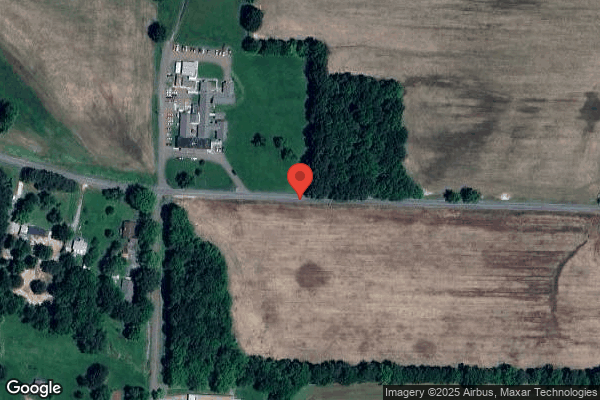

1084 EAST COUNTY HOME ROAD, UNION CITY, TN 38261 (731) 885-9065
Non profit - Corporation 56 Beds Independent Data: November 2025 1 Immediate Jeopardy citation
Trust Grade
11/100
#272 of 298 in TN
Last Inspection: March 2025

Within standard 12-15 month inspection cycle. Federal law requires annual inspections.

Overview

Obion County Nursing Home in Union City, Tennessee, has received a Trust Grade of F, indicating significant concerns about its care and operations. It ranks #272 out of 298 facilities in the state, placing it in the bottom half, and #3 out of 3 in Obion County, meaning it is the least favorable option available locally. Although the facility is improving, with the number of health issues decreasing from 12 to 8 over the past year, the overall conditions still raise alarms. Staffing is a relative strength, rated 4 out of 5 stars with a turnover rate of 42%, which is better than the state average. However, the facility has incurred $14,853 in fines, which is higher than most Tennessee facilities, indicating ongoing compliance issues. Specific incidents of concern include a critical finding where staff failed to properly clean blood glucose meters, risking infection for several residents. Additionally, there was a serious incident where a cognitively impaired resident was improperly transferred without the required two-person assistance, which caused harm. Another serious finding noted that a resident sustained a fracture due to inadequate fall prevention measures. While there are some staffing strengths, these troubling incidents highlight significant weaknesses that families should carefully consider.

Trust Score
F
11/100
In Tennessee
#272/298
Bottom 9%
Safety Record
High Risk
Review needed
Inspections
Getting Better
12 → 8 violations
Staff Stability
○ Average
42% turnover. Near Tennessee's 48% average. Typical for the industry.
Penalties
⚠ Watch
$14,853 in fines. Higher than 89% of Tennessee facilities, suggesting repeated compliance issues.
Skilled Nurses
○ Average
Each resident gets 34 minutes of Registered Nurse (RN) attention daily — about average for Tennessee. RNs are the most trained staff who monitor for health changes.
Violations
⚠ Watch
24 deficiencies on record. Higher than average. Multiple issues found across inspections.
★☆☆☆☆
1.0
Overall Rating
★★★★☆
4.0
Staff Levels
★☆☆☆☆
1.0
Care Quality
★★☆☆☆
2.0
Inspection Score
Stable
2024: 12 issues
2025: 8 issues

The Good

  • 4-Star Staffing Rating · Above-average nurse staffing levels
  • Full Sprinkler Coverage · Fire safety systems throughout facility
  • No fines on record
  • Staff turnover below average (42%)

    6 points below Tennessee average of 48%

Facility shows strength in staffing levels, fire safety.

The Bad

1-Star Overall Rating

Below Tennessee average (2.8)

Significant quality concerns identified by CMS

Staff Turnover: 42%

Near Tennessee avg (46%)

Typical for the industry

Federal Fines: $14,853

Below median ($33,413)

Minor penalties assessed

The Ugly 24 deficiencies on record

1 life-threatening 3 actual harm
Jun 2025 1 deficiency 1 Harm
SERIOUS (G) 📢 Someone Reported This

A family member, employee, or ombudsman was alarmed enough to file a formal complaint

Actual Harm - a resident was hurt due to facility failures

Accident Prevention (Tag F0689)

A resident was harmed · This affected 1 resident

**NOTE- TERMS IN BRACKETS HAVE BEEN EDITED TO PROTECT CONFIDENTIALITY** Based on policy review, medical record review, facility video review, facility investigation review, observation, and interview,...

Read full inspector narrative →
**NOTE- TERMS IN BRACKETS HAVE BEEN EDITED TO PROTECT CONFIDENTIALITY** Based on policy review, medical record review, facility video review, facility investigation review, observation, and interview, the facility failed to ensure staff followed the facility policy for a resident transfer and assessment of an injury after a transfer for 1 of 3 (Resident #1) sampled residents reviewed for accident hazards. On 6/11/2025, Resident #1, a cognitively impaired vulnerable resident, who required 2-person assistance with transfers, was transferred from the bed into the shower chair, and from the shower chair into the wheelchair, using her arms instead of the mechanical lift, by 2 Certified Nursing Assistants (CNA) A and B. Approximately 3 hours later, CNA B reported the injury to Licensed Practical Nurse (LPN) F, who was observed to assess Resident #1's injury on facility video footage, and failed to report the incident to Administration or document the assessment. The failure of the facility staff to transfer Resident #1 according to the facility policy resulted in actual Harm to the Resident when Resident #1 sustained a Right Humerus fracture (broken bone in the upper arm). The findings include: 1. Review of the facility policy titled, Safe Resident Handling/Transfers/Mechanical Lift, dated 1/1/2025, revealed .It is the policy of this facility to ensure that residents are handled and transferred safely to prevent or minimize risks for injury .in accordance with current standards and guidelines .Two staff members must be utilized when transferring residents with a mechanical lift .Staff members are expected to maintain compliance with safe handling/transfer practices .Failure to maintain compliance may lead to disciplinary action up to and including termination of employment .Resident lifting and transferring will be performed according to the resident's individual plan of care . Review of the facility policy titled, Unexplained Injuries dated 11/21/2024, revealed .All unexplained injuries .relevant information shall be documented in the resident's medical record including .Physical assessment findings, including objective descriptions of the injury . 2. Review of the medical record revealed Resident #1 was admitted to the facility on [DATE], with diagnoses including Gastrostomy (surgically created opening in the abdominal wall, leading directly into the stomach, used for administering medications and/or feedings), Chronic Pulmonary Edema, and Hemiplegia of Right Side. Review of the Significant Change MDS dated [DATE], revealed Resident #1's cognitive skills for daily decision making were severely impaired. Resident #1 was dependent on staff for all Activities of Daily Living (ADLs) and required a mechanical lift for transfers. Review of the Care Plan for Resident #1 dated 4/18/2025, revealed .The resident has an ADL self-care performance deficit r/t [related to] Confusion, Dementia, Impaired balance .TRANSFER: The resident requires [named mechanical lift] LIFT WITH 2 PEOPLE PRESENT FOR assistance for transfers . Review of the facility video footage dated 6/11/2025 at 2:37 PM, revealed CNA A with a lift pad over her arm pushed Resident #1's empty wheelchair into the Whirlpool Room. Review of the facility video dated 6/11/2025 at 2:43 PM, revealed CNA A and CNA B took an empty shower chair into Resident #1's room. Review of the facility video dated 6/11/2025 at 2:46 PM, revealed CNA A pushed Resident #1 into the Whirlpool Room in the shower chair. Review of the facility video dated 6/11/2025 at 2:49 PM, revealed CNA B entered the Whirlpool Room. Review of the facility video dated 6/11/2025 at 2:56 PM, revealed CNA A exited the Whirlpool Room and pushed Resident #1 in a wheelchair toward Resident #1's room. Review of the facility video dated 6/11/2025 at 5:40 PM, revealed CNA B pushed Resident #1's wheelchair to the Nurse's Station and began to talk to LPN F. At approximately 5:42 PM, CNA B and LPN F walked to Resident #1 who was sitting in the wheelchair. LPN F bent over the right side of Resident #1 for approximately 1 minute, looking at Resident #1's right arm and talking to CNA B, then CNA B and LPN F walked away in different directions. Review of the facility investigation dated 6/12/2025 at 11:30 AM, revealed CNA (CNA C) reported Resident #1's (right) arm was swollen to the charge nurse (LPN G) on 6/12/2025 at approximately 11:30 AM. The Medical Director (MD) was notified and gave an order to obtain an x-ray of Resident #1's arm. On 6/12/2025 at approximately 3:30 PM, the preliminary radiology report revealed a fracture of the humerus. The appropriate parties were notified, and an investigation was begun. Review of the facility investigation dated 6/13/2025, revealed .About 1:30 pm [PM], Chatter on the floor stated [the] incident happened on 6/11/2025 at around 2:45 pm. During a repositioning of a resident [Resident #1] in the shower room, 2 cnas [CNA A and CNA B] lift [lifted] the resident by grabbing her arms on each side and pulled her up in the chair. At this point it was reported they heard a pop. They did not report [the pop] at this time. At 5:40 pm 1 of the cnas [CNA B] report [reported] to the charge nurse [LPN F] who could be seen on camera assessing the residents [resident's] arm. They decide [decided] not to tell anyone about the incident. When questioned at 2:00pm on 6/13/2025, they all [CNA A, CNA B, and LPN F] deny the incident. When told it's on camera they continue to deny. At this point these 3 employees [CNA A, CNA B, and LPN F] were termed [employment was terminated] and immediately left the building. Resident [#1] went to ortho [orthopedic doctor] on 6/13/2025. Arm [right] placed in cast and weekly follow ups with Ortho scheduled . Review of a Nurses' Note for Resident #1 dated 6/12/2025 at 5:45 AM, revealed .LATE NOTE .Resident up in wheelchair in day room when I [LPN G] arrived at facility .Resident was placed in her room and laid down approximately 1130 [11:30 AM on 6/12/2025 ] .[CNA B] came to me and explained that [Resident #1] arm looked floppy. I immediately went to resident's [Resident #1's] room and examined arm. Swelling and bruising noted toLUE [to Left Upper Extremity]. Resident was guarding arm. I went to ADON's [Assistant Director of Nursing] office and reported findings immediately after examination and called MD [Medical Director] for X RAY orders. X ray performed .ADON notified. The facility investigation revealed CNA C reported the injury to Resident #1's arm on 6/12/2025 at approximately 11:30 AM. Review of the written statement by CNA A dated 6/12/2025, revealed .I had [CNA B] help me transfer [Named Resident] on 6/11/2025 for a shower .we .lifted her to the shower chair and [CNA B] helped me transfer her back to her wheelchair after me giving her a shower . Review of the written statement by CNA C dated 6/12/2025, revealed CNA C observed a bruise and swelling to the inside of Resident #1's elbow at approximately 11:00 to 11:30 AM, and reported the bruising to LPN G. Review of the Incident Report for Resident #1 dated 6/12/2025 at 11:30 AM, revealed .CNA .noticed that resident's arm was swollen and bruised stating it was floppy .Nurse .assessed resident's right arm. Arm was noticeably swollen with bruising located in the bend of patient's arm .MD notified with order to obtain an x-ray . Review of a Radiology Report dated 6/12/2025, revealed .Acute mildly displaced [bones are out of alignment or in pieces] comminuted fracture [where the bone breaks into 3 or more pieces] of the distal humerus .Mild degree of osteopenia [loss of bone density] . Review of the Physician's Note dated 6/13/2025 (no time recorded), revealed .fracture of the humorous [humerus] .Appointment arranged for .orthopedic surgeon. Review of the Orthopedic Progress Note dated 6/13/2025, revealed .recommended .a cast .long-arm fiberglass cast was put on .will follow up in the office in 1 week for reevaluation .will remove the cast .to evaluate for any evidence of skin breakdown . Review of the written statement by CNA D dated 6/13/2025, revealed .CNA C approached me and asked if I had heard about [Resident #1's] arm being broke .tell [told] me that it happened during a transfer by 2 CNA's on second shift and that her [CNA C's] mother [LPN F] was on shift at this time .stated [LPN F] didn't want the CNA's [CNA A and B] to lose their job, so she [LPN F] failed to report the incident . Review of the written statement by the Administrative Assistant dated 6/13/2025, revealed .I was in the administrator's office as a witness during questioning between the Administrator and [CNA B] .when asked how [Named Resident #1] was transferred, [CNA B] said with 2 people and a lift pad .stated they did not use the [named mechanical lift] but did use the lift pad to transfer .[CNA B] became upset when questioned .When asked if she said anything to [Named LPN F], [CNA B] said yes .When the video was mentioned to [CNA B] she started crying .said I was afraid for my job, I've got one toenail keeping me here and I got scared .[Named LPN F] said she wouldn't say anything if I didn't . Review of the written statement by CNA E on 6/16/2025, revealed .a coworker [CNA B] came up to me and told me she is being ate [eaten] up with guilt .her and another co-worker [CNA A] were lifting a resident when they hear a pop in her arm .They looked at each other and went on their way .[CNA B] told me she was going to tell her charge nurse [LPN F] .came back and said that the nurse [LPN F] said not to say anything .[CNA B] told me she was then going to text the ADON [Assistant Director of Nursing] about the situation . Observation in the Resident's room on 6/25/2026 at 9:41 AM, revealed Resident #1 seated in a [Named wheelchair] with her right arm wrapped in gauze from her wrist to right below her elbow. Observation in the Resident's room on 6/25/2025 at 4:40 PM, revealed Resident #1 seated in a [Named wheelchair]. Resident #1 pulled and unwound the gauze wrapped around her right arm leaving the splint on her arm uncovered from her wrist to her forearm. During a telephone interview on 6/25/2025 at 2:07 PM, CNA B stated .Another coworker [LPN B] was coming in with the Resident [Resident #1] and asked if I would help transfer her to the shower chair .We used the [named mechanical lift] to put her on her chair .then I went back to my job .I don't know how she got back to the wheelchair from the shower chair .came back into the shower .she [Resident #1] was already in her wheelchair .was kinda [kind of] sitting back to the side .I got on her good side and grabbed both loops [of the lift pad] on my side to reposition her .I wasn't paying attention, not sure what she [CNA A] got a hold on .saw her [Resident #1] later at the nurse's station .wasn't acting like herself .notified the nurse, told her that [Resident #1] is not herself since shower .[LPN F] asked me to take her to her room, [LPN F] looked [at Resident #1's arm] said she [Resident #1] looks fine to me .She [LPN F] said .not going to say anything .if she gets to crying out or something I will get her vitals. Review of the video footage did not corroborate the mechanical lift was taken in Resident #1's room. During a telephone interview on 6/25/2025 at 3:25 PM, CNA A was asked if Resident #1 was transferred with a (mechanical) lift to and from the shower chair. CNA A stated .No, I didn't use one to put her into the shower chair .Got up under her arms and pivoted on her good foot .didn't use the [named mechanical] lift except her getting back into the bed later .Another aide [CNA B] helped me get her out of the bed .helped me to get her into the shower chair .clean and dry lift pad was in the wheelchair .she was care planned for the [named mechanical] lift .anytime we got her in the wheelchair we used the [named mechanical lift] .Always need 2 people for the [named mechanical lift] .We sat her on the side of the bed and two personed her [2 person assist] into the shower chair .same aide [CNA B] helped me get her from the shower chair to the wheelchair . CNA A was asked if the [named mechanical lift] should have been used for the resident transfer. CNA stated .Yes ma'am we should have used the lift . During a telephone interview on 6/26/2025 at 1:11 PM, LPN F was asked if she knew anything about what had happened to injure the Resident (Resident #1). LPN F stated .I really don't have anything to add to what I already told the Administrator .She [Administrator] said I was on camera .all it showed was them [Resident #1 and CNA B] coming up to me .I don't even remember .She [Administrator] said I was examining her [Resident #1] arm .I don't remember her [CNA B] reporting any problem .That is something you would remember .I would have notified the Administrator if I had known .I don't remember anyone coming to me and asking me not to say anything . During an interview on 6/26/2025 at 9:11 AM, the ADON stated .[CNA B] said [to other staff members] she was going to talk to me about it [hearing a pop when transferring Resident #1] but she never came to me .I called her [CNA B] before she came in [for the interview] .told her she needed to be honest I was interviewing [LPN F] and [CNA C] walked in right after [LPN F] left .[CNA A] said [CNA B] had told [CNA C] they were trying to figure out a way to fix the problem . During an interview on 6/26/2025 at 10:14 AM, CNA C stated .[On 6/12/2025] I pulled her [Resident #1's] sleeve down, noticed that it looked swollen .like jelly .bruised .went and got [LPN G] .[LPN G] went to examine her .they did an x-ray found out it was broke .at this point I had no idea how it had happened .I talked to [CNA B] and she said she reported it [Resident #1's arm] to [LPN F] .[LPN F] told me she didn't want [CNA A and CNA B] to lose their jobs . During an interview on 6/26/2025 at 10:58 AM, CNA D stated .I was off the day it [Resident #1's fracture] happened .came back to work that Friday [6/13/2025] .[CNA C] asked me if I had heard about [Resident #1]'s arm being broke .said she was told that 2 CNA's were transferring [Resident #1] .one of the CNA's said [Resident #1]'s arm popped and they reported it to [LPN F] .but she didn't want them to lose their jobs .I [said] you've got to call [LPN F] and tell her she needs to report it .tell the truth . During an interview on 6/26/2025 at 3:14 PM, CNA F stated .during supper [CNA B] came up to me .said she felt really bad .something was wrong with [Resident #1] .said she heard a pop when her and [CNA A] were lifting her .she told me she felt guilty .said she was going to tell the charge nurse .later on she came back and told me the charge nurse told her not to say anything, not to say anything about it .She told me she was going to contact .[the] ADON .I was here .I heard everything first hand .from [CNA B] . CNA F confirmed that Resident #1 was care planned for a [named mechanical lift] lift and that 2 staff were required for transfers with the lift. During an interview on 6/26/2025 at 5:00 PM, the Administrator stated, .We found out about [about Resident #1's fractured humerus] 3:30 [PM] on Thursday afternoon [6/12/2025] .that's when the first x-ray report came in .We immediately got our Activities Director to start interviewing for any report of any employee, no complaint from residents .started questioning staff and getting statements. During all that time was thinking it [Resident #1's fractured humerus] was from where they were pulling her up in the chair or maybe the lift had hit the wheelchair arm .we kept questioning all through the night into the next morning .until about 1:30 [PM 6/13/2025], started hearing chatter from the staff that these 3 [CNA A, CNA B, and LPN F] were involved .she [CNA A] told me they had lifted her [Resident #1] up and put her in her chair, she was fine, that's all she gave me out of that situation, just they had transferred her. Went ahead and told her that wasn't what I was hearing and this was her chance to tell me the truth .she stuck to her story .I let her leave at that time .I got [Named LPN F] and did the same thing, told her I knew what happened before she even started telling me her story .she told us she never assessed or laid eyes on her [Resident #1] I told her what I saw on camera and she said it wasn't me .she watched a short segment .she left .called [Named CNA B] in, she didn't really admit [to anything], she said eventually she had the charge nurse look at her [Resident #1's] arm because she wasn't acting right .she denied anything else. [CNA B said] We didn't hear a pop or anything .before we [Administration] had ever even mentioned a 'pop', that was out of the blue .termed her right then .I had [Named ADON] call [CNA A] to let her know we had statements and videos and that she was termed . The Administrator confirmed that Resident #1 was harmed due to the actions of CNA A and CNA B, and that LPN F should have immediately reported the incident to the DON or to the Administrator.
Mar 2025 7 deficiencies
CONCERN (D)

Potential for Harm - no one hurt, but risky conditions existed

Deficiency F0604 (Tag F0604)

Could have caused harm · This affected 1 resident

**NOTE- TERMS IN BRACKETS HAVE BEEN EDITED TO PROTECT CONFIDENTIALITY** Based on policy review, medical record review, observation, and interview, the facility failed to ensure residents were free of ...

Read full inspector narrative →
**NOTE- TERMS IN BRACKETS HAVE BEEN EDITED TO PROTECT CONFIDENTIALITY** Based on policy review, medical record review, observation, and interview, the facility failed to ensure residents were free of physical restraints for 1 of 1 (Resident #31) sampled residents reviewed for restraints. The findings include: 1. Review of the facility policy titled, Restraint Free Environment, dated 3/19/2025, revealed .Physical Restraint refers to any manual method or physical or mechanical device, material, or equipment attached or adjacent to the resident's body that the individual cannot remove easily which restricts freedom of movement .Physical restraints may include .Using devices in conjunction with a chair .belts, that the resident cannot remove and prevents the resident from rising. 2. Review of the medical record review revealed Resident #31 was admitted to the facility on [DATE], with diagnoses including Dementia, Anxiety, Heart Failure, and Malignant Melanoma of Skin. Review of the Care Plan dated 2/20/2025, revealed .The resident is HIGH risk for falls r/t [related to] confusion .unaware of safety needs .Ensure the device [seatbelt alarm in wheelchair] is in place as needed. PAD ALARM IN CHAIR, SEATBELT ALARM IN WHEELCHAIR . Review of the quarterly Minimum Data Set (MDS) dated [DATE], revealed a Brief Interview for Mental Status (BIMS) score of 0, meaning Resident #31 has severe cognitive deficits and staff provides substantial assistance to resident with Activities of Daily Living. Observation on 3/18/2025 at 8:58 AM, 11:28 AM, and 3/19/2025 at 7:54 AM, revealed Resident #31 was up in her wheelchair with a seat belt around her waist. Observation on 03/19/2025 at 8:40 AM, in the Resident's room with the Assistant Director of Nurses (ADON) and the Activity's Director, Resident #31 was encouraged and asked to take her seat belt off. Resident #31 was alert and pleasantly confused, she fumbled with the belt in different areas of the belt. Resident #31 was unable to release the seat belt. During an interview on 3/19/2025 at 10:08 AM, the ADON was asked can Resident #31 release her seat belt on demand. The ADON stated, No . we didn't think it was a restraint.
CONCERN (D) 📢 Someone Reported This

A family member, employee, or ombudsman was alarmed enough to file a formal complaint

Potential for Harm - no one hurt, but risky conditions existed

Accident Prevention (Tag F0689)

Could have caused harm · This affected 1 resident

**NOTE- TERMS IN BRACKETS HAVE BEEN EDITED TO PROTECT CONFIDENTIALITY** Based on the policy review, medical record review, observation, and interview, the facility failed to identify, evaluate and ana...

Read full inspector narrative →
**NOTE- TERMS IN BRACKETS HAVE BEEN EDITED TO PROTECT CONFIDENTIALITY** Based on the policy review, medical record review, observation, and interview, the facility failed to identify, evaluate and analyze the cause to eliminate the risk of accident hazards for 1 of 2 (Resident #12) sampled residents reviewed for accident hazards, when on 12/27/2024 Resident #12 fell from a lift device and sustained a fracture of the left humerus. The findings include: 1. Review of the facility's policy titled Accidents and Supervision, dated 1/16/2025, revealed .The resident environment will remain free of accident hazards as is possible. Each resident will receive adequate supervision and assistive devices to prevent accidents .Identifying hazard(s) and risk(s) .Evaluating and analyzing hazard(s) and risk(s) .Implementing interventions to reduce hazard(s) and risk(s) .Monitoring for effectiveness and modifying interventions when necessary . 2. Review of the medical record revealed Resident #12 was readmitted to the facility on [DATE], with diagnoses including Parkinson's Disease, Chronic Obstructive Pulmonary Disease, Heart Failure, Humerus Fracture, Traumatic Subdural Hemorrhage, Dementia, and Anxiety. Review of the Fall Risk Evaluation dated 12/27/2024, revealed History of falls (past 3 months): No falls in past 3 months. Level of consciousness / mental status: Intermittent confusion. Resident is chairbound / incontinent. Vision status: Adequate (with or without glasses). Predisposing disease: 1-2 present. Resident did not have a change in condition in the last 14 days. Recent hospitalization history in last 30 days: No. Gait / balance: N/A - not able to perform function. Medication: Takes 1-2 of these medications (or medication classes) currently and / or within last 7 days. Fall Risk Score: 11.0. Review of the Incident Note dated 12/27/2024 This nurse was called to resident's room by COTA [Certified Occupational Therapy Assistant], who informed me that this resident had fallen from the lift, during transfer to her w/c [wheelchair]. This nurse went, immediately, to assess resident- DON [Director of Nursing] and ADON [Assistant Director of Nursing] were already in the room assessing resident. Res [Resident] was lying face down, on the floor, with lift leg under her face. Staff removed lift from area and gently rolled resident over onto her back. She had no open areas noted. Had c/o [complaint of] pain to forehead and left shoulder, c/o dizziness and altered mental status (from baseline) was noted. VS [Vital Signs] bp [blood pressure] 187/65 p [pulse] 94 r [respirations] 18 t [temperature] 97.6. o2 sats [oxygen saturation] at 89% [percent symbol] prior to getting 02 [oxygen] on- increased to 93% after 02 was applied. Upon inspecting lift and lift pad, it was noted that 2 of the straps had broken, during transfer . Review of the Brief Interview for Mental Status (BIMS) Evaluation dated 12/27/2024, revealed Brief Interview for Mental Status .BIMS NOTE: Res [resident] was unable to complete d/t [due to] mental status post fall and was transported to [named hospital] ER .BIMS Summary score: 0.0. Review of the Progress Note dated 12/27/2024 revealed Res was transported to [Named Hospital] ER for eval and tx as indicated, per MD [Medical Doctor] order to transfer. [Named Resident's daughter], was notified and informed of incident and that the resident was being transported to [named hospital] er. She stated that she would meet her there. The DON was present at incident site. Review of the Progress Note dated 12/31/2024 revealed Resident returned to facility [from the hospital] via ambulance transfer approximately 1400 [2:00 PM]. Resident was assisted to bed from stretcher with EMT [Emergency Medical Technician] assist. Upon observation, resident is A&O [alert and oriented] x [times] 3. Skin assessment performed, noted bruising to various places on resident arms d/t [due to] needlesticks during hosp [hospital] stay. Dry skin noted to BLE [bilateral lower extremities]. Redness noted under abd [abdominal] folds and peri-area. She has an arm sling to left arm. VSS [vital signs stable] T- 98.3, P- 81, R-19, o2- 93% BNC [Binasal cannula], BP- 159/68 RT [right] arm. Resident was assisted by this nurse and therapy for hygiene care, resident in good spirits and able to communicate needs/wants at this time. Wt [weight] recorded via manual lift with x2 staff members at 229.3 lbs.[pounds] Resident currently resting in bed visiting with daughter. Call light in reach, will continue with plan of care. Progress note dated 1/1/2025 revealed Res remains alert with confusion. Skin w/d [warm/dry], color slightly pale. resp e/u [even/unlabored] lungs cta [clear to auscultation] at present time. abd [Abdomen soft, nd [non distended] with bs [bowel sounds] noted x 4 quads [quadrants]. Has sling intact to lue [left upper extremity]. Has rec'd [received] prn [as needed] pain medication x 1 this shift, for c/o pain in Lue and ble [bilateral lower extremity], this was effective with pain management. Res with vs [vital signs] stable. Rec'd new order to obtain urine for UA [Urinalysis] C&S [culture and sensitivity] on 1/2/2025 d/t altered mental status, foul odor to urine, c/o urinary discomfort. Family is aware. Review of the progress note dated 1/2/2025 revealed sign change- Resident was readmitted back from facility on 12/31. She has a Dx [diagnosis] of 2nd lumbar burst fx [fracture], fx to humerus, old t [thoracic]12 fx and fx to L [lumbar] 2. Resident is alert with confusion. Speech is clear. Hearing is best in a quiet setting. She requires assistance with adls [activities of daily living] and transfers with lift. She is currently skilled and receiving therapy. She has had significant weight loss. Pain management d/t recent fx [fracture of the left humerus]. [Name of Resident #12] eats some meals in dining room and some in her room. She has a mostly pleasant personality. She can be delusional at times. Pleasantly confused. She declines most all activity invitations. She enjoys family time, She is on 02 [oxygen], dx COPD. Family is supportive and involved in care. Will monitor for changes. Review of the Care Plan dated 1/2/2025, revealed The resident has [Indwelling urinary] .CATHTER FOR COMFORT R/T [related to] FRACTURES . Review of the significant change Minimum Data Set (MDS) dated [DATE] revealed Resident #12 had a Brief Interview for Mental Status (BIMS) score of 9, which indicated moderate cognitive impairment. No falls were documented. During an interview on 3/19/2025 at 10:52 AM the COTA, was asked about Resident #12's incident when the lift straps broke. COTA stated, [Named resident] was on my caseload, so I went in to see her. she was in the lift over the bed, and they were going to place her in the [wheel] chair. There were 3 of us in there when it occurred. The straps broke on the lift pad, and she fell to the floor. She was 4-5 feet off the ground when she fell. Nursing staff checked the straps after the incident. The lift pad had 4 straps two at the head and two at the foot. The two straps at the head broke and the resident landed on back of her head and her feet remained in the pad. As soon as I went to get help and returned, she was awake at that time. During an interview on 3/19/2025 at 11:13 AM with Certified Nursing Assistant (CNA D) was asked about the incident with Resident #12. CNA D stated, We were getting her on the lift and backed it away from the bed to get it over the chair but before she was over the chair the two straps at the head broke and she fell back hitting her head and shoulders hit the floor at the same time and her feet remained in the lift pad and then the legs fell to floor also. Both shoulders broke and head injury occurred. No blood noted from head. I don't believe she lost consciousness. The DON and ADON were their almost immediately. Nurses called for EMS [Emergency Medical Services] to transfer her to the ER. I don't believe she was knocked out. She knows she fell from the lift and still gets up with the lift. We have several lift pads, and we are supposed to check for fraying of the straps before we use them. We just got some new pads. We have seen some pads that were broken before we used them on someone. During an interview on 03/19/25 11:30 AM CNA E was asked about the incident with Resident #12 falling from the lift. CNA E stated, I was passing ice and [named CNA D] asked me to help her get [named resident] up. She had her hooked up in the lift and I got beside her to spot her and then got behind her at the head and when she turned it was so fast, and she fell to floor. I asked her if she was hurting anywhere, and she told me 'I don't know if I am or not.' We looked at the pad and the two straps from the top by the head had broken at the stitching. and I was holding the two straps underneath her to spot her. She just flipped out the pad face first to the floor, no blood, her shoulders hit floor also. The lift pads are checked prior to using them. The DON and ADON came in immediately. Another nurse called for EMS, and she was transported quickly to the ER. She stills gets up with the lift without being scared. The Wheelchair was close to the bed. During an interview on 3/19/2025 at 12:17 PM the DON was asked about the incident with named Resident #12. The DON stated, The Old DON was in place then and I don't know what they did with it [sling]. When I got there, she was on her back, but I focused on keeping her neck still she was awake and talking to me. She had a left shoulder fracture, subdural hematoma, a possible spinal injury but that might have been chronic arthritis. We use the pads for 6 months. We keep a log of the pads that documents when we get them and the six month end point. Me and laundry daily check for any tearing or fraying, they let me know and I will replace it and order a new one. During an interview on 3/19/2025 at 2:31 PM, the DON and the Administrator were asked what happened to sling that broke. The Administrator stated, The old DON threw it away. Then she went through all the other slings and made sure they were intact and in-serviced all the staff that had contact with the sling. Laundry inspects the slings when they get a new one and when they go to the laundry. The CNAs also inspect the slings prior to use on a resident. The Administrator was asked did you contact the manufacturer about the broken sling. The Administrator stated, I should have contacted the manufacturer due to not being 6 months in use but no I didn't. The Administrator was asked what was put in place so this would not happen again. The Administrator stated, The in-services to check the slings with all the staff. We [Administrator, DON and ADON] also inspect the slings weekly now. The facility failed to investigate and contact the manufacturer to determine why the slings failed, that according to interviews were used within the timeframe for use and used in the appropriate way, to eliminate or reduce the further risk of accident hazards.
CONCERN (D)

Potential for Harm - no one hurt, but risky conditions existed

Incontinence Care (Tag F0690)

Could have caused harm · This affected 1 resident

**NOTE- TERMS IN BRACKETS HAVE BEEN EDITED TO PROTECT CONFIDENTIALITY** Based on policy review, medical record review, observation, and interview, the facility failed to provide care and services to m...

Read full inspector narrative →
**NOTE- TERMS IN BRACKETS HAVE BEEN EDITED TO PROTECT CONFIDENTIALITY** Based on policy review, medical record review, observation, and interview, the facility failed to provide care and services to maintain an indwelling urinary catheter when nursing staff failed to obtain a physician's order, and provide care and services for the indwelling urinary catheter for 1 of 3 (Resident #32) sampled residents reviewed for indwelling urinary catheters. The findings included: 1. Review of the facility policy titled Catheter Care, dated 11/21/2024, revealed It is the policy of this facility to ensure that residents with indwelling catheters receive appropriate catheter care .Catheter care will be performed every shift and as needed by nursing personnel . 2. Review of the medical record revealed Resident #32 was admitted to the facility on [DATE], with diagnoses including Pneumonia, Diabetes, Lymphedema, and Pressure Ulcer Stage 2. Review of the significant change Minimum Data Set assessment dated [DATE], revealed a Brief Interview for Mental Status score of 15, which indicated Resident #32 was cognitively intact. Review of the Care Plan dated 3/17/2025, revealed .The resident is on enhanced barrier precautions secondary to presence of .indwelling Foley catheter . The care plan did not include all catheter care related to the resident's catheter. Record review revealed there was no documentation of a physician's order for Resident #32's catheter. Observation in the Resident's room on 3/18/2025 at 9:00 AM, revealed resident sitting up in wheelchair with clear yellow urine draining to urinary catheter bedside bag. During an interview on 3/18/2025 at 3:38 PM, the Director of Nursing confirmed that the resident should have an order and be care planned for indwelling catheter care.
CONCERN (D)

Potential for Harm - no one hurt, but risky conditions existed

Deficiency F0698 (Tag F0698)

Could have caused harm · This affected 1 resident

**NOTE- TERMS IN BRACKETS HAVE BEEN EDITED TO PROTECT CONFIDENTIALITY** Based on policy review, medical record review, and interview, the facility failed to provide ongoing communication of care with ...

Read full inspector narrative →
**NOTE- TERMS IN BRACKETS HAVE BEEN EDITED TO PROTECT CONFIDENTIALITY** Based on policy review, medical record review, and interview, the facility failed to provide ongoing communication of care with the dialysis center and failed to assess and monitor the dialysis site for any redness, swelling and/or signs of infection for 1 of 1 (Resident #25) sampled residents reviewed for dialysis. The findings include: 1. Review of the facility's policy titled, Hemodialysis, dated 2/18/2025, revealed .The facility will provide necessary care and treatment, consistent with professional standards of practice, physicians orders, the comprehensive person-centered care plan .Licensed nurse will communicate to the dialysis facility .Timely medication administration (initiated, held or discontinued) by the nursing home and/or dialysis facility .Physician/treatment orders, laboratory values, and vital signs .Nutritional/fluid management including documentation of weights, resident compliance with food/fluid restrictions or the provision of meals before, during and/or after dialysis and monitoring intake and output measurements as ordered .Dialysis treatment provided and the resident's response, including declines in functional status, falls, and the identification of symptoms that may interfere with treatments .Dialysis adverse reactions/complications and/or recommendations for follow up observation and the monitoring, and/or concerns related to the vascular access site .Change and/or decline in condition unrelated to dialysis .The occurrence or risk of falls and any concerns related to transportation to and from the dialysis facility .The nurse will monitor and document the status of the resident's access site(s) upon return from the dialysis treatment to observe for bleeding or other complications .The facility will communicate with the dialysis facility, attending physician and/or nephrologist any significant weight changes, nutritional concerns, medication administration or withholding of certain medications prior to dialysis treatment and document such orders .If dialysis is canceled or postponed, the facility and dialysis staff will provide or obtain, ongoing monitoring and medical management for changes such as fluid gain, respiratory issues .The nurse will ensure that the dialysis access site is checked before and after dialysis treatments and every shift for patency by auscultating for a bruit and palpating for a thrill .staff will ensure appropriate PPE (personal protective equipment) is worn and follow current infection control practices when assessing dialysis access site . 2. Review of the medical record revealed Resident #25, was admitted to the facility on [DATE], with diagnoses including Stage 5 Kidney Disease, Renal Dialysis, Bipolar Disorder, Diabetes Mellitus, Hypertension, and Atrial Fibrillation. Review of the Physician Order dated 2/21/2025, revealed Resident #25 had an order for dialysis on Monday, Wednesday and Fridays. Review of the Health Status Note dated 2/24/2025 at 4:47 PM, revealed resident came back from dialysis at approximately 3:55 PM. Vitals and BS (blood sugar) were taken and recorded. Plan of care continued. Review of the admission Minimum Data Set (MDS) assessment dated [DATE], revealed a Brief Interview for Mental Status (BIMS) score of 00 with behaviors, which indicated Resident #25 was severely cognitively impaired and coded for dialysis. Review of the Treatment Administration Record (TAR) dated 2/2025 revealed .Check dialysis vascath on left side of chest for any redness, swelling, and/or signs of infection after resident returns from dialysis. One time daily every Mon [Monday], Wed [Wednesday], Fri, [Friday] -Start Date-02/26/2025 . The vascular access was documented as checked on 2/26/2025 and 2/28/2025. The facility was unable to provide documentation of vascular access monitoring following dialysis on 2/24/2025. Review of the comprehensive care plan dated 2/26/2025, revealed .The resident needs dialysis (hemo r/t renal failure .Monitor/document/report PRN any s/sx of infection to access site: Redness, Swelling, warmth or drainage . Review of the Treatment Administration Record (TAR) dated March 2025 revealed .Check dialysis vascath on left side of chest for any redness, swelling, and/or signs of infection after resident returns from dialysis. One time daily every Mon [Monday], Wed [Wednesday], Fri, [Friday] -Start Date-02/26/2025 . The facility was unable to provide documentation of vascular access monitoring following dialysis on 3/7/2025, 3/11/2025, and 3/14/2025. Health Status Note dated 3/10/2025 at 1:42 PM, LPN G Resident didn't go to dialysis today due to procedure being longer than anticipated. Resident should be clean, dressed, and ready by 6:15 a.m. Resident will have breakfast at 6:30 a.m. and will have dialysis in morning. Will continue with care plan. The facility was unable to provide documentation of verbal or written communication with dialysis clinic. During an interview with LPN F on 3/18/2025 at 3:00 PM, LPN F was asked does the facility communicate with dialysis about Resident #25. LPN F was unable to provide any documentation of dialysis communication. LPN F confirmed dialysis had sent information regarding Resident #25's diet once, but she does not receive a report verbally or written from the dialysis clinic. During an interview on 3/19/2025 at 3:57 PM, the Director of Nursing (DON) confirmed that the facility was unable to provide any documentation of dialysis communication, and that there should have been vascular access site documentation on 2/24/2025, 3/7/2025, 3/11/2025, and 3/14/2025 for Resident #25
CONCERN (D)

Potential for Harm - no one hurt, but risky conditions existed

Staffing Information (Tag F0732)

Could have caused harm · This affected 1 resident

Based on facility documentation review, observation, and interview, the facility failed to ensure posted staffing information was accurate for 24 of 33 days (2/13/2025, 2/14/2025, 2/17/2025, 2/19/2025...

Read full inspector narrative →
Based on facility documentation review, observation, and interview, the facility failed to ensure posted staffing information was accurate for 24 of 33 days (2/13/2025, 2/14/2025, 2/17/2025, 2/19/2025, 2/20/2025, 2/21/2025, 2/24/2025, 2/25/2025, 2/26/2025, 2/27/2025, 2/28/2025, 3/3/2025, 3/4/2025, 3/5/2025, 3/6/2025, 3/7/2025, 3/8/2025, 3/9/2025, 3/10/2025, 3/11/2025, 3/12/2025, 3/13/2025, 3/14/2025 and 3/19/2025) reviewed during the survey. The findings include: Review of the facility's Daily Staffing Posting dated 2/13/2025 through 3/14/2025, revealed no Registered Nurse (RN) hours for the following dates: 2/13/2025, 2/14/2025, 2/17/2025, 2/19/2025, 2/20/2025, 2/21/2025, 2/24/2025, 2/25/2025, 2/26/2025, 2/27/2025, 2/28/2025, 3/3/2025, 3/4/2025, 3/5/2025, 3/6/2025, 3/7/2025, 3/8/2025, 3/9/2025, 3/10/2025, 3/11/2025, 3/12/2025, 3/13/2025, 3/14/2025, and 3/19/2025. Observation in the hallway on 3/19/2025 at 9:00 AM, revealed the Daily Staffing Posting dated 3/19/2025 was hanging on the wall outside of the nurse's station was blank for RN total hours. During an interview on 3/19/2025 at 10:47 AM, the Administrator confirmed that the Daily Staff Posting should be completed accurately, and the RN hours should not be blank.
CONCERN (D)

Potential for Harm - no one hurt, but risky conditions existed

Unnecessary Medications (Tag F0759)

Could have caused harm · This affected 1 resident

**NOTE- TERMS IN BRACKETS HAVE BEEN EDITED TO PROTECT CONFIDENTIALITY** Based on policy review, medical record review, observation and interview, the facility failed to ensure 2 of 3 nurses (Licensed ...

Read full inspector narrative →
**NOTE- TERMS IN BRACKETS HAVE BEEN EDITED TO PROTECT CONFIDENTIALITY** Based on policy review, medical record review, observation and interview, the facility failed to ensure 2 of 3 nurses (Licensed Practical Nurse (LPN) B and LPN C) administered medications with a medication error rate of less than 5 % (percent). A total of 2 errors were observed out of 25 opportunities, resulting in a med error rate of 8%. The findings include: 1. Review of the policy titled, Administration of Eye Drops or Ointments, dated 2/2023 , revealed .Eye medications are administered as ordered by the physician and in accordance with professional standards of practice .If a second medication is required in the same eye, wait appropriate amount of time per manufacture's specifications (usually five minutes) . 2. Review of medical record revealed Resident #5 was admitted to the facility on [DATE], with diagnoses including Legal Blindness, Glaucoma and Diabetes. Review of the Physican Orders dated 8/5/2022, revealed BRIMONIDINE 0.2 % (percent) EYE DROP Instill 1 drop in left eye three times a day .Glaucoma . Review of the Physician Orders dated 8/7/2024, revealed Dorzolamide HCI-Timolol .Ophthalmic Solution 0.5 % .Instill 1 drop in left eye two times a day .Glaucoma . Observation during medication administration on 3/19/2025 at 9:00 AM, LPN C administered the Dorzolamide HCI-Timolol one drop to left eye, at 9:02 AM, LPN C administered the Brimonidine eye drop to left eye. LPN C did not wait the suggested amount of time in between eye drops to administer resulting in 1 medication error. During an interview on 3/19/2025 at 3:26 PM, the Director of Nursing (DON) confirmed when administering 2 separate medications into the same eye, to wait approximately 5 minutes in between administration. 3. Review of the medical record revealed Resident #19 was admitted to the facility on [DATE] with diagnoses including Cerebral Infarction, Hemiplegia and Hemiparesis, Dementia, and Osteoarthritis. Review of the Physician Orders dated 9/19/2023, revealed Multiple Vitamin Tablet Give 1 tablet by mouth one time a day . Observation during medication administration on 3/19/2025 at 8:25 AM, LPN B did not give the Multiple Vitamin during medication administration resulting in 1 medication error. During an interview on 3/19/2025 at 11:29 AM, LPN B confirmed medication was not given this morning with the AM medication administration. During an interview on 3/19/2025 at 3:26 PM, the DON confirmed Resident #19 should have received the Multiple Vitamin as physician ordered.
CONCERN (E)

Potential for Harm - no one hurt, but risky conditions existed

Infection Control (Tag F0880)

Could have caused harm · This affected multiple residents

**NOTE- TERMS IN BRACKETS HAVE BEEN EDITED TO PROTECT CONFIDENTIALITY** Based on policy review, medical record review, observation, and interview, the facility failed to perform practices to prevent t...

Read full inspector narrative →
**NOTE- TERMS IN BRACKETS HAVE BEEN EDITED TO PROTECT CONFIDENTIALITY** Based on policy review, medical record review, observation, and interview, the facility failed to perform practices to prevent the potential spread of infections during medication administration and pressure ulcer care when 3 of 3 (Licensed Practical Nurse (LPN) A, B, and C) staff members failed to perform hand hygiene, administered contaminated medications and performed pressure ulcer care with contaminated gloves. The findings include: 1. Review of the undated facility policy titled, Hand Hygiene, revealed .All staff will perform proper hand hygiene procedures to prevent the spread of infections to other personnel, residents, and visitors. This applies to all staff working in all locations within the facility . Wet hands with water .Apply to hands the amount of soap recommended by the manufacturer .Rub hands together vigorously for at least 20 seconds .Rinse hands with water .Dry thoroughly with a single-use towel .Use clean towel to turn off the faucet . 2. Review of medical record revealed Resident #5 was admitted to the facility on [DATE], with diagnoses including Legal Blindness, Glaucoma and Diabetes. Observation in the Resident's room on 3/19/2025 at 9:54 AM, and 10:02 AM, revealed LPN C went to the faucet to wash her hands, when handwashing was completed LPN C took her bare wet hand to turn off faucet, then retrieved the paper towel to fully dry her hands. 3. Review of the medical record revealed Resident #19 was admitted to the facility on [DATE], with diagnoses of Cerebral Infarction, Hemiplegia and Hemiparesis, Dementia, and Osteoarthritis. Observation in the Resident's room on 3/19/2025 at 8:25 AM, during medication administration LPN B dropped a tablet on the resident's bedside table. LPN B then picked up the pill and it fell on Resident #19's chest. LPN B picked up the pill again and gave it to resident by mouth. LPN B removed her gloves went to faucet and washed hands, dried hands with paper towel and turned off faucet with the wet paper towel. 4. Review of the medical record revealed Resident #24 was admitted to the facility on [DATE], with diagnosis including Parkinson's Disease, Pressure Ulcer, Edema, Dementia, Seizures and Hypertension. Observation in the Resident's room on 3/19/2025 at 12:15 PM, during the pressure ulcer treatment, LPN B cleansed Resident 24's right knee with wound cleanser, LPN B put a clean piece of xeroform to the affected area, LPN B then placed a clean dressing to the right knee. LPN B went to the left knee and put a clean protective dressing over the left knee. LPN B did not change gloves or perform hand hygiene in between the clean/soiled pressure ulcers on bilateral knees. 5. Review of the medical record revealed Resident #33 was admitted to the facility on [DATE], with diagnoses including Parkinson's Disease, Atrial Fibrillation, Hypertension, and Dementia. Review of the Physician Orders dated 11/18/2024, revealed .OcuSoft Lid Scrub Plus External Pad [eyelid cleansers] Apply to eye lid .two times a day for Remove [removal of] Debris from eyes . Review of the Rinse Free Eyelid Wipes box instructions revealed, .Tear open package and remove wipe .Use one wipe per eye . Observation in the Resident's room on 3/19/2025 at 8:13 AM, revealed LPN A cleansed the resident's left and right eyelids with one eyelid wipe. LPN A had gloves on while administering eye drops, after completion, LPN A rubbed Resident #33's knees, legs and feet with cream. LPN A did not change gloves or perform hand hygiene in between treatments. 6. During an interview on 3/19/2025 at 3:26 PM, the Director of Nurses confirmed staff should always use a dry paper towel to shut off faucet after hand washing, staff should throw away a medication that has been dropped on a bed side table and replace with a new medication, staff should change gloves and use good hand hygiene when performing a pressure ulcer treatment and changing treatment areas, and staff should use one eye lid wipe per eye to clean eyelids.
Jan 2024 12 deficiencies 1 IJ (1 affecting multiple)
CRITICAL (K) 📢 Someone Reported This

A family member, employee, or ombudsman was alarmed enough to file a formal complaint

Immediate Jeopardy (IJ) - the most serious Medicare violation

Infection Control (Tag F0880)

Someone could have died · This affected multiple residents

**NOTE- TERMS IN BRACKETS HAVE BEEN EDITED TO PROTECT CONFIDENTIALITY** Based on review of the Blood Glucose Monitoring User Guide, policy review, job description review, observation, and interview, t...

Read full inspector narrative →
**NOTE- TERMS IN BRACKETS HAVE BEEN EDITED TO PROTECT CONFIDENTIALITY** Based on review of the Blood Glucose Monitoring User Guide, policy review, job description review, observation, and interview, the facility failed to ensure practices to prevent the potential spread of infection were maintained when multi-use blood glucose meters were not cleaned and disinfected to prevent cross-contamination of bloodborne pathogens for 4 of 14 sampled residents (Residents #3, #9, #38, and #49) reviewed for blood glucose monitoring. Observations revealed 4 of 6 nurses (Licensed Practical Nurses (LPN) #1, #2, #3, and #4) failed to disinfect the blood glucose meters after use on each Resident observed during blood glucose monitoring/medication administration. The facility failed to monitor the lint dryers for 2 of 2 (Dryer #1 and #2) dryers and failed to perform proper hand hygiene for 2 of 14 staff members (Certified Nursing Assistant (CNA) #1 and #8). The facility failed to ensure soiled linens were properly contained during transport down the hall and failed to monitor for an outbreak of bed bugs and scabies for 4 of 9 Residents (Residents #27, #38, #42 and #44) reviewed. The facility's failure to ensure staff properly disinfected the multi-use blood glucose meter that was used for multiple residents placed residents at risk for contamination with bloodborne pathogens and had the likelihood to cause serious injury, which resulted in Immediate Jeopardy. The facility had 14 residents receiving blood glucose monitoring with a multi-use glucometer and the facility's failure had the potential to affect the 14 residents receiving blood glucose monitoring with a multi-use blood glucose meter. Immediate Jeopardy (a situation in which the provider's noncompliance with one or more requirements of participation has caused, or is likely to cause, serious injury, harm, impairment, or death to a resident) was identified related to the facility's failure to appropriately disinfect a multi-use blood glucometer during medication administration. The Administrator, the Registered Nurse (RN) Supervisor and the Director of Nursing (DON) were notified of the Immediate Jeopardy (IJ) for F-880 on 1/25/2024 at 4:43 PM, in the Lounge. The facility was cited Immediate Jeopardy at F-880 at a scope/severity of K. The Immediate Jeopardy began on 1/23/2024 through 1/26/2024, the IJ was removed on 1/27/2024. An acceptable Removal Plan, which removed the immediacy of the jeopardy, was received on 1/29/2024 at 10:56 AM, and was validated onsite by the surveyors on 1/29/2024 through review of staff education, interviews with staff on all shifts, and review of the audits conducted. The facility must submit a plan of correction. The findings include: 1. Review of the facility's .Blood Glucose Monitoring User's Guide, dated 2018, revealed .Healthcare professionals performing blood glucose tests with this system on multiple patients must always wear gloves and should follow the infection control policies and procedures .All parts of the glucose monitoring system should be considered potentially infectious and are capable of transmitting blood-borne pathogens between patients and healthcare professionals .The meter should be disinfected after use on each patient .A new pair of clean gloves should be worn by the user before testing each patient .Used lancets and strips are biohazardous material and can transmit bloodborne disease. [Named brand of blood glucose meter] should be cleaned and disinfected between each patient .clean the outside of the meter .with an EPA [Environmental Protection Agency]-registered disinfecting wipe .The meter must be disinfected between patient uses by wiping with .EPA-registered disinfecting wipe in between tests and be cleaned prior to disinfecting. The Disinfection process reduces the risk of transmitting infectious diseases if it is performed properly . Review of the facility's policy titled Glucometer Disinfection, dated 2023, revealed .The purpose of this procedure is to provide guidelines for the disinfection of capillary-blood glucose sampling devices to prevent transmission of blood borne disease to residents and employees .The facility will ensure blood glucometers will be cleaned and disinfected after each use and according to manufacturer's instructions for multi-resident use .The glucometers will be disinfected with a wipe pre-saturated with an EPA registered healthcare disinfectant that is effective against HIV [Human Immunodeficiency Virus], Hepatitis C [infection caused by the virus that leads to inflammation of the liver] and Hepatitis B [inflammation of the liver] virus .Using first wipe, clean first to remove heavy soil, blood and/or other contaminants left on the surface of the glucometer .After cleaning, use second wipe to disinfect the glucometer thoroughly with the disinfectant wipe . Review of Occupational Safety and Health Administration (OSHA) guidelines, Alcohol is not acceptable for disinfection of Bloodborne Pathogens i.e., Human tissue culture activities Typically ethyl or isopropyl alcohol Often used in combination with other disinfectants 70% in water is most effective concentration 100% alcohol is not effective. Review of the facility's policy titled, Infection Surveillance, dated 12/11/2023, revealed .A system of infection surveillance serves as a core activity of the facility's infection prevention and control program. Its purpose is to identify infections and to monitor adherence to recommended infection prevention and control practices in order to reduce infections and prevent the spread of infections .The Infection Preventionist serves as the leader in surveillance activities, maintains documentation of incidents, findings, and any corrective action made by the facility and report surveillance findings to the facility's Quality Assessment and Assurance Committee and public health authorities when required .All resident and infections will be tracked .Outbreaks will be investigated . Review of the undated Laundry Cleaning Schedule, revealed .Clean lint out of dryers every 2 hours really good .No lint anywhere . Review of the facility's undated policy Handling Soiled Linen revealed, It is the policy of this facility to handle, store, process, and transport linen in a safe and sanitary method to prevent the spread of infection .Linen includes sheets, blankets, pillows, towels, washcloths, and similar items from departments such as nursing, dietary, rehabilitative services, beauty shops, and environmental services .Linen can become contaminated with pathogens from contact with intact skin, body substances, or from environmental contaminants. Transmission of pathogens can occur through direct contact with linens or aerosols generated from sorting and handling contaminated linen .All used linen should be handled using standard precautions (i.e., gloves) and treated as potentially contaminated .Linen should not be allowed to touch the uniform or floor and should be handled as little as possible, with minimum agitation to avoid contamination of air, surfaces, and persons .Used or soiled linen shall be collected at the bedside (or point of use, such as dining room) and placed in a linen bag or designated lined receptacle. When the task is complete, the bag shall be closed securely and placed in the soiled utility room . Review of the undated policy titled Hand Hygiene, revealed .Wet hands with water .Rub hands together vigorously for at least 20 seconds, coving all surfaces of he hands and fingers .Rinse hands with water .Dry thoroughly with a single-use towel .Use Clean towel to turn off the faucet . 2. Review of the facility's Job Description: Director of Nursing, revealed .Establish and keep current Department procedures and policies, as well as other reference materials to be used by Nursing personnel in providing optimal patient care .Responsible for interpreting and enforcing facility rules and policies .Supervises the development and implementation of a thorough staff development program, which includes instruction and training of new employees in job duties as well as existing staff and when job requirements are needed . 3. Observations revealed the facility LPNs failed to clean the glucometer with an Environmental Protection Agency (EPA) approved disinfectant wipe, resulting in Immediate Jeopardy due to the potential of transmitting blood-borne pathogens between patients and healthcare professionals. (a). Resident #49 was admitted to the facility on [DATE], had a BIMS of 12 which indicated the Resident was moderately impaired, and diagnoses which included Chronic Obstructive Pulmonary Disease, Congestive Heart Failure, Impaired Glucose Tolerance, and Atrial Fibrillation. Review of the Physician Order dated 1/12/2024, for Resident #49 revealed .Insulin Lispro Injection Solution 100 UNIT/ML [milliliter] Inject as per sliding scale ; If 0 - 150 =0; 151 - 200 =3; 201 - 250 = 6; 251 - 299 =9; 300-349 =12; 350 - 399 = 15; 400+ -NOTIFY MD, subcutaneously before meals and at bedtime . Observation in Resident #49's room on 1/23/2024 at 4:07 PM, revealed LPN #2 performed a blood glucose check on Resident #49 using a multi-use blood glucose meter. LPN #2 cleaned the multi-use blood glucose meter with an alcohol pad. LPN #2 confirmed she used an alcohol pad to clean the multi-use blood glucose meter before and after use on Resident #49. (b). Resident #38 was admitted to the facility on [DATE], had a BIMS of 5 which indicated the Resident was severely cognitively impaired, and diagnoses which included Heart Failure, Chronic Obstructive Pulmonary Disease, Diabetes, and Dementia. Review of the Physician Order dated 9/12/2023, for Resident #38 revealed .HumaLOG Injection Solution 100 UNIT/ML Inject as per sliding scale: If 0 - 150 = 0; 151 - 200 =3; 201 - 250 =6; 251 - 300 =9; 301 - 350 = 12; 351 -400 =15 CALL MD [medical doctor] IF READING IS > [greater than] 401, subcutaneously before meals for HYPERGLYCEMIA . Observation in Resident #38's room on 1/23/2024 at 4:37 PM, revealed LPN #1 performed a blood glucose check on Resident #38 using a multi-use blood glucose meter. LPN #1 cleaned the multi-use blood glucose meter with an alcohol pad. LPN #1 entered Resident #38's room and cleaned the over bed table with an alcohol pad and waited 3 minutes to air dry. LPN #1 confirmed she used an alcohol pad to clean the multi-use blood glucose meter before and after use on Resident #38 and on the over bed table. (c). Resident #3 was admitted to the facility on [DATE], had a BIMS of 2 which indicated the Resident was severely cognitively impaired, and diagnoses which included Cerebral Infarction, Osteoarthritis, Gastrostomy, Diabetes, and Hypothyroidism. Review of the Physician Order dated 8/8/2023, for Resident #3 revealed .INSULIN LISPRO 100 UNITS/ML Inject as per sliding scale: if 61-200 =0 INSULIN LISPRO 100 UNIT/MLSLIDING SCALE BEFORE MEALS & [and] AT BEDTIME; 201 - 250 = 3; 251 - 300 = 6; 301 - 350 = 9; 351- 400 = 15; 451 - 500 = 20 IF BS [blood sugar] ABOVE 500 CHECK KETONES; IF UNDER 72 SEND TO ER [emergency room], subcutaneously before meals and at bedtime for diabetes . Observation in Resident #3's room on 1/24/2024 at 11:07 AM, revealed LPN #4 performed a blood glucose check on Resident #3 using a multi-use blood glucose meter. LPN #4 cleaned the multi-use blood glucose meter with an alcohol pad. LPN #4 entered Resident #3's room and cleaned the over bed table with an alcohol pad and waited 3 minutes for table to air dry. LPN #4 confirmed she used an alcohol pad to clean the multi-use blood glucose meter before and after use on Resident #3 and on the over bed table. (d). Resident #9 was admitted to the facility on [DATE], had a BIMS of 0 which indicated the Resident was severely cognitively impaired, and diagnoses which included Dementia, Deaf, Rectal Cancer, Peripheral Vascular Disease, and Diabetes. Observation in Resident #9's room on 1/24/2024 at 11:20 AM, revealed LPN #3 performed a blood glucose check on Resident #9 using a multi-use blood glucose meter. LPN #3 cleaned the multi-use blood glucose meter with an alcohol pad. LPN #3 confirmed she used an alcohol pad to clean the multi-use blood glucose meter before use on Resident #9. (e). During an interview on 1/24/2024 at 4:10 PM, the Director of Nursing (DON) was asked how a blood glucose meter should be cleaned and how often. The DON stated, .clean front, back, and sides with a disinfectant wipe per manufacturer's instructions .before and after each use. The DON was asked was it appropriate to clean a blood glucose meter with an alcohol pad. The DON stated, No. The DON was asked how should the overbed tables be cleaned. The DON stated, Sanitizing wipes with recommended dry times per manufacturer's instructions. The DON was asked is it appropriate to clean with an alcohol pad. The DON stated, No. 5. Observation in the laundry room on 1/24/2024 at 8:19 AM, revealed Dryer #1 and Dryer #2 with a large amount of lint in their lint trap. During an interview on 1/24/2024 at 8:24 AM, the Laundry/Housekeeping Supervisor was asked how often the lint traps were cleaned. The Laundry/Housekeeping Supervisor stated, .We were told to clean it out once a day .so she [Laundry Staff Member #1] cleans it out before she leaves . The Laundry/Housekeeping Supervisor was asked if she had the log for the cleaning schedule of the lint traps. Laundry/Housekeeping Supervisor stated, No. The Laundry/Housekeeping Supervisor was unable to provide documentation of the cleaning of the lint traps every 2 hours in accordance with the Laundry Cleaning Schedule. 6. Observation in Resident #13's room on 1/22/2024 at 12:25 PM, revealed CNA #1 completed Resident #13's tray set up, performed hand hygiene for 6 seconds and then turned the water faucet off with her bare hand. Observation on 1/24/2024 at 10:26 AM, revealed after performed indwelling catheter care on Resident #30, CNA #8 failed to remove her glove and perform hand hygiene. CNA #8 gathered the soiled linen with her dirty gloves and failed to place the soiled linen in a plastic bag or pillowcase. CNA #8 exited Resident #30's with the soiled linen, walked down the hall to the men's shower room, placed the linen in a barrel, removed her gloves and washed her hands for 12 seconds. During an interview on 1/23/2024 at 3:40 PM, the DON was asked how long should staff wash their hands. The DON stated, .20 seconds . 7. Review of the medical record revealed Resident #27 was admitted on [DATE], with diagnoses of Parkinson's Disease, Dementia, Chronic Kidney Disease Stage 3, Anxiety Disorder, and Pain Review of Physician's Order dated 1/16/2024, revealed .Permethrin [medication that kills lice and scabies] External Cream 5 % [percent] (Permethrin) Apply to NECK DOWN topically at bedtime for RASH for 1 Day . Review of medical record revealed Resident #38 was admitted on [DATE], with diagnoses of Heart Failure, Neuromuscular Bladder, Palliative Care, Diabetes, and Dementia. Review of Physician's Orders dated 8/29/2023, revealed .Permethrin External Cream 5 % (Permethrin) Apply to rash topically every evening shift every 7 day(s) for rash until 9/05/2023 . Review of Physician's Orders dated 1/16/2024, revealed .Permethrin External Cream 5 % (Permethrin) Apply to NECK DOWN topically at bedtime for RASH for 1 Day . Review of the medical record revealed Resident #42 was admitted to the facility on [DATE] with diagnoses of Dementia, Seizures, Diabetes, Hypertension, and Anxiety Disorder. Review of Physician's Orders dated 8/25/2023, revealed .Permethrin External Cream 5 % (Permethrin) Apply to CHIN TO TOES topically in the evening every 7 day(s) for RASH until 9/02/2023 . Review of Physician's Orders dated 1/16/2024, revealed .Permethrin External Cream 5 % (Permethrin) Apply to NECK DOWN topically at bedtime for RASH for 1 Day . Review of the medical record revealed Resident #44 was admitted to the facility on [DATE] with diagnoses of Dementia, Diabetes, and Pain. Review of Physician's Orders dated 1/16/2024, revealed .Permethrin External Cream 5 % (Permethrin) Apply to NECK DOWN topically at bedtime for RASH for 1 Day . Review of a facility Performance Improvement Program (PIP) regarding Scabies and Bed Bugs dated 1/22/2024, revealed a sign in sheet with list of staff names and no signature showing the in-service was completed with the staff or the Administrator. During an interview on 1/23/2024 at 11:40 AM, the Administrator entered the lounge with the facility's PIP for bed bugs and scabies. The Administrator was asked when the PIP was completed. The Administrator stated, .we had taken the steps .but did not put it in writing .it was done today . The Administrator was asked when the bed bugs and scabies were discovered. The Administrator stated, .on 1/5/2023 .came back in 4/25/2023 .5/23/2023 .in August 2023 .11/21/2023 . During an interview on 1/26/2024 at 11:46 AM, the Registered Nurse (RN) Supervisor and the DON were asked if the facility was tracking the outbreak of bed bugs and scabies. The DON stated, No. The DON was asked what she considered an outbreak in the facility. The DON stated, .1 [one] or more cases . The DON was asked if she had reported the outbreak to the Health Department. The DON stated, No. The DON was asked when did the outbreak of bed bugs and scabies start. The DON stated, .August 2023 and again in January 2024 .we do not have system for tracking the outbreak . During an interview on 1/29/2024 at 8:03 AM, the DON was asked if the facility had provided appropriate infection surveillance. The DON stated, No.
CONCERN (D)

Potential for Harm - no one hurt, but risky conditions existed

Resident Rights (Tag F0550)

Could have caused harm · This affected 1 resident

Based on policy review, observation, and interview, the facility failed to maintain or enhance resident dignity and respect when 1 of 13 staff members (Certified Nursing Assistant (CNA) #1) failed to ...

Read full inspector narrative →
Based on policy review, observation, and interview, the facility failed to maintain or enhance resident dignity and respect when 1 of 13 staff members (Certified Nursing Assistant (CNA) #1) failed to knock or request permission to enter residents' rooms during dining. The findings include: 1. Review of the facility's policy titled, Serving a Meal, dated 1/29/2024, revealed .It is the policy of this facility to serve meals that meet the nutritional needs of residents .if resident requests to eat in their room, knock on the door . 2. Observation in the resident's room on 1/22/2024 at 12:22 PM, revealed CNA #1 entered Resident #24's room and failed to knock or request permission during dining. 3. Observation in the resident's room on 1/22/2024 at 12:23 PM, revealed CNA #1 entered Resident #43's room and failed to knock or request permission during dining. 4. Observation in the resident's room on 1/22/2024 at 12:24 PM, revealed CNA #1 entered Resident #40's room and failed to knock or request permission during dining. 5. During an interview on 1/23/2024 at 3:40 PM, the Director of Nursing (DON) confirmed that staff members should knock on doors before entering a resident's room during dining. During an interview on 1/25/2024 at 9:02 AM, CNA #1 confirmed that she should have knocked and asked for permission before entering the resident's room during dining.
CONCERN (D)

Potential for Harm - no one hurt, but risky conditions existed

Deficiency F0582 (Tag F0582)

Could have caused harm · This affected 1 resident

**NOTE- TERMS IN BRACKETS HAVE BEEN EDITED TO PROTECT CONFIDENTIALITY** Based on policy review, medical record review, and interview, the facility failed to provide 3 of 3 sampled residents (Resident ...

Read full inspector narrative →
**NOTE- TERMS IN BRACKETS HAVE BEEN EDITED TO PROTECT CONFIDENTIALITY** Based on policy review, medical record review, and interview, the facility failed to provide 3 of 3 sampled residents (Resident #29, #44, and #202) with the Advanced Beneficiary Notice (ABN), Center for Medicare and Medicaid Services (CMS)-10055 when therapy services were discontinued, and 8 of 8 sampled residents (Resident #249, #250, #251, #252, #253, #254, #255, and #256) were not refunded their personal funds within 30 days of discharge. The findings include: 1. Review of the facility's policy titled, Advanced Beneficiary Notices (ABN), dated 2023, revealed .It is the policy of this facility to provide timely notices regarding Medicare eligibility and coverage .A Notice of Medicare Non-Coverage (NOMNC) .shall be issued to the resident/representative when Medicare covered service(s) are ending, no matter if resident is leaving the facility or remaining in the facility .the notice shall be provided at least two days before the end of a Medicare covered Part A stay or when all of Part B therapies are ending .If the notice cannot be hand-delivered .a telephone notice shall be made, followed up immediately with a mailed, emailed, faxed or hand delivered notice .Documentation shall comply with form instructions regarding telephone notices . Review of the facility's policy titled, Resident Personal Funds, dated 1/29/2024, revealed .The resident has a right to manage his or her financial affairs to include the right to know, in advance, what charges a facility may impose against a resident's personal funds .Upon the discharge, eviction, or death of a resident with a personal fund deposited with the facility, the facility will convey within 30 days the resident's funds and a final account of those funds to the resident, or in the case of death, the individual or probate jurisdiction administering the resident's estate, in accordance with State law . 2. Review of the medical record revealed Resident #29 was admitted to the facility on [DATE], readmitted on [DATE], with diagnoses of Cerebral Infarction, Chronic Kidney Disease, Dementia, Atrial Fibrillation, Macular Degeneration, Hypertension, Depression, and Anxiety Disorder. Review of the .Notice of Expected Discharge, revealed that Resident #29's last covered day was 8/24/2023, with a discharge date of 8/25/2023. There was no documentation the family was notified. Review of the medical record revealed Resident #44 was admitted to the facility on [DATE], with diagnoses of Dementia, Hypertension, Chronic Kidney Disease, and Diabetes. Review of the .Notice of Expected Discharge, revealed that Resident #44's last covered day was 12/18/2023 with a discharge date of 12/19/2023. There was no documentation the family was notified. Review of the medical record revealed Resident #202 was admitted to the facility on [DATE], with diagnoses of Congestive Heart Failure, Chronic Obstructive Pulmonary Disease, Anxiety Disorder, Hypertension, and Chronic Kidney Disease. Review of the .Notice of Expected Discharge, revealed that Resident #202's last covered day was 10/21/2023. There was no documentation the family was notified. The facility failed to provide a 48-hour notice when services were being discontinued. Therefore, the residents and the representatives were not provided with the information needed and did not have the choice to continue the services, pay privately for the services, or to stop the services. 3. Review of the medical record revealed Resident #249 was admitted to the facility on [DATE], with diagnoses of Peripheral Vascular Disease, Hypertension, Chronic Kidney Disease, Dementia, Depression, Anxiety Disorder, and Congestive Heart Failure. Resident #249 was discharged on 8/29/2023, and personal funds were refunded 2 months after discharge on [DATE]. Review of the medical record revealed Resident #250 was admitted to the facility on [DATE], with diagnoses of Anxiety, Macular Degeneration, Hypertension, and Parkinson's Disease. Resident #249 was discharged on 9/28/2023, and personal funds were refunded over a month after discharge on [DATE]. Review of the medical record revealed Resident #251 was admitted to the facility on [DATE], with diagnoses of Chronic Kidney Disease, Major Depressive Disorder, Anxiety, Hypertension, and Dysphagia. Resident #251 was discharged on 9/23/2023, and personal funds were refunded over a month after discharge on [DATE]. Review of the medical record revealed Resident #252 was admitted to the facility on [DATE], with diagnoses of Dysphagia, Dementia, Cerebellar Stroke Syndrome, Paroxysmal Tachycardia, Bipolar Disorder, and Chronic Obstructive Pulmonary Disease. Resident #252 was discharged on 2/25/2023, and personal funds were refunded over 8 months after discharge on [DATE]. Review of the medical record revealed Resident #253 was admitted to the facility on [DATE], with diagnoses of Chronic Respiratory Failure, Hemiplegia, Dementia, Dysphagia, and Peripheral Vascular Disease. Resident #253 was discharged on 2/17/2023, and personal funds were refunded approximately 4 months after discharge on [DATE]. Review of the medical record revealed Resident #254 was admitted to the facility on [DATE], with diagnoses of Dementia, Alzheimer's, Hypertension, Chronic Kidney Disease, Congestive Heart Failure, and Atrial Fibrillation. Resident #254 was discharged on 2/17/2023, and personal funds were refunded over 2 months after discharge on [DATE]. Review of the medical record revealed Resident #255 was admitted to the facility on [DATE], with diagnoses of Chronic Obstructive Pulmonary Disease, Hypertension, Chronic Kidney Disease, Spondylosis, and Anxiety Disorder. Resident #255 was discharged on 3/26/2023, and personal funds were refunded over 7 months after discharge on [DATE]. Review of the medical record revealed Resident #256 was admitted to the facility on [DATE], with diagnoses of Dysphagia, Cognitive Communication Deficit, and Chronic Kidney Disease. Resident #256 was discharged on 4/25/2023, and personal funds were refunded over 6 months after discharge on [DATE]. 4. During an interview on 1/23/2024 at 2:25 PM, Social Services stated, .I was unaware of the 30 day rule to close the account . Social Services confirmed that Resident Funds were not returned in the required 30 day time period according to their policy. During an interview on 1/24/2024 at 9:30 AM, Social Services confirmed that ABN's had not been completed and that the resident or representative should be notified within 48 hours. The facility failed to refund the personal funds to the Responsible Party or family within 30 days.
CONCERN (D) 📢 Someone Reported This

A family member, employee, or ombudsman was alarmed enough to file a formal complaint

Potential for Harm - no one hurt, but risky conditions existed

Report Alleged Abuse (Tag F0609)

Could have caused harm · This affected 1 resident

**NOTE- TERMS IN BRACKETS HAVE BEEN EDITED TO PROTECT CONFIDENTIALITY** Based on policy review, medical record review, facility interviews with staff, and interview, the facility failed to report alle...

Read full inspector narrative →
**NOTE- TERMS IN BRACKETS HAVE BEEN EDITED TO PROTECT CONFIDENTIALITY** Based on policy review, medical record review, facility interviews with staff, and interview, the facility failed to report alleged violation involving injuries of unknown source to the State Agency, Police, Adult Protective Services (APS) and Long-Term Care Ombudsman immediately within the 2-hour time frame for 1 of 3 (Resident #199) sampled residents reviewed for abuse and resident rights. The failure of the facility to report an allegation of potential abuse related to an injury of unknown origin resulted in actual harm when Resident #199 sustained a fractured femur. The findings include: 1. Review of the facility's undated policy titled, Abuse, Neglect and Exploitation, revealed .Abuse Prevention Coordinator .responsible for reporting allegations or suspected abuse .to the state survey agency .and other officials .Possible indicators of abuse include .Physical injury of a resident, of unknown source .An immediate investigation is warranted .Reporting of all alleged violations to the .state agency, adult protective services .Immediately, but not later than 2 hours after the allegation is made .involve abuse or result is serious .injury .Administrator will follow up with government agencies .to confirm .report was received .and to report the results of the investigation when final within 5 working days . Review of the facility's undated policy titled, Incidents and Accidents, revealed .staff .report, investigate, and review any accidents or incidents .The following incidents/accidents require an incident/accident report .Unobserved injuries .nurse will enter the incident/accident .into the .form/system within 24 hours .document .nature of incident, location, findings .interventions .orders . 2. Review of the medical record revealed Resident #199 was admitted to the facility on [DATE] with diagnoses of Dementia, Psychotic Disturbance, Mood Disturbance, Anxiety, Schizophrenia, Major Depressive Disorder and Pain. The quarterly Minimum Data Set assessment dated [DATE] revealed Resident #199 had a Brief Interview for Mental Status of 3, which indicated severe cognitive impairment, extensive assist with bed mobility, and total assistance for transfers. Review of the undated care plan for resident #199 revealed the resident requires Mechanical Lift transfer (with (hoyer) and 2 person staff assistance for transfers. Review of the Nursing Progress Note dated 9/6/2024 at 4:50 PM, revealed .THIS NURSE WAS INFORMED BY AIDE THAT RESIDENT WAS YELLING OUT IN PAIN WHENEVER SHE WAS TRANSFERRED. RESIDENT WAS EVALUATED AND APPEAR TO HAVE SEVERE RLE [Right Lower Extremity] PAIN (KNEE AND HIP AREA). RESIDENT WOULD NOT LET STAFF TOUCH OR FLEX THE KNEE DUE TO BEING IN SEVERE PAIN. MD [Medical Director] NOTIFIED .ORDER TO SEND RESIDENT OUT TO ER [emergency room] FOR FURTHER EVALUATION . Review of the [Named Hospital] Emergency Department Provider Notes dated 9/6/2023, revealed .Differential diagnosis: fracture, contusion, soft tissue injury .radiologic reports reveal a fracture of the distal femur .Further investigation needs to be done by .nursing facility .to ascertain what happened . 3. During an interview on 1/26/2024 at 11:32 AM, the Director of Nursing (DON) was asked if she should have reported the injury of unknown origin to the state agency when it was discovered. The Director of Nursing stated, I didn't feel it needed to be reported since the physician felt it was due to her condition and the fracture was of unknown etiology. During an interview on 1/26/2024 at 2:52 PM, the Medical Director was asked if he felt this should have been reported, The Medical Director stated, .I don't know, that's not my job. The facility failed to report an alleged abuse violation, including an injury of unknown source that occurred on 9/6/2023 for Resident #199 to the State Agency, Police, Adult Protective Services (APS) and Long-Term Care Ombudsman.
CONCERN (D) 📢 Someone Reported This

A family member, employee, or ombudsman was alarmed enough to file a formal complaint

Potential for Harm - no one hurt, but risky conditions existed

Investigate Abuse (Tag F0610)

Could have caused harm · This affected 1 resident

**NOTE- TERMS IN BRACKETS HAVE BEEN EDITED TO PROTECT CONFIDENTIALITY** Based on policy review, medical record review, facility investigation and interview, the facility failed to thoroughly investiga...

Read full inspector narrative →
**NOTE- TERMS IN BRACKETS HAVE BEEN EDITED TO PROTECT CONFIDENTIALITY** Based on policy review, medical record review, facility investigation and interview, the facility failed to thoroughly investigate an alleged incident of abuse that included an injury of unknown source for 1 of 3 sampled residents (Resident #199) reviewed for abuse. The facility's failure to thoroughly investigate the alleged violation, prevent further potential abuse from occurring, and take appropriate corrective actions resulted in actual harm when Resident #199 sustained a fracture of unknown source. The findings include: 1. Review of the facility's undated policy titled, Abuse, Neglect and Exploitation, revealed . An immediate investigation is warranted .B. Written procedures for investigation include . Identifying staff responsible for the investigation . Investigating different types of alleged violations .Identifying and interviewing all involved persons, including the alleged victim .others who might have knowledge of the allegations .Focusing the investigation on determining if abuse, neglect, exploitation, and/or mistreatment has occurred, the extent, and cause .Providing complete and thorough documentation of the investigation . Review of the facility's undated policy titled, .Incidents and Accidents, revealed It is the policy of this facility for staff .to report, investigate, and review any accidents or incidents .Conducting root cause analysis .Meeting regulatory requirements .Documentation should include .nature of the incident .initial findings . 2. Review of the medical record revealed Resident #199 was admitted to the facility on [DATE] with diagnoses of Dementia, Psychotic Disturbance, Mood Disturbance, Anxiety, Schizophrenia, Major Depressive Disorder, and Pain. The quarterly Minimum Data Set assessment dated [DATE], revealed Resident #199 had a Brief Interview for Mental Status of 3, which indicated severe cognitive impairment without behaviors, extensive assist with bed mobility, and total assistance for transfers. Review of the undated care plan for resident #199 revealed the resident requires Mechanical Lift transfer (with (hoyer) and 2 person staff assistance for transfers. Review of the Nursing Progress Notes dated 9/6/2024 at 4:50 PM, revealed .THIS NURSE WAS INFORMED BY AIDE .RESIDENT WAS YELLING OUT IN PAIN .RESIDENT WAS EVALUATED AND APPEAR TO HAVE SEVERE RLE [Right Lower Extremity] PAIN .MD [Medical Director] NOTIFIED .ORDER TO SEND RESIDENT .TO ER [emergency room] Review of the Hospital's Emergency Department Provider Notes dated 9/6/2023, revealed .Differential diagnosis: fracture, contusion, soft tissue injury .radiologic reports reveal a fracture of the distal femur epicondyle .Further investigation needs to be done by .nursing facility .to ascertain what happened . Review of the Nursing Progress Notes dated 9/6/2023 at 8:25 PM RESIDENT RETURNED TO FACILITY BY AMBULANCE VIA[by] STRETCHER .RESIDENT WAS SAFELY TRANSFERRED FROM STRETCHER TO BED . 3. During an interview on 1/25/2024 at 11:32 AM the Administrator stated that she felt like they did a thorough investigation. I asked if she talked to the 3rd shift staff since they got her up in the chair that morning before the 1st shift arrived. She stated, .no . During an interview on 1/25/2024 at 2:26 PM the Director of Nursing was asked if a thorough investigation should have been done, she stated .Yes, I think one was done . During a phone interview on 1/26/2024 at 2:52 PM the Medical Director was asked if he thought they did a thorough investigation, he stated .yes . 4. The facility failed to thoroughly investigate an injury of unknown origin that occurred on 9/6/2023 for Resident #199, by not conducting An immediate investigation when suspicion of abuse, neglect .or reports of abuse, neglect .occur .interviewing all involved persons, including the alleged victim .and others who might have knowledge of the allegations . Focusing the investigation on determining if abuse, neglect .and/or mistreatment has occurred, the extent, and cause .providing complete and thorough documentation of the investigation . in accordance with the facility policy.
CONCERN (D) 📢 Someone Reported This

A family member, employee, or ombudsman was alarmed enough to file a formal complaint

Potential for Harm - no one hurt, but risky conditions existed

Comprehensive Care Plan (Tag F0656)

Could have caused harm · This affected 1 resident

**NOTE- TERMS IN BRACKETS HAVE BEEN EDITED TO PROTECT CONFIDENTIALITY** Based on medical record review, and interview, the facility failed to implement Comprehensive Care Plans for 5 of 13 sample resi...

Read full inspector narrative →
**NOTE- TERMS IN BRACKETS HAVE BEEN EDITED TO PROTECT CONFIDENTIALITY** Based on medical record review, and interview, the facility failed to implement Comprehensive Care Plans for 5 of 13 sample resident (Resident #27, #30, #38, #42, and #44) reviewed for care planning. Findings include: 1. Review of the medical record revealed Resident #27 was admitted on [DATE], with a readmission on [DATE], with diagnoses of Parkinson's Disease, Dementia, Chronic Kidney Disease, Anxiety Disorder, and Pain. Review of the quarterly Minimum Data Set (MDS) dated [DATE], revealed Resident #27 had a Brief Interview for Mental Status (BIMS) score of 1 which indicated he had severe cognitive impairment. Review of the Care plan dated 1/22/2024, revealed .resident has potential impairment of skin integrity r/t [related to] bowel and bladder incontinence .permethrin cream as ordered . Review of the Physician's Orders dated 1/16/2024, revealed .Permethrin [a topical anti-infective that treats scabies and other parasitic infections] .External Cream 5 % (Permethrin) .Apply to NECK DOWN topically at bedtime for RASH for 1 Day until finished .Apply to NECK DOWN topically at bedtime for RASH for 1 Day until finished . Observation at the nursing station on 1/26/2024 at 11:11 AM, with the Care Plan Coordinator revealed Resident #27 in recliner with lower extremities elevated with multiple scabbed areas on his upper and lower extremities. The facility failed to care plan Resident #27 for his multiple scabbed areas, scabies and risk for infections. 2. Review of medical record revealed Resident #30 was admitted [DATE], with a diagnosis of Alzheimer's, Major Depressive Disorder, Anxiety, and Chronic Kidney Disease. Review of the quarterly MDS dated [DATE], revealed Resident #30 was severely cognitively impaired with behaviors and required maximum assistance for most activities of daily living (ADLs). Review of Care plan dated 12/3/2023 revealed .The resident has renal insufficiency r/t [related to] Kidney disease Monitor/document/report PRN [as needed] the following s/sx [signs and symptoms]: Edema; weight gain of over 2 lbs [pounds] a day . Review of Labs dated 1/12/2024, revealed .URINE CULTURE .ESBL [Extended-Spectrum Beta-Lactamase, which is an enzyme produced by some bacteria/Urinary Tract Infection] . Review of the Physician's Orders dated 1/16/2024, revealed .INSERT FOLEY [tube inserted into bladder to drain urine] CATHETR ONE TIME ONLY FOR ESBL/UTI CATHETER CARE EVERY SHIFT AND AS NEEDED .every shift for UTI/ESBL . Observation in the resident's room on 1/24/2024 at 10:05 AM, revealed indwelling urinary catheter on the left side of bed. Observation in the dining room on 1/26/2024 at 11:05 AM, with the Care Plan Coordinator revealed Resident #30 had an indwelling urinary catheter bag covered under her wheelchair. During an interview on 1/26/2024 at 10:16 AM, the Care Plan Coordinator was asked should Resident #30 be care planned for a catheter and ESBL. The Care Plan Coordinator stated .Yes . she [Resident #30] should be . The Care Plan Coordinator also confirmed Resident #30 should have been care planned for ESBL. The facility failed to care plan Resident #30 for a indwelling urinary catheter and ESBL in her urine. 3. Review of the medical record revealed Resident #38 was admitted on [DATE], with diagnoses of Heart Failure, Neuromuscular Bladder, Palliative Care, Diabetes, and Dementia. Review of the quarterly MDS dated [DATE], revealed Resident #38 had a BIMS score of 5, which indicated he was cognitively impaired and required physical help for most activities of daily living (ADLs). Review of Care plan dated 8/3/2023, revealed .The resident has potential/actual impairment to skin integrity r/t [related to] urinary incontinence .permethrin tx [treatment] as ordered. Keep skin clean and dry. Use lotion on dry skin . Review of the Physician's Orders dated 1/16/2024, revealed .Permethrin External Cream 5 % (Permethrin) .Apply to NECK DOWN topically at bedtime for RASH for 1 Day until finished . Review of SKIN OBSERVATION TOOL, dated 2/7/2024, reveled .Self-inflicted scratches noted to bilateral arms and legs . Observation and interview on the C hall on 1/22/2024 at 3:21 PM, revealed Resident #38 sitting in his wheelchair, observed with multiple scabbed areas to his bilateral upper extremities and lower extremities. Resident #38 stated something has been biting me and they itch . Observation in the resident room on 1/26/2024 at 11:09 AM, with the Care Plan Coordinator revealed Resident #38 had multiple scabbed areas to his upper and lower extremities. The facility failed to care plan Resident #38 for his multiple scabbed areas, scabies, and risk for infections. 4. Review of the medical record revealed Resident #42 was admitted to the facility on [DATE], with diagnoses of Dementia, Seizures, Diabetes, and Anxiety Disorder. Review of the annual MDS dated [DATE], revealed Resident #42 had a BIMS score of 3, which indicated he had severe cognitive impairment. Review of Care Plan dated 5/12/2023 revealed .resident has potential/actual impairment to skin integrity of the skin r/t [related to] fragile skin, urinary, bowel incontinence .keep skin clean and dry .permethrin as ordered .dated 1/16/2024 Physician's Orders dated 1/16/2024 revealed, .Permethrin External Cream 5 % (Permethrin) .Apply to NECK DOWN topically at bedtime for RASH for 1 Day until finished . Physician's Orders dated 1/24/2024 revealed .Permethrin External Cream 5 % (Permethrin) .Apply to NECK DOWN topically at bedtime for RASH for 1 Day until finished . Review of the SKIN OBSERVATION TOOL, dated 1/22/2024 revealed .NO NEW AREAS OF CONCERNS . Observation in the resident's room on 1/26/2024 at 11:13 AM, with the Care Plan Coordinator revealed multiple scabbed areas to his upper and lower extremities. The facility failed to care plan Resident #42 for his multiple scabbed areas, bed bugs, and risk for infections. 5. Review of the medical record revealed Resident # 44 was admitted to the facility on [DATE], with diagnoses of Dementia, Adult Failure to Thrive, Repeated Falls, Diabetes, and Pain. Review of the admission MDS dated [DATE], revealed Resident #44 was severely cognitive impairment. Review of the care plan dated 11/27/2023, revealed .resident has potential/actual impairment to skin integrity r/t [related to] edema, fragile skin .PERMETHRIN CREAM AS ORDERED .1/16/2024 . Review of the physician orders dated 1/16/2024 revealed .Permethrin External Cream 5 % .Apply to NECK DOWN topically at bedtime for RASH for 1 Day until finished . Review of the SKIN OBSERVATION TOOL. dated 1/13/2024, revealed .DRY SKIN NOTED, SMALL RED CIRCULAR AREA GENERALIZED ON LOWER BACK AREA . Observation in the resident's room on 1/26/2024 at 11:15 AM, revealed multiple scabs to lower extremities and a two scabbed area to the right upper arm. The facility failed to care plan Resident #44 for her multiple scabbed areas, scabies, and risk for infections. 6. During an interview on 1/26/2024 at 11:27 AM, the Care Plan Coordinator was asked when looking at the resident being treated for beg bugs and scabies, they have multiple open area or scabs should the resident be care planned to monitor the areas. The Care Plan Coordinator stated, .Yes if it is a wound I would . The Care Plan Coordinator was asked would you consider the scabs as open wounds. The MDS Coordinator stated, Yes. The Care Plan Coordinator was asked What is the risk of having all the open areas and scabs. The Care Plan Coordinator stated, risk for infection . During an interview on 1/26/2024 at 11:46 AM, the Registered Nurse (RN) Supervisor and the Director of Nursing (DON) were asked should the residents be care planned, monitored for bed bugs, scabies, breaks in the skin and risk for infection. The DON stated, Yes. The facility failed to care plan the residents with multiple scabbed areas, bed bugs, scabies and risk for infections.
CONCERN (D)

Potential for Harm - no one hurt, but risky conditions existed

Deficiency F0657 (Tag F0657)

Could have caused harm · This affected 1 resident

**NOTE- TERMS IN BRACKETS HAVE BEEN EDITED TO PROTECT CONFIDENTIALITY** Based on policy review, observation, and interview, the facility failed to include the resident and/or family member in the Inte...

Read full inspector narrative →
**NOTE- TERMS IN BRACKETS HAVE BEEN EDITED TO PROTECT CONFIDENTIALITY** Based on policy review, observation, and interview, the facility failed to include the resident and/or family member in the Interdisciplinary Team (IDT) Care Plan meeting for 1 of 9 sampled residents (Resident#19) reviewed for Care Plan Meetings. The findings include: 1. Review of the facility's undated policy titled, .Care Planning-Resident Participation revealed .This facility supports the resident's right to be informed of, and participate in, his or her care planning and treatment implementation of care .The facility will notify the resident and/or resident representative, in advance, of the care to be furnished and the type of caregiver or professional that will furnish care, as well as changes to the plan of care .The facility will honor the resident's right to participate in establishing the expected goals and outcome of the care, the type, amount, the frequency, and duration of care, and any other factors related to the effectiveness of the plan of care .The facility will discuss the plan of care with the resident and/or representative at regularly scheduled care plan conferences, and allow them to see the care plan, initially, at routine intervals, and after significant changes. The facility will make an effort to schedule the conference at the best time of the day for the resident/resident's representative. The facility will obtain a signature from the resident and/or resident's representative after discussion or viewing of the care plan . 2. Review of the medical record revealed Resident #19 was admitted on [DATE], with a readmission on [DATE], with a diagnosis of Heart Failure, Urinary Tract Infection, Anxiety Disorder, Overactive Bladder, Hypertension, Sepsis, and Pressure Ulcer Stage 2. Review of the quarterly Minimum Data Set (MDS) dated [DATE], revealed Resident #19 had a Brief Interview for Mental Status (BIMS) score of 15, which indicated she was cognitively intact with no behaviors identified and required physical help for most activities of daily living (ADLs). Review of the facility's Care Plan calendar revealed Resident #19 was scheduled for a Care Plan meeting on 12/9/2023 and 9/1/2023. Review of the CARE PLAN MEETING dated 12/5/2023, revealed the following staff members who attended the Care Plan meeting, .Care Plan Coordinator .Activity Coordinator .Dietary Manager .Director of Nursing (DON) .Licensed Practical Nurse (LPN) #8. Resident #19 nor the Responsible Party (RP) were in attendance. Review of the CARE PLAN MEETING dated 8/29/2023, revealed the following staff members who attended the Care Plan meeting, .Care Plan Coordinator .Activity Coordinator .Dietary Manager .Social Service .Physical Therapy Assistant [PTA #1] were in attendance. Resident #19 nor RP were in attendance. During an interview on 1/23/2024 at 9:25 AM, Resident #19 was asked if she had been invited to attend the care plan meeting. Resident #19 stated, No. Resident #19 was asked their daughter attended any of the care plan meetings .Resident #19 stated, .If she has, I don't know about it . During an interview on 1/24/2024 at 12:31 PM, the Care Plan Coordinator was asked, should there be a signature of the resident or RP with each care plan meeting.Not if they don't show up .I send a calendar to [Named Social Service] .she sends a letter to the family inviting them .most people don't come .given over the phone. The Care Plan Coordinator was asked if she had any documentation of the phone conversation. The Care Plan Coordinator stated, No. The Care Plan Coordinator was asked should you have documentation of the phone conversation. The Care Plan Coordinator stated, I should. The Care Plan Coordinator was asked should all the members of the IDT team be present during the care plan meeting. The Care Plan Coordinator stated, .We would like for them to be there . The Care Plan Coordinator was asked who the members of the IDT team are. The Care Plan Coordinator stated, .MDS .Therapy .Social Services .Activities .Dietary .family .DON .Charge Nurse .CNA [Certified Nursing Assistant] if possible . The Care Plan Coordinator was asked should a resident with a BIMS of 15 be invited, and should it be documented if they refuse. The Care Plan Coordinator stated, .I don't know, I don't send the letters out .It depends on the resident . The Care Plan Coordinator was asked should Resident #19 and the RP be invited to the meeting and have documentation of attendance or refusal. The Care Plan Coordinator stated, Yes .I should document it . During an interview on 1/24/2024 at 3:42 PM, Social Service was asked if the family was invited to the care plan meetings. Social Service stated, .I sent the letters out I don't have documentation the letter was sent out to the family.
CONCERN (D) 📢 Someone Reported This

A family member, employee, or ombudsman was alarmed enough to file a formal complaint

Potential for Harm - no one hurt, but risky conditions existed

ADL Care (Tag F0677)

Could have caused harm · This affected 1 resident

**NOTE- TERMS IN BRACKETS HAVE BEEN EDITED TO PROTECT CONFIDENTIALITY** Based on policy review, medical record review and interview, the facility failed to ensure Activities of Daily Living (ADL) assi...

Read full inspector narrative →
**NOTE- TERMS IN BRACKETS HAVE BEEN EDITED TO PROTECT CONFIDENTIALITY** Based on policy review, medical record review and interview, the facility failed to ensure Activities of Daily Living (ADL) assistance was provided related to bathing for 1 of 3 sampled residents (Resident #44) reviewed for ADL care. The findings included: 1. Review of the facility's undated policy titled, Resident Bathing Policy, revealed .It is the practice of this facility to assist residents with bathing to maintain proper hygiene, stimulate circulation and help prevent skin issues as per current standards of practice .Residents will be provided showers as per request or as per facility schedule which is even rooms on M [Monday] .W [Wednesday] .F [Friday] .and odd rooms on Tu [Tuesday] .Th [Thursday] .Sat [Saturday] . 2. Review of the medical record revealed Resident #44 was admitted to the facility on [DATE], with diagnoses of Dementia, Repeated Falls, and Diabetes. Review of the admission Minimum Data Set (MDS) assessment dated [DATE], revealed Resident #44 had a Brief Interview for Mental Status (BIMS) score of 5, which indicated she was severely cognitively impaired and required assistance with bathing. Review of the medical record revealed Resident #44's bathing/shower days were Tuesday, Thursday, and Saturday. Review of the facility's ADL Documentation sheets revealed Resident #44 did not receive a bath/shower the weeks of 11/13/2023, 11/20/2023, 12/4/2023, 12/11/2023, 12/18/2023, 1/15/2024, and only received 1 bath/shower the weeks of 11/27/2023, 12/25/2023 and 1/8/2024. The facility was unable to provide documentation that Resident #44 had received baths/showers 3 times a week. During an interview on 1/24/2024 at 12:34 PM, the Director of Nursing (DON) was asked how often residents receive a bath/shower. The DON stated, We are showering them [residents] 3 times a week more if requested . The DON confirmed the only showers documented for Resident #44 were on 11/10/2023, 11/30/2023, and 1/13/2023 and that Resident #44 should have received a bed bath or shower every day as scheduled.
CONCERN (D) 📢 Someone Reported This

A family member, employee, or ombudsman was alarmed enough to file a formal complaint

Potential for Harm - no one hurt, but risky conditions existed

Pressure Ulcer Prevention (Tag F0686)

Could have caused harm · This affected 1 resident

**NOTE- TERMS IN BRACKETS HAVE BEEN EDITED TO PROTECT CONFIDENTIALITY** Based on policy review, medical record review, observation, and interview, the facility failed to accurately assess pressure ulc...

Read full inspector narrative →
**NOTE- TERMS IN BRACKETS HAVE BEEN EDITED TO PROTECT CONFIDENTIALITY** Based on policy review, medical record review, observation, and interview, the facility failed to accurately assess pressure ulcers for 1 of 3 sampled residents (Resident #19) reviewed for pressure ulcers. The findings include: 1. Review of the facility's undated policy titled, Pressure Injury Prevention and Management, revealed .Licensed nurses will conduct a pressure injury risk assessment .on all residents upon admission/re-admission, weekly x[for] four weeks, then quarterly or whenever the residents condition changes significantly .Findings will be documented in the medical record .The staging of pressure injuries will be clearly identified to ensure correct coding on the Minimum Data Set (MDS) .After completing a thorough assessment/evaluation, the interdisciplinary team shall develop a relevant care plan that includes measurable goals for prevention and management of pressure injuries with appropriate interventions . Review of the facility's undated policy titled, Pressure Injury Surveillance, revealed .All pressure injuries will be tracked. A focused review will be completed on pressure injuries that develop or worsen in the facility. Corrective actions will be taken immediately . 2. Review of the medical record revealed Resident #19 was admitted on [DATE] with a readmission on [DATE] with a diagnosis of Heart Failure, Anxiety Disorder, Overactive Bladder, Sepsis, and Pressure Ulcer Stage 2. Review of the Care Plan dated 9/7/2023, revealed .The resident has potential for pressure ulcer development r/t [related to] occasional urinary incontinence . The facility a care plan for Resident #19's pressure ulcer. Review of facility's SKILLED CHARTING dated 10/16/2023, revealed .new open area noted to coccyx .CLEAN AREA TO COCCYX WITH SWC, ADD COLLAGEN [helps stimulates new tissue growth], AND APPLY A DRY DRESSING . The facility failed to measure and stage the Resident #19's pressure ulcer when identified on 10/16/2023. Review of Named Hospital's Ed (Emergency Department) to Hosp[Hospital]-admission Document, dated 10/17/2023 at 6:17 PM, revealed .Stage two pressure wound noted to sacrum approximately 1 CM [centimeter] X [times] 1 CM X 0.1 CM . Review of the Health Status Note dated 10/20/2023, revealed .Resident returned from [Named] hospital . Review of the Physician's Orders dated 10/23/2023, revealed .CLEANSE PRESSURE AREA TO COCCYX WITH SWC [STERILE WOUND CLEANSER], APPLY THIN LAYER OF XEROFORM [non-adhering protective dressing of absorbent] GUAZE [GAUZE], AND COVER WITH PADDED DRESSING QD [EVERY DAY] UNTIL RESOLVED every day shift for PRESSURE AREA COCCYX-STAGE 2 . Review of facilities Named Wound Company, dated 10/23/2023, revealed .Wound: COCCYX .THICKENESS/STAGE .2 .LENGTH(CM) .1 .WIDTH(CM) .1 .DEPTH(CM) 1 [0.1] . The facility failed to assess, measure, and stage the pressure ulcer for Resident #19 on readmission. Review of the quarterly MDS dated [DATE], revealed Resident #19 had a Brief Interview for Metal Status (BIMS) score of 15, which indicated she was cognitively intact and was coded for stage 2 pressure ulcer. 3. During an interview on 1/24/2024 at 5:44 PM, the QA (Quality Assurance)/Wound Care Nurse was asked what the process was for when a pressure ulcer is identified in the facility. The QA/Wound Care Nurse stated , .on 10/16/2023 the nurse got an order for treatment .she [the nurse] failed to put in a nurse note .it [pressure ulcer] was on the skill charting documentation but no charting of measurement or staging . The QA/Wound Care Nurse was asked who stages and measures the pressure ulcers. The QA/Wound Care Nurse stated, .I do with the wound consultant who comes in once a month . The QA/Wound Care Nurse was asked regarding the 10/20/2023 readmission from the hospital, should the pressure ulcer have been reassessed. The QA/Wound Care Nurse stated, .Yes . The QA/Wound Care Nurse was asked should the pressure ulcer be documented on readmission. The QA/Wound Care Nurse stated, .Yes .
CONCERN (D) 📢 Someone Reported This

A family member, employee, or ombudsman was alarmed enough to file a formal complaint

Potential for Harm - no one hurt, but risky conditions existed

Accident Prevention (Tag F0689)

Could have caused harm · This affected 1 resident

**NOTE- TERMS IN BRACKETS HAVE BEEN EDITED TO PROTECT CONFIDENTIALITY** Based on policy review, medical record review and interview, the facility failed to complete neurological (neuro) checks for 1 o...

Read full inspector narrative →
**NOTE- TERMS IN BRACKETS HAVE BEEN EDITED TO PROTECT CONFIDENTIALITY** Based on policy review, medical record review and interview, the facility failed to complete neurological (neuro) checks for 1 of 3 (Resident #44) sampled residents reviewed for accidents. The findings include: 1. Review of the facility's undated policy titled, .Head Injury, revealed .It is the policy of this facility to report potential head injuries to the physician and implement interventions to prevent further injury .Perform neuro checks as indicated .Continue monitoring for 72 hours following the incident . Review of the NURSING STAFF .TRAINING FOR EMPLOYEES dated 10/22/2023, revealed .FALL PROTOCOL .If they are NOT cognitively intact (13-15) neuro checks MUST be initiated unless the fall was witnessed . Review of the Neuro Check Assessment Form, revealed .Neuro Checks .q [every]15min [minute] x [times] 1hr [hour] .q 30 min x 1hr .q 1 hr x 4 hrs .q 4 hrs x 24 Hrs q shift until 72 hrs . 2. Review of the medical record revealed Resident #44 was admitted to the facility on [DATE], with diagnoses of Dementia, Repeated Falls, and Diabetes. Review of the FALL RISK ASSESSMENT, dated 11/7/2023, revealed Resident #44 had a score of 17, which indicated she was a high risk for falls. Review of the admission Minimum Data Set (MDS) assessment dated [DATE], revealed Resident #44 had a Brief Interview for Mental Status (BIMS) score of 5, which indicated severe cognitive impairment. Review of the fall investigation dated 12/9/2023, revealed .Un-witnessed .WAS CALLED TO THE ROOM BY THE CNA [Certified Nursing Assistant] STATING THAT THE RESIDENT WAS ON THE FLOOR, WHEN I GOT INTO THE ROOM .SHE WAS ALERT AND RESPONSIVE, RESIDENT STATED SHE DOESN'T NOW HOW SHE FELL OUT OF HER WC [wheelchair] ONTO THE FLOOR . The facility was unable to provide documentation that neuro checks were completed for 72 hours after the fall on 12/9/2023. During an interview on 1/24/2024 at 3:06 PM, the Director of Nursing (DON) was asked if Resident #44's fall was witnessed or unwitnessed on 12/9/2023. The DON stated, It appears it was unwitnessed she was found in the floor . The DON confirmed neuro checks are supposed to be done on an unwitnessed fall if a residents BIMS are not 13 and above. The DON confirmed neuro checks were not completed and stated, They should be .
CONCERN (D) 📢 Someone Reported This

A family member, employee, or ombudsman was alarmed enough to file a formal complaint

Potential for Harm - no one hurt, but risky conditions existed

Incontinence Care (Tag F0690)

Could have caused harm · This affected 1 resident

**NOTE- TERMS IN BRACKETS HAVE BEEN EDITED TO PROTECT CONFIDENTIALITY** Based on policy review, medical record review, observation, and interview, the facility failed to provide care and services for ...

Read full inspector narrative →
**NOTE- TERMS IN BRACKETS HAVE BEEN EDITED TO PROTECT CONFIDENTIALITY** Based on policy review, medical record review, observation, and interview, the facility failed to provide care and services for an indwelling urinary catheter (a tube in the bladder that drains the urine) for 1 of 3 (Resident #30) sampled residents reviewed for indwelling catheters. The findings include: 1. Review of the facility's undated policy titled, Catheter Care, revealed .It is the policy of this facility to ensure that residents with indwelling catheters receive appropriate catheter care and maintain their dignity and privacy when indwelling catheters are in use .Catheter care will be performed every shift .Gently separate the labia and expose the urinary meatus .Wipe from front to back with a clean cloth moistened with water and perineal cleanser (soap) .With a new moistened cloth, starting at the urinary meatus moving out, wipe the catheter making sure to hold the catheter in place so as to not pull on the catheter .Dry area with towel .Bag and gather all supplies used . Review of the undated policy titled Hand Hygiene, revealed .Wet hands with water .Rub hands together vigorously for at least 20 seconds, coving all surfaces of he hands and fingers .Rinse hands with water .Dry thoroughly with a single-use towel .Use Clean towel to turn off the faucet . 2. Review of medical record revealed Resident #30 was admitted [DATE], with diagnoses of Alzheimer's, Major Depressive Disorder, Anxiety, Chronic Kidney Disease. Review of the quarterly Minimum Data Set (MDS) dated [DATE] revealed Resident #30 had severe cognitive impairment and required maximum assistance for most activities of daily living (ADLs). Review of the Physician's Orders dated 1/16/2024, revealed .FOLEY CATHETER CARE EVERY SHIFT AND AS NEEDED every shift for UTI/ESBL [Urinary Tract Infection/Extended Spectrum Beta-Lactamase. ESBL enzymes break down and destroy some commonly used antibiotics] .Insert foley catheter one time only for ESBL/UTI for 1 day .INVanz [used to prevent and treat a wide variety of bacterial infections] injection Solution Reconstituted 1 GM [gram] inject 1 gram intramuscular at bedtime for UTI/ESBL for 5 Days until finished . Observation in the dining room on 1/26/2024 at 10:12 AM, revealed during an activity Resident#30's catheter tubing was lying on the floor under wheelchair. Observation in the resident's room on 1/24/2024 at 10:13 AM, CNA #8 knocked on Resident #30's door, placed the basin on the nightstand before placing on the barrier. CNA #8 donned gloves and applied soap to a wash cloth and wiped the catheter tubing in a back and forth motion. With a separate part of the wash cloth she wiped the right side and left side of the catheter tubing in a back and forth motion. Then she rinsed the top, back and sides of the catheter in a back and forth motion. CNA #8 rinsed the top, sides of the catheter tubing in a back-and-forth motion, then dried the catheter. The CNA failed to perform catheter care in accordance with the facility policy. Observation on 1/24/2024 at 10:26 AM, CNA #8 exited Resident #30's room with the soiled linen in her gloved hand with the basin filled with water. CNA #8 washed her hands for 12 seconds and failed to perform proper hand hygiene. The CNA failed to wash hands for 20 seconds in accordance with the facility policy. During an interview on 1/24/2024 at 10:32 AM, Licensed Practical Nurse (LPN) #3 was asked does Resident #30 currently have an infection. LPN #3 stated, . on the 1/16/2024 her culture came back and she has ESBL in the urine . LPN #3 was asked when the catheter was inserted. LPN #3 stated, .She [Resident #30] got the catheter on 1/16/2024 . LPN #3 was asked is Resident #30 in any type of isolation. LPN #3 stated, .No ma'am . LPN #3 was asked what type of personal protective equipment is used in Resident #30's care. LPN #3 stated, gloves . During an interview on 1/24/2024 at 12:25 PM, CNA #8 was asked they should have separated the labia to expose the urinary meatus during catheter care. CNA #8 stated, .Yes ma'am. CNA #8 was asked if they should have wiped the catheter in a back-and-forth motion. CNA #8 stated, No .you should wipe downward away from the catheter . CNA #8 was asked should you carry the soiled linen in the hallway wearing the same gloves you performed catheter care with. CNA #8 stated, .No, I should have taken them [gloves] off .the linen should have been put in a pillowcase . During an interview on 1/24/2024 at 3:22 PM, the Director of Nursing (DON) was asked if the staff member should have followed the policy for catheter care. The DON stated, Yes. The DON was asked should the staff member wipe back and forth down the catheter tubing during catheter care. The DON stated, .No .should wipe in a downward motion with one cloth and with another part of the cloth wipe downward . The DON was asked if staff should carry soiled linen down the hallway with gloved hands. The DON stated, .No .they should put the linen in a pillowcase or a bag when going down the hallway . The facility failed to prevent the transmission of multidrug resistant organisms (ESBL) during indwelling catheter care, and failed to implement enhanced barrier precaution for a resident infected with multidrug resistant organisms.
CONCERN (D)

Potential for Harm - no one hurt, but risky conditions existed

Deficiency F0761 (Tag F0761)

Could have caused harm · This affected 1 resident

Based on policy review, observation, and interview, the facility failed to ensure medications were properly stored and secured when 1 of 6 Licensed Practical Nurse (LPN #4) nurses observed during medi...

Read full inspector narrative →
Based on policy review, observation, and interview, the facility failed to ensure medications were properly stored and secured when 1 of 6 Licensed Practical Nurse (LPN #4) nurses observed during medication administration left 1 of 3 (Medication Cart A) medication carts unlocked and unattended. The findings include: 1. Review of the facility's policy titled Medication Storage, dated 2023, revealed It is the policy of this facility to ensure all medications housed on our premises will be stored in the pharmacy and/or medication rooms according to the manufacturer's recommendations and sufficient to ensure proper sanitation, temperature, light ventilation, moisture control, segregation, and security .all drugs .will be stored in locked compartments ( .medication carts .all medication rooms) . 2.Observation at the Medication Cart A on 1/24/2024 at 8:33 AM, revealed the medication cart was left unlocked and unattended while LPN #4 was in Resident #23's room administering medications. During an interview on 1/24/2024 at 8:35 AM, LPN #4 was asked should the medication cart be left unlocked when unattended. LPN #4 stated, .if not in eyesight, you never leave it unlocked .but I did not lock it. During an interview on 1/24/2024 at 4:10 PM, the Director of Nursing (DON) was asked should a medication cart be locked when unattended. The DON stated, Yes.
Oct 2019 4 deficiencies 2 Harm
SERIOUS (G)

Actual Harm - a resident was hurt due to facility failures

Comprehensive Care Plan (Tag F0656)

A resident was harmed · This affected 1 resident

**NOTE- TERMS IN BRACKETS HAVE BEEN EDITED TO PROTECT CONFIDENTIALITY** Based on policy review, medical record review, fall incident review, observation, and interview, the facility failed to implemen...

Read full inspector narrative →
**NOTE- TERMS IN BRACKETS HAVE BEEN EDITED TO PROTECT CONFIDENTIALITY** Based on policy review, medical record review, fall incident review, observation, and interview, the facility failed to implement appropriate care plan interventions for falls for 1 of 19 (Resident #3) sampled residents reviewed. The failure of the facility to implement appropriate fall interventions on the care plan resulted in actual Harm when Resident #3 sustained a fall that resulted in a Left ankle fracture (broken bone). The findings include: The facility's undated Fall Prevention Program policy documented, .The nurse will indicate on the resident's fall risk and initiate interventions on the resident's baseline care plan .with the resident's level of risk .Provide interventions that address unique risk factors measured by the risk assessment tool .cognitive status, or recent change in functional status . Medical record review revealed Resident #3 was admitted to the facility on [DATE] with diagnoses of Atherosclerotic Heart Disease, Restless Leg Syndrome, Mood Disorder, Anxiety Disorder, Diabetes, Diabetic Neuropathy, Schizoaffective Disorder Bipolar Type, and Chronic Kidney Disease. Review of the quarterly Minimum Data Set (MDS) dated [DATE] revealed Resident #3 had a Brief Interview for Mental Status (BIMS) score of 7, which indicated severe cognitive impairment, and required limited 1 person physical assistance for transfers and toileting. An Incident Report dated 7/2/19 documented, .Incident type: Fall/no head injury .RESIDENT ATTEMPTING TO PICK UP A COOKIE FOR ANOTHER RESIDENT .Immediate Post-Incident Action .REMINDED RESIDENT TO LET STAFF ASSIST OTHER RESIDENTS RATHER THAN TRYING TO HELP THEM HERSELF . An Incident Report dated 7/13/19 documented, .CNA [Certified Nursing Assistant] CAME TO NURSES [Nurses'] STATION REPORTED RESIDENT HAD FALLEN IN FLOOR .RESIDENT WAS LYING ON HER BACK .IN THE ROOM .Immediate Actions Taken .order reacher [a device used to grab hard to reach items] .Immediate Post-Incident Action .REMINDED RESIDENT TO LEAVE ITEMS SHE CAN'T REACH AND CALL FOR HELP . Review of the annual MDS dated [DATE] revealed Resident #3 had a BIMS score of 6, which indicated severe cognitive impairment, and required extensive 1 person physical assistance for transfers and toileting. A Nurses' Note dated 7/24/19 documented, .PATIENT TEACHING PERFORMED ON 'GRABBER STICK [Reacher]'. GIVEN TO HELP RESIDENT PICK UP OBJECTS OFF OF THE FLOOR INSTEAD OF BENDING OVER . The Care Plan updated 7/25/19 documented, .I am at risk for a fall related injury DM [Diabetes Mellitus] c [sign for with] Neuropathy Restless Leg Syndrome .My nurse will use a fall risk assessment/screen to identify my risk factors .All staff will monitor for proper use of adaptive devices .All staff will remind me and reinforce safety awareness .1/2 upper bilateral SR [side rails] to enhance bed mobility & [and] independence as requested . The interventions for the falls on 7/2/19 and 7/13/19 were not on this care plan. An Incident Report dated 9/26/19 documented, .CALLED TO RESIDENTS [Resident's] ROOM .WAS ON HER KNEES YELLING HELP ME. PTS [patient's] TV [television] REMOTE AND GRABBER WAS ON THE FLOOR IN FRONT OF HER. PT STATED SHE WAS REACHING FOR HER GRABBER AND SLID OUT OF THE CHAIR ONTO HER KNEES .Immediate Post-Incident Action .RE EDUCATE [re-educate] THE PT ON CALLING FOR ASSISTANCE WHEN NEEDING HELP .Keep grabber within reach . The Care Plan updated 9/26/19 documented, .I am at risk for a fall related injury DM [Diabetes Mellitus] c Neuropathy Restless Leg Syndrome .9/26[2019] Fall-keep grabber in reach, encourage use of call lights . An Incident Report dated 10/4/19 documented, .RES [resident] WAS ASSISTED TO BATHROOM WAS INSTRUCTED TO CALL WHN [when] FINISHED, RESIDENT CAME OUT OF BATHROOM WITHOUT CALLING THE CNA. RES STARTED YELLING HELP ME, SHE WAS SITTING IN THE FLOOR IN A POODLE [puddle] OF URINE .C/O [complained of] OF L [left] ANKLE HURTING .Immediate Post-Incident Action .ENCOURAGE RES. TO USE CALLIGHT [call light] FOR ASSISTANCE. Stay w [with]/ Res. During toileting . The Care Plan updated 10/4/19 documented, .I am at risk for a fall related injury DM [Diabetes Mellitus] c Neuropathy Restless Leg Syndrome .10/4[2019] Fall-staff to stay c resident while toileting . A Radiology Report dated 10/4/19 revealed Resident #3 had a distal fibula (ankle) acute fracture. An Orthopedic Progress Note dated 10/7/19 revealed Resident #3 had a closed fracture of the lateral malleolus (outer ankle). Review of the significant change MDS dated [DATE] revealed Resident #3 had a BIMS score of 6, which indicated severe cognitive impairment, required extensive 1 person physical assistance with transfers and toileting, and was coded for a fall with major injury. The Care Plan dated 10/10/19 documented, .I am at risk for a fall related injury .My nurse will use a fall risk assessment/screen to identify my risk factors .All staff will monitor for proper use of adaptive devices .All staff will remind me and reinforce safety awareness .Staff to stay c Resident while toileting .10/16/19 fall-antirollbacks [a device to prevent the wheelchair from rolling back as the resident stands] added to w/c [wheelchair] An Incident Report for Resident #3 dated 10/16/19 documented, .RES. WAS IN THE ACTIVITY ROOM IN W/C .ATTEMPTED TO GET UP WITHOUT ASSIST AND SLIPPED OUT OF W/C . Observations in Resident #3's room on 10/28/19 at 9:49 AM and 4:16 PM, 10/29/19 at 10:28 AM and 2:08 PM, and 10/30/19 at 8:14 AM, revealed Resident #3 was in a wheelchair with a walking boot on her left foot and the grabber was not within reach of the resident. Interview with CNA #2 on 10/29/19 at 4:40 PM, in Hall 4, CNA #2 was asked if Resident #3 was cognitively able to use her call light. CNA #2 stated, .she forgets sometimes .even if it's in her hand she will still yell for help . Telephone interview with Licensed Practical Nurse (LPN) #1 on 10/30/19 at 5:23 AM, LPN #1 confirmed she was the nurse on duty [10/4/19] the night Resident #3 had the fall and fractured her ankle. LPN #1 stated, .She [Resident #3] was yelling out and we all went down to the room . LPN #1 was asked if Resident #3 understood to use the call light when she was finished in the bathroom. LPN #1 stated, .sometimes she didn't. LPN #1 was asked should Resident #3 have been left in the bathroom alone. LPN #1 stated, .in hindsight probably not . Interview with the Director of Nursing (DON) on 10/30/19 at 8:42 AM, in Resident #3's room, the DON confirmed the grabber should be kept within reach of Resident #3. Telephone interview with Medical Doctor (MD) #1 (Resident #3's physician) on 10/30/19 at 9:46 AM, MD #1 was asked about Resident #3's cognitive status. MD #1 stated, It's not good .chronic schizophrenia, very minimal development .bipolar . MD #1 was asked if Resident #3 was capable of understanding call light education or if education as an intervention would be appropriate for her. MD #1 stated, No, I don't think so .she might say okay but I don't think she will remember .I don't think her [mental] processes are there . Observations in Resident #3's room on 10/30/19 at 1:45 PM, revealed Resident #3 was in her wheelchair at the bedside. Resident #3 leaned forward in the wheelchair and attempted to reach her call light, which was attached to her bedspread and out of her reach. Interview with the DON on 10/30/19 at 2:36 PM, in the Lobby, the DON was asked if appropriate interventions were implemented for Resident #3's falls. The DON stated, I don't feel like they're all on the same page as far as her [Resident #3] cognitive level. Resident #3 had a history of repeated falls, was assessed to have severe cognitive impairment, and sustained multiple falls at the facility with inappropriate care plan interventions implemented, which resulted in actual Harm to Resident #3 when she sustained an ankle fracture after a fall on 10/4/19.
SERIOUS (G)

Actual Harm - a resident was hurt due to facility failures

Accident Prevention (Tag F0689)

A resident was harmed · This affected 1 resident

**NOTE- TERMS IN BRACKETS HAVE BEEN EDITED TO PROTECT CONFIDENTIALITY** Based on policy review, medical record review, fall incident review, observation, and interview, the facility failed to accurate...

Read full inspector narrative →
**NOTE- TERMS IN BRACKETS HAVE BEEN EDITED TO PROTECT CONFIDENTIALITY** Based on policy review, medical record review, fall incident review, observation, and interview, the facility failed to accurately assess for fall risk and implement appropriate fall interventions for 1 of 7 (Resident #3) sampled residents reviewed for falls. The failure of the facility to implement appropriate fall interventions resulted in actual Harm when Resident #3 sustained a fall that resulted in a Left ankle fracture (broken bone). The findings include: 1. The facility's undated Fall Prevention Program policy documented, .Each resident will be assessed for the risks of falling and will receive care and services in accordance with the level of risk to minimize the likelihood of fall .The nurse will indicate on the resident's fall risk and initiate interventions on the resident's baseline care plan .with the resident's level of risk .Monitor for changes in resident's cognition .Provide interventions that address unique risk factors measured by the risk assessment tool .cognitive status, or recent change in functional status . 2. Medical record review revealed Resident #3 was admitted to the facility on [DATE] with diagnoses of Atherosclerotic Heart Disease, Restless Leg Syndrome, Mood Disorder, Anxiety Disorder, Diabetes, Diabetic Neuropathy, Schizoaffective Disorder Bipolar Type, and Chronic Kidney Disease. Review of the quarterly Minimum Data Set (MDS) dated [DATE] revealed Resident #3 had a Brief Interview for Mental Status (BIMS) score of 7, which indicated severe cognitive impairment, and required limited 1 person physical assistance for transfers and toileting. An Incident Report dated 7/2/19 documented, .Incident type: Fall/no head injury .RESIDENT ATTEMPTING TO PICK UP A COOKIE FOR ANOTHER RESIDENT .Immediate Post-Incident Action .REMINDED RESIDENT TO LET STAFF ASSIST OTHER RESIDENTS RATHER THAN TRYING TO HELP THEM HERSELF . A fall risk assessment (an assessment completed by nursing staff to assess the resident's potential to fall) for Resident #3 dated 7/2/19 documented, .Cognitive Status .Mild/Moderate Impairment . An Incident Report dated 7/13/19 documented, .CNA [Certified Nursing Assistant] CAME TO NURSES [Nurses'] STATION REPORTED RESIDENT HAD FALLEN IN FLOOR .RESIDENT WAS LYING ON HER BACK .IN THE ROOM .Immediate Actions Taken .order reacher [a device used to grab hard to reach items] .Immediate Post-Incident Action .REMINDED RESIDENT TO LEAVE ITEMS SHE CAN'T REACH AND CALL FOR HELP . Review of the annual MDS dated [DATE] revealed Resident #3 had a BIMS score of 6, which indicated severe cognitive impairment, and required extensive 1 person physical assistance for transfers and toileting. A Nurses' Note dated 7/24/19 documented, .PATIENT TEACHING PERFORMED ON 'GRABBER STICK [Reacher]'. GIVEN TO HELP RESIDENT PICK UP OBJECTS OFF OF THE FLOOR INSTEAD OF BENDING OVER . The Care Plan updated 7/25/19 documented, .I am at risk for a fall related injury DM [Diabetes Mellitus] c [sign for with] Neuropathy Restless Leg Syndrome .My nurse will use a fall risk assessment/screen to identify my risk factors .All staff will monitor for proper use of adaptive devices .All staff will remind me and reinforce safety awareness .1/2 upper bilateral SR [side rails] to enhance bed mobility & [and] independence as requested . An Incident Report dated 9/26/19 documented, .CALLED TO RESIDENTS [Resident's] ROOM .WAS ON HER KNEES YELLING HELP ME. PTS [patient's] TV [television] REMOTE AND GRABBER WAS ON THE FLOOR IN FRONT OF HER. PT STATED SHE WAS REACHING FOR HER GRABBER AND SLID OUT OF THE CHAIR ONTO HER KNEES .Immediate Post-Incident Action .RE EDUCATE [re-educate] THE PT ON CALLING FOR ASSISTANCE WHEN NEEDING HELP .Keep grabber within reach . The Care Plan updated 9/26/19 documented, .I am at risk for a fall related injury DM [Diabetes Mellitus] c Neuropathy Restless Leg Syndrome .9/26[2019] Fall-keep grabber in reach, encourage use of call lights . A fall risk assessment for Resident #3 dated 9/27/19 documented, .Cognitive Status .1 .Mild/Moderate Impairment . An Incident Report dated 10/4/19 documented, .RES [resident] WAS ASSISTED TO BATHROOM WAS INSTRUCTED TO CALL WHN [when] FINISHED, RESIDENT CAME OUT OF BATHROOM WITHOUT CALLING THE CNA. RES STARTED YELLING HELP ME, SHE WAS SITTING IN THE FLOOR IN A POODLE [puddle] OF URINE .C/O [complained of] OF L [left] ANKLE HURTING .Immediate Post-Incident Action .ENCOURAGE RES. TO USE CALLIGHT [call light] FOR ASSISTANCE. Stay w [with]/ Res. During toileting . The Care Plan updated 10/4/19 documented, .I am at risk for a fall related injury DM [Diabetes Mellitus] c Neuropathy Restless Leg Syndrome .10/4[2019] Fall-staff to stay c resident while toileting . A fall risk assessment for Resident #3 dated 10/4/19 documented, .Cognitive Status .Mild/Moderate Impairment . A Radiology Report dated 10/4/19 documented, .There is a fracture involving the distal fibula [ankle] .Acute appearing ankle fracture . An Orthopedic Progress Note dated 10/7/19 documented, .Closed fracture of lateral malleolus [outer ankle] . Review of the significant change MDS dated [DATE] revealed Resident #3 had a BIMS score of 6, which indicated severe cognitive impairment, required extensive 1 person physical assistance with transfers and toileting, and was coded for a fall with major injury. The Care Plan dated 10/10/19 documented, .I am at risk for a fall related injury .My nurse will use a fall risk assessment/screen to identify my risk factors .All staff will monitor for proper use of adaptive devices .All staff will remind me and reinforce safety awareness .Staff to stay c Resident while toileting .10/16/19 fall-antirollbacks [a device to prevent the wheelchair from rolling back as the resident stands] added to w/c [wheelchair] An Incident Report for Resident #3 dated 10/16/19 documented, .RES. WAS IN THE ACTIVITY ROOM IN W/C .ATTEMPTED TO GET UP WITHOUT ASSIST AND SLIPPED OUT OF W/C . A fall risk assessment dated [DATE] documented, .Cognitive Status .Mild/Moderate Impairment . Resident #3 was inaccurately assessed with mild to moderate cognitive impairment on the fall risk assessments completed on 9/27/19, 10/4/19 and on 10/16/19. Observations in Resident #3's room on 10/28/19 at 9:49 AM and 4:16 PM, 10/29/19 at 10:28 AM and 2:08 PM, and 10/30/19 at 8:14 AM, revealed Resident #3 was in a wheelchair with a walking boot on her left foot and the grabber was not within reach of the resident. Interview with CNA #2 on 10/29/19 at 4:40 PM, in Hall 4, CNA #2 was asked if Resident #3 was cognitively able to use her call light. CNA #2 stated, .she forgets sometimes .even if it's in her hand she will still yell for help . Telephone interview with Licensed Practical Nurse (LPN) #1 on 10/30/19 at 5:23 AM, LPN #1 confirmed she was the nurse on duty [10/4/19] the night Resident #3 had the fall and fractured her ankle. LPN #1 stated, .She [Resident #3] was yelling out and we all went down to the room . LPN #1 was asked if Resident #3 understood to use the call light when she was finished in the bathroom. LPN #1 stated, .sometimes she didn't. LPN #1 was asked should Resident #3 have been left in the bathroom alone. LPN #1 stated, .in hindsight probably not . Observation and interview with the Director of Nursing (DON) on 10/30/19 at 8:35 AM, in Resident #3's room, revealed the door to Resident #3's room was closed. Resident #3's empty wheelchair was between the 2 beds. The DON found Resident #3 in the bathroom alone. The DON was asked who assisted Resident #3 to the bathroom. The DON stated, I think she's just been so used to doing for herself that she does not think to push her call light [and attempts to go to the bathroom alone]. Interview with the DON on 10/30/19 at 8:42 AM, in Resident #3's room, the DON confirmed the grabber should be kept within reach of Resident #3. Telephone interview with Medical Doctor (MD) (Resident #3's physician) #1 on 10/30/19 at 9:46 AM, MD #1 was asked about Resident #3's cognitive status. MD #1 stated, It's not good .chronic schizophrenia, very minimal development .bipolar . MD #1 was asked if Resident #3 was capable of understanding call light education or if education as an intervention would be appropriate for her. MD #1 stated, No, I don't think so .she might say okay but I don't think she will remember .I don't think her [mental] processes are there . Interview with Physical Therapy Assistant (PTA) #1 on 10/30/19 at 10:18 AM, in the Lobby, PTA #1 confirmed she had worked with Resident #3 when she was on the physical therapy caseload. PTA #1 was asked if Resident #3 was able to comprehend instructions. PTA #1 stated, Not very well. She has very poor safety awareness . PTA #1 was asked if Resident #3 followed the instructions given to her by the therapist. PTA #1 stated, No, she does not . Observations in Resident #3's room on 10/30/19 at 1:45 PM, revealed Resident #3 was in her wheelchair at the bedside. Resident #3 leaned forward in the wheelchair and attempted to reach her call light, which was attached to her bedspread and out of her reach. Interview with the DON on 10/30/19 at 2:36 PM, in the Lobby, the DON was asked how the cognitive status on the fall risk assessment was assessed. The DON stated, Whether they [resident] comprehend what we're saying . The DON was asked if the cognitive status was based on the BIMS score. The DON stated, No, we usually just base it on whether she [resident] can hold a conversation with us, things like that . The DON was asked if a BIMS of 6 would be considered Mild or Moderate Impairment. The DON stated, .would be severe [impairment] . The DON was asked if the cognitive status assessed as mild to moderate on the fall risk assessment for Resident #3 was accurate. The DON stated, That would be inaccurate . The DON was asked if appropriate interventions were implemented for Resident #3's falls. The DON stated, I don't feel like they're all on the same page as far as her cognitive level. Resident #3 had a history of repeated falls, was assessed to have severe cognitive impairment, was inaccurately assessed for fall risk, and sustained multiple falls at the facility with inappropriate interventions implemented, which resulted in actual Harm to Resident #3 when she sustained an ankle fracture after a fall on 10/4/19.
CONCERN (E)

Potential for Harm - no one hurt, but risky conditions existed

Medical Records (Tag F0842)

Could have caused harm · This affected multiple residents

**NOTE- TERMS IN BRACKETS HAVE BEEN EDITED TO PROTECT CONFIDENTIALITY** Based on medical record review and interview, the facility failed to accurately assess residents for fall risk for 5 of 7 (Resid...

Read full inspector narrative →
**NOTE- TERMS IN BRACKETS HAVE BEEN EDITED TO PROTECT CONFIDENTIALITY** Based on medical record review and interview, the facility failed to accurately assess residents for fall risk for 5 of 7 (Resident #3, #4, #23, #28, and #37) sampled residents reviewed for falls. The findings include: Medical record review revealed Resident #3 was admitted to the facility on [DATE] with diagnoses of Atherosclerotic Heart Disease, Restless Leg Syndrome, Mood Disorder, Anxiety Disorder, Diabetes, Diabetic Neuropathy, Schizoaffective Disorder Bipolar Type, and Chronic Kidney Disease. Review of the quarterly Minimum Data Set (MDS) dated [DATE] revealed Resident #3 had a Brief Interview for Mental Status (BIMS) score of 7, which indicated severe cognitive impairment. A fall risk assessment (an assessment completed by nursing staff to assess the resident's potential to fall) for Resident #3 dated 7/2/19 documented, .Cognitive Status .Mild/Moderate Impairment . Review of the annual MDS dated [DATE] revealed Resident #3 had a BIMS score of 6, which indicated severe cognitive impairment. A fall risk assessment for Resident #3 dated 9/27/19 and 10/4/19 documented, .Cognitive Status .Mild/Moderate Impairment . Review of the significant change MDS dated [DATE] revealed Resident #3 had a BIMS score of 6, which indicated severe cognitive impairment. A fall risk assessment dated [DATE] documented, .Cognitive Status .Mild/Moderate Impairment . Resident #3 was inaccurately assessed with mild to moderate cognitive impairment on the fall risk assessments completed on 7/2/19, 9/27/19, 10/4/19 and on 10/16/19. 2. Medical record review revealed Resident #4 was admitted to the facility on [DATE] with diagnoses of Anemia, Heart failure, Hypertension, Diabetes, Arthritis, Dementia, Depression, and Spinal Stenosis. Review of the quarterly MDS dated [DATE] revealed a BIMS score of 3 which indicated severe cognitive impairment. Fall risk assessments for Resident #4 dated 7/11/19, and 8/17/19 documented, Cognitive Status .Mild/Moderate Impairment . 3. Medical record review revealed Resident #23 was admitted to the facility on [DATE] with diagnoses of Malignant Neoplasm of Left Lung, Heart Failure, Chronic Pain, Diabetes Mellitus, Insomnia, and Intracranial Injury. Review of the quarterly MDS dated [DATE] revealed severe cognitive impairment. Fall risk assessments for Resident #23 dated 9/5/19, 9/11/19, and 10/14/19 documented, Cognitive Status .Mild/Moderate Impairment . 4. Medical record review revealed Resident #28 was admitted to the facility on [DATE] with diagnoses of Anxiety, Impulse Disorder, Dementia, Osteoarthritis, Psychosis, Cerebral Infarction, Hypertension, Congestive Heart Failure, Diabetes, Chronic Kidney Disease, Atrial Fibrillation, Other Specified Disorders of Bone Density and Structure, and Intervertebral Disc Degeneration Lumbar Region. Review of the quarterly MDS dated [DATE] revealed severe cognitive impairment. A fall risk assessment for Resident #28 dated 8/24/19 documented, .Cognitive Status .Mild/Moderate Impairment . 5. Medical record review revealed Resident #37 was admitted to the facility on [DATE] with diagnoses of Heart Failure, Hypertension, Major Depressive Disorder, Abnormal Involuntary Movements, Schizophrenia, Hypothyroidism, Dementia, Diabetes, and Chronic Kidney Disease. Review of the quarterly MDS dated [DATE] revealed Resident #3's cognitive status was coded a 3 which indicated severe cognitive impairment. A fall risk assessment for Resident #37 dated 10/23/19 documented, .Cognitive Status .Mild/Moderate Impairment . Interview with the DON on 10/30/19 at 4:38 PM, in the Lobby, the DON was asked how the cognitive status was assessed for residents on the fall risk assessments. The DON stated, .We ask their name, date of birth , things like that .Based on their ability to interact with and follow instructions .not based on their BIMS . The DON was asked at what point are residents reassessed. The DON stated, We do it during the MDS process. The DON was asked how the comparison was made since the assessment processes were different. The DON stated, It is definitely something we need to correct .
CONCERN (E)

Potential for Harm - no one hurt, but risky conditions existed

Infection Control (Tag F0880)

Could have caused harm · This affected multiple residents

**NOTE- TERMS IN BRACKETS HAVE BEEN EDITED TO PROTECT CONFIDENTIALITY** Based on review of the Centers for Disease Control's (CDC) Management of Multidrug-Resistant Organisms in Healthcare Settings, p...

Read full inspector narrative →
**NOTE- TERMS IN BRACKETS HAVE BEEN EDITED TO PROTECT CONFIDENTIALITY** Based on review of the Centers for Disease Control's (CDC) Management of Multidrug-Resistant Organisms in Healthcare Settings, policy review, medical record review, observation, and interview, the facility failed to ensure practices to prevent the potential spread of infection were maintained when isolation precautions were not initiated and maintained for 2 of 2 (Resident #6 and #36) sampled residents reviewed with Extended Spectrum Beta-Lactamase (ESBL) urinary tract infections. The findings include: 1. The CDC's Management of Multidrug-Resistant Organisms in Healthcare Settings, 2006 .Last updated February 15, 2017 documented, .MDRO [Multidrug-Resistant Organisms] are defined as microorganisms, predominantly bacteria, that are resistant to one or more classes of antimicrobial agents .these pathogens are frequently resistant to most available antimicrobial agents .These highly resistant organisms deserve special attention in healthcare facilities .including those producing extended spectrum beta-lactamases .In LTCFs [Long Term Care Facilities] .For ill residents .those totally dependent upon healthcare personnel for healthcare and activities of daily living .use Contact Precautions in addition to Standard Precautions . 2. The facility's undated MDRO Infection policy documented, .This facility implements facility-wide strategies for preventing the spread of infections with multidrug-resistant organisms .MDROs .bacteria and other microorganisms that have developed resistance to one or more classes of antimicrobial drugs .Infections with MDROs are difficult to treat and are associated with increased mortality rates .Common MDROs found in nursing homes include .extended spectrum beta lactamase-producing organisms (ESBL) .Infection Control Precautions .Staff will use contact precautions in addition to standard precautions when caring for a resident with MDRO infection .Signage at entry of the resident's room shall indicate Contact Precautions, and the type of personal protective equipment is required upon entry into the room .Instructions for visitors shall be identified .Increased measures may be employed in certain situations, including .Evidence of ongoing transmission of the organism in the facility .Challenges with containing sites of the infection .infected secretions, body fluids, or drainage cannot be contained .ESBLs are enzymes that are produced by some bacteria such as Escherichia coli (E.coli) or Klebsiella .The organisms are spread by direct contact . 3. Medical record review revealed Resident #6 was admitted to the facility on [DATE] with diagnoses of Urinary Incontinence, Benign Prostatic Hyperplasia, Age Related Physical Debility, Constipation, Chronic Obstructive Pulmonary Disease, Dementia, Atrial Fibrillation, Chronic Kidney Disease, and Hypertension. Review of the quarterly Minimum Data Set (MDS) dated [DATE] revealed moderate cognitive impairment, required extensive 2-person assistance for toilet use, and was occasionally incontinent of urine. The Care Plan for Resident #6 dated 10/21/19 and last reviewed/revised 10/26/19 documented, .may require antibiotic therapy for .UTI [Urinary Tract Infection] .ESBL .Approach .Use good infection control measures . A urine culture collected on 10/24/19 and reported on 10/26/19 documented, .Proteus mirabilis, ESBL RESISTANCE DUE TO .ESBL . The Nurse's Note dated 10/28/19 documented, .STAFF REPORTED THAT RESIDENT HAS NEEDED MORE ASSISTANCE THIS WEEK D/T [due to] INFECTION . The Nurse's Note dated 10/30/19 documented, .INCONT EPISODES CONT . Observations in Resident #6's room on 10/30/19 at 9:25 AM, 1:47 PM, and 3:00 PM, revealed Resident #6 was in his room with no isolation precautions in place, and no signage on the door to alert visitors to see staff prior to entering the room. Interview with Resident #6 on 10/30/19 at 9:25 AM, in his room, Resident #6 confirmed he did have a urinary tract infection, and he did not have a urinary catheter in place. 4. Medical record review revealed Resident #36 was admitted to the facility on [DATE] with diagnoses of Kidney Failure, Urinary Retention, Anemia, Chronic Pain, Dementia, Chronic Venous Insufficiency, Chronic Obstructive Pulmonary Disease, Congestive Heart Failure, Peripheral Vascular Disease, Anxiety, and Atrial Fibrillation. The Care Plan dated 7/7/19 and last reviewed/revised 10/1/19 documented, .I have an infection in .Urine .10/28/19 .Invanz [antibiotic] as ordered .may require antibiotic therapy for .HX [History] of UTI's .Use good infection control measures . Review of the quarterly MDS dated [DATE] revealed severe cognitive impairment, required extensive 2-person assistance for toilet use, was always incontinent of bowel and bladder, and had a UTI within the last 30 days. A urine culture collected on 10/25/19 and reported 10/28/19 documented, .ESCHERICHIA COLI, ESBL RESISTANCE DUE TO (ESBL) . The Nurse's Note dated 10/28/19 documented, .LAB RESULTS INDICATE RESIDENT POSITIVE FOR ESCHERICHIA COLI, ESBL. NEW ORDER TO USE BRIEFS . Observations in Resident #36's room on 10/30/19 at 1:56 PM and 3:02 PM, revealed Resident #36 was in her room with no isolation precautions in place, and no signage on the door to alert visitors to see staff prior to entering the room. 5. Interview with Laundry Staff Member #1 on 10/29/19 at 7:48 AM, in the Laundry Room, Laundry Staff Member #1 was asked if there were currently any residents in isolation in the facility. Laundry Staff Member #1 stated, Not right now. Laundry Staff Member #1 was asked how she handled the laundry of residents in isolation. Laundry Staff Member #1 stated, We get a separate barrel, use gloves and gown, wash separately . Interview with Certified Nursing Assistant (CNA) #2 on 10/30/19 at 1:44 PM, in Hall 4, CNA #2 confirmed Resident #6 used briefs. CNA #2 was asked if the briefs ever leaked. CNA #2 stated, Yes. He has had a few incontinent episodes on me . CNA #2 was asked if Resident #36 was incontinent. CNA #2 stated, Yes, incontinent .at times after she goes on herself, she will say I'm soaked all the way through. CNA #2 was asked if her brief ever leaked. CNA #2 confirmed her brief did leak at times. Interview with the Director of Nursing (DON) on 10/30/19 at 4:50 PM, in the Lobby, the DON was asked if patients with ESBL were isolated. The DON stated, We were putting Foley catheters [an indwelling urinary catheter] in .this week .We are using briefs .We are trying not to use Foley Catheters where it is not necessary .But I think .the Foley catheters are best for our building .
Understanding Severity Codes (click to expand)
Life-Threatening (Immediate Jeopardy)
J - Isolated K - Pattern L - Widespread
Actual Harm
G - Isolated H - Pattern I - Widespread
Potential for Harm
D - Isolated E - Pattern F - Widespread
No Harm (Minor)
A - Isolated B - Pattern C - Widespread

Questions to Ask on Your Visit

  • "What changes have you made since the serious inspection findings?"
  • "Can I speak with families of current residents?"
  • "What's your RN coverage like on weekends and overnight?"

Our Honest Assessment

Strengths
  • • 42% turnover. Below Tennessee's 48% average. Good staff retention means consistent care.
Concerns
  • • Multiple safety concerns identified: 1 life-threatening violation(s), 3 harm violation(s). Review inspection reports carefully.
  • • 24 deficiencies on record, including 1 critical (life-threatening) violation. These warrant careful review before choosing this facility.
  • • $14,853 in fines. Above average for Tennessee. Some compliance problems on record.
  • • Grade F (11/100). Below average facility with significant concerns.
Bottom line: Trust Score of 11/100 indicates significant concerns. Thoroughly evaluate alternatives.

About This Facility

What is Obion County's CMS Rating?

CMS assigns OBION COUNTY NURSING HOME an overall rating of 1 out of 5 stars, which is considered much below average nationally. Within Tennessee, this rating places the facility higher than 0% of the state's 100 nursing homes. A rating at this level reflects concerns identified through health inspections, staffing assessments, or quality measures that families should carefully consider.

How is Obion County Staffed?

CMS rates OBION COUNTY NURSING HOME's staffing level at 4 out of 5 stars, which is above average compared to other nursing homes. Staff turnover is 42%, compared to the Tennessee average of 46%. This relatively stable workforce can support continuity of care.

What Have Inspectors Found at Obion County?

State health inspectors documented 24 deficiencies at OBION COUNTY NURSING HOME during 2019 to 2025. These included: 1 Immediate Jeopardy (the most serious level, indicating potential for serious harm or death), 3 that caused actual resident harm, and 20 with potential for harm. Immediate Jeopardy findings are rare and represent the most serious regulatory concerns. They require immediate corrective action.

Who Owns and Operates Obion County?

OBION COUNTY NURSING HOME is owned by a non-profit organization. Non-profit facilities reinvest revenue into operations rather than distributing to shareholders. The facility operates independently rather than as part of a larger chain. With 56 certified beds and approximately 44 residents (about 79% occupancy), it is a smaller facility located in UNION CITY, Tennessee.

How Does Obion County Compare to Other Tennessee Nursing Homes?

Compared to the 100 nursing homes in Tennessee, OBION COUNTY NURSING HOME's overall rating (1 stars) is below the state average of 2.8, staff turnover (42%) is near the state average of 46%, and health inspection rating (2 stars) is below the national benchmark.

What Should Families Ask When Visiting Obion County?

Based on this facility's data, families visiting should ask: "What changes have been made since the serious inspection findings, and how are you preventing similar issues?" "Can I visit during a mealtime to observe dining assistance and food quality?" "How do you handle medical emergencies, and what is your hospital transfer rate?" "Can I speak with family members of current residents about their experience?" These questions are particularly relevant given the facility's Immediate Jeopardy citations.

Is Obion County Safe?

Based on CMS inspection data, OBION COUNTY NURSING HOME has documented safety concerns. Inspectors have issued 1 Immediate Jeopardy citation (the most serious violation level indicating risk of serious injury or death). The facility has a 1-star overall rating and ranks #100 of 100 nursing homes in Tennessee. Families considering this facility should ask detailed questions about what corrective actions have been taken since these incidents.

Do Nurses at Obion County Stick Around?

OBION COUNTY NURSING HOME has a staff turnover rate of 42%, which is about average for Tennessee nursing homes (state average: 46%). Moderate turnover is common in nursing homes, but families should still ask about staff tenure and how the facility maintains care continuity when employees leave.

Was Obion County Ever Fined?

OBION COUNTY NURSING HOME has been fined $14,853 across 1 penalty action. This is below the Tennessee average of $33,227. While any fine indicates a compliance issue, fines under $50,000 are relatively common and typically reflect isolated problems that were subsequently corrected. Families should ask what specific issues led to these fines and confirm they've been resolved.

Is Obion County on Any Federal Watch List?

OBION COUNTY NURSING HOME is not on any federal watch list. The most significant is the Special Focus Facility (SFF) program, which identifies the bottom 1% of nursing homes nationally based on persistent, serious quality problems. Not being on this list means the facility has avoided the pattern of deficiencies that triggers enhanced federal oversight. This is a positive indicator, though families should still review the facility's inspection history directly.