HILLSIDE HEIGHTS REHABILITATION SUITES

6650 SOUTH SONCY ROAD, AMARILLO, TX 79119 (806) 457-6700
Government - Hospital district 120 Beds FUNDAMENTAL HEALTHCARE Data: November 2025 2 Immediate Jeopardy citations
Trust Grade
16/100
#733 of 1168 in TX
Last Inspection: January 2025

Within standard 12-15 month inspection cycle. Federal law requires annual inspections.

Overview

Hillside Heights Rehabilitation Suites has received a Trust Grade of F, indicating significant concerns about the quality of care provided. Ranking #733 out of 1168 facilities in Texas places it in the bottom half of nursing homes, and #3 out of 3 in Randall County means that only one local option is rated higher. Although the facility is showing signs of improvement, with issues decreasing from 15 in 2023 to 12 in 2025, it still has a long way to go. Staffing is rated 2 out of 5 stars with a turnover rate of 54%, which is average for Texas, but the facility does offer more RN coverage than 75% of other Texas facilities, providing a measure of reassurance. However, there have been critical incidents, such as a resident being hospitalized after falling from a lift due to improper supervision and multiple residents developing pressure ulcers due to inadequate skin assessments, highlighting serious areas of concern along with the need for better food safety practices.

Trust Score
F
16/100
In Texas
#733/1168
Bottom 38%
Safety Record
High Risk
Review needed
Inspections
Getting Better
15 → 12 violations
Staff Stability
⚠ Watch
54% turnover. Above average. Higher turnover means staff may not know residents' routines.
Penalties
✓ Good
$55,480 in fines. Lower than most Texas facilities. Relatively clean record.
Skilled Nurses
⚠ Watch
Each resident gets only 28 minutes of Registered Nurse (RN) attention daily — below average for Texas. Fewer RN minutes means fewer trained eyes watching for problems.
Violations
⚠ Watch
32 deficiencies on record. Higher than average. Multiple issues found across inspections.
★★☆☆☆
2.0
Overall Rating
★★☆☆☆
2.0
Staff Levels
★★★☆☆
3.0
Care Quality
★★☆☆☆
2.0
Inspection Score
Stable
2023: 15 issues
2025: 12 issues

The Good

  • Full Sprinkler Coverage · Fire safety systems throughout facility
  • No fines on record

Facility shows strength in fire safety.

The Bad

2-Star Overall Rating

Below Texas average (2.8)

Below average - review inspection findings carefully

Staff Turnover: 54%

Near Texas avg (46%)

Higher turnover may affect care consistency

Federal Fines: $55,480

Above median ($33,413)

Moderate penalties - review what triggered them

Chain: FUNDAMENTAL HEALTHCARE

Part of a multi-facility chain

Ask about local staffing decisions and management

The Ugly 32 deficiencies on record

2 life-threatening
Apr 2025 2 deficiencies 1 IJ
CRITICAL (J) 📢 Someone Reported This

A family member, employee, or ombudsman was alarmed enough to file a formal complaint

Immediate Jeopardy (IJ) - the most serious Medicare violation

Accident Prevention (Tag F0689)

Someone could have died · This affected 1 resident

**NOTE- TERMS IN BRACKETS HAVE BEEN EDITED TO PROTECT CONFIDENTIALITY** Based on observation, interview, and record review, the facility failed to ensure the resident received adequate supervision to ...

Read full inspector narrative →
**NOTE- TERMS IN BRACKETS HAVE BEEN EDITED TO PROTECT CONFIDENTIALITY** Based on observation, interview, and record review, the facility failed to ensure the resident received adequate supervision to prevent accidents for 1 of 1 Residents (Resident #1) reviewed for Accidents and Hazards. On 04/05/2025, the facility failed to secure the van lift strap to Resident #1's wheelchair while in use which resulted in Resident #1 rolling off backwards when the lift was suspended in the air and caused Resident #1 to be hospitalized in the Intensive Care Unit with multiple fractures on his spine. The noncompliance was identified as PNC. The IJ began on 04/05/2025 and ended on 04/07/2025. The facility had corrected the noncompliance before the survey began. This deficient practice could place residents at-risk of harm, serious injury, or death. Findings included: Review of the facility's self-reported incident indicated on 04/05/2025 at approximately 1:00PM Resident #1 was leaving the dialysis center after treatment. He was in his wheelchair and ready to be transported back to the facility in the facility's van by CNA A. The incident report simply stated, Resident #1 was on the van lift and was being transferred back to the facility. He fell backwards off the lift, hitting the ground. Resident #1 was transferred by EMS to [local hospital] ER for further evaluation and treatment. There was also a complaint which was made against the facility in this matter. A by-stander who witnessed the incident felt the actions that took place were grave enough to warrant a complaint on behalf of Resident #1, due to the way CNA A attempted to load Resident #1 into the van. A phone interview with the complainant on 04/22/2025 at 5:38PM reflected the following: The complainant stated she was taking her husband to dialysis on Saturday 04/05/2025 when Resident #1 was being loaded into the facility's van after his dialysis treatment. The complainant stated she saw the van driver use the lift on the side of the van to raise Resident #1's wheelchair but thought CNA A had not secured the wheelchair properly before starting the lift. The complainant stated CNA A started the lift and rode to the top, with Resident #1. The complainant stated CNA A stepped inside the open door of the van, leaving Resident #1 unattended on the lift while in the raised position. Resident #1 immediately rolled off the back of the lift and landed on his back, while still in his wheelchair. The complainant stated the day was cold, wet, and snowy. Resident #1 was not dressed for the weather and had landed in a puddle of water when he fell. The complainant immediately called 911 and her granddaughter got a jacket from their truck to warm Resident #1 until EMS arrived. Record review of Resident #1's clinical records revealed a [AGE] year-old male who was admitted to the facility on [DATE] with a diagnoses of Type 2 diabetes mellitus with proliferative diabetic retinopathy with macular edema, bilateral ( a combination of diabetic complications affecting both eyes, leading to vision loss) Cognitive communication deficit, Unspecified lack of coordination, Muscle wasting and atrophy, not elsewhere classified, unspecified site, Muscle weakness (generalized), Other reduced mobility, Encounter for observation for suspected exposure to other biological agents ruled out, Type 2 diabetes mellitus with diabetic nephropathy, Type 2 diabetes mellitus with diabetic chronic kidney disease, Type 2 diabetes mellitus with hypoglycemia without coma, Venous insufficiency (chronic) (peripheral) (a condition where the veins in the legs have difficulty returning blood to the heart. This results in blood pooling in the lower extremities, leading to symptoms like swelling, pain, and skin changes), Benign prostatic hyperplasia with lower urinary tract symptoms (frequent or urgent urination, waking up multiple times at night to urinate (nocturia), difficulty starting urination, a weak urine stream, dribbling at the end of urination, and the feeling of not fully emptying the bladder), Dependence on renal dialysis (refers to a condition when an individual's kidneys are no longer functioning properly and require regular dialysis treatments to filter blood and maintain bodily function). Review of Resident #1's Quarterly MDS dated [DATE] indicated he had a BIMS score of 15, indicating he was cognitively intact. Resident #1 required a 1- to 2-person assist for all ADLs. His means of mobility were a wheelchair and Hoyer lift. His care plan dated 03/18/2025 revealed he was a fall risk related to impaired sight, Diabetes Mellitus, muscle weakness and occasional low blood pressure. Resident #1 was dependent on a wheelchair for ambulation. An interview with the Administrator on 04/24/2025 at 8:12AM revealed she received a call from the DON at approximately 1:30PM on 04/05/2024 which informed her Resident #1 had fallen in his wheelchair from the van and was at the hospital. The DON told the Administrator they did not know what happened, but he had fallen. The Administrator stated it took approximately 1-hour for her to arrive at the facility from her home. The Administrator stated she interviewed CNA A as soon as she arrived at the facility. In that interview, CNA A told the Administrator she locked Resident #1's wheelchair wheels when she pushed him onto the lift. CNA A stated the lift plate at the back of the lift was up, so she did not know how he could have rolled off. CNA A stated Resident #1 was unable to tell her how he rolled off, as well. The Administrator suspended CNA A from her duties at the facility, in lieu of an investigation and she was no longer allowed to drive the facility's van. A phone interview with Resident #1's RR on 04/24/2025 at 9:46AM reflected stated Resident #1 was not doing well since the fall. The RR stated Resident #1 was still in ICU and was very fragile. He had been in the ICU for almost 2-weeks. Resident #1 broke T4 and T5 in his back and surgery could not be completed due to his fragility. The orthopedic surgeon stated he would not survive the surgery. The RR lived approximately 45 miles out of town, so she called a local friend, who went to the hospital and checked on Resident #1 until she could arrive. The RR stated when the Administrator called her she stated that Resident #1 was not secured when he was lifted with the van lift. The RR was told by the Administrator that EMS had taken Resident #1 to [local hospital] and he had been admitted . The RR was told the van driver had to go back to the facility to meet with HR about the incident, so the facility had sent the maintenance man's son, who was also an employee, to sit with Resident #1 until the RR could arrive. When the RR arrived, no one was with Resident #1. When the RR was able to speak with Resident #1, he told her he was up in the air when he felt himself falling backward. The RR stated Resident #1 was blind, and should have been secured very well, since he had to rely on the help of others for his safety. The RR stated she felt it was incredibly negligent on the part of the facility to let the incident happen. The RR stated she was not sure if Resident #1 lost consciousness and Resident #1 was unable to tell her if he had lost consciousness after the fall. The RR stated the ER took x-rays of Resident #1's head and back and found no injury to his head, but his spine had swelling, and it appeared there were fractures at T4 and T5 in his back. The RR stated Resident #1's quality of life was taken from him, and he would never be the same again. The surgeons had stated he would have chronic back pain and problems with his back, for the rest of his life. The RR stated the Administrator told her the dialysis center had video of the incident. The RR called the dialysis center and made an appointment to view the video, but when she arrived the RR was told the corporate office had told the dialysis center, not to release the video. The RR stated she received a call from the DON a few days after the incident, but the RR was too mad to speak with her because Resident #1 could still die. The RR stated that was the last communication she received from anyone at the facility. She stated up to the time of the incident, Resident #1's care at the facility had been good. He got his medications on time, had no issues with his insulin and seemed to be contented living there. Record review of [local hospital] ER visit notes dated 04/05/2025 reflected Resident #1 presented to the ER at 1:19PM with complaints of back pain after a fall prior to arrival. Resident #1 reported he was leaving his dialysis treatment when the accident occurred. He was being loaded into a van while in his wheelchair on the van lift when he fell back off the lift while still in the wheelchair and hit his head and back. He notes that he was elevated off the ground. Resident #1 denied loss of consciousness. Resident #1 denied the use of supplemental 02 at home. ER triage notes read as followed: Patient arrived from dialysis center due to a fall. Patient had just finished dialysis and was being loaded into van by a wheelchair lift when he was not secured properly and fell backwards. Pt hit head and is on Eliquis (blood thinner). Pt did not have loss of consciousness. Resident #1 was discharged from the ER and admitted to the Surgical Critical Care Unit of the same hospital at 4:48PM with the following diagnostic considerations and differential diagnoses: lntra-cranial hemorrhage, skull fracture, subdural hematoma, subarachnoid hemorrhage, epidural hemorrhage, rib fractures, a thoracic/lumbar/ cervical spine fractures, hip fracture, pelvic injury. The plan was as followed: Check general labs electrolytes since the patient did just recently have dialysis. We will also check imaging of the patient's head neck thoracic spine and lumbar spine. The patient does not really appear to have any true cervical spine discomfort with given the mechanism wheel look. The patient was found to have a T4-T5 vertebral fracture with some facet widening along with hemorrhage in that area concerning for significant spinal cord injury. That is said the patient does not have any deficits he is able to move all his extremities without any significant difficulty he has good sensation throughout. The patient's case was discussed with the nurse practitioner for [ Neurosurgeon]. She will have him look at the imaging and once they have reviewed the imaging we will adjust any necessary treatment and then proceed. IMAGING CT Head Without Contrast (Results Pending) CT Thoracic Spine Without Contrast (Results Pending) CT Lumbar Spine Without Contrast (Results Pending) The patient's case was discussed with [Neurosurgeon] through Nurse Practitioner; they recommend that we admit the patient from the trauma service to the SICU; the patient has an unstable fracture at T4 and T5 and will require close monitoring. On 04/05/2025 at 6:02PM The CICU Physician charted the following in Resident #1's [local hospital] medical record: CT Thoracic Spine Without Contrast PROCEDURE: CT THORACIC SPINE WITHOUT CONTRAST COMPARISON: None. INDICATIONS: Fall with thoracic spine pain concern for injury, TECHNIQUE: Multi-planar CT images were obtained and created without intravenous contrast. FINDINGS: VERTEBRAE: There was bridging anterior vertebral body osteophytes throughout the thoracic spine compatible with DISH. There is a fracture through the anterior inferior corner of the T4 vertebral body with extension to the disc space and into the superior T5 end plate. There is associated mild widening of the T4-T5 facet joints with mild retrolisthesis of T4 and TS measuring 4 mm, traumatic in etiology. This results in severe bilateral neural foraminal stenosis and mild spinal canal stenosis. There is mild haziness in the spinal canal ventral to the spinal cord which may represent a small amount of epidural hemorrhage without definite mass effect on the thecal sac. PARASPINAL AREA: Large prevertebral edema or hemorrhage at the level of T4-T5. DISC LEVELS: Fracture through the T4-T5 disc space. ALIGNMENT: Traumatic retrolisthesis of T4 and TS measuring 4 mm. OTHER: Multilevel degenerative changes throughout the thoracic spine with mild multilevel spinal canal and foraminal stenosis. There is a consolidation in the right lower lung which could represent pneumonia or atelectasis. Mild left lower lobe atelectasis. Cardiac pacer leads are present. Moderate atherosclerosis of the coronary arteries and aorta. CONCLUSION: 1. Acute fractures through the anterior inferior corner of the T4 vertebral body with the fracture extending into the disc space in the superior endplate of T5 in the setting of DISH. There is widening of the bilateral T4-TS facet joints which likely indicates facet capsular injuries and associated traumatic retrolisthesis of T4 and TS measuring 4 mm. This results in severe bilateral neural foraminal stenosis and at least mild spinal canal stenosis. Minimal hyperdense stranding in the anterior epidural space at this level may represent blood products, however there is no definite hematoma or substantial mass effect on the thecal sac identified on this exam. An MRI could be performed to assess for mass effect on the spinal cord if clinically indicated. 2. Moderate hemorrhage or edema anterior to the T4-TS fractures. CT Lumbar Spine Without Contrast PROCEDURE: CT LUMBAR SPINE WO CONTRAST COMPARISON: None. INDICATIONS: Fall with a lower back pain concern for injury, TECHNIQUE: Multi-planar CT images of the lumbar spine were obtained without IV contrast. FINDINGS: BONES: No fractures. Bilateral pars defects at L5. Osteophytes all lumbar levels. Schmorl's nodes superior endplates L1 and L2. A mild bi concave deformities L3, L4 and L5. Hypertrophy of the spinous processes with faceted appearance consistent with Braestrup's disease series 8, image 36. ALIGNMENT: Grade 1 anterolisthesis L5 on S1. PARASPINAL AREA: Arterial calcifications. Atrophy left kidney. Right kidney not well seen. LUMBAR DISC LEVELS: T12-L1: No significant disc/facet abnormality, spinal stenosis, or foraminal stenosis. L1-L2: Calcification within the disc. Mild bilateral facet arthrosis. L2-L3: Facet arthrosis and ligamentum flavum thickening contribute to central canal and foraminal stenosis. L3-L4: Bilateral facet arthrosis and ligamentum flavum thickening contribute to central canal and foraminal stenosis. L4-L5: Bilateral facet arthrosis and ligamentum flavum thickening contribute to central canal and foraminal narrowing. L5-S1: Disc space narrowing anterolisthesis leads to narrowing of the foramina bilaterally. CONCLUSION: 1. No acute fractures. 2. Bilateral pars defects of at L5 with grade 1 anterolisthesis of L5 on S1. 3. Degenerative changes all lumbar levels. 4. Baastrup's disease. 5. Atherosclerosis. CT Head Without Contrast PROCEDURE: CT HEAD WO CONTRAST COMPARISON: None. INDICATIONS: Fall with head trauma on Eliquis concern for injury. TECHNIQUE: CT images were created without intravenous contrast. FINDINGS: VENTRICLES: The ventricles, sulci and cisterns are mildly enlarged. CEREBRUM: No intracranial hemorrhage. Symmetrically diminished attenuation in the deep white matter consistent with mild leukoaraiosis. , CEREBELLUM: Small high attenuation extra-axial lesion abutting the [NAME] surface measuring 1.3 x 0.7 cm series 7, image 37 and also demonstrated on axial series 5 images 9-10 consistent with a meningioma. BRAINSTEM: Negative. SKULL: No fractures. Small right frontal scalp laceration. SINUSES: Normal. OTHER: Arterial calcifications. CONCLUSION: 1. No intracranial hemorrhage. 2. Small meningioma in the right posterior fossa. 3. Mild atrophy and leukoaraiosis. 4. Small right frontal scalp laceration. ASSESSMENT AND PLAN: Patient Active Problem List Diagnosis o Acute kidney injury superimposed on chronic kidney disease o Type 2 diabetes mellitus with hypoglycemia, with long-term current use of insulin (HCC) o Mixed hyperlipidemia o Morbid obesity with BMI of 50.0-59.9, adult (HCC) o Benign prostatic hyperplasia with lower urinary tract symptoms o Paroxysmal atrial fibrillation (HCC) o Microcytic anemia o Coronary artery disease involving native coronary artery of native heart without angina pectoris o Hypervolemia, unspecified hypervolemia type o Chronic kidney disease requiring chronic dialysis (HCC) o ESRD (end stage renal disease) on dialysis (HCC) o Coagulopathy o Fall o Closed unstable burst fracture of fourth thoracic vertebra, initial encounter (HCC) Fall Assessment & Plan Patient is status post fall complaining of back pain and suffered an unstable thoracic spine fracture. Patient will be admitted to surgical ICU with strict spine precautions. Tertiary evaluation to be performed in the morning. Coagulopathy Assessment & Plan Patient has history of coronary artery disease along with paroxysmal AFib currently on Eliquis. Last dose was this morning. Patient requires full reversal for Eliquis. Paroxysmal atrial fibrillation (HCC) Assessment & Plan Patient has history of coronary artery disease along with paroxysmal AFib currently on Eliquis. Last dose was this morning. Patient requires full reversal for Eliquis. * Closed unstable burst fracture of fourth thoracic vertebra, initial encounter (HCC) Assessment & Plan Patient is status post fall complaining of back pain and suffered an unstable thoracic spine fracture. Patient will be admitted to surgical ICU with strict spine precautions. [Neurosurgeon] has been consulted who will evaluate the patient. He initially recommended MRI, however, could not be done secondary to presence of pacemaker. Also recommended keeping mean arterial pressure greater than 70, IV Decadron. Appreciate his recommendations. Chronic kidney disease requiring chronic dialysis (HCC) Assessment & Plan Patient has history of chronic kidney disease on hemodialysis through a left upper extremity fistula. Will consult [Nephrologist]. Coronary artery disease involving native coronary artery of native heart without angina pectoris. Assessment & Plan Patient has history of coronary artery disease along with paroxysmal AFib currently on Eliquis. Last dose was this morning. Patient requires full reversal for Eliquis. Morbid obesity with BMI of 50.0-59.9, adult (HCC) Assessment & Plan BMI of 48.6 likely related to excess calories. Supportive care at this point. Mixed hyperlipidemia Assessment & Plan Chronic diagnosis. Patient takes atorvastatin. Will resume when able. Type 2 diabetes mellitus with hypoglycemia, with long-term current use of insulin (HCC) Assessment & Plan Chronic diagnosis. We will obtain HbA1c in the morning. Start more moderate category sliding scale. Antibiotics: Ancef on-call Nutrition: Keep NPO Analgesia: Tylenol, Robaxin with as-needed fentanyl Sedation: Not indicated Thromboprophylaxis: SCDs only, no chemoprophylaxis Ulcer prophylaxis: Start Protonix Glucose: Will obtain HbA1c in the morning, start sliding scale insulin Plan for today: o Admit to surgical ICU o Start Levophed to keep mean arterial pressure greater than 70 o Reverse Eliquis o Pain control o Strict spine precautions o Add duo nebs o Will obtain CT chest abdomen pelvis without contrast o I have consulted [Hospitalist] to help assist with medical management The patient is extremely critical. I had an extensive discussion with the patient and his RR over the phone. I updated them about his condition, including the potential risks and complications associated with his fall, given his advanced age, multiple comorbidities (OM, pacemaker, OA, HTN), and current anticoagulation therapy with Eliquis. I also discussed the need for continuous monitoring and potential consultations with orthopedic and neurology specialists. All their questions were answered thoroughly, ensuring they understood the gravity of the situation and the steps being taken. The patient is a full code. ICU RN notes from 04/05/2025 at 6:22PM read as follows: Admitting DX: Burst fracture of 4th thoracic vertebra Current level of care: ICU Current CLS (care level score): 150 Current treatment plan: admitted following a fall for an unstable burst fracture of T4. Nephrology consult for chronic dialysis. Intubated and placed on pressers within 24 hours. Neurosurgery consulted - pt not a good surgical candidate due to multiple factors, recommended palliative care consult. Barriers to discharge: Remains in critical care, not stable to transfer to lower level of care. Resident #1 remained in ICU at [local hospital] until 04/17/2025 at or around 5:00 PM when he was transferred to [local LTAC] for continued care. Resident #1's hospital discharge plan dated 04/17/2025 at 2:36PM read as follows: Spoke with NP regarding discharge plan and patient is able to transfer from ICU to LTAC due to higher level of medical need. Spoke with patient's RR and she has toured [local LTAC] and is agreeable. Patient Care Levels complete. Called and sent referral. Case manager will remain available. Pt has been approved for [local LTAC] and can transfer today at 5:00PM via ambulance. Pt and family informed. Pt scheduled for dialysis today at 2:00PM but will complete dialysis tonight at the LTAC. Nurse given number to call report. No other needs at this time. Primary RN notified this RN patient will be transferring to LTAC at 5:00PM via ambulance. Per Case Manager note, dialysis is to be done tonight at LTAC. Nephrologist notified, no treatment at [local hospital] today. Fax order sheet to dialysis center for LTAC dialysis. Occupational Therapy orders sent to [local LTAC] at 3:43PM read as follows: ROM: patient consulted and evaluated in SICU on 4/9/2025. During evaluation patient demonstrated primary impairments in bed mobility, functional transfers, activity tolerance, sustained grasp, dynamic sitting/standing balance, insufficient spinal precautions, cognition including anxiety and problem solving, visual scanning, and gross weakness/deconditioning impacting safety, participation, and independence with all ADLs. Pt scored 6 out of 24 on the AM-PAC Daily Activity assessment indicating over 100% impairment completing all basic ADLs successfully/independently, meaning patient will require assistance at time of discharge. Therefore, without skilled OT service, patient is at a higher risk for loss of independence with basic necessary ADLs, loss of dignity, and inability to return to the community reducing their quality of life. OTR initiated a Plan of Care to approximate prior level of independence and improve impairments to baseline. Pertinent Surgical History: No plans for surgical intervention per neuro at this time. Assessment: Pt initially evaluated by occupational therapy on 4/9/2025 by OTR. During patient's plan of care, this patient seen by therapy 3 times and received: -Dynamic therapeutic activities utilized to improve functional performance, activity tolerance, and balance with therapist supervision and grading to ensure maximum patient benefit. -AOL training and functional transfer training with OT practitioners providing graded assistance and cueing to ensure maximum safety and independence. Patient made fair progress towards goals however due to pain and short length of stay, all goals remain active at time of discharge from hospital to SNF. Continued occupational therapy services are recommended. Plan of care, discharge recommendations, AE equipment, and safety education with spinal precaution with TLSO education reviewed with patient and/or family prior to discharge from hospital. Will discontinue acute care OT orders at this time. An interview with the Administrator on 04/24/2025 10:33AM revealed CNA A had returned to work after her internal investigation, because they could not prove she had done anything wrong during the transport of Resident #1. She stated she had called the dialysis center to inquire about video footage but was told the cameras would not have picked up the area where Resident #1 fell. She stated the doctors at the hospital told the RR, Resident #1 was not secured on the lift, not herself or anyone else at the facility. The Administrator stated Resident #1 was very particular about the brakes on his wheelchair due to his blindness and any time there were issues with his wheelchair he called the MD immediately. An interview with the CM of the dialysis center on 04/24/2025 at 1:00PM revealed there was video of the incident involving Resident #1 falling off the lift of the facility's van. Review of the video with the CM clearly showed CNA A push Resident #1 onto the lift and up to the front of the lift platform. It was difficult to see if CNA A or Resident #1 locked the wheelchair wheels, but CNA A activated the lift and rode with Resident #1 to the top, where they were both even with the open entrance to the van. CNA A then stepped inside the van, out of the video frame and Resident #1 was seen rolling backward off the lift and onto the parking lot pavement below. It was approximated from the video footage that the fall height was about 3-3 ½ feet. Resident #1 was still in his wheelchair at the time of the fall and bystanders came to his aid. At that point, the video stopped. An interview with CNA A on 04/24/2025 at 2:12PM revealed she pushed Resident #1 out of the dialysis center to the place in the parking lot where the van was waiting. CNA A operated the lift into the down position and then pushed Resident #1 onto the lift platform. CNA A stated she made sure Resident #1's wheels were locked and then took two steps inside the van to try to pull him forward into the back of the van. CNA A stated when she looked back, Resident #1 was not there, and she heard him scream. CNA A stated she ran to him, and he was on his back, on the parking lot pavement, in the wheelchair. CNA A stated she pushed Resident #1 out of the dialysis center, but tried to pull him into the van, because he was too heavy to push over the lip of the van entrance. This investigator told CNA A the security footage from the day of the event was viewed at the dialysis center and she was seen pushing Resident #1 out of the dialysis center in the snow. CNA A had trouble getting Resident #1 off the sidewalk but kept pushing until she got him over a small patch of snow and onto the parking lot and the van's lift. CNA A changed her story and could not remember if she pushed or pulled him onto the ramp of the van. This investigator told her the video footage revealed she pushed him onto the ramp, rode the ramp to the top with Resident #1 and then stepped inside the van, where Resident #1 was left unattended. Resident #1 was then seen rolling off the back of the elevated lift and onto the pavement below. CNA A had no comment. An interview on 04/24/2025 at 2:34PM with Resident #2 revealed she also was a dialysis patient but had never been driven to dialysis by CNA A. Resident #2's RR was in the room at the time of the interview and stated Resident #2 had not had any issues with transportation provided by the facility. Resident #2 stated she felt safe during her travels. An interview on 04/24/2025 at 2:43PM with Resident #3 revealed she also was a dialysis patient but had never been driven to dialysis by CNA A. Resident #3 stated she had not had any issues with the transportation provided by the facility and felt safe during her travels. An interview on 04/24/2025 at 3:07PM with the MD the van had not been used by the facility and had been in the repair shop since the incident. The MD stated the lift on the van held 800 lbs. which was more than ample to lift Resident #1 and his wheelchair. The MD stated the plate at the back of the platform was designed to keep wheelchairs from rolling off the lift should have been in an upright position if the lift was engaged and moving up. He stated there should not have been a way for Resident #1 to roll off the platform. The MD stated he had checked all circuits after the incident, and all were working properly. The MD provided the maintenance work order dated 04/05/2025 which reflected the following: Drove van to facility. Upon arrival I inspected the lift operation. Pushed the unfold button. Lift unfolded ¼ of way down and stopped. Manually operated lift into van and discontinued van operation. The requested priority was High meaning the lift needed to be evaluated by an outside source within 24-hours. Record review on 4/24/25 of the MD provided policy for Transporting Wheelchair-bound Residents which was used as part of his re-training for van drivers on 04/06/2025 revealed: Safety for Using a Wheelchair Lift: 1. Move the wheelchair, outward facing, all the way onto the lift. If you need a handhold, use one indicated by the lift manufacturer. Set both wheelchair breaks and fasten the lift safety restraint, if applicable. 2. Do no ride on the lift with the passenger but go int the van and meet the lift. 3. Move the patient/resident so they are facing forward in the van. 4. Lock the wheelchair and secure the wheelchair to the van and buckle the patient/resident in. 5. Keep the patient/resident away for any heat source or other hazard that would lead to an injury or irritate the skin. If the passenger has a cane make sure it is secured. If the patient/resident is visually impaired, secure the cane within the passenger's reach. The MD stated CNA A was not trained to load residents onto the platform of the lift, facing the inside of the van; they were to be loaded outward facing. The MD stated CNA A was trained to double-check the breaks on all resident's wheelchairs to ensure safety. The MD stated the van did not have safety restraints on the lift platform. The restraints were used once the resident was loaded inside the van. The MD stated CNA A was not trained to ride on the lift with Resident #1 but had been trained to go up the stairs and meet the resident inside the van. The MD stated CNA A had passed the competency test as a van driver on 02/05/2024 and had attended all in-services given by him, since that time. The MD stated there was not a check list to validate safe van lift use. The MD stated the manufacturer's recommendations were used instead. The MD did not provide a copy of the recommendations. The MD provided the invoice from [Fleet management] after the incident which indicated the van had been inspected by the owner and a technician on 04/08/2025 and reported the following: Inspected the van on-site. Took videos and pictures. Upon inspection it was determined by both parties that the outer barrier (roll stop) had no faults and worked as designed. [Fleet Management] will hold off on the repairs until the State agency looks over the lift. Record review on 4/24/25 of re-training on Transport Accidents on 04/07/2025 to all van drivers regarding any falls or accidents which occurred while on transportation revealed the following: A. Do not move the resident.
CONCERN (D) 📢 Someone Reported This

A family member, employee, or ombudsman was alarmed enough to file a formal complaint

Potential for Harm - no one hurt, but risky conditions existed

Deficiency F0602 (Tag F0602)

Could have caused harm · This affected 1 resident

**NOTE- TERMS IN BRACKETS HAVE BEEN EDITED TO PROTECT CONFIDENTIALITY** Based on interviews and record reviews the facility failed protect a resident's right to be free from misappropriation of reside...

Read full inspector narrative →
**NOTE- TERMS IN BRACKETS HAVE BEEN EDITED TO PROTECT CONFIDENTIALITY** Based on interviews and record reviews the facility failed protect a resident's right to be free from misappropriation of resident property and/or exploitation for 2 of 3 residents (Resident #4 and Resident #5) reviewed for Misappropriation of Resident Property. LVN C was found to have left the facility with pain pills belonging to Residents #4 and #5 on the morning of 04/11/2025 as he left his shift at 7:00AM. This failure could cause residents to experience a decreased quality of life, unrelieved pain, and mental anguish. Findings included: The incident report submitted by the facility on 04/11/2025 indicated at or around 7:00AM, RN B witnessed LVN C behaving erratically. LVN C was unable to focus, could not sit or stand still and exhibited repetitive speech. RN B offered to walk LVN C to his car with the thought he was having a medical incident. When they both arrived at LVN C's car, he fumbled for his keys in his pockets and various pills and a syringe of an unknown substance fell to the ground. RN B immediately asked LVN C what the contents of his pocket were, and he admitted to taking narcotics and other pills off of the medication cart on the 200 hallway. RN B checked to ensure LVN C was able to drive himself home and returned to the facility with the drugs. The confiscated drugs were placed in separate containers and locked in the DON's office pending further investigation. An interview with the Administrator on 04/24/2025 at 8:12AM reflected no drug testing was performed on LVN C or on any staff members working with LVN C during his shift from 7:00PM on 04/10/2025 through 7:00AM on 04/11/2025. She stated as the Abuse Coordinator for the facility, LVN C had admitted to taking the pills, so she felt there was no need to test other staff members. She was unable to say if any pills had been passed to other staff members during the shift. The Administrator stated the medication counts were correct after the event, so she assumed all the pills had been retrieved by RN B at the time of the incident. She was unable to answer how the counts were correct if LVN C had left the building with the pills and syringe. She stated she had been told they were correct by the DON. The Administrator stated she left for vacation the morning of the incident and it was not the first thing at the front of her mind at the time. The Administrator stated LVN C had been suspended on 04/11/2025 pending an internal investigation and was terminated on 04/16/2025. A police report was filed with local police outlining the theft of the medications. The police report # was 25-0505104 and was filed on 04/11/2025. An interview with the DON on 04/24/2025 at 8:29AM revealed the narcotic counts in the medication cart had been correct when LVN C took over the shift at 7:00PM on 04/10/2025. The counts were not correct when LVN C handed off the medication cart to RN B at 7:00AM on 04/11/2025. She stated the total amount of controlled substance pills that were missing from the cart was 25, along with 2 syringes of Morphine totaling 5.1ml. The DON and RN B immediately began pain assessment rounds on the residents of the 200 hallway and found that Resident #4 had not received her morning dose of Lorazepam and Resident #5 had not received her morning dose of Tramadol. Resident #4's pain level was 9 out of 10 with all-over radiating pain and Resident #5's pain level was 6 out of 10 with lower back pain. The DON stated during these pain assessment rounds she had also found an empty syringe on the bathroom counter of one resident and had asked her if she had received her morning dose of Morphine. The resident told the DON she had not received the dose and asked for it due to all-over pain and pain in her left breast that was 9 out of 10. An interview on 04/24/2025 at 2:55PM with Resident #4 reflected she had missed the administration of her morning pain medication only one time that she could remember but having pain was something she was used to, so she thought she had probably waited for the next dose. An interview on 04/24/2025 at 4:12PM with Resident #5 reflected she had missed the administration of her pain medication one night before she went to bed. She stated she thought she had fallen asleep, so her pain must not have been too bad, or she would have asked a nurse for a pill. Record review of Resident #4's clinical records revealed Resident #4 was a [AGE] year-old female who was admitted to the facility on [DATE] with the following diagnoses: Unspecified dementia, unspecified severity, without behavioral disturbance, psychotic disturbance, mood disturbance, and anxiety, Unspecified glaucoma (condition where there's a build-up of fluid in the eye that puts pressure on the optic nerve and retina, potentially leading to vision loss or blindness), Anxiety disorder, unspecified, Insomnia, unspecified (inability to sleep),Pain, unspecified, Gastro-esophageal reflux disease without esophagitis (heart burn without reflux), Unspecified osteoarthritis, unspecified site, Trigger finger, right ring finger, Secondary hyperparathyroidism of renal origin (a condition where the parathyroid glands produce excessive parathyroid hormone (PTH) due to chronic kidney disease (CKD), Unspecified abdominal pain, Syncope and collapse (loss of consciousness with falling),Nondisplaced spiral fracture of shaft of left tibia, initial encounter for closed fracture (a fracture where the broken bones remain aligned), Long term(current) use of insulin, Dependence on supplemental oxygen, Chronic kidney disease, stage 3 unspecified, Other chronic pain, Bipolar disorder, unspecified, Major depressive disorder, recurrent, unspecified, Hypothyroidism, unspecified (a condition where the thyroid gland does not produce enough thyroid hormones), Type 2 diabetes mellitus with diabetic chronic kidney disease, Type 2 diabetes mellitus with hyperglycemia (refers to a situation where someone diagnosed with type 2 diabetes has persistently high blood sugar levels (hyperglycemia)), Chronic respiratory failure with hypoxia (a long-term condition where the lungs are unable to adequately provide oxygen to the body, leading to chronically low blood oxygen levels). Review of Resident #4's MDS dated [DATE] indicated she had a BIMS score of 15 indicating she was cognitively intact. Her care plan dated 03/04/2025 indicated she was at risk for pain related to glaucoma, osteoarthritis, and previous fracture of the left tibia. Her pain would be managed through prescribed medications and exercise, as able. Resident #4's orders were as follows: Orders: acetaminophen [OTC] tablet; 500 mg; amt: 1 tab; oral Three Times A Day Ativan (lorazepam) - Schedule IV tablet; 0.5 mg; amt: 1 tab; oral Three Times A Day Behavior Monitoring Every Shift: ANTIANXIETY Drug- Symptoms include restlessness, shortness of breath, agitation. Special Instructions: Behavior: 1. restlessness 2. shortness of breath 3. agitation INTERVENTIONS: A: Physical Needs Met B: Distraction C: Redirection D: Validation E: Activity Program F: Quiet Time/Rest G: Increased Observation H: Removal of Stressors J: Other K: No interventions needed OUTCOMES: 1. Improved, 2. Unchanged, Every Shift Behavior Monitoring Every Shift: ANTIDEPRESSANT Drug- Symptoms include voicing sad thoughts, social withdrawal, decreased appetite Special Instructions: Behavior:1. voicing sad thoughts 2. social withdrawal 3. decreased appetite INTERVENTIONS: A: Physical Needs Met B: Distraction C: Redirection D: Validation E: Activity Program F: Quiet Time/Rest G: Increased Observation H: Other I: No interventions needed OUTCOMES:1. Improved, 2. Unchanged, W. Worsened Every Shift Behavior Monitoring Every Shift: ANTIPSYCHOTIC Drug Use- Symptoms include refusing care, yelling out, delusions. Special Instructions: Behavior: 1. refusal of care 2. yelling out 3. delusions INTERVENTIONS: A: Physical Needs Met B: Distraction C: Redirection D: Validation E: Activity Program F: Quiet Time/Rest G: Increased Observation H: Removal of Stressors J: Other K: No interventions needed OUTCOMES: 1. Improved, 2. Unchanged, Every Shift EQUIPMENT Oxygen: Change O2 tubing/nasal cannula/mask/humidification system weekly Once a Day on Sun bariatric Bed, Wheelchair, Hoyer lift, air mattress EQUIPMENT: Keep O2 cannula/mask/tubing and/or Nebulizer mask/tubing bagged when not in use Every SHIFT Check resident for level of pain utilizing numeric rating scale 0-10 or verbal descriptor scale(M)Mild, (Mo)Moderate, (S)Severe, (VS)Very Severe Monitor for side effects every shift: ANTIANXIETY. Special Instructions: SIDE EFFECTS: 0. NONE 1. Hypotension 2. Sedation 3. Dizziness 4. Dry Mouth 5. Blurred Vision 6. Urinary Retention 7. Drowsiness, Fatigue 8. Slurred Speech 9. Confusion 10. Nightmares 11. Appetite Changes Every Shift Monitor for side effects every shift: ANTIDEPRESSANTS Special Instructions: SIDE EFFECTS: 0. NONE 1. Dry Mouth 2. Blurred Vision 3. Constipation 4. Urinary Retention 5. Hypotension 6. Appetite Changes 7. Headache 8. Insomnia 9. Dyspepsia 10. Weight Changes 11. Suicidal ideations; Wishes of death; Attempts to harm self Every Shift Monitor for side effects every shift: ANTIPSYCHOTIC DRUG USE Special Instructions: SIDE EFFECT CODES: 0. NONE 1. Neck Stiffness 2. Confusion 3. Muscle Rigidity 4. Involuntary Movements 5. Drooling 6. Tremors 7. Restlessness 8. Sleep Disturbances 9. Dry Mouth 10. Blurred Vision 11. Constipation 12. Sedation Every Shift Quarterly Observations due every three months (Focused Observation, Braden, Elopement, Pain, Fall, B/B, Side Rail) Once A Day on 3rd Fri of Jan, Apr, Jul, Oct Record review of Resident #5's clinical records revealed Resident #5 was an [AGE] year-old female who was admitted to the facility on [DATE] with the following diagnoses: Unspecified dementia, severe, with other behavioral disturbance, Major depressive disorder, recurrent severe without psychotic features, Generalized anxiety disorder, Other chronic pain, Essential (primary) hypertension, Other idiopathic scoliosis (the most common type of scoliosis, characterized by an abnormal spinal curvature with an unknown cause), site unspecified, Unspecified inflammatory spondylopathy, lumbar region (degenerative condition affecting the lower back (lumbar spine) ), Cognitive communication deficit, Pain, unspecified, Traumatic subdural hemorrhage with loss of consciousness of unspecified duration, sequela (a serious medical condition where bleeding occurs in the space between the brain and the dura mater (the outermost layer of tissue surrounding the brain), resulting in pressure buildup and potentially causing loss of consciousness), Presence of neurostimulator (a medical device that delivers electrical stimulation to nerves to modulate their activity, often for pain relief or other therapeutic purposes), Muscle wasting and atrophy, not elsewhere classified, unspecified site, Muscle weakness (generalized), Other osteoporosis without current pathological fracture, Unspecified fracture of first lumbar vertebra, subsequent encounter for fracture with routine healing. Review of Resident #5' MDS dated [DATE] indicated she had a BIMS score of 7 indicating she was moderately, cognitively impaired. Resident #5's care plan dated 04/11/2025 indicated she was at risk for pain related to scoliosis, spondylitis, previous lumbar fracture, and osteoporosis. Her pain would be managed through prescribed medications, neurostimulator and exercise, as able. Resident #5's orders were as follows: Orders: Tramadol - Schedule IV tablet; 50 mg; amt: 1 tab; oral Every 8 Hours - PRN Trazodone tablet; 100 mg; amt: 2 tablets; oral At Bedtime Behavior Monitoring twice daily: ANTIDEPRESSANT Drug ** Note Drug/Condition to be monitored** Special Instructions: INTERVENTIONS: A: Physical Needs Met B: Distract C: Redirect D: Validate E: Activity Program F: Quiet Time/Rest G: Inc Observation H: Other I: No interventions needed OUTCOMES:1. Improved, 2. Unchanged, 3. Worsened, twice a Day. Behavior Monitoring twice daily: HYPNOTIC Drug Use **Note Drug and Behavior/Condition to be monitored**Special Instructions: INTERVENTIONS: A: Physical Needs Met B: Distract C: Redirect D: Validate F: Quiet Time/Rest G: Increased Observation H: Removal of Stressors J: Other K: No interventions needed OUTCOME: 1. Improved, 2. Unchanged, 3. Worsened Twice a Day EQUIPMENT: Low Bed, Wheelchair Every SHIFT (2) Check resident for level of pain utilizing numeric rating scale 0-10 or verbal descriptor scale(M)Mild, (Mo)Moderate, (S)Severe, (VS)Very Severe, Every Shift Monitor for side effects twice daily: ANTIDEPRESSANTS Special Instructions: SIDE EFFECTS: 0. NONE 1. Dry Mouth 2. Blurred Vision 3. Constipation 4. Urinary Retention 5. Hypotension 6. Appetite Changes 7. Headache 8. Insomnia 9. Dyspepsia 10. Weight Changes 11. Suicidal ideations; Wishes of death; Attempts to harm self Twice a Day Monitor for side effects twice daily: HYPNOTICS Special Instructions: SIDE EFFECT CODES: 0. NONE 1. Sedation 2. Dizziness 3. Confusion 4. Nightmares 5. Daytime Anxiety 6. Hallucinations 7. Fatigue 8. Headache 9. Sedation Twice a Day Quarterly Observations due every three months (Braden, Elopement, Pain, Fall, B/B) Once a Day on 1st Mon of Every 3rd Month Record review of medication count records from LVN C's shift which started at 7:00PM on 04/10/2025 reflected Resident #4 had 90 Lorazepam 0.5 mg pills and 3 hydrocodone-acetaminophen-5-325 mg pills at the beginning of the shift when the cart was handed off to him. Medication count records from the next morning on 04/11/2025 at 7:00AM reflected Resident #4 had 89 Lorazepam 0.5 mg. pills and 2 hydrocodone-acetaminopen-5-325 pills remaining. The medication administration record revealed that neither medication was charted as administered to Resident #4 by LVN C. Pain assessment rounds performed by RN B the morning on 04/11/2025 when the missing pills were discovered reflected Resident #4 had not received medication the night before and currently had a pain level of 9 out of 10 with all-over body pain. Record review of medication count records from LVN C's shift which started at 7:00PM on 04/10/2025 reflected Resident #5 had 12 Tramadol 50mg pills at the beginning of the shift when the cart was handed off to him. Medication count records from the next morning on 04/11/2025 at 7:00AM reflected Resident #5 had 10 Tramadol pills remaining. The medication administration record from the same time frame revealed no Tramadol had been charted as administered to Resident #5 by LVN C. Pain assessment rounds performed by RN B the morning on 04/11/2025 when the missing pills were discovered reflected Resident #5 had not received medication the night before and currently had a pain level of 6 out of 10 with lower pain. An interview with RN B on 04/25/2025 at 8:40AM reflected she was on duty the night and early morning of the incident with LVN C. She stated LVN C's behavior was erratic, and he was sweating profusely. She asked if he was he having a medical problem. RN B stated LVN C became angry and could not help her complete med counts. RN B stated all the narcotic counts were off the morning 04/11/2025 and when she asked LVN C about them, he stated he didn't know anything about them, yet there were medication cards lying on top of the med cart and there were 2 vials of Morphine that he could not remember to whom they belonged. LVN C then told RN B that he suddenly remembered and took one vial of Morphine into an unnamed resident's room. She stated she went into the unnamed resident's room a few minutes later and asked the resident if she had gotten her Morphine and she stated she had not. RN B stated she found an empty syringe in the resident's bathroom on the counter. RN B stated she went to find LVN C and stated to him, I'm taking off my RN badge and putting on my friend badge. What's going on with you? RN B stated LVN C became very angry, and she began to try to get him out of the building, but it took some time as he was resistant. When RN B got LVN C to his truck, he reached in the pocket of his pants to try to find his keys and when he could not, he reached into his jacket pocket and pulled the keys out, along with 2 cups of pills and a syringe of what she thought was probably Morphine. RN B stated she took the drugs from LVN C and told him he needed to get some help. RN B offered to drive LVN C home, but he would not let her, so she had the maintenance man go and sit with him in his truck to see if he was even able to drive himself home. RN B stated LVN C had several disciplinary write ups concerning medication administration/medication charting and she knew the Administrator and the DON were aware of those problems. She stated she had no idea why they continued to keep him working when he'd had so many problems with medications. RN B stated everyone who worked with him knew he had a problem. LVN C would sometimes stay until 10:30AM or 11:00AM charting, when his shift ended at 7AM. RN B stated she thought he was falsifying records, but neither she nor the DON had been able to find definitive proof. She stated there was no way to tell exactly how many pills or vials of Morphine he had taken over the time he has been employed. An interview with the DON on 04/25/2025 at 9:16AM reflected LVN C had several disciplinary concerns in his file regarding medication administration and medication charting. She stated he was written up the first time on 04/17/2024 for failure to follow policy when he left his med cart unlocked. He was written up the second time on 12/09/2024 for medication error when he entered all the medications for a new resident under a different resident's name and chart. LVN C's third write up was on 02/07/2025 for administering medication without an order. She stated the pill in question was an Ambien and it was unknown if he had given it to a resident or had taken it himself. LVN C was also written up at the same time for incomplete charting since, You can't chart a med you don't have an order for. The DON stated LVN C was originally suspended on 04/11/2025 pending the investigation for the missing pills and Morphine that were found in his pockets as he left the building around 7:30AM, at the end of his shift. The DON stated on 04/16/2025 LVN C was terminated. She stated he was kept on staff for so long with so many infractions, due to their corporate policy of progressive discipline. She stated the policy was as follows: 1st offense-verbal warning. 2nd offense-documented verbal warning. 3rd offense-written warning. 4th offense-final warning and then termination if another offense occurs. Review of in-service documentation from 04/11/2025 reflected licensed staff were educated on medication administration, documentation, medication discrepancies and reporting of suspected drug diversion. An attempt to speak with LVN C by phone was made on 04/25/2025 at 9:17AM. LVN C was not available for comment and there was no VM to leave a message for a return call. Review of facility policy for Pharmacy Services; Section 2; Subject 2.6 Storage and Reconciliation of Controlled Substances dated April 2024 revealed the following: Policy: 1. The Facility will have systems in place to ensure the safe and secure storage of Controlled Substance Medications. 2. The facility will conduct routine reconciliations of all Controlled Substances to prevent any potential loss or diversion. Procedures: 1. Only authorized staff, licensed nurses and pharmacy personnel will have access to controlled medications. 2. Medications listed in Schedules II, III, IV, and V are dispensed by the pharmacy in readily accountable quantities and containers designed for counting of contents. 3. All controlled medications must be maintained in separately locked, permanently affixed compartments. The access key to controlled medications is not the same key which gives access to other medications. Duplicate keys to all medication storage areas, including those for controlled medications, are kept by the Director of Nursing. A. The authorized staff member will always have the Controlled Substances key(s) in his/her possession while on duty. 4. A scheduled reconciliation (shift change count) of controlled substance inventory should be completed every nursing shift change and documented as required by state regulations. A. At the end of every shift the nurse/authorized staff member reporting on duty and the nurse/authorized staff member reporting off duty meet at the designated medication cart or storage area to count all Controlled Substance drugs. B. The off-going nurse/authorized staff member reads off each controlled substance inventory record sheet on drug at a time. C. The on-coming nurse/authorized staff member counts the number of remaining Controlled Substance drugs and announces that number out loud. D. The on-coming nurse/authorize staff member visually checks this number against the Inventory Record Sheet. E. The nurse/authorized staff member should always use the meniscus level of the liquid to estimate the volume of a liquid-controlled substance. F. Liquid controlled medications are often dispensed in multi-dose containers which indicate approximate volume. Any observed discrepancy between the recorded amount and what appears to be remaining in the container should be reported to the DON. G. The Shift Change Sheet requires that a count of Controlled Substance medication card and packages in the medication cart be completed at each shift change. It also requires that a card and/or package count of resident-specific Controlled Substances stored outside of the med cart i.e., refrigerated items and the integrity of all Controlled Substance Emergency Drug Kits. H. Both staff members (off-going and on-coming) sign the Controlled Substance Shift Change Sheet with the date and time of the shift change. By doing so, both are verifying that the medication counts for all Controlled Substances and that the counts of the number of Controlled Substance cards and/or packages are accurate at the time of shift change. I. The on-duty nurse/authorized staff member is responsible for noting any change in Controlled Substance medication card count or Controlled Substance package count on the Shift Change Sheet during their shift. J. Upon being relieved from duty, the off-going nurse/authorized staff member transfers the key to the on-coming staff member taking his/her place. K. In counting Controlled Substance drugs, the nurse/authorized staff member, notices any defect in a drug container or products, they shall immediately report any suspicion of substitution or tampering with controlled drugs to the Director of Nursing. 5. If any discrepancy is found, nursing should check the patient's/resident's order sheets and medical record to see of a controlled substance has been administered and not recorded. Check previous recording on the Controlled Substance Inventory Sheets for mistakes in arithmetic or error in transferring numbers from one sheet to the next. A. If the cause of the discrepancy cannot be located and/or the count does not balance, the nurse must report the matter to the Director of Nursing/designee and generate the appropriate report. B. The DON/designee will then investigate to determine if a diversion has occurred. C. If the DON/designee determines that a diversion has occurred, the DON/designee will notify the LTC Provider Pharmacy and consult with Human Resources and the Clinical Services Director to determine actions to be taken. D. The DON may suspend the nurse(s) pending further investigation. E. If diversion is substantiated, the Director of Nursing and Human Resources report the diversion and the identity of the individual to the local authorities/police, the State Board of Nursing, and the DEA at the guidance of the Pharmacy.
Mar 2025 1 deficiency
CONCERN (D) 📢 Someone Reported This

A family member, employee, or ombudsman was alarmed enough to file a formal complaint

Potential for Harm - no one hurt, but risky conditions existed

Comprehensive Care Plan (Tag F0656)

Could have caused harm · This affected 1 resident

**NOTE- TERMS IN BRACKETS HAVE BEEN EDITED TO PROTECT CONFIDENTIALITY** Based on observations, interviews, and record reviews the facility failed to develop and implement a comprehensive person-center...

Read full inspector narrative →
**NOTE- TERMS IN BRACKETS HAVE BEEN EDITED TO PROTECT CONFIDENTIALITY** Based on observations, interviews, and record reviews the facility failed to develop and implement a comprehensive person-centered care plan for each resident, consistent with the resident rights that includes measurable objectives and timeframes to meet a resident's medical, nursing, and mental and psychosocial needs that are identified in the comprehensive assessment for 1 of 10 residents (Resident #1) reviewed for care planning. The facility failed to ensure that Resident #1's care plan addressed the use of an arm immobilizing device. This failure could cause residents to experience a decreased quality of life and reduced mental and psychosocial well-being due to resident's needs not being met. Findings included: Record review of Resident #1's medical chart revealed Resident #1 was a [AGE] year-old female who was admitted to the facility on [DATE] with a BIMS score of 13 (which indicated she was cognitively intact) and a primary diagnosis of Spastic Quadriplegic Cerebral Palsy. (Spastic Quadriplegia is the most severe form of Cerebral Palsy, affecting both arms and legs. People with this type of quadriplegia often cannot walk and have very limited use of their arms.). Resident #1's MDS dated [DATE] reflected the need for full asstance with dressing, a 1-2 person assist with both transfer and toileting and the need for set-up and weighted silverware while eating. Record Review of Resident #1's Physician's orders revealed there was no order for the arm immobilizer, nor was the immobilizer part of Resident #1's Care Plan. On 03/04/2025 at 11:30AM an observation of and interview with Resident #1 was conducted. Resident #1 was observed to be wearing an immobilizer on her right arm, which kept her arm close to her body and across the front of her chest. Resident #1 stated she had not hurt her arm in any way but had Cerebral Palsy. She stated she would require help from staff to remove the immobilizer from her arm. In an interview on 03/04/2025 at 11:39AM the DON stated the order for the immobilizer had possibly been archived and she would print a copy of both the order and the Care Plan for my review. On 03/04/2025 at 12:33PM the DON stated there was no order for the immobilizer and it had not been addressed in Resident #1's Care Plan. She stated she believed the immobilizer was placed by an unknown Physical Therapist, sometime last summer and staff removed it every night before Resident #1 went to bed. She stated the negative outcome of not having an order and Care Plan for the immobilizer would have been new staff would not know to remove the immobilizer at night and it might cause Resident #1 to develop a pressure injury. The DON stated the negative outcome of not wearing the immobilizer during the day would have been Resident #1's spastic arm might have hit a doorway as she was ambulating. The DON ensured the order had been obtained from the doctor and the Care Plan had been updated. She was unsure why there had not been an order for the immobilizer previously, nor why the immobilizer had not been addressed in Resident #1's MDS or Care Plan. Record Review of Resident #1's orders and progress notes reflected she had not received PT since admission, so it was unclear how the immobilizer was placed by a Physical Therapist. Facility policy and procedure for Care Plan Process, Person-Centered Care stated the following: A. The facility will develop and implement a baseline and comprehensive Care Plan for each resident that includes the instructions needed to provide effective and person-centered care of the resident that meet the professional standards of quality care. Person-centered care means the facility focuses on the resident as the center of control and supports each resident in making his or her own choices. Person-centered care includes trying to understand what each resident is communicating, verbally and non-verbally, identifying what is important to each resident with regard to daily routines and preferred activities, and understanding the resident's life before coming to the nursing home. The services provided or arranged by the facility, as outlined by the comprehensive person-centered Care Plan, will meet professional standards of quality. The person-centered Care Plan includes: A. Date B. Problem C. Resident goals for admission and desired outcomes D. Time frames for achievement E. Interventions, discipline specific services, and frequency F. Refusal of services and/or treatments 1) Evaluation of resident's decision-making capacity 2) Educational attempts 3) Attempts to find alternative means to address the identified risk/need. G. Discharge Plans 1) Resident's preference and potential for future discharge 2) Resident's desire to return to the community and any referrals to local contact agencies and/or other appropriate entities, for this purpose H. Resolution/Goal Analysis
Jan 2025 9 deficiencies
CONCERN (D)

Potential for Harm - no one hurt, but risky conditions existed

Deficiency F0552 (Tag F0552)

Could have caused harm · This affected 1 resident

**NOTE- TERMS IN BRACKETS HAVE BEEN EDITED TO PROTECT CONFIDENTIALITY** Based on interviews and record reviews the facility failed to ensure the residents had the right to participate in his or her tr...

Read full inspector narrative →
**NOTE- TERMS IN BRACKETS HAVE BEEN EDITED TO PROTECT CONFIDENTIALITY** Based on interviews and record reviews the facility failed to ensure the residents had the right to participate in his or her treatment which included the right to be informed in advance, by the physician or other practitioner or professional, of the risks and benefits of proposed care, of treatment and treatment alternatives or treatment options and to choose the alternative or option he or she preferred, for 1 of 24 residents (Resident #38) reviewed for resident rights. The facility failed to obtain a signed informed consent based on information of the benefits, risks, and options available for Resident #38's prior to administering Seroquel, a psychotropic medication, (a psychoactive drug taken to exert an effect on the chemical make-up of the brain and nervous system). This failure could place residents at risk of receiving medications without their prior knowledge or consent, or that of their responsible party or being aware of the benefits and risks of the medications prescribed. Findings included: Record review of Resident #38's face sheet, dated 01/22/2025, revealed a [AGE] year-old-female who was admitted to the facility on [DATE] with diagnoses to include anxiety disorder (fears that are strong enough to interfere with daily life), depression (a mood disorder that causes a persistent feeling of sadness and loss of interest), muscle weakness, unspecified dementia (cognitive loss), cognitive communication deficit (impaired thought processes), and difficulty walking. Record review of admission MDS assessment dated [DATE] revealed Resident #38 was sometimes understood. The MDS revealed Resident #38 had a BIMS score of 7 out of 15 which indicated the resident's cognition was severely impaired. Record Review of Section N0415 indicated Resident #38 was taking antidepressants, antipsychotics, and antianxiety medications. Record review of a care plan for Resident #38 dated 12/28/2024 revealed a focus area of Psychotropic Drug Use: Resident is at risk for adverse consequences related to receiving treatment of anxiety. Goal section of care plan revealed that Resident #38 will not exhibit signs of drug related side effects or adverse drug reaction. Approach section of care plan stated that they will assess if the resident's behavioral/mood symptoms present a danger to the resident and/or others. Intervene as needed. Record review of Resident #38's order summary report dated 12/23/2024-01/23/2025 revealed the following orders: Seroquel 100 mg give 1 tablet by mouth twice a day related to depression. Record review of Resident #38's electronic medical record of revealed no consent for Seroquel. Record review of Resident #38's MRR recommendation dated 12/1/2024-12/16/2024 revealed, Per new regulations, resident is receiving an antipsychotic that requires the new informed consent form (Form 3713) to be filled out and signed by provider + resident/responsible party. Antipsychotic medication needing new informed consent: Seroquel. During an interview on 01/23/2025 at 1:00 PM, the DON stated that the facility did not have a signed consent form for Resident #38's Seroquel. She stated that Hospice had ordered it and the facility requires a signed consent form for all psychotropic medications. The DON stated that a possible negative outcome for not having a consent for psychotropic medications could be that a wrong medication could be given . During an interview on 01/23/2025 at 1:13 PM, the ADON stated the consent should have been obtained prior to the residents being given psychotropic medications. The ADON stated a potential negative outcome to the residents was the resident would have side effects, there could be behaviors and the family would not know. Record review of facility policy titled Pharmacy Services: Section 6 - Medication Management. Subject: Psychotropic Drugs - Use of dated 04/01/2022 revealed in part . 1. A psychotropic drug is any drug that affects brain activities associate with mental processes and behavior. These drugs include, but are not limited to, drugs in the following categories: a. Anti-psychotic b. Anti-depressant c. Anti-anxiety and d. Hypnotic 6. A consent form will be completed for each psychotropic medication prescribed .
CONCERN (D)

Potential for Harm - no one hurt, but risky conditions existed

Deficiency F0578 (Tag F0578)

Could have caused harm · This affected 1 resident

**NOTE- TERMS IN BRACKETS HAVE BEEN EDITED TO PROTECT CONFIDENTIALITY** Based on interview, and record review, the facility failed to ensure all residents had the right to formulate an advanced direct...

Read full inspector narrative →
**NOTE- TERMS IN BRACKETS HAVE BEEN EDITED TO PROTECT CONFIDENTIALITY** Based on interview, and record review, the facility failed to ensure all residents had the right to formulate an advanced directive for 1 (Resident #21) of 15 residents reviewed for advanced directives in that: Resident #21 had a DNR in her record that both witnesses signed the document 5 days before the Medical Power of Attorney signed the document. This failure could place residents a risk for not receiving healthcare as per their or their legal representatives wishes. Findings included: Record review of Resident #21's face sheet printed 1-21-2025 revealed she was a [AGE] year-old female resident admitted to the facility originally on 6-3-2022 and readmitted on [DATE] with diagnoses to include multiple sclerosis (a chronic disease that damages the central nervous system, specifically the brain and spinal cord), pain, muscle wasting (the loss of muscle mass and strength due to disease, injury, or lack of use), diabetes (a chronic condition that affects the way the body processes blood sugar (glucose), and paraplegia (paralysis of the legs and lower body). Section Advance Directives listed Resident #21 as a DNR (Do Not Resuscitate). Record review of Resident #21's last MDS was a quarterly assessment completed 11-11-2024 listing her with a BIMS score of 15 indicating she was cognitively intact, and she had a functionality of being dependent on staff for most of her activities of daily living. Record review of Resident #21's care plan with last care conference of 11-20-2024 revealed the following: Problem: Start Date-6-3-2022 Advanced Care Planning: Code Status DNR Goal: Resident will be informed of her rights to complete advanced directives to direct her medical care and make her values and treatment goals known. Resident's stated desires will be honored. Approach: Advanced directives of resident's choice completed and placed on medical record under advanced directive tab or in documents in Matrix. Resident will be informed of her right to complete advanced directives to direct her medical care and make her values and treatment goals known. Residents stated desires will be honored. Record review of the clinical record for Resident #21 revealed an Order Summary with active orders as of 1-23-2025 with the following order: Code Status: DNR - Start date: 6-10-2022. Record review of the clinical record for Resident 21 revealed a DNR dated 6-10-2022 (signed by Declaration by legally guardian, agent, or proxy) with the following: Section B: Declaration by legal guardian, agent, or proxy on behalf of the adult person who is incompetent or otherwise incapable of communication. 1. The document is signed by the agent in a Medical Power of Attorney dated 6-10-2022. Section Two Witnesses: We have witnessed the above noted competent adult person or authorized declarant making his/her signature above and , if applicable, the above-noted adult person making an OOH-DNR by nonwritten communication to the attending physician. -Witness one signed the document 6-5-2022 (5 days before the Medical Power of Attorney) -Witness two signed the document 6-5-2022 (5 days before the Medical Power of Attorney) Section Physician's Statement-signed by the physician 4-27-2023 During an interview on 01-22-2025 at 02:51 PM, LVN G and ADON B were present. Both staff reported that Resident #21 was a DNR and that if Resident 21 was found without a heart rate or respirations they would not initiate CPR. ADON B reviewed Resident #21's DNR and stated, This is not a valid DNR because the witnesses signed the form before anyone else. LVN G reviewed the form and stated, The people who witnessed, witnessed before anybody else signed the form. LVN G reported that she would immediately take the DNR to the social worker for correction. ADON B reported that if a resident had a DNR that was not valid then the staff would have to code the resident and go against that resident or the resident's family's wishes. LVN G reported that the facility possibly would not code a resident that should have been coded. During an interview on 01-23-2025 at 09:48 AM the DON reported that witnesses should never sign a DNR until all other signatures are completed. The DON reported that if a witness signs a DNR before the resident, family, MPOA, or POA then the form was invalid and the resident would not be a DNR, the resident would be a full code and the resident or the family's wishes would not be honored which could affect that residents care. During an interview on 01-23-2025 at 12:26 PM the SW reported that she did not know why Resident #21's DNR was incorrectly completed, that they checked the DNR's each time they had care plan conferences but that they did not review the dates on the DNRs, just that the DNR's were dated, and all the required signatures were present. The SW reported that they were going to implement a new procedure that included checking the dates when the signatures were provided. The SW reported that the facility did not complete Resident #21's DNR form, that the resident's FM O completed the form, and she did not know why FM O had the witnesses sign the form first. The SW reported that neither of the witnesses for Resident #12's DNR form were affiliated with the facility. The SW reported that if the DNR was not completed correctly then it was not valid, and the resident would not receive the care they wished to have. Record review of the facility provided policy titled Advanced Directives revision 10-1-2020, revealed the following: Policy-The facility recognized the resident right to formulate and advanced directive. Intent-This policy and procedure provide instructions to facility staff or obtaining, honoring, and implementing advanced directives to the fullest extent of the law. The Facility's Policy on Advance Directives. 2. Compliance with State Law. The facility will comply with each States law regarding advance directives and similar declarations. Record review of the OUT-OF-HOSPITAL DO-NOT-RESUSCITATE (OOH-DNR) ORDER-TEXAS DEPARTMENT OF STATE HEALTH SERVICES, undated revealed the following: -The original or a copy of a fully and properly completed OOH-DNR Order or the presence of an OOH-DNR device on a person is sufficient evidence of the existence of the original OOH-DNR Order and either one shall be honored by responding health care professional In addition, the OOH-DNR Order must be signed and dated by two competent adult witnesses, who have witnessed either the competent adult person making his/her signature in section A, or authorized declarant making his/her signature in either sections B, C, or E, and if applicable, have witnessed a competent adult person making an OOH-DNR Order by nonwritten communication to the attending physician, who must sign in Section D and also the physician's statement section.
CONCERN (D)

Potential for Harm - no one hurt, but risky conditions existed

Deficiency F0655 (Tag F0655)

Could have caused harm · This affected 1 resident

**NOTE- TERMS IN BRACKETS HAVE BEEN EDITED TO PROTECT CONFIDENTIALITY** Based on observation, interview, and record review the facility failed to develop and implement a baseline care plan for each re...

Read full inspector narrative →
**NOTE- TERMS IN BRACKETS HAVE BEEN EDITED TO PROTECT CONFIDENTIALITY** Based on observation, interview, and record review the facility failed to develop and implement a baseline care plan for each resident that includes the instructions needed to provide effective and person-centered care of the resident that meet professional standards of quality care for 1 (Resident #246) of 24 residents reviewed for baseline care plans. The facility failed to include Resident #246's oxygen therapy in her baseline care plan. This failure could result in residents not receiving needed care and treatment. Findings Included: Record review of Resident #246's admission record dated 01/21/25 revealed a [AGE] year-old female admitted to the facility on [DATE] with diagnoses that included, but were not limited to, combined congestive heart failure (a progressive heart disease that affects the pumping action of the heart muscles resulting in shortness of breath and fatigue) and anxiety disorder (a group of mental health conditions characterized by excessive and persistent worry, fear, and nervousness that can significantly interfere with daily life). Record review of Resident #246's EHR revealed no MDS assessment completed. Record review of Resident #246's care plan last reviewed and revised by ADON A on 01/17/25 revealed no mention of oxygen therapy. Record review of Resident #246's vitals report regarding her oxygen saturation dated 01/21/25 revealed, during her stay in the facility, her oxygen saturation was checked 13 times and she was receiving oxygen 8 of those times. During an observation on 01/21/25 at 09:43 AM Resident #246 was lying her bed receiving O2 via NC at 5 lpm. During an observation and interview on 01/21/24 at 02:07 PM Resident #246's family member was seated in Resident #246's room. Resident #246 was in the bathroom being assisted by staff. Her oxygen tubing extended from the oxygen concentrator into the bathroom. The concentrator was set on 5 lpm. Resident #246's family member stated Resident #246 had been receiving O2 therapy for 10-13 years. During an interview on 01/23/25 at 09:57 AM MDS LVN and MDS RN stated they were responsible for completing comprehensive care plans and DON and the ADONs were responsible for completing baseline care plans. MDS LVN and MDS RN stated care plans should include details regarding oxygen therapy. MDS LVN stated a possible negative outcome of a care plan not including O2 therapy was there would be no communication between different nurses as far as consistency in care if (oxygen was) not in (the) care plan. During an interview on 01/23/25 at 10:10 AM ADON B stated she, ADON A, and DON were responsible for completing baseline care plans. She stated she was over Resident #246's hall. She stated she did not know why Resident #246 did not have O2 therapy in her care plan. She stated a possible negative outcome of the baseline care plan not mentioning O2 therapy was staff would not have documentation to refer to regarding resident care. During an interview on 01/23/25 at 10:23 AM DON stated she and the ADONs were in charge of baseline care plans. She stated baseline care plans should include information regarding O2 therapy if the resident was receiving O2 therapy. She stated a possible negative outcome of the care plan not mentioning O2 therapy hypoxia and/or a change in the resident's mental status. Record review of facility policy titled Care Plan Process, Person-Centered Care and dated 5/5/2023 revealed the following: . The facility will develop and implement a baseline and comprehensive care plan for each resident that includes the instructions needed to provide effective and person-centered care of the resident that meet professional standards of quality care. The facility will provide the resident and their legal representative with a summary of the baseline person-centered care plan that includes but is not limited to . a summary of the resident's medications, . any services and treatments to be administered by the facility . The baseline person-centered care plan will include the minimum healthcare information necessary to properly care for the resident .
CONCERN (D)

Potential for Harm - no one hurt, but risky conditions existed

Comprehensive Care Plan (Tag F0656)

Could have caused harm · This affected 1 resident

**NOTE- TERMS IN BRACKETS HAVE BEEN EDITED TO PROTECT CONFIDENTIALITY** Based on observation, interview, and record review the facility failed to develop and implement a comprehensive person-centered ...

Read full inspector narrative →
**NOTE- TERMS IN BRACKETS HAVE BEEN EDITED TO PROTECT CONFIDENTIALITY** Based on observation, interview, and record review the facility failed to develop and implement a comprehensive person-centered care plan for each resident, consistent with the resident rights that includes measurable objectives and timeframes to meet a resident's medical, nursing, and mental and psychosocial needs that are identified in the comprehensive assessment and described the services that are to be furnished to attain or maintain the resident's highest practicable physical, mental, and psychosocial well-being for 2 (Resident #68 and Resident #92) of 24 residents reviewed for care plans. 1. The facility failed to include oxygen treatment in Resident #68's comprehensive care plan. 2. The facility failed to remove conflicting information regarding Resident #92 eating and being NPO from his care plan. These failures could lead to residents receiving in accurate care which could lead to harm. Findings Included: 1. Record review of Resident #68's admission record dated 01/21/25 revealed an [AGE] year-old male admitted to the facility on [DATE] with diagnoses that included, but were not limited to, wheezing (shrill whistle or coarse rattle heard when the airway is partially blocked), cognitive communication deficit (difficulty with one or more of the following: attention, memory, perception, language, problem-solving, and reasoning), and chronic combined congestive heart failure (a type of progressive heart disease where both aspects of the heart's pumping mechanism are significantly impaired over a prolonged period resulting in shortness of breath, swelling, fatigue, wheezing, and confusion or forgetfulness). Record review of Resident #68's admission MDS completed on 12/26/24 revealed the following: Section C: Resident #68 had a BIMS of 9 which indicated moderately impaired cognition. Section O: Resident #68 received oxygen therapy While a Resident. Record review of Resident #68's care plan last reviewed and revised by MDS RN on 01/21/25 revealed no mention of Resident #68 receiving oxygen therapy. He was to be monitored for signs of respiratory distress, shortness of breath, difficulty breathing, fast/shallow breaths, crackling breath sounds, and oxygen saturation below 95%. No mention made in the care plan regarding how to address any of these concerns, should they arise. Record review of Resident #68's order report dated 12/21/2024 to 01/21/2025 revealed no order for oxygen administration. Record review of Resident #68's EMAR dated 01/21/25 and covering his entire stay in the facility revealed no mention of oxygen therapy. Record review of Resident #68's vitals report regarding his oxygen saturation dated 01/21/25 revealed during his stay in the facility his oxygen saturation was checked 66 times and he was receiving oxygen 47 of those times. During an observation on 01/21/25 at 09:55 AM Resident #68 was seated in his w/c in his room receiving O2 via NC at 3.5 lpm. During an observation and interview on 01/21/25 at 02:04 PM Resident #68 was seated in his w/c in his room receiving O2 via NC at 3.5 lpm. He stated he had used O2 24/7 for three years. During an observation on 01/21/25 at 08:24 AM Resident #68 was lying on his bed with his eyes closed receiving O2 via NC at 3.5 lpm. 2. Record review of Resident #92's admission record dated 01/22/25 revealed an [AGE] year-old male admitted to the facility on [DATE]with diagnoses that included, but were not limited to, pneumonitis due to inhalation of other solids and liquids (lung inflammation caused by breathing in foreign substances like food, liquids, or other solid particles) and dysphagia oropharyngeal phase (swallowing disorder that makes it difficult or unsafe to move food from the mouth to the esophagus). Record review of Resident #92's admission MDS completed 01/13/25 revealed the following: Section C: Resident #92 had a BIMS of 7 which indicated severely impaired cognition. Section G: The activity of Eating was Not applicable. Section K: Resident #92 had a Swallowing Disorder which included Loss of liquids/solids from mouth when eating or drinking; Holding food in mouth/cheeks or residual food in mouth after meals; Coughing or choking during meals or when swallowing medications; Complaints of difficulty or pain with swallowing. Resident #92 had a feeding tube On Admission, While Not a Resident, and While a Resident and he received 51% or more of his calories through tube feeding. Section O: Resident was to receive suctioning as needed. Record review of Resident #92's care plan last reviewed and revised on 01/17/25 by DON revealed a statement created on 01/13/25 Resident #92 was dependent on staff for feeding via peg tube. The dietary goals were started on 01/10/25 and included staff were to encourage (Resident #92) to dine in the dining room as is appropriate, honor food preferences as feasible, monitor and encourage intakes of foods and fluids, offer alternate if intakes are less than adequate, offer snacks per policy, provide assistance with meals and snack if needed, and provide diet as ordered by physician. The care plan further noted on 01/09/25 Resident #92 was NPO. Record review of Resident #92's dietary order revealed a received and start date of 01/09/25 of NPO with special instructions for feeding tube. Record review of Resident #92's progress notes dated 01/22/25 and covering the period of time from admission on [DATE] to 11:52 AM on 01/22/25 revealed a total of 29 progress notes. 16 of which mentioned Resident #92 was NPO. During an interview and observation on 01/21/25 at 10:38 AM Resident #92 was in bed with HOB raised to 45 degrees receiving a feeding through his feeding tube. He stated he had the feeding tube for about 2 months. During an interview and observation on 01/22/25 at 12:33 PM Resident #92 was in his bed with HOB raised to seated position. His family member was in the room with him. Resident #92 indicated by shaking his head that he had not eaten anything by mouth since arriving at the facility. Resident #92's family member confirmed this was true. During an interview on 01/23/25 at 09:57 AM MDS LVN and MDS RN stated they were responsible for writing care plans. They stated they did not know why Resident #92's care plan said he was to be assisted to eat and encouraged to eat in the dining room and to have snack. MDS LVN stated that information must be dietary care plan, I may have not looked it (dietary care plan) over. MDS RN stated a possible negative outcome of an inaccurate medical record was somebody actually feeding him when he is NPO. MDS LVN stated a possible negative outcome of an inaccurate care plan was the resident might receive care/treatment that was contraindicated. MDS RN and MDS LVN stated they looked at a resident's orders, progress notes, and vital signs when completing MDS assessments to ascertain whether the resident was receiving O2. When asked why Resident #68's care plan did not mention his oxygen therapy they stated they were not sure. MDS LVN stated a possible negative outcome of an inaccurate care plan was there would be no communication between different nurses as far as consistency in care if (the treatment was) not in (the) care plan. During an interview on 01/23/25 at 10:10 AM ADON B stated ADON A was over Resident #92's hall. She stated a possible negative outcome of an inaccurate care plan was a lack of documentation for staff to refer to regarding resident care. During an interview on 01/23/25 at 10:14 AM ADON A stated Resident #92 was not to be assisted to eat because he has problems swallowing. She stated a possible negative outcome of the inaccurate care plan for Resident #92 was, He can aspirate. During an interview on 01/23/25 at 10:23 AM DON stated Resident #92 was not to be assisted to eat due to being NPO. She stated a possible negative outcome of an inaccurate care plan in this case was aspiration. DON stated a possible negative outcome of Resident #68's care plan not mentioning his oxygen therapy was hypoxia for patient; change in mental status. Record review of facility policy titled Care Plan Process, Person-Centered Care and dated 5/5/2023 revealed the following: . The facility will develop and implement a baseline and comprehensive care plan for each resident that includes the instructions needed to provide effective and person-centered care of the resident that meet professional standards of quality care. The person-centered care plan includes: . E. Interventions, discipline specific services, and frequency .
CONCERN (D)

Potential for Harm - no one hurt, but risky conditions existed

Medical Records (Tag F0842)

Could have caused harm · This affected 1 resident

**NOTE- TERMS IN BRACKETS HAVE BEEN EDITED TO PROTECT CONFIDENTIALITY** Based on observation, interview, and record review the facility failed to, in accordance with accepted professional standards an...

Read full inspector narrative →
**NOTE- TERMS IN BRACKETS HAVE BEEN EDITED TO PROTECT CONFIDENTIALITY** Based on observation, interview, and record review the facility failed to, in accordance with accepted professional standards and practices, maintain medical records that were complete, accurately documented, readily accessible, and systematically organized for 2 (Resident #79 and Resident #92) of 24 residents reviewed for accuracy of medical records. 1. The facility failed to maintain orders regarding Resident #79's indwelling catheter care. 2. The facility failed to maintain MDS, care plan, CNA documentation, and orders that were in agreement regarding Resident #92's feeding tube and NPO status. This failure placed all residents requiring care at risk for incorrect or omitted treatment, duplicated treatments, poor self-esteem and self-worth, and a failure to ensure continuity of care. Findings Included: 1. Record review of Resident #79's admission record, dated 01/22/2025, revealed an [AGE] year-old male who was admitted to the facility on [DATE] with diagnoses to include urinary tract infection, acute kidney failure, unspecified dementia (cognitive loss), muscle weakness, and difficulty walking. Record review of Resident #79's admission MDS completed on 11/02/24 revealed the following: Section C: Resident #79 had a BIMS score of 11 which indicated moderately impaired cognition. Section GG 0100: Resident #79 was documented as independent in self-care, indoor mobility, stairs, and functional cognition. Section GG0110: Resident #79 used none of the devices listed which were manual w/c, motorized w/c, mechanical lift, walker, or orthotics/prosthetics. Section H H0100: Resident #79 used an indwelling catheter. Record review of Resident #79's care plan last review and revised on 11/12/24 revealed a focus area of Enhanced Barrier Precautions due related to an indwelling catheter. Record review of Resident #79's order summary dated 12/22/2024-01/22/2025, revealed no orders for an indwelling catheter. Record review of Resident #79' progress notes dated 01/16/2025 revealed foley catheter was changed by RN I. 2. Record review of Resident #92's admission record dated 01/22/25 revealed an [AGE] year-old male admitted to the facility on [DATE]with diagnoses that included, but were not limited to, pneumonitis due to inhalation of other solids and liquids (lung inflammation caused by breathing in foreign substances like food, liquids, or other solid particles) and dysphagia oropharyngeal phase (swallowing disorder that makes it difficult or unsafe to move food from the mouth to the esophagus). Record review of Resident #92's admission MDS completed 01/13/25 revealed the following: Section C: Resident #92 had a BIMS score of 7 which indicated severely impaired cognition. Section G: The activity of Eating was Not applicable. Section K: Resident #92 had a Swallowing Disorder which included Loss of liquids/solids from mouth when eating or drinking; Holding food in mouth/cheeks or residual food in mouth after meals; Coughing or choking during meals or when swallowing medications; Complaints of difficulty or pain with swallowing. Resident #92 had a feeding tube On Admission, While Not a Resident, and While a Resident and he received 51% or more of his calories through tube feeding. Section O: Resident was to receive suctioning as needed. Record review of Resident #92's care plan last reviewed and revised on 01/17/24 by DON revealed a statement created on 01/13/25 Resident #92 was dependent on staff for feeding via peg tube. The dietary goals were started on 01/10/25 and included staff were to encourage (Resident #92) to dine in the dining room as is appropriate, honor food preferences as feasible, monitor and encourage intakes of foods and fluids, offer alternate if intakes are less than adequate, offer snacks per policy, provide assistance with meals and snack if needed, and provide diet as ordered by physician. The care plan noted on 01/09/25 Resident #92 was NPO. Record review of Resident #92's dietary order revealed a received and start date of 01/09/25 of NPO with special instructions for feeding tube. Record review of Resident #92's point of care history report dated 01/16/25-01/22/25 revealed documentation by 6 different CNAs (CNA C, CNA J, CNA K, CNA L, CNA M and CNA N) over the course of the 5 days covered by the report. The documentation indicated Resident #92 ate independently, dependently, or with supervision. The same 6 CNAs documented 5 instances of Resident #92 needing set up assistance to eat and 3 instances of him needing one-person physical assistance to eat. Record review of Resident #92's progress notes dated 01/22/25 and covering the period of time from admission on [DATE] to 11:52 AM on 01/22/25 revealed a total of 29 progress notes. 16 of which mentioned Resident #92 was NPO. During an observation on 01/21/25 at 9:48 AM, Resident #79 was lying on his back on his bed and resident's catheter bag was in a privacy bag next to his bed. During an interview and observation on 01/21/25 at 10:38 AM Resident #92 was in bed with HOB raised to 45 degrees receiving a feeding through his feeding tube. He stated he had the feeding tube for about 2 months. During an interview on 01/22/25 at 11:46 AM, LVN G stated she has worked in the facility for 5 years and was well acquainted with Resident #79 and his care. She stated that she would know how often to change Resident #79's catheter and the size needed by looking at his orders. Surveyor asked LVN G to find catheter orders for Resident #79 in his EHR. LVN G stated she could not find anything in his orders that had to do with catheters or catheter care. She stated it was the admitting nurse's responsibility to make sure that orders were in place and correct when the resident was admitted . LVN G stated a possible negative outcome for not having correct orders for a resident could be that staff would not know Resident #79 was receiving catheter care or they would not check on his catheter to see if there was an issue with it. During an interview and observation on 01/22/25 at 12:33 PM Resident #92 was in his bed with HOB raised to seated position. His family member was in the room with him. Resident #92 indicated by shaking his head that he had not eaten anything by mouth since arriving at the facility. Resident #92's family member confirmed this was true. During an interview on 01/22/25 at 03:50 PM the ADM was asked for a policy addressing accuracy of medical records. During an interview on 01/23/25 at 08:49 AM the DON was asked for a policy addressing accuracy of medical records. During an interview on 01/23/25 at 08:57 AM the ADM asked for clarification regarding medical records policy. Survey staff clarified a policy addressing complete and accurate medical records. During an interview on 01/23/25 at 09:47 AM CNA C stated she had not assisted Resident #92 to eat during his stay in the facility. During an interview on 01/23/25 at 09:57 AM the MDS LVN and MDS RN stated they were responsible for writing care plans. They stated they did not know why Resident #92's care plan said he was to be assisted to eat and encouraged to eat in the dining room and to have snack. MDS LVN stated that information must be dietary care plan, I may have not looked it (dietary care plan) over. The MDS RN stated a possible negative outcome of an inaccurate medical record was somebody actually feeding him when he is NPO. The MDS LVN stated a possible negative outcome of an inaccurate medical record was the resident might receive care/treatment that was contraindicated. During an interview on 01/23/25 at 10:10 AM ADON B stated ADON A was over Resident #92's hall. During an interview on 01/23/25 at 10:13 AM, ADON B stated that it was her responsibility or the other ADON to put orders in the EHR's of the residents. ADON B stated that once a week she meets with the DON and the wound care nurse to make sure orders were up to date and correct. ADON B stated a possible negative outcome for not having orders in a resident's chart could be medication errors and just a lot of errors could happen as a result. During an interview on 01/23/25 at 10:14 AM ADON A stated Resident #92 was not to be assisted to eat because he has problems swallowing. She stated a possible negative outcome of inaccurate records was, He can aspirate. During an interview on 01/23/25 at 10:17 AM, the DON stated that there was a chain of command when it comes to who puts the orders into the residents EHR's. She stated the floor nurse gets the orders and then the ADON makes sure they are correct then all new orders are printed every morning and the ADON's go over the orders with the nurses during the morning meeting. The DON stated a possible negative outcome for not having orders for a resident who had a catheter could be problems with infection, pain, or discomfort. During an interview on 01/23/25 at 10:23 AM the DON stated Resident #92 was not to be assisted to eat due to being NPO. She stated she did not know why 6 CNAs in the last 5 days had documented assisting him with set up to eat or actual eating. She stated a possible negative outcome of an inaccurate medical record in this case was aspiration. A medical records policy was not provided.
CONCERN (D)

Potential for Harm - no one hurt, but risky conditions existed

Infection Control (Tag F0880)

Could have caused harm · This affected 1 resident

**NOTE- TERMS IN BRACKETS HAVE BEEN EDITED TO PROTECT CONFIDENTIALITY** Based on observation, interview, and record review, the facility failed to maintain an infection prevention and control program ...

Read full inspector narrative →
**NOTE- TERMS IN BRACKETS HAVE BEEN EDITED TO PROTECT CONFIDENTIALITY** Based on observation, interview, and record review, the facility failed to maintain an infection prevention and control program designed to provide a safe, sanitary, and comfortable environment and to help prevent the development and transmission of communicable diseases and infections for 1 (CNA H) of 5 staff observed for resident care and 2 (Resident #79 and #18) of 24 residents observed for infection control. CNA H did not change her gloves or wash her hands when providing incontinent care for Resident #18. Resident #79's catheter bag was on the floor. These failures have the potential to affect residents in the facility receiving incontinent care and/or having catheters by exposing them to care that could lead to the spread of infections, tissue breakdown, and feelings of isolation related to poor hygiene. Findings included: Record review of Resident #79's face sheet, not dated, revealed an [AGE] year-old male who was admitted to the facility on [DATE] with diagnoses to include urinary tract infection, acute kidney failure, unspecified dementia (cognitive loss), muscle weakness, and difficulty walking. Record review of admission MDS assessment dated [DATE] revealed Resident #79 had a BIMS score of 11 out of 15 which indicated resident's cognition was moderately impaired. In section GG 0100, Resident #79 was documented as independent in self-care, indoor mobility, stairs, and functional cognition. In section GG0110, Resident #79 used none of the devices listed which were manual w/c, motorized w/c, mechanical lift, walker, or orthotics/prosthetics. Record review of a care plan for Resident #79 dated 11/12/24 revealed a focus area of Enhanced Barrier Precautions due related to an indwelling catheter but nothing in his care plan that revealed he was educated about his catheter bag and tubing being off the floor. Record review of Resident #18's clinical record revealed she was an [AGE] year-old female resident admitted to the facility on [DATE] with diagnoses to include Alzheimer's (a progressive disease that destroys memory and other important mental functions), and neurogenic bladder (the nerves and muscles of the bladder do not work well resulting in the bladder not filling or emptying well). Record review of Resident #18's last MDS was a quarterly assessment completed 1-6-2025 listing her with a BIMS score of 13 indicating she was cognitively intact, and she had a functionality of requiring substantial/maximal assistance with toileting hygiene. During an observation on 01/21/25 at 9:48 AM, Resident #79 was lying on his back on his bed and resident's catheter bag was lying on the floor next to his bed. During an observation on 01/21/25 at 2:13 PM, Resident #79 was in activity room, sitting in a chair with catheter bag in privacy bag lying on the floor. During an observation on 01/22/25 at 8:31 AM, Resident #79 was sitting in the dining room eating breakfast with catheter bag in privacy bag on the floor next to his chair. During an observation on 01/22/25 at 11:32 AM, Resident #79 was sitting in the dining room having coffee with catheter bag in privacy bag on the floor with part of the tubing from the catheter on floor next to his chair. During an observation on 01/22/25 at 02:18 PM CNA H cleaned Resident #18's rectal area twice with wipes, then each buttock with a wipe, then placed a new brief on the resident without changing her gloves or washing her hands. During an interview on 01/22/25 at 02:24 PM CNA H reported that she did not change her gloves after cleaning the resident's rectal area and stated, she (the resident) had a little BM, and I should have changed my gloves before placing the new brief to prevent contamination. CNA H reported that not completing handwashing and glove changes correctly could result in the resident developing an infection. During an observation on 01/22/25 at 2:40 PM, Resident #79 was in the rehabilitation room using an exercise bike with his catheter bag in a privacy bag lying on the floor beside him. During an interview and observation on 01/22/25 at 3:08 PM, Resident #79 stated that he had been educated by the nursing staff to not put his catheter bag on the floor, especially in the dining room, but that his family member spoke to a specialist, and he told his family member it was ok to have his catheter bag on the floor. During the conversation with Resident #79, he demonstrated this by putting the catheter bag on the floor and poking it with his cane during the interview. During an interview on 01/22/25 at 3:40 PM, the ADM was asked for catheter care policy. During an interview and record review on 01/23/25 at 9:09 AM, the ADM brought a single piece of paper to the conference room with the following on it: Subject: Catheter - Urinary Catheter, Cleaning and Maintenance - Lippincott Nursing Procedures 9th Ed., pages 432-435. Pages 432-435 were not attached. During an interview on 01/23/25 at 9:44 AM, RN I stated that Resident #79 had been educated many times about having his catheter bag off the floor and that daily they have put the privacy bag back onto his catheter bag because he had taken it off. RN I stated that the education for the resident would have been documented in the nurse's notes and also in his care plan and that the DON, ADON, and the charge nurses are responsible for documentation. RN I could not find documentation of education for Resident #79, she stated that a possible negative outcome for not having documentation of education of resident would be staff not knowing what care to provide to the resident. She stated a possible negative outcome for having the catheter bag and tubing on the floor would be infections and dignity issues. During an interview on 01/23/25 at 09:50 AM the DON reported that when providing incontinent care, she expects her staff to provide handwashing and glove changes upon entering the resident's area for care, between the dirty and clean portion of the care, and upon completing the resident's care. The DON reported that if handwashing and glove changes were not completed correctly then infection control was violated, and the resident would be at risk for infection. During an interview on 01/23/25 at 10:17 AM, the DON stated that Resident #79 had been educated numerous times on not having his catheter bag on the floor. She stated a possible negative outcome for having a resident's catheter bag/tubing on the floor could be that the catheter could back up causing further urinary issues, pain, or infection. During an interview on 01/23/25 at 10:13 AM, ADON B stated that Resident #79 had been educated on keeping his catheter bag off the floor and it has been a continuous educating process with him. She stated that documentation of education should be in his EHR. ADON B could not find education documentation notes and stated that because of that, it looked like we did not educate him about the issues with having a catheter bag on the floor. ADON B also stated a possible negative outcome of having a catheter bag/tubing on the floor could be that it could pull out of the resident and create pressure as well as trauma to the penis. During an interview on 01/23/25 at 10:47 AM, the DON stated that they did not have a facility policy specific for Catheter Care except the one from the Lippincott Nursing Book. Record review of Indwelling Catheter Care and Removal pages from Lippincott Nursing Procedures, 9th Edition, pages 432-435. Nothing in these pages stated anything about keeping catheter or tubing off floor. Record review revealed CNA H was trained on hand hygiene and alcohol-based hand rub (ABHR) on 8-19-2024. Record review of the facility provided policy titled Hand Hygiene/Handwashing revised 5/15/2023, revealed the following: Procedures: 1. Hand hygiene/handwashing is done- After- a. After contact with soiled or contaminated articles, such as articles that are contaminated with body fluids. c. After contact with a contaminated object or source where there is a concentration of microorganisms . d. After toileting or assisting other with toileting . Record review of the facility provided policy titled, Infection Prevention and Control, dated 02/17/21, revealed the following: .Purpose: To establish a facility wide program that incorporates a system for preventing, identifying, reporting, investigating, and controlling infections and communicable diseases. The program covers all residents, staff, volunteers, visitors, and other individuals providing services under a contractual agreement and is based on the individual facility assessment following accepted national standards .
CONCERN (E)

Potential for Harm - no one hurt, but risky conditions existed

Quality of Care (Tag F0684)

Could have caused harm · This affected multiple residents

**NOTE- TERMS IN BRACKETS HAVE BEEN EDITED TO PROTECT CONFIDENTIALITY** Based on observation, interview, and record review, the facility failed to ensure the residents received treatment and care in a...

Read full inspector narrative →
**NOTE- TERMS IN BRACKETS HAVE BEEN EDITED TO PROTECT CONFIDENTIALITY** Based on observation, interview, and record review, the facility failed to ensure the residents received treatment and care in accordance with professional standards of practice for 1 of 24 residents (Resident #25) reviewed for physician orders for treatments. In eight observations over three days, the facility failed to follow physician orders and apply TED hose as ordered for Resident # 25. (Thrombo-Embolic Deterrent hose which are medical stockings designed to prevent blood clots to the legs). The failure could affect residents currently residing in the facility resulting in not receiving needed care to maintain optimum health and placing them at risk for injury and/or deterioration in their condition. Findings include: Record review of Resident # 25's face sheet printed 01/21/2025 revealed a [AGE] year-old male. Resident #25 was admitted on [DATE] with the following diagnoses: dementia, unspecified,( a group of thinking and social symptoms characterized by impairment of at least two brain function such as memory loss and judgement) type 2 diabetes mellitus ( chronic condition where the body does not use insulin properly)with diabetic neuropathy (condition where nerves in the body are affected)legs or , acquired absence of right leg below knee, weakness, depression, and heart failure ( a condition where the heart cannot pump as much blood as is needed). Record review of Resident # 25's MDS, dated [DATE] revealed a BIMS of 10 indicating no cognitive impairment. His functionality per his last MDS revealed he required substantial/maximal assistance to complete bathing, toileting, and lower body dressing. Resident # 25 needed partial/moderate assistance with upper body dressing, and supervision or touch assistance with eating and oral hygiene. Record review of Resident #25's Care Plan dated 12/10/24 documented Resident #25 needed the assistance of 1 to 2 staff for ADLs. He was at risk for pain, had peripheral vascular disease and had right below knee amputation. Record review of Resident #25's physician's orders dated 12/22/24, documented TED hose to left leg while awake, off at bedtime. Once a day 8:00 am Order start date was 06/25/2024 with no discontinue date. In an observation on 01/21/2025 at 10:40 am, Resident # 25 was sitting in a wheelchair in his room. There were no TED hose observed on his leg. In an observation on 01/21/2025 at 12:25 pm , Resident # 25 was sitting in a wheelchair in his room,. There were no TED hose observed on his leg. In an observation on 01/21/2025 at 2:15 pm, Resident # 25 was sitting in a wheelchair in his room. There were no TED hose observed on his leg. In an observation and interview on 01/22/2025 at 10:00 am, Resident # 25 was sitting in a wheelchair in his room. There were no TED hose observed on his leg. Resident #25 stated he was supposed to wear TED hose, but he did not know where they were. Resident # 25 stated staff did not put the TED hose on his leg all the time. He stated it had been a long time since he had the hose on. He stated he thought the staff forgot he was supposed to wear the hose. Resident #25 stated he had not had them on at all this week. He stated he usually had some TED hose in his drawer and if he had some, he would put them on himself, but they were hard to get on and he could not get them on by himself. He stated the hose were supposed to help his leg not swell. He stated his leg had been swelling . Observations of his leg by this writer did not reveal his leg was swollen at this time. In an observation on 01/22/2025 at 3:40 pm, Resident # 25 was sitting in a wheelchair in his room, and there were no TED hose observed on his leg. In an observation and interview on 01/23/2025 at 9:15 am, Resident # 25 was sitting in a wheelchair in his room, and there were no TED hose observed on his leg. Resident #25 stated he was supposed to wear TED hose, but he did not know where they were. He stated no one came to put them on this week and if he had some, he would put them on himself. He stated the hose were usually in his drawer. He stated the hose were to help his leg not swell. In an interview on 01/23/2025 at 9:31 am LVN E stated she usually works with Resident #25 and is well acquainted with his needs. She stated Resident #25 has an order for TED hose to be on all day every day. When asked why Resident #25 did not have TED hose on this week during the day she stated she thought he had the hose on. She stated a negative outcome for not having the hose on could be he could get a blood clot. She stated she was trained by the other nurses in the facility. She stated the CNAs should have put the TED hose on Resident #25 every day that he was out of bed. In an observation and interview on 01/23/2025 at 9:31 am, CNA F stated she was aware Resident #25 had an order for TED hose when out of bed. She stated she was not aware he did not have the TED hose on at this time. She stated she would put the hose on Resident #25 at this time. CNA F got the TED hose out of Resident #25's drawer and put the hose on. Resident #25 stated his foot was really swollen. CNA F commented to Resident #25 his foot was swollen. Resident #25 stated to CNA F he had not had the hose on all week, and he would have put the hose on himself, but he did not know where they were, and he had a hard time putting the hose on by himself. In an observation and interview on 01/23/2025 at 10:10 am, the DON stated she expected all staff follow the physicians' orders. She stated an order would be put into the charting system after it is written by a physician. The order then would be listed on the Treatment Administration Record. The DON stated an order for TED hose would be listed on the Treatment Administration Record and the system would trigger the staff to put the hose on the resident. She stated she expected the LVNs to put TED hose on a resident, but they could allow the CNAs to put TED hose on. The DON stated she and the ADON's would review the documentation every morning to monitor whether physician orders were being followed. If physician orders were not followed, she would follow up with staff for explanations for why the orders were not followed. The DON stated the morning review had not pulled up Resident #25. The DON stated she was not aware Resident #25 had not had his TED hose on this week. The DON printed the 14 Day Administrative History and stated Resident #25 had not had TED hose on every day as ordered. She stated she trained the nurses to do their jobs and expects physicians' orders were followed 100 percent for all orders and all residents. The DON stated she had not done any trainings on TED hose in the facility. She stated the consequences of not wearing the TED hose for a resident would be blood clots and circulation issues. In an interview on 1/23/25 at 10: 55 am the ADM stated she could not locate any policies on TED hose, Quality of Care, following physician orders or documentation of treatment administration.
CONCERN (E)

Potential for Harm - no one hurt, but risky conditions existed

Respiratory Care (Tag F0695)

Could have caused harm · This affected multiple residents

**NOTE- TERMS IN BRACKETS HAVE BEEN EDITED TO PROTECT CONFIDENTIALITY** Based on observation, interview, and record review, the facility failed to ensure that residents who need respiratory care were ...

Read full inspector narrative →
**NOTE- TERMS IN BRACKETS HAVE BEEN EDITED TO PROTECT CONFIDENTIALITY** Based on observation, interview, and record review, the facility failed to ensure that residents who need respiratory care were provided such care consistent with professional standards of practice for 3 (Resident #68, Resident #78, and Resident #246) of 24 residents reviewed for respiratory care. -The facility failed to have orders for oxygen administration for Resident #68 who was receiving oxygen therapy via NC. -The facility failed to change nebulizer tubing for Resident #79 for 4 months. -The facility failed to have orders for oxygen administration for Resident #246 who was receiving oxygen therapy via NC. This failure could affect residents on respiratory therapy by placing them at risk for respiratory compromise and associated complications such as shortness of breath, confusion, respiratory failure, and exacerbation of their condition. Findings include: Resident #68 Record review of Resident #68's admission record dated 01/21/25 revealed an [AGE] year-old male admitted to the facility on [DATE] with diagnoses that included, but were not limited to, wheezing (shrill whistle or coarse rattle heard when the airway is partially blocked), cognitive communication deficit (difficulty with one or more of the following: attention, memory, perception, language, problem-solving, and reasoning), and chronic combined congestive heart failure (a type of progressive heart disease where both aspects of the heart's pumping mechanism are significantly impaired over a prolonged period resulting in shortness of breath, swelling, fatigue, wheezing, and confusion or forgetfulness). Record review of Resident #68's admission MDS completed on 12/26/24 revealed the following: Section C: Resident #68 had a BIMS of 9 which indicated moderately impaired cognition. Section O: Resident #68 received oxygen therapy While a Resident. Record review of Resident #68's care plan last reviewed and revised by MDS RN on 01/21/25revealed no mention of Resident #68 receiving oxygen therapy. He was to be monitored for signs of respiratory distress, shortness of breath, difficulty breathing, fast/shallow breaths, crackling breath sounds, and oxygen saturation below 95%. No mention made in the care plan regarding how to address any of these concerns, should they arise. Record review of Resident #68's order report dated 12/21/24 to 01/21/25 revealed no order for oxygen administration. Record review of Resident #68's EMAR dated 01/21/25 and covering his entire stay in the facility revealed no mention of oxygen therapy. Record review of Resident #68's vitals report regarding his oxygen saturation dated 01/21/25 revealed during his stay in the facility his oxygen saturation was checked 66 times and he was receiving oxygen 47 of those times. During an observation on 01/21/25 at 09:55 AM Resident #68 was seated in his w/c in his room receiving O2 via NC at 3.5 lpm. During an observation and interview on 01/21/25 at 02:04 PM Resident #68 was seated in his w/c in his room receiving O2 via NC at 3.5 lpm. He stated he had used O2 24/7 for three years. During an observation on 01/21/25 at 08:24 AM Resident #68 was lying on his bed with his eyes closed receiving O2 via NC at 3.5 lpm. Resident #78 Record review of Resident #78's clinical record revealed an [AGE] year-old female resident admitted to the facility on [DATE] with diagnoses to include chronic obstructive pulmonary disease (a group of lung diseases that block airflow and make it difficult to breath), muscle wasting (the loss of muscle mass and strength due to disease, injury, or lack of use), and shortness of breath. Record review of Resident #78's clinical record revealed her last MDS was a quarterly completed 12/10/24 listing her with a BIMS of 9 indicating she was moderately cognitively impaired, and she had a functionality of requiring supervision or touching assistance with most of her activities of daily living. Record review of Resident #78's Medications Administration History: 1/1/25 - 1/23/25 revealed the following administration: Resident #78 received Ipratropium-albuterol solution for nebulization; 0.5mg-3mg (2.5mg base)/3ml inhalation every 6 hours-received daily 1/1/25 through 1/23/25 via nebulizer. Record review of Resident #78's clinical record revealed a care plan with last conference date of 12/18/24 revealed the following: Problem: Resident requires oxygen therapy R/T COPD. Start Date: 6/18/24. Approach: -No approaches were listed related to nebulizer care. During an observation and interview on 01/21/25 at 10:28 AM Resident #78 was observed in her room sitting at the side of her bed. Resident #78 had a nebulizer on her bedside dresser with the mask stored in a small bag. The nebulized tubing was dated 9/2/24 and the mask was noted to be slightly white/discolored with particulates on the inside of the mask. Resident #78 reported that the staff provide for her respiratory care but was unable to remember when the tubing or mask had been changed. During an observation and interview on 01/23/25 at 08:01 AM Resident #78's nebulizer tubing was still marked 9/2/24. Resident #78 stated that she used the nebulizer quite a bit and that it helped her a lot with her breathing. During an interview on 01/23/25 at 08:02 AM LVN E (the nurse responsible for Resident #78 this shift) reported that Resident #78 received her nebulizer on a scheduled dose daily every 6 hours. LVN E entered Resident #78's room, observed the nebulizer tubing, and stated, Oh my gosh. That should have been changed by night shift. I believe it is supposed to be changed every Sunday. LVN E observed the tubing and stated, It is either dated 9/2/24 or 9/7/24, that second number is a little difficult to read. LVN E immediately removed the mask and tubing and threw them in the trash. LVN E reported that not changing the tubing per policy could result in the tubing becoming clogged or the resident getting and infection. During an interview on 01/23/25 at 09:52 AM the DON reported that respiratory equipment should be checked q shift for issues such as kinking, becoming dirty, or found on the floor, or something like that. If any issues were found, then mask or tubing should be replaced. The DON reported the facility policy was that all respiratory equipment to include the nebulizer masks and tubing were to be changed weekly by the night shift. The DON reported that if the tubing or mask was not changed as it should then the resident was at risk for infection. Resident #246 Record review of Resident #246's admission record dated 01/21/25 revealed a [AGE] year-old female admitted to the facility on [DATE] with diagnoses that included, but were not limited to, combined congestive heart failure (a progressive heart disease that affects the pumping action of the heart muscles resulting in shortness of breath and fatigue) and anxiety disorder (serious mental illness characterized by extreme mood swings such as extreme excitement or extreme depressive feelings). Record review of Resident #246's EHR revealed no MDS assessment completed. Record review of Resident #246's care plan last reviewed and revised by ADON A on 01/17/25 revealed no mention of oxygen therapy. Record review of Resident #246's order report dated 12/21/24 to 01/21/25 and thereby covering her entire stay in the facility revealed no order for oxygen administration. Record review of Resident #246's EMAR dated 01/21/24 and covering her entire stay in the facility revealed no mention of oxygen administration. Record review of Resident #246's vitals report regarding her oxygen saturation dated 01/21/25 revealed during her stay in the facility her oxygen saturation was checked 13 times and she was receiving oxygen 8 of those times. During an observation on 01/21/25 at 09:43 AM Resident #246 was lying her bed receiving O2 via NC at 5 lpm. During an observation and interview on 01/21/24 at 02:07 PM Resident #246's family member was seated in Resident #246's room. Resident #246 was in the bathroom being assisted by staff. Her oxygen tubing extended from the oxygen concentrator into the bathroom. The concentrator was set on 5 lpm. Resident #246's family member stated Resident #246 had been receiving O2 therapy for 10-13 years. During an interview on 01/23/25 at 09:47 AM CNA C stated nurses were responsible for setting oxygen levels. During an observation and interview on 01/23/25 at 09:52 AM LVN D, a nurse on Resident #68 and Resident #246's hall, stated nurses were responsible for setting oxygen levels based on physician's orders. When asked to find the orders for Resident #68 and Resident #246 he sat down at his computer and began to search. After 2-3 minutes had passed, LVN D stated he could not find the orders for either Resident. He stated, Neither one is in the system. LVN D stated a possible negative outcome of administering oxygen therapy without a physician's order was hyperoxygenation (condition where the body has too much oxygen in its tissues and organs, can lead to oxygen toxicity), could create confusion. During an interview on 01/23/25 at 09:57 AM MDS LVN and MDS RN stated care plans should include details regarding oxygen therapy. They stated they looked in physician's orders, progress notes, and vital signs in the EHR to determine if oxygen therapy should be included in care plan. MDS RN stated administering oxygen therapy without a physician's order could negatively affect a resident. MDS LVN stated, Acting without physician's orders . is not a good thing. During an interview on 01/23/25 at 10:10 AM ADON B stated nurses were responsible to set oxygen levels according to physician orders. She stated she did not know why Resident #68 and Resident #246 were receiving oxygen without physician's orders. She stated the facility had standing orders for oxygen from 2-4 lpm for oxygen saturations below 90%. ADON B stated receiving oxygen without orders could negatively affect a resident. She stated, Not everybody needs oxygen, there is such a thing as too much oxygen. If they are breathing fine on their own, it is not good for them to have oxygen. During an interview on 01/23/25 at 10:23 AM DON stated nurses were responsible for setting oxygen levels. She stated they knew what level to set the oxygen to by referring to physician's orders. She stated a resident receiving oxygen without physician's orders could experience hypoxia (not enough oxygen in the body) or a change in mental status. She stated the facility did not have standing orders for oxygen because she did away with them. She stated, We really don't do standing orders because everybody is an individual and I do not like them (standing orders). They (facility) had them in the past, but I said, 'No.' Record review of facility policy titled Respiratory Policies and Procedures and dated 2024 revealed the following: Subject: Oxygen Therapy . A. Maintain the patient's/resident's target oxygen saturation level within the provider's recommended range. Oxygen therapy will be used to raise the patient's/resident's PaO2 to an acceptable baseline using the lowest FlO2. The licensed nurse is to check the oxygen outlet port to verify flow in accordance with provider's order. Verify the provider's order for the oxygen therapy; all orders for oxygen therapy will include administration modality, liter flow, continues our as needed (PRN). PRN orders will include the specific guidelines as to when the patient/resident is to use oxygen. Select the most appropriate oxygen delivery device based on the provider's order . Record review of facility policy titled Physician's Orders and dated 2023 revealed the following: . Upon admission the Facility has physician orders for the resident's immediate care to include but not limited to . B. Medications, if necessary C. Routine care orders to maintain or improve the resident's functional abilities until staff can conduct a comprehensive assessment and develop an appropriate care plan. The facility should not administer medications or biologicals except upon the order of a physician/prescriber lawfully authorized to prescribe them. Record review of the facility provided policy titled Respiratory Policy and Procedures revised 2-12-2024, revealed the following: Subject: Oxygen Therapy -no information related to nebulizer equipment therapy/maintenance.
CONCERN (E)

Potential for Harm - no one hurt, but risky conditions existed

Food Safety (Tag F0812)

Could have caused harm · This affected multiple residents

**NOTE- TERMS IN BRACKETS HAVE BEEN EDITED TO PROTECT CONFIDENTIALITY** Based on observation, interview, and record review, the facility failed to store, prepare, distribute, and serve food in accorda...

Read full inspector narrative →
**NOTE- TERMS IN BRACKETS HAVE BEEN EDITED TO PROTECT CONFIDENTIALITY** Based on observation, interview, and record review, the facility failed to store, prepare, distribute, and serve food in accordance with the professional standards for food service safety for 1 of 1 kitchen reviewed for kitchen sanitation. 1. The facility failed to ensure freezer items were properly stored, labeled, and dated. 2. The facility failed to ensure proper hand hygiene and glove use was practiced. These failures could place residents who ate food served by the kitchen at risk of food-borne illness. Findings include: Observation of the walk-in freezer on 1/21/25 at 9:50 am, revealed a large plastic bucket with the following foods thrown into the bucket: 1. (1) Ziplock bag of [NAME], no label or date, not in original box. 2. (1) bag of frozen okra, no label or date, not in original box. 3. (1) bag of frozen hash brown patty triangles, no label or date, not in original box. 4. (2) bags of biscuits, no label or date, not in original box. 5. (2) bags of frozen unidentifiable brown food, no label or date, not in original box. In an observation on 1/22/25 at 11:00 am, of the walk-in freezer revealed the following was observed: 1. (1) Ziplock bag of [NAME], no label or date, not in original box. 2. (1) bag of frozen okra, no label or date, not in original box. 3. (1) bag of frozen hash brown patty triangles, no label or date, not in original box. 4. (2) bags of biscuits, no label or date, not in original box. 5. (2) bags of frozen unidentifiable brown food, no label or date, not in original box. In an observation and interview on 1/22/25 at 12: 15 pm, the DM was observed with gloved hands to touch food trays, picked up the serving utensils, put the serving utensils down on the counter, removed the lids off the food on the tray line, picked up the serving utensils and placed them into the food items, picked up tray tickets and put them down, picked up a plate, put the plate down, picked up tray tickets again and then picked up a plate. The DM began plating the food. The DM then picked up a roll with her gloved hands and placed it on the plate. The DM then picked up another plate, plated the food and picked up another roll with her gloved hand and placed the roll on the plate. The DM was asked if she realized she had touched various surfaces in the kitchen and then used her hand to pick up the roll. The DM smiled and said oops. Then went to get the tongs. The DM did not change her gloves. In an observation on 1/22/25 at 3:20 pm, of the walk-in freezer revealed the following was observed: 1. (1) Ziplock bag of [NAME], no label or date, not in original box. 2. (1) bag of frozen okra, no label or date, not in original box. 3. (1) bag of frozen hash brown patty triangles, no label or date, not in original box. 4. (2) bags of biscuits, no label or date, not in original box. 5. (2) bags of frozen unidentifiable brown food, no label or date, not in original box. 6. (1) baggie of frozen cookie dough, no label or date, not in original box. In an interview and a walk through of the kitchen on 1/23/25 at 9:50 am, the DM stated she knew she should have changed her gloves and used tongs to serve the bread at lunch, but she just forgot. She stated the consequences of not washing hands and changing gloves and not using tongs to serve the bread would be cross contamination for the resident. The DM stated of the bucket of frozen food items the staff just throw everything that is leftover in the bucket. She stated everything should be labeled and dated and that she expected all staff to label and date all food items when used and stored. She stated if foods were not properly wrapped up or labeled and dated this could cause food contamination and sickness to residents. The DM stated she trained the kitchen staff and she had been trained by the dietician in labeling and dating as well as hand hygiene and using tongs to serve bread. Record Review of the facility policy and procedure, dated 9/19/24, titled Safe Food Handling documented employees wash hands prior to handling food. Follow all local state and federal regulations when handling food. Refrigerated foods are properly covered, labeled, and dated. Food is served with clean sanitized utensils. There is no bare hand contact. All foods removed from the original packaging are stored in a closed container and labeled with the common name of the product and the date it was opened. Record Review of the facility policy and procedure, dated 9/9/24, titled Indications for Glove Use documented employees must wash hands before putting on gloves, when changing into fresh gloves and immediately after removing gloves. Change gloves when an unsanitary item is touched. Examples include making sandwiches, handling flatware, putting rolls on plates, .Change gloves when beginning a different task. Record Review of the facility policy and procedure, dated 9/19/24, titled Safe Food Preparation documented Avoid touching ready to eat foods with bare hands. Use tongs or other utensils instead. When gloves are worn , they are clean and changed between tasks. Record Review of the facility policy and procedure, dated 9/19/24, titled Food Safety in Receiving and Storage documented Tightly seal opened packages. Refrigerated food items are properly covered, labeled, and dated clearly marked to indicate a use by date. Containers holding food or food ingredients that are removed from the original packaging are identified with the common name of the food and labeled and dated.
Dec 2023 6 deficiencies
CONCERN (D) 📢 Someone Reported This

A family member, employee, or ombudsman was alarmed enough to file a formal complaint

Potential for Harm - no one hurt, but risky conditions existed

Incontinence Care (Tag F0690)

Could have caused harm · This affected 1 resident

**NOTE- TERMS IN BRACKETS HAVE BEEN EDITED TO PROTECT CONFIDENTIALITY** Based on observation, interview, and record review, the facility failed to ensure a resident who is incontinent of bladder recei...

Read full inspector narrative →
**NOTE- TERMS IN BRACKETS HAVE BEEN EDITED TO PROTECT CONFIDENTIALITY** Based on observation, interview, and record review, the facility failed to ensure a resident who is incontinent of bladder receives appropriate treatment and services to prevent urinary tract infections and to restore continence to the extent possible for 1 of 3 residents (Resident #7) reviewed for incontinent care. - Facility failed to obtain order for foley catheter care for Resident #7. This deficient practice could place residents at risk by exposing them to care that could lead to infection, tissue breakdown, communicable diseases, and feelings of isolation related to poor hygiene. Findings include: Record review of Resident #7's face sheet revealed that Resident #7 is a [AGE] year-old female with diagnoses of Unspecified Dementia, unspecified severity, without behavioral disturbance, psychotic disturbance, mood disturbance, and anxiety. Neuromuscular dysfunction of bladder, unspecified, urinary tract infection, Alzheimer's disease, muscle wasting and atrophy, muscle weakness. Record review of Resident #7's last MDS, dated [DATE] revealed a BIMs of 03. MDS did not reflect the need for a foley catheter at the time of the assessment. Record review of Resident #7's care plan, dated 11/10/2023, did address Residents foley catheter. Record review of Resident #7's physicians orders, dated 12/05/2023 revealed that there was no order for residents foley catheter. Observation on 12/04/23 at 12:36 PM Resident #7 in dining room eating lunch. Resident was unable to answer questions. Foley Catheter was hanging in a privacy bag under resident's wheelchair. Interview on 12/05/2023 at 11:27 AM with DON stated she would find the foley catheter order. Record review of physicians order dated 11/09/2023, for the diagnosis of Neuromuscular dysfunction of bladder,indicated a discontinue date of 11/19/2023. Interview on 12/06/23 at 09:36 AM with LVN B was asked if she could find an order for catheter care for Resident #7. LVN could not find order. LVN stated that a negative outcome for not performing catheter care could lead to an infection. Interview on 12/06/23 at 09:47 AM DON brought an order dated 12/06/2023 for foley catheter care to be performed every shift by nursing assistant, she stated a previous order for catheter care was not in place before now. Interview on 12/06/23 at 02:48 PM during the exit conference DON stated the care plan would cover care for a resident's need for foley catheter care, and there didn't need to be an order for catheter care. Record review of facility provided policy titled Physicians Orders, revised 05/05/2023, revealed under the title Procedures 3. .C. Routine care orders to maintain or improve the Resident's functional abilities until staff can conduct a comprehensive assessment and develop an appropriate care plan. Record review of facility provided policy, named Lippincott Nursing Procedures, 9th Edition, undated revealed under title Implementation stated the following: Catheter care . .Review the necessity of continued urinary catheter use; remove the catheter (as ordered or according to facility protocol) as soon as it's no longer clinically indicated to reduce the risk of CAUTI. .Provide routine hygiene for meatal care; .Clean after each bowel movement;
CONCERN (D)

Potential for Harm - no one hurt, but risky conditions existed

Tube Feeding (Tag F0693)

Could have caused harm · This affected 1 resident

**NOTE- TERMS IN BRACKETS HAVE BEEN EDITED TO PROTECT CONFIDENTIALITY** Based on observation, interview and record review, the facility failed to ensure that a resident fed by enteral means received t...

Read full inspector narrative →
**NOTE- TERMS IN BRACKETS HAVE BEEN EDITED TO PROTECT CONFIDENTIALITY** Based on observation, interview and record review, the facility failed to ensure that a resident fed by enteral means received the appropriate treatment and services to prevent complications of enteral feedings, for 1 (Resident #26) of 4 residents reviewed for feeding tubes, in that: -The facility staff failed to raise the head of Resident #26's bed during his nutritional feeding This failure could affect residents in the facility receiving enteral feeding by placing them at risk of complication such as aspiration pneumonia, pneumothorax, perforations, empyema, bronchopleural fistula, and hospitalization. Finding include: Observation on 12/04/23 at 09:30 AM Resident #26 lying flat in bed, his tube feeding of Jevity was infusing at 76ml/hr. Resident 26's right hand and both legs were contractured. Resident #26 was not interviewable. Record review of Resident #26 medical records, dated 12/04/2023 revealed Resident #26 is a [AGE] year-old male with the diagnosis of Unspecified injury of head, gastro-esophageal reflux disease ( acid reflux) , muscle wasting (break down of muscle), muscle weakness, traumatic seizures, dysphagia (difficulty swallowing), Quadriplegia (paralysis of all four limbs, insomnia, contracture (hardening of muscles) of the knee and wrist, depression, anxiety, constipation and muscle spasms (a sudden involuntary muscular contraction or convulsive movement. Record review of Resident #26's MDS, dated [DATE], revealed Resident #26 has a BIMS of 00. Record review of Resident #26's physicians orders, dated 12/04/2023, revealed the following order for the following: Enteral Feeding: Elevate HOB 30- 45 degrees during Jevity feeding and one hour after. Every Shift First 06:00 - 18:00, Second 18:00 - 06:00 Observation on 12/04/23 at 2:45 PM Resident #26 observed was watching TV in bed, was lying flat in bed with tube feeding going. Observation on 12/05/23 at 09:25 AM Resident #26 was lying flat in bed with tube feeding running at 76ml/hr. Interview on 12/05/23 at 09:29 AM CNA E- stated Resident #26's bed was currently 30-45 degrees elevated at the head of the bed. CNA stated they (staff) estimate how many degrees the bed was elevated and there was no way to measure. CNA stated the negative outcome for Resident #26 was aspirating (inhaling) tube feeding liquid if the head of the bed was not elevated to the correct degrees. Interview on 12/05/23 at 09:52 AM LVN B stated Resident #26 gets 60mL of water before and after any medication, and usually received that an estimated 4 times a day. LVN B stated residents head of the bed was currently estimated at 35 degrees elevated. LVN B stated that the negative outcome of the bed not being appropriately leveled is choking and can lead to death. Observation on 12/05/23 at 09:55 AM Resident #26's head of bed was not flat but unable to determine degree of elevation. Interview on 12/05/23 at 11:22 AM, with DON stated when Resident's receiving tube feeding the HOB should be elevated between 30-45 degree, but they (staff) verify the orders. The DON stated risk of the head of the bed not being elevated appropriately include various risk factors depending on the type of tube feeding. The DON stated beds are marked to where 30 degrees is pre-measured and lets the staff know when the resident is raised at least 30 degrees. The DON stated anyone who works with a resident who had a PEG tube should be trained. The DON stated her newer staff had not been trained and would be doing an in-service today. The DON stated staff was trained every couple of months and as needed. Observation on 12/05/23 at 11:26 AM DON demonstrated the black mark on the bed, but the mark was not visible. DON stated she would have maintenance remark them on the appropriate beds. Interview on 12/05/23 at 11:50 AM with Maintenance Director, stated he measured the head of bed elevation using a square level and mark the minimum degree of 30 degrees on the bed. He stated he does this monthly during his monthly inspections of the beds. Record review of maintenance logs did not indicate beds were inspected for markings for 30 degrees at the head of bed. Record review of facility provided policy, named Lippincott Nursing Procedures, 9th Edition, undated revealed under title Implementation stated the following: .Position the patient with the head of the bed elevated to at least 30 degrees or upright in a chair to prevent aspiration. If this position is contraindicated, consider a reverse Trendelenburg position.
CONCERN (D) 📢 Someone Reported This

A family member, employee, or ombudsman was alarmed enough to file a formal complaint

Potential for Harm - no one hurt, but risky conditions existed

Respiratory Care (Tag F0695)

Could have caused harm · This affected 1 resident

**NOTE- TERMS IN BRACKETS HAVE BEEN EDITED TO PROTECT CONFIDENTIALITY** Based on observation, interview, and record review, the facility failed to ensure that residents who need respiratory care were ...

Read full inspector narrative →
**NOTE- TERMS IN BRACKETS HAVE BEEN EDITED TO PROTECT CONFIDENTIALITY** Based on observation, interview, and record review, the facility failed to ensure that residents who need respiratory care were provided such care consistent with professional standards of practice for 2 (Resident #13 and #17) of 6 residents reviewed for respiratory care. The facility failed to obtain orders for Resident #13's oxygen therapy. The facility failed to obtain orders for Resident #17's oxygen therapy. This failure could place residents at risk for respiratory compromise and associated complications such as shortness of breath, confusion, respiratory failure, and exacerbation of their condition. Findings include: Resident #13 Record review of Resident #13's face sheet revealed a [AGE] year-old female resident admitted to the facility on [DATE] with diagnoses to include congestive heart failure (a chronic condition in which the heart dose not pump blood as well as it should), pain, shortness of breath, acute respiratory failure (the inability of the respiratory system to meet the oxygenation, ventilation or metabolic requires of the patient), and chronic kidney disease (longstanding disease of the kidneys leading to kidney failure). Record review of Resident #13's MDS completed 9-28-2023 listed her with a BIMS of 13 indicating she was cognitively intact, and she had a functionality of requiring one-person assistance with most of her activities of daily living. Section O-Special Treatments, Procedures, and Programs-Respiratory Programs: Oxygen Therapy-Resident #13 was marked not having oxygen while a resident. Record review of Resident #13's Physician Orders created 12-6-2023 with active orders for December-2023 revealed no orders for oxygen therapy. Record review of Resident #13's care plan last review date of 11-1-2023 revealed no care plans for oxygen therapy. Record review of Resident #13's Vital Signs: O2 Saturation created 12-6-2023 revealed the following: O2 saturations checked from 5-1-2023 to 9-19-2023 were never below 90%. Resident #13's O2 saturation was not checked after 9-19-2023. During an observation and interview on 12-04-2023 at 09:44 AM, Resident #13 was sitting up in her recliner. Noted was an oxygen concentrator on the opposite side of her bed that was on, set at 2liters per minute, and her oxygen tubing and nasal cannula was laying on Resident #13's bed. Resident #13 reported that she wears her O2 most of the time during the day and night when she feels she needs it but that she does not require it all the time. That she will sometimes go to the bathroom and forget to put it back on. She reported that she has used oxygen in this facility for about a year. During an observation on 12-04-2023 at 12:21 PM, Resident #13 was in her room sitting in her recliner. Resident #13 was wearing her oxygen via her nasal cannula. Resident #13 was eating her lunch. During an interview on 12-6-2023 at 09:41 AM, the DON reported that she reviewed Resident #13 clinical record and found no orders and no care plans for her oxygen therapy. The DON reported that LVN B (the nurse responsible for Resident #13 this shift) was a new nurse and was to nervous to answer questions asked by this surveyor. Resident #17 Record review of Resident #17's face sheet revealed a [AGE] year-old female resident admitted to the facility originally on 8-10-2023 and readmitted on [DATE] with diagnoses to include chronic obstructive pulmonary disease(a group of lung diseases that block airflow and make it difficult to breath), chronic respiratory failure with hypoxia (a condition that occurs when the lungs cannot get enough oxygen into the blood or eliminate enough carbon dioxide from the body), pain, congestive heart failure (a chronic condition in which the heart dose not pump blood as well as it should), and chronic kidney disease (longstanding disease of the kidneys leading to kidney failure). Record review of Resident #17's clinical record revealed her last MDS was a quarterly completed 11-14-2023 listing her with a BIMS of 8 indicating she was moderately cognitively impaired, and she had a functionality of requiring substantial assistance with most of her activities of daily living. Section O-Special Treatments, Procedures, and Programs-Respiratory Programs: Oxygen Therapy-Resident #17 was marked not having oxygen while a resident. . Record review of Resident #17's Physician Orders created 12-6-2023 with active orders for December-2023 revealed no orders for oxygen therapy. Record review of Resident #17's care plan revealed the following: Resident requires oxygen therapy R/T COPD Start Date: 12-6-2023. No other care plans noted related to oxygen therapy. Record review of Resident #17's Vital Signs: O2 Saturation created 12-6-2023 revealed the following: O2 saturations checked from 8-10-2023 to 12-6-2023 were never below 90%. During an observation on 12-05-2023 at 11:12 AM, Resident #17 was in her room sitting in her wheelchair. Resident #17 was receiving her nose spay treatment from the floor nurse. After the treatment the nurse placed Resident #17's oxygen nasal canula back in her nose. The nasal canula was attached to the oxygen tank on the back of her wheelchair and was set a 3 liter per minute. During an observation on 12-06-2023 at 08:45 AM, Resident #17 was in the hallway with her oxygen nasal cannula in her nose. The nasal cannula was attached to the oxygen tank on her wheelchair. The oxygen tank was set at 3 liters/min. During an interview on 12-06-2023 09:00 AM, ADON A was asked if she could find any orders or care plans for Resident #17 concerning her oxygen therapy. ADON A reviewed Resident #17's chart and reported that she could not find 02 orders or find anything in Resident #17's care plan for 02 therapy. ADON A reported that a negative outcome for not having oxygen order or care plans for oxygen therapy would be that the nurse taking care of the resident would not be able to see that resident needs 02 for their condition especially Resident #17's COPD. During an interview on 12-06-2023 at 10:32 AM, the DON verified that orders for Oxygen therapy should be in a resident's chart along with notification in the CNA section of the resident's chart to address the care they provide. The DON reported that it is the responsibility of the entire care team to ensure that each resident has the orders they need in their chart to ensure their care is provided. The DON reported that all resident on respiratory therapy to include oxygen should have that therapy included in their care plans and orders if needed, and that if that care is not addressed in the care plans and/or orders that there will not be continuity of care between the team members providing care and the resident could be affected in a negative way. Record review of the facility provided policy titled Physician Orders revised 5-5-2023 revealed the following: 3. Upon admission, the facility has physician orders for the resident immediate care to include but not limited to: B. Medications MEDICATION/TREATMENT: 1. The facility should not administer medication or biological except upon the order of a physician/prescriber lawfully authorized to prescribe them. Record review of the facility provided policy titled FMC Long-Term Care Standing Orders updated 5-16-2023, revealed the following: Respiratory: If Spo2<90%-Apply NC at 2-3 L to maintain >90%
CONCERN (D) 📢 Someone Reported This

A family member, employee, or ombudsman was alarmed enough to file a formal complaint

Potential for Harm - no one hurt, but risky conditions existed

Deficiency F0761 (Tag F0761)

Could have caused harm · This affected 1 resident

Based on observation, interview and record review; the facility failed to ensure drugs and biologicals were stored and labeled in accordance with currently accepted professional principles to include ...

Read full inspector narrative →
Based on observation, interview and record review; the facility failed to ensure drugs and biologicals were stored and labeled in accordance with currently accepted professional principles to include the appropriate accessory and cautionary instructions, and the expiration date when applicable on 2 of 3 medication carts (Hall 300 medication cart and Hall 200 medication cart) and 1 of 1 medication rooms. Reviewed for expired medications. 1. The 300 Hall medication cart had 4 loos pills and 2 bottles of expired medications. 2. The 200 Hall medication cart #2 had 1 bottle of expired medication on the cart. These failures could place residents at risk for drug diversion, exposure to expired drugs, and accidental administration to the wrong resident. Findings include: Observation on 12/04/23 at 1:56 PM of the Medication cart on the 300 hall with MA C revealed 1 bottle of Ibuprofen with no expiration on bottle; 1 bottle of Sodium bicarbonate that had an expiration date of 10/2023; 4 unidentifiable loose pills found in medication cart. Interview on 12/04/23 at 02:01 PM, with MA C was asked what a negative outcome was of having expired medications in cart. MA C never answered questions. MA C stated that loose pills would be placed in in drug buster and disgarded. MA C asked if there was anything further. Observation on 12/04/23 at 02:23 PM of Medication cart #2 with MA D revealed. 1. a bottle of Aspirin with an expiration date of 06/2022. Interview on 12/04/23 at 02:26 PM, MA D stated that the negative outcome would be for giving expired medication. MA C stated that the medication would not be effective. Interview on 12/04/23 at 2:52 PM with the DON, stated that a negative outcome to giving expired medications would be that the medication would lose it's efficacy and not provide a therapeutic effect to the resident. Record review of facility provided policy named Medication Management Program, revised on 05/05/2023 stated under title Administering the Medication Pass 3. Prior to administering medications, the nurse is responsible for: . .D. Checking for expiration dates and removing any expired products.
CONCERN (D)

Potential for Harm - no one hurt, but risky conditions existed

Infection Control (Tag F0880)

Could have caused harm · This affected 1 resident

**NOTE- TERMS IN BRACKETS HAVE BEEN EDITED TO PROTECT CONFIDENTIALITY** Based on observation, interview, and record review, the facility failed to establish and maintain an infection prevention and co...

Read full inspector narrative →
**NOTE- TERMS IN BRACKETS HAVE BEEN EDITED TO PROTECT CONFIDENTIALITY** Based on observation, interview, and record review, the facility failed to establish and maintain an infection prevention and control program designed to provide a safe, sanitary, and comfortable environment and to help prevent the development and transmission of communicable diseases and infections as is possible for 1 of 1 medication room. The facility failed to ensure expired needles were not available for use in the medication room. These failures could place residents at risk of injury. The findings include: Observation on [DATE] at 02:39 PM of the medication room and 2 needles were observed to be expired with an expiration date of 09/2019. Interview on [DATE] at 02:41 PM with MA #2 stated that the needles were used for blood draws if the local lab could not make it to facility to perform lab draw. MA #2 stated that the negative outcome could possibly be that the needle could possibly cause harm to resident. Interview on [DATE] at 2:52 PM with DON, stated that a negative outcome of using expired equipment such as needles could cause undue injury. Interview on [DATE] at 10:27 AM with ADM, was asked what a negative outcome would be for using expired needles. ADM stated that the staff didn't even like using those needles and stated, I am not medical I don't know what those needles are used for. Record review of facility provided policy named Medication Management Program, revised on [DATE] stated under title Administering the Medication Pass 3. Prior to administering medications, the nurse is responsible for: . .D. Checking for expiration dates and removing any expired products. Record review of the University of Texas Medical Branch on-line documentation, dated [DATE], states the following, Sterility of a packaged item is event related and depends on the quality of the wrapper material, the storage conditions, the conditions during transport, and the amount of handling. Any item that has a torn wrapper, has been compressed, appears wet, or has been dropped on the floor should not be used. Items purchased as sterile should be used according to the manufacturer's directions. This may be either a designated expiration date, or a day-to day expiration date such as a sterile unless the integrity of the package is compromised. Record review of the Medline website, with the entry of the reference number as well as the lot number of the syringe did not produce a result secondary to the needle being obsolete. No other policy provided by facility regarding expired equipment.
CONCERN (F) 📢 Someone Reported This

A family member, employee, or ombudsman was alarmed enough to file a formal complaint

Potential for Harm - no one hurt, but risky conditions existed

Food Safety (Tag F0812)

Could have caused harm · This affected most or all residents

Based on observation, interview and record review the facility failed to store, prepare, distribute, and serve food in accordance with professional standards for food service safety in 1 of 1 kitchen ...

Read full inspector narrative →
Based on observation, interview and record review the facility failed to store, prepare, distribute, and serve food in accordance with professional standards for food service safety in 1 of 1 kitchen reviewed for kitchen sanitation. The facility failed to ensure stored food was properly labeled and dated. This failure could put/ place residents at risk for foodborne illness or cross contamination. Findings Included: Observation of refrigerated foods on 12/04/2023 at 8:27 am revealed the following: 1. Container of chicken broth in refrigerator 1 with no label or date. 2. Box of oranges in refrigerator 1 with no label or date. 3. Whipping cream in refrigerator 2 with no label or date. 4. Bowel of individual packets of butter in refrigerator 2 with no label or date. 5. 3 boxes of creamy wheat on counter with no label or date. 6. 3 cans of evaporated milk on counter with no label or date. 7. 1 plastic container of chicken broth on counter with no label or date. 8. 1 plastic bin of 2 tartar sauce packs in storage room with no date. 9. 1 bin of individual packs of mustard with no label or date. 10. 1 bin of individual packs syrup with no label or date. 11. 1 bin of individual packs Italian dressing with no label or date. 12. 1 bin of individual packs of ketchup with no label or date. 13. 1 bin of individual packs mayo with no label or date. 14. 1 bin of individual packs of sugar with no label or date. 15. 1 bin of individual packs of creamer with no label or date. 16. 1 tub of onions on table with no label or date. An interview on 12/5/2023 at 9:24 am the Dietary Manager said that all kitchen staff are responsible for safe food storage per their policy. The Dietary Manager stated that she would go to the policy to see what the policy stated concerning food storage. The Dietary Manager said that the negative outcome for not practicing food storage would be food poisoning and residents could get sick. Record review of in-service dated 8/10/23, training contained proper labeling and storage procedure. Record review of Dietary Services Nutrition Policy & Procedure Manual dated 8/1/2020 stating that open packages of food are stored in closed air-tight containers or sealed plastic bags. Each container must be labeled with name of food item and dated.
Oct 2023 1 deficiency
CONCERN (D) 📢 Someone Reported This

A family member, employee, or ombudsman was alarmed enough to file a formal complaint

Potential for Harm - no one hurt, but risky conditions existed

Deficiency F0700 (Tag F0700)

Could have caused harm · This affected 1 resident

**NOTE- TERMS IN BRACKETS HAVE BEEN EDITED TO PROTECT CONFIDENTIALITY** Based on interview, and record review the facility failed to review the risks and benefits of bed rails with the resident or res...

Read full inspector narrative →
**NOTE- TERMS IN BRACKETS HAVE BEEN EDITED TO PROTECT CONFIDENTIALITY** Based on interview, and record review the facility failed to review the risks and benefits of bed rails with the resident or resident's representative and obtain informed consent prior to installation of bed rails for 1 (Resident #1) of 8 residents reviewed for bedrails. The facility failed to inform Resident #1 or her representative of the use of bed rails and obtain consent for the use of bed rails. This deficient practice could place all residents with bed rails at risk for injuries such as abrasion, fractures, and entrapment. Finding include: Record review of Resident #1's clinical record revealed an [AGE] year-old female admitted to the facility on [DATE] with diagnoses to include dementia (a group of thinking and social symptoms that interferes with daily functioning), anxiety (a mental health disorder characterized by feeling of worry, anxiety, or fear that are strong enough to interfere with one's daily activities), pain, hypertension (a condition in which the foresee of the blood against the artery walls is too high), coronary artery disease (damage or disease in the hearts major blood vessels), arrythmia (a condition in which the heart beats with an irregular or abnormal rhythm), osteoarthritis (a type of arthritis that occurs when flexible tissue at the ends of bones wears down), cardiovascular accident (occurs as a result of disrupted blood flow to the brain due to problems with the blood vessels that supply it, and history of falling. Record review of Resident #1's clinical record revealed her last MDS was an admission completed 9-25-2023 which indicated her BIMS was 00 indicating she was severely cognitively impaired, and she had a functionality of requiring one-person assistance with most activities of daily living. Record review of the facility provided Side Rail Release Form for Resident #1 completed by PT/OT revealed the following: Date: 9-18-2023 Patient is released to have one/both side rails on bed by PT/OT Description: Patient released to use handrails for bed mobility, transfer, and repositioning. Record review of the facility provided Side Rail Release Form for Resident #1 completed by PT/OT revealed the following: Date: 10-9-2023 Patient is released to have one/both side rails on bed by PT/OT Description: Patient re-evaluated for bedrails and bedrails removed due to patient no longer safe for bed mobility, transfers, and repositioning. Record review of the facility investigation report revealed the following: Assessment Date: 10-09-2023 Description of Injury: Resident #1 received a bruise to her arm by getting her arm wrapped around her transfer bar on her bed when she was sleeping. Record review of Resident #1's care plans with date of admit 9-18-2023 with the last conference date of 10-11-2023 revealed no care plans for side rails or bed rails. Record review of Resident #1's clinical record revealed no evidence of a consent for the use of bed rails/side rails was provided to Resident #1 or her representative. During an interview on 10-31-2023 at 11:55 AM the DON stated that Resident #1 did have side rails but that the facility was unable to determine if her bruise was from the side rail or from previous falls. The DON stated that the facility had ¼ side rails, that they were used for transfer assistance, that Resident #1 was reevaluated by physical therapy to see if Resident #1 still needed the side rails, and that Resident #1's side rails were removed after the incident. The DON stated that Resident #1 did not have the side rails currently. The DON then reviewed Resident #1's chart and stated, Unfortunately Resident #1 does not have a consent for the use of her side rail. When asked if ongoing monitoring had been provided for Resident #1 and the use of side rails the DON stated that Resident #1 was a new admission and had not had time for ongoing monitoring. During an interview on 10-31-2023 at 12:19 PM FM A (the representative for Resident #1) stated, I could not tell you if I have seen a consent. It may have been part of the admission packet and I signed so many things. There is nothing about a consent for side rails that I know of. I can tell you they have been removed since the incident. (This surveyor noted during observation that Resident #1 did not have bed rails/side rails on her bed at the time of this investigation) During an interview on 10-31-2023 at 1:29 PM the DON reported that if the side rail consents were not completed that the facility's policy and procedures would not be followed and that was what keeps the residents safe, and that it could and would affect residents' care. The DON stated that bed rail/side rail consents were a part of their admission process and that apparently this one was just missed. Record review of facility provided policy titled Bed Rails and Side Rails, Installation and Use, revision 5-5-2023, revealed the following: Procedures: 4. The risk and befits of bed rails/side rails will be reviewed with the resident and/or responsible party. Consent and physician order will be obtained prior to the installation of bed rails/side rails.
Aug 2023 1 deficiency
CONCERN (E) 📢 Someone Reported This

A family member, employee, or ombudsman was alarmed enough to file a formal complaint

Potential for Harm - no one hurt, but risky conditions existed

Infection Control (Tag F0880)

Could have caused harm · This affected multiple residents

**NOTE- TERMS IN BRACKETS HAVE BEEN EDITED TO PROTECT CONFIDENTIALITY** Based on observation, interview, and record review, the facility failed to establish and maintain an infection prevention and co...

Read full inspector narrative →
**NOTE- TERMS IN BRACKETS HAVE BEEN EDITED TO PROTECT CONFIDENTIALITY** Based on observation, interview, and record review, the facility failed to establish and maintain an infection prevention and control program designed to provide a safe, sanitary, and comfortable environment and to help prevent the development and transmission of communicable diseases and infections. The facility failed to ensure that facility staff performed hand hygiene appropriately during the delivery of food trays to nine of forty-two residents in the three hundred hall of the facility. This failure could place the residents at an increased risk of exposure to viral infections, secondary infections, communicable diseases, and feelings of isolation related to poor hygiene. Findings Included: Observation on 8/22/23 at 11:43 AM, revealed CNA A obtained a food tray from the mobile food cart and delivered it to room [ROOM NUMBER]. CNA A exited room [ROOM NUMBER], did not practice hand hygiene, obtained another tray from the cart, and delivered it to room [ROOM NUMBER]. Upon exiting, CNA A did not practice hand hygiene and obtained another tray from the cart. CNA A delivered the tray to 312. Upon exiting, CNA A obtained another tray and delivered a second tray to 312. CNA A exited the room, returned to the cart, obtained a tray, and delivered it to 319. CNA A left room [ROOM NUMBER] with no hand hygiene practiced after exiting. CNA A obtained an additional tray from the cart and delivered it to room [ROOM NUMBER]. No hand hygiene was practiced upon exiting. CNA A obtained another tray from the cart and delivered a second tray to room [ROOM NUMBER]. In an interview on 8/22/23 at 11:51 AM, CNA B stated that hand hygiene needs to be practiced between every tray or every other tray. In an interview on 8/22/23 at 1:22 PM, ADON A stated that the policy for hand hygiene is included when hand hygiene is to be performed. ADON A Statedstated that staff should use hand sanitizer between patients, between trays, the policy is more detailed than just those two instances. ADON A indicated that hand hygiene should be practiced after everything, and hands should especially be washed if visibly soiled. ADON A revealed that hand hygiene competency is every month and spot checks are completed. ADON A stated a negative outcome of not practicing proper hand hygiene would be cross contamination to the residents. In an interview on 8/22/23 at 1:43 PM with CNA C indicated hand hygiene is practiced when leaving the room and hands need to be washed after every third room. CNA C stated that policy used is infection control. CNA C Statedstated that a negative outcome is germs and residents contracting anything else. In an interview on 8/22/23 at 3:13PM with the DON revealed that in services on hand hygiene are practiced as often as necessary. If anything comes up, we they do it proactively. The DON indicated that not practicing hand hygiene between trays is not practicing policy. The DON Indicatedindicated a negative outcome is not following infection control or for the betterment of the patients. In an interview on 8/22/23 at 3:17 PM, the ADM indicated that handwashing in services is are at least monthly and that it has been done quite a bit. The ADM Statedstated that observation of staff by surveyor was not policy that has been taught of the facility. The ADM stated that a negative outcome could be it can spread infection to the residents. In an interview on 8/22/23 at 4:55PM, CNA A stated hand sanitizer should have been used while passing lunch trays. CNA A Indicatedindicated she just got busy and forgot. CNA A stated that it is possible that hands should be washed after using hand sanitizer 3 times. In an interview on 8/22/23 at 4:55PM, CNA A stated hand sanitizer should have been used while passing lunch trays. CNA A Indicatedindicated she just got busy and forgot. CNA A stated that it is possible that hands should be washed after using hand sanitizer 3 times. Record review of Infection Prevention and Control Policies and Procedures, revised on May 15, 2023, revealed under the heading of Procedures, section 1: Hand hygiene/hand washing is done before: Line B- eating or preparing, distributing, handling, serving food. After-Line J - Contact with environmental surfaces in the immediate vicinity of patients/residents. Record review of Infection Prevention and Control Policies and Procedures, revised on May 15, 2023, revealed under the heading of Procedures, section 1: Hand hygiene/hand washing is done before: Line B- eating or preparing, distributing, handling, serving food. After-Line J - Contact with environmental surfaces in the immediate vicinity of patients/residents.In an interview on 8/22/23 at 3:17 PM, the ADM indicated that handwashing in services is are at least monthly and that it has been done quite a bit. The ADM Statedstated that observation of staff by surveyor was not policy that has been taught of the facility. The ADM stated that a negative outcome could be it can spread infection to the residents.
Jun 2023 1 deficiency
CONCERN (D) 📢 Someone Reported This

A family member, employee, or ombudsman was alarmed enough to file a formal complaint

Potential for Harm - no one hurt, but risky conditions existed

Abuse Prevention Policies (Tag F0607)

Could have caused harm · This affected 1 resident

**NOTE- TERMS IN BRACKETS HAVE BEEN EDITED TO PROTECT CONFIDENTIALITY** Based on interview and record review, the facility failed to implement policies and procedures that prohibit and prevent abuse, ...

Read full inspector narrative →
**NOTE- TERMS IN BRACKETS HAVE BEEN EDITED TO PROTECT CONFIDENTIALITY** Based on interview and record review, the facility failed to implement policies and procedures that prohibit and prevent abuse, neglect, and exploitation of residents for 1 of 8 residents (Resident #1) reviewed for abuse and neglect. The facility failed to notify the physician and/or family members for Resident #1 of potential abuse and neglect. This failure could place residents at risk of lack of communication with families and providing physicians following allegations of Abuse, Neglect, and Exploitation. Findings include: Record review of Resident #1's face sheet on 6/28/23 revealed a [AGE] year-old female admitted to the facility on [DATE]. Diagnoses include but are not limited to unspecified dementia, anxiety disorder, insomnia, acute on chronic diastolic (congestive) heart failure (heart disease that affects pumping action of the heart muscles), emphysema (lung disease), and chronic obstructive pulmonary disease (COPD) (lung disease resulting in shortness of breath and obstruction airflow to the lungs). Resident #1's resident representative and acting physician contact information is provided on face sheet. Record review of Resident #1's MDS, dated [DATE], on 6/28/23 revealed a BIMS (brief interview of mental status) of 5 indicating severe cognitive impairment (needs assistance with memory, thinking, and problem solving). Record review of incident report on 6/28/23 made by facility ADM revealed an incident of abuse involving Resident #1 and CNA B on 6/10/23 at 12:00 PM. Incident indicated that previous employee of facility was verbally told by Resident #1 that CNA B had kicked her. Record review of Resident #1's progress notes on 6/28/23 revealed no documentation on 6/10/23 relating to incident that was reported. Record review of Resident #1's Situation, Background, Assessment, and Recommendation (SBAR) noted on 6/28/23 revealed no documentation of notification to family or physician. Interview with Resident #1's family member #1 on 6/28/23 at 8:54 AM revealed that family member was not made aware of incident involving abuse between Resident #1 and CNA B with no notification provided. Interview with HM on 6/28/23 at 10:21 AM revealed being notified of the incident by HK and reporting to DON. Interview with DON on 6/28/23 at 10:45 AM revealed DON entered facility on a Saturday to investigate allegation. Interview with Resident #1's family member #2 on 6/28/23 at 3:50 PM revealed they were not made aware of incident. Interview with ADON on 6/28/23 at 5:04 PM, revealed that Abuse, Neglect, Exploitation, and Mistreatment incidents are to be reported immediately to supervisor, person will be suspended as well as notification to family and physician. ADON stated there is no instance where the family or the physician should not be notified. Negative outcomes stated are injuries that weren't addressed and termination. Interview with DON on 6/28/23 at 5:09 PM revealed they would have to review policy prior to answering and allegations are reported to ADM who is also ANE coordinator. DON stated that clarification based on the policy would be needed for who to notify and negative outcomes would be not following facility guidelines and best patient outcomes. Interview with ADM on 6/28/23 at 5:12 PM revealed unable to quote policy and would have to look at it. ADM indicated that allegations are to be reported within 2 hours and it is reported to the state. ADM reported that education to notify the family and usually the physician if there is injury. ADM identified negative outcomes as Its not really harm to a resident. There could be stuff that happened to their loved one that they do not know about. Mental anguish. It's not harming a resident, but it would upset the family if they found out afterwards. Record review of facility policy Abuse, Neglect, Misappropriation of Property, no date, on 6/28/23 revealed under Section III: Organizational Ethics, Number 7-Line B- Document the assessment in the medical record and Line D- Notify the attending physician and the resident's/patient's legally responsible party.
May 2023 1 deficiency
CONCERN (F) 📢 Someone Reported This

A family member, employee, or ombudsman was alarmed enough to file a formal complaint

Potential for Harm - no one hurt, but risky conditions existed

Infection Control (Tag F0880)

Could have caused harm · This affected most or all residents

Based on observations, interviews, and record review the facility failed to establish and maintain an infection prevention and control program designed to provide a safe, sanitary, and comfortable env...

Read full inspector narrative →
Based on observations, interviews, and record review the facility failed to establish and maintain an infection prevention and control program designed to provide a safe, sanitary, and comfortable environment and to help prevent the development and transmission of communicable diseases and infections for 1 of 2 screening stations, (#1 located at the facility front entrance) reviewed for infection control practices. The facility failed to ensure that 24 staff screened for signs and symptoms of COVID-19 and answering screening questions prior to contact with residents and staff resulting in 1 (MA B) out of 24 staff testing positive for COVID-19. This failure could place residents at risk of contracting COVID-19 and increased infections which could decrease their psycho-social well-being and quality of life. Findings include: During an observation and interview on 5/11/23 at 1:35 p.m. revealed upon entrance into the facility, the Screener notified the State Surveyor to use the screening kiosk to the left of the entrance. The Screener assisted the State Surveyor in choosing contact options on the kiosk and advised the facility did not have a mask mandate at this time. During an observation of the Screener on 5/12/23 at approximately 8:50 a.m., the Screener walked toward the front reception desk without a mask and was heard and observed coughing several times. During an observation and interview on 5/12/23 at 9:37 a.m., the Administrator stated she was not notified the Screener had a cough and when the Screener used the screening kiosk, the Screener should have answered honestly that she had symptoms and notified her or the DON. The Administrator stated that she will have the Screener tested for COVID. During an observation and interview on 5/12/23 at 9:39 a.m. with the Screener and the Administrator; the Screener was called to the Administrator's office and was told to go to the nurses station and get tested for COVID-19. The Screener stated she was not sick and her cough was from allergies. The Screener stated she used the kiosk and did not answer yes to the question that asked if she had a cough because her cough was from allergies. The Administrator stated to the Screener that she appeared to be sick and her cough sounded bad. During an observation and interview on 5/12/23 at 9:44 a.m. with the Screener and Administrator at the nurses station. The Screener was tested by the RN F and the Screener stated that she had been trained on screening at the kiosk upon arrival into the facility and stated she just had a cough from allergies. The Screener stated if staff answered the screening questions honestly than half the staff would be going home sick. The Screener stated that the purpose of the screening kiosk is to answer the questions to make sure that the staff member did not have COVID symptoms and to not spread infection to residents or other staff members. The Administrator stated it was policy to use the kiosk and to answer the questions honestly and advised the Screener she had to answer the questions honestly and she needed to wear a mask. The RN F showed the COVID-19 test with a negative result for the Screener. The Screener stated she did not want to wear a mask because it would make her allergy symptoms worse, and the Administrator advised that if she would not wear the mask she must go home. The Screener stated she would clock out and go home. The Administrator stated there was no reason to not follow the screening protocol because even allergy symptoms could actually be symptoms of COVID-19. During an observation and interview on 5/12/23 at 9:51 a.m. with the RN F and Administrator, RN F was asked in front of the Administrator if the RN F used the screening kiosk this morning. The RN F stated No, not yet. The RN F stated she knew it was protocol to use the screening station and she did not take the time to screen when she arrived to work. The Administrator advised RN F to go to the kiosk to screen and to also take a COVID-19 test. The Administrator stated, this is a problem if staff are not being screened or not answering the screening questions honestly. The Administrator stated that all staff should use the kiosk to screen for COVID symptoms and should answer the questions honestly to prevent the spread of infection. During an observation on 5/12/23 at 9:55 a.m., near the nurses station, with the Administrator revealed MA A walked past the nurses station and the Administrator asked MA A if she used the screening kiosk today. MA A stated no and walked down the resident hall. The Administrator stated she would notify the DON and the kiosk screening report would be pulled to determine what staff failed to screen upon arrival to the facility for their shift. During an observation and interview on 5/12/23 at 10:01 a.m. revealed MA A not wearing a mask at a medication cart. MA A stated she did not use the COVID-19 screening kiosk upon arrival to the facility. MA A stated the corporate policy was to screen upon entrance into the facility and stated we haven't been doing it for at least 2 weeks. We just don't. MA A stated the purpose of using the screening kiosk and answering the questions honestly was to keep residents safe from exposure to COVID-19 and she was trained to screen but had not been doing it. During an observation and interview on 5/12/23 at 10:09 a.m., revealed MA B not wearing a mask, stated she did not use the screening kiosk upon arrival to the facility today. MA B stated she was trained to use the kiosk, and no one has told her to stop using the kiosk. MA B stated the purpose of screening was to make sure she was not sick before being around residents. MA B stated she had no reason why she did not screen, and stated I just didn't. MA B stated she did not screen prior to every shift at the facility. During an observation and interview on 5/12/23 at 10:38 a.m. OTA D not wearing a mask, stated she arrived at the facility through the therapy department door and did not use the screening kiosk for COVID-19 symptoms. The OTA D stated she worked at the facility for one month and was never advised she needed to screen for symptoms. During an interview on 5/12/23 at 10:42 p.m., ADON E not wearing a mask, stated she was the Infection Control Preventionist for the facility. ADON E stated she was in a hurry this morning and did not use the COVID-19 screening kiosk when she entered the building. ADON E stated she had not probably screened for at least the last week she had worked. ADON E stated she did not have a reason why she was not screening and stated it was important to screen to verify staff did not have symptoms or a fever upon arrival to the facility. ADON E stated the current facility policy was to screen for COVID-19 symptoms and temperature at the screening station upon arrival to the facility and she had been trained to do so. ADON E stated she was unaware of who monitored the kiosk screening station to ensure staff screened upon entrance or how often it was audited. During an interview on 5/12/23 at 10:46 p.m., the DON stated she was now testing all staff who did not use the screening kiosk prior to starting their shift. The DON stated there was a problem because staff failed to screen as they were required. The DON stated she would provide COVID-19 test results when she completed testing staff. During an interview on 5/12/23 at 10:58 a.m., OTA C not wearing a mask, stated he did not use the screening kiosk when he started his shift this morning. OTA C stated, we have been slipping on screening and stated that he had been trained to use the kiosk to screen. The OTA C stated screening was important to make sure they did not have signs or symptoms of COVID-19 so they would not pass COVID-19 onto the residents. During an interview on 5/12/23 at 1:14 p.m., the ADON E stated the risk of spreading COVID-19 was high when staff did not screen. The ADON E stated that all staff, including herself were failing to screen and stated that staff get into the zone when they arrive and bypass the screening kiosk. The ADON E stated that all staff need to get back on track and make sure they are using the screening kiosk when they arrive in the building. The ADON E stated that by failing to screen and honestly answer the COVID symptom screening questions It increases the risk for COVID to residents/staff. The ADON E stated all staff were trained to use the COVID-19 screening kiosk and it was the current facility policy to do so. During an interview on 5/12/23 at 1:45 p.m., the DON stated she pulled a list from the kiosk on who screened this morning and compared it to the list of staff who clocked in. The DON stated she had tested 21 staff who did not screen prior to starting their shift. The DON stated 1 staff member tested positive, MA B who had not been wearing a mask was sent home and had no symptoms. The DON stated the risk of staff not following company policy to screen for COVID-19 symptoms prior to starting their shift was spreading infection, which included COVID-19. The DON stated when staff did not honestly answer the screening questions, it placed staff and residents at risk of infection and COVID-19. The DON stated she was not aware staff were not using the screening kiosk. The DON stated the ADON E was in charge of infection control and tracking COVID-19 in the building. The DON stated the ADON E should have screened this morning because she was in charge of Infection Control. The DON stated that all residents that were exposed to MA B had been tested and all residents tested for COVID tested negative today. Record review of the facility provided list of staff who failed to utilize the screening kiosk on 5/12/23 and were tested for COVID-19 revealed 24 staff failed to screen upon arrival to the facility and 1(MA B) out of 24 staff tested positive for COVID-19. Record review of the facility provided policy Coronavirus Disease (COVID-19), dated 8/29/22, revealed: Facility staff will be screened prior to each shift. The screener will not allow any individual that does not pass the screening to enter the facility. Record review of the facility provided Mitigation Plan, dated 5/12/23, revealed: Facility staff will be re-educated on the requirement that screening is to be done prior to reporting to offices or resident care areas. Screeners will be re-educated on the screening process if manual screening is to be done. In-service objectives: Using kiosk as screen when entering the building and prior to care areas or using screening before entry into the building or any care areas. Although requested, the Facility failed to provide the requested Infection Control Policy and Procedures prior to exit.
Apr 2023 2 deficiencies
CONCERN (D) 📢 Someone Reported This

A family member, employee, or ombudsman was alarmed enough to file a formal complaint

Potential for Harm - no one hurt, but risky conditions existed

Deficiency F0578 (Tag F0578)

Could have caused harm · This affected 1 resident

**NOTE- TERMS IN BRACKETS HAVE BEEN EDITED TO PROTECT CONFIDENTIALITY** Based on interview, and record review, the facility failed to ensure all residents had the right to formulate an advanced direct...

Read full inspector narrative →
**NOTE- TERMS IN BRACKETS HAVE BEEN EDITED TO PROTECT CONFIDENTIALITY** Based on interview, and record review, the facility failed to ensure all residents had the right to formulate an advanced directive for 3 (Resident #1, #2 and #3) of 9 residents reviewed for advanced directives. Resident #1 had a DNR in her record that had no information in the Physicians Statement section on the DNR form. Resident #2 had a DNR in his record that had no date of when the physician signed the DNR form in the Physicians Statement Section and no second signature for the Resident. Resident #3 had a DNR in his record that had no date of when the physician signed the DNR form in the Physicians Statement Section. The facility's failure to ensure the accuracy of a resident's advanced directive such as a DNR (Do Not Resuscitate), recognized under State law (whether statutory or as recognized by the courts of the State), relating to the provision of health care could place residents a risk for not receiving healthcare as per their or their legal representatives wishes. Findings include: Resident #1 Record review of the face sheet dated 4-27-2023 in the clinical record for Resident #1 revealed a [AGE] year-old female resident admitted to the facility on [DATE] with diagnoses to include paraplegia (paralysis of the legs and lower body), immobility syndrome (prolonged inactivity, bed rest causes pathological changes in most organs and system of the body). Under the section Advanced Directives Resident #1 was listed as a DNR. Record review of the clinical record for Resident #1 revealed the last MDS completed was an annual dated 4-17-2023 with a BIMS 0f 15 indicating she was cognitively intact, and she required assistance of one to two person with all her activities. Record review of the clinical record for Resident #1 revealed a care plan with problem start date 6-3-2022 with the following: Code Status: DNR Record review of the clinical record for Resident #1 revealed an Order Summary with the following order: Code Status: DNR (with a start date of 6-10-2022) Record review of the clinical record for Resident #1 revealed a DNR dated 6-10-2022 (by Resident #1's legal guardian) with the following: Section-Physician Statement-there was no physicians signature, no printed physician name, no date of signature, and no printed license number. There was no information in the Directive by Two Physicians section. Resident #2 Record review of the face sheet dated 4-27-2023 in the clinical record for Resident #2 revealed an [AGE] year-old male resident admitted to the facility on [DATE] with diagnoses to include congestive heart failure (a chronic condition in which the heart dose not pump blood as well as it should), atrial fibrillation (an irregular, often rapid heart rate that commonly causes poor blood flow, and malnutrition (lack of proper nutrition). Under the section Advanced Directives Resident #2 was listed as a DNR. Record review of the clinical record for Resident #2 revealed the last MDS completed was a quarterly dated 4-17-2023 with a BIMS of 15 indicating he was cognitively intact, and he had a functionality of requiring one to two-person assistance with activities. Record review of the clinical record for Resident #2 revealed a care plan with problem start date 1-13-2023 with the following: Code Status: DNR Record review of the clinical record for Resident #2 revealed an Order Summary with the following order: Code Status: DNR (with a start date of 1-13-2023) Record review of the clinical record for Resident #2 revealed a DNR dated 12-22--2022 (by Resident #2) with the following: Section-Physician Statement-there was no date of when the physician signed the DNR form. Section-All person who have signed about must sign below, acknowledging that this document has been properly completed-there were no secondary signature in this section for Resident #2. Resident #3 Record review of the face sheet dated 4-27-2023 in the clinical record for Resident #3 revealed a [AGE] year-old male resident admitted to the facility originally on 2-10-2023 and readmitted on [DATE], discharged [DATE] with status listed as expired. Resident #3 had diagnoses to include cerebral infarction (occurs as a result of disrupted blood flow to the brain due to problems with the blood vessels that supply it), pneumonia (lung inflammation caused by a bacterial or viral infection), seizures (sudden, uncontrolled body movements and changes in behavior that occur because of abnormal electrical activity in the brain), atrial fibrillation (an irregular, often rapid heart rate that commonly causes poor blood flow, cerebral infarction (occurs as a result of disrupted blood flow to the brain due to problems with the blood vessels that supply it), alcoholic cirrhosis of the liver (an advanced sage of alcoholic liver disease that cause your liver to become stiff, swollen, and barely able to do its job). Under the section Advanced Directives Resident #3 was listed as a DNR. Record review of the clinical record for Resident #3 revealed the last MDS completed was a quarterly dated 4-17-2023 with a BIMS of 4 indicating he was severely cognitively impaired, and he had a functionality of requiring one to two-person assistance with all his activities. Record review of the clinical record for Resident #3 revealed a care plan with the following: Problem start date 2-10-2023 Code Status: DNR Problem start date 4-6-2023 Resident is on Hospice Record review of the clinical record for Resident #3 revealed an Order Summary with the following order: Admit to Hospice (Start date of 4-4-2023) Resident #3 did not have an order for Code Status of DNR. Record review of the clinical record for Resident #3 revealed a DNR dated 3-30-2023 (by Resident #3's legal guardian) with the following: Section-Physician Statement-there was no date of when the physician signed the DNR form. During an interview on 4-27-2023 at 1:07 PM, LVN A (the nurse for 300 Hall responsible for Resident #1 this shift). LVN A reported that she would look at the shift report sheet to determine if a resident was a full code or a DNR and if they were full code then if that resident was not breathing or did not have a heart rate then she would start CPR but if that resident was a DNR then she would hold CPR and notify the physician. LVN then checked the report sheet and verified that Resident #1 was a DNR. LVN A reported that she would not start CPR if Resident #1 did not have a heartbeat or was not breathing. LVN A checked the computer system and reviewed Resident #1's DNR form and reported that there was no information in the physician section and therefore the DNR was not complete and therefore invalid. When asked again LVN A reported that if Resident #1 was found without a heart rate and/or breathing LVN A would start CPR since Resident #1's DNR was not valid. During an interview on 4-27-2023 at 1:13 PM RN B (the nurse for 100 Hall responsible for Resident #2 this shift). RN B reported that she would verify that a resident was a full code or a DNR. If the resident was a DNR then she would not take measure to resuscitate them. She would notify the family and physician. RN B checked the computer and reported that Resident #2 was a DNR and therefore she would not start CPR if she found the Resident #2 without a heart rate and/or respirations. RN B then pulled up Resident #2's DNR form on the computer and reported that the DNR form did not have a date of when the physician signed the DNR form. RN B reported that the DNR form was not valid without the physician dating the form and if Resident #2 was found without a heart rate and/or respirations she would have to start CPR. During an interview on 4-27-2023 at 1:21 PM the DON and SW both reviewed Resident #1's DNR form and verified it was missing all the information in the physician's section, Resident #2's was missing the residents second signature and the date of when the physician signed the DNR form, and Resident #3's was missing the date of when the physician signed the DNR form. The DON reported that it is the admitting nurse's responsibility to determine the code status and verify the form, she (the DON) verifies the form, and the social worker is responsible for verifying the accuracy of the DNR forms. The Social Worker agreed with this statement and reported that these three DNR forms were just missed. The DON reported that if the DNR form is not correct then staff will have questionability on what process to follow and that resident wishes will not be honored. The Social Worker reported that resident preferences could be ignored. The DON reported that she had been on this job for two weeks and would have to verify what the facility's current process for checking DNRs was with administration and she would develop a check list to ensure future accuracy. Record review of facility provided policy titled Advanced Directive, revised 10-1-2020, revealed the following: Policy: The facility recognized the residents right to formulate an advanced directive Intent This policy and procedure provide instruction to the facility staff for obtaining honoring and implementing advance directives to the fullest extent of the law. Procedure: The facility can recognize only those advance directive measure or agents for which they have received appropriate documentation. In the absence of appropriate DNR identification or orders, the facility staff will respond to medical emergencies with CPR measures and a full code will be instituted. Record review of OUT-OF-HOSPITAL DO-NOT-RESUSCITATE (OOH-DNR) ORDER-TEXAS DEPARTMENT OF STATE HEALTH SERVICES, undated revealed the following: -The original or a copy of a fully and properly completed OOH-DNR Order or the presence of an OOH-DNR device on a person is sufficient evidence of the existence of the original OOH-DNR Order and either one shall be honored by responding health care professional
CONCERN (E) 📢 Someone Reported This

A family member, employee, or ombudsman was alarmed enough to file a formal complaint

Potential for Harm - no one hurt, but risky conditions existed

Deficiency F0761 (Tag F0761)

Could have caused harm · This affected multiple residents

Based on observation, interview, and record review; the facility failed to ensure medications were labeled and stored in accordance with currently accepted professional principles for 2 of 4 medicatio...

Read full inspector narrative →
Based on observation, interview, and record review; the facility failed to ensure medications were labeled and stored in accordance with currently accepted professional principles for 2 of 4 medication carts reviewed for medication storage. The 300 Hall medication cart had a bottle of Novolog inulin that had been in the cart for 45 days. The 100 Hall medication cart had 5 insulin pens that had no resident labeling and no open/expiration dates. The facility's failure to ensure medications were labeled and stored in accordance with currently accepted professional principles could result in ineffective treatment resulting in exacerbation of their disease process. Findings include: During an observation and interview completed on 4-26-2023 at 1:56 PM a bottle of Novolog 70/30 insulin was noted in the 300 Hall medication cart with the open date marked on the box and the bottle for 3-12-2023. LVN C verified that the insulin had been accessed and used and reported that the insulin was out of date. LVN C reported that she would pull the bottle and replace it immediately. LVN C reported that if a resident uses an expired insulin that they will need to monitor for adverse reactions and an incident report will need to be completed. During an observation and interview completed on 4-26-2023 at 2:03 PM the 100 Hall medication cart was reviewed with staff member RN D with the following noted: A Humalog pen with no markings on the pen identifying what resident it was used for. There were no markings of when the pen was opened or when the pen would have expired. The pen cap and safety cover had been removed indicating the medication had been accessed and used. A Tresiba Flex Pen with no markings on the pen identifying what resident it was used for. There were no markings of when the pen was opened or when the pen would have expired. The pen was noted to have been 1/3 of the medication missing. A Tresiba Flex Pen with no markings on the pen identifying what resident it was used for. There were no markings of when the pen was opened or when the pen would have expired. The pen was noted to have been 2/3 of the medication missing. A Lantus Pen with no markings on the pen identifying what resident it was used for. There were no markings of when the pen was opened or when the pen would have expired. The pen cap and safety cover had been removed indicating the medication had been accessed and used. n. The pen was noted to have a sticker on the pen that read Discard 28 days after opening. Humalog pen with no markings on the pen identifying what resident it was used for. There were no markings of when the pen was opened or when pen would have expired. The pen cap and safety cover had been removed indicating the medication had been accessed and used. Per interview with RN D who verified each of the 5 insulin pens were not marked with open/expiration dates or resident information and that they had been used for resident treatment. RN D then reported that if she needed to use one of the insulins, she would check the residents blood sugar as she had this morning and then she would find whatever type of insulin the resident uses, and she would administer it. RN D reported that using an insulin that was expired or for the wrong resident could result in an insulin that does not work which could result in the resident getting sick. It could also mean they are not going to get the insulin they need. During an interview on 4-26-2023 at 2:15 PM the Administration checked the 5 insulin pens from the 100 Hall medication cart and reported that with her limited nursing knowledge she could verify that none of the insulins were marked with the date they were opened or the date that they would have expired. The Administrator reported that she could not respond to marking the insulin pens with the resident's information because that was beyond her knowledge. During an interview on 4-26-2023 at 2:18 PM the DON checked the 5 insulins from the 100 Hall medication cart and verified that the insulins were not marked correctly with the open/expiration date or the resident information. The DON reported that insulins should be marked when they are opened so they can be discarded in 28 days. The DON reported that using the wrong insulin or an expired insulin can result in harm to a resident, it can inflict harm. The DON reported that each nurse each shift should check their cart and review if for cleanliness and compliance with regulations. Review of the facility provided policy titled Medication Management Program revised 7-13-2021 revealed the following: Procedures: 9. Medications supplied for an individual patient/resident are not administered to another patient/resident/ 13. Medications with defaced or illegible labels, or medications with an order change or patient/resident room change are returned to the pharmacy for re-labeling. 15. Outdated medications is destroyed or returned to the pharmacy according to applicable statue rules and regulations. h. Once any multi-dose packaged medication or biological is opened, nursing will mark multi-dose products, (e.g. inhalers, insulins .) with the dated opened and follow manufacturer/supplier guidelines with respect to expiations dates. 14. The authorized staff member administers medications according to accepted standards of practice and incompliance with regulatory requirements. Per accessdata.fda.gov the following was noted Lantus Storage: Opened vials, whether or not refrigerated, must be used within 28 days after the first use. They must be discarded if not used wihhing 28 days.
Feb 2023 3 deficiencies 1 IJ (1 affecting multiple)
CRITICAL (K) 📢 Someone Reported This

A family member, employee, or ombudsman was alarmed enough to file a formal complaint

Immediate Jeopardy (IJ) - the most serious Medicare violation

Pressure Ulcer Prevention (Tag F0686)

Someone could have died · This affected multiple residents

**NOTE- TERMS IN BRACKETS HAVE BEEN EDITED TO PROTECT CONFIDENTIALITY** Based on interview, observation and record review, the facility failed to provide the necessary care, treatment, and services, c...

Read full inspector narrative →
**NOTE- TERMS IN BRACKETS HAVE BEEN EDITED TO PROTECT CONFIDENTIALITY** Based on interview, observation and record review, the facility failed to provide the necessary care, treatment, and services, consistent with professional standards of practice, to prevent development of pressure injuries for three (Resident #1, Resident#2, Resident# 3) of twelve residents reviewed for pressure ulcer. 1. The facility failed to identify pressure ulcer for Resident #1 on residents left heel when completing weekly skin assessments from 01/13/2023 admission date until 02/19/2023, when a family member asked staff to look at the black area on Resident #1's left heel. 2. The facility failed to complete an initial skin assessment to identify any skin concerns for Resident #1 upon admission to the facility on [DATE]. 3. The facility failed to complete an accurate comprehensive care plan for Resident #1 to indicate Resident #1 was at risk for pressure ulcers. 4. The facility failed to identify a new pressure ulcer for Resident #2, failed to identify an open area on Resident #3's coccyx. On 02/24/2023 at 5:45 PM an Immediate Jeopardy (IJ) was identified. While the IJ was removed on 02/27/23 at 2:15 PM, the facility remained out of compliance at a severity level of actual harm at a scope of pattern, due to facility continuing to monitor the implementation and effectiveness of their Plan of Removal. These failures could place residents who are at risk for developing worsening pressure ulcers, Osteomyelitis (infection of the bone), Sepsis (infection of the blood) pain, loss of limb and or death. Finding included: Record review of Resident #1's undated face sheet reflected, Resident #1 was admitted to the facility on [DATE] with the following diagnoses: pyogenic arthritis (pain in join), muscle weakness, cognitive communication deficit (difficulty with thinking), difficulty in walking, muscle wasting and atrophy, (decrease in muscle tissue), sepsis unspecified organism, edema. Record review of the MDS for Resident #1 dated 01/17/2023 reflected a BIMS score of 11. (Moderately impaired). Section M0150 revealed the resident was at risk for pressure ulcers 1, indicating yes. Section M0210 revealed Resident #1 did not have any unhealed pressure ulcers 0 indicating none, Section M1040 revealed other skin problems- surgical wound. Record review of Resident #1's care plan revised 2/23/23 reflected that Resident #1 was at risk for pressure ulcers R/T impaired mobility. Goal -Resident #1's skin will remain intact. Approach - Conduct a systematic skin inspection _ (left blank on care plan no indication of how many times) (weekly, daily, etc). Pay particular attention to the bony prominences. Report any signs of skin breakdown, (sore, tender, red, or broken areas). Resident #1 has a surgical incision and is at increased risk for infection. Approach - Weekly skin assessments by licensed nurse notify physician of any changes to skin. Record review of Braden Scale for Resident #1 dated 01/13/2023 had a score of 16 indicating at risk for pressure ulcers and one dated 02/27/2023 had a score of 16 indicating at risk for pressure ulcers. (Interpretation of score: 19 or higher = not at risk, 15-18 = at risk, 13-14 = moderate risk, and 10-12 = high risk, and 9 or less = very high risk). During an interview on 02/23/2023 at 2:10PM, the family member for Resident #1, stated that the care has gotten worse the longer Resident #1 has been at the facility. The family member stated that after Resident #1 had gotten out of the hospital she noticed a blister on the back of his foot on 01/18/2023. Family Member stated that she has been telling the staff at the facility about the red spot and blister on his heel for several weeks. The family member stated they could not recall which staff members were notified because they are floaters and never the same person working. The family member stated she notified the facility staff about the blister on 01/18/2023 and stated then on 02/19/2023 while visiting she noticed that Resident #1's heel was black. The family member stated the area on Resident #1's heel was huge and looks like his foot is dying. The family member stated she spoke with the nurse working on 02/19/2023 about Residents #1 heel and the nurse told her she would look to see if there was anything about Resident #1's heel documented and then told her no it was not in his books. The family member stated she could not recall the name of the nurse working on 02/19/2023. The family member stated the nurse did look at his heel and put ointment on his heel and told her they would float it, family member stated not sure what they have done since 02/19/2023 for Resident #1's heel. During an interview on 02/23/2023 at 4:20PM, Resident #1 stated everything has been pretty good but he has a bad heel and he pointed to his left foot and stated, 'well I have a bad foot. Resident #1 stated he was not having any pain with his left foot. Resident #1 agreed to an observation of his lower legs and feet to be completed. RN B, assisted with the observation of Resident #1's skin assessment of his lower legs and feet. Observation on 02/23/2023 at 4:25PM of Resident #1's left heel revealed a black circular area on the left heel. During an interview on 02/23/2023 at 4:30PM RN B, stated she provided care for Resident #1 on 02/23/2023. RN B, stated she provided care for Resident #1 before shortly after he was admitted to the facility and then not again until 02/23/2023. She stated that Resident #1 does have some edema in his lower extremities however she was not aware of any open areas or wounds, that nothing was reported to her in report about wounds. RN B, stated she was not aware of the wound on his left heel and did not have anything documented on her notes for the wound and did not receive any information from the previous shift in report about the wound. RN B, stated that she would look at the electronic records and see if there is any documentation about the wound. Record reviewed of progress note for Resident #1 dated 02/19/2023 revealed on assessment res. Had a black sore on his L heel, wound care provided, and float heels while in bed. Record review of physician orders for Resident #1 dated 02/20/2023 revealed an order for daily wound treatment: Cleanse heel with cleanser and apply betadine to heel and allow to dry. Special Instructions: Drainage: S=Saturated, M=Moist, D=Dry General Appearance: R=Red, Y=Yellow, B=Black, W=White, P=Pink, T=Tan, PU=Purple, BR=Brown, GR=Gray Surrounding Skin: M=Macerated, R=Reddened, F=Firm, N=Normal, Once a Day 0600-1400. Cephalexin capsule; 500mg oral three times a day. During an interview on 02/23/2023 at 5:08PM, NP C with Wound Care Specialist stated she had received a call the day before, from WCN D asking if she could look at Resident #1' left heel. NP C evaluated Resident #1's left heel on 02/23/2023. NP C stated that the wound on his heel has had to have been there for some time, the wound doesn't look infected, it is stable eschar, that he has had it for a while. NP C stated she cleaned it really good and then she removed a little of the skin, stated stable black eschar, he had old skin prep and betadine areas. Peeled off a little bit of callus around it. NP C stated the facility staff didn't mention any time frame to her of how long Resident #1 had the wound, just that WCN had cleaned it and was unsure what to do for the resident. NP C stated Resident #1's wound doesn't look infected and it is attached and that he had good pulses. NP C, stated, the question is when did it occur and that takes several weeks to occur and turn that color. She stated that she was not sure how the facility does their skin assessments here at the facility, but she will ask the ADON about the initial skin assessments how they do them upon admission. NP C then called ADON on speaker phone during the interview and asked ADON about the admission skin assessments. The ADON stated the facility does not have a nurse that does admitting skin assessments it would be the nurse on the floor doing the admitting skin assessments. NP C stated that type of wound is from pressure and the wound will heal that the wound is 3.6X4.5 centimeters. That if Resident #1 eats properly and keeps pressure off it then should heal out in about 6-8 weeks. Record Review of wound report dated 02/24/2023 from NP C, for Resident #1 reflected Wound was currently classified as unstageable/unclassified wound with etiology of Pressure Ulcer and is located on the Left Calcaneus. The wound measures 3.5cm length X 4.6cm width; 12.645cm^2 area. There is no tunneling, or undermining noted. There is a none present amount of drainage noted. The wound margin is distinct with the outline attached to the wound base. There is no granulation within the wound bed. There is a large (67-100%) amount of necrotic tissue within the wound bed including Eschar. The peri-wound skin appearance had no abnormalities noted for color. Peri-wound temperature was noted as No Abnormality. Record review of wound care order dated 02/24/2023 form NP C, revealed Primary Wound Dressing: Wound #1 Left Calcaneus: Other- Cleanse with wound cleanser. Pat dry. Paint entire heel liberally with betadine q shift. Heel cup or heel pillow while in wheelchair. During an interview on 02/24/2023 at 9:48 AM with DON E regarding Resident #1, stated about 3 weeks ago she removed Resident #1's PICC line. DON E denied anyone coming to her regarding his left heel wound. DON E stated that when NP C from wound care was at the facility on 02/23/2023, that the only thing she talked to her about was where to find different reports in electronic records regarding resident's skin. During an interview on 02/24/2023 at 10:05 AM with ADON regarding admission assessments, she stated that a complete head to toe assessment should be completed by the admitting charge nurse. ADON stated after WCN F quit working at the facility on 01/13/2023, she verbally informed the nursing staff that they would be responsible for doing the skin checks and treatments. Regarding CNA shower sheets, she stated that they had them, but it was not being enforced. ADON stated that WCN D completed an in-service on 02/20/2023 indicated that the CNA's were responsible for filling them out on every resident and turning them in to their charge nurse for review and signature, then the form should go to, WCN D, who will then assess any resident that was identified to have skin issues. The ADON stated without thorough skin assessments being completed, a lot could happen to a resident. The ADON stated NP C voiced she would be back to see him next week. The ADON stated that she only became aware of the wound on Monday 2/20/23 when WCN D notified her on what needed to be done. The ADON stated, WCN D notified NP I, and she ordered po antibiotic Keflex for prophylactic since resident was scheduled to be discharged , and to get a referral for a podiatry consult. The SWK worked on the referral and Resident #1 wasn't going to be able to be seen until June. Resident #1 also developed C-diff, which delayed discharged , and Resident #1 remained at the facility. The ADON stated WCN D reached out to NP I, to come assess. The ADON stated that when WCN D notified her of the wound she did not go look at Resident #1's heel. The ADON stated that WCN D was new, so she was just telling her what steps needed to be followed, what should occur upon identification of a wound, wound observation, physician notification, ADON's/MDS update care plan. During an interview on 02/24/2023 at 11:24 AM, with RN B, she stated she does skin assessments, will get with the CNA's, and try to get the assessment done with their shower, she stated that was the best time. RN B, stated she had taken care of Resident #1 on 02/23/2023, and did not see the wound prior to that. RN B, stated she was not sure how she missed it. RN B, stated she did not receive in report anything regarding Resident #1's wound. During an interview on 02/24/2023 at 11:15 AM, the ADON stated she did not find any documentation of the wound on Resident #1's heel. The ADON stated the facility had a 24 - hour report that they can print and pass on to staff for each shift so staff will know what care was needed for each resident. During an interview on 02/24/2023 at 11:17 AM, the Administrator stated the only documentation they have for Resident #1's heel was the physician order for the antibiotic and wound care dated 02/20/2023. The Administrator stated, If you don't document it didn't happen, we dropped some balls here its been the craziest thing in the world trying to get people and we have had a lot of agency staff. The Administrator stated he received an email from Resident #1's family member earlier in the week maybe, Wednesday (02/22/2023) . The Administrator stated the family member mentioned the wound in the email and he had passed that information on to the ADON. The Administrator was asked to provide a copy of the email he received from the family for Resident #1 and he did not provide a copy. During an interview on 02/24/2023 at 11:45 AM, LVN A stated she provided care for Resident #1 on 02/19/2023. LVN A stated a family member for Resident #1 was in the facility visiting Resident #1 and mentioned the area on the heel to her (LVN A). LVN A stated the family member for Resident #1 was cutting or filing Resident #1's toenails and that was how the family member noticed the area. LVN A stated she went to the room of Resident #1 and looked at his left heel. LVN A stated she observed a circle not open but really, really blackish hard, not opened, like the size of if you put your thumb and pointer finger together and make a circle. LVN A stated she contacted WCN D or the ADON on (02/19/2023) to let them know about it and then made the progress note. LVN A stated the family member for Resident #1 mentioned she saw it a few weeks ago but was like a pinpoint size small dot. LVN A stated she has not had to do a full skin assessment on him because they had a wound nurse, and she does that. LVN A stated she did work in the facility on 2/19/23 and prior to that she worked on 2/17/23 and 2/18/23. She stated no one had mentioned anything to her about his foot and when she has seen him, he had on socks. LVN A stated the 24 - hour report sheets were usually two days old if not older and she doesn't always get one. LVN A stated there had not been a wound nurse that does a complete skin assessment for a while at the facility. LVN A stated the new wound nurse was the one that would do a full skin assessment. LVN A stated the admitting floor nurse was the one that would do the initial skin assessment on admission. During an interview on 02/24/2023 at 12:00 PM, WCN D reported that LVN A was not the one that reported the wound for Resident #1 to her. WCN D stated it was CNA H that came to her on Monday (02/20/2023) to ask her if she could look at Resident #1's heel. WCN D stated she went to assess Resident #1 and there was a dressing on his left heel. WCN D stated she took that off and cleaned it, then notified ADON and contacted NP I for orders. During an interview on 02/24/2023 at 1:00 PM, WCN F denied knowing about Resident #1 being admitted on [DATE] the same day she quit her job at the facility. WCN F stated that his name was not familiar to her, and she verified she did not see that resident. During an interview on 02/24/2023 at 3:30 PM with Resident #1, resident agreed for skin assessment. Resident's left heel was observed with an area of black eschar. WCN D stated that upon assessment the area of eschar was hard, Peri-wound is firm without redness or any drainage. Resident #1 denied any pain when WCN D was cleaning and treating area. The residents' right heel was firm with no redness noted. Observations of legs, chest, elbows, shoulders, back, and bottom revealed no issues. During an interview on 02/24/2023 at 1:50PM, CNA H stated she worked with Resident #1 off and on over the three months she has worked at the facility. CNA H and worked with him this week and showered him on Tuesday (02/20/2023). She stated she washed his feet and she saw a black dot maybe the size of a dime. She stated Resident #1 didn't say anything about it. She stated she told the nurse about it, but it was an agency nurse, and she doesn't recall her name. She stated the agency nurse said she would look at it in a little bit. She stated that was the first time it was noticeable to her. She stated she believed the new wound care nurse WNC D, had looked at it by then. She stated the facility has trained her that if she sees something she reports to the nurse and that since the new wound care nurse WCN D started the CNA's had to fill out a shower sheet for each resident when assisting them with showers. CNA H stated prior to that they were not doing the showers sheets. During an interview on 02/24/2023 at 3:55 PM, Surveyor introduced herself and asked NP I if she could come to the conference room for an interview. NP I stated, I'm busy and if I have time I will see. NP I did not comply with interview request. During an interview on 02/24/2023 at 3:57 PM, with LVN G regarding the admission Assessment on Resident #1 and the blank area on the skin section. LVN G verbalized she had been told by WCN F, that she will come back and fill that information in. She was not aware of Resident #1 having any skin issues, not to my knowledge. LVN G stated she has worked with him since admission, and she has not done a skin assessment on him because she was told all skin assessments are done by WCN F. Record review of Resident #2's undated face sheet, reflected that Resident #2 was admitted to the facility on [DATE], with a readmission on [DATE] with the following diagnoses: unspecified intracranial injury with loss of consciousness of unspecified duration (traumatic brain injury), osteomyelitis of vertebrae (infection of the bone), sacral, sacrococcygeal region, pressure ulcer of right buttock, attention and concentration deficit following cerebral infarction (memory difficulty, trouble focusing, stroke), seizures, obesity, moderate protein-calorie malnutrition, history of stage 3 pressure ulcer of left heel, Polyosteoarthritis (pain in swelling in multiple joints), fusion of spine in lumbar region, depression, and history of traumatic brain injury at 14-years old. Record review of the Annual MDS dated [DATE] reflected Resident #2 had a BIMS score of 9 (moderately impaired), and extensive assistance of two staff members for bed mobility and transferring. Section M0150 indicated that Resident #2 was at risk of developing pressure ulcers/injuries. Section M0210 indicated that Resident #2 has one or more unhealed pressure ulcers/injuries. Section M0300 indicated there was one unstageable pressure ulcer due to coverage of wound bed by slough and/or eschar that was present upon admission/entry or reentry. M1040 indicated no other ulcers, wounds, or skin problems. During interview on 02/24/2023 at 2:15 PM with Resident #2, he indicated he was doing ok and the only problem he had was a sore on his hip. Resident #2 voiced that he had been in healthcare facilities since he was 17-years-old. During an observation on 2/24/2023 at 2:18 PM of Resident #2's skin assessment, performed by WCN D, revealed that left heel was soft and red with a dark-brownish discoloration. Wound measurement noted to be 3 cm x 2 cm. During interview on 02/24/2023 at 2:28 PM with WCN D and charge nurse LVN L revealed they were not aware of Resident #2's left heel DTI. Record review of Resident #2's care plan with a date of 02/24/2023 as being last date reviewed/revised does not reflect Resident #2's DTI (deep tissue injury) to left heel or that Resident #2 was at risk for altered skin integrity. Record review on 02/25/2023 of Resident #2's medical record reflected that Resident #2's Braden Scale for Predicting Pressure Score Risk dated 02/04/2023 had a score of 12, which indicates high risk. (Interpretation of score: 19 or higher = not at risk, 15-18 = at risk, 13-14 = moderate risk, and 10-12 = high risk, and 9 or less = very high risk). Record review of progress notes from 02/04/2023-02/24/2023 did not reflect Resident #2's left heel. Record review of Wound Management tab did not address the left heel. Record review of Physician Orders reflected an order for weekly skin assessments every Wednesday with a start date of 05/27/2022. There was no order for treatment to left heel wound until 02/24/2024, indicating daily wound treatment of left heel to clean with wound cleanser, skin prep, and float heels. Record review of Weekly Skin Observation dated 02/15/2023 does not reflect Resident # 2's left heel. Review of Weekly Skin Observation dated 02/22/2023 reflected no alterations in skin. During an interview on 02/26/2023 at 10:40 AM with MDS J reflected that a care plan was a guideline for the staff to provide appropriate care to the resident. If a care plan does not address all areas of concern, then it could prevent the resident from getting the appropriate care. During an interview on 02/26/2023 at 11:52 AM with MDS K revealed if a wound was not identified and addressed, then the wound could get worse. MDS K stated she had recently been in-serviced on wounds, and that the Braden Scale for Predicting Pressure Ulcer will be done on admission and then weekly. Record review of Resident #3's undated face sheet reflected that Resident #3 was admitted to the facility on [DATE], with the following diagnoses: Alzheimer's disease with late onset (affects memory), dementia in other diseases with other behavioral disturbance. Record review of Resident #3's Annual MDS assessment dated [DATE], reflected that Resident #3 had a BIMS score of 01 (sever cognitive impact) extensive assistance of two staff for bed mobility and transferring. Section M0150 reflected Resident #3 was at risk for developing pressure ulcers/injuries. M0210 reflected that Resident #3 has one or more unhealed pressure ulcers/injuries. M0300 reflected one unstageable pressure ulcer due to coverage of wound bed by slough and/or eschar, not present upon admission/entry or reentry. M1040 indicated no other ulcers, wounds, or skin problems. During an observation on 2/24/2023 at 2:35 PM of Resident #'3's skin assessment by WCN D revealed buttocks with blanchable redness and 0.5 cm x 0.8 cm open area on Resident #3's coccyx. During an interview on 02/24/2023 at 2:45 PM with the ADON and WCN D reflected they were unaware of open area to Resident #3's coccyx. The ADON verbalized that there was a standing order for barrier cream. Record review of Resident #3's care plan dated 02/08/2023 as being last date reviewed/revised did not reflect resident was at risk for alterations in skin integrity, or the 0.5 cm x 0.8 open area to Resident #3's coccyx. Record of Resident #3's medical record on 02/25/2023 revealed there was no Braden Scale For Predicting Pressure Ulcer during the dates of 09/01/2022 to 02/25/2023. Record review of Nursing Progress Notes for Resident #3 revealed no documentation regarding coccyx until 02/24/2023 when WCN D put in a note for the charge nurse to contact the physician for ulcer on coccyx. Record review of the Wound Management reflected that Resident #3's right heel ulcer was identified on 05/27/2022. There was no documentation related to the open area on coccyx identified on 02/24/2023. Record review of February 2023 physician orders reflected an order for weekly skin assessment every Friday with a start date of 04/11/2022. There was no treatment order noted for the wound on coccyx. Record review of Weekly Skin Observation for Resident #3 dated 02/03/2023 revealed treatment to right heel, Weekly Skin Observation dated 02/17/2023 revealed no alterations in skin. During an interview on 02/26/2023 at 9:55 AM with LVN N, reflected that she had been recently in-serviced on wounds, skin assessments and reporting any changes. LVN N stated that the ADON and DON E had in-serviced her, but she had not signed any papers. During an interview on 02/26/2023 at 10:15 AM with RN M reflected that she had been recently in-serviced regarding skin assessments and reporting any changes by the ADON and DON E. RN M stated that it was not anything new, verbalizing that she already does that. RN M was not aware of Resident #3's wound to coccyx. During an interview on 02/26/2023 at 11:52 AM with MDS K reflected that she does the skilled assessments and stated that she developed her care plan based on the admission assessment, diagnoses, medications, behaviors, and she also pulls the wound report. MDS K stated that she was not aware of Resident #1's unstageable heel wound until Wednesday 02/22/2023, and then stated she updated the care plan on Friday 02/24/2023. MDS K stated if a wound is not identified and addressed, then the wound could get worse. MDS K stated she had recently been in-serviced by the ADON and DON E on wounds, and that the Braden Scale for Predicting Pressure Ulcer will be done on admission and then weekly. Record review completed of the following policies: Wound Care: Pressure Ulcer (All rights reserved -2017 CMS FR: 9/7/2017 F684 F686 Email revision 3/23/2017, MR revision 1/18/2017. Complete revision 6/1/2015 Subject: Pressure Ulcers Policy: Pressure ulcers will be evaluated and treated in accordance with professional standards of practice to heal and prevent pressure ulcers unless clinically avoidable. Definitions: Pressure Ulcer/Injury (PU/PI) refers to localized damage to the skin and/or underlying soft tissue usually over a bony prominence or related to a medical or other device. A pressure injury will present as intact skin and may be painful. A pressure ulcer will present as an open ulcer, the appearance of which will vary depending on the stage and maybe painful. The injury occurs as a result on intense and/or prolonged pressure or pressure in combination with shear. The tolerance of soft tissue for pressure and shear may also be affected by skin temperature and moisture, nutrition, perfusion, co-morbidities and conditions of the soft tissue. Procedures 1. Evaluate the pressure ulcer initially for location; stage (see specific policy), size (in cm's), sinus tracts, undermining, tunneling, exudate (type, odors), necrotic tissue, and the presence and or absence of granulation tissue and epithelialization. 2. Determine and record the date of onset for each pressure ulcer identified as Stage II or greater. The date of onset is included in the information for the wound on the weekly wound tracking sheet and carried over week to week until healed. If a wound deteriorates to a higher stage, the original onset date is retained. 5. Identify the most sever tissue type for any pressure ulcer on the appropriate forms as follows: D. Necrotic tissues (Eschar): dead or devitalized tissue that is hard or soft in texture: black, brown, or tan color, and may appear scab-like. Necrotic tissue and eschar are usually firmly adherent to the base of the wound and often the sides/edges of the wound. 6. Re-Evaluate pressure ulcers at least weekly. If the patient's/resident's condition or the condition of the wound deteriorates, or if there is no significant progress within a reasonable time frame (2 weeks), the treatment plan should be re-evaluated. Record review completed for facility policy: Wound Care Policies and Procedures (All Rights Reserved 2015. Complete Revision: 6/1/2015 Subject: Wound Evaluations Policy: Evaluation of wounds will be preformed on admission, weekly and on discovery. Procedures: Evaluation is the formal process in which wound characteristics, underlying conditions and contributory medical history are identified/quantified. Evaluation should result in treatment approaches including elimination or compensation for causative factors and a prognosis for healing. 3. Evaluation results are communicated to the members of the care team through documentation, care plan meetings, and care planning. This was determined to be an Immediate Jeopardy (IJ) on 02/24/2023 at 5:45PM. The Administrator, ADON, WCN D, DON E, were notified. The Administrator was provided with the IJ Template on 02/24/2023 at 5:45PM. The following Plan of Removal submitted by the facility was accepted on 02/25/2023 at 2:15PM Record review of the facility Plan of Removal reflected the following: (Facility Name) Plan of Removal 2/24/2023 F686 Revision 2 Resident #1 had complete full body assessment on 2/24/3023, Physician was notified, and treatment order was received. Responsible party was notified of current skin condition & treatment Resident #1 care plan reflects: current skin condition, ordered treatment, offloading of left heel while in bed, Wound Care, Nurse practitioner weekly visits and dietary referral to prevent further skin breakdown. Residents who reside in the facility have the potential to be affected by this alleged deficient practice. A facility wide skin sweep, using current census, starting 2/24/2023 will be completed by 2/25/2023 to validate wounds/skin integrity status. Any concern identified will be addressed upon discovery. Braden Scales will be updated on each resident to determine residents at risk for skin breakdown. Pressure Ulcer Risk Evaluation form will be completed on residents with Braden score of 18 or below to further identify conditions which may contribute to skin breakdown Physician and responsible party will be notified if any resident is identified with new skin concerns during facility wide skin sweep. The Nursing team will implement any new physician orders. Any resident identified during facility wide skin sweep will have their care plan appropriately updated to reflect their current skin condition, including additional approaches to prevent further skin breakdown based on the root cause of their current skin issue. The Registered Nurse (Acting Director of Nursing) was re-educated by the Clinical Consultant on 2/24/2023 on the expectations and oversite on the skin program. This included: Full body skin assessments will be completed by admission Nurse on New Admissions/Readmissions Braden Scales will be completed by admission nurse on admission, readmission, weekly for 3 weeks then quarterly and or residents with changes of condition to determine residents at risk for skin breakdown. Pressure Ulcer Risk Evaluation form will be completed by admission nurse on residents with Braden score of 18 or below to further identify conditions which may contribute to skin breakdown Resident Care plans will be updated identifying Resident at risk for skin breakdown or resident with actual skin integrity concerns Certified Nurse's Aides will complete skin inspections using shower sheets following resident scheduled shower days. 24-hour report will be monitored Monday through Friday during Morning Clinical meeting to identify any new Changes of condition or new skin concerns and validate information being shared to nurses shift to shift. Nurse management will review on weekends. Validation of Admission/Weekly skin assessments and Braden scales will be completed daily Monday through Friday by Director of Nursing/Nurse managers during Morning Clinical meeting to validate completion, accuracy and timeliness. Director of Nursing/Designee will Round Weekly to validate skin prevention measures are in place/occurring and on weekends by charge nurse The Registered Nurse (Acting Director of Nursing) was able to verbalize understanding of education given in
CONCERN (D) 📢 Someone Reported This

A family member, employee, or ombudsman was alarmed enough to file a formal complaint

Potential for Harm - no one hurt, but risky conditions existed

Quality of Care (Tag F0684)

Could have caused harm · This affected 1 resident

**NOTE- TERMS IN BRACKETS HAVE BEEN EDITED TO PROTECT CONFIDENTIALITY** Based on observation, interview, and record review, the facility failed to to provide treatment and care in accordance with prof...

Read full inspector narrative →
**NOTE- TERMS IN BRACKETS HAVE BEEN EDITED TO PROTECT CONFIDENTIALITY** Based on observation, interview, and record review, the facility failed to to provide treatment and care in accordance with professional standards of practice and the comprehensive person-centered care plan for 1 of 4 residents (Resident #4) reviewed for skin integrity. The facility failed to identify redness and skin rash to Resident #4's groin and buttocks. The deficient practice could affect residents with skin conditons and place them at risk for not receiving the appropriate care and services. Findings included: Record review of Resident #4's face sheet reflected that Resident #4 admitted to the facility on [DATE], with a readmission on [DATE], with the following diagnoses: Alzheimer's disease (effects memory), urinary tract infection, attention and concentration deficit following unspecified cerebrovascular disease, overactive bladder, progressive neuropathy (nerve pain) chronic pain, depression, anxiety, anemia, and nutritional deficiency. Record review of Resident #4's Quarterly MDS assessment dated [DATE] reflected, Resident has a BIM's score of 11 (moderately impaired), extensive assistance of two staff members for bed mobility and transfers. M0150 reflected resident was at risk for developing pressure ulcers/injuries. M0210 reflected resident has one or more unhealed pressure ulcers/injuries. M0300 reflected one stage 2 pressure ulcer that was no present of admission. M1040 reflects no other ulcers, wounds, or skin problems. During observation on 2/24/2023 at 3:25 PM, Resident #4 was found to have a red rash to her groin and buttocks. WCN D verbalized to resident that she would notify the physician for orders. During an interview on 02/24/2023 at 3:20 PM, with Resident #4 reflected she agreed to skin assessment performed by WCN D. Resident #4 stated she had sores on her bottom that had been there for a while. Resident #4 asked if we could do something about her bottom as her bottom was starting to become uncomfortable. The WCN D stated the red rash looked like it could be a yeast infection. Record review of Resident #4's care plan dated 12/03/2022 as the date last reviewed/revised reflected Resident #4 was at risk for skin breakdown. Goal that Resident #4 will have no skin breakdown through the next review date. Approach: CNA's to inspect skin daily during bathing, especially over boney prominences. Licensed nurse to do a skin check weekly. Record review of Resident #4's medical record on 02/25/2023 reflected that a Braden Scale for Predicting Pressure Sore Risk was done on admission, dated 01/12/2023 and reflected a score of 16, which indicated Resident #4 is at risk. Record review of progress notes for Resident #4 dated 02/13/2023 reflected that resident complained of pain down there, upon assessment discoloration noted to bilateral inner thighs near peri area, but not red and no open areas. Fungal powder and barrier cream being applied. There are no other progress notes regarding discoloration until, 02/24/2023 that has a note for day shift charge nurse to contact physician to relay symptoms that need orders. Record Review of Wound Management for Resident #4 reflected wound to left buttock with the last assessment being 01/23/2023 measuring 0.25 cm x 0.5 cm. Record review of February 2023 physician orders for Resident #4 reflected an order with start date of 06/03/2019 for CNA daily skin checks, order with start date of 01/23/2022 that direct care staff may apply barrier creams at bedside for prevention as needed. Order with start date of 10/04/2022 for weekly skin assessment every Wednesday. There were no orders noted for rash to groin and buttocks that was identified on 02/24/2023. Record review of Focused Observations for Resident #4 dated 02/08/2023 and 02/15/2023 reflected no alterations in skin. Record review completed for the facility's policies: Record review of facility policy Person Centered Care Plan Process dated 07/01/2016: Policy: The facility will develop and implement a baseline and comprehensive care plan for each resident that includes the instructions needed to provide effective and person-centered care of the resident that meet professional standards of quality of care. 10. Thru ongoing assessment, the facility will initiate care plans when the resident's clinical status or change of condition dictates the need such as but not limited to falls and pressure development.
CONCERN (E) 📢 Someone Reported This

A family member, employee, or ombudsman was alarmed enough to file a formal complaint

Potential for Harm - no one hurt, but risky conditions existed

Comprehensive Care Plan (Tag F0656)

Could have caused harm · This affected multiple residents

**NOTE- TERMS IN BRACKETS HAVE BEEN EDITED TO PROTECT CONFIDENTIALITY** Based on interview and record review, the facility failed to develop and implement a comprehensive care plan to meet the highest...

Read full inspector narrative →
**NOTE- TERMS IN BRACKETS HAVE BEEN EDITED TO PROTECT CONFIDENTIALITY** Based on interview and record review, the facility failed to develop and implement a comprehensive care plan to meet the highest practicable physical, mental, and psychosocial needs for 3 of 12 residents (Residents #1, #2, and #3) reviewed for care plans. The facility failed to complete an accurate comprehensive care plan for Resident #1, Resident #2, and Resident #3 were at risk for pressure ulcers. These failures could place residents at risk of not receiving the care required to meet their physical, mental, and psychosocial need to attain or maintain their highest practicable physical, mental, and psychosocial outcome. Findings included: Record review of Resident #1's undated face sheet reflected, Resident #1 was admitted to the facility on [DATE] with the following diagnoses: pyogenic arthritis (pain in join), muscle weakness, cognitive communication deficit (difficulty with thinking), difficulty in walking, muscle wasting and atrophy, (decrease in muscle tissue), sepsis unspecified organism, edema. Record review of the MDS for Resident #1 dated 01/17/2023 reflected a BIMS score of 11. (Moderately impaired). Section M0150 revealed the resident was at risk for pressure ulcers 1, indicating yes. Section M0210 revealed Resident #1 did not have any unhealed pressure ulcers 0 indicating none, Section M1040 revealed other skin problems- surgical wound. Record review of Resident #1's care plan revised 2/23/23 reflected that Resident #1 was at risk for pressure ulcers R/T impaired mobility. Goal -Resident #1's skin will remain intact. Approach - Conduct a systematic skin inspection _ (left blank on care plan no indication of how many times) (weekly, daily, etc). Pay particular attention to the bony prominences. Report any signs of skin breakdown, (sore, tender, red, or broken areas). Resident #1 has a surgical incision and is at increased risk for infection. Approach - Weekly skin assessments by licensed nurse notify physician of any changes to skin. There was not any additional care plan prior to that date addressing at risk for pressure ulcers. Record review of Braden Scale for Resident #1 dated 01/13/2023 had a score of 16 indicating at risk for pressure ulcers and one dated 02/27/2023 had a score of 16 indicating at risk for pressure ulcers. (Interpretation of score: 19 or higher = not at risk, 15-18 = at risk, 13-14 = moderate risk, and 10-12 = high risk, and 9 or less = very high risk). Record review of Resident #2's undated face sheet, reflected that Resident #2 was admitted to the facility on [DATE], with a readmission on [DATE] with the following diagnoses: unspecified intracranial injury with loss of consciousness of unspecified duration (traumatic brain injury), osteomyelitis of vertebrae (infection of the bone), sacral, sacrococcygeal region, pressure ulcer of right buttock, attention and concentration deficit following cerebral infarction (memory difficulty, trouble focusing, stroke), seizures, obesity, moderate protein-calorie malnutrition, history of stage 3 pressure ulcer of left heel, Polyosteoarthritis (pain in swelling in multiple joints), fusion of spine in lumbar region, depression, and history of traumatic brain injury at 14-years old. Record review of the Annual MDS dated [DATE] reflected Resident #2 had a BIMS score of 9 (moderately impaired), and extensive assistance of two staff members for bed mobility and transferring. Section M0150 indicated that Resident #2 was at risk of developing pressure ulcers/injuries. Section M0210 indicated that Resident #2 has one or more unhealed pressure ulcers/injuries. Section M0300 indicated there was one unstageable pressure ulcer due to coverage of wound bed by slough and/or eschar that was present upon admission/entry or reentry. M1040 indicated no other ulcers, wounds, or skin problems. Record review of Resident #2's care plan with a date of 02/24/2023 as being last date reviewed/revised did not reflect Resident #2 was at risk for pressure ulcers. Record review of Resident #2's Braden Scale for Predicting Pressure Score Risk dated 02/04/2023 had a score of 12, which indicated high risk. (Interpretation of score: 19 or higher = not at risk, 15-18 = at risk, 13-14 = moderate risk, and 10-12 = high risk, and 9 or less = very high risk). Record review of Resident #3's undated face sheet reflected that Resident #3 was admitted to the facility on [DATE], with the following diagnoses: Alzheimer's disease with late onset (affects memory), dementia in other diseases with other behavioral disturbance. Record review of Resident #3's Annual MDS assessment dated [DATE], reflected that Resident #3 had a BIMS score of 01 (sever cognitive impact) extensive assistance of two staff for bed mobility and transferring. Section M0150 reflected Resident #3 was at risk for developing pressure ulcers/injuries. M0210 reflected that Resident #3 has one or more unhealed pressure ulcers/injuries. M0300 reflected one unstageable pressure ulcer due to coverage of wound bed by slough and/or eschar, not present upon admission/entry or reentry. M1040 indicated no other ulcers, wounds, or skin problems. Record review of Resident #3's care plan dated 02/08/2023 as being last date reviewed/revised did not reflect resident was at risk for pressure ulcers. Record review of Resident #3's Braden Scale for Predicting Pressure Score Risk dated 02/26/2023 had a score of 13, which indicated moderate risk. (Interpretation of score: 19 or higher = not at risk, 15-18 = at risk, 13-14 = moderate risk, and 10-12 = high risk, and 9 or less = very high risk) During an interview on 02/26/2023 at 10:40 AM with MDS J reflected that a care plan was a guideline for the staff to provide appropriate care to the resident. If a care plan does not address all areas of concern, then it could prevent the resident from getting the appropriate care. MDS J stated she was responsible for care plans for Resident #2 and Resident #3 and that MDS K for Resident #1. During an interview on 02/26/2023 11:52 AM, MDS K reported she found out about Resident #1's heel wound on Wednesday (02/22/2023), stated she care planned it on Friday (02/24/2023). Record review completed for the facility's policies: Record review of facility policy Person Centered Care Plan Process dated 07/01/2016: Policy: The facility will develop and implement a baseline and comprehensive care plan for each resident that includes the instructions needed to provide effective and person-centered care of the resident that meet professional standards of quality of care. 10. Thru ongoing assessment, the facility will initiate care plans when the resident's clinical status or change of condition dictates the need such as but not limited to falls and pressure development. Record review of the facility Policy and Procedures: Wound Care (All Rights Reserved-2017 WP-2. Complete Revision 06/01/2015. CMS FR 09/07/2017. CMS FR: 09/07/2017 F684, F686. Subject: Wound Evaluations Policy: Evaluation of wounds will be performed on admission, weekly and on discovery. Procedures: Evaluation is the formal process in which wound characteristics, underlying conditions And contributory medical history are identified/quantified. Evaluation should result in treatment approaches including elimination or compensation for causative factors and a prognosis for healing. 3. Evaluation results are communicated to the members of the care team through documentation, care plan meetings, and care planning.
Oct 2022 5 deficiencies
CONCERN (D)

Potential for Harm - no one hurt, but risky conditions existed

Deficiency F0692 (Tag F0692)

Could have caused harm · This affected 1 resident

**NOTE- TERMS IN BRACKETS HAVE BEEN EDITED TO PROTECT CONFIDENTIALITY** Based on observation, interview, and record review, the facility failed to ensure a resident maintained acceptable parameters of...

Read full inspector narrative →
**NOTE- TERMS IN BRACKETS HAVE BEEN EDITED TO PROTECT CONFIDENTIALITY** Based on observation, interview, and record review, the facility failed to ensure a resident maintained acceptable parameters of nutritional status for one of 16 residents (Resident #19) reviewed for weight loss. Resident #19 was tube fed and had a 7.21% weight loss in less than 30 days. The facility did not develop and implement interventions to address Resident #19's weight loss. This failure could place tube fed residents in the facility at risk of not having their nutritional needs addressed and/or met. The findings were: Record review of Resident #19's Face Sheet revealed a [AGE] year-old female admitted to the facility on [DATE]. Diagnoses included brain bleed, repeated falls, need for assistance with personal care, hemiplegia, contractures, brain injury, and anxiety disorder. Record Review of Resident #19's Care Plan dated, 10/07/22, stated she has a Traumatic Brain Injury due to domestic violence in her teen years. The Care Plan indicated one of the goals was that Resident #19's needs will be met. One of the approaches for this goal was to monitor change in condition and report change to physician/family. Another goal found in the Care Plan was (Resident #19) will not exhibit signs of complications from feeding tube or enteral feeding solution. One of the approaches listed for this goal was, Monitor weight per orders, notify MD and family of significant weight change. A third goal in Resident #19's Care Plan was to maintain stable weight over the next 90 days. Resident #19's Quarterly MDS dated , 07/26/22, revealed a BIMS was not performed as Resident #19 is rarely to never understood. Section C of the MDS stated Resident #19's Cognitive Skills for Daily Decision Making are severely impaired. Section G of the MDS indicated Resident #19 needed extensive 1 to 2+ person assistance with all ADL's. Section K of the MDS indicated Resident #19 was fed by a tube. Record review of Resident #19's weights in the EHR revealed she weighed 144.3 pounds on 09/06/22 and 133.9 pounds on 10/05/22. This loss of 10.4 pounds represented 7.21% of Resident #19's weight lost in one month. A list of Resident #19's weights for the last three months indicated the following weights by date and identifier of person taking the weights: 07/08/22 141.8 pounds DON 07/14/22 141.2 pounds DON 07/20/22 140.8 pounds DON 08/04/22 141.7 pounds DON 08/10/22 136.6 pounds DON 08/19/22 143.6 pounds DON 09/06/22 144.3 pounds DON 09/13/22 134.8 pounds DON 10/05/22 133.9 pounds RA 10/12/22 136.2 pounds RA During an interview on 10/12/22 at 02:25 PM DON was asked about Resident #19's weight loss of 7.21% over the last month. She said they keep track of that monthly. When asked if Resident #19's physician had been notified regarding her recent weight loss, DON said yes. When asked for proof of this notification, she said she would find it and submit the documentation. During an interview on 10/12/22 at 02:32 PM DON said she was looking into Resident #19's weights as the Hoyer lift often skews the weights and she usually has 'them' reweigh Resident #19. During an interview on 10/13/22 at 09:27 AM DC was asked if the facility notified her regarding Resident #19's weight loss from 09/06/22 to 09/13/22? She stated, You know what, they did. They did let me know. When asked if she did anything to address Resident #19's weight loss she replied, No ma'am I did not. When asked why not she stated, Straight up embarrassing human error. DC said typically when a resident loses more than 5% of their body weight in a month she would, .evaluate and look at intake and diet and see what might have caused that (the weight loss). With (Resident #19) in particular I would want to find out why? With tube feeding; was she sick; did she have an infection; did she refuse the bolus? And then I would adjust feeding accordingly. When asked why she made a new progress note for Resident #19 on 10/12/22, DM stated, I spoke to (DON) yesterday and she asked me about this, and I went back through my emails. I am so embarrassed I just flat, I missed it I sure didn't do it on purpose. When asked why the most recent note (dated 10/12/22) stated Resident #19 is within range for her weight at 133.9 pounds but a prior note by DC (dated 03/16/22) stated Resident #19 is within range from 145 to 136 pounds, DC stated, Well, um, I'd have to go back and look it up real quick. She had been, she had gotten, the family said they wanted her to lose some weight. I do agree that obviously, yes, she did have an important weight variance and weight loss within that month of September. She's (Resident #19) been there a long time she had gotten a little overweight so we kind of cut back on her feeding and stuff and I don't know what happened. In my mind, I think next time they weigh her we'll see if it is back up. Weights are a science. They really are. During an interview on 10/13/22 at 09:51 AM DON stated the facility's policy regarding weight loss was not followed with Resident #19. (The policy states that any Resident with a weight loss of 5% or more will be reweighed within 24 hours.) DON said she told the staff in charge of weighing residents to reweigh anyone who showed a large loss or gain just to be sure the first result was correct. She also mentioned issues around which Hoyer lift is used. When asked why, if the Hoyer lift was responsible for the discrepancy in Resident #19's weight, the policy was not followed to reweigh her, DON stated, We reweigh them that day. The restorative aids are the ones that do the weighing. I was doing all the weights because we didn't have an ADON and then (RA) picked up. She said of Resident #19, The main thing with her is she had Covid. It could be what caused it (Resident #19's weight change). Any little thing can trigger her to act up; her anxiety is so bad. DON was asked if the policy was followed in that the family, physician, and dietician were notified, and the notifications documented per facility protocol. She said, I send her (DC) the weights every time we get them. She said of the email from DC and the weekly weights sheet dated 09/18/22 through 09/24/22 which DON said was attached to the email, That's all I have because in 60 days everything falls off (speaking about her emails being automatically deleted). I enter (the weights) in computer, doctor comes once a week, and we tell him what we have. We let the PA or NP and food service manager know what's going on verbally and doctor gets what is documented in the chart. DON was asked for documentation showing DC, family, and doctor were notified but she could not provide documentation. When DON was asked what is typically done when a resident has a significant weight loss, she stated, We call her (DC) immediately and let her know and she addresses it. She can put orders in. Of Resident #19, DON said, She is usually a reweigh every time and it (Resident #19's weight) is usually back to the normal spot. DON said Resident #19's care plan was not updated per facility policy because of the change over from one person to another doing the weighing. During an interview on 10/13/22 at 10:17 AM DON looked at the weights in Resident #19's EHR and compared them to the documentation she submitted. She said it looks like the last two weights for September were not entered into the EHR. When asked how the doctor would know about the last two weights for September if they are not entered into the EHR, she said he would not know about them. Record review of Resident #19's dietary progress notes revealed an entry from 03/16/22 by DC. In this entry DC noted Resident #19's usual body weight range is between 136-145lbs. In another entry by DC dated 10/12/22 she noted Resident #19's preferred range of 133 lbs. Record review of Resident #19's progress notes indicated the following: On 08/18/22 02:04 AM feeding running well On 08/19/22 at 02:12 AM continuous feeding running well On 08/20/22 at 11:43 AM PEG tube per orders, flowed and tolerated well On 08/21/22 at 04:56 PM Mrs. (Resident #19) continues on isolation in Covid unit due to positive covid results, Mrs. (Resident #19) remains asymptomatic. On 08/22/22 07:10 PM PEG tube is patent and flowing via gravity, Bolus feedings given this shift per orders resident tolerated well. On 08/23/22 at 03:06 AM Resident has no signs or symptoms of COVID at this time .feeding running without complications at this time. On 08/24/22 at 05:31 AM Resident has no signs or symptoms of COVID at this time .Resident's PEG tube patent; flushing well, feeding running without complications at this time. On 08/25/22 at 07:00 PM resident tolerated bolus feedings well On 08/26/22 at 06:04 PM resident tolerated boults [sic] feedings well. On 08/29/22 at 12:21 PM voicemail left informing family of room change Record review revealed no progress notes for Resident #19 in the month of September. Record review of Resident #19's physician order report revealed the following: On 01/23/20 an order for tube feeding On 10/12/22 an order to monitor weights x 4 weeks for evaluation of stable weight . Record review of paperwork submitted by DON as documentation of notification of DC regarding Resident #19's weight loss revealed an email exchange between DON and DC as well as a single sheet of paper DON stated was an attachment to said email. This sheet of paper was titled Weekly Weights [DATE]th thru 24th. No where in the submitted paperwork was there proof the facility notified DC of Resident #19's weight loss from 09/13/22 as had been requested. Record review of facility policy titled Nursing Policies and Procedures Preventing or Mitigating Undesirable Weight Loss and dated 07/01/16 revealed the following: POLICY: The Registered Dietician Nutritionist/Designee will review the patient/resident's nutritional status to prevent and control undesirable weight loss . 8. Address significant weight loss or gain in the dietary progress notes and by developing and/or updating the plan of care. Record review of facility policy titled Nutrition Policies and Procedures Weighing the Resident and dated 08/01/20 revealed the following: 2. If the month-to-month weight shows more than a five-percent gain or loss, the patient/resident is reweighed within 24 hours. 4. If there is an actual 5% or more gain or loss in one month, notify the patient/resident/family, physician, and the Nutrition Services Director. Document this notification via facility protocol. 5. The facility dietician review the patient's/resident's nutritional status and makes recommendations for intervention int eh nutritional progress notes if significant weight change is noted. 6. Review significant, unplanned changes and insidious gradual weight loss or gain trends in weights at the Quality of Care Committee meeting. 7. Update the plan of care with goals and approaches/interventions listed. 8. Percent body weight (wt) change is calculated using the following formula: Note: usual weight refers to the weight over a period of months or years while actual weight refers to the accurately recorded weight of the past several days or weeks. % body wt. change = usual wt - actual wt x 100 usual wt 9. Unplanned and undesired weight variance will be evaluated for significance utilizing the following guidelines: 3% in one week 5% in 30 days 7.5 % in 90 days 10% in 180 days
CONCERN (D)

Potential for Harm - no one hurt, but risky conditions existed

Deficiency F0849 (Tag F0849)

Could have caused harm · This affected 1 resident

**NOTE- TERMS IN BRACKETS HAVE BEEN EDITED TO PROTECT CONFIDENTIALITY** Based on observation, interview, and record review, the facility failed to ensure the residents received treatment and care in a...

Read full inspector narrative →
**NOTE- TERMS IN BRACKETS HAVE BEEN EDITED TO PROTECT CONFIDENTIALITY** Based on observation, interview, and record review, the facility failed to ensure the residents received treatment and care in accordance with professional standards of practice for 2 of 13 residents (Resident #55 and #56) reviewed for hospice care. Resident #55 had no information in the facility provided by the treating hospice. Resident #56 had no information in the facility provided by the treating hospice. The deficient practice could affect residents currently residing in the facility receiving hospice care resulting in not receiving the needed care to maintain optimum health and placing them at risk for injury and/or deterioration in their condition. Findings include: Record review of Resident #55's clinical record face sheet dated 10/11/22 revealed she was a [AGE] year-old female resident admitted to the facility on [DATE] with diagnoses to include Alzheimer's (a progressive disease that destroy memory and other important mental functions), pain, chronic ulcer (underlying tissue damage or trauma has caused skin loss), hypertension (a condition in which the force of the blood against the artery walls is too high), congestive heart failure (a chronic condition in which the hear doesn't pump blood as well as it should), osteomyelitis (inflammation of bone caused by infection, generally in the legs, arms, or spine), dysphagia (difficulty swallowing foods or liquids), and dementia (a group of thinking and social symptoms that interferes with daily functioning). Record Review of Resident #55's last MDS was a quarterly completed on 8/24/22 listed her with a BIMS of 3 indicating she was severely cognitively impaired, and she had a functionality of requiring one-person assistance with most activities of daily living. Section O Special Treatments, Procedures, and Programs, Resident #55 was listed as Hospice Care while a resident. Record review of Resident #55's clinical record revealed a physicians order with a start date of 2/14/22 that read admit to the facility for hospice care. End Date: Open Ended. Record review of Resident #55's clinical record revealed a care plan with the following: Start Date: 5/22/22 Pressure Ulcer-Wound Team/Hospice Team to evaluate wounds Start Date: 2/24/22 ADL Function-Assist with bathing when hospice in unavailable. Start Date: 2/24/22 Resident is under hospice care. During an interview on 10/11/22 at 03:43 PM when asked to find the hospice coordination book to determine Resident #55's DNR status, the DON looked in both cabinets behind the nurse's station and stated, It's supposed to be here, but I can't find it. It's not in the bookcases where we keep them. I guess it's not here. The ADON stated she was on the phone with the hospice for Resident #55 and they told her they were currently working on this residents care coordination book and that is the reason why the care coordination book is not in the building. During an interview on 10/11/22 at 03:56 PM the ADON stated, I just talked with Resident #55's hospice and they told me they don't do the notebooks now. Resident #55's hospice told me they are going to bring use a plan of care, so we have that information. When asked if the facility had any information from Resident #55's hospice the ADON stated, No we don't have any information from that hospice right now. During an interview on 10/11/22 at 04:26 PM the ADON stated, Resident #55's hospice brought us all new books with all the required resident information just now, so we do have what we need at this time. Record review of Resident #56 revealed she was a [AGE] year-old female admitted to the facility on [DATE]. Resident #56's face sheet listed the following diagnoses: respiratory disease (a type of disease that affects the lungs and other parts of the respiratory system), obstructed urine flow (a blockage in one or both of the ureter tubes that carry urine form the kidneys to the bladder), depressive episodes (a period when a person will experience a low or depressed mood), dysphagia(difficulty swallowing foods or liquids), panic disorder (an anxiety disorder where you regularly have sudden attacks of panic or fear), personal history of intestinal cancer (a cancer of the colon or rectum, located at the digestive tract lower end), repeated falls, and vertebral bone infection (an infection involving the spine). Record review of Resident #56's last MDS was an annual MDS, dated [DATE] listing her with a BIMS of 10 indicating she was moderately cognitively impaired, and she has a functionality of requiring 2-person extensive assist with all ADLs except for eating, which requires only 1-person supervision. Record review of Resident #56's clinical record revealed a physicians order with a start date of 8-19-2020 that reads admit to hospice care. End Date: Open Ended. Record review of Resident #56's clinical record revealed a care plan with the following: Start Date: 8/20/20 Resident #56 is on hospice. During an interview on 10/13/22 at 10:45 AM when asked for the hospice book for Resident #56, the ADON reported she could not find one and that she would look and call Resident #56's hospice During an interview on 10/13/22 11:25 AM the ADON said there was not a hospice book in the building for Resident #56 but that Resident #56's hospice nurse was here today to furnish the book. During an interview on 10/13/22 at 11:28 AM HN A verified that they did not currently have a coordination of care book in the facility that they kept documentation in for the Resident #56. HN A reported that they kept all documentation in their electronic record and if the facility needed the information they were just an email away. When asked how they coordinate a hospice residents care between her hospice and the facility HN A stated, I have several residents and am in here almost daily. Most of our coordination is verbal. I also try to attend the care plan meetings, but I can't always make it. When asked if the hospice provided the facility with a copy of their care plan, visit notes, orders, or physician certification HN A stated, No but as I said before all that information is just an email away. During an interview on 10/13/22 at 09:11 AM with the DON and Administrator when asked for the person responsible in the facility for coordination with the hospice for care both reported that it was the nursing departments responsibility for ensuring that hospice coordination of care was completed, that no one person was currently assigned that duty. When asked if hospice should be providing documentation to the facility of the care, they are providing the DON stated, Yes, they (the hospice) should be charting and keeping a chart on each resident they have. The administrator agreed. When asked if she felt there should be coordination of care between the hospice and the facility the DON stated, Oh yes. The administrator agreed. When questioned if not having information provided from the hospice could cause any issues with resident care the administrator stated, The resident could have the wrong information or code status, but we have all that information updated in our computerize chart. The DON agreed and stated, Typically we have all the information in the hospice book that is supposed to be provided but we keep in in the computer too. When asked if they keep the hospice care plan in the facility computer chart both reported that we have hospice at out care plan meetings, so our care plan is updated with their information. When asked if the hospice physician certification was in the facility computer chart they stated, No. When asked if the hospice visit notes/information was in the resident chart they the DON stated, I don't know on that, I'm not sure. The administrator reported that she was not sure either. Record review of the facility provided policy titled Hospice Care dated 8/29/17, revealed the following: Procedures: 4. To provide continuity of care, the hospice, nursing home, and resident /representative must collaborate in the development of a coordinated care plan . 8. The facility and hospice provider will have ongoing collaborative communication. 10. To address communication regarding the resident care between the nursing home and the hospice the nursing facility will designate a staff person to participate in the congoing communication . Record review of the facility provided contract signed 2/12/20 for the hospice providing care for Resident #55 revealed the following: 2.14 Providing information -Hospice shall promote open and frequent communication with facility and shall provide facility with sufficient information to ensure that provision of services under this agreement is in accordance with the hospice plans of care, assessment, treatment, planning, and care coordination. In addition, at minimum, hospice shall provide the following information to facility for each hospice patient: a-Hospice Plan of Care, Medication, and Orders b-Election Form c-Certification d-Contact information e-On Call Information Record review of the facility provided contract signed 2/12/18 for the hospice providing care for Resident #56 revealed the following: 4.3 Hospice shall provide the following information to Nursing Facility for each hospice patient: The most recent hospice plan of care specific to each hospice patient, Hospice election form and any advance directive specific to each hospice patient, Physician certification and recertification of the terminal illness specific to each hospice patient, Names and contact information for hospice personnel involved in hospice care for each hospice patient, Instructions on how to access the hospice 24-hour-on-call system. Hospice medication information specified to each hospice patient. Hospice physician and attending physicians (if any) orders specific to each hospice patient.
CONCERN (E)

Potential for Harm - no one hurt, but risky conditions existed

Deficiency F0761 (Tag F0761)

Could have caused harm · This affected multiple residents

**NOTE- TERMS IN BRACKETS HAVE BEEN EDITED TO PROTECT CONFIDENTIALITY** Based on observation, interview, and record review; it was determined the facility failed to ensure medications were stored and ...

Read full inspector narrative →
**NOTE- TERMS IN BRACKETS HAVE BEEN EDITED TO PROTECT CONFIDENTIALITY** Based on observation, interview, and record review; it was determined the facility failed to ensure medications were stored and labeled in accordance with currently accepted professional principles on 1 of 3 medication carts and 1 of 1 medication rooms reviewed for medication storage for Resident's #8, #62. Two insulin medications in the 300-Hall medication cart were not marked with the date they were opened and accessed LVN B did not administer or store a medication properly. Review of the facility's medication room revealed 5 OTC medications that were expired. The facility's failure could place residents receiving medication at risk for administration of medication incorrectly or that are ineffective resulting in exacerbation of the disease being treated or the introduction of infection from contamination. Findings include: Record review of Resident #8's face sheet dated 10/13/22 revealed he was a [AGE] year-old male resident admitted to the facility on [DATE] with diagnoses to include cerebral infarction (occurs as a result of disrupted blood flow to the brain due to problems with blood vessels that supply it), dysarthria (weakness in the muscles used for speech), aphasia (loss of ability to understand or express speech), memory deficit, muscle wasting (a decrease in size and wasting of muscle tissue), and type 2 diabetes (a chronic condition that affects the way the body processes blood sugar). Record review of Resident #8's last MDS completed 7/13/22 was a quarterly listing him with a BIMS of 9 indicating he was moderately cognitively impaired and that he had a functionality of set-up to one-person to two-person assistance with activities of daily living. Record review of Resident #8 care plan with an admit date of 12/16/20 revealed he was care planed for diabetes to include hyper-hypoglycemic episodes. During an observation and interview completed on 10/11/22 at 11:45 of the 300 Hall medication cart with LVN B the following was noted: Resident #8's Novolog pen was not dated on the pen of when it was opened/accessed. The pen had a sticker that read as follows: Discard 28 days after opening-with a section to mark the date of when the pen was opened that was not marked. LVN B assessed the insulin pen and when asked to verify the amount of insulin left in the pen stated, It's getting close to empty. Resident #8's Lantus insulin pen had no date on the pen of when it was opened/accessed. This insulin pen also had a sticker that read as follows: Discard 28 days after opening-with a section to mark the date of when the pen was opened that was not marked. When questioned LVN B confirmed that she had given insulin from this Lantus insulin pen this AM and stated, there is barely any insulin left in this insulin pen. When questioned if either insulin pen was marked with a date of when they were opened/accessed LVN B stated, I do not see them. There is not a date on them. LVN B confirmed that the insulin pens were supposed to have a date of when they are accessed/opened so that staff will know when the insulin will expire. When asked what could happen if the insulin is not marked correctly with the access/open date LVN B stated, It would not be good. The resident could receive a medication that could not be affective. When asked to verify the stickers on both insulin LVN B looked and stated, it says to discard after 28 days. I will throw both away immediately and replace them. Record review of Resident #62's face sheet dated 10/12/22 revealed she was a [AGE] year-old female resident admitted to the facility on [DATE] for diagnoses to include chronic obstructive pulmonary disease (a group of lung diseases that block airflow and make it difficult to breathe), repeated falls, acute sinusitis (a condition in which the cavities around the nasal passages become inflamed), constipation (when a person passes less than three bowel movements a week, or has difficult bowel movements), muscle weakness, urinary tract infections, hypertension (a condition in which the force of blood against the artery wall is to high), and heart failure (a chronic condition in which the heart does not pump blood as well as it should). Record review of Resident #62's last MDS completed 9/15/22 was a quarterly listing her with a BIMS of 14 indicating she was cognitively intact, and she had a functionality of requiring set-up assistance with most activities of daily living. Record review of Resident #62's care plan with an admit date of 2/7/21 revealed she was care planned to be a long-term resident with diagnoses of COPD with an approach to administer medication per physician orders. Resident #62 had no care plans for self-administration of medications. During an observation on 10/12/22 at 09:17 AM Resident #62 exited her room with an Advair Disc (a bronchodilator (a drug that causes widening of the bronchi) used to treat symptoms of asthma and chronic obstructive pulmonary disease) and lay the disc on the treatment/medication nurses' cart in the 300 Hallway. This surveyor observed 4 different residents in the hallway near this treatment/medication cart to include two self-propelling in their wheelchairs past the treatment/medication cart that had access to the Advair Disc. Also observed the medication aide pulling medications across the hall from the treatment/medication cart. Noted 3 staff member to include therapy and 2 aides walk past the cart with the Advair Disc still placed on top of the cart and in plain view. During an interview on 10/12/22 at 09:29 AM Resident #62 was in her room sitting on her bed wearing her O2. Resident #62 reported that LVN B brought the Advair Disc to her before she went to breakfast to keep in Resident #62's room so she could take the medication immediately after breakfast. Resident #62 confirmed that she had the Advair Disc in her room since before breakfast. Resident #62 reported that this happens regularly, that she will return from breakfast, immediately use the Advair Disc, then return/place it on top of the medication cart in the hallway for the nurse to put back in the cart. During an interview on a10/12/22 at 09:31 AM LVN B returned to the 300 Hall Treatment/Medication cart and began to set up for treatments. LV B noticed the Advair Disc and removed it from the top of the cart and placed it in one of the drawers. When asked if the Advair Disc was supposed to be left out, LVN B stated, Yes. This is for Resident #62, and I had dining room duty this morning. Resident #62 likes to get it at a certain time, so I gave it to her early and she leaves it in her room and takes it after breakfast. When asked again if she left the medication with the resident LVN B stated, Yes I left it in her room. I handed it to her, and she brought it to me when she was done. During an interview on 10/12/22 at 10:23 AM the administrator entered the conference room and stated to this surveyor, Just to let you know we are starting an in-service on Medication Management, and we are sending that nurse (LVN B) home and we are not sure we are going to let her come back. During an interview on 10/13/22 at 08:52 AM when questioned if a resident's insulin should be labeled with the open/access date the DON (with the administrator present) reported that she felt the insulins in questioned were accessed by agency staff and that it was at that time that they were accessed and not marked. When asked if facility staff should monitor medication and ensure that it is properly labeled such as the insulin the DON stated, Yes they should be checked. The administrator agreed. The DON verified that they put the dispose of in 28 days on the insulin pens to ensure that they are removed before the medications become ineffective. The administrator agreed with the DON's statements and stated, Its regulation that we do this. When asked what the consequences of not marking the insulins correctly could be both the DON and Administrator reported the medication would not be as effective. When questioned if a medication should be left with a resident to administer and the resident later return the medication to the nurse resulting in the medication being left in the hallway the DON stated, That nurse knew better than to do that. I don't know why she did that. We can't do that. When asked what the results of this practice could be the administrator stated, Any resident could get that medication, that could be a danger to any of them. The DON agreed. During an observation on 10/13/22 at 08:37 AM of the medication storage room with RN C the following was noted: OTC storage drawer contained the following: 3 containers of Aspirin 325 mg 100 tablet unopened with the expiration dated 9/1/22 1 container of Rena Vite 100 tablet unopened labeled expiration date 9/1/22 Storage Bin with Patient specific medications contained the following: 1 bottle of Lactulose 16 fl oz not opened with the discard date of 6/6/22. During an interview on 10/13/22 at 08:38 AM RN C reported that all containers of Aspirin were expired as of 9/1/22, the container of Rena Vite was expired as of 9/1/22 and the 1 bottle of Lactulose was expired 6/6/22. RN C reported that if the medications had been given it would have been a medication error and the medications wouldn't be as effective. RN C reported that she does not know who comes in to check if medications are expired but someone checks them weekly. During an interview on 10/13/22 at 08:54 AM the DON (with the administrator present) stated normally we go in and check the medication room. Pharmacy comes in monthly to discard expired medications and Stat Safe comes quarterly to go through everything in the medication room. The DON stated she believed the reason for expired medications could be due to either a nurse or C/S lady stocking medications that were already expired. The DON stated if the residents received expired medications, it could be ineffective, and it wouldn't have the amount of strength it should have. The DON stated the policy is to rotate and pull the older medications first. Record review of the facility provided training titled Medication Labeling and Dates initiated 10/11/22 revealed the following: 1. You must date medication when you open it. Date opened/Start Date. All meds are dated. 2. All medications require a label. The policy attached to this training was titled Pharmacy Services Policies and Procedures dated 11/1/17, revealed the following: Subject: Medication Labeling: 1. Ensure that all drugs and biologicals used in the facility are labeled in accordance with professional standards, including expiration dates . Record review of the facility provided training titled Medication Management initiated 10/11/22 revealed the following: 1. Authorized staff to administer medications -keep medications secured. Carts to be locked. Nothing dangerous or medications to be left on cart. The policy attached to this training was titled Medication Management Program revised 4/21/21, revealed the following: Subject: Medication Management Program Procedures-Guidelines for Implementing and Efficient Medication Pass Security and Safety Guidelines: 5. No medications, chemicals, or other dangerous articles are left on top of the cart. 16. Medications are dispensed at the time of administration. Pre-pouring or dispensing for a later administration time is not permitted. 11. The authorized staff member or licensed nurse must remain with the resident while the medication is swallowed. Never leave a medication in a resident rom without order to do so. 15. Outdated medication is destroyed or returned to the pharmacy according to applicable state rules and regulations.
CONCERN (E)

Potential for Harm - no one hurt, but risky conditions existed

Deficiency F0800 (Tag F0800)

Could have caused harm · This affected multiple residents

Based on observation, interview and record review, the facility failed to ensure the menu was followed for 2 of 2 lunch meals reviewed for menus and nutritional adequacy on 10/11/2022 and 10/12/2022 f...

Read full inspector narrative →
Based on observation, interview and record review, the facility failed to ensure the menu was followed for 2 of 2 lunch meals reviewed for menus and nutritional adequacy on 10/11/2022 and 10/12/2022 for 9 of 18 residents reviewed (Resident #s 6,11,44,46,61,63, 64, 65 and 134) in that: A. Dietary staff did not serve brownies to all residents who were served a regular diet on 10/11/2022 (Residents # 6,11,61,64, 65 and 134) and did not puree brownies for residents (Resident #s 44,46 and 63) who received pureed diets. B. Dietary staff did not serve pureed bread during the noon meal on 10/12/2022 for 3 residents reviewed for pureed diets (Resident #s 44,46 and 63). These failures could place residents who eat regular foods and residents who eat pureed foods at risk of not having their nutritional needs met. Findings included: Record Review for the week of 10/11/2022 through 10/13/2022 revealed the planned menu dated 10/11/2022 for the noon meal was Apple Baked Pork Chop, Fresh Baked Roll, Creamed Spinach, Escalloped Potatoes and Brownies for dessert. The planned menu for 10/12/2022 revealed the noon meal was: Chicken Parmesan, Bread Stick, Seasoned Summer Squash, Buttered Noodles and Peaches. The diet spreadsheet for the noon meal on 10/11/2022 indicated residents on pureed diets received a pureed brownie and residents with a regular diet received a regular brownie. During an observation and interview on 10/11/2022 at 11:00 AM, [NAME] D was preparing pureed foods for the noon meal. [NAME] D stated there were 5 residents on pureed meals. [NAME] D completed pureeing the noon meal foods and had not pureed the brownies. When asked about the brownies she stated residents with a pureed diet were served pudding. When asked if she had asked those residents if they wanted pudding instead of brownies, she said she had not asked them. When asked why she was not serving brownies to all residents she stated the speech therapist said residents on puree could not have brownies. In an interview and an observation on 10/11/2022 at 12:17 PM, Resident # 64 's regular meal tray did not have a brownie. Resident # 64 stated he wanted a brownie. He said his tablemate got a brownie and he got fruit. He stated no one had asked him if he wanted fruit instead of a brownie. During an observation on 10/11/2022 at 12:30 PM, Resident #134's meal tray did not have a regular brownie. He stated he loves brownies and anything chocolate. He stated he did not know why he did not get a brownie for lunch. He stated he wanted a brownie. In an interview and observation on 10/11/2022 at 12:31 PM, Resident #61's family member stated she did not know why Resident #61 got fruit instead of a brownie. She stated she thought it bothered Resident #61 because she did not get a brownie. She stated Resident #61 was looking for the brownie when she got her tray. She further stated Resident #61 loves brownies and has been losing weight. She further stated Resident #61's trays rarely ever have what she was supposed to have. In an interview and observation on 10/11/2022 at 12:37 PM, Resident #6's meal tray did not have a regular brownie. Resident # 6 was served fruit cocktail instead. Resident # 6 said she would like a brownie and did not know why she did not get one. In an interview and an observation on 10/11/2022 at 12:40 PM, Resident #63's meal tray did not have a pureed brownie. Resident #63 received fruit. Resident #63 stated she wanted a brownie. She stated no one had asked her if she wanted fruit instead of a brownie. She said everyone else had a brownie. She stated it made her feel left out. She said Everyone at my table got a brownie except me. In an interview and observation on 10/11/2022 at 12:22 PM, Resident #44's pureed meal tray did not have a pureed brownie. She stated she did not know why she did not have a brownie. She stated she would like a brownie. During an observation on 10/11/2022 at 12:34 PM, Resident #11's meal tray did not have a regular brownie. During an observation on 10/11/2022 at 12:34 PM, Resident #65's meal tray did not have a regular brownie. During an observation of the noon meal on 10/12/2022 the following was observed: During an observation on 10/12/2022 at 12:21 PM, Resident #44's meal tray did not have any pureed bread. During an observation on10/12/2022 at 12:23 PM, Resident #46's meal tray did not have any pureed bread. During an observation on 10/12/2022 at 12:26 PM, Resident #63's meal tray did not have any pureed bread. In an interview on 10/13/2022 at 10:10 AM the ST was asked about diets for residents on puree. She stated she had not told anyone in the kitchen, that residents on puree could not have brownies. When asked if a resident on puree could choke on a brownie, she said brownies do not usually get stuck in someone's throat and would not cause choking. She stated as long as the brownies were pureed correctly the residents could have brownies. She further stated there was only one resident (Resident #44) on her treatment that could not have pureed bread at this time. In an interview on 10/13/2022 at 9:15 AM the RD stated all residents are on a liberalized diet and diabetics can have everything residents on a regular diet could have. She stated the regular diet meets the criteria of the American Heart Association. Diabetic residents have a liberalized diet as well. The RD stated all residents should have been served what was on the menu. The RD stated the corporate office calculated all foods listed on each menu to make sure all residents have the correct diet and balanced nutrients. In an interview on 10/13/2022 at 1:30 PM, the DM stated she was aware brownies were not served to all residents for the lunch meal on 10/11/2022. The DM stated first the dietician told her residents on a pureed diet could not have brownies. The DM stated she thought brownies were bread. She stated she did not ask residents what they wanted. She stated the residents with a pureed diet were served pudding or fruit. When asked why pureed bread was not served at the noon meal on 10/12/2022 she called [NAME] D over and asked [NAME] D if she made the pureed bread. [NAME] D stated she had not made pureed bread for the lunch meal on 10/12/2022. [NAME] D stated she forgot to make the bread. When the DM and [NAME] D were asked what the consequences of not serving the menu as written both had to be prompted for an answer. Both the DM and [NAME] D agreed weight loss could be a big consequence of not getting all the foods served on the menu. The DM stated she had received training from the dietician. The DM stated she had been doing training in the kitchen as well. Record Review of the facility policy titled, Menus dated 08/01/2020 revealed: Policy: Menus will be planned to meet the nutritional needs and preferences of the residents and are in accordance with the recommended daily allowances of the food and Nutritional Board of the National Research Council, National Academy of Sciences. Procedures: 1. Utilize facility menu to best fit the preferences of the resident. Record Review of the policy titled, Meal Service dated 08/01/2020 revealed the food and nutrition dept will check trays for accuracy to ensure the diet order and tray ticket was followed, serve foods that meet the resident's preferences, serve foods in a form designed to meet individual consistency needs, e.g., chopped ground, pureed.
CONCERN (E)

Potential for Harm - no one hurt, but risky conditions existed

Deficiency F0925 (Tag F0925)

Could have caused harm · This affected multiple residents

**NOTE- TERMS IN BRACKETS HAVE BEEN EDITED TO PROTECT CONFIDENTIALITY** Based on observation, interview and record review, the facility failed to maintain an effective pest control program for 1 of 1 ...

Read full inspector narrative →
**NOTE- TERMS IN BRACKETS HAVE BEEN EDITED TO PROTECT CONFIDENTIALITY** Based on observation, interview and record review, the facility failed to maintain an effective pest control program for 1 of 1 facility reviewed for pests. This failure affected the physical, mental, and emotional comfort of 8 of 88 residents. Residents #56, #53, and six residents who wished to remain anonymous expresssed annoyance with the number of flies in the facility. Flies were observed in multiple areas of the facility. This failure could affect residents by placing them at an increased risk of exposure to pests and vector-borne diseases and infections. Findings included: Record review of Resident #56's admission Record revealed a [AGE] year-old female admitted to the facility on [DATE]. Diagnoses included respiratory disease, obstructed urine flow, depressive episodes, dysphagia, panic disorder, personal history of intestinal cancer, repeated falls, and a vertebral bone infection. Record review of the most recent Care Plan, dated,08/17/22 indicated Resident #56 was bedfast and receiving Hospice care. The Care Plan noted Resident #56's need for assistance with all ADL's. The annual MDS, dated [DATE], revealed a BIMS of 10 (indicating mildly impaired cognition) and a need for 2-person extensive assist with all ADL's except for eating which required only 1-person supervision. Record review of Resident #53's admission Record revealed a [AGE] year-old male admitted to the facility on [DATE]. Diagnoses included after effects of stroke, lack of coordination, reflux disease, cognitive communication deficit, opioid dependence in remission, stimulant dependence in remission, schizophrenia, schizoaffective disorder, bipolar disorder, and seizures. Resident #53's most recent Care Plan was dated 08/05/22. An annual MDS, dated [DATE], revealed a BIMS of 13 (indicating intact cognition) and a need for 1 to 2-person assist with all ADL's. During an observation and interview on 10/11/22 at 08:39 AM Resident #56 was lying in bed with her breakfast tray on the over bed table. There were 4 flies on her blankets and her breakfast tray and one fly on the wall near the head of her bed. When asked if the flies bother her, she stated, Oh, well, yes. They clean me and it don't seem to make much difference. I guess with my condition, needing to be cleaned, they are always here. I've heard some of the others talk about them too. During an observation on 10/11/22 at 10:26 AM Resident #56 was asleep leaning slightly to her left. The head of her bed was raised and there were two flies on her blanket. During an observation and interview on 10/11/22 at 11:12 AM Resident #53 was sitting in his wheelchair in his room. He said of flies in the facility, They are all over the damn place. I can pick up my phone and order fly swatters. But (LVN F) who works here said I can't have them because they are bad in the dining room. She said that I can't have the swatters because it is nasty and unsanitary to kill them (flies). But do you know what a fly does when it lands on something? It vomits and it shits! Which do you think is more unsanitary? During an observation on 10/11/22 at 12:09 PM Resident #56 was awake in bed with the head of the bed raised. There were 3 flies on her blanket and one landed on her face and one landed in her hair. She shooed the flies away with her right hand and said, These flies are about to get me! I guess they smell the BM (bowel movement) or the food. The people next door have talked about them too. During an observation on 10/11/22 at 12:28 PM 5 flies observed in the dining room, 4 on tables where residents were eating and 1 on the shoulder of a resident who was eating. During an anonymous interview on 10/12/22 at 10:47 AM several residents were asked about flies in the facility. Anonymous Resident #1 stated, Oh boy! Now that's a deal! Anonymous Resident #2 stated, I handed out fly swatters the other day, I had my daughter buy them for me. Anonymous Resident #3 stated, But then if you miss them (flies with the fly swatter) it just makes them mad. Anonymous Resident #4 stated, They just come right back and sit on your face! Anonymous Resident #5 stated, There is an overabundance of flies this year. I mean, we always have them, but this year is bad! Anonymous Resident #6 stated, They are everywhere! During an interview on 10/12/22 at 11:32 AM ADM, said she thinks MS called pest control and had them make a special trip because the last week or so the flies have been pretty bad. She said pest control comes on a regular monthly schedule, but she thinks they came an extra time at the end of last week. She said, I've been thinking I might need to go buy some flyswatters. During an observation and interview on 10/12/22 at 12:13 PM Resident #56 was in bed with the head of the bed raised to a sitting position and pureed lunch on the over bed table. There were two flies in her room that kept flying back and forth and landing on the bedding, lunch plate, tea glass, and Resident #56's hair. Resident #56 shooed a fly with her hand and said, We have ants and bugs all over the place. No matter what you pick up, there they are. During an observation on 10/12/22 at 12:20 PM two flies were observed in the dining room on two different tables with residents sitting and eating at both tables. During an interview on 10/12/22 at 12:23 PM MS said he does think pest control came out an extra time recently to spray the room of a particular resident. He said the need for it was mentioned in morning meeting and he called pest control. He retrieved the (name of pest control) book and displayed receipts for monthly visits from July through October. He said pest control comes once a month unless they are called to do an extra spraying. During an interview on 10/13/22 at 10:27 AM RN E said she is an agency nurse. She said she remembers Resident #53 being very upset about the flies and about LVN F telling him he would need permission from ADM before he can have his family bring 50 fly swatters to the facility. RN E said Resident #53 was cursing and talking to her while she was doing med pass and was really upset, saying flies are nasty, and things like that. Record Review of Resident #53's progress notes revealed the following: On 10/02/22 at 12:46 PM LVN F noted, Res came up to nurses station stating 'I'm going to have my mom bring me 50 flyswatters and give them to all the residents to kill flies in the dining room' this nurse stated to him 'I don't think you can do that you'll have to ask the administrator, it would be unsanitary to kill flies on the tables' res became angry and self propelled behind the nurse station beside my chair where I was working on charting and stated 'So it's sanitary for flies to vomit and shit on my plate? I'm going to send my plate back every time fly lands on my plate' stated to res 'do what you need to do' he became angrier and started cussing this nurse turned back to the computer and continued to chart, res finally self propelled away, informed res nurse of incident. On 10/02/22 at 02:28 PM RN E noted, This resident came up to skilled hallway and started telling CNA and I .'I hate my mother and this nurse up at the nurses desk will not let me bring any flyswatters to kill all these flys.' Attempted to calm resident, not easily redirected at this time. Informed his charge nurse of situation. Record review of the facility's pest control book contained only one receipt for the month of October for 10/07/22. Record review of the facility's pest control policy dated 08/01/20 revealed: (MS) is the designated Integrated Pest Management (IPM) Coordinator for Facility. This person will act as a liaison between Facility and the pest management professional . 2. Facility staff will: A. Note and report any evidence of pest activity (i.e. rodent droppings). All documentation/reports shall be as detailed as possible. B. Report sighting of live pests immediately to the Integrated Pest Management Coordinator to request emergency service to provide additional, unscheduled treatment, as necessary. C. Make note of the exact location of where the pest sighting occurred and inform the Integrated Pest Management Coordinator immediately.
Understanding Severity Codes (click to expand)
Life-Threatening (Immediate Jeopardy)
J - Isolated K - Pattern L - Widespread
Actual Harm
G - Isolated H - Pattern I - Widespread
Potential for Harm
D - Isolated E - Pattern F - Widespread
No Harm (Minor)
A - Isolated B - Pattern C - Widespread

Questions to Ask on Your Visit

  • "What changes have you made since the serious inspection findings?"
  • "Can I speak with families of current residents?"
  • "What's your RN coverage like on weekends and overnight?"

Our Honest Assessment

Strengths
  • • Licensed and certified facility. Meets minimum state requirements.
Concerns
  • • Multiple safety concerns identified: 2 life-threatening violation(s), $55,480 in fines. Review inspection reports carefully.
  • • 32 deficiencies on record, including 2 critical (life-threatening) violations. These warrant careful review before choosing this facility.
  • • $55,480 in fines. Extremely high, among the most fined facilities in Texas. Major compliance failures.
  • • Grade F (16/100). Below average facility with significant concerns.
Bottom line: Trust Score of 16/100 indicates significant concerns. Thoroughly evaluate alternatives.

About This Facility

What is Hillside Heights Rehabilitation Suites's CMS Rating?

CMS assigns HILLSIDE HEIGHTS REHABILITATION SUITES an overall rating of 2 out of 5 stars, which is considered below average nationally. Within Texas, this rating places the facility higher than 0% of the state's 100 nursing homes. A rating at this level reflects concerns identified through health inspections, staffing assessments, or quality measures that families should carefully consider.

How is Hillside Heights Rehabilitation Suites Staffed?

CMS rates HILLSIDE HEIGHTS REHABILITATION SUITES's staffing level at 2 out of 5 stars, which is below average compared to other nursing homes. Staff turnover is 54%, compared to the Texas average of 46%.

What Have Inspectors Found at Hillside Heights Rehabilitation Suites?

State health inspectors documented 32 deficiencies at HILLSIDE HEIGHTS REHABILITATION SUITES during 2022 to 2025. These included: 2 Immediate Jeopardy (the most serious level, indicating potential for serious harm or death) and 30 with potential for harm. Immediate Jeopardy findings are rare and represent the most serious regulatory concerns. They require immediate corrective action.
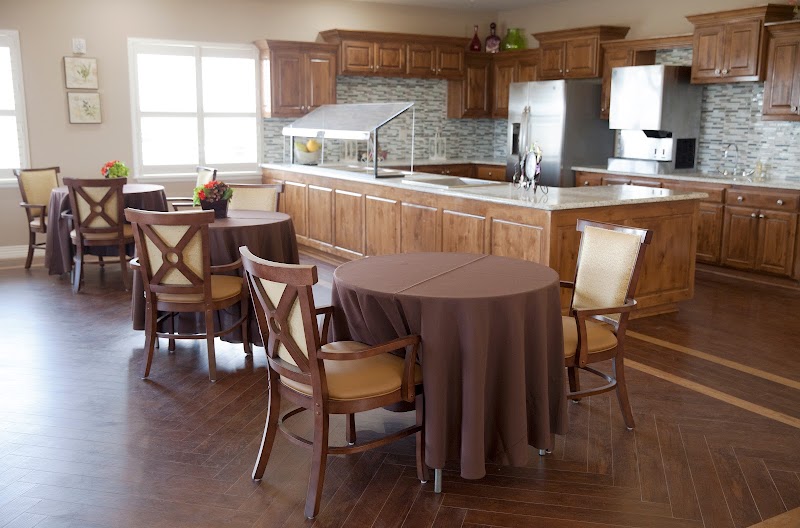
Who Owns and Operates Hillside Heights Rehabilitation Suites?

HILLSIDE HEIGHTS REHABILITATION SUITES is owned by a government entity. Government-operated facilities are typically run by state, county, or municipal agencies. The facility is operated by FUNDAMENTAL HEALTHCARE, a chain that manages multiple nursing homes. With 120 certified beds and approximately 92 residents (about 77% occupancy), it is a mid-sized facility located in AMARILLO, Texas.
How Does Hillside Heights Rehabilitation Suites Compare to Other Texas Nursing Homes?

Compared to the 100 nursing homes in Texas, HILLSIDE HEIGHTS REHABILITATION SUITES's overall rating (2 stars) is below the state average of 2.8, staff turnover (54%) is near the state average of 46%, and health inspection rating (2 stars) is below the national benchmark.

What Should Families Ask When Visiting Hillside Heights Rehabilitation Suites?

Based on this facility's data, families visiting should ask: "What changes have been made since the serious inspection findings, and how are you preventing similar issues?" "Can you walk me through typical staffing levels on day, evening, and night shifts?" "Can I visit during a mealtime to observe dining assistance and food quality?" "How do you handle medical emergencies, and what is your hospital transfer rate?" These questions are particularly relevant given the facility's Immediate Jeopardy citations and the below-average staffing rating.

Is Hillside Heights Rehabilitation Suites Safe?

Based on CMS inspection data, HILLSIDE HEIGHTS REHABILITATION SUITES has documented safety concerns. Inspectors have issued 2 Immediate Jeopardy citations (the most serious violation level indicating risk of serious injury or death). The facility has a 2-star overall rating and ranks #100 of 100 nursing homes in Texas. Families considering this facility should ask detailed questions about what corrective actions have been taken since these incidents.

Do Nurses at Hillside Heights Rehabilitation Suites Stick Around?

HILLSIDE HEIGHTS REHABILITATION SUITES has a staff turnover rate of 54%, which is 8 percentage points above the Texas average of 46%. Moderate turnover is common in nursing homes, but families should still ask about staff tenure and how the facility maintains care continuity when employees leave.

Was Hillside Heights Rehabilitation Suites Ever Fined?

HILLSIDE HEIGHTS REHABILITATION SUITES has been fined $55,480 across 2 penalty actions. This is above the Texas average of $33,634. Fines in this range indicate compliance issues significant enough for CMS to impose meaningful financial consequences. Common causes include delayed correction of deficiencies, repeat violations, or care failures affecting resident safety. Families should ask facility leadership what changes have been made since these penalties.

Is Hillside Heights Rehabilitation Suites on Any Federal Watch List?

HILLSIDE HEIGHTS REHABILITATION SUITES is not on any federal watch list. The most significant is the Special Focus Facility (SFF) program, which identifies the bottom 1% of nursing homes nationally based on persistent, serious quality problems. Not being on this list means the facility has avoided the pattern of deficiencies that triggers enhanced federal oversight. This is a positive indicator, though families should still review the facility's inspection history directly.