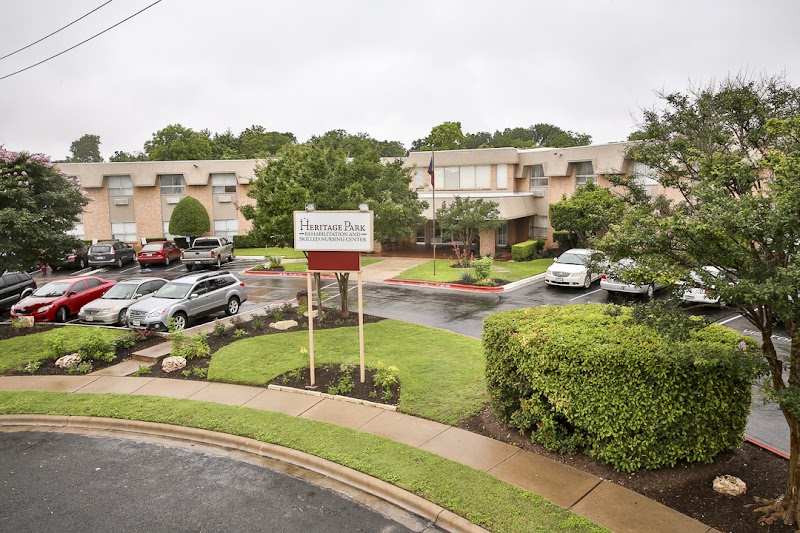
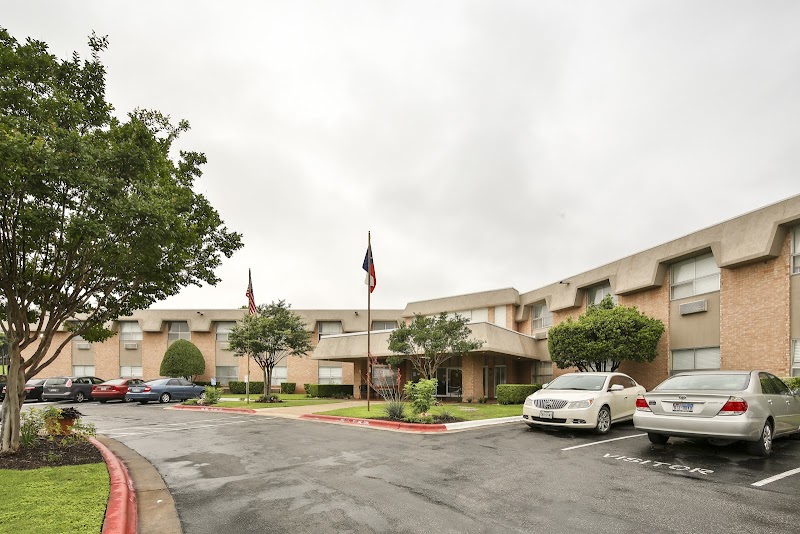
Heritage Park Rehabilitation and Skilled Nursing C

2806 Real St, Austin, TX 78722 (512) 474-1411
Government - Hospital district 197 Beds WELLSENTIAL HEALTH Data: November 2025 2 Immediate Jeopardy citations
Trust Grade
6/100
#738 of 1168 in TX
Last Inspection: November 2024

Within standard 12-15 month inspection cycle. Federal law requires annual inspections.

Overview

Heritage Park Rehabilitation and Skilled Nursing Center has received a Trust Grade of F, indicating significant concerns and a poor overall reputation. It ranks #738 out of 1168 facilities in Texas, placing it in the bottom half and #17 out of 27 in Travis County, suggesting limited local options that are better. However, the facility is showing signs of improvement, having reduced its issues from 29 in 2024 to just 5 in 2025. Staffing is a relative strength with a rating of 4 out of 5 stars and a turnover rate of 37%, which is lower than the Texas average. Despite these positives, the facility has faced serious issues, including incidents where a resident attempted to elope after breaking a window and was not adequately supervised, as well as a serious injury where a resident's foot was trapped during a transfer, resulting in fractures. Additionally, the facility has accumulated $54,356 in fines, which is average compared to other facilities. Overall, while there are some strengths in staffing and a trend toward improvement, there are still critical safety concerns that families should consider.

Trust Score
F
6/100
In Texas
#738/1168
Bottom 37%
Safety Record
High Risk
Review needed
Inspections
Getting Better
29 → 5 violations
Staff Stability
○ Average
37% turnover. Near Texas's 48% average. Typical for the industry.
Penalties
✓ Good
$54,356 in fines. Lower than most Texas facilities. Relatively clean record.
Skilled Nurses
⚠ Watch
Each resident gets only 25 minutes of Registered Nurse (RN) attention daily — below average for Texas. Fewer RN minutes means fewer trained eyes watching for problems.
Violations
⚠ Watch
49 deficiencies on record. Higher than average. Multiple issues found across inspections.
★★☆☆☆
2.0
Overall Rating
★★★★☆
4.0
Staff Levels
★★★★★
5.0
Care Quality
★☆☆☆☆
1.0
Inspection Score
Stable
2024: 29 issues
2025: 5 issues

The Good

  • 4-Star Staffing Rating · Above-average nurse staffing levels
  • 5-Star Quality Measures · Strong clinical quality outcomes
  • Full Sprinkler Coverage · Fire safety systems throughout facility
  • No fines on record
  • Staff turnover below average (37%)

    11 points below Texas average of 48%

Facility shows strength in staffing levels, quality measures, fire safety.

The Bad

2-Star Overall Rating

Below Texas average (2.8)

Below average - review inspection findings carefully

Staff Turnover: 37%

Near Texas avg (46%)

Typical for the industry

Federal Fines: $54,356

Above median ($33,413)

Moderate penalties - review what triggered them

Chain: WELLSENTIAL HEALTH

Part of a multi-facility chain

Ask about local staffing decisions and management

The Ugly 49 deficiencies on record

2 life-threatening 2 actual harm
Aug 2025 3 deficiencies
CONCERN (D) 📢 Someone Reported This

A family member, employee, or ombudsman was alarmed enough to file a formal complaint

Potential for Harm - no one hurt, but risky conditions existed

Notification of Changes (Tag F0580)

Could have caused harm · This affected 1 resident

**NOTE- TERMS IN BRACKETS HAVE BEEN EDITED TO PROTECT CONFIDENTIALITY** Based on interviews and record review, the facility failed to immediately inform the resident; consult with the resident's physi...

Read full inspector narrative →
**NOTE- TERMS IN BRACKETS HAVE BEEN EDITED TO PROTECT CONFIDENTIALITY** Based on interviews and record review, the facility failed to immediately inform the resident; consult with the resident's physician; and notify, consistent with his or her authority, the resident representative(s) when there is a significant change in the resident's physical, mental, or psychosocial status (that is a deterioration in health, mental or psychosocial s tatus in either life-threatening conditions or clinical complications) for 1 (Resident #1) of 7 residents reviewed for physician notification, in that: The facility failed to notify Resident #1's physician when she developed a rash on 07/26/2025 and no skin assessment was conducted for Resident #1 on 07/26/2025 after the rash was found and there was no notification to physician to obtain orders for treatment. The facility failed to notify Resident #1's family when she refused showers regularly. Resident #1 was admitted on [DATE], discharged on 08/05/2025, and refused a shower on 07/18/2025, 07/23/2025, 07/25/2025, and on 08/01/2025. Resident #1 was bathed twice during her stay at the facility. This failure could result in decreased continuity of care, and/or a delay in treatment or services. Findings included: Review of Resident #1 face sheet reflected a [AGE] year-old female admitted on [DATE] and discharged on 08/05/2025 with diagnoses of osteomyelitis (bone infection), encounter for orthopedic aftercare following surgical amputation (need for care and monitoring after amputation), encounter for surgical aftercare following surgery on the skin and subcutaneous tissue (need for care and monitoring on outer layers of skin), acquired absence of right leg below knee(amputation of leg below knee), phantom limb syndrome with pain (condition where individuals experience pain in a limb that has been removed), unspecified dementia (general loss of intellectual abilities impacting memory and other cognitive functions), depression (mood disorder characterized by persistent feelings of sadness and loss of interest in activities that were once enjoyable), and adjustment disorder(condition where a person experiences emotional or behavioral symptoms in response to a stressful life event or change). Review of Resident #1 admission MDS dated [DATE] reflected BIMS score of 10 which indicated moderate cognitive impairment. Further review reflected Resident #1 sometimes felt lonely or isolated from those around her. Review reflected Resident #1's current behavior status, care rejection or wandering was worse than previous assessments. Review of section F reflected it was very important for Resident #1 to have family involved in discussions about her care. Review of section m reflected resident was at risk of developing pressure ulcers with only skin alterations as surgical wounds. Review of Resident #1 care plan dated 07/24/2025 reflected Resident #1 did not let staff assist her and preferred wanted family to provide her care. Interventions included to explain or reinforce why behavior or inappropriate or unacceptable to Resident #1. Further review reflected Resident #1 has impaired cognitive function or impaired through processes related to dementia with interviews to communicate with the resident/family/caregivers regarding residents' capabilities and needs. Review of care plan dated 08/06/2025 reflected Resident #1 was at risk for impaired skin integrity related to impaired mobility and incontinence. Interventions included conducted skin inspections weekly and as needed and document findings. Review of shower hall schedule reflected Resident #1 had showers scheduled on Tuesday, Thursday and Saturdays. Review of POC response history for Resident #1 reflected Resident #1 refused a shower on 07/18/2025, 07/23/2025, 07/25/2025 and on 08/01/2025. Further review reflected Resident #1 was bathed twice during her stay at the facility and had a bed bath on 07/21/2025 and a shower on 07/30/2025. Review of Resident #1 dated 07/21/2025 H&P reflected Resident #1 was alert and oriented x 1-2 (oriented to self and family) at baseline and disoriented to place, time and situations which was also baseline. Resident was overwhelmed by below knee amputation and inability to ambulate. Review of Resident #1 nursing progress notes dated 07/18/2025 reflected Resident #1 knows her name and place, but does not know the date, time or day. Further review of progress note dated 07/26/2025 by RN A reflected Resident's back was found to be covered in significant rash by resident's (family member) today. During a discussion between floor CNA and RN A and FM, it was determined that the resident had been refusing showers. Review of progress note dated 07/27/2025 reflected Resident #1 was offered a shower and initially refused, staff provided education on importance of showering as Resident #1 was observed with rashes to her right flank area and back. Resident #1 verbalized understanding and declined shower but agreed to bed bath. Resident #1 received a bed bath and treatment nurse was made aware. Review of progress notes reflected Resident #1's family was not notified prior to 07/26/2025 that she refused showers and bed baths. Review also reflected Resident #1's family was not notified of her shower refusal on 08/01/2025. Review of Resident #1 progress notes reflected NP was not notified that Resident #1 was found with a rash on her back. Review of Resident #1 NP progress note dated 07/29/2025 reflected Resident #1 had some skin irritation to her back per wound care nurse likely to resident refusal to shower. During an interview on 08/07/2025 at 10:49 AM, FM stated that Resident #1 had redness on her back and sores that were bleeding. FM stated that she saw the sores when she visited Resident #1 at the facility. FM stated that she was not informed Resident #1 did not want to bath prior to 07/26/2025. FM stated she went to the facility on [DATE] and assisted with Resident #1's bath and Resident #1 was okay with bathing with FM there. FM stated that due to Resident #1's dementia she became anxious. During an interview on 08/07/2025 at 1:24 PM, CNA E stated that when resident refused showers, the nurse was notified so the nurse could talk with the resident. CNA E stated refusals were documented in the POC. CNA E stated that any changes in skin such as rashes were reported to the nurse immediately. During an interview on 08/07/2025 at 1:33 PM, CNA F stated that if a resident refused a shower, then the nurse was notified, and it was documented in the POC as a refusal. CNA F stated any new rashes were reported to the nurse. During an interview on 08/07/2025 at 2:12 PM, CNA I stated if a resident refused a shower, she would give the resident some time and then report to the nurse if they refused again. CNA I stated refusals were documented and the nurse was notified. CNA I stated any changes in skin or rashes were reported to the nurse. During an interview on 08/07/2025 at 2:24 PM, RN A stated when residents refused a shower the nurse was informed by the CNAs. RN A stated she tried to identify a pattern of refusals from the resident and would then ask the resident. RN A stated if a resident refused showers, the approach may change, and RN A did not want secretions like sweat to weaken the resident's skin. RN A stated staff provided paperwork if a resident refused and RN A would sign and acknowledge the refusal. RN A stated if the resident's family was involved and the facility then she would speak with them about the resident refusing showers. RN A stated she recently tried to get Resident #1 to take a shower but Resident #1 did not want to shower. RN A stated that she then asked FMs to get involved in showers. RN A stated that was the only time she spoke with Resident #1's FM about showers. RN A stated the shower refusals did not go on for that long and stated it was about three days. RN A stated family was involved and in a agreement to come to facility on shower days with the CNAs so that Resident #1 was comfortable. RN A stated a rash was found on Resident #1's back and it was filled pustules. RN A stated, it looked like it had been there for a long time. RN A stated Resident #1's skin was dry and the rash had some bleeding and she asked the wound care nurse to take care of it. RN A stated she reported this to the wound care nurse but did not report to the physician. RN A stated, I probably should have reported it to the nurse practitioner and may have gotten an order. RN A stated I don't think I did the right thing, and I should have told the nurse practitioner. RN A stated for new skin issues, she was supposed to report to the nurse practitioner and wound care nurse. RN A stated she was supposed to document any time she reported something to the nurse practitioner. During an interview on 08/07/2025 at 2:42 PM, RN B stated that when residents refused showers, staff should ask the resident again or why the resident refused. RN B stated staff should have offered a different time or the resident could refuse. RN B stated in the meeting, the team was notified of any refused showers. RN B stated if refusals were several days in a row, then she would get the resident's RP involved or family. RN B stated that if there were any changes in the resident's skin such as a rash the nurse would go assess and notify the treatment nurse and put in a note. RN B stated any rash should be reported to the provider and document the notification in the nurses notes. RN B stated that education provided to the resident on the importance of taking showers should be documented in progress note. RN B stated showers were important to the resident's health to keep the resident health overall and prevent skin issues. During an interview on 08/07/2025 at 2:53 PM, TN C stated that after notification of skin issues from the charge nurse were received, an assessment was completed, and the TN would notify the NP to put a treatment in place. TN C stated that the assessment would be documented as a skin and wound note or as an assessment. TN C stated she did not treat Resident #1 and that TN D did. TN C stated that a new rash should have been documented in the assessment or progress wound not and active rash would be reported to the NP. During an interview on 08/07/2025 at 3:00 PM, NP stated she did not recall getting a call regarding Resident #1's rash and read it during a chart review. She stated that she asked TN D for clarification about the rash and TN D stated that Resident #1 took a shower and it went away. NP stated she did not physically look a Resident #1 when she saw her on 07/29/2025 and talked with Resident #1's family. NP stated she would have been expected to be notified of a new rash especially if it was bleeding or had puss. During an interview n 08/07/2025 at 3:05 PM, TN D stated that any changes in skin would have to be reported to the NP right away to initiate treatment as needed. TN D stated she received a report about Resident #1 and when TN D assessed Resident #1 her skin was blanchable and pink and she instructed aides to apply lotion because Resident #1's skin was dry. TN D stated she did not observe any pustules and would have reported it right away. TN D stated she thought there was a note that she followed up and stated that she honestly did not think she put a note in and if she had found something she would have put in a note. TN D stated most likely she completed a head-to-toe assessment, but if she did is should be in Resident #1's chart. TN D stated as far as she knew, Resident #1 was compliant with showers and often had bed baths. TN D stated that showers were important to keep residents clean and free of infection. During an interview on 08/07/2025 at 3:52 PM, the DON stated that her expectation for shower refusals included to notify the charge nurse and attempt to get the resident to take a shower and if not the nurse should document the refusal. The DON stated family got involved if the resident refused several days in a row. The DON stated education should be provided by the nurse to the resident on the benefits of a shower. The DON stated that the nurse should document education provided in the progress notes. The DON stated showers were important to keep resident's clean. The DON stated Resident #1's family encouraged her to accept help from staff but Resident #1 wanted her family to provider her care. The DON stated hat she did not recall receiving a notification about Resident #1 having a rash. DON stated she did not expect staff to notify her of a rash and she would review it weekly on the wound report. The DON stated that she expected staff to get treatment nurse on board, resident's family and the provider. DON sated when there was a change such as a rash, the nurse would be notified and the treatment nurse as well as the provider. DON stated any assessment should be documented on wound or skin assessment. The DON stated she expected the TN to document in a nurses not that nothing was found if there was no issues. During an interview on 08/07/2025 at 5:00 PM, the ADM stated that he expected change of skin such as a rash were to be assessed and notification to physician to obtain orders for treatment. The ADM stated that the potential risk would be that the resident go untreated. The ADM stated showers were discussed as an IDT and noted in the point of care system and approached by the IDT prospective and a nurse manager and charge was sent down to speak with the resident. The ADM stated the facility always had success with that approach. The ADM stated that shower refusals were primarily handled in-house and notification to the family would be provided is the family is involved and would be contacted to assist with showers. The ADM stated he did not recall anything recently of notifying family to become more involved with showers. The ADM stated that the importance for showers was for hygiene issues. The ADM stated the generation that was cared for have injuries or wound and they wanted to keep the area clean. Review of in-service dated 08/07/2025 with topic of skin conditions and reporting reflected to assess skin which included lesions, color, size distribution and excoriation and notify MD and RP was conducted with nursing staff by DON. Review of facility policy titled Notification of Changes with implementation date of 10/24/2022 reflected the purpose of the policy was in ensure the facility promptly informs the residents, consults the resident's physician, and notifies, consistent with his or her authority, the residents representative when there is a change require notification. Circumstances requiring notification include: signification changes in a residents physical, mental or psychosocial status such as deterioration in health, mental or psychosocial condition. Circumstances that requires a need to alter treatment may include new treatment. Further review reflected: Additional considerations: 1. Competent individuals: a. The facility must still contact the resident's physician and notify resident's representative, if known. b. A family that wishes to be informed would designate a member to receive calls. c. When a resident is mentally competent, such a designated family member should be notified of significant changes in the resident's health status because the resident may not be able to notify them personally.
CONCERN (D) 📢 Someone Reported This

A family member, employee, or ombudsman was alarmed enough to file a formal complaint

Potential for Harm - no one hurt, but risky conditions existed

Quality of Care (Tag F0684)

Could have caused harm · This affected 1 resident

**NOTE- TERMS IN BRACKETS HAVE BEEN EDITED TO PROTECT CONFIDENTIALITY** Based on interview and record review, the facility failed to ensure that residents received treatment and care in accordance wit...

Read full inspector narrative →
**NOTE- TERMS IN BRACKETS HAVE BEEN EDITED TO PROTECT CONFIDENTIALITY** Based on interview and record review, the facility failed to ensure that residents received treatment and care in accordance with professional standards of practice, the comprehensive person-centered care plan, and the residents' choices for one (Resident #1) of seven residents reviewed for quality of care. The facility failed to assess Resident #1 and report a new rash to the physician on 07/26/2025. There were no orders added for rash/skin treatments from 07/26/2025 to 08/07/2025 for Resident #1. This failure could place residents at risk of not receiving necessary medical care, harm, and hospitalization. Findings included: Review of Resident #1 face sheet reflected a [AGE] year-old female admitted on [DATE] and discharged on 08/05/2025 with diagnoses of osteomyelitis (bone infection), encounter for orthopedic aftercare following surgical amputation (need for care and monitoring after amputation), encounter for surgical aftercare following surgery on the skin and subcutaneous tissue (need for care and monitoring on outer layers of skin), acquired absence of right leg below knee(amputation of leg below knee), phantom limb syndrome with pain (condition where individuals experience pain in a limb that has been removed), unspecified dementia (general loss of intellectual abilities impacting memory and other cognitive functions), depression (mood disorder characterized by persistent feelings of sadness and loss of interest in activities that were once enjoyable), and adjustment disorder(condition where a person experiences emotional or behavioral symptoms in response to a stressful life event or change). Review of Resident #1 admission MDS dated [DATE] reflected BIMS score of 10 which indicated moderate cognitive impairment. Further review reflected Resident #1 sometimes felt lonely or isolated from those around her. Review reflected Resident #1's current behavior status, care rejection or wandering was worse than previous assessments. Review of section F reflected it was very important for Resident #1 to have family involved in discussions about her care. Review of section m reflected resident was at risk of developing pressure ulcers with only skin alterations as surgical wounds. Review of Resident #1 care plan dated 07/24/2025 reflected Resident #1 did not let staff assist her and preferred wanted family to provider her care. Interventions included to explain or reinforce why behavior or inappropriate or unacceptable to Resident #1. Further review reflected Resident #1 has impaired cognitive function or impaired through processes related to dementia with interviews to communicate with the resident/family/caregivers regarding residents' capabilities and needs. Review of care plan dated 08/06/2025 reflected Resident #1 was at risk for impaired skin integrity related to impaired mobility and incontinence. Interventions included conducted skin inspections weekly and as needed and document findings. Review of Resident #1 orders reflected there was no orders added for rash/skin treatments from 07/26/2025 to 08/05/2025. Review of skin assessments reflected no skin assessment was conducted for Resident #1 on 07/26/2025 after the rash was found. Review of Resident #1 skin assessment dated [DATE] reflected no new skin issues were found. Review of Resident #1 skin assessment dated [DATE] reflected no new skin issues were found. Review of Resident #1 dated 07/21/2025 H&P reflected Resident #1 was alert and oriented x 1-2 (oriented to self and family) at baseline and disoriented to place, time and situations which was also baseline. Resident was overwhelmed by below knee amputation and inability to ambulate. Review of Resident #1 nursing progress notes dated 07/18/2025 reflected Resident #1 knows her name and place, but does not know the date, time or day. Further review of progress note dated 07/26/2025 by RN A reflected Resident's back was found to be covered in significant rash by resident's daughter today. During a discussion between floor CNA and RN A and FM, it was determined that the resident had been refusing showers. Review of progress note dated 07/27/2025 reflected Resident #1 was offered a shower and initially refused, staff provided education on importance of showering as Resident #1 was observed with rashes to her right flank area and back. Resident #1 verbalized understanding and declined shower but agreed to bed bath. Resident #1 received a bed bath and treatment nurse was made aware. Review of progress notes reflected Resident #1's family was not notified prior to 07/26/2025 that she refused showers and bed baths. Review also reflected Resident #1's family was not notified of her shower refusal on 08/01/2025. Review of Resident #1 progress notes reflected NP was not notified that Resident #1 was found with a rash on her back. Review of Resident #1 NP progress note dated 07/29/2025 reflected Resident #1 had some skin irritation to her back per wound care nurse likely to resident refusal to shower. During an interview on 08/07/2025 at 10:49 AM, FM stated that Resident #1 had redness on her back and sores that were bleeding. FM stated that she saw the sores when she visited Resident #1 at the facility. FM stated that she was not informed Resident #1 did not want to bath prior to 07/26/2025. FM stated she went to the facility on [DATE] and assisted with Resident #1's bath and Resident #1 was okay with bathing with FM there. FM stated that due to Resident #1's dementia she became anxious. During an interview on 08/07/2025 at 1:24 PM, CNA E stated that any changes in skin such as rashes were reported to the nurse immediately. During an interview on 08/07/2025 at 1:33 PM, CNA F stated any new rashes were reported to the nurse. During an interview on 08/07/2025 at 2:12 PM, CNA I stated any changes in skin or rashes were reported to the nurse. During an interview on 08/07/2025 at 2:24 PM, RN A stated when residents refused a shower the nurse was informed by the CNAs. RN A stated she tried to identify a pattern of refusals from the resident and would then ask the resident. RN A stated if a resident refused showers, the approach may change, and RN A did not want secretions like sweat to weaken the resident's skin. RN A stated staff provided paperwork if a resident refused and RN A would sign and acknowledge the refusal. RN A stated if the resident's family is involved and the facility then she would speak with them about the resident refusing showers. RN A stated she recently tried to get Resident #1 to take a shower but Resident #1 did not want to shower. RN A stated that she then asked FMs to get involved in showers. RN A stated that was the only time she spoke with Resident #1's FM about showers. RN A stated the shower refusals did not go on for that long and stated it was about three days. RN A stated family was involved and in a agreement to come to facility on shower days with the CNAs so that Resident #1 was comfortable. RN A stated a rash was found on Resident #1's back and it was filled pustules. RN A stated, it looked like it had been there for a long time. RN A stated Resident #1's skin was dry and the rash had some bleeding and she asked the wound care nurse to take care of it. RN A stated she reported this to the wound care nurse but did not report to the provider. RN A stated, I probably should have reported it to the nurse practitioner and may have gotten an order. RN A stated I don't think I did the right thing, and I should have told the nurse practitioner. RN A stated for new skin issues, she was supposed to report to the nurse practitioner and wound care nurse. RN A stated she was supposed to document any time she reported something to the nurse practitioner. During an interview on 08/07/2025 at 2:42 PM, RN B stated that when residents refused showers, staff should ask the resident again or why the resident refused. RN B stated staff should have offered a different time or the resident could refuse. RN B stated in the meeting, the team was notified of any refused showers. RN B stated if refusals were several days in a row, then she would get the resident's RP involved or family. RN B stated that if there were any changes in the resident's skin such as a rash the nurse would go assess and notify the treatment nurse and put in a note. RN B stated any rash should be reported to the provider and document the notification in the nurses notes. RN B stated that education provided to the resident on the importance of taking showers should be documented in progress note. RN B stated showers were important to the resident's health to keep the resident health overall and prevent skin issues. During an interview on 08/07/2025 at 2:53 PM, TN C stated that after notification of skin issues from the charge nurse were received, an assessment was completed, and the TN would notify the NP to put a treatment in place. TN C stated that the assessment would be documented as a skin and wound note or as an assessment. TN C stated she did not treat Resident #1 and that TN D did. TN C stated that a new rash should have been documented in the assessment or progress wound not and active rash would be reported to the NP. During an interview on 08/07/2025 at 3:00 PM, NP stated she did not recall getting a call regarding Resident #1's rash and read it during a chart review. She stated that she asked TN D for clarification about the rash and TN D stated that Resident #1 took a shower, and it went away. NP stated she did not physically look a Resident #1 when she saw her on 07/29/2025 and talked with Resident #1's family. NP stated she would have been expected to be notified of a new rash especially if it was bleeding or had puss. During an interview n 08/07/2025 at 3:05 PM, TN D stated that any changes in skin would have to be reported to the NP right away to initiate treatment as needed. TN D stated she received a report about Resident #1 and when TN D assessed Resident #1 her skin was blanchable and pink and she instructed aides to apply lotion because Resident #1's skin was try. TN D stated she did not observe any pustules and would have reported it right away. TN D stated she thought there was a note that she followed up and stated that she honestly did not think she put a note in and if she had found something she would have put in a note. TN D stated most likely she completed a head-to-toe assessment, but if she did it should be in Resident #1's chart. TN D stated as far as she knew, Resident #1 was compliant with showers and often had bed baths. TN D stated that showers were important to keep residents clean and free of infection. During an interview on 08/07/2025 at 3:52 PM, the DON stated that she did not recall receiving a notification about Resident #1 having a rash. DON stated she did not expect staff to notify her of a rash and she would review it weekly on the wound report. The DON stated that she expected staff to get treatment nurse on board, resident's family and the provider. DON sated when there was a change such as a rash, the nurse would be notified and the treatment nurse as well as the provider. DON stated any assessment should be documented on wound or skin assessment. The DON stated she expected the TN to document in a nurses note that nothing was found and if there were no issues. During an interview on 08/07/2025 at 5:00 PM, the ADM stated that he expected change of skin such as a rash were to be assessed and notification to physician to obtain orders for treatment. The ADM stated that the potential risk would be that the resident go untreated. Review of in-service dated 08/07/2025 with topic of skin conditions and reporting reflected to assess skin which included lesions, color, size distribution and excoriation and notify MD and RP was conducted with nursing staff by DON. Review of facility policy titled Notification of Changes with implementation date of 10/24/2022 reflected the purpose of the policy was in ensure the facility promptly informs the residents, consults the resident's physician, and notifies, consistent with his or her authority, the residents representative when there is a change require notification. Circumstances requiring notification include: signification changes in a residents physical, mental or psychosocial status such as deterioration in health, mental or psychosocial condition. Circumstances that requires a need to alter treatment may include new treatment. Further review reflected: Additional considerations: 1. Competent individuals: a. The facility must still contact the resident's physician and notify resident's representative, if known. b. A family that wishes to be informed would designate a member to receive calls. c. When a resident is mentally competent, such a designated family member should be notified of significant changes in the resident's health status because the resident may not be able to notify them personally.
CONCERN (F) 📢 Someone Reported This

A family member, employee, or ombudsman was alarmed enough to file a formal complaint

Potential for Harm - no one hurt, but risky conditions existed

Safe Environment (Tag F0584)

Could have caused harm · This affected most or all residents

**NOTE- TERMS IN BRACKETS HAVE BEEN EDITED TO PROTECT CONFIDENTIALITY** Based on observation, interview, and record review, the facility failed to ensure the resident's right to a safe, clean, comfort...

Read full inspector narrative →
**NOTE- TERMS IN BRACKETS HAVE BEEN EDITED TO PROTECT CONFIDENTIALITY** Based on observation, interview, and record review, the facility failed to ensure the resident's right to a safe, clean, comfortable, and homelike environment for 4 (Resident #3, Resident #4, Resident #5 and Resident #6) of 7 residents reviewed for environment. The facility failed to ensure Resident #3, Resident #4, Resident #5 and Resident #6's linens were free of tears, free of holes or not stained on 08/07/2025. These failures placed residents at risk of discomfort, embarrassment and diminished quality of life. Findings included:Review of Resident #3 face sheet reflected a [AGE] year-old female admitted on [DATE] with diagnoses of Wernicke's encephalopathy (neurological condition caused by vitamin b1 deficiency), unspecified dementia (general loss of intellectual abilities impacting memory and other cognitive functions) and mood disorder (mental health condition characterized by significant disturbances in a person's emotional state). Review of Resident #3 quarterly MDS dated [DATE] reflected a BIMs score of 11 which indicated mildly impaired cognition. Review of Resident #3 care plan dated 03/13/2025 reflected Resident #3 was dependent on staff for meeting emotional, intellectual, physical and social needs. Observation on 08/07/2025 at 9:37 AM revealed Resident #3's sheets had a hole in it. Resident #3 was not in her room at this time. During an observation and interview on 08/07/2025 at 2:10 PM, Resident #3 stated that she did not notice any holes in her blankets or sheets. Resident stated that her linen looked dirty now, but it did not bother her. Resident's bedding was observed with food crumbs. Review of Resident #4's face sheet reflected an [AGE] year-old female admitted on [DATE] with diagnoses of schizophrenia (severe mental health condition that significant impact's a person's ability to think, feel and behave clearly), unspecified dementia (general loss of intellectual abilities impacting memory and other cognitive functions), and major depressive disorder (serious mental health condition characterized by persistent feelings of sadness). Review of Resident #4's quarterly MDS dated [DATE] reflected a BIMS score of 9 which indicated moderate cognitive impairment. Review of Resident #4's care plan dated 10/11/2021 reflected communication problem related to dementia and schizophrenia with intervention to anticipate and meet needs. During an interview an observation on 08/07/2025 at 1:01 PM, revealed a small hole observed in Resident #4's sheets. Resident #4 stated that there was a hole in her sheet and that it did not make her feel very good. She stated she sometimes has a hole and depending on the time-of-day staff will give her another blanket or sheet. Review of Resident #5 face sheet reflected a [AGE] year-old female admitted on [DATE] with diagnoses of major depressive disorder (serious mental health condition characterized by persistent feelings of sadness), and unspecified dementia (general loss of intellectual abilities impacting memory and other cognitive functions). Review of Resident #5 annual MDS dated [DATE] reflected a BIMS of 0 which indicated a severe cognitive impairment. Review of Resident #5 care plan dated 06/03/2024 reflected Resident #5 had impaired cognitive function and through process related to dementia. During observation an attempted interview on 08/07/2025 at 1:00 reflected a small hole in Resident #5's sheets. Resident was unable to answer questions due to cognition. Review of Resident #6 face sheet reflected a [AGE] year-old mane admitted on [DATE] with diagnoses of vascular dementia (cognitive difficulty with reasoning and judgement caused by an impaired supply of blood to the brain), type 2 diabetes and chronic kidney disease. Review of Resident #6 annual MDS dated [DATE] reflected BIMS score of 5 which indicated severe cognitive impairment. Review of Resident #6 care plan dated 05/08/2023 reflected Resident #6 had an impaired cognitive function related to multiple strokes. Review reflected Resident #6 had communication problem related to slurring, weak or absent voice with intervention to anticipate and meet needs. Observation on 08/07/2025 at 9:26 AM revealed Resident #6's bed was made with grey blanket with tattered edges. Resident was at an appointment and unable to be interviewed. Observation of clean linen on 08/07/2025 at 12:45 PM, reflected beige blanket with tattered edges and folded white flat sheet with a yellow stain. During an interview on 08/07/2025 at 1:24 PM, CNA E stated that she has not seen linen with any holes and if they were observed they would be sent back to laundry. CNA E stated it was not okay for residents to have blankets that were tattered or with holes. CNA E stated she was not aware Resident #6's blanket was tattered. During an interview on 08/07/2025 at 1:33 PM, CNA F stated that he has seen linen with holes, but if he saw them he threw them away. CNA F stated it was not okay for a resident's blanket to be in a tattered condition. During an interview on 08/07/2025 at 2:12 PM, CNA I stated she has not observed linen with holes or stains. She stated if she did observe holes or stains, she would change the linen. During an interview on 08/07/2025 at 2:19 PM, LA G stated that if looked at linen after they were washed and if they still had marks on it they were discarded. LA G stated if linen were observed with holes they were also discarded. LA G stated no linen should be provided to residents with holes or stains and that her supervisor ordered new linen often. During an interview on 08/07/2025 at 2;24 PM, RN A stated she has sometimes seen bedspreads with stains after they were washed but it was not frequent. RN A stated that she had not heard what to do if linen was observed stained. RN A stated that linen with holes was thrown away but has not seen any linen with holes. During an interview on 08/07/2025 at 3:52 PM, the DON stated that she expected staff to get rid of any stained, tattered or linen with holes. The DON stated it was important for residents to have linen without holes or stains because it could be a dignity issues. During an interview on 08/07/2025 at 4:05 PM, HSK H stated that she expected staff to dispose of linen with holes or stains and that they should not return to the residents. HSK H stated she ordered new linen every month. During an interview on 08/07/2025 at 5:00 PM, the ADM stated he expected for torn or stained linen to be disposed of. The ADM stated HSK H ordered linen monthly. Review of facility in-service dated 08/07/2025 reflected all stained linen must be disposed of and it was not to be kept training was conducted with laundry staff. Review of invoice dated 07/03/2025 reflected blankets were shipped on 07/03/2025 to the facility. Review of purchase order dated 07/04/2025 reflected pillowcases ordered were shipped to the facility on [DATE]. Review of purchase order dated 07/04/2025 reflected towels, fitted sheets and washcloths were shipped to the facility on [DATE]. Review of purchase order dated 08/04/2025 reflected, bath towels, flat sheets, fitted sheets, and pillowcases orders was approved by the ADM. Facility provided policy titled Exercising Your Rights by the State Long-Term Care Ombudsman Program dated 10/2024 as their Resident Rights policy. Review reflected you have the right to a safe, clean and comfortable environment and you have the right to be treated with dignity and respect.
Jul 2025 1 deficiency 1 Harm
SERIOUS (G) 📢 Someone Reported This

A family member, employee, or ombudsman was alarmed enough to file a formal complaint

Actual Harm - a resident was hurt due to facility failures

Accident Prevention (Tag F0689)

A resident was harmed · This affected 1 resident

**NOTE- TERMS IN BRACKETS HAVE BEEN EDITED TO PROTECT CONFIDENTIALITY** Based on interview and record review, the facility failed to ensure the residents' environment remained as free of accident and ...

Read full inspector narrative →
**NOTE- TERMS IN BRACKETS HAVE BEEN EDITED TO PROTECT CONFIDENTIALITY** Based on interview and record review, the facility failed to ensure the residents' environment remained as free of accident and hazards as is possible and ensure each resident received adequate supervision for 1 (Resident #1) of 10 residents reviewed for accidents and hazards. The facility failed to ensure CNA B and CNA C appropriately utilize the mechanical lift on 06/11/2025 while transferring Resident #1 to her wheelchair causing her foot to get trapped underneath her in the wheelchair and fractures to her lower leg. This failure could place residents at risk of harm, injury, fractures, and hospitalization. Findings included: Record review of Resident #1's admission record, dated 06/23/2025, reflected a [AGE] year-old female who was admitted to the facility on [DATE] with diagnoses including osteoporosis (a condition that weakens bones and increases the risk of breaking a bone), peripheral vascular disease (a condition that impairs the blood flow to the legs), moderate intellectual disabilities (a significant limitation in cognitive functioning and adaptive behavior), muscle wasting and atrophy (the loss of muscle mass and strength), history of falling, need for assistance with personal care, and conversion disorder with seizures or convulsions (a complex mental health condition where the brain does not send the correct messages to the body leading to seizures). Record review of Resident #1's quarterly MDS assessment, dated 07/03/2025, a BIMS was not conducted due to her rarely/never being understood. Section C - Cognitive Patterns reflected Resident #1 had memory problem with short-term and long-term memory. Record review of Resident #1's care plan, undated, reflected a problem, undated, [Resident #1] has a left distal tibia and fibula fracture r/t Dx of Osteoporosis Interventions, undated, included Handle gently when moving or positioning. Maintain body alignment. Record review of Resident #1's care plan, undated, reflected a problem, undated, [Resident #1] has an ADL self-care performance deficit r/t delusional d/o (a psychotic disorder where individuals experience persistent strongly held beliefs that are not based in reality), Cerebral Palsy (a condition that affects movement and posture due to brain damage often occurring before or during birth), impaired balance, debility (physical weakness), dementia (a group of symptoms affecting memory, thinking and social abilities), severe intellectual disability, OP[unknown abbreviation] with interventions, undated, that included TRANSFER: The resident requires Mechanical Lift/hoyer lift with (2) staff assistance for transfers. TRANSFER: The resident requires total dependence assist of 2 staff to move between surfaces; not steady, only able to stabilize assist. Record review of Resident #1's nurses notes, dated 06/11/2025 at 2:00 PM, written by LVN A reflected at 1150am CNA reported to this nurse that resident was complaining of pain to the left ankle, upon assessment resident was noticed to be grimacing and reaching towards left side of leg. Left ankle and leg were assessed and no swelling, discoloration, or warmth were noted. PRN Tylenol was administered, resident was repositioned, and NP [D] was notified, and gave new order for L ankle Xray 2v, Xray was completed, result findings are: AP and lateral (from the side) views of the left ankle are submitted. The bones are osteoporotic. The mildly displaced distal tibial diaphyseal fracture and fibular diaphyseal fracture are visualized. The distal fibular metaphyseal irregularity is present. (both bones in the lower part of the leg had a break that was slightly out of alignment). Record review of Resident #1's social services referral provided in the provider investigation report, dated 06/11/2025 reflected During resident transfer via mechanical lift, resident's left foot was caught by the wheelchair causing fracture of her left tibia. Social Services referral initiated to check on resident's well-being and monitor for emotional distress. Record review of Resident #1's nurses notes, dated 06/11/2025 at 06:40 PM, written by RN G reflected Resident's Xray results reviewed, which revealed fracture of the left tibia and fibula.NP was notified, and an order was received to transfer the resident to the hospital for further evaluation and treatment. Record review of Resident #1's X-ray results, dated 06/11/2025, reflected AP (front to back) and lateral (side to side) views of the left ankle are submitted. The bones are osteoporotic (a condition that weakens the bones and increases the risk of fractures). The mildly displaced (not aligned) distal (part of the leg that is furthest from the body) tibial (the larger lower leg bone) diaphyseal (long portion of the bone) fracture (break) and fibular (the smaller lower leg bone) diaphyseal fracture are visualized. The distal fibular metaphyseal (the part of the bone that connects the long portion to the head of the bone) irregularity is present. Record review of Resident #1's history and physical performed by an emergency room physician in the emergency room, dated 06/11/2025, reflected .Given the patient's history of recurrent falls and underlying medical conditions, the mechanism of injury (how the injury occurred) remains unclear, though pathologic fracture (a bone fracture that occurs due to an underlying disease or weakness in the bone structure, rather than from an external force or injury) versus occult trauma (traumatic injury that is not apparent on initial evaluation) are being considered. Record review of Resident #1's physicians note, written by a doctor specializing in bones, dated 06/12/2025, reflected .Patient lives in a nursing facility and deformity (a condition in which a part of the body is distorted from the usual) was noted to the left lower extremity (leg). No noted trauma or specific event causing the injury.Additionally patient appears to be comfortable at rest and the fracture is in a position that can be splinted (a device used to support an injured body part). Record review of Resident #1's physicians note, written by a doctor specializing in hospital care, dated 06/12/2025, reflected Nursing home staff reported that they discovered the limb deformity during routine care but denied witnessing any recent falls or traumatic events that might have precipitated the injury.Given the patient's history of recurrent falls and underlying medical conditions, the mechanism of injury remains unclear, though pathologic fracture versus occult trauma are being considered. Record review of Resident #1's physicians note, written by the doctor specializing in bones, dated 06/14/2025, reflected This was a very low energy trauma (fractures that occur from minimal force) and the swelling response as expected is minimal. Record review of Resident #1's provider notes, written by NP D, dated 7/3/2025, reflected .recent hospitalization from 6/11-6/16 for acute spontaneous left tib/fib (bones of the lower leg) fracture managed conservatively with splint. An observation on 07/14/2025 at 12:50 PM, revealed Resident #1 was sitting up in a specialty wheelchair with a splint to lower left leg. Resident #1 made no attempts at communication when this investigator attempted to initiate conversation. Resident appeared clean and well-groomed with no grimacing or signs of pain. During an interview on 07/15/2025 at 09:39 AM with Resident #1's RP, she stated she was notified by someone, name unknown, that Resident #1 sustained a fracture due to osteoporosis. She stated she felt confident that Resident #1 received good care. RP stated she had not noticed any changes in mood or behaviors since the incident. She stated that Resident #1 did not talk very often, but when she did, it was only a word or two. During an interview on 07/15/2025 at 11:26 AM with LVN A, she stated she worked on 06/11/2025 when the incident with Resident #1 occurred. She stated a CNA reported to her that during the transfer of Resident #1 to her wheelchair using the mechanical lift, Resident #1's left foot got caught in the sling underneath her. LVN A stated she assessed Resident #1's left lower leg and noticed an abnormality and grimacing with movement of Resident #1's left lower leg. LVN A stated she contacted NP D and received an order for an X-ray for the left lower leg. LVN A stated she administered medication for pain to Resident #1 and notified the DON. During an interview on 07/15/2025 at 11:45 AM with NP E, who specialized in geriatric psychiatry, she stated she was notified that Resident #1 had a fracture to her left lower leg. She stated Resident #1 did[SH1] [VH2] not speak or make eye contact, but in her opinion, the resident had not had any changes in her psychosocial status due to the injury. During an interview on 07/15/2025 at 12:25 PM with NP D, she stated Resident #1 had osteoporosis. She stated she thought the fractures to Resident #1's left lower leg were pathologic. NP D stated, any wrong move or bumping it could have possibly caused it due to osteoporosis. NP D stated Resident #1 had remained at her baseline mood since the incident. During an interview on 07/15/2025 at 12:41 PM with CNA B, she stated CNA C and CNA B used the mechanical lift to transfer Resident #1 from her bed to her wheelchair. She stated when Resident #1 was in the sling in the air, she attempted to position the wheelchair under Resident #1. CNA B stated Resident #1 started to lean to the left while in the air due to Resident #1's contractures (a shortening and stiffening of muscles, tendons, skin or other tissues that limits joint movement). CNA B stated CNA C had the remote for the mechanical lift and started to lower Resident #1 into the chair prior to CNA B repositioning Resident #1's legs. CNA B stated Resident #1's legs were trapped under herself in the chair when that happened. CNA B stated Resident #1 did not yell out or show signs of pain during the transfer. She stated Resident #1 was lifted back up and repositioned. CNA B stated when she repositioned Resident #1, Resident #1's left ankle felt loose and Resident #1 grimaced in pain. CNA B stated she reported the incident to LVN A and the DON. During an interview on 07/15/2025 at 02:05 PM with RN F, she stated she was working the day of the incident with Resident #1. She stated she was instructed to perform a skin assessment on Resident #1 after the incident. RN F stated Resident #1 had no swelling or redness to her left leg. RN F stated Resident #1 would grimace indicating pain with movement of her left lower leg. Attempted a phone interview on 07/15/2025 at 04:07 PM, voicemail was left without a return phone call with RN G. Attempted a phone interview on 07/15/2025 at 04:13 PM, voicemail was left without a return phone call with CNA C. During an interview on 07/15/2025 at 04:54 PM with the DON, she stated she was notified that during a transfer, two CNAs noticed Resident #1's ankle was loose, and Resident #1 was grimacing in pain. The DON stated she instructed LVN A to notify NP D, administer pain medication and immobilize Resident #1's leg. The DON stated she was not informed, during her investigation of the incident, of Resident #1's foot being trapped under her in the wheelchair. The DON stated Resident #1 had remained at her baseline since the incident. She stated CNA B and CNA C performed proficiency check offs after the incident on the same day and passed. The DON stated in-services for contractures and osteoporosis were started that same day. During an interview on 07/15/2025 at 05:26 PM with the ADMIN, he stated he was notified on 06/11/2025, Resident #1 was complaining of pain to the left lower leg. He stated an X-ray was performed and a fracture was found. He stated after discussion with NP D, Resident #1 was sent to the emergency room. The ADMIN stated he was not informed of Resident #1's leg being trapped under her during the transfer. He stated the CNAs were required to perform a re-creation of the event and that detail was not mentioned. He stated that was concerning to him. Record review of facility in-service, dated 5/18/2025, revealed policy titled, Incidents and Accidents, dated 08/15/2022, reflected: Policy: It is the policy of this facility for staff to report, investigate and review any accidents or incidents that occur or allegedly occur, on facility property and may involve or allegedly involve a resident.Definitions:Accident refers to any unexpected or unintentional incident, which results or may result in injury or illness to a resident.Policy Explanation:.4. The following incidents/accidents require an incident/accident report but are not limited to:. Entrapment Equipment Malfunctions. Observed accidents/incidents. Resident injuries due to staff handling.11. The nurse will enter the incident/accident information into the appropriate form/system within 8 hours of occurrence and will document all pertinent information. Record review of facility in-service, dated 06/11/2025, revealed facility assessment titled Mechanical Lift Skill Assessment. Steps listed in assessment included 13.Push gently on knees as resident is being lowered into chair to correct position and maintain balance. Lower resident slowly. Record review of facility in-service, dated 06/11/2025, revealed contents .Osteoporosis in the Elderly; Common but not a natural part of aging. Attached in-service revealed .Large gaps form in the framework ad structure of your bones, causing them to weaken and become prone to fractures. Record review of facility in-service, dated 06/16/2025, revealed topic Safe Handling and Care for Osteoporotic (Residents with a diagnosis of osteoporosis) and Atrophied (Residents with chronic weakness) Residents. Summary of training revealed *Definition of osteoporosis and muscle atrophy *Safe handling during transfers, bed mobility and peri care of high risk residents *Reviewed specific case of resident with fracture of unknown origin, discussed post surgery precautions. No attachment of discussed material noted.
Feb 2025 1 deficiency
CONCERN (E) 📢 Someone Reported This

A family member, employee, or ombudsman was alarmed enough to file a formal complaint

Potential for Harm - no one hurt, but risky conditions existed

Deficiency F0925 (Tag F0925)

Could have caused harm · This affected multiple residents

**NOTE- TERMS IN BRACKETS HAVE BEEN EDITED TO PROTECT CONFIDENTIALITY** Based on observations, interviews, and record reviews, the facility failed to maintain an effective pest control program for 1 o...

Read full inspector narrative →
**NOTE- TERMS IN BRACKETS HAVE BEEN EDITED TO PROTECT CONFIDENTIALITY** Based on observations, interviews, and record reviews, the facility failed to maintain an effective pest control program for 1 of 1 facility reviewed for pests. The facility failed to have pest control effectively treat the building for cockroaches. These deficient practices placed residents at risk of exposure to pests, diseases, infections, and diminished quality of life. Findings included: Review of Resident #1's face sheet, undated, reflected a [AGE] year-old male who was admitted to the facility on [DATE] with diagnoses including dementia (brain impairment of at least two brain functions), COPD (airflow obstruction affecting breathing), and cerebrovascular disease (conditions affecting the brains blood supply). Review of Resident #1's quarterly MDS assessment, dated 11/27/2024, reflected a BIMS of 04, indicating severe cognitive impairment. Review of Resident #1's care plan, revised on 6/5/2023, reflected he had impaired cognitive function/dementia or impaired thought processes. Review of Resident #6's face sheet, undated, reflected a [AGE] year-old female who was admitted to the facility on [DATE] with diagnoses including dementia (brain impairment of at least two brain functions), chronic obstructive pulmonary disease (airflow obstruction affecting breathing),and chronic pain syndrome. Review of Resident #6's quarterly MDS assessment, dated 12/31/2024, reflected a BIMS of 15, indicating cognition was intact. Review of Resident #6's Care Plan, revised on 6/5/2023, reflected a high risk for communicable infections due to age and resident lived near others. Review of Resident #7's face sheet, undated, reflected a [AGE] year-old female who was admitted to the facility on [DATE] with diagnoses including bipolar disorder (extreme mood swings), chronic obstructive pulmonary disease (airflow obstruction affecting breathing), and hypertension (high blood pressure). Review of Resident #7's quarterly MDS assessment, dated 12/2/2024, reflected a BIMS of 15, indicating cognition was intact. Review of Resident #7's care plan, revised on 6/26/2023, reflected an ADL self-care deficit related to aspiration pneumonia and COPD. Observation on 2/2/2025 at 10:10am of Resident #1's room revealed an over the bed roll tray positioned to the side of the bed. The area underneath the table and directly under the bed was noted to have 20 live roaches, in various sizes and colors, crawling on the floor and under the bed. Resident #1 laid on the bed appearing to be asleep. Continued observation of the room next door, 2208 revealed one live roach crawling on the connecting wall. During an observation and interview on 2/2/2025 at 12:50pm with the Maintenance Director revealed he was not aware of there being a roach problem on hall 2200. He stated they have been having the building sprayed frequently and he thought the pest issues had improved. Observations were made with the Maintenance Director in Resident #1's room, which had been cleaned since observations earlier in the day. Roaches were not observed. Continued observation while reentering the hallway revealed Resident # 7 approached the Maintenance Director and asked if he had told the surveyor about the nest of roaches they had found today in her room underneath her roll tray table. The Maintenance Director responded I took it out of your room and put it here pointing to a tray table in the hallway outside room [ROOM NUMBER]. During an interview on 2/2/2025 at 10:16am with Resident #7's room, which was across the hall from room [ROOM NUMBER], revealed she does have issues with roaches in her room. Resident #7 stated she does not have as many as she has seen crawling in Resident #1's room but she does have them. She stated they do have people from a pest company come spray the rooms but it was not working whatever they are spraying. During an interview on 2/2/2025 at 10:45am with Resident #6 in room, 2310, revealed she and her roommate have seen some bugs in their room recently. Resident #6 stated there are not as many bugs as there had been previously. During an additional interview on 2/2/2025 at 1:05pm with the Maintenance Director who clarified that no one had told him about the roach problem on 2200 prior to today. He explained the staff are supposed to be documenting any sightings of pest in the Sighting's Log which the technician from the pest control company will look at and initial when they come to spray. During an interview on 2/2/2025 at 1:47pm with CNA A revealed he has seen roaches in the facility second floor and notifies the maintenance person. CNA A stated he also has seen that a pest control company does come out to spray. During an interview on 2/2/2025 at 2:47pm with CNA B revealed she had recently informed the nurse that there were roaches on the 2200 hall. CNA B stated she believed that the roaches are from a previous resident that had been storing food in the wall. CNA B stated she has not personally seen the pest control technician but believes one was coming because the bait traps are being changed. During an interview on 2/2/2025 at 2:55pm with CNA C revealed he currently works with residents on the 2400 hall. He stated they do not have a problem with roaches. CNA C stated he worked with Resident #1 a long time ago he had roaches then too. He stated when he sees pests he reports to the nurse. During an interview on 2/2/2025 at 3:23pm with RN D revealed he has not seen any roaches on the 2200 hall. RN D stated if staff told him about seeing roaches he would document in the sightings log. RN D stated as old as the building was that they are in, bugs are expected. He has seen the pest control men spraying the building. During an interview on 2/2/2025 at 3:45pm with the facility DON revealed she knew there were still bugs in the facility and that they had been trying to get rid of them. She stated there used to be pest in the offices and conference rooms and they do not now so she knows the treatments from the pest control company have made a difference. The DON stated they are having the building sprayed frequently as they know the pest are not good for the residents. The DON stated that the building is over [AGE] years old so it is hard to get rid of the pests. She does not know if different types of treatments have been tried. Review of the facility's sighting logs from December 31, 2024, through February 2, 2025, reflected the following: Entered: 1/22/2025 Pest sighting description: room [ROOM NUMBER] insects in bathroom door. Entered: 1/22/2025 Pest sighting description: room [ROOM NUMBER] roaches in ceiling/Bathroom Entered: 1/31/2025 Pest sighting description: room [ROOM NUMBER] roaches Entered: 2/2/2025 Pest sighting description: room [ROOM NUMBER] roaches Review of a facility provided Sales Agreement, with a pest control company, with signatures by facility staff dated 11/2016 and 2/24/2017 revealed the initial term of the agreement was 3 years from the date and will be automatically renewed for additional terms of one year thereafter. Visits from the pest control company since 12/31/2024 were noted on 1/2/2025, 1/6/2025, 1/10/2025 and 1/28/2025. Review of the facility's Exercising Your Rights as a Nursing Facility Resident, undated, reflected the following: Your Right to Safety and Quality Care: Freedom From Abuse, Neglect, and Exploitation: You have the right to be free of abuse, neglect, and exploitation. People inside or outside of the facility must not harm you physically or mentally or misuse your property or money. Your facility must: o Protect you from abuse, neglect, and exploitation. o Train all staff on how to prevent, identify, stop, and report abuse, neglect, and exploitation. Safe Surroundings: You have the right to a safe, clean, and comfortable home environment. The facility must: o Have enough housekeeping and maintenance staff to keep the building clean and safe. o Clean your room daily. o Have a pest control program. Quality Care: You have the right to receive all the care necessary for you to have the highest possible level of health. This includes medical care, mental health care, rehabilitative therapies, and supplies. The facility must have enough staff to provide you with care and respond to your needs. Facility staff must be qualified and trained to care for you. Your Right To Be Treated With Dignity and Respect: You have the right to be treated with dignity and respect. You have the right to courtesy and fair treatment from facility staff. Being treated with dignity and respect also means you have the right to make decisions about your life and care. Your facility must respect your choices and preferences.
Nov 2024 22 deficiencies
CONCERN (D)

Potential for Harm - no one hurt, but risky conditions existed

Deficiency F0583 (Tag F0583)

Could have caused harm · This affected 1 resident

**NOTE- TERMS IN BRACKETS HAVE BEEN EDITED TO PROTECT CONFIDENTIALITY** Based on observation, interview and record review, it was determined the facility failed to provide personal privacy for of clos...

Read full inspector narrative →
**NOTE- TERMS IN BRACKETS HAVE BEEN EDITED TO PROTECT CONFIDENTIALITY** Based on observation, interview and record review, it was determined the facility failed to provide personal privacy for of closing privacy curtains during pericare for resident ( Resident # 92) reviewed for privacy. 1 of 1 resident was observed. Resident #92's privacy curtain was not closed all the way while receiving incontinent care. This failure could place residents at risk not having personal privacy. Findings included: Review of Resident #92's Face Sheet dated 11/13/2024 revealed he was a [AGE] year-old male who was admitted to the facility with and initial admission date of 04/06/2018 and an admission date of 10/21/2024. Resident #92's diagnoses included unspecified dementia (is a term used to describe a group of symptoms affecting memory, thinking and social abilities), psychotic disturbance (, mood disturbance, anxiety, hemiplegia, hemiparesis following nontraumatic subarachnoid are a group of serious mental illnesses that all have signs of psychosis) hemorrhage (term used to describe blood loss) affecting right dominant side, personal history of traumatic brain (injury usually results from a violent blow or jolt to the head or body) , paranoid schizophrenia (subtype of schizophrenia that experts no longer recognize), major depressive disorder (a mood disorder that causes a persistent feeling of sadness and loss of interest) and aphasia (is a disorder that affects how you communicate). Record review of Resident #92's MDS dated [DATE] revealed that Resident #92 had a BIMS score of 15 indicating the resident could understand and make self-understood all the time. Review of the Care Plan for Resident #92 problem onset dated 05/14/2021, reflected; Resident is incontinent of bowel and bladder at risk for impaired skin integrity. Resident will remain free from alterations in skin integrity through the next review date. C.N.A's to apply barrier cream as needed after incontinent episodes. ADLs indicate: providing pericare, assisting with baths etc., In an observation on 11/13/2024 at 4:05 p.m., CNA H gathered his supplies and closed the door to the room and closed the privacy curtain in between the residents beds halfway. Resident #92 roommate was sitting in his wheelchair in front of his TV which was on at a very high tone, watching TV. CNA H began to provide incontinent care for Resident #92, but he never closed the front curtain in front of Resident #92 bed, and he never fully closed the curtain in between the beds. During incontinent care Resident #92 was rolled over to his right side and he was instructed by CNA H to hold on to the rail, at that point Resident #92 reached over and grabbed the middle privacy curtain and tried to close it all the way to provide more privacy for him during incontinent care. In an interview on 11/13/2024 at 4:29 p.m., Resident #92 verbalized that staff close the curtains sometimes when they are providing incontinent care. Resident #92 stated when the privacy curtain was not pull it made him feel not good. During interview on 11/13/24 at 4:32 p.m., CNA H stated when asked why he did not close the front curtain while providing incontinent care he stated I was supposed to close it. Every time we change the resident, we are to close it for privacy. CNA H stated he closed the curtains all the way. During interview on 11/14/2024 at 9:50 a.m., Resident #92 stated No, I need privacy when he getting incontinent care. In an interview on 11/14/24 at 2:09 p.m., the DON stated staff should be closing the door and pulling the privacy curtain when providing incontinent care. She stated it could make the residents uncomfortable if staff do not close the door and curtains. Record review of the in-services Privacy of resident indicated the following: * 07/17/2024-Make sure divider curtain in the resident room will be closed when doing incontinent care to the resident door must be closed *08/14/2024- Make sure divider curtain in the resident room will be closed when doing incontinent care to the resident door must be closed. *09/14/2024-Proper Procedure for quality resident care (Peri care, Privacy, Dignity, Infection Control). Review of the Perineal care Policy dated 10/24/2022 stated, . Policy Explanation and Compliance Guidelines: 5. Provide privacy by pulling privacy curtain or closing room door if a private room.
CONCERN (D)

Potential for Harm - no one hurt, but risky conditions existed

Deficiency F0604 (Tag F0604)

Could have caused harm · This affected 1 resident

**NOTE- TERMS IN BRACKETS HAVE BEEN EDITED TO PROTECT CONFIDENTIALITY** Based on observation, interview, and record review, the facility failed to ensure residents were free from any physical restrain...

Read full inspector narrative →
**NOTE- TERMS IN BRACKETS HAVE BEEN EDITED TO PROTECT CONFIDENTIALITY** Based on observation, interview, and record review, the facility failed to ensure residents were free from any physical restraints imposed for purposes of convenience and not required to treat the resident's medical symptoms for 1 (Residents #6) of 37 residents reviewed for restraints. The facility failed to ensure that wedges (triangle plastic pads used to position residents with pressure ulcers) were not used on the side of Resident # 6's bed without the resident having been evaluated for the medical need. This failure could result in residents having physical restraints used that limited their movement without being evaluated for the medical need. Findings include: Record review of Resident #6's face sheet dated 11/14/2024 reflected a [AGE] year-old female who was admitted to the facility on [DATE] with diagnoses including dementia (memory, thinking, difficulty), bipolar (extreme mood swings), major depressive disorder, , cognitive communication deficit (problems with communication) and muscle wasting. Record review of Resident #6's Quarterly MDS assessment dated [DATE] reflected a BIMS score of 14 indicating Resident #6 was cognitively intact. The MDS also indicated Resident #6 was dependent on staff for transfers and maximal assist for bed mobility. The MDS also revealed that Resident #6 had an actual fall, and the facility was assessing for fall risk. Record Review of Resident #6's Care Plan dated 10/31/2024 did not have anything on it for wedges to be used. Record Review of Resident #6's orders revealed that there were no orders for the Wedges. Observation of Resident #6 on 11/12/2024 at 10:45 am revealed the resident was laying in her bed moving around. Resident #6 had two triangular wedges on her bed preventing her from getting off the bed. Observation of Resident #6's peri care on 11/13/2024 at 9:54am revealed that the resident did not have a pressure ulcer. An interview with Resident #6 on 11/12/2024 at 2:28pm revealed she did not want to answer any questions about the wedges on her bed. She said the staff treat her good. An Interview with LVN W on 11/14/2024 at 12:44pm revealed that she had been trained on resident rights. She stated that the facility was a no restraint facility. She said a restraint was anything that restricted the resident's from doing everyday things. She said that the facility used the plastic triangular wedges to position the resident's in their bed when they have a pressure ulcer. She said when using a restraint or a wedge the facility was supposed to have the resident assessed and a doctor order before using. She said if a resident were restrained it could affect them mentally and they may think they were being held against their will. She said she did not know why Resident # 6 had the wedges on her bed . She said staff should not of had the wedges. An interview with CNA O on 11/14/2024 at 12:52pm revealed he had been trained on resident rights. He said the policy for restraints was staff could not put anything that would cause the resident to be stuck in one place. He said bedrails and ties were restraints. He said that the plastic wedges were used to protect residents from falling of the bed. He said he did not know if staff needed a doctor's order for the wedges. He said if a restraint was used on a resident, they may feel trapped. He said that Resident #6 moved a lot and the staff put the wedges there so she would not fall off the bed. He said there was no pass down (report from the leaving staff about residents) on the wedges being used and that they were already on the resident's bed. An interview with the DON on 11/14/2024 at 1:03pm revealed she had been trained on resident rights. She said that the facility did not have restraints because it was a no restraint facility. She said a restraint was side rails and anything that prevents the resident from moving. She said wedges are used to position the resident when they have a pressure ulcer. She also said the facility had to have a doctor order before a restraint could be used. She said if staff used restraints, it could cause more injury to the resident. She said she did not know why staff were using the plastic wedges to keep the resident from falling. An interview with the ADM on 11/14/2024 1:36pm revealed he had been trained on resident rights. He stated the facility was a zero-restraint facility. He said a restraint was anything that restricts a resident's movement. He said that the plastic triangular wedges were used to position the resident in the bed when they had a pressure sore. He also said when staff use the wedges for positioning the facility would get a doctor order. He said the negative of using restraints could potentially affect the resident's ability to move freely. He said he did not think staff understood the fall policy and intended to protect her. Record Review of Resident #6's medical chart and orders did not have anything in it for the use or consent of the wedges. Record review of the Restraints Policy dated 08/15/2022 revealed the resident has the right to be treated with respect and dignity, including the right to be free from any physical or chemical restraint imposed for the purpose of discipline or staff convenience and not required to treat the resident's medical symptoms. Before a resident is restrained, the facility will determine the presence of a specific medical symptom that would require the use of restraints.
CONCERN (D)

Potential for Harm - no one hurt, but risky conditions existed

Deficiency F0655 (Tag F0655)

Could have caused harm · This affected 1 resident

**NOTE- TERMS IN BRACKETS HAVE BEEN EDITED TO PROTECT CONFIDENTIALITY** Based on interview and record review, the facility failed to develop and implement a baseline care plan within 48 hours of admis...

Read full inspector narrative →
**NOTE- TERMS IN BRACKETS HAVE BEEN EDITED TO PROTECT CONFIDENTIALITY** Based on interview and record review, the facility failed to develop and implement a baseline care plan within 48 hours of admission that included the instructions needed to provide effective and person-centered care of the resident that meets professional standards of quality care for 1 of 10 residents (Resident #176) reviewed for baseline care plans. The facility failed to ensure Resident #176's baseline care plan dated 10/21//2024 included instructions to address her present on admission diagnosis of PTSD-Post Traumatic Stress Disorder (a mental health condition that can develop after someone experiences or witnesses a traumatic event) within 48 hours of admission. This failure could place the resident at risk of not receiving continuity of care and communication among nursing home staff, reduced resident safety, and reduced safeguards against adverse events that are most likely to occur right after admission. Findings included: Review of face sheet dated 11/13/2024 for Resident # 176 reflected a [AGE] year-old female admitted to the facility on [DATE] with a diagnosis of PTSD (a mental health condition that can develop after someone experiences or witnesses a traumatic event). Review of Resident # 176's Comprehensive MDS assessment dated [DATE] reflected a BIMS score of 15 indicating intact cognition. Resident # 176 had a diagnosis of PTSD checked under active diagnoses. Review of Resident # 176's baseline care plan dated 10/21/2024 did not address the PTSD. In an interview on 11/14/2024 at 1:40 PM with Resident # 176 reflected Resident # 176 stated no one from the facility had ever asked her about her PTSD and what her triggers are or what interventions she needed to maintain her mental health. Resident # 176 stated her PTSD was because she had been abused by males in the past. Resident # 176 stated she preferred female care staff because male care staff make her very uneasy due to her past. Resident # 176 also stated she preferred to be spoken to in the English language or have care staff that speak English as care staff speaking another language while providing care also makes her very uneasy. In an interview on 11/14/2024 at 2:15 PM the SW stated they were unsure if they needed to update a resident care plan when a resident has a diagnosis of PTSD as they had never had that diagnosis come up before. SW stated they were responsible for updating resident care plans regarding changed behaviors, advance directives, visual or auditory needs, dementia, cognition loss, and discharge needs. SW stated the initial assessment conducted with the resident was done by verbal communication with the resident and any information entered was only from what the resident verbally told her. SW stated that if a diagnosis of PTSD were on the resident list of diagnoses, then the resident should be asked about the diagnosis to see if any accommodations are needed to manage the residents care at the facility. SW stated they were unsure who was responsible for asking about accommodations pertaining to a PTSD diagnosis. SW stated if accommodation of needs are not updated on the care plan, then that could negatively affect the resident by the staff not knowing what the residents' could be. In an interview on 11/14/2024 at 2:30 PM with SS reflected SS stated if a resident had a diagnosis of PTSD, then the resident baseline care plan and comprehensive care plan would be custom care plan's including their symptoms or triggers and the interventions needed to address those triggers. SS stated they are responsible for updating a resident's baseline and comprehensive care plan regarding behaviors and mental illness diagnoses. SS stated if a resident's care plan was not updated to address a resident with a diagnosis of PTSD, then it would depend on the resident symptoms or if the resident were asymptomatic as to whether it could negatively affect a resident. In an interview on 11/14/2024 at 3:45 PM the DON stated their expectation was that resident care plans were updated accurately and timely. DON stated it was the responsibility of the SW to update baseline and comprehensive care plans regarding behaviors and mental illnesses including any resident triggers and interventions needed to manage their behaviors or illness. DON stated it could negatively affect a resident with a diagnosis of PTSD if their care plan was not updated to reflect that diagnosis in that the staff would not know the residents triggers. In an interview on 11/14/2024 at 4:30 PM with the ADM reflected the ADM stated it was their expectation that resident care plans were complete and accurate. ADM stated it was the responsibility of the interdisciplinary team which included SW, SS, DDS, DON, ADON, Assistant ADM, and ADM to ensure resident care plan were complete and accurate. ADM stated if resident care plans were not completed or accurate then resident needs could not be met. ADM stated that for a resident with a diagnosis of PTSD if the care plan did not reflect that then the resident triggers could be missed. Interview on 11/14/24 at 4;05PM, a request for the base line care plan policy was requested from ADM. Policy not provided prior to exit.
CONCERN (D)

Potential for Harm - no one hurt, but risky conditions existed

Accident Prevention (Tag F0689)

Could have caused harm · This affected 1 resident

**NOTE- TERMS IN BRACKETS HAVE BEEN EDITED TO PROTECT CONFIDENTIALITY** Based on interview and record review, the facility failed to ensure the residents environment remained as free of accident and h...

Read full inspector narrative →
**NOTE- TERMS IN BRACKETS HAVE BEEN EDITED TO PROTECT CONFIDENTIALITY** Based on interview and record review, the facility failed to ensure the residents environment remained as free of accident and hazards as possible for 1 of 3 residents reviewed for accidents and hazards (Resident #13). The facility failed to ensure soap was secured in labeled container in Resident #13's room. This failure could result in residents experiencing accidents and possible illness, injury, and hospitalization by inadvertently consuming unknown substances. Findings included: Review of Resident #13's face sheet revealed an 80-years-old male with admission date of 8/24/24 with a discharge date of 10/18/2024. Diagnosis included: vascular dementia (memory and thought process difficulties related to multiple strokes, or loss of blood circulation to the brain), dysphagia (difficulty swallowing), and cognitive communication deficit (inability to communicate). Review of Resident #13's initial minimum data set (MDS) assessment dated [DATE] revealed a brief interview for mental status (BIMS) score of 12 which indicated mild cognitive impairment. Review of Resident #13's Care Plan dated 9/9/2024 and revised on 11/12/2024 revealed, Resident #13 has a swallowing problem related to Cerebrovascular Accident (sudden interrupted blood supply to the brain). Resident #13 has potential nutritional problem relate to Mechanical Soft Diet with Nectar Thick Liquid. Record review of Resident #13's Nursing progress notes dated 8/31/2024 at 1:10 PM revealed Called to the room by FM because Resident #13 was coughing after drinking something. She showed me a small cup and asked what it was. I asked where she got it from, stated on side of TV FM mistakenly gave him one drank of shower gel. Vs 120/55 18 97.4 95 sat . No vomiting notice or adverse reactions. Elevated head of bed for cough. Notified NP on call resident to be monitor. Record review of Resident #13's Nursing progress notes dated 8/31/2024 at 2:45 revealed Late Entry: charge Nurse was called to the room by FM because Resident #13 was coughing after drinking something. She showed the nurse a small cup and asked what it was and told her that she got it from behind the TV thinking it was a Jello. She also told the nurse that she mistakenly gave him one drank of shower gel, resident spit it. Vs 120/55 18 97.4 95 sat. No vomiting notice or adverse reactions. Elevated head of bed for cough. Notified NP on call resident to be monitor. Record review of incident reports from 8/31/24 at 1:29 PM revealed Resident FM gave resident mistakenly a small sip of shower gel which she stated that she picked it from the side of the TV because she though it was Jello. She also stated that as soon as it touches his mouth, he starts spitting it and coughing it out. Resident was assessed, no injuries noted, no nausea or vomiting. Resident unable to give a description other info a cup of shower get was placed behind TV. During interview on 11/14/24 at 11:16 AM with FM of Resident #13, she stated that an incident happened on 8/31/24 where she mistakenly gave Resident #13 a drink of soap from an unlabeled cup in his room that was sitting next to the TV. She stated the liquid appeared to be about the consistency of the liquid he was ordered, and she thought it was for him to drink. FM expressed concern for the inadequacy of care provided after the incident happened. During interview on 11/14/24 at 3:14 PM with LVN G stated the FM had called her into the room because she had given him something from a cup in the room. When LVN G went to the room and did an assessment the FM showed her a cup and ask if LVN G had given the FM something. LVN G stated she had given the FM water from the kitchen and asked the FM where she got the cup of red liquid from. FM stated she had found it next to the TV. LVN G then assessed the cup by smelling it and poured some of it into the sink to assess the consistency of the liquid. LVN G then added water to the sink and noticed the liquid was soap of some type. LVN G stated the consistency of the soap was almost the same consistency of the resident's thickened liquid. LVN G stated the FM thought the cup of liquid was jello. LVN G stated she documented everything in the nurses note and called the on-call doctor. On call doctor told LVN G to monitor the resident and call back if any changes in status occur. LVN G stated the soap should not have been in a cup, but she does not know who brought it into the room and put it next to the TV. She stated she did not notice the cup of liquid earlier in the day, but she did not look at the side of the TV either. She stated she was not sure if it could be harmful to the resident if ingested. LVN G stated there were no ill effects from the incident. Resident #13 consumed 100% of his dinner that night. During interview on 11/14/24 at 3:48 PM with the DON, she stated the FM had requested and been provided a cup of thickened water for the resident. She stated that the FM then saw a cup of red liquid from behind the TV and proceeded to give Resident #13 a drink of the red liquid. The DON stated that Resident #13 immediately spit the liquid out. She stated that LVN G assessed Resident #13 and LVN G stated the resident did not swallow any of the red liquid and no harm was done. The DON also stated that her investigation did not reveal how the soap got in a cup and on the dresser by the TV. The DON stated the only soap in the facility at that time was green in color and the soap in the bathroom was clear. The DON stated she does not know how swallowing soap could affect a resident. During interview on 11/14/24 at 4:39 PM with the ADM, he stated he was notified about the incident with a resident possibly ingesting a substance that a family member thought was some kind of drink but was actually soap. He stated the family member found it on the dresser by the TV. He stated the FM attempted to give Resident #13 a drink and the resident immediately spit it out. The ADM stated after an inhouse investigation it was not determined when or how the soap ended up in a cup on the resident's dresser, but we have in serviced all staff and have changed some procedures since then. Record review of Inservice dated 10/17/24, topic What to do in case of ingestion of substance other than food revealed a summary of session Find out what is the substance is? Assessment of the resident. Call poison control center 1 800 222 1222 and get directions on how to proceed. MD, RP, DON, and Administrator notification. Start an Incident report for Ingestion. Record review of the facilities policy titled Incidents and Accidents dated 8/15/22 reflected the following: Policy: It is the policy of this facility for staff to report, investigate, and review any accidents or incidents that occur or allegedly occur, on facility property and may involve or allegedly involve a resident. Definitions: Accident refers to any unexpected or unintentional incident, which results or may result in injury or illness to a resident. An incident is defined as an occurrence or situation that is not consistent with the routine care of a resident or with the routine operation of the organization. This can involve a visitor, vendor, or staff member. Policy Explanation: The purpose of incident reporting can include: -Assuring that appropriate and immediate interventions are implemented, and corrective actions are taken to prevent recurrences and improve the management of resident care. -Conducting root cause analysis to ascertain causative/contributing factors as part of the Quality Assurance Performance Improvement (QAPI) to avoid further occurrences. -Alert administration of occurrences that could result in reporting requirements. -Meeting regulatory requirements for analysis and reporting of incidents and accidents. Compliance Guidelines: 1. Incident/accident reports are part of the facility's performance improvement process and are confidential quality assurance information. 2. Licensed staff will utilize PCC Risk Management to report incidents/accidents and assist with completion of any investigative information to identify root causes. 3. Incidents that rise to the level of abuse, misappropriation, or neglect, will be managed, and reported according to the facility's abuse prevention policy. 4. The following incidents/accidents require an incident/accident report but are not limited to: Alleged abuse, Choking, Combative behavior, Drug diversion, Elopement, Entrapment, Equipment malfunction, Falls, Medication or treatment errors, Observed accidents/incidents, Pressure injuries/ulcers, Resident to resident altercations, Resident injuries due to staff handling, Self-inflicted injuries, Suicide or attempted suicide, Unexpected deaths, Unobserved injuries. 5. In the event of an incident or accident, immediate assistance will be provided, or securement of the area will be initiated unless it places one at risk of harm. 6. Any injuries will be assessed by the licensed nurse or practitioner and the affected individual will not be moved until safe to do so. First aid will be given for minor injuries such as cuts or abrasions. 7. The supervisor or other designee will be notified of the incident/accident. If necessary, law enforcement may be contacted for specific events. 8. The nurse will contact the resident's practitioner to inform them of the incident/accident, report any injuries or other findings, and obtain orders, if indicated, which may include transportation to the hospital dependent upon the nature of the injury(ies). 9. In the event of an unwitnessed fall or a blow to the head, the nurse will initiate neurological checks as per protocol and document on the neurological flow sheet. Abnormal findings will be reported to the practitioner. 10. The resident's family or representative will be notified of the incident/accident and any orders obtained of if the resident is to be transported to the hospital. 11. The nurse will enter the incident/accident information into the appropriate form/system within 8 hours of occurrence and will document all pertinent information. 12. Documentation should include the date, time, nature of the incident, location, initial findings, immediate interventions, notifications, and orders obtained or follow-up interventions. 13. The nurse will examine and render any first aid to any visitor or employee involved in an incident/accident and will assist with arranging transportation to the hospital, if warranted. 14. If an incident/accident was witnessed by other people, the supervisor or designee will obtain written documentation of the event by those that witnessed it and submit that documentation to the Director of Nursing and/or Administrator.
CONCERN (D)

Potential for Harm - no one hurt, but risky conditions existed

Deficiency F0699 (Tag F0699)

Could have caused harm · This affected 1 resident

**NOTE- TERMS IN BRACKETS HAVE BEEN EDITED TO PROTECT CONFIDENTIALITY** Based on interviews and record review, the facility failed to ensure residents who were trauma survivors received culturally com...

Read full inspector narrative →
**NOTE- TERMS IN BRACKETS HAVE BEEN EDITED TO PROTECT CONFIDENTIALITY** Based on interviews and record review, the facility failed to ensure residents who were trauma survivors received culturally competent, trauma-informed care in accordance with professional standards of practice and accounted for residents' experiences and preferences to eliminate or mitigate triggers that may cause re-traumatization for 1 (Resident #176) of 3 resident reviewed for quality of care. The facility failed to ensure that Resident #176's potential triggers were care planned. This failure could place residents at increased risk for psychological distress due to re-traumatization. Findings included: Review of face sheet dated 11/13/2024 for Resident # 176 reflected a [AGE] year-old female admitted to the facility on [DATE], with a diagnosis of PTSD (a mental health condition that can develop after someone experiences or witnesses a traumatic event) Review of Resident # 176's Comprehensive MDS assessment dated [DATE] reflected a BIMS score of 15 indicating intact cognition. Resident # 176 had a diagnosis of PTSD checked under active diagnoses. Resident # 176's mood section of the MDS reflected resident had felt down, depressed, or hopeless with a frequency of half or more of the days. Resident # 176 mood section also reflected resident had felt bad about themselves or that they were a failure or had let themselves down half or more of the days. No behaviors recorded for Resident # 176. Review of Resident # 176's baseline care plan dated 10/21/2024 reflected under section mood and psychosocial wellbeing no documentation of PTSD diagnosis recorded. No interventions in place to address or mitigate Resident # 176's diagnosis of PTSD recorded. Review of Resident # 176's care plan dated 10/22/2024 reflected no documentation regarding Resident # 176's diagnosis of PTSD. In an interview on 11/14/2024 at 1:40 PM Resident # 176 stated no one from the facility had ever asked her about her PTSD and what her triggers are or what interventions she needed to maintain her mental health. Resident # 176 stated her PTSD was because she had been abused by males in the past. Resident # 176 stated she preferred female care staff because male care staff make her very uneasy due to her past. Resident # 176 also stated she preferred to be spoken to in the English language or have care staff that speak English as care staff speaking another language while providing care also makes her very uneasy. In an interview on 11/14/2024 at 2:15 PM the SW stated they were unsure if they needed to update a resident care plan when a resident has a diagnosis of PTSD as they had never had that diagnosis come up before. SW stated the initial assessment conducted with the resident was done by verbal communication with the resident and any information entered was only from what the resident told the SW. SW stated that if a diagnosis of PTSD was on the resident list of diagnoses, then the resident should be asked about the diagnosis to see if any accommodations are needed to manage the residents care at the facility. SW stated they were unsure who was responsible for asking about accommodations pertaining to a PTSD diagnosis. SW stated if accommodation of needs was not updated on the care plan, then that could negatively affect the resident by the staff not knowing what the resident's triggers are. In an interview on 11/14/2024 at 2:30 PM SS stated if a resident had a diagnosis of PTSD, then the resident care plan would be a custom care plan including their symptoms or triggers and the interventions needed to address those triggers. SS stated they are responsible for updating a resident's care plan regarding behaviors and mental illness diagnoses. SS stated if a resident's care plan was not updated to address a resident with a diagnosis of PTSD, then it would depend on the resident symptoms or if the resident were asymptomatic as to whether it could negatively affect a resident. In an interview on 11/14/2024 at 3:45 PM the DON stated their expectation was that resident care plans were updated accurately and timely. DON stated it was the responsibility of the SW to update care plans regarding behaviors. DON stated it could negatively affect a resident with a diagnosis of PTSD if their care plan was not updated to reflect that diagnosis in that the staff would not know the residents' triggers. In an interview on 11/14/2024 at 4:30 PM the ADM stated it was their expectation that resident care plans were completed and accurate. ADM stated it was the responsibility of the interdisciplinary team which included SW, SS, DDS, DON, ADON, Assistant ADM, and ADM to ensure resident care plan were completed and accurate. ADM stated if resident care plans were not completed or accurate then resident needs could not be met. ADM stated that for a resident with a diagnosis of PTSD if the care plan did not reflect that then the resident triggers could be missed. Interview on 11/14/24 at 4:05 PM of the ADM was asked for the facility's base line care plan policy ,policy not provided prior to exit. Review of comprehensive care plan policy dated 10/24/2022 reflected under heading policy: It is the policy of this facility to develop and implement a comprehensive person-centered care plan for each resident, consistent with resident rights, that includes measurable objectives and timeframes to meet a resident's medical, nursing, and mental and psychosocial needs that are identified in the resident's comprehensive assessment. Under heading definitions: Trauma-informed care is an approach to delivering care that involves understanding, recognizing, and responding to the effects of all types of traumata. A trauma-informed approach to care delivery recognizes the widespread impact, and signs and symptoms of trauma in residents, and incorporates knowledge about trauma into care plans, policies, procedures, and practices to avoid re-traumatization. Under heading policy explanation and compliance guidelines: 1. The care planning process will include an assessment of the resident's strengths and needs and will incorporate the president's personal and cultural preferences in developing goals of care. Services provided or arranged by the facility, as outlined by the comprehensive care plan, shall be culturally competent and trauma informed. 2. The comprehensive care plan will be developed within 7 days after the completion of the comprehensive MDS assessment. All Care Assessment Areas (CAAs) triggered by the MDS will be considered in developing the plan of care. Other factors identified by the interdisciplinary team, or in accordance with the resident's preferences, will also be addressed in the plan of care. The facility's rationale for deciding whether to proceed with care planning will be evidenced in the clinical record. 3. The comprehensive care plan will describe, at a minimum, the following: a. The services that are to be furnished to attain or maintain the resident's highest practicable. physical, mental, and psychosocial well-being . g. Individualized interventions for trauma survivors that recognizes the interrelation between trauma and symptoms of trauma, as indicated. Trigger-specific interventions will be used to identify ways to decrease the resident's exposure to triggers which re-traumatize the resident, as well as identify ways to mitigate or decrease the effect of the trigger on the resident.
CONCERN (D)

Potential for Harm - no one hurt, but risky conditions existed

Unnecessary Medications (Tag F0759)

Could have caused harm · This affected 1 resident

Based on observations, interviews, and record review the facility failed to ensure that its medication error rate was not 5 percent or greater. The facility had a medication error rate of 7.69 % based...

Read full inspector narrative →
Based on observations, interviews, and record review the facility failed to ensure that its medication error rate was not 5 percent or greater. The facility had a medication error rate of 7.69 % based on 2 errors out of 26 opportunities, which involved 2 of 4 residents (Resident #1 & #156) and 2 of 2 staff (MA R and MA T) reviewed for medication errors, in that: MA R administered a whole Metroprolol ER (Extended release or slow release) gel pill and the Resident #1 had orders to crush all medications. MA T administered 1 medication (Metroprolol) which was ordered to be given if blood pressure reading was within the parameters. Orders indicated to hold (do not give to resident) if blood pressure reading is outside of the parameters. The blood pressure was outside of the parameters. These failures could place residents at risk of medication errors that could cause a decline in health. Findings included: During an observation on 11/12/2024 at 03:29 p.m., MA R was observed passing medications to Resident #1 which included 5 medications (Dicyclomine 10MG, Acidophilus Probiotic, Fish Oil 1000 MG (gel capsule), Quetiapine Fumarate 100 MG and Dorzolamide). Resident #1 had orders for all medications to be crushed. MA R crushed all medications except the Fish Oil 1000 MG (gel capsule). MA R administered the Fish Oil as a whole gel pill along with the crushed medications. During an interview with MA R on 11/12/24 03:38 p.m., MA R voiced that she did not cut the fish oil pill because the resident takes it whole and if she cuts it, he will not get all the medication. MA R verbalized it's a gel you can't crush it. When asked the MA R what the facility policy is for gel pills with orders to crush, she verbalized she doesn't know the policy to be honest. She just goes based off of her experience with the resident. During an interview on 11/14/2024 at 08:25 a.m. MA T stated she knew when medications are supposed to be crushed because it was in the computer under the resident's orders. MA T stated gel medications should not be crushed. MA T added that you cannot crush the gel medication and you just go back to the nurse, and they will see what is going on. MA T stated if a resident gets a medication that is supposed to be crushed, they can choke, and it can kill the resident. MA T added You can't give a resident a pill if you are supposed to crush it because it means he can't swallow it. During an interview on 11/14/2024 at 2:09 p.m., the DON stated gel medications are not to be crushed. DON added I think they need to notify the nurse and let them know this resident has crushed medications and get them to change the order or get another alternative to crush . The DON stated if a resident was supposed to get a crushed medication and they get a whole one instead, they can choke on it, and they will not be able to swallow it. The DON voiced the last time staff were in-serviced on medication administration was with the month or 2 months and the ADON was responsible for providing the in-services to staff. During an observation on 11/13/2024 at 07:13 a.m., MA T was observed obtaining Resident #156 blood pressure and it was: 145/67 with a HR of 54. MA T was observed passing medication to Resident # 156 which included the following medication (Metoprolol Succinate ER (Extended release or slow release) Oral Tablet Extended Release 24 Hour 100 MG (Metoprolol Succinate) Give 1 tablet by mouth one time a day related to Essential (primary) Hypertension (110) Hold for SBP <110 or HR <60) Record review on 11/12/2024 of Resident #156's clinical physician orders revealed: Metoprolol Succinate ER (Extended release or slow release) Oral Tablet Extended Release 24 Hour 100 MG (Metoprolol Succinate) Give 1 tablet by mouth one time a day related to Essential (primary) Hypertension (110) Hold for SBP <110 or HR <60. Record Review on 11/14/2024 of the Medication Administration Policy with implementation date of 10/24/2022 Policy: Medications are administered by licensed nurses, or staff who are legally authorized to do so in this state, as ordered by the physician and in accordance with professional standards of practice, in a manner to prevent contamination or infection. Explanation and Compliance Guidelines: #8. Obtain and record vital signs, when applicable or per physician orders. When applicable, hold medication for those vital signs outside the physician's prescribed parameters. #14 Administer medication as ordered in accordance with manufacturer specifications. C. Crush medications as ordered. Do not crush medication with do not crush instructions. Example guidelines for Medication Administration (unless otherwise ordered by physician), this list is not all-inclusive. Do Not Crush Medications: Slow release Enteric coated
CONCERN (D)

Potential for Harm - no one hurt, but risky conditions existed

Deficiency F0760 (Tag F0760)

Could have caused harm · This affected 1 resident

**NOTE- TERMS IN BRACKETS HAVE BEEN EDITED TO PROTECT CONFIDENTIALITY** Based on interview and record review, the facility failed to ensure residents were free of significant medication errors for 1 (...

Read full inspector narrative →
**NOTE- TERMS IN BRACKETS HAVE BEEN EDITED TO PROTECT CONFIDENTIALITY** Based on interview and record review, the facility failed to ensure residents were free of significant medication errors for 1 (Resident#156) of 4 resident reviewed for pharmaceutical services. The facility failed to follow prescriber's orders and professional standards and principles which apply to professionals providing services for Resident #156's scheduled medications. MA T administered 1 medication (Metroprolol) which was ordered to be given if blood pressure reading was within the parameters. Orders indicated to hold (do not give to resident) if blood pressure reading is outside of the parameters. The blood pressure was outside of the parameters. This failure could place residents at risk of discomfort or jeopardizes his or her health and safety. Findings included: Record Review on 11/14/2024 of Resident #156's face sheet reflected Resident #156 was a [AGE] year-old male with an original admission date of 05/06/2024 and admission date of 09/17/2024. Resident #156 had a diagnoses of Essential (primary) Hypertension (is a common condition that affects the body's arteries) . Record Review on 11/14/2024 of the most recent MDS assessment dated [DATE] reflected Resident #156 had a BIMS score of 6 indicating Resident #156 was severely cognitively impaired. Record review on 11/12/2024 of Resident #156's clinical physician orders revealed: Metoprolol Succinate ER (Extended release or slow release) Oral Tablet Extended Release 24 Hour 100 MG (Metoprolol Succinate) Give 1 tablet by mouth one time a day related to Essential (primary) Hypertension (110) Hold for SBP <110 or HR <60. During an observation on 11/13/2024 at 07:13 a.m., MA T was observed obtaining Resident #156 blood pressure and it was: 145/67 with a HR of 54. MA T administered 1 tablet of Metoprolol Succinate ER (Extended release or slow release) . In an interview on 11/14/2024 at 08:25 a.m., MA T stated she was not supposed to give a resident a blood pressure medication if it was outside of the parameters for giving. MA T stated if the resident was given a blood pressure medication when their blood pressure was out of the parameters it can harm the resident and MA T voiced, she was supposed to follow the orders in the MAR in the PCC system. MA T verbalized the staff get in-serviced every week on the proper administration process. Record Review on 11/14/2024 of the Medication Administration Policy with implementation date of 10/24/2022 Policy: Medications are administered by licensed nurses, or staff who are legally authorized to do so in this state, as ordered by the physician and in accordance with professional standards of practice, in a manner to prevent contamination or infection. Explanation and Compliance Guidelines: #8. Obtain and record vital signs, when applicable or per physician orders. When applicable, hold medication for those vital signs outside the physician's prescribed parameters.
CONCERN (D)

Potential for Harm - no one hurt, but risky conditions existed

Deficiency F0761 (Tag F0761)

Could have caused harm · This affected 1 resident

In accordance with State and Federal laws, the facility must store all drugs and biologicals in locked compartments under proper temperature controls, and permit only authorized personnel to have acce...

Read full inspector narrative →
In accordance with State and Federal laws, the facility must store all drugs and biologicals in locked compartments under proper temperature controls, and permit only authorized personnel to have access to the keys. 2 of 4 medication carts reviewed in that: The medication cart for the 2400 hall and one cart by the front entrance on the lower level were not locked. During a medication review, MA T walked away and left the medications out with the surveyor, instead of locking the medications back up. These deficient practices could affect residents and result in a drug diversion due to medications not being properly disposed and secured. The findings were: Observation on 11/13/2024 at 7:13 a.m., of the medication cart for the 2400 was not locked when MA T, was administering medications. Observation on 11/13/2024 at 7:40 a.m., MA T, walked away from cart and left medications with the surveyor, during a medication pass inspection. The medications were not in sight of MA T view. MA T walked down the hall to ask the charge nurse for clarification on a medication order. Observation on 11/13/2024 at 7:49 a.m., MA T returned to cart with the ADON . MA T was instructed by the ADON to act as if the surveyor is not here and reminded that she is to lock up medications when she is walking away from her cart. At 7:56 am MA T, stated she would not leave the medications out because people can come up and take them. MA T stated she has never done that before, she just assumed the surveyor would watch the medications and the medications were okay. Observation on 11/13/2024 at 5:49 p.m., revealed an unlocked medication cart by the front entrance on the first floor. There were no staff nearby the cart and residents were in the area. Interview with MA T on 11/13/2024 at 8:07 a.m., MA T, reported she would never leave the medications out, she stated she put everything inside and locked the cart and then she would have walked away. MA T voiced someone could take the medications, if she left them out and it could be a medication like a blood pressure medication and if a resident takes it and they are not supposed to, maybe someone can die. MA T voiced the facility told staff every time they have to lock their carts with the medications in them and then go, even if someone is dying, even if there is a fire, lock the medications in the cart and do not leave them out. MA T voiced she left them out today with the surveyor because the surveyor was there, and she thought it was okay to leave the medications with the surveyor, but she knew the rules. MA T voiced she did not lock the medication cart when she was giving a resident medication because she was in the room and the cart was pushed up against the door so, no one can get the cart. MA T voiced I must lock it but maybe I fear you and forgot. I do not know; I am supposed to calm down. She voiced I have to lock my cart. MA T sated if she does not lock her cart, maybe someone can come and pull it, maybe somebody fall, maybe he can take my things medications here. MA T voiced the policy for locking the medication cart indicates they have to lock the cart. Interview with DON on 11/14/2024 at 2:09 p.m., stated staff are supposed to lock their carts when they walk away from them. The DON voiced if a staff member does not lock their medication cart, somebody can get in their cart. This can harm a resident. Record review revealed an in-service for Medication Storage (please make sure medication cart is close when not in use. Do not let medication cart opened and unattended) signed by staff on 07/17/2024. Review of the medication administration policy on 11/14/2024 implemented on 10/24/2022 did not include medication storage or mention locking medication carts.
CONCERN (D)

Potential for Harm - no one hurt, but risky conditions existed

Deficiency F0778 (Tag F0778)

Could have caused harm · This affected 1 resident

**NOTE- TERMS IN BRACKETS HAVE BEEN EDITED TO PROTECT CONFIDENTIALITY** Based on interviews and record review the facility failed to provide diagnostic services to meet the needs of its residents in a...

Read full inspector narrative →
**NOTE- TERMS IN BRACKETS HAVE BEEN EDITED TO PROTECT CONFIDENTIALITY** Based on interviews and record review the facility failed to provide diagnostic services to meet the needs of its residents in a timely manner for 1 of 9 (Resident # 153) residents reviewed for radiology services. The facility failed to ensure Resident # 153 was taken to their imaging appointment in a timely manner to ensure their appointment was not canceled due to being late for the appointment. This failure could place residents at risk of delayed diagnosis and medical treatment to prevent complications and injuries. Findings included: Resident # 153 Review of face sheet dated 11/13/2024 for Resident # 153 reflected a [AGE] year-old female admitted to the facility on [DATE]. Her diagnoses included schizophrenia (a mental disorder that affects a person's ability to think, feel, and behave clearly), epilepsy (a seizure disorder), pain in right hip, altered mental status, chronic pain, depression, insomnia, , and pelvis fracture. Review of Quarterly MDS assessment dated [DATE] for Resident # 153 reflected a BIMS score of 10 which indicated moderate cognitive impairment. Resident # 153 had impairment on one side of their lower extremities (hip, knee, ankle, foot). Review of Resident # 153 care plan dated 6/20/2024 reflected resident has chronic pain related to right hip pain. Interventions include monitor/document for side effects of pain medication. Monitor/record/report to nurse resident complaints of pain or requests for pain treatment. Review of Resident # 153 Clinical Physician orders reflected a order for pain monitoring by nursing staff every shift dated 3/11/24, an order for acetaminophen 500 mg dated 3/11/24, and a order for acetaminophen-codeine 300-30 mg dated 5/20/24. Order to obtain follow up with ortho for chronic right hip pain dated 7/17/24. No orders for imaging appointment reschedule documented. In an interview on 11/13/24 at 10:44 AM Resident # 153 stated they were taken to an MRI imaging appointment last week and they arrived at the appointment late, so the appointment had been canceled. Resident # 153 stated they were frustrated with the fact that the facility van driver had not left the facility in time to get them to the appointment on time and their appointment was canceled. Resident # 153 stated I have continued pelvic pain and I really needed to go to that appointment. Resident # 153 stated they are unsure if the appointment has been rescheduled or who will be taking them to future appointments as the facility van driver told them that they would no longer be working for the facility. Resident # 153 stated nobody from the facility has communicated with me about any of my future appointments. In an interview on 11/14/24 at 10:00 AM the CST stated the process for resident transportation to appointments was the facility makes appointments for residents then the appointment was put into the scheduler appointment book. The CST stated if the resident makes the appointment for themselves then the resident must notify the CST or the nurse who will notify the CST so the appointment can be put into the scheduler appointment book. The CST stated Resident # 153 had an imaging appointment that had been canceled due to the facility not getting the resident to the appointment on time. The CST stated the facility van had been in the shop and the van driver was unaware that the facility had secured a van from a sister facility to transport residents to appointments. The CST stated when the van driver realized the facility had secured a vehicle the driver took Resident # 153 to the imaging appointment but was late to the appointment and the imaging facility therefore canceled the appointment. The CST stated it was their and the driver's responsibility to ensure resident transportation to appointments was secured and carried out. CST stated if residents missed scheduled appointments this could negatively affect the residents by the resident becoming upset or possibly taking a long time to reschedule their medical appointments. CST stated after looking in appointment scheduling book that an appointment had been rescheduled for Resident # 153 on 11/18/24. CST was unsure if facility staff had communicated with the resident about the rescheduled appointment. CST was also unsure if the NP/MD had been notified of the missed appointment. Attempted interview on 11/14/24 at 10:15 AM of facility van driver however interview not conducted as van driver is no longer employed by facility. In an interview on 11/14/24 at 4:30 PM the ADM stated their expectation concerning resident transportation was the residents would be transported to their appointments as scheduled. The ADM stated it was the responsibility of the interdisciplinary team including the transportation coordinator, driver, nurse, and social worker to ensure the residents receive the treatments required and are taken to their scheduled appointments. The ADM stated this failure could negatively affect residents by potentially missing appointments or having to reschedule and have a negative health outcome. Interview on 11/13/24 at 5:33PM, the ADM stated the facility does not have a transportation policy.
CONCERN (D)

Potential for Harm - no one hurt, but risky conditions existed

Deficiency F0790 (Tag F0790)

Could have caused harm · This affected 1 resident

**NOTE- TERMS IN BRACKETS HAVE BEEN EDITED TO PROTECT CONFIDENTIALITY** Based on interviews and record review the facility failed to assist residents in arranging transportation to and from dental ser...

Read full inspector narrative →
**NOTE- TERMS IN BRACKETS HAVE BEEN EDITED TO PROTECT CONFIDENTIALITY** Based on interviews and record review the facility failed to assist residents in arranging transportation to and from dental services location to meet the needs of 1 of 6 (Resident # 151) reviewed for dental services. The facility failed to assist Resident # 151 with arranging transportation to and from dental services location to complete his dental appointment for castings to be made for dentures. This deficient practice could affect residents by placing them at risk of not receiving dental care. Findings included: Review of face sheet dated 11/13/2024 for Resident # 151 reflected a [AGE] year-old male admitted to the facility on [DATE]. His diagnoses included malignant neoplasm of the bladder (bladder cancer), muscle wasting and atrophy, malaise, , and vitamin D deficiency. Review of the Quarterly MDS assessment dated [DATE] for Resident # 151 reflected a BIMS score of 15 indicating intact cognition. MDS oral/dental status section did not have any documentation recorded. Review of Resident # 151's care plan dated 05/22/2024 reflected no documentation regarding ADL's including dental care or any documentation of dental visits. Review of forms to be completed upon admission dated 5/17/2024 reflected the resident checked that they requested a dental exam. Record review of Resident #151's medical record from (5/7/2024) to (11/14/2024) revealed there was no record of a dental exam. In an interview on 11/12/2024 at 2:56 PM Resident # 151 stated he missed his dental appointment to have castings done to receive a set of dentures. Resident # 151 stated he had made a dental appointment himself with the dentist. Resident # 151 stated he had let CST know of when the appointment was so it could be put in the transportation binder. Resident # 151 stated he was told by CST that the facility van was in the shop and that they would provide a public transportation pass for him to attend the appointment. Resident #151 stated he attempted to take public transportation to the appointment but that was unsuccessful as the public transportation service did not go all the way out to where his dentist office was located. Resident # 151 told the CST that public transportation did not cover the area where his dentist office was located but by that time, he had missed his appointment. Resident # 151 stated he had concerns because he really needed to see the dentist and he was unsure if the facility transportation were unavailable how he would get to his appointment. In an interview on 11/14/24 at 10:00 AM the CST stated if the resident made an appointment for themselves then the resident must notify the CST or the nurse who will notify the CST so the appointment can be put into the scheduler appointment book. The CST stated Resident # 151 had a dental appointment that had been missed due to the facility transportation being in the shop and public transportation not being available due to coverage area. The CST stated the facility van had been in the shop and the CST had given Resident # 151 a public transportation pass but was unaware that the public transportation coverage area did not include the town where Resident# 151 dentist was located. The CST stated it was their responsibility to ensure resident transportation to appointments was secured and carried out. CST stated if residents missed scheduled appointments this could negatively affect the residents by the resident becoming upset or possibly taking a long time to reschedule their medical appointments. In an interview on 11/14/24 at 4:30 PM with the ADM revealed ADM stated their expectation concerning resident transportation was the residents would be transported to their appointments as scheduled. The ADM stated it was the responsibility of the interdisciplinary team including the transportation coordinator, driver, nurse, and social worker to ensure the residents receive the treatments required and are taken to their scheduled appointments. The ADM stated this failure could negatively affect residents by potentially missing appointments or having to reschedule and have a negative health outcome. Interview on 11/13/24 at 5:35PM the ADM stated the facility does not have a transportation policy. Review of Resident Rights posting dated 11/2021 reflected Residents of Texas nursing facilities have all the rights, benefits, responsibilities, and privileges granted by the Constitution and laws of this state and the United States. They have the right to be free of interference, coercion, discrimination, and reprisal in exercising these rights as citizens of the United States.
CONCERN (D)

Potential for Harm - no one hurt, but risky conditions existed

Deficiency F0806 (Tag F0806)

Could have caused harm · This affected 1 resident

**NOTE- TERMS IN BRACKETS HAVE BEEN EDITED TO PROTECT CONFIDENTIALITY** Based on observation, interviews and record reviews, the facility failed to provide food that accommodates residents' allergies,...

Read full inspector narrative →
**NOTE- TERMS IN BRACKETS HAVE BEEN EDITED TO PROTECT CONFIDENTIALITY** Based on observation, interviews and record reviews, the facility failed to provide food that accommodates residents' allergies, intolerances, and preferences for one (1) of ten (10) residents (Resident # 151) reviewed for food allergies. The facility kitchen failed to honor Resident # 151 food allergies according to his meal ticket and served him beets which his meal ticket stated he had an allergy to. This failure placed the resident at risk of consuming a food allergen. Findings included: Review of face sheet dated 11/13/2024 for Resident # 151 reflected a [AGE] year-old male admitted to the facility on [DATE]. His diagnoses included anemia, type 2 diabetes with foot ulcer, and vitamin D deficiency. Listed under allergies it reads beets. Review of the Quarterly MDS assessment dated [DATE] for Resident # 151 reflected a BIMS score of 15 indicating intact cognition. Review of the care plan for Resident # 151 dated 05/22/2024 reflected the following resident was on an RCS (Reduced Concentrated Sweets) diet related to diagnosis of diabetes type 2. Interventions of provide, serve diet as ordered. Monitor intake and record for each meal. No documentation of a food allergy recorded. Review of meal ticket slip for Resident # 151 dated 11/15/2024 reflected Resident # 151 on a regular texture Reduced Concentrated Sweets diet with an allergy listing of Beets. Observation on 11/12/2024 at 12:00 PM of downstairs dining room meal service revealed nursing performing proper hand hygiene, checking resident meal trays, and resident meal tray set up assistance. No discrepancies, patterns, or trends identified. In an interview on 11/12/2024 at 2:56 PM with Resident # 151 revealed Resident # 151 stated he has a food allergy to beets, and it was documented on his meal slip tickets but he keeps receiving meal trays with beets on them. Resident # 151 stated when he received a tray with beets, he just sends it back and requests a new tray and reminds staff of his food allergy. Resident # 151 stated he never eats any of the food from the tray with the beets as the juice gets all over the other food and he knows of his allergy and that was why he requests a new tray. Resident # 151 stated he was not concerned about this matter for himself but concerned about other residents whose cognition level was not the same as his. In an interview on 11/14/2024 at 12:05 PM the DDS stated residents who have food allergies had the food allergy documented on the meal tray for the staff to see. The DDS stated before the meal tray reached the resident it went through 4 checkpoints of different staff members. The DDS stated first the cook checked the tray while they are making it, secondly the diet aide check the tray when it was received from the cook, thirdly the nurse check the meal trays for accuracy when they arrive to the unit, and fourthly the CNA checked the meal tray prior to giving it to the resident. The DDS stated that all dietary staff are trained on food allergies in the new employee training and during in-service trainings held with the department. The DDS stated in-service trainings are conducted biweekly with staff over varying topics. The DDS stated they were aware Resident # 151 had received beets on his meal tray at times. The DDS stated after they were notified of this occurring that additional in-service training had been conducted regarding food allergies. The DDS stated if residents receive meal trays with items, they are allergic to this could negatively affect residents because it could make them very sick, put them in the hospital, or even death. The DDS stated it was their responsibility to ensure that the dietary staff had been trained on food allergies. In an interview on 11/14/2024 at 3:45 PM the DON stated resident meal trays are checked by dietary and then by nursing to ensure accuracy of texture, allergies, and diet type. The DON stated if residents received food items, they were allergic to it could negatively affect them by making them sick. DON stated they had been made aware of Resident # 151 receiving beets on their meal tray and that further training had been conducted with staff and that documentation of the training was in the in-service binder. In an interview on 11/14/2024 at 4:30 PM the ADM stated it was their expectation that for residents with food allergies that the meal ticket slips had the food allergies documented on the resident meal slip and that the residents did not receive food items they were allergic to. The ADM stated it was the DDS, Cook, Diet Aide, Nurse, and CNA responsibility to ensure the resident meal tray was accurate and they did not receive food items they were allergic to. The ADM stated residents receiving food items they were allergic to could negatively affect them in that the resident would have a negative health outcome. Review of grievance log reflected no grievances recorded regarding food allergies. Review of in-service trainings with topic of resident allergies conducted on date 8/9/2024 with 13 dietary staff in attendance, 10/17/2024 with 30 nursing staff in attendance, 11/7/2024 with 12 dietary staff in attendance. Review of tray line audit policy dated 6/17/2009 and revised on 8/22/2012 reflected under heading policy: A tray line audit to check for therapeutic diet accuracy, menu accuracy, portion control and food preferences will be conducted in accordance with the Quality Assurance Report Schedule, or more frequently if the consultant dietitian identifies ongoing problems. Under heading procedure: 1. . 1. When tray line begins, stand at the end of the tray line and check a pre-selected number of trays. This review will include: a. Checking the diet order on the tray card to the diet served on the tray, including: 1. Orders for therapeutic diets 2. Likes/dislikes 3. Allergies . Any other restrictions or additions noted on the tray card. b. Note any errors in the above areas on the Quality Assurance Monitor II form. 2. Total and score the results of the review when completed. 3. Following the audit, review the results of the tray line audit with the DDS. Develop a plan of correction for any problems noted with the assistance of the DDS and will follow-up on the plan of correction within one to two weeks. 4. Include a copy of the audit and the plans of correction in the monthly report to the ADM. Review of the undated Quality Assurance Monitor II form revealed no identified concerns, patterns, or trends. Review of tray line service policy dated 12/01/2011 reflected under heading policy: The consultant dietitian will monitor the tray line to ensure that diets are served accurately and in the correct portions and that patient/resident preferences are met. See Section 6 for Quality Assurance Monitor forms and schedule. The following guidelines should be followed. Under heading guidelines: 1. A dated copy of the daily menu extensions with any changes is posted in the kitchen near the tray line so that the servers can use the extensions to correctly serve the diets. 2. The trays are prepared by the server using the diet extensions and the portion sizes listed on the extensions. 3. Staff on the tray line check each resident's tray card to ensure that dietary preferences and dislikes are honored, and appropriate substitutions provided. 4. Each tray is checked by the tray line personnel to ensure that the diet is served as ordered, the portion size of each item is correct, and preferences are met. 5. The Dietary Manager conducts a tray line audit once each week for each meal to ensure that diets are served correctly and to identify any training needs. See Section 6, Quality Assurance, for a sample Tray Line Audit form. Review of Allergy Aware posting in kitchen undated reflected under heading Know your menu: 9 allergens-milk, eggs, fish, shellfish, tree nuts, peanuts, wheat, soy, sesame. Under heading when a customer informs you of a food allergy: -Refer food allergy concern to person in charge -Remember to check the food preparation procedures for any possible cross contact, which can, include frying the items in question in the same oil as an item that contains an allergen. - If a food item is returned to the kitchen due to an allergen, Do Not attempt to remove the allergen and send the food back. Trace amounts of allergens can trigger an allergic reaction. Under heading symptoms: If a guest has a reaction, call 911 immediately -rash, hives, itching, tingling, swelling, wheezing, difficulty breathing, loss of consciousness, anaphylaxis.
CONCERN (D)

Potential for Harm - no one hurt, but risky conditions existed

Medical Records (Tag F0842)

Could have caused harm · This affected 1 resident

**NOTE- TERMS IN BRACKETS HAVE BEEN EDITED TO PROTECT CONFIDENTIALITY** Based on interview and record review, the facility failed to ensure the resident's medical records are accurately documented for...

Read full inspector narrative →
**NOTE- TERMS IN BRACKETS HAVE BEEN EDITED TO PROTECT CONFIDENTIALITY** Based on interview and record review, the facility failed to ensure the resident's medical records are accurately documented for 1 of 5 residents (Resident #13) reviewed for clinical records. The facility failed to ensure Resident #13's admission Agreement dated 8/26/24 signed electronically after consent received during phone conversation was witnessed by 2 people. These failures could result in inaccurate records, errors in care, decline in health and quality of life. Findings Include: Review of Resident #13's face sheet revealed an 80-years-old male with admission date of 8/24/24 with a discharge date of 10/18/2024. Diagnoses included: Hyperlipidemia (high level of lipids or fats in the blood), vascular dementia (memory and thought process difficulties related to multiple strokes, or loss of blood circulation to the brain), hypertension (high blood pressure), dysphagia (difficulty swallowing), and cognitive communication deficit (inability to communicate). Review of Resident #13's initial minimum data set (MDS) assessment dated [DATE] revealed a brief interview for mental status (BIMS) score of 12 which indicated mild cognitive impairment. Review of Resident #13's Care plan dated 8/27/24 revealed the resident was dependent on staff for meeting emotional, intellectual, physical, and social needs related to cognitive deficits, immobility, and physical limitations. Review of Resident #13's Daily skilled note dated 8/26/24 at 12:25 PM revealed resident had impaired decision-making ability. Review of Resident #13's admission Agreement dated 8/26/24 revealed electronic signatures for Resident #13's FM 2 the ADMC and/or the ABOM on pages 4,5,6,7,8, 10 and 11. Review of Resident #13's Power of Attorney dated 1/27/15, Resident #13 appointed his FM as power of attorney. Interview on 11/14/24 at 11:16 AM with FM of Resident #13 revealed concerns with medical records. She stated she recently realized that no admission agreement had been signed when Resident #13 was admitted to the facility on [DATE]. Stated she did not think anything of it until recently when Resident #13 was admitted to a different facility. Interview on 11/14/24 at 12:39 PM with the ADMC revealed the process for receiving consent for the admissions agreement was optimally done in person but if she was unable to get the resident to sign or see the family in the facility then she received consent by a phone conversation. The ADMC recalled calling phone number in chart for Resident #13 and spoke to a female to receive consent for admission on [DATE]. She stated the FM 2 name was on the face sheet from the hospital along with the phone number. She stated she was unaware of any power of attorney at that time, as it was submitted later in the resident's stay. The ADMC stated after she talked to the female individual on the phone, she had assumed it was the FM 2 of the resident and placed her name in the electronic document. She further stated the phone number for the FM 2 and the FM were the same, so she was unsure if she spoke with the FM or the FM 2. She stated the system required 2 facility employees/witnesses to sign off on the document since the family member was not able to sign in person. She stated after she received consent for the admissions agreement, she signed off on it and sent it to the ABOM for his signature in the 2nd witness area. When asked if the ABOM witnessed the call to verify who the conversation was with she stated, he did not witness the conversation. The ADMC stated I think the system just wants 2 facility representatives not necessarily a witness. That's just how the form is set up. Interview on 11/14/24 at 2:47 PM with ABOM revealed he did not remember witnessing the conversation with Resident #13's family member regarding the admission agreement. He stated the process for signing the admission agreement was the ADMC talked to the family and gets verbal consent then the system sends him a notification. He then reviewed the form and signed it. He stated he does not actually witness any of the conversations between the family and the ADMC. The ABOM stated he was unsure of who the ADMC talked to in order to receive consent for the admission agreement. He stated he did sign the form even though he did not witness the conversation about the admission agreement. He stated this could affect the residents if the situation did not fit the resident's needs. ( No further elaboration was given.) Interview on 11/14/24 at 4:39 PM with ADM revealed his expectation for staff when obtaining consent for admissions agreements was to utilize Docusign. Stated in many cases the responsible parties for the residents are not local. His preference for obtaining consent was encourage the responsible party to come to the facility and sign in person, but if they are unable to then consent must be made by other means. He stated he expected staff to follow the policy. Review of policy titled Documentation in Medical Record dated 10/24/22 stated: Policy: Each resident's medical record shall contain an accurate representation of the actual experiences of the resident and include enough information to provide a picture of the resident's progress through complete, accurate, and timely documentation. Policy Explanation and Compliance Guidelines: 1. Licensed staff and interdisciplinary team members shall document all assessments, observations, and services provided in the resident's medical record in accordance with state law and facility policy. 2. Documentation shall be completed at the time of service, but no later than the shift in which the assessment, observation, or care service occurred. 3. Principles of documentation include, but are not limited to: . b. Documentation shall be accurate, relevant, and complete, containing sufficient details about the resident's care and/or responses to care.
CONCERN (E)

Potential for Harm - no one hurt, but risky conditions existed

Resident Rights (Tag F0550)

Could have caused harm · This affected multiple residents

**NOTE- TERMS IN BRACKETS HAVE BEEN EDITED TO PROTECT CONFIDENTIALITY** Based on observation, interview, and record review, the facility failed to treat each resident with respect and dignity and care...

Read full inspector narrative →
**NOTE- TERMS IN BRACKETS HAVE BEEN EDITED TO PROTECT CONFIDENTIALITY** Based on observation, interview, and record review, the facility failed to treat each resident with respect and dignity and care for each resident in a manner and in an environment that promotes maintenance or enhancement of his or her quality of life for 9 of 9 (Resident #292, Resident #12 Residents #6, 17, #22, #27, #60, #93, and 103's) residents reviewed for dignity. 1. The facility failed to ensure Resident #292, and Resident #12 had a privacy cover on their urinary catheter bag. 2. The facility failed to promote Residents #6, 17, #22, #27, 60, #93,103's dignity while dining when staff did not serve the residents their lunch tray at the same time as other residents at the same table for lunch on 11/12/2024 and Resident #6 for lunch on 11/14/2024. These failures could affect the resident's dignity and affect their quality of life and contribute to poor self-esteem and unmet needs. Findings included: Resident #6 Record review of Resident #6's face sheet dated 11/14/2024 revealed a [AGE] year-old female admitted to the facility on [DATE] with an admitting diagnosis of unspecified dementia (a term used to describe a group of symptoms affecting memory, thinking, and social abilities), muscle wasting and atrophy (a decrease in size of a body part or tissue) of right and left upper arm, a principal diagnosis of type 2 diabetes mellitus with hyperglycemia (a condition that happens because of a problem in the way the body regulates and uses sugars as a fuel and blood sugars are high), and recent diagnosis of cognitive communication deficit (speech disorder that affects how people use and understand language due to impaired cognition). Record review of Resident #6's quarterly MDS dated [DATE] revealed a BIMS score of 14, indicating cognition intact. Record review of Resident #6's care plan revised on 12/30/2029 under ADL self-care performance revealed resident required supervision/tray set up by staff to eat. Revision dated 03/04/2021 revealed resident had a communication problem and was able to make her needs known through verbal communication and responding yes/no to questions. Revision dated 06/16/2023 revealed resident was at risk for weight variance due to dysphagia (difficulty swallowing), anemia, depression, dementia, diabetes, and anxiety. Resident #22 Record review of Resident #22's face sheet dated 11/14/2024 revealed a [AGE] year-old female originally admitted to the facility on [DATE] and readmitted on [DATE] with an admitting diagnosis of unspecified dementia, other Cerebrovascular disease (condition that affect blood flow to the brain), muscle wasting and atrophy of both arms and legs, underweight, and adult failure to thrive. Record review of Resident #22's quarterly MDS dated [DATE] revealed the resident was unable to complete the brief interview of mental status. Under cognitive patterns, it revealed resident was rarely/never understood. The MDS also revealed that the resident needed assistance with set up and clean up. Record review of Resident #22's care plan under ADL self-care performance revealed resident required supervision/tray set up by staff to eat. Revision dated 11/16/2020 revealed resident had impaired communication due to resident's primary language was Vietnamese and spoke minimal English. Resident was able to understand basic commands and directions. Revision on 06/16/2023 revealed resident was at risk for weight variance due to depression, dementia, failure to thrive, and stroke. Resident received regular diet, pureed texture, honey thickened liquids. Resident #27 Record review of Resident #27's face sheet dated 11/14/2024 revealed a [AGE] year-old male admitted to the facility on [DATE] with a principal diagnosis of paranoid schizophrenia (type of brain disorder when a person experiences paranoia, delusions, and hallucinations) and admitting diagnoses of type 2 diabetes mellitus with hyperglycemia, spastic hemiplegia (neuromuscular condition of spasticity that results in the muscles on one side of the body being in a constant state of contraction), and delusional disorder (a type of psychotic disorder with the presence of an unshakeable belief in something that is not true). Record review of Resident #27's quarterly MDS dated [DATE] revealed a BIMS score of 9, indicating moderately impaired cognition. The MDS revealed that the resident was independent when eating. Record review of Resident #27's care plan revised 05/31/2022 under ADL self-care performance revealed resident required supervision/tray set up by staff to eat. Resident #93 Record review of Resident #93's face sheet dated 11/14/2024 revealed a [AGE] year-old female originally admitted to the facility on [DATE] and readmitted to the facility on [DATE], and 09/23/2024 with a principal diagnosis of encephalopathy (syndrome of overall brain dysfunction), and other diagnoses of vascular dementia, unspecified dementia, schizophrenia, aphasia (disorder that affects language abilities due to brain damage) and dysphagia following cerebral infarction (also known as a stroke when the blood supply to part of the brain is blocked). Record review of Resident #93's quarterly MDS dated [DATE] revealed the resident was unable to complete the brief interview of mental status Under cognitive patterns, it revealed resident was rarely/never understood. The MDS also revealed that the resident needed assistance with set up and clean up. Record review of Resident #93's care plan revised on 09/24/2024 under ADL self-care performance revealed resident is independent to supervised with setup help only when eating. Resident #60 Record review of Resident #60's face sheet dated 11/14/2024 revealed a [AGE] year-old male originally admitted to the facility on [DATE] and readmitted on [DATE] with primary diagnoses of schizoaffective disorder and (a mental disorder in which a person experiences a combination of symptoms of schizophrenia and mood disorder), major depressive disorder (a mental disorder characterized by a persistently low or depressed mood and a loss of interest in normally enjoyable activities), and morbid obesity (a disease involving having too much body fat). Record review of Resident #60's quarterly MDS dated [DATE] revealed a BIMS score of 14, indicating cognition intact. The MDS also revealed that the resident needed assistance with set up and clean up. Record review of Resident #60's care plan revised on 07/08/2021 resident requires supervision with tray setup from staff to eat. Resident #17 Record review of Resident #17's face sheet dated 11/14/2024 revealed a [AGE] year-old male admitted to the facility on [DATE] with a principal diagnosis of unspecified dementia (a term used to describe a group of symptoms affecting memory, thinking, and social abilities). Record review of Resident #17's quarterly MDS dated [DATE] revealed a BIMS score of 14, indicating cognition intact. The MDS also revealed that the resident needed assistance with set up and clean up. Record review of Resident #17's care plan revised on 04/20/2018 revealed resident requires supervision with tray setup from staff to eat. Resident #103 Record review of Resident #103's face sheet dated 11/14/2024 revealed a [AGE] year-old female originally admitted to the facility on [DATE] and readmitted on [DATE] with an admitting diagnosis of schizoaffective disorder, bipolar type (a mental illness marked by a mix of schizophrenia symptoms, such as hallucinations and delusions, and mood disorder symptoms, such as depression, and manic episodes) and principal diagnosis of unspecified dementia (a term used to describe a group of symptoms affecting memory, thinking, and social abilities). Record review of Resident #103's quarterly MDS dated [DATE] revealed a BIMS score of 15, indicating cognition intact. The MDS also revealed that the resident needed assistance with set up and clean up. Record review of Resident #103's care plan revised on 12/05/2024 revealed resident requires supervision with tray setup from staff to eat. Resident #12 Record review of Resident #12's face sheet dated 11/12/2024 reflected a [AGE] year-old female who was admitted to the facility on [DATE] with diagnoses including quadriplegia (paralyzed), muscle spasm, , urinary tract infection, disorder of urinary system, chronic pain due to trauma, and lack of coordination. Record review of Resident #12's Quarterly MDS assessment dated [DATE] reflect a BIMS score of 14 indicating the resident was cognitively intact. The MDS also reflected Resident #12 had an indwelling catheter. Record review of Resident #12's care plan dated 07/20/2024 reflected Resident #12 had an indwelling catheter. Observation of Resident #12 on 11/12/2024 at 11:11am revealed Resident #12 was laying in her bed. Her catheter bag did not have a privacy cover on it. An interview with Resident #12 on 11/14/2024 at 7:41am revealed that normally she had a privacy bag on her catheter. She said she would make sure the staff put one on. She said it bothers her a lot when there was not a privacy bag on her catheter. She said she does not want everyone to see her pee. Resident #292 Record review of Resident #292's face sheet dated 11/12/2024 reflected a [AGE] year-old male who was admitted to the facility on [DATE] with a diagnosis of retention of urine. Record review of Resident #292's admissions MDS assessment dated [DATE] did not reflect a BIMS score and did not reflect Resident #292 had an indwelling catheter. Record review of Resident #292's care plan dated 11/09/2024 reflected Resident #292 had an indwelling catheter. Interventions included change catheter as needed for leakage or patency, or dislodgment Date Initiated: 11/09/2024 Revision on: 11/09/2024. Position catheter bag and tubing below the level of the bladder and away from entrance room door. Date Initiated: 11/09/2024, Revision on: 11/09/2024. Monitor and document intake and output as ordered. Date Initiated: 11/09/2024. Record review of Resident #292's orders dated 11/08/2024 indicated to monitor for privacy bag placement. Observation of Resident #292 on 11/12/2024 at 9:35am revealed the resident was in his bed laying down. Resident #292's catheter bag was connected to the base of the bed without a privacy bag on it. Observation of Resident #292 on 11/12/2024 at 3:22pm revealed that Resident #292 was walking down the hall with a staff member and his catheter bag did not have a privacy cover on it. An interview with Resident #292 on 11/13/2024 at 2:01pm revealed he had not thought about a privacy bag on his catheter. He said now that he thought about it the catheter should be covered. He said having the privacy bag on the catheter was a respect thing for him. An interview with RN A on 11/14/2024 at 8:51am revealed that she had been trained on resident rights. She said catheters were supposed to be checked every day and in a privacy bag. She said the staff are supposed to make sure the catheter bag was always in a privacy bag. She said if a resident did not have a privacy bag on their catheter bag, they may feel embarrassed or ashamed. She said she did not know why Resident #292 and Resident #12 did not have a privacy bag on their catheters. An interview with CNA U on 11/14/2024 at 8:58am revealed that she had been trained on resident rights. She said that the catheter was supposed to be always in a privacy bag. She said if a resident did not have a privacy bag it may cause the resident to feel upset or the resident may not want the bag to show. She also said she did not know why Resident #292 and Resident #12's catheters did not have privacy bags. She said normally when they are missing the nurse will replace the privacy bag. An interview with the DON on 11/14/2024 at 9:20am revealed she had been trained on resident rights. She said staff are to change the catheter bag as needed and the catheter bag had to have a privacy cover on it. She said the catheter bag should always have a privacy cover on them. She said if the catheter bag did not have a privacy cover on it the resident may feel embarrassed. She stated she did not know why Resident #292 and Resident #12 did not have a privacy bag on their catheters. An interview with the DON on 11/14/2024 at 10:50am revealed the facility did not have a policy for catheters. An interview with the ADM on 11/14/2024 at 1:15pm revealed he had been trained on resident rights. He stated that staff were supposed to have a privacy cover on all catheter bags. He said catheter bags should always have a privacy cover on them. He stated by not having a privacy bag on a catheter bag could potentially affect the residents dignity. He stated he did not know why Resident #292 and Resident #12's catheters did not have a privacy bag on it. Observation of dining services on 11/12/2024 at 12:08 PM revealed that Resident #60 received his meal tray at 12:09 PM while his table mate, Resident #22, did not get her tray until 12:18 PM. Resident #60 had already eaten his lunch. During an observation and attempted interview on 11/12/2024 at 12:09 PM, Resident #22 repeated lifted her empty cup up in the air towards the surveyor and patted the table with her hand as she looked at surveyor and around the dining room while waiting for her meal tray. Resident #22 did not respond to questions and only responded, Hi or okay. Observation of dining services on 11/12/2024 at 12:16pm revealed Resident #17 received his meal tray at 12:16 PM while his table mate, Resident #27, did not get his tray until 12:28 PM. Observation of dining services on 11/12/2024 at 12:17pm Resident #103 received her meal tray at 12:17 PM while her table mates, Resident #93, and Resident #6, did not get their trays until 12:28 PM. Observation further revealed that after Residents #60, #17, and #103 got their meal trays, Residents (#22, #27, #93, and #6) sitting at the same table were not served. Staff passed trays to the other residents in the dining room sitting at different tables before they received their meal trays. Observation of dining services on 11/14/2024 at 12:06 PM revealed that Resident #60 received his meal tray at 12:06 PM while his table mate, Resident #6, did not get her tray until 12:14 PM. Observation further revealed that after Resident #60 got his meal tray, staff passed trays to the other residents in the dining room sitting at different tables before Residents #6 received her meal tray. During interviews with Residents #93, #6, and #27 on 11/12/2024 at 12:30 PM revealed Resident #93 did not like that she was served her meal tray late as she was hungry. Resident #6 stated it was okay that she received her lunch tray after her table mate. Resident #27 stated that it did not bother him, and it happened all the time that residents sitting at the same table did not receive their meal trays at the same time. An interview with CNA O on 11/14/2024 at 09:24 AM revealed he had been trained on resident rights. There was a policy about passing meal trays that explained putting bids on residents, helping feed them, and hand hygiene. CNA O stated that was important for residents sitting at the same table to receive their meal trays at the same time so that they felt important, like they were a priority and not forgotten by staff. An interview with ADON C on 11/14/2024 at 09:45 AM revealed she had been trained on resident rights. The facility's policy on meal service regarding dining tray pass was that all residents sitting at the same table get their trays before moving on to the next table. Residents sitting at the same table watching other residents eat could make them uncomfortable or feel like they had forgotten to give them their food. It was also a dignity issue. ADON C stated that when she helped with meal service, she would ensure dining trays were passed according to policy. An interview with CNA N on 11/14/2024 at 11:21 AM revealed dining trays should be passed according to seat assignments. Residents sitting at the same table need to be served at the same time because it was good manners. Also, a resident that was hungry might reach for another resident's food and that was a safety concern if the resident got food that was not consistent with their diet. CNA N stated it could be a dignity issue with sitting there watching another resident eat, especially if the other resident was hungry. An interview with the DON on 11/14/2024 at 03:36 PM revealed she had been trained on resident rights. The facility's policy on dining tray pass was that all residents sitting at the same table get their trays before moving on to the next table. The DON stated it was a dignity issue of not getting meal trays at the same time and this would not meet her expectation. An interview with the ADM on 11/14/2024 at 04:17 PM revealed the facility's policy on meal service dining tray pass was standard and all residents sitting at the same table get their trays before moving on to the next table. The ADM stated, It's a dignity issue and we all know better. It was not a homelike environment and did not meet his expectations. He stated that he did not know why the residents did not get their meal trays together. Record review of Incontinence care Proficiency Checklist with or without Foley (not dated) revealed assure drainage bag is in a privacy bag (this also protects from contamination). Record Review of Meal Service Policy dated 12/01/2011 revealed All residents at one table are served at the same time prior to serving residents at other tables.
CONCERN (E)

Potential for Harm - no one hurt, but risky conditions existed

Deficiency F0557 (Tag F0557)

Could have caused harm · This affected multiple residents

**NOTE- TERMS IN BRACKETS HAVE BEEN EDITED TO PROTECT CONFIDENTIALITY** Based on interviews, and record review, the facility failed to ensure residents had the right to be treated with respect and dig...

Read full inspector narrative →
**NOTE- TERMS IN BRACKETS HAVE BEEN EDITED TO PROTECT CONFIDENTIALITY** Based on interviews, and record review, the facility failed to ensure residents had the right to be treated with respect and dignity for 12 of 12 residents 9 confidential residents and 3 of 3 residents (Residents #128, Resident #140, Resident #101) reviewed for resident rights. 1. The facility failed to ensure the SS did not search residents' wheelchairs and belongings (Resident #128, #101, and #140) for contraband without their permission. 2. The facility failed to ensure an unidentified staff did not conduct random searches on residents' rooms (Residents #128, Resident #140, 9 confidential residents) on undisclosed dates without residents' permission or remove items from their rooms without permission. This failure could place all residents at risk of emotional distress, feelings of disrespect, lack of dignity, and could decrease residents' self-esteem and/or quality of life. Findings included: Resident #128 Record review of Resident #128's face sheet dated 11/14/2024 revealed a [AGE] year-old female originally admitted to the facility on [DATE] and readmitted on [DATE] and 03/01/2024 with a principal diagnosis of fusion of the spine. Her other diagnoses included, Chronic Obstructive Pulmonary Disease (COPD- an ongoing lung condition caused by damage to the lungs), dementia (a term used to describe a group of symptoms affecting memory, thinking, and social abilities) muscle wasting and atrophy (a decrease in size of a body part or tissue), and need for assistance with personal care. Record review of Resident #128's quarterly MDS dated [DATE] revealed a BIMS score of 15, indicating cognitively intact. Record review of Resident #128's care plan revised on 11/13/2023 revealed resident was a smoker and would not smoke without supervision. Interventions included instruct resident about smoking policy on locations, times, and safety concerns. Record review of Resident #128's progress note dated 10/10/2024 created by SS revealed: This social worker was in the front lobby when this resident and her roommate were headed outside. It is a well-known fact that when a resident that smokes go out at this hour they are going out to smoke and will have a lighter and cigarettes on them. This resident did and refused to hand them over when asked to. She did not deny having these prohibited products on her. She stated that she was going to smoke off the property. Social worker reminded her that on August 5, 2024, she signed the Smoking/Tobacco/Vaping Acknowledgment which states .Under no circumstances will smoking materials .be allowed to be kept in the resident's room OR ON THEIR PERSON. Social worker took the items out of the back pouch of her wheelchair. She yelled and cursed. Social worker followed her outside and gave her 2 cigarettes (1 for her the other for the roommate}. After she lit her cigarette social worker requested that she give social worker the lighter. She cursed and yelled at social worker, who let her keep the lighter rather than argue with her or listen to her vicious profanities. This social worker was adhering to the policies of this facility. During an interview on 11/12/2024 at 03:19 PM, Resident #128 stated the SS had searched her person, pockets, belonging, and wheelchair, on several occasions, without her permission. The SS told the resident she was searching for cigarettes and contraband. Resident #128 stated she knew she could not have cigarettes or a lighter in her room and stated she stashed these items next door at an abandoned building for her use in the evenings off premises. There was an incident on 10/09/2024 when the SS grabbed cigarettes out of resident's hands when returning from a smoke visit and in the process, bend the resident's glasses, and now her glasses do not fit correctly. Resident #128 reported it to the ADM, and she showed the surveyor copies of text message sent to the ADM. Resident #128 stated these searches made her feel embarrassed, harassed, angry, and singled out. During an interview on 11/13/2024 at 07:46 AM, Resident #128 clarified that her allegation of assault against the SS had occurred off property. However, these searches occurred on property while trying to exit and enter the facility. Resident #128 stated that she felt sad, depressed, angry, and it made her cry. Her depression was worse. She felt like she was not wanted at the facility and worried that the SS would not help her anymore. Resident #128 worried about filing a complaint for fear of retaliation. On 10/30/2024, the SS had followed her outside of the facility and told the resident she had to sign a 30-day eviction notice. Resident #128 stated she told the SS that she would sign the eviction notice but would write on the notice that the SS had been stalking them off property. When she returned to the facility, she asked to sign the eviction notice and the SS threw up her hands and said never mind. The SS was getting out of control. Resident #140 was also present during the interview and recalled the incident as well. Resident #140 stated that she was upset and cried. She felt like no one cared about her and she was not wanted at the facility. She stated the SS treated her like a child. Resident #101 Record review of Resident #101's face sheet dated 11/14/2024 revealed a [AGE] year-old female originally admitted to the facility on [DATE] and readmitted to the facility on [DATE] with a principal diagnosis of cerebral infarction (stroke occurs when the blood supply to part of the brain is blocked or reduced). Her other diagnoses included, muscle wasting and atrophy (a decrease in size of a body part or tissue), need for assistance with personal care, and history of falling. Record review of Resident #101's quarterly MDS dated [DATE] revealed a BIMS score of 15, indicating cognitively intact. Record review of Resident #101's care plan revised on 11/13/2023 revealed resident was a smoker and would not smoke without supervision. Interventions included to notify charge nurse immediately if it was suspected resident had violated facility smoking policy. Record review of Residents #101 progress notes from 7/01/2024 to 11/13/2024 did not reveal any mention of concerns with the smoking policy or refusal for search. Record review of Resident #101 progress and nurse's notes from 06/13/2024 to 11/13/2024 revealed no incidents or concerns with the smoking policy. During an interview on 11/14/24 at 09:11 AM, Resident #101 stated in August 2024, the SS searched her wheelchair, without her permission, because resident was caught smoking pot outside. When resident came back into the facility around 8:30 PM, the SS thought she had marijuana on her, and the SS searched the back of her wheelchair. The SS did not say anything to Resident #101 and did not ask her if it was okay to search her. Resident #101 was very upset, and it made her mad and feel bad. Resident #101 denied that she had marijuana on her and only had one cigarette in her cigarette case. The SS took resident's cigarette case and resident knocked the box out of the SS's hand and picked up the box. Resident #101 stated that the SS told her, You're gone. I'm going to request that you get moved. Resident said the SS reported the incident to the ADM and the ADM told the resident not to worry about it; that she would not be moved; and that the SS should not be searching her. Resident #101 stated that it has not happened again, but she had heard other residents talk about being searched by the SS without their permission but could recall any of the residents' names. Resident #140 Record review of Resident #140's face sheet dated 11/14/2024 revealed a [AGE] year-old female originally admitted to the facility on [DATE] and readmitted to the facility on [DATE]. Her diagnoses included dementia, other psychoactive substance abuse with psychoactive substance-induced mood disorder, bipolar disorder, mild cognitive impairment, and need for assistance with personal care. Record review of Resident #140's quarterly MDS dated [DATE] revealed a BIMS score of 15, indicating cognitively intact. Record review of Resident #140's care plan revised on 07/17/2023 revealed resident was a smoker and would not smoke without supervision. Interventions included instruct resident about smoking policy on locations, times, and safety concerns. Record review of Residents #140 progress notes from 07/01/2024 to 11/13/2024 did not reveal any mention of concerns with the smoking policy or refusal for search. During an interview on 11/12/2024 at 03:19 PM, Resident #140 stated that she was a witness to the incident with Resident #128. Resident #140 stated that she too had been searched by the SS when exiting and entering the facility. Resident #140 stated that she and her roommate leave cigarettes and a lighter in a hiding spot next door at the abandoned building for her use when off premises because she knew she could not have those items in her room. Resident #140 stated that these searches made her feel embarrassed, harassed, angry, and singled out. Resident #140 now left her purse in her room for fear that it will be searched when she returned to the facility. During an interview on 11/12/2024 at 03:54 PM, the ADM stated that the facility had cameras, but they were not in use. There was an incident with Resident #120 and #140 in October 2024 when they complained that the SS followed residents out of the facility and took the cigarettes out of Resident #128's hand. Their facility policy stated that the residents cannot have cigarettes in the facility. Those two residents were leaving their room and had cigarettes in their hands, which was against facility policy. Those residents bring in illegal substances. The ADM stated that the SS put a progress note in Resident #128's file about the incident. During the resident council meeting on 11/13/2024 at 11:31 AM, 9 confidential residents raised their hands to indicate that their rooms had been searched by facility staff at undetermined dates without their consent. Residents stated that staff do random searches of residents' rooms without their permission. During the resident council meeting, 1 of 9 confidential residents stated that an unidentified staff member in blue scrubs came into her room about two weeks ago and searched her belongings and her roommate's belongings in their drawers without her permission. Her roommate was not in the room. The staff member stated they needed to clean up the room before State arrived. On another occasion, an unnamed CNA went through her closet and took clothes without her permission. The unnamed CNA told the resident that the clothes would not fit her, and she did not need them. This made the resident very angry because these were clothes and items, she received from family members and other visitors that came to see her. 1 of 9 confidential residents reported this to the ADM and DON and was told they would investigate it, but nothing happened. 2 of 9 confidential residents stated that an unidentified staff member came into his room without permission and took items (toiletries and clothing) that he bought and give it to another resident without his permission. That made him mad because he paid for those items, and they were his. 3 of 9 confidential residents stated that an unnamed CNA had come into her room on an unidentified date without permission and took incontinence supplies (diapers/briefs) that her family member bought for her and gave it to another resident without her permission. That made her upset because her family member paid for those and they were meant for her, not another resident. 4 of 9 confidential residents stated that several staff members on different dates have search her shopping bags, without permission, when she came back into the facility after going to the store. Her room was searched last week. 4 of 9 confidential residents stated that she knew her room was searched when she was not there because when she returned, items in the room had been moved around. She stated that staff were looking for contraband items such as cigarettes and lighters. 5 of 9 confidential residents stated that the SS had searched her body, clothes, and purse without her permission. During an interview and record review on 11/13/2024 at 12:02 PM, the ADM provided the State surveyor with a copy of an investigation note. The ADM stated that the incident that was investigated involving Resident #128 and the SS on 10/09/2024, which had occurred on site in the facility. The front desk receptionist was a witness. The ADM stated that Resident #128 changed her narrative of what happened and told the surveyor to review the progress note in the resident's file. The ADM stated residents were asked if they have any prohibited items in their possession, but they are not searched unless the resident consents. Staff do not take items away from the residents, but rather, residents were encouraged to give the facility the items, such as cigarettes and lighters. If the resident refused, then they would deal with it in an Interdisciplinary team meeting. The ADM stated residents' rooms were searched when the resident gave consent. The ADM was not aware of any facility policy regarding searching the residents. Record review of the investigation note revealed the ADM had received a text message on 10/09/2024 at 9:27 PM from Resident #128 that the SS had assaulted her. On 10/10/2024, the ADM had contacted Resident #128 and told her an investigation would be completed with police notification. Resident #128 did not want the police notified. Resident #128 stated that the SS did not touch her. Her feelings were hurt when the SS took away her cigarettes and she only wanted her cigarettes returned to her. On 10/11/2024, the ADM met with Resident #128 in his office and Resident #128 stated she was fine, the SS did not touch her when the SS took away the packet of cigarettes. A witness statement was provided by the RECP that on 10/09/2024 at appropriately 8:45 PM, Residents #128 and #140 came downstairs to go outside to smoke and the SS said, It (sic) you have cigarettes in your possession, you need to turn them over to me, and once you turn them over to me you will need to sign this form stating that you know the smoking policy. The residents went back upstairs and returned to the lobby about 15 minutes later. As they were going outside, the SS saw the cigarettes in the back pocket of Resident #128's wheelchair. The SS reached inside Resident #128's wheelchair pocket and Resident #128 reacted by swinging at the SS and calling her all kinds of derogatory words. Resident #128 did not consent to the search and Resident #140 told the SS, You must be crazy if I let you search me. During an interview on 11/13/2024 at 03:14 PM, the SS denied searching any resident without permission. The SS stated she asked residents if she could search their bags, but if they said no, she respected that and said, no problem, I'll see you later. Residents offer to give her cigarettes and hand them to her. The SS denied taking anything from the residents. The SS was not aware of any facility policy regarding searching the residents. The SS stated she had never taken anything out of a resident's wheelchair. When asked about the incident with Resident #128, the SS could not recall the specific date, but stated it was in the evening about a month ago in October 2024 when Residents #128 and #140 came back inside the facility, after being outside and Resident #128 said SS scratched her and was going to call the State. The SS stated nothing happened. The residents went upstairs and returned to their room. The SS went upstairs and asked the nurse to do a skin assessment, which was refused. When the surveyor asked the SS about the progress note in Resident #128's file, the SS said she took something out of the resident's wheelchair, but then stated maybe she looked at some paper but did not take anything out of the wheelchair. The SS denied ever taking cigarettes away from Resident #128. The SS stated that there were no cigarettes involved in this incident. She informed the DON of the incident. The SS stated she was very surprised to learn Resident #128 had a problem with her. The SS repeated stated, Why would I risk my license? She denied searching any residents without permission. Record review of Resident #128's electronic medical file did not show any skin assessment or refusal in October 2024. During an interview on 11/13/2024 at 05:08 PM, the RECP stated she saw the SS searched the back pocket of Resident #128's wheelchair without the resident's consent. It made Resident #128 very mad, and resident screamed and cursed at the SS. The RECP stated that the SS searched the back of the wheelchair, but did not find any cigarettes, only some papers. The RECP stated that the SS would stand in the lobby and searched residents without their consent. The RECP reported it to the DON and her supervisor. She stated that the ADM talked to her yesterday (11/12/2024) about the incident between SS and Resident #128 on 10/09/2024 and asked her to write down a statement. The RECP stated that in August of 2024, the SS searched Resident #101 without her consent. Resident #101 was smoking marijuana outside and when the resident came back inside the facility, the SS asked for the marijuana and Resident #101 told her no. The SS searched Resident #101's wheelchair without her consent and found marijuana and cigarettes and kept them. The resident was extremely upset and said, You can't do that. The RECP reported it her supervisor, the DON, and the ADM. The ADM made a joke about it and said, why can't she smoke marijuana to help her sleep? The RECP stated that she was told by the ADM and her supervisor that only the SS could search residents. During an interview on 11/14/2024 at 09:24 AM, CNA O stated that residents' wheelchairs and rooms (bed, closet, dresser drawers) were searched by staff if they suspected the resident had contraband or the room smelled like cigarette smoke. CNA O reported to the nurse, who then would talk to the resident and ask permission to search their room. During an interview on 11/14/2024 at 09:45 AM ADON C stated that she was not sure if the facility had a policy about searching a resident. ADON C asked permission to search residents belonging because the residents cannot have cigarettes or lighters for their own safety. Usually, residents will allow her, and she had never had a resident refuse. During an interview on 11/14/2024 at 10:22 AM, the SW stated she was not sure about the facility's policy about searching a resident. She had never searched a resident without their consent, and she had never had a resident refuse. During an interview on 11/14/2024 at 03:36 PM, the DON stated she had been trained on resident rights. She stated the facility does not have a policy on searching residents. The DON stated they ask residents for permission to search. If the resident refused, they would get another staff member involved to convince the resident to comply with the search. If the resident was suspected of having contraband and would not consent to a search, then they called the police. If the resident refused a search, it must be documented in the resident's chart under nurses' notes. The DON stated that Resident #128 accused the SS of searching resident without her consent. The SS took cigarettes out of her hand while on property in the parking lot. The DON stated that she was not aware of the incident with Resident #101. This behavior would meet her expectations. During an interview on 11/14/2024 at 04:17 PM, the ADM stated that the facility had no policy for searching residents. The ADM stated that these residents have a history of bringing in illegal substances. The ADM stated that they ask the residents to give the facility the drugs, cigarettes, lighters, or other contraband that it is obvious these residents have contraband on them. The ADM stated they generally get consent before searching and if a resident refused, it would be documented in the resident's progress notes. Regarding Residents #128. #101, and #140, the ADM stated they have a history of bringing in illegal drugs. The ADM stated that the SS saw cigarettes inside Resident #128's wheelchair and the SS took the cigarettes away. The ADM stated that Resident #101 was very combative. The ADM was not aware of an incident with Resident #101 being searched, but that Resident #101 had violated the smoking policy and was smoking marijuana outside and she (Resident #101) naturally got upset when we tried to take her marijuana. The ADM stated these residents are not your grandmas and grandpas that live here. We search their rooms and these residents. The ADM stated that illegal drugs were brought into the facility and said, We get it out and we do get the police involved. The ADM asked, What the hell are we supposed do? The ADM stated that he dealt with it by searching the residents, their belonging, and their rooms without their consent. The ADM stated, I don't believe that's a resident right. How is that their right? We are doing just what a reasonable person would do to keep residents safe. Review record of the facility's policy titled Promoting/Maintaining Resident Dignity dated 01/13/2023 revealed: Policy: It is the practice of this facility to protect and promote resident rights and treat each resident with respect and dignity as well as care for each resident in a manner and in an environment, which maintains or enhances resident's quality of life by recognizing each resident's individuality. Compliance Guidelines: 11. Respect the resident's living space and personal possessions. At no time will staff search a resident's body or personal possessions without consent from the resident, or if applicable, the resident's representative. The resident or representative must understand the search is voluntary and why the search is being conducted.
CONCERN (E)

Potential for Harm - no one hurt, but risky conditions existed

Safe Environment (Tag F0584)

Could have caused harm · This affected multiple residents

**NOTE- TERMS IN BRACKETS HAVE BEEN EDITED TO PROTECT CONFIDENTIALITY** Based on observations, interviews, and record review the facility failed to provide a safe, clean, comfortable, and homelike env...

Read full inspector narrative →
**NOTE- TERMS IN BRACKETS HAVE BEEN EDITED TO PROTECT CONFIDENTIALITY** Based on observations, interviews, and record review the facility failed to provide a safe, clean, comfortable, and homelike environment including but not limited to receiving treatment and supports for daily living safely for the rooms of 4 of 20 residents (Resident room [ROOM NUMBER], #43, #106, and #176) reviewed for cleanliness and sanitization. The facility failed to ensure that the rooms of Residents #12, #43, #106, and #176 were thoroughly cleaned and sanitized. This deficient practice could place residents at risk of living in an unclean and unsanitary environment which could lead to a decreased quality of life. Findings included: Resident #12 Review of face sheet dated 11/13/2024 for Resident # 12 reflected a [AGE] year-old female admitted to the facility on [DATE]. Her primary diagnoses were quadriplegia (paralysis of all four limbs and the torso), cerebral palsy (a group of conditions that affect movement and posture), and Cauda equina syndrome (severe type of spinal stenosis where all the nerves in the lower back suddenly become severely compressed). Review of Resident # 12's Quarterly MDS assessment dated [DATE] reflected a BIMS score of 14 reflecting intact cognition. Resident # 12 had impairment on both sides of the lower extremity (hip, knee, ankle, foot) and required total assistance for ADL care of toileting hygiene, shower/bathe self, dressing, and transfers. Review of Resident # 12's Comprehensive Care Plan dated 08/26/2024 reflected an ADL self-care performance deficit related to history of multiple fractures, quadriplegia, cerebral palsy with interventions for bathing/showering, dressing, mobility, transfers, toileting, and personal hygiene with total assistance required. During an observation and interview on 11/12/2024 at 11:11 AM of Resident #12 stated that the flies were bad. Resident kept swatting at a fly in the room throughout interview. Resident #43 Record review of Resident #43's face sheet dated 11/14/2024 revealed a [AGE] year-old female admitted to the facility on [DATE] and readmitted on [DATE]. Her diagnoses included bipolar disorder (a mental disorder that causes extreme mood swings) and anxiety disorder (intense, excessive, and persistent worry and fear about everyday situations. Record review of Resident #43's quarterly MDS dated [DATE] revealed a BIMS score of 14, indicating cognition intact. Review of Resident # 43's Comprehensive Care Plan revised 08/28/2024 reflected an ADL self-care performance deficit related to aspiration pneumonia and COPD with interventions for bed mobility, eating, transfers, and toileting, with supervision X1 staff assistance required. Resident had bladder incontinence due to impaired mobility. During an observation on 11/12/2024 at 09:34 AM Resident room [ROOM NUMBER] was cluttered with dirty clothes on the bed and floor, and containers of opened and unopened food (soup cans, chips, bread, crackers, cookies) were on all surfaces in room and on the floor. A soiled hospital gown was on floor. Luggage, plastic shopping bags, bottles of water and other drinks, and stuffed animals were on the floor. Random boxes and an opened bag of briefs were piled on top of the luggage. The trash can in the bathroom was full of trash. During an interview on 11/12/2024 at 09:34 AM Resident #43 stated she asked the CNAs for help cleaning her room and no one had helped her. The resident wanted to leave the facility due to the situation. She had recently returned from the hospital due to COPD and was on oxygen. During an observation and interview on 11/14/2024 at 11:11 AM Resident #43 stated that she requested assistance from the CNAs with cleaning and organizing her room and no one had helped her. It had been several days since her request. The CNAs told her they were too busy to help clean and the dirty room and clutter made her feel claustrophobic. The room was cluttered with clothes on the floor and on the bed. On the floor, there were wipes, bottles of water and Gatorade and other drinks, books, stuffed animals, plastic bags, food, shoes, oxygen tubing, and some kind of machine/medical equipment. An interview with CNA O on 11/14/2024 at 11:31 AM revealed Resident #43 had asked him to help clean and organize her room on 11/13/2024 or before. CNA O stated he had not helped her yet but would later. During an observation on 11/14/2024 at 02:16 PM Resident #43's room was cluttered and had not been clean. Clothes were on the floor and on the bed. On the floor there was a box of Christmas decorations, wipes, bottles of water and Gatorade and other drinks, books, stuffed animals, plastic bags, food, shoes, oxygen tubing, and some kind of machine/medical equipment. Resident #106 Record review of Resident #106's face sheet dated 11/14/2024 revealed a [AGE] year-old male admitted to the facility on [DATE] and readmitted on [DATE]. His diagnosed included major depressive disorder. Record review of Resident #106's quarterly MDS dated [DATE] revealed a BIMS score of 15, indicating cognition intact. Review of Resident # 106's Comprehensive Care Plan revised on 08/31/2024 reflected an ADL self-care performance deficit related to impaired balance, history of amputation to left leg, convulsions, chronic pain, hypertension, PTSD (a mental health condition that can develop after someone experiences or witnesses a traumatic event), and CAD (coronary artery disease) with interventions for bathing/showering, bed mobility, transfers, and toileting, with some supervision or set up required, but was able to carry out tasks for self. During an observation and interview on 11/12/2024 at 11:56 AM Resident #106's room, bed linens were dirty and stained with only a sheet, no blanket, and no pillowcase. The pillow was also dirty, and the room smelled like cigarette smoke. Resident stated he would like a clean pillowcase, blanket, and sheet. The resident kept falling asleep during the interview, and additional information could not be obtained. Resident # 176 Review of face sheet dated 11/13/2024 for Resident # 176 reflected a [AGE] year-old female admitted to the facility on [DATE]. Her diagnoses included schizoaffective disorder bipolar type, PTSD, depressive disorder, anxiety disorder, muscle wasting and peripheral vascular disease. Review of Resident # 176's Comprehensive MDS assessment dated [DATE] reflected a BIMS score of 15 indicating intact cognition. Resident # 176 had impairment on one side of the lower extremity (hip, knee, ankle, foot). Resident # 176 required supervision or touching assistance for ADL care of toileting hygiene, shower/bathe self, and transfers. Resident # 176 was occasionally incontinent of bladder and frequently incontinent of bowel. Review of Resident # 176's Comprehensive Care Plan dated 10/22/2024 reflected an ADL self-care performance deficit related to impaired balance, limited mobility, limited ROM, pain (L-foot) with interventions for bathing/showering, dressing, and oral care with assistance required. Resident # 176 had the need for enhanced barrier precautions due to surgical wound on the top of the left foot and was at risk for infection and decline in physical activity. Interventions in place included gown and gloves only for high-contact resident care activities (dressing, bathing/showering, personal hygiene, changing linens, assisting with toileting, perineal/incontinent care, medical device care, wound vac), with no room restrictions. During interview on 11/12/2024 at 11:24 AM with Resident #176 stated the housekeeper does not clean the room. Resident stated they must ask to get their room cleaned. Resident stated the baseboard was coming off the bathroom wall and this was where the roaches crawled out from. Resident stated linens were only cleaned when State came into the facility and when linens were changed, they received linens with stains and holes. Due to Resident's recent toe amputation and the dirty room, the resident was afraid to walk on the floor. Observation of resident's room revealed room to be cluttered and baseboard in bathroom had come loose from the wall. An interview with RN P on 11/14/2024 at 02:50 PM revealed he was not aware that Resident #43 had asked for someone to clean/organize her room. He stated that CNAs and housekeeping should clean the room daily. RN P stated that requests for help from residents should be responded to As soon as possible and the delay with CNA O would not meet his expectation. He did not have any concerns for the resident's safety. An interview with the DON on 11/14/2024 at 03:36 PM revealed she had been trained on resident rights. The facility's policy was that housekeeping and staff should clean resident's rooms daily. If a resident requested help from her, she would assign it to staff. Resident #43 had requested help with cleaning her room in the past, but not recently. The DON stated that her expectation was that staff would help a resident as soon as possible. The DON stated a cluttered room was not homelike and a CNA not helping the resident clean their room would not meet her expectation. An interview with the ADM on 11/14/2024 at 04:17 PM revealed ADM stated that staff should provide cleaning assistance to the residents. Clutter in the room was not homelike and he would expect staff to aid residents within a reasonable time frame. Review of facility's policy named General Housekeeping Policies undated stated: Each occupied resident room is cleaned and put in order daily and as needed. Review of facility's policy named Promoting/Maintaining Resident Dignity dated 01/13/2023 stated: Respond to requests for assistance in a timely manner.
CONCERN (E)

Potential for Harm - no one hurt, but risky conditions existed

Comprehensive Care Plan (Tag F0656)

Could have caused harm · This affected multiple residents

**NOTE- TERMS IN BRACKETS HAVE BEEN EDITED TO PROTECT CONFIDENTIALITY** Based on interview, and record review, the facility failed to develop and implement a comprehensive person-centered care plan fo...

Read full inspector narrative →
**NOTE- TERMS IN BRACKETS HAVE BEEN EDITED TO PROTECT CONFIDENTIALITY** Based on interview, and record review, the facility failed to develop and implement a comprehensive person-centered care plan for each resident, consistent with the resident rights, that includes measurable objectives and timeframes to meet a resident's medical, nursing, and mental and psychosocial needs that are identified in the comprehensive assessment for 3 of 9 residents (Residents #33, 151, and 176) reviewed for care plans. The facility failed to ensure Resident # 33's care plan addressed her oxygen orders. The facility failed to ensure Resident # 151's care plan addressed his dental needs and food allergies. The facility failed to ensure Resident # 176's care plan addressed her present on admission diagnosis of PTSD-Post Traumatic Stress Disorder needs. These failures could place residents at risk of not having their care and treatment needs met and a potential diminished quality of life. Findings included: Resident # 33 Review of face sheet dated 11/13/2024 for Resident # 33 reflected a [AGE] year-old female admitted to the facility on [DATE]. Her diagnoses included Cerebrovascular disease, anemia, foot drop right and left, schizoaffective disorder bipolar type, atrial fibrillation, anxiety disorder, bipolar disorder, atherosclerotic heart disease, vascular dementia, pain in right hip, dysphagia, cognitive communication deficit, pressure ulcer of sacral region stage 4, anxiety disorder, chronic pain, insomnia, hypertension, major depressive disorder, diaphragmatic hernia, and macular degeneration. Review of Resident # 33 Quarterly MDS assessment dated [DATE] reflected a BIMS score of 3 indicating significant cognitive impairment. Resident # 33 no documentation under respiratory treatments oxygen therapy recorded. Review of care plan for Resident # 33 dated 11/6/2024 reflected no documentation regarding oxygen use and care. Review of clinical physician orders for Resident # 33 dated 11/27/2023 and revised on 3/4/2024 reflected oxygen saturation-check frequency every shift for hypoxia. Further review of physician orders dated 3/25/2024 reflected oxygen at 1-4 LPM via nasal cannula as needed for hypoxia. No documentation in orders to change or clean oxygen tubing or nasal cannula. During an observation /interview on 11/13/2024 at 10:24 AM of Resident # 33 revealed Resident # 33 with oxygen nasal cannula in nostrils. Resident # 33 stated they must wear the oxygen all the time. In an interview on 11/14/2024 at 2:30 PM with MDSN revealed MDSN stated if a resident's oxygen order was on their comprehensive assessment or on their medication admission orders then the MDSN staff are responsible for updating the care plan if the resident receives a new order for oxygen after admission, then the responsibility for updating the care plan would be on the ADON or DON. MDSN stated if resident care plans are not accurate and complete then this could potentially negatively affect the resident by not receiving the care they need. Resident # 151 Review of face sheet dated 11/13/2024 for Resident # 151 reflected a [AGE] year-old male admitted to the facility on [DATE]. His diagnoses included malignant neoplasm of the bladder (bladder cancer), anemia, type 2 diabetes with foot ulcer, muscle wasting and atrophy, atrial fibrillation, hypertension, hyperlipidemia, methicillin resistant staphylococcus aureus infection as the cause of diseases classified elsewhere, acquired absence of other toes, abnormalities of gait and mobility, malaise, lack of coordination, and vitamin D deficiency. Listed under allergies it reads beets. Review of Resident # 151 Quarterly MDS assessment dated [DATE] reflected a BIMS score of 15 indicating intact cognition. Review of Resident # 151 care plan dated 05/22/2024 reflected no documentation regarding ADL's including dental care or any documentation of dental visits. Further review of care plan reflected no documentation regarding food allergies recorded. Review of admission form dated 5/17/2024 reflected the resident checked that they requested a dental exam. Record review of Resident #151's medical record from (5/7/2024) to (11/14/2024) revealed there was no record of dental an exam . In an interview on 11/12/2024 at 2:56 PM with Resident # 151 revealed he has a food allergy to beets, and it was documented on his meal slip tickets but he keeps receiving meal trays with beets on them. Resident # 151 stated he missed his dental appointment to have castings done to receive a set of dentures. Resident # 151 stated he had made a dental appointment himself with the dentist. Resident # 151 stated he had let CST know of when the appointment was so it could be put in the transportation binder. In an interview on 11/14/2024 at 12:05 PM the DDS stated the resident care plan should be updated for any food allergies. The DDS stated it was their responsibility to ensure that the dietary staff had been trained on food allergies and to update the resident care plan. Resident # 176 Review of face sheet dated 11/13/2024 for Resident # 176 reflected a [AGE] year-old female admitted to the facility on [DATE]. Her diagnosis was PTSD (a mental health condition that can develop after someone experiences or witnesses a traumatic event),. Review of Resident # 176's Comprehensive MDS assessment dated [DATE] reflected a BIMS score of 15 indicating intact cognition. Resident # 176 had a diagnosis of PTSD checked under active diagnoses. Review of Resident # 176's care plan dated 10/22/2024 reflected no documentation regarding Resident # 176's diagnosis of PTSD. In an interview on 11/14/2024 at 1:40 PM Resident # 176 stated no one from the facility had ever asked her about her PTSD and what her triggers are or what interventions she needed to maintain her mental health. Resident # 176 stated her PTSD was because she had been abused by males in the past. Resident # 176 stated she preferred female care staff because male care staff make her very uneasy due to her past. Resident # 176 also stated she preferred to be spoken to in the English language or have care staff that speak English as care staff speaking another language while providing care also makes her very uneasy. In an interview on 11/14/2024 at 2:15 PM the SW stated they were unsure if they needed to update a resident care plan when a resident has a diagnosis of PTSD as they had never had that diagnosis come up before. SW stated they were responsible for updating resident care plans regarding changed behaviors, advance directives, visual, dental, or auditory needs, dementia, cognition loss, and discharge needs. SW stated the initial assessment conducted with the resident is done by verbal communication with the resident and any information entered is only from what the resident verbally tells the SW. SW stated that if a diagnosis of PTSD is on the resident list of diagnoses, then the resident should be asked about the diagnosis to see if any accommodations are needed to manage the residents care at the facility. SW stated they were unsure who was responsible for asking about accommodations pertaining to a PTSD diagnosis. SW stated if accommodation of needs is not updated on the care plan, then that could negatively affect the resident by the staff not knowing what the resident's triggers are. In an interview on 11/14/2024 at 2:30 PM with SS revealed SS stated if a resident had a diagnosis of PTSD, then the resident care plan would be a custom care plan including their symptoms or triggers and the interventions needed to address those triggers. SS stated they are responsible for updating a resident's care plan regarding behaviors and mental illness diagnoses. SS stated if a resident's care plan was not updated to address a resident with a diagnosis of PTSD, then it would depend on the resident symptoms or if the resident were asymptomatic as to whether it could negatively affect a resident. In an interview on 11/14/2024 at 3:45 PM the DON stated their expectation was that resident care plans were updated accurately and timely. DON stated it was the responsibility of the SW to update care plans regarding behaviors The DON stated it could negatively affect a resident if their care plan was not updated or by the resident potentially not receiving the services or care needed. In an interview on 11/14/2024 at 4:30 PM with the ADM reflected the ADM stated it was their expectation that resident care plans were completed and accurate. The ADM stated it was the responsibility of the interdisciplinary team which included SW, SS, DDS, DON, ADON, Assistant ADM, and ADM to ensure resident care plan were completed and accurate. ADM stated if resident care plans were not completed or accurate then resident needs could not be met. Review of comprehensive care plan policy dated 10/24/2022 reflected under heading policy: It is the policy of this facility to develop and implement a comprehensive person-centered care plan for each resident, consistent with resident rights, that includes measurable objectives and timeframes to meet a resident's medical, nursing, and mental and psychosocial needs that are identified in the resident's comprehensive assessment. Under heading definitions: Trauma-informed care is an approach to delivering care that involves understanding, recognizing, and responding to the effects of all types of traumata. A trauma-informed approach to care delivery recognizes the widespread impact, and signs and symptoms of trauma in residents, and incorporates knowledge about trauma into care plans, policies, procedures, and practices to avoid re-traumatization. Under heading policy explanation and compliance guidelines: 1. The care planning process will include an assessment of the resident's strengths and needs and will incorporate the president's personal and cultural preferences in developing goals of care. Services provided or arranged by the facility, as outlined by the comprehensive care plan, shall be culturally competent and trauma informed. 2. The comprehensive care plan will be developed within 7 days after the completion of the comprehensive MDS assessment. All Care Assessment Areas (CAAs) triggered by the MDS will be considered in developing the plan of care. Other factors identified by the interdisciplinary team, or in accordance with the resident's preferences, will also be addressed in the plan of care. The facility's rationale for deciding whether to proceed with care planning will be evidenced in the clinical record. 3. The comprehensive care plan will describe, at a minimum, the following: a. The services that are to be furnished to attain or maintain the resident's highest practicable. physical, mental, and psychosocial well-being. g. Individualized interventions for trauma survivors that recognizes the interrelation between trauma and symptoms of trauma, as indicated. Trigger-specific interventions will be used to identify ways to decrease the resident's exposure to triggers which re-traumatize the resident, as well as identify ways to mitigate or decrease the effect of the trigger on the resident.
CONCERN (E)

Potential for Harm - no one hurt, but risky conditions existed

ADL Care (Tag F0677)

Could have caused harm · This affected multiple residents

**NOTE- TERMS IN BRACKETS HAVE BEEN EDITED TO PROTECT CONFIDENTIALITY** Based on observations, interview, and record review the facility failed to ensure residents unable to conduct activities of dail...

Read full inspector narrative →
**NOTE- TERMS IN BRACKETS HAVE BEEN EDITED TO PROTECT CONFIDENTIALITY** Based on observations, interview, and record review the facility failed to ensure residents unable to conduct activities of daily living (ADLs) received the necessary services to maintain good grooming and personal hygiene for four of ten residents (Resident #142, Resident #54, Resident #39 and Resident #60) reviewed for quality of life. The facility failed to ensure Resident #142, Resident #54, Resident #39 and Resident #60 received regular showers. These failures could place residents at risk for poor hygiene, dignity issues, and decreased quality of life. Findings included: 1. Review of Resident #142's Face Sheet reflected he was an [AGE] year-old male with an original admission date of 01/21/2023 and readmitted on [DATE] with diagnoses Unspecified viral hepatitis C (a viral infection that affects the live and can be life-threatening) without hepatic coma ( is a coma-like state that can occur due to liver failure), Schizophrenia ( is a chronic mental disorder that affects a person's ability to think, perceive reality, and interact socially) , Anemia due to enzyme disorder (is a type of hemolytic anemia that occurs when red blood cells break down faster than the body can replace them), Essential (primary) Hypertension (a type of high blood pressure that develops gradually over time and usually has no identifiable cause). Review of Resident #142's MDS dated [DATE] reflected a BIMS score of 11 which indicates his cognition is moderately impaired. MDS indicated a #03 (section GG - I) rating for personal hygiene. The ability to maintain personal hygiene, including combing hair, shaving, applying makeup, washing/drying face and hands (excludes baths, showers and oral hygiene). #3 on MDS indicated Partial/moderate assistance - helper does less than half the effort. Helper lifts, holds, or supports trunk or limbs, but provides more than half the effort. Review of Resident #142's Care Plan dated 02/07/2023 reflected resident #142 is at risk for impaired skin integrity related to: anemia, impaired circulation, or sensation. The resident will remain free from alterations in skin integrity. Record review of shower schedule revealed Resident #142 shower schedule was Tuesday, Thursday, and Saturday in the morning 6 a.m. to 2 p.m. shift. Record review of Resident #142's shower log (dated 11/14/2024) for the past 30 days revealed the following: *Resident not available had been marked on 11/12/2024. *Resident refused had been marked on 10/26/2024, 10/31/2024, 11/02/2024, 11/05/2024 and 11/07/2024. *Not applicable had been marked on 10/23/2024, 10/34/2024, 10/28/2024, 11/02/2024, 11/07/2024 and 11/09/2024. During an interview and observation on 11/13/2024 at 1:17 p.m., Resident #142 stated he does not get his showers regularly. He stated that he asked staff yesterday (11/12/2024) for a shower and staff never took him one. He added that his shower day was tomorrow on 11/14/2024 and he hopes he gets one. Resident #60 was dressed in a hospital gown and his hair appeared oily and dirty. There were flies hovering over his blankets and gnats on his bedside table where he had clear drinks sitting. During an interview and observation on 11/13/2024 at 04:02 p.m., Resident #142 was sitting in his room with a hospital gown on. Resident #60 stated he did not refuse his shower on 11/12/2024 and stated, he loves hygiene - I didn't refuse. During an interview and observation on 11/14/2024 at 03:25 p.m., Resident #142 stated he had received his shower and he was a [NAME] for hygiene, and I like to be clean. 2. Review of Resident #54's Face Sheet reflected she was a [AGE] year-old female with an initial admission date of 01/29/2014 and readmitted on [DATE] with diagnoses of other cerebral vascular disease (a term for a range of conditions that impact blood flow and the blood vessels in the brain and spinal cord), Hyperlipidemia (a condition where there are abnormally high levels of lipids or fats in the blood)and diabetes (a chronic disease that occurs when the body can't produce or use insulin properly, resulting in high blood sugar levels). Review of Resident #54's MDS dated [DATE] reflected a BIMS score of 15 which indicated she is cognitively intact. MDS indicated a #03 (section GG - I) rating for personal hygiene. The ability to maintain personal hygiene, including combing hair, shaving, applying makeup, washing/drying face and hands (excludes baths, showers and oral hygiene). #3 on MDS indicated Partial/moderate assistance - helper does less than half the effort. Helper lifts, holds, or supports trunk or limbs, but provides more than half the effort. Review of Resident #54's Care Plan dated 09/14/2023 reflected Resident #54 was at risk for impaired skin integrity related to: bladder incontinence, contractures, decreased subcutaneous tissue / lean muscle mass, diabetes with/or potential for fluctuating blood sugar level, hemiplegia/paresis, impaired circulation or sensation, impaired cognition, Impaired mobility. Resident will remain free from alterations in skin integrity. Record review of shower schedule revealed Resident #54 shower schedule was Monday, Wednesday, and Saturday in the evening 2 p.m. to 10 p.m. shift. Record review of Resident #54's shower log (dated 11/14/2024) for the past 30 days revealed the on the following: *Resident refused had been marked on 11/16/2024. *Not applicable had been marked on 10/23/2024, 10/34/2024, 10/28/2024, 11/02/2024 and 11/07/2024. During an interview and observation on 11/13/2024 at 11:58 a.m., Resident #54 stated she has not had a shower and there was a male on the second shift who refuses to give her a shower. Resident stated the staff flat out told her no because he was the only one. Resident has been proactive and has already informed the ADON. Resident #54 stated tonight is her shower night, so we'll see. During an interview and observation on 11/14/2024 at 09:31 a.m., Resident #54 stated she received a shower last night. Resident voiced it was not the male that normally refuses it was a female staff member. Resident verbalized she never refuses her showers. Resident stated I am a clean person I am not incontinent. I never feel nasty, dirty because I change my clothes every day and I go pee on the toilet. I still feel clean it is not like I need my shower. I just like it. 3. Record review of Resident #39's Face Sheet dated, 11/14/2024, reflected a [AGE] year-old male originally admitted to the facility on [DATE] and readmitted on [DATE] with primary diagnoses of hemiplegia and hemiparesis following cerebral infraction affecting left non-dominant side, other transient cerebral ischemic attacks and related syndromes, atherosclerosis of coronary artery bypass graft(s) without angina pectoris, essential primary hypertension and major depressive disorder. Record review of Resident #39's Quarterly MDS Assessment, dated 10/22/2024, reflected Resident #39 had a BIMS score of 14 which indicate he is cognitively intact. MDS indicated a #03 (section GG - I) rating for personal hygiene. The ability to maintain personal hygiene, including combing hair, shaving, applying makeup, washing/drying face and hands (excludes baths, showers and oral hygiene). #3 on MDS indicated Partial/moderate assistance - helper does less than half the effort. Helper lifts, holds, or supports trunk or limbs, but provides more than half the effort. Record review of Resident #39's Comprehensive Care Plan, with a revision date of 02/12/2024, reflected Resident #39 has an ADL self-care performance. With a goal of: The resident will maintain current level of function with ads through the review date. Interventions included a revision on 02/04/2020 with the following: Bathing/Showering: The resident requires supervision to limited assist by 1 staff with (bathing/showering) 3x/week and as necessary and Provide sponge bath when a full bath or shower cannot be tolerated. Record review filed grievance report dated 10/10/2024 filed by Resident #39 indicated that he was not getting showered on his shower days. Record review of shower schedule revealed Resident #39 shower schedule was Monday, Wednesday, and Friday in the evening 2 p.m. to 10 p.m. shift. Record review of Resident #39's shower log (dated 11/14/2024) indicated the following: * Not applicable had been marked on 10/16/2024, 10/18/2024, 10/21/2024, 10/23/2024, 10/27/2024, 10/28/2024, 10/30/2024, 11/01/2024, 11/02/2024, 11/04/2024, 11/06/2024, 11/07/2024 11/08/2024 and 11/11/2024. During an interview and observation on 11/14/2024 at 10:08 a.m., Resident #39 was non interviewable. Observed resident sitting in wheelchair in room watching TV. Would not answer questions. 4. Record review of Resident #60's face sheet dated 11/14/2024 revealed a [AGE] year-old male originally admitted to the facility on [DATE] and readmitted on [DATE] with primary diagnoses of schizoaffective disorder and (a mental disorder in which a person experiences a combination of symptoms of schizophrenia and mood disorder), major depressive disorder (a mental disorder characterized by a persistently low or depressed mood and a loss of interest in normally enjoyable activities), and morbid obesity (a disease involving having too much body fat). Record review of Resident #60's quarterly MDS dated [DATE] revealed a BIMS score of 14, indicating cognition intact. Resident #60 weighed 338 pounds, had frequent bowel incontinence, occasional urinary incontinence, and required supervision or touching assistance with shower/bathe task. Record review of Resident #60's care plan dated 11/14/2024 revealed under ADL self-care resident required limited-extensive assistance with staff for bathing and showering three times per week and as necessary and to provide sponge bath when a full bath or shower could not be tolerated. Record review of posted shower schedule in linen closet revealed Resident #60 shower schedule was Tuesday, Thursday, and Saturday in the evening 2 PM to 10 PM shift. Record review of Resident #60's shower log (dated 11/14/2024) revealed Not applicable had been marked on 10/29/2024, 10/30/2024, 11/08/2024, 11/09/2024, 11/10/2024. During an interview and observation on 11/12/2024 at 09:58 AM, Resident #60 stated he had not had a bath or shower in 10 days. He stated the facility did not have enough CNAs to give showers consistently. Resident #60 was dressed in a hospital gown and stated he wanted a shower, and his shower day was 11/12/2024. During an interview and observation on 11/13/2024 at 05:05 PM, Resident #60 was sitting in the dining room dressed in hospital gown with no socks or shoes. Resident #60 stated he did not receive a shower on 11/12/2024 but did receive one on 11/13/2024 and he felt better. Resident #60 stated he had not moved to a different room, been out of the facility, or unavailable during his shower schedule, which was Tuesdays, Thursdays, and Saturdays. He was not on hospice and stated the CNAs were supposed to shower him. There had been a couple of times that he refused a shower because he was not feeling well. He had not received a sponge bath in lieu of a shower. Resident #60 stated he had not received his showers regularly and he believed it was because the facility did not have enough CNAs. Not getting his showers made him feel nasty and bad because he had bowel movements on himself and on the floor. During an interview on 11/14/2024 at 08:47 a.m., CNA I stated that he gave residents showers on their shower days. CNA explained that residents have shower days scheduled every three days. If residents need frequent showers, then that is fine, but they usually have showers ordered for every three days. CNA explained that in the shower log, Not applicable meant maybe the resident is not there, they are out on leave, in the hospital or not available right now; So, cannot provide care, because resident is not there. When that occurred, the residents were asked when they returned if they wanted a shower. If they refused, the CNA voiced he would report that to the Charge Nurse. During an interview on 11/14/2024 at 09:01 a.m., CNA J stated that she gave residents showers on their shower days or whenever they ask for one. As my schedule permits it. I try to get the ones that scheduled that day and then I try to get the ones that asked for it. CNA explained that in the shower log, Not applicable meant they were not here for a shower. Or it is not their shower day, and they just have it wrong in PCC. Usually put NA when they are out on a pass. I wait until end of the shift to document. Cannot document at the beginning because they might come back. There is no way of changing the documentation or option for NA or Resident not available once I select that option. Unless, sometimes in PCC it says it is their shower day and it is not. Sometimes they get moved from another room and their shower day changed. But if they come back at any time of the day while I am here, they get their shower and sometimes they still get their shower on second shift. It depends on if they want it or not. CNA explained if a resident refuses their shower we let the nurse know. But we come back a few more times to ask them at least three times because sometimes they change their mind. We wait an hour or so and ask them. Try different approaches to see if that will make them want to take a shower. CNA verbalized it is important for resident to get regular showers for cleanliness; Good for their health if they have any sores, their skin and everything. During an interview on 11/14/2024 at 09:15 AM, the RN A stated that the CNAs were to report to the charge nurse when the resident refused their scheduled showers. RNA A voiced that this is documented in the progress note by the RN. RNA A verbalized that if a resident is not in their room, the CNA is supposed to find them right away. RNA did not know why CNAs might mark Not applicable in the shower log. RNA A added that it is important for residents to shower regularly because it is good for their well-being. During an interview on 11/14/2024 at 09:24 AM, CNA O stated that he gave residents showers. CNA explained that in the shower log, Not applicable meant either another agency, such as hospice, was responsible for giving showers; it was not a scheduled shower day (such as Sundays) or that residents were in line for a shower and staff ran out of time to give resident a shower. When that occurred, the resident's shower was delayed to the next shift or the next day. During an interview on 11/14/2024 at 2:09 PM with DON. DON indicated that CNAs are responsible for taking residents showers. If a resident refuses a shower the CNA should continue to try to make them take a shower and if they still refuse they should try asking the resident the next day again. DON voiced it is important for residents to get regular showers so they can feel clean. Administrator was not asked about showers. During an interview on 11/14/2024 at 3:51 PM with DON. DON verbalized that it is important for residents to get their showers regularly so they can feel clean and just be clean. DON verbalized a negative outcome for the resident if they do not get a regular shower could be that they would smell bad and the resident won't be clean. They will have body odor and it can make the resident feel very uncomfortable. During an interview on 11/14/2024 at 09:45 AM, the ADON C stated that the shower log was posted in the linen closet and CNAs knew when their residents were supposed to receive showers. The ADON had heard residents complain about not getting showers regularly. CNAs might mark Not applicable if the resident moved rooms and the shower schedule needed to be updated. Record review of the Facility's Policy on Activities of Daily Living (ADLs), implemented on 05/26/2023 reflected: Policy: The facility will, based on the resident's comprehensive assessment and consistent with the resident's needs and choices, ensure a resident's abilities in ADLs do not deteriorate unless deterioration is unavoidable. Care and services will be provided for the following activities of daily living: #1. a.) Bathing, dressing, grooming and oral care. b.) Deterioration of the resident's physical condition associated with the onset of an acute physical or mental disability while receiving care to restore or maintain functional abilities. c.) Refusal of care and treatment by the resident or his/her representative to maintain functional abilities after efforts by the facility to inform and educate about the benefits/risks of the proposed care and treatment; counsel and/or offer alternatives to the resident or representative. #3. A resident who is unable to carry out activities of daily living will receive the necessary services to maintain good nutrition, grooming, and personal and oral hygiene.
CONCERN (E)

Potential for Harm - no one hurt, but risky conditions existed

Deficiency F0679 (Tag F0679)

Could have caused harm · This affected multiple residents

**NOTE- TERMS IN BRACKETS HAVE BEEN EDITED TO PROTECT CONFIDENTIALITY** Based on observation, interview, and record review, the facility failed to provide, based on the comprehensive assessment and ca...

Read full inspector narrative →
**NOTE- TERMS IN BRACKETS HAVE BEEN EDITED TO PROTECT CONFIDENTIALITY** Based on observation, interview, and record review, the facility failed to provide, based on the comprehensive assessment and care plan and the preferences of each resident, an ongoing program to support residents in their choice of activities, both facility-sponsored group and individual activities and independent activities, designed to meet the interests of and support the physical, mental, and psychosocial well-being of each resident, encouraging both independence and interaction in the community for 3 of 16 residents (Residents #9, 58, and 130) reviewed for activities. The facility failed to ensure Residents #9, 58, and 130 received activities according to their preference on their comprehensive assessments. This failure placed residents at risk of boredom and diminished quality of life. Findings include: Resident #9 Review of Resident #9's face sheet revealed a [AGE] year-old male with admission date of 8/4/2011. Diagnoses include Intellectual disabilities, kidney failure, Alzheimer's disease (a progressive disease that affects the memory and eventually the bodily functions), and seizures (an uncontrolled jerking cause by abnormal activity in the brain). Review of Resident #9's quarterly minimum data set (MDS) assessment dated [DATE] revealed a brief interview for mental status (BIMS) score of 0 reflecting severe cognitive impairment. Review of Resident #9's Care Plan revealed Resident #9 has little involvement related to decreased cognitive and physical abilities. He was not verbal but will watch what was going on around him. He does like to attend most big events. The Goal revealed: Resident #9 will participate in sensory stimulation activities 1 to 2 times per week by review date. Resident #9 will participate in 1:1 in-room activities with staff 3 times per week until next review period. The interventions include Staff will escort resident to activity functions, The resident's past preferred activities appeared to be music, touch therapy and according to his family member he loved watching sports. Staff will interact with him during personal care. Staff will put the sports station on for him or play gospel music. Staff will do 1:1 with him 2-3 times a week. Observation on 11/12/24 at 11:20 AM revealed Resident #9 sitting in wheelchair next to bed awake without any stimulation. Observation on 11/12/24 at 2:47 PM revealed Resident #9 lying in bed awake looking at the ceiling. No stimulation in room. Observation on 11/12/24 at 3:53 PM revealed Resident #9 was asleep in bed. No stimulation in room. Observation on 11/13/24 at 9:42 AM revealed Resident #9 was sitting up in wheelchair next to the bed awake without any stimulation in the room. Resident 58 Review of Resident 58's face sheet revealed an [AGE] year-old male with admission date of 10/4/2014. Diagnosis includes schizoaffective disorder (a mental health condition that causes delusions, hallucinations, and fluctuating moods), vascular dementia (brain damage caused by multiple episodes of blood loss to the brain), and Cerebrovascular disease (a condition that affects the blood vessels to the brain). Review of Resident #58's quarterly minimum data set (MDS) assessment dated [DATE] revealed a brief interview for mental status (BIMS) score of 12 indicating mild cognitive impairment. Review of Resident #58's Care Plan revealed Resident #58 prefers to stay in his room more often and has difficulty socializing due to cognitive deficit. The goals are Resident #58 will participate in at least one activity weekly through end of review. The interventions are given Resident #58 an activities calendar and staff will encourage Resident #58 to participate in activities. The care plan also stated the resident has no activity involvement related to disinterest, physical limitations and due to his recent decline in health. The goal is the resident will participate in 1:1 in-room individual activities with staff 2-3 times per week by review date. The interventions include Establish and record the resident's prior level of activity involvement and interest by talking with the resident, caregivers, and family on admission and as necessary, Explain to the resident the importance of social interaction, leisure activity time. Encourage the resident's participation, and Staff will visit resident 2-3 times per week for 1:1 in-room individual activities. Observation on 11/12/24 at 11:21 AM revealed Resident #58 was in bed asleep. Observation on 11/12/24 at 2:48 PM revealed Resident #58 was asleep in bed. No stimulation in room. Observation on 11/12/24 at 3:54 PM revealed Resident #58 was awake in bed. No stimulation in room. Observation on 11/13/24 at 9:43 AM revealed Resident #58 was asleep in bed. No stimulation noted in the room. Observation and interview on 11/13/24 at 1:38 PM revealed Resident #58 was awake in bed. When asked about if he liked the TV. Resident stated the TVs in the room were not his. He also stated he preferred to stay in his room. Resident #58 kept repeating his family comes to visit him and brings him gifts. Resident's speech was difficult to understand, and no further conversation was understood. Resident #130 Review of Resident #130's face sheet revealed an [AGE] year-old male with admission date of 4/18/2023. Diagnosis include dementia (difficulty with memory and thought processes), neoplasm of prostate (cancer), diabetes mellitus (difficulty in regulation of blood sugar levels), and contracture of left elbow(inability to move left elbow). Review of Resident #130's quarterly minimum data set (MDS) assessment dated [DATE] revealed a brief interview for mental status (BIMS) score was not completed due to short- and long-term memory issues. Review of Resident #130's Care Plan revealed Resident #130 is not involved in activities due to a decline in health and now being on hospice. The goal stated Resident #130 wishes regarding activities will be honored through review. The interventions stated Offer Resident #130 one on one activities in his room. Observation on 11/12/24 at 10:51 AM revealed Resident # 130 asleep in bed. No stimulation in room. Observation on 11/12/24 at 2:30 PM revealed Resident # 130 asleep in bed. No stimulation in room. Observation on 11/13/24 at 9:19 AM revealed Resident # 130 asleep in bed. No stimulation in room. Interview on 11/14/24 at 10:53 PM the AD revealed he had obtained the position as activity director 2 weeks ago. He stated he has been catching up because the facility has not had an activities director in a while. The AD stated he is still in the process of introducing himself to all residents. He stated he has a list of bed bound residents and those residents who prefer activities in room. The AD stated the goal was to provide 1:1 activity in their room [ROOM NUMBER]-5 times per week. The AD stated he had stopped by the room for Resident #9 that morning and was going to take Resident #9 to activities, but a CNA stopped him and stated they were fixing to change Resident #9 first. Denied following up afterward. The AD stated he wants all the activity aides to work together to take care of all the resident's and not have assigned staff to each resident. He also stated Resident # 58 was not in his room this morning, but in the past the AD has worked with Resident #58. He stated Resident #58 gets the daily chronicles and staff was encouraged to bring all residents to activities. The AD stated that lack of person-centered activities for the residents could cause depression. The AD stated he expected documentation for the activities but was unable to provide documentation for the activities for Resident's #9, 58, and 130. Interview on 11/14/24 at 3:48 PM with the DON revealed her expectations for residents that are bed bound are to have an in-room activity. She stated activities should have a plan and visit a few times a day and be reading or provide the radio to those residents in their rooms. The DON explained that her expectation would be all activities are to be documented each time. She stated residents could become bored and withdrawn if no activities are provided to those resident's that are in their room all the time. Interview on 11/14/24 at 4:39 PM with the ADM revealed his expectations for residents that are bed bound are that residents should be provided activities in accordance with the standard. He stated all the activities should be care planned and all residents should have some type of activity daily. The ADM state without activities it could affect their quality of life. Record review of the list of bedbound residents and those residents who prefer in room activities dated 11/1/24 revealed Residents # 9 and 58 on list. Review of Activity Policy dated 9/14 revealed a policy statement: The facility has an on-going program of activities designed to meet the interests and the physical, mental, spiritual, and psychosocial well-being of each resident in accordance with his/her comprehensive assessment. The Policy Interpretation and Implementation stated the purpose: The facility will provide activities that are designed to appeal to the residents' interests and enhance their highest practicable level of physical, mental, spiritual, and psychosocial well-being. In Room Activities: All residents, particularly bedfast and those residents unable to participate in group activities will be visited by Activity Director, Activity Assistant, and/or volunteers at least 3 times a week.
CONCERN (E)

Potential for Harm - no one hurt, but risky conditions existed

Infection Control (Tag F0880)

Could have caused harm · This affected multiple residents

**NOTE- TERMS IN BRACKETS HAVE BEEN EDITED TO PROTECT CONFIDENTIALITY** Based on observations, interviews and record review, the facility failed to maintain an Infection Control Program designed to en...

Read full inspector narrative →
**NOTE- TERMS IN BRACKETS HAVE BEEN EDITED TO PROTECT CONFIDENTIALITY** Based on observations, interviews and record review, the facility failed to maintain an Infection Control Program designed to ensure hand hygiene procedures were followed by staff in the direct care of 5 of 15 residents (Resident #6, Resident #48, Resident #64, Resident #108, and Resident #292) reviewed for infection control in that: 1. CNA V did not sanitize or wash hands in between giving Resident # 48, Resident # 64 and Resident #108's meal trays, placing residents at risk of getting sick from food contamination. 2. CNA O failed to perform proper hand hygiene practices during peri care for Resident #6 3. The facility failed to ensure Resident #292 received indwelling urinary catheter care to maintain his catheter free of a moderate build-up of a dark brown colored substance. This failure could place all residents at risk of getting sick and risk of transmission of diseases and infection. The findings were: 1. Observation of lunch trays being passed on 11/12/2024 at 12:33pm revealed that CNA V did not wash or sanitize her hands in between giving Resident # 48, Resident # 64 and Resident #108's meal tray. She was observed getting Resident #48's meal trays and setting it up for him. She then got Resident #108's meal tray and set his up for him. Finally, she got Resident #64's meal tray and set it up for her. CNA V did not wash or sanitize her hands in between the meal trays. An interview with CNA V on 11/14/2024 at 9:03am revealed she had been trained of infection control and hand hygiene. She stated that staff were to wash or sanitize their hands in between each tray. She said for every three sanitized hands the staff was supposed to wash with soap and water. She said that the nurse was responsible for monitoring to ensure staff were following the policy for hand washing. She also said if staff did not follow proper hand hygiene it could cause the resident's food to become contaminated. She said that she did not sanitize or wash her hands in between the resident's trays because she forgot. An interview with LVN B on 11/14/2024 at 9:09am revealed she had been trained on infection control. She said the policy was for staff to use sanitizer in between each meal tray. She said staff were to wash their hands before they started to pass the meal trays and then they could use hand sanitizer in between each tray. She said that if staff do not use proper hand hygiene it could cause the resident's food to become contaminated. She said the nurses were to monitor the aides to ensure they are performing proper hand hygiene and for the nurses the DON monitors them. She said hand hygiene was monitored through observation. She said she thought that the aide just forgot to wash or sanitize her hands. An interview with the ADM on 11/14/2024 at 1:19pm revealed he had been trained on infection control. He stated staff should sanitize their hands before meal service. He also said two hand sanitizes to every hand wash. He said that the potential risk would be a break in infection control. He said monitoring of proper hand hygiene was the DON or designee's responsibility. He said the charge nurse would observe and instruct staff on hand hygiene. He also said he did not know why staff did not wash or sanitize their hands between meal trays. 2. Review of Resident #6's face sheet revealed a [AGE] year-old female with admission date of 2/9/2018. Diagnosis includes diabetes mellitus (difficulty with regulating blood sugar levels), dementia (difficulty with memory and thought process), chronic obstructive pulmonary disease (a progressive disease that affects the way lungs process oxygen). Review of Resident #6's quarterly minimum data set (MDS) assessment dated [DATE] revealed a brief interview for mental status (BIMS) score of 14 indicating cognitive impairment. MDS revealed Resident #6 needed maximal support or was completely dependent for activities of daily living. MDS revealed Resident #6 was frequently incontinent. Review of Resident #6's Care Plan dated 10/1/18 revealed Resident #6 has bladder and bowel incontinence related to dementia, chronic obstructive pulmonary disease, and diabetes mellitus. The goals included the resident will remain free from skin breakdown due to incontinence and brief use through the review date. The interventions included: Cleanse peri-area with each incontinent episode. Check every 2 hours and as required for incontinence. Wash, rinse, and dry perineum (area around genitals). Change clothing as needed after incontinence episode. Monitor and document signs and symptoms of urinary tract infection. Observation on 11/13/2024 at 9:54 AM, CNA O and CNA Q put on gloves while walking into room (no observation of hand hygiene) and worked together to connect the Hoyer sling under Resident #6 to the Hoyer lift and transfer the resident from wheelchair to bed. The sling was then disconnected from the Hoyer lift and the resident's shoes were removed. CNA Q left the room. CNA O raised the bed with same gloves on (gloves should have been removed and hand hygiene performed) and grabbed supplies out of dresser. He then placed all the supplies on a pad that was laying across the over the bed table. CNA O rolled Resident #6 to left side to roll up Hoyer sling. Resident #6 was rolled to the right side and the sling was removed from under Resident #6. CNA O then repeated the process to remove Resident #6's pants. CNA removed gloves(no observation of hand hygiene). Placed wedges under the sheet near the edge of the bed and walked out of the room. CNA O returned to the room while applying gloves. The CNA then placed a sheet over the lower half of Resident #6. CNA O unfastened the right side of the brief, opened the single use wipes and laid several wipes out individually on the pad across the table. CNA O unfastened the left side of the brief and rolled the brief up between Resident #6's legs. CNA O then picked up a disposable wipe and wiped down the left groin, folded the wipe, wiped the right groin. Wipe was disposed of, and new wipe obtained. CNA O then cleaned vaginal area wiping front to back using a new wipe each time. Resident #6 rolled on her left side, the brief was removed and disposed of in trash can. CNA O grabbed a new wipe and wipes buttocks 3 times folding the wipe in between each swipe. CNA O removed gloves (no hand hygiene performed) and applied new gloves. CNA O placed new brief under Resident #6 and secured it using the tabs. Resident #6 was then covered with a blanket and bed was returned to low position. CNA O removed gloves (no hand hygiene performed). Interview on 11/13/24 at 10:14 AM with CNA O stated hand hygiene should have been performed before peri care, when changing gloves, and after peri care. CNA O stated that wipe should only be used one time only and not to be folded and reused. He stated that not following such practices could lead to infection. CNA O stated he has performed skills check off on peri care. An interview with the DON on 11/14/2024 at 9:25am revealed she had been trained on infection control. She said the policy for hand hygiene during meal service was staff were supposed to sanitize their hands between each meal tray. She also said after the third tray and sanitize staff were to wash their hands. She said if staff did not follow proper hand hygiene it could cause infections. She said that the DON and ADON were responsible for monitoring hand hygiene. She said this was done through audits and taking the staff to demonstrate proper hand washing. She said that she thought that staff were nervous and forgot to wash and sanitize their hands. An interview on 11/13/24 at 1:29 PM, the ADON revealed staff are to use disposable wipes one time and throw them away. The ADON also stated hand hygiene was supposed to be performed before and after contact with residents and when changing gloves. He stated not doing so left the residents at risk for infection. 3. Review of Resident #292's face sheet revealed a [AGE] year-old male with an admission date of 11/8/2024. Diagnosis includes retention of urine (the inability to urinate normally), absence of kidney, diabetes mellitus (inability to regulate the blood sugar level), and hyperlipidemia (a condition of higher-than-normal level of fats in the blood). Review of Resident #292's record indicates no MDS as resident was admitted 4 days prior. Review of Resident #292's care plan dated 11/9/2024 revealed the resident has Indwelling Catheter. The goal included the resident will show no sign or symptom of urinary infection through review date and the resident will be/remain free from catheter-related trauma through review date. Interventions included Monitor for signs or symptoms of pain/discomfort due to catheter. During interview on 11/13/24 10:43 AM, Resident #292 stated that no one has cleaned his catheter before, and no one has explained how to clean it appropriately. Resident #292 stated it was painful for the catheter to be cleaned a few minutes ago. An interview on 11/14/24 at 11:40 AM, the DON stated there was not a specific policy for catheter care. An interview on 11/14/24 at 4:39 PM, the ADM stated he expected all worker to work within their scope of practice and training. He stated all catheters should be cleaned at least daily. He expected the CNAs to follow policy when performing peri-care and not doing so could lead to infection. Record review of Peri care policy dated 10/24/22 revealed It is the practice of this facility to provide perineal care to all incontinent residents during routine bath and as needed to promote cleanliness and comfort, prevent infection to the extent possible and to prevent and assess for skin breakdown. Policy Explanation and compliance guidelines stated: . 6. Perform hand hygiene and put on gloves. Apply other personal protective equipment as appropriate. . 10. Change gloves if soiled and continue with perineal care. 11. Females: a. Assist resident in bending her knees slightly and spreading her legs. b. Open wipes package and obtain the wet cloth. c. Separate the resident's labia with one hand, and cleanse perineum with the other hand by wiping in direction from front to back (pubic area to the anus). d. Repeat on opposite side using a new disposable wipe. e. Clean urethral meatus and vaginal orifice using a new disposable wipe with each stroke. . Record Review of Hand Washing Policy dated 10/24/2022 revealed all staff will perform proper hand hygiene procedures to prevent the spread of infections to other personnel, residents and visitors.
CONCERN (E)

Potential for Harm - no one hurt, but risky conditions existed

Deficiency F0912 (Tag F0912)

Could have caused harm · This affected multiple residents

Based on observation, interviews, and record review, the facility failed to provide the required 80 square foot per resident in 5 of 5 resident rooms (room numbers 201, 404, 504, 2405, and 2505), revi...

Read full inspector narrative →
Based on observation, interviews, and record review, the facility failed to provide the required 80 square foot per resident in 5 of 5 resident rooms (room numbers 201, 404, 504, 2405, and 2505), reviewed for environment. The facility failed to provide 80 square feet per resident in 5 shared resident rooms. This failure could affect residents who resided in the facility and could result in inadequate space for resident's activities of daily living in their rooms. Findings included: During observations on 11/12/2024 during initial pool screening, rooms 201, 404, 504, 2405, and 2505 were observed to have three beds/three residents in the room. The beds were positioned parallel to each other in a row with one bed near the door, one bed in the middle, and one bed next to the window. The positioning of the beds allowed for Bed B, which was the middle bed, to have significantly smaller living space than the other two beds in the room. During an interview with the ADM on 11/12/2024 at 3:54 PM, the ADM stated he did not have any room waivers nor room variations. The ADM stated this had not been an issue in the past and stated his Bed Classification form allows 3 residents in rooms 201, 404, 504, 2405, and 2505. The ADM stated that he measured one room, and it was 261 square feet, which would equal more than 80 square feet per resident. During an observation on 11/13/2024 between 10:07 AM and 10:50 AM, the Maintenance Assistant measured the five rooms with a digital laser measure. Review of digital measurements revealed the square footage of 5 sampled room measurements were as followed: *201 - 254.31 (room total) 201A - 85.39 201B - 71.80 201C - 90.03 *404 - 263.11 (room total) 404A - 92.71 404B - 72.47 404C - 95.62 *504 - 261.42 (room total) 504A - 92.51 504B - 76.98 504C - 94.96 *2405 - 147.24 (room total) 2405A - 91.75 2405B - 74.00 2405C - 96.55 *2505 - 143.94 (room total) 2505A - 116.40 2505B - 48.84 2505C - 97.81 During an interview with the DON on 11/14/2024 at 3:36 PM, the DON stated she was not aware of any room waivers or variances, and she did not know the required square footage of resident's bedroom living space until the surveyor told her. The DON stated having less than 80 sq feet could impair the resident's ability to move around the room and get ADL care. During an interview with the ADM on 11/14/2024 at 4:17 PM, the ADM stated he was not aware that some resident's bedroom living space was less than 80 square feet. The ADM stated that if a resident complained about the space, he would move the resident to a different room, which had happened in the past. The ADM stated that some residents enjoyed the middle Bed B and did not complain. Record review of the facility Bed Classification form dated 11/12/2024 revealed 5 resident rooms were certified as rooms for 3 residents.
CONCERN (F)

Potential for Harm - no one hurt, but risky conditions existed

Food Safety (Tag F0812)

Could have caused harm · This affected most or all residents

**NOTE- TERMS IN BRACKETS HAVE BEEN EDITED TO PROTECT CONFIDENTIALITY** Based on observations, interviews, and record review, the facility failed to store, prepare, distribute, and serve food in accor...

Read full inspector narrative →
**NOTE- TERMS IN BRACKETS HAVE BEEN EDITED TO PROTECT CONFIDENTIALITY** Based on observations, interviews, and record review, the facility failed to store, prepare, distribute, and serve food in accordance with professional standards for food service safety for one of one kitchen reviewed for sanitation. 1. The facility failed to ensure sanitation practices cleaning the ice machine, cleaning the cooktop range drip pans, utilization of an ice scoop receptacle that was not cracked and broken on the bottom were used. 2. The facility failed to label and date all food items in the kitchen. 3. The facility failed to refrigerate products after opening per the manufacturer label. 4. The facility failed to ensure food items were covered, secured and stored properly. These failures could place residents at risk of foodborne illness. Findings included: Observation on 11/12/2024 at 9:19 AM revealed an ice scoop storage receptacle had cracks and pieces missing from the bottom of the storage receptacle. Observation on 11/12/2024 at 9:20 AM revealed the inside of the ice machine had a brown and white substance on the upper inside of the door. Observation on 11/12/2024 at 9:21 AM the lower shelf of prep table in main part of kitchen had a bus tub of individually wrapped slices of wheat bread with a food label that did not include the following information: preparation date, time, product name, or discard date. Observation on 11/12/2024 at 9:25 AM the stovetop range revealed the drip pans had orange and brown dried food particles and substances and on foil liners. Observation on 11/12/2024 at 9:31 AM of dry storage area revealed: 1. A gallon bag of coconut flakes with date of 7/1/24 (unsure if this is open date or use by date) 2. A gallon bag of yellow cake mix with date of 11/5/24 (unsure if this is open date or use by date) 3. A gallon bag of carrot cake mix with a date of 8/14/24 (unsure if this is open date or use by date) 4. A wrapped package of gravy mix with a date of 10/15/24 (unsure if this is open date or use by date) 5. A wrapped package of fettuccine noodles dated 11/7/24 (unsure if this is open date or use by date) 6. A gallon bag of elbow macaroni noodles dated 10/26/24 (unsure if this is open date or use by date) 7. A gallon jug of Italian dressing dated 9/12/24 that had been opened and was half full. Manufacturer label says to refrigerate after opening. 8. A 50 lb. bag of dry pinto beans tied close with plastic wrap unlabeled and undated, bag was half full. 9. A bag of yellow cornmeal loosely tied with plastic wrap unlabeled and undated, bag was half full. 10. A gallon jug of Teriyaki marinade & sauce undated and unlabeled that had been opened and was less than half full. Manufacturer label says to refrigerate after opening. 11. A gallon jug of soy sauce dated 12/11/2023 that had been opened and was less than half full. Manufacturer label says to refrigerate after opening. Observation on 11/12/2024 at 9:38 AM of walk-in refrigerator revealed a steam table pan of meatballs with a label of item being salsa, prep date of 11/11/2024 no discard date recorded. In an interview on 11/14/2024 at 12:05 PM the DDS stated their expectation for labeling and dating of food products in the kitchen was that items would be dated upon receipt, then dated again when prepared with prep date and discard date. The DDS stated they expected all food items to be labeled and dated. The DDS stated staff was trained on labeling and dating during their new employee on the job training and during in-service training that they conduct with staff. The DDS stated it was their responsibility to ensure the staff are trained on labeling and dating of food items. The DDS stated it could negatively affect residents if food items are not labeled and dated by residents getting sick and going to the hospital or possibly death. In an interview on 11/14/2024 at 4:30 PM the ADM stated their expectation for labeling and dating of food products in the kitchen was that all food items were labeled and dated. The ADM stated it was the DDS, Assistant DDS, and all the staff responsibility to ensure this occurred. The ADM stated it could negatively affect the residents if food items were not labeled and dated by them having a negative health outcome. Review of daily kitchen cleaning schedule dated November 2024 week 3 reflected under item stove and cooks area had been completed with cook initials for Monday. Further review revealed the ice machine was not on the cleaning schedule. Review of In-service records reflected the following: 5.6.24 training topics: labeling, dating, storage, hazardous food storage, and sanitation with 12 staff in attendance 6.3.24 training topics: sanitation, labeling, dating, and hazardous food storage with 11 staff in attendance 7.3.24 training topic: proper sanitation with 13 staff in attendance 7.8.24 training topics: sanitation and labeling with 13 staff in attendance Review of Food Storage policy dated 12/01/2011 reflected under heading policy: The consultant dietitian will monitor the storage of foods to ensure that all food served by the facility is of good quality and safe for consumption. All food will be stored according to the state and Federal Food Codes. The following guidelines should be followed. Under heading Guidelines: 1. Dry storage rooms d. To ensure freshness, opened and bulk items are stored in tightly covered containers. All containers are labeled and dated. f. Where possible, items are left in the original cartons placed with the date visible. g. The first-in, first-out (FIFO) rotation method is used. Packages are dated and new items are placed behind existing supplies, so that the older items are used first. 2. Refrigerators a. All refrigerated foods are stored per state and federal guidelines. e. All refrigerated foods are dated, labeled, and tightly sealed, including leftovers, using clean, nonabsorbent, covered containers that are approved for food storage. All leftovers are used within 48 hours. Items that are over 48 hours old are discarded. Record review of FDA Food Code 2022 reflected established standards for food safety to protect public health. 3-302.11 Packaged and Unpackaged Food - Separation, Packaging, and Segregation. (A) FOOD shall be protected from cross contamination by: (1) Except as specified in (1)(d) below or when combined as ingredients, separating raw animal FOODS during storage, preparation, holding, and display from: (a) Raw READY-TO-EAT FOOD including other raw animal FOOD such as FISH for sushi or MOLLUSCAN SHELLFISH, or other raw READY-TOEAT FOOD such as fruits and vegetables, (b) Cooked READY-TO-EAT FOOD, and (c) Fruits and vegetables before they are washed; (d) Frozen, commercially processed and packaged raw animal FOOD may be stored or displayed with or above frozen, commercially processed and packaged, ready-to-eat food (2) Except when combined as ingredients, separating types of raw animal FOODS from each other such as beef, FISH, lamb, pork, and POULTRY during storage, preparation, holding, and display by: (a) Using separate EQUIPMENT for each type, or (b) Arranging each type of FOOD in EQUIPMENT so that cross contamination of one type with another is prevented, and (c) Preparing each type of FOOD at different times or in separate areas; (3) Cleaning equipment and utensils as specified under ¶ 4-602.11(A) and sanitizing as specified under § 4-703.11; (4) Except as specified under Subparagraph 3-501.15(B)(2) and in ¶ (B) of this section, storing the food in packages, covered containers, or wrappings; (5) Cleaning hermetically sealed containers of food of visible soil before opening; (6) Protecting food containers that are received packaged together in a case or overwrap from cuts when the case or overwrap is opened; (7) Storing damaged, spoiled, or recalled food being held in the food establishment as specified under § 6-404.11; and (8) Separating fruits and vegetables, before they are washed as specified under § 3-302.15 from READY-TO-EAT FOOD. (B) Subparagraph (A)(4) of this section does not apply to: (1) Whole, uncut, raw fruits and vegetables and nuts in the shell, that require peeling or hulling before consumption; (2) PRIMAL CUTS, quarters, or sides of raw MEAT or slab bacon that are hung on clean, SANITIZED hooks or placed on clean, SANITIZED racks; (3) Whole, uncut, processed MEATS such as country hams, and smoked or cured sausages that are placed on clean, SANITIZED racks; (4) FOOD being cooled as specified under Subparagraph 3-501.15(B)(2); or (5) SHELLSTOCK. 3-302.12 Food Storage Containers, Identified with Common Name of Food. Except for containers holding FOOD that can be readily and unmistakably recognized such as dry pasta, working containers holding FOOD or FOOD ingredients that are removed from their original packages for use in the FOOD ESTABLISHMENT, such as cooking oils, flour, herbs, potato flakes, salt, spices, and sugar shall be identified with the common name of the FOOD. 3-602.11 Food Labels. (A) FOOD PACKAGED in a FOOD ESTABLISHMENT, shall be labeled as specified in LAW, including 21 CFR 101 - Food labeling, and 9 CFR 317 Labeling, marking devices, and containers. (B) Label information shall include: (1) The common name of the FOOD, or absent a common name, an adequately descriptive identity statement; (2) If made from two or more ingredients, a list of ingredients and subingredients in descending order of predominance by weight, including a declaration of artificial colors, artificial flavors and chemical preservatives, if contained in the FOOD; (3) An accurate declaration of the net quantity of contents; (4) The name and place of business of the manufacturer, [NAME], or distributor; and (5) The name of the FOOD source for each MAJOR FOOD ALLERGEN contained in the FOOD unless the FOOD source is already part of the common or usual name of the respective ingredient. Pf (6) Except as exempted in the Federal Food, Drug, and Cosmetic Act § 403(q)(3) - (5), nutrition labeling as specified in 21 CFR 101 - Food Labeling and 9 CFR 317 Subpart B Nutrition Labeling. (7) For any salmonid FISH containing canthaxanthin or astaxanthin as a COLOR ADDITIVE, the labeling of the bulk FISH container, including a list of ingredients, displayed on the retail container or by other written means, such as a counter card, that discloses the use of canthaxanthin or astaxanthin. (C) Bulk FOOD that is available for CONSUMER self-dispensing shall be prominently labeled with the following information in plain view of the CONSUMER: (1) The manufacturer's or processor's label that was provided with the FOOD; or (2) A card, sign, or other method of notification that includes the information specified under Subparagraphs (B)(1), (2), (5) and (6) of this section. (D) Bulk, unPACKAGED FOODS such as bakery products and unPACKAGED FOODS that are portioned to CONSUMER specification need not be labeled if: FDA Food Code 2022 Chapter 3. Food Chapter 3 - 38 (1) A health, nutrient content, or other claim is not made; (2) There are no state or local LAWS requiring labeling; and (3) The FOOD is manufactured or prepared on the PREMISES of the FOOD ESTABLISHMENT or at another FOOD ESTABLISHMENT or a FOOD PROCESSING PLANT that is owned by the same PERSON and is regulated by the FOOD regulatory agency that has jurisdiction. 3-602.12 Other Forms of Information. (A) If required by LAW, CONSUMER warnings shall be provided. (B) FOOD ESTABLISHMENT or manufacturers' dating information on FOODS may not be concealed or altered. (C) The PERMIT HOLDER shall notify CONSUMERS by written notification of the presence of MAJOR FOOD ALLERGENS as an ingredient in unPACKAGED FOOD items that are served or sold to the CONSUMER
CONCERN (F)

Potential for Harm - no one hurt, but risky conditions existed

Deficiency F0925 (Tag F0925)

Could have caused harm · This affected most or all residents

**NOTE- TERMS IN BRACKETS HAVE BEEN EDITED TO PROTECT CONFIDENTIALITY** Based on observations, interviews, and record reviews, the facility failed to maintain an effective ongoing pest control program...

Read full inspector narrative →
**NOTE- TERMS IN BRACKETS HAVE BEEN EDITED TO PROTECT CONFIDENTIALITY** Based on observations, interviews, and record reviews, the facility failed to maintain an effective ongoing pest control program for 1 of 1 facility reviewed for pests. The facility failed to have pest control effectively treat the building for insects. These deficient practices placed residents at risk of exposure to pests, diseases, infections, and diminished quality of life. Findings included: Observation on 11/12/24 at 9:15 AM, there was a fly, flying around on 300 halls, outside of room [ROOM NUMBER] by the meal service cart. Observation on 11/12/24 at 9:58 AM, revealed 4 gnats flying around the tea urn and landing on the wall and counter in the dining room. Observation on 11/12/2024 at 11:56 AM revealed Resident #142 had visible flies and gnats on cups that were sitting on the bedside table. The cups had coffee and a clear liquid. He had three flies that were flying around the resident's lower extremities above the blanket. Flies were landing on and off his exposed chest. Observation on 11/13/24 at 8:24 AM, there was a small brown and black roach crawling on the conference room wall. Observation on 11/13/24 at 8:30 AM, there was a small black roach crawling across the table in the conference room. Observation on 11/13/24 at 9:20 AM, there was a small black roach crawling across the table in the conference room. Observation and interview on 11/13/24 at 11:58 AM revealed in Resident #54's room gnats were next to her refrigerator. The resident voiced she thought they are from her refrigerator because it would not close. Observation on 11/13/24 at 01:17 PM revealed on Resident #142's bedside table were flies and gnats and flying on his bedsheets. Observation on 11/13/24 at 04:02 PM revealed flies and gnats flying around coffee and juice on Resident #142's bedside table; flying on bedsheets; and landing on his skin periodically. Observation on 11/14/24 at 9:15 AM, there was a fly on the inside of the window in the conference room. Observation on 11/14/24 at 4:43 PM during interview with ADM revealed a gnat flying around the conference room. During an interview on 11/14/24 at 09:15 AM Charge nurse A sated the gnats and flies were in resident rooms because Maybe because it is dirty could be a reason there are gnats. For the flies maybe for the same reason. If gnat can mean, there is something sweet in the room that they like. She stated, It's uncomfortable. During an interview on 11/14/24 at 4:39 PM the ADM revealed the facility had been treated for pests. The ADM stated the facility was going to increase the frequency and amount of pest treatments. The ADM stated he was surprised to see any pests. The ADM stated I have no idea how the residents felt about flies and gnats flying on their bedside table, landing on their bedsheets and skin. The administrator stated pests could cause infection. During interview on 11/14/24 at 11:40 AM, the DON stated there was no specific policy for pest control. Record review of resident council meeting minutes revealed the following: *Dated 08/21/2024 revealed increase roach infestation .advised to write grievance to administrator. Resident council meeting minutes *Dated 09/18/2024 revealed residents complained the roaches are horrible. *Dated 11/13/2024, during the resident council meeting, several residents complained about the roaches. Record review of the pest control invoices indicated the following: * Dated 8/21/24 revealed service description as follow up for small cockroaches. Comments included Inspected and treated kitchen, dish pit room, tray return room, dry storage, kitchen office and service hallway for German roaches. Activity has drastically gone down. Replaced a few insects monitors as needed. Dusted cracks and crevices in base boards, wall boards, and equipment. Treated all baseboard perimeters, behind and under equipment, office, dry storage, and service hallway with a chemical residual and insect growth regulator. Will follow up next Wednesday. *No pest invoice provided for 8/22/24-9/29/24. * Dated 9/30/24 revealed service description as Flying insect program and Regular pest service. Comments included inspected and serviced exterior perimeter and rodent bait stations. Inspected and serviced interior kitchen areas, dining rooms, employee areas, restrooms, nursing stations and entryways. Activity was observed on insect monitors in kitchen. Treated these areas with liquid application. Replaced glue boards in mechanical catch traps with no activity observed. Replaced glue boards in insect light traps with flying insect activity observed. * Dated 10/25/24 revealed service description as flying insect program and regular pest service. Comments included Inspected and serviced exterior perimeter and rodent bait stations. Replaced old bait with no activity observed. Baited perimeter with granular bait for large cockroaches, occasional invaders, and ants. Inspected and serviced interior kitchen areas, dining room, entryways, restrooms, nursing stations, break room, closets, and other employee areas. Activity was observed in kitchen. Liquid application was applied throughout, and placed insect monitors out. Replaced glue boards in mechanical catch trap with no activity observed. Replaced glue boards in insect light trap with flying insect activity observed. * Dated 11/13/24 revealed emergency service for small flies. The tech comment on the invoice included complaints were from the coffee/tea area in 1st & 2nd floor dining rooms. Recommend removing bins from counter and cleaning them well. As well as discarding trays with food on them that are stacked on the same counter. Aerosol was used for knocking down and applied liquid application in these areas. Placed fly bait throughout. Spoke to [MD] upon arrival. Did a thorough inspection and could not find him again. Treated upstairs conference room as a request from [MD].
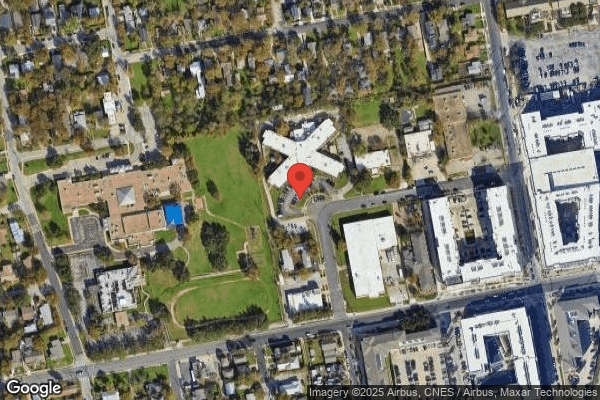
Nov 2024 2 deficiencies 1 IJ
CRITICAL (J) 📢 Someone Reported This

A family member, employee, or ombudsman was alarmed enough to file a formal complaint

Immediate Jeopardy (IJ) - the most serious Medicare violation

Accident Prevention (Tag F0689)

Someone could have died · This affected 1 resident

**NOTE- TERMS IN BRACKETS HAVE BEEN EDITED TO PROTECT CONFIDENTIALITY** Based on observations, interviews, and record reviews, the facility failed to the resident environment remains as free of accide...

Read full inspector narrative →
**NOTE- TERMS IN BRACKETS HAVE BEEN EDITED TO PROTECT CONFIDENTIALITY** Based on observations, interviews, and record reviews, the facility failed to the resident environment remains as free of accident hazards as is possible and each resident receives adequate supervision and assistance devices to prevent accidents for 1 (Resident #1) of 6 residents reviewed for elopement. The facility failed to put interventions in place to prevent Resident #1 from eloping from the facility after she broke her window and attempted to leave through her window on 10/29/24. Resident #1 broke her window again and successfully eloped from the facility on 11/01/24. An IJ was identified on 11/06/24. The IJ template was provided to the facility on [DATE] at 4:45 PM. While the IJ was removed on 11/08/24, the facility remained out of compliance at a scope of isolated and severity of no actual harm with a potential for more than minimal harm that was not immediate jeopardy due to the facility's need to evaluate the effectiveness of the corrective systems. This deficient practice could place residents at risk for unsafe elopements, injuries, and hospitalization. Findings included: Review of Resident #1's admission record, dated 11/06/24, reflected she was a [AGE] year old female who initially admitted to the facility on [DATE], readmitted on [DATE], was discharged to the hospital on [DATE], had an RP, and had diagnoses including cerebral infarction due to embolism of left middle cerebral artery (a medical condition that occurs when an embolism blocks blood flow to the middle cerebral artery, resulting in an ischemic stroke), essential (primary) hypertension (a common condition that occurs when the pressure of your blood is consistently too high), aphasia (a language disorder that makes it difficult to understand, speak, read, or write), flaccid hemiplegia affecting left dominant side (a condition that causes paralysis in the left side of the body, making it difficult or impossible to move), hemiplegia and hemiparesis following a cerebral infarction affecting the right dominant side (a condition that occurs when a stroke or other brain injury damages the right side of the brain, causing weakness or paralysis on one side of the body), chronic obstructive pulmonary disease (a common lung disease that makes it difficult to breathe), unspecified anxiety disorder, muscle wasting and atrophy (terms for the loss of muscle tissue and strength), other abnormalities of gait and mobility, other lack of coordination, and need for assistance with personal care. Review of Resident #1's comprehensive MDS assessment, dated 10/29/24, reflected no BIMS indicated, no wandering behaviors exhibited, no wander/elopement alarms used, and required supervision with walking. Review of Resident #1's BIMS assessment, dated 10/28/24, reflected staff couldn't conduct a BIMS evaluation because Resident #1 was rarely/never understood. Review of Resident #1's care plan, closed 11/06/24, reflected Resident #1 used anti-anxiety medications related to adjustment issues. Staff were required to monitor, document, and report PRN any adverse reactions to anti-anxiety therapy, such as unexpected side effects, including mania, hostility, rage, aggressive or impulsive behavior, and hallucinations. Resident #1's care plan also reflected that she had a behavior problem where she got agitated and broke the window related to visual hallucination of someone trying to get in her room through the window. Staff were required to administer medications as ordered, monitor and document for side effects and effectiveness, discuss Resident #1's behavior if reasonable and explain/reinforce why behavior was inappropriate and/or unacceptable to the resident, praise any indication of Resident #1's progress/improvement in behavior, and provide a program of activities that is of interest and accommodates Resident #1's status. Resident #1's care plan also reflected she had a communication problem related to cerebrovascular accident (stroke). Review of Resident #1's progress notes, from 10/07/24 through 11/07/24, reflected, -A note by LVN B on 10/29/24 at 3:14 AM, which stated, New admit day 7/7. Resident [Resident #1] was awake and going back and forth from dining area and her room multiple times at hour of sleep. This writer asked resident if she needed anything, if she was feeling okay. Resident nodded yes that she was okay and resident nodded yes on not feeling sleepy. No discomfort noticed. Resident returned back to her room at approximately 1:50 AM. -A note by LVN B on 10/29/24 at 7:22 AM, which stated, Heard glass braking at approximately 6:00 AM; this writer and other nursing staff started checking room to see if something was broken. Heard yelling coming from resident room. Resident was blocking the door from opening and yelling. This writer was able to coach resident to let nursing staff in the room. Once the door open resident immediately went to this writer and was bleeding from her left arm. Holding pressure to try to stop the bleeding. One cut is bleeding profusely on the left forearm which was wrapped with a pressure dressing. Called EMS due to the possibility of needing stitches. Did notice other small cuts on the left arm which weren't bleeding much. Staff members check resident room and outside resident room signs of any intruder none were seen. Nursing staff which was in the processes of coming in to shift change saw resident breaking the window. EMS took resident to hospital for evaluation for possible stitches. -A note by LVN B on 10/29/24 at 7:26 AM, which stated, Notified RP of resident going to hospital. Notified the NP of resident going to hospital. -A note by LVN C on 10/29/24 at 1:33 PM, which stated, Resident returned with no new orders from the hospital. -A note by LVN B on 10/30/24 at 1:56 AM, which stated, Resident up multiple times throughout the night. Continue to educate on safety and fall precautions. Will continue to monitor. -A note by LVN B on 10/30/24 at 6:27 AM, which stated, Resident went to sleep for around 2 hours then was again awake walking in hallway, and dining area. Watching TV in dining area. Resident continues to express fear this writer assure resident no one was going to break in to the facility. Assure resident that there are plenty of staff members here to keep her safe. Resident had her door open due to afraid of someone breaking in through the window. Resident also express pain to her eye and ear, resident express it had to do with the door but denies getting hit and denies bumping into the door. Resident also denies another person harming her. Gave PRN Acetaminophen. Also place medical fax for provider. Resident currently in dining area. -A note by LVN C on 10/30/24 at 11:34 AM, which stated, Resident up in dining room area watching tv. Night shift report her being awake most of the shift and remain in dining room because she didn't want to be alone. -A note by LVN B on 10/31/24 at 3:01 AM, which stated, At 2:15 AM; heard crying from resident room. Resident had pushed bed away from wall and was searching for something on the floor. Resident was squeezing herself between there. Then resident showed this writer a picture of a little girl she got from the floor. Resident continued crying showing the picture to this writer. Noticed resident was stuck this writer helped resident out of between the wall and bedside. Resident was helped to dining area. The resident kept trying to show picture to this writer. From what this writer can assess no new injuries noticed. Resident refused full assessment. Resident kept pointing at her arm making a gesture of something biting her. This writer asked resident if something bite her she said no asked if she hurt her arm again resident first said yes then said no. Resident showing her left arm to this writer. This writer reminded resident she had a previous injury from the window glass resident first said yes then said no. This writer asked resident if she hurt her arm when she pushed the bed out resident first said yes than said no. This writer asked resident if this writer can check her vitals but resident refused. Resident currently in dining area in wheelchair. -A note by LVN B on 10/31/24 at 5:42 AM, which stated, Resident yelling out multiple times this morning started at approximately 5:00 AM. Resident would point at another resident and yell. This writer would assure resident that the other resident was okay. At approximately 5:30 AM resident was standing in the dining room bending down as if she was reaching for something and dangling her arms. This writer went to resident to remind resident of her weakness due to the stroke. Resident kept pointing at her arm this writer asked if it hurt resident said no this writer asked if resident if she couldn't move it like before resident nodded yes. This writer reminded resident of her being in the facility for rehab so she can recover from her recent stroke. Resident continues in dining area. -A note by LVN B on 10/31/24 at 6:05 AM, which stated, At approximately 5:50 AM; resident standing in front of back patio door and started doing back kicks. Resident did 5 back kicks to glass door. This writer and other staff were able to stop resident before damage to door. Resident went to back patio and sat herself onto the floor refusing to enter the building. Resident wanted to go home. Resident agreed come back in to facility and resident called family member. Called on-call provider NP to notify of resident behaviors. -A note by LVN C on 10/31/24 at 9:44 AM, which stated, Resident alert and oriented x 2 visited with boyfriend this morning, but still anxious/restless. Remain in dining room area with staff. -A note by LVN B on 10/31/24 at 1:37 PM, which stated, Resident has new orders melatonin 5mg q hs for insomnia, Ativan 0.5mg q 8 PRN for agitation/anxiety and psychiatrist evaluate/treat. RP notified. -A note by MA D on 10/31/24 at 9:35 PM, which stated, Melatonin Oral Tablet 5 MG Give 1 tablet by mouth at bedtime for insomnia. Note didn't mention anything about the refusal entry indicated in Resident #1's MAR/TAR for October 2024. -A note by LVN B on 11/01/24 at 5:48 AM, which stated, At approximately 3:20 AM; resident broke her window and left running. Resident left running down the street. CNA tried to follow resident down the street but lost sight of resident and unable to find resident. Police was called, ADON and management was contacted. CNAs started driving around to see if they can find resident. Police officers were given a description of resident wearing a green long sleeve shirt with camouflage pants, possibly no shoes. Called RP left a message called again spoke with RP at 4:20 AM also called resident's at approximately 3:50 AM; he states he plans on searching for resident too. Multiples management currently searching for resident. this writer double checked around the outside of the facility. Also staff members check residents rooms. -A note by LVN B on 11/01/24 at 6:49 AM, which stated, At approximately 2:30 AM resident was sleeping in bed. -A note by LVN C on 11/01/24 at 7:00 AM, which stated, Resident RP notified that staff did find [Resident #1] running up the street but refused staff assistances or come to facility. Resident entered coffee shop where staff remained with her until EMS/Police arrival. Transported by EMS to Hospital. -A note by LVN B on 11/01/24 at 7:59 AM, which stated, At 4:42 AM; On-Call provider NP was notified of resident leaving facility and police being notified also of multiple staff looking for resident. -A note by LVN B on 11/01/24 at 9:35 AM, which stated, Resident was located by staff about 2 blocks from facility, as she saw the staff members, she went into a coffee shop where she stayed sitting down. Staff remained outside monitored resident through window and securing exit doors. Barista came outside and stated the resident appeared to get more agitated when she saw the staff. EMS and police was activated. Resident was taken to hospital in 4-point restraint and multiple seat belts as she was refusing to go to the hospital. Per staff report, resident refused EMS assessment and became very agitated when asked to roll up sleeves. Review of Resident #1's physician progress note, dated 10/31/24 and electronically signed by the NP on 11/02/24 at 11:49 PM, reflected the NP visited Resident #1 on a chief complaint related to following up on emergency room visit for anxiety and insomnia. The NP stated, On 10/29, patient [Resident #1] was transferred to the ER after she sustained a laceration with bleeding to the left forearm after she broke the window and tried to exit the building. In the ER, the laceration was approximated with steri-strip. CT head showed no acute changes. X-ray left forearm showed no foreign body. Patient was discharged back to the facility. Nurse reports that patient is very anxious and possibly hallucinating in the night and is not sleeping. Patient seen sitting on the wheel chair. She has expressive aphasia, but calm and cooperative and nods her head to yes or no questions. She denies any pain or discomfort. Left forearm laceration covered with Kerlix dressing. Nurse reports that patient is ambulatory but is impulsive and with unsteady gait. Will start on Ativan 0.5mg q 8 hours PRN anxiety and Melatonin 5mg q HS for insomnia. Will refer to psych services in house to eval and treat. Review of Resident #1's orders, dated 11/06/24, reflected Resident #1 was started on giving one tablet by mouth of 5 mg of Melatonin at bedtime on 10/31/24 at 8:00 PM and order ended on 11/02/24. Resident #1 was also started on giving one tablet by mouth of 0.5 mg of Ativan every eight hours as needed for anxiety/agitation for 30 days on 10/31/24 at 1:00 PM and order ended on 10/31/24 and started again on 10/31/24 at 1:30 PM and order ended 11/02/24. Resident #1 was also started on psychiatrist to evaluate and treat her one time only for five days on 10/31/24 at 1:15 PM and order ended on 10/31/24 and started again on 10/31/24 at 1:45 PM and order ended on 11/02/24. Review of Resident #1's order summary report, dated 11/06/24, reflected, -Prescriber Written order for Ativan Oral Tablet 0.5 MG (Lorazepam) Give 1 tablet by mouth every 8 hours as needed for anxiety/agitation for 30 Days ordered and started on 10/31/24 and ended on 11/30/24 -Prescriber Written order for Melatonin Oral Tablet 5 MG (Melatonin) Give 1 tablet by mouth at bedtime for insomnia ordered and started on 10/31/24 and no end date. -Prescriber Written order for psychiatrist to evaluate/treat one time only for five days ordered and started on 10/31/24 and ended on 11/05/24. Review of Resident #1's MAR/TAR schedule for October 2024 and November 2024 reflected Resident #1's administration entries for Ativan oral tablet 0.5 MG (Lorazepam) Give 1 tablet by mouth every 8 hours as needed for anxiety/agitation for 30 Days were blank from 10/31/24 through 11/02/24. Resident #1's administration entries for Melatonin Oral Tablet 5 MG (Melatonin) Give 1 tablet by mouth at bedtime for insomnia indicated Resident #1 refused the tablet on 10/31/24 and it was blank on 11/01/24. Review of Resident #1's admission wandering evaluation, dated 10/22/24, reflected she had no history of wandering/elopement and was not a wandering risk. There were no wandering reevaluations in Resident #1's assessments. Review of Resident #1's plan of care, from 10/22/24 through 11/01/24, reflected Resident #1 exhibited wandering behavior and frequent crying on 10/30/24 at 9:59 PM. Review of the facility's investigation file for Resident #1's incident on 11/01/24 reflected on 11/01/24, ADON reviewed residents at risk for elopement, IDT reviewed Resident #1's chart to determine timeline of events for investigation process, staff were interviewed regarding if they seen anyone trying to leave the facility and none were identified, nursing, dietary, housekeeping and activities staff were reeducated on elopement procedure, broken window was monitored until maintenance repaired it, maintenance inspected the facility windows and no issues were noted, and all exit door codes were changed. Resident #1's self-inflicted injury incident, dated 11/01/24, reflected, At approximately 2:30 AM, resident was sleeping in bed. At approximately 3:20 AM; This writer heard a loud noise of glass breaking. This writer ran to resident room and CNA went to the front of the building. This write did not see resident in the room and noticed the broken window. When this writer went outside this writer saw all the broken glass. A staff member which was sitting outside in the front porch of the building she heard the crash of the glass and saw the resident jump out the window and started running down the street and she and a CNA started to run after resident. This nurse returned to the building and called the police, description was provided, also called management. She was wearing a green blouse and camouflage pants and no shoes. CNA followed resident in the direction she was traveling, she then outran him, and he lost sight of her momentarily, however, other staff were dispatched to assist with the situation and search sorrowing area. Resident was traveling west and staff came down heading east. When the resident saw staff she ran into a coffee shop. Staff stayed monitoring resident through coffee shop window and also secured the exit doors. Barista stepped outside and informed the staff that the resident appeared to not want the staff inside the coffee shop. He went back inside and provided the resident with coffee and water as she sat at the coffee bar. EMS and police were activated. Up on arrival, 2 police officers and 2 EMS attendants restrained resident to the stretcher for transport to the hospital. Staff on sight noticed resident refused assessment by EMS. Resident out of facility. RN E wrote a statement, undated, and stated, I was contacted via telephone by ADON A regarding assistance with a resident that broke a window and left the facility. The nurse stated she was behind resident heading west towards downtown area on the street. Immediately headed towards that direction in my vehicle. Resident was spotted on the street heading to coffee shop. I followed resident in my vehicle and parked my care when I noticed resident going into the coffee shop. On arrival, [ADON A] was present. EMS and police department were on their way. We waited outside the coffee shop until they arrived. ADON A wrote a statement, undated, and stated, I received a call from the staffing ADON around 3:36 AM on 11/01/24 regarding a resident that broke the window, run away from the building but followed by staff. I immediately headed to the location of the resident and spotted her in abandon building in the street close to the facility. It was too dark around the area; I did not get close to her because I didn't want her to run. I kept in contact with co-workers around the area. When my co-worker came, she walked faster heading [NAME] of MLK as she was running from us until she reached the coffee shop. It appeared like she had seen me following her. We stayed outside of the coffee shop monitoring her through the window and keeping exit doors safe. All of the staff posted on the perimeter arrived at the coffee shop to assist. LVN B wrote a statement, dated 11/01/24, and stated, At approximately 2:30 AM resident was sleeping in bed. At approximately 3:20 AM; I heard a loud noise of glass breaking. This writer ran to resident room and CNA went to the front of the building. I did not see resident in the room and noticed the broken window. When I went outside I saw all the broken glass. A staff member which was sitting outside said resident jump out the window and started running down the street and CNA had ran after resident. CNA lost sight momentarily due to her already too far away. Both staff members stated the resident was wearing a green long sleeve shirt with camouflage pants, CNA said it looked like she possibly did not have shoes on. Police was called and given a description of resident also Management was called. 2 CNAs were driving around the area to see if they can spot resident. Also one C.N.A. and a nurse followed the resident on foot. Staff were told to no approach resident by them self's due to resident behavior to call for help if they see resident. I walked around the building to double check if resident had returned and also I and other staff members check all residents rooms in the facility. Nurse received a call from treatment nurse that she had spotted the resident and the resident ran into a coffee shop, and that all other staff arrived at the coffee shop to assist with resident. CNA F wrote a statement, undated, and stated, I was on my break, sitting outside the main entrance when I heard continuous banging by a window to the left, at 3:15 AM. I was on my way back into the building, when I heard a crash of glass and saw a female jump out of the window and ran down into the street. I met with the nurses on Floor 1, who came out and tried to find the resident. Ad Hoc QAPI meeting, dated 11/01/24, reflected the ADM, DON, MD, ADON A, and RN G met on 11/01/24 to discuss the followed summary, which stated, 11/01/24 At 2:30 AM resident observed asleep in bed by staff, at approximately 3:20 AM; resident broke her window and left running. Resident left running down the street. CNA tried to follow resident down the street but lost sight of resident and unable to find resident. Police was called, ADON and management were contacted. CNAs started driving around to see if they can find resident. Physician, RP and family notified. Resident was located by staff about 2 blocks from facility. EMS and police was activated. Resident was taken to hospital in 4-point restraint and multiple seat belts as she was refusing to go to the hospital. RP and Physician notified with the update. Resident transported to Hospital ED for evaluation/treatment via EMS. Facility notified of the resident's schizophrenia and bi diagnosis by ED staff. IDT reviewed medical records, conclusion that the resident experienced a psychiatric episode due to aphasia secondary to cerebrovascular accident. Resident unable to communicate frustration/fear of persecution. IDT determined not reportable based on provider letter content. Elopement protocol/procedure re-education with staff initiated. During an interview on 11/06/24 at 9:29 AM, the MS stated a female resident [Resident #1] broke the window in her room. The MS stated he didn't know how the female resident broke the window in her room. The MS stated he couldn't recall the date when the female resident broke the window in her room, but believed the incident happened early in the morning before 7:00 AM or possibly 6:30 AM. The MS stated he got a call on 11/01/24 at 5:14 AM to come early to the facility to repair a window. The MS stated staff didn't tell him what happened and how the window broke other than the female resident broke the window. The MS stated no one was in room when he came to the facility. The MS stated on 11/01/24, he repaired the window, which was the 2nd time the female resident broke the window. The MS stated the first time the female resident broke her window in her room happened during the week of 11/01/24. The MS stated he and the other maintenance staff member repaired the window on 11/01/24 at 7:00 AM. An observation of the outside of Resident #1's room on 11/06/24 at 9:35 AM reflected there were still pieces of broken glass on the ground. Resident #1's window was repaired. Resident #1 wasn't in her room. During an interview on 11/06/24 at 9:42 AM, the MSA stated two weeks ago, a window broke. The MSA stated a couple days later, the same window broke a second time in the early morning. The MSA stated the first time was during the day the window broke. The MSA stated he cleaned up all the glass in the room. The MSA stated the second time was in the morning when the window broke and when he came to help repair it. The MSA stated when he got there, he was told the female resident [Resident #1] broke the window. The MSA stated he didn't know how the female resident broke her window and wasn't told how the female resident broke window. The MSA stated he didn't know why the female resident broke the window. The MSA stated he helped repair the window the same way as the first time. The MSA stated the first time the female resident broke her window, he had a replacement window and the second time the female resident broke the window, he had to have a company come out to replace the window. The MSA stated the window wasn't repaired any different than the first time he repaired the window. During an interview on 11/06/24 at 10:03 AM, the DON stated Resident #1 was in the hospital. The DON stated on 10/29/24, Resident #1 had a nervous breakdown and broke her window. The DON stated Resident #1's incident happened the week before Tuesday (10/29/24). The DON stated she was not sure if it was Tuesday, but believed it was 2 weeks ago on Thursday or Friday (10/24/24 or 10/25/24) when Resident #1's incident happened. The DON stated last Tuesday (10/29/24), Resident #1 broke the window the first time. The DON stated that around 6:00 am, Resident #1 had a delusion, saw that someone was trying to come through her window, and she broke the window. The DON stated she was out of the facility when Resident #1 broke the window. The DON stated she sent Resident #1 out to the hospital because she sustained a laceration and came back same day (10/29/24). The DON stated Resident #1 didn't go out the window the first time. The DON stated staff monitored Resident #1 every shift and psychiatric services visited Resident #1 after the incident. The DON stated Resident #1 was also put on medication (Ativan) after the incident. The DON stated she didn't know if staff documented monitoring Resident #1 every shift. The DON stated she tried to move Resident #1 to another room, but Resident #1 insisted to stay in the same room. The DON stated two days later (10/31/24), Thursday or Friday (10/31/24 or 11/01/24), Resident #1 broke the window again and left the facility. The DON stated the incident happened around 3:00 AM. The DON stated LVN H and CNA I saw Resident #1 and followed her to a coffee shop. The DON stated there were also staff in their cars who followed Resident #1. The DON stated she didn't know how long the LVN H and CNA I followed Resident #1 for. The DON stated Resident #1 sustained a laceration from the incident. The DON stated Resident #1 refused to let staff approach her during the incident. The DON stated Resident #1 had a nervous breakdown and was delusional. The DON stated she called EMS and they took Resident #1 to the hospital after the incident. The DON stated she was also not working the second time Resident #1 broke the window. The DON stated she didn't know why Resident #1 broke the window. The DON stated she answered her phone around 4:00 AM. The DON stated the ADM handled and managed Resident #1's incident. An attempt to contact Resident #1 was made on 11/06/24 at 10:!5 AM. A voicemail and call back number was left. Resident #1 didn't return the call before exit. An attempt to contact Resident #1's RP was made on 11/06/24 at 10:16 AM. A voicemail and call back number was left. Resident #1's RP didn't return the call before exit. An attempt to contact Resident #1's family was made on 11/06/24 at 10:17 AM. voicemail and call back number was left. Resident #1's family didn't return the call before exit. During an interview on 11/06/24 at 10:25 AM, the ADM stated Resident #1 was a [AGE] year old female who had a stroke and left sided weakness. The ADM stated on 10/29/24 at 6:00 AM, Resident #1 broke the window twice. The ADM stated last week, Resident #1 broke her room window. The ADM stated Resident #1 told him that she saw a man, was afraid, and broke her window. The ADM stated Resident #1 didn't leave after she broke the window, staff responded to the incident, and staff repaired window. The ADM stated the staff did medication changes and sent a psychiatric referral for Resident #1. The ADM stated staff didn't repair Resident #1's window any differently after her incident. The ADM stated Resident #1 used an object to break the window. The ADM didn't describe what the object was that Resident #1 used to break the window. The ADM stated staff heard glass breaking and LVN C was working during the time. The ADM stated on 11/01/24 in the early morning, Resident #1 broke the window. The ADM stated ADON J, who was notified by LVN B, who was notified by CNA I that CNA I heard glass break and observed Resident #1 climb out the window. The ADM stated a nurse, who was outside the facility, also observed Resident #1 climb out the window. The ADM stated Resident #1 outran staff and disappeared passed the funeral home. The ADM stated staff conducted a call tree and were unable to locate Resident #1 until an hour later. The ADM stated Resident #1 was found on the street in her panties and a shirt. The ADM stated Resident #1's pants were found on a fence. The ADM stated RN E observed Resident #1 running into traffic and into a 24 hour coffee shop. The ADM stated staff held Resident #1 at the coffee shop. The ADM stated he notified the police department and EMS. The ADM stated Resident #1 vigorously fought the police department and EMS. The ADM stated the hospital notified staff that Resident #1 had schizophrenia and bipolar disorder, which the facility didn't know. The ADM stated the police department was familiar with Resident #1. The ADM stated Resident #1 used paper towels and assumed she broke the window with her hands. The ADM stated Resident #1 cut her arm along a fence that she hopped and hid in someone's backyard. The ADM stated staff only observed Resident #1 observed fence cut on her arm and no cuts anywhere else. The ADM stated Resident #1 told him that she broke the window because she was afraid. The ADM stated ST and IDT interviewed Resident #1 and all Resident #1 wrote was scary on a piece of paper. The ADM stated he didn't know when ST and IDT interviewed Resident #1. The ADM stated he didn't get to interview Resident #1. The ADM stated he didn't know Resident #1 had a history of schizophrenia and was not on a normal medication regimen for the diagnosis. The ADM stated he didn't report the incident to the SA because it didn't meet the reporting criteria and because Resident #1 was seen leaving by staff, knew where Resident #1 went, and never stopped looking for Resident #1. The ADM stated Resident #1 didn't elope, had a psychotic break, had a case of psychosis, and that her incident didn't meet definition of elopement. The ADM stated had he felt it was a reportable incident, he would've called it in to SA. The ADM stated the fact staff saw Resident #1 leave, reviewed Resident #1's incident, did AD-HOC (a meeting scheduled outside normal schedule) QAPI, looked at multiple areas, and did an investigation and timeline, he believed Resident #1's incident wasn't reportable and staff responded appropriately. The ADM stated to report elopement, it would be within 24 hours or immediately and if the incident involved serious injury. The ADM stated according to the latest provider letter, the facility had 24 hours to report the incident to the SA. The ADM stated residents couldn't be impacted if their incidents were not reported to SA. The ADM stated he didn't consider Resident #1 to have been a missing resident during the incident. An attempt to contact LVN C was made on 11/06/24 at 11:06 AM. A voicemail and call back number was left. LVN C didn't return the call before exit. An attempt to contact RN K, who worked on Resident #1's hall on 10/31/24, was made on 11/06/24 at 11:29 AM. A voicemail and call back number was left. RN K didn't return the call before exit. During an interview on 11/06/24 at 11:31 AM, NA L stated he observed Resident #1 was restless on 10/31/24 from 2:00 PM through 10:00 PM. NA L stated he believed Resident #1 was restless [TRUNCATED]
CONCERN (D) 📢 Someone Reported This

A family member, employee, or ombudsman was alarmed enough to file a formal complaint

Potential for Harm - no one hurt, but risky conditions existed

Report Alleged Abuse (Tag F0609)

Could have caused harm · This affected 1 resident

**NOTE- TERMS IN BRACKETS HAVE BEEN EDITED TO PROTECT CONFIDENTIALITY** Based on interviews and record reviews, the facility failed to ensure that all alleged violations were reported immediately or n...

Read full inspector narrative →
**NOTE- TERMS IN BRACKETS HAVE BEEN EDITED TO PROTECT CONFIDENTIALITY** Based on interviews and record reviews, the facility failed to ensure that all alleged violations were reported immediately or not later than 24 hours for 1 (Resident #1) of 6 residents reviewed for elopement. The facility failed to report to the SA an incident where Resident #1 eloped from the facility on 11/01/24. This deficient practice could place residents at risk of abuse, neglect, elopement, injury, and death. Findings included: Review of Resident #1's admission record, dated 11/06/24, reflected she was a [AGE] year old female who initially admitted to the facility on [DATE], readmitted on [DATE], was discharged to the hospital on [DATE], had an RP, and had diagnoses including cerebral infarction due to embolism of left middle cerebral artery (a medical condition that occurs when an embolism blocks blood flow to the middle cerebral artery, resulting in an ischemic stroke), essential (primary) hypertension (a common condition that occurs when the pressure of your blood is consistently too high), aphasia (a language disorder that makes it difficult to understand, speak, read, or write), flaccid hemiplegia affecting left dominant side (a condition that causes paralysis in the left side of the body, making it difficult or impossible to move), hemiplegia and hemiparesis following a cerebral infarction affecting the right dominant side (a condition that occurs when a stroke or other brain injury damages the right side of the brain, causing weakness or paralysis on one side of the body), chronic obstructive pulmonary disease (a common lung disease that makes it difficult to breathe), unspecified anxiety disorder, muscle wasting and atrophy (terms for the loss of muscle tissue and strength), other abnormalities of gait and mobility, other lack of coordination, and need for assistance with personal care. Review of Resident #1's comprehensive MDS assessment, dated 10/29/24, reflected no BIMS indicated, no wandering behaviors exhibited, no wander/elopement alarms used, and required supervision with walking. Review of Resident #1's BIMS assessment, dated 10/28/24, reflected staff couldn't conduct a BIMS evaluation because Resident #1 was rarely/never understood. Review of Resident #1's care plan, closed 11/06/24, reflected Resident #1 used anti-anxiety medications related to adjustment issues. Staff were required to monitor, document, and report PRN any adverse reactions to anti-anxiety therapy, such as unexpected side effects, including mania, hostility, rage, aggressive or impulsive behavior, and hallucinations. Resident #1's care plan also reflected that she had a behavior problem where she got agitated and broke the window related to visual hallucination of someone trying to get in her room through the window. Resident #1 was also noted breaking a window and exiting the facility, staff followed her, was able to locate her, and transferred her to the hospital related to a diagnosis of schizophrenia on 11/01/24. Staff were required to administer medications as ordered, monitor and document for side effects and effectiveness, discuss Resident #1's behavior if reasonable and explain/reinforce why behavior was inappropriate and/or unacceptable to the resident, praise any indication of Resident #1's progress/improvement in behavior, and provide a program of activities that is of interest and accommodates Resident #1's status. Resident #1's care plan also reflected she had a communication problem related to cerebrovascular accident (stroke). Review of Resident #1's progress notes, from 10/07/24 through 11/07/24, reflected, -A note by LVN B on 11/01/24 at 5:48 AM, which stated, At approximately 3:20 AM; resident broke her window and left running. Resident left running down [NAME] ave. CNA tried to follow resident down [NAME] ave but lost sight of resident and unable to find resident. Police was called, ADON and management was contacted. CNAs started driving around to see if they can find resident. Police officers were given a description of resident wearing a green long sleeve shirt with camouflage pants, possibly no shoes. Called RP left a message called again spoke with RP at 4:20 AM also called resident's familyat approximately 3:50 AM; he states he plans on searching for resident too. Multiples management currently searching for resident. this writer double checked around the outside of the facility. Also staff members check residents rooms. -A note by LVN B on 11/01/24 at 6:49 AM, which stated, At approximately 2:30 AM resident was sleeping in bed. -A note by LVN C on 11/01/24 at 7:00 AM, which stated, Resident RP notified that staff did find [Resident #1] running up MLK street but refused staff assistances or come to facility. Resident entered coffee shop where staff remained with her until EMS/Police arrival. Transported by EMS to Hospital. -A note by LVN B on 11/01/24 at 7:59 AM, which stated, At 4:42 AM; On-Call provider NP was notified of resident leaving facility and police being notified also of multiple staff looking for resident. -A note by LVN B on 11/01/24 at 9:35 AM, which stated, Resident was located by staff about 2 blocks from facility, as she saw the staff members, she went into a coffee shop where she stayed sitting down. Staff remained outside monitored resident through window and securing exit doors. Barista came outside and stated the resident appeared to get more agitated when she saw the staff. EMS and police was activated. Resident was taken to hospital in 4-point restraint and multiple seat belts as she was refusing to go to the hospital. Per staff report, resident refused EMS assessment and became very agitated when asked to roll up sleeves. Review of Resident #1's admission wandering evaluation, dated 10/22/24, reflected she had no history of wandering/elopement and was not a wandering risk. There were no wandering reevaluations in Resident #1's assessments. Review of the facility's investigation file for Resident #1's incident on 11/01/24 reflected on 11/01/24, ADON reviewed residents at risk for elopement, IDT reviewed Resident #1's chart to determine timeline of events for investigation process, staff were interviewed regarding if they seen anyone trying to leave the facility and none were identified, nursing, dietary, housekeeping and activities staff were reeducated on elopement procedure, broken window was monitored until maintenance repaired it, maintenance inspected the facility windows and no issues were noted, and all exit door codes were changed. Resident #1's self-inflicted injury incident, dated 11/01/24, reflected, At approximately 2:30 AM, resident was sleeping in bed. At approximately 3:20 AM; This writer heard a loud noise of glass breaking. This writer ran to resident room and CNA went to the front of the building. This write did not see resident in the room and noticed the broken window. When this writer went outside this writer saw all the broken glass. A staff member which was sitting outside in the front porch of the building she heard the rash of the glass and saw the resident jump out the window and started running down the street and she and a CNA started to ran after resident. This nurse returned to the building and called the police, description was provided, also called management. She was wearing a green blouse and camouflage pants and no shoes. CNA followed resident in the direction she was traveling, she then outran them, and he lost sight of her momentarily, however, other staff were dispatched to assist with the situation and search sorrowing area. Resident was traveling west and staff came down heading east. When the resident saw staff she ran into a coffee shop. Staff stayed monitoring resident through coffee shop window and also secured the exit doors. Barista stepped outside and informed the staff that the resident appeared to not want the staff inside the coffee shop. He went back inside and provided the resident with coffee and water as she sat at the coffee bar. EMS and police were activated. Up on arrival, 2 police officers and 2 EMS attendants restrained resident to the stretcher for transport to the hospital. Staff on sight noticed resident refused assessment by EMS. Resident out of facility. RN E wrote a statement, undated, and stated, I was contacted via telephone by ADON A regarding assistance with a resident that broke a window and left the facility. The nurse stated she was behind resident heading west towards downtown area on the street. Immediately headed towards that direction in my vehicle. Resident was spotted on the street heading to coffee shop. I followed resident in my vehicle and parked my care when I noticed resident going into the coffee shop. On arrival, [ADON A] was present. EMS and police department were on their way. We waited outside the coffee shop until they arrived. ADON A wrote a statement, undated, and stated, I received a call from the staffing ADON around 3:36 AM on 11/01/24 regarding a resident that broke the window, run away from the building but followed by staff. I immediately headed to the location of the resident and spotted her in abandon building in MLK close to the facility. It was too dark around the area; I did not get close to her because I didn't want her to run. I kept in contact with co-workers around the area. When my co-worker came, she walked faster heading [NAME] of the street as she was running from us until she reached the coffee shop. It appeared like she had seen me following her. We stayed outside of the coffee shop monitoring her through the window and keeping exit doors safe. All of the staff posted on the perimeter arrived at the coffee shop to assist. LVN B wrote a statement, dated 11/01/24, and stated, At approximately 2:30 AM resident was sleeping in bed. At approximately 3:20 AM; I heard a loud noise of glass breaking. This writer ran to resident room and CNA went to the front of the building. I did not see resident in the room and noticed the broken window. When I went outside I saw all the broken glass. A staff member which was sitting outside said resident jump out the window and started running down [NAME] ave and CNA had ran after resident. CNA lost sight momentarily due to her already too far away. Both staff members stated the resident was wearing a green long sleeve shirt with camouflage pants, CNA said it looked like she possibly did not have shoes on. Police was called and given a description of resident also Management was called. 2 CNAs were driving around the area to see if they can spot resident. Also one C.N.A. and a nurse followed the resident on foot. Staff were told to no approach resident by them self's due to resident behavior to call for help if they see resident. I walked around the building to double check if resident had returned and also I and other staff members check all residents rooms in the facility. Nurse received a call from treatment nurse that she had spotted the resident and the resident ran into a coffee shop, and that all other staff arrived at the coffee shop to assist with resident. CNA F wrote a statement, undated, and stated, I was on my break, sitting outside the main entrance when I heard continuous banging by a window to the left, at 3:15 AM. I was on my way back into the building, when I heard a crash of glass and saw a female jump out of the window and ran down into the street. I met with the nurses on Floor 1, who came out and tried to find the resident. Ad Hoc QAPI meeting, dated 11/01/24, reflected the ADM, DON, MD, ADON A, and RN G met on 11/01/24 to discuss the followed summary, which stated, 11/01/24 At 2:30 AM resident observed asleep in bed by staff, at approximately 3:20 AM; resident broke her window and left running. Resident left running down the street. CNA tried to follow resident down the street but lost sight of resident and unable to find resident. Police was called, ADON and management were contacted. CNAs started driving around to see if they can find resident. Physician, RP and family notified. Resident was located by staff about 2 blocks from facility. EMS and police was activated. Resident was taken to hospital in 4-point restraint and multiple seat belts as she was refusing to go to the hospital. RP and Physician notified with the update. Resident transported to Hospital ED for evaluation/treatment via EMS. Facility notified of the resident's schizophrenia and bi diagnosis by ED staff. IDT reviewed medical records, conclusion that the resident experienced a psychiatric episode due to aphasia secondary to cerebrovascular accident (stroke). Resident unable to communicate frustration/fear of persecution. IDT determined not reportable based on provider letter content. Elopement protocol/procedure re-education with staff initiated. Review of the facility's abuse and neglect investigations for the last 3 months, from 09/01/24 through 11/06/24, reflected there was no self-reports related to Resident #1's 11/01/24 incident (elopement). During an interview on 11/06/24 at 10:03 AM, the DON stated on 10/31/24 or 11/01/24 at around 3:00 AM, Resident #1 broke her window and left the facility. The DON stated she didn't know why Resident #1 broke the window. The DON stated she was not working and at the facility when Resident #1 broke her window and left the facility. The DON stated LVN H and CNA I saw Resident #1 and followed her to a coffee shop. The DON stated there were also staff in their cars who followed Resident #1. The DON stated she didn't know how long the LVN H and CNA I followed Resident #1 because she wasn't working and at the facility when the incident happened. The DON stated she answered her phone on 11/01/24 at around 4:00 AM. The DON stated the ADM handled and managed Resident #1's incident. An attempt to contact Resident #1 was made on 11/06/24 at 10:15 AM. A voicemail and call back number was left. Resident #1 didn't return the call before exit. An attempt to contact Resident #1's RP was made on 11/06/24 at 10:17 AM. A voicemail and call back number was left. Resident #1's RP didn't return the call before exit. An attempt to contact Resident #1's family was made on 11/06/24 at 10:17 AM. A voicemail and call back number was left. Resident #1's family didn't return the call before exit. During an interview on 11/06/24 at 10:25 AM, the ADM stated on 11/01/24 in the early morning, Resident #1 broke the window. The ADM stated ADON J, who was notified by LVN B, who was notified by CNA I that CNA I heard glass and observed Resident #1 climbing out the window. The ADM stated the nurse who was outside also observed Resident #1 climb out the window. The ADM stated Resident #1 outran staff and disappeared passed the funeral home. The ADM stated staff conducted a call tree and were unable to locate Resident #1 until an hour later. The ADM stated Resident #1 was found on MLK drive in her panties and shirt. The ADM stated RN E observed Resident #1 running into traffic and into a 24-hour coffee shop. The ADM stated staff held Resident #1 at the coffee shop. The ADM stated staff notified the police department and EMS. The ADM stated Resident #1 told him that she broke the window because she was afraid. The ADM stated he didn't get to interview Resident #1. The ADM stated the ST and IDT interviewed Resident #1, who just wrote scary on a piece of paper. The ADM stated he didn't know when the ST and IDT interviewed Resident #1. The ADM stated he didn't report Resident #1's incident to the SA because it didn't meet the reporting criteria and because Resident #1 was seen leaving, staff knew where [NAME] went, and never stopped looking for [NAME] despite not finding her for one hour. The ADM stated Resident #1 didn't elope from the facility, had a psychotic break, had a case of psychosis, and her incident didn't meet the definition of elopement. The ADM stated had he felt it was a reportable incident, he would've called it in to the SA, but the fact staff saw Resident #1 leave, reviewed the incident, met with QAPI, looked at multiple areas, and did an investigation and timeline, he believed it wasn't reportable and that staff responded appropriately. The ADM stated to report elopement, it would be within 24 hours or immediately and if it involved serious injury. The ADM stated that according to the latest provider letter, the facility had 24 hours to report an elopement incident. The ADM stated residents couldn't be impacted if an incident was not reported to the SA. The ADM stated he didn't consider Resident #1 to be a missing resident during her incident. Review of the facility's incident log, from 08/06/24 through 11/06/24, reflected Resident #1's self-inflicted incident happened on 11/01/24 at 3:20 AM. An attempt to contact LVN C was made on 11/06/24 at 10:59 AM. A voicemail and call back number was left. LVN C didn't return the call before exit. During an interview on 11/06/24 at 11:31 AM, NA L stated he didn't work on 11/01/24. NA L stated if a resident was not in their room and he didn't know where the resident was, he would notify a charge nurse. NA L stated if the charge nurse didn't know where the resident was, he would look for the resident. NA L stated a resident was missing if he cannot find the resident after 24 hours. NA L stated he would report to a charge nurse if he suspected a resident was missing. NA L stated a resident who was missing was considered elopement if the resident was observed going through a window and disappeared from the road. NA L stated the ADM was responsible for reporting incidents to the SA. NA L stated if staff didn't report elopement to the SA, he didn't know what could happen to the resident. During an interview on 11/06/24 at 11:54 AM, CNA I stated he worked on 11/01/24 from 10:00 PM through 6:00 PM. CNA I stated he took a break on 11/01/24 at 3:30 AM in the clock room and heard a noise that sounded like glass break. CNA I stated he went outside because he thought someone broke a car glass window and saw Resident #1 run towards the MLK street. CNA I stated a new female CNA with an unknown name was outside before he was outside. CNA I stated he and the new CNA went back inside and notified LVN B that Resident #1 ran. CNA I stated LVN B came outside with him and the new CNA and he, the new CNA and LVN B ran to MLK street, but they couldn't find Resident #1. CNA I stated he came back inside, tried to get his car keys, went back outside, got in his car, and drove to MLK street to find Resident #1. CNA I stated he couldn't find Resident #1. CNA I stated he came back to facility, saw the ADM in front of the facility, and the ADM told him to drive again and find Resident #1. CNA I stated he still couldn't find Resident #1. CNA I stated he came back to the facility again and then went home because it was the end of his shift. CNA I stated he didn't know if staff found Resident #1. CNA I stated if resident goes missing, he was trained to look for the resident and notify the nurse. CNA I stated Resident #1's incident was elopement. CNA I stated Resident #1 was considered missing. CNA I stated he completed in-services on missing resident the same night on 11/01/24 and learned to report to the nurse if a resident was missing. CNA I stated the ADM was responsible for reporting incidents to the SA. CNA I stated if incidents were not reported by the ADM to the SA, residents could be abused. An attempt to contact LVN B was made on 11/06/24 at 12:20 PM. A voicemail and call back number was left. LVN B didn't return the call before exit. During an interview on 11/06/24 at 12:21 PM, CNA M stated she was not outside when Resident #1 broke the window on 11/01/24. CNA M stated she went outside around on 11/01/24 at around 2:00 AM and didn't see Resident #1 break the window and run away. CNA M stated she was given or signed any in-services. CNA M stated residents were considered eloped and missing if they broke a window, climbed through the window, ran down the street, and disappeared. CNA M stated Resident #1 was found four hours later on 11/01/24. CNA M stated nurses were responsible for reporting incidents to the SA. CNA M stated it was not good if incidents were not reported to the SA. During an interview on 11/06/24 at 1:18 PM, the NP stated her on-call NP was notified on 11/01/24 as soon as Resident #1's incident happened. The NP stated she reviewed notes from on-call NP and stated, The nurse reported that around 3:30 AM that patient [Resident #1] broke out window and escaped out of facility. She was last seen running towards apartment facility. Police and management had been notified. Nurse believed patient may have been hallucinating. The NP stated she thought Resident #1's incident was considered elopement because she escaped the facility. An attempt to interview RN E was made on 11/06/24 at 2:16 PM. A voicemail and call back number was left. RN E didn't return the call before exit. An attempt to interview ADON A was made on 11/06/24 at 2:17 PM. A voicemail and call back number was left. ADON A didn't return the call before exit. During an interview on 11/07/24 at 12:13 PM, the DON stated the facility didn't report Resident #1's incident to the SA because Resident #1 was within eyesight the entire time. The DON stated elopement meant if the resident was missing and the facility didn't have knowledge or supervision of the resident. The DON stated she received the call of staff following and finding Resident #1 on 11/01/24. The DON stated LVN B informed her about Resident #1's incident on 11/01/24. The DON stated her understanding was Resident #1 wasn't without eyesight and was within eyesight at all times. The DON stated Resident #1 sustained lacerations while she was out of the facility during the incident on 11/01/24. The DON stated the ADM was responsible for reporting incidents to the SA. The DON stated she didn't know what could happen to a resident if the ADM didn't report incident to the SA. During an interview on 11/07/24 at 1:01 PM, the CSM stated on 11/01/24 at around 6:00 AM-6:15 AM, Resident #1 came running into the coffee shop and pointed behind her. The CSM stated he believed Resident #1 pointed behind her as if someone was following her. The CSM he went outside the coffee shop believing someone was assaulting Resident #1 and didn't see anyone behind Resident #1. The CSM stated Resident #1 stayed inside the coffee shop for an hour. The CSM stated up to 10 staff were outside five minutes later and remained outside because Resident #1 was agitated and crying. The CSM stated he couldn't recall the police showing up and recalled observing two men from EMS. The CSM stated his understanding was Resident #1 broke a window and fled from the facility. An attempt to contact the police department's public information office was made on 11/07/24 at 1:19 PM and 1:22 PM. A voicemail and call back number was left. The police department's public information office didn't return the call before exit. Review of the facility's in-services and staff schedules, from 11/01/24 through 11/06/24, reflected LVN C, RN N, LVN B, CMA O, CMA P, CNA M, and CNA I were not in-serviced on elopement. Review of the facility's discharge report, from 08/06/24 through 11/06/24, reflected Resident #1 was discharged to the hospital on [DATE]. Review of the facility's incidents and accidents policy and procedure, implemented 08/15/22, reflected, Policy: It is the policy of this facility for staff to report, investigate, and review any accidents or incidents that occur or allegedly occur, on facility property and may involve or allegedly involve a resident. Definitions: Accident refers to any unexpected or unintentional incident, which results or may result in injury or illness to a resident. An incident is defined as an occurrence or situation that is not consistent with the routine care of a resident or with the routine operation of the organization. This can involve a visitor, vendor, or staff member. Policy Explanation: The purpose of incident reporting can include: o Assuring that appropriate and immediate interventions are implemented and corrective actions are taken to prevent recurrences and improve the management of resident care. o Conducting root cause analysis to ascertain causative/contributing factors as part of the Quality Assurance Performance Improvement (QAPI) to avoid further occurrences. o Alert administration of occurrences that could result in reporting requirements. o Meeting regulatory requirements for analysis and reporting of incidents and accidents. Compliance Guidelines: 4. The following incidents/accidents require an incident/accident report but are not limited to: o Elopement Review of the facility's abuse, neglect, and exploitation policy and procedure, implemented 08/15/22, reflected, VII. Reporting/Response A. The facility will have written procedures that include: 1. Reporting of all alleged violations to the Administrator, state agency, adult protective services and to all other required agencies (e.g., law enforcement when applicable) within specified timeframes: a. Immediately, but not later than 2 hours after the allegation is made, if the events that cause the allegation involve abuse or result in serious bodily injury, or b. Not later than 24 hours if the events that cause the allegation do not involve abuse and do not result in serious bodily injury. B. The Administrator will follow up with government agencies, during business hours, to confirm the initial report was received, and to report the results of the investigation when final within 5 working days of the incident, as required by state agencies. Review of the facility's provider letter, dated 08/29/24, reflected the facility didn't follow the reporting requirements for missing resident. The provider letter reflected, Incidents that a NF Must Report to HHSC: A NF must report to CII the following types of incidents, in accordance with applicable state and federal requirements: A missing resident Do Report immediately, but not later than 24 hours after the incident occurs or is suspected: An incident that does not result in serious bodily injury but that involves any of the following: a missing resident Missing Resident: Example of a missing resident: A resident is not in his room when staff wake residents up in the morning and the bed appears not to have been slept in. Staff search the facility and cannot find the resident.
Aug 2024 2 deficiencies
CONCERN (E) 📢 Someone Reported This

A family member, employee, or ombudsman was alarmed enough to file a formal complaint

Potential for Harm - no one hurt, but risky conditions existed

Food Safety (Tag F0812)

Could have caused harm · This affected multiple residents

Based on observation, interview, and record review, the facility failed to store, prepare, distribute, and serve food in accordance with professional standards for 1 of 1 kitchen observed for food ser...

Read full inspector narrative →
Based on observation, interview, and record review, the facility failed to store, prepare, distribute, and serve food in accordance with professional standards for 1 of 1 kitchen observed for food service in that: The facility failed to label and date items in the freezer. This failure could put residents at risk of foodborne illness. Findings included: Observation on 08/06/2024 at 10:49 AM, revealed torn bag with exposed food in the freezer. Further observation revealed that there was no date or label of what the food was. Observation on 08/06/2024 at 10:50 AM, revealed bag of food dated 07/29/2024 with no label of the contents. Observation on 08/06/2024 at 10:51 AM revealed FSS instructed staff to put the food that had the torn bag into another bag and date it. During an interview on 08/06/2024 at 10:51 AM, the FSS stated that food was supposed to be labeled with the contents of the bag. She stated that the staff was aware of what was in the bag and that it was okay for the food to be exposed and put in another bag. During an interview on 08/06/2024 at 2:10 PM, FSS stated that all kitchen staff were responsible for labeling and dating food that comes in or is prepared. She stated that the open date and what the food is should be labeled. During an interview on 08/06/2024 at 2:16 PM, [NAME] B stated that everyone who worked in the kitchen was responsible for labeling or dating food. She stated that it should include the date of when the item was received or expiration. She stated that if an item was not dated or labeled it should have been thrown away. During an interview on 08/06/2024 at 3:09 PM, the ADM stated that if food was in the freezer it should be labeled or dated. Review of facility policy titled Cleaning & Sanitation of Refrigerators & Freezers on Units dated October 1, 2018 revealed All food will be labeled dated and covered. Review of Dietary Manager Daily Checklist dated 2018 revealed food items in coolers are all labeled and dated.
CONCERN (F) 📢 Someone Reported This

A family member, employee, or ombudsman was alarmed enough to file a formal complaint

Potential for Harm - no one hurt, but risky conditions existed

Deficiency F0925 (Tag F0925)

Could have caused harm · This affected most or all residents

Based on observation, interviews and record review, the facility failed to maintain an effective pest control program so that the facility was free of pests for 1 of 1 facilities reviewed for pests co...

Read full inspector narrative →
Based on observation, interviews and record review, the facility failed to maintain an effective pest control program so that the facility was free of pests for 1 of 1 facilities reviewed for pests control The facility failed to ensure the facility was free from pests/insects in multiple areas including resident rooms, shower room, dining room and kitchen. This failure could place residents at risk for insect borne illnesses, and cause residents to live in an uncomfortable and non-homelike environment free of pests. Findings include: At 10:39 AM on 08/06/2024, a cricket was observed to be in a resident room on the floor. At 10:43 AM on 08/06/2024, an insect wing was observed on the floor of the kitchen and was light brown color. At 10:49 AM on 08/06/2024, a small bug was observed on the floor of the kitchen. At 11:22 AM on 08/06/2024, a small bug was observed crawling under freezer 1 in the kitchen. At 11:24 AM on 08/06/2024, a small bug was observed crawling on the floor in the dry storage area of the kitchen. At 11:31 AM on 08/06/2024, a small bug was observed on the wall near the sink and a small bug was observed on the wall next to clean trays. At 11:34 AM on 08/06/2024 a cricket was observed on the floor next to the wheel of a clear tray cart. At 12:20 PM on 08/06/2024, a small bug was observed on the floor of resident's room. At 12:39 PM on 08/06/2024, several small bugs were observed crawling to and from the drain of the second floor shower room. At 1:45 PM on 08/06/2024, a small bug was observed crawling on the floor of the dining room after lunch service had concluded. During an interview with Resident #1 on 08/06/2024 at 9:51 AM, she stated that she just saw a cockroach come out in her room. She stated that she saw cockroaches in her room often and they have been on the sides of her drawers when she opens her dresser. During an interview on 08/06/2024 at 10:12 AM, Resident #2 stated that he had seen cockroaches in his room and he believed the facility was aware. During an interview on 08/06/2024 at 11:31 AM, DA stated that the bug on the wall next to the sink was a cockroach. He stated that they were everywhere in the building. He stated that pest control only came once and wished they came more often. He stated that when he saw cockroaches he usually just killed them. He stated that he had not seen the cockroaches on clean dishes. He stated that they are in the outlet in the hallway and between the wheels of the trash can. He stated that the bug on the wall was next to a clean tray cart and was also a cockroach. During an interview with AFSS on 08/06/2024 at 11:37 AM, he stated that he has worked at the facility for two to three weeks. He stated that he noticed cockroaches shortly after he started. He stated he had not seen cockroaches in food. On 08/06/2024 at 11:39 AM, during an interview with cook A, she stated that she had seen some cockroaches in the kitchen. She stated that she was unsure why they are in the kitchen but had not seen any in the food. On 08/06/2024 at 12:29 PM, during an interview with MA, he stated the bugs in the second-floor shower room were cockroaches. He stated that pest control came every month for official services and as needed if the facility called. He stated that the pest control logs were located at the nurses station and pest control viewed where the sightings were logged and would treat those areas. He stated that the kitchen, exterior and laundry were treated monthly during the pest control visit. He stated that there should not be cockroaches in the kitchen. He stated that the cockroaches were an ongoing issue. On 08/06/2024 at 2:10 PM, during an interview with the FSS, she stated that she had worked at the facility for four years. She stated that she had noticed an increase in cockroaches this year. She stated that there was a hole in the wall behind the steam table and she saw some cockroaches come from there. She stated that she put in a work order for this to maintenance. She stated that roaches should not be in the kitchen and they have the potential for getting into the food. She stated she had not seen any in the food. She stated she was unsure if she told the administrator about the ongoing roach concern. On 08/06/2024 at 2:16 PM, during an interview with cook B, she stated that there were roaches in the kitchen but had not seen any in the food or on the food preparation areas. On 08/06/2024 at 2:35 PM, during an interview with the MD, he stated that he is not sure how long the cockroaches have been an issue. He stated that he has worked at the facility for the last nine years and he has always seen cockroaches in the building. He stated that he requested the facility get a full treatment from pest control. He stated that a full treatment is when the pest control company treats the entire building. The MD stated that it has been over a year and a half since the last time this was done. He stated that he has seen a lot of roaches in the kitchen when the pest control company comes. He stated that pest control usually goes directly into the kitchen. The MD stated that the pest control person had come more frequently but was unsure how often. He stated that administration was aware and a full treatment was requested. The MD stated that staff write down any pest sightings in the binder located at the nurses station and pest control would treat any of those areas during their monthly treatment. On 08/06/2024 at 2:57 PM, the DON stated that cockroaches were not an ongoing issue. She stated that the facility was an old building. The DON stated that if any pests are seen they are put in the book and pest control comes in. She stated there had not been any issues in the last few weeks with cockroaches. The DON stated it was not okay to have several cockroaches in the kitchen. During an interview on 08/06/2024 at 3:09 PM, the ADM stated that roaches were an ongoing issue at the facility. He stated that pest control came in monthly and prn. The ADM stated that the facility had an extensive pest control program. He stated that the facility had been remodeling which included removing old carpet, but it was an ongoing challenge. He stated that the facility had an ongoing pest control program and it is designed to maintain and control in all areas of the facility. He stated that the pest control company could come in and do a special treatment and he believed it was scheduled for next week but did not have confirmation. He stated that the facility worked to address the issue. The ADM stated that there was not a pest control policy but stated they have a contract. During an interview on 08/06/2024 at 3:53 PM with the pest control company's regional manager, he stated that the technician that went out to the facility had applications (treatments) set up between the kitchen hallway and several places on the first and second floor of the facility. He stated that the technician found a pocket (source) of German cockroaches in the kitchen and that he was able to get it cleared out. He stated that the pest control company will be out at least once a week to address the ongoing issue. He stated that it was important for the facility to log any sightings. He stated that typically it was the kitchen that was the source because there was food. He stated that there was a potential for the cockroaches to get onto the carts or trays and travel to resident rooms. He stated that a full treatment has been suggested many times before but there were issues with upper management not wanting to spend for the additional services. He stated that the tech had tried to address this several times but received a lot of push back. He also stated that once roaches are present, they have to be treated to get rid of them. Review of sighting log revealed cockroaches were sighted in various places in the facility on 1/3/24, 2/7/2024, 5/9/2024, 5/1/2024, 6/10/2024, 6/12/2024,6/13/2024, 6/14/2024, 6/21/2024, 6/28/2024, 7/18/2024, 07/19/2024, 7/21/2024, 07/25/2024, 07/26/2024, 08/06/2024. These sightings included, resident rooms on the first and second floor of the facility, care manager office, kitchen service hall, kitchen near food prep, and under shower room sink. Review of service report dated 03/30/2024 reflected perimeter of building was baited for ants. Review of service report dated 05/01/2024 reflected entryway, restrooms, kitchen, dish pit, dry storage and several rooms were treated with activity found in kitchen. Review of service reported dated 06/03/2023 reflected several resident rooms were treated for German cockroaches with moderately high activity in all rooms. Further review reflected German cockroach and small fly found in dish pit area. Review reflected exterior of facility was baited for cockroaches. Review of service report dated 7/19/2024 reflected several rooms were treated including soiled linen rooms and care management office for cockroaches. Entryway, restrooms, kitchen and dish pit area were treated as well as common areas, and nurses station. Review reflected that technician would be reaching out to regional maintenance for full building treatment. Review of service reported dated 07/25/2024 reflected that the facility had a follow up service for small cockroaches. Review also reflected that the kitchen, dish pit, service hall, laundry, storage, nurses station, soiled linen, utility closest and several resident rooms on first and second floor were treated for German cockroaches. Review of contract pest company's service agreement revealed that the contract was signed 09/20/2016 with initial term of 3 years and renewed yearly after. Service agreement revealed that covered pests included cockroaches, rats, mice and ants.
Jul 2024 2 deficiencies
CONCERN (D) 📢 Someone Reported This

A family member, employee, or ombudsman was alarmed enough to file a formal complaint

Potential for Harm - no one hurt, but risky conditions existed

Resident Rights (Tag F0550)

Could have caused harm · This affected 1 resident

**NOTE- TERMS IN BRACKETS HAVE BEEN EDITED TO PROTECT CONFIDENTIALITY** Based on observation, interview, and record review, the facility failed to ensure each resident was treated with respect, dignit...

Read full inspector narrative →
**NOTE- TERMS IN BRACKETS HAVE BEEN EDITED TO PROTECT CONFIDENTIALITY** Based on observation, interview, and record review, the facility failed to ensure each resident was treated with respect, dignity, and care in a manner and in an environment that promoted maintenance or enhancement of his or her quality of life for 1 (Resident #1) of 8 residents reviewed for resident rights and dignity. CNA B failed to provide privacy and dignity to Resident #1 by closing the door and/or privacy curtain leaving the resident exposed during incontinent care. This failure could place residents at risk for a loss of dignity, decreased self- worth, and decreased self-esteem. Finding included: Record review of Resident #1's face sheet dated 07/17/24 revealed a [AGE] year old female admitted to the facility on [DATE] with a diagnoses of conversion disorder with seizures or convulsions (a mental condition in which a person experiences blindness, paralysis, or other nervous system neurologic symptoms that cannot be explained by illness or injury), cerebral palsy-unspecified (a group of disorders that affect movement, muscle tone, balance, and posture), peripheral vascular disease-unspecified, muscle wasting and atrophy (a progressive and degeneration or shrinkage of muscles or nerve tissues)- not elsewhere classified- multiple sites, need for assistance with personal care, repeated falls, depression, and moderate intellectual disabilities. Record review of Resident #1's Quarterly MDS assessment dated [DATE] revealed a BIMS score of 99, meaning the resident was unable to complete the interview. The Quarterly MDS assessment also revealed Section GG Functional Abilities in toileting was 01 meaning Dependent- helper does all of the effort. Resident does none of the effort to complete activity or, the assistance of 2 or more helpers is required for the resident to complete the activity. Urinary Continence and Bowel Continence were marked 3 meaning always incontinent. Record review of Resident #1's care plan last revised revealed problem identified [Resident #1] has an ADL self-care performance deficit related to delusional disorder Cerebral Palsy, impaired balance, debility, dementia, severe intellectual disability with intervention toilet use: the resident requires extensive to total assist of 1-2 staff for toileting; always incontinent of bowel and bladder. It also identified a problem of the resident has urge, functional bladder incontinence related to intellectual disability, delusional disorder, psychosis, impaired mobility with intervention of clean peri-area with each incontinence episode. An observation on 07/17/24 at 09:46 AM, during an initial walkthrough of the facility, Resident #1's door was observed 100% of the way opened; CNA B was observed performing incontinent care on Resident #1. The privacy curtain for Resident #1 was not drawn and was pulled behind Resident #1's bed making Resident #1's incontinent care completely visible from the hallway. An interview on 07/17/24 at 09:50 AM, CNA B stated the process she is supposed to take when performing incontinent care on a resident is to ensure the door is closed or the privacy curtain is pulled to offer the resident privacy. CNA B stated she saw Resident #1's roommate leave the room which is why the door was left opened. CNA B stated she did not have a reason as to why the curtain was not pulled to offer Resident #1 privacy and said that it should have been pulled closed before starting incontinent care. CNA B said that a negative outcome to failing to close the curtain or door is another resident could walk past Resident #1's room and see the resident exposed. An attempt was also made during this time to interview Resident #1; however, Resident #1 was not interviewable as she was unable to communicate due to her conditions. An interview on 07/17/24 at 10:32 AM, CNA C was asked about the process CNAs are to take when performing incontinent care. CNA C stated that when performing incontinent care, she would close the door and privacy curtain in order to provide privacy to the resident she was caring for. CNA C said failing to close the door and/ or curtain during incontinent care could cause the resident being cared for to feel embarrassed or agitated if they were not provided privacy. CNA C stated not providing privacy to a resident is a dignity issue. An interview on 07/17/24 at 01:53 PM, the DON stated it was her expectation that all residents who required incontinent care receive privacy and care staff were expected to close the door or privacy curtain. The DON said that residents would be uncomfortable if they did not get the privacy they needed. An interview on 07/17/24 at 02:10 PM, the RCN stated it was her expectation that all residents were provided privacy at all times and during incontinent care by having the door to the resident room or curtain to the resident bed closed. The RCN stated that failure to provide that privacy would result in the resident being exposed. The RCN was interviewed in place of the facility administrator who was out of the building on vacation and unavailable at the time of the investigation. Record review of the facility Nursing Facility Residents Rights last revised November 2021 revealed: Dignity and Respect; you have the right to be treated with dignity, courtesy, consideration, and respect. Record review of the facility Perineal Care policy implemented on 10/24/22 revealed: Policy Explanation and Compliance Guidelines: - Provide privacy by pulling privacy curtain or closing room door if private room.
CONCERN (D) 📢 Someone Reported This

A family member, employee, or ombudsman was alarmed enough to file a formal complaint

Potential for Harm - no one hurt, but risky conditions existed

Deficiency F0761 (Tag F0761)

Could have caused harm · This affected 1 resident

Based on observation, interview, and record review, the facility failed to ensure all drugs were stored in locked compartments with access by authorized personnel only for 1 of 3 medication carts (300...

Read full inspector narrative →
Based on observation, interview, and record review, the facility failed to ensure all drugs were stored in locked compartments with access by authorized personnel only for 1 of 3 medication carts (300 hall cart) reviewed for storage of drugs and biologicals. RN A failed to secure the 300 hall medication cart leaving it unlocked and unsupervised. This failure could result in staff, visitors, or residents accessing medications not prescribed to them. Findings included: An observation on 07/17/24 at 10:06 AM, a medication cart was observed halfway down the 300-hall unsupervised and unlocked with 3 compartments that were able to be opened and accessed. An interview and observation on 07/17/24 at 10:10 AM, RN A stated that all medication carts are to be locked and secured before leaving them unattended. RN A stated the medication cart that was unlocked was her assigned cart at the time and she had stepped away to attend to a residents' needs away from the 300 hall completely. RN A said that she was supposed to lock the cart and take the keys with her to ensure nobody could access the unattended medications, she stated she believed she locked it before she left but thinks she may have not pressed the lock hard enough. RN A said that a negative outcome that could have happened from leaving the medication cart unlocked and unattended is a resident could get a hold of something they are not supposed to have. An observation was made of the cart with RN A at the time of the interview and the 3 drawers unlocked were assessed; drawer 1 contained residents routine medications (non-narcotics), drawer 2 contained respiratory treatments, and the 3rd drawer contained cleaning and sanitation items. RN A stated narcotics were kept in a separate locked drawer which was secured. No residents were observed near the medication cart at the time of this incident. An interview on 07/17/24 at 10:40 AM, MA D said when asked about the process taken when leaving a medication cart unattended she stated that anytime staff assigned to a medication cart are stepping away they were supposed to close the screen on the cart to secure resident information, ensure the cart is locked by pressing the lock on the cart until it clicks, and take the keys with them. CNA C said that a negative outcome of leaving a medication cart unlocked and unattended would be that medication could get stolen. An interview on 07/17/24 at 01:53 PM, the DON stated it was her expectation that all medication carts were locked and secured when not in use. The DON said that a negative outcome to carts being unlocked when unattended is someone can open the cart and get the medication. The DON stated she spoke with RN A about the incident, and she was in-serviced on the proper procedure. An interview on 07/17/24 at 02:10 PM, the RCN stated it was her expectation that all medication carts are locked for safety reasons when left unattended. The RCN stated she was made aware of the incident and completed an immediate in-service with RN A on the proper procedure. The RCN stated that a negative outcome to leaving medication carts unlocked when not in use is the potential for residents to access medication that is not theirs. The RCN was interviewed in place of the facility administrator who was out of the building on vacation and unavailable at the time of the investigation. Record review of the facility policy titled Medication Administration- Medication Carts and Supplies for Administering Meds last revised 10/01/19 revealed: Procedure: - The medication cart is locked at all times when not in use. - Do not leave the medication cart unlocked or unattended in the resident care areas.
Mar 2024 1 deficiency 1 IJ
CRITICAL (J) 📢 Someone Reported This

A family member, employee, or ombudsman was alarmed enough to file a formal complaint

Immediate Jeopardy (IJ) - the most serious Medicare violation

Accident Prevention (Tag F0689)

Someone could have died · This affected 1 resident

**NOTE- TERMS IN BRACKETS HAVE BEEN EDITED TO PROTECT CONFIDENTIALITY** Based on interview and record review the facility failed to ensure the residents environment remained as free of accident hazard...

Read full inspector narrative →
**NOTE- TERMS IN BRACKETS HAVE BEEN EDITED TO PROTECT CONFIDENTIALITY** Based on interview and record review the facility failed to ensure the residents environment remained as free of accident hazards as possible and ensure each resident received adequate supervision and assistance devices to prevent accidents for one of three residents (Resident #1) reviewed for accidents and hazards. The facility failed to identify Resident #1 as an elopement risk from his admission paperwork or complete a wandering/elopement assessment within 24 hours of admission. On 02/08/24 he eloped from the facility for approximately three hours and was located 1-2 miles from the facility at a busy intersection of a street and a highway. The noncompliance was identified as PNC. The IJ began on 02/08/24 and ended on 02/15/24. The facility had corrected the noncompliance before the survey began. This deficient practice placed residents at risk for unsafe elopements, falls, injuries, and hospitalization. Findings include: Review of Resident #1's, undated, face sheet reflected an [AGE] year-old male who was admitted to the facility on [DATE]. Resident #1 had diagnoses which included unspecified dementia, abnormalities of gait and mobility, type II diabetes, essential hypertension (high blood pressure), and cognitive communication deficit. He was discharged from the facility on 03/11/24. Review of Resident #1's admission MDS assessment, dated 02/14/24, reflected a BIMS of 4, which indicated a severe cognitive impairment. Section GG (Functional Abilities and Goals) reflected he utilized a wheelchair. Section P (Restraints and Alarms) reflected he required a wander/elopement alarm. Review of Resident #1's care plan, revised 02/08/24, reflected he was an elopement risk/wanderer related to history of attempts to leave the facility unattended with interventions of 1:1 monitor location and a wander guard in place on right ankle. Review of Resident #1's admission paperwork, dated 01/13/24, reflected the following nursing progress notes from his previous facility: [Resident #1] was noted off-site by [BOM] . This nurse assisted [BOM] with bringing [Resident #1] back into facility. Police were present at this time Review of Resident #1's admission paperwork, dated 01/13/24, reflected the following nursing progress notes from his previous facility: [Resident #1] was brought over to memory care after an elopement Review of Resident #1's admission paperwork, dated 01/13/24, reflected the following nursing progress notes from his previous facility: [Resident #1] just left via facility van . [Resident #1] transferring to (psychiatric hospital) for behaviors and elopement Review of Resident #1's nursing progress notes in his EMR, dated 02/08/24 at 12:50 PM and documented by RN A, reflected the following: Reported by family that [Resident #1] has left facility to sightsee and is waiting on someone to pick him back to the building. [Resident #1] was interviewed upon being brought back to the facility. [Resident #1] stated that he wanted to get out of the facility to go look around and he planned to return to the facility. Stated he did not see anything wrong with it . He then proceeded to say that he sat where he could watch the door and waited till someone went through the door and followed them outside . 1:1 initiated for close monitoring. Social services, psych referral initiated and PT/Speech eval (evaluation) obtained Review of Resident #1's Pre-Restraint Assessment/Screening, dated 02/08/24, reflected the following: Wander guard to right lower leg to alert staff due to [Resident #1] wandering outside facility related to confusion and not apprehending safety measures secondary to Dementia. Review of Resident #1's Wandering Evaluation, dated 02/08/24, reflected he was at moderate risk of wandering/eloping. During an interview on 03/25/24 at 1:25 PM, the DON stated she was in the morning meeting on 02/08/24 when the ADMC called and informed her she received a text message from Resident #1's FM B saying he was on (street name) and did not know how to get back to the facility. She stated they went and located him and brought him back. She stated when he was interviewed, he told the ADM he saw people coming and going so he tried to open the door and a nurse told him he could not leave. She stated he told the ADM, I'm going to show her I can leave. She stated he apparently waited for the nurse to be busy and then followed someone out. She stated the wandering/elopement assessment had not been done prior to the elopement. She stated it was SW C's responsibility and they should be completed within 24 hours of admission. She stated SW C was immediately suspended and then she voluntarily quit. She stated she knew he was at risk of elopement but thought the memory care unit was too restrictive for him so she placed his room on the second floor. She stated after the elopement, a wander guard was put on him and he had 1:1 supervision. She stated a negative outcome of not completing a wandering/elopement assessment in the timeframe would be exactly what happened with Resident #1. During an interview on 03/27/24 at 8:50 AM, the Receptionist stated when residents wanted to leave or had an appointment, they signed out at the nurses' station and the nurses would either call her to inform her or would walk the residents down themselves. She stated Resident #1 left the faciity on [DATE] before she had arrived at 8:00 AM for her shift. She stated FM B called her sometime after 9:00 AM to inform her Resident #1 had texted them. She stated she went upstairs and told the Administration staff immediately. She stated after that elopement, in-services were done with all staff regarding elopement and wandering risks. During an interview on 03/27/24 at 9:08 AM with the ISW, she stated she was filling in to assist SW D with social work duties and had been for around two weeks. She stated she was primarily doing the MDS assessments and the BIMS. She stated SW D was doing the wandering assessments but she completed some if he was not available. She stated after Resident #1's elopement, all staff were in-serviced on elopement, monitoring residents that were near the front door, and what to do after an elopement occurred. She stated wandering assessments were important in order to identify if a resident had exit-seeking behaviors. She stated if a resident was high risk, interventions could be put in place such as 1:1, redirection, and finding activities, they liked to keep them occupied. During an interview on 03/27/24 at 9:19 AM, SW D stated he was responsible for the first floor's residents social work assessments, wandering UDAs, discharge planning, and smoking contracts. He stated wandering assessments were to be completed within the first 24 hours of admission in order to get a baseline on the resident's behaviors. He stated if the resident was a high risk, precautions needed to be put into place to ensure there was no elopement. He stated Resident #1 had not been his resident as he had resided on the second floor. He stated there was an Elopement Binder at both nurses' stations and the Receptionist's desk with pictures and face sheets of residents with a high risk of elopement. He stated those helped nurses to ensure they knew which residents they needed to monitor more closely. During a telephone interview on 03/27/24 at 9:26 AM, LVN E stated she worked 10 PM - 6 AM on the first floor. She stated she saw Resident #1 on 02/08/24 attempting to go out the front door and she told him he could not go out. She stated it must have been between 6 AM - 7 AM as she was waiting for the next shift's nurse to relieve her. She stated she called the nurses' station upstairs but there was no answer. She stated she went down the hall to get her belongings and when she returned, he was not there anymore. She stated she believed he had gone back upstairs. She stated she assumed he understood he was not able to leave. She stated after his elopement they were in-serviced on elopement risks, what to look for, and if you did not know the resident to ensure you reach the nurse upstairs. During an interview on 03/27/24 at 9:33 AM, RN A stated she worked on 02/08/24 and Resident #1 was one of her residents. She stated she did her initial rounds around 5:50 AM and he appeared to be in bed asleep but she did not physically go and look. She stated when he was admitted he had a history of elopement but did not know that until after the incident. She stated if the initial wandering/elopement assessment was completed, she would have put in interventions and would have notified the CNAs. She stated she was in-serviced on the elopement policy and physically seeing each resident at the beginning of each shift. During an interview on 03/27/24 at 9:56 AM, the ADMC stated she was responsible for marketing and admitting residents to the facility. She stated the DON was responsible for going over the clinicals for potential new admissions and would decide to either accept or deny them. She stated when she received the clinicals for Resident #1 the first time, there was no mention of elopement. They thought Resident #1 was a female (because of the name) and there were no female beds available so she assumed the clinicals were thrown out. She stated when they found out Resident #1 was a male, the DON approved his admission. She stated the second set of clinicals (which mentioned elopement) was sent to them the day before he was admitted and she and the DON thought it would contain the same information as the first set of clinicals. She stated she did not review the second set of clinicals and was not sure if the DON had. During an interview on 03/27/24 at 10:17 AM, the DON stated she was responsible for reviewing clinical records for a potential new admission. She stated after she reviewed Resident #1's first set of clinicals, she did not believe there was enough documentation. She stated there was only two pages of nursing notes and his History and Physical. She stated they also though Resident #1 was a female and they did not have a female bed available. She stated she shredded the clinicals and asked the ADMC to go to the facility he was residing at to assess him for a potential future admission. She stated the ADMC assessed him and relayed that he was just a grumpy old man, he was not agitated, and he was talking and laughing with the staff. She stated from the ADMC's assessment and the fact his first set of clinicals were not that bad, she approved the admission. She stated they requested his clinicals again and they received them the day before he was admitted . She stated she did not review them that time because she thought they would be the same as the first set. She stated because she knew Resident #1 liked to move around, she made sure he was placed on the second floor. Attempted interviews with SW C on 03/27/24 at 9:50 AM and 1:15 PM were unsuccessful. Review of a written witness statement by LVN E, dated 02/08/24, reflected the following: As this writer was in the nurse station noticed a resident from the second floor by the exit door which go to the receptionist area. [Resident #1] was tapping on the door window. This writer pass [sic] by resident get some paperwork which this writer had printed. This writer told [Resident #1] the receptionist wasn't there yet also that resident's [sic] weren't able to sign out yet. [Resident #1] looked at this writer then looked away. This writer had to gone [sic] down the hall and when this writer returned [Resident #1] was no longer there. Review of an Investigation Statement completed by RN A, dated 02/08/24, reflected the following: 1. When did you last care for the resident? 2/8/24 around 5:50 AM on my morning round 2. In what capacity were you care for this resident? Charge nurse 3. Did you witness the incident? No 4. How did you become aware of the incident? I was notified by ADON that [Resident #1] cannot be found and was not in the facility. 5. What did you see concerning the incident? [Resident #1] exited the building without signing out. 6. What did you hear about the time of the incident? I was notified that the family member called the facility that [Resident #1] out of facility. 7. What immediate action did you take? Went to check [Resident #1]'s room and instructed the team to do a head count and check exit door. . 12. What, if anything, is our knowledge of the resident? [Resident #1] is cooperative, follows commands, nurse did not observe any exit seeking behavior. Review of an Investigation Statement completed by LVN F, dated 02/08/24, reflected the following: 1. When did you last care for the resident? N/A 2. In what capacity were you care for this resident? N/A 3. Did you witness the incident? No 4. How did you become aware of the incident? Was made aware by staff member that [Resident #1] could not be located 5. What did you see concerning the incident? N/A 6. What did you hear about the time of the incident? N/A 7. What immediate action did you take? Assisted in the search of [Resident #1] and ensured all other residents were accounted for. . 12. What, if anything, is our knowledge of the resident? Prior to this incident, [Resident #1] had informed this writer that he would escape this facility; relayed message to [SW C ] Review of an Investigation Statement completed by SW C, dated 02/08/24, reflected the following: 1. When did you last care for the resident? N/A 2. In what capacity were you care for this resident? N/A 3. Did you witness the incident? No 4. How did you become aware of the incident? [LVN F] informed [SW C] on 2/7/24 that [Resident #1] told her that he was going to break the window and get out of here. [LVN F] stated that [Resident #1] went to the dining area window and started to hit it . 5. What did you see concerning the incident? Nothing - [Resident #1] has been in the facility for a week today and has not presented any wandering or elopement risk until [SW C] was told yesterday about what was said. [SW C] did not see [Resident #1] hit any windows or try to leave the facility. . 7. What immediate action did you take? I did not take any action because I did not think that [Resident #1] was going to leave the building. [Resident #1] has not presented any actions of leaving or wanting to leave until yesterday. . 12. What, if anything, is our knowledge of the resident? [Resident #1] has dementia with behaviors. [Resident #1] is oriented but has some cognition impairment. He is quiet, comes out of his room and hands out in the dining room area. 13. What additional information do you have that has not already been discussed regarding the incident? [SW C] asked [LVN F] this morning (2/8/24) if she documented what [Resident #1] told her so [SW C] can inform the managers in meeting. [LVN F] said, it's no need to document it because he has a history of elopement and the facility should have placed him in the unit when he got here. So now the ADM And DON are looking for him on [major highway]. Review of the facility's Ad-Hoc QAPI agenda, dated 02/09/24, reflected the ADM, DON, SW D, SW C, MAINTD, AD and MD were in attendance. They discussed ensuring facility practices were in line with elopement policy and procedures and social workers were to complete an audit of elopement assessments. Review of an in-service entitled Elopement and Wandering residents, dated 02/09/24, reflected staff from all shifts were reeducated on the facility's elopement policy. Review of an in-service entitled Walking Rounds/Resident Accountability, dated 02/10/24, reflected all nursing staff from all shifts were reeducated on the following: On-coming Nurse will do walking rounds and ensure all residents are in-house and/or accounted for. Review of Elopement Policy Post Training/Education Quizzes, from 02/08/24 - 02/12/24, reflected all staff completed and passed the quiz. Review of SW C's Counseling Report, dated 02/12/24, reflected the following: Substandard Job Performance - Failure to ensure that an accurate assessment of a new admission did not have a completed elopement assessment for [Resident #1]. The policy and procedure state that admission assessments are completed within 48 hours of admission to the policy. The failure to ensure timely and accurate completion of the admission assessments have the potential to result in inaccurate information for a resident. Review of the facility's investigation regarding Resident #1's elopement, dated 02/15/24, reflected the following: Incident: On 02/08/24 at approximately 9:15 AM, [FM B] of [Resident #1] reported that he had left the building and was on (major highway) sightseeing and waiting on someone from the facility to come pick him up and bring him back. Upon notification, the facility began to execute its elopement procedures in order to find the resident. [Resident #1] was located not far from the facility about 30 minutes later by the ADM and DON and brought back to the building. He was interviewed upon being brought back to the facility and stated that he wanted to get out of the facility to go look around and he planned to return. He also stated that he did not see anything wrong with it, as he was safe crossing the streets, looking both ways at each intersection. Facility Action: - Executed elopement procedures. - Located [Resident #1]. - RP notified. - Doctor notified. - Head to toe assessment completed. - Wander guard issued. - 1-on-1 monitoring initiated. - Psych referral initiated. - Therapy eval (evaluation) completed. - Report submitted to HHSC. - Staff in-serviced on elopement procedures. In review all of the information provided to the incident, it was determined that no specific individual was at fault for [Resident #1]'s elopement, however the facility could have been more diligent in assessing the resident as a high risk for elopement upon admission and put the proper interventions in place such as a wander guard, which would have immediately alerted the staff when he exited the building. Review of the facility's Elopements and Wandering Residents Policy, dated 11/21/22, reflected the following: This facility ensures that residents who exhibit wandering behavior and/or are at risk for elopement receive adequate supervision to prevent accidents and receive care in accordance with their person-centered plan of care addressing the unique factors contributing to wandering or elopement risk. . Policy Explanation and Compliance Guidelines: . 4. Monitoring and Managing Residents at Risk for Elopement and Unsafe Wandering a. Residents will be assessed for risk of elopement and unsafe wandering upon admission and throughout their stay bye the interdisciplinary care plan team. The noncompliance was identified as PNC. The IJ began on 02/08/24 and ended on 02/15/24. The facility had corrected the noncompliance before the survey began.
Oct 2023 1 deficiency 1 Harm
SERIOUS (G) 📢 Someone Reported This

A family member, employee, or ombudsman was alarmed enough to file a formal complaint

Actual Harm - a resident was hurt due to facility failures

Accident Prevention (Tag F0689)

A resident was harmed · This affected 1 resident

**NOTE- TERMS IN BRACKETS HAVE BEEN EDITED TO PROTECT CONFIDENTIALITY** Based on observations interview and record review the facility failed to ensure that the resident environment remained as free o...

Read full inspector narrative →
**NOTE- TERMS IN BRACKETS HAVE BEEN EDITED TO PROTECT CONFIDENTIALITY** Based on observations interview and record review the facility failed to ensure that the resident environment remained as free of accident hazards as was possible for one resident (Resident #1) out of five residents reviewed; and that each resident (Resident #1) received adequate supervision and assistance devices which would have prevented accidents. The facility failed to ensure that Resident #1 did not have access to an open stairwell in her environment where she fell down the stairs in her wheelchair, suffered an abrasion to her right knee which had scabbed, and complained of pain. This failure could result in acute or permanent injury or death for residents who are wheelchair dependent or unable to navigate the stairs safely. Findings included: Record review of Resident #1 face sheet dated 11/1/2023 reflected a [AGE] year-old female resident initially admitted on [DATE]. Record review of Resident #1 face sheet reflected diagnoses of cerebral infarction, major depressive disorder, anxiety disorder, delusional disorder, psychotic disorder with delusions, history of falling, and vascular dementia among other diagnoses. Record review of Resident #1 face sheet dated 11/1/2023 reflected that resident had bilateral cataracts, presbyopia, and myopia (conditions which can affect the vision). Record review of Resident #1 MDS (a Medicare resident assessment tool) dated 9/4/2023 reflected a BIMS (a scoring system to determine cognitive impairment) score of 3 out of 15 which indicated a severe cognitive impairment. Record review of Resident #1 MDS dated [DATE] reflected that wandering behavior was not exhibited. Record review of Resident #1 MDS dated [DATE] reflected that Resident #1 required extensive assistance with locomotion on and off unit. Record review of Resident #1 MDS dated [DATE] reflected that a manual wheelchair was the mobility device that was normally used by Resident #1. Record review of Resident #1 MDS dated [DATE] reflected that Resident #1 was non-ambulatory. Record review of Resident #1 MDS dated [DATE] reflected that Resident #1's vision was moderately impaired in adequate lighting circumstances. Record review of Resident #1 care plan reflected that wandering was initiated as a problem on 6/16/2018 and was revised on 10/11/2023. Record review of Resident #1 care plan revealed that revision done on 10/11/2023 included the intervention of moving resident to the MCU. Record review of Resident #1 care plan reflected that impaired cognition was initiated as a problem on 5/25/2018 and that Resident #1 required cues, reorientation, and supervision. Record review of Resident #1 care plan reflected that Resident #1 was at risk for falls as initiated on 7/6/2019. Record review of Resident #1 care plan reflected that the problem of risk for falls was initiated to care plan on 07/06/2019 and was revised on 03/27/2023. Record review of Resident #1 care plan interventions for falls included the following statement: The resident needs a safe environment with even floors . Record review of Resident #1 fall risk evaluations completed from 10/8/2021 through 10/08/2023, a total of 14 evaluations, indicated that resident was a high fall risk on all evaluations except one (01/25/2023, low risk). Record review of Wandering Evaluations completed by nursing staff five times between 08/18/2022 and 10/09/2023 indicated that Resident #1 was at Moderate to High Risk for Wandering. The Wandering Evaluations were done quarterly prior to and after Resident #1 fall incident on 10/08/2023. Record review of nurse's progress note dated 10/8/2023 at 2:07 PM by RN A reflected that nurse had been called to 2300 hall for Resident #1. Resident #1 had left through an emergency exit door on the second floor of the building, had gone down a set of stairs, and was found as she lie on a staircase landing on her left side. Notes reflected that her wheelchair was on its side near her; injuries reflected an abrasion to the right knee with a scant amount of blood. RN A note dated 10/8/2023 at 2:07 PM reflected that exit alarm had not sounded at time of incident. Nurses note dated 10/8/2023 at 2:07 PM indicated that 911 was called and emergency services personnel had taken over care of Resident #1 when they arrived, that DON, ADON, physician were notified of incident, and that resident was transported to Acute Care Hospital. Record review of nurse's progress note dated 10/8/2023 at 2:07 PM by RN A stated: .door exit alarm was not working at time of incident. Record review of nurse's progress note dated 10/8/2023 at 2:59 PM by RN A stated: Exit alarm on 2300 hall was not working at time of (Resident #1 fall) incident, this RN (RN A) not aware; nursing progress note of 10/8/2023 at 2:59 PM reflected that ADON A and ADON B were notified immediately upon the fall incident and realization that door safety implements had not been working. Record review of Acute Care Hospital X-ray report dated 10/8/2023 indicated that there was no fracture or dislocation to Resident #1 right knee. Record review of discharge summary from Acute Care Hospital dated 10/8/2023 reflect that discharge diagnoses from Acute Care Hospital were inclusive of dementia and abrasion. Record review of Nurse Practitioner progress note dated 10/11/2023 12:17 PM reflected that resident had fallen down some stairs and there was no acute injury. Nurse practitioner progress note dated 10/11/2023 at 12:17 PM indicated that resident was transferred to MCU so that she could be monitored closely due to wandering, confusion, and dementia. Record review of Electronic and Engineering Service company receipt dated 10/10/2023 was reviewed. Receipt reflected that functional service tests were performed on eight exit doors and electronic mechanisms (alarm, delayed egress, key-pad access for staff to enter and exit the stairwell) to ensure door security were working correctly. Interview with ADM on 10/31/2023 at 4:48 PM revealed that this incident was the first time something like this had happened in the seven years he had been at the facility. ADM stated that he did not know how Resident #1 had obtained access through the door that normally required a key-pad entry code and had an alarm. ADM stated that doors were checked daily by the Maintenance Director and a software system was which documented these door checks. ADM stated that he and the corporate offices have accessed the software program and have reviewed when the maintenance duties were done. ADM stated that an Electronic and Engineering Service company was consulted after the incident and came to the facility on [DATE]. 8 doors and alarms were checked, the doors and alarms which allowed access to the stairwells. It was found by Electronic and Engineering Service company that they all worked properly and ADM provided documentation of this. Interview with ADM on 10/31/2023 at 4:48 PM revealed that in addition to the interventions enacted in Performance improvement Plan, a second alarm was also installed to each facility door which served as a back-up if first alarm failed. An interview was conducted with the DON on 10/31/2023 at 2:00 PM. DON stated that she had no idea how Resident #1 got through the door without sounding an alarm on 10/8/2023. DON stated that service workers had been in the facility the day before. The DON stated that the service workers had checked the sprinkler heads and they may have left the door unlocked. The DON stated that since the incident, two nurses are required to sign a log at each change of shift which indicated that the doors have been checked for proper security function and the narcotics have been counted. An interview and observation was conducted with Resident #1 on 10/31/2023 beginning at 12:00 PM. CNA A and ADON B worked in MCU on 10/31/2023 at 12:00 PM and were apparent in the MCU as they supervised residents in the dining room. CNA A located Resident #1 promptly for interview. Resident #1 stated during interview on 10/31/2023 at 12:00 PM that she had fallen approximately five stairs on unknown date and that she was trying to get out of the building. Resident #1 stated that the incident caused pain when it initially happened; she denied pain at time of interview. Resident #1 was asked if she had gotten hurt when she went down the stairs in her wheelchair; Resident #1 lifted her pants leg and showed a small scab on her knee. Resident #1 stated during interview that she felt safe at the facility. Resident #1 did not provide further information during the interview, and interview was ended when Resident #1 indicated that she wanted lie down. An access code, entered per an electronic wall-mounted key-pad, was used to enter and exit the MCU. The MCU door remained locked until the key-pad access code was entered, and then the door would unlock for seconds to allow for entrance/exit. The MCU was located on the first floor of the two-story building. An interview was conducted by telephone with RN A on 11/02/2023 at 8:23 AM. RN A stated that she did not remember the date of Resident #1 fall but she remembered the event. RN A stated that Resident #1 had gone in to a stair well door on a different second floor hall than the one she resided on. It was not recalled which hall stairwell that Resident #1 was found in during interview of RN A. RN A stated that staff did not see Resident #1 exit the second floor. RN A stated that a resident had alerted staff when he heard the fall; RN A did not remember which resident had alerted staff. RN A stated that she was alerted by other facility staff that Resident #1 had fallen while in her wheelchair, in a stairwell. RN A stated that Resident #1 was found as she lay on her left side with her wheelchair close by, also turned on its side. Resident #1 had fallen to the first landing in the stairwell. RN A stated that Resident #1 was awake and alert. RN A stated that Resident #1 had hit her knee and obtained an abrasion. RN A stated that she responded and observed that the door alarm had not activated when Resident #1 got through the door and into the stairwell. RN A stated that she informed ADON A and ADON B immediately after the incident that the door lock and alarm mechanism had failed when Resident #1 entered the stairwell prior to the fall. Observations on 10/31/2023 at the facility included four doors on the second floor which led to a stairwell down to the first floor. Four doors were also located on the first floor which led to the same stairwells. A key-pad access code (a code which, when input into a wall-mounted key pad, allowed the stairwell door to be opened for a few seconds) was required to enter the stairwell from the first or second floor. Observations on 10/31/2023 indicated that if a key pad access code was not entered and the door was attempted, a delayed egress mechanism was enabled and an alarm sounded. Observations were done intermittently on 10/31/2023 from 9:30 AM to 5:30 PM. Staff were observed entering a passcode per an electronic key-pad next to the individual door that they needed to open. The key-pad was mounted at approximately 5' in height on the wall next to each door. There were no observed postings of the code which opened the door as observed on 10/31/2023. Observations of residents on 10/31/2023 indicated that there is a facility elevator located near the central nurse's station for residents to be transportation between first and second floors. Entrance to and from the elevator and transportation between first and second floors in the elevator was observed to be readily accessible to all. No coded access or security feature was identified and residents were observed as they used it between 9:30 AM and 5:30 PM on 10/31/2023. Residents were not observed entering the stairwells or opening stairwell doors on 10/31/2023, when intermittently observed on first and second floors between 9:30 AM and 5:30 PM. Observations on the first floor indicated that residents, visitors, and staff who entered and exited the resident care areas and the resident common areas from the front entrance lobby were required to enter a key-pad access code first. Fall Prevention Program (Facility) Policy dated 8/15/2022 stated that each resident will be assessed for fall risk and will receive care and services in accordance with their individualized level of risk. Fall Prevention program Policy dated 8/15/2022 indicated that a fall risk assessment would be completed every 90 days and as indicated when there is a change in resident condition. Fall prevention Program Policy dated 8/15/2022 indicated that interventions would be provided to address unique resident risk factors, and that those interventions would be monitored for effectiveness after implementation. The facility implemented the following interventions: Record review of an Ad Hoc QAPI meeting, convened after Resident #1 fell in the stairwell, held on 10/8/2023 with the ADM, DON, Medical Director, Social Worker A and Social Worker B, Maintenance Director in attendance was done. Record review of a Performance Improvement Plan was done and included doors checked by outside Electronics and Engineering Service company on 10/10/2023. Record review of Performance Improvement Plan indicated that all facility exit doors were immediately checked after the fall incident, by a weekend supervisor. Performance Improvement Plan indicated that staff were in-serviced immediately after incident; record review indicated that during this in-service, staff were instructed to monitor exit doors during resident rounds every two hours and ensure that the safety mechanisms which prevented resident exit were intact. Record review of Performance Improvement Plan indicated that social services department was designated to ensure that assessments were conducted on residents who wandered, residents who returned from emergency room, and on any other residents if it was indicated that they wandered; this was initiated on 10/08/2023 and was ongoing. Social Services department staff performed evaluation of any resident(s) who wandered for consideration of appropriate placement in the MCU and this intervention is ongoing. Care Plan Meetings were scheduled by social services with each resident's family after a wandering/exit-seeking behavior(s) had been identified and this intervention is ongoing. Nursing staff were designated to maintain updated care plans on exit-seeking behavior and the appropriate interventions enacted; this intervention is ongoing. ADM ensured that the proper process for door alarm activation/deactivation was posted and maintained in an area that would be readily accessible to staff. ADM ensured that signage on doors was upgraded which increased awareness of resident safety. In-services were held which re-educated the staff on Abuse, Neglect, Exploitation Policy, Setting/Re-setting door alarms, Reporting Improperly Working Doors, Initiating frequent/continuous Resident Monitoring when residents were noted to be exit seeking. In-service sign-in sheets and content were provided by the ADM. Per interview with ADM on 10/31/2023 at 4:48 PM, a second alarm had been added to all eight facility exit doors for instances of alarm #1 failure and two nurses are assigned to complete door checks and sign off on the Door Check Log on each hall during each change of shift. Written documentation logs were kept/stored, and the Maintenance Director had conducted daily alarm and door security checks on all facility exit doors (eight) which ensured that the locking mechanism was working correctly and that the alarms had sounded if the door was opened when the locking mechanism was by-passed or when this was attempted. Maintenance Director provided documentation of daily door security checks in online software program linked to ADM and corporate offices ; ADM stated that he had checked this daily for maintenance compliance. Record review was conducted on 10/31/2023, with ADM, which indicated that this documentation had been done daily. Record review was done on 10/31/2023 of completed facility logs which documented that two nurses had checked door security of all doors at each change of shift. This was reviewed to have been initiated on 10/08/2023, had been done at each change of shift, and was ongoing. Record review of the form which had been created to document these door checks done at change of shift was done; form was noted to have required two nurse signatures per shift change for each hall.
Sept 2023 7 deficiencies
CONCERN (D)

Potential for Harm - no one hurt, but risky conditions existed

Deficiency F0558 (Tag F0558)

Could have caused harm · This affected 1 resident

**NOTE- TERMS IN BRACKETS HAVE BEEN EDITED TO PROTECT CONFIDENTIALITY** Based on observation, interview, and record review, the facility failed to ensure that the resident had the right to a dignified...

Read full inspector narrative →
**NOTE- TERMS IN BRACKETS HAVE BEEN EDITED TO PROTECT CONFIDENTIALITY** Based on observation, interview, and record review, the facility failed to ensure that the resident had the right to a dignified existence, self-determination, and communication with and access to persons and services inside the facility for one (Resident #103) of seven reviewed, in that: The facility failed to provide a communication aide (examples being paper and writing implement or white board) for Resident #103 after a diagnosis of hearing loss. This failure placed residents at risk of a lack of a dignified existence, self-determination, and quality of life. Findings included: Review of Resident #103's undated face sheet reflected a [AGE] year-old woman facility admitted date 01/04/22 with diagnoses including cerebral infarction (occurs as a result of disrupted blood flow to the brain due to problems with the blood vessels that supply it), unspecified, unspecified hearing loss, left ear, vascular dementia, unspecified severity, without behavioral disturbance, psychotic disturbance, mood disturbance, and anxiety. Review of Audiological Evaluation dated 04/18/23 revealed screening indicated profound hearing loss and recommended follow up with Ear Nose and Throat doctor due to degree of loss. Possible cochlear implant (is a small, complex electronic device that can help to provide a sense of sound to a person who is profoundly deaf) candidate. Review R#103's annual MDS assessment dated [DATE] revealed she has highly impaired hearing - the absence of useful hearing and has a BIMS score of 14 reflecting resident is cognitively intact. Resident #103's quarterly care plan revealed resident is identified as having PASRR positive status related to a severe mental illness of schizoaffective disorder (a mental illness that can affect your thoughts, mood and behavior) and PTSD (post-traumatic stress disorder is a disorder that develops when a person has experienced or witnessed a scary, shocking, terrifying, or dangerous event). Resident has a communication problem related to hearing deficit, deaf in one or both ears and is at risk for decline dated 12/20/2022 and revision on 03/10/2023. Resident is independent from staff for meeting intellectual, and social needs however needs help both emotionally and physically related to cognitive deficits date Initiated 12/12/2022 and revision on: 12/12/2022. Resident #103 has a behavior problem (omitting details concerning incidents, exaggerating or minimizing severity of events/accusations, inconsistent storytelling) related to bipolar II disorder, cerebral infarction, and PTSD date Initiated: 12/20/2022 and revision on: 06/08/2023. Resident #103 had impaired cognitive function or impaired thought processes related to impaired decision making, psychotropic drug use, short term memory loss related to cerebral infarction, anxiety, depression date Initiated 03/10/2023 and revision on 03/10/2023. Observation on 09/18/23 of R#103 at 10:03 am, when surveyor entered R#103's room and surveyor was unable to communicate with resident verbally to conduct interview. Surveyor did not observe a white board, writing implements, or communication device. Surveyor had a pencil and notepad with her so conducted interview with resident using surveyor paper and pencil. Interview on 09/18/23 with R#103 at 10:03 am, revealed she lost her hearing in the last 5 months and nd has communicated with the staff by writing everything down. She said when she does not have any paper or a pencil, she is unable to communicate. Resident #103 revealed that this made it difficult to communicate with the staff about her needs. Interview on 09/20/23 with the DON at 4:34 pm, who revealed, when she was told that when surveyor attempted to interview R#103 there were no communication devices that it would bother her a lot if she could not make people understand her. The DON said it is the responsibility of the DON and the ADMINISTRATOR for R#103 to have the ability to communicate. Interview on 09/20/23 with the ADMINISTRATOR at 6:40 pm who revealed, when he was told that when surveyor attempted to interview R#103 there were no communication devices available to the resident that he knows that R#103 had a hearing issue but he feels that it is more of a psychological issue that he is not worried about R#103 making her needs known and getting her needs meet. Surveyor asked even if R#103's hearing issues might be more psychologically based then medically based should her needs still be meet and he replied that even if her hearing is more psychological, that need should be addressed and she should be provided the ability to communicate. Interview on 09/20/23 with the ADMINISTRATOR who said they have no facility policy regarding meeting resident communication needs. Review of the facility's Promoting/Maintaining Resident Dignity policy and procedure, implemented on 01/13/2023, reflected the following: Policy: It is the practice of this facility to protect and promote resident rights and treat each resident with respect and dignity as well as care for each resident in a manner and in an environment, that maintains or enhances resident's quality of life by recognizing each resident's individuality. Compliance Guidelines: 1. All staff members are involved in providing care to residents to promote and maintain resident dignity and respect resident rights. 2. During interactions with residents, staff must report, document and act upon information regarding resident preferences. 3. Interview results will be documented; the provision of care and care plans will be revised, if appropriate, based on information obtained from resident interviews. 4. The resident's former lifestyle and personal choices will be considered when providing care and services to meet the resident's needs and preferences. 6. Respond to requests for assistance in a timely manner. 9. Groom and dress residents according to resident preference. 11. Respect the resident's living space and personal possessions. 12. Maintain resident privacy. 14. Each resident will be provided equal access to quality care regardless of diagnosis, severity of condition or payment source. 15. Random observations and/or verifications are conducted by the Director of Nursing Services (DNS), or designee, to ensure compliance with this policy. Review of the facility's Exercising Your Rights as a Nursing Facility Resident, undated, reflected the following: Your Right to Accommodations: Your facility must provide full and equal access for people with disabilities. You have a right to request a reasonable accommodation, which is a change in policy or practice, communication, or the physical space needed for a person with a disability to have equal opportunity to use their home. Your Right to Safety and Quality Care: Freedom From Abuse, Neglect, and Exploitation: You have the right to be free of abuse, neglect, and exploitation. People inside or outside of the facility must not harm you physically or mentally or misuse your property or money. Your facility must: o Protect you from abuse, neglect, and exploitation. o Train all staff on how to prevent, identify, stop, and report abuse, neglect, and exploitation. Safe Surroundings: You have the right to a safe, clean, and comfortable home environment. The facility must: o Have enough housekeeping and maintenance staff to keep the building clean and safe. o Clean your room daily. Quality Care: You have the right to receive all the care necessary for you to have the highest possible level of health. This includes medical care, mental health care, rehabilitative therapies, and supplies. The facility must have enough staff to provide you with care and respond to your needs. Facility staff must be qualified and trained to care for you. Your Right to Be Treated with Dignity and Respect: You have the right to be treated with dignity and respect. You have the right to courtesy and fair treatment from facility staff. Being treated with dignity and respect also means you have the right to make decisions about your life and care. Your facility must respect your choices and preferences.
CONCERN (D)

Potential for Harm - no one hurt, but risky conditions existed

Free from Abuse/Neglect (Tag F0600)

Could have caused harm · This affected 1 resident

**NOTE- TERMS IN BRACKETS HAVE BEEN EDITED TO PROTECT CONFIDENTIALITY** Based on observation, interview, and record review, the facility failed to protect one (Residents #78) of one of one reviewed, f...

Read full inspector narrative →
**NOTE- TERMS IN BRACKETS HAVE BEEN EDITED TO PROTECT CONFIDENTIALITY** Based on observation, interview, and record review, the facility failed to protect one (Residents #78) of one of one reviewed, from verbal abuse, in that: The facility failed to ensure Resident #78 was not verbally abused by Resident #90. This failure could most likely place residents at risk of fear, depression, intimidation, and a diminished quality of life due to verbal abuse. Findings included: Review of face sheet for Resident #78 reflected a [AGE] year-old male admitted to the facility on [DATE] with diagnoses of unspecified dementia, mild, with mood disturbance, schizoaffective disorder (a mental illness that can affect your thoughts, mood and behavior), depressive type, major depressive disorder, recurrent extrapyramidal (movement dysfunction such as continuous spasms and muscle contractions) and movement disorder and need for assistance with personal care. Review of quarterly minimum data set (MDS) for Resident #78 conducted on 09/06/23 reflected a brief interview for mental status (BIMS) score of 12, suggesting moderate cognitive impairment. Review of care plan reflected that Resident #78 is PASRR positive related to a severe mental illness: depression, schizoaffective disorder, and required specialized services to maintain his highest level of practicable wellbeing. He presented with impaired cognition and cognition fluctuates from day to day. He needed cues and supervision for ADLS related to his diagnoses of dementia and schizophrenia. He is at risk for decline - date initiated 04/24/18 and revision on 03/02/20. Resident #78 presents with indicators of delirium at times, inattention, and disorganized thinking at times and is at risk for decline - date initiated - 07/18/2018 and revision on 03/02/2020. He presented with a history of depression and attempting suicide by overdosing on depression medication by resident's medical history. He is at risk for decline at risk for needs not being met - date Initiated: 04/24/2018 and revision on: 02/24/2021. Observation during supervised scheduled resident smoke time on 09/19/23 at 9:33 am, R#90 told R#78 to, shut up. Resident #90 was yelling out loud to no one in particular, but clearly his yelling was directed to Resident #78 because Resident #78 was the resident requesting cigarettes. R#90 said, he (meaning R#78) will sit there and ask for cigarettes again and again, F****** A, just tell him No, he doesn't know what he has or what he doesn't have. R#90's tone was condescending and demeaning. Two staff members, RA and ENVIRONMENTAL SUPERVISOR were present when Resident #90 said this. No intervention was made by either staff member until after Resident #90 made the statements. Observation during supervised scheduled resident smoke time on 09/19/23 at 9:33 of R#78. Resident #78 did not acknowledge Resident #90 speaking about him. He was attempted to obtain a cigarette. He did not appear as if he had the ability to communicate because he used hand gestures, reaching, and pointing, towards the cigarettes in the containers, and not making a verbal request. He did not speak with other residents or make eye contact with others and his affect was flat. Interview on 09/20/23 with Resident #78 at 5:30 pm who revealed people were nice to him, but some people in the smoking area are mean to him. Interview on 09/20/23 at 2:30 pm with RA who was outside when Resident #90 made the statements about Resident #78 witnessed by the surveyor. He said he usually is not assigned to the smoking area, but he was the residents were respectful and not mean to Resident #78. When asked if he thought what R#90 said to R#78 was abusive he said he did not hear or recall R#90 saying anything. Interview on 09/20/23 at 3:05 pm with ENVIRONMENTAL SUPERVISOR who was outside when Resident #90 made the statements about Resident #78 witnessed by the surveyor. She said she usually is not assigned to the smoking area and activities takes care of smoking, but, because there was no one else, she handed out the cigarettes. She said she was busy handing out cigarettes and it took her a minute to realize what Resident #90 was saying before she told him to be nice to Resident #78. She said because she was not in the smoking area a lot, she does not know if they are not nice to Resident #78. Interview on 09/20/23 with the Activity Aide/Smoke Aide at 12:42 pm revealed she some residents talked to Resident #78 in a disrespectful manner and said things like, G** D*** Resident #78 you have already been out here stop coming out here. The Activity Aide/Smoke Aide said she tried to redirect the residents, but some residents were mean to him. She said that is not okay because Resident #78 had feelings. Telephone interview on 09/20/23 at 4:50 with Resident #78's Guardian at Family Elder Care Advocate who revealed that when she visited him, he said that a resident was bullying him during smoke times, and she sent an email to one of the facility social workers. Interview on 09/20/23 at 4:19 with SW B. revealed she knows Resident #78 pretty good. When surveyor told her she was surprised that his BIMS score was as high as a 12 based on observing Resident #78 SW 2nd fl. replied that R#78, knows what he knows, and he was able to tell her what happened with situations. She said Resident #78 has never told her that the residents in the smoking area were mean to him. She said Resident #78 had a non-emotional type attitude and he did not show that his feelings were hurt. She revealed she had never asked him if his feelings got hurt or how he felt. When the surveyor told her what Resident #90 said to him she said that those were harmful things to say and no one on the staff had brought it to her attention. She said she would consider what Resident #90 said to Resident #78 to be resident to resident verbal abuse. SW B. revealed that when she was outside the office with Resident #78 and he was waiting to come into to the office to have an interview with the surveyor, she stopped a resident from being mean to Resident #78. Interview on 09/20/23 at 4:34 pm with the DON who revealed that she has seen R#78 move to the front of the smoking line to get to the door first. Residents told him, Resident 78, get out of the door, get out of the way and when she saw the, she redirected Resident #78 and the other residents. She revealed that she felt Resident #78 was unaware of these comments and he did respond to them. When surveyor told her what Resident #90 said to Resident #78 she did not know if that would make Resident #78 feel bad. When surveyor told her about the conversation between Resident #78 and his guardian, she said it was the first time that she heard this, and it made her feel bad for Resident #78. Interview on 09/20/23 at 6:39 pm with the ADMINISTRATOR who revealed, when he was told what Resident #90 said to Resident #78 in the smoking area, that he would not consider residents speaking to each other abuse. He said you can tell when someone is affected by a conversation by their demeanor and with Resident #78 it is hard to tell his thoughts or feelings by his demeanor. He said that if there are signs or symptoms of distress, that goes along with psychological abuse, and the staff do intervene to resolve those concerns. He revealed that he has heard other residents speak badly to R#78 when R#78 had soiled his pants, but they redirected the residents who said unkind things and moved quickly to get R#78 cleaned. ADMINISTRATOR further said that if Resident #78 were at Walmart and Resident #78 soiled his pants people might also say things to ridicule Resident #78. Surveyor suggested to the ADMINISTRATOR that Resident #78 is not at Walmart for a reason and asked if it is the facilities responsibility to protect Resident #78 when then happens and ADMINISTRATOR agreed that the facility is there to protect the resident. Interview on 09/20/23 with SW A. at 4:08 pm revealed that some residents in the smoking area are mean to him and tell him, Go back in Resident #78, go back inside R#78, it's not your turn. Record review of R#78's Guardian at Family Elder Care Advocate notes from 02/23/23 which reflected when she visited R#78 on 02/03/23 she reviewed with him his [NAME] of Rights. Her notes reflected they were downstairs on a bench by the nurse's station and when she had completed the review of the resident rights Resident #78 revealed That guy's been bothering me (pointing to someone at the nurses' station) can you make him stop? The notes from Resident #78's guardian revealed that the individual came over to Resident #78 and started yelling at him. Resident #78 told his guardian that he had called the police on the man twice. The man told Resident #78 to, Stop complaining about me! I'm going to put you in jail! The notes from the guardian reflected that she attempted to discourage the man from yelling until he walked away. The guardian told Resident #78 that she would speak to someone about this and assured him that the man can't put him in jail. He said, I hope not. The guardian's note revealed that she spoke with a staff member (name unknown) who said some people picked on Resident #78 outside in the smoking area because he is incontinent, and they don't like the odor. The guardian's note reflected the staff member described the residents like kids in grammar school and they tell the individuals to leave him alone and try to separate R#78. Record review of email dated 02/23/23 from Resident #78's guardian to SW A revealed that she told him she visited Resident #78 on 02/23/23 and they were downstairs by the elevator, and she reviewed Resident #78's [NAME] of Rights with him. In the email the guardian said that Resident #78 told her someone is threatening him, and can she do something about it? She said in the email that Resident #78 motioned to the man who was by the nurses' station and the man heard Resident #78 or saw him pointing and came over to him, yelling at R#78 not to threaten him and telling him he's putting Resident #78 in jail. The guardian's email to the SW 1st fl. revealed this had happened a few times when she was there. The guardian's email to the SW 1st fl. reflected that she did speak with a staff member about it and the staff member said the man was like a bully and picks on Residednt #78. The guardian's email reflected she just wanted to make sure the social worker was aware because Resident #78 specifically asked the guardian if she could take action. The guardian's notes revealed that she is not sure what she can do other than pass it on to the social worker and she did not know if the social worker could talk to Resident #78 so Resident #78 knew the guardian followed up. Record review of Resident #78's guardian notes dated 03/15/23 reflected Resident #78 said he was still being bothered but he couldn't tell her how, and he said it wasn't anyone yelling. He said it was other things but when his guardian tried to have him tell her what he meant, he didn't elaborate and did not appear distressed but rather like he didn't know what else to say. Review of the facility's Promoting/Maintaining Resident Dignity policy and procedure, implemented on 01/13/2023, reflected the following: Policy: It is the practice of this facility to protect and promote resident rights and treat each resident with respect and dignity as well as care for each resident in a manner and in an environment, that maintains or enhances resident's quality of life by recognizing each resident's individuality. Compliance Guidelines: 1. All staff members are involved in providing care to residents to promote and maintain resident dignity and respect resident rights. 2. During interactions with residents, staff must report, document and act upon information regarding resident preferences. 3. Interview results will be documented; the provision of care and care plans will be revised, if appropriate, based on information obtained from resident interviews. 4. The resident's former lifestyle and personal choices will be considered when providing care and services to meet the resident's needs and preferences. 6. Respond to requests for assistance in a timely manner. 9. Groom and dress residents according to resident preference. 11. Respect the resident's living space and personal possessions. 12. Maintain resident privacy. 14. Each resident will be provided equal access to quality care regardless of diagnosis, severity of condition or payment source. 15. Random observations and/or verifications are conducted by the Director of Nursing Services (DNS), or designee, to ensure compliance with this policy. Review of the facility's Exercising Your Rights as a Nursing Facility Resident, undated, reflected the following: Your Right to Accommodations: Your facility must provide full and equal access for people with disabilities. You have a right to request a reasonable accommodation, which is a change in policy or practice, communication, or the physical space needed for a person with a disability to have equal opportunity to use their home. Your Right to Safety and Quality Care: Freedom From Abuse, Neglect, and Exploitation: You have the right to be free of abuse, neglect, and exploitation. People inside or outside of the facility must not harm you physically or mentally or misuse your property or money. Your facility must: o Protect you from abuse, neglect, and exploitation. o Train all staff on how to prevent, identify, stop, and report abuse, neglect, and exploitation. Safe Surroundings: You have the right to a safe, clean, and comfortable home environment. The facility must: o Have enough housekeeping and maintenance staff to keep the building clean and safe. o Clean your room daily. Quality Care: You have the right to receive all the care necessary for you to have the highest possible level of health. This includes medical care, mental health care, rehabilitative therapies, and supplies. The facility must have enough staff to provide you with care and respond to your needs. Facility staff must be qualified and trained to care for you. Your Right To Be Treated With Dignity and Respect: You have the right to be treated with dignity and respect. You have the right to courtesy and fair treatment from facility staff. Being treated with dignity and respect also means you have the right to make decisions about your life and care. Your facility must respect your choices and preferences.
CONCERN (D)

Potential for Harm - no one hurt, but risky conditions existed

ADL Care (Tag F0677)

Could have caused harm · This affected 1 resident

**NOTE- TERMS IN BRACKETS HAVE BEEN EDITED TO PROTECT CONFIDENTIALITY** Based on observation, interview and record review, the facility failed to ensure residents who were unable to carry out activiti...

Read full inspector narrative →
**NOTE- TERMS IN BRACKETS HAVE BEEN EDITED TO PROTECT CONFIDENTIALITY** Based on observation, interview and record review, the facility failed to ensure residents who were unable to carry out activities of daily living received the necessary services to maintain good grooming and personal hygiene for two (Resident #102 and Resident #182) of eight residents reviewed for activities of daily living. The facility failed to ensure Resident #102 received nail care. The facility failed to ensure Resident #182 received shaving care. These failures placed residents at risk of diminished support with activities of daily living. Findings included: A record review of Resident #102's face sheet dated 9/20/2023 reflected an [AGE] year-old female admitted on [DATE] with diagnoses of schizophrenia (mental disorder), unspecified dementia (cognitive decline), and major depressive disorder (depression). A record review of Resident #102's quarterly MDS assessment dated 7/3122023 reflected a BIMS score of 9, which indicated moderate cognitive impairment. A record review of Resident #102's care plan last revised on 9/09/2023 reflected she had impaired visual function and CNAs were to assist her with ADLs. Resident #102's care plan also reflected she had ADL self-care performance deficit and required supervision to limited assistance with personal hygiene. There was no documented history of Resident #102 refusing nail care. A record review of Resident #102's progress notes dated 8/21/2023-9/20/2023 reflected no documented refusals of nail care. A record review of Resident #182's face sheet dated 9/20/2023 reflected a [AGE] year-old female admitted on [DATE] with diagnoses of unspecified dementia (cognitive decline), major depressive disorder, excoriation (skin-picking) disorder, and need for assistance with personal care. A record review of Resident #182's quarterly MDS assessment reflected a BIMS score of 2, which indicated severely impaired cognition. A record review of Resident #182's care plan last revised on 8/03/2023 reflected she had ADL self-care performance deficit related to dementia and history of CVA. There was no documented history of Resident #182 refusing shaving care. A record review of Resident #182's progress notes dated 8/21/2023-9/20/2023 reflected no documented refusals of shaving care. During an observation and interview on 9/18/2023 at 9:12 a.m., Resident #102 was observed sitting on her bed. Resident #102's fingernails were observed to be very long and extended about half a centimeter from her fingertips. Resident #102 stated she liked to keep her nails short and that someone had offered to trim her nails a few days prior but they never came back. Resident #102 did not recall who this was but said her nails were last trimmed about three weeks prior. Resident #102 stated, I haven't been able to round up anyone. During an observation and interview on 9/19/2023 at 9:46 a.m., Resident #182 was observed in bed with long whiskers on her chin. Resident #182 stated she preferred it be shaved off and that staff had not offered to shave her. Resident #182 stated they don't do that during shower and said she could not remember when her last shower was. During an observation and interview on 9/20/2023 at 8:56 a.m., Resident #102 was observed with long fingernails and Resident #102 stated her nails were too long. Resident #102 stated she had asked someone to trim them but they did not trim her nails-she did not specify who or when this was. During an observation and interview on 9/20/2023 at 9:01 a.m., Resident #182 was still observed with whiskers on her chin and she said her last shower was two days ago (9/18/2023). During an observation interview on 9/20/2023 at 9:04 a.m., CNA C stated staff trimmed female residents' chin hair and nails on shower days and on Sundays. CNA C stated she worked the 6:00 a.m.-2:00 p.m. shift and Resident #182's showers were on the 2:00-10:00 p.m. shift so she was not sure when Resident #182's last shower was. CNA C stated she was familiar with Resident #182 and [Resident #182] doesn't refuse-all you have to do is talk to her and communicate with her. CNA C stated she was not sure whether anyone had offered to trim Resident #182's chin hair. Observed CNA C enter Resident #182's room. CNA C inspected Resident #182 and said yes that her chin hair needed to be shaved. During an observation and interview on 9/20/2023 at 9:14 a.m., CNA D stated staff offered a nail trim and shave during showers and on Sundays. CNA D stated Resident #102's shower days were Mondays, Wednesdays and Fridays but she did not know when her last was because she was off work on Monday 9/18/2023 and Resident #102 refused a shower that day (9/20/2023). CNA D observed Resident #102's nails and said they were long. During an interview on 9/20/2023 at 9:47 a.m., Resident #182 stated no that no one had offered her a shave and yes she would like to have her chin shaved. During an interview on 9/20/2023 at 9:53 a.m., CNA C stated she worked the 400 hall (where Resident #102 resided) on Sunday 9/17/2023 but no she did not offer Resident #102 a nail trim. CNA C stated she worked the left hand side of the hall and her partner NA M worked the right hand side of the hall where Resident #102 resided. CNA C stated NA M left early that day (Sunday 9/17/2023) after breakfast because she had a stomachache. CNA C stated yes that perhaps Resident #102 was not offered a nail trim due to NA M leaving early. During an interview on 9/20/2023 at 10:26 a.m., the ADON stated shaves were offered on shower days and on Sundays. The ADON stated if residents refused showers, staff should still offer them a shave. The ADON stated she did not think there was a way to document when residents refused a shave. The ADON stated she had just spoke to Resident #182 regarding her facial hair and the resident said to 'go ahead and shave it' since people had kept asking her about it. During an interview on 9/20/2023 at 10:33 a.m., LVN P stated there was a personal hygiene task for documenting shaves on their electronic medical record system but it did not include nail care. During an observation on 9/20/2023 at 10:57 a.m., Resident #182 was observed walking down the 500 hall and smiling. Resident #182's whiskers were then shaved off and she said yes, I got all cleaned up. During an interview on 9/20/2023 at 11:15 a.m., CNA D stated NA N had just trimmed Resident #102's nails but she did not know what prompted her to do so since she was on break. During an interview on 9/20/2023 at 12:09 p.m., CNA E stated Resident #102 refused nail twice on Monday 9/18/2023 but she did not do anything after the resident refused. CNA E said Resident #102 refused nail care with her and she did not work that unit often. CNA E stated the facility kept sheets for nail and shaving, there was a form, it should have been documented, she did not always fill out the form, and she knew it was important. CNA E said she was supposed to report to the oncoming shift when a resident refused but she did not do that Monday (9/18/2023). CNA E stated residents would not feel good and would feel ignored if they wanted their nails trimmed and could not have them trimmed. CNA E said if someone had facial hair that they wanted trim and could not have it trimmed, they would not feel their best. During an interview on 9/20/2023 at 12:17 p.m., CNA E stated chin hair was something they looked out for on shower days, she did not know when the last time Resident #182 received a shave, and she had not noticed Resident #182's whisker hair. CNA E stated CNA C had just shaved Resident #182 that day (9/20/2023). During an interview on 9/20/2023 at 1:33 p.m., NA M said she worked 400 hall on Sunday 9/17/2023 but had to leave around 9:00 a.m. because of an emergency. NA M said no she did not offer Resident #102 a nail trim. NA M stated she was not sure what the schedule was on that hall, she usually worked 200 hall, and that was her first time working with those patients. NA M stated on the 200 hall nail care was done on Sundays and Wednesdays, she was not sure what the schedule was on 400 hall, and she believed it was different on each hall depending on the shower schedule and what their needs were. NA M stated she was not familiar with Resident #102, she just started working for the facility three months ago, and just started working the floor in August 2023. During an interview translated by HHSC translating services on 9/20/2023 at 3:32 p.m., CNA F stated she had provided a shower to Resident #102 on Monday 9/18/2023. CNA F stated yes we do when asked if staff paid attention to facial hair during showers. CNA F stated she did not notice any facial hair on Resident #102 and did not offer to shave her chin. CNA F stated Resident #102 liked to rub her face herself with a towel while in the shower. CNA F stated Sundays were the day staff shaved residents and cut their nails but if she noticed someone had facial hair she would offer them a shave without waiting for Sunday. During an interview on 9/20/2023 at 4:13 p.m., the DON stated nail care was done by CNAs at the time of the shower and residents were shaved on shower days and as needed. The DON stated charge nurses monitored CNAs using shower sheets and CNAs knew they should offer a shave and nail care during showers. The DON stated CNAs should let nurses know if residents refused. When asked how staff were trained on providing nail care, shaving, and dealing with difficult residents, the DON stated staff were educated on how to do it, they did skin checks, were monitored by the ADON and floor nurses, and when we have any issue we start re-in-servicing. The DON stated since Resident #182 had some redness on her face, staff might be afraid to approach her face. The DON stated if staff mentioned they did not feel comfortable trimming Resident #182's hair, her ADON would train them on how to shave her. The DON stated yes that staff should be paying attention to facial hair and nails when showering residents and she would not like it if she had hair on her face. The DON stated Resident #1 refused showers at times but staff should offer to trim her nails even if she refused a shower. The DON stated staff should inform the nurse of the refusal and the nurse should do a progress note. The DON stated if residents had long nails and could not have them trimmed, it would make them feel uncomfortable. During an interview on 9/20/2023 at 5:20 p.m., the Administrator stated direct care staff provided showers, grooming and nail care, and nail care was provided on Sundays. The Asst. Administrator stated floor nurses monitored direct care staff. The Administrator stated yes that residents should be provided options as far as timing and who provided care to them and said residents had the right to refuse. The Administrator stated refusals of nail care and shaving should be documented in residents' care plan and in their kiosk (electronic medical record system). A record review of the facility's in-services from January - September 2023 reflected no in-services on grooming, showers, nail care or shaving care. A record review of the facility's policy titled Activities of Daily Living (ADLs) dated 5/26/2023 reflected the following: Policy: The facility will, based on the resident's comprehensive assessment and consistent with the resident's needs and choices, ensure a resident's abilities in ADLs do not deteriorate unless deterioration is unavoidable. Care and services will be provided for the following activities of daily living: 1. Bathing, dressing, grooming and oral care; Policy Explanation and Compliance Guidelines: 1. Conditions which may demonstrate unavoidable decline in ADLs include: c. Refusal of care and treatment by the resident or his/her representative to maintain functional abilities after efforts by the facility to inform and educate about the benefits/risks of the proposed care and treatment; counsel and/or offer alternatives to the resident or representative. 3. A resident who is unable to carry out activities of daily living will receive the necessary services to maintain good nutrition, grooming, and personal and oral hygiene. 5. The facility will maintain individual objectives of the care plan and periodic review and evaluation. 6. Documentation shall be completed at the time of service, but no later than the shift in which care service occurred.
CONCERN (D)

Potential for Harm - no one hurt, but risky conditions existed

Deficiency F0790 (Tag F0790)

Could have caused harm · This affected 1 resident

**NOTE- TERMS IN BRACKETS HAVE BEEN EDITED TO PROTECT CONFIDENTIALITY** Based on observation, interview and record review, the facility failed to provide or obtain routine dental services to meet the ...

Read full inspector narrative →
**NOTE- TERMS IN BRACKETS HAVE BEEN EDITED TO PROTECT CONFIDENTIALITY** Based on observation, interview and record review, the facility failed to provide or obtain routine dental services to meet the needs of each resident for one (Resident #36) of eight residents reviewed for dental services. SW A failed to obtain financial consent or declination for recommended dental services for Resident #36. This failure placed residents with dental issues at risk of diminished ability to chew, decreased intake and weight loss. Findings included: A record review of Resident #36's face sheet dated 9/20/2023 reflected a [AGE] year-old female admitted on [DATE] with diagnoses of vascular dementia (cognitive decline), iron deficiency anemia, dysphagia (difficulty swallowing), major depressive disorder (depression), cerebrovascular disease (condition affecting blood flow through the brain), schizoaffective disorder (mental disorder), and bipolar disorder (mental illness causing extreme mood swings). A record review of Resident #36's annual MDS assessment dated [DATE] reflected a BIMS score of 9, which indicated moderate cognitive impairment. Resident #36's assessment reflected she had no natural teeth or tooth fragment(s) and was on a mechanically altered diet. A record review of Resident #36's care plan last revised on 9/02/2023 reflected she had oral/dental health problems and a potential nutritional problem. Resident #36's interventions reflected coordinate arrangements for dental care, transportation as needed/as ordered. A record review of Resident #36's physician orders reflected she was admitted to hospice on 6/05/2023 and had been ordered a mechanical soft-textured diet since 7/26/2022. During an observation and interview on 9/18/2023 at 3:09 p.m., Resident #36 was observed lying in bed. Resident #36 was observed to be edentulous. Resident #36 stated she did not have dentures, she needed some, and had a little bit of trouble eating. When asked how many teeth she had, Resident #36 stated, not many. During an interview on 9/20/2023 at 2:25 p.m., SW A stated Resident #36 had a full dental exam on 12/06/2022 and the dentist recommended teeth extraction and dentures for Resident #36. SW A stated they were waiting on a consent form to be signed, Resident #36 was her own RP, and she would be the one to sign it. SW A stated SW B handled consents for treatment. SW A stated he handled initial consents for patients when they came in as new admissions and then all consents after that were handled by SW B. SW A stated SW B was responsible for consents for treatment and she managed the system. When asked how long he expected dentures to be made, SW A stated it was a five step process including extractions, molds/impressions, full fabrication, delivery, test fit and adjustments. When asked if he had any record of Resident #36 being in any process of those steps, SW A said, I don't see one. SW A said, I'm not saying it's prompt or not. SW A stated the facility's next dental visit was scheduled for 9/22/2023 and Resident #36 was not on the list to be treated. During an interview on 9/202/2023 at 2:41 p.m., SW B stated yeah it was her responsibility to obtain consents for treatments but that process changed after she came back from maternity leave in March 2023. SW B stated starting in March 2023, in order to take the load off SW A, obtaining consents for treatment had been all on her instead of both of them. SW B stated she started maternity leave in December 2022 so SW A would have been responsible for getting consent for treatment at that time. SW B said in December 2022, SW A and I were still doing our own floors. SW B stated that in December, she handled treatment consents for the second floor of the facility and SW A handled treatment consents for the first floor. SW B stated based on her record of Resident #36 being seen by the dentist on 12/06/2022, that would have been SW A's responsibility. During an interview on 9/20/2023 at 3:05 p.m., the DON said Resident #36 was a full vendor, which meant she had to pay for her dental work. The DON said, that's a social work thing and administrative thing. During an interview on 9/20/2023 at 3:15 p.m., SW B stated she had just contacted the dental provider and they received a consent for extraction but not a signed payment letter. SW B stated Resident #36 was supposed to get extractions with full upper and lower dentures, which would have cost $6,300 through Resident #36's insurance and she needed to pay. SW B stated, you have to sign a payment letter saying you're going to pay. SW B said when something like that needs to be done, the dental provider sends a payment letter. SW B stated they sent that payment letter to SW A on 2/23/2023 and when they did not hear back, they sent it again on 3/20/2023. SW B said at that point, the dental provider received a consent for the extraction but no payment letter. SW B stated the dental provider assumed that since the payment was so much, the family would not pay for it and it was too much for them to afford. During an observation and interview on 9/202/2023 at 4:30 p.m., Resident #36 was observed lying in bed and she said yes she wanted dentures even if they cost $6,000. Resident #36 then said she would have to talk to her parents. During an observation interview on 9/20/2023 at 4:31 p.m., SW A said Resident #36 was her own RP but she had a daughter. SW A stated no ma'am he did not contact Resident #3 or Resident #36's daughter regarding financial consent for the dental treatment. When asked why, SW A said he either didn't receive the consent or didn't see it. SW A said he was not sure if Resident #36 had an actual POA. After scanning his computer system, SW A then said, she does have a medical POA and it's her daughter. During an interview on 9/20/2023 at 4:36 p.m., the DON stated the social workers were responsible for dental care. The DON said in regard to Resident #36, it should have been handled by now. The DON said she was included in emails from the dental provider for emergency treatments but with consents for treatment, she would not have been included on those email chains. When asked how not having dentures could affect Resident #36's ability to chew, the DON said she probably wouldn't' be able to chew regular food and enjoy her food. During an interview on 9/20/2023 at 5:20 p.m., the Administrator aid dental services were assigned to social services but the interdisciplinary team was part of it as well. The Administrator stated it could take anywhere from two to four weeks to get dentures but if the resident was a full vendor, they would have to find outside resources. The Administrator stated he was not aware Resident #36 needed extractions and that she did not have the funds for dentures. During an interview on 9/20/2023 at 5:40 p.m., SW B said the dental provider sent consents for treatment to both the facility and to family. SW B said yes it might be buried in someone at the facility's email. SW B said sometimes the administrator or DON were cc'd but someone at the facility would have received the consent. A record review of Resident #36's Annual Exam authored by the DDS dated 12/06/2023 reflected the following: Treatment notes Reviewed Medical History; patient on schedule for annual exam which shows that she still has teeth that need to be extracted (#18-22 and 27-29) are all root tips and should be removed. I am re recommending making her a full upper and full lower denture to replace all missing teeth and help her chew better Action Required by Nursing Home Staff Perform oral hygiene twice daily: morning and evening; Please obtain signature on Consent for Extraction form. Recommended treatment reflected extraction of teeth #18-22 and 27-29, and Fabrication of full upper denture (DFU); Fabrication of full lower denture (DFL) A record review of the facility's policy titled Dental Services dated 10/24/2022 reflected the following: Policy: It is the policy of this facility to assist residents in obtaining routine (to the extent covered under the State plan) and emergency dental care. Definitions: 'Routine dental services' means an annual inspection of the oral cavity for signs of disease, diagnosis of dental disease, dental radiographs as needed, dental cleaning, fillings (new and repairs), minor partial or full denture adjustments, smoothing of broken teeth, and limited prosthodontic procedures, e.g., taking impressions for dentures and fitting dentures. 'Emergency dental services' includes services needed to treat an episode of acute pain in teeth, gums, or palate; broken, or otherwise damaged teeth, or any other problem of the oral cavity that required immediate attention by a dentist. Policy Explanation and Compliance Guidelines: 1. The dental needs of each resident are identified through the physical assessment and MDS assessment processes and are addressed in each resident's plan of care. 2. Residents and/or resident representatives, during the admission process, are notified of dental services available under the State plan (i.e. state-run programs), and of the potential charges that may apply in the case of routine or emergency dental care provided by outside resources. a. The facility will assist residents who are eligible and wish to participate to apply for reimbursement of dental services as an incurred medical expense under the State plan. 9. All actions and information regarding dental services, including any delays related to obtaining dental services, will be documented in the resident's medical record.
CONCERN (E)

Potential for Harm - no one hurt, but risky conditions existed

Resident Rights (Tag F0550)

Could have caused harm · This affected multiple residents

**NOTE- TERMS IN BRACKETS HAVE BEEN EDITED TO PROTECT CONFIDENTIALITY** Based on observations, interviews, and record reviews, the facility failed to ensure each resident was treated with respect, dig...

Read full inspector narrative →
**NOTE- TERMS IN BRACKETS HAVE BEEN EDITED TO PROTECT CONFIDENTIALITY** Based on observations, interviews, and record reviews, the facility failed to ensure each resident was treated with respect, dignity, and care for 3 (Resident #20, #65, and #395) of 169 residents reviewed for resident rights and ensure each resident was provided a safe, clean, comfortable, and homelike environment in that: 1. Staff did not check on and make sure Resident #20 was fully clothed. 2. Resident #395's urinal was out in plain sight, emptied, and cleaned. 3. Resident #65 repeatedly urinated in resident common areas, threw, and damaged facility property placing residents in an uncomfortable, unsanitary, and non-homelike environment. These deficient practices placed residents at risk of a decline in their sense of dignity and self-worth and diminished their right to feel safe, secure, and live in a clean homelike environment. Findings included: Review of Resident #20's face sheet, dated 09/20/2023, reflected a [AGE] year-old female who was admitted to the facility on [DATE] with diagnoses including schizoaffective disorder, unspecified severe with agitation dementia, and unspecified anxiety disorder, recurrent moderate major depressive disorder, early onset Alzheimer's disease, unspecified altered mental status, and age-related physical debility. Review of Resident #20's annual MDS assessment, dated 07/03/2023, reflected she did not have a BIMS conducted because she was rarely/never understood and she had a short- and long-term memory problem. Resident #20 also required extensive assistance of two or more staff to dress. Review of Resident #20's quarterly care plan, dated 08/28/2023, reflected she had a communication problem related to dementia, schizoaffective, bipolar disorder and unclear speech, had a potential psychosocial wellbeing problem related to schizoaffective disorder, dementia, bipolar and social isolation, had delirium as evidenced by disorganized thoughts and inattention related to dementia, and had impaired cognition function/impaired thought processes related to dementia and schizoaffective, bipolar disorder. Resident #20 also had an ADL self-care performance deficit related to dementia, impaired balance, debility, extrapyramidal and movement disorder and required limited to extensive assistance of one staff to dress. Review of Resident #20's progress notes reflected no notes regarding Resident #20 sitting in her room on her walker with her pants down and exposing her private parts. During an observation and interview on 09/18/2023 at 09:48 AM, Resident #20 was in her room sitting on her walker with her pants down and exposing her private parts. The surveyor informed CNA G. CNA G went into Resident #20's room and helped Resident #20 pull up her pants. Resident #20's call light was on the ground and away from her bed. Resident #20 was unable to answer the surveyor's questions. During an interview on 09/20/2023 at 12:42 PM, CNA H stated staff were required to help Resident #20 with pulling up and down her pants. CNA H stated she never seen Resident #20 sitting on her walker with her pants down and exposing her private parts. CNA H stated she did not know if residents could be negatively affected by residents exposing their private parts. During an interview on 09/20/2023 at 12:50 PM, CNA I stated she never seen Resident #20 sitting on her walker with her pants down and exposing her private parts. CNA I stated residents could not be negatively affected by residents exposing their private parts. During an interview on 09/20/2023 at 04:18 PM, CNA L stated she never seen Resident #20 sitting on her walker with her pants down and exposing her private parts. CNA L stated CNAs, LVNs, and CMAs were responsible for assisting residents with their ADLs. CNA L stated residents could be negatively affected by residents exposing their private parts. Review of Resident #395's face sheet, dated 09/20/2023, reflected a [AGE] year-old male who was admitted to the facility on [DATE] with diagnoses including unspecified extradural and subdural abscess (circumscribed collections of suppurative material occurring in the spinal or intracranial epidural space and subdural space between the dura meter and arachnoid), unspecified cirrhosis of liver, chronic diastolic (congestive) heart failure, pain in left knee, muscle wasting and atrophy in right upper arm, left upper arm and other multiple sites, other abnormalities of gait and mobility, and need for assistance with personal care. Review of Resident #395's annual MDS assessment, dated 09/19/2023, reflected a BIMS of 9, indicating moderate cognitive impairment. The assessment did not indicate Resident #395's required ADL assistance. Review of Resident #395's comprehensive care plan, initiated on 09/12/2023, reflected he had impaired cognitive function/dementia or impaired thought processes and acute pain related to his left knee pain. Resident #395 also had an ADL self-care performance deficit related to his cirrhosis of the liver, diabetes, and subdural and extradural abscess and required extensive assistance of one staff for toileting. Review of Resident #395's progress notes reflected he was on a urinal toileting program/assistive device. During an interview on 09/20/2023 at 12:05 PM, HK Q stated residents' rooms were cleaned more than once a day. HK Q stated the housekeeping supervisor documented when residents' rooms were cleaned. HK Q stated the housekeeping supervisor informed her and she would observe when residents' rooms needed to be cleaned. HK Q stated staff and residents have complained about housekeeping staff not cleaning residents' rooms. HK Q stated she never observed full urinals in residents' rooms. HK Q stated CNAs emptied residents' urinals. HK Q stated she was trained and in-serviced on abuse, neglect, physical environment, dignity, and housekeeping. HK Q stated in-services were given every week or every other week. HK Q stated residents could become sick and infected with a disease by the smell of urine in their rooms. During an observation and interview on 09/18/2023 at 02:48 PM, Resident #395 was laying in bed and watching tv. A plastic urinal was on the ground next to Resident #395's bed. The urinal was full. Resident #395's room smelled of urine. Resident #395 stated he had been trying to get staff to empty his urinal. Resident #395 stated his urinal had been on the ground for three hours. Resident #395 stated the urine odor from the urinal bothered him. Resident #395 stated he asked staff for a new urinal and never received it. Resident #395 stated staff cleaned his room, but they did not use the correct chemical to get rid of the urine odor. During an interview on 09/18/2023 at 03:01 PM, CNA E stated CNA L and CNA K worked on the hallway Resident #395 resided on. CNA E stated he had not been in Resident #395's room. CNA E stated residents' urinals were emptied and cleaned every two hours. CNA E stated CNAs were responsible for emptying and cleaning residents' urinals. CNA E stated he never received any complaints from residents about staff not emptying and cleaning their urinals. CNA E stated residents would feel neglected by staff not emptying and cleaning their urinals. During an interview on 09/20/2023 at 03:52 PM, MA O stated she was trained, in-serviced, and tested on abuse, neglect, physical environment, and dignity. MA O stated housekeeping cleaned residents' rooms once a day or more. MA O stated CNAs changed residents every two hours. MA O stated CNAs, CMAs, and LVNs emptied residents' urinals. MA O stated residents could be negatively affected by the smell of urine in their rooms. During an observation on 09/20/2023 at 03:59 PM, Resident #395's was laying in bed and watching tv. A plastic urinal was on the ground next to Resident #395's bed. The urinal was half full. Resident #395's room smelled of urine. Resident #395 stated his urinal was last emptied during lunch time. During an interview on 09/20/2023 at 04:10 PM, CNA L stated she was trained and in-serviced on neglect and dignity. CNA L stated she never seen residents have full urinals next to their beds. CNA L stated she informed residents to press their call light after using their urinals so she can empty and clean the urinals. CNA L stated CNAs emptied and cleaned residents' urinals every time residents pressed their call lights and whenever they observed residents had full urinals. CNA L stated she checked on residents every hour or more as needed. CNA L stated CNAs and LVNs could empty and clean residents' urinals. CNA L stated residents could face infection control issues by sitting in their rooms with full urinals. Review of Resident #65's Psychological Service Clinical note dated 03/20/23 reflected a diagnosis of schizophrenia (a serious mental illness that affects how a person thinks, feels, and behaves), generalized anxiety and intermittent explosive disorder (an impulse-control disorder characterized by sudden episodes of unwarranted anger). Review of Resident #65's admitted MDS assessment dated [DATE] revealed a BIMS score of 15 indicating resident is cognitively intact and PASRR positive for serious mental illness. Review of Resident #65's quarterly MDS assessment dated [DATE] revealed a BIMS score of 13 indication moderately impaired cognition and other behavioral symptoms not directed towards others eg. physical symptoms such as hitting or scratching self, pacing, rummaging, public sexual acts, disrobing in public, throwing or smearing food or bodily waste or verbal vocal symptoms like screaming or disruptive sounds. Review of Resident #65's Care Plan date initiated 07/14/21 and revised on 03/13/23 revealed Resident #65 has behavior problems of putting self on the floor in an inappropriate locations ie. in front of doors, the elevator, urinating throughout the building and on the back patio. Resident #65 has anger issues. Intervention dated 07/14/21 to provide a program of activities that is of interest and accommodates resident status. Care Plan date initiated 07/14/21 and revised on 03/13/23, indicated Resident #65 had behavior problem tossing crash cart or other items over, intervention dated 07/14/21 administer medications as ordered and anticipate and meet the resident's needs, caregivers to provide opportunity for positive interaction, attention, stop and talk with resident when passing by him. Interventions dated 07/05/22 referral to Psychiatry, interventions dated 07/14/21 explain all procedures to the resident before starting and allow the resident 15 minutes or PRN to adjust to changes, if reasonable discuss the residence behavior explain/reinforce why behavior is inappropriate and or unacceptable to the resident. Intervene as necessary to protect the rights and safety of others, approach/speak in a calm manner and divert attention remove resident from the situation and take to alternate location as needed, monitor behavior episodes, and attempt to determine underlying cause, consider location time of day and person involved in situations. Document behavior and potential causes and praise any indication of the residence's progress/improvement in behavior. Observations on 09/19/23 at 10:00 am, 09/20/23 at 8:35 am, 9/20/23 at 2:20 pm, and 9/20 at 4:35 pm of Resident #65. During all observations he was seated in the second-floor dining area facing the nurse's station. He seemed calm, his clothes were dry, and no urine was noted in or by his seated area. Interview on 09/19/23 with Resident #65 at 8:35 a.m., revealed he did not feel safe at the facility all the time and some nurses (no names given) gave him a mean look. Interview on 09/18/2023 with Resident #14 at 10:05 a.m., revealed Resident #65 could be violent, and he felt the staff were afraid to contain him. He revealed that Resident #65 has yelled at people, thrown caution signs, ripped the TV off the wall, and played his music very loudly when other residents are eating in the dining room. Resident #14 revealed he found the behaviors of Resident #65 disruptive. Interview on 09/19/23 with Environmental Supervisor at 8:47 am revealed Resident #65 has had urination issues since he was admitted to the facility. She revealed he does not wear an adult brief, would urinate while wearing his clothing until they became saturated, and the urine would leak onto the floor of area below him where his wheelchair was sitting. She revealed if Resident #65 had a bad day he would position himself in the middle of the elevator and ride up and down the elevator all day drinking cans of sodas that he took with him on the elevator. She revealed that the housekeeping staff would enter the elevator and mop up the wet areas around him. He would drink the cans of soda and when the can was empty, place it on the handrail of the elevator, and consume another soda, and urinate. She revealed that Resident #65 would sit in the dining room and urinate. She said it did not happen every week and he would go without urinating in the public areas of the facility for 2 or 3 days. She revealed they tried to clean around him. She said they always reported it to the charge nurse. She revealed that Resident #15 had complained about Resident #65 urinating on the dining room floor and the elevator. Residents have said (she does not remember their names) that when they were eating their meals, they didn't want to smell urine. Residents complained they couldn't go up and down the elevator when Resident #65 was sitting in the center of the elevator peeing. She said that residents were unhappy if they saw the urine and she would tell them someone spilled coffee and would quickly clean it up. She revealed that the last time Resident #65 urinated in a public area was in the dining room three weeks ago. She revealed that all the staff, including the Administrator and the DON knew about the issue with Resident #65 urinating in different common areas. The issue was discussed in the morning meetings. When asked if she thinks that the situation with Resident #65 is a problem and unsanitary, she revealed that it was not sanitary and sometimes housekeeping did not know that there was urine that needed to be cleaned because housekeeping was working in another area. Interview on 09/19/23 with Resident #12 at 11:13 am who said that on 09/16/23 the back elevator in the facility was out of order and there was only one operating elevator for all residents, staff, and food service. Resident #12 said Resident #65 was in the elevator and when he got off, there was urine on the floor of the elevator. When asked how she knew Resident #65 had urinated in the elevator, she said she saw him get on the elevator, and he left his soda cans on the handrail. She revealed that because this was the only elevator working at that time, the food service trays for the residents on the second floor were placed on that elevator to go to the second floor. She revealed that sometimes he stationed himself in the elevator and when she asked him to get out, he asked her, who the F*** do you think you are. She responded to him by telling him, Do you think you own the elevator? Resident #12 revealed that it happened daily. She said that he goes outside to urinate and urinates everywhere in the facility. She said she does not want to smell his urine. She said there were pictures of the residents hung in the hallways and he pulled all the pictures down and broke them. She said he pulled the TV off the wall and broke it. She revealed that she found Resident #65's behavior upsetting and disgusting. Interview on 09/20/23 with the DON at 4:34 pm who revealed that when Resident #65 did not, get his way he became aggressive. He became upset if he did not get his sodas. He tore the photos of the residents down from the wall on the second floor and tore the TV off the wall. She revealed he urinated in the elevator, the nurses' station on the first floor, when fully clothed in his room. She revealed this could be a sanitation issue. She revealed that the residents sometimes notified the staff that he urinated, and it is not the resident's responsibility to notify the staff when there was urine on the floor. She revealed that if a staff member or a resident finds urine on the floor, they did not know how long the urine had been there and residents might have travelled through the urine using their wheelchairs or walked through it spreading it through the facility. About a month ago she saw Resident #65 at the nurses' station on the first floor in his wheelchair with urine beneath his chair. Interview on 09/20/23 with the first floor SW A at 4:08 pm who revealed he knew Resident #65 drank a lot of fluids and urinated in the facility and he knew that Resident #65 threw items (he did not specify what items) but he did not believe that Resident #65 intentionally threw things at other residents. Interview on 09/20/23 with the MDS Coordinator at 12:04 pm who revealed that Resident #65 has had some inappropriate behaviors that he has been care planned for. She said he has yelled and cursed at other residents and thrown pieces of furniture and a coke. She said he broke a TV and has had issue urinating while in the resident common areas and in the elevator. She revealed he stayed on elevator and rode it up and down, and urinated. When asked how the behaviors might affect the residents, she revealed that some of the female residents would be scared, Resident #65's behaviors would be disruptive, and residents would be disturbed because of the noise factor of the verbal behaviors and the smell of the urine. She revealed, who wants to ride in an elevator full of urine? Interview with 09/20/23 with the Administrator at 6:39 pm reflected he was aware of Resident #65's urination issues and said Resident #65 had not done it in a while. When he was told that the DON she observed, about a month ago, Resident #65 at the nurses' station on the first floor in his wheelchair with urine beneath his chair and a resident who said that Resident #65 urinated in the elevator the weekend of 09/19/23 and would not get off the elevator he said he was not aware of these incidents. The Administrator revealed that about a year ago the facility had to replace the flooring in the elevator because of it was saturated with urine. The Administrator agreed that Resident #65 has had outbursts. The Administrator revealed that Resident #65 broke a TV, picture frames, and turned over tables, but Resident #65 did not hit anyone, and he is not aware that he has thrown anything in an effort to harm anyone else. He said that if Resident #65 had injured someone, the facility would have discharged him. The Administrator said that the urine is a problem, but the housekeeping staff is quick to clean up the urine when Resident #65 has urinated and feels it does not stay there for very long. When asked about the urine spreading in the facility when Resident #65 rolls his wheelchair through the urine he said he feels the housekeeping staff had does a good job cleaning it up and they have cleaned Resident #65's wheelchair. Review of Clinical Treatment Plan Review (Plan of Care) dated 06/30/23 reflected the patient's behavior does not improve in response to participation in therapy, the patient's emotion does not improve in a response to participation in therapy, treatment does prevent a decline that would otherwise be expected. Record review of Psychological Service Clinical note dated 07/07/23 reflected SW (name of social worker not indicated) requested session with Resident #65 regarding recent behavioral issues. The SW suggested a therapy session between Resident #65 and female resident with whom he keeps having angry words/threats. Resident #65 stated, I don't want to talk about it. Leave me alone. Resident #65 does not believe that the resident will ever stop calling him names. Record review of Psychological Service Progress note dated 07/24/23 reflected Resident #65 admitted to breaking the TV in the dining area a while ago. Record review of Psychological Service Progress note dated 08/07/23 reflected Resident #65 discouraged a ggressive action of people and property. Record review of Psychological Service Progress note dated 09/18/23 reflected Resident #65 g ot angry and threw water in the elevator. He had a Long-Term Therapy Goal for fewer behavioral outbursts. During an interview on 09/20/2023 at 6:50 PM, the administrator stated there was no policy and procedure on homelike environment and draining and cleaning urinals. Review of the facility's Promoting/Maintaining Resident Dignity policy and procedure, implemented on 01/13/2023, reflected the following: Policy: It is the practice of this facility to protect and promote resident rights and treat each resident with respect and dignity as well as care for each resident in a manner and in an environment, that maintains or enhances resident's quality of life by recognizing each resident's individuality. Compliance Guidelines: 1. All staff members are involved in providing care to residents to promote and maintain resident dignity and respect resident rights. 2. During interactions with residents, staff must report, document and act upon information regarding resident preferences. 3. Interview results will be documented; the provision of care and care plans will be revised, if appropriate, based on information obtained from resident interviews. 4. The resident's former lifestyle and personal choices will be considered when providing care and services to meet the resident's needs and preferences. 6. Respond to requests for assistance in a timely manner. 9. Groom and dress residents according to resident preference. 11. Respect the resident's living space and personal possessions. 12. Maintain resident privacy. 14. Each resident will be provided equal access to quality care regardless of diagnosis, severity of condition or payment source. 15. Random observations and/or verifications are conducted by the Director of Nursing Services (DNS), or designee, to ensure compliance with this policy. Review of the facility's Exercising Your Rights as a Nursing Facility Resident, undated, reflected the following: Your Right to Accommodations: Your facility must provide full and equal access for people with disabilities. You have a right to request a reasonable accommodation, which is a change in policy or practice, communication, or the physical space needed for a person with a disability to have equal opportunity to use their home. Your Right to Safety and Quality Care: Freedom From Abuse, Neglect, and Exploitation: You have the right to be free of abuse, neglect, and exploitation. People inside or outside of the facility must not harm you physically or mentally or misuse your property or money. Your facility must: o Protect you from abuse, neglect, and exploitation. o Train all staff on how to prevent, identify, stop, and report abuse, neglect, and exploitation. Safe Surroundings: You have the right to a safe, clean, and comfortable home environment. The facility must: o Have enough housekeeping and maintenance staff to keep the building clean and safe. o Clean your room daily. Quality Care: You have the right to receive all the care necessary for you to have the highest possible level of health. This includes medical care, mental health care, rehabilitative therapies, and supplies. The facility must have enough staff to provide you with care and respond to your needs. Facility staff must be qualified and trained to care for you. Your Right To Be Treated With Dignity and Respect: You have the right to be treated with dignity and respect. You have the right to courtesy and fair treatment from facility staff. Being treated with dignity and respect also means you have the right to make decisions about your life and care. Your facility must respect your choices and preferences. Review of the facility's General Housekeeping Policies, undated, reflected the following: The facility provides sufficient housekeeping and maintenance personnel, equipment, and supplies to maintain the interior and exterior of the facility in a safe, clean, orderly, and attractive manner. ''Nursing personnel are not assigned to routine housekeeping duties. All housekeeping personnel utilize the accepted practices and procedures to keep the facility free from offensive odors, accumulations of dirt, rubbish, dust, and hazards as well as participate in ongoing education and training to maintain or increase their competency. Each occupied resident room is cleaned and put in order daily and as needed. Deodorizers are not used to cover up odors caused by unsanitary conditions or poor housekeeping practices. Odor control is achieved by prompt cleansing of bedpans, urinals, and commodes by prompt and proper care of residents and soiled linens, by good housekeeping procedures, and by approved ventilation.
CONCERN (E)

Potential for Harm - no one hurt, but risky conditions existed

Safe Environment (Tag F0584)

Could have caused harm · This affected multiple residents

**NOTE- TERMS IN BRACKETS HAVE BEEN EDITED TO PROTECT CONFIDENTIALITY** Based on observations, interviews, and record reviews, the facility failed to ensure each resident had a right to a safe, clean,...

Read full inspector narrative →
**NOTE- TERMS IN BRACKETS HAVE BEEN EDITED TO PROTECT CONFIDENTIALITY** Based on observations, interviews, and record reviews, the facility failed to ensure each resident had a right to a safe, clean, comfortable and homelike environment for 4 (Resident #41, #129, #141, and #395) of 169 residents reviewed for environment. 1. Resident #41, #129, #141, and #395's rooms had a urine odor. 2. The facility's memory care unit had a urine odor and sticky floors. These deficient practices placed residents at risk of discomfort and diminished quality of life. Findings included: Review of Resident #41's face sheet, dated 09/20/2023, reflected an [AGE] year-old female who was admitted to the facility on [DATE] with diagnoses including late onset Alzheimer's disease, vascular age-related physical debility, dementia, paranoid schizophrenia, unspecified recurrent major depressive disorder, unspecified anxiety disorder, and muscle wasting and atrophy. Review of Resident #41's annual MDS assessment, dated 09/20/2023, reflected she did not have a BIMS conducted because she was rarely/never understood. Review of Resident #41's quarterly care plan, dated 08/31/2023, reflected she had an urge bladder incontinence and an ADL self-care performance deficit related to Alzheimer's, dementia, osteoarthritis, and impaired balance. Review of Resident #129's face sheet, dated 09/20/2023, reflected [AGE] year-old male who was admitted to the facility on [DATE] with diagnoses including bipolar type schizoaffective disorder, unspecified dementia, unspecified cirrhosis of liver, legal blindness, unspecified intracranial injury without loss of consciousness, and muscle wasting and atrophy in right upper arm and left upper arm. Review of Resident #129's annual MDS assessment, dated 09/18/2023, reflected a BIMS of 5, indicating severe cognitive impairment. Review of Resident #129's quarterly care plan, dated 08/28/2023, reflected he had a communication problem related to neurological symptoms from his traumatic brain injury diagnosis, had impaired cognitive function/dementia or impaired thought processes related to dementia and traumatic brain injury, had limited physical mobility related to dementia, balance/gait unsteadiness due to being legally blind, was dependent on staff for meeting emotional, intellectual, physical, and social needs related to cognitive deficit diagnoses of dementia and schizophrenia, and had an ADL self-care performance deficit related to confusion, dementia, impaired balance due to traumatic brain injury and being legally blind. Review of Resident #141's face sheet, dated 09/20/2023, reflected an [AGE] year-old female who was admitted to the facility on [DATE] with diagnoses including delusional disorders, unspecified dementia, unspecified anxiety disorder, muscle wasting and atrophy, and other abnormalities of gait and mobility. Review of Resident #141's quarterly MDS assessment, dated 09/11/2023, reflected a BIMS of 5, indicating severe cognitive impairment. Review of Resident #141's comprehensive care plan, dated 09/08/2023, reflected she had impaired cognitive function/dementia or impaired thought processes related to dementia and delusional disorder, had limited physical mobility related to weakness, was dependent on staff for meeting emotional, intellectual, physical, and social needs related to cognitive deficits due to dementia, had a communication problem related to dementia, and had an ADL self-care performance deficit related to dementia and delusional disorder. Review of Resident #395's face sheet, dated 09/20/2023, reflected a [AGE] year-old male who was admitted to the facility on [DATE] with diagnoses including unspecified extradural and subdural abscess, unspecified cirrhosis of liver, chronic diastolic (congestive) heart failure, pain in left knee, muscle wasting and atrophy in right upper arm, left upper arm and other multiple sites, other abnormalities of gait and mobility, and need for assistance with personal care. Review of Resident #395's annual MDS assessment, dated 09/19/2023, reflected a BIMS of 9, indicating moderate cognitive impairment. Review of Resident #395's comprehensive care plan, initiated on 09/12/2023, reflected he had impaired cognitive function/dementia or impaired thought processes and acute pain related to his left knee pain. Resident #395 also had an ADL self-care performance deficit related to his cirrhosis of the liver, diabetes, and subdural and extradural abscess and required extensive assistance of one staff for toileting. Review of Resident #395's progress notes reflected he was on a urinal toileting program/assistive device. During an observation on 09/18/2023 at 09:48 AM, Resident #41 was not in her room. Resident #41's room smelled of urine. Resident #41's call light was behind her bed. Resident #41 was sitting in the memory care unit's dining area. Resident #41 was unable to answer the surveyor's questions. During an observation and interview on 09/18/2023 at 10:00 AM, Resident #129 was sleeping in his bed. Resident #129 had a bed sheet covering his body and face. Resident #129's room smelled of urine. During an observation and interview on 09/18/2023 at 02:48 PM, Resident #395 was laying in bed and watching tv. A plastic urinal was on the ground next to Resident #395's bed. The urinal was full. Resident #395's room smelled of urine. Resident #395 stated he had been trying to get staff to empty his urinal. Resident #395 stated his urinal had been on the ground for three hours. Resident #395 stated the urine odor from the urinal bothered him. Resident #395 stated he asked staff for a new urinal and never received it. Resident #395 stated staff cleaned his room, but they did not use the correct chemical to get rid of the urine odor. During an interview on 09/18/2023 at 11:01 AM, CNA I stated residents' rooms were cleaned every 20 minutes. CNA I stated housekeeping staff were responsible for cleaning residents' rooms every morning, lunch, and evening time. CNA I stated residents could not be negatively affected by the smell of urine in their rooms and the memory care unit hallway. During an interview on 09/18/2023 at 03:01 PM, CNA E stated CNA L and CNA K worked on the hallway Resident #395 resided on. CNA E stated he had not been in Resident #395's room. CNA E stated residents' urinals were emptied and cleaned every two hours. CNA E stated CNAs were responsible for emptying and cleaning residents' urinals. CNA E stated he never received any complaints from residents about staff not emptying and cleaning their urinals. CNA E stated residents would feel neglected by staff not emptying and cleaning their urinals. During an interview on 09/20/2023 at 12:05 PM, HK Q stated residents' rooms were cleaned more than once a day. HK Q stated the housekeeping supervisor documented when residents' rooms were cleaned. HK Q stated the housekeeping supervisor informed her and she would observe when residents' rooms needed to be cleaned. HK Q stated staff and residents have complained about housekeeping staff not cleaning residents' rooms. HK Q stated CNAs emptied residents' urinals. HK Q stated she was trained and in-serviced on abuse, neglect, physical environment, dignity, and housekeeping. HK Q stated in-services were given every week or every other week. HK Q stated residents could become sick and infected with a disease by the smell of urine in their rooms and the memory care unit hallway. During an observation on 09/20/2023 at 12:18 PM, the memory care unit hallway smelled of urine and the floor was sticky. During an observation and interview on 09/20/2023 at 12:24 PM, Resident #129 was laying in bed. Resident #129 was unable to answer the surveyor's questions. During an observation and interview on 09/20/2023 at 12:26 PM, Resident #141's room smelled of urine. Resident #141 stated staff cleaned her room on the morning of 09/20/2023. Resident #141 stated she asked staff in the past to clean her room and they did not do it. Resident #141 stated staff did not clean her room at all. Resident #141 stated she was bothered by staff not cleaning her room. Resident #141 stated her room never smelled of urine. During an interview on 09/20/2023 at 12:33 PM, CNA H stated she was trained on physical environment, neglect, and dignity. CNA H stated staff focused more on residents' care than residents' room. CNA H stated housekeeping staff cleaned residents' rooms twice a day or more if needed. CNA H stated CNAs cleaned residents' spills. CNA H stated she noticed a strong urine odor in residents' rooms and the memory care unit. CNA H stated the strong urine odor came from most residents who were incontinent. CNA H stated cleaning did not help get rid of the urine odor in the memory care unit. CNA H stated staff could not use chemicals to get rid of the urine odor because the chemicals could harm the residents. CNA H stated residents could not be negatively affected by the smell of urine in their rooms and the memory care unit hallway. During an interview on 09/20/2023 at 12:47 PM, CNA I stated residents' rooms and the memory care unit hallway smelled of urine. CNA I stated housekeeping staff last cleaned residents' rooms and the memory care unit hallway in the morning of 09/20/2023. CNA I stated housekeeping staff cleaned residents' rooms and the memory care unit hallway three times a day or more as needed. CNA I stated residents could not be negatively affected by the smell of urine in their rooms and the memory care unit hallway. CNA I stated she was trained and in-serviced on abuse, neglect, physical environment, and dignity. CNA I stated in-services were often given to staff. During an interview on 09/20/2023 at 03:52 PM, MA O stated she was trained, in-serviced, and tested on abuse, neglect, physical environment, and dignity. MA O stated housekeeping cleaned residents' rooms once a day or more. MA O stated CNAs changed residents every two hours. MA O stated CNAs, CMAs, and LVNs emptied residents' urinals. MA O stated residents could be negatively affected by the smell of urine in their rooms. During an observation on 09/20/2023 at 03:59 PM, Resident #395's was laying in bed and watching tv. A plastic urinal was on the ground next to Resident #395's bed. The urinal was half full. Resident #395's room smelled of urine. Resident #395 stated his urinal was last emptied during lunch time. During an interview on 09/20/2023 at 04:10 PM, CNA L stated she was trained and in-serviced on neglect, dignity and physical environment. CNA L stated she never seen residents have full urinals next to their beds. CNA L stated she informed residents to press their call light after using their urinals so she can empty and clean the urinals. CNA L stated CNAs emptied and cleaned residents' urinals every time residents pressed their call lights and whenever they observed residents had full urinals. CNA L stated she checked on residents every hour or more as needed. CNA L stated CNAs and LVNs could empty and clean residents' urinals. CNA L stated residents could face infection control issues by sitting in their rooms with full urinals. During an interview on 09/20/2023 at 6:50 PM, ADMINISTRATOR stated there was no policy and procedure on homelike environment and draining and cleaning urinals. Review of the facility's General Housekeeping Policies, undated, reflected the following: The facility provides sufficient housekeeping and maintenance personnel, equipment, and supplies to maintain the interior and exterior of the facility in a safe, clean, orderly, and attractive manner. ''Nursing personnel are not assigned to routine housekeeping duties. All housekeeping personnel utilize the accepted practices and procedures to keep the facility free from offensive odors, accumulations of dirt, rubbish, dust, and hazards as well as participate in ongoing education and training to maintain or increase their competency. Each occupied resident room is cleaned and put in order daily and as needed. Floors are maintained in good condition and cleaned regularly. Floor polishes provide a non-slip finish and rugs are not used except for non-slip entrance mats. Deodorizers are not used to cover up odors caused by unsanitary conditions or poor housekeeping practices. Odor control is achieved by prompt cleansing of bedpans, urinals, and commodes by prompt and proper care of residents and soiled linens, by good housekeeping procedures, and by approved ventilation. Review of the facility's Exercising Your Rights as a Nursing Facility Resident, undated, reflected the following: Your Right to Safety and Quality Care: Freedom From Abuse, Neglect, and Exploitation: You have the right to be free of abuse, neglect, and exploitation. People inside or outside of the facility must not harm you physically or mentally or misuse your property or money. Your facility must: o Protect you from abuse, neglect, and exploitation. o Train all staff on how to prevent, identify, stop, and report abuse, neglect, and exploitation. Safe Surroundings: You have the right to a safe, clean, and comfortable home environment. The facility must: o Have enough housekeeping and maintenance staff to keep the building clean and safe. o Clean your room daily. Quality Care: You have the right to receive all the care necessary for you to have the highest possible level of health. This includes medical care, mental health care, rehabilitative therapies, and supplies. The facility must have enough staff to provide you with care and respond to your needs. Facility staff must be qualified and trained to care for you. Your Right To Be Treated With Dignity and Respect: You have the right to be treated with dignity and respect. You have the right to courtesy and fair treatment from facility staff. Being treated with dignity and respect also means you have the right to make decisions about your life and care. Your facility must respect your choices and preferences.
CONCERN (E)

Potential for Harm - no one hurt, but risky conditions existed

Deficiency F0925 (Tag F0925)

Could have caused harm · This affected multiple residents

**NOTE- TERMS IN BRACKETS HAVE BEEN EDITED TO PROTECT CONFIDENTIALITY** Based on observations, interviews, and record reviews, the facility failed to maintain an effective ongoing pest control program...

Read full inspector narrative →
**NOTE- TERMS IN BRACKETS HAVE BEEN EDITED TO PROTECT CONFIDENTIALITY** Based on observations, interviews, and record reviews, the facility failed to maintain an effective ongoing pest control program for 1 of 1 facility reviewed for pests. The facility failed to have pest control treat the building for insects. These deficient practices placed residents at risk of exposure to pests, diseases, infections, and diminished quality of life. Findings included: Review of Resident #4's face sheet, dated 9/20/2023, reflected a [AGE] year-old male who was admitted to the facility on [DATE] with diagnoses including schizophreniform disorder, essential (primary) hypertension, and other visual disturbances. Review of Resident #4's quarterly MDS assessment, dated 07/11/2023, reflected a BIMS of 00, indicating severe cognitive impairment. Review of Resident #4's quarterly care plan, dated 09/14/2023, reflected he had modified independence, poor decision making skills at times, required cues/supervision for ADLs, and at risk for needs not being met and at risk for decline, high risk for communicable respiratory infections due to age and living in close proximity to others, at high risk for exposure to COVID-19 due to living in close proximity to others and frequent interaction with caregivers and staff, has an ADL self-care performance deficit related to schizophrenia, had a history of behaviors of eating food from trash can's and other residents trays, had a communication problem related to primary language being Vietnamese, Review of Resident #13's face sheet, dated 09/20/2023, reflected an [AGE] year-old male who was admitted to the facility on [DATE] with diagnoses including stage 3A chronic kidney disease, essential (primary hypertension, blindness to one unspecified eye, spinal stenosis, chronic viral hepatitis C, chronic pain syndrome, major depressive disorder, muscle wasting and atrophy, other lack of coordination, generalized muscle weakness, unsteadiness on feet, other abnormalities of gait and mobility, and age related physical debility. Review of Resident #13's quarterly MDS assessment, dated 07/11/2023, reflected a BIMS of 8, indicating moderate cognitive impairment. Review of Resident #13's quarterly care plan, dated 07/14/2023, reflected he was at high risk for communicable respiratory infections due to age and living in close proximity to others, at risk for signs and symptoms of COVID-19, had history of depression related to major depressive disorder, impaired cognitive function or impaired thought processes related to impaired decision making, long term and short term memory loss, impaired immunity related to asymptomatic human immunodeficiency virus, impaired visual function related to macular degeneration, blindness, an presence of artificial eye, and an ADL self-care performance deficit related to impaired balance, debility, decreased mobility and vision. Review of Resident #141's face sheet, dated 09/20/2023, reflected an [AGE] year-old female who was admitted to the facility on [DATE] with diagnoses including delusional disorders, unspecified dementia, unspecified anxiety disorder, muscle wasting and atrophy, and other abnormalities of gait and mobility. Review of Resident #141's quarterly MDS assessment, dated 09/11/2023, reflected a BIMS of 5, indicating severe cognitive impairment. Review of Resident #141's comprehensive care plan, dated 09/08/2023, reflected she had impaired cognitive function/dementia or impaired thought processes related to dementia and delusional disorder, had limited physical mobility related to weakness, was dependent on staff for meeting emotional, intellectual, physical, and social needs related to cognitive deficits due to dementia, had a communication problem related to dementia, and had an ADL self-care performance deficit related to dementia and delusional disorder. Review of Resident #184's face sheet, dated 09/20/2023, reflected a [AGE] year-old female who was admitted to the facility on [DATE] with diagnoses including muscle wasting and atrophy, other abnormalities of gait and mobility, other lack of coordination, cognitive communication deficit, need for assistance with personal care, unspecified schizophrenia, and unspecified depression. Review of Resident #184's annual MDS assessment, dated 07/10/2023, reflected a BIMS of 14, indicating she was cognitively intact. Review of Resident #184's comprehensive care plan, dated 07/21/2023, reflected she had an ADL self-care performance deficit related to multiple fractures after being struck by a car, and impaired cognitive function or impaired thought processes related to schizophrenia. During an observation on 09/18/2023 at 09:40 AM, there was a cricket crawling on the ground next to the nursing station on the second floor. During an observation and interview on 09/18/2023 at 10:26 AM, Resident #141 was laying in bed. Resident #141 had a cricket next to her bed. Resident #141 stated there were always insects in residents' rooms. During an interview on 09/18/2023 at 10:58 AM, AA R stated she noticed insects in residents' rooms. AA R stated the facility had a pest control log and reported insects observed, which happened often. AA R stated she observed cockroaches in the facility. AA R stated she observed one cricket on 09/17/2023. AA R stated the facility maintenance staff contacted the pest control company for visits. AA R stated residents quality of life could be affected by the insects in the facility. AA R stated administrative staff were aware of the facility's pest control issue. During an interview on 09/18/2023 at 11:01 AM, CNA I stated pest control came out to the facility once a month. CNA I stated residents ate food in their rooms, which may be contributing to the pest control issue. CNA I stated residents' rooms were cleaned every 20 minutes. CNA I stated housekeeping was responsible for cleaning residents' rooms every morning, afternoon, and evening. CNA I stated insects could not negatively affect residents. During an observation on 09/18/2023 at 02:54 PM, there was a fly on the left side of Resident #13's shirt. During an interview on 09/18/2023 at 03:28 PM, Resident #184 stated she seen cockroaches at the facility in residents' restrooms. Resident #184 stated she last seen cockroaches in residents' restrooms two weeks ago. During an observation on 09/19/2023 at 03:34 PM, there were two crickets crawling on the ground in Resident #4's room. During an observation on 09/20/2023 at 09:10 AM, there was a dead cockroach in the facility's elevator across from the first floor's nursing station. During an interview on 09/20/2023 at 12:02 PM, HK Q stated she cleaned common areas in the facility. HK Q stated residents' rooms were cleaned more than once a day. HK Q stated the housekeeping supervisor documented when residents' rooms were cleaned. HK Q stated the housekeeping supervisor informed her and she would observe when residents' rooms needed to be cleaned. HK Q stated staff and residents have complained about housekeeping staff not cleaning residents' rooms. HK Q stated she never observed insects in residents' rooms. HK Q stated she would inform her supervisor if she observed insects in residents' rooms. HK Q stated she observed flies and spiders in the facility. HK Q stated she never received complaints about pest control. HK Q stated she was trained and in-serviced on abuse, neglect, physical environment, dignity, and housekeeping. HK Q stated in-services were given every week or every other week. During an observation and interview on 09/20/2023 at 12:26 PM, there was a cricket crawling on a stack of bedsheets next to Resident #141's bed. Resident #141 stated staff cleaned her room on the morning of 09/20/2023. Resident #141 stated she asked staff in the past to clean her room and they left it as is. Resident #141 stated staff did not clean her room. Resident #141 stated she was bothered by staff not cleaning her room. Resident #141 stated she told staff about the insects in her room and they did nothing. Resident #141 stated she observed cockroaches in her room in the past. Resident #141 stated she last seen a cockroach in her room on 09/19/2023. During an interview on 09/20/2023 at 12:33 PM, CNA H stated she was trained on physical environment, abuse, neglect, and dignity. CNA H stated she observed crickets in the facility, but not in residents' rooms. CNA H stated she never received complaints about insects in the facility. CNA H stated she did not know who was responsible for requesting pest control to visit the facility. CNA H stated staff focused more on residents' care than residents' room. CNA H stated housekeeping staff cleaned residents' rooms twice a day or more if needed. CNA H stated she did not know if residents could be negatively affected by insects in their rooms. During an observation on 09/20/2023 at 12:46 PM, there was a fly in the residents' dining area in the memory care unit. During an interview on 09/20/2023 at 03:52 PM, MA O stated she was trained, in-serviced, and tested on abuse, neglect, physical environment, and dignity. MA O stated she never observed insects in residents' rooms. MA O stated pest control treated the facility three or four times a month. MA O stated housekeeping cleaned residents' rooms once a day or more. MA O stated residents could not be negatively affected by insects. During an interview on 09/20/2023 at 04:22 PM, CNA L stated she never observed crickets or other insects in residents' rooms. CNA L stated pest control treated the facility for insects. CNA L stated she was not sure how often pest control treated the facility. CNA L stated residents could be negatively affected by insects in their rooms. During an interview on 09/20/2023 at 04:31 PM, The Maintenance Director stated he sometimes received complaints about insects. Maintenance Director stated pest control visited the facility once a month. Maintenance Director stated complaints were physically documented on forms and stored in binders and work orders were electronically filed. The Maintenance Director stated pest control last visited the facility twice this past month. Maintenance Director stated he received a complaint about cockroaches and pest control visited the same day the complaint was filed. The Maintenance Director stated no one informed him that there were crickets observed in the facility. The Maintenance Director stated residents could be negatively affected by insects in their rooms. During an interview on 09/20/2023 at 6:50 PM, ADMINISTRATOR stated there was no policy and procedure on homelike environment. Review of the facility's sighting logs from August 2023 through September 2023 reflected the following: Entered: 08/21/2023 Pest sighting description: Roaches on room, walls, and bed 2210 Completed: 08/31/2023 Entered: 08/28/2023 Pest sighting description: Roaches room [ROOM NUMBER] Completed: 08/31/2023 Entered: 08/29/2023 Pest sighting description: Roaches room [ROOM NUMBER], 2202, 2212, 2312, and 2309 Completed: 08/31/2023 Entered: 09/05/2023 Pest sighting description: 501 has ants in room need spray Completed: 09/11/2023 Entered: 09/08/2023 Pest sighting description: Baby roaches on 2306 Completed: 09/11/2023 Review of the facility's pest control invoices from July 2023 through September 2023 reflected the facility ordered insect light trap rental maintenance on 07/01/2023 and 08/01/2023. Review of the facility's service reports from July 2023 through September 2023 reflected pest control completed the facility's work orders submitted on 07/31/2023, 08/31/2023, 09/11/2023 and 09/18/2023, which included baiting the exterior perimeter for ants, crickets, and large cockroaches, servicing rodent bait stations, inspecting and servicing areas throughout the facility for large and small cockroaches, ants, and flies, treating residents' rooms with liquid application for small cockroaches, and recommending treatments to prevent further pest control issues. Review of the facility's work orders from August 2023 through September 2023 reflected maintenance staff submitted and completed a work order on 08/08/2023 for cockroaches found in the office area and 09/08/2023 for cockroaches found on the floor in a resident's room. Review of the facility's General Housekeeping Policies, undated, reflected the following: The facility provides sufficient housekeeping and maintenance personnel, equipment, and supplies to maintain the interior and exterior of the facility in a safe, clean, orderly, and attractive manner. ''Nursing personnel are not assigned to routine housekeeping duties. All housekeeping personnel utilize the accepted practices and procedures to keep the facility free from offensive odors, accumulations of dirt, rubbish, dust, and hazards as well as participate in ongoing education and training to maintain or increase their competency. Each occupied resident room is cleaned and put in order daily and as needed. Floors are maintained in good condition and cleaned regularly. Review of the facility's Exercising Your Rights as a Nursing Facility Resident, undated, reflected the following: Your Right to Safety and Quality Care: Freedom From Abuse, Neglect, and Exploitation: You have the right to be free of abuse, neglect, and exploitation. People inside or outside of the facility must not harm you physically or mentally or misuse your property or money. Your facility must: o Protect you from abuse, neglect, and exploitation. o Train all staff on how to prevent, identify, stop, and report abuse, neglect, and exploitation. Safe Surroundings: You have the right to a safe, clean, and comfortable home environment. The facility must: o Have enough housekeeping and maintenance staff to keep the building clean and safe. o Clean your room daily. o Have a pest control program. Quality Care: You have the right to receive all the care necessary for you to have the highest possible level of health. This includes medical care, mental health care, rehabilitative therapies, and supplies. The facility must have enough staff to provide you with care and respond to your needs. Facility staff must be qualified and trained to care for you. Your Right To Be Treated With Dignity and Respect: You have the right to be treated with dignity and respect. You have the right to courtesy and fair treatment from facility staff. Being treated with dignity and respect also means you have the right to make decisions about your life and care. Your facility must respect your choices and preferences.
May 2023 1 deficiency
CONCERN (D) 📢 Someone Reported This

A family member, employee, or ombudsman was alarmed enough to file a formal complaint

Potential for Harm - no one hurt, but risky conditions existed

Infection Control (Tag F0880)

Could have caused harm · This affected 1 resident

**NOTE- TERMS IN BRACKETS HAVE BEEN EDITED TO PROTECT CONFIDENTIALITY** Based on observation, interview and record review, the facility failed to maintain an infection prevention and control program d...

Read full inspector narrative →
**NOTE- TERMS IN BRACKETS HAVE BEEN EDITED TO PROTECT CONFIDENTIALITY** Based on observation, interview and record review, the facility failed to maintain an infection prevention and control program designed to help prevent the transmission of communicable diseases and infections for one (Resident #2) of nine residents reviewed for infection control. CNA B failed to perform hand hygiene after exiting Resident #2's room. These failures placed residents at risk of contracting COVID-19. Findings included: Resident #2 A record review of Resident #2's face sheet dated 5/16/2023 reflected a [AGE] year-old female admitted on [DATE] with diagnoses of cerebral infarction (stroke), hemiplegia and hemiparesis (paralysis and weakness of half of the body), hypertension (high blood pressure), type 2 diabetes (uncontrolled blood sugar), hyperlipidemia (high cholesterol), chronic kidney disease, major depressive disorder (depression), and peripheral vascular disease (disease affecting the blood vessels). A record review of Resident #2's MDS assessment dated [DATE] reflected a BIMS score of 15, which indicated no cognitive impairment. A record review of Resident #2's care plan last revised on 4/09/2023 reflected she was at risk for signs and symptoms of CVOID-19 and was non-compliant with wearing a face mask in common areas and social distancing. A record review of Resident #2's physician order dated 5/12/2023 reflected she was on droplet isolation due to testing positive for COVID-19. A record review of Resident #2's nurses note authored by LVN E dated 5/12/2023 reflected she tested positive for COVID-19. An observation of the 400 hallway on 5/16/2023 at 1:20 p.m. revealed a laminated visual aide for donning and doffing PPE was stuck inside a PPE drawer located outside a resident's room who was on isolation precautions for COVID-19. The visual aide reflected For respiratory protection use a surgical mask or above and For eye protection use goggles or a face shield. Observations on 5/16/2023 at from 2:22 p.m. - 2:28 p.m. revealed CNA B answered Resident #2's call light. CNA B put on a gown and a hair bonnet and entered Resident #2's room. CNA B was wearing a surgical mask and was not wearing glove, a face shield, or goggles. CNA B exited Resident #2's room after having doffed all PPE except for his surgical mask which was observed to be slightly below his nose. CNA B exited Resident #2's room carrying a frozen dinner tray. CNA B did not sanitize his hands after leaving Resident #2's room. CNA B entered the elevator in the hallway, went down to the first floor, and entered the employee breakroom. CNA B then exited the employee breakroom with the frozen meal in hand, used the elevator to go up to the second floor, and delivered the meal to Resident #2 without putting on PPE-CNA B was wearing only a surgical mask. CNA B did not perform hand hygiene after exiting Resident #2's room. During an interview translated by CNA C on 5/16/2023 at 2:40 p.m., CNA B stated for COVID-19 positive residents, he used a gown, gloves, mask and hair bonnet. CNA B stated he used whatever PPE was located outside the room. When asked how he knew which type of mask to use when entering rooms of residents with COVID-19, CNA B stated when covid was high they used the N-95 masks but then they started using surgical masks. CNA B stated he did not wear an N-95 mask when entering Resident #2's room because he was not doing patient care and he did not think it was necessary since he was just standing in the room. When asked why he did not wear a shield or gloves the first time he entered the room, CNA B stated he was in a rush to answer the call light. When asked why he did not sanitize his hands when exiting or reentering Resident #2's room, CNA B stated because he was in a rush and forgot. When asked if he had been instructed to use N-95 masks when going into rooms of residents with COVID-19, CNA B stated yes and CNA C answered, yes, many times. During an observation and interview on 5/16/2023 at 3:20 p.m., Resident #2 was observed lying in bed wearing a face mask. Resident #2 stated it was her third time having COVID-19 and she wore the mask to protect herself from what staff might be bringing into her room. Resident #2 stated staff did not always wear an N-95 mask when entering her room, and that they sometimes used surgical masks. Resident #2 stated staff rarely wore the face shield when inside her room. During an interview on 5/16/2023 at 3:21 p.m., the Infection Preventionist stated 9 staff and 14 residents had tested positive for COVID-19 during the current outbreak in May 2023. The Infection Preventionist stated the facility's policy for entering rooms of residents with COVID-19 included donning complete PPE and use of N-95 masks. The Infection Preventionist stated staff needed to perform hand hygiene before donning PPE and after doffing PPE. When asked how staff were monitored to ensure they were wearing appropriate PPE and performing hand hygiene, the Infection Preventionist stated, we have the procedure on how to don and we did an in-service with staff and did one-on-one with them. The Infection Preventionist stated there was a poster on how to doff inside the rooms. When asked if she knew that the visual aide for donning PPE reflected they needed to wear surgical masks, the Infection Preventionist stated, it should be N-95. The Infection Preventionist stated she did not create the visual and that it was obtained from the internet. The Infection Preventionist stated charge nurses and mangers were responsible for monitoring staff for infection control. The Infection Preventionist stated herself and the DON were responsible for ensuring compliance of infection control policies. When asked how she ensured compliance, the Infection Preventionist stated, we round with them, do spot rounds, and we pull them aside and explain what they're going to do. The Infection Preventionist stated she completed one-on-one trainings with staff working with residents with COVID-19. The Infection Preventionist stated LVN E and LVN F conducted those trainings and that they were the ones who completed most of the staff training. The Infection Preventionist stated staff were trained on PPE use and hand hygiene via in-services and one-on-one trainings. The Infection Preventionist stated she believed all staff had been trained and that in February 2023, the facility completed a skills check and all staff were checked off for hand hygiene and PPE use. The Infection Preventionist stated she had noticed some staff did not wear their surgical mask properly and when she noticed, she would stop them and correct it. The Infection Preventionist stated she had not noticed the rooms of COVID-19 were not stocked with N-95 masks. The Infection Preventionist stated they were kept in the DON's office and that staff had not requested any. When asked what a potential negative resident outcome could be if staff did not wear the proper PPE or use proper hand hygiene, the Infection Preventionist stated, Covid-19 would spread. The Infection Preventionist stated of course when asked if she thought staff not wearing proper PPE or using hand hygiene could have contributed to the facility's outbreak. During an interview on 5/16/2023 at 4:19 p.m., the DON stated the facility's policy for PPE in COVID-19 isolation rooms included use of N-95s, a face shield, gown and gloves. The DON stated staff knew to wear N-95s and they had been trained. The DON stated staff knew N-95 masks were located in her office and in the supply room. The DON stated she wished their policy still required N-95s because they go back and forth. When asked if she believed staff got confused, the DON stated, I think so. The DON stated she expected staff to perform hand hygiene before and after going into resident rooms. When asked how staff were monitored to ensure they wore the appropriate PPE and performed hand hygiene, the DON stated they completed surveillance rounds where herself and other nurse managers observed staff to identify what they were doing wrong. The DON stated she completed skill teaching to ensure staff knew everything and every department had a skill check off for infection control in February 2023. The DON stated staff were trained on infection control via in-service trainings. The DON stated some staff had a language barriers so she would try to show them visually and sometimes used a translator. The DON stated all nursing managers and other managers monitored staff for infection control and that herself and the Infection Preventionist were responsible for ensuring compliance of infection control policies. The DON stated she ensured compliance by training staff, making sure surveillance rounds were done, and completing PPE rounds. When asked what a potential negative resident outcome could include if staff did not wear proper PPE or use proper hand hygiene, the DON stated infection could spread to other people. During an observation and interview on 5/16/2023 at 4:15 p.m., Resident #2 was observed lying in bed. Resident #2 stated she had not noticed which type of mask staff used and whether or not they wore a face shield or goggles when entering her room. During an interview on 5/16/2023 at 4:34 p.m., the Assistant Administrator stated staff needed to wear PPE when going inside residents' rooms and with covid, we definitely need N-95s. The Assistant Administrator stated, we put signs on the room and educate employees. The Assistant Administrator stated she expected staff to perform hand hygiene before going into rooms and when coming out of rooms. When asked who ensured compliance of the facility's infection control policies, the Assistant Administrator stated, our DON and ADONs and all of us. When asked what a potential outcome could be if staff did not use PPE or perform hand hygiene properly, the Assistant Administrator stated, they could contaminate themselves or other residents, hey could come out and pass it along and there could really become an outbreak. The Assistant Director stated she believed staff got more comfortable with not wearing a mask or just wearing surgical masks since there had not been an outbreak in a long time. The Assistant Director stated the facility's last outbreak was December 2022 and that staff needed to get back in the habit of wearing everything. A record review of the facility's in-service record dated 5/08/2023 reflected all staff were in-serviced on PPE use with COVID-19 and when to use hand hygiene. The in-service reflected wash hands or use an alcohol-based hand sanitizer immediately after removing all PPE. A record review of the facility's Handwashing Skills Check List reflected CNA B was checked off for handwashing competency on 4/30/2023 A record review of a one-on-one training titled Proper DONNING and DOFFING PPE dated 4/30/2023 reflected CNA B was trained on how to correctly don and doff PPE. A record review of the facility's policy titled COVID-19 Isolation Measures dated 4/30/2020 reflected the following: COVID-19 brings into focus the need to implement precautions that will keep staff and patients safe in a comprehensive manner. Personal Protective Equipment (PPE) refers to: -Protective gowns -Gloves -Face shields -Goggles -Facemasks and/or respirators Mask requirements -N95 mask are required for staff working with COVID-19 positive patients COVID-19 Positive Patients -Full PPE with N-95 Mask required all day for staff Hand washing is required with every glove change and upon entering and before exiting the patient's room. A record review of the facility's policy titled Hand Hygiene dated 10/24/2022 reflected the following: Policy: All staff will perform proper hand hygiene procedures to prevent the spread of infection to other personnel, residents, and visitors. This applies to all staff working in all locations within the facility. Policy Explanation and Compliance Guidelines: 1. Staff will perform hand hygiene when indicated, using proper technique consistent with accepted standards of practice. 6. Additional considerations: a. The use of gloves does not replace hand hygiene. If your task requires gloves, perform hand hygiene prior to donning gloves, and immediately after removing gloves.
Mar 2023 2 deficiencies
CONCERN (D) 📢 Someone Reported This

A family member, employee, or ombudsman was alarmed enough to file a formal complaint

Potential for Harm - no one hurt, but risky conditions existed

Deficiency F0551 (Tag F0551)

Could have caused harm · This affected 1 resident

**NOTE- TERMS IN BRACKETS HAVE BEEN EDITED TO PROTECT CONFIDENTIALITY** Based on observation, interview, and record review, the facility failed to ensure the resident's responsible party has the right...

Read full inspector narrative →
**NOTE- TERMS IN BRACKETS HAVE BEEN EDITED TO PROTECT CONFIDENTIALITY** Based on observation, interview, and record review, the facility failed to ensure the resident's responsible party has the right to exercise the resident's rights for one (Resident #1) of three residents reviewed for resident rights, in that: The facility failed to ensure Resident #1's RP (Responsible Party) was involved in the decision to transfer him to another facility. This failure placed residents with significant to severe cognitive impairment at risk of not having their preferred responsible party represent them in medical and care decisions. Findings included: Review of Resident #1's undated face sheet reflected a [AGE] year-old male who was admitted to the facility on [DATE] with diagnoses including schizoaffective disorder, major depressive disorder, and altered mental status. Resident #1's FM A/RP was his #1 emergency contact. Review of Resident #1's quarterly MDS assessment, dated 02/15/23, reflected a BIMS of 13, reflected he was cognitively intact. Section I (Active Diagnoses) reflected he had a history of a CVA (stroke). Section Q (Participation in Assessment and Goal Setting) reflected the information for that assessment was obtained by family or significant other. Review of Resident #1's quarterly care plan, dated 03/09/23, reflected discharge planning had been discussed with [Resident #1]/RP (discharge to the community was not expected) with an intervention of following up as needed to see if there were changes to the discharge plan. It further reflected he was at risk for impaired cognitive function presents with mild decline at this time, severity fluctuates at times. There was no documentation of sexual/inappropriate behaviors towards staff or residents. Review of Resident #1's NP progress note, dated 02/21/23, reflected: Cognitive status: Forgetful, confused, dementia. Review of Resident #1's progress notes in his EMR, on 03/21/23, reflected the following: 03/07/23 4:02 PM (documented by the SW) - SW was stopped by [Resident #1], he wanted to see about transferring to another SNF. SW sat down with him at computer to search nursing homes . he picked three . SW contacted those facilities and made referrals. 03/07/23 6:01 PM (documented by LVN B) - [Resident #1] touched or tried touching another resident inappropriately. This nurse immediately intervened . 03/08/23 10:30 AM (documented by the SW) - SW notified by (facility) that they have accepted him and can admit him today . SW worked with facility transport and arranged transportation . 03/08/23 1:05 PM (documented by the SW) - On or approximately this time SW and DON contacted FM A . SW informed her facility transport scheduled to transport [Resident #1] there today . Review of Resident #1's 30-Day Discharge Noticed, dated 03/08/23, reflected he had 30 days to discharge from the facility with the reasoning of the safety of other individuals in this facility is endangered. A. On March 7, 2023, [Resident #1] was observed by a facility staff member inappropriately touching another female resident in the main dining room. B. October 2022, [Resident #1] was redirected regarding inappropriate contact with a female staff member. During an interview on 03/21/23 at 9:09 AM, the SW stated it was not necessary to make the decision about transferring facilities with Resident #1's FM A because he was not deemed incompetent and scored high on his BIMS consistently. He stated the discharge was necessary because Resident #1 inappropriately touched another resident. He stated he had not witnessed the incident but heard a staff intervened. He stated he was given a 30-day discharge letter by the ADM, but after the incident, he requested to go somewhere else. He stated he googled nursing homes in the area and let him pick one. This Surveyor asked if it was normal for a resident to be discharged after one offense without trying any interventions. The SW stated that it varied, but it was ultimately the ADM's decision. During a telephone interview on 03/21/23 at 10:25 AM, Resident #1's NP stated he was extremely hard of hearing, which made it impossible to assess his real mental competency and his ability for decision making. She stated he was not able to have a true conversation with anyone. She stated Resident #1's FM A made all medical decisions for him, and he (Resident #1) would absolutely not would have been able to make a decision such as transferring facilities. During a telephone interview on 03/21/23 at 10:39 AM, Resident #1's Ombudsman stated there had been an incident with Resident #1 sometime in October/November of 2022 where he allegedly touched a staff member inappropriately. She remembered meeting with the ADM, DON, and SW who all agreed it was totally out of character for him, they were not concerned, and they would just redirect him if it were to happen again. She stated after that initial incident, she also met with Resident #1, but he was not able to communicate/have a conversation and would just say random words; he lacked the capacity to understand what she was asking him. She stated at this time, she reached out to FM A, who also told her those behaviors were very unlike him. She stated FM A reached out to her on 03/07/23 when she had been notified of the most recent incident, him touching a female resident inappropriately. She stated they had planned to meet at the facility with the ADM on 03/09/23 to brainstorm solutions. The Ombudsman stated FM A never received a discharge letter from the facility. She stated she did not understand why the move happened so quickly, when the discharge letter was for 30 days. She stated she had reached out to the ADM by phone and e-mail several times, and to that day (03/21/23), he had still not gotten back to her. She stated the facility had no right transferring Resident #1 without FM A's consent, as he would not have been able to understand the letter or that he had the right to appeal. She stated it was her expectation that any time a discharge letter is given to a resident, that she, the resident, and the resident's RP were given a physical copy. During a telephone interview on 03/21/23 at 11:21 AM, Resident #1's FM A stated she was last living sibling and had for years watched over the care of Resident #1 and she visited him at the facility often. She stated on 03/07/23, she missed a call from the ADM. She stated he left a message saying, I need to discuss an incident regarding [Resident #1], but do not worry, it's not an emergency. She stated she returned his call that day and they discussed the incident, he told her they needed to explore solutions, and he agreed to meet with her at the facility on 03/09/23. She stated she then received a call from the facility on 03/08/23 informing her that he was being discharged that day. She stated she never even received a discharge letter. She stated she had been so upset because Resident #1 did not have the capacity to make that kind of decision. She stated Resident #1 was even more confused at the new facility, upset, and had no idea what was going on. During a telephone interview on 03/21/23 at 11:38 AM, LVN B stated she had been working at the nurses' station the night of the incident regarding Resident #1 (03/07/21). This Surveyor asked LVN B if she saw Resident #1 physically touching the resident because her note read that he touched or tried touching her. LVN B stated the two residents were sitting in a position where she could not see if he physically touched her, but heard the female resident yell, No! Stop! She stated when she went to intervene, that was when the female resident told her he had touched her breasts. She stated she easily directed Resident #1. She stated she was not his nurse, as she worked on a different hallway, but had never seen him with physical/sexual behaviors, nor was she aware of a history of behaviors. During an interview on 03/21/23 at 12:13 PM with the ADM and DON C, the DON C stated around November of 2022 a housekeeper alleged Resident #1 had touched her bottom. They both stated that had been very unlike him. The ADM stated he had sexual behaviors at this previous facility but did not go into detail. This Surveyor asked if his expectations were that these behaviors were care planned. The ADM stated only if the behaviors were directed at residents, not staff. They both stated they could not believe the NP stated he did not have the capacity to make decisions, as he had been a social butterfly at the facility. The ADM stated no other interventions were taken into consideration besides discharge because he was concerned of the safety of the other residents. He stated Resident #1 had not received an immediate discharge letter, rather a 30 day. He stated, however, after they spoke to Resident #1 about the incident, he chose to leave. He stated Resident #1 and the Ombudsman had received a copy of the notice, but FM A had not because he had been in contact with her. He stated Resident #1 had the capacity to make the decision himself. During an observation and interview on 03/21/23 at 1:56 PM, revealed Resident #1 sitting in the hallway at his new facility. He was staring off and mumbling to himself. This Surveyor had to repeat questions several times as he had a hard time hearing/understanding the questions. He was unable to state his name or what State he was in. When asked how he liked the facility, he stated it was his second time at that facility. Moments later he stated he had been living at the facility for 11 years. Questions asked by this Surveyor were not answered appropriately, and a conversation was unable to be held. DON D, the DON at Resident #1's new facility, passed this Surveyor and Resident #1 in the hall and saw the attempted interview interaction. She pulled this Surveyor aside and informed her that Resident #1 was not interviewable and never made sense. She stated he mostly talked to himself, saying random words. This Surveyor asked if she believed Resident #1 had the capacity/competency to make any complicated decisions for himself, she immediately stated, Absolutely not! She stated his current state had not changed since the day he was admitted (03/08/23). DON D gave this Surveyor a copy of Resident #1's MDS and care plan that came in his admission packet. These documents were completed by a facility he was at prior to the facility he was discharged to their facility from. Review of Resident #1's care plan, dated 09/30/17, and obtained by DON D, reflected he had impaired cognition, dx of schizoaffective, depression. He had long and short-term memory problems. He needed verbal cues, reminders, and redirection. He has modified decision making skills. He cognition fluctuates from day to day/time of day. Further decline in cognition/communication anticipated related to disease and aging processes. Review of Resident #1's MDS assessment, dated 02/23/18, and obtained by DON D, reflected a BIMS could not be conducted as he was rarely/never understood. Review of the facility's Transfer and Discharge Policy, implemented 10/13/22, reflected the following: Policy: It is the policy of this facility to permit each resident to remain in the facility, and not initiate transfer or discharge for the resident from the facility, except in limited circumstances. . 6. the notice must be provided to the resident, resident's representative if appropriate, and LTC ombudsman as soon as practicable before the transfer or discharge. . 11. e. Orientation for transfer or discharge will be provided and documented to ensure safe and orderly transfer or discharge from the facility, in a form and manner that the resident can understand .
CONCERN (D) 📢 Someone Reported This

A family member, employee, or ombudsman was alarmed enough to file a formal complaint

Potential for Harm - no one hurt, but risky conditions existed

Deficiency F0624 (Tag F0624)

Could have caused harm · This affected 1 resident

**NOTE- TERMS IN BRACKETS HAVE BEEN EDITED TO PROTECT CONFIDENTIALITY** Based on record review and interview, the facility failed to provide and document sufficient preparation and orientation to resi...

Read full inspector narrative →
**NOTE- TERMS IN BRACKETS HAVE BEEN EDITED TO PROTECT CONFIDENTIALITY** Based on record review and interview, the facility failed to provide and document sufficient preparation and orientation to residents to ensure safe and orderly transfer or discharge from the facility for one (Resident #1) of three residents reviewed for transfer and discharge rights, in that: The facility failed to make arrangements for safe and orderly discharge through care planning and involving the RP (Representative) for Resident #1. This failure placed residents at risk of not receiving care and services to meet their needs upon discharge. Findings Included: Review of Resident #1's undated face sheet reflected a [AGE] year-old male who was admitted to the facility on [DATE] with diagnoses including schizoaffective disorder, major depressive disorder, and altered mental status. Resident #1's FM A/RP was his #1 emergency contact. Review of Resident #1's quarterly MDS assessment, dated 02/15/23, reflected a BIMS of 13, reflected he was cognitively intact. Section I (Active Diagnoses) reflected he had a history of a CVA (stroke). Section G (Functional Status) reflectedhe required limited to extensive assistance with his ADL's. Section Q (Participation in Assessment and Goal Setting) reflected the information for that assessment was obtained by family or significant other . Review of Resident #1's quarterly care plan, dated 03/09/23, reflected discharge planning had been discussed with [Resident #1]/RP (discharge to the community was not expected) with an intervention of following up as needed to see if there were changes to the discharge plan. It further reflected he was at risk for impaired cognitive function presents with mild decline at this time, severity fluctuates at times. There was no documentation of sexual/inappropriate behaviors towards staff or residents. Review of Resident #1's NP progress note, dated 02/21/23, reflected: Cognitive status: Forgetful, confused, dementia. Review of Resident #1's progress notes in his EMR, on 03/21/23, reflected the following: 03/07/23 at 4:02 PM (documented by the SW) - SW was stopped by [Resident #1], he wanted to see about transferring to another SNF. SW sat down with him at computer to search nursing homes . he picked three . SW contacted those facilities and made referrals. 03/07/23 at 6:01 PM (documented by LVN B) - [Resident #1] touched or tried touching another resident inappropriately. This nurse immediately intervened . 03/08/23 at 10:30 AM (documented by the SW) - SW notified by (facility) that they have accepted him and can admit him today . SW worked with facility transport and arranged transportation . 03/08/23 at 1:05 PM (documented by the SW) - On or approximately this time SW and DON contacted FM A . SW informed her facility transport scheduled to transport [Resident #1] there today . Review of Resident #1's 30-Day Discharge Noticed, dated 03/08/23, reflected he had 30 days to discharge from the facility with the reasoning of the safety of other individuals in this facility is endangered. A. On March 7, 2023, [Resident #1] was observed by a facility staff member inappropriately touching another female resident in the main dining room. B. October 2022, [Resident #1] was redirected regarding inappropriate contact with a female staff member. During an interview on 03/21/23 at 9:09 AM, the SW stated it was not necessary to make the decision about transferring facilities with Resident #1's FM A because he was not deemed incompetent and scored high on his BIMS consistently. He stated the discharge was necessary because Resident #1 inappropriately touched another resident. He stated he had not witnessed the incident but heard a staff intervened. He stated he was given a 30-day discharge letter by the ADM, but after the incident, he requested to go somewhere else. He stated he googled nursing homes in the area and let him pick one. This Surveyor asked if it was normal for a resident to be discharged after one offense without trying any interventions. The SW stated that it varied, but it was ultimately the ADM's decision. During a telephone interview on 03/21/23 at 10:25 AM, Resident #1's NP stated he was extremely hard of hearing, which made it impossible to assess his real mental competency and his ability for decision making. She stated he was not able to have a true conversation with anyone. She stated Resident #1's FM A made all medical decisions for him, and he (Resident #1) would absolutely not would have been able to make a decision such as transferring facilities. During a telephone interview on 03/21/23 at 10:39 AM, Resident #1's Ombudsman stated there had been an incident with Resident #1 sometime in October/November of 2022 where he allegedly touched a staff member inappropriately. She remembered meeting with the ADM, DON, and SW who all agreed it was totally out of character for him, they were not concerned, and they would just redirect him if it were to happen again. She stated after that initial incident, she also met with Resident #1, but he was not able to communicate/have a conversation and would just say random words; he lacked the capacity to understand what she was asking him. She stated at this time, she reached out to FM A, who also told her those behaviors were very unlike him. She stated FM A reached out to her on 03/07/23 when she had been notified of the most recent incident, him touching a female resident inappropriately. She stated they had planned to meet at the facility with the ADM on 03/09/23 to brainstorm solutions. The Ombudsman stated FM A never received a discharge letter from the facility. She stated she did not understand why the move happened so quickly, when the discharge letter was for 30 days. She stated she had reached out to the ADM by phone and e-mail several times, and to that day (03/21/23), he had still not gotten back to her. She stated the facility had no right transferring Resident #1 without FM A's consent, as he would not have been able to understand the letter or that he had the right to appeal. She stated it was her expectation that any time a discharge letter is given to a resident, that she, the resident, and the resident's RP were given a physical copy. During a telephone interview on 03/21/23 at 11:21 AM, Resident #1's FM A stated she was last living sibling and had for years watched over the care of Resident #1 and she visited him at the facility often. She stated on 03/07/23, she missed a call from the ADM. She stated he left a message saying, I need to discuss an incident regarding [Resident #1], but do not worry, it's not an emergency. She stated she returned his call that day and they discussed the incident, he told her they needed to explore solutions, and he agreed to meet with her at the facility on 03/09/23. She stated she then received a call from the facility on 03/08/23 informing her that he was being discharged that day. She stated she never even received a discharge letter. She stated she had been so upset because Resident #1 did not have the capacity to make that kind of decision. She stated Resident #1 was even more confused at the new facility, upset, and had no idea what was going on. During a telephone interview on 03/21/23 at 11:38 AM, LVN B stated she had been working at the nurses' station the night of the incident regarding Resident #1 (03/07/21). This Surveyor asked LVN B if she saw Resident #1 physically touching the resident because her note read that he touched or tried touching her. LVN B stated the two residents were sitting in a position where she could not see if he physically touched her, but heard the female resident yell, No! Stop! She stated when she went to intervene, that was when the female resident told her he had touched her breasts. She stated she easily directed Resident #1. She stated she was not his nurse, as she worked on a different hallway, but had never seen him with physical/sexual behaviors, nor was she aware of a history of behaviors. During an interview on 03/21/23 at 12:13 PM with the ADM and DON C, the DON C stated around November of 2022 a housekeeper alleged Resident #1 had touched her bottom. They both stated that had been very unlike him. The ADM stated he had sexual behaviors at this previous facility but did not go into detail. This Surveyor asked if his expectations were that these behaviors were care planned. The ADM stated only if the behaviors were directed at residents, not staff. They both stated they could not believe the NP stated he did not have the capacity to make decisions, as he had been a social butterfly at the facility. The ADM stated no other interventions were taken into consideration besides discharge because he was concerned of the safety of the other residents. He stated Resident #1 had not received an immediate discharge letter, rather a 30 day. He stated, however, after they spoke to Resident #1 about the incident, he chose to leave. He stated Resident #1 and the Ombudsman had received a copy of the notice, but FM A had not because he had been in contact with her. He stated Resident #1 had the capacity to make the decision himself. During an observation and interview on 03/21/23 at 1:56 PM, revealed Resident #1 sitting in the hallway at his new facility. He was staring off and mumbling to himself. This Surveyor had to repeat questions several times as he had a hard time hearing/understanding the questions. He was unable to state his name or what State he was in. When asked how he liked the facility, he stated it was his second time at that facility. Moments later he stated he had been living at the facility for 11 years. Questions asked by this Surveyor were not answered appropriately, and a conversation was unable to be held. DON D, the DON at Resident #1's new facility, passed this Surveyor and Resident #1 in the hall and saw the attempted interview interaction. She pulled this Surveyor aside and informed her that Resident #1 was not interviewable and never made sense. She stated he mostly talked to himself, saying random words. This Surveyor asked if she believed Resident #1 had the capacity/competency to make any complicated decisions for himself, she immediately stated, Absolutely not! She stated his current state had not changed since the day he was admitted (03/08/23). DON D gave this Surveyor a copy of Resident #1's MDS and care plan that came in his admission packet. These documents were completed by a facility he was at prior to the facility he was discharged to their facility from. Review of Resident #1's care plan, dated 09/30/17, and obtained by DON D, reflected he had impaired cognition, dx of schizoaffective, depression. He had long and short-term memory problems. He needed verbal cues, reminders, and redirection. He has modified decision making skills. He cognition fluctuates from day to day/time of day. Further decline in cognition/communication anticipated related to disease and aging processes. Review of Resident #1's MDS assessment, dated 02/23/18, and obtained by DON D, reflected a BIMS could not be conducted as he was rarely/never understood. Review of the facility's Transfer and Discharge Policy, implemented 10/13/22, reflected the following: Policy: It is the policy of this facility to permit each resident to remain in the facility, and not initiate transfer or discharge for the resident from the facility, except in limited circumstances. . 6. the notice must be provided to the resident, resident's representative if appropriate, and LTC ombudsman as soon as practicable before the transfer or discharge. . 11. e. Orientation for transfer or discharge will be provided and documented to ensure safe and orderly transfer or discharge from the facility, in a form and manner that the resident can understand .
Jun 2022 4 deficiencies
CONCERN (E)

Potential for Harm - no one hurt, but risky conditions existed

Safe Environment (Tag F0584)

Could have caused harm · This affected multiple residents

**NOTE- TERMS IN BRACKETS HAVE BEEN EDITED TO PROTECT CONFIDENTIALITY** Based on observation, interview, and record review, the facility failed to ensure a safe, clean, comfortable, and homelike envir...

Read full inspector narrative →
**NOTE- TERMS IN BRACKETS HAVE BEEN EDITED TO PROTECT CONFIDENTIALITY** Based on observation, interview, and record review, the facility failed to ensure a safe, clean, comfortable, and homelike environment, allowing residents to use their personal belongings to the extent possible by exercising reasonable care for the protection of the resident property from loss for four of four residents (Residents #585, # 181, #8, and #284) reviewed for homelike environment. The facility failed to implement a laundry program that would ensure Residents #585, #181, #8, and #284 retained possession of their own clothing for daily use. This failure placed residents at risk of discomfort, indignity, and diminished quality of life. Findings included: Review of grievances from March 2022 through June 2022 reflected 27 grievances related to laundry services. Review of resident council minutes from January 2022 to June 2022 reflected the following: 4/20/2022 meeting Laundry concerns - residents seeing others and their clothes items not returned after two weeks - laundry attendance unable to read names on clothes, (LHKS) will bring rack out with for residents to identify resident/CNAs will rewrite names. 5/18/2022 meeting Laundry: resident complaint waiting over month for clothes; previous meeting stated 48-hour wait, but still waiting, put in wrong closet, request closet labels. 6/15/2022 meeting Laundry - still need to hire employees and (facility corporation) considering pulling contract. Belongings during Covid sorting from storage, residents still missing items. Review of the undated face sheet for Resident #585 reflected a [AGE] year-old male admitted to the facility on [DATE] with diagnoses of malignant neoplasm of rectum (rectal cancer), malignant neoplasm of oropharynx (throat cancer), blindness left eye, schizophrenia, alcoholic cirrhosis of liver with ascites (accumulation of fluid around the liver), anemia and severe protein-calorie malnutrition. Review of the annual MDS assessment for Resident #585 dated 6/8/2022 reflected a BIMS score of 9 indicating moderate cognitive impairment. Review of the face sheet for Resident #181 reflected an [AGE] year-old female admitted to the facility on [DATE] with diagnoses of vascular dementia and age-related physical debility. Review of 5-day MDS assessment for Resident #181 dated 5/24/2022 reflected a BIMS score of 00, indicating her cognitive impairment is so profound that she could not participate in the assessment. Review of the face sheet for Resident #8 reflected a [AGE] year-old male admitted to the facility on [DATE] with diagnoses of major depressive disorder, mild intellectual disabilities, and anxiety disorder. Review of the quarterly MDS for Resident #8 dated 1/7/2022 reflected a BIMS score of 15, indicating little or no cognitive impairment. Review of the face sheet for Resident #284 reflected a [AGE] year-old female admitted to the facility on [DATE] with diagnoses of cerebral palsy, major depressive disorder, and anxiety disorder. Review of the admission MDS for Resident #284 dated 4/13/2022 reflected a BIMS score of 15, indicating little or no cognitive impairment. During an interview on 6/28/2022 at 8:00 a.m., a FM for Resident #181 stated the resident had been wearing the same clothes since 6/26/2022. They stated all the articles of clothing with which Resident #181 came into the facility when she was admitted were now gone. They stated they notified the administrator, who told them the clothes were somewhere in the laundry. They stated the ADM looked for the clothes in the laundry room but could not locate them. They stated the clothing had been disappearing for weeks. During an interview on 6/28/2022 at 11:02 a.m., Resident #585 stated his girlfriend bought him several articles of clothing when he first moved in, and they have been missing for two weeks since they were sent to laundry. He stated he only had the one pair of shorts and t-shirt he was wearing. Observation and interview on 6/29/2022 at 9:18 a.m., revealed Resident #8 wearing the same shirt he had been wearing the entire day prior (6/28/2022), which was a white t-shirt with yellow stains. He stated all his clothes went to laundry and he had not gotten them back in a week, so he had no clean clothes to wear. During an interview on 6/29/2022 at 3:15 p.m., Resident #284 stated that she had allowed laundry to take her clothes for washing and had not received them back for weeks. She listed the following missing items of clothing: -Superman shirt -grey scrub pants -blue shorts sporty, cotton net -blue shirt -lilo and stitch pink -[NAME] shirt -long sleeved pink shirt -Purple grandchildren shirt -night clothes -white tank top -white shirt -royal blue heavy nightgown -black glitter jacket -shiny black pants -grey yoga pants pocket in back -royal blue basketball shorts -dress yellow -black and white dress -black and white checkered house slippers -blue bra -pink bra -socks and underwear Observation on 6/29/2022 at 3:15 p.m. revealed the following items in Resident #284's closet: one chambray dress, one black dress, one pink sweater, a black sweater, one grey robe, and one pink robe. Review of inventory of personal effects for Resident #284 signed and dated by facility staff and the resident on 4/27/2022 reflected the following items: 2 blouses 6 housecoats/robes 4 jackets 1 nightgown/pajamas 1 pair of shoes 1 pair of shorts 1 pair of slacks 6 socks 2 sweaters 4 undershirts 1 bra 5 yoga pants 2 nurse pants 1 skirt Observation on 6/30/2022 at 9:30 a.m. revealed Resident #181 was wearing the same purple shirt she had been wearing on 6/29/2022. Observation on 6/30/2022 at 11:55 a.m. revealed one t-shirt hanging in Resident #585's closet and nothing more. Observation on 6/30/2022 at 12:05 p.m. revealed there were 15 articles of clothing in Resident #181's closet with her name on them. Observation on 6/30/2022 at 12:06 p.m. revealed Resident #8 wearing a hospital gown. There were no clothes in his drawers and no clothes that fit him in his closet. During an interview on 6/30/2022 at 10:15 a.m., CNA L stated she worked on the 500 hall, where both Residents #181 and #8 lived. She stated she last worked on Monday 6/27/2022 and changed the resident's clothes (with the help of another CNA). She stated the Resident #181 was sometimes combative when they tried to dress her, and that could be why she was still wearing the same clothing. She stated she did not think Resident #8 owned any clothes, and most of the time the CNAs had to retrieve donation clothes for him. She said she did not notice Resident #8 was wearing the same soiled shirt Tuesday 6/28/2022 and Wednesday 6/29/2022. She stated it often took up to a week for residents to get their clothes back from laundry. She stated she was not sure if that was the normal turnaround time or if there was a problem with the system. She stated she started working here a month ago, and it had been like that since she started. Observation on 6/29/2022 at 2:47 p.m. revealed a door marked Clean that entered an area housing the facility laundry room. To the left was a row of clothing dryers. To the right was the approximately 100 sq. ft. clean laundry sorting and storage area. This area was so full of clothing, that there was no space to walk without becoming enveloped in racks or piles of clothing. Against one wall was a row of clothes hanging on a rack with a sign above it marked Donations. These garments did not have names labeled on them. At the end of this row was a six-foot stack of clothing on a low table. From the row of clothing marked for donation, there were several racks of clothing with separators indicating room numbers. These racks were also full of clothing. LA N was working in this clothes-sorting area. During an interview on 6/29/2022 at 2:50 p.m., LHKS stated that the clothes against the wall under the donations sign were clothes they had received with no labels on them. She stated there were many residents who entered the facility with only the clothes on their backs, and they needed to borrow clothing from the donations. She stated the nursing staff were supposed to label all the clothing with resident names, so they could get the clothes back to residents. She stated that did not always happen, and the clothing without labels was placed in the donation pile. She stated that she knew some of the clothes in that section belonged to residents currently in the facility, because they would get complaints that certain residents saw their own clothing on other residents. She stated she could not remember which residents complained about that. She stated another problem was that the CNAs would come down to get clothing for residents who needed a donation and would grab from the clothes that were labeled with other resident names before that labeled clothing had been placed on the rack for that resident's room number. She stated they had to get organized in the laundry room. She stated that the ADM recently purchased two new racks for the clothing. She stated the six-foot pile of clothing on the table had labels and needed to be organized and placed on the new racks according to room numbers. She stated several times that they needed to get the room organized. She stated the situation could impact residents by causing them to not have anything to wear. Observation on 6/30/2022 at 11:23 a.m. revealed the pile of unsorted, labeled clothing in the clean area of laundry room was still present and had grown, measuring approximately 8 ft tall. During an interview on 6/30/2022 at 11:57 p.m., LA O stated laundry usually took 2-3 days but right now it was taking a week, because the facility was low on hangers. She stated the facility ordered more hangers, but they had not arrived, yet. She stated they will take one rack out to the residents, put up the clothes in resident rooms, then bring the rack back and reload it. She said they did an inventory sheet when residents entered and marked what they had at admission as well as added new items if they obtained any after admission. She stated the CNAs were responsible for updating the inventory list. She stated CNAs were also supposed to mark the resident names on clothes, but they did not always accomplish that. She stated residents were not invited to go back to the laundry room and look for their clothes, because the room was too crowded, and they might fall. She stated CNAs could come back and look for items at any time. During an interview on 6/30/2022 at 11:25 a.m., LA N stated the eight-foot pile of clothing was the one that needed to be hung up to be taken to residents. She stated the clothing in the pile could belong to anyone in the building, but they could not distribute until they got more hangers. She stated they had to ask the ADM for more hangers when they needed them. She stated they only recently obtained three racks to hang clothes on while they sort and organize. She stated she found a shirt and shorts that belonged to Resident #585 in someone else's closet, took them out, and brought them to him. During an interview on 6/30/2022 at 2:59 p.m., the DON stated she was aware there was a problem with the laundry and missing clothes. She stated it began when the facility was a bit short staffed, including the contracted company that provided laundry services to the facility. She stated they just hired more staff and personnel including three new laundry aides. She stated she had been in the laundry room, and it looked like chaos to her when she was last in the room, which she thought was a week prior. She stated she was trying to work on the problem by helping to deliver and sort the clothes. She stated much of the laundry staff quit when the facility made the COVID-19 vaccine a requirement. She stated the residents needed their clothing and did not comment on any further potential outcome of nothing having their laundry returned in a timely manner. She stated the system had been in chaos for at least a month. During an interview on 6/30/2022 at 3:13 p.m., the ADON B stated that the laundry system fell apart once COVID-19 hit. She stated laundry usually took two or three days to get clothing returned to residents, but lately it had been taking a lot longer. She stated they were trying their best to catch up, but their building was so big. She stated their residents were impatient to receive their clothing, and some of them only had three or fewer sets of clothing. She did not remark further on the matter. During an interview on 6/30/2022 at 3:32 p.m., the ADM stated he was last in the laundry room on Monday and saw the backup of clothing. He stated he would expect laundry to be returned to residents 48 hours after the clothing was sent to be washed. He stated they had been working on the laundry system to improve services. He stated they brought more staff in to assist in the past week. He stated the problem has been occurring for more than sixty days, and he was not satisfied with the laundry department's speed at getting laundry back to residents. He stated they continued to put pressure on the organization that performs their contracted laundry services by reporting to district and regional managers as well as to the account manager. He stated the plan to solve the issue with laundry was to continue to use the grievance process and address one complaint at a time. He stated that he asked his corporate for some assistance with organization and purchased two clothing racks for $2000, which arrived about two weeks prior. He stated that he had not seen residents wearing clothes more than one day in a row. He stated the complaint he heard was the residents did not have clothes and were having to wear hospital gowns. He stated he thought those residents probably had four changes of clothes and incontinent issues, and laundry could not keep up with their need for fresh clothing. He stated the potential impact of the issue on residents had to do with life satisfaction in that not having the items affected their life satisfaction. He stated he did not have the authority to create a plan to improve laundry performance, because the laundry services were managed by a contract company. He stated the facility had exhausted the grievance process and will continue to do so, but he was not at liberty to change the contract company's systems. He stated there was no written policy related to laundry services or missing clothing.
CONCERN (E)

Potential for Harm - no one hurt, but risky conditions existed

ADL Care (Tag F0677)

Could have caused harm · This affected multiple residents

**NOTE- TERMS IN BRACKETS HAVE BEEN EDITED TO PROTECT CONFIDENTIALITY** Based on observation, interview, and record review, the facility failed to provide the necessary services to maintain grooming a...

Read full inspector narrative →
**NOTE- TERMS IN BRACKETS HAVE BEEN EDITED TO PROTECT CONFIDENTIALITY** Based on observation, interview, and record review, the facility failed to provide the necessary services to maintain grooming and personal care for five of 40 residents (Residents #24, #165, #79, #585 and #173) reviewed for ADL care in that: 1. Resident #24 was not provided assistance with nail care. 2. Resident #165 was not provided assistance with nail care. 3. Resident #79 was not provided assistance with nail care and hair care 4. Resident #585 was not provided assistance with nail care. 5. Resident #173 was not provided assistance with nail care. These failures could place residents at risk of skin breakdown, pain, infection, and loss of self-esteem. Findings include: Review of the undated face sheet for Resident #24 reflected a [AGE] year-old female admitted to the facility on [DATE] with diagnoses of schizoaffective disorder, dementia with behavioral disturbance, major depressive disorder, anxiety disorder, unspecified mood disorder, bipolar disorder, and need for assistance with personal care. Review of the quarterly MDS for Resident #24 dated 5/17/2022 reflected a BIMS score of 15, indicating little or no cognitive impairment. It also reflected that she required extensive assistance of two people with personal hygiene tasks. Review of the care plan for Resident #24 dated 3/27/2021 reflected the following: (Resident #24) has an ADL self-care performance deficit r/t Dementia, CAD, Schizoaffective d/o bipolar type, Convulsions, Depression, Anxiety, osteoporosis, foot drop. The resident will maintain or improve current level of function with adls through the review date. BATHING/SHOWERING: Check nail length and trim and clean on bath day and as necessary. Report any changes to the nurse. Observation on 6/29/2022 at 11:00 a.m. revealed that resident #24's fingernails were almost half an inch long and very dirty, with black, yellow, and brown substance under all ten fingernails. During an interview on 6/29/2022 at 11:00 a.m., Resident #24 stated the staff sometimes trim her fingernails, but they do not trim them in the shower. She began to wail and perseverate on a fear she would be kicked out that evening. She did not elaborate or participate further in the interview. Review of undated face sheet for Resident #165 reflected a [AGE] year-old male admitted to the facility on [DATE] with diagnoses of dementia, vascular Parkinsonism (condition in which areas of the brain that control movement have been damaged due to small strokes), muscle wasting and atrophy - upper left and right arms, and age-related physical debility. Review of quarterly MDS for Resident #165 dated 3/28/2022 reflected a BIMS score of 15, indicating little or no cognitive impairment. It also reflected that he required extensive assistance from one person to complete personal hygiene. Review of care plan for Resident #165 dated 3/13/2022 reflected the following: has an ADL self-care performance deficit r/t Dementia, Cerebral Infarct, Parkinsonism, Dm2, Bil BKA, Depression, & BPH. The resident will maintain current level of function through the review date. BATHING/SHOWERING: Check nail length and trim and clean on bath day and as necessary. Report any changes to the nurse. Observation on 6/28/2022 at 8:12 a.m. revealed Resident #165 seated in his wheelchair in his room. His fingernails were approximately a quarter inch-long, the ends were jagged, and they had yellow, red, and black/brown substances underneath them. During an interview on 6/28/2022 at 8:12 a.m., Resident #165 stated the staff never cut his fingernails for him. He stated he could not cut them himself, because he did not have clippers, but he bit them sometimes to keep them from getting too long. He stated he did not like to have long or dirty nails, and he wished the staff would help him with that. Observation on 6/30/2022 at 1:37 p.m. revealed that Resident #165's nails were still long, jagged, and dirty, and there had been no changes to their state since the observation two days prior. Review of the undated face sheet for Resident #79 reflected an [AGE] year-old male admitted to the facility on [DATE] with diagnoses of Malignant Neoplasm (cancer) of overlapping sites of esophagus, Chronic Kidney Disease Stage 5, Acute Respiratory Distress and Moderate Protein-Calorie Malnutrition. Review of the quarterly MDS for Resident #79 dated 2/23/2022 reflected a BIMS score of 5 indicating severe cognitive impairment. It also reflected he required extensive assistance from two persons to complete personal hygiene. Review of the care plan for Resident #79 dated 5/17/2022 reflected he has a skin tear/potential for skin tear related to chronic kidney disease, anemia, moderate protein calorie malnutrition, hospice and decreased mobility. The resident needs their nails kept short to reduce the risk of scratching or injury from picking at skin. Interview on 6/29/2022 at 10:34 a.m. with CNA H who observed Resident #79's nails and stated The hospice aide does his nails. The CNA this afternoon is supposed to give him a shower. Yes the facility is responsible for making sure his nails are cut. Observation on 6/28/2022 at 7:27 a.m. of Resident #79 who had long, jagged fingernails with brown, yellow, and black debris underneath. His hair was long, stringy, and uncombed. His toenails were long and thick. Review of the undated face sheet for Resident #585 reflected a [AGE] year-old male admitted to the facility on [DATE] with diagnoses of Malignant Neoplasm of Rectum (Rectal cancer), Malignant Neoplasm of oropharynx (throat cancer), Blindness left eye, Schizophrenia, Alcoholic Cirrhosis of Liver with Ascites, Anemia and Severe Protein-Calorie Malnutrition. Review of the Comprehensive Annual MDS for Resident #585 dated 6/8/2022 reflected a BIMS score of 9 indicating moderate cognitive impairment. It also reflected he required supervision to complete personal hygiene. Review of the care plan for Resident #585 dated 6/2/2022 and revised on 6/10/2022 reflected he is dependent on staff for meeting physical needs related to disease process. The resident needs assistance with ADLs as required during the activity. Observation and interview on 6/28/2022 8:44 a.m. with Resident #585 who had long fingernails with brown debris underneath. He stated he would like his fingernails and toenails trimmed. Interview on 6/29/2022 at 10:34 a.m. with CNA H who observed Resident #585's nails and stated, Yes, I bathe him. I look at the fingernails. His nails shouldn't be that long. I need to tell the nurse about the toenails. Somebody special needs to come and cut them. Observation on 6/30/2022 at 11:55 a.m. revealed Resident #585's nails were still long with brown debris underneath. Review of the undated face sheet for Resident #173 reflected a [AGE] year-old male admitted to the facility on [DATE] with diagnoses of difficulty in walking, unsteadiness on feet, need for assistance with personal care, Cognitive Communication Deficit, Muscle Weakness and Acute Kidney Failure. Review of the Comprehensive Annual MDS for Resident #173 dated 4/29/2022 reflected a BIMS score of 15 indicating intact cognitive impairment. It also reflected he required limited supervision, one-person physical assist to complete personal hygiene. Observation and interview on 6/28/2022 at 7:30 a.m. with Resident #173 revealed he had long toenails and long, jagged fingernails with brown debris underneath. My toenails are growing too fast. My fingernails are too long. It affects my self-esteem a little bit. It's supposed to be on a list where a lady comes around, but she hasn't been around. Interview on 6/29/2022 at 10:34 a.m. with CNA H who observed Resident #173's long nails and stated Yes, I cut nails. I'm by myself on this hall today and I can't get everything done. Sometimes it goes to the evening shift. Interview on 6/29/2022 at 10:41 a.m. with LVN B The aides are supposed to check nails on shower days. I look at their (residents) overall appearance. I haven't checked nails today and I wasn't here yesterday. Interview on 6/30/2022 at 8:00 a.m. with NA M, I haven't been here that long, maybe one month. I haven't had any training on nail care. As far as I know, my nurse has been doing nail care. They have been doing it on shower days, but they can do it any day. Interview on 6/30/2022 at 10:59 a.m. with LVN D who stated he was the charge nurse and had worked here for 2 years. I guess the charge nurse is responsible for making sure that the aides do their job. I do observations of the residents when I come on shift and then make rounds during the shift. The aides document nail care on the kiosk. All that is in there. I don't know (who reviews documentation to ensure nail care is completed). Maybe the ADON Interview on 6/29/2022 at 3:09 p.m. with CNA J who stated Nail care is on Sundays if you can't get it done during the week. There's a lot of nail care being done. We do it when they shower and as needed. We should check the nails when they take a shower. I always believed it would be the hospice CNA who comes out who is responsible for the nail care. Sometimes we document nail care on our shower sheet. It's been a while since I've documented. There is no place to document nail care in the kiosk. Interview on 6/29/2022 at 3:20 p.m. with CNA K who stated There is no place to document nail care on the computer. I had training on nail care. They trained us to do it and use nail clippers before showers. Every Sunday we do nailcare and sometimes they refuse. For hospice patients, the hospice is responsible. Interview on 6/29/2022 at 3:32 p.m. with ADON A There's no place to document nail care in the computer. There is nail care in the care plan. We can correct it. Interview on 6/29/2022 at 3:40 p.m. with the LVN/MDS Coordinator who stated There is no place for the aides to document nail care. We can add it to the tasks. When asked for potential adverse consequences she stated, Infection, scratches. It can be a dignity issue. Interview on 6/29/2022 at 10:43 a.m. with the DON who stated there is no policy for nail care. We just follow best practices. Best practice is whenever they take a shower, they get their nails trimmed and cleaned. Basically, nail care is every day. We have our (online training) where we do our training on ADLS. Yes ma'am, the facility is still responsible even if they're on hospice. When asked for potential adverse consequences she stated, Infection, they could hurt themselves. It's a dignity issue.
CONCERN (E)

Potential for Harm - no one hurt, but risky conditions existed

Infection Control (Tag F0880)

Could have caused harm · This affected multiple residents

**NOTE- TERMS IN BRACKETS HAVE BEEN EDITED TO PROTECT CONFIDENTIALITY** Based on observation, interview and record review, the facility failed to maintain an infection and prevention control program t...

Read full inspector narrative →
**NOTE- TERMS IN BRACKETS HAVE BEEN EDITED TO PROTECT CONFIDENTIALITY** Based on observation, interview and record review, the facility failed to maintain an infection and prevention control program that included, at a minimum, a system for preventing and controlling infections for 2 of 2 residents (Resident # 76 and Resident # 111) and 1 of 1 resident (Resident # 6) reviewed for incontinence care and wound care respectively. a) CNA F and CNA G did not wash or sanitize their hands and did not change gloves while providing incontinent care for Resident # 76. CNA F and CNA G touched clean items with contaminated gloves. b) CNA I did not wash or sanitize her hands and did not change gloves while providing incontinent care for Resident # 111. CNA J touched clean items with contaminated gloves. c) CNA E failed wash or sanitize the scissors before using it to cut Manuka honey absorbent dressing pad while providing wound care to Resident #6 These failures could place the residents at risk for cross contamination and infection. Findings included: 1.Review of Resident # 76's medical record reflected a [AGE] year-old woman admitted on [DATE]. Diagnoses included unspecified Dementia without behavioral disturbance, Type 2 Diabetes Mellitus, Chronic Obstructive Pulmonary Disease, Bipolar Disorder, Major Depressive Disorder , Anxiety Disorder , Insomnia , Rash and other non specific skin eruption and muscle weakness. During an observation on 6/29/22 at 12pm, CNA F and CNA G provided incontinent care to Resident # 76. CNA F and CNA G entered Resident #76's room and donned gloves after washing their hands. CNA F removed Resident #76's brief which was soiled with urine. CNA G was helping him in that process by holding Resident #76. Without changing their gloves or washing or sanitize their hands they then cleaned Resident #76's peri area with wipes. CNA G assisted CNA F by passing wipes removed from the wipe box. CNA G turned Resident #76 onto her right side to clean her buttocks. Both the CNAs had not changed gloves or wash or sanitize their hands before placing a clean brief on Resident #76. CNA G then adjusted Resident #76's clothing and adjusted her bed linens while wearing the same soiled gloves. During an interview on 6/29/2022 at 11:10 a.m ., CNA F and CNA G said they thought they were doing it correctly. When walked through the failure they said they understood the mistakes and the importance of correct incontinent care practices to control the infections. During an interview on 06/29/2022 at 11:15 am , the Assistant Director of Nursing ADON B said it was unfortunate that the staff did not follow the infection control protocols. She added that they were supposed to change their gloves and sanitize their hands between soiled and clean brief changes as these practices were necessary for control infections. She said all the staff need to be retrained to ensure proper incontinent care. 2. Review of Resident #111's medical record reflected a [AGE] year-old man admitted on [DATE]. Diagnoses included Unspecified convulsions, Alzheimer's Disease, Acute Kidney failure, Dysphasia (difficulty to swallow) , Bipolar disorder and Unspecified intellectual disabilities During an observation on 6/29/22 at 1:00 pm, CNA I did not change her gloves or sanitize her hands while providing incontinent care for Resident # 111. CNA I, who was wearing disposable gloves, touched Resident #111's torso to reposition him and then, wearing the same gloves and without any other form of disinfection, picked up clean supplies and handed them to CNA H. During an interview on 6/29/2022 at 2 pm CNA H and CNA I said they were mindful to not repeat the same mistake as correct incontinent care practices were important to control infections. During an interview on 06/30/2022 at 10 am , the Assistant Director of Nursing ADON A said that incontinent care training will be facilitated to the staff members sooner than later as these practices were necessary to control infections. 3. Review of Resident #6's medical record reflected a [AGE] year-old man admitted on [DATE]. Diagnoses included Addisonian crisis , Bradycardia, presence of cardiac pacemaker, Major depressive Disorder, Peripheral vascular disease, Cognitive communication Deficit, Need for assistance with personal care, Unsteadiness on feet, Rash and other non specific skin eruption, and generalizes edema. During an observation on 6/29/22 at 8 am CNA E performed wound care on Resident #6. CNA E washed her hands and donned gloves before setting up the wound care supplies for the wound care on Resident #6. She then removed a pair of scissors from her scrub's pocket and used it without sanitizing the scissors to cut a Manuka Honey absorbent dressing pad. During an interview on 6/29/2022 at 9 am CNA E said it was a mistake as correct wound care practices were important to control infections. During an interview on 6/30/2022 at 2 pm DON said she noted down all the infection control deficiencies made by staff and committed to take corrective measures as correct practices were necessary for control infection. DON said that infection control training was an ongoing program and all the staff members would be retrained on infection control protocols sooner than later. Review of a current facility policy titled Infection control manual: Regency Integrated Health Services: Handwashing/Hand Hygiene dated January 2018 revealed, This facility considers hand hygiene the primary means to prevent the spread of infections . All personnel shall follow the Handwashing/Hand Hygiene procedures to help prevent the spread of infections to other personnel, residents, and visitors . Use an alcohol-based hand rub containing at least 62% alcohol; or, alternatively, soap (antimicrobial or non-antimicrobial) and water for the following situations .b. Before and after direct contact with residents ., c. Before preparing or handling medications ., g. Before handling clean or soiled dressings, gauze pads, etc. h. Before moving from a contaminated body site to a clean body site during resident care; i. After contact with a resident's intact skin . After handling used dressings, contaminated equipment, etc. l. After contact with objects (e.g., medical equipment) in the immediate vicinity of the resident; m. After removing gloves . According to the website, https://www.cdc.gov/handhygiene/providers/guideline.html, dated 01/30/2020, the Center for Disease Control (CDC) recommended the following for hand hygiene: Hand Hygiene Guidance The Core Infection Prevention and Control Practices for Safe Care Delivery in All Healthcare Settings recommendations of the Healthcare Infection Control Practices Advisory Committee (HICPAC) include the following strong recommendations for hand hygiene in healthcare settings. Healthcare personnel should use an alcohol-based hand rub or wash with soap and water for the following clinical indications: Immediately before touching a patient Before performing an aseptic task (e.g., placing an indwelling device) or handling invasive medical devices Before moving from work on a soiled body site to a clean body site on the same patient After touching a patient or the patient's immediate environment After contact with blood, body fluids, or contaminated surfaces Immediately after glove removal Healthcare facilities should: Require healthcare personnel to perform hand hygiene in accordance with Centers for Disease Control and Prevention (CDC) recommendations Ensure that healthcare personnel perform hand hygiene with soap and water when hands are visibly soiled Ensure that supplies necessary for adherence to hand hygiene are readily accessible in all areas where patient care is being delivered Unless hands are visibly soiled, an alcohol-based hand rub is preferred over soap and water in most clinical situations due to evidence of better compliance compared to soap and water. Hand rubs are generally less irritating to hands and, in the absence of a sink, are an effective method of cleaning hands.
CONCERN (E)

Potential for Harm - no one hurt, but risky conditions existed

Safe Environment (Tag F0921)

Could have caused harm · This affected multiple residents

**NOTE- TERMS IN BRACKETS HAVE BEEN EDITED TO PROTECT CONFIDENTIALITY** Based on observation, interview, and record review, the facility failed to provide a safe, functional, sanitary, and comfortable...

Read full inspector narrative →
**NOTE- TERMS IN BRACKETS HAVE BEEN EDITED TO PROTECT CONFIDENTIALITY** Based on observation, interview, and record review, the facility failed to provide a safe, functional, sanitary, and comfortable environment for residents, staff and the public for three of three pieces of equipment (Resident #181 ' s bed, one handwashing sink in the 200-hall dining room, and one shower chair in the 200-hall shower room) reviewed for essential equipment, in that: Resident #181 ' s bed was raising and lowering unlevel and squeaking. The hand washing sink in the 200-hall dining room was missing, leaving the drainage pipe open and exposed. The exposed pipe was in a small area of the dining room located between a dining room table and a door that was used to access the dining room. The facility shower chair in the 200-hall shower room had a cracked/bowed seat. These deficient practices could result in residents ' physical harm. Findings included: During an observation on 6/28/2022 at 7:56 am, in the dining room of the 200-hall, where a hand washing sink had previously been, there was two water cut off valves and a drainage pipe sticking out of the wall. The drainage pipe edge was left uncovered with a paper towel pushed inside the pipe. During an observation on 6/29/2022 at 9:00 am, the right side of the bed appeared to be slightly higher than the left side as it transitioned up, causing it to be unlevel. During an observation on 6/29/2022 at 9:25 am in the 200-hall shower room the material on shower chair was wet and the seat was cracked in two spots and bowed. During an observation on 6/29/2022 at 10:49 am in the dining room of the 200 hall there were two water cut off valves and a drainage pipe sticking out of the wall. The drainage pipe edge was left uncovered with a paper towel pushed inside pipe. Residents from the secured unit on the 200-hall were observed walking through the access door to the dining room and walking close to the exposed pipes to walk around the dining room table. During an observation on 6/30/2022 at 9:16 am in the dining room of the 200 hall there were two water cut off valves and a drainage pipe sticking out of the wall. The drainage pipe edge was left uncovered with a paper towel pushed inside pipe Residents from the secured unit on the 200-hall were observed walking through the access door to the dining room and walking close to the exposed pipes to walk around the dining room table. During an observation on 6/30/2022 at 9:32 am in the 200-hall shower room the material on the damaged shower chair was under the shower head and wet after CNA I was seen exiting. Review of the face sheet for Resident #181 reflected an [AGE] year-old female admitted to the facility on [DATE] with diagnoses of vascular dementia and age-related physical debility. Review of 5-day MDS assessment for Resident #181 dated 5/24/2022 reflected a BIMS score of 00, indicating her cognitive impairment is so profound that she could not participate in the assessment. During an interview on 6/29/2022 at 9:00 a.m. Resident #181's son stated her bed was not functioning properly. An observation revealed the bed was loud and creaky as it raised. During an observation and interview on 6/29/2022 at 3:28 p.m. with THERA P, he stated he agreed Resident #181 ' s bed was creaking loudly and was unlevel while it was raised and lowered. He said he had not noticed these problems with Resident #181 ' s bed in the past and the resident could use a new bed. During an interview on 6/30/2022 at 9:16 am with RN C, she reported she was not aware what happened to the sink that was in the dining room. She explained when she left work a couple of weeks ago, the sink was there. When she returned to work after the weekend, the sink was missing, and a paper towel was sticking inside the pipe on the wall. She said she had been trying to keep residents away from that area, but it was difficult with so many residents that wander. She reported a resident's room across the hall was frequently used for employees to wash their hands and the sink missing was an inconvenience. She said she informed the ADON of the inconvenience this week and the ADON was not aware the sink was missing. She confirmed the shower seat was cracked and bowed. She confirmed the shower seat was a safety concern that could lead to resident harm. During an interview on 6/30/2022 at 9:21 am CNA I, stated that she was not aware what happened to the sink in the dining room on the 200-hall. She confirmed the sink missing is an inconvenience and that she frequently washed her hands in a resident's room across the hall. She confirmed the shower seat was cracked and bowed. She confirmed the shower seat was a safety concern that could lead to injury. She reported she used the shower chair multiple times a day for showers. She reported the shower chair had been in that condition for a long time, and she had told a nurse about the broken shower chair. During an interview on 6/30/2022 at 02:47 PM with MAINT, he said he was aware of the missing sink in the 200-hall dining room. He stated the sink was a pedestal sink that he removed because of damage. He ordered a replacement cabinet sink on 6/16/22 from a maintenance supply company. He denied the current state of area with exposed pipes could be a danger to residents. He reported doing monthly inspections on shower chairs to maintain equipment. He stated if a shower chair seat was cracked and bowed it would need to be removed and replaced. He acknowledged and confirmed the shower chair seat was cracked and bowed. He acknowledged and confirmed a resident could be injured from this type of damage to a shower chair seat. He reported when something needed to be repaired any employee can input a request into tablet kiosk located on the first floor ' s 300 hall and second floor ' s dining room. He confirmed the log of maintenance issues were typical in length for his monthly workload. He acknowledged and confirmed the maintenance workload required to maintain a building this size and age was overwhelming for him and his full time assistant. He stated beds should be flat as they go up and down; he said he had not noticed the Resident #181 ' s bed but his helper told him about it. He stated he did not know if it could cause someone to roll out of bed and fall if the bed was lopsided. He said the beds don't normally squeak when they go up and down. He said it would just need oil and it would not be dangerous if a bed squeaked. During an interview on 6/30/2022 at 03:00 PM with DON, she acknowledged and confirmed the shower chair was damaged and needed to be replaced. She reported if a staff member saw a shower chair in the condition, it should have been removed immediately, and a maintenance request should have been turned in to replace chair. She reported staff was frequently asking about broken equipment and reminded to report to maintenance any equipment needed. She acknowledged and confirmed a resident could be harmed by a chair in this condition including skin tear or other injury. She acknowledged and confirmed the exposed pipes in dining area could cause injury to residents such as bruising or skin tear. During an interview on 6/30/2022 at 03:30 PM with MAINT, he stated the bed for Resident #181 was squeaking and he stated he would put some oil on it. He stated he did not see it to be that crooked. During an interview on 6/30/2022 at 03:39 PM with ADM, he acknowledged and confirmed he was aware the sink was missing in the dining room of the 200-hall. He acknowledged and confirmed the exposed pipes and damaged shower chair could be safety hazards to residents, but he did not wish to speculate on what type of harm could occur. He also said he was not aware of the damaged shower chair on the 200-hall. During a record review of maintenance log for May 2022- June 2022, entry #14936 states, Summary: Apartment-200 hall dining room sink smells really bad drain need cleaning/ Area: 200 dining/ Completed By: MAINT/ Created Date: 6/10/22 / Completed Date: 6/13/22 During a record review maintenance log for May 2022- June 2022, entry #14961 states, Summary: Remove the sink broken/ Area: Apartment-200 dining/ Completed By: MAINT/ Created Date: 6/13/22 / Completed Date: 6/13/22 During a record review maintenance log for May 2022- June 2022, no entry was listed to replace the sink in the dining room of the 200-hall. During a record review maintenance log for May 2022- June 2022, no entry was listed for repair/replacement of 200- hall shower chair. During a record review maintenance log for May 2022- June 2022, no entry was listed for repair or replacement of Resident 181 ' s bed.
Understanding Severity Codes (click to expand)
Life-Threatening (Immediate Jeopardy)
J - Isolated K - Pattern L - Widespread
Actual Harm
G - Isolated H - Pattern I - Widespread
Potential for Harm
D - Isolated E - Pattern F - Widespread
No Harm (Minor)
A - Isolated B - Pattern C - Widespread

Questions to Ask on Your Visit

  • "What changes have you made since the serious inspection findings?"
  • "Can I speak with families of current residents?"
  • "What's your RN coverage like on weekends and overnight?"

Our Honest Assessment

Strengths
  • • 37% turnover. Below Texas's 48% average. Good staff retention means consistent care.
Concerns
  • • Multiple safety concerns identified: 2 life-threatening violation(s), 2 harm violation(s), $54,356 in fines. Review inspection reports carefully.
  • • 49 deficiencies on record, including 2 critical (life-threatening) violations. These warrant careful review before choosing this facility.
  • • $54,356 in fines. Extremely high, among the most fined facilities in Texas. Major compliance failures.
  • • Grade F (6/100). Below average facility with significant concerns.
Bottom line: Trust Score of 6/100 indicates significant concerns. Thoroughly evaluate alternatives.

About This Facility

What is Heritage Park Rehabilitation And Skilled Nursing C's CMS Rating?

CMS assigns Heritage Park Rehabilitation and Skilled Nursing C an overall rating of 2 out of 5 stars, which is considered below average nationally. Within Texas, this rating places the facility higher than 0% of the state's 100 nursing homes. A rating at this level reflects concerns identified through health inspections, staffing assessments, or quality measures that families should carefully consider.

How is Heritage Park Rehabilitation And Skilled Nursing C Staffed?

CMS rates Heritage Park Rehabilitation and Skilled Nursing C's staffing level at 4 out of 5 stars, which is above average compared to other nursing homes. Staff turnover is 37%, compared to the Texas average of 46%. This relatively stable workforce can support continuity of care.

What Have Inspectors Found at Heritage Park Rehabilitation And Skilled Nursing C?

State health inspectors documented 49 deficiencies at Heritage Park Rehabilitation and Skilled Nursing C during 2022 to 2025. These included: 2 Immediate Jeopardy (the most serious level, indicating potential for serious harm or death), 2 that caused actual resident harm, and 45 with potential for harm. Immediate Jeopardy findings are rare and represent the most serious regulatory concerns. They require immediate corrective action.

Who Owns and Operates Heritage Park Rehabilitation And Skilled Nursing C?

Heritage Park Rehabilitation and Skilled Nursing C is owned by a government entity. Government-operated facilities are typically run by state, county, or municipal agencies. The facility is operated by WELLSENTIAL HEALTH, a chain that manages multiple nursing homes. With 197 certified beds and approximately 189 residents (about 96% occupancy), it is a mid-sized facility located in Austin, Texas.

How Does Heritage Park Rehabilitation And Skilled Nursing C Compare to Other Texas Nursing Homes?

Compared to the 100 nursing homes in Texas, Heritage Park Rehabilitation and Skilled Nursing C's overall rating (2 stars) is below the state average of 2.8, staff turnover (37%) is near the state average of 46%, and health inspection rating (1 stars) is much below the national benchmark.

What Should Families Ask When Visiting Heritage Park Rehabilitation And Skilled Nursing C?

Based on this facility's data, families visiting should ask: "What changes have been made since the serious inspection findings, and how are you preventing similar issues?" "Can I visit during a mealtime to observe dining assistance and food quality?" "How do you handle medical emergencies, and what is your hospital transfer rate?" "Can I speak with family members of current residents about their experience?" These questions are particularly relevant given the facility's Immediate Jeopardy citations.

Is Heritage Park Rehabilitation And Skilled Nursing C Safe?

Based on CMS inspection data, Heritage Park Rehabilitation and Skilled Nursing C has documented safety concerns. Inspectors have issued 2 Immediate Jeopardy citations (the most serious violation level indicating risk of serious injury or death). The facility has a 2-star overall rating and ranks #100 of 100 nursing homes in Texas. Families considering this facility should ask detailed questions about what corrective actions have been taken since these incidents.

Do Nurses at Heritage Park Rehabilitation And Skilled Nursing C Stick Around?

Heritage Park Rehabilitation and Skilled Nursing C has a staff turnover rate of 37%, which is about average for Texas nursing homes (state average: 46%). Moderate turnover is common in nursing homes, but families should still ask about staff tenure and how the facility maintains care continuity when employees leave.

Was Heritage Park Rehabilitation And Skilled Nursing C Ever Fined?

Heritage Park Rehabilitation and Skilled Nursing C has been fined $54,356 across 4 penalty actions. This is above the Texas average of $33,622. Fines in this range indicate compliance issues significant enough for CMS to impose meaningful financial consequences. Common causes include delayed correction of deficiencies, repeat violations, or care failures affecting resident safety. Families should ask facility leadership what changes have been made since these penalties.

Is Heritage Park Rehabilitation And Skilled Nursing C on Any Federal Watch List?

Heritage Park Rehabilitation and Skilled Nursing C is not on any federal watch list. The most significant is the Special Focus Facility (SFF) program, which identifies the bottom 1% of nursing homes nationally based on persistent, serious quality problems. Not being on this list means the facility has avoided the pattern of deficiencies that triggers enhanced federal oversight. This is a positive indicator, though families should still review the facility's inspection history directly.