JUNIPER VILLAGE AT SPICEWOOD SUMMIT
4401 SPICEWOOD SPRINGS RD, AUSTIN, TX 78759 (512) 418-8822
For profit - Partnership 46 Beds Independent Data: November 2025 2 Immediate Jeopardy citations
Trust Grade
36/100
#496 of 1168 in TX
Last Inspection: May 2025

Inspected within the last 6 months. Data reflects current conditions.

Overview

Juniper Village at Spicewood Summit has a Trust Grade of F, indicating significant concerns about quality and safety within the facility. It ranks #496 out of 1,168 nursing homes in Texas, placing it in the top half, and #9 out of 27 in Travis County, meaning there are only a few local options that perform better. Unfortunately, the facility is worsening, with issues increasing from three in 2024 to five in 2025, and it has accumulated fines of $99,713, which is higher than 94% of Texas facilities, suggesting repeated compliance problems. Staffing is relatively strong with a rating of 4 out of 5 stars and RN coverage exceeding 94% of Texas facilities, although the staff turnover rate is 55%, which is average. Specific incidents of concern include a failure to ensure nursing staff were properly trained, which could put residents at risk for serious injury, and a leak in the dining area that compromised the comfort and safety of residents. Overall, while there are strengths in staffing and RN coverage, the facility faces serious concerns that families should consider.

Trust Score
F
36/100
In Texas
#496/1168
Top 42%
Safety Record
High Risk
Review needed
Inspections
Getting Worse
3 → 5 violations
Staff Stability
⚠ Watch
55% turnover. Above average. Higher turnover means staff may not know residents' routines.
Penalties
✓ Good
$99,713 in fines. Lower than most Texas facilities. Relatively clean record.
Skilled Nurses
✓ Good
Each resident gets 65 minutes of Registered Nurse (RN) attention daily — more than 97% of Texas nursing homes. RNs are the most trained staff who catch health problems before they become serious.
Violations
⚠ Watch
12 deficiencies on record. Higher than average. Multiple issues found across inspections.
★★★☆☆
3.0
Overall Rating
★★★★☆
4.0
Staff Levels
★★★☆☆
3.0
Care Quality
★★★☆☆
3.0
Inspection Score
Stable
2024: 3 issues
2025: 5 issues

The Good

  • 4-Star Staffing Rating · Above-average nurse staffing levels
  • Full Sprinkler Coverage · Fire safety systems throughout facility
  • No fines on record

Facility shows strength in staffing levels, fire safety.

The Bad

3-Star Overall Rating

Near Texas average (2.8)

Meets federal standards, typical of most facilities

Staff Turnover: 55%

Near Texas avg (46%)

Higher turnover may affect care consistency

Federal Fines: $99,713

Well above median ($33,413)

Moderate penalties - review what triggered them

The Ugly 12 deficiencies on record

2 life-threatening
May 2025 5 deficiencies
CONCERN (D)

Potential for Harm - no one hurt, but risky conditions existed

Pharmacy Services (Tag F0755)

Could have caused harm · This affected 1 resident

Based on observation, interview, and record review, the facility failed to ensure that drugs and biologicals used in the facility were stored properly for 1 (Nurse Cart) of 5 Medication carts reviewed...

Read full inspector narrative →
Based on observation, interview, and record review, the facility failed to ensure that drugs and biologicals used in the facility were stored properly for 1 (Nurse Cart) of 5 Medication carts reviewed for drug storage. The facility failed to ensure that expired insulin pens were removed from the Nurse Cart on 05/06/25. This failure could place residents at risk for ineffective diabetes treatments and infections from contaminated insulin pens. Findings included: Observation on 05/06/25 at 02:30 PM revealed the Nurse Cart belonging to LVN-A contained two insulin pens with opened dates of 03/07/25. The facility sticker placed on each pen when it was opened stated, discard 28 days after opening which would have made the expiration date of the 2 insulin pens 04/04/25. In an interview with LVN-A on 05/06/25 at 2:35 PM she stated the policy was to discard insulin pens 1 month after opening because they could have become contaminated. She stated the negative outcome to residents if not discarded was they could get an infection if the pens became contaminated and were used past the expiration date. She acknowledged the cart was her responsibility but did not answer additional questions. In an interview on 05/07/25 at 01:26 PM, the ADON stated the policy for opening a new insulin pen was to date the pen when it was opened on a sticker and store it in the nurse's medication cart. She stated the insulin pen could be used for 28 days after opening, then it expired. She stated discontinued or expired medications should be placed in the discharge box in the medication room and it was the responsibility of the nurse to check that. She stated it is important to date and discard the pen after the discard date to ensure it maintains the right strength of the medication. Expired insulin pens could cause infection, inflammation or the medication may not work effectively. She stated the negative outcome to residents if expired pens were not discard could be ineffective treatment for diabetes or it could cause an infection control issue if it became contaminated while left open for the extended time. In an interview on 05/07/25 at 01:41 PM, the DON stated she started working here in March of this year. She stated the policy for opening a new insulin pen was to date the label on the pen or put a label on it to indicated when the pen was opened. She stated the insulin pen could be used for 28 days after opening. The DON stated expired or discontinued medications should be given to her for destruction and it was the responsibility of the nursing staff to check this. She stated it was important to date and discard the pen after the discard date to prevent cross contamination. She stated the medicine could degrade after the expiration. She stated they could not know how long the insulin was good after it was removed from refrigeration. She stated the negative outcome to residents if the expired insulin was used could be failure to lower the residents blood sugar effectively. In an interview on 05/07/25 at 02:13 PM, the ADM stated the policy for insulin was that it can be used for 30 days after it was opened. He stated that expired or discontinued medications should be given to the DON to dispose of, and that it was the responsibility of the nurses to check the medication carts for this. He stated it was important to date and discard the pen after the discard date so they don't give a resident expired medication, but he did not know exactly what the clinical outcome would be if the resident was given expired insulin. A record review of the facility undated policy labeled Residents Services Manual-Medications Storage reflected expired, discontinued and/or contaminated medications will be removed from the medication storage area and disposed of . A record review of the facility insulin sticker reflected that insulin was to be discarded 28 days after it was opened.
CONCERN (D)

Potential for Harm - no one hurt, but risky conditions existed

Deficiency F0806 (Tag F0806)

Could have caused harm · This affected 1 resident

**NOTE- TERMS IN BRACKETS HAVE BEEN EDITED TO PROTECT CONFIDENTIALITY** Based on observation, interview, and record review, the facility failed to ensure each resident received food that accommodated ...

Read full inspector narrative →
**NOTE- TERMS IN BRACKETS HAVE BEEN EDITED TO PROTECT CONFIDENTIALITY** Based on observation, interview, and record review, the facility failed to ensure each resident received food that accommodated their preferences for 2 of 24 residents (Residents #177 and #178) reviewed for food and nutritional services. The facility failed to ensure that Residents #177 and #178 were provided hot sauce or salsa with their Cinco de Mayo meal of Mexican food by request and in accordance with their cultural preferences. The failure placed residents at risk of not having their cultural needs met. Findings included: Review of the undated face sheet for Resident #177 reflected a [AGE] year-old male admitted to the facility on [DATE]. His diagnoses included: anemia (low blood iron), end stage renal disease (kidney disease), type two diabetes mellitus (trouble producing insulin leading to high blood sugar), peripheral vascular disease (poor blood circulation to the arms and legs often leading to trouble healing wounds in those areas), anxiety disorder, cognitive communication deficit (communication difficulties caused by impaired cognition), and depression. Review of EHR for Resident #177 reflected no MDS assessment had been completed. Review of the care plan for Resident #177 dated 05/05/25 reflected the following: (Resident #177) is at risk for malnutrition following ESRD. Resident intake of nutrients will meet metabolic needs. If malnourished, consult dietitian. Review of the undated face sheet for Resident #178 reflected a [AGE] year-old male admitted to the facility on [DATE]. His diagnoses included hemiplegia and hemiparesis following cerebral infarction (paralysis on one side of the body after the brain was deprived of oxygen leading to an area of brain death), hypertension (high blood pressure), and hyperlipidemia (high cholesterol). Review of EHR for Resident #178 reflected no MDS assessment had been completed. Review of the care plan for Resident #178 dated 05/06/25 reflected the following: Carb controlled regular texture, thin liquids. Resident's dietary goal- maintain current weight. Dietary interventions- eats in dining room. Observation of the lunch meal service on 05/05/25 at 12:27 PM revealed Resident #177 was served a meal of chicken quesadilla, Mexican rice, refried beans, and salad. He asked for some hot sauce, and CNA B said to him, We don't have any hot sauce. Remember this morning at breakfast you asked, and we said we could not give you any? Resident #178 was served a plate with beef tacos, Mexican rice, refried beans, and salad. He asked for some hot sauce or salsa, and CNA B told him they did not have any to offer him. He said, How can I eat Mexican food without salsa? He had two FMs sitting at his table with him, and all three of them stated they identified as Hispanic and wanted to eat hot sauce with most meals but especially Mexican food. One of the visitors stated it was Cinco de Mayo, and they were serving Mexican food in honor of Cinco de Mayo, so they should have had hot sauce available. During observation of breakfast meal service and an interview on 05/06/25 at 08:15 AM, Resident #177 asked CNA C for hot sauce for his eggs. CNA C stated she was sure there was hot sauce available in the kitchen and told him she would go check as soon as she passed out all the other resident trays. Five minutes later, she came back from the kitchen (which was on the other side of the facility in the assisted living that shares a campus) with a bottle of hot sauce and gave it to Resident #177. He smiled broadly and thanked her. During an interview on 05/06/25 at 10:12 AM, Resident #177 stated Of course I like hot sauce! I'm a black man! I need flavor in my food! He stated he would survive, but some good hot sauce would make him like his food a lot more and probably eat more. During an interview on 05/06/25 at 12:43 PM, CNA C stated residents had particular preferences, and they often had a hard time getting staff to go the extra mile to obtain those preferences. She stated everyone knew Resident #177 had been asking for hot sauce ever since he came to the facility on [DATE]. She stated if a resident wanted something special, each staff member was responsible for taking the initiative to obtain it. During an interview on 05/06/25 at 01:10 PM, CNA B stated she had never seen hot sauce available for the residents. She stated she would ask the kitchen and they would say no they did not have any hot sauce. She stated when Residents #177 and #178 asked for hot sauce the day before, she did not ask the kitchen for any, because she had asked for it before and was told they did not have it. CNA B stated the CNAs were not allowed to go directly to the kitchen and had to ask the servers that work in the SNF satellite kitchen. CNA B stated if the aides did not listen to the servers and tried to walk up to the kitchen to ask for something themselves, they were told to send a server and they were sent back without the item. She stated she had worked at the facility for 13 years and did not remember the last time she tried to go to the main kitchen and ask for something. During an interview on 05/06/25 at 02:04 PM, the LCK stated they did not usually serve hot sauce, because most of the residents did not enjoy spicy foods, but he had heard that there were two residents wanting hot sauce in the SNF part of the building. He stated the process for ensuring cultural and other preferences was that, during admission, the nursing staff was to interview residents on their preferences. He stated the dietary information from that interview was to be sent to the kitchen to incorporate into meal service. He stated he had no information in his system about Residents #177 and 178 wanting hot sauce with their meals. He stated the CNAs could always get something from the kitchen, and there had never been a rule about them not approaching the kitchen. He stated if a resident wanted something additional with their food, they would always offer it if it was safe for the resident and would go get it from the store if they did not have it. He stated a potential negative impact of a resident not receiving the cultural food they wanted was they might become upset. He stated they tried to stress to all the staff that the residents often had few choices at this stage of their lives, and what they wanted to eat was one of the remaining choices. He stated it was very important to allow the resident to make those choices. During an interview on 05/06/25 at 02:14 PM, the DM stated the whole day on 05/05/2025 was about Cinco de Mayo, and he had residents asking about different types of Mexican foods. He stated the aides only needed to ask for something the residents wanted, and the kitchen would accommodate if the item was safe for the resident to eat. The DM stated the staff often did not want to go the extra mile to obtain the extra things the residents wanted, but the staff were required by the process to do that. The DM stated he was very new to the facility and had only been working there for a little over a week, but he could say that CNAs were welcome to come straight to the kitchen to ask for anything, including hot sauce. He stated the kitchen had hot sauce available, and if they did not have the type of hot sauce the resident wanted, they would get more. He stated the potential impact of not meeting a resident's cultural preferences for food was they could have mental anguish. He stated many of them already had disabilities, and to take away their sense of cultural identity was a form of torture. The DM stated he was responsible for ensuring resident preferences were accommodated, but he was still trying to put systems in place in the kitchen. During an interview on 05/07/25 at 01:17 PM, the ADON stated she heard Residents #177 and 178 asked for hot sauce for the first time on 05/05/25 and did not hear the staff's response. She stated she only knew they did not have hot sauce to offer the residents. She stated she was surprised to discover there was hot sauce in the facility all along and nobody tried to get it for the residents when they were eating Mexican food on Cinco de Mayo. The ADON stated there was no rule that CNAs could not go to the kitchen to ask for things. She stated the potential negative impact of not receiving cultural food preferences was the residents could enjoy their food less. During an interview on 05/07/25 at 01:33 PM, the DON stated she had not explored the facility system for ensuring diet preferences yet, as she was new and had been working on the nursing systems. She stated her practice and what she would expect of her staff would be they go ask the kitchen for anything the residents wanted. She stated the DM was responsible for that system, but he was also new. She stated a potential negative impact on the resident of not getting the cultural food they wanted was they might not feel regarded in the facility. During an interview on 05/07/25 at 01:52 PM, the ADM stated if residents had cultural dietary preferences, they only needed to ask the staff, and the staff had walkie talkies to request anything the residents requested from dietary. The ADM stated if it was something that the resident was safe to eat, given the diet they were on, the staff should have gotten it for them. If it was something the kitchen did not have available, the item should have been obtained. The ADM stated he had only been at the facility for three days, so he had not been able to monitor the system for compliance, but he felt the residents should receive what they asked for. He stated he could not think of a physical impact of the failure, but there could be a psychosocial impact of them not having their cultural needs met. Review of undated facility policy titled The Food Choices reflected the following: The overall dining experience for the residents includes the following components. Facility communities menu-- two separate seasonal select menus are developed with 5-week cycles, regional considerations, and diet extensions for heart healthy, no added sodium, consistent carbohydrate, Alzheimer's adapted, renal, modified texture and thickened liquid available. The menu program is a (web-based program) that is specifically developed with (food delivery company) and our Consultant Dietitian. The chef/dietary manager working with the residents in the food committee can adjust the menus based upon resident desire.
CONCERN (E)

Potential for Harm - no one hurt, but risky conditions existed

Safe Environment (Tag F0584)

Could have caused harm · This affected multiple residents

Based on observation, interview, and record review, the facility failed to ensure the resident's right to a safe, clean, comfortable, and homelike environment for 1 of 1 dining room reviewed for envir...

Read full inspector narrative →
Based on observation, interview, and record review, the facility failed to ensure the resident's right to a safe, clean, comfortable, and homelike environment for 1 of 1 dining room reviewed for environment. The facility failed to ensure the roof/ceiling of the dining area did not leak during a rainstorm on 05/05/25. This failure placed residents at risk of discomfort and diminished quality of life. Findings included: Observation on 05/05/25 at 12:10 PM revealed the facility dining room had two main seating areas which both led into a side room with a slanted ceiling and windows wrapped around all sides. The ceiling was composed of large planks laid side by side, and the seam between the second and third planks dripped heavily into the room and onto the floor. The room did not contain residents but was visible from the resident seating areas, and several residents were heard to remark on the leak. The room did contain a hydration cart with an ice chest, ice scoop, and disposable cups. CNA B was heard telling the other staff in the dining area she would retrieve a wet floor sign and towels. Two minutes later, she returned, threw towels down on the wet area, and set up a yellow wet floor sign on top of them. As she walked by, she stated we have been complaining about this. During observation and interview on 05/05/25 at 02:40 PM, the MAINT looked at the ceiling and stated he could see it was leaking and that the water had a slight tint to it. He stated the room was referred to as the screen room because it was like a screened in porch but completely enclosed. It was still raining lightly at the time, and the leak was much lighter than it had been earlier during the heavy rain. The MAINT stated that was the first he had heard of the leak in the roof. He stated any of the staff could enter a work order into the electronic work order system, and he had no work orders for this leak. During an interview on 05/06/25 at 12:43 PM, CNA C stated it did not rain very often, but she had seen the ceiling leak in the screen room once. She stated they had alerted management about it, and she thought the MAINT knew because she had seen him looking around the area the week before. She stated she was not completely sure what he had been looking at, as it had not been raining that day, and the ceiling was not leaking at the time. CNA C stated they had to speak to the nurses to let them know there was a problem. She stated she was not actually sure exactly what they should have done if they saw something that needed to be repaired, but she had spoken to HK D, who used to be the supervisor of housekeeping and maintenance. CNA C stated HK D was the supervisor of those departments for so long that staff just went to her automatically. CNA C stated she was not sure if the CNAs had the ability to enter work orders directly into the electronic work order system. She stated she was not aware of anyone slipping on the water when the ceiling leaked or of any resident areas being contaminated. She stated the residents noticed when it leaked and did not like it. During an interview on 05/07/25 at 11:15 AM, HK D stated she used to be the maintenance director in the facility and was aware of the leaking roof in the dining area. She stated they had gone outside the last time it rained hard and put some glue in the cracks to stop it from leaking. She stated when it rained hard, the water started coming in again. She stated the staff tried to come tell her about needed repairs, and she always directed them to the electronic reporting system. She stated she had educated the staff on using the electronic maintenance concern reporting system, and all of them should have known they could use it. She stated she was not aware of any resident ever being affected by the leak. She stated the residents did not eat in that area, and most of them did not see the leak. During an interview on 05/07/25 at 01:17 PM, the ADON stated she had noticed the leaking in the roof of the screen room. She stated she had not directly reported the leak or entered a maintenance request into the electronic maintenance request system. She stated she had heard other staff say they had reported the leak. The ADON stated the new maintenance director (MAINT) had instituted the electronic system, and anybody was able to enter the information. She stated it was a very simple system. She stated no resident had been affected, and there had been no slips or injuries as a result of the leak. She stated the leak could have had a negative impact on residents in that someone could have walked through the area and fell. She stated a leaking ceiling was not a good look for someone to have in their home. During an interview on 05/07/25 at 01:33 PM, the DON stated her first day in the facility had been 03/20/25, and she was not familiar with the process for reporting maintenance requests. She stated she knew they had the electronic reporting system, and all the staff was able to use it. She stated she would want to report the issue face to face to the MAINT. She stated she was not aware there was a leak in the ceiling of the dining room and was only just hearing about it during this interview. She stated something like that needed to be reported right away and fixed right away. She stated the potential negative impact of a leak in the dining was mold growth, exposure to bacteria, and even hypothermia. During an interview on 05/07/25 at 01:52 PM, the ADM stated the process of reporting a maintenance need was through the electronic reporting system, and any staff could do that. He stated his first day as administrator was the day the State Agency entered for survey, so he had not been at the facility long enough to develop oversight into the maintenance of the facility environment. The ADM stated he did not think the failure could have a negative impact on residents, as they did not use that space in the facility. He stated observing the ceiling leaking could have had a psychosocial impact on residents. Review of the work order list dated 05/05/25 reflected no orders related to a leaking ceiling or roof. Review of undated facility policy titled Quality of Life reflected the following: Policy: residents are cared for in a manner and in an environment, that promotes maintenance or enhancement of each person's quality of life. Purpose: To provide residents with a safe, supportive, comfortable, homelike environment; freedom and encouragement to exercise personal choice over their surroundings, schedules, healthcare, and life activities; the opportunity to be involved with the members of their community inside, and outside the nursing home; and treatment with dignity and respect. Procedure: E. Creation of an environment that is: 1) Safe, clean, comfortable, and home like in which residences are allowed to use their personal belongings to the extent possible; 2) Maintenance of a sanitary, orderly, and comfortable interior.
CONCERN (E)

Potential for Harm - no one hurt, but risky conditions existed

Food Safety (Tag F0812)

Could have caused harm · This affected multiple residents

Based on observation, interview, and record review, the facility failed to store, prepare, distribute and serve food in accordance with professional standards for food service safety for 1 of 2 kitche...

Read full inspector narrative →
Based on observation, interview, and record review, the facility failed to store, prepare, distribute and serve food in accordance with professional standards for food service safety for 1 of 2 kitchens (main kitchen) reviewed for food service safety. The facility failed to ensure, on 05/05/25 that: - the ice cream freezer and dairy refrigerator surfaces were clean, - breakfast sausages and bacon were stored in a safe manner - milk and buttermilk were not stored in the facility dairy refrigerator past the Sell By dates. This failure place residents at risk of food-borne illness. Findings included: Observation on 05/05/25 at 09:26 AM reflected the following conditions in the facility kitchen: -an open cardboard box containing a plastic bag of breakfast sausages open to the air, not labeled or dated, in the walk-in refrigerator; -an upright, stainless steel, two-door ice cream freezer in the dry storage closet with sticky and crusted material covering the doors and door handles -a stainless steel pan of cooked bacon covered in plastic cling wrap and dated 05/04/25, was inside the facility oven -two gallons of milk in the dairy refrigerator dated 04/30/25 (one of which was open and partially used) and two gallons dated 05/01/25; six quarts of buttermilk dated 04/21/25 (one of which was open and partially used); and -crusted white substance covering the lowest shelf surface of the dairy refrigerator. During an interview and observation on 05/05/25 at 09:47 AM, the DM stated the expired dairy products should not have remained in the refrigerator and should have been discarded. He threw them away. During an interview on 05/06/25 at 02:04 PM, the LCK stated he had worked at the facility since 1996. He stated the expired dairy in the refrigerator was expired, and should not have been used, but should have been discarded. He stated the sausage in the walk-in refrigerator should have been sealed, labeled, and dated. He stated the bacon in the oven was not proper storage of hazardous foods, and he did not know why it was there. He stated the dairy delivery person brought more milk than they could use. He stated they never used buttermilk for anything, so he was not sure why the delivery person brought it. The LCK stated he doubted the milk had been used while it was expired, because the servers in the kitchen served from different containers of milk out of the serving refrigerator in a different area of the dining room. He stated the stainless-steel equipment should have been cleaned daily and maintained in a clean state and hazardous foods needed to be stored properly, labeled, and dated. He stated all the cooks, and the DM were responsible for ensuring compliance with food safety guidelines. He stated the potential negative impact of the failures was residents could get sick, and they had compromised immune systems, which could make illness more dangerous. During an interview on 05/06/25 at 02:14 PM, the DM stated he had started at the facility a little over a week prior, and there was a lot of work to do to get the dietary systems into place. He stated he wanted the equipment cleaned on a cleaning schedule, and the stainless steel surfaces to be on a daily schedule. He stated there was not currently a daily or deep cleaning schedule for the kitchen staff. He stated the expired dairy products were the result of the dairy purveyor dropping off too much dairy, but it was the staff's responsibility to discard it once it passed the expiration date. He stated he was responsible for everything in the kitchen, including any non-compliance with food safety guidelines. He stated he did not think there would have been any negative impact on the residents, as none of the foods would have been served. During an interview on 05/07/25 at 01:52 PM, the ADM stated it was his third day, and he had been involved in the full book survey process since his first day, so he did not know all of the processes in place to keep the kitchen in compliance with food safety guidelines. He stepped away for a few minutes, returned, and stated there was no process in place currently of daily audits or checks on expired foods or improperly stored foods. He stated the potential negative impact of non-compliance with food safety guidelines was residents could get sick. Review of undated facility policy titled Storage-Refrigerator and Freezer reflected the following: Policy: all foods used in the dietary department I received, stored, and issued in a timely fashion to reduce deterioration, contamination, and loss. Purpose: to ensure safety Procedure: 5. All walk in freezers and refrigerators are lit and kept clean. 12. leftover foods are put in the refrigerator in shallow pans (2 to 4 inches deep) So the interior temperature of the food chills quickly to less than 40°F. They are covered, dated, and labeled. They are not mixed with fresh foods. 13. Leftover foods are refrigerated immediately and used within 48 hours. 18. All food items in the refrigerators are properly dated, labeled, and placed in containers with lids.
CONCERN (E)

Potential for Harm - no one hurt, but risky conditions existed

Garbage Disposal (Tag F0814)

Could have caused harm · This affected multiple residents

Based on observation, interview, and record review, the facility failed to dispose of garbage and refuse properly for 2 of 2 dumpsters reviewed for garbage disposal. The facility failed to ensure the ...

Read full inspector narrative →
Based on observation, interview, and record review, the facility failed to dispose of garbage and refuse properly for 2 of 2 dumpsters reviewed for garbage disposal. The facility failed to ensure the recycling and trash dumpster doors and windows were closed on 05/06/25. This failure placed residents at risk of pest infestation and disease. Findings included: Observation on 05/06/25 at 10:30 AM revealed the facility recycling dumpster was open at the top, and the facility trash dumpster was open at the top and on the side. Numerous flies were seen within the trash dumpster. Observation on 05/06/25 at 02:45 PM revealed the recycling and trash dumpsters were still open. There were still flies in the dumpster. During an interview on 05/06/25 at 02:04 PM, the LCK stated the kitchen trash was taken out by the dishwasher each day, but the nursing staff also used the dumpsters. He stated they were supposed to make sure the side and the top of dumpster was closed. He stated it was important to ensure they were closed so rodents, birds, and insects would not infest the trash and so trash would not fly out. He stated it was unsanitary to leave the dumpsters open. He stated it was everyone's responsibility to ensure the dumpsters were closed. During an interview on 05/06/25 at 02:14 PM, the DM stated the dumpsters should have been closed at the top and the sides. He stated they needed to be closed to prevent pests from getting in there. He stated the dumpster being open could create a bad smell for the residents and allow flies to get in and around the facility. He stated every employee should have responsibility for keeping them closed, but as the dietary manager, he needed to ensure they were closed. He stated he was brand new to the facility and still trying to figure out systems to ensure compliance. During an interview on 05/07/25 at 01:52 PM, the ADM stated the dumpsters needed to be shut according to policy. He stated there would be no potential impact in residents, because they did not go out into that area. Review of undated facility policy titled Waste Removal reflected the following: Policy: the community shall arrange for all solid or liquid waste, garbage, and trash to be collected, stored, and disposed of in accordance with the rules of the applicable state Department of environmental protection. Purpose: to ensure safety Procedure: 4. Waste shall be stored in insect-proof, rodent proof, fireproof, non-absorbent, water type containers with tight fitting covers.
May 2024 2 deficiencies
CONCERN (D) 📢 Someone Reported This

A family member, employee, or ombudsman was alarmed enough to file a formal complaint

Potential for Harm - no one hurt, but risky conditions existed

Accident Prevention (Tag F0689)

Could have caused harm · This affected 1 resident

Based on observation and interview the facility failed to ensure the resident environment remained as free of accident hazards as possible for 1 (Hall 100-A to 108A) of 3 halls reviewed for environmen...

Read full inspector narrative →
Based on observation and interview the facility failed to ensure the resident environment remained as free of accident hazards as possible for 1 (Hall 100-A to 108A) of 3 halls reviewed for environment. The facility failed to remove an exposed blood soiled scalpel, needle, syringe, and 2 lancets from an unlocked and opened metal sharps container holder with no red, puncture resistant, leak-proof safety container insert on a wound treatment cart. This failure could place residents and staff at risk for injury. Findings included: An observation on 05/07/24 at 11:15 AM on Hall 100-A to 108-A a wound treatment cart was seen with its metal biohazard sharps containment door unlocked and wide open; there was not a red, puncture resistant, leakproof safety container insert in the metal containment and there were 5 items observed sitting at the bottom of the metal exposed containment which included an exposed size 15 scalpel with blood visible on the blade, 2 lancets, a needle, and a used medication syringe. The bottom of the metal container and its door were soiled with a dark yellow substance that appeared tacky and viscous in texture . An observation and interview with the ADON on 05/07/24 at 11:23 AM revealed that the ADON and wound care physician were doing wound care rounds and the ADON stated it was the wound care physician who placed the sharps items in the unlocked open containment box. The ADON stated it was her expectation that all metal containments on the med carts or wound treatment carts remain secured (locked) and hold a red, puncture resistant, leak-proof safety container insert were sharps can be safely disposed of. The ADON stated that any of the nurses can replace the red inserts and dispose of full containers properly in the biohazard room. She stated she should have caught that considering she was doing the wound treatment rounds that day with the wound treatment doctor which happens every Tuesday. The ADON stated that a potential negative outcome to residents by leaving sharps in an open unsecured location is the potential for somebody to get a hold of them which would lead to an accidental stick or injury. The ADON was observed pushing the wound treatment cart to the nurse's station where she said she would dispose of the sharps items properly and clean the metal containment bin. An interview with the DON (who was also filling in for the Administrator that day) on 05/07/24 at 03:05 PM she stated it was her expectation that there was individual biohazard containers on every cart and that they be used according to policy. The DON said that every metal container should have the inner red insert and the metal container should be clean and sharps should be disposed of appropriately in the inner puncture proof container which should also be removed when full and changed. The DON said they do weekly rounds to ensure the sharps containers are checked and changed, but she also said it was her expectation that the nurses assigned to the med carts or treatment carts also check it regularly and change it as needed. The DON stated they have a biohazard room which is secured, and all biohazard material should be sent there for disposal. The DON said it is not approved for anyone to leave sharps in a metal bin without the inner red puncture resistant container. The DON said that a potential negative outcome to leaving sharps in an unsecured location would be a resident could have an accidental needle stick or injury from the cart which is also an infection control issue. She stated the used syringe was identified as a Lovenox syringe. The DON identified the ADON as the facility infection preventionist. Record review of the undated facility Sharps Injury Prevention and Engineering Controls policy revealed: Policy: It is the policy of [this facility] to comply with OSHA regulations regarding sharps injury prevention. Purpose: To assist in decreasing the risk of workplace injury associates. Procedure: - The community will focus on needlestick prevention by eliminating unnecessary needles and sharps wherever possible and not recapping needles. - Puncture resistant, leakproof containers, color coded red will be utilized to discard contaminated items such as sharps, broken glass, scalpels, lancets, or other items that could cause a puncture wound. - The Wellness Director will inspect, maintain, and replace sharps disposal containers to prevent overfilling.
CONCERN (D) 📢 Someone Reported This

A family member, employee, or ombudsman was alarmed enough to file a formal complaint

Potential for Harm - no one hurt, but risky conditions existed

Infection Control (Tag F0880)

Could have caused harm · This affected 1 resident

Based on observations, interviews, and record review, the facility failed to maintain an infection prevention and control program designed to provide a safe, sanitary, and comfortable environment and ...

Read full inspector narrative →
Based on observations, interviews, and record review, the facility failed to maintain an infection prevention and control program designed to provide a safe, sanitary, and comfortable environment and to help prevent the development and transmission of communicable diseases and infections for 1 (Hall 100-A to 108A) of 3 halls reviewed for infection control practices. The facility failed to remove an exposed blood soiled scalpel, needle, syringe, and 2 lancets from an unlocked and opened metal sharps container holder with no red, puncture resistant, leak-proof safety container insert on a wound treatment cart. These failures could place residents and staff at risk for blood/ bodily fluid exposure, contamination, and the spread of infection. Findings included: An observation on 05/07/24 at 11:15 AM, on Hall 100-A to 108-A a wound treatment cart was seen with its metal biohazard sharps containment door unlocked and wide open; there was not a red, puncture resistant, leakproof safety container insert in the metal containment and there were 5 items observed sitting at the bottom of the metal exposed containment which included an exposed size 15 scalpel with blood visible on the blade, 2 lancets, a needle, and a used medication syringe. The bottom of the metal container and its door were soiled with a dark yellow substance that appeared tacky and viscous in texture . An observation and interview with the ADON on 05/07/24 at 11:23 AM, revealed that the ADON and wound care physician were doing wound care rounds and the ADON stated it was the wound care physician who placed the sharps items in the unlocked open containment box. The ADON stated it was her expectation that all metal containments on the med carts or wound treatment carts remain secured (locked) and hold a red, puncture resistant, leak-proof safety container insert were sharps can be safely disposed of. The ADON stated that any of the nurses can replace the red inserts and dispose of full containers properly in the biohazard room. She stated she should have caught that considering she was doing the wound treatment rounds that day with the wound treatment doctor which happens every Tuesday. The ADON stated that a potential negative outcome to residents by leaving sharps in an open unsecured location is the potential for somebody to get a hold of them which would lead to an accidental stick or injury. The ADON was observed pushing the wound treatment cart to the nurse's station where she said she would dispose of the sharps items properly and clean the metal containment bin. An interview with the DON (who was also filling in for the Administrator that day) on 05/07/24 at 03:05 PM she stated it was her expectation that there was an individual biohazard container on every cart and that they be used according to policy. The DON said that every metal container should have the inner red insert and the metal container should be clean and sharps should be disposed of appropriately in the inner puncture proof container which should also be removed when full and changed. The DON said they do weekly rounds to ensure the sharps containers are checked and changed, but she also said it was her expectation that the nurses assigned to the med carts or treatment carts also check it regularly and change it as needed. The DON stated they have a biohazard room which is secured, and all biohazard material should be sent there for disposal. The DON said it is not approved for anyone to leave sharps in a metal bin without the inner red puncture resistant container. The DON said that a potential negative outcome to leaving sharps in an unsecured location would be a resident could have an accidental needle stick or injury from the cart which is also an infection control issue. She stated the used syringe was identified as a Lovenox syringe. The DON identified the ADON as the facility infection preventionist. Record review of the undated facility Infectious waste, Handling Of policy revealed: Purpose: The purpose of this procedure is to provide a definition of and guidelines for handling infectious waste. Procedure: - Infectious waste includes human blood and blood soiled articles, contaminated items (i.e., soiled dressings), items contaminated with feces body fluids and disposable sharps (i.e., needles/ scalpels). - Sharps are considered infectious waste, placed in approved sharps containers, and sent for eventual incineration. - Disposable items contaminated with residents' excretions or secretions must be placed in red plastic bags, sealed, and placed in biohazard storage until removal from premises. - Disposable items soiled with visible blood or feces will be placed in red plastic bags or containers and placed in biohazard storage until removed from the premises. - Biohazard storage will be locked when not in use. Record review of the undated facility Infection Control policy revealed: Policy: The community has an established policy and procedure related to Infection Control and Infection Prevention. Purpose: To assist in preventing the spread of infection. Procedure: - The Wellness Director in coordination with the Executive Director is responsible for infection control and infection prevention. - Associates will be educated related to all infection control procedures including personal hygiene requirements. - The community will follow guidelines for the prevention and control of Nosocomial Infections and standard precautions as provided by the Centers for Disease Control and Prevention in Atlanta Georgia.
Mar 2024 1 deficiency
CONCERN (E)

Potential for Harm - no one hurt, but risky conditions existed

Food Safety (Tag F0812)

Could have caused harm · This affected multiple residents

Based on observation, interviews, and record review, the facility failed to store, prepare, distribute food in accordance with professional standards for food service safety for one of one kitchen rev...

Read full inspector narrative →
Based on observation, interviews, and record review, the facility failed to store, prepare, distribute food in accordance with professional standards for food service safety for one of one kitchen reviewed for food and nutrition services. The facility failed to ensure the food was properly stored in the freezer and the pantry. This failure could place residents at risk being served food that could have been crossed-contaminated, frost bitten, and foodborne illness. Finding included: Observation on 03/11/2024 between 9:30 am and 10:30 am revealed an open bag of frozen fish was undated in the walk-in freezer. The box of fish was pulled forward to show the DM the fish was exposed, and he stated the staff was going to cook it that day. Continued observation walking throughout the freezer revealed there was a box of chicken nuggets open and exposed which was 2 boxes down on the same shelf with the fish. There was a box of what appeared to be hamburger patties open and exposed. Observation of the pantry revealed there was an open and exposed bag of crotons. The DM stated that it was wrapped up as there was plastic wrap around the bag. However, the top of the bag was open and exposed. Observation on 03/13/2024 between 11:00 am and 12:00 pm revealed cake served from the previous day was in the refrigerator exposed on a rack. In an interview with CK 1 on 03/13/2024 at 11:45 AM, CK 1 stated once the food was opened it should be wrapped and labeled. He stated once he opened the boxes and he does not use all the food, he wrapped and labeled the food. CK 1 stated if the food was not closed or wrapped up, it can be freezer burnt and rodents or anything can get into the pantry food items, then the food will have to be thrown away; which will become costly. In an interview with CK 2 on 03/13/2024 at 12:00 PM, CK 2 stated if the food was exposed in the freezer, it will get frost bitten but it should not be wrapped up. CK 2 stated once a box or bag was opened, it should be closed, wrapped, and dated. CK 2 stated if the food is exposed it can be at risk of cross contamination. CK 2 stated he did not open any food and leave it exposed. CK 2 stated he properly closed the food, labeled, and dated it, and placed it in the designated area within the kitchen. In an interview with DM on 03/13/2024 at 2:30 PM, DM stated his expectations of his employees regarding their kitchen duties was to keep everything safe and compliant, provide high quality food and services, and to respect everyone. DM stated that food left exposed in the refrigerator could be spilled onto other food items, cross-contaminate foods. DM stated foods left exposed in the freezer could cause cross-contamination and freezer burn. DM stated foods left exposed in the pantry could spill onto other items or get contaminated by pests. DM stated all of this could cause food-borne illness. DM stated staff is trained on food preparation, handling, and pathogens. DM stated the administration is responsible for ensuring annual training is completed. DM stated that it is his responsibility to ensure staff had updated food handlers licenses. In an interview with the DM on 03/13/2024 at 3:30 PM, DON stated her expectations for the kitchen staff is to provide high quality food and service, attention to detail, and do it in a safely manner. DON stated if food is left exposed in the refrigerator/freezer, it can be crossed contaminated with spillage from other foods, and end in product loss. DON stated if food is left exposed in the pantry, it can possibly be contaminated by pests and spillage from other foods, and end in product loss. DON stated the kitchen staff is trained on food borne illness and pathogens on in the computer-based training system. DON stated it is the Administrator's responsibility to ensure the staff completed their training. DON stated the staff has food handling license. DON stated it is responsibility of the DM to make sure the licenses are current. A record review of the facility's undated policy titled Storage - Refrigerator and Freezer reflected the following: All foods used in the dietary departments are received, stored, and issued in a timely fashion to reduce deterioration, contamination, and loss. A record review of the facility's undated policy titled Storage - Supplies reflected the following: To provide for safe and sanitary storage of dietary food and non-food supplies. A record review of the facility's undated policy titled Storage - Dry Goods reflected the following: All foods used in the dietary department are received, stored, used in a timely fashion to reduce deterioration, contamination, and loss.
Oct 2023 2 deficiencies 2 IJ (2 affecting multiple)
CRITICAL (K) 📢 Someone Reported This

A family member, employee, or ombudsman was alarmed enough to file a formal complaint

Immediate Jeopardy (IJ) - the most serious Medicare violation

Deficiency F0726 (Tag F0726)

Someone could have died · This affected multiple residents

**NOTE- TERMS IN BRACKETS HAVE BEEN EDITED TO PROTECT CONFIDENTIALITY** Based on interview and record review the facility failed to ensure that licensed nurses had the specific competencies and skills...

Read full inspector narrative →
**NOTE- TERMS IN BRACKETS HAVE BEEN EDITED TO PROTECT CONFIDENTIALITY** Based on interview and record review the facility failed to ensure that licensed nurses had the specific competencies and skills sets necessary to care for residents needs' as identified through resident assessments, and described in the plan of care for one of one resident (Resident #1) and 2 of 2 nurses reviewed for competent nursing staff. The facility failed to ensure nursing staff were properly trained and nursing staff failed to reported to management when they were unable to obtain the medication from the Omnicell Automated Medication Dispensing Systems. An Immediate Jeopardy (IJ) situation was identified on 10/02/23. While the IJ was removed on 10/04/23, the facility remained out of compliance at a scope of pattern and a severity of actual harm that is not immediate jeopardy due to the facility's need to evaluate the effectiveness of the corrective systems. This failure could place residents at risk for serious injury, serious harm, serious impairment, or death. Findings include: R1 is a [AGE] year-old female who was admitted to the facility on [DATE] with diagnoses including acute respiratory failure with hypoxia (a state in which oxygen is not available in sufficient amounts at the tissue level to maintain adequate homeostasis), diabetes, cognitive communication deficit, and difficulty in walking. Record review of Resident #1's MDS assessment, dated 07/13/23, revealed a BIMS score of five suggesting severe cognitive impairment, used a walker and a wheelchair, had a medically complex condition, had an active diagnoses of seizure disorder or epilepsy, and had a fall in the last month and a fracture related to a fall in the last six months. Resident #1's care plan focus initiated on 01/06/23 reflected that she is on anticoagulant (having the effect of retarding or inhibiting the coagulation of the blood) therapy, care plan focus on 01/10/23 revealed she has a diagnosis of a seizure disorder and had a fall post seizure activity on 09/20/23 with intervention ensure Keppra in Omnicell (ADMS) for back up. Review of MAR reflects medication order for Keppra Oral Tablet 1000 milligram (Levetiracetam) give 1.5 tablet by mouth two times a day for seizure disorder total dosage 1500 milligram. Review of medical record dated 09/20/34 revealed Resident #1 was at the hospital on [DATE] seen for seizure and head injury. Interview on 10/02/23 with LVN A at 12:38 pm revealed on Tuesday, 09/19/23 at approximately 8:00 am when LVN A tried to administer Resident #1 her medications, LVN A noticed Resident #1 did not have her Keppra (Levetiracetam) medication in the facility medication cart. When asked if the facility had an e-kit, LVN A revealed that the ADMS was the facility e-kit but when she went to the ADMS and entered Residents #1's name and the name of Resident #1's medication the ADMS dispenser the computer screen for the ADMS said Keppra (Levetiracetam) 1500 milligram dose was unavailable. When the surveyor told her the DOW said that Keppra (Levetiracetam) was available at the facility in the ADMS LVN A revealed she was not trained on ADMS on how to obtain medication in other quantity amounts and she did not know how to get Resident #1's medication. When asked what could happen if a resident did not receive their dose of Keppra (Levetiracetam), she said that someone could die. LVN A administered Resident #1 her remaining prescribed medication and used the electronic medication administration record to communicate with the pharmacy and ordered the Resident's Keppra (Levetiracetam). LVN A revealed that she knew that the facility policy was to notify the NP or the DOW if a residents' medication was not available or something was missing. LVN A revealed it was a hectic morning and she just did not do it. LVN A revealed she knew Resident #1 was taking Keppra (Levetiracetam) for a seizure disorder and she learned the next day, on Wednesday 09/20/23, Resident #1 had a seizure. LVN A said she did not enter a note in the electronic medication administration record about Resident #1 not getting her am 1500 milligram dose of Keppra (Levetiracetam) but she said she did report it to the nurse who took over her shift, but she could not remember that person's name. Interview on 10/02/23 with LVN B at 2:55 pm revealed she worked 6:00 pm to 6:00 am and when she began administering Resident #1 her medication at approximately 8:00 pm, she realized Resident #1 was out of Keppra (Levetiracetam) and she ordered the medication using the electronic medication administration record to communicate with the pharmacy and ordered the Resident's Keppra (Levetiracetam) and saw that it was previously ordered earlier that day, but she reordered again. LVN B revealed she was unaware that Resident #1 did not receive her first dose of Keppra (Levetiracetam). LVN B went to the ADMS and entered Residents #1's name and the name of Resident #1's medication the ADMS dispenser the computer screen for the ADMS said Keppra (Levetiracetam) 1500 milligram dose was unavailable. When the surveyor told her the DOW said that Keppra (Levetiracetam) was available at the facility in the ADMS LVN B revealed she received training on how to use the ADMS e-kit but she was not trained on ADMS on how to obtain medication in other quantity amounts and she did not know that Resident #1's medication was available at the facility. When asked what could happen if a resident did not receive Keppra (Levetiracetam), LVN B revealed the resident could possibly have a seizure, injury, and hospitalization. LVN B revealed that sometimes there are some mix-ups with getting medications from the pharmacy. LVN B revealed she knew that Keppra (Levetiracetam) was for seizures. LVN B said she had had a conversation with Resident #1 who told LVN B she has had seizures. LVN B revealed it is the facility policy to call the NP or the DOW if a resident is out of medication. LVN B revealed that she would be concerned that Resident #1 would have a seizure if she did not receive her Keppra (Levetiracetam) and she missed a step by not calling the NP or DOW. Interview on 10/02/2023 with the NP at 12:56 pm revealed that on 09/20/23 in the am she was speaking with a staff member in the hallway of the facility and heard a loud bang from Resident #1's room. She observed Resident #1 on the ground having a seizure. NP revealed Resident seized for 60 seconds afterwards was lethargic and had a contusion on her head (a region of injured tissue or skin in which blood capillaries have been ruptured; a bruise). EMS was called and Resident #1 was taken to the hospital. NP revealed that Resident #1 was taking Plavix (an antiplatelet medication that stops platelets from clumping up together and forming blood clots) and it was important to watch Resident #1 for bleeding issues. NP revealed that, after the incident, she looked at Resident #1's medication administration record and found that on 09/19/23, the day prior to the seizure and fall, Resident #1 did not receive the two of her two daily doses of Keppra (Levetiracetam) 1500 milligrams each dose. NP revealed that Resident #1 had a history of falls, a stoke, is on a blood thinner and had other medical issues and she cannot attribute the lack of Keppra (Levetiracetam) to her seizure. NP revealed that Resident #1 was administered Keppra (Levetiracetam) for a seizure disorder. NP revealed she was not notified that Resident #1 did not receive either of her two Keppra (Levetiracetam) 1500 milligram doses for 09/19/23. Interview on 10/10/23 at 12:07 pm with the hospitial physician who treated Resident #1 revealed that he believed the missing doses of Keppra (Levetiracetam) were the most likely culprit for Resident #1's seizures and the lack of her receiving the Keppra (Levetiracetam) was his biggest concern. He revealed it is hard for him to say definitively that Resident #1 and a seizure then fell or fell and then had a seizure but the reisent should have been getting her Keppra (Levetiracetam) at the facility and thought that the Keppra could have prevented other issues had it been in her system. Interview on 10/02/23 with the DOW at 11:46 am who revealed that ADMS did contain Keppra (Levetiracetam) but neither LVN A nor LVN B knew to use the house stock medication order tab that listed all the medications stored in the ADMS. The ADMS had an override that was used when a nurse could not find an item on the scheduled medications or active medication order tab for a specific resident. The DOW revealed that the ADMS did not have Keppra (Levetiracetam) in Resident #1's 1500 milligram dose tablet size but the ADMS did have Keppra (Levetiracetam) stocked in other tablet quantities that could be requested from the ADMS to fulfill Resident #1's 1500 milligram dose. The DOW revealed that neither LVN A nor LVN B knew how to use this feature. The DOW revealed that the staff was trained on how to use the ADMS by the pharmacy staff who owned the ADMS. If the pharmacy staff was not available to train new staff when a new nurse was hired, facility staff trained the new staff. The DOW did not have any documents that reflected who or when the training occurred. She revealed that when the pharmacy staff who owned the ADMS trained the nurses, they went over the information very quickly . The DOW revealed that LVN A should have done a follow up call to the pharmacy when the pharmacy did not deliver the medication after LNVA requested it by electronic medication administration. The DOW confirmed Resident #1 missed two doses' of 1500 milligrams of Keppra (Levetiracetam), both her morning and her evening doses. The DOW revealed that Resident #1 had a seizure on 09/20/23 and in addition to the seizure, she fell and had a contusion on her head. The DOW revealed that Resident #1 has not had a seizure since she has resumed her Keppra (Levetiracetam). The DOW revealed that the calls to the NP and the DOW to alert them that Resident #1 was missing medication were not made and the DOW did not know Resident #1 missed two Keppra (Levetiracetam) until Resident #1 had the seizure and fell. The DOW revealed that she can't really state that not having the Keppra caused the seizure, but that the situation of Resident #1 missing 2 doses could have caused a seizure, could have been a lot worse and could have caused death. Review of nursing description in medication administration record dated 09/20/23 revealed Resident #1 was seen sitting on side of bed approximately 2-3 minutes prior to the incident. CNA heard a loud crashing sound and entered Residents #1's room. Resident was seen on floor, laying down in between bed and table with the table against her face. Resident was tense, non-responsive and shaking (less than one minute). NP entered the room and helped move Resident #1 away from objects. Lips noted to be blue, 15L 02 via non-rebreather mask given. 911 was called and Resident #1 started to respond with one work responses when the Emergency Medical Technicians arrived. Resident #1 was unaware of what happened when started to become more alert. Resident #1 unable to give description. Injuries observed at time of incident abrasion to top of scalp and face. Predisposing Physiological Factions recent change in medications/new Review of Resident #1's hospital records dated 09/20/23 revealed patient with prior history of seizures and a history of dementia which limited her ability to provide history but is assumed that she had a seizure as she was mildly postictal (lethargic). Patient's facility reports she was out of her Keppra (Levetiracetam) and had missed several doses, she typically takes 1500 milligrams twice a day. The patient (Resident #1) was provided with IV dose of Keppra (Levetiracetam) at patient's home dose rate. Patients had head injury, suspected seizure, and history of seizures, noncompliant with medication and ran out of them. Diagnoses seizure and head injury. CT maxillofacial impression small midline forehead contusion. Review of LTC (Long Term Care) Facility's Pharmacy Services and Procedures Manual last updated 01/04/23 reflected the facility may use an ADMD to access emergency medications, or medically necessary medications or routine orders and medications removed from the AMDS must have a corresponding Physician/Prescriber's order. The pharmacy will provide staff training and train-the-trainer programs as necessary. Facility should document staff training competencies on the use of the AMD S including: Content of the AMDS Accessing medications Facility should generate a refill report to identify those medications that require restocking and provide such refill report to the pharmacy. Review of facility Administering Medications policy revised date 07/01/12 reflected Policy: Medications will be administered in a timely manner and as prescribed [NAME] the residents' attending physician or the community's medical director. Purpose: To provide quality services regarding administering medications. The Director or Wellness (DOW) is responsible for the supervision and direction of all personnel with medication administration duties and functions. Medications must be administered in a timely manner and in accordance with the attending physician's written/verbal ordered. Should a drug be withheld, refused, or given other than at the scheduled time, the individual administrating the medication must initial and circle the medication administration record space provided for that drug. Any explanatory note on the reverse side of the medication administration record must be entered when drugs are withheld, refused, or given other than at scheduled time. (Note: the attending physician must be notified when a medication is refused or withheld per physician's order). Review of facility Medication Errors and Drug Reactions revision date 07/01/23 revealed Purpose: The purpose of this procedure is to establish uniform guidelines in the reporting and recording of medication errors and drug reactions. Procedure: All medications errors and drug reactions must be promptly reported to the Director of Wellness (DOW) attending physician, resident/or family/POA and the pharmacist if applicable. An account of the incident must be recorded in the resident's medical record, such documentation must include, but is not limited to: a. The name, strength, and dosage of medication administered date and time. b. The date and time the physician was notified and his/her instructions. c. Date and time resident and/or party were notified. Residents receiving incorrection medication or having a drug reaction must be closely monitored. Any change in the resident's condition must be immediately reported to the Director of Wellness (DOW) and attending physician. The nurse discovering the error will be responsible for completing an incident report and submitting a copy to the Director of Wellness (DOW) and a copy to the administrator. All incidents reported related to medication errors and drug reactions will be reviewed by the QA community and pharmacy consultant. On 10/02/2023 at 6:10 pm, the ADM and the DOW were notified of the Immediate Jeopardy (IJ) due to the above failures and the IJ template was provided at that date and time. The following Plan of Removal was submitted by the facility and was accepted on 10/03/2023 at 3:17 pm: Plan of Removal Immediate Jeopardy On 10/02/23 an abbreviated survey was initiated at[The facility] . On 10/02/23 the surveyor provided an Immediate Jeopardy (IJ) template notification that the Regulatory Services has determined that the condition at the facility constitutes an immediate threat to resident health and safety. The notification of Immediate Jeopardy states as follows: F726- The facility must have sufficient nursing staff with the appropriate competencies and skills sets to provide nursing and related services to assure resident safety and attain or maintain the highest practicable physical, mental, and psychosocial well-being of each resident, as determined by resident assessments and individual plans of care and considering the number, acuity, and diagnoses of the facility's resident population in accordance with the facility assessment required. Action: All licensed nurses will be in-serviced, by end of day 10-03-23, with return demonstration, using a checkoff list, on the Omnicell operations. The Omnicell is a facility medication dispensing machine. The training will be completed by the DOW/ADOW and will be on-going for all current and newly hired staff. This will be an annual training for facility nurses. The facility does not use agency staff but if this occurs in the future, they will also be trained on this process by the DOW/ADOW, on hire. Each nurse was provided with a quick reference guide to access the Omnicell, which was provided during this in-service. The pharmacy and the Regional Director of Wellness has in-serviced the DOW/ADOW on this issue prior to them in-servicing facility staff. Start Date: 10-02-23 Completion Date: 10-03-23 Responsible: DOW/ADOW Action: All licensed nurses will be in-serviced , by end of day 10-03-23, on the refill process when a medication becomes low or is about to run out and who is to be notified (i.e. pharmacy, physician, DOW). This process will be monitored by the DOW/ADOW. All licensed nurses were also instructed to check the list of medications on the side of the Omnicell for availability in the Omnicell. The training will be completed by the DOW/ADOW and will be on-going for all current and newly hired staff. This will be an annual training for facility nurses. The facility does not use agency staff but if this occurs in the future, they will also be trained on this process by the DOW/ADOW, on hire. The Regional Director of Wellness has in-serviced the DOW/ADOW on this issue. Start Date: 10-02-23 Completion Date: 10-03-23 Responsible: DOW/ADOW Monitoring of the plan of removal from 10/04/23 through 10/04/23 included the following: Reviewed that all licensed nurses (with the exception of one LVN who was unavailable to attend because of a family emergency and would be in-serviced upon her return) were in-serviced by 10/03/23 demonstrated, using a checkoff list, the ADMS operations including refill process when medication runs low and instructed to check the list of medications on the side of the ADMS for availability of medication in the ADMS. The in-service for the nurses was completed by the ADOW. Reviewed the in-service conducted by The Regional Director of Wellness to the DOW/ADOW on these same issues prior to the DOW/ADOW in-servicing their nursing staff. Interviewed four LVNs between 10:52 am and 11:14 am 0n 10/04/23 who confirmed that they received the were in-serviced on and understood where to locate the list of available medications in the ADMS, the process of obtaining medications from the ADMS if a resident medication was low and the ADMS refill process. The ADM and DOW were informed the Immediate Jeopardy was removed on 10/04/23 at 12:05 pm, however the facility remained out of compliance at a scope of isolated and a severity level of no actual harm with the potential for more than minimal harm that was not immediate jeopardy, due to the facility's need to evaluate the effectiveness of the corrective systems.
CRITICAL (K) 📢 Someone Reported This

A family member, employee, or ombudsman was alarmed enough to file a formal complaint

Immediate Jeopardy (IJ) - the most serious Medicare violation

Deficiency F0760 (Tag F0760)

Someone could have died · This affected multiple residents

**NOTE- TERMS IN BRACKETS HAVE BEEN EDITED TO PROTECT CONFIDENTIALITY** Based on interview and record review the facility failed to ensure residents were free of any significant medication errors for ...

Read full inspector narrative →
**NOTE- TERMS IN BRACKETS HAVE BEEN EDITED TO PROTECT CONFIDENTIALITY** Based on interview and record review the facility failed to ensure residents were free of any significant medication errors for one of one resident (Resident #1) reviewed for medications. The facility failed to ensure nursing staff were properly trained and nursing staff failed to reported to management when they were unable to obtain the medication from the Omnicell Automated Medication Dispensing Systems. An Immediate Jeopardy (IJ) situation was identified on 10/02/23. While the IJ was removed on 10/04/23, the facility remained out of compliance at a scope of pattern and a severity of actual harm that is not immediate jeopardy due to the facility's need to evaluate the effectiveness of the corrective systems. This failure could place residents at risk for serious injury, serious harm, serious impairment, or death. Findings include: Record review of Resident #1's face sheet reflected a [AGE] year-old female who was admitted to the facility on [DATE] with diagnoses which included acute respiratory failure with hypoxia (a state in which oxygen is not available in sufficient amounts at the tissue level to maintain adequate homeostasis), diabetes, cognitive communication deficit , and difficulty in walking. Record review of Resident #1's MDS assessment, dated 07/13/23, revealed a BIMS score of 5, which indicated severe cognitive impairment. Resident #1 used a walker and a wheelchair, had a medically complex condition, had an active diagnoses of seizure disorder or epilepsy, and had a fall in the last month and a fracture related to a fall in the last six months. Record review of Resident #1's care plan focus, initiated on 01/06/23, reflected she was on anticoagulant (having the effect of retarding or inhibiting the coagulation of the blood) therapy, care plan focus on 01/10/23 revealed she had a diagnosis of a seizure disorder and had a fall post seizure activity on 09/20/23 with intervention ensure Keppra in Omnicell (ADMS) for back up. Record review of Resident #1's MAR reflected medication order for Keppra Oral Tablet 1000 milligram (Levetiracetam) give 1.5 tablet by mouth two times a day for seizure disorder total dosage 1500 milligram. Record review of Resident #1's hospital medical record , dated 09/20/34, revealed Resident #1 was at the hospital on [DATE] seen for seizure and head injury. Interview on 10/02/23 with LVN A at 12:38 PM revealed on Tuesday, 09/19/23 at approximately 8:00 AM when she tried to administer Resident #1 her medications, LVN A noticed Resident #1 did not have her Keppra (Levetiracetam) medication in the facility medication cart. LVN A revealed the ADMS was the facility e-kit but when she went to the ADMS and entered Residents #1's name and the name of Resident #1's medication the ADMS dispenser, the computer screen for the ADMS, said Keppra (Levetiracetam) 1500 milligram dose was unavailable. When the State Surveyor told LVN A the DOW said Keppra (Levetiracetam) was available at the facility in the ADMS, LVN A revealed she was not trained on ADMS on how to obtain medication in other quantity amounts and she did not know how to get Resident #1's medication. LVN A stated if a resident did not receive their dose of Keppra (Levetiracetam), they could die. LVN A administered Resident #1 her remaining prescribed medication and used the electronic medication administration record to communicate with the pharmacy and ordered the Resident's Keppra (Levetiracetam). LVN A revealed she knew the facility policy was to notify the NP or the DOW if a residents' medication was not available or something was missing. LVN A revealed it was a hectic morning and she just did not do it. LVN A revealed she knew Resident #1 was taking Keppra (Levetiracetam) for a seizure disorder and she learned the next day, on Wednesday 09/20/23, Resident #1 had a seizure. LVN A said she did not enter a note in the electronic medication administration record about Resident #1 not getting her AM 1500 milligram dose of Keppra (Levetiracetam) but she said she did report it to the nurse who took over her shift, but she could not remember that person's name. Interview on 10/02/23 with LVN B at 2:55 PM revealed she worked 6:00 PM to 6:00 AM and when she began administering Resident #1 her medication at approximately 8:00 PM, she realized Resident #1 was out of Keppra (Levetiracetam) and she ordered the medication using the electronic medication administration record to communicate with the pharmacy and ordered the Resident's Keppra (Levetiracetam) and saw it was previously ordered earlier that day, but she reordered it again. LVN B revealed she was unaware Resident #1 did not receive her first dose of Keppra (Levetiracetam). LVN B went to the ADMS and entered Residents #1's name and the name of Resident #1's medication the ADMS dispenser the computer screen for the ADMS said Keppra (Levetiracetam) 1500 milligram dose was unavailable. When the State Surveyor told LVN B the DOW said Keppra (Levetiracetam) was available at the facility in the ADMS, LVN B revealed she received training on how to use the ADMS e-kit but she was not trained on ADMS on how to obtain medication in other quantity amounts and she did not know Resident #1's medication was available at the facility. LVN B revealed if a resident did not receive Keppra, the resident could possibly have a seizure, injury, and hospitalization. LVN B revealed sometimes there were some mix-ups with getting medications from the pharmacy. LVN B revealed she knew Keppra (Levetiracetam) was for seizures. LVN B said she had had a conversation with Resident #1 who told LVN B she had seizures. LVN B revealed it was the facility policy to call the NP or the DOW if a resident was out of medication. LVN B revealed she would be concerned Resident #1 would have a seizure if she did not receive her Keppra (Levetiracetam) and she missed a step by not calling the NP or DOW. Interview on 10/202/23 with the NP at 12:56 PM revealed on 09/20/23 in the am she was speaking with a staff member in the hallway of the facility and heard a loud bang from Resident #1's room. She observed Resident #1 on the ground having a seizure. The NP revealed Resident seized for 60 seconds afterwards was lethargic and had a contusion on her head (a region of injured tissue or skin in which blood capillaries have been ruptured; a bruise). EMS was called and Resident #1 was taken to the hospital. The NP revealed Resident #1 took Plavix (an antiplatelet medication that stops platelets from clumping up together and forming blood clots) and it was important to watch Resident #1 for bleeding issues. The NP revealed after the incident, she looked at Resident #1's medication administration record and found on 09/19/23, the day prior to the seizure and fall, Resident #1 did not receive two of her two daily doses of Keppra (Levetiracetam) 1500 milligrams each dose. The NP revealed Resident #1 had a history of falls, a stoke, is on a blood thinner and had other medical issues and she could not attribute the lack of Keppra (Levetiracetam) to her seizure. The NP revealed Resident #1 was administered Keppra (Levetiracetam) for a seizure disorder. The NP revealed she was not notified Resident #1 did not receive either of her two Keppra (Levetiracetam) 1500 milligram doses for 09/19/23. Interview on 10/10/23 at 12:07 pm with the hospitial physician who treated Resident #1 revealed that he believed the missing doses of Keppra (Levetiracetam) were the most likely culprit for Resident #1's seizures and the lack of her receiving the Keppra (Levetiracetam) was his biggest concern. He revealed it is hard for him to say definitively that Resident #1 and a seizure then fell or fell and then had a seizure but the reisent should have been getting her Keppra (Levetiracetam) at the facility and thought that the Keppra could have prevented other issues had it been in her system. Interview on 10/02/23 with the DOW at 11:46 AM revealed the ADMS did contain Keppra (Levetiracetam) but neither LVN A nor LVN B knew to use the house stock medication order tab that listed all the medications stored in the ADMS. The ADMS had an override that was used when a nurse could not find an item on the scheduled medications or active medication order tab for a specific resident. The DOW revealed the ADMS did not have Keppra (Levetiracetam) in Resident #1's 1500 milligram dose tablet size but the ADMS did have Keppra (Levetiracetam) stocked in other tablet quantities that could be requested from the ADMS to fulfill Resident #1's 1500 milligram dose. The DOW revealed neither LVN A nor LVN B knew how to use this feature. The DOW revealed the staff were trained on how to use the ADMS by the pharmacy staff who owned the ADMS. If the pharmacy staff were not available to train new staff when a new nurse was hired, the facility staff trained the new staff. The DOW did not have any documents that reflected who or when the training occurred. She revealed when the pharmacy staff who owned the ADMS trained the nurses, they went over the information very quickly. The DOW revealed LVN A should have done a follow up call to the pharmacy when the pharmacy did not deliver the medication after LNVA requested it by electronic medication administration. The DOW stated Resident #1 missed two doses of 1500 milligrams of Keppra (Levetiracetam), both her morning and her evening doses. The DOW revealed Resident #1 had a seizure on 09/20/23 and in addition to the seizure, she fell and had a contusion on her head. The DOW revealed Resident #1 had not had a seizure since she had resumed her Keppra (Levetiracetam). The DOW revealed the calls to the NP and the DOW to alert them Resident #1 was missing medication were not made and the DOW did not know Resident #1 missed two Keppra (Levetiracetam) until Resident #1 had the seizure and fell. The DOW revealed she couldn't really state that not having the Keppra caused the seizure, but the situation of Resident #1 missing 2 doses could have caused a seizure, could have been a lot worse and could have caused death. Record review of the nursing description in the medication administration record, dated 09/20/23, reflected Resident #1 was seen sitting on the side of bed approximately 2-3 minutes prior to the incident. CNA heard a loud crashing sound and entered Residents #1's room. The resident was seen on floor, laying down in between the bed and table with the table against her face. The resident was tense, non-responsive and shaking (less than one minute). The NP entered the room and helped move Resident #1 away from objects. Lips noted to be blue, 15L 02 via non-rebreather mask given. 911 was called and Resident #1 started to respond with one work responses when the Emergency Medical Technicians arrived. Resident #1 was unaware of what happened when she started to become more alert. Resident #1 was unable to give a description. Injuries observed at time of incident abrasion to top of scalp and face. Predisposing Physiological Factions recent change in medications/new. Record review of Resident #1's hospital records, dated 09/20/23, revealed patient with prior history of seizures and a history of dementia which limited her ability to provide history but is assumed that she had a seizure as she was mildly postictal (lethargic). Patient's facility reports she was out of her Keppra (Levetiracetam) and had missed several doses, she typically took 1500 milligrams twice a day. The patient (Resident #1) was provided with IV dose of Keppra (Levetiracetam) at patient's home dose rate. Patients had head injury, suspected seizure, and history of seizures, noncompliant with medication and ran out of them. Diagnoses seizure and head injury. CT maxillofacial impression small midline forehead contusion. Record review of the LTC (Long Term Care) Facility's Pharmacy Services and Procedures Manual, last updated 01/04/23, reflected the facility may use an ADMD to access emergency medications, or medically necessary medications or routine orders and medications removed from the AMDS must have a corresponding Physician/Prescriber's order. The pharmacy will provide staff training and train-the-trainer programs as necessary. Facility should document staff training competencies on the use of the AMDS which include: Content of the AMDS Accessing medications Facility should generate a refill report to identify those medications that require restocking and provide such refill report to the pharmacy. Record review of the facility Administering Medications policy, revised date 07/01/12, reflected Policy: Medications will be administered in a timely manner and as prescribed by the residents' attending physician or the community's medical director. Purpose: To provide quality services regarding administering medications. The Director or Wellness (DOW) is responsible for the supervision and direction of all personnel with medication administration duties and functions. Medications must be administered in a timely manner and in accordance with the attending physician's written/verbal ordered. Should a drug be withheld, refused, or given other than at the scheduled time, the individual administrating the medication must initial and circle the medication administration record space provided for that drug. Any explanatory note on the reverse side of the medication administration record must be entered when drugs are withheld, refused, or given other than at scheduled time. (Note: the attending physician must be notified when a medication is refused or withheld per physician's order). Review of facility Medication Errors and Drug Reactions revision date 07/01/23 revealed Purpose: The purpose of this procedure is to establish uniform guidelines in the reporting and recording of medication errors and drug reactions. Procedure: All medications errors and drug reactions must be promptly reported to the Director of Wellness (DOW) attending physician, resident/or family/POA and the pharmacist if applicable. An account of the incident must be recorded in the resident's medical record, such documentation must include, but is not limited to: a. The name, strength, and dosage of medication administered date and time. b. The date and time the physician was notified and his/her instructions. c. Date and time resident and/or party were notified. Residents receiving incorrection medication or having a drug reaction must be closely monitored. Any change in the resident's condition must be immediately reported to the Director of Wellness (DOW) and attending physician. The nurse discovering the error will be responsible for completing an incident report and submitting a copy to the Director of Wellness (DOW) and a copy to the administrator. All incidents reported related to medication errors and drug reactions will be reviewed by the QA community and pharmacy consultant. This was determined to be an Immediate Jeopardy (IJ) on 10/02/2023 at 6:10 PM. The ADM and the DOW were notified. The ADM as provided with the IJ template on 10/02/2023 at 6:10 pm. The following Plan of Removal was submitted by the facility and was accepted on 10/03/2023 at 3:17 PM: Accepted 3:17 pm Plan of Removal Immediate Jeopardy On 10/02/23 an abbreviated survey was initiated at [the facility]. On 10/02/23 the surveyor provided an Immediate Jeopardy (IJ) template notification that the Regulatory Services has determined that the condition at the facility constitutes an immediate threat to resident health and safety. The notification of Immediate Jeopardy states as follows: F760- The facility failed to ensure residents are free of any significant medication errors. Action: 100% audit was completed to determine the number of residents on anticonvulsant medication. The medication is available, both on the med cart and in the Omnicell. The audit was completed by the Regional Director of Wellness. The audit will be completed bi-weekly by the DOW/ADOW and will be an on-going process. One resident was found to be on this type of medication and the medication is in stock and available in the med cart and the Omnicell. Start Date: 10-02-23 Completion Date: 10-03-23 Responsible: DOW/ADOW Action: All licensed nurse nurses will be in-serviced, by end of day 10-03-23, that if any resident missed a dose of an anticonvulsant medication, or any medication, the nurse is to immediately notify the physician, DOW and pharmacy. The nurses are also to check the quick reference guide on the side of the Omnicell for medication availability. The training will be completed by the DOW/ADOW and will be on-going for all current and newly hired staff. This will be an annual training for facility nurses. The facility does not use agency staff but if this occurs in the future, they will also be trained on this process by the DOW/ADOW, on hire. The DOW/ADOW were in-serviced by the Regional Director of Wellness prior to the facility staff being in-serviced. Start Date: 10-02-23 Completion Date: 10-03-23 Responsible: DOW/ADOW Monitoring of the plan of removal from 10/04/23 through 10/04/23 included the following: An audit was completed by Regional Director of Wellness, and it was determined Resident #1 was the only current resident in the facility on anticonvulsant medication. The medication was available, both on the med cart and in the ADMS Omnicell. Interviewed four LVNs between 10:52 AM and 11:14 AM on 10/04/23 revealed they received the in-serviced and understood where to locate the list of available medications in the ADMS and who and when to notify if anticonvulsant medication, or any medications, is missing . Record review of in-service taken by licensed nurses, by end of day on 10/03/23, (with the exception of one LVN who was unavailable to attend because of a family emergency and would be in-serviced upon her return) for any resident who missed a dose of an anticonvulsant medication, or any medication the MD/NP, pharmacist, and DOW would be notified. If the medication was missing the MD/NP, and family needed to be called and an incident report/medication error would need to be completed. The in-services included information for all nurses to check the quick reference guide on the side of the ADMS Omnicell for medication availability. The ADM and DOW were informed the Immediate Jeopardy was removed on 10/04/23 at 12:05 PM. The facility remained out of compliance at a severity level of actual harm that is not immediate and a scope of isolated due to the facility's need to evaluate the effectiveness of the corrective systems that were put into place .
Jan 2023 2 deficiencies
CONCERN (D)

Potential for Harm - no one hurt, but risky conditions existed

Resident Rights (Tag F0550)

Could have caused harm · This affected 1 resident

**NOTE- TERMS IN BRACKETS HAVE BEEN EDITED TO PROTECT CONFIDENTIALITY** Based on observation, interview, and record review, the facility failed to treat each resident with respect and dignity and care...

Read full inspector narrative →
**NOTE- TERMS IN BRACKETS HAVE BEEN EDITED TO PROTECT CONFIDENTIALITY** Based on observation, interview, and record review, the facility failed to treat each resident with respect and dignity and care in a manner and in an environment that promotes maintenance or enhancement of his or her quality of life for 1 of 24 residents (Resident #12) reviewed for dignity. CNA D referred to an adult brief as diaper in the presence of Resident #12. This failure placed resident at risk of embarrassment, dignity, and diminished quality of life. The findings included: Review of Resident #12's Face Sheet dated 01/20/23 reflected a [AGE] year-old female admitted to the facility on [DATE] with diagnoses of HTN (high blood pressure), CKD, heart failure, difficulty in walking, cognitive communication deficit (difficulty in thinking and using language), need for assistance with personal care, muscle weakness and anxiety disorder. Review of Resident #12's MDS dated [DATE] reflected a BIMS score of 12, indicating moderate cognition impairment. MDS reflected Resident #12 has indwelling catheter and frequent bowel incontinent. Review of Resident #12's Care Plan dated 01/09/23 reflected Resident #12 had an indwelling catheter related to obstructive and reflux uropathy (condition in which the kidneys are damaged by the backward flow of the urine into the kidney) with intervention to provide catheter care per policy. Observation on 01/19/23 at 1:40PM revealed CNA D was providing Foley catheter care to Resident #12 along with CNA A for assistance. During care CNA D asked CNA A to get the pad and diaper while in the presence of Resident #12. CNA D communicated to Resident #12 with a statement I am going to put the cream on the front and then will close the diaper. Interview on 01/19/23 at 2:21PM, CNA D stated she did not realized she was referring to the brief as a diaper. CNA D stated the word should not been used because it could make the resident felt they were babies. CNA D stated she had received in-service once a month from the ADON, DON, ADM, and/or HR. Review of CNA D's personal file reflected she did not complete resident rights training since year 2021. Certification of completion for understanding resident rights was completed on 01/20/23. Interview on 01/20/23 at 1:47PM, the ADON stated staff should not referred brief as a diaper because it was a dignity issue and residents were not babies, therefore, it was referred as adult briefs. The ADON stated the impact of staff referred brief as diaper could affect the residents' self-esteem and their thought of treated as babies. Interview on 01/20/23 at 2:25PM, the BOM/HR stated CNA D has not completed resident rights training for a year referred to the transcript of the employee training. The BOM/HR stated each department head/managers was responsible to ensure their employees had completed their training. The BOM/HR stated she sends a report to each department head by the 20th of each month to inform employees needed training to be completed. The BOM/HR stated she conducts the report following month and provides the report to the department head . The BOM/HR stated the importance of training on resident rights was for better interaction with the residents and also helps towards renew the employee licensure. Interview on 01/20/23 at 2:36PM, the RN stated staff should not referred adult brief as diaper because of dignity issue. The RN stated the impact of referring brief as diaper was a dignity issue and could had a negative impact and cannot state the exact negative impact. The RN stated during on-boarding or orientation upon hire the employees were mandated to had an in-service on resident rights. The RN stated each department head was responsible to ensure staff were in-serviced on resident rights as well as the ADM. Interview on 01/20/23 at 3:11PM, the ADM stated employees should not use the word diaper in the presence of a resident due to dignity issue. The ADM stated the impact of the used word diaper could had a psycho-social effect on the resident. The ADM stated the staff are in-serviced and had verbal communications on the topic. The ADM stated the in-service was through Relias (software used for training) which contained training that included dignity and rights. The ADM stated the direct supervisor of each department was responsible for ensuring their staff had completed the training. The ADM stated the importance of training on resident rights was to refresh their knowledge and how to treat their residents. The ADM stated the staff may not followed the residents rights and they may not treat them properly per residents rights guidelines if the training is not completed. Review of facility's policy titled Resident Rights dated 07/01/2014 reflected: The goal of the facility is to provide residents with a holistic program that assures respect, dignity, and compassion. The right to be treated with respect and dignity.
CONCERN (D)

Potential for Harm - no one hurt, but risky conditions existed

Respiratory Care (Tag F0695)

Could have caused harm · This affected 1 resident

**NOTE- TERMS IN BRACKETS HAVE BEEN EDITED TO PROTECT CONFIDENTIALITY** Based on observation, interview, and record review, the facility failed to provide residents respiratory care consistent with pr...

Read full inspector narrative →
**NOTE- TERMS IN BRACKETS HAVE BEEN EDITED TO PROTECT CONFIDENTIALITY** Based on observation, interview, and record review, the facility failed to provide residents respiratory care consistent with professional standards of practice for 2 or 8 residents (Resident #16 and Resident #4) reviewed for oxygen therapy. The oxygen tubing on Resident #16 was not labeled with a date. The humidifier bottle for Resident #4 on the oxygen concentrator was empty for an unknown time. This failure placed residents at risk of nose and throat discomfort, skin breakdown, inadequate respiratory care and infection control. The findings included: Review of Resident #16's Face Sheet dated 01/20/23 reflected a [AGE] year-old female admitted to the facility on [DATE] with diagnoses of heart failure with presence of cardiac pacemaker, dementia, HTN (high blood pressure), CKD, and muscle weakness. Review of Resident #16's MDS dated [DATE] reflected a BIMs score of 13, indicating intact cognition. MDS indicated Resident #16 requires oxygen therapy. Review of Resident #16's Care Plan dated 08/07/22 reflected Resident #16 received oxygen therapy related to diagnosis of CHF with an intervention of oxygen via nasal prongs at 2 liters PRN and humidified. Observation and interview on 01/18/23 at 10:35AM revealed Resident #16 was lying down in bed receiving oxygen via nasal cannula (oxygen tube). The nasal cannula tubing did not have a date on it. Resident #16 did not know when the nasal cannula was changed. Interview on 01/18/23 at 10:38AM, LVN C after oxygen tube was checked stated there was no date, and it should been dated. LVN C stated the purpose of dated oxygen tube were to knew when the oxygen tubing was last changed. LVN C stated the oxygen tubing were changed weekly or PRN. Review of Resident #4's Face Sheet dated 01/20/23 reflected a [AGE] year-old female admitted to the facility on [DATE] with diagnosis of HTN (high blood pressure), CKD, and muscle weakness. Review of Resident #4's MDS dated [DATE] reflected a BIMs score of 3, indicating severe cognition impairment. Observation on 01/19/23 at 2:24 PM revealed Resident #4 was in bed and was not wearing a nasal cannula. The nasal cannula was observed with no date and the humidifier connected to the oxygen concentrator did not have a date on it. Interview on 01/19/23 at 2:25 PM, after LVN S checked the oxygen tubing and the humidifier stated there was no dates on either of the items and both should had a date on them. LVN S stated the date identifies when the items was last changed. LVN S stated both items was changed weekly on Sunday's. LVN S stated the adverse effect of not labeling the items with the date could get residents had bacteria or infection from not having the items changed as it should. Interview on 01/20/23 at 1:47PM, the ADON stated the nasal cannula tubing should been dated for the importance of knowing when it was changed. The ADON stated the impact of not dating the items would been not knowing when it was last changed or how long the water had been in the humidifier. ADON stated the nurses was responsible to check every day for the function of the humidifier and the tubing was dated. The ADON stated staff were given in-services and were constantly reminded. Interview on 01/20/23 at 2:36PM, the RN stated if the oxygen tubing were opened and no longer in the original bag then it should had been dated as well as the humidifier. The RN stated the date on the item indicated when the item were used on the resident. The RN stated the prolonged use of oxygen tubing could lead to infection and the impact of an undated humidifier could result in water running out which could cause upper nasal passages to dry out. Interview on 01/20/23 at 3:11PM, the ADM stated the oxygen tubing and humidifier should had been labeled due to infection control reasons. The ADM stated the impact of an undated item could be unsanitary items being used on the resident. The ADM stated the nurses are responsible for ensuring the items were dated when used on residents. The ADM stated nurses was in-serviced by the ADON/DON. Review of the facility policy titled Oxygen Administration dated 07/01/15 reflected: 15. At regular intervals, check and clean oxygen equipment, masks, tubing and cannula. Change masks tubing and cannulas every 7 days and as needed. Humidifier should be labeled with the date and time changed.
Understanding Severity Codes (click to expand)
Life-Threatening (Immediate Jeopardy)
J - Isolated K - Pattern L - Widespread
Actual Harm
G - Isolated H - Pattern I - Widespread
Potential for Harm
D - Isolated E - Pattern F - Widespread
No Harm (Minor)
A - Isolated B - Pattern C - Widespread

Questions to Ask on Your Visit

  • "What changes have you made since the serious inspection findings?"
  • "Can I speak with families of current residents?"
  • "What's your RN coverage like on weekends and overnight?"

Our Honest Assessment

Strengths
  • • Licensed and certified facility. Meets minimum state requirements.
Concerns
  • • Multiple safety concerns identified: 2 life-threatening violation(s), $99,713 in fines. Review inspection reports carefully.
  • • 12 deficiencies on record, including 2 critical (life-threatening) violations. These warrant careful review before choosing this facility.
  • • $99,713 in fines. Extremely high, among the most fined facilities in Texas. Major compliance failures.
  • • Grade F (36/100). Below average facility with significant concerns.
Bottom line: Trust Score of 36/100 indicates significant concerns. Thoroughly evaluate alternatives.

About This Facility

What is Juniper Village At Spicewood Summit's CMS Rating?

CMS assigns JUNIPER VILLAGE AT SPICEWOOD SUMMIT an overall rating of 3 out of 5 stars, which is considered average nationally. Within Texas, this rating places the facility higher than 99% of the state's 100 nursing homes. This mid-range rating indicates the facility meets federal standards but may have areas for improvement.

How is Juniper Village At Spicewood Summit Staffed?

CMS rates JUNIPER VILLAGE AT SPICEWOOD SUMMIT's staffing level at 4 out of 5 stars, which is above average compared to other nursing homes. Staff turnover is 55%, compared to the Texas average of 46%.

What Have Inspectors Found at Juniper Village At Spicewood Summit?

State health inspectors documented 12 deficiencies at JUNIPER VILLAGE AT SPICEWOOD SUMMIT during 2023 to 2025. These included: 2 Immediate Jeopardy (the most serious level, indicating potential for serious harm or death) and 10 with potential for harm. Immediate Jeopardy findings are rare and represent the most serious regulatory concerns. They require immediate corrective action.

Who Owns and Operates Juniper Village At Spicewood Summit?

JUNIPER VILLAGE AT SPICEWOOD SUMMIT is owned by a for-profit company. For-profit facilities operate as businesses with obligations to shareholders or private owners. The facility operates independently rather than as part of a larger chain. With 46 certified beds and approximately 25 residents (about 54% occupancy), it is a smaller facility located in AUSTIN, Texas.
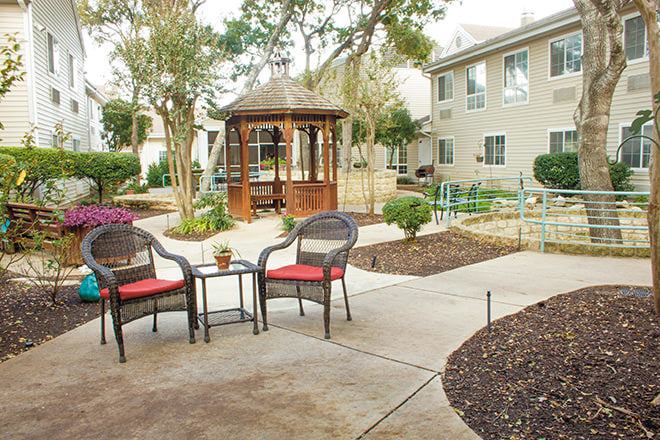
How Does Juniper Village At Spicewood Summit Compare to Other Texas Nursing Homes?

Compared to the 100 nursing homes in Texas, JUNIPER VILLAGE AT SPICEWOOD SUMMIT's overall rating (3 stars) is above the state average of 2.8, staff turnover (55%) is near the state average of 46%, and health inspection rating (3 stars) is at the national benchmark.

What Should Families Ask When Visiting Juniper Village At Spicewood Summit?

Based on this facility's data, families visiting should ask: "What changes have been made since the serious inspection findings, and how are you preventing similar issues?" "Can I visit during a mealtime to observe dining assistance and food quality?" "How do you handle medical emergencies, and what is your hospital transfer rate?" "Can I speak with family members of current residents about their experience?" These questions are particularly relevant given the facility's Immediate Jeopardy citations.

Is Juniper Village At Spicewood Summit Safe?

Based on CMS inspection data, JUNIPER VILLAGE AT SPICEWOOD SUMMIT has documented safety concerns. Inspectors have issued 2 Immediate Jeopardy citations (the most serious violation level indicating risk of serious injury or death). The facility has a 3-star overall rating and ranks #1 of 100 nursing homes in Texas. Families considering this facility should ask detailed questions about what corrective actions have been taken since these incidents.

Do Nurses at Juniper Village At Spicewood Summit Stick Around?

JUNIPER VILLAGE AT SPICEWOOD SUMMIT has a staff turnover rate of 55%, which is 9 percentage points above the Texas average of 46%. Moderate turnover is common in nursing homes, but families should still ask about staff tenure and how the facility maintains care continuity when employees leave.

Was Juniper Village At Spicewood Summit Ever Fined?

JUNIPER VILLAGE AT SPICEWOOD SUMMIT has been fined $99,713 across 1 penalty action. This is above the Texas average of $34,076. Fines in this range indicate compliance issues significant enough for CMS to impose meaningful financial consequences. Common causes include delayed correction of deficiencies, repeat violations, or care failures affecting resident safety. Families should ask facility leadership what changes have been made since these penalties.

Is Juniper Village At Spicewood Summit on Any Federal Watch List?

JUNIPER VILLAGE AT SPICEWOOD SUMMIT is not on any federal watch list. The most significant is the Special Focus Facility (SFF) program, which identifies the bottom 1% of nursing homes nationally based on persistent, serious quality problems. Not being on this list means the facility has avoided the pattern of deficiencies that triggers enhanced federal oversight. This is a positive indicator, though families should still review the facility's inspection history directly.