LEGEND OAKS HEALTHCARE AND REHABILITATION - NORTH
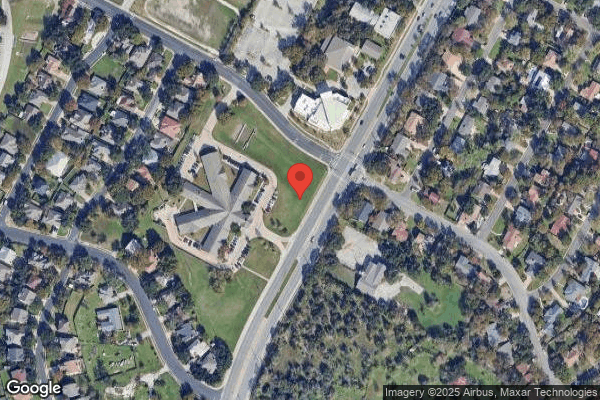
11020 DESSAU RD, AUSTIN, TX 78754 (512) 873-2244
For profit - Limited Liability company 124 Beds THE ENSIGN GROUP Data: November 2025 3 Immediate Jeopardy citations
Trust Grade
29/100
#277 of 1168 in TX
Last Inspection: February 2025

Within standard 12-15 month inspection cycle. Federal law requires annual inspections.

Overview

Legend Oaks Healthcare and Rehabilitation - North has a Trust Grade of F, indicating significant concerns about the quality of care provided. Ranking #277 out of 1,168 facilities in Texas places it in the top half, but its county rank of #6 out of 27 shows that there are better options available in Travis County. The facility is worsening, with the number of issues increasing from 4 in 2024 to 12 in 2025, highlighting a troubling trend. Staffing is below average with a rating of 2 out of 5 stars, though the 35% turnover rate is better than the state average, suggesting some staff stability. However, the facility has received $33,640 in fines, which is concerning and indicates potential compliance problems. Specific incidents reported by inspectors include failures to prevent physical abuse, where a resident was subjected to mistreatment during care, and inadequate policies to protect residents from abuse, resulting in a resident sustaining a fracture. Another finding noted that two residents experienced verbal and mental abuse, leading to serious health complications. While the facility has good RN coverage, exceeding 90% of Texas facilities, the critical incidents and overall Trust Grade raise serious flags for families considering this nursing home for their loved ones.

Trust Score
F
29/100
In Texas
#277/1168
Top 23%
Safety Record
High Risk
Review needed
Inspections
Getting Worse
4 → 12 violations
Staff Stability
○ Average
35% turnover. Near Texas's 48% average. Typical for the industry.
Penalties
⚠ Watch
$33,640 in fines. Higher than 79% of Texas facilities, suggesting repeated compliance issues.
Skilled Nurses
○ Average
Each resident gets 37 minutes of Registered Nurse (RN) attention daily — about average for Texas. RNs are the most trained staff who monitor for health changes.
Violations
⚠ Watch
28 deficiencies on record. Higher than average. Multiple issues found across inspections.
★★★★☆
4.0
Overall Rating
★★☆☆☆
2.0
Staff Levels
★★★★☆
4.0
Care Quality
★★★★☆
4.0
Inspection Score
Stable
2024: 4 issues
2025: 12 issues

The Good

  • 4-Star Quality Measures · Strong clinical quality outcomes
  • Full Sprinkler Coverage · Fire safety systems throughout facility
  • No fines on record
  • Staff turnover below average (35%)

    13 points below Texas average of 48%

Facility shows strength in quality measures, fire safety.

The Bad

Staff Turnover: 35%

11pts below Texas avg (46%)

Typical for the industry

Federal Fines: $33,640

Above median ($33,413)

Moderate penalties - review what triggered them

Chain: THE ENSIGN GROUP

Part of a multi-facility chain

Ask about local staffing decisions and management

The Ugly 28 deficiencies on record

3 life-threatening
Sept 2025 5 deficiencies 2 IJ
CRITICAL (J) 📢 Someone Reported This

A family member, employee, or ombudsman was alarmed enough to file a formal complaint

Immediate Jeopardy (IJ) - the most serious Medicare violation

Free from Abuse/Neglect (Tag F0600)

Someone could have died · This affected 1 resident

**NOTE- TERMS IN BRACKETS HAVE BEEN EDITED TO PROTECT CONFIDENTIALITY** Based on observations, interviews and record reviews the facility failed to ensure the facility did not use physical abuse for 1...

Read full inspector narrative →
**NOTE- TERMS IN BRACKETS HAVE BEEN EDITED TO PROTECT CONFIDENTIALITY** Based on observations, interviews and record reviews the facility failed to ensure the facility did not use physical abuse for 1 of 2 Residents. The facility failed to ensure Resident #1 was free from abuse when CNA A and CNA B were changing the briefs of Resident # 1 on 08/17/2025. This failure could place residents at risk for serious psychosocial harm from abuse, humiliation, intimidation, fear, shame, agitation, and decreased quality of life.Findings included: Record review of Resident #1's admission Record, dated 09/03/25, reflected the resident was an [AGE] year-old female who was admitted to the facility on [DATE]. Resident #1 had diagnoses which included Unspecified Dementia, moderate (This is when symptoms become more severe, and the individual's ability to perform daily tasks declines significantly.), Hypertensive Heart (refers to heart conditions caused by high blood pressure.) and Chronic Kidney Disease (Gradual loss of kidney function.). Record review of Resident #1's quarterly MDS assessment dated [DATE] revealed Resident #1 had a BIMS score of 4 indicating severe cognitive impairment. The MDS revealed Resident # 1 was dependent on staff for all ADLs. Record review of Resident #1's care plan dated 07/02/2025 revealed Resident #1 had potential to demonstrate physical behaviors related to dementia. Goal: Will not harm self or others through the review date. Interventions: Analyze key times, places, circumstances, triggers, and what de-escalates behavior and document. Record review of Resident # 1's Weekly Skin Assessment on 08/15/2025 at 12:54 PM reflected left great toe abrasion and lateral ankle trauma wound present and no other skin issues noted. Record review for Change of Condition for Resident # 1's Skin Assessment on 08/17/2025 at 3:05 PM documents [NAME] Record review for Change of Condition for Resident # 1's Skin Assessment on 08/17/2025 at 3:05 PM documents Bruise and swelling to right thumb.Record Review of Provider Investigation Report dated 8/18/2025 reflected, CNA B upon getting resident up in her wheelchair, she noticed her right thumb was swollen and was unable to hold her phone while receiving a call from son.The Provider Investigation Report does did not indicate how this injury occurred. The Provider Investigation Report stated incident occurred 08/17/25 at 11:50 AM and assessment was done on 08/17/2025 @ at 3:35 PM. The assessment reported Bruising and edema to right thumb. 08/18/2025 Resident # 1 was transferred at 10:30 AM offsite to [local hospital]. Incident was reported by ED to Texas Health and Human Services Complaint and Incident Intake via email on 08/18/2025 at 7:20 PM. Record review of CNA B's statement revealed on 08/17/2025 CNA A assisted CNA B in changing Resident # 1's brief. CNA B stated, I assisted Resident # 1 by crossing her arms across her chest to roll her onto her left side. Record review of ER medical report for Resident # 1 Sservice date 08.18.25 at 12:56 PM. Findings:Xray Impression: Comminuted (bone that is broken in at least two places) ( mildly displaced fracture of the base of the right first digital proximal phalanz (most basal bones of each digit,)with extension to the first digit joint time stamped 08.18.25 @ at 13:57 pm, reported signed by Doctor. Interview &observation of Resident # 1 on 09/03/2025 at 10:35 AM. revealed Resident #1 lying in bed, she raised her right hand and arm exposing a bruised on the lower right thumb. Resident #1 stated 0on 08/17/2025 early in the morning she was awakened by CNA A. Resident #1 stated, I told them I wanted to sleep and I'll do it later. She stated CNA B joined CNA A in the room and CNA B (who was the smaller CNA) grabbed my right hand, she pulled my thumb backwards and I screamed. Resident stated, The CNA's came around dinner time and they put me in the wheelchair that's when I noticed my right thumb and right wrist were swollen. Resident # 1 stated, daughter told the staff to send me to the hospital. Interview on 09/03/2025 at 10:40 AM with Residents # 3 (Resident # 1's roommate). Resident # 3 stated, she was in the room and awake at the time of the incident and it was around 7 AM. Resident # 3 stated, Tthere were 2 CNAs in the room that morning. She stated, tThe smaller one came in to help and that's when I heard a loud cry from (Resident # 1). and I couldn't see anything because the curtain was pulled closed but, I knew (Resident # 1) was in pain by the sound of her scream. Interview on 09/03/2025 at 10:50 AM with CNA C she stated, I had cared for (Resident #1) the week before on Thursday, August 14th, 2025, and Friday, August 15th, 2025 and she had no injuries then. He stated, On Monday, August 18th, 2025 (Resident # 1's) hand looked very different than last week, so I knew something was wrong. I immediately told the Nurse about (Resident # 1's) hand. He stated, a Staff Nurse came down to the room to see the resident's injury. He stated, They called Emergency Services came and took her to the hospital, and I didn't see her again until the next day. Interview on 09/03/2025 at 12:29 PM with Family member of Resident # 1. He stated, We had a recording of the morning of the incident, but we could not see the incident because the Aids pulled the curtain around the entire bed. He stated, All I could here is mother yelling and screaming and when they opened the curtain, you can see mom holding her hand. He stated, the family had put a screw on the curtain track to prevent the curtain from being pulled because the staff continued to try and hide from the camera. He stated his mom has dementia and that she doesn't remember details. During an interview with CNA A on 09/04/2025 at 12:35 PM, CNA A said she was suspended due to Resident #1 having a bruise on her left thumb. CNA A said that she had not hurt Resident #1 or any other residents. She said she did not report the injury because it was CNA B who found the injury. She said Resident #1 did not complain of pain to her finger. Observation of Video on 09/03/2025 at 3:10 PM with ADM and DON. ADM shared an approximate 5 minutes of video recorded on 08/17/2025 at 7:11 AM. The video reveals 2 CNA's entering Resident # 1's bed area. CNAs were identified by the ADM and the DON as CNA A and CNA B. CNA A was observed pulling the curtain from the right side of the bed to the left side of Resident # 1's bed. The curtain served to block the view from the camera of the care being performed to Resident # 1. Per the audio of the video, Resident # 1 was heard to be shouting stop . Resident was also heard to scream loudly in a sharp, high pitch. When CNA A reopened the curtain, Resident #1 was observed to have on different clothing and Resident # 1 was positioned on her left side facing the window. CNA A and CNA B were observed to be holding soiled briefs and other soiled items. Observation shows both CNA's leaving the room and the video ended. During an interview with LVN A on 09/15/2025 at 12:36 PM revealed that on the day 08.17.2025 around lunch time, she was on the hallway when CNA B brought Resident #1 to LVN A at the nurse's station. CNA B told her; the resident was not able to use her hand to pick up her personal phone. She said CNA B also told her Resident # 1 could not use her hand properly. LVN A said that CNA B did not know how the injury to Resident #1 occurred. LVN A said she observed the resident's' right hand, and she saw a bruise on the upper part of the resident's right thumb. She said she asked Resident # 1, what happened? Resident # 1 said she did not know what happened and she did not remember. LVN A said she tried to assess the hand, but Resident #1 would not let her touch it. Resident #1 said she was in pain. LVN A said that CNA B told her she did not know what caused the bruises to Resident #1. Record review of the facility's Abuse, Neglect, and Exploitation, dated 11/2017, reflected: Training d. Reporting abuse, neglect, exploitation, and misappropriation of residents property, including injuries of unknown sources, and to whom and when staff and others must report their knowledge related to any alleged violation without fear of reprisal. and Abuse: Prevention of and Prohibition Against; Reporting reasonable suspicion of a crime against a resident in accordance with Section 1150B of the social security Act.This was determined to be an Immediate Jeopardy (IJ) on 09/15/2025 at 5:54 p.m. The Administrator was notified. The Administrator was provided with the IJ template on 9/15/2025 at 5:55 p.m. The ADM was asked to submit a Plan of Removal. The following Plan of Removal submitted by the facility was accepted on 09/16/2025 at 4:33 pm.Date of IJ Notification: 09/15/2025 Date/Time IJ Identified by Surveyor: 09/15/2025 at 5:55 PMPlan of Removal - F600 (Abuse) Deficient Practice: The facility failed to ensure that Resident # 1 free from physical abuse. This resulted in the resident having a mildly displaced fracture of the base of the right first digital proximal phalanz with extension to the first digit. Immediate Actions Taken (Date: 09/16/2025):Charge nurse will assess Resident #1 for complications after hospitalization and return from dialysis. Completion date 9/10/2025 Action: CNA A and CNA B suspended pending investigationStart Date: 8/18/2025Completion Date: To be determined when suspension has ended.Responsible: Director of Nurses/Designee Action: Skin Assessments conducted on all residentsStart Date: 8/19/2025Completion Date: 8/19/2025Responsible: DON/Designee Action: Medical Director, Nurse Practitioner and Physician Assistant notification of immediate jeopardy and plan of removal discussed. Start Date: 9/15/2025Completion Date: 9/15/2025Responsible: Executive Director Action: Ad hoc QA meeting. Attendees included ED, DON, Clinical Resource, Clusters Partners, Medical Director. Meeting included the Plan of Removal and interventions.Start Date: 9/15/2025Completion Date: 9/15/2025Responsible: Executive Director Action: Inservice Director of Nursing and Executive Director on Abuse and Neglect Policy Start Date: 9/15/2025Completion Date: 9/15/2025Responsible: Clinical Resource, MSN, Ed, DON Action: Inservice Director of Nursing and Executive Director on Resident Rights Start Date: 9/15/2025Completion Date: 9/15/2025Responsible: Clinical Resource, MSN/Ed, DON Action: Inservice initiated to all staff on Abuse and Neglect Policy to be conducted prior to start of next shift.Start Date: 9/15/2025Completion Date: 09/19/2025 Responsible: DON Action: Safe Surveys conducted on all residents.Start Date: 9/15/2025Completion Date: 9/15/2025Responsible: DON/Designee Action: Inservice of CNA A and CNA B on Abuse and Neglect with knowledge retention demonstrated with post-testStart Date: 9/15/2025Completion Date: 9/15/2025Responsible: DON/Designee Action: Inservice of CNA A and CNA B on Abuse and Neglect with knowledge retention demonstrated with post-testStart Date: 9/15/2025Completion Date: 9/15/2025Responsible: DON POR monitoring conducted on 9/16/2025 and 9/17/2025. Record review of IJ Binder on 9/16/2025 CNA A and CNA B have been terminated, and the termination is in the binder. Copies have been scanned. The Abuse Policy for Freedom from abuse, neglect, & exploitation, Residence, rights & responsibilities were in the binder. Verified that the email was sent to the ombudsman notifying them of the IJ. Verified that QAPI was done with the executive director, Director of Nursing, and clinical resources, and signed by each of them Residence safety surveys were completed In service on resident rights and abuse and neglect was given to the administrator in the DON by MSN/ED, RN clinical resources. In-service training completed by all staff on abuse and neglect, and resident rights. All staff or quiz on resident rights, abuse and neglect Staff contacted the resident #1s daughter to verify that they had notified her of the immediate jeopardy During an Interview with Resident #14 at 12:12 PM Resident # 14 Revealed he has never been injured by a staff member when he is getting care. Resident #14 said he has no concerns about the staff and that they treat him well. Resident #14 likes it at the facility. There were no other concerns at the time. During an interview with Resident #18 at 12:16 PM , He revealed he felt safe at the facility. Resident #18 said he has never been abused or injured by any staff at the facility. Resident #18 said that all the staff treat him well. Resident #18 said that he likes the care he is getting at the facility. During an interview with Resident #10 at 12:25 PM he revealed he feels safe at the facility. Said he has never been abused or injured by the staff. Resident #10 said that he likes the care that he is getting, and it is better than the care he was getting at the last facility. There were no other concerns at the time. During an interview on 09/17/2025 3:21 PM, ADM revealed per Abuse policy, suspected abuse should be reported immediately to him. If ADM is not available, staff member who could report it to ADON, DON, or management. LMS education portal before they start, and continuing education quizzes and refreshers. It was serviced yesterday. Has not witnessed any abuse in the facility. ADM said to prevent this from happening, he has staff get extra training and keep telling them about abuse. During an interview on 09/17/2025 3:04 PM, DON revealed, the facility is to use the provider letter when it is reportable and follow the 24-hour guidelines. All staff are required to notify the DON or the Nurse, and they will tell ADM. If there is an allegation pending investigation. Upon hire, reliance training it covers abuse and neglect. And that covers dementia care. All the training is annual. In-service on abuse yesterday, and before that was in August. Payday in-service for abuse. Has not witnessed abuse in the facility. More training on residents' rights and the right to refuse care and more training on that and cooperative residents. During an interview on 9-17-2025 at 2:15 PM RN said that if there is abuse, then is should be reported immediately. RN said abuse should be reported to the ADM or the DON. RN said that they get in-service training on abuse and neglect through videos, in person, and emails. The last in-services on abuse and neglect were 9-16-2025 and 9-16-2025. RN has not witnessed any abuse or neglect in the facility. During an interview on 09/17/2025 2:26 PM, CNA D said that if she sees abuse in the facility, then she is to report it immediately to the ADM, who is the abuse and neglect coordinator. CNA D has not witnessed abuse or neglect in the facility. CNA D said that she had in-service training on abuse and neglect, and the last time was 9-16-2025. CNA D said that she gets in-service training regularly for abuse and neglect. videos and meetings. CNA D has not witnessed abuse or neglect in the facility. During an interview on 09/17/2025 2:00 PM LVN B said if she sees abuse in the facility, she reports it immediately to the ADM, who is the abuse and neglect coordinator. LVN B said she has not witnessed any abuse in the facility. LVN B said that she gets in-service regularly on abuse. LVN B said the last time she had abuse training was 9-16-2025. LVN B said that get in-service training in person and videos. During an interview on 09/17/2025 2:06 PM, CNA 5 said she has not witnessed abuse or neglect in the facility. CNA 5 said if she sees abuse in the facility, then she tells the ADM. CNA 5 said the last time she had in-service training on abuse was on 9-16-2025. CNA 5 said she gets in-service training by video and in person. CNA 5 said that there is usually a test after. Training Monday, test Tuesday, and last week, and the video was at the beginning of the month. During an interview on 09/17/2025 2:00 PM, ADON revealed that abuse should be reported immediately to the ADM. If the ADM is not available, then it would be reported to the DON ADON stated that they he has received training on abuse regularly and the last time was on 9/16/2025. ADON stated he gets training in person, online, and they watch videos. To prevent abuse Human Resources does a background check on new employees. ADON said he has not witnessed any abuse or neglect in the facility. An IJ was identified on 09/15/2025. The Administrator was notified and an IJ Template was provided on 09/15/2025 at 5:55 p.m. While the Immediate Jeopardy was removed on 09/17/2025 at 4:33 pm, The facility remained out of compliance at a severity level of no actual harm with the potential for more than minimal harm and a scope of isolated due to the facility's need to evaluate the effectiveness of the corrective systems that were put into place.
CRITICAL (J) 📢 Someone Reported This

A family member, employee, or ombudsman was alarmed enough to file a formal complaint

Immediate Jeopardy (IJ) - the most serious Medicare violation

Abuse Prevention Policies (Tag F0607)

Someone could have died · This affected 1 resident

**NOTE- TERMS IN BRACKETS HAVE BEEN EDITED TO PROTECT CONFIDENTIALITY** Based on observation, interview, and record review, the facility failed to develop and implement written policies and procedures...

Read full inspector narrative →
**NOTE- TERMS IN BRACKETS HAVE BEEN EDITED TO PROTECT CONFIDENTIALITY** Based on observation, interview, and record review, the facility failed to develop and implement written policies and procedures that prohibited and prevented abuse, neglect, and exploitation of residents and misappropriation of resident property for one of one resident (Resident #1) reviewed for abuse, neglect, and exploitation. The facility failed to implement their policies and procedures to ensure Resident #1 was free from abuse when the facility failed to have effective interventions and services in place to address the resident's care, which resulted in Resident #1 sustaining Comminuted (bone that is broken in at least two places),(mildly displaced fracture of the base of the right first digital proximal phalanz (most basal bones of each digit.)with extension to the first digit joint time stamped 08.18.25 @ at 13:57 pm, reported signed by Doctor. An IJ was identified on 09/15/2025. The Administrator was notified and an IJ Template was provided on 09/15/2025 at 5:55 p.m. While the Immediate Jeopardy was removed on 09/16/2025 at 4:33 pm, the facility remained out of compliance at a severity level of no actual harm with the potential for more than minimal harm and a scope of isolated due to the facility's need to evaluate the effectiveness of the corrective systems that were put into place.The failure could place residents at risk for serious injuries, hospitalization, and death. Finding includes:Record review of Resident #1's admission Record, dated 09/03/25, reflected the resident was an [AGE] year-old female who was admitted to the facility on [DATE]. Resident #1 had diagnoses which included Unspecified Dementia, moderate (This is when symptoms become more severe, and the individual's ability to perform daily tasks declines significantly.), Hypertensive Heart (refers to heart conditions caused by high blood pressure.) and Chronic Kidney Disease (Gradual loss of kidney function.). Record review of Resident #1's quarterly MDS assessment dated [DATE] revealed Resident #1 had a BIMS score of was 4 indicating severe cognitive impairment. The MDS revealed Resident # 1 was dependent on staff for all ADLs. Record review of Resident #1's care plan dated 07/02/2025 revealed Resident #1 had potential to demonstrate physical behaviors related to dementia. Goal: Will not harm self or others through the review date. Interventions: Analyze key times, places, circumstances, triggers, and what de-escalates behavior and document. Record Review of Resident # 1's Weekly Skin Assessment on 08/15/2025 at 12:54 PM reflected left great toe abrasion and lateral ankle trauma wound present and no other skin issues noted.Record review for Change of Condition for Resident # 1's Skin Assessment on 08/17/2025 at 3:05 PM documents Bruise and swelling to right thumb.Record review for Change of Condition for Resident # 1's Skin Assessment on 08/17/2025 @at 3:05 PM documents Record review for Change of Condition for Resident # 1's Skin Assessment on 08/17/2025 @at 3:05 PM documents Bruise and swelling to right thumb.Record Review of Provider Investigation Report on dated 8/18/2025 reflected, that CNA B upon getting resident up in her wheelchair, she noticed her right thumb was swollen and was unable to hold her phone while receiving a call from son. The Provider Investigation Report does did not indicate how this injury occurred. The Provider Investigation Report stated incident occurred 08/17/25 at 11:50 AM and assessment was done on 08/17/2025 @ at 3:35 PM. The assessment reported bruising and edema to right thumb. 08/18/2025 Resident # 1 was transferred at 10:30 AM offsite to [St. [NAME] local hospital]. Incident was reported by ED to Texas Health and Human Services complaint and Incident Intake via email on 08/18/2025 at 7:20 PM.Record review of CNA B's statement revealed on 08/17/2025 CNA A assisted CNA B in changing Resident # 1's brief. CNA B stated, I assisted Resident # 1 by crossing her arms across her chest to roll her onto her left side. Record review of ER medical report for Resident # 1 service date 08.18.25 at 12:56 PM. Findings:Xray Impression: Comminuted (bone that is broken in at least two places) ( mildly displaced fracture of the base of the right first digital proximal phalanz (most basal bones of each digit,)with extension to the first digit joint time stamped 08.18.25 @ at 13:57 pm, reported signed by Doctor. Interview & Observation of Resident # 1 on 09/03/2025 at 10:35 AM. revealed Observed Resident #1 lying in bed, she raised her right hand and arm exposing a bruised on the lower right thumb. Resident #1 stated 0on 08/17/2025 early in the morning she was awakened by CNA A. Resident #1 stated, I told them I wanted to sleep and I'll do it later. She stated CNA B joined CNA A in the room and CNA B (who was the smaller CNA) grabbed my right hand, she pulled my thumb backwards and I screamed. Resident stated, the CNA's came around dinner time and they put me in the wheelchair that's when I noticed my right thumb and right wrist were swollen. Resident # 1 stated, My daughter told the staff to send me to the hospital. Interview on 09/03/2025 at 10:40 AM with Residents # 3 (Resident # 1's roommate). Resident # 3 stated, she was in the room and awake at the time of the incident and it was around 7 AM. Resident # 3 stated, There were 2 CNAs in the room that morning. She stated, the smaller one came in to help and that's when I heard a loud cry from (Resident # 1). and I couldn't see anything because the curtain was pulled closed but, I knew (Resident # 1) was in pain by the sound of her scream. Interview & Observation of Resident # 1 on 09/03/2025 at 10:35 AM. revealed Observed resident #1 lying in bed, she raised her right hand and arm exposing a bruised on the lower right thumb. Resident #1 stated 0on 08/17/2025 early in the morning she was awakened by CNA A. Resident #1 stated, I told them I wanted to sleep and I'll do it later. She stated CNA B joined CNA A in the room and CNA B (who was the smaller CNA) grabbed my right hand, she pulled my thumb backwards and I screamed. Resident stated, the CNA's came around dinner time and they put me in the wheelchair that's when I noticed my right thumb and right wrist were swollen. Resident # 1 stated, My daughter told the staff to send me to the hospital. Interview on 09/03/2025 at 10:40 AM with Residents # 3 (Resident # 1's roommate). Resident # 3 stated, she was in the room and awake at the time of the incident and it was around 7 AM. Resident # 3 stated, There were 2 CNAs in the room that morning. She stated, the smaller one came in to help and that's when I heard a loud cry from (Resident # 1). and I couldn't see anything because the curtain was pulled closed but, I knew (Resident # 1) was in pain by the sound of her scream. Interview on 09/03/2025 at 10:50 AM with CNA C. CNA C he stated, I had cared for her (Resident #1) the week before on Thursday, August 14th, 2025, and Friday, August 15th, 2025 and she had no injuries then. He stated, on Monday, August 18th, 2025 (Resident # 1's) hand looked very different than last week, so I knew something was wrong. I immediately told the Nurse about (Resident # 1's) hand. He stated, A a Staff, Nurse came down to the room to see the resident's injury. He stated, They called Emergency Services came and took her to the hospital, and I didn't see her again until the next day. Interview on 09/03/2025 at 12:29 PM with Family member of Resident # 1. He stated, we had a recording of the morning of the incident, but we could not see the incident because the Aids pulled the curtain around the entire bed. He stated, all I could here is mother yelling and screaming and when they opened the curtain, you can see mom holding her hand. He stated, the family had put a screw on the curtain track to prevent the curtain from being pulled because the staff continued to try and hide from the camera. He stated his mom has dementia and that she doesn't remember details. During an interview with CNA A on 09/04/2025 at 12:35 PM revealed that CNA A said she was suspended due to Resident #1 having a bruise on her left thumb. CNA A said that she had not hurt Resident #1 or any other residents. She said she did not report the injury because it was CNA B who found the injury. She said Resident #1 did not complain of pain to her finger. Observation of Video on 09/03/2025 at 3:10 PM with.During an Interview with ADM and DON., ADM shared an approximate 5 minutes of video recorded on 08/17/2025 at 7:11 AM. The video reveals 2 CNA's entering Resident # 1's bed area. CNAs were identified by the ADM and the DON as CNA A and CNA B. CNA A was observed pulling the curtain from the right side of the bed to the left side of Resident # 1's bed. The curtain served to block the view from the camera of the care being performed to Resident # 1. Per the audio of the video, Resident # 1 was heard to be shouting stop . Resident was also heard to scream loudly in a sharp, high pitch. When CNA A reopened the curtain, Resident #1 was observed to have on different clothing and Resident # 1 was positioned on her left side facing the window. CNA A and CNA B were observed to be holding soiled briefs and other soiled items. Observation shows both CNA's leaving the room and the video ended. During an interview with LVN A on 09/15/2025 at 12:36 PM revealed that on the day 08.17.2025 around lunch time, she was on the hallway when CNA B brought Resident #1 to LVN A at the nurse's station. CNA B told her, She noticed the resident was not able to use her hand to pick up her personal phone. She said CNA B also told her Resident # 1 could not use her hand properly. LVN A said that CNA B did not know how the injury to Resident #1 occurred. LVN A said she observed the resident's' right hand, and she saw a bruise on the upper part of the resident's right thumb. She said she asked Resident # 1, what happened? Resident # 1 said she did not know what happened and she did not remember. LVN A said she tried to assess the hand but Resident #1 would not let her touch it. Resident #1 said she was in pain. LVN A said that CNA B told her she did not know what caused the bruises to Resident #1. Record review of the Facility's Abuse, Neglect, and Exploitation, dated 11/2017, reflects: each resident has the right to be free from abuse, neglect, misappropriation of resident property, exploitation and mistreatment. It is also the policy of this Facility to recognize the resident right to personal privacy and confidentiality of their physical body, personal care, and personal space or accommodations. This includes but is not limited to freedom from corporal punishment, involuntary seclusion, and any physical or chemical restraint not required to treat the resident's medical symptoms. This also includes the taking, keeping, using or distributing photographs or video recordings off residents in any manner that would demean or humiliate a resident, regardless of consent provided or the residents cognitive status. The Facility will provide oversight and monitoring to ensure that its staff, who are agents of the facility, deliver care and services in a way that promotes and respects the rights of the resident to be free from abuse, neglect, misappropriation of resident property, exploitation, or use of technology that would infringe on the residents right to personal privacy.The following Plan of Removal submitted by the facility was accepted on 09/16/2025 at 4:33 pm.Action: CNA A and CNA B Suspended pending investigation on 08/18/2025.Completion date 8/18/2025 CNA A and CNA B were terminated. Responsible: Director of Nurses/Designee Action: Skin Assessments conducted on all residentsStart Date: 8/19/2025Completion Date: 8/19/2025Responsible: DON/Designee Action: Medical Director, Nurse Practitioner and Physician Assistant notification of immediate jeopardy and plan of removal discussed. Start Date: 9/15/2025Completion Date: 9/15/2025Responsible: Executive Director Action: Ad hoc QA meeting. Attendees included ED, DON, Clinical Resource, Clusters Partners, Medical Director. Meeting included the Plan of Removal and interventions.Start Date: 9/15/2025Completion Date: 9/15/2025Responsible: Executive Director Action: Inservice Director of Nursing and Executive Director on Abuse and Neglect Policy Start Date: 9/15/2025Completion Date: 9/15/2025Responsible: Clinical Resource, MSN, Ed, DON Action: Inservice Director of Nursing and Executive Director on Resident Rights Start Date: 9/15/2025Completion Date: 9/15/2025Responsible: Clinical Resource, MSN/Ed, DON Action: Inservice initiated to all staff on Abuse and Neglect Policy to be conducted prior to start of next shift.Start Date: 9/15/2025Completion Date: 09/19/2025 Responsible: DONAction: Safe Surveys conducted on all residents.Start Date: 9/15/2025Completion Date: 9/15/2025Responsible: DON/Designee Action: Inservice of CNA A and CNA B on Abuse and Neglect with knowledge retention demonstrated with post-testStart Date: 9/15/2025Completion Date: 9/15/2025Responsible: DON/Designee Action: Inservice of CNA A and CNA B on Abuse and Neglect with knowledge retention demonstrated with post-testStart Date: 9/15/2025Completion Date: 9/15/2025Responsible: DON POR monitoring conducted on 9/16/2025 and 9/17/2025. Record review of IJ Binder on 9/16/2025 CNA A and CNA B have been terminated, and the termination is in the binder. Copies have been scanned. The Abuse Policy for Freedom from abuse, neglect, & exploitation, Residence, rights & responsibilities were in the binder. Verified that the email was sent to the ombudsman notifying them of the IJ. Verified that QAPI was done with the executive director, Director of Nursing, and clinical resources, and signed by each of them Residence safety surveys were completed In service on resident rights and abuse and neglect was given to the administrator in the DON by MSN/ED, RN clinical resources. In-service training completed by all staff on abuse and neglect, and resident rights. All staff or quiz on resident rights, abuse and neglect Staff contacted the resident #1s daughter to verify that they had notified her of the immediate jeopardy During an Interview with Resident #14 at 12:12 PM Resident # 14 Revealed he has never been injured by a staff member when he is getting care. Resident #14 said he has no concerns about the staff and that they treat him well. Resident #14 likes it at the facility. There were no other concerns at the time. During an interview with Resident #18 at 12:16 PM , He revealed he felt safe at the facility. Resident #18 said he has never been abused or injured by any staff at the facility. Resident #18 said that all the staff treat him well. Resident #18 said that he likes the care he is getting at the facility. During an interview with Resident #10 at 12:25 PM he revealed he feels safe at the facility. Said he has never been abused or injured by the staff. Resident #10 said that he likes the care that he is getting, and it is better than the care he was getting at the last facility. There were no other concerns at the time. During an interview on 09/17/2025 3:21 PM, ADM revealed per Abuse policy, suspected abuse should be reported immediately to him. If ADM is not available, staff member who could report it to ADON, DON, or management. LMS education portal before they start, and continuing education quizzes and refreshers. It was serviced yesterday. Has not witnessed any abuse in the facility. ADM said to prevent this from happening, he has staff get extra training and keep telling them about abuse. During an interview on 09/17/2025 3:04 PM, DON revealed, the facility is to use the provider letter when it is reportable and follow the 24-hour guidelines. All staff are required to notify the DON or the Nurse, and they will tell ADM. If there is an allegation pending investigation. Upon hire, reliance training it covers abuse and neglect. And that covers dementia care. All the training is annual. In-service on abuse yesterday, and before that was in August. Payday in-service for abuse. Has not witnessed abuse in the facility. More training on residents' rights and the right to refuse care and more training on that and cooperative residents. During an interview on 9-17-2025 at 2:15 PM RN said that if there is abuse, then is should be reported immediately. RN said abuse should be reported to the ADM or the DON. RN said that they get in-service training on abuse and neglect through videos, in person, and emails. The last in-services on abuse and neglect were 9-16-2025 and 9-16-2025. RN has not witnessed any abuse or neglect in the facility. During an interview on 09/17/2025 2:26 PM, CNA D said that if she sees abuse in the facility, then she is to report it immediately to the ADM, who is the abuse and neglect coordinator. CNA D has not witnessed abuse or neglect in the facility. CNA D said that she had in-service training on abuse and neglect, and the last time was 9-16-2025. CNA D said that she gets in-service training regularly for abuse and neglect. videos and meetings. CNA D has not witnessed abuse or neglect in the facility. During an interview on 09/17/2025 2:00 PM LVN B said if she sees abuse in the facility, she reports it immediately to the ADM, who is the abuse and neglect coordinator. LVN B said she has not witnessed any abuse in the facility. LVN B said that she gets in-service regularly on abuse. LVN B said the last time she had abuse training was 9-16-2025. LVN B said that get in-service training in person and videos. During an interview on 09/17/2025 2:06 PM, CNA 5 said she has not witnessed abuse or neglect in the facility. CNA 5 said if she sees abuse in the facility, then she tells the ADM. CNA 5 said the last time she had in-service training on abuse was on 9-16-2025. CNA 5 said she gets in-service training by video and in person. CNA 5 said that there is usually a test after. Training Monday, test Tuesday, and last week, and the video was at the beginning of the month. During an interview on 09/17/2025 2:00 PM, ADON revealed that abuse should be reported immediately to the ADM. If the ADM is not available, then it would be reported to the DON ADON stated that they he has received training on abuse regularly and the last time was on 9/16/2025. ADON stated he gets training in person, online, and they watch videos. To prevent abuse Human Resources does a background check on new employees. ADON said he has not witnessed any abuse or neglect in the facility. An IJ was identified on 09/15/2025. The Administrator was notified and an IJ Template was provided on 09/15/2025 at 5:55 p.m. While the Immediate Jeopardy was removed on 09/17/2025 at 4:33 pm, the facility remained out of compliance at a severity level of no actual harm with the potential for more than minimal harm and a scope of isolated due to the facility's need to evaluate the effectiveness of the corrective systems that were put into place.
CONCERN (D) 📢 Someone Reported This

A family member, employee, or ombudsman was alarmed enough to file a formal complaint

Potential for Harm - no one hurt, but risky conditions existed

Report Alleged Abuse (Tag F0609)

Could have caused harm · This affected 1 resident

**NOTE- TERMS IN BRACKETS HAVE BEEN EDITED TO PROTECT CONFIDENTIALITY** Based on observation, interview, and record review, the facility failed to ensure that all alleged violations involving abuse, n...

Read full inspector narrative →
**NOTE- TERMS IN BRACKETS HAVE BEEN EDITED TO PROTECT CONFIDENTIALITY** Based on observation, interview, and record review, the facility failed to ensure that all alleged violations involving abuse, neglect, exploitation, or mistreatment, including injuries of unknown sources were reported immediately, but no later than 2 hours after the allegation was made, if the events that cause the allegation involve abuse to the Administrator of the facility and to other officials, including the State Survey Agency, in accordance with State law through established procedures for 1 of 6 residents ( Resident # 1 reviewed for abuse and neglect. The facility failed to report to HHSC when Resident #1 was found to have a significant bruise and swelling to right thumb of unknown origin on 08/17/25 at 3:03PM. This failure to report could place the residents at risk for abuse. Findings included:Record review of Resident #1's admission Record, dated 09/03/25, reflected the resident was an [AGE] year-old female who was admitted to the facility on [DATE]. Resident #1 had diagnoses which included Unspecified Dementia, moderate (This is when symptoms become more severe, and the individual's ability to perform daily tasks declines significantly.), Hypertensive Heart (refers to heart conditions caused by high blood pressure.) and chronic kidney disease (Gradual loss of kidney function.).Record review of Resident #1's quarterly MDS Assessment, Section V- Care Area Assessment summary dated 06/06/25, reflected her BIMS Score was 4 (indicates severe cognitive impairment, suggesting that the individual may require comprehensive assistance and specialized care approaches.).Record review of MDS, Section GG- Functional Abilities for Mobility Resident #1 needs Wheelchair.Record review of MDS, Section GG- Functional Abilities for self -care of Resident # 1 is 1(Dependent - Helper does ALL the effort. Resident does none of the effort to complete the activity. Or the assistance of 2 or more helpers is required for the resident to complete the activity.) Record review of Resident #1's care plan, revised 07/02/25, reflected: Focus: has Potential to demonstrate physical behaviors related to Dementia. Goal: Will not harm self or others through the review date. Interventions: Analyze key times, places, circumstances, triggers, and what de-escalates behavior and document. Record Review of resident # 1's Weekly Skin Assessment on 08/15/2025 at 12:54 PM reflected L great toe abrasion and lateral ankle trauma wound present and no other skin issues noted. Record review for Change of condition for resident # 1's Skin Assessment on 08/17/2025 at 3:05 PM documents Bruise and swelling to right thumb. Record Review of Provider Investigation Report on 8/18/2025 reflects that Aid notified this nurse that upon getting resident up in her wheelchair, she noticed her right thumb was swollen and was unable to hold her phone while receiving a call from son. The Provider Investigation Report does not indicate how this injury occurred. The Provider Investigation Report stated incident occurred 08/17/25 at 11:50 AM and assessment was done on 08/17/2025 at 335 PM. The assessment reported Bruising and edema to right thumb. 08/18/2025 Resident # 1 was transferred at 10:30 AM offsite to St. [NAME]. Incident was reported by ED to Texas Health and Human Services complaint and Incident Intake via email on 08/19/2025 at 12:19 AM Interview & Observation of Resident # 1 on 09/03/2025 at 10:35 AM. Observed resident lying in bed, she raised her right hand and arm exposing a bruised on the lower right thumb. Resident stated 0n 08/17/2025 early in the morning she was awakened by CNA A. Resident #1 stated, I told them I wanted to sleep and I'll do it later. She stated CNA B joined CNA A in the room and CNA B (who was the smaller CNA) grabbed my right hand, she pulled my thumb backwards and I screamed. Resident stated, they came around dinner time, and they put me in the wheelchair that's when I noticed my right thumb and right wrist were swollen. Resident # 1's stated, my daughter told the staff to send me to the hospital. Interview on 09/03/2025 @ 10:40 AM with Resident # 2 (Resident # 1's roommate). Resident # 2 stated, she was in the room and awake at the time of the incident and it was around 7 AM. Resident # 2 stated, there were 2 CNAs in the room that morning. She stated, the smaller one came in to help and that's when I heard a loud cry from Resident # 1 and I couldn't see anything because the curtain was pulled closed but, I knew Resident # 1 was in pain by the sound of her scream. Interview on 09/03/2025 @ 10:50 AM with CNA C. CNA C stated, I had cared for her the week before on Thursday and Friday and she had no injuries then. He stated, on Monday, Resident # 1's hand looked very different than last week, so I knew something was wrong. I immediately told the Nurse about Resident # 1's hand. He stated, A Staff, Nurse came down to the room to see the resident's injury. He stated, They called EMS and took her to the hospital, and I didn't see her again until the next day.Interview on 09/03/2025 at 12:29 PM with son of Resident # 1. He stated, we had a recording of the morning of the incident, but we could not see the incident because the Aids pull the curtain around the entire bed. He stated, all I could here is mother yelling and screaming and when they opened the curtain, you can see mom holding her hand. He stated, the family had put a screw on the curtain track to prevent the curtain from being pulled because the staff continued to try and hide from the camera. He stated his mom has dementia and that she doesn't remember details.Interview on 09/03/2025 @ 12:29PM with DON. She stated Resident # 1's son provided the video of the incident on 08/17/2025 but we could not see actual injury occurring, we just heard voices. Interview and observation of video on 09/03/2025 @ 1:15 PM. ED and DON provided a video recording of the incident on 08/17/2025. Video revealed CNA B rotated a privacy curtain all around the entire bed. Video did not reveal an incident of abuse. DON provided Police Report # Service request number 25-00281397.Call placed to [NAME] Policy Depart [PHONE NUMBER] was transferred to [PHONE NUMBER] Extension# 51038 requested copy of police report number 25-00281397. DON stated, both CNA's involved in this incident have been put on suspension.Record review of the Facility's Abuse, Neglect, and Exploitation, dated 11/2017, reflects: each resident has the right to be free from abuse, neglect, misappropriation of resident property, exploitation and mistreatment. It is also the policy of this Facility to recognize the resident right to personal privacy and confidentiality of their physical body, personal care, and personal space or accommodations. This includes but is not limited to freedom from corporal punishment, involuntary seclusion, and any physical or chemical restraint not required to treat the resident's medical symptoms. This also includes the taking, keeping, using or distributing photographs or video recordings off residents in any manner that would demean or humiliate a resident, regardless of consent provided or the residents cognitive status. The Facility will provide oversight and monitoring to ensure that its staff, who are agents of the facility, deliver care and services in a way that promotes and respects the rights of the resident to be free from abuse, neglect, misappropriation of resident property, exploitation, or use of technology that would infringe on the residents right to personal privacy.and Abuse: Prevention of and Prohibition AgainstReporting reasonable suspicion of a crime against a resident in accordance with Section 1150B of the Social Security Act.
CONCERN (D) 📢 Someone Reported This

A family member, employee, or ombudsman was alarmed enough to file a formal complaint

Potential for Harm - no one hurt, but risky conditions existed

Quality of Care (Tag F0684)

Could have caused harm · This affected 1 resident

Based on observation, interview, and record review, the facility failed to ensure accurate resident identification before transport for outside medical appointments for 1 (Resident #10) of 3 sampled r...

Read full inspector narrative →
Based on observation, interview, and record review, the facility failed to ensure accurate resident identification before transport for outside medical appointments for 1 (Resident #10) of 3 sampled residents. The facility failed to ensure that Resident #10 made it to his scheduled surgical appointment, and the facility sent the wrong resident in his place. This finding could place residents at risk for missing medical treatments. Record review Resident #10's medical diagnosis shows that Resident #10is diagnosed with hemiplegia and hemiparesis following cerebral infarction affecting the left non-dominant side (paralysis), heart failure, and major depressive disorder, recurrent moderate (depression). Resident #10 MDS showed that he had a BIMS of 10, which indicates moderate cognitive impairment. Resident #10.Interview on 9-17-2025 at 10:20 AM, an interview with Resident #10 said he did not make it to his cataract surgery, and he doesn't know what happened. Resident #10 told staff that he was scheduled to have an appointment. Resident #10 said that a CNA told him last night that the appointment was rescheduled. Resident #10 said he was going to have cataract surgery on his left eye. Resident #10 said that he had already had the surgery on his right eye. Resident #10 said that things happen, and he will have it done when it is rescheduled. Interview on 9-17-2025 at 12:16 PM, an interview with DR said that he has been doing this job for a couple of weeks. DR said that Resident #10 had the first appointment of the day. DR said that he pointed at a resident and asked a CNA on the floor if that was Resident #10. DR said he thought the CNA responded that was Resident #10, so DR said he then took that resident and not Resident #10 to the appointment. DR stated that ADON called him and told him he had the wrong resident. DR said that he took that resident back to the facility. DR said he is supposed to look at the face sheet before taking a resident to their appointments, and he did not. DR said he was in-serviced on resident identification the day it happened. DR said it could negatively impact a resident by a resident having a procedure that should not have happened. Interview on 9-17-2025 at 2:00 PM, with the ADON said he realized that the driver took the wrong resident to the appointment. ADOON said he called the DR to let him know that he had the wrong resident. ADON said the DR returned the resident to the facility. ADON stated that the DR is supposed to bring the face sheet with the resident's information to the room to verify that it was the resident he was supposed to take to the appointment. On 9-17-2025 at 3:04 PM, an interview with the DON said that DR is supposed to have the face sheet of the resident when they are being taken to appointments. DON said the DR should check in PCC and check with the floor nurse. The DR is trained to get on PCC to verify the resident. DON said the DR asked the CNA in the hall if that was Resident #10, and the DR said that he thought the CNA told him it was Resident #10. DON said that DR should be asking a nurse on the floor if they have the right resident, along with having the face sheet to verify he has the right resident. DON said that Resident #10 could have missed an important surgery. DON said that the procedure was rescheduled. On 9-17-2025 at 2:00 PM an interview with the ADM said that DR should verify which resident they have with the face sheet to make sure he has the right resident. ADM said that staff are trained on PCC and should know where to find the resident's Face sheet. ADM said the ADON is the one who discovered that the wrong resident was taken and called DR. ADM said that the DR will now be checking with the nurse in the hall to verify. ADM said the resident could have had the wrong procedure. ADM said the DR was counseled and trained on making sure he has the right resident. The facility did not have a written Policy on what the driver was supposed to do when verifying they have the correct resident when taking residents to outside doctors' appointments.
CONCERN (D) 📢 Someone Reported This

A family member, employee, or ombudsman was alarmed enough to file a formal complaint

Potential for Harm - no one hurt, but risky conditions existed

Deficiency F0925 (Tag F0925)

Could have caused harm · This affected 1 resident

**NOTE- TERMS IN BRACKETS HAVE BEEN EDITED TO PROTECT CONFIDENTIALITY** Based on observations, interviews, and record review, the facility failed to maintain an effective pest control program so that ...

Read full inspector narrative →
**NOTE- TERMS IN BRACKETS HAVE BEEN EDITED TO PROTECT CONFIDENTIALITY** Based on observations, interviews, and record review, the facility failed to maintain an effective pest control program so that facility was free of pests and rodents for 1 of 7 bedrooms reviewed for physical environment. The facility failed to ensure that Resident #2's bedroom was free from ants. This finding could place residents at risk for bug bites, unsanitary environment and emotional distress. RR of Resident #2's face sheet revealed a [AGE] year-old male who admitted to the facility on [DATE]. Resident #2 had diagnoses of Parkinson's Disease, Chronic Kidney Disease, and Muscle Weakness. RR of Resident #2's care plan dated 06/08/2023 revealed Resident #2 was at risk for impaired communication function/dementia r/t short term memory loss. RR of Resident #2's hospital record dated 08/14/2025 which triggered a visit for infected insect bite or sting. The record indicated a prescription for Cephalexin 500 MG CAP oral every 6 hours 10 days and Loratadine 10 MG tab oral daily. An observation was conducted on 09/03/2025 at 3:09PM in Resident #2's bedroom. It was observed in the room that an ant was observed. An interview was conducted on 09/03/2025 at 3:09PM with Resident #2. Resident #2 reported that a couple of weeks ago in his bedroom there were some ants crawling from the frame of the door. Resident #2 stated he touched the ants and then went to bed. Resident #2 said about 2-3 hours later, he started feeling sharp points on the sides of his body. He stated that he believed he got bites from the ants. He stated that they were still there, and the facility was aware of it. Resident #2 stated that he believed his room was the only area affected by the ants. Resident #2 stated that the facility has had pest control come and spray for the ants, but the system does not work. Resident #2 stated that the ants bother him as well as make him uncomfortable and itchy. An interview was conducted on 09/04/2025 at 2:50PM with the MD revealed MD had been employed at the facility for 7 years. The MD stated he had received training on resident rights which included the residents had the right to decline services they provide, right to their privacy and right to have their own stuff. The MD stated he received training on pest control. The MD stated that there was an issue with ants in the facility while he was on vacation and when he returned, he heavily treated the area with pest control services. The MD stated the policy for pests in the facility was to report it if they were observed in the facility. The MD stated that pest control services come out at least 2 time a month in the summer times. The MD stated that the main manager was in charge of pest control services. The MD stated a negative effect of having bugs and insects in the facility was that residents would have a low quality of life. The MD stated that he believes ants were in the facility because of the weather. The MD confirmed that there were complaints about ants in the facility in Resident #2's bedroom. An interview was conducted on 09/04/2025 at 3:10PM with the DON, the DON said she had received trainings on Resident Rights which included the right to make decisions. The DON stated that she had received training for pest control services which included how to identify and prevent bugs from coming into the facility. The DON stated the expectation for identifying bugs in the facility was if staff sees any ants, they should log it into the pest control book located at the nurse's station. The DON stated the MD will receive these notifications. The DON stated pest control services come out 2x a month and as needed. The DON stated that the MD was in charge of pest control services and bug prevention. The DON stated a negative affect it could have on residents if there were bugs and insects in the facility was the potential for residents to be bit or live in fear. An interview was conducted on 09/04/2025 at 4:30PM with the ADM who reported working at the facility for 2.5 years. The ADM stated he had received training for resident rights which included that the facility was the resident's home. The ADM stated that the MD was in charge of pest control services but that the whole facility was a team, who all have to help, if they see something they need to report it. The ADM stated that pest control services come out every other week. The ADM stated that the resident had spots on his body, and they sent him to the ER to be checked for infectious diseases such as smallpox. The ADM stated that the resident #2 had bites/spots on his body and was unsure where it came from. The ADM stated he had not seen any ants in the facility. RR of an undated document provided by the facility titled Pest Control the following information was included in the document:1. It is the policy of this facility to utilize pesticides and rodenticides in a safe and efficient manner to control pests with the least amount of contamination to the environment.2. When pests are sighted, determine why the infestation is occurring and advise department head on preventive measures.3. Report insect or pest sightings to the housekeeping/maintenance supervisor immediately.
Apr 2025 1 deficiency
CONCERN (D) 📢 Someone Reported This

A family member, employee, or ombudsman was alarmed enough to file a formal complaint

Potential for Harm - no one hurt, but risky conditions existed

Deficiency F0573 (Tag F0573)

Could have caused harm · This affected 1 resident

**NOTE- TERMS IN BRACKETS HAVE BEEN EDITED TO PROTECT CONFIDENTIALITY** Based on interviews and record reviews, the facility failed to ensure each resident had the right to access personal and medical...

Read full inspector narrative →
**NOTE- TERMS IN BRACKETS HAVE BEEN EDITED TO PROTECT CONFIDENTIALITY** Based on interviews and record reviews, the facility failed to ensure each resident had the right to access personal and medical records pertaining to himself or herself within 24 hours and allow the resident to obtain a copy of the records or any portions thereof upon request for 1 (Resident #1) of 6 residents reviewed for resident rights. The facility failed to provide a copy of Resident #1's medical records to Resident #1's RP after requesting the records on 02/21/25. This failure could place residents at risk of not having access to records when requested. Findings include: Review of Resident #1's Face Sheet, dated 04/28/25, reflected she was a [AGE] year-old female who was admitted to the facility on [DATE] and discharged from the facility on 01/13/25. Resident #1 was her own financial RP and care conference person and had someone designated as a financial RP and care conference person. Review of Resident #1's admission Record, dated 04/28/25, reflected she had diagnoses including unspecified dementia and cognitive communication deficit. Review of Resident #1's Quarterly MDS Assessment, dated 10/25/24, reflected she had a BIMS score of 1, which indicated she had severe cognitive impairment. Review of Resident #1's Care Plan, revised 10/28/24, reflected she was at risk for impaired cognitive function. Review of HIM's Email Thread, reviewed on 04/28/25, reflected the HIM emailed and asked Resident #1's RP to fill out and return the Authorization for Release of Information document on 02/25/25. Resident #1's RP emailed a completed Authorization for Release of Information document to the HIM, SW, ADM, and DON on 03/03/25. HIM emailed Resident #1's RP's completed Authorization for Release of Information document to the facility's legal team, ADM, and DON on 03/04/25. The facility's legal team emailed and informed the ADM and DON to release of Resident #1's medical records to Resident #1's RP on 03/05/25. During an interview on 04/28/25 at 9:08 p.m., the HIM stated she was responsible for receiving and processing residents' or RP's medical records requests. The HIM stated it took her three days to process a resident's or RP's medical records request. The HIM stated she sent Resident #1's RP's medical records request to the facility's legal team because Resident #1's RP informed her that they had a lawyer. The HIM could not recall when Resident #1's RP sent her a medical records request. The HIM stated she could not recall if Resident #1's RP received a copy of Resident #1's medical records. An attempt to interview Resident #1's RP was made on 04/28/25 at 9:24 a.m. and 10:06 a.m. A voicemail and call back number were left. Resident #1's RP did not return the surveyor's calls before exit. During an interview on 04/28/25 9:58 a.m., the SW stated the HIM was responsible for receiving and processing residents' or RP's medical records requests. The SW stated Resident #1's RP emailed her and requested a copy of Resident #1's medical records in March 2025. The SW stated she forwarded Resident #1's RP's medical records request to the HIM. The SW stated she did not know if Resident #1's RP received a copy of Resident #1's medical records. During an interview on 04/28/25 at 10:08 a.m., the DON stated the HIM was responsible for receiving and processing residents' or RP's medical records requests. The DON stated the HIM received a medical records request from Resident #1's RP in February 2025. The DON stated Resident #1's RP's medical records request was sent to the facility's legal team. The DON stated she did not know if Resident #1's RP's medical records request was fulfilled or denied by the facility's legal team. During an interview on 04/28/25 at 10:12 a.m., the ADM stated the HIM was responsible for receiving and processing residents' or RP's medical records requests. The ADM stated the facility waited for the facility's legal team to advise before releasing a copy of the residents' medical records to the resident or RP. The ADM stated he expected the facility to provide residents or RPs with a copy of the resident's medical records within 30 days. The ADM stated Resident #1's RP requested a copy of Resident #1's medical records on 02/21/25. The ADM stated Resident #1's RP was cleared by the facility's legal team to receive a copy of Resident #1's medical records about one week ago from the time of the interview. The ADM stated he did not know why the HIM had not sent a copy of Resident #1's medical records to Resident #1's RP. During a group interview on 04/28/25 at 10:26 a.m., the DON stated the HIM told her that she did not receive a follow-up email from the facility's legal team regarding Resident #1's RP's medical records request being cleared for release after 03/04/25. The DON stated her and the ADM reviewed the email thread regarding Resident #1's RP's medical records request on 04/28/25 and found out the HIM was not included on the facility's legal team's email response regarding the approved release. The DON and ADM stated they did not follow-up with the HIM regarding Resident #1's RP's medical records request because they thought the HIM was included on the email with the facility's legal team and sent the medical records to Resident #1's RP. Review of the facility's Content of Medication Record policy, revised on 08/2007, reflected there was no medical record request procedures and processing time frames indicated. Review of the facility's Resident Rights policy, revised 12/2023, reflected there was no resident right to receive a copy of medical records listed.
Feb 2025 3 deficiencies
CONCERN (D)

Potential for Harm - no one hurt, but risky conditions existed

Deficiency F0919 (Tag F0919)

Could have caused harm · This affected 1 resident

**NOTE- TERMS IN BRACKETS HAVE BEEN EDITED TO PROTECT CONFIDENTIALITY** Based on observation, interview and record review the facility failed to ensure each resident bedside and toilet and bathing fac...

Read full inspector narrative →
**NOTE- TERMS IN BRACKETS HAVE BEEN EDITED TO PROTECT CONFIDENTIALITY** Based on observation, interview and record review the facility failed to ensure each resident bedside and toilet and bathing facilities were adequately equipped to allow all residents to call for staff assistance through a communication system that would relay the call directly to a staff member or a centralized staff work area for 1of 14 residents (Resident #102 and Resident # 34) reviewed for resident call system . The facility failed to provide a working communication system, that was easily at reach, that would allow Resident #102 the ability to safely call for staff for assistance. This failure could place residents at risk of not having a means of directly contacting caregivers in an emergency or when they needed support for daily living. Findings include: Review of the face sheet for Resident #102 reflected a [AGE] year-old male admitted to the facility on [DATE]. His diagnoses included congestive heart failure (when your heart can't pump blood well enough to give your body a normal supply), chronic kidney disease (longstanding disease of the kidneys leading to renal failure), hypertension (high blood pressure), diabetes mellitus type 2, unspecified visual loss, muscle wasting and atrophy (loss of muscle mass and strength, typically caused by a lack of physical activity, injury, malnutrition, or certain medical conditions, leading to a decrease in muscle size and function), difficulty walking, right femur fracture, and need for assistance with personal care. Review of Resident #102's Quarterly MDS dated [DATE] reflected a BIMS Score of 12, which indicated he had a mild cognitive impairment. The MDS also reflected Resident #102 required partial to moderate assistance for ADLs, including bed to chair transfers. Record review of Resident #102's Care Plan dated 12/09/24 reflected a focus area of being at high risk for falls related to a recent fall with right femur fracture. The goal indicated Resident #102 would not sustain serious injury through the review date, and an intervention reflected to be sure the call light was within reach and encourage to use it to call for assistance as needed. The Care Plan further indicated a focus area for ADL self-care performance deficit related to right femur fracture. The goal and interventions were for Resident #102 to safely perform bed mobility, transfers, eating, dressing, grooming, toilet use and personal hygiene with assistance of one staff member through the review date. An observation and interview on 02/18/25 at 10:24 AM revealed Resident #102 was sitting up in his wheelchair on the right side of his bed. He was wearing sunglasses due to low vision. Resident #102's call light was wrapped around the bedrail on the left side of bed and out of reach. Resident #102 stated he could not reach the call light that was wrapped around the left bedrail. An observation and interview on 2/19/25 at 10:10 AM revealed Resident # 34 was sitting up in bed. Resident states her call light was not within reach and that her call light is frequently put not within reach by the staff. Observation of call light dangling from bedside on left side near handrail and looped around handrail once. Resident has contractures of right hand and limited ROM for left hand. Interview on 2/19/25 at 2:55 PM the DON was asked,: Should residents have access to their call lights? Yes, always. Who is responsible for ensuring residents have access to their call lights? Everyone How often are residents checked to ensure their call light is within reach? All the time and but minimum of best practice of every 2 hours. Can it negatively affect a resident if they do not have access to their call light? Yes How can it negatively affect a resident if they do not have access to their call light? Their needs could not be met. Interview on 2/20/25 at 1:15 AM the SW was asked: Should residents have access to their call lights? Yes always. Who is responsible for ensuring residents have access to their call lights? All staff are responsible. How often are residents checked to ensure their call light is within reach? Every shift and best practice of every 2 hours. Can it negatively affect a resident if they do not have access to their call light? Yes physically, mentally, psychologically. Interview on 2/20/25 at 1:41 PM the MA H was asked Should residents have access to their call lights? Yes Who is responsible for ensuring residents have access to their call lights? First off CNA's and then all other staff. Anybody can answer a call light. How often are residents checked to ensure their call light is within reach? Every 2 hours, beginning of shift, end of shift, all times. Can it negatively affect a resident if they do not have access to their call light? Yes. How can it negatively affect a resident if they do not have access to their call light? The resident can feel neglected emotionally and physically. Interview on 2/20/25 at 2:40 PM CNA E was asked: How often are trainings held? Monthly and sometimes biweekly Should residents have access to their call lights? Yes Who is responsible for ensuring residents have access to their call lights? All staff How often are residents checked to ensure their call light is within reach? All the time Can it negatively affect a resident if they do not have access to their call light? Yes How can it negatively affect a resident if they do not have access to their call light? The resident could need help and not receive it, or an accident could occur. Interview on 2/20/25 at 2:46 PM CMA was asked: Should residents have access to their call lights? Yes Who is responsible for ensuring residents have access to their call lights? CNA's How often are residents checked to ensure their call light is within reach? Every 2 hours or more often if the resident needs more often can it negatively affect a resident if they do not have access to their call light? Yes How can it negatively affect a resident if they do not have access to their call light? If the resident needs help or possible accidents occur. Interview on 2/20/25 at 2:50 PM CNA I was asked: Should residents have access to their call lights? Yes, always. Who is responsible for ensuring residents have access to their call lights? CNA's and then all staff How often are residents checked to ensure their call light is within reach? All the time and every 2 hours Can it negatively affect a resident if they do not have access to their call light? Yes How can it negatively affect a resident if they do not have access to their call light? Resident could not receive the services they need such as toileting, water, pain medication. Interview on 2/20/25 at 3:00 PM the ADM was asked: Should residents have access to their call lights? Yes, always. Who is responsible for ensuring residents have access to their call lights? All staff How often are residents checked to ensure their call light is within reach? As frequent as possible but at minimum every 2-3 hours can it negatively affect a resident if they do not have access to their call light? Yes How can it negatively affect a resident if they do not have access to their call light? It could make the resident feel like nobody is paying attention. How are staff trained about respect and dignity, ADL's, call lights? I am very big on training lots of customer service training. Immediately after an incident occurs and at least monthly in-service trainings. Review of the facility Policy & Procedure for Call Light/Bell dated May 2007 reflected, It is the policy of this facility to provide a means of communication with nursing staff. 1. Answer the light/bell within a reasonable time. 2. Turn off the call light/bell. 3. Listen to the president's request/need. 4. Respond to the request. If the item is not available or you are not able to assist, explain to the resident and notify the charge nurse for further instruction. 5. Leave the resident comfortable. Place the call device within the resident's reach before leaving room.
CONCERN (E)

Potential for Harm - no one hurt, but risky conditions existed

Resident Rights (Tag F0550)

Could have caused harm · This affected multiple residents

**NOTE- TERMS IN BRACKETS HAVE BEEN EDITED TO PROTECT CONFIDENTIALITY** Based on observation, interview, and record review, the facility failed to treat each resident with respect and dignity and care...

Read full inspector narrative →
**NOTE- TERMS IN BRACKETS HAVE BEEN EDITED TO PROTECT CONFIDENTIALITY** Based on observation, interview, and record review, the facility failed to treat each resident with respect and dignity and care for each resident in a manner and in an environment that promotes maintenance or enhancement of his or her quality of life for 3 (Resident #20, Resident #49, and Resident #51) of 15 resident reviewed for dignity. The facility failed to ensure Resident #49, and Resident #51 received their meal with other residents at their table. The facility failed to ensure that Resident #20 was assisted with feeding when his meal tray was delivered to his room. This failure could place residents at risk of diminished dignity and affect their quality of life. Findings included: Record review of Resident #20's face sheet revealed a [AGE] year-old male who was admitted to the facility on [DATE] with diagnoses of cerebral palsy (a group of conditions that affect movement and posture), epilepsy (seizure disorder), spastic quadriplegic cerebral palsy (paralyzed due to cerebral palsy), aphasia (a disorder that affects how you communicate and comprehend), dysphagia (difficulty swallowing), difficulty walking, seasonal allergies, and constipation. Review of Resident #20's Quarterly MDS assessment, dated 01/03/2025 reflected a BIMS score of 0 indicating severe cognitive impairment. MDS further reflected Resident #20 was dependent on staff for eating. Review of Resident #20s care plan, dated 12/05/2024, reflected Resident #20 was total dependent on staff for eating. Resident #20 had a swallowing problem related to dysphagia (difficulty swallowing). Resident #20 had potential nutritional problem related to diet restrictions of honey thicken liquids and puree diet and need for staff assistance with po intake. Record review of Resident #49's face sheet revealed a [AGE] year-old male who was admitted to the facility on [DATE] with diagnoses of traumatic brain injury (injury caused by external force), major depressive disorder, hypertension (high blood pressure), epilepsy (seizure disorder), contracture right elbow and right wrist (permanently bent), dysphagia (difficulty swallowing), abnormal posture, need for assistance with personal care, muscle wasting, unsteadiness on feet, and lack of coordination. Review of Resident #49's Quarterly MDS assessment, dated 01/03/2025 reflected a BIMS score of 3 indicating severe cognitive impairment. MDS further reflected Resident #49 needed supervision or touching assistance for eating. Review of Resident #49s care plan, dated 01/30/2025, reflected Resident #49 needed one staff participation to eat. The care plan also revealed that the resident had potential nutritional problems related to puree diet and thin liquids. Record review of Resident #51's face sheet revealed a [AGE] year-old female who was admitted to the facility on [DATE] with diagnoses dementia (memory, thinking, difficulty), muscle wasting, muscle weakness, difficulty walking, unsteadiness on feet, cognitive communication deficit (problems with communication), need for assistance with personal care, dry eye, COVID 19, and dysphagia (difficulty swallowing). Review of Resident #51's Quarterly MDS assessment, dated 10/08/2024 reflected a BIMS score of 1 indicating severe cognitive impairment. MDS further reflected Resident #51 needed set up and clean up assistance for eating. Observation of hall trays being passed on 02/18/2025 at 12:20pm revealed that staff took Resident #20's meal tray to his room and sat it down in front of the resident on his bedside table. At 12:45pm staff went back into the room to feed the resident. Observation of dining room meal trays being passed on 02/18/2025 at 12:30pm revealed that Resident #49 got his meal tray at 12:38pm and Resident #51 did not get her meal tray until 12:47pm while their table mate got her tray at 12:35pm. During an interview with Resident #20 on 02/17/2025 at 12:00pm was unsuccessful due to resident being nonverbal During an attempted interview with Resident #49 on 02/18/2025 at 1:00pm was unsuccessful. Resident would not say anything he would just look at surveyor. During an interview with Resident #51 on 02/18/2025 at 1:04pm revealed that she was fine. She said she had a good lunch. She said she got her food. She would not answer questions about not getting her food. During an interview with CNA D on 02/20/2025 at 1:21pm revealed that she had been trained on resident rights. She said the policy for meal tray pass was that the nurse checks the meal trays and pass the meal trays according to tables. She said if all the residents at one table do not have their meal tray, then the staff should not pass trays to other tables until everyone at the same table had their food. She said if all the residents at the same table did not get their meal tray at the same time the resident could get upset, or think they were not going to get food. She said that the nurse was supposed to watch to make sure that everyone at the same table got their meal tray. She said that the nurse monitored meal trays by watching each table as trays were handed out. She said she did not know why any of the residents had to wait for their meal tray and why staff passed trays to other tables. During an interview with MA H on 02/20/2025 at 1:35pm revealed that she had been trained on resident rights. She said that the policy for passing meal trays was that all residents at the same table get their meal tray at the same time. She said staff were not supposed to move on to the next table until all residents at the previous table had their meal tray. She said the nurses and the CNA's were responsible for monitoring to ensure all residents got their meal tray. She also said for a resident who needed assistance eating that staff were not supposed to sit a meal tray in front of a resident and walk off. She said the resident could get burned or choke on the food. She said that the policy was if staff take a tray to a resident that needs assistance eating, that the staff sit down and feed the resident. She did not know why staff put the meal tray in front of Resident #20 and walked off. During an Interview with the ADM on 02/20/2025 at 1:42pm revealed that he was trained on resident rights. He said that they cover resident rights with the staff monthly. He said the policy for meal tray pass was that everyone at the same table had to be fed at the same time. He said if one person at that table does not have their tray it was unacceptable. He said staff should not move on to another table and that if a table was not ready to be served staff were to come back to that table when all the trays were ready. He also said that all staff in the dining room was responsible for ensuring every resident at the same table had their meal tray. He said that it was a hundred percent wrong and may feel like they are not going to be served. He said that staff were not supposed to put a tray down in front of a resident that needed assistance eating and walk away. He also said that was grounds for a write up because every resident is different and could choke. He said he does not know why staff did not serve all residents at the same table or why they put the food down in front of Resident #20. During an interview with DON on 02/20/2025 at 2:45pm revealed that she had been trained on resident rights. She said that the policy was that the whole table was served at one time so that nobody was sitting at the table without food. She said that ensuring every resident had their meal tray was a team effort between nursing and dietary. She said that staff were not to put food in front of a resident who needed assistance. she said that the resident could knock the tray over, the food could get cold, or they could choke. She said that if a resident did not get their meal tray at the same time as their tablemates the resident could feel left out. She said nursing and dietary were responsible for monitoring to ensure all residents had their meal tray. She said she did not know why the meal tray was left in front of Resident #20. Record review of Policy/Procedure-Nursing Clinical Meal Serving Policy revised on 05/2021 revealed make sure all residents are served. Record review of Federal Residents Rights Policy revised 2/24/2022 revealed residents have the right to be treated with respect and dignity.
CONCERN (E)

Potential for Harm - no one hurt, but risky conditions existed

ADL Care (Tag F0677)

Could have caused harm · This affected multiple residents

**NOTE- TERMS IN BRACKETS HAVE BEEN EDITED TO PROTECT CONFIDENTIALITY** Based on observations, interview, and record review the facility failed to provide a resident who is unable to carry out activit...

Read full inspector narrative →
**NOTE- TERMS IN BRACKETS HAVE BEEN EDITED TO PROTECT CONFIDENTIALITY** Based on observations, interview, and record review the facility failed to provide a resident who is unable to carry out activities of daily living the necessary services to maintain good nutrition, grooming, and personal and oral hygiene for 4 of 20 residents (Resident #64, Resident #42, Resident #31, and Resident #104) reviewed for Activities of Daily Living's. The facility failed to ensure Resident #64, Resident #42, Resident #31, Resident #and Resident #104's fingernails were trimmed 02/18/2025 through 02/20/2025. The facility failed to ensure that Resident #28 was free from foul odors by providing incontinent care and ADL assistance. This failure could place residents at risk of not receiving services or care, diminished quality of life, and decreased self-esteem. Findings included: Resident #64 Resident #64 is a [AGE] year-old male admitted on [DATE] with pertinent diagnoses of Parkinson's Disease (a neurological brain disease that causes muscle tremors and degeneration), chronic kidney disease (a progressive disease of the kidneys that leads to organ degradation), generalized weakness, and a need for assistance with personal care. Resident #64's MDS dated [DATE] indicates a BIMS score of 03 indicating moderate to severe cognitive impairment and a need for set up or clean up assistance with personal hygiene. Resident #64's care plan states they are at risk for an ADL self-care deficit related to disease process and to check nail length and trim and clean on bath day and as necessary. Observation of Resident #64's nails on 02/18/25 at 10:30 am revealed untrimmed fingernails on both hands that were approximately 3 millimeters in length beyond the nailbed. In an interview with Resident #64 on 02/19/25 at 01:20 PM he stated it has been 4 months since someone had clipped his nails. He previously had a pair of nail clippers, but they went missing and he has been unable to clip his nails himself. He stated he did not like his nails long and wanted his nails trimmed. He stated the nurse used to do it but has not done it in a while. Resident #42 Resident #42 is an [AGE] year-old female admitted on [DATE] with pertinent diagnoses of Type 2 diabetes (blood sugar dysregulation that causes weakness and disorientation, a need for assistance with personal care, unspecified dementia (a degenerative brain disease), and muscle wasting. Resident #42's MDS dated [DATE] a BIMS score of 08 which indicates moderate cognitive impairment and complete dependance on caregivers for personal hygiene needs. Resident #42's care plan indicates she is completely dependent for ADL performance and caregivers should encourage participation in ADL care and anticipate meeting her needs. Observation of Resident #42 on 02/18/25 at 1:30 pm revealed 4 fingernails that were long, 4 fingernails that had an unknown black substance under the nailbed, and one nail that was yellow in color and detached from the entire length of the nailbed on the left side. In an interview with Resident #42 1:30 pm she stated that they have not offered her nail care since she has been there. She did not think to ask, but stated her memory is bad and she would like to remember to ask them. She stated she always previously cared for her nails, and it made her feel pretty when they were done. In an interview with RN F on 02/20/25 at 10:25 AM, she stated that CNAs were responsible for cutting nails after showers. If a resident has a diabetes diagnosis the CNAs were only allowed to file, the nails and a nurse should cut their nails. The residents should be offered nailcare 3x a week and if the nurse or CNA has identified a need. If another staff member identified the nails should be cut, but they had diabetes, they should communicate with the nurses. The nails should have been cut to their fingertips. When asked about Resident #64 and Resident #42 she stated that she had not checked on their nails recently. She stated Resident #42 should have had her nails trimmed by a nurse and Resident #64 should have had help trimming his nails. She was trained on nail care and other ADL's when she was hired. She stated if residents do not have their nails trimmed, they could get dirty or sustain a cut. Interview with CNA A, on 02/20/25 at 11:45 am she stated that she was trained on ADL's when she was hired. The policy was to provide nail care as needed and after showers. She stated that she could not perform nail care on Resident #42 because she had diabetes. She stated Resident #64 frequently refused help with ADLs, but she would check with him that day. She stated that the residents could scratch themselves and the wound could be infected if it was dirty. Resident #31 Record review of Resident #31's Face Sheet dated 01/15/2025 reflected a [AGE] year-old male admitted to the facility on [DATE] with diagnoses that included type 2 diabetes mellitus (insufficient production of insulin, causing high blood sugar), schizoaffective disorder (mental disorder in which a person experiences a combination of symptoms of schizophrenia and mood disorder), acute respiratory failure with hypoxia (it occurs when there is inadequate oxygen exchange between the pulmonary capillaries and the alveoli), acute embolism and thrombosis (both conditions affecting blood flow through blood vessels), dysphagia (difficulty swallowing), muscle weakness (lack of muscle strength), and cognitive communication deficit (a person's ability to communicate effectively). Record review of Resident #31's Minimum Data Set assessment dated on 01/27/2025 reflected a BIMS score of 09 indicating moderate cognitive impairment. Section GG functional abilities reflected toileting to be Dependent helper does ALL of the effort. Resident does none of the effort to complete the activity. Or the assistance of 2 or more helpers is required for the resident to complete the activity. Shower/bathing to be substantial/maximal assistance helper does MORE THAN HALF the effort helper lifts or holds trunk or limbs and provides more than half the effort. Oral hygiene, setup or clean-up assistance helper sets up or cleans up; resident completes activity. Helper assists only prior to or following the activity. Upper body dressing states to be partial/moderate assistance helper does LESS THAN HALF the effort. Helper lifts, holds, or supports trunk or limbs, but provides less than half the effort. Lower body dressing states to be Substantial/maximal assistance helper does MORE THAN HALF the effort. Helper lifts or holds trunk or limbs and provides more than half the effort, and personal hygiene, the ability to maintain personal hygiene, including combing hair, shaving, applying makeup, washing/drying face and hands (excludes baths, showers, and oral hygiene) stated to be Partial/moderate assistance helper does LESS THAN HALF the effort. Helper lifts, holds, or supports trunk or limbs, but provides less than half the effort. Record review of Resident #31's Care Plan last revised on 02/04/2025 reflected a focus on Resident #31 had an Activities of Daily Living Self Care Performance Deficit. Resident #31 would maintain or improve current level of function in personal hygiene. Will safely perform bed mobility, transfers, eating, dressing, grooming, toilet use and personal hygiene with supervision, independence, or modified independence. Record review of Resident #31 Activities of Daily Living Nail Care was conducted in which it states nail care to be completed as necessary and there was no documented data found showing nail care was completed in the last 30 days. In an observation and interview on 02/18/2025 at 10:48 AM with Resident #31, an observation was made of the resident's hands which revealed long fingernails that have not been trimmed. Resident # 31 fingernails were observed to be approximately half an inch long. Resident #31 stated he gets bathed, groomed, and fingernail trimming, but his fingernails are long in which he has not gone to get them trimmed during the designated times the facility does it. He wants them trimmed but has not had assistance. In an observation on 02/19/2025 at 3:00 PM of Resident #31, he was seen sleeping in his room with fingernails still untrimmed and not maintained. Resident #104 Record review of Resident #104's Face Sheet dated 07/16/2024 reflected a [AGE] year-old male admitted to the facility on [DATE] with diagnoses that included essential hypertension (high blood pressure), hyperlipidemia (abnormally high levels of fats in the blood, including cholesterol and triglycerides), dyspnea (shortness of breath or awareness of one's own breathing),hyperplasia without lower urinary tract symptoms (benign prostatic hyperplasia, nonmalignant adenomatous overgrowth of the periurethral prostate gland), unspecified protein calorie malnutrition (state of inadequate intake of food), muscle wasting and atrophy (the loss of muscle mass and strength), difficulty in walking, not elsewhere classified, muscle weakness, need for assistance with personal care, cognitive communication deficit, dysphagia (difficulty swallowing), oropharyngeal phase (part of the swallowing process), and unsteadiness on feet (feeling unstable or losing balance when walking) Record review of Resident #104's Minimum Data Set assessment dated on 01/22/2025 reflected a BIMS score of 10 indicating moderate cognitive impairment. Section GG functional abilities reflected toileting to be substantial/maximal assistance helper does MORE THAN HALF the effort. Helper lifts or holds trunk or limbs and provides more than half the effort. Shower/bathing to be substantial/maximal assistance helper does MORE THAN HALF the effort. Helper lifts or holds trunk or limbs and provides more than half the effort. Oral hygiene, Setup or clean-up assistance helper sets up or cleans up; resident completes activity. Helper assists only prior to or following the activity. Upper, lower body dressing, and personal hygiene states to be substantial/maximal assistance helper does MORE THAN HALF the effort. Helper lifts or holds trunk or limbs and provides more than half the effort. Record review of Resident #104's Care Plan last revised on 07/17/2024 reflected a focus on Resident #104 had an Activities of Daily Living Self Care Performance Deficit weakness, impaired mobility, and impaired circulation. Resident #104 will safely perform bed, mobility, transfers, eating, dressing, grooming, toilet use and personal hygiene with assistance. Record review of Resident #104 Activities of Daily Living Nail Care was conducted in which it states nail care to be completed as necessary and there was no documented data found showing nail care was completed in the last 30 days. Resident #28 During a record review on 02/18/2025 at 2:10PM, Resident #28's diagnosis indicated a primary diagnosis of Dementia with other behavioral disturbance and a secondary diagnosis of Schizophreniform disorder (mental disorder characterized variously by hallucinations, delusions and disorganized thinking and behavior). During a record review on 02/20/2025 at 11:10AM, Resident #28's care plan indicated Resident #28 had a focused area of ADL self-care performance Deficit related to impaired mobility. Resident #28's care plan indicated that Resident #28 requires 1 person assist with toileting and toileting hygiene initiated on 05/24/2018. During a record review on 02/20/2025 at 11:30AM, Resident #28's MDS record dated 10/01/2024, indicated a BIMS of 01 which indicated severely impaired cognitive ability. Resident #28's MDS indicated a toileting assistance number 4, meaning Resident #28 requires Supervision and touching assistance. In an observation and interview on 02/18/2025 at 10:33 AM with Resident #104, an observation was made of the resident's hands which revealed unmaintained long fingernails in which were approximately an inch long. Resident #104 stated he gets bathed and groomed, but his fingernails are long in which it's been a while since they have been trimmed by staff and he doesn't remember the last time his fingernails have been maintained. Resident #104 stated he has been wanting his fingernails to be trimmed. In an observation and interview on 02/19/2025 at 11:52 AM, it was observed Resident #104 was receiving nail treatment after previous observation of him having long fingernails. I observed nail care taking place by Registered Nurse A. Register Nurse A stated to be the Minimum Data Staff Coordinator and that normally she is not the one that does nail treatment. Registered Nurse A stated it is her understanding that nail treatment is to be completed once a week and as needed. During an observation on 02/20/2025 at 2:36PM, Resident #28 was walking down the hall with their walker, and a strong urine odor came from the resident. During this observation, staff members had walked by and/or talked to Resident #28 without offering assistance for toileting. During an interview on 02/20/2025 at 10:15 AM with CNA B, he stated when the State is here, everything is perfect, and all staff helps, or the hire ups start to help more than usual. He has been a Certified Nurse Assistant since 2011. He has been working here for 2 years and has been covering the 300 hall for the same amount of time in which Resident #31 and Resident #104 are on. He is trained in Activities of Daily Living's and nail care. Resident showers are 3 times a week. He stated nail treatment and grooming is once a week. He offers the residents, but it is their right to refuse or want treatment a certain way. He will first ask his nurse if the resident is diabetic so he can step in and provide nail treatment for that resident since nurses are required to do it if the resident is diabetic. His expectation is making sure residents do not have dirty nails, that they are maintained, and that residents are well groomed. During an interview on 02/20/2025 at 10:35 AM with DON, she stated she has been a Director of Nursing for 26 years. She has been here for 7 years. She is trained in Activities of Daily Living's. She stated upon hire, all staff are trained for Activities of Daily Living's. She stated all staff go through orientation, skills check training to watch them go through the process, in-services if there is an issue or if something comes up, and annual training. Her expectations for nail treatment are making sure nails are checked, maintained, cleaned, offer the resident to do nail treatment, and if the resident is diabetic then nurses conduct nail treatment. She stated if she sees that a resident does not have nails treated, she will speak to the Certified Nurse Assistant or Nurse and have nail treatment done immediately. She stated if nail treatment is not done, a resident may scratch themselves. She stated if the resident did want nails trimmed, then it could affect their quality of life. During an interview on 02/20/2025 at 10:46 AM with ADM, he stated all staff go through Activities of Daily Living in-service trainings and reeducate them if there are concerns, annual trainings in which they are switching to doing it 2 or 3 times a year now, implementing daily practices, and bringing in 3rd party resources to help. His expectations are for facility staff to take care of the residents when it comes to grooming or nail treatment. He stated if a resident comes in with long nails, they first make sure that the resident does not have a medical issue and have the proper staff to treat them as well as follow safety. He stated it is not just his role but all managers role, they talk about Activities of Daily Living's at morning meetings, but it is everyone's expectation to jump in and help the residents with nail treatment if a resident is seen with untreated nails. He stated that he does not want any staff member to say that is not their job and not help a resident. He stated if a resident has not had their nails trimmed in a long period of time, it can affect their quality of life and needs to be fixed. During an interview on 02/20/2025 at 2:40PM, M A G stated that they have worked at the facility for 5 years. MA G stated they could smell a strong odor of urine on Resident #28. MA G stated that the CNA on the designated hall should be providing toileting assistance for Resident#28. MA G stated that Resident #28 receives showers on Mondays, Wednesdays and Fridays. MA G stated that a negative impact that could cause a resident is embarrassment. During an interview on 02/20/2025 at 2:50PM, CNA C stated that they had worked at the facility for 2 years now. CNA C stated that there is documentation of toileting on the charting system on the computer. CNA A stated she worked with Resident #28. CNA C stated that they would toilet the resident at the beginning of the shift and at the end of the shift, including sometimes in between. During an interview on 02/20/2025 at 3:10PM, the DON stated they had worked at the facility for 7 years. The DON stated the expectation for toileting residents is to meet the resident's needs and to ensure they are clean and dry. The DON stated the expectation is that CNA and qualified staff should assist with toileting at necessary. The DON identified nurses, aides and therapy as qualified staff. The DON stated that the expectation for staff if they smelled a resident that has an odor is to take the resident to their room and check them. The DON stated that Resident #28 typically does not smell like urine. The DON reported the care plan should say 2 person assist for Resident #28's toileting assistance. The expectation for staff to toilet residents is every 2 hours or as needed. The DON stated a negative impact this could cause the resident, is psychosocial embarrassment. The DON reported that trainings are provided on Relias yearly for staff. During an interview on 02/20/2025 at 03:30PM, the ADM stated that staff should be providing toileting needs every 2 hours but there is no policy on it. The ADM stated that Medication Aides, CNA's, and Nurses should provide toileting assistance. The ADM stated that nobody is above providing assistance. The ADM stated that residents should not be walking around the facility smelling like urine. The ADM stated that staff should immediately offer assistance to the resident if changing is necessary. The ADM stated showers should be provided to each resident when scheduled. The ADM stated that a Resident could smell like urine if they are wet. The ADM stated trainings for ADL and toileting is typically provided by the staffing coordinator, ADON, DON and everybody should be providing assistance with trainings. The ADM stated a negative impact it could cause a resident would be a social impact, other residents could smell the urine, and insecurities could arise for the resident. The ADM stated Resident #28 is demented and requires minimal assistance with toileting. Record Review of Nursing Services-ADL policy provided by the facility, dated 05/2007, revealed Nursing service staff cares for its residents in manner and in an environment that promotes maintenance or enhancement of each resident's quality of life and promotes care for residents in a manner and in an environment that maintains each residents' dignity and respect in full recognition of his or her individuality. Bullet point in this policy stated Residents receive assistance as needed to manag3e their physical needs which includes personal hygiene grooming, dressing, toileting, transferring, ambulating and eating. Record review of the facility Legend Oaks Healthcare and Rehabilitation Nursing Services Activities of Daily Living's policy with revised date 05/2007 stated the following: Nursing service staff cares for its residents in manner and in an environment that promotes maintenance or enhancement of each residents' quality of life and promotes care for residents in a manner and in an environment that maintains or enhance each resident's dignity and respect in full recognition of his or her individuality. Each resident: o Receives or is provided the necessary care and services enabling him/her to attain or maintain the highest practicable physical, mental, and psychosocial well-being, in accordance with the comprehension assessment and plan of care. o Resides and receive services in the facility with reasonable accommodations of individual needs and preferences, except when the health or safety of the individual or other residents would be endangered. o Retains and uses personal possessions including furnishings, and appropriate clothing as space permits, unless to do so would infringe on the rights or health and safety of other residents. o Residents receive assistance as needed to manage their physical needs which includes personal hygiene grooming, dressing, toileting, transferring, ambulating and eating. o Chooses activities, schedules, and health care consistent with his or her interest, assessments and plans of care and makes choices about aspects of his or her life in the facility that are significant to the resident. o Ensure that a resident's abilities in activities of daily living do not diminish unless circumstances of the resident's clinical demonstrate that diminution was unavoidable. o Each Resident is assessed for their ability to perform Activities of Daily Living is and the assistance needed, and a plan of care is developed, and interventions are implemented based on their needs, goals of care and preferences. o Each resident receives adequate supervision and assistive devices as needed. o Resident or his/her representative has the right to refuse care and treatment. Refusal of care will be documented in the clinical record with a plan to minimize or decrease functional loss. Residents may refuse or resist care due to dementia. Attempts will be made to identify cause for refusal and alternate ways to provide care as appropriate. Based on observations, interview, and record review the facility failed to provide a resident who is unable to carry out activities of daily living the necessary services to maintain good nutrition, grooming, and personal and oral hygiene for 4 of 20 residents (Resident #64, Resident #42, Resident #31, and Resident #104) reviewed for Activities of Daily Living's. The facility failed to ensure Resident #64, Resident #42, Resident #31, and Resident #104's fingernails were trimmed 02/18/2025 through 02/20/2025. This failure could place residents at risk of not receiving services or care, diminished quality of life, and decreased self-esteem. Findings included: Resident #64 Resident #64 is a [AGE] year-old male admitted on [DATE] with pertinent diagnoses of Parkinson's Disease (a neurological brain disease that causes muscle tremors and degeneration), chronic kidney disease (a progressive disease of the kidneys that leads to organ degradation), generalized weakness, and a need for assistance with personal care. Resident #64's MDS dated [DATE] indicates a BIMS score of 03 indicating moderate to severe cognitive impairment and a need for set up or clean up assistance with personal hygiene. Resident #64's care plan states they are at risk for an ADL self-care deficit related to disease process and to check nail length and trim and clean on bath day and as necessary. Observation of Resident #64's nails on 02/18/25 at 10:30 am revealed untrimmed fingernails on both hands that were approximately 3 millimeters in length beyond the nailbed. In an interview with Resident #64 on 02/19/25 at 01:20 PM he stated it has been 4 months since someone had clipped his nails. He previously had a pair of nail clippers, but they went missing and he has been unable to clip his nails himself. He stated he did not like his nails long and wanted his nails trimmed. He stated the nurse used to do it but has not done it in a while. Resident #42 Resident #42 is an [AGE] year-old female admitted on [DATE] with pertinent diagnoses of Type 2 diabetes (blood sugar dysregulation that causes weakness and disorientation, a need for assistance with personal care, unspecified dementia (a degenerative brain disease), and muscle wasting. Resident #42's MDS dated [DATE] a BIMS score of 08 which indicates moderate cognitive impairment and complete dependance on caregivers for personal hygiene needs. Resident #42's care plan indicates she is completely dependent for ADL performance and caregivers should encourage participation in ADL care and anticipate meeting her needs. Observation of Resident #42 on 02/18/25 at 1:30 pm revealed 4 fingernails that were long, 4 fingernails that had an unknown black substance under the nailbed, and one nail that was yellow in color and detached from the entire length of the nailbed on the left side. In an interview with Resident #42 1:30 pm she stated that they have not offered her nail care since she has been there. She did not think to ask, but stated her memory is bad and she would like to remember to ask them. She stated she always previously cared for her nails, and it made her feel pretty when they were done. In an interview with RN F on 02/20/25 at 10:25 AM, she stated that CNAs were responsible for cutting nails after showers. If a resident has a diabetes diagnosis the CNAs were only allowed to file, the nails and a nurse should cut their nails. The residents should be offered nailcare 3x a week and if the nurse or CNA has identified a need. If another staff member identified the nails should be cut, but they had diabetes, they should communicate with the nurses. The nails should have been cut to their fingertips. When asked about Resident #64 and Resident #42 she stated that she had not checked on their nails recently. She stated Resident #42 should have had her nails trimmed by a nurse and Resident #64 should have had help trimming his nails. She was trained on nail care and other ADL's when she was hired. She stated if residents do not have their nails trimmed, they could get dirty or sustain a cut. Interview with CNA A, on 02/20/25 at 11:45 am she stated that she was trained on ADL's when she was hired. The policy was to provide nail care as needed and after showers. She stated that she could not perform nail care on Resident #42 because she had diabetes. She stated Resident #64 frequently refused help with ADLs, but she would check with him that day. She stated that the residents could scratch themselves and the wound could be infected if it was dirty. Resident #31 Record review of Resident #31's Face Sheet dated 01/15/2025 reflected a [AGE] year-old male admitted to the facility on [DATE] with diagnoses that included type 2 diabetes mellitus (insufficient production of insulin, causing high blood sugar), schizoaffective disorder (mental disorder in which a person experiences a combination of symptoms of schizophrenia and mood disorder), acute respiratory failure with hypoxia (it occurs when there is inadequate oxygen exchange between the pulmonary capillaries and the alveoli), acute embolism and thrombosis (both conditions affecting blood flow through blood vessels), dysphagia (difficulty swallowing), muscle weakness (lack of muscle strength), and cognitive communication deficit (a person's ability to communicate effectively). Record review of Resident #31's Minimum Data Set assessment dated on 01/27/2025 reflected a BIMS score of 09 indicating moderate cognitive impairment. Section GG functional abilities reflected toileting to be Dependent helper does ALL of the effort. Resident does none of the effort to complete the activity. Or the assistance of 2 or more helpers is required for the resident to complete the activity. Shower/bathing to be substantial/maximal assistance helper does MORE THAN HALF the effort helper lifts or holds trunk or limbs and provides more than half the effort. Oral hygiene, setup or clean-up assistance helper sets up or cleans up; resident completes activity. Helper assists only prior to or following the activity. Upper body dressing states to be partial/moderate assistance helper does LESS THAN HALF the effort. Helper lifts, holds, or supports trunk or limbs, but provides less than half the effort. Lower body dressing states to be Substantial/maximal assistance helper does MORE THAN HALF the effort. Helper lifts or holds trunk or limbs and provides more than half the effort, and personal hygiene, the ability to maintain personal hygiene, including combing hair, shaving, applying makeup, washing/drying face and hands (excludes baths, showers, and oral hygiene) stated to be Partial/moderate assistance helper does LESS THAN HALF the effort. Helper lifts, holds, or supports trunk or limbs, but provides less than half the effort. Record review of Resident #31's Car Plan last revised on 02/04/2025 reflected a focus on Resident #31 had an Activities of Daily Living Self Care Performance Deficit. Resident #31 would maintain or improve current level of function in personal hygiene. Will safely perform bed mobility, transfers, eating, dressing, grooming, toilet use and personal hygiene with supervision, independence, or modified independence. Record review of Resident #31 Activities of Daily Living Nail Care was conducted in which it states nail care to be completed as necessary and there was no documented data found showing nail care was completed in the last 30 days. In an observation and interview on 02/18/2025 at 10:48 AM with Resident #31, an observation was made of the resident's hands which revealed long fingernails that have not been trimmed. Resident # 31 fingernails were observed to be approximately half an inch long. Resident #31 stated he gets bathed, groomed, and fingernail trimming, but his fingernails are long in which he has not gone to get them trimmed during the designated times the facility does it. He wants them trimmed but has not had assistance. In an observation on 02/19/2025 at 3:00 PM of Resident #31, he was seen sleeping in his room with fingernails still untrimmed and not maintained. Resident #104 Record review of Resident #104's Face Sheet dated 07/16/2024 reflected a [AGE] year-old male admitted to the facility on [DATE] with diagnoses that included essential hypertension (high blood pressure), hyperlipidemia (abnormally high levels of fats in the blood, including cholesterol and triglycerides), dyspnea (shortness of breath or awareness of one's own breathing),hyperplasia without lower urinary tract symptoms (benign prostatic hyperplasia, nonmalignant adenomatous overgrowth of the periurethral prostate gland), unspecified protein calorie malnutrition (state of inadequate intake of food), muscle wasting and atrophy (the loss of muscle mass and strength), difficulty in walking, not elsewhere classified, muscle weakness, need for assistance with personal care, cognitive communication deficit, dysphagia (difficulty swallowing), oropharyngeal phase (part of the swallowing process), and unsteadiness on feet (feeling unstable or losing balance when walking) Record review of Resident #104's Minimum Data Set assessment dated on 01/22/2025 reflected a BIMS score of 10 indicating moderate cognitive impairment. Section GG functional abilities reflected toileting to be substantial/maximal assistance helper does MORE THAN HALF the effort. Helper lifts or holds trunk or limbs and provides more than half the effort. Shower/bathing to be substantial/maximal assistance helper does MORE THAN HALF the effort. Helper lifts or holds trunk or limbs and provides more than half the effort. Oral hygiene, Setup or clean-up assistance helper sets up or cleans up; resident completes activity. Helper assists only prior to or following the activity. Upper, lower body dressing, and personal hygiene states to be substantial/ma[TRUNCATED]
Feb 2025 2 deficiencies
CONCERN (D) 📢 Someone Reported This

A family member, employee, or ombudsman was alarmed enough to file a formal complaint

Potential for Harm - no one hurt, but risky conditions existed

Accident Prevention (Tag F0689)

Could have caused harm · This affected 1 resident

**NOTE- TERMS IN BRACKETS HAVE BEEN EDITED TO PROTECT CONFIDENTIALITY** Based on observation, interviews, and record review, the facility failed to ensure the resident environment was as free from acc...

Read full inspector narrative →
**NOTE- TERMS IN BRACKETS HAVE BEEN EDITED TO PROTECT CONFIDENTIALITY** Based on observation, interviews, and record review, the facility failed to ensure the resident environment was as free from accident hazards as possible for 1 of 4 residents (Resident #1) reviewed for accidents. The facility failed to ensure Resident #1 was transferred safely when CNA A transferred her by mechanical lift by herself on 01/10/2025. This failure placed residents at risk of injury. Findings included: Review of the undated face sheet for Resident #1 reflected a [AGE] year-old female admitted to the facility on [DATE]. Her diagnoses included dementia, cognitive communication deficit, and need for assistance with personal care. Review of the quarterly MDS assessment for Resident #1 dated 10/25/24 reflected a BIMS score of 1, indicating severe cognitive impairment. It reflected she was totally dependent on staff for every kind of transfer. Review of the care plan for Resident #1 revised 04/24/24 reflected the following: [Resident #1] has ADL Self Care Performance Deficit, will maintain current level of functioning in Bed Mobility, Transfers, Eating, Toileting. TRANSFER; Requires Mechanical lift and assistance of 2 staff members for all transfers. Observation of a closed-circuit video dated 01/10/2025 at 6:31 pm revealed CNA A began a transfer with Resident #1 using full body patient lift to move Resident #1 from her wheelchair to her bed. The entire transfer was performed alone by CNA A with no presence of any other staff person in the room. No impacts or falls were observed during the transfer, and Resident #1 did not give any verbal or nonverbal indications of distress . During an interview on 09/10/24 at 03:49 PM, the DON stated all mechanical lift transfers required the participation of two staff members in the facility for the safety of residents. She stated they had trained every staff person who had any involvement in mechanical lift transfers and had recently run a return demonstration skills test for all CNAs to ensure they knew how to implement a safe transfer. She stated she, the ADON, and the entire team were responsible for ensuring transfers were done safely. She stated a potential negative outcome to residents of not transferring properly with a mechanical lift was falls and injury. The DON stated the facility was made aware by Resident #1's family of the improper transfer. The DON stated CNA A was written up and was trained by the staff developer personnel. The DON stated random training mechanical transfers were being done by the management staff. During interviews on 02/05/2025 from 11:53 am to 4:22 pm, CNAs C, B and E, RNA F, RN G, the Staffing Coordinator, the Wound Care nurse and the Central Supply, all staff stated 2 persons were required for mechanic lift transfer for Residents safety. Staff stated they have completed checkoffs on mechanical lift transfers. On 02/05/2025 CNA A was unavailable for interview due to travel status. Review of CNA A's personnel file reflected: Counseling/Disciplinary Notice dated 01/12/2025, written warning reason---failure to perform duties directly related to or engaging in conduct that in any way compromises the safety, health and/or physical comfort and well-being of a Resident. Corrective action-skills checkoff on mechanical lift transfer. It was also reflected the document was signed by CNA A. Review of a performance review dated 01/12/2025 and signed by CNA A and the Medical Record/Staffing coordinator reflected CNA A received her approval for all aspects of her performance of a mechanical lift transfer, including the following: Gather assistance of at least one staff member prior to beginning, transfer and communicating expectations of transfer, prearranged signals, and plan to complete transferred together. Review of the facility's policy dated June 2018 titled Fall Management System reflected the following: The facility is committed to providing resident autonomy by providing an environment that remains as free of accident hazards as possible. Each resident is assisted in attaining or maintaining their highest practical level of function through providing the resident adequate supervision, assistive devices and functional programs as appropriate to prevent accidents.
CONCERN (E) 📢 Someone Reported This

A family member, employee, or ombudsman was alarmed enough to file a formal complaint

Potential for Harm - no one hurt, but risky conditions existed

Infection Control (Tag F0880)

Could have caused harm · This affected multiple residents

**NOTE- TERMS IN BRACKETS HAVE BEEN EDITED TO PROTECT CONFIDENTIALITY** Based on observations, interviews, and record review, the facility failed to establish and maintain an infection prevention and ...

Read full inspector narrative →
**NOTE- TERMS IN BRACKETS HAVE BEEN EDITED TO PROTECT CONFIDENTIALITY** Based on observations, interviews, and record review, the facility failed to establish and maintain an infection prevention and control program designed to provide a safe, sanitary, and comfortable environment and to help prevent the development and transmission of communicable diseases and infection for 2 of 4 residents (Resident #1 and Resident #2,) reviewed for infection control. CNAs B, C, and D failed to properly perform incontinent care on Residents #1 and 2. CNA D failed to perform hand hygiene while performing incontinent care on Resident #2. The facility failed to wear PPE when providing high contact resident care (dressing, bathing, transfers, wound care, device) to Resident #2. The facility failed to have signage on resident door that reflected PPE was required for high contact care for Resident #2. These failures could place residents at risk for infection, hospitalization, or death. Findings included: Review of the undated face sheet for Resident #1 reflected a [AGE] year-old female admitted to the facility on [DATE]. Her diagnoses included dementia, cognitive communication deficit, and need for assistance with personal care. Review of the quarterly MDS assessment for Resident #1 dated 10/25/24 reflected a BIMS score of 1, indicating severe cognitive impairment. It reflected she was totally dependent on staff for toileting hygiene. Review of the care plan for Resident #1 revised 04/24/24 reflected the following: [Resident #1] has ADL Self Care Performance Deficit, will maintain current level of functioning in Bed Mobility, Transfers, Eating, Toileting. Toilet use: requires assistance, extensive X1 person. Observation of a closed-circuit video dated 01/08/2025 at 1:30 pm revealed CNA C began peri care (know as perineal care-involves cleaning the private areas of a patient/Resident) on Resident #1, with gloved hands, CNA C took wipes from the packet, wiped Resident #1's left groin (located at the junction where the upper body or the abdomen meets the thighs) area down and vaginal area with the same wipes 3 times without folding or changing wipes. CNA C did not separate Resident #1's labium (the inner and outer folds of the vulva, at either side of the vagina) to clean properly. CNA C did not clean Resident #1's right groin area. CNA C then rolled Resident #1 over on her left side, wiped Resident #1's buttocks in an upward motion multiple times with the same wipes without changing or folding the wipes. Observation of a closed-circuit video dated 01/08/2025 at 1:30 pm revealed CNA B began peri care on Resident #1, with gloved hands, CNA B took wipes from the packet, wiped Resident #1's lower abdominal area from left to right and down to Resident #1's vaginal area with the same wipes without folding or changing the wipes. CNA B then rolled Resident #1 over on her left side, removed soiled brief, wiped Resident #1's buttocks in an upward motion 2 times with the same wipes without changing or folding the wipes. Review of the undated face sheet for Resident #2 reflected an [AGE] year-old female admitted to the facility on [DATE] with readmission date of 01/30/2025. Her diagnoses included metabolic encephalopathy (a condition where problems with metabolism cause brain dysfunction, can lead to symptoms such as confusion and memory loss) urinary tract infection and need for assistance with personal care. Review of the quarterly MDS assessment for Resident #2 dated 02/03/25 reflected a BIMS score of 0, indicating severe cognitive impairment. Staff assessment reflected short and long-term memory problems. Section H (bladder and Bowel) reflected Resident #1 had indwelling catheter (also a foley catheter, a thin, flexible tube inserted into the bladder for an extended period to allow urine to flow freely for collection or testing). Review of the care plan for Resident #2 revised 01/06/25 reflected the following: [Resident #2] has ADL Self Care Performance Deficit, will safely perform Bed Mobility, Transfers, Eating, dressing, grooming personal hygiene and Toileting. Toilet use: incontinent to bowel and bladder, requires total assistance X2 person with incontinent care. It was also reflected, Resident #2 had pressure ulcer or potential for pressure ulcer development (SPECIFY location) related to admitted with Stage 4 to the sacrum, Use Enhanced Barrier Precautions. Review of Resident #2's current physician order reflected the following: CATHETER TYPE: 16FR # 10 ML TO CLOSED URINARY DRAINAGE SYSTEM - DIAGNOSIS FOR USE: neurogenic bladder every shift dated 01/31/2025. ENHANCED BARRIER PRECAUTIONS: PPE required for high resident contact care activities. Indication: Wounds, Urinary Catheter dated 02/03/2025 SACRAL WOUND- Cleanse with Dakins soaked gauze, pat dry, apply collagen flakes to the wound bed, then skin prep around the area, peri wound, place peel and place dressing in place, connect to NPWT continuous at 125mmHg bridge to adjacent anterior lateral left or right if needed. Every day shift every Mon, Wed, Fri for Stage 4 dated 02/05/2025. Observation on 02/05/2025 at about 12:00 noon, revealed CNA C and CNA D went to perform peri care on Resident #2. The was no signage at Resident #2's door or bin containing PPE to indicate Resident #2 was on EBP. It was observed both CNAs did not wear gown to perform incontinent care on Resident #2. CNA D performed hand hygiene, donned clean gloves, and began wiping Resident #2's front. CNA D wiped Resident #2's left groin area multiple times, upward and backward with same wipes, and moved to right side. CNA D removed gloves, no hand hygiene, donned clean gloves, and wiped Resident #2's vaginal area. CNA D then rolled Resident #2 to the right side, wiped Resident #2's buttocks in an upward and downward motion, same wipes without folding the wipes. CNA D then removed gloves, no hand hygiene and donned clean gloves. It was observed Resident #2 had a foley catheter draining, wound at coccyx area with dressing soiled with BM and excoriations at upper thighs. CNA D applied barrier cream to excoriated area at upper thighs, with the same gloved hands CNA D touched the curtains in Resident #2's room. CNA D removed gloves, walked into Resident #2's bathroom, without hand hygiene, touched Resident #2's personal items in a sealed bag, and then washed CNA D hands. During an interview on 02/05/2025 at 1:46 pm, CNA D stated she had been trained on infection control. CNA D stated hand washing was performed just before resident's care and after care, and after changing gloves 2-3 times. She stated you can sanitize your hands with gloves changes, but she did not have sanitizer. CNA D stated, when performing incontinent care, staff were supposed to wipe from front to back and the staff could fold the same wipe and use again. CNA D stated when wiping the buttocks area, staff were to wipe in an upward motion, but with resident #2, due to the wound it was hard to wipe her. CNA D stated she had worked with Resident #2 before and was aware she had a foley catheter and wound. CNA D stated she was trained on EBP, if residents had wounds and foley catheter they were supposed to wear gown, but Resident #2 did not have sign on the door or PPE next to the door. CNA D stated they had to wear gowns to prevent the spread of infection, to protect the residents. During an interview on 02/05/2025 at 2:01 pm, CNA C stated she was trained on infection control, hand hygiene, donning PPE. CNA C stated hand hygiene was performed when entering a resident's room, when leaving the room, before and after feeding a resident, and with gloves changes. CNA C stated during incontinent care on Resident #2, when CNA D changed gloves, she should have used a sanitizer, but CNA D did not have a sanitizer. CNA C stated CNA D wiped back and forth because Resident #2 had too much cream sticking on her buttocks area. CNA C stated, when cleaning a resident's front during incontinent care, staff were supposed to wipe downward, and at the back you wipe upward to prevent infection. CNA C stated she was aware Resident #2 had a foley catheter and wounds. She also stated they were trained to wear gown when providing care for residents with foley catheter, wounds, or feeding tube to prevent the spread of infection to and from residents. CNA C stated there were no signage or PPE bin at Resident #2's door that was why they didn't wear gowns. During an interview on 02/05/2025 at 4:00 pm, the Central Supply staff stated she was responsible to ensure residents who met EBP criteria had signage at the door along with bin containing PPE. She stated residents with wounds, foley catheters, or dialysis catheters met EBP criteria. She stated usually it was discussed in the morning meetings, but she was not made aware of Resident #2 needing signage and PPE set up at her door. The Central supply staff stated not having the signage and PPE bin at the doors of residents who met EBP criteria would endanger the residents by exposing them to infection. During an interview on 02/05/2025 at 4:22 pm the DON stated the entire management team was responsible to ensure a residents who met the criteria for EBP got signage and PPE bins were at the door to alert staff. The DON stated upon admission, the team discuss in their morning meetings. The DON stated they had bins and signage setup and ready for backup for the nursing staff for Residents with wounds, foley catheters, GT, etc. The DON stated she was made aware that Resident #2 did not have signage and PPE set up at the door. The DON stated Resident #2 required EBP because of her wounds and foley catheter. The DON stated EBP was to prevent the transmission of infection to the residents. The DON stated hand hygiene should be performed when soiled, when in contact with residents, when moving from dirty to clean, with gloves change . The DON stated it was her expectation for staff to perform peri care according to the facility's peri care procedure. The DON stated staff were not supposed to wipe from the side and same wipe in the vagina area that was exposing the resident to infection. The DON stated staff were not supposed to double wipe or scrub up and down, going in the opposite direction. CNA B was not available for interview. Review of a performance review dated 09/11/2024 and signed by CNA C and the Central Supply staff reflected CNA C received her approval for all aspects of her performance of Hand Hygiene, PPE-DON and Doff, and Peri care-female. Review of a performance review dated 01/07/2025 and signed by CNA B and the Medical Record/Staffing coordinator reflected CNA B received her approval for all aspects of her performance of Peri care-female. Review of a performance review dated 07/24/2024 and signed by CNA D and the Medical Record/Staffing coordinator reflected CNA D received her approval for all aspects of her performance of Peri care-female. Review of facility's policy titled infection Prevention and Control Program revised 10/2022 reflected: Policy The infection prevention and control program is a facility-wide effort involving all disciplines and individuals and is an integral part of the quality assurance and performance improvement program. The elements of the infection prevention and control program consist of coordination/oversight, surveillance, data analysis, antibiotic stewardship, outbreak management, prevention of infection, and employee health and safety. The program will be carried out by the facility infection preventionist. It is the policy of this facility to provide the necessary supplies, education, and oversight to ensure healthcare workers perform hand hygiene based on accepted standards. Goal o Decrease the risk of infection to residents and personnel. o Recognize infection control practices while providing care. o Identify and correct problems relating to infection control. o Ensure compliance with state and federal regulations related to infection control o Promote individual resident's rights and well-being while trying to prevent and control the spread of infection. o Monitor personnel health and safety. Review of facility's policy titled Hand Hygiene revised 12/2023 reflected: Policy It is the policy of this facility to provide the necessary supplies, education, and oversight to ensure healthcare workers perform hand hygiene, which is one of the most effective measures to prevent the spread of infection, based on accepted standards. Residents, family, and visitors will be encouraged to practice hand hygiene. Hand hygiene is a general term that applies to hand washing, antiseptic hand wash, and alcohol-based hand rub. 2. Use an alcohol-based hand rub containing at least 62% alcohol; or, alternatively, soap (antimicrobial or non-antimicrobial) and water for the following situations: g. Before handling clean or soiled dressings, gauze pads, etc.; h. Before moving from a contaminated body site to a clean body site during resident care; i. After contact with blood or bodily fluids; j. After handling used dressings, contaminated equipment, etc.; k. After contact with objects (e.g., medical equipment) in the immediate vicinity of the resident; .After removing gloves; m. Before and after entering isolation precaution settings; n. Before and after eating or handling food; o. Before and after assisting a resident with meals; and p. After personal use of the toilet or conducting your personal hygiene. q. After removing and disposing of personal protective equipment. Review of facility's titled Policy/Procedure-Nursing Services: Quality of Care revised 01/2023 reflected: POLICY: It is the policy of this facility that residents are given the appropriate treatment and services to attain or maintain the highest practicable physical, mental, and psychosocial well-being of each resident in accordance with a written plan of care. Review of facility's skill checkoff titled Peri Care-Female reflected: Implementation .put on clean gloves. .assemble supplies on clean appropriate surface and allow Resident to test temperature of water (if using) .assist resident into comfortable position with bed at a comfortable level. .ensure pad or linen protector is appropriately under the patient before washing. .apply soap to wet washcloth (skip step if using wipes) .wash genital area moving from front to back, using a clean part of the washcloth for each stroke or a clean wipe for each stroke. .using a clean washcloth, rinse soap from genital area, moving from front to back, using a clean area of the washcloth for each stroke (skip if using wipe) .after cleaning genital area, assist Resident on the side .if using wipe use a clean wipe to clean rectal area, moving from front to back, dry with towel. Review of the Virginia Department of Health - Enhanced Barrier Precautions in Nursing Homes Algorithm, dated 06/2024, reflected in part, EBP are indicated for the following residents who are: Known to be colonized or infected with a multidrug-resistant organism (MDRO) when contact precautions do not otherwise apply; At increased risk of MDRO acquisition (e.g., resident has a wound or indwelling medical device) . In addition to standard precautions, gowns and gloves should be worn during the following high-contact resident care activities: dressing, bathing/showering, transferring, providing hygiene, changing linens, changing briefs or assisting with toileting, device care or use, wound care . Steps to Implementation: With implementation, it is critical to ensure that staff have awareness of the facility's expectations about hand hygiene and gown/glove use, initial and refresher training, and access to appropriate supplies. 1. Post clear signage on the door or wall outside of the resident room indicating the type of precautions and required personal protective equipment (PPE) (e.g., gown and gloves). For Enhanced Barrier Precautions, signage should also clearly indicate the high-contact resident care activities that require the use of a gown and gloves. 2. Make PPE, including gowns and gloves, available immediately outside of the resident room .
Jan 2025 1 deficiency
CONCERN (E) 📢 Someone Reported This

A family member, employee, or ombudsman was alarmed enough to file a formal complaint

Potential for Harm - no one hurt, but risky conditions existed

Notification of Changes (Tag F0580)

Could have caused harm · This affected multiple residents

**NOTE- TERMS IN BRACKETS HAVE BEEN EDITED TO PROTECT CONFIDENTIALITY** Based on interview and record review, the facility failed to immediately notify the resident's physician when there was a signif...

Read full inspector narrative →
**NOTE- TERMS IN BRACKETS HAVE BEEN EDITED TO PROTECT CONFIDENTIALITY** Based on interview and record review, the facility failed to immediately notify the resident's physician when there was a significant change in the resident's physical status for one (Resident #1) of four residents reviewed for resident rights. The facility failed to ensure Resident #1's NP was notified that she began consistently refusing and/or spitting out her medications in the middle of December 2024. This failure placed residents at risk of medical diagnoses not getting treated and a decreased quality of life. Findings included: Review of Resident #1's undated face sheet reflected a [AGE] year-old female who was admitted to the facility on [DATE] with diagnoses including essential hypertension (high blood pressure), dysphagia (difficulty swallowing), type II diabetes, and dementia. Review of Resident #1's quarterly MDS assessment, dated 10/25/24, reflected a BIMS score of 1, indicating she had severe cognitive impairment. Section K (Swallowing/Nutritional Status) reflected she had a history of coughing or choking during meals or when swallowing medications. Review of Resident #1's quarterly care plan, dated 10/28/24, reflected no focus or interventions related to refusing and/or spitting out her medications. Review of Resident #1's MARs, December of 2024 and January of 2025, reflected around 12/14/24, her medication administrations were being marked either 1 or 5 on a consistent basis. 1 indicated the drug was refused, and 5 indicated she spit the medication out. From 12/14/24 - 12/31/24, there were three instances she refused her medications and seven where she spit them out. From 01/01/25 - 01/12/25, there were seven instances where she refused her medications and five where she spit them out. During an interview on 01/17/25 at 11:02 AM, Resident #1's NP stated she last saw her on 12/20/24. She stated she was not made aware of Resident #1 refusing and/or spitting out her medications. She stated she would expect to be notified in that case. She stated she would expect for the nurses to document the refusals, keep trying, or try other interventions. During an interview on 01/17/25 at 1:02 PM, LVN A stated Resident #1 had been refusing (by not opening her mouth) or spitting out the pudding (with her crushed medications) for at least a month. He stated the medication aides would tell him when that would happen, and he would attempt to get her to swallow as much as he could. He stated he did not specifically tell the NP about that but believed she knew. During an interview on 01/17/25 at 1:15 PM, LVN B stated Resident #1 had, for a while, been refusing or spitting out her medications. She stated she would keep her at the nursing station and would encourage her. She stated sometimes she would gradually swallow the pudding. She stated she thought the NP was aware of that behavior, but could not remember if she had told her. During an interview on 01/17/25 at 3:05 PM, the DON stated the NP should be notified by the nurse if a resident had multiple refusals of their medication. She stated it was important for the NP to be aware so they could discuss and determine what the next steps could be or what needed to be done. She stated a negative outcome of the NP not being involved was everyone not being involved in the residents' care . Review of the facility's Notification of Physician Policy, revised 08/2007, reflected the following: 1. The Nurse Supervisor will notify the resident's attending physician when: . D. The resident repeatedly refuses treatment or medications (i.e. two (2) or more consecutive times. Review of the facility's Administration of Medication Policy, revised 06/2022, reflected the following: It is the policy of this facility that medications shall be administered as prescribed by the attending physician.
Nov 2024 1 deficiency
CONCERN (E) 📢 Someone Reported This

A family member, employee, or ombudsman was alarmed enough to file a formal complaint

Potential for Harm - no one hurt, but risky conditions existed

Infection Control (Tag F0880)

Could have caused harm · This affected multiple residents

**NOTE- TERMS IN BRACKETS HAVE BEEN EDITED TO PROTECT CONFIDENTIALITY** Based on observations, interviews, and record review, the facility failed to maintain an infection and prevention control progra...

Read full inspector narrative →
**NOTE- TERMS IN BRACKETS HAVE BEEN EDITED TO PROTECT CONFIDENTIALITY** Based on observations, interviews, and record review, the facility failed to maintain an infection and prevention control program that included, at a minimum, a system for preventing and controlling infections for 2 of 4 residents (Resident #1 and Resident #2) reviewed for infection control, as indicated by: The facility failed to ensure CNA A and CNA B performed infection control practices during peri care. These failures could place the residents at risk of transmission of diseases and infection. The findings included: Record review of Resident #1's face sheet on 11/08/24 revealed a [AGE] year-old male who was admitted to the facility on [DATE]. His diagnoses were hypertension, muscle weakness, cognitive communication deficit, chronic kidney disease, difficulty in walking, paranoid schizophrenia, hemiplegia and hemiparesis (weaknesses or paralysis of one side of the body), and need for assistance with personal care. Record review on 11/08/24 of Resident #1's initial MDS assessment, dated 09/26/24 revealed a BIMS score of 04 indicating his cognition was severely impaired. Record review on 11/08/24 of Resident #1's care plan dated 09/13/24 indicated he had bowel/bladder incontinence r/t impaired mobility and a relevant intervention was checking for incontinence, wash, rinse, and dry perineum as required, and change clothing PRN after incontinence episodes. During an observation on 11/08/24 at 3:20pm CNA A provided peri care to Resident #1. CNA A put on a new pair of gloves. She did not wash or sanitize her hands before donning the gloves. CNA A removed the old brief and cleaned Resident #1's front and back with wet wipes. She then changed gloves and continued cleaning with wipes and with the same pair of gloves she handled the new brief. She was taking out wet wipes directly from the packet for cleaning and during that process she handled the wet wipe packet with soiled gloves. After the completion of peri care, she removed her gloves and went out for getting a new set of bed sheets. She did not sanitize or wash her hands before leaving the room . CNA A then stored the contaminated wet wipe packet on the side table for future use. She then assisted the Resident #1 to get transferred from the bed to his wheelchair. She removed a pair of shoes that were sitting on the wheelchair; however, did not sanitize the wheelchair surface after removing the shoes and before transferring the resident to the wheelchair. CNA A transported the resident out of his room on the wheelchair, without washing or sanitizing her hands. During an interview on 10/29/24 at 11:15am CNA A requested the state investigator to walk through the peri care process so that she would be able identify the mistakes. She stated she should have washed and sanitized her hands at appropriate times and should not have handled the wet wipe packet with dirty gloves. She stated she knew washing hands before and after the peri care was instructed at the facility; however, forgot to practice it at the time of peri care. CNA A stated she never thought of the contamination of the wheelchair by placing the shoes on that and stated that she realized it was necessary to sanitize the wheelchair surface before transferring the resident. She said her wrong nursing practices could promote spreading various diseases. Record review of Resident #2's face sheet on 11/08/24 revealed a [AGE] year-old female who was admitted to the facility on [DATE]. Her diagnoses were hypertension, dementia, cognitive communication deficit, muscle weakness, type 2 diabetes, chronic kidney disease, and need for assistance with personal care. Record review on 11/08/24 of Resident #2's initial MDS assessment, dated 10/25/24 revealed a BIMS score of 01 indicating her cognition was severely impaired. Record review on 11/08/24 of Resident #2's care plan dated 10/28/24 had ADL Self Care Performance Deficit and relevant intervention was extensive assistance with ADLs including toileting. During an observation on 11/08/24 at 3:40pm CNA B was performing peri care for Resident #2. She started with donning a pair of gloves without sanitizing her hands, opened the brief, and cleaned the front and back of the resident with wet wipes. She took the wipes directly from the packet with her soiled gloves. After the completion of the task, she placed the contaminated wet wipe packet with remaining wipes, on the side table. After the completion of the peri care, CNA B left the room without washing or sanitizing her hands. In that process, she contaminated the new brief, wet wipe packet, bed sheet, and the blanket by touching or handling them with the soiled gloves. During an interview on 11/08/24 at 4:45pm CNA B stated she was nervous and forgot to follow the infection control protocol while providing peri care. When the state investigator walked through the process, CNA B was able to identify the mistakes and stated she should have washed her hands before and after the peri care. She stated she contaminated the wet wipe packet by handling it with soiled gloves. CNA B said, since the wet wipe packet was contaminated, she should have thrown it away. CNA B said unhygienic practices caused contamination that eventually spread germs. CNA B said she worked at the facility for many years and received training on infection control often. She stated she could not remember when was the last in-service on peri care or infection control. During an interview on 11/08/24 at 5:00pm, the DON stated she expected the staff to wash or sanitize their hands and clean the relevant surfaces before and after any nursing care like wound care, peri care, between passing food trays, and when preparing and administering medications. She stated not sanitizing hands and equipment appropriately could cause spread of infections and diseases. The DON said the facility conduct skill check at least every year and on PRN basis. She stated in-services on infection control conducted frequently when any incompetent practices were observed. Record review of the facility policy Infection Control-Hand Hygiene revised on 10/02/22 reflected: Hand hygiene is one of the most effective measures to pr vent the spread of infection. Studies show that effective hand decontamination can significantly reduce the rate of healthcare associated infection. All personnel shall follow the handwashing/hand hygiene procedure to help prevent the spread of infections to other personnel, residents, and visitors . 1. Wash hands with soap and water for the following situations: a. When hands are visibly soiled (e.g., blood, body fluids) 2. Use an alcohol-based hand rub . b. Before and after direct contact with residents g. Before handling clean or soiled dressings, gauze pads, etc. Before moving from a contaminated body sit to a clean body site during resident care after contact with a resident's intact skin. j. After contact with blood or bodily fluids. k. After handling used dressings, contaminated equipment, etc. m. After removing gloves.
Sept 2024 2 deficiencies
CONCERN (D) 📢 Someone Reported This

A family member, employee, or ombudsman was alarmed enough to file a formal complaint

Potential for Harm - no one hurt, but risky conditions existed

Accident Prevention (Tag F0689)

Could have caused harm · This affected 1 resident

**NOTE- TERMS IN BRACKETS HAVE BEEN EDITED TO PROTECT CONFIDENTIALITY** Based on observation, interview, and record review, the facility failed to ensure the resident environment was as free from acci...

Read full inspector narrative →
**NOTE- TERMS IN BRACKETS HAVE BEEN EDITED TO PROTECT CONFIDENTIALITY** Based on observation, interview, and record review, the facility failed to ensure the resident environment was as free from accident hazards as possible for 1 of 11 residents (Resident #1) reviewed for accidents. The facility failed to ensure Resident #1 was transferred safely when CNA A transferred her by mechanical lift by herself on 09/07/24 and 09/08/24. This failure placed residents at risk of injury. Findings included: Review of the undated face sheet for Resident #1 reflected a [AGE] year-old female admitted to the facility on [DATE]. Her diagnoses included dementia, cognitive communication deficit, and need for assistance with personal care. Review of the quarterly MDS assessment for Resident #1 dated 07/26/24 reflected a BIMS score of 03, indicating severe cognitive impairment. It reflected she was totally dependent on staff for every kind of transfer. Review of the care plan for Resident #1 dated 04/10/24 reflected the following: [Resident #1] has ADL Self Care Performance Deficit r/t. Will maintain current level of functioning in Bed Mobility, Transfers, Eating, Toileting. TRANSFER(CHAIR/BED TO CHAIR TRANSFER, TOILET TRANSFER)): Requires dependence x2 with hoyer lift. Observation of a closed-circuit video dated 09/07/24 at 07:21 AM revealed CNA B began a transfer with Resident #1 using ull body patient lift to move Resident #1 from her bed to her wheelchair. The entire transfer was performed alone by CNA B with no presence of any other staff person in the room. No impacts or falls were observed during the transfer, and Resident #1 did not give any verbal or nonverbal indications of distress. Observation of a closed-circuit video dated 09/08/24 at 07:00 AM revealed CNA B began a transfer with Resident #1 using a bariatric full body patient lift to move Resident #1 from her bed to her wheelchair. The entire transfer was performed alone by CNA B with no presence of any other staff person in the room. No impacts or falls were observed during the transfer, and Resident #1 did not give any verbal or nonverbal indications of distress. Observation on 09/10/24 at 01:40 PM revealed CNA B and CNA C transferred Resident #1 from her wheelchair to her bed using the bariatric full body mechanical lift with no impacts falls or indications that Resident #1 was in distress. During an interview on 09/10/24 at 01:45 PM, CNA B stated she always conducted mechanical lift transfers with two staff members and had never conducted a mechanical lift transfer by herself. She denied conducting a mechanical lift transfer by herself on 09/07/24 or 09/08/24 and stated it was important to always have two people conduct a mechanical lift transfer so that residents did not get hurt. During an interview on 09/10/24 at 02:40 PM, the SC stated she held an in-service a few months ago for the CNAs to ensure they all knew how to perform mechanical lift transfers. She stated the FM of Resident #1 felt they needed training on their transfers, so she was asked to conduct the training. The SC stated CNA B was present for the training. The SC stated the particular method that she trained staff to employ was one staff person behind the resident operating the mechanical lift and one in front guiding her legs and feet. The SC stated all mechanical lifts in the building required two staff members to implement, and the specialized transfer for Resident #1 also required two staff members. During an interview on 09/10/24 at 02:58 PM, the ADON stated mechanical lift transfers always required two people to operate the machine for the safety of residents. He stated if the machine was not operated by two staff members, the resident could fall out. He stated it was also important to have two sets of eyes on the situation to ensure there are no hazards. The ADON stated everyone was responsible for the safety of residents, and no one person was solely responsible for ensuring transfers were done properly. He stated he ensured transfers were conducted properly by doing rounds and keeping an eye on residents. During an interview on 09/10/24 at 03:49 PM, the DON stated all mechanical lift transfers required the participation of two staff members in the facility for the safety of residents. She stated they had trained every staff person who had any involvement in mechanical lift transfers and had recently run a return demonstration skills test for all CNAs to ensure they knew how to implement a safe transfer. She stated she and the ADON and the entire team were responsible for ensuring transfers were done safely. She stated a potential negative outcome to residents of not transferring properly with a mechanical lift was falls and injury. Review of a performance review dated 07/10/24 and signed by CNA B and the SC reflected CNA B received her approval for all aspects of her performance of a mechanical lift transfer, including the following: Gather assistance of at least one staff member prior to beginning, transfer and communicating expectations of transfer, prearranged signals, and plan to complete transferred together. Review of the facility's policy dated June 2018 titled Fall Management System reflected the following: The facility is committed to providing resident autonomy by providing an environment that remains as free of accident hazards as possible. Each resident is assisted in attaining or maintaining their highest practical level of function through providing the resident adequate supervision, assistive devices and functional programs as appropriate to prevent accidents.
CONCERN (E) 📢 Someone Reported This

A family member, employee, or ombudsman was alarmed enough to file a formal complaint

Potential for Harm - no one hurt, but risky conditions existed

Deficiency F0558 (Tag F0558)

Could have caused harm · This affected multiple residents

**NOTE- TERMS IN BRACKETS HAVE BEEN EDITED TO PROTECT CONFIDENTIALITY** Based on observation, interview, and record review, the facility failed to ensure residents received services in the facility wi...

Read full inspector narrative →
**NOTE- TERMS IN BRACKETS HAVE BEEN EDITED TO PROTECT CONFIDENTIALITY** Based on observation, interview, and record review, the facility failed to ensure residents received services in the facility with reasonable accommodation of their needs and preferences for 3 of 11 residents (Residents #2, 3, and 4) reviewed for resident rights. The facility failed to ensure call buttons were in reach for Residents #2, 3, and 4 on 09/10/24. This failure placed residents at risk of not having their needs met. Findings included: 1. Review of the undated face sheet for Resident #2 reflected, a [AGE] year-old female admitted to the facility on [DATE]. Her diagnoses included hemiplegia and hemiparesis (paralysis on one side of the body), chronic respiratory failure, atrial fibrillation (irregular heartbeat), need for assistance with personal care, muscle weakness, muscle wasting and atrophy, lack of coordination, and cognitive communication deficit. Review of the admission MDS assessment for Resident #2 dated 08/05/24 reflected a BIMS score of 06, indicating severe cognitive impairment. It reflected she required staff assistance for ADLs. Review of the care plan for Resident #2 dated 07/30/24 reflected the following: [Resident #2] has ADL Self Care Performance Deficit r/t HEMIPLEGIA AND HEMIPARESIS FOLLOWING CEREBRAL INFARCTION AFFECTING RIGHT DOMINANT SIDE. Will safely perform Bed Mobility, Transfers, Eating, Dressing, Grooming, Toilet Use and Personal Hygiene) with extensive assistance through the review date. It also reflected the following: [Resident #2] is at risk for falls r/t Weakness. Will not sustain serious injury through the review date. Be sure the call light is within reach and encourage to use it to call for assistance as needed. 2. Review of the undated face sheet for Resident #3 reflected a [AGE] year-old female admitted to the facility on [DATE]. Her diagnoses included schizoaffective disorder, pain in right wrist, muscle wasting and atrophy, muscle weakness, need for assistance with personal care, cognitive communication deficit, and low back pain. Review of the quarterly MDS assessment for Resident #3 dated 06/16/24 reflected a BIMS score of 15, indicating intact cognition. It reflected she required staff assistance for ADLs. Review of the care plan for Resident #3 dated 10/03/22 reflected the following: [Resident #3] has ADL Self Care Performance Deficit r/t Impaired Mobility. Will safely perform ADL's with staff assistance through the review date. Encourage to participate to the fullest extent possible with each interaction. It also reflected the following: .At risk for falls r/t gait, Balance. Will not sustain serious injury through the review date. Be sure the call light is within reach and encourage to use it to call for assistance as needed. 3. Review of the undated face sheet for Resident #4 reflected a [AGE] year-old male admitted to the facility on [DATE]. His diagnoses included flaccid hemiplegia affecting right dominant side, vascular dementia, muscle wasting and atrophy, muscle weakness, lack of coordination, need for assistance for personal care, cognitive communication deficit, and depression. Review of the quarterly MDS assessment for Resident #4 dated 07/19/24 reflected a BIMS score of 09, indicating moderate cognitive impairment. It reflected he required staff assistance for ADLs. Review of the care plan for Resident #4 dated 05/10/23 reflected the following: [Resident #4] has ADL Self Care Performance Deficit r/t Generalized Muscle Weakness, Hemiplegia. Will safely perform ADL's with staff assistance through the review date. Encourage to participate to the fullest extent possible with each interaction. It reflected the following: at risk for falls r/t R Sided Paralysis. Will be free of falls through the review date. Be sure the call light is within reach and encourage to use it to call for assistance as needed. Observation and interview on 09/10/24 at 12:00 PM revealed Resident #2 seated in her wheelchair in her room with her call button on the floor next to her wheelchair. She stated she was not feeling well and would have used the call button to reach out to staff, but did not know where the call button was. She stated she could not have bent down to reach the call button on the floor next to her. During an interview on 09/10/24 at 12:02 PM, the TXN stated the call button should have been in place for Resident #2 and she noticed it was not. She stated she was doing rounds to make sure the residents had what they needed, but she did not usually do rounds on that hall. Observation and interview on 09/10/24 at 12:10 pm revealed Resident #3 seated in her wheelchair in her room. The cord for her call button came out of the wall and was wrapped around her mattress with the fitted bed sheet made up over the rest of the cord and the call button itself, which was under the mattress. She stated she used her call button, but not very frequently. She stated she did not know where the button was. She stated she would come out of her room and go to the nurse's station if she needed something and could not find her call button. When asked what she would do if she were in pain or could not self-ambulate in her wheelchair, she stated she did not know. During an interview on 09/10/24 at 12:14 PM, the TXN stated she found the call button for Resident #3 under the fitted sheet and under the mattress and could not imagine how it had gotten there. She stated CNAs were who made the beds. Observation and interview on 09/10/24 at 12:18 PM revealed Resident #4 seated in his wheelchair on one side of his bed, which was parallel to the privacy curtain between his side of the room and his roommate's. His call button cord was on the other side of his bed from him next to the privacy curtain and was on the floor out of view. He stated his call button was usually next to his bed and looked for it on the side of the bed closest to him. He pointed across his bed and stated it was over there and he could not have reached it if he needed it. During an interview on 09/10/24 at 01:30 PM, CNA C stated she made beds on the hall for Residents #2, 3, and 4. She stated she did not know how the call buttons got out of reach and she always made sure the call buttons were in place when she left the residents. During an interview on 09/10/24 at 03:49 PM, the DON stated the call buttons should have always been in reach. She stated the entire nursing department was responsible for ensuring call buttons were accessible to the residents. She stated they conducted in-servicing on call buttons in reach and answering call lights. She stated a potential impact of a call button not being in reach was the resident might not have their needs met. Review of the facility's policy dated 02/24/22 and titled Federal Resident Rights reflected the following: Respect and dignity. You have the right to be treated with respect and dignity, including the right to: reside and receive services in the facility with reasonable accommodation of your needs and preferences, except when to do so in danger or other resident's health or safety.
Jan 2024 1 deficiency
CONCERN (E) 📢 Someone Reported This

A family member, employee, or ombudsman was alarmed enough to file a formal complaint

Potential for Harm - no one hurt, but risky conditions existed

Infection Control (Tag F0880)

Could have caused harm · This affected multiple residents

**NOTE- TERMS IN BRACKETS HAVE BEEN EDITED TO PROTECT CONFIDENTIALITY** Based on observation, interview, and record review, the facility failed to maintain an infection prevention and control program ...

Read full inspector narrative →
**NOTE- TERMS IN BRACKETS HAVE BEEN EDITED TO PROTECT CONFIDENTIALITY** Based on observation, interview, and record review, the facility failed to maintain an infection prevention and control program designed to provide a safe, sanitary, and comfortable environment and to help prevent the development and transmission of communicable diseases and infections for eight (Residents #1 - #8) out of 14 residents reviewed for infection control, in that: The facility failed to: - Ensure Residents that tested positive for COVID-19 (Residents #1 - #4) were isolated from their confirmed negative roommates (Residents #5 -#8). - Ensure staff were donning CDC-recommended PPE before entering rooms of COVID-19 positive residents (Residents #1 - #4). These failures placed residents at risk of transmission and/or spread of infection which could lead to hospitalization. Findings included: Review of the facility's outbreak tracking record, on 01/05/24, reflected one resident tested positive for COVID-19 on 12/31/23, three residents tested positive on 01/04/24, and ten residents tested positive 01/05/24 (four of the ten were Residents #1 - #4). Review of Resident #1's undated face sheet reflected an [AGE] year-old male who was admitted to the facility on [DATE] with diagnoses including adult failure to thrive, cognitive communication deficit, hypertension (high blood pressure), and unspecified dementia. Review of Resident #2's undated face sheet reflected a [AGE] year-old male who was admitted to the facility on [DATE] with diagnoses including cognitive communication deficit, type II diabetes , stroke, heart failure, and Alzheimer's disease (a type of dementia that damages the brain and affects memory, thinking, and behavior). Review of Resident #3's undated face sheet reflected a [AGE] year-old male who was admitted to the facility on [DATE] with diagnoses including hypertension, cognitive communication deficit, and muscle wasting and atrophy (wasting away). Review of Resident #4's undated face sheet reflected a [AGE] year-old female who was admitted to the facility on [DATE] with diagnoses including Alzheimer's disease, hypertension, heart disease, and type II diabetes. Review of Resident #5's undated face sheet reflected an [AGE] year-old male who was admitted to the facility on [DATE] with diagnoses including history of heart attack, type II diabetes, acute kidney failure, and muscle wasting and atrophy. Resident #5 is Resident #1's roommate. Review of Resident #6's undated face sheet reflected an [AGE] year-old male who was admitted to the facility on [DATE] with diagnoses including Parkinson's disease (a progressive disorder that affects the nervous system and the parts of the body controlled by the nerves), type II diabetes, hyperlipidemia (elevated lipid levels), and cognitive communication deficit. Resident #6 is Resident #2's roommate. Review of Resident #7's undated face sheet reflected a [AGE] year-old male who was admitted to the facility on [DATE] and readmitted on [DATE] with diagnoses including epilepsy (seizure disorder), unspecified dementia, muscle wasting and atrophy, and cognitive communication deficit. Resident #7 is Resident #3's roommate. Review of Resident #8's undated face sheet reflected a [AGE] year-old female who was admitted to the facility on [DATE] and readmitted on [DATE] with diagnoses including age-related physical debility, muscle wasting and atrophy, hypertensive heart disease, and dysphagia (difficulty with swallowing). Resident #8 is Resident #4's roommate. Observation on 01/05/24 at 12:11 PM revealed bins of PPE randomly placed throughout the 400 hall. CDC donning protocol was placed on the door of rooms 402 (Resident #1 and #5), 404 (Resident #2 and #6), 406 (Resident #3 and #7) and 414 (Resident #4 and #8 ). During an interview on 01/05/24 at 12:16 PM, LVN A stated rooms 402, 404, 406, and 414 had both a COVID-positive and COVID-negative resident. He stated if they moved the negative residents out, they could be exposing COVID to another resident who had not been exposed. He stated they also did not have many available open rooms to be able to move them to. During an observation and interview on 01/05/24 at 12:21 revealed CNA B in room [ROOM NUMBER]. She was moving furniture around by Resident #3's bed. She was wearing an N95 mask and no other PPE. Surveyor found the ADON and asked if staff should be wearing PPE in positive resident rooms and he said yes and went to address CNA B. During an observation and interview on 01/05/24 at 12:42 PM, revealed CNA C brining a lunch tray to Resident #3 in his room without any PPE other than an N95 mask. Surveyor asked CNA D if PPE was to be donned before entering a positive room and she stated, Yes! Oh no, did (CNA C) not put any on? During an interview on 01/05/24 at 12:44 PM, CNA C was asked if she was supposed to don PPE before she entered Resident #3's room. She shook her head yes. When asked why she had not worn a gown, gloves, or face shield, she immediately shrugged and walked off quickly. During an interview on 01/05/24 at 1:27 PM, the ADON stated PPE should be worn at all times when entering an isolation room, which included a gown, face shield, gloves, and N95 mask. He stated it was important to prevent the spread of infection. The ADON was asked if it was normal for the facility to keep a resident that tested negative and a resident that tested positive in the same room, he stated if there was space available then they would wanted to move the positive resident out of the room, and the negative resident would need to be placed on warm precautions as they were presumed positive. He stated if there were no other rooms, they would leave them together and continue to try and keep them isolated. He stated they did not have a specific policy for COVID-19 but followed CDC guidance . During an interview on 01/05/24 at 1:39 PM, the ADM stated his expectations were that all staff members entering a COVID-positive room were to don a gown, face shield, gloves, and N95 mask . He stated the plan was to treat the confirmed positive and confirmed negative residents as if they were both positive because there was a fear that moving the residents around would only cause an increase in the spread of the infection. Review of an in-service, dated 12/31/23 and conducted by the DON, reflected staff were reeducated on infection control, COVID 19, and donning and doffing PPE. Attached to the in-service was CDC protocol on what to don before entering a COVID-positive room: face shield or goggles, N95 mask, gloves, and isolation gown. Review of the facility's Infection Prevention and Control Program, revised October of 2022, reflected the following: The infection prevention and control program is a facility-wide effort involving all disciplines and individuals and is an integral part of the quality assurance and performance improvement program. The elements of the infection prevention and control program consist of coordination/oversight, surveillance, data analysis, antibiotic stewardship, outbreak management, prevention of infection, and employee health and safety. Review of the facility's IPCP Standard and Transmission-Based Precautions Policy, revised October of 2022, reflected the following: 1. Standard Precautions are infection prevention practices that apply to the care of all residents, regardless of suspected or confirmed infection or colonization status. They are based on the principle that all blood, body fluids, secretions, and excretions (except sweat) may contain transmissible infectious agents. Standard Precautions include: a. Proper selection and use of PPE, such as gowns, gloves, facemasks, respirators, and eye protection . 4. Droplet Precautions (TBP) are used for patients known or suspected to be infected with pathogens transmitted by respiratory droplets that are generated by a patient who is coughing, sneezing, or talking (e.g. influenza). a. Implement source control by placing a mask on the patient. b. Ensure appropriate patient placement in a single room if possible. In long-term care and other residential settings, make decisions regarding patient placement on a case-by-case basis considering infection risks to other patients in the room and available alternatives. Review of the CDC website, updated 05/08/23, reflected the following: If cohorting, only patients with the same respiratory pathogen should be housed in the same room. MDRO colonization status and/or presence of other communicable disease should also be taken into consideration during the cohorting process. . Personal Protective Equipment - HCP who enter the room of a patient with suspected or confirmed COVID-19 infection should adhere to Standard Precautions and use a NIOSH approved particulate respirator with N95 filters or higher, gown, gloves, and eye protection.
Dec 2023 2 deficiencies
CONCERN (D)

Potential for Harm - no one hurt, but risky conditions existed

Respiratory Care (Tag F0695)

Could have caused harm · This affected 1 resident

**NOTE- TERMS IN BRACKETS HAVE BEEN EDITED TO PROTECT CONFIDENTIALITY** Based on observation, interview, and record review, the facility failed to ensure that a resident who needs respiratory care, is...

Read full inspector narrative →
**NOTE- TERMS IN BRACKETS HAVE BEEN EDITED TO PROTECT CONFIDENTIALITY** Based on observation, interview, and record review, the facility failed to ensure that a resident who needs respiratory care, is provided such care, consistent with professional standards of practice for 1(Resident #6) of 1 Residents reviewed for respiratory care. The facility failed to ensure that Resident #6's oxygen tubing was replaced and dated every seven (7) days. The facility failed to ensure that Resident #6's humidifier bottle was replaced and dated every seven (7) days. The facility failed to ensure that Resident #6's humidifier bottle was properly secured to the oxygen machine. These failures could place residents at risk for respiratory compromise and infection. Findings included: Review of Resident #6's Face Sheet dated 12/12/2023 reflected an [AGE] year-old male admitted to the facility on [DATE] with the following diagnosis: Dementia (impaired ability to remember, think, or make decisions that interferes with everyday activities), Epilepsy (disorder of the brain characterized by repeated seizures), Chronic Obstructive Pulmonary Disease (COPD) (group of diseases that cause airflow blockage and breathing-related problems), and Chronic Respiratory Failure with Hypoxia (lack of oxygen in blood). Review of Resident #6's MDS Quarterly Assessment, dated 09/14/2023 revealed Resident #6 had a BIMS Score of 10, which indicated moderate cognitive impairment. Review of Resident #6's Comprehensive Care Plan revealed a focus area dated 03/30/2017 Has Oxygen Therapy PRN. Interventions included, OXYGEN SETTINGS: O2 via nasal prongs @ 2 L PRN FOR SATS LESS THEN 92%. Review of Resident #6's Consolidated Physician Orders reflected an order dated 10/09/2023, O2 2:/min via NC. Further review reflected an order dated 07/22/2021, CHANGE & DATE O2 TUBING, HUMIDIFIER BOTTLE, & NEB MASK. CLEAN FILTER ON CONCENTRATOR with directions for every night shift every Mon **KEEP INSIDE PLASTIC BAG WHEN NOT IN USE. Review of Resident #6's MAR from 12/01/2023 - 12/12/2023 through the facility's electronic records system indicated that on Monday, 12/11/2023 RN F administered the order to, CHANGE & DATE O2 TUBING, HUMIDIFIER BOTTLE, & NEB MASK. CLEAN FILTER ON CONCENTRATOR every night shift every Mon **KEEP INSIDE PLASTIC BAG WHEN NOT IN USE. Observation on 12/11/2023 at 11:19 AM, Resident #6 was in his room with oxygen being administered via nasal cannula, while in bed. An oxygen concentrator via electric wall outlet was present to the left side of the bed providing oxygen to Resident #6. The humidifier bottle was attached to the front of the oxygen unit and displayed a date of 12/5/2023 with no date observed on the oxygen tubing. In an interview and observation on 12/12/2023 at 7:44 AM, Resident #6 was in his room with oxygen being administered via nasal cannula, while seated in his wheelchair at the bottom of his bed. The humidifier bottle was out of the holding location on the front of the oxygen unit and was on the floor. The humidifier bottle displayed a date of 12/5/2023 with no date observed on the tubing. Resident #6 stated they did not come in last night to change his oxygen tubing or humidifier bottle. Resident #6 stated they change out his oxygen tubing and humidifier bottle usually once a week. Observation on 12/13/2023 at 9:15 AM, Resident #6 was in his room with oxygen being administered via nasal cannula, while resting in his bed. The humidifier bottle was on the floor and displayed a date of 12/5/2023, with no date observed on the tubing. In an interview on 12/13/2023 at 10:10 AM, ADON A stated that oxygen tubing and humidifier bottles were changed weekly by the nighttime nurse. ADON A stated that oxygen tubing and humidifier bottles are primarily changed every Monday night by the nurse but stated that they must do so every seven days. ADON A stated that once changed they are to date the tubing near the connection points and on the humidifier bottle if it was disposable. ADON A stated that once the change is complete that the nurse is to log the administration in the MAR. ADON A stated that failure to follow procedures for changing and dating of oxygen tubing and humidifier bottles could result in infection and the oxygen lines becoming dirty. In an interview and observation on 12/13/2023 at 10:14 AM, ADON A was taken to the room of Resident #6 who was not present. ADON A immediately stated that the humidifier bottle should not be on the floor and placed it back in the mounting location on the front of the oxygen machine. ADON A checked the tubing as well as the humidifier bottle, which she stated all displayed a date of 12/05/23. ADON A pointed out to Surveyor that the oxygen tubes did have dates written in them in very fine black print. Surveyor observed that the tubes did display a date of 12/05/2023. ADON A stated that the oxygen tubing and humidifier were not changed out per policy because today (12/13/23) marked eight days of use by Resident #6. ADON A was shown the entry on 12/11/23 by RN F indicating that the oxygen tubing and humidifier bottle were changed. ADON A stated that she did not know why RN F indicated administration because it was obviously not changed. ADON A stated inaccurate documentation by RN F posed a risk because it made it appear that the administration took place if reviewed by the facility through the MAR. In an interview on 12/13/2023 at 10:25 AM, the DON stated that it is their policy to change and date oxygen tubing and humidifier bottles no less than every seven days. The DON stated that unless otherwise ordered the oxygen tubing changes are completed by their nurses' every Monday night. The DON stated that failure to change tubing and the humidifier bottle every seven days posed an infection control risk and could result in the humidifier bottle running out of water. Surveyor attempted to show the DON the failure with Resident #6's tubing but she stated that she had been informed and that it had been changed. The DON reviewed the MAR and stated that RN F needed to be in serviced. The DON stated that improper logging of administration could make it appear that the tubing and humidifier bottle were changed, which posed an infection control risk. On 12/13/2023 at 11:07 AM, Surveyor attempted to interview RN F, but she was unavailable and never contacted Surveyor back after being requested to do so. In an interview on 12/13/2023 at 12:17 PM, the ED stated that he was notified of the failure to replace and date the oxygen tubing and humidifier bottle for Resident #6 and that it should not have happened. The ED stated that this failure posed an infection control risk. The ED was notified of the inaccurate administration enter on their MAR by RN F. The ED stated that they have completed in-services for Oxygen and MAR entry but stated that RN F started her employment after the last training that was completed. Review of facility in-service on 07/09/2023 For Nurses Only with the subject: TAR (Treatment Nurse) / Mars; Report, o2 tubings revealed in notes, 4. NIGHT SHIFT: You are responsible for changing resident's O2 humidifier, nebulizer masks wiping O2 concentrators, changing and dating nasal cannula including resident that uses portable O2 during the day, EVERY MONDAY NIGHT . Review of the facility's Policy / Procedure - Nursing Clinical, Subject: Oxygen Administration (Mask, Cannula, Catheter) dated as revised 05/2007 read, Policy: It is the policy of this facility that oxygen therapy is administered, as ordered by the physician or as an emergency measure until the order can be obtained. Purpose: The purpose of the oxygen therapy is to provide sufficient oxygen to the blood stream and tissues. Equipment: Pressurized oxygen cylinder and stand or oxygen via wall outlet or oxygen concentrator or liquefied O2 canister, Nasal cannula or oxygen, Oxygen tubing, Pre-filled or reusable Humidifier, Distilled water. Procedure: 8. If using a reusable humidifier, fill bottle to the correct level with distilled water and attach to oxygen unit. INSTRUCTIONS FOR TUBING AND HUMIDIFER CHANGES: 1. Oxygen tubing is to be replaced every seven (7) days. Oxygen masks or nasal prongs are to be replaced every seven (7) days. 2. Replace disposable humidifiers as needed when empty. 3. Refill non-disposable humidifiers with distilled water, as needed.
CONCERN (D)

Potential for Harm - no one hurt, but risky conditions existed

Infection Control (Tag F0880)

Could have caused harm · This affected 1 resident

**NOTE- TERMS IN BRACKETS HAVE BEEN EDITED TO PROTECT CONFIDENTIALITY** Based on observation, interview, and record review, the facility failed to maintain an infection prevention and control program ...

Read full inspector narrative →
**NOTE- TERMS IN BRACKETS HAVE BEEN EDITED TO PROTECT CONFIDENTIALITY** Based on observation, interview, and record review, the facility failed to maintain an infection prevention and control program designed to provide a safe, sanitary, and comfortable environment to help prevent the development and transmission of communicable diseases and infections for 2 of 6 (#90 and #256) Residents reviewed for infection control practices. CNA D failed to use proper hand hygiene techniques when proving perineal incontinence care for Resident #90 and #256. These failures had the potential to affect all residents in the facility by placing them at risk of contracting, spreading, and/or exposing them to bacterial or viral infections that could lead to the spread of communicable diseases. Findings included: A) Record review of Resident #90's undated Face Sheet reflected she was a [AGE] year-old female admitted to the facility on [DATE] with diagnoses of Arnold Chiari Syndrome with Hydrocephalus (a condition in which the brain tissue extends into the spinal canal with swelling of the brain), essential hypertension (high blood pressure), Parkinson's disease (a disorder of the central nervous system that affects movement), and major depressive disorder. Record review of Resident #90's annual MDS assessment dated [DATE] reflected the resident had a BIMS score of 9 indicating the resident was cognitively moderately impaired. The MDS also reflected the resident required extensive assistance in various areas of activities of daily living such as bed mobility, dressing, and toilet use. Record review of Resident #90's care plan dated 03/09/23 reflected Resident #90 was care planned for her bowel and bladder incontinence related to impaired mobility. Resident #90's care plan included interventions to monitor for symptoms of urinary tract infection. Observation on 12/12/2023 at 1:54 PM of urinary incontinent care performed on Resident #90 reflected CNA D failed to use hand hygiene during peri care when changing her gloves between clean and dirty incontinent brief. B) Record review of Resident #256's undated Face Sheet reflected she was a [AGE] year-old female admitted to the facility on [DATE] with diagnoses of displaced fracture of lateral malleolus of the left fibula (left hip fracture), Type 2 Diabetes (a chronic condition that affects the way the body processes blood sugar), and Muscle Wasting and Atrophy (decreased muscle tone) Record review of Resident #256's MDS assessment dated [DATE] reflected the resident had a BIMS score of 15 indicating the resident was cognitively intact. The MDS also reflected the resident required extensive assistance in various areas of activities of daily living such as bed mobility, dressing, and toilet use. Record review of Resident #256's care plan dated 07/27/23 reflected Resident #256 was care planned for her bowel and bladder incontinence related to impaired mobility. In an observation of CNA D on 12/12/23 at 2:15pm CNA D removed Resident #256 soiled brief, removed soiled gloves from her hands and immediately applied clean gloves failing to perform hand hygiene between dirty and clean gloves. In an interview with CNA D on 12/12/23 at 2:31pm she reported she knows she is supposed to use her alcohol-based gel or wash her hands between glove changes, but she had just forgot. She reported the staff had been checked off visually on performing peri care and hand hygiene by the ADON. She states that not cleaning hands between gloves could place the resident at risk for infection. In an interview on 12/12/23 at 2:44pm with RN C (charge nurse for CNA D) he reported it is the expectation that the CNA would either wash their hands or use the alcohol gel between glove changes to sanitize their hands. He reported the staff are trained in in-services frequently and then 1 time yearly they are all checked off in skills fair on everything. RN C reported the risk of not cleaning hands between gloves to the resident would be urinary tract infection. In an interview with ADON B on 12/13/23 at 9:46am he reported all staff are visually checked off in a skills lab yearly for hand hygiene and perineal care, as needed and upon hire. He stated he would have expected the staff to wash her hands in-between each glove change. He reported the risk to the resident for not changing gloves is infection. ADON B states he and DON are responsible for monitoring and training all nursing staff related to peri care and hand hygiene. In an interview with DON on 12/13/23 at 10:47am she reported all staff just did skills check off in September that included hand hygiene and peri care. She stated staff were educated upon hire and annually. The DON reported it's expected for all staff to clean their hands between gloving from dirty to clean. The risk to the resident for not having clean hands would be infection and illness. Nursing administration is responsible for educating and monitoring the staff on peri care and hand hygiene. Record review for hand hygiene policy dated 5/2007 last update 10/2022, reflected staff should perform hand hygiene after removing gloves.
Oct 2022 10 deficiencies 1 IJ
CRITICAL (J)

Immediate Jeopardy (IJ) - the most serious Medicare violation

Free from Abuse/Neglect (Tag F0600)

Someone could have died · This affected 1 resident

**NOTE- TERMS IN BRACKETS HAVE BEEN EDITED TO PROTECT CONFIDENTIALITY** Based on observations, interviews, and record reviews the facility failed to prevent the use of verbal, mental, physical abuse, ...

Read full inspector narrative →
**NOTE- TERMS IN BRACKETS HAVE BEEN EDITED TO PROTECT CONFIDENTIALITY** Based on observations, interviews, and record reviews the facility failed to prevent the use of verbal, mental, physical abuse, and/or corporal punishment for 2 of 3 residents (#24 and #75) reviewed for abuse. 1. Resident #24 experienced a fractured wrist when CNA A attended her bedside. The facility did not assess all residents for safety. The facility did not in-service all staff for abuse, neglect, exploitation prevention. 2. Resident #75 was a victim of verbal/mental abuse that resulted in Resident #75 being sent to the hospital via ambulance and received medications. An IJ was identified on 10/14/2022. The IJ began on 10/3/2022 and removed on 10/4/2022. The facility took action to remove the IJ before the survey began. While the IJ was removed on 10/4/2022, the facility remained out of compliance at a scope of isolated and a severity level of actual harm because all staff had not been trained on abuse and neglect policies and procedures. These failures could place residents at risk for harm by physical, verbal, mental, abuse. The findings include: A record review of Resident #24's admission record, dated 10/14/2022, revealed an admission date of 09/30/2016 with diagnoses which included vascular dementia (problems with reasoning, planning, judgment, memory and other thought processes caused by brain damage from impaired blood flow to the brain), hemiplegia and hemiparesis (a complete loss of strength or paralysis on one side of the body), displaced oblique fracture of shaft of left ulna (a broken forearm where the break is at an angle and the bone has moved out of alignment). A record review of Resident #24's annual MDS assessment, dated 8/05/2022, revealed, Resident #24 was [AGE] years old resident, who had been residing at the facility for the past 6 years. Resident #24 had no hearing difficulties, used glasses, had clear speech and could make themselves understood as well as could understand others. Resident #24 had upper mobility limitations and required extensive 2 person assist with activities of daily life. Resident #24 required a wheelchair and could not walk. During a record review of the facilities provider investigation report dated 10/03/2022 revealed the statement made by LVN B, statement from LVN B 7P-7 A 10/3/2022 at 4:00 AM resident was yelling from her room business went to resident room approximately at 4:00 AM, 10/3/2022 resident in bed supine position. I asked resident if anything wrong. residents start complaining that CNA that black lady she came and changed my brief she punched my mouth and twisted my left arm. resident mouth had dry blood and lips. assessment done head to toe. fresh blood on left side upper gum noted and dry blood on lips. no other bruises of redness noted. Resident Evil to move upper and lower extremities except pain to left forearm and left wrist. CNA removed from room and sent home. deal when and RN C in facility notified. on call nurse practitioner notified and new orders received for staff X-ray left shoulder, elbow, and wrist. family brother notified and situation explained to brother. in addition to my statement; approximately at 4:00 AM when this nurse went to the residence room due to resident yelling out, I entered room I asked Resident #24 what's wrong and she told me black lady came changed my brief and punched me in my mouth and twisted my left arm. while this nurse was talking to resident CNA A came in room and telling patient, you accusing me I punched you and hurt you. I haven't even made it into your room. I didn't change you yet. I asked her CNA A what time you came last time and CNA A said, around 1:00 AM to 1:30 AM I haven't changed her and she's accusing me, I'm gonna lose my job. CNA A said, let me change her. this nurse told CNA A let me check her and you can go. when this nurse opened patients brief the brief was completely dry. During an interview on 10/12/2022 at 10:20 AM the ADON stated the facility learned of an allegation of physical abuse incident on the early morning of 10/3/2022 involving Resident #24 and CNA A. The ADON stated the facility initiated an investigation which resulted in the termination of CNA A. The ADON stated he was responsible for assessing Resident #24's peers for safety and assessed 4 residents on Resident #24's hallway, 400-Hall, after the report of the abuse allegation, Residents #16, #38, #52, and #66. The ADON stated no other residents were assessed for safety. The ADON stated CNA A routinely worked on the hallway Resident #24 resided on. A record review of the facility's 10/2/ to 10/3/2022 staff schedule revealed CNA A was assigned CNA duties on 400-hall. Further reviews of the facility's schedules revealed CNA A was assigned 100-hall and also 400-hall CNA duties the previous week. During an interview on 10/12/2022 at 11:10 AM the DON stated the facility learned, early in the morning of 10/3/2022, Resident #24 alleged CNA A hurt her. The DON stated the facility maintained cameras with recording capabilities on the hallway Resident #24 resided on (400-hallway). The DON stated she reviewed the recordings which reflected 10/03/2022 02:00 AM to 06:00 AM. The DON stated the footage revealed CNA A checked on Resident #24 several times prior to 05:00 AM, in refute to CNA A claims she had not. The DON stated the recording revealed just prior to 05:00 AM CNA A made a body gesture prior to entering the room which was interpreted by the DON as a deep breath motion with hand gestures, entered the room and after a couple of minutes exited the room and entered the adjacent room across the hallway, left the door ajar, and watched Resident #24's door. The DON stated at this time in the timeline Resident #24 began loudly calling out for help to which LVN B came to Resident #24's bedside. The DON stated while LVN B was attending Resident #24 and receiving report CNA A entered the room and began yelling at Resident #24, why are you lying! .i have not been in your room! . The DON stated LVN B de-escalated the incident and removed CNA A from the room, CNA A was asked to leave the room and CNA A wrote a statement. The DON stated LVN B reported Resident #24 claimed CNA A hit her. The DON stated LVN B reported the incident to RN C and RN C reported the allegation to her, DON. The DON stated she had CNA A clock out and suspended CNA A pending an investigation. The DON stated the Administrator was given a report and the Administrator reported the incident to the state agency. The DON stated the investigation revealed CNA A was inconsistent with her accounts of the incident, Resident #24 was diagnosed with a left ulna, forearm, fracture, and CNA A was terminated on 10/6/2022. The DON stated 4 residents were assessed for safety and an in-service for abuse, neglect, and exploitation prevention was prepared and all staff were in the process of receiving the in-service. The DON stated the in-service record was in the in-service logbook at the nurse's station. The DON stated the ADON also in-serviced staff at a staff meeting on 10/7/2022. The DON stated not all staff had been in-serviced but were being in-serviced as they reported to work. A record review of Resident #35's admission record revealed an admission date of 4/5/2022, with diagnoses which included moderate dementia (the loss of cognitive functioning, thinking, remembering, and reasoning, to such an extent that it interferes with a person's daily life and activities), hypertension (high blood pressure), and osteoarthritis (the protective cartilage that cushions the ends of the bones wears down over time). During an observation and interview on 10/12/2022 at 1:48 PM Resident #35 stated, she was an auditory witness to the alleged abuse of her roommate Resident #24 on the early morning on 10/3/2022. Resident #35 stated CNA A had been in their room several times that early morning. Around 5:00 AM she heard CNA A and Resident #24 yelling out. I heard her (CNA A) yell at her (Resident #24), cuss at her, and I heard them wrestling; with Resident #24 crying out and yelling back STOP HITTING ME .OWW!, CNA A yelled back at her MOVE YOUR HAND! Resident #24 yelled I CAN'T!. Resident #35 stated she heard CNA A leave and Resident #24 continued to cry out for help. LVN B entered the room and received report from Resident #24 that she had been hit by CNA A. Resident #24 stated, that black B**** hit me!. CNA A entered the room and Resident #24 identified CNA A as hitting her. CNA A continued yelling at Resident #24 and accused Resident #24 of lying and left the room. During an observation and interview on 10/13/2022 at 01:12 PM Resident #24 was in her room seated in her wheelchair. Resident presented with a soft cast to her left wrist. Resident #24 stated someone hit her [when she referred to her soft cast] but could not remember any further details. During an interview on 10/14/2022 at 11:45 AM Resident #24's Representative stated the facility's SW called him on in the morning of 10/03/2022, between 7-9 AM. The SW said there was an incident, [Resident #24] was screaming and when the nurse went into Resident #24's room, Resident #24 stated CNA A twisted her arm, slapped her face, and covered her mouth. Resident #24's representative stated the SW reported they found blood in Resident #24's mouth. Resident #24's representative stated the DON called him later that day (10/3/2022), she told me they were investigating and getting x-ray's .I called her back and she told me CNA A was fired. Resident #24's representative stated the x-rays revealed Resident #24 had a fractured left forearm bone and Resident #24 was sent to the hospital for treatment of the broken forearm. Resident #24's representative stated, he and Resident #24 attended an orthopedic specialist appointment after the fracture was discovered, The doctor reported Resident #24 received the fracture from a grabbing twisting motion, not consistent with a fall. A record review of the facility's human resources employee time records during the period 10/3/2022 to 10/10/2022 revealed 109 employees worked in the facility. A record review of the facility's in-service logbook revealed an abuse, neglect, exploitation prevention in-service dated 10/3/2022, indicated only 26 unique staff signed they received the in-service. A record review of the facility's in-service logbook revealed an abuse, neglect, exploitation prevention in-service dated 10/7/2022, indicated only 27 unique staff signed they received the in-service. A record review of the facility's 400-hall (the hall Resident #24 resided on), census dated 10/3/2022 revealed, the facility's 400-hall had 29 available beds with only 1 bed empty. Personnel file for CNA A reviewed, no concerns regarding checks completed and no disciplinary action occurred prior to this event. Record review of Resident #24's medical records revealed x-rays images, dated 10/3/2022, which revealed a fracture to Resident #24's left Forearm at the wrist. During an interview on 10/16/2022 at 01:37 PM the administrator stated, The question on why the IJ happened, I don't believe the in servicing was effective to reach all levels of staff, prior t the IJ. The Administrator stated more residents who were cared for by CNA A, could have been assessed for safety. 2. Record review of admission Record, printed 10/14/2022 at 3:36 PM, revealed Resident #75 was a [AGE] year-old-female, admitted [DATE] with the following diagnoses: conversion disorder with seizures or convulsions [mental condition in which a person experiences neurologic symptoms not associated to illness or injury; symptoms are real and beyond the persons control]; chest pain; non-ST elevation myocardial infarction [less damage causing form of a heart attack]; coronary artery disease [major blood vessels of the heart narrow] without angina pectoris [chest discomfort or shortness of breath]. Record review of Brief Interview for Mental Status (BIMS) single page form, dated 7/28/2022 signed by the SLP, revealed a BIMS score of 14/15 for Resident #75 [indicative of intact cognition]. Record review quarterly MDS [Minimum Data Set] dated 7/31/2022 revealed, Resident #75 had a Summary BIMS score of 10, indicative of moderately impaired cognition with fluctuating disorganized thinking and received psychological therapy on 2 days for at least 15 minutes in the 7 days prior to the MDS submission. Record review of Nursing Progress Note written by LVN JJ on 7/26/2022 at 7:16 AM revealed Resident #75 had complaints of chest pains, received 2 doses of 0.4 [Nitrostat] with no resolution of pain; sent to emergency room via emergency medical services. Record review of Medication Administration Record for July 2022 revealed Resident #75 received 2 doses of Nitrostat Sublingual 0.4 milligram on 7/25/2022 . Record review of hospital Discharge Instructions dated 7/27/2022 revealed Resident #75 had troponin levels less than 0.1 nanograms per milliliter [elevated troponin levels, greater than 0.4 nanograms per milliliter indicate a cardiac event]. admission date 7/26/2022 at 2:57 AM. Reason for visit listed as CP [chest pain]. In addition to laboratory results, documentation revealed Resident received a chest x-ray and an abdominal ultrasound [reports not included]. Record Review of Nursing Progress Note written by LVN JJ on 7/28/2022 at 7:40 AM revealed Resident #75 was readmitted to facility. Record review of Psychological Services Progress Note dated 7/29/2022 at 5:20 PM by PSY D [Psychology Doctor] revealed documentation that Resident #75 expressed anxiety associated with a recent encounter with nursing staff. Record Review of email dated 7/29/2022 at 5:15 PM from PSY D to the ADM [Administrator], the SW [Social Worker], and the DON [Director of Nursing] revealed notification of Resident #75 concern that her recent hospitalization was prompted by an argument Resident #75 had with an unnamed nursing staff. Record review of single page In-Servicing dated 7/29/2022 signed by CNA E indicates topics presented by the ADON included: Talk to residents with dignity and respect; Ensure appropriate communication with family and residents; Continue to provide excellent care to residents; Try to keep your voice at a modest level when talking with residents; Keep them informed with what is going on. Simple comments like I'll be back in 5 minutes to check on her goes a long way. In a group interview on 10/13/2022 at 10:58 AM with the DON and ADON, the ADON stated their policies and procedures to prevent abuse begins at recruiting, we check employees backgrounds, EMR [Employee Misconduct Registry], OIG [Office of Inspector General], checking references and skills check offs. The DON stated the facility reinforced training and education via [computer-based training] courses completed within the first 21 days of employment, Abuse/Neglect/Exploitation, reporting burnout, On-The-Job training and the administrative staff was on the floor and met residents, talked to staff, managed burn out by giving staff positive feedback, providing morale boosters. The DON stated the facility reinforced training for reporting immediately any allegations of Abuse/Neglect/Exploitation and identified to all staff the Abuse Prevention coordinator as the ADM. The DON stated the SW has also provided reinforced training for reporting any grievances. In an interview on 10/13/2022 at 1:45 PM, Resident #75 stated she was speaking with her roommate's family regarding care not provided timely to the roommate when an unnamed CNA rushed into the room, and yelled, You don't need to telling (sp ) about other residents! Resident #75 clutched one hand at the base of her throat when she relayed, This startled me and scared me. Resident #75 stated she started having chest pains after that. Resident #75 reported having chest pains to the nurse on duty and received 2 doses of Nitroglycerin. Resident #75 stated the pain continued and an ambulance was called to take her to the hospital. Resident #75 stated she knew it wasn't a real heart attack when the chest pain evaporated as soon as the ambulance pulled into the hospital parking lot. It was like I just needed to get away from here. Resident #75 stated she was embarrassed she was taken by ambulance to the hospital and, It wasn't a real emergency. Resident #75 further stated that she felt that the unnamed CNA tore her up for speaking out of turn even though the family of her roommate specifically asked her to keep an eye on their loved one. Resident #75 stated this had occurred several months ago, and that she had no problems with the CNA since then . Resident #75 could not recall the name of the CNA. Resident #75 stated the CNA was still working, but she had not seen her for several days. Resident #75 provided description: female, big butt. In an interview on 10/13/2022 at 7:30 PM, the DON recalled being notified afterhours that Resident #75 had some issue regarding an interaction with staff. The DON stated she tasked the ADON with speaking with resident about the situation. The DON stated the focus was more on the fact that Resident #75 was relaying HIPAA type information about other residents and should not be responsible for relaying details to the family members. The DON stated Resident #75 had a big heart and was very protective of her peers, especially her roommate. The DON stated at the time, the events did not rise to the level of an allegation of abuse. In an interview on 10/14/2022 at 9:25 AM the DON stated Resident #75 was assessed on the evening of 10/13/2022 and had no signs or symptoms of distress. The DON stated that the allegation of abuse was reported within 1 hour of learning about Resident #75's recollection of the event on 10/13/2022. The DON stated that upon further review and through their internal investigation the alleged perpetrator was CNA E, who was currently on leave. The DON stated the Nurse on duty had quit and did not return any of the facility phone calls. The DON provided telephone contacts for both CNA E and LVN JJ. [Neither CNA E nor LVN JJ returned phone calls for interviews prior to exit of survey.] In an interview on 10/14/2022 at 10:42 AM, the ADON stated he had assessed Resident #75 back then at the time she returned from the hospital, as instructed by his DON and the event was not recalled in a way that rose to the level of an allegation of abuse. The ADON stated he provided an on-the-spot In-Servicing on customer service to CNA E. In a group interview on 10/14/2022 at 11:19 AM, with the ADM, DON and ADON present, the DON stated the incident occurred towards the end of July 2022. The DON stated the ADM, the DON, and the SW were made aware via an email from the Psychologist that Resident #75 was upset about an interaction with nursing staff causing Resident #75 being sent to the hospital. The DON then notified the ADON to assess Resident #75. The ADON stated the allegation was not reported as it did not rise to the level of verbal abuse based on the assessment at the time. The DON stated the alleged staff member continued to work, after being in-serviced. The DON stated the alleged staff member was not currently working as she was on leave, out of state for a funeral. The DON stated the last time the alleged staff member worked was more than a week prior to survey entrance. In a group interview on 10/14/2022 at 11:27 AM with the SW, DON and ADM, the ADM stated she had reported to state on 10/13/2022 for possible abuse based on the 10/13/2022 conversation with Resident #75. The DON stated the resident indicated she felt startled. The DON stated she did not feel it was verbal abuse, but the resident seemed intimidated by the loud volume, and harsh tone of voice CNA E used. The DON stated the CNA would be trained upon return to work. The DON stated an additional training course would be provided to all staff entitled, Trust Building Through Effective Communication. The ADM added she concurred with the DON and ADON responses to questions and added, we don't put anybody on the floor without the training needed; and I supervise my staff. In an interview on 10/14/2022 at 2:30 PM, the PsyD stated Resident #75 expressed being embarrassed for being sent to the hospital after having an altercation with the CNA that triggered chest pain. The PsyD stated the session was on 7/29/2022 between 4:40 and 5:20 PM. The PsyD stated after reviewing the notes she made at the time, she characterized the event as an argument. The PsyD stated Resident #75 would initially minimize her emotional state but would eventually accurately report her state of mind after some rapport building. PsyD stated since that event, Resident #75 had not displayed any increase in maladaptive behaviors or reported a decrease in engaging in coping mechanisms. PsyD stated Resident #75 had not reported increased intensity or frequency of anxiety. PsyD stated she immediately reported the concerns via email to the ADM, the SW and the DON. In an interview on 10/16/2022 at 11:03 AM Resident #75 stated she had been checked on by facility staff but could not recall any of the questions they might have asked. Resident #75 stated she had no concerns with abuse or neglect and had no fear of staff or residents at this facility. Resident #75 reiterated she had a problem when one staff member tore me up one side and down another, a few months back when she was overheard responding to her roommates' family when they asked how the roommate was being treated. Resident #75 stated tore me up meant the staff scolded her loudly for providing information to the family. Resident #75 stated at the time, it made her mad because she felt she was doing the right thing for her roommate, then it made her feel bad, as if she had done something wrong to upset her care providers. Resident #75 reiterated that this was the event that sent her to the hospital unnecessarily a few months back. Resident #75 stated she was embarrassed she used up all those resources and it was just a panic attack. Record review of Nursing Administration Policy/Procedure under Leadership section, and Nursing Services subject, revised 05/2007, revealed Each Resident is free from verbal, sexual, physical or mental abuse, corporal punishment, and involuntary seclusion. Record review of Policy/Procedure-Administration under Section: Resident Rights and Subject: Abuse - Prevention of And Prohibition Against, revised 11/28/2017, revealed, it is the policy of this facility that each resident has the right to be free from abuse, neglect, misappropriation of resident property and exploitation. Further under section C Training, topics included prohibiting and preventing all forms of abuse .; identifying what constitutes abuse .; recognizing signs of abuse .; reporting abuse .; procedures for reporting incidents; understanding behavior symptoms of residents that may increase the risk of abuse and neglect and how to respond. These symptoms include . aggressive and or catastrophic reactions of residents. Under section D - Prevention, the facility will take action to prove protect and prevent abuse . By supervising staff to identify and correct any inappropriate or unprofessional behaviors. Under section E identification the facility will assist staff in identifying abuse . including mental slash verbal abuse . In addition, under Section I - Definitions, abuse is defined as willful infliction of entry, unreasonable confinement, intimidation . with resulting physical harm pain or mental anguish. Willful as used in this definition of abuse means individual must have acted deliberately, not that the individual must have intended to inflict injury or harm. During an interview on 10/16/2022 at 01:37 PM the administrator stated, The question on why the IJ happened, I don't believe the in servicing was effective to reach all levels of staff. Due to the above failures this was determined to be an Immediate Jeopardy (IJ) on 10/14/2022. The administrator was notified. The Administrator was provided with the IJ template on 10/14/2022 at 05:40 PM. The facility's Plan of Removal was accepted on 10/15/2022 at 10:00 AM and included: Verification -of the facility's Plan of Removal for Legend Oaks North [NAME] and surveyors monitoring: Immediate Action Medical Director / Resident's physician notified of IJ. During an interview on 10/15/2022 4:16 PM the medical Director stated the facility reported the incident on 10/3/2022 where Resident #24 was diagnosed with a left wrist ulna fracture allegedly by CNA A's mistreatment. The Medical Director stated he reviewed the Plan of Removal and was satisfied and had no new orders. In-service with quiz was started on 10-14-22 for employees. The in-service will include: a. Types of abuse with definitions, b. Contact and name of Abuse Coordinator c. Timeframes for reporting RN Clinical Resource to review facility ANE policy with leadership team. During an interview on 10/15/2022 at 4:02 PM the DON stated she, and the facility's leadership received training from the facility's RN Clinical Resource Nurse to include the HHSC Power Point presentation Abuse, Neglect, and Exploitation (ANE) in long-Term Care. A record review of the facility's IJ Plan of removal in service records, dated 10/15/2022, revealed Abuse, Neglect, Exploitation Post Test: 1. Abuse can be willful and negligent physically, emotionally and sexually. True / False; 2. Give 3 examples ____; 3. One of the signs of neglect is you forgot to give the Resident a toast on her breakfast tray. True / False .(etc ). A record review of the facility's IJ in-service training, dated 10/15/2022, revealed the facility utilized the HHSC Abuse, Neglect, and Exploitation (ANE) in long-Term Care, Power Point training. Further review revealed an attendance sign in sheet which included: LNFA Administrator RN DON RN CR During an interview on 10/15/2022 at 4:20 PM the DON and the Administrator stated the residents were assessed for Brief Mental Interview Statuses and assessed for safety and injury, 100% of the residents who were scored between 12-15, no mental cognitive impairment. A record review of the facility's Resident Safe Survey records, dated 10/14/2022 through 10/15/2022, revealed 100% of the residents who had no mental cognition impairment, were assessed for safety and injury, Here at [Facility] has a staff member ever been rough with you or hurt you? Made you feel afraid or humiliated / degraded? Said mean things to you, hurt you (hit, slapped, shoved, handled you roughly) made you feel uncomfortable (touched you inappropriately)? .[etc.,] ED, DON or designee will oversee completion of training and conduct training Completion of training will be 10/15 and those on leave have been contacted and instructed to complete training prior to working assigned shift. All new hires will complete training during orientation and before working first shift. During observations, interviews, and record reviews from 10/14/2022 to 10/16/2022 surveyors interviewed all staff, who were not on leave, regarding ANE training and reviewed records regarding ANE in-service training. During an Interview on 10/16/2022 at 4:30 PM the DON stated she and her ADON and charge nurses had supervised and ensured all employees completed the in-service training to include Abuse, Neglect, Exploitation Prevention and Reporting. Interviews for 06:00 AM to 2:00 PM work shift: During an interview on 10/15/2022 at 12:30 PM CNA Z stated she works on the 6:00 AM to 2:00 PM shift. CNA Z stated she received in-service training on the evening of 10/14/2022 in a staff meeting where she was given instructions on who was the abuse, neglect exploitation coordinator, the administrator, and educated on the different types of abuse, sexual, physical, mental, and verbal. CNA Z stated she was to immediately report any allegations of ANE. During an interview on 10/15/2022 at 12:30 PM CNA F stated she works on the 6:00 Am to 2:00 PM shift. CNA F stated she received in-service training on the evening of 10/14/2022 in a staff meeting where she was given instructions on who was the abuse, neglect exploitation coordinator, the administrator, and educated on the different types of abuse, sexual, physical, mental, and verbal. CNA F stated she was to immediately report any allegations of ANE. During an interview on 10/15/2022 at 1:30 PM CNA FF stated she works on the 6:00 Am to 2:00 PM shift. CNA FF stated she received in-service training on the evening of 10/14/2022 in a staff meeting where she was given instructions on who was the abuse, neglect exploitation coordinator, the administrator, and educated on the different types of abuse, sexual, physical, mental, and verbal. CNA FF stated she was to immediately report any allegations of ANE. Interviews for 02:00 PM to 10:00 PM work shift: During an interview on 10/15/2022 at 02:43 PM MA BB stated he works on the 6:00 Am to 2:00 PM shift. MA BB stated he received in-service training on the evening of 10/14/2022 in a staff meeting where she was given instructions on who was the abuse, neglect exploitation coordinator, the administrator, and educated on the different types of abuse, sexual, physical, mental, and verbal. MA BB stated she was to immediately report any allegations of ANE. During an interview on 10/15/2022 at 03:57 PM LVN CC stated he works on the 02:00 PM to 10:00 PM shift. LVN CC stated he received in-service training on the evening of 10/14/2022 in a staff meeting where he was given instructions on who was the abuse, neglect exploitation coordinator, the administrator, and educated on the different types of abuse, sexual, physical, mental, and verbal. LVN CC stated he was to immediately report any allegations of ANE. During an interview on 10/15/2022 at 08:57 PM CNA Y stated he works on the 02:00 PM to 10:00 PM shift. CNA Y stated he received in-service training on the evening of 10/14/2022 in a staff meeting where he was given instructions on who was the abuse, neglect exploitation coordinator, the administrator, and educated on the different types of abuse, sexual, physical, mental, and verbal. CNA Y stated he was to immediately report any allegations of ANE. In an interview on 10/15/22 at 7:15 p.m. with CNA O stated she work the day and evening shift (6-2 shift and 2-10 shift). CNA O stated she was in-serviced on 10/14/22 on abuse, the different types of abuse, reporting abuse, and signs of abuse. The CNA O was able to state the different types of abuse, signs of abuse and would report abuse right away to the Administrator who was the Abuse Coordinator. Interviews for the 10:00 PM to 06:00 AM shift: During an interview on 10/15/2022 at 03:23 PM CNA DD stated he works on the 10:00 PM to 06:00 AM shift. CNA DD stated he received in-service training on the evening of 10/14/2022 in a staff meeting where he was given instructions on who was the abuse, neglect exploitation coordinator, the administrator, and educated on the different types of abuse, sexual, physical, mental, and verbal. CNA DD stated he was to immediately report any allegations of ANE. In a telephone interview on 10/15/2022 at 8:46 PM, CNA K, who works overnights, stated In-Servicing occurred within the previous 24-hour period that included the types of abuse, neglect, exploitation,[TRUNCATED]
CONCERN (D)

Potential for Harm - no one hurt, but risky conditions existed

Deficiency F0583 (Tag F0583)

Could have caused harm · This affected 1 resident

**NOTE- TERMS IN BRACKETS HAVE BEEN EDITED TO PROTECT CONFIDENTIALITY** Based on observations, interviews and record review the facility failed to ensure personal privacy include personal care. The fa...

Read full inspector narrative →
**NOTE- TERMS IN BRACKETS HAVE BEEN EDITED TO PROTECT CONFIDENTIALITY** Based on observations, interviews and record review the facility failed to ensure personal privacy include personal care. The facility must protect and promote the rights of the resident for 1 of 8 (#14) residents in that Resident #14 was observed twice in a public area with parts of her breast showing from her slit dress on the sides. This failure could affect all residents and could result in a loss of dignity and respect at the facility. The Findings were: Record review of Resident #14's face sheet dated 10/13/2022 revealed she was admitted on [DATE]. re-admitted on [DATE] with diagnoses of schizophrenia, mood disorder, need assistance with personal care, abnormal posture, vascular dementia, major depressive disorder, encephalopathy, abnormalities of gait and mobility and generalized muscle weakness. Record review of Resident #14's [NAME] assessment dated [DATE] revealed section C-Cognitive Patterns was a BIMS score of 7/15 (severe impairment), section C Delirium-she had disorganized thinking, section G- Functional Status she required extensive assistance with her ADLs, dressing, she had no impairments in extremities, she mobilized with a wheelchair, and section H she was incontinent of bowel/bladder. Record review of Resident #14's care plan dated 8/9/2022 revealed her ADL self-Care performance defect related to debility, dementia for .dressing . staff propels wheelchair for mobility, promotes dignity by ensuring privacy, required 2-person transfer with Hoyer lift. Resident #14 had an ADL self-care performance deficit related it debility, dementia, staff propels wheelchair for mobility, promote dignity by ensuring privacy, transfers with 2-person assistance with Hoyer lift, and she required 2-person assistance to dress. Observation on 10/12/2022 at 2 PM in the small dining room Resident # 14's was sitting in her wheelchair and part of her breast was exposed. Interview on 10/12/2022 at 2:05 PM revealed Resident #14 was not interviewable and did not respond to questions. Interview on 10/12/2022 at 2:08 PM with wound care nurse verbally confirmed Resident #14's part of breast was exposed in public area due to slit on the sides of her dress. Observation on 10/13/2022 at 2:12 PM in the large dining room Resident # 14's was sitting in her wheelchair and part of breast was exposed. Interview on 10/13/2022 at 2:14PM with wound care nurse confirmed Resident $14's part of dress was exposed in public area due to slit on the sides of her dress. The wound care nurse reported to the DON that Resident #14's dresses and exposed her breast. The wound care nurse stated she noticed several dresses that were slit on the sided and were brought in by family. Interview on at 10/14/2022 at 9:51 AM CNA F stated Resident #14 was a 2 person assist, she stated she put her dress on that day, the family does not want her wearing brazier, so she said she tried to tuck in her slit dress on the sides, into the wheelchair, so her breast does not come out. CNA F stated Resident #14 part of breast had not happened while she was in a public area, but Resident #14 tends to maneuver her breast with her hand. CNA F stated Resident #14 was confused at times and had seen her breast exposed when in her room, in private area. CNA F stated she had not noticed any other resident with inappropriate clothing. CNA F stated the family brought the several dresses with the sides slit. Interview on at 10/16/2022 at 10:43 AM with the DON stated she pulled the dresses with slits on the side and called family. The DON stated its a team efforts to make sure residents wear clothes that are appropriate and to communicate to departments with any concerns and talk to family. Record review of policy Resident Rights, dated 10/4/2016 revealed Respect and Dignity, you have the right to be treated with respect and dignity, including the right to: reside and receive services in the facility with reasonable accommodation of your needs and preferences .
CONCERN (D)

Potential for Harm - no one hurt, but risky conditions existed

Deficiency F0637 (Tag F0637)

Could have caused harm · This affected 1 resident

**NOTE- TERMS IN BRACKETS HAVE BEEN EDITED TO PROTECT CONFIDENTIALITY** Based on interview and record review the facility failed to submit a significant change within 14 days after the facility determ...

Read full inspector narrative →
**NOTE- TERMS IN BRACKETS HAVE BEEN EDITED TO PROTECT CONFIDENTIALITY** Based on interview and record review the facility failed to submit a significant change within 14 days after the facility determines, or should have determined, that there has been a significant change in the resident's physical or mental condition. (For purpose of this section, a significant change means a major decline or improvement in the resident's status that will not normally resolve itself without further intervention by staff or by implementing standard disease-related clinical interventions, that has an impact on more than one area of the residents health status and requires interdisciplinary review or revision of the care plan, or both.) for 1 of 8 (#46) residents in the 400 hall in that: Resident #46 was on hospice services, but no significant change was made on her MDS. This could affect all resident with significant changes in health and could result in residents not provided services. The Findings were: Record review of Resident #46's face sheet dated 10/13/2022 revealed she was admitted on [DATE], re-admitted on [DATE] with diagnoses of dementia, cognitive communication deficit, abnormal posture, and reduced mobility. Record review of Resident #46's physician consolidated order revealed she started hospice services on 6/9/2021. Record review of Resident #46's Significant change MDS dated [DATE] revealed she was not on hospice services. Resident #46's Quarterly MDS dated [DATE] revealed she was on hospice services. Record review of Resident #46's care plan dated 7/31/2022 revealed she was on hospice services. Interview on 10/15/2022 at 10:37 AM with MDS stated she had started working on May 2022. The MDS nurse stated Resident #46 did not have a significant change for hospice services. The MDS nurse stated the MDS department and IDT team was responsible for making sure residents MDS and care plans were accurate. The MDS nurse stated she followed the CMS RAI [NAME]. The current MDS stated this was completed before she started working at the facility. Record review of the Policy MDS Assessments dated October 2019 revealed Coding tips and special populations-if a nursing home resident elects the hospice benefit, the nursing home is required to complete an MDS Significant Assessments.
CONCERN (D)

Potential for Harm - no one hurt, but risky conditions existed

PASARR Coordination (Tag F0644)

Could have caused harm · This affected 1 resident

**NOTE- TERMS IN BRACKETS HAVE BEEN EDITED TO PROTECT CONFIDENTIALITY** Based on observations, interviews and record reviews the facility failed to coordinate assessments with the pre-admission screen...

Read full inspector narrative →
**NOTE- TERMS IN BRACKETS HAVE BEEN EDITED TO PROTECT CONFIDENTIALITY** Based on observations, interviews and record reviews the facility failed to coordinate assessments with the pre-admission screening and resident review (PASARR) program under Medicaid in subpart C of this part to the maximum extent practicable to avoid duplicative testing and effort. Coordination includes Referring all level II residents and all residents with newly evident or possible serious mental disorder, intellectual disability, or a related condition for level II resident review upon a significant change in status assessment for 1 of 1 (#24) in that: Resident #24 had a diagnoses of mental illness and was not referred for a PASSAR evaluation (II). This could affect all residents with mental illness and could result in a decrease in PASSAR services. The Findings were: Record review of Resident #24 face sheet dated 10/15/2022 revealed she was admitted on [DATE], re-admitted on [DATE] with diagnoses of major depressive (4/17/2019), dementia, schizophrenia (11/1/2016, 4/20/2020), epilepsy, seizures, vascular dementia (4/17/2019) and cognitive communication deficit. Record review of Resident #24's face sheet revealed her payer source was Medicaid/Medicare. Record review of Resident #24's PASARR level 1 was dated 9/30/2016 and was negative. No other PASARR was completed. Record review of Resident #24's consolidated orders for October 2022 revealed her diagnoses was major depressive disorder 4/17/2019) and schizophrenia (11/1/2016). Record review of Resident #24's Annual MDS dated [DATE] revealed in section I Active Diagnoses, Psychiatric/Mood disorder was documented depression, psychotic disorder and schizophrenia. In MDS for Resident #24, section N Medications was documented antipsychotic and antidepressant. Record review of Resident #24's care plan dated 8/18/2022 was documented currently on antidepressant medications use related to depression and psychotropic medications use related to schizoaffective with diagnoses of major depressive disorder and schizophrenia. No PASARR serviced were care planned. Interview on 10/12/2022 at 11:57 AM with Resident #24 revealed she was confused when surveyor asked her a question, she did not respond appropriately. Interview on 10/15/2022 at 10:30 AM with MDS nurse stated she started in May 2022 and Resident #24 should have been triggered as PASSAR for her mental illness diagnoses. Interview on 10/15/2022 at 12:27 PM with the SW (social worker) stated not sure why Resident #24 was not trigger for PASSAR service, with a mental illness and will call previous MDS. SW never returned for response. Interview on at 10/15/2022 at 2:33 PM with MDS nurse stated the PASSAR for Resident # 24 should have been a positive PASSAR. Interview on at 10/16/2022 at 10:31 AM with the DON stated the MDS nurse and SW would be responsible for ensuring residents had a PASARR. Record review of policy Resident Assessments (no date) revealed: The facility will designee a n individual to follow up on all residents have received a PASRR level i screening. If facility serves a resident with a positive PASSR level i screening, the facility must have obtained a PASSR level II evaluation form to local authority or have documented attempts to follow with the local authority to obtain the PASSR level II evaluation. Procedure: Nursing individual must: A coordinate with referring entities to ensure that any person seeking admission to a Medicaid certified NF received a PASRR level I screening for an intellectual disability, related to developmental disability or mental illness prior to admission. B Coordinate with the local authority to ensure a PASRR level II evaluation is conducted when a determination of intellectual disability, developmental disability and mental illness is made.
CONCERN (D)

Potential for Harm - no one hurt, but risky conditions existed

Deficiency F0761 (Tag F0761)

Could have caused harm · This affected 1 resident

**NOTE- TERMS IN BRACKETS HAVE BEEN EDITED TO PROTECT CONFIDENTIALITY** Based on observation, record review and interview, the facility failed to assure medications were secured in locked compartments...

Read full inspector narrative →
**NOTE- TERMS IN BRACKETS HAVE BEEN EDITED TO PROTECT CONFIDENTIALITY** Based on observation, record review and interview, the facility failed to assure medications were secured in locked compartments and accessible only to authorized personnel for 1 (Resident #96) of 30 residents reviewed for storage of medication; in that: A souffle cup with 4 unidentified medications and a plastic cup of clear liquid was observed unattended on the Residents' bedside table. This deficient practice could lead to unintended ingestion of unprescribed medications by another resident, visitor, or staff. The findings were: Record review of admission Record revealed Resident #96 was an [AGE] year-old female, admitted on [DATE] with the following diagnoses: age-related cognitive decline; generalized muscle weakness; unsteadiness on feet. Record review of annual MDS dated [DATE], revealed Resident #96 had a BIMS [Brief Interview for Mental Status] Summary Score of 15, indicative of intact cognition with fluctuating disorganized thinking. Record review of Care Plan revised on 10/04/2022 revealed Resident #96 had a focus area of at risk for impaired cognitive function with associated interventions: administer medications as ordered; keep routine consistent; monitor/document/report to MD any changes in cognitive function, specifically changes in decision making ability, memory, recall and general awareness .Care Plan does not address self-administration of medications. Record review of order summary report printed10/13/2022 at 9:49 AM, revealed active orders for oral administration: Dr. Sears' Primal Force Anti-Aging Omega Rejuvenol tablet with instructions give one tablet every day for supplement with a start date of 9/13/2022; Ascorbic Acid [Vitamin C] Tablet 500 milligram with instructions give one tablet two times a day for supplement with a start day of 4/30/2021; Ginseng Capsule with instructions give 1 capsule by mouth one time a day for supplement with a start date of 9/13/2022; PreserVision AREDS 2 with instructions to give 1 capsule by mouth two times a day for supplement with a start date of 4/16/2022; MiraLAX Powder with instructions to give 17 gram by mouth two times a day for constipation with a start date of 10/4/2022. Orders do not reflect self-administration of medications. Record review of Assessments tab of electronic health record, printed 10/13/2022 at 9:49 AM, do not reflect an assessment for safe self-administration of medications was documented. Record review of Progress Notes tab of electronic health record, printed 10/16/2021 at 2:26 PM, do not reflect any documentation related to safe self-administration of medications program. In an observation on 10/13/2022 at 9:14 AM in room [ROOM NUMBER] at bed B with Resident #96 there was a souffle cup with 4 unidentified pills in it and a cup of an unidentified liquid in it. In an interview on 10/13/2022 at 9:22 AM, Resident #96 stated the liquid was MiraLAX delivered the evening before [10/12/2022] around 7:30 PM, and the pills were a smart pill, a pill for general wellness, vitamin C, and a pill for my eyes. Resident #96 stated the pills had been provided to her around 7:30 or 8:00 AM that morning. Resident #96 stated the NP had given special permission for Resident #96 to hold on to her medications so that she may take them on a full stomach. Resident #96 stated she did not like much of the breakfast and therefore did not eat much. Resident #96 stated she would take the liquids and pills when her lunch tray was delivered. Resident #96 stated if she did not take her medications on a full stomach she would get sick. In an interview on 10/13/2022 at 9:55 AM, LVN AA stated there were 4 pills in a clear souffle cup, but she could not confirm what the liquid was. LVN AA stated MiraLAX should dissolve completely in water. LVN AA stated she had not administered any medications to Resident #96. LVN AA stated Resident #96 was on MA G's case load today. LVN AA left the medications at the bedside with Resident #96 when LVN AA exited the room. In an interview on 10/13/2022 at 10:19 AM, MA G stated she had delivered the medications in the souffle cup to Resident #96 earlier that morning. MA G stated Resident #96 frequently would not want to take medications without food. MA G stated Resident #96 had expressed to her that she did not like what was going to be served for breakfast and would take the medications at lunch. MA G stated she left the medications with the resident as per the resident's request. MA G stated the electronic Medication Administration Record did not include instructions for self-administration of medications for Resident #96. MA G stated she would remove the medication, consult with a Registered Nurse, and if allowed administer the medications at lunch. In an interview on 10/13/2022 at 10:25 AM, ADON stated none of the Residents are currently on a self-administration program. ADON stated medications should not be left at the bedside. ADON stated the staff administering medications should stay until the medications are swallowed. In an interview on 10/13/2022 at 11:00 AM, the DON stated the NP was on site, and she would ask the NP to come to the conference room for an interview. [The NP did not show up for the interview and was not interviewed prior to survey exit.] In an interview on 10/16/2022 at 3:02 PM, the DON stated it is the responsibility of the ADON, DON, and the Pharmacist Consultant to train staff on safe medication administration. The DON stated training is conducted during on boarding for new hires, annually, and periodic skills check off is done with the Pharmacist Consultant at least quarterly. The DON stated additional In-Servicing is done as needed and on-demand. The DON stated it is the ADON, the Pharmacist Consultant, and her responsibility to ensure compliance via spot checks, and Pharmacist Consultant observations. The DON stated the risk for leaving medications unattended at Resident #96's bedside was low, as Resident #96 was conscientious not to leave the medications unattended; the roommate was non-ambulatory; and there were virtually no residents that wandered into other resident rooms on that hall. Record review of Medication Administration Policy and Procedure revised 05/2007 revealed in Step 8. The person administering medication must remain with the resident until all medication has been swallowed. .
CONCERN (D)

Potential for Harm - no one hurt, but risky conditions existed

Medical Records (Tag F0842)

Could have caused harm · This affected 1 resident

**NOTE- TERMS IN BRACKETS HAVE BEEN EDITED TO PROTECT CONFIDENTIALITY** Based on interviews and record reviews the facility failed to maintain medical records on each resident that were complete and a...

Read full inspector narrative →
**NOTE- TERMS IN BRACKETS HAVE BEEN EDITED TO PROTECT CONFIDENTIALITY** Based on interviews and record reviews the facility failed to maintain medical records on each resident that were complete and accurate, in accordance with accepted professional standards and practices for 1 of 3 residents (Resident #97) reviewed for accurate records. Resident #97 medical records did not include a physician's order for laboratory test performed. This deficient practice could place residents at risk for harm by inaccurate records. The findings include: A record review of Resident #97's admission record, dated 10/14/2022, revealed an admission date of 9/27/2022 with diagnoses which included hypertension (high blood pressure), cerebral infarction .occlusion .left anterior cerebral artery, and Deep Vein Thrombosis (a blood clot in a deep vein, most commonly in the legs or pelvis). A record review of Resident #97's care plan, dated 10/14/2022 revealed, [Resident #97] is on anticoagulant therapy related to deep vein thrombosis .RN C A record review of Resident #97's medical records revealed an admission note authored by NP, on 9/27/2022, with an intended laboratory order for PT/INR 9/28 [Prothrombin is a protein made by the liver. It is one of several substances known as clotting (coagulation) factors. PT Prothrombin time measures the time clots form in a sample). A record review of Resident #97's medical records revealed RN C assessed Resident #97 on 9/27/2022 for admission. A record review of Resident #97's medical records revealed a final result for a PT/INR lab, collection date: 9/28/2022, signed by NP on 9/30/3022. During an interview on 10/14/2022 at 3:50 PM RN C stated she admitted Resident #97 on 9/27/2022. RN C stated she called the laboratory and set up a PT/INR lab draw for Resident #97 on 9/28/2020. RN C stated the procedure is for the nurse who receives the order to place the order in the resident's electronic record and then call the laboratory to schedule the order. RN C stated she failed to record residents NP's order for a PT/INR for 9/28/2022 in the Resident's medical record. RN C stated Resident #97 did receive the venipuncture, did receive laboratory results which were reported to the NP but the order was not documented. RN C stated the inaccurate record could have placed residents at risk for harm by not providing the interdisciplinary team accurate data in providing care for residents. During an interview on 10/14/2022 at 04:11 PM the DON stated RN C assessed Resident #97 for admission on [DATE] and did not document the NP's order for Resident #97's PT/INR venipuncture on 9/28/2022. The DON stated the failure was not per facility policy which called for residents to have accurate medical records and for nurses to document all prescribers' orders. The DON stated Resident #97 did receive the anticoagulant medication as ordered, did receive the laboratory services as ordered but the order for the initial laboratory order was not entered into Resident #97's medical record by RN C. the DON stated the inaccurate record could have placed residents at risk for harm by not accurately documenting residents care. A policy regarding the documentation of prescribers' orders was requested but not provided by the exit date 0f 10/16/2022.
CONCERN (E)

Potential for Harm - no one hurt, but risky conditions existed

Report Alleged Abuse (Tag F0609)

Could have caused harm · This affected multiple residents

**NOTE- TERMS IN BRACKETS HAVE BEEN EDITED TO PROTECT CONFIDENTIALITY** Based on observation, interview and record review, the facility failed to ensure that all allegations involving abuse were repor...

Read full inspector narrative →
**NOTE- TERMS IN BRACKETS HAVE BEEN EDITED TO PROTECT CONFIDENTIALITY** Based on observation, interview and record review, the facility failed to ensure that all allegations involving abuse were reported immediately, but no later than 2 hours after the allegation was made to the Administrator of the facility and to other officials including the State Survey Agency (HHSC), in accordance with State law through established procedures for 2 of 4 residents (#75, #254) reviewed for abuse, in that; 1.The facility failed to report to the state agency an allegation of physical abuse from Resident #75. 2. CNA F failed to report to administrative staff an allegation of abuse when Resident #254 stated she hit him in his eye. These deficient practices could place residents at risk for abuse, neglect or mistreatment allegations not being thoroughly investigated which could impact the residents' ability to reach their highest practicable level of wellbeing. The findings were: 1. Record review of admission Record , printed 10/14/2022 at 3:36 PM, revealed Resident #75 was a [AGE] year-old-female, admitted [DATE] with the following diagnoses: conversion disorder with seizures or convulsions [mental condition in which a person experiences neurologic symptoms not associated to illness or injury; symptoms are real and beyond the persons control]; chest pain; non-ST elevation myocardial infarction [less damage causing form of a heart attack]; coronary artery disease [major blood vessels of the heart narrow] without angina pectoris [chest discomfort or shortness of breath]. Record review of Brief Interview for Mental Status (BIMS) single page form, dated 7/28/2022 signed by the SLP, revealed a BIMS score of 14/15 for Resident #75 [indicative of intact cognition]. Record review quarterly MDS [Minimum Data Set] dated 7/31/2022 revealed, Resident #75 had a Summary BIMS score of 10, indicative of moderately impaired cognition with fluctuating disorganized thinking and received psychological therapy on 2 days for at least 15 minutes in the 7 days prior to the MDS submission. Record review of Nursing Progress Note written by LVN [Licensed Vocational Nurse] JJ on 7/26/2022 at 7:16 AM revealed Resident #75 had complaints of chest pains, received 2 doses of 0.4 [Nitrostat] with no resolution of pain; sent to emergency room via emergency medical services. Record review of Medication Administration Record for July 2022 revealed Resident #75 received 2 doses of Nitrostat Sublingual 0.4 milligram on 7/25/2022. Record review of hospital Discharge Instructions dated 7/27/2022 revealed Resident #75 had troponin levels less than 0.1 nanograms per milliliter [elevated troponin levels, greater than 0.4 nanograms per milliliter indicate a cardiac event]. Record Review of Nursing Progress Note written by LVN JJ on 7/28/2022 at 7:40 AM revealed Resident #75 was readmitted to facility. Record review of Psychological Services Progress Note dated 7/29/2022 at 5:20 PM by PSY D [Psychology Doctor] revealed documentation that Resident #75 expressed anxiety associated with a recent encounter with nursing staff. Record Review of email dated 7/29/2022 at 5:15 PM from PSY D to the ADM [Administrator], the SW [Social Worker], and the DON [Director of Nursing] revealed notification of Resident #75 concern that her recent hospitalization was prompted by an argument Resident #75 had with an unnamed nursing staff. Record review of single page In-Servicing dated 7/29/2022 signed by CNA [Certified Nursing Assistant] E indicates topics presented by the ADON [Assistant Director of Nursing] included: Talk to residents with dignity and respect; Ensure appropriate communication with family and residents; Continue to provide excellent care to residents; Try to keep your voice at a modest level when talking with residents; Keep them informed with what is going on. Simple comments like I'll be back in 5 minutes to check on her. Goes a long way. In a group interview on 10/13/2022 at 10:58 AM with the DON and ADON, the ADON stated their policies and procedures to prevent abuse begins at recruiting, we check employees backgrounds, EMR [Employee Misconduct Registry], OIG [Office of Inspector General], checking references and skills check offs. The DON stated the facility reinforced training and education via [computer-based training] courses completed within the first 21 days of employment, Abuse/Neglect/Exploitation, reporting burnout, On-The-Job training and the administrative staff was on the floor and met residents, talked to staff, managed burn out by giving staff positive feedback, providing morale boosters. The DON stated the facility reinforced training for reporting immediately any allegations of Abuse/Neglect/Exploitation and identified to all staff the Abuse Prevention coordinator as the ADM. The DON stated the SW has also provided reinforced training for reporting any grievances. In an interview on 10/13/2022 at 1:45 PM, Resident #75 stated she was speaking with her roommate's family regarding care not provided timely to the roommate when an unnamed CNA rushed into the room, and yelled, You don't need to telling (sp) about other residents! Resident #75 clutched one hand at the base of her throat when she relayed, This startled me and scared me. Resident #75 stated she started having chest pains after that. Resident #75 reported having chest pains to the nurse on duty and received 2 doses of Nitroglycerin. Resident #75 stated the pain continued and an ambulance was called to take her to the hospital. Resident #75 stated she knew it wasn't a real heart attack when the chest pain evaporated as soon as the ambulance pulled into the hospital parking lot. It was like I just needed to get away from here. Resident #75 stated she was embarrassed she was taken by ambulance to the hospital when it wasn't a real emergency. Resident #75 further stated that she felt that the unnamed CNA tore her up for speaking out of turn even though the family of her roommate specifically asked her to keep an eye on their loved one. Resident #75 stated this had occurred several months ago, and that she had no problems with the CNA since then. Resident #75 could not recall the name of the CNA. In an interview on 10/13/2022 at 7:30 PM, the DON recalled being notified afterhours that Resident #75 had some issue regarding an interaction with staff. The DON stated she tasked the ADON with speaking with resident about the situation. The DON stated the focus was more on the fact that Resident #75 was relaying HIPAA type information about other residents and should not be responsible for relaying details to the family members. The DON stated Resident #75 had a big heart and was very protective of her peers, especially her roommate. The DON stated at the time, the events did not rise to the level of an allegation of abuse. In an interview on 10/14/2022 at 9:25 AM the DON stated Resident #75 was assessed on the evening of 10/13/2022 and had no signs or symptoms of distress. The DON stated that the allegation of abuse was reported within 1 hour of learning about Resident #75's recollection of the event. The DON stated that upon further review and through their internal investigation the alleged perpetrator was CNA E, who was currently on leave. The DON stated the Nurse on duty had quit and did not return any of the facility phone calls. The DON provided telephone contacts for both CNA E and LVN JJ. [Neither CNA E nor LVN JJ returned phone calls for interviews prior to exit of survey.] In an interview on 10/14/2022 at 10:42 AM, the ADON stated he had assessed Resident #75 back then at the time she returned from the hospital, as instructed by his DON and the event was not recalled in a way that rose to the level of an allegation of abuse. The ADON stated he provided an on-the-spot In-Servicing on customer service to CNA E. In a group interview on 10/14/2022 at 11:19 AM, with the ADM, DON and ADON present, the DON stated the incident occurred towards the end of July 2022. The DON stated the ADM, the DON, and the SW were made aware via an email from the Psychologist that Resident #75 was upset about an interaction with nursing staff causing Resident #75 being sent to the hospital. The DON then notified the ADON to assess Resident #75. The ADON stated the allegation was not reported as it did not rise to the level of verbal abuse based on the assessment at the time. The DON stated the alleged staff member continued to work, after being In- Serviced. The DON stated the alleged staff member was not currently working as she was on leave, out of state for a funeral. The DON stated the last time the alleged staff member worked was more than a week prior to survey entrance. In a group interview on 10/14/2022 at 11:27 AM with the SW, DON and ADM, the ADM stated she had reported to state for possible abuse based on the 10/13/2022 conversation with Resident #75 . The DON stated the resident indicated she felt startled. The DON stated she did not feel it was verbal abuse, but the resident seemed intimidated by the loud volume, and harsh tone of voice CNA E used. The DON stated the CNA was of a different culture and had a flat affect, and brusque manner. The DON stated the CNA would be trained upon return to work. The DON stated an additional training course would be provided to all staff entitled, Trust Building Through Effective Communication. The ADM added she concurred with the DON and ADON responses to questions and added, we don't put anybody on the floor without the training needed; and I supervise my staff. In an interview on 10/14/2022 at 2:30 PM, the PsyD stated Resident #75 expressed being embarrassed for being sent to the hospital after having an altercation with the CNA that triggered chest pain. The PsyD stated the session was on 7/29/2022 between 4:40 and 5:20 PM. The PsyD stated after reviewing the notes she made at the time, she characterized the event as an argument. The PsyD stated Resident #75 would initially minimize her emotional state but would eventually accurately report her state of mind after some rapport building. PsyD stated since that event, Resident #75 had not displayed any increase in maladaptive behaviors or reported a decrease in engaging in coping mechanisms. PsyD stated Resident #75 had not reported increased intensity or frequency of anxiety. PsyD stated she immediately reported the concerns via email to the ADM, the SW and the DON. In an interview on 10/16/2022 at 11:03 AM Resident #75 stated she had been checked on by facility staff but could not recall any of the questions they might have asked. Resident #75 stated she had no concerns with abuse or neglect and had no fear of staff or residents at this facility. Resident #75 reiterated she had a problem when one staff member tore me up one side and down another, a few months back when she was overheard responding to her roommates' family when they asked how the roommate was being treated. Resident #75 stated tore me up meant the staff scolded her loudly for providing information to the family. Resident #75 reiterated that this was the event that sent her to the hospital unnecessarily a few months back. Resident #75 stated she was embarrassed she used up all those resources and it was just a panic attack. Record review of Nursing Administration Policy/Procedure under Leadership section, and Nursing Services subject, revised 05/2007, revealed Each Resident is free from verbal, sexual, physical or mental abuse, corporal punishment, and involuntary seclusion. Record review of Policy/Procedure-Administration under Section: Resident Rights and Subject: Abuse - Prevention of And Prohibition Against, revised 11/28/2017, revealed, it is the policy of this facility that each resident has the right to be free from abuse, neglect, misappropriation of resident property and exploitation. Further under section C Training, topics included prohibiting and preventing all forms of abuse .; identifying what constitutes abuse .; recognizing signs of abuse .; reporting abuse .; procedures for reporting incidents; understanding behavior symptoms of residents that may increase the risk of abuse and neglect and how to respond. These symptoms include . aggressive and or catastrophic reactions of residents. Under section D - Prevention, the facility will take action to prove protect and prevent abuse . By supervising staff to identify and correct any inappropriate or unprofessional behaviors. Under section E identification the facility will assist staff in identifying abuse . including mental slash verbal abuse . In addition, under Section I - Definitions, abuse is defined as willful infliction of entry, unreasonable confinement, intimidation . with resulting physical harm pain or mental anguish. Willful as used in this definition of abuse means individual must have acted deliberately, not that the individual must have intended to inflict injury or harm. 2. Review of Resident #88's face sheet dated 10/14/2022 revealed the resident was admitted to the facility on [DATE] and had diagnoses that included acquired absence of right leg below knee, chronic systolic (congestive) heart failure (a condition in which the heart does not pump blood as well as it should), essential (primary) hypertension (abnormally high blood pressure that is not the result of a medical condition), chronic kidney disease stage 3 (mild to moderate damage to the kidneys function, where they are less able to filter waste and fluid out of the blood) and Type 2 diabetes mellitus (the body either does not produce enough insulin or it resists insulin). Review of Resident #88's MDS dated [DATE] revealed the resident had a Brief Interview for Mental Status (BIMS) score revealed 15, cognitively intact. Further review of the MDS revealed the resident required extensive assistance of 1 staff person with transfers, dressing and personal hygiene. Review of Resident #254 face sheet dated 10/15/2022 from the resident's closed medical record revealed the resident was admitted [DATE], discharged on 8/29/2022 and had diagnoses that included chronic diastolic (congestive) heart failure (the left ventricle of the heart has become stiff and cannot fill with blood), cerebral palsy (a congenital disorder of movement, muscle tone or posture due to abnormal brain development, often before birth) and acute respiratory failure with hypoxia (impairment of gas exchange between the lungs and the blood causing the body to be deprived of adequate oxygen in the body tissues). Review of Resident #254's Quarterly MDS dated [DATE] from the resident's closed medical record revealed the resident had a BIMS score of 9, moderately impaired cognitive status. Further review of the MDS revealed the resident required extensive assistance of 2 staff members for bed mobility, dressing and personal hygiene. In an interview on 10/13/2022 at 2:25 p.m. with Resident #88 revealed approximately 6 months ago CNA F and an agency staff were providing peri-care to his former roommate, #254. The resident stated he overheard his roommate say, Why did you sock me in the eye? to CNA F. Resident #88 reported the CNA did not respond to the question and the resident did not see the incident because the privacy curtain was pulled. The resident reported they had informed Resident #254's responsible party and thought he had told the facility. Resident #88 reported he thought he had spoken to the Social Worker about the incident. The resident reported CNA F was no longer allowed to come into his room. In an interview on 10/14/2022 at 9:30 a.m. with the Social Worker revealed she had not heard about the incident until it was reported to the administrative staff the previous day by another surveyor. The Social Worker stated she spoke to Resident #88 and the resident was upset because CNA F did not apologize to Resident #254 but believed it was an accident. In an interview on 10/14/2022 at 9:35 a.m. with the DON she stated CNA F had not been going into Resident #88's room because she thought she might be accused of something she did not do. The DON reported she was not aware about the incident until yesterday, 10/13/2022. The DON reported either Resident [NAME] hit himself with his own hand or the aide accidentally hit him. The DON stated Resident #88 did not think it was intentional. The DON stated CNA F was suspended pending outcome of the investigation. In an interview on 10/14/2022 at 9:48 a.m. with CNA F she revealed she thought the incident occurred 8 months to a year ago. The CNA stated Resident #254 had needed peri-care and because he required two staff members during care, she had an agency aide with her. The CNA stated after she completed providing peri-care for Resident #254 she was putting on his shirt when the resident stated, Why did you hit me in the eye?. She stated she explained to the resident she had not hit him in the eye. The agency aide was also present and did not see anyone hit him in the eye. CNA F stated after the resident had made the accusation, she did not want to go into his room again. The CNA stated she never reported the incident to anyone. The CNA reported she was suspended pending outcome of the investigation. Review of the incident report revealed it was dated 10/13/2022, after the administration was informed about the allegation by the survey team. Review of the facility policy, Abuse: Prevention of and Prohibition Against, Revised 11/28/2019, under the heading, H. Reporting/Response revealed, 1. All allegations of abuse, neglect, misappropriation of resident property, or exploitation should be reported immediately to the Administrator. And 2. Allegations of abuse, neglect, misappropriation of resident property, or exploitation will be reported outside the Facility and to the appropriate State or Federal agencies in the applicable timeframes, as per this policy and applicable regulations.
CONCERN (E)

Potential for Harm - no one hurt, but risky conditions existed

Comprehensive Care Plan (Tag F0656)

Could have caused harm · This affected multiple residents

**NOTE- TERMS IN BRACKETS HAVE BEEN EDITED TO PROTECT CONFIDENTIALITY** Based on observation, interview and record review, the facility failed to develop and implement a comprehensive person-centered ...

Read full inspector narrative →
**NOTE- TERMS IN BRACKETS HAVE BEEN EDITED TO PROTECT CONFIDENTIALITY** Based on observation, interview and record review, the facility failed to develop and implement a comprehensive person-centered care plan for the resident, consistent with the resident rights, that included measurable objectives and timeframe's to meet a resident's medical, nursing, and mental, and psychosocial needs that were identified in the comprehensive assessment, for 3 of 9 residents (Residents #13, #18, #88) reviewed for comprehensive care plans. 1. The facility failed to develop a comprehensive care plan that addressed Resident #13's behaviors toward her roommates. 2. The facility failed to develop a comprehensive care plan that addressed Resident #18's pacemaker. 3. The facility failed to develop a comprehensive care plan that addressed Resident #88's code status. These deficient practices could place residents at risk for not receiving the appropriate care and services needed to maintain optimal health. The findings were: 1. Review of Resident #13's face sheet dated 10/15/2022 revealed the resident was admitted to the facility on [DATE] and had diagnoses that included cognitive communication deficit, essential hypertension (abnormally high blood pressure that is not the result of a medical condition), unspecified dementia unspecific severity without behavioral disturbance, psychotic disturbance, move disturbance, and anxiety, chronic embolism and thrombosis (a blood clot that forms in the vein) of unspecified deep veins of right lower extremity, and bipolar disorder (a disorder associated with episodes of mood swings ranging from depressive lows to manic highs). Review a resident #13's Quarterly MDS dated [DATE] revealed the resident had a Brief Interview for Mental Status (BIMS) score of 12, moderately impaired cognitive status. Further review of the MDS revealed Resident #13 required extensive assistance of one person for transfers, dressing and personal hygiene. Review of Resident #13's care plan initiated 3/2/2022 revealed the resident was on psychotropic medication (Seroquel) related to behavior management/insomnia and a care plan initiated 3/4/2022 revealed the resident was at risk for psychosocial well-being related to the pandemic. In an interview on 10/11/2022 at 11:57 a.m. with Resident #13 revealed the facility was discharging the resident because she did not want a roommate. The resident denied the allegation. In an interview on 10/11/2022 at 12:07 p.m. with the facility Social Worker (SW) revealed Resident #13 received a 30-day notice to discharge because she did not get along with other residents placed in the room with her. In an interview on 10/15/2022 at 9:27 a.m. with the Administrator revealed Resident #13 was given a 30-day notice for discharge because she was aggressive and verbally abusive to her roommates. In an interview 10/15/2022 at 9:44 a.m. with the Social Worker, after she reviewed Resident #13's care plans she revealed she had not created a care plan addressing the resident's behaviors toward her roommates, but she should have. 2. Review Resident #18's face sheet dated 10/13/2022 revealed the resident was admitted to the facility on [DATE] and had diagnosis that included type 2 diabetes mellitus without complications, respiratory disorders (lung disease) in diseases classified elsewhere, essential hypertension (high blood pressure that's not a result of a medical condition), chronic kidney disease stage 2 (kidney disease status still mild) and heart failure (a condition in which the heart cannot pump or fill blood adequately). Review of a physician progress note dated 9/8/2022 revealed the resident reported she had not been seen by cardiology for her pacemaker since she moved to Texas and believed it's been years since she saw a doctor for it. Review of Resident #18's October 2022 Order Summary Report revealed referral to cardiac electrophysiologist for routine follow up of pacemaker with an order date of 9/9/2022. Review of Resident #18's Annual MDS dated [DATE] revealed the resident had a Brief Interview for Mental Status (BIMS) score of 9, moderately impaired cognitive status. Review of Resident #18's care plans, last revision date 7/27/22, did not reveal a care plan for a pacemaker. In an interview on 10/12/2022 at 3:21 p.m. with Resident #18 she revealed she had a pacemaker. In an interview on 10/15/2022 at 9:41 AM with the MDS Coordinator , after looking over resident #18's physician orders and care plans, revealed had not created a care plan for the resident's pacemaker. 3. Review of Resident #88's face sheet dated 10/14/2022 revealed the resident was admitted on [DATE] and had diagnosis that included type 2 diabetes mellitus with diabetic chronic kidney disease (damage of small blood vessels throughout the body due to diabetes, affecting the kidneys), mixed hyperlipidemia (an inherited condition in which levels of certain lipids or fats in the blood are higher than they should be), major depressive disorder, heart disease, and essential hypertension. Review of Resident #88's October 2022 Order Summary Report revealed an order for full code with an order date of 8/30/2022. Review of Resident #88's most recent MDS dated [DATE] revealed the resident had a Brief Interview for Mental Status (BIMS) score of 15, cognitively intact. Review of Resident #88's care plans, last review dated 9/30/2022, revealed there was not a care plan for the residents code status. In an interview on 10/15/2022 at 9:41 a.m. with the MDS coordinator she revealed the social worker usually wrote the care plans for a residence code status. In an interview on 10/15/2022 at 9:45 a.m. with the social worker revealed she used to write the code status care plans but recently the MDS Coordinator began writing code status care plans. After reviewing the resident's record, the social worker revealed she could not find a care plan for Resident #88 full code status. The social worker stated they write code status care plans whether the resident was full code or had a Do Not Resuscitate order. In an interview on 10/15/2022 at 9:41 AM with the MDS coordinator she stated the care plans directed a resident's care and made sure that care was provided and being followed up. Review of the facility policy, Comprehensive Resident Centered Care Plan with the revision date of January 2022 revealed 4. the facility interdisciplinary team will develop and implement a comprehensive person-centered care plan for each president within seven days of completion add the resident minimum data set and will include residence needs identified in the comprehensive assessment, any specialized services as a result of PASARR recommendation and residence goals and desired outcomes, preferences for future discharge and discharge plans.
CONCERN (E)

Potential for Harm - no one hurt, but risky conditions existed

Menu Adequacy (Tag F0803)

Could have caused harm · This affected multiple residents

**NOTE- TERMS IN BRACKETS HAVE BEEN EDITED TO PROTECT CONFIDENTIALITY** Based on observations, interviews and record reviews the facility failed to meet the nutritional needs of residents in accordanc...

Read full inspector narrative →
**NOTE- TERMS IN BRACKETS HAVE BEEN EDITED TO PROTECT CONFIDENTIALITY** Based on observations, interviews and record reviews the facility failed to meet the nutritional needs of residents in accordance with established national guidelines for 2 of 8 (#12, #42) reviewed for supplements and faild to ensure that the menu was followed for 1 of 1 meal observed in that: 1. Resident #12 did not get his fortified pudding and magic cup on the lunch tray. 2. Resident #46 did not get her magic cup on the lunch tray. 3. The facility did not serve margarine during the lunch meal as per the menu on 10/13/2022. This failure could place residents at risk for dissatisfaction, poor intake, and diminished quality of life. The findings were: 1. Record review of Resident #12's face sheet revealed he was admitted on [DATE] revealed he was admitted on [DATE] with diagnoses of epilepsy (a neurological disorder marked by sudden recurrent episodes of sensory disturbance, loss of consciousness, or convulsions, associated with abnormal electrical activity in the brain), cognitive communications deficit, dysphagia (difficulty or discomfort in swallowing, as a symptom of disease.), intellectual disabilities and quadriplegia (paralysis of all four limbs). Record review of Resident #12's diet order card revealed a puree honey diet supplements included was fortified pudding and magic cup. Record review of Resident #12's chart in the weight sections revealed Resident #12 was gaining weight. Record review of Resident #12's Quarterly MDS dated [DATE] revealed in section C- Cognitive Patterns was severely impaired and section G Functional status required total to extensive assistance with ADLs, eating he required total dependence with 1-person physical assistance. Record review of Resident #12's care plan dated 10/4/2022 revealed he had a potential problem related to diet restrictions of honey thicken liquids, and puree diet, need for staff assistance by mouth, provide and serve died as orders, provide assistance with meals. Observation on 10/11/2022 at 12:40 PM with CNA GG was feeding lunch to Resident #12 and on his plate, he received a puree diet, no magic up or fortified pudding. Interview on 10/11/2022 12:40 PM with CNA GG was feeding Resident #12 puree diet with no magic up or fortified pudding Observation on 10/13/2022 at 5:28 PM with CNA HH was serving tray to Resident # 12 revealed on his dinner tray had no supplements on trays. Interview on 10/13/2022 at 5:28 PM with CNA HH was serving tray Resident # 12 and confirmed no supplements on trays. CAN HH stated the diet order cards listed supplements should be on resident trays. Interview on 10/13/2022 at 6:10 PM with LVN CC stated the preferences were a list of choices residents may get on their tray. Interview in 10/13/2022 at 6:00 PM with Dietary Aide II stated she gets the resident foods ready on the trays and stated the diet order card supplements were to be on the resident trays. 2. Record review of Resident #46's face sheet dated 10/13/2022 revealed she was admitted on [DATE], re-admitted on [DATE] with diagnoses of dementia, cognitive communication deficit, abnormal posture, and reduced mobility. Record review of Resident #46's diet order card revealed puree nectar, supplements she had magic cup. Record review of Resident #46's chart in the weight sections revealed Resident #46's weight was stable. Record review of Resident #12's Quarterly MDS dated [DATE] revealed in section C- Cognitive Patterns her BIMS score was 8/15 (moderately impaired) and section G Functional status required total to extensive assistance with ADLs, eating she required extensive assistance withe 1-person physical assistance. Record review of Resident #12's care plan dated 9/21/2022 revealed she had an ADL Self-Care performance deficits related to debility, diagnosis of multiple sclerosis, had right shoulder limitation-moderate, bilateral ankle minimal assist-interventions-eating assist at mealtimes with set up tray only. Observation on 10/11/2022 at 11:05 ma with Resident #46 revaled she did not have a magic cup on her lunch tray. Interview on 10/14/2022 at 9:15 AM with Assist Dietary manager JJ stated the staff had discussed the missing supplements for the 2 residents, Resident #12 and#46. A. Manager stated he had told the dietary aides to make sure the supplements for residents were on the trays, he stated the preferences/supplements were to be on resident trays and served to residents. Interview on 10/16/2022 10:39 AM with DON stated the dietary department was responsible to ensure the supplants were on resident trays when served. The DON stated that the nurses on hall should make sure the supplements listed on the diet orders are on the resident's tray. The DON stated the dietary department was responsible for making sure residents diet/supplements were accurate on the resident meal trays. Record review of policy Menu compliance dated 11/2016 revealed It is the policy of this facility to adhere to menus and .to provide adequate nutrition to the residents. The end results of tray line accuracy and menu compliance are -resident maintain nutritional adequacy .The dietary manager or designee will monitor try line service to ensure menus are being followed and served correctly. 3. Review of the lunch menu for 10/13/2022 revealed fried fish, southwest coleslaw, cornbread, blueberry cobbler, margarine, coffee\ tea. Observation on 10/13/2022 from 11:55 a.m. to 12:56 p.m. revealed the kitchen was serving the lunch. Observation throughout the meal service revealed staff did not provide margarine for any of the food plates served. In an interview on 10/13/20 22 at 12:56 AM with dietary aide KK revealed she had forgot to serve margarine with all the lunch meals served. The aid reported she forgot because there was too much going on during meal service. In an interview on 10/15/2022 at 2:51 p.m. with the assistant dietary supervisor LL revealed margarine was an important part of the meal because it adds more calories and can be used for moisture and added flavor. Review of the facility policy Dietary, Subject: Menu Compliance, revised 11\ 2016 revealed It is the policy of this facility to adhere to menus and recipes as written in order to provide adequate nutrition to the residence and The end results of tray line accuracy in menu compliance are clients\ residents maintain nutritional adequacy, decreased resident complaints, and improved satisfaction of families.
CONCERN (E)

Potential for Harm - no one hurt, but risky conditions existed

Deficiency F0813 (Tag F0813)

Could have caused harm · This affected multiple residents

**NOTE- TERMS IN BRACKETS HAVE BEEN EDITED TO PROTECT CONFIDENTIALITY** Based on observations, interviews and record review the facility failed ensure store and serve food in accordance with professio...

Read full inspector narrative →
**NOTE- TERMS IN BRACKETS HAVE BEEN EDITED TO PROTECT CONFIDENTIALITY** Based on observations, interviews and record review the facility failed ensure store and serve food in accordance with professional standards for food service safety for 3 of 8 (#10. #46, #52) residents with food items in personal refrigerator in that: 1. Resident #10 personal refrigerator had a container of cream cheese with no open date. 2. Resident #46 personal refrigerator had 2 food times wrapped in foil and bottle of ensure with no open date. 3. Resident #52 personal refrigerator had small bowel of pudding with no open date. This could affect all residents with personal refrigerator and could result in food borne illness. The Findings were: 1. Record review of Resident #10's face sheet dated 10/12/2022 revealed she was admitted on [DATE], readmitted on [DATE] with diagnoses of multiple sclerosis, dementia, major depressive disorder and muscle weakness. Observation on 10/11/2022 at 11:24 AM in Resident #10's room, she had a personal refrigerator that contained a container of cream cheese with no open date. Interview on 10/11/2022 at 11:25 AM with Resident #10 stated the staff get her food items from her personal refrigerator for her because she could not reach the refrigerator. Interview on at 10/12/2022 at 10:39 AM CNA MM stated Resident # 10 personal refrigerator had no open date on the cream cheese. 2. Record review of Resident #46's face sheet dated 10/13/2022 revealed she was admitted on [DATE], re-admitted on [DATE] with diagnoses of dementia, cognitive communication deficit, abnormal posture, and reduced mobility. Observation on 10/11/2022 at 11:05 AM in Resident #46's room, she had a personal refrigerator 2 food times wrapped in foil with no open dates and bottle of ensure with no open date. Interview on 10/11/2022 at 11:06 AM with Resident #46 stated she was not sure what was in her personal refrigerator and staff help her get food items from refrigerator because she is not able to get out of bed. Interview on 10/12/2022 at 10:40 AM CNA MM stated Resident # 10 personal refrigerator had no open date for 2 food times wrapped in foil and bottle of ensure. 3. Record review of Resident #52's face sheet dated 10/13/2022 revealed she was admitted on [DATE], readmitted on [DATE] with diagnoses of Alzheimer's disease, need assistance with personal care, cognitive deficit, unsteady on feet, and muscle wasting. Observation on 10/11/2022 at 10:59 AM in Resident #52's room, she had a personal refrigerator with a small bowel of pudding with no open date. Interview on 10/11/2022 at 10:59 AM with Resident #52's stated she was not sure what was in her personal refrigerator and staff help her with food items. Interview on 10/12/2022 at 10:42 AM CNA MM stated Resident # 10 personal refrigerator had no open date for the small bowl of pudding. Interview on 10/16/2022 10:39 AM with DON discussed the food items in resident personal refrigerator with no open date stated the CNAs usually are in and out of the resident personal refrigerator and look to see if food items are good. No policy was provided before exiting facility.
Understanding Severity Codes (click to expand)
Life-Threatening (Immediate Jeopardy)
J - Isolated K - Pattern L - Widespread
Actual Harm
G - Isolated H - Pattern I - Widespread
Potential for Harm
D - Isolated E - Pattern F - Widespread
No Harm (Minor)
A - Isolated B - Pattern C - Widespread

Questions to Ask on Your Visit

  • "What changes have you made since the serious inspection findings?"
  • "Can I speak with families of current residents?"
  • "What's your RN coverage like on weekends and overnight?"

Our Honest Assessment

Strengths
  • • 35% turnover. Below Texas's 48% average. Good staff retention means consistent care.
Concerns
  • • Multiple safety concerns identified: 3 life-threatening violation(s), $33,640 in fines. Review inspection reports carefully.
  • • 28 deficiencies on record, including 3 critical (life-threatening) violations. These warrant careful review before choosing this facility.
  • • $33,640 in fines. Higher than 94% of Texas facilities, suggesting repeated compliance issues.
  • • Grade F (29/100). Below average facility with significant concerns.
Bottom line: This facility has 3 Immediate Jeopardy findings. Serious concerns require careful evaluation.

About This Facility

What is Legend Oaks Healthcare And Rehabilitation - North's CMS Rating?

CMS assigns LEGEND OAKS HEALTHCARE AND REHABILITATION - NORTH an overall rating of 4 out of 5 stars, which is considered above average nationally. Within Texas, this rating places the facility higher than 99% of the state's 100 nursing homes. This rating reflects solid performance across the metrics CMS uses to evaluate nursing home quality.
How is Legend Oaks Healthcare And Rehabilitation - North Staffed?

CMS rates LEGEND OAKS HEALTHCARE AND REHABILITATION - NORTH's staffing level at 2 out of 5 stars, which is below average compared to other nursing homes. Staff turnover is 35%, compared to the Texas average of 46%. This relatively stable workforce can support continuity of care.

What Have Inspectors Found at Legend Oaks Healthcare And Rehabilitation - North?

State health inspectors documented 28 deficiencies at LEGEND OAKS HEALTHCARE AND REHABILITATION - NORTH during 2022 to 2025. These included: 3 Immediate Jeopardy (the most serious level, indicating potential for serious harm or death) and 25 with potential for harm. Immediate Jeopardy findings are rare and represent the most serious regulatory concerns. They require immediate corrective action.
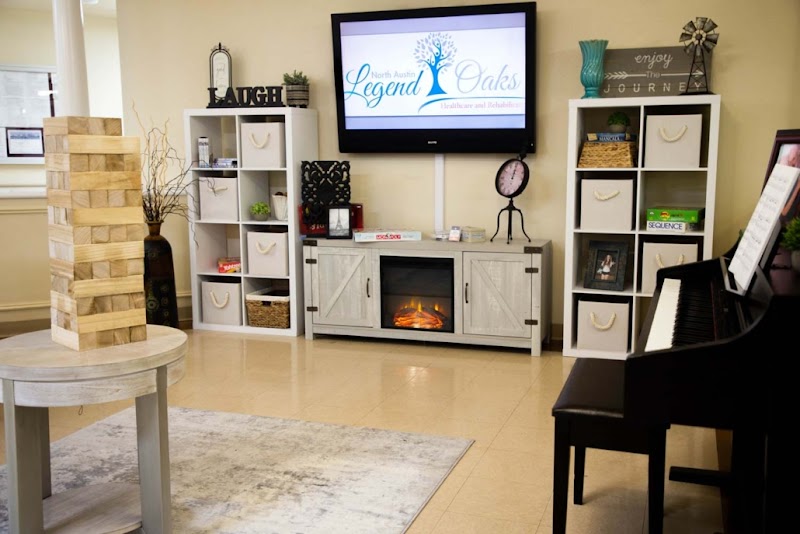
Who Owns and Operates Legend Oaks Healthcare And Rehabilitation - North?

LEGEND OAKS HEALTHCARE AND REHABILITATION - NORTH is owned by a for-profit company. For-profit facilities operate as businesses with obligations to shareholders or private owners. The facility is operated by THE ENSIGN GROUP, a chain that manages multiple nursing homes. With 124 certified beds and approximately 115 residents (about 93% occupancy), it is a mid-sized facility located in AUSTIN, Texas.
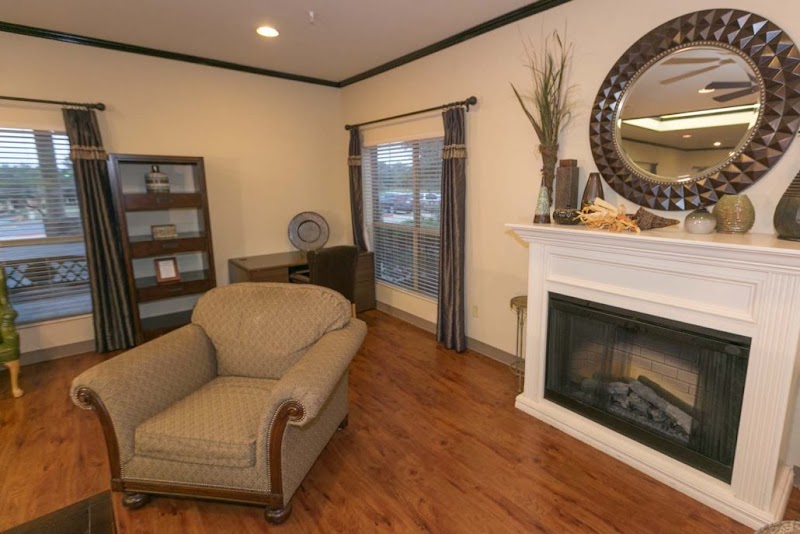
How Does Legend Oaks Healthcare And Rehabilitation - North Compare to Other Texas Nursing Homes?

Compared to the 100 nursing homes in Texas, LEGEND OAKS HEALTHCARE AND REHABILITATION - NORTH's overall rating (4 stars) is above the state average of 2.8, staff turnover (35%) is significantly lower than the state average of 46%, and health inspection rating (4 stars) is above the national benchmark.

What Should Families Ask When Visiting Legend Oaks Healthcare And Rehabilitation - North?

Based on this facility's data, families visiting should ask: "What changes have been made since the serious inspection findings, and how are you preventing similar issues?" "Can you walk me through typical staffing levels on day, evening, and night shifts?" "Can I visit during a mealtime to observe dining assistance and food quality?" "How do you handle medical emergencies, and what is your hospital transfer rate?" These questions are particularly relevant given the facility's Immediate Jeopardy citations and the below-average staffing rating.

Is Legend Oaks Healthcare And Rehabilitation - North Safe?

Based on CMS inspection data, LEGEND OAKS HEALTHCARE AND REHABILITATION - NORTH has documented safety concerns. Inspectors have issued 3 Immediate Jeopardy citations (the most serious violation level indicating risk of serious injury or death). The facility has a 4-star overall rating and ranks #1 of 100 nursing homes in Texas. Families considering this facility should ask detailed questions about what corrective actions have been taken since these incidents.

Do Nurses at Legend Oaks Healthcare And Rehabilitation - North Stick Around?

LEGEND OAKS HEALTHCARE AND REHABILITATION - NORTH has a staff turnover rate of 35%, which is about average for Texas nursing homes (state average: 46%). Moderate turnover is common in nursing homes, but families should still ask about staff tenure and how the facility maintains care continuity when employees leave.

Was Legend Oaks Healthcare And Rehabilitation - North Ever Fined?

LEGEND OAKS HEALTHCARE AND REHABILITATION - NORTH has been fined $33,640 across 1 penalty action. The Texas average is $33,415. While any fine indicates a compliance issue, fines under $50,000 are relatively common and typically reflect isolated problems that were subsequently corrected. Families should ask what specific issues led to these fines and confirm they've been resolved.

Is Legend Oaks Healthcare And Rehabilitation - North on Any Federal Watch List?

LEGEND OAKS HEALTHCARE AND REHABILITATION - NORTH is not on any federal watch list. The most significant is the Special Focus Facility (SFF) program, which identifies the bottom 1% of nursing homes nationally based on persistent, serious quality problems. Not being on this list means the facility has avoided the pattern of deficiencies that triggers enhanced federal oversight. This is a positive indicator, though families should still review the facility's inspection history directly.