CRITICAL
(J)
Immediate Jeopardy (IJ) - the most serious Medicare violation
Accident Prevention
(Tag F0689)
Someone could have died · This affected 1 resident
**NOTE- TERMS IN BRACKETS HAVE BEEN EDITED TO PROTECT CONFIDENTIALITY** Based on observation, interview, and record review, the facility failed to ensure that the resident environment remained as free...
Read full inspector narrative →
**NOTE- TERMS IN BRACKETS HAVE BEEN EDITED TO PROTECT CONFIDENTIALITY** Based on observation, interview, and record review, the facility failed to ensure that the resident environment remained as free of accident hazards as possible and provided supervision to prevent avoidable accidents for 1 of 5 residents (Resident #134) reviewed for supervision.
The facility failed to ensure Resident #134 received adequate supervision to prevent exiting the facility without facility knowledge on 01/25/2025, when Resident #134 was found outside sitting on the curb of the facility's parking lot with her wheelchair tipped over.
The facility failed to ensure adequate interventions were placed for Resident #134 after exit seeking attempts on 11/18/2024 and 01/25/2025.
The facility failed to review Resident #134's exit incidents to determine triggers that increased her risk for elopement and develop person centered interventions to prevent elopement.
An Immediate Jeopardy (IJ) was identified on 02/04/2025 at 3:20 PM. The IJ template was provided to the facility on [DATE] at 3:40 PM. While the IJ was removed on 02/06/2025, the facility remained out of compliance at no actual harm with potential for more than minimal harm that is not immediate jeopardy with a scope identified as isolated due to the facility's need to complete in-service training and evaluate the effectiveness of the corrective systems.
These failures could place residents at risk of unsafe wandering, accidents, and injuries.
Findings included:
Record review of a face sheet dated 02/04/2025 indicated Resident #134 was an [AGE] year-old female admitted to the facility on [DATE] with diagnoses which included unspecified dementia, unspecified severity, without behavioral disturbance, psychotic disturbance , mood disturbance, and anxiety (loss of memory, language, problem solving and other thinking abilities that were severe enough to interfere with daily life), chronic obstructive pulmonary disease (chronic inflammatory lung condition that affects the respiratory system), and nicotine dependence (use of tobacco products, cigarettes).
Record review of the Quarterly MDS assessment dated [DATE] indicated Resident #134 was understood and understood others. The MDS assessment indicated Resident #134's BIMS score was a 3, which indicated her cognition was severely impaired. Resident #134's MDS assessment indicated she did not exhibit wandering. The MDS assessment indicated Resident #134 used a wheelchair. The MDS assessment indicated Resident #134 was dependent on staff for toileting, showering/bathing and lower body dressing and required partial/moderate assistance with personal hygiene and substantial/maximal assistance with upper body dressing.
Record review of Resident #134's care plan last reviewed 01/03/2025 indicated, she was at increased risk of confusion and disorientation related to a diagnosis of dementia to assist her with decision making, observe for changes in mental status, and use diversional activities as needed. Resident #134's care plan indicated she required supervision with smoking per the facility policy that she was to be supervised by staff until cigarette was finished and properly disposed of. Resident #134's care plan indicated she exhibited exit seeking behavior with a goal that the resident would not leave the building unattended through the next review date. Interventions included to admit to the special care unit, attempt diversional activities as needed, contact the physician and family of attempts to leave the facility, observe frequently, personal secure alarm as ordered, redirect resident as needed, and routine risk assessment.
Record review of Resident #134's Order Summary Report dated 02/06/2025 indicated admit to special care unit (secure unit) with a start date of 01/25/2025.
Record review of Resident #134's January 2025 Treatment Administration Record indicated:
Check functionality and visualization of wander guard/exit management system through wand or alarmed door every night shift with a start date of 11/18/2024 and discontinued date of 01/27/2024 indicated it was completed 01/01/2025-01/25/2025.
Visualization of wander guard/exit management system to right wrist of resident every day shift with a start date of 11/19/2024 and a discontinue date of 01/26/2025 indicated it was completed 01/01/2025-01/26/2025.
Record review of Resident #134's Elopement Evaluations indicated:
Effective date: 11/18/2024 indicated Resident #134 had a history of elopement or attempted leaving the facility without informing the staff, resident verbally expressed the desire to go home packed belongings to go home or stayed near an exit door, wandering behavior with a pattern, and goal directed (specific destination in mind, going home), there were no clinical suggestions indicated.
Effective date: 12/12/2024 indicated Resident #134 had a history of elopement or attempted leaving the facility without informing the staff, resident verbally expressed the desire to go home packed belongings to go home or stayed near an exit door and did not wander.
Effective date: 01/25/2025 indicated Resident #134 had a history of elopement or attempted leaving the facility without informing staff, resident wandered aimlessly or non-goal-directed (confused, moves with purpose, may enter others' rooms and explore others' belongings), resident's wandering behavior was likely to affect the privacy or others and likely to affect the safety or well-being of self/others, no clinical suggestions were indicated.
Record review of Resident #134's progress notes indicated:
11/18/2024 at 10:15 AM, Called to front lobby for fall. Upon arrival resident was seated on the floor in front of her wheelchair. No staff witnessed the fall. Resident was confused and searching for her family member. Resident will be staying in close proximity to a staff member to ensure safety. No noted injury. Assisted back to wheelchair using gait belt and two staff. Signed by RN OOO
11/18/2024 at 10 15 AM, LATE ENTRY Elopement Evaluation: History of elopement while at home: No. Wandering behavior a pattern or goal-directed: Yes. Wanders aimlessly or non-goal-directed: No. Wandering behavior likely to affect the safety or well-being of self / others: No. Wandering behavior likely to affect the privacy of others: No. Recently admitted or re-admitted (within past 30 days) and has not accepted the situation: No. Elopement Score: 3.0 (Score value of 1 or higher indicates Risk of Elopement) Actioned clinical suggestions: (none were listed). Signed by LVN V.
11/18/2024 at 10:15 AM, Date / Time of Fall: 11/18/2024 10:14 AM Fall was not witnessed. Fall occurred elsewhere. Other fall location: Lobby Activity at the time of fall: Attempting to leave The reason for the fall was not evident. Pre-Fall: Fall Risk Score: 2 Post-Fall: Fall Risk Score: 2 Did an injury occur as a result of the fall: No. Did fall result in an ER visit/hospitalization: No. Provider: medical director Time notified: 11/18/2024 Notified of: Unwitnessed fall with no injury and attempt to elope . Signed by LVN V
11/18/2024 at 12:00 PM, Intervention put in place: 1.) Resident added to The Falling Star Program; resident to be monitored and observed by staff for any unsafe practices with staff intervening if/when needed as a part of The Falling Star Program. 2.) Placement of a wanderguard to her wrist as she presents with intermittent confusion - staff will be alerted via system if/when resident leaves facility. This resident's current Fall Care Plan to be reviewed and revised as appropriate. This Quality Assurance Nurse in collaboration with Unit Manager, Charge Nurse and CNA's regarding most recent fall encounter, details of fall encounter and interventions placed for implementation . Signed by RN BBB
11/18/2024 at 1:52 PM, Resident was sitting on the floor with her right knee bent leaning against the bed, grippy socks on call light within reach, wheelchair on opposite side of the bed out of reach, fall mat in place. Resident had pajama's on with housecoat on. Resident was chatting and laughing about fall. Resident stated, I just slid off the bed, I was going to check on my family member. I just slid off the bed, I was going to check on my family member. Signed by LVN V
11/18/2024 at 2:58 PM, Resident was going through the front door in her wheelchair, notified by peer. Resident stated she was looking for I-30, I just need to get home I'm looking for I-30 and my family member brought me here last night. Notified RN Supervisor and assisted in reorienting resident to the present. Resident was assisted back into the facility and taken down to her room, attempted to reinforce this is where she lives now. Showed her the room with her name on it. She acknowledged it was room however she continued to think she would be leaving to go home with her family member. She was offered a snack which she accepted and placed in front of her TV with the show she likes to watch. Resident appeared to be settled at that time. Instructed the CNAs to monitor her whereabouts. Signed by LVN V
11/18/2024 at 3:05 PM, Elopement Evaluation: History of elopement while at home: No. Wandering behavior a pattern or goal-directed: No. Wanders aimlessly or non-goal-directed: No. Wandering behavior likely to affect the safety or well-being of self / others: No. Wandering behavior likely to affect the privacy of others: No. Recently admitted or re-admitted (within past 30 days) and has not accepted the situation: No. Elopement Score: 0.0 Actioned clinical suggestions: (none listed). Signed by LVN V.
11/18/2024 at 3:22 PM, Resident was attempting to go through the front doors and fell on the floor when attempting to open the door. Notified by receptionist. Resident has nonslip socks on, pajamas and housecoat on sitting directly in front of the wheelchair. I don't know what happened, I fell. RN Supervisor was present, resident was assessed for injury and had none. Blood pressure 150/96, Pulse 114, Respirations 20, Temperature 97.5, oxygen saturation-97% on room air. A complete body assessment was performed no injuries were noted. Neuro checks initiated and gait belt was placed around the resident, and she was assisted to a standing position and placed back in her chair. A wander guard was placed on her right wrist. Notified the doctor, notified resident responsible party and family member stated they had been with her yesterday and they did not notice increased confusion. Resident is very confused today stating she needs to leave and find her family member. Resident went into the transport office and sat with an employee had some snacks and neuro checks were initiated. Labs ordered and pending. Signed by LVN V
11/18/2024 at 3:24 PM, Elopement Evaluation: History of elopement while at home: No. Wandering behavior a pattern or goal-directed: Yes. Wanders aimlessly or non-goal-directed: No. Wandering behavior likely to affect the safety or well-being of self / others: No. Wandering behavior likely to affect the privacy of others: No. Recently admitted or re-admitted (within past 30 days) and has not accepted the situation: No. Elopement Score: 3.0 Actioned clinical suggestions: (none listed). Signed by LVN V
01/25/2025 at 7:48 PM, This nurse was notified by oncoming staff that resident was sitting outside on the front porch curb, upon going to assess resident noted sitting on the curb on her buttocks with her wheelchair tipped over in front of her over the curb. Resident voiced I was going to go have a cigarette Vital signs as follows temperature 97.3 blood pressure 132/89 pulse 62 blood sugar 101 respirations 18 oxygen saturation 93%: Resident noted with no wander-guard on her wrist resident was assisted back to her wheelchair she is able to move all extremities without facial grimacing or pain. No internal or external rotation noted to bilateral lower extremities resident denies any pain and continues to voice that she wants to go smoke. Neuros initiated Full head to toe assessment completed with no injury noted. Environmental assessment completed with noted wander- guard observed intact sitting on her bedside table of her shared room: DON notified, Resident to be transferred to memory support unit (secure unit) for safety at this time. Responsible party notified of room change to memory support unit. Immediate Intervention is to transfer resident to memory support unit related to resident removing her wander-guard Medical Director notified of potential fall and room change. Signed by RN DDD
01/25/2025 at 7:48 PM, Elopement Evaluation: History of elopement while at home: No. Wandering behavior a pattern or goal-directed: No. Wanders aimlessly or non-goal-directed: Yes. Wandering behavior likely to affect the safety or well-being of self / others: Yes. Wandering behavior likely to affect the privacy of others: Yes. Recently admitted or re-admitted (within past 30 days) and has not accepted the situation: No. Elopement Score: 5.0 Actioned clinical suggestions: (none listed). Signed by RN DDD
During an interview on 02/04/2025 at 9:58 AM, CNA CCC said when Resident #134 was not on the secure unit she wandered, and she tried to go out of the front door. CNA CCC said Resident #134 would just get to the doors. CNA CCC said Resident #134 always tried to get outside the door and she would do it after visiting with her family member. CNA CCC said Resident #134 had a wander guard. CNA CCC said the day Resident #134 was found outside she had left her shift at 6 PM. CNA CCC said when she left Resident #134 was in her room.
During an interview on 02/04/2025 at 10:48 AM, Unit Manager U said on 01/25/2025, she was on call and was called in to work. Unit Manager U said that night she parked in the front parking spot when she came in and she could see somebody by the handicap parking space. Unit Manager U said when she went to park, she put her lights on, and she could tell it was Resident #134. Unit Manager U said she called the RN supervisor to tell her they needed a blood pressure cuff to assess Resident #134. Unit Manager U said Resident #134's wheelchair was on the left tipped over. Resident #134 was alert and oriented x2, which was her normal. Unit Manager U said she asked her what she was doing, and Resident #134 said she was going to smoke a cigarette. Unit Manager U said the RN supervisor came out and Resident #134 had no pain, no breaks to her skin. Resident #134 repeated she was going to smoke a cigarette. Unit Manager U said Resident #134 was taken back inside the facility, and they took her to smoke. Unit Manager U said Resident #134 continued to voice she was going back out, so they completed an elopement screen, and she was transferred to the unit. Unit Manager U said Resident #134 had pulled off her wander guard, that it was still snapped together, and it was laying on her over bed table. Unit Manager U said Resident #134 was moved to the secure unit that same night. Unit Manager U said, I want to say I came around 7 PM that night. Unit Manager U said RN DDD was the RN supervisor that night. Unit Manager U said she could not recall who the CNAs were that night. Unit Manager U said she did not recall if Resident #134 had a history of elopement, but she had exhibited exit seeking behaviors in November 2024. Unit Manager U reviewed Resident #134's electronic health record and indicated the incident for Resident #134 on 01/25/2025 was timed at 7:48 PM. Unit Manager U said if a resident was experiencing exit seeking behaviors they would run labs, if they continued they would complete an elopement screen, and they moved them to the memory care unit as applicable. Unit Manager U said if a resident was exit seeking they would bring the resident back in, conduct an assessment, and check if they had a physical need that needed to be addressed, check for urinary tract infections, constipation, if redirection was not effective a wander guard would be applied, and if the exit seeking continued the Resident would be placed on the secure unit. Unit Manager U said typically the wander guard was tried first, and if questionable they would go to the DON and collaborate with her to determine the need for placement on the secure unit vs use of the wander guard. Unit Manager U said the nurses should be actively looking to see that the wander guard was on the residents, and she encouraged them to put it on the resident's wrist, so they did not fall from messing with it if it was on the leg.
During an interview on 02/04/2025 at 11:48 AM, the DON said on 11/18/2024 Resident #134 was trying to go through the front door, she fell, a wander guard was placed on her, labs were conduced because that was not normal for her. The DON said Resident #134 usually stayed in her bed and just got up to smoke. The DON said if a resident was having exit seeking behaviors that was out of their normal, they completed an elopement scree. It the resident was exit seeking and had a wander guard then they would go on the secure unit for their safety. The DON said they did a step procedure of putting the wander guard on first to see if they could be controlled. The DON said that was the first defense. If the resident was up and walking that would be considered, they checked for the resident's mobility. Since Resident #134 was wheelchair bound and slow to move in her condition, the wander guard was the best option for her. It depended on the resident's level of mobility and how aggressive they were when trying to leave. If they were truly exit seeking, they always looked at making sure they had a wander guard in place. The DON said to her knowledge Resident #134 did not attempt to exit seek prior to November 2024. The DON said if residents were exit seeking or attempting to elope, they conducted the elopement evaluation. The DON said the wander guard should be checked every shift to ensure it was in place, and the functionality of the wander guard was checked every night. The DON said the nurses should be documenting every shift that the wander guard was in place, one of the checks indicated the wander guard was on and the other indicated the check for the functionality of the wander guard. The DON said on 01/25/2025 Resident #134 went outside and fell at the end of the porch, and that was when they placed her in memory care (secure unit). The DON said Resident #134 was found outside by Unit Manager U. The DON said she did not think Resident #134 had her wander guard on at the time. The DON said she thought at that time was when Resident #134 was staying in the bed all the time, and they had reviewed and assessed to ensure it was no longer required. The DON said she thought she was one of the ones that had a change and did not have it on. The DON said she had asked when the last time Resident #134 was seen on 01/25/2025 and RN DDD said she had seen her 6-7 minutes prior to Unit Manager U finding her outside. The DON said she did not remember if any in-services were conducted related to this incident that she would look and provide them, if they were conducted (none were provided upon exit to the facility). The DON said the residents were not re-evaluated to see if anyone else was at risk of elopement. The DON said they evaluated the residents minute to minute if they had a change. The DON said she remembered Resident #134 had removed her wander guard the night of 01/25/2025 and placed it on her nightstand, and that was why she went to memory care (secure unit). The DON said that night, 01/25/2025, she had the staff check the residents' wander guards to ensure they were in place.
During an interview on 02/04/2025 at 12:38 PM, the Administrator said she expected the staff to follow the elopement policy for the need for a wander guard or secure unit placement. The Administrator said this would be completed by the social worker or nursing that they worked together on these things. The Administrator said when Resident #134 was found outside on 01/25/2025, an incident report was completed and the DON took care of it all since she was just an interim administrator. The Administrator said the wander guards should be checked and assessed to ensure the residents did not elope and for the safety of the residents.
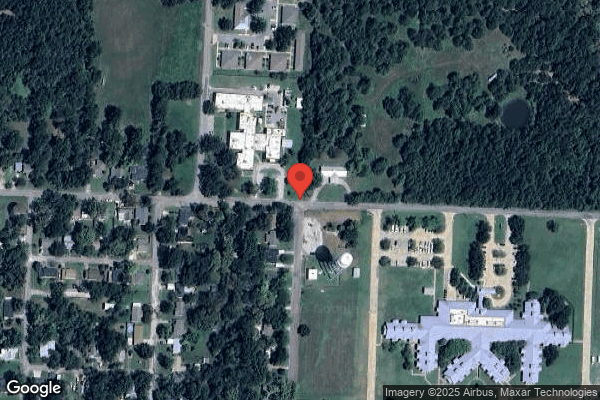
During an observation and interview on 02/04/2025 at 12:58 PM, Unit Manager U walked outside and indicated to the state surveyor where she found Resident #134 the night of 01/25/2025. Unit Manager U said she had seen Resident #134 sitting on the curb where the handicap parking space was. Unit Manager U said it appeared like Resident #134's wheelchair had rolled down the little ramp and tilted over. The location where Resident #134 was found was approximately 40 feet from the facility's front door entrance.
During an interview on 02/04/2025 at 3:48 PM, CNA HHH said the night (01/25/2025) Resident #134 got out, Resident #134 was trying to leave, and they had caught her a couple times that evening at the double doors (the front entrance of the facility). CNA HHH said they brought her back to the hall and tried to watch her. CNA HHH said she knew when Resident #134 got out she was in the shower room. CNA HHH said they kept leaving her at the nurse's desk, and the CNA she was working with tried to lay her down. CNA HHH said she notified RN DDD that Resident #134 was trying to leave, and RN DDD also saw Resident #134 was trying to leave. CNA HHH said they tried to keep an eye on Resident #134 and do one-on-one, but they were short that night. CNA HHH said it was just her and CNA KKK. CNA HHH said since she arrived for her shift Resident #134 was trying to leave. CNA HHH said when a resident was exit seeking, she tried to redirect them and bring them back in and keep them with her. CNA HHH said she tried to figure out what they were wanting so she could give it to them. CNA HHH said she believed Resident #134 was wanting to go smoke, and they were not able to take her to smoke at that moment. CNA HHH said it was important to ensure the residents did not leave the facility without their knowledge, so they did not get out and get hurt.
During an interview on 02/04/2025 at 4:01 PM, RN DDD said she did not remember where in the building she was when she received the phone call from Unit Manager U that Resident #134 was outside. RN DDD said Unit Manager U had gone to the facility to relieve someone and she saw Resident #134 close to the parking lot she was sitting on the curb. Unit Manager U said Resident #134 was outside, and RN DDD ran out and Resident #134 was sitting on the curb and the wheelchair was dumped forward. RN DDD said she did not know if Resident #134 had fallen. They assessed Resident #139, and she did not have any injuries. RN DDD said Resident #134 told them she was going to smoke so they brought her back into the facility. RN DDD said she wondered why the doors did not alarm, and when they went back to Resident #134's room to see if she had any bruising, RN DDD noticed Resident #134 did not have her wander guard on. It was sitting on the bedside table like Resident #134 had slipped it off. RN DDD said she notified the DON, and they ended up taking Resident #134 to the memory care (secure) unit. RN DDD said she checked the residents' wander guards, and they were all in place. RN DDD said Resident #134 always went up and down the halls wanting to smoke even if it was not the scheduled time. RN DDD said on 01/25/2025, Resident #134 kept talking about going to smoke up and down the halls, and RN DDD told the staff, Y'all keep an eye on her. RN DDD said they had seen her at the doors exit seeking, and she wanted to go smoke. RN DDD said they just redirected her back. RN DDD said she told the CNAs to watch her until they took her to smoke. RN DDD said she was at the nurse's station the last time she saw Resident #134. RN DDD said she could not remember the timeframe between when she last saw her before Unit Manager U called her. RN DDD said, it was crazy that night. RN DDD said it was important to ensure the residents did not go outside without staff knowledge to keep the residents safe and for nothing to happen to them.
During an interview on 02/05/2025 at 7:39 AM, CNA KKK said he remembered Resident #134 tried to go out of the front doors a couple times prior to being found outside the night of 01/25/2025. CNA KKK said Resident #134 kept trying to go out of the doors because she wanted to smoke. CNA KKK said they caught her, but when he went to care for his residents, he guessed at some point Resident #134 ended up getting out. CNA KKK said he was in a patient room when it happened. CNA KKK said he did not remember the timeframe from the last time he saw Resident #134 to when she was found outside. CNA KKK said RN DDD was aware Resident #134 was attempting to leave and wanted to go smoke, and they were trying to keep an eye on her. CNA KKK said he was not assigned to care for Resident #134 that day (01/25/2025), and he could not remember who the CNAs were that night.
During an interview on 02/06/2025 at 4:37 PM, LVN V said on 11/18/2024 Resident #134 was exit seeking, and she thought they may have tested her for a UTI. LVN V said that was not Resident #134's normal behavior. LVN V said Resident #134 was trying to go home. LVN V said a wander guard was placed on Resident #134, they called her family member, and LVN V tried to keep Resident #134 close to her, but LVN V was doing treatments and other things. LVN V said they tried to keep Resident #134 at the nurse's station and in LVN V's line of sight, but when they turned their back Resident #134 would shoot out. LVN V said the receptionist alerted them to Resident #134 exit seeking on 11/18/20024. LVN V said she thought her family member came by later that day. LVN V said Resident #134 said if she could smoke, she would lay down.
Record review of the facility's policy, Elopement, revised August 2013, indicated, To provide early identification of residents at risk for elopement and provide a secure environment. 1. Upon admission, quarterly, and with significant change, the resident will be screened for elopement risk utilizing the elopement screen form. 2. If the resident is considered to be at risk for elopement, preventative measures will be implemented: a. A care plan problem addressing the risk of elopement with a new preventative measure addressing each elopement. b. Preventative measures such as a door alarm system or other devices may be used taking into account the least restrictive measure necessary to reduce elopement risk. 3. Nursing to check placement of security bracelet each shift and function of bracelet each day. Record both in the clinical record . 5. It is the responsibility of staff members to report to a nurse if a resident attempts to leave facility. 6. Staff members will be trained on the elopement policy and procedures during orientation and ongoing . 5. The facility has an eyes on policy where residents are observed every two hours or more frequently if deemed necessary. 6. The facility completes a care plan on all residents who are at risk for elopement to identify to the staff interventions to attempt to prevent elopement from the facility .
This was determined to be an Immediate Jeopardy (IJ) on 02/04/2025 at 3:20 PM. The facility Administrator and the DON were notified. The Administrator was provided with the IJ template on 02/04/2025 at 3:40 PM and a Plan of Removal was requested.
The facility's plan of removal was accepted on 02/05/2025 at 10:15 AM and included the following:
PLAN OF REMOVAL
Facility
Date: 2/4/2025
Immediate action:
Upon notification the resident was assisted to re-enter the facility and assessed per RN on 1/25/25 at 1948 (7:48 PM) with no injuries noted. The MD and responsible party were notified with new orders for resident to move to the secured memory care unit.
The resident's care plan was updated on 2/4/2025 to include personalized interventions and potential triggers for exit seeking behavior by the Director of Nursing and/or Social Worker. The new interventions added include triggers that may cause the resident to exit seek and interventions staff can use to redirect the resident. 100% of available staff that provide care to the resident will be trained on 2/5/2025 by 10:00 a.m. and all others will be trained prior to their next scheduled shift by the Director of Nursing/Designee.
100% of all available staff will be trained on 2/4/2025 and all other staff will be trained before their next scheduled shift on elopement procedures and managing exit seeking behaviors by the Director of Nursing and/or designee. A posttest will be completed at the end of training to ensure effectiveness of training.
Social Workers were educated on 2/5/2025 by the DON on resident specific care plan interventions and identifying triggers related to exit seeking behaviors.
Elopement drills will be conducted on an ongoing quarterly basis to include all shift beginning with day shift on 2/5/2025 by 4 pm.
Elopement Risk book will be reviewed and updated by Social Worker/Designee on 2/5/2025. This book contains identification information on residents at risk for wandering. Picture of resident as well as face sheet are included. Book is available to all staff with copy at receptionist desk and on each nursing unit. 100% of all available staff will be trained on the elopement book by Social Worker/designee on 2/5/2025 by 4 pm. All other staff will be trained before their next scheduled shift on the elopement book. If a resident exit seeks or has an elopement attempt/incident staff have been educated on what interventions to implement as part of the elopement/exit seeking training beginning on 2/4/2025.
All doors with the wanderguard system will be checked to ensure proper function on 2/5/2025 by facility maintenance staff.
Elopement Risk will be completed on all residents by DON/Designee by 2/5/25. Any resident identified with elopement risk will have interventions in place. These will include but not be limited to Wander Guard, Secure Unit, frequent checks and the Care Plan will be updated. These updates will reflect resident specific interventions. Residents with any risk will have interventions implemented.
Elopement policy was reviewed and updated as indicated on 2/4/2025 by Regional Clinical Consultant. This was included in training being provide to staff on Elopement. As a component of the elopement policy, the Electronic Monitoring policy was updated to reflect changes made to the Elopement Risk Assessment.
Medical Director was notified of IJ on 2/4/2025 at 5:47 PM.
Facility QAPI meeting will be held on 2/5/2025 at 8 AM to discuss POR.
This Plan of Removal will be completed by 4:00 PM on 2/5/2025.
On 02/06/2025 the state surveyor confirmed the facility implemented their plan of removal sufficiently to remove the Immediate Jeopardy (IJ) by:
Record review of Resident #134's care plan indicated it was revised on 02/04/2025 to include personalized interventions and triggers for exit seeking behavior.
Record review completed on all residents' Elopement Risks, and reviewed the care plan of all residents who were at risk for elopement to ensure their care plans included resident specific interventions.
Record review completed of the Elopement Policy and the Electronic Monitoring policy to ensure it was updated.
Record review
CRITICAL
(K)
Immediate Jeopardy (IJ) - the most serious Medicare violation
Pressure Ulcer Prevention
(Tag F0686)
Someone could have died · This affected multiple residents
**NOTE- TERMS IN BRACKETS HAVE BEEN EDITED TO PROTECT CONFIDENTIALITY** Based on observation, interviews and record review, the facility failed to ensure the necessary treatment and services, in accor...
Read full inspector narrative →
**NOTE- TERMS IN BRACKETS HAVE BEEN EDITED TO PROTECT CONFIDENTIALITY** Based on observation, interviews and record review, the facility failed to ensure the necessary treatment and services, in accordance with comprehensive assessment and professional standards of practice, to prevent development of pressure injuries was provided for 1 of 6 Residents (Resident #74) reviewed for pressure injuries.
1. The facility failed to provide care to prevent pressure ulcer or injury development for Resident #74. Resident #74 broke his right ankle and a soft splint was applied on 07/13/24. The facility failed to obtain a clarification order from the doctor related to Resident #74's splnt care. Resident #74 developed 4 unstageable deep tissue injuries to his right foot and possible osteomyelitis.
An IJ was identified on 02/05/25. The IJ template was provided to the facility on [DATE] at 4:57 PM. While the IJ was removed on 02/06/25, the facility remained out of compliance at a scope of pattern and a severity level of no actual harm with potential for more than minimal harm that is not immediate jeopardy because all staff had not been trained on pressure ulcer prevention and management, cast and splint care, and turning and repositioning .
This failure could potentially place residents at risk of development of pressure ulcers, worsening pressure ulcers, and infections.
The findings included:
Record review of the face sheet, dated 02/07/25, reflected Resident #74 was an [AGE] year-old male who initially admitted to the facility on [DATE] with diagnoses of dementia (memory loss) and diabetes mellitus (high blood sugar). The face sheet further revealed two stage 3 pressure ulcers to the right heel and left heel (wound caused from pressure with full-thickness skin loss) developed after admission and a stage 4 pressure ulcer to other site (wound caused from pressure with exposed muscle, tendon, or bone) developed after admission.
Record review of the quarterly MDS assessment, dated 01/08/25, reflected Resident #74 had clear speech and was understood by others. The MDS reflected Resident #74 was able to understand others. The MDS reflected Resident #11 had a BIMS score of 11, which indicated moderately impaired cognition. The MDS reflected Resident #74 had no behaviors or refusal of care. The MDS reflected Resident #74 normally used a wheelchair and had impairment to both lower extremities. The MDS reflected Resident #74 required substantial/maximal assistance to partial/moderate assistance with bed mobility and transfers. The MDS reflected Resident #74 had one or more unhealed pressure ulcers/injuries and was receiving treatments that included: pressure reducing device for chair, nutrition or hydration interventions to manage skin problems, pressure ulcer/injury care, and applications of ointments/medications other than to feet.
Record review of the comprehensive care plan, initiated on 04/17/24, reflected Resident #74 was at risk for complications related to edema to bilateral lower extremities. The interventions included: encourage elevation of bilateral lower extremities as tolerated.
Record review of the comprehensive care plan, revised on 07/16/24, reflected Resident #74 had impaired mobility related to weakness. The interventions included: assist with positioning, transfers and ambulation as necessary and no weight bearing to right lower extremity.
Record review of the comprehensive care plan, revised 07/16/24, reflected Resident #74 was at risk for complications related to fracture of right lower leg. The interventions included: no weight bearing to right lower extremity, consult with orthopedic doctor, follow up with orthopedic as ordered/needed, notify physician as needed, observe extremities every shift for signs of complications (redness, swelling, fever, poor circulation, pain) and intervene as appropriate, and provide proper body alignment and safety as possible. An intervention was added on 07/29/24 for right tall CAM boot on at all times; off only for showers.
Record review of the discontinued and completed orders, between 04/29/24 and 7/26/24, reflected Resident #74 had no orders for the care of his soft splint that was placed on 07/13/24.
Record review of the MAR/TAR, dated July 2024, reflected Resident #74 had no treatment or orders for splint care. The TAR reflected orders were started on 07/26/24 for pressure ulcer wound care.
Record review of the body audit form, dated 07/12/25, reflected Resident #74 had redness and discoloration to his right knee, left ear lobe, left upper elbow, left lower forearm and hand, upper elbow, left inner elbow discoloration, left index knuckle, right inner forearm discoloration, and right small discoloration to hip after a fall that occurred on 07/12/24. The body audit form did not reveal any pressure ulcers.
Record review of the emergency room records, dated 07/13/24, reflected Resident #74 had an ankle fracture and a soft splint was applied. The care instructions included: do not put weight on the splint, keep leg raised when sitting or lying down, keep cast or splint dry at all times, and place an ice pack over the injured area for no more than 15 to 20 minutes. The follow-up care instructions included: follow up with healthcare provider in 1 week, or as advised, if you were given a splint, it may be changed to a cast or boot after the swelling goes down. The instructions did not specify do not remove.
Record review of the body audit form, dated 07/14/24, reflected Resident #74 had skin issues (such as redness, broken areas, darkened or bruised areas) to ears, elbows, lower arms, hands/fingers, and hips. The additional comments section reflected acute mildly displaced distal fibula fracture to right leg. (broken right leg at the ankle) The body audit form did not reveal any pressure ulcers.
Record review of the total body skin assessment, dated 07/15/24, reflected Resident #74 had good elasticity, normal skin color, warm skin, normal moisture, and normal condition. The assessment reflected Resident #74 had no new wounds.
Record review of the body audit form, dated 07/20/24, reflected Resident #74 had skin issues (such as redness, broken areas, darkened or bruised areas) to lower legs. The additional comments section reflected acute mildly displaced distal fibula fracture (broken right ankle) to the right leg. Cast remains on leg.
Record review of the Braden Scale for Predicting Pressure Sore Risk assessment, dated 07/26/24, reflected Resident #74 had a score of 15, which indicated he was at risk for pressure ulcer development.
Record review of Resident #74's progress notes from 07/04/24 to 08/03/24, reflected the following:
07/13/24 at 3:20 PM Resident #74 was hurting bad and screaming with pain to his ankle, he was sent to the emergency room.
07/13/24 7:40 PM Resident #74 returned from the hospital with a diagnosis of right ankle fracture. The note did not reflect any orders or care orders for a soft splint.
07/13/24 9:09 PM The NP was notified of Resident #74's return to facility. Verbal orders were obtained for pain medications. The note did not reflect any orders or care orders for a soft splint. The note did not reflect the NP was notified of the soft splint to his ankle.
07/14/24 2:57 PM The note did not mention a soft splint or care to Resident #74's right ankle.
07/14/24 9:39 PM The note did not mention a soft splint or care to Resident #74's right ankle.
07/15/24 3:23 PM Resident #74 was resting in bed with splint in place to right lower leg extremity. No neurovascular assessment was documented.
07/16/24 12:10 AM Resident #74 was lying in bed with splint in place to right leg. No neurovascular assessment was documented.
07/16/24 12:47 PM Resident #74's splint was intact. No neurovascular assessment was documented.
07/16/8:56 PM Resident #74 was in bed, required assistance of 2 person to reposition. The note stated soft cast was noted to right lower leg. No neurovascular assessment was documented.
07/18/24 11:31 PM The responsible party notified facility of the orthopedic doctor attempting to cancel Resident #74's appointment related to insurance information. Unit Manager voiced concerns of pain, resident begin non weight bearing, skin concerns, diet and quality of life with responsible party.
07/19/24 11:05 AM Resident #74 lying in bed with soft cast to right lower extremity. Resident #74 required Hoyer lift for transfers. No neurovascular assessment was documented.
07/19/24 7:16 PM Resident #74 was non-weight bearing to right leg and Resident #74 required a Hoyer lift for all transfers. The note did not mention the soft splint or a neurovascular assessment.
07/20/24 1:57 PM Resident #74 was non-weight bearing to right leg and Resident #74 required a Hoyer lift for all transfers. The note did not mention the soft splint or a neurovascular assessment.
07/21/24 2:26 AM Resident #74 was non-weight bearing to right leg and Resident #74 required a Hoyer lift for all transfers. The note did not mention the soft splint or a neurovascular assessment.
07/23/24 1:20 AM Resident #74 was non-weight bearing and awaiting a walking boot. The note did not mention the soft splint or a neurovascular assessment.
07/25/24 4:59 PM Resident #74's right leg in cast and required a mechanical lift for transfers to wheelchair. No neurovascular assessment was documented.
07/26/24 11:46 AM The director of rehab received clarification for the right lower extremity as non-weight bearing and wear right tall CAM boot at all times, remove only for showers; remove soft splint.
07/26/24 12:45 PM The Treatment Nurse documented the following unstageable wounds:
1. Unstageable deep tissue injury to right mid dorsal foot (top of right foot), which measured 5.5 cm x 2 cm. Unable to determine depth. (Later identified as a stage 4 pressure ulcer.)
2. Unstageable deep tissue injury to right plantar 5th metatarsal area (side of foot near 5th toe) which measured 1 cm x 1.5 cm. Unable to determine depth. (Later healed.)
3. Unstageable deep tissue injury to right heel which measured 1.5 cm x 2 cm. Unable to determine depth. (Later identified as a stage 3 pressure ulcer.)
4. Unstageable deep tissue injury to left heel which measured 2.5 cm x 3 cm. Unable to determine depth. (Later identified as a stage 3 pressure ulcer.)
Record review of the Orthopedic progress note, dated 07/22/24, reflected Resident #74 was seen by the doctor with new orders for a right tall CAM walker boot x 99 months . The progress note did not specify do not remove the soft splint.
Record review of the nursing progress note, dated 02/04/25, reflected Resident #74 had a vascular appointment in which they were concerned for osteomyelitis (bone infection) and ordered several x-rays to his right foot.
Record review of the radiology results report, dated 02/05/25, showed Resident #74 had potential osteomyelitis to the distal second and third metatarsal (bones of the foot).
Record review of the e-mailed statement, dated 02/05/25 at 9:22 PM, reflected the NP stated Resident #74 returned to the facility after a short acute hospital stay for a right ankle fracture. The NP stated the staff notified her of his return and were concerned there was no instructions on care for the splinted leg. The NP stated she instructed the staff to follow up with orthopedist for instructions on care, when she was asked about removal of the splint, she instructed them to leave it in place until guidance was received on care from orthopedist.
During an interview on 02/03/25 beginning at 11:32 AM, Resident #74 stated he had developed wounds after he broke his leg at the facility. Resident #74 was unable to remember details of the incident as it happened in July 2024.
During an observation and interview on 02/05/25 beginning at 8:54 AM, the Treatment Nurse performed wound care on Resident #74 in 3 locations, his left heel, top of his right foot, and his right heel. The Treatment Nurse explained the wound to his left heel started out as unstageable and was later staged at a stage 3 pressure wound. The Treatment Nurse stated the wound to his right heel was also started out as unstageable and was later identified as a stage 3 pressure wound. The Treatment Nurse stated the wound to the top of his right foot was unstageable at first and was later staged at a stage 4 because he had exposed tendon. The wound observed. It was open and tendon was observed.
During an interview on 02/05/25 beginning at 2:33 PM, Unit Manager T stated Resident #74 moved to the C wing after he had already developed the pressure ulcers. Unit Manager T stated Unit Manager O would have been the one overseeing Resident #74's care during the month of July 2024.
During an interview on 02/05/25 beginning at 2:38 PM, Unit Manager O said she did not remember Resident #74's care back in July 2024. Unit Manger O stated she was unsure she was even the one overseeing his care during that time. Unit Manager O said she was unsure what type of care Resident #74 needed prior to the fall on 07/12/24. Unit Manager O stated if a resident had a splint/cast the nurses should have been assessing the area every shift. Unit Manager O stated the site should have been assessed for redness, warmth, pain, or any rubbing or tightness. Unit Manager O stated it would have depended on the doctors' orders if it was removed or remained in place. Unit Manager O stated if orders were not obtained then the physician should have been contacted and order clarifications received.
During an interview on 02/05/25 beginning at 2:43 PM, the Orthopedic doctor stated Resident #74 was seen at the facility after a right ankle fracture. The Orthopedic doctor stated Resident #74 had a soft splint at the appointment. The Orthopedic doctor stated he instructed Resident #74 and the people who accompanied him to the appointment that he was able to remove the splint for showers, therapy, and assessments. The Orthopedic doctor stated if he did not want the splint removed, he would have specified in his notes.
During an interview on 02/05/25 beginning at 2:48 PM, LVN XX stated she was unable to remember Resident #74 receiving pressure ulcers or breaking his ankle. LVN XX stated she remembered he was always happy and required help with transfers. LVN XX stated if a resident was at risk for developing pressure ulcers, wound care should have been consulted and involved in the care. LVN XX stated if a resident had a soft splint, it should have been assessed for skin breakdown or redness. LVN XX stated a resident should have been turned and repositioned every 2 hours if they were immobile. LVN XX stated the nurse of the floor should have clarified orders with the physician if it did not specify removal of the splint for showers or assessment.
During an interview on 02/05/25 beginning at 3:24 PM, CNA KK stated she remembered Resident #74 when he was on her hallway. CNA KK stated Resident #74 required a one person assistance with his ADLs including dressing, bathing, transfers, and personal hygiene. CNA KK stated when Resident #74 broke his leg, then he required a two person assistance with transfers and use of mechanical lift. CNA KK stated the nurses let them know he had a change of condition and she noticed he stayed in the bed more often. CNA KK stated the staff floated the leg that was hurt and changed his position when he asked. CNA KK stated she remembered he complained of pain to his leg.
During an interview on 02/05/25 beginning at 3:56 PM, the Treatment Nurse stated she did not take over Resident #74's care until he developed the wounds. The Treatment Nurse said Resident #74 had a soft cast placed from the hospital and she was told by the nurse not to remove the splint until he followed up with the orthopedic doctor. The Treatment Nurse stated she assumed orders were in place by the nurse who received the orders. The Treatment Nurse stated once the wounds developed, she immediately assessed the wounds, notified the doctor, implemented treatment orders, and updated his care plan.
During an interview on 02/05/25 beginning at 5:34 PM, Escort CNA OO stated she remembered taking Resident #74 to his orthopedic appointment on 07/22/24. Escort CNA OO stated the orthopedic doctor did not remove the dressing or splint to his right lower leg because it was fresh. Escort CNA OO said the orthopedic doctor said not to remove the splint until the CAM boot was received by the facility. Escort CNA OO stated she reported the information to LVN XX on the day of the appointment. Escort CNA OO stated LVN XX and the DOR asked for the orders from the orthopedic doctor on 07/26/24 and she told them again. Escort CNA OO stated the DOR then called the orthopedic office for clarification orders. Escort CNA OO stated Resident #74's family member was at the appointment with him and heard the same orders.
During an interview on 02/05/25 beginning at 5:44 PM, the DON stated the NP gave the verbal order after Resident #74 returned from the emergency room with the soft splint to not remove it. The DON stated the orders should have been placed in the computer and documented. The DON stated she was looking for the orders.
During an interview on 02/07/25 beginning at 12:52 PM, the DON stated she expected the nursing staff to ensure preventable measures were in place to prevent pressure ulcer development. The DON stated she expected orders to have been clarified if they were unclear. The DON stated interventions and order clarifications should have been documented to prove that things were completed and promote continuity of care.
During an interview on 02/07/25 beginning at 1:15 PM, the Administrator stated she was not at the facility in July 2024. The Administrator stated she expected pressure ulcers to have been reviewed daily during the clinical stand up meetings. The Administrator stated if actions were needed, she expected the actions to have been completed immediately. The Administrator stated she expected the doctors' orders to have been followed and documented in the clinical record. The Administrator stated if it wasn't documented, it was not done. The Administrator stated it was important to ensure pressure ulcer prevention was implemented because it could affect the outcome of the health of the residents.
Record review of the Wound Intervention and Prevention policy, dated 12/2023, reflected identify residents being at risk for alteration in skin integrity .limited transfer and bed mobility; bed/chair bound; unable to reposition self .assure proper tissue load management .reposition resident when in bed or in chair .use proper position technique and positioning device .
Record review of the Cast Care policy, dated June 2024, reflected protect from moisture, position the cast to prevent the edge from pinching or pressing into the skin .observe for persistent pain/swelling .circulation checks - observe for warmth, color, edema, and adequate capillary refill to effected extremity every shift .elevate if needed .
This was determined to be an Immediate Jeopardy (IJ) on 02/05/25 at 4:45 PM. The Administration and the DON were notified. The Administrator was provided the IJ template on 02/05/25 at 4:57 PM and a plan of removal was requested.
The following plan of removal submitted by the facility was accepted on 02/06/25 at 8:26 AM and included the following:
Immediate action:
On 07/26/24, PT and Charge Nurse removed the soft cast and observed skin impairments. The Treatment Nurse was notified, the areas were evaluated, and the physician was notified. New orders for wound care were initiated. The soft cast remained off and a CAM boot was applied that could be removed for showers allowing skin checks. Care plans were initiated for the skin impairments.
100% of all available direct care staff will be trained on 02/05/25 by the DON or designee and all other direct care staff will be trained before their next scheduled shift on skin check procedures for residents with a splint or cast and wound care prevention. A post-test will be completed at the end of training to ensure effectiveness of training.
100% of all available licensed nurses will be trained on 02/05/25 by the DON/Designee on following physician's orders. All others will be trained before their next scheduled shift.
The Wound Nurse received 1:1 (one on one) education on caring for a resident with a cast/splint, following physician's orders and wound care prevention per the Regional Nurse Consultant on 02/05/25.
Skin audits were completed on all residents by the DON/Designees on 02/05/25. No new pressure injuries were identified during the audit.
Care plans were audited for all residents with pressure ulcers and/or risk for pressure ulcers to ensure interventions were accurate and in place by the DON/Designee on 02/05/25.
On 02/05/25, The DON/Designee reviewed current resident care needs for any resident with a device that is not/cannot be removed. No residents currently reside in the facility with devices that cannot be removed.
On 02/05/25 100% audit of all residents was completed to ensure weekly skin checks are ordered. No issues identified.
Pressure Ulcer QA tool will be completed on 02/06/25 by 11:00 AM, weekly X 4 weeks, the monthly X 2 months, and then quarterly. The results will be presented to the QAPI committee, and any areas of deficiency will be immediately addressed through education.
Wound Care Prevention policy was reviewed, and no updates were indicated on 02/05/25 by Director of Clinical Operations. This policy was included in the above noted training.
Medical Director was notified of IJ on 02/05/25 at 5:27 PM.
Facility QAPI meeting will be held on 02/06/25 at 8AM to discuss POR.
This Plan of Removal will be completed by 4PM on 02/06/25.
On 02/06/25 the survey team confirmed the facility implemented their plan of removal sufficiently to remove the Immediate Jeopardy (IJ) by:
1. During an interview on 02/06/2025 at 9:25 AM, the Medical Director said he had been notified of the immediate jeopardy. The Medical Director said the facility had sent him the reports to review and the facility was working on monitoring to prevent further issues.
2. Record review of Resident #74's nursing progress notes, dated 07/26/24, reflected the nurse removed the soft splint and noted skin impairments. The Treatment Nurse was notified, and the skin was assessed. 4 new pressure injuries were identified, and the doctor was notified.
3. Record review of Resident #74's TAR, dated July 2024, reflected new treatment orders were initiated and completed for the 4 new pressure injuries. The TAR also revealed a CAM boot was applied after the soft splint was removed .
4. Record review of the comprehensive care plan, dated 07/26/24, reflected Resident #74 had care plans in place for the 4 pressure areas identified after the soft splint was removed.
5. Record review of the shower/bath sheet used for the skin audit, dated 02/05/25, reflected all residents received a skin assessment with no new skin areas identified.
6. Record review of the care plan detail report used for the care plan audit, dated 02/05/25 - 02/06/25 reflected all residents with pressure ulcers or residents at risk for pressure ulcers were reviewed and updated.
7. Record review of the order summary report, dated 02/05/25, reflected all residents had an order for weekly skin reviews.
8. Record review of the Pressure Ulcer QA tool, dated 02/06/25, reflected each resident identified with pressure ulcers, including Resident #74, had no identified issues.
9. Record review of the QAPI sign-in sheet, dated 02/06/25 at 8 AM, reflected the meeting was held with multiple department heads in attendance.
10. Record review of the in-service training on wound intervention, prevention, and turning and repositioning, un-dated, reflected education was provided to the facility staff. There were 64 signatures.
11. Record review of the pressure ulcer prevention post-test, dated 02/05/25 to 02/06/25, reflected CNA X, CNA DD, CNA EE, CNA FF, CNA GG, CNA F, CNA HH, CNA KK, CNA LL, CNA MM, CNA NN, CNA PP, CNA QQ, CNA RR, CNA SS, CNA UU, CNA VV, CNA WW, Escort CNA OO, Escort CNA TT, MA Y, MA Z, MA W, MA BB, MMA CC, LVN H, LVN K, LVN G, LVN L, LVN M, LVN N, LVN P, LVN Q, LVN V, RN AA, Unit Manager O, Unit Manager R, Unit Manager T, Unit Manager U, Unit Manager A, Treatment Nurse, MDS Coordinator D, Quality Assurance Nurse, and ADON S were able to answer all questions appropriately including turning and repositioning residents at risk for pressure ulcers at least every 2 hours, factors that could increase the risk for pressure ulcers, and the purpose of using pressure-reliving devices.
12. Record review of the in-service training on cast care, undated, reflected education was provided to facility staff. There were 64 signatures.
13. Record review of the cast care post-test, dated 02/05/25 to 02/06/25, reflected CNA X, CNA DD, CNA EE, CNA FF, CNA GG, CNA F, CNA HH, CNA KK, CNA LL, CNA MM, CNA NN, CNA PP, CNA QQ, CNA RR, CNA SS, CNA UU, CNA VV, CNA WW, Escort CNA OO, Escort CNA TT, MA Y, MA Z, MA W, MA BB, MMA CC, LVN H, LVN K, LVN G, LVN L, LVN M, LVN N, LVN P, LVN Q, LVN V, RN AA, Unit Manager O, Unit Manager R, Unit Manager T, Unit Manager U, Unit Manager A, Treatment Nurse, MDS Coordinator D, Quality Assurance Nurse, and ADON S were able to answer all questions appropriately including monitoring warmth, color, adequate capillary refill every shift, and notifying the physician or nurse if resident is complaining of severe pain.
14. Record review of the in-service training on physician orders, dated 02/05/25, reflected the nurses were provided education on ensuring clear communication of orders, documentation of orders, verifying orders with care team, implementing orders timely, monitoring, and evaluating outcomes and engaging the family and resident. There were 26 signatures.
15. Record review of the employee counseling form, dated 02/05/25, reflected the Treatment Nurse was provided a verbal warning. The employer statement was a resident returned to the facility on [DATE] with a soft splint. The treatment nurse did not ensure that appropriate treatment orders were in place for splint care to ensure the resident was free from complications.
16. During an interview on 02/06/25 between 1:30 PM and 3:41 PM, CNA X, CNA DD, CNA EE, CNA FF, CNA GG, CNA F, CNA HH, CNA KK, CNA LL, CNA MM, CNA NN, CNA PP, CNA QQ, CNA RR, CNA SS, CNA UU, CNA VV, CNA WW, Escort CNA OO, Escort CNA TT, MA Y, MA Z, MA W, MA BB, MMA CC, LVN H, LVN K, LVN G, LVN L, LVN M, LVN N, LVN P, LVN Q, LVN V, RN AA, Unit Manager O, Unit Manager R, Unit Manager T, Unit Manager U, Unit Manager A, Treatment Nurse, MDS Coordinator D, Quality Assurance Nurse, and ADON S were able to verbalize residents at risk for pressure ulcers, interventions for pressure ulcer preventions, procedure for turning and repositioning, and procedures for cast/splint care.
17. During an interview on 02/06/25 between 1:30 PM and 3:41 PM, LVN H, LVN K, LVN G, LVN L, LVN M, LVN N, LVN P, LVN Q, LVN V, RN AA, Unit Manager O, Unit Manager R, Unit Manager T, Unit Manager U, Unit Manager A, Treatment Nurse, MDS Coordinator D, Quality Assurance Nurse, and ADON S were able to verbalize the correct procedure for obtaining physician orders including when to clarify orders and documentation of the orders.
The Administrator and DON were informed the IJ was removed on 02/06/25 at 3:51 PM. The facility remained out of compliance at a scope of pattern and a severity level of no actual harm with a potential for more than minimal harm that is not immediate jeopardy due to the facility's need to evaluate the effectiveness of the corrective systems that were put into place.
CONCERN
(D)
Potential for Harm - no one hurt, but risky conditions existed
Resident Rights
(Tag F0550)
Could have caused harm · This affected 1 resident
**NOTE- TERMS IN BRACKETS HAVE BEEN EDITED TO PROTECT CONFIDENTIALITY** Based on observation, interview, and record review the facility failed to treat each resident with respect and dignity and provi...
Read full inspector narrative →
**NOTE- TERMS IN BRACKETS HAVE BEEN EDITED TO PROTECT CONFIDENTIALITY** Based on observation, interview, and record review the facility failed to treat each resident with respect and dignity and provide care in a manner that promotes maintenance or enhancement of his or her quality of life for 1 of 32 residents (Resident #2) reviewed for resident rights.
The facility failed to ensure CNA FFF treated Resident #2 with respect and dignity when Resident #2 asked CNA FFF to provide incontinent care before he ate his lunch and CNA FFF failed to comply with Resident #2's request during lunch on 02/03/25 and she told him I just changed you 5 minutes ago.
This failure could place residents at risk for diminished quality of life, loss of dignity, and self-worth.
Findings included:
Record review of Resident #2's face sheet indicated he was a [AGE] year-old male who admitted to the facility on [DATE] with the diagnoses of bipolar disorder (disease characterized by periods of depression and elevated moods), anxiety disorder (feelings of dread over anticipated events), history of traumatic brain injury (injury caused by external force), and pain.
Record review of Resident #2's quarterly MDS dated [DATE] indicated he made himself understood and understood others. The MDS also indicated he had a BIMS score of 10 which meant he had moderate cognitive impairment. The MDS also indicated Resident #2 was always incontinent of bowel and bladder and was dependent on staff for toileting.
Record review of Resident #2's undated Care plan indicated Resident #2 required assistance with ADLs related to contractures of his hands, and he had an alteration in elimination related to incontinence of bowel and bladder. The Care plan also indicated interventions for the staff to assist with toileting as needed.
During an observation on 02/03/25 at 11:48 AM CNA FFF was walking out of Resident #2's room as he was overheard asking her to change his brief before he ate his lunch. She continued to walk up the hallway.
During an observation and interview on 02/03/25 at 11:50 AM Resident #2 was sitting in his room in his wheelchair and said, he was waiting on the staff to change him before he ate his lunch and he had asked them twice already.
During an observation on 02/03/25 at 11:58 AM there were 2 staff passing trays out in the hall.
During an interview on 02/03/25 at 12:03 PM CMA GGG said they she would clean Resident #2 prior to his meal. She said all CNAs should have been checking and assisting residents with care before they passed out the meal trays. CMA GGG said she was assisting with passing out the resident trays but did not mind assisting the CNAs with resident care.
During an interview on 02/03/25 at 12:04 PM CNA FFF said she had just changed Resident #2 approximately 5 minutes before, and he asked to be changed again. She said she would have changed him after lunch. CNA FFF said it was considered cross contamination to change a resident with meal trays on the hall. When explained that the trays were not on the hall when Resident #2 asked to be changed, CNA FFF said the drinks were already in the rooms so it would have continued to have been cross contamination. CNA FFF repeated that she could not have changed him because of cross contamination, and she had already checked him at an earlier time and walked away from surveyor.
Record review of the facility policy Resident Rights revised on October 2022 indicated:
Policy: Resident Rights . 1. Resident rights. The resident has the right to a dignified existence, self-determination, and communication with and access to persons and services inside and outside the
facility . 5. Respect and dignity. The resident has a right to be treated with respect and dignity .
CONCERN
(D)
Potential for Harm - no one hurt, but risky conditions existed
Deficiency F0604
(Tag F0604)
Could have caused harm · This affected 1 resident
**NOTE- TERMS IN BRACKETS HAVE BEEN EDITED TO PROTECT CONFIDENTIALITY** Based on observation, interview, and record review, the facility failed to ensure the right to be free from any physical restrai...
Read full inspector narrative →
**NOTE- TERMS IN BRACKETS HAVE BEEN EDITED TO PROTECT CONFIDENTIALITY** Based on observation, interview, and record review, the facility failed to ensure the right to be free from any physical restraints imposed for purposes of convenience and not required to treat medical symptoms for 1 of 5 residents (Resident #59) reviewed for restraint use.
The facility failed to ensure Resident #59 was free of physical restraints when CNA ZZ held his wrist against the bed while providing care on 02/03/2025.
This failure could place residents at risk for a decreased quality of life, a decline in physical functioning and injury.
Findings included:
Record review of a face sheet dated 02/05/2025 indicated Resident #59 was a [AGE] year-old male admitted to the facility on [DATE] with diagnoses which included vascular dementia unspecified severity, without behavioral disturbance, psychotic disturbance, mood disturbance, and anxiety (a condition caused by lack of blood that carries oxygen and nutrients to a part of the brain and can cause problems with reasoning, planning, judgment, and memory) and bipolar disorder, current episode manic severe with psychotic features (a disorder associated with episodes of mood swings ranging from depression lows to manic highs).
Record review of the Quarterly MDS assessment dated [DATE] indicated, Resident #59 was able to make himself understood and understood others. The MDS assessment indicated Resident #59 had a BIMs score of 10, which indicated his cognition was moderately impaired. The MDS assessment indicated Resident #59 required partial to moderate assistance with toileting, showering/bathing self, personal hygiene, and dressing. The MDS assessment indicated Resident #59 did not exhibit rejection of care. Resident #59's MDS assessment did not indicate the use of restraints.
Record review of Resident #59's Order Summary Report dated 02/06/2025 did not indicate any orders for restraints.
Record review of Resident #59's care plan last reviewed 12/19/2024 indicated he required assistance with daily personal care, including oral care related to confusion. Interventions included to assist him with bathing, resident able to bathe self with supervision and cueing, do not rush resident, allot time for resident to complete daily personal care as needed, and staff will assist with dressing and personal grooming. Resident #59's care plan indicated he exhibited anxiety/agitation as evidenced by verbal and physical aggression towards staff and other residents. Interventions included to approach the resident warmly and positively at all times, observe and document behavior as needed, observe for change in mental status, provide diversional activities as needed, provide opportunities for resident to vent feelings, provide a safe environment, reinforce positive behavior, and social service to evaluate and visit with resident as needed.
During an interview and observation on 02/03/2025 at 10:56 AM, Resident #59 said CNA ZZ and her sister (later identified as CNA AAA) had gone in his room and put all their 350 lbs. on him and twisted his arm (left arm). Resident # 59 did not have any redness or bruising to his arms. Resident #59 said it happened about 30 minutes ago. Resident #59 said they went in his room and put soap and water in his hair and eyes and got on his arm and twisted it. Resident #59 said they don't have the right to do that. Resident #59 said everybody but them had been nice to him. Resident #59 said the same 2 CNAs had done it before when he was in the shower. They jumped on him and twisted his arms and put a lot of weight on his wrist, and he could not do anything to them. Resident #59 said he had not reported the incidents to anyone, but he had yelled at the top of his lungs when it happened. Resident #59 said the two CNAs were Spanish.
During an interview on 02/03/2025 at 11:10 AM, Unit Manager T said CNA ZZ and CNA AAA were providing care to Resident #59 (02/03/2025). Unit Manager T said she believed CNA ZZ had a relative employed at the facility, but they did not work together they worked on separate halls. Unit Manager T said she was not sure if Resident #59 had made previous allegations about the CNAs hurting him. Unit Manager T said Resident #59 gets upset with them when he had to bathe. Unit Manager T said none of the residents had ever complained about CNA ZZ or CNA AAA.
During an observation and interview on 02/03/2025 at 11:27 AM, CNA ZZ said she had been employed at the facility for three years and she had always worked on the secure unit. CNA ZZ said earlier in the morning CNA AAA and herself had given Resident #59 a bed bath because he refused to go to the shower. CNA ZZ said Resident #59 refused incontinent care and bathes. CNA ZZ said they needed to change Resident #59's sheets because they were dirty, so they gave him a bed bath. CNA ZZ said Resident #59 was mad, and he was combative. CNA ZZ said, We held his arm. CNA ZZ said she was holding his arm at his wrist down against the bed so he would not punch her coworker. State Surveyor asked CNA ZZ to demonstrate with the use of a water bottle laid against the surface of an overbed table how she held Resident #59's arm. CNA ZZ grabbed the water bottle around with her hand and held it against the table. CNA ZZ indicated she had held Resident #59's wrist down against the bed to prevent him from punching her coworker. CNA ZZ said Resident #59 did not want the bath, but he was really dirty. CNA ZZ said it was Resident #59's shower day, and he refused a lot of showers. CNA ZZ said it had happened before where they (CNA ZZ and CNA AAA) had to hold Resident #59's wrist or sometimes hold hands with him so they could provide care to him. CNA ZZ said if the resident was refusing care, they should re-approach, leave, and then come back. CNA ZZ said she had already tried those things earlier and Resident #59 refused his shower. CNA ZZ said when a resident got combative, she should remove herself from the situation. CNA ZZ said she did not know why she had not removed herself from the situation. CNA ZZ said she continued to bathe Resident #59 because he really needed to be cleaned if he did not get changed, he would get a rash on his bottom. CNA ZZ said she was told if they left the residents dirty that could be considered neglect. CNA ZZ said maybe she should have let somebody else try or should have let the nurses know he was combative. CNA ZZ said Resident #59 was not always combative that sometimes he allowed showers/bathing. CNA ZZ said she did not remember Resident #59 fighting in the shower room.
During an interview on 02/03/2025 at 11:41 AM, CNA AAA said she had worked at the facility for almost 3 years, and she always worked on the unit. CNA AAA said she had never been investigated for abuse. CNA AAA said throughout the morning they had tried to convince Resident #59 to get a shower. CNA AAA said they had already given the other residents their showers and had pushed off Resident #59's shower until the last minute. CNA AAA said Resident #59 had feces on his sheets and that was when she told CNA ZZ that maybe they could give him a bed bath because they could not leave him in feces. CNA AAA said CNA ZZ and herself gathered all the supplies for a bed bath. CNA AAA said they told Resident #59 they needed to change him because he had feces. CNA AAA said they told Resident #59 they had warm water because they knew he preferred warm water, and Resident #59 told them he did not want to. CNA AAA said they tried to at least clean him up. CNA AAA said Resident #59 started to try to hit her, and she moved out of the way then he hit her, and CNA ZZ said, we didn't need to do that and grabbed his hand. CNA AAA said Resident #59 was saying they were putting soap on his private area. CNA AAA said then RN BBB came in and said, Do y'all need help? CNA AAA said they told her they needed some towels. CNA AAA said during the bed bath Resident #59 was saying you're twisting my arm. CNA AAA said Resident #59 did not want the bed bath. CNA AAA said, As CNAs we know we cannot leave him with feces. CNA AAA said she was holding Resident #59's hand to keep him from hitting her. CNA AAA said she did not hold Resident #59's arm or wrist. CNA AAA said CNA ZZ was holding Resident #59's hand against the resident himself to prevent him from hitting her. CNA AAA said she did not remember CNA ZZ holding Resident #59's wrist down against the bed. CNA AAA said they should have tried to find somebody else to provide care to Resident #59 or tried to find a different approach. CNA AAA said when Resident #59 got combative they should have taken a step back and given him a few minutes. CNA AAA said if a resident refused care, they should stop so the residents felt comfortable, and they received the proper care they needed. CNA AAA said providing care to Resident #59 when he refused could harm him mentally and could bring back memories of when he was in the war. CNA AAA said there had not been any incidents in the shower with Resident #59.
During an interview on 02/04/2025 at 12:20 PM, the DON said when she interviewed Resident #59 with the ADON, immediately after the incident (on 02/03/2025) he told them the CNAs grabbed both of his hands and both laid on top of his body while they were bathing him. The CNAs each one took a turn laying on one half of his body, and he said all their body was laid on him. The DON said Resident #59 told them they twisted his wrist during that time, and they had gone in and squirted a bottle of shampoo into his eyes that it was aimed for his hair but went into his eyes. The DON said CNA ZZ and CNA AAA were two of the most patient staff members she had. The DON said Resident #59 said they yanked his pants down and made fun of him, and he told them to quit looking at his dick. The DON said the details were not aligned with what happened. The resident was being aggressive physically. The DON said RN BBB and CNA EEE went in the room because they heard Resident #59 being loud. The DON said they heard him yelling at the CNAs, and the CNAs were not trying to hurt Resident #59 they were just trying to keep him from hitting them. The DON said CNA ZZ and CNA AAA said they would never try to hurt Resident #59 or hold him down. The DON said the CNAs said they put their hand on his arm to try to keep him from hitting them, and that Resident #59 was wet and soapy, and they could not leave him there that way. Informed the DON during the interview with CNA ZZ she said she had held down Resident #59's wrist to the bed to prevent him from hitting her co-worker. The DON said that was not what CNA ZZ had told her. She said both CNAs denied holding Resident #59 down. The DON said when a resident became combative during care the staff should ensure the resident was safe and back away if they could and re-approach later. The DON said CNA ZZ and CNA AAA were trying to get it done and they did not feel safe leaving Resident #59. The DON said what triggered RN BB and CNA EEE to go into the room was that they heard Resident #59 yelling, and they had asked CNA ZZ and CNA AAA if they needed help, but they said they did not need assistance and they left the room because it would have been additional people and they wanted to maintain the resident's dignity. The DON said RN BB and CNA EEE could have swapped out with CNA ZZ and CNA AAA. The DON said she felt CNA ZZ and CNA AAA handled themselves the best they could. The DON said if Resident #59 was refusing his bath from the beginning the CNAs should not have done it. The DON said the CNAs could have contacted her, the nurse, or the social worker to try to reapproach the resident in a different manner. The DON said the CNAs should not have held him down, that added to Resident #59's fury. The DON said it could cause injury, make Resident #59 more mad, it could cause distress, and agitate him which causes further behaviors. The DON said it was the residents' right to refuse and they had choices and needed to be respected that they had to re-approach. The DON said they should maintain respect for the resident as well.
During an interview on 02/04/2025 at 12:42 PM, the Administrator said she had spoken to Resident #59 that morning (02/04/2025), and Resident #59 had told her nobody would hurt him. The Administrator said she expected for the staff to follow the abuse policy. The Administrator said if a resident was refusing a bath/shower the staff should follow the protocol as far as coming back later or getting the charge nurse involved. If the resident was soiled, they could not leave them soiled so they would have to get more folks involved. The Administrator said if the resident was combative, during the bath/shower the staff should handle it according to their training and back away and get help. The Administrator said it was important because the residents could refuse, and it was their duty to try their best to get them the bathing they needed do they were not sitting soiled. Informed the Administrator during interview CNA ZZ said she had held Resident #59's wrist down against the bed to prevent him from hitting her co-worker. The Administrator said she was not supposed to do that. The Administrator said the staff should not hold down the residents because it would be traumatic, and it could trigger trauma.
During an interview on 02/06/2025 at 4:55 PM, RN BBB said when she went to Resident #59's room on 02/03/2025 she knocked on the door and CNA ZZ was on the right of Resident #59's bed and CNA AAA was on the left on his bed. RN BBB said Resident #59 said he was cold. RN BBB said there was soap everywhere, and that Resident #59 was hesitant to roll, he did not want to roll, and the CNAs were trying to roll him. RN BBB said Resident #59 ended up calming down, and the CNAs were able to finish his bed bath. RN BBB said she did not see any wrestling or anything like that, and she did not see any distress or anything. RN BBB said Resident #59 was not yelling and did not seem agitated. RN BBB said the CNAs did not mention to her that Resident #59 did not want a bath. RN BBB said they just asked her to bring them more towels. RN BBB said she asked them if they needed assistance and they replied, no. RN BBB said Resident #59 refused his showers, and he did not like to get showers. RN BBB said if a resident became combative or were resistant to care, the CNAs were supposed to stop care, and ensure the resident was safe, back away, put the bed in the lowest position and call the charge nurse. They should not touch him anymore until he was calm. RN BBB said Resident #59 had the right to refuse. RN BBB said if a resident refused, they should reapproach in a few minutes or get a different staff member to reapproach the situation. RN BBB said if the resident was held down for care to be provided it could be considered abuse, assault, battery, and it was against the residents' rights. RN BBB said it could also exacerbate the residents PTSD and make them fearful, hesitant to want a bath, and could make them shut down mentally.
During an interview on 02/07/2025 at 8:54 AM, CNA EEE said CNA ZZ and CNA AAA had Resident #59's call light on for extra linen and Resident #59 was already undressed, rolled over, and he was screaming and hollering. CNA EEE said she asked Resident #59 what was wrong, and he said they were changing him, and he started screaming and hollering again. CNA EEE said she did not see CNA ZZ or CNA AAA holding Resident #59 down or anything. CNA EEE said she told Resident #59 the CNAs needed to finish. CNA EEE said she gave them the extra linen and left. CNA EEE said Resident #59 often refused to be changed and refused ADL care. CNA EEE said if Resident #59 had refused all day and it was the last round the nurses told them he needs to be changed, he hasn't been changed all day. CNA EEE said sometimes Resident #59 could be pushy and hit normally it's just his cussing. CNA EEE said if a resident was refusing normally, they reported to the charge nurse, waited a little bit, then reapproached. CNA EEE said normally, they tried to do 3 refusals because they went further or charted it as a straight refusal. CNA EEE said if a resident became combative during care, if it was safe, she would leave, redirect, and reapproach. CNA EEE said in some scenarios it was not safe to leave, she said she could try activating the call light or step outside the door to get someone to come help with the resident, or try redirecting or calming the situation, or try offering the resident a reward if they allowed care. CNA EEE said if a resident was refusing care and they provided care it could be considered abuse and neglecting the residents' rights.
During an attempted phone interview on 02/07/2025 at 9:56 AM, RN LLL did not answer the phone.
Record review of the facility's policy titled, Restraints, dated October 2022, indicated, To ensure the resident is free from physical or chemical restraints imposed for the purposes of discipline or convenience and that are not required to treat the resident's medical symptoms . Physical Restraints refers to any manual method or physical or mechanical device, material, or equipment attached or adjacent to the resident's body that the individual cannot remove easily which restricts freedom of movement or normal access to one's body . Convenience refers to any action taken by the facility to control a resident's behavior or manage a resident's behavior with a lesser amount of effort by the facility and not in the resident's best interest.
CONCERN
(D)
Potential for Harm - no one hurt, but risky conditions existed
PASARR Coordination
(Tag F0644)
Could have caused harm · This affected 1 resident
**NOTE- TERMS IN BRACKETS HAVE BEEN EDITED TO PROTECT CONFIDENTIALITY** Based on interview, and record review, the facility failed to ensure individuals with mental health disorders were provided an a...
Read full inspector narrative →
**NOTE- TERMS IN BRACKETS HAVE BEEN EDITED TO PROTECT CONFIDENTIALITY** Based on interview, and record review, the facility failed to ensure individuals with mental health disorders were provided an accurate Preadmission Screening and Resident Review (PASRR) Screenings for 2 of 14 residents (Residents #55 and #61) reviewed for PASRR.
The facility did not ensure the correct PASRR (a preliminary assessment completed for all individuals before admission to a Medicaid-certified nursing facility to determine whether they might have a mental illness or intellectual disability) Level 1 Screening was submitted to the local authority for Residents #55 and #61 who had a diagnosis of mental illness upon admission.
This failure could place residents at risk for a diminished quality of life and not receiving necessary care and services in accordance with individually assessed needs.
Findings included:
1. Record review of Resident #61's face sheet, dated 02/07/25, reflected Resident #61 was a [AGE] year-old male, readmitted to the facility on [DATE] with diagnoses which included PTSD (a disorder in which a person has difficulty recovering after experiencing or witnessing a terrifying event) and dementia (loss of memory, language, problem solving and other thinking abilities that were severe enough to interfere with daily life).
Record review of Resident #61's annual MDS, dated [DATE], reflected Resident #61 indicated Section A1500 asked Is the resident currently considered by the state level II PASRR process to have serious mental ill ness and/or intellectual disability or a related condition? This section was marked 0 which meant No. Section A.1510 Level II Preadmission Screening and Resident Review (PASRR) Conditions did not have A. Serious mental illness, B. Intellectual Disability, or C. Other related conditions checked. Resident #61 understood others and made himself understood. Resident #61 had a BIMS score of 8, which indicated his cognition was moderately impaired. Resident #61 had an active diagnosis of PTSD and depression.
Record review of Resident #61's comprehensive care plan reviewed on 11/15/24, reflected Resident #61 was at risk for complications related to dx of PTSD. The care plan interventions included: allow resident time to express feelings, triggers identified as loud noises and monitor for behavioral changes.
Record review of the PASRR Level 1 Screening form, dated 09/28/21, reflected Resident #61 had no evidence or indicator of dementia or a mental illness.
During an interview on 02/06/25 at 10:15 a.m., MDS Coordinator D stated the MDS Coordinators were responsible for ensuring the PASRR Level 1 was completed accurately. The MDS Coordinator stated when Resident #61's PASRR Level 1 was reviewed and the MDS Coordinator saw it was incorrect the local authority should have been contacted. MDS Coordinator D stated a Form 1012 should have been completed to correct the inaccurate PASRR Level 1. MDS Coordinator D stated it was important for the residents to be screened for PASRR to ensure their evaluated for eligibility and services.
During a telephone interview on 02/07/25 at 9:26 a.m., the Director of MDS stated if a Level 1 was incorrect or a diagnosis was added that was not previously there, she expected a Form 1012 to be completed so the resident could be reevaluated for services. The Director of MDS stated the purpose of the form 1012 is to alert the local authority that the resident required a PASRR evaluation or level 2 screening because of a qualifying diagnosis. The Director of MDS stated the MDS Coordinators were responsible for ensuring the PASRR Level 1 was completed correctly. The Director of MDS stated the prior MDS Coordinators were responsible for ensuring a Form 1012 was completed for Resident #61. The Director of MDS stated an audit was completed quarterly and this should have been caught during one of the audits. The Director of MDS stated it was important for the residents to be screened for PASRR, so the resident had an opportunity to receive the care they need.
During an interview on 02/07/25 at 12:56 p.m., the Administrator stated she expected the MDS Coordinators to submit a Form 1012. The Administrator stated it was important for the residents to be screened for PASRR to provide the right mental healthcare
2. Record review of the face sheet, dated 02/07/25 reflected Resident #55 was a [AGE] year-old male, who initially admitted to the facility on [DATE] with a primary diagnosis of bipolar disorder (mental health condition characterized by significant mood swings).
Record review of the quarterly MDS assessment, dated 12/11/24, reflected Resident #55 had clear speech and was understood by others. The MDS reflected Resident #55 was able to understand others. The MDS reflected Resident #55 had a BIMS score of 6, which indicated severe cognitive impairment. The MDS reflected Resident #55 had no behaviors or refusal of care during the look-back period. The MDS reflected Resident #55 had an active diagnosis of bipolar disorder.
Record review of the comprehensive care plan, last reviewed on 12/19/24, reflected Resident #55 exhibited anxiety and agitation as evidenced by shaking of hands back and forth and elevated volume of voice related to Bipolar disorder and anxiety. The care plan further reflected Resident #55 used anti-psychotic medication related to bipolar disorder.
Record review of the PASRR Level 1 Screening, dated 09/25/19, reflected Resident #55 had no evidence or indicator of a mental illness (negative PL1). No PASRR evaluation had been completed.
Record review of Resident #55's nursing progress note, dated 11/09/22, reflected the local authority was at the facility and deemed him negative.
Record review of the Form 1012, dated 02/06/25, indicated Resident #55 had a mood disorder diagnosis and a new positive PL1 was submitted on 02/06/25, after surveyor intervention.
Record review of the new PASRR Level 1 Screening, dated 02/06/25, reflected Resident #55 had evidence or an indicator that he had a mental illness (positive PL1).
During an interview on 02/05/25 beginning at 10:38 AM, MDS Coordinator D stated she was responsible for the PASRR program at the facility. MDS Coordinator D stated there was no Form 1012 or PASRR evaluation completed for Resident #55. MDS Coordinator D stated bipolar disorder was a mental illness diagnosis that could have qualified Resident #55 for PASRR services.
During an interview on 02/06/25 beginning at 11:00 AM, MDS Coordinator D stated she completed the Form 1012 and resubmitted a positive PL1 so the local authority would come out to the facility and complete the PASRR evaluation. MDS Coordinator D stated the local authority had evaluated Resident #55 for PASRR services according to a progress note but no PASRR evaluation had been completed.
During an interview on 02/07/25 beginning at 10:27 AM, the Local Authority stated Resident #55 had a PL1 that was negative in 2019 and in 2021. The Local Authority stated there was no PASRR evaluation completed because his PL1 screening was negative. The Local Authority stated if she would have deemed someone as negative, then a PASRR evaluation would have been completed. The Local Authority stated bipolar disorder should have constituted a positive PL1 screening as long as his primary diagnosis was not dementia (memory loss).
During an interview on 02/07/25 beginning at 12:03 PM, MDS Coordinator D stated she submitted a Form 1012 and new PL1 for Resident #55 when she was made aware he had a diagnosis by the surveyor. MDS Coordinator D stated she was confused by PASRR and had a lack of understanding of the process. MDS Coordinator D stated she had not completed a full audit of the resident's charts she only fixed was brought to her attention by the surveyors. MDS Coordinator D stated it was important to ensure residents were appropriately evaluated for PASRR services so they could have received services they qualified for to help with their mental health.
Record review of the facility's undated policy titled PASRR indicated . to ensure each resident in a nursing facility is screened for a mental disorder or intellectual disability prior to admission and that the individuals identified with MD or ID are evaluated and receive care and services in the most integrated setting appropriate to their needs 3. The initial screening is referred to as Level 1 identification of individuals with MD or ID as is completed prior to admission to a nursing facility .4. A negative Level 1 screening permits admission to proceed and ends the pre-screening process unless possible serious mental disorder or intellectual disability arises later .
CONCERN
(D)
Potential for Harm - no one hurt, but risky conditions existed
Deficiency F0655
(Tag F0655)
Could have caused harm · This affected 1 resident
**NOTE- TERMS IN BRACKETS HAVE BEEN EDITED TO PROTECT CONFIDENTIALITY** Based on interviews and record reviews, the facility failed to develop and implement a baseline care plan for each resident that...
Read full inspector narrative →
**NOTE- TERMS IN BRACKETS HAVE BEEN EDITED TO PROTECT CONFIDENTIALITY** Based on interviews and record reviews, the facility failed to develop and implement a baseline care plan for each resident that includes the instructions needed to provide effective and person-centered care of the resident that meet professional standards of quality care for 1 resident (#402) of 12 residents reviewed for baseline care plans.
The facility failed to address Resident #402's PTSD diagnosis and triggers in his baseline care plan.
This deficient practice could affect residents who are admitted to the facility with specialized needs and result in missed care.
The findings were:
Record review of Resident #402's face sheet dated 02/07/25 indicated he was a [AGE] year-old male who admitted to the facility on [DATE] with the diagnosis's alcohol abuse, chronic obstructive pulmonary disease (lung disease characterized by chronic respiratory symptoms and airflow limitation), metabolic encephalopathy (condition where the brain does not function related to the an imbalance in the body's metabolism and causes memory loss, confusion, and unconsciousness), and high blood pressure. The face sheet did not indicate a diagnosis of PTSD.
Record review of Resident #402's admission MDS dated [DATE] indicated he made himself understood and understood others. Resident #402's BIMS score was 0, which indicated his cognition was severely impaired.
Record review of Resident #402's baseline care plan dated 01/30/25 did not indicate resident had PTSD or any triggers related to past trauma prior to admission to the facility.
Record review of Resident #402's trauma informed care assessment dated [DATE] after surveyor intervention indicated he had a positive PTSD screen.
Record review of Resident #402's military service tool dated 01/29/25 indicated Resident #402 served in the Marines and had a diagnosis of PTSD. The military service tool also indicated Resident #402 had triggers from his military experience that included loud noises, doors being closed, and he was terrified of the hospital and would refuse to go.
During an interview on 02/06/25 at 03:53 PM Social Worker C said she was responsible for completion of the trauma assessment for Resident #402 upon admission and the assessment was due to be completed within 24-48 hours. Social Worker C said the failure of not completing the trauma assessment upon admission and adding the triggers to the baseline care plan placed Resident #402 at risk for the facility staff not being aware of triggers and risk for him being triggered by staff or visitors unknowingly.
During an interview on 02/07/25 at 12:42 PM the DON said she would have expected Resident #402's triggers to be noted on the baseline care plan and the social workers were responsible for ensuring the triggers were noted in the baseline care plans. The DON said the failure placed a risk for staff not being able to identify or protect Resident #402 from the unidentified triggers.
During an interview on 02/07/25 at 01:32 PM The Administrator said her expectation was for the trauma assessment to be completed, documented and care planned. She said the social workers were responsible for ensuring on the baseline care plans and care plans included the triggers. The Administrator said the failure of not updating the baseline care plans and care plans with the triggers being identified placed a risk for staff incapable of providing person centered care.
Record review of the facility policy Care Plan (Baseline) Revised November 2017 indicated:
Policy:
The facility will develop and implement a baseline care plan for each resident in order to provide effective and person-centered care of the resident . Procedure:
1. The baseline care plan will:
a. Be developed within 48 hours of a resident's admission.
b. Include the minimum healthcare information necessary to properly care for a resident.
CONCERN
(D)
Potential for Harm - no one hurt, but risky conditions existed
Comprehensive Care Plan
(Tag F0656)
Could have caused harm · This affected 1 resident
**NOTE- TERMS IN BRACKETS HAVE BEEN EDITED TO PROTECT CONFIDENTIALITY** 2. Record review of a face sheet dated 02/05/2025 indicated Resident #59 was a [AGE] year-old male admitted to the facility on [...
Read full inspector narrative →
**NOTE- TERMS IN BRACKETS HAVE BEEN EDITED TO PROTECT CONFIDENTIALITY** 2. Record review of a face sheet dated 02/05/2025 indicated Resident #59 was a [AGE] year-old male admitted to the facility on [DATE] with diagnoses which included vascular dementia, unspecified severity, without behavioral disturbance, psychotic disturbance, mood disturbance, and anxiety (a condition caused by lack of blood that carries oxygen and nutrients to a part of the brain and can cause problems with reasoning, planning, judgment, and memory).
Record review of the Quarterly MDS assessment dated [DATE] indicated, Resident #59 was able to make himself understood and understood others. The MDS assessment indicated Resident #59 had a BIMs score of 10, which indicated his cognition was moderately impaired. The MDS assessment indicated Resident #59 required partial to moderate assistance with toileting, showering/bathing self, personal hygiene, and dressing. The MDS assessment indicated Resident #59 did not exhibit rejection of care.
Record review of Resident #59's care plan last reviewed 12/19/2024 did not indicate he refused incontinent care and bathing/showers.
During an interview on 02/03/2025 at 11:27 AM, CNA ZZ said Resident #59 refused incontinent care and bathes.
During an interview on 02/06/2025 at 4:55 PM, RN BBB said refusal of care should be put in the resident's care plan, and the MDS Coordinators were responsible for this. RN BBB said Resident #59 refused his showers, and he did not like to get showers. RN BBB said they called his family member, and they could get them to talk to him, and sometimes they would go to the facility and talk to him to get him to shower.
During an interview on 02/07/2025 at 11:45 AM, the DON said if it was something continual that Resident #59 was refusing care the MDS Coordinators should have included it in his care plan. The DON said it was important for it to be included in Resident #59's plan of care to ensure it was being carried forward, to find the reasoning behind him refusing care, and so his needs could be addressed.
During an interview on 02/07/2025 at 11:54 AM, the Administrator said she expected for the care plan to include refusal of care and any behaviors. The Administrator said if the residents were resistant to care. everybody needed to be aware so the residents could be approached individually. The Administrator said it was important for refusal of care to be included in the care plan because everything had to go in the care plan so everyone knew. The Administrator said the care plan was an interdisciplinary approach and the nurse should report the refusal of care and could put it in the care plan, and the MDS Coordinators could put in the care plan as well as the social worker.
During an interview on 02/07/2025 at 1:21 PM, MDS Coordinator MMM said she was responsible for Resident #59's care plan. MDS Coordinator MMM said she had been told by the staff that Resident #59 refused ADL care. MDS Coordinator MMM said she thought it was care planned. MDS Coordinator MMM said it was important for the resident's care plan to include refusal of care to assist in communication between the staff and the family and to ensure they have a plan of care to guide the resident's care.
Record review of the facility's policy, Care Plan (Comprehensive), revised June 2019, indicated, To develop an interdisciplinary resident centered comprehensive care plan to meet the individual needs of each resident. 1. An interdisciplinary team develops and maintains a comprehensive care plan for each resident. 2. The comprehensive care plan has been designed to: a. Identify care needs that include resident's strengths, history, and preferences; b. Incorporate risk factors; c. Establish goals in measurable outcomes; d. Include individualized approaches to meet resident's goals. 3. The resident's comprehensive care plan is developed within seven (7) days after the completion of the MDS assessment. New residents will have a comprehensive care plan within seven (7) days after the completion of the MDS assessment, not to exceed twenty-one (21) days from the date of admission. a. Care plans are revised as changes are indicated.
Based on interviews, and record review, the facility failed to develop and implement a comprehensive person-centered care plan for each resident, that includes measurable objectives and timeframes to meet a resident's medical, nursing, and mental and psychosocial needs, for 2 of 6 (Resident #49 and Resident #59) residents reviewed for the care plan.
1. The facility failed to ensure Resident #49's contact isolation was care planned for a diagnosis of Extended-Spectrum Beta-Lactamase, also known as ESBL (a bacteria that can be spread from person to person on contaminated hands of both patients and healthcare workers. The risk of transmission is increased if the person has diarrhea or has a urinary catheter in place as these bacteria are often carried harmlessly in the bowel).
2. The facility failed to care plan Resident #59's refusal of incontinent care and bathing.
These failures could affect residents by placing them at risk of not receiving appropriate care and interventions to meet their current needs.
Findings included:
1.Record review of Resident #49's face sheet, dated 02/06/25 indicated he was a [AGE] year-old male admitted to the facility on [DATE] and re-admitted on [DATE] with diagnoses which included Urinary Tract Infection also known as UTI (is an infection of the urinary tract, which includes the kidneys, bladder, ureters, and urethra), Vitamin deficiency diseases (occurred when the body does not receive enough of a specific vitamin to function properly), Neurogenic bladder(bladder dysfunction that occurs when the nerves and muscles that control the bladder aren't communicating properly with the brain), and Peripheral Vascular Disease also known as PVD (is a slow and progressive circulation disorder caused by narrowing, blockage or spasms in a blood vessel.
Record review of Resident 49's annual MDS assessment, dated 01/30/25, indicated Resident #49 understood and was understood by others. Resident #49's BIMS score was 14 indicating he was cognitively intact. The MDS indicated Resident #49 required total assistance with his transfers, toileting, dressing and bed mobility, and set up for hygiene and eating. The MDS indicated he was on an antibiotic.
Record review of Resident #49's comprehensive care plan dated 02/07/25 did not indicate a care plan for contact isolation.
Record review of Resident #49's electronic medical records revealed a urinalysis dated 01/27/25 which detected ESBL.
Record review of Resident #49's physician's order dated 01/27/25, indicated: Macrobid100mg, give 1 capsule by mouth two times a day related to Urinary tract infection for 10 days.
Record review of Resident #49's electronic medical records revealed a repeated urinalysis dated 02/04/25 which continued to detect ESBL.
Record review of Resident #49's physician's order dated 02/05/25, indicated: Levaquin 750mg, give 1 capsule by mouth in the morning related to Urinary tract infection for 7 days.
During an interview on 02/07/25 at 11:04 a.m., the ADON said before this week the MDS nurses were responsible for updating the care plans. She said they had just changed the process on 02/04/25 for each unit manager to update the care plans and she was to ensure they were updated. She said the MDS nurses pulled an order listing report that included new or discontinued orders. She said they also talked about changes in the morning meetings. She said care plans were updated so staff would be aware of the care the residents needed.
During an interview on 02/07/25 at 11:08 a.m., MDS nurse D said she was responsible for updating the care plans. She said she would run a daily order list and from the list, she would update the care plan. She said she did not see Resident #49's order for contact isolation so therefore she did not update his care plan. She said care plans were done to direct the care of the resident.
During an interview on 02/07/25 at 11:22 a.m., the DON said the MDS nurses were responsible for updating the care plan. She said the MDS nurses were supposed to run a daily order list that included any new or discontinued orders. She said she expected the MDS nurses to update the care plan daily. She said she had noticed some of the care plans were not being updated as needed and had started a new process of having the unit managers update the care plans. She said care plans were done to ensure staff carried out the plan of care for each resident.
During an interview on 02/07/25 at 11:41 a.m., the interim Administrator said care plans were a team effort with the interdisciplinary team, but the MDS nurses were the overseers. She said she expected all new orders to be placed on the care plan and all discontinued orders to be removed. She said each care plan should be person-centered, and it was a template used to provide the highest quality of care for each resident.
CONCERN
(D)
Potential for Harm - no one hurt, but risky conditions existed
Respiratory Care
(Tag F0695)
Could have caused harm · This affected 1 resident
**NOTE- TERMS IN BRACKETS HAVE BEEN EDITED TO PROTECT CONFIDENTIALITY** Based on observations, interviews, and record review, the facility failed to ensure that residents requiring respiratory care we...
Read full inspector narrative →
**NOTE- TERMS IN BRACKETS HAVE BEEN EDITED TO PROTECT CONFIDENTIALITY** Based on observations, interviews, and record review, the facility failed to ensure that residents requiring respiratory care were provided such care, consistent with professional standards of practice for 1 of 7 residents reviewed for respiratory care (Resident #105).
The facility failed to ensure Resident #105's oxygen mask tubing was changed out and dated on 01/29/25.
This failure could place residents who require respiratory care at risk for respiratory infections and exacerbation of respiratory disease.
Findings Included:
Record review of Resident #105's face sheet indicated he was a [AGE] year-old male who re-admitted to the facility on [DATE] with the diagnoses PTSD (a disorder in which a person has difficulty recovering after experiencing or witnessing a terrifying event), chronic obstructive pulmonary disease (chronic obstructive pulmonary disease (lung disease characterized by chronic respiratory symptoms and airflow limitation), heart failure (condition in which the heart does not pump as well as it should), and anxiety (feeling of worry or nervousness about an event).
Record review of Resident #105's annual MDS dated [DATE] indicated he made himself understood and understood others. The MDS also indicated he had a BIMS score of 15 which meant he was cognitively intact.
Record review of Resident #105's care plan printed 02/07/25 indicated he was at risk for complications related to diagnosis of congestive heart failure with the interventions to administer Oxygen at 2Liters/NC as needed for shortness of breath.
Record review of Resident #105's order summary report indicated he had orders as followed:
1.
Change O2 and/or nebulizer tubing Q week every night shift every Wednesday with a start date of 01/08/25 and no end date.
2.
O2 @ 2Liters via nasal canula as needed for shortness of breath with a start date of 01/03/2025 and no end date.
Record review of Resident #105's treatment administration record dated January 2025 indicated Unit Manager U signed the record indicating she changed the oxygen tubing on 01/29/25.
During an observation on 02/03/25 at 12:26 PM Resident #105's oxygen tubing was dated 01/22/25.
During an observation on 02/07/25 at 11:15 AM Resident #105's oxygen tubing was dated 02/05/25.
During an interview on 02/07/25 at 11:17 AM Unit Manager U said the CNAs were responsible for changing out the oxygen tubing weekly for the residents as it was delegated. Unit Manager U said during the shift on Wednesday nights the charge nurse signed out on the oxygen tubing being changed. She said she should have gone back to Resident #105's room to ensure the tubing was changed but she did not. Unit Manager U said the failure placed Resident #105 at risk for infection.
During an interview on 02/07/25 at 12:48 PM the DON said all respiratory equipment should have been changed weekly as the policy said. The DON said night staff were responsible for ensuring the oxygen and respiratory equipment were changed out as ordered. The DON said the failure placed Resident #105 at risk for respiratory infection or complications with oxygen flow.
During an interview on 02/07/25 at 01:29 PM the Administrator said her expectation was for the staff to follow the proper protocol for changing the respiratory tubing out as ordered. The Administrator said the night shift charge nurses were responsible for ensuring the respiratory tubing was changed out. The Administrator said the failure placed Resident #105 at risk for bacteria and infection.
Record review of the facility policy Respiratory Equipment Revised: February 2015 indicated:
Policy:
Respiratory Equipment . Procedure:
1. Nasal cannulas - once a week unless excessively soiled.
2. Simple mask - once a week.
CONCERN
(D)
Potential for Harm - no one hurt, but risky conditions existed
Pharmacy Services
(Tag F0755)
Could have caused harm · This affected 1 resident
**NOTE- TERMS IN BRACKETS HAVE BEEN EDITED TO PROTECT CONFIDENTIALITY** Based on interviews, and record review, the facility failed to provide pharmaceutical services, including procedures that assure...
Read full inspector narrative →
**NOTE- TERMS IN BRACKETS HAVE BEEN EDITED TO PROTECT CONFIDENTIALITY** Based on interviews, and record review, the facility failed to provide pharmaceutical services, including procedures that assure the accurate acquiring, receiving, dispensing, and administering of all drugs and biologicals, to meet the needs of each resident for 2 of 32 residents (Resident # 93 and Resident # 114) reviewed for pharmacy services.
The facility failed to ensure Resident #93's blood pressure met the parameters for the administration of an anti-hypertensive medication on 01/16/2025 and on 01/27/2025.
The facility failed to ensure Resident #114's blood pressure met the parameters for the administration of an anti-hypertensive medication on 01/03/2025 and on 01/16/2025.
These failures could place residents at risk of serious harm, not receiving their medications as ordered, illnesses, hospitalizations, exacerbation of their disease processes, coma, and death.
Findings included:
1.Record review of the face sheet dated 02/06/2025, indicated Resident # 93 was an [AGE] year-old male admitted to the facility on [DATE], with diagnoses which included atherosclerotic heart disease of native coronary artery without angina pectoris (a condition where the coronary arteries (the arteries that supply blood to the heart) have narrowed due to plaque buildup, but the patient did not experience chest pain (angina pectoris), unspecified atrial fibrillation (a type of atrial fibrillation where the underlying cause was unknown), and essential (primary) hypertension ( a condition characterized by persistently high blood pressure without an identifiable underlying cause).
Record review of Resident # 93's comprehensive MDS assessment dated [DATE], indicated Resident #93 was understood and was able to understand others. The MDS assessment indicated Resident #93 had a BIMS score of 15, which indicated cognition was intact.
Record review of the care plan dated 02/06/2025, indicated Resident #93 was at risk for hypertension with interventions to notify the medical doctor if systolic blood pressure was greater than 180 or less than 90, diastolic blood pressure greater than 100 or less than 40.
Record review of the order summary dated 02/07/2025, indicated Resident # 93's Carvedilol 12.5 mg give 1 tablet by mouth two times a day related to ATHEROSCLER HEART DISEASE OF NATIVE [NAME] ARTERRY WITHOUT ANGINA PECTORIS. ESSENTIAL (PRIMARY) HYPERTENISON may cause dizziness. Hold for Systolic Blood Pressure <100, Diastolic Blood Pressure <60, and Pulse<60.
Record review of the Medication Administration Record dated January 2025 indicated on:
01/16/2025 blood pressure was 113/57, Carvedilol 12.5 mg was administered at 8:00 a.m.
01/27/2025 blood pressure was 102/57, Carvedilol 12.5 mg was administered at 8:00 a.m.
2.Record review of the face sheet dated 02/07/2025, indicate Resident # 114 was an [AGE] year-old male admitted to the facility on [DATE], with a diagnosis which include atherosclerotic heart disease of native coronary artery without angina pectoris (a condition where the coronary arteries (the arteries that supply blood to the heart) have narrowed due to plaque buildup, but the patient does not experience chest pain (angina pectoris), presence of a coronary angioplasty implant and graft (a patient has had a procedure to treat a narrowed or blocked coronary artery), and essential (primary) hypertension (a condition characterized by persistently high blood pressure without an identifiable underlying cause).
Record review of the Quarterly MDS assessment dated [DATE], indicated Resident #114 was understood and was able to understand others. The MDS assessment indicated Resident #114 had a BIMS score of 11, which indicated moderate cognition impairment.
Record review of the care plan dated 02/07/2025, indicated Resident #114 was at risk for hypertension with interventions to notify the physician as needed. Vital signs per protocol and as ordered.
Record review of the order summary dated 02/07/2025, indicated Resident # 114's Carvedilol 3.125 mg give 1 tablet by mouth two times a day related to PERIPHERAL VASCULAR DISEASE, ATHEROSCLER HEART DISEASE OF NATIVE [NAME] ARTERRY WITHOUT ANGINA PECTORIS. ESSENTIAL (PRIMARY) HYPERTENISON may cause dizziness. Hold for Systolic Blood Pressure <100, Diastolic Blood Pressure <60, and Pulse<60.
Lisinopril 5 mg give 1 tablet by mouth one times a day related to ESSENTIAL (PRIMARY) HYPERTENISON may cause dizziness. Hold for Systolic Blood Pressure <100, Diastolic Blood Pressure <60, and Pulse<60.
Record review of the Medication Administration Record dated January 2025 indicated on:
01/03/2025 blood pressure was 115/46, Lisinopril 5 mg was administered at 8:00 a.m.
01/03/2025 blood pressure was 115/46, Carvedilol 3.125 mg was administered at 8:00 a.m.
01/16/2025 blood pressure was 122/51, Carvedilol 3.125 mg was administered at 10:00 p.m.
During an interview on 02/06/25 at 4:15 p.m., LVN V stated it was the person giving the medications responsibility to make sure the blood pressure was in the ordered parameter before giving the medication. LVN V stated it was important not to give the medication if the blood pressure was low because the resident could become dizzy and fall. LVN V stated the harm to the resident was their blood pressure drops to low.
During an interview on 02/06/25 at 4:25 p.m., the Nurse Practitioner stated she was not notified of medication being given. The Nurse Practitioner stated it could cause the resident's blood pressure to drop even lower and become dizzy. The Nurse Practitioner stated the harm to the resident could be an injury from a fall.
During an interview on 2/06/25 at 4:40 p.m. RN R stated the nurse on the halls were responsible for the medication being given within parameters. RN R stated it was important to hold blood pressure medication when the blood pressure was outside of parameter because you don't want the resident's blood pressure bottom out to low. RN R stated the harm of giving blood pressure medication outside of the parameter when the blood pressure was already low the resident could fall or pass out.
During an interview on 02/07/25 10:19 a.m., LVN U stated the blood pressure medication should have been held if the diastolic was below 60. LVN U stated it was the responsibility of the person giving the medication to notify the nurse practitioner or the doctor. LVN U stated it was important to hold the blood pressure medication if the diastolic blood pressure was below 60 to prevent the resident from becoming weak and fatigue or becoming a fall risk. LVN U stated the harm to the resident was syncope or fall with injury.
During an interview on 02/07/25 at 12:32 p.m., the DON stated she expected the medication to be held if the blood pressure was outside of the ordered parameters. The DON stated it was important to hold the medication when the blood pressure was already low to not cause hypotension (a medical condition characterized by low blood pressure). The DON stated the harm to the resident was an adverse effect for the resident. The DON stated the nurse should have notified the charge nurse immediately and monitored the resident. The DON stated the harm to the resident was increased hypotension and different effects on him. The DON stated she monitored by routine inspection during care, in-services, and retraining.
During an interview on 02/07/25 at 12:39 p.m., the Administrator stated she expected the nursing staff to hold the medication if the blood pressure was already low and that was what the doctor ordered. The Administrator stated it was important because that was what the physician ordered. The Administrator stated the harm to the resident could be adverse effects. The Administrator stated she would monitor with in-services, one on one, and role playing.
Record review of the facility's policy titled, Medication Administration, revised in October 2012 revealed .Check physician's order for direction on Medication Administration Record (MAR)
CONCERN
(E)
Potential for Harm - no one hurt, but risky conditions existed
Deficiency F0699
(Tag F0699)
Could have caused harm · This affected multiple residents
**NOTE- TERMS IN BRACKETS HAVE BEEN EDITED TO PROTECT CONFIDENTIALITY** 3. Resident #22
Record review of Resident #22's face sheet, dated 02/07/25, reflected Resident #22 was an [AGE] year-old male, a...
Read full inspector narrative →
**NOTE- TERMS IN BRACKETS HAVE BEEN EDITED TO PROTECT CONFIDENTIALITY** 3. Resident #22
Record review of Resident #22's face sheet, dated 02/07/25, reflected Resident #22 was an [AGE] year-old male, admitted to the facility on [DATE] with diagnoses which included PTSD (a disorder in which a person has difficulty recovering after experiencing or witnessing a terrifying event).
Record review of Resident #22's quarterly MDS, dated [DATE], reflected Resident #22 made himself understood and understood others. Resident #22's BIMS score was 15, which indicated his cognition was intact. Resident #22 had a diagnosis of PTSD and depression.
Record review of Resident #22's comprehensive care plan revised 09/28/23 reflected Resident #22 was at risk for complications related to PTSD. The care plan intervention included: allow resident time to express feelings, orient resident as needed, and speak calmly to resident. The comprehensive care plan did not address Resident #22's history of trauma to include potential triggers for re-traumatization.
Record review of an undated military service information tool reflected Resident #22 stated that plane crashes on TV and oriental people made him nervous, but he did not hate them when asked did anything upset or trigger him to remember his military experience.
4. Resident #45
Record review of Resident #45's face sheet, dated 02/07/25, reflected Resident #45 was a [AGE] year-old male, admitted to the facility on [DATE] with diagnoses which included PTSD (a disorder in which a person has difficulty recovering after experiencing or witnessing a terrifying event) and bipolar disorder (episodes of mood swings that included emotional highs, and lows).
Record review of Resident #45's quarterly MDS, dated [DATE], reflected Resident #45 made himself understood and understood others. Resident #45's BIMS score was 15, which indicated his cognition was intact. Resident #45 had diagnoses of PTSD and bipolar disorder.
Record review of Resident #45's comprehensive care plan revised 12/13/24 reflected Resident #45 was at risk for complications related to chronic PTSD and bipolar disorder. The care plan interventions included: allow resident time to express feelings, orient resident as needed, speak calmly to resident, and provide 1:1 visit for reassurance with resident as needed. The comprehensive care plan did not address Resident #45's history of trauma to include potential triggers for re-traumatization.
Record review of a military service information tool dated 03/25/25 reflected Resident #45 stated when he got around a crowd of people he was triggered.
During an interview on 02/06/25 at 10:15 a.m., MDS Coordinator D stated the social worker usually did the trauma informed care assessment and the military service information tool. MDS Coordinator D stated the care plan should indicate whether the resident had triggers or not. After reviewing Resident #22 and #45's electronic medical records, MDS Coordinator D stated neither resident had triggers noted and to her knowledge Residents #22 and #45 did not have any triggers. MDS Coordinator D stated it was important for staff to know resident's triggers to avoid traumatization.
During an interview on 02/06/25 at 3:03 p.m., LVN G stated she was Resident #22 and #45's charge nurse. LVN G stated to her knowledge Residents #22 and #45 did not have any triggers. LVN G stated if the resident did or did not have triggers it should be documented in their chart. After reviewing Resident #22 and #45's electronic medical record, LVN G stated nothing was specifically addressed for triggers. LVN G stated it was important to know resident's triggers for their safety and staff safety.
During an interview on 02/06/25 at 3:05 p.m., CNA F stated she provided care to Resident #22 and #45. CNA F stated to her knowledge Residents #22 and #45 did not have any triggers and she had not recognized any. CNA F stated it was important to know their triggers to prevent traumatization.
During an interview on 02/06/25 at 3:09 p.m., Resident #22 was sitting in his wheelchair watching tv. Resident #22 stated plane crashes on the tv triggered him, when asked if he had any triggers. Resident #22 stated he was a pilot in the Vietnam War and had to investigate a couple of crashes. Resident #22 stated, I know what their looking for. Resident #22 stated when he sees plane crashes on tv his blood pressure started to rise and I start getting curious. Resident #22 stated the state surveyor was the first one at the facility to ask about his triggers.
During an interview on 02/06/25 at 3:30 p.m., Social Worker C stated the military service tool was completed by her on admission. Social Worker C stated the MDS Coordinator should have been notified to update the care plan. Social Worker C stated she was not the social worker at the time when Resident #22 was admitted . Social Worker C stated she could not remember if she had notified anyone when Resident #45 reported his triggers. Social Worker C stated she was informed on 01/30/25 that she would be trained on what should be updated and maintained going forward. Social Worker C stated it was important to ensure triggers were identified to prevent re-traumatization.
During an interview on 02/07/25 at 8:57 a.m., Resident #45 stated crowds were a trigger, when asked if he had any triggers. Resident #45 stated, I get where I can't handle myself, so I try to avoid being around crowds. Resident #45 stated he could not recall he had been asked about his triggers.
During an interview on 02/07/25 at 12:56 p.m., the Administrator stated she expected triggers to be identified and placed on the care plan. The Administrator stated the information should be placed in the military log at every nursing station so every staff would know. The Administrator stated she expected the MDS Coordinators and Social Workers review the care plan routinely for any changes. The Administrator stated it was important to ensure triggers were identified to prevent a mental health episode.
Record review of the facility's policy titled Trauma Informed and Culturally Competent Care last revised 10/2022, indicated . to ensure residents who are trauma survivors receive culturally competent, trauma informed care in accordance with professional standards of practice and accounting for resident's experiences and preferences to eliminate or mitigate triggers that may cause re-traumatization of the resident . 3. The facility will identify the triggers/stresses that can prompt recall of the previous traumatic events .potential causes of re-traumatization by staff may include but are not limited to being unaware of the resident's traumatic history . 6. Care plans will be developed (reviewed and revised as necessary) . in order to eliminate re-traumatization and provide individualized interventions .
Based on interviews and record review, the facility failed to ensure residents who were trauma survivors receive culturally competent, trauma-informed care in accordance with professional standards of practice and accounting for residents' experiences and preferences in order to eliminate or mitigate triggers that may cause re-traumatization of the resident for 4 of 32 residents (Resident #402, Resident #401, Resident #22, and Resident #45) reviewed for trauma-informed care.
1.The facility did not ensure Resident #402 had a trauma screening completed upon admission that identified possible triggers when Resident #402 had a history of trauma and PTSD (a disorder in which a person has difficulty recovering after experiencing or witnessing a terrifying event).
2. The facility did not ensure Resident #401 had a trauma screening completed upon admission.
3. The facility did not ensure Residents #22 and #45 care plan identified possible triggers when Residents #22 and #45 had a history of trauma.
These failures could put residents at an increased risk for severe psychological distress due to re-traumatization.
The findings included:
1.Record review of Resident #402's face sheet dated 02/07/25 indicated he was a [AGE] year-old male who admitted to the facility on [DATE] with diagnoses that included alcohol abuse, chronic obstructive pulmonary disease (lung disease characterized by chronic respiratory symptoms and airflow limitation), metabolic encephalopathy (condition where the brain does not function related to the an imbalance in the body's metabolism and causes memory loss, confusion, and unconsciousness), and high blood pressure. The face sheet did not indicate a diagnosis of PTSD.
Record review of Resident #402's admission MDS dated [DATE] indicated he made himself understood and understood others. Resident #402's BIMS score was 0, which indicated his cognition was severely impaired.
Record review of Resident #402's baseline care plan dated 01/30/25 did not indicate the resident had PTSD or any triggers related to past trauma prior to admission to the facility.
Record review of Resident #402's military service tool dated 01/29/25 indicated Resident #402 served in the Marines and had a diagnosis of PTSD. The military service tool also indicated Resident #402 had triggers from his military experience that included loud noises, doors being closed, and he was terrified of the hospital and would refuse to go.
Record review of Resident #402's trauma informed care assessment dated [DATE] after the state surveyor intervention indicated he had a positive PTSD screen.
During an interview on 02/06/25 at 03:53 PM Social Worker C said she was responsible for completion of the trauma assessment for Resident #402 and #401 upon admission and the assessment was due to be completed within 24-48 hours. Social Worker C said the failure of not completing the trauma assessment upon admission placed Resident #402 at risk for the facility staff not being aware of triggers and risk for him being triggered by staff or visitors unknowingly.
2. Record review of Resident #401's face sheet dated 02/07/25 indicated he was a [AGE] year-old male who admitted to the facility on [DATE] with diagnoses that included high blood pressure, cerebral infarction (when blood flow to the brain is interrupted causing brain cells to die), aphasia (a language disorder that affects a person's ability to communicate), and depressive disorder.
Record review of Resident #401's admission MDS dated [DATE] indicated he made usually himself understood and usually understood others. Resident #401's BIMS score was 0, which indicated his cognition was severely impaired.
Record review of Resident #401's trauma informed care assessment dated [DATE] after the state surveyor intervention indicated he did not have PTSD or any triggers.
During an interview on 02/07/25 12:40 PM the DON said her expectation was for the trauma assessments to be completed upon admission. The DON said the social workers were responsible for competing the assessments. The DON said the failure placed residents at risk for not having trauma and triggers identified and it also prevented a care plan being developed based on the results of the assessments.
During an interview on 02/07/25 at 01:32 PM The Administrator said her expectation was for the trauma assessment to be completed, documented, and care planned upon admission. The Administrator said the facility social workers were responsible for completing the trauma assessments. She said the failure placed a risk for the residents being in a situation to where something could have happened to cause trauma to be triggered, risk for the staff not being able to respond appropriately, or being able to provide care based on the trauma triggers assessed.
CONCERN
(E)
Potential for Harm - no one hurt, but risky conditions existed
Deficiency F0761
(Tag F0761)
Could have caused harm · This affected multiple residents
**NOTE- TERMS IN BRACKETS HAVE BEEN EDITED TO PROTECT CONFIDENTIALITY** 3. Record review of Resident #103's face sheet, dated 02/07/25, reflected Resident #103 was an [AGE] year-old male, admitted to ...
Read full inspector narrative →
**NOTE- TERMS IN BRACKETS HAVE BEEN EDITED TO PROTECT CONFIDENTIALITY** 3. Record review of Resident #103's face sheet, dated 02/07/25, reflected Resident #103 was an [AGE] year-old male, admitted to the facility on [DATE] with diagnoses which included chronic ischemic heart disease (heart damage caused by narrow heart arteries).
Record review of Resident #103's annual MDS, dated [DATE], reflected Resident #103 made himself understood and understood others. Resident #103's BIMS score was 15, which indicated his cognition was intact.
Record review of Resident #103's comprehensive care plan reviewed 01/26/25 reflected Resident #103 required minimal assistance with daily personal care, including oral care. The care plan interventions included: assist resident with bathing, dressing, grooming as needed, and encourage resident to participate in care.
Record review of the order summary report dated 02/07/25 did not address the use of Cold & Flu cough syrup. Resident #103 had an order with a start date 02/07/25 for Naproxen Sodium 220 mg (another brand for Aleve) 1 tablet by mouth at bedtime related to pain.
During an interview on 02/03/25 at 12:49 p.m., Resident #103 was showing the state surveyor where he kept his snacks in his bedside dresser. The state surveyor observed a bottle labeled Equate Cold & Flu cough syrup. Resident #103 stated he bought the medication himself. Resident #103 stated the medication was used for cough.
During an interview and observation on 02/05/25 at 10:29 a.m., RN B stated Resident #103 had not been evaluated for self-administration. RN B stated if a resident was able to self-administrate, he/she must be assessed for competence. RN B stated once the resident was deemed safe to medicate an MD order must be obtained, care plan updated, and a MAR will be given for him to sign off the medication. RN B observed with the state surveyor a bottle labeled Equate Cold & Flu and when RN B opened the top dresser drawer a bottle labeled Aleve liquid gel was found. Resident #103 would only allow RN B to remove the cough syrup not the Aleve. RN B stated it was important to ensure medications were not left at bedside for resident safety and to prevent harm.
During an interview on 02/07/25 at 11:07 a.m., Unit Manager A stated she expected medications to be stored on the medication cart. Unit Manager A stated resident #103 was not able to self-administer related to the diagnosis dementia. Unit Manager A stated a resident must be assessed, verbalize knowledge of administering medications, and a physician order. Unit Manager A stated she monitored by daily random room checks. Unit Manager A stated it was important to ensure medications were not left at bedside for resident safety.
During an interview on 02/07/25 at 11:56 a.m., The DON stated she expected that if a resident was requesting to self-administer that nursing department would complete the appropriate assessment to ensure the resident was safe to do so. The DON stated as the DON she conducted frequent rounds throughput the facility to monitor for any type of hazards and address it appropriately; however, she did not without consent look in drawers unless there was a safety issue. The DON stated it was important to ensure medications were not left at bedside to ensure there was no interactions with other medications and to ensure health conditions have been addressed.
During an interview on 02/07/25 at 12:56 p.m., the Administrator stated her expectations were that all medications were left with the nurse unless they were deemed competent for self-administration with a physician order. The Administrator stated a rule of thumb was no over the counter medications were left with the residents. The Administrator stated it was important to ensure medications were not at left bedside to prevent contraindications of other medications.
Record review of the facility's policy titled, Delivery and Receipt of Routine Deliveries, revised 01/01/13 indicated, Immediately log controlled substances into facility's controlled medication inventory system and should store such controlled substances in compliance with Applicable Law . the policy did address locking the medication carts or the storage of medications at bedside.
Based on observations, interviews, and record review the facility failed to ensure that all drugs and biologicals used in the facility were labeled and stored in accordance with professional standards for 1 of 32 residents (Resident #103), 1 of 13 medication carts (600 hall Nurse Medication Cart), and 1 of 2 medication storage rooms (Secure Unit Medication Room) reviewed for drugs and biologicals.
The facility failed to ensure LVN M secured the 600 hall Nurse Medication Cart, when it was not in use on 02/03/2025.
The facility failed to ensure a lock box in the Secure Unit Medication Room refrigerator with 4 bottles of Ativan (controlled medication for anxiety) was permanently affixed.
The facility failed to ensure a lock box inside the cabinets in the Secure Unit Medication Room with 2 bottles of morphine (controlled pain medication) and 2 bottles of hydromorphone (controlled pain medication) was permanently affixed.
The facility did not ensure Resident #103's Cold & Flu cough syrup and Aleve liquid gels (pain reliever) were properly safe and secured.
These failures could place residents at risk of not receiving drugs and biologicals as needed, medication errors, medication misuse, and drug diversion.
Findings included:
1. During an observation and interview on 02/03/2025 starting at 10:39 AM, an unlocked nurse medication cart was on hall 600. LVN M was observed coming out of a resident's room to the unlocked nurse medication cart and went back into the resident's room. LVN M still did not lock the nurse medication cart. LVN M came out of the resident's room to her nurse medication cart. LVN M said the nurse medication cart should be locked any time she stepped away from it. LVN M said she really thought she had locked her medication cart before walking away from it. LVN M said it was important to ensure medication carts were locked when unattended so no one could get into the medication cart.
2. During an observation and interview of the Secure Unit Medication Room with LVN N on 02/06/2025 at 10:33 AM, a lock box was in the medication refrigerator. LVN N took the lock box out of the refrigerator, unlocked it, and there were 4 bottles of Ativan inside the lock box. The lock box was not affixed to the refrigerator. LVN N then said she had another lock box in the cabinet with more medications. LVN N took out the lock box in the cabinet, unlocked it, and there were 2 bottles of morphine and 2 bottles of hydromorphone inside. LVN N said the controlled medications had always been kept in the lock boxes, and she believed at some point the lock boxes were affixed. LVN N said because the lock box was not permanently affixed somebody could take it.
During an interview on 02/07/2025 at 10:11 AM, ADON S said to his knowledge, controlled medications in the medication room just needed to be under double lock. ADON S said the medication lock boxes containing controlled medications did not have to be permanently affixed because they were under double lock. ADON S said it was important for the controlled medications to be stored securely so nobody will take any narcotics. ADON S said medication carts should be locked when unattended. ADON S said any nurse manager was responsible for ensuring the medication carts were kept locked, and anybody that walked by and noticed there was an unlocked cart. ADON S said medication carts should be locked to ensure the residents did not get any of the medications, nobody takes medications, and for safety reasons.
During an interview on 02/07/2025 at 11:40 AM, the DON said her expectations were for unsupervised nurses' medication carts to be locked. The DON said the person responsible for the medication cart was responsible for ensuring it was locked when unsupervised. The DON said it was important to keep the medication carts locked because anything inside of the cart could be harmful to the residents and should not be accessible to them. The DON said controlled medications should be stored behind a double lock, and lock boxes should be affixed to the shelves. The DON said she was not aware the lock boxes with controlled medications were not affixed. The DON said it was important for the lock boxes to be affixed so they could adhere to the policy and so narcotics could not be removed without authorization.
During an interview on 02/07/2025 at 11:49 AM, the Administrator said her expectations were for the medication carts to be locked when they were not being used and the person was not in front of it. The Administrator said whoever's medication cart it was, was the person responsible for ensuring it was locked. The Administrator said the medications were specific to each resident, and they should be locked away and only given as appropriate. The Administrator said the medication carts must be locked so that there was no injury or potential for the residents to get into the medication carts or getting into things. The Administrator said lock boxes containing controlled medications should be affixed. The Administrator said the DON was responsible for ensuring the lock boxes were affixed. The Administrator said it was important for the lock boxes with controlled medications to be affixed so they were not removed easily from the facility or that room because they were narcotics and controlled substances.
CONCERN
(E)
Potential for Harm - no one hurt, but risky conditions existed
Laboratory Services
(Tag F0770)
Could have caused harm · This affected multiple residents
**NOTE- TERMS IN BRACKETS HAVE BEEN EDITED TO PROTECT CONFIDENTIALITY** 2. Resident #22
Record review of Resident #22's face sheet, dated 02/07/25, reflected Resident #22 was an [AGE] year-old male, ...
Read full inspector narrative →
**NOTE- TERMS IN BRACKETS HAVE BEEN EDITED TO PROTECT CONFIDENTIALITY** 2. Resident #22
Record review of Resident #22's face sheet, dated 02/07/25, reflected Resident #22 was an [AGE] year-old male, admitted to the facility on [DATE] with diagnoses which included hypothyroidism (underactive thyroid).
Record review of Resident #22's quarterly MDS, dated [DATE], reflected Resident #22 made himself understood and understood others. Resident #22's BIMS score was 15, which indicated his cognition was intact. Resident #22 had a diagnosis of hypothyroidism.
Record review of Resident #22's comprehensive care plan reviewed 12/20/24 reflected Resident #22 was at risk for complications related to hypothyroidism. The care plan interventions included: labs as ordered, medication as ordered, and observe for complications.
Record review of the order summary report dated 02/07/25 reflected Resident #22 had an order, which was ordered on 06/07/23 for Free T4 every 6 months. Resident #22 had an order with a start date 09/22/22 for Levothyroxine Sodium (thyroid medication) 75 mcg 1 tablet by mouth one time a day related to hypothyroidism.
Record review of Resident #22's electronic medical record indicated Resident #22 last Free T4 was drawn on 12/14/23. Resident #22 did not have any negative outcomes from labs not drawn.
3. Resident #103
Record review of Resident #103's face sheet, dated 02/07/25, reflected Resident #103 was an [AGE] year-old male, admitted to the facility on [DATE] with diagnoses which included chronic ischemic heart disease (heart damage caused by narrow heart arteries).
Record review of Resident #103's annual MDS, dated [DATE], reflected Resident #103 made himself understood and understood others. Resident #103's BIMS score was 15, which indicated his cognition was intact. Resident #103 had a diagnosis of hypothyroidism.
Record review of Resident #103's comprehensive care plan reviewed 01/26/25 did not address Hypothyroidism.
Record review of the order summary report dated 02/07/25 reflected Resident #103 had an order, which was ordered on 06/07/23 for Free T4 yearly.
Record review of Resident #103's electronic medical record indicated Resident #103 last Free T4 was drawn on 01/17/23. Resident #103 did not have any negative outcomes from labs not drawn.
During an interview on 02/07/25 at 11:56 a.m., the DON stated as a DON her expectations were labs to be drawn per the physician order. The DON stated she was unaware Residents #22, #96 and #103 were missing labs until the state surveyor intervention. The DON stated non-routine labs have been monitored by the facility daily to ensure compliance however the lab company was responsible for ensuing routine labs were completed per the physician order. The DON stated it has been noted that there may not be an effective routine lab monitoring process however the process will be reviewed and revamped to monitor for compliance. The DON stated it was important to ensure labs were drawn per the physician order to ensure their health has been monitored per those lab values.
During an interview on 02/07/25 at 12:56 p.m., the Administrator stated her expectations were routine labs were reviewed daily in a clinical standup. The Administrator stated it was important labs were drawn per the physician orders for the welfare of the residents to ensure their getting the highest quality of care for their health.
Record review of the facility's policy titled Laboratory Services revised 10/12 indicated . laboratory services will be performed as ordered by the physician . 1. Laboratory services will be ordered by the physician . 2. Laboratory services will be completed on the date specified by the physician .
Based on interviews and record review, the facility failed to ensure laboratory services were obtained to meet the needs of 3 of 7 residents (Resident #49, Resident #22, and Resident #103) reviewed for laboratory services.
1. The facility failed to ensure Resident #49's T4 Free and a PSA lab test were drawn yearly. T4 Free (a test that measures the amount of free thyroxine (T4) in the blood. T4 is a hormone produced by the thyroid gland that plays a vital role in metabolism). Prostate-Specific Antigen also known as PSA test (blood test that measures the amount of (PSA) in your blood. It can help to diagnose prostate cancer.
2. The facility failed to ensure Resident #49's Vitamin D test was drawn every 6 months. (Vitamin D measures the levels of vitamin D in your blood. Vitamin D helps your body absorb calcium to build healthy bones and teeth).
3. The facility did not obtain a physician's ordered Free T4 (hormone test that measures the amount of active thyroid hormone (T4) in the bloodstream for Resident's #22 and #103.
These failures could place residents at risk of not receiving lab services as ordered, not receiving timely diagnosis and treatment, and not receiving appropriate monitoring for certain diseases.
Findings included:
1.Record review of Resident #49's face sheet, dated 02/06/25 indicated he was a [AGE] year-old male admitted to the facility on [DATE] and re-admitted on [DATE] with diagnoses which included Vitamin deficiency diseases (occurred when the body does not receive enough of a specific vitamin to function properly), neurogenic bladder (is a bladder dysfunction that occurs when the nerves and muscles that control the bladder aren't communicating properly with the brain), urinary tract Infection also known as UTI (is an infection of the urinary tract, which includes the kidneys, bladder, ureters, and urethra), and peripheral vascular disease also known as PVD (is a slow and progressive circulation disorder caused by narrowing, blockage or spasms in a blood vessel.
Record review of Resident 49's annual MDS assessment, dated 01/30/25, indicated Resident #49 understood and was understood by others. Resident #49's BIMS score was 14 indicating he was cognitively intact. The MDS indicated Resident #49 required total assistance with his transfers, toileting, dressing and bed mobility, and set up for hygiene and eating.
Record review of Resident #49's comprehensive care plan last reviewed on 12/05/22 indicated Resident #49 was at risk for complications related to a history of hypothyroidism (a condition that happens when your thyroid gland doesn't make or release enough hormone into your bloodstream). The interventions were to obtain labs as ordered.
Record review of Resident #49's physician orders dated 11/20/18, revealed, Vitamin D level yearly.
Record review of Resident #49's physician orders dated 05/26/21 revealed, PSA yearly.
Record review of Resident #49's physician orders dated 09/06/22 revealed, Multi-Vitamin with Minerals, give 1 tablet by mouth one time a day for wound healing.
Record review of Resident #49's physician orders dated 09/07/22 revealed, Synthroid Tablet 50 MCG (Levothyroxine Sodium), give 1 tablet by mouth one time a day related to hypothyroidism; take on an empty stomach 30-60 minutes before a meal.
Record review of Resident #49's physician orders dated 05/19/23 revealed, Tolterodine Tartrate Oral Tablet (Tolterodine Tartrate), give 4 milligrams by mouth one time a day for bladder spasms.
Record review of Resident #49's physician orders dated 06/07/23 revealed, Free T4 every 6 months.
Record review of Resident #49's electronic health record did not indicate a Vitamin D level, or PSA level was drawn in the year 2024, or the T4free was drawn every 6 months as ordered. The last T4 free was dated 02/28/24 but had been uploaded in the electronic health records.
CONCERN
(E)
Potential for Harm - no one hurt, but risky conditions existed
Infection Control
(Tag F0880)
Could have caused harm · This affected multiple residents
**NOTE- TERMS IN BRACKETS HAVE BEEN EDITED TO PROTECT CONFIDENTIALITY** 2. During an observation and interview on 02/03/25 at 11:14 a.m., LVN E performed hand hygiene and applied a set of gloves. LVN ...
Read full inspector narrative →
**NOTE- TERMS IN BRACKETS HAVE BEEN EDITED TO PROTECT CONFIDENTIALITY** 2. During an observation and interview on 02/03/25 at 11:14 a.m., LVN E performed hand hygiene and applied a set of gloves. LVN E removed the wound dressing and cleaned the wound. LVN E doff (off) and don (on) new gloves. LVN E did not perform hand hygiene. LVN E measured the wound and grabbed a touch screen tablet to type findings. LVN E then placed the tablet on Resident #95's dresser. LVN E doff (off) and don (on) new gloves. LVN E did not perform hand hygiene. LVN E finished up the wound care and doff gloves. LVN E performed hand hygiene prior to exiting the room. The state surveyor observed LVN E disinfecting the tablet with a bleach germicidal wipe when she got back to her treatment cart. LVN E stated she should have performed hand washing between gloves changes. LVN E stated the state surveyor watching her perform wound care made her nervous. LVN E stated she should have placed the tablet on wax paper or disinfected Resident #95's dresser after the tablet was removed. LVN E stated, In my mind I was just trying to keep the tablet away from the clean supplies. LVN E stated the risk of not performing proper hand hygiene or disinfecting Resident #95's dresser could potentially put residents at risk for an infection.
During an interview on 02/07/25 at 10:58 a.m., the ADON stated she was the Infection Control Preventionist for the facility. The ADON stated she expected LVN E to perform hand hygiene before and after glove changes. The ADON stated she expected LVN E to clean the resident drawer after removing the tablet. The ADON stated random rounds were done weekly to ensure compliance. The ADON stated she had not noticed any issues in the past with LVN E. The ADON stated it was important to ensure infection control practices were followed to prevent the spread of infection.
During an interview on 02/07/25 at 11:56 a.m., the DON stated she expected hand hygiene to be performed according to the policy which included hand hygiene between gloves changes. The DON stated she expected the tablet to be disinfected prior to placing it on the dresser or disinfect the dresser after the tablet was removed. The DON stated she conducted daily random rounds and had noticed some issues in the last. The DON stated the issues were addressed immediately. The DON stated it was important to ensure infection control practices were followed to decrease the risk of contamination.
During an interview on 02/07/25 at 12:56 p.m., the Administrator stated her expectation was hand hygiene to be conducted between gloves changes. The Administrator stated she expected the tablet to be disinfected and the dresser. The Administrator stated it was important to ensure infection control practices were followed to prevent the spread of infection.
Based on observations, interviews, and record review, the facility failed to establish and maintain an infection prevention and control program designed to provide a safe, sanitary, and comfortable environment and to help prevent the development and transmission of communicable diseases and infections reviewed for 3 of 32 residents (Resident #49, Resident #95, and Resident # 39) reviewed for infection control.
1. The facility failed to ensure MA BB wore PPE while entering Resident #49's room while on contact isolation precautions on 02/04/25.
2. The facility failed to ensure Housekeeper NNN wore PPE while cleaning Resident #49's room while he was on contact isolation precautions on 02/04/25.
3. The facility did not ensure LVN E performed hand hygiene while providing wound care to Resident #95.
4. The facility did not ensure LVN E disinfected Resident #95's dresser prior to exiting the room.
5. The facility failed to ensure LVN XX performed hand hygiene between glove changes while providing catheter care to Resident #39 on 02/03/2025.
These failures could place residents, at risk for urinary tract infections, cross contamination, and the spread of infections by staff.
1.Record review of Resident #49's face sheet, dated 02/06/25 indicated he was a [AGE] year-old male admitted to the facility on [DATE] and re-admitted on [DATE] with diagnoses which included urinary tract infection also known as uti (is an infection of the urinary tract, which includes the kidneys, bladder, ureters, and urethra), vitamin deficiency diseases (occurred when the body does not receive enough of a specific vitamin to function properly), neurogenic bladder( is a bladder dysfunction that occurs when the nerves and muscles that control the bladder aren't communicating properly with the brain), and peripheral vascular disease also known as PVD (is a slow and progressive circulation disorder caused by narrowing, blockage or spasms in a blood vessel.
Record review of Resident 49's annual MDS assessment, dated 01/30/25, indicated Resident #49 understood and was understood by others. Resident #49's BIMS score was 14 indicating he was cognitively intact. The MDS indicated Resident #49 required total assistance with his transfers, toileting, dressing and bed mobility, and set up for hygiene and eating. The MDS indicated he was on an antibiotic.
Record review of Resident #49's electronic medical records revealed a urinalysis dated 01/27/25 which detected Extended-Spectrum Beta-Lactamase also known as ESBL (a bacteria that can be spread from person to person on contaminated hands of both patients and healthcare workers. The risk of transmission is increased if the person has diarrhea or has a urinary catheter in place as these bacteria are often carried harmlessly in the bowel).
Record review of Resident #49's physician's order dated 01/27/25, indicated: Macrobid100mg, give 1 capsule by mouth two times a day related to urinary tract infection for 10 days.
Record review of Resident #49's electronic medical records revealed a repeated urinalysis dated 02/04/25 which continued to detect ESBL.
Record review of Resident #49's physician's order dated 02/05/25, indicated: Levaquin 750mg, give 1 capsule by mouth in the morning related to urinary tract infection for 7 days.
Record review of Resident #45 Physician order dated 02/05/25 did not indicate an order for contact isolation.
Record review of Resident #45 Physician order dated 02/06/25 after the state surveyor intervention revealed: Contact isolation related to UTI.
Record review of Resident #49's comprehensive care plan dated 02/07/25 did not indicate a care plan for contact isolation.
During an observation on 02/04/25 at 10:09 a.m., a contact isolation sign was noted on Resident #49's door. MA BB walked into Resident #49's room to give him some medication without applying her gloves or gown.
During an interview on 02/04/25 at 1:28 p.m., MA BB said she went into Resident #49's room without any PPE. She said she did not touch him except to give him his medications, so she said she did not believe she had to wear a gown or gloves. She said she was unaware of the facility's policy on contact isolation.
During an observation and interview on 02/04/25 at 1:41 p.m., housekeeper NNN was in Resident #49's room cleaning with no gown on. Housekeeper NNN said she did not have on a gown but did have on her mask and gloves. She said she did not have to wear a gown because there was not a green sign on the door indicating to stop and wear a gown and gloves. She said she had on her gloves and mask and would change her gloves and mask when she left the room. She said if Resident #49 had a visitor, then they would have to wear a gown, gloves, and a mask while in the room.
During an interview on 02/06/25 at 9:20 a.m., LVN L said he was the charge nurse for Resident #49. He said Resident #49 was on contact isolation for ESBL. He said every staff that entered Resident #49's room whether they were seeing him, or his roommate should wear PPE (gown and gloves) because they might touch something. He said staff should wash their hands before entering and after exiting the room to prevent the spread of infection.
During an interview on 02/07/25 at 11:04 a.m., Unit Manager A said when entering Resident #49's room staff should be wearing a gown and gloves. She said staff should perform hand hygiene before and aftercare. She said once the nurse received an order for contact isolation, they should put a sign on the door and set up the isolation cart outside the resident's room. She said the staff were aware of Resident #49 being on contact isolation by the sign on the door and the set up outside the door. She said they had in-services on following the PPE signs posted on the door. She said they were supposed to wear gowns, gloves, and hand hygiene to prevent the spread of infection.
During an interview on 02/07/25 at 11:22 a.m., the DON said she expected staff to follow the guidelines on the sign posted on the door. She said with contact isolation they should be wearing a gown and gloves when inside the room. She said she made routine rounds to ensure staff were following the guidelines and gave several in-services on isolation. She said they should be wearing the proper PPE to protect themselves and to keep the spread of infection from other residents.
During an interview on 02/07/25 at 11:41 a.m., the interim Administrator said when a resident was on contact isolation staff should wear gowns and gloves when entering the room. She said the staff were aware when a resident was on isolation precautions because a sign was posted on the door. She said they had in-services on how to apply and remove PPE. She said the DON was the overseer of infection control. She said staff should ensure they had on the proper PPE to protect themselves, the residents, and to prevent the spread of infection.
3.Record review of a face sheet dated 02/06/2025, indicated Resident #39 was an [AGE] year-old male admitted to the facility on [DATE] with diagnoses which included obstructive and reflux uropathy, unspecified (a disorder characterized by blockage of the normal flow of contents of the urinary tract), chronic obstructive pulmonary disease, unspecified (a lung disease that causes breathing difficulties), and chronic diastolic congestive heart failure (a long-term condition where the heart's left ventricle becomes stiff and struggles to relax properly, preventing it from filling adequately with blood between beats).
Record review of the Comprehensive MDS dated [DATE], indicated Resident #39 was usually understood and usually understood others. The MDS indicated Resident #39's BIMS score was 15 indicating he was cognitively intact. The MDS in section GG indicated Resident #39 was dependent and required two-person assistance with toileting hygiene, and partial/moderate assistance for personal hygiene. The MDS indicated Resident #39 was always incontinent of bowel and bladder.
Record review of the Comprehensive Care Plan dated 11/14/2024, indicated Resident #39 required enhanced barrier precautions with intervention of proper hand hygiene for resident daily and as needed.
Record review of the Order Summary dated 02/07/2025, indicated Resident #39 required enhanced barrier precautions with a start date of 08/07/2024.
During an observation and interview on 02/03/2025 at 12:50 p.m., LVN XX was observed performing catheter care. LVN XX cleaned catheter, changed her gloves, and did not perform hand hygiene between glove changes. LVN XX stated she should have performed hand hygiene between glove change. LVN XX stated she was nervous and forgot to perform hand hygiene when she changed her gloves. LVN XX stated it was important to preform hand hygiene between glove changes to prevent the spread of infection. LVN XX stated the harm to the resident was the possibility of spreading infection since the resident had an indwelling catheter.
During an interview on 02/07/2025 at 10:19 a.m., LVN U stated she expected the nurse to use hand hygiene between glove changes. LVN U stated it was important to do hand hygiene between glove changes to not invite bacteria and cause infection. LVN U stated the harm to the resident was to cause him to have an infection.
During an interview on 02/07/25 at 12:32 p.m., the DON stated she expected the nursing staff to us hand hygiene between glove changes. The DON stated it was important to perform hand hygiene between glove changes to reduce infection transmission. The DON stated the harm to the resident was increased risk for infection. The DON stated she would do room observations when the nursing staff did not expect them, retrain as needed, and reeducate as needed.
During an interview on 02/07/25 at 12:39 p.m., the Administrator stated she expected the nursing staff to use hand hygiene between glove changes. The Administrator stated it was important to use hand hygiene, so infection was not transferred from gloves and hands to the resident. The Administrator stated the risk to the resident was infections. The Administrator stated she would monitor by doing in-services, role playing, coaching, and pair the nursing staff together for one-on-one training.
Record review of the facility policy titled, Contact Precautions, revised 09/2012, indicated, It is the policy of this facility to comply with CDC guidelines related to infection control practices for the resident requiring contact precautions. Responsibility: All Staff, Purpose: To provide an environment that protects against contact disease transmission and is safe for the healthcare worker. Procedure: Contact precautions shall be used in addition to standard precautions for residents with infections that can be transmitted by direct or indirect contact.
3. The orange Contact Precautions sign will be placed on the door. Gowns 1. A gown should be worn when entering the room if it is anticipated that clothing will have substantial contact with the resident, environmental surfaces, or items in the resident's room, or if the resident is incontinent or wound drainage is not contained by a dressing. 2. If a gown is worn, it should be removed before leaving the resident's room.
Record review of a Licensed Nurse Competency indicated LVN E completed her trainings for handwashing on 07/07/24.
Record review of the facility's policy titled Equipment Cleaning revised 09/12 indicated . to provide supplies and equipment that are adequately cleaned and disinfected Multi use equipment will be cleaned immediately after use with a 1:10 bleach/water concentration, and/or 1:10 bleach germicidal wipe, and/or according to manufacturer's recommendations .
Record review of the facility's policy titled, Infection Prevention and Control, revised in October 2022 revealed hand hygiene shall be performed in accordance with the facility's established hand hygiene procedures