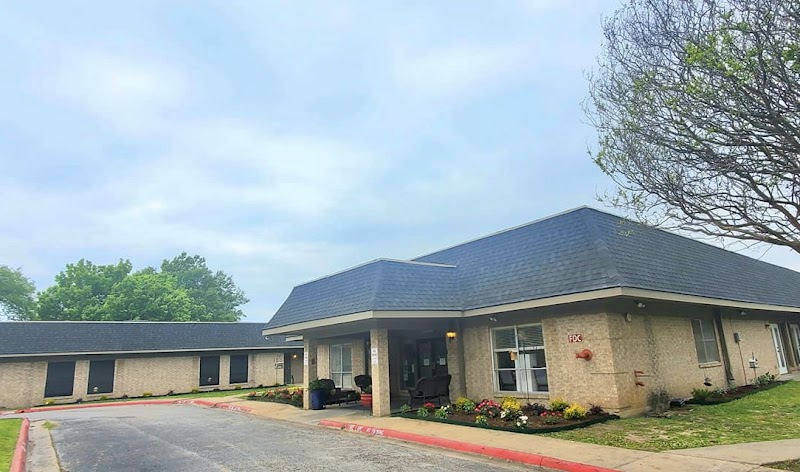
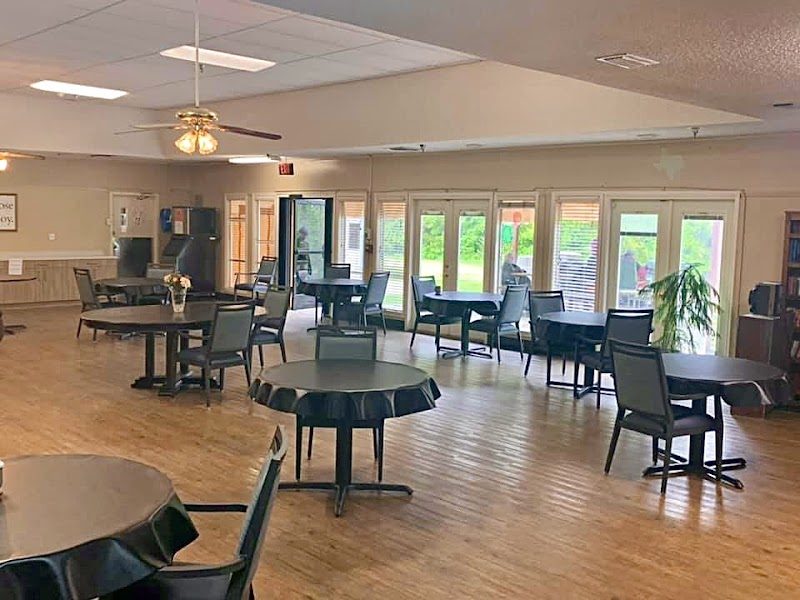
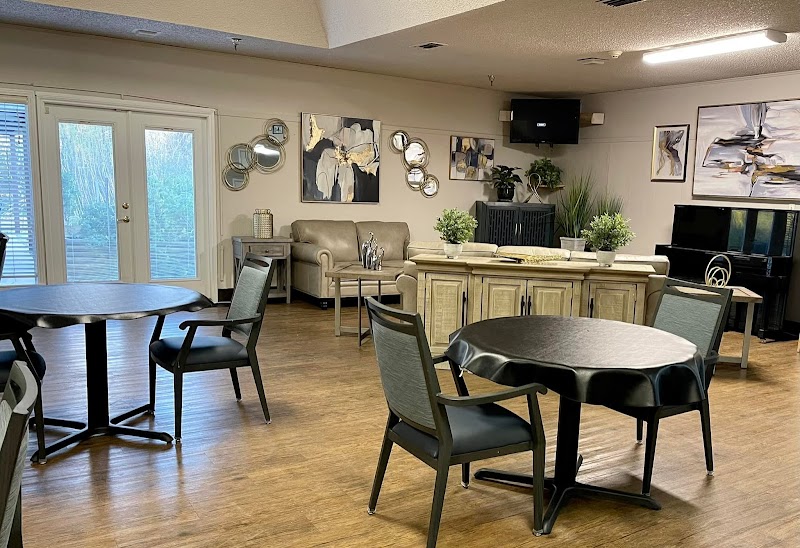
SEVEN OAKS NURSING & REHABILITATION

901 SEVEN OAKS RD, BONHAM, TX 75418 (903) 583-2191
For profit - Corporation 108 Beds CREATIVE SOLUTIONS IN HEALTHCARE Data: November 2025
Trust Grade
70/100
#341 of 1168 in TX
Last Inspection: July 2025

Inspected within the last 6 months. Data reflects current conditions.

Overview

Seven Oaks Nursing & Rehabilitation has a Trust Grade of B, indicating it is a good choice, scoring solidly in the middle range. It ranks #341 out of 1,168 facilities in Texas, placing it in the top half, and is the best option out of five facilities in Fannin County. However, the trend is worsening with an increase in reported issues from seven in 2024 to eight in 2025. Staffing is a relative strength, rated 3 out of 5 stars, with a turnover rate of 32%, which is significantly lower than the state average of 50%. Notably, there have been no fines, suggesting compliance with regulations, and the facility has more RN coverage than 78% of Texas facilities, which helps ensure better care. On the downside, there have been some concerning incidents. For instance, the facility failed to provide food that met residents’ preferences for three individuals, which could impact their meal satisfaction and nutritional intake. Additionally, there were issues with food safety standards in the kitchen, as staff did not properly label or dispose of expired food items, putting residents at risk for foodborne illnesses. While there are strengths in staffing and RN coverage, these deficiencies highlight areas for improvement in resident care and safety.

Trust Score
B
70/100
In Texas
#341/1168
Top 29%
Safety Record
Low Risk
No red flags
Inspections
Getting Worse
7 → 8 violations
Staff Stability
○ Average
32% turnover. Near Texas's 48% average. Typical for the industry.
Penalties
✓ Good
No fines on record. Clean compliance history, better than most Texas facilities.
Skilled Nurses
⚠ Watch
Each resident gets only 25 minutes of Registered Nurse (RN) attention daily — below average for Texas. Fewer RN minutes means fewer trained eyes watching for problems.
Violations
⚠ Watch
28 deficiencies on record. Higher than average. Multiple issues found across inspections.
★★★★☆
4.0
Overall Rating
★★★☆☆
3.0
Staff Levels
★★★★☆
4.0
Care Quality
★★★★☆
4.0
Inspection Score
Stable
2024: 7 issues
2025: 8 issues

The Good

  • 4-Star Quality Measures · Strong clinical quality outcomes
  • Full Sprinkler Coverage · Fire safety systems throughout facility
  • No fines on record
  • Staff turnover below average (32%)

    16 points below Texas average of 48%

Facility shows strength in quality measures, fire safety.

The Bad

Staff Turnover: 32%

14pts below Texas avg (46%)

Typical for the industry

Chain: CREATIVE SOLUTIONS IN HEALTHCARE

Part of a multi-facility chain

Ask about local staffing decisions and management

The Ugly 28 deficiencies on record

Jul 2025 8 deficiencies
CONCERN (D)

Potential for Harm - no one hurt, but risky conditions existed

Grievances (Tag F0585)

Could have caused harm · This affected 1 resident

**NOTE- TERMS IN BRACKETS HAVE BEEN EDITED TO PROTECT CONFIDENTIALITY** Based on interview and record review the facility failed to ensure the resident had the right to and the facility made prompts e...

Read full inspector narrative →
**NOTE- TERMS IN BRACKETS HAVE BEEN EDITED TO PROTECT CONFIDENTIALITY** Based on interview and record review the facility failed to ensure the resident had the right to and the facility made prompts efforts to resolve grievances the resident may have for 1 of 2 residents (Resident #3) reviewed for grievances. The facility failed to ensure a grievance was filed and Resident #3 was appropriately apprised of progress toward resolution when Resident #3's green pants were not returned from the laundry. This failure could place residents at risk for grievances not being addressed or resolvedFindings include:Record review of Resident #3's face sheet, dated 07/23/25, reflected Resident #3 was a [AGE] year-old female readmitted to the facility on [DATE] with a diagnosis which included Alzheimer's (progressive disease that destroys memory and other important mental functions). Record review of Resident #3's quarterly MDS assessment, dated 06/05/25, reflected Resident #3 made herself understood, and understood others. Resident #3's BIMS score was 14, which reflected her cognition was intact. Resident #3 was independent with upper body dressing and required set up or clean-up assistance with lower body dressing. Record review of Resident #3's comprehensive care plan, revised on 05/08/22, reflected Resident #3 had an ADL Self Care Performance Deficit. The care plan interventions included: provide supervision with dressing as needed. Record review of the grievance file, dated 06/01/25-07/01/25, did not indicate a grievance was completed for Resident #3's missing clothing in the last 2 months.During a group meeting on 07/22/25 at 3:00 p.m., Resident #3 stated she reported to the Housekeeping Supervisor she was missing a pair of green pants, white capri pants and a bright colored blouse. Resident #3 was unable to give the exact date she had reported the missing items. Resident #3 stated her items had been missing for several weeks and she had not heard if the items were found or would be replaced. Resident #3 voiced being frustrated with not knowing if her clothing would be replaced. During a telephone interview on 07/22/25 at 3:42 p.m., the Housekeeping Supervisor stated Resident #3 did report to him on 07/14/25 about her missing green pants but never mentioned the white capris or blouse. The Housekeeping Supervisor stated, Unfortunately I did not do a sweep which indicated looking for the item in another resident's closet. The Housekeeping Supervisor stated when someone reported a missing clothing item, he would determine what was missing, look through the personal lost and found and perform a sweep which indicated he would go through resident's closets to see if the items were accidently placed in another resident closet. The Housekeeping Supervisor stated if the items were not found he would report it to the Administrator for a grievance to be completed. The Housekeeping Supervisor stated he did not report Resident #3's green missing pants to the Administrator which he did not have much of an excuse why he did not. The Housekeeping Supervisor stated it was important for the residents to have their clothing returned because it was their right to have their belongings. During an interview on 07/22/25 at 5:08 p.m., the Administrator stated she had not received a grievance on Resident #3's missing clothing. The Administrator stated if she received a complaint of missing clothing, she would try to locate the missing items. If she could not locate them, she would offer to replace the items. The Administrator stated her expectation was for the Housekeeping Supervisor to report the missing items so a grievance could be filed. The Administrator stated she was responsible for monitoring and overseeing missing items by following up during QAPI meetings, morning stand up and champion rounds. The Administrator stated it was important for the residents to have their clothing because it was the right thing to do. Record review of the facility's policy titled Grievances, revised 11/02/16, reflected .The resident has the right to voice grievances to the facility or other agency or entity that hears grievances. 2. The grievance official of this facility is the administrator or their designee. 3. The grievance official will: receive and track grievances to their conclusion.
CONCERN (D)

Potential for Harm - no one hurt, but risky conditions existed

Deficiency F0645 (Tag F0645)

Could have caused harm · This affected 1 resident

**NOTE- TERMS IN BRACKETS HAVE BEEN EDITED TO PROTECT CONFIDENTIALITY** Based on interview and record review, the facility failed to ensure the Pre-admission Screening and Resident Review (PASRR) Leve...

Read full inspector narrative →
**NOTE- TERMS IN BRACKETS HAVE BEEN EDITED TO PROTECT CONFIDENTIALITY** Based on interview and record review, the facility failed to ensure the Pre-admission Screening and Resident Review (PASRR) Level I assessment accurately reflected the resident's status for 2 of 4 residents (Resident #8 and Resident #9) reviewed for PASRR. 1. The facility failed to complete the PASRR level 1 screening for Resident #8 who had a diagnosis of Bipolar with depression and psychotic disorder (where the individual is experiencing a depressive episode that is both severe and includes psychotic symptoms) on admission on [DATE]. 2. The facility failed to ensure Resident #9 had a new PASRR level 1 screening completed when she had a new diagnosis of schizoaffective disorder (a chronic brain disorder that significantly impacts a person's thoughts, feelings, and behavior) dated 04/05/22. These failures could place residents at risk of not receiving the needed PASRR services to meet their individual needs and could result in a decreased quality of life. Findings included: 1.Record review of Resident #8's face sheet, dated 07/23/25, indicated a [AGE] year-old female who was admitted to the facility on [DATE]. Resident #8 had diagnoses which included Bipolar (a mental illness that causes unusual shifts in mood), Depression (a serious mental illness characterized by persistent feelings of sadness, loss of interest in activities, and difficulty functioning in daily life) and anxiety (excessive and persistent fear or worry that interferes with daily life). Record review of Resident #8's care plan, revised 01/29/25, indicated Resident #8 had diagnoses which included depression, anxiety as evidence of self-picking and bipolar. The intervention were to give medication as order, monitor for increased sadness, irritable, anger, confusion, lack of energy and inform the physician for any adverse effects and behavioral symptom. Record review of Resident #8's annual MDS assessment, dated 07/02/25, indicated Resident #8 understood others and was understood by others. Her BIMS score was a 15, which indicated her cognition was intact. Resident #8 was independent in her ADLs except required supervision with bathing. Resident #8 had diagnoses which included depression, anxiety and bipolar. Record review of a PL1 for Resident #8, dated 8/30/22, did not indicated she had any evidence or indication of MI, ID, or DD. Record review of Resident #8's admission face sheet, dated 07/23/25, indicated she was admitted to the facility on [DATE] with mental illness diagnoses of bipolar and major depression. During an interview on 07/23/2025 at 11:30 a.m., the PASRR Coordinator said she saw in her system where a PL1 was submitted on 09/1/22 for Resident #8. She said the form was marked No for mental illness but should have been marked Yes for mental illness by the admitting facility filling out the PL1 form. She said since the PL1 form was marked incorrectly it would not have notified the Local Intellectual and Developmental Disabilities Authority to come do a PASRR Evaluation. During an interview on 07/23/2025 at 12:26 p.m., the MDS nurse, she said the previous MDS nurses were responsible for ensuring the PL1 they received from the prior facility was correct, and if it was not, they should have done a query and explained she had a diagnosis of Bipolar. She said it was important to make sure the PL1 was done correctly so the resident could be evaluated by LIDDA and if they qualified, they could receive services. She said since employment she was responsible for the PL1 being entered correct into their electronic system. 2. Record review of Resident #9's face sheet, dated 07/23/25, revealed a [AGE] year-old female who was admitted to the facility on [DATE]. Resident #9 had diagnoses which included Schizophrenia (a chronic brain disorder that disrupts how a person thinks, feels, and behaves), Depression (a serious mental illness characterized by persistent feelings of sadness, loss of interest in activities, and difficulty functioning in daily life) and anxiety (excessive and persistent fear or worry that interferes with daily life). Record review of Resident #9's comprehensive care plan, revised on 05/02/24, indicated Resident #9 had a mood problem related to a psychotic disorder with delusions, anxiety and a diagnosis of major depressive disorder. Record review of Resident #9's quarterly MDS assessment, dated 07/18/25, indicated Resident #9 usually understood and was usually understood by others. Resident #9's BIMS score was 03, which indicated her cognition was severely impaired. Resident #9 required assistance with toileting, bed mobility, dressing, personal hygiene, transfers and eating. Record review of a PL1 for Resident #9, dated 6/11/21, indicated she was not positive for MI, ID, or DD. Record review of Resident #9's PE for, dated 6/21/21, indicated she was not positive for MI, ID, or DD. Record review of Resident #9's nurses note, dated 04/05/22, indicated a new diagnosis of psychotic disorder with delusions was added. Record review of Resident #9's electronic medical records did not indicate a new PASRR level 1 screening was done, after the new diagnosis of schizoaffective disorder was added on 04/05/22. During an interview on 07/22/2025 at 4:32 p.m., the MDS nurse said she started in October of 2024. She said she was not aware why another PE was not done on 4/05/22 when the diagnosis of Schizoaffective was added for Resident #9. She said another PL1 should have been completed when they received the new diagnosis and therefore it would have been sent to LIDDA to complete a PE. During an interview on 07/23/25 at 5:16 p.m., the DON she said the MDS nurse was responsible to ensure the PL1 was filled out correctly and sent to LIDDA, if needed. She said if residents identified with a qualifying diagnosis were not accurately assessed for PASRR, it could affect the resident receiving services. During an interview on 07/23/25 at 5:23 p.m., the Administrator said the MDS nurse was responsible for making sure residents with qualified or new qualifying diagnoses got a new PASRR completed. She said the risk could be missed services under PASRR and she expected all residents were appropriately assessed for PASRR prior to and during admission at the facility. During an interview on 07/23/25 at 6:12 p.m., the Regional Compliance Nurse said they did not have a facility policy for PASRR and used the guidelines from the RAI manual. Record review of the RAI manual section A1500: Preadmission Screening and Resident Review (PASRR): All individuals who are admitted to a Medicaid certified nursing facility, regardless of the individual's payment source, must have a Level I PASRR completed to screen for possible mental illness (MI), intellectual disability (ID), developmental disability (DD), or related conditions (please contact your local State Medicaid Agency for details regarding PASRR requirements and exemptions). Individuals who have or are suspected to have MI or ID/DD or related conditions may not be admitted to a Medicaid-certified nursing facility unless approved through Level II PASRR determination. Those residents covered by Level II PASRR process may require certain care and services provided by the nursing home, and/or specialized services provided by the State. A resident with MI or ID/DD must have a Resident Review (RR) conducted when there is a significant change in the resident's physical or mental condition. Therefore, when an SCSA is completed for a resident with MI or ID/DD, the nursing home is required to notify the State mental health authority, intellectual disability or developmental disability authority (depending on which operates in their State) in order to notify them of the resident's change in status. Section 1919(e)(7)(B)(iii) of the Social Security Act requires the notification or referral for a significant change.1 Each State Medicaid Agency might have specific processes and guidelines for referral, and which types of significant changes should be referred. Therefore, facilities should become acquainted with their own State requirements.Preadmission Screening and Resident Review:Preadmission Screening and Resident Review (PASRR) is a federal requirement to help ensure that individuals are not inappropriately placed in nursing homes for long term care. PASRR requires that Medicaid-certified nursing facilities:Evaluate all applicants for serious mental illness (SMI) and/or intellectual disability (ID). Offered all applicants the most appropriate setting for their needs (in the community, a nursing facility, or acute care settings). Provide all applicants the services they need in those settings.PASRR is an important tool for states to use in rebalancing services. under the Americans with Disabilities Act. PASRR can also advance person-centered care planning by assuring that psychological, psychiatric, and functional needs are considered along with personal goals and preferences in planning long-term care.In brief, the PASRR process requires that all applicants to Medicaid-certified nursing facilities be given a preliminary assessment to determine whether they might have SMI or ID. This is called a Level I screen. Those individuals who test positive at Level I are then evaluated in depth, called Level II PASRR. The results of this evaluation result in a determination of need, determination of appropriate setting, and a set of recommendations for services to inform the individual's plan of care.
CONCERN (D)

Potential for Harm - no one hurt, but risky conditions existed

Deficiency F0804 (Tag F0804)

Could have caused harm · This affected 1 resident

Based on observation, interview and record review, the facility failed to ensure each resident received and the facility provided food and drink that was palatable, attractive, and at a safe and appet...

Read full inspector narrative →
Based on observation, interview and record review, the facility failed to ensure each resident received and the facility provided food and drink that was palatable, attractive, and at a safe and appetizing temperature for 1 of 1 breakfast meals reviewed for dietary services. The facility failed to serve an appetizing bowl of oatmeal. The oatmeal served was thick, porous texture that resembled cornbread during the breakfast meal on 07/22/25. This failure could place residents at risk of weight loss, altered nutritional status, and a diminished quality of life.Findings include:During an interview and observation on 07/22/25 at 8:26 a.m., the state surveyor asked Resident #12 how his breakfast was, Resident #12 stated, you're able to cut the oatmeal with his knife. The state surveyor observed a bowl of oatmeal that was thick, porous texture that resembled cornbread. During an observation on 07/22/25 at 8:30 a.m., revealed Resident #13 was sitting in her recliner, eating her breakfast. She stated the oatmeal did not look like oatmeal; it looked hard, so she did not even touch it. During an interview on 07/22/25 at 8:32 a.m., the Director of Food and Nutrition stated the oatmeal did look to thick. The Director of Food and Nutrition stated she should have split the oatmeal in two pans instead of one when she prepared it and add either milk or boiling water. The Director of Food and Nutrition stated she should have not let the oatmeal leave the kitchen, but she was thinking about compliance on mealtimes. The Director of Food and Nutrition stated it was important that food was palatable to prevent weight loss. During an interview on 07/23/25 at 3:40 p.m., the Regional Compliance Nurse stated there was no policy and procedures regarding food palatability. During an interview on 07/23/25 at 3:57 p.m., the DON stated oatmeal should not be thick or clumpy but a smooth texture. The DON stated the Director of Food and Nutrition should have fixed more oatmeal before servicing. The DON stated it was important to ensure food was palatable for health and enjoyment.During an interview on 07/23/25 at 4:40 p.m., the Traveling Certified Dietary Manager stated oatmeal should be served smooth not lumpy or too thick. The Traveling Certified Dietary Manager stated the oatmeal should not have been served. The Traveling Certified Dietary Manager stated it was important to ensure food was palatable for nutritional value. During an interview on 07/23/25 at 5:21 p.m., the Administrator stated she expected oatmeal to be served not to thick or runny. The Administrator stated the oatmeal should not have been served but corrected by making a new batch. The Administrator stated she monitored food palatable by random spot checks and ensured the recipe was followed. The Administrator stated it was important to ensure food was palatable to prevent choking weight loss.
CONCERN (D)

Potential for Harm - no one hurt, but risky conditions existed

Deficiency F0805 (Tag F0805)

Could have caused harm · This affected 1 resident

**NOTE- TERMS IN BRACKETS HAVE BEEN EDITED TO PROTECT CONFIDENTIALITY** Based on observation, interview, and record review, the facility failed to ensure each resident received food prepared in a form...

Read full inspector narrative →
**NOTE- TERMS IN BRACKETS HAVE BEEN EDITED TO PROTECT CONFIDENTIALITY** Based on observation, interview, and record review, the facility failed to ensure each resident received food prepared in a form to meet their individual needs for 4 of 4 residents (Residents #13, #27, #28, and #12) reviewed for the lunch menu on 07/21/25. The facility failed to ensure Residents #13, #27, #28, and #12 was served the correct portion of food on 07/23/25. These failures could place residents at risk of inadequate nutrition. Findings included: 1.Record review of Resident #13's face sheet, dated 07/23/25, indicated she was an [AGE] year-old female, admitted to the facility on [DATE]. Her diagnoses included dementia (loss of memory, language, problem-solving and other thinking abilities that are severe enough to interfere with daily life), diabetes ( a chronic illness where the body either doesn't produce enough insulin or can't effectively use the insulin it produces, leading to high blood sugar levels), and depression (a serious mood disorder that affects how you think, feel, and behave). Record review of Resident #13's quarterly MDS assessment, dated 04/17/25, indicated she had a BIMS score of 09, which indicated moderately cognitive impairment. She was usually able to make herself understood and she was sometimes able to understand others. She required set up for her activities of daily living including eating She required a mechanically altered diet (require change in texture of food). Resident #13 did not have a 5% weight loss or more in the last month or loss of 10% or more in last 6 months. Record review of Resident #13's Order Summary Report, dated 07/23/25, indicated she had an order for:*Mechanical Soft texture, Regular consistency with a start date of 09/19/24. Record review of Resident #13's care plan, last revised 05/23/25, indicated a focus of Resident #13 had a mechanical ground meat diet other than Regular and was at risk for unplanned weight loss or gain. Interventions were to serve diet as ordered. Record Review of Resident #13's Food Tray Ticket for Lunch 07/21/25 indicated .Mechanical Soft texture, Regular consistency Diet .Entree .Pasta Manicotti Cheese w/MarinaraStarch garlic breadVegetable .Zucchini.Dessert .strawberry bread pudding 2. Record review of Resident #27's face sheet, dated 07/23/25, indicated she was a [AGE] year-old female, admitted to the facility on [DATE]. Her diagnoses included dysphagia (difficulty swallowing), stroke and dementia (loss of memory, language, problem-solving and other thinking abilities that are severe enough to interfere with daily life., Record review of Resident #27's quarterly MDS assessment, dated 05/16/25, indicated she had a BIMS score of 03, which indicated severe cognitive impairment. She was able to make himself understood and she was usually able to understand others. She required set up for eating. She required a mechanically altered diet (require change in texture of food or liquids) while a resident at the facility. Resident #27 did not have a 5% weight loss or more in the last month or loss of 10% or more in last 6 months. Record review of Resident #27's Order Summary Report, dated 07/23/25, indicated she had an order for:*Regular diet Mechanical Soft texture, Regular with a start date of 01/05/23. Record review of Resident #27's care plan, last revised on 02/07/25, indicated a focus of Resident #27 had a potential nutritional problem in which she required a mechanical soft diet. Interventions were for staff to provide and serve diet as ordered. Record Review of Resident #27's Food Tray Ticket for Lunch 07/21/25 indicated .Mechanical Soft texture, Regular consistency Diet .Entree .Pasta Manicotti Cheese w/MarinaraStarch Garlic breadVegetable .Zucchini.Dessert .strawberry bread pudding 3.Record review of Resident #28's face sheet dated 07/23/25 indicated he was an [AGE] year-old male who admitted to the facility on [DATE] and re-admitted on [DATE] with the diagnosis non-pressure chronic ulcer of the buttocks, major depressive disorder, high blood pressure, and anxiety. Record review of Resident #28's other payment MDS dated [DATE] indicated he made himself understood. The MDS also indicated he had a BIMS score of 14 which meant he was cognitively intact. The MDS also indicated Resident #28 required setup and supervision for eating. Resident #28 did not have a 5% weight loss or more in the last month or loss of 10% or more in last 6 months. Record review of Resident #28's comprehensive care plan dated 03/01/21 and last updated 05/26/25 indicated he was at risk for malnutrition. The care plan interventions included: monitor/document meal intake, offer diet as ordered by the physician and update food preferences as needed. Record review of Resident #28's Order Summary Report, dated 07/23/25 indicated he had an order for:*Regular diet mechanical soft texture, regular consistency, add extra salt to meals, large protein portions with meals with a start date of 03/28/24. Record Review of Resident #28's Food Tray Ticket for Lunch 07/21/25 indicated .Mechanical Soft texture, Regular consistency Diet .large protein portions .Entree .Pasta Manicotti Cheese w/MarinaraStarch Garlic breadVegetable .Zucchini.Dessert .strawberry bread pudding 4.Record review of Resident #12's face sheet, dated 07/23/25, indicated he was a [AGE] year-old male, and readmitted to the facility on [DATE] with a diagnosis which included absence of right leg below knee. Record review of Resident #12's quarterly MDS assessment, dated 06/18/25, indicated Resident #12 made himself understood, and understood others. Resident #12's BIMS score was 14, which reflected his cognition was intact. Resident #12 required setup or clean-up assistance with eating. Record review of Resident #12's comprehensive care plan initiated 09/05/21, reflected Resident #12 was at risk for malnutrition. The care plan interventions included: monitor/document meal intake, offer diet as ordered by the physician and update food preferences as needed. Record review of Resident #12's Order Summary Report, dated 07/23/25, indicated he had an order for:* Regular texture, regular consistency, double meat/protein portions all meals with a start date of 03/12/24. Record Review of Resident #12's Food Tray Ticket for Lunch 07/21/25 indicated .regular texture, regular consistency, double meat/protein portions all meals .Entree .Pasta Manicotti Cheese w/Marinara, large meat portion onlyStarch Garlic breadVegetable .Zucchini.Dessert .strawberry bread pudding During a dining observation and interview on 07/21/25 at 12:45 p.m., RN A was checking the meal trays for the hall cart. RN A removed the cover to Resident #13, #27, #28, and #12 and placed the covers back and moved onto the next resident. Residents #13, #28 and #12 tray had 1 cheese manicotti with marinara and about 1/4 cup of Zucchini. Resident #13 should have received 2 servings of Manicotti and 1/2 Zucchini; Resident #27 and Resident #28 should have received 4 servings of Manicotti and 1/2 cup Zucchini. Resident #27 had 1.5 Manicotti and should have received 2 servings of Manicotti and 1/2 cup of Zucchini. After the state surveyor intervention RN A sent the meal trays back to the dietary staff to correct the discrepancy. During an interview on 07/21/23 at 2:52 p.m., the Director of Food and Nutrition said when she placed the order for Manicotti, and Zucchini they had 39 residents and today (07/21/25) they had 43 residents. She said because the census had changed, she felt that was why she did not have enough food for the lunch menu. She said each resident should have had at least 2 Manicotti and 1/2 cup of Zucchini. She said Dietary Manager B fixed the trays that were served incorrectly. She said she assumed she served less than what should have been given because they were running low on food. She said the residents should have received the correct serving size for overall nutrition. During an interview and observation on 07/21/2025 at 3:06 p.m., Dietary Manager B said she arrived at the facility to help the Director of food and Nutrition, because she had a call off in the kitchen. She said while helping get lunch prepped and prepared, she noticed the lack of Zucchini and asked the Director of Food and Nutrition to open a can of green beans. She said the Director of Food and Nutrition prepared the dining room and 2 hall carts before she took over on the food serving line. She said while on the serving line 5-6 trays were returned related to only 1 Manicotti or not enough Zucchini. She said she remade the trays but was not responsible for the mistakes of the original trays. She said all residents should have been served at least 2 Manicotti and 1/2 cup or 4ounces of Zucchini. She said the trays she remade only had 1 or 1.5 servings of Manicotti and about 1/4 cup of Zucchini. She said the Director of Food and Nutrition had the right size scoops in the food but was only given a small amount on the plates. She said she could only assume it was because she did not have enough Manicotti or Zucchini to serve all the residents. The state surveyor observed 6 hamburger patties been made because they did not have enough Manicotti for each resident. During an interview on 07/22/2025 at 4:09 p.m., The Dietitian said she had not had any concerns about condiments or foods. She said she expected the Director of Food and Nutrition to have the food the residents needed to meet the food preferences and nutrition. She said it was important to provide and serve nutritious food to prevent weight loss. She said if the Director of Food and Nutrition was having any problems with ordering food, she expected her to reach out to her or the cooperate dietitian. During an interview on 07/23/25 at 5:16 AM, the DON she expected the kitchen to serve the correct diet per the dietary manual. She said if a regular diet should have had 2 Manicotti, then she expected them to have 2. If the order called for large or double portion, then she expected the kitchen to serve it also. She said it was important for the resident's nutrition. During an interview on 07/23/25 at 5:23 p.m., the Administrator said she expected all residents to be served the correct amount. She said the Director of Food and Nutrition Manager oversaw the kitchen and expected her to know the correct size to serve each resident. She said the risk could be weight loss. Record review of the Facility's recipe for portion size for Pasta Manicotti Cheese w/Marinara on 07/21/25 at lunch indicated: .Pasta Manicotti Cheese w/Marinara Serve 2: Manicotti chopped with cheese, to equal 3 ounces. Record review of the Facility's recipes for portion size of Zucchini on 07/21/25 at lunch indicated:.Zucchini.Serve 1/2 cup each. Record review of the facility's policy titled, Resident Menus, form the Dietary Services Policy & Procedure Manual dated 2012, indicated, We will strive to assure the resident's nutritional needs are provided based on the Recommended Dietary Allowance (RDA). The standard menu will ensure nutritional adequacy of all diets, offer a variety of food in adequate amounts at each meal, and standardize food production. Procedure: 1. Menus are planned to meet the Recommended Dietary Allowances of the Food and Nutritional Board, National Research Council, adjusted to the age, activity, and environment of the group involved . #5. The menus will be prepared as written using standardized recipes. The Dietary Service Manager and cooks are trained and responsible for the preparation and service of therapeutic diets as prescribed.
CONCERN (D)

Potential for Harm - no one hurt, but risky conditions existed

Deficiency F0808 (Tag F0808)

Could have caused harm · This affected 1 resident

**NOTE- TERMS IN BRACKETS HAVE BEEN EDITED TO PROTECT CONFIDENTIALITY** Based on observation, interview and record review, the facility failed to ensure food was prepared in a form designed to meet in...

Read full inspector narrative →
**NOTE- TERMS IN BRACKETS HAVE BEEN EDITED TO PROTECT CONFIDENTIALITY** Based on observation, interview and record review, the facility failed to ensure food was prepared in a form designed to meet individual needs and as prescribed by the physician for 2 of 15 residents (Residents #12 and #28) reviewed for therapeutic diets. 1. The facility did not ensure Resident #12 was given double protein portion as ordered by the physician. 2. The facility did not ensure Resident #28 was given large protein portions as ordered by the physician on 07/21/25 during the lunch service. This failure could place residents at risk for poor intake, weight loss, unmet nutritional needs, and a loss of dignity.Findings Included: 1. Record review of Resident #12’s face sheet, dated 07/23/25, reflected Resident #12 was a [AGE] year-old male, readmitted to the facility on [DATE] with a diagnosis which included absence of right leg below knee. Record review of Resident #12’s quarterly MDS assessment, dated 06/18/25, reflected Resident #12 made himself understood, and understood others. Resident #12’s BIMS score was 14, which reflected his cognition was intact. Resident #12 required setup or clean-up assistance with eating. Resident #12 did not have a 5% weight loss or more in the last month or loss of 10% or more in last 6 months. Record review of Resident #12’s comprehensive care plan initiated 09/05/21, reflected Resident #12 was at risk for malnutrition. The care plan interventions included: monitor/document meal intake, offer diet as ordered by the physician and update food preferences as needed. Record review of Resident #12’s physician order summary report, dated 07/23/25, reflected regular texture, regular consistency, double meat/protein portions all meals with a start date 03/12/24. Record review of Resident #12’s lunch meal ticket dated 07/21/25, reflected entrée: large meat portion only. The entrée was 2 cheese manicottis with marinara. During a dining observation and interview on 07/21/25 at 12:45 p.m., RN A was checking the meal trays for the hall cart. RN removed the cover to Resident 12’s tray and stated, “that not enough.” RN placed the cover back and moved onto the next resident. Resident #12 received ½ serving of the entrée which was 1 cheese manicotti with marinara. After the state surveyor intervention RN stated Resident#12 was supposed to receive double portions. During an interview on 07/21/25 at 1:15 p.m., Resident #12 stated he had never received double meat with his meals until today (07/21/25). Resident #12 stated he was unaware that he was supposed to received double meat. 2.Record review of Resident #28’s face sheet dated 07/23/25 indicated he was an [AGE] year-old male who admitted to the facility on [DATE] and re-admitted on [DATE] with diagnoses of non-pressure chronic ulcer of the buttocks, major depressive disorder, high blood pressure, and anxiety. Record review of Resident #28’s other payment MDS dated [DATE] indicated he made himself understood. The MDS also indicated he had a BIMS score of 14 which meant he was cognitively intact. The MDS also indicated Resident #28 required setup and supervision for eating. Resident #28 did not have a 5% weight loss or more in the last month or loss of 10% or more in last 6 months. Record review of Resident #28’s comprehensive care plan dated 03/01/21 and last updated 05/26/25 indicated he was at risk for malnutrition. The care plan interventions included: monitor/document meal intake, offer diet as ordered by the physician and update food preferences as needed. Record review of Resident #28’s physician order summary report dated 07/23/25 indicated he had an order for a regular diet mechanical soft texture, regular consistency, add extra salt to meals, large protein portions with meals with a start date 03/28/24. During a dining observation and interview on 07/21/25 at 1:00 PM, RN A was checking the meal trays for the hall carts while surveyor was observing the trays. RN A removed the cover to Resident 28’s tray and stated, “that not enough.” RN A asked the kitchen staff to provide another portion of the cheese manicotti with marinara after surveyor intervention because his lunch card indicated large protein portion. The kitchen staff handed her another portion of the cheese manicotti with [NAME] on a separate covered plate. During an observation and interview on 07/21/2025 at 1:05 PM Resident #28 was in bed eating his lunch. Resident #28 said he was enjoying his lunch and having all that food”. Resident #28 said he did not normally receive that much food on his tray. During an interview on 07/21/25 at 2:50 p.m., Dietary Manager B stated she was from a sister facility and came over to assist the facility dietary manager because she was by herself. Dietary Manager B stated the Director of Food and Nutrition had fixed Resident #12’s tray prior to her correcting the discrepancy. Dietary Manager B stated Resident #12 should have received 4 cheese manicottis with marinara instead of 1. Dietary Manager B stated it was important to ensure residents received the correct diet order for proper nutrients and prevent further weight loss. During an interview on 07/21/25 at 3:06 p.m., the Director of Food and Nutrition stated she was the dietary manager for the facility and was aware of Resident #12 receiving double meat/protein portions. The Director of Food and Nutrition stated she did not have his lunch meal ticket while preparing his tray which she was supposed to. The Director of Food and Nutrition stated he should have received 4 cheese manicottis with marinara. The Director of Food and Nutrition stated the reason she believed he was receiving double meat/protein because he did not like vegetables so receiving double protein would help with his calorie intake. The Director of Food and Nutrition it was important to ensure residents received the correct diet order to prevent weight loss. During a telephone interview on 07/22/25 at 3:49 p.m., the Dietitian stated Resident #12 received double meat/protein related to a non-pressure wound to his RLE that currently had resolved and she expected Resident #28 to receive double protein portions as well due to a previous weight loss. The Dietitian stated she expected double servings of protein and large portions of protein which would have been 4 cheese manicottis with marinara. The Dietician stated it was important for the diet order to be followed until she come to assess the residents to see if the order needed to be change. During an interview on 07/23/25 at 9:46 a.m., the Medical Director stated he expected the diet orders to be followed. The Medical Director stated it was important for Resident #12 to received double meat/protein to help with wound healing and to build muscle and he expected Resident #28 to receive double protein portions to ensure no further weight loss. During an interview on 07/23/25 at 3:57 p.m., the DON stated she expected the diet order to be followed. The DON stated the Director of Food and Nutrition was responsible for responsible for monitoring diet orders. The Administrator stated it was important to ensure Resident #12 and Resident #28 received double meat/protein to prevent weight loss. During an interview on 07/23/25 at 5:21 p.m., the Administrator stated she expected the diet order to be followed. The Administrator stated the Director of Food and Nutrition was responsible for monitoring diet orders. The Administrator stated she oversees the kitchen by random spot checks several times a week and has not had any issues with staff not following the diet orders. The Administrator stated it was important to ensure Resident #12 and Resident #28 received double meat/protein for nutrition. Record review of the facility policy “Large Portions Diet undated indicated: We will add extra calories and protein to the regular diet as appropriate. Large portions may be used to promote weight gain if the resident has a good appetite or to satisfy the resident with a large appetite. Extra food items are added to the regular diet throughout the day. This diet provides the recommended Dietary Allowances for all nutrients. This diet provides over 2800 calories, 120 grams of protein per day. Procedure: Serve the Regular (or consistency modified) diet per the menu with additional foods as indicated… Lunch and Dinner Soups, salad, bread, starch, vegetable, fruit, condiments, beverages and desserts per regular menu portions Double servings of entrée/protein portions…”
CONCERN (D)

Potential for Harm - no one hurt, but risky conditions existed

Food Safety (Tag F0812)

Could have caused harm · This affected 1 resident

Based on observation, interview, and record review the facility failed to store, prepare, distribute, and serve food in accordance with professional standards for food service safety for 1 of 1 ice ma...

Read full inspector narrative →
Based on observation, interview, and record review the facility failed to store, prepare, distribute, and serve food in accordance with professional standards for food service safety for 1 of 1 ice machine reviewed for kitchen sanitation. The facility failed to ensure the ice machine, stored in the kitchen area, was free from a pink like substances on it and black like substance in the scoop container on 07/21/25. This failure could place residents at risk for foodborne illness. Findings included: During an observation on 07/21/25 at 9:07 a.m., revealed the ice scoop located in the main area of the kitchen had a pink like film on it. The ice container that held the ice scoop had some black and brown film inside of it. During an observation and interview on 07/21/25 at 9:10 a.m., the Director of Food and Nutrition came out of the kitchen and observed the ice scoop had some pink like substance on the ice scoop and the ice scoop holder had some black and brown film in the bottom of it. She said the kitchen staff were responsible for cleaning the ice scoop and holder. She said she was not sure about the cleaning schedule but said they clean the ice scoop daily and the ice scoop holder monthly. The Director of Food and Nutrition immediately took the ice scoop and the ice scoop holder and washed it. The Director of Food and Nutrition said the ice scoop holder was gross and since both were dirty it could lead to infection control issues. During an interview on 07/23/25 at 5:17 p.m., the DON said the kitchen staff were responsible for cleaning the ice scoop and ice scoop container. She said she was not aware of the cleaning schedule but knew they should be clean to prevent residents' from becoming sick. During an interview on 07/23/25 at 5:23 p.m., the Administrator said she did not expect for the ice scoop or the ice container to be dirty. She said the dietary staff was responsible to ensure the ice scoop and ice scoop container was clean. She said failure to keep clean could cause infection control issues and illness. Record review of the facilities policy titled, Equipment Sanitation, from the Dietary Services Policy & Procedure Manual dated 2012, indicated, We will provide clean and sanitized equipment for food preparation. The facility will clean all food service equipment in a sanitary manner. Procedure:f All equipment and utensils shall be sanitized by one of the following methods:g. Immersion for at least one-half minute in clean, hot water at a temperature of at least 180 degrees F.h. Immersion for a period of at least one minute in a sanitizing solution containing: At least 50 ppm of available chlorine at temperature not less that 75 degrees F. At least 12.5 ppm of available iodine in a solution having a pH higher than 5.0 and a temperature of not less than 75 degrees F. Any other approved chemical-sanitizing agent containing at least 150-400 ppm of quaternary ammonia at a temperature of approximately 70 degrees F. Record review of the facilities policy titled, Equipment Sanitation, from the Dietary Services Policy & Procedure Manual dated 2012 and revised 4/25, indicated, We will ensure that all employees practice infection control in the Food and Nutrition Services Department, and maintain sanitary food preparation. Procedure: #1. Personal cleanliness is required in sanitary food preparation. Employees should follow general sanitation guidelines from the Center of Disease Control (CDC) and the state food code when working in the Food and Nutrition Department. #5. Equipment Sanitation: a. All kitchenware and food contact used in the preparation and/or serving of food are cleaned and sanitized before use and cleaned after each meal preparation. Sanitizing agents are used for cleaning all surfaces.
CONCERN (E)

Potential for Harm - no one hurt, but risky conditions existed

Deficiency F0806 (Tag F0806)

Could have caused harm · This affected multiple residents

**NOTE- TERMS IN BRACKETS HAVE BEEN EDITED TO PROTECT CONFIDENTIALITY** Based on observations, interviews, and record review the facility failed ensure each resident receives and the facility provides...

Read full inspector narrative →
**NOTE- TERMS IN BRACKETS HAVE BEEN EDITED TO PROTECT CONFIDENTIALITY** Based on observations, interviews, and record review the facility failed ensure each resident receives and the facility provides food that accommodates residents' food preferences for 3 of 22 residents (Resident #29, Resident #15, and Resident #3) reviewed for food preferences and the accommodation of resident's meal choices.1.The facility did not honor Resident #29's preference for milk with her supper meals. 2.The facility failed to honor Resident #15's preferences for a bacon and toast for breakfast.3.The facility failed to provide condiments (jelly and butter) and bread for Resident #3 on 07/20/25. These failures could result in a decrease in resident choices, diminished interest in meals, and weight loss. Findings included: 1.Record review of Resident #29’s face sheet dated 07/23/25 indicated she was an [AGE] year-old female who had admitted to the facility on [DATE] with the diagnoses diabetes mellitus (disease causing too much sugar in the blood stream), high blood pressure, depressive disorder, and congestive heart failure (condition in which the heart does not pump well). Record review of Resident #29’s annual MDS dated [DATE] indicated she made herself understood and was able to understand others. The MDS also indicated she had a BIMS score of 15 which meant she was cognitively intact. The MDS also indicated Resident #29 required set-up or clean up assistance with eating. Record review of Resident #29’s care plan dated 07/24/23 indicated she was at risk for malnutrition with interventions in place to monitor and document meal intake, offer diet as ordered by the physician, and to update food preferences as needed. Record review of Resident #29’s dietary profile dated 08/09/24 completed by the previous dietary manager indicated Resident #29 was independent with eating, and had no food likes, dislikes, or preferences noted. Record review of Resident #29’s meal cards dated 07/23/25 indicated she was to receive 8 ounces of milk at breakfast, 8 ounces of iced tea for lunch, and 8 ounces of beverage of choice at supper. During the resident council meeting on 07/22/25 at 3:32 PM Resident #29 stated that she wanted milk during her supper meals and the facility continued to bring her tea with her supper tray. During an interview on 07/23/25 at 2:50 PM CNA E said the kitchen normally sent out the milk on Resident #29’s trays at supper time. She said she did not know who, but the kitchen sent trays out on the weekend of 07/19/25 and 07/20/25 and did not send any milk because the facility was out of milk. CNA E said she did get her milk on 07/22/25 because she took her tray to her room. During an interview on 07/23/25 at 4:00 PM the Director of Food and Nutrition said the dietary department were responsible for sending drinks out to residents at meals on the hall. She said the kitchen has not run out of milk and she was unsure why Resident #29 did not get her milk. The Director of Food and Nutrition said all residents had the right to have what they would like to drink at meals. During an interview on 07/23/25 at 4:10 PM the DON said Resident #29 should have milk if they want milk. She said it was the resident’s rights violated if she does not get milk as she requested at supper. During an interview on 07/23/25 at 5:30 PM the Administrator said she was never aware of the kitchen being out of milk and that Resident #29 had the right to have milk if she wanted it at any meal. 2.Record review of Resident #15's face sheet, dated 07/23/25, indicated she was a [AGE] year-old female, who re-admitted to the facility on [DATE]. Her diagnoses included dementia (loss of memory, language, problem-solving and other thinking abilities that are severe enough to interfere with daily life), stroke, and depression (a serious mood disorder that affects how you think, feel, and behave). Record review of Resident #15's quarterly MDS assessment, dated 06/16/25, indicated she had a BIMS score of 14, which indicated she was cognitively intact. She was able to make herself understood and she was able to understand others. She required set up for her activities of daily living and independent with eating. Record review of Resident #15's Order Summary Report, dated 07/23/25, indicated she had an order for: *Regular diet Regular texture, Regular consistency, offer sandwich or house supplement if less than 50% of meal was eaten. Wants Bacon and oatmeal only for breakfast with a start date of 02/24/23. Record review of Resident #15's care plan, last revised 01/29/25, indicated a focus of Resident #13 had a potential risk for malnutrition. Interventions were to serve diet as ordered and update preference as needed. Record review of Resident #15’s dietary profile dated 07/15/25 completed by the Director of Food and Nutrition indicated Resident #15 liked oatmeal, bacon, and bread at breakfast only. It stated she disliked sausage and eggs. During an observation and interview on 07/22/25 at 8:30 a.m., Resident #15 was sitting in her recliner, eating her breakfast. She said she liked bacon and toast but had sausage and a biscuit. She said she had told the staff (unknown) about her wanting bacon and toast but was still receiving sausage and biscuit. Her tray card said likes toast and bacon for breakfast. During the resident council meeting on 07/22/25 at 3:32 PM Resident #15 stated that she wanted bacon and toast but was receiving sausage and biscuit for breakfast. 3. Record review of Resident #3's face sheet, dated 07/23/25, indicated she was a [AGE] year-old female, who re-admitted to the facility on [DATE]. Her diagnoses included anxiety (feeling of unease, worry, or fear), Bipolar (mental illness that causes unusual shifts in mood), and Depression (a common and serious mood disorder that can affect how a person feels, thinks, and handles daily activities). Record review of Resident #3's quarterly MDS assessment, dated 06/05/25, indicated she had a BIMS score of 14, which indicated she was cognitively intact. She was able to make herself understood and was able to understand others. She was completely independent with eating. Record review of Resident #3's Order Summary Report, dated 07/23/25, indicated she had an order for: *Regular diet with a start date of 02/06/24. Record review of Resident #3's care plan, last revised on 03/31/22, indicated a focus of Resident #3 had a potential risk for Malnutrition. Interventions were for staff to provide and serve diet as ordered and update food preference as needed. During an interview on 07/21/25 at 11:32 a.m., Resident #3 said at times they do not have bread, butter, or Jelly. She said she did not have any bread, butter, or jelly this morning for breakfast. She said yesterday (07/20/25) they had a potatoes for supper with no butter or cheese. She said staff told her they were out of butter and cheese. During an interview on 07/21/25 at 12:14 p.m., CNA D said they did not have butter this morning, and they do not have any at lunch today (07/21/25). She said the Director of Food and Nutrition said it would be on the truck today (07/21/25). During an interview on 07/21/25 at 12:15 p.m., RN A said she asked about butter and was told they did not have any butter, and today (07/21/25) for lunch they had to substitute the strawberry dessert for green pudding because they did not have strawberries. She said the kitchen does occasionally run out of different things but mostly it would be delivered with the next truck delivery. During an interview on 07/21/23 at 2:52 p.m., the Director of Food and Nutrition said she was responsible to order food. She said she was aware they were low on butter, bread, and jelly but thought she had enough until the truck came in today (07/21/25). She said they were out of butter, bread and jelly for breakfast. She said she served croissants for breakfast. She said they had cheese in the kitchen and was not aware why the residents did not have cheese for their potatoes. She said she did tell anyone like the Administrator or the Dietitian she was out of condiments or bread. She said she should have told someone so she could have gone to the store and picked up what she needed until the truck came in. She said the supply truck ran today (07/21/25) but still did not bring any bread, she said she was going to see what she needed to do to get the bread. She said it was important to have food required for the health of the residents. During a confidential group interview with 9 residents on 07/22/25 starting at 3:00 p.m., the resident group said the facility had been running out of condiments and food. Resident #3 mentioned about the butter, cheese, jelly and bread and other residents agreed that they do not always have condiments on their trays. During an interview on 07/22/2025 at 4:09 p.m., The Dietitian said she had not had any concerns about condiments or foods. She said she expected the Director of Food and Nutrition to have the food the residents needed to meet the food preferences and nutrition. She said it was important to provide and serve nutritious food to prevent weight loss. She said if the Director of Food and Nutrition was having any problems with ordering food, she expected the Director of Food and Nutrition to reach out to her or the cooperate dietitian. During an interview on 07/23/25 at 5:16 p.m., the DON said all residents should have choices of the food being served. She said she was the nurse in the dining room checking tray cards when she asked about butter, jelly and bread and the dietary staff told her they were out and waiting on their food truck today (07/21/25). She said she expected the food the resident wanted or required to be in the facility. She said if a resident requested bacon, toast, jelly, bread, or butter they should be receive it. She said failure to provide the resident with food they like or condiments that might make their food more tasteful could cause the resident not to eat and potentially loss weight. During an interview on 07/23/25 at 5:23 p.m., the Administrator said she expected the residents to receive the foods they wanted. She said the Director of Food and Nutrition was responsible for ensuring she was ordering enough food and condiments. She said the dietary staff was responsible for placing the condiments on the tray. She said if bacon was on a resident’s tray card, then she expected that resident to receive bacon. She said she was not aware they were out of butter, jelly, bread, or milk. She said it was important to have what the resident needs as well as what they prefer for their overall health and nutrition. She said if a resident does not like the food they get or does not get the condiments for the food it could cause them not to eat and lose weight. Record review of the facility policy titled, Resident Rights,” revised 11/28/16, indicated, “The resident has a right to a dignified existence, self -determination, and communication with and access to persons and services inside and outside the facility, including those specified in this policy. …. The resident has a right to be treated with respect and dignity, including: #3. The right to reside and receive services in the facility with reasonable accommodation of resident needs and preferences.”
MINOR (B)

Minor Issue - procedural, no safety impact

Accident Prevention (Tag F0689)

Minor procedural issue · This affected multiple residents

**NOTE- TERMS IN BRACKETS HAVE BEEN EDITED TO PROTECT CONFIDENTIALITY** Based on observation, interview, and record review, the facility failed to ensure the resident environment remained as free of a...

Read full inspector narrative →
**NOTE- TERMS IN BRACKETS HAVE BEEN EDITED TO PROTECT CONFIDENTIALITY** Based on observation, interview, and record review, the facility failed to ensure the resident environment remained as free of accident hazards as was possible for 2 of 2 residents (Residents #12 and #21) reviewed for accidents and hazards.1. The facility failed to ensure Resident #12 did not have an electric razor and shaving gel on his bedside table on 07/21/25, 07/22/25 and 07/23/25.2. The facility failed to ensure Resident #21 did not have razors in his bathroom on 07/21/25, 07/22/25 and 07/23/25.These failures could place residents at risk of harm or injury and contribute to avoidable accidents and a decline in healthFindings include: 1. Record review of Resident #12’s face sheet, dated 07/23/25, reflected Resident #12 was a [AGE] year-old male, readmitted to the facility on [DATE] with a diagnosis which included absence of right leg below knee. Record review of Resident #12’s quarterly MDS assessment, dated 06/18/25, reflected Resident #12 made himself understood and understood others. Resident #12’s BIMS score was 14, which reflected his cognition was intact. Resident #12 required supervision or touching assistance with personal hygiene which included shaving. Record review of Resident #12’s comprehensive care plan, initiated 01/08/21, reflected Resident #12 had an ADL Self Care Performance Deficit. The care plan interventions included: assist with personal hygiene as required: hair, shaving, oral care as needed. During an interview and observation on 07/21/25 at 3:14 p.m., revealed Resident #12 had an electric razor, and a can of shaving gel on his bedside table. Resident #12 stated he shaved himself and indicated staff were aware he was in possession of the items. During an observation on 07/22/25 at 8:26 a.m., revealed Resident #12 sitting up in his recliner with an electric razor, and a can of shaving gel on his bedside table. During an observation on 07/23/25 at 9:00 a.m., revealed Resident #12 sitting up in his recliner with an electric razor, and a can of shaving gel on his bedside table. During an observation on 07/23/25 at 10:15 a.m., there was no resident's wandering from room to room on the hall with Resident #12. During an interview on 07/23/25 at 2:05 p.m., RN A stated if a resident had an electric razor or shaving gel at bedside the resident must be assessed, and an order obtained from the physician. RN A asked the state surveyor if she could speak to the DON about the items at the beside and come back to complete the interview. After speaking with the DON and the Regional Compliance Nurse, RN A stated there was no policy and procedures for keeping an electric razor or shaving gel at the bedside. RN A stated the resident did not have to be assessed for razors at bedside. RN A stated it was his right for his hygienic purpose to have those items at his bedside. RN A stated a dementia resident could obtain the electric razor or shaving gel, and it could cause an injury or adverse reaction. During an interview on 07/23/25 at 3:57 p.m., the DON stated the actual policy for an electric razor and shaving gel stated to store in an appropriate place such as the counter, dresser or wherever Resident #12 would like it stored. The DON stated the policy did not state it could not be stored in his room. The DON stated Resident #12 had a private room and he was alert and oriented. The DON stated she was responsible for monitoring and overseeing resident safety by daily rounds. The DON stated there was not a particular assessment to check to see if a resident could have razors, shaving cream, soap etc. at bedside. The DON stated there was no residents who wander in other resident’s rooms. The DON stated there was no risk for having electric razors or shaving cream at the bedside. During an interview on 07/23/25 at 5:21 p.m., the Administrator stated an electric razor, and shaving gel could be stored in the resident’s room on the resident dresser. The Administrator stated the resident did not have to be assessed for safety. The Administrator stated Resident #12 was very independent and she did not go in his room often. 2.Record review of Resident 21’s face sheet, dated 07/23/25, reflected a [AGE] year-old male who was re-admitted to the facility on [DATE]. Resident #21 had diagnoses which included a stroke, arthritis (a group of over 100 conditions that cause joint pain and inflammation), glaucoma (a group of eye diseases that damage the optic nerve, leading to vision loss and potentially blindness), and high blood pressure. Record review of Resident #21’s annual MDS assessment, dated 05/14/25, reflected Resident #21 understood and was understood by others. Resident #21’s BIMS score was 15, which meant his cognition was intact. Resident #21was independent with his activities of daily living but required supervision with bathing, required help with toileting, bed mobility, dressing, transfers, personal hygiene and was independent with eating. Record review of Resident #21’s care plan, revised on 01/29/25, indicated he desired to have facial hair. The staff intervention was to shave him if he requested. It did not indicate if he was able to have unattended razors in his room. During an observation on 07/21/25 at 11:01 a.m., revealed 3 disposable razors lying on Resident #21’s sink. Resident #21 was not in his room. No wandering residents noted on the hallway. During an observation and interview on 07/22/25 at 8:30 a.m., Resident #21 had 3 disposable razors lying on his sink. Resident #21 said he shaved himself and staff (unknown) brought the razors to him. During an observation on 07/22/25 at 9:30 a.m., revealed no resident's wandering on the hall of Resident #21. During an observation and interview on 07/23/25 at 9:40 a.m., revealed a pack of unopened disposable razors lying on Resident #21’s sink. CNA C said she thought he was care planned to have razors, but said if he was not, then he should not have them in his room. CNA C said he should not have a pack of razors lying in his bathroom for his safety and the safety of others who might wander into another resident’s room. During an interview on 07/23/2025 at 9:42 a.m., RN A said no residents should have razors in their room for safety reasons. She said she could not recall any resident being able to keep razors in their room. She said Resident #21 could shave himself, but staff needed to be around for supervision and disposal of the razors when he completed the shaving process. During an interview and observation on 07/23/2025 at 9:43 a.m., the DON said Resident #21 was care planned for razors. She said he was safe to have razors. She said he had 2-3 razors on his sink this morning (07/23/25) and she removed them and gave him the new pack of razors. The DON and the state surveyor reviewed Resident #21’s care plan, and it indicated if Resident #21 wanted to be shaved, then staff should shave him. It did not indicate for Resident #21 to have razors in his room or bathroom. The DON said he was safe, and he was in the room by himself, so she did not see any risk. During an interview on 07/23/25 at 5:23 p.m., the Administrator said razors should not be in the room for the safety of others. She said it was everyone’s responsibility to ensure razors were not in rooms. She said department heads monitored with champion rounds (rounding on different resident by department heads or management). She said she was Resident #21’s champion and she went into his room but did not check his bathroom. Record review of the facility’s, undated, policy titled “Shaving, Electric/Safety Razors” reflected “…12. Store all articles in the appropriate place….”
Jul 2024 1 deficiency
CONCERN (D) 📢 Someone Reported This

A family member, employee, or ombudsman was alarmed enough to file a formal complaint

Potential for Harm - no one hurt, but risky conditions existed

Notification of Changes (Tag F0580)

Could have caused harm · This affected 1 resident

**NOTE- TERMS IN BRACKETS HAVE BEEN EDITED TO PROTECT CONFIDENTIALITY** Based on interview and record review the facility failed to immediately notify, consistent with his or her authority, the reside...

Read full inspector narrative →
**NOTE- TERMS IN BRACKETS HAVE BEEN EDITED TO PROTECT CONFIDENTIALITY** Based on interview and record review the facility failed to immediately notify, consistent with his or her authority, the resident representative(s) when there was a need to alter treatment significantly for 1 of 4 residents (Resident #1) reviewed for notification of changes. The facility failed to notify Resident #1's responsible party of her doppler study results of the lower extremities (noninvasive test that can be used to measure the blood flow through the major blood vessels in the legs), gangrene (localized death and decomposition of body tissue, resulting from either obstructed circulation or bacterial infection) to the right lower extremity, or the need for consultation with a vascular surgeon. This failure could place residents at risk of their responsible parties not being notified or involved in their plan of care. Findings included: Record review of Resident #1's face sheet indicated she was [AGE] years old and re-admitted to the facility on [DATE] with diagnoses including, Huntington's disease (inherited condition in which nerve cells in the brain break down over time), history of heart attack, history of acute kidney failure (condition in which the kidneys suddenly can't filter waste from the blood), Type 2 diabetes, history of stroke, hemiplegia/ hemiparesis (muscle weakness or paralysis on one side of the body that can affect the arms, legs, and facial muscles) heart failure, vascular dementia (common form of dementia caused by an impaired supply of blood to the brain), and COVID-19. The face sheet indicated Resident #1's family member was her (Resident #1's) responsible party and medical power of attorney. Record review of Resident #1's quarterly MDS dated [DATE] indicated Resident #1 sometimes understood others and sometimes made herself understood. The MDS indicated Resident #1 had both short-term and long-term memory problems. The MDS indicated Resident #1 had severely impaired cognitive skills for daily decision making. The MDS indicated Resident #1 required assistance in the form of set-up or cleanup assistance with eating. The MDS indicated Resident #1 required supervision or touch assistance with oral hygiene. The MDs indicated Resident #1 required substantial/maximal assistance with dressing her upper body. The MDS indicated Resident #1 was completely dependent on staff for toileting, showering, dressing the lower body, and personal hygiene. Record review of Resident #1's care plan revised on 5/27/24 indicated she had actual skin impairment which included scabbed areas to the great toe and 2nd toe of the right foot. The care plan also indicated she had a bunion area to the right foot. The care plan interventions included identify /document potential causative factors and eliminate/resolve those factors where possible. The interventions also included monitor/document the location, size, and treatment of skin injury and report abnormalities, failure to heal, signs/symptoms of infection and maceration (softening and breaking down of skin resulting from prolonged exposure to moisture) to the medical doctor. Record review of the wound care physician progress note dated 5/31/24 indicated Resident #1 had multiple non-pressure wounds to the right lower extremity. The wound care physician progress note indicated the depth of these wounds could not be assessed due to nonviable tissue and necrosis. The wound care progress directed to obtain an arterial doppler study of the bilateral lower extremities (both the right and left legs). Record review of Resident #1's arterial doppler study dated 6/1/24 revealed Resident #1 had severe arteriosclerosis (when the blood vessels that carry oxygen and nutrients from the heart to the rest of the body (arteries) become thick and stiff - sometimes restricting blood flow to the organs and tissues) to the right lower extremity with near absent blood flow to the right distal SFA (superficial femoral artery), ATA (anterior tibial artery), PTA (posterior tibial artery), and DPA (dorsalis pedis artery). Record review of the podiatry note dated 6/5/24 indicated Resident #1 had wounds on both legs and feet with eschar (dry, dark scab, or falling away of dead skin). The podiatry note indicated the physician had an arterial doppler exam with report which showed decreased to absent blood flow on both lower extremities. The note stated Resident #1 had severe PVD (peripheral vascular disease condition in which narrowed arteries reduce blood flow to the legs or arms). The podiatry note indicated she would be referred to a vascular surgeon for evaluation and treatment. The note indicated Resident #1 would be seen again in the podiatry clinic in 3 weeks. Record review of the wound care physician progress note dated 6/7/24 for Resident #1 revealed that due to Resident #1's severe arteriosclerosis in both the lower extremities and near absent blood flow to the right distal SFA, ATA, PTA, and DPA realistic wound care goals were palliative and not curative. The progress note revealed the wound care physician was relinquishing care to the podiatry physician who had referred her to a vascular surgeon. Record review of the podiatry note dated 6/27/24 indicated Resident #1 had skin to the bilateral extremities cool, thin with multiple wounds with eschar, and her toenails were thickened and discolored. The note indicated Resident #1 had worsening wounds with gangrene (localized death and decomposition of body tissue, resulting from either obstructed circulation or bacterial infection) to the right foot and wounds on both legs and feet stable with eschar covering the wounds. The podiatry note indicated Resident #1 was scheduled with vascular surgeon on 7/26/24 but the podiatry office would attempt to get her in sooner due to the rapid expansion of the gangrene. During an interview on 7/18/24 at 10:00 a.m., Resident #1's family member said she was Resident #1's medical power of attorney and responsible party. Resident #1's family member said she was very upset when Resident #1 was admitted to the hospital and saw the state of her right foot. Resident #1's family member said she went to the facility on 7/17/24 and spoke with the DON and the administrator and learned at that time she (Resident #1) had a doppler study in June. She stated she was never notified of the results, was never notified Resident #1 had gangrene, and was never notified a vascular surgeon would be needed. Record review of the nursing progress notes from 5/28/24 to 7/16/24 did not document Resident #1's family member had been notified of the Doppler study results, gangrene, or plan of care to see a vascular surgeon. During an interview on 7/19/24 at 3:36 p.m., LVN A said she regularly took care of Resident #1 Monday through Friday on 6:00 am to 2:00 p.m. shift. LVN A said she thought Resident #1's family member was aware of the doppler study results. LVN A said she had not notified her of the results because she believed the study was done on a Friday and thought the weekend shift had notified her of the results. LVN A said she was also out the week the doppler results came back. LVN A said she thought Resident #1's family member knew she needed to see a vascular surgeon. LVN A said Resident #1's family member should have been notified with the results and plan of care for Resident #1. During an interview on 7/19/24 at 3:40 p.m., LVN B said she regularly took care of Resident #1 on weekends. LVN B said she worked double weekend shifts and cared for Resident #1 from 6:00 am to 10:00 p.m. LVN B said she thought Resident #1's family member knew about the doppler study results and Resident #1's appointment with the vascular surgeon. She said she had notified the family member herself. LVN B said the weekend supervisor, RN C, would be the one to contact families on the weekend and update with items such as the doppler study results. LVN B said Resident #1's family member had the right to be notified of the doppler study results and plan of care. During an interview on 7/19/24 at 3:47 p.m. RN C said she did not know if the results of the doppler study results had been communicated to Resident #1's family member. RN C said Resident #1's family member should have been notified. During an interview on 7/19/24 at 3:56 p.m. LVN D said she regularly took care of Resident #1 Monday through Friday on the 2:00 p.m. to 10:00 p.m. shift. LVN D said she had not personally contacted the Resident #1's family member about Resident #1's doppler study. LVN D said Resident #1's family member should have been contacted because she (the resident's family member) had the right to know what was going on with Resident #1. During an interview on 7/19/24 at 4:00 p.m., the DON said she could not say if Resident #1's family member was notified of the doppler study results and could not remember if that was something she had spoken with her (Resident #1's family member) about. The DON said Resident #1's family member had the right to know what was going on, should have been notified, and the notification should have been documented. The DON said she did not know if it was communicated that the Resident had gangrene to the right foot. The DON explained the podiatry notes were sent via email and that the staff nurses would not have seen those results to communicate them to Resident #1's family. The DON explained during the time of doppler study and last podiatry visit there was a COVID-19 outbreak in the building and as result, she was working the floor often. The DON said she knew she had spoken with Resident #1's family member about the non-pressure wounds to her right foot but again could not say if she specially spoke with her about the doppler study and the gangrene. During an interview on 7/19/24 at 4:10 p.m., the Administrator said she did not know if Resident #1's family member had been notified specifically of the doppler study results. The Administrator said she felt perhaps the gravity of situation was not communicated well with Resident #1's family member and that communication with families would get better. Record review of the facility policy and procedure titled, Notifying the Physician of Change in Status revised 3/11/2013 stated . (5) the resident's family member or legal guardian should be notified of significant change in resident's status . (7) the nurse will document .all attempts to notify the family and/or legal representative .
Jun 2024 6 deficiencies
CONCERN (D)

Potential for Harm - no one hurt, but risky conditions existed

Assessment Accuracy (Tag F0641)

Could have caused harm · This affected 1 resident

**NOTE- TERMS IN BRACKETS HAVE BEEN EDITED TO PROTECT CONFIDENTIALITY** Based on interviews and record reviews the facility failed to ensure assessments accurately reflected the resident status for 1 ...

Read full inspector narrative →
**NOTE- TERMS IN BRACKETS HAVE BEEN EDITED TO PROTECT CONFIDENTIALITY** Based on interviews and record reviews the facility failed to ensure assessments accurately reflected the resident status for 1 of 15 residents (Resident #34) reviewed for MDS assessment accuracy. The facility failed to ensure Resident #34's anticoagulant (blood thinner) use was accurately coded on his quarterly MDS assessment dated [DATE]. This failure could place residents at risk for not receiving care and services to meet their needs. Findings included: Record review of Resident #34's face sheet dated 06/18/24, indicated a [AGE] year-old male who admitted to the facility on [DATE] and readmitted on [DATE]. Resident #34 had diagnoses of psychosis (collection of symptoms that affect the mind, where there has been some loss of contact with reality), intermittent explosive disorder (impulsive, aggressive, violent behavior or angry verbal outburst), recurrent severe major depression (mood disorder that causes persistent sadness and loss of interest), chronic kidney disease (a gradual loss of kidney function that can lead to kidney failure), and anxiety. Record review of Resident #34's quarterly MDS assessment dated [DATE], indicated Resident #34 usually understood others and was able to make himself understood. The MDS assessment indicated Resident #34 had a BIMS score of 07, which indicated his cognition was severely impaired. The MDS assessment did not indicate Resident #34 had received an anticoagulant medication within the 7-day look back period. Record review of Resident #34's medication administration record dated 04/01/24-04/30/24, indicated Resident #34 had received rivaroxaban (anticoagulant medication used to prevent blood clots) 10mg daily with no documented missed or refused doses. Record review of Resident #34's comprehensive care plan dated 05/02/23, indicated Resident #34 was on anticoagulant therapy. The care plan interventions included to take medication at the same time each day and monitor for signs and symptoms of anticoagulant complications such as blood-tinged urine, sudden severe headache, or bruising. Record review of Resident #34's order summary report dated 06/18/24, indicated Resident #34 had an order for Rivaroxaban 10mg one time a day related to chronic kidney disease with an order start date of 05/02/23. During an interview on 06/18/24 at 09:51 AM, the MDS Coordinator said Resident #34's anticoagulant medication, rivaroxaban, should have been coded on his quarterly MDS assessment as having received it. The MDS Coordinator said failure to code Resident #34's anticoagulant medication would not indicate Resident #34 was at risk for bleeding or skin issues. The MDS Coordinator said she was responsible for ensuring the MDS assessments were accurate. The MDS Coordinator said when coding medications on the MDS assessment she looked at the resident's medication administration record and must have missed it. The MDS Coordinator said she made a mistake of not coding Resident #34's anticoagulant medication. During an interview on 06/18/24 at 10:20 AM, the DON said rivaroxaban was an anticoagulant medication. The DON said if there was a question on the MDS assessment asking if a resident received an anticoagulant medication, then it should have been marked that he received it. The DON said not coding the anticoagulant medication was an in accurate MDS assessment. The DON said the MDS Coordinator was responsible for ensuring the MDS assessments were accurate. During an interview on 06/18/24 at 10:41 AM, the Administrator said she expected the MDS assessments to be accurate. The Administrator said if a resident was receiving an anticoagulant medication, then she expected the MDS assessment to be coded that resident received it. The Administrator said not coding the anticoagulant could cause a mistake when completing the resident's care plan. The Administrator said the MDS Coordinator was responsible for ensuring the MDS assessments were accurate. Record review of the Resident Assessment Instrument 3.0 User's Manual, last revised October 2023, indicated Coding Instructions . N0415E1. Anticoagulant: Check if an anticoagulant medication was taken by the resident at any time during the 7- day look-back period (or since admission/entry or reentry if less than 7 days).
CONCERN (D)

Potential for Harm - no one hurt, but risky conditions existed

PASARR Coordination (Tag F0644)

Could have caused harm · This affected 1 resident

**NOTE- TERMS IN BRACKETS HAVE BEEN EDITED TO PROTECT CONFIDENTIALITY** Based on interview, and record review, the facility failed to ensure individuals with mental health disorders were provided an a...

Read full inspector narrative →
**NOTE- TERMS IN BRACKETS HAVE BEEN EDITED TO PROTECT CONFIDENTIALITY** Based on interview, and record review, the facility failed to ensure individuals with mental health disorders were provided an accurate Preadmission Screening and Resident Review (PASRR) Screenings for 1 of 4 residents (Resident #34) reviewed for PASRR. The facility failed to refer Resident #34 for PASRR review following new mental illness diagnosis of severe major depression (mood disorder that causes persistent sadness and loss of interest) on 07/17/23. This failure could place residents at risk of not receiving needed assessments (PASRR Evaluation), individualized care, and specialized services to meet their needs. Findings included: Record review of Resident #34's face sheet dated 06/18/24, indicated a [AGE] year-old male who admitted to the facility on [DATE] and readmitted on [DATE]. Resident #34 had diagnoses of psychosis (collection of symptoms that affect the mind, where there has been some loss of contact with reality), intermittent explosive disorder (impulsive, aggressive, violent behavior or angry verbal outburst), recurrent severe major depression (mood disorder that causes persistent sadness and loss of interest), and anxiety. Resident #34's face sheet indicated the onset of the severe major depression diagnosis was 07/17/23. Record review of Resident #34's PASRR Level 1 screening dated 05/01/23, indicated there was no evidence Resident #34 had a mental illness, intellectual disability, or developmental disability. Record review of Resident #34's comprehensive care plan dated 05/02/23, indicated Resident #34 required antidepressant medication with interventions to give antidepressant medication as ordered and to monitor for signs and symptoms of depression which include sadness, irritability, crying, suicidal ideations and negative mood/comments. Record review of Resident #34's comprehensive care plan dated 07/17/23, indicated Resident had a history of making false accusations. Resident #34 alleged the facility was holding him against his will and holding him hostage and calling 911. The care plan interventions included to review medications with in-house psych services and primary care physician for any medication changes. Record review of Resident #34's comprehensive care plan dated 08/11/23, indicated Resident #34 had a current and past history of having auditory and visual hallucinations, hearing and seeing people and objects that were not there. The care plan interventions included to continue with in-house psychiatric services, adjusting medications as necessary, and to educate the patient and their family about auditory/visual hallucinations, their nature, and strategies to cope with them effectively. The care plan also indicated Resident #34 had a behavior problem related to having a history of calling 911 prior to admission to facility as reported by the sheriff's office to investigate seeing people on his property/inside his house. The care plan interventions included to monitor behavior episodes and attempt to determine underlying cause. Record review of Resident #34's psychiatric progress note dated 01/03/24, indicated Resident #34 had diagnoses of Major Depressive Disorder, recurrent episode, severe and Intermittent Explosive Disorder. Record review of Resident #34's quarterly MDS assessment dated [DATE], indicated Resident #34 usually understood others and was able to make himself understood. The MDS assessment indicated Resident #34 had a BIMS score of 07, which indicated his cognition was severely impaired. The MDS assessment indicated resident had little interest or pleasure in doing things and feeling down, depressed, or hopeless 2-6 days out of the 2-week look back period. The MDS assessment indicated Resident #34 had no behaviors and sometimes felt lonely or isolated from others. The MDS assessment indicated Resident #34 had anxiety, depression, psychotic disorder, and intermittent explosive disorder as active diagnoses. Record review of Resident #34's order summary report dated 06/18/24, indicated Resident #34 had the following orders being given for major depression: *Lexapro 5mg one tablet at bedtime with an order start date of 07/17/23. *Mirtazapine 15mg one tablet at bedtime with an order start date of 05/01/23. Record review of Resident #34's medication administration record dated 06/01/24-06/30/24, indicated Resident #34 received Lexapro 5mg and mirtazapine 15 mg daily at bedtime. During an interview on 06/18/24 at 09:51 AM, the MDS Coordinator said major depression constituted a mental illness and a Form 1012 (a form used to determine if a previously negative PASRR level 1 form needs to be changed to a positive PASRR level 1 for Mental Illness) should have been completed on Resident #34 when he was diagnosed with major depression. The MDS Coordinator said in October 2023, corporate sent a list of all residents that needed to be looked at to ensure all proper documentation was completed for residents that were considered PASRR positive. The MDS Coordinator said Resident #34 was not on that list. The MDS Coordinator said Resident #34 was missed. The MDS Coordinator said failure to complete a form 1012 on Resident #34 resulted in him not receiving the proper evaluation from PASRR services or receiving additional services. The MDS Coordinator said she was responsible for ensuring all PASRR level 1 were completed and completing the Form 1012 when a resident had a new mental illness. During an interview on 06/18/24 at 10:20 AM, the DON said Major Depression was a mood disorder and fell under the category of mental illness. The DON said the MDS Coordinator was responsible for ensuring the PASRRs were updated. The DON said failure to complete a positive PASRR for Resident #34 could have resulted in missed PASRR services. During an interview on 06/18/24 at 10:41 AM, the Administrator said Resident #34 had long-term issues with mental illness that they were not aware of when he admitted to the facility. The Administrator said after Resident #34 admitted , he started randomly calling the police and they referred him to psychiatric services. The Administrator said after speaking with Resident #34's family regarding his behaviors, they were notified of Resident #34 mental illness and requiring treatment. The Administrator said she was unsure if a positive PASRR had to be completed and not completing one he could have missed some of the psychiatric services. The Administrator said the MDS Coordinator was responsible for updating the PASRRs. Record review of the facility's policy PASRR PCSP/IDT Policy and Procedure revised 03/06/2019, did not address updating the PASRR level one after a new mental illness diagnosis.
CONCERN (D)

Potential for Harm - no one hurt, but risky conditions existed

Deficiency F0761 (Tag F0761)

Could have caused harm · This affected 1 resident

Based on observation, interview, and record review, the facility failed store all drugs and biologicals in locked compartments under proper temperature controls and permit only authorized personnel to...

Read full inspector narrative →
Based on observation, interview, and record review, the facility failed store all drugs and biologicals in locked compartments under proper temperature controls and permit only authorized personnel to have access to the keys for 1 of 3 medication carts (nurse medication cart) reviewed for medication storage. LVN C failed to ensure the facility nurse medication cart was locked when it was left unattended when she went in Resident #31's room to check her blood sugar for insulin administration. This failure could place residents at risk of injury and drug diversion. Findings included: During an observation and interview on 06/17/24 at 04:25 PM LVN C prepared supplies to check Resident #31's blood sugar, went into Resident #31's room, closed the door, and left the nurse medication cart unlocked and unsupervised. When LVN C returned to the cart she said she was not supposed to have left the medication cart unlocked while being unsupervised. She said the failure placed a risk for residents or staff to get into the cart and take medications. During an interview on 06/18/24 at 03:58 PM the DON said she expected the nurses to lock the carts when unattended. The DON said the failure placed the risk is for anyone getting into the cart. She said nursing administration (DON and ADON) were responsible for ensuring the nurse were locking carts when not attended. The DON said the administrative nurses made rounds to ensure the nurses were locking carts. During an interview on 06/18/24 at 04:19 PM the Administrator said her expectation was for the nurses to lock the medication carts when they were not attending the cart. She said the DON and ADON was responsible for ensuring the nurses know to keep carts lock and they complete check offs upon hire and annually or if the facility had issues. The Administrator said the failure placed a risk for residents or anyone passing to be able to get into the cart and get medications out. Record review of the facility Recommended Medication Storage policy revised 07/2012 did not indicate when the facility should be locking medication carts.
CONCERN (D)

Potential for Harm - no one hurt, but risky conditions existed

Deficiency F0849 (Tag F0849)

Could have caused harm · This affected 1 resident

**NOTE- TERMS IN BRACKETS HAVE BEEN EDITED TO PROTECT CONFIDENTIALITY** Based on interview and record review, the facility failed to collaborate with hospice representatives and coordinate the hospice...

Read full inspector narrative →
**NOTE- TERMS IN BRACKETS HAVE BEEN EDITED TO PROTECT CONFIDENTIALITY** Based on interview and record review, the facility failed to collaborate with hospice representatives and coordinate the hospice care planning process for each resident receiving hospice services, to ensure quality of care for the resident, ensuring communication with the hospice medical director, the resident's attending physician, and others participating in the provision of care for 2 of 3 residents (Resident #'s 34 and 27) reviewed for hospice services. The facility failed to obtain Resident #34's and Resident #27's most recent updated hospice plan of care. This deficient practice could place residents who receive hospice services at-risk of receiving inadequate end-of-life care due to a lack of documentation, coordination of care and communication of resident needs. Findings included: 1. Record review of Resident #34's face sheet dated 06/18/24, indicated a [AGE] year-old male who admitted to the facility on [DATE] and readmitted on [DATE]. Resident #34 had diagnoses of psychosis (collection of symptoms that affect the mind, where there has been some loss of contact with reality), intermittent explosive disorder (impulsive, aggressive, violent behavior or angry verbal outburst), recurrent severe major depression (mood disorder that causes persistent sadness and loss of interest), chronic kidney disease (a gradual loss of kidney function that can lead to kidney failure), and anxiety. Record review of Resident #34's comprehensive care plan dated 03/19/24, indicated Resident #34 had a terminal prognosis and/or was receiving hospice services. The care plan interventions indicated if receiving hospice services, work cooperatively with hospice team to ensure the resident's spiritual, emotional, intellectual, physical, and social needs were met. Record review of Resident #34's quarterly MDS assessment dated [DATE], indicated Resident #34 usually understood others and was able to make himself understood. The MDS assessment indicated Resident #34 had a BIMS score of 07, which indicated his cognition was severely impaired. The MDS assessment indicated Resident #34 received hospice care. Record review of Resident #34's Hospice IDG Comprehensive Assessment and Plan of Care Updated Report dated 05/22/24, indicated Resident #34 had the following orders on his hospice plan of care update that were not on his facility's order summary report: *Abilify 5mg two tablets by mouth at bedtime for psychosis *Vitamin C 500mg one tablet by mouth daily as a supplement *Gabapentin 100mg one capsule twice a day for pain *Santyl 250 unit/Gram apply 1 cm to wound topically one time a day There was not a recent Hospice Plan of Care Update noted in Resident #34's electronic medical record or his hospice binder. Record review of Resident #34's order summary report dated 06/18/24, indicated Resident #34 had the following orders: *Call hospice nurse with any changes or concerns with an order date of 01/02/24. *May admit to [hospice company] with diagnosis of senile degeneration with an order date of 01/02/24. * Gabapentin 100mg two capsules by mouth twice a day for pain with an order start date of 03/07/24. Record review of Resident #34's electronic medical record on 06/18/24, indicated Resident #34's following orders were discontinued: *Abilify 5mg two tablets at bedtime- discontinued on 02/18/24 *Gabapentin 100mg one capsule twice a day- discontinued on 03/07/24 *Vitamin C 500mg one tablet daily- discontinued on 01/12/24 *Santyl 250 unit/gram- discontinued on 03/08/24. 2. Record review of Resident #27's face sheet dated 06/18/24 indicated she was a [AGE] year-old female who admitted to the facility on [DATE] with the diagnoses senile degeneration of the brain (mental deterioration or loss of intellectual ability associated with old age), schizophrenia (a disorder that affects a person's ability to think, feel, and behave clearly), major depression (mood disorder that causes persistent sadness and loss of interest), and anxiety (a health disorder characterized by feelings of worry or fear that interfere with one's daily activities). Record review of Resident #27's care plan revised on 03/15/24 indicated she was receiving hospice services related to senile degeneration of the brain with interventions to work cooperatively with hospice team to ensure the resident's spiritual, emotional, intellectual, physical, and social needs were met. Record review of Resident #27's quarterly MDS dated [DATE] indicated she usually understood others and usually made herself understood. The MDS assessment indicated Resident #27 had a BIMS score of 03, which indicated her cognition was severely impaired. The MDS assessment indicated Resident #27 received hospice care. Record review of Resident #27's Hospice IDG Comprehensive Assessment and Plan of Care Updated Report dated 05/22/24. There was not a recent Hospice Plan of Care Update noted in Resident #27's electronic medical record or her hospice binder. During an interview of 06/18/24 at 09:24 AM, the Hospice DON said they had IDG meetings every 2 weeks and once the meeting was completed, they would print out the IDG meeting for the case manage to take to the facility. The Hospice DON said there should been an updated hospice care plan at the facility for Resident #27 and Resident #34 dated 06/05/24. The Hospice DON said she expected the updated care plan to be at the facility with the medication list reconciled and reflecting what the resident was taking. The hospice DON said when a hospice nurse visit was made, the medications were to be reconciled, so there would not be a discrepancy. The Hospice DON said failure to reconcile the medications could cause a medication error. The Hospice DON said the Hospice Case Manager was responsible for providing the facility the most recent hospice care plan and reconciling the resident's medications. During an attempted telephone interview on 06/18/24 at 09:35 AM, the RN Hospice Case Manager did not answer. During an interview on 06/18/24 at 10:20 AM, the DON said she expected the hospice documents to be up to date all the time. The DON said she was unsure of when the hospice provider had to update them. The DON said she knew that the hospice medications should be on the hospice medication profile but unsure of the other medications the resident was taking. The DON said not having an updated medication list would not affect the resident as the hospice staff does not administer medication, so a medication error was unlikely. The DON said not having the most recent updated hospice plan of care was lack of coordination of care. The DON said the hospice provider was responsible for ensuring the most recent hospice plan of care was brought to the facility. During an interview on 06/18/24 at 10:41 AM, the Administrator said she expected the hospice documents to be updated as needed. The Administrator said she would assume the hospice medication list should match the medications the resident was receiving at the facility and not updating them could cause a medication error. The Administrator said the DON and the Hospice provider were responsible of ensuring the most recent hospice plan of care with the updated medication list was at the facility. The Administrator said failure to have the most recent updated hospice plan of care was lack of coordination of care. Record review of the facility's Nursing Facility Hospice Services Agreement with the hospice company dated 02/15/21, indicated . Review and Revision of Plan of Care. The IDT, in consultation with Nursing Facility representatives and the Nursing Facility Attending Physician, shall review and revise the individualized Plan of Care as frequently as the Resident Patient's condition requires but no less frequently than every fifteen (15) calendar days .Hospice shall provide the Nursing Facility Designee with the following: a copy of the most recent Plan of Care specific to each Resident Patient .Hospice will maintain adequate records of all physician orders communicated in connection with the Plan of Care . Record review of the facilities policy Hospice Services revised 02/13/2007 indicated . The DON or designee will be responsible for ensuring that documentation is a part of the current clinical record. At a minimum, the documentation will include .Hospice Plan of Care. Current interdisciplinary notes to include nurse notes/summaries, physician orders and progress notes, and medications and treatment sheets during the hospice certification period .The plan of care must be revised and updated as necessary to reflect the resident's current status .
CONCERN (E)

Potential for Harm - no one hurt, but risky conditions existed

Deficiency F0657 (Tag F0657)

Could have caused harm · This affected multiple residents

**NOTE- TERMS IN BRACKETS HAVE BEEN EDITED TO PROTECT CONFIDENTIALITY** 3. Record review Resident #21's face sheet dated 06/18/24, indicated a [AGE] year-old female who admitted to the facility on [DA...

Read full inspector narrative →
**NOTE- TERMS IN BRACKETS HAVE BEEN EDITED TO PROTECT CONFIDENTIALITY** 3. Record review Resident #21's face sheet dated 06/18/24, indicated a [AGE] year-old female who admitted to the facility on [DATE] and readmitted on [DATE]. Resident #21 had diagnoses of chronic obstructive pulmonary disease (chronic inflammatory lung disease that causes obstructed airflow from the lungs), hypertension (high blood pressure), Alzheimer's (brain disorder that causes problems with memory, thinking, and behavior) and heart failure (when the heart muscle does not pump blood as well as it should). Record review of Resident #21's quarterly MDS assessment dated [DATE], indicated she was able to make herself understood and understood others. The MDS assessment indicated Resident #21 had a BIMS score of 14, which indicated her cognition was intact. Record review of Resident #21's care plan meeting summary dated 10/26/23 did not indicate any documentation regrading having a care plan meeting with Resident #21. Resident #21's care plan meeting summary had the signatures of the Director of Rehab and MDS Coordinator. The summary did not indicate Resident #21 or Resident 21's representative had attended the meeting. Record review of Resident #21's care plan meeting summary dated 01/25/24 did not indicate any documentation regrading having a care plan meeting with Resident #21. Resident #21's care plan meeting summary had the signatures of the Director of Rehab, MDS Coordinator, Activity Director, and Dietary Manager. The summary did not indicate Resident #21 or Resident 21's representative attended the meeting. Record review of Resident #21's Care plan conference dated 04/25/24, indicated NO on the question if the resident had attended the meeting. The section to indicate why the resident did not attend was left blank. The care plan conference indicated NO on the question if the resident representative attended the meeting. The section on why the resident representative did not attend was left blank. The care plan conference indicated the staff that attended the meeting were the RN, the MDS Coordinator, the Food Service staff, the Physician, the Activity Director, and the Social Service Director. During an interview on 06/18/24 at 02:43 PM, Resident #21 said she had been at the facility for over a year. Resident #21 said she had not attended or been invited to a care plan meeting. Resident #21 said if she had been invited to the care plan meetings, she would have attended them. Resident #21 said she liked to know what was going on and be involved in her care. 4. Record review of Resident #28's face sheet dated 06/18/24, indicated a [AGE] year-old female who admitted to the facility on [DATE] with diagnoses which included congestive heart failure (condition when the heart cannot pump blood well enough to meet the body's needs), atrial fibrillation (abnormal heart rhythm characterized by rapid irregular beating), old myocardial infarction (heart attack), and shortness of breath. Record review of Resident #28's annual MDS assessment dated [DATE], indicated Resident #28 was able to make herself understood and understood others. The MDS assessment indicated Resident #28 had a BIMS score of 15, which indicated her cognition was intact. Record review of Resident #28's care plan meeting summary dated 12/07/23 did not indicate any documentation regarding having a care plan meeting with Resident #28. Resident #28's care plan meeting summary had the signatures of the Director of Rehab, MDS Coordinator, Activity Director, and Dietary Manager. The summary did not indicate Resident #28 or Resident 28's representative attended the meeting. Record review of Resident #28's care plan meeting summary dated 03/21/24 did not indicate any documentation regarding having a care plan meeting with Resident #28. Resident #28's care plan meeting summary had the signatures of the MDS Coordinator, Physical Therapy Assistant, and Dietary Manager. The summary did not indicate Resident #28 or Resident 28's representative attended the meeting. During an interview on 06/18/24 at 02:38 PM, Resident #28 said she had been in the facility a little over a year. Resident #28 said she had not been invited or attended a care plan meeting that she could recall. Resident #28 said she liked to be involved in her stuff so she would have attended one if she had known. During an interview on 06/18/24 at 03:25 PM the Director of Rehab said the families used to attend the meetings regularly but recently the facility had not had very many residents' families show up. She said she was unsure if they were being invited to attend the care plan meetings. During an interview on 06/18/24 at 03:40 PM the Activity Director said the social worker was responsible for sending out the care plan invitations. She said the Social Worker had been at the facility about 6 weeks and before that she would call to notify the families about the care plan meetings. The Activity Director said she did not make a note about the calls, and she was not aware that she needed to document the information. She said she invited the residents as well but could not remember when the last resident attended a care plan meeting. The Activity Director said her way of notifying the residents for care plan meetings was by telling them on the day of the care plan meeting, but she had never notified them prior to the meetings. The Activity Director said the failure placed the families of residents and residents at risk of not knowing what was going on with their care and not having input into their care. During an interview on 06/18/24 at 03:50 PM the Social Worker said she had been working at the facility for 2 days a week Tuesdays and Thursdays for about 2 months. She said when she began working at the facility, she was not sure who was responsible for sending out care plan meeting invites to the residents and families. The Social Worker said she began the process of filling out the paperwork for invitations to care plan meetings and started sending them out to residents' families because she was accustomed to completing them. She said she was not aware of the issue with the invites not being sent out to residents and families. The Social Worker said she was unsure who was responsible. She said the importance of inviting the family and residents to care plan meetings was to make sure the family knows what is going on with their loved ones and ensure resident were aware of their care. During an interview on 06/18/24 at 04:08 PM the DON said she believed the social worker was now responsible for providing invitations for care plan meetings to residents and families, and prior to the Social Worker starting the Activity Director was responsible and completing them. She said she was unaware if the Activity Director had provided letters to the residents or families. The DON said she expected the families should have been invited and notified of the care plan meetings, and residents should have been notified of meetings as well. She said it was the right of the resident to be notified of the care plan meeting prior to meeting as well as the family, and placed a risk is for family and resident not being involved in care. During an interview on 06/18/24 at 04:21 PM the Administrator said the Social Worker had been completing the care plan invitation letters and sending them out since she began to work at the facility. She said prior to the social worker, the Activity Director and MDS nurse was responsible. The Administrator said the failure of not inviting residents and families to care plan meetings placed the resident or family at risk for miscommunications or lack of coordination of care. Record review of the undated facility's Comprehensive Care Planning policy indicated . The facility will provide the resident and resident representative, if applicable with advance notice if care planning conferences to enable resident/resident representative participation. Resident and resident representative in care planning can be accomplished in many forms such as holding care planning conferences at a time the resident representative is available to participate, holding conference calls or video conferencing . Based on interview and record review the facility failed to facilitate resident and family participation in the care planning process for 4 of 15 residents (Resident #15, Resident #17, Resident #21, and Resident #28) reviewed for care plans. The facility failed to notify and invite Resident # 17's responsible party to care plan meetings. The facility failed to ensure Resident # 15, Resident #21, Resident #28 and their representatives were invited to their care plan meetings. These failures could place residents at risk of not having needs met by depriving them the opportunity to participate in the decision making regarding their care. Findings included: 1. Record review of Resident #15's face sheet dated 06/24/24 indicated she was a [AGE] year-old female who admitted to the facility on [DATE] with the diagnoses chronic obstructive pulmonary disease (disease causing restricted airflow and breathing problems), major depression (mood disorder that causes persistent sadness and loss of interest), heart failure (a condition in which the heart does not pump blood as well as it should), diabetes mellitus (a group of diseases that result in too much sugar in the blood stream), and high blood pressure. Record review of Resident #15's quarterly MDS date 06/09/24 indicated she was able to make herself understood and understood others. The MDS assessment indicated Resident #15 had a BIMS score of 15, which indicated she was cognitively intact. Record review of Resident #15's Care plan conference dated 05/16/24, indicated NO on the question if the resident had attended the meeting. The section to indicate why the resident did not attend was left blank. The care plan conference indicated NO on the question if the resident representative attended the meeting. The section on why the resident representative did not attend was left blank. The care plan conference indicated the staff that attended the meeting were the RN, the MDS Coordinator, the Food Service staff, the Physician, the Activity Director, the Social Service Director, and the Director of Rehab. During an interview on 06/18/24 at 03:29 PM Resident #15 said she had never been invited to her care plan meetings, but she would like to be invited and included in her care. 2. Record review of Resident #17's face sheet dated 06/18/24 indicated she was an [AGE] year-old female who admitted to the facility on [DATE] with the diagnoses Alzheimer's (a progressive disease that destroys memory and other important mental functions), psychosis (collection of symptoms that affect the mind, where there has been some loss of contact with reality), major depressive disorder (mood disorder that causes persistent sadness and loss of interest), and chronic pain. Record review of Resident #17's quarterly MDS assessment dated [DATE] indicated she was sometimes able to make herself understood and sometimes understood others. The MDS indicated Resident #17 had a BIMS of 1 which indicated she had severe cognitive impairments. Record review of Resident #17's care plan meeting summary dated 02/29/24 did not indicate any documentation regrading having a care plan meeting with Resident #17. Resident #17's care plan meeting summary had the signatures of the Director of Rehab, MDS Coordinator, Activity Director, and the Director of Nursing. The summary did not indicate Resident #17 or Resident 17's representative attended the meeting. Record review of Resident #17's Care plan conference dated 05/23/24, indicated NO on the question if the resident had attended the meeting. The section to indicate why the resident did not attend was left blank. The care plan conference indicated NO on the question if the resident representative attended the meeting. The section on why the resident representative did not attend was left blank. The care plan conference indicated the staff that attended the meeting were the RN, the MDS Coordinator, the Food Service staff, the Physician, the Activity Director, and the Social Service Director. During an interview 06/18/24 at 02:14 PM a responsible party said she had not been invited nor had she had a care plan meeting in over a year.
CONCERN (E)

Potential for Harm - no one hurt, but risky conditions existed

Food Safety (Tag F0812)

Could have caused harm · This affected multiple residents

**NOTE- TERMS IN BRACKETS HAVE BEEN EDITED TO PROTECT CONFIDENTIALITY** Based on observation, interview, and record review, the facility failed to store, prepare, distribute and serve food in accordan...

Read full inspector narrative →
**NOTE- TERMS IN BRACKETS HAVE BEEN EDITED TO PROTECT CONFIDENTIALITY** Based on observation, interview, and record review, the facility failed to store, prepare, distribute and serve food in accordance with professional standards for food service safety for 1 of 1 kitchen reviewed for dietary services, in that: 1) The facility failed to label and date all food items. 2) Dietary staff failed to dispose of expired foods items. 3) Dietary Staff failed to effectively reseal, label and date frozen food items. 4) Dietary staff failed to store thawed raw meat below ready to eat foods. These failures could place residents at risk for food contamination and foodborne illness. The findings included: During observations with [NAME] B on 06/16/24 at 10:05 am, the following observations were made in the kitchen walk-in refrigerator (1 of 1): - (1) large bowl of chicken salad with no preparation (prep) date and no use by date; located underneath 10 pounds of thawed ground beef. - (1) prepared bagged ham sandwich with no prep date and no expiration date; located underneath 10 pounds of ground beef. (label was unreadable on the sandwich bag). - (3) single purple onions and (1) single yellow onion had no open date, a use by date of 6/7/24, received on 6/3/24. -(1) five-pound bag of golden harvest mild cheddar shredded cheese with no open date, and no receive date. -(1) zip lock bag of sliced ham not in original packaging had an open date of 6/8/24, no receive date, no expiration date and was not labeled. -(1) zip lock bag of Golden harvest Yellow slice cheese of about 50 slices had open date of 6/6/24, no receive date and no expiration date. -(1) zip lock bag of tomatoes had a preparation date of 6/11/24 and had no expiration date. -(1) two quart container of pineapples had a preparation date of 6/4/24 and no expiration date. -(1) container of Cranberry Juice had a preparation date of 6/14/24 and no expiration date. -(1) sixteen ounce container of beef base had an open date of 4/15/24, no receive date and no expiration date. -(1) zip lock bag of BBQ sausages had a preparation date of 6/15/24 and no expiration date. -(1) four quart container of ranch dressing had a preparation date of 6/10/24 and expiration date of 6/15/24. -(1) two quart container of strawberry glaze had a preparation date of 6/13/24 and no expiration date. -(1) half quart of yogurt had a preparation date of 6/14/24, not labeled, and no expiration date. -(1) zip lock bag of cooked pork meat had a preparation date of 6/11/24 and an expiration date of 6/15/24. -(1) gallon of 1 percent milk had no receive date, no open date and expired on 6/26/24. -(1) gallon of 1 percent milk unopened had no receive date and expired on 6/26/24. During observations on 06/16/24 beginning at 10:25 am, the following observations were made in the kitchen freezer: -(1) empty container of butter pecan ice cream had no open date and an expiration date of 5/14/24 . -(3) 4 fluid ounces of sherbet ice cream cups had no receive date, no expiration date. -(1) zip lock bag of turkey breast had no receive date. -(1) 24 pack of hotdogs received on 6/6/24 had no expiration date. -(1) bag of about 10 frozen dinner rolls opened on 6/6/24, had no receive date and no expiration date. -(1) open box of hamburger meat patties open to air was received on 5/27/24, had no open date, no expiration date. -(1) open box of popsicles opened on 6/1/24, had no receive date and no expiration date. During observations with [NAME] B on 06/16/24 beginning at 10:46 a.m., the following observations were made in the kitchen dry storage: -(1) container of brown sugar had a preparation date of 6/10/24 and no expiration date. -(1) 16 ounces of chicken base seasoning had a receive date of 6/3/24, and no open date. -(1) container of [NAME] seasoning had a receive date of 4/1/24 and no open date. -(1) 16 ounces of cooking spray oil had a no receive date, no open and no expiration date. -(1) 26 ounce of salt seasoning had no receive date and no open. -(1) 4.5 ounce of seasoning salt had no open date and no receive date. -(1) package of mini dinner rolls open to air held 3 rolls; there was no open date. -(1) container of beef base seasoning received on 4/15/24, opened on 6/3/24 and no expiration date. During an interview on 6/16/24 at 10:05 a.m., [NAME] B stated, she was the acting Dietary Manger when the Dietary Manager was not in the facility. [NAME] B stated the ready to eat foods were not supposed to be below the thawing ground beef in the refrigerator. [NAME] B stated she would throw away the sandwich and chicken salad found underneath the thawing hamburger meat. [NAME] B stated she believed the prepared foods was good for 5 days. [NAME] B stated she did not know some of the items found in the walk in freezer and kitchen was not labeled, dated and expired foods thrown away. [NAME] B stated the expired and empty box of ice cream found in the kitchen freezer belonged to a staff member at the facility. [NAME] B stated she did not know the ice cream was expired and empty container was in the kitchen freezer. [NAME] B stated the frozen ground beef hamburger patties bag should have had an open date, expiration date and bag should have been closed and sealed. [NAME] B did not know why the bag of hamburger patties was not sealed closed. [NAME] B stated she would inform the Dietary Manager of the findings located in the kitchen and freezers. During an interview on 6/18/24 at 10:22 a.m., [NAME] A stated she had been working at the facility for a few months as a cook but had been employed at the facility for a year. [NAME] A stated she worked the 5am to 1 pm shift at the facility. [NAME] A stated prepared food items should be discarded after 5 days. [NAME] A stated all food items should be labeled, dated with the received date or preparation date and the expiration date [NAME] A stated all freezer food items should be properly closed and sealed. [NAME] A stated the Dietary Manager oversaw her. [NAME] A stated in-services on labeling and dating was completed last week. [NAME] A stated the Dietary Manager conducted daily walk-thru in the kitchen every morning. [NAME] A stated she was not aware of expired food items in the kitchen. [NAME] A stated the Dietary Manager would normally discard expired food items during her daily walk-thru. [NAME] A stated the dietary staff was expected to ensure all food items were labeled, dated and discarded if expired. [NAME] A stated thawed meats should not be above the ready to eat foods. [NAME] A stated the risks to the residents for having thawed meat above the ready to eat foods was food contamination. [NAME] A stated it was important to ensure all food items were labeled, dated and discarded to prevent food borne illnesses. During an interview on 6/18/24 at 10:40 a.m., the Dietary Manager stated she had been the Dietary Manager for 4 years. The Dietary Manager stated she worked Monday thru Friday from early mornings to about 1:30 p.m. The Dietary Manager stated she thought it was 5 days that prepared foods should have been discarded but when she checked the FDA site she realized it was 7 days instead of 5 days. The Dietary Manager stated freezer food items should be properly closed and sealed. The Dietary Manager stated she oversaw the Dietary staff, and the Administrator oversaw her at the facility. The Dietary Manager stated in-services on labeling, dating and discarding expired food items was last completed on 6/4/24. The Dietary Manager stated her last walk thru in the kitchen was last completed on Saturday on 6/15/24. The Dietary Manager stated, I normally completed daily walk-thru on my days I work. The Dietary Manager stated she was not made aware of the expired refrigerated food items and food items not labeled. The Dietary Manager stated she did expect staff to ensure they were labeling, dating and discarding expire food items. The Dietary Manager stated, I coached to them every day and ask, What's wrong with this picture? The Dietary Manager stated it was important to ensure staff were labeling and dating food items to prevent residents from getting sick, infection control and cross contamination. The Dietary Manager stated thawed meats should not be above the ready to eat foods. The Dietary Manager stated the thawed meats should be stored on the bottom shelf. The Dietary Manager stated the risk to the residents for having the thawed meats stored above the ready to eat foods was cross contamination, food borne illnesses and bacteria. During an interview on 6/18/24 at 1:54 pm., the Administrator stated, she had been the Administrator for 3 years at the facility. The Administrator stated, Yes, all food items should have a receive date, prep date and expiration date. The Administrator stated all freezer food items should be properly sealed and closed. The Administrator stated she oversaw the Dietary staff. The Administrator stated she could not answer the question regarding in-services, but the Dietary Manager did in-services a lot. The Administrator stated, Yes she did walk-thrus in the kitchen. The Administrator stated, She conducted weekly rounds in the kitchen. The Administrator stated she expected staff to ensure they were labeling, dating and discarding expired food items. The Administrator stated expired food items should have been discarded in the kitchen. The Dietary Manager stated it was important to ensure staff were labeling, dating and discarding expired food items so the residents did not get food borne illnesses. The Administrator stated ready to eat foods should not have been underneath the thawing hamburger meat to prevent the residents from getting sick. Record Review of the facility's Dietary policy titled, Left-over Foods, dated 2012 indicated, (1) Left-over foods shall be refrigerated, dated, labeled and properly covered promptly after meal service; (5) Food that is spoiled, contaminated, or suspect shall not be served and shall be discarded immediately Record Review of the facility's Dietary policy titled Food Storage and Supplies dated 2012, indicated (6) When items are received from the vendor, they should be first examined for expiration date, and if an expiration date is present, it is beneficial to mark it by circling it, so it is readily visible and noticeable. It is important to distinguish between an expiration date and a production date, or a best by or use by date. Production dates indicate-when the product-was manufactured, not when it expires, and should not be interpreted as a best by date. best by or use by dates indicate when a product will have best flavor or quality and are not an indicator of the product s safety. As the quality may deteriorate after the date passes, the dietary manager should closely inspect any products that are past the best by date to determine if they are still good quality. If in doubt, discard the product. If any stamped date is unclear, contact the food vendor for clarification. If an item does not have a date designated by the manufacturer as an expiration .date, then the item should be dated as to when it is received, and shelf-stable items will be stored in a first in , first out manner, to be used within one year. After one year, any product that is shelf stable will be inspected by the dietary manager to ensure that it is good quality before it is used, Any product with a stamped expiration date will be discarded once that date passes.
Apr 2023 13 deficiencies
CONCERN (D)

Potential for Harm - no one hurt, but risky conditions existed

Resident Rights (Tag F0550)

Could have caused harm · This affected 1 resident

Based on observations, interviews, and record review the facility failed to treat each resident with respect and dignity and provide care in a manner that promoted maintenance or enhancement of his or...

Read full inspector narrative →
Based on observations, interviews, and record review the facility failed to treat each resident with respect and dignity and provide care in a manner that promoted maintenance or enhancement of his or her quality of life for 2 of 5 residents (Resident #9, and #18) reviewed for resident rights. The facility did not ensure CNA E treated residents with dignity and respect by referring to them as feeders. This failure could place residents at an increased risk of embarrassment, isolation, and diminished quality of life. Findings included: During a dining observation on 04/17/2023 at 12:14 p.m., CNA E stated to the Dietary Manager we have feeders on both halls. CNA E was approximately 5 feet from dining room tables where residents were sitting. During an observation and interview on 04/17/2023 at 12:58 p.m., CNA E stated to NA H these two trays are feeders. When asked who she was referring to, CNA E stated Residents #9 and #18. CNA E was approximately 3 feet from Resident #9's door. During an interview on 04/17/2023 at 3:15 p.m., Resident #9 was non-interview able as evidenced by confused conversation. During an interview on 4/18/2023 at 9:11 a.m., CNA E stated she always referred to residents as feeders. CNA E stated she was unaware the word feeder was inappropriate. CNA E stated she had not been told by anyone the word feeder was inappropriate. CNA E stated referring to residents as a feeder was a dignity issue. During an interview on 04/18/2023 at 10:12 a.m., the DON stated staff should always refer to residents needing assistance with feeding as assist to dine. The DON stated staff were trained to use assist to dine upon hire and as needed in serving. The DON stated she monitored daily during dining room service and hall tray pass. The DON stated she listened for the verbiage used by her staff when addressing residents that required assistance with dining. The DON stated that had been an issue in the past, but she did right now in-servicing with staff. The DON stated the failure was a dignity issue. During an interview on 04/18/2023 at 2:06 p.m., the Administrator stated she expected staff to say assisted instead of the word feeder. The Administrator stated the failure was a dignity issue. Record review of the facility's policy titled Resident Rights revised on 11/28/2016, indicated Respect and dignity - The resident has a right to be treated with respect and dignity
CONCERN (D)

Potential for Harm - no one hurt, but risky conditions existed

Deficiency F0583 (Tag F0583)

Could have caused harm · This affected 1 resident

**NOTE- TERMS IN BRACKETS HAVE BEEN EDITED TO PROTECT CONFIDENTIALITY** Based on observation, interviews, and record review the facility failed to respect the right to personal privacy for 1 of 1 nurs...

Read full inspector narrative →
**NOTE- TERMS IN BRACKETS HAVE BEEN EDITED TO PROTECT CONFIDENTIALITY** Based on observation, interviews, and record review the facility failed to respect the right to personal privacy for 1 of 1 nurses' station reviewed for privacy. The facility failed to ensure RN L communicated with the hospice company in a private and confidential manner. This failure could place residents at risk of diminished quality of life, loss of dignity and self-worth. The findings included: During an observation on 04/16/2023 at 9:57 AM, RN L was sitting at the nurses' station attempting to speak with the hospice company. RN L had her telephone on speaker phone and RN L spoke loudly regarding the status of two hospice residents. The surveyor was standing down the hallway near room [ROOM NUMBER], approximately 40 feet from the nurses' station, and was able to overhear the phone conversation. Several residents and staff members walked by the nurses' station during the conversation. RN L stated I just wanted to give you and update on [Resident #8], her time is getting close, and her family is all here. Her respirations are down to 10 and her blood pressure is 108/56, which is lower than it was this morning. [Resident #8] is extremely pale with no output and her time is getting close. The same thing with [Resident #26]. I think [Resident #8] is going faster than [Resident #26] but we are having to medicate every two hours to keep her comfortable. [Resident #26]'s family is with her also. I was just giving you an update. During an interview on 04/18/2023 at 3:39 PM, the DON stated RN L should not have spoken with the hospice company on speaker phone. The DON stated she expected the nursing staff to ensure privacy and confidentiality while relaying a resident's health information. The DON stated it was important to protect the resident's health information. During an interview on 04/18/2023 at 3:39 PM, RN L stated she remembered speaking to the hospice company on 02/16/2023 but was unaware she was overheard. RN L stated she was hard of hearing and talked louder. RN L stated she should not have had the telephone on speaker phone and should have ensured privacy while speaking about residents at the nurses' station. RN L stated it was important because it was a privacy issue. During an interview on 04/18/2023 at 4:41 PM, the Administrator stated she expected health information to have been kept private. The Administrator stated RN L should not have been speaking to the hospice company on speaker phone at the nurses' station. The Administrator stated privacy and confidentiality was monitored by all staff and training was provided annually. The Administrator stated it was a privacy issue. Record review of the Confidentiality policy, undated, did not address privacy during telephone communication.
CONCERN (D)

Potential for Harm - no one hurt, but risky conditions existed

Comprehensive Care Plan (Tag F0656)

Could have caused harm · This affected 1 resident

**NOTE- TERMS IN BRACKETS HAVE BEEN EDITED TO PROTECT CONFIDENTIALITY** Based on observations, interviews, and record review the facility failed to develop and implement a comprehensive person-centere...

Read full inspector narrative →
**NOTE- TERMS IN BRACKETS HAVE BEEN EDITED TO PROTECT CONFIDENTIALITY** Based on observations, interviews, and record review the facility failed to develop and implement a comprehensive person-centered care plan for each resident, consistent with the resident rights, that includes measurable objectives and timeframes to meet a resident's medical, nursing, mental and psychosocial needs that are identified in the comprehensive assessment for 1 of 15 residents (Resident #4) reviewed for care plans. The facility failed to develop and implement a care plan for Resident #4's edema (swelling) to both legs. This failure could place residents at risk of not having individual needs met and a decreased quality of life. Findings included: Record review of Resident #4's face sheet, dated 04/18/2023, revealed an [AGE] year-old male initially admitted to the facility on [DATE] and readmitted to the facility on [DATE] with diagnoses which included heart failure (the heart muscle does not pump blood as well as it should to meet the body's needs for blood and oxygen), localized edema (fluid trapped in the body's tissues), and chronic kidney disease, stage 3 (kidneys have mild to moderate damage and they are less able to filter waste and fluid out of the blood). Record review of the MDS assessment dated [DATE] revealed Resident #4 was able to make self-understood and understood others. The MDS assessment revealed Resident #4 had a BIMS score of 15, which indicated his cognition was intact. The MDS assessment revealed Resident #4 required extensive assistance with bed mobility, transfers, toilet use, and limited assistance with dressing and personal hygiene. The MDS assessment revealed Resident #4 received a diuretic (medication used to rid the body of excess fluid) 7 days in the 7 day look back period. Record review of the care plan last revised on 04/06/2023 revealed Resident #4 had no care plan for edema. Record review of Resident #4's order summary report with a date range of 04/01/2023-04/30/2023 revealed Furosemide (medication used to treat fluid retention and swelling) tablet 40 MG Give 1 tablet by mouth one time a day for edema with a start date of 04/06/2023. During an observation on 04/16/2023 at 9:58 AM, Resident #4 had swelling to both legs. During an observation on 04/16/2023 at 2:51 PM, Resident #4 had swelling to both legs. During an observation on 04/17/2023 at 3:05 PM, Resident #4 had swelling to both legs. During an interview on 04/18/2023 at 9:35 AM, the MDS Coordinator stated the IDT team was responsible for the care plan, but she ensured that it was complete. The MDS Coordinator stated she was aware that Resident #4 had swelling to both legs. The MDS Coordinator stated he should have had interventions in his care plan to address his edema especially because he had diagnoses of heart failure, chronic kidney disease, and he was on diuretics. The MDS Coordinator stated she made a mistake and did not care plan it. The MDS Coordinator stated it was important for Resident #4's edema to be care planned to make sure it was not worsening, and that he was not having shortness of breath or any respiratory distress. During an interview on 4/18/2023 at 1:47 PM, the DON stated the MDS Coordinator was responsible for ensuring everything for the resident's care was included in the care plans. The DON stated Resident #4 should have had a care plan for edema. The DON stated she did not know why it was not in the care plan. The DON stated it was important for Resident #4's edema to be included in his care plan because it could lead to other cardiac issues and altered health conditions. During an interview on 4/18/2023 at 3:34 PM, the Administrator stated the DON and the MDS Coordinator were responsible for completing the care plans. The Administrator stated she expected them to include in the care plan edema and anything unusual or special for the resident's care. The Administrator stated it was important for Resident #4's edema to be included in the care plan so the staff could monitor the condition adequately. Record review of the facility's undated policy titled, Comprehensive Care Planning, revealed, The facility will develop and implement a comprehensive person-centered care plan for each resident, consistent with the resident rights that includes measurable objectives and timeframes to meet a resident's medical, nursing, and mental and psychosocial needs that are identified in the comprehensive assessment. The comprehensive care plan will describe the following the services that are to be furnished to attain or maintain the resident's highest practicable physical, mental, and psychosocial well-being . Each resident will have a person-centered comprehensive care plan developed and implemented to meet his other preferences and goals, and address the resident's medical, physical, mental and psychosocial needs .
CONCERN (D)

Potential for Harm - no one hurt, but risky conditions existed

Quality of Care (Tag F0684)

Could have caused harm · This affected 1 resident

**NOTE- TERMS IN BRACKETS HAVE BEEN EDITED TO PROTECT CONFIDENTIALITY** Based on observation, interview, and record review the facility failed to ensure that residents receive treatment and care in ac...

Read full inspector narrative →
**NOTE- TERMS IN BRACKETS HAVE BEEN EDITED TO PROTECT CONFIDENTIALITY** Based on observation, interview, and record review the facility failed to ensure that residents receive treatment and care in accordance with professional standards of practice for 1 of 15 (Resident #4) residents reviewed for quality of care. The facility failed to provide wound care for Resident #4 per the physician's orders. This failure could place residents of risk for not receiving appropriate care and treatment. Findings included: Record review of Resident #4's face sheet, dated 04/18/2023, revealed an [AGE] year-old male initially admitted to the facility on [DATE] and readmitted to the facility on [DATE] with diagnoses which included heart failure (the heart muscle does not pump blood as well as it should to meet the body's needs for blood and oxygen), localized edema (fluid trapped in the body's tissues), and chronic kidney disease, stage 3 (kidneys have mild to moderate damage and they are less able to filter waste and fluid out of the blood). Record review of the MDS assessment dated [DATE] revealed Resident #4 was able to make self-understood and understood others. The MDS assessment revealed Resident #4 had a BIMS score of 15, which indicated his cognition was intact. The MDS assessment revealed Resident #4 required extensive assistance with bed mobility, transfers, toilet use, and limited assistance with dressing and personal hygiene. The MDS assessment did not indicate the presence of venous ulcers. Record review of the care plan last revised on 04/06/2023 revealed he had venous stasis ulcers (wounds on your skin that develop because of problems with blood circulation) to bilateral (both) lower extremities. Resident #4's care plan did not include the treatment to be provided for the venous stasis ulcers. Record review of Resident #4's order summary report with a date range of 04/01/2023-04/30/2023 revealed unna boots (special gauze bandage used for the treatment of venous stasis ulcers and other venous insufficiencies of the legs) to bilateral lower extremities for venous ulcers change every 3 days/as needed for soilage/slippage and every 72 hours for 21 days with a start date of 04/06/2023. Record review of the Wound Administration Record for the month of April 2023 revealed Resident #4 had an order for unna boots to bilateral lower extremities for venous ulcers and to change every 3 days/as needed for soilage/slippage and every 72 hours for 21 days with a discontinued date of 04/16/2023, the last time this treatment was documented as completed was on 04/13/2023. Resident #4 had another order for venous wounds to his right lower extremity cleanse with normal saline apply collagen and cover with foam dressing daily and as needed for soilage with a discontinued date of 04/17/2023, no initials for the month of April 2023. There was another order for Resident #4 for his venous wound to his right lower extremity cleanse with normal saline apply collagen and cover with foam dressing daily and as needed for soilage to start on 04/18/2023. Record review of Resident #4's Progress Notes from 04/10/2023-04/17/2023, did not address Resident #4's venous ulcer to his right leg, any wound care provided, or any changes in his wound care orders. During an observation and interview on 04/16/2023 at 9:58 AM, Resident #4 had 2 tan-colored square dressings on the front of his right leg dated 04/14/2023, the signature was not legible, and he did not have unna boots on his legs. Resident #4 stated the dressings were applied by the hospital when he went for his shoulder surgery on 04/14/2023. Resident #4 stated he had returned from the hospital the next day (4/15/2023) in the morning. During an observation on 04/16/2023 at 2:51 PM, Resident #4 had 2 tan-colored square dressings on the front of his right leg dated 04/14/2023, and he did not have unna boots on his legs. During an observation on 04/17/2023 at 3:05 PM, Resident #4 had 1 tan-colored square dressing dated 04/17/2023. Resident #4 stated the dressing was applied that morning by the nurse (unable to specify which nurse). During an interview on 04/18/2023 at 11:30 AM, the ADON stated she monitored the wound care, but the charge nurses were responsible for performing the wound care. The ADON stated Resident #4 had a venous ulcer to his right leg, and the order had changed from unna boots to foam collagen dressings on Sunday (04/16/2023) by Resident #4's doctor. The ADON stated the 2 tan-colored dressings dated 4/14/2023 were probably placed by the hospital on [DATE]. Resident #4 went to have surgery on his right shoulder on 04/14/2023 and returned the morning of 04/15/2023. The ADON stated the dressings should have been removed on 04/15/2023 when he returned from the hospital and wound care provided per the physician's orders. The ADON stated she did not know why this had not been done. The ADON stated LVN N was the charge nurse prior to Resident #4 going to the hospital and LVN O was the charge nurse when he returned to the facility on [DATE]. The ADON stated wound care not being provided per physician's orders did not help the healing process and it could cause an infection. During an interview on 4/18/2023 at 1:47 PM, the DON stated the charge nurses were responsible for providing wound care per the physician's orders. The DON stated the charge nurse on Saturday (04/15/2023) should have removed the dressings and provided wound care. The DON stated not providing wound care per physician's orders could result in an infection and the wound declining. During an attempted phone interview on 4/18/23 at 2:55 PM, LVN O did not answer the phone. During an interview on 4/18/2023 at 3:34 PM, the Administrator stated the charge nurse was responsible for changing the dressing and she expected the nurses to provide wound care per the physician's orders. The Administrator stated not providing wound care per the physician's orders could cause an infection. During a phone interview on 04/18/2023 at 4:39 PM, LVN N stated he was the charge nurse on Friday (04/14/2023) for Resident #4. LVN N stated Resident #4's unna boots were removed to give him a shower as part of the prep for his surgery. LVN N stated after the shower he did not reapply the unna boots. LVN N stated Resident #4 left the building before he could provide wound care. LVN N stated he should have provided wound care per the physician's orders. LVN N stated not providing wound care could lead to a wound infection, sepsis (an infection of the blood stream), and further wound decline. Record review of the facility's undated policy titled, Skin Integrity, did not address the management of venous ulcers.
CONCERN (D)

Potential for Harm - no one hurt, but risky conditions existed

Respiratory Care (Tag F0695)

Could have caused harm · This affected 1 resident

**NOTE- TERMS IN BRACKETS HAVE BEEN EDITED TO PROTECT CONFIDENTIALITY** Based on observation, interview and record review, the facility failed to ensure that respiratory care was provided consistent w...

Read full inspector narrative →
**NOTE- TERMS IN BRACKETS HAVE BEEN EDITED TO PROTECT CONFIDENTIALITY** Based on observation, interview and record review, the facility failed to ensure that respiratory care was provided consistent with professional standards of practice for 1 of 16 residents reviewed for respiratory care. (Resident #42). The facility failed to properly store Resident #42's respiratory equipment. The facility failed to change Resident #42's HHN equipment weekly per policy. These failures could place residents at risk of respiratory infections. Findings included: 1. Record review of Resident #42's face sheet dated 4/16/23 revealed he was a [AGE] year-old male, who admitted to the facility on [DATE]. Resident #42 had diagnoses of emphysema (lung disease that damages lung tissue and causes difficulty or discomfort in breathing) and cerebral infarction (caused from disruption of blood flow to the brain due problems with the blood vessels that supply the brain, also known as a stroke). Record review of Resident #42's quarterly MDS dated [DATE] revealed he had a BIMS of 13, which indicated he was cognitively intact. Resident #42 required supervision for most ADLs . Record review of Resident #42's Order Summary Report dated 4/16/23 revealed he received Ipratropium-Albuterol Solution 0.5-2.5 mg in 3 ml inhaled orally (by mouth) every four hours as needed for shortness of breath by HHN. There was not an order specific to changing the HHN, tubing, or storage bag. Record review of Resident #42's TARs dated 12/01/22-4/16/23 revealed he had received 2 documented breathing treatments of Ipratropium-Albuterol Solution by HHN on 1/23/23 and 2/07/23 by a nurse. During an observation and interview on 4/16/23 at 10:08 AM Resident #42 said he self-administered his HHN for breathing treatments once or twice a week. Resident #42's HHN with a mouthpiece was laid on top of his bedside table and it was not dated or stored in a bag. During an observation on 4/16/23 at 3:53 PM revealed Resident #42's HHN continued to be laid on top of his bedside side table and it was not dated or stored in a bag. During an observation on 4/17/23 at 09:06 AM revealed Resident #42's HHN continued to be laid on top of his bedside side table and it was not dated or stored in a bag. During an observation and interview on 4/17/23 at 4:00 PM Resident #42 said he self-administered his HHN breathing treatments once or twice a week. Resident #42 said his HHN had not been changed since he started taking breathing treatments in November 2022. He said he had always laid the HHN on the top of his bedside table and he had not been provided a storage bag to keep his HHN in. During an interview on 4/17/23 at 4:15 PM LVN C said she had worked at the facility for a year and a half and usually worked the 2 PM-10 PM shift. LVN C said she was also working a split shift on two days a week and worked a few hours in the morning and then came back to work the evening shift. LVN C said she was the Charge Nurse for all the residents. LVN C said residents' HHNs should be changed weekly, usually done on the Sunday night shift. LVN C said the HHNs should be dated and stored in a bag. LVN C said it would be an infection control issue if the HHN was not stored properly. LVN C said she was not aware Resident #42's HHN was laid on top of his bedside table and was not dated or stored in a bag. During an interview on 4/17/23 at 4:23 PM the ADON said she had worked at the facility for 5 years. The ADON said HHN equipment should be changed when it became visibly soiled or if it was contaminated, such as if it was dropped on the floor. She said HHNs should be dated and stored in a bag to keep it clean for reuse. The ADON said if the HHN was not stored in a bag and was just laid on top of a dresser, there was no way of knowing if the HHN had been contaminated. The ADON said if the HHN was not changed and was left uncovered, germs could develop, and it could be harmful for the resident. The ADON said she was not aware Resident #42's HHN was laid on top of his bedside table and it was not dated or stored in a bag. The ADON said Resident #42's HHN should have been dated and stored in a bag for infection control reasons. During an interview on 4/18/23 at 8:51 AM RN B said she had worked at the facility for 3 years and usually worked the 6 AM-2 PM shift. RN B said HHNs should be changed weekly. RN B said there was usually an order in the resident's chart to change the HHN and it would be documented on the TAR. RN B said the HHN should be dated and stored in a bag when not in use. RN B said she had not seen Resident #42's HHN laid on his bedside table and was not dated or stored in a bag. RN B said Resident #42's HHN should be stored in a bag to keep it clean and for infection control. During an interview on 4/18/23 at 11:20 AM the DON said HHN equipment should be changed weekly, dated, and stored in a bag. The DON said HHNs should be stored in a bag for infection control purposes. The DON said if the HHN was not changed weekly, it could lead to bacterial growth, and the resident could develop a respiratory infection and have a negative outcome. The DON said there was not a system in place to ensure the order to change the HHN weekly was on the resident's chart and TAR to ensure the HHN equipment was being changed weekly. The DON said she was not aware Resident #42's HHN was laid on his bedside table, not dated, and not stored in a bag until surveyor informed the facility on 4/17/23. During an interview on 4/18/23 at 11:31 AM the Administrator said HHNs should be stored in a bag, and she was not sure of the timeframe that the HHNs were to be changed. The Administrator said she would expect the residents' HHN equipment to be changed per the facility's policy and stored properly. The Administrator said if the HHN equipment was not changed or stored properly, it could lead to the resident developing a bacterial infection and affect the resident's overall health. Review of the facility's respiratory policy titled Respiratory Equipment/Supply Disinfecting/Cleaning with a revision date of June 1, 2006, indicated the . purpose was to remove microorganisms from the surfaces of equipment . schedule for supply changes . nebulizers/aerosols/humidifiers every 7 days and as needed for soiling .
CONCERN (D)

Potential for Harm - no one hurt, but risky conditions existed

Deficiency F0761 (Tag F0761)

Could have caused harm · This affected 1 resident

**NOTE- TERMS IN BRACKETS HAVE BEEN EDITED TO PROTECT CONFIDENTIALITY** Based on observations, interviews, and record review, the facility failed to ensure all drugs were stored in a locked compartmen...

Read full inspector narrative →
**NOTE- TERMS IN BRACKETS HAVE BEEN EDITED TO PROTECT CONFIDENTIALITY** Based on observations, interviews, and record review, the facility failed to ensure all drugs were stored in a locked compartment and only accessible by authorized personnel for 1 of 16 residents (Resident #42) reviewed for medication storage. 1. The facility failed to keep medication being administered under the direct observation of the person administering medications. Resident #42 had 3 packages (each contained 1 dose vial) of Ipratropium-Albuterol Solution 0.5-2.5 mg in 3 ml (used to open airways to make breathing easier) on top of his bedside table. These failures could place residents at risk for health complications and not receiving the intended therapeutic benefit of their medication. Findings included: 1. Record review of Resident #42's face sheet dated 4/16/23 revealed he was a [AGE] year-old male, who admitted to the facility on [DATE]. Resident #42 had diagnoses of emphysema (lung disease that damages lung tissue and causes difficulty or discomfort in breathing) and cerebral infarction (caused from disruption of blood flow to the brain due problems with the blood vessels that supply the brain, also known as a stroke). Record review of Resident #42's quarterly MDS dated [DATE] revealed he had a BIMS of 13, which indicated he was cognitively intact. Resident #42 required supervision for most ADLs . Record review of Resident #42's Order Summary Report dated 4/16/23 revealed he received Ipratropium-Albuterol Solution 0.5-2.5 mg in 3 ml inhaled orally (by mouth) every four hours as needed for shortness of breath by HHN (delivers medication through a fine mist to the airways). There was not an order indicating the resident could self-administer Ipratropium-Albuterol Solution 0.5-2.5 mg in 3 ml inhaled orally by HHN. Record review of Resident #42's undated care plan revealed there was nothing care planned for self-administration of medication or keeping medications in his room. During an observation and interview on 4/16/23 at 10:08 AM Resident #42 said he self-administered his HHN breathing treatments once or twice a week. Resident #42 had 3 packages (each package contained 1 vial of medication) of Ipratropium-Albuterol Solution 0.5-2.5 mg in 3 ml on top of his bedside table. During an observation on 4/16/23 at 3:53 PM revealed Resident #42 continued to have 3 packages of Ipratropium-Albuterol Solution on top of his bedside table. During an observation on 4/17/23 at 09:06 AM revealed Resident #42 continued to have 3 packages of Ipratropium-Albuterol Solution on top of his bedside table. During an interview on 4/17/23 at 10:50 AM the DON said residents were allowed to keep medications, such as eye drops, at their bedside, but only if the resident had passed the safe medication assessment. She said she was not sure if the facility had any residents that were approved to self-administer their medications and she would need to refer to her reports . The DON said she would be responsible for assessing the residents for safe self-administration. During an interview on 4/17/23 at 11:11 AM the DON reported the facility did not currently have any residents that were self-administering medications. During an observation and interview on 4/17/23 at 4:00 PM Resident #42 said he self-administered his HHN breathing treatments once or twice a week. Resident #42 continued to have 3 packages of Ipratropium-Albuterol Solution on top of his bedside table. Resident #42 said he kept the packages of Ipratropium-Albuterol Solution at his bedside and only used it when he felt he needed it. He said he usually used the HHN with Ipratropium-Albuterol Solution once a week and the last time he used it was about a week ago. Resident #42 said when he was running low of Ipratropium-Albuterol Solution, he would ambulate to the nurses' station and tell the nurse he needed some more. He said the nurse would give him the Ipratropium-Albuterol Solution, but he did not know their names that had given him the medication. Resident #42 said he had not been instructed on how to self-administer the breathing treatments. Resident #42 said it was easy to unscrew the HHN, open the vial and squeeze the medication into it, then turn the machine on, and then breathe it normally by the mouthpiece. Resident #42 said he did not tell the nurse prior to self-administering his breathing treatments and the nurse did not assess him before and after self-administering the breathing treatment. During an interview on 4/17/23 at 4:15 PM LVN C said she had worked at the facility for a year and a half and usually worked the 2 PM-10 PM shift. She said she was also working a split shift on two days a week and worked a few hours in the morning and then came back to work the evening shift. LVN C said she was the Charge Nurse for all the residents when she was on duty. She said the nurse was responsible for administering the residents' breathing treatment medications by HHN and performing a respiratory assessment before and after the treatment. LVN C said she did not have any residents that administered their own medications. LVN C said if a resident wanted to be able to administer their own medications, the resident would have to be evaluated by the DON for safety. LVN C said Resident #42 did not use his HHN breathing treatments very often. LVN C said she was not aware Resident #42 had Ipratropium-Albuterol Solution packages on his bedside table and was self-administering the medication. LVN C said it would be a safety issue for him to have the Ipratropium-Albuterol Solution at his bedside. LVN C said Resident #42 had not asked her for Ipratropium-Albuterol Solution to keep at bedside and she had not given Resident #42 Ipratropium-Albuterol Solution to keep at bedside. During an interview on 4/17/23 at 4:23 PM the ADON said she had worked at the facility for 5 years. The ADON said residents were not allowed to have medications at their bedside. The ADON said the nurses were responsible for administering breathing treatments by HHN and the nurse should be performing a respiratory assessment before and after the breathing treatment to assess the resident for any adverse (not desirable) reactions from the medication. The ADON said she was not aware Resident #42 had 3 packages of Ipratropium-Albuterol Solution on his bedside table. The ADON said Resident #42 should not have medication at his bedside for his HHN and she would have to investigate on how he received them. During an interview on 4/18/23 at 8:51 AM RN B said she had worked at the facility for 3 years and usually worked the 6 AM-2 PM shift. RN B said residents can have some medications at bedside, but only after the resident had been assessed and deemed safe to self-administer the medication. RN B said she was not aware Resident #42 had 3 packages of Ipratropium-Albuterol Solution for his HHN at his bedside. RN B said Resident #42 had never asked her for Ipratropium-Albuterol Solution to keep in his room and she had not provided him with any of the medication. During an interview on 4/18/23 at 11:20 AM the DON said the nurses were responsible for administering the breathing treatments by HHNs. The DON said the nurse should be performing a respiratory assessment before and after the breathing treatment to assess for adverse reactions and effectiveness of the breathing treatment. The DON said Ipratropium-Albuterol Solutions for breathing treatments should be kept locked in the medication cart and administered by the nurses. The DON said she was not aware Resident #42 had Ipratropium-Albuterol Solution for his HHN in his room until the surveyor informed the facility on 4/17/23. The DON said they had removed the medication from Resident #42's room, and she would be in-servicing her staff. During an interview on 4/18/23 at 11:31 AM the Administrator said the charge nurse was responsible for administering medications by HHNs, because it was a physician's order. The Administrator said if the nurse was not monitoring the breathing treatments to assess the effectiveness of the medication, it could affect the resident's overall health. The Administrator said Resident #42 should not have had Ipratropium-Albuterol Solution at his bedside. Review of the facility's policy titled Bedside Storage of Medications dated 2003 indicated . bedside medication was permitted for inhaled emergency medications and for residents who were able to self-administer medications upon the written order of the prescriber and when it was deemed appropriate in the judgement of the facility's resident assessment team . written order for bedside storage of medication placed on resident's chart . facility's interdisciplinary team must assess that the resident was capable of safely self-administering the medication . assessment must be documented . bedside medications were stored in a drawer or cabinet that was locked for security . Review of the facility's policy titled Storage of Controlled Substance dated 2003, indicated . all drugs in the nurses' station shall be stored under the following conditions . all medications and other drugs, including treatment items, shall be stored in a locked cabinet or room, inaccessible to patients and visitors . drugs shall be accessible only to authorized personnel .
CONCERN (D)

Potential for Harm - no one hurt, but risky conditions existed

Infection Control (Tag F0880)

Could have caused harm · This affected 1 resident

Based on observation, interview, and record review, the facility failed to maintain an infection prevention and control program designed to provide a safe, sanitary, and comfortable environment and to...

Read full inspector narrative →
Based on observation, interview, and record review, the facility failed to maintain an infection prevention and control program designed to provide a safe, sanitary, and comfortable environment and to help prevent the development and transmission of communicable diseases and infections for 1 of 6 staff (CNA K) reviewed for infection control. The facility failed to ensure CNA K changed gloves and performed hand hygiene while providing incontinent care to Resident #2. This failure could place residents and staff at risk for cross-contamination and the spread of infection. Findings included: During an observation of incontinent care on 04/16/2023 starting at 3:20 PM, CNA K had finished incontinent care on Resident #15. CNA K took the trash bag containing Resident #15's dirty adult brief and wipes over to Resident #2's bedside and placed it on the floor. CNA K put on gloves. CNA K did not perform hand hygiene prior to putting on gloves. CNA K pulled off Resident #2's covers, unsecured her adult brief and pulled it down from the front. CNA K then wiped Resident #2's front peri area, and with the same gloves on, picked up the wipes container and took more wipes out. CNA K then proceeded to finish cleaning Resident #2's front peri area. CNA K removed his gloves and applied new gloves. CNA K did not perform hand hygiene after removing his gloves. Afterwards, CNA K turned Resident #2 on her side and CNA K then cleaned the resident's back peri area. CNA K picked up the wipes container while wearing the same dirty gloves and took more wipes out to clean the resident's back peri area. CNA K finished cleaning Resident #2's back peri area, he removed the dirty adult brief and placed the dirty adult brief on the floor, next to the trash bag he had placed on the floor when he started. CNA K was stepping on the dirty adult brief with his shoe. CNA K removed the dirty linens, and then picked up the roll of trash bags and used one to put the dirty linen in. CNA K touched the roll of trash bags with his dirty gloves. CNA K then applied the clean adult brief and finished the incontinent care. CNA K did not change gloves or perform hand hygiene prior to applying the clean adult brief. CNA K removed his dirty gloves and took the dirty linen and trash to the bins, and then performed hand hygiene. During an interview on 04/16/2023 at 3:32 PM, CNA K stated he should have performed hand hygiene prior to putting on gloves and after removing his gloves. CNA K stated he should have changed gloves and performed hand hygiene prior to applying the clean adult brief. CNA K stated he should not have placed the dirty adult brief on the floor, and he should not have brought the trash bag containing Resident #15's dirty adult brief and wipes over to Resident #2's bedside. CNA K stated he should have placed the dirty adult brief in a trash bag. CNA K stated he should not have touched the wipes container and the roll of trash bags with his dirty gloves. CNA K stated he carried the roll of trash bags in his pocket and had returned the wipes container to the linen cart to use on other residents. CNA K stated he did not perform hand hygiene, change gloves, touched the roll of trash bags and wipes container, and used the same trash bag because he was nervous. CNA K stated the last time he was trained on incontinent care was 12 years ago. CNA K stated not performing hand hygiene and glove changes when required could result in the spread of germs and viruses and the residents getting a urinary tract infection. CNA K stated touching the wipes container and roll of trash bags with his dirty gloves could result in cross contamination. Record review of the competency for perineal care/incontinent care female dated 02/02/2023 revealed CNA K demonstrated competency in providing incontinent care and it was signed by the DON. During an interview on 04/18/2023 at 11:57 AM, the ADON stated when providing incontinent care, the CNAs should perform hand hygiene prior to starting and after changing gloves. The ADON stated gloves should be changed when moving from a dirty area to clean area. The ADON stated CNAs should not lay the adult brief on the floor, should not touch the wipes container or the roll of trash bags with dirty gloves, should not carry the roll of trash bags in their pocket, and should not use the same trash bag for two residents. The ADON stated that should not be done due to cross contamination. The ADON stated the DON and herself were responsible for making sure the CNAs performed proper incontinent care. The ADON stated at least once a week she randomly watched a CNA perform incontinent care. The ADON stated she had not observed any problems with incontinent care. The ADON stated it has been a couple months since she observed CNA K provide incontinent care, but the last time she had observed him there were no issues. The ADON stated it was important to provide proper incontinent care to the residents due to infection control. The ADON stated not providing proper incontinent care could result in the residents getting an infection and having a decline in status. During an interview on 04/18/2023 at 2:06 PM, the DON stated when providing incontinent care, the CNAs should perform hand hygiene prior to starting and after changing gloves. The DON stated the CNAs should change gloves and perform hand hygiene when moving from a dirty area to a clean area. The DON stated the CNAs were supposed to place incontinent supplies in a bag, including placing wipes in a bag to prevent cross contamination. The DON stated the CNAs should not take the wipes container or roll of bags in the resident's room and should not touch the wipes container or the roll of bags with dirty gloves and return it to the linen cart or carry it in their pockets. The DON stated the CNAs should not carry a trash bag with dirty items from one resident to use with the other resident. The DON stated she was responsible for ensuring the CNAs provided proper incontinent care. The DON stated she observed incontinent care randomly once a shift to ensure it was done properly. The DON stated during her observations there were no issues. The DON stated competencies on incontinent care were done on hire, annually, and as needed. The DON stated she had observed and completed CNA K's competency on incontinent care in February (2023), and there had been no issues. The DON stated not providing proper incontinent care and not performing hand hygiene appropriately could cause an infection and it was an infection control issue. During an interview on 04/18/2023 at 3:38 PM, the Administrator stated the DON was responsible for ensuring the CNAs performed proper incontinent care and performed hand hygiene appropriately. The Administrator stated she expected the CNAs to follow the policy for providing incontinent care. The Administrator stated not performing proper incontinent care and not performing hand hygiene appropriately could result in the spread of bacteria, germs, and infection. Record review of the facility's policy titled, Perineal Care, with an effective date of 05/11/2022 revealed, . Start 10) Perform hand hygiene 11) [NAME] gloves and all other PPE per standard precautions . remove an adequate number of pre-moistened cleansing wipes . 21) Gently perform care to the buttocks and anal area, working from front to back without contaminating the perineal area . 24) Doff gloves and PPE 25) Perform hand hygiene 26) Provide resident comfort and safety by re-clothing (if applicable - incontinence pad(s) and briefs), straightening bedding, adjusting the bed and/or side rails, and placing call light within resident's reach . Always perform hand hygiene before and after glove use .
CONCERN (D)

Potential for Harm - no one hurt, but risky conditions existed

Safe Environment (Tag F0921)

Could have caused harm · This affected 1 resident

Based on observation, interview, and record review, the facility failed to provide a safe, clean, and comfortable homelike environment for 1 of 4 halls (Hall 2) reviewed for environment. The facility...

Read full inspector narrative →
Based on observation, interview, and record review, the facility failed to provide a safe, clean, and comfortable homelike environment for 1 of 4 halls (Hall 2) reviewed for environment. The facility did not ensure the floor and walls, on Hall 2, were cleaned and free of marks or debris. The facility did not ensure the floor, on Hall 2, was repaired. These failures could place the resident at risk for decreased quality of life and infection due to unsanitary conditions. The findings included: During an observation on 04/16/2023 between 9:00 AM - 10:26 AM, there was missing flooring in the hallway entrance to Hall 2. The floors were dirty with numerous crumbs and 4 white, quarter-sized, dried spots throughout the hallway. There was a dead beetle bug at the exit door. There were thick layers of dust in the corners of the hallway. There were black streaks along the painted drywall the length of the hallway, approximately 75 - 100 feet. During an observation on 04/16/2023 between 4:11 PM - 4:22 PM, there was missing flooring in the hallway entrance to Hall 2. The floors were dirty with numerous crumbs and 4 white, quarter-sized, dried spots throughout the hallway. There was a dead beetle bug at the exit door. There were thick layers of dust in the corners of the hallway. There were black streaks along the painted drywall the length of the hallway, approximately 75 - 100 feet. During an observation on 04/17/2023 at 8:42 AM, there was missing flooring in the hallway entrance to Hall 2. The floors were dirty with numerous crumbs and 4 white, quarter-sized, dried spots throughout the hallway. There was a dead beetle bug at the exit door. There were thick layers of dust in the corners of the hallway. There were black streaks along the painted drywall the length of the hallway, approximately 75 - 100 feet. During an interview on 04/18/2023 at 1:15 PM, Housekeeper M stated she had worked at the facility for approximately 4 weeks. Housekeeper M stated she was the only housekeeper on the schedule besides the Housekeeping Supervisor and she worked Monday through Friday. Housekeeper M stated some days she did not have time to sweep and mop the hallways. Housekeeper M stated she was unsure how often the floors should have been swept and mopped or what the facility policy required. Housekeeper M stated she tried to clean the black streaks off the walls at least once a week and the walls had looked worse. Housekeeper M stated sometimes she did not get to finish cleaning the rooms on her hallway because the facility did not have the manpower and she was the only one scheduled. Housekeeper M stated no one was scheduled for Sunday (04/16/2023) which was why the hallway looked dirty and wasn't cleaned. Housekeeper M stated keeping the hallway floor and walls cleaned was important for the residents' health and to maintain a homelike environment. During an interview on 04/18/2023 at 2:39 PM, the Housekeeping Supervisor stated she had only been in that position for approximately 6 months. The Housekeeping Supervisor stated it was hard to find and keep help for the housekeeping department. The Housekeeping Supervisor stated she had reached out to corporate office, and nothing had been done yet. The Housekeeping Supervisor stated the floors should have been swept and mopped and the walls should have been cleaned twice a day, every day. The Housekeeping Supervisor stated she was responsible for ensuring the floors were swept and mopped and the walls were cleaned, however she had been working the floor as well because of the lack of staffing. The Housekeeping Supervisor stated cleaning the floors and walls was important to maintain a homelike environment and infection control. During an interview on 04/18/2023 at 4:41 PM, the Administrator stated the hallway's floors and walls should have been cleaned. The Administrator stated housekeeping staff and charge nurses on the weekend were responsible for ensuring the hallways were cleaned. The Administrator stated there was housekeeping staff scheduled during the weekend, but someone had called in on Sunday (04/16/2023). The Administrator stated the hallways should have been cleaned daily. The Administrator stated the Housekeeping Supervisor was responsible for monitoring the cleanliness of the hallways. The Administrator stated it was important to keep the environment clean to maintain a peaceful living environment. The Administrator stated the Maintenance Supervisor had only been in his position for approximately 2 days. The Administrator stated corporate office was aware of the missing flooring and a scheduled date to fix them had not been set. The Administrator stated the missing flooring could have been a fall hazard. Record review of the Resident Rights policy, revised 11/28/16, revealed Safe environment - The resident has a right to a safe, clean, comfortable and homelike environment, including but not limited to receiving treatment and supports for daily living safely. The policy did not address housekeeping staff, timelines for cleaning, or missing flooring.
CONCERN (E)

Potential for Harm - no one hurt, but risky conditions existed

Deficiency F0578 (Tag F0578)

Could have caused harm · This affected multiple residents

**NOTE- TERMS IN BRACKETS HAVE BEEN EDITED TO PROTECT CONFIDENTIALITY** Based on interview and record review the facility failed to ensure medical records were maintained in accordance with accepted p...

Read full inspector narrative →
**NOTE- TERMS IN BRACKETS HAVE BEEN EDITED TO PROTECT CONFIDENTIALITY** Based on interview and record review the facility failed to ensure medical records were maintained in accordance with accepted professional standards and practices on each resident and accurately documented for 3 of 15 residents (Resident's #6, #7, and #16) reviewed for accuracy of medical records. 1. The facility did not ensure Resident #16's OOH-DNR was signed at the bottom by the witnesses. 2. The facility did not ensure Resident #6's signed her OOH-DNR. 3. The facility failed to ensure Resident #7's OOH-DNR had a license number, printed name, and date for the physician's statement. These failures could place residents at risk of not receiving care and services to meet their needs. The findings included: 1. Record review of Resident #16's face sheet, dated [DATE], revealed Resident #16 was an [AGE] year-old male who re-admitted to the facility on [DATE] with diagnoses of paroxysmal atrial fibrillation (when your heartbeat returns to normal within 7 days, on its own or with treatment) and unspecified dementia without behavioral disturbance (group of symptoms affecting memory, thinking and social abilities severely enough to interfere with your daily life). Record review of the MDS assessment, dated [DATE], revealed Resident #16 had clear speech and was understood by staff. The MDS revealed Resident #16 was able to understand others. The MDS revealed Resident #16 had a BIMS score of 12, which indicated moderately impaired cognition. Record review of the comprehensive care plan, revised on [DATE], revealed Resident #16 had an order for DNR. Record review of the order summary report, dated [DATE], revealed Resident #16 had an order, which started on [DATE], for DNR. Record review of the OOH-DNR form, dated [DATE] revealed it was missing witness signature 1 and missing witness signature 2 at the bottom of the form. During an interview on [DATE] at 3:39 PM, the DON stated she initiated the DNR and was responsible for ensuring it was completed. The DON stated she was unaware Resident #16's DNR was missing witness signatures. The DON stated the facility had been without a social worker for the past 3 months and nursing was assisting with the completion of the DNR process. The DON stated it was overlooked during her routine audit process. The DON stated it was important that all DNRs be accurately documented and completed to ensure the resident's and family's wishes were honored. The DON stated not ensuring a DNR was completed could result in interventions not wished upon by the resident or family. During an interview on [DATE] at 4:41 PM, the Administrator stated DNRs should have been filled out completely. The Administrator stated she expected whoever was initiating the DNR to ensure it was filled out. The Administrator stated it was important to ensure DNRs were filled out for accuracy and to abide by residents wishes. 2. Record review of Resident #6's order summary report, dated [DATE], indicated Resident #6 was an [AGE] year-old female, admitted to the facility on [DATE] with diagnoses which included dementia (loss of memory, language, problem solving and other thinking abilities that were severe enough to interfere with daily life), type 2 diabetes mellitus (high blood sugar), and essential hypertension (high blood pressure). Further review of the order summary report, dated [DATE], indicated an active physician's order for code status: DNR with an order date [DATE]. Record review of the annual MDS dated [DATE], indicated Resident #6 understood others and made herself understood. The assessment indicated Resident #6 was cognitively intact with a BIMS score of 14. Record review of Resident #6's care plan, with an initiated date of [DATE], indicated Resident #6 had an order for DNR. The care plan interventions included all aspects of DNR will be explained to Resident #6 or responsible party, and in absence of blood pressure, pulse, respiration, CPR will not be initiated. Record review of the OOH-DNR form dated [DATE] revealed a missing signature by Resident #6. During an interview on [DATE] at 10:12 a.m., the DON stated she initiated the DNR and was responsible for ensuring it was completed. The DON stated she was unaware prior to surveyor intervention Resident #6's DNR was missing her signature. The DON stated the facility had been without a social worker for the past 3 months and nursing was assisting with the completion of the DNR process. The DON stated monthly audits were completed looking for accuracy of OOH DNR paperwork. The DON stated it was overlooked during her routine process. The DON stated it was important that all DNRs be accurately documented and completed to ensure the resident's and family's wishes were honored. The DON stated not ensuring a DNR was completed could result in interventions not wished upon by the resident or family. During an interview on [DATE] at 2:06 p.m., the Administrator stated she expected Resident #6 DNR to be completed. The Administrator stated the DON was responsible for ensuring Resident #6's DNR was accurately and documented since the facility has not had a social worker in the past several months. The Administrator stated due to open positions the facility had to divide duties amongst the department heads. The Administrator stated a potential negative outcome of an invalid DNR would be her wishes not being respected. 3. Record review of Resident #7's face sheet, dated [DATE], revealed a [AGE] year-old female admitted to the facility on [DATE], with diagnoses which included dementia, unspecified severity, without behavioral disturbance, psychotic disturbance, mood disturbance, and anxiety (loss of memory, language, problem solving and other thinking abilities that were severe enough to interfere with daily life), essential primary hypertension (high blood pressure), and atrial fibrillation (rapid, irregular heart rate). Record review of the Comprehensive MDS assessment dated [DATE] revealed, Resident #7 made self-understood and understood others. Resident #7's BIMS score was 9, which indicated her cognition was moderately impaired. Record review of Resident #7's care plan last revised [DATE] revealed, resident had an order for DNR (Do Not Resuscitate). Record review of the order summary report dated [DATE] revealed, Resident #7 had a physician's order for DNR (Do Not Resuscitate) with an order date of [DATE]. Record review of Resident #7's OOH-DNR revealed under the section for the physician's statement there was no date for the physician signature and no license number and no printed name for the physician. During an interview on [DATE] at 2:00 PM, the DON stated the social worker was responsible for making sure all the blanks on the DNR were filled out, but she had been overseeing the DNRs because the current Social Worker was new to her position. The DON stated she was doing audits on the DNR to ensure they were filled out completely. The DON stated for Resident #7 she must have missed auditing the DNR and that was why there were blanks not filled out. The DON stated it was important the DNRs were filled out completely so the residents code status would be honored. During an interview on [DATE] at 3:35 PM, the Administrator stated traditionally the social worker or whoever initiated the DNR should make sure it was complete. The Administrator stated due to the Social Worker being new to her position the DON was currently the one responsible for making sure the DNRs were completed correctly. The Administrator stated the DNR not being filled out correctly and leaving blanks could make the DNR invalid. Record review of the facility's policy titled, Do Not Resuscitate Order, last revised [DATE], revealed . All validly executed DNR orders will be honored by the facility. Social services will assist all interested family members and residents will information, education, and execution of the DNR form. For completion of the form, see attached instructions for out of hospital DNR from the TAHC .
CONCERN (E)

Potential for Harm - no one hurt, but risky conditions existed

Comprehensive Assessments (Tag F0636)

Could have caused harm · This affected multiple residents

**NOTE- TERMS IN BRACKETS HAVE BEEN EDITED TO PROTECT CONFIDENTIALITY** Based on interviews and record review, the facility failed to complete a comprehensive resident-centered assessment of each resi...

Read full inspector narrative →
**NOTE- TERMS IN BRACKETS HAVE BEEN EDITED TO PROTECT CONFIDENTIALITY** Based on interviews and record review, the facility failed to complete a comprehensive resident-centered assessment of each resident's cognitive, medical, and functional capacity in a timely manner for 4 of 15 residents (Resident's #297, #147, #4, and #7) reviewed for comprehensive assessment and timing. 1. The facility did not ensure Resident #297's admission MDS assessment was completed within 14 days of admission. 2. The facility failed to complete Resident #147's admission MDS assessment with 14 days of admission. 3. The facility failed to complete an admission MDS assessment after Resident #4 was discharged returned not anticipated and readmitted to the facility. 4. The facility failed to complete Resident #7's admission MDS assessment within 14 days of admission. These failures could place residents at risk of not having their needs identified and met. Findings included: 1. Record review of Resident #297's order summary report, dated 04/18/2023, indicated Resident #297 was a [AGE] year-old female, originally admitted to the facility on [DATE] with a diagnosis included type 2 diabetes with hyperglycemia (high blood sugar), bipolar (a disorder associated with episodes of mood swings ranging from depression lows to manic highs), and Parkinson's (brain disorder that causes unintended or uncontrollable movements). Record review of Resident #297's electronic medical records indicated the admission MDS assessment was in process, meaning it had not been electronically transmitted to CMS. During an interview on 04/18/2023 at 10:52 a.m., the MDS Coordinator stated she was responsible for completing all the MDS assessments. The MDS Coordinator stated all data for the admission MDS assessment should be collected by day 14, and the admission MDS assessment should be completed within 14 days of admission. The MDS Coordinator stated Resident #297's admission MDS should have been completed by 04/11/2023. The MDS Coordinator stated she tried to complete the MDS assessments by day 14 but stated it was not always possible. The MDS Coordinator stated she was aware that Resident #297's admission MDS had not been completed. The MDS Coordinator stated the importance of ensuring MDS assessments were completed timely was to ensure residents care were articulated and they were given the proper care based on their assessments. During an interview on 04/18/2023 at 11:20 a.m., the Regional Reimbursement Nurse stated the admission MDS assessment should be completed within 14 days of admission. The Regional Reimbursement Nurse stated Resident #297's admission MDS should have been completed by 04/11/2023. The Regional Reimbursement Nurse stated she was responsible for monitoring the MDS Coordinator to ensure the assessments were completed timely. The Regional Reimbursement Nurse stated she monitored to ensure timely completion by reviewing the in progress and the schedule list in PCC (healthcare software provider) weekly. The Regional Reimbursement Nurse stated if there were late assessments the MDS nurse was advised to complete in a timely manner. The Regional Reimbursement Nurse stated she was unaware the MDS assessment was not completed. The Regional Reimbursement Nurse stated the importance of ensuring MDS assessments were completed timely was to set the care plans and to ensure the baseline care was carried out for the resident. The Regional Reimbursement Nurse stated the facility had a system in place to assure assessments are conducted in accordance with the specified timeframes for each resident by following the RAI manual. During an interview on 04/18/2023 at 2:06 p.m., the Administrator stated she expected all MDS assessments to be completed on time. The Administrator stated the MDS Coordinator was responsible for making sure the MDS assessments were completed on time. The Administrator stated the Regional Reimbursement Nurse was responsible for monitoring the MDS Coordinator to ensure the assessments were completed timely. The Administrator stated it was important to complete the MDS assessments on time because it could affect the resident's quality of care. 2. Record review of Resident #147's face sheet dated 4/16/23 revealed she was a [AGE] year-old, female, and admitted to the facility on [DATE] with diagnoses of cerebral infarction (disruption of blood flow to the brain and parts of the brain to die off, also known as a stroke), hemiplegia and hemiparesis (weakness or inability to move one side of the body), diabetes (disease too much sugar in the blood), and hypertension (high blood pressure). Record review of Resident #147's admission MDS dated [DATE] revealed the MDS Coordinator verified the assessment was completed and signed 4/14/23. The MDS Coordinator signed it on 4/15/23 indicating sections A, B, E, G, GG, H, I, J, K, L, M, N, O, P, and Q were completed. The MDS Coordinator completed section V (Care Area Assessment Summary) and signed it on 4/16/23. The MDS assessment should have been completed on 4/14/23. The MDS assessment was 2 days late. During an interview on 4/18/23 at 9:02 AM the MDS Coordinator said she had been the MDS Coordinator at the facility for a year. The MDS Coordinator said the MDS should be completed within 14 days of the ARD. The MDS Coordinator said she probably changed Resident #147's completion date because it was due on 4/14/23 and she had completed it late. The MDS Coordinator said she was behind on the MDS's, and she knew there were some late MDS's. The MDS Coordinator said the Regional MDS Coordinator, and the Administrator had done an in-service with her last week on completing the MDS's within the required timelines per the RAI Manual. The MDS Coordinator said if the MDS assessment was not completed timely, it would not show an accurate assessment of the resident and the facility could miss out on revenue. During an interview on 4/18/23 at 11:31 AM the Administrator said she would expect the MDS assessments to be completed timely. The Administrator said when the MDS assessment was not completed timely, it would not show an accurate assessment of the resident and it affects the facility financially. 3. Record review of Resident #4's face sheet, dated 04/18/2023, revealed an [AGE] year-old male initially admitted to the facility on [DATE] and readmitted to the facility on [DATE] with diagnoses which included heart failure (the heart muscle does not pump blood as well as it should to meet the body's needs for blood and oxygen), localized edema (fluid trapped in the body's tissues), and chronic kidney disease, stage 3 (kidneys have mild to moderate damage and they are less able to filter waste and fluid out of the blood). Record review of Resident #4's MDS assessments in the electronic health record revealed a Discharge assessment, discharge return not anticipated, with an ARD of 01/12/2023, followed by an entry tracking record with an ARD of 01/16/2023, followed by a Quarterly assessment with an ARD of 03/31/2023. Resident #4 had no admission assessment. 4. Record review of Resident #7's face sheet, dated 04/18/2023, revealed a [AGE] year-old female admitted to the facility on [DATE], with diagnoses which included dementia, unspecified severity, without behavioral disturbance, psychotic disturbance, mood disturbance, and anxiety (loss of memory, language, problem solving and other thinking abilities that were severe enough to interfere with daily life), essential primary hypertension (high blood pressure), and atrial fibrillation (rapid, irregular heart rate). Record review of Resident #7's comprehensive MDS assessment with an ARD of 03/04/2023 indicated in Section A0310 it was an admission assessment (required by day 14). The MDS assessment for Resident #7 indicated in Section A1600 an entry date of 02/19/2023. The MDS assessment in Section Z0500B was signed completed on 03/06/2023, indicating the MDS assessment for Resident #7 was completed 1 day late. During an interview on 4/18/2023 at 9:31 AM, the MDS Coordinator stated she was responsible for completing all the MDS assessments. The MDS Coordinator stated an admission assessment should be completed within 14 days of admission. The MDS Coordinator stated she had not completed Resident #7's admission assessment within 14 days because she was behind and was trying to catch up. The MDS Coordinator stated if a resident discharged return not anticipated she was supposed to complete an admission assessment when the resident readmitted to the facility. The MDS Coordinator stated she had done a Quarterly assessment for Resident #4 because she had not realized she discharged him return not anticipated. The MDS Coordinator said, I do not know how I missed that. The MDS Coordinator stated the Regional MDS Nurse monitored her completion of the MDS assessments. The MDS Coordinator stated the Regional MDS Nurse was aware she had completed the admission assessments late, and she had been in-serviced last week on timely completion of the MDS assessments. The MDS Coordinator stated not completing the admission assessment and not completing it timely could result in incorrect documentation, loss of revenue for the residents to have their needs met, and the residents care would not be specific to them. During an attempted phone interview on 04/18/2023 at 3:19 PM, the Regional MDS Nurse did not answer the phone. During an interview on 4/18/2023 at 3:31 PM, the Administrator stated the MDS Coordinator was responsible for completing all the MDS assessments. The Administrator stated the Regional MDS Nurse monitored the MDS Coordinator. The Administrator stated she expected the MDS Coordinator to complete all MDS assessments according to the RAI manual. The Administrator stated not completing the admission assessment and not completing it timely could affect the information the facility staff have to form the plan of care for the residents. Record review of the Long-Term Care Facility Resident Assessment Instrument 3.0 User's Manual Version 1.17.1 updated October 2019 indicated, .Completion of an OBRA admission assessment must occur in any of the following admission situations . when the resident has been in this facility previously and was discharged return not anticipated .For the admission assessment, the MDS Completion Date (Z0500B) must be no later than 13 days after the Entry Date (A1600).
CONCERN (E)

Potential for Harm - no one hurt, but risky conditions existed

Deficiency F0804 (Tag F0804)

Could have caused harm · This affected multiple residents

**NOTE- TERMS IN BRACKETS HAVE BEEN EDITED TO PROTECT CONFIDENTIALITY** Based on observation, interview, and record review, the facility failed to provide food that was palatable and served at an appe...

Read full inspector narrative →
**NOTE- TERMS IN BRACKETS HAVE BEEN EDITED TO PROTECT CONFIDENTIALITY** Based on observation, interview, and record review, the facility failed to provide food that was palatable and served at an appetizing temperature for 2 of 15 residents (Resident #4 and Resident #19) and 1 of 1 meal (lunch meal) reviewed for dietary services. The facility failed to provide palatable food served at an appetizing temperature or taste to residents who complained the food was not hot and did not taste good. The facility failed to ensure [NAME] G followed the recipe for pureeing the garlic cheese biscuits for four residents on puree diet. These failures could place residents who ate food from the kitchen at risk of weight loss, altered nutritional status, and diminished quality of life. Findings included: 1. During an observation and interview on 04/17/2023 starting at 12:58 PM, a lunch tray was sampled by the Dietary Manager and five surveyors. The sample tray consisted of Meat loaf, scallop potatoes, green beans, garlic cheese biscuit, and frosted vanilla cake. The meat loaf needed to be warmer temperature; The Dietary Manager stated it could be warmer. The scallop potatoes were crunchy and cold. The Dietary Manage stated the scallop potatoes were not cooked enough. The green beans were bland. The Dietary Manager stated the green beans were bland. During an interview on 04/17/23 at 5:45 PM, Resident # 4 stated he didn't have much of an appetite and the food was never seasoned enough. Resident # 4 stated that the food at lunch today wasn't cold, but it was a long way from hot. Resident # 4 stated he wished they would put his food in the microwave and heat it up more. Resident # 4 stated the kitchen staff told him they can't take the food back into the kitchen after it comes out. Resident # 4 stated the facility would give him a substitute if he asked. During an interview on 04/17/23 at 4:50 PM, Resident # 19 stated she didn't like the food, she said the scalloped potatoes today at lunch were crunchy and chewy, she said she could not eat them. Resident # 19 stated the food here was always cold and didn't have any seasoning. Resident # 19 stated they will give her something else to eat if she didn't want what they served. During an interview on 4/18/23 at 11:08 AM, the Regional Dietician stated she was not aware of any current food complaints. The Regional Dietician stated dietary staff were responsible for ensuring the residents received food that was palatable and the appropriate temperature. The Regional Dietician stated it's the cook responsibility to prepare the meals and ensure that it's the correct temperature, however it's the Dietary Manager responsibility to follow up to ensure the temperatures was correct. The Regional Dietician stated it was important for the residents to receive food that was palatable and the appropriate temperature for their overall wellbeing and nutritional status. The Regional Dietician stated she had a test tray this month because of the new cook and the pork lion was delicious. During an interview on 4/18/23 at 11:45 AM, the Dietary Aide F stated she was not aware of any food complaints. The Dietary Aide F stated when she gets a complaint, she notifies the cook and Dietary Manager right away. The Dietary Aide F stated the cook was responsible for making sure the food was at the correct temperature before serving. The Dietary Aide F stated the food needs to be hot and taste good so the residents will eat it and not lose weight. During an interview on 4/18/23 at 1:59 PM, the [NAME] G stated she started working on March 1, 2023, at the facility. [NAME] G stated she was not aware of any food complaints. [NAME] G stated the food should taste good for the residents. [NAME] G stated the food normal taste very good, however [NAME] G stated yesterday she was nervous. [NAME] G stated it was her responsibility to make sure the food was at the correct temperature before serving. [NAME] G stated the hot food need to be hot and the salads need to be the temperature it should be, to be safe to eat. During an interview on 04/18/20 at 2:37 PM, the Dietary Manager stated she was not aware of any food complaints. The Dietary Manager stated the residents usually come talk to her if they don't like the food. The Dietary Manager stated she would try to fix the problem and provide an in-service to the staff. The Dietary Manager stated it was the cook's responsibility to make sure the food temperature was correct. The Dietary Manager stated a good cook always taste the food. The Dietary Manager stated she had never had a problem with the food, she cooks a lot of the food too. the Dietary Manager stated it important for the food to be hot and taste good so the residents will eat it, for the nutrition. During an interview on 04/18/2023 at 2:58 PM, the Administrator stated she hadn't received any food complaints in a long time. The Administrator stated it depends on the food complaints, she would speak with the Dietary Manager and dietary staff to get it corrected. The Administrator stated the cook was responsible for the taste and temperature of the food. The Administrator stated she ate in the facilities dining room all the time, and the food was always good. The Administrator stated it can go either way, the food can be to cold and the residents don't eat it or to hot and burns them. If the meat was to cold or under cooked it could cause issues there too, like food borne illness. A request for the facility policy regarding Palatable Food was submitted to the administrator on 4/18/23 at 2:24 PM. A policy was not received prior to exit. 2. During an observation and interview on 04/17/23 starting at 11:21 AM, [NAME] G crumbled garlic cheese biscuits into blender and added gravy to puree the biscuits. [NAME] G stated she doesn't use a recipe to puree biscuits for four residents on a puree diet. Record review of the facility's recipe dated 04/17/23 for pureed garlic cheese biscuit, titled P.[NAME] Biscuit, Cheese Garlic, indicated recipe#: 45057 garlic cheese biscuit 4 each, milk homogenized gallon ¼ cup. During an interview on 4/18/23 at 11:08 AM, the Regional Dietician stated the cook should be using a recipe for pureed food and it was the Dietary Managers responsibility to provide the cook with the recipe. The Regional Dietician stated another cook, or the Dietary Manager should train new cook to use the recipe for puree food. The Regional Dietician stated it was important to follow the recipe, so the residents get the right nutrition. The Regional Dietician stated if they don't follow the recipe, they may not get the right nutrition from that food item depending on how they prepare it. During an interview on 4/18/23 at 1:59 PM, the [NAME] G stated she started working on March 1, 2023, at the facility. [NAME] G stated it was the Dietary Managers responsibility to make sure she was preparing the purees correctly. [NAME] G stated she worked for Seven Oaks six years ago and wasn't trained because she worked there before. [NAME] G stated it was important to follow the recipe but the last time she worked at Seven Oaks she was told by the Dietary Manager to cook like she would at home. [NAME] G stated she thought she was following the recipe, she used gravy with bread before. [NAME] G stated she didn't know how not following the recipe could affect the residents. During an interview on 04/18/20 at 2:37 PM, the Dietary Manager stated she was responsible for making sure the cook prepares the pureed foods correctly. The Dietary Manager stated she guess the cook should use a recipe if they don't know how to do the puree. The Dietary Manager stated whoever the trainer was that day, either herself or another cook could train the cook to use the recipe. The Dietary Manager stated it was important to follow a recipe so it would all taste the same. The Dietary Manager stated she wasn't sure how not following the recipe could affect the residents. The Dietary Manager stated if the puree was to thin it could choke them and if it was to thick it could choke them. During an interview on 04/18/2023 at 2:58 PM, the Administrator stated it was the Dietary Managers responsibility to make sure the cook was preparing the purees correctly. The Administrator stated the cook should follow the recipe when preparing purees. The Administrator stated the Dietary Manager was responsible for training the cook to follow puree recipes. The Administrator stated it is important to follow the recipe because the recipe could have items in it the resident could be allergic to and so it doesn't taste crazy. The Administrator stated not following the recipe cause an allergic reaction or effect the palatability. A request for the facility policy regarding Puree Food was submitted to the administrator on 4/18/23 at 2:24 PM. A policy was not received prior to exit.
CONCERN (E)

Potential for Harm - no one hurt, but risky conditions existed

Food Safety (Tag F0812)

Could have caused harm · This affected multiple residents

Based on observation, interview, and record review, the facility failed to store, prepare, distribute, and serve food in accordance with professional standards for food safety in the facility's only k...

Read full inspector narrative →
Based on observation, interview, and record review, the facility failed to store, prepare, distribute, and serve food in accordance with professional standards for food safety in the facility's only kitchen. The facility failed to ensure: 1.Food items were dated and labeled. 2. Hair restraints were worn appropriately by dietary staff. 3. The deep fryer was free of grease build up. These failures could place residents at risk for foodborne illness. Findings include: During an observation in the freezers and refrigerator on 4/16/23 starting at 9:03 AM, revealed a plastic bag with no label or date that was identified by [NAME] G, as onions and bell peppers, 1 container of Italian sausage undated with thick ice buildup, 1 frozen uncovered opened pitcher of lemonade identified by [NAME] G that was not labeled or dated, 1 box beef chill and bean red burritos opened not secured in freezer, 1 box of onion rings undated without received date or open date, 1 box health vanilla shakes undated without received date or open date, 1 box collard greens undated without received date or open date, 1 bag whipped topping undated without received date or open date. During an observation in the dry storage room on 4/16/23 starting at 9:15 AM, 1 gallon of dill pickle relish undated without a received date, 1 gallon Teriyaki marinade undated without a received date, 1 qt box of Ready Care thickened orange juice undated without a received date, 2 package of 12 hamburger buns undated without a received date, 1 open package of 3 hamburger buns undated without a received date. During an observation in the kitchen on 04/16/23 at 9:30 AM, revealed brown grease with brownish black crumbs floating in grease and buildup around the deep fryer. During an observation in the kitchen on 04/16/23 at 9:40 AM, revealed [NAME] G was not wearing a hair restraint appropriately while preparing the lunch meal. [NAME] G's hair was visible outside of the hairnet in the back approximately four inches. During an observation in the kitchen on 04/17/23 at 11:15 AM, revealed [NAME] G was not wearing a hair restraint appropriately while preparing puree for lunch. [NAME] G's hair was visible outside of the hairnet in the back approximately four inches. During an interview on 4/18/23 at 11:08 AM, the Regional Dietician stated the food should be labeled and dated unless it's on the packaging. The Regional Dietician stated all the kitchen staff was responsible for labeling and dating the food items when the truck comes in. The Regional Dietician stated the Dietary Manager was responsible for ensuring food items were properly labeled and dated. The Regional Dietician stated the refrigerator should be checked daily for unlabeled foods. The Regional Dietician stated all food items need to be labeled and dated to ensure food safety and proven food borne illness. During an interview on 4/18/23 at 11:45 AM, the Dietary Aide F stated all the food items should be labeled and dated so they would know what to use first. The Dietary Aide F stated it was the Dietary Managers responsibility to make sure it done correctly. The Dietary Aide F stated the refrigerator and freezer were checked daily. The Dietary Aide F stated it was important label and date the food so they will know what's in each box and it was still in date. The Dietary Aide F stated it was important to label and date the food because it can be very harmful to the residents. During an interview on 4/18/23 at 1:59 PM, [NAME] G stated she tries to cover all her hair with her hairnet, to keep the hair from falling in the food. [NAME] G stated the deep fryer was clean on Friday 4/14/23. [NAME] G stated the food should be labeled and dated before putting up, with the date opened, what it was and expiration date. [NAME] G stated if she put a pot pie in the refrigerator today, it should expire in three days. [NAME] G stated she tries to check the dates daily. [NAME] G stated its everyone's responsibility to check the dates. [NAME] G stated if something was in the refrigerator nine to ten days, and it's given to the resident they can become sick. During an interview on 04/18/20 at 2:37 PM, the Dietary Manager stated all dietary staff should have their hair covered with a hairnet. The Dietary Manager stated the food items should be labeled with date prepared, the date put in the bag, and the used by date. The Dietary Manager stated the date should be put on the outside of all boxes if it hasn't been open. The Dietary Manager stated she expects all food items to be labeled and dates. The Dietary Manager stated it was her responsibility to ensure all food items was labeled and dated correctly. The Dietary Manager stated it was important to label all the food items so they will know what was in the boxes and to prevent food contamination that could cause food borne illness. During an interview on 04/18/2023 at 2:58 PM, the Administrator stated she expects the kitchen staff to wear hairnets correctly. The Administrator stated she believed the dietary staff dated food items from when they open them. The Administrator stated the Dietary Manager was responsible for ensuring food items was correctly labeled and dated. The Administrator stated the Dietary Manager was responsible for ensuring the staff checks the refrigerator daily for outdated items, so they don't serve something that was expired or spoiled. The Administrator stated it was important to label and date items to know how old it was and to prevent food borne illness. Record review of the facility's undated Dress Code Policy revealed dietary staff must wear hairnets while in the dietary department A request for the facility policy regarding Food Labeling and Deep Freezer sanitation was submitted to the administrator on 4/18/23 at 2:24 PM. A policy was not received prior to exit.
MINOR (C)

Minor Issue - procedural, no safety impact

MDS Data Transmission (Tag F0640)

Minor procedural issue · This affected most or all residents

**NOTE- TERMS IN BRACKETS HAVE BEEN EDITED TO PROTECT CONFIDENTIALITY** Based on interview and record review, the facility failed to ensure an encoded, accurate, and complete MDS discharge assessment ...

Read full inspector narrative →
**NOTE- TERMS IN BRACKETS HAVE BEEN EDITED TO PROTECT CONFIDENTIALITY** Based on interview and record review, the facility failed to ensure an encoded, accurate, and complete MDS discharge assessment was electronically completed and transmitted to the CMS System within 14 days after completion for 1 of 1 resident (Resident #11) reviewed for discharge MDS assessments. The facility did not ensure Resident #11's discharge MDS assessment was completed and transmitted within 14 days of completion. This deficient practice could place residents at risk of not having records completed and submitted in a timely manner as required. Findings include: Record review of Resident #11's order summary report, dated 04/18/2023, indicated Resident #11 was a [AGE] year-old female, originally admitted to the facility on [DATE] with a diagnosis which included bipolar (a disorder associated with episodes of mood swings ranging from depression lows to manic highs), essential hypertension (high blood pressure), and atrial fibrillation (irregular, often rapid heart rate). Record review of a progress note dated 03/10/2023 indicated Resident #11 was discharged to another facility. Record review of Resident #11's electronic medical records indicated no documented evidence of a discharge MDS assessment completed or transmitted. During an interview on 04/18/2023 at 10:52 a.m., the MDS Coordinator stated she was responsible for completing all the MDS assessments. The MDS Coordinator stated the discharge assessments should be transmitted 14 days after completion. The MDS Coordinator stated Resident #11's discharge assessment should have been transmitted by 03/23/2023. The MDS Coordinator stated she relied on PCC (healthcare software provider) to notify her when an assessment was due for discharge. The MDS Coordinator stated she was unaware Resident #11's discharge assessment had not been completed. The MDS Coordinator stated the importance of ensuring MDS assessments were completed timely was to ensure that proper documentation was collected prior to discharge. During an interview on 04/18/2023 at 11:20 a.m., the Regional Reimbursement Nurse stated the discharge MDS assessments should be transmitted within 14 days. The Regional Reimbursement Nurse stated Resident #11's discharge assessment should have been transmitted by 03/23/2023. The Regional Reimbursement Nurse stated she was responsible for monitoring the MDS Coordinator to ensure the assessments are completed timely. The Regional Reimbursement Nurse stated she monitor by reviewing the in progress and the schedule list in PCC weekly. The Regional Reimbursement Nurse stated if a discharge assessment was not completed, the MDS nurse was advised to complete. The Regional Reimbursement Nurse stated she was unaware the discharge MDS assessment was not completed. The Regional Reimbursement Nurse stated the facility had a system in place to assure assessments are conducted in accordance with the specified timeframes for each resident by following the RAI manual. The Regional Reimbursement Nurse stated this failure did not affect the resident. The Regional Reimbursement Nurse stated the discharge assessment was a tracking form for CMS. During an interview on 04/18/2023 at 2:06 p.m., the Administrator stated she expected the discharge assessments to be completed on time. The Administrator stated the MDS Coordinator was responsible for making the MDS assessments were completed on time. The Administrator stated the Regional Reimbursement Nurse was responsible for monitoring the MDS Coordinator to ensure the assessments were completed timely. The Administrator stated this failure did not affect the resident. The Administrator stated the discharge assessment was a tracking form for CMS. Record review of the undated facility's policy titled, Minimum Data Set (MDS) Policy for MDS assessment Data Accuracy indicated, . the purpose of the MDS policy is to ensure each resident receives an accurate assessment by qualified staff to address the needs of the resident who are familiar with his/her physical, mental, and psychosocial well-being . Procedures 4. Every MDS Coordinator will receive training for each section of the MDS to ensure competence in completing the MDS 3.0 assessment . Record Review of the CMS RAI Version 3.0 Manual, dated October 2019, indicated, in Chapter 2, page 2-37 09. Discharge Assessment-Return Not Anticipated (A0310F), Must be completed (item Z0500B) within 14 days after the discharge date (A2000 + 14 calendar days). The RAI Manual further revealed the discharge assessment-return not anticipated must be submitted within 14 days after the MDS completion date (Z0500B +14 calendar days)
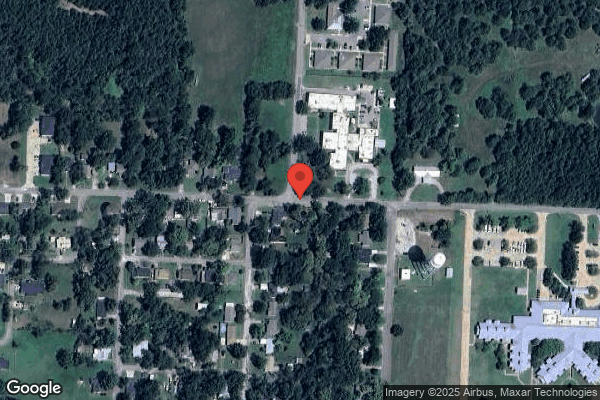
Understanding Severity Codes (click to expand)
Life-Threatening (Immediate Jeopardy)
J - Isolated K - Pattern L - Widespread
Actual Harm
G - Isolated H - Pattern I - Widespread
Potential for Harm
D - Isolated E - Pattern F - Widespread
No Harm (Minor)
A - Isolated B - Pattern C - Widespread

Questions to Ask on Your Visit

  • "Can I speak with families of current residents?"
  • "What's your RN coverage like on weekends and overnight?"

Our Honest Assessment

Strengths
  • • No major safety red flags. No abuse findings, life-threatening violations, or SFF status.
  • • No fines on record. Clean compliance history, better than most Texas facilities.
  • • 32% turnover. Below Texas's 48% average. Good staff retention means consistent care.
Concerns
  • • 28 deficiencies on record. Higher than average. Multiple issues found across inspections.
Bottom line: Mixed indicators with Trust Score of 70/100. Visit in person and ask pointed questions.

About This Facility

What is Seven Oaks Nursing & Rehabilitation's CMS Rating?

CMS assigns SEVEN OAKS NURSING & REHABILITATION an overall rating of 4 out of 5 stars, which is considered above average nationally. Within Texas, this rating places the facility higher than 99% of the state's 100 nursing homes. This rating reflects solid performance across the metrics CMS uses to evaluate nursing home quality.

How is Seven Oaks Nursing & Rehabilitation Staffed?

CMS rates SEVEN OAKS NURSING & REHABILITATION's staffing level at 3 out of 5 stars, which is average compared to other nursing homes. Staff turnover is 32%, compared to the Texas average of 46%. This relatively stable workforce can support continuity of care.

What Have Inspectors Found at Seven Oaks Nursing & Rehabilitation?

State health inspectors documented 28 deficiencies at SEVEN OAKS NURSING & REHABILITATION during 2023 to 2025. These included: 26 with potential for harm and 2 minor or isolated issues.

Who Owns and Operates Seven Oaks Nursing & Rehabilitation?

SEVEN OAKS NURSING & REHABILITATION is owned by a for-profit company. For-profit facilities operate as businesses with obligations to shareholders or private owners. The facility is operated by CREATIVE SOLUTIONS IN HEALTHCARE, a chain that manages multiple nursing homes. With 108 certified beds and approximately 39 residents (about 36% occupancy), it is a mid-sized facility located in BONHAM, Texas.

How Does Seven Oaks Nursing & Rehabilitation Compare to Other Texas Nursing Homes?

Compared to the 100 nursing homes in Texas, SEVEN OAKS NURSING & REHABILITATION's overall rating (4 stars) is above the state average of 2.8, staff turnover (32%) is significantly lower than the state average of 46%, and health inspection rating (4 stars) is above the national benchmark.

What Should Families Ask When Visiting Seven Oaks Nursing & Rehabilitation?

Based on this facility's data, families visiting should ask: "Can I visit during a mealtime to observe dining assistance and food quality?" "How do you handle medical emergencies, and what is your hospital transfer rate?" "Can I speak with family members of current residents about their experience?"

Is Seven Oaks Nursing & Rehabilitation Safe?

Based on CMS inspection data, SEVEN OAKS NURSING & REHABILITATION has a clean safety record: no substantiated abuse findings (meaning no confirmed cases of resident harm), no Immediate Jeopardy citations (the most serious violation level indicating risk of serious injury or death), and is not on the Special Focus Facility watch list (a federal program monitoring the lowest-performing 1% of nursing homes). The facility has a 4-star overall rating and ranks #1 of 100 nursing homes in Texas. While no facility is perfect, families should still ask about staff-to-resident ratios and recent inspection results during their visit.

Do Nurses at Seven Oaks Nursing & Rehabilitation Stick Around?

SEVEN OAKS NURSING & REHABILITATION has a staff turnover rate of 32%, which is about average for Texas nursing homes (state average: 46%). Moderate turnover is common in nursing homes, but families should still ask about staff tenure and how the facility maintains care continuity when employees leave.

Was Seven Oaks Nursing & Rehabilitation Ever Fined?

SEVEN OAKS NURSING & REHABILITATION has no federal fines on record. CMS issues fines when nursing homes fail to meet care standards or don't correct problems found during inspections. The absence of fines suggests the facility has either maintained compliance or corrected any issues before penalties were assessed. This is a positive indicator, though families should still review recent inspection reports for the full picture.

Is Seven Oaks Nursing & Rehabilitation on Any Federal Watch List?

SEVEN OAKS NURSING & REHABILITATION is not on any federal watch list. The most significant is the Special Focus Facility (SFF) program, which identifies the bottom 1% of nursing homes nationally based on persistent, serious quality problems. Not being on this list means the facility has avoided the pattern of deficiencies that triggers enhanced federal oversight. This is a positive indicator, though families should still review the facility's inspection history directly.