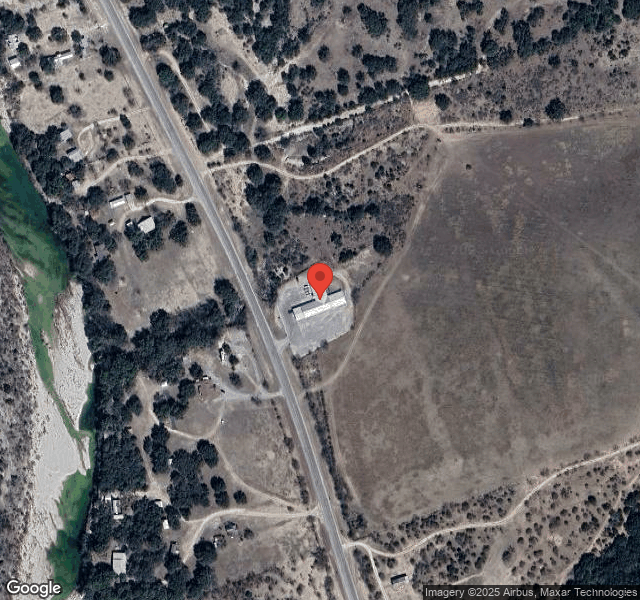
Avir at Camp Wood

710 HWY 55, Camp Wood, TX 78833 (830) 597-5445
For profit - Corporation 86 Beds AVIR HEALTH GROUP Data: November 2025 1 Immediate Jeopardy citation
Trust Grade
18/100
#928 of 1168 in TX
Last Inspection: July 2025

Inspected within the last 6 months. Data reflects current conditions.

Overview

Avir at Camp Wood has received a Trust Grade of F, indicating significant concerns about the facility. Ranking #928 out of 1168 in Texas places it in the bottom half of nursing homes statewide, while being the only option in Real County suggests there are no better local alternatives. Unfortunately, the facility is worsening, with issues increasing from 1 in 2024 to 9 in 2025. Staffing is a point of concern, as it has a poor 1-star rating, although the turnover rate is exceptionally low at 0%. The facility has been fined $86,254, which is higher than 83% of Texas facilities, hinting at ongoing compliance issues. Additionally, RN coverage is lacking, falling short of 84% of state facilities, which can affect the quality of care. Specific incidents noted include failures in infection control, such as not properly isolating a COVID-19 positive resident and staff not following hygiene protocols, putting residents at risk. Furthermore, residents have reportedly been administered medications without proper informed consent, which could lead to harm from potential side effects. While the low turnover rate may indicate staff consistency, the overall picture raises serious concerns about the quality of care provided.

Trust Score
F
18/100
In Texas
#928/1168
Bottom 21%
Safety Record
High Risk
Review needed
Inspections
Getting Worse
1 → 9 violations
Staff Stability
○ Average
Turnover data not reported for this facility.
Penalties
○ Average
$86,254 in fines. Higher than 58% of Texas facilities. Some compliance issues.
Skilled Nurses
⚠ Watch
Each resident gets only 12 minutes of Registered Nurse (RN) attention daily — below average for Texas. Fewer RN minutes means fewer trained eyes watching for problems.
Violations
⚠ Watch
26 deficiencies on record. Higher than average. Multiple issues found across inspections.
★☆☆☆☆
1.0
Overall Rating
★☆☆☆☆
1.0
Staff Levels
★☆☆☆☆
1.0
Care Quality
★★★☆☆
3.0
Inspection Score
Stable
2024: 1 issues
2025: 9 issues

The Good

  • Full Sprinkler Coverage · Fire safety systems throughout facility
  • No fines on record

Facility shows strength in fire safety.

The Bad

1-Star Overall Rating

Below Texas average (2.8)

Significant quality concerns identified by CMS

Federal Fines: $86,254

Well above median ($33,413)

Moderate penalties - review what triggered them

Chain: AVIR HEALTH GROUP

Part of a multi-facility chain

Ask about local staffing decisions and management

The Ugly 26 deficiencies on record

1 life-threatening
Jul 2025 9 deficiencies
CONCERN (D)

Potential for Harm - no one hurt, but risky conditions existed

Deficiency F0553 (Tag F0553)

Could have caused harm · This affected 1 resident

**NOTE- TERMS IN BRACKETS HAVE BEEN EDITED TO PROTECT CONFIDENTIALITY** Based on interview and record review, the facility failed to ensure residents and/or the residents' representatives the right to...

Read full inspector narrative →
**NOTE- TERMS IN BRACKETS HAVE BEEN EDITED TO PROTECT CONFIDENTIALITY** Based on interview and record review, the facility failed to ensure residents and/or the residents' representatives the right to participate in the development and implementation of his or her person-centered plan of care for 2 of 8 residents (Residents #3 and #79) reviewed for care plans. The facility failed to invite and include the input of Resident #3 and Resident #79 and/or residents' representative as members of the interdisciplinary team in Care Plan Conference meetings. This failure could place residents at risk of not receiving the interventions, treatments, and care necessary for the resident to reach their highest practicable physical, mental, and psychosocial well-being by not involving the resident and/or the residents' representative in Care Plan Conference meetings. The findings included: Record review of Resident #3's face sheet, dated 7/31/25 revealed a [AGE] year-old female admitted [DATE] with diagnosis including anemia (a deficiency of red blood cells), schizophrenia (a disorder that affects a person's ability to think, feel, and behave clearly), Poly osteoarthritis (a condition where five or more joints are affected by inflammation, pain, stiffness), pre-Diabetes (a condition where blood sugar level is higher than what is considered health, but not high enough to be Type 2 Diabetes), Hypertension (high blood pressure). No diagnosis of dementia was present on Resident #3's face sheet. Record review of Resident #3's BIMS assessment, dated 7/16/25, reflected Resident #3 had a BIMS score of 15 indicating intact cognition. Record review of Resident #3's Electronic and Paper health Record revealed that a care plan meeting for Resident #3 was held on 2/6/25 and neither the resident nor her representative was included in the meeting. During an interview on 7/30/25 at 10:00 a.m., Resident #3 stated she had not been invited to any Care Plan conference meeting since she admitted to this facility. Resident #3 stated she was familiar with Care Plan meetings because she attended them in the past at a previous facility. Record review of Resident #79's face sheet, dated 7/30/25 revealed a [AGE] year-old female admitted [DATE] with diagnosis including Osteoporosis (a condition in which bones become weak and brittle), cerebral infarction (a condition where a part of the brain id damaged due to a blockage of blood flow), insomnia (a sleep disorder), anxiety, major depressive disorder, dysphagia (difficulty swallowing), dementia (a group of conditions characterized by impairment, memory loss, judgement), ataxia (impaired balance or coordination). Record review of Resident #79's MDS dated [DATE] revealed a BIMS assessment score of 14 indicating intact cognition. Record review of Resident #79's electronic and Paper health record revealed that care plan meetings for Resident #79 were held on 12/12/24 and 2/20/25 and neither the resident nor her representative was included in the meetings. During an interview on 7/30/25 at 10:15 a.m., Resident #79 stated she was informed of care plan meeting but had not attended or participated in a Care Plan conference meeting since she admitted to this facility. During an interview on 7/31/25 at 2:15 p.m., the MDS Nurse stated she notified family member by mail or email (if available) of Care Plan meetings date and time. The MDS Nurse stated she met with the residents but did not have them sign on attendance or indicate that they were present for review meetings. The MDS Nurse stated failure to include residents in their plan of care could result in them not being fully aware of their medications, treatments and rights. During an interview on 7/31/25 at 2:44 p.m., the DON stated it was important for residents and/or representative to participate in the plan of care meeting if they desire. The DON stated adverse effect of resident's or their representative no attending and participating in review meeting would be that decisions could be made that the resident and/or representative were not aware of. During an interview on 7/31/25 at 4:30 p.m., the ADM stated his expectation was that residents and/or their representative were informed of and participate in quarterly care plan meetings. Review of facility policy titled Care Plans, Comprehensive Person-Centered, Revised March 2022, revealed 5. The resident is informed of his or her right to participate in his or her treatment and provided advance notice of care planning conferences; and 6. If the participation of the resident and his/her resident representative is not practicable, an explanation is documents in the resident's medical record. the explanation should include what steps were taken to include the resident or representative in the process.
CONCERN (D)

Potential for Harm - no one hurt, but risky conditions existed

Deficiency F0582 (Tag F0582)

Could have caused harm · This affected 1 resident

**NOTE- TERMS IN BRACKETS HAVE BEEN EDITED TO PROTECT CONFIDENTIALITY** Based on interviews and record reviews the facility failed to inform each Medicaid-eligible resident, in writing, when the resid...

Read full inspector narrative →
**NOTE- TERMS IN BRACKETS HAVE BEEN EDITED TO PROTECT CONFIDENTIALITY** Based on interviews and record reviews the facility failed to inform each Medicaid-eligible resident, in writing, when the resident becomes eligible for Medicaid of those other items and services that the facility offers and for which the resident may be charged for 2 of 2 (Residents #1 and #16) residents reviewed in that: 1. Resident #1 did not provide the cost of Skilled Nursing Facility Advanced Beneficiary Notice of Non-coverage (SNF ABN). It is the facility's responsibility to inform the beneficiary about potential non-coverage and the option to continue services with the beneficiary accepting financial liability for those services. 2. Resident #16 did not provide the cost of Skilled Nursing Facility Advanced Beneficiary Notice of Non-coverage (SNF ABN). This failure could affect residents who use skilled services and could place them at risk of not being aware of changes to provided services. The Findings were: 1. Record review of Resident #1's admission Record dated 7/31/2025 reflected she [AGE] years old, was admitted on [DATE], re-admitted on [DATE] and was on Medicare/Medicaid services. Record review of Resident #1's Quarterly MDS dated [DATE] reflected she was Medicare and/or Medicaid certified, and her BIMS score was 9/15 (Moderate Cognitive impairment). Record review of Resident #1's SNF Beneficiary Protection Notification Review start date was 7/4/2025 and revealed the last day of service was 7/16/2025. The Skilled Nursing Facility Advance Beneficiary Notice of NON-Coverage) SNF-ABN) began on 7/16/2025 for Occupational Therapy and Daily Skilled Nursing Care was X'd, and the estimated cost to resident was blank. 2. Record review of Resident #16's admission Record dated 7/30/2025 reflected he was [AGE] years old, was admitted on [DATE], re-admitted on [DATE] and was on Medicare/Medicaid services. Record review of Resident #16's Quarterly MDS dated [DATE] reflected he was on Medicare and/or Medicaid certified, and her BIMS score was 9/15 (Moderate Cognitive impairment). Record review of Resident #1's SNF Beneficiary Protection Notification Review start date was 5/12/2025 and revealed the last day of service was 5/29/2025. The Skilled Nursing Facility Advance Beneficiary Notice of NON-Coverage) SNF-ABN) began on 5/29/2025 for Occupational Therapy and Daily Skilled Nursing Care was X'd , and the estimated cost to resident was blank. Interview on 7/30/2025 at 12:24 PM with MDS nurse stated she was not sure the cost and did not review with Residents #1 and #16. Interview on 7/31/2025 at 2:50 PM with the DON stated the MDS nurse was responsible for ABN letters. Interview on 7/31/2025 at 6:00 PM with the ADM stated he was not aware of this and stated they follow the Federal requirements, when asked for policy.
CONCERN (D)

Potential for Harm - no one hurt, but risky conditions existed

Deficiency F0605 (Tag F0605)

Could have caused harm · This affected 1 resident

**NOTE- TERMS IN BRACKETS HAVE BEEN EDITED TO PROTECT CONFIDENTIALITY** Based on observation, interview and record review, the facility failed to ensure each resident's drug regimen was free from chem...

Read full inspector narrative →
**NOTE- TERMS IN BRACKETS HAVE BEEN EDITED TO PROTECT CONFIDENTIALITY** Based on observation, interview and record review, the facility failed to ensure each resident's drug regimen was free from chemical restraints with adequate monitoring for 1 of 8 residents reviewed for abuse, neglect and exploitation. The facility failed to ensure Resident #79 had monitoring for antidepressant medication (Paroxetine). These failures could place resident at risk for adverse drug reactions (unintended, harmful events attributed to the use of medication. The findings included: Record review of Resident #79's face sheet, dated 7/30/25 revealed a [AGE] year-old female admitted [DATE] with diagnoses including Osteoporosis (a condition in which bones become weak and brittle), cerebral infarction (a condition where a part of the brain id damaged due to a blockage of blood flow), insomnia (a sleep disorder), anxiety, major depressive disorder, dysphagia (difficulty swallowing), dementia (a group of conditions characterized by impairment, memory loss, judgement), ataxia (impaired balance or coordination). Record review of Resident #79's MDS dated [DATE] revealed a BIMS assessment score of 14 indicating intact cognition. Record review of Resident #79's medication administration record dated 3/1/25-3/31/25 indicated a new order for Paroxetine HCl Tablet 10MG. give 1 tablet by mouth at bedtime related to major Depressive Disorder, recurrent unspecified (F33.9) -Start Date- 03/24/2025. The medication administration record did not indicate assessment or monitoring for a new medication or monitoring for adverse reactions. Record review of Resident #79's progress notes dated 3/24/25-3/31/25 did not reflect assessment or monitoring or assessment for adverse reactions to new medication. Record review of Resident #79's care plan indicated: Focus: The resident uses antidepressant medication related to Depression Date initiated: 01/15/25. Goal: The resident will be free from .adverse reactions related to antidepressant therapy. Interventions: Administer AINTIDEPRESSANT medications as ordered by physicians. Antidepressant medication Paroxetine was started on 3/24/25 and was not identified in the Care Plan. During an interview on 7/31/25 at 2:30 p.m., LVN D stated she would monitor residents with a new medication for at least 3 days for adverse side effects. LVN D stated that residents who were not monitored may not be assessed for potential allergic reactions, respiratory distress or other complications. During an interview on 7/31/25 at 3:30 p.m., the DON stated that he expected new medications to be monitored for 72 hours on initial on-set for adverse side effects. The DON stated failure to monitor side effects could cause potential harm to residents. Facility policy on Medication Administration and Monitoring for new medications was requested on 7/30/25 and 7/31/25 but was not received prior to survey exit. During an interview with the DON on 7/31/25 at 5:45 p.m., the DON stated that the facility followed HHSC standards and protocol for medication administration. According to Guidance 483.45(d) Unnecessary Drugs and (c)(3) and (e) Psychotropic Drugs .Proper medication .without adequate monitoring-ma increase the risk of a broad range of adverse consequences such as medication interactions, depression, confusion, immobility, falls, hip fractures, and death.
CONCERN (D)

Potential for Harm - no one hurt, but risky conditions existed

Incontinence Care (Tag F0690)

Could have caused harm · This affected 1 resident

**NOTE- TERMS IN BRACKETS HAVE BEEN EDITED TO PROTECT CONFIDENTIALITY** Based on observations, interviews, and record reviews the facility failed to ensure that residents who are incontinent of bladde...

Read full inspector narrative →
**NOTE- TERMS IN BRACKETS HAVE BEEN EDITED TO PROTECT CONFIDENTIALITY** Based on observations, interviews, and record reviews the facility failed to ensure that residents who are incontinent of bladder received appropriate treatment and services to prevent urinary tract infections and to restore continence to the extent possible, for 1 of 3 residents reviewed for indwelling urinary catheter care. The facility placed Resident #70's indwelling urinary catheter urine collection bag higher than Resident #70 bladder while in his wheelchair. This failure could place residents at risk for harm by urinary tract infections.The findings are: A record review of Resident #70's admission record dated 7/31/2025 revealed an admission date of 7/6/2022 with diagnoses which included retention of urine and obstructive and reflux uropathy (a blockage in the urethra that makes it difficult or impossible to urinate. It can also cause pain and infections.) A record review of Resident #70's annual MDS assessment dated [DATE] revealed Resident #70 was an [AGE] year-old male admitted for LTC related to vascular dementia (a type of dementia caused by reduced blood flow to the brain, leading to cognitive decline and difficulties with reasoning, planning, and memory.) Resident #70 was assessed with a BIMS score of 00 out of a possible 15 which indicated severe cognitive impairment. Resident #70 was assessed with the need for an indwelling urinary catheter. A record review of Resident #70's physician's orders dated 7/31/2025 revealed the physician prescribed for Resident #70 to have an indwelling suprapubic urinary catheter (a type of urinary catheter. It empties the bladder through an incision in the belly instead of a tube in the urethra.) A record review of Resident #70's care plan dated 7/31/2025 revealed, The resident has a Suprapubic Catheter due to Obstructive and Reflux Uropathy. He is at risk for infections. Date Initiated: 07/20/2022 . CATHETER: The resident has 16 FR/ 30 cc bulb suprapubic. Position catheter bag and tubing below the level of the bladder . During an observation on 7/28/2025 at 10:20 AM revealed Resident #70 was in his wheelchair with his indwelling urinary catheter urine collection bag tied to the back of his wheelchair. Further observation revealed the urinary collection bag was tied at the level of the resident's mid lower back and above the bladder. During an observation and interview on 7/28/2025 at 10:24 AM CNA B stated Resident #70's urinary catheter urine collection bag was tied to Resident #70's wheelchair back about the level of his lower back. CNA B stated the level was too high. Observation revealed CNA B untied the urine collection bag and attempted to retie the bag to the lowest bar on the wheelchair which was below Resident #70's buttocks. During an interview on 7/28/2025 at 10:30 AM LVN A stated she was the charge nurse for Resident #70. LVN A stated Resident #70 should have his urinary catheter urine collection bag secured below the level of his bladder to facilitate the urine flow from his bladder to his collection bag. LVN A stated Resident #70 had a history of urinary tract infections and having the collection bag higher than the level of the bladder could reduce the urine flow from the bladder to the bag and could contribute to possible future urinary tract infections. During an interview on 7/30/2025 at 5:00 PM the DON stated residents who have a need for urinary catheters should have their urine collection bags below the bladder to ensure free flow of urine and prevent catheter associated urinary tract infections. During an interview on 7/31/2025 at 5:00 PM the Administrator stated he concurred with the DON's guidance and oversight concerning indwelling urinary catheters. A policy addressing the care and maintenance of urinary catheters was requested and the Administrator stated the facility followed professional standards and HHSC[KS8] guidelines. A record review of the United States of America's Centers for Disease Prevention and Control's website:Summary of Recommendations | Infection Control | CDCAccessed 7/31/2025, titled Guideline for Prevention of Catheter-Associated Urinary Tract Infections (2009) revealed, . Proper Techniques for Urinary Catheter Maintenance: . Keep the collecting bag below the level of the bladder at all times. A record review of Lippincott Nursing Procedures. [NAME] & [NAME], 2023, revealed, Indwelling Catheter Care - . Keep the catheter and drainage tubing free from kinks to allow the free flow of urine, and keep the drainage bag below the level of the patient's bladder to prevent backflow of urine into the bladder, which increases the risk of CAUTI [catheter associated urinary tract infections.
CONCERN (D) 📢 Someone Reported This

A family member, employee, or ombudsman was alarmed enough to file a formal complaint

Potential for Harm - no one hurt, but risky conditions existed

Deficiency F0925 (Tag F0925)

Could have caused harm · This affected 1 resident

Based on observations, interviews and record reviews the facility failed to maintain an effective pest control program so that the facility is free of pests and rodents for 1 of 4 shower rooms. The 10...

Read full inspector narrative →
Based on observations, interviews and record reviews the facility failed to maintain an effective pest control program so that the facility is free of pests and rodents for 1 of 4 shower rooms. The 100 hall-shower room had 3-4 roaches scattering, when the light was turned on. This failure could result in illness and/or psychosocial harm for residents living in areas with insects. The Findings were: Observation and interview on 7/29/25 at 11:45AM with Resident #16 said the Shower room in 100-hall was dirty and needed to be refurbished. Observation of the 100-hall shower room revealed 3 or 4 live roaches scattering when light was turned on. Observation\interview on 7/29/25 at 11:50 AM with the Laundry/Housekeeping Supervisor/Maintenance Supervisor confirmed the scattered roaches in the 100- hall shower room. The ]Laundry/Housekeeping Supervisor stated they will clean the shower room and call pest control. The Maintenance Supervisor stated the pest control company comes once a month. Interview on 7/31/2025 at 2:50 PM the DON and Corporate nurse stated, he will have staff clean the shower rooms and call pest control. Record review of Pest control log had the Pest control every month. The treated for pest, Bugs no documentation of what type of bugs Record review of the policy for , Pest Control, dated May 2008, stated Our facility shall maintain an effective pest control program. 1. The facility maintains an on-going pest control program to ensure that the building is kept free of insects and rodents.
CONCERN (E)

Potential for Harm - no one hurt, but risky conditions existed

Deficiency F0552 (Tag F0552)

Could have caused harm · This affected multiple residents

**NOTE- TERMS IN BRACKETS HAVE BEEN EDITED TO PROTECT CONFIDENTIALITY** Based on observation, interviews and record reviews the facility failed to ensure residents had the right to be informed of, and...

Read full inspector narrative →
**NOTE- TERMS IN BRACKETS HAVE BEEN EDITED TO PROTECT CONFIDENTIALITY** Based on observation, interviews and record reviews the facility failed to ensure residents had the right to be informed of, and participate in, their treatments, for 3 of 8 residents (Resident #2, #25, and #59) reviewed for informed consent prior to treatment. 1. Resident #2 was administered antipsychotic and antidepression medications, trazodone, divalproex, ziprasidone, and haloperidol, without the resident's informed consent and understanding the medications' potential benefits vs the potential side effects. 2. The facility documented Resident #25's Representative's verbal consent for antiepileptic (seizure) and antipsychotic medications, without a second nurse to witness the consent and sign the consent. 3. The facility documented Resident #59's Representative's verbal consent for antipsychotic medications, without a second nurse to witness the consent and sign the consent. These deficient practices could place residents at risk for harm by therapies with side effects for which they did not consent. The findings included: 1A record review of Resident #2's admission record dated 7/30/2025 revealed an admission date of 2/6/2025 with diagnoses which included schizophrenia (a serious mental health condition that affects the way a person thinks, acts, and feels. It can also interfere with a person's ability to think clearly, manage emotions, make decisions, and relate to others) and depression. A record review of Resident #2's quarterly MDS assessment dated [DATE] revealed Resident #2 was a [AGE] year-old female admitted for LTC (long Term Care) related to her diagnosis of schizophrenia. Resident #2 was assessed with a BIMS score of 11 out of a possible 15 which indicated moderately impaired cognition. A record review of Resident #2's care plan dated 7/30/2025 revealed, Resident resides in a locked/secured unit related to poor decision making related to personal safety, wandering, dementia [a general term for a decline in mental ability, severe enough to interfere with daily life, impacting memory, thinking, and reasoning] Date Initiated: 02/25/2025 . The resident has an ADL [activities of daily life] self-care performance deficit r/t [related to] Confusion, Impaired balance Date Initiated: 02/20/2025 . The resident has a behavior problem r/t Schizophrenia, Depression Resident will yell and out and make inappropriate comments Date Initiated: 02/20/2025 . The resident has impaired cognitive function or impaired thought processes r/t Impaired decision making, Psychotropic drug use Date Initiated: 02/20/2025 . The resident uses psychotropic medications r/t Behavior management, Schizophrenia Date Initiated: 02/20/2025 . Educate the resident or family/caregivers about risks, benefits and the side effects and/or toxic symptoms of medications. Date Initiated: 02/20/2025 . Monitor / document / report PRN [as needed] any adverse reactions of PSYCHOTROPIC medications: unsteady gait, tardive dyskinesia , EPS [Extrapyramidal Symptoms] (shuffling gait, rigid muscles, shaking), frequent falls, refusal to eat, difficulty swallowing, dry mouth, depression, suicidal ideations, social isolation, blurred vision, diarrhea, fatigue, insomnia, loss of appetite, weight loss, muscle cramps nausea, vomiting, behavior symptoms not usual to the person. Date Initiated: 02/20/2025 . The resident uses antidepressant medication r/t Depression Date Initiated: 02/20/2025 . Educate the resident/family/caregivers about risks, benefits and the side effects and/or toxic symptoms of medications. Date Initiated: 02/20/2025 . The resident has a mood problem r/t schizophrenia, depression, has hallucinations and yells at things that are not there. Date Initiated: 02/20/2025 . A record review of Resident #2's physician's orders dated 7/31/2025 revealed the physician prescribed for Resident #2:- To receive trazodone 50mg 1 tablet twice a day for depression.- To receive divalproex 500mg 1 capsule twice a day for schizophrenia.- To receive ziprasidone 80mg 1 tablet twice a day for schizophrenia.- To receive haloperidol 5mg injection once for anxiety. A record review of Resident #2's medication administration record for the period from 7/1/2025 through 7/30/2025 revealed the nursing staff administered the following medications daily:- Trazodone 50mg.- Divalproex 500mg.- Ziprasidone 80mg.- Haloperidol 5mg injection, once on 7/16/2025. A record review of Resident #2's medical record for the period 2/1/2025 to 7/31/2025 revealed:- Consent for antipsychotic or neuroleptic medication treatment dated 2/12/2025, revealed a consent for ziprasidone without any documentation for the section: In my clinical opinion: the probable clinically significant side effects and risks of the proposed treatment with antipsychotic or neuroleptic medications are indicated: or the need for, and benefits of, the proposed treatment with antipsychotic or neuroleptic medication is indicated:- Consent for antipsychotic or neuroleptic medication treatment dated 2/12/2025, revealed a consent for divalproex without any documentation for the section: In my clinical opinion: the probable clinically significant side effects and risks of the proposed treatment with antipsychotic or neuroleptic medications are indicated: or the need for, and benefits of, the proposed treatment with antipsychotic or neuroleptic medication is indicated: - Consent for antipsychotic or neuroleptic medication treatment dated 2/12/2025, revealed a consent for haloperidol without any documentation for the section: In my clinical opinion: the probable clinically significant side effects and risks of the proposed treatment with antipsychotic or neuroleptic medications are indicated: or the need for, and benefits of, the proposed treatment with antipsychotic or neuroleptic medication is indicated: - Consent for antipsychotic or neuroleptic medication treatment dated 2/12/2025, revealed a consent for trazadone without any documentation for the section: In my clinical opinion: the probable clinically significant side effects and risks of the proposed treatment with antipsychotic or neuroleptic medications are indicated: or the need for, and benefits of, the proposed treatment with antipsychotic or neuroleptic medication is indicated: A record review of Resident #2's Psychiatry Initial Evaluation dated 1/16/2025, revealed, chief complaint reason for this visit evaluation on patient with complex psychiatric issues that requires continued monitoring, evaluation, medication review and treatment. Plan of care and treatment discussed with nurses. Patient seen for comprehensive psychiatric evaluation for schizophrenia, anxiety, agitation, and insomnia. HPI [history of present illness] relating to this visit; [AGE] year-old female seen in the nursing home via tele visit. Staff assist with visit due to visit platform and memory issues. She is alert and oriented times 3. The patient is new to the facility and has a diagnosis of schizophrenia upon admission. She has been having behaviors and acting manic. She has been responding to internal stimuli. She has been arguing with herself according to staff and attempting to choke herself. During an observation and interview on 7/28/2025 at 11:00 AM Resident #2 resided in the secured memory care unit of the facility. An attempted interview with Resident #2 revealed she was calm but confused and could respond to her name. Further observation revealed LVN D attended to residents in the secured memory care unit. LVN D stated Resident #2 was alert to herself and received antipsychotic medications for example Geodon (ziprasidone). LVN D stated she was unaware if Resident #2 had an informed consent due to her representative had no contact with her or the facility, I have tried to call him . there is no answer. 2A record review of Resident #25's admission record dated 7/31/2025 revealed an admission date of 1/27/2025 with diagnoses which included dementia. A record review of Resident #25's quarterly MDS assessment dated [DATE] revealed Resident #25 was a [AGE] year-old female admitted for LTC related to dementia and was assessed with a BIMS score of 04 which indicated severe cognitive impairment. A record review of Resident #25's care plan dated 7/31/2025 revealed, I am at risk for injury from wandering in an un- safe environment R/T DX of (DEMENTIA) AEB [as evidenced by] impaired safety awareness. I am at risk for injury from others while residing in secure/ memory unit D/T altered cognition. Date Initiated: 04/29/2025 . A record review of Resident #25's physicians orders dated 7/31/2025 revealed the physician prescribed for Resident#25 to receive:- Divalproex 500mg twice a day for dementia.- Lorazepam 1mg twice a day for anxiety. A record review of Resident #25's medical record for the period 1/28/2025 to 7/31/2025 revealed:- Consent for antipsychotic or neuroleptic medication treatment dated 5/25/2025, revealed a verbal consent for divalproex without a second nurse to witness and sign the consent.- Consent for antipsychotic or neuroleptic medication treatment dated 1/28/2025, revealed a verbal consent for lorazepam without a second nurse to witness and sign the consent.- A Medical Power, Authorization and Directive dated 12/19/2019, (Resident #25) appoint (Resident #25's Representative) as my agent to make any and all health care decisions for me . limitations on the decision making authority of my agent are as follows: NONE. During an interview on 7/30/2025 at 1:10 PM Resident #25's Representative stated he visited Resident #25 often, at least twice a week. Resident #25's Representative stated he could not recall if he ever gave a verbal consent for Resident #25's medications but did recall he often communicated with the nurses and they may have communicated details about her medications. He said, I don't know much about my sweeties medications, but if she needs them I want her to have them. During an interview on 7/30/2025 at 1:20 PM LVN A stated Resident #25's representative was Resident #25's legal representative. LVN A stated Resident #25 received divalproex and lorazepam for dementia and anxiety. LVN A stated the DON was responsible for documenting consents. LVN A stated she had reviewed the consent documents for Resident #25's lorazepam and divalproex and recognized the verbal consents were only signed by the DON. LVN A stated she believed a verbal consent should be witnessed and signed by 2 nurses. 3A record review of Resident #59's admission record dated 7/30/2025 revealed an admission date of 7/24/2024 with diagnoses which included schizophrenia. A record review of Resident #59's quarterly MDS assessment dated [DATE] revealed Resident #59 was a [AGE] year-old male admitted for LTC related to his needs for safety related to his hallucinations and difficulties coping with realities. Resident #59 was assessed with a BIMS score of 04 out of a possible 15 which indicated severe cognitive impairment. A record review of Resident #59's care plan dated 7/30/2025 revealed, Resident's family expresses the desire to have the resident stay in facility long term. POA- (power of attorney) Resident #59's Representative) Date Initiated: 08/06/2024 . Resident resides in a locked/secured unit related to poor decision making related to personal safety, wandering, dementia Date Initiated: 08/06/2024 . The resident has impaired cognitive function/dementia or impaired thought processes r/t Vascular Dementia, schizophrenia, Date Initiated: 08/06/2024 . The resident uses psychotropic medications r/t Behavior management Date Initiated: 08/06/2024. A record review of Resident #59's physicians orders dated 7/30/2025 revealed the physician prescribed for Resident #59 to receive:- Risperidone 1mg 1 tablet twice daily. A record review of Resident #59's medical record for the period 7/24/2024 to 7/31/2025 revealed:- Consent for antipsychotic or neuroleptic medication treatment dated 2/08/2025, revealed a verbal consent for divalproex without a second nurse to witness and sign the consent. During an interview on 7/29/2025 at 10:00 AM Resident #59's Representative stated she could not visit Resident #59 due to her lack of transportation and limited physical abilities. Resident #59's Representative stated she often spoke to Resident #59 and the nursing staff on the telephone. Resident #59's Representative stated she did not recall giving a verbal consent for the medication divalproex but did want Resident #59 to receive medications the physician prescribed. During an interview on 7/30/2025 at 3:40 PM LVN MDS stated:- Resident #2 had a signed consent for trazodone, haloperidol, divalproex, and ziprasidone; however, the consents were blank for any risks vs benefits documentation. LVN stated Resident #2 was confused but still could score 11 out of 15 on a BIMS score which indicated mildly impaired cognition. LVN stated Resident #2 may not be able to recall her medications, their benefits, nor potential risks.- Resident #25 and Resident #59 had verbal consents signed by the DON without a second nurse to witness the verbal consent. During an interview on 7/30/2025 at 4:10 PM the ADON stated:- The ADON stated she reviewed the consents for Resident #2 and concluded the consents did not document any benefits vs risk for the medication.- Resident #25 and #59 had verbal consents documented without a second nurse to witness the verbal consents.The ADON stated the DON was responsible for obtaining informed consents for Residents. The ADON stated the training and expectations was for nurses to obtain consent for medications prior to their administration and the consent should have documentation for patient Resident education for benefits vs risk for the proposed medications. The ADON stated in a situation where the resident's representative gave consent verbally the expectation was for nursing staff to have 2 nurses witness the verbal consent and sign the consent. During an interview on 7/31/2025 at 3:30 PM the DON stated he was responsible for informed consents for residents who received antipsychotic, antidepression, and neuroleptic medications. The DON stated if a consent was given verbally there was no need for 2 nurses to witness and sign the consent. The DON stated the benefits, and the potential risks of the proposed medication was discussed with residents and their representative but may not have been documented on the consent forms. The DON stated he was responsible to ensure the consents were obtained and documented. During a joint interview on 7/31/2025 at 5:00 PM the Regional Clinical Nurse and the Administrator stated the facility policy and expectation was for nurses to obtain informed consent prior to any administration of antipsychotics, neuroleptics, and or antidepressant medications. The Regional Clinical Nurse stated informed consent included a resident's education with understanding of the proposed benefits and potential risks of the intended treatments and or medications. The Regional Clinical Nurse stated in the case where a verbal consent was obtained the facility policy and procedure would be for the nursing staff to have a second nurse witness the consent and sign the document. The Regional Clinical Nurse stated the potential risk to residents could be lack of informed consent for the therapies they received. A policy was requested, and the Administrator stated the facility followed HHSC guidelines A record review of the United States of America's National Library of Medicine, undated website titled, Informed consent - adultshttps://medlineplus.gov/ency/patientinstructions/000445.htmaccessed 7/31/2025 revealed, You have the right to help decide what medical care you want to receive. By law, your health care providers must explain your health condition and treatment choices to you. What Should Occur During the Informed Consent Process?When asking for your informed consent, your provider must explain:Your health problem and the reason for the treatmentWhat happens during the treatmentThe risks of the treatment and how likely they are to occurHow likely the treatment is to workIf treatment is necessary now or if it can wait and the consequences of waitingOther options for treating your health problemRisks or possible side effects that may happen later onYou should have enough information to make a decision about your treatment. Your provider should also make sure you understand the information. One way a provider may do this is by asking you to repeat the information back in your own words (this is called teaching back).
CONCERN (E)

Potential for Harm - no one hurt, but risky conditions existed

Safe Environment (Tag F0584)

Could have caused harm · This affected multiple residents

Based on observations, interviews and record review the facility failed to provide a safe, functional, sanitary, and comfortable environment for residents, for 4 of 4 shower rooms in that: 1. The 100-...

Read full inspector narrative →
Based on observations, interviews and record review the facility failed to provide a safe, functional, sanitary, and comfortable environment for residents, for 4 of 4 shower rooms in that: 1. The 100-hall shower room had black substance along the edges of the shower room; the baseboards were loose; tiles were cracked and had a dirty appearance. 2. The 300-hall shower room had black substance along the edges of the shower room; the baseboards were loose; tiles were cracked and had a dirty appearance. The 300-hall shower had brown substance on the one of the shower stalls and shower a grate was full of hair. 3. The secure hall shower room had black substance along the edges of the shower room; the baseboards were loose; tiles were cracked and had a dirty appearance. 4. The 400-hall shower room had black substance along the edges of the shower room; the baseboards were loose; tiles were cracked and had a dirty appearance. These failures could place residents at risk of a diminished quality of life due to an unsafe environment. The Findings were: Observation/Interview on 7/29/2025 at 11:45 AM with Resident #16 stated the 100-hall shower was dirty and needed to be refurbished. Observation on 7/29/25 at 11:50 AM in the 100-hall shower room with the DON and Corporate nurse had black substance along the edges of the shower room; the baseboards were loose; tiles were cracked and had a dirty appearance. Interview on 7/29/2025 at 11:51 Am with the DON and Corporate nurse stated he will have staff clean the 100-hall shower room. Interview on 7/29/25 at 11:52 to 12:15 PM the Laundry/Housekeeping Supervisor and the Maintenance Supervisor confirmed the following on the shower halls:1. The 100-hall shower room had black substance along the edges of the shower room; the baseboards were loose; tiles were cracked and had a dirty appearance.2. The 300-hall shower room had black substance along the edges of the shower room; the baseboards were loose; tiles were cracked and had a dirty appearance. The 300-hall shower had brown substance on the one of the shower stalls and shower a grate was full of hair.3. The secure hall shower room had black substance along the edges of the shower room; the baseboards were loose; tiles were cracked and had a dirty appearance.4. The 400-hall shower room had mold along the edges of the shower room; the baseboards were loose; tiles were cracked and had a dirty appearance. Interview on 7/29/25 at 12:12 PM the Maintenance Supervisor confirmed the shower rooms needed to be cleaned and repaired. The Maintenance Supervisor had been working at the facility for a few years. Then Maintenance Supervisor stated no documentation of deep cleaning for showers, but the housekeepers do clean the showers. The Maintenance Supervisor stated the nursing cleans the feces and both housekeeping and nursing can clean the shower grates. The Maintenance Supervisor and Laundry/housekeeping Supervisor stated they would look for a policy on cleaning the shower rooms. Observation of Hall 100 revealed the shower walls had black substance, and the tiles are cracked. Observation on Hall 200/300/Secure unit/400 hall, shower walls had mold and the tiles are cracked Observation on 300 halls had brown substance on the shower floor and the shower grate was full of hair. Interview on 7/31/2025 at 2:46 PM the DON stated the shower rooms could affect residents could be a risk for the grout he did not see. The DON stated for the brown substance and hair in grate the resident could be apprehensive to take showers. The DON stated the housekeeping staff was responsible for cleaning the showers and the nursing staff would be responsible for cleaning the brown substance and shower grate. Record review of a checklist for housekeeping staff to follow, was last dated 6/29/25. This housekeeping list did not include the resident showers. Record review of policy, Homelike Environment dated 2/2021 was documented Resident are provided with safe, clean, comfortable and homelike environment and encouraged to use their personal belongings to the extent possible. 2. The facility staff and management maximize, t the extent possible, the characteristics of the facility that reflect a [personalized, homelike setting. These characteristics include a. clean, sanitary and orderly environment.
CONCERN (E) 📢 Someone Reported This

A family member, employee, or ombudsman was alarmed enough to file a formal complaint

Potential for Harm - no one hurt, but risky conditions existed

Room Equipment (Tag F0908)

Could have caused harm · This affected multiple residents

Based on observations and interviews the facility failed to maintain all mechanical, electrical, and patient care equipment in safe operating condition, for 1 of 1 facility's reviewed for maintenance ...

Read full inspector narrative →
Based on observations and interviews the facility failed to maintain all mechanical, electrical, and patient care equipment in safe operating condition, for 1 of 1 facility's reviewed for maintenance and operation of essential equipment. The facility failed to maintain operational 1 of the 3 commercial clothes dryers. These failures could place residents at risk for neglect and not having their hygiene needs met.The findings included. During an observation and interview on 7/28/2025 at 3:25 PM revealed the facility's laundry department had 3 commercial clothes dryers. 1 of the 3 dryers was not operational. The Housekeeping director stated the dryer had not been functioning for longer than 3 months and needed to be replaced. During an interview on 7/31/2025 at 5:00 PM the Administrator stated the facility was awaiting the ownership corporation to address the replacement of the commercial clothes dryer. A policy to address essential equipment maintenance was requested. The Administrator stated the facility follows HHSC guidelines. As of 8/5/2025 a policy for maintenance of essential equipment has not been provided.
CONCERN (F)

Potential for Harm - no one hurt, but risky conditions existed

Deficiency F0838 (Tag F0838)

Could have caused harm · This affected most or all residents

Based on record reviews and interviews the facility failed to conduct and document a facility-wide assessment to determine what resources are necessary to care for its residents competently during bot...

Read full inspector narrative →
Based on record reviews and interviews the facility failed to conduct and document a facility-wide assessment to determine what resources are necessary to care for its residents competently during both day-to-day operations and emergencies for 1 of 1 facility's reviewed for resources necessary to care for residents competently during both day-to-day operations and emergencies. The facility admitted 79 residents without conducting and documenting a facility-wide assessment to determine what resources were necessary to care for its residents competently during both day-to-day operations and emergencies. This failure could place residents at risk for not receiving competent care during day-to-day operations and emergencies.The findings included: A record review of the facility census dated 7/28/2025 revealed 79 residents resided at the facility. During an interview on 7/31/2025 at 5:00 PM the administrator stated the facility had an assessment of their capabilities and resources however the document resided on the previous administrator's personal computer and efforts to secure the assessment had been unsuccessful. The Administrator stated he had not developed a facility wide assessment since March 1, 2025, when the new ownership became responsible for the facility. A policy was requested to address the facility assessment requirements. The Administrator stated the facility followed HHSC guidelines. As of 8/5/2025 a policy regarding the expectations and requirements for a facility wide assessment has not been received.
May 2024 1 deficiency
CONCERN (E)

Potential for Harm - no one hurt, but risky conditions existed

Deficiency F0775 (Tag F0775)

Could have caused harm · This affected multiple residents

**NOTE- TERMS IN BRACKETS HAVE BEEN EDITED TO PROTECT CONFIDENTIALITY** Based on interview and record review, the facility failed to file in the resident's clinical record laboratory reports that were...

Read full inspector narrative →
**NOTE- TERMS IN BRACKETS HAVE BEEN EDITED TO PROTECT CONFIDENTIALITY** Based on interview and record review, the facility failed to file in the resident's clinical record laboratory reports that were dated and contained the name and address of the testing laboratory for 5 of 8 residents (Residents #49, #1, #48, #66, and #15) whose labs were reviewed in that: 1. Resident #49 had lab results sent to the facility on 2/20/2024 not uploaded as of 5/28/2024 [98 days after receipt], resulting in an auxiliary provider not having the information for dietary consultation. 2. Resident #1 had lab results sent to the facility on 9/28/2023 not uploaded as of 5/28/2024 [243 days after receipt]. 3. Resident #48 had lab results sent to the facility on 2/20/2024 not uploaded as of 5/28/2024 [98 days after receipt]. 4. Resident #66 had lab results sent to the facility on 2/20/2024 not uploaded as of 5/28/2024 [98 days after receipt]. 5. Resident #15 had lab results sent to the facility on 2/20/2024 not uploaded as of 5/28/2024 [98 days after receipt]. This failure could place residents at risk of not receiving timely diagnosis and treatment, and not receiving appropriate monitoring for health and well-being. The findings were: 1.Record review of the admission record revealed Resident #49 was a [AGE] year-old female originally admitted on [DATE]. Record review of the quarterly MDS, dated [DATE], revealed Resident #49 had a BIMS summary score of three, indicative of severe cognitive impairment. Resident #49's primary medical condition that best described the primary reason for admission was non traumatic brain dysfunction related to Alzheimer's disease [brain disorder that gets worse over time, most common cause of dementia which is a decline in memory, thinking, behavior and social skills]. Other active diagnoses included cancer. Record review the care plan revealed Resident #49 had interventions to monitor labs as per MD orders, and report results to the MD under the following problem areas: at risk for complications related to hypercholesterolemia [high cholesterol] and hyperlipidemia [high fats in the blood] with a revision date of 2/06/2024; impaired cognitive function/dementia or impaired thought processes with a revision date of 2/06/2024; potential nutritional problem with a revision date of 2/06/2024. Record review of the orders details revealed Resident #49 had active orders for labs that included complete blood count with differential, comprehensive metabolic panel, fast lipid profile, and liver function tests, annually in February with a start date of 8/16/2022. Record review of Nurses Note dated 2/20/2024 at 5:35 AM authored by Charge Nurse A reflected venipuncture to right antecubital space successful pending labs to be taken to [closest hospital lab]. Record review of [closest hospital lab] sheet with a fax confirmation time of 2/20/2024 at 3:15 PM revealed Resident #49's lab blood draw was collected 2/20/2024 at 6:00 AM. Included hand drawn initials for the physician, undated, on each of the 3 pages towards the middle or bottom of the page. [Lab results not uploaded in medical records as of 5/28/2024, 98 days after receipt.] Record review of Physicians Nursing Home Progress Note for Resident #49, dated 3/08/2024 revealed no new problems. [Did not indicate if labs were reviewed.] Record review of Nutrition Quarterly Progress Note for Resident #49, dated 5/29/2024 at 8:09 PM, authored by RD B, reflected, Reviewed [Abnormal Labs]. In an interview on 5/31/2024 at 3:01 PM, the RD stated she would expect to find all recent labs in the EHR scanned under the miscellaneous tab. The RD stated she had reviewed, but there were no recent labs for Resident #49 when she made her quarterly progress notes on 5/29/2024. Upon reading the abnormal lab values from the 2/20/2024 lab blood draw, the RD stated none of the levels, as read, would have changed her course of treatment or recommendations. The RD stated she would have preferred to see the labs herself at the time of her visit, rather than verbally hearing the results over the phone. 2. Record review of the admission record revealed Resident #1 was a [AGE] year-old female originally admitted on [DATE]. Record review of the quarterly MDS, dated [DATE], revealed Resident #1 had a BIMS summary score of 14, indicative of intact cognition. Resident #1's primary medical condition that best described the primary reason for admission was medically complex conditions related to urinary tract infection. Other active diagnoses included non-Alzheimer's dementia. Record review the care plan revealed Resident #1 had interventions to monitor labs as per MD orders, and report results to MD under the following problem areas: at risk for complications related to hyperlipidemia with a revision date of 1/30/2024; delirium or acute episodes of confusion with a revision date of 1/30/2024; fluid overload or potential fluid volume overload with a revision date of 1/30/2024; GERD [gastro-esophageal reflux disease, which is a digestive disorder that affects the ring of muscle between esophagus and stomach] with a revision date of 1/30/2024; cerebral infarction [stroke] with a revision date of 1/30/2024; dementia with a revision date of 1/30/2024; high risk for pressure injury development with a revision date of 1/30/2024; Record review of Nurses Note dated 9/28/2023 at 2:44 PM authored by Nurse C reflected, notified [MD] of UA [urinalysis] results for Resident #1; new orders to start antibiotic for 7 days. [UA results not uploaded in medical records as of 5/28/2024, 243 days after notifying the MD of results.] Record review of [closest hospital lab] sheet with a fax confirmation time of 10/02/2023 at 10:20 AM revealed Resident #1's UA was collected 9/25/2024 at 4:15 PM. Included hand drawn initials for the physician, undated, on the mid- to bottom of the page. 3. Record review of the admission record revealed Resident #48 was a [AGE] year-old male originally admitted on [DATE]. Resident #48's primary diagnosis was pneumonia and secondary diagnosis was sepsis, with acute respiratory failure. Other diagnoses included down syndrome, anemia, and GERD. Record review of Nurses Note dated 2/20/2024 at 5:38 AM authored by Charge Nurse A reflected Resident #48 had venipuncture to left forearm, pending labs to be taken to [closest hospital lab]. Record review of [closest hospital lab] sheet with a fax confirmation time of 2/20/2024 at 9:07 AM revealed Resident #48's blood draw was collected 9/25/2024 at 4:15 PM. Includes hand drawn initials for the physician, undated, on the mid- to bottom of the page. [Lab results not uploaded in medical records as of 5/28/2024; 98 days from receipt.] 4. Record review of the admission record revealed Resident #66 was a [AGE] year-old female originally admitted on [DATE]. Resident #66's primary diagnosis was dementia. Other diagnoses included psychotic disorder with delusions and high blood pressure. Record review of [closest hospital lab] sheet with a fax confirmation time of 2/20/2024 at 3:14 PM revealed Resident #66's blood draw was collected 2/20/2024 at 6:00 AM. Includes hand drawn initials for the physician, undated, on the mid- to bottom of the page. [Lab results not uploaded in medical records as of 5/28/2024, 98 days from receipt] 5.Record review of the care plan revealed Resident #15 was a [AGE] year-old male, admitted [DATE]. Diagnoses included chronic heart failure, repeated falls, and high cholesterol. Record review the care plan revealed Resident #15 had interventions to monitor labs as per MD orders, and report results to MD under the following problem areas: at risk for complications related to hypercholesterolemia and hyperlipidemia with a revision date of 1/29/2024; heart failure with a revision date of 10/30/2023; dehydration or potential fluid deficit with a revision date of 10/30/2023; fluid volume overload related to heart failure with a revision date of 10/30/2023; GERD with a revision date of 10/30/2023. Record review of [closest hospital lab] sheet with a fax confirmation time of 2/20/2024 at 11:37 AM revealed Resident #15's blood draw was collected 2/20/2024 at 6:00 AM. Includes hand drawn initials for the physician, undated, on the mid- to bottom of the page. [Lab results not uploaded in medical records as of 5/28/2024, 98 days from receipt.] In an interview and record review on 5/30/2024 at 3:26 PM, the DON stated, lab work results were scanned in to the EHR by a Medical Records clerk. The DON brought a stack of papers, stating this is everything (lab work) that has not yet been scanned in so far. Review of this stack of papers revealed the earliest date in the stack of papers went back to as far as September 2023, but mostly held February 2024 lab results. The DON stated where she found the stack of lab work results was not considered a part of the medical records. The DON stated the Medical Records clerk was admitted ly behind in scanning all manner of records. The DON stated providers would expect to find the most recent labs in the EHR in scanned in under the miscellaneous tab, and the file to be named appropriately. The DON stated no one would reasonably be expected to search elsewhere for lab work results. In an interview on 5/31/2024 at 4:51 PM, the DON stated the MD was on site every Friday to round and sign paperwork. The DON stated she expected lab results to be scanned in to EHR no later than the following Monday. The DON stated, the nurses call the MD as soon as labs came in via the fax machine. The DON stated, the MDS Nurse had access to [closest hospital lab] network to pull labs and other pertinent data, for the residents. The DON stated this was why the nurses note was before the official fax came in for Resident #1. The DON stated she believed that whenever a fax came in, which ever nurse was on duty was very aware and conscientious to contact the MD immediately of any abnormal results. The DON stated the risk for not having the paperwork in the EHR was that providers need complete and accurate up to date data to make informed decisions for treatment plans for the residents. Record review of the Laboratory Policy, undated, indicated, Once the physician has indicated that the lab results have been reviewed, the original lab result will be forwarded to the director of nursing for review, then scanned into the resident's clinical record.
Nov 2023 6 deficiencies
CONCERN (D) 📢 Someone Reported This

A family member, employee, or ombudsman was alarmed enough to file a formal complaint

Potential for Harm - no one hurt, but risky conditions existed

Comprehensive Care Plan (Tag F0656)

Could have caused harm · This affected 1 resident

**NOTE- TERMS IN BRACKETS HAVE BEEN EDITED TO PROTECT CONFIDENTIALITY** Based on interview and record review the facility failed to develop and implement a comprehensive person-centered care plan for ...

Read full inspector narrative →
**NOTE- TERMS IN BRACKETS HAVE BEEN EDITED TO PROTECT CONFIDENTIALITY** Based on interview and record review the facility failed to develop and implement a comprehensive person-centered care plan for each resident, consistent with resident rights, that included measurable objectives and timeframes to meet residents' mental, nursing, and mental and psychosocial needs that were identified in the comprehensive assessment and to ensure the comprehensive care plan described the services that were to be furnished to attain or maintain the resident's highest practicable physical, mental, and psychosocial well-being for 1 of 4 residents (Resident #2) reviewed for care plans. The facility failed to ensure Resident #2's care plan indicated her risk for elopement or interventions following an actual elopement. This failure could place residents at risk of not receiving appropriate care to prevent elopement. Record review of Resident #2's face sheet dated 11/22/2023 revealed an admission date of 6/26/23 with diagnoses which included: Huntington's Disease (progressive degeneration of the nerve cells of the brain), anxiety disorder, and major depressive disorder. Record review of Resident #2's Care Plan dated 7/11/2023 revealed a plan of care had not been developed and was not included in the resident's plan of care to show her risk for elopement and actual elopement event. Record review of Resident #2's quarterly MDS, dated [DATE] revealed a BIMS score of 12, which indicated a moderate cognitive impairment. Record review of Resident #2's Elopement Risk assessment dated [DATE] revealed she was at risk for elopement. Record review of Resident #2's progress notes dated 10/21/2023 revealed: Resident #1 was not seen in her room or bathroom and athe screen of the window was pushed out.Resident #2 was found at a local store in town and was returned to the facility (within a short amount of time) with an abrasion to her leg (minor). During an interview on 11/28/2023 at 4:22 p.m., the MDS Coordinator stated Resident #2's care plan did not include elopement or risk for elopement. She stated elopement should have been care planned for Resident #2 after the elopement incident had occurred which would have included interventions for care. The MDS Coordinator stated she was responsible for updating Resident #2's care plan. She stated nursing staff could update care plans but the primary responsibility for the care plan fell on her. She stated she was aware of Resident #2's elopement because she had spoken to the resident's physician after the event occurred (date unknown) and completed a medication review with the physician. The MDS Coordinator stated a care plan that was updated to include the resident's current status was important because it was the plan of care especially for someone who did not know the resident . During an interview on 11/28/2023 at 6:11 p.m., the DON stated she expected care plans to be updated immediately and as soon as possible so it was timely, as necessary. The DON stated a care plan that addressed Resident #2's risk for elopement and actual elopement was important because it was the plan of care on how the facility had decided to care for the patient so they could live their lives to the fullest extent. Record review of the facility's, undated, policy, titled Care Plans (undated) revealed: Purpose: 1. To identify resident real and potential needs 2. To set achievable short- and long-term outcome goals 3. To document interdisciplinary interventions to achieve stated goals 4. To evaluate, review, and revise goals and approaches. Procedure: 5. MDS/CP Nurse (Care Plan) and Care Plan Team members will utilize the RAP summary to identify triggered problems, real and potential. 5. Care Plans will be updated to reflect changes in resident needs.
CONCERN (D) 📢 Someone Reported This

A family member, employee, or ombudsman was alarmed enough to file a formal complaint

Potential for Harm - no one hurt, but risky conditions existed

Deficiency F0745 (Tag F0745)

Could have caused harm · This affected 1 resident

**NOTE- TERMS IN BRACKETS HAVE BEEN EDITED TO PROTECT CONFIDENTIALITY** Based on interview and record review the facility failed to provide medically related social services to attain or maintain the ...

Read full inspector narrative →
**NOTE- TERMS IN BRACKETS HAVE BEEN EDITED TO PROTECT CONFIDENTIALITY** Based on interview and record review the facility failed to provide medically related social services to attain or maintain the highest practicable physical, mental and psychosocial well-being of each resident for 1 of 4 residents (Resident #1) reviewed for medically related social services. The facility failed to ensure a Social Worker assisted Resident #1 in obtaining a legal guardian to look after his best interest and make medically related medical decisions for the resident. This deficient practice could place residents at risk of unmet needs due to insufficient medically related social services. The findings included: Record review of Resident 1's face sheet dated 11/21/2023 revealed an admission date of 3/29/2021 with readmission date of 9/17/2023 with diagnoses which included: Parkinson's disease, psychotic disorder with delusions due to known physiologic condition, mood disorder due to known physiological condition, post-traumatic stress disorder, social and emotional deficit following nontraumatic intracerebral hemorrhage. Record review of Resident #1's face sheet dated 11/21/2023 revealed There were no contacts listed for Responsible Party, next of kin, emergency contact, family members or legal guardianship. The facility listed Resident #1 as self in the contacts list . Record review of Resident #1's quarterly MDS dated [DATE] revealed the resident had a severe vision impairment and had BIMS of 1 which indicated the resident was severely cognitively impaired. Record review of Resident #1's Care Plan revealed: Locked/secured unit related to poor decision making related to personal safety, wandering, dementia with interventions which included: Record review of Resident #1's Care Plan dated 3/03/2022 revealed Resident #1 used psychotropic medications with interventions which included: Discuss with MD and family ongoing need for use of medication. Review behaviors/interventions and alternate therapies and their effectiveness per facility policy. Educate the resident/family/caregivers about risks, benefits and side effects and/or toxic symptoms (of) medications. Record review of Resident #1's physician order Summary for November 2023 revealed physician orders for the following medications: -Ativan (lorazepam) (a class a medication known as benzodiazepines which affect the brain and are depressants that produce sedation and hypnosis) 1 mg , give 1 tablet three times a day for anxiety ordered on 3/01/2022. -Cymbalta delayed release (class of medication which affect the chemicals in the brain) 30 mg, give 1 capsule by mouth one time a day related to depression ordered on 1/06/2023. -Doxepin (tricyclic antidepressant a class a medication which affects the chemicals in the brain) 100 mg, give 1 capsule by mouth at bedtime for insomnia with an order date of 8/09/2023. -Haloperidol (an antipsychotic medication which affects the brain) 5 mg, give 1 tablet by mouth two times a day related to psychotic disorder with delusions due to known physiological condition with an order date of 5/31/2023 -Lithium Carbonate (a mood stabilizer used to treat schizophrenia, bipolar disorder and depression and affects the brain) 300 mg, give 1 capsule by mouth three times a day related to mood disorder due to known physiological condition order date 11/19/2023. -Melatonin (sedative that affects the brain) 5 mg, give two tablets by mouth at bedtime related to insomnia with an order date of 3/01/2022. -Zyprexa 10 mg (antipsychotic medication that affects the brain) 10 mg, give one tablet, two times a day related to mood disorder due to known physiological condition with order date of 3/01/2022. Record review of Resident #1's medical record revealed no signed consents from an RP or guardian for the use of Ativan, Cymbalta, Doxepin, Lithium Carbonate, or Melatonin and no consents or form 3713 consents for the use of antipsychotic medications haloperidol or Zyprexa . During an interview on 11/27/2023 at 11:44 a.m., LVN C stated Resident #1 was not able to make decisions for himself because he had dementia and behaviors. She stated Resident #1 also did not have family to make decisions for him. She stated normally she would look in the medical record to see who the residents RP was. She stated because Resident #1 did not have a RP they notified the physician who made decisions for the resident . During an interview on 11/27/2023 at 3:56 p.m., LVN I stated Resident #1 had behaviors which included frustration, agitation and acting out. She stated Resident #1 seemed unaware of his behaviors and when asked he would say he did not know why he was doing it. LVN I stated staff had to anticipate his needs. LVN I stated Resident #1 could answer yes or no questions but she stated she did not know if he could make decisions for himself. She stated if he had a low BIMS score or had dementia, he would not be able to give consent for anything. LVN I stated Staff G tried to get guardianship for Resident #1 before she left but did not know what happened. During an interview on 11/27/2023 at 4:19 p.m., the DON stated Resident #1 did not have a RP on file. She stated she would want more testing to determine if he was competent to make decisions for himself but did not know who was responsible for this testing. The DON stated generally a dementia diagnoses meant that a resident could not make decisions for themselves. She stated the Social Worker was normally someone who assisted with guardianship. The DON stated the facility had a part-time Social Worker (SW J ). During an interview on 11/27/2023 at 4:32 p.m., SW J stated she was working at the facility part time weekends which began on 11/11/2023. She stated she determined if a resident was able to make decisions for themselves by looking at their BIMS. She stated an individual with an intact to moderate impairment could typically make their own decisions. She stated a moderate impairment was dependent on the resident's personal status. SW J stated Resident #1 had a severe cognitive impairment. She stated she would consider Resident #1 as definitely impaired. She stated he should not sign his own consents because of his mental capacity. SW J stated the facility should get an outside guardian for Resident #1 and there were ways to go about getting one with the state. SW J stated this was her first time working at a place where the residents had such severe disorders. She stated she knew there were guardianship resources but had not started any guardianship process for Resident # 1. She started she had just started working with the facility and she had another full-time job and had notified the Administrator she could only work PRN (as needed, part time basis ). During an interview on 11/27/2023 at 4:59 p.m., Staff G (otherwise known as the facility SW) stated she was working in social services at the facility. She stated she was not licensed as a Social Worker and would not graduate from college with her bachelor's degree until May 2024. She stated she was working under another SW at another facility. She stated she could not remember the name of the Social Worker she was working under or the name of the facility in which she was affiliated. Staff G stated Resident #1 did not have family or RP. She stated the facility nurses and physician made decisions on what was best for the resident in leu of an RP because Resident #1 did not have anybody. Staff G stated she did not seek out a guardian for Resident #1. She stated the SW she was working with (unknown name, unknow affiliation) told her to call APS (Adult Protective Services). Staff G stated APS said no to guardianship because Resident #1 was already in a nursing home facility. Staff G stated she spoke to the owner of the facility, and he told her to contact the State about guardianship. She stated since she had already called APS for referral, and they said no there was nothing else for her to do. Staff G stated she did not reach out to anyone else and did not contact the State Ombudsman because the facility did not have one. Staff G stated the facility knew she was not licensed as a Social Worker. She stated she told the previous Administrator and DON during her interview she was not licensed, and they said okay. She stated the facility did not offer her any other guidance or resources to do her job. Staff G declined to be further interviewed and disconnected the call. During an interview on 11/27/2023 at 5:43 p.m., SW H stated she was a licensed Social Worker at a sister facility in a different city than the facility. She stated she was available for questions and advice if the facility got into a bind and did not know what to do but she was not the SW for the facility. SW H stated in the past 6 months no one at the facility had reached out to her or asked for advice. She stated she was not providing oversight to Staff G and was not her supervisor. She stated if a resident did not have a family or RP and had a low BIMS score, depending on the county in which they resided, the facility would need to put a call into a company that provided professional guardianship. She stated it was a process that involved a judge. SW H stated no one at the facility had reached out to her or asked for assistance with obtaining guardianship for any resident. She stated she could not speak for Staff G except to say she was in training and in school and not a licensed SW and should have spoken to the facility Administrator about guardianship. During an interview on 11/28/2023 at 12:25 p.m., the Administrator stated Staff G was already on staff when she came on board (as Administrator). She stated she was told by the company she was working under the other SW (SW H at the sister facility). The Administrator stated Staff G was functioning as a Social Worker at the facility even though she was not licensed as a Social Worker. The Administrator stated she was not aware Resident #1 did not have a RP, family, or guardian. She stated guardianship for Resident #1 had not been discussed prior to surveyor intervention. During an interview on 11/28/2023 at 6:28 p.m., the Administrator stated the facility did not have a policy for a resident without a RP or guardianship. Record review of the facility's, undated, policy, titled Social Services revealed: The facility provides medically related social services. The social service program is designed to assist each resident to attain or maintain the highest practicable physical, mental, and psychosocial well-being. This includes assisting resident in maintaining or improving their abilities to manage their everyday physical, mental, and psychosocial needs.
CONCERN (E) 📢 Someone Reported This

A family member, employee, or ombudsman was alarmed enough to file a formal complaint

Potential for Harm - no one hurt, but risky conditions existed

Deficiency F0552 (Tag F0552)

Could have caused harm · This affected multiple residents

**NOTE- TERMS IN BRACKETS HAVE BEEN EDITED TO PROTECT CONFIDENTIALITY** Based on interview and record review the facility failed to ensure residents had the right to be informed of, and participate in...

Read full inspector narrative →
**NOTE- TERMS IN BRACKETS HAVE BEEN EDITED TO PROTECT CONFIDENTIALITY** Based on interview and record review the facility failed to ensure residents had the right to be informed of, and participate in, his or her treatment which included, the right to be informed in advance, by the physician or other practitioner or other professional, of the risks and benefits of proposed care, treatment and treatment alternatives or treatment options to choose the alternative or option he or she preferred for 2 of 4 residents (Resident #1 and Resident #2) reviewed for resident rights. 1. The facility failed to obtain consent for the use of sedatives, hypnotics, antidepressants, and antipsychotic medication for Resident #1. 2. The facility failed to obtain consent for the use of antipsychotic, Zyprexa, for Resident #2. These failures could place residents at risk of receiving a medication without consent, which could cause duplicate therapy, sedation, side-effects, and uncomfortable emotional changes. The findings included: 1. Record review of Resident 1's face sheet dated 11/21/2023 revealed an admission date of 3/29/2021 with readmission date of 9/17/2023 with diagnoses which included: Parkinson's disease, psychotic disorder with delusions due to known physiologic condition (chronic and progressive movement disorder which also affects the brain), mood disorder due to known physiological condition (mental health problem that affects a person's emotional state), post-traumatic stress disorder (mental health condition that develops following a traumatic event characterized by intrusive thoughts, recurrent distress/anxiety, and flashbacks), social and emotional deficit following nontraumatic intracerebral hemorrhage (social and emotional deficits following a stroke) Record review of Resident #1's face sheet dated 11/21/2023 revealed there were no contacts listed for Responsible Party, next of kin, emergency contact, family members or legal guardianship. The facility listed Resident #1 as self in the contacts list. Record review of Resident #1's quarterly MDS dated [DATE] revealed the resident had a severe vision impairment and had BIMS of 1 which indicated the resident was severely cognitively impaired. Record review of Resident #1's Care Plan revealed: Locked/secured unit related to poor decision making related to personal safety, wandering, dementia with interventions which included: ensure MD aware of need for locked unit and assess continued need. Record review of Resident #1's Care Plan dated 3/03/2022 revealed Resident #1 uses psychotropic medications with interventions which included: Discuss with MD and family ongoing need for use of medication. Review behaviors/interventions and alternate therapies and their effectiveness per facility policy. Educate the resident/family/caregivers about risks, benefits, and side effects and/or toxic symptoms (of) medications. Record review of Resident #1's Care Plan dated 03/03/2023 revealed the resident used antidepressant medication with interventions which included: educate the resident/family/caregivers about risks, benefits and the side effects and/or toxic symptoms of medications. Record review of Resident #1's Care Plan dated 11/15/2022 last revised on 4/12/2023 revealed the resident was on sedative/hypnotic therapy with interventions which included : administer sedative/hypnotic as ordered by physician. Record review of Resident #1's physician order Summary for November 2023 revealed physician orders for the following medications: -Ativan (lorazepam) (a class a medication known as benzodiazepines which affect the brain and are depressants that produce sedation and hypnosis) 1 mg , give 1 tablet three times a day for anxiety ordered on 3/01/2022. -Cymbalta delayed release (class of medication which affect the chemicals in the brain) 30 mg, give 1 capsule by mouth one time a day related to depression ordered on 1/06/2023. -Doxepin (tricyclic antidepressant a class a medication which affects the chemicals in the brain) 100 mg, give 1 capsule by mouth at bedtime for insomnia with an order date of 8/09/2023. -Haloperidol (an antipsychotic medication which affects the brain) 5 mg, give 1 tablet by mouth two times a day related to psychotic disorder with delusions due to known physiological condition with an order date of 5/31/2023 -Lithium Carbonate (a mood stabilizer used to treat schizophrenia, bipolar disorder and depression and affects the brain) 300 mg, give 1 capsule by mouth three times a day related to mood disorder due to known physiological condition order date 11/19/2023. -Melatonin (sedative that affects the brain) 5 mg, give two tablets by mouth at bedtime related to insomnia with an order date of 3/01/2022. -Zyprexa 10 mg (antipsychotic medication that affects the brain) 10 mg, give one tablet, two times a day related to mood disorder due to known physiological condition with order date of 3/01/2022. Record review of Resident #1's November 2023 MAR revealed the resident was administered the following medications in November: -Ativan 0.5 mg, give 1 tablet by mouth three times a day related to anxiety disorder with a start date of 10/09/2023. -Ativan 1.0 mg, give 1 tablet by mouth three times a day for anxiety with a start date of 11/21/2023. -Cymbalta delayed release 30 mg, give one capsule by mouth, one time a day for depression. -Doxepin 100 mg, give 1 capsule by mouth at bedtime related to insomnia. -Haloperidol 5 mg, give 1 tablet by mouth two times a day related to psychotic disorder with delusions. -Lithium Carbonate 150 mg, give 1 capsule by mouth three times a day related to psychotic disorder with delusions with a start date of 6/08/23 -Lithium Carbonate 300 mg, give 1 capsule by mouth three times a day related to mood disorder with a start date of 11/19/23 -Melatonin 5 mg, give 2 tablets by mouth at bedtime related to insomnia -Zyprexa 10 mg, give 1 tablet by mouth two times a day related to mood disorder. Record review of Resident #1's medical record revealed no signed consents from an RP or guardian for the use of Ativan, Cymbalta, Doxepin, Lithium Carbonate, or Melatonin and no consents or form 3713 consents for the use of antipsychotic medications haloperidol or Zyprexa . During an interview on 11/27/2023 at 11:44 a.m. LVN C stated Resident #1 was not able to make decisions for himself because he had dementia and behaviors. She stated Resident #1 also did not have family to make decisions for him. She stated normally she would look in the medical record to see who the residents RP was. She stated because Resident #1 did not have a RP, they just notify the physician . 2. Record review of Resident #2's face sheet dated 11/22/2023 revealed an admission date of 6/26/23 with diagnoses which included: Huntington's Disease, anxiety disorder, and major depressive disorder. Record review of Resident #2's quarterly MDS dated [DATE] revealed a BIMS score of 12 which indicated a moderate cognitive impairment. Record review of Resident #2's Care Plan dated 7/11/2023 revealed the resident used psychotropic medications with interventions which included: educate resident/family/caregivers about risks, benefits and the side effects and/or toxic symptoms of medications. Record review of Resident #2's physician order summary for November 2023 revealed an order with a start date of 10/21/2023 for Zyprexa (antipsychotic medication that affects the brain) 2.5 mg, give one tablet by mouth in the evening related to anxiety disorder. Record review of Resident #2's medical record revealed there was no signed Form 3713 (antipsychotic consent) in the medical record. During an interview on 11/22/2023 at 10:59 a.m., Resident #2's family member stated she was aware Resident #2 was in a secured unit for elopement behaviors, but she was not aware Resident #2 had been placed an antipsychotic medication Zyprexa. The family member stated she had not been asked to sign any form or consent for Zyprexa. During an interview on 11/27/2023 at 3:09 p.m., LVN F stated Resident #2 did not have a consent for the use of antipsychotic medication Zyprexa in her medical record. She stated she never saw Form 3713 for the use of antipsychotics used at the facility. She stated they just had the old consent forms but there was not one for Zyprexa. LVN F stated consent for the use of antipsychotic medication was required before the medication was given to the resident . During an interview on 11/28/2023 at 4:26 p.m., the MDS Coordinator stated Resident #2 had an elopement from the facility (date unknown). She stated after the elopement incident she notified Resident #2's physician and completed a medication review. She stated she received new orders for Zyprexa. The MDS Coordinator stated she spoke with Resident #2's family member on the phone and she was okay with the medication. The MDS Coordinator stated I think I got consent. She stated she did not get a signed Form 3714 consent for antipsychotics signed . She stated that was an ADON or DON responsibility. She stated a consent was needed prior to administering the medication but the consent could be obtained over the phone as a verbal consent. The MDS Coordinator stated Form 3713 was a process that had to be emailed or mailed to get a signature from the family and was a whole process she had not completed. During an interview on 11/28/2023 at 4:19 p.m., the DON stated she was new to the facility and had been working there for two weeks. She stated she had an expectation for residents to have consents prior to giving a new medication that required consent which also included obtaining consent for dosage changes. She stated Resident #1 did not have the required consents for his medication. She stated she found a binder with Form 3713's in the DON's office but Resident #1's and Resident #2's consents were not included. She stated obtaining medication consent for medications such as hypnotics, sedatives, antidepressants, and antipsychotics was important, so the family knew how the facility was treating the patient The DON stated Form 3713 (consent for antipsychotics) was important, so the staff understood the reactions to medications when explaining to the resident and the family . Record review of the facility's, undated, policy, titled Psychoactive Medication Procedure, Consent to Administer (undated) revealed: Psychoactive medication: A medication prescribed for the treatment of symptoms of psychosis or other severe mental or emotional disorders and used to exercise an effect on the central nervous system to influence and modify behavior, cognition or affective state when treating the symptoms of mental illness. The term includes the following categories: antipsychotics or neuroleptics, antidepressants, agents for the control of mania or depression, anti-anxiety agents, sedative, hypnotics or other sleep-promoting trugs and psychomotor stimulants. Consent: A person may not administer a psychoactive medication to a resident who does not consent to the prescription unless: 1. The resident is having a medication-related emergency or 2. The person authorized by law to consent on behalf of the resident has consented to the prescription. Consent to the prescription of psychoactive medication given by a resident, or by a authorized by law to consent on behalf of the resident is valid only if: 1. The consent is given voluntarily and without coercive or undue influence. 4. The consent is evidenced in the resident's clinical record by a signed form prescribed by the facility
CONCERN (E) 📢 Someone Reported This

A family member, employee, or ombudsman was alarmed enough to file a formal complaint

Potential for Harm - no one hurt, but risky conditions existed

Deficiency F0679 (Tag F0679)

Could have caused harm · This affected multiple residents

**NOTE- TERMS IN BRACKETS HAVE BEEN EDITED TO PROTECT CONFIDENTIALITY** Based on observation, interview and record review the facility failed to provide, based on the comprehensive assessment and care...

Read full inspector narrative →
**NOTE- TERMS IN BRACKETS HAVE BEEN EDITED TO PROTECT CONFIDENTIALITY** Based on observation, interview and record review the facility failed to provide, based on the comprehensive assessment and care plan and the preferences of each resident, an ongoing program to support residents in their choice of activities, both facility sponsored group and individual activities and independent activities, designed to meet the interests of and support the physical, mental, and psychosocial well-being of each resident, encouraging both independence and interaction in the community for 3 of 7 residents (Resident's #1, #2, and #3) reviewed for activities. The facility failed to ensure there were organized activities provided to residents of the secured unit. This failure could place residents at risk for a diminished quality of life, isolation, lack of stimulation, and a decline in mental status. The findings included: Record review of the November activity calendar posted on the hallway wall in the secured unit revealed: -11/21/2023- 9:30 a.m. Men's Group, 10:00 a.m. outdoor meditation, 2:30 p.m. snacks and music, 3:30 p.m. Popcorn Social -11/27/2023- 9:45 a.m. Monday Manicures, 10:45 a.m. crosswords and coffee, 2:30 p.m. snacks and music, 3:30 p.m. ring toss and jeopardy -11/28/2023-9:45 a.m. Men's Group, 10:45 a.m. crosswords and coffee, 2:00 p.m. snacks and music, 3:30 p.m. 25 cent Bingo. Record review of Resident #1's face sheet dated 11/21/2023 revealed an admission date of 3/29/2021 with readmission date of 9/17/2023 with diagnoses which included: Parkinson's disease, psychotic disorder with delusions due to known physiologic condition, mood disorder due to known physiological condition, post-traumatic stress disorder, social and emotional deficit following nontraumatic intracerebral hemorrhage . Record review of Resident #1's quarterly MDS dated [DATE] revealed the resident had a severe vision impairment and had BIMS of 1 which indicated the resident was severely cognitively impaired. Record review of Resident #1's Care Plan revealed: Locked/secured unit related to poor decision making related to personal safety, wandering, dementia with interventions which included: encourage activities of choice to alleviate boredom and reduce stress. Little or no activity involvement due to resident wishes not to participate with interventions which included: The resident needs a variety of activity types and location to maintain interests. Record review of Resident #1's care plan dated 11/16/2022 and last revised on 8/02/2023 revealed Resident #1 had a behavior problem with interventions which included: provide a program of activities that is of interest and accommodates resident status. Record review of Resident #2's face sheet dated 11/22/2023 revealed an admission date of 6/26/23 with diagnoses which included: Huntington's Disease, anxiety disorder, and major depressive disorder. Record review of Resident #2's quarterly MDS dated [DATE] revealed a BIMS score of 12 which indicated a moderate cognitive impairment. Record review of Resident #2's admission assessment dated [DATE] revealed the resident indicated it was very important to have books, newspapers, and magazines to read, listen to music, be around animals such as pets, keep up with the news, do things with groups of people, do favorite activities, go outside to get fresh air when the weather was good and to participate in religious services or practices. Record review of Resident #2's care plan dated 7/11/2023 revealed the resident had depression with interventions which included: assist the resident in developing a program of activities that were meaningful and of interest. Encourage and provide opportunities for exercise, physical activity. Record review of Resident #3's face sheet dated 11/21/2023 revealed an admission date of 1/29/2014 with a readmission date of 12/15/2022 revealed a [AGE] year-old with diagnoses which included: bipolar disorder (mental health condition that affects mood), anxiety disorder, schizophrenia (mental health disorder) and major depressive disorder. Record review of Resident #3's quarterly MDS dated [DATE] revealed a BIMS score of 15, which indicated the resident was cognitively intact. The MDS indicated Resident #3 indicated it was very important to her to be able to listen to music she liked and go outside to get fresh air when the weather was good and somewhat important to have books, newspapers, and magazines to read, to be around animals such as pets, to do things with groups of people, to do her favorite activities and to participate in religious services or practices. Record review of Resident #3's Care Plan dated 4/27/2022 and last revised on 7/18/2023 revealed Resident #3 resided in the locked/secured unit with interventions which included: Encourage activities of choice to alleviate boredom and reduce stress. The Care Plan also revealed the resident was independent for meeting emotional, intellectual, physical and social needs with interventions which included: Activity Director to discuss/monitor for preferences, provide for in-room activities as needed and/or required, remind/encourage resident to attend, assist with activities as needed. During an observation on 11/21/2023 at 11:20 a.m. revealed no activities in the secured unit. Two to three residents were observed wandering in the hallways. Residents #2 and #3 were observed pacing near the secured unit entrance. Resident #1 was seated on the floor of his room in the corner of the room. During an observation and interview on 11/21/2023 at 11:28 a.m., Resident #3 was observed pacing near the entrance to the secured unit. She stated her full name and was able to recall events. She stated there was nothing for her to do during the day in the secured unit. She stated there were no activities. She stated she got to go outside to smoke 5 times a day but that was it . During an observation on 11/21/2023 at 2:30 p.m., no activities were observed in the secured unit. During an observation and interview on 11/21/2023 at 2:41 p.m. revealed there were no activities in the secured unit. CNA B stated Resident #1 was blind, frustrated, and bored. She stated staff tried to distract him by putting him in his wheelchair and wheeling him up and down the hallway but there was only so much they could do. She stated there were no activities in the secured unit. During an observation on 11/21/2023 at 2:45 p.m. revealed there was a scheduled snack with music but no activities had occurred . Resident #2 was observed walking and pacing in the hallway near the secured unit entrance. During an observation on 11/21/2023 at 3:40 p.m., there were no activities occurring in the secured unit. Resident #1 was moving/crawling around the floor in his room. He was calm but active. Resident #2 was observed walking and standing in the hallway. Resident #3 was observed lying o her bed in her room . During an interview on 11/21/2023 at 3:44 p.m., NA A stated Resident #2 and Resident #3 had pacing behaviors. She stated both of them liked to go outside to smoke. She stated the secured unit did not have any thing to distract the residents. She stated there were no activities in the secured unit. She stated they did not even have colors or markers for the residents. She stated the residents of the secured unit did not get to go out to the parties and there was no games or activities of any kind. She stated she did not want to get in trouble for speaking up about the activities but felt like the residents deserved more . During an observation and interview on 11/21/2023 at 5:32 p.m., Resident #1 was observed in his wheelchair in the hallway. During the interview his eyes were looking down towards the floor and he did not move his eyes or his gaze or appear to be able to see. He stated he was blind and could see about 60% and could hear about 50%. He stated he enjoyed drawing, reading, listening to music, and watching TV . He stated in the past he spent a lot of time watching TV. He stated he had a TBI (traumatic brain injury) and had short term memory problems. Resident #1 was not able to remember that he just finished eating dinner or that he took medications. Due to his cognitive status, he was unable to answered detailed interview questions . During an observation and interview on 11/21/2023 at 5:37 p.m., Resident #2 was observed walking in the secured unit. She did not answer interview questions and it was unclear if she understood or if she chose not to respond. During an observation on 11/27/2023 at 11:00 a.m. revealed there were no organized activities in the secured unit. There were no activities in the activity room in the secured unit. The activity closet did not have any activities in it. The cabinet in the activity room was empty . On top of the cabinet in the activity room was a bead [NAME] and several employee drinking mugs. Resident #3 was observed watching TV in her room while lying on her bed. Resident #1 was sitting on the floor of his room without any activities. Resident #2 was observed standing in the hallway. During an observation and interview on 11/27/2023 at 11:11 a.m. Resident #1 was observed crawling on the floor of his room. There was no music playing and no TV. Resident #1 stated he did not know what he was doing (while crawling on floor). He stated there was not much to do. He stated he used to like to watch TV but now did not know if he could see it now (because he was visually impaired ). During an observation on 11/28/2023 at 4:15 p.m. through 4:47 p.m. bingo was observed in the main dining room of the facility with many residents in attendance. None of the residents from the secured unit were included in the activity . During an observation on 11/28/2023 at 5:20 p.m., the Activity Director entered the secured unit to show the State Surveyor where she kept activities in the secured unit. There were a few coloring pages that were not organized in a drawer and some markers and a puzzle. Upon entry, Resident #3 ran up to the Activity Director in an excited manner and hugged the Activity Director. Resident #3 was smiling and appeared exited to see the Activity Director. Resident #3 said to the Activity Director she (AD) forgot to bring her (Resident #3) the cinnamon roll and coke she had promised. The Activity Director responded by saying she (AD) took her (Resident #3) the snack while she (Resident #3) was smoking. Resident #3 stated, No, you did not. You said you would, but you never came back. The Activity Director argued back and forth with Resident #3 before saying she would get the snack and bring it to her in a few minutes . During an interview on 11/28/2023 at 4:22 p.m., LVN C stated she had never seen any activities in the secured unit. LVN C stated Resident #3 went outside to smoke for an activity and could sometimes go into the main area of the facility for activities, but the Activity Director never came into the secured unit with activities. LVN C stated she was not aware of any activity supplies in the secured unit. She stated there was a TV that was not typically on if the residents wanted to watch it. LVN C stated the main activity for residents in the secured unit was smoking. LVN C stated she did not know why activities were important but stated she thought the residents in the secured unit should have them. During an interview on 11/28/2023 at 5:23 p.m., the Activity Director stated she was supposed to have at least 5 activities a day in both the main area of the facility and in the secured unit and was required by law to have separate activity calendars for the secured unit . She was unable to locate the secured unit activity calendar when asked for a copy and was unsure what was posted on the wall of the secured unit. The Activity Director stated she did provide activities in the secured unit but had not been back to the secured unit for activities for the past two weeks because she had been busy. She stated she had dropped off some coloring pages a couple of times in the secured unit but did not participate with the residents in activities. She stated she did not go into the secured unit at all on this day (11/28/2023). The Activity Director stated she had just not been able to go into the secured unit because she could not leave the other part of the building because she was busy. She became emotional during the interview and stated she was given a very limited budget to work with and she could not take supplies to the secured unit because they would disappear, and she would not see them again. The Activity Director stated when she was hired for the position, the Administrator told to her she needed to go into the secured unit. She stated it was the law for her to go back there. The Activity Director stated on Wednesday of last week (11/22/20023) the Administrator reiterated to her she had to go back into the secured unit. The Activity Director stated she knew it was her fault she did not go into the secured unit with activities, but she felt overwhelmed. She stated she informed the Administrator she was overwhelmed. The Activity Director stated she was new to the position of Activity Director. She stated she was working at the facility as a CNA and at the end of October 2023 the previous Activity Director left, and she was hired in the position. She stated she had never worked as an Activity Director before but felt confident she could do the position as she had worked with the elderly since 2008. She stated she had not yet signed up for the Activity Director classes but it was in the process of signing up. She stated she had an associate degree in applied sciences. The Activity Director stated the Administrator informed her when she was hired, she would have to complete the Activity Director courses which started in January 2024. The Activity Director stated Resident #3's family had communicated with her that she needed additional activities and they asked if Resident #3 could help her. She stated Resident #3 could come out of the secured unit for activities if she was supervised and liked to play Bingo. The Activity Director stated she did not invite Resident #3 out of the unit to play Bingo today. The Activity Director stated Resident #3 enjoys helping her with tasks, but she has to keep an eye on her, and she can't always do it. She stated Resident #3 liked to talk and discuss make up but again stated she could not watch her 24/7. The Activity Director stated Resident #2 wanders but also liked helping her with activities. She stated all Resident #1 liked was music. The Activity Director stated she had not gone into the secured unit to play music for him. The Activity Director originally stated she provided 1:1 activity to the residents of the secured unit but was unable to produce documentation. She then stated the previous Activity Director did not tell her she needed to provide 1:1 activities to residents who could otherwise not participate, and she did not know she needed to document those interactions. The Activity Director stated she had a cart for nail polish she used on some of the residents to polish their nails. She stated she did not take the nail cart into the secured unit. When asked why it was important for residents in the secured unit to participate in activities, she stated because it was the law. During an interview on 11/28/2023 at 6:11 p.m., the DON stated she expected the Activity Director to be present in the secured unit daily. She stated other staff could assist with activities, but she expected the Activity Director to initiate and/or direct activities and follow up. The DON stated it was important for quality of life that there were things to do in the secured unit other than stare at each other. The DON stated she (DON) was new to the facility and was not involved with the training of the Activity Director. She stated it was the Administrator who was responsible. The DON stated she did not want residents in the secured unit out in the main areas because unless it was a significant event like a Christmas activity or music, and the facility had the staff to supervise each resident. The DON stated Resident #1 would benefit from outdoor activities and activities using his hands. She stated Resident #2 was discharged to another facility (11/28/23). She stated Resident #3 spoke with her family frequently, had access to a phone, went on smoking breaks frequently and the Activity Director could find out Resident #3's personal preferences. During an interview on 11/28/2023 at 6:28 p.m., the Administrator stated she had been trying to find someone par-time to help the Activity Director. The Administrator stated she told the Activity Director she had to have at least 5 activities a day and have a calendar of activities. The Administrator stated she had several conversations with the Activity Director. She stated she told her she could not change the activities that were on the calendar and gave her some ideas. She stated she also discussed the secured unit with the Activity Director including the need for 5 activities a day. The Administrator stated the Activity Director was on a learning curve because she had never done it before , but the residents really liked her, and she was vivacious. The Administrator stated the Activity Director just had not been able to pull it all together with the secured unit. The Administrator stated she saw the residents color and the Activity Director took smokers outside once a day. The Administrator stated she was not monitoring the Activity Directors activities in the secured unit. The Administrator stated the job market for staff (in a rural area) was so limited and they had to do a lot to bring in the staff. Record review of the facility's, undated, policy titled Activities (undated) revealed the facility provided an ongoing program of resident activities. The activity program is designed to meet the interests and physical, mental, and psychosocial well-being of each resident in accordance with the resident's comprehensive assessment. The facility provides group and individual activities for all residents who are able to participate. All residents, particularly bedfast and those residents unable to participate in group activities will be visited by the Activity Director and/or a volunteer. A monthly calendar is posted at the beginning of each month in an area that is accessible and frequented by the residents. A balance of recreational activities including physical, social, religious, arts and crafts, diversional and intellectual, will be planned.
CONCERN (E) 📢 Someone Reported This

A family member, employee, or ombudsman was alarmed enough to file a formal complaint

Potential for Harm - no one hurt, but risky conditions existed

Accident Prevention (Tag F0689)

Could have caused harm · This affected multiple residents

**NOTE- TERMS IN BRACKETS HAVE BEEN EDITED TO PROTECT CONFIDENTIALITY** Based on observation, interview and record review the facility failed to ensure each resident received adequate supervision and ...

Read full inspector narrative →
**NOTE- TERMS IN BRACKETS HAVE BEEN EDITED TO PROTECT CONFIDENTIALITY** Based on observation, interview and record review the facility failed to ensure each resident received adequate supervision and assistance devices to prevent accidents for 2 of 4 residents (Resident #2 and #4) reviewed for accidents and supervision. 1. The facility failed to ensure Resident #2 did not elope from the facility on 10/21/2023. 2. The facility failed to ensure Resident #4 did not elope from the facility on 8/27/2023 These failures could place residents at risk for elopement and could result in injury or a decline in health. The findings included: 1. Record review of Resident #2's face sheet dated 11/22/2023 revealed an admission date of 6/26/23 with diagnoses which included: Huntington's Disease, anxiety disorder, and major depressive disorder. Record review of Resident #2's care plan dated 7/11/2023 revealed the resident did not have a plan of care to include her risk for elopement or actual elopement on 10/21/2023. Record review of Resident #2's quarterly MDS dated [DATE] revealed a BIMS score of 12, which indicated a moderate cognitive impairment and no wandering behaviors. Record review of Resident #2's Elopement Risk assessment dated [DATE] revealed the resident was at risk for elopement with a score of 13. The assessment indicated a score of 10 or more put the resident at risk for elopement. The assessment indicated the IDT team had determined no elopement precautions were necessary at the time of the assessment. Record review of a facility's self-report dated 10/28/2023 revealed on 10/21/2023 at 10:30 a.m., Resident #2 had eloped from the building out of a window. She was located at 11:00 a.m. on the same day at a local store down the road. Resident #2 was assessed for injuries and was noted with a minor abrasion to her right leg. Resident #2 stated she was not in any pain and no treatment was provided. Resident #2's family member and physician were notified, and she was placed on every 15-minute checks to prevent (another) elopement and ensure her safety. The report indicated staff were in-serviced on resident abuse and the facility elopement policy. Record review of Resident #2's progress notes dated 10/21/2023 revealed the psych MD was notified of Resident #2's attempt to leave the facility and medications were reviewed. A new order for Zyprexa was ordered. Record review of Resident #2's medical record revealed a new Elopement Risk Assessment was not completed after her actual elopement on 10/21/2023 . Record review of Resident #2's care plan revealed the resident did not have a plan of care to include her risk for elopement or actual elopement on 10/21/2023. During an observation on 11/21/2023 at 11:20 a.m. revealed Residents #2 pacing near the secured unit entrance but was not trying to exit. During an observation on 11/21/2023 at 2:45 p.m. Resident #2 was observed walking and pacing in the hallway near the secured unit entrance. During an observation/interview on 11/21/2023 at 5:37 p.m., Resident #2 was observed walking in the secured unit. She did not answer interview questions and it was unclear if she understood or if she chose not to respond. During an interview on 11/22/2023 at 10:59 a.m., Resident #2's family member stated she was notified Resident #2 had eloped from the facility. The family member stated this was not the first time it had happened. She stated she did not remember when Resident #2 got out of the facility or where exactly she was found. She stated Resident #2 was a drug abuser and there was concern she would get out of the facility to seek drugs. She stated the Administrator had called her and had a conversation with her after she recently got out of the facility and stated she thought Resident #2 would be happier closer to her family. The family member stated Resident #2 would always say she was looking for family when she got out of the facility. The family member stated she was in agreement to move Resident #2 closer to her and had found a facility that was closer. During an interview on 11/27/2023 at 11:22 a.m., CNA L stated Resident #2 had eloped from the facility in October 2023. She stated Resident #2 pushed out a window and climbed through. CNA L stated it was close to a mealtime and staff were unable to locate the resident. She stated she was trained to look everywhere inside and outside. She stated since Resident #2 could not be located on the premises the department heads went to look for her. CNA L stated Resident #2 was located at a store which she confirmed on a map was 0.6 of a mile from the facility. CNA L stated Resident #2 was a fast walker and had walked there looking for her daughter. CNA L stated when she came back, she did not see any injuries. CNA L stated she was trained to check on the residents every 2 hours but if they go missing to notify the charge nurse and then start searching. CNA L stated she was given an in-service on elopement the same day as the incident (unknown date) by the MDS Coordinator . During an interview on 11/27/2023 at 3:09 p.m., LVN F stated she was the charge nurse on the day Resident #2 opened a window, kicked out the screen and left. She stated she had just seen Resident #2 15-30 minutes prior to the incident. She stated she was sitting on her bed. LVN F stated she later went by the room again and noticed the door was closed, which was unusual. She stated she went into the room to see what was going on. LVN F stated she saw the window open, and the screen pushed out. LVN F stated she notified the Administrator (former) and staff searched the building but could not find the resident. LVN F stated several staff went into the community and found her at a local store and brought her back. LVN F stated when Resident #2 came back to the facility she completed an assessment. She stated she noted a few scratches on her leg that were not deep and did not require medical care. LVN F stated Resident #2 told her she had fallen but there were no other injuries, and she was not complaining of pain. She stated she washed the scratches and notified the physician and family. LVN F stated the Administrator spoke with family about moving the resident to another facility. She stated to her knowledge it was the first elopement. LVN F stated Resident #2's physician said to keep an eye on the resident but did not give any new orders. LVN F stated keep an eye on her meant every 15minute checks. LVN F stated Resident #2 did not make any other attempts but was placed in the secured unit after the incident. During an interview on 11/28/2023 at 4:09 p.m., the Administrator stated Resident #2 had a previous history of eloping from the building (unknown dates) The Administrator stated Resident #2 had a high BIMS score and knowingly made the decision to exit the building saying she was going home (to another city). The Administrator stated Resident #2 was a known drug abuser. She stated she had multiple conversations with Resident #2 where she had voiced understanding of her requirement and need to stay in the facility. She stated she had also had conversations with the RP about Resident #2's elopement and spoken desire to be with family and made a plan for the resident's safety which included a facility discharge. The Administrator stated she had issued a 30-day discharge to Resident #2 and the family for safety reasons. Record review of a facility in-service dated 10/21/2023, revealed 26 staff were in-serviced on the facility abuse policy and facility elopement policy which included the right to leave, and procedures for missing residents. 2. Record review of Resident #4' s face sheet dated 11/28/2023 revealed an admission date of 11/20/2017 with readmission date of 1/17/2020 with diagnoses which included: schizophrenia, major depressive disorder, and anxiety disorder . Record review of Resident #4's quarterly MDS assessment dated [DATE] revealed a BIMS score of 9, which indicated a moderate cognitive impairment and no wandering behaviors. Record review of Resident #4's Elopement Risk assessment dated [DATE] revealed he was at risk for elopement with a score of 18. The assessment indicated a score of 10 or more indicated the resident was at risk for elopement. Record review of the facility self-report dated 9/05/2023 revealed on 8/27/2023 at 11:00 p.m., Resident #4 eloped from the facility. Resident #4 exhibited exit-seeking behaviors in the evening and LVN K noticed Resident #4 was watching the exit doors which she had re-redirected him away from on several occasion. The report indicated at approximately 11:00 p.m. LVN K did not notice Resident #4 sitting at the dining room table, a high traffic area where she had left him. She directed all staff in the building to begin searching for Resident #4. On 8/27/2023 at 11:40 p.m., Resident #4 was assessed and found to have no injuries after he was found off facility property down the road and brought back to the facility. The investigative summary revealed through video Resident #4 was seen watching CNA staff take wheelchairs outside to wash. Resident #4 found the opportunity and went out the dining room door that had not closed properly. He walked approximately 1/8 mile from the facility. The report indicated staff were in-serviced on being mindful of making certain the doors closed completely behind them and to make sure the door magnet latches, and they double checked it by pulling or pushing on the door after they opened/closed them. This self-report was signed by a previous Administrator. Record review of Resident #4's progress notes revealed staff documented his elopement in the medical record and indicated Resident #4 was brought back to the facility, placed on the secured unit as an intervention until he acute change of condition of exit seeking was resolved with every 15-minute checks. The progress note indicated Resident #4 was examined for any injury and was free from injury with notifications to RP and physician. Record review of Resident #4's Care Plan dated 9/26/2023 revealed the resident was a wanderer and was at risk for elopement with interventions which included: Distract resident from wandering by offering pleasant diversions structured activities, food, conversation, television, book. Identify pattern of wandering, intervene as appropriate, provide structured activities: toileting, walking inside and outside, reorientation strategies including which included signs, pictures and memory boxes. During an interview on 11/28/2023 at 3:23 p.m., LVN C stated Resident #4 would walk around the facility but was not exit seeking at this time. LVN C stated she had received training on elopement and behaviors and was trained to approach and speak calmly to the resident, redirect the resident, attempt to solve their problems or issues and ask the residents to follow her away from the exits. LVN C stated if a resident was missing the staff were trained to check their rooms and bathrooms and knowing their habits their frequented areas. She stated they then searched common areas, the inside of the building and then the exterior of the facility and asked other staff for assistance. She stated they notified the RP, the DON and the Administrator and if unable to locate the resident they would notify the policefor assistance . During an interview on 11/28/2023 at 6:11 p.m., the DON stated she was new to the facility and had only worked there for 2 weeks. She stated she had no knowledge of either elopement. She stated her expectations if a resident was exit seeking was to place the resident on either 1:1 observation or every 15 minute monitoring. She stated it was important to see the resident and know their location if they were exit seeking. The DON stated a resident who eloped should be evaluated for the secured unit with the family, and the physician during an IDT meeting. The DON stated if a resident went missing, staff should search inside, outside and the facility perimeter, find out when and where they were last seen, notify the DON/Administrator and local authorities if the resident could not be located. The DON stated once the resident was back at the facility, the nurse should assess for change of condition, injuries or stress. During an attempted interview on 11/28/2023 at 3:08 p.m. attempts were made by phone and text message for LVN K but no return calls were received. During an interview on 11/28/2023 at 3:23 p.m. with LVN C, Resident #2 and Resident #4's current charge nurse, stated she had not observed any exit seeking behavior for Resident #2 or Resident #4. She stated the residents walked around but were not exit seeking. LVN C stated she was trained to speak calmly, redirect the resident, attempt to problem solve any issues and ask them to follow her away from the exit. She stated she was trained to look for the resident, know the residents habits, check rest rooms, common areas and ask other staff with assistance in locating the resident by looking both inside and outside the facility. She stated she was trained to notify the RP, MD, DON and Administrator and notify the police if the resident could not be quickly located. Record review of the facility's, undated, policy titled Elopement Policy and Procedures: Time is of the essence when it is suspected that a resident is missing .Once resident is found, the Executive Director or Designee will: notify the family, complete a physical examination to determine if medical attention is necessary, document event in the resident's medical record, notify the residents physician of the event, initiate an incident report, investigate the incident .Executive Director and/or Licensed Nurse will: Assess the resident for further elopement risk
CONCERN (E) 📢 Someone Reported This

A family member, employee, or ombudsman was alarmed enough to file a formal complaint

Potential for Harm - no one hurt, but risky conditions existed

Deficiency F0839 (Tag F0839)

Could have caused harm · This affected multiple residents

Based on interview and record review the facility failed to ensure professional staff were licensed, certified, or registered in accordance with applicable State laws for 1 of 4 staff (Staff C) review...

Read full inspector narrative →
Based on interview and record review the facility failed to ensure professional staff were licensed, certified, or registered in accordance with applicable State laws for 1 of 4 staff (Staff C) reviewed for staff qualifications . The facility failed to ensure Staff G completed the appropriate educational requirements of a bachelor's degree in social work and was appropriately licensed to practice social work in the State of Texas. This failure could place residents at risk of not receiving care and services from staff who were properly trained and supervised. The findings included: Record review of Staff G's personnel file revealed: date of hire 9/19/2022 with position hired listed as Social Worker signed by the HR Director. There was no signed job description and no license to practice as a Social Worker in the State of Texas. During an interview on 11/27/2023 at 4:59 p.m., Staff G stated she was working in social services as the Social Services Director at the facility but had not completed her training and did not graduate with her bachelor's degree until May of 2024. Staff G stated she had worked at the facility for a little over a year under a SW at another facility. She stated she no longer worked at the facility . Staff G stated she could not remember the name of the SW she worked under or the name of the facility in which she was affiliated. Staff G stated she sent the SW an email on Fridays just to keep in touch or to communicate any questions . Staff G stated the last time she worked at the facility was the last week of October 2023. She stated she left for personal reasons. Staff G stated she provided BIMS assessments, completed PASRR stuff, worked on crisis intervention through the local authority. She stated if a resident was depressed/suicidal she would send them out to a local hospital and do crisis intervention. She stated she also sent out referral packets for discharges. She denied doing any counseling of residents. She stated she did conduct a men's discussion ground where they talked about their feelings and about family and nursing home care. She stated she also worked on facility grievances. Staff G stated she did let facility management know she was not licensed as a Social Worker. She stated a former Administrator and former DON interviewed her. She stated both left within a week of when she was hired. Staff G stated during the interview she told them she was in school, and they said okay and did not receive any further direction. She stated she was not given any guidance or resources for her job. She stated she declined to be further interviewed at this point and ended the phone call. During an interview on 11/27/2023 at 5:43 p.m., SW H stated she was a licensed SW at a sister facility in another city and acted as a liaison to this facility. She stated she did not go in person to the facility but was available for questions or advice if they got into a bind and did not know what to do. SW H stated she was not a SW for the facility. She stated within the last 6 months no one from the facility asked her for advice. SW H stated she was available for consult only to Staff G, but she was not providing any oversight to her or her work. SW H stated Staff G was a student who had not yet entered into her internship for social work. SW H stated she had sent a text to Staff G offering preceptorship to her, so she would have been directly involved with her including consulting and education, but Staff G declined. SW H stated Staff G stated her school did not want her preceptorship to be at a place where she worked. SW H stated Staff G stated she needed to move forward in a different way. SW H stated this text conversation occurred in September 2023. SW H stated she was not reviewing or proving oversight to any of Staff G's work. SW H stated she was unsure what her contract was with the facility, but as a student she should not be signing off on MDS's and could not sign her name as a licensed Social Worker or sign anything as a Social Worker. SW H stated Staff G could write progress notes but only if she signed them as an intern, not as a social worker. The notes should have her name followed by the word intern. SW H stated it was her understanding Staff G was not signing off on anything. SW H stated she was not Staff G's supervisor and did not review her notes or work. She stated it would have been up to the Administrator to supervise Staff G. SW G stated she was only on retainer to answer questions. During an interview on 11/28/2023 at 10:15 a.m., the HR Director stated Staff G was in the facility Social Worker role working under SW H a SW at a sister facility. The HR Director stated she was aware Staff G was not licensed as a Social Worker. She stated it was really hard to get a Social Worker out there (rural area). The HR Director stated Staff G had explained she was a student and was to graduate in May 2024. She stated SW H would get with Staff G two times a month and was being paid from the facility budget to consult with Staff G. The HR Director stated Staff G was to call SW H with any questions and she thought they communicated through emails. The HR Director stated she did not see any of the emails and did not monitor or review them. The HR Director stated her understanding of what Staff G could do in the role was she was not allowed to sign any papers or documentation and her role was limited. The HR Director stated Staff G was hired to assist with Medicaid/Medicare applications and if one of the residents acted up, she would talk with the resident. The HR Director stated Staff G was a part of the care plan meetings with the residents, helped with smoking assessments, and helped residents obtain ID's. The HR Director stated she made the name badge for Staff G and it stated Staff G's name, Social Worker. The HR Director stated Staff G was presenting as a Social Worker. She stated Staff G never said she could not present that way. The HR Director stated Staff G gave her the name of the school she was attending and told her she would be graduating but left the facility to work at a local school. The HR Director stated she did not verify her references or school attendance . She stated that would have been an Administrator responsibility. The HR Director stated she did not interview Staff G for the Social Worker role. She stated a former Administrator interviewed her on her own and told her that was who the facility was hiring. The HR Director stated she could not remember who the Administrator was, just that it was not the current one. The HR Director stated if there was no signed position description in Staff G's personnel file then she probably did not sign one. During an interview on 11/28/2023 at 12:25 p.m., the Administrator stated Staff G was already on staff when she came on board (as Administrator). She stated she was told by the company she was working under the other SW (SW H at the sister facility). The Administrator stated Staff G told her she did not have a degree and had just started her internship as a student. She stated everyone knew she did not have a degree and it had been discussed with her. The Administrator stated Staff G had quit. The Administrator stated Staff G was functioning as a Social Worker at the facility even though she was not licensed as a Social Worker. The Administrator stated she was not aware Staff G did not have any oversight from SW H at the sister facility . The Administrator stated she had never called or verified Staff G was officially enrolled in college as a student of social work. She stated she was just told by Staff G she was working on a preceptor ship through her school and was enrolled in an online college. The Administrator stated Staff G was very good with the residents. The Administrator stated because of their rural location they did not get many qualified candidates for the Social Worker position . During an interview on 11/28/2023 at 1:38 p.m., facility owner E stated he was responsible for hiring the Administrator and the Administrator was responsible for hiring support staff for the facility. He stated he did not participate in hiring Staff G for Social Services. He stated he was aware Staff G was not licensed as a Social Worker to practice social work. He stated Staff G was supposed to be writing progress notes and communicate concerns to a Social Worker at a sister facility (SW H) to collaborate with her. He stated Staff G was supposed to interact with residents and any social services need were to be discussed with the facility Administrator. Owner E stated the Administrator should be involved with direction. He stated technically the facility should have a licensed SW part time, or an unlicensed SW designee could participate with oversight with a licensed SW. Owner E stated oversight of Staff G was an in-house leadership task to be supervised by SW H from the sister facility and the Administrator. He stated they should be communicating during morning meetings. Record review of Staff G's, undated, resume revealed: Seeking an position [sic] in social services to continue working with and enabling people to achieve the best possible levels of personal and social well-being. She listed her education as enrolled in a Bachelor of Social Work program. Record review of the facility's, undated, policy, titled Social Service Director revealed: The social service program is directed by either a full-time qualified social worker or a qualified social worker is contracted with to provide social services at a sufficient amount of time to meet the needs of the residents. The qualified social worker will be licensed by the Texas State Board of Social Work Examiners and have a bachelor's degree in social work and one year of supervised social work experience in a health care setting working directly with individuals.
Nov 2023 1 deficiency 1 IJ (1 affecting multiple)
CRITICAL (K) 📢 Someone Reported This

A family member, employee, or ombudsman was alarmed enough to file a formal complaint

Immediate Jeopardy (IJ) - the most serious Medicare violation

Infection Control (Tag F0880)

Someone could have died · This affected multiple residents

**NOTE- TERMS IN BRACKETS HAVE BEEN EDITED TO PROTECT CONFIDENTIALITY** Based on observation, interview, and record review the facility failed to maintain an infection prevention and control program d...

Read full inspector narrative →
**NOTE- TERMS IN BRACKETS HAVE BEEN EDITED TO PROTECT CONFIDENTIALITY** Based on observation, interview, and record review the facility failed to maintain an infection prevention and control program designed to provide a safe, sanitary, and comfortable environment and to help prevent the development and transmission of communicable diseases and infections for 6 of 8 Residents (Residents #1, #2, #5, #6, #7, and #8) reviewed for infection control. 1. The facility failed to place signage on the door indicating Resident #7's need for droplet isolation precautions due to positive COVID-19 status. 2. The facility failed to ensure CNA A and NA B wore a gown, gloves, and goggles or a face shield upon entering Resident #1, #2, #5 and #6's room who was on contact and droplet isolation for COVID-19. 3. The facility failed to ensure NA B used appropriate hand hygiene when exiting a room under contact and droplet precautions and before entering a resident room who had not tested positive for COVID-19 and when touching her own N95 facemask, face and hair. 4. The facility had an outbreak beginning on 10/14/23, which encompassed 27 staff and 57 residents. These failures resulted in the identification of an Immediate Jeopardy (IJ) on 11/4/23 at 4:19 p.m. The IJ template was provided to the facility on [DATE] at 4:19 p.m. While the IJ was removed on 11/6/23, the facility remained out of compliance at a level of actual harm with a scope identified as pattern until interventions were put in place to ensure staff members were in compliance with infection control standards. These failures placed all residents at risk for the spread of infection through cross-contamination of pathogens and illness. Findings included: 1. Record review of a untitled facility document revealed 57 residents had tested positive for COVID-19 from 10/14/2023-to current (10/27/2023). Record review of Resident #7's face sheet dated 10/27/2023 revealed an admission date of 1/12/2023 with a readmission date of 9/26/2023 with diagnoses which included: COVID-19 (10/26/2023), type 2 diabetes mellitus, and morbid obesity due to excess calories. Record review of Resident #7's quarterly MDS dated [DATE] revealed a BIMs score of 15 which indicated the resident was cognitively intact. Record review of a facility document titled Root Cause Analysis, dated 10/26/23, revealed the following: RCA Events: One staff members [sic] tested positive for COVID Via [through] antigen testing (10/14/2023). Two staff members tested positive for Covid on 10/16/2023 during the 48 hour follow-up testing. two staff member [sic] tested positive for Covid on 10/17/23023. Three staff member [sic] tested positive for Covid on 10/18/1023. 1 staff member tested positive for Covid on 10/19/2023. (12 employees.) 3 employee [sic] tested positive for Covid 10/20/2023. 2 employee [sic] tested positive for Covid 10/22/23. Total 22 employees 77 retruned =15 employees with Covid. 10/24/2023. 10/25/2023-11 employees 10/26/2023-13 employees, 1 Prn Nurse, 1 can [sic] & 1 dietary cook. One resident tested positive on 10/14/2023. Two residents tested positive on 10/17/2023. 12 residents tested positive on 10/18/2023. 4 resident [sic] tested positive on 10/19/2023. 11 residents tested positive on 10/20/2023. Total of 49 residents with Covid on 10/24/2023. 10/25/2023 46 residents. During an observation/interview on 10/27/2023 at 12:07 p.m. Resident #7 was observed from the doorway to be in bed. His room did not have any signs indicating he was under any isolation precautions and there was no PPE outside of his door. Resident #7 stated he was feeling bad because he had COVID-19. He stated he just found out yesterday (10/26/2023). He stated he had a sore throat, headache, and body aches. During an observation on 10/27/2023 at 12:29 p.m. CNA A and NA B entered Resident #7's room briefly and interacted with the resident. They did not put on gown, gloves, or eye protection before entering the room. During an observation/interview on 10/27/2023 at 12:31 p.m., NA B stated she did not think Resident #7 had COVID-19 but she was not sure. She stated she was not really sure which residents had COVID-19 and which did not. NA B stated she thought the residents who had COVID-19 had signs on their doors for what to wear in the room. During the interview, NA B walked to Resident #7's room and looked at the door. She stated she did not think Resident #7 had COVID-19 because he did not have a sign on the door. NA B stated she was new to the facility. She stated it was her 3rd day working and was still on orientation. She stated CNA A was providing her training. During an interview on 10/27/2023 at 12:39 p.m., CNA A stated she was training NA B. She stated she was showing her how to take care of the residents. When asked if she had trained NA B on PPE use and COVID-19 isolation precautions, CNA A stated, she knows to put it on. CNA A stated residents were identified as positive for COVID-19 by the sign on their door. She stated Resident #7 did not have a sign on his door indicating he was under isolation precautions. CNA A stated Resident #7 was positive for COVID-19, and she thinks Resident #7 tested positive yesterday morning (10/26/23). CNA A stated she did not wear gloves, gown, or face protection in Resident #7's room because she forgot. During an interview on 10/27/2023 at 2:05 p.m., LVN C stated Resident #7 tested positive for COVID-19 on 10/26/2023. She stated she immediately notified housekeeping staff and the CNAs on the hallway he was positive. LVN C stated she did not put any signage on Resident #7's door for isolation precautions. She stated she was working with another staff member, testing residents for COVID. She stated she should have put signage on the door indicating isolation precautions, but it just slipped through the cracks. LVN C stated appropriate isolation precautions for someone who tested positive for COVID-19 would be gloves, gown, N95 mask and a face shield. 2. Record review of Resident #1's face sheet dated 10/27/2023 revealed an admission date of 2/23/2023 with a readmission date of 5/19/2023 with diagnoses which included: unspecified dementia with agitation, type 2 diabetes mellitus and COVID-19 (10/22/2023). Record review of a physician order for Resident #1 dated 10/23/2023 revealed: Isolation precautions: contact/droplet for COVID-19. Record review of Resident #1's Care Plan dated 10/23/2023 revealed: Alteration in Health Status, Active COVID-19 Infection with interventions which included Ensure resident/family aware of isolation precautions related to current infection. Record review of Resident #2's face sheet dated 10/27/2023 revealed an admission date of 10/28/2022 with diagnoses which included: sequelae of cerebral infarction (care following a stroke), generalized anxiety disorder and COVID-19 (10/22/2023). Record review of a physician order for Resident #2 dated 10/23/2023 revealed: Isolation precautions: contact/droplet for COVID-19. Record review of Resident #2's Care Plan dated 10/23/2023 revealed: Alteration in Health Status, Active COVID-19 Infection with interventions which included: Ensure resident/family aware of isolation precautions related to current infection. Record review of Resident #5's face sheet dated 10/27/2023 revealed an admission date of 10/21/2022 with readmission date of 3/30/2023 with diagnoses which included: schizophrenia (a mental health disorder), vitamin D deficiency, and COVID-19 (10/22/2023). Record review of Resident #5's Care Plan dated 10/23/2023 revealed: Alteration in Health Status, Active COVID-19 Infection with interventions which included Ensure resident/family aware of isolation precautions related to current infection. Record review of Resident #6's face sheet dated 10/27/2023 revealed an admission date of 12/28/2023 with diagnoses which included: generalized anxiety disorder, Down Syndrome (intellectual disability), and constipation. Record review of Resident #8's face sheet dated 10/27/2023 revealed an admission date of 10/17/2022 with diagnoses which included: Alzheimer's disease, major depressive disorder and constipation. During an observation on 10/27/2023 at 12:15 p.m., revealed CNA A and NA B entered Resident #1 and Resident #2's room with signs on the door indicating they were under contact and droplet isolation precautions without donning gloves, gown, or eye protection to deliver meal trays and provide meal set up assistance. PPE was observed in a portable plastic cart immediately outside this room. During an observation on 10/27/2023 at 12:18 p.m., revealed CNA A and NA B entered Resident #5 and Resident #6's room with signs on the door indicating the residents were under contact and droplet isolation precautions without donning gloves, gown, or eye protection to deliver meal trays and provide meal set up assistance. CNA A was observed assisting Resident #5 with positioning and touched both the resident, wheelchair, and bedside table. Resident #5 was observed handing CNA a used napkin. During the interaction, CNA A bent down to Resident #5 and with their faces only inches apart she exchanged a conversation with the resident. CNA A was wearing a N95 mask but Resident #5 was not wearing any mask. PPE was observed in a portable plastic cart immediately outside this room. During an observation on 10/27/2023 at 12:26 p.m. revealed CNA A entered Resident 8's room who was COVID-19 negative to provide feeding assistance. During an interview on 10/27/2023 at 12:31 p.m., NA B stated she was trained to wear a gown, gloves and a face shield when entering resident rooms with COVID. She stated she had not worn a gown, gloves or a face shield when entering resident rooms who were positive for COVID because she did not know where the protection was located. She stated she did not ask for assistance or ask anyone where they were kept the PPE. NA B stated she had been working with CNA A as an orientee and CNA A had not told her to wear PPE in COVID-19 positive rooms. During an interview on 10/27/2023 at 12:39 p.m. CNA A stated she had not worn the appropriate PPE for droplet precautions in rooms where resident had tested positive for COVID-19 because she forgot. She stated she had been trained to wear a gown, gloves, and eye protection in rooms with droplet precautions for COVID, but she forgot. CNA A stated it was important to follow contact and droplet precautions, so she did not spread the germs. 3. During an observation on 10/27/2023 at 12:21 p.m. revealed NA B exited Resident #5 and Resident #6's room with signs on the door indicating the residents were under contact and droplet isolation precautions. As NA B exited the room she did not complete any hand hygiene and she reached up and grabbed the front of her facemask and adjusted the mask and then walked into Resident #3 and Resident #4's room who did not have isolation precaution signs without washing or sanitizing her hands. During an interview on 10/27/2023 at 12:22 p.m. CNA A and NA B stated the Residents #5 and #6 had tested negative for COVID-19 and were not under any isolation precautions. During an observation on 10/27/2023 at 12:24 p.m. revealed NA B was observed accepted a used meal tray from an unknown resident with unknown COVID-19 status who had been walking down the hallway. NA B placed the used meal tray in the tray cart and then touched her face and hair and then adjusted her facemask all without using hand hygiene. During an observation on 10/27/2023 at 12:27 p.m. revealed NA B entered a resident room (unknown name) who was not on isolation precautions and again touched and adjusted the front of her N95 facemask while talking to the resident. During an interview on 10/27/2023 at 12:31 p.m. NA B stated she was touching her N95 facemask for she could pull the mask away from her face so she could breathe. NA B stated she had been trained to wear PPE and use hand hygiene when exiting a resident room and when touching her face. She stated she did not have access to hand sanitizer except for a container she kept in her pocket. NA B stated she knew it was important to wear appropriate PPE and to not touch her face or facemask or pull the mask away from her face to breathe because it would spread germs and cause infection. During an interview on 10/27/2023 at 12:58 p.m. the Infection Preventionist stated she has been out of the facility because she had tested positive for COVID-19, and this was her first day back. She stated without reviewing records it was not clear to her which residents was positive and who was negative for COVID-19. During an interview on 10/27/2023 at 2:28 p.m., the Infection Preventionist/ADON/MDS Coordinator stated the facility did not currently have a DON. She also stated the other ADON and Administrator were out because they were sick. She stated the facility was having a large outbreak and were unable to cohort residents by COVID-19 status. She stated there were COVID-19 positive and COVID-19 negative residents on some hallways. She stated a sign should include precautions for contact and droplet precautions. She stated donning and doffing instructions should also be posted on every COVID-19 positive resident door as a visual cue to ensure staff know how to do it right. The Infection Preventionist/ADON/MDS Coordinator stated staff should wear a gown, gloves, N95 mask and either a face shield or goggles, even if they only went into the room for a short time. She stated hand hygiene should include washing of the hands with soap/water when coming out of a COVID-19 positive room. She stated the CDC alcohol-based hand sanitizer was sufficient for COVID-19. The Infection Preventionist/ADON/MDS Coordinator stated the facility was not able to put hand sanitizer out in the hallway or resident rooms due to the type of resident population the facility house which included behaviors. She stated hand sanitizer was in the bins (plastic containers) outside the resident rooms. She stated if staff were not caring for resident who were COVID-19 positive, then they could use the hand sanitizer they kept in their pockets. She stated staff should not touch or adjust their N95 facemasks. She stated she had provided an in-service training recently about isolation precautions. She stated it was important to prevent contamination and they follow CDC guidelines. Record review of an in-service training dated 10/14/2023 titled Infection Control/COVID Precautions revealed: airborne precautions, contact precautions, standard precautions, Infection Control Policy, COVID symptoms, COVID-19 guidelines and PPE guidelines had been reviewed with staff. A review of the sign in sheet for the training revealed CNA A and NA B had not signed the sheet as having attended. During an interview on 10/27/2023 at 3:05 p.m., the Infection Preventionist/ADON/MDS Coordinator stated she was unable to find CNA A's signature on the in-service training on 10/14/23. She stated NA B was not an employee of the facility when the in-service was given. Record review of a facility policy titled Responding to Coronavirus (COVID-19) in Nursing Homes (undated) revealed: Resident with new-onset suspected or confirmed COVID-19: Ensure the resident is isolated and cared for using all recommended COVID-19 PPE. HCP (Health Care Providers) should use all recommended COVID-19 PPE for care of all residents on affected units (or facility-wide if cases are widespread). Record review of a facility policy titled Hand Hygiene dated 2012 revealed: Handwashing/hand hygiene is generally considered the most important single procedure for preventing healthcare associated infections. 1. Handwashing: When hands are visibly dirty or contaminated with proteinaceous material, are visibly soiled with blood or other body fluids .perform hand hygiene with either a non-antimicrobial soap and water or an antimicrobial soap and water 2. Waterless Handwashing products: If hands are not visibly soiled, use an alcohol-based hand rub for routinely decontaminating hands in all clinical situations other than those listed under handwashing above. Record review of a facility policy titled Infection Control Policy (undated) revealed: This facility will follow most current CDC guidelines. Record review of a facility policy titled Contact Precautions dated 2012 revealed: 2. Gloves and Hand Hygiene: A. Hand Hygiene should be completed prior to donning gloves B. Gloves should be worn when entering the room and while providing care for the resident. D. Gloves should be removed before leaving the resident's room and hand hygiene should be performed immediately. 3. Gowns: A. A gown should be donned prior to entering the room . Record review of a facility policy titled Droplet Precautions: dated 2012 revealed: Droplet Precautions shall be used in addition to standard precautions .2. A mask should be worn when entering the resident's room . Record review of a facility policy titled Standard Isolation Precautions dated 2001 revealed: 3. Masks, Eye Protection, Face Shields A. Wear a mask and eye protection or a face shield to protect mucous membranes. 4. During a follow-up interview on 11/4/23 at 1:50 p.m., the ADON stated after the outbreak on 10/14/23, the facility educated their staff on infection control and transmission-based precautions. The ADON stated some staff members may not have been educated because the staff member may have been off schedule due to COVID-19. Record review of the facility's education dated from 10/14/23 - 10/26/23, revealed a total of 54 out of 63 total staff members were educated on COVID-19 and infection prevention standards. The Administrator, the ADON, and the co-owner were notified of an IJ on 11/4/23 at 4:19 p.m. and were given a copy of the IJ Template and a Plan of Removal (POR) was requested. The Plan of Removal was accepted on 11/5/23 at 9:36 a.m. and included the following: 1. Staff inservice on the Infection Control Program with emphasis on prevention and precautions. This packet includes education on upper respiratory virus prevention of transmission with skills check off. See attached. This began on 11/1 [2023] and concludes on 11/5 [2023]. All working staff by 11/5 [2023] will be inserviced prior to starting their shift on 11/6 [2023]. Packet contains the following information: a. Donning [putting on] and Removal of PPE. Return Demonstration and observation of proper use and sequencing.Skills Check off. b. Handwashing/Glove Use: Return Demonstration and observation. Skills Ck off. c. Proper signage for door and facility for upper respiratory virus prevention and protection. d. Droplet precautions, airborne precautions, standard precautions, and contact precautions education. Transmission and Spread of infection education. The Administrator and Infection Control Preventionist will insure all staff are inserviced by 11/5 [2023]. Regional Nurse Consult will verify on 11/10/23. At am [a.m., referring to morning] report all new employees inservice on Infection Control Policy will be reviewed. This has begun 11/4 [2023]. Administrator will report compliance to qapi and any concerns immediately addressed.This begins 11/4/2023. 2. Observation and Auditing of Compliance a. 1/4ly at payroll all staff will be inserviced on Infection Control Program with return demonstration of proper use of PPE. b. Starting on 11/5 [2023] the facility will utilize the following audit tools for the infection prevention, Monitoring Compliance with Infection Prevention Policies by Observation, Environmental Checklist for Monitoring Environmental Cleaning, Compliance Rounds(Contact Precautions), and Compliance(Droplet Precautions). See attached. i. Monitoring Compliance with Infection Prevention Policy and Observation. This tool will be utilized 3x per week selecting 5 employees on various shifts by designated personnel from the Administrator and Infection Control Preventionist. Any deficient practice will be corrected with Return Demonstration and noted. This is to begin 11/5 [2023]. ii. Compliance Rounds(Contact Precautions) and (Droplet Precautions). This tool will be utilized 3x per week on various shifts monitoring the resident room who has precautions. This is to begin on 11/5 [2023]. Any deficient practice will be immediately corrected and findings brought to am report. iii. Environmental Checklist. This tool will be utilized 3x per week on various shifts by designated personnel from the administrator and Infection Control Preventionist. Administrator will report compliance to qapi and any concerns immediately addressed. This begins 11/4/2023. Regional Nurse consult will verify weekly beginning 11/10/23. The surveyor verification of the Plan of Removal on 11/5/23 to 11/6/23 was as follows: From 11/5/23 at 2:58 p.m. to 11/6/23 1:45 p.m., 45 of the 55 target staff members across all shifts (CNA, NA, LVN, Dietary Staff, Housekeeping Staff, Activities Director, Maintenance, Transporter, Medical Records, and Administrator) were interviewed. All 45 of the 55 staff members interviewed were able to verbalize they received education on the infection control policy, putting on of PPE, removing PPE, hand washing, proper signage, and transmission-based precautions. During a joint interview on 11/6/23 at 1:45 p.m., the Administrator and the Infection Preventionist stated the new employees will be required to do training on the infection control policy. The Administrator stated the Regional Nurse will arrive on 11/10/23 to verify the facility's audits and infection control compliance. The Administrator and Infection Preventionist were interviewed and stated all staff will be trained on the infection control policy and PPE use on a quarterly basis. The facility will target the date the staff must come in to pick up their checks. The Administrator and Infection Preventionist stated they are currently using audits to monitor compliance with Infection Control, transmission-based precautions, and environmental cleanliness. The Administrator stated she will report compliance to the facility's QAPI meeting. During an interview on 11/6/23 at 2:12 p.m., the Regional Nurse Consult stated she will be performing direct observations to ensure compliance with infection control, putting on PPE, removing PPE, posting of signage, and transmission-based precautions. Record review of facility educational in-services, dated 11/5/23, revealed the facility educated 55 employees across all shifts on infection control policy. Record review of a facility document titled, Monitoring Compliance with Infection Prevention Policies by Observation, dated 2012, revealed the facility was currently using an audit for monitoring compliance with hand hygiene, PPE usage, standard precautions, and transmission-based precautions. 5 employees have been observed for compliance. Record review of a facility document titled, compliance Rounds: Droplet Precautions, dated 2012, revealed the facility was currently using an audit for monitoring compliance with droplet precautions and ensuring appropriate PPE and signage was outside a resident's room. Record review of a facility document titled, compliance Rounds: Contact Precautions, dated 2012, revealed the facility was currently using an audit for monitoring compliance with droplet precautions and ensuring appropriate PPE and signage was outside a resident's room. Record review of a facility document titled, Environmental Checklist for Monitoring Terminal Cleaning, dated 2012, revealed the facility was currently using an audit to monitor compliance of resident room cleaning. Record review of the facility's agenda revealed the Administrator will report compliance to the QAPI and any concerns immediately addressed. This would begin 11/4/23. Record review of an adhoc QAPI meeting agenda revealed an adhoc meeting occurred on 11/4/23 to discuss the IJ and implementation of audits. Sign-in sheet of this meeting revealed 8 attendees, including the medical director, administrator, ADON, and other QAPI members. On 11/6/23 at 4:56 p.m., the Administrator, the ADON, and the co-owner were notified the IJ was removed. However, the facility remained out of compliance at a level of actual harm with a scope identified as pattern due to the facility's need to monitor the implementation and effectiveness of its POR.
May 2023 1 deficiency
CONCERN (E) 📢 Someone Reported This

A family member, employee, or ombudsman was alarmed enough to file a formal complaint

Potential for Harm - no one hurt, but risky conditions existed

Report Alleged Abuse (Tag F0609)

Could have caused harm · This affected multiple residents

**NOTE- TERMS IN BRACKETS HAVE BEEN EDITED TO PROTECT CONFIDENTIALITY** Based on interviews and record reviews the facility failed to ensure all alleged violations involving abuse, neglect, exploitati...

Read full inspector narrative →
**NOTE- TERMS IN BRACKETS HAVE BEEN EDITED TO PROTECT CONFIDENTIALITY** Based on interviews and record reviews the facility failed to ensure all alleged violations involving abuse, neglect, exploitation, or mistreatment, including injuries of unknown source are reported immediately to the administrator of the facility and to other officials, including to the State Survey Agency in accordance with State law through established procedures, for 1 of 3 Residents (Resident #1) reviewed for Physical Abuse, in that: Agency CNA A physically Abused Resident #1 by dragging him on the floor and hitting Resident #1 three times in the back kidney area. Resident had a small, raised area to mid upper back and soft nodule to back of neck that occurred on 4/30/2023. This failure could place Resident(s) at risk for harm by further exposure to injuries without proper investigation and reporting. The findings were: Record review of Resident #1's admission Record dated 4/30/2023 revealed he was admitted on [DATE]. He was [AGE] years old with diagnoses of Alzheimer's disease, dementia, bipolar disease. Record review of Resident #1's admission MDS dated [DATE] revealed Section C Cognition Patterns BIMS score was 0/15 (severely impaired), Section E Behavior revealed he did exhibit physical, verbal and other behaviors in 1-3 days, rejection of care, and wandering was exhibited 4-6 days. Record review of Resident #1's Base Line Care Plan dated 4/27/2023 revealed he was able to communicate with staff, understand staff, his vision/hearing was adequate, resident is alert, unable to recall name, place of birth, and date, answers in grunts, makes eye contact and was non-verbal, he required a wheelchair, he was always incontinent of bowel/bladder, resident was elopement risk. Record review of incident intake #421375, revealed the incident occurred on 4/30/2023 at 6:30 PM in the secure unit hallway, the Administrator first learned of incident on 4/30/2023 at 7:11 PM, the Administrator submitted on 4/30/2023 at 10:49 PM. The incident revealed agency CNA physically abused Resident #1. Record review of the provider investigation for intake #421375 revealed the investigation was on-going. The incident occurred close to end of CNA Tata's shift, and left the facility before the managers could tell him to leave the building. The facility protected Resident #1 and other residents in the facility with the following interventions, the agency CNA was not allowed back into facility and the sheriff was called to ensure agency nurse did not come back to facility the next morning for his shift. The facility trained staff on Abuse/Neglect and caring for residents with behaviors. Interview on 5/6/2023 at 4:45 PM with the Administrator stated incident intake #421375 Abuse, should have been reported within 2 hours now that I am looking at the Abuse policy. The Administrator asked why he had not reported to the STATE within 2 hours, he stated he was out of town and was investigating what happened. Record review of the Abuse and Neglect Policy and Procedure (no date) revealed Purpose: to ensure that the facility is doing all that is within its control to prevent occurrences of abuse, neglect, involuntary seclusion and misappropriation of resident's belongings or money. Reporting/Response: The facility policy and procedures on reporting is to follow sate guidelines as outlined in the provider letter #14-13-guidleines for Reporting Incidents and to answer all questions as outlined in the TDHS letter dated August 2014. 2.1 Incidents that a NF must report to HHSC and the Time Frames of Reporting, A NF must report to HHSC the following types of incidents, in accordance with applicable state and federal requirements: Abuse, Neglect, Type of Incident Abuse (with or without serious bodily injury). When to report: Immediately, but not later than two hours after the incident occurs or is suspected. Abuse: The negligent or willful infliction of injury, unreasonable confinement, or punishment with resulting physical or emotional harm or pain to resident. Staff treatment of residents The facility prohibits mistreatment, neglect and abuse or residents and misappropriation of resident property.
Mar 2023 6 deficiencies
CONCERN (D)

Potential for Harm - no one hurt, but risky conditions existed

Comprehensive Assessments (Tag F0636)

Could have caused harm · This affected 1 resident

**NOTE- TERMS IN BRACKETS HAVE BEEN EDITED TO PROTECT CONFIDENTIALITY** Based on interview and record review, the facility failed to complete a comprehensive assessment of 1 of 24 residents (Resident ...

Read full inspector narrative →
**NOTE- TERMS IN BRACKETS HAVE BEEN EDITED TO PROTECT CONFIDENTIALITY** Based on interview and record review, the facility failed to complete a comprehensive assessment of 1 of 24 residents (Resident #4) in that 1-The facility failed to do a comprehensive assessment for Resident #4 that included her hand and arm tremors. This deficient practice could place residents at risk of receiving inadequate assessments that are not individualized to their care needs. The findings included: 1-Record review of Resident #4's face sheet, dated 3/30/23, revealed the [AGE] year old resident was admitted to the facility on [DATE] with diagnoses including schizophrenia ( a mental disorder affecting the ability to think, feel, and behave clearly), type 2 diabetes (a condition that affects the way the body processes blood sugar), and heart failure (a condition in which the heart doesn't pump blood as well as it should). Record review of Resident #4's MDS, dated [DATE], revealed a BIMS score of 12, indicating moderate cognitive impairment. The MDS did not include any assessment of Resident #4's hand and arm tremors. Record review of Resident #4's nursing Treatment Authorization Request (TAR) forms for the months of 09/22, 10/22, 11/22, 12/22, 01/23, 02/23, 03/23 revealed no nursing documentation of Resident #4'S hand and arm tremors. Record review of nursing home progress note dated 03/31/23 signed by the Medical Director stated Resident #4 has increased shaking of the hand and the tremor is possibly secondary to tardive dyskinesia. During an interview with the physician's assistant (PA) on 03/30/23 at 2:50 pm he stated that he feels Resident #4's tremors have gotten progressively worse; he stated that medication interventions have been tried in the past to address the tremors and a new medication was now ordered that he hopes will reduce the tremor activity. During a joint interview with the DON and MDS on 03/31/23 at 12:50 p.m., the MDS stated the latest MDS, dated [DATE], did not address the tremors. She stated that based on her review of the nursing TAR forms completion over the last 6 months they did not provide documentation of the tremors. The MDS was asked if she personally saw the tremor activity with the resident. She stated that she had observed the tremors but could not address them in the MDS without the supporting TARS documentation. The DON stated that the nursing TAR form completion should have been completed differently in order to reflect Resident #4's tremor activity. Record review of the facility's MDS policy for assessment data accuracy, that was undated, stated the MDS assessment reflects the resident's status and needs for his/her physical, mental, and psychological well-being.
CONCERN (D)

Potential for Harm - no one hurt, but risky conditions existed

Comprehensive Care Plan (Tag F0656)

Could have caused harm · This affected 1 resident

**NOTE- TERMS IN BRACKETS HAVE BEEN EDITED TO PROTECT CONFIDENTIALITY** Based on interview and record review, the facility failed to develop and implement a comprehensive person-centered care plan for...

Read full inspector narrative →
**NOTE- TERMS IN BRACKETS HAVE BEEN EDITED TO PROTECT CONFIDENTIALITY** Based on interview and record review, the facility failed to develop and implement a comprehensive person-centered care plan for each resident that included measurable objectives and timeframes to meet a resident's medical, nursing, mental, and psychosocial needs for 1 of 24 residents (Resident #64) reviewed for care plans, in that: 1. The facility failed to develop a comprehensive care plan that addressed Residents #64's anti-coagulant therapy. This deficient practice could place residents at risk of receiving inadequate interventions that are not individualized to their care needs. The findings included: 1. Record review of Resident #64's face sheet, dated 3/28/23, revealed the [AGE] year old resident was admitted to the facility on [DATE] with diagnoses including: acute respiratory failure with hypoxia,( a condition in which there is not enough oxygen getting into the blood), Emphysema, ( a lung condition that causes shortness of breath), and type 2 diabetes, (a condition that affects the way the body processes blood sugar). Record review of Resident #64's MDS, dated [DATE], revealed a BIMS score of 7, indicating severe cognitive impairment. Record review of Resident #64's Physician Summary Report, dated 3/28/23, revealed a prescription order for the medication Eliquis, an anticoagulant, with a start date of 1/9/23. Record review of Resident #64's care plan record dated 1/31/23 revealed there was not a care plan for the anticoagulant medication order. During a joint interview with the DON and MDS on 3/29/23 at 4:10 p m., the MDS stated that the anticoagulant medication order was not included on the most recent care plan for Resident #58 dated 1/30/23. The MDS stated that it was an oversight on her part. The DON stated that having the anti-coagulant order addressed on the care plan would have provided to a more complete picture of Resident # 58's care needs. Record review of the facility's policy on updating care plans, that was undated revealed care plans are modified when appropriate to meet the resident's current needs, problems, and goals.
CONCERN (D)

Potential for Harm - no one hurt, but risky conditions existed

Deficiency F0761 (Tag F0761)

Could have caused harm · This affected 1 resident

Based on observation, record review, and interview, the facility failed to store all drugs and biologicals in locked compartments in 1 of 5 medication storage carts (300/400 Nurses Medication Cart) ob...

Read full inspector narrative →
Based on observation, record review, and interview, the facility failed to store all drugs and biologicals in locked compartments in 1 of 5 medication storage carts (300/400 Nurses Medication Cart) observed for drug security in that: The 300/400 Nurses Medication Cart was left unattended and unlocked in a public, common area. This deficient practice could place residents and visitors at risk of medication misuse and diversion. During an observation and interview on 3/28/2023 at 2:26 PM, the 300/400 Nurses Medication Cart was observed to be unlocked and unattended at the half wall surrounding the nurses' station. The 300/400 Nurses Medication Cart was observed to have prescription and over the counter medications. Residents, staff and visitors were observed in the immediate vicinity. The LVN responsible for the cart stated the cart had been left unlocked only for a few minutes while she sat down for a moment to take a breather between rounds at the nurse's station. The LVN stated from where she was sitting, she could not see that this surveyor had opened the drawers containing prescription and over the counter medications. The LVN station has a half wall topped with plexiglass in a semi-circle forming the nurses' station with computer workstations for the nurses. In an interview on 3/29/2023 at 2:10 PM with the DON, and MDS Nurse present, the DON stated the expectation is that medication carts be locked when not actively in use. The DON stated an In-Service had been initiated on this topic on the afternoon of 3/28/2023 when she learned of the incident. In an interview on 3/31/2023 at 1:13 PM with the DON, and the MDS Nurse present, The DON stated that the In-Servicing had been done for all nurses and medication aides. The DON stated that an adverse outcome could occur if medications were removed from the medication cart. The DON stated she would provide a medication administration policy. Record review of Medication Storage in the Facility policy dated 2006 revealed statements that medications and biologicals are stored safely, securely .accessible only to licensed nursing personnel, pharmacy personnel, or staff members lawfully authorized to administer medications. Under the heading Procedures, in step B.Medication rooms, carts and supplies are locked or attended by persons with authorized access.
CONCERN (E)

Potential for Harm - no one hurt, but risky conditions existed

Safe Environment (Tag F0584)

Could have caused harm · This affected multiple residents

Based on observation, interview and record review, the facility failed to provide a safe, functional, sanitary, and comfortable environment for residents, staff, and the public in 1of 4 Halls (300 Hal...

Read full inspector narrative →
Based on observation, interview and record review, the facility failed to provide a safe, functional, sanitary, and comfortable environment for residents, staff, and the public in 1of 4 Halls (300 Hall/Secure Unit) observed for environmental conditions, in that: The 300 Hall/Secure Unit had a strong urine odor for 4 out of 4 days during the survey. These deficient practices could place residents at risk of decline in health due to unsanitary conditions. The findings include: Observation on 3/28/2023 at 10:10 a.m. revealed a strong urine odor on the Secure Unit. Observation on 3/29/2023 at 3:10 p.m. revealed a strong urine odor on the Secure Unit. Observation on 3/30/2023 at 2:50 p.m. revealed a strong urine odor on the Secure Unit. Observation on 3/31/2023 at 2:28 p.m. revealed a strong urine odor on the Secure Unit. In an interview on 3/30/23 at 2:53 p.m. with CNA B reported the Head CNA (name unknown) had spoken to the aides on the 300 Hall about trying to stay on top of keeping residents dry on the secure unit because of the increased urine odor. In an interview on 3/31/23 at 2:30 p.m. with the Housekeeping Supervisor revealed some residents urinate more often and have more output. She went on to say some residents urinate in other places instead of the toilet and several residents refuse to be changed when they have an incontinent episode. The Housekeeping Supervisor reported because the Secure Unit was closed it did not get the circulation of air as other halls did. She reported they clean rooms daily, but it was difficult to keep up with the secure unit because the residents were mostly incontinent, and they refuse care. In an interview on 3/31/23 at 2:39 p.m. with the Administrator, DON and MDS Coordinator regarding the odor on the secure unit. MDS Coordinator reported housekeeping cleans the rooms daily. MDS also reported she reminds the aides to place dirty clothes in a bag and tie it to minimize odor. MDS Coordinator went on to say there were more residents that were incontinent on the Secure Unit and some residents refused care. The DON reported there were some days when she entered the facility, and the odor was stronger. In an interview on 3/31/23 at 3:05 p.m. with the MDS revealed the environmental policy for cleaning the facility was part of the infection control policy. The MDS reported if the environment was not kept clean then there would be an infection control issue. The MDS Coordinator reported there were no other policies that address resident environment. Review of the facility policy titled, Housekeeping Services, dated 2012, located in the facilities Infection Prevention Manual for Long Term Care, section III. Routine Cleaning of Horizontal Surfaces revealed A. In resident care areas, cleaning of non-carpet floors and other horizontal surfaces will be done daily and more frequently if spillage or visible soiling occurs and in section IX. Monitoring, revealed, A. 1. Regular scheduled rounds of the environment should be done to monitor housekeeping, regulated medical waste, and compliance to policies.
CONCERN (E)

Potential for Harm - no one hurt, but risky conditions existed

PASARR Coordination (Tag F0644)

Could have caused harm · This affected multiple residents

**NOTE- TERMS IN BRACKETS HAVE BEEN EDITED TO PROTECT CONFIDENTIALITY** Based on interview and record review, the facility failed to coordinate assessments with the pre-admission screening and residen...

Read full inspector narrative →
**NOTE- TERMS IN BRACKETS HAVE BEEN EDITED TO PROTECT CONFIDENTIALITY** Based on interview and record review, the facility failed to coordinate assessments with the pre-admission screening and resident review program (PASRR) to the maximum extent practicable to avoid duplicative testing and effort for 2 of 24 (Resident #3 and #50) residents reviewed for PASRR, in that. 1. The facility failed to refer Resident #3 for PASRR Level 2 assessment when a diagnosis of mood disorder was diagnosed after admission on [DATE] and a diagnosis of psychotic disorder was diagnosed after admission on [DATE]. 2. The facility failed to refer Resident #50 for PASRR Level l2 assessment when a diagnosis of anxiety disorder was diagnosed after admission on [DATE] and manic episode was diagnosed after admission on [DATE]. This failure could affect residents with mental illnesses and place them at risk of not being assessed to receive needed services. Findings include: 1. Record review of a face sheet dated 3/31/23, revealed Resident #3 was an [AGE] year-old female admitted on [DATE] with diagnoses of Parkinson's disease (a disorder of the central nervous system that affects movement, often including tremors), essential hypertension (abnormally high blood pressure that's not the result of a medical condition), major depressive disorder single episode, mild (persistent feeling of sadness and loss of interest that can interfere with normal daily activities), and cognitive social or emotional deficit following nontraumatic intracerebral hemorrhage (bleeding into the brain tissue in the absence of trauma or surgery). Further review of the face sheet revealed a diagnosis of mood disorder due to known psychological condition (an emotional state or mood that is distorted or inconsistent with the circumstances and interferes with your ability to function) was added on 10/11/2021 and a diagnosis of psychotic disorder with delusions due to known psychological condition (a severe mental disorder in which thought, and emotions are so impaired that contact is lost with external reality) on 4/19/2022. Record review of Resident #3's MDS the MDS assessment dated [DATE] revealed the resident had a BIMS score of 2, indicating severe cognitive impairment. The MDS section, Preadmission Screening and Resident Review indicated Resident #3 was not considered to have a serious mental illness and/or intellectual disability. Record review of Resident #3's care plan initiated 8/22/2022 and revised 3/20/2023 revealed the resident resisted care due to mood disorder and a care plan initiated 3/3/2022 and revised 3/20/23 revealed the resident had delirium episodes related to psychotic disorder with delusions. Record review of Resident #3's PASRR Level 1 Screening completed on 3/26/2021 indicated in section C0100 no evidence of the resident had mental illness. Record review of the electronic health record for Resident #3 did not reveal the facility had completed a new PASRR Level 1 when the resident was diagnosed with mood disorder or psychotic disorder. 2. Record review of a face sheet dated 3/30/2023 revealed Resident #50 was a [AGE] year old male admitted on [DATE] and had diagnoses that included unspecified focal traumatic brain injury with loss of consciousness (a brain dysfunction caused by outside force, usually a blow to the head, that occurs in a single location), seizures (a disorder in which nerve cell activity in the brain is disrupted), and major depressive disorder ( persistent depressed mood or loss of interest in activities causing significant impairment in daily life). Further review of the face sheet revealed a diagnosis of anxiety disorder (a mental health disorder characterized by feelings of worry or fear strong enough to interfere with one's daily activities) on 12/13/2018 and manic episode (a state of mind characterized by high energy, excitement, and euphoria over a sustained period that interfere with daily activities) on 1/27/2022. Record review of Resident #50's Annual MDS dated [DATE] revealed the resident had a BIMS score of 14, indicating cognitively intact. The MDS section, Preadmission Screening and Resident Review indicated Resident #50 was not considered to have a serious mental illness and/or intellectual disability. Record review of Resident #50's care plan initiated 2/14/2022 and revised 2/28/2023 revealed the resident was on an anti-anxiety medication related to anxiety disorder and a care plan initiated 2/14/2022 and revised 2/28/2023 revealed the resident was on psychotropic medication Record review of Resident #50's PASRR Level 1 Screening completed on 12/9/2016 indicated in section C0100 no evidence of the resident had mental illness. Record review of the electronic health record for Resident #50 did not reveal the facility had completed a new PASRR Level 1 when the resident was diagnosed with anxiety disorder or manic episode. During an interview on 3/30/2023 at 11:02 a.m. with the Social Services Director revealed she was responsible for completing the PASRR Level 1's. The Social Services Director stated most all the residents were admitted to the facility from the hospital or another facility and she would copy what was on the PASRR level 1 that the prior facility sent. The Social Services Director stated she did not know she had to complete another PASRR Level 1 when the resident had a new qualifying diagnosis. She reported when the PASRR Level 1 was not updated the resident had a risk of not receiving PASRR services.
CONCERN (E)

Potential for Harm - no one hurt, but risky conditions existed

ADL Care (Tag F0677)

Could have caused harm · This affected multiple residents

**NOTE- TERMS IN BRACKETS HAVE BEEN EDITED TO PROTECT CONFIDENTIALITY** Based on observation, interview, and record review, the facility failed to ensure residents who were unable to carry out activit...

Read full inspector narrative →
**NOTE- TERMS IN BRACKETS HAVE BEEN EDITED TO PROTECT CONFIDENTIALITY** Based on observation, interview, and record review, the facility failed to ensure residents who were unable to carry out activities of daily living were provided with the necessary services to maintain good personal hygiene for 4 (Resident # 8, Resident # 32, Resident #20, and Resident #19) of 4 residents reviewed for ADL care, in that: The facility failed to ensure that Residents #8, #32, #20, and #19 were provided bathing as scheduled: 1. Resident #8 missed 3 of 13 scheduled baths between 3/01/2023 and 3/30/2023. 2. Resident #32 missed 13 of 13 scheduled baths between 3/01/2023 and 3/30/2023. 3. Resident #20 missed 4 of 13 scheduled baths between 3/01/2023 and 3/30/2023. 4. Resident #19 missed 9 of 13 scheduled baths between 3/01/2023 and 3/30/2023. This deficient practice could place residents who require assistance from staff for personal hygiene at risk of not receiving care and services to meet their needs and not reaching their highest practicable physical and psychosocial well-being. The findings included: 1. Record review of quarterly MDS assessment dated [DATE] revealed Resident #8 was a [AGE] year-old man admitted on [DATE] with the primary medical condition for admission listed as non-traumatic brain dysfunction. Active diagnoses included vascular dementia, extrapyramidal movement disorder, and generalized edema. Summary BIMS score of 10 indicative of moderately impaired cognition. Resident #8 was coded as physical help required 1 person assistance in transferring for bathing. Resident #8 had a formal clinical assessment that determined he was at risk for developing pressure injuries and utilized a pressure reducing device for bed, and applications of ointments/medications (other than to feet). Record review of Care Plan initiated 4/26/2022 and revised 10/20/2022, revealed Resident #8 had a problem area of potential for pressure ulcer development with the following associated interventions: Follow facility policies/protocols for the prevention/treatment of skin break down. Care Plan did not address bathing. Record review of undated Shower List revealed Resident #8 was scheduled for showers on Tuesdays, Thursdays, and Saturdays on the 6AM-6PM shift. Record review of Documentation Survey Report V2 for March 2023, Under Tasks: ADL-Bathing, revealed Resident #8 did not receive scheduled baths on the following dates: 3/18/2023, 3/23/2023, and 3/28/2023. No documentation of refusals. In an observation on 3/28/2023 at 11:11 AM during resident smoke break Resident #8 presented dressed in weather appropriate clothing including foot ware; hair was greasy and unkempt. In an interview on 3/29/2023 at 4:30 PM, Resident #8 stated he typically only gets one bath per week. Resident #8 stated he wished he could get more showers and that he felt better when he felt clean. Resident #8 stated he did not feel clean when he only gets one shower per week. Resident #8 stated it had been probably 4 or 5 days since his last shower. 2. Record review of quarterly MDS assessment dated [DATE] revealed Resident #32 was a [AGE] year-old man admitted on [DATE] with the primary medical condition for admission listed as non-traumatic brain dysfunction. Active diagnoses included cerebrovascular accident, transient ischemic attack or stroke, hemiplegia or hemiparesis, and diabetes mellitus. Summary BIMS score of 15 indicative of intact cognition. Resident #32 was coded as supervision and required set up help for bathing. Resident #32 had a formal clinical assessment that determined he was at risk for developing pressure injuries and utilized a pressure reducing device for bed. Record review of Care Plan initiated 5/25/2022, revealed Resident #32 had a problem area of potential for alteration in skin integrity with the following associated interventions: preventative skin care as per orders. Additional problem area of limited physical mobility with the following associated interventions: ADLs with set up and supervision including transferring .personal hygiene. Resident #32 had a problem area of resistive to care; refuses ADLS care at night with the following associated interventions: negotiate a time for ADLs; if resists with ADLs, reassure resident, leave and return 5-10 minutes later and try again, provide opportunities for choice during care provision. Record review of undated Shower List revealed Resident #32 was scheduled for showers on Tuesdays, Thursdays, and Saturdays on the 6PM-6AM shift. Record review of Documentation Survey Report V2 for March 2023, Under Tasks: ADL-Bathing, revealed Resident #32 did not receive scheduled baths on the following dates: 3/02/2023, 3/04/2023, 3/07/2023, 3/09/2023, 3/11/2023, 3/14/2023, 3/16/2023, 3/18/2023, 3/21/2023, 3/23/2023, 3/25/23, 3/28/2023 and 3/30/2023. No documentation of refusals on those dates. Record review of point of care 30 day look back for Tasks: Bathing, revealed Resident #32 did not receive scheduled baths on the following dates: 3/07/2023, 3/11/2023, 3/16/2023, 3/18/2023, 3/21/2023, 3/23/2023, 3/25/23, 3/28/2023 and 3/30/2023. No documentation of refusals on those dates. Documented, scheduled baths received were documented as physical help in part of bathing: 3/04/2023, 3/09/2023, 3/142023. In an observation on 3/28/2023 at 11:47 AM, Resident #32 observed supine in bed with head of bed elevated approximately 15 -30 degrees, with bedding pulled up to mid chest, hair and beard appeared greasy and unkempt. In an interview on 3/29/2023 at 1:30 PM, Resident #32 stated his last shower was maybe Thursday (3/23/2023). Resident #32 stated he felt uncomfortable when he was not showered more frequently. Resident #32 stated he really did not like it when his family or friends saw him, and he felt he looked unclean. Resident #32 stated he took into consideration how clean he was before socializing with others and sometimes choose to decline activities because he did not feel presentable. Resident #32 stated he understood that sometimes the staff were busy, and he required extra help since two staff are needed to use the Hoyer lift with him. 3. Record review of quarterly MDS assessment dated [DATE] revealed Resident #20 was an [AGE] year-old man admitted on [DATE] with the primary medical condition for admission listed as non-traumatic brain dysfunction. Active diagnoses included Alzheimer's disease, and diabetes mellitus. Summary BIMS score of 00 indicative of Resident #20 being unable to complete the assessment. Resident #20 was coded as physical help in part of bathing activity. Resident #20 had a formal clinical assessment that determined he was at risk for developing pressure injuries and utilized a pressure reducing device for chair, and for bed and required applications of ointments/medications (other than to feet). Record review of Care Plan initiated 7/20/2022, revealed Resident #20 had a problem area of potential for alteration in skin integrity with the following associated interventions: preventative skin care, and pressure relieving devices as per orders. Additional problem area of ADL self-care performance deficit with the following associated interventions: requires extensive assistance of 1 staff member to provide bath/shower 3 times a week and as necessary. Record review of undated Shower List revealed Resident #20 was scheduled for showers on Mondays, Wednesday, and Fridays on the 6AM-6PM shift. Record review of Documentation Survey Report V2 for March 2023, Under Tasks: ADL-Bathing, revealed Resident #20 did not receive scheduled baths on the following dates: 3/03/2023, 3/20/2023, 3/22/2023, and 3/27/2023. No resident refusals documented on those dates. In an observation on 3/29/2034 at 1:08 PM, Resident #20 was dressed in shorts and a sweatshirt with dried yellowish material in corners of eyes and was faintly malodorous. 4. Record review of annual MDS assessment dated [DATE] revealed Resident #19 was a [AGE] year-old man admitted on [DATE] with the primary medical condition for admission listed as debility related to cardiorespiratory conditions. Active diagnoses included vascular dementia, and extrapyramidal movement disorder. Summary BIMS score of 05 indicative of Resident #19 had severely impaired cognition. Resident #19 was coded as physical help in part of bathing activity with one staff physical assistance. Resident #19 had a formal clinical assessment that determined he was at risk for developing pressure injuries and utilized a pressure reducing device for bed. Record review of undated Shower List revealed Resident #19 was scheduled for showers on Mondays, Wednesday, and Fridays on the 6PM-6AM shift. Record review of Documentation Survey Report V2 for March 2023, Under Tasks: ADL-Bathing, revealed Resident #19 did not receive scheduled baths on the following dates: 3/01/2023, 3/06/2023, 3/08/2023,3/10/2023, 3/15/2023, 3/17/2023, 3/20/2023, 3/24/2023, and 3/27/2023. No resident refusals documented on those dates. In an observation on 3/28/2023 at 11:49 Resident #19 was observed side lying in bed, with lights and television off; presented with dried yellowish material at corners of eyes; dried, pale yellowish material on chin and on chest and on collar of shirt. In an interview on 3/29/2023 with the DON and MDS nurse the DON stated the CNAs are expected to document baths in the point of care for the electronic health record. The DON stated recently, in the last 2 or 3 months, she has reinstituted the procedure for the CNAs to submit a paper form filled out after every shower or refusal that includes a body diagram to indicate any skin issues. The DON stated refusals should be indicated in the electronic documentation and on the paper form. The DON stated the expectation is that the forms are submitted by the CNA to the nurse for review. The CNA should let the nurse know if a resident refused a shower. The DON stated the expectation is for the CNA to offer three times. The DON stated it is her responsibility to review the documentation to assess for any problems with bathing or new skin issues. The DON stated it is possible that showers were provided but not documented by agency staff. The DON stated none of the staff or residents reported concerns with not getting baths to her. The DON stated she did not have any bath sheets for Resident #32. Record review of Resident Council Meeting minutes 1/03/2023, revealed the following concern listed under the Nursing heading: Not getting showers am or PM. Record review of Resident Council Meeting minutes 1/1/2022 revealed concern listed at bottom of page that some residents need to bathe. Record review of undated policy entitled Bath, Shower revealed purpose statements to cleanse the patient, and to stimulate circulation and provide comfort for the patient along with procedural instructions.
Dec 2022 2 deficiencies
CONCERN (E) 📢 Someone Reported This

A family member, employee, or ombudsman was alarmed enough to file a formal complaint

Potential for Harm - no one hurt, but risky conditions existed

Resident Rights (Tag F0550)

Could have caused harm · This affected multiple residents

**NOTE- TERMS IN BRACKETS HAVE BEEN EDITED TO PROTECT CONFIDENTIALITY** Based on observations, interviews, and record reviews the facility failed to ensure resident(s) who enters the facility with an ...

Read full inspector narrative →
**NOTE- TERMS IN BRACKETS HAVE BEEN EDITED TO PROTECT CONFIDENTIALITY** Based on observations, interviews, and record reviews the facility failed to ensure resident(s) who enters the facility with an indwelling catheter or subsequently receives one is assessed for removal of the catheter as soon as possible unless the resident's clinical condition demonstrates that catheterization is necessary; and resident(s) who are incontinent of bladder receives appropriate treatment and services to prevent urinary tract infections and to restore continence to the extent possible for 2 of 4 Residents (Residents #1 and #3) reviewed for urinary catheter care, in that: Residents #1 and #3 presented with their urinary catheter collection bags on the floor and exposed without privacy dignity bags. This failure could place residents at risk for catheter associated urinary tract infections. The findings are: 1. A record review of Resident #1's admission record, dated 12/12/2022, revealed an admission date of 03/23/2022, with diagnoses which included retention of urine, schizophrenia [a mental disorder characterized by disruptions in thought processes, perceptions, emotional responsiveness, and social interactions, schizophrenia is typically persistent and can be both severe and disabling], and respiratory failure with hypoxia [fluid builds up in the tiny, elastic air sacs (alveoli) in your lungs causing a decreased level of oxygen in all or part of your body, such as your brain]. A record review of Resident #1's quarterly minimum data set [MDS], dated 10/13/2022, revealed Resident #1 was a [AGE] year-old male who was admitted on [DATE], from the hospital, for long term care for complications of dementia and schizophrenia. Further review revealed Resident #1 was totally dependent on staff for assistance wit activities of everyday life to include mobility and hygiene care. The MDS revealed Resident #1 has the need for a wheelchair, an indwelling urinary catheter, and a colostomy [a surgically created opening in the abdomen in which a piece of the colon (large intestine) is brought outside the abdominal wall to create a stoma through which digested food passes into an external pouching system]. A record review of Resident #1's physician's order summary, dated 12/12/2022, revealed the physician ordered an indwelling urinary catheter for Resident #1 related to obstructive and reflux uropathy [your urine cannot flow (either partially or completely) through your ureter, bladder, or urethra due to some type of obstruction]. A record review of Resident #1's care plan, dated 12/12/2022, revealed, Resident #1 has an activities of daily life self-care performance deficit related to dementia schizoaffective disorder depression and anxiety as evidenced by requiring supervision and assistance with activities of daily life . encourage the resident to use bell to call for assistance . During an observation on 12/12/2022 at 11:35 AM revealed Resident #1 was in bed and presented with an indwelling urinary catheter. Further observation revealed Resident #1's catheter urine collection bag was on the floor without a dignity privacy covered bag. 3. A record review of Resident #3's admission record, dated 12/12/2022, revealed an admission date of 07/06/2022 with diagnoses which included obstructive and reflux uropathy [your urine can't flow (either partially or completely) through your ureter, bladder, or urethra due to some type of obstruction]. A record review of Resident #1's quarterly minimum data set [MDS], dated 11/11/2022, revealed Resident #3 was an [AGE] year-old male with needs for management of obstructive and reflux uropathy managed with an indwelling urinary catheter attached to a urine collection bag. Further review revealed Resident #3 had a history or urinary tract infections and needed total assistance with activities of daily life. Resident #3 could not transfer himself and needed assistance from staff for all transfers. A record review of Resident #3's physician's order summary, dated 12/12/2022, revealed the physician ordered an indwelling urinary catheter for Resident #1 related to obstructive and reflux uropathy. A record review of Resident #3's care plan, dated 12/12/2022, revealed, Resident #3 has a suprapubic catheter due to obstructive and reflux uropathy . the resident will be /remain free from catheter related trauma through review date . During an observation on 12/12/2022 at 11:01 AM revealed Resident #3 was in bed and presented with an indwelling urinary catheter. Further observation revealed Resident #3's catheter urine collection bag was on the floor without a dignity privacy covered bag. During an interview on 12/12/2022 at 11:42 AM the ADON stated Residents #1 and #3 had their urinary collection bags on the floor. The ADON stated residents who need indwelling urinary catheters should have their urine collection bags secured to the bedside bed frame and covered in a privacy Resident dignity bag. The ADON stated she would provide further training for CNAs to ensure residents urine collection bags are secured to the bedside bed frame and covered in a privacy Resident dignity bag. The ADON stated many harmful outcomes could happen when the urine collection bags are on the floor to include, urinary tract infections, accidents due to the bag on the floor, and harm to residents' morale and dignity. During an interview on 12/12/2022 at 3:10 PM the Administrator stated residents could be place at risk for harm by not having their urinary collection bag secured to the bedframe possibly causing the urinary catheter to be pulled out of the Resident accidentally or inviting infections. A record review of the facility's Undated Catheter Care policy revealed, purpose to prevent infection. to reduce irritation. Ensure catheter tubing and drainage bag are in proper position and not raised above the level of the bladder during care . A record review of the Centers for Disease Control and Prevention's website, https://www.cdc.gov/infectioncontrol/guidelines/cauti/index.html accessed 12/19/2022, titled Catheter-Associated Urinary Tract Infections (CAUTI) revealed, Proper Techniques for Urinary Catheter Maintenance; Keep the collecting bag below the level of the bladder at all times. Do not rest the bag on the floor.
CONCERN (E) 📢 Someone Reported This

A family member, employee, or ombudsman was alarmed enough to file a formal complaint

Potential for Harm - no one hurt, but risky conditions existed

Deficiency F0558 (Tag F0558)

Could have caused harm · This affected multiple residents

**NOTE- TERMS IN BRACKETS HAVE BEEN EDITED TO PROTECT CONFIDENTIALITY** Based on observations, interviews, and record reviews the facility failed to allow residents to call for staff assistance throug...

Read full inspector narrative →
**NOTE- TERMS IN BRACKETS HAVE BEEN EDITED TO PROTECT CONFIDENTIALITY** Based on observations, interviews, and record reviews the facility failed to allow residents to call for staff assistance through a communication system which relays the call directly to a staff member or to a centralized staff work area at each resident's bedside for 3 of 5 Residents reviewed (#1, #2, and #4) for call lights within residents' reach, in that: Residents #1, #2, and #4 did not have access to their nurse alert call light button / cord. This failure could place residents at risk for harm by not being able to alert staff for assistance. The findings are: 1. A record review of Resident #1's admission record, dated 12/12/2022, revealed an admission date of 03/23/2022, with diagnoses which included retention of urine, schizophrenia [a mental disorder characterized by disruptions in thought processes, perceptions, emotional responsiveness, and social interactions, schizophrenia is typically persistent and can be both severe and disabling], and respiratory failure with hypoxia [fluid builds up in the tiny, elastic air sacs (alveoli) in your lungs causing a decreased level of oxygen in all or part of your body, such as your brain]. A record review of Resident #1's quarterly minimum data set [MDS], dated 10/13/2022, revealed Resident #1 was a [AGE] year-old male who was admitted on [DATE], from the hospital, for long term care for complications of dementia and schizophrenia. Further review revealed Resident #1 was totally dependent on staff for assistance with activities of everyday life to include mobility and hygiene care. The MDS revealed Resident #1 has the need for a wheelchair, an indwelling urinary catheter, and a colostomy [a surgically created opening in the abdomen in which a piece of the colon (large intestine) is brought outside the abdominal wall to create a stoma through which digested food passes into an external pouching system]. A record review of Resident #1's physician's order summary, dated 12/12/2022, revealed the physician ordered an indwelling urinary catheter for Resident #1 related to obstructive and reflux uropathy [urine cannot flow (either partially or completely) through your ureter, bladder, or urethra due to some type of obstruction]. A record review of Resident #1's care plan, dated 12/12/2022, revealed, Resident #1 has an activities of daily life self-care performance deficit related to dementia schizoaffective disorder depression and anxiety as evidenced by requiring supervision and assistance with activities of daily life . encourage the resident to use bell to call for assistance . During an observation on 12/12/2022 at 11:35 AM revealed Resident #1 was in bed. Further observation revealed Resident #1's nurse call light button was on the floor behind the bed. 2. A record review of Resident #2's admission record, dated 12/12/2022, revealed an admission date of 03/24/2017 with diagnoses which included schizophrenia [a mental disorder characterized by disruptions in thought processes, perceptions, emotional responsiveness, and social interactions, schizophrenia is typically persistent and can be both severe and disabling] and seizures [symptoms of a severe seizure include violent shaking and a loss of control]. A record review of Resident #2's quarterly minimum data set [MDS], dated 11/06/2022, revealed Resident #2 was a [AGE] year-old male with needs for extensive assistance with bed mobility and transferring to the toilet. Resident #3 could not transfer himself and needed assistance from staff for transfers. A record review of Resident #2's care plan, dated 12/12/2022, revealed, Resident #2 is at risk for falls related to gait balance problems, lack of safety awareness psychotropic medication use . be sure the residents call light is within reach and encourage the resident to use it for assistance as needed. the resident needs prompt response to all requests for assistance. During an observation on 12/12/2022 at 11:02 AM revealed Resident #2 was in bed and presented with his call light behind the bed on the floor. 4. A record review of Resident #4's admission record, dated 12/12/2022, revealed an admission date of 05/21/2021, with diagnoses which included repeated falls and cerebellar ataxia [a lack of muscle coordination that may affect a person's speech, eye movements, and ability to swallow, walk, and pick up objects, among other voluntary movements]. A record review of Resident #4's quarterly minimum data set [MDS], dated 10/19/2022, revealed Resident #4 was a [AGE] year-old bachelor male who was admitted on [DATE], who was alert and oriented with mild impairment to mental status and could make his needs known. Resident #4 required total assistance with activities of daily life, bed mobility, and transfers for toileting. A record review of Resident #4's care plan, dated 12/12/2022, revealed, Resident #4 has an activities of daily life self-care performance deficit related to .ataxia . bed mobility; the resident requires extensive assistance of two staff for turning and repositioning . toilet use; the resident requires extensive assistance of 1 staff for toileting . During an observation and interview on 12/12/2022 at 11:40 AM revealed Resident #4 was in bed. Further observation revealed Resident #1's nurse call light button was on the floor behind the bed. Resident #4 stated I don't have a call light button. During an interview on 12/12/2022 at 11:44 AM the ADON stated Residents #1 #2 and #4 had their nurse alert call buttons / cords on the floor. The ADON stated the failure could place residents at risk for physical harm by falling without the ability to call for assistance and psychological harm by not being able to call for help. The ADON stated the staff needed more training for ensuring the nurse call light button to be placed within the resident's grasp. A record review of the facility's undated Call Lights policy revealed, Equipment: functioning car light. Procedure: ask patient if they would like anything else or what you can do for them before leaving the room. the call light must always be within patients reach.
Understanding Severity Codes (click to expand)
Life-Threatening (Immediate Jeopardy)
J - Isolated K - Pattern L - Widespread
Actual Harm
G - Isolated H - Pattern I - Widespread
Potential for Harm
D - Isolated E - Pattern F - Widespread
No Harm (Minor)
A - Isolated B - Pattern C - Widespread

Questions to Ask on Your Visit

  • "What changes have you made since the serious inspection findings?"
  • "Can I speak with families of current residents?"
  • "What's your RN coverage like on weekends and overnight?"

Our Honest Assessment

Strengths
  • • Licensed and certified facility. Meets minimum state requirements.
Concerns
  • • Multiple safety concerns identified: 1 life-threatening violation(s), $86,254 in fines. Review inspection reports carefully.
  • • 26 deficiencies on record, including 1 critical (life-threatening) violation. These warrant careful review before choosing this facility.
  • • $86,254 in fines. Extremely high, among the most fined facilities in Texas. Major compliance failures.
  • • Grade F (18/100). Below average facility with significant concerns.
Bottom line: Trust Score of 18/100 indicates significant concerns. Thoroughly evaluate alternatives.

About This Facility

What is Avir At Camp Wood's CMS Rating?

CMS assigns Avir at Camp Wood an overall rating of 1 out of 5 stars, which is considered much below average nationally. Within Texas, this rating places the facility higher than 0% of the state's 100 nursing homes. A rating at this level reflects concerns identified through health inspections, staffing assessments, or quality measures that families should carefully consider.

How is Avir At Camp Wood Staffed?

CMS rates Avir at Camp Wood's staffing level at 1 out of 5 stars, which is much below average compared to other nursing homes.

What Have Inspectors Found at Avir At Camp Wood?

State health inspectors documented 26 deficiencies at Avir at Camp Wood during 2022 to 2025. These included: 1 Immediate Jeopardy (the most serious level, indicating potential for serious harm or death) and 25 with potential for harm. Immediate Jeopardy findings are rare and represent the most serious regulatory concerns. They require immediate corrective action.

Who Owns and Operates Avir At Camp Wood?

Avir at Camp Wood is owned by a for-profit company. For-profit facilities operate as businesses with obligations to shareholders or private owners. The facility is operated by AVIR HEALTH GROUP, a chain that manages multiple nursing homes. With 86 certified beds and approximately 79 residents (about 92% occupancy), it is a smaller facility located in Camp Wood, Texas.

How Does Avir At Camp Wood Compare to Other Texas Nursing Homes?

Compared to the 100 nursing homes in Texas, Avir at Camp Wood's overall rating (1 stars) is below the state average of 2.8 and health inspection rating (3 stars) is at the national benchmark.

What Should Families Ask When Visiting Avir At Camp Wood?

Based on this facility's data, families visiting should ask: "What changes have been made since the serious inspection findings, and how are you preventing similar issues?" "Can you walk me through typical staffing levels on day, evening, and night shifts?" "Can I visit during a mealtime to observe dining assistance and food quality?" "How do you handle medical emergencies, and what is your hospital transfer rate?" These questions are particularly relevant given the facility's Immediate Jeopardy citations and the below-average staffing rating.

Is Avir At Camp Wood Safe?

Based on CMS inspection data, Avir at Camp Wood has documented safety concerns. Inspectors have issued 1 Immediate Jeopardy citation (the most serious violation level indicating risk of serious injury or death). The facility has a 1-star overall rating and ranks #100 of 100 nursing homes in Texas. Families considering this facility should ask detailed questions about what corrective actions have been taken since these incidents.

Do Nurses at Avir At Camp Wood Stick Around?

Avir at Camp Wood has not reported staff turnover data to CMS. Staff turnover matters because consistent caregivers learn residents' individual needs, medications, and preferences. When staff frequently change, this institutional knowledge is lost. Families should ask the facility directly about their staff retention rates and average employee tenure.

Was Avir At Camp Wood Ever Fined?

Avir at Camp Wood has been fined $86,254 across 2 penalty actions. This is above the Texas average of $33,941. Fines in this range indicate compliance issues significant enough for CMS to impose meaningful financial consequences. Common causes include delayed correction of deficiencies, repeat violations, or care failures affecting resident safety. Families should ask facility leadership what changes have been made since these penalties.

Is Avir At Camp Wood on Any Federal Watch List?

Avir at Camp Wood is not on any federal watch list. The most significant is the Special Focus Facility (SFF) program, which identifies the bottom 1% of nursing homes nationally based on persistent, serious quality problems. Not being on this list means the facility has avoided the pattern of deficiencies that triggers enhanced federal oversight. This is a positive indicator, though families should still review the facility's inspection history directly.