COUNTRY MEADOWS NURSING & REHABILITATION CENTER

3301 PARK ROW BLVD, CORSICANA, TX 75110 (903) 872-2455
For profit - Limited Liability company 96 Beds Independent Data: November 2025
Trust Grade
80/100
#34 of 1168 in TX
Last Inspection: August 2024

Within standard 12-15 month inspection cycle. Federal law requires annual inspections.

Overview

Country Meadows Nursing & Rehabilitation Center has a Trust Grade of B+, which means it is above average and recommended for families considering options. It ranks #34 out of 1,168 facilities in Texas, placing it in the top half, and it is the best option out of 6 facilities in Navarro County. The facility is improving, having reduced issues from 18 in 2023 to just 4 in 2024. Staffing is average with a 3 out of 5-star rating and a turnover rate of 33%, which is below the state average of 50%, indicating that staff stay long enough to build relationships with residents. Notably, there have been no fines recorded, which is a positive sign. However, there are some concerns, such as expired milk not being discarded timely, which could pose a food safety risk, and the facility failed to maintain a clean environment in several resident rooms. Additionally, there were issues with proper screenings for residents with mental health disorders, potentially impacting their care.

Trust Score
B+
80/100
In Texas
#34/1168
Top 2%
Safety Record
Low Risk
No red flags
Inspections
Getting Better
18 → 4 violations
Staff Stability
○ Average
33% turnover. Near Texas's 48% average. Typical for the industry.
Penalties
✓ Good
No fines on record. Clean compliance history, better than most Texas facilities.
Skilled Nurses
⚠ Watch
Each resident gets only 20 minutes of Registered Nurse (RN) attention daily — below average for Texas. Fewer RN minutes means fewer trained eyes watching for problems.
Violations
⚠ Watch
30 deficiencies on record. Higher than average. Multiple issues found across inspections.
★★★★★
5.0
Overall Rating
★★★☆☆
3.0
Staff Levels
★★★★★
5.0
Care Quality
★★★★☆
4.0
Inspection Score
Stable
2023: 18 issues
2024: 4 issues

The Good

  • 5-Star Quality Measures · Strong clinical quality outcomes
  • Full Sprinkler Coverage · Fire safety systems throughout facility
  • No fines on record
  • Staff turnover below average (33%)

    15 points below Texas average of 48%

Facility shows strength in quality measures, fire safety.

The Bad

Staff Turnover: 33%

13pts below Texas avg (46%)

Typical for the industry

The Ugly 30 deficiencies on record

Aug 2024 4 deficiencies
CONCERN (D)

Potential for Harm - no one hurt, but risky conditions existed

Deficiency F0635 (Tag F0635)

Could have caused harm · This affected 1 resident

**NOTE- TERMS IN BRACKETS HAVE BEEN EDITED TO PROTECT CONFIDENTIALITY** Based on observation, interview, and record review, the facility failed to ensure that residents had physician's orders for the ...

Read full inspector narrative →
**NOTE- TERMS IN BRACKETS HAVE BEEN EDITED TO PROTECT CONFIDENTIALITY** Based on observation, interview, and record review, the facility failed to ensure that residents had physician's orders for the resident's immediate care for one (Resident #3) of six residents observed for physician orders for oxygen. The facility failed to provide physician orders for Resident #3, while resident was on oxygen 2 liters via nasal cannula. These failures could place the residents at risk of not receiving necessary care and services that could result to worsen condition. Findings included: Review of Resident #3's Face Sheet dated 08/27/2024 reflected that resident was a [AGE] year-old female admitted on [DATE] and readmitted on [DATE]. Relevant diagnoses included pleural effusion (fluid accumulation around the lungs), muscle weakness, dyspnea (the sensation of difficult or uncomfortable breathing), and hypertension (elevated blood pressure). Review of Resident #3's MDS assessment dated [DATE] reflected that Resident #3 had an intact cognition with a BIMS score of 15. Review of Resident #3's Comprehensive Care Plan dated 08/11/2024 reflected no documentation of Resident#3 oxygen therapy use. Review of Resident #3's Physician's Order on 08/10/2024 reflected no physician orders for continuous and/or as needed oxygen supplement. Review revealed no physician order for when to change the cannula and oxygen tubing. Review of Resident #3's Physician's Order on 08/10/2024 reflected no physician orders to keep the oxygen cannula and tubing in a bag when not in use. Review revealed no physician orders for when to change the humidifier. Review of Resident #3's Physician's Order on 08/10/2024 reflected no physician's order to wash filters from oxygen concentrator. Review revealed no physician order for what to assess, like redness to nares (openings of the nose where the prongs of the cannula are inserted). Observation on 08/26/2024 at 02:27 PM, revealed that Resident #3 was sitting at the edge of the bed, receiving oxygen supplement via nasal cannula. It was also observed that Resident #3 had an oxygen concentrator at the side of the bed. The oxygen concentrator was on with the setting of 2 liter/minute. Resident #3 confirmed that she used oxygen whenever she had breathing difficulty since her admission to the facility two weeks ago. Interview and observation with LVN E on 08/26/2024 at 02:33 PM, she stated she did not know resident was on oxygen or supposed to have oxygen. LVN E went to Resident #3's room to make sure she was using oxygen supplement therapy. LVN B started to search her computer and then stated that she could not find the order for oxygen. LVN B acknowledged that the order for oxygen supplement for Resident #3 was not on the eMAR (electronic medication administration record). LVN B said that it was important to have a physician's order to know what to do, what to assess, and what was the treatment plan. LVN B added that this would put the resident at risk of not having the medications, treatments, and services they needed. She further stated the nurse admitting resident was responsible in transcribing the physician orders upon resident's admission, and the nurse caring for the resident should review the admission order against the order in the residents' electronic system. Interview with the DON on 08/28/2024 at 9:30 AM, the DON stated there should be physician orders on everything done for the resident. The DON said that physician orders served as verification that the resident was assessed, the medical issues were addressed, and the needed treatments or medications were ordered. The DON further added that without those orders, the staff would not know the needed care and the needed treatment. The DON said that the charge nurse is the one responsible in transcribing the physician orders upon admission or when there was a new order from the physician. The DON said that the expectation is for the staff to ensure that physician orders are transcribed to residents' electronic system during admission. The DON concluded, she was new to the facility, been here for one week, and stated moving forward, she will be checking residents' electronic chart to make sure their orders had been transcribed completely during admission process.
CONCERN (D)

Potential for Harm - no one hurt, but risky conditions existed

ADL Care (Tag F0677)

Could have caused harm · This affected 1 resident

**NOTE- TERMS IN BRACKETS HAVE BEEN EDITED TO PROTECT CONFIDENTIALITY** Based on observation, interview, and record review, the facility failed to provide the necessary services for residents who are ...

Read full inspector narrative →
**NOTE- TERMS IN BRACKETS HAVE BEEN EDITED TO PROTECT CONFIDENTIALITY** Based on observation, interview, and record review, the facility failed to provide the necessary services for residents who are unable to carry out activities of daily living to maintain good grooming and personal hygiene for 1 (Resident #18) of 6 residents reviewed for quality of life. The facility failed to ensure Resident #18 had her fingernails and facial hair trimmed. This failure could place residents who were dependent on staff for ADL care at risk for loss of dignity, risk for infections and a decreased quality of life. Findings included: Record review of Resident #18's Quarterly MDS assessment dated [DATE] reflected Resident #18 was an [AGE] year-old female with initial admission date to the facility on 1/17/2019. Resident #18's relevant diagnoses included Anemia, Hypertension, Renal insufficiency, hyperlipidemia, anxiety disorder, senile degradation of brain, severe stage bilateral Glaucoma. Resident #18 needed substantial assistance for bathing and needed setup assistance with ADLs. Resident #18 had BIMS of 7, which indicated severe cognitive impairment. Review of Resident #18's Comprehensive Care Plan revised on 10/27/2023 reflected, problem: [Resident #18] has an ADL self-care performance deficit related to disease processes - Glaucoma, cataract, hyperlipidemia, Hypertension, Anemia, Osteoporosis,& senile degeneration of the brain. Goal: Resident will maintain grooming hygiene with verbal cues. Resident will maintain/improve upper extremity/lower extremity dressing with modified independence. The resident will maintain current level of function with all ADL's and self-care with as much independence as possible through the review date. Interventions: BATHING/SHOWERING: Check nail length and trim and clean on bath day and as necessary. Report any changes to the nurse. BATHING/SHOWERING: The resident requires physical help limited to transfer assistance by 1 staff with showering scheduled three times weekly and as necessary. BED MOBILITY: The resident is able to move to and from lying position, turn herself in the bed, with the supervision and set up help of one staff member. DRESSING: Allow sufficient time for dressing and undressing. DRESSING: The resident requires set up help with the supervision of one staff member to dress. EATING: The resident requires set up assistance and supervision of one staff member to eat. PERSONAL HYGIENE: The resident requires limited assistance of one staff member to assist with personal hygiene and oral care. TRANSFER: The resident is able to transfer with set up help and supervision of one staff member. In an observation and interview on 8/26/24 at 11:33 AM, with Resident #18 revealed she had 0.5-0.75 inch of facial hair on her chin. Resident #18s fingernails were at least 1-1.25 inches in length and were chipped. Resident #18 stated that she would like her fingernails to be clipped and did not preferred long nails. She also stated that she did not have a razor to trim her facial hair and added that she could not see very well to take care of the facial hair. She stated that the nursing staff did not offer to trim nails or shave her facial hair. In an interview on 8/26/24 at 1:33 PM, LVN D stated that both CNAs and LVNs were responsible for providing ADLs that included nailcare and facial trimming. He stated if a resident had diagnoses of diabetes (high blood glucose), only nurses were allowed to trim resident's nails. He stated that nailcare and facial hair trimming should be done on shower days and as needed. He stated that he had not had a chance to visit with Residnet#18 at the time of interview and will check on her. He stated that the risk for not performing nailcare was increased risk of infection as well as skin break down and risk of not shaving facial hair could lead to dignity concerns. In another interview on 08/26/24 at 03:37 PM, LVN D stated that he clipped Resident #18's fingernails and shaved facial hair on her chin He stated that it may have been overlooked by the nursing staff who worked on Friday 8/23/24 since Resident #18 was Monday-Wednesday-Friday bath schedule. In an interview on 8/27/24 at 11:08 AM, CNA B stated that she worked the morning shift across multiple halls. She stated she was aware of Resident #18's ADL needs. She stated both CNAs and LVNs were responsible for providing ADL care to the resident. She stated the risk for not performing nailcare can lead to skin breakdowns and not shaving facial hair can lead to dignity concerns. In an interview on 08/27/24 at 03:24 PM, the ADON stated that she has worked since in the facility since last 6 months. She stated that her expectation was that nursing staff should be providing ADL care to residents on shower days and as needed. She stated that both CNAs and LVNs were responsible for providing nail care and shaving facial hair. She stated as the ADON of the facility , she conducted daily rounds on all residents to ensure ADLS were carried out. She said risk to residents for not performing nail care was skin tears and infection . She added risk to residents for not shaving facial hair especially in female resident was loss of dignity. In an interview on 08/28/24 at 09:20 AM, the DON stated she had started working in the facility as the DON about a week ago and was getting to know the residents. She stated her expectation was ADLs such as nail care and hair trimming were offered to residents on shower days and as needed. She stated both CNAs and LVNs were responsible for providing ADL care. As the DON in the facility, she planned to round the residents daily to ensure resident's ADL needs were met adequately. She stated that long, chipped nails could lead to wounds, skin tears and possibly infection She stated that risk to residents with not trimming facial hair could lead to dignity concerns. Record Review of the facility policy titled Activities of Daily Living (ADLs) dated 5/26/2023 reflected, Policy: The facility will, based on the resident's comprehensive assessment and consistent with the resident's needs and choices, ensure a resident's abilities in ADLs do not deteriorate unless deterioration is unavoidable. Care and services will be provided for the following activities of daily living: 1. Bathing, dressing, grooming and oral care; 2. Transfer and ambulation; 3.Toileting; 3. A resident who is unable to carry out activities of daily living will receive the necessary services to maintain good nutrition, grooming, and personal and oral hygiene
CONCERN (D)

Potential for Harm - no one hurt, but risky conditions existed

Infection Control (Tag F0880)

Could have caused harm · This affected 1 resident

**NOTE- TERMS IN BRACKETS HAVE BEEN EDITED TO PROTECT CONFIDENTIALITY** Based on observation, interview and record review, the facility failed to maintain an Infection Prevention and Control Program d...

Read full inspector narrative →
**NOTE- TERMS IN BRACKETS HAVE BEEN EDITED TO PROTECT CONFIDENTIALITY** Based on observation, interview and record review, the facility failed to maintain an Infection Prevention and Control Program designed to provide a safe, sanitary, and comfortable environment and to help prevent the development and transmission of communicable diseases and infections for one (Resident #42) of six residents observed for infection control. CNA B failed to perform hand hygiene between glove changes, and when she went from dirty to clean during incontinence care for Resident #42. These failures placed residents at risk for spread of infection through cross-contamination. Findings included: Record review of Resident #42's face sheet dated 08/27/2024 reflected she was [AGE] years old female. She was originally admitted to the facility on [DATE] and readmitted on [DATE]. She was admitted with the diagnoses of diabetes mellitus, hypertension (high blood pressure), morbid obesity. Review of Resident#42's MDS assessment dated [DATE] reflected Resident#42 had an intact cognition with a BIMS score of 15. The review further reflected the resident was totally dependent on staff for toileting hygiene and shower/bathing. Review of Resident #42's Care Plan initiated 08/12/2024 reflected the resident was incontinent of bowel and bladder. Resident#42 had an ADL (activity of daily living) self-care performance deficit related to physical limitation and the intervention was for the resident to be assisted by staff for incontinent care. Observation 08/26/2024 at 09:56 AM revealed CNA B entered Resident # 42's room and told the resident she was here to get her up off the bedside commode and clean her buttocks area. CNA B helped Resident#42 to a standing position with Resident#42 using a four wheels walker, cleaned Resident#42's buttocks area using one wipe per stroke. CNA B helped Resident#42 to sit down on her wheelchair. CNA B removed her gloves and proceeded to gather Resident#42's clean gown, clean brief, and socks without any form of hand hygiene. CNA B took Resident#42 to the shower room and got Resident#42's shampoo and body wash from a sack in the shower room. CNA B pulled gloves from her pocket, put them on and proceeded to shower Resident#42. After showering Resident #42, CNA B helped her put on her clothes. CNA B changed gloves without any form of hand hygiene. CNA B took the resident back to her room. CNA B removed her gloves and washed her hands before exiting the room. Interview with CNA B on 08/26/24 at 10:29 AM revealed she was supposed to perform hand hygiene after removing gloves, and before getting Resident#42's bathing supplies for shower. She stated had hand sanitizer in her pocket to use every time she changed gloves and forgot to use it. She stated she had training on hand hygiene, and that she was supposed to wash hands for 20 seconds before entering resident's room and after contact with resident. CNA B stated she was to perform hand hygiene between changing gloves. She stated the risk to residents' was developing infection. CNA B stated she had been in serviced on hand hygiene not long ago by performing hand hygiene in front of the ADON. Interview with the ADON on 08/27/2024 at 2:22 PM revealed she expected staff to wash hands before entering resident's room, and after contact with resident. She stated staff was supposed to perform hand hygiene every time they removed gloves, and before putting on clean gloves. She further stated staff were trained to change gloves with hand hygiene when they went from dirty to clean task, and after care was completed. The ADON stated it was her responsibility to make sure staff were following proper hand hygiene during residents' care. She stated the risk to residents' was developing infection. Review of the facility's policy titled Hand Hygiene revised October 12, 2022, reflected, . Staff will perform hand hygiene when indicated, using proper technique consistent with accepted standards of practice The use of gloves does not replace hand hygiene. If your task requires gloves, perform hand hygiene prior to donning gloves, and immediately after removing gloves .
CONCERN (E)

Potential for Harm - no one hurt, but risky conditions existed

Food Safety (Tag F0812)

Could have caused harm · This affected multiple residents

**NOTE- TERMS IN BRACKETS HAVE BEEN EDITED TO PROTECT CONFIDENTIALITY** Based on observation, interviews, and record review, the facility failed to store, prepare, distribute, and serve food in accord...

Read full inspector narrative →
**NOTE- TERMS IN BRACKETS HAVE BEEN EDITED TO PROTECT CONFIDENTIALITY** Based on observation, interviews, and record review, the facility failed to store, prepare, distribute, and serve food in accordance with professional standards for food service safety for the facility's only kitchen in that: The facility failed to ensure expired milk in the walk-in refrigerator was discarded in a timely manner. These failures could affect residents who received their meals from the facility's only kitchen, by placing them at risk for food-borne illness, and food contamination. Findings included: In an observation on 8/26/24 at 10:02 AM, revealed one-gallon of milk that was half-filled had best-by date of 8/19/24 in the facility's walk- in refrigerator. In an interview with the Dietary Manager on 8/26/24 at 10:06 AM, revealed she conducted morning walk-in rounds every Monday to check for expired products since new inventory was delivered every Tuesday. She further added she had forgotten to conduct her morning rounds on Monday, 8/26/24. She stated that the use-by date on the milk gallon was 8/19/24 and the milk should have been discarded within three days of use-by date per the facility policy. She also stated that she was not aware if the expired gallon of milk was served to the residents and added she will discard the gallon of milk immediately after the interview. She said the facility utilizes use by date on dairy products to determine their shelf-life. She stated risk to residents if served expired food product was increased chances of food borne illness. In an interview with [NAME] A on 8/27/24 at 12:55 PM, revealed he was working as a cook in the facility for one year. He stated that Cooks, Dietary aides, and the Dietary Manager were responsible for ensuring expired food items were discarded. He stated that, as a cook, he always checked the expiry date on the foods before using the food item. He stated if he had seen the expired gallon of milk in the walk-in refrigerator, he would have promptly thrown it away. He said the risk of using or serving expired food or dairy items could make the residents sick. Record review of the facility policy titled Refrigerators, Coolers and Freezers dated October 1, 2018, reflected, 2. Dispose of all outdated [NAME] and discard all leftover items greater than 72 hours old . Review of FDA food code dated 2022 reflected, . (K) Disposition of Expired Product at Retail .Processed reduced oxygen foods that exceed the use-by date or manufacturer's pull date cannot be sold in any form and must be disposed of in a proper manner .
Sept 2023 2 deficiencies
CONCERN (D) 📢 Someone Reported This

A family member, employee, or ombudsman was alarmed enough to file a formal complaint

Potential for Harm - no one hurt, but risky conditions existed

Deficiency F0602 (Tag F0602)

Could have caused harm · This affected 1 resident

**NOTE- TERMS IN BRACKETS HAVE BEEN EDITED TO PROTECT CONFIDENTIALITY** Based on interview and record review the facility failed to ensure residents had the right to be free from misappropriation of r...

Read full inspector narrative →
**NOTE- TERMS IN BRACKETS HAVE BEEN EDITED TO PROTECT CONFIDENTIALITY** Based on interview and record review the facility failed to ensure residents had the right to be free from misappropriation of resident property for 1 of 6 residents (Resident #1) reviewed for misappropriation of property. The facility failed to prevent misappropriation of property when Housekeeper A charged Resident #1 $10 for gas to purchase items from the store. This failure could place residents at risk of misappropriation which could lead to further exploitation of other residents. Findings include: Review of Resident #1's face sheet dated 09/22/23, documented a [AGE] year-old female admitted to the facility 04/12/23 with diagnoses that included chronic obstructive pulmonary disease (a chronic lung disease that causes obstructed airflow from the lungs), muscle wasting and atrophy (loss of muscle tissue), type 2 diabetes mellitus without complications, hypertensive heart disease with heart failure (systolic or diastolic heart failure, conduction arrhythmias, especially atrial fibrillation, and increase risk of coronary artery disease), and schizophrenia unspecified (mental illness that affects how a person thinks, feels, and behaves). Review of Resident #1's quarterly MDS assessment dated [DATE] revealed Resident #1 had a BIMS score of 10 indicating moderately impaired cognition. The quarterly MDS also revealed Resident #1 required extensive assistance in various areas of activities of daily living such as bed mobility, transfer, locomotion on unit, locomotion off unit, dressing, and eating. Record Review of discharged resident, dated 09/21/23, revealed Resident #1 was discharged on 09/20/23. Attempted interview with Resident #1 without success due to Resident #1 being discharged on 09/20/23. Record review of a written interview with AD dated 09/12/23, revealed AD stated at approximately 1:00pm Housekeeper #2 notified me that Housekeeper A has been taking residents debit care and making shopping visits. Housekeeper #2 also stated Housekeeper A takes gas money resident in exchange for services. I confirmed the information with the resident to see if the statement was true. Resident #1 confirmed all details were true upon interactions. Record review of a written interview with Housekeeper A dated 09/12/23 at 1:50pm, revealed Housekeeper A stated Resident #1 asked me to go the store for her last week on 09/08/23 to purchase a 12 pack of big red and she gave me her direct express cared, and she gave me her pin # I bought this and brought the receipt back to her. The other time she asked me to buy Dr. Pepper (12 pack) and a pair of tights. Brought back the receipt as well to her. Interview with Resident #1's responsible party on 09/22/23 at 9:30am, revealed Resident #1's RP was notified of the incident. RP stated Resident #1 was at home and doing fine. RP stated that the facility stated they are going to reimburse Resident #1's $10 that the Housekeeper charged her for gas money. An interview with ADM on 09/21/23 at 4:00pm, revealed ADM stated that Housekeeper A went to pick up some items for Resident #1 without authorization on two occasions. ADM stated when she questioned Housekeeper A about the incident, she admitted to going shopping for the Resident #1 on two different occasions and charging Resident #1 $5 for gas for each trip. ADM stated that Housekeeper A was terminated as a result of exploiting Resident #1 and the facility is in the process of reimbursing Resident #1's $10. ADM stated the facility in- serviced staff on reporting abuse, neglect, and exploitation. The facility immediately had an emergency resident council meeting in order to ensure that the residents are aware of who can shop for them and who cannot. Resident were educated on being exploited. The facility did an exploitation safe survey on the residents in the facility. ADM also stated that the local police department was notified of the incident ADM stated if the situation was not identified then there could have been further exploitation of the residents at the facility. Record review of the facility's Abuse, Neglect and Exploitation Policy, dated 12/2017 revealed Our residents have the right to be free abuse/neglect/misappropriation of resident property/ corporal punishment and involuntary seclusion. Abuse Prevention Our facility is committed to protecting our residents from abuse by anyone including/but not necessarily limited to: employees/other residents/consultants/volunteers/and staff from other agencies providing services to our residents/family members/legal guardians/surrogates/residents responsible parties/friends/visitors, or any other individuals. Comprehensive policies and procedures have been developed to aid our facility in preventing abuse/neglect/mistreatment of our residents. Our abuse prevention program provides policies and procedures that govern/as a minimum: e. The development of investigative protocols governing alleged residents' abuse/theft/misappropriation of resident property and resident-to-resident abuse
CONCERN (D) 📢 Someone Reported This

A family member, employee, or ombudsman was alarmed enough to file a formal complaint

Potential for Harm - no one hurt, but risky conditions existed

Tube Feeding (Tag F0693)

Could have caused harm · This affected 1 resident

**NOTE- TERMS IN BRACKETS HAVE BEEN EDITED TO PROTECT CONFIDENTIALITY** Based on interview and record review, the facility failed to ensure residents fed by enteral means received the appropriate trea...

Read full inspector narrative →
**NOTE- TERMS IN BRACKETS HAVE BEEN EDITED TO PROTECT CONFIDENTIALITY** Based on interview and record review, the facility failed to ensure residents fed by enteral means received the appropriate treatment and services to prevent complications for 1 of 1 resident reviewed for enteral nutrition (Resident #2). LVN A failed to follow the physician orders for enteral feedings on 09/07/23 at 6:00pm (a form of nutrition that is delivered into the digestive system as a liquid form via the feeding tube) for Resident #2. This failure could affect residents receiving enteral nutrition and hydration by placing them at risk of health complications. Findings included: Record review of Resident #2 face sheet dated 09/21/23, documented a [AGE] year-old female admitted to the facility on [DATE] with diagnoses that include cerebral infarction (disrupted blood flow to the brain due to problems with the blood vessels that supply it), cognitive communication deficit (difficulty with thinking and communicating) , dysphagia oropharyngeal phase (swallowing problems occurring in the mouth and/or the throat), peptic ulcer site (open sores that develop on the inside lining of your stomach and the upper portion of your small intestine), acute kidney failure (occurs when your kidneys suddenly become unable to filter waste products from your blood), chronic kidney disease (when your kidneys are damaged and can't filter blood the way they should), anxiety disorder (excessive nervousness, fear, apprehension and worry), enterocolitis due to clostridium difficile and bipolar disorder (mental illness that causes unusual shifts in a person's mood, energy, activity levels and concentration). Record review of Resident #2's quarterly MDS assessment dated [DATE], revealed the resident had a BIMS score of 99 indicting the resident was unable to complete the interview. The quarterly MDS also revealed Resident #2 required total dependence in various areas of activities of daily living such as transfer, dressing, eating, toilet use, and personal hygiene. Record review of Resident #2's physician order dated 08/21/23 indicated Resident #2 had an order for Glucerna 1.5 cal oral liquid (nutritional supplements) Give 360 ml via peg tube every 6 hours (12:00am, 6:00am, 12:00pm and 6:00pm) for diabetes with a start dated of 08/03/23. Resident #2's order for feedings every 6 hours indicates Resident #2 is receiving continuous feedings. Record review of Resident #2's care plan dated 08/08/23 indicated Resident #2 requires tube feeding related to dysphagia. The care plan interventions include Glucerna 1.5 cal oral liquid (nutritional supplements) Give 360 ml via peg tube every 6 hours for diabetes. Attempted numerous times to contact LVN A for an Interview. No answer but voicemails were left. An interview with ADON on 09/21/23 at 11:10 am, ADON stated she observed Resident #2's Glucerna bottle had the same amount from the previous feeding. ADON stated on 09/07/23 at 8:54pm she notified the administrator that Resident #2 had a documented feeding of Glucerna enteral feeding, but the amount left in the Glucerna bottle had not changed since the prior feeding. ADON stated that LVN A, documented that she had administered the enteral feeding at 5:15pm, but the Glucerna amount was still at the permanent line marked earlier in the day (to document the ounces left since the last/prior feeding). The Glucerna container amount had not changed from the previous feeding, suggesting that the 5:15pm feeding had not actually been given to Resident #2. ADON stated LVN A was suspended pending investigation on 09/07/23 at 9:40pm. The patient did not have any adverse effects from the missed feeding. An order was obtained for an immediate feeding, and family and physician were notified. ADON stated that feeding was given 2 hours and 25 minutes outside of the residents feeding window. ADON stated she spoke with LVN A and LVN A stated she clicked the feeding button but without feeding the Resident #2. ADON stated she contacted the MD for an order for a one time dose of Glucerna 1.5 admin 180 mL via PEG tube. MD requested that resident blood sugars be monitored during the night. Resident FSBS was checked at 12:00am as ordered and was checked again at 3:00am. Resident received feeding and family was notified. ADON stated Resident #2 could develop wounds from lack of nutrition, dehydration, weight loss, and resident would feel hungry if feedings were missed. ADON stated Resident #2 cannot verbalize her wants or needs. An interview with ADM on 09/21/23 at 4:00pm, ADM stated that she was notified by the ADON of the missed feeding for Resident #2. ADM stated that LVN A was suspended on the day of the incident and terminated on 09/14/23. ADM stated that Resident #2 is the only resident that receives tube feeding. ADM stated the facility notified Resident #2's family, physician, and dietician of the incident. ADM stated that Resident #2 had no adverse effects from the missed feeding but the nurses should always follow the physician orders. ADM stated that Resident #2 could have been hungry, dehydrated, or had weight loss if the physician orders are not followed. ADM stated the facility referred to Lippincott Nursing Procedures for instructions on how provide care for tube feedings. Tube Feedings Gastric enteral feeding involves delivery of a liquid feeding formula directly to the stomach via an enteral tube. Its typically indicated for patients who can't eat normally because of dysphagia or oral esophageal obstruction or injury. Gastric feedings also may be given to unconscious or intubated patients or to those recovering from GI tract surgery who can't ingest food orally. Implementation Verify the practitioner's order including the patient's identifiers, prescribed route based on the enteral tube's rep location, enteral feeding device, prescribed enteral formula, administration method, volume and rate of administration, and type, volume, and frequency of water flushes.
Jun 2023 14 deficiencies
CONCERN (D)

Potential for Harm - no one hurt, but risky conditions existed

Assessment Accuracy (Tag F0641)

Could have caused harm · This affected 1 resident

**NOTE- TERMS IN BRACKETS HAVE BEEN EDITED TO PROTECT CONFIDENTIALITY** Based on interview, and record review the facility failed to ensure assessments accurately reflected the resident status for 1 o...

Read full inspector narrative →
**NOTE- TERMS IN BRACKETS HAVE BEEN EDITED TO PROTECT CONFIDENTIALITY** Based on interview, and record review the facility failed to ensure assessments accurately reflected the resident status for 1 of 17 residents (Resident #31) reviewed for MDS assessment accuracy. The facility failed to accurately reflect Resident #31's nutritional approaches on the quarterly MDS assessment. This failure could place residents at risk for not receiving care and services to meet their needs. Findings included: Record review of Resident #31's face sheet dated 06/27/23 indicated an [AGE] year-old male who was admitted to the facility on [DATE]. Resident #31 had a diagnoses which included type 2 diabetes (the way the body processes blood sugar), hypertension (force of the blood against the artery walls is too high) and schizoaffective disorder (mood disorder). Record review of Resident #31's quarterly MDS dated [DATE] indicated Resident #31 had a BIMS score of 99 due to Resident #31 was unable to complete the interview. The quarterly MDS indicated Resident #31 made himself-understood and had the ability to understand others. Section K of the MDS indicated Resident #31 had a parental/IV feeding while he was a resident at the facility. Record review of Resident #31's order summary report dated 06/27/23 did not indicate Resident #31 had a parental/IV feeding. Resident #31's orders indicated he received a regular texture diet with reduced concentrated sweets. Record review of Resident #31's care plan (no date) did not indicate Resident #31 had a parental/IV feeding. Resident #31's care plan initiated 2/17/22 indicated he had a potential nutritional problem related to dementia. The interventions indicated to serve diet as ordered. During an observation and interview on 06/26/23 at 11:11 AM, Resident #31 did not have a parental/IV feeding. Resident #31 stated he had never had a parental/IV feeding. During an interview on 6/28/23 at 10:37 AM, the MDS coordinator stated Resident #31 did not have a tube feeding or IV and never had one. The MDS coordinator stated she must have marked on the MDS that Resident #31 had a parental/IV feeding by mistake. The MDS coordinator stated she was responsible for completing all the MDS assessments in the facility and she should have caught the mistake when it triggered the care plan. The MDS coordinator stated the Corporate MDS nurse double checked all the MDS assessments at random for her. The MDS coordinator stated marking the MDS assessment incorrectly would, Have everyone looking for Resident #31's peg tube and he did not have one, it would throw off billing, it would make the care plan incorrect, and it would be fraud. During an interview on 6/28/23 at 10:118 AM, the DON stated the MDS coordinator was responsible for making sure the MDS assessment was correct and the Corporate MDS nurse was responsible for double checking the MDS coordinator. The importance of making sure the MDS assessment was correct would be to prevent fraud. During an interview on 6/28/23 at 11:17 AM, the Administrator stated the MDS coordinator was responsible for making sure the MDS assessments were correct, and she expected them to be correct. The Administrator stated the Corporate MDS nurse checked the MDS assessments routinely and the IDT team talked about MDS's in their meetings. The importance of making sure the MDS assessment was correct would be because it impacted Resident #31's RUG level and if the MDS assessment was not correct, then the facility could get into trouble, and it would not be a true reflection of Resident #31. During an interview on 6/28/23 at 11:17 AM, the Administer stated the facility did not have a policy on MDS assessments and the facility followed the RAI manual.
CONCERN (D)

Potential for Harm - no one hurt, but risky conditions existed

ADL Care (Tag F0677)

Could have caused harm · This affected 1 resident

**NOTE- TERMS IN BRACKETS HAVE BEEN EDITED TO PROTECT CONFIDENTIALITY** Based on observation, interview, and record review, the facility failed to ensure a resident who was unable to carry out activit...

Read full inspector narrative →
**NOTE- TERMS IN BRACKETS HAVE BEEN EDITED TO PROTECT CONFIDENTIALITY** Based on observation, interview, and record review, the facility failed to ensure a resident who was unable to carry out activities of daily living received the necessary services to maintain good nutrition, grooming and personal hand oral hygiene for 1 of 3 residents (Resident #34) reviewed for Activities of Daily Living. The facility did not provide scheduled showers for Resident #34. This failure could place residents at risk of not receiving services/care and a decreased quality of life. Findings Include: Record review of the consolidated physician order dated 6/28/2023 indicated, Resident #34 was a [AGE] year-old female, admitted to the facility on [DATE] with diagnoses which included Nontraumatic subarachnoid hemorrhage (a blood vessel that burst into the brain), Aphasia, (loss of ability to understand or express speech), Age-related osteoporosis (weak or brittle bones), Pain in right arm, Hemiplegia (paralysis of one side of the body) affecting the right dominant side. Record review of the quarterly MDS dated [DATE] indicated, Resident #34 sometimes understood others and sometimes made herself understood. The MDS indicated Resident #34 was unable to complete the interview with a BIMS interview. The MDS indicated Resident #34 had a short- and long-term memory problem. The MDS indicated Resident #34 did not reject evaluation or care. Resident #34 required extensive assistance with transferring, dressing, and personal hygiene. Record review of the comprehensive care plan initiated 05/19/2023 indicated, Resident #34 had an activities of daily living (ADL) self-care performance deficit related to injury to shoulder and CVA. The care plan indicated interventions included Resident #34 required total dependence x1 staff for showering 3 times weekly and as necessary. Record review of the Shower List updated on 06/08/2023 indicated, Resident #34 was scheduled for showers 3 times weekly. Record review of the Shower Sheet dated 06/15/2023 indicated, Resident #34 received a shower on 6/15/2023. There were no showers/baths documented between 06/15/2023 through 06/28/2023. Record review of Resident #34's nursing notes dated 6/15/2023 through 06/28/2023 showed no refusals of showering/bathing. During an observation on 06/26/2023 at 08:11 AM, Resident #34 was observed with disheveled, uncombed oily hair, and ½ inch facial hairs on chin and across upper lip. During an observation on 06/27/2023 at 07:53 AM, Resident #34 was observed in dining hall eating breakfast. Resident #34 had ½ inch facial hairs on chin and across upper lip. During an interview and observation on 06/27/2023 at 09:17 AM, RN F said Resident #34 did not reject care. RN F said Resident #34 was nonverbal for the most part and usually only nodded her head for yes or no. RN F was observed providing treatment to Resident #34's toes. Resident #34 was observed with combed oily hair and ½ inch facial hairs on chin and across upper lip. During an observation on 06/28/2023 at 07:53 AM, Resident #34 was observed in lobby area. Resident #34 had combed oily hair and ½ inch facial hairs on chin and across upper lip. During an observation on 06/28/2023 at 03:15, Resident #34 was observed in lobby area. Resident #34 had combed oily hair and ½ inch facial hairs on chin and across upper lip. During an interview on 06/28/2023 at 02:51 PM, CNA B said the CNAs were responsible for giving the residents their showers. CNA B said there was a shower schedule posted at the nurse's station in the shower logbook to let the CNAs know who needed a shower on what day and shift. CNA B said it was important for residents to receive their showers to prevent infections and to be healthy. CNA B said she felt like female residents with chin hairs was undignified. CNA B said once the shower was completed, the shower sheet was placed in the shower sheet logbook. CNA B said she reported to the nurse if bathing was incomplete because they checked with the resident and made another offer. During an interview on 06/28/2023 at 02:59 PM, CNA G said the CNAs were responsible for giving the residents their showers. CNA G said there was a shower schedule posted at the nurse's station in the shower logbook to let the CNAs know who needed a shower on what day and shift. CNA G said it was important for residents to receive their showers to prevent infections and promote good appearance. CNA G said she knew female residents required facial shavings due to face hair. CNA G said the completed shower sheets were placed in the shower sheet logbook once the bath was done. CNA G said she reported to the nurse if the bath was incomplete, because the nurse checked with the resident and made another offer. During an interview on 06/28/2023 at 03:05 PM, CNA H said the CNAs were responsible for giving the residents their showers. CNA H said there was a shower schedule posted at the nurse's station to let the CNAs know who needed a shower on what day and shift. CNA H said it was important for residents to receive their showers so staff could observe their skin and to maintain the resident's cleanliness. CNA H said the completed shower sheet was placed in the shower sheet logbook. CNA H said if a resident refused, or a shower/bath was not given to a resident, she reported to her floor nurse so that someone else could try to ask the resident. During an interview on 06/28/2023 at 03:10 PM, LVN K said the CNA should report when a resident was not showered/bathed to the charge nurse. LVN K said it was the charge nurse's responsibility to follow up on refusals or baths not completed after communicated by the CNAs. LVN K said she expected the residents to receive their scheduled showers to prevent infections, maintain skin integrity, and maintain hygiene. LVN K said there was a shower schedule posted at the nurse's station to let the CNAs know who needed a shower on what day and shift. LVN K said no staff reported a refusal of showering/bathing to her. LVN K said she noticed Resident #34 was disheveled yesterday, after the CNA assigned had left the facility. LVN K said she could not locate the shower sheet of Resident #34 yesterday, but often the sheets had not been placed in the shower logbook properly by the CNAs. LVN K said ultimately if showers and bathing were un-resolved, she notified the ADON or DON. During a telephone interview on 06/28/2023 at 03:15PM, CNA L said she gave Resident #34 a bed bath on 06/27/2023 because she did not have enough time to give a shower. CNA L said she forgot to fill out the shower sheet because it was time to go off her shift. CNA L said, it slipped her mind to let the nurse know that she had not washed Resident #34's hair or shaved the facial hairs per the Plan of Care. CNA L said she had not completed those items. CNA L said Resident #34 refused because of her arm. CNA L said she should had notified the nurse so that someone else could attempt to provide the necessary care. CNA L said it was important for residents to receive their scheduled showers to be clean and healthy. During an interview on 06/28/2023 at 03:24 PM, the DON said it was the CNAs responsibility to give the residents their showers. The DON said there was a shower list that identified what resident received a shower on which day and shift. The DON said the CNAs performed showers on the residents, but any of the nursing staff could and should perform showers when needed. The DON said she expected the CNAs to communicate with the charge nurses daily to ensure resident's needs met. The DON expected the shower sheets completed by the CNAs and turned into the shower logbook daily. The DON said she expected the charge nurses to verify the showers given by the CNAs daily by checking the shower logbook. The DON said if a resident refused, she expected staff to try again a couple times or send a different staff member to ask the resident. The DON said if a resident continued to refuse, she expected staff to report the refusal to the family and document the refusal. The DON said she was responsible to ensure the oversight of resident 's bathed and showered appropriately according to the resident's Plan of Care. The DON said the importance of the residents receiving their scheduled showers was to maintain dignity, hygiene, skin integrity, skin inspections and prevent skin infections. During an interview 06/28/2023 at 04:01 PM, the administrator said she expected baths/showers as scheduled or as requested by the resident. The Administrator said clinical staff are responsible for making sure the baths/showers were provided for the residents. The Administrator said if the residents refused ADL care, the staff educated the residents. The Administrator said if a resident refused, she expected staff to try again a couple times or send a different staff member to ask the resident. The DON said if a resident continued to refuse, she expected staff to report the refusal to the family and document the refusal. The Administrator said it was important for the residents to receive baths/showers for hygiene purposes and to make the residents feel good, infection control and dignity. Record review of facility policy and procedure titled, Activities of Daily Living (ADLs) implemented 5/26/23, indicated . Care and services will be provided for the following activities of daily living: 1. Bathing, dressing, grooming and oral care .Residents who are unable to carry out activities of daily living independently will receive the services necessary to maintain good nutrition, grooming and personal and oral hygiene . 6. Documentation shall be completed at the time of service, but no later than the shift in which care service occurred.
CONCERN (D)

Potential for Harm - no one hurt, but risky conditions existed

Deficiency F0679 (Tag F0679)

Could have caused harm · This affected 1 resident

**NOTE- TERMS IN BRACKETS HAVE BEEN EDITED TO PROTECT CONFIDENTIALITY** Based on observation, interview, and record review, the facility failed to provide an ongoing program of activities in accordanc...

Read full inspector narrative →
**NOTE- TERMS IN BRACKETS HAVE BEEN EDITED TO PROTECT CONFIDENTIALITY** Based on observation, interview, and record review, the facility failed to provide an ongoing program of activities in accordance with the comprehensive assessment to meet the interests and the physical, mental, and psychosocial well-being for 1 of 17 residents (Resident #28) reviewed for activities. The facility failed to provide activities for Resident #28. The facility failed to ensure Resident #28 had activities care planned. These failures could place residents at risk for not having activities to meet their interests or needs and a decline in their physical, mental, and psychosocial well-being. Findings included: Record review of a face sheet dated 06/28/2023 indicated, Resident #28 was a [AGE] year-old female, initially admitted to the facility on [DATE], and re-admitted on [DATE], with diagnoses which included acute and chronic respiratory failure, unspecified whether with hypoxia or hypercapnia (a condition where there's not enough oxygen or too much carbon dioxide in your body), hypertensive heart disease with heart failure (complications of high blood pressure that affect the heart), and tracheostomy status (a surgically created opening on the neck for air passage to help you breathe when the usual route for breathing is somehow blocked or reduced). Record review of the Comprehensive MDS assessment dated [DATE] indicated, Resident #28 was sometimes understood and was sometimes able to make herself understood. The MDS assessment indicated Resident #28 had a BIMS score of 3, which indicated her cognition was severely impaired. The MDS assessment indicated Resident #28 required extensive assistance with bed mobility, transfers, locomotion on and off unit, dressing, eating, toilet use, and personal hygiene. The staff interview for Resident #28 for activity preferences on the MDS assessment indicated it was very important to her to have books, newspapers, and magazines to read, to listen to music, to be around animals such as pets, to keep up with the news, to do things with groups of people, to do her favorite activities, to go outside to get fresh air when the weather was good, and to participate in religious services or practices. Record review of the care plan initiated on 05/05/2023 indicated Resident #28 did not have activities in her care plan. During an observation on 06/26/2023 at 8:03 AM, Resident #28 was in bed with TV on. During an observation and interview on 06/26/2023 at 10:30 AM, Resident #28 was in bed her TV was on. Resident #28 said she was blind and stayed in her bed most of the time due to her tracheostomy (opening on the neck for air passage to help you breathe) and requiring oxygen. Resident #28 said staff was not going into her room to do any activities. Resident #28 said she would enjoy having company in her room because she was usually alone. During an observation on 06/26/2023 at 4:19 PM, Resident #28 was in bed with TV on. During an observation on 06/27/2023 at 9: 50 AM, Resident #28 was in bed with TV on. During an observation on 06/27/2023 at 2:50 PM, Resident #28 was in bed with TV on. During an interview on 06/28/2023 at 9:49 AM, the Activity Director said he started in May 2023. The Activity's Director said residents that were bedbound or did not leave their room received in-room one-on-one activities. The Activity Director said the last time he did a one-on-one activity with Resident #28 was in May 2023 and he did not remember the exact date. The Activity Director said he was new, and he was working on forming his activity program and the one-on-one activities for residents who were bed bound or did not leave their room. The Activity Director said he should have been doing one-on-one activities with Resident #28 daily, but he had not had time due to trying to catch up because he was behind due to being new. The Activity Director said he did not document anything on paper, if he did an activity with a resident, he documented it in the electronic health record. The Activity Director said he was responsible for including activities in the residents' care plans. The Activity Director said he did not know why Resident #28 was not care planned for activities. The Activity Director said it was important for the all the residents to have activities to improve their quality of life. The Activity Director said not doing the one-on-one activities could affect Resident #28's overall mental health. The Activity Director said it was important for activities for the residents to be care planned so the staff know what the residents like to do. During an interview on 06/28/2023 at 3:25 PM, the DON said the Activity Director was responsible for ensuring the residents received activities, including one-on-one activities. The DON said Resident #28's care plan should include activities, and the Activity Director was responsible for putting activities in the care plan. The DON said it was important for Resident #28 to receive one-on-one activities because she was blind and spent most of the time in her bed. The DON said it was important for activities to be in the residents' care plans so that staff would know what the residents' interests were and provide them things they enjoy doing. During an interview on 06/28/2023 at 4:41 PM, the Administrator said she tried to be involved in the activities, but the Activity Director was responsible for providing the activities for the residents. The Administrator said the Activity Director did not have a set plan for one-on-one activities, but that the one-one-one activities should be care planned. The Administrator said it was important for the residents to have activities, including one-on-one, for their livelihood and for their social interaction. The Administrator said not having activities could make the residents feel lonely and depressed. Record review of the undated Job Description for the Activity Director, provided by the Administrator in place of a policy, indicated, The Activity Director will be responsible for planning, coordinating, and directing the resident's activity program and the maintenance of necessary documentation. Essential Functions Organize both individual and group activities based on the needs of the residents Ensure that multiple activities are occurring for both high and low functioning residents . Develop the activities component of the Comprehensive Care Plan from the completed activity assessment . Provide activities for residents that are bedfast and/or unable to participate in group activities one to one and documents in the appropriate record .
CONCERN (D)

Potential for Harm - no one hurt, but risky conditions existed

Pressure Ulcer Prevention (Tag F0686)

Could have caused harm · This affected 1 resident

**NOTE- TERMS IN BRACKETS HAVE BEEN EDITED TO PROTECT CONFIDENTIALITY** Based on observation, interview, and record review the facility failed to ensure a resident with pressure ulcers received necess...

Read full inspector narrative →
**NOTE- TERMS IN BRACKETS HAVE BEEN EDITED TO PROTECT CONFIDENTIALITY** Based on observation, interview, and record review the facility failed to ensure a resident with pressure ulcers received necessary treatment and services, consistent with professional standards of practice, to promote healing, prevent infection, and prevent new ulcers from developing for 1 out of 2 residents (Resident #9) reviewed for pressure ulcers. LVN A failed to follow the physician orders when providing wound care to Resident #9. This failure could place residents at risk of complications which include worsening of existing wounds, development of new wounds, and infection. Findings included: Record review of a face sheet dated 06/28/2023, indicated Resident #9 was a [AGE] year-old male initially admitted to the facility on [DATE] with diagnoses which included type 2 diabetes mellitus with hyperglycemia (a condition that happens because of a problem in the way the body regulates and uses sugar as a fuel with high blood sugars), paraplegia (paralysis of all or part of your trunk, legs, and pelvic organs), and hypertensive heart disease with heart failure (complications of high blood pressure that affect the heart). Record review of the Quarterly MDS assessment dated [DATE], indicated Resident #9 was able to make self-understood and sometimes understood others. The MDS assessment indicated Resident #9 had a BIMS score of 11, which indicated his cognition was moderately impaired. The MDS assessment indicated Resident #9 required extensive assistance with bed mobility, transfer, dressing, toilet use and personal hygiene. The MDS assessment indicated Resident #9 was at risk of developing pressure ulcers/injuries. The MDS assessment did not indicate Resident #9 had pressure ulcers/injuries. Record review of the care plan with date initiated 04/03/2022 did not indicate Resident #9 had a pressure ulcer. Record review of Resident #9's Order Summary Report dated 06/26/2023 indicated clean wound to right buttock with wound cleanser or normal saline, pat dry with gauze, apply collagen powder and barrier cream, and cover with a dry dressing every day shift for stage 2 wound with an order start date of 06/20/2023. During an observation on 06/26/2023 starting at 2:41 PM, LVN A did not perform hand hygiene prior to beginning wound care on Resident #9. LVN A applied gloves and removed the dirty dressing. LVN A did not change gloves or perform hand hygiene after removing the dirty dressing. LVN A used the dirty gloves and cleaned Resident #9's wound with normal saline, patted it dry, applied anapest gel (ointment used for wounds) and collagen powder, covered with calcium alginate, and applied a clean dressing to the wound. Using the same dirty gloves LVN A repositioned resident and covered him with his sheets. After this, LVN A removed the dirty gloves and performed hand hygiene. During an interview on 06/28/2023 at 2:41 PM, the ADON said she was responsible for overseeing the wound care orders and making sure the nurses were following the physician orders when providing wound care. The ADON said she monitored this by performing the annual competencies. The ADON said the wound care for Resident #9 included to clean the wound pat it dry, apply collagen and barrier cream and cover the wound with a dry dressing. The ADON said the anasept and calcium alginate should not have been applied to Resident #9's wound to right buttock. The ADON said it was important to follow the wound care orders because that was how the physician would like it to be. The ADON said not following the physician's order could cause the wound to worsen. During an interview on 06/28/2023 at 3:39 PM, the DON said the ADON monitored wound care and the orders. The DON said she expected for the nurses to follow the physician orders for wound care. The DON said it was important to follow the physician order for wound care to ensure the wound care was healing and would not deteriorate. During an interview on 06/28/2023 at 5:03 PM, the Administrator said nurse management was responsible for ensuring the nurses followed the physician's orders for wound care. The Administrator said she expected for the nurses to follow the physician's orders for wound care. The Administrator said it was important to make sure that the wound did not deteriorate, and that the treatment was effective. During an interview on 06/26/2023 at 6:00 PM, LVN A said wound care should be provided per the physician's orders. LVN A said she thought she looked at the order and the anasept and the calcium alginate were part of the wound care order for Resident #9. LVN A said it was important to follow the physician's order for wound care because the physician knew what was best for the wound. LVN A said not following the physician's order for wound care could affect the healing of the wound. Record review of the facility's policy titled, Pressure Injury Prevention and Management, implemented on 08/15/2022, indicated, This facility is committed to the prevention of avoidable pressure injuries and the promotion of healing of existing pressure injuries . After completing a thorough assessment/evaluation, the interdisciplinary team shall develop a relevant care plan that includes measurable goals for prevention and management of pressure injuries with appropriate interventions . The facility shall establish and utilize a systematic approach for pressure injury prevention and management, including prompt assessment and treatment; intervening to stabilize, reduce or remove underlying risk factors; monitoring the impact of interventions; and modifying the interventions as appropriate .
CONCERN (D)

Potential for Harm - no one hurt, but risky conditions existed

Deficiency F0692 (Tag F0692)

Could have caused harm · This affected 1 resident

**NOTE- TERMS IN BRACKETS HAVE BEEN EDITED TO PROTECT CONFIDENTIALITY** Based on interview, and record review, the facility failed to ensure residents maintained acceptable parameters of nutritional s...

Read full inspector narrative →
**NOTE- TERMS IN BRACKETS HAVE BEEN EDITED TO PROTECT CONFIDENTIALITY** Based on interview, and record review, the facility failed to ensure residents maintained acceptable parameters of nutritional status for 1 of 17 residents (Resident #35) reviewed for nutrition. The facility did not ensure dietary recommendations was implemented for Resident #35. This failure could place residents at risk for decreased nutritional status, decline in health, serious illness, or hospitalization. Findings included: Record review of Resident #35's face sheet, dated 06/28/2023, indicated Resident #35 was a [AGE] year-old female, originally admitted to the facility on [DATE] with diagnoses which included end stage renal disease, essential hypertension (high blood pressure), and type 2 diabetes mellitus (chronic condition that affects the way the body processes blood sugar). Record review of Resident #35's physician order summary report, dated 06/27/2023, indicated an active physician's order for active liquid protein (nutritional supplement), 30 ml by mouth two times a day for health with a start date 02/17/2023. The physician order summary report indicated Resident #35 attended hemodialysis on Mondays, Wednesdays, and Fridays with chair time from 4:00 p.m.- 8:00 p.m. with an order date of 12/08/2022. Record review of Resident #35's quarterly MDS, dated [DATE], indicated Resident #35 sometimes understood others and sometimes made herself understood. The assessment indicated Resident #35 was unable to complete the interview for the BIMS score. Record review of Resident #35's care plan, with an initiated date of 04/18/2023, indicated Resident #35 had a nutritional problem or potential nutritional problem related to ESRD, DMII and poor appetite. The care plan interventions included administer medications as ordered-liquid protein for weight gain, monitor/document/report PRN any s/s of dysphagia (trouble swallowing), and provide, serve diet as ordered. Record review of the quarterly renal nutritional assessment completed by the dietician dated 05/24/2023 revealed increase active liquid protein to 60 ml by mouth two times a day from 30 ml by mouth two times a day. During an interview on 06/28/2023 at 1:53 p.m., the DON stated usually when the dietician comes to the facility and make any recommendations, the dietitian would inform her by providing documentation of those changes. The DON stated she would then implement the changes with the MD approval. The DON stated she was unsure if documentation was provided, or the dietician input her note in PCC. When asked how the dietician recommendation was missed, the DON stated, it was human error. The DON stated there was not an effective system in place to ensure dietary recommendations were left undone. The DON stated the potentially failure could cause changes in her homeostasis (a state of balance among all the body systems needed for the body to survive and function correctly). An attempted telephone interview on 06/28/2023 at 2:20 p.m. with the Dietitian, was unsuccessful. During an interview on 06/28/2023 at 3:08 p.m., the Administrator stated she expected all dietary recommendations to be followed. The Administrator stated this failure could cause Resident #35 to not get adequate protein. Record review of the Dietary Manual dated 11/10/2021, indicated . patients who need to increase their protein intake may also benefit from supplementation with protein foods. You can help these patients meet their needs by adding commercial protein powder or liquid to foods and beverages per facility protocol
CONCERN (D)

Potential for Harm - no one hurt, but risky conditions existed

Deficiency F0761 (Tag F0761)

Could have caused harm · This affected 1 resident

**NOTE- TERMS IN BRACKETS HAVE BEEN EDITED TO PROTECT CONFIDENTIALITY** Based on observation and interview the facility failed to ensure all drugs were stored in a locked compartment, only accessible ...

Read full inspector narrative →
**NOTE- TERMS IN BRACKETS HAVE BEEN EDITED TO PROTECT CONFIDENTIALITY** Based on observation and interview the facility failed to ensure all drugs were stored in a locked compartment, only accessible by authorized personnel, and labeled and dated correctly for 1 of 4 medication carts (Hall A/B/room [ROOM NUMBER] nurse medication cart) reviewed for storage of medications. The facility failed to ensure Hall A/B/room [ROOM NUMBER] nurse medication cart was secured and unable to be accessed by unauthorized personnel. These failures could place residents at risk for not receiving drugs and biologicals as needed and a drug diversion. Findings included: During an observation and interview starting on 06/26/2023 at 2:17 PM, LVN A was in a resident room and the Hall A/B/room [ROOM NUMBER] nurse medication cart was in the hallway in front of the resident's room facing away from the entrance unlocked. LVN A came out of the resident's room and said, I must have forgot to lock it, I usually do. LVN A said the medication cart should be locked anytime she walked away from it, and it was out of sight. LVN A said it was important to keep the medication cart locked at all times so that someone won't get the medications, and the residents could hurt themselves if they got any medications from the unlocked medication cart. LVN A said the medication cart should be locked to make sure somebody did not walk off with something. During an interview on 06/28/2023 at 2:50 PM, the ADON said the medication carts should always be locked when the nurses were away from it. The ADON said all the staff were responsible for making sure the nurses locked the medication cart. The ADON said it was important for the medication carts to be locked so the residents would not get in them, and so drugs would not be diverted. During an interview on 06/28/2023 at 3:11 PM, the DON said the medication carts should always be locked when the nurses walk away. The DON said all the staff were responsible for making sure the medication carts were kept locked. The DON said the ADON and her monitored the nurses to ensure they were locking the medication carts by performing the annual competency checks, and the pharmacy consultant also monitored the nurses for this on their visits. The DON said it was important to keep the medication carts locked to make sure the residents were not getting medications they were not supposed to get. The DON said if the medication carts were not locked the residents could hurt themselves by getting a medication they were not supposed to have. During an interview on 06/28/2023 at 4:49 PM, the Administrator said the nurses were responsible for making sure the mediation carts were locked at all times. The Administrator said any staff member that saw an unlocked medication cart should bring it to the nurse's attention. The Administrator said she expected the medication carts to be locked when not in use. The Administrator said it was important for the medication carts to be locked when not in use because there were thins in the medication cart that could potentially harm the residents. During an interview with the DON on 06/28/2023 at 3:40 PM, a policy regarding medication storage was requested and not provided prior to exit of the facility.
CONCERN (D)

Potential for Harm - no one hurt, but risky conditions existed

Menu Adequacy (Tag F0803)

Could have caused harm · This affected 1 resident

Based on observation, interviews, and record review, the facility failed to ensure the meals served to residents met the nutritional needs of residents for 1 of 1 meal (the lunch meal), as evidenced b...

Read full inspector narrative →
Based on observation, interviews, and record review, the facility failed to ensure the meals served to residents met the nutritional needs of residents for 1 of 1 meal (the lunch meal), as evidenced by: The facility failed to ensure [NAME] D followed the recipe for pureeing the pork loin, green beans, and rice pilaf during the lunch meal. These failures could place residents at risk for weight loss, not having their nutritional needs met, and a decreased quality of life. Findings included: During an interview on 06/27/2023 beginning at 11:15 a.m., [NAME] D was preparing to puree the residents' meal. [NAME] D stated she knew the recipe and the proper procedures but did not have a recipe to follow. [NAME] D stated the recipes were not provided by the previous dietary manager. [NAME] D stated she guessed on how much food was needed for the 4 pureed residents. [NAME] D stated she eye-balled the consistency, she wanted the consistency to be thinner than a pudding but thicker than a nectar/shake. [NAME] D stated she used broth or milk to ensure the consistency was met. [NAME] D stated following the menu was important to maintain the nutrient value of food and residents' weights. During an interview on 06/28/2023 at 1:10 p.m., the Food Service Supervisor stated due to the facility not having a dietary manager since 06/26/2023 she was here to in service and implement the policy and procedures. The Food Service Supervisor stated a pureed menu should be followed at all times to ensure proper consistency and nutrition. The Food Service Supervisor stated the recipes were not provided by the previous dietary manager. The Food Service Supervisor stated following the menu was important to maintain the nutrient value of food and residents' weights. During an interview on 06/28/2023 at 3:08 p.m., the Administrator stated she expected dietary staff to follow the menu and the recipes for pureed food. The Administrator stated she expected the Food Service Supervisor to ensure recipes were printed for each meal. The Administrator stated the importance of following the recipe was to ensure residents had the appropriate nutrients and consistency. Record review of the Menu Planning policy, last revised on 06/01/2019, did not address following pureed recipes or preparing pureed meals.
CONCERN (D)

Potential for Harm - no one hurt, but risky conditions existed

Infection Control (Tag F0880)

Could have caused harm · This affected 1 resident

Based on observation, interview, and record review, the facility failed to maintain an infection prevention and control program designed to provide a safe, sanitary, and comfortable environment and to...

Read full inspector narrative →
Based on observation, interview, and record review, the facility failed to maintain an infection prevention and control program designed to provide a safe, sanitary, and comfortable environment and to help prevent the development and transmission of communicable diseases and infections for 3 of 5 staff (LVN A, CNA B, CNA C) reviewed for infection control. The facility failed to ensure CNA B and CNA C appropriately collected soiled linen after removing them from Resident #9's bed. The facility failed to ensure LVN A changed gloves and performed hand hygiene while providing wound care to Resident #9. These failures could place residents and staff at risk for cross-contamination and the spread of infection. Findings included: During an observation on 06/26/2023 starting at 2:41 PM, CNA B and CNA C walked out of Resident #9's room after providing incontinent care. Dirty sheets observed on the floor. LVN A entered the room to set up to provide wound care to Resident #9. LVN A walked around the dirty sheets and she entered and exited the room to gather all her wound care supplies. LVN A did not perform hand hygiene prior to beginning wound care on Resident #9. LVN A applied gloves and removed the dirty dressing. LVN A did not change gloves or perform hand hygiene after removing the dirty dressing. LVN A used the dirty gloves and cleaned Resident #9's wound with normal saline, patted it dry, applied anapest gel (ointment used for wounds) and collagen powder, covered with calcium alginate, and applied a clean dressing to the wound. Using the same dirty gloves LVN A repositioned resident and covered him with his sheets. After this, LVN A removed the dirty gloves and performed hand hygiene. CNA C returned to collect the dirty sheets on the floor, bagged them, and took them out of the room. During an interview on 06/26/2023 at 2:51 PM, LVN A said she should have changed gloves and performed hand hygiene after removing the dirty dressing from Resident #9's wound. LVN A said gloves should be changed anytime when switching from anything dirty to clean. LVN A said hand hygiene should be performed after glove changes and before and after care. LVN A said she did not do this because she was nervous. LVN A said it was important to perform glove changes and hand hygiene to not transmit any bacteria or germs and to not cause an infection. During an interview on 06/26/2023 at 2:58 PM, CNA B said CNA C and her were in a hurry, and that was why they left the dirty sheets on the floor in Resident #9's room after providing incontinent care and changing the linens on his bed. CNA B said the dirty sheets should not have been placed on the floor. CNA B said dirty linens go in a plastic bag after removing them from the residents' beds. CNA B said it was important to place the dirty sheets in a bag because of contamination and infection control. During an interview on 06/26/2023 at 3:00 PM, CNA C said dirty linens should not be placed on the floor. CNA C said, Usually we put them in a plastic bag, but we were in a rush and did not grab enough trash bags. CNA C said CNA B and her had performed incontinent care and removed the dirty sheets from Resident #9's bed and placed them on the floor. CNA C said it was important to place the dirty sheets in a bag after removing them from the residents' beds to decrease contamination and keep the place clean. CNA C said placing the residents' dirty linens on the floor could result in cross contamination. During an interview on 06/28/2023 at 3:30 PM, the DON said dirty linens should not be placed on the floor. The DON said the charge nurses should be making sure the CNAs bag the dirty linens. The DON said she tried to observe incontinent care and make sure the CNAs were bagging items appropriately weekly. The DON said she had noticed the CNAs placing the dirty linens on the floor, and she had addressed it with the CNAs when she observed it. The DON said it was important for the dirty linens to be bagged appropriately because it was an infection control issue. The DON said placing the dirty linens on the floor could lead to staff tracking it all over the facility and placed the residents at risk of making them sick. The DON said the ADON and herself were responsible for ensuring the nurses changed gloves and performed hand hygiene while performing wound care. The DON said this was monitored by the annual competencies. The DON said hand hygiene should be performed in between glove changes and at the start and finish of the wound care. The DON said gloves should be changed after and hand hygiene performed after removing the dirty dressing from a wound. The DON said it was important to perform hand hygiene and glove changes while providing wound care to prevent infection to the wound. The DON said not performing hand hygiene and glove changes could make the residents sick and prolong the healing process of the wound. During an interview on 06/28/2023 at 3:49 PM, the ADON said while providing wound care the dressing is considered dirty. The ADON said after removing the dirty dressing it should be discarded and gloves changed and hand hygiene performed. The ADON said hand hygiene should be performed between glove changes. The ADON said gloves should be changed when going from dirty to clean. The ADON said it was important to perform hand hygiene and glove changes while providing wound care so nothing would be introduced into the wound that should not be. The ADON said not performing hand hygiene and glove changes could cause an infection. The ADON said dirty linens should not be placed on the floor, they were supposed to be bagged. The ADON said the charge nurses were responsible for making sure the CNAs did this. The ADON said it was important to bag dirty linen appropriately because bacteria could be carried around on the staffs' feet and it could cause the rooms to smell. During an interview on 06/28/2023 at 4:32 PM, LVN A said she had occasionally seen the CNAs leave dirty linens on the floor. LVN A said she should be making sure the CNAs bagged the dirty linens and did not place them on the floor. LVN A said it was important to bag the dirty linens appropriately to keep from transferring germs from place to place. LVN A said not bagging the dirty linens appropriately could result in an unclean environment and the residents being exposed to things they should not be. During an interview on 06/28/2023 at 4:37 PM, the Administrator said the ADON and DON were responsible for making sure wound care was provided properly. The Administrator said she expected for the staff to perform adequate hand hygiene and glove changes. The Administrator said not performed hand hygiene and glove changes placed the resident at risk for infection. The Administrator said the charge nurses were responsible for ensuring the CNAs did not place dirty linens on the floor in the residents' rooms and that they were bagging them appropriately. The Administrator said it was important to bag the dirty linens appropriately for cleanliness and the resident's dignity. The Administrator said not bagging the dirty linens appropriately could make the residents feel embarrassed and could harbor insects. Record review of the facility's policy titled, Infection Prevention and Control Program, implemented on 05/13/2023, indicated, . soiled linen shall be collected at bedside and placed in a bag. When the task is complete, the bag shall be closed securely and placed in the soled utility room/laundry barrel. Soiled linen shall not be kept in the resident's room or bathroom . Record review of the facility's policy titled, Hand Hygiene, implemented on 10/24/2022, indicated, All staff will perform proper hand hygiene procedures to prevent the spread of infection to other personnel, residents, and visitors. This applies to all staff working in all locations within the facility . staff will perform hand hygiene when indicated, using proper techniques consistent with accepted standards of practice . the use of gloves does not replace hand hygiene. If your task requires gloves, perform hand hygiene prior to donning gloves, and immediately after removing gloves . During an interview with the DON on 06/28/2023 at 3:40 PM, a policy regarding performing wound care was requested and not provided prior to exit of the facility.
CONCERN (E)

Potential for Harm - no one hurt, but risky conditions existed

Safe Environment (Tag F0584)

Could have caused harm · This affected multiple residents

**NOTE- TERMS IN BRACKETS HAVE BEEN EDITED TO PROTECT CONFIDENTIALITY** Based on observation, interview, and record review the facility failed to provide a safe, clean, and comfortable environment for...

Read full inspector narrative →
**NOTE- TERMS IN BRACKETS HAVE BEEN EDITED TO PROTECT CONFIDENTIALITY** Based on observation, interview, and record review the facility failed to provide a safe, clean, and comfortable environment for 3 of 17 rooms (room [ROOM NUMBER], room [ROOM NUMBER], and room [ROOM NUMBER]) reviewed for environment. The facility failed to repair deep scratches that exposed the sheetrock on the wall behind the head of the bed in room [ROOM NUMBER]. The facility failed to repair crater-like damage on the wall by the recliner in room [ROOM NUMBER]. The facility failed to repair multiple dark reddish stains were on the wall above the bed in room [ROOM NUMBER]. These failures could place the residents at risk for a diminished quality of life and a diminished clean well-kept environment. Findings included: 1. During an observation on 06/26/2023 at 8:03 AM, Resident #28 was in her bed, in room [ROOM NUMBER], an observation was made of deep scratches that exposed the sheetrock on the wall behind Resident #28's head of the bed. Resident #28 said she was unable to see the deep scratches because she was blind. During an observation on 06/27/2023 at 8:58 AM, room [ROOM NUMBER] had deep scratches that exposed the sheetrock on the wall behind the head of the bed. During an observation on 06/28/2023 at 8:10 AM, room [ROOM NUMBER] had deep scratches that exposed the sheetrock on the wall behind the head of the bed. 2. During an observation and interview on 06/26/2023 at 9:12 AM, Resident #32 was in her room, room [ROOM NUMBER], an observation was made a crater-like area of damage to the wall by her recliner measuring approximately 5 inches long and 4 inches wide. Resident #32 said the crater-like damage to the wall had been there since she moved in the room, but at one point it was covered by furniture. Resident #32 said she had told the CNAs it needed to be fixed. Resident #32 said she did not like her wall being damaged. During an observation on 06/27/2023 at 9:42 AM, room [ROOM NUMBER] had crater-like damage to the wall by the recliner. During an observation on 06/28/2023 at 9:50 AM, room [ROOM NUMBER] had crater-like damage to the wall by the recliner. 3. During an observation on 06/26/2023 at 10:58 AM, Resident #27 was in her room, room [ROOM NUMBER], multiple dark reddish stains were on the wall above her bed. Resident #27 was non-interviewable. During an observation on 06/27/2023 at 9:02 AM, room [ROOM NUMBER] had multiple dark reddish stains on the wall above her bed. During an observation on 06/28/2023 at 9:55 AM, room [ROOM NUMBER] had multiple dark reddish stains on the wall above her bed. During an interview on 06/28/2023 at 11:02 AM, the Environmental Supervisor said he was aware of the red stains on the wall in room [ROOM NUMBER], and he verbally told the Maintenance Director he would have to fix it because the housekeeping staff were not able to clean it off the wall. The Environmental Supervisor said the Maintenance Director was responsible for fixing damages to the wall. The Environmental Supervisor said it was important for the walls to be clean and free of damage because the facility was the residents' home, and they should have a clean environment. During an interview on 06/28/2023 11:10 AM, the Maintenance Director said to his knowledge nobody had told him about deep scratches that exposed the sheetrock on the wall behind the head of the bed in room [ROOM NUMBER], the crater-like damage to the wall in room [ROOM NUMBER], and the dark reddish stains on the wall in room [ROOM NUMBER]. The Maintenance Director said he did not make rounds of the residents' rooms to check for any damages. The Maintenance Director said the staff should be putting in a work order online for him to repair any damages. The Maintenance Director said it was important for the rooms to be free of damage for esthetics for the residents, and so the residents would not breathe in the powder from the sheet rock. During an interview on 06/28/2023 at 3:14 PM, the DON said she had seen the deep scratches on the wall in room [ROOM NUMBER], but the Maintenance Director was responsible for addressing it. The DON said she was not aware of the crater-like damage to the wall in room [ROOM NUMBER] and she was not aware of the dark reddish stains on the wall in room [ROOM NUMBER]. The DON said anybody that noticed there was a repair needed, should be putting in a work order for the Maintenance Director to address it. The DON said it was important for repairs to be made to the rooms because of the appearance of the room, and for the residents to feel good about their rooms. The DON said the damages to the walls could make the residents feel embarrassed and it could cause dignity issues. During an interview on 06/28/2023 at 4:25 PM, LVN A said she had noticed the deep scratches in room [ROOM NUMBER], and she had told the Maintenance Director verbally that it needed repair. LVN A said she was not aware of the damages in room [ROOM NUMBER] and room [ROOM NUMBER]. LVN A said it was important for repairs to be done to the rooms because the residents should be able to feel at home and comfortable. During an interview on 06/28/2023 at 4:51 PM, the Administrator said it had not been brought to her attention that room [ROOM NUMBER], room [ROOM NUMBER], and room [ROOM NUMBER] required repairs. The Administrator said the Maintenance Director was responsible for ensuring all repairs were done to the rooms, and she expected him to do this. The Administrator said it was important for the residents' rooms to not have any damages for their dignity. Record review of the work order report dated 03/23/2023 - 06/24/2023 indicated a work order to patch, texture, and paint walls in room [ROOM NUMBER]. The work orders did not specify the dates. There were no work orders indicated for room [ROOM NUMBER] and room [ROOM NUMBER]. Record review of the facility's document, titled, Nursing Facility Residents' Rights, dated November 2021, indicated, . Dignity and Respect You have the right to: Live in safe, decent and clean conditions .
CONCERN (E)

Potential for Harm - no one hurt, but risky conditions existed

PASARR Coordination (Tag F0644)

Could have caused harm · This affected multiple residents

**NOTE- TERMS IN BRACKETS HAVE BEEN EDITED TO PROTECT CONFIDENTIALITY** Based on interview, and record review, the facility failed to ensure individuals with mental health disorders were provided an a...

Read full inspector narrative →
**NOTE- TERMS IN BRACKETS HAVE BEEN EDITED TO PROTECT CONFIDENTIALITY** Based on interview, and record review, the facility failed to ensure individuals with mental health disorders were provided an accurate Preadmission Screening and Resident Review (PASRR) Screenings for 3 of 9 residents (Residents #37, #11 and #28) reviewed for PASRR. The facility failed to ensure Residents #37, #11 and #28's PASRR Level 1 screening indicated a diagnosis of mental illness. This failure could place residents at risk of not receiving needed assessments (PASRR Evaluation), individualized care and specialized services to meet their needs. Findings include: 1. Record review of Resident #37's face sheet, dated 06/28/2023, indicated Resident #37 was a [AGE] year-old female, admitted to the facility on [DATE] with a diagnoses which included Schizophrenia (a disorder that affects a person's ability to think, feel, and behave clearly), unspecified mood disorder, and auditory/visual hallucinations (perception of hearing and seeing something that was not actually there). Record review of Resident #37's admission MDS, dated [DATE], indicated Section A1500 asked Is the resident currently considered by the state level II PASRR process to have serious mental ill ness and/pr intellectual disability or a related condition? This section was marked 0 which meant No. Section A.1510 Level II Preadmission Screening and Resident Review (PASRR) Conditions did not have A. Serious mental illness, B. Intellectual Disability, or C. Other related conditions checked. The assessment indicated Resident #37 sometimes understood others and sometimes made herself understood. The assessment indicated Resident #37 was severely cognitively impaired with a BIMS score of 5. Record review of Resident #37's care plan, with an initiated date of 09/02/2022, indicated Resident #37 used antipsychotic medications related to schizophrenia. The care plan interventions included monitors behaviors, observe for adverse side effects of medications, and keep environment free of clutter and safety hazards. Record review of Resident #37's PASRR Level 1 Screening, completed on 09/02/2022, indicated, in section C0100, no evidence of this individual having mental illness. 2. Record review of Resident #11's face sheet, dated 06/28/2023, indicated Resident #11 was a [AGE] year-old male, admitted to the facility on [DATE] with a diagnoses which included Schizoaffective Disorder (a disorder that affects a person's ability to think, feel, and behave clearly), unspecified mood disorder, and auditory/visual hallucinations (perception of hearing and seeing something that was not actually there) with periods of increased energy and decreased need for sleep over several days). Record review of Resident #11's comprehensive MDS, dated [DATE], indicated Section A1500 asked Is the resident currently considered by the state level II PASRR process to have serious mental ill ness and/pr intellectual disability or a related condition? This section was marked 0 which meant No. Section A.1510 Level II Preadmission Screening and Resident Review (PASRR) Conditions did not have A. Serious mental illness, B. Intellectual Disability, or C. Other related conditions checked. The assessment indicated Resident #11 sometimes understood others and sometimes made himself understood. The assessment indicated Resident #11 was moderately cognitively impaired with a BIMS score of 9. Record review of Resident #11's care plan, with an initiated date of 07/06/2022, indicated Resident #11 used antipsychotic medications related to schizophrenia. The care plan interventions included monitors behaviors, observe for adverse side effects of medications, and keep environment free of clutter and safety hazards. Record review of Resident #11's PASRR Level 1 Screening, completed on 10/26/2021, indicated, in section C0100, no evidence of this individual having mental illness. During an interview on 06/28/2023 at 1:44 p.m., the MDS coordinator stated she was responsible for ensuring the PASRR Level 1 was completed accurately for Resident #37 and #11. The MDS Coordinator stated she was unaware she should submit a PL1 correction, if the referring entity incorrectly completed the PL1, so the resident could be evaluated for PASRR services. The MDS Coordinator stated after reviewing Resident #37 and #11 medical records and saw they had a diagnosis which included mental illness a new PASRR Level 1 Screening should have been submitted. The MDS Coordinator stated not completing the PASRR accurately could result in residents not been evaluated for eligibility and services. During an interview on 06/28/2023 at 2:25 p.m., the Regional Care Management Specialist stated her expectation was for all PL1's to be completed accurately and timely on all residents. The Regional Care Management Specialist stated Schizophrenia and Schizoaffective Disorder would be considered a mental illness. The Regional Care Management Specialist stated the MDS nurse was responsible for completing the PL 1 correctly. The [NAME] Care Management Specialist stated the MDS Coordinator was responsible for monitoring to ensure the mental illness diagnosis were captured on the PL1's that was received from the referring entity. The Regional Care Management Specialist stated she monitors an accuracy audit twice a month. The [NAME] Care Management Specialist stated her last audit was done on 06/08/2023. The Regional Care Management Specialist stated she was unsure if Residents #37 and #11 were part of the resident sample reviewed. The Regional Care Management Specialist stated not completing the PASRR accurately could result in residents not receiving services they were entitled to. 3. Record review of a face sheet dated 06/28/2023 indicated, Resident #28 was a [AGE] year-old female, initially admitted to the facility on [DATE], and re-admitted on [DATE], with diagnoses which included acute and chronic respiratory failure, unspecified whether with hypoxia or hypercapnia (a condition where there's not enough oxygen or too much carbon dioxide in your body), hypertensive heart disease with heart failure (complications of high blood pressure that affect the heart), tracheostomy status (a surgically created opening on the neck for air passage to help you breathe when the usual route for breathing is somehow blocked or reduced), and bipolar disorder, current episode depressed, severe, with psychotic features (a disorder associated with episodes of mood swings ranging from depression lows to manic highs). Record review of the Comprehensive MDS assessment dated [DATE] indicated, Resident #28 was sometimes understood and was sometimes able to make herself understood. The MDS assessment indicated Resident #28 had a BIMS score of 3, which indicated her cognition was severely impaired. The MDS section, Preadmission Screening and Resident Review indicated Resident #28 did not have a serious mental illness. The section named Level II Preadmission Screening and Resident Review Conditions did not reflect a mental illness. The MDS section of Psychiatric/mood disorder indicated diagnoses of anxiety, depression, and bipolar disorder. Record review of the care plan with a date initiated of 05/05/2023, indicated Resident #28 used antidepressant medication Citalopram related to depression. The care plan indicated Resident #28 used psychotropic (medications that alter mood, perceptions, and behavior), antianxiety (medications used for anxiety), and antipsychotic medications (medications used for mental illness). Record review of Resident #28's PASRR Level 1 Screening completed on 05/04/2023 indicated in section C0100 no evidence of this individual having mental illness. During an interview on 06/28/2023 at 2:10 PM, the MDS Coordinator said she was responsible for PASRR. The MDS Coordinator said Resident #28 had been diagnosed with bipolar disorder after admission. The MDS Coordinator said she did not notify PASRR services to have her screened for mental illness. The MDS Coordinator said she was under the impression Resident #28 did not have to be referred for screening due to not being hospitalized at a psychiatric facility. The MDS Coordinator said she had spoken to the local authority from PASRR services, and they had instructed her to refer any resident with a mental illness diagnosis. The MDS Coordinator said it was important for the residents to be screened for PASRR so they could get extra services. The MDS Coordinator said if they were not referred appropriately, they would not be able to get services that the PASRR program offered. During an interview on 06/28/2023 at 4:35 PM, the Administrator said the MDS nurse was responsible for PASRR. The Administrator said she expected for her to make referrals as appropriate. The Administrator said it was important to properly refer to PASRR so the residents could get all the resource they were eligible for. The Administrator said not properly referring to PASRR could affect the residents because they would not be getting the services, they were eligible for. The Administrator stated there was not a policy and procedure regarding PASRR.
CONCERN (E)

Potential for Harm - no one hurt, but risky conditions existed

Comprehensive Care Plan (Tag F0656)

Could have caused harm · This affected multiple residents

**NOTE- TERMS IN BRACKETS HAVE BEEN EDITED TO PROTECT CONFIDENTIALITY** Based on observation, interview, and record review, the facility failed to implement a comprehensive person-centered care plan t...

Read full inspector narrative →
**NOTE- TERMS IN BRACKETS HAVE BEEN EDITED TO PROTECT CONFIDENTIALITY** Based on observation, interview, and record review, the facility failed to implement a comprehensive person-centered care plan to meet resident's medical, nursing, mental and psychosocial needs identified in the comprehensive assessment for 3 of 17 residents (Resident #21, Resident #39, ad Resident #28) reviewed for care plans. The facility failed to ensure Resident #21's care plan indicated he used oxygen. The facility failed to ensure Resident #39's care plan indicated the proper usage of her grab bar. The facility failed to care plan Resident #28's tracheostomy. These failures could place the residents at increased risk of not having their individual needs met and a decreased quality of life. Findings included: 1. Record review of Resident #21's face sheet, dated 06/27/2023, indicated Resident #21 was a [AGE] year-old male, originally admitted to the facility on [DATE] with diagnoses which included type 2 diabetes mellitus (blood sugar disorder), Parkinson's disease (nervous system disorder that impacts movement) and heart failure (heart doesn't pump blood adequately). Resident #21's order summary report dated 06/27/23 indicated oxygen at 1 liter per minute as needed for oxygen under 88% and oxygen at 2 liters per minute via nasal cannula as needed for shortness of breath. Record review of Resident #21's quarterly MDS assessment, dated 02/12/2023, indicated Resident #21usually understood others and usually made himself understood. The MDS assessment indicated a BIMS score of 12 indicating moderately impaired cognition. The MDS indicated Resident #21 was on oxygen therapy. Record review of Resident #21s care plan (no date) did not indicate that Resident #21 was on oxygen. During an observation and interview on 06/28/23 at 01:25 PM, Resident #21 stated he wore his oxygen every night. Resident #21's oxygen concentrator was next to his bed and set at 2 liters via nasal cannula. During an interview on 6/28/23 at 10:37 AM, the MDS coordinator stated she was responsible for care planning Resident #21's oxygen. The MDS coordinator stated Resident #21 did not always wear his oxygen and she usually did not care plan oxygen if the resident did not use it. The MDS coordinator stated the oxygen should have been care planned because she marked oxygen on the MDS assessment. The MDS coordinator stated the importance of care plans being correct, was so nursing staff knew what to expect and was aware of the goals and interventions for individual residents. During an interview on 6/28/23 at 10:18 AM, the DON stated the MDS coordinator was responsible for care planning oxygen on Resident #21 because it was on the MDS assessment. The DON stated the importance of care planning oxygen on Resident #21 was so staff would know Resident #21's goal and they would be aware of his interventions. The DON stated if the care plan was not correct, then something important could have gotten missed. During an interview on 6/2/23 at 11:17 AM, the Administrator stated care plans should be correct so staff would know how to care for each resident, and they would be able to meet their individual needs. The Administrator stated the MDS coordinator was responsible for making sure the care plans were correct and she expected them to be correct. The Administrator stated care plans were reviewed quarterly in the care plan meetings. 2. Record review of Resident #39's face sheet, dated 06/27/2023, indicated Resident #39 was a [AGE] year-old female, originally admitted to the facility on [DATE] with diagnosis which included type 2 diabetes mellitus (blood sugar disorder), schizoaffective disorder (mood disorder) and epileptic seizures (brain imbalance that impacts consciousness). Record review of Resident #39's quarterly MDS assessment, dated 05/20/2023, indicated Resident #39 sometimes understood others and sometimes made herself understood. The MDS assessment indicated a BIMS score of 99 indicating Resident #39 was not able to complete the interview. The MDS assessment indicated Resident #39 required extensive assistance with bed mobility and one-person physical assist. The MDS indicated Resident #39 required extensive assistance with transfers and one-person physical assist. The MDS indicated Resident #39 required substantial/maximal assistance with rolling from lying on her back to the left and right side. The MDS indicated Resident #39 required maximal assistance to move from sitting on the side of the bed to lying flat in the bed. Record review of Resident #39's care plan (no date) indicated Resident #39 used physical restraint bed rails related to safety, security, and bed mobility. The interventions indicated to anticipate and intervene for potential causes that had precipitated prior falls or accidents. During an observation and interview on 06/27/2023 at 5:46 PM, Resident #39 was in her bed asleep and had a grab bar attached to one side of the hospital bed not facing the wall. During an interview on 6/28/2023 at 10:18 AM, the ADON stated she was responsible for making sure the care plan was correct and she made the mistake of indicating Resident #39's grab bar was used as a restraint. The ADON stated she thought all grab bars were care planned as restraints and she knew better now and would go back and fix it. The ADON stated that during care plan meetings each department went over the care plans to make sure they were correct. The ADON stated care plan meetings were quarterly for every resident. During an interview on 6/28/2023 at 10:37 AM, the MDS Coordinator stated the ADON was responsible for care planning the grab bar on Resident #39, and she was responsible for overlooking the care plan to make sure it was correct. The MDS Coordinator stated she must have overlooked the word restraint. The MDS Coordinator stated Resident #39 did not have a grab bar that was used as a restraint. The MDS coordinator stated Resident #39 used her grab bar for assistance with positioning in bed. The MDS coordinator stated the importance of care planning correctly was so nursing staff knew what to expect with residents. The MDS coordinator stated if something was not care planned correctly, then staff might know the goals or interventions for that resident. The MDS coordinator stated Resident #39 should not have been care planned that she had a grab bar as a restraint, and it was an oversight. During an interview on 6/28/2023 at 10:18 AM, the DON stated Resident #39 was able to use the grab bar on her bed to assist with moving around in the bed. The DON stated the ADON was responsible for care planning the grab bar correctly and it should not have been care planned as a restraint. The DON stated the importance of care planning correctly was so the team was aware of how to properly care for the residents and followed the interventions and goals provided. The DON stated the ADON had made a mistake care planning the grab bar as a restraint and it could have resulted in staff not knowing the grab bar was not used as a physical restraint. During an interview on 6/28/2023 at 11:17 AM, the Administrator stated the importance of care planning correctly was to ensure staff knew how to care for each resident and how to meet their individual needs. The Administrator stated the MDS coordinator was responsible for making sure the care plans were correct and she expected them to be done correctly. The Administrator stated care plans were reviewed quarterly in the care plan meetings. 3. Record review of a face sheet dated 06/28/2023 indicated, Resident #28 was a [AGE] year-old female, initially admitted to the facility on [DATE], and re-admitted on [DATE], with diagnoses which included acute and chronic respiratory failure, unspecified whether with hypoxia or hypercapnia (a condition where there's not enough oxygen or too much carbon dioxide in your body), hypertensive heart disease with heart failure (complications of high blood pressure that affect the heart), and tracheostomy status (a surgically created opening on the neck for air passage to help you breathe when the usual route for breathing is somehow blocked or reduced). Record review of the Comprehensive MDS assessment dated [DATE] indicated, Resident #28 was sometimes understood and was sometimes able to make herself understood. The MDS assessment indicated Resident #28 had a BIMS score of 3, which indicated her cognition was severely impaired. The MDS assessment indicated Resident #28 required extensive assistance with bed mobility, transfers, locomotion on and off unit, dressing, eating, toilet use, and personal hygiene. The MDS assessment indicated Resident #28 had tracheostomy care while a resident at the facility. Record review of the Order Summary Report dated 06/28/2023, indicated Resident #28 had the following orders: Change tracheostomy collar, tracheostomy tubing, oxygen tubing, and condensation trap as needed start date 05/17/2023 Change tracheostomy collar, tracheostomy tubing, oxygen tubing, and condensation trap at bedtime every 7 day(s) start date 05/17/2023 Remove reusable inner cannula. Place in sterile water and clean. Replace once inner cannula cleaned as needed for copious secretions start date 05/17/2023 Remove reusable inner cannula. Place in sterile water and clean. Replace once inner cannula cleaned every day shift for tracheostomy care Suction tracheostomy as needed for tracheostomy care as needed for increased secretions start date 05/17/2023 Tracheostomy care - Cleanse with normal saline with 4X4 around tracheostomy stoma (opening in the neck), pat dry, apply T-drain sponge and secure with tracheostomy collar as needed for copious secretions start date 05/17/2023 Tracheostomy care - Cleanse with normal saline with 4X4 around tracheostomy stoma, pat dry, apply T-drain sponge and secure with tracheostomy collar every day shift start date 05/17/2023 Tracheostomy humidification set at 28% with continuous O2 at 5LPM via concentrator. Compressor settings at 32psi (pressure setting) as needed for per resident request. Tracheostomy humidification start date 05/17/2023 Tracheostomy humidification set at 28% with continuous O2 at 5LPM via concentrator. Compressor settings at 32psi at bedtime start date 05/17/2023. Record review of the care plan initiated on 05/05/2023 indicated, the care plan did not include Resident #28's tracheostomy. During an observation on 06/26/2023 at 8:03 AM, Resident #28 was in her bed, tracheostomy observed with oxygen being provided. During an interview on 06/28/2023 at 2:00 PM, the MDS Coordinator said she was responsible for making sure the care plans were completed. The MDS Coordinator said the ADON should have put Resident #28's tracheostomy in her care plan. The MDS Coordinator said the care plans were reviewed quarterly by the interdisciplinary team to ensure they were complete. The MDS Coordinator said it was important for Resident #28's tracheostomy to be included in her care plan because it gave staff a footprint to go by so they could provide her care. The MDS Coordinator said the care plans made the residents care personalized. During an interview on 06/28/2023 at 2:53 PM, the ADON said she was not responsible for care planning Resident #28's tracheostomy. The ADON said the MDS Coordinator should have included Resident #28's tracheostomy in her care plan. The ADON said it was important for Resident #28's tracheostomy to be in her care plan because it helped troubleshoot the problems and have better interventions for her care. The ADON said the tracheostomy not being part of Resident #28's care plan could cause harm to her. During an interview on 06/28/2023 at 3:23 PM, the DON said the ADON and MDS coordinator reviewed the care plans randomly to ensure they were complete. The DON said they had noticed some of the care plans missing items, and if they found something missing it would immediately be corrected. The DON said it was important for Resident #28's tracheostomy to be included in her care plan so the interdisciplinary team would know that she had it, and if there were any interventions that needed to be added they could be added. The DON said it was important to ensure all the residents care plans were individualized to provide them the best quality of life. During an interview on 06/28/2023 at 4:59 PM, the Administrator said the MDS Coordinator was responsible for completing and ensuring the care plans were tailored to each person. The Administrator said she expected the MDS Coordinator to do this. The Administrator said it was important for the care plan to be tailored to each person so they could effectively care for the residents and ensure all of the residents' needs were met. The Administrator said not having an individualized care plan could result in the residents not receiving the care they needed, and things could get missed. Record review of the facility's policy titled, Comprehensive Care Plans, implemented 10/24/2022, indicated, It is the policy of this facility to develop and implement a comprehensive person-centered care plan for each resident, consistent with resident rights, that includes measurable objectives and timeframes to meet a resident's medical, nursing, and mental and psychosocial needs that are identified in the resident's comprehensive assessment. The comprehensive care plan will describe, at a minimum, the following: The services that are to be furnished to attain or maintain the resident's highest practicable physical, mental, and psychosocial well-being . all Care Assessment Areas triggered by the MDS will be considered in developing the plan of care. The care plan will be reviewed and revised by the interdisciplinary team after each comprehensive and quarterly MDS assessment .
CONCERN (E)

Potential for Harm - no one hurt, but risky conditions existed

Food Safety (Tag F0812)

Could have caused harm · This affected multiple residents

Based on observation, interview, and record review, the facility failed to store, prepare, distribute, and serve food in accordance with professional standards for food safety in the facility's only k...

Read full inspector narrative →
Based on observation, interview, and record review, the facility failed to store, prepare, distribute, and serve food in accordance with professional standards for food safety in the facility's only kitchen. The facility failed to ensure: 1. Food items were dated and labeled. 2. Dented can good were removed from the shelve. 3. Sanitation bucket included the correct sanitation. 4. The ice machine was clean and free from debris. These failures could place residents at risk for cross contamination and foodborne illness. Findings included: During an observation of the kitchen freezer on 06/26/2023 starting at 8:09 a.m. revealed a half bag of chocolate chip cookies unlabeled and undated, and a half bag of French fries undated and unlabeled. During an observation and interview with the Dietary Manager of the kitchen walk in refrigerator on 06/26/2023 at 8:10 a.m. revealed a large plastic container with a brown liquid substance that was identified by the dietary manager as cooking grease unlabeled and undated. During an observation on 06/26/2023 at 8:12 a.m., Dietary Aide E placed a small capful of bleach in a green bucket. During an observation on 06/26/2023 at 8:20 a.m. located in the dry storage room revealed (3) 50 oz dented chicken noodle soup cans noted on the shelf with stock items to be used. During an observation on 06/26/2023 at 8:25 a.m., revealed an ice machine with a brown residue on the interior part of the machine. The ice scoop holder had a green/black thick mold like substance with a chalk crystalized white powder dried to the insides on all four sides of the scoop holder. During an interview on 06/28/2023 at 9:57 a.m., Dietary Aide E stated all staff were responsible for labeling and dating. Dietary Aide E stated whoever puts up the groceries was responsible for ensuring dented cans are not left on the shelf. Dietary Aide E stated all staff were responsible for making sure the ice machine was cleaned. Dietary Aide E stated she was not aware until surveyor intervention bleach should not be used in the sanitation bucket or in the kitchen. Dietary Aide E stated the sanitizer from the 3-compartment sink should be used instead of the bleach to clean the workstation, prep, and common areas. Dietary Aide E stated these failures could put residents at risk for food borne illness and cross contamination. During an interview on 06/28/2023 at 12:55 p.m., [NAME] D stated all staff were responsible for labeling, dating, and cleaning the ice machine. [NAME] D stated the ice machine should be cleaned daily and as needed. [NAME] D stated the primary person who received the delivery of food was responsible for checking for dented cans. [NAME] D stated she was not aware until surveyor intervention bleach should not be used at all in the kitchen. [NAME] D stated these failures could potentially put residents at risk for food borne illness and cross contamination. During an interview on 06/28/2023 at 1:10 p.m., the Food Service Supervisor stated due to the facility not having a dietary manager since 06/26/2023 she was here until further notice to provide assistance to the dietary staff to ensure they have the policy and procedures to follow. The Food Service Supervisor stated the Dietary Manager was responsible for making sure the kitchen was cleaned appropriately. The Food Service Supervisor stated all food should be labeled and dated with the date it was received, expiration date and the date it was opened. The Food Service Supervisor stated the entire staff was responsible for labeling/dating. The Food Service Supervisor stated the primary person who received the delivery was responsible for checking for dented cans. The Food Service Supervisor stated bleach should never be used in the kitchen. The Food Service Supervisor stated the staff should clean the workstation, prep areas and common areas with soap and water first and then used the sanitizer from the 3 compartments sink to follow. The Food Service Supervisor stated the dietary staff were responsible for cleaning the ice machine daily and as needed. The Food Service Supervisor stated these failures could potentially put residents at risk for food borne illness and cross contamination. Record review of the Ice Machine policy, dated 10/01/2018, indicated .the facility will maintain the ice machine, scoop, and storage container in a sanitary manner to minimize the risk of food hazards. The ice machine will be cleaned once per month or more often as needed. The scoop and storage container will be cleaned once each day Record review of the Food Deliveries policy, dated 10/01/2018, indicated . 2c. All cans must be in good condition and not dented. Record review of the Food Storage policy, last revised on 06/01/2019, indicated 1g. Use the first-in, first out rotation method. Date packages and place new items behind existing supplies, so that the older items are used first Record review of the General Kitchen Sanitation policy, dated 10/01/2018, indicated .the facility recognizes that food-borne illness has the potential to harm elderly and frail residents. All nutrition and food service employees will maintain clean, sanitary kitchen facilities in accordance with the state and US Food Codes in order to minimize the risk of infection and food borne illness . 9. Clean and rinse immediately prior to use, moist cloths used for wiping food spills on kitchenware and food-contact surfaces of equipment. Clean frequently during use in a sanitizing solution and do not use for any other purpose. When not in use, hold in a sanitizing solution of the proper concentration. 10. Clean and rinse in a sanitizing solution, moist cloths used for cleaning non-food-contact surfaces of equipment such as counters, dining tabletops and shelves and do not use for any other purpose.
CONCERN (E)

Potential for Harm - no one hurt, but risky conditions existed

Deficiency F0868 (Tag F0868)

Could have caused harm · This affected multiple residents

Based on interview and record review, the facility failed to maintain a quality assessment and assurance committee consisting at a minimum the required committee members for 5 of 7 meetings (June 2023...

Read full inspector narrative →
Based on interview and record review, the facility failed to maintain a quality assessment and assurance committee consisting at a minimum the required committee members for 5 of 7 meetings (June 2023, April 2023, March 2023, January 2023, and December 2022) reviewed for QAPI. The facility did not ensure the Infection Control Representative attended their QAPI meetings in June 2023, April 2023, and December 2022. The facility did not ensure the Medical Director attended their QAPI meetings in March 2023 and January 2023. This failure could place residents at risk for quality deficiencies being unidentified, no appropriate plans of action developed and implemented, and no appropriate guidance developed. Findings included: Record review of the facility's Infection Control Representative Committee sign-in-sheets indicated the Infection Control Representative did not sign in for their meetings in June 2023, April 2023, and December 2022. The Medical Director did not sign in for their QAPI meetings in March 2023 and January 2023. During an interview on 6/28/23 at 8:15 AM, the Medical Director stated QAPI meetings were held every 2nd Wednesday of the month. The Medical Director stated he could not remember if he attended the meetings on June 2023, April 2023, and December 2022. The Medical Director stated he was often late to the meetings, and he might have missed the sign in sheets that were passed around. The Medical Director stated he was expected to attend all the QAPI meetings and sign the sign-in sheets that he had attended. The Medical Director stated if he was not present for the meeting, then he would make sure he reviewed the meeting later. The Medical Director stated the importance of attending the meetings was to discuss infection control and evaluate wounds. During an interview on 6/28/23 at 10:18 AM, the ADON (Infection Control Representative) stated she could not remember if she had attended the meetings in June 2023, April 2023, and December 2022.The ADON stated she had been working night shift and if she was not able to attend the meetings, then the DON would review the meetings with her the next day. The ADON stated she was expected to be present for the QAPI meetings and sign the sign-in sheets that she had attended. The ADON stated the importance of attending QAPI meeting was to review everything as an interdisciplinary team and make sure nothing important was missed. During an interview on 6/28/23 at 11:17 AM, the Administrator stated the ADON was probably working on the floor the night prior to the QAPI meeting and not able to attend. The Administrator stated the DON was responsible for reviewing the QAPI meetings with the ADON the following day and the ADON should have signed the attendance form at that time. The Administrator stated the importance of attending the QAPI meetings was to oversee everything going on in the building, discuss improvements, and make sure everyone was aware of what needed to be fixed. The Administrator stated that if staff members were not present for the meetings, then resident care might not be fully met, because staff members would not be on the same page. Record review of the facility's policy Quality Assessment and Assurance Committee, implemented on 10/24/22, indicated the committee will be composed of, at a minimum: the Director of Nursing, The Medical Director, at least three other facility staff members, one of which will be the Administrator, owner, a board member or other individual in a leadership role and the Infection Preventionist.
CONCERN (E)

Potential for Harm - no one hurt, but risky conditions existed

Deficiency F0925 (Tag F0925)

Could have caused harm · This affected multiple residents

**NOTE- TERMS IN BRACKETS HAVE BEEN EDITED TO PROTECT CONFIDENTIALITY** Based on observation, interview, and record review, the facility failed to maintain an effective pest control program to keep th...

Read full inspector narrative →
**NOTE- TERMS IN BRACKETS HAVE BEEN EDITED TO PROTECT CONFIDENTIALITY** Based on observation, interview, and record review, the facility failed to maintain an effective pest control program to keep the facility free from pests in 1 of 5 halls, 1 of 1 dining room, 1 of 1 kitchen, and 2 of 13 (Resident #23 and Resident #27) residents reviewed for pest control. The facility did not maintain an effective pest control program to ensure the facility was free of flies. This failure could place residents at risk for an unsanitary environment and a decreased quality of life. Findings included: 1. Record review of a face sheet dated 06/30/2023, indicated Resident #23 was an [AGE] year-old male initially admitted to the facility on [DATE] with diagnoses which included hypertensive heart disease with heart failure (complications of high blood pressure that affect the heart), Alzheimer's disease (progressive disease that destroys memory and other important mental functions), and transient cerebral ischemic attack (temporary blockage of blood flow to the brain). Record review of the Quarterly MDS assessment dated [DATE], indicated Resident #23 was usually able to make self-understood and sometimes understood others. The MDS assessment indicated Resident #23 had a BIMS score of 3, which indicated he had severe cognitive impairment. The MDS assessment indicated Resident #23 required extensive assistance with bed mobility, transfer, dressing, toilet use and personal hygiene. Record review of Resident #23's care plan with date initiated 11/23/2022 did not indicate to provide an environment free of pests. 2. Record review of a face sheet dated 03/09/2023 indicated, Resident #27 was a [AGE] year old female initially admitted to the facility on [DATE] and re-admitted on [DATE] with diagnoses which included chronic obstructive pulmonary disease (chronic inflammatory lung disease that causes obstructed airflow from the lungs), schizophrenia (mental disorder characterized by delusions, hallucinations, disorganized thoughts, speech and behavior), and intellectual disabilities (a condition that develops in childhood and affects your capacity to learn and retain new information, and it also affects everyday behavior). Record review of the Quarterly MDS assessment dated [DATE] indicated Resident #27 rarely/never understood others and sometimes made herself understood. The MDS assessment indicated Resident #27 had a short-term and long-term memory problem. The MDS assessment indicated Resident #27's cognitive skills were severely impaired. The MDS assessment indicated Resident #27 required extensive assistance with transferring, dressing and personal hygiene. Record review of Resident #27's care plan last revised 06/11/2023 did not indicate to provide an environment free of pests. During an observation on 06/26/2023 at 8:09 AM, multiple flies were observed in the kitchen. During an observation on 06/26/2023 at 8:16 AM, Resident #23 had a fly swatter in his room. Resident #23 had multiple flies in his room. Resident #23 was non-interviewable. During an observation on 06/26/2023 at 10:58 AM, Resident #27 had multiple flies in her room. Resident #27 was in bed and the flies were crawling on both of her legs. Resident #27 was non-interviewable. During an observation of the lunch meal on 06/26/3023 at 11:50 AM, multiple flies observed in the dining area while the residents were eating their meals. During an observation of the breakfast meal on 06/27/2023 at 7:55 AM, observed several residents and staff swatting away multiple flies with their hands in the dining room area. During an observation on 06/27/2023 at 9:02 AM, multiple flies observed down Hall A. Resident #27 had multiple flies in her room, and she kept swatting them away from her ears. During an observation on 06/27/2023 at 11:30 AM, [NAME] D was swatting away multiple flies in the kitchen while doing food temperatures. During an observation on 06/28/2023 at 10:41 AM, multiple flies observed down Hall A and in Resident #23's and Resident #27's rooms. During an interview on 06/28/2023 at 11:10 AM, the Maintenance Director said he had not notified the exterminator to see if he could do something about the excess flies because it had not been reported to him. The Maintenance Director said all the staff were responsible for making sure there was a clean, safe environment for everyone. The Maintenance Director said it was important to keep the environment free of pests, including flies, because it was their home and it needed to be clean and for a safe environment. During an interview on 06/28/2023 at 3:20 PM, the DON said she had noticed the flies in the halls, dining area, and Resident #23 and Resident #27's rooms. The DON said the Maintenance Director was responsible for notifying the pest control company. The DON said it was important to prevent the residents from getting bites and infections could be spread from the flies. The DON said the residents could ingest the flies, and the flies could aggravate the residents. During an interview on 06/28/2023 at 4:26 PM, LVN A said she had noticed the flies in A hall and in Resident #23's and Resident #27's rooms. LVN A said she had let multiple office management staff know and they said they would all pest control. LVN A said it was important to have an environment free of flies because the flies could lay eggs on the residents and cause infection, and it was unsanitary to have flies in the facility. During an interview on 06/28/2023 at 4:56 PM, the Administrator said she had noticed the flies in the facility. The Administrator said the Maintenance Director was responsible for the facility being free of pests. The Administrator said it was important to have an environment free of pests because they could get on the food and harbor infection. The Administrator said the pests could affect the residents' dignity. Record review of the service reports indicated visits on: 01/20/2023- Fly Program insect light trap maintenance 02/03/2023- Fly Program insect light trap maintenance 03/01/2023- Fly Program insect light trap maintenance 04/30/2023- no indication of treatment for flies 05/22/2023- Fly Program insect light trap maintenance 06/26/2023- Fly Program insect light trap maintenance. Record review of the facility's undated policy titled, Pest Program Specifications, did not address maintaining an effective pest control program.
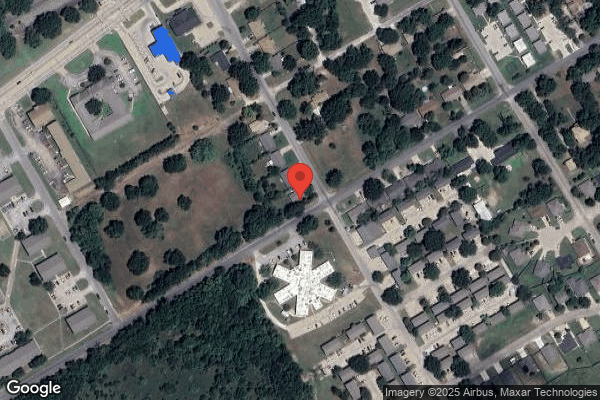
Jun 2023 2 deficiencies
CONCERN (D) 📢 Someone Reported This

A family member, employee, or ombudsman was alarmed enough to file a formal complaint

Potential for Harm - no one hurt, but risky conditions existed

Deficiency F0551 (Tag F0551)

Could have caused harm · This affected 1 resident

**NOTE- TERMS IN BRACKETS HAVE BEEN EDITED TO PROTECT CONFIDENTIALITY** Based on interview and record review, the facility failed to ensure the resident's responsible party has the right to exercise t...

Read full inspector narrative →
**NOTE- TERMS IN BRACKETS HAVE BEEN EDITED TO PROTECT CONFIDENTIALITY** Based on interview and record review, the facility failed to ensure the resident's responsible party has the right to exercise the resident's rights for one (Resident #1) reviewed for resident rights, in that: The facility failed to ensure Resident #1's RP was involved in the decision to discharge resident from the facility. This failure placed residents at risk of not having their preferred responsible party represent them in medical and care decisions. Findings included: Review of Resident #1's face sheet dated 6/16/2023, reflected a [AGE] year-old female who was admitted to the facility on [DATE] with diagnoses including Encephalopathy (damage or disease that affects the brain), Dementia (progressive loss of intellectual functioning with memory impairment), Cerebral Infarction (stroke) Aphasia (loss of ability to understand or express speech), Cognitive Communication Deficits (difficulty with thinking and using language) and altered mental status. Resident #1's FM A/RP was her #1 emergency contact. Review of Resident #1's MDS assessment, dated 05/04/23, reflected a BIMS of 99 in Section C0500, indicating Resident #1 was unable to complete the interview. It further reflected in section C0600 - Staff Assessment for Mental Status - a code of 1 indicating resident was unable to complete the BIMS. The staff assessment section reflected that resident had a short- and long-term memory problem and was severely impaired with regard to daily decision making. Review of Resident #1's progress notes from 5/3/23 to 5/11/23 revealed no documentation about a NOMNC form being issued for Resident #1 or Resident # 1 signing form; in addition, there were no notes regarding FM being contacted/informed of discharge or appeal process or NOMNC form being issued. Review of Resident #1's progress notes reflected she was discharged on 5/11/23. Review of Resident #1's EMR, revealed a NOMNC form made out to Resident #1 indicating Medicare services will end 5/10/22 and signed by Resident #1 on 5/3/23. Review of Resident #1's care plan with a closed date of 5/23/23 revealed the problem The resident wishes to return/be discharged to home with a goal of resident will verbalize and understanding of the discharge plan and interventions Evaluate and discuss with the resident/family/caregivers the prognosis for independent or assisted living. Identify, discuss, and address limitations, risk, benefits, and needs for maximum independence. Review of Resident #1's POA document found in the EMR revealed FM designated as POA and form dated 9/13/2017. During an interview on 6/16/23 at 12:30 pm, the FM stated her Resident #1 had back-to-back strokes and was admitted on [DATE] to the facility for rehab. The FM stated on 5/1/23 Resident #1 exited out a side door to a fenced area and was let back in by staff. The FM stated the next day, 5/2/23, she came up to the facility for a meeting with the AD and DON regarding the incident and she was informed Resident #1 would be discharged on 5/10/23. Because she had plateaued. The FM stated she was not given anything in writing but was told verbally about the upcoming discharge. During an interview on 6/16/23 at 1:24 pm, the SW stated she handed the NOMNC discharge form to the FM on the day of the discharge, 5/11/23, when she came to the facility. She stated she mailed it as well but could not provide any documentation or notes about mailing the form. She stated she normally documents it in the EMR but forgot to this time. She stated she had Resident #1 sign the form on 5/3/23 because that's what they usually do, and the resident was able to sign the form. She stated she left the form in the room for the FM. Then the SW stated she spoke to FM on 5/8/23, in person at the facility about the form and appeal process but stated she had no notes or documentation to reflect this conversation or events. The SW stated she was aware the resident had memory problems and that the FM was POA, but if resident is able to sign the form, that's what they do. During an interview on 6/16/23 at 2:32 pm, the FM stated she received no correspondence from the facility in the mail on the discharge and was never asked to sign any forms. She stated no one from the facility talked to her about coverage ending or the appeal process. She stated she didn't find out about any of this until she came to pick Resident #1 up on 5/11/23, when they gave her the NOMNC form, and it was too late to file an appeal. She stated she found out Resident #1 signed the form but stated Resident #1 would not have known what she was signing, that's why FM was POA. The FM stated she was not included in any discharge planning for Resident #1. During an interview on 6/16/23 at 4:48 PM, the SW stated her understanding is any resident is able to sign NOMNC forms unless the court had done adjudication saying they can't. She stated she spoke to Resident #1 regarding the form and said, I need you to sign this. She stated she told her the coverage was ending. She stated she never discussed the appeal process because it is spelled out in the form. She stated she was aware that Resident #1 had a POA, but she was not available at that time. She stated she left a copy of the form in the room. She stated she did not document this anywhere in the EMR. Review of facility policy Discharge Summary and Plan of Care dated 10/24/22 reflected it is the policy of this facility to ensure that a discharge planning process is in place which addressed each resident's discharge goals and needs, including caregiver support and referral to local contact agencies.
CONCERN (D) 📢 Someone Reported This

A family member, employee, or ombudsman was alarmed enough to file a formal complaint

Potential for Harm - no one hurt, but risky conditions existed

Accident Prevention (Tag F0689)

Could have caused harm · This affected 1 resident

**NOTE- TERMS IN BRACKETS HAVE BEEN EDITED TO PROTECT CONFIDENTIALITY** Based on observation, interview, record review, the facility failed to ensure that residents were free from accidents for 1 of 3...

Read full inspector narrative →
**NOTE- TERMS IN BRACKETS HAVE BEEN EDITED TO PROTECT CONFIDENTIALITY** Based on observation, interview, record review, the facility failed to ensure that residents were free from accidents for 1 of 3 residents (Resident #1) reviewed for accident, hazards, and supervision. The facility failed to ensure that all exits were adequately alarmed/secured which resulted in a resident elopement on 5/1/2023. This failure could place residents at risk of injuries, hospitalization, pain and decreased quality of life. Findings included: Review of Resident #1's face sheet dated 6/16/2023, reflected a [AGE] year-old female who was admitted to the facility on [DATE] with diagnoses including Encephalopathy (damage or disease that affects the brain), Dementia (progressive loss of intellectual functioning with memory impairment), Cerebral Infarction (stroke) Aphasia (loss of ability to understand or express speech), Cognitive Communication Deficits (difficulty with thinking and using language) and altered mental status. Resident #1's FM / RP was her #1 emergency contact. Review of Resident #1's MDS assessment , dated 05/04/23, reflected a BIMS of 99 in Section C0500, indicating resident #1 was unable to complete the interview. It further reflected in section C0600 - Staff Assessment for Mental Status - a code of 1 indicating resident was unable to complete the BIMS. The staff assessment section reflected that resident had a short- and long-term memory problem and was severely impaired with regard to daily decision making. Review of Resident #1's progress notes by ADON revealed Resident #1 was observed in her room on 5/1/23 at 2000 (8 PM) and then found at 2030 (8:30 PM) pulling at the door on D Hall from the outside. Resident appeared confused and was walking without her wheelchair. Staff completed a head-to-toe assessment, and no injuries were found. Notes indicated monitoring was put in place and a wander-guard device was put in place for safety. Notes further revealed FM was contacted as well as AD, DON, and PCP. Review of Resident #1's SW - Wandering Evaluation dated 4/27/23 at 9:55 AM, completed by SW, revealed Resident #1 had a score of 7 on her wandering evaluation indicating Category: Moderate risk During an interview on 6/16/23 at 12:30 pm, the FM stated REsident #1 had back-to-back strokes and was admitted on [DATE] to the facility for rehab. The FM stated when Resident #1 left the hospital, she could not walk and used a wheelchair. The FM stated on 5/1/23 she was notified that Resident #1 exited out a side door to a fenced area and was let back in by staff. The FM stated resident had no history of wandering prior to admission or at the hospital and had not walked since she had her strokes. During an interview on 6/16/23, DON stated she had received a call that Resident #1 was knocking at the door on D Hall and had gone out the E Hall door. She was informed that the alarm on E Hall door was not working at the time. She stated Maintenance checks the perimeter doors and batteries daily M-F and the Nurses check wander guards every shift. During an interview on 6/16/23 at 4:48 PM the SW stated she is responsible for completing a wandering assessment in the EMR within the first 24 hours of admission. She stated she completed a wander assessment on Resident #1 on 4/27/23 and it indicated she was low risk for wandering or elopement. She stated if a resident has a high score, she notifies nursing, and they get an order for a wander guard for the resident. During an interview on 6/16/23 at 4:59 PM, MTD stated perimeter doors are checked 5 days a week for proper operation. He stated the magnetic lock on D Hall door and E hall door were both functioning on the morning of 5/1/23 and after the incident on 5/2/23. He stated he heard in a meeting on 5/2/23 that Resident #1 had gone out the breakroom door, undid the deadbolt on the outside door and exited the building then came back in D Hall door . He stated he does not remember who was in the meeting or who stated Resident # 1 went out the break room door. He stated he started in July of 2022 and the break room door has not had a lock on it from the hallway, and the perimeter door off the breakroom has not had an alarm on it since he was worked here. He stated anyone could access the breakroom door from the hall and go out the perimeter door to the back, fenced area. He stated several days after the incident, he ordered a push bottom lock/keypad for the break room door, but it had not come in yet. During an interview on 6/16/23 at 5:39 PM, LVN A he stated he was working on the night of 5/1/23 when Resident #1 eloped. He stated after the event, he went down to the D Hall door with the door key and discovered the door alarm was not working. He stated he noticed the housing was loose and one of the wires was disconnected. He stated he fixed the wire and loose housing and checked the door alarm again and it was working. He stated he had seen Resident #1 around the facility in her wheelchair but had never seen her walking. He stated there is a perimeter fence around the building from all the resident halls and a sidewalk that goes from D Hall to E Hall. He stated he had not observed any exit seeking or wandering behaviors from Resident #1 since her admission. He stated he did not witness what door resident had left the building. He stated elopement training had been provided by the facility and staff were familiar with what to do. During an interview on 6/16/23 at 6:30 PM, CNA B she stated she was walking towards F Hall when she heard a knock at E Hall door. She stated she went to answer it and Resident #1 was standing at the door which out her wheelchair. She let Resident # 1 back in the building and called for the nurse. She stated resident appeared to have walked around the building and seemed tired and out of breath when she found her at the door. She stated they got her wheelchair and put her in it and the nurse assessed her . She stated she did not witness what door resident had left the building. She stated elopement training had been provided by the facility and staff were familiar with what to do. During an interview on 6/16/23 at 7:07 PM the ADON stated she had come up to the facility the night of the incident and spoke to staff, but she did not get any written statements. She stated an incident report was filled out and she made sure the wander guard was in place on Resident #1. During an interview on 6/16/23 at 7:15 PM the DON stated Resident #1 was gone no more than 30 minutes. The DON stated her report was that Resident #1 went out E hall Door and came back in D Hall door. She stated there was no accounting of events except for the state report. She stated she is unsure if any written statements were taken but the ADON came up that night and talked to all the staff - it's in the progress notes. During an interview on 6/19/23 at 11:54 AM, LVN C stated she was the nurse working D Hall on the evening of 5/1/23. She stated she didn't really remember all the details because she had been out on medical leave. She stated she remembered the incident with Resident #1 and filled out an incident report. She stated resident was seen in her room by another staff that evening and then a little while later was discovered by a CNA knocking at the door to E Hall. She stated she did not witness what door resident had left the building. She stated she completed a head-to-toe assessment on Resident #1 and the resident was in excellent condition, no skin issues no injuries and no complaint of pain or any other issues. She stated they immediately checked all the doors and one staff discovered E hall door was not working at the time. She stated LVN A looked at E Hall door and fixed it but they also notified maintenance and AD. She stated they provided Resident #1 with a wander guard device and completed every 15 minutes checks for the remainder of her shift which was 7 am on 5/2/23. There were no further incidents. She stated she had been working at the facility over 2 years and could not recall any other resident elopement incidents: Not to my knowledge, no. She stated elopement training had been provided by the facility and staff were familiar with what to do. During a phone call on 6/21/23 at 9:23 AM, written staff statements were again requested from AD for the incidents on 5/1/23. The AD stated she would check but had not been able to find any. An observation on 6/16/23 at 6:00 pm with the MTD revealed the breakroom door from the hall unlocked and the perimeter door off the breakroom secured by a dead bolt. Observation revealed MD turned the dead bolt and was able to exit the building. Further observation revealed there was a fence around the back of the building that encompassed B, C, D and E halls (resident halls). Review of facility policy Incidents and Accidents dated 8/15/22 revealed It is the policy of this facility for staff to report, investigate, and review any accidents or incidents that occur or allegedly occur, on facility property and may involve or allegedly involved a resident., further, #14: If an incident/accident was witnessed by other people, the supervisor or designee will obtain written documentation of the vent by those that witnessed it and submit that documentation to the Director of Nursing and/or Administrator. Review of additional documents provided by the AD via email on 6/21/23 at 11:11 AM revealed 3 (three), one sentence, typed, staff statements with no date, time or staff signature on the statements.
Apr 2022 8 deficiencies
CONCERN (D)

Potential for Harm - no one hurt, but risky conditions existed

Comprehensive Care Plan (Tag F0656)

Could have caused harm · This affected 1 resident

**NOTE- TERMS IN BRACKETS HAVE BEEN EDITED TO PROTECT CONFIDENTIALITY** 2. Record review of the consolidated physician orders dated 4/27/22 indicated Resident #35 was an [AGE] year-old male, re-admitt...

Read full inspector narrative →
**NOTE- TERMS IN BRACKETS HAVE BEEN EDITED TO PROTECT CONFIDENTIALITY** 2. Record review of the consolidated physician orders dated 4/27/22 indicated Resident #35 was an [AGE] year-old male, re-admitted to the facility on [DATE] with diagnoses including cerebral palsy (a congenital disorder of movement, muscle tone, or posture), severe intellectual disabilities, schizoaffective disorder (a mental health condition including schizophrenia and mood disorder symptoms), unspecified mood disorder, bipolar disorder (a disorder associated with episodes of mood swings ranging from depressive lows to manic highs), impulse disorder (mental health disorders that are characterized by the inability to control impulses). Record review of the most recent MDS dated [DATE] indicated Resident #36 sometimes understood others and sometimes made himself understood. The MDS indicated Resident #35 had a BIMS score of 99 indicating Resident #35 was unable to complete the BIMS assessment. The MDS indicated Resident #35 had severely impaired cognitive skills for daily decision making. The MDS indicated Resident #35 exhibited physical behaviors directed towards other daily. The MDS indicated Resident #35 required extensive assistance with eating, transfers, bed mobility, toileting, and personal hygiene. The MDS indicated Resident #35 required extensive assistance with dressing. The MDS indicated Resident #35 required limited assistance with locomotion on and off the unit. Record review of the care plan updated on 4/25/22 indicated Resident #35's was updated on 4/25/22 to include resident was a wanderer (knocked and entered other persons rooms) with intervention including provide distractions, structured activities, and snack. The care plan indicated on 4/25/22 Resident #35's care plan was updated to include the resident had potential to be physically aggressive (by attempting to hug other persons) related to poor impulse control. The care plan was updated following surveyor inquiring about Resident #35's behaviors not being care planned. Record review of Resident #35's electronic medical records indicated he had been the aggressor in 7 resident-to-resident altercations from January 2022 through March 2022 in which he grabbed, scratched, and pulled on other residents. During an interview on 4/25/22 at 4:59 p.m. the MDS Coordinator said it was her responsibility to ensure care plans were updated. The MDS Coordinator said the DON and Social Worker assisted her in updating care plans. During an interview on 4/26/22 at 9:06 a.m. the MDS Coordinator said she thought Resident #35's behaviors were already care planned. The MDS Coordinator said when Resident #35 was admitted from the group home he was very lethargic related to being overmedicated and had a Stage 4 pressure sore. The MDS Coordinator said Resident #35 had psychiatric medications discontinued after admission and had an increase in behaviors. The MDS Coordinator said Resident #35's behaviors had evolved since his admission due to medication changes. The MDS Coordinator said with the psychiatric referral and medication adjustments that Resident #35 had started calming down. The MDS Coordinator said Resident #35 exhibited attention seeking behaviors more than anything. The MDS Coordinator said it was an oversight on her part that Resident #35's behaviors were not care planned. During an interview on 4/26/22 at 9:15 a.m. the Administrator said she expected Resident #35's behaviors to care planned. The Administrator said she was unaware of Resident #35's behaviors not being care planned and was unsure why they had not been included in the care plan. Record review of Care Planning policy revised December 2017 indicated, A comprehensive, person-centered care plan is developed and implemented for each resident to meet the resident's physical, psychosocial, and functional needs .The care plan is based on the resident's comprehensive assessment and is developed by a Care Planning/Interdisciplinary Team which included, but is not necessarily limited to the following personnel: a. and RN who has responsibility for the resident, b. The Dietary Manager/Dietician, c. The Social Services Worker responsible for the resident, d. The Activity Director, e. Therapists (speech, occupational, recreational, etc.), f. Consultants, g. DON, h. The Charge Nurse responsible for resident care, i. Nursing Assistants responsible for the resident's care, and j. Others as appropriate or necessary to meet the needs of the resident .The resident and his or her representative are encouraged to participate in the resident's assessment and in the development, implementation, and revisions to the resident's care plan . Based on interview and record review the facility failed to develop, review and revise a comprehensive care plan of each resident that included measurable objectives and timetables to meet a resident's medical, nursing and mental and psychosocial needs for 2 of 13 residents reviewed for care plans (Resident #39 and Resident #35). The facility failed to ensure Resident #39's care plan was updated and revised to reflect significant weight loss since 1/8/2022. The facility failed to ensure Resident #35's care plan addressed his behaviors. These failures could place residents at risk of not having their individualized needs met in a timely manner and communicated to providers and could result in injury and/or a decline in physical well-being. Findings included: 1. Record review of consolidated physicians' orders dated 4/27/2022, indicated Resident #39 was [AGE] years old, admitted on [DATE] with diagnoses including: Huntington's Disease (progressive degeneration of nerve cells in the brain that affects movement, cognitive functions, and emotions), Major Depression (persistent feeling of sadness and loss of interest), and lack of coordination (Impairment of the ability to perform smoothly coordinated voluntary movements). Record review of the most recent comprehensive MDS dated [DATE], indicated Resident #39 had unclear speech, usually made himself understood and usually understood others. The MDS indicated Resident #39's BIMS (brief interview for mental status) score was a 99, meaning staff were unable to complete the interview. The MDS indicated Resident #39 required supervision for bed mobility, transfers, locomotion on and off the unit, dressing, eating, and toilet use. The MDS indicated Resident #39 required extensive assist for personal hygiene and bathing activity itself did not occur. Record review of the undated care plan indicated Resident #39 had an ADL self-care performance deficit related to disease process of Huntington's disease and impaired balance, movement disorder with an initiated date of 9/2/2021. The interventions included, provide finger foods when the resident has difficulty using utensils with date initiated 9/2/2021; the resident requires supervision with set up assistance by staff to eat with date initiated 11/9/2021; discuss with resident/family/POA any concerns related to loss of independence, decline in function with date initiated 11/9/2021; monitor/document/report as needed any changes, any potential for improvement, reasons for self-deficit, expected course, declines in function with date initiated 11/9/2021. The care plan indicated Resident #39 had a regular diet, regular texture, regular liquids consistency, for high protein double portions, frequently changes his mind about what he wants and likes to eat, frequently becomes demanding needing to exert control over when and what he eats, frequently is unreasonable and staff have a hard time getting the resident to accept help or reason with meals and mealtimes, frequently unable to redirect with date initiated 11/9/2021. The care plan did not address significant weight loss. Record review of physician's orders dated 4/27/2022 indicated Resident #39 had orders for regular diet for high protein double portions ordered 9/2/2021 and 2 Cal House Supplement to be offered to resident twice a day between meals as needed or as requested by resident ordered 4/4/2022. Record review of Resident #39's weights indicated on 1/08/2022, the resident weighed 174.5 lbs. On 4/13/2022, the resident weighed 160 pounds which is a -8.31% loss. Record review of Resident #39's weight log indicated weights of: *4/13/2022 160.0 pounds * 3/9/2022 163.0 pounds * 2/15/2022 165.2 pounds *1/8/2022 174.5 pounds * 12/8/2021 173.9 pounds * 11/10/2021 171.8 pounds * 10/11/2021 172.2 pounds * 8/30/2021 173.6 pounds * 8/27/2021 176.4 pounds Record review of the facility PIP (Performance Improvement Plan) dated 2/16/2022 indicated .Immediate interventions: Designated nursing staff collecting weights. Staff to be checked for competency in obtaining weights. Scale to be calibrated as soon as possible and on a routine basis. Dietician, ST, and FNP/MD to continue to review weight loss and put interventions in place .Re-Education All residents that have orders to be assisted with meals are in the dining room or have their trays set and/or assisted with meals .In-service staff regarding weight loss. Offers resident's a house supplement if they eat less than 50% of meal and document if refused. Continue to offer snacks between meals and at bedtime .Weight Variance Assessment 2/16/2022 No weights are entered into weight/variance .Reason for variance states behavioral issues and increased calorie-burn with disease process .Response Health Shakes BID between meals .Liberize diet . Record review of the Nurse Practitioners notes for Resident #39 dated 2/22/2022 indicated .Weight log reviewed per facility protocol .Noted with 9 pound weight loss in one month .Patient is having increase in Huntington's Chorea muscle movement, suspect burning more calories than he is consuming .Orders: No new orders . Record review of the Nurse Practitioners notes for Resident #39 dated 4/19/2022 indicated .Weight log reviewed per facility protocol .Noted with 7.5 pound weight loss in one month .Patient is on hospice .Orders .No new orders . Record review of a Weight Variance Assessment for Resident #39 dated 4/15/2022 indicated .6 months -5.0%, 3 months -7.5%, 1 month -7.5% .Reason for variance behavioral issues ADL decline r/t injury, resident continues to decline with Huntington's Disease causing agitation and negative behaviors to be exhibited especially during meal times .Continues with Bristol Hospice .Response Discontinue weights, hospice patient . During an observation and interview on 4/25/2022 at 11:13 a.m., Resident #39's family said Resident #39 called her this morning and wanted her to bring him tacos. She said she brought him 8 tacos and a box of cheddar jalapeno nuggets. Resident #39 was sitting up in a chair at the dining room table eating tacos. Resident # 39's family member said she brought him 9 tacos. Resident #39 had eaten 7 tacos and 75% of the jalapeno cheddar nuggets. During an interview on 4/25/2022 at 4:36 p.m., The 11:00 a.m to 6:00 p.m. [NAME] said she had witnessed Resident #39's behavior when he wants food. She said he acts out mostly at breakfast. She said Resident #39 will get up out of his wheelchair and walk in the kitchen and to the nurse station mad and yelling. The [NAME] said they have to lock both kitchen doors sometimes so he will not bust in the kitchen. She said at lunch they try to give Resident #39 his tray first so he does not get upset and come to the door. The [NAME] said he does not come to the dining room at dinner anymore. She said they do not give him a snack at breakfast or lunch when is not behaving correctly and asking for food. The [NAME] said snacks go out at 2:00 p.m. to include cakes, milk, yogurt, cheese crackers and sandwiches are made at 8:00 p.m. and sent out. She said he gets a sandwich at night. During an interview on 4/25/2022 at 4:43 the DON said the dietician comes at least monthly with no set date. She said the dietary manager will make a list of new admissions, wounds, and triggers for weight loss. She said that list is given to the nurse practitioner and she makes the dietary recommendations and then the NP recommendations are given to the dietary manager and she will agree or disagree. The DON said the Dietician does not usually make additions to the Nurse Practitioners recommendations. During an observation and interview on 4/25/2022 at 4:55 p.m. Resident #39 was lying in bed resting. He said he was not going to the dining room this evening because he is chilling. He said he does not get a sandwich as a snack at night. During an interview on 4/25/2022 at 5:06 p.m. the Nurse Practitioner said the facility monitors the residents weights and if there is a variance weather positive or negative and exceeds the parameters, the ADON prints a weight variance assessment that is computer generated. She said the weight variance assessment is given to her or the physician and she would look at medications to see if there is anything that would cause anorexia. The Nurse Practitioner said she would sometime tell staff to start mirtazapine as an appetite stimulant if needed. She said now that Resident #39 was on hospice changing medications and the notification of weight loos would go up the hospice chain. She said she was aware that Resident # 39 was resistant to care. She said Resident #39 is being seen by the psychiatric Nurse Practitioner. The Nurse Practitioner said she also saw hospice patients and generally discouraged staff from weighing hospice patients. She said if a resident was begging for food or had behaviors related to food she would hope staff would give them food. During an interview on 4/26/2022 at 9:24 a.m., The Dietary Manager said Resident #39 would come knock on the door and come in the kitchen saying he is hungry. He said the staff would tell him 5 more minutes or however long it takes to finish fixing the meal. The Dietary Manager said Resident #39 eats 3 fried eggs and 2 pieces of sausage every morning for breakfast and 21 chicken nuggets for lunch and dinner. The Dietary Manager said he doesn't like snacks but states a family member will bring him snacks like beef jerky and he eats it all and would refuse breakfast or lunch. The Dietary Manager said weight loss is discussed in morning meeting every week. He said he does not make a list of weight loss/wounds/new admissions. He said the dietician gives him a list of weight loss. He said he is made aware of new orders when the nurse writes a new order and fills out a communication form that is given to dietary. He said Resident #39 likes to eat by himself but staff have been trying to help him eat recently. The Dietary Manager said a week ago they started serving Resident #39 his meals 5 minutes early to try to prevent his behaviors. He said sometimes his staff get upset with Resident #39 because they cannot understand what he is requesting. The Dietary Manager said he does not report Resident #39's behaviors when he enters the kitchen angry demanding food. During an interview on 4/26/2022 at 9:40 p.m., the MDS Coordinator said she was aware of Resident #39's weight loss because it was brought up weekly in morning meeting since the weight loss started months ago. She said she did not add it to the care plan because it was an oversight. She said she should have added it immediately when she was informed about it. She said his weight loss was only added to the care plan yesterday, 4/25/2022. She said if staff notice an inconsistency in weight or the weight is off the staff will re-weigh the resident. She said Resident #39 was admitted to Hospice on 3/9/2022 because he had a rapid decline in voluntary movements and was not making progress. She said they have been trying to find placement elsewhere for him because he does not fit in the nursing home. She said he was young and doesn't enjoy the activities the other residents do. The MDS coordinator said meetings are done once a week. She said hospice normally discontinues weights. During an interview on 4/26/2022 at 10:08 a.m. Resident #39's family member said Resident 39 had not been eating dinner for the last couple of weeks. She said she visits Resident #39 about 4 times a week and brings him dinner except the last few weeks because he has asked her not to bring him anything. She said she does not know why he is not eating dinner. The family member said she was aware Resident #39 had a weight loss but did not know how much. She said was aware staff put Resident #39 on protein shakes but he does not drink them because he does not like them. The family member said she has not seen any snack trays at nurses station in this facility, only once in a great while. The family member said she does bring bread and peanut butter to Resident #39 to keep in his room and staff say they make him sandwiches at night but she does not know for sure. She said the facility usually only serves soup and sandwiches at night and Resident #39 cannot eat soup because he would spill it everywhere due to his uncontrolled movements. She said staff have not assisted Resident #39 in eating until just recently. During an interview on 4/26/2022 at 10:26 a.m. the Hospice Nurse said she was not aware of Resident #39's significant weight loss. She said she did see his weights on admission 3/9/2022. The Hospice Nurse said she did not write and order to discontinue weights, she said they normally continue to have residents weighed monthly because they need it for recertification. The Hospice Nurse said she knows that Resident #39 had a good appetite so she did not order him Remeron (appetite stimulant) which she would normally order for residents who have no appetite. The Hospice Nurse said she was aware of Resident #39's behaviors in the dining room regarding food and he was ordered Tegretol 3/17/2022 to help with his behaviors. She said she knows Resident #39 is very time oriented with most tasks including eating times and will misbehave if things don't happen at the time. During an interview on 4/26/2022 at 11:21 a.m., the DON said she did not have a good explanation for why Resident #39's weight loss was not care planned. She said it was discussed in PAR meetings weekly and should have been updated immediately by the MDS Coordinator. She said at one point in February 2022, Resident #39 did trigger for weight loss. The DON said in February 2022 the facility had the scales re-calibrated. She said if the facility had a weight discrepancy, they would calibrate the scale and do a re-weight. She said a that was done with Resident #39 when a significant weight loss was noticed. The DON said his weights were accurate. He was normally weighed in his WC and then we weigh his WC separately and subtract the difference. The Restorative aide is was responsible for weighing all residents. The DON said she ensures that staff are following care planned interventions by adding the item to the MAR or TAR. During an observation and interview on 4/26/2022 at 12:20 p.m., Resident #39 was sitting up in a chair at the dining room table. He was eating chicken nuggets only. He said he had 21 chicken nuggets and did not want anything else. During an interview on 4/26/2022 at 12:27 p.m. the Dietician said she comes every 2-3 weeks to see residents. She said she was not aware of Resident #39's weight loss for this month. She said her normal routine was to get printout of weights from the DON and go over them, she said most of the time she will go over the recommendations that have already been made by the Nurse Practitioner or physician and she would usually agree with them and add additional orders if needed. She said the last time she saw Resident #39 in February 2022. She said she could not say if Resident #39 had wounds right now. The Dietician said she would normally put a resident on protein if they were not eating well of if they were going to the wound care clinic/VOHRA. She said she would also start them on Vitamin C, Zinc, and a multivitamin. The Dietitian said supplements should definitely be started with weight loss. She said even if a resident had an appetite, she would still put them on a supplement for weight loss. The Dietician said she could not recall what interventions had been tried with Resident #39, she said she would have to look at her notes. The Dietician said she was not aware of the behaviors Resident #39 had in the dining. She said is he was having behaviors he should be the first one to be served if there was enough staff to do that. The Dietician said if Resident #39 was hungry the staff should be able to pre make items for him to eat while he waits for his tray. The Dietician said she was not aware Resident #39 had been refusing dinner. She said no staff had notified her. The Dietician said she gave her recommendation to either the DON or ADON or leaves it on their desk. She said she has not watched Resident #39 eat in the last couple of months. She said if the Dietary Manager is aware of weight loss or behaviors, she would expect him to notify her. During an interview on 4/26/2022 at 1:49 p.m. the Dietician said she talked to the [NAME] and went over Resident #39 refusing starches and vegetables. She said the [NAME] told her Resident #39 wanted specific meats only. She said the [NAME] told her the staff offer extra items and he would refuse them. She said she did not know the rules with the current corporate but the owners before did not want appetite stimulants. The Dietician said she never asked the facility what their policy was on appetite stimulants. During an interview on 4/27/2022 at 10:13 a.m., The MDS Coordinator said she was responsible for updating the care plan and the failure of not updating the care plan could mean further decline for the president's health. During an interview on 4/27/2022 at 11:14 a.m., The DON said the MDS coordinator, and the Social Worker set up care plan meetings and sent out the invites. She said she verified that invites were sent out by talking to the MDS Coordinator and Social Worker. The DON said care plan invites should be documented in a progress note by the Social Worker and MDS Coordinator of acceptance or refusal. She said she followed up at the end of the week when care plans are done to ensure the notes are in after the care plan meeting. The DON said herself, the Activity Director, MDS Coordinator, Social Worker, and dietary usually attend the care plan meetings. The DON said she can't always attend every care plan meeting. She said she expected staff to enter the progress note regarding the care plan meeting and the family to be notified of the meeting in advance. During an interview on 4/27/2022 at 2:18 p.m., The Administrator said weight loss should be care planned to prevent further decline. The Administrator said if the family or the resident was not invited to the care plan meeting, they could miss something that was important about the care of the resident. During an interview on 4/27/2022 at 2:59 p.m., the DON said the failure for not having the care plan updated could result in resident's further decline in health.
CONCERN (D)

Potential for Harm - no one hurt, but risky conditions existed

Deficiency F0657 (Tag F0657)

Could have caused harm · This affected 1 resident

**NOTE- TERMS IN BRACKETS HAVE BEEN EDITED TO PROTECT CONFIDENTIALITY** Based on observation, interview, and record review, the facility failed to develop and implement a comprehensive person-centered...

Read full inspector narrative →
**NOTE- TERMS IN BRACKETS HAVE BEEN EDITED TO PROTECT CONFIDENTIALITY** Based on observation, interview, and record review, the facility failed to develop and implement a comprehensive person-centered care plan for each resident, consistent with resident rights, that included measurable objectives and time frames to meet the resident's mental and psychosocial needs for 2 of 13 resident's reviewed for care plans. (Resident #14 and Resident #4) The facility failed to invite Resident's #14's family member to participate in the development, review, and revision of their care plan. The facility failed to invite Resident #4 to participate in the development, review, and revision of their care plan. This failure could place residents at risk for not receiving necessary care and services. 1. Record review of consolidated physicians' orders dated 4/27/2022, indicated Resident #14 was [AGE] years old, admitted on [DATE] with diagnoses including: Alzheimer's Disease (problems with memory, thinking and behavior) and Hypertension (high blood pressure). Record review of the most recent comprehensive MDS dated [DATE], indicated Resident #14 had clear speech, usually made herself understood and usually understood others. The MDS indicated Resident #14's BIMS (brief interview for mental status) score was a 99, meaning staff were unable to complete the interview. The MDS indicated Resident #14 required extensive assist with bed mobility, transfers, locomotion on and off the unit, dressing, eating, and toilet use. The MDS indicated Resident #14 required limited assist for personal hygiene and bathing activity itself did not occur. Record review of the undated care plan indicated Resident #14 had an ADL self-care performance deficit related to severe unavoidable weakness with inevitable decline due to disease processes (Alzheimer's) and resident is currently on Hospice Care with an admit date of 3/9/2022. Record review of an admission record indicated Resident #14's family member was the care plan conference contact. Record review of a progress noted dated 12/9/2021 written by the MDS Coordinator indicated Resident #14 had a care plan meeting to include therapy, the DON, the Activity Director, the Social Worker, and the MDS Coordinator. The note did not include Resident #14's family member her RP. The note did not indicate invitation of the RP or resident to the care plan meeting or declination. Further review of progress notes did not indicate any other care plan meetings. During an interview on 4/26/2022 at 2:57 p.m., Resident #14's family member said Resident #14 had been in the facility for 5-6 years and the facility use to call her for care plan meetings, but they don't call anymore. She said it had been over a year since she was involved in a care plan meeting. She said she would like to be included in Resident #14's care and if they would send her a notice in the mail, she would ask for time off. During an interview on 4/27/2022 at 11:01 a.m., tThe Social Worked said she had previously sent out care plan invites by mail and she was getting a lot of return mail. She said Resident #14's family member had been invited to a care plan meeting in December of 2020 and showed me a Care Plan list. The Social Worker said Resident #14's family member had been invited to care plan meetings and when asked for documentation she said the system of mailing letters did not work in 2020. She said a care plan meeting was held on 12/9/2021 with Therapy/DON/Activities/SW and family member by phone. She said she was due for an update on 5/22/2022. She said she does not have any documentation of inviting RP/residents to the Care Plan meeting. 2. Record review of consolidated physicians' orders dated 4/27/2022, indicated Resident #4 was a [AGE] year-old male, admitted on [DATE] with diagnoses including: Type1 Diabetes (pancreas produces little or no insulin), End Stage Renal Disease (kidneys cease functioning on a permanent basis), and hypertension (high blood pressure). Record review of the of the most recent comprehensive MDS dated [DATE] indicated Resident #4 had clear speech, usually made himself understood and sometimes understood others. The MDS indicated Resident #4's BIMS score was a 10 indicating moderately impaired cognition. The MDS indicated Resident #4 required supervision with bed mobility, transfers, locomotion, dressing, eating, toilet use, personal hygiene, and bathing did not occur. Record review of the undated care plan indicated Resident #4 was a full code, was dependent on staff for meeting emotional, intellectual, physical, and social needs related to disease process (kidney disease). The care plan indicated Resident #4 had an ADL self-care performance deficit related to right leg amputation and has a prosthesis. The care plan indicated Resident #4 needed hemodialysis related to end stage renal disease. Record review of an admission record indicated Resident #4 was his own responsible party. Record review of progress notes did not indicate Resident #4 had any care plan meetings. During an interview on 4/26/2022 at 3:55 p.m., Resident #4 said the staff did not ask him to attend care plan meetings. He said, What is a care plan meeting?. He said he did not recall being invited to a care plan meeting or being involved in his treatment plan. During an interview on 4/27/2022 at 10:13 a.m., The MDS Coordinator said she was responsible for updating the care plan. She said the Social Worker sends out Care Plan meeting invites. She said Care Plan meetings are done quarterly. The MDS Coordinator said care plan meeting are done in person and sometimes over the phone. During an interview on 4/27/2022 at 10:17 a.m., The Social Worker said she would call or mail letters to family members to invite them to care plan meetings. She said she does not always document when she calls or mails out letters because she does not always have time. The Social Worker said she may also see a family member in the facility and invite them verbally but does not always document that either. She said care plan meetings are done quarterly, with a change of condition and at the request of a resident or family member. She said she knows when the Care Plan meeting is due because the MDS tells her. She said she documents in her notes under care plans/social work/investigations/complaints/grievances. During an interview on 4/27/2022 at 10:50 a.m., The Social Worker said Care Plan meetings usually included herself, the MDS coordinator, and the DON. She said different people would attend depending on the need and it could include therapy, dietary, or whoever requested to be there. The Social Worker said Resident #4 was admitted on [DATE]. She said she did an admission care plan, and then updates on 8/1/2021, discharge on [DATE] and then quarterly on 8/15/2021, 11/1/2021 and 5/4/2022. She said she could show me that the meeting occurred by looking at the updated care plan. She said she did not have documentation of who attended the care plan meeting. She said Resident #4 was present as far as she knows during the 8/15/2022 and 11/1/2022 but no other family member was present. The Social Worker said Resident #4 was his own RP. She is was not able to present documentation for care plan meetings. During an interview on 4/27/2022 at 11:14 a.m., The DON said the MDS coordinator, and the Social Worker set up care plan meetings and sent out the invites. She said she verifies that invites are sent out by talking to the MDS Coordinator and Social Worker. The DON said care plan invites should be documented in a progress note by the Social Worker and MDS Coordinator of acceptance or refusal. She said she followed up at the end of the week when care plans are done to ensure the notes are in after the care plan meeting. The DON said herself, the Activity Director, MDS Coordinator, Social Worker, and dietary usually attend the care plan meetings. The DON said she can't always attend every care plan meeting. She said she expected staff to enter the progress note regarding the care plan meeting and the family to be notified of the meeting in advance. She said family should be called and get an invite in the mail. The DON said staff should try to figure out what the correct address is if they are getting return mail. She said she would expect the MDS coordinator to document when the RP/Resident was invited and if they accepted or declined. The DON said if the Social Worker or MDS Coordinator was out the back up would herself. She said if the RP or the resident was not sent an invite then they would not have any input in their care. During an interview on 4/27/2022 at 2:18 p.m., The Administrator said care plan meetings should be done quarterly with the MDS schedule. She said the Social Worker and MDS Coordinator normally coordinate sending out invites and making the schedule together. She said the care plan team included, food services, the Social Worker, activities, the MDS coordinator and the family/RP. The Administrator said everywhere else she had worked the facility sent out letters and kept letters for record of proof. She said the Social Worker told her she had not been sending invites out or keeping a record. She said she told the Social Worker that the facility would start sending out the letter for the invite and keeping a copy for their records and if they had to call and invite, she would expect them to document an acceptance or refusal in a progress note. She said she expected staff to invite the resident and family members. The Administrator said if the family or the resident was not invited to the care plan meeting, they could miss something that is important about the care of the resident. During an interview on 4/27/2022 at 2:59 p.m., the DON said the failure for not having the care plan updated could result in resident's further decline in health. Record review of a facility care plan policy with a revision date of December 2017 indicated .a comprehensive, person-centered care plan is implemented for each resident to meet the resident's physical, psychosocial, and functional wellbeing .and care plans shall incorporate goals and objectives that lead to the resident's highest obtainable level of independence .
CONCERN (D)

Potential for Harm - no one hurt, but risky conditions existed

Accident Prevention (Tag F0689)

Could have caused harm · This affected 1 resident

**NOTE- TERMS IN BRACKETS HAVE BEEN EDITED TO PROTECT CONFIDENTIALITY** Based on interview and record review the facility failed to ensure each resident received adequate supervision for 1 of 12 resid...

Read full inspector narrative →
**NOTE- TERMS IN BRACKETS HAVE BEEN EDITED TO PROTECT CONFIDENTIALITY** Based on interview and record review the facility failed to ensure each resident received adequate supervision for 1 of 12 residents reviewed for supervision (Resident #35). The facility failed to provide adequate supervision for Resident #35 to address the underlying reasons for the behaviors and identify interventions to try to prevent his disruptive or intrusive interactions and behaviors. This failure could place the residents at risk of injures, inadequate supervision and neglect. Findings 1. Record review of the consolidated physician orders dated 4/27/22 indicated Resident #35 was an [AGE] year-old male, re-admitted to the facility on [DATE] with diagnoses including cerebral palsy (a congenital disorder of movement, muscle tone, or posture), severe intellectual disabilities, schizoaffective disorder (a mental health condition including schizophrenia and mood disorder symptoms), unspecified mood disorder, bipolar disorder (a disorder associated with episodes of mood swings ranging from depressive lows to manic highs), impulse disorder (mental health disorders that are characterized by the inability to control impulses). The physician orders indicated Resident #35 had orders for Depakote (medication used to treat bipolar disorder) 125 mg three times daily starting 2/28/22 and Risperidone 0.5 mg twice daily starting 3/18/22. Record review of the most recent MDS dated [DATE] indicated Resident #36 sometimes understood others and sometimes made himself understood. The MDS indicated Resident #35 had a BIMS score of 99 indicating Resident #35 was unable to complete the BIMS assessment. The MDS indicated Resident #35 had severely impaired cognitive skills for daily decision making. The MDS indicated Resident #35 exhibited physical behaviors directed towards other daily. The MDS indicated Resident #35 required extensive assistance with eating, transfers, bed mobility, toileting, and personal hygiene. The MDS indicated Resident #35 required extensive assistance with dressing. The MDS indicated Resident #35 required limited assistance with locomotion on and off the unit. Record review of the care plan updated on 4/25/22 indicated Resident #35's was updated on 4/25/22 to include resident was a wanderer (knocked and entered other persons rooms) with intervention including provide distractions, structured activities, and snack. The care plan indicated on 4/25/22 Resident #35's care plan was updated to include the resident had potential to be physically aggressive (by attempting to hug other persons) related to poor impulse control. The care plan was updated following surveyor inquiring about Resident #35's behaviors not being care planned. Record review of Resident #35's electronic medical records indicated he had been the aggressor in 7 resident-to-resident altercations from January 2022 through March 2022 in which he grabbed, scratched, and pulled on other residents. Record review of nurse progress note written by LVN E and dated 2/26/22 at 10:33 a.m. indicated Resident #35 was noted in his room grabbing and pulling his roommate out of bed. The nurse progress note indicated Resident #35 was redirected by the nurse. The nurse progress note indicated the Social Worker was notified of the incident. Record review of nurse progress note written by LVN E and dated 2/26/22 at 5:50 p.m. indicated Resident #35 was in the front lobby grabbing and touching a female resident unwantedly. The nurse progress note indicated Resident #35 was redirected and the Administrator and Social Worker were notified. Record review of accidents and incidents dated 11/01/21 through 4/25/22 indicated there was no incident report for the resident-to-resident altercation on 2/26/22. Record review of nurse progress note written by RN C and dated 2/27/22 at 11:45 a.m. indicated Resident #35 entered another resident's room, grabbed her legs, and took off her shoes causing pain and discomfort to her already sore and tender legs. The nurse progress note indicated attempts to redirect Resident #35 were unsuccessful. Record review of accidents and incidents dated 11/01/21 through 4/25/22 indicated there was no incident report for the resident-to-resident altercation on 2/27/22. Record review of the nurse progress note dated 3/13/22 at 2:22 p.m. indicated Resident #35 entered another resident's room and was touching and clawing at her. The nurse progress note indicated Resident #35 was removed without further incident. Record review of accidents and incidents dated 11/01/21 through 4/25/22 indicated there was no incident report for the resident-to-resident altercation 3/13/22. During an interview on 4/25/22 at 4:53 p.m. the Administrator said the facility did not have policies regarding resident-to-resident altercations, one on one monitoring, resident behaviors, or incidents and accidents. During an interview on 4/26/22 at 8:45 am RN C said in the event of a resident-to-resident altercation the residents should be immediately separated. RN C said the residents should have a head-to-toe assessment completed after being separated. RN C said the family, DON, abuse coordinator, and physician should be notified of the resident-to-resident altercation. During an interview on 4/27/22 at 10:15 a.m. LVN E said she had been employed with the facility 20 years. LVN E said she was familiar with Resident #35. LVN E said she had been working during all four incidents involving Resident #35 that did not have incident reports. LVN E said in the event of a resident-to-resident altercation in the facility the nurse should document in progress notes, complete an incident report, notify the physician, family, and DON. LVN E said she did not complete an incident report for these four incidents because she had considered it just Resident #35 behaviors. LVN E said Resident #35 had been having resident to resident altercations since he had been admitted to the facility. LVN E said she now sees where she should have completed incident reports. During an interview on 4/27/22 at 10:29 a.m. the DON said she had spoken with the LVN E, nurse on duty during the four residents to resident altercations that did not have incident reports. The DON said LVN E was able to identify who three of the four residents were. The DON said the facility was unable to identify who Resident #35's roommate was that he tried to pull out of bed on 2/26/22. The DON said it was not documented who the roommate was and without incident report being completed they were unable to determine who the roommate was. During an interview on 4/27/22 at 2:42 p.m. the DON said it was the charge nurse's responsibility to complete the incident reports. The DON said an incident report should be completed within 2 hours of an incident occurring. The DON said an incident report should be completed for incidents including but not limited to skin changes, falls, and resident to resident interactions. The DON said she and the ADON ensured incident reports were completed. The DON said incident reports were not completed for the resident-to-resident altercations involving Resident #35 in February and March was due to the altercations happening on the weekends. The DON said the altercations were part of Resident #35's normal attention seeking behavior and not understanding boundaries. Record review of the Abuse, Neglect, and Exploitation policy dated December 2017 indicated, Our residents have the right to be free from abuse/neglect/misappropriation of resident property/corporal punishment/and involuntary seclusion Our facility is committed to protecting our residents from abuse by anyone including but not necessarily limited to: employees/other residents/consultants/volunteers/family member/visitors/or any other individual .Our facility will protect residents from harm during investigations of alleged abuse. During investigations of alleged abuse, residents will be protected from harm by the following measures .c. If the abuse involves another resident, the accused resident's representative and attending physician will be informed of the alleged abuse incident and that there may be restrictions on the accused resident's ability to visit other resident's rooms unattended. If, necessary, the accused resident's family members may be required to help meet this requirement .Reports of alleged resident abuse, neglect, and injuries of unknown source shall be promptly and thoroughly investigated by facility management .
CONCERN (D)

Potential for Harm - no one hurt, but risky conditions existed

Deficiency F0761 (Tag F0761)

Could have caused harm · This affected 1 resident

**NOTE- TERMS IN BRACKETS HAVE BEEN EDITED TO PROTECT CONFIDENTIALITY** Based on observation, record review and interview the facility failed to ensure all drugs were stored in a locked compartment an...

Read full inspector narrative →
**NOTE- TERMS IN BRACKETS HAVE BEEN EDITED TO PROTECT CONFIDENTIALITY** Based on observation, record review and interview the facility failed to ensure all drugs were stored in a locked compartment and only accessible by authorized personnel for 1 of 16 residents reviewed for medication storage (Resident #10). The facility did not ensure Resident #10's medications were kept in a secured location. Resident #10 had an open jar of Chest Rub (a mentholated topical petroleum jelly-based ointment intended to assist with minor medical conditions that impair breathing, including the common cold) and a jar of Arctic Ice Pain Relieving gel at the bedside. This failure could place residents at risk for overuse and adverse effects of medication and harm. Findings included: Record Review of the consolidated physicians' orders dated 4/27/2022, indicated Resident #10 was [AGE] years old, re-admitted on [DATE] and had diagnosis including osteoarthritis(degenerative joint disease), chronic obstructive pulmonary disease ( a group of lung diseases that block airflow and make it difficult to breath), bipolar ( a disorder with episodes of mood swings), psychosis ( a mental disorder characterized by a disconnection with reality), macular degeneration (eye disease causing vision loss), and schizophrenia (a disorder that affects a persons ability to think, feel, and behave clearly). The physician's orders did not address the Chest Rub or the Arctic Ice pain relieving gel. Record review of the most recent comprehensive MDS dated [DATE], indicated Resident #10 sometimes made herself understood and sometimes understood others. The MDS indicated Resident #10 had moderately impaired vision. The MDS indicated Resident #10 had a BIMS (brief interview for mental status) score of 12 (mildly impaired). The MDS indicated Resident #10 required extensive assistance with bed mobility, dressing, toileting, and personal hygiene. Record review of the care plan dated 6/7/2021 indicated Resident #10 had impaired visual function related to diabetes and macular degeneration. The care plan indicated Resident #10 had impaired cognitive function/dementia or impaired thought processes related to cerebral infarction (stroke) with interventions for the facility to administer medications as ordered and monitor/document for side effects and effectiveness. The care plan indicated Resident #10 had an ADL self-care performance deficit related to a previous stoke. During an observation and interview on 4/25/2022 at 10:30 a.m., Resident #10 was sitting up in her wheelchair in her room. An open jar of Chest Rub and a jar of Arctic Ice Pain relieving gel was on her bedside table. Resident #10 said she used the medications when she needed them. Resident #10 was not aware if facility knew she had the medications. During an observation on 4/25/2022 at 2:15 p.m., an open bottle of Chest Rub and Arctic pain-relieving gel were on Resident #10's bedside table. During an observation and interview on 4/26/2022 at 10:30 a.m., Resident #10 said she often had back pain that required medications. Resident #10 said she used the topical pain relief but was not sure where the jar was at this time. An open jar of Chest rub was on Resident #10's bedside table. During an observation on 4/26/2022 at 2:30 p.m., Resident #10 had an open bottle of Chest Rub on the bedside table. During an observation and interview on 4/27/2022 at 8:40 a.m., Resident #10 had an open jar of Chest Rub on her bedside table. Resident #10 said she used the chest rub for her chest congestion. During an interview on 4/27/2022 at 9:58 a.m., LVN D said she had worked in the facility for approximately 9 months. LVN D said medications should not be at the bedside without an order to be at the bedside. LVN D said it was dangerous for medications to be at the bedside because it would not be documented when taken and the resident could take too much of the medication or another resident could take the medication. During an interview on 4/27/2022 at 10:02 a.m., RN C said medications should not be at the bedside without an order to be at the bedside whether prescribed or over the counter. RN C said the resident could take too much of the medication. RN C said she was not aware Resident #10 had medications of any kind at her bedside. RN C said Resident #10 had not had a recent cognitive decline and she could possibly get an order for her to keep those medications at the bedside. RN C said Resident #10 did not currently have an order to have medications at the bedside. During an interview on 4/27/2022 at 10:05 a.m., the DON said Resident #10 should not have chest rub or pain-relieving gel at the bedside without an order for it to be at the bedside. The DON said she was not aware Resident #10 had these medications at the bedside and did not have an assessment or any orders to have medications as the bedside. The DON said if residents wanted to keep any type of medications at the bedside an assessment for self-administration had to be completed and the MD had to approve for the resident to self-administer those medications. The DON said this was important to ensure the safety of residents so they did not take too much medication or take any medications that may interact with the other medication being administered by the facility. The DON said the facility made daily ambassador rounds to check for these types of issues. The DON said the charge nurses and medication aides should also be watching for medications at the bedside while they are in resident rooms providing care. During an interview on 4/27/2022 at 10:06 a.m., the Administrator said in the past she thought residents were able to keep medications at the bedside if they were alert and aware of what the medications were and the side effects. The Administrator said this should be documented in the resident's chart. The Administrator said she had only been employed at the facility for 4 months and was not aware of exactly what the facilities policy was on medications at the bedside. The Administrator said she was unaware Resident #10 had medications at her bedside. The Administrator said Resident #10 received a lot of mail and she may have received the medications through the mail. The Administrator said nurses were responsible for watching for medications at the bedside. Record review of a policy titled Medications Brought to the facility by the Resident/Family dated 2017 indicated medications brought into the facility not approved for the resident's use shall be returned to the family. Record review of a policy titled Medication and Treatment Orders dated 2017, indicated orders for medications and treatments would be kept in the electronic and/or paper chart. The policy indicated medications would be administered upon the written order of a person duly licensed and authorized to prescribe such medications.
CONCERN (D)

Potential for Harm - no one hurt, but risky conditions existed

Food Safety (Tag F0812)

Could have caused harm · This affected 1 resident

Based on observation, interview and record review, the facility failed to store food in accordance with professional standards for food safety in the facility's only kitchen. The facility failed to en...

Read full inspector narrative →
Based on observation, interview and record review, the facility failed to store food in accordance with professional standards for food safety in the facility's only kitchen. The facility failed to ensure food items stored in facility refrigerators were used by their best by date. This failure could place residents at risk for food-born illness and food contamination. The findings include: During an Observation on 4/25/2022 at 8:45 am, the following items were found in the facility designated refrigerator for single serve resident beverages: Twelve cartons of orange juice with a best by date of 4/23/2022 were found in this refrigerator. During an interview on 4/25/2022 at 9:15 AM, the DM said none of the orange juice cartons with a best by date of 4/23/2022 had been served to residents. The DM said the cartons came out of a new box just opened after breakfast was served this morning. The DM said the shipment came in last Thursday 4/21/2022. The DM said best buy/expiration dates are checked when food/drink containers are received from the vendor. The DM said he is usually the person to receive shipment orders. During an interview on 4/27/2022 at 10:21 PM, [NAME] B said she checked the dates on all food and beverages prior to serving them to residents. [NAME] B said when she would dispose of any observed a food or beverage item that was past its best by date. [NAME] B said residents could get sick if served food that is past its best buy date. During an interview on 4/27/2022 at 1:57 PM, [NAME] A said she checked food containers for best by date prior to serving them to residents. [NAME] A said when she come across a food/beverage item that is past it's best by date, she will put it in the trash, and not serve it residents. [NAME] A said residents served food/beverage past the best by date might get sick. During an interview on 4/27/2022 at 2:02pm, the DM said all kitchen staff to include: the cooks, dietary assistants, and himself, are responsible for checking the best by dates prior to serving them to residents. The DM said older juice cartons got mixed in with the new ones. The DM said the vendor delivered the cases last Thursday, 04/21/2022. The DM said he usually checked everything when shipments arrive. The DM said the facility serves older products first to prevent residents from receiving products past their best by date. The DM said serving pre-packaged food and beverages past their best by date could cause digestive problems for residents. During an interview on 4/27/2022 at 2:10pm, the Administrator said food/beverages past their best by dates should not be served to residents. The Administrator said serving residents food/beverages past their best by dates could cause residents illness. The Administrator did not provide, prior to the exit conference, a requested copy of a facility policy regarding the serving of food/beverage to residents past best by date.
CONCERN (E)

Potential for Harm - no one hurt, but risky conditions existed

Report Alleged Abuse (Tag F0609)

Could have caused harm · This affected multiple residents

**NOTE- TERMS IN BRACKETS HAVE BEEN EDITED TO PROTECT CONFIDENTIALITY** Based on interview and record review the facility failed to ensure that all alleged violations involving abuse, neglect, exploit...

Read full inspector narrative →
**NOTE- TERMS IN BRACKETS HAVE BEEN EDITED TO PROTECT CONFIDENTIALITY** Based on interview and record review the facility failed to ensure that all alleged violations involving abuse, neglect, exploitation or mistreatment, including injuries of unknown source and misappropriation of resident property, are reported immediately, but not later than 2 hours after the allegation is made, if the events that cause the allegation involve abuse or result in serious bodily injury, for 6 of 14 residents reviewed for abuse and neglect (Residents #35, #197, #7, #11, #18, and #198 ). The facility failed to report to the state agency resident-to-resident altercations on seven different occasions. This failure could place residents at risk of repeated injuries, abuse, and/or neglect. Findings Included: Record review of the Abuse, Neglect, and Exploitation policy dated December 2017 indicated, Our residents have the right to be free from abuse/neglect/misappropriation of resident property/corporal punishment/and involuntary seclusion Our facility is committed to protecting our residents from abuse by anyone including but not necessarily limited to: employees/other residents/consultants/volunteers/family member/visitors/or any other individual .Suspected violations and all substantial incidents of abuse will be reported to appropriate state agencies and other entities or individuals as may be required by law within the first two hours. Should a suspected violation or substantiated incident of neglect, injuries of unknown source, or abuse (including resident to resident abuse) be report, the Administrator, or his/her designee, will promptly notify the following persons or agencies (verbally and written) of such incident: a. The State licensing/certification agency responsible for surveying/licensing the facility . 1. Record review of the consolidated physician orders dated 4/27/22 indicated Resident #35 was an [AGE] year-old male, re-admitted to the facility on [DATE] with diagnoses including cerebral palsy (a congenital disorder of movement, muscle tone, or posture), severe intellectual disabilities, schizoaffective disorder (a mental health condition including schizophrenia and mood disorder symptoms), unspecified mood disorder, bipolar disorder (a disorder associated with episodes of mood swings ranging from depressive lows to manic highs), impulse disorder (mental health disorders that are characterized by the inability to control impulses). The physician orders indicated Resident #35 had orders for Depakote (medication used to treat bipolar disorder) 125 milligram (mg) three times daily starting 2/28/22 and Risperidone 0.5 mg twice daily starting 3/18/22. Record review of the most recent MDS dated [DATE] indicated Resident #36 sometimes understood others and sometimes made himself understood. The MDS indicated Resident #35 had a BIMS score of 99 indicating Resident #35 was unable to complete the BIMS assessment. The MDS indicated Resident #35 had severely impaired cognitive skills for daily decision making. The MDS indicated Resident #35 exhibited physical behaviors directed towards other daily. The MDS indicated Resident #35 required extensive assistance with eating, transfers, bed mobility, toileting, and personal hygiene. The MDS indicated Resident #35 required extensive assistance with dressing. The MDS indicated Resident #35 required limited assistance with locomotion on and off the unit. Record review of the care plan updated on 4/25/22 indicated Resident #35's was updated on 4/25/22 to include resident was a wanderer (knocked and entered other persons rooms) with intervention including provide distractions, structured activities, and snack. The care plan indicated on 4/25/22 Resident #35's care plan was updated to include the resident had potential to be physically aggressive (by attempting to hug other persons) related to poor impulse control. The care plan was updated following surveyor inquiring about Resident #35's behaviors not being care planned. Record review of Resident #35's electronic medical records indicated he had been the aggressor in 7 resident-to-resident altercations from January 2022 through March 2022 in which he grabbed, scratched, and pulled on other residents. Record review of nursing progress note written by LVN D and dated 1/7/22 at 10:29 a.m. indicated the nurse witnessed Resident #35 rolling up behind another resident making kissing sounds as he grabbed the resident from behind, around his neck. The nursing progress note indicate the nurse redirected #35 which was ineffective as he just moved on to another. Record review of an incident report dated 1/7/22 indicated Resident #35 had went up behind another resident making kissing sounds and grabbing him tightly around the neck as if to hug him as he pulled him and his wheelchair backwards the incident report indicated the other resident did not take it well Resident #35 grabbing him and began to yell for nursing staff to assist him. The incident report indicated immediate action taken by the facility was to separate the residents, assess both resident for injuries, and redirect Resident #35. The incident report indicated Resident #35's family had been notified but continued to refuse medication intervention. The incident report indicated Resident #35's family was reassured Resident #35 would not be over sedated on the medication and interventions, and medications adjustments would be made in the case of oversedation. The incident report indicated Resident #35's family continued to refuse medication intervention. The incident report indicated Resident #35 required redirection throughout the day and redirection was usually successful after multiple attempts. Record review of an incident report written by RN C and dated 1/9/22 at 11:49 a.m. indicated Resident #35 grabbed another resident and left a scratch mark but did not break the skin. The incident report indicated immediate action taken by the facility was to separate and assess both residents and notify the psychiatric nurse practitioner of negative behaviors for medication intervention. The incident report indicated in the notes that Resident #35 had a recent history of attempting to grab onto other residents to try to kiss and hug them. The incident report indicated in the notes that Resident #35's family was now in agreeance with offering the resident medication intervention to help control negative behaviors. The incident report indicated Resident #35 continued to require redirection throughout the day, usually successful after multiple attempts, but very difficult. Record review of nursing progress note written by RN C and dated 1/9/22 at 2:55 p.m. indicated Resident #35 grabbed another resident by the arm and left a scratch mark but did not break the skin. Nursing progress notes indicated the psychiatric nurse practitioner and physician were notified of the incident. Record review of nursing progress note written by RN C dated 1/9/22 at 3:01 p.m. indicated Resident #35 had received new orders from the Psychiatric Nurse Practitioner for Vistaril (a medication to treat anxiety) 25 mg as needed for anxiety/agitation, and Depakote (a medication to treat bipolar disorder) 125 mg daily for mood disorder. Record review of an incident report dated 1/14/22 at 11:00 a.m. indicated Resident #35 was in the beauty parlor and grabbed a female resident around the shoulders. The incident report indicated Resident #35 migrated his hands to the female resident's neck. The incident report indicated there was no bruising or redness to the other resident, and she denied pain. The incident report indicated immediate action taken by the facility was to separate the residents and notify the physician. The incident report indicated Resident #35 had a history of hugging, grabbing, and attempting to kiss and hug staff and other residents. The incident report indicated Resident #35 was often difficulty to redirect due to his diagnoses and aggressive desire to give affection to others. The incident report indicated Resident #35 was unaware of safety concerns and issues and unable to retain education given to him about keeping a safe distance from other staff and residents. The incident report indicted Resident #35's family had been notified and was seeking placement in a group home for more one-on-one supervision and that would be more suitable. The incident report indicated Resident #35 was admitted with a coccyx wound (a wound to the tailbone) that must be resolved before placement can occur. Record review of the Behavior Support Recommendations dated 2/22/22 indicated Resident #35 was described as a people person, very curious about what others were doing, had few words he used, was not defiant, and reportedly responded well to redirection that entailed a firm, stern tone of voice. The Behavior Support Recommendations indicated Resident #35 was very mobile and very busy and constantly on the go, and uses his wheelchair better than anyone which in turn he was able to access what and where he wanted to on his own and was difficult to interrupt when he wanted to something. The Behavior Support Recommendations indicated Resident #35 invaded the personal space of others and disregarded personal boundaries. The Behavior Support Recommendations indicated steps to prevent and intervene with Resident #35's behaviors were priming (preemptively teach what is ok and not ok), communication, response blocking, noncontingent access (provide frequent positive attention), and stop and redirect. The Behavior Support Recommendations indicated other recommendations for Resident #35 including continue all courses of interventions and continue to conduct further informal preference assessments with Resident #35 via conversation as much as possible and/or observations of what activities, snacks, and items with which he spends time and seems to enjoy. The Behavior Support Recommendations indicated the continued preference assessments could be incorporated as reinforcement for when Resident #35 demonstrated appropriate behaviors. Record review of nurse progress note written by LVN E and dated 2/26/22 at 10:33 a.m. indicated Resident #35 was noted in his room grabbing and pulling his roommate out of bed. The nurse progress note indicated Resident #35 was redirected by the nurse. The nurse progress note indicated the Social Worker was notified of the incident. Record review of nurse progress note written by LVN E and dated 2/26/22 at 5:50 p.m. indicated Resident #35 was in the front lobby grabbing and touching a female resident unwantedly. The nurse progress note indicated Resident #35 was redirected and the Administrator and Social Worker were notified. Record review of nurse progress note written by LVN E and dated 2/27/22 at 11:45 a.m. indicated Resident #35 entered another resident's room, grabbed her legs, and took off her shoes causing pain and discomfort to her already sore and tender legs. The nurse progress note indicated attempts to redirect Resident #35 were unsuccessful. Record review of the nurse progress notes dated 2/28/22 at 11:03 a.m. indicated the psychiatric nurse practitioner was notified of Resident #35 behaviors and the facility received new medication orders. The nurse progress note indicated Resident #35 had new orders to increase Depakote 125 mg to three times a day, decrease Nuedexta (a medication used to treat certain mental/mood disorders) to daily for 3 days, then discontinue, and to start Risperidone (a medication used to treat schizophrenia, bipolar disorder, and irritability caused by autism) 0.5 mg daily. Record review of the nurse progress note written by LVN E and dated 3/13/22 at 2:22 p.m. indicated Resident #35 entered another resident's room and was touching and clawing at her. The nurse progress note indicated Resident #35 was removed without further incident. 2. Record review of the consolidated physician orders dated 4/27/22 indicated Resident #197 was an [AGE] year-old male, admitted to the facility on [DATE] with diagnoses including Alzheimer's Disease, mild cognitive impairment, anxiety disorder, altered mental status, and major depressive disorder. Record review of the MDS dated [DATE] indicated Resident #197 was rarely/never understood others and was sometimes understood by others. The MDS indicated Resident #197 had a BIMS score of 99 indicated he was unable to complete the assessment. The MDS indicated Resident #197 had verbal behavior symptoms directed toward others 4 to 6 days a week, but not daily. The MDS indicated Resident #197 required extensive assistance with bed mobility, transfers, dressing, eating, toileting, and personal hygiene. Record review of the care plan updated on 4/25/22 indicated Resident #197 had a behavior problem related to his diagnoses of anxiety, depression, and adjustment disorder with interventions including explain/reinforce why behaviors are inappropriate and intervene when necessary. Record review of an incident report written by LVN D and dated 1/7/22 at 1:08 p.m. indicated Resident #197 was approached from the back by another resident while sitting in his wheelchair. The incident report indicated Resident #197 felt threatened that he was being choked as the other resident was trying to hug him tightly around the neck and pulling him backwards. The incident report indicated immediate action taken by the facility was to remove both residents from each other's visual sight and assess both residents for injuries. The incident report indicated Resident #197 had no injuries and was unable to recall the incident afterwards. The incident report indicated Resident #197 denied pain. The incident report did not document the assessment of Resident #197. 3. Record review of the consolidated physician orders dated 4/27/22 indicated Resident #7 was a [AGE] year-old female, readmitted to the facility on [DATE] with diagnoses including anxiety disorder, mild intellectual disabilities, schizoaffective disorder (a mental health condition including schizophrenia and mood disorder symptoms), and schizophrenia (a disorder that affects a person's ability to think, feel, and behave clearly), . Record review of the MDS dated [DATE] indicated Resident #7 sometimes understood others and was sometimes understood by others. The MDS indicated Resident #7 had a BIMS score of 03 and was severely cognitively impaired. The MDS indicated Resident #7 had verbal behavior symptoms directed towards others daily. The MDS indicated Resident #7 had other behavioral symptoms not directed towards others. The MDS indicated Resident #7 independent with bed mobility, transfers, and eating. The MDS indicated Resident #7 required limited assistance with dressing, toileting, and personal hygiene. Record review of the care plan last updated 1/13/22 indicated Resident #7 had behavior problems with loud voices, television, and radio related to intellectual disability. The care plan indicated interventions included assist the resident to develop more appropriate method of coping and interacting with others and intervening when necessary. Record review of the nurse progress note written by RN C and dated 1/9/22 at 9:40 a.m. indicate Resident #7 was grabbed by another resident. The progress note indicated the nurse went to see what was going on when Resident #7 was calling out. The nurse progress note indicated Resident #7 reported the grabbing was unwelcomed. The nurse progress note indicated Resident #7 did not have any redness or bleeding to the area where she had been grabbed. The progress notes indicated Resident # 7's scratch was monitored following the incident for three days. Record review of an incident report written by RN C and dated 1/9/22 at 9:40 a.m. indicated Resident #7 was heard calling out. The incident report indicated Resident #7's arm was grabbed by another resident. The incident report indicated Resident #7 had a scratch on her arm. The incident report indicated Resident #7 did not have redness or bleeding to the affected arm. The incident report indicated Resident #7 had no injuries following the incident. The incident report indicated Resident #7 was in a pleasant mood and denied pain. During an interview on 4/25/22 at 4:10 p.m. Resident #7 said she was happy at the facility and felt safe. Resident #7 said Resident #35 grabbed her and other people. Resident #7 said she did not feel unsafe at the facility. 4. Record review of the consolidated physician orders dated 4/27/22 indicated Resident #11 was a [AGE] year-old female, readmitted to the facility on [DATE] with diagnoses including muscle wasting, anxiety disorder, major depressive disorder, pain, and weakness. Record review of the MDS dated [DATE] indicated Resident #11 sometimes understood others and was usually understood by others. The MDS indicated The MDS indicated Resident #11 had a BIMS score of 10 and was mildly cognitively impaired. The MDS indicated Resident #11 did not have physical or verbal behavior symptoms directed towards others. The MDS indicated Resident #11 independent with bed mobility, transfers, dressing, toileting, and eating. The MDS indicated Resident #11 required supervision with personal hygiene. Record review of the care plan last updated 5/17/21 indicated Resident #11 had impaired cognitive function/dementia or impaired thought process related to history of stroke. The care plan indicated Resident #11 had a communication problem related to history of a stroke. Record review of an incident report written by RN C and dated 1/14/22 at 11:00 a.m. indicated Resident #11 was in the beauty parlor when another resident grabbed her around the shoulders and migrated his hands towards her neck. The incident report indicated Resident #11 did not have any redness or bruising to her shoulders and denied pain. The incident report indicated Resident #11 stated, She was not afraid of the other resident and that she understands that the other resident is not all with it. The incident report indicated nursing staff was able to redirect the other resident out of the beauty parlor with no further incident. The incident report indicated Resident #11 was not fearful of a resident or staff member at the facility. Record review of the nurse progress note dated 1/14/22 at 12:57 p.m. Resident #11 was in the beauty parlor when another resident grabbed her around the shoulders and migrated his hands towards her neck. The nurse progress note indicated Resident #11 did not have any redness or bruising to her shoulders and denied pain. The nurse progress note indicated Resident #11's family and physician were notified of the incident. During an interview on 4/25/22 at4:15 p.m. Resident #11 said she vaguely remembered the incident in the beauty parlor. Resident #11 said the other resident did not grab her. Resident #11 said her memory was not very good. 5. Record review of the consolidated physician orders dated 4/27/22 indicated Resident #18 was an [AGE] year old female, re-admitted to the facility on [DATE] with diagnoses including Alzheimer's Disease, schizoaffective disorder (a mental health condition including schizophrenia and mood disorder symptoms), bipolar disorder (a disorder associated with episodes of mood swings ranging from depressive lows to manic highs), anxiety disorder, mood disorder, and cellulitis (a common potentially serious bacterial skin infection) of the lower limb. Record review of the MDS dated [DATE] indicated Resident #18 sometimes understood others and was sometimes understood by others. The MDS indicated Resident #18 had a BIMS score of 12 and was mildly cognitively impaired. The MDS indicated Resident #18 did not had and physical or verbal behavior symptoms directed toward. The MDS indicated Resident #18 required supervision with bed mobility, transfers, dressing, and eating. The MDS indicated Resident #18 required extensive assistance with toileting and personal hygiene. Record review of the care plan updated on 1/27/22 indicated Resident #18 had impaired cognitive function/dementia or impaired thought process related to Alzheimer's Disease, schizoaffective, mood, and bipolar disorders. The care plan indicated Resident #18 had a communication problem related to communication deficit and Alzheimer's Disease. Record review of nurse progress note written by LVN E and dated 2/27/22 at 11:45 a.m. indicated Resident #18 had another resident enter her room, grab her by the legs, ad take her shoes off. The nurse progress note indicated the incident caused Resident #18 increased pain and discomfort in her already sore, tender legs. The nurse progress note indicated the Administrator and Social Worker were notified. An attempt to interview Resident #11 on 4/27/22 at 11:02 a.m. was unsuccessful as the resident was unavailable. 6. Record review of the consolidated physician orders dated 4/27/22 indicated Resident #198 was a [AGE] year-old female, admitted to the facility on [DATE] with diagnoses including bipolar disorder (a disorder associated with episodes of mood swings ranging from depressive lows to manic highs), cognitive communication deficit, persistent mood disorder, and generalized anxiety disorder. Record review of the MDS dated [DATE] indicated Resident #198 had a BIMS score of 13 and was cognitively intact. The MDS indicated Resident #198 did not had and physical or verbal behavior symptoms directed toward. The MDS indicated Resident #198 required supervision with bed mobility and eating. The MDS indicated Resident #198 required extensive assistance with transfers, dressing, toileting, and personal hygiene. Record review of the care plan updated on 4/18/22 indicated Resident #198 had limited physical mobility. Record review of Resident #198's electronic medical records indicated she discharged from the facility on 4/18/22. Record review of nurse progress note dated 3/13/22 at 2:24 p.m. indicated Resident #198's family reported another resident had entered Resident 198's room and was touching and clawing her. The other resident was removed from Resident #198's room without further incident. During an interview on 4/25/22 at 4:53 p.m. the Administrator said the facility did not have policies regarding resident-to-resident altercations, one on one monitoring, resident behaviors, or incidents and accidents. During an interview on 4/25/22 at 5:00 p.m. the Nurse Practitioner said she was familiar with Resident #35. The Nurse Partitioner said Resident #35 was being seeing by psychiatric services for behavior management and medication interventions. The Nurse Practitioner said Resident #35's behaviors accelerated after he was admitted to the facility. The Nurse Practitioner said the facility had looked for alternate placement for Resident #35. The Nurse Practitioner said she was notified of resident-to-resident altercations (if there is physical contact). During an interview on 4/26/22 at 8:21 a.m. the Psychiatric Nurse Practitioner said she had been told and notified of Resident #35's behaviors. The Psychiatric Nurse Practitioner said they had made medication adjustments to help in his behaviors. The Psychiatric Nurse Practitioner said with Resident #35's intellectual disabilities she expected the resident to have some behavior issues. During an interview on 4/26/22 at 8:45 am RN C said in the event of a resident-to-resident altercation the residents should be immediately separated. RN C said the residents should have a head-to-toe assessment completed after being separated. RN C said the family, DON, abuse coordinator, and physician should be notified of the resident-to-resident altercation. RN C said Resident #35 was not aware of personal boundaries. RN C said during resident-to-resident altercations involving Resident #35 he was not agitated with aggression but wanting human interaction. RN C said the Resident #35 had a hospitalization after admission to the facility and while at the hospital was take off all his psychiatric medications. RN C said his guardian was resistive to putting Resident #35 back on psychiatric medication. RN C said after several incidents involving resident to resident altercations with Resident #35, the guardian agreed to start the resident back on psychiatric medications. RN C said Resident #35 was currently receiving psychiatric care and medication adjustments have been made as needed. RN C said the resident can be difficult to redirect and is very active. RN C said the facility provides snacks and music to aide in redirecting the resident. During an interview on 4/26/22 at 8:52 a.m. the Social Worker said Resident #35 was positive for Preadmission Screening and Resident Review (PASRR) (an admission screening for mental illness or intellectual and developmental disabilities). The Social Worker said Resident #35 had intellectual disabilities and was expected to have behaviors. The Social Worker said the Resident #35 had a psychiatric services referral and was currently receiving psychiatric services. The Social Worker said Resident #35's family had been resistive to psychiatric medications. The Social Worker said Resident #35 was admitted to the facility from a group home with a pressure wound to his coccyx. The Social Worker said Resident #35 received Mental Health and Mental Retardation (MHMR) services. The Social Worker said the MHMR services said Resident #35 cannot return to a group home until the wound he was admitted with was completely healed. The Social Worker said Resident #35 had a behavior plan in place through the MHMR services. During an interview on 4/26/22 at 9:06 a.m. the MDS Coordinator said when Resident #35 was admitted from the group home he was very lethargic related to being overmedicated and had a Stage 4 pressure sore. The MDS coordinator said Resident #35 had psychiatric medications discontinued after being admitted to the facility. The MDS Coordinator said Resident #35's behaviors increased after his psychiatric medications were discontinued. The MDS Coordinator said Resident #35's behaviors had evolved since his admission due to medication changes. Resident #35 said with the psychiatric referral and medication adjustment the Resident #35 had started calming down. The MDS Coordinator said Resident #35 had exhibited attention seeking behaviors more than anything. During an interview on 4/26/22 at 9:15 a.m. the Administrator said Resident #35 required redirecting frequently. The Administrator said when Resident #35's wound healed he would be returning to a group home. The Administrator said she would not say Resident #35 had several resident-to-resident altercations. The Administrator said Resident #35's family had been resistive to psychiatric medication treatment for the resident. The Administrator said once the family consented to resuming psychiatric medication treatment Resident #35's behaviors had improved and he was more easily redirected. The Administrator said she did not report the resident-to-resident altercations involving Resident #35 to the state agency because she does think he was aware of what he was doing. The Administrator said she reports Resident to Resident altercations to the state agency if both parties are in their right mind or if the aggressor seeks out a specific resident willingly and knowingly. The Administrator said Resident #35 does not willingly or knowingly act out. The Administrator said Resident #35 absolutely was not aware of what he was doing.
CONCERN (E)

Potential for Harm - no one hurt, but risky conditions existed

Investigate Abuse (Tag F0610)

Could have caused harm · This affected multiple residents

**NOTE- TERMS IN BRACKETS HAVE BEEN EDITED TO PROTECT CONFIDENTIALITY** Based on interview and record review the facility failed to ensure all alleged violations of abuse were thoroughly investigated ...

Read full inspector narrative →
**NOTE- TERMS IN BRACKETS HAVE BEEN EDITED TO PROTECT CONFIDENTIALITY** Based on interview and record review the facility failed to ensure all alleged violations of abuse were thoroughly investigated and failed to prevent further potential abuse from 1 of 6 residents reviewed for investigation allegations of abusing other residents (Resident #35). The facility failed to thoroughly investigate 4 of 7 resident to resident altercations involving Resident #35 as the aggressor. This failure could place residents at risk for not having reported allegations investigated to prevent abuse, neglect, and exploitation. Findings Record review of the Abuse, Neglect, and Exploitation policy dated December 2017 indicated, Our residents have the right to be free from abuse/neglect/misappropriation of resident property/corporal punishment/and involuntary seclusion Our facility is committed to protecting our residents from abuse by anyone including but not necessarily limited to: employees/other residents/consultants/volunteers/family member/visitors/or any other individual .Our facility will protect residents from harm during investigations of alleged abuse. During investigations of alleged abuse, residents will be protected from harm by the following measures .c. If the abuse involves another resident, the accused resident's representative and attending physician will be informed of the alleged abuse incident and that there may be restrictions on the accused resident's ability to visit other resident's rooms unattended. If, necessary, the accused resident's family members may be required to help meet this requirement .Reports of alleged resident abuse, neglect, and injuries of unknown source shall be promptly and thoroughly investigated by facility management . 1. Record review of the consolidated physician orders dated 4/27/22 indicated Resident #35 was an [AGE] year-old male, re-admitted to the facility on [DATE] with diagnoses including cerebral palsy (a congenital disorder of movement, muscle tone, or posture), severe intellectual disabilities, schizoaffective disorder (a mental health condition including schizophrenia and mood disorder symptoms), unspecified mood disorder, bipolar disorder (a disorder associated with episodes of mood swings ranging from depressive lows to manic highs), impulse disorder (mental health disorders that are characterized by the inability to control impulses). The physician orders indicated Resident #35 had orders for Depakote (medication used to treat bipolar disorder) 125 mg three times daily starting 2/28/22 and Risperidone 0.5 mg twice daily starting 3/18/22. Record review of the most recent MDS dated [DATE] indicated Resident #36 sometimes understood others and sometimes made himself understood. The MDS indicated Resident #35 had a BIMS score of 99 indicating Resident #35 was unable to complete the BIMS assessment. The MDS indicated Resident #35 had severely impaired cognitive skills for daily decision making. The MDS indicated Resident #35 exhibited physical behaviors directed towards other daily. The MDS indicated Resident #35 required extensive assistance with eating, transfers, bed mobility, toileting, and personal hygiene. The MDS indicated Resident #35 required extensive assistance with dressing. The MDS indicated Resident #35 required limited assistance with locomotion on and off the unit. Record review of the care plan updated on 4/25/22 indicated Resident #35's was updated on 4/25/22 to include resident was a wanderer (knocked and entered other persons rooms) with intervention including provide distractions, structured activities, and snack. The care plan indicated on 4/25/22 Resident #35's care plan was updated to include the resident had potential to be physically aggressive (by attempting to hug other persons) related to poor impulse control. The care plan was updated following surveyor inquiring about Resident #35's behaviors not being care planned. Record review of Resident #35's electronic medical records indicated he had been the aggressor in 7 resident-to-resident altercations from January 2022 through March 2022 in which he grabbed, scratched, and pulled on other residents. Record review of nurse progress note written by LVN E and dated 2/26/22 at 10:33 a.m. indicated Resident #35 was noted in his room grabbing and pulling his roommate out of bed. The nurse progress note indicated Resident #35 was redirected by the nurse. The nurse progress note indicated the Social Worker was notified of the incident. Record review of nurse progress note written by LVN E and dated 2/26/22 at 5:50 p.m. indicated Resident #35 was in the front lobby grabbing and touching a female resident unwantedly. The nurse progress note indicated Resident #35 was redirected and the Administrator and Social Worker were notified. Record review of accidents and incidents dated 11/01/21 through 4/25/22 indicated there was no incident report for the resident-to-resident altercation on 2/26/22. Record review of nurse progress note written by RN C and dated 2/27/22 at 11:45 a.m. indicated Resident #35 entered another resident's room, grabbed her legs, and took off her shoes causing pain and discomfort to her already sore and tender legs. The nurse progress note indicated attempts to redirect Resident #35 were unsuccessful. Record review of accidents and incidents dated 11/01/21 through 4/25/22 indicated there was no incident report for the resident-to-resident altercation on 2/27/22. Record review of the nurse progress note dated 3/13/22 at 2:22 p.m. indicated Resident #35 entered another resident's room and was touching and clawing at her. The nurse progress note indicated Resident #35 was removed without further incident. Record review of accidents and incidents dated 11/01/21 through 4/25/22 indicated there was no incident report for the resident-to-resident altercation 3/13/22. During an interview on 4/25/22 at 4:53 p.m. the Administrator said the facility did not have policies regarding resident-to-resident altercations, one on one monitoring, resident behaviors, or incidents and accidents. During an interview on 4/26/22 at 8:45 am RN C said in the event of a resident-to-resident altercation the residents should be immediately separated. RN C said the residents should have a head-to-toe assessment completed after being separated. RN C said the family, DON, abuse coordinator, and physician should be notified of the resident-to-resident altercation. During an interview on 4/27/22 at 10:15 a.m. LVN E said she had been employed with the facility 20 years. LVN E said she was familiar with Resident #35. LVN E said she had been working during all four incidents involving Resident #35 that did not have incident reports. LVN E said in the event of a resident-to-resident altercation in the facility the nurse should document in progress notes, complete an incident report, notify the physician, family, and DON. LVN E said she did not complete an incident report for these four incidents because she had considered it just Resident #35 behaviors. LVN E said Resident #35 had been having resident to resident altercations since he had been admitted to the facility. LVN E said she now sees where she should have completed incident reports. LVN E said completing an incident report was how the facility knew an investigation should be completed on an incident. During an interview on 4/27/22 at 10:29 a.m. the DON said she had spoken with the LVN E, nurse on duty during the four residents to resident altercations that did not have incident reports. The DON said LVN E was able to identify who three of the four residents were. The DON said the facility was unable to identify who Resident #35's roommate was that he tried to pull out of bed on 2/26/22. The DON said it was not documented who the roommate was and without incident report being completed they were unable to determine who the roommate was. During an interview on 4/27/22 at 2:42 p.m. the DON said it was the charge nurse's responsibility to complete the incident reports. The DON said an incident report should be completed within 2 hours of an incident occurring. The DON said an incident report should be completed for incidents including but not limited to skin changes, falls, and resident to resident interactions. The DON said she and the ADON ensured incident reports were completed. The DON said incident reports were not completed for the resident-to-resident altercations involving Resident #35 in February and March was due to the altercations happening on the weekends. The DON said completing an incident report was the first step in investigating an incident. The DON said the altercations were part of Resident #35's normal attention seeking behavior and not understanding boundaries.
CONCERN (E)

Potential for Harm - no one hurt, but risky conditions existed

Menu Adequacy (Tag F0803)

Could have caused harm · This affected multiple residents

**NOTE- TERMS IN BRACKETS HAVE BEEN EDITED TO PROTECT CONFIDENTIALITY** Based on observation, interview, and record review, the facility failed to ensure that the menus were followed for 3 of 3 reside...

Read full inspector narrative →
**NOTE- TERMS IN BRACKETS HAVE BEEN EDITED TO PROTECT CONFIDENTIALITY** Based on observation, interview, and record review, the facility failed to ensure that the menus were followed for 3 of 3 residents reviewed for menu accuracy (Residents #10, 15 and 17) The facility served hamburgers without cheese, instead of the cheeseburgers listed on the menu. This deficient practice could affect residents who receive kitchen prepared meals by contributing to dissatisfaction, poor intake, and weight loss. The findings include: Record review of Resident #10's face sheet dated 4/27/2022 indicated she was a [AGE] year old female admitted to the facility on [DATE] with diagnosis of primary generalized osteoarthritis (the gradual wearing down of cartilage in the joints), type 2 diabetes, chronic obstructive pulmonary disease, and primary hypertension. Record review of Resident #10's most recent quarterly MDS dated [DATE] indicated a BIMS (brief interview for mental status) of 12, reflecting moderate cognitive impairment. Record review of Resident #15's face sheet dated 4/27/2022 indicated he was a [AGE] year old male admitted to the facility on [DATE] with diagnosis of Muscle wasting and reduction, Type 2 Diabetes, Primary hypertension, and Moderate to severe brain injury without loss of consciousness (awareness). Record review Resident #15's most recent quarterly MDS dated [DATE] indicated a BIMS score of 8, reflecting moderate cognitive impairment. Record review of Resident # 17's face sheet dated 4/27/2022 indicated he was a [AGE] year old male admitted to the facility on [DATE] with diagnosis of Cognitive social or emotional deficit following an unspecified cerebrovascular disease (conditions affecting blood flow and blood vessels of the brain), Type 2 Diabetes, and Chronic obstructive pulmonary disease. Record review of Resident #17's most recent quarterly MDS dated [DATE] indicated a BIMS score of 7, reflecting severely impaired cognitive impairment. Observation of the facility's lunch menu for 4/25/2022 at 11:35 am revealed the main entrée to be cheeseburgers. During an interview with on 4/25/2022 at 12:10 pm, Resident #10 said she would like cheese on her hamburger. During an interview on 4/25/2022 at 12:12 pm, Resident #15 said he would prefer cheese on his hamburger. During an interview on 4/25/2022 at 12:13 pm, Resident #17 said he would prefer cheese on his hamburger. During an Interview on 4/25/2022 at 1:45 pm the DM said he was not aware the residents had only been served hamburgers, not the cheese burgers listed on the menu. The DM said they did have cheese at the facility for the resident's cheeseburgers. The DM said he would need to talk to the cook who assembled the resident's lunch meal. During an interview on 4/25/2022 at 1:57 pm, [NAME] A said she assembled the lunch meal. [NAME] A she said she thought it was just hamburgers, not cheeseburgers being served to the residents. [NAME] A said she the cheese was usually laid out ahead when cheeseburgers were being served for the meal. [NAME] A said she worked as one of the afternoon cooks for the facility. [NAME] A said the morning cook was responsible for putting out the needed items needed for that day's lunch. [NAME] A said cooks know what is on the menu by looking at the menu book prior to preparing a meal. [NAME] A said residents should receive what is on the menu. [NAME] A said residents might get upset if they were not served what is listed on the menu. During an interview on 4/27/2022 at 10:21 am, [NAME] B said she the menu is posted daily. [NAME] B said she looks at the menu the day before to know what will be served the following day. [NAME] B said the cooks are supposed to look at the menu the day before to make sure the facility has all the need items in advance. [NAME] B said she did not know how it would be disadvantageous to residents if they were not served what was posted on the menu to facility. During an interview on 4/27/2022 at 12:15 pm, the DM said he was the cook responsible for setting out the items needed menu items for lunch on 4/25/2022. The DM said he made a mistake and just didn't put out the cheese needed to assemble the cheeseburgers for lunch that day. The DM said there is a weekly menu posted for what is to be served each meal. The DM said he was distracted. The DM said he talks with residents regularly and they give him feedback when something is not right. The DM was asked how it could be disadvantageous to residents when the facility failed to serve items listed on the posted menu. The DM said the residents will ask for what they want. The DM said cognitively impaired residents would be given a choice of what they wanted to eat. During an interview on 4/27/2022 at 2:15 pm, the Administrator said she expected the menu to be followed. The Administrator said when residents are not served what is listed on the menu, it could limit their choices and not give them what they want. The Administrator was asked to provide a copy of the policy regarding facility's responsibly to serve residents food and drink items on. Prior to the exit conference, a policy was not provided to the team.
Understanding Severity Codes (click to expand)
Life-Threatening (Immediate Jeopardy)
J - Isolated K - Pattern L - Widespread
Actual Harm
G - Isolated H - Pattern I - Widespread
Potential for Harm
D - Isolated E - Pattern F - Widespread
No Harm (Minor)
A - Isolated B - Pattern C - Widespread

Questions to Ask on Your Visit

  • "Can I speak with families of current residents?"
  • "What's your RN coverage like on weekends and overnight?"

Our Honest Assessment

Strengths
  • • Grade B+ (80/100). Above average facility, better than most options in Texas.
  • • No major safety red flags. No abuse findings, life-threatening violations, or SFF status.
  • • No fines on record. Clean compliance history, better than most Texas facilities.
  • • 33% turnover. Below Texas's 48% average. Good staff retention means consistent care.
Concerns
  • • 30 deficiencies on record. Higher than average. Multiple issues found across inspections.
Bottom line: Generally positive indicators. Standard due diligence and a personal visit recommended.

About This Facility

What is Country Meadows Nursing & Rehabilitation Center's CMS Rating?

CMS assigns COUNTRY MEADOWS NURSING & REHABILITATION CENTER an overall rating of 5 out of 5 stars, which is considered much above average nationally. Within Texas, this rating places the facility higher than 99% of the state's 100 nursing homes. This rating reflects solid performance across the metrics CMS uses to evaluate nursing home quality.

How is Country Meadows Nursing & Rehabilitation Center Staffed?

CMS rates COUNTRY MEADOWS NURSING & REHABILITATION CENTER's staffing level at 3 out of 5 stars, which is average compared to other nursing homes. Staff turnover is 33%, compared to the Texas average of 46%. This relatively stable workforce can support continuity of care.

What Have Inspectors Found at Country Meadows Nursing & Rehabilitation Center?

State health inspectors documented 30 deficiencies at COUNTRY MEADOWS NURSING & REHABILITATION CENTER during 2022 to 2024. These included: 30 with potential for harm.

Who Owns and Operates Country Meadows Nursing & Rehabilitation Center?

COUNTRY MEADOWS NURSING & REHABILITATION CENTER is owned by a for-profit company. For-profit facilities operate as businesses with obligations to shareholders or private owners. The facility operates independently rather than as part of a larger chain. With 96 certified beds and approximately 49 residents (about 51% occupancy), it is a smaller facility located in CORSICANA, Texas.

How Does Country Meadows Nursing & Rehabilitation Center Compare to Other Texas Nursing Homes?

Compared to the 100 nursing homes in Texas, COUNTRY MEADOWS NURSING & REHABILITATION CENTER's overall rating (5 stars) is above the state average of 2.8, staff turnover (33%) is significantly lower than the state average of 46%, and health inspection rating (4 stars) is above the national benchmark.

What Should Families Ask When Visiting Country Meadows Nursing & Rehabilitation Center?

Based on this facility's data, families visiting should ask: "Can I visit during a mealtime to observe dining assistance and food quality?" "How do you handle medical emergencies, and what is your hospital transfer rate?" "Can I speak with family members of current residents about their experience?"

Is Country Meadows Nursing & Rehabilitation Center Safe?

Based on CMS inspection data, COUNTRY MEADOWS NURSING & REHABILITATION CENTER has a clean safety record: no substantiated abuse findings (meaning no confirmed cases of resident harm), no Immediate Jeopardy citations (the most serious violation level indicating risk of serious injury or death), and is not on the Special Focus Facility watch list (a federal program monitoring the lowest-performing 1% of nursing homes). The facility has a 5-star overall rating and ranks #1 of 100 nursing homes in Texas. While no facility is perfect, families should still ask about staff-to-resident ratios and recent inspection results during their visit.

Do Nurses at Country Meadows Nursing & Rehabilitation Center Stick Around?

COUNTRY MEADOWS NURSING & REHABILITATION CENTER has a staff turnover rate of 33%, which is about average for Texas nursing homes (state average: 46%). Moderate turnover is common in nursing homes, but families should still ask about staff tenure and how the facility maintains care continuity when employees leave.

Was Country Meadows Nursing & Rehabilitation Center Ever Fined?

COUNTRY MEADOWS NURSING & REHABILITATION CENTER has no federal fines on record. CMS issues fines when nursing homes fail to meet care standards or don't correct problems found during inspections. The absence of fines suggests the facility has either maintained compliance or corrected any issues before penalties were assessed. This is a positive indicator, though families should still review recent inspection reports for the full picture.

Is Country Meadows Nursing & Rehabilitation Center on Any Federal Watch List?

COUNTRY MEADOWS NURSING & REHABILITATION CENTER is not on any federal watch list. The most significant is the Special Focus Facility (SFF) program, which identifies the bottom 1% of nursing homes nationally based on persistent, serious quality problems. Not being on this list means the facility has avoided the pattern of deficiencies that triggers enhanced federal oversight. This is a positive indicator, though families should still review the facility's inspection history directly.