THE VILLAGE AT HERITAGE OAKS
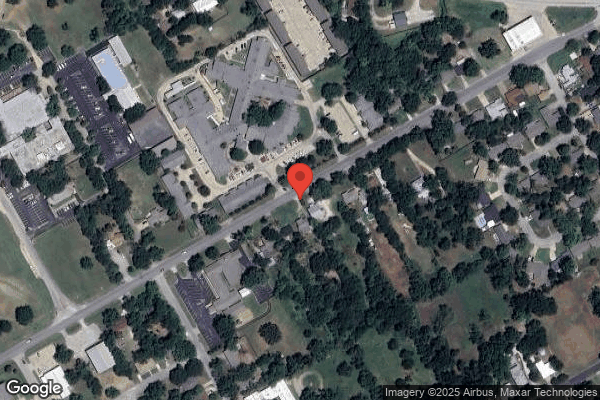
3002 W 2ND AVE, CORSICANA, TX 75110 (903) 872-5130
For profit - Corporation 107 Beds SOUTHWEST LTC Data: November 2025 1 Immediate Jeopardy citation
Trust Grade
66/100
#362 of 1168 in TX
Last Inspection: September 2024

Within standard 12-15 month inspection cycle. Federal law requires annual inspections.

Overview

The Village at Heritage Oaks has a Trust Grade of C+, indicating a decent reputation and slightly above average performance among nursing homes. It ranks #362 out of 1168 facilities in Texas, placing it in the top half, and #3 out of 6 in Navarro County, meaning only two local options are better. The facility is showing improvement, having reduced its issues from 2 in 2024 to 1 in 2025. Staffing is average with a 3/5 star rating and a turnover rate of 51%, which is slightly above the Texas average. However, there are some concerning aspects, such as $7,446 in fines, which is average compared to other facilities, and less RN coverage than 88% of Texas facilities, which could impact resident care. Specific incidents raised by inspectors include a critical finding where a resident did not receive their insulin medication as prescribed, which could jeopardize their health, and a concern that the Medical Director missed important meetings, risking unidentified quality deficiencies. Additionally, the facility failed to maintain a safe and comfortable environment, with issues like worn carpets that could diminish residents' quality of life. Overall, while there are strengths in its performance, families should weigh these against the identified weaknesses when considering this facility for their loved ones.

Trust Score
C+
66/100
In Texas
#362/1168
Top 30%
Safety Record
High Risk
Review needed
Inspections
Getting Better
2 → 1 violations
Staff Stability
⚠ Watch
51% turnover. Above average. Higher turnover means staff may not know residents' routines.
Penalties
✓ Good
$7,446 in fines. Lower than most Texas facilities. Relatively clean record.
Skilled Nurses
⚠ Watch
Each resident gets only 15 minutes of Registered Nurse (RN) attention daily — below average for Texas. Fewer RN minutes means fewer trained eyes watching for problems.
Violations
⚠ Watch
11 deficiencies on record. Higher than average. Multiple issues found across inspections.
★★★★☆
4.0
Overall Rating
★★★☆☆
3.0
Staff Levels
★★★☆☆
3.0
Care Quality
★★★★☆
4.0
Inspection Score
Stable
2024: 2 issues
2025: 1 issues

The Good

  • Full Sprinkler Coverage · Fire safety systems throughout facility
  • No fines on record

Facility shows strength in fire safety.

The Bad

Staff Turnover: 51%

Near Texas avg (46%)

Higher turnover may affect care consistency

Federal Fines: $7,446

Below median ($33,413)

Minor penalties assessed

Chain: SOUTHWEST LTC

Part of a multi-facility chain

Ask about local staffing decisions and management

The Ugly 11 deficiencies on record

1 life-threatening
Mar 2025 1 deficiency
CONCERN (D) 📢 Someone Reported This

A family member, employee, or ombudsman was alarmed enough to file a formal complaint

Potential for Harm - no one hurt, but risky conditions existed

Deficiency F0558 (Tag F0558)

Could have caused harm · This affected 1 resident

**NOTE- TERMS IN BRACKETS HAVE BEEN EDITED TO PROTECT CONFIDENTIALITY** Based on observations, interviews, and record reviews, the facility failed to ensure residents received services in the facility...

Read full inspector narrative →
**NOTE- TERMS IN BRACKETS HAVE BEEN EDITED TO PROTECT CONFIDENTIALITY** Based on observations, interviews, and record reviews, the facility failed to ensure residents received services in the facility with reasonable accommodations of each resident's needs for 1 of 4 residents (Residents #1) reviewed for resident rights in that: The facility failed to ensure Residents #1's call light was within reach on 03/22/2025. This failure could affect residents who needed assistance with activities of daily living and could result in needs not being met. Findings included: Record review of Resident #1's admission record dated 03/22/2025 documented an [AGE] year-old female admitted on [DATE]. Resident #1 had diagnoses which included: hypertensive heart disease with heart failure(high blood pressure damage the heart and blood vessels), hyperlipidemia(high levels of fat particles in the blood),hypokalemia(blood level that s below normal that result in fatigue, muscle cramps, and abnormal heart rhythms),parkinsonism(cause tremors and slow movements, and depression(sadness). Record review of Resident #1's Quarterly MDS assessment, dated 02/05/2025, revealed the resident had a BIMS score of 12 indicating the resident had moderate cognitive impairment. The MDS also revealed Resident #1 required partial/moderate assistance in the areas of Toileting hygiene, shower/bathe self, lower body dressing, and putting on /taking off footwear. Record review of Resident #1's care plan, dated 03/22/2025, revealed Resident #1 was care planned for ADL self-care performance deficit r/t impaired balance, stroke, and PD. Resident # 1 had an intervention of: Encourage Resident #1 to use call light for assistance. Observation on 03/22/2025 at 12:50 PM., revealed Resident #1's call light was under her bed, in the middle, not in reach. During an interview on 03/22/2025 at 12:50 PM, Resident #1 stated it had been out of reach since early morning. Resident # 1 was not able to recall how long the call light was not in reach or the last time staff had come in to assist her. Resident # 1 stated she needed to be changed and was waiting on staff to pass by her room to call out for staff to assist her. Resident # 1 stated when the call light was not in reach, she would just wait for staff to come to her room. Resident # 1 stated she really didn't want to say too much because she had to stay there and did not want the facility to retaliate against her During an interview on 03/22/2025 at 2:29 PM, CNA A stated CNAs should make rounds at least every two hours or as needed. CNA A stated that CNAs should be checking to see if call lights were in reach. CNA A stated she had left Resident # 1's room around 12:30 PM, and the call light was in place when she had entered the room (time entered not recalled). CNA A stated the call light may have fell of when she made Resident #1's bed. CNA A stated she could not recall if the call light was tied to the bed rail when she had left Resident #1's room. CNA A stated if a resident's call light was not within reach, then the resident needs would not have been met. During an interview on 03/22/2025 at 3:10 PM, the DON stated that anyone that entered the resident's room was responsible for ensuring the call light was within reach. The DON stated the purpose of a call light was for resident to notify staff when they needed assistance. The DON stated if a resident's call light was not in reach, then the resident could have an unmet need. The DON stated her expectation was that all resident's call lights were always within reach so the resident could notify staff they need assistance. During an interview on 03/23/2025 at 1:45 PM, the ADM stated the purpose of call light was for the residents to alert staff when they needed assistance. The ADM stated it was everyone's responsibility to ensure call lights were always within reach. The ADM stated that if a call light was not within reach, then a resident desired need would not be met. The ADM stated that she expected for call lights to be always within reach and answered timely. Review of the facility's Call Lights: Accessibility and Timely Response policy, implemented 05/01/2024 and revised 05/01/2024, reflected, Purpose: The purpose of this policy is to assure the facility is adequately equipped with a call light to allow residents to call for assistance. Policy Explanation and Compliance Guidelines 1. All staff will be educated on the proper use of the resident call system, including how the system works and ensuring resident access to the call light. 5. .Staff will ensure the call light is within reach of the resident and secured, as needed.
Sept 2024 2 deficiencies
CONCERN (E)

Potential for Harm - no one hurt, but risky conditions existed

Safe Environment (Tag F0584)

Could have caused harm · This affected multiple residents

**NOTE- TERMS IN BRACKETS HAVE BEEN EDITED TO PROTECT CONFIDENTIALITY** Based on observation, interview, and record review, the facility failed to provide a safe, functional, sanitary, and comfortable...

Read full inspector narrative →
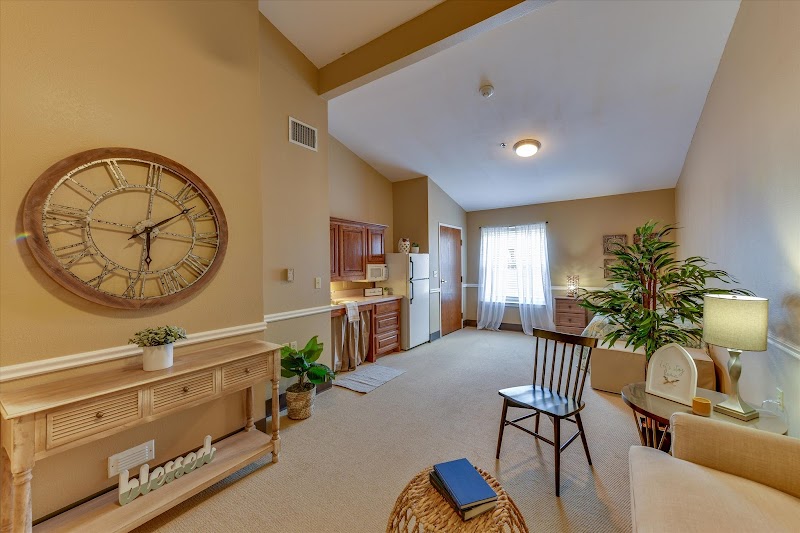
**NOTE- TERMS IN BRACKETS HAVE BEEN EDITED TO PROTECT CONFIDENTIALITY** Based on observation, interview, and record review, the facility failed to provide a safe, functional, sanitary, and comfortable environment for residents, staff, and the public for hall 300, 400 and room [ROOM NUMBER]. The facility failed to ensure the carpet in the hallway between room [ROOM NUMBER] and 304, was in good repair. The facility failed to ensure the carpet in the doorway to room [ROOM NUMBER] was in good repair. The facility failed to ensure the flooring in the doorway into room [ROOM NUMBER] was in good repair. The facility failed to ensure the flooring on 400 hallway was kept in good repair. These failures could place residents at risk for diminished quality of life due to the lack of a well-kept environment and equipment. Findings included: An observation on 09/16/24 at 10:30 a.m., revealed snags in the carpet near room [ROOM NUMBER], a snag in the carpet in the entry way to room [ROOM NUMBER]. An observation on 09/16/24 at 10:33 a.m., revealed worn and stained carpet in the 300 halls. The stained carpet was visible in the remaining carpeted rooms on the 300 halls. An observation on 09/16/2024 at 10:45 am, on the 400-hall revealed deep staining in several areas throughout the entire hallway. An observation on 09/17/24 at 10:00 a.m., revealed the flooring on room [ROOM NUMBER] did not reach the threshold molding and was slightly curled at the end. Interview on 09/17/24 at 9:40 a.m., with a housekeeping aide revealed that they clean the floors as best they can, they sweep and vacuum every day. She stated that they are unable to get all of the stains from the carpet. They can get some stains up, but they are unable to get the deep stains out. She stated recently started working here but they stains were here when she came to work here. Interview on 09/18/24 at 10:23 a.m., with the Maintenance Supervisor revealed he was aware of the issues with the carpet on 300 and 400 halls. He stated that facility has put in an RFP for new flooring. He stated that RFP had an estimate for the replacement of the flooring. He stated that they have not heard anything back from corporate at this time. He stated he was not exactly sure when this request was sent in, and he was not able to provide a specific date. Interview on 09/18/ 24 at 10:27 a.m., with the Maintenance tech stated that they have been using tape in bad places in the carpet. He stated he just does what he is told to do and does not know what goes on above him. He stated he has not noticed the areas of snagged carpet shown to him. He stated that he would cover the areas with tape. He stated that they try to keep the carpet as clean as possible but at this point there is little they can do to help the appearance as this may be original to the building. He stated that the threshold in room [ROOM NUMBER] may need to be replaced, but he could put tape there to secure the flooring until it can be fixed permanently. He stated that he understands it could pose as a tripping hazard to residents, who live or walk thru those areas. Interview on 09/18/24 at 1:25 p.m., with the DON revealed that she was aware the carpet was stained and faded but was unaware of the snags in the carpet. She was also unaware of the issue with the flooring in room [ROOM NUMBER]. She stated she understood a resident could suffer a break, tear or death from a fall from for the snags in the carpet and loose flooring. Interview on 09/18/24 at 2:15 p.m., with the Administrator revealed that the facility is leased, and they have requested repairs to the carpet but are waiting on the landlord to approve the decision. She stated that she is aware of the condition of the carpet as far as wear and the staining in different areas of the carpet. She stated that she understands a resident or staff member may injured if they were to catch something on the carpet or flooring.
CONCERN (E)

Potential for Harm - no one hurt, but risky conditions existed

Deficiency F0925 (Tag F0925)

Could have caused harm · This affected multiple residents

Based on observations, interviews, and record review, the facility failed to maintain an effective pest control program so that the facility was free of pests for four of four halls (Halls 100, 200, 3...

Read full inspector narrative →
Based on observations, interviews, and record review, the facility failed to maintain an effective pest control program so that the facility was free of pests for four of four halls (Halls 100, 200, 300, and 400) and the nurse's station, conference room, lobby, and main dining room reviewed for pest control program. The facility had live flies and gnats in areas of the facility including the nurse's station, Halls 100, 200, 300, 400, nurse's station, conference room, lobby, and the main dining room. This failure could place residents at risk for spread of infection, cross-contamination, and decreased quality of life. Findings included: An observation on 09/16/24 at 9:00 a.m., revealed in the front lobby there were three gnats flying around the front door. The food service carts were sitting outside of the kitchen door. There were three flies flying around the closed food carts. The flies landed and started crawling on the closed food carts. An observation on 09/16/24 at 9:15 a.m., revealed a live fly and a gnat flying in the conference room. An observation on 09/16/24 at 9:20 a.m., revealed a gnat crawling on top of the nurse's station. An observation on 09/16/24 at 9:20 a.m., revealed as the surveyor entered Hall 400 a live fly flew past down the hallway. An observation on 09/16/24 at 9:30 a.m., revealed three live flies flying down Hall 300 and a group of five gnats at the end of Hall 300. An observation on 09/16/24 at 10:00 a.m., revealed a live fly flying down Hall 100 and at the end of the hallway a live fly was crawling on the exit door. An observation on 09/16/24 at 10:45 a.m., revealed a live mosquito flying in the Administrators office. An observation and interview on 09/16/24 at 12:15 p.m., revealed a live fly crawling on a table in the dining room with a glass of juice on it. The fly lit on the lip of the glass. The resident returned to the table. The surveyor informed the staff in the dining room there had been a fly on the lip of the glass, the staff got a new glass of juice. Interview with MA A revealed it was the time of the year for the flies to be bad, the MA stated they come in the door that is in the dining room that goes outside and the front door. MA A stated there was a book at the nurses' station to write the fly sightings in, but she had not written anything in it lately. An observation on 09/16/2024 at 12:25 p.m., revealed a live fly flew out the main door of the dining room. An observation on 09/17/24 at 8:20 a.m., revealed a live fly crawling on the linen cart on Hall 100. In a confidential group meeting on 09/17/24 at 10:10 a.m., revealed a resident stated there were mosquitoes in the facility. An interview on 09/17/24 at 2:40 p.m., CNA B revealed there was a pest control book at the nurse's station, as she took the surveyor and showed her the book. CNA B stated if we see any pest we are to write in here. CNA B stated she had not seen any pest, but she had seen the pest control man here. An interview on 09/17/24 at 3:15 p.m., CNA C revealed there was a pest control log at the nurse's station. CNA C stated she would write in that book if she saw pest. CNA C stated she had not seen any flies. Record review of the pest control book reflected a log with no notations of flies, gnats, or mosquitoes. An observation on 09/17/24 at 4:00 p.m., in the men's bathroom located near the nurse's station revealed a large cloud of gnats swarmed in and out of the drain located in the middle of the bathroom. An interview on 09/17/24 at 7:45 a.m., LVN D revealed there was a pest control book at the nurse's station. LVN D stated she had seen some bugs recently and had documented in the pest control book and the pest control man had come. The pest was not flies, they were roaches, she stated she had not seen any more of them lately. LVN D stated the residents will also tell us and we will document in the pest control logs. An interview on 09/18/2024 at 1:21 p.m., Resident #47 revealed she had seen a mosquito in her room, she could not recall when that was, but she knew it was a mosquito, buzzing around her face. Resident #47 stated she did not think to tell anyone, it went away, and she did not see it anymore. An interview on 09/18/24 at 1:27 p.m., the Administrator revealed the pest control services was just here on the past Monday. The Administrator stated the pest control company would be contacted to come. The staff is supposed to document in the pest control log at the nurse's station. The Administrator stated if the pest were not controlled, they could spread germs. Record review of facility provided pest control visits revealed, in part, dates and treatments as follows: Treatment dates and services performed: -09-04-2024-after inspection . verified active fruit fly and gnat activity in kitchen, drains need to be cleaned better, built up food . treated the kitchen drains. -8-23-2024- after inspection . treated hallways, in kitchen . dish sink area drains flies . -06-28-2023- after inspection . targeted pest throughout the facility treated . drain flies, flies, gnats, fruit flies, and mosquitoes . treated hallways, reception, office areas, laundry, kitchen storage sink area, restrooms, recreation storage area for small and large flies, serviced fly light station. Record review of the facility's policy revised, April 2024 and titled Pest control Program reflected it is the policy of this facility to maintain an effective Pest control program that eradicates and contains common household pest and rodents .definition . effective pest control program is defined as measures to eradicate and contain common household pests (e.g., bed bugs, lice, roaches, ants, mosquitoes, flies, mice, and rats).
Jul 2023 1 deficiency
CONCERN (F)

Potential for Harm - no one hurt, but risky conditions existed

Deficiency F0868 (Tag F0868)

Could have caused harm · This affected most or all residents

Based on interview and record review, the facility failed to ensure that the facility's Medical Director attended the QAA/QAPI Committee meetings, for 3 of 3 quarterly meetings ( July, August, Septemb...

Read full inspector narrative →
Based on interview and record review, the facility failed to ensure that the facility's Medical Director attended the QAA/QAPI Committee meetings, for 3 of 3 quarterly meetings ( July, August, September 2022, October, November, December 2022 and January,February, March 2023), reviewed for QAA/QAPI. The facility failed to ensure the Medical Director attended their QAA and QAPI meetings for the months of July 2022 through March 2023. This failure could place residents at risk for quality deficiencies being unidentified and no appropriate plans of actions developed or implemented, and no appropriate guidance developed. Findings included: Review of the facility's QAA/QAPI meeting signature logs for the months of July 2022 through May 2023, revealed the Medical Director had not attended any of the meetings for the QAA/QAPI Committee, during those months. There were no notation indicating the Medical Director had attended any of the meetings by telephone or zoom. During an interview on 07/25/2023 at 11:35 AM, the Administrator said the QAA/QAPI met monthly, but no less than once per quarter. She said she realized the Medical Director was not in attendance for the QAA/QAPI meetings for the months of July 2022 through May 2023, but she could not say why he was not in attendance. She said she was not the Administrator at that time, she became the Administrator in September 2022 and could not speak to anything prior to that. She said there was no indication the Medical Director had attended any of the meetings between July 2022 and May 2023, nor by telephone or zoom, nor did he have a designee assigned to attend in his place. During an interview on 07/25/2023 at 12:15 PM, the medical director said he thought he had attended at lease two QAA/QAPI meetings. He was shown the sign in sheets and agreed that if he had not signed in there was no proof that he was there, he said if it wasn't signed it wasn't done. He also said he did not attend via telephone and did not have a designee assigned to attend in his place. Review of the facility's Quality Assurance and Performance Improvement (QAPI Plan Revised April 2014) revealed, Policy Statement: This facility shall develop, implement, and maintain an ongoing, facility-wide, QAPI Plan designed to monitor and evaluate the quality and safety of resident care, pursue methods to improve care quality, and resolve identified problems. Authority: 1. The owner and/or governing board(body) of our facility shall be ultimately responsible for the QAPI Program. 2. The Administrator is responsible for assuring that this facility's QAPI Program complies with federal,state and local regulatory agency requirements. Implementation: 2. This committee shall meet monthly to review reports, evaluate the significance of data, and monitor quality-related activities of all departments, services, or committees .§483.75(g)(1) A facility must maintain a quality assessment and assurance committee consisting at a minimum of: (i) The director of nursing services; (ii) The Medical Director or his/her designee; (iii) At least three other members of the facility's staff, at least one of who must be the administrator, owner, a board member or other individual in a leadership role; and (iv) The infection preventionist.
Dec 2022 1 deficiency 1 IJ
CRITICAL (J) 📢 Someone Reported This

A family member, employee, or ombudsman was alarmed enough to file a formal complaint

Immediate Jeopardy (IJ) - the most serious Medicare violation

Deficiency F0760 (Tag F0760)

Someone could have died · This affected 1 resident

**NOTE- TERMS IN BRACKETS HAVE BEEN EDITED TO PROTECT CONFIDENTIALITY** Based on observation, interview and record review, the facility failed to ensure that the resident was free from any significant...

Read full inspector narrative →
**NOTE- TERMS IN BRACKETS HAVE BEEN EDITED TO PROTECT CONFIDENTIALITY** Based on observation, interview and record review, the facility failed to ensure that the resident was free from any significant medication errors for (Resident #1) of 5 residents reviewed. This facility failed to administer insulin medication for (Resident #1) according to the doctor's order. Resident #1 was administered a long- acting insulin (released over time), the resident should have been administered short acting insulin (taken daily before meals). This failure could place residents at risk of jeopardizing their health by not receiving medications as ordered. The noncompliance was identified as PNC (Past non-compliance). The non-compliance began on [DATE] and ended on [DATE]. The facility had corrected the noncompliance before the survey began. Findings Include: Review of Resident #1 face sheet undated reflected, a [AGE] year-old male who was admitted to the facility on [DATE]. Resident #1 was admitted with a diagnosis of Type 2 Diabetes mellitus without complications, Parkinson's Disease (disorder of the central nervous system that affects movement), heart failure, mild cognitive impairment, acute kidney failure, and elevated blood pressure. Review of Resident #1 quarterly MDS assessment dated [DATE] revealed, he has a BIMS score of 12 indicating mild cognitive impairment. Review of Resident #1 care plan dated [DATE], reflected the following: The resident will be free from any symptoms or signs of hypoglycemia (Low blood glucose level) and the resident will have no complications related to diabetes. Interventions reflected Diabetes medication as ordered by doctor. Monitor/document for side effects and effectiveness. Review of LVN A, progress note dated [DATE], reflected the following: This nurse was getting supplies to check blood sugar and checked insulin pens. Resident has 2 insulin pens. This nurse set both pens on top of cart. I checked order and resident's name to be on the pens. When grabbing supplies to take to resident's room this nurse grabbed the wrong insulin pen and administered Humalog instead of Tresiba which is a routine medication he receives in the morning. When this nurse noticed she gave the wrong insulin pen this nurse immediately notified charge nurse of what had happened and charge nurse gave orange juice while this nurse called Doctor [NAME]. Doctor [NAME] ordered this nurse to check blood sugar every 15 minutes for 2 hours. This nurse checked blood sugar before giving insulin and blood sugar was 86. After giving insulin, eating cookies, drinking orange juice with sugar, and milk resident blood sugar was checked and blood sugar reading was 88. Doctor [NAME] was notified of blood sugar and ordered dextrose 5% via IV and resident refused. Doctor [NAME] also ordered this nurse to give resident Glucogon shot. Doctor [NAME] also ordered for this nurse to send resident to the hospital. Review of the Facility investigation dated [DATE], reflected Resident # 1 was administered 34 units of Humalog 100units/nL- sliding unit, but should have been administered Tresiba 100 unit /mL (34 units) which is given daily. The investigation reflected, Resident # 1 was given milk, cookies, orange juice, and a glugon shot. The report indicated that Resident # 1 was stable, and did not have symptoms of hypoglycemia at the time of his discharge to the hospital. Resident # 1 was sent to the hospital for IV glucose and observation, the report reflected that Resident # 1 did not have any adverse- affects from the medication error. The investigation reflected, that LVN A was immediately removed from the floor, confirmed findings (that this was a significant medication error), the nursing staff were in-served on long acting and fast acting insulin and insulin administration. The report reflected that LVN A, would be doing vitals signs only under the supervision of the DON until further notice. Review of the MAR, revealed, Resident #1 had orders for the following diabetic medications: 1. Medication Order date- [DATE]- Tresiba Solution 100 UNIT/ML (Insulin Degludec) Inject 34 unit subcutaneously one time a day related to Type 2 Diabetes Mellitus. Long- acting 2. Medication order date - [DATE]-Humalog KwikPen Solution Pen-injector 100 UNIT/ML (Insulin Lispro (1 Unit Dial)) Inject subcutaneously one time a day related to Type 2 Diabetes Mellitus. Short-acting Review of medical records dated [DATE], EMS (emergency medical service) arrived at 8:44 am - per hospital records Resident #1 arrived at the hospital at 8:52 am. Resident #1 was admitted to the hospital and treated for hypoglycemia (Low BGL). Resident #1 remained in the hospital for IV of D5W (saline with glucose/sugar) treatment and monitoring. Resident #1 was discharged back to the facility at 12:48 pm on [DATE]. Per hospital records the residents blood glucose levels remained stable with the lowest reading at 79 (normal 70-110). Interview on [DATE] at 3:45pm with Resident #1, revealed he is not able to recall any of the events that took place. He stated he was in this facility because in [DATE] he had a diabetic black -out. Resident # 1 stated that he did take insulin, however, was not able to recall the recent incident. During a phone interview on [DATE] at 10:00am with LVN A, stated she was scheduled to work the 6am to 2pm shift on [DATE]. She stated approximately 8:32am she was getting Resident #1 medication ready and took out both insulin pens. She stated as she was checking the MAR to ensure she had the correct medication; she turned and grabbed the wrong pen and administered the resident the wrong medication. She stated she gave Resident #1; 34 units of Humalog KwikPen Solution Pen-injector 100 UNIT/ML (Insulin Lispro (1 Unit Dial). Inject subcutaneously one time a day related to Type 2 Diabetes Mellitus. She stated she should have been given the Tresiba Solution 100 UNIT/ML (Insulin Degludec) Inject 34 unit subcutaneously one time a day related to Type 2 Diabetes Mellitus. She stated that she immediately notified the charge nurse of her mistake. During an interview on [DATE] at 10:50am with the DON, she stated she a call from the charge nurse on duty that day [DATE] regarding the medication error and immediately came to the facility. DON stated the resident was administered the wrong medication and the wrong dosage of medication. She stated LVN A, gave the Resident # 1, 34 units via IV of Humalog Solution 100 UNIT/ML (Insulin Lispro (1 Unit Dial)) Inject subcutaneously one time a day related to Type 2 Diabetes mellitus, she stated the resident should have been given Tresiba Solution Pen/Injec 100 UNIT/ML (Insulin Degludec) Inject 34 unit subcutaneously one time a day related to Type 2 Diabetes Mellitus. She further stated by giving the resident this medication the resident could have died due to low (BGL). The DON stated all new staff are trained with a tenured nurse before going out on the floor. She stated all nursing staff are trained on medication administration. During a phone interview on [DATE] at 3:30pm with Pharmacist, revealed that giving a resident the wrong dosage of the Humalog 100 unit/nl sliding scale could have different effects. He stated it could cause nausea, dizziness, confusion, could cause the person blood sugar levels to drop and send the person into Hyperglycemia. He stated if the person was given the Glucagon shot (given if a person has had an over- dose of this medication) the resident must have been having an adverse effect. During a phone interview on [DATE] at 3:50pm with PCP, revealed the resident should have been given the long- acting insulin which is the Tresiba Solution 100 UNIT/ML (Insulin Degludec), instead of the short-acting Humalog KwikPen Solution Pen-injector 100 UNIT/ML 34 units. He stated when he received the call from the nurse (could not remember the name) he advised to give the resident orange juice, milk, cookies, and a Glucagon shot. He further stated after the snacks given and the Glucagon shot the residents blood sugar level was at an 88 and he advised that the resident be sent to out the hospital for further evaluation and treatment. He stated if the levels get too low the person could have a seizure, lower potassium that could cause heart arrythmia or heart failure (death). During an interview on [DATE] at 4:20pm with ADM, revealed once notified of the incident she and the DON immediately came to the facility and removed LVN A from the floor. She stated LVN A, administered the wrong medication to Resident #1. She further stated it was her expectation that any staff administering medications follow their policy and procedure when verifying and ensuring that they are giving the correct medication, to the correct person, and the correct dosage. She stated this medication error could have been much worse for the resident. She stated all nursing staff are trained and have regular in-services conducted by the DON. During an interview on [DATE] at 1:25pm with LVN B, stated she was working the day of the incident [DATE]. She stated LVN A came and got her stating she messed up and gave a resident the wrong medication. She stated they immediately contacted the PCP and was advised to give the resident orange juice, milk, cookies, and the glucagon shot. She further stated they stay on the phone with the doctor after giving the snacks and Resident #1 BGL was at 88, he advised to send the resident to the hospital for further treatment. LVN B stated, if they wouldn't have caught the error in time the residents BGL could have dropped and could have caused him to become unresponsive and possibly die. During an interview on [DATE] at 4:50pm with LVN C and LVN D, stated they were trained on the 10 steps of medication administration, insulin administration, the difference in long acting and Fast acting insulin. LVN C and LVN D reported the long acting and short acting pens and vials have been marked for visual queuing to help them ensure that they have the correct medication. The stated when giving any medications the MAR should be checked at least three times before any medication is administered. Record review of Resident #1 BGL readings dated [DATE], reflected BGL initial reading at 86, after wrong medication administered and snacks provided the reading reflected 88. Record review of Resident #1 BGL readings prior to [DATE] before the medication error occurred and after Resident #1 returned from the hospital on [DATE], the BGL's are as follows: [DATE]- 11:22 96mg/dL [DATE]- 07:40 102 mg/dL [DATE]- 07:14 101 mg/dL [DATE]- 07:29 94mg/dL [DATE]- 07:21 92mg/dL [DATE]- 12:33 86mg/dL Once resident returned from the hospital the readings were as follows: discharged from hospital on [DATE]: [DATE]- 08:14 117mg/dL [DATE]- 07:55 102mg/dL [DATE] -07:22 123mg/dL [DATE]- 08:19 113mg/dL [DATE]- 07:28 107mg/dL [DATE]- 07:33 173mg/dL Records review of facility in-services and safety measures revealed the facility took the following steps prior to surveyor entering the building for past non-compliance: 1. The LVN was immediately removed from the floor suspended for 6 days, given a written warning. LVN is not able to administer medications currently. LVN is only able to do vital signs while under the supervision of DON. 2. Staff trained on [DATE] - 10 step medication administration training. Signed by nursing staff 3. Nursing staff training on [DATE]- long-acting vs fast acting insulin the difference. Signed by nursing staff 4. All insulin medications labeled long/ short acting with different colors to allow for a visual queuing 5. Facility followed their own internal policy on medication administration 6. LVN A was trained on insulin by the facility prior to the incident. Record review of employee personnel file and disciplinary document revealed LVN A received a written warning. Review of LVN A time sheets, revealed the time reported by DON of suspension for 6 days [DATE]-[DATE]. Observation of LVN A clinical skills trainings which included the following: Administering a subcutaneous injection Glucose testing and Proficiency Nutrition, hydration, and medication administration Observation at 4:46pm, on [DATE] of insulin administration, by LVN C. Per MAR in the PCC (Point Click Care) system the order for this observation stated. Hum along solution 100 unit/ML(Insulin Lispro) vial sliding scale before meals and at bedtime. LVN C verified residents name on the MAR and medication vial, verified date [DATE] of medication on MAR and vial, cleaned glucometer allow to dry for 2min before using / to check the blood glucose level, observed wearing gloves / sanitized hands before putting on gloves, explained to resident what she was preparing to do, explained what medication she was preparing to give the resident, cleaned table to set up medication, got out first test strip (for glucometer machine), used alcohol pad clean resident finger before taking reading, BGL reading 195, LVN C sanitized her hands after taking the reading to prepare the insulin, set out lancet gauze, LVN C administered the insulin medication in residents lower abdomen, cleaned machine with anti- bacterial wipes let dry for 2min. LVN C cleaned in between each resident, changed gloves at the end clicked button in PCC (Point Click Care) system that the medication had been administered. Observation at 5:45pm on [DATE], of medication labeling of long acting/short acting insulin medications, labeled in red for visual queuing. Policy Reviewed regarding Administration Medications dated, [DATE] indicated the following: Policy: 1. Only persons licensed or permitted by this state to prepare, administer and document the administration of medications may do so. 2. The Director of Nursing Services will supervise and direct all nursing personnel who administer medications and / or have related functions 3. Medications must be administered in accordance with the orders, including any required time frames 26. New personnel authorized to administer medications will not be permitted to prepare or administer medications until they have been oriented to the medication administration system used by the facility. 27. The charge nurse must accompany new nursing personnel on their medication rounds for a minimum of three days to ensure established procedures are followed and proper resident identification methods are learned.
May 2022 6 deficiencies
CONCERN (D)

Potential for Harm - no one hurt, but risky conditions existed

Safe Environment (Tag F0584)

Could have caused harm · This affected 1 resident

**NOTE- TERMS IN BRACKETS HAVE BEEN EDITED TO PROTECT CONFIDENTIALITY** Based on observation, interview, and record review, the facility failed to provide a safe, clean, comfortable, and homelike envi...

Read full inspector narrative →
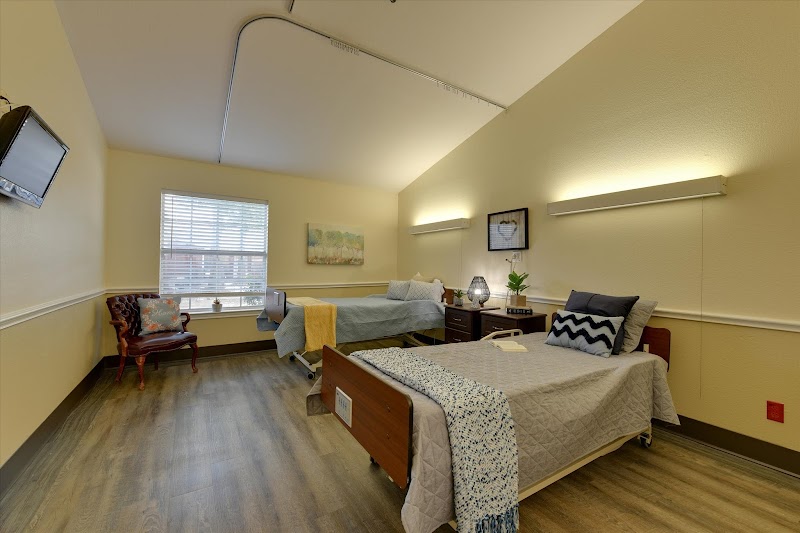
**NOTE- TERMS IN BRACKETS HAVE BEEN EDITED TO PROTECT CONFIDENTIALITY** Based on observation, interview, and record review, the facility failed to provide a safe, clean, comfortable, and homelike environment for one (Resident #25) of four residents reviewed for environment. 1. The facility failed to ensure Resident #25's personal items were unpacked in her new room. 2. The facility failed to ensure Resident #25's recliner was moved into her new room. This failure could place residents at risk for diminished quality of life due to the lack of a homelike environment. Findings included: Review of Resident #25's MDS dated [DATE] revealed she was a [AGE] year-old female and admitted to the facility on [DATE]. Her diagnoses were anemia, peripheral vascular disease, seizure disorder, anxiety disorder, and insomnia. Observation and interview in Resident #25's room on 05/04/22 at 11:15 AM revealed she had two boxes filled with personal items. She stated she had been in her new room for two weeks. She stated she returned from the hospital and was moved to a new room. She stated she did not remember why she was moved from her previous room. She stated she has asked staff to assist with unpacking her personal items and moving her recliner in her new room. She stated she does not feel like her room has a homelike experience because she does not have access to her personal items. Observation of Resident #25's previous room on 05/04/22 at 11:30 AM revealed there was an unused blue recliner. Review of Resident #25's electronic medical record on 05/05/22 revealed she had previously resided in a different room. Interview with CNA C and CNA D on 05/06/22 at 11:02 AM revealed they assist residents with room changes by moving their personal items. They stated Resident #25 has been in her new room for two weeks. They stated some of her personal items were in boxes and her recliner was not in her room. They stated she did not have enough space in her new room for all her items. They stated the resident had not asked them to assist with unpacking her items but requested her recliner be moved into her new room. They stated Resident #25 was moving into a new room with more space on 05/06/22. They stated Resident #25's room was not homelike because her items were not unpacked, and she did not have her recliner. They stated a homelike environment was important because the nursing facility was Resident #25's home. Interview with LVN B on 05/06/22 at 9:25 AM revealed Resident #25's recliner was moved into her new room on 05/04/22. She stated Resident #25 had personal items in boxes because there was not enough space to unpack her items. She stated CNAs assist with moving the resident's items and maintenance assists with moving resident's furniture. She stated Resident #25's recliner and personal items unpacked would help her have a home like environment. She stated residents need a home like environment to feel safe and enjoy living in the facility. Interview with DON on 05/06/22 at 1:09 PM revealed the Resident #25's requested a new room upon arrival from hospital and did not want to return to old room. She stated Resident #25 had a lot of personal items and her current room does not have enough space for the items. She stated Resident #25 was being moved from her current room to her previous room on 05/06/22. She stated Resident #25's items would be unboxed and her recliner would be in the new room. She stated Resident #25's items personal items boxed and not having her recliner did not affect her homelike environment. She stated a homelike environment was important for residents to feel at home and comfortable at the facility. Review of the facility policy titled Quality of Life - Homelike Environment, dated 04/2014, revealed, Residents are provided with a safe, clean, comfortable and homelike environment and encouraged to use their personal belongings to the extent possible.
CONCERN (D)

Potential for Harm - no one hurt, but risky conditions existed

Comprehensive Care Plan (Tag F0656)

Could have caused harm · This affected 1 resident

**NOTE- TERMS IN BRACKETS HAVE BEEN EDITED TO PROTECT CONFIDENTIALITY** Based on observation, interview, and record review, the facility failed to ensure the comprehensive care plan was reviewed and r...

Read full inspector narrative →
**NOTE- TERMS IN BRACKETS HAVE BEEN EDITED TO PROTECT CONFIDENTIALITY** Based on observation, interview, and record review, the facility failed to ensure the comprehensive care plan was reviewed and revised as appropriate for one (Resident #20) of four residents reviewed for care plans. The facility failed to revise Resident #20's care plan to reflect she slept in a recliner. This failure could place residents at risk of not receiving needed services and care. Findings Included: Review of Resident #20's MDS dated [DATE] revealed she was a [AGE] year-old female and admitted to the facility on [DATE]. Her diagnoses were hypertension, renal insufficiency, diabetes, hyperlipidemia, non-Alzheimer's dementia, malnutrition, anxiety disorder, depression, psychotic disorder, and hyperthyroidism. Review of Resident #20's most recent care plan, undated, revealed her care plan had not been revised to include she preferred to sleep in a recliner and not a bed. Observation on 05/04/22 at 11:35 AM revealed Resident #20 did not have a bed in her room. Interview with Resident #20 on 05/04/22 at 12:00 PM revealed she slept in a recliner instead of a bed. She stated she did not have a bed in her room and could not remember if she ever had a bed in her room. She stated her preference was to sleep in her recliner because is was more comfortable. Interview with LVN B on 05/06/22 at 9:25 AM revealed Resident #20 prefers to sleep in a recliner because her bed was uncomfortable. She stated Resident #20's bed was removed because she refused to sleep in the bed. She stated Resident #20 should be care planned to sleep in her recliner. She stated the MDS coordinator was responsible for revising resident care plans. Interview with MDS Coordinator on 05/06/22 at 11:22 AM revealed she was responsible for updating care plans. She stated Resident #20's care plan should have been updated once her plan of care changed. Resident #20 was sleeping in a bed upon admission to the facility then requested to sleep in a recliner. She stated she did not know when Resident #20 requested to sleep in a recliner. She stated Resident #20 should have been care planned to sleep in a recliner. She stated the purpose of a care plan was to educate staff about a resident's disease process and intervention. She stated Resident #20's care plan not being revised did not pose any risks. Interview with ADON on 05/06/22 at 1:44 PM revealed she was responsible for overseeing the MDS coordinator's completion and revision of care plans. She stated care plans were audited every week. She stated she reviewed Resident #20's care plan a few months ago. She stated Resident #20 slept in a recliner. She stated Resident #20 should have been care planned for a recliner. She stated she was not aware Resident #20's care plan had not been revised to include her recliner. She stated the importance of revising Resident #20's care plan was to educate everyone that her preferred method of sleeping was in a recliner. Review of facility policy, Care plans, Comprehensive Person-Centered, dated 12/2016, revealed, A comprehensive, person-centered care plan that includes measurable objectives and timetables to meet the resident's physical, psychosocial and functional needs is developed and implemented for each resident.
CONCERN (D)

Potential for Harm - no one hurt, but risky conditions existed

Tube Feeding (Tag F0693)

Could have caused harm · This affected 1 resident

**NOTE- TERMS IN BRACKETS HAVE BEEN EDITED TO PROTECT CONFIDENTIALITY** Based on observation, interview and record review, the facility failed to provide treatment and services to prevent complication...

Read full inspector narrative →
**NOTE- TERMS IN BRACKETS HAVE BEEN EDITED TO PROTECT CONFIDENTIALITY** Based on observation, interview and record review, the facility failed to provide treatment and services to prevent complications of enteral feeding for one (Resident #41) of three residents reviewed for feeding tubes. LVN A failed to follow the facility's policy regarding administering medications via g-tube (gastrostomy tube). LVN A crushed seven medications together and administered them all at once to Resident #41. The failure placed residents at risk of obstruction of the g-tube and adverse drug interactions. Findings included: Record review of Resident #41's admission Record, dated 07/07/21, revealed she was a [AGE] year-old female admitted to the facility on [DATE]. Resident #41's diagnoses included dysphagia, cerebral infarction, muscle weakness, unspecified dementia and anxiety disorder. Record review of Resident #41's Annual MDS assessment, dated 04/08/22, revealed that Resident #41 had a feeding tube. Review of the Resident #41's May 2022 Medication Administration Record revealed the following medications were scheduled to be administered at 12:00 PM every day: Norco 5-325mg tablet, Amlodipine 500mg tablet, Aspirin 81mg tablet, Gabapentin 100mg Capsule, Lisinopril 20mg tablet, Carvedilol 12.5mg tablet and Miralax Powder 17gm. Review of the Resident #41's May 2022 Medication Administration Record revealed a doctor's order dated 05/04/22 may crush and mix all meds and dissolve in 4-6oz of water to administer via g-tube unless contraindicated. Observation on 05/05/22 at 12:00 PM revealed LVN A crushed Resident #41's medications and placed them in a medication cup. LVN A entered Resident #41's room and positioned the resident. LVN A checked the Resident #41's g-tube (gastrostomy tube) placement and residual and flushed the g-tube with 30 cc of water. LVN A mixed the medications in the cup with 30 cc of water and placed a syringe in the cup and pulled the plunger, pulling all of the crushed medications in the cup along with the water into the syringe. LVN A attached the syringe to the g-tube port and pushed the plunger, pushing the medications in via the syringe. LVN A then flushed the g-tube with 30 cc of water. In an interview on 05/05/22 at 12:30PM LVN A stated she crushes and mixes all of the medications together because that is the way she was trained, and she has an order from the doctor to cocktail the medications together. LVN A stated that she feels administering the medications one by one is best practice and mixing medications together may cause an adverse reaction. LVN A also stated that medications should be administered via gravity to prevent stomach pain or discomfort. In an interview with the DON on 05/05/22 at 1:14 PM revealed that nursing staff have been trained to administer medications upon hire. The DON stated that the facility policy stated to follow the doctor's order. The DON stated she felt best practice was to administer medications via g-tube separately and via gravity to avoid adverse reactions. Further interview revealed that the DON is responisble for ensuring proper medication administration is practiced within the facility. The DON was unable to provide a policy that stated to follow the doctor's orders over the facility policy. Review of LVN A's g-tube medication administration training dated 11/01/21 revealed she was trained to administer medications one at a time. Review of facility policy, revised March 2015 titled Administering Medications through an Enteral Tube, revealed, General Guidelines 3. Do not mix medications together prior to administering through an enteral tube. Administer each medication separately. Steps in the Procedure, 26. If administering more than one medication, flush with 15ml warm sterile or purified water between medications.
CONCERN (D)

Potential for Harm - no one hurt, but risky conditions existed

Menu Adequacy (Tag F0803)

Could have caused harm · This affected 1 resident

Based on observation, interview, and record review, the facility failed to ensure that the menus were followed for one of three meals reviewed for meal accuracy: The facility failed to follow the menu...

Read full inspector narrative →
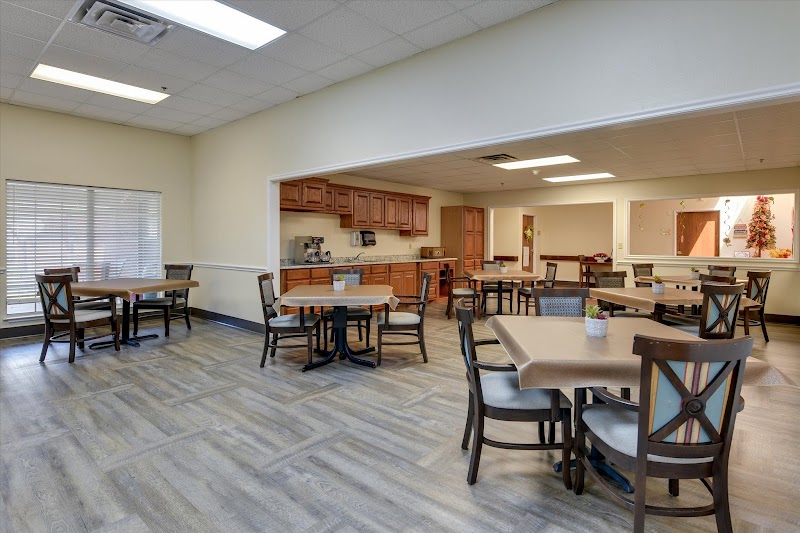
Based on observation, interview, and record review, the facility failed to ensure that the menus were followed for one of three meals reviewed for meal accuracy: The facility failed to follow the menu or the meal ticket that was based off the lunch menu for 05/04/22. This failure could affect residents by contributing to dissatisfaction, poor intake, and weight loss. The findings included: Review of the daily lunch menu for 05/04/22 reflected the date of Tuesday, sliced turkey with gravy, sweet potato, veggies, dinner roll, and salted caramel apples. Review of the residents' meal tickets, dated 05/04/22, revealed chicken pot pie, mixed green salad, saltine crackers, dressing of choice, and pumpkin pie. Observation on 05/04/22 at 12:30 PM revealed there were 15 residents eating lunch in the dining room. All 15 of the resident's meal tickets did not match the food they received or the daily menu. The residents were served pork loin, sliced steamed carrots, beans, and pie. Interview with substitute dietary manager on 05/06/22 at 12:43 PM revealed she had been the substitute dietary manager for one month. She stated the residents' meal tickets and daily menu on 05/04/22 were not updated because the system took a while to update to the current menu. She stated the meal tickets, and the daily menu were supposed to reflect the food the residents were served. She stated she was responsible for updating meal tickets and menus. She stated accurate meal tickets and daily menus were important because residents need to know what they will be eating. Interview with Administrator on 05/06/22 at 1:51 PM reflected the facility did not have a policy regarding meal tickets and menus.
CONCERN (E)

Potential for Harm - no one hurt, but risky conditions existed

Deficiency F0680 (Tag F0680)

Could have caused harm · This affected multiple residents

Based on interviews and record review, the facility failed to ensure the Activity Program was directed by a qualified professional for one (Activity Director) of one activity-directing professional re...

Read full inspector narrative →
Based on interviews and record review, the facility failed to ensure the Activity Program was directed by a qualified professional for one (Activity Director) of one activity-directing professional reviewed for quality of life. The facility failed to ensure Activity Director was qualified to direct the activities program. This failure could place residents at risk for reduced quality of life due to lack of activities that were individualized to match the skills, abilities, and interests/preferences of each resident. Findings included: Review of personnel records on 05/06/22 revealed no evidence that Activity Director had completed the required activity director course. Interview on 05/06/22 at 12:54 PM with Activity Director revealed she had not completed the required activity director course. She stated her anticipated completion date was in three weeks. She stated the Social Worker and herself provide activities to the residents daily. She stated there was a May 2022 activity calendar posted on a wall near the nurse's station. She stated the purpose of an activity director was to keep residents entertained and to give them something to do every day. Interview on 05/06/22 at 1:53 PM with Social worker revealed she had been assisting the Activity Director with activities for three weeks. She stated the facility did not have a certified activity director. She stated the residents participate in activities every day. She stated the importance of a qualified activity director was to improve a resident's quality of life. Interview on 05/06/22 at 1:51 PM with Administrator revealed the facility did not have a qualified activity director. She stated the facility has not had an activity director since 04/15/22. She stated she had given the Activity Director until 05/16/2022 to complete required activity director courses. She stated the Activity Director and Social Worker have been assisting residents with activities. She stated the importance of an activity director was to assist residents with their psycho-social needs. She stated the facility did not have a policy for regarding a qualified activity director.
CONCERN (E)

Potential for Harm - no one hurt, but risky conditions existed

Food Safety (Tag F0812)

Could have caused harm · This affected multiple residents

Based on observation, interviews, and record review, the facility failed to store, prepare, distribute, and serve food in accordance with professional standards for food service safety in 1 of 1 kitch...

Read full inspector narrative →
Based on observation, interviews, and record review, the facility failed to store, prepare, distribute, and serve food in accordance with professional standards for food service safety in 1 of 1 kitchen reviewed for kitchen sanitation. 1. The facility failed to ensure food was properly stored in the facility's refrigerator, freezer, and dry storage. 2. The facility failed to ensure expired/spoiled foods were discarded. 3. The facility failed to ensure the floor in the freezer was free from spills and unpackaged food. 4. The facility failed to ensure food on the steam table reached the appropriate temperature before plating food for resident consumption. These failures could place residents at risk for food-borne illness. Findings included: Observation of the facility's refrigerator on 05/04/22 at 10:44 AM revealed: - 1 plastic bag of meat open and exposed to air. Observation of the facility's walk-in freezer on 05/04/22 at 10:50 AM revealed: - A red spill on the floor - 3 individually packaged containers of butter on the floor - 2 sausage links on the floor Observation of the facility's smaller freezer on 05/04/22 at 10:55 AM revealed: - 1 box of Salisbury patties open and exposed to air. Observation of the facility's dry storage on 05/04/22 at 11:00 AM revealed: - 1 bag of Japanese style breadcrumbs open and exposed to air - 1 bag and box of thickener open and exposed to air Observation of the main area in the kitchen under a prep table on 05/04/22 at 11:10 AM revealed: - 1 white onion with black and fuzzy white spots Observation of milk storage in the main area in the kitchen on 05/04/22 at 11:15 AM revealed: - Spilt milk on the top of three boxes containing gallons of milk. Observation of Dietary [NAME] D checking food temperatures on the steam table on 05/05/22 at 11:45 AM revealed: - Ground beef with peppers were temped at 132F and again at 121F. - Puree ground beef with peppers were temped at 125F; and - Chicken strips were tempted at 150F Interview with substitute Dietary Manager on 05/05/22 at 12:20 PM revealed the ground beef with peppers and chicken strips were safe for residents to consume. She stated residents' trays would not be pulled and they will eat the food that has been temped and plated. Interview with DON and Administrator on 05/05/22 at 12:30 PM revealed the food temperatures were safe for residents to consume. They stated their facility policy revealed food could be served at a temperature of 115F. They stated there would be no adverse reaction to residents consuming chicken strips at 150F and ground beef with peppers at 132F, 125F, and 121F. Interview with Dietary [NAME] D on 05/05/22 at 3:06 PM revealed the ground beef with peppers should not have been served to residents because the temperature was too low and not safe to consume. She stated the temperature of the chicken strips were safe to serve residents. She stated beef and chicken must reach a temperature of 135F on the steam table before they are served to residents. She stated the substitute Dietary Manager was responsible for determining the accurate temperature for food to be served to residents. She stated the the substitute Dietary manager monitors temperatures for breakfast, lunch, and dinner. She stated the substitute Dietary Manager informed her the ground beef with peppers and chicken strips were at an appropriate temperature to serve to residents. She stated she received an in-serviced regarding food temperatures in March 2022. She stated residents could become sick if food was consumed at the wrong temperature. In an interview with the substitute Dietary Manager on 05/06/22 at 12:43 PM revealed she had been the substitute dietary manager for one month. She stated she has ten years of experience as a cook, possesses her food handler's certificate, and educated regarding food temperatures and kitchen sanitation. She stated she was not classified as a qualified dietary manager because she had not completed her dietary manager courses. She stated she was responsible for overseeing the kitchen. She stated she completes walk throughs of the kitchen upon arrival to work, in between meals, and Thursdays on food truck arrival. She stated dietary staff have a cleaning chore list in the kitchen. She stated she ensured the dietary staff were educated and reeducated regarding the kitchen. She stated proper food storage and cleanliness of floors was important. She stated residents could be at risk of food borne illnesses. Review of the facility policy titled Food Receiving and Storage, dated July 2014, revealed, Foods shall be received and stored in a manner that complies with safe food handling practices.(5) The following internal cooking temperatures/times for specific foods must be reached to kill or sufficiently inactivate pathogenic microorganisms: (a) poultry and stuffed foods - 165F. Ground meat, ground fish and eggs held for service - at least 115F. Review of facility policy titled Food Handling and Service, dated 06/01/2019, revealed, To ensure that all food served by the facility is of good quality and safe for consumption, all food will be held and served according to the state and US Food Codes and HACCP guidelines. (1) Serve all hot foods at a temperature of 135F or greater and all cold food at 41F or less. (2) If hot foods drop below 135F, reheat to 165F for a minimum of 15 seconds. Review of U.S Department of Health and Human Services Food Code, dated 2017, revealed, 3-202.15 Package Integrity reflected: Food packages shall be in good condition and protect the integrity of the contents so that the food is not exposed to adulteration or potential contaminants. Review of the Food and Drug Administration Food Code, dated 2017, reflected, .3-302.12 Food Storage Containers, Identified with Common Name of Food. Except for containers holding food that can be readily and unmistakably recognized such as dry pasta, working containers holding food or food ingredients that are removed from their original packages for use in the food establishment, such as cooking oils, flour, herbs, potato flakes, salt, spices, and sugar shall be identified with the common name of the food 3-305.11 Food Storage. (A) .food shall be protected from contamination by storing the food: (1) In a clean, dry location; (2) Where it is not exposed to splash, dust, or other contamination .(B) .refrigerated, ready-to eat time/temperature control for safety food prepared and packaged by a food processing plant shall be clearly marked, at the time the original container is opened in a food establishment and if the food is held for more than 24 hours, to indicate the date or day by which the food shall be consumed on the premises, sold, or discarded, based on the temperature and time combinations specified in (A) of this section and: (1) The day the original container is opened in the food establishment shall be counted as Day 1; and (2) The day or date marked by the food establishment may not exceed a manufacturer's use-by date if the manufacturer determined the use-by date based on food safety Review of the Texas Food Establishment Rules, dated 2015, reflected, Time/temperature controlled for safety food that is cooked, cooled, and reheated for hot holding shall be reheated so that all parts of the food reach a temperature of at least 74 degrees Celsius(165 degrees Fahrenheit) for 15 seconds.
Understanding Severity Codes (click to expand)
Life-Threatening (Immediate Jeopardy)
J - Isolated K - Pattern L - Widespread
Actual Harm
G - Isolated H - Pattern I - Widespread
Potential for Harm
D - Isolated E - Pattern F - Widespread
No Harm (Minor)
A - Isolated B - Pattern C - Widespread

Questions to Ask on Your Visit

  • "What changes have you made since the serious inspection findings?"
  • "Can I speak with families of current residents?"
  • "What's your RN coverage like on weekends and overnight?"

Our Honest Assessment

Strengths
  • • Licensed and certified facility. Meets minimum state requirements.
Concerns
  • • Multiple safety concerns identified: 1 life-threatening violation(s). Review inspection reports carefully.
  • • 11 deficiencies on record, including 1 critical (life-threatening) violation. These warrant careful review before choosing this facility.
Bottom line: Mixed indicators with Trust Score of 66/100. Visit in person and ask pointed questions.

About This Facility

What is The Village At Heritage Oaks's CMS Rating?

CMS assigns THE VILLAGE AT HERITAGE OAKS an overall rating of 4 out of 5 stars, which is considered above average nationally. Within Texas, this rating places the facility higher than 99% of the state's 100 nursing homes. This rating reflects solid performance across the metrics CMS uses to evaluate nursing home quality.
How is The Village At Heritage Oaks Staffed?

CMS rates THE VILLAGE AT HERITAGE OAKS's staffing level at 3 out of 5 stars, which is average compared to other nursing homes. Staff turnover is 51%, compared to the Texas average of 46%.

What Have Inspectors Found at The Village At Heritage Oaks?

State health inspectors documented 11 deficiencies at THE VILLAGE AT HERITAGE OAKS during 2022 to 2025. These included: 1 Immediate Jeopardy (the most serious level, indicating potential for serious harm or death) and 10 with potential for harm. Immediate Jeopardy findings are rare and represent the most serious regulatory concerns. They require immediate corrective action.
Who Owns and Operates The Village At Heritage Oaks?

THE VILLAGE AT HERITAGE OAKS is owned by a for-profit company. For-profit facilities operate as businesses with obligations to shareholders or private owners. The facility is operated by SOUTHWEST LTC, a chain that manages multiple nursing homes. With 107 certified beds and approximately 59 residents (about 55% occupancy), it is a mid-sized facility located in CORSICANA, Texas.
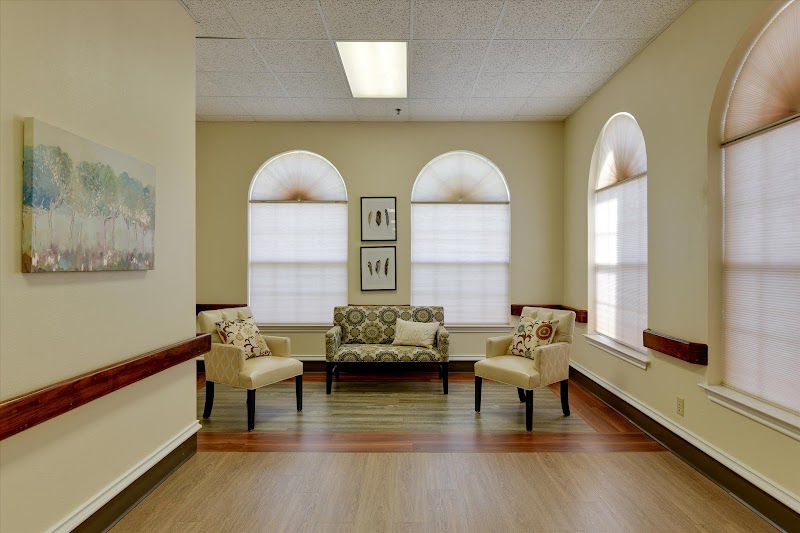
How Does The Village At Heritage Oaks Compare to Other Texas Nursing Homes?

Compared to the 100 nursing homes in Texas, THE VILLAGE AT HERITAGE OAKS's overall rating (4 stars) is above the state average of 2.8, staff turnover (51%) is near the state average of 46%, and health inspection rating (4 stars) is above the national benchmark.

What Should Families Ask When Visiting The Village At Heritage Oaks?

Based on this facility's data, families visiting should ask: "What changes have been made since the serious inspection findings, and how are you preventing similar issues?" "Can I visit during a mealtime to observe dining assistance and food quality?" "How do you handle medical emergencies, and what is your hospital transfer rate?" "Can I speak with family members of current residents about their experience?" These questions are particularly relevant given the facility's Immediate Jeopardy citations.

Is The Village At Heritage Oaks Safe?

Based on CMS inspection data, THE VILLAGE AT HERITAGE OAKS has documented safety concerns. Inspectors have issued 1 Immediate Jeopardy citation (the most serious violation level indicating risk of serious injury or death). The facility has a 4-star overall rating and ranks #1 of 100 nursing homes in Texas. Families considering this facility should ask detailed questions about what corrective actions have been taken since these incidents.

Do Nurses at The Village At Heritage Oaks Stick Around?

THE VILLAGE AT HERITAGE OAKS has a staff turnover rate of 51%, which is about average for Texas nursing homes (state average: 46%). Moderate turnover is common in nursing homes, but families should still ask about staff tenure and how the facility maintains care continuity when employees leave.

Was The Village At Heritage Oaks Ever Fined?

THE VILLAGE AT HERITAGE OAKS has been fined $7,446 across 1 penalty action. This is below the Texas average of $33,153. While any fine indicates a compliance issue, fines under $50,000 are relatively common and typically reflect isolated problems that were subsequently corrected. Families should ask what specific issues led to these fines and confirm they've been resolved.

Is The Village At Heritage Oaks on Any Federal Watch List?

THE VILLAGE AT HERITAGE OAKS is not on any federal watch list. The most significant is the Special Focus Facility (SFF) program, which identifies the bottom 1% of nursing homes nationally based on persistent, serious quality problems. Not being on this list means the facility has avoided the pattern of deficiencies that triggers enhanced federal oversight. This is a positive indicator, though families should still review the facility's inspection history directly.