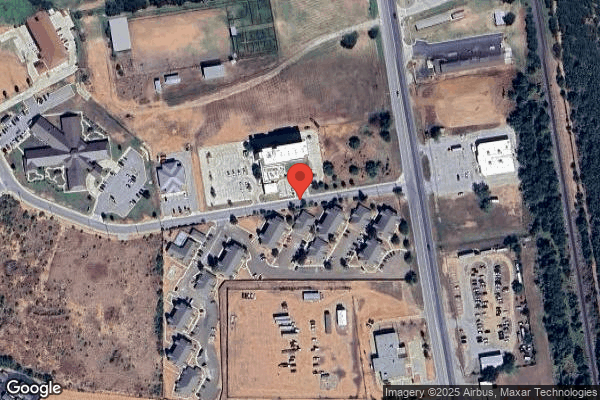
LAS PALMAS

369 MARS DR, COTULLA, TX 78014 (830) 879-4483
For profit - Corporation 60 Beds TOUCHSTONE COMMUNITIES Data: November 2025
Trust Grade
75/100
#274 of 1168 in TX
Last Inspection: October 2024

Within standard 12-15 month inspection cycle. Federal law requires annual inspections.

Overview

Las Palmas in Cotulla, Texas, has a Trust Grade of B, indicating it is a good choice for families, but there are areas for improvement. It ranks #274 out of 1,168 facilities in Texas, placing it in the top half, and is the only option in La Salle County. The facility is on an improving trend, having reduced issues from 2 in 2024 to 1 in 2025. Staffing is a concern, with a low rating of 1 out of 5 stars and a turnover rate of 42%, which is better than the state average but still indicates instability. Fortunately, there have been no fines recorded, which is a positive sign, but there is less RN coverage than 88% of facilities in Texas, potentially impacting the quality of care. There are some specific concerns noted in recent inspections. For instance, call lights for three residents were not within reach, which could hinder their ability to request assistance. Additionally, one RN was found to have violated infection control procedures and failed to secure medication carts and laptops during medication administration, raising risks of infection and confidentiality breaches. Lastly, the facility had a medication error rate of 6.67%, exceeding the acceptable level and putting residents at risk of not receiving their medications correctly. Overall, while Las Palmas has strengths, including no fines and good rankings, the noted deficiencies must be addressed to ensure the safety and well-being of residents.

Trust Score
B
75/100
In Texas
#274/1168
Top 23%
Safety Record
Low Risk
No red flags
Inspections
Getting Better
2 → 1 violations
Staff Stability
○ Average
42% turnover. Near Texas's 48% average. Typical for the industry.
Penalties
✓ Good
No fines on record. Clean compliance history, better than most Texas facilities.
Skilled Nurses
⚠ Watch
Each resident gets only 12 minutes of Registered Nurse (RN) attention daily — below average for Texas. Fewer RN minutes means fewer trained eyes watching for problems.
Violations
⚠ Watch
15 deficiencies on record. Higher than average. Multiple issues found across inspections.
★★★★☆
4.0
Overall Rating
★☆☆☆☆
1.0
Staff Levels
★★★☆☆
3.0
Care Quality
★★★★★
5.0
Inspection Score
Stable
2024: 2 issues
2025: 1 issues

The Good

  • Full Sprinkler Coverage · Fire safety systems throughout facility
  • No fines on record
  • Staff turnover below average (42%)

    6 points below Texas average of 48%

Facility shows strength in fire safety.

The Bad

Staff Turnover: 42%

Near Texas avg (46%)

Typical for the industry

Chain: TOUCHSTONE COMMUNITIES

Part of a multi-facility chain

Ask about local staffing decisions and management

The Ugly 15 deficiencies on record

May 2025 1 deficiency
CONCERN (D) 📢 Someone Reported This

A family member, employee, or ombudsman was alarmed enough to file a formal complaint

Potential for Harm - no one hurt, but risky conditions existed

Infection Control (Tag F0880)

Could have caused harm · This affected 1 resident

Based on observation, interviews, and record reviews, the facility failed to maintain an infection prevention and control program designed to provide a safe, sanitary, and comfortable environment and ...

Read full inspector narrative →
Based on observation, interviews, and record reviews, the facility failed to maintain an infection prevention and control program designed to provide a safe, sanitary, and comfortable environment and to help prevent the development and transmission of communicable disease and infection for 1 of 1 residents (Resident #6) reviewed for infection control, in that: While providing incontinent care for Resident #6, CNA A did not change her gloves or wash her hands after touching the bed remote before starting to provide care. CNA B did not change her gloves or wash her hands after touching the privacy curtain before starting to provide care. CNA A changed gloves multiple times and did not sanitize between change of gloves. These deficient practices could place residents at-risk for infection due to improper care practices. These findings included: Record review of Resident #6's face sheet, dated 05/09/2025, revealed an admission date of 09/12/2023, with diagnoses which included: Dementia (decline in cognitive abilities), Major depressive disorder (mental disorder characterized by at least two weeks of pervasive low mood, low self-esteem, and loss of interest or pleasure), Anxiety (A group of mental illnesses that cause constant fear and worry), Hyperlipidemia (Elevated level of any or all lipids(fat) in the blood), Hypertension (High blood pressure) Record review of Resident #6's MDS Quarterly assessment, dated 03/23/2025, revealed the resident had a BIMS score of 7, indicating severe cognitive impairment. Resident #6 required total care with her activities of daily living and was always incontinent of bowel and bladder. Record review of Resident #6's care plan revealed a care plan initiated 09/15/2023 with a problem of Resident is incontinent of bowel and bladder d/t impaired mobility., and an intervention of Check for incontinence routinely and PRN. Assist with incontinent care with each episode w/ use of skin barrier salve to promote skin integrity. Observation on 05/09/25 at 9:48 a.m., revealed while providing incontinent care for Resident #6, CNA A touched the bed remote with her gloved hands. CNA B touched the privacy curtain with her bare hands. Neither CNA A or CNA B changed their gloves or wash their hands, then, started to provide care for Resident #6. CNA A changed gloves multiple time while providing care but did not sanitize or wash her hands in between change of gloves. During an interview on 05/09/2025 at 10:05 a.m., CNA A and CNA B stated the privacy curtain and bed remote were considered dirty and they should have changed gloves and sanitize their hands. They revealed they did not realize they had to change their gloves and sanitize their hands before starting to provide the care. CNA A stated she did not use sanitizer between change of gloves multiple times and was unclear when to use sanitizer or wash her hands. They confirmed receiving training on infection control within the year. During an interview on 05/09/2025 at 10:30 a.m., the DON stated the staff should have changed their gloves and sanitize their hands prior to start providing care for the resident. She stated they should sanitize their hands between change of gloves. She stated it could cause a risk of cross contamination and infection for the resident. She revealed they provided training on infection control at least once a year and as needed. She revealed they checked the skills of the staff annually and as needed with the assistance of her ADONS. Record review of the facility's CNA A competency check titled, CNA proficiency audit, dated 09/13/24 revealed CNA A demonstrated competency in hand washing and incontinent care. Record review of the facility's CNA B competency check titled, CNA proficiency audit, dated 09/13/24 revealed CNA B demonstrated competency in hand washing and incontinent care. Review of facility policy, titled Handwashing/Hand Hygiene, dated 01/20/23, revealed Hand hygiene must be performed prior to donning (put on) and after doffing (remove) gloves.
Oct 2024 2 deficiencies
CONCERN (D)

Potential for Harm - no one hurt, but risky conditions existed

Deficiency F0688 (Tag F0688)

Could have caused harm · This affected 1 resident

**NOTE- TERMS IN BRACKETS HAVE BEEN EDITED TO PROTECT CONFIDENTIALITY** Based on observation, interview, and record review, the facility failed to ensure residents with limited range of motion receive...

Read full inspector narrative →
**NOTE- TERMS IN BRACKETS HAVE BEEN EDITED TO PROTECT CONFIDENTIALITY** Based on observation, interview, and record review, the facility failed to ensure residents with limited range of motion received appropriate treatment and services to increase range of motion and/or prevent further decrease in range of motion for one (Resident #46) of 17 residents reviewed for range of motion. The facility failed to have interventions and monitoring in place to address Resident #46's left hand contracture. This failure could place residents with ROM issues at risk for decline in range of motion, decreased mobility, and worsening contractures. Findings included: Record review of Resident #46 admission face sheet dated 10/24/24 revealed a [AGE] year-old male who originally admitted to the facility on [DATE] and recent admission from hospital on [DATE]. His diagnosis included (but not limited to) Parkinson's disease without dyskinesia and without mention of fluctuations (a neurodegenerative disease of mainly the central nervous system that affects both the motor and non-motor systems of the body); personal history of transient ischemic attack (a brief stroke-like attack) and cerebral infarction (a result of disrupted blood flow to the brain due to problems with the blood vessels that supply it) without residual deficits. Record review of Resident #46's Quarterly MDS dated [DATE] Section C revealed BIMS Score 12 indicating moderate cognitive impairment. Record review of Resident #46's Quarterly MDS dated [DATE] Section GG 0130 A5 Eating is coded 02 indicating Substantial / Maximal assistance needed in eating; Section GG 0015 A revealed impairment to one side upper extremity and B. one side lower extremity. Quarterly MDS 07/22/24 & Quarterly MDS 06/21/24 Section G revealed Partial / Moderate assistance in eating. Quarterly MDS dated [DATE] & 02/11/24 revealed Supervision in eating. Record review of Resident #46 Occupational Therapy (OT) Discharge Summary 02/10/24 revealed Left upper extremity (LUE) palm protector to reduce risk of contracture and that resident required set-up or clean-up assistance with eating. OT Discharge Summary 06/24/24 revealed Minimal assistance with personal hygiene. Record review of Resident #46's Focused assessment dated [DATE] revealed contracture to LUE (Left upped extremity), LLE (Left lower extremity), RLE (Right lower extremity). Record review of Resident #46 OT evaluation dated 04/02/24 revealed resident required set-up assistance with self-feeding, LUE ROM impaired at shoulder, elbow, wrist, hand, thumb and fingers and that limitations were not related to contracture. Record review of Resident #46 OT Evaluation and Plan of Treatment dated 09/19/23 revealed goals to increase sitting balance, increase Right elbow/forearm flexion strength, to improve ability to safely and efficiently perform upper body dressing with partial / moderate assistance and to improve ability to safely and efficiently perform grooming and hygiene tasks with supervision or touching assistance. OT Evaluation and Plan of Treatment does not address left hand contracture. Record review of Resident #46 Care Plan dated 09/18/23 revealed use of divided plate and built-up utensils with all meals under nutritional status problem and ADL functional problem. Care plan does not identify left hand contracture. Record review of the physician's orders (print/save date 10/24/24) revealed no orders in place for preventative measures to left hand contracture. Resident #46 observation 10/22/24 at 11:05 a.m. revealed resident sitting up in bed. Left hand was in fist position with no preventative measures in place. Resident #46 observation and staff interview with CNA A on 10/23/24 at 1:22 p.m.: CNA at bedside feeding resident with built up spoon. CNA A stated, I work night usually, but he does not try to hold the spoon with me, and his left hand is contracted, so I feed him. There were no preventative measures to his left hand. Interview with LVN B on 10/23/24 at 1:20 p.m. revealed Resident #46 will try to hold the utensils at times and that staff tend to help him with feeding. LVN B was asked if any assistive device was in place for his left hand to aid in contracture management. LVN B stated, I am part-time, and I have never seen any device for his left hand. Resident #46 observation and interview on 10/23/24 at 2:48 pm revealed Resident #46 sitting up in bed. Resident stated he was unable to open his left hand or lift his left hand and arm. Upon observation, left hand was in closed fist position with no preventative measures in place. Resident #46 observation and interview on 10/24/24 at 9:43 a.m. revealed resident sitting up in bed. The call light was attached to the bed sheet on left side. Resident was able to reach call light with his right hand and demonstrated ability to push call button. Resident stated he was unable to open his left hand and that, In a couple of days it will smell nasty, and that he will try to clean it myself because it smells nasty, and that he will have the girls clean is about every three days. There were no preventative measures in place to left hand. Interview with CNA C stated resident #46's shower is scheduled for today on the 2nd shift (after 6pm). When asked what type of care was provided to resident's left hand, she stated, I will put a towel inside, dry it down, apply lotion. Interview with the DON and DOR on 10/24/24 at 10:43 a.m.: DON stated, resident has been followed by Dermatology, Ortho and Neurology and contracture is addressed but no recommendations were made. DON stated resident had recent hospitalization (08/05/24-08/09/24 due to seizure activity with recommendations to follow up with neurology. Record review of Neurology progress note dated 08/19/24 revealed neurological condition to include spastic left hemiplegia, generalized weakness, no visible hypertrophy or atrophy to upper and lower extremities, and under Assessments #5. Hemiplegia following cerebral infarction affecting left non-dominant side. Record review of Ortho consult dated 10/10/24 revealed residual left hemiparesis with progressive low back pain, lumbosacral radiculitis with degenerative disc disease and facet arthropathy. Neurology progress note and Ortho consult note did not address contracture as stated by DON. Record review of the facility provided policy on Resident Examination and Assessment (Revised February 2014) revealed the purpose of this procedure is to examine and assess the resident for any abnormalities in health status, which provides a basis for the care plan. Physical assessment #4 Neurological d. strength and equality of the hand grasps; #5 Musculoskeletal b. mobility and range of motion of extremities & e. contractures.
MINOR (B)

Minor Issue - procedural, no safety impact

MDS Data Transmission (Tag F0640)

Minor procedural issue · This affected multiple residents

Based on interview and record review, the facility failed to transmit encoded, accurate, and complete MDS data to the CMS System for 4 (Resident #3, Resident #35, Resident #45, and Resident #47) of 16...

Read full inspector narrative →
Based on interview and record review, the facility failed to transmit encoded, accurate, and complete MDS data to the CMS System for 4 (Resident #3, Resident #35, Resident #45, and Resident #47) of 16 residents reviewed for MDS transmission, in that: 1. The facility failed to correct and resubmit incorrect MDS assessments for Resident #3, Resident #45, and Resident #47. 2. The facility failed to transmit a completed MDS assessment for Resident #35. These deficient practices placed residents at risk of not having assessments completed and submitted in a timely manner as required. The findings were: Record review of Resident #3's clinical record as of 10/23/2024, revealed a quarterly MDS assessment, dated 06/21/2024, with a status of production accepted w/[with] warning. Record review of Resident #35's clinical record as of 10/23/2024, revealed a quarterly MDS assessment, dated 09/04/2024, with a status of in process. Record review of Resident #45's clinical record as of 10/23/2024, revealed a quarterly MDS assessment, dated 10/10/2024, with a status of production accepted w/[with] warning. Record review of Resident #47's clinical record as of 10/23/2024, revealed a quarterly MDS assessment, dated 09/07/2024, with a status of production accepted w/[with] warning. During an interview on 10/24/2024 at 10:30 a.m., the MDS Coordinator stated she was responsible for completing and submitting MDS assessments, and confirmed that assessments for Resident #3, Resident #45, and Resident #47 had been returned by the CMS system due to error(s). The MDS Coordinator stated she was aware that the assessments had been returned by the CMS system and that they had not been corrected due to an oversight. The MDS Coordinator further stated that Resident #35's assessment had been completed but not transmitted due to an oversight. Record review of the facility policy, Electronic Transmission of the MDS, revised November 2019, revealed All MDS assessments .are completed and electronically encoded into our facility's MDS information system and transmitted to CMS .in accordance with current OBRA regulations .
Sept 2023 7 deficiencies
CONCERN (D)

Potential for Harm - no one hurt, but risky conditions existed

Deficiency F0583 (Tag F0583)

Could have caused harm · This affected 1 resident

**NOTE- TERMS IN BRACKETS HAVE BEEN EDITED TO PROTECT CONFIDENTIALITY** Based on observation, interview, and record review the facility failed to protect the confidentiality of personal health care in...

Read full inspector narrative →
**NOTE- TERMS IN BRACKETS HAVE BEEN EDITED TO PROTECT CONFIDENTIALITY** Based on observation, interview, and record review the facility failed to protect the confidentiality of personal health care information for 1 of 42 [Resident #7) residents reviewed for confidentiality of records during the survey in that: The facility failed to ensure RN C locked and closed the laptop during the medication pass exposing Resident #7's personal information to include some of her medications. This failure could affect residents by placing them at risk for loss of privacy and dignity. The Findings included: Review of Resident #7's face sheet dated 09/07/23 revealed the resident was admitted to the facility on [DATE] with diagnoses which included Type 2 diabetes (a chronic (long-lasting) health condition that affects how your body turns food into energy), schizoaffective disorder, bipolar type (a mental illness that can affect your thoughts, mood and behavior with episodes of mania and sometimes depression), diabetic neuropathy (a nerve damage that is caused by diabetes), Alzheimer's disease (a brain disorder that slowly destroys memory and thinking skills, and, eventually, the ability to carry out the simplest tasks), anxiety (a normal reaction to stress an intense, excessive, and persistent worry and fear about everyday actions) and depression ( A mental health disorder characterized by persistently depressed mood or loss of interest in activities, causing significant impairment in daily life) Observation on 09/07/23 at 8:27 a.m. of RN C's medication cart revealed the medication cart was left unattended for approximately 3 minutes while RN C went into Resident # 10's bathroom to wash his hands. RN C was setting up medications for Resident #7. The screen showed Resident #7's picture, name and medications RN C was about to setup. Interview on 09/07/23 at 9:26 a.m. with RN C stated he did not remember leaving the laptop open. When asked what could have happened if someone sees the information? RN C stated well, I guess someone could use the information against the resident. Interview on 09/07/23 at 10:25 a.m. with the DON revealed she was not aware of the issues found during medication pass. She stated no one else was supposed to see the meds or issues of the resident. When asked what could have happened if the resident's information was open and no one around. She stated the information could be used against the resident or they could sell the information to someone else Record review of a facility's policy and procedure titled Resident Rights dated 2001 and revised in February 2021 revealed in part: Federal and state laws guarantee certain basic rights to all residents of this facility. These rights include the residents right to: f. Privacy and confidentiality. 3. The unauthorized release, access, or disclosure of resident information is prohibited.
CONCERN (D)

Potential for Harm - no one hurt, but risky conditions existed

Pharmacy Services (Tag F0755)

Could have caused harm · This affected 1 resident

**NOTE- TERMS IN BRACKETS HAVE BEEN EDITED TO PROTECT CONFIDENTIALITY** Based on observation, interviews and record reviews, the facility failed to provide pharmaceutical services (including procedure...

Read full inspector narrative →
**NOTE- TERMS IN BRACKETS HAVE BEEN EDITED TO PROTECT CONFIDENTIALITY** Based on observation, interviews and record reviews, the facility failed to provide pharmaceutical services (including procedures that assure the accurate acquiring, receiving, dispensing, and administering of all drugs and biologicals) to meet the needs of each resident for 2 (Resident #7 and #10) out of 5 residents reviewed for medication administration in that: The facility failed to ensure RN C ensured the Insulin Pen was purged before giving Resident #7 her insulin. The facility failed to prevent RN C from giving Resident #10 Lorazepam 0.5mg tab instead of 0.25mg tab. These deficient practices could affect residents with medications and place residents at risk for not receiving the proper dosage. The findings included: Review of Resident #5's face sheet dated 09/07/23, revealed Resident #7 was admitted on [DATE] and diagnoses which include type 2 diabetes (a chronic (long-lasting) health condition that affects how your body turns food into energy), Schizoaffective disorder, bipolar type (a mental illness that can affect your thoughts, mood and behavior with episodes of mania and sometimes depression), diabetic neuropathy (nerve damage that is caused by diabetes), Alzheimer's disease (is a brain disorder that slowly destroys memory and thinking skills, and, eventually, the ability to carry out the simplest tasks), Congestive heart failure (a long-term condition in which your heart can't pump blood well enough to meet your body's needs), anxiety ( a normal reaction to stress an intense, excessive, and persistent worry and fear about everyday actions), depression (a mental health disorder characterized by persistently depressed mood or loss of interest in activities, causing significant impairment in daily life). Review of Resident#7's Physician's Order Report dated from 08/07/23 to 09/07/23 revealed Resident #7 was to receive Lantus Solostar (insulin glargine) U 100, 100 units/ml (3ml) give 42 units subcutaneous and give twice a day 8:00 a.m. and 8:00 p.m. (Start date was 08/18/23) Review of Resident #7's Medication Administration Sheet dated 08/07/23 to 09/07/23 revealed the Lantus Solostar (insulin glargine) pen was started on 08/18/23 and the resident was receiving the insulin twice a day at 8:00 a.m. and 8:00 p.m. Observation on 09/07/23 at 9:10 a.m. RN C was observed taking a new Lantus Solostar pen for Resident #7 and placing a new needle on the barrel. RN C dialed up 42 units of insulin and did not purge the pen before ensuring Resident #7 was given the insulin and receiving the dose on the left side of the abdomen. Interview on 09/07/23 at 12:25 p.m. with RN C after the medication pass concerning not priming the Lantus Solostar pen before dialing the correct dosage and giving the insulin to Resident #5, stated he was not aware of priming the insulin as long as there were no bubbles in the insulin barrel. Interview on 09/07/23 from 10:20 a.m. to 10:25 a.m. with the DON revealed she was not aware of the issues found with the Medication Pass with RN C. She stated concerning the insulin pen for Resident #5 should have been primed before dialing up the dosage for Resident #7. Stated Resident #5 may have not gotten the correct dosage of insulin. Review of Resident #10's Face sheet dated 09/07/23 revealed the resident was admitted to the facility on [DATE] with diagnoses which included dementia (impaired ability to remember, think, or make decisions that interferes with doing everyday activities), anxiety (a normal reaction to stress an intense, excessive, and persistent worry and fear about everyday situations), osteoporosis (a bone disease that develops when bone mineral density and bone mass decreases, or when the quality or structure of bone changes), high blood pressure (a common condition in which the long-term force of the blood against your artery walls is high enough that it may eventually cause health problems, such as heart disease), cardiomegaly (a disease of the heart muscle that makes it harder for the heart to pump blood to the rest of the body), glaucoma, bilateral, severe stage (eye disease that can cause vision loss and blindness by damaging a nerve in the back of your eye called the optic nerve), depression with psychotic symptoms (mood disorder). Review of Resident #10's Physician Order Report date from 08/07/23 to 09/07/23 revealed the Lorazepam order reflected Lorazepam - Schedule IV tablet; 0.5mg. Special instructions: administer 0.25 mg tablet by mouth two times a day; 08:00 a.m.- 10:00 a.m., 08:00 p.m. - 10:00 p.m. (Starting on 08/17/23). Review of Resident #10's Controlled Substance Administration Record from 07/19/23 to 09/08/23 revealed the resident was to receive from 07/19/23 to 08/16/23 ½ tab of Lorazepam once a day. The order description was Lorazepam- Schedule IV 0.5 mg tablet and to give 0.25 mg (1/2 of the 0.5mg tablet) by mouth once a day. Then on 08/16/23 the order for ½ mg tablet of Lorazepam was to be given twice a day starting on 08/17/23 and had continued to 09/08/23. Observation on 09/07/23 at 8:15 a.m. during Medication Pass revealed RN C gave Resident #10 Lorazepam 0.5mg tab 1 by mouth, and was to receive twice a day. Observation again on 09/08/23 at 12:45 p.m. of the Resident #10's blister pack of Lorazepam revealed the medication was refilled on 08/20/23 and to take a 0.5mg tablet twice a day. There was nothing on the blister pack indicating the dosage had been changed and further observation of the 0.5 mg tablet revealed the tablet was not scored so as to give ½ (equals 0.25 mg) of the tablet. Completed as part of the medication reconciliation to verify the orders against the medication given and the blister pack medication was taken from. Interview on 09/08/23 at 2:22 p.m. with the DON after informing her of the medication discrepancy with Resident #10's Lorazepam she stated it was called into the Pharmacist. The order was not transcribed electronically. The Lorazepam was originally ordered for a gradual dose reduction (GDR) on 07/19/23 to 0.25 mg. The pharmacy kept sending out 0.5 mg of Lorazepam and the staff continued to give 0.5 mg. The original order from 09/14/22 for Resident #10's Lorazepam was for 0.5 mg to be given twice a day. Interview on 09/08/23 at 4:23 p.m. with the DON confirmed Resident #10 was given the wrong amount of the Lorazepam for 15 days. When asked about what could happen by receiving the wrong amount, she stated Resident #10 could have an adverse reaction. Record review of the Facility Policy Administering Medications dated 2001 with a revision date of 04/19 stated in part: 4. Medications are administered in accordance with prescriber orders .
CONCERN (E)

Potential for Harm - no one hurt, but risky conditions existed

Deficiency F0558 (Tag F0558)

Could have caused harm · This affected multiple residents

**NOTE- TERMS IN BRACKETS HAVE BEEN EDITED TO PROTECT CONFIDENTIALITY** Based on observation, interview, and record review, the facility failed to provide reasonable accommodation of resident needs fo...

Read full inspector narrative →
**NOTE- TERMS IN BRACKETS HAVE BEEN EDITED TO PROTECT CONFIDENTIALITY** Based on observation, interview, and record review, the facility failed to provide reasonable accommodation of resident needs for 3 of 23 (Residents #4, #22, #36) residents reviewed for call lights: 1. Resident # 4's call light was connected to the light string hanging behind her bed on the opposite side of the bed she was sitting on and not within reach. 2. Resident #2's call light was attached to the privacy curtain, out of reach. 3. Resident #36's call light was not within reach. This failure could place residents who used call lights for assistance at risk in maintaining and/or achieving independent functioning, dignity, and well-being. Findings included: Review of Resident #4's face sheet dated 09/07/23 revealed the resident was admitted on [DATE] with the diagnoses which included: dementia (impaired ability to remember, think, or make decisions that interferes with doing everyday activities), high blood pressure (a common condition in which the long-term force of the blood against your artery walls is high enough that it may eventually cause health problems, such as heart disease), adult failure to thrive (a syndrome of weight loss, decreased appetite and poor nutrition, and inactivity, often accompanied by dehydration, depressive symptoms, impaired immune function, and low cholesterol), history of falling, rheumatoid arthritis (an autoimmune and inflammatory disease, which means that your immune system attacks healthy cells in your body by mistake, causing inflammation (painful swelling) in the affected parts of the body. RA mainly attacks the joints, usually many joints at once), dysphagia (swallowing difficulties), major depression- single episode (a mental health disorder characterized by persistently depressed mood or loss of interest in activities, causing significant impairment in daily life). Review of Resident #4's quarterly MDS Resident Assessment Instrument (RAI) dated 08/28/23 revealed a BIMS score 06, indicating severe impaired cognition, ADL's which included walking with supervision with one-person physical assistance. Review of Resident #4's Comprehensive Care Plan dated 12/23/22 revealed call lights were addressed in problems for Falls due to rheumatoid arthritis, general bilateral extremity weakness, unsteady gait, decline in condition and impulsiveness with approaches to educate/encourage Resident #4 to call light usage and keep the call light within reach. Observation on 09/06/23 at 10:10 a.m. and on 09/06/23 at 11:57 a.m. in Resident #4's room revealed the call light both times was connected to the light string hanging behind the resident's bed on the opposite side of the bed in which the resident was sitting. When this surveyor told the resident where the call light was, the resident turned and looked but, the resident did not respond. During an interview on 09/06/23 at 10:22 a.m. with the DON, confirmed Resident #4's call light was attached to the light string on the opposite side of the bed and not within Resident #4's reach. Record review of Resident #22's face sheet dated 09/07/23 revealed the resident was admitted on [DATE] with diagnoses which included dementia (impaired ability to remember, think, or make decisions that interferes with doing everyday activities), mood disturbance (can be feelings of distress, sadness or symptoms of depression, and anxiety), anxiety (a normal reaction to stress an intense, excessive, and persistent worry and fear about everyday actions), cerebral palsy (abnormal brain development or damage to the developing brain that affects a person's ability to control his or her muscles), depression (A mental health disorder characterized by persistently depressed mood or loss of interest in activities, causing significant impairment in daily life), bipolar disorder (A disorder associated with episodes of mood swings ranging from depressive lows to manic highs), osteoporosis (a bone disease that develops when bone mineral density and bone mass decreases, or when the quality or structure of bone changes). Review of Resident #22's quarterly MDS dated [DATE] revealed the resident has a BIMS score of 07 indicating the resident has severe cognitive impairment. The MDS indicated their ADL's to include walking did not occur during the 7 day period. Review of Resident #22's comprehensive care plan dated 01/20/23 with revision date of 09/06/23 revealed the call light to be kept within reach for urinary incontinence. There were no other problems addressing call lights. Observation on 09/07/23 at 11:30 a.m. during Resident #22's peri care revealed the call light was clipped to the privacy curtain and not within the resident's reach. Further observation of Resident #22 after peri care the call light continued to remain out of reach for the resident. CNA A and CNA B did not replace the call light within Resident #22's reach. During interview on 09/07/23 at 11:30 a.m. with CNA A and CNA B after completing peri care for Resident #22, both CNAs said they had finished with Resident #22. This surveyor took both CNA A and CNA B back into Resident #22's room and both CNA A and CNA B confirmed the call light was attached to the privacy curtain and the call light was not within Resident #22's reach. CNA A then took the call light and unclipped it from the privacy curtain and placed the call light beside Resident #22 so she could reach it. When this surveyor asked what might happen if Resident #22 was not able to reach the call light CNA A and CNA B stated she may fall out of the bed. Review of Resident #36's face sheet dated 09/07/23 revealed the resident was admitted to the facility on [DATE] with diagnoses which included Alzheimer's (is a brain disorder that slowly destroys memory and thinking skills, and, eventually, the ability to carry out the simplest tasks), anxiety (a normal reaction to stress an intense, excessive, and persistent worry and fear about everyday actions), depression (A mental health disorder characterized by persistently depressed mood or loss of interest in activities, causing significant impairment in daily life), kidney disease stage 3 (your kidneys are damaged and can't filter blood the way they should), glaucoma- bilateral (eye disease that can cause vision loss and blindness by damaging a nerve in the back of your eye called the optic nerve), high blood pressure (a common condition in which the long-term force of the blood against your artery walls is high enough that it may eventually cause health problems, such as heart disease), muscle weakness, unsteadiness on feet. Review of Resident #36's quarterly MDS dated [DATE] revealed the resident had a BIMS score of 08, indicating moderate impairment of cognition and ADL's to include walking which requires extensive assistance of 1 person. Review of Resident #36's comprehensive care plan revised on 07/26/23 revealed falls, visual function and urinary incontinence were addressed and one of the approaches was to keep the call light within reach. Observations on 09/05/23 at 11:50 a.m. of Resident #36 reclining in his recliner revealed call light was stretched across the bed but, not within resident #36's reach. Observation on 09/06/23 at 10:00 a.m. of Resident #36 was reclined in his recliner and the call light was observed on the opposite side of the bed next to the upper bed rail and was not within the resident's reach. The DON was observed taking the call light from behind the resident's bedside dresser and stretching the cord over to the resident and attaching the call light to the side of the recliner within the resident's reach. During an interview and observation on 09/06/23 at 10:20 a.m. the DON confirmed Resident#36's call light was not within reach. During the interview on 09/06/23 at 10:24 a.m. with the DON, when asked what could happen if the resident could not reach the call light, the DON stated the resident could fall or something worse could happen to them. Review of the facility Policy and Procedure for Answering the Call Light dated 2001 and revised on 2021 sated in part: 5. When the resident is in bed or confined to a chair be sure the call light is within easy reach of the resident. Review of the Facility Policy and Procedure for Perineal Care (incontinent care) dated 01/20/23 revealed on page 2, numbers 14. and 15., States reposition the bed covers. Make the resident comfortable. Place the call light within easy reach of the resident.
CONCERN (E)

Potential for Harm - no one hurt, but risky conditions existed

Deficiency F0726 (Tag F0726)

Could have caused harm · This affected multiple residents

**NOTE- TERMS IN BRACKETS HAVE BEEN EDITED TO PROTECT CONFIDENTIALITY** Based on observation, interviews, and record review, the facility failed to ensure nursing staff was able to demonstrate compete...

Read full inspector narrative →
**NOTE- TERMS IN BRACKETS HAVE BEEN EDITED TO PROTECT CONFIDENTIALITY** Based on observation, interviews, and record review, the facility failed to ensure nursing staff was able to demonstrate competency in skills and techniques for 1 of 2 (RN C) RNs observed during medication pass. The facility failed to prevent RN C from following: 1. Established Infection Control Procedures while passing medications to Resident #5 and Resident #10. 2. HIPAA privacy requirements to lock and close the laptop while passing medications to Resident #7. 3. The procedure to lock the medication cart before walking away during the medication pass. 4. The procedure to prime an Insulin Pen before administering the medication to Resident #7. These deficient practices could affect residents who were receiving medications leaving them at risk for infection, not receiving the proper amount of insulin and exposure of confidential information. The findings were: Review of Resident #7's face sheet dated 09/07/23, revealed Resident #5 was admitted on [DATE] and diagnoses which include type 2 diabetes (a chronic (long-lasting) health condition that affects how your body turns food into energy), Schizoaffective disorder, bipolar type (a mental illness that can affect your thoughts, mood and behavior with episodes of mania and sometimes depression), diabetic neuropathy (nerve damage that is caused by diabetes), Alzheimer's disease (is a brain disorder that slowly destroys memory and thinking skills, and, eventually, the ability to carry out the simplest tasks), Congestive heart failure (a long-term condition in which your heart can't pump blood well enough to meet your body's needs), anxiety ( a normal reaction to stress an intense, excessive, and persistent worry and fear about everyday actions), depression (a mental health disorder characterized by persistently depressed mood or loss of interest in activities, causing significant impairment in daily life). Review of Resident #7's quarterly MDS assessment dated [DATE], revealed Resident #7 had severely impaired cognition skills for decision making and a BIMS score was 99 indicating unable to complete the interview. Further review of the quarterly MDS revealed ADL's for Resident #5 required supervision of 1 staff person. Review of Resident #7's care plan dated 04/04/23 and revision dated 08/29/23 revealed the care plan addressed the resident's medications including monitoring the side effects and to administer the medications as ordered. Review of Resident#7's Physician's Order Report dated from 08/07/23 to 09/07/23 revealed Resident #7 was to receive Lantus Solostar (insulin glargine) U 100, 100 units/ml (3ml) give 42 units subcutaneous and give twice a day 8:00 a.m. and 8:00 p.m. Further review revealed Resident #7 was to also receive Divalproex 125 mg capsule, 2 po tid.; Famotidine 20 mg tab give 1 po bid; Furosemide 20mg tab, give 1 po qd;, Metformin 500mg tab 1 po qd; Quetiapine 300 mg extended release tab, give 1 po qd; Docusate Na 100mg tab give 1 po qd; D3 2000IU capsule, give 1 po qd; Farxiga 10 mg tab give 1 po qd; Lisinopril 5 mg tab, give 2 (10mg) po qd; Lorazepam o.5mg tab give 1 po tid. Review of Resident #10's Face sheet dated 09/07/23 revealed the resident was admitted to the facility on [DATE] with diagnoses which included dementia (impaired ability to remember, think, or make decisions that interferes with doing everyday activities), anxiety (a normal reaction to stress an intense, excessive, and persistent worry and fear about everyday situations), osteoporosis (a bone disease that develops when bone mineral density and bone mass decreases, or when the quality or structure of bone changes), high blood pressure (a common condition in which the long-term force of the blood against your artery walls is high enough that it may eventually cause health problems, such as heart disease), cardiomegaly (a disease of the heart muscle that makes it harder for the heart to pump blood to the rest of the body), glaucoma, bilateral, severe stage (eye disease that can cause vision loss and blindness by damaging a nerve in the back of your eye called the optic nerve), depression with psychotic symptoms (mood disorder). Review of Resident #10's quarterly MDS assessment dated [DATE] revealed the resident had a BIMS score of 11, indicating moderate impairment and ADL's required supervision with setup by 1 person. Review of Resident #10's comprehensive care plan dated 12/01/23 with revision date of 08/30/23 under medications reveals an approach of administer medications as ordered. Review of Resident #10's Physician Order Report date from 08/07/23 to 09/07/23 revealed the following medications to be given Buspirone 5 mg tab give 1 po bid; D3 1000 IU 25mg cap give 1 po qd; Eliquis 5 mg tab give 1 tab po bid; Lisinopril 10mg tab give 1 po qd; metoprolol tar 25 mg tab give 1 po bid; lactulose solution 10 mg/15ml give 30 ml po qd; dorszao/tinol Sol 22.3-4.68 1 gtt o.u. bid; alphagn p sol 1% give 1 gtt o.u. tid; terbinafine hcl 1% cream on toenails qd; lorazepam 0.5mg give 0.25mg tab po bid. Observations from 09/07/23 at 8:15 a.m. to 9:10 a.m. for Resident #7 and #10 during the medication pass revealed RN C placed his finger in the medication cup then took the blister packs and either popped the resident's medications into his thumb and index finger or popped the pill(s) into the palm of his hand and then placed the medication into the medication cup. When asked how many pills he was giving, he would pour the medication into the palm of his hand and take his thumb and index finger and pick up each pill and place back into the medication cup. Resident #10 refused her eye drops and her toenail cream. As RN C was setting up the medication for Resident #7, RN C left the keys in the lock on the medication cart and went into Resident #10's bathroom to wash his hands. Later as RN C was setting up Resident #5's medications he walked away from the medication cart without locking and closing the top on the laptop, exposing Resident #7's picture, name and some of the medications Resident #7 was taking. Observation on 09/07/23 at 9:10 a.m. for Resident #7 revealed RN C was preparing to give Resident #7 her insulin with an insulin pen. RN C picked up the new insulin pen, placed the needle on the end of the barrel and dialed up the 42 units he was to give. RN C did not prime the insulin pen prior to setting the dosage in which the resident might have not received all her insulin as ordered. Interview on 09/07/23 at 9:20 a.m. to 9:26 a.m. with RN C revealed he did not wear gloves as he setup the medications for Resident #7 and #10 or ensure his hands were clean while picking up blister packs, opening drawers on the medication cart and while opening over the counter medications used on multiple residents. Stated he did not remember if he left the keys in the medication cart or leave the laptop open exposing Resident #7's picture, name, and some of her medications. RN C stated he did not know he was handling the medications incorrectly and thought he could pick the pills up with his thumb and index finger and place them into the palm of his hand. When asked what could happen in the different situations, RN C stated he could have caused the resident to develop an infection. RN C stated, the keys anyone could have come along and opened the medication cart and taken the medications. RN C stated the personal information of Resident #7 could have been taken and used against the resident. Interview on 09/07/23 at 12:25 p.m. with RN C concerning the insulin given to Resident #7 stated he was not aware of priming the insulin as long as there were no bubbles in the insulin barrel. Interview on 09/07/23 10:20 a.m. to 10:25 a.m. with the DON revealed she was not aware of the medication pass with RN C but, when asked about his training, the DON stated RN C was trained and also had the pharmacist consultant do medication passes with the nurses and medication aides. When asked what could have happened in each of the incidents with RN C during the medication pass, the DON stated, infection control- not cleaning his hands and using proper procedure to handle pills could lead to infection. The keys left in the lock on the medication cart- the DON stated someone could have come along and gotten into the medication cart and taken medications. The laptop not locked and lid closed-the DON stated no one else was to see the medications or issue of the resident and the information could be used against the resident or they could sell the information to someone else. The insulin pen- the DON stated it was an infection control issue and also not primed Resident #7 might not have gotten the right dose. Review of RN C's Clinical Nursing Validation Review Checklist revealed on 02/28/23, RN C was checked off for his skills by the DON. The checklist included hand washing and on 07/16/23 handwashing and F tags for infection control with the facility Core Clinical Compliance 2023. Review of the facility Policy and Procedure dated 2001 with a revision on 04/19 for Administering Medications revealed in part the following: 16. During administration of medications, the medication cart is to be kept closed and locked when out of sight of the medication nurse or aide a. When using a tablet or laptop, maintain HIPAA privacy requirements by covering or closing the computer screen 21. Staff follows established infection control procedures (e.g. handwashing, antiseptic technique, gloves, ) for the administration of medications, as applicable.
CONCERN (E)

Potential for Harm - no one hurt, but risky conditions existed

Unnecessary Medications (Tag F0759)

Could have caused harm · This affected multiple residents

**NOTE- TERMS IN BRACKETS HAVE BEEN EDITED TO PROTECT CONFIDENTIALITY** Based on observation, interview and record review, the facility failed to ensure that it was free of medication error rate of 5 ...

Read full inspector narrative →
**NOTE- TERMS IN BRACKETS HAVE BEEN EDITED TO PROTECT CONFIDENTIALITY** Based on observation, interview and record review, the facility failed to ensure that it was free of medication error rate of 5 percent or greater. The facility had a medication error rate of 6.67%, based on 2 errors out of 30 opportunities, which involved 2 of 5 residents (Resident #7 and #10) reviewed for medication administration in that: The facility to ensure RN C ensured the Insulin Pen was purged to ensure Resident #7 received her insulin as ordered. The facility failed to prevent RN C from giving Resident #10 the wrong dosage of Lorazepam 0.25mg tablet as ordered. These failures could place residents at risk for not receiving the intended therapeutic benefit of their medications or receiving them as prescribed, per physician orders. The findings included: 1. Review of Resident #7's face sheet dated 09/07/23, revealed Resident #7 was admitted on [DATE] and diagnoses which include type 2 diabetes (a chronic (long-lasting) health condition that affects how your body turns food into energy), Schizoaffective disorder, bipolar type (a mental illness that can affect your thoughts, mood and behavior with episodes of mania and sometimes depression), diabetic neuropathy (nerve damage that is caused by diabetes), Alzheimer's disease (is a brain disorder that slowly destroys memory and thinking skills, and, eventually, the ability to carry out the simplest tasks), Congestive heart failure (a long-term condition in which your heart can't pump blood well enough to meet your body's needs), anxiety ( a normal reaction to stress an intense, excessive, and persistent worry and fear about everyday actions), depression (a mental health disorder characterized by persistently depressed mood or loss of interest in activities, causing significant impairment in daily life). Review of Resident#7's Physician's Order Report dated from 08/07/23 to 09/07/23 revealed Resident #7 was to receive Lantus Solostar (insulin glargine) U 100, 100 units/ml (3ml) give 42 units subcutaneous and give twice a day 8:00 a.m. and 8:00 p.m. (Start date was 08/18/23) Review of Resident #7's Medication Administration Sheet dated 08/07/23 to 09/07/23 revealed the Lantus Solostar (insulin glargine) pen was started on 08/18/23 and was receiving the insulin twice a day at 8:00 a.m. and 8:00 p.m. Review of Resident #7's comprehensive care plan, dated 04/24/23 and revised 08/19/23 revealed the resident was on Insulin and Administer medication as ordered. Observation on 09/07/23 at 9:10 a.m. RN C was observed taking a new Lantus Solostar pen for Resident #5 and placing a new needle on the barrel. RN C dialed up 42 units of insulin and did not purge the pen before ensuring Resident #7 was given the insulin and receiving the dose on the left side of the abdomen. Interview on 09/07/23 at 12:25 p.m. with RN C after the medication pass concerning not priming the Lantus Solostar pen before dialing the correct dosage and giving the insulin to Resident #7, stated he was not aware of priming the insulin as long as there were no bubbles in the insulin barrel. Interview on 09/07/23 from 10:20 a.m. to 10:25 a.m. with the DON revealed she was not aware of the issues found with the Medication Pass with RN C. She stated concerning the insulin pen for Resident #7 should have been primed before dialing up the dosage for Resident #7. The DON stated Resident #7 may have not gotten the correct dosage of insulin. Review of Resident #10's Face sheet dated 09/07/23 revealed the resident was admitted to the facility on [DATE] with diagnoses which included dementia (impaired ability to remember, think, or make decisions that interferes with doing everyday activities), anxiety (a normal reaction to stress an intense, excessive, and persistent worry and fear about everyday situations), osteoporosis (a bone disease that develops when bone mineral density and bone mass decreases, or when the quality or structure of bone changes), high blood pressure (a common condition in which the long-term force of the blood against your artery walls is high enough that it may eventually cause health problems, such as heart disease), cardiomegaly (a disease of the heart muscle that makes it harder for the heart to pump blood to the rest of the body), glaucoma, bilateral, severe stage (eye disease that can cause vision loss and blindness by damaging a nerve in the back of your eye called the optic nerve), depression with psychotic symptoms (mood disorder). Review of Resident #10's Physician Order Report date from 08/07/23 to 09/07/23 revealed the Lorazepam order reflected Lorazepam - Schedule IV tablet; 0.5mg. Special instructions: administer 0.25 mg tablet by mouth two times a day; 08:00 a.m.- 10:00 a.m., 08:00 p.m. - 10:00 p.m. (Starting on 08/17/23). Review of Resident #10's Controlled Substance Administration Record from 07/19/23 to 09/08/23 revealed the resident was to receive from 07/19/23 to 08/16/23 ½ tab of Lorazepam once a day. The order description was Lorazepam- Schedule IV 0.5 mg tablet and to give 0.25 mg (1/2 of the 0.5mg tablet) by mouth once a day. Then on 08/16/23 the order for ½ mg tablet of Lorazepam was to be given twice a day starting on 08/17/23 and had continued to 09/08/23, when it was found to be wrong during reconciliation of the Lorazepam for Resident #10. Observation on 09/07/23 at 8:15 am during Medication Pass RN C gave Resident #10 Lorazepam 0.5mg tab 1 by mouth, and the Lorazepam was to be given twice a day. Observation again on 09/08/23 at 12:45 p.m. of the Resident #10's blister pack of Lorazepam revealed the medication was refilled on 08/20/23 and to take a 0.5mg tablet twice a day. There was nothing on the blister pack indicating the dosage had been changed and further observation of the 0.5 mg tablet revealed the tablet was not scored so as to give ½ (equals 0.25 mg) of the tablet. Completed as part of the medication reconciliation to verify the orders against the medication given and the blister pack medication was taken from. Interview on 09/08/23 at 2:22 p.m. with the DON after informing her of the medication discrepancy with Resident #10's Lorazepam she stated it was called into the Pharmacist. The order was not transcribed electronically. The Lorazepam was originally ordered for a gradual dose reduction (GDR) on 07/19/23 to 0.25 mg. The pharmacy kept sending out 0.5 mg of Lorazepam and the staff continued to give 0.5 mg. The original order from 09/14/22 for Resident #10's Lorazepam was for 0.5 mg to be given twice a day. Interview on 09/08/23 at 4:23 p.m. with the DON confirmed Resident #10 was given the wrong amount of the Lorazepam for 15 days. When asked about what could have happened to Resident #10 by receiving the wrong amount, the DON stated Resident #10 could of had an adverse reaction to the medication. Record review of the facility policy and procedure titled, Administering Medications dated 2001 and revised on 04/19, revealed in part, . 10. The individual administering the medication checks the label THREE (3) times to verify the right resident, right medication, right dosage, right time and right method (route) of administration before giving the medication .
CONCERN (E)

Potential for Harm - no one hurt, but risky conditions existed

Deficiency F0761 (Tag F0761)

Could have caused harm · This affected multiple residents

**NOTE- TERMS IN BRACKETS HAVE BEEN EDITED TO PROTECT CONFIDENTIALITY** Based on observation and interview the facility failed to ensure drugs and biological's used in the facility were labeled in acc...

Read full inspector narrative →
**NOTE- TERMS IN BRACKETS HAVE BEEN EDITED TO PROTECT CONFIDENTIALITY** Based on observation and interview the facility failed to ensure drugs and biological's used in the facility were labeled in accordance with currently accepted professional principles, and include the appropriate accessory and cautionary instructions for 1 of 5 residents (Resident #10) reviewed during the medication pass in that: The facility failed to prevent Resident #10 from being given 0.5mg of Lorazepam instead of 0.25mg tab. This deficient practice placed residents receiving medications at risk for receiving the wrong dosage as prescribed. The Findings include: Review of Resident #10's Face sheet dated 09/07/23 revealed the resident was admitted to the facility on [DATE] with diagnoses which included dementia (impaired ability to remember, think, or make decisions that interferes with doing everyday activities), anxiety (a normal reaction to stress an intense, excessive, and persistent worry and fear about everyday situations), osteoporosis (a bone disease that develops when bone mineral density and bone mass decreases, or when the quality or structure of bone changes), high blood pressure (a common condition in which the long-term force of the blood against your artery walls is high enough that it may eventually cause health problems, such as heart disease), cardiomegaly (a disease of the heart muscle that makes it harder for the heart to pump blood to the rest of the body), glaucoma, bilateral, severe stage (eye disease that can cause vision loss and blindness by damaging a nerve in the back of your eye called the optic nerve), depression with psychotic symptoms (mood disorder). Review of Resident #10's Physician Order Report date from 08/07/23 to 09/07/23 revealed the Lorazepam order reflected Lorazepam - Schedule IV tablet; 0.5mg. Special instructions: administer 0.25 mg tablet by mouth two times a day; 08:00 a.m.- 10:00 a.m., 08:00 p.m. - 10:00 p.m. (Starting on 08/17/23). Review of Resident #10's Controlled Substance Administration Record from 07/19/23 to 09/08/23 revealed the resident was to receive from 07/19/23 to 08/16/23 ½ tab of Lorazepam once a day. The order description was Lorazepam- Schedule IV 0.5 mg tablet and to give 0.25 mg (1/2 of the 0.5mg tablet) by mouth once a day. Then on 08/16/23 the order for ½ mg tablet of Lorazepam was to be given twice a day starting on 08/17/23 and had continued to 09/08/23, when it was found to be wrong during reconciliation of the Lorazepam for Resident #10. Observation on 09/07/23 at 8:15 am during Medication Pass RN C gave Resident #10 Lorazepam 0.5mg tab 1 by mouth, and was to receive twice a day. Observation again on 09/08/23 at 12:45 p.m. of the Resident #10's blister pack of Lorazepam revealed the medication was refilled on 08/20/23 and to take a 0.5mg tablet twice a day. There was nothing on the blister pack indicating the dosage had been changed and further observation of the 0.5 mg tablet revealed the tablet was not scored so, as to give ½ (equals 0.25 mg) of the tablet. Completed as part of the medication reconciliation to verify the orders against the medication given and the blister pack medication was taken from. Interview on 09/08/23 at 2:22 p.m. with the DON after informing her of the medication discrepancy with Resident #10's Lorazepam she stated it was called into the Pharmacist. The order was not transcribed electronically. The Lorazepam was originally ordered for a gradual dose reduction (GDR) on 07/19/23 to 0.25 mg. The pharmacy kept sending out 0.5 mg of Lorazepam and the staff continued to give 0.5 mg. The original order from 09/14/22 for Resident #10's Lorazepam was for 0.5 mg to be given twice a day. Interview on 09/08/23 at 4:23 p.m. with the DON confirmed Resident #10 was given the wrong amount of the Lorazepam for 15 days. When asked about what could have happened by Resident #10 receiving the wrong amount, the DON stated Resident #10 could have had an adverse reaction to the medication. A facility Policy and Procedure for Medication Storage, Dating and Labeling of all Biologicals requested from the DON was not provided.
CONCERN (E)

Potential for Harm - no one hurt, but risky conditions existed

Infection Control (Tag F0880)

Could have caused harm · This affected multiple residents

**NOTE- TERMS IN BRACKETS HAVE BEEN EDITED TO PROTECT CONFIDENTIALITY** Based on observation, interview, and record review, the facility failed to establish and maintain an infection prevention and co...

Read full inspector narrative →
**NOTE- TERMS IN BRACKETS HAVE BEEN EDITED TO PROTECT CONFIDENTIALITY** Based on observation, interview, and record review, the facility failed to establish and maintain an infection prevention and control program designed to provide a safe, sanitary, and comfortable environment and to help prevent the development and transmission of communicable diseases and infections for 2 of 5 residents (Resident #7 and #10) reviewed for infection control practices, in that: The facility failed to prevent RN C from doing the following during medication pass: 1. Setup pills from the blister packs and bottles by using his bare thumb and index finger or palm of his hand to place the medication into the medication cups. 2. Administered by mouth medications for Resident #7 and #10 by placing his bare fingers inside the medication cups These failures could place residents at risk for infection, transmission for communicable diseases and or a decline in health. The Findings include: Review of Resident #7's face sheet dated 09/07/23, revealed Resident #7 was admitted on [DATE] and diagnoses which include type 2 diabetes (a chronic (long-lasting) health condition that affects how your body turns food into energy), Schizoaffective disorder, bipolar type (a mental illness that can affect your thoughts, mood and behavior with episodes of mania and sometimes depression), diabetic neuropathy (nerve damage that is caused by diabetes), Alzheimer's disease (is a brain disorder that slowly destroys memory and thinking skills, and, eventually, the ability to carry out the simplest tasks), Congestive heart failure (a long-term condition in which your heart can't pump blood well enough to meet your body's needs), anxiety ( a normal reaction to stress an intense, excessive, and persistent worry and fear about everyday actions), depression (a mental health disorder characterized by persistently depressed mood or loss of interest in activities, causing significant impairment in daily life). Review of Resident #7's quarterly MDS assessment dated [DATE], revealed Resident #7 had severely impaired cognition skills for decision making and a BIMS score was 99 indicating unable to complete the interview. Further review of the quarterly MDS revealed ADLs for Resident #5 required supervision of 1 staff person. Review of Resident #7's comprehensive care plan dated 04/04/23 and revision dated 08/29/23 revealed the care plan addressed the resident's medications including monitoring the side effects and to administer the medications as ordered. Review of Resident #7's Physician's Order Report dated from 08/07/23 to 09/07/23 revealed Resident #7 was to receive Divalproex 125 mg capsule, 2 po tid.; Famotidine 20 mg tab give 1 po bid; Furosemide 20mg tab, give 1 po qd;, Metformin 500mg tab 1 po qd; Quetiapine 300 mg extended release tab, give 1 po qd; Docusate Na 100mg tab give 1 po qd; D3 2000IU capsule, give 1 po qd; Farxiga 10 mg tab give 1 po qd; Lisinopril 5 mg tab, give 2 (10mg) po qd; Lorazepam o.5mg tab give 1 po tid. Review of Resident #10's Face sheet dated 09/07/23 revealed the resident was admitted to the facility on [DATE] with diagnoses which included dementia (impaired ability to remember, think, or make decisions that interferes with doing everyday activities), anxiety (a normal reaction to stress an intense, excessive, and persistent worry and fear about everyday situations), osteoporosis (a bone disease that develops when bone mineral density and bone mass decreases, or when the quality or structure of bone changes), high blood pressure (a common condition in which the long-term force of the blood against your artery walls is high enough that it may eventually cause health problems, such as heart disease), cardiomegaly (a disease of the heart muscle that makes it harder for the heart to pump blood to the rest of the body), glaucoma, bilateral, severe stage (eye disease that can cause vision loss and blindness by damaging a nerve in the back of your eye called the optic nerve), depression with psychotic symptoms (mood disorder). Review of Resident #10's Physician Order Report date from 08/07/23 to 09/07/23 revealed the following medications to be given Buspirone 5 mg tab give 1 po bid; D3 1000 IU 25mg cap give 1 po qd; Eliquis 5 mg tab give 1 tab po bid; Lisinopril 10mg tab give 1 po qd; metoprolol tar 25 mg tab give 1 po bid; lactulose solution 10 mg/15ml give 30 ml po qd; dorszao/tinol Sol 22.3-4.68 1 gtt o.u. bid; alphagn p sol 1% give 1 gtt o.u. tid; terbinafine hcl 1% cream on toenails qd; lorazepam 0.5mg give 0.25mg tab po bid. Review of Resident #10's quarterly MDS assessment dated [DATE] revealed the resident had a BIMS of 11, indicating moderate impairment and ADLs require supervision with setup by 1 person. Review of Resident #10's comprehensive care plan dated 12/01/23 with revision date of 08/30/23 under medications reveals an approach of administer medications as ordered. Observations from 09/07/23 at 8:15 am to 9:10 am for Resident #7 and #10 during the medication pass revealed RN C placed his finger in the medication cup then took the blister packs and either popped the resident's medications into his thumb and index finger or popped the pill(s) into the palm of his hand and then placed the medication into the medication cup. When asked how many pills he was giving he would pour the medication into the palm of his hand and take his thumb and index finger and pick up each pill and place them back into the medication cup. Interview on 09/07/23 at 9:20 a.m. to 9:26 a.m. with RN C revealed he did not wear gloves as he setup the medications for Resident #7 and #10 or ensure his hands were clean before picking up blister packs, popping pills and retrieving them with his thumb and index finger or popping them into the palm of his hand, opening drawers on the medication cart and while opening over the counter medications used on multiple residents. When asked what could happen in this situation, RN C stated he could cause the resident to develop an infection. Interview on 09/07/23 10:20 a.m. to 10:25 a.m. with the DON revealed she was not aware of the medication pass with RN C but, when asked about his training, stated he had been trained (medication pass) and she also had the pharmacist consultant do medication passes with the nurses and medication aides. When asked what could happen in each of the incidents with RN C during medication pass the DON stated, infection control- not cleaning their hands and using proper procedure to handle pills could lead to infection. Review of RN C's Clinical Nursing Validation Review Checklist revealed on 02/28/23, RN C was checked off for his skills by the DON. The checklist included hand washing and on 07/16/23 handwashing and F tags for infection control with the facility Core Clinical Compliance 2023. Review of the Facility Policy and Procedure for Administering Medications dated 2001 and revised on 04/19 revealed in part: 21. Staff follows established facility infection control procedure (e.g., handwashing, antiseptic technique, gloves, isolation precautions, etc.) for the administration of medications as applicable.
Feb 2023 3 deficiencies
CONCERN (D) 📢 Someone Reported This

A family member, employee, or ombudsman was alarmed enough to file a formal complaint

Potential for Harm - no one hurt, but risky conditions existed

Abuse Prevention Policies (Tag F0607)

Could have caused harm · This affected 1 resident

**NOTE- TERMS IN BRACKETS HAVE BEEN EDITED TO PROTECT CONFIDENTIALITY** Based on interview and record review the facility failed to implement written policies and procedures that prohibit and prevent ...

Read full inspector narrative →
**NOTE- TERMS IN BRACKETS HAVE BEEN EDITED TO PROTECT CONFIDENTIALITY** Based on interview and record review the facility failed to implement written policies and procedures that prohibit and prevent resident abuse for 1 of 6 Residents (Resident #1) whose records were reviewed for abuse; failed to report an outbreak of COVID for 1 of 1 incident. 1. CNA A allegedly pulled Resident #1's pants down out of anger because Resident #1 was flirting with CNA A's husband. The allegation of Resident abuse was not reported until 2 days after the incident. 2. The facility failed to report a COVID outbreak within 24 hours after DA E tested positive for COVID. These deficient practices could affect any resident and could contribute to continued resident abuse and reporting inaccurate data after a COVID outbreak. The findings were: 1. Review of Resident #1's face sheet, dated 2/16/23, revealed she was admitted to the facility on [DATE] with diagnoses including Dementia unspecified severity, without behavior disturbance and Major Depressive Disorder. Review of event, dated 12/13/22, revealed Resident #1 and CNA A were playing around and Resident #1's pants fell down (to ankles). The event included Resident #1's BIMS score of 8 (out of 15) indicative of moderate cognitive impairment. Review of Provider Investigation Report #394216, dated 12/13/22 revealed incident date was 12/11/22 alleging Resident abuse involving Resident #1. It was reported to HHSC on this same date. Housekeeper B reported CNA A and Resident #1 were playing around. CNA A tugged on the Resident #1's blouse/pants and her pants fell off. ADON C assessed Resident #1 who did not appear to be in distress. Staff was in-serviced on 12/13/22 re: abuse including all allegations to administrative staff right away, customer service and resident rights. CNA A received one on one in-service. Safe surveys were conducted with 4 residents with no reported concerns related to abuse. The findings were unfounded. Review of complaint intake, dated 12/19/23, revealed the complainant reported overhearing multiple staff members discussing their concern about CNA A who pulled Resident #1's pants down and CNA A remained working at the facility. Further review revealed CNA A was sitting in the area where the residents were eating. CNA A pulled down Resident #1's pants because Resident #1 was too close in proximity. Housekeeper B witnessed the incident but was afraid to speak out for fear of CNA A retaliating, showing up at her home, if she said anything to the ADM. Interview on 2/15/23 at 3:47 PM with Housekeeper, B, revealed CNA A's husband came to visit around Christmas time. She stated the husband liked Resident #1. Resident #1, CNA A and her husband were sitting in the dining room on the 300 hall located at the CNA desk. She stated Resident #1 was flirting with CNA A's husband. CNA A told Resident #1 to go to her room several times but Resident #1 refused. CNA A was upset and pulled down Resident #1's pants to her ankles exposing her brief. Housekeeper B stated Resident #1 commented to her; it's a good thing he didn't turn around to see me. Resident #1 was going around telling other residents what happened. Housekeeper B stated the husband was busy on his phone and was not paying attention. She stated she did not report it until a couple of days later after thinking about the incident. She stated she initially thought they were playing around because they often teased each other and did not note any animosity amongst them on the date of the incident. Housekeeper B stated she reported the incident to LVN D because she spoke primarily Spanish and felt comfortable talking with LVN D. Housekeeper B stated LVN D told her it was a serious incident and she should have reported the incident right away. Housekeeper B stated the DON took her statement and she signed it. Housekeeper B stated she was afraid CNA A would find out she reported the incident and would retaliate against her. She stated CNA A was very aggressive. Interview on 2/15/23 at 4:34 PM with the DON revealed another staff reported Resident #1 and CNA A were playing and joking around. While playing around Resident #1's pants fell down because the pants were too big on her. She had another resident's clothes on. The DON stated she investigated the incident and learned the CNA's boyfriend might have been visiting or dropping off lunch for CNA A. She stated Resident #1 commented about CNA A's boyfriend being [NAME]. The DON stated both Resident #1 and CNA A told her they were playing around. She stated Resident #1 did not express being afraid or that she was in any distress. The DON stated Resident #1 was discharged home some time after the incident. Interview on 2/16/23 at 9:28 AM with CNA A revealed she had worked at the facility for 1 year and had worked on all halls. She remembered the incident with Resident #1 and stated she was suspended pending the investigation. CNA A stated she knew the Resident from the community and at times they would joke around. On the date in question, her husband came to the facility to pick her up from work. Resident #1 also knew her husband; she approached him and started talking to him. Then suddenly she started making inappropriate comments like, You're so [NAME], I wanna suck your dick. CNA A stated her husband immediately turned away from Resident #1 and never looked back at her. CNA A stated she then reached over and tugged on Resident #1's shirt and told her to settle down. She stated Resident #1 was wearing big clothes and when she tugged on the Res' shirt her pants fell down because Resident #1 was holding her pants up. She stated Resident #1 picked them up right away; she laughed and walked away. CNA A stated she was not upset, did not purposely pull Resident #1's pants down to intentionally embarrass Resident #1. CNA A stated she was removed from working on 300 hall at that time. Interview on 2/16/23 at 5:15 PM with the ADM and DON revealed that Housekeeper B should have reported the incident right away and in turn the ADM should have reported the incident within 2 hours. The DON stated she reported the incident to the ADM on 2/13/23 and the incident was reported to HHSC on 2/13/23. She stated she reiterated to Housekeeper B that she should report all allegations of resident abuse right away. The DON stated Housekeeper A told her she understood the expectation. 2. Review of Provider Investigation Report, dated 10/4/22, revealed non-direct staff member tested positive for COVID on 9/26/22. It was reported to HHSC on 9/27/22. Review of facility line testing for September 2022 revealed on 9/23/22 DA E tested positive for COVID and then on 9/26/23 DA F also tested positive for COVID. Therefore, the outbreak onset date was 9/23/22. The outbreak was reported to HHSC on 9/27/22. Interview on 2/15/23 at 3:08 PM with the DON and ADON revealed DA E, tested positive for COVID on 9/23/22. This was the actual start of the outbreak date and not as reported which was on 9/26/23 when DA F tested positive for COVID. The DON stated the facility was required to report the outbreak within 24 hours. Interview on 2/16/23 at 5:15 PM with the ADM and DON revealed the facility had at least a couple of traveling Interim Administrator's in the last year or so. The ADM stated he recognized that the reporting deadlines were not always met and understood the regulation required the facility to report any allegation of abuse within 2 hours and to report all other allegations within 24 hours. Review of a facility policy, Abuse Prevention Program, dated 1/9/23 read: Policy Statements: 1. The Administrator is responsible for the overall coordination and implementation of our Center's abuse prevention program policies and procedures in accordance with the Elder Justice Act. 7. All reports of resident abuse, neglect, exploitation, misappropriation of resident property, mistreatment and/or injuries of unknown source (abuse) shall be promptly reported to local, state and federal agencies (as defined by current regulations) and thoroughly investigated by Center management. Findings of abuse investigations will also be reported. Reporting: 2. An alleged violation of abuse, neglect, exploitation, or mistreatment (including injuries of unknown source and misappropriation of resident property) will be reported immediately, but not later than: (2) hours if the alleged violation involves abuse OR has resulted in serious bodily injury; or Twenty-four (24) hours if the alleged violation does not involve abuse AND has not resulted in serious bodily injury.
CONCERN (D) 📢 Someone Reported This

A family member, employee, or ombudsman was alarmed enough to file a formal complaint

Potential for Harm - no one hurt, but risky conditions existed

Report Alleged Abuse (Tag F0609)

Could have caused harm · This affected 1 resident

**NOTE- TERMS IN BRACKETS HAVE BEEN EDITED TO PROTECT CONFIDENTIALITY** Based on interview and record review the facility failed to ensure that all alleged violations involving abuse are reported imme...

Read full inspector narrative →
**NOTE- TERMS IN BRACKETS HAVE BEEN EDITED TO PROTECT CONFIDENTIALITY** Based on interview and record review the facility failed to ensure that all alleged violations involving abuse are reported immediately, but not later than 2 hours after the allegation is made for 1 of 6 Residents (Resident #1) whose record were reviewed for abuse and failed to report an outbreak of COVID for 1 of 1 incident. 1. CNA A allegedly pulled Resident #1's pants down out of anger because Resident #1 was flirting with CNA A's husband. The allegation of Resident abuse was not reported until 2 days after the incident. 2. The facility failed to provide a report of a COVID outbreak within 24 hours after DA E tested positive for COVID. These deficient practices could affect any resident and could contribute to continued resident abuse and reporting inaccurate data after a COVID outbreak. The findings were: Review of a facility policy, Abuse Prevention Program, dated 1/9/23 read: Policy Statements: 1. The Administrator is responsible for the overall coordination and implementation of our Center ' s abuse prevention program policies and procedures in accordance with the Elder Justice Act. 7. All reports of resident abuse, neglect, exploitation, misappropriation of resident property, mistreatment and/or injuries of unknown source (abuse) shall be promptly reported to local, state and federal agencies (as defined by current regulations) and thoroughly investigated by Center management. Findings of abuse investigations will also be reported. Reporting: 2. An alleged violation of abuse, neglect, exploitation, or mistreatment (including injuries of unknown source and misappropriation of resident property) will be reported immediately, but not later than: (2) hours if the alleged violation involves abuse OR has resulted in serious bodily injury; or Twenty-four (24) hours if the alleged violation does not involve abuse AND has not resulted in serious bodily injury. 1. Review of Resident #1's face sheet, dated 2/16/23, revealed she was admitted to the facility on [DATE] with diagnoses including Dementia unspecified severity, without behavior disturbance and Major Depressive Disorder. Review of event, dated 12/13/22, revealed Resident #1 and CNA A were playing around and Resident #1's pants fell down (to ankles). The event included Resident #1's BIMS score of 8 (out of 15) indicative of moderate cognitive impairment. Review of Provider Investigation Report #394216, dated 12/13/22 revealed incident date was 12/11/22 alleging Resident abuse involving Resident #1. It was reported to HHSC on this same date. Housekeeper B reported CNA A and Resident #1 were playing around. CNA A tugged on the Resident #1's blouse/pants and her pants fell off. ADON C assessed Resident #1 who did not appear to be in distress. Staff was in-serviced on 12/13/22 re: abuse including all allegations to administrative staff right away, customer service and resident rights. CNA A received one on one in-service. Safe surveys were conducted with 4 residents with no reported concerns related to abuse. The findings were unfounded. Review of complaint intake, dated 12/19/23, revealed the complainant reported overhearing multiple staff members discussing their concern about CNA A who pulled Resident #1's pants down and CNA A remained working at the facility. Further review revealed CNA A was sitting in the area where the residents were eating. CNA A pulled down Resident #1's pants because Resident #1 was too close in proximity. Housekeeper B witnessed the incident but was afraid to speak out for fear of CNA A retaliating, showing up at her home, if she said anything to the ADM. Interview on 2/15/23 at 3:47 PM with Housekeeper, B, revealed CNA A's husband came to visit around Christmas time. She stated the husband liked Resident #1. Resident #1, CNA A and her husband were sitting in the dining room on the 300 hall located at the CNA desk. She stated Resident #1 was flirting with CNA A's husband. CNA A told Resident #1 to go to her room several times but Resident #1 refused. CNA A was upset and pulled down Resident #1's pants to her ankles exposing her brief. Housekeeper B stated Resident #1 commented to her; it's a good thing he didn't turn around to see me. Resident #1 was going around telling other residents what happened. Housekeeper B stated the husband was busy on his phone and was not paying attention. She stated she did not report it until a couple of days later after thinking about the incident. She stated she initially thought they were playing around because they often teased each other and did not note any animosity amongst them on the date of the incident. Housekeeper B stated she reported the incident to LVN D because she spoke primarily Spanish and felt comfortable talking with LVN D. Housekeeper B stated LVN D told her it was a serious incident and she should have reported the incident right away. Housekeeper B stated the DON took her statement and she signed it. Housekeeper B stated she was afraid CNA A would find out she reported the incident and would retaliate against her. She stated CNA A was very aggressive. Interview on 2/15/23 at 4:34 PM with the DON revealed another staff reported Resident #1 and CNA A were playing and joking around. While playing around Resident #1's pants fell down because the pants were too big on her. She had another resident's clothes on. The DON stated she investigated the incident and learned the CNA's boyfriend might have been visiting or dropping off lunch for CNA A. She stated Resident #1 commented about CNA A's boyfriend being [NAME]. The DON stated both Resident #1 and CNA A told her they were playing around. She stated Resident #1 did not express being afraid or that she was in any distress. The DON stated Resident #1 was discharged home some time after the incident. Interview on 2/16/23 at 9:28 AM with CNA A revealed she had worked at the facility for 1 year and had worked on all halls. She remembered the incident with Resident #1 and stated she was suspended pending the investigation. CNA A stated she knew the Resident from the community and at times they would joke around. On the date in question, her husband came to the facility to pick her up from work. Resident #1 also knew her husband; she approached him and started talking to him. Then suddenly she started making inappropriate comments like, You're so [NAME], I wanna suck your dick. CNA A stated her husband immediately turned away from Resident #1 and never looked back at her. CNA A stated she then reached over and tugged on Resident #1's shirt and told her to settle down. She stated Resident #1 was wearing big clothes and when she tugged on the Res' shirt her pants fell down because Resident #1 was holding her pants up. She stated Resident #1 picked them up right away; she laughed and walked away. CNA A stated she was not upset, did not purposely pull Resident #1's pants down to intentionally embarrass Resident #1. CNA A stated she was removed from working on 300 hall at that time. Interview on 2/16/23 at 5:15 PM with the ADM and DON revealed that Housekeeper B should have reported the incident right away and in turn the ADM should have reported the incident within 2 hours. The DON stated she reported the incident to the ADM on 2/13/23 and the incident was reported to HHSC on 2/13/23. She stated she reiterated to Housekeeper B that she should report all allegations of resident abuse right away. The DON stated Housekeeper A told her she understood the expectation. 2. Review of Provider Investigation Report, dated 10/4/22, revealed non-direct staff member tested positive for COVID on 9/26/22. It was reported to HHSC on 9/27/22. Review of facility line testing for September 2022 revealed on 9/23/22 DA E tested positive for COVID and then on 9/26/23 DA F also tested positive for COVID. Therefore, the outbreak onset date was 9/23/22. The outbreak was reported to HHSC on 9/27/22. Interview on 2/15/23 at 3:08 PM with the DON and ADON revealed DA E, tested positive for COVID on 9/23/22. This was the actual start of the outbreak date and not as reported which was on 9/26/23 when DA F tested positive for COVID. The DON stated the facility was required to report the outbreak within 24 hours. Interview on 2/16/23 at 5:15 PM with the ADM and DON revealed the facility had at least a couple of traveling Interim Administrator's in the last year or so. The ADM stated he recognized that the reporting deadlines were not always met and understood the regulation required the facility to report any allegation of abuse within 2 hours and to report all other allegations within 24 hours.
CONCERN (D) 📢 Someone Reported This

A family member, employee, or ombudsman was alarmed enough to file a formal complaint

Potential for Harm - no one hurt, but risky conditions existed

Investigate Abuse (Tag F0610)

Could have caused harm · This affected 1 resident

**NOTE- TERMS IN BRACKETS HAVE BEEN EDITED TO PROTECT CONFIDENTIALITY** Based on observation, interview and record review revealed the facility failed to report the results of all investigations to th...

Read full inspector narrative →
**NOTE- TERMS IN BRACKETS HAVE BEEN EDITED TO PROTECT CONFIDENTIALITY** Based on observation, interview and record review revealed the facility failed to report the results of all investigations to the State Survey Agency within 5 working days of the incident for 1 of 6 Residents (Resident #2) whose records were reviewed for abuse and for 1 of 1 COVID incident outbreak. 1. Resident #2 fell on [DATE] which resulted in an acute fracture of the left wrist. The Provider Investigation Report was not provided to HHSC until 1/4/23, 11 working days after the incident. 2. DA E tested positive for COVID on 9/23/23, the onset of a COVID outbreak, the Provider Investigation Report was not provided on 10/4/22, 7 working days after the incident. These deficient practices could result in reportable events not being investigated timely contributing to resident abuse/neglect. The findings were: 1. Review of Resident #2's face sheet, dated 2/16/23, revealed she was admitted to the facility on [DATE] with diagnoses including Alzheimer's disease and history of falling. Review of event dated 1/3/23 revealed Resident #2 fell on [DATE] and was observed lying on the floor on left side in dining room. Resident had been escorted to the dining room and then ambulated to the hallway and observed on floor. There were no witnesses. Review of Stat X-Ray on 12/16/22 revealed an acute intra articular fx of left distal radial metaphysis; left wrist fracture. Review of Provider Investigation Report revealed the investigation was completed and reported to HHSC on 1/4/23. Further review revealed on 12/16/22 nurse observed Resident #2 on the floor when exiting another resident's room. Resident #2 had an abrasion to upper lip and swelling to left hand. There were no witnesses and no safety hazards were observed. X-Ray results received on 12/16/22 at 12:30 PM revealed Resident #2 sustained an acute intra articular fx of left distal radial metaphysis; fracture of left wrist. The findings were confirmed on 1/4/23. Interview on at 10:05 AM with CNA A revealed Resident #2 would have good days (was clear minded and able to converse) and other days she appeared very confused. She stated Resident #2 had not fallen since she broke her wrist and stated she was on duty at the time. CNA A stated she had escorted Resident #2 to the common area and then the nurse saw Resident #2 on the floor. She busted her lip and broke her left wrist. Observation and interview on 2/16/23 at 1:20 PM revealed Resident #2 was located in the secured unit sitting in her wheelchair in the common area in front of the TV. She smiled when called her name but did not engage in conversation. She did not have any bruising to her face, arms and legs. Her left wrist appeared to have healed. CNA A stated the charge nurse would round during med pass and prior to lunch time. Interview on 2/16/23 at 3:15 PM revealed with the DON and ADON revealed Resident #2 had a fall and fractured her left wrist. The ADON stated she assessed Resident #2 after the fall and the Resident could not tell her what happened. She was confused. She stated she did not believe Resident #2 had any other falls. Interview on 2/16/23 at 5:15 PM with the ADM and DON revealed the facility had at least a couple of traveling Interim Administrator's in the last year or so. The ADM stated the investigation for the self-report involving Resident #2 was completed on 1/4/23. The ADM stated they were required to complete and provide a copy of the investigation no later than the 5th working day. 2. Review of Provider Investigation Report revealed Staff tested positive for COVID on 9/26/22. However, the onset date was on 9/23/22 when DA E tested positive. The outbreak was reported to HHSC on 9/27/22 and the PIR was completed and provided to HHSC on 10/4/22. Interview on 2/16/23 at 5:15 PM with the ADM and DON revealed the facility had at least a couple of traveling Interim Administrator's in the last year or so. The ADM stated he reviewed the Provider Investigation Report for the COVID outbreak on 9/23/22 and confirmed the investigation report was completed and reported to HHSC on 10/4/22; which was past the 5th working day. Review of a facility policy, Abuse Prevention Program, dated 1/9/23 read: Policy Statements: 1. The Administrator is responsible for the overall coordination and implementation of our Center ' s abuse prevention program policies and procedures in accordance with the Elder Justice Act. Reporting: 4. The Administrator, or his/her designee, will provide the appropriate agencies or individuals listed above with a written report of the findings of the investigation within the state requirement. (Usually 5 business days).
Jul 2022 2 deficiencies
CONCERN (D)

Potential for Harm - no one hurt, but risky conditions existed

Pressure Ulcer Prevention (Tag F0686)

Could have caused harm · This affected 1 resident

**NOTE- TERMS IN BRACKETS HAVE BEEN EDITED TO PROTECT CONFIDENTIALITY** Based on observation, interview, and record review, the facility failed to ensure residents who were at risk for pressure injuri...

Read full inspector narrative →
**NOTE- TERMS IN BRACKETS HAVE BEEN EDITED TO PROTECT CONFIDENTIALITY** Based on observation, interview, and record review, the facility failed to ensure residents who were at risk for pressure injuries received appropriate treatment and services to prevent pressure injuries for 1 of 1 Resident (Resident #35) reviewed for pressure injuries in that: LVN B did not provide proper care to Resident #35's DTI (deep tissue injury) and failed to utilize hand hygiene during wound care. This deficient practice could place residents at risk for infection, skin break down due to improper care practices and result in cross contamination and infection related illnesses. The findings were: Record review of Resident #35's face sheet, dated 7/19/22 revealed an [AGE] year old admitted on [DATE] and re-admission date of 6/5/22 with diagnoses that included dementia, closed fracture of the right patella (small bone in front of the knee joint) with routine healing, iron deficiency anemia, chronic embolism (artery obstructed by clot of blood or air bubble) and thrombosis (blood clot) of left lower extremity, hypertension (high blood pressure), polyarthritis (joint disease involving several joints), gout (a form of arthritis) and abnormalities of gait and mobility. Record review of Resident #35's most recent quarterly MDS assessment, dated 6/15/22 revealed the resident was severely cognitively impaired for daily decision-making skills, required one-person physical assist with bed mobility, two-person physical assist with transfers and was at risk for pressure ulcers and had an unstageable deep tissue injury. Record review of Resident #35's care plan, revision date 7/17/22 revealed the resident had a DTI to the left heel with interventions that included to administer treatments as ordered. Record review of Resident #35's Order Summary Report, dated 7/19/22 revealed an order to Cleanse Left Heel with NS (normal saline). Pat dry. Paint area with Skin Prep and Betadine to Left heel. Cover with non-adherent dressing and wrap with Kerlix (gauze dressing/bandage) and secure with tape every day shift for DTI, with order date 7/18/22 and no end date. Observation on 7/19/22 at 11:39 a.m., during wound care, LVN B took a 4 inch by 4 inch gauze soaked with normal saline and cleansed Resident #35's DTI to the left heel improperly by wiping the area in a back and forth scrubbing motion at least 6 times with the same gauze. LVN B then took a dry 4 inch by 4 inch gauze and wiped the DTI to Resident #35's left heel at least 3 times with the same gauze. During an observation of wound care to Resident #35 on 7/19/22 at 11:49 a.m., LVN B removed the bandage from Resident #35's left ankle/foot, removed her gloves, did not perform hand hygiene and put on a new pair of gloves. LVN B then cleaned the wound, removed her gloves, did not perform hand hygiene and put on a new pair of gloves. LVN B then applied the treatment to the wound as ordered, removed her gloves, did not perform hand hygiene and put on a new pair of gloves. LVN B then covered the wound with gauze, removed her gloves, did not perform hand hygiene and put on a new pair of gloves. During an interview on 7/19/22 at 12:12 p.m., LVN B stated confirmed she had not provided proper care to Resident #35's left heel DTI because the wound should have been cleaned from the inner part of the wound away from the center and should have used one 4 inch by 4 inch gauze for each pass. LVN B stated, having wiped the wound in a scrubbing motion and using the same gauze on multiple passes was cross contamination and could results in the wound getting worse or becoming infected. LVN B stated she had received training on the computer for wound care about a month ago. LVN B further confirmed she had not performed hand hygiene between gloves changes. LVN B stated she should have had sanitizer at the bedside. LVN B stated it was important to perform hand hygiene between gloves changes to prevent cross contamination. LVN B stated, not performing hand hygiene between glove changes could cause Resident #35's wound to become infected or delay healing. LVN B stated she had received competency training on wound care a month ago. During an interview on 7/19/22 at 3:31 p.m., the DON stated, Resident #35's wound should have been cleaned from the inner part of the wound to the outer part and with one pass. The DON stated, the gauze should have been tossed after one pass and not used in a back and forth motion because it did not create a clean area and it was cross contamination. The DON stated, cleaning the wound in that manner would put the resident at risk for infection. The DON stated, nursing staff were provided training on the computer at least monthly and was in the process of setting up skills clinics for nursing to practice wound care. The DON further stated it was the expectation of the nursing staff to perform hand hygiene between glove changes to prevent cross contamination. The DON stated, washing or sanitizing hands between glove changes was part of proper infection control practice. The DON stated, improper infection control practices could result in the resident's wound to become infected or delay the healing process. The DON stated nursing staff received on-line training on wound care and infection control practices at least monthly. Record review of the competency training titled, Wound Dressing Change for LVN B, dated 6/24/22 revealed LVN B satisfied the requirements for performing wound dressing changes and under Comments was noted, Still requires more teaching, gets nervous and redirected. Further review of the competency training revealed in part, .Wipe in one direction once and then repeat technique with new gauze, etc .If using a circular motion start at the center and working outward in a circular motion . Record review of the facility policy and procedure titled, Handwashing/Hand Hygiene, revision dated August 2015 revealed in part, .This facility considers hand hygiene the primary means to prevent the spread of infections .1. All personnel shall be trained and regularly in-serviced on the importance of hand hygiene in preventing the transmission of healthcare-associated infections .2. All personnel shall follow the handwashing/hand hygiene procedures to help prevent the spread of infections to other personnel, residents, and visitors .7. Use an alcohol-based hand rub containing at least 62% alcohol; or, alternatively soap (antimicrobial or non-antimicrobial) and water for the following situations .g. Before handling clean or soiled dressings, gauze pads, etc .h. Before moving from a contaminated body site to a clean body site during resident care .m. After removing gloves .
CONCERN (D)

Potential for Harm - no one hurt, but risky conditions existed

Pharmacy Services (Tag F0755)

Could have caused harm · This affected 1 resident

**NOTE- TERMS IN BRACKETS HAVE BEEN EDITED TO PROTECT CONFIDENTIALITY** Based on observation, interview and record review the facility failed to provide pharmaceutical services (including procedures t...

Read full inspector narrative →
**NOTE- TERMS IN BRACKETS HAVE BEEN EDITED TO PROTECT CONFIDENTIALITY** Based on observation, interview and record review the facility failed to provide pharmaceutical services (including procedures that assure the accurate acquiring, receiving, dispensing, and administering of all drugs and biological's) to meet the needs of each resident, for 1 of 3 Residents (Resident #38) reviewed for insulin injection, in that: LVN B administered Novolog (insulin) to Resident #38 without cleaning the end of the barrel of the insulin pen before placing the needle on the end of the barrel. This deficient practice could affect residents who receive insulin medication via an insulin pen and place them at risk for infection. The findings were: Record review of Resident #38's face sheet, dated 07/19/2022 revealed a [AGE] year old with an original admission date of 12/17/2017 with diagnoses which included urinary tract infection (A urinary tract infection (UTI) is an infection in any part of your urinary system), diabetes (a chronic (long-lasting) health condition that affects how your body turns food into energy, high blood pressure, depression (mood disorder), chronic obstructive pulmonary disease (COPD) (diseases that cause airflow blockage and breathing-related problems), osteoarthritis (when the protective cartilage that cushions the ends of the bones wears down over time), stage 3 chronic kidney disease ( your kidneys are damaged and can't filter blood the way they should) and dementia (impaired ability to remember, think, or make decisions that interferes with doing everyday activities). Record review of Resident #38's physician's orders dated 07/11/2022 revealed an order for Novolog Solution 100 unit/ml, inject per sliding scale, pen injection. Record review of Resident #38's most recent quarterly MDS assessment, dated 06/23/2022 revealed a BIMS score of 10 which indicated the resident's cognition was moderately impaired for daily decision-making skills and required insulin injections. Observation on 07/19/2022 at 08:11 a.m. during the medication pass, revealed LVN B picked up the Novolog insulin pen for Resident #38 and set the dial on 6 units. LVN B proceeded to place the capped needle on the end of the barrel to inject the insulin. LVN B did not clean the end of the barrel off with an alcohol wipe. During an interview on 07/19/2022 at 08:17 a.m., LVN B confirmed she had not cleaned the barrel (the syringe) on the Novolog insulin pen used on Resident #38 prior to placing the needle on the end. LVN B stated she knew she should have cleaned the barrel off before placing the needle on the end. During an interview on 07/19/2022 at 3:40 p.m. with the Director of Nurses (DON) revealed she cleans the barrel off before placing the needle on the end of the barrel when she uses a flex pen. The DON stated it should be a part of our infection control practice. The DON stated LVN B has several years of long- term care experience. Not cleaning the end of the barrel is not the way it should be done. Review of the Novolog Flex Pen insert, Patient Information, Novolog, Reference ID: 3733966, Revised 04/2015 for infection control while using the Novolog Pen states in part: Preparing your Novolog Flex Pen Pull the pen cap straight off. Wipe the rubber stopper with an alcohol swab. Select a new needle. Pull off the paper tab from the outer needle cap. On 07/20/2022 the Policy and Procedure for the use of the Novolog Pen was requested from the Director of Nurses for a Procedure to prepare the Novolog Flex Pen before use. The Director of Nurses did not provide the procedure prior to exiting on 07/20/2022 from the facility.
Understanding Severity Codes (click to expand)
Life-Threatening (Immediate Jeopardy)
J - Isolated K - Pattern L - Widespread
Actual Harm
G - Isolated H - Pattern I - Widespread
Potential for Harm
D - Isolated E - Pattern F - Widespread
No Harm (Minor)
A - Isolated B - Pattern C - Widespread

Questions to Ask on Your Visit

  • "Can I speak with families of current residents?"
  • "What's your RN coverage like on weekends and overnight?"

Our Honest Assessment

Strengths
  • • No major safety red flags. No abuse findings, life-threatening violations, or SFF status.
  • • No fines on record. Clean compliance history, better than most Texas facilities.
  • • 42% turnover. Below Texas's 48% average. Good staff retention means consistent care.
Concerns
  • • 15 deficiencies on record. Higher than average. Multiple issues found across inspections.
Bottom line: Generally positive indicators. Standard due diligence and a personal visit recommended.

About This Facility

What is Las Palmas's CMS Rating?

CMS assigns LAS PALMAS an overall rating of 4 out of 5 stars, which is considered above average nationally. Within Texas, this rating places the facility higher than 99% of the state's 100 nursing homes. This rating reflects solid performance across the metrics CMS uses to evaluate nursing home quality.

How is Las Palmas Staffed?

CMS rates LAS PALMAS's staffing level at 1 out of 5 stars, which is much below average compared to other nursing homes. Staff turnover is 42%, compared to the Texas average of 46%. This relatively stable workforce can support continuity of care.

What Have Inspectors Found at Las Palmas?

State health inspectors documented 15 deficiencies at LAS PALMAS during 2022 to 2025. These included: 14 with potential for harm and 1 minor or isolated issues.

Who Owns and Operates Las Palmas?

LAS PALMAS is owned by a for-profit company. For-profit facilities operate as businesses with obligations to shareholders or private owners. The facility is operated by TOUCHSTONE COMMUNITIES, a chain that manages multiple nursing homes. With 60 certified beds and approximately 50 residents (about 83% occupancy), it is a smaller facility located in COTULLA, Texas.

How Does Las Palmas Compare to Other Texas Nursing Homes?

Compared to the 100 nursing homes in Texas, LAS PALMAS's overall rating (4 stars) is above the state average of 2.8, staff turnover (42%) is near the state average of 46%, and health inspection rating (5 stars) is much above the national benchmark.

What Should Families Ask When Visiting Las Palmas?

Based on this facility's data, families visiting should ask: "Can you walk me through typical staffing levels on day, evening, and night shifts?" "Can I visit during a mealtime to observe dining assistance and food quality?" "How do you handle medical emergencies, and what is your hospital transfer rate?" "Can I speak with family members of current residents about their experience?" These questions are particularly relevant given the below-average staffing rating.

Is Las Palmas Safe?

Based on CMS inspection data, LAS PALMAS has a clean safety record: no substantiated abuse findings (meaning no confirmed cases of resident harm), no Immediate Jeopardy citations (the most serious violation level indicating risk of serious injury or death), and is not on the Special Focus Facility watch list (a federal program monitoring the lowest-performing 1% of nursing homes). The facility has a 4-star overall rating and ranks #1 of 100 nursing homes in Texas. While no facility is perfect, families should still ask about staff-to-resident ratios and recent inspection results during their visit.

Do Nurses at Las Palmas Stick Around?

LAS PALMAS has a staff turnover rate of 42%, which is about average for Texas nursing homes (state average: 46%). Moderate turnover is common in nursing homes, but families should still ask about staff tenure and how the facility maintains care continuity when employees leave.

Was Las Palmas Ever Fined?

LAS PALMAS has no federal fines on record. CMS issues fines when nursing homes fail to meet care standards or don't correct problems found during inspections. The absence of fines suggests the facility has either maintained compliance or corrected any issues before penalties were assessed. This is a positive indicator, though families should still review recent inspection reports for the full picture.

Is Las Palmas on Any Federal Watch List?

LAS PALMAS is not on any federal watch list. The most significant is the Special Focus Facility (SFF) program, which identifies the bottom 1% of nursing homes nationally based on persistent, serious quality problems. Not being on this list means the facility has avoided the pattern of deficiencies that triggers enhanced federal oversight. This is a positive indicator, though families should still review the facility's inspection history directly.