DENISON NURSING AND REHAB
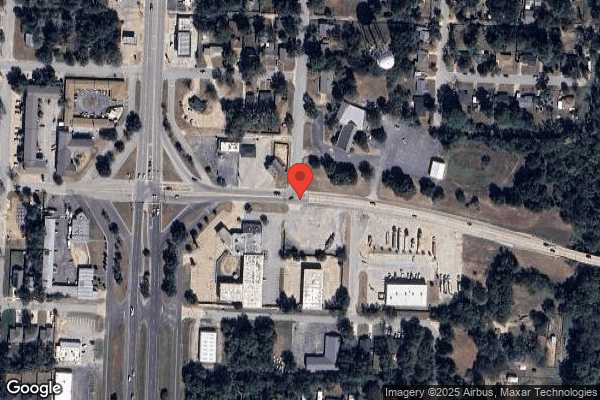
601 E HWY 69, DENISON, TX 75021 (903) 465-2438
For profit - Limited Liability company 71 Beds Independent Data: November 2025 1 Immediate Jeopardy citation
Trust Grade
21/100
#964 of 1168 in TX
Last Inspection: May 2024

Within standard 12-15 month inspection cycle. Federal law requires annual inspections.

Overview

Denison Nursing and Rehab has a Trust Grade of F, indicating poor performance and significant concerns about care quality. It ranks #964 out of 1168 facilities in Texas, placing it in the bottom half, and #8 out of 11 in Grayson County, meaning there are only a few local options that are better. The facility is worsening, with issues increasing from 5 in 2024 to 11 in 2025. Staffing is a major concern here, with a poor 1-star rating and a 70% turnover rate, which is much higher than the state average of 50%. There are serious issues, including a critical finding where a resident was able to elope through a window, and concerns about food safety practices that could lead to foodborne illnesses. Additionally, the facility has failed to ensure adequate RN coverage for several days, which may impact resident care. While there are strengths in some quality measures, the overall picture suggests families should proceed with caution when considering this nursing home.

Trust Score
F
21/100
In Texas
#964/1168
Bottom 18%
Safety Record
High Risk
Review needed
Inspections
Getting Worse
5 → 11 violations
Staff Stability
⚠ Watch
70% turnover. Above average. Higher turnover means staff may not know residents' routines.
Penalties
✓ Good
$12,740 in fines. Lower than most Texas facilities. Relatively clean record.
Skilled Nurses
⚠ Watch
Each resident gets only 21 minutes of Registered Nurse (RN) attention daily — below average for Texas. Fewer RN minutes means fewer trained eyes watching for problems.
Violations
⚠ Watch
26 deficiencies on record. Higher than average. Multiple issues found across inspections.
★☆☆☆☆
1.0
Overall Rating
★☆☆☆☆
1.0
Staff Levels
★★★★☆
4.0
Care Quality
★★☆☆☆
2.0
Inspection Score
Stable
2024: 5 issues
2025: 11 issues

The Good

  • 4-Star Quality Measures · Strong clinical quality outcomes
  • Full Sprinkler Coverage · Fire safety systems throughout facility
  • No fines on record

Facility shows strength in quality measures, fire safety.

The Bad

1-Star Overall Rating

Below Texas average (2.8)

Significant quality concerns identified by CMS

Staff Turnover: 70%

23pts above Texas avg (46%)

Frequent staff changes - ask about care continuity

Federal Fines: $12,740

Below median ($33,413)

Minor penalties assessed

Staff turnover is elevated (70%)

22 points above Texas average of 48%

The Ugly 26 deficiencies on record

1 life-threatening
Jun 2025 1 deficiency
CONCERN (D) 📢 Someone Reported This

A family member, employee, or ombudsman was alarmed enough to file a formal complaint

Potential for Harm - no one hurt, but risky conditions existed

Safe Environment (Tag F0921)

Could have caused harm · This affected 1 resident

Based on observation, interview and record review, the facility failed to provide a safe environment for residents, staff, and the public for one (oxygen room) of one oxygen room and one (CNA room) of...

Read full inspector narrative →
Based on observation, interview and record review, the facility failed to provide a safe environment for residents, staff, and the public for one (oxygen room) of one oxygen room and one (CNA room) of one CNA room observed for oxygen storage safety. The facility failed to securely store oxygen cylinders in the facility's only oxygen room and only CNA room on 06/06/25. These failures could affect the residents by placing them at risk of injury due to oxygen cylinders becoming unsecured and becoming a hazard. Findings included: Observation on 06/06/25 at 7:33 AM revealed one free-standing oxygen cylinder without a rack, chain, or strap in the corner of the CNA room by the door. Observation and interview on 06/06/25 at 7:35 AM with LVN A revealed the oxygen cylinder in the CNA room was unsecured. LVN A stated the oxygen cylinder should be secured in a rack. LVN A stated it was a safety risk for them to be unsecured. Observation and interview on 06/06/25 at 10:40 AM with the ADM revealed four free-standing oxygen cylinders without a rack, chain, or strap in the oxygen room. The ADM stated she did not know why the oxygen cylinders were not in the rack since there was room in the rack for them. The ADM stated the oxygen cylinder should be secured with a rack, bag or strap to prevent them from falling over since they were combustible. Interview on 06/09/25 at 9:08 AM with the ADM revealed the facility did not have a policy on oxygen storage. Review of National Fire Protective Association, (NFPA) 99, 2012 Edition, Section 11.6.2.3, reflected: .(11) Freestanding cylinders shall be properly chained or supported in a proper cylinder stand or cart .
May 2025 3 deficiencies 1 IJ
CRITICAL (J) 📢 Someone Reported This

A family member, employee, or ombudsman was alarmed enough to file a formal complaint

Immediate Jeopardy (IJ) - the most serious Medicare violation

Accident Prevention (Tag F0689)

Someone could have died · This affected 1 resident

**NOTE- TERMS IN BRACKETS HAVE BEEN EDITED TO PROTECT CONFIDENTIALITY** Based on observation, interview, and record review, the facility failed to ensure residents received adequate supervision and as...

Read full inspector narrative →
**NOTE- TERMS IN BRACKETS HAVE BEEN EDITED TO PROTECT CONFIDENTIALITY** Based on observation, interview, and record review, the facility failed to ensure residents received adequate supervision and assistance devices to prevent accidents for one of two (Resident #1) residents reviewed for elopement: The facility failed to prevent Resident #1's elopement through a window in an unoccupied room on [DATE] which resulted in resident being found two houses from the facility and facility staff being unaware that he had eloped. These failures resulted in an Immediate Jeopardy (IJ) on [DATE]. While the IJ was removed on [DATE], the facility remained out of compliance at a severity level of no harm with a scope identified as isolated. These failures negatively affected the residents and placed all residents at risk of injury or harm by not having a safe and secure facility. Findings included: Review of Resident #1's face sheet reflects that resident was a [AGE] year-old man admitted on [DATE] with a diagnosis of epilepsy, dementia, lack of coordination, sequelae of cerebral infarction, dysphagia, dysarthria, hypertension, heart failure, bipolar disorder, depression, hemiplegia and hemiparesis, hyperlipidemia, and hyponatremia. Records review reflect that Resident #1 was deceased [DATE] and discharged from the facility. Records review of Resident #1's quarterly Minimum Data Set assessment dated [DATE] reflected that resident's Brief Interview for Mental Status (BIMS) score was 12 meaning the resident was cognitively intact. Section GG0170 (Mobile Devices) reflects that resident used a wheelchair for mobilizing. Records review of Resident #1's elopement risk assessment dated [DATE] reflected a score of 12, categorized as a high risk to wander. The comments/notes reflected Resident #1 has verbally stated he wanted to leave. Review of Resident #1's care plan, initiated on [DATE], reflected a focus area for dementia and elopement risk. Review revealed the resident was at risk for wandering/elopement related to a history at previous facility and dementia diagnosis. The interventions were to identify pattern of wandering: was wandering purposeful, aimless, or escapist, was resident looking for something, does it indicate the need for more exercise, and intervene as appropriate. Records review of Resident #1's progress notes reflected a behavior note dated [DATE], stating that the resident got agitated during morning smoke break when only allowed one cigarette per smoke break and stated well, I am going to start walking the highway. Resident then forcefully got out of the smoking area door and forced staff to give him his second cigarette and not following commands or redirections. Records review of the Provider Investigation Report dated [DATE] reflected at 5:00 pm during routine rounds by the CNA E, Resident #1 was not in his room and his wheelchair was inside his room. The resident eloped and staff found the resident walking on the side of the road behind the building approximately 2 houses down. The resident reported he climbed out the window in room [ROOM NUMBER] trying to go to his Family Member's house. The report further read the resident was assessed at 6:00pm and there was a minor scratch on his knee from climbing out the window. Review of the World Weather website reflected that the temperature on [DATE], the date of Resident #1's elopement, reflects that the high was 55 degrees Fahrenheit and the humidity 81%. During an interview on [DATE] at 10:18am, the Administrator revealed Resident #1 expressed he wanted to visit his family member when he was found. The Administrator stated Resident #1 did not exhibit elopement or exit seeking tendencies prior to the incident. The Administrator stated Resident #1 wandered in/out of rooms prior to the incident but not the facility. The Administrator stated elopement interventions were not put in place prior because Resident #1 was content when staff contacted his Family Member whenever he expressed, he wanted to see him. The Administrator stated the police were not contacted during the elopement incident because Resident #1 was missing for only 5 minutes. The Administrator stated the risk of elopement could be injury, death, or traffic challenges. The Administrator stated there was no reason why elopement drills were not conducted after the incident. The Administrator revealed details of resident elopement risk assessments were not made known to her. An interview and observation on [DATE] at 10:40 am with the Maintenance Director revealed Resident #1 was in room [ROOM NUMBER] separated by a shared bathroom with room [ROOM NUMBER]. There was no resident in room [ROOM NUMBER] at the date and time of elopement. Observation of room [ROOM NUMBER] revealed a locked window and a screen. Observation of Resident #2's room revealed a missing window screen. The Maintenance Director stated there are 8 windows without screens and he stated he was unsure if screens were ordered by the owners. During an interview on [DATE] at 8:16 am, CNA E stated she last saw Resident #1 at 4:30pm after the smoke break. CNA E stated Resident #1 was not in his room when she attempted to give him his dinner tray. CNA E stated she asked LVN I if she had seen the resident and when she had not, they searched for the resident. CNA E stated she noticed Resident #1's wheelchair in front of the window in the adjoining unoccupied room next to his room, separated by the bathroom. CNA E stated the window was closed and the screen was out. CNA E stated LVN I exited the back door and found Resident #1 at the end of the driveway. CNA E stated Resident #1 was asked where he was going, and he replied to his Family Member house. During an interview [DATE] at 3:58pm, LVN J stated Resident #1 expressed he wanted to go home and pointed his finger and stated, it's right over there. LVN J stated she was informed Resident #1 wandered by taking the screen out of the window and climbed out. During an interview [DATE] at 9:29am, CNA F stated she worked the day of the incident and stated Resident #1 was not in the dining room nor in his room when CNA E attempted to pass the dinner tray. CNA F stated CNA E and LVN I searched the facility for Resident #1. CNA F stated LVN I found resident #1 outside. CNA F stated she was not in-serviced on any topic after the incident. Records review of in-services on abuse and neglect and elopement dated [DATE], reflected the absence of CNA F's signature for participation. Review of the facility provided policy on Wandering and Elopements revised [DATE] reflected If identified as at risk for wandering, elopement, or other safety issues, the resident's care plan will include strategies and interventions to maintain the resident's safety .If a resident is missing, initiate the elopement/missing resident emergency procedure. If the resident is not located, notify the administrator and the director of nursing services, the resident's legal representative, the attending physician, law enforcement official, and (as necessary) volunteer agencies (i.e., emergency management, rescue squads, etc.). Review of the facility-provided policy on Abuse Prevention - Identifying Neglect dated [DATE] reflected that Circumstances that can lead to neglect include failure to monitor or supervise residents. The Administrator was notified on [DATE] at 2:50 pm that an Immediate Jeopardy situation had been identified due to above failures. The IJ template for plan of removal was given to the facility on [DATE] at 2:50 pm. The facility's plan of removal was accepted on [DATE] at 11:09 AM. The accepted plan of removal for the Immediate Jeopardy included the following: Plan: 1. Identified Resident #1 is no longer at facility . 2. Resident #2 is at risk for elopement and has the potential to be affected by the alleged deficient practice. At this time, she is not currently exit seeking as of [DATE]. 3. The one and only resident deemed an elopement risk has interventions in place that include room next to nurses' station, when she is up in her wheelchair, she is at the nurse's station or in the dining room at mealtimes, any other times she is within eyesight of a staff member. The MDS Coordinator or designee will update the care plan as needed for elopement interventions with a completion of [DATE]. MDS Coordinator will be in-serviced by Administrator to update care plans as needed appropriate with a completion date of [DATE]. 4. Administrator will in-service and re-educate staff on elopement and abuse and neglect with a follow up posttest starting on [DATE] with a completion on [DATE]. Any remaining staff members will not be allowed back to work until they complete the in-service and posttest. 5. Elopement drill will be done by DON or designee and will be done on each shift and completed by [DATE]. The DON (upon her return) and the designee who are conducting the elopement drills will be in-serviced by the Administrator regarding the proper procedures of the drill. The elopement drill does list all individuals who are supposed to be notified of an elopement. Any remaining staff will not be allowed back to work until they complete elopement training. 6. Administrator has been in-serviced on correct elopement protocol, including notifying the police, by [NAME] President on [DATE]. 7. Maintenance Manager will buy 10 new screens to put on the rooms completed by [DATE]. On any unoccupied rooms where screens are missing those doors will remain closed as well as the jack and [NAME] bathrooms until the screens can be replaced by [DATE]. All doors will stay closed on any unoccupied rooms as well as the jack and [NAME] bathrooms. 8. Maintenance Manager will be in-serviced by Administrator on checking window screen to ensure proper screen placement with a completion date of [DATE]. The Survey Team monitored the current plan of removal as follows: Review of the facility's inservice initiated on [DATE] revealed staff were inserviced on elopement and given posttests. Record review of inservice sheet dated [DATE] revealed the Administrator was inserviced on elopement protocols, including notifying the police. Record reviews of elopement drills revealed the Administrator conducted elopement drills on [DATE] at 10:00pm and [DATE] at 10:02 am. Record review of the inservice sheet dated [DATE] revealed the Administrator inserviced the Maintenance Director checking proper screen placement. Observation on [DATE] at 12:00PM revealed all windows had screens. Observation revealed doors for unoccupied resident rooms were closed. Interviews were conducted with staff from 12:00pm-4:30PM on [DATE]. Interview with the Administrator revealed she was inserviced on elopement protocols, including notification of the police. The Administrator stated she conducted elopement drills and inservices on elopement and proper screen placement. Interview with the Maintenance Director revealed the Administrator inserviced him on proper screen placement. The Maintenance Director stated he placed screens on the windows. Interviews with CNA A, CNA B, CNA C, and CNA D, LVN E, LVN F, LVN G, LVN H, LVN K and RN I revealed the staff were inserviced on elopement and safety precautions. Staff were able to describe elopements, what they would do in the event of a missing resident, and administration was able to describe the system for preventing and handling missing residents and to notify police department in the event of a missing resident. On [DATE] at 4:30 PM, the Administrator were informed the IJ was removed. However, the facility remained out of compliance at a severity of no harm that is not immediate with a scope identified as isolated. The facility needs to ensure in-service training and evaluate the effectiveness of the corrective systems.
CONCERN (D) 📢 Someone Reported This

A family member, employee, or ombudsman was alarmed enough to file a formal complaint

Potential for Harm - no one hurt, but risky conditions existed

Deficiency F0575 (Tag F0575)

Could have caused harm · This affected 1 resident

Based on observation and interview, the facility failed to post the Health and Human Services Commission (HHHSC) complaint number and a statement that the resident may file a complaint with the State ...

Read full inspector narrative →
Based on observation and interview, the facility failed to post the Health and Human Services Commission (HHHSC) complaint number and a statement that the resident may file a complaint with the State Survey Agency concerning any suspected violation of a state or federal regulation, including but not limited to resident abuse, neglect, exploitation, and misappropriation of property for 1 of 7 mandatory postings. The facility failed on 05/14/2025 to ensure the required posting (signage) of a HHSC complaint number and statement about how a resident may file a complaint with the State Survey agency. This failure placed residents at risk of being unaware of who and how to contact the State Survey Agency and their right to file a complaint with the State Service Agency concerning any suspected violation of state or federal regulation. The findings included: An observation throughout the facility on 05/14/25 at 10:40 AM, revealed there was no HHSC complaint number and statement that the residents may file a complaint with the State Survey Agency posted in any location of the facility. In an interview with the Administrator on 05/14/25 at 10:48 AM, who stated the postings was not posted in the facility. Administrator stated she did not pay attention to what was posted on the walls. She stated she did not know why there was no HHSC complaint number and statement that the resident may file a complaint with the State Survey Agency posted in the facility. Administrator stated it was important to have this signage posted so residents will know how to file a complaint regarding staff. The Administrator said the risk to the residents would be unreported abuse and neglect.
CONCERN (D) 📢 Someone Reported This

A family member, employee, or ombudsman was alarmed enough to file a formal complaint

Potential for Harm - no one hurt, but risky conditions existed

Comprehensive Care Plan (Tag F0656)

Could have caused harm · This affected 1 resident

**NOTE- TERMS IN BRACKETS HAVE BEEN EDITED TO PROTECT CONFIDENTIALITY** Based on observation, interview, and record review, the facility failed to develop and implement a comprehensive person-center p...

Read full inspector narrative →
**NOTE- TERMS IN BRACKETS HAVE BEEN EDITED TO PROTECT CONFIDENTIALITY** Based on observation, interview, and record review, the facility failed to develop and implement a comprehensive person-center plan that includes services that are furnished to attain or maintain the resident's highest practicable physical, mental and psychosocial well-being for one of twenty-eight ( Resident #2) reviewed for care plans. The facility failed to update Resident #2's care plan to reflect elopement risk. These failures could affect residents by placing them at risk for not receiving care and services to meet their needs. Findings included: Review of Resident #2's face sheet reflected that the resident was a [AGE] year-old woman admitted on [DATE] with diagnoses of fracture of unspecified part of neck of right femur, type 2 diabetes, cerebral infarction, hyperlipidemia, spinal stenosis, dementia, anxiety disorder, glaucoma, anemia, hypertension, and rheumatoid arthritis. Records review of Resident #2's annual Minimum Data Set assessment dated [DATE] reflected that resident's Brief Interview for Mental Status (BIMS) score was 3 meaning the resident was severely cognitively impaired. Section G (Functional Status) for Activities of Daily Living Assistance reflected that Resident #2 required extensive assistance resident involved in activity, staff provide weight-bearing support, two+ person physical assist. Records review of Resident #2's care plan dated 04/25/2025 reflected no care plan for elopement. Records review of Resident #2's elopement risk assessment dated [DATE] reflected a score of 14, categorized as a high risk to wander. Review of a progress note entered on 5/12/2025 at 5:00 (am or pm not specified) reflected that Resident #2 stated she had to leave soon and go home and was going through drawers in her room gathering her belongings. Observation of Resident # 2 on 05/13/25 at 5:30 PM revealed resident was sitting in the dining room in a wheelchair. The surveyor attempted interview with DON about care plans on 05/14/25 at 9:27am. The DON's voicemail box was full and unable to leave a message. The DON did not call back by the date and time of exit on 05/16/25 at 4:30pm Interview with the MDS Coordinator on 05/15/25 at 10:11 am revealed Resident # 2 did not have a care plan for elopement. Review of the facility provided policy on Wandering and Elopements revised March 2019 reflected If identified as at risk for wandering, elopement, or other safety issues, the resident's care plan will include strategies and interventions to maintain the resident's safety .
Apr 2025 3 deficiencies
CONCERN (D) 📢 Someone Reported This

A family member, employee, or ombudsman was alarmed enough to file a formal complaint

Potential for Harm - no one hurt, but risky conditions existed

Comprehensive Care Plan (Tag F0656)

Could have caused harm · This affected 1 resident

**NOTE- TERMS IN BRACKETS HAVE BEEN EDITED TO PROTECT CONFIDENTIALITY** Based on interview, and record review, the facility failed to develop and implement a comprehensive person-centered care plan fo...

Read full inspector narrative →
**NOTE- TERMS IN BRACKETS HAVE BEEN EDITED TO PROTECT CONFIDENTIALITY** Based on interview, and record review, the facility failed to develop and implement a comprehensive person-centered care plan for each resident that describes the services that are to be furnished to attain or maintain the resident's highest practicable physical, mental, and psychosocial well-being for 1 (Resident #1) of 1 resident whose care plan was reviewed, in that: The facility failed to develop a comprehensive care plan for Resident #1. This failure could place residents at risk of receiving inadequate individualized care and services. Findings included: Review of Resident #1's admission MDS assessment dated [DATE] reflected Resident#1 was admitted to the facility on [DATE] with diagnoses of dementia (loss of intellectual functioning, especially with impairment of memory and abstract thinking, and often with personality change, resulting from organic disease of the brain), diabetes mellitus (elevated blood sugar), and heart failure. Resident#1 had a BIMS score of 12 indicating he was moderately cognitively intact. Review of Resident #1's care plan revealed no care plan was in the system (PCC) for Resident#1 as of 04/10/25. Interview on 04/10/25 at 11:35 AM with the DON, she stated Resident#1 should have a care plan since he was admitted on [DATE]. She stated she will check the PCC, after checking the PCC, the DON stated there was no care plan for Resident#1. Interview on 04/10/25 at 12:22 PM over the phone with the MDS coordinator, she stated Resident#1 care plan was done on 3/04/2025, and it was in the system (PCC). The MDS coordinator further stated she does not know what happened and she thought it was deleted. She stated all residents must have a care plan to make sure their needs were meet. Follow up interview on 04/10/25 at 12:29 PM with the DON, she stated the MDS coordinator was responsible for uploading the resident care plans, and she as a DON does the intervention. She stated the care plan was needed so the appropriate services and care are provided to the residents. Review of facility's policy titled, Care Planning-Interdisciplinary Team with a revised date of September 2013 revealed Our facility's Care Planning/Interdisciplinary Team is responsible for the development of an individualized comprehensive Care plan for each resident . 1. A comprehensive care plan for each resident is developed within seven (7) days of completion of the resident assessment (MDS) .
CONCERN (D) 📢 Someone Reported This

A family member, employee, or ombudsman was alarmed enough to file a formal complaint

Potential for Harm - no one hurt, but risky conditions existed

ADL Care (Tag F0677)

Could have caused harm · This affected 1 resident

**NOTE- TERMS IN BRACKETS HAVE BEEN EDITED TO PROTECT CONFIDENTIALITY** Based on observation, interview, and record review the facility failed to provide the necessary services for residents who are u...

Read full inspector narrative →
**NOTE- TERMS IN BRACKETS HAVE BEEN EDITED TO PROTECT CONFIDENTIALITY** Based on observation, interview, and record review the facility failed to provide the necessary services for residents who are unable to carry out activities of daily living to maintain good grooming and personal hygiene for 1 (Resident #2) of 1 resident reviewed for ADL's. The facility failed to ensure Resident#2 had his fingernails trimmed and cleaned. This failure could place residents who were dependent on staff for ADL care at risk for loss of dignity, risk for infections and a decreased quality of life. Findings include: Record review of Resident #2's Quarterly MDS assessment dated [DATE] reflected Resident#2 was a [AGE] year-old male admitted to the facility on [DATE], and readmitted on [DATE] with diagnoses including muscles weakness, dementia (diseases that affect memory, thinking, and the ability to perform daily activities), and hypertension (High blood pressure). He had a BIMS score of 06/15 indicating severe cognitive impairment. He was total dependent with personal ADLs. Record review of Resident #2's Comprehensive Care Plan last revised 04/10/25 reflected the following Focus. Resident #2 has and ADL self-care performance deficit r/t dementia, Goal. The resident#2 will maintain current level of function through next review. Intervention. BATHING/SHOWERING: Check nail length and trim and clean on bath day and as necessary. Report any changes to the nurse . Observation/Interview on 04/10/25 at 07:57 AM revealed Resident#2 was lying in bed. Resident#2 had long fingernail approximately 0.7 cm on both hands, with clear brown matter underneath. Resident#2 was asked if he want his fingernail trimmed and cleaned, he replied yes. Interview on 04/10/25 at 08:35 AM with CNA A, CNA A looked at Resident#2 fingernail and stated they were long and some of them were dirty underneath. CNA A stated Resident#2 fingernails needed to be cleaned and trimmed. CNA A further stated the risk to the residents they could scratch them self, and development of infection. Interview on 04/10/25 at 09:50 AM with LVN B, she stated both CNAs and charge nurses in the Halls were responsible for residents' nail care. She stated if a resident had diabetes, only nurses were allowed to trim resident's nails. She stated the risk for not performing nailcare was increased risk of infection and skin break down. Interview on 04/10/25 at 11:35 AM with the DON, she stated her expectation was that nail care should be provided every shower day and as needed. She stated that both CNAs and charge nurses were responsible for doing nail care on all residents; except Nurses were responsible for nailcare if resident had diagnosis of diabetes. The DON stated residents who had dirty fingernails could be an infection control issue. Record Review of the facility policy titled Nail Care-Fingernails and Toenails, revised September 13, reflected, Purpose: 1. To promote cleanliness 2. To prevent injury 3. To prevent infection The purposes of this procedure are to clean the nail bed, to keep nails trimmed, and to prevent infections.
CONCERN (D) 📢 Someone Reported This

A family member, employee, or ombudsman was alarmed enough to file a formal complaint

Potential for Harm - no one hurt, but risky conditions existed

Deficiency F0761 (Tag F0761)

Could have caused harm · This affected 1 resident

**NOTE- TERMS IN BRACKETS HAVE BEEN EDITED TO PROTECT CONFIDENTIALITY** Based on observations, interviews, and record review the facility failed to ensure that all drugs and biologicals used in the fa...

Read full inspector narrative →
**NOTE- TERMS IN BRACKETS HAVE BEEN EDITED TO PROTECT CONFIDENTIALITY** Based on observations, interviews, and record review the facility failed to ensure that all drugs and biologicals used in the facility were labeled and stored in accordance with professional standards for 1 of 1 Resident (Resident#1) reviewed for pharmacy services. The facility failed to ensure Resident#1 did not have his morning medications (Allopurinol, Aspirin, Glimepiride, Isosorbide, metoprolol, Nifedipine, Plavix, Potassium, Torsemide, Calcium Carbonate -Vit D with min, and Gabapentin) left on the bedside table on 04/10/25. These failures could place residents at risk of medication misuse, not receiving physician ordered medications which could result in non-therapeutic treatments or injuries. Findings Included: Record review of Resident # 1's face sheet dated 04/10/25 reflected a [AGE] year-old male with an admission date of 02/25/25. Diagnoses included dementia (loss of intellectual functioning, especially with impairment of memory and abstract thinking, and often with personality change, resulting from organic disease of the brain) diabetes mellitus (elevated blood sugar), and heart failure. Record review of Resident #1's Physician orders summary sheet dated 04/10/25 reflected, Allopurinol oral tablet 300 mg Give 1 tablet by mouth in the morning; Aspirin oral tablet 81 mg Give 1 tablet by mouth in the morning; Glimepiride oral tablet 4 mg Give 1 tablet by mouth in the morning; Isosorbide oral tablet 60 mg Give 1 tablet by mouth in the morning; Metoprolol oral tablet 50 mg Give 1 tablet by mouth in the morning; Nifedipine oral tablet 30 mg Give 1 tablet by mouth in the morning; Plavix oral tablet 75 mg Give 1 tablet by mouth in the morning; Potassium oral tablet 10 mEq Give 1 tablet by mouth in the morning; Torsemide oral tablet 20 mg Give 1 tablet by mouth in the morning; Calcium Carbonate -vit D-Min Oral Tablet 600-200 mg-unit Give 1 tablet by mouth in the morning; Gabapentin oral tablet 300 mg Give 1 tablet by mouth in the morning. With a start date of 02/25/25. In an observation and interview on 04/10/25 at 07:44 AM revealed Resident#1 sitting up in bed, alone in his room. A medication cup with his name full of medications tablets in different forms and colors (11 in total) was observed on the bedside table. Resident #1 stated the nurse left the medications for him to take. He stated he will take his medications. In an observation/interview with LVN B on 04/10/25 at 07:49 a.m. she looked at the medications cup and told Resident#1, that he needed to take his medication. She stated she gave the medications to Resident#1 this morning and had to go to open the facility door and forgot to come back and check on the resident to see if he took his medications. She stated the risk to resident was that he could miss his morning medication if another resident walked to the room and took the medication. She stated the unattended medications could cause harm to another resident if he/she took them. In an interview on 04/10/25 at 11:35 AM with the DON she stated the resident medications should not be left unattended, or at the bed side table. She stated the nurses were training to give resident their medications, and make sure the resident swallow the medications before the nurse leave the room. The DON stated the unattended medications could cause harm to Resident#1 if he missed his morning dose and could harm another resident if he/she took the medication and was allergic to any one of them. Record review of the facility policy Medication Labeling and Storage, revised February 2023, revealed The facility shall store all drugs and biologicals in a safe, secure, and orderly manner .
Mar 2025 4 deficiencies
CONCERN (D) 📢 Someone Reported This

A family member, employee, or ombudsman was alarmed enough to file a formal complaint

Potential for Harm - no one hurt, but risky conditions existed

Abuse Prevention Policies (Tag F0607)

Could have caused harm · This affected 1 resident

Based on interview and record review the facility failed to develop and implement written policies and procedures that prohibit and prevent abuse, neglect, and exploitation of residents and misappropr...

Read full inspector narrative →
Based on interview and record review the facility failed to develop and implement written policies and procedures that prohibit and prevent abuse, neglect, and exploitation of residents and misappropriation of resident property for two (CNA C and the DON) of five employees reviewed for abuse and neglect. 1.The facility failed to conduct CNA C's Employee Misconduct Registry (EMR)/Nurse Aide Registry (NAR) check annually. 2.The facility failed to conduct the DON's Employee Misconduct Registry (EMR)/Nurse Aide Registry (NAR) check upon hire. These failures could place residents at risk for abuse and receiving care from unemployable staff. Findings included: Review of the facility's policy on 03/04/25, revised April 2021, titled, Abuse, Neglect, Exploitation and Misappropriation Prevention Program: Residents have the right to be free from abuse, neglect, misappropriation of resident property and exploitation. This includes but is not limited to freedom from corporal punishment, involuntary seclusion, verbal, mental, sexual or physical abuse, and physical or chemical restraint not required to treat the resident's symptoms. The resident abuse, neglect and exploitation prevention program consists of a facility-wide commitment and resource allocation to support the following objectives: 1. Protect residents from abuse, neglect, exploitation or misappropriation of property by anyone including, but not necessarily limited to: a. facility staff . 4. Conduct employee background checks and not knowingly employ otherwise engage any individual who has b. had a finding entered into the state nurse aide registry concerning abuse, neglect, exploitation mistreatment of residents or misappropriation of their property . Review of the facility's policy on 03/05/25, revised March 2019, titled, Background Screening Investigations: Our facility conducts employment background screening checks, reference checks and criminal conviction investigation checks on all applicants for positions with direct access to residents (direct access employees). 1. For purpose of this policy direct access employee means any individual who has access to a resident or patient of a long-term care facility .and has duties that involve one-on-one contact with a patient or resident of the facility or provider .2 .Background and criminal checks are initiated within two days of an offer of employment .and completed prior to employment. 3. For any individual applying for a position as a certified nursing assistant, the state nurse aide registry is contacted to determine if any findings of abuse, neglect, mistreatment of individuals, and/or theft of property have been entered into the applicant's file . 1.Review of CNA C 's personnel records on 03/04/25 revealed a hire date of 10/01/23. There was no documentation the annual EMR/NAR registry check was conducted for October 2024. 2. Review of the DON's personnel records on 03/04/25 revealed a hire date of 10/16/24.There was no documentation for the DON's EMR/NAR registry check initiated within two days of an offer of employment or prior to employment. Interview with the ADM on 03/04/25 at 12:49 PM revealed the ADM was responsible for checking the EMR/NAR for all employees. The ADM stated the EMR/NAR checks should be completed upon hire and annually to ensure the employees were employable. The ADM stated she could not find an EMR/NAR check for CNA C for October 2024 in her employee file. The ADM stated she did not check the DON on the EMR/NAR upon hire that was her mistake. The ADM stated it was important to check all facility employees on the EMR/NAR to ensure all employees are employable and to prevent abuse. The ADM completed EMR/NAR checks on CNA C and the DON which reflected they were employable on 03/04/25 before the surveyor exited the facility.
CONCERN (D) 📢 Someone Reported This

A family member, employee, or ombudsman was alarmed enough to file a formal complaint

Potential for Harm - no one hurt, but risky conditions existed

Comprehensive Care Plan (Tag F0656)

Could have caused harm · This affected 1 resident

**NOTE- TERMS IN BRACKETS HAVE BEEN EDITED TO PROTECT CONFIDENTIALITY** Based on observation, interview, and record review, the facility failed to develop and implement a comprehensive person-centered...

Read full inspector narrative →
**NOTE- TERMS IN BRACKETS HAVE BEEN EDITED TO PROTECT CONFIDENTIALITY** Based on observation, interview, and record review, the facility failed to develop and implement a comprehensive person-centered care plan for each resident that describes the services that are to be furnished to attain or maintain the resident's highest practicable physical, mental, and psychosocial well-being for one (Resident #1) of five residents whose care plans were reviewed, in that: The facility failed to revise Resident #1's care plan to accurately reflected current tube feeding status as of 02/27/25. These failures could place residents at risk of receiving inadequate individualized care and services. Findings included: Review of Resident #1's face sheet dated 03/04/25 revealed a [AGE] year-old male who was originally admitted to the facility on [DATE] with a current admission date of 02/27/25. Resident #1's diagnoses included the following: pneumonia (infection that inflames air sacs in one or both lungs, which may fill with fluid), acute respiratory failure with hypoxia (absence of enough oxygen in the tissues to sustain bodily functions), dementia (a group of thinking and social symptoms that interferes with daily functioning), Alzheimer's disease (a progressive disease that destroys memory and other important mental functions), dysphagia (difficulty swallowing) and autistic disorder (developmental disability that affects how a person communicates, interacts with others, learns and behaves). Review of Resident #1's significant change in status MDS assessment dated [DATE] revealed Resident #1 had unclear speech, was rarely/never understood and rarely/never understood others. Resident #1 had a BIMS score of 99 indicating Resident #1 was unable to complete the interview. Record review of Section K - Swallowing/Nutritional Status reflected that Resident #1 had loss of liquids/solids from mouth when eating or drinking and received a mechanically altered diet. Resident #1's quarterly/Medicare 5-day MDS assessment dated [DATE] was in progress and section K- Swallowing/Nutritional Status was incomplete at the time of investigation exit on 03/05/25. Review of Resident #1's care plan retrieved 03/04/25 revealed it did not address his newly placed peg tube (a thin flexible tube inserted through the abdominal wall directly into the stomach). Review of Resident #1's hospital discharge orders/instructions revealed discharge request date of 02/27/25, procedure performed-surgical procedure on 02/16/25 for peg placement (a minimally invasive surgical procedure that involves inserting a feeding tube directly into the stomach through a small incision in the abdominal wall). Observation on 03/04/25 at 1:24 PM revealed Resident #1 was observed to be lying in his bed with head of bed elevated and TF order infusing as ordered. Interview on 03/04/25 at 9:07 AM with the ADM revealed Resident #1 was a long-term resident who had recently had a change of condition and was sent to the hospital as a result of the change on 02/11/25 and returned on 02/27/25 requiring tube feeding. Interview on 03/04/25 at 10:17 AM with the DON revealed Resident #1 returned from the hospital on [DATE] with an order of NPO and his nutritional needs were being met via tube feeding now. Interview on 03/04/25 at 10:53 AM with CNA D revealed Resident #1 returned from the hospital NPO and with a tube feeding. Interview on 03/04/25 at 11:07 AM with CNA C revealed Resident #1 returned from the hospital NPO and with a tube feeding. Interview on 03/04/25 at 1:24 PM with the DON revealed she was responsible for updating the resident care plans. The DON confirmed that Resident #1's care plan was not updated appropriately upon his return from hospitalization on 02/27/25 to reflect his nutritional needs were completely being met by tube feeding. The DON stated she was previously not responsible for updating the care plans and she honestly forget to update Resident #1's to reflect his current tube feeding status. The DON stated that it was important to keep the care plan updated to ensure the appropriate services and care are provided to the residents. Interview on 03/05/25 at 12:49 PM with the ADM revealed the DON would have been responsible for ensuring Resident #1's care plan was updated upon his return from the hospital to reflect the change in his nutritional status from PO to NPO. The ADM stated her expectation was for Resident #1's care plan to reflect Resident #1's tube feeding. The ADM stated it was important for the care plan to reflect a resident's condition accurately. Review of facility's policy titled, Goals and Objectives, Care Plans with a revised date of April 2009 revealed Care plans shall incorporate goals and objectives that lead to the resident's highest obtainable level of independence. 5. Goals and objectives are reviewed and/or revised: a. When there has been a significant change in the resident's condition .
CONCERN (D) 📢 Someone Reported This

A family member, employee, or ombudsman was alarmed enough to file a formal complaint

Potential for Harm - no one hurt, but risky conditions existed

Tube Feeding (Tag F0693)

Could have caused harm · This affected 1 resident

**NOTE- TERMS IN BRACKETS HAVE BEEN EDITED TO PROTECT CONFIDENTIALITY** Based on interview and record review the facility failed to ensure that a resident who was fed by gastrostomy tube received the ...

Read full inspector narrative →
**NOTE- TERMS IN BRACKETS HAVE BEEN EDITED TO PROTECT CONFIDENTIALITY** Based on interview and record review the facility failed to ensure that a resident who was fed by gastrostomy tube received the appropriate treatment and services to prevent complications of enteral feeding for one (Resident #1) of one resident reviewed for gastrostomy tube feedings. LVN A failed to transcribe Resident #1's bolus feeding order upon hospital return on 02/27/25. This failure could place residents who received gastrostomy tube feedings at risk for not receiving the intended therapeutic benefit as ordered. Findings included: Review of Resident #1's face sheet dated 03/04/25 revealed a [AGE] year-old male who was originally admitted to the facility on [DATE] with a current admission date of 02/27/25. Resident #1's diagnoses included the following: pneumonia (infection that inflames air sacs in one or both lungs, which may fill with fluid), acute respiratory failure with hypoxia (absence of enough oxygen in the tissues to sustain bodily functions), dementia (a group of thinking and social symptoms that interferes with daily functioning), Alzheimer's disease (a progressive disease that destroys memory and other important mental functions), dysphagia (difficulty swallowing) and autistic disorder (developmental disability that affects how a person communicates, interacts with others, learns and behaves). Review of Resident #1's significant change in status MDS assessment dated [DATE] revealed Resident #1 had unclear speech, was rarely/never understood and rarely/never understood others. Resident #1 had a BIMS score of 99 indicating Resident #1 was unable to complete the interview. Record review of Section K - Swallowing/Nutritional Status reflected that Resident #1 had loss of liquids/solids from mouth when eating or drinking and received a mechanically altered diet. Resident #1's quarterly/Medicare 5-day MDS assessment dated [DATE] was in progress and section K- Swallowing/Nutritional Status was incomplete at the time of investigation exit on 03/05/25. Review of Resident #1's care plan retrieved 03/04/25 revealed Resident #1's only problem related to having a tube feeding was related to his medications: Problem resident requires having his medication crushed and put via peg tube. Resident is NPO. Resident #1's care plan did not address a problem related to having bolus feeding which included a goal or interventions. Review of Resident #1's progress note dated 02/27/25 written by LVN A revealed resident arrived via ambulance at 5:00 PM this day .Peg tube (a thin, flexible tube inserted through the abdominal wall directly into the stomach) in place to lower upper quadrant. Supplies do not fit feeding pump and end on peg tube, notified DON and called MD for new order for the bolus feedings until supplies get here for the feeding pump and end bolus once supplies arrive. New order Jevity 1.5 via peg tube 750 cc via gravity over 15 minutes .If resident tolerating bolus and water amounts continue feedings every 4 to 6 hours. If resident distress during feedings goes to 30 minutes. Record review of Resident #1's electronic physician orders for February 2025 revealed no order for bolus feeding/gravity feeding of Jevity 1.5 via peg tube. Record review of Resident #1's electronic MAR for February 2025 revealed no documentation for bolus feeding/gravity feeding of Jevity 1.5 via peg tube for 02/27/25 or 02/28/25. Interview on 03/04/25 at 1:24 PM with the DON revealed the verbal hospital discharge report for Resident #1 was taken by LVN A which was reported to be Jevity 1.5 at 45 ml/hr times 22 hours via peg tube pump. The DON stated she reviewed the actual hospital discharge paperwork, and it did not state a TF order in the discharge orders. The DON stated the facility did not have the appropriate tubing for Resident #1's tube feeding port attachment site once Resident #1 readmitted , therefore the DON stated LVN A called to obtain bolus feeding orders for Resident #1 from Dr. B until the appropriate tubing arrived for the Jevity feeding pump order. The DON stated she expected LVN A to transcribe the bolus feeding order for Resident #1 since she was Resident #1's admitting nurse on 02/27/25. The DON stated that Resident #1 did receive his bolus feeding on 02/27/25 and 02/28/25 however there was no documentation on Resident #1's MAR since the bolus feeding order was not transcribed by LVN A. The DON stated she expected all orders including verbal orders to be transcribed into the electronic physician orders and recorded on the electronic MAR. The DON stated not transcribing bolus feeding orders could result in a resident receiving an incorrect tube feeding rate which could result in changes to a resident's nutritional status. Interview on 03/04/25 at 1:55 PM with LVN A revealed she re-admitted Resident #1 back to the facility on [DATE] at about 5:00 PM. The nurse said when she had received the resident's information from the hospital via telephone it was reported the resident had been receiving feeding via g-tube. LVN A said when Resident #1 arrived at the facility there had been nothing in the hospital orders about g-tube feedings. The LVN A said she had not felt comfortable starting the feeding without an order and there was an issue with the feeding tubing and the port connection site therefore she contacted the DON. LVN A called Dr. B and obtained an order for bolus feeding per the DON suggestion until the correct tubing was obtained. LVN A stated that Dr. B provided an order of Jevity 1.5 via peg tube 750 cc via gravity every 4-6 hours and to monitor the resident's tolerance to the bolus feedings. LVN A stated she should have transcribed the bolus feeding order for Resident #1 but she forgot therefore it did not appear on Resident #1's MAR. LVN A stated that all orders including verbal orders are to be transcribed so medications and treatments can be given correctly according to order and documented appropriately. LVN A stated not transcribing a bolus feeding order could result in adverse changes to a resident's nutritional status. Interview on 03/05/25 at 12:49 PM with the ADM revealed LVN A was Resident #1's admitting nurse on 02/27/25 and was responsible for ensuring all orders were transcribed. ADM stated the importance of transcribing orders correctly was to ensure care and services were provided and documented accurately. Review of facility policy titled, Medication and Treatment Orders with a revised date of July 2016 revealed Orders for medications and treatments will be consistent with principles of safe and effective order writing. 2. Only authorized, licensed practitioners, or individuals authorized to take verbal orders from practitioners, shall be allowed to write orders in the medical record. 7. Verbal orders must be recorded immediately in the resident's chart by the person receiving the order and must include prescriber's last name, credentials, the date and the time of the order . Review of the facility policy titled, Enteral Nutrition with a revised date of November 2018 revealed Adequate nutritional support through enteral nutrition is provided to residents as ordered.
CONCERN (D) 📢 Someone Reported This

A family member, employee, or ombudsman was alarmed enough to file a formal complaint

Potential for Harm - no one hurt, but risky conditions existed

Deficiency F0761 (Tag F0761)

Could have caused harm · This affected 1 resident

**NOTE- TERMS IN BRACKETS HAVE BEEN EDITED TO PROTECT CONFIDENTIALITY** Based on observation, interview and record review the facility failed to, in accordance with State and Federal laws, store all d...

Read full inspector narrative →
**NOTE- TERMS IN BRACKETS HAVE BEEN EDITED TO PROTECT CONFIDENTIALITY** Based on observation, interview and record review the facility failed to, in accordance with State and Federal laws, store all drugs and biologicals in locked compartments and permit only authorized personnel to have access to the keys for one (cart E, cart for rooms 124-143) of two medication carts reviewed. LVN A failed to lock medication cart E (cart for rooms 124-143) on 03/04/25. This failure could place residents at risk for possible drug diversions. Findings included: Observation on 03/04/25 at 8:40 AM revealed medication cart E at the nursing station near room [ROOM NUMBER] was unlocked and unattended for approximately 2 minutes. All drawers of the medication cart could be opened, and the medications were easily accessible. Resident #2 was in her wheelchair right next to the unattended cart. LNV A was observed not to be on the hallway and not within line of slight of the cart. Interview and observation on 03/04/25 at approximately 8:43 AM with LNV A revealed medication cart E was unlocked, LVN A stated she was away from her cart off the hallway looking for the ombudsman posting. LVN A stated she had been away from her cart just a few minutes. LVN A stated the cart needed to be locked and secure to prevent a drug diversion and theft. LVN A stated she knew she was responsible for keeping the cart locked. Interview on 03/04/25 at 9:24 AM with the ADM revealed medication carts should be locked when the nurse leaves the cart unattended. The ADM stated the medication cart needs to be locked to ensure medication security. The ADM stated leaving a medication cart unlocked could result in a drug diversion or theft. Interview on 03/04/25 at 10:42 AM the DON stated the medication cart was to be locked while unattended. The medication cart needed to be secured to prevent anyone from gaining access to the medications, which could result in the theft of medications or a drug diversion. Review of the facility policy titled, Medication Labeling and Storage, revised February 2023, revealed The facility stores all medications and biologicals in locked compartments .Only authorized personnel have access to keys. 4. Compartments (including, but not limited to, drawers, cabinets .carts and boxes) containing medications and biologicals are locked when not in use, and trays or carts used to transport such items are not left unattended if open or otherwise potentially available to others. Review of the facility policy titled, Security of Medication Cart, revised April 2007, revealed The medication cart shall be secured during medication passes. 1. The nurse must secure the medication cart during the medication pass to prevent unauthorized entry. 4. Medication carts must be securely locked at all times when out of the nurse's view. 5. When the medication cart is not being used, it must be locked and parked at the nurses' station or inside the medication room. Review of the facility policy titled, Storage of Medications, revised November 2020, revealed The facility stores all drugs and biologicals in a safe, secure, and orderly manner. 6 .Unlocked medications are not left unattended.
May 2024 5 deficiencies
CONCERN (D) 📢 Someone Reported This

A family member, employee, or ombudsman was alarmed enough to file a formal complaint

Potential for Harm - no one hurt, but risky conditions existed

Pharmacy Services (Tag F0755)

Could have caused harm · This affected 1 resident

Based on observation, interview, and record review, the facility failed to provide pharmaceutical services, including procedures that assure the accurate acquiring, receiving, dispensing, and administ...

Read full inspector narrative →
Based on observation, interview, and record review, the facility failed to provide pharmaceutical services, including procedures that assure the accurate acquiring, receiving, dispensing, and administering of all drugs and biologicals, to meet the needs of each resident for 1 (Nurses' Medication Cart Hall 100) of 2 carts reviewed for pharmacy services. The facility failed to ensure LVN G, who was responsible for Nurses' Medication Cart Hall 100, counted controlled drugs every shift change. This failure could place residents at risk of not having the medication available due to possible drug diversion and at risk of not receiving the intended therapeutic benefit of the medication. Findings Included: Record review and observation on 05/14/24 at 12:24 PM of Nurse Medication Cart Hall 100, with LVN G revealed missing signatures for Off duty and On duty for 05/01/2024 of the narcotic count sheet. Interview on 05/14/2024 at 12:40 PM, LVN G stated nurses and medication aides should have signed the narcotic sheet after counting the narcotics on 05/01/24. She stated the risk would be potential for drug diversion. Interview on 05/16/24 at 8:36 AM, the DON stated she expected nurses to sign the narcotic count sheet at the beginning and at the end of their shift after they completed count with the incoming and off-going nurse. The DON stated if the staff was not signing the narcotic count sheets, she was unable to prove they were counting. The DON stated it was important to ensure a drug diversion did not occur. The DON stated she was supposed to check the cart randomly for monitoring. Review of the facility's policy Controlled Substances revised November 2022, reflected the following: .Controlled substances are counted upon delivery. The nurse receiving the medication, along with the person delivering the medication, must count the controlled substances together. Both individuals sign the designated controlled substance record.
CONCERN (D) 📢 Someone Reported This

A family member, employee, or ombudsman was alarmed enough to file a formal complaint

Potential for Harm - no one hurt, but risky conditions existed

Deficiency F0761 (Tag F0761)

Could have caused harm · This affected 1 resident

**NOTE- TERMS IN BRACKETS HAVE BEEN EDITED TO PROTECT CONFIDENTIALITY** Based on observation, interview, and record review the facility failed to label drugs and biologicals used in the facility in ac...

Read full inspector narrative →
**NOTE- TERMS IN BRACKETS HAVE BEEN EDITED TO PROTECT CONFIDENTIALITY** Based on observation, interview, and record review the facility failed to label drugs and biologicals used in the facility in accordance with currently accepted professional principles, and include the appropriate accessory and cautionary instructions, and the expiration date when applicable for 1 medication room of 1 reviewed for pharmacy services in that: The facility failed to ensure the medication room did not have 11 expired COVID-19 Antigen self-tests for infection detection. This failure could affect residents resulting in diminished effectiveness, and not receiving the therapeutic benefits of the medications. The findings include: Observation on [DATE] at 12:47 PM of the medication room with LVN G revealed 11 expired COVID-19 Antigen self-tests for infection detection. The COVID-19 Antigen self-tests expired [DATE]. Interview on [DATE] at 12:49 PM, LVN G stated she had not seen the expired COVID-19 Antigen self-tests and would have removed them immediately . She stated the risk would be to get a wrong result. Interview on [DATE] at 8:36 AM, the DON stated nurses had to check for expired medication in the carts and in the medication room. She stated the risk of using an expired COVID-19 Antigen self-test would be potential for inaccurate result and inaccurate treatment. Review of the facility's policy Medication Labeling and Storage revised February 2023, reflected the following: .If the facility has discontinued, outdated or deteriorated medications or biologicals, the dispensing pharmacy is contacted for instructions regarding returning or destroying these items .
CONCERN (D) 📢 Someone Reported This

A family member, employee, or ombudsman was alarmed enough to file a formal complaint

Potential for Harm - no one hurt, but risky conditions existed

Infection Control (Tag F0880)

Could have caused harm · This affected 1 resident

**NOTE- TERMS IN BRACKETS HAVE BEEN EDITED TO PROTECT CONFIDENTIALITY** Based on observation, interview and record review, the facility failed to maintain an infection prevention and control program d...

Read full inspector narrative →
**NOTE- TERMS IN BRACKETS HAVE BEEN EDITED TO PROTECT CONFIDENTIALITY** Based on observation, interview and record review, the facility failed to maintain an infection prevention and control program designed to prevent the development and transmission of infection for one of two residents (Resident #7) observed for infection control. Facility failed to ensure CNA A performed hand hygiene while providing incontinence care to Resident # 7. This failure could place the residents at risk for infection. Findings include: A record review of Resident #7's Comprehensive MDS assessment, dated 03/08/2024, reflected Resident #7 was an [AGE] year-old female admitted to the facility on [DATE] with diagnoses including chronic kidney disease, elevated blood pressure, and breast cancer. Resident #7 had a BIMS score of 13 which indicated Resident #7's cognition was intact. Resident#7 required extensive assistance of 2-person physical assistance with toileting hygiene. In an observation on 05/15/24 at 9:05 AM revealed CNA A and CNA F entered Resident #7's room to provide incontinence care. Both CNAs washed hands and donned gloves. CNA A cleaned the front pubic area using wipes. The resident was assisted onto her side. CNA F held resident and CNA A cleaned the resident's buttocks area using several wipes. CNA A removed her gloves and re-gloved without performing hand hygiene, and she placed a clean brief under resident. Both CNAs repositioned the resident back on her back. Both CNAs gathered the dirty clothes and trash, removed their gloves, and washed hands. In an interview on 05/15/24 at 9:17 AM, CNA A stated she was to wash hands before and after care. CNA A also stated she was supposed to complete hand hygiene after removing the dirty gloves. CNA A stated she did not complete hand hygiene between change of gloves because she forgot to carry the hand sanitizer. CNA A stated she was supposed to complete hand hygiene to prevent the spread of infection. In an interview on 05/16/24 at 8:36 AM, the DON stated during incontinent care the staff were to complete hand hygiene before and after care. The DON also stated in between care CNA was to complete hand hygiene and change gloves because her hands were considered dirty after cleaning the resident. The DON stated the staff were to complete hand hygiene between change of gloves to prevent the spread of infection. Record review of the facility policy reviewed August 2019, titled Hand Hygiene reflected, . This facility considers hand hygiene the primary means to prevent the spread of infections . Use an alcohol-based hand rub . for the following situations: . After removing gloves .
CONCERN (E) 📢 Someone Reported This

A family member, employee, or ombudsman was alarmed enough to file a formal complaint

Potential for Harm - no one hurt, but risky conditions existed

Deficiency F0727 (Tag F0727)

Could have caused harm · This affected multiple residents

Based on interview, and record review, the facility failed to use the services of a registered nurse for at least 8 consecutive hours a day, 7 days a week for 3 of 7 days reviewed for RN coverage. Th...

Read full inspector narrative →
Based on interview, and record review, the facility failed to use the services of a registered nurse for at least 8 consecutive hours a day, 7 days a week for 3 of 7 days reviewed for RN coverage. The facility failed to provide RN coverage for 8 consecutive hours daily on 5/4/2024, 5/5/2024, 5/11/2024 in May 2024. This deficient practice had the potential to affect residents in the facility by leaving staff without supervisory coverage for RN-specific nursing activities. Findings included: Record Review of facility's Staff schedule for May 11- May 16 reflected the following: 05/11/2024 reflected LVN C, CNA D, and LVN E. There was no RN coverage on Saturday May 11, 2024. Staffing sheets were requested for 5/1/24 to 5/10/24 but were not provided by the facility at the date and the time of exit. Review of CMS PBJ staffing reports reflected the facility triggered for no RN hours for the last 4 quarters Quarter 1 2024 (October 1 - December 31), Quarter 4 2023 (July 1 - September 30), Quarter 3 2023 (April 1 - June 30), Quarter 2 2023 (January 1 - March 31) since the last licensure survey. In a phone interview on 5/16/24 at 12:10 PM with LVN C revealed that there was no RN coverage on May 4, May 5, and May 11 when she worked double shifts from 6 am - 2 pm and 2pm -10 pm on those days. She stated that LVN E was the night shift LVN. She stated she would like to have a registered nurse in the facility for any emergencies that required RN specific Nursing activities. In a phone interview on 5/16/24 at 2:25 PM with LVN E revealed she worked the night shift of 5/11/2024. She was not aware if there was RN coverage for the morning and afternoon shifts on 5/11/2024. She stated that RN coverage was important to ascertain that any resident who needed RN specific Nursing activities while in the facility promptly received them. In an interview on 5/16/24 at 10:54 AM with the DON revealed she started working as the DON on May 1, 2024, at the facility. Prior to that , she worked as a weekend RN supervisor in the facility. The DON stated that she was the only RN employed by the facility since May 1, 2024. She stated that she did not work in the facility on 5/4/2024, 5/5/2024 and 5/11/2024 since she was promoted to being the DON. She stated that she was responsible for creating Nursing schedules and knew the facility needed 8 hours of RN coverage each day in the facility. She stated that the Corporate Nursing team was aware there was no RN coverage for the three days in May. She stated LVNs could contact her by phone if they needed something urgent, but they did not have an RN who came to the facility on weekends since she was promoted to the DON position. She stated the risk of not having an RN for consecutive 8 hours per day in the facility was there was no supervisory oversight, and her years of knowledge were helpful for decision making in terms of emergencies. She stated that the facility was looking for weekend RN coverage and had posted the position. In an interview on 5/16/24 at 11:25 AM with the Administrator revealed she started working in the facility in February 2024. She stated that the previous DON's last day was Thursday May 2, 2024. The current DON used to cover as a Weekend RN supervisor, but since she was promoted as the DON, there was no RN coverage for 5/4/24, 5/5/24 and 5/11/24. The Administrator revealed the facility did not have a waiver for RN coverage. She stated the lack of RN coverage on the weekends could place residents at risk for not getting the services they require from RNs. She also stated that the DON did not have to fill out any timesheets for DON so all she had was the staffing sheets. Attempted Interview with CNA D; called and left voice message for CNA D on 5/16/24 at 9:20 AM and 1:20 PM. CNA D did not return the calls before the date and the time of exit. Review of facility's policy titled Department Duty Hours, Nursing Services revised April 2006 reflected 1. A Registered or Licensed Practical/Vocational Nurse is on duty twenty-four hours per day, seven days per week to supervise the nursing services activities in accordance with physician orders and facility policy. 2. A Registered Nurse is employed as the Director of Nursing Services .is on duty during the day shift Monday through Friday. The policy did not reflect about RN coverage on the weekends.
CONCERN (F) 📢 Someone Reported This

A family member, employee, or ombudsman was alarmed enough to file a formal complaint

Potential for Harm - no one hurt, but risky conditions existed

Food Safety (Tag F0812)

Could have caused harm · This affected most or all residents

Based on observations, interviews and record review, the facility failed to store, prepare, distribute, and serve food in accordance with professional standards for food service safety for the facilit...

Read full inspector narrative →
Based on observations, interviews and record review, the facility failed to store, prepare, distribute, and serve food in accordance with professional standards for food service safety for the facility's only kitchen in that: 1. The facility failed to ensure food items in the facility refrigerator, freezer and dry storage were dated or labeled. 2. The facility failed to ensure [NAME] B used sterile technique during lunch meal service on 5/14/24. These failures could affect residents who received their meals from the facility's only kitchen, by placing them at risk for food-borne illness if consumed, and food contamination. Findings included: Observation in facility's kitchen refrigerator on 05/14/24 at 9:33 AM revealed one packet of Chicken pot pie filling and Liquid egg yolks were not dated. Observation in facility's kitchen's dry storage on 5/14/24 at 9:36 AM revealed a loaf of bread and 6 hamburger buns were not dated or labeled. Observation in facility's freezer on 5/14/24 at 9:40 AM revealed 6 hamburger patties and bread were not dated and labeled. Observation of lunch meal service on 5/14/24 at 12:05 PM revealed that [NAME] B donned gloves while serving food to residents in the facility kitchen. [NAME] B did not use a scoop to serve fried okra. She scooped up several pieces of okra with her gloved hand and put them on the resident's plate. The plate was then delivered to the resident in the dining room. In an interview with [NAME] B on 5/14/24 at 12:29 PM revealed she did not use a scooper to scoop fried okra while serving the lunch meal. She stated it was a mistake, and she knew she should always use a spoon to serve meals unless it was an individually wrapped item. She stated not using sterile utensils to serve food can increase the risk of food borne illness. [NAME] B stated everyone in the kitchen, including herself, was responsible for dating and labeling items in the kitchen . She stated it was important to label and date all food items in the kitchen; so that older items can be used first and decrease the risk of any food borne illness. In an interview on 5/14/24 at 12:36 PM with Food Service Manager stated all kitchen staff including cooks and herself were responsible for dating and labeling items. She stated she had conducted in-services for all kitchen staff for dating and labeling items in the past and will make sure to in-service them again. She stated it was important to always use utensils to serve food to residents since the risk of food contamination and infection would be higher if not done so. She stated her expectation was that all staff follow adequate kitchen hygiene. She stated the risk of not dating and labeling food items was possible risk of food borne illness. Record Review of the Facility's Food receiving and storage, revised October 2017, reflected 7.Dry foods that are stored in bins will be removed from original packaging, labeled, and dated (use by date). Such foods will be rotated using a first in - first out system. 8. All foods stored in the refrigerator or freezer will be covered, labeled, and dated (use by date). All facility storage areas will be maintained in an orderly manner that preserves the condition of food and supplies . Review of the Food and Drug Administration Food Code, dated 2022, reflected, .3-302.12 Food Storage Containers, Identified with Common Name of Food. Except for containers holding food that can be readily and unmistakably recognized such as dry pasta, working containers holding food, or food ingredients that are removed from their original packages for use in the food establishment, such as cooking oils, flour, herbs, potato flakes, salt, spices, and sugar shall be identified with the common name of the food 3-305.11 Food Storage.(B) .refrigerated, ready-to eat time/temperature control for safety food prepared and packaged by a food processing plant shall be clearly marked, at the time the original container is opened in a food establishment and if the food is held for more than 24 hours, to indicate the date or day by which the food shall be consumed on the premises, sold, or discarded, based on the temperature and time combinations specified in (A) of this section and: (1) The day the original container is opened in the food establishment shall be counted as Day 1; and (2) The day or date marked by the food establishment may not exceed a manufacturer's use-by date if the manufacturer determined the use-by date based on food safety
Nov 2023 1 deficiency
CONCERN (D) 📢 Someone Reported This

A family member, employee, or ombudsman was alarmed enough to file a formal complaint

Potential for Harm - no one hurt, but risky conditions existed

Transfer Requirements (Tag F0622)

Could have caused harm · This affected 1 resident

**NOTE- TERMS IN BRACKETS HAVE BEEN EDITED TO PROTECT CONFIDENTIALITY** Based on interview and record review, the facility failed to ensure appropriate discharge information was documented in the medi...

Read full inspector narrative →
**NOTE- TERMS IN BRACKETS HAVE BEEN EDITED TO PROTECT CONFIDENTIALITY** Based on interview and record review, the facility failed to ensure appropriate discharge information was documented in the medical record by the physician for one (Resident #1) of two residents reviewed for discharges. The facility failed to ensure documentation was made by the physician for the basis of Resident #1's discharge and/or the specific resident needs that could not be met by the facility. This failure could place residents at risk of being discharged without a safe and effective transition of care, an accurate reason for discharge and inaccurate information communicated to the receiving health care institution or provider. Findings included: Record review of Resident #1's undated Face sheet reflected she was an [AGE] year-old female with an original admission date of 03/01/21. Record review of Resident #1's discharge MDS assessment dated [DATE] reflected an unplanned discharge on [DATE] to a general hospital with anticipation of return to the facility. Record review of Resident #1's MDS Significant change assessment dated [DATE] reflected Resident #1 usually was able to make herself understood and usually understood other. Residents #1 had a BIMS of 1 which indicated she was severely cognitively impaired and indicated the resident had disorganized thinking which was continuously present and did not fluctuate. Resident #1 was not able to participate in the mood assessment interview. The staff assessment of Resident #1's mood indicted resident was short-tempered and easily annoyed 2-6 days in the last 2 weeks. Resident #1's behavior assessment indicated delusions, physical behaviors towards other, verbal behaviors towards others and other behaviors such as disrobing in public had occurred one to three days. Impact of resident's behaviors had significantly interfered with resident's care and had put others at significant risk for physical injury, had significantly intruded on the privacy or activity of others and had significantly disrupted care or living environment 1-3 days. Change in behaviors had worsened. Resident #1's active diagnoses included anxiety disorder, depression, non-Alzheimer's dementia, schizoaffective disorder (a combination of symptoms of schizophrenia and mood disorder) and post-traumatic stress disorder (a disorder in which a person has difficulty recovering after experiencing or witnessing a terrifying event). Review of Resident #1's care plan revised on 09/28/23 reflected, 04/19/23 Resident #1 has a history of rolling her wheelchair into another patient's wheelchair and pushing them to the wall and began hitting and scratching at other patient's face and neck .03/28/23 Threw a soda at another resident .Resident was very agitated and was physically aggressive and broke her window glass. She had no injury to self .Goal-The resident will not harm self or others through the review period .Interventions .Administer ABH gel (used to treat mild to moderate aggressive behaviors) as last resort as ordered .Frequent monitoring of resident .Notify son of inappropriate behaviors .When the resident becomes agitated: Intervene before agitation escalates; Guide away from source of distress; Engage calmly in conversation; If response is aggressive, staff to walk calmly away, and approach later . Record Review of the Provider Investigation report submitted to HHS on 10/12/23 reflected, on 10/11/23 around 8:00 p.m. Resident #1 approached Resident #2 two different times with hands raised and screaming at him with offensive language. Resident #1 was removed from Resident #2 and then began beating on the glass of the front door. Police were called and EMS. EMS attempted to calm resident without success. Resident #1 was transported to local hospital. Resident #2 was returned to his room and assessed for injury. No injury found. Physician, Family, DON, and Administrator were notified. On 10/12/23 the hospital was notified that due to safety reasons the facility would not be accepting Resident #1 back to the facility. Facility notified Ombudsman and family. Facility faxed and certified mailed an immediate Discharge letter to family. Review of Resident #1's Immediate discharge letter dated 10/12/23 addressed to Resident #1's responsible party, reflected, This is to inform you that Resident #1 is being discharged from this facility immediately from the date of this letter 10/12/23. The reason for discharge, in accordance with federal regulations, is as follow .the safety of individuals in the facility is endangered . The letter provided the Responsible party the information for their right to appeal, the name, address and phone number of the Ombudsman and the toll-free number of the State Long Term Care Ombudsman. Review of Resident #1's Progress note by LVN A on 10/11/23: 7:40 p.m. Resident up at nurses' station in her WC, male resident walked by, and resident became belligerent, screaming at resident that he is creepy repetitively. This nurse attempted to redirect or distract resident, asked her to please be nice, without positive effect. Resident began screaming very loud you're a bitch repeatedly over and over at this nurse and flailing her arms and leg. CNAs unable to console resident. A different male resident was able to escort resident to smoke porch for fresh air and calm her down . 9:53 p.m. Resident has begun to go door to door in facility and beating, kicking glass. Resident states she wants out. Unable to redirect her anger. Resident continues to be aggressive with male resident and pursue him in hallway. This nurse and CNAs able to get male resident in his room and settled in bed at this time. Resident continues to be verbally abusive and aggressive with staff, hitting nurse when I walked by in hallway. DON and MD notified; resident sent to ER for evaluation. Resident has been refusing her medications, will not take antibiotic for her chronic UTI. Report called to ER . 10:45 p.m. Resident in hallway by back door sitting her WC, screaming, and cursing at staff. Staff monitoring resident location related to concerns for her safety. Staff at a distance to attempt to not aggravate resident current mental status. 911 notified of need to transport to ER for further evaluation and TX. When EMS and police arrived, resident continued to escalate, began hitting, kicking, and biting at EMS staff and police officer. Resident transported via stretcher to ER. Report called to RP, Hospice, Administrator, MD, and DON aware of transport . Further review of Resident #1' clinical records revealed there was no physician's documentation related to the basis for the discharge, specific resident needs that could not be met by the facility, attempts to meet the resident's needs and/or services that would be available at the receiving facility to meet the resident's needs. Interview with the Administrator on 11/08/23 at 10:40 p.m. he stated he had been at the facility since June 2023. He stated Resident #1 was in the hospital when he first started. He stated she had been hospitalized twice since then due to increased behaviors and since started targeting two of the residents in the facility. He stated they had attempted to have a care plan conference in September with the resident, the RP, and the ombudsman, but stated the RP and the resident refuse any of the recommendations made by the psychiatrist to help with the management of the resident's behaviors, and the RP insisted all her behaviors are related to her chronic UTI's. He stated they had an order for prophylactic antibiotics, but the resident refused to take medications 90% of the time. He stated there was no resolution accomplished during the care plan meeting. He stated he had to consider the safety of all the residents and felt they were not able to accomplish that as long as Resident #1 remained in the facility. He stated he determined an immediate discharge was warranted. In an interview with the DON on 11/09/23 at 10:00 a.m. she stated Resident #1's MD had agreed verbally to the immediate discharge of the resident due to her increased behaviors toward two of the residents in the facility but stated he had not completed the documentation required. Interview with Resident #1's MD on at 12:05 p.m. he stated his understanding was the resident was discharged to keep other residents safe. He stated Resident #1 had begun to target two of the residents in the facility and had been aggressive toward both those residents. He stated they had not been able to manage Resident #1 from a medical perspective because she refused to take medication for her cardiac issues as well as her chronic UTI's. He stated she would not allow lab work. He stated they had no choice but to send her out to the hospital when they were not able to deescalate her behaviors. He further stated he did not fully understand what all documentation was required when a resident was discharged from the facility, but stated he would follow up with the facility. Review of the facility's policy Transfer or Discharge Documentation, dated December 2016, reflected, When a resident is transferred or discharged , details of the transfer or discharge will be documented in the medical record and appropriate information will be communicated to the receiving health care facility or provider .the following information will be documented in the medical record .If the resident is being transferred or discharged because his or her needs cannot be met at the facility, documentation will include .the specific resident needs that cannot be met; the facility attempt to meet those needs; and the receiving facility services(s) that are available to meet those needs .A summary of the resident's overall medical, physical and mental condition .Should the resident be transferred or discharged for any of the following reason, the basis for the transfer or discharge will be documented in the resident's clinical record by the resident's Attending Physician: The transfer or discharge is necessary for the resident's welfare, and resident's needs cannot be met in the facility .The safety of individuals in the facility is endangered due to the clinical or behaviors status of the resident; or the health of individuals in the facility would otherwise be endangered .Information will be communicated to the receiving facility or provider . The basis for the transfer or discharge .The specific resident needs that cannot be met; the facility's attempt to meet those needs; and the receiving facility's services 9s) that are available to meet those needs .Contact information of the practitioner responsible for the care of the resident .Comprehensive care plan goals; and all other necessary information, including a copy of the resident's discharge summary, and any other documentation, as applicable , to ensure a safe and effective transition of care.
Jul 2023 1 deficiency
CONCERN (E) 📢 Someone Reported This

A family member, employee, or ombudsman was alarmed enough to file a formal complaint

Potential for Harm - no one hurt, but risky conditions existed

Deficiency F0727 (Tag F0727)

Could have caused harm · This affected multiple residents

Based on interview, and record review, the facility failed to use the services of a registered nurse for at least 8 consecutive hours a day, 7 days a week for one of one facility reviewed for RN cover...

Read full inspector narrative →
Based on interview, and record review, the facility failed to use the services of a registered nurse for at least 8 consecutive hours a day, 7 days a week for one of one facility reviewed for RN coverage. The facility failed to provide RN coverage for 8 consecutive hours daily on 06/17/23, 06/18/23, 06/24/23, 06/25/23, 07/01/23, 07/08/23 and 07/09/23. This failure placed all residents at risk for their clinical needs not being met. Findings included: Interview on 07/12/23 at 3:38 PM with LVN A revealed he was a former employee at Facility B that worked the weekends only and while LVN A was employed at Facility B, the facility did not have RN coverage for some of the weekends in June 2023. LVN A stated he did not remember the specific weekend dates that did not have RN coverage. Interview on 07/13/23 at 9:30 AM with the DON and the ADM revealed the DON stated her shifts were 8-hour shifts Monday-Friday. The DON stated the facility was struggling with having a full-time RN on the weekends. She stated she was the only RN in the facility and not having RN coverage on the weekends would lead her to work 7 days a week. The DON stated she did work one Saturday which was 07/01/23. The ADM said he was aware the facility was required to have an RN on duty every day for 8 hours. The ADM stated an RN was recently hired, and he was hoping to have coverage with the new staff. The DON stated it was her responsibility to ensure there was full-time RN coverage in the facility and having a RN in the facility provides additional nursing knowledge for the staff. The DON stated the risk of not having an RN on site results in lack of additional nursing knowledge. The ADM stated having a RN on site provided additional knowledge for the staff and the risk of not having one resulted in the lack of such knowledge being available. Interview on 7/13/23 at 12:52 PM, the ADM stated the facility does not have a specific RN coverage policy. Review of the facility's employee schedule for 06/17/23-06/30/23 and July 2023 revealed the DON as the only RN on the schedule with days scheduled to work as Monday-Friday. Review of the facility's employee roster provided by the ADM revealed the only RN listed was the DON.
Feb 2023 2 deficiencies
CONCERN (D)

Potential for Harm - no one hurt, but risky conditions existed

Comprehensive Care Plan (Tag F0656)

Could have caused harm · This affected 1 resident

**NOTE- TERMS IN BRACKETS HAVE BEEN EDITED TO PROTECT CONFIDENTIALITY** Based on observations, interview and record review, the facility failed to develop and implement comprehensive person-centered c...

Read full inspector narrative →
**NOTE- TERMS IN BRACKETS HAVE BEEN EDITED TO PROTECT CONFIDENTIALITY** Based on observations, interview and record review, the facility failed to develop and implement comprehensive person-centered care plans for each resident that included measurable objectives and timeframes to meet a resident's medical, nursing, and mental and psychosocial needs that were identified in the comprehensive assessment for one (Resident #4) of 16 residents reviewed for comprehensive care plans. The facility failed to develop Resident #4's care plan for his preference to bathe himself. This failure placed residents at risk of not receiving individualized care and services to meet their needs. Findings included: Review of Resident #4's quarterly MDS assessment dated [DATE] reflected Resident #4 was admitted to the facility on [DATE] and readmitted on [DATE] with diagnoses of chronic obstructive pulmonary disease (chronic inflammatory lung disease that causes obstructed airflow from the lungs), hypertension, depression and anxiety. Resident #12 had a BIMS of 12 indicating he was moderately cognitively intact. He required supervision with setup help with ADLs. Resident #4's bathing did not occur. Review of Resident #4's Comprehensive Care plan dated 02/16/23 reflected Resident #4 had an ADL self-care performance of independent to supervision assist. Interventions included the following: bathing/showering: Check nail length and trim and clean on bath day and as necessary. Report any changes to this nurse. and Bathing: supervision to extensive. It did not reflect Resident #4's preference to bathe self in his room. Review of Resident #4's [NAME] Report (CNA care plan) dated 02/16/23 reflected Resident #4 was supervision to extensive assistance with bathing. It did not reflect Resident #4's preference to bathe self in his room. Observation and Interview on 02/14/23 at 10:54 AM revealed Resident # 4 was sitting in his wheelchair in his room. Resident #4 stated he did not get showers. He stated they did not change his sheets for at least a couple weeks. Resident #4's bed was elevated with fitted sheet below pillows had discoloration and small particles in middle of bed. Observation and Interview on 02/15/23 at 2:07 PM revealed Resident # 4 was sitting in his wheelchair. Resident #4 stated he preferred not to be showered by staff due to falling in shower room in the past and wanted to maintain his independence. Resident #4 stated he cleaned himself in his room in the evening. He stated he asked CNAs to change his sheets but they did not. He stated it had been weeks since his sheets had been changed. Resident #4 stated he should have his sheets changed even if he does not take showers by staff. Interview on 02/16/23 at 10:28 AM with LVN A revealed Resident #4's showers were on Tuesday, Thursday and Saturday evening shifts. She stated for about the last 6 months Resident #4 preferred to bathe himself in his room. She was not aware Resident #4's sheets had not been changed on Tuesday, Thursday, aand Saturday by the evening shift. Observation and Interview on 02/16/23 at 10:31 AM with Resident #4 revealed he was lying on his bed. Resident #4 stated his sheets had not been changed still and preferred to clean himself in his room in the evenings. He stated he would like his sheets and bed linen changed three times a week. Interview on 02/16/23 at 10:45 AM with CNA D revealed Resident #4 preferred to bathe himself in his room but it was on evening shifts. She stated she changed his bed linen last Friday (02/10/23) when she asked him if he wanted her to change them and he did. Interview on 02/16/23 at 11:05 AM with CNA E revealed Resident #4 sometimes did prefer to bathe himself in his room. Interview on 02/16/23 at 11:14 AM with CNA F revealed she had only been working at the facility for about a week and was still getting to know residents including Resident #4. She stated resident linens should be changed on their shower days but did not know about Resident #4's shower preferences . Interview on 02/16/23 at 11:47 AM with Clinical VP revealed she did the MDS assessments and the care plans for residents. She stated she was not aware of Resident #4's shower preference to bathe himself and to have bed linen changed on shower days. She stated if she had been aware of Resident #4's preferences it would have been care planned. She stated she would follow up with Resident #4 and care plan his shower preferences along with bed linen changed. She stated residents should have their bed linen changed at minimum on shower days if resident allows staff to. She stated if it was documented about Resident #4's preference in nurse's notes to shower himself she would have care planned it. She stated she would update Resident #1's care plan it would then update the CNA's care plan about shower preferences. Review of facility's policy Care Plans, Comprehensive Person-Centered revised December 2016 reflected A comprehensive, person-centered care plan that includes measurable objectives and timetables to meet the resident's physical, psychosocial and functional needs is developed and implemented for each resident .8. The comprehensive, person-centered care plan will: a. Include measurable objectives and timeframes; .j. Reflect the resident's expressed wishes regarding care and treatment goals.
CONCERN (E)

Potential for Harm - no one hurt, but risky conditions existed

Deficiency F0919 (Tag F0919)

Could have caused harm · This affected multiple residents

**NOTE- TERMS IN BRACKETS HAVE BEEN EDITED TO PROTECT CONFIDENTIALITY** Based on observations, interviews and record review, the facility failed to ensure resident rooms were adequately equipped to al...

Read full inspector narrative →
**NOTE- TERMS IN BRACKETS HAVE BEEN EDITED TO PROTECT CONFIDENTIALITY** Based on observations, interviews and record review, the facility failed to ensure resident rooms were adequately equipped to allow residents to call for staff assistance through a communication system which relays the call directly to a staff member or to a centralized staff work area for five (Resident Rooms 150, 151, 152, 153 and 154) of 19 residents' rooms reviewed for resident call system in that: The facility failed to ensure Resident Rooms 150, 151, 152, 153 and 154 call lights were working properly. This failure could place residents at risk for delay in assistance and decreased quality of life, self-worth, and dignity. Findings included: Observation and Interview on 02/14/23 at 10:50 AM revealed Resident #20 was sitting in his wheelchair in his room. He stated his call light had not been working since yesterday, the CNAs were aware of it yesterday and no one had come to look at it to fix it yet. Resident #20 stated he did use his call light when he needed assistance when it was working. Observation on 02/14/23 at 10:51 AM revealed resident room [ROOM NUMBER]'s call light did not work. The call light for resident room [ROOM NUMBER] did not light up on resident room wall or in hallway. Resident #20 was in his room sitting in his wheelchair. Observation on 02/14/23 at 11:03 AM revealed call light system at nurse's station revealed call light had been on for resident room [ROOM NUMBER]B for 1342 minutes . Review of Resident #20's Significant MDS assessment dated [DATE] reflected Resident #20 was admitted to the facility on [DATE] and readmitted on [DATE] with diagnoses of seizure disorder, diabetes, respiratory failure, depression and anxiety disorder. Resident #20 required extensive assistance with two person assistance with ADLs. Resident #20 had a BIMS of 8 indicating he was moderately cognitively impaired. Observation on 02/14/23 at 10:54 AM revealed resident room [ROOM NUMBER]'s call light was not working. The call light did not light up on resident room wall or in hallway. Observation and interview on 02/14/23 at 10:55 AM revealed resident room [ROOM NUMBER]'s call light was not working. The call light for resident room [ROOM NUMBER] did not light up on resident room wall or in hallway. Interview with Resident #11, who was lying in bed in his room and did not know his call light was not working until surveyor and LVN A came in to his room to check his call light. Observation on 02/14/23 at 10:57 AM revealed resident room [ROOM NUMBER]'s call light was not working. The call light did not light up on resident room wall or in hallway. Observation on 02/14/23 at 11:05 AM revealed Resident #21 was lying in his bed. Resident #21 in resident room [ROOM NUMBER]'s call light was not working. The call light did not light up on resident room [ROOM NUMBER]'s wall or in hallway. Interview on 02/14/23 at 10:53 AM and 11:15 AM revealed LVN A stated she was aware of resident room [ROOM NUMBER]'s call light not working since yesterday on her shift that it was stuck on according to call light system at nurse's station. She stated they did have issues with call lights not working recently but Service Company C had come out within the last month to fix them. She was unaware of any other resident room call lights other than resident room [ROOM NUMBER] not working today. She stated the residents in rooms 150 to 154 all used their call lights when in their resident rooms when they needed assistance. She stated resident call lights not working placed residents at risk of not receiving assistance when they needed it and delay in getting assistance from staff. Interview on 02/14/23 at 11:00 AM with CNA B revealed she did know resident room [ROOM NUMBER]'s call light was not working when she was notified at beginning of her shift this morning. She was not aware of any other resident call lights not working other than resident room [ROOM NUMBER] . Interview on 02/14/23 at 12:35 PM with LVN A revealed she had reached out to previous DON yesterday about resident room [ROOM NUMBER]'s call light not working. She stated previous DON notified her it was previous DON's last day and she was not coming to the facility. LVN A stated the Maintenance Director was out this week and she thought she had sent a group text including Administrator yesterday but could not find it on her phone where she notified about resident room [ROOM NUMBER]'s call light not working yesterday. LVN A stated the Administrator was made aware of resident room call lights not working for resident rooms 150 to 154. Interview on 02/14/23 at 12:38 PM with Administrator revealed she was notified just earlier today of resident rooms where the call lights were not working. Administrator stated the Service Company C would come out this afternoon to look at the call light system to get call lights working. She stated until resident call lights were working for affected rooms 150 to 154, she would have call bells for residents in these rooms until they are fixed. Administrator stated she was not notified of resident room [ROOM NUMBER]'s call light being stuck yesterday and would have reached out to Service Company C to look at call light system yesterday . Interview on 02/15/23 at 08:50 AM with Administrator stated they came out yesterday to look at resident call light system and just had to press reset button on call light system to get resident call light system working. She stated they were not sure what caused the resident call lights to not work. The Administrator stated the last time Service Company C came out last came out on 01/23/23 and all resident call lights were working after company came out. Administrator stated the facility should have working resident call lights in resident rooms. Review of facility's invoice dated 01/23/23 from Service Company C reflected Replaced missing nurse call station in room [ROOM NUMBER]m replaced faulty station in room [ROOM NUMBER]. Ordered spare call cords to be shipped to facility. Power cycled nurse call system to restore function to multiple rooms. All rooms tested ok . The facility did not have a call light policy per Corporate VP on 02/16/23 at 8:55 AM. The facility did not provide a call light system policy upon exit on 02/16/23.
Dec 2021 6 deficiencies
CONCERN (D)

Potential for Harm - no one hurt, but risky conditions existed

Deficiency F0574 (Tag F0574)

Could have caused harm · This affected 1 resident

Based on observation, interview and record review the facility failed to post in a location available for all residents, contact information including telephone numbers of the Long-Term Care Ombudsman...

Read full inspector narrative →
Based on observation, interview and record review the facility failed to post in a location available for all residents, contact information including telephone numbers of the Long-Term Care Ombudsman program for four of four residents interviewed in a confidential group interview. The facility did not have the Ombudsman Program sign posted. This failure could affect residents residing in the facility by preventing residents and family members access to signs informing them of their rights. The findings include. Observation on 12/13/21 at 10:28 a.m. revealed there was not a posted sign for contact information for the Long-Term Care Ombudsman program anywhere throughout the building. During an interview on 12/13/21 at 10:29 a.m. with the Administrator , she stated the Ombudsman's name and contact information should be posted on the bulletin board located near the back door. The Administrator walked over to the bulletin board and stated, it is not posted, and it should be. The Administrator stated she would work on getting it posted. In a confidential interview on 12/14/21 at 10:14 a.m. four alert, oriented residents stated they did not know what the Long-Term Care Ombudsman program was, who their Ombudsman was, had never met her, nor had she ever attended a Resident Council meeting. and did not know how to contact the Ombudsman. The Residents were given a brief overview of the program, the name of the Ombudsman and was informed that facility management would provide the contact information for the Ombudsman. Observation of the facility bulletin board on 12/15/21 at 10:00 a.m. revealed the Ombudsman contact information had not been posted. During a telephone interview with the Administrator on 12/27/21 at 4:18 p.m. revealed she could not find a policy on positing the Ombudsman name and contact information and stated they follow HHS guidelines.
CONCERN (D)

Potential for Harm - no one hurt, but risky conditions existed

Medication Errors (Tag F0758)

Could have caused harm · This affected 1 resident

**NOTE- TERMS IN BRACKETS HAVE BEEN EDITED TO PROTECT CONFIDENTIALITY** Based on interview and record review, the facility failed to ensure that residents who used psychotropic drugs received gradual ...

Read full inspector narrative →
**NOTE- TERMS IN BRACKETS HAVE BEEN EDITED TO PROTECT CONFIDENTIALITY** Based on interview and record review, the facility failed to ensure that residents who used psychotropic drugs received gradual dose reductions, and behavioral interventions, unless clinically contraindicated, in an effort to discontinue these for one (Resident #14) of four residents reviewed for unnecessary medications. The facility failed to attempt a GDR as recommended by the pharmacist on 9/1/21 for Resident #14's Alprazolam 0.25mg (anti-anxiety) and failed to have an adequate indication of behaviors and rationale for the continued use of Alprazolam. These failures could affect residents by placing them at risk for possible adverse side effects, adverse consequences, decreased quality of life and dependence on unnecessary medications. Findings included: Review of Resident #14s Quarterly MDS assessment, dated 11/20/21, reflected she was a [AGE] year-old female resident admitted to the facility on [DATE]. The resident had a BIMS of 99 indicating she was severely cognitively impaired. She had no signs and symptoms of delirium, no hallucinations or delusion and had no physical behavioral symptoms. None of the behaviors had placed others or the resident at risk. Resident #14 required extensive assistance with all ADLs with two persons for physical assistance. She had active diagnoses of cancer, aphasia (loss of ability to understand and express speech), hemiplegia, anxiety disorder and depression. Review of Resident #14's care plan, initiated on 06/02/21 and reviewed on 08/26/21, reflected, .[Resident #14] uses anti-anxiety medication for diagnosis of anxiety Interventions were implemented on 06/02/21 and not updated or changed during the review on 08/26/21, which included, .Administer anti-anxiety medications as ordered by physician. Monitor for side effects and effectiveness q shift .Monitor the resident frequently for safety. The resident is taking anti-anxiety meds which are associated with an increased risk of confusion, amnesia, loss of balance, and cognitive impairment that looks like dementia and increases risk of fall, broke hips and legs .Monitor/document /report PRN any adverse reaction to anti-anxiety therapy: Drowsiness, lack of energy, clumsiness, slow reflexes, slurred speech, confusion and disorientation .unexpected side effects: Mania, hostility, rage, aggressive or impulsive behavior, hallucinations . Resident #14s consolidated physician orders, dated December 2021, reflected, .Alprazolam 0.25 mg 1 tablet by mouth three times a day related to anxiety . Resident was admitted with this dose and frequency on 03/01/21. Review of Resident #14's Medication Administration Records dated July 2021, August 2021, September 2021, November 2021 and December 2021, reflected the resident received Alprazolam 0.25 three times a day. Review of Resident #14's behavior monitoring flow sheet for July 2021, August 2021, September 2021, November 2021 and December 2021 listed the following behaviors to monitor: Anti-Anxiety medication behavior monitoring: Agitated, Afraid/Panic, Anxiety, Crying/pacing, Wandering, Jittery/Nervousness, Restlessness None of these behaviors were documented as occurring in the last 6 months. Review of Resident #14's Pharmacy Consultation report dated 09/01/21, reflected, Xanax (alprazolam) 0.25mg TID is due for an anxiolytic drug evaluation per CMS guidelines pertaining to use in elderly. Please consider a trial reduction to Xanax 0.25 mg BID. If the medication cannot be reduced at this time, please check the appropriate rationale below related to the gradual does reduction being clinically contraindicate at this time: [ ] The resident's target symptoms returned or worsened after the most recent attempt at a GDR withing the facility. [ ] An attempted GDR is likely to result in impairment of function or increase distressed behavior. [ ] Other: ( Please state below) Physician response to recommendation/ Finding: Was checked as other which requested a brief statement concerning the rationale for the physician response to the recommendation. The MD signed the requested with no date. The response stated, No change at this time. There was no documented rationale as to why a GDR could not be initiated. Review of Resident #14's Nurses' notes for September 2021 did not address any rationale for not attempting a GDR. An observation on 12/12/21 at 10:38 a.m. revealed Resident #14 was lying in her bed, room was dark, TV was on. Resident unable to respond with speech but could shake her head. Responded she was doing ok. An observation on 12/12/21 at 12:45 p.m. revealed Resident #14 in her room in bed. CNA B entered her room with the resident lunch tray. Repositioned the resident and sat up tray. Resident was able to feed herself. No restlessness noted. An observation on 12/21/21 at 2:10 p.m. revealed Resident #14 receiving incontinence care by the ADON and CNA B. There was no agitation or resistance to care observed. Interview with Resident 14's spouse and roommate on 12/14/21 at 08:55 a.m. stated he did not recall anyone talking to him about decreasing Resident #14's anxiety medications and stated he had no issues with them decreasing it. He stated his son makes all those decisions for the resident. On 12/13/21 at 9:00 a.m. a message was left for Resident #14's son. No return call received by end of survey on 12/15/21. Interview with LVN C on 12/14/21 10:35 a.m. revealed when the pharmacy recommended the GDR for Resident #14's alprazolam she stated either the MD or his NP came in and reviewed the request. She stated they asked her what she thought and she told them the resident was doing OK on her current medications and stated she still had episodes when she wanted to get up and if they could not get to her right away, she would yell and throw things. She stated they went and spoke to the husband and he did not want them to decrease the medications. She stated she always charted anytime a family refused and she stated she was almost certain she had also spoken to the son and does not know why she did not document it and understood how important it was to document those conversations. In an interview with the DON on 12/13/21 at 4:35 p.m. she stated she received the notifications for GDR request each month from the pharmacist consultant. She stated once she received them, she placed them in the MD's book at the nurse's station for him to review and acknowledge. She stated the MD took care of it from there. She stated the only behavior she had ever observed from Resident #14 was one time when she was sitting up in the dining room, she became restless and anxious. She stated the nurses were responsible for documenting target behaviors on the flow sheet. She stated she was aware they were to attempt a GDR unless it was contraindicated and that would require written justification from the physician. She stated she does not know why he did not indicate why he could not attempt a GDR. An interview with the Administrator on 12/14/21 at 3:18 p.m. revealed herself and the DON in conjunction with the MD was responsible for overseeing that GDR's were attempted on antipsychotic medications and all medications for the matter. She stated they had to be good stewards to ensure residents were not being overmedicated or receiving unnecessary medications. She stated they would get better and improve their process. Attempt to contact the MD were made on 12/14/21 at 11:30 a.m. Message left. No return call received. Review of the facility policy provided on 12/15/21 reflected a policy for the use of Antipsychotic medication drug use, not the use of Anti-anxiety medications. A follow up interview with the DON on 12/21/21 at 10:26 a.m. revealed the facility does not have a policy on the use of Anti-anxiety medications.
CONCERN (D)

Potential for Harm - no one hurt, but risky conditions existed

Unnecessary Medications (Tag F0759)

Could have caused harm · This affected 1 resident

**NOTE- TERMS IN BRACKETS HAVE BEEN EDITED TO PROTECT CONFIDENTIALITY** Based on observation, interview and record review the facility failed to ensure the medication error rate was not 5 percent (%) ...

Read full inspector narrative →
**NOTE- TERMS IN BRACKETS HAVE BEEN EDITED TO PROTECT CONFIDENTIALITY** Based on observation, interview and record review the facility failed to ensure the medication error rate was not 5 percent (%) or greater. The facility had a medication error rate of 5%, based on 2 errors out of 34 opportunities, which involved one of five residents (Residents #6) and one of two staff (LVN C) reviewed for medication errors. LVN C failed to administer Polyethylene glycol powder 17 gm po (laxative) and failed to apply Bio freeze Gel 4% (topical analgesic) to bilateral knees q 6hours to Resident #6 per physician orders. These failures could place residents at risk of inadequate therapeutic outcomes, increased negative side effects and a decline in health. Findings Included: Record review of resident #6 face sheet dated 12/15/21 reflected an [AGE] year-old female admitted to the facility on [DATE] with diagnoses which included chronic pain, unspecified intestinal obstruction and constipation. Record review of Resident #6's Physician orders for December 2021 reflected, .Meds ordered for 7 a.m., 8 a.m., and 9 a.m. may be given as morning range. These medications can be given from 6 a.m. to 10 a.m. every day shift .Noon meds can be given between 12p-3pm if not a TID medication .Bio freeze Gel 4% apply to bilat knees topically four times a day related to other chronic pain with a start date of 09/30/21 .Polyethylene Glycol Powder .give 17 gm by mouth in the morning related to constipation, unspecified mix in 6-8 ounces of fluid with a start date of 09/30/21 . Observation on 12/13/21 at 08:15 a.m. revealed LVN C pulling Resident #6's a.m. medications. LVN C pulled Artificial tears 1%, Linzess (irritable bowel) 290 mg 1 capsule, Colace (laxative) 100 mg 2 capsules, Anastrozole (chemotherapy) 1 mg 1 tablet, Lasix (diuretic) 20 mg 2 tablets, Metoprolol (hypertension) 50 mg tablets, Protonix (acid reducer) 40 mg 1 tablet, and Potassium (mineral) 10 meq 1 tablet. LVN C entered the room and administered the residents po medications and administered 1 drop of Artificial 1% Tears in each eye. LVN C left the room and continued with her other med pass. Resident was not asked if she wanted her MiraLAX or her Bio freeze gel to her knees. Record review of Resident #6's Medications administration record for December 2021 on 12/13/21 at reflected, .Polyethylene Glycol Powder 17 gram by mouth in the morning 7a-9A .Bio freeze Gel 4% .four times a day .0700 (7 am), 1100 (11 am), 1500 (3 pm) , 1900 (7 pm) . Polyethylene Glycol powder was marked as administered . Bio freeze Gel 4% (Topical Analgesic) apply to bilateral knees topically four times a . Bio freeze was coded as not given- Resident sleeping. In an interview with Resident #6 on 12/13/21 at 9:10 a.m., she stated the only time she ever gets her Bio freeze for her knees is weekends when the weekend RN passes medications. She stated she was told her MiraLAX was as needed and the only time she needed to take it was when she asked for it. She stated she knows she takes medications to help her bowels move since she had a history of blockages. She stated the Bio freeze really does help her knees and she wish she could get it applied 4 times a day. In an interview with LVN C on 12/13/21 at 9:20 a.m. she stated she knows the Miralax was ordered daily for Resident #6, but stated she only gives it to her if she asked for it. She stated she should have clarified the order and changed it to as needed. When asked about the biofreeze, she stated she finished all her med pass and then will go back and apply the biofreeze after she has completed the morning med pass, which takes her a few hours. She stated she was not thinking that it was considered a medication, more of a treatment and thought she had more flexibility with administration times. In an interview with the ADON on 12/13/21 at 9:30 a.m. she stated they have a liberal med pass time for a.m. and p.m. medications, but stated if it was medication ordered three or four times a day, they were to give it withing 1 hour of the administration time. She stated nurses were always to follow the orders. She stated if there was a question about if a medication is to be given daily or as needed the nurse should contact the doctor and clarify the order. She stated not doing this could cause the patient to be under or overmedicated and it was not following the plan of care. In an interview with the DON on 12/15/21 at 1:20 p.m. she stated the facility had a liberal med pass, but it has ranges when medication is to be administered. She stated anything that has a set time, such as three time a day or four time a day medication was to be administered within 1 hour of the administration times to ensure adequate coverage and therapeutic ranges. She stated not following orders and not giving medications as ordered could have a negative outcome and in Resident #6 case, she could experience unnecessary pain and discomfort. Record review of the facility's policy titled, Administering mediations, revised April 2019 reflected, .4. Medications are administered in accordance with prescriber orders, including any required time frame .5. Medication administration times are determined by resident need and benefit, not staff convenience .7. Medications are administered within one (1) hour of their prescribed time, unless otherwise specified (for example, before and after meal orders) .10. The individual administering the medication checks the label THREE (3) times to verify the right resident, right medication, right dose, right time and right method (route) of administration before giving the medication
CONCERN (E)

Potential for Harm - no one hurt, but risky conditions existed

Comprehensive Care Plan (Tag F0656)

Could have caused harm · This affected multiple residents

**NOTE- TERMS IN BRACKETS HAVE BEEN EDITED TO PROTECT CONFIDENTIALITY** Based on observation, interview and record review the facility failed to ensure the comprehensive care plan described the servic...

Read full inspector narrative →
**NOTE- TERMS IN BRACKETS HAVE BEEN EDITED TO PROTECT CONFIDENTIALITY** Based on observation, interview and record review the facility failed to ensure the comprehensive care plan described the services that were to be furnished to attain or maintain the resident's highest practicable physical, mental, and psychosocial well-being for three (Residents #7, #12, and #14) of twelve residents reviewed for comprehensive care plans. 1.The facility failed to care plan for the frequency of GDR attempts for Resident #14's for reduction of Alprazolam (antianxiety). 2.The facility failed to care plan PASRR services for Resident #7 and Resident #12. These failures could place residents at risk for possible adverse side effects, adverse consequences, and decreased quality of life and care by not attempting to ensure the resident received the lowest dose possible of anti-psychotropic medications and could place resident at risk for not attaining or maintaining his/her highest practicable level or result in a decline in the resident's physical, mental, or psychosocial well-being. Findings include: 1. Review of Resident #14s Quarterly MDS assessment, dated 11/20/21, reflected she was a [AGE] year-old female resident admitted to the facility on [DATE]. The resident had a BIMS of 99 indicating she was severely cognitively impaired. She had no signs and symptoms of delirium, no hallucinations or delusion and had no physical behavioral symptoms. None of the behaviors had placed others or the resident at risk. Resident #14 required extensive assistance with all ADLs with two persons for physical assistance. She had active diagnoses of cancer, aphasia (loss of ability to understand and express speech), hemiplegia, anxiety disorder and depression. Review of Resident #14's care plan, initiated on 06/02/21 and reviewed on 08/26/21, reflected, .[Resident #14] uses anti-anxiety medication for diagnosis of anxiety Interventions were implemented on 06/02/21 and not updated or changed during the review on 08/26/21, which included, .Administer anti-anxiety medications as ordered by physician. Monitor for side effects and effectiveness q shift .Monitor the resident frequently for safety. The resident is taking anti-anxiety meds which are associated with an increased risk of confusion, amnesia, loss of balance, and cognitive impairment that looks like dementia and increases risk of fall, broke hips and legs .Monitor/document /report PRN any adverse reaction to anti-anxiety therapy: Drowsiness, lack of energy, clumsiness, slow reflexes, slurred speech, confusion and disorientation .unexpected side effects: Mania, hostility, rage, aggressive or impulsive behavior, hallucinations .[Resident #14 has depression and anxiety] .Interventions included .Administer medications as ordered .Pharmacy review monthly or per protocol . There was no GDR plan implemented in the care plan. Resident #14s consolidated physician orders, dated December 2021, reflected, .Alprazolam 0.25 mg 1 tablet by mouth three times a day related to anxiety .Sertraline HCL tablet 25 mg 1 tablet by mouth in the morning related to major depressive disorder, recurrent with psychotic symptoms Resident was admitted with this dose and frequency on 03/01/21. Review of Resident #14's Medication Administration Records dated July 2021, August 2021, September 2021, November 2021 and December 2021, reflected the resident received Alprazolam 0.25 three times a day and Sertraline HCL 25 mg daily. Review of the undated psychoactive drug report provided by the Pharmacist consultant reflected, Resident #14 .Anti-anxiety agent .Xanax [Alprazolam Tab 0.25 mg tid-notes GDR requested 09/01/21 .Antidepressants .Zoloft [Sertraline HCL Tab 25 mg daily] .reduction due 03/01/22 . An interview with the Administrator on 12/14/21 at 3:20 p.m. revealed herself and the DON were responsible for ensuring the care plan reflected what attempts for GDR's were made and should be updated accordingly. She stated they had to be good stewards to ensure residents were not being overmedicated or receiving unnecessary medications. She stated they would get better and improve their process. 2. Review of Resident #7 undated face sheet reflected he was a [AGE] year-old male, admitted to the facility on [DATE] with a diagnosis of early onset Alzheimer's disease, unspecified mood disorder, generalized anxiety disorder, autistic disorder, cognitive communication deficit, and restlessness and agitation. Review of Resident # 7 MDS dated [DATE] reflected he had a BIMS of 1, which indicated he was severely cognitively delayed, had unclear speech, sometimes made himself understood, and sometimes understood others. Review of Resident #7's PASRR evaluation dated 06/08/21 reflected he had a developmental disability other than an intellectual disability that manifested before the age of 22 and he was recommended for specialized services ; self-monitoring of nutritional support, self-monitoring and coordinating medical treatments, self-help with ADLS such as toileting, grooming, dressing, and eating, social development to include social/recreational activities or relationships with others, expressing interest, emotions, making judgments, , or making independent decisions, independent living skills such as cleaning, shopping in the community, money management, laundry, accessibility within the community, vocational development, including current vocational skills, and speech and language (communication) development, such as expressive language (verbal and nonverbal), receptive language (verbal and nonverbal). Review of Resident #7's care plan dated 06/14/21 reflected it had not been updated to reflect PASRR services when reviewed on 12/13/21. Review of Resident #12 undated face reflected she was a [AGE] year-old female admitted to the facility on [DATE] with a diagnosis of post-traumatic stress disorder and schizoaffective disorder depressive type. Review of Resident #12 MDS dated [DATE] reflected a BIMS of 12, with continuously disorganized thinking. The Resident required two person total dependence on staff for ADLs. Review of Resident #12's PASRR evaluation dated 07/23/21 reflected she met the PASRR definition of mental illness and was recommended for routine case management services. Review of Resident #12 care plan dated 06/02/21 reflected it had not been updated to reflect PASRR services when reviewed on 12/13/21. During an interview with the DON on 12/14/21 at 1:29 p.m. revealed the Director of Clinical Operations was responsible for residents' MDS and for updating the care plan with PASRR services. During an interview with the Director of Clinical Operations on 12/14/21 at 2:27 p.m. revealed she was temporally responsible for resident MDS due to the facility not having a MDS coordinator. She revealed Resident #7 and #12 were the only PASRR positive residents in the building and their care plan should have been updated by the charge nurse or anyone who was involved in the IDT meeting such management. She revealed any recommendations from the IDT meeting should be on the care plan and if they were not she would update it today, even though it does not matter at this point because it should have been updated after the meeting'. The Director of Clinical Operations stated ultimately it is her responsibility to ensure the care plans are updated. Review of the facility's policy titled Care Plans, Comprehensive Person-Centered, dated December 2016, reflected A comprehensive, person-centered care plan that includes measurable objectives and timetable to meet the resident's physical, psychosocial and functional needs is developed and implemented for each resident .The comprehensive, person-centered care plan will .include measurable objectives and timeframes . Describe the services that are to be furnished to attain or maintaining the resident highest practicable physical, mental and psychosocial well-being .Incorporate identified problem areas .reflect treatment goals, timetables and objectives in measurable outcomes .Assessments of residents are ongoing and care plans are revised as information about the residents and the residents' conditions change .
CONCERN (E)

Potential for Harm - no one hurt, but risky conditions existed

Infection Control (Tag F0880)

Could have caused harm · This affected multiple residents

**NOTE- TERMS IN BRACKETS HAVE BEEN EDITED TO PROTECT CONFIDENTIALITY** Based on observation, interview, and record review, the facility failed to maintain an Infection Prevention and Control Program ...

Read full inspector narrative →
**NOTE- TERMS IN BRACKETS HAVE BEEN EDITED TO PROTECT CONFIDENTIALITY** Based on observation, interview, and record review, the facility failed to maintain an Infection Prevention and Control Program designed to provide a safe, sanitary, and comfortable environment and to help prevent the development and transmission of communicable diseases and infections for four out of five residents (Resident #119, Resident #6, Resident #9 and Resident #14) and seven ( RN A, LVN C, LVN F, ADON, CNA B and Housekeeper G, Housekeeper Supervisor ) of seven staff reviews for infection control practices. 1. The facility staff failed to place Resident # 119 in transmission Based Precautions to rule out COVID-19 due to unknown vaccination status upon admission on [DATE] and was not placed into quarantine status until 12/12/21. 2. RN A failed to perform hand hygiene after sanitizing the glucometer used for obtaining Resident #9's blood sugar and entered the medication cart to retrieve the insulin pen. After administration of the insulin, RN A failed to sanitize the insulin pen prior to placing it back into the medication cart among two additional insulin pens. 3. LVN C failed to sanitize the wrist blood pressure cuff prior to use after use for Resident #119's (who was in transmission based precautions due to unknown COVID-19 status) and then continued to Resident #6's room and failed to sanitize the same wrist blood pressure cuff before and after entering Resident #6's room to obtain her blood pressure readings on 12/13/21. 4. The ADON and CNA B failed to perform hand hygiene during incontinence care for Resident #14. 5. The Administrator failed to provide orientation training to the newly hired Housekeeping Supervisor with a hire date of 10/15/21 and failed to ensure Housekeeper G had received training on the contact time for the effectiveness of the cleaning solutions utilized for prevention of COVID-19. These failures placed residents at risk of cross-contamination and infections and the spread of COVID-19. Findings included: 1. Review of Resident #119 Undated face sheet reflected she was a [AGE] year-old female admitted to the facility on [DATE] with a diagnosis of chronic obstructive pulmonary disease, asthma, osteoarthritis, hypertension, and chronic pain syndrome. Review of Resident #119 Baseline care plan dated 12/10/21 reflected she was alert and cognitively intact, able to easily communicate with staff, was able to understand staff, required one person physical assist with ADLs, used a walker to ambulate and was continent of bowel and bladder. Interview with Resident #119 on 12/12/21 at 10:00 a.m. revealed Resident was admitted into the facility on Friday (12/10/21). Observation of Resident #119 room on 12/12/21 at 10:00 am revealed there were no indications the Resident was in quarantine. There was no signage on the door or PPE outside or inside the room. Biohazard bags/boxes were also not observed. Observation on 12/12/21 at approximately 10:10 a.m. revealed ADON and CNA B entering the resident's room with surgical masks on and no other PPE. Staff informed resident they would be back to provide incontinent care. Interview on 12/12/21 at 2:10 p.m. with RN A, after she was observed coming out of Resident #119 room with a N95 mask on and no other PPE. RN A revealed she had administered the Resident's medication. RN A stated she is not aware of the resident's vaccination status or if she was supposed to be in quarantine. RN A pulled up the resident's electronic medical records, stated the records do not indicate the resident's vaccination status or if she was supposed to be in quarantine. RN A went to the DON's office to inquire about the Resident's quarantine status and the DON informed RN A, the resident should be in quarantine and full PPE should be worn when interacting with the resident. The DON stated it was her responsibility to inform the staff of resident's quarantine status. Both RN A and the DON stated not knowing a resident's COVID-19 status and not quarantining a resident could cause the spread of infections that could lead to resident's getting sick which could ultimately lead to their deaths. Interview on 12/12/21 at 2:44 p.m. with the DON revealed Resident #119's COVID-19 vaccination status was unknown. The DON stated she called the facility the Resident was discharged from and was told they do not have a record of the Resident being vaccinated. The DON stated she will call the pharmacy to have them run the resident's social security number to see if she had been vaccinated. Interview with DON on 12/13/21 at 9:30 a.m. revealed Resident #119 was tested for COVID-19 upon admission and on 12/12/21 and she was negative both times. The DON stated she would be meeting with the facility doctor today to inquire if they could implement any new procedures so something like this won't happen again. Interview with LVN C on 12/13/21 at 9:41 a.m. revealed Resident #119 is currently in quarantine and there was an isolation cart stocked with PPE and individual blood pressure cuff and stethoscope. LVN C revealed she was aware the facility was receiving a new resident on 12/10/21 and the resident would be in isolation and full PPE would be required when in contact with the resident. Interview with LVN F on 12/13/21 at 10:08 via telephone initially revealed she did not test the resident for COVID-19 prior to admission, but then later stated that she did test the resident and that she was negative. LVN F stated she did not know the Resident's COVID-19 vaccination status. LVN F stated all new admissions are supposed to go into isolation for 14 days, staff are to don full PPE whenever they had contact with the resident. LVN F stated it is the admitting charge nurses' responsibility to communicate quarantine status to the staff. LVN F stated she forgot to inform the staff and to set up the isolation bin before she went home for the day. LVN F stated she takes full responsibility and there is no excuse she just forgot. 2. Record review of Resident #9's face sheet dated 12/21/21 reflected, reflected a readmission date of 11/09/21. Active diagnoses included Type 2 diabetes, cellulites of left lower limb, other specified abnormalities of plasma proteins and epilepsy. An observation on 12/12/21 at 11:30 a.m. revealed RN A entered Resident # 9 room to obtain a fingerstick blood sample. After sample was obtained RN A returned to the medication cart, disposed of the dirty lancet and test strip and removed her gloves and performed hand hygiene. RN A then pulled out a Sani-cloth and cleaned the glucometer with ungloved hands. RN A then reached into the medication cart without performing hand hygiene retrieved an insulin pen. RN donned gloves without performing hand hygiene and entered the resident room and administered the prescribed amount of insulin. RN A then returned to the medication cart removed her gloves and performed hand hygiene and then placed the Insulin pen back into the medication cart upon two other Insulin pens without sanitizing the pen. In an interview with RN A on 12/12/21 at 11:40 a.m. she stated she should have sanitized her hands after cleaning the glucometer and should have sanitized the pen before putting it back in the drawer. She stated failing to do these things could cause cross contamination and a risk of infection. 3. Record review of resident #6 face sheet dated 12/15/21 reflected an [AGE] year-old female admitted to the facility on [DATE] with diagnoses which included chronic pain, unspecified intestinal obstruction and constipation. An observation on 12/13/2021 at 7:55 a.m. revealed LVN C, outside of Resident #119's room, (who was in transmission based precautions due to unknown COVID vaccination status) donned a gown, an N-95 mask, and gloves and entered the resident's room with a wrist blood pressure cuff. LVN C obtained the resident blood pressure, doffed her gown, gloves and mask and used the wall hand sanitizer to sanitize her hands. LVN C then walked back to the medication cart with the blood pressure cuff and laid it on top of the medication cart. LVN C pulled the resident's medications and returned to the room, donned PPE as required and administered the resident's medications. LVN doffed as required and returned to the medication cart and pushed it in front of Resident #6's room. LVN C picked up the un-sanitized wrist blood pressure cuff from the top of the medication cart and entered the resident room to obtain her blood pressure reading. LVN C returned to the medication cart and laid the cuff on top of the cart without sanitizing it and pulled the resident's morning medications. In an interview with LVN C on 12/13/21 at 8:45 a.m. she stated they were supposed to sanitize all equipment they used on patients after use, including the blood pressure cuff. She stated resident who were in quarantine were supposed to have their own designated equipment to use only on them and stated she should have never brought the blood pressure cuff back to cart and then used it on another resident. She stated she thought she had sanitized it. She stated they use the purple top Sani-cloths (germicidal disposable wipes) to clean their equipment. She stated by not cleaning properly she could expose residents to cross contamination and infections. In an interview with the DON on 12/15/21 at 1:25 p.m. she stated that any resident who was in quarantine should have designated blood pressure cuff and stethoscope if needed. She stated any equipment such as blood pressure cuffs should be sanitized between each resident use. She stated during medication pass staff should be sanitizing their hand anytime the go from dirty to clean and after glove changes and should be sanitizing anything before placing it back in the med cart to prevent cross contamination. Record review of the Facility policy titled, Cleaning and disinfection of Resident-Care Items and Equipment, dated October 2018, reflected, .Semi-critical items consist of items that may come in contact with mucous membranes or non-intact skin .and are disinfected with intermediate-level disinfectants .Non-critical resident-care items include .blood pressure cuffs .can be decontaminated where they are used .Reusable resident care equipment will be decontaminated and/or sterilized between residents according to the manufactures' instructions . Review of the Facility's policy titled, COVID-19 Novel coronavirus, revised on 05/01/20, reflected, The facility will practice active infection control measure to include .Properly cleaning, disinfections and limiting the sharing of medical equipment between residents and areas of the facility . 4. Review of Resident #14s Quarterly MDS assessment, dated 11/20/21, reflected she was a [AGE] year-old female resident admitted to the facility on [DATE]. The resident had a BIMS of 99 indicating she was severely cognitively impaired. Resident #14 required extensive assistance with all ADLs with two persons for physical assistance and was frequently incontinent of bowel and bladder. She had active diagnoses of cancer, aphasia (loss of ability to understand and express speech), hemiplegia, anxiety disorder and depression. Observation on 12/12/21 at 2:10 p.m. revealed the ADON and CNA B entered Resident #14's room to provide incontinence care. Both staff performed hand hygiene and put on clean gloves. The ADON unfastened the resident's brief and provided peri-care. She pushed the soiled brief toward the residents back and with the assistance of CNA B, rolled the resident on her right side, revealing she had soaked through the brief onto the sheet. The ADON pushed soiled brief and soiled sheet under the resident and wiped her buttocks area from the front to the back. The ADON stated she would have to go and get a clean sheet. The ADON removed her gloves and performed hand hygiene and left the room. She returned with the clean sheet and draw sheet. The ADON re-gloved and placed the clean sheet and brief under the soiled sheet and brief and with the assistance of CNA B rolled the resident over onto her left side. CNA B removed the wet sheet and soiled brief, and without changing her gloves pulled the clean sheet, draw sheet and brief under the resident. CNA B continued to make the bed, adjust the bed, and return the residents stuffed animals to her bed, while wearing her soiled gloves. The ADON gathered the dirty linen and trash, removed her gloves and performed hand hygiene. CNA B finished adjusting the bed and removed her gloves and performed hand hygiene and left the room. In an interview with the ADON on 12/12/21 at 2:25 p.m. she stated she knew she failed to sanitize her hands between gloves changes. She stated they should have had all their supplies ready when they went in to provide care to Resident #14. She stated by not sanitizing her hands, she risked cross contamination to the resident. She stated they do annual skills checks on all staff including incontinent care. She stated she is also skills checked by the DON. In an interview with CNA A on 12/12/21 at 2:40 p.m. she stated she should have changed her gloves and sanitize her hands after she removed the soiled sheets and brief, and before she touched the clean sheets. She stated they have received in services and check offs on infection control and incontinent care. Review of the Inservice records dated 10/25/21 revealed the staff was in serviced on hand hygiene. The ADON conducted the In service and CNA A, LVN C and RN A were in attendance. Review of the ADON's Health care Nurse proficiency assessment was completed on 05/24/21 and was proficient in handwashing and universal precautions. Review of the CNA B Health care proficiency assessment for CNA was completed on 05/24/21 and was proficient in standard precautions and transmission-based precautions. Interview with the DON on 12/15/21 stated the staff has been inserviced on hand hygiene and knows they are to perform hand hygiene anytime they removed their gloves and when they go from soiled to clean. She stated by not performing hand hygiene or preventing cross contamination it could pose a risk of urinary tract infection to the resident. Review of the Facility's policy titled, Handwashing/Hand Hygiene, dated August 2019, reflected, The facility considers hand hygiene the primary means to prevent the spread of infections .Use an alcohol-based hand rub containing at least 62% alcohol; or alternatively, soap and water for the following situations . Before preparing or handling medications .Before moving from a contaminated body site to a clean body site during resident care after removing gloves .The use of gloves does not replace hand washing/hand hygiene. Integration of glove use along with routine hand hygiene is recognized as the best practice for prevention healthcare associated infections . 5. An observation on 12/15/21 at 7:47 a.m. revealed Housekeeper G preparing her cart to start the days cleaning in the building. The cart contained a bottle of Roomsense 200 disinfectant cleaner (neutral disinfectant) and a bottle of Roomsense 400 disinfectant cleaner (tub & tile). In an interview with Housekeeper G on 12/15/21 at 7:50 a.m. She stated the only cleaning product she uses is what is in the environment closet and her cart. She stated she is not aware of the contact time required for each of the products to kill COVID-19 and was not sure what product she was to use in the isolation rooms. She stated the BOM told her they were too use K-Quat only if they had COVID in the building. She stated she had never had any training on the contact times of the cleaning products. She stated she only wipes down the handrails and doorknobs at the end of her shift, if she had time. In an interview with the Housekeeping supervisor on 12/15/21 at 8:10 a.m. she stated she had only been in this job role for about 3 weeks and had not received any specific training. She stated they have a daily list of what areas are to be cleaned and they have a check list for each room. She stated she was not 100% certain if they were supposed to be using different cleaners for the general cleaning and high touch areas. She stated they were supposed to be doing the high touch areas twice a day. She stated she knows they have K-Quat that is to be used when they have COVID in the building and stated they are supposed to use it in the isolation rooms and when they do deep cleaning after someone leaves. She stated she did not know the contact time for effective disinfectant for the current products they are using in the building. Review of the Safety Data Sheets for Roomsense 200 and Roomsense 400 reflected they were on the EPA-N approved list for effectiveness against the SARS-CoV-2 virus with a contact time of 10 minutes. Review of the housekeeper personal file did not reflect a job description on training for this role. There were no In service's on environment disinfecting or contact time for products to be used or frequency for high touch areas. In an interview with the Administrator on 12/15/21 at 8:35 p.m. stated she had placed the Housekeeper Supervisor in this role about 3 weeks ago and had failed to have her sign a new job description. She stated she had not provided her any formal training, but stated they had a list of the area of the building to clean and what needed to be done daily. She stated she knew they had they had chemicals in the building that were EPA approved to kill the SARs virus, but stated they had not done an in-service on contact times for the products, and was not sure if they were using the same products to clean all of the areas of the building. She stated they are just wiping down the high touch areas daily that she was aware of. She stated by not having the staff understand the contact time for the cleaning products, this could lead to improper disinfecting and lead to an outbreak of infections. Review of the Facility's policy from their Housekeeping Guideline manual titled, Infection Control, dated January 2005, reflected, use an effective germicidal solution along with systematic cleaning of all resident rooms and bathrooms .Expose all surface to the chemical agent. Anything short of actual contact is insufficient .schedule and hold regular in-services meetings for the department . Review of the Facility's policy, COVID-19 Novel coronavirus, revised 5/1/20, reflected, .Regular cleaning and disinfection of all high-touch surfaces, such as handrails, doorknobs, telephones, etc., using a regular household cleaning spray or wipe .Cleaning and disinfecting frequently touched objects and surfaces following manufacturer's directions .Use of products with EPA-approved emerging viral pathogens claims against SARS-CoV2. Refer to the EPA List N
CONCERN (E)

Potential for Harm - no one hurt, but risky conditions existed

Antibiotic Stewardship (Tag F0881)

Could have caused harm · This affected multiple residents

Based on interview and record review, the facility failed to implement an antibiotic stewardship program that included antibiotic use protocols and a system to monitor antibiotic use for 6 of 12 month...

Read full inspector narrative →
Based on interview and record review, the facility failed to implement an antibiotic stewardship program that included antibiotic use protocols and a system to monitor antibiotic use for 6 of 12 months (June - December) reviewed for antibiotic stewardship program, in that: The facility's infection prevention and control program did not implement a facility-wide system to monitor the use of antibiotics for 6 months. This failure could place residents receiving antibiotics at risk for unnecessary antibiotic use, inappropriate antibiotic use, and increased antibiotic-resistant infections. Findings included: Record review of the Infection Control Tracking and Trending binder revealed incomplete Infection Control Surveillance log tracking that indicated the type of infection, organism, type of antibiotic used, and duration of use June, July, August, September, October, November or December for the year 2021. In an interview with the DON, the IP, on 12/14/21 at 2:05 p.m. she stated she started with the facility in May of 2021 and was the Infection Preventionist for the facility. She stated she had been listing the residents who had an infection each month but had not been completing the log. She stated they had very few infections in the facility and most of the resident who had been prescribed antibiotics had been started while they were in the hospital, so she would not know the organism which had been identified and treated. She stated they use the McGreer Criteria for Infection surveillance, a facility floor map indicating the location of each resident with infections, and a monthly infection control log. She stated she had not completed the surveillance log. She stated she knew tracking antibiotics was important to prevent antibiotic resistance. In an interview with the Administrator on 12/14/21 at 3:18 p.m. she stated the DON was responsible for the infection control log and tracking the use of antibiotics. She stated they wanted to be diligent and good stewards to ensure residents were not being over prescribed antibiotics. She stated she was not sure if they had educated the nursing staff on the antibiotic stewardship criteria but stated going forward the staff would be educated on the monitoring and use of antibiotics. Record review of the facility Antibiotic Stewardship Policy dated August 2019 revealed Policy It is the policy of this facility to develop and implement an antibiotic stewardship program that includes an antibiotic use protocol to optimize the treatment of infections and a system to monitor antibiotic use. Maintenance of the antibiotic stewardship program is expected to reduce the risk of adverse events due to unnecessary or inappropriate antibiotic use Antibiotics will be prescribed for the correct indication, dose, and duration to appropriately treat the resident while also attempting to reduce the development of antibiotic-resistance organisms .The facility will have policies and practices in place to improve antibiotic use, a means to track use, and regular reporting on use and resistance to prescribing clinician and nursing staff .
Understanding Severity Codes (click to expand)
Life-Threatening (Immediate Jeopardy)
J - Isolated K - Pattern L - Widespread
Actual Harm
G - Isolated H - Pattern I - Widespread
Potential for Harm
D - Isolated E - Pattern F - Widespread
No Harm (Minor)
A - Isolated B - Pattern C - Widespread

Questions to Ask on Your Visit

  • "What changes have you made since the serious inspection findings?"
  • "Why is there high staff turnover? How do you retain staff?"
  • "Can I speak with families of current residents?"
  • "What's your RN coverage like on weekends and overnight?"

Our Honest Assessment

Strengths
  • • Licensed and certified facility. Meets minimum state requirements.
Concerns
  • • Multiple safety concerns identified: 1 life-threatening violation(s). Review inspection reports carefully.
  • • 26 deficiencies on record, including 1 critical (life-threatening) violation. These warrant careful review before choosing this facility.
  • • $12,740 in fines. Above average for Texas. Some compliance problems on record.
  • • Grade F (21/100). Below average facility with significant concerns.
Bottom line: Trust Score of 21/100 indicates significant concerns. Thoroughly evaluate alternatives.

About This Facility

What is Denison Nursing And Rehab's CMS Rating?

CMS assigns DENISON NURSING AND REHAB an overall rating of 1 out of 5 stars, which is considered much below average nationally. Within Texas, this rating places the facility higher than 0% of the state's 100 nursing homes. A rating at this level reflects concerns identified through health inspections, staffing assessments, or quality measures that families should carefully consider.

How is Denison Nursing And Rehab Staffed?

CMS rates DENISON NURSING AND REHAB's staffing level at 1 out of 5 stars, which is much below average compared to other nursing homes. Staff turnover is 70%, which is 23 percentage points above the Texas average of 46%. High turnover can affect care consistency as new staff learn residents' individual needs.

What Have Inspectors Found at Denison Nursing And Rehab?

State health inspectors documented 26 deficiencies at DENISON NURSING AND REHAB during 2021 to 2025. These included: 1 Immediate Jeopardy (the most serious level, indicating potential for serious harm or death) and 25 with potential for harm. Immediate Jeopardy findings are rare and represent the most serious regulatory concerns. They require immediate corrective action.

Who Owns and Operates Denison Nursing And Rehab?

DENISON NURSING AND REHAB is owned by a for-profit company. For-profit facilities operate as businesses with obligations to shareholders or private owners. The facility operates independently rather than as part of a larger chain. With 71 certified beds and approximately 24 residents (about 34% occupancy), it is a smaller facility located in DENISON, Texas.

How Does Denison Nursing And Rehab Compare to Other Texas Nursing Homes?

Compared to the 100 nursing homes in Texas, DENISON NURSING AND REHAB's overall rating (1 stars) is below the state average of 2.8, staff turnover (70%) is significantly higher than the state average of 46%, and health inspection rating (2 stars) is below the national benchmark.

What Should Families Ask When Visiting Denison Nursing And Rehab?

Based on this facility's data, families visiting should ask: "What changes have been made since the serious inspection findings, and how are you preventing similar issues?" "How do you ensure continuity of care given staff turnover, and what is your staff retention strategy?" "Can you walk me through typical staffing levels on day, evening, and night shifts?" "Can I visit during a mealtime to observe dining assistance and food quality?" These questions are particularly relevant given the facility's Immediate Jeopardy citations, the facility's high staff turnover rate, and the below-average staffing rating.

Is Denison Nursing And Rehab Safe?

Based on CMS inspection data, DENISON NURSING AND REHAB has documented safety concerns. Inspectors have issued 1 Immediate Jeopardy citation (the most serious violation level indicating risk of serious injury or death). The facility has a 1-star overall rating and ranks #100 of 100 nursing homes in Texas. Families considering this facility should ask detailed questions about what corrective actions have been taken since these incidents.

Do Nurses at Denison Nursing And Rehab Stick Around?

Staff turnover at DENISON NURSING AND REHAB is high. At 70%, the facility is 23 percentage points above the Texas average of 46%. High turnover means new staff may not know residents' individual needs, medications, or preferences. It can also be disorienting for residents, especially those with dementia who rely on familiar faces. Families should ask: What is causing the turnover? What retention programs are in place? How do you ensure care continuity during staff transitions?

Was Denison Nursing And Rehab Ever Fined?

DENISON NURSING AND REHAB has been fined $12,740 across 1 penalty action. This is below the Texas average of $33,206. While any fine indicates a compliance issue, fines under $50,000 are relatively common and typically reflect isolated problems that were subsequently corrected. Families should ask what specific issues led to these fines and confirm they've been resolved.

Is Denison Nursing And Rehab on Any Federal Watch List?

DENISON NURSING AND REHAB is not on any federal watch list. The most significant is the Special Focus Facility (SFF) program, which identifies the bottom 1% of nursing homes nationally based on persistent, serious quality problems. Not being on this list means the facility has avoided the pattern of deficiencies that triggers enhanced federal oversight. This is a positive indicator, though families should still review the facility's inspection history directly.