
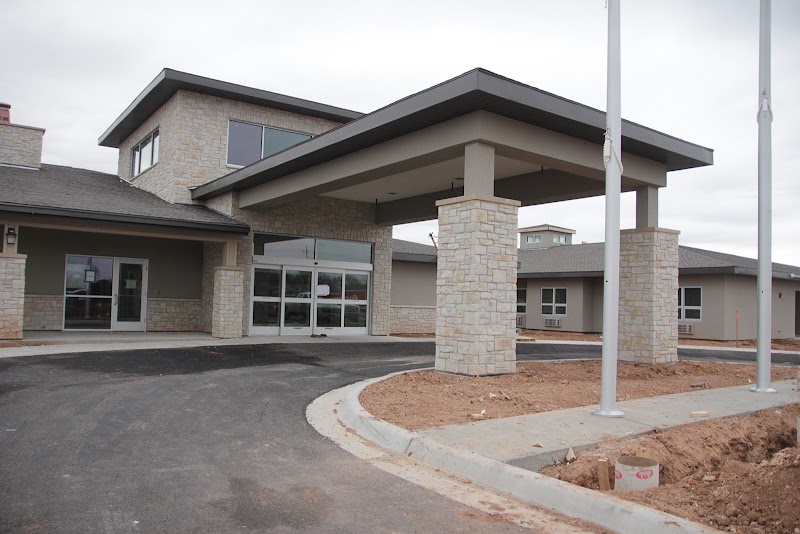



COUNTRY VIEW LIVING

701 BUTLER BLVD., DIMMITT, TX 79027 (806) 647-2984
Government - Hospital district 54 Beds Independent Data: November 2025
Trust Grade
90/100
#35 of 1168 in TX
Last Inspection: September 2024

Within standard 12-15 month inspection cycle. Federal law requires annual inspections.

Overview

Country View Living in Dimmitt, Texas, has earned an excellent Trust Grade of A, indicating that it is highly recommended among nursing homes. It ranks #35 out of 1,168 facilities in Texas, placing it well within the top half of the state, and is the best option in Castro County. The facility's performance is stable, with the same two issues noted in both 2023 and 2024 inspections. Staffing is a strong point, with a perfect 5-star rating and a turnover rate of 38%, which is significantly lower than the Texas average of 50%. However, there have been some concerning findings, including failure to ensure proper food handling practices that could lead to contamination and unsanitary conditions in the kitchen, as well as issues with medication storage that could risk residents' health. Despite these weaknesses, the overall care and staffing quality at Country View Living remain commendable.

Trust Score
A
90/100
In Texas
#35/1168
Top 2%
Safety Record
Low Risk
No red flags
Inspections
Holding Steady
2 → 2 violations
Staff Stability
○ Average
38% turnover. Near Texas's 48% average. Typical for the industry.
Penalties
✓ Good
No fines on record. Clean compliance history, better than most Texas facilities.
Skilled Nurses
○ Average
Each resident gets 36 minutes of Registered Nurse (RN) attention daily — about average for Texas. RNs are the most trained staff who monitor for health changes.
Violations
○ Average
6 deficiencies on record. Average for a facility this size. Mostly minor or procedural issues.
★★★★★
5.0
Overall Rating
★★★★★
5.0
Staff Levels
★★★★★
5.0
Care Quality
★★★★★
5.0
Inspection Score
Stable
2023: 2 issues
2024: 2 issues

The Good

  • 5-Star Staffing Rating · Excellent nurse staffing levels
  • 5-Star Quality Measures · Strong clinical quality outcomes
  • Full Sprinkler Coverage · Fire safety systems throughout facility
  • No fines on record
  • Staff turnover below average (38%)

    10 points below Texas average of 48%

Facility shows strength in staffing levels, quality measures, fire safety.

The Bad

Staff Turnover: 38%

Near Texas avg (46%)

Typical for the industry

The Ugly 6 deficiencies on record

Sept 2024 2 deficiencies
CONCERN (D)

Potential for Harm - no one hurt, but risky conditions existed

Comprehensive Care Plan (Tag F0656)

Could have caused harm · This affected 1 resident

**NOTE- TERMS IN BRACKETS HAVE BEEN EDITED TO PROTECT CONFIDENTIALITY** Based on interviews and record review, it was determined the facility failed to ensure that in accordance with accepted professi...

Read full inspector narrative →
**NOTE- TERMS IN BRACKETS HAVE BEEN EDITED TO PROTECT CONFIDENTIALITY** Based on interviews and record review, it was determined the facility failed to ensure that in accordance with accepted professional standards and practices, the facility must maintain medical records on each resident that are complete, accurately documented, and readily accessible for 2 of 15 residents reviewed for clinical records (Resident #18 And Resident #20) in that: 1. The facility failed to ensure Resident #18's oxygen therapy was documented in her care plan. 2. The facility failed to ensure the correct interventions were documented in Resident #20's care plan relating to his hydration and cardiovascular health. The facility's failure placed residents requiring care at risk for incorrect or omitted treatment, duplicated treatments, poor self-esteem and self-worth, and a failure to ensure continuity of care. Findings included: Record review of Resident #18's face sheet dated 09/24/24 reflected a [AGE] year-old female admitted to the facility on [DATE] with diagnoses that included but not limited to Alzheimer's disease, personal history of Covid 19, chronic obstructive pulmonary disease and hypertensive heart disease with heart failure. Record review of Resident #18's Annual MDS assessment dated [DATE] reflected Resident #18 had a BIMS score of 00 out of 15 indicating she had severe cognitive impairment. The MDS Assessment revealed she received oxygen therapy. Record review of Resident #18's revised care plan dated 08/30/2024 did not have any documentation related to oxygen therapy. Record review of Resident #18's active physician orders revealed resident may use oxygen @ 2 liters per nasal canula as needed for shortness of breath. Record review of Resident #20's face sheet dated 09/24/2024 reflected a [AGE] year-old male admitted to the facility on [DATE] had diagnoses that included but not limited to type 2 diabetes, mellitus without complications, chronic kidney disease and congestive heart failure. Record review of Resident #20's quarterly MDS assessment dated [DATE] revealed Resident #20 had a BIMS score of 15 out of 15 indicating his cognition was intact. Record review of Resident #20's care plan dated 08/02/2024 revealed Resident #20 had cardiovascular status related to hyperlipidemia with interventions of fluid restrictions of 1.5 liters each day-date initiated on 05/03/2024. Record review of Resident #20's physician orders dated 05/03/2024 revealed an order for fluid restriction 1.5 liters each day discontinued on 09/06/2024. In an interview and observation on 09/24/2024 at 8:42 AM, Resident #20 stated he liked to drink milk, and he was able to have milk and juice in his personal refrigerator. Observation of Resident #20's personal refrigerator revealed several cartons of milk and juice in refrigerator. In an observation on 09/24/2024 at 2:40 PM, Resident #18 was sleeping in her bed, oxygen tank in room, Resident #18 was not utilizing the oxygen. In an interview on 09/25/2024 at 9:07 AM, RN B was looking at Resident #20's active orders and could not find any orders for fluid restriction. RN B found the discontinued orders for fluid restriction dated 09/06/2024. RN B stated the MDSC was responsible for ensuring accuracy of records and stated a possible negative outcome for not having accurate records could cause a resident's care not to be effective. In an interview on 09/25/2024 at 9:39 AM, the MDSC stated she and the DON were responsible for ensuring resident records were accurate. The MDSC stated she was not sure how she missed putting the information for oxygen therapy in Resident #18's care plan. The MDSC stated a possible negative outcome for not having accurate records could impact a resident's quality of care. In an interview on 09/25/2024 at 9:51 AM , the DON stated she was responsible for monitoring accuracy of documentation. The DON stated a possible negative outcome for not having accurate records could cause residents to be at risk for something bad to happen. Record review of Charting and Documentation policy revised on July 2017 revealed the following: .All services provided to the resident, progress toward the care plan goals, or any changes in the resident's medical, physical, functional or psychosocial condition, shall be documented in the resident's medical record. The medical record should facilitate communication between the interdisciplinary team regarding the resident's condition and response to care . .Documentation in the medical record will be objective (not opinionated or speculative), complete, and accurate .
CONCERN (E)

Potential for Harm - no one hurt, but risky conditions existed

Food Safety (Tag F0812)

Could have caused harm · This affected multiple residents

Based on observation, , and record review, the facility failed to store, prepare, and serve food under sanitary conditions in 1of 1 kitchen when they failed to: A. Ensure staff wore a hair restraint w...

Read full inspector narrative →
Based on observation, , and record review, the facility failed to store, prepare, and serve food under sanitary conditions in 1of 1 kitchen when they failed to: A. Ensure staff wore a hair restraint while working in the kitchen. B. Ensure stored food was properlycontained and sealed to air after use. These failures placed all residents who ate food served by the kitchen at risk of cross contamination and food-borne illness. Findings included: In an observation on 9/23/24 at 9:20 am the following items in the freezer were observed unsecured and open to air. 1. a box of frozen churro sticks, 2. a brown bag of frozen french fries, not in the original box, 3. a box of frozen cobbler crust dough sheets, 4. a box of frozen fried eggs An observation on 9/24/24 at 11:00 am revealed the same issues in the freezer with no corrections. An observation on 9/25/24 at 1:20 pm revealed FS A was in the cleaning preparation area cleaning the steam table with no hairnet covering her hair. FS A stated she had just forgotten to put it on her hair.She stated she had been trained to wear her hair net at all times in the kitchen. She stated the consequences of her not having a hair net on could cause food borne illness to the residents. In an observation and interview on 9/25/24 at 1:30 pm the Food Service Superviser (FSS) stated she did observe the FS A without a hairnet on at the same time this writer did. She stated she had trained kitchen staff on the use of hairnets and expected all staff to wear hairnets at all times in the kitchen. Observations of the freezer with the FSS revealed the same boxes of frozed foods were still unsecured and open to air. The FSS stated she expected all staff to secure and store all foods propperly and stated all staff had been trained on how to store foods. She stated cross contamination and food borne illness could be a consequence of not securing foods in the freezer. Record review of the facility's policy titled 'Food Safety' dated April, 2021, documented opened packaged food or leftover food is to be tightly wrapped and / or covered in clean air tight containers, labeled dated and stored properly. Record review of the facility policy titled 'Dietary Services Personnel Guidelines' dated March 2021 documented hair must be covered with a hairnet at all times.
Aug 2023 2 deficiencies
CONCERN (D)

Potential for Harm - no one hurt, but risky conditions existed

Infection Control (Tag F0880)

Could have caused harm · This affected 1 resident

Based on observation, interview, and record review, the facility failed to maintain an infection prevention and control program designed to provide a safe, sanitary, and comfortable environment and to...

Read full inspector narrative →
Based on observation, interview, and record review, the facility failed to maintain an infection prevention and control program designed to provide a safe, sanitary, and comfortable environment and to help prevent the development and transmission of communicable diseases and infections for 1 (CNA B) of 6 staff observed for resident care. -CNA B did not wash her hands between glove changes while performing incontinent care. This deficient practice has the potential to affect residents in the facility receiving incontinent care by exposing them to care that could lead to the spread of infections, tissue breakdown, and feelings of isolation related to poor hygiene. Findings include: During an observation on 08-10-2023 at 10:47 AM when performing incontinent care CNA B cleaned the residents vaginal and peri area, changed her gloves, assisted to roll the resident to her side, cleaned the resident's rectal area, changed her gloves, then placed a new brief on the resident. CNA B did not wash her hands or use ABHR between glove changes. During an interview on 08-10-2023 at 10:56 AM CNA B reported that she should have washed her hands each time she changed her gloves and that she should have washed her hands because she touched the resident each time that she provided care. CNA B reported that by not washing her hands between glove changes she could place the resident at risk of developing germs or bacteria and that could result in an infection. During an interview on 08-10-2023 at 03:48 PM when questioned about expected employee handwashing the Administrator reported that was the responsibility of the nursing department to ensure that handwashing was taken care of and that this surveyor would need to ask that department for guidance. During an interview on 08-11-2023 at 08:48 AM the DON verified that she was responsible for training staff on proper handwashing. The DON reported that staff are to wash their hands when they are visibly soiled otherwise, they can use ABHR between glove changes. The DON reported that staff are to use ABHR and change gloves between each portion of the incontinent care and especially between the dirty portion and clean portion of the incontinent care such as prior to placing a new brief. The DON reported that if handwashing is not followed properly during incontinent care, then residents will be placed at risk for infection and cross-contamination. Record review of the competency assessment titled Perineal Care completed by CNA B on 4-25-2023 revealed the following: Purpose: The purpose of this procedure is to provide cleanliness and comfort to the resident, to prevent infections, skin irritation, and to observe the residents skin condition. f. After washing genital area, turn to the side, then washes rectal area moving from front to back . j. Remove gloves and perform hand hygiene Record review of the competency assessment titled Hand Hygiene completed by CNA B on 4-25-2023 revealed the following: Objectives: 1. To prevent transmission of infections agents by performing hand hygiene 2. To protect the resident/patient from infectious agents. Record review of the facility provided policy titled Handwashing/Hand Hygiene revised August 2015 revealed the following: Policy Statement: The facility considers hand hygiene the primary means to prevent the spread of infections. 7. Use an alcohol-based hand rub containing at least 62% alcohol; or, alternatively, soap and water in the following situations. h. Before moving from a contaminated body site to a clean body site during resident care. i. After contact with a resident's intact skin. m. After removing gloves. 9. Th use of gloves does not replace hand washing/hand hygiene. Integration of glove use along with routine hand hygiene is recognized as the best practice for preventing healthcare-associated infections. Applying and Removing Gloves: 1. Perform hand hygiene before applying non-sterile gloves 4. Hold and remove glove in the gloved hand and remove the other glove by rolling it down the hand and folding it in the first glove 5. Perform hand hygiene.
CONCERN (E)

Potential for Harm - no one hurt, but risky conditions existed

Food Safety (Tag F0812)

Could have caused harm · This affected multiple residents

Based on observation, interview, and record review, the facility failed to store, prepare, and serve food under sanitary conditions in 1 of 1 kitchen when they failed to: Ensure kitchen staff used pro...

Read full inspector narrative →
Based on observation, interview, and record review, the facility failed to store, prepare, and serve food under sanitary conditions in 1 of 1 kitchen when they failed to: Ensure kitchen staff used proper hand washing and sanitation procedures when handling food. This failure could cause decreased meal satisfaction and decreased meal consumption due to using unsanitary practices in the facility's only kitchen and could affect all residents in the facility that receive meals from the facility kitchen. Findings included: Observation of the kitchen food prep activities on 8/10/23 from 10:45 a.m. to 11:15 p.m. revealed the following: At 10:40 a.m., [NAME] A was observed in the kitchen preparing purees for the lunch meal on 8/10/23. While preparing the pureed meals [NAME] A did not change her gloves during the activity. [NAME] A washed hands and applied gloves to her hands. [NAME] A walked to the oven, opened the oven doors, and took out a pan of beef casserole. [NAME] A closed the oven doors. [NAME] A set the pan onto the counter, removed the foil covering, picked up a scoop and scooped the required amount of casserole into a blender container. [NAME] A then placed the foil covering back over the casserole pan, opened the door to the oven and placed the casserole back in the oven. [NAME] A removed the pan of vegetables from the oven. [NAME] A closed the oven doors, removed the foil from the vegetable pan and scooped vegetables into a blender container. [NAME] A replaced the foil on the vegetables and placed the pan of vegetables back into the oven. [NAME] A closed the oven doors and took both blender containers to the blending machine across the kitchen. [NAME] A got 2 serving pans and 2 scoops from the shelf and brought them to the prep table. [NAME] A blended the meat casserole touching the lid, blender controls and the prep table while blending the puree. [NAME] A picked up the blending container from the base with her gloved hands and set the blender container on the counter. [NAME] A blended the vegetables and then picked up each blender container and poured the blended meat casserole into the serving pan and covered the pan with foil. [NAME] A then poured the vegetables into the serving pan and covered the pan with foil. [NAME] A then opened the bread wrapper and pulled a slice of bread from the wrapper and tore the bread into pieces with her gloved hands and put the bread into a 3rd blender container. [NAME] A then reached into the bread wrapper with her gloved hands and pulled 4 slices of bread from the wrapper and tore the bread with her hands and placed the torn bread into the blender. [NAME] A picked up a carton of milk opened the container with her gloved hands and poured the milk into the blender. [NAME] A picked up another container of milk and dropped it on the floor. [NAME] A walked to the cooler, removed a carton of milk, and brought the milk to the prep table, opened the carton with her hands and poured milk into the blender. [NAME] A picked up a small container of honey and poured the honey into the blender. [NAME] A did not make any attempts to change her gloves or wash her hands. In an interview on 8/10/23 at 11:10 AM, [NAME] A was asked if she realized she touched the bread and various kitchen surfaces while pureeing and had not changed her gloves or washed her hands while pureeing the lunch foods. [NAME] A stated Yes, I should not have touched the bread without washing my hands first and changing my gloves. [NAME] A stated she was trained on proper food handling and use of tongs when touching food. She stated touching foods with contaminated gloves can cause food borne illnesses to the residents. [NAME] A stated she was just nervous. In an interview on 8/11/23 at 9:30 AM, the DM was asked about handwashing, the use of gloves and tongs. The DM stated She shouldn't be touching the food. The DM stated tongs should be used to touch the bread and gloves should be changed between tasks. The DM stated she trusts [NAME] A's work. [NAME] A knows to change gloves between tasks and use tongs to touch food. The DM stated the consequences of touching food with contaminated gloves was the spread of bacteria and pathogens contaminate the food the residents eat. The residents could get sick from contaminated food. The DM stated [NAME] A was just nervous. Record Review of the facility's policies titled Preparation of Food with a date of April 2021, documented: ' Bare hands should never touch food directly. Gloves or serving utensils should be used to handle all foods. Record Review of the facility policy titled Handwashing with a date of April 2021, revealed: Employees are to wash hands between handling of dirty and clean equipment, dishes, utensils, and food. After touching objects that may be a source of contamination if the next contact with the hands is food or food contact surfaces; between handling cooked and uncooked food; The use of gloves or the use of hand sanitizer does not replace handwashing.
Jun 2022 2 deficiencies
CONCERN (D)

Potential for Harm - no one hurt, but risky conditions existed

Food Safety (Tag F0812)

Could have caused harm · This affected 1 resident

**NOTE- TERMS IN BRACKETS HAVE BEEN EDITED TO PROTECT CONFIDENTIALITY** Based on observation, interview, and record review, the facility failed to store food in accordance with professional standards ...

Read full inspector narrative →
**NOTE- TERMS IN BRACKETS HAVE BEEN EDITED TO PROTECT CONFIDENTIALITY** Based on observation, interview, and record review, the facility failed to store food in accordance with professional standards for food service safety in 1of 1 kitchens reviewed for food storage. The facility failed to ensure stored food was properly labeled, dated, and stored. These failures could place residents who ate food served by the kitchen at risk of food-borne illness. Findings included: Observation on 06/21/2022 at 9:20 AM on initial kitchen rounds revealed the following: 1 re-sealable clear storage bag containing food item, unlabeled, and not in original packaging in the walk-in refrigerator. In an interview on 06/21/202 at 9:20 AM, the DM said the unlabeled storage bag should have been labeled. In an interview on 06/21/2022 at 10:00 AM, the DM stated that the LD had conducted a review of the Kitchen on 06/20/2022. Observation on 06/22/2022 at 11:35 AM, on follow up kitchen rounds revealed the following: 1 re-sealable clear storage bag containing food item, unlabeled, and not in original packaging sitting on the prep table across from the walk-in refrigerator. In an interview on 06/22/2022 at 11:35 AM, the DM identified the food item as small potatoes and said that the food item should not have been out on the table and should have been labeled. The DM said the consequence of improper food handling could be a food-borne illness. Record Review of the Dietary Consulting Report Month: June 2022, signed by LD, revealed 8. Proper dates/labels on foods checked category Needs Improvement. Record Review of the facility's policy titled Food Storage - Refrigerated and Frozen Foods from the Dietary Services Policy and Procedure Manual dated April 2021, documented: PROCEDURE: 6. Food must be stored in properly covered container with a date and label identifying what is in the container. Foods may remain in the [NAME] box as long as content and date are easily visible on the box. Any foods removed from the [NAME] box must be dated and labeled.
CONCERN (E)

Potential for Harm - no one hurt, but risky conditions existed

Deficiency F0761 (Tag F0761)

Could have caused harm · This affected multiple residents

Based on observation, interview, and record review, it was determined the facility failed to ensure medications were stored and labeled in accordance with currently accepted professional principles on...

Read full inspector narrative →
Based on observation, interview, and record review, it was determined the facility failed to ensure medications were stored and labeled in accordance with currently accepted professional principles on 1 of 2 medication carts. 3 insulin medications in the 200-Hall medication cart were not marked with the date they were opened and accessed and/or a discard by date. 1 insulin medication in the 200-Hall medication cart was marked with an open date of 4-11-2022, still in use 73 days after opening. 2 insulin medications in the 200-Hall medication cart had no identifying information of which resident they were being used for. The facility's failure to ensure medications were labeled in accordance with currently accepted professional principles could place residents receiving medication at risk for administration of medication that are ineffective resulting in exacerbation of the disease being treated or the introduction of infection from contamination. Findings include: During an observation and interview on 06/23/22 at 12:24 PM of the 200-Hall medication cart with staff member RN D present the following was noted: Resident #30-Humulog Insulin given per sliding scale with an access dated of 4-11-2022. RN D verified that she had administered 2 units from this bottle per Resident #30 sliding scale orders prior to lunch from this bottle, the bottle was almost empty, and it was for a blood sugar of 222mg/dl. During continued observation and interview on 06/23/22 at 12:24 PM RN D verified that Resident #30's Lantus insulin bottle had no open/access date or dated of discard. RN D verified that she had given Resident #30 30units per Resident #30's scheduled dose this AM from the unmarked Lantus bottle. During continued interview on 06/23/22 at 12:24 PM RN D verified that both of Resident #30's insulin bottles were not marked correctly and when questioned as to why the insulin bottles were not marked RN D stated, I don't know on these, I didn't access them. When questions if they should be marked with the access date RN D stated, Yes sir. When questioned when an insulin should be discarded after it is opened RN D stated, I want to say 90 days. During continued observation on 06/23/22 at 12:24 PM of the 200-Hall medication cart with staff member RN D present the following was noted: Resident #19 had a Tresiba insulin pen that had been accessed and a Humalog Insulin Pen that had been accessed. RN D verified that the Tresiba pen was nearly full and the Humalog pen had approximately 65 units remaining. RN D also verified that both pens had no resident identifying information and that both insulin pens had no open/access date or dated of discard. When questioned if a staff member unfamiliar with the resident was ordered to administer the unidentified insulin would it be safe practice RN D stated, There is no way to tell which resident it would go to. When questioned as to the consequences of not marking insulin with the access date the RN D stated, The insulin will not be effective, and the residents blood sugars would be high. During an interview on 06/23/22 at 12:14 PM the DON reported that insulins should be discarded 28 days after they are accessed. When presented with the insulin that was accessed 4-11-22 the DON stated, This should have been discarded. The DON verified the bottle was almost empty. The DON verified Resident #30's Lantus was not marked with an access date. The DON verified that both of Resident #19's insulin pens were not marked with open/access dates or dates of discard and had no resident identifying information. When questioned if she was not familiar with Resident #19 would she be able to give him the insulin safely the DON stated, No, I would not know who to give it to. When questioned as to the consequences of not marking insulin with the access date the DON stated, The insulin will not be effective. Record review of the facility provided policy titled Administering Medications revised December 2021, revealed: Policy Interpretation and Implementation 9. The expiration/beyond use date on the medication label must be checked prior to administering. When opening a multi-dose container, the date opened shall be recorded on the container. 14. Insulin pens will be clearly labeled with the resident named or other identifying information. Prior to administering insulin with an insulin pen, the nurse will verify that the correct pen is used for that resident. Record review of the facility provided policy titled Labeling of Medication Containers revised April 2007, revealed: Policy Statement: All medications maintained in the facility shall be properly labeled in accordance with current stated and federal regulations. Policy Interpretation and Implantation: 3. Labels for individual drug containers shall include all necessary information, such as: a. The resident's name b. The prescribing physician's name c. The name, address, and telephone number of the issuing pharmacy . f. Date the medication was dispensed .
Understanding Severity Codes (click to expand)
Life-Threatening (Immediate Jeopardy)
J - Isolated K - Pattern L - Widespread
Actual Harm
G - Isolated H - Pattern I - Widespread
Potential for Harm
D - Isolated E - Pattern F - Widespread
No Harm (Minor)
A - Isolated B - Pattern C - Widespread

Questions to Ask on Your Visit

  • "Can I speak with families of current residents?"
  • "What's your RN coverage like on weekends and overnight?"

Our Honest Assessment

Strengths
  • • Grade A (90/100). Above average facility, better than most options in Texas.
  • • No major safety red flags. No abuse findings, life-threatening violations, or SFF status.
  • • No fines on record. Clean compliance history, better than most Texas facilities.
  • • 38% turnover. Below Texas's 48% average. Good staff retention means consistent care.
Concerns
  • • No significant concerns identified. This facility shows no red flags across CMS ratings, staff turnover, or federal penalties.
Bottom line: Generally positive indicators. Standard due diligence and a personal visit recommended.

About This Facility

What is Country View Living's CMS Rating?

CMS assigns COUNTRY VIEW LIVING an overall rating of 5 out of 5 stars, which is considered much above average nationally. Within Texas, this rating places the facility higher than 99% of the state's 100 nursing homes. This rating reflects solid performance across the metrics CMS uses to evaluate nursing home quality.

How is Country View Living Staffed?

CMS rates COUNTRY VIEW LIVING's staffing level at 5 out of 5 stars, which is much above average compared to other nursing homes. Staff turnover is 38%, compared to the Texas average of 46%. This relatively stable workforce can support continuity of care.

What Have Inspectors Found at Country View Living?

State health inspectors documented 6 deficiencies at COUNTRY VIEW LIVING during 2022 to 2024. These included: 6 with potential for harm.

Who Owns and Operates Country View Living?

COUNTRY VIEW LIVING is owned by a government entity. Government-operated facilities are typically run by state, county, or municipal agencies. The facility operates independently rather than as part of a larger chain. With 54 certified beds and approximately 54 residents (about 100% occupancy), it is a smaller facility located in DIMMITT, Texas.

How Does Country View Living Compare to Other Texas Nursing Homes?

Compared to the 100 nursing homes in Texas, COUNTRY VIEW LIVING's overall rating (5 stars) is above the state average of 2.8, staff turnover (38%) is near the state average of 46%, and health inspection rating (5 stars) is much above the national benchmark.

What Should Families Ask When Visiting Country View Living?

Based on this facility's data, families visiting should ask: "Can I visit during a mealtime to observe dining assistance and food quality?" "How do you handle medical emergencies, and what is your hospital transfer rate?" "Can I speak with family members of current residents about their experience?"

Is Country View Living Safe?

Based on CMS inspection data, COUNTRY VIEW LIVING has a clean safety record: no substantiated abuse findings (meaning no confirmed cases of resident harm), no Immediate Jeopardy citations (the most serious violation level indicating risk of serious injury or death), and is not on the Special Focus Facility watch list (a federal program monitoring the lowest-performing 1% of nursing homes). The facility has a 5-star overall rating and ranks #1 of 100 nursing homes in Texas. While no facility is perfect, families should still ask about staff-to-resident ratios and recent inspection results during their visit.

Do Nurses at Country View Living Stick Around?

COUNTRY VIEW LIVING has a staff turnover rate of 38%, which is about average for Texas nursing homes (state average: 46%). Moderate turnover is common in nursing homes, but families should still ask about staff tenure and how the facility maintains care continuity when employees leave.

Was Country View Living Ever Fined?

COUNTRY VIEW LIVING has no federal fines on record. CMS issues fines when nursing homes fail to meet care standards or don't correct problems found during inspections. The absence of fines suggests the facility has either maintained compliance or corrected any issues before penalties were assessed. This is a positive indicator, though families should still review recent inspection reports for the full picture.

Is Country View Living on Any Federal Watch List?

COUNTRY VIEW LIVING is not on any federal watch list. The most significant is the Special Focus Facility (SFF) program, which identifies the bottom 1% of nursing homes nationally based on persistent, serious quality problems. Not being on this list means the facility has avoided the pattern of deficiencies that triggers enhanced federal oversight. This is a positive indicator, though families should still review the facility's inspection history directly.