Gulf Shores Rehabilitation & Healthcare Center
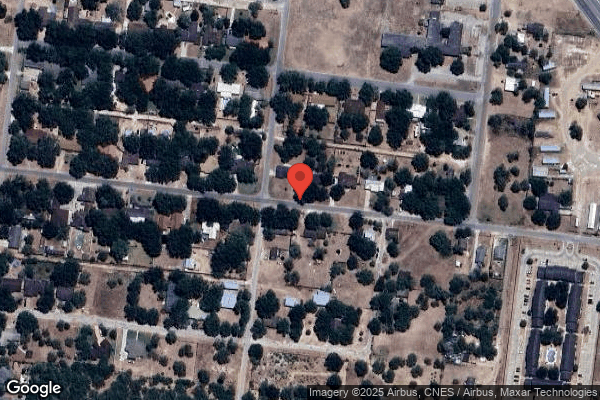
1301 S Terrell St, Falfurrias, TX 78355 (361) 325-3658
For profit - Corporation 96 Beds NEXION HEALTH Data: November 2025
Trust Grade
80/100
#61 of 1168 in TX
Last Inspection: December 2024

Within standard 12-15 month inspection cycle. Federal law requires annual inspections.

Overview

Gulf Shores Rehabilitation & Healthcare Center in Falfurrias, Texas has a Trust Grade of B+, which means it is above average and recommended for families considering care options. It ranks #61 out of 1,168 facilities in Texas, placing it in the top half, and is the only option in Brooks County. The facility is improving, with a decrease in reported issues from 7 in 2024 to 5 in 2025. However, staffing is a concern with a 2/5 star rating and a turnover rate of 40%, which, while below the Texas average, indicates room for improvement in staff retention. On a positive note, the facility has no fines on record and maintains decent RN coverage. Specific incidents noted include a failure to properly sort laundry, risking infection spread, and deficiencies in care plans that did not adequately address residents' needs, which could lead to potential harm. Additionally, there were issues ensuring call lights were accessible for residents, putting them at risk of not being able to call for help. Overall, while there are strengths in certain areas, families should be aware of these weaknesses when considering this facility.
Trust Score
B+
80/100
In Texas
#61/1168
Top 5%
Safety Record
Low Risk
No red flags
Inspections
Getting Better
7 → 5 violations
Staff Stability
○ Average
40% turnover. Near Texas's 48% average. Typical for the industry.
Penalties
✓ Good
No fines on record. Clean compliance history, better than most Texas facilities.
Skilled Nurses
⚠ Watch
Each resident gets only 25 minutes of Registered Nurse (RN) attention daily — below average for Texas. Fewer RN minutes means fewer trained eyes watching for problems.
Violations
⚠ Watch
22 deficiencies on record. Higher than average. Multiple issues found across inspections.
★★★★★
5.0
Overall Rating
★★☆☆☆
2.0
Staff Levels
★★★★★
5.0
Care Quality
★★★★☆
4.0
Inspection Score
Stable
2024: 7 issues
2025: 5 issues

The Good

  • 5-Star Quality Measures · Strong clinical quality outcomes
  • Full Sprinkler Coverage · Fire safety systems throughout facility
  • No fines on record
  • Staff turnover below average (40%)

    8 points below Texas average of 48%

Facility shows strength in quality measures, fire safety.

The Bad

Staff Turnover: 40%

Near Texas avg (46%)

Typical for the industry

Chain: NEXION HEALTH

Part of a multi-facility chain

Ask about local staffing decisions and management

The Ugly 22 deficiencies on record

Jul 2025 1 deficiency
CONCERN (D) 📢 Someone Reported This

A family member, employee, or ombudsman was alarmed enough to file a formal complaint

Potential for Harm - no one hurt, but risky conditions existed

Abuse Prevention Policies (Tag F0607)

Could have caused harm · This affected 1 resident

**NOTE- TERMS IN BRACKETS HAVE BEEN EDITED TO PROTECT CONFIDENTIALITY** Based on interviews and record reviews, the facility failed to develop and implement written policies and procedures that prohib...

Read full inspector narrative →
**NOTE- TERMS IN BRACKETS HAVE BEEN EDITED TO PROTECT CONFIDENTIALITY** Based on interviews and record reviews, the facility failed to develop and implement written policies and procedures that prohibit and prevent mistreatment, abuse, neglect, and exploitation of residents, and misappropriation of residents' property for 1 of 5 residents (Resident #1) reviewed for abuse. The facility failed to ensure CNA A did not inappropriately touch and kiss Resident #1. This failure could place residents at risk for abuse and psychological harm.Findings include:Record review of Resident #1's face sheet dated 07/16/25 reflected a [AGE] year-old-male with an original admission date of 04/16/25. Resident #1 had diagnoses which included bipolardisorder (mental health condition characterized by extreme mood swings), seizures (sudden surge of electrical activity in the brain that can cause involuntary movements), blindness in right eye, and anxiety (feeling of worry, nervousness, or unease). Record review of Resident #1's quarterly MDS dated [DATE], reflected a BIMS of 15 which indicated the resident was cognitively intact). Functional abilities included setup or clean-up assistance (Helper provides verbal cues/and/or touching/steadying and/or contact guard assistance as resident completed an activity. Assistance may be provided throughout the activity or intermittently) with showering/bathing self. Partial/moderate assistance (Helper does LESS THAN HALF the effort. Helper lifts, hold, or supports trunk or limbs, but provided less than half the effort) with toileting hygiene, upper body dressing, and personal hygiene. Substantial/maximal assistance (Helper does MORE THAN HALF the effort. Helper lifts or holds trunk or limbs and provides more than half the effort) with lower body dressing. Record review of Resident #1's progress notes dated on 04/29/25 reflected:Resident verbalized a female staff member was inappropriately touching and kissing him. Resident verbalized female staff member gave him her personal phone number, and resident proceed to engage in conversation with employee. Resident verbalized he would text her and request pictures of her and employee would send him photos of herself. Facility performed a head-to-toe assessment, Trauma Informed Assessment performed, called the Local Authority, Called the Ombudsman, and Nurse Practitioner was notified and gave orders for STD Panel (RPR, HIV, CHLAMYDIA, GONORRHEA, HERPES, SYPHILIS, & HEPATITIS) and monitor for any s/s of behaviors and distress for 72 hours. Resident did not warrant the need for hospitalization and refused to be sent to hospital for evaluation. Will continue to follow plan of care.Record review of Resident #1's care pan dated 04/19/25 reflected:The resident has a behavior problem r/t bipolar, depression & anxiety. Hx of confabulating stories, accusative behavior towards team members and homosexual, with poor impulse control and short temper, accusing staff of stealing from him, refusing staff to enter room to provide care, using profanity towards staff and constantly verbalizes he has a lawyer and is building his case for monetary compensation: Hx of cocaine abuse. Resident with history of nightmares at night due to him being kidnapped in Mexico 10 years ago. on 4/29/25, Resident #1voices female staff member was sexually inappropriate with him, and he let her as he is a man and could not resist. States he requested her phone number and pictures of her as well.Interventions include: The resident will have no evidence of behavior problems by review date. Administer medications as ordered. Monitor/document for side effects andeffectiveness. Anticipate and meet the resident's needs.Explain all procedures to the resident before starting and allow the resident to adjust to changes. Head to toe assessment and labs In an interview on 07/15/25 at 1:38pm, Resident #1 stated on the first day he got to the facility, he was about to take a shower, and he told CNA A he could shower himself but stated CNA A went in the shower room and helped him shower anyways. Resident #1 stated during the shower, CNA A began to give him oral sex. Resident #1 stated me as a man, I liked it. Resident #1 stated this continued for the first two weeks after arriving to the facility. Resident #1 stated he did not report the incident until two weeks later to the ADM. Resident #1 stated he was not scared and enjoyed it at the time. Resident #1 did not elaborate further on alleged incident. Resident #1 stated he asked CNA A for her number, and she gave it to him. Resident #1 stated they began to text, and he asked CNA A for a picture. Resident #1 showed this State Surveyor his phone and the text thread with a picture of what appeared to be a mirror selfie of a female with tattoos located on the arm and leg seen in the picture, no face was visible in the picture as it was covered by the phone. Resident #1 did not state if he knew CNA A prior to being admitted to the facility. Record review of Resident #1's text messages reflected:Resident #1: What's up beautifulAlleged CNA A: Hey, what's up just seeing thisResident #1: Can you send me another picture I deleted the one you sent meAlleged CNA A: It will have to be later I don't have the correct phone with meResident #1: Okay thanksResident #1: It feels good outsideAlleged CNA A: Does it I haven't been outsideAlleged CNA A: HelloResident #1: Sorry I fell asleepResident #1: Send me a picture of youAlleged CNA A: I have to wait till I get homeResident #1: OkayAlleged CNA A dated, Sunday April 27th at 2:35pm: Picture of a female with no face visible wearing a bra and underwear, with visible tattoos on the forearm and leg. In an interview on 7/16/25 at 9:38am, the SW stated she had just arrived to work when Resident #1 came up to her and stated he needed to talk with her. The SW stated Resident #1 reported to her he was getting inappropriate pictures from CNA A, and she was coming on to him. The SW stated Resident #1 stated CNA A tried to kiss him and gave him unwanted advances. The SW stated she immediately informed administration. The SW stated Resident #1 spoke to the ADM and the DON and showed them the inappropriate picture of a female that was texted to him. The SW stated Resident #1 stated she sent multiple pictures but there were no other pictures on the phone and the phone number on the text message was not the same number listed for CNA A. The SW was unable to identify if the female in the picture was CNA A as the face was not visible. The SW stated Resident #1 did not appear fearful, did not appear to be in any distress, and did not verbalize feeling unsafe. The SW stated later, during Resident #1's head-to-toe assessment, Resident #1 reported to the DON and the ADM another story. Resident #1 stated he was receiving oral sex from CNA A; Administration reported the alleged incident to the state survey agency. The SW stated she was not present during the head-to-toe assessment, and she did not know exactly what was said but stated Resident #1 changed his story from CNA A kissing him or trying to kiss him, to receiving oral sex and he did not report it because he is a man, and he couldn't tell her no. The SW stated no other residents came to her or expressed being inappropriately cared for or touched by CNA A or any other staff members. The SW stated the resident stated the advances were happening in his room. In an interview on 07/16/25 at 12:11pm, the DON stated during a morning meeting, the SW came to inform them Resident #1 had made an allegation stating he received inappropriate pictures of CNA A. The DON stated he and the SW went to speak to Resident #1 and showed him a text thread on his phone. The DON stated in the text message, Resident #1 asked for a picture. The DON stated the picture shown was of a female in front of a mirror with the phone partially covering her face and she was in her underwear. The DON stated the resident claimed there were other pictures but he deleted them and was going to ask for more so he could show his lawyer. The DON stated even though in the picture, her face was partially covered by the phone, it could have been CNA A. The DON stated he could not identify the female in the picture by the tattoos. The DON stated the police were called immediately (police report observed). The DON stated while the police were at the facility, that was when Resident #1 insinuated he and CNA A had oral sex by motioning it without saying it. The DON stated Resident #1 stated CNA A touched him, and they kissed in his room and motioned with gestures they had oral sex. The DON stated the resident stated it happened just the one time. The DON stated the police officer saw the picture and recognized the female as possibly being CNA A as CNA A had run ins with the law. The DON stated the phone number used in that text, was later confirmed to be CNA A's phone number. The DON stated the CCS for the facility called the number used in the text and CNA A answered the phone and identified herself by name when asked who she was. The DON stated CNA A denied the allegations between her and Resident #1 and could not answer why Resident #1 had her number or picture. The DON stated no other residents had a concern about the care CNA A provided. In an interview on 7/16/25 at 12:21, the ADM stated Resident #1 informed the SW CNA A was having an inappropriate relationship with him. When the ADM spoke to Resident #1, he stated CNA A was sucking his dick. The ADM stated Resident #1 was not fearful. The ADM stated the resident reported to the SW kissing was going on in his room and CNA A was sending him pictures but did not report about the oral sex. The ADM stated the police were called, CNA A was immediately suspended, and an investigation was conducted. The ADM stated no other residents stated they were abused or inappropriately touched by CNA A or any staff member. CNA A was terminated an no longer employed by the facility. In a phone interview on 7/16/25 at 12:31pm, the CCS stated she was contacted by the facility and informed about the situation with Resident #1 and CNA A. The CCS stated the ADM stated there was an allegation of emotional distress. The CCS stated the number used in the text messages where the picture was found was not a number the facility had listed for CNA A. The CCS stated since the picture did not show a face, the staff were unable to positively identify the female in the picture was CNA A. The CCS stated however, she called the number on the text thread and when the person answered the phone, they identified themselves as CNA A. The CCS stated she did not know what CNA A looked like and could not identify her as the female in the picture. In an in anonymous interview, CNA A seemed flirtatious with the male residents and giggly with the female residents. CNA A was not professional, and CNA A would present herself different with the male residents like the boundary wasn't there for her. They reported CNA A's behavior to many people including the ADON and was not sure what came about it and could not identify who they told or when the complaints were made. They felt CNA A was doing stuff she was not supposed to be doing. CNA A would sometimes take a long time with Resident #1. When they would check on what was taking CNA A so long, she would be in the room combing Resident #1's hair or CNA A stated she was just providing care. In an interview on 7/16/25 at 1:59pm the ADON stated CNA A was an okay employee and stated Resident #1 claimed she was a good CNA. The ADON stated staff never came to her about concerns with CNA A and the care she provided. The ADON stated CNA A would take a long time when providing care to residents but could not say if it was with male or female residents but believed CNA A was just slow because she was new to the facility. The ADON stated she did not work closely with CNA A and could not say if she was inappropriate with residents. The ADON stated Resident #1 claimed CNA A was sending him inappropriate text messages or pictures. The ADON stated she could not see the face in the picture and could not positively identify if it was CNA A. The ADON stated she could not recall if Resident #1 stated it happened once or not. The ADON stated no other residents expressed concern or complained about CNA A's care. In a second anonymous interview revealed CNA A seemed to be flirtatious with Resident #1. CNA A's behavior was reported to multiple nurses which included the ADON but did not know if anything was ever done. CNA A would take hours on Resident #1 and CNA A would say she was either combing their hair or providing some kind of care. CNA A would brag about getting texts from Resident #1, but CNA A never stated she had a sexual relationship with Resident #1 and denied any inappropriate behavior. Information about CNA A texting Resident #1 was not reported. In a phone interview on 7/16/25 at 2:51pm, CNA A stated she remembered Resident #1 and stated he would request her to provide care to him because she cared for him the right way and would bathe him right. CNA A stated she never sent text messages or pictures to any resident, CNA A denied any inappropriate behavior and stated she did have tattoos but did not identify them. Attempted interview with the local authorities on 07/16/25 at 4:04pm, 07/16/25 at 4:08pm, and 07/16/25 at 4:40pm were unsuccessful. Record review of the Police Report dated 4/29/25, reflected the call log confirmed the phone number in Resident #1's text message belonged to CNA A. Record review of the facility's Abuse Prohibition Policy dated 06/02/25 reflected: IntentEach resident has the right to be free from abuse, mistreatment, neglect, corporal punishment, involuntary seclusion and financial abuse. Sexual abuse includes, but is not limited to, rape, sexual harassment, sexual coercion or sexual assault.Identifying Sexual Abuse and Capacity to ConsentA resident's consent to sexual activity is not valid if obtained from a resident who lacks the capacity to consent, or if the consent was obtained through intimidation, fear or coercion. 1. Sexual abuse is non-consensual sexual contact of any type with a resident, as defined at 42 CFR S483.5. Sexual abuse includes, but is not limited to:a. unwanted intimate touching of any kind especially of breasts or perineal area;b. all types of sexual assault or battery, such as rape, sodomy, and coerced nudity;c. forced observation of masturbation and/or pornography; andd. taking sexually explicit photographs and/or audio/video recordings of a resident(s) and maintaining and/or distributing them (e.g. posting on social media). This wouldinclude, but is not limited to, nudity, fondling, and/or intercourse involving a resident.2. Generally, sexual contact is nonconsensual if the resident either:a. appears to want the contact to occur, but lacks the cognitive ability to consent; orb. does not want the contact to occur.4. Any forced, coerced or extorted sexual activity with a resident, regardless of the existence of a pre-existing or current sexual relationship, is considered to be sexualabuse.
Jul 2025 3 deficiencies
CONCERN (D) 📢 Someone Reported This

A family member, employee, or ombudsman was alarmed enough to file a formal complaint

Potential for Harm - no one hurt, but risky conditions existed

Report Alleged Abuse (Tag F0609)

Could have caused harm · This affected 1 resident

**NOTE- TERMS IN BRACKETS HAVE BEEN EDITED TO PROTECT CONFIDENTIALITY** Based on interviews and record review, the facility failed to ensure that all alleged violations involving the reasonable suspic...

Read full inspector narrative →
**NOTE- TERMS IN BRACKETS HAVE BEEN EDITED TO PROTECT CONFIDENTIALITY** Based on interviews and record review, the facility failed to ensure that all alleged violations involving the reasonable suspicion of a crime were reported immediately to a law enforcement entity for its political subdivision, within two hours if the events that cause the allegation involve abuse or result in serious bodily injury, or not later than 24 hours if the events that cause the allegation do not involve abuse and do not result in serious bodily injury, for 1 (Resident #1 ) of 5 residents reviewed for abuse/neglect.The facility failed to report to the local law enforcement agency within the allotted time frame of 24 hours on 01/27/2025 around 8:53 AM when LVN A observed red/yellow discoloration on Resident #1's left breast and areola.This failure could place all residents at increased risk for potential abuse due to unreported allegations of abuse.The findings included:Record review of Resident #1 face sheet dated 07/07/2025 revealed Resident #1 was a [AGE] year-old- female who was initially admitted on [DATE]. Resident #1 was admitted with diagnoses of Alzheimer's disease (cognitive impairment) and dementia (cognitive impairment) and altered mental status.Record review of Resident #1's Comprehensive MDS dated [DATE] revealed Resident #1 had a long-term and short-term memory problem which meant severely cognitively impaired and was dependent on staff for ADLs.Record review of Resident #1's Care Plan date implemented 11/03/2024 and revision date on 03/02/2025 have actual impairment of my skin integrity r/t Diabetes, protein calorie malnutrition, B&B incontinence 1/27/2025 Discoloration to right chest down to breast. 1/27/25Resident noted tightly crossing arms over chest area, at risk for self-inflicted bruising. Goal: My area of discoloration to left chest and breast will be resolved by review date. I will maintain intact skin through the review date. Interventions: 1/18/25 Staff in-serviced by DOR on proper transfer techniques and handling residents. Resident sleeps with arms crossed in fetal position and is at risk for bruising. or changes and report to DS if abnormal. Encourage good nutrition and hydration in order to promote healthier skin. Follow facility protocol for treatment of skin impairment. Incontinent care as needed. Apply barrier cream as needed. Keep skin clean and dry. Use lotion on dry skin. Monitor (specify meds/treatments) for potential side effects compromising skin integrity. Notify MD/NP/PA/RP of impairments of skin integrity. Pillow will be given to resident and placed over chest to minimize resident from applying pressure to chest area to prevent bruising. Skin checks weekly. Use caution during transfers and bed mobility to prevent striking arms, legs, and hands against any sharp or hard surface.Record review of Resident #1's Skin Observation tool dated 01/27/2025 at 08:53AM revealed Area of red/yellow discoloration from left chest down to left breast and areola. Skin 100% intact 20cm X 7.5cm X 0cm.Record review of the facility's Provider Investigation Report regarding Resident #1 revealed incident date 01/27/2025, Facility Nurse performed a head-to-toe assessment and noted red and fading yellow discoloration to the left chest wall and left breast and areola skin intact 20 cm x 7.5 cm x 0. Resident in not apparent pain. No physiological or psychological distress noted. Resident within her normal baseline.During an interview on 07/07/2025 around 2:21PM, the Administrator stated the bruise on Resident #1 did not look suspicious, however on 01/27/2025 could not definitively rule out abuse as the investigation was ongoing. The Administrator stated once she attained all the details regarding Resident #1's left chest bruise, she concluded that the injury may have stemmed from possible gait belt usage. The administrator stated she the facility's protocol would be to initially treat the skin irregularity as abuse and would notify HHSC and local law enforcement immediately. The Administrator stated she did know recall why she did not notify the local law enforcement as it is one of her initial steps. The Administrator stated the reason she notifies the local law enforcement was due to being on her facility policy and procedures in accordance with state regulations. The Administrator gave no definitive answer when questioned what could happen if the local law enforcement is not notified of an allegation of abuse. The Administrator reiterated she may have forgotten to notify local law enforcement regarding Resident #1's bruise, and continued to state the bruise was not suspicious, however since Resident #1 was cognitively impaired she was unable to verbalize how the skin discoloration occurred. The Administrator stated she reports all allegations of abuse and neglect to the appropriate state agencies and local law enforcement, however for this incident she did not, but will for future incidents. Record review of the facility's gait belt transfer in-service dated 1/27/25 was reviewed.Record review of the facility's Abuse Prohibition Policy in-service dated 1/27/25 was reviewed.Record review of the facility's Abuse Prohibition Policy reviewed dated 6/2/25 revealed,Reporting/Response: 2. The facility will report all allegations and substantiated occurrences of abuse, neglect or misappropriation of resident property to the state agency and to all other agencies as required by law and will take all necessary corrective action depending on the results of the investigation. The Abuse Coordinator will report allegations of abuse, neglect, with serious bodily injury, mistreatment with serious bodily injury, exploitation with serious bodily injury, and injuries of unknown source with serious bodily injury immediately or within two hours of the allegation. The Abuse Coordinator will report all other allegations of neglect, mistreatment, exploitation, injuries or unknown source and misappropriation within 24 hours of the allegation.
CONCERN (D) 📢 Someone Reported This

A family member, employee, or ombudsman was alarmed enough to file a formal complaint

Potential for Harm - no one hurt, but risky conditions existed

Accident Prevention (Tag F0689)

Could have caused harm · This affected 1 resident

**NOTE- TERMS IN BRACKETS HAVE BEEN EDITED TO PROTECT CONFIDENTIALITY** Based on observation, interview, and record review, the facility failed to ensure each resident received adequate supervision an...

Read full inspector narrative →
**NOTE- TERMS IN BRACKETS HAVE BEEN EDITED TO PROTECT CONFIDENTIALITY** Based on observation, interview, and record review, the facility failed to ensure each resident received adequate supervision and assistance devices to prevent accidents, for one of four residents (Resident #2) reviewed for accidents and supervision.The facility failed to ensure CNA A used a gait belt to transfer Resident #2 from the wheelchair to bed on 07/06/2025.This failure could place residents at risk for falls, injuries and a decline in health.Findings include:Record review of Resident #2's face sheet, dated 07/07/2025, revealed a [AGE] year-old female who was initially admitted to the facility on [DATE] and readmitted on [DATE]. Resident #2 diagnoses included lack of coordination, muscle wasting and atrophy (breakdown of tissue), hemiplegia (paralysis of one side of body) and hemiparesis (weakness on one side of the body) following cerebral infarction (stroke) affecting left non-dominant side, abnormalities of gait and mobility, and lack of coordination.Record review of Resident #2's Quarterly MDS, dated [DATE], revealed Resident #2 had a BIMS score of 15, which meant Resident #2 was cognitively aware. Resident #2 needed substantial/maximal assistance for chair/bed-to-chair transfer. Resident #2 was coded to have neurological deficits of cerebrovascular accident, transient ischemic attack or stroke and hemiplegia or hemiparesis.Record review of Resident #2's care plan focus date initiated 10/10/2024 and revised on 01/25/2025, The resident has an ADL self-care performance deficit r/t Left hemiplegia (weakness to extremities) and hemiparesis (paralysis to one side of the body) TRANSFER: The resident requires Total assistance) by (X1) staff to move between surfaces. Encourage the resident to use bell to call for assistance.During an observation 07/06/2025 at 3:27PM CNA A entered Resident #2's room and assisted Resident #2 by pushing Resident #2's wheelchair to the right side of her bed. CNA A then locked the wheelchair brakes and proceeded to stand in front of Resident #2. Upon initial observation there was observable left sided deficit on Resident #2's left leg and right leg. CNA A then proceeded to assist Resident #2 to stand and observed CNA A use arm strength to transfer Resident #2 from wheelchair to bed. During Resident #2's transfer, Resident #2 pivoted to her bed and observed visible struggle while she staggered when pivoting from wheelchair to bed. Resident #2 was observed to have compromising balance as she was observed to be struggling while transferring to her bed. Resident #2 was successful in transferring to the bed. Throughout the transfer CNA A did not utilize a gait belt.During an interview on 07/06/2025 AT 3:40PM, CNA A stated she should have used a gait belt to assist Resident #2 to transfer onto her bed. CNA A stated she was unaware Resident #2 had a stroke or had left sided weakness, while Resident #2 struggled to transfer into the bed. CNA A was asked if she utilized a gait belt when transferring Resident #2, CNA A stated she did not use a gait belt due to not having a gait belt with her. CNA A stated she left her gait belt in a different hall but usually keeps it on her person. CNA A stated she did not use a gait belt because she had left the gait belt in her assigned hallway. CNA A stated she was supposed to use a gait belt for transfers but did not have access to it as it was in a destination that was not near Resident #2's room. CNA A stated by not using a gait belt Resident #2 could have fallen and was fortunate that she did not fall. CNA A stated going forward she would ensure to always keep a gait belt with her and would utilize the gait belt when she transferred any resident. CNA A stated she could not recall when she was last educated about resident transfers.During an interview on 07/07/2025 at 1:27PM the DON stated he was made aware of the observation by CNA A. The DON stated initially, the physical therapy department will conduct a transfer mobility in-service when needed. The DON stated CNA A should have used a gait belt when transferring Resident #2 from wheelchair to the bed, as not only a safety precaution but also to maintain Resident #2's wellbeing. The DON stated the therapy department would work with the CNAs on proper body mechanics when transferring a resident. The DON stated the nursing staff would notify the CNAs on what level of transfer assistance is warranted for each resident. The DON stated CNA A may have compromised Resident #2's well-being as Resident #2 may have fallen. The DON stated CNAs should use a gait belt with all mobile residents as a precautionary safety measure. The DON stated all CNAs were supposed to keep a gait belt on their persons. The DON gave no definitive answer when asked who was responsible for training staff on transferring precautions/procedures. The DON stated going forward he would conduct an impromptu in-service regarding gait belt transfers.Record review of the facility's CNA A's Restorative Nurse Aide Competency Checklist dated 4/18/2025 revealed CNA A was checked off on 2. Gait: b. Proper use of gait belt.Record review of the facility's Safe Patient Handling and Moving Protocol reviewed on 06/18/2025 documented,General considerations: Utilize gait belt during all weight bearing transfer activity. Please note that the gait belt will loosen slightly when the resident rises.One Person Transfer: To be utilized when transferring resident who can bear weight through at least one lower extremity and require the assistance of 1 person.- Place the gait belt around the resident's waist securely .reach around the resident and grasp the belt in the mid back area (avoid grasping on the sides due to risk for injury) .once the resident is seat/positioned safely, remove the gait belt.
CONCERN (D) 📢 Someone Reported This

A family member, employee, or ombudsman was alarmed enough to file a formal complaint

Potential for Harm - no one hurt, but risky conditions existed

Infection Control (Tag F0880)

Could have caused harm · This affected 1 resident

**NOTE- TERMS IN BRACKETS HAVE BEEN EDITED TO PROTECT CONFIDENTIALITY** Based on observation, interview, and record review, the facility failed to maintain an infection prevention and control program ...

Read full inspector narrative →
**NOTE- TERMS IN BRACKETS HAVE BEEN EDITED TO PROTECT CONFIDENTIALITY** Based on observation, interview, and record review, the facility failed to maintain an infection prevention and control program designed to provide a safe, sanitary, and comfortable environment to help prevent the development and transmission of disease and infection for one (Resident #2) of five residents reviewed for infection control, in that:CNA A, on 07/06/2025, did not remove her contaminated gloves nor performed hand hygiene after touching multiple surfaces prior to initiating Resident #2's perineal care. Additionally, CNA A failed to perform hand hygiene and gloves changes while performing incontinent care.These failures could place residents at risk for contamination and infection.The findings included:Record review of Resident #2's face sheet, dated 07/07/2025, revealed a [AGE] year-old female who was initially admitted to the facility on [DATE] and readmitted on [DATE]. Resident #2 diagnoses included lack of coordination, muscle wasting and atrophy (breakdown of tissue), hemiplegia (paralysis of one side of body) and hemiparesis (weakness on one side of the body) following cerebral infarction (stroke) affecting left non-dominant side, abnormalities of gait and mobility, and lack of coordination.Record review of Resident #2's Quarterly MDS, dated [DATE], revealed Resident #2 had a BIMS score of 15, which meant Resident #2 was cognitively aware. Resident #2 needed substantial/maximal assistance for chair/bed-to-chair transfer and was dependent on staff for toileting hygiene, however, gave no specificity on how many staff members were required for transferring within the MDS document. Resident #2 was coded to have neurological deficits of cerebrovascular accident, transient ischemic attack or stroke and hemiplegia or hemiparesis.Record review of Resident #2's care plan focus date initiated 10/10/2024 and target date 09/21/2025, The resident has (bladder and bowel incontinence r/t CEREBRAL INFARCTION, UNSPECIFIED. Goal: The resident will remain free from skin breakdown due to incontinence and brief use through the review date. BRIEF USE: The resident uses disposable briefs. Change (Q 2hrs) and prn. Clean peri-area with each incontinence episode. Encourage fluids during the day to promote prompted voiding responses. INCONTINENT: Staff to perform incontinent care during daily care and as needed. Wash, rinse anddry perineum. Change clothing PRN after incontinence episodes. Monitor/document for s/sx UTI: pain, burning, blood-tinged urine, cloudiness, no output, deepening of urine color, increased pulse, increased temp, Urinary frequency, foul smelling urine, fever, chills, altered mental status, change in behavior, change in eating patterns.During an observation 07/06/2025 at 3:27PM while Resident #2 was in bed, CNA A applied clean gloves, lowered the head of bed using the bed remote, then closed Resident #2's curtain, unlatched Resident #2's brief, retrieved clean wipes, and began to clean perineal area with same contaminated gloves she used to touch the multiple surfaces. CNA A the proceeded to assist Resident #2 to turn to her left side, attained additional cleansing wipes and cleaned the visible bowel movement on Resident #2's buttock. CNA A then rolled the brief within itself and threw the contaminated brief and soiled gloves in the trash. CNA A then proceeded to apply clean gloves without any hand hygiene, and attained a clean brief and transfer sheet, and placed both items under Resident #2's buttocks, followed by turning Resident #2 onto her back, and latching the brief attachments to close the brief. CNA A did not perform any hand hygiene prior to, during, nor after incontinent care, nor did she perform any contaminated glove change when cleaning Resident #2's labial area to buttock area.During an interview on 07/06/2025 at 3:50PM CNA A stated she should have performed gloves removal followed by hand hygiene prior to unlatching Resident #2's brief straps. CNAA stated she should have removed contaminated gloves and performed hand hygiene after touching Resident #2's environment due to those surfaces having germs. CNA A stated she should have removed her contaminated gloves and performed hand hygiene after she cleaned Resident #2's perineal area, prior to turning Resident #2 onto her left side, followed by applying clean gloves and cleaning Resident #2's buttock area. CNA A stated Resident #2 could potentially become sick or become septic from the introduction of germs and could had led to an UTI. CNA A stated UTIs are very bad especially for the geriatric community. CNA A stated Resident #2's health could be affected by an infection by potentially compromising Resident #2's health by depleting Resident #2's strength or weight loss, and these situations could have severe/detrimental effects on Resident #2's well-being. CNA A stated she was not given a competency check off regarding perineal care or hand hygiene nor does she recall being in-serviced about hand hygiene or perineal care.During an interview on 07/07/2025 at 1:27PM with the DON, the DON stated the facility follows the CDC recommendations regarding hand hygiene. The DON stated by CNA A touching multiple surfaces followed by performance of perineal care, Resident #2 could have potentially been exposed to infectious bacteria which could cause illness, UTI, or sepsis (infection). The DON stated CNA A should have removed her contaminated gloves that touched multiple surfaces and perform a form of hand hygiene. The DON stated CNA A should have performed hand hygiene prior, during, and after the completion of incontinent care. The DON stated CNA A once she completed cleaning Resident #2's perineal area, should have removed her contaminated gloves, performed hand hygiene, applied clean gloves, followed by cleaning Resident #2 bowel movement. The DON stated her ADONs administer competency skill check offs within the hiring process, and as needed. The DON stated CNA A had received perineal/incontinence competency check off prior to working independently within the facility.Record review of the facility's CNA A's Restorative Nurse Aide Competency Checklist dated 4/18/2025 revealed CNA A was checked off on 6. Bathing/Hygiene/Dressing (ADLs) with adaptive equipment.Record review of the facility 04/18/2025 Infection Control, Hand Hygiene, Track and Trending infection preventive measures, disinfecting equipment before and after use was reviewed and documented CNA A in attendance.Record review of the facility's Handwashing-Hand Hygiene Policy and Procedures date reviewed 1---2020 revealed,The facility considers hand hygiene the primary means to prevent the spread of infections 7. Use an alcohol-based hand rub containing at least 62% alcohol; or, alternatively, soap (antimicrobial or non-antimicrobial) and water for the following situations: B. Before and after direct contact with residents; before moving from a contaminated body site to a clean body site during resident care; J. after contact with blood or bodily fluids; M. After removing gloves.Record review of the CDC guidelines Clinical Safety: Hand Hygiene for Healthcare Workers updated on 02/27/2024 revealed Know when to clean your hands,- Immediately before touching a patient.- Before moving from work on a soiled body site to a clean body site on the same patient- After touching a patient or patient's surroundings- After contact with blood, body fluids, or contaminated surfaces- Immediately after glove removal.
Mar 2025 1 deficiency
MINOR (C) 📢 Someone Reported This

A family member, employee, or ombudsman was alarmed enough to file a formal complaint

Minor Issue - procedural, no safety impact

Staffing Information (Tag F0732)

Minor procedural issue · This affected most or all residents

Based on observation and interview, the facility failed to post the daily nurse staffing data at the beginning of each shift in a prominent place, readily accessible to residents and visitors that inc...

Read full inspector narrative →
Based on observation and interview, the facility failed to post the daily nurse staffing data at the beginning of each shift in a prominent place, readily accessible to residents and visitors that included the facility name; the total number of hours worked per shift by the registered nurses, the licensed vocational nurses, and the certified nurse aides directly responsible for resident care for the facility for 43 of 43 days reviewed for staffing postings. The facility did not post current daily staffing information from 02/07/25 through 03/22/25. This failure could place the residents, families, and visitors at risk of not having access to information regarding the number of staff working each day to provide care on all shifts. Findings included: Observation on 03/22/25 at 8:50 a.m., Surveyor was conducting an observation of the facility and noticed the Nurse Staffing Data on the wall across from the nurse's station. The date on the Nurse Staffing Data form was 02/07/25. In an interview on 03/22/25 at 4:23 p.m., the DON said the HR person usually completed the form and posted it daily. The DON said the HR person had not worked for about a month, so they would have to hire someone for the HR department. The DON said he was responsible in her absence for completing the form and the posting, but he had been busy and did not keep up with the posting. The DON said he had sufficient staffing. Record review of the facility's policy for Posting Direct Care Daily Staffing Numbers03/2023 dated September 2022, reviewed on 03/2023 indicated: Our Facility will post on a daily basis for each shift, the number of nursing personnel responsible for providing direct care to residents. Policy Interpretation and Implementation 1. Within two (2) hours of the beginning of each shift, the number of licensed nurses (RNs, LPNs, and LVNs) and the number of unlicensed nursing personnel (CNAs) directly responsible for resident care will be posted in a prominent location (accessible to residents and visitors) in a clear and readable format. 2. Directly responsible for resident care means that individuals are responsible for residents' total care or some aspect of the residents' care including, but not limited to, assisting with activities of daily living (ADLs), performing gastrointestinal feeds, giving medications, supervising care given by CNAs, and performing nursing assessments to admit residents or notify physicians of changes of condition. 3. Shift staffing information shall be recorded on the Nursing Staff Directly Responsible for Resident Care form for each shift. The information recorded on the form shall include the following: a. The name of the facility. b. The dated for which the information is posted. c. The resident census at the beginning of the shift for which the information is posted. d. Twenty-four (24) hour shift schedule operated by the facility. e. The shift for which the information is posted. f. Type (RN, LPN, LVN, or CNA) and category (licensed or non-licensed) of nursing staff working during that shift. g. The actual time worked during that shift for each category and type of nursing staff. h. Total number of licensed and non-licensed nursing staff working for the posted shift.
Dec 2024 7 deficiencies
CONCERN (D)

Potential for Harm - no one hurt, but risky conditions existed

Notification of Changes (Tag F0580)

Could have caused harm · This affected 1 resident

**NOTE- TERMS IN BRACKETS HAVE BEEN EDITED TO PROTECT CONFIDENTIALITY** Based on interviews and record review, the facility failed to immediately inform the resident, consult with the resident's physi...

Read full inspector narrative →
**NOTE- TERMS IN BRACKETS HAVE BEEN EDITED TO PROTECT CONFIDENTIALITY** Based on interviews and record review, the facility failed to immediately inform the resident, consult with the resident's physician, and notify, consistent with his or her authority, the resident representative when there was a significant change in the resident's physical, mental, or psychosocial status (that is, a deterioration in health, mental, or psychosocial status in either life-threatening conditions or clinical complications) for 1 of 8 residents (Resident #8) reviewed for physician notification. The facility failed to ensure RN A notified Resident #8's provider when RN A did not administer Resident #8's Tresiba as prescribed by the physician on 8 of 9 opportunities from 11/1/24 to 11/30/24. This failure could affect residents by placing them at risk of not receiving the therapeutic effects of medications, decline in health, and death. The findings included: Record review of Resident #8's admission record reflected a [AGE] year-old female who was originally admitted to the facility on [DATE] and readmitted on [DATE]. Resident #8's diagnoses included type 2 diabetes mellitus with hyperglycemia (persistently high blood sugar), type 2 diabetes mellitus with diabetic polyneuropathy (nerve damage caused by persistently high blood sugar) and cognitive communication deficit. Record review of Resident #8's quarterly MDS dated [DATE] reflected a BIMS of 8 which indicated moderate cognitive impairment. Record review of Resident #8's order summary report reflected the following orders: Check blood sugar levels via accucheck one time a day related to type 2 diabetes mellitus with hyperglycemia ordered on 7/9/24. Tresiba FlexTouch Subcutaneous Solution Pen Injector 100 units/ml (Insulin Degludec) Inject 62 units subcutaneously one time a day for diabetes ordered on 11/1/24. Record review of Resident #8's November 2024 MAR reflected the following: An order for Tresiba FlexTouch Subcutaneous Solution Pen Injector 100 units/ml (Insulin Degludec) Inject 62 units subcutaneously one time a day for diabetes at 6:00am, ordered on 11/1/24 at 3:51pm. This medication was held by RN A on 11/3/24 (BS 108), 11/10/24 (BS 97), 11/11/24 (BS 84), 11/17/24 (BS 81), 11/18/24 (BS 101), 11/24/24 (BS 83), 11/25/24 (BS 91), and 11/28/24 (BS 106) which was 8 of 9 opportunities that RN A had to administer the medication. Attempts were made to contact RN A for interview on 12/3/24 at 3:33pm, 12/4/24 at 9:15am and 12:39pm by the state surveyor and on 12/04/24 at 09:43am, 12:36pm, and 12:37pm, by the DON with no success. In a telephone interview on 12/4/24 at 10:00am, LVN D stated Resident #4's Tresiba order stated to give 62 units every morning and there was not a hold parameter. LVN D stated the Tresiba was a pen, and the needles were changed every morning, though she did not recall an order to change it every morning. LVN D stated they were not able to automatically see the previous doses that were given or held in the MAR. LVN D stated if there was an order for insulin that did not have a hold parameter, but it was held anyway, it could cause the resident's sugar to go high and could result in complications such as kidney damage. LVN D stated if a medication was held, they would notify the physician right away and it was documented in the progress notes or in a communication to the physician. LVN D stated, If we did not notify the physician about holding medications, we could get into trouble. It could cause the resident to have hypoglycemia (low blood sugar) or hyperglycemia (high blood sugar). LVN D stated the last in-service on medication administration was 2-3 weeks ago. LVN D stated the nurses, charge nurses, and the DON are responsible for making sure the orders were accurate. LVN D stated if there was an order that was not accurate, they would notify the DON, the administrator, and the physician. LVN D stated an order could not be changed without notifying the physician. LVN D stated the last in service on SBAR and notification was not too long ago. In an interview on 12/4/24 at 12:15pm the DON stated he did not know why the Tresiba was held since there were no hold orders. The DON stated it was important to follow physician orders for the Tresiba administration to make sure Resident #8's sugar did not go higher, the medication had the desired effect, and the resident did not have any undesired consequences. The DON stated he and the ADON were responsible for making sure that orders made sense and were followed. The DON stated if a medication was held, the physician should have been notified by telephone at that time, and it was supposed to be documented in the progress notes right away. The DON stated the last in-service on medication administration was in October and nurses were checked off on medication administration during orientation. The DON stated every morning they would pull an orders report that would show all of the new orders and any orders that were placed on hold, but they did not have a report to tell them when medications were not given. The DON stated he did not recall seeing that there was a pattern with Resident #8's Tresiba being held. The DON stated information regarding medications, treatments, etc. were put into the 24-hour report to pass along to the next shift, but he did not recall hearing anything about Resident #8 not getting her Tresiba during morning meetings. In an interview on 12/4/24 at 2:43pm the MD stated he was not aware of Resident #8's Tresiba being held and he would have expected to have been notified when it was held. The MD stated if he had been notified that the medication was not given, he would have asked the nurse why it was held and provided clarification of his order. The MD stated if medications were not given when they were supposed to be, it could cause the resident to have complications. The MD stated that if he was not notified of medication issues, he would not know what was going on with the resident and would not be able to provide effective care and treatment for the residents. The MD stated he would talk with the DON and the nurse to find out why the medication was not given and why he was not notified. Record review of the facility's Change of Condition and Physician/Family Notification policy dated 8/11/20 and reviewed 5/17/24 reflected in part: Purpose: To ensure that resident's family and/or legal representative and physician are notified of resident changes that fall under the following categories: A need to significantly alter treatment. Procedure: When any of the above situations exist, the licensed nurse will contact the resident's family and their physician. Non-emergency notifications may be made [to the physician] the next morning if the situation occurs on the late evening or night shift. This applies to any day of the week including holidays. In a non-emergency situation, the primary physician will be called unless he/she has left an alternate name to call. Each attempt will be charted as to time the call was made, who was spoken to, and what information was given to the physician. Examples of significant changes: Medication error. Record review of the facility ' s Medication Administration Policy dated 4/1/19 and reviewed 7/8/24 reflected in part: 8. If a dosage is believed to be inappropriate or excessive for a resident, or a medication has been identified as having potential adverse consequences for the resident or is suspected of being associated with adverse consequences, the person preparing or administering the medication will contact the prescriber, the resident ' s attending physician or the facility's medical director to discuss the concerns.
CONCERN (D)

Potential for Harm - no one hurt, but risky conditions existed

Deficiency F0657 (Tag F0657)

Could have caused harm · This affected 1 resident

**NOTE- TERMS IN BRACKETS HAVE BEEN EDITED TO PROTECT CONFIDENTIALITY** Based on observation, interviews and record reviews the facility failed to ensure that the comprehensive care plan was periodica...

Read full inspector narrative →
**NOTE- TERMS IN BRACKETS HAVE BEEN EDITED TO PROTECT CONFIDENTIALITY** Based on observation, interviews and record reviews the facility failed to ensure that the comprehensive care plan was periodically reviewed and revised by a team of qualified persons after each assessment, including both the comprehensive and quarterly review assessments for 1 (Resident #14) of 8 residents reviewed for care plan revision. The facility failed to update Resident #14 ' s care plan when he no longer had a urinary catheter. This failure could place residents at risk of not receiving the care and services necessary to meet their current needs and achieve or maintain their highest practicable level of health and well-being. The findings included: Record review of Resident #14 ' s admission record reflected a [AGE] year-old male that was admitted to the facility on [DATE] with an original admission date of 3/24/23. Resident #14 ' s diagnoses included End Stage Renal Failure (a condition in which the kidneys no longer function), dependence on renal dialysis (a treatment used to remove waste and excess fluid from the blood), dementia (a group of symptoms that affect memory and thinking and interferes with daily life), and hypertension (high blood pressure). Record review of Resident #14 ' s quarterly MDS dated [DATE] reflected a BIMS score of 5, which indicated that Resident #14 had severe cognitive impairment. Section H- Bladder and bowel reflected that Resident #14 did not have a urinary catheter present. Record review of Resident #14 ' s care plan reflected the following: Focus: The resident has a F/C (foley catheter) r/t obstructive uropathy d/t BPH (benign prostatic hypertrophy- a condition in which the prostate is enlarged). Date initiated 6/2/23. Revised on: 6/2/23. Record review of Resident #14 ' s EHR (electronic health record) reflected 2 documented care plan meetings dated 7/6/23 and 11/9/23 in which Resident #14 ' s urinary catheter was not reviewed. No other care plan meetings were documented in Resident #14 ' s EHR (Electronic Health Record). Observation on 12/1/24 at 3:20pm reflected that Resident #14 did not have a urinary catheter. In an interview on 12/3/24 at 2:50pm the MDS Coordinator stated she was in charge of initial care plans and as conditions and needs of the resident changed, the DON, ADON, and nurses could make changes in care plan as needed. The MDS Coordinator stated she audited care plans quarterly, but the DON was in charge of ensuring overall accuracy. In reference to Resident #14 ' s foley catheter, the MDS Coordinator stated that Resident #14 had the urinary catheter removed and replaced a couple of times but that it was discontinued on 9/10/24. The MDS Coordinator stated Resident #14 ' s last quarterly MDS was on 11/21/24 and that the urinary catheter was not marked on it, so it should have been discontinued on the care plan when Resident #14 was no longer using a catheter. The MDS Coordinator stated when a resident had a new order or condition it was discussed in morning meetings, and she was in charge of updating the care plan, but she missed Resident #14 ' s urinary catheter removal. In an interview on 12/4/24 09:47am the DON stated the nurses usually initiated the care plan, the MDS Coordinator would make any changes that were needed then the DON would look at it. The DON stated that Resident #14's urinary catheter should have been taken off the care plan when the orders were discontinued and that the MDS Coordinator or the DON would have been responsible for taking it off. The DON stated it was just oversite on their part as to why it was not taken off. Record review of the facility ' s Care Plans, Comprehensive Person-Centered policy dated 10/22 and reviewed 11/24 stated in part: A comprehensive, person-centered care plan that includes measurable objectives and timetables to meet the resident ' s physical, psychosocial and functional needs is developed and implemented for each resident. 13. Assessments of residents are ongoing, and care plans are revised as information about the residents and the residents ' conditions change. 14. The Interdisciplinary Team must review and update the care plan: a. When there has been a significant change in the resident ' s condition; d. At least quarterly, in conjunction with the required quarterly MDS assessment.
CONCERN (D)

Potential for Harm - no one hurt, but risky conditions existed

Quality of Care (Tag F0684)

Could have caused harm · This affected 1 resident

**NOTE- TERMS IN BRACKETS HAVE BEEN EDITED TO PROTECT CONFIDENTIALITY** F-tag initiation Based on observations, interviews and record reviews, the facility failed to ensure, based on the comprehensiv...

Read full inspector narrative →
**NOTE- TERMS IN BRACKETS HAVE BEEN EDITED TO PROTECT CONFIDENTIALITY** F-tag initiation Based on observations, interviews and record reviews, the facility failed to ensure, based on the comprehensive assessment of a resident, that residents received treatment and care in accordance with professional standards of practice, the comprehensive person-centered care plan, and the residents' choices, for 1 of 2 residents (Resident #24) reviewed for quality of care. 1. The facility failed to ensure Resident #24's implanted medi-port was accessed and flushed appropriately per policy and physician's orders. 2. The facility failed to ensure nurses documented the access and flush of the implanted med-port appropriately and accurately. 3. The facility failed to ensure the nurses were properly trained to access and flush the implanted med-port appropriately. These failures could place residents at risk for complications such as infection, blood clot, occlusion of catheter and/or infiltration. The findings include: Record review of Resident #24's face sheet revealed a [AGE] year-old female with an original admission date of 4/24/24 and a current admission date of 9/17/2024. Resident #24 had diagnoses which included, but are not limited to: Epilepsy (a seizure disorder), Intermittent Explosive Disorder (impulsive anger outbursts), Generalized Anxiety (anxiousness), Heart Failure, Unspecified Sequelae of Cerebral Infarction (long term effects of a stroke), Dysphagia and Gastrostomy. Record review of Resident #24's Optional State Assessment MDS dated [DATE] revealed resident had a BIMS score of 15, which indicated the residents was cognitively intact. Record review of Resident #24's Medication Administration Records and Treatment Administration Records revealed: **December 2024 MAR had no saline flush of implanted medi-port due until 12/31/24; **November 2024 MAR revealed Medi-port accessed via Huber needle on 11/2/24; **November 2024 MAR revealed normal saline flush of implanted medi-port scheduled for 11/20/24, but never signed that it was performed. **October 2024 MAR revealed Huber needle access scheduled for 10/02/24, but never signed that it was performed. **October 2024 MAR revealed normal saline flush of implanted medi-port scheduled and signed as completed for 10/31/24. **September 2024 MAR revealed Huber needle access scheduled for 9/2/24, but never signed that it was performed. **September 2024 MAR revealed normal saline flush of implanted medi-port scheduled and signed as completed 9/30/24. Record review of Resident #24's physician orders revealed the Huber needle order showed a revised date of 11/30/2024 with a new start date of 12/1/2024, and the normal saline flush was originally ordered on 8/31/2024, revised 8/22/2024, and put on hold on 9/12/2024. There were no new or revised orders after this to resume or restart the medi-port flush. Physician's orders also revealed there was never an order to flush the medi-port with heparin. Record review of Resident #24's progress note, dated 11/30/2024, revealed the physician had given orders to discontinue implanted medi-port flush due to high risk of infection due to Resident #24's lack of hygiene. Record review of Attendance/In-Service Records revealed a Medication Administration in-service was done with the nursing staff on 10/15/2024. Record review of Resident #24's care plan, initiated 8/27/24, revealed Resident #24 has an implanted port that could be used with physician's orders and access of a Huber needle. Observation 12/1/24 at 1:58 PM revealed an almost empty bottle of water at Resident #24's bedside. Resident #24's Foley Catheter hung on the bedside. The urine was yellow but clear. Observation also revealed the medi-port to the upper chest wall was not accessed at this time. Observation on 12/2/24 at 2:30 PM revealed almost empty Pepsi bottle and an almost empty large bag of candy and cookies in Resident #24's room, which reveals that resident is getting some form of nutrition and hydration. Interview with Resident #24 on 12/01/24 at 1:58 PM, she stated she was still not eating, except cream of wheat and tomato soup because no one was watching her eat. Resident #24 stated she thought she was dehydrated and had a urinary tract infection but could not drink water because it made her sick to her stomach unless it had Kool-Aid in it. She stated her urine has been dark. She stated she had some low back pain, but mostly her chronic lower extremity pain. She had a ¾ eaten fruit cup as well as a large package of cookies at bedside that was approximately 3/4 empty, as well as a very large bag of candy that was probably 3/4 gone. Interview with Resident #24 on 12/02/24 at 02:30 PM, Resident #24 stated she told at least three nurses that her urine looked bad and she didn't want her kidneys to go out again. She was unsure of which three nurses she told. She stated she bought her own sodas to drink and sell, and she also keeps some in her fridge. Resident #24 stated she asked about IV fluids through her medi-port because she felt dehydrated, but they wouldn't do it for her. She stated they (the nurses at this facility) were supposed to be flushing her medi-port, but that the administrator told her they were not going to pay $500 for kits to flush her port if she was not going to let them do it correctly. Interview with CNA-E on 12/4/24 at 12:00 PM, she stated she has worked here approximately 1.5 years, so she knows this resident, and Resident #24 refused hygiene frequently. She refused 6-2, 2-10 and 10-6 shift. There was a specific CNA on 2-10 that she preferred to have perform her hygiene, and Resident #24 would only accept bed baths from that CNA. She was still scheduled for 10- 6 shift for shower or bed bath, but the other 2-10 CNA would give them if she was working. CNA-E stated Resident #24 had not complained about urinary tract infections or dehydration to her or anyone else she knew of. She stated the CNAs were the ones who emptied the foley, and if the urine was dark, the nurse was notified, but stated Resident #24's urine had not been dark or had an odor to it. Interview with LVN-F on 12/02/24 at 02:45 PM, she stated the Resident had not complained of low back pain, urinary tract infection or feeling dehydrated. She stated Resident #24 never requests specific snacks, Gatorade or Pedialyte and has never requested IV fluids from her or anyone else that she knows of. LVN-F also stated Resident #24 had not complained of urgency, burning or low back pain, and she bought her own Kool-Aid and sodas to drink, but she has never buys Gatorade or Pedialyte. LVN-F stated Resident #24 had no recent infections, to include urinary tract infections. LVN-F also stated no medications or treatments were withheld, and the Medi-port had only been accessed and flushed by RNs. Interview with RN-H on 12/2/24 1:58 PM, she stated Resident #24 had not voiced any concerns to the nurses about her foley or urine, as well as had not complained of any low back pain, urgency or frequency. She usually complained about lower extremity pain, but that was it. RN-H stated she had accessed the medi-port to flush it as ordered monthly. She stated she prepped the area first, held the port, felt for the center, accessed the port, pulled back to check for blood return, then flushed with normal saline and then heparin. She stated she did not know why the MARs showed the port and flush were being done on separate days/times because they are done together. She attempted to pull up the order on her computer but couldn't find the order because it was discontinued. She also stated she was not sure why any of the nurses would continue to access and flush the port if the order was discontinued or held. When asked to show the order for Heparin, she stated she was wrong, there was no order for Heparin, and they did not flush the port with Heparin. RN-H also looked and could not find the order to discontinue the saline flush, even though it was not showing up in her medications anymore. Interview with the DON on 12/02/24 at 03:13 PM, he stated Resident #24 had Medi-port prior to admission to this facility, and nursing had been flushing the port monthly since she had been here at the facility. He stated these should be documented on the Treatment Administration Record, but he would look to see if they were documented somewhere else. DON also stated that he is not sure why the flush is showing that it is being done on a different day than the port is being accessed because they are supposed to be done together. The DON looked at the order for the saline flush, which was put on hold when Resident #24 was admitted to the hospital in September 2024, and never could find an order to resume flushes when the Resident came back to the facility. He stated it was only supposed to be a three day hold, then resumed or renewed. He stated if the order was never resumed or renewed, the nurses would not have been able to sign, so something must be wrong with the order. He also stated he was not sure why there was a progress not to discontinue the flush. Interview with the DON on 12/4/24 at 12:45 PM, he stated the nurses were not trained, in-serviced or had annual skills checkoffs for implanted medi-port access or maintaining the medi-port. Record review of the facility's Intravenous Catheter Policy, updated 10/2022 and reviewed 01/2023, revealed under general guidelines, paragraph 1, facility staff who manage infusion catheters will have training and demonstrated clinical competency in intravenous therapy; 2 - staff may only insert catheter types for which they have adequate training and demonstrated skill. Record review of the facility's Intravenous Therapy Policy, with a revision date of 03/2022, revealed for a port that is not being accessed for infusing or intermittent medication administration, under the Frequency section, 4 - flush implanted venous ports not accessed for infusions with at least 10ml preservative-free 0.9% sodium chloride and 3-5ml heparin 100 units ml every 3 months for maintenance flushing or refer to manufacturer's instruction. Record review of the facility's Charting and Documentation Policy, revised 07/2017, revealed under Policy Interpretation and Implementation: 2 - the following information is to be documented in the resident medical record: objective observations, medications administered, treatment of services performed, changes in resident's condition, events involving the resident, progress or changes in the care plan goals or objectives.
CONCERN (D)

Potential for Harm - no one hurt, but risky conditions existed

Accident Prevention (Tag F0689)

Could have caused harm · This affected 1 resident

**NOTE- TERMS IN BRACKETS HAVE BEEN EDITED TO PROTECT CONFIDENTIALITY** Based on observations, interview, and record review, the facility failed to ensure the resident environment remained as free of ...

Read full inspector narrative →
**NOTE- TERMS IN BRACKETS HAVE BEEN EDITED TO PROTECT CONFIDENTIALITY** Based on observations, interview, and record review, the facility failed to ensure the resident environment remained as free of accident hazards as was possible and each resident received adequate supervision and assistance devices to prevent accidents for one of five residents (Resident #44) reviewed for accidents and hazards. The facility failed to ensure floor mats were in place beside Resident #44's bed . This failure could place residents at risk for an injury or a major injury. The findings include: Record review of Resident #44's face sheet, dated 12/02/24, reflected a [AGE] year-old female who was admitted to the facility on [DATE]. Resident #44 had a diagnosis which included cerebral infarction (a serious that occurs when brain tissue die due to lack of blood flow to brain). Record review of Resident #44's Significant Change Minimum Data Set, dated [DATE] indicated she had severe cognitive impairment with unclear speech. Record review of Resident #44's care plan dated 11/26/24 indicated: The resident has had an actual fall 4/3/2024 unwitnessed fall-no injury 4/6/2024 unwitnessed fall- no injury 4/15/24 unwitnessed fall 4/15/24 intervention- fall mats Record review of Resident #44's December 2024 physician orders reflected there was no order for floor mat usage Record Review of Resident #44 Fall Risk Assessment/ Morse Fall Scale reflected 30 -a moderate risk or falling. Observation on 12/02/24 at 11:42 AM revealed Resident #44 was lying in bed with eyes closed. Resident #44 had a floor mat on the floor on the left side of her bed but not on her right side. Observation on 12/02/24 at 03:27 PM revealed Resident #44 was lying in bed on her right side with her eyes closed. Resident #44 has a floor mat on the floor on the left side of her bed but not on her right side. Interview with CNA C on 12/02/14 at 3:45 PM revealed the floor mats were to be in place to prevent any injury to the resident in case she rolled over and fell out of bed. CNA C stated it was the CNAs nurse and DON's responsibility to ensure the mats were in place. CNA C said she checked the [NAME] which informed her the mat was required for the resident. CNA C said she did not notice the right floor mat was not in place since she just started her shift at 3:00 PM. CNA C said if Resident #44 fell on her right side she may acquire an injury. Interview with LVN B on 12/02/24 at 03:47 PM revealed the purpose of the floor mats were to prevent any major injury if Resident #44 fell out of bed. LVN B said Resident #44 should have a floor mat on each side of the bed. LVN B said she had not noticed the right floor mat was not in place and that's because she walked through that part of the area to move the oxygen concentrator and feeding pump. LVN B said it was the responsibility of all nursing staff to ensure the floor mats were in place on both sides of the bed. LVN B said if the mats were not in place and Resident #44 fell out of bed, she could acquire a major injury. Interview with the DON on 12/03/24 at 2:35 PM, the DON stated the floor mats were used to prevent injuries in case of a fall. The DON stated the floor mats should be at each side of the bed if the bed was centered in the room. The DON said nothing should be placed on top of the floor mats. The DON said the nurses and CNAs were responsible for monitoring the position of the floor mats. The DON stated the Resident could injure herself if the floor mat was not properly placed. Injuries could include bruising, skin tears, and fractures. The DON said he and the ADON conducted daily rounds to monitor preventive devices were placed correctly. Record review of the facility's Fall Prevention Program policy dated 06/10/24 reflected All residents will be assessed for the risk for falls at the time of admissions, on a quarterly basis, and upon significant change in condition thereafter. Based on the results of this assessment, specific interventions will be to minimize falls and avoid repeat falls and minimize falls resulting in significant injury 3. The following is a list of commonly used interventions that may be considered to minimize falls and injury . K. Utilizing adaptive equipment such as - walker, cane, grab bars, etc.
CONCERN (D)

Potential for Harm - no one hurt, but risky conditions existed

Deficiency F0726 (Tag F0726)

Could have caused harm · This affected 1 resident

**NOTE- TERMS IN BRACKETS HAVE BEEN EDITED TO PROTECT CONFIDENTIALITY** Based on interviews and record reviews, the facility failed to provide resident with he appropriate competencies and skills sets...

Read full inspector narrative →
**NOTE- TERMS IN BRACKETS HAVE BEEN EDITED TO PROTECT CONFIDENTIALITY** Based on interviews and record reviews, the facility failed to provide resident with he appropriate competencies and skills sets to provide nursing and related services to assure residents safety and attain or maintain the highest practicable physical, mental and psychosocial well-being of each resident for 1 of 5 residents (Resident #24). The facility failed to ensure that nursing staff were educated on the steps and protocols to access and flush Resident #24's implanted medi-port. These failures could place residents at risk for complications such as infection, blood clot, occlusion of catheter and/or infiltration. The findings include: Record review of Resident #24's face sheet revealed a [AGE] year-old female with an original admission date of 4/24/24 and a current admission date of 9/17/2024. Resident #24 had diagnoses which included, but are not limited to: Epilepsy (a seizure disorder), Intermittent Explosive Disorder (impulsive anger outbursts), Generalized Anxiety (anxiousness), Heart Failure, Unspecified Sequelae of Cerebral Infarction (long term effects of a stroke), Dysphagia and Gastrostomy. Record review of Resident #24's Optional State Assessment MDS dated [DATE] revealed resident had a BIMS score of 15, which indicated the residents was cognitively intact. Record review of Resident #24's Medication Administration Records and Treatment Administration Records revealed: **December 2024 MAR had no saline flush of implanted medi-port due until 12/31/24; **November 2024 MAR revealed Medi-port accessed via Huber needle on 11/2/24; **November 2024 MAR revealed normal saline flush of implanted medi-port scheduled for 11/20/24, but never signed that it was performed. **October 2024 MAR revealed Huber needle access scheduled for 10/02/24, but never signed that it was performed. **October 2024 MAR revealed normal saline flush of implanted medi-port scheduled and signed as completed for 10/31/24. **September 2024 MAR revealed Huber needle access scheduled for 9/2/24, but never signed that it was performed. **September 2024 MAR revealed normal saline flush of implanted medi-port scheduled and signed as completed 9/30/24. Record review of Resident #24's physician orders revealed the Huber needle order showed a revised date of 11/30/2024 with a new start date of 12/1/2024, and the normal saline flush was originally ordered on 8/31/2024, revised 8/22/2024, and put on hold on 9/12/2024. There were no new or revised orders after this to resume or restart the medi-port flush. Physician's orders also revealed there was never an order to flush the medi-port with heparin. Record review of Resident #24's progress note, dated 11/30/2024, revealed the physician had given orders to discontinue implanted medi-port flush due to high risk of infection due to Resident #24's lack of hygiene. Record review of Attendance/In-Service Records revealed a Medication Administration in-service was done with the nursing staff on 10/15/2024. Record review of Resident #24's care plan, initiated 8/27/24, revealed Resident #24 has an implanted port that could be used with physician's orders and access of a Huber needle. Observation 12/1/24 at 1:58 PM revealed an almost empty bottle of water at Resident #24's bedside. Resident #24's Foley Catheter hung on the bedside. The urine was yellow but clear. Observation also revealed the medi-port to the upper chest wall was not accessed at this time. Observation on 12/2/24 at 2:30 PM revealed almost empty Pepsi bottle and an almost empty large bag of candy and cookies in Resident #24's room, which reveals that resident is getting some form of nutrition and hydration. Interview with Resident #24 on 12/01/24 at 1:58 PM, she stated she was still not eating, except cream of wheat and tomato soup because no one was watching her eat. Resident #24 stated she thought she was dehydrated and had a urinary tract infection but could not drink water because it made her sick to her stomach unless it had Kool-Aid in it. She stated her urine has been dark. She stated she had some low back pain, but mostly her chronic lower extremity pain. She had a ¾ eaten fruit cup as well as a large package of cookies at bedside that was approximately 3/4 empty, as well as a very large bag of candy that was probably 3/4 gone. Interview with Resident #24 on 12/02/24 at 02:30 PM, Resident #24 stated she told at least three nurses that her urine looked bad and she didn't want her kidneys to go out again. She was unsure of which three nurses she told. She stated she bought her own sodas to drink and sell, and she also keeps some in her fridge. Resident #24 stated she asked about IV fluids through her medi-port because she felt dehydrated, but they wouldn't do it for her. She stated they (the nurses at this facility) were supposed to be flushing her medi-port, but that the administrator told her they were not going to pay $500 for kits to flush her port if she was not going to let them do it correctly. Interview with CNA-E on 12/4/24 at 12:00 PM, she stated she has worked here approximately 1.5 years, so she knows this resident, and Resident #24 refused hygiene frequently. She refused 6-2, 2-10 and 10-6 shift. There was a specific CNA on 2-10 that she preferred to have perform her hygiene, and Resident #24 would only accept bed baths from that CNA. She was still scheduled for 10- 6 shift for shower or bed bath, but the other 2-10 CNA would give them if she was working. CNA-E stated Resident #24 had not complained about urinary tract infections or dehydration to her or anyone else she knew of. She stated the CNAs were the ones who emptied the foley, and if the urine was dark, the nurse was notified, but stated Resident #24's urine had not been dark or had an odor to it. Interview with LVN-F on 12/02/24 at 02:45 PM, she stated the Resident had not complained of low back pain, urinary tract infection or feeling dehydrated. She stated Resident #24 never requests specific snacks, Gatorade or Pedialyte and has never requested IV fluids from her or anyone else that she knows of. LVN-F also stated Resident #24 had not complained of urgency, burning or low back pain, and she bought her own Kool-Aid and sodas to drink, but she has never buys Gatorade or Pedialyte. LVN-F stated Resident #24 had no recent infections, to include urinary tract infections. LVN-F also stated no medications or treatments were withheld, and the Medi-port had only been accessed and flushed by RNs. Interview with RN-H on 12/2/24 1:58 PM, she stated Resident #24 had not voiced any concerns to the nurses about her foley or urine, as well as had not complained of any low back pain, urgency or frequency. She usually complained about lower extremity pain, but that was it. RN-H stated she had accessed the medi-port to flush it as ordered monthly. She stated she prepped the area first, held the port, felt for the center, accessed the port, pulled back to check for blood return, then flushed with normal saline and then heparin. She stated she did not know why the MARs showed the port and flush were being done on separate days/times because they are done together. She attempted to pull up the order on her computer but couldn't find the order because it was discontinued. She also stated she was not sure why any of the nurses would continue to access and flush the port if the order was discontinued or held. When asked to show the order for Heparin, she stated she was wrong, there was no order for Heparin, and they did not flush the port with Heparin. RN-H also looked and could not find the order to discontinue the saline flush, even though it was not showing up in her medications anymore. Interview with the DON on 12/02/24 at 03:13 PM, he stated Resident #24 had Medi-port prior to admission to this facility, and nursing had been flushing the port monthly since she had been here at the facility. He stated these should be documented on the Treatment Administration Record, but he would look to see if they were documented somewhere else. DON also stated that he is not sure why the flush is showing that it is being done on a different day than the port is being accessed because they are supposed to be done together. The DON looked at the order for the saline flush, which was put on hold when Resident #24 was admitted to the hospital in September 2024, and never could find an order to resume flushes when the Resident came back to the facility. He stated it was only supposed to be a three day hold, then resumed or renewed. He stated if the order was never resumed or renewed, the nurses would not have been able to sign, so something must be wrong with the order. He also stated he was not sure why there was a progress not to discontinue the flush. Interview with the DON on 12/4/24 at 12:45 PM, he stated the nurses were not trained, in-serviced or had annual skills checkoffs for implanted medi-port access or maintaining the medi-port. Record review of the facility's Intravenous Catheter Policy, updated 10/2022 and reviewed 01/2023, revealed under general guidelines, paragraph 1, facility staff who manage infusion catheters will have training and demonstrated clinical competency in intravenous therapy; 2 - staff may only insert catheter types for which they have adequate training and demonstrated skill. Record review of the facility's Intravenous Therapy Policy, with a revision date of 03/2022, revealed for a port that is not being accessed for infusing or intermittent medication administration, under the Frequency section, 4 - flush implanted venous ports not accessed for infusions with at least 10ml preservative-free 0.9% sodium chloride and 3-5ml heparin 100 units ml every 3 months for maintenance flushing or refer to manufacturer's instruction. Record review of the facility's Charting and Documentation Policy, revised 07/2017, revealed under Policy Interpretation and Implementation: 2 - the following information is to be documented in the resident medical record: objective observations, medications administered, treatment of services performed, changes in resident's condition, events involving the resident, progress or changes in the care plan goals or objectives.
CONCERN (D) 📢 Someone Reported This

A family member, employee, or ombudsman was alarmed enough to file a formal complaint

Potential for Harm - no one hurt, but risky conditions existed

Deficiency F0760 (Tag F0760)

Could have caused harm · This affected 1 resident

**NOTE- TERMS IN BRACKETS HAVE BEEN EDITED TO PROTECT CONFIDENTIALITY** Based on interviews and record review, the facility failed ensure residents were free of any significant medication errors for 1...

Read full inspector narrative →
**NOTE- TERMS IN BRACKETS HAVE BEEN EDITED TO PROTECT CONFIDENTIALITY** Based on interviews and record review, the facility failed ensure residents were free of any significant medication errors for 1 of 8 residents (Resident #8) reviewed for significant medication errors. The facility failed to ensure that RN A administered Resident #8's Tresiba Flex Touch Solution Pen Injector on 8 of 9 opportunities from 11/1/24 to 11/30/24. This failure could place residents at risk of a decline in condition or hospitalization. The findings included: Record review of Resident #8's admission record reflected a [AGE] year-old female originally admitted to the facility on [DATE] and readmitted on [DATE]. Resident #8 ' s diagnoses included type 2 diabetes mellitus with hyperglycemia (persistently high blood sugar), type 2 diabetes mellitus with diabetic polyneuropathy (nerve damage caused by persistently high blood sugar) and cognitive communication deficit. Record review of Resident #8's quarterly MDS dated [DATE] reflected a BIMS of 8 which indicated moderate cognitive impairment. Record review of Resident #8's order summary report reflected the following orders: Check blood sugar levels via accucheck one time a day related to type 2 diabetes mellitus with hyperglycemia ordered on 7/9/24. Tresiba FlexTouch Subcutaneous Solution Pen Injector 100 units/ml (Insulin Degludec) Inject 62 units subcutaneously one time a day for diabetes ordered on 11/1/24. Record review of Resident #8's November 2024 MAR reflected the following: An order for Tresiba FlexTouch Subcutaneous Solution Pen Injector 100 units/ml (Insulin Degludec) Inject 62 units subcutaneously one time a day for diabetes at 6:00am (There were no hold parameters). Ordered on 11/1/24 at 3:51pm. This medication was held by RN A on 11/3/24 (BS 108), 11/10/24 (BS 97), 11/11/24 (BS 84), 11/17/24 (BS 81), 11/18/24 (BS 101), 11/24/24 (BS 83), 11/25/24 (BS 91), and 11/28/24 (BS 106) which was 8 of 9 opportunities that RN A had to administer the medication. Attempts were made to contact RN A for interview on 12/3/24 at 3:33pm, 12/4/24 at 9:15am and 12:39pm by the state surveyor and on 12/04/24 at 09:43am, 12:36pm, and 12:37pm, by the DON with no success. In an interview on 12/4/24 at12:15pm the DON stated he did not know why the Tresiba was held since there were no hold orders. The DON stated it was important to follow physician orders for the Tresiba administration to make sure Resident #8's sugar did not go higher, the medication had the desired effect, and the resident did not have any undesired consequences. The DON stated he and the ADON were responsible for making sure that orders made sense and were followed. The DON stated if a medication was held, the physician should have been notified by telephone at that time, and it was supposed to be documented in the progress notes right away. The DON stated the last in-service on medication administration was in October and nurses were checked off on medication administration during orientation. The DON stated every morning they would pull an orders report that would show all of the new orders and any orders that were placed on hold, but they did not have a report to tell them when medications were not given. The DON stated he did not recall seeing that there was a pattern with Resident #8's Tresiba being held. The DON stated information regarding medications, treatments, etc. were put into the 24-hour report to pass along to the next shift, but he did not recall hearing anything about Resident #8 not getting her Tresiba during morning meetings. In an interview on 12/4/24 at 2:43pm the MD stated he was not aware of Resident #8's Tresiba being held and he would have expected to have been notified when it was held. The MD stated if he had been notified that the medication was not given, he would have asked the nurse why it was held and provided clarification of his order. The MD stated if medications were not given when they were supposed to be, it could cause the resident to have complications. The MD stated that if he was not notified of medication issues, he would not know what was going on with the resident and would not be able to provide effective care and treatment for the residents. The MD stated he would talk with the DON and the nurse to find out why the medication was not given and why he was not notified. Record review of the facility ' s Medication Administration Policy dated 4/1/19 and reviewed 7/8/24 reflected in part: Medications are administered in a safe and timely manner, and as prescribed. 2. The director of nursing services supervises and directs all personnel who administer medications and/or have related functions. 4. Medications are administered in accordance with prescriber orders, including any required time frame. 8. If a dosage is believed to be inappropriate or excessive for a resident, or a medication has been identified as having potential adverse consequences for the resident or is suspected of being associated with adverse consequences, the person preparing or administering the medication will contact the prescriber, the resident ' s attending physician or the facility ' s medical director to discuss the concerns.
CONCERN (E)

Potential for Harm - no one hurt, but risky conditions existed

Comprehensive Care Plan (Tag F0656)

Could have caused harm · This affected multiple residents

**NOTE- TERMS IN BRACKETS HAVE BEEN EDITED TO PROTECT CONFIDENTIALITY** Based on observation, interview, and record review the facility failed to develop and implement a comprehensive person-centered ...

Read full inspector narrative →
**NOTE- TERMS IN BRACKETS HAVE BEEN EDITED TO PROTECT CONFIDENTIALITY** Based on observation, interview, and record review the facility failed to develop and implement a comprehensive person-centered care plan for each resident, consistent with the resident rights that includes measurable objectives and timeframes to meet a resident's medical, nursing, and mental and psychosocial needs that are identified in the comprehensive assessment for 3 (Resident #14, Resident #24, and Resident #37) of 8 residents reviewed for care plans. 1. The facility failed to ensure that Resident #14's care plan reflected the need for Enhanced Barrier Precautions regarding Resident #14's right chest wall dialysis catheter. 2. The facility failed to ensure that Resident #24's care plan reflected the fact that the resident frequently removed her own oxygen cannula and tubing and refused to wear it. 3. The facility failed to ensure Resident #37's care plan reflected Resident #37 had an arterial wound (painful injuries in your skin caused by poor circulation) to right heel. These failures could place residents at risk of not receiving the care and treatments necessary to achieve or maintain their highest practicable level of health and well-being. The findings included: 1. Record review of Resident #14's admission record reflected a [AGE] year-old male that was originally admitted to the facility on [DATE] and was readmitted on [DATE]. Resident #14's diagnoses included End Stage Renal Failure (a condition in which the kidneys no longer function), dependence on renal dialysis (a treatment used to remove waste and excess fluid from the blood), dementia (a group of symptoms that affect memory and thinking and interferes with daily life), and hypertension (high blood pressure). Record review of Resident #14's quarterly MDS dated [DATE] reflected a BIMS score of 5, which indicated that Resident #14 had severe cognitive impairment. Record review of Resident #14's order summary report reflected the following orders: -Monitor Perma catheter (a special intravenous tube that is used for hemodialysis that is inserted into a large vein in the neck or upper chest) to right upper chest wall dressing in place, if dislodged or soiled, cover with a clean dressing and inspect for s/s of infection qshift and pm. Note changes in skin color, temperature, and exudate from access. Report changes to physician. Order date: 10/12/24. -Monitor Perma catheter to right upper chest wall pressure dressing for excessive bleeding every shift upon return from dialysis and remove dressing morning after dialysis. Order date: 10/12/24. - Resident to receive dialysis 3 days a week on T-Th-Sat at [name of dialysis facility and phone number] under the care of [name of nephrologist]. Chair time 11:00am. Order date: 8/8/24. Record review of Resident #14's care plan reflected the following: Focus: The resident needs dialysis r/t renal failure at [name of dialysis facility] at 11:00am on T, Th, and Sat. Monitor Perma catheter to right upper chest. Date initiated: 4/6/23. Revision on: 11/2/24. Goal: The resident will have no s/s of complications from dialysis through the review date. Date initiated: 4/6/23. Revision on: 4/29/23. Goal: The resident will have immediate intervention should any s/s of complications from dialysis occur through the review date. Date initiated: 4/6/23. Revision on: 12/14/23. Interventions/ Tasks: Monitor/document/report PRN (as needed) any s/s of infection to access site: redness, swelling, warmth, or drainage. Date initiated: 4/6/23. The interventions/task section does not have an intervention for Enhanced Barrier Precautions related to the Perma catheter in his right upper chest wall. 2. Record review of Resident #24's Optional State Assessment MDS dated [DATE] revealed Resident #24 has a BIMS of 15, which means Resident #24 is cognitively intact. Record Review of Resident #24's physician orders on 12/2/24 at 4:00 PM revealed an order for Oxygen at 3 liters per minute via nasal cannula continuously. May titrate to 4 liters per minute to keep oxygen saturation above 90%. Observation on 12/1/24 at 1:58 PM revealed Resident #24's oxygen tubing hung over the side of her bed. The oxygen concentrator was on, and you could her the oxygen running through the tubing, but Resident #24 was not wearing her oxygen. In an interview on 12/1/24 at 1:58 PM, Resident #24 stated she puts her oxygen back on when she needs it, and she can tell when she needs it. In an interview on 12/2/24 at 2:45 PM, LVN-F stated that Resident #24 removes her oxygen frequently and wears it over or her or will hang it on her bed. In an interview on 12/4/24 at 12:45 PM, the DON stated Resident #24 takes her oxygen off repeatedly and wears on her head or hangs on her bed, and we should have care planned the fact she frequently removes it on her on. He also stated that DON, MDS and staff nurses were responsible for updating the care plans. 3. Record review of Resident #37's face sheet dated 12/03/24 reflected an [AGE] year-old-male with an original admission date of 06/10/21. Diagnoses included dementia (a group of symptoms that affect memory, thinking and interferes with daily life), hypertension (high blood pressure), and atrial fibrillation (irregular and often very rapid heart rhythm). Record review of Resident #37's physician orders dated 11/20/24 reflected an arterial wound to right heel. Cleanse with NS, pat dry, apply skin prep (protective film or barrier), leave open to air, every day/shift. Record review of Resident #37's care plan initiated on 8/13/24 did not reflect Resident #37 had an arterial wound to right heel. Record review of Resident #37's quarterly MDS dated [DATE] reflected Resident #37 had a BIMS score of 9 (moderate cognitive impairment), had one arterial ulcer present, and was at risk of developing pressure ulcers/injuries. In an interview on 12/3/24 at 2:50pm the MDS Coordinator stated she was in charge of initial care plans and as conditions and needs of the resident changed, the DON, ADON, and nurses could make changes in care plan as needed. The MDS Coordinator stated she audited care plans quarterly, but the DON was in charge of ensuring overall accuracy. In reference to Resident #14's Enhanced Barrier Precautions, the MDS Coordinator stated, Our corporate people were back and forth on whether it should or should not be care planned. It would be a good idea to care plan EBP, but corporate never stated yes or no about care planning that (EBP). The MDS Coordinator stated Resident #37's arterial wound should have been care planned. In reference to Resident #37's wound, the MDS Coordinator stated it was important to have any wounds care planned so they can be monitored, and direct care staff could be aware of Resident #37's individualized plan of care and needs. The MDS Coordinator stated she was not sure how Resident #37 would be affected by not having his wound care planned. The MDS Coordinator stated when a resident had a new order or condition it was discussed in morning meetings, and she was in charge of updating the care plan but Resident #37's wound was overlooked. In an interview on 12/4/24 at 9:47am the DON stated Resident 37's wound should have been care planned to make sure everyone was aware of the wound and the plan of care. The DON stated it was an oversight. The DON stated nurses usually initiated the care plans, MDS would check it, and the DON oversees accuracy. The DON stated Resident #37 could be affected but the resident did have an order for wound care and was getting weekly skin assessments (verified through record review). The DON stated that even though the Enhanced Barrier Precautions were not care planned for Resident #14, the facility was using EBP for him and that there was a sign on the door to his room and PPE available in the hallway (verified through observation). The DON stated that he did not think the facility had done an in-service on care plans or revisions lately. Record review of the facility's Care Plans, Comprehensive Person-Centered policy dated 10/22 and reviewed 11/24 stated in part: A comprehensive, person-centered care plan that includes measurable objectives and timetables to meet the resident ' s physical, psychosocial and functional needs is developed and implemented for each resident. 8. The comprehensive, person-centered care plan will: a. Include measurable objectives and timeframes; b. Describe the services that are to be furnished to attain or maintain the resident ' s highest practicable physical, mental, and psychosocial well-being; 9. Areas of concern that are identified during the resident assessment will be evaluated before interventions are added to the care plan. 13. Assessments of residents are ongoing and care plans are revised as information about the residents and the residents' conditions change. Record review of the facility's Enhanced Barrier Precautions policy and procedure dated 4/1/24 reflected in part: EBP are indicated for residents with any of the following: Wounds and/or indwelling medical devices even if the resident is not known to be infected or colonized with an MDRO. Indwelling medical device examples include central lines, urinary catheters, feeding tubes, and tracheostomies. Because EBP do not impose the same activity and room placement restrictions as Contact Precautions, they are intended to be in place for the duration of the resident ' s stay in the facility or until the discontinuation of the indwelling medical device that placed them at higher risk. Communication to staff/ medical professionals: The facility will utilize postings outside the room and Point Click Care (the facility's electronic health record) to communicate to staff if a resident requires EBP.
Sept 2023 4 deficiencies
CONCERN (D) 📢 Someone Reported This

A family member, employee, or ombudsman was alarmed enough to file a formal complaint

Potential for Harm - no one hurt, but risky conditions existed

Deficiency F0692 (Tag F0692)

Could have caused harm · This affected 1 resident

**NOTE- TERMS IN BRACKETS HAVE BEEN EDITED TO PROTECT CONFIDENTIALITY** Based on observations, interviews, and record review, the facility failed to offer sufficient fluid intake to maintain sufficien...

Read full inspector narrative →
**NOTE- TERMS IN BRACKETS HAVE BEEN EDITED TO PROTECT CONFIDENTIALITY** Based on observations, interviews, and record review, the facility failed to offer sufficient fluid intake to maintain sufficient hydration and health for 1 of 8 residents (Resident #18) reviewed for hydration in that: Resident #18 was in her room in her bed without access to fluids. This failure had the potential to affect all residents who depended on the facility to meet their hydration needs by causing dehydration. The findings were: Record review of Resident #18's face sheet dated 05/03/22 with a re-admission on [DATE] revealed a [AGE] year-old female with diagnoses including encephalopathy (damage or disease that affects the brain when there has been a change in the way the brain works or a change in the body that affects the brain that leads to an altered mental state, leaving one confused and not acting like they usually do), muscle wasting and weakness, lack of coordination, stroke, cognitive-communication deficit, liver disease, respiratory failure, paranoia, depression, anxiety, diabetes, myasthenia gravis (a chronic autoimmune, neuromuscular disease that causes weakness in the muscles to allow body movement in the arms and legs and allow for breathing), Restless Legs Syndrome (a condition that causes an uncontrollable urge to move the legs), and rheumatoid arthritis (an autoimmune and inflammatory disease that attacks healthy cells in the body by mistake, causing painful swelling, attacking many joints at once). A record review of Resident #18's MDS dated [DATE] revealed a BIMS of 7, indicating severe cognitive impairment. Resident #18's MDS Section G, Functional Status, ADLs, revealed she required set-up help and one person physical assist to eat. A record review of Resident #18's care plan dated 06/14/23 revealed Resident #18 had an ADL self-care performance deficit related to Activity Intolerance, Fatigue, Impaired balance, Musculoskeletal impairment, chronic Pain due to Rheumatoid Arthritis/Restless Leg Syndrome/Myasthenia Gravis. She required staff assistance with her ADLs with interventions including Encourage the resident to use the bell to call for assistance. Date Initiated: 06/14/2022. Focus: At risk for constipation related to the use of opiates for chronic pain. Date initiated 06/14/22. Interventions included encouraging the intake of fluids. Date initiated 06/14/22. Focus: has potential fluid deficit related to Diuretic for diagnosis of congestive heart failure. Date initiated: 06/14/22. Interventions included Monitor/document/report PRN any s/sx of dehydration: decreased or no urine output . Date initiated 06/14/22. Diagnosis of Rheumatoid arthritis Date initiated 06/14/22. Interventions included encouraging adequate nutrition and hydration. Date initiated 06/14/23. Focus: Potential for pressure ulcer development r/t decreased mobility. Date initiated 06/14/22. Interventions included monitoring nutritional status . monitoring intake and record. Date initiated 06/14/23. Observation of Resident #18 on 09/12/23 at 1:37 p.m. revealed her call light was wrapped on the left 1/4 rail of the bed. Resident #18's left hand was contracted. Resident #18 could move her right arm to her face. Resident #18 had little to no dexterity and significant tremors in both hands. The call light had no clip on it to secure it. Observation of Resident #18 on 09/12/23 at 1:37 p.m. revealed a glass of thickened water on the bedside table was out of reach. The glass was filled to approximately 1 inch from the top. Observation and Interview with the DON on 09/12/23 at 1:42 pm regarding Resident #18's water revealed the DON stated Resident #18's water was out of reach. The DON stated her setup was the same as she had a few weeks ago. The DON stated a few weeks ago was the last time he knew of Resident #18's ability to help herself. The DON stated the staff took direction from him to set up rooms. The DON stated the staff came in every so often to offer water. The DON stated staff should come in every 2 hours at least. The DON stated he relied on staff to to check on the residents. The DON stated he did not monitor them (staff). Resident #18 stated she had not seen anyone since lunch at 11:30 a.m. The DON left the room without adjusting the bedside table. The DON then returned to Resident #18's room and asked Resident # 18 if she needed any water, which she denied. The DON told the resident to let him know if she needed anything then left the room again without adjusting the resident's bedside table. The DON stated he was unaware of any facility policy for hydration. The DON stated he was responsible for ensuring staff were aware of facility policies. Observation of Resident #18's bedside table and water placement on 09/13/23 at 3:00 p.m. revealed the glass of water was out of reach on the bedside table. The glass was filled to approximately 1 inch from the top. Resident #18 could not move the bedside table after trying for 20 seconds. Resident #18's hands were trembling significantly. Observation of Resident #18 and Interviews with the DON and CNC on 09/13/23 at 3:30 p.m. revealed Resident #18's bedside table was on the right side of the bed with a glass of thickened water on the far end of the table. Resident #18 demonstrated she could not move the table closer to her to reach the glass. Resident #18 stated it was the same glass from yesterday. The glass was filled to approximately 1 inch from the top. The CNC stated Resident # 18 needed a weighted glass with handles that she could pick up easier because of the tremors in her hands. The CNC stated it was nursing staff who were responsible for assessing the residents and therapy was responsible for ensuring residents had the equipment they needed as far as adaptive equipment. Observation of Resident #18's bedside table on 09/14/23 at 8:16 a.m. revealed it was out of reach and a glass of thickened water was on it. The glass was filled to approximately 1 inch from the top. Observation of Resident #18 on 09/14/23 at 12:16 p.m. revealed a CNA assisting her to eat and drink. An Interview with the CNC on 09/14/23 at 8:26 a.m. revealed she had therapy come in yesterday to try a cup with a handle for Resident #18. The CNC stated Resident #18 was unable to hold the cup with a handle and the cup was not a weighted cup. Interview with CNA A on 09/14/23 at 8:31 a.m. stated she was familiar with Resident # 18 and that Resident #18 had more bad days than good days. CNA A stated on a good day, Resident #18 could hold a cup and drink from it. She stated Resident #18 shook a lot, so she spilled it all over herself. CNA A stated Resident #18 could not hydrate herself. CNA A stated they (staff) did walk-throughs down the hallways to check to make sure the call lights were in place, the residents were positioned properly, and if anyone needed anything. CNA A stated she was not aware of any policy to determine how often the staff were supposed to check on the residents. CNA A stated the hospitality aid walked around and ensured the residents had hydration, needed snacks, answered call lights, made beds, etc. CNA A stated the CNAs documented food on their ADL sheet, but they did not document fluid intake. CNA A stated everyone was responsible for making sure residents were getting proper hydration. CNA A stated she was unaware of any facility policy for hydration. An interview with LVN A on 09/14/23 at 8:51 a.m. stated Resident #18 needed help holding a cup. LVN A stated Resident #18 would probably drink more if she could reach it and drink herself. LVN A stated she had never seen any adaptive appliances at Resident #18's bedside. LVN A stated she was unaware of any facility policy for hydration. Interview with OTA on 09/14/23 at 9:21 a.m. stated he was familiar with Resident #18, and she was pending an evaluation for OT next Saturday. The OTA stated he was notified about the evaluation yesterday. The OTA stated Resident #18 would need assistance eating and holding a cup to drink. The OTA stated previously that Resident #18 could either do it or not-she would have good days and bad days (holding a cup to drink on her own). The OTA stated Resident #18 was never evaluated for weighted utensils and cups before her last hospitalization about a month ago because she was able to hold cups and utensils. The OTA stated adaptive equipment would have to be ordered because the facility did not have any. Interview with CNA B on 09/14/23 at 5:13 p.m. stated the residents got beverages when they did rounds, and for the ones that could not do for themselves, they offered them water. CNA B stated one of the residents (could not recall the name) was shaky, but they had to help him because he would spill it all over himself if they did not. CNA B stated he did not have a special cup, and he fed himself, but he did not have special utensils to eat with. CNA B stated there was another resident (could not recall) who was also shaky and had a special cup and utensils and they worked for him. CNA B stated Resident #18 required eating and drinking assistance because she was too shaky and did not have a special cup or special utensils. CNA B stated the shaky residents would probably benefit from adaptive equipment. CNA B stated she was unaware of any facility policy for hydration. Interview with CNA C on 09/14/23 at 5:26 p.m. stated they had to give water to Resident #18 because she could not do it herself. CNA C stated Resident #18 could not hold the cup, and they also had to feed her because she could not hold utensils. CNA C stated Resident #18 could only get water when we gave it to her. CNA C stated she felt bad for Resident #18 because she could get thirsty, but she would have to wait for someone to bring it to her. CNA C stated Resident #18 got nectar-thick fluids either from the kitchen with meals or nursing staff could mix it. CNA C stated the CNAs did not document fluid intake, only percentages of meals. CNA C stated the nurses routinely asked the CNAs how much the residents eat and drink. CNA C stated she was unaware of any facility policy for hydration. Interview with CNA A on 09/14/23 at 5:53 p.m. stated Resident #18 got beverages throughout the day only from staff by checking on her and asking if she needed water. CNA A stated Resident #18 could not hold a cup because she shook a lot when she was holding it. CNA A stated Resident #18 did not have a special cup. CNA A stated she was unaware if they had tried a special cup for Resident #18. CNA A stated Resident #18 could not feed herself and shook too much to hold a fork or anything else. CNA A stated the shaking got worse and worse every time Resident #18 came back from the hospital. CNA A stated they had not tried the built-up utensils for Resident #18. CNA A stated Resident #18 was able to hold a spoon, but she just shook too much to use it. CNA A stated she was not sure how often Resident #18 received fluids. CNA A again stated, she was unaware of any facility policy for hydration. Record reviewof physician orders dated 08/01/23 revealed an order for Furosemide ( a diuretic-medicines that help reduce fluid buildup in the body and increases the flow of urine. Commonly used for high blood pressure, edema, and congestive heart failure. Diuretics can impact your hydration level). Oral Tablet 40mg to be given 1 tablet by mouth one time a day for CHF (congestive heart failure-a condition that develops when your heart does not pump enough blood for your body's needs. This can happen if your heart cannot fill up with enough blood). Record review of the facility policy, Hydration Management, indicated all residents will be provided with sufficient fluid intake to maintain proper hydration and nutritional status. 2. Residents identified with potential/actual dehydration, will be evaluated for contributing factors. 5. Risk factors for dehydration may include .medications such as diuretics .6. Notify caregivers of residents at risk for dehydration and ensure proper hydration measures are implemented. 7. Fluid intake will be monitored per facility protocol and care plan goals. Page 2. Facility Hydration Program: All residents will have their fluid needs met via the facility hydration program unless noted otherwise in their plan of care. The hydration program will consist of the following measures: Staff awareness of the need to offer fluids, Hydration passes 3 times a day (approximately 10 am, 2 pm, and 7 pm) whereby all residents will be offered beverages .Total cc's of fluids offered during hydration pass = 360 cc's. Fluids offered with each meal are broken down as follows: Breakfast = 840 cc's Lunch = 480 cc's, Dinner = 480 cc's. Total cc's of fluids offered during meals = 1800 cc's. Approximately 120 cc's of fluids are offered during each medication administration. If a resident received medications 3 times a day, Total cc's of fluids offered during medication pass would be = 360 cc's. Total cc's of fluids offered within a 24-hour period would be approximately 2500 cc's. Staff is encouraged to offer residents beverages all through the day. Water pitchers will be placed at the bedside unless otherwise indicated. If the resident had a beverage of choice that is noted in the plan of care and those beverages are offered to the resident. For residents who are on thickened liquids, the kitchen will send out pre-thickened liquids with meals and during hydration passes. During all other times, the nursing staff will offer liquids thickened to the desired consistency. Bedside thickened liquids will be provided. Any resident needing variation from the above fluid plan will be assessed and have a specific plan of care to meet those needs. Page 3 outlined Intake and output monitoring. Page 4 outlined Measuring fluid intake-1. Fluid taken in by the resident is monitored and documented per shift .Measuring Fluid Output 1.-10. Assessment and Evaluation.
CONCERN (D)

Potential for Harm - no one hurt, but risky conditions existed

Deficiency F0940 (Tag F0940)

Could have caused harm · This affected 1 resident

Based on interview and record review, the facility failed to develop, implement, and maintain annually an effective training program for individuals providing services under a contractual arrangement,...

Read full inspector narrative →
Based on interview and record review, the facility failed to develop, implement, and maintain annually an effective training program for individuals providing services under a contractual arrangement, consistent with their expected roles for 3 of 3 contract employees (physical therapy, occupational therapy and speech therapy working) reviewed for training. The facility failed to ensure required trainings were provided for physical therapy, occupational therapy and speech therapy working in the therapy departments at the facility under a contractual agreement for the review period of September 2022 to September 2023. This failure could place residents at risk of being cared for by staff who have been insufficiently trained. The findings were: During a record review of personnel records provided by the HR Manager for the facility occupational therapist it was revealed restraints training was last completed on 7/18/2022. During a record review of personnel records provided by the HR Manager for the facility physical therapist it was revealed restraints training was last completed on 7/18/2022. During a record review of personnel records provided by the HR Manager for the facility speech therapist it was revealed falls training was last completed on 8/16/2022. During an interview with the DON on 9/14/2023 at 4:20 PM he said it is possible staff without restraint training might put someone in a restraint that could result in injury. The DON said the facility has a no restraint policy. During an interview with the occupational therapist on 9/14/2023 at 4:30 PM he said residents could get injured without restraint training. The occupational therapist said the facility is restraint free, and training is done through HR. During an interview with the occupational therapist on 9/14/2023 at 4:30 PM he said the physical therapist was unavailable for an interview. During an interview with the occupational therapist on 9/14/2023 at 4:30 PM he said The speech therapist was called as needed and was not unavailable for an interview. During an interview with the Administrator on 9/14/2023 at 4:45 PM he said that if staff weren't trained in restraints, residents could have an accidental injury. The administrator said when he did training, an example that was shown included a resident strangled by the bed rail. He said residents might become injured. The administrator said if staff were not trained in falls, then staff members, visitors or residents might slip and fall and could become injured. Training was tracked and monitored by Human Resources and included 2 hours per quarter to include HIV, Restraints, Falls and Dementia. Record review of the facility's policy titled, In-Service Training, All Staff dated September 2022, revealed, 1 All staff are required to participate in regular in-service education. 2 For the purposes of this policy, staff means all new and existing personnel, individuals providing services under contractual agreement, and volunteers.
CONCERN (E) 📢 Someone Reported This

A family member, employee, or ombudsman was alarmed enough to file a formal complaint

Potential for Harm - no one hurt, but risky conditions existed

Deficiency F0558 (Tag F0558)

Could have caused harm · This affected multiple residents

**NOTE- TERMS IN BRACKETS HAVE BEEN EDITED TO PROTECT CONFIDENTIALITY** Based on observation, interview ad record review the facility failed to ensure residents received services in the facility with ...

Read full inspector narrative →
**NOTE- TERMS IN BRACKETS HAVE BEEN EDITED TO PROTECT CONFIDENTIALITY** Based on observation, interview ad record review the facility failed to ensure residents received services in the facility with reasonable accommodations of each resident's needs for 4 of 8 residents (Resident #20, Resident #35, Resident #59, and Resident #68) reviewed for call lights in that: The facility failed to ensure Resident # 18's call light was within reach, had a clip on it, was positioned where she could use it, and was appropriate for her needs The facility failed to ensure Resident # 28's call light was within reach, had a clip on it, and was positioned where she could use it The facility failed to ensure Resident # 40's call light was within reach, had a clip on it, and was positioned where she could use it The facility failed to ensure Resident # 43's call light was within reach, had a clip on it, and was positioned where she could use it This failure could place residents at risk of being unable to call for assistance. The findings included: Record review of Resident #18's face sheet dated 05/03/22 with a re-admission on [DATE] revealed a [AGE] year-old female with diagnoses including encephalopathy (damage or disease that affects the brain when there has been a change in the way the brain works or a change in the body that affects the brain that leads to an altered mental state, leaving one confused and not acting like they usually do), muscle wasting and weakness, lack of coordination, stroke, cognitive-communication deficit, liver disease, respiratory failure, paranoia, depression, anxiety, diabetes, myasthenia gravis (a chronic autoimmune, neuromuscular disease that causes weakness in the muscles to allow body movement in the arms and legs and allow for breathing), Restless Legs Syndrome (a condition that causes an uncontrollable urge to move the legs), and rheumatoid arthritis (an autoimmune and inflammatory disease that attacks healthy cells in the body by mistake, causing painful swelling, attacking many joints at once). A record review of Resident #18's MDS dated [DATE] revealed a BIMS of 7, indicating severe cognitive impairment. A record review of Resident #18's care plan dated 06/14/23 revealed Resident #18 had an ADL self-care performance deficit related to Activity Intolerance, Fatigue, Impaired balance, Musculoskeletal impairment, chronic Pain due to Rheumatoid Arthritis/Restless Legs Syndrome/Myasthenia Gravis. She required staff assistance with her ADLs with interventions including Encourage the resident to use the bell to call for assistance. Date Initiated: 06/14/2022 Observation of Resident #18 on 09/12/23 at 1:37 p.m. revealed her call light was wrapped on the left 1/4 rail of the bed. Resident #18's left hand was contracted. Resident #18 could move her right arm to her face. Resident #18 had little to no dexterity and significant tremors in both hands. The call light had no clip on it to secure it. An observation and interview with the DON on 09/12/23 at 1:42 p.m. regarding Resident #18's call light revealed he asked her to press her call light. The DON stated Resident #18 had been able to hold a cup and utensils before her stroke. Resident #18 was observed trying to reach for the call light but could not. The DON stated a few weeks ago was the last time he knew of Resident #18's ability to help herself. The DON stated the staff took direction from him to set up rooms. The DON stated the staff came in every so often to offer water. The DON stated staff should come in every 2 hours at least. Resident # 18 stated she had not seen anyone since lunch at 11:30 a.m. The DON left the room without adjusting the bedside table or the call light. The DON then returned to Resident # 18's room and asked Resident # 18 if she needed any water, which she denied. The DON told the resident to let him know if she needed anything then left the room again without adjusting the resident's call light. Observation of Resident #18's call light placement on 09/13/23 at 3:00 p.m. revealed the call light was on her left side with no clip to secure it. Resident #18 could not reach the call light after trying for 20 seconds. Resident #18's hands were trembling significantly. Observation of Resident #18 and Interviews with the DON and CNC on 09/13/23 at 3:30 p.m. revealed Resident #18's call light was on her left side with no clip to secure it, and she demonstrated she could not reach it after 15-20 seconds of trying. Resident #18's hands were trembling so much, she could not grasp the call light and the call light would move out of her reach because it was not secured. The CNC stated Resident #18 needed a pad-type call light that she could touch to activate it. The CNC stated she would get an order and have therapy assess Resident #18. An Interview with the CNC on 09/14/23 at 8:26 a.m. revealed the facility did not have touch-type call lights and they were going to order some. Interview with CNA A on 09/14/23 at 8:31 a.m. stated she was familiar with Resident # 18 and that Resident #18 had more bad days than good days. CNA A stated on a good day, Resident #18 could use her call light. CNA A stated they did walk-throughs down the hallways to check to make sure the call lights were in place, the residents were positioned properly, and if anyone needed anything. CNA A stated she was not aware of any policy to determine how often the staff were supposed to check on the residents. CNA A stated the hospitality aid walked around and ensured the residents had hydration, needed snacks, answered call lights, made beds, etc. CNA A stated the CNAs documented food on their ADL sheet but they did not document fluid intake. CNA stated everyone was responsible for making sure residents were getting proper hydration. Interview with LVN A on 09/14/23 at 8:51 a.m. stated Resident #18 yelled out because she could not use her call light for about 2 weeks because of her condition. LVN A stated Resident #18 could hardly use her left hand. LVN A stated she knew Resident #18's call light did not have a clip on it. LVN A stated she did not let anyone know about the missing clip. LVN A stated Resident #18 got checked on more than other residents, she was guessing, every 30 minutes or so. LVN A stated we could be there as much as we could for her because emotionally, it's hard on her to be alone and she had to shout if she needed something because she could not use her call light. LVN A stated the CNAs documented meal intake but did not separate fluids. LVN A stated the residents were monitored for intake by the CNAs who would tell the nurses if a resident was not eating or drinking enough. Interview with OTA on 09/14/23 at 9:21 a.m. stated he was familiar with Resident #18, and she was pending an evaluation for OT next Saturday. The OTA stated he was notified about the evaluation yesterday. The OTA stated Resident #18 would struggle with using a call light due to her tremors and confusion. Interview with CNA C on 09/14/23 at 5:26 p.m. stated some of the call lights did not have clips, so they put them on the residents' chest or on the side they can use if they have had a stroke or something. CNA C stated Resident #18's call light should be on her chest since it did not have a clip. CNA C stated the call lights did not really stay if they did not have the clip. CNA C stated Resident #18 had not been able to use her call light for more than 2 weeks which she knew of, since Resident #18 got back from the hospital this last time. CNA C stated Resident #18's call light was on her chest, but it was still hard for her. CNA C stated Resident #18 needed one of those that you can tap. CNA C stated she had seen only one on another resident, and the facility did not keep them there. CNA C stated they check on Resident #18 frequently, so they leave the curtain and door open to her room. A record review of Resident #28's face sheet dated 08/11/22 revealed a [AGE] year-old female with diagnoses including orthopedic aftercare for a left femur (long upper leg (thigh) bone) fracture and right wrist fracture, muscle wasting and weakness, Alzheimer's, stroke, anxiety, and dementia. A record review of Resident #28's MDS dated [DATE] revealed a BIMS of 3, indicating severe cognitive impairment. A record review of Resident #28's care plan dated 11/23/22 revealed Resident #28 had an ADL self-care performance deficit related to Impaired balance and musculoskeletal impairment due to a left femur fracture and right wrist fracture. Date Initiated: 02/17/23. Revision on: 03/10/23. Interventions included Encouraging the resident to use the bell to call for assistance. Date Initiated: 02/17/23. Focus: The resident is at risk for falls related to a history of fracture, vitamin D deficiency, impaired balance, incontinence, and a history of falls. Date initiated 02/17/23. Interventions included Be sure the resident's call light is within reach and encourage the resident to use it for assistance as needed. The resident needs prompt response to all requests for assistance. Date Initiated: 02/17/23. Observation of Resident #28 on 09/13/23 at 9:57 am revealed her call light to be behind the bed, on the floor. A record review of Resident #40's face sheet revealed a [AGE] year-old male admitted on [DATE]. Diagnoses included weakness and paralysis of the left side after a stroke, speech, and language deficits, cognitive communication deficits, diabetes, bipolar disorder, and schizophrenia. A record review of Resident #40's MDS dated [DATE] documented a BIMS of 15, indicating intact cognition. A record review of Resident # 40's care plan dated 5/23/2022 documented a focus of an ADL self-care performance deficit related to left-sided weakness, impaired balance, and stroke. Date Initiated: 01/26/2023 with a revision on 03/10/2023. Interventions included: Encourage the resident to use the bell to call for assistance date Initiated: 01/26/2023 with a revision on 01/26/2023. Focus: Resident #40 was at risk for falls r/t o Gait/balance problems, Hypotension, Incontinence, Paralysis, Psychoactive drug use and a history of falls prior to admission. Date Initiated: 01/26/2023. Interventions included: Be sure the resident's call light is within reach and encourage the resident to use it for assistance as needed. The resident needs prompt response to all requests for assistance. Date Initiated: 01/26/2023. Observation and interview with Resident #40 on 09/12/23 at 2:22 p.m. revealed he could not locate his call light after searching for it on his bed. Resident # 40's call light was on the floor and did not have a clip to secure it within reach. Resident #40 stated his call light never had a clip on it and did not know what he would do if he needed assistance. A record review of Resident #43's face sheet revealed a [AGE] year-old female admitted on [DATE] with a re-admission on [DATE]. Diagnoses included Alzheimer's, cognitive communication deficit, contractures of both hands, Dementia, and Tremors. A record review of Resident #43's MDS dated [DATE] documented a BIMS of 14, indicating intact cognition. A record review of Resident #43's care plan dated 05/19/21 documented a focus of an ADL self-care performance deficit related to Dementia and Impaired balance date Initiated: 06/13/2022. Interventions included encouraging the resident to use the bell to call for assistance. Date initiated 06/13/22. Focus: Resident #43 has a communication problem related to Dentition problems Date Initiated: 06/13/2022. The interventions included: Ensuring/providing a safe environment: Call light in reach, Adequate low glare light, Bed in lowest position and wheels locked, Avoid isolation. Date Initiated: 06/13/2022. Focus: Resident #43 is a Moderate risk for falls related to Gait/balance problems, Incontinence, Poor communication and comprehension, Psychoactive drug use, Unaware of safety needs, and Vision problems. Date Initiated: 06/13/2022. Interventions included: Be sure the resident's call light is within reach and encourage the resident to use it for assistance as needed. The resident needs prompt response to all requests for assistance. Date Initiated: 06/13/2022. Observation and interview with Resident # 43 on 09/12/23 at 2:36 pm revealed she could not locate her call light after searching for it on her bed. Resident # 43's call light was on the floor and did not have a clip to secure it within reach. Resident #43 stated her call light never had a clip on it and did not know what she would do if she needed assistance. Interview with CNA B on 09/14/23 at 5:13 p.m. stated not all of the call lights had little clips on them used to clip on the residents' blanket in front of them so they could see it and for her to use to make sure they (the call lights) were within reach. CNA B stated Resident #18 could not use her call light. CNA B stated they did their rounds about every 2 hours and checked on her. Interview with CNA A on 09/14/23 at 5:53 p.m. stated all residents had call lights. CNA A stated we usually put them at reach, some (residents) had a paralyzed side, so we put them on the side they can use. CNA A stated we have little clips that we clip wherever the call light needs to be. CNA A stated not all of the call lights have the clips, she noticed. CNA A stated she asked HR for a clip this morning and was told the facility did not have any more, and that she would have to order them. CNA A stated they ask HR or MS for the clips if one is missing. CNA A stated she usually put Resident #18's call light on her chest and she checked on her as much as she could, as she was always up and down the hall. Review of the facility policy titled, Answering the call light revised September 2022 documented Purpose: The purpose of this procedure is to ensure timely responses to the resident's requests and needs. Under General Guidelines, 1. Upon admission and periodically as needed, explain and demonstrate the use of the call light to the resident. 2. Ask the resident to return the demonstration. 5. Ensure the call light is accessible to the resident when in bed .
CONCERN (F) 📢 Someone Reported This

A family member, employee, or ombudsman was alarmed enough to file a formal complaint

Potential for Harm - no one hurt, but risky conditions existed

Infection Control (Tag F0880)

Could have caused harm · This affected most or all residents

Based on observation, interview, and record review, the facility failed to establish and maintain an infection prevention program to provide a safe and sanitary environment for 1 of 1 laundry room, an...

Read full inspector narrative →
Based on observation, interview, and record review, the facility failed to establish and maintain an infection prevention program to provide a safe and sanitary environment for 1 of 1 laundry room, and 1 of 1 facility reviewed for infection control, in that: The facility failed to maintain an infection and prevention control program that included, at a minimum, a system for preventing and controlling Legionella through a program that identifies areas in the water system where Legionella can grow and spread by not testing for Legionella and not implementing a system for doing so. The facility failed to ensure laundry was disinfected properly by failing to sort garments before washing to prevent cross-contamination These failures could place all residents of the facility at risk for airborne infection and cross-contamination. The findings included: Observation of the washing machine in the laundry on 09/14/23 at 3:15 p.m. revealed blankets, sheets, towels, and gowns in the same load. There were two manufacturer posters on the wall in the laundry directly across from the washers. One of the posters was titled, Linen Handling Procedures which addressed sorting soiled linen, loading washers, avoiding overloading, and keeping all equipment clean. The other poster was titled, Laundry System Process Information, which had 3 sections: Linen Types- sheets, towels, blankets, rags/mops, bed pads, personal, reclaim, and isolation. The section, Wash Program, had numbers listed for each linen type,1-8 to enter into the washing machine. Section Machine # was a list of numbers to push on the washers for dispensing the proper amount and type of chemicals for that load. There was another section, Wash Procedures which listed 1. Sort soiled linens 2. Shake out each piece to remove any items or trash 3. Separate stained items for pretreatment 4. Do not overload/underload the washer 5. Check the supply of laundry chemicals 6. Unload washed linens .7.place in dryer as soon as possible .8. Remove from dryer .9. Clean, folded linen should be stored for 24 hours for best overall results. Interviews with LAU (laundry) and HKS (housekeeping supervisor) on 09/14/23 at 3:37 p.m. regarding the sorting of linens, washer operation, and temperatures revealed that LAU stated she sorted the laundry according to the color of the clothing. LAU stated she sorted blankets, sheets, gowns, and towels to be washed separately. The LAU stated she put the load of blankets, sheets, gowns, and towels in the washer because it was the last load of the day, and it was a small load. The LAU could not state why it was important to separate the laundry. The LAU did not know what temperature the washer should be. The HKS stated the laundry staff, including herself, had never had any training or in-services on the washers, only to put the numbers in for the loads and chemicals. The HKS stated she was new at the facility and did not know who was responsible for training on laundry functioning. An interview with ICP on 09/14/23 at 3:40 p.m. stated laundry should be sorted and washed at certain temperatures to kill any germs but could not think of what those temperatures should be. The ICP stated she did not know who was responsible for for training laundry staff. The ICP stated she did not know how laundry staff were monitored to ensure handling of the laundry was within guidelines. An interview with the ADM on 09/14/23 at 3:53 p.m. stated the laundry should be sorted according to the manufacturer list (on the wall). The ADM stated sheets, blankets, and gowns should not be in the same load because there was cross-contamination with linens that may be more heavily soiled with body fluids as opposed to clothing that may not be more heavily soiled with body fluids. The ADM stated every garment should be washed at the proper temperature of 140-160F to kill germs according to the manufacturer. The ADM stated the automatic chemical dispensing was designed to dispense the proper amount of chemicals according to the load selected by the person sorting the laundry. The ADM stated laundry personnel were responsible for sorting and knowing the temperature garments should be washed. The ADM stated the facility tested for Legionella but did not know they had to send it to a lab. The ADM stated the facility used ph chem strips for testing Legionella. The ADM stated the MS was responsible for all water testing, including Legionella. The ADM stated he was not sure if the facility was testing for Legionnaires according to their policy. The ADM stated he was unaware the laundry was not being monitored, or who trained laundry staff. The ADM stated resident's, especially the elderly, could get very sick from cross-contaminated laundry because their immune systems were vulnerable. A record review of the facility Environment of Care Policy and Procedure Manual (2003) indicated that the water temperatures of the laundry and kitchen areas should be maintained at a temperature of 140 degrees F. An interview with the MS on 09/14/23 at 3:10 pm revealed he did not know what Legionnaire's (a serious type of pneumonia (lung infection) caused by Legionella bacteria. People can get sick when they breathe in small droplets of water or accidentally swallow water containing Legionella into the lungs) was, he had never tested for it and was unaware of the repercussions if Legionnaire's was to infect the building. The MS was also unaware of the facility policy, Legionella Water Management Program reviewed 03/28/23. A record review of the facility's Legionella Water Management Program Policy Interpretation and Implementation reviewed 03/28/23 indicated the water management program included the following elements: 5. b. A detailed description and diagram of the water system in the facility, including the following: 1. Receiving 2. Cold water distribution 3. Heating 4. Hot water distribution 5. Waste 5. c. The identification of areas in the water system that could encourage the growth and spread of Legionella or other waterborne bacteria, including storage tanks, water heaters, filters, aerators, showerheads and hoses, misters, atomizers, air washers and humidifiers, hot tubs, fountains and medical devices such as CPAP machines, hydrotherapy equipment etc. 5. d. The identification of situations that can lead to Legionella growth, such as: 1. Construction 2. Water main breaks 3. Changes in municipal water quality 4. The presence of biofilm, scale, or sediments 5. Water temperature fluctuations 6. Water pressure changes 7. Water stagnation 8. Inadequate disinfection 5. e. Specific measures used to control the introduction and/or spread of legionella (e.g., temperature, disinfectants) 5. f. The control limits or parameters that are acceptable and that are monitored 5. g. A diagram of where the control measures are in place 5. h. A system to monitor control limits and the effectiveness of control measures 5. i. A plan for when control limits are not met or not effective 5. j. Documentation of the program
Aug 2023 1 deficiency
CONCERN (D) 📢 Someone Reported This

A family member, employee, or ombudsman was alarmed enough to file a formal complaint

Potential for Harm - no one hurt, but risky conditions existed

Medical Records (Tag F0842)

Could have caused harm · This affected 1 resident

**NOTE- TERMS IN BRACKETS HAVE BEEN EDITED TO PROTECT CONFIDENTIALITY** Based on observation, interview, and record review, the facility failed to maintain clinical records in accordance with accepted...

Read full inspector narrative →
**NOTE- TERMS IN BRACKETS HAVE BEEN EDITED TO PROTECT CONFIDENTIALITY** Based on observation, interview, and record review, the facility failed to maintain clinical records in accordance with accepted professional standards of practice, that were complete and accurately documented, for one resident (R#2) of seven residents whose records were reviewed, in that: The facility inaccurately documented the tube feeding amount for R#2. These failures could result in residents not being provided services as needed. The findings included: R#2's Face Sheet dated 08/17/2023 reflected an [AGE] year-old male originally admitted to the facility on [DATE] and readmitted on [DATE] with the diagnoses of: gastrostomy (creation of an artificial external opening into the stomach for nutritional support) , dysphagia (trouble swallowing), Alzheimer's disease (brain disorder that slowly destroys memory and thinking skills), hypertension (high blood pressure), dementia (loss of cognitive functioning - thinking, remembering, and reasoning), and muscle wasting. R#2's Quarterly Minimum Data Set, dated [DATE] revealed R#2: -had a brief interview of mental status score of 3/15 (severe cognitive impairment) -required total dependence with one-person physical assist for bed mobility and personal hygiene. R #2 was dependent on staff physical assist for dressing, eating, and toilet use. -was always incontinent of bowel and bladder -encounter for attention to gastrostomy R#2's Care Plan dated 04/07/2023 revealed R#2 required tube feeding rt Dx increased TF to Glucerna 1.2 at 70ml/HR x 22HR and administer 145cc Q 6hr to equal 580cc/day. Goal: The resident will be free of aspiration through the review date. Interventions: The resident needs the HOB elevated 45 degrees during and thirty minutes after tube feed. Change feeding syringe, bag/bottle and tubing Q 24hrs or as directed by product manufacturer. Check for tube placement and gastric contents/residual volume per facility protocol and record. Hold feed as per orders. Discuss with the resident/family/caregivers any concerns about tube feeding, advantages, disadvantages, potential complications. Monitor/document/report PRN any s/sx of: Aspiration- fever, SOB, tube dislodged. Infection at tube site, Self-extubation, Tube dysfunction or malfunction, Abnormal breath/lung sounds, Abnormal lab values, Abdominal pain, distension, tenderness, Constipation or fecal impaction, Diarrhea, Nausea/vomiting, Dehydration. Obtain and monitor lab/diagnostic work as ordered. Report results to MD and follow up as indicated. Provide local care to G-Tube site as ordered and monitor for s/sx of infection. Record Review of R#2's weight dated 06/08/2023 was 153.4lbs; weight dated 07/13/2023 was 153.8lbs; and weight dated 08/11/2023 was 157.2lbs Record review of R#2's Physician's Orders dated 02/28/2022 revealed, documented Enteral Feed Order every night shift total amount of feeding in 24 hours and total amount of water in 24 hours. Record review of R#2's Physician's Orders dated 02/28/2022 revealed, Enteral Feed Order every shift Flush with 10cc H2O between medications, and Enteral Feed Order every shift Flush with 30cc H20 before and after medications. Record review of R#2's Physician's Orders dated 03/31/2023 revealed, Increase TF to Glucerna 1.2 at 70mL/HR X 22 hr to provide 1540mL. Continue to flush with 145mL water Q6hrs. Record review of R #2's Medication Administration Record/Treatment Administration Record dated March 2023- August 2023, revealed R#2 receiving 1452ml tube feeding and 800ml of water every 24 hours. During an observation on 08/16/2023 at 1:23PM revealed R#2 was receiving Glucerna 1.2 at an infusion rate of 70mL/HR. The volume delivered was 783mL. The date of the Glucerna written on the bottle was 8/15/2023 and had 6PM as the start time. Also inscribed on the Glucerna 1.2 bottle was a rate of infusion of 70mL/HR. 200mL was left in the Glucerna 1.2 bottle. During an interview on 08/17/2023 at 10:11AM, the RD stated she submitted on 03/31/2023, her dietary recommendation order to increase infusion tube feeding rate for R#2, to 70mL/HR for 22hr. The RD stated she was unaware of which staff member would transcribe her recommendation order into R#2's electronic health record. The RD stated R#2 was due for a quarterly review, and stated R#2's ideal body weight was 140+or - 10%, and R#2 was in his designated weight range. The RD stated she did not include water flushes in conjunction with the water administered with medication administration. The RD stated if R#2 was not receiving the prescribed nutrition, R#2's healing process, and nutritional status could potentially be compromised, leading to major detrimental effects to R#2's well-being. The RD stated prior to March 31, 2023, R#2 was receiving 66mL/HR of tube feeding which equated to 1452mL every 24 hours. The RD stated her theory was that the facility did begin to administer the new order of Glucerna 1.2 70mL/HR and 145ml Q6hr but did not change the documentation to equate to 1540mL tube feeding and 540mL of water every 24 hours. The RD stated R#2 did not have a significant weight change of more than 5%, and R#2's weight increase of 3lb a month was not significant. The RD stated that she does not normally oversee MARs-TARs but does look at weights and did not find a 3lb increase from 7/13/2023-08/11/2023 to be a significant increase. During an interview on 08/16/2023 at 3:19 PM, the DON stated the order for 1452ml was incorrect. The DON stated he input the new physician's order, in R#2's electronic health record, dated March 31, 2023, but does not recall who he gave the new instructions to. The DON stated he did not know where the total water flushes of 800ml came from. The DON stated the amount could be calculated including each water flush for each of R#2's medication. The DON stated each medication was administered through R#2's G-tube and as a safety measure and standard of practice, each medication needed to be independently administered through the G-tube to ensure R#2 does not have an adverse or allergic reaction due to medication interaction. The DON stated the accumulative amount of water could have potentially came from the additional water given during medication administration. The DON stated what could potentially happen was a person could see lower mL and not feed R#2 the recommended amount. The DON stated if orders are not followed R#2's healing process as well as nutritional status could be impacted negatively leading to bigger issues that affect R#2's well-being. The DON stated the total tube feeding amount that was documented for R#2 does not match the tube feeding amount ordered. The DON stated the total amount of tube feeding should be 1540mL for every 24 hours, not 1452mL every 24 hours. The DON stated the expectation of the facility was to follow orders and document accurately. The DON stated his clinical staff were following physician's orders of infusing 70mL/HR of Glucerna 1.2 for R#2 but were not documenting accurately. The DON stated it was an unacceptable practice of his clinical staff to inaccurately document the tube feeding amount. The DON stated it was a standard of practice for each nurse to check orders prior to any administration, as well as to check the MAR to ensure R#2 was getting the right dose. The DON stated he checks tube feeding rates daily for all residents receiving tube feeding and does not know what happened with the documentation. The DON stated he and the ADON administered skill checkoffs to the clinical staff yearly, which includes how to document. Record review of the facility's Charting and Documentation Policy dated revised July 2017 reflected, 3. Documentation in the medical record will be objective (not opinionated or speculative), complete and accurate.
Mar 2023 1 deficiency
CONCERN (D) 📢 Someone Reported This

A family member, employee, or ombudsman was alarmed enough to file a formal complaint

Potential for Harm - no one hurt, but risky conditions existed

Infection Control (Tag F0880)

Could have caused harm · This affected 1 resident

**NOTE- TERMS IN BRACKETS HAVE BEEN EDITED TO PROTECT CONFIDENTIALITY** Based on observation, interview, and record review, the facility failed to maintain an infection prevention and control program,...

Read full inspector narrative →
**NOTE- TERMS IN BRACKETS HAVE BEEN EDITED TO PROTECT CONFIDENTIALITY** Based on observation, interview, and record review, the facility failed to maintain an infection prevention and control program, designed to provide a safe, sanitary, and comfortable environment, and to help prevent the development and transmission of communicable diseases and infections, for one Resident (R #1) of four residents observed for infection control practices during personal care, in that: 1.) CNA A did not: -perform hand hygiene between glove changes during incontinent care for R #1. This failure could place residents that require assistance with personal care at risk for healthcare associated cross-contamination and infections. The Findings: Review of R #1's Face sheet dated 3/3/2023 documented age [AGE] year-old female admitted on [DATE] and with the diagnosis Hyperlipidemia (abnormally elevated levels of any or all lipids or lipoproteins in the blood), Aphasia (comprehension and communication disorder resulting from damage or injury to the specific area in the brain), Cerebra Infarction (medical condition that occurs when the blood flow to the brain is disrupted due to issues with the arteries that supply it), surgical after care following surgery on the digestive system, and Hemiplegia (paralysis on one side of the body) following cerebral infarction affecting the right side. Record Review of R #1's Minimum Data Set, dated [DATE] documented Bed Mobility requires extensive assistance, two persons physical assist. Toilet use requires extensive assistance, two persons physical assist. Personal Hygiene- how resident maintains personal hygiene, including combing hair, brushing teeth, shaving, applying makeup, washing/drying face and hands (excludes baths and showers) requires extensive assistance, two persons physical assist. Transfer-how resident moves between surfaces including to or from bed, chair, wheelchair, standing position, two-person physical assist Observation of personal care for R #1 on 3/03/2023 at 1:23 PM by CNA A and CNA B revealed both staff members washed their hands and placed gloves on after entering R#1's room. CNA A raised the bed and removed her first set of gloves, threw them into a trash bag at the foot of the bed and walked to the front of the room, grabbed multiple gloves from a glove box and placed the gloves on a side table. CNA A put on new gloves and CNA B assisted in turning R#1 while CNA A cleaned R #1. Once R#1 was done being cleaned, CNA A threw away the brief and dirty wipes, removed dirty gloves and grabbed new gloves. CNA A put on new gloves with no hand hygiene between glove changes and proceeded to provide care. CNA A and CNA B placed new brief and sheet under R #1. CNA A and B removed gloves and threw them away in the trash and performed hand hygiene with soap and water for 25 seconds. Interview with CNA A on 3/3/2023 at 2:30PM revealed she was able to identify the proper procedure for female peri/incontinent care. CNA A acknowledged she did not sanitize or wash hands in between glove changes after performing peri/incontinent care for R #1 due to being nervous. CNA A stated she has been working at the facility for 6 years and knows how to correctly perform peri/incontinent care, but she was nervous with this surveyor in the room and forgot to utilize the hand sanitizer she had in her pocket. CNA A stated, by not washing hands between glove changes can lead to infection to residents and that sanitizing hands can go a long way in infection prevention. Interview with DON at 2:45 PM on 03/03/2023 revealed that CNA A forgot to wash her hands. Peri care/Incontinent care in-service is done yearly, as needed and is a hands-on in-service. DON or ADON conducts these trainings. DON stated that after performing any peri or incontinent care, soiled gloves are to be changed, hands must be washed or use an alcohol-based hand sanitizer before donning new gloves to continue care. Record Review with facilities undated Perineal Care Policy documented: Gather and prepare the necessary equipment. Perform hand hygiene Raise the patient's bed to waist level before performing patient care. perform hand hygiene. put on gloves. after care . Dispose of soiled articles in the appropriate receptacle. Removed and discard your gloves. and perform hand hygiene. Record Review of facility's undated Hand Hygiene Policy documented purpose: To decrease the risk of transmission of infection by appropriate hand hygiene. Policy: Handwashing/hand hygiene is generally considered the most important single procedure for preventing healthcare associated infections. Antiseptics control or kill microorganisms contaminating skin and other superficial tissues. Although antiseptics and other handwashing/hand hygiene agents do not sterilize the skin, they can reduce microbial contamination depending on the type of the amount of contamination, the agent used the presence of residual activity and the handwashing/hand hygiene technique followed. Antiseptics should not, as a rule, be used to disinfect inanimate surfaces. washing with soap and water is appropriate when the hands are visibly soiled or contaminated with blood or other fluids, when exposed to potential spore-forming pathogens (such as Clostridium difficile and Bacillus anthracis) is strongly suspected or proven, and after using the restroom. using an alcohol-based hand rub is appropriate for decontaminating the hands before direct patient contact; before putting on gloves before inserting and invasive device; after contact with a patient; when moving from a contaminated body site to a clean body site during patient care; after contact with body fluids, excretions, mucous membranes, nonintact skin, or wound dressings (if hands aren't visibly soiled); after removing gloves; before eating; and after contact with inanimate objects in the patients environment. The CDC recommends performing hand hygiene with soap and water before eating, and the World Health Organization (WHO) recommends using either an alcohol-based hand rub or soap and water before preparing food and handling medication. Record Review of facility's undated Peri Care-Incontinent Care for Female Residents Guileline/Checklist documented: Explain procedure to resident. Provide privacy. (Draw curtain from foot of bed to side up to wall, pull window curtain) Wash hands and apply gloves. Toilet resident if on toileting program (even if wet) and or remove brief. Wash hands and dry thoroughly. Apply gloves. Place bed protector under Resident's buttocks. Position resident with legs apart (if possible) avoid unnecessary exposure. Use wet washcloth/cleaning wipes and apply soap/peri wash. a. Wet washcloth/cleaning wipe and apply soap or skin cleansing agent. b. wash perineal area, wiping from front to back 1) Separate labia and wash area downward from front to back. Gently rinse and dry the area. 2) Continue to wash the perineum moving from inside outward to the thighs. Rinse perineum thoroughly in the same direction, using fresh water and a clean washcloth/wipe 3) Gently dry perineum c. Ask resident to turn on her side with her top leg slightly bent, if able. d. Rinse wash cloth/new cleaning wipe and apply soap or skin cleansing agent. e. Wash the rectal area thoroughly, wipe from base of the labia towards and extending over the buttocks. f. Rinse and dry thoroughly. Review of facilities Sequence for putting on Personal Protective Equipment (PPE) (CDC) Line 4. Wash hands or use an alcohol-based hand sanitizer immediately after removing all PPE. Perform hand hygiene between steps if hands become contaminated and immediately after removing all PPE.
Jun 2022 4 deficiencies
CONCERN (D)

Potential for Harm - no one hurt, but risky conditions existed

Comprehensive Care Plan (Tag F0656)

Could have caused harm · This affected 1 resident

**NOTE- TERMS IN BRACKETS HAVE BEEN EDITED TO PROTECT CONFIDENTIALITY** Based on observation, interview, and record review, the facility failed to develop and implement a comprehensive person-centered...

Read full inspector narrative →
**NOTE- TERMS IN BRACKETS HAVE BEEN EDITED TO PROTECT CONFIDENTIALITY** Based on observation, interview, and record review, the facility failed to develop and implement a comprehensive person-centered care plan that includes measurable objectives and timeframe's to meet a resident's medical and nursing needs for 2 (Residents #20 and #42) of 12 residents reviewed for person-centered care plans: The facility failed to include or address any pressure relieving interventions for healing and prevention of worsening of heel/foot pressure injuries in Resident #20 and Resident #42's comprehensive person-centered care plan. This failure could affect residents in the facility by placing them at risk of not being provided necessary care and services, and not having plans developed to address their needs. The findings included: Record review of the face sheet of Resident #42 showed a [AGE] year-old-male who was admitted to the facility on [DATE]. Upon admittance, Resident #42 entered the facility with 7 pressure ulcers (PU); 1. Unstageable to left medial heel, 2. Deep tissue injury (DTI) to left second foot digit, 3. DTI on left foot 3rd digit, 4. DTI to right medial heel, 5. DTI to right medial ankle, 6. DTI to right lateral foot, 7. DTI to right outer ankle. Record review of the weekly wound observation tool on 6/14/22, revealed wound #6 was identified as an unstageable PU due to slough and eschar. Treatments/ preventative measures included an air mattress, Heel off-loading, and nutritional support. Record review of the comprehensive care plan for Resident #42 stated that the goal for wound #6 was that the resident's pressure ulcer will show signs of healing and remain free from infection by/through review date. Date initiated: 6/15/2022 Revision: 06/27/2022. Interventions/tasks were listed as: Wound #6 Date initiated: 06/15/2022 o Administer medications as ordered. Monitor/document for side effects and effectiveness o Administer treatments as ordered and monitor/document for effectiveness, side effects. o Educate the resident/ family/ caregivers as to cause of skin breakdown; including transfer/ positioning requirements; importance of taking care during ambulating/ mobility, good nutrition and frequent repositioning. o Follow facility policies/ protocols for the prevention/ treatment of skin breakdown. o Inform the resident/family/caregivers of any new area of skin breakdown o Monitor nutritional status. Serve diet as ordered, monitor intake and record. o Monitor/document/report PRN any changes in skin status: appearance, color, wound healing, s/sx of infection, wound size (length x width x depth), stage o Mupirocin ointment 2%- apply to right lateral foot topically every day and evening shift. Cleanse with NS, pat dry, apply ointment, cover with dressing. o Obtain and monitor lab/diagnostic work as ordered. Report results to MD and follow up as Indicated o Protein liquid- give as ordered for wound healing o Teach resident/ family the importance of changing positions for prevention of pressure ulcers. Encourage small frequent position changes o The resident requires supplemental protein, amino acids, vitamins, minerals as ordered to promote wound heeling o Treat pain as per orders prior to treatment/turning etc. to ensure the resident's comfort o Weekly treatment documentation to include measurement of each area of skin breakdown's width, length, depth, type of tissue and exudate. (There was no notation of the interventions, specifically heel off loading, updated in the care plan that reflected the progression from DTI to unstageable pressure ulcer in wound #6.) During an interview withTN on 6/29/2022 at 5:13pm, she was asked where the transition from a DTI to an Unstageable PU can be located in the documented notes, she could not locate them in the care plan or in the wound assessment. During a brief interview with Dr. [NAME] on 6/29/22 at 5:30pm, revealed that he believed it was either 6/21 or 6/20 when the treatment nurse contacted him regarding wound #6's transition. He stated that he was unsure of the exact date but had a pretty good memory. During an interview with the TN on 6/30/22 at 9:33am, when asked how she documents changes in a wound, she stated when I find a wound, I input it in skin assessment and start the weekly skin observation and progress notes. The care plan will be done when the wound is identified. When there is a change in the wound, we update as well. During an interview with the TN on 6/30/22 at 9:35am regarding interventions for the heels, the TN said that she floats the heels. She stated that she in-services all staff members on how to float the heels and will physically show them that anything that if touching the bed or pillow if not floating. When asked about heel floating in-service, she was unsure when the last in-service was. At 9:37am, TN was asked if she enters any changes of the changes in the care plan and she stated that I enter them in the weekly skin observation tool and was unsure if the certified nursing assistants have access to the care plans. At 9:38am she was asked how else the certified nursing assistants know of any changes to care, she stated that she will verbally inform staff. During an interview on 06/30/22 at 10:44am, the TN stated that the certified nursing assistants do not have access to view the skin evaluations. At 10:49am, she was asked how the certified nursing assistants know what interventions to follow. The TN stated that The TN will communicate with them and it will be found in the ADL tasks. Nurse also communicates with CNA's. They communicate daily and change of shifts. There is a consistent 24-hour report. CNAs cannot see It on their own, they have to see it in the nurses older. If they have any interventions. It will be found in the tasks in ADL. During an interview on 06/30/22 at 10:52am, the treatment nurse was asked what her barriers were for updating documentation into the care plans. In response, she stated that There is no barrier, the care plans should be updated. I did not do that one (Resident #42). I think it may have been accidental, he came in with 12 wounds, there may have been one that may have slipped It is important for the care plan to be updated All the time it is important. But I am human, and it may have slipped once. Their quality of care is important. She said she was also responsible for Resident #20's care plan revision, but did not do that one either. During an interview with the DON on 6/30/22 11:05am stated that the intervention to flat the heels should be added to the care plans and it is the responsibility of the person who found the wound. The DON also stated that if the tasks are not updated on the care plan it, CNA's will not be able view this information on the [NAME]. Record review of Resident #20's Face Sheet dated 06/30/22 documented an 81- year-old female admitted to the facility on [DATE] with the diagnoses of: Diabetes Mellitus (high blood glucose), hemiplegia (paralysis of one side of the body), aphasia (language disorder that affects the person's ability to communicate), unspecified pain, unspecified convulsions (seizure), and non-displaced fracture of medial malleoluos of right tibia (right ankle fracture) Record review of care plan initiated 4/26/22 and revised 6/10/22 showed the focus to be: Resident #20 has a Rt ankle fracture (medial malleolus with no displacement), c/o pain to the area, X-ray taken 4/25/22; 5/3/22 Resident #20 returned from the appt with ortho doctor with orders for NWB to RLE (right lower extremity), keep elevated, ace wrap/splint, PT/OT for ROM (range of motion) (passive) continue with current pain med and follow up in one month for re-eval with ortho doctor. Date Initiated: 04/25/2022 Revision on 05/10/2022. The goals for Resident #20 were: will be free from s/sx (signs and symptoms) of pain or will express/exhibit relief of pain after administration of ordered meds, alternative comfort measures. Date Initiated: 04/25/2022 Revision: 05/02/2022 Interventions/tasks were listed as: footboard padded Date Initiated: 05/16/2022 Give pain, and anti-inflammatory medications as ordered. Monitor/document side effects and effectiveness. Date Initiated: 04/26/2022 Revision on: 05/02/2022 Handle gently when moving or positioning. Maintain body alignment. Date Initiated: 04/26/2022 Revision on 05/02/2022 Hoyer lift to be implemented as needed for transfers x2 staff. Date Initiated: 04/26/2022 Revision on 05/02/2022 Instruct Resident #20/her RP regarding fracture healing process, diagnostic procedures, treatment and its complications, home care, daily activities, diet, restrictions, and follow-up. Date Initiated: 04/26/2022 Revision on: 05/02/2022 Monitor/document/report PRN: Edema, Bruising/discoloration of the skin, Skin temperature changes, Loss of sensation distal to fracture, Presence/absence of pulses distal to fracture, if a cast is present, skin breakdown or trauma at cast edges. Date Initiated: 04/26/2022 Revision on: 05/10/2022 Obtain and monitor lab/ diagnostic work as ordered. Report results to MD and follow up as indicated. Date Initiated: 04/26/2022 Revision on 05/02/2022 Ortho consult to be scheduled. Date Initiated: 04/26/2022 Revision on 05/02/2022 PT (physical therapy), OT (occupational therapy) evaluate and treat as indicated. Date Initiated: 04/26/2022 Revision on 05/02/2022 south Texas bone and joint orders: Resident returned from the appt with the ortho doctor with orders for NWB to RLE, keep elevated, ace wrap/splint, evaluate PT/OT for ROM (passive) cont. with current pain med and follow up in one month for re-eval with the ortho doctor Date Initiated: 05/10/2022 Support injured area with pillows and immobilize part as appropriate, ACE wrap to be utilized to the area until appt with Ortho. Date Initiated: 04/26/2022 Revision on 05/02/2022 The care plan dated 6/8/21 referred to a right resting hand splint, the monitoring of the skin prior to applying and removing it, and notification of any skin changes. (There was no update in the care plan to reflect any pressure-relieving interventions for healing and prevention of worsening heel/foot pressure injuries). This care plan also had a focus listed as Resident #20 had a history of a recurring area to her coccyx/buttock and a gluteal fissure. Her family members request the staff to encourage her to be up in her w/c for lunch and dinner, or as tolerated to aid with pressure relief. Record review of physician order dated 11/26/2020 with an indefinite end time, read resident to be up in chair wheelchair for lunch and dinner every day two times a day. Nearly every day, this order is addressed by nursing as 'refused' two times a day. There was no evidence of compliance since the order was written nor any indication(s) the physician was notified about the noncompliance. While nursing notes documented refused two times a day, there was no evidence anywhere in Resident #20's chart of notification to administrative nursing or physicians that Resident #20 was refusing to be up in the chair 2 times a day. There was no evidence of a psyche evaluation regarding Resident #20's refusals to be up in the chair 2 times a day. There was no update to the care plan to reflect refusals and attempts to obtain compliance to care. Record reviews of the MDS 3.0 section M-skin conditions dated 5/4/22 (8 days after the right ankle fracture was documented) at M0100. Determination of pressure ulcer/injury risk showed 'no' responses to the questions of .has a pressure injury, a sore over a bony prominence, or a non-removable dressing/device, and 'no' to formal assessment instrument tool (Braden, [NAME], etc.) In section M0150-Risk of pressure ulcers/injuries, 'yes' was answered to the question, is this resident at risk of developing pressure ulcers/injuries? At M1200-skin and ulcer/injury treatments, 'yes' was selected for the questions of pressure reducing device for chair, pressure reducing device for bed, and a 'no' response to application of dressings to feet. Whereas Resident #20 had a splint and an ace wrap covering the right foot and ankle. This finding was not found in the care plan. Record review of quarterly Braden scale for predicting pressure sore risk dated 5/17/22 categorized Resident #20 as a moderate risk with a score of 14 (high risk was a score of 15-18) due to slightly limited sensory perception, occasionally moist, chairfast: the ability to walk severely limited or non-existent. Cannot bear own weight and/or must be assisted into the chair or wheelchair, mobility: very limited- makes occasional slight changes in body or extremity position but unable to make frequent to make frequent or significant changes independently, friction and shear problem: Requires moderate to maximum assistance in moving. Complete lifting without sliding against sheets is impossible. Frequently slides down in bed or chair, requiring frequent repositioning with maximum assistance. Spasticity, contractures, or agitation leads to almost constant friction. This finding was not found in the care plan. Record review of the Braden scale for predicting pressure sore risk dated 6/8/22 and time-stamped at 5:22 pm revealed no changes were made from the assessment completed on 5/17/22, and was not found in the care plan. Record review of nursing progress, skin/wound note dated 6/8/22 at 5:00 pm revealed the shower CNA reported to the nurse that Resident #20 had a darkened area to her right heel and upon assessing the heel, a DTI (deep tissue injury) was noted. NP and resident representative were notified. DTI was due to mechanical device resident's leg/ankle splint. Resident educated on the importance of side-lying. Record review of the weekly body skin check tool dated 6/8/22 at 5:28 pm signed by TN showed a new skin issue described as wound #6 right heel, skin purple in color, 100% intact. Wound observation assessment started. Record review of the wound-weekly observation tool dated 6/8/22 by TN, under section (A) wound information, showed the site as a left heel wound but described as wound #6, DTI to residents (#20) right heel, acquired, length 2.5cm x2.5cm, width 2.5cm x 2.5cm, without tunneling or undermining, wound type: pressure, 100% intact skin, no odor, drainage, pain or infection. Under section (B) 1a. treatment, update treatment plan was selected, 1b. special equipment/preventive measures were heel off-loading, positioning/turning, and special mattress. (C) evaluation-first observation, no reference. (D) communication-NP notified 6/8/22 (E) Comments 1a. education provided to staff was selected. Record review of the wound-weekly observation tool dated 6/22/22 by TN, under section (A) wound information, showed the site as the right heel and described as wound #6 previously presented as DTI d/t (due to) mechanical device-now presents as unstageable d/t wound bed with 100% slough present, acquired, length 1.8cm x 1.8cm, without tunneling or undermining, wound type: pressure, pressure injury stage: unstageable due to slough/eschar, 100% slough with moderate, serous (thin, watery, clear drainage) drainage, well-defined edges, no odor or infection, mild pain with treatment. Under section (B) 1a. treatment, update treatment plan was selected, 1b. special equipment/preventive measures were heel off-loading, positioning/turning, and special mattress. (C) evaluation-worsening. (D) communication-NP notified 6/21/22 (E) Comments 1a. education provided to staff was selected; keep heels floated when in bed. This change in condition was not found in the care plan. Record review of a quarterly device evaluation tool dated 6/23/22 by TN in section 5. Medical devices, N/A was selected, showing no indication of a right ankle splint nor a right-hand splint and neither were described 5B., other. Section 8. Functional limitations/ROM, B. hand, C. leg, and D. foot were devoid of any descriptions. This information was not found in the care plan. Record review of Skin/Wound Note dated 6/24/2022 at 17:29 by TN read: DTI to right heel Now presents as unstageable d/t slough covering entire wound bed. NP [NAME] aware, gave TX (treatment) orders of Medihoney Q72 and PRN until resolved. TX in place, RP aware. The resident showed symptoms of pain, only when TX performed facial grimacing. Record review of the [NAME] report dated 6/28/22, (which was the tool the CNAs go by per TN), showed special instructions: transfer via mechanical lift. The resident care section showed: follow facility policies/protocols for the prevention/treatment of skin breakdown, and details for Resident #20's right-hand contracture but no instructions for the right heel pressure injury. The dressing/splint care section showed details: Restorative Nursing Program related to contracture management to rt hand. Resident to wear Right resting hand splint daily, on in AM and off in PM or as tolerated. Stop if onset of pain. Staff to check skin prior to applying orthotic and after removal and report any skin changes immediately. There were no instructions for the right heel pressure injury. This change in condition was not found in the care plan. Record review of the un-dated facility pressure injury prevention program revealed under #6. Weekly wound assessment: b. If treatment or interventions change or wound presentation is reclassified (ex. PRI to arterial or Stage II to unstageable)-update the care plan. #7. d. If a resident refuses dressing changes/treatments, administrative nursing is notified and intervenes with education. If refusals continue, a psyche evaluation may be warranted and/or physician re-evaluation. Clinicians should document refusals, and notification of administrative nursing, physician, and resident representative. The care plan should be updated to reflect refusals and attempts to obtain compliance to care. While nursing notes documented refused two times a day, there was no evidence anywhere in Resident #20's chart of notification to administrative nursing or physicians that Resident #20 was refusing to be up in the chair 2 times a day. There was no evidence of a psyche evaluation regarding Resident #20's refusals to be up in the chair 2 times a day. The care plan was not updated to reflect refusals and attempts to obtain compliance to care. Record review of the facility's undated Care Plans, Comprehensive Person-Centered Policy version 1.3 documented A comprehensive, person-centered care plan that includes measurable objectives and timetables to meet the resident's physical, psychosocial and functional needs is developed and implemented for each resident .8. The comprehensive, person-centered care plan will: a. Include measurable objectives and timeframe's; b. Describe the services that are to be furnished to attain or maintain the resident's highest practicable physical, mental, and psychosocial well-being; . G. Incorporate identified problem areas; h. Incorporate risk factors associated with identified problems; . k. Reflect treatment goals, timetables and objectives in measurable outcomes; m. Aid in preventing or reducing decline in the resident's functional status and/or functional levels; . o. Reflect currently recognized standards of practice for problem areas and conditions . 14. The Interdisciplinary Team must review and update the care plan: a. When there has been a significant change in the resident's condition; b. When the desired outcome is not met . Based on observation, interview, and record review, the facility failed to develop and implement a comprehensive person-centered care plan that includes measurable objectives and timeframe's to meet a resident's medical and nursing needs for 2 (Residents #20 and #42) of 12 residents reviewed for person-centered care plans: The facility failed to include or address any pressure relieving interventions for healing and prevention of worsening of heel/foot pressure injuries in Resident #20 and Resident #42's comprehensive person-centered care plan. This failure could affect residents in the facility by placing them at risk of not being provided necessary care and services, and not having plans developed to address their needs. The findings included: Record review of Resident #20's Face Sheet dated 06/30/22 documented an [AGE] year-old-female admitted to the facility on [DATE] with the diagnoses of: Diabetes Mellitus (high blood glucose), hemiplegia (paralysis of one side of the body), aphasia (language disorder that affects the person's ability to communicate), unspecified pain, unspecified convulsions (seizure), and non-displaced fracture of medial malleolos of right tibia (right ankle fracture). Record review of care plan initiated 4/26/22 and revised 6/10/22 showed the focus to be: Resident #20 has a Rt ankle fracture (medial malleolus with no displacement), c/o pain to the area, X-ray taken 4/25/22; 5/3/22 Resident #20 returned from the appt with ortho doctor with orders for NWB to RLE (right lower extremity), keep elevated, ace wrap/splint, PT/OT for ROM (range of motion) (passive) continue with current pain med and follow up in one month for re-eval with ortho doctor. Date Initiated: 04/25/2022 Revision on 05/10/2022. The goals for Resident #20 were: will be free from s/sx (signs and symptoms) of pain or will express/exhibit relief of pain after administration of ordered meds, alternative comfort measures. Date Initiated: 04/25/2022 Revision: 05/02/2022 Interventions/tasks were listed as: o footboard padded Date Initiated: 05/16/2022 o Give pain, and anti-inflammatory medications as ordered. Monitor/document side effects and effectiveness. Date Initiated: 04/26/2022 Revision on: 05/02/2022 o Handle gently when moving or positioning. Maintain body alignment. Date Initiated: 04/26/2022 Revision on 05/02/2022 o Hoyer lift to be implemented as needed for transfers x2 staff. Date Initiated: 04/26/2022 Revision on 05/02/2022 o Instruct Resident #20/her RP regarding fracture healing process, diagnostic procedures, treatment and its complications, home care, daily activities, diet, restrictions, and follow-up. Date Initiated: 04/26/2022 Revision on: 05/02/2022 o Monitor/document/report PRN: Edema, Bruising/discoloration of the skin, Skin temperature changes, Loss of sensation distal to fracture, Presence/absence of pulses distal to fracture, if a cast is present, skin breakdown or trauma at cast edges. Date Initiated: 04/26/2022 Revision on: 05/10/2022 o Obtain and monitor lab/ diagnostic work as ordered. Report results to MD and follow up as indicated. Date Initiated: 04/26/2022 Revision on 05/02/2022 o Ortho consult to be scheduled. Date Initiated: 04/26/2022 Revision on 05/02/2022 o PT (physical therapy), OT (occupational therapy) evaluate and treat as indicated. Date Initiated: 04/26/2022 Revision on 05/02/2022 o south Texas bone and joint orders: Resident returned from the appt with the ortho doctor with orders for NWB to RLE, keep elevated, ace wrap/splint, evaluate PT/OT for ROM (passive) cont. with current pain med and follow up in one month for re-eval with the ortho doctor Date Initiated: 05/10/2022 o Support injured area with pillows and immobilize part as appropriate, ACE wrap to be utilized to the area until appt with Ortho. Date Initiated: 04/26/2022 Revision on 05/02/2022 The care plan for Resident #20 dated 6/8/21referred to a right resting hand splint, the monitoring of the skin prior to applying and removing it, and notification of any skin changes. (There was no update in the care plan to reflect any pressure-relieving interventions for healing and prevention of worsening heel/foot pressure injuries). Record reviews of the MDS 3.0 section M-skin conditions dated 5/4/22 (8 days after the right ankle fracture was documented) at M0100. Determination of pressure ulcer/injury risk showed 'no' responses to the questions of .has a pressure injury, a sore over a bony prominence, or a non-removable dressing/device, and 'no' to formal assessment instrument tool (Braden, [NAME], etc.) In section M0150-Risk of pressure ulcers/injuries, 'yes' was answered to the question, is this resident at risk of developing pressure ulcers/injuries? At M1200-skin and ulcer/injury treatments, 'yes' was selected for the questions of pressure reducing device for chair, pressure reducing device for bed, and a 'no' response to application of dressings to feet. Whereas Resident #20 had a splint and an ace wrap covering the right foot and ankle. This finding was not included in the care plan. Record review of quarterly Braden scale for predicting pressure sore risk dated 5/17/22 categorized Resident #20 as a moderate risk with a score of 14 (high risk was a score of 15-18) due to slightly limited sensory perception, occasionally moist, chairfast: the ability to walk severely limited or non-existent. Cannot bear own weight and/or must be assisted into the chair or wheelchair, mobility: very limited- makes occasional slight changes in body or extremity position but unable to make frequent to make frequent or significant changes independently, friction and shear problem: Requires moderate to maximum assistance in moving. Complete lifting without sliding against sheets is impossible. Frequently slides down in bed or chair, requiring frequent repositioning with maximum assistance. Spasticity, contractures, or agitation leads to almost constant friction. This finding was not included in the care plan. Record review of the Braden scale for predicting pressure sore risk dated 6/8/22 and time-stamped at 5:22 pm. Revealed no changes were made from the assessment completed on 5/17/22, and was not found in the care plan. Record review of nursing progress, skin/wound note dated 6/8/22 at 5:00 pm revealed the shower CNA reported to the nurse that Resident #20 had a darkened area to her right heel and upon assessing the heel, a DTI (deep tissue injury) was noted. NP and resident representative were notified. DTI was due to mechanical device resident's leg/ankle splint. Resident educated on the importance of side-lying. Record review of the weekly body skin check tool dated 6/8/22 at 5:28 pm signed by TN showed a new skin issue described as wound #6 right heel, skin purple in color, 100% intact. Wound observation assessment started. Record review of the wound-weekly observation tool dated 6/8/22 by TN, under section (A) wound information, showed the site as a left heel wound but described as wound #6, DTI to residents (#20) right heel, acquired, length 2.5cm x2.5cm, width 2.5cm x 2.5cm, without tunneling or undermining, wound type: pressure, 100% intact skin, no odor, drainage, pain or infection. Under section (B) 1a. treatment, update treatment plan was selected, 1b. special equipment/preventive measures were heel off-loading, positioning/turning, and special mattress. (C) evaluation-first observation, no reference. (D) communication-NP notified 6/8/22 (E) Comments 1a. education provided to staff was selected. Record review of the wound-weekly observation tool dated 6/22/22 by TN, under section (A) wound information, showed the site as the right heel and described as wound #6 previously presented as DTI d/t (due to) mechanical device-now presents as unstageable d/t wound bed with 100% slough present, acquired, length 1.8cm x 1.8cm, without tunneling or undermining, wound type: pressure, pressure injury stage: unstageable due to slough/eschar, 100% slough with moderate, serous (thin, watery, clear drainage) drainage, well-defined edges, no odor or infection, mild pain with treatment. Under section (B) 1a. treatment, update treatment plan was selected, 1b. special equipment/preventive measures were heel off-loading, positioning/turning, and special mattress. (C) evaluation-worsening. (D) communication-NP notified 6/21/22 (E) Comments 1a. education provided to staff was selected; keep heels floated when in bed. This change in condition was not found in the care plan. Record review of a quarterly device evaluation tool dated 6/23/22 by TN in section 5. Medical devices, N/A was selected, showing no indication of a right ankle splint nor a right-hand splint and neither were described 5B., other. Section 8. Functional limitations/ROM, B. hand, C. leg, and D. foot were devoid of any descriptions. This information was not found in the care plan. Record review of Skin/Wound Note dated 6/24/2022 at 17:29 by TN read: DTI to right heel Now presents as unstageable d/t slough covering entire wound bed. NP [NAME] aware, gave TX (treatment) orders of Medihoney Q72 and PRN until resolved. TX in place, RP aware. The resident showed symptoms of pain, only when TX performed facial grimacing. Record review of the [NAME] report dated 6/28/22, (which was the tool the CNAs go by per TN), showed special instructions: transfer via mechanical lift. The resident care section showed: follow facility policies/protocols for the prevention/treatment of skin breakdown, and details for Resident #20's right-hand contracture but no instructions for the right heel pressure injury. The dressing/splint care section showed details: Restorative Nursing Program related to contracture management to rt hand. Resident to wear Right resting hand splint daily, on in AM and off in PM or as tolerated. Stop if onset of pain. Staff to check skin prior to applying orthotic and after removal and report any skin changes immediately. There were no instructions for the right heel pressure injury. This information was not found in the care plan. Record review of the un-dated facility pressure injury prevention program revealed under #6. Weekly wound assessment: b. If treatment or interventions change or wound presentation is reclassified (ex. PRI to arterial or Stage II to unstageable)-update the care plan. #7. d. If a resident refuses dressing changes/treatments, administrative nursing is notified and intervenes with education. If refusals continue, a psyche evaluation may be warranted and/or physician re-evaluation. Clinicians should document refusals, and notification of administrative nursing, physician, and resident representative. The care plan should be updated to reflect refusals and attempts to obtain compliance to care.
CONCERN (D)

Potential for Harm - no one hurt, but risky conditions existed

Pressure Ulcer Prevention (Tag F0686)

Could have caused harm · This affected 1 resident

**NOTE- TERMS IN BRACKETS HAVE BEEN EDITED TO PROTECT CONFIDENTIALITY** Record review of care plan initiated 4/12/22, revised on 6/27/22 showed the focus to be an unstageable pressure ulcer (PU) to th...

Read full inspector narrative →
**NOTE- TERMS IN BRACKETS HAVE BEEN EDITED TO PROTECT CONFIDENTIALITY** Record review of care plan initiated 4/12/22, revised on 6/27/22 showed the focus to be an unstageable pressure ulcer (PU) to the left heel (wound #1) and a deep tissue injury (DTI) to the right lateral foot (wound #6). Wound #1 acquired an open raised area on the left heel and was diagnosed as MRSA on 5/19/22. Both wound #1 and wound #6 were identified upon admittance on 4/12/22. The goals for Resident #42 were: will be free from Methicillin-resistant Staphylococcus aureus MRSA infection through the review date (9/13/22), wound #1 will show signs of healing and remain free from infection by/through review date, and wound #6's goal stated the resident's pressure ulcer will show signs of healing and remain free from infection by/through review date. Date initiated: 6/15/2022 Revision: 06/27/2022 Interventions/tasks were listed as: Wound #1 Date initiated 06/15/2022 o Administer medications as ordered and monitor/document for effectiveness, side effects. o Administer treatments as ordered and monitor/document for effectiveness, side effects. o Bactrim DS Tablet (Sulfamethoxazole-Trimethoprim) for MRSA of wound of left heel. o Contact isolation for MRSA to left heel. All staff and visitors use PPE when entering room. Use proper handwashing techniques when entering, providing care, and exiting room. o Educate the resident/ family/ caregivers as to cause of skin breakdown; including transfer/ positioning requirements; importance of taking care during ambulating/ mobility, good nutrition and frequent repositioning. o Follow facility policies/ protocols for the prevention/ treatment of skin breakdown. o Liquid protein per orders for wound healing o Monitor nutritional status. Serve diet as ordered, monitor intake and record. o Monitor/document/report PRN any changes in skin status: appearance, color, wound healing, s/sx of infection, wound size (length x width x depth), stage o Mupirocin ointment 2%- cleanse with NS, pat dry, apply ointment, cover with clean dry dressing wrap with kerlix, daily and PRN and apply to left medial heel. o Obtain and monitor lab diagnostic work as ordered. Report results to MD and follow up as indicated. o Teach resident and family the importance of changing positions for the prevention of pressure ulcers. Encourage small frequent position changes. o Treat pain as per orders prior to treatment/ turning etc. To ensure the resident's comfort o Weekly treatment documentation to include measurement of each area of skin breakdown's width, length, depth, type of tissue and exudate. Interventions/tasks were listed as: Wound #6 Date initiated: 06/15/2022 o Administer medications as ordered. Monitor/document for side effects and effectiveness o Administer treatments as ordered and monitor/document for effectiveness, side effects. o Educate the resident/ family/ caregivers as to cause of skin breakdown; including transfer/ positioning requirements; importance of taking care during ambulating/ mobility, good nutrition and frequent repositioning. o Follow facility policies/ protocols for the prevention/ treatment of skin breakdown. o Inform the resident/family/caregivers of any new area of skin breakdown o Monitor nutritional status. Serve diet as ordered, monitor intake and record. o Monitor/document/report PRN any changes in skin status: appearance, color, wound healing, s/sx of infection, wound size (length x width x depth), stage o Mupirocin ointment 2%- apply to right lateral foot topically every day and evening shift. Cleanse with NS, pat dry, apply ointment, cover with dressing. o Obtain and monitor lab/diagnostic work as ordered. Report results to MD and follow up as Indicated o Protein liquid- give as ordered for wound healing o Teach resident/ family the importance of changing positions for prevention of pressure ulcers. Encourage small frequent position changes o The resident requires supplemental protein, amino acids, vitamins, minerals as ordered to promote wound heeling o Treat pain as per orders prior to treatment/turning etc. to ensure the resident's comfort o Weekly treatment documentation to include measurement of each area of skin breakdown's width, length, depth, type of tissue and exudate. The care plan dated 6/15/21 referred to a PU on wound #1 and a DTI to wound #6. The interventions include monitoring the skin for s/sx of new and further infection, administering medication, educating family/ resident of frequent repositioning, wound cleaning and dressing, and notification of any skin changes. There was no update in the care plan to reflect any pressure-relieving interventions for healing and prevention of worsening heel/foot pressure injuries. Record review revealed that on 5/31/22 at 9:40pm, wound #6 measured 0.7x0.6x UTD. The physician's orders for the month of June located in the treatment authorization request (TAR) in point click care states that Resident #42 should have mupirocin ointment applied, which is used to stop the growth of bacteria and treat skin infections, every day and evening shift. In addition, the treatment nurse should clean his foot with a NS solution, pat dry, apply skin prep, and cover with a dressing. When reviewing the TAR for completion, no signature was marked on 06/04/22, 06/13/22, and 06/15/22-06/17/22 during day shift. During evening shift, no mark of completion was found for 06/05/22, 06/10/22, 06/12/22, and 06/15/22. This order is also noted in the care plan. On 06/29/22, treatment nurse was asked on what the blank signatures in the TAR symbolizes and stated that I am not sure, but I can find out for you. If it's not there, then it means it has not been done. During an observation and interview on 6/28/22 at 1:25pm with SNL, TN stated that Resident #42 had a DTI on wound #6 and an unstageable in wound #1. Resident #42 was in bed with his feet rested on a pillow where both heels were rested on the bed. SNL observed TN remove the right lateral foot dressing on wound #6, exposing a brown/black eschar cap with redness surrounding wound bed. There was scant serosanguineous drainage on dressing. TN measured wound as 1.5 X1.0 X UTD. TN described wound as Its a brown soft scab with drainage. When asked to clarify the color of the wound bed, TN said It's brown, it changed from the purple discoloration, I noticed it before, and I documented in my notes that it now resembled an unstageable. I don't know if I changed it in the orders. When asked when she noticed that the wound became an unstageable, treatment nurse stated she could Not recall on the top of her head' when she first noticed the wound change or the date, she documented the change in R #42's clinical record. During an interview between the TN on 6/28/22 at 2:20pm and SNL, the TN left the room to contact the facility doctor because I don't think he is going to want to put skin prep on a draining wound. At 2:22 PM, TN returned and said, The doctor said just to clean the wound with normal saline, pat dry and cover it with dry dressing until he comes to see him later today. TN cleaned wound with normal saline, pat dried, and applied a dry dressing. Although record review revealed that on 5/31/22, wound #6 identified as an unstageable PU, the care plan initiated on 6/15/22 still acknowledged wound #6 as a DTI and was treated as such. During an observation of Resident #42 on 06/29/22 at 3:14pm with TN, his right foot was hanging off the pillow, with his heels lightly on the bed. TN stated she usually keeps his feet in the floating position. During an interview with the TN on 06/29/22 5:09pm revealed that initially it was a DTI and then it opened and when it healed back it had an area of eschar. It resembled a DTI, blood blister. It was flat and didn't have any depth. When it dried out after opening, the fluid came out and it dried out. The wound became hard. When asked if she was aware this wound was a PU prior to the observation with SNL, she said yes, she knew it was unstageable. Record review Resident #42's discontinued meds and TAR activity reveal that on 6/20 a treatment order was cancelled and revised on 6/27/22. On 6/28/22 at 2:19pm, a new order was placed and updated in the TAR that wound #6 had now identified as an unstageable PU. Record review of the Weekly wound observation tool shows that on 6/07/22, wound #6 was described as a DTI with the measurements of 0.5x0.5xUTD. The condition was defined as unchanged from the following week and heel off loading was noted as one of the treatments. The last notification to the NP A was on 06/03/22. On 6/14/22, wound #6 was identified at an unstageable PU due to slough and eschar. Heel off loading was listed as a treatment option and the last notification to the doctor was on 06/03/22. On 6/27/22, wound #6 was identified as a pressure ulcer and the measurements were 1.3x1.2xUTD due to slough and eschar. Heel off loading was listed in treatment and the last notification to doctor was on 06/03/22. Record review of the un-dated facility pressure injury prevention program revealed under #6. Weekly wound assessment: b. If treatment or interventions change or wound presentation is reclassified (ex. PRI to arterial or Stage II to unstageable)-update the care plan. #7. d. If a resident refuse dressing changes/treatment, administrative nursing is notified and intervenes with education. If refusals continue, a psyche evaluation may be warranted and/or physician re-evaluation. Clinicians should document refusals, and notification of administrative nursing, physician, and resident representative. The care plan should be updated to reflect refusals and attempts to obtain compliance to care. Based on observation, interview, and record review the facility failed to ensure residents who entered the facility without pressure injury/ulcers did not develop pressure injury/ulcers and a resident having pressure ulcers received care and treatment consistent with professional standards of practice to promote healing and prevent further development of skin breakdown or pressure injury/ulcers for 1 ( #42) of four residents reviewed for pressure injury/ulcers. -The facility failed to consistently float/off-load Resident #42's heels to prevent pressure on the existing heel injury. These failures could place residents at risk for developing pressure ulcers, a decline in existing pressure ulcers, and pain. The findings included: Record review of Resident #42s Face Sheet dated 4/12/22 documented a [AGE] year-old male admitted on [DATE] with the diagnoses of: dementia, muscle weakness, dysphasia (language disorder that affects the person's ability to communicate), depression, mood disorder, psychosis, high cholesterol, MRSA (methicillin resistant staphylococcus aureus-a contagious infection), pressure ulcers of the left buttocks and left heel, diabetes, malnutrition, anxiety, high blood pressure and heart disease. Record review of Resient #42's care plan initiated 4/12/22, revised on 6/27/22 showed the focus to be an unstageable pressure ulcer (PU) to the left heel (wound #1) and a deep tissue injury (DTI) to the right lateral foot (wound #6). Wound #1 acquired an open raised area on the left heel and was diagnosed as MRSA on 5/19/22. Both wound #1 and wound #6 were identified upon admittance on 4/12/22. The goals for Resident #42 were: will be free from Methicillin-resistant Staphylococcus aureus MRSA infection through the review date (9/13/22), wound #1 will show signs of healing and remain free from infection by/through review date, and wound #6's goal stated the resident's pressure ulcer will show signs of healing and remain free from infection by/through review date. Date initiated: 6/15/2022 Revision: 06/27/2022 Interventions/tasks were listed as: Wound #1 Date initiated 06/15/2022 Administer medications as ordered and monitor/document for effectiveness, side effects. Administer treatments as ordered and monitor/document for effectiveness, side effects. Bactrim DS Tablet (Sulfamethoxazole-Trimethoprim) for MRSA of wound of left heel. Contact isolation for MRSA to left heel. All staff and visitors use PPE when entering room. Use proper handwashing techniques when entering, providing care, and exiting room. Educate the resident/ family/ caregivers as to cause of skin breakdown; including transfer/ positioning requirements; importance of taking care during ambulating/ mobility, good nutrition and frequent repositioning. Follow facility policies/ protocols for the prevention/ treatment of skin breakdown. Liquid protein per orders for wound healing Monitor nutritional status. Serve diet as ordered, monitor intake and record. Monitor/document/report PRN any changes in skin status: appearance, color, wound healing, s/sx of infection, wound size (length x width x depth), stage Mupirocin ointment 2%- cleanse with NS, pat dry, apply ointment, cover with clean dry dressing wrap with kerlix, daily and PRN and apply to left medial heel. Obtain and monitor lab diagnostic work as ordered. Report results to MD and follow up as indicated. Teach resident and family the importance of changing positions for the prevention of pressure ulcers. Encourage small frequent position changes. Treat pain as per orders prior to treatment/ turning etc. To ensure the resident's comfort Weekly treatment documentation to include measurement of each area of skin breakdown's width, length, depth, type of tissue and exudate. Interventions/tasks were listed as: Wound #6 Date initiated: 06/15/2022 Administer medications as ordered. Monitor/document for side effects and effectiveness Administer treatments as ordered and monitor/document for effectiveness, side effects. Educate the resident/ family/ caregivers as to cause of skin breakdown; including transfer/ positioning requirements; importance of taking care during ambulating/ mobility, good nutrition and frequent repositioning. Follow facility policies/ protocols for the prevention/ treatment of skin breakdown. Inform the resident/family/caregivers of any new area of skin breakdown Monitor nutritional status. Serve diet as ordered, monitor intake and record. Monitor/document/report PRN any changes in skin status: appearance, color, wound healing, s/sx of infection, wound size (length x width x depth), stage Mupirocin ointment 2%- apply to right lateral foot topically every day and evening shift. Cleanse with NS, pat dry, apply ointment, cover with dressing. Obtain and monitor lab/diagnostic work as ordered. Report results to MD and follow up as Indicated Protein liquid- give as ordered for wound healing Teach resident/ family the importance of changing positions for prevention of pressure ulcers. Encourage small frequent position changes The resident requires supplemental protein, amino acids, vitamins, minerals as ordered to promote wound heeling Treat pain as per orders prior to treatment/turning etc. to ensure the resident's comfort Weekly treatment documentation to include measurement of each area of skin breakdown's width, length, depth, type of tissue and exudate. The care plan for Resident #42, dated 6/15/21, referred to a PU on wound #1 and a DTI to wound #6. The interventions include monitoring the skin for s/sx (signs and symptoms) of new and further infection, administering medication, educating family/ resident of frequent repositioning, wound cleaning and dressing, and notification of any skin changes. There was no update in the care plan to reflect any pressure-relieving interventions for healing and prevention of worsening heel/foot pressure injuries. Record review of the weekly observation tool revealed that on 5/31/22 at 9:40pm , Resident #42's wound #6 measured 0.7x0.6x UTD unable to determine). The physician's orders for the month of June located in the treatment authorization request (TAR) in the facility's electronic health records system states that Resident #42 should have mupirocin ointment applied, which is used to stop the growth of bacteria and treat skin infections, every day and evening shift. In addition, the treatment nurse should clean his foot with a NS solution, pat dry, apply skin prep, and cover with a dressing. When reviewing the TAR for completion, no signature was marked on 06/04/22, 06/13/22, and 06/15/22-06/17/22 during day shift. During evening shift, no mark of completion was found for 06/05/22, 06/10/22, 06/12/22, and 06/15/22. This order is also noted in the care plan. On 06/29/22, treatment nurse was asked on what the blank signatures in the TAR symbolizes and stated that I am not sure, but I can find out for you. If it's not there, then it means it has not been done. During an observation and interview on 6/28/22 at 1:25pm of Resident #42, TN stated that Resident #42 had a DTI on wound #6 and an unstageable in wound #1. Resident #42 was in bed with his feet rested on a pillow where both heels were rested on the bed. SNL observed TN remove the right lateral foot dressing on wound #6, exposing a brown/black eschar cap with redness surrounding wound bed. There was scant serosanguineous drainage on dressing. TN measured wound as 1.5 X1.0 X UTD. TN described wound as Its a brown soft scab with drainage. When asked to clarify the color of the wound bed, TN said It's brown, it changed from the purple discoloration, I noticed it before, and I documented in my notes that it now resembled an unstageable. I don't know if I changed it in the orders. When asked when she noticed that the wound became an unstageable, treatment nurse stated she could Not recall off the top of her head when she first noticed the wound change or the date, she documented the change in R #42's clinical record. During an interview between the TN on 6/28/22 at 2:20pm the TN left the room to contact the facility doctor because I don't think he is going to want to put skin prep on a draining wound. At 2:22 PM, TN returned and said, The doctor said just to clean the wound with normal saline, pat dry and cover it with dry dressing until he comes to see Resident #42 later today. TN cleaned wound with normal saline, pat dried, and applied a dry dressing. Although record review revealed that on 5/31/22 , wound #6 identified as an unstageable PU, the care plan for Resident #42, initiated on 6/15/22 still acknowledged wound #6 as a DTI and was treated as such. During an observation of Resident #42 on 06/29/22 at 3:14pm with TN, his right foot was hanging off the pillow, with his heels lightly on the bed. TN stated she usually keeps his feet in the floating position. During an interview with the TN on 06/29/22 at 5:09pm regarding Resident #42, said, initially it was a DTI and then it opened and when it healed back it had an area of eschar. It resembled a DTI, blood blister. It was flat and didn't have any depth. When it dried out after opening, the fluid came out and it dried out. The wound became hard. When asked if she was aware this wound was a PU prior to the observation with SNL, she said yes, she knew it was unstageable. Record review of Resident #42's discontinued meds and TAR activity revealed that on 6/20/22, a treatment order was cancelled and revised on 6/27/22. On 6/28/22 at 2:19pm, a new order was placed and updated in the TAR that wound #6 had now identified as an unstageable PU. Record review of Resident #42's weekly wound observation tool showed that on 6/07/22, wound #6 was described as a DTI with the measurements of 0.5x0.5xUTD. The condition was defined as unchanged from the following week and heel off loading was noted as one of the treatments. The last notification to the NP A was on 06/03/22. On 6/14/22, wound #6 was identified as an unstageable PU due to slough and eschar. Heel off loading was listed as a treatment option and the last notification to the doctor was on 06/03/22. On 6/27/22, wound #6 was identified as a pressure ulcer and the measurements were 1.3x1.2xUTD due to slough and eschar. Heel off loading was listed as the treatment and the last notification to doctor was on 06/03/22. During an interview with Nurse Practitioner (NP) A on 06/30/22 at 07:54 AM, he said he cared for Resident #20 and Resident #42. NP A said Resident #20 developed a Deep Tissue Injury to her right heel due to the mechanical device-splint she had on for support due to her recent ankle fracture. NP A said he was informed that Resident #20's Deep Tissue Injury progressed to an Unstageable ulcer. NP A said he expected nursing staff to ensure Resident #20 and #42's heels/feet to be floated to prevent pressure to the injuries and prevent further injury. NP A said he did not need to write an order to float the heels/feet, It is a basic nursing intervention. NP A said he expected staff to immediately notify him of any change in wound condition. NP A said Resident #20's right heel injury was avoidable. Record review of the un-dated facility pressure injury prevention program revealed under #6. Weekly wound assessment: b. If treatment or interventions change or wound presentation is reclassified (ex. PRI to arterial or Stage II to unstageable)-update the care plan. #7. d. If a resident refuse dressing changes/treatment, administrative nursing is notified and intervenes with education. If refusals continue, a psyche evaluation may be warranted and/or physician re-evaluation. Clinicians should document refusals, and notification of administrative nursing, physician, and resident representative. The care plan should be updated to reflect refusals and attempts to obtain compliance to care. Record review of the facility's undated Pressure Injury Protocol documented At risk for skin breakdown or malnutrition Braden<10: Interventions: Multivitamin tab with minerals X 30 days, Review food intake & preferences, Refer to Dietician, AIM mattress, offload heels, frequent repositioning Stage 4/Unstageable/DTI/Flap/Graft - Multivitamin tab with minerals X 30 days, Review food intake & preferences, Refer to Dietician, AIM mattress, offload heels, frequent repositioning. Advanced wound care supplements. Record review of the facility's undated Care Plans, Comprehensive Person-Centered Policy version 1.3 documented A comprehensive, person-centered care plan that includes measurable objectives and timetables to meet the resident's physical, psychosocial and functional needs is developed and implemented for each resident .8. The comprehensive, person-centered care plan will: a. Include measurable objectives and time frames. b. Describe the services that are to be furnished to attain or maintain the resident's highest practicable physical, mental, and psychosocial well-being; . G. Incorporate identified problem areas. h. Incorporate risk factors associated with identified problems; . k. Reflect treatment goals, timetables and objectives in measurable outcomes. m. Aid in preventing or reducing decline in the resident's functional status and/or functional levels; . Reflect currently recognized standards of practice for problem areas and conditions . 14. The Interdisciplinary Team must review and update the care plan: a. When there has been a significant change in the resident's condition. b. When the desired outcome is not met .
CONCERN (D)

Potential for Harm - no one hurt, but risky conditions existed

Deficiency F0761 (Tag F0761)

Could have caused harm · This affected 1 resident

Based on observation, interview, and record review, the facility failed to ensure that all drugs and biologicals used in the facility were labeled in accordance with professional standards, including ...

Read full inspector narrative →
Based on observation, interview, and record review, the facility failed to ensure that all drugs and biologicals used in the facility were labeled in accordance with professional standards, including expiration dates in one of one medication room reviewed for expiration dates of stored medications. The findings were: Observation of the medication room on 06/27/22 at 12:00 PM revealed 6, 30ml vials of 1% Lidocaine with expiration dates of 4/2022, 1, 1oz bottle of stoma powder with the expiration date of 5/2022, 1 urinary leg bag with the expiration date of 3/2021, 2, 7-inch high-pressure micro bore IV extension sets with the expiration dates of 1/1/22, 4, 7-inch IV extension sets with the expiration dates of 2/1/22, and 2, 7-inch IV extension sets with the expiration dates of 2/1/22. During an interview with the ADON on 06/27/22 at 12:05 pm, she said she did not know who was responsible for checking for expired stored medications and devices. She said it was important not to use expired drugs and devices because it could harm the patients and she wasn't exactly sure how, but the expiration dates were there for some reason. According to the FDA website, https://www.fda.gov/regulatory-information/search-fda-guidance-documents/safety-considerations-container-labels-and-carton-labeling-design-minimize-medication-errors, drug expiration dates reflect the time period during which the product is known to remain stable, which means it retains its strength, quality, and purity when it is stored according to its labeled storage conditions. If a drug has degraded, it might not provide the patient with the intended benefit because it has a lower strength than intended. In addition, when a drug degrades it may yield toxic compounds that could cause consumers to experience unintended side effects. Sterility may be compromised after the expiration date on medical devices such as IV tubing, catheters, and other sterilized products.
CONCERN (D)

Potential for Harm - no one hurt, but risky conditions existed

Medical Records (Tag F0842)

Could have caused harm · This affected 1 resident

F842 Based on interview and record review, the facility failed to maintain clinical records that were accurate for 1 out of 4 (Resident #2) residents reviewed for clinical records and failed to follow...

Read full inspector narrative →
F842 Based on interview and record review, the facility failed to maintain clinical records that were accurate for 1 out of 4 (Resident #2) residents reviewed for clinical records and failed to follow the manufacturer's directions for the use and care of the blood glucose quality control logs in two of the two logs used in their facility for documenting the calibration and validation of the blood glucose testing devices in that: 1)According to medical record Resident #2 was Full Code and had a DNR advanced directive belonging to another resident under his file. 2)The facility failed to comply with calibration and calibration verification (the documentation of laboratory testing devices' quality controls) to ensure the device and the test strips were in proper working order with each other, to produce accurate results. Blood glucose monitors are used diagnostically to treat a condition, that being diabetes. This deficient practice placed residents at risk of improper care due to incorrect code status records and could place the residents at risk for untreated, undertreated, or overtreated hyperglycemia or hypoglycemia if the device(s) and/or the test strip(s) were not working properly. Findings included: 1)Record review of medical records to include face sheet and care plan for Resident # 2, indicated he was a Full Code. He had an advanced directive filed under his record. Advanced directive document showed that it was a Do Not Resuscitate document for another resident, not for Resident # 2. During record review on 6/28/22 at 09:30 AM, RN A was asked to find advanced directive for Resident #2. She looked under his file and found the DNR document. She said Oh wait, that should not be there. It is not his. It is another resident. In an interview with RN A on 06/28/22 at 09:47 AM, she said the DNR document should not have been under Resident #2's file. She said, Medical records usually scan the documents. She said the individual who uploaded the DNR document did not work at the facility anymore. She said, The DON uploads the documents sometimes. She said in case of an emergency, the staff do not refer to the computer for code status. She said We have a DNR binder that has all the documents for the residents' code status. There are no risks to the residents because we check the binder and not the computer. In an interview with Director of Nurses on 6/28/22 at 10:00 AM, he said he uploaded and scanned documents into resident files. He said I use the scanner in the conference room to scan the documents. I scan the document, send it to my email, download it and save it to computer and then I upload it to the software. He said the DNR document should not have been uploaded under the wrong resident. He said I think that it was not labeled right. Maybe that's why it was uploaded incorrect. He said Every resident who has a DNR advanced directive also needs a DNR order. It is not just the paper. He also said, In an emergency we look at a binder we have in the nurses' station to look at DNR. He said he did not see any harm that could have occurred. Record review of the facility's policy titled ELECTRONIC MEDICAL RECORDS POLICY read in part . Medical record information will be properly filed . 2) Record review of the daily/monthly side 1 glucometer monitoring quality control log showed, 9 missed days in September 2021, 19 missed days in October 2021, 16 missed days in November 2021, 7 missed days in December 2021, 13 missed days in January 2022, 13 missed days in February 2022, 18 missed days in March 2022, 20 missed days in April 2022, 2 missed days in May 2022, and 2 missed days to date in June 2022. Record review of the daily/monthly side 2 glucometer monitoring quality control log showed 11 missed days in September 2021, 18 missed days in October 2021, 18 missed in November 2021, 6 missed days in December 2021, 8 missed days in January 2022, 8 missed days in March 2022, 10 missed days in April 2022, 6 missed days in May 2022, and 13 missed days to date in June 2022. Record review of the blood glucose monitoring device manufacturer's operating manual, control solution testing on page 27 indicated .testing is to validate the meter is working properly with the test strips .perform a control solution test when: using the meter for the first time, using a new package of test strips, if the test strip bottle is left open, the meter was dropped, there is suspicion the meter and test strips are not working properly together, the results do not reflect symptoms, or to practice the testing procedure. Record review of a competency assessment check-off for orientees going to work on nightshifts only, revised 9/14, revealed no steps for quality control testing. Record review of the facility policy, obtaining a fingerstick glucose level revised 10/11, revealed, under Preparation, #4. Ensure that the equipment and devices are working properly by performing any calibrations or checks as instructed by the manufacturer or this facility. During an interview with the ADON on 6/27/22 at 12:27 pm revealed that she was not sure why there was missing information when they were supposed to be doing it (documenting) every day on the night shift. She said she was not sure who was supposed to be checking the logs to see if they had been done. She said she was unaware of what the manufacturer's instructions were on the quality control of the glucometer. She said the facility does not have a policy on quality control testing of the glucometer, only how to test blood sugars. She provided a competency assessment check-off for orientees going to work on nightshifts only. She said other than that, there was no orientation nor in-services for the blood glucose machine or monitoring and logging of quality controls. She said not testing the glucometer properly and regularly could harm residents because inaccurate results could cause the residents to get too much or too little insulin because insulin sliding scales are based on the results of blood sugar testing. During an interview with CC on 6/28/22 at 9:38 am said there were no instructions, policy, or processes for blood glucose quality control log monitoring; only for obtaining a fingerstick. She said it seemed odd to not have a policy (for blood glucose quality controls) because (insulin) sliding scales were based on the results, so the results had to be accurate. She said the night nurses were responsible for checking the glucometers (meaning quality controls). During an interview with LVN A on 06/30/22 at 8:00 am revealed they were supposed to do the controls on the glucometer every night. She said she did not check to see if they had been done. She said they (the glucometer quality controls) have always been done on the night shift every night in every other place (healthcare facility) she's ever worked.
Understanding Severity Codes (click to expand)
Life-Threatening (Immediate Jeopardy)
J - Isolated K - Pattern L - Widespread
Actual Harm
G - Isolated H - Pattern I - Widespread
Potential for Harm
D - Isolated E - Pattern F - Widespread
No Harm (Minor)
A - Isolated B - Pattern C - Widespread

Questions to Ask on Your Visit

  • "Can I speak with families of current residents?"
  • "What's your RN coverage like on weekends and overnight?"

Our Honest Assessment

Strengths
  • • Grade B+ (80/100). Above average facility, better than most options in Texas.
  • • No major safety red flags. No abuse findings, life-threatening violations, or SFF status.
  • • No fines on record. Clean compliance history, better than most Texas facilities.
  • • 40% turnover. Below Texas's 48% average. Good staff retention means consistent care.
Concerns
  • • 22 deficiencies on record. Higher than average. Multiple issues found across inspections.
Bottom line: Generally positive indicators. Standard due diligence and a personal visit recommended.

About This Facility

What is Gulf Shores Rehabilitation & Healthcare Center's CMS Rating?

CMS assigns Gulf Shores Rehabilitation & Healthcare Center an overall rating of 5 out of 5 stars, which is considered much above average nationally. Within Texas, this rating places the facility higher than 99% of the state's 100 nursing homes. This rating reflects solid performance across the metrics CMS uses to evaluate nursing home quality.
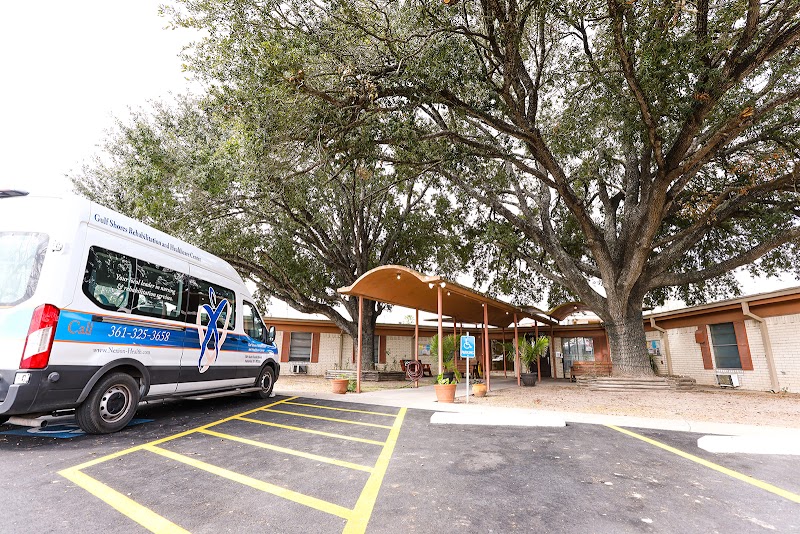
How is Gulf Shores Rehabilitation & Healthcare Center Staffed?
CMS rates Gulf Shores Rehabilitation & Healthcare Center's staffing level at 2 out of 5 stars, which is below average compared to other nursing homes. Staff turnover is 40%, compared to the Texas average of 46%. This relatively stable workforce can support continuity of care.

What Have Inspectors Found at Gulf Shores Rehabilitation & Healthcare Center?

State health inspectors documented 22 deficiencies at Gulf Shores Rehabilitation & Healthcare Center during 2022 to 2025. These included: 21 with potential for harm and 1 minor or isolated issues.

Who Owns and Operates Gulf Shores Rehabilitation & Healthcare Center?

Gulf Shores Rehabilitation & Healthcare Center is owned by a for-profit company. For-profit facilities operate as businesses with obligations to shareholders or private owners. The facility is operated by NEXION HEALTH, a chain that manages multiple nursing homes. With 96 certified beds and approximately 51 residents (about 53% occupancy), it is a smaller facility located in Falfurrias, Texas.

How Does Gulf Shores Rehabilitation & Healthcare Center Compare to Other Texas Nursing Homes?

Compared to the 100 nursing homes in Texas, Gulf Shores Rehabilitation & Healthcare Center's overall rating (5 stars) is above the state average of 2.8, staff turnover (40%) is near the state average of 46%, and health inspection rating (4 stars) is above the national benchmark.

What Should Families Ask When Visiting Gulf Shores Rehabilitation & Healthcare Center?

Based on this facility's data, families visiting should ask: "Can you walk me through typical staffing levels on day, evening, and night shifts?" "Can I visit during a mealtime to observe dining assistance and food quality?" "How do you handle medical emergencies, and what is your hospital transfer rate?" "Can I speak with family members of current residents about their experience?" These questions are particularly relevant given the below-average staffing rating.

Is Gulf Shores Rehabilitation & Healthcare Center Safe?

Based on CMS inspection data, Gulf Shores Rehabilitation & Healthcare Center has a clean safety record: no substantiated abuse findings (meaning no confirmed cases of resident harm), no Immediate Jeopardy citations (the most serious violation level indicating risk of serious injury or death), and is not on the Special Focus Facility watch list (a federal program monitoring the lowest-performing 1% of nursing homes). The facility has a 5-star overall rating and ranks #1 of 100 nursing homes in Texas. While no facility is perfect, families should still ask about staff-to-resident ratios and recent inspection results during their visit.

Do Nurses at Gulf Shores Rehabilitation & Healthcare Center Stick Around?

Gulf Shores Rehabilitation & Healthcare Center has a staff turnover rate of 40%, which is about average for Texas nursing homes (state average: 46%). Moderate turnover is common in nursing homes, but families should still ask about staff tenure and how the facility maintains care continuity when employees leave.

Was Gulf Shores Rehabilitation & Healthcare Center Ever Fined?

Gulf Shores Rehabilitation & Healthcare Center has no federal fines on record. CMS issues fines when nursing homes fail to meet care standards or don't correct problems found during inspections. The absence of fines suggests the facility has either maintained compliance or corrected any issues before penalties were assessed. This is a positive indicator, though families should still review recent inspection reports for the full picture.

Is Gulf Shores Rehabilitation & Healthcare Center on Any Federal Watch List?

Gulf Shores Rehabilitation & Healthcare Center is not on any federal watch list. The most significant is the Special Focus Facility (SFF) program, which identifies the bottom 1% of nursing homes nationally based on persistent, serious quality problems. Not being on this list means the facility has avoided the pattern of deficiencies that triggers enhanced federal oversight. This is a positive indicator, though families should still review the facility's inspection history directly.