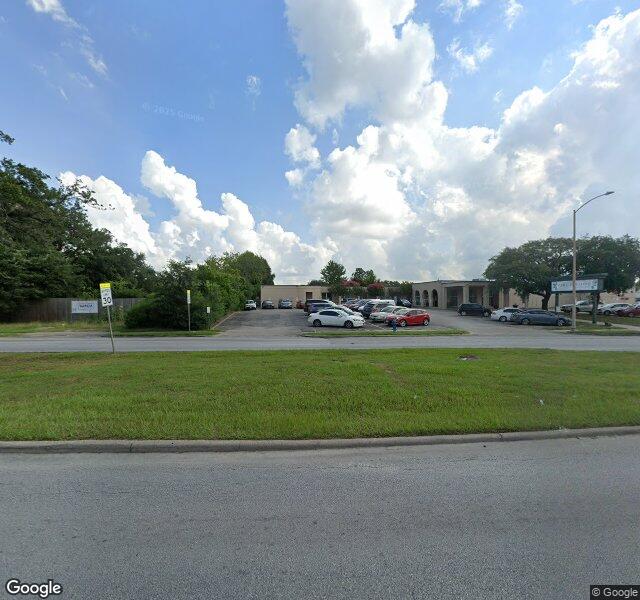
Avir at Golfcrest

7633 Bellfort, Houston, TX 77061 (713) 644-2101
For profit - Limited Liability company 200 Beds AVIR HEALTH GROUP Data: November 2025 4 Immediate Jeopardy citations
Trust Grade
15/100
#407 of 1168 in TX
Last Inspection: April 2025

Within standard 12-15 month inspection cycle. Federal law requires annual inspections.

Overview

Avir at Golfcrest has received a Trust Grade of F, indicating significant concerns about the facility's quality and care. This places the nursing home at #407 out of 1168 in Texas, meaning it is in the top half of all facilities, but still falls short of providing adequate care. The trend is improving, with issues decreasing from 12 in 2024 to 7 in 2025. Staffing is a strength, rated 4 out of 5 stars, with a turnover rate of 46%, which is slightly below the state average. However, the facility has faced serious issues, including failing to notify a physician for 24 hours after a resident sustained a painful injury from a fall, suggesting gaps in timely medical care. Overall, while there are some strengths in staffing, the critical incidents and low Trust Grade raise significant concerns for potential residents and their families.

Trust Score
F
15/100
In Texas
#407/1168
Top 34%
Safety Record
High Risk
Review needed
Inspections
Getting Better
12 → 7 violations
Staff Stability
⚠ Watch
46% turnover. Above average. Higher turnover means staff may not know residents' routines.
Penalties
✓ Good
$8,021 in fines. Lower than most Texas facilities. Relatively clean record.
Skilled Nurses
⚠ Watch
Each resident gets only 26 minutes of Registered Nurse (RN) attention daily — below average for Texas. Fewer RN minutes means fewer trained eyes watching for problems.
Violations
⚠ Watch
20 deficiencies on record. Higher than average. Multiple issues found across inspections.
★★★☆☆
3.0
Overall Rating
★★★★☆
4.0
Staff Levels
★★★★★
5.0
Care Quality
★★☆☆☆
2.0
Inspection Score
Stable
2024: 12 issues
2025: 7 issues

The Good

  • 4-Star Staffing Rating · Above-average nurse staffing levels
  • 5-Star Quality Measures · Strong clinical quality outcomes
  • Full Sprinkler Coverage · Fire safety systems throughout facility
  • No fines on record

Facility shows strength in staffing levels, quality measures, fire safety.

The Bad

3-Star Overall Rating

Near Texas average (2.8)

Meets federal standards, typical of most facilities

Staff Turnover: 46%

Near Texas avg (46%)

Higher turnover may affect care consistency

Federal Fines: $8,021

Below median ($33,413)

Minor penalties assessed

Chain: AVIR HEALTH GROUP

Part of a multi-facility chain

Ask about local staffing decisions and management

The Ugly 20 deficiencies on record

4 life-threatening
Aug 2025 2 deficiencies 2 IJ
CRITICAL (J) 📢 Someone Reported This

A family member, employee, or ombudsman was alarmed enough to file a formal complaint

Immediate Jeopardy (IJ) - the most serious Medicare violation

Notification of Changes (Tag F0580)

Someone could have died · This affected 1 resident

**NOTE- TERMS IN BRACKETS HAVE BEEN EDITED TO PROTECT CONFIDENTIALITY** Based on observation, interview, and record review, the facility failed to consult with the resident's physician when there was ...

Read full inspector narrative →
**NOTE- TERMS IN BRACKETS HAVE BEEN EDITED TO PROTECT CONFIDENTIALITY** Based on observation, interview, and record review, the facility failed to consult with the resident's physician when there was an accident involving the resident which resulted in injury and required physician intervention for 1 (Resident #1) of 4 residents reviewed for notification of changes. LVN-A failed to notify Resident #1's physician for 24 hours when she complained of pain after a witnessed fall on 06-23-25 which resulted in an acute fracture of the left humerus (the long bone in the upper arm) and soft tissue swelling. The noncompliance was identified as Past Non-Compliance IJ. The IJ began on 06/23/25 and ended on 06/26/25. The facility corrected the noncompliance before the survey began. This failure placed dependent residents at risk of not receiving proper care, a decline in health, and pain.Findings included: Record Review of Resident #1's face sheet reflected she was a [AGE] year-old female who was admitted to the facility on [DATE]. Her diagnoses included Alzheimer's disease (a progressive disease that destroys memory and other important mental functions), Primary insomnia (a sleep disorder characterized by difficulty falling asleep, staying asleep, or experiencing non-restorative sleep), lack of coordination (impaired balance or coordination), muscle weakness (decreased strength in the muscles), Hyperlipidemia (abnormally high levels of lipids in the blood), Rheumatoid Arthritis (a chronic inflammatory disorder usually affecting small joints in the hands and feet), and Unspecified Osteoarthritis (a type of arthritis where the specific location is not identified in the medical record). Record review of Resident #1's significant change in status MDS assessment dated [DATE] revealed she had a BIMS score of 3 (severe cognitive impairment). Record Review of Resident #1's Care Plan dated 06/25/25 revealed she was at risk for falls due to unsteady gait, poor awareness with visual deficit, altered cognition and poor safety awareness. She was a one person assist with her ADL. Observation of Resident #1 on 07/01/2025 at 12:50 p.m. revealed she resided in the facility's locked unit. Resident #1 was in bed with her left arm in a splint to keep it immobilized. Her bed was in the lowest position (the bed frame was adjusted to be as close to the floor as possible), fall mats were in place and her call light was in reach. Record Review of Resident# 1's progress note dated 06/23/25 reflected that the following note was written by LVN A: Nurse witnessed resident on floor in front of room [ROOM NUMBER], laying on her left side, assessment/observation completed with no verbal c/o pain or discomfort, no acute changes at the time of fall, resident assisted up into w/c via nurse and CNA, VS obtained 128/72, 97.0, 97% RA, 18, 67 stable, supplement given, resident up and walking from sitting in w/c, nurse redirected and assisted resident back to w/c, continued with no signs/symptoms of pain during observation, resident assisted to bed via CNA with no complaints of uncontrolled pain. Record Review of CNA-A's witness statement dated 06/30/2025 reflected that CNA-A stated that Resident #1's fall on 06/23/2025 was caused when Resident #1 was getting up from her seat and she accidentally bumped into a resident that CNA-A was assisting. Record review of Resident #1 shower sheet dated 06/24/25 reflected that she refused her shower on 06/24/25. Shower sheet was signed by CNA-GG. Record review of Resident#1 skin assessment dated [DATE] reflected that there wasn't any alterations in skin integrity noted. The Assessment was conducted by LVN-BB. Record review of Resident #1's progress note dated 06/25/25 reflected that she had mild swelling and warmth to touch to her left arm. The NP was notified, and X-ray was ordered, Tylenol 325 mg 2 tabs was given., vitals recorded and was within range. Rp was notified and care was continued. Resident #1 Physician's order dated 08/14/23 reflected that 2 tablets be given by mouth every 8 hours as needed for Pain. Record review of Resident #1 MAR dated 06/25/25 reflected that she was given 2 tabs of Tylenol 325 mg. Record Review of Resident #1's X-Ray report dated 06/25/25 reflected that she had sustained an Acute fracture across the left humerus neck (broken arm)with subtle displacement of bony edges, overlying soft tissue swelling as noted. Record review of Resident #1's progress note dated 06/30/25 reflected that she had one fall in the past three months. Date, time, and how the fall occurred was not documented in the progress note. In an Interview on 07/02/25 at 10:30 am with the DON, Administrator, and Regional Nurse, all stated that when a resident had a fall Head-to-Toe assessment must be done, the NP, the ADON or DON needs to be notified, and the results of the assessment must be documented. They stated that LVN A did not complete a Head-to-Toe assessment, she failed to notify the facility medical staff, and she also failed to notify the DON. Therefore, due her not following policy, LVN-A was terminated. On 07/02/25 at 11:00 am, an unsuccessful attempt was made to contact LVN-A and CNA-A, but both parties did not answer their phone. In an interview on 07/02/25 at 3:30 PM, the NP stated that she did not receive a call from the facility notifying her that Resident #1 had a fall. She said that she if she had been given a call, she would have given an order for Resident #1 according to the result of the assessment. In an interview on 08/04/25 at 4:20 pm with LVN BB, she stated that on 06/24/25 she was notified by CNA-GG that Resident #1 was complaining of pain to her left arm. LVN-BB stated that she assessed Resident #1's left arm by pulling up Resident#1 sleeve and observed that her arm did not have any redness nor any swelling. LVN BB said that she also conducted a range of motion assessment on Resident#1's arm and Resident#1 did not complain of any pain. However, on 06/25/25, LVN-BB stated that CNA-GG went to get Resident#1 up out of bed, and she complained of pain to her left arm. LVN-BB stated that she assessed Resident#1, and Resident#1 stated that her arm was hurting. LVN-BB said that she notified the NP, and an order was given to have an X-ray performed on Resisdent#1's arm. LVN-BB stated she ordered the X-ray, and she gave Resident#1 two 325 mg Tylenol for pain. On 08/04/25 at 5:35pm, an unsuccessful attempt was made to contact LVN-A and CNA-A, but both parties did not answer their phone. In an interview on 08/04/25 at 6:11pm with CNA-GG, she stated that on 06/24/25 she was trying to get Resident#1 ready for her shower when Resident#1 complained of pain to her left arm. CNA-GG stated that she reported to LVN-BB that Resident#1 was complaining of pain to her left arm. In an interview on 08/04/25 at 6:33pm with CNA-HH, she stated that on 06/23/25, she came to work and Resident#1 was already in bed asleep. In an interview on 08/05/25 at 11:20am with the ADON, he stated that LVN-BB reported to him on 06/25/25 that Resident#1 was experiencing pain in her left arm. The ADON stated that he told LVN-BB to call the NP for an order for an X-ray. The ADON stated that the X-ray was performed and as result of the X-ray Resident#1 was sent to the Hospital. The ADON stated that 06/25/25 was the first time it was reported to him that Resident#1 was having pain. In an interview on 08/05/25 at 11:35am with the Wound Care Nurse, she stated that LVN-BB called her on 06/25/25 to come to station for 4 because Resident#1 was complaining of pain. The Wound Care Nurse stated that she and the ADON both witnessed CNA-GG attempting to put a shirt on Resident#1 when she started showing signs of pain. The Wound Care Nurse stated that LVN-BB was told to call the NP, and get an order for an X-ray. The Wound Care Nurse stated that when the results of the x-ray came back that Resident#1 had an Acute fracture across left humerus neck with subtle displacement of bony edges, overlying soft tissue swelling, as noted, she was sent to the hospital. The Wound Care Nurse stated that 06/25/25 was the first time it was reported to her that Resident#1 was having pain. In an interview on 07/02/25 at 3:30PM, the NP stated that she did not receive a call from the facility notifying her that Resident #1 had a fall. She said that she if she had been given a call, she would have given an order for Resident#1 according to the result of the assessment. Record review of the facility's policy regarding to Accidents and Incidents date 03/2025 revealed in part, All accidents and incidents involving residents, employed, visitors, vendors , etc., occurring on our premises shall be investigated and reported to the administrator The following information also has to be documented in the report , the time the physician was notified and the instructions of the physician, and the date and time the resident's family were notified, the condition of the injured person, including his/her vital signs, the disposition of the injured (i.e., transferred to hospital, or put to bed. Record Review of In-service Training Report dated 06/25/2025 revealed 10pm-6am facility staff were educated by the DON regarding falls management and changes in resident conditions. Record Review of In-service Training Report dated 06/25/2025 revealed 10pm-6am facility staff were educated by the DON/ADON regarding Abuse & Neglect/Exploitation, and Who is the Abuse coordinator. Record Review of In-service Training Report dated 06/26/2025 revealed facility administrative staff were educated by the Regional [NAME] President of Operations regarding Reporting Guidelines HHSC Provider Letter #2024-14. Record Review of In-service Training Report dated 06/27/2025 revealed 6am-2pm and 2pm-10pm facility staff were educated by the administrator/ DON regarding resident's rights. Record Review of In-service Training Report dated 06/27/2025 revealed facility 6am-2pm staff were educated by DON/ADON on Timely reporting of any changes of condition, to Nurse management, MD, and timely intervention. Record Review of In-service Training Report dated 06/28/2025 revealed facility all staff and all shifts were educated by RN Weekend Supervisor on Timely reporting of any changes of condition, to Nurse management, MD, and timely intervention. Record Review of In-service Training Report dated 06/28/2025 revealed all staff and all shifts were educated by RN Weekend Supervisor Fall and incident Protocol. The protocol call being License Nurse assesses resident, notify the MD/NP, RP if needed, DON, Neuro Checks, and implement Doctors orders promptly. Record Review of In-service Training Report dated 06/30/2025 revealed facility 6am-2pm staff were educated by DON/ADON Topics of Fall protocol, witnessed falls, do not move residents until assessed by Licensed Nurse. Notify all parties, NP, DON, RP, document in progress notes. Record Review of In-service Training Report dated 06/30/2025 revealed facility 6am-2pm, 2pm-10pm and 10pm-6pm staff were educated by DON/ADON Topics of Fall protocol, witnessed falls, do not move residents until assessed by Licensed Nurse. Notify all parties, NP, DON, RP, document in progress notes. Record Review of In-service Training Report dated 07/01/2025 revealed facility leadership staff were educated by Director of Regulatory Compliance on Topic of Abuse & Neglect. Record Review of facility resident interviews-safe review dated 06/27/2025 reflected Residents #2, #3, #4, #5, and #6 were interviewed to ensure that they were feeling safe while living at the facility. Residents were asked the following questions: 1.Do you feel safe here? 2. If you have a concern or compliant, do you feel comfortable reporting It?3. Are you afraid of anyone here?4.When the staff come to your room, do they knock, tell you their name and why they are there? Residents #2, #3, #4, #5, and #6 answered the questions in a manner that assured facility staff that they all felt safe and that they had no concerns with staff or other residents at the facility. Record Review of facility's resident audits for recent falls dated 06/28/2025, and 07/01/2025 reflected Residents #7, #8, #9, & #10 were properly assessed, notifications were made, progress notes were written, SBAR, changes in condition were documented if needed. Record Review of a facility email dated 07/01/2025 reflected the Administrator placed a phone call to LVN-A at 4:52pm on 07/01/2025 informing her that her employment had been terminated. In an interview on 07/02/25 at 10:00am with the DON, Administrator, and Regional Nurse, all stated that when a resident had a fall that a Head-to-Toe assessment must be done, the NP must be notified, the ADON, or DON needs to be notified. And the result of the assessment must be documented. They stated that LVN A did not complete a Head-to-Toe assessment, she failed to notify the facility medical staff, and she also failed to notify the DON. In an interview on 07/02/25 at 3:40pm with LVN-B, she stated that she was in-serviced on 06/26/25 regarding resident falls. She stated that she was told to complete a head-to-toe assessment, call the facility medical staff, call the ADON, or DON, and the residents RP if the resident isn't their own RP. LVN-B also stated that and SBAR must be performed, and that the assessment must be documented in the resident's progress notes. In an interview on 07/02/25 at 3:45pm with LVN-C, he stated that he was in-serviced on 06/26/25 regarding resident falls. He stated that he must perform a head-to-toe assessment on the resident, call the NP, call the ADON, or DON, and the RP if necessary. He also stated that neuro checks must be conducted if the resident hit their head, an SBAR must be done, and all the information must be documented in the resident's progress notes. In an interview on 07/02/25 at 3:55pm with LVN-D, she stated she was in-serviced on 06/26/25 regarding resident falls. She said the in service pertained to conducting a head-to-toe assessment when a resident has a fall, call the medical staff, RP, if necessary, call the ADON, or DON and let them know that there was a fall. Also document the assessment, and SBAR in the resident's progress notes. In an interview on 07/02/25 at 4:05pm with LVN-E, she stated she was in-serviced on 06/26/25 regarding resident falls. She stated the in service taught her to conduct a head-to-toe assessment, call the facility medical staff, call the ADON, DON, and the residents RP if necessary and perform and SBAR and document the finding in the resident's progress notes. In an interview on 07/02/25 at 4:15pm with CNA-A, she stated she was in-serviced on 06/26/25 regarding resident falls. She stated that as a CNA, her job is to notify the nurse, and that the resident cannot be moved until the nurse has completed their assessments. In an interview on 07/02/25 at 4:20pm with CNA-B, she stated she was in-serviced on 06/26/25 regarding resident falls. She stated that as a CNA, her job is to notify the nurse, and that the resident cannot be moved until the nurse has completed their assessments. In an interview on 07/02/25 at 4:25pm with the Receptionist, he stated he was in-serviced on 06/26/25 regarding resident falls. He stated that as a receptionist, his job is to notify the nurse, and that the resident cannot be moved until the nurse has completed their assessments. In an interview on 07/02/25 at 4:35pm with the Director of Therapy, she stated she was in-serviced on 06/26/25 regarding resident falls. She stated that if she witnessed a resident fall then her job is to notify the nurse, and that the resident cannot be moved until the nurse has completed their assessments. In an interview on 07/02/25 at 4:40pm with the Director of EVS, he stated he was in-serviced on 06/26/25 regarding resident falls. He stated that if he witnessed a resident fall, then his job is to notify the nurse, and that the resident cannot be moved until the nurse has completed their assessments. In an interview on 07/02/25 at 4:45pm with the Director of Maintenance, he stated he was in-serviced on 06/26/25 regarding resident falls. He stated that if he witnessed a resident fall, then his job is to notify the nurse, and that the resident cannot be moved until the nurse has completed their assessments. The noncompliance was identified as Past Non-Compliance. The IJ began on 06/23/25 and ended on 06/26/25. The facility corrected the noncompliance before the survey began. On 07/03/25 at 4:35 p.m. the facility's Administrator and DON were notified of the past noncompliance IJ. A plan of removal was not requested. An IJ template was provided to the Administrator on 07/03/25 at 4:35 p.m.
CRITICAL (J) 📢 Someone Reported This

A family member, employee, or ombudsman was alarmed enough to file a formal complaint

Immediate Jeopardy (IJ) - the most serious Medicare violation

Quality of Care (Tag F0684)

Someone could have died · This affected 1 resident

**NOTE- TERMS IN BRACKETS HAVE BEEN EDITED TO PROTECT CONFIDENTIALITY** Based on observation, interview, and record review the facility failed to ensure residents received treatment and care in accord...

Read full inspector narrative →
**NOTE- TERMS IN BRACKETS HAVE BEEN EDITED TO PROTECT CONFIDENTIALITY** Based on observation, interview, and record review the facility failed to ensure residents received treatment and care in accordance with professional standards of practice for 1 (Resident #1) of 4 residents reviewed for quality of care. The facility failed to ensure LVN-A adequately assessed, monitored, provided appropriate interventions, and contact the physician immediately when Resident #1 complained of pain after a fall which resulted in an acute fracture of her left humerus (the long bone in the upper arm). The noncompliance was identified as Past Non-Compliance. The IJ began on 06/23/25 and ended on 06/26/25. The facility corrected the noncompliance before the survey began. This failure placed residents who experience falls with injury at risk of not receiving adequate treatment in a timely manner, further injury, and pain.Findings included: Record Review of Resident #1's face sheet reflected she was a [AGE] year-old female who was admitted to the facility on [DATE]. Her diagnoses included Alzheimer's disease (a progressive disease that destroys memory and other important mental functions), Primary insomnia (a sleep disorder characterized by difficulty falling asleep, staying asleep, or experiencing non-restorative sleep), lack of coordination (impaired balance or coordination), muscle weakness (decreased strength in the muscles), Hyperlipidemia (abnormally high levels of lipids in the blood), Rheumatoid Arthritis (a chronic inflammatory disorder usually affecting small joints in the hands and feet), and Unspecified Osteoarthritis (a type of arthritis where the specific location is not identified in the medical record). Record review of Resident #1's significant change in status MDS dated [DATE] revealed she had a BIMS score of 3 (severe cognitive impairment). Record Review of Resident #1's Care Plan dated 06/25/25 revealed she was at risk for falls due to unsteady gait, poor awareness with visual deficit, altered cognition and poor safety awareness. Interventions included: Anticipate and meet the resident's needs; Be sure the call light is within reach and encourage the resident to use it for assistance as needed; Ensure resident wears appropriate footwear when ambulating or mobilizing in wheelchair; Keep needed items in reach; and Physical Therapy evaluate and treat as ordered or as needed. Observation of Resident #1 on 07/01/2025 at 12:50 p.m. revealed she resided in the facility's locked unit. Resident #1 was in bed. Resident #1 was in bed with her left arm in a splint to keep it immobilized. Her bed was in the lowest position (the bed frame was adjusted to be as close to the floor as possible), fall mats were in place and her call light was in reach. Record Review of Resident #1's progress note dated 06/23/25 reflected that the following note was written by LVN A: Nurse witnessed the resident on floor in front of room [ROOM NUMBER], lying on her left side. An assessment/observation were completed with no verbal c/o pain or discomfort. The resident was assisted to bed with no complaints of uncontrolled pain. Record review Resident#1 progress note dated 06/25/25 reflected that she had mild swelling and warmth to touch to her left arm. The NP was notified, and X-ray was ordered, Tylenol 325mg 2 tabs was given., vitals recorded and was within range. Rp was notified and care was continued. Record review of Resident#1 progress note dated 06/30/25 reflected that she has had one fall in the past three months. Date, time, and how the fall occurred was not documented in the progress note. Record Review of Resident #1's X-Ray report dated 06/25/25 reflected that she had sustained an Acute fracture (a sudden and complete break in a bone) across the left humerus neck (upper arm) with subtle displacement (broken bone fragments are slightly out of alignment) of bony edges, overlying soft tissue swelling as noted. In an interview on 07/02/25 at 10:00am with the DON, Administrator, and Regional Nurse revealed they all stated that when a resident had a fall that a head-to-toe assessment must be done, the NP must be notified, the ADON, or DON needed to be notified. And the result of the assessment must be documented. They stated that LVN A did not complete a head-to-toe assessment, she failed to notify the facility medical staff, and she also failed to notify the DON. In an interview on 07/02/25 at 3:30PM, the NP stated that she did not receive a call from the facility notifying her that Resident #1 had a fall. She said that if she had been given a call, she would have given an order for Resident#1 according to the result of the assessment. In an interview on 08/11/25 at 11:30am with Resident#1 RP he stated that he was not notified of Resident#1 fall on the 23rd of June until the 25th of June when the facility was getting ready to send her to the hospital. In an interview on 08/05/25 at 11:20am with the ADON he stated that LVN-BB reported to him on 06/25/25 that Resident#1 was experiencing pain in her left arm, The ADON stated that he told LVN-BB to call the NP for an order for an X-ray. The ADON stated that the X-ray was performed and as result of the X-ray Resident#1 was sent to the Hospital. The ADON stated that 06/25/25 was the first time it was reported to him that Resident#1 was having pain. In an interview on 08/05/25 at 11:35am with the Wound Care Nurse she stated that LVN-BB called her on 06/25/25 to come to station for 4 because Resident#1 was complaining of pain. The Wound Care Nurse stated that she and the ADON both witnessed CNA-GG attempting to put a shirt on Resident#1 when she starting sowing signs of pain. The Wound Care Nurse stated that LVN-BB was told to call the NP and get an order for an X-ray. The Wound Care Nurse stated that when the results of the x-ray came back as Resident#1 had an Acute fracture across left humerus neck with subtle displacement of bony edges, overlying soft tissue swelling as noted she was sent to the hospital. The Wound Care Nurse stated that 06/25/25 was the first time it was reported to her that Resident#1 was having pain. Record review of the facility's policy titled, Accidents and Incidents - Investigating and Reporting revised on 03/27/25 revealed, Policy Statement. All accidents or incidents involving residents, employees, visitors, and vendors occurring on our premises shall be investigated and reported to the administrator. Policy Interpretation and Implementation. 1. The nurse supervisor/charge nurse and/or the department director or supervisor shall promptly initiate and document investigation of the accident or incident. Record Review of facility's internal investigation documentation dated 06/24/2025 regarding the incident of Resident #1 having a broken arm reflected that the facility interviewed staff beginning on 06/24/2025. Staffed interviewed were staff LVN-A, B, C, D. Record Review of an In-service Training Report dated 06/25/2025 revealed 10pm-6am facility staff were educated by the DON regarding falls management and changes in resident conditions. Record Review of an In-service Training Report dated 06/25/2025 revealed 10pm-6am facility staff were educated by the DON/ADON regarding Abuse & Neglect/Exploitation, and Who is the Abuse coordinator. Record Review of an In-service Training Report dated 06/26/2025 revealed facility administrative staff were educated by the Regional [NAME] President of Operations regarding Reporting Guidelines HHSC Provider Letter #2024-14. Record Review of In-service Training Report dated 06/27/2025 revealed 6am-2pm and 2pm-10pm facility staff were educated by the administrator/ DON regarding resident's rights. Record Review of an In-service Training Report dated 06/27/2025 revealed facility 6am-2pm staff were educated by DON/ADON on Timely reporting of any changes of condition, to Nurse management, MD, and timely intervention. Record Review of ‘In-service Training Report dated 06/28/2025 revealed all staff and all shifts were educated by RN Weekend Supervisor on Timely reporting of any changes of condition, to Nurse management, MD, and timely intervention. Record Review of an In-service Training Report dated 06/28/2025 revealed facility all staff and all shifts were educated by RN Weekend Supervisor Fall and incident Protocol. The protocol call being License Nurse assesses resident, notify the MD/NP, RP if needed, DON, Neuro Checks, and implement Doctor's orders promptly. Record Review of an In-service Training Report dated 06/30/2025 revealed facility 6am-2pm staff were educated by DON/ADON Topics of Fall protocol, witnessed falls, do not move residents until assessed by Licensed Nurse. Notify all parties, NP, DON, RP, document in progress notes. Record Review of an In-service Training Report dated 06/30/2025 revealed facility 6am-2pm, 2pm-10pm and 10pm-6pm staff were educated by DON/ADON Topics of Fall protocol, witnessed falls, do not move residents until assessed by Licensed Nurse. Notify all parties, NP, DON, RP, document in progress notes. Record Review of an In-service Training Report dated 07/01/2025 revealed facility leadership staff were educated by Director of Regulatory Compliance on the topic of Abuse & Neglect. Record Review of facility resident interviews-safe review dated 06/27/2025 reflected Residents #2, #3, #4, #5, and #6 were interviewed to ensure that they were feeling safe while living at the facility. Residents were asked the following questions:1.Do you feel safe here? 2. If you have a concern or compliant, do you feel comfortable reporting It?3. Are you afraid of anyone here?4.When the staff come to your room, do they knock, tell you their name and why they are there? Residents #2, #3, #4, #5, and #6 answered the questions in a manner that ensured facility staff that they all felt safe and that they had no concerns with staff or other residents at the facility. Record Review of facility resident audits for recent falls dated 06/28/2025, and 07/01/2025 reflected Residents #7, #8, #9, & #10 were properly assessed, notifications were made, progress notes were written, SBAR, changes in condition were documented if needed. Record Review of CNA-A witness statement dated 06/30/2025 reflected that CNA-A stated that Resident #1's fall on o6/23/2025 was caused when Resident #1 was getting up from her seat and she accidentally bumped into a resident that CNA-A was assisting. Record Review of a facility email dated 07/01/2025 reflected the Administrator placed a phone call to LVN-A at 4:52pm on 07/01/2025 informing her that her employment has been terminated. LVN-A was terminated because she failed to follow facility policy regarding a resident's fall. Record Review of facility emailed dated 07/01/2025 reflected the Administrator called CNA-A on 07/01/2025 informing her employment has been terminated. CNA-A was terminated for failing to follow policy regarding a resident's fall. In an interview on 07/02/25 at 3:40pm with LVN-B, she stated that she was in-serviced on 06/26/25 regarding resident falls. She stated that she was told to complete a head-to-toe assessment, call the facility medical staff, call the ADON, or DON, and the resident's RP if the resident wasn't their own RP. LVN-B also stated that a SBAR had to be performed, and that the assessment must be documented in the resident's progress notes. In an interview on 07/02/25 at 3:45pm with LVN-C, he stated that he was in-serviced on 06/26/25 regarding resident falls. He stated that he must perform a head-to-toe assessment on the resident, call the NP, call the ADON, or DON, and the RP if necessary. He also stated that neuro checks must be conducted if the resident hit their head. And a SBAR was to be done, and all the information had to be documented in the resident's progress notes. In an interview on 07/02/25 at 3:55pm with LVN-D, she stated she was in-serviced on 06/26/25 regarding resident falls. She said the in- service pertained to conducting a head-to-toe assessment when a resident has a fall, call the RP if necessary, call the facility medical staff, call the ADON, or DON and let them know that there was a fall. Also document the assessment, and SBAR in the resident's progress notes. In an interview on 07/02/25 at 4:05pm with LVN-E, she stated she was in-serviced on 06/26/25 regarding resident falls. She stated the in-service taught her to conduct a head-to-toe assessment, call the facility medical staff, call the ADON, DON, and the resident's RP if necessary; and perform a SBAR and document the finding in the resident's progress notes. In an interview on 07/02/25 at 4:15pm with CNA-A, she stated she was in-serviced on 06/26/25 regarding resident falls. She stated that as a CNA her job is to notify the nurse, and that the resident cannot be moved until the nurse has completed their assessments. In an interview on 07/02/25 at 4:20pm with CNA-B, she stated she was in-serviced on 06/26/25 regarding resident falls. She stated that as a CNA her job is to notify the nurse, and that the resident cannot be moved until the nurse has completed their assessments. In an interview on 07/02/25 at 4:25pm with the Receptionist, he stated he was in-serviced on 06/26/25 regarding resident falls. He stated that as a receptionist his job is to notify the nurse, and that the resident cannot be moved until the nurse has completed their assessments. In an interview on 07/02/25 at 4:35pm with the Director of Therapy she stated she was in-serviced on 06/26/25 regarding resident falls. She stated that if she witnessed a resident fall then her job is to notify the nurse, and that the resident cannot be moved until the nurse has completed their assessments. In an interview on 07/02/25 at 4:40pm with the Director of EVS, he stated he was in-serviced on 06/26/25 regarding resident falls. He stated that if he witnessed a resident fall then his job is to notify the nurse, and that the resident cannot be moved until the nurse has completed their assessments. In an interview on 07/02/25 at 4:45pm with the Director of Maintenance, he stated he was in-serviced on 06/26/25 regarding resident falls. He stated that if he witnessed a resident fall then his job is to notify the nurse, and that the resident cannot be moved until the nurse has completed their assessments. Observation of the facility's secure unit on 07/01/2025 from 12:50 p.m. until 1:05 p.m. revealed there were always six staff members inside the locked memory care unit. Observation also revealed that Resident #1 was in her bed, her bed was in the lowest position, fall mats were in place and her call light was in reach. The noncompliance was identified as Past Non-Compliance. The IJ began on 06/23/25 and ended on 06/26/25. The facility corrected the noncompliance before the survey began. On 07/03/25 at 4:35 p.m. the facility's Administrator and DON were notified of the past noncompliance IJ. A plan of removal was not requested. An IJ template was provided to the Administrator on 07/03/25 at 4:35 p.m.
Jul 2025 1 deficiency 1 IJ
CRITICAL (J) 📢 Someone Reported This

A family member, employee, or ombudsman was alarmed enough to file a formal complaint

Immediate Jeopardy (IJ) - the most serious Medicare violation

Respiratory Care (Tag F0695)

Someone could have died · This affected 1 resident

**NOTE- TERMS IN BRACKETS HAVE BEEN EDITED TO PROTECT CONFIDENTIALITY** Based on interview and record review the facility failed ensure that residents requiring respiratory care are provided with nece...

Read full inspector narrative →
**NOTE- TERMS IN BRACKETS HAVE BEEN EDITED TO PROTECT CONFIDENTIALITY** Based on interview and record review the facility failed ensure that residents requiring respiratory care are provided with necessary services consistent with their care plans for one of three residents reviewed for the use of oxygen. The facility failed to ensure that CR #1's portable oxygen was fully charged before leaving the facility for a clinic appointment. This failure could place residents at risk of not receiving needed services in an emergency. The noncompliance was identified as PNC IJ began on 0328/25 and ended on [DATE]. The facility had corrected the noncompliance before the investigation began. These failures could place residents at risk of being neglected by not providing necessary care and services. Findings include: Record review of CR #1's admission record face sheet, dated [DATE], revealed a-[AGE] year-old male who was admitted to the facility on [DATE]. His diagnoses included Chronic obstructive pulmonary disease, (primary) (a progressive lung disease that limit air flow to the lungs) essential hypertension (High blood pressure), obstructive sleep apnea (a condition that prevent air flow to the lungs), type 2 diabetes mellitus (a condition that affect how the body uses blood sugar), post-traumatic stress disorder, depression, anxiety disorder, heart failure and acute kidney failure. Record review of CR#1's progress note, dated [DATE] at 6:50AM, revealed the resident's RP is here to take resident to a local clinic for Doctor's appointment, pt left awake and alert, no SOB /distress noted, left with portable oxygen, no complaint of pain, scheduled morning meds given. Resident left with his walker via a private vehicle. Record review of CR #1'sprogress note did not specify if CR #1 had oxygen on or not, the level of the oxygen concentrator nor how much oxygen CR #1 was receiving at the time of departure. Record review of CR #1's comprehensive care plan, dated [DATE], with a revision date of [DATE], indicated CR #1 was care planed -for Congestive Heart Failure . CR #1 has a Heart Monitor, a small patch, placed on the left side of the chest wall.Goal: Resident will verbalize less difficulty breathing (Dyspnea) and be more comfortable through the review date.-CR #1 had oxygen therapy r/t COPD Date Initiated: [DATE] Revision on: [DATE]Goal- CR #1 will have no s/s of poor oxygen absorption through the review date. Date Initiated: [DATE] Revision on: [DATE] Record review of CR #1's MDS assessment indicated CR #1 had a BIMS score of 14 out of 15, which indicated he was cognitively intact. In an interview with CR #1's RP on [DATE] at 2:00 PM, the RP said she picked up CR #1 for an appointment at about 6:30AM to a local hospital for eye appointment. She said when she got to the clinic, CR #1 requested to have his oxygen but there was no tube to administer the oxygen. She said she asked the nurse at the clinic for an oxygen tube. She said CR#1 said he could not breath and fell before the nurse could place the tube on him. CR #1's RP said the nurse started working on CR # 1 until he was transported to the hospital section of the facility. She said it did not take long before the oxygen tube was brought to CR#1. She said CR #1 did not leave the facility with his oxygen on. She said CR #1 had just finish his treatment when they left the facility. She said she did not remember leaving the facility with tubing, but she had the portable oxygen concentrator in her car. She said she did not know what happened to the oxygen tube. She said she could not recall if the tube was given to her or not. She said one thing she knew was that CR#1 did not have his oxygen prior to leaving the facility. During an interview on [DATE] at 10:30 AM, LVN C said before sending any resident out of the facility, the nurse in charge must complete the assessment complete the form and had it witness by a second nurse before leaving regardless of means of transportation. She said there were serval in-services on assessments, documentation and ensuring that the form was filled out correctly and witnessed by two nurses. She explained that the forms were in a binder at the nurse's station and scanned into the resident's clinical records as soon as possible. During an interview with RN D on [DATE] at 11:50AM, he said before sending any resident out of the facility, he would have a charge nurse with him to assess the resident and document any special treatment and who was responsible for transportation and ensure that the RP know what to do in an emergency. He said he would document time date and what the resident left the with if on any special treatment He would make sure the RP knows what to do. He said if resident was on oxygen, he would make sure that the RP knows how to monitor the oxygen by education the RP. He said Resident on oxygen are always transported out of the facility by EMS. He said there was a form that must be completed by both nurses the are present during the transfer. He said the forms must be signed and scan to resident clinical record. In an interview with facility's DON, and Administrator on [DATE] at 12:00 PM, the DON said the resident's RP called to let the facility know that CR #1was admitted to the hospital. The Administrator said the local Hospital called to inform the facility that CR # 1 died a few days ago. She did not remember but would check her e-mails for the exact time and date. She said as soon as the local hospital explained what happened, herself and the DON started an investigation, called the State Survey Agency and started in-services. The DON said the facility started their own investigation and an in-service on abuse, neglect and exploitation. The DON said training included residents' assessment and proper documentation before transporting residents out to an appointment and outing as well as assessing all residents on Oxygen and on any special treatment. The DON and Administrator said LVN A was immediately suspended awaiting the result of the investigation. The DON said all residents on oxygen or special treatment were usually transported by ambulance to their appointment or by the facility van on regular appointments if there was no special treatment. The DON said in case of CR #1's RP chose to take him to the clinic because that was what she did before admission to the nursing home and did not allow the facility to transport CR #1 to his appointment. During a phone interview on [DATE] at 3:00 PM, CR#1's charge nurse, (LVN #A) said she sent CR #1 to the appointment on [DATE] at about 6:30 AM with his oxygen concentrator and told CR #1's RP to ensure the concentrator was plugged in as soon as they get got to the appointment office, because the concentrator was not fully charged. She said she believed what was left would be enough to get to the Clinic. She said she knew the concentrator was not charged because it was supposed to be charged overnight but CR #1's RP did not return the charger to the facility to charge the concentrator overnight. LVN A said she thought whatever was left on the concentrator would be enough for the trip since the trip was only 30 minutes from the facility. She said she did not know how fully charged the oxygen concentrator was and did not answer to how may liters of oxygen CR #1 was on at the time of departure. She said she did not recall. LVN A said she was suspended for 3 days and had training on abuse, neglect and exploitation, assessment and documentation prior to sending any resident out of the facility regardless of means of transportation. She said all transfers must be assessed, documented, and signed by two nurses. She said there were forms to be completed by both nurses before leaving the facility. During an interview with RN A (local clinic\hospital nurse) on 07/ 23/25 at 9:15 AM, she said the RP brought CR #1 to the clinic between the hour of 7:15 AM to 7:30 AM. and immediately requested for oxygen and stated CR #1 was out of breath. RN A said CR # 1's RP said she needed an oxygen tube for CR #1. RN A said the clinic nurse immediately brought the oxygen tubes and before the nurse could start the oxygen, CR #1 collapsed. RN A said there were always supplies at the clinic and oxygen tubes were readily available and provided to CR #1. RN A said CR #1 was intubated and transported to ICU where he later died. RN A said the administration started an internal investigation. She said she had to look at the records and find out from Medical Records before providing further information. RN A did not get back prior to exit on [DATE]. During an interview with CR#1's physician on [DATE] at 3:00 PM, he said CR #1 was one of his residents at the facility, but his medical treatment was mostly done at the local Hospital and clinic. He said CR #1 had multiple medical conditions which included COPD; and a heart condition. He said he could not speculate the course of death other than he had multiple medical conditions. The facility implemented the following to remove the noncompliance:Interview with LVN B on [DATE] at 3:00PM, he said there was a form in a binder at all nurse's station that must be filled out after assessing the resident being transported out of the facility. He said complete assessment includes all vital signs, and condition. He said the form had specific information such as oxygen, How many liters of oxygen the resident was on at the time of departure, type of portable, if the order is continuous or as needed, educate the RP on the type of equipment with a returned demonstration; if equipment uses batteries or need an electric charger and to ensure all equipment are functioning well before leaving the facility. Record Reviews of in-services and training completed by the facility, which started [DATE]- and ended on [DATE], reflected. training and in-service on Abuse, neglect and exploitation, checklist with the following requirement that must be completed by charge nurse and verified by a manager before a resident could be transported out of the facility:Resident assessment and documentation before leaving the facility. The forms revealed the following process--Do we have the necessary accessories to go with a portable oxygen yes/no-Indicate whether oxygen order is continuous or as needed-continuous/PRN.-Will this resident need a portable concentrator for hospital appointment or day pass-yes/no-Oxygen portable oxygen functional and full- yes/no-Is resident and caregiver education regarding portable oxygen use completed- Yes/No-Is resident owned equipment charged and ready to use-Yes/no.-Can giver demonstrate competency of portable Oxygen Usage-Yes/no.Last in-service was dated [DATE]- Administration of oxygen therapy:-How to read oxygen on oxygen concentrator-How to connect properly with different oxygen devices. -If a resident goes out on appointment or with family: make sure resident has sufficient oxygen in cylinders, make sure oxygen cylinder is secured properly.-If a resident uses home personal portable oxygen concentrator, then make sure battery is full and adapter is attached. Record review of facility's, undated, policy on Abuse, Neglect and Exploitation undated revealed Neglect' the failure of the facility, its employee or service providers to provide goods, and services to a resident that are necessary to avoid physical harm, pain, mental anguish or emotional distress.
Jul 2025 1 deficiency
CONCERN (D) 📢 Someone Reported This

A family member, employee, or ombudsman was alarmed enough to file a formal complaint

Potential for Harm - no one hurt, but risky conditions existed

Accident Prevention (Tag F0689)

Could have caused harm · This affected 1 resident

**NOTE- TERMS IN BRACKETS HAVE BEEN EDITED TO PROTECT CONFIDENTIALITY** Based on observation, interview, and record review the facility failed to ensure the resident's environment remained as free of ...

Read full inspector narrative →
**NOTE- TERMS IN BRACKETS HAVE BEEN EDITED TO PROTECT CONFIDENTIALITY** Based on observation, interview, and record review the facility failed to ensure the resident's environment remained as free of accident hazards as is possible and each resident receives adequate supervision and assistance devices to prevent accidents for 1 (Resident #1) of 5 residents reviewed for transfers. Resident #1 was transferred from her motorized wheelchair to the bed with a sit to stand hoyer lift using a sling that was too small to secure around her waist and had a broken buckle. This could place residents who utilize the sit to stand hoyer lift at risk for falls and serious injury. Findings included: Record review of Resident #1's facesheet revealed an eighty-two year old woman who was admitted to the facility on [DATE]. Her admitting diagnoses were dementia, lack of coordination, disorientation, abnormalities of gait and mobility, morbid obesity, and encephalopathy (brain disease or disorder that effects brain function). Record review of Resident #1's MDS (minimum data set) Section C- Cognitive Patterns completed 04/24/25 revealed a BIMS (brief interview mental status) revealed a score of 11 out of 15, signifying moderate impairment. Section G- Functional Status documented that for transfers, Resident #1 required extensive assistance where staff provided weight bearing assistance and was a one-person physical assistance. Record review of Resident #1's care plan revised 04/22/25 documented the following focus areas:* impaired visual function related to glaucoma [TT1] (eye disease that damages the optic nerve) and she was at risk for falls. * ADL self-care performance deficit and detailed that she required partial/moderate assistance during transfers. *On 02/06/25, Resident #1 had a fall with no injury related to lower extremity weakness. During a transfer with a CNA from the bed to her motorized wheelchair, care plan stated her knees went out and she was assisted to sit on the floor. Intervention listed was to consult with PT for strength and mobility. [TT2] In an interview on 06/25/25 at 10:13 am, CNA C stated the facility had a sit to stand hoyer lift that they used to transfer Resident #1 in and out of bed. When they would perform a transfer, aides would tie the belt that secured the resident during a transfer because it could not fit around her due to her size. CNA C [TT3] explained she did not know where they kept this hoyer, but if you looked at the belt, there were several knots in the belt where you can see where it's been tied. She could not give an exact time frame for how long the belt had been broken, but she estimated at least one month. CNA C stated she was worried when Resident #1 would use the sit to stand hoyer because she felt she could slip off and fall. In an observation and interview on 06/25/25 at 1:12 pm, CNA A stated the facility had two traditional mechanical lifts and a sit to stand hoyer lift that was primarily used by Resident #1. She walked the investigator to the sit to stand hoyer life and explained the sit to stand was only utilized by residents who could grab the handle bars. CNA A gave a demonstration on how it was used. She stepped her feet on the platform at the bottom of the machine and grabbed the handles bars. She stated that at her feet, there was a strap that would fasten around both of her legs and there was a strap that would fasten around her lower back/waist. The machine had an up and down button that raised the handle bars up for comfortability as the resident raised from a sitting to standing position. There was a seatbelt attached to a sling that she stated fit around the small of their back and the loops attached to the hooks on the machine. The belt had several knots that had been tied on it. CNA A stated that the knots had been tied on the belt because the belt was too big and the aides were trying to keep it from sliding. When asked if Resident #1 used the belt during transfers, she stated Resident #1 didn't need it because she was able to stand. CNA A could not recall how long the belt on the sit to stand lift had been broken and stated that she had only used it a few times because Resident #1 use to walk more. In an interview on 06/25/25 at 1:46 pm with Resident #1, she stated that when she used the sit to stand lift, she made sure her feet were secured and if they were not, she would ask one of the aides to help her. She explained that there was a burgundy belt attached to the hoyer's sling that was supposed to snap around her, however the buckle was not secured and needed some adjustment and this made her feel unsteady. She explained the aides usually tied it but they needed another belt so that it could be adjusted correctly. She stated that although she was not nervous using the sit to stand lift, she knew that it needed to be fixed. In an observation and interview on 06/25/25 at 2:59 pm, Resident #1 rolled herself into her room accompanied by CNA A and CNA B. Resident #1 lifted her legs out of the leg rests on her motorized wheelchair and placed them on the foot rest of the sit to stand hoyer lift. CNA A removed her glasses and the pouch she was wearing and strapped her legs into the lift. Resident #1 grabbed the handle bars and CNA attempted to fasten the buckle on the sling but it could not fit around Resident #1's body. She tried to buckle it but it would not stay. CNA A finished the transfer with Resident #1, safety lowering her back to a sitting position on the bed. When asked why did she use the seatbelt attached to the sling, she stated that one of the prongs were broken and it could not clasp. The investigator viewed the buckle and noticed that 1 out of the 3 prongs was missing. In an interview on 06/25/25 at 4:08 pm with the DON, he stated he honestly was not aware of the strap on the lift. The DON showed the investigator and email and explained that yesterday he made a request to Corporate Central Supply requesting new lifts at the facility. He stated his expectation was for staff to inform him of malfunctioned equipment and if he would have known, he would have gotten on it immediately. In an observation on 07/08/25 at 9:15 am, the sit to stand lift had been removed from the previous space across from Resident #1's room. The lift had been moved to a storage room and the attachable belt and sling had been removed from the lift. Review of the maintenance calibration displayed that the last service date was 04/25/25 and it was due for maintenance on 10/25/25. In an interview on 07/08/25 at 11:22 am, CNA C stated in the past, she had used the sit to stand lift with Resident #1 and she was aware the belt on the sling was broken. She stated at one point, the facility had ordered a new sling/belt, but it went missing, so staff had been utilizing the broken belt for about a year and a half. She stated t when equipment was not functional, staff were supposed to notify the DON, however, she did not let the DON know the belt was broken because the lift operated fine. CNA C recalled in a morning meeting a few months prior, administration was informed that aides needed new belts and slings. She also stated staff were instructed to no longer to use the sit to stand lift because it was dangerous to operate the machine with a broken belt. In an interview on 07/08/25 at 12:49 pm, Resident #1 stated she was not using the lift for transfers and she had been getting in an out of bed using the walker instead. She stated staff informed her that they would not use the sit to stand lift because the broken belt made it dangerous for transfers. Resident #1 explained she had also restarted therapy and felt she was getting stronger. In therapy she worked on walking, riding the bike, using the walker, and walking with the parallel bars. In an interview on 07/08/25 at 12:55 pm with PTA, she stated that Resident #1 was picked up for physical therapy on 06/30/25. In PT, Resident #1 was working on her balance, functional goals, functional limitations, bed mobility, and weakness and balance deficient. PTA explained that since Resident #1 had just started, there were no progress notes entered in the system because they are to be completed every 4 weeks. In an interview on 07/08/25 at 1:02 pm, the MD stated that prior to the previous State visit on 06/25/25, no one had mentioned to him that the belt to the sit to stand lift was broken. He explained that if there was a problem with equipment, they should report it to the DON and log it into the maintenance log located at each nurse's station. On the evening of 06/25/25, he joined the DON, ADM, and other staff to discuss the sit to stand lift. The MD stated that they ordered new belts and slings for the hoyers from central supply, and he discarded the broken belt. In an interview on 07/08/25 at 1:27 pm, the DON stated that after the State visit on 06/25/25, a meeting was called and the first thing staff did was pull the sit to stand hoyer lift off of the floor. CNA's and nurses were immediately in serviced that before they use any equipment, they were to check it before use to satisfy that it was safe and there must always be two people. The DON also stated that he ordered new slings and belts in bulk for all the hoyers. He explained that he pulled it off the floor because he did not want it to be used and he was intentionally asking staff daily when was the last they used the sit to stand hoyer lift to makes sure staff were not sneaking to use it without permission. The DON explained Resident #1 used to walk with her walker and since she restarted therapy, she has been able to utilize the walker again for transfers. He stated that he could confidently say that since the last visit, no one at the facility had used the sit to stand hoyer. In an observation on 07/08/25 at 1:45 pm, a transfer was completed by Resident #1, CNA B, and CNA E. Resident #1 sat in her mobilized chair near the front wall of the room and aides went into the bathroom to wash their hands and put on gloves. CNA B and CNA E removed the cross pouch on Resident #1's body and they asked her to sit forward so that they could fasten the gait belt around her waist. Resident #1 let staff know that she has it, and she began to lift herself up from the chair to a standing position while aides stood close by. Using her walker, Resident #1 slowly walked herself from the chair to the bed. Aides helped Resident #1 pivot and she sat down on the bed. Record review revealed an in-service was completed 12/20/24 titled [mechanical]Lift: Proper Use; Do's and Don'ts when transferring resident's. Sign in sheet reflected that 16 nursing staff and CNA's were in attendance. Record review of facility in-services revealed that an inservice was completed on 06/29/25 titled safe transfer techniques and another in-service was completed on 06/30/25 titled Sit to Stand Lift, properly checking slings. Record review of the facility's policy titled Lifting Machine, Using Mechanical revised 07/2017 reflected that under the subsection Steps in the Procedure staff should:1) Make sure that all necessary conditions (slings, hooks, chains, straps, and supports) is on hand and in good condition.2) Double check the sling.3) Place the sling under the resident. Visually check the size to ensure it is not too large or too small.4) Lower the sling bar closer to the resident.5) Attach sling straps to sling bar, according to manufacturer's instructions. a) Make sure the sling is securely attached to the clips and that it is properly balanced.b) Check to make sure the resident's head, neck, and back are supported.c) Before resident is lifted, double check the security of the sling attachment.d) Examine all hooks, clips or fasteners.e) Check the stability of the straps.f) Ensure that the sling bar is securely attached and sound.Sling Care:a) Disinfect slings between residents (unless disposable).b) Discard any worn, frayed or ripped slings.
Apr 2025 3 deficiencies
CONCERN (D)

Potential for Harm - no one hurt, but risky conditions existed

PASARR Coordination (Tag F0644)

Could have caused harm · This affected 1 resident

**NOTE- TERMS IN BRACKETS HAVE BEEN EDITED TO PROTECT CONFIDENTIALITY** Based on interview and record review the facility failed to refer 1 of 8 residents (Resident #48), reviewed for PASRR screening ...

Read full inspector narrative →
**NOTE- TERMS IN BRACKETS HAVE BEEN EDITED TO PROTECT CONFIDENTIALITY** Based on interview and record review the facility failed to refer 1 of 8 residents (Resident #48), reviewed for PASRR screening and evaluations, with a newly evident mental disorder or a related condition for a level II PASRR review. Resident #48 was not referred to the state-designated authority for a PASRR evaluation upon evidence of new diagnoses of bipolar disorder dated 10/16/24 and anxiety disorder dated 10/14/24. These failures placed residents at risk of not receiving adequate services or care related to mental illnesses. Findings included: Record review of Resident #48's admission record dated 10/26/25 revealed a [AGE] year-old female with an admission date of 10/3/22 and a re-admission of 4/1/23. Diagnoses included a primary diagnosis of hemiplegia and hemiparesis following cerebral infarction, (muscle weakness and or partial paralysis of one side of the body that can affect arms, legs and facial muscles as a result of blood flow blockage in the brain) dated 10/3/22, bipolar disorder (condition with episodes of mood swings ranging from depressive lows to manic highs) dated 1016/24 and anxiety disorder (condition with intense excessive and persistent worry and fear about everyday situations) dated 10/14/24. Record review of Resident #48's Q MDS, dated [DATE], revealed the resident had a BIMS score of 11, indicating the resident's cognition was slightly impaired. It also reflected the resident's diagnoses of bipolar disorder and anxiety disorder as active diagnoses coded in section I for active diagnoses. Further record review revealed Resident #48 was coded as taking antipsychotics regularly in section N for medications. Record review of Resident #48's physician's orders, dated 03/27/2025, revealed Resident #48's order for Seroquel oral tablet 25 mg Give 1 tablet by mouth one time a day for bipolar disorder with psychotic features starting active 9/27/23. Record review of Resident #48's PASRR level 1 screening, dated 10/11/22, revealed Resident #48 was coded as No in section C0100 and not having a diagnosis of mental illness. Interview with SW on 3/26/25 at 2:42 pm they said they had completed the PL-1 for Resident #48 back on 10/11/22. They said they did not code Yes in Section C of the PL-1 form because Resident #48 had a primary diagnosis of dementia. The SW said they were told if a resident had a primary diagnosis of dementia, they would not have to code of Mental Illness in section C0100 because the option for Mental Illness would be greyed out and unable to fill. The SW said they were not aware any need for Resident #48 to have a PL-II or evaluation and was unaware of the bipolar and anxiety diagnoses that were added in 2024. The SW said she was helping out with PL-1 completions at the time she completed resident #48's PL-1 in 2022 and had no formal PASRR training at the time she completed the PL-1 for Resident #48. SW said they did receive PASRR training in 2024 and completed an on-line seminar training in November of 2024. Interview with MDS Coordinator A on 3/26/25 at 3:16 pm they said were not aware of any changes to Resident #48's diagnoses and then clarified that the MI diagnoses were not new diagnoses but rather when she started working at the facility they looked back in Resident #48's medical history and found the psychiatric, MI diagnoses and updated Resident #48's diagnoses in 2024, which was after the initial primary diagnosis of dementia in 2022. MDS Coordinator A said they did not believe they had to complete a new PL-1 form, A PL-II or a form1012. MDS Coordinator A said they knew form 1012 for MI existed but was not familiar with how or when to use the form. MDS Coordinator A said they had been an MDS Coordinator for 7 years but had no formal PASRR training at the facility. MDS Coordinator A said if a PASRR was not completed timely or correctly it could result in a resident not being able to receive the services they needed. MDS Coordinator said they had no corporate trainer or training over her department. Interview with DON on 3/27/25 at 4:13 pm they said the MDS and SW departments were responsible for the completion of any and all PASRR forms for the facility. The DON said they did not know who was responsible to ensure the MDS and SW departments were trained on PASRR, and that the Administrator would be the direct oversight or supervisor for those two departments. Interview with Administrator on 3/26/25 at 5:15pm they said staff had been trained on PASRR and would have to check and see when MDS Coordinator A and SW had completed their trainings. The Administrator was unaware of the diagnosis changes and or updates that had been made for Resident #48. Record review on 3/26/25 at 8:32pm of email sent by administrator that provided certificates of training for Administrator. The email said that read in part: Attached you will find my Certificate of Completion for the 'IDD Services PASRR Conference Online held on November 7, 2024. Other participants from this facility who attended included MDS Coordinator A, SW, and DON. They are going to look for their Certificates of Completion. MDS Coordinator B started working at this facility in January 2025. She said that she participated in the November 7, 2024, training also. We also participated in Training on September 25, 2024, during a Quality Monitoring Visit. I have documentation from this training also. The administrator only provided evidence of her completions of any PASRR trainings prior to facility exit. 03/27/25 11:34 am Follow up interview with MDS Coordinator A on 3/27/25 at 11:34 am who said they initiated a form 1012 for Resident #48. MDS Coordinator A did not provide a copy of the form and said they submitted it for a physician to complete as it required a physician signature. Record review of facility's policy titled; PASSR dated 06/2022 read in part: This Mental Disorder is a schizophrenic, mood, paranoid, panic or other severe panic disorder, somatoform disorder, personality disorder other psychotic disorder or another mental disorder that may lead to a chronic disability but not a primary diagnosis of dementia . 1. All residents will have a PASSR PL-1 completed prior to admission to facility . PASSR level II evaluation will determine whether the individual has an MI or DD or related condition, as well as what setting, and services would best suit their needs.
CONCERN (E)

Potential for Harm - no one hurt, but risky conditions existed

Assessment Accuracy (Tag F0641)

Could have caused harm · This affected multiple residents

**NOTE- TERMS IN BRACKETS HAVE BEEN EDITED TO PROTECT CONFIDENTIALITY** Based on observation, interview, and record review the facility failed to ensure the assessment accurately reflected the residen...

Read full inspector narrative →
**NOTE- TERMS IN BRACKETS HAVE BEEN EDITED TO PROTECT CONFIDENTIALITY** Based on observation, interview, and record review the facility failed to ensure the assessment accurately reflected the resident's status for 4 (Resident#31, #71, 77 and 82) of 18 residents reviewed for accuracy of assessments. The facility failed to ensure Resident#31's annual MDS assessment 08/02/24 accurately reflected her lack of natural teeth in her oral cavity. The facility failed to ensure Resident#71's annual MDS assessment dated [DATE] accurately reflected his continuous dental problems. The facility failed to ensure Resident#77's annual MDS assessment dated [DATE] accurately reflected her mental illness condition. The facility failed to ensure Resident#82's annual MDS assessment accurately reflected his continuous dental problems. These failures could place residents at risk for receiving inadequate care and services due to inaccurate assessments. The findings included: Record review of Resident #31's face sheet dated 03/26/25 revealed a-[AGE] year-old female admitted to the facility on [DATE] and re-admitted on [DATE]. Her diagnoses included Essential hypertension (Highblood Pressure)(Primary diagnosis), dementia with behavior, bipolar (disorder, which causes extreme changes in mood and behavior), anxiety (mental health condition charaterized by fear), depression, muscle wasting, Cerebral infraction, (known as stroke limited blood flow to the brain), muscle weakness and pain. Review of Resident #31's annual MDS assessment dated [DATE], revealed her BIMS score was 11 out of 15 reflective of moderate cognitive impairment. Review of section on oral dentures indicated she had all her natural teeth without problem. Observation on 03/24/25 at 12: 20PM revealed Resident #31 was on puree diet . Observation indicated she was served puree diet. During an attempted interview, Resident said she had no teeth. She said she eats what she can and did not answer further question. Record review of Resident #31's Dental examination dated 12/24/24 revealed Resident #31 had no natural teeth in her oral cavity. Dentist note indicated inflame\swollen, bleeding gums. Review of Resident #31's Care Plan updated 03/26/25 revealed he was care-plan for potential for oral/dental health problem (no tooth) r/t Poor oral hygiene, initiated: 03/26/2025 Revision on: 03/26/2025. Resident #71 Record review of Resident #71's face sheet dated 03/25/25 revealed a-[AGE] year-old male admitted to the facility on [DATE]/2023 and re-admitted on [DATE]. His diagnoses included Essential hypertension (high blood pressure) (Primary diagnosis), dementia with behavior, cellulitis (a bacterial infection of your skin and the tissue beneath the skin), anxiety, depression, and muscle weakness, depression, Infection of amputation of right lower extremities. Review of Resident #71's annual MDS assessment, dated 10/03/24, revealed his BIMS score was 15 out of 15 reflective of intact cognition. Review of section on oral dentures indicated he had all his natural teeth without problem. Observation and interview on 03/24/25 at 8:40 AM revealed Resident #71 was in bed alert and oriented. During an interview, he said he was in pain and had been in pain for a while. He said he has been at the facility for almost 2 years and had lost 4 teeth. He said he was in constant pain and had told the nurse about his pain when unbearable. He reached out to his bed side table and brought out his tube of oral gel. He said he had to order the oral gel online to help with the pain from time to time. He said he gets his medical treatment from the local hospital and that was of no good. In an interview with LVN E on 03/24/25 at 11:00 AM she said she was not aware that Resident #71 had oral dental pain. She said this was her first time of knowing about Resident #71's dental concerns. LVN said Resident #71 was in pain most of the time due to his disease process but did not specify dental pain and he always verbalize relief after 30 minutes of post medication. In an interview with MDS Coordinator A on 03/24/25 at 10:30 AM, She said she was not aware that Resident #71 had dental pain. She said she did not complete Resident #71's MDS assessment. She said Resident #71's MDS assessment was done before her time by another staff that no longer work at the facility. She said she would reassess Resident #71 and refer him to the social worker for immediate referral for his dental problem. In an interview with Facility's social worker on 03/25/25 at 11:00am, she said Resident #71 had sign his dental referral paperwork and she would follow up with the dentist. Observation and interview on 04/10/25 at 12:20pm, revealed Resident #71 had his meal and consumed all served meal 2 slices of [NAME] and vegetables. He said he was doing well and reported no concern. Interview about his pain, he said he had pain from time to time but not current. He said he had pain all over his body and when he had pain, whatever medication that was given for pain, should take care of the pain. He did not tell the staff was specifially his teeth. He said his teeth fell out over a period of one year at different times and not all at once. He also stated he would order his own items like the stuff for his teeth without telling staff. During an interview with CNA G and CNA H on 04/10/25 at 1:50PM, both said they would tell the nurse in charge if a resident complained of pain. CNA G said she has been working with Resident #71 on and off for about a year and had not had any complaint. CNA H said she was new but would tell any nurse about residents complaining about pain. Record review of Resident #71's MAR indicated he was on the following medication for pain- Tramadol 100 mg every 8 hours for pain start date 12/07/24 Acetaminophen 325 mg 2 tablets every 6 hours for pain. Nitroglycerin oral PRN for chest pain. Further review revealed he requested pain medications PRN, but his pain level was not above 6 (only 2 times in February 2025) out of 10 being the highest. Record review of Resident #71's weight revealed no evidence of weight loss. His weight was as followed - 01/02/25 was 267.7 Ibs, 2/1/25 was 268.5 lbs and 03/01/25 was 261.5Ibs. Weights were completing using a mechanical lift. Record review of Resient #71's current care plan dated April 2025. This care plan revealed resident was seen by the dentist on 3/25/25. A plan was put into place to address his issues. Resident refused care at this time. Resident #77 Record review of Resident #77's face sheet dated 03/26/25 revealed a-[AGE] year-old female admitted to the facility on [DATE] and re-admitted on [DATE]. Her diagnoses included Essential hypertension (Primary diagnosis), bipolar disorder, schizophrenia, anxiety, and depression. Review of Resident #77's annual MDS assessment, dated 4/11/24, revealed her BIMS score was coded as 0 indicated sever cognitive impartment. Review of section on PASRR indicated no mental condition Mental illness was left blank. Review of section I - Active diagnoses, psychiatric \mood disorder was check for bipolar disorder and schizophrenia. Record review of Resident #77's PASRR evaluation dated 12/30/1919 indicated she had serious mental illness. Observation and interview on 03/24/25 at 11:00 AM, revealed Resident #77 was in bed. Resident #77 asked if snacks were available. She said she wanted some snacks. Snacks was requested for her. She said she was doing well and did not answer further question. Record review of Resident #82's electronic face sheet dated 03/26/25 revealed a-[AGE] year-old female admitted to the facility on [DATE] and readmitted on [DATE]. Her diagnoses included. Absence of right leg Above the knee amputation, type 2 diabetes, (Adult onset of diabetes) dementia, depression, and anxiety dementia behavior, bipolar, anxiety, depression, muscle wasting, essential hypertension (High blood pressure), anxiety and depression. Review of Resident #82's annual MDS assessment, dated 08/02/24, revealed her BIMS score was 11 out of 15 reflective of moderate cognitive impairment. Review of section on oral\dentures status indicated she was assessed as no natural teeth or tooth fragment(s) (edentulous). Observation and interview on 03/25/25 revealed Resident was in her room, alert and oriented, she was on mechanical altered diet . In an interview, she said she had about 5 or 6 teeth in her mouth and the dentist wanted them out, but she was not ready to take them out. Record review of Resident #82's Dental note dated 12/10/24 read in part .Patient treated in room of nursing home. Patient tolerated x-rays well. I recommend an annual exam.; I recommend upper and lower full dentures for teeth replacement as medically necessary to restore proper mastication and nutrition.; I recommend extraction of teeth due to non-restorability as medically necessary to resolve chronic/acute dental infection.; Patient tolerated X-rays well.; Extraction of teeth 6, 7, 8, 20, 22-28 due to decay. During an interview with facility social worker on 03/25/25 at 2:15 pm, she said Resident #71 was not on the dental list, She said she was not aware of Resident #71's dental pain. She said she would follow up with Resident #71. She said Resident #81 had seen the dentist and she would follow up with Resident #81's RP for final decision. She said she was not responsible for completing section L (oral dental) of the MDS. During an interview with MDS Coordinator A on 03/25/25 at 3:30Pm, she looked at all identified MDS and said She was not present at the facility during the time when the identified MDS were completed. She said she was new to the facility and would ensure that all MDS assessment accurately reflected Resident's condition. She said inaccurate assessments could delay\prevent residents from getting needed services to maintain their health. She said she was responsible for ensuring that all assessment reflected resident's health status. Record review of facility's policy titled MDS 3.0 completion, Policy revealed in part Residents are assessed using a comprehensive assessment process in order to identify care needs and to develop an interdisciplinary care plan. Policy Explanation and Compliance Guidelines: I. According to federal regulations, the facility conducts initially and periodically a comprehensive, accurate and standardized assessment of each resident's functional capacity, using the RAI specified by the State.
CONCERN (E)

Potential for Harm - no one hurt, but risky conditions existed

Unnecessary Medications (Tag F0759)

Could have caused harm · This affected multiple residents

**NOTE- TERMS IN BRACKETS HAVE BEEN EDITED TO PROTECT CONFIDENTIALITY** Based on observation, interview and record review, the facility failed to ensure that the medication error rate was not five per...

Read full inspector narrative →
**NOTE- TERMS IN BRACKETS HAVE BEEN EDITED TO PROTECT CONFIDENTIALITY** Based on observation, interview and record review, the facility failed to ensure that the medication error rate was not five percent or greater. The facility had a medication error rate of 10% based on 3 out of 30 opportunities, which involved 3 of 3 residents (Resident #25, Resident #54, and Resident #93) and 2 of 2 staff (LVN and MA A) observed during medication administration reviewed for medication error. 1. The facility failed to ensure that Resident #25's aspirin was administered as ordered as chewable on 3/25/25 at 8:50 a.m. as the aspirin was swallowed whole. 2. The facility failed to ensure that Resident #54's Cholecalciferol Oral Tablet 50 mcg was administered as ordered on 3/25/25 at 9:02 a.m. as D3 125 mcg (5000 IU) was administered. 3. The facility failed to ensure that Resident #93's aspirin was administered as ordered as chewable on 3/25/25 at 8:38 a.m. as the aspirin was swallowed whole. The failure could place residents at risk of not receiving therapeutic dosage and/or effects of medications. Findings included: Resident #25 Record Review of Resident #25's face sheet dated 3/26/25, revealed the resident was a [AGE] year-old male admitted to the facility on [DATE] with diagnoses including Chronic Obstructive Pulmonary Disease (chronic lung condition causing restricted airflow), Atherosclerotic Heart Disease of Native Coronary Artery (buildup of plaque in arteries that supply blood to the heart), and Essential Hypertension (High Blood Pressure). Record review of Resident's #25's quarterly MDS dated [DATE] revealed a BIMS score of 5 that suggested severe cognitive impairment. Record review of Resident #25's Order Summary Report as of 3/25/25 revealed order for Aspirin 81 Oral Tablet Chewable (Aspirin) Give 1 tablet by mouth one time a day for Blood thinner. Record review of Resident #25's MAR printed 3/25/25 revealed Aspirin 81 Oral Tablet Chewable (Aspirin) Give 1 tablet by mouth one time a day. Observation on 3/25/25 at 8:50 a.m. revealed LVN H administered Chewable Aspirin 81 mg with Resident #25's other medications which he swallowed and was not chewed. LVN H did not instruct Resident #25 to chew the aspirin. Resident #54 Record Review of Resident #54's face sheet dated 3/26/25, revealed the resident was a [AGE] year-old female admitted to the facility on [DATE] with diagnoses including Unspecified Dementia (group of symptoms affecting memory, thinking and social abilities), Osteitis Deformans (chronic bone disorder with excessive breakdown and regrowth of bone). Record review of Resident #54's quarterly MDS dated [DATE] revealed a BIMS score of 1 that suggested severe cognitive impairment. Record review of Resident #54's Order Summary Report as of 3/25/25 revealed order for Cholecalciferol (Vitamin D3) Oral Tablet 50 mcg (2000 UT ) Give1 tablet by mouth one time a day for vitamin d deficiency. Record review of Resident #54's MAR printed 3/25/25 revealed Cholecalciferol Oral tablet 50 mcg (2000 UT) Give 1 tablet by mouth one time a day. Observation on 3/25/25 at 9:02 a.m. revealed that LVN H administered D3 125 mcg (5000 IU) to Resident #54. Resident #93 Record Review of Resident #93's face sheet dated 3/26/25, revealed the resident was a [AGE] year-old male admitted to the facility on [DATE] with diagnoses including Peripheral Vascular Disease (disorder of the blood vessels), Atherosclerosis (plaque buildup in blood vessels that carry blood through the body) and Congestive Heart Failure (disorder where the heart does not pump blood as well as it should). Record review of Resident's #93's quarterly MDS dated [DATE] revealed a BIMS score of 6 that suggested severe cognitive impairment. Record review of Resident #93's Order Summary Report as of 3/25/25 revealed order for Aspirin 81mg Oral Tablet Chewable 81 mg (Aspirin) Give 1 tablet by mouth one time a day for prevent blood clot. Record review of Resident #93's MAR printed 3/25/25 revealed Aspirin 81 Oral Tablet Chewable 81 mg (Aspirin) Give 1 tablet by mouth one time a day for prevent blood clot. Observation on 3/25/25 at 8:38 a.m. revealed LVN H administered Chewable Aspirin 81 mg with Rresident #93's other medications which he swallowed and was not chewed. LVN H did not instruct Resident #93 to chew the aspirin. Interview on 3/27/25 at 9:56 a.m., ADON said staff have continuing education training regarding medications. Interview on 3/27/25 at 10:02 a.m., MA A said there is was a class yearly for continuing education regarding medication with a written exam. Interview on 3/27/25 at 10:07 a.m., the DON said that the facility uses a computer- based training system with medication education done quarterly with competency- based check offs and further education done as needed. The DON said that the pharmacist observes medication pass at the facility. The DON said that if aspirin or other medications is was not administered correctly or at the correct dosage, then the resident might not get the therapeutic effects of the medication. Interview on 3/27/25 at 10:34 a.m., the Pharmacist said she does medication training quarterly and monthly during the facility's survey window to all nursing staff. Record Review of policy Medication Administration with implementation date of 3/2022 revealed that medications are to be administered as ordered.
Aug 2024 3 deficiencies
CONCERN (D) 📢 Someone Reported This

A family member, employee, or ombudsman was alarmed enough to file a formal complaint

Potential for Harm - no one hurt, but risky conditions existed

Free from Abuse/Neglect (Tag F0600)

Could have caused harm · This affected 1 resident

**NOTE- TERMS IN BRACKETS HAVE BEEN EDITED TO PROTECT CONFIDENTIALITY** Based on observation, interviews, and record reviews, the facility failed to ensure each resident was free from abuse and neglec...

Read full inspector narrative →
**NOTE- TERMS IN BRACKETS HAVE BEEN EDITED TO PROTECT CONFIDENTIALITY** Based on observation, interviews, and record reviews, the facility failed to ensure each resident was free from abuse and neglect for 1 (Resident #2) of 12 residents reviewed for abuse and neglect. -The facility failed to ensure that Resident #1 was free from mental abuse when CNA B yelled at him and used a racial slur during his nephrology appointment at the hospital. This failure could place residents at risk of serious harm that has the potential to cause the resident to experience humiliation, intimidation, fear, shame, agitation, or degradation. Findings included: Record review of the face sheet for Resident #2 dated 08/01/2024 revealed a [AGE] year-old male admitted to the facility on [DATE] and readmitted on [DATE]. His diagnoses included, major depressive disorder (a mental health disorder characterized by persistently depressed mood or loss of interest in activities, causing significant impairment in daily life), bipolar disorder (a disorder associated with episodes of mood swings ranging from depressive lows to manic highs), obesity (a disorder that involves having too much body fat, which increases the risk of health problems), type 2 diabetes mellitus (a long term condition in which the body has trouble controlling blood sugar and using it for energy, and anxiety disorder (a mental health disorder characterized by feelings of worry, anxiety, or fear that are strong enough to interfere with one's daily activities). Record Review of Resident #2's Annual MDS assessment dated [DATE] revealed a BIMS score 12 out of 15, indicating residents' cognition had mild impairment. Further record review revealed he was dependent for toileting, shower/bath, lower body dressing, putting on/taking off footwear and personal hygiene. He required substantial maximum assistance for upper body dressing and set-up or clean up assistance for eating. He did not walk and used a manual wheelchair for mobility. He was dependent on chair to bed transfer and needed partial/moderate assistance to roll left and right. Record review of Resident #1's care plan dated 7/1/2024 revealed, Focus: diabetes mellitus, Goal: Resident #1 will have no complications related to diabetes through the review date. Date Initiated: 03/01/2023 revision on: 01/02/2024 Target date: 06/07/2024, and intervention: Check all of body for breaks in skin and treat promptly as ordered by doctor. Date Initiated: 03/01/2023. Revision on: 03/01/2023, diabetes medication as ordered by doctor, monitor/document for side effects and effectiveness. Date Initiated: 03/01/2023, revision on: 03/01/2023 dietary consult for nutritional regimen and ongoing monitoring. Observation and interview on 7/31/2024 at 4:31p.m., with Resident #2 revealed him sitting in his wheelchair at the dining table. He said he was doing well and did not have too many concerns. He said he had only one issue with a staff member. He said there was a staff member that called him the N word. He said he was not sure why she called him that name. He said he did not know her name, but she is still working at the facility. He said she is an African American female. He said she was never physical with him. He said he did not have any problems with other staff members. Interview on 8/1/2024 at 12:54p.m., with CNA B she said she accompanied Resident #2 on 4/4/2024 to the hospital. She said that day she worked from 6:00a.m. to 2:00p.m. She said when the scheduler found out about the appointment, and although she was soon to be off at 2p.m., she was available to go out with Resident #2. She said she was not the driver. She said she sat in the back of the van with Resident #1. She said he was the only resident for that appointment at that time. She said when she arrived at the doctor's appointment, she stayed with Resident #2 the entire time. She said she did not leave him by himself. She said she never fell asleep while accompanying Resident #2. She said she was never disrespectful to Resident #2, and she did not call him a nigger. She said Resident #2 was easy to work with. She said there were no mean or hurtful words exchanged between her and Resident #2 on that day. She said she cannot recall the time Resident #2 was picked up. She said she knew the doctor's office was closing. She said they were late being picked up due to the driver having to drop a resident off at the facility. She said she called to see how far the driver was to let them know the clinic was going to close. She said she did not go back and forth with Resident #2. She said she never had any issue with any of the residents at the facility. She said there was a lady at the hospital who was rude to Resident #2, but it was not her. Follow-up observation and interview on 8/1/2024 at 1:08p.m., with Resident #2 revealed him sitting in his wheelchair playing on his cellular phone. He said he did not tell anyone about what CNA B said to him. He said he did not know why he did not say anything to anyone. He said he just didn't tell anyone. He said when CNA B called him the N word, it did not make him feel good. He said he had not had any other incidents with CNA B. He said he was not sure why the bus was late, but they were late picking him up from his appointment. Interview on 8/9/2024 at 11:43a.m., with the Patient Affairs Specialist and she said Resident #2 came for a nephrology (is a specialty for both adult internal medicine and pediatric that concerns the study of kidneys, specifically normal kidney function, kidney disease, the preservation of kidney health, and treatment of kidney disease, from diet medication to renal replacement therapy) appointment. She said CNA B was with him. She said CNA B was very rude from the very beginning. She said she thought CNA B was a family member accompanying Resident #2. She said the provider asked Resident #2 how old he was, and he replied, 54. She said CNA B said in an aggressive way, Nigger you are not 54, you are 53. Don't you be lying. She said Resident #2 was quiet after that happened and shut down. She said she called the facility to talk to the Administrator, the Don, and the Social Worker but whoever answered the phone was extremely rude to her and no one called back. She said CNA B disappeared for two hours. She said no one could find her and Resident #2 was not picked up until 6:45p.m. She said the clinic closed at 5:00p.m. She said CNA B was sleeping, and she also put her fingers in her supervisor's face when they were advocating for Resident #2 to be picked up. She said she was glad there was a third person in the van with Resident #2 and he was not left alone with CNA B. Record review of the facility's policy titled Abuse Prohibition Standard of Practice review date on (10/2020) read in part . each resident has the right to be free from verbal, sexual, physical, and mental abuse, corporal punishment, and involuntary seclusion. The resident has the right to be free from mistreatment, neglect, and misappropriation of property. The following standards of practice will be operationalized in order that residents will not be subject to abuse by anyone, including, but not limited to, facility staff, other residents, consultants, contractors, volunteers, or staff of other agencies serving the resident, family members or legal guardians, friends, or other individuals. The Facility shall ensure that all alleged violations are reported immediately to the administrator or the administrator's designee. Local law enforcement, the state survey agency, and the Department of Family and Protective Services (if appropriate) will be notified in accordance with federal and state law. Any reasonable suspicion of a crime against a resident will be reported to appropriate law enforcement no later than 2 hours of forming the suspicion .
CONCERN (E) 📢 Someone Reported This

A family member, employee, or ombudsman was alarmed enough to file a formal complaint

Potential for Harm - no one hurt, but risky conditions existed

PASARR Coordination (Tag F0644)

Could have caused harm · This affected multiple residents

**NOTE- TERMS IN BRACKETS HAVE BEEN EDITED TO PROTECT CONFIDENTIALITY** Based on interview and record review, the facility failed to coordinate assessments with the pre-admission screening and residen...

Read full inspector narrative →
**NOTE- TERMS IN BRACKETS HAVE BEEN EDITED TO PROTECT CONFIDENTIALITY** Based on interview and record review, the facility failed to coordinate assessments with the pre-admission screening and resident review (PASARR) program under Medicaid in subpart C of this part to the maximum extent practicable to avoid duplicative testing and effort for 1 of 12 residents (Resident #1) reviewed for PASARR in that: - Resident #1 did not have a PASARR assessment completed within 20 days of admission. This failure could place newly admitted residents at risk of not receiving services to meet their needs. Findings Include: Record review of Resident #1's Face sheet revealed a [AGE] year-old female who admitted to the facility on [DATE] with the following diagnoses, major depressive disorder (a mental health disorder characterized by persistently depressed mood or loss of interest in activities, causing significant impairment in daily life), cognitive communication (trouble reasoning and making decisions while communicating), moderate intellectual disabilities (observable development delays, which may be accompanied by physical impairments), post-traumatic stress disorder (a disorder in which a person has difficulty recovering after experiencing or witnessing a terrifying event), essential hypertension (a form of hypertension without an identifiable physiologic cause), and Parkinson's disease (a disorder of the central nervous system that affects movement, often including tremors). Record review on Resident #1's admission MDS assessment dated [DATE], revealed he had a BIMS score of 10 out of 15, indicating she had moderate cognitive impairments. Further record review revealed she was dependent for toileting, shower/bath, upper body, lower body dressing and personal hygiene. She required partial/moderate assistance for oral hygiene and setup or clean-up assistance for eating. She did not walk and used a manual wheelchair for mobility. He was dependent on chair to bed transfer and needed partial/moderate assistance to roll left and right. Record review on of Resident #1's Baseline Plan of Care dated admission: [DATE], Focus, Goal and interventions were blank. There was no initiated date or revision date for PASARR. Record review of Resident #1's PASARR Level 1 Screening, revealed Date of assessment 06/20/2023 completed by the Social Worker, revealed; C0200 intellectual disability: Is there evidence or an indicator this is an individual that has intellectual disability? Yes. Record review of Resident #1's Pre-admission Screening and Resident Review (PASARR) Evaluation Summary Report revealed date of PASARR evaluation 6/21/2023. PASARR qualifying diagnosis: intellectual developmental disability. Recommended Nursing Facility specialized service (IDD only): physical therapy (PT), occupational therapy (PT), specialized Assessment Physical Therapy (PT), specialized Assessment Occupational Therapy (OT). Interview on 8/1/2024 at 1:34p.m., with the Social Worker and she said the MDS Coordinator and herself were responsible for the PASARR assessment. She said since she had been at the facility the longest and would like to keep the PASARR assessment stable and consistent, she would complete the applications. She said when the applications were accepted by the mental health facility, she would receive an email from the mental health facility letting her know who was going to do the assessment. She said if the resident was marked positive, someone from the mental health facility would come out do assessment and speak with the resident. She said she would meet with the IDT team and schedule the initial meeting. She said the PASARR was supposed to be completed the first week the resident arrived at the facility. She said Resident #1's initial PASARR was completed on 6/20/2023. She said Resident #1 was admitted to the facility on [DATE]. She said she was sick with the flu and there was no one at the facility to complete the PASARR assessment. She said the PASARR was supposed to be completed within the first 20 days of their admission and it did not happen. She said it was important to have the PASARR done so they could continue their services. She said if the PASARR assessment was not completed in a timely manner, the resident could miss out on services and therapy that they could possibly need. Interview on 8/1/2024 1:55p.m., with the MDS Coordinator A and said she had been at the facility for only a month. She said now, as soon as she received the PASARR, she would put them into the system properly. She said the Social Worker had been working to put in their PO1's. She said the social worker would provide the information to the IDT team during their quarterly meetings. She said she would make sure the staff was aware of the PASSAR status. She said it was important for the PASARR assessment to be completed within 20 days, to establish whether the resident had a positive screening, had a mental illness, intellectual disabilities, in need of mental health services and to customize their care plan to meet their needs. She said if the PASARR was not completed, the facility would fail to properly identify the resident's needs. She said the facility was not in compliance with the PASARR assessment for Resident #1 if she was admitted on [DATE] and it was completed on 6/20/2023. Interview 8/1/2024 2:03p.m., with MDS Coordinator B, and she said she was responsible for being a part of the PASARR quarterly and annual meetings. She said she enters a form into the computer that is filled out regarding the PASARR assessments. She said the initial PASARR was completed by the Social Worker. She said if the PASARR assessment was completed on 6/20/23, it would be within time frame it was supposed to be completed. She said she was not working at the facility during that time. She said she came to work at the facility on 11/1/2023. She said if the PASARR assessment was not completed in a timely manner, Resident #1 would not have the services they were entitled to receive and need. Record review of the facility's Handbook titled revised on dated 7/7/2019 read in part . Preadmission screening and resident review (PASRR) is a federal requirement documented in the Code of Federal Regulations, Title 42, Part 483, Subpart C. PASRR is a process to identify people with a mental illness (MI), intellectual disability (ID), or developmental disability (DD), which is also known as a related condition (RC), who apply to, or reside in, a Medicaid-certified nursing facility (NF) to ensure that NF admission is appropriate. PASRR is also intended to ensure that people with MI, ID or DD are receiving all the necessary specialized services. In Texas, local intellectual and developmental disability authorities (LIDDAs), local mental health authorities (LMHAs) and local behavioral health authorities (LBHAs) play key roles in the PASRR process. Texas Health and Human Services Commission (HHSC) rules governing PASRR are in 26 Texas Administrative Code (TAC) Chapter 303, for LIDDAs, LMHAs and LBHAs and 26 TAC Chapter 554, Subchapter BB, for NFs. This handbook provides additional instructions and procedures for LIDDAs in implementing PASRR requirements. This section provides an overview of the PLl Screening and its role in the PASRR process. The PLl Screening. Form may be downloaded from the Texas Medicaid & Healthcare Partnership_(TMHP). 2310 Purpose Revision 22-1; Effective Nov. 28, 2022, The PLl Screening form is designed to identify people suspected of having an MI, ID, or DD who are seeking admission to a NF. The PLl screens for possible eligibility for PASRR specialized services and is the [NAME] step toward enabling people to be served per their unique needs. 2320 PLl Screening Form Revision 22-1; Effective Nov. 28, 2022, .
CONCERN (E) 📢 Someone Reported This

A family member, employee, or ombudsman was alarmed enough to file a formal complaint

Potential for Harm - no one hurt, but risky conditions existed

Deficiency F0645 (Tag F0645)

Could have caused harm · This affected multiple residents

**NOTE- TERMS IN BRACKETS HAVE BEEN EDITED TO PROTECT CONFIDENTIALITY** Based on observation, interview, and record review, the facility failed to ensure the Pre-admission Screening and Resident Revie...

Read full inspector narrative →
**NOTE- TERMS IN BRACKETS HAVE BEEN EDITED TO PROTECT CONFIDENTIALITY** Based on observation, interview, and record review, the facility failed to ensure the Pre-admission Screening and Resident Review (PASRR) Level I assessment accurately reflected the resident's status for 1 of 12 residents (Resident #1) reviewed for PASRR assessments. -The facility failed to ensure Resident #1 who had a diagnosis of major depressive disorder, and intellectual disability, had an accurate PASSR Level I assessment or received a PASRR Level II assessment or evaluation. - Resident #1 did not have a PASARR assessment completed within 20 days of admission. This failure could place residents with a serious mental illness at risk of not receiving needed care and services to meet their individual needs. Findings Include: Record review of Resident #1's Face sheet revealed a [AGE] year-old female who admitted to the facility on [DATE] with the following diagnoses, major depressive disorder (a mental health disorder characterized by persistently depressed mood or loss of interest in activities, causing significant impairment in daily life), cognitive communication (trouble reasoning and making decisions while communicating), moderate intellectual disabilities (observable development delays, which may be accompanied by physical impairments), post-traumatic stress disorder (a disorder in which a person has difficulty recovering after experiencing or witnessing a terrifying event), essential hypertension (a form of hypertension without an identifiable physiologic cause), and Parkinson's disease (a disorder of the central nervous system that affects movement, often including tremors). Record review on Resident #1's admission MDS assessment dated [DATE], revealed he had a BIMS score of 10 out of 15, indicating she had moderate cognitive impairments. Further record review revealed she was dependent for toileting, shower/bath, upper body, lower body dressing and personal hygiene. She required partial/moderate assistance for oral hygiene and setup or clean-up assistance for eating. She did not walk and used a manual wheelchair for mobility. He was dependent on chair to bed transfer and needed partial/moderate assistance to roll left and right. Record review on of Resident #1's Baseline Plan of Care dated admission: [DATE], Focus, Goal and interventions were blank. There was no initiated date or revision date for PASARR. Record review of Resident #1's PASARR Level 1 Screening, revealed Date of assessment 06/20/2023 completed by the Social Worker, revealed; C0200 intellectual disability: Is there evidence or an indicator this is an individual that has intellectual disability? Yes. Record review of Resident #1's Pre-admission Screening and Resident Review (PASARR) Evaluation Summary Report revealed date of PASARR evaluation 6/21/2023. PASARR qualifying diagnosis: intellectual developmental disability. Recommended Nursing Facility specialized service (IDD only): physical therapy (PT), occupational therapy (PT), specialized Assessment Physical Therapy (PT), specialized Assessment Occupational Therapy (OT). Interview on 8/1/2024 at 1:34p.m., with the Social Worker and she said the MDS Coordinator and herself were responsible for the PASARR assessment. She said since she had been at the facility the longest and would like to keep the PASARR assessment stable and consistent, she would complete the applications. She said when the applications were accepted by the mental health facility, she would receive an email from the mental health facility letting her know who was going to do the assessment. She said if the resident was marked positive, someone from the mental health facility would come out do assessment and speak with the resident. She said she would meet with the IDT team and schedule the initial meeting. She said the PASARR was supposed to be completed the first week the resident arrived at the facility. She said Resident #1's initial PASARR was completed on 6/20/2023. She said Resident #1 was admitted to the facility on [DATE]. She said she was sick with the flu and there was no one at the facility to complete the PASARR assessment. She said the PASARR was supposed to be completed within the first 20 days of their admission and it did not happen. She said it was important to have the PASARR done so they could continue their services. She said if the PASARR assessment was not completed in a timely manner, the resident could miss out on services and therapy that they could possibly need. Interview on 8/1/2024 1:55p.m., with the MDS Coordinator A and said she had been at the facility for only a month. She said now, as soon as she received the PASARR, she would put them into the system properly. She said the Social Worker had been working to put in their PO1's. She said the social worker would provide the information to the IDT team during their quarterly meetings. She said she would make sure the staff was aware of the PASSAR status. She said it was important for the PASARR assessment to be completed within 20 days, to establish whether the resident had a positive screening, had a mental illness, intellectual disabilities, in need of mental health services and to customize their care plan to meet their needs. She said if the PASARR was not completed, the facility would fail to properly identify the resident's needs. She said the facility was not in compliance with the PASARR assessment for Resident #1 if she was admitted on [DATE] and it was completed on 6/20/2023. Interview 8/1/2024 2:03p.m., with MDS Coordinator B, and she said she was responsible for being a part of the PASARR quarterly and annual meetings. She said she enters a form into the computer that is filled out regarding the PASARR assessments. She said the initial PASARR was completed by the Social Worker. She said if the PASARR assessment was completed on 6/20/23, it would be within time frame it was supposed to be completed. She said she was not working at the facility during that time. She said she came to work at the facility on 11/1/2023. She said if the PASARR assessment was not completed in a timely manner, Resident #1 would not have the services they were entitled to receive and need. Record review of the facility's Handbook titled revised on dated 7/7/2019 read in part . Preadmission screening and resident review (PASRR) is a federal requirement documented in the Code of Federal Regulations, Title 42, Part 483, Subpart C. PASRR is a process to identify people with a mental illness (MI), intellectual disability (ID), or developmental disability (DD), which is also known as a related condition (RC), who apply to, or reside in, a Medicaid-certified nursing facility (NF) to ensure that NF admission is appropriate. PASRR is also intended to ensure that people with MI, ID or DD are receiving all the necessary specialized services. In Texas, local intellectual and developmental disability authorities (LIDDAs), local mental health authorities (LMHAs) and local behavioral health authorities (LBHAs) play key roles in the PASRR process. Texas Health and Human Services Commission (HHSC) rules governing PASRR are in 26 Texas Administrative Code (TAC) Chapter 303, for LIDDAs, LMHAs and LBHAs and 26 TAC Chapter 554, Subchapter BB, for NFs. This handbook provides additional instructions and procedures for LIDDAs in implementing PASRR requirements. This section provides an overview of the PLl Screening and its role in the PASRR process. The PLl Screening. Form may be downloaded from the Texas Medicaid & Healthcare Partnership_(TMHP). 2310 Purpose Revision 22-1; Effective Nov. 28, 2022, The PLl Screening form is designed to identify people suspected of having an MI, ID, or DD who are seeking admission to a NF. The PLl screens for possible eligibility for PASRR specialized services and is the [NAME] step toward enabling people to be served per their unique needs. 2320 PLl Screening Form Revision 22-1; Effective Nov. 28, 2022, .
Feb 2024 9 deficiencies 1 IJ
CRITICAL (J)

Immediate Jeopardy (IJ) - the most serious Medicare violation

Deficiency F0740 (Tag F0740)

Someone could have died · This affected 1 resident

**NOTE- TERMS IN BRACKETS HAVE BEEN EDITED TO PROTECT CONFIDENTIALITY** Based on observation, interview and record review, the facility failed to ensure a resident with a mental disorder received the...

Read full inspector narrative →
**NOTE- TERMS IN BRACKETS HAVE BEEN EDITED TO PROTECT CONFIDENTIALITY** Based on observation, interview and record review, the facility failed to ensure a resident with a mental disorder received the appropriate treatment and services to correct the assessed problem and/or attain the highest practicable mental and psychosocial well-being, for one (Resident#122) of 24 sampled residents reviewed for behavioral heath. The facility failed to ensure that Resident #122 had individualized behavioral health needs addressed through a person-centered care plan. The facility failed to ensure that Resident #122's suicidal ideation was addressed and followed up on. An Immediate Jeopardy (IJ) was identified on 02/16/24 at 6:30 PM. While the IJ was removed on 02/18/24 at 5:15PM, the facility remained out of compliance at a scope of isolated and a severity level of no actual harm with potential for more than minimal harm that is not immediate jeopardy due to the facility's need to evaluate the effectiveness of the corrective systems. These failures placed residents at risk of not receiving care and services to address their mental health condition such as PTSD. Finding included Record review of Resident #122's undated face sheet revealed he was a [AGE] year-old male admitted on [DATE], with an original admission date of 8/1/23. He had diagnoses of facial weakness after a stroke, dysphagia (trouble swallowing), muscle wasting and atrophy, abnormalities of gait and mobility, lack of coordination, PTSD, and hemiplegia and hemiparesis (weakness and paralysis) after a stroke affecting the dominant side. Record review of Resident #122's admission MDS assessment dated [DATE] revealed a BIMS score of 12 out of 15, which indicated moderately impaired cognition. The admission MDS revealed he was diagnosed with PTSD. Record review of Resident #122's care plan dated 9/12/23 read in part- Behavior Management (Initiated: 8/30/23). *Focus: Resident #122 has depression r/t admission (Initiated: 8/3/23, Revised: 8/3/23). *Goal: Resident #122 will exhibit indicators of depression, anxiety, or sad mood less than daily by review date (Initiated: 8/3/23, Revised: 1/30/24, Target: 3/6/24). Resident #122 will remain free of s/sx of distress, symptoms of depression, anxiety, or sad mood by/through review date (Initiated: 8/3/23, Revised: 1/30/24, Target: 3/6/24). *Interventions: Administer medications as ordered. Monitor/document for side effects and effectiveness (Initiated: 8/3/23). The care plan did not mention anything about his PTSD Record review of Resident #122's medical records from the hospital on 8/29/23 revealed he presented to the hospital for dysuria (trouble urinating) and SI. He also had suicidal ideation at his nursing home with plan to hang himself with call bell. He only had these ideas because he wanted to get out of nursing home. He currently denies suicide ideation here. Record review of Resident #122's psychiatric note from 12/27/23 revealed he stopped the Psychiatrist in the dining room to tell him he was having nightmares of war combat mostly when he heard other residents yelling out of help. In an interview with Psychiatric Nurse Practitioner on 2/15/24 at 1:45 pm, she stated seeing Resident #122 every month and evaluates him. She knew he had PTSD and had talked to staff about it and what to do if he was in crisis. She said he told her in the hall in August that he thought about wrapping the call light cord around his neck, but he never did since he did not know how to do it. He told her then he felt trapped and did not want to be here. He wanted to live with his [family member]. She said she immediately recommended to send him to VA for further evaluation because of suicidal thoughts. She said he had never said anything about symptoms or suicidal thoughts since that one time, and she asked him about it at every visit and evaluation., and he had no thoughts of suicide. She said she put him on a low dose of Melatonin in December since he told her he was having nightmares, but on further visits, he said he was not having nightmares anymore. She said she always talked to staff about Trauma Informed Care and to be aware of resident's conditions and be there if they are in crisis because of past events. Record review of Resident #122's medical record revealed a Trauma Informed Care Assessment-PTSD on 1/18/24 given by the Social Worker, that was scored a 5 out of 5 of probable PTSD. The assessment indicated he had PTSD. Record review of Resident #122's progress notes written by the the Social Worker on 1/18/24 stated, Resident approached SW to discuss his increased depression. Per [Resident] he is unable to sleep at night due to continuous noises. Per [Resident] the noise reminds him of his time in the Vietnam War. Per [Resident] the noise triggers his PTSD badly. He is requesting discharge home since his [family member] circumstances have changed. SW and resident called [family member]and she plans on moving to a larger house and will be working in [local] vs [out of town]. SW to send email request to VA to request discharge orders. In an interview with the Social Worker on 2/1/24 at 1:03pm, she said she did not care plan suicidal ideations unless the resident was actively suicidal. She said she checked Resident #122 daily to see how he was and performed a Trauma Screen on him. Observation and interview with Resident #122 on 2/15/24 at 11:25 am the resident was in his room in bed, watching TV bringing his lunch. Resident #122 told me he does not want to be here, he would rather be at home with his family member. He said he was living with his family member, but he had a stroke and had to go to the hospital, then came here. He said one time after he came here in the summer, he felt trapped and did not like being here, he thought about wrapping the call light cord around his neck, but he did not do it since he could not figure out how. He said he does not want to do that anymore but he still wants to go live with his family member. In an interview with Social Worker on 2/15/24 at 12:05 pm, she said she looks out for Resident #122 because of his PTSD, and she sees him every week, often every day. She said she can re-direct him if he is feeling anxious, and sometimes he will come to her office to talk if something is bothering him. She said he is being seen by an NP with Team Health that is part of Deer Oaks, and VA has quarterly meetings with him, as well as SW and RN from VA every month. She said she has talked to the nurses and aides about his PTSD and triggers that might agitate him, and interventions such as re-direct, talking, distractions from the triggers. She said she updates the progress notes with her visits with him. She said he is in a VA NH to Home program where the VA helps him with the transition, and his daughter is moving back to Houston and will buy a house so he can live with her. She said she asks him every time she sees him about any suicidal thoughts, and he says no. Observation on 02/16/24 at 5:00PM, revealed Resident #122 was in bed sleeping. He was clean and dry. His face was covered with his sheet. During an interview with LVN K at 5:15PM, he said Resident #122 usually go to bed after dinner and he sleeps through the night. He said not to disturb him because noise irritate him. LVN K said Resident #122 was a post war veteran and gets irritated when he hears noises. LVN K said he had an in-serviced on 02/15/24 to reduce noise at the nurse's station during shift change. He said he had not observed resident #122 with any sign of behavior. During an interview with the DON on 02/16/24 at 6:00PM, he said Resident #122 had not shown any sign of suicidal ideation since he came back from the hospital around August. He said all active staff were in-serviced on suicidal precaution sometime in August. He said he had initiated an in-service on 02/15/24 when the issue of suicide was brought to his attention. Observation and interview on 02/17/23 at 12:30PM, revealed Resident #122 in his wheelchair in the dining room socializing with other residents. During an interview he said he was waiting for his lunch. Observation revealed no sign of depression. Observation on 02/17/24 from 1:30 to 3:00PM, revealed no concerns. Observation revealed there were two staff nurses on each station (2,3, & 4). Observation and interview on 02/17/24 at 4:30 PM revealed Resident #122 in bed and said he was doing fine. He said he was looking forward to going home as soon as he gets better. He said he was not ready to go home until he was strong enough to transfer himself from his wheelchair to bed. He said he was receiving therapy and working on being strong. He said the only thing he hated was the noise that remind him of the war. He said all he heard during the war were people crying for help and in pain. He said noise brought bad memories to him. He said that was one of the reasons why he had to sleep with his head covered. He denied suicidal ideation. Record review of facility policy on Suicidal Threats (undated) stated: If the resident remains in the facility, staff will monitor the resident's mood and behavior and update care plans accordingly, until a physician has determined that a risk of suicide does not appear to be present. Observation on 02/18/24 at 12:30PM revealed Resident #122 was in church activities in the dining room. He was clean and dry. No concern on observation. Observation at 1:30PM revealed he was observed in his room with his call light on. During an interview, he said he needed to be changed and assisted back to bed. CNA G. Administrator was notified an Immediate Jeopardy situation was identified on 2/16/24at 6:36 pm a template was provided. Facility's Plan of removal was accepted on 02/18/24 at 2:00PM and included: [facility] - Plan of Removal F 740 Resident #122's Care Plan and behavioral health concerns and needs were reviewed again on 02/16/2024 by the Interdisciplinary Care Team. The Director of Nursing initiated Safety Rounds for Resident #122 at 7:00 p.m. on 02/16/2024. Resident #122 was interviewed and assessed by the Director of Nursing at 7:15 p.m. and found to have no suicidal ideations and no active suicidal behaviors. Resident #122 was found to be stable and in good mood. A Clinical Chart review of Resident #122 was conducted by the Interdisciplinary Care Team. The Interdisciplinary Care Team updated Resident #122's to add specificity to individualizing the Care Plan to state resident's name instead of using the word resident, added Monitor for Safety, Monitor for Target Behaviors, Behavior Management of PTSD and monitoring Target Behaviors, Monitor for mood due to PTSD, risk for Visual Impairment due history of CVA, ADL Self Care deficit due to history of CVA Completion Date: 02/16/2024 Resident #122's Care Plan was reviewed again on 02/16/2024. Review of Resident #122's Care Plan confirmed that the Care Plan was updated on 09/12/2023 and 02/15/2024 to identify history of PTSD and suicidal ideations. The trauma informed care assessments that were completed 08/03/2023, 01/18/2024 and 02/17/2024 were used to update Resident #122's Care Plan. The facility did determine how to lessen the likelihood of Resident #122's triggers by relocating him closer to the nursing station for safety, closer observation and decreased environmental noise. Information was added to the Resident's Care Plan to address how to lessen the likelihood of triggers on 02/15/2024. Completion Date 02/17/2024 Head to Toe Assessment of Resident #122 - Completed 02/16/2024. Psychiatric Nurse Practitioner was contacted and notified by Director of Nursing concerning Immediate Jeopardy F 740 regarding Resident #122's needs and assessment. Completion Date: 2/16/2024 and 02/17/2024. Resident's attending physician and the Medical Director were notified of the Immediate Jeopardy related to F740 regarding Resident #122. Completion Date: 02/16/2026 and 02/17/2024 QAPI Meeting - A Called Ad Hoc QAPI Meeting was held on the evening of 2/16/2024 to review and address the Immediate Jeopardy citation. Completion Date: 02/16/2024 In-services - The Director of Nursing re-educated and in serviced all staff on Managing Residents with Behaviors, Suicide Ideations, Dementia, and other Behaviors. The Objective of the In-Services is to educate staff on (1) Reporting residents who express Suicide Ideations to the licensed charge nurse, Director of Nursing, one of the Assistant Director of Nursing, Weekend Supervisor, Administrator, or other management staff immediately. (2) Educating staff on understanding persons with Dementia, (3) Understanding post-traumatic stress disorder (PTSD), (4) Understanding the importance of keeping residents calm when exhibiting behaviors, (5) The need to provide trauma informed care and culturally sensitive care. Direct care staff will not allowed to provide direct resident care until they have completed Inservice Training on the aforementioned topics. Completion 02/17/2024 Staff were Inservice on using the individualized plan of care to assist with person-centered intervention for each resident. Staff will not be able to provide direct resident care until they have completed Inservice training on using the individualized plan of care to assist with person-centered interventions for each resident. Trauma Informed Care Assessment has been completed on Resident #122. The Trauma Informed Care Assessment looks for psychological symptoms or triggers that prompt recall of a previous traumatic event. The primary purpose is to address the needs of trauma survivors by minimizing triggers or re-traumatization. Completed 02/17/2024 Facility Plan to Ensure Compliance All Residents were reviewed for Diagnosis of PTSD. Four (4) of 125 Residents were identified to have diagnosis of PTSD. The four residents identified Care Plans were reviewed and updated to ensure they are individualized to identify and meet the needs of each resident. The Care Plans of all four residents with a history of PTSD were updated and individualized to add behavior management / risk for behaviors related to PTSD. No other residents were identified with a history of SI. Completion Date: 02/17/2024 Social Worker and/or Registered Nurse completed updated PHQ-9 Assessments on all four (4) Residents with diagnosis of PTSD. (Residents were in bed asleep on 02/16/2024). Social Worker completes a Resident Mood Interview, also known as PH Q-9, on all residents quarterly or as per MDS schedule. The PHQ-9 is a psychological assessment tool to measure depression. No other residents with a history of SI were identified. Completion Date: 02/17/2024 Administrator will inform and Inservice Interdisciplinary Team regarding Care Plan Policy including residents with diagnosis of PTSD and updating residents' Care Plans to identify and address the individualized behavioral health needs and person-centered concerns and interventions for all residents. Administrator and Director of Nursing reviewed the Care Plan policy and confirmed that it includes that review of residents who are readmitting from the hospital and includes that person-centered care plans include care planning for physical, mental, and psychosocial well-being of each resident. Care plans are revised relating to behavioral and mental health based on initial assessments, quarterly and as information about the resident and the residents' condition change. Completion: 02/17/2024 Director of Nursing will continue to Inservice all facility staff on Managing Residents with Dementia, PTSD, Suicide Ideation and Other Behaviors. Resident Care Plans are archived in Point Click Care, and all nursing staff have access to Point Click Care. Completion Date: 02/17/2024 Trauma Informed Care Assessment has been completed on all residents identified to have a diagnosis of PTSD. The Trauma Informed Care Assessment looks for psychological symptoms or triggers that prompt recall of a previous traumatic event. The primary purpose is to address the needs of trauma survivors by minimizing triggers or re-traumatization. Completed 02/17/2024 Administrator shall create a Monitoring Tool to monitor Care Plans for residents with diagnosis of PTSD and Suicide Ideations to confirm they have been updated. Completion 02/17/2024 The surveyor confirmed the plan of removal had been implemented sufficiently from 02/17/24 to 02/18/24 by During an interview with facility Administrator and the DON on 02/17/23 at 1:00PM, the Facility Administrator said the facility had initiated training and in-services since the incident was brought to the attention of the facility. She said the DON had in-services with all available staff and will continue to provide in-services till all staff are trained to implement resident's behavior on care plan and the attention of staff during morning meetings. The DON said some of the residents are post war veterans. He said the facility had identified 4 out of 17 residents with the diagnoses of PTSD. He said the facility had gone through all care plans, reviewed and revised their care plan to reflect their diagnoses. The DON said he would continue to provide in service and training to minimize noise during shift change. During an interview with LVN E on 02/17/24 at 5:00PM, she said she had just had an in-services on documentation, answering call lights and paying attention to resident's verbalized concerns. During an interview with CNA G on 02/18/24 at 1:45PM, CNA G said she had an in-service communication with residents and ensuring that their needs are being met and paying attention to their verbal communication. She said she would stay with any resident with suicidal ideation and find out if they have a plan on how. She said she would remain with the residents and notify the nurse in charge and the DON. She said she would the conversation on the resident chart. Record review on 02/17/24 revealed Resident #118, #122, #209, and 314's clinical record care plan had been updated to include their diagnoses of PTSD. Interview on 02/18/24 at 3:34PM RN H said he worked at the facility double on weekend 6AM-10PM shift and was in serviced on suicidal ideation and threats to take the following steps: place the resident on 1 on 1 supervision never leaving the resident, remove any objects in the resident room that the resident could use to try and harm themselves, call the RP, doctor, and Administration. To ensure that all communication with the resident were documented on the resident's clinical record and followed up on. Interview on 02/18/24 at 3:45PM, RN M said he worked the weekends and as needed 6AM-10PM shift. He said he was in-serviced on suicide precautions on 02/17/24 that if a resident expressed suicide ideation to not leave the resident alone, place the resident on to one supervision, remove any objects that resident could use to harm himself, notify the family, doctor, and Administrator. RN K said resident had to remain on one-to-one supervision until sent out for psychiatric evaluation\further notice. Interview on 02/18/24 at 3:50PM CNA F said she was a fulltime staff and had been at the facility for almost a year. She said she remember having an in-service on suicidal threats if a resident expressed harm to themselves. She said that was long time ago when she first started and had just had one yesterday 02/17/24. She said to stay with the resident do not leave them alone, inform the charged nurse, and continue to monitor the residents. She said she would tell the charge nurse, the administrator and continue conversation with the resident till further action is taken. Interview on 02/18/24 at 4:00 PM CNA I said she worked regular full time she said she had been in-serviced on suicidal attempts. CNA I said that if a resident expressed that they wanted to harm themselves she was not to leave the resident alone, have someone to go and inform the nurse, make sure that she removed any objects from the resident room to prevent the resident from harming themselves. She would make sure that she engages the resident in conversation through her shift. She said she had been working at the facility for over a year and had not witness any resident talked about hurting themselves. Interview on 02/18/24 at 4:15 PM LVN T said he worked the 2:00 PM-10:00 PM shift full time. LVN T said she received in-serve on suicidal precautions to never to leave the resident alone and to remove any objects that the resident might use to harm themselves, and to send for the DON and ask a CNA to remain with the resident. She said the last in-services she had was on 02/18/24 this morning to keep noise down during shift change and to pay attention to resident's call light. All resident identified with PTSD diagnoses were observed from 12:00PM to 5:00pm observation revealed no sign of distress. Records review revealed all were updated to reflect monitoring, reporting and documentation. On 2/18/24 at 5:30PM, the Administrator was informed that the Immediate Jeopardy (IJ) was removed, however, the facility remained out of compliant at a scope of isolated and a severity level of no actual harm with potential for more than minimal harm , the facility was continuing to monitor the implementation and effectiveness of their plan of removal.
CONCERN (D)

Potential for Harm - no one hurt, but risky conditions existed

Comprehensive Assessments (Tag F0636)

Could have caused harm · This affected 1 resident

**NOTE- TERMS IN BRACKETS HAVE BEEN EDITED TO PROTECT CONFIDENTIALITY** Based on observation, interview and record review, the facility failed to complete a comprehensive, accurate, standardized repro...

Read full inspector narrative →
**NOTE- TERMS IN BRACKETS HAVE BEEN EDITED TO PROTECT CONFIDENTIALITY** Based on observation, interview and record review, the facility failed to complete a comprehensive, accurate, standardized reproducible assessment for 2 (Resident #38, #77,) of 24 residents reviewed for comprehensive assessment. 1. The facility failed to accurately assess Resident #38 for her oral cavity. 2. Resident #77's dental information was not addressed. These failures could place the residents at risk of not having all medical needs assessed and met. Finding included Resident #38 1. Record review of Resident #38's face sheet dated 01/30/24 revealed a 75 -year-old female admitted to the facility on [DATE] and readmitted on [DATE]. Her diagnoses included Anemia, major depressive disorder, urinary tract infection, type 2 diabetes mellitus without complications, pain, hypothyroidism, essential hypertension (High Blood Pressure), anxiety disorder, bipolar ii disorder, delusional disorders, muscle wasting, and lack of coordination. Record review of Resident #38's Annual MDS with ARD date of 08/02/23 completed 08/24/23 revealed she revealed had she had a BIMS score of 3 which reflected severely impaired cognition. Review of section L-oral \dental status No natural teeth or tooth fragment(s) (edentulous) was left blank. Record review of Resident #38's Annual MDS with ARD date of 08/02/23 completed 08/24/23 had a BIMS score of 3 which reflected severely impaired cognition. Review of section L-oral \dental status No natural teeth or tooth fragment(s) (edentulous) was left blank. Observation and interview on 01/30/24 at 11:40 PM, revealed Resident #38 was in the dining room on puree diet. During an interview, she said he does not like the food, but he ate 60% of the served meal. Observation of her oral cavity revealed she had no natural teeth in her oral cavity. 2. Record review of Resident #77's face sheet dated 01/30/24 revealed a 69 -year-old male admitted to the facility on [DATE]. His diagnoses included muscle weakness, altered mental status, Hypertension, convulsions, anemia, major depressive disorder, L - AKA. Able to make needs known; ambulate via wheelchair. Record review of Resident #77's annual MDS assessment dated (ARD) 09/15/23 completed 09/25/23 revealed he had a BIMS score of 15 which indicated he was cognitively intact. Review of section J-1800 (fall History) was left blank. Reviewed of section L oral\dental status obvious or likely cavity or broken natural teeth was left blank. Record review of the facility's accident and incident log from 09/01/23 to January 29/2024 revealed Resident #77 had an unwitnessed fall on 10/23/23 and 12/03/23. Record review of Resident #77's nurse's note dated 12/3/2023 12:35AM read in part- Resident was noted on the floor in his room sitting next to his powered wheelchair. Staff members assisted resident back to bed. Head-To-Toe assessment done. No injuries noted. Record review of Resident #77's nurse's note dated 10/23/2023 09:48 read in part- Post Fall Evaluation fall Details: Date / Time of Fall: 10/23/2023 9:00 AM Fall was not witnessed. Fall occurred bedside. Resident was reaching for item(s) at time of the fall. Reason for the fall was evident. Reason for fall: Not close enough to reach item Did an injury occur as a result of the fall. Observation and interview on 01/30/24 at 5:00PM, revealed Resident #77 was in the dining room having dinner. Observation revealed he had mechanical altered diet and had a cup of chicken noodle soup in his hand. During an interview, he said he had no teeth on his upper oral cavity and cannot chew very well. He stated it was hard to eat some of the tougher foods like meat or pizza without his upper dentures, and usually the staff were good about getting him something different to eat and hit his soup for him. He said he had dentures at a point but lost them. He said, he which he could have them back. He said he had move from place to place on several occasions and did not know where he lost them. Interview on 1/30/24 at 3:40 PM, the DON stated he was not responsible for MDS assessment. He said that was the responsibility of the MDS staff. In an interview with MDS coordinator A on 01/31/24 at 3:00PM, she looked at the MDS and said Resident #77 should be assessed for his lack of natural teeth on his upper oral cavity and for his falls. He said there was an overlap of staffing personnel at a point, but she would correct all identified assessment and correct what needed to be corrected. She said the facility had hired a second staff to assist with the MDS. Facility's policy on accuracy of MDS was requested from MDS coordinator A on 01/31/24 ,she said she followed the RAI Manual
CONCERN (D)

Potential for Harm - no one hurt, but risky conditions existed

Comprehensive Care Plan (Tag F0656)

Could have caused harm · This affected 1 resident

**NOTE- TERMS IN BRACKETS HAVE BEEN EDITED TO PROTECT CONFIDENTIALITY** Based on observation, interview, and record review, the facility failed to develop and implement a comprehensive person-centered...

Read full inspector narrative →
**NOTE- TERMS IN BRACKETS HAVE BEEN EDITED TO PROTECT CONFIDENTIALITY** Based on observation, interview, and record review, the facility failed to develop and implement a comprehensive person-centered care plan for each resident, consistent with the resident rights, which included measurable objectives and time frames to meet resident's medical, nursing, and mental and psychological needs that were identified in the comprehensive assessment for 2 out of 25 residents (Resident #122, and Resident #115) reviewed for comprehensive care plans. - The facility failed to care plan PTSD for Resident #122 when he was admitted with it. The facility also failed to care plan his assistance with ADLs. - The facility failed to care plan PTSD for Resident #115. These failures could place residents at risk of not receiving care and services needed to maintain their highest practicable quality of life. Findings include: 1. Record review of Resident #122's undated face sheet revealed he was a [AGE] year-old male admitted on [DATE], with an original admission date of 8/1/23. He had diagnoses of facial weakness after a stroke, dysphagia (trouble swallowing), muscle wasting and atrophy, abnormalities of gait and mobility, lack of coordination, PTSD, and hemiplegia and hemiparesis (weakness and paralysis) after a stroke affecting the dominant side. Record review of Resident #122's admission MDS assessment dated [DATE] revealed a BIMS score of 12 out of 15, which indicated moderately impaired cognition. According to the MDS, the resident required limited assistance and one-person physical assistance with personal hygiene, toilet use, dressing, bed mobility, and physical help with baths/showers. He had impairment on one side of his upper extremities and one side of his lower extremities and used a wheelchair. He was always incontinent of bowel and bladder. The admission MDS revealed he was diagnosed with PTSD. Record review of Resident #122's care plan dated 9/12/23 revealed a Focus: Behavior Management (Initiated: 8/30/23). Goal: Left blank. Interventions: Monitor for signs/symptoms of infection (Initiated 8/30/23). Notify provider of new onset finding (Initiated: 8/30/23). Focus: Resident #122 has depression r/t admission (Initiated: 8/3/23, Revised: 8/3/23). Goal: Resident #122 will exhibit indicators of depression, anxiety, or sad mood less than daily by review date (Initiated: 8/3/23, Revised: 1/30/24, Target: 3/6/24). Resident #122 will remain free of s/sx of distress, symptoms of depression, anxiety, or sad mood by/through review date (Initiated: 8/3/23, Revised: 1/30/24, Target: 3/6/24). Interventions: Administer medications as ordered. Monitor/document for side effects and effectiveness (Initiated: 8/3/23). The care plan did not mention anything about his PTSD or ADLs. Record review of Resident #122's medical records revealed a psychiatric note from MD B on 12/27/23 that revealed the resident had PTSD. According to the note, Resident stopped me at the dining area, he reported he is having nightmares of war combat mostly when he hears other residents yelling out for help, amenable to medication adjustment to current psychotropics [medication that affects behavior, mood, thoughts, or perception]. He denies worsening of his depression, denies increased anxiety, he denies SI/HI/AVH. In an interview and observation with Resident #122 on 1/30/24 at 9:56am, he was sitting in his wheelchair. He said he was waiting for PT/OT to come get him. 2. Record review of Resident #115's undated face sheet revealed he was a [AGE] year-old male admitted on [DATE], with an original admission date of 6/16/22. He had diagnoses of peripheral vascular disease (circulatory condition which narrows blood vessels and reduces blood flow to limbs), type II diabetes (body does not produce insulin or is resistant to it), atherosclerosis of arteries of both legs (plaque buildup in arteries), abnormalities of gait and mobility, muscle wasting and atrophy, reduced mobility, congested heart failure (heart does not pump well), varicose veins (twisted/enlarged veins) of left and right lower extremities with ulcers, HIV, PTSD, and a history of falling. Record review of Resident #115's Annual MDS assessment dated [DATE] revealed a BIMS score of 9 out of 15, which indicated moderately impaired cognition. According to the MDS, the resident was diagnosed with PTSD. Record review of Resident #115's care plan dated 5/17/23, revealed a Focus: Resident #115 has a venous ulcer [from poor circulation]/anterior [front] lower left leg (Initiated: 10/5/22, Revised: 10/5/22). Goal: Resident #115's pressure ulcer will show signs of healing and remain free from infection by/through review date (Initiated: 10/5/22, Revised: 1/2/24, Target: 3/26/24). Interventions: Administer treatments as ordered and monitor for effectiveness. Replace loose or missing dressings PRN. Specify treatment: Clean with normal saline/wound cleanser, apply Xeroform gauze [type of wound care dressing] then cover with dry dressing (Initiated: 10/5/22, Revised: 10/5/22). Avoid positioning the resident on the location of the pressure ulcer, lower left leg (Initiated: 10/5/22, Revised: 10/5/22). The care plan did not mention Resident #115's PTSD. Record review of Resident #115's medical record revealed a psychiatric note from MD B on 1/10/24, that revealed the resident had PTSD. In an interview on 1/30/24 at 2:28pm with MDS Coordinator A, she said the nurses updated the acute care plans and the MDS Nurses updated the comprehensive care plans. She said the nurses would be in charge of adding falls and anything acute to the care plans. She said she looked through the progress notes and the risk assessments to update the care plans. She also said she was the only MDS Nurse until the MDS Coordinator B started November 1, 2023. However, she said the MDS Coordinator B worked between that facility and the other one. In an interview with the DON on 1/30/24 at 3:44pm, he said the MDS's primary responsibility was to do the care plan. He said the basic care plans, like admissions, were done by the nurses. He said sometimes the nutritionist, MD, nurse, and social services came together and updated the resident's plan of care, but MDS was still responsible for updating the care plan. In an interview with the Administrator on 1/30/24 at 4:00pm, she said the MDS Nurse was responsible for writing care plans. She said the Regional MDS Nurse was over the facility MDS Nurse. She also said the Regional MDS Nurse asked the DON to review/sign the MDS' care plans while they were short a MDS Nurse. She said one of the MDS Nurse's left around mid-2023, leaving them with only 1 MDS Nurse, and the DON helped until the new MDS Nurse took over on November 1, 2023. In an interview with the Social Worker on 1/31/24 at 2:30pm, she said she did not update the care plans very much, only when it had to do with social services, like updating the code status of the resident. She said the MDS Nurses updated the care plans. In an interview with the Social Worker on 2/1/24 at 1:03pm, she said she did not care plan suicidal ideations unless the resident was actively suicidal. She said she checked Resident #122 daily to see how he was and performed a Trauma Screen on him. She also said she did care plan PTSD, especially if they came in with it and this resident was one of the few who came in with PTSD. She did not know why Resident #122 and Resident #115's PTSD were not care planned. Record review of the facility's policy and procedure on Care Plans-Baseline (revised March 2022) read in part: A baseline plan or care to meet the resident's immediate health and safety needs is developed for each resident within forty-eight (48) hours of admission. 1. The baseline care plan includes instructions needed to provide effective, person-centered care of the resident that meet professional standards of quality care and must include the minimum healthcare information necessary to properly care for the resident including, but not limited to the following: a. Initial goals based on admission orders and discussion with the resident/representative; b. Physician orders; c. Dietary orders; d. Therapy services; e. Social services; and f. PASARR recommendation, if applicable. 2. The baseline care plan is used until the staff can conduct the comprehensive assessment and develop an interdisciplinary person-centered comprehensive care plan (no later than 21 days after admission). The baseline care plan is updated as needed to meet the resident's needs until the comprehensive care plan is developed .4. The resident and/or representative are provided a written summary of the baseline care plan .that includes .a. The stated goals and objectives of the resident; b. A summary of the resident's medications and dietary instructions; c. Any services and treatments to be administered by the facility and personnel acting on behalf of the facility; and d. Any updated information based on the details of the comprehensive care plan, as necessary .
CONCERN (D)

Potential for Harm - no one hurt, but risky conditions existed

Deficiency F0761 (Tag F0761)

Could have caused harm · This affected 1 resident

Based on observations, interviews, and record reviews the facility failed to ensure drugs and biologicals used in the facility were labeled in accordance with currently accepted professional principle...

Read full inspector narrative →
Based on observations, interviews, and record reviews the facility failed to ensure drugs and biologicals used in the facility were labeled in accordance with currently accepted professional principles, and included the appropriate accessory and cautionary instructions, and the expiration date when applicable in 1 of 3 (Nursing Station 3) medication storage rooms reviewed for medication storage in that: - The facility failed to keep food out of the refrigerator used only for medication, in the medication storage room on Nursing Station 3. This failure could place residents at risk for infection, and/or worsening health concerns. Findings included: During an observation on 1/31/24 at 3:45pm with LVN A, a bag of salad was observed in the medication storage room refriferator on Nursing Station 3. In an interview and observation on 1/31/24 at 3:51pm with LVN A, she said the bag of salad was hers and she knew she was not supposed to put food in the medication refrigerator. She said she was not supposed to mix the medications with food due to infection control issues. In an interview with the DON on 1/31/24 at 4:35pm, he said he did not expect the staff to check the expiration of the supplies on the bottom and only required them to check the expiration dates of the medication bins. He said he did expect them to not mix expired supplies with other resident items and expected them to put aside expired supplies if they came across any so he could bag them up. The DON said he was in charge of picking up the expired supplies and he would collect all the expired supplies and take them to the nursing programs at the community college. He said the staff did know to not put food in the medication refrigerator though because of cross contamination, and LVN A knew better. Record review of the facility's policy and procedure on Storage of Medication (revised November 2020) read in part: The facility stores all drugs and biologicals in a safe, secure, and orderly manner .3. The nursing staff is responsible for maintaining medication storage and preparation areas in a clean, safe, and sanitary manner. 4. Drug containers that have missing, incomplete, improper, or incorrect labels are returned to the pharmacy for proper labeling before storing. Discontinued, outdated, or deteriorated drugs or biologicals are returned to the dispensing pharmacy or destroyed .7. Medications requiring refrigeration are stored in a refrigerator located in the drug room at the nurses' station or other secured location. Medications are stored separately from food and are labeled accordingly .
CONCERN (E)

Potential for Harm - no one hurt, but risky conditions existed

Assessment Accuracy (Tag F0641)

Could have caused harm · This affected multiple residents

**NOTE- TERMS IN BRACKETS HAVE BEEN EDITED TO PROTECT CONFIDENTIALITY** Based on observation, interview and record review, the facility failed to complete an assessment which accurately reflected the ...

Read full inspector narrative →
**NOTE- TERMS IN BRACKETS HAVE BEEN EDITED TO PROTECT CONFIDENTIALITY** Based on observation, interview and record review, the facility failed to complete an assessment which accurately reflected the resident's status for 2 of 24 (Resident #77 #93) residents reviewed, accuracy of assessment in that: The facility failed to assess Resident #77 and Resident #93 for fall on the quarterly MDS assessment after a fall. This failure could place residents at risk of not having accurate assessments, which could compromise their plan of care. Findings included: Resident #77 Record review of Resident #77's nurse's note dated 12/3/2023 12:35AM read in part- Resident was noted on the floor in his room sitting next to his powered wheelchair. Staff members assisted resident back to bed. Head-To-Toe assessment done. No injuries noted. Record review of Resident #77's nurse's note dated 10/23/2023 09:48 read in part- Post Fall Evaluation fall Details: Date / Time of Fall: 10/23/2023 9:00 AM Fall was not witnessed. Fall occurred bedside. Resident was reaching for item(s) at time of the fall. Reason for the fall was evident. Reason for fall: Not close enough to reach item Did an injury occur as a result of the fall. Observation and interview on 01/30/24 at 5:00PM, revealed Resident #77 was in the dining room having dinner. Observation revealed he had mechanical altered diet and had a cup of chicken noodle soup in his hand. During an interview, he said he had no teeth on his upper oral cavity and cannot chew very well. He stated it was hard to eat some of the tougher foods like meat or pizza without his upper dentures, and usually the staff were good about getting him something different to eat and hit his soup for him. He said he had dentures at a point but lost them. He said, he which he could have them back. He said he had move from place to place on several occasions and did not know where he lost them. Resident #93 Record review of Resident #93's face sheet dated 01/30/24 revealed a 66 -year-old female admitted to the facility on [DATE]. Her diagnoses included Hypertension, Bipolar disorder, schizophrenia, major depressive disorder. Record review of Resident #93's quarterly MDS assessment dated [DATE] revealed section J fall history was left blank. Record review of the facility's accident and incident log from 09/01/23 to January 29/2024 revealed Resident #93 had an unwitnessed fall on 08/29/23. Record review of a nurse's note dated 08/29/24 03:31 PM read in part Resident #93 had a fall on 08/9/23. Staff on rounds called to the attention of this nurse regarding this patient fall, on arrival patient was observed sitting on the floor. Patient has intermittent confusion but able to express self verbally. Patient stated that she wanted to get to her closet before she slide to the floor sitting on her buttock, explained that her head did not hit anywhere, rather she went down on the floor In an interview with MDS coordinator A on 01/31/24 at 3:00PM, she looked at the MDS and said Resident #93's MDS was an oversight She said she would do an ammendment to correct the identified MDS. Facility's policy on accuracy of MDS was requested from MDS coordinator A on 01/31/24 ,she said she followed the RAI Manual
CONCERN (E)

Potential for Harm - no one hurt, but risky conditions existed

Deficiency F0657 (Tag F0657)

Could have caused harm · This affected multiple residents

**NOTE- TERMS IN BRACKETS HAVE BEEN EDITED TO PROTECT CONFIDENTIALITY** Based on observation, interview and record review, the facility failed to ensure comprehensive care plans were reviewed and revi...

Read full inspector narrative →
**NOTE- TERMS IN BRACKETS HAVE BEEN EDITED TO PROTECT CONFIDENTIALITY** Based on observation, interview and record review, the facility failed to ensure comprehensive care plans were reviewed and revised by the Interdisciplinary Team after each assessment for 5 (Resident #29, Resident #44, Resident #115, Resident #86, and Resident #122) out of 25 residents reviewed for care plan accuracy. - The facility failed to care plan Resident #29's fall from 11/14/23. The facility also failed to remove the Restorative Program from her care plan when she was no longer on the program. - The facility failed to care plan Resident #44's fall from 9/2/23. The facility also failed to care plan Resident #44's ST he was receiving. - The facility failed to remove the pressure ulcer to the left lower leg of Resident # 115's care plan. The facility also failed to care plan Resident # 115's OT he was receiving, his code status, and the oxygen. - The facility failed to remove the left arterial/ischemic ulcer from Resident #86's care plan, when his wounds had resolved. The facility also failed to remove the IV antibiotics and wound treatment. - The facility failed to care plan Resident #122's UTI, OT/PT and his code status. These failures could place residents at risk for their medical, physical, and psychosocial needs not being met. Findings include: 1. Record review of Resident #29's undated face sheet revealed she was an [AGE] year-old female admitted [DATE], with an original admission date of 2/10/16. She had diagnoses of type II diabetes (body does not produce insulin or is resistant to it), lack of coordination, dysphagia (trouble swallowing), UTI, muscle wasting and atrophy, abnormalities of gait and mobility, rhabdomyolysis (breakdown of muscle tissue that leads to the release of muscle fiber contents into the blood), myocardial infarction (heart attack), severe protein calorie malnutrition, vascular dementia (brain damage from impaired blood flow to your brain), and acute embolism/thrombosis (blood clot) of deep veins of right lower leg. Record review of Resident #29's Quarterly MDS assessment dated [DATE] revealed a BIMS score of 4 out of 15, which indicated severely impaired cognition. It also revealed she had moderately difficult hearing, unclear speech, sometimes understood others, and had impaired vision. According to the MDS, she was dependent with showers/baths, upper body dressing/lower body dressing, putting on/taking off footwear, and personal hygiene. She was substantial/maximal assistance with oral hygiene and toileting hygiene and used a wheelchair. She was substantial/maximal assistance with oral hygiene and toileting hygiene and used a wheelchair. She was also dependent with rolling in bed, transfers, sit to stand, sit to lying, and lying to sitting. According to the Annual assessment, she had not had any falls since admission/entry or reentry or the prior assessment. According to the MDS, the resident was not receiving Restorative Nursing. Record review of Resident #29's care plan dated 11/2/22, revealed a Focus: Resident #29 is at risk for falls r/t confusion, slightly impaired mobility, b/b incontinence. 4/13/23-Fall, fell out of bed on left side, denies pain, no injuries noted, notified MD and RP. Encourage resident to ask staff for assistance (Initiated:11/13/20, Revision: 6/8/23). Goal: Resident #29 will be free of falls through the review date (Initiated: 11/13/20, Revision: 1/30/24, Target: 4/14/24). Focus: Resident #29 is on a Nursing Restorative Program to maintain BUE ROM (Initiated: 6/8/23). Goal: Resident #29 will maintain her functional abilities with bilateral upper and lower ROM and strength during this quarter (Initiated: 6/8/23, Revision: 1/30/24, Target: 4/14/24). Interventions: BUE AROM 3x10 reps in all planes (Initiated: 6/8/23). Perform seated exercise including ankle pumps, knee extensions and seated marches 3x10 reps 3x5xweek (Initiated 6/8/23). Record review of Resident #29's medical record revealed a progress note from RN A on 11/14/23 at 7:35am, that said, Resident noted sitting on floor in front of bed rambling through her clothes .CNA found resident sitting on floor as she pass res room. Wheelchair near resident. Resident stated I did not fall, I was getting my clothes. Pt is a poor historian. Assessed res and assisted back into w/c. No apparent injuries noted. Denies hitting head, no lumps, bump or bruises noted. Able to move all extremities without difficulty. Denies pain and no s/s of discomfort noted . Record review of Resident #29's tasks for January 2023 revealed no Restorative Nursing program. Record review of Resident #29's Physician Orders for January 2023 revealed no orders for Restorative Nursing. 2. Record review of Resident #44's undated face sheet revealed he was a [AGE] year-old male admitted on [DATE], with an original admission date of 6/8/20. He had diagnoses of cerebrovascular disease (disorders that affect the blood vessels and blood supply to the brain), atherosclerotic heart disease of coronary artery (plaque buildup of the main artery to the heart causing heart problems), flaccid hemiplegia (paralysis of one side), traumatic brain injury, dementia, intracranial injury without loss of consciousness (brain injury), seizures, history of falling, dysphagia (trouble swallowing), and contracture of left elbow and left hand. Record review of Resident #44's Quarterly MDS assessment dated [DATE] revealed a BIMS score was not performed due to his severely impaired cognition. According to the MDS, the resident was totally dependent with one-person physical assist with personal hygiene, toilet use, dressing, transfers, bed mobility, showers/baths, and locomotion on/off unit. The MDS said the resident had no falls since admission/entry or reentry or the prior assessment. The MDS indicated Resident #44 had not had ST in the last 15 days. Record review of Resident #44's care plan dated 12/14/22, revealed a Focus: The resident is at risk for falls r/t impaired cognition and mobility (Initiated: 6/26/20, Revised: 1/12/21). Goal: Resident #44 will be free of minor injury through the review date (Initiated: 8/17/20, Revised: 1/25/24, Target: 3/19/24). Interventions: Review information on past falls and attempt to determine cause of falls. Record possible root causes .(Initiated: 9/11/20). Focus: Resident #44 has had an actual fall due to poor balance, unsteady gait: 10/8/20 had a fall, 11/1/20 had a fall with no injury, 5/17/21 actual fall with no apparent injury, 5/10/22 actual fall, 9/20/22 fall from bed (Initiated: 8/17/20, Revised: 6/29/23). Goal: Resident #44 will resume usual activities without further incident through the review date (Initiated: 8/17/20, Revised: 1/25/24, Target: 3/19/24). Interventions: Actual Fall: 8/14/23 Resident #44, laying on floor mat. No mention of Speech Therapy on the care plan. Record review of Resident #44's medical record revealed a progress note from LVN C on 9/2/23 at 2:15am that said, Resident found on the floor beside his bed in his room at 2:15am. Observed resident low bed beside him. Resident aphasic [unable to speak due to stroke] and unable to explain what happened. Head to toe assessment completed with passive ROM and no visible injuries or pain noted at this time. Resident was assisted back to his low bed with other staff assistance . Record review of Resident #44's Physician Orders revealed the following orders from NP A: - ST Evaluation and Treatment. Coughing with meals and medication. Ordered on 1/4/24. - Pt to receive ST to address dysphagia (trouble swallowing) at 5x/week for 4 weeks. Ordered on 1/5/24. In an observation on 1/29/24 at 10:00am, Resident #44 was laying on his back in bed. The bed was in the lowest position, and there was a fall mat next to his bed. The resident was aphasic (unable to speak due to stroke) and unable to speak, although he appeared to be trying to speak. The resident had a right arm that was contracted, and the resident had missing teeth. 3. Record review of Resident #115's undated face sheet revealed he was a [AGE] year-old male admitted on [DATE], with an original admission date of 6/16/22. He had diagnoses of peripheral vascular disease (circulatory condition which narrows blood vessels and reduces blood flow to limbs), type II diabetes (body does not produce insulin or is resistant to it), atherosclerosis of arteries of both legs (plaque buildup in arteries), abnormalities of gait and mobility, muscle wasting and atrophy, reduced mobility, congested heart failure (heart does not pump well), varicose veins (twisted/enlarged veins) of left and right lower extremities with ulcers, HIV, PTSD, and a history of falling. Record review of Resident #115's Quarterly MDS assessment dated [DATE] revealed a BIMS score of 9 out of 15, which indicated moderately impaired cognition. According to the MDS, he was totally dependent on one-person physical assistance with personal hygiene, toilet use, dressing, locomotion on/off the unit, transfers, baths/showers, and bed mobility. According to the MDS, the resident did not have any unhealed pressure ulcers/injuries, venous/arterial ulcers, or any other ulcers, wounds, or skin problems. The MDS did indicate he was receiving ointments/medications to his body other than his feet. The MDS did not indicate he was on any oxygen, and indicated his OT ended on 6/2/23. Record review of Resident #115's care plan dated 5/17/23, revealed a Focus: Resident #115 has a venous ulcer [from poor circulation]/anterior [front] lower left leg (Initiated: 10/5/22, Revised: 10/5/22). Goal: Resident #115's pressure ulcer will show signs of healing and remain free from infection by/through review date (Initiated: 10/5/22, Revised: 1/2/24, Target: 3/26/24). Interventions: Administer treatments as ordered and monitor for effectiveness. Replace loose or missing dressings PRN. Specify treatment: Clean with normal saline/wound cleanser, apply Xeroform gauze [type of wound care dressing] then cover with dry dressing (Initiated: 10/5/22, Revised: 10/5/22). Avoid positioning the resident on the location of the pressure ulcer, lower left leg (Initiated: 10/5/22, Revised: 10/5/22). The care plan did not mention Resident #115's OT he was receiving, his code status, or the oxygen. Record review of Resident #115's Physician Orders revealed the following order from NP B: - Clarification order for OT QD 3x/week x 4 weeks to be seen for ther ex [therapeutic exercises], ther act [therapeutic activities], group therapy, ADL retraining secondary, to generalized weakness. Ordered on 12/4/23 at 4:24pm. Record review of Resident #115's Physician Orders revealed the following order from MD A: - O2 @ 2 L via NC PRN SOB. Ordered on 6/6/22 at 8:16pm. - Full Code, Ordered on 6/16/22. In an interview and observation with Resident #115 on 1/30/24 at 9:52am revealed he was lying in bed and had a left above the knee amputation. The resident was confused and said he had been there for 20 years. There was no oxygen in use at that time. 4. Record review of Resident #86's undated face sheet revealed he was a [AGE] year-old male admitted on [DATE], with an original admission date of 10/6/23. He had diagnoses of cerebrovascular disease (disorders that affect the blood vessels and blood supply to the brain), unspecified joint pain, insomnia (unable to sleep), muscle weakness, abnormalities of gait and mobility, and lack of coordination. Record review of Resident #86's Quarterly MDS assessment dated [DATE] revealed a BIMS score of 15 out of 15, which indicated normal cognition. The MDS revealed the resident did not have any pressure ulcers/injuries but indicated he did have a venous/arterial (from poor circulation) ulcer, an infection of the foot, an open lesion on the foot, and moisture associated skin damage (damage to skin from sitting in excess moisture). He was receiving applications of ointments/medications and dressings to his body other than to his feet. Record review of Resident #86's care plan dated 10/19/23, revealed a Focus: Resident #86 has an arterial/ischemic [due to poor circulation] ulcer of the Left Lateral [outside] Forefoot [top part of foot] r/t vascular insufficiency [poor circulation], Left Lateral [outside] Mid forefoot [middle of foot] (reopened area), Vascular f/u scheduled 11/30/23 and completed with angiogram [procedure to see where bad circulation is] (Initiated: 10/9/23, Revised: 1/2/24). Goal: Resident #86 started IV antibiotic for culture positive of MRSA [antibiotic resistant bacteria] of Left Forefoot wound, Vancomycin [type of antibiotic] 1 gram every 12 hrs from 10/29/23-11/12/23 Resolved. Treatment: Cleanse site w/ wound cleanser, pat dry, apply cal ag [Calcium Alginate, type of wound care medication] w/ silver and place dry dressing (Initiated: 10/30/23, Revised: 1/30/24, Target: 1/6/24). Interventions: Monitor/document/report PRN any s/sx of infection (Initiated: 10/13/23, Revised: 10/13/23). Record review of Resident #86's medical record revealed a wound care note from MD C on 1/23/24 that revealed the Left, Lateral [outside] Midfoot [middle of foot] was an arterial ulcer and received an outcome of resolved. Also, the Left, Lateral [outside] Forefoot [top part] was an arterial ulcer and received an outcome of resolved. Record review of Resident #86's Physician Orders for January 2023 revealed no wound care orders and no IV antibiotic orders. In an observation and interview with Resident #86 on 1/29/23 at 9:33am, the resident was laying on his back in bed. He said he was bedbound and unable to get up without a Hoyer lift. He said that he did not have any wounds or sores on him that he was aware of. 5. Record review of Resident #122's undated face sheet revealed he was a [AGE] year-old male admitted on [DATE], with an original admission date of 8/1/23. He had diagnoses of facial weakness after a stroke, dysphagia (trouble swallowing), muscle wasting and atrophy, abnormalities of gait and mobility, lack of coordination, PTSD, and hemiplegia and hemiparesis (weakness and paralysis) after a stroke affecting the dominant side. Record review of Resident #122's Quarterly MDS assessment dated [DATE] revealed a BIMS score of 12 out of 15, which indicated moderately impaired cognition. The MDS indicated he had OT that started on 9/19/23 and ended on 11/8/23 and had PT that started on 9/18/23 and ended on 11/8/23. Record review of Resident #122's care plan dated 9/12/23 revealed a Focus: Behavior Management (Initiated: 8/30/23). Goal: Left blank. Interventions: Monitor for signs/symptoms of infection (Initiated 8/30/23). Notify provider of new onset finding (Initiated: 8/30/23). Focus: Resident #122 has depression r/t admission (Initiated: 8/3/23, Revised: 8/3/23). Goal: Resident #122 will exhibit indicators of depression, anxiety, or sad mood less than daily by review date (Initiated: 8/3/23, Revised: 1/30/24, Target: 3/6/24). Resident #122 will remain free of s/sx of distress, symptoms of depression, anxiety, or sad mood by/through review date (Initiated: 8/3/23, Revised: 1/30/24, Target: 3/6/24). Interventions: Administer medications as ordered. Monitor/document for side effects and effectiveness (Initiated: 8/3/23). The care plan did not mention anything about his UTI, OT/PT, or code status. Record review of Resident #122's hospital records from 8/24/23 revealed he went to the hospital for dysuria (trouble urinating) and suicidal ideations. According to hospital note from 8/27/23, he was being treated with IV Ertapenem (antibiotic) from 8/24/23-9/6/23 for recurrent UTI's w ESBL (antibiotic resistant bacteria). He also had bilateral (both sides) non-obstructing renal (kidney) stones. Record review of Resident #122's Physician Orders revealed an order from MD C on 1/12/24 at 8:34am for: - Clarification order for skilled OT qd 5x/week x 4 weeks for ADL retraining, therapeutic exercises, therapeutic activities, and group therapy, secondary to generalized weakness. - Full Code, Ordered 8/1/23. - PT to address impaired functional mobility activities. Ordered on 1/18/24. - PT to Eval and Treat as indicated. Ordered 1/18/24. In an interview and observation with Resident #122 on 1/30/24 at 9:56am, he was sitting in his wheelchair. He said he was waiting for PT/OT to come get him. In an interview on 1/30/24 at 2:28pm with MDS Coordinator A, she said the nurses updated the acute care plans and the MDS Nurses updated the comprehensive care plans. She said the nurses would be in charge of adding falls and anything acute to the care plans. She said she looked through the progress notes and the risk assessments to update the care plans. She also said she was the only MDS Nurse until the MDS Coordinator B started November 1, 2023. However, she said the MDS Coordinator B worked between that facility and the other location. In an interview with the DON on 1/30/24 at 3:44pm, he said the MDS's primary responsibility was to do the care plan. He said the basic care plans, like admissions, were done by the nurses. He said sometimes the nutritionist, MD, nurse, and social services came together and updated the resident's plan of care, but MDS was still responsible for updating the care plan. In an interview with the Administrator on 1/30/24 at 4:00pm, she said the MDS Nurse was responsible for writing care plans. She said the Regional MDS Nurse was over the facility MDS Nurse. She also said the Regional MDS Nurse asked the DON to review/sign the MDS' care plans while they were short a MDS Nurse. She said one of the MDS Nurse's left around mid-2023, leaving them with only 1 MDS Nurse, and the DON helped until the new MDS Nurse took over on November 1, 2023. In an interview with the Social Worker on 1/31/24 at 2:30pm, she said she did not update the care plans very much, only when it had to do with social services, like updating the code status of the resident. She said the MDS Nurses updated the care plans. Record review of the facility's policy and procedure on Care Plans, Comprehensive Person-Centered (revised March 2022) read in part: A comprehensive, person-centered care plan that includes measurable objectives and timetables to meet the resident's physical, psychosocial and functional needs is developed and implemented for each resident. 1. The interdisciplinary team (IDT), in conjunction with the resident and his/her family or legal representative, develops and implements a comprehensive, person-centered care plan for each resident .7. The comprehensive, person-centered care plan: a. includes measurable objectives and timeframes; b. describes the services that are to be furnished to attain or maintain the resident's highest practicable physical, mental, and psychosocial well-being .8. Services provided for or arranged by the facility and outlined in the comprehensive care plan are: .c. trauma-informed. 9. Care plan interventions are chosen only after data gathering, proper sequencing of events, careful consideration of the relationship between the resident's problem areas and their causes, and relevant clinical decision making. 10. When possible, interventions address the underlying source(s) of the problem area(s), not just symptoms or triggers. 11. Assessments of residents are ongoing and care plans are revised as information about the residents and the resident's conditions change. 12. The interdisciplinary team reviews and updates the care plan: a. when there has been a significant change in the resident's condition; b. when the desired outcome is not met; c. when the resident has been readmitted to the facility from a hospital stay; and d. at least quarterly, in conjunction with the required quarterly MDS assessment .
CONCERN (E)

Potential for Harm - no one hurt, but risky conditions existed

Deficiency F0804 (Tag F0804)

Could have caused harm · This affected multiple residents

Based on observation, interview, and record review, the facility failed to provide food that was palatable and served at an appetizing temperature for 2 of 7 residents (anonymous residents) reviewed f...

Read full inspector narrative →
Based on observation, interview, and record review, the facility failed to provide food that was palatable and served at an appetizing temperature for 2 of 7 residents (anonymous residents) reviewed for food palatability. The facility failed to provide residents meals that was at an appetizing and correct temperature. There failures could cause residents to not eat their food, and which could affect their health. Findings included: Observation on 1/31/2024 at 12:18pm revealed trays being passed out on hall 200, and several trays left sitting on the cart. Observation on 1/31/2024 at 12:21p.m. revealed the temperature for the meat loaf mechanical diet tray was 92.7 . Observation and interview on 1/31/2024 at 12:23p.m. with Anonymous resident, revealed him sitting him in bed with his food on a bedside table. He said his food was only warm a little bit. He said his food could have been a lot warmer. He said he has not had a hot meal in months. He said it is what it is. Observation and interview on 1/31/2024 at 2:25p.m. with another Anonymous resident revealed him sitting up in bed with a bed side table over him with his meal on the bed side table. He said his food was not warm and they could have at least warmed his food. Record review for the Service Line checklist form (date unknown), revealed at the bottom of the page, temperature for hot foods >135 and cold foods < 41. Interview on 1/31/2024 at 3:10pm with the [NAME] , she said she checked the temperatures by using a thermometer. She said sometimes the temperature was off balance, but she would put it in the oven and reheat it. She said it was not good to serve cold food because the residents would not like cold food. She said there had been some residents who have complained about the food being cold. She said she either fixed them another plate or reheated it. She said residents should not be served cold food unless it was a cold plate. She said she normally dips the spoon to the bottom and comes up to the top so make sure it was warm. Interview on 1/31/2024 at 3:34p.m. with CNA A, she said she has been working at the facility for four years. She said staff from dietary services bring the meal trays to the floor and she would pass them out immediately. She said some residents had complained about the food being cold and they would reheat the food in the microwave. She said there are a lot of trays to pass out, and sometimes the food would get cold due to the meal trays sitting on the cart, waiting to be served. She said she believed they had enough staff to pass out the meal trays. She said it was important to serve warm food because no one wants to eat cold food. Record review of the facility's policy titled Quality and Palatability revised on (02/2023) read in part . Food will be prepared by methods that conserve nutritive value, flavor and appearance. Food will be palatable, attractive and served at a safe and appetizing temperature. Food and liquids are prepared and served in a manner, form, and texture to meet resident's needs. Food attractiveness refers to the appearance of the food when served to the residents. Food palatability refers to the taste and/or flavor of the food. Proper (safe and appetizing) temperature Food should be at the appropriate temperature as determined by the type of food to ensure resident's satisfaction and minimizes the risk for scalding and burns. Food and liquids/beverages are prepared in a manner, form and texture that meets each resident's needs. The Cook(s) prepare food in accordance with the recipes, and season for region and/or ethnic preferences, as appropriate. Cook(s) use proper cooking techniques to ensure color and flavor retention. Hot liquid foods or beverages will be served in containers (mugs, cups, and bowls) that will minimize the potential for spillage .
CONCERN (E)

Potential for Harm - no one hurt, but risky conditions existed

Safe Environment (Tag F0921)

Could have caused harm · This affected multiple residents

**NOTE- TERMS IN BRACKETS HAVE BEEN EDITED TO PROTECT CONFIDENTIALITY** Based on observation, interview, and record review, the facility failed to provide a safe, functional, sanitary, and comfortable...

Read full inspector narrative →
**NOTE- TERMS IN BRACKETS HAVE BEEN EDITED TO PROTECT CONFIDENTIALITY** Based on observation, interview, and record review, the facility failed to provide a safe, functional, sanitary, and comfortable environment for residents, staff and the public, for 2 of 3 medication storage rooms (medication storage room [ROOM NUMBER] and medication storage room [ROOM NUMBER]) reviewed for physical environment, in that: - The facility failed to remove expired blood collection tubes, Tuberculin syringes, inner cannulas for trachs and trachs with inner cannulas, wound dressing kits, IV start kits, viral transport for viruses, and trach adapters with drainage bags from the medication storage room on Nursing Station 3. - The facility failed to remove expired blood collection tubes, IV tubing, a leg bag, IV bags, and IV regulator sets from the medication storage room on Nursing Station 4. These failures could place residents at risk for infection, not receiving therapeutic benefits of the medication and/or worsening health concerns. Findings included: During an observation on 1/31/24 at 3:45pm with LVN A, the following were observed in the medication storage room on Nursing Station 3: - 35 red topped blood collection tubes Expired 5/9/21 - 15 purple top blood collection tubes Expired 6/10/21 - 2 gold topped blood collection tubes Expired 8/4/21 - 1 green topped blood collection tube Expired 12/31/20 - 3 23G x 5/8 1ml Tuberculin syringes Expired 8/31/23 - 1 Shiley 6.0mm trach inner cannula Expired 3/1/22 - 1 Shiley 6.4mm trach inner cannula Expired 7/24/23 - 1 wound dressing kit with Stat Lock Expired 9/23/23 - 1 IV start kit Expired 1/31/22 - 2 universal viral transport for viruses Expired 3/2019 and 9/30/23 - 2 trach adapters with drainage bags Expired 10/31/19 - 1 Shiley 6.4mm trach with inner cannula Expired 11/2019 In an interview and observation on 1/31/24 at 3:51pm with LVN A, she said she did not think they drew labs and did not use the lab collection tubes. She said she never checked for expired supplies. She put all the expired supplies in a trash bag and said she would give it to the DON. During an observation on 1/31/24 at 4:15pm with LVN B, the following were observed in the medication storage room on Nursing Station 4: - 5 gray topped blood collection tubes Expired 2/28/23 - 5 red topped blood collection tubes Expired 5/9/21 - IV tubing Expired 4/2021, 1 leg bag Expired 10/2022 - 3 1000ml IV bags of 5% Dextrose Expired 8/2023 - 3-gallon size zip lock bags full of IV regulator sets Expired 3/2019 and 2/28/20 - 2 1000ml IV bags of 0.9% Sodium Chloride Expired 12/2023 In an interview on 1/31/24 at 4:26pm with LVN B, she said she did not check under the cabinet for expired supplies. She said she only checked the medication cubbies for expired medications. She said she had never checked the expiration dates on the supplies since she started working at the facility in May 2023 and no one had ever told her to. She said if a resident was given an expired medication or an expired item was used on a resident, it could cause harm. In an interview with the DON on 1/31/24 at 4:35pm, he said he did not expect the staff to check the expiration of the supplies on the bottom and only required them to check the expiration dates of the medication bins. He said he did expect them to not mix expired supplies with other resident items and expected them to put aside expired supplies if they came across any so he could bag them up. The DON said he was in charge of picking up the expired supplies and he would collect all the expired supplies and take them to the nursing programs at the community college. He said the staff did know to not put food in the medication refrigerator though because of cross contamination, and LVN A knew better. Record review of the facility's policy and procedure on Storage of Medication (revised November 2020) read in part: The facility stores all drugs and biologicals in a safe, secure, and orderly manner .3. The nursing staff is responsible for maintaining medication storage and preparation areas in a clean, safe, and sanitary manner. 4. Drug containers that have missing, incomplete, improper, or incorrect labels are returned to the pharmacy for proper labeling before storing. Discontinued, outdated, or deteriorated drugs or biologicals are returned to the dispensing pharmacy or destroyed .7. Medications requiring refrigeration are stored in a refrigerator located in the drug room at the nurses' station or other secured location. Medications are stored separately from food and are labeled accordingly .
CONCERN (E)

Potential for Harm - no one hurt, but risky conditions existed

Deficiency F0925 (Tag F0925)

Could have caused harm · This affected multiple residents

Based on observation, interview, and record review, the facility failed to maintain an effective pest control program for 1 out of 1 kitchen as evidence by: Roaches were observed dead in the kitchen, ...

Read full inspector narrative →
Based on observation, interview, and record review, the facility failed to maintain an effective pest control program for 1 out of 1 kitchen as evidence by: Roaches were observed dead in the kitchen, and some were observed crawling in the kitchen area. These failures could place all residents in the facility at risk of infection and a decline in their health. Findings included: Observation on 1/29/2024 at 11:16a.m. revealed a dead roach in the kitchen, near the dishwashing station. Observation on 1/29/2024 at 11:22a.m. revealed two dead roaches inside a tray where the condiments were kept, that was sitting on top of the kitchen counter. Observation on 1/29/2024 at 11:30a.m. revealed two roaches crawling under the stove in the kitchen. Interview on 1/29/2024 at 11:35a.m. with the Dietary Manager, she said the maintenance director that used to work in the building, called Pest Control Company A to come and spray the kitchen a month ago. She said she had not seen any roaches lately, in the kitchen. She said had she seen roaches in the kitchen, she would let the maintenance director know, and would write it in the logbook. She said Maintenance would then call a company to come out spray. Record Review of Pest Control Company A's invoice dated 11/30/2023 revealed date of service on 11/3/2023, and 11/8/2023 for roaches, spiders, and ants, night service for kitchen. Record review of Pest Control Company A's invoice dated 12/31/2023, revealed date of service on 12/8/2023 for roaches, spiders, and ants. Interview on 1/30/2024 at 2:06p.m. with the Maintenance Director, he said he had been working in maintenance for 3 years. He said on 1/29/2024, the staff in the kitchen told him there were roaches in the kitchen. He said he called the pest control guy from Pest Control Company B, who came out to spray the kitchen for roaches. He said he had not looked in the maintenance book to see the last time staff reported roaches in the kitchen before 1/29/2024. The Maintenance Director said for the short time he had been working in the building, no one had told him about the roaches in the kitchen. He said the facility started a new contract with Pest control Company B on 1/29/2024. He said it was important to report issues with roaches in a timely manner because roaches carry diseases and can affect the residents. He said roaches can also get in the food. Interview on 1/29/2024 at 3:09p.m. with the Administrator , she said Pest Control Company A was not affective because she did not see anything happening with eliminating the bugs. She said she just signed a new contract on 1/29/2024 that goes into effect on 2/1/2024 with Pest Control Company B and they would be coming out weekly. She said the purpose of having pest control was to eliminate pest. She said having pest in the kitchen was a sanitation problem. She said it was not healthy or appropriate to have pest in the resident's foods. Record Review of the facility's policy titled Pest Control revised on 10/2022 read in part . A program will be established for the control of insects and rodents for the Dining Services Department. The Dining Services Director coordinates with the Director of Maintenance to arrange pest control services monthly, or as needed. All food preparation, service, and storage areas will be monitored regularly for any signs of pest/vermin. The center staff will be notified immediately of any concerns. Where applicable, bulk foods will be removed from their original packaging and stored in containers with tight fitting lids .
Oct 2022 1 deficiency
CONCERN (D)

Potential for Harm - no one hurt, but risky conditions existed

Deficiency F0583 (Tag F0583)

Could have caused harm · This affected 1 resident

Based on observation, interview and record review the facility failed to provide residents privacy and confidentiality of their personal and medical records in 1 of 1 resident (Resident #92) reviewed ...

Read full inspector narrative →
Based on observation, interview and record review the facility failed to provide residents privacy and confidentiality of their personal and medical records in 1 of 1 resident (Resident #92) reviewed for personal records. Facility failed to provide resident privacy by having pertinent personal resident information open on the computer without closing computer screen when leaving the computer. This failure could place residents at risk of having personal information viewed by anyone walking by the computer Findings Include: Observation of Cart Name: station 2 -Med cart #2 and interview on 10/19/22 at 12:15 pm, revealed. the med cart computer with patient information open on full screen, LVN K stated information regarding Resident #92 available to be seen on computer screen. She stated the computer should have been clicked to the privacy screen when the staff member left the med cart. Interview with CNA M on 10/20/22 at 8:25 am, she stated she knew she left the computer open to Resident #92 chart on 10/19/22. She stated she was called away to assist another resident and forgot to close the chart. She stated it was important to close computer when not in use to preserve privacy of Resident #92. Interview with the DON on 10/20/22 at 7:35 am, he state he has not seen client information on the computers when making his rounds. He stated privacy was very important and should be preserved by locking computer when not in use. Record review of the facility's Policy for Medication Administration; Policy Explanation and Compliance Guidelines dated 2022 indicated: #7. Provide privacy
Understanding Severity Codes (click to expand)
Life-Threatening (Immediate Jeopardy)
J - Isolated K - Pattern L - Widespread
Actual Harm
G - Isolated H - Pattern I - Widespread
Potential for Harm
D - Isolated E - Pattern F - Widespread
No Harm (Minor)
A - Isolated B - Pattern C - Widespread

Questions to Ask on Your Visit

  • "What changes have you made since the serious inspection findings?"
  • "Can I speak with families of current residents?"
  • "What's your RN coverage like on weekends and overnight?"

Our Honest Assessment

Strengths
  • • Licensed and certified facility. Meets minimum state requirements.
Concerns
  • • Multiple safety concerns identified: 4 life-threatening violation(s), Payment denial on record. Review inspection reports carefully.
  • • 20 deficiencies on record, including 4 critical (life-threatening) violations. These warrant careful review before choosing this facility.
  • • Grade F (15/100). Below average facility with significant concerns.
Bottom line: This facility has 4 Immediate Jeopardy findings. Serious concerns require careful evaluation.

About This Facility

What is Avir At Golfcrest's CMS Rating?

CMS assigns Avir at Golfcrest an overall rating of 3 out of 5 stars, which is considered average nationally. Within Texas, this rating places the facility higher than 99% of the state's 100 nursing homes. This mid-range rating indicates the facility meets federal standards but may have areas for improvement.

How is Avir At Golfcrest Staffed?

CMS rates Avir at Golfcrest's staffing level at 4 out of 5 stars, which is above average compared to other nursing homes. Staff turnover is 46%, compared to the Texas average of 46%.

What Have Inspectors Found at Avir At Golfcrest?

State health inspectors documented 20 deficiencies at Avir at Golfcrest during 2022 to 2025. These included: 4 Immediate Jeopardy (the most serious level, indicating potential for serious harm or death) and 16 with potential for harm. Immediate Jeopardy findings are rare and represent the most serious regulatory concerns. They require immediate corrective action.

Who Owns and Operates Avir At Golfcrest?

Avir at Golfcrest is owned by a for-profit company. For-profit facilities operate as businesses with obligations to shareholders or private owners. The facility is operated by AVIR HEALTH GROUP, a chain that manages multiple nursing homes. With 200 certified beds and approximately 114 residents (about 57% occupancy), it is a large facility located in Houston, Texas.

How Does Avir At Golfcrest Compare to Other Texas Nursing Homes?

Compared to the 100 nursing homes in Texas, Avir at Golfcrest's overall rating (3 stars) is above the state average of 2.8, staff turnover (46%) is near the state average of 46%, and health inspection rating (2 stars) is below the national benchmark.

What Should Families Ask When Visiting Avir At Golfcrest?

Based on this facility's data, families visiting should ask: "What changes have been made since the serious inspection findings, and how are you preventing similar issues?" "Can I visit during a mealtime to observe dining assistance and food quality?" "How do you handle medical emergencies, and what is your hospital transfer rate?" "Can I speak with family members of current residents about their experience?" These questions are particularly relevant given the facility's Immediate Jeopardy citations.

Is Avir At Golfcrest Safe?

Based on CMS inspection data, Avir at Golfcrest has documented safety concerns. Inspectors have issued 4 Immediate Jeopardy citations (the most serious violation level indicating risk of serious injury or death). The facility has a 3-star overall rating and ranks #1 of 100 nursing homes in Texas. Families considering this facility should ask detailed questions about what corrective actions have been taken since these incidents.

Do Nurses at Avir At Golfcrest Stick Around?

Avir at Golfcrest has a staff turnover rate of 46%, which is about average for Texas nursing homes (state average: 46%). Moderate turnover is common in nursing homes, but families should still ask about staff tenure and how the facility maintains care continuity when employees leave.

Was Avir At Golfcrest Ever Fined?

Avir at Golfcrest has been fined $8,021 across 1 penalty action. This is below the Texas average of $33,159. While any fine indicates a compliance issue, fines under $50,000 are relatively common and typically reflect isolated problems that were subsequently corrected. Families should ask what specific issues led to these fines and confirm they've been resolved.

Is Avir At Golfcrest on Any Federal Watch List?

Avir at Golfcrest is not on any federal watch list. The most significant is the Special Focus Facility (SFF) program, which identifies the bottom 1% of nursing homes nationally based on persistent, serious quality problems. Not being on this list means the facility has avoided the pattern of deficiencies that triggers enhanced federal oversight. This is a positive indicator, though families should still review the facility's inspection history directly.