CAPSTONE HEALTHCARE ESTATES AT VETERANS MEMORIAL


1424 FALLBROOK DRIVE, HOUSTON, TX 77038 (346) 754-5070
For profit - Corporation 120 Beds CAPSTONE HEALTHCARE Data: November 2025
Trust Grade
75/100
#199 of 1168 in TX
Last Inspection: January 2025

Within standard 12-15 month inspection cycle. Federal law requires annual inspections.

Overview

Capstone Healthcare Estates at Veterans Memorial has received a Trust Grade of B, which indicates it is a good choice for families seeking care, falling within the 70-79 range. In Texas, it ranks #199 out of 1,168 nursing homes, placing it in the top half, and #20 out of 95 in Harris County, meaning there are only 19 better options locally. The facility is improving, reducing its issues from 8 in 2023 to 4 in 2025. However, staffing is a concern with a rating of 2 out of 5 stars and a turnover rate of 45%, which, while below the Texas average, indicates challenges in staff retention and continuity of care. On a positive note, the nursing home has no fines on record, which is a good sign of compliance, and it has average RN coverage, ensuring some level of oversight by registered nurses. However, recent inspections revealed serious concerns, including failures in food safety practices that could risk residents’ health, such as improperly stored food and incorrect holding temperatures. Additionally, one resident missed meals due to inadequate assistance with feeding and another did not receive necessary respiratory care after returning from the hospital, both of which could lead to significant health risks. Families should weigh these strengths and weaknesses carefully when considering this facility.

Trust Score
B
75/100
In Texas
#199/1168
Top 17%
Safety Record
Low Risk
No red flags
Inspections
Getting Better
8 → 4 violations
Staff Stability
○ Average
45% turnover. Near Texas's 48% average. Typical for the industry.
Penalties
✓ Good
No fines on record. Clean compliance history, better than most Texas facilities.
Skilled Nurses
⚠ Watch
Each resident gets only 26 minutes of Registered Nurse (RN) attention daily — below average for Texas. Fewer RN minutes means fewer trained eyes watching for problems.
Violations
⚠ Watch
16 deficiencies on record. Higher than average. Multiple issues found across inspections.
★★★★☆
4.0
Overall Rating
★★☆☆☆
2.0
Staff Levels
★★★★☆
4.0
Care Quality
★★★★☆
4.0
Inspection Score
Stable
2023: 8 issues
2025: 4 issues

The Good

  • 4-Star Quality Measures · Strong clinical quality outcomes
  • Full Sprinkler Coverage · Fire safety systems throughout facility
  • No fines on record
  • Staff turnover below average (45%)

    3 points below Texas average of 48%

Facility shows strength in quality measures, fire safety.

The Bad

Staff Turnover: 45%

Near Texas avg (46%)

Typical for the industry

Chain: CAPSTONE HEALTHCARE

Part of a multi-facility chain

Ask about local staffing decisions and management

The Ugly 16 deficiencies on record

Apr 2025 1 deficiency
CONCERN (D) 📢 Someone Reported This

A family member, employee, or ombudsman was alarmed enough to file a formal complaint

Potential for Harm - no one hurt, but risky conditions existed

Comprehensive Care Plan (Tag F0656)

Could have caused harm · This affected 1 resident

**NOTE- TERMS IN BRACKETS HAVE BEEN EDITED TO PROTECT CONFIDENTIALITY** Based on observation, interview, and record review, the facility failed to develop and implement a comprehensive person-centered...

Read full inspector narrative →
**NOTE- TERMS IN BRACKETS HAVE BEEN EDITED TO PROTECT CONFIDENTIALITY** Based on observation, interview, and record review, the facility failed to develop and implement a comprehensive person-centered care plan for each resident, consistent with the resident rights, that includes measurable objectives and timeframes to meet a resident's medical, nursing, and mental and psychosocial needs that are identified in the comprehensive assessment and services that are to be furnished to attain or maintain the resident's highest practicable physical, mental, and psychosocial well-being as required for 1 of 9 residents (Resident #1) reviewed for care plans. The facility failed to develop a comprehensive care plan which addressed and included measurable objectives and timeframes related to Resident #1's indwelling urinary catheter (a thin, hollow tube inserted through the urethra into the urinary bladder to drain urine), which he had from approximately 01/29/2025 until 04/09/2025. This failure placed residents with indwelling urinary catheters at risk of experiencing urethral/bladder/kidney injury, pain, and possible infection. Findings include: Record review of Resident #1's face sheet dated 04/11/2025 revealed he was a [AGE] year-old male who was initially admitted to the facility on [DATE] and most recently re-admitted on [DATE]. He was diagnosed with infection and inflammatory reaction due to indwelling urethral catheter, type 2 diabetes mellitus (a long-term condition in which the body has trouble controlling blood sugar and using it for energy), chronic kidney disease, stage 4 (significant decline in kidney function, nearing kidney failure), hypertensive heart disease with heart failure (when prolonged high blood pressure weakens the heart muscle, eventually leading to the heart's inability to pump blood effectively), and cognitive communication deficit (difficulties with communication caused by problems with underlying cognitive processes). Record review of Resident #1's significant change MDS dated [DATE] revealed he had a BIMS score of 4 (severe cognitive impairment); Resident #1 used a walker and manual wheelchair for ambulation; Resident #1 was dependent on staff for toileting; Resident #1 had an indwelling catheter; Resident #1 was frequently incontinent of bowel; Resident #1 was diagnosed with renal insufficiency (also called renal failure - when the kidneys lose the ability to remove waste and balance fluids)/renal failure/ or end-stage renal disease (see renal failure); and Resident #1 had been diagnosed with a UTI (an infection that can affect any part of the urinary system) within the previous 30 days. Record review of Resident #1's baseline care plan dated 03/17/2025 revealed, . 3. Health Conditions . C. Bowel and Bladder. 1. Urinary continence - Always continent . 4. Bowel and bladder appliances - Indwelling catheter . Record review of Resident #1's physician's orders for February 2025 - April 2025 revealed the following: * Flush [catheter] with 60cc's NS every day, PRN, every shift. Start date: 02/01/2025. End date: 02/11/2025. * [Catheter] care: Output Q shift every day and night shift. Start date: 02/01/2025. End date 02/11/2025. * Change [Catheter] and drainage bag PRN for obstruction or when closed system is compromised as needed. Start date: 02/25/2025. End date: 03/07/2025. * Flush [catheter] with 60cc's NS every day, PRN, as needed. Start date: 02/26/2025. End date: 03/07/2025. * Flush [catheter] with 60cc's NS every day, PRN, every shift. Start date: 03/18/2025. End date: 04/11/2025. * [Catheter] care: Output Q shift every day and night shift. Start date: 03/17/2025. End date 04/09/2025. Reason: [Catheter] discontinued. * Remove [catheter], if not voided in 8 hours, replace [catheter] one time only for 1 day, remove at 3:00 p.m. Order date 04/09/2025. End date: 04/10/2025. Record review of Resident #1's comprehensive care plan, revised 04/09/2025 revealed the following care areas: * [Resident #1] has acute renal failure. Goal included: [Resident #1] will have no s/sx of complications related to fluid deficit (dehydration - when the body loses more fluid than it takes in). Interventions included: Give medications as ordered by physician. Monitor changes in mental status. Monitor for s/sx of infection, UTI. Monitor lab reports of electrolytes and report to physician. * [Resident #1] has incontinence and limited mobility due to his multiple comorbidities putting him at risk for skin breakdown. Goal included: The resident will maintain or develop clean and intact skin. Interventions included: Encourage good nutrition and hydration. Keep skin clean and dry. * [Resident #1] has urinary incontinence putting him at risk for having a UTI. Goal included: Resident #1's risk for septicemia (blood poisoning - a bloodstream infection where bacteria and their toxins are carried throughout the body) will be minimized/prevented via prompt recognition and treatment of symptoms of UTI. Interventions included: Clean peri-area with each incontinence episode. Encourage fluids during the day to promote prompted voiding responses. Ensure the resident has an unobstructed path to the bathroom. Incontinent: Check every 2 hours and as required for incontinence. Wash, rinse, and dry perineum. Change clothing PRN after incontinence episodes. * [Resident #1] is at risk for renal insufficiency due to him having chronic kidney disease stage 4. Goal included: Resident #1 will have no s/sx of complications related to fluid deficit. Interventions included: Monitor/document/report PRN any s/sx of acute renal failure. Further review of Resident #1's comprehensive care plan revealed no care area to address his indwelling urinary catheter. Record review of Resident #1's nursing progress notes for January 2025 - April 2025 revealed the following: * On 01/29/2025 at 6:00 a.m., an unidentified staff member wrote, admission details: Arrived by: ambulance. admission mode: stretcher . * On 01/30/2025 at 4:14 p.m., RN C wrote, Re-admit day 2/3 (Resident #1 was readmitted to the facility on [DATE]. There was no documentation about a catheter before this date). Resident is alert and oriented to self and situation . Resident's [catheter] is patent and draining clear, yellow urine. No color noted . * On 02/09/2025 at 1:01 a.m., LVN B wrote, . Genitourinary (urinary and genital organs): Catheter character: Patent (open or unobstructed). Catheter in place due to urinary retention (the inability to completely empty the bladder when urinating). Catheter size: 16 . * On 04/09/2025 at 4:55 a.m., LVN A wrote, Late Entry. Resident [catheter] discontinued per RP request and NP orders and tolerated well. Will monitor urine output through night per orders to reinsert if output not sufficient. Observation and interview with Resident #1 on 04/11/2025 at 1:05 p.m. revealed he was alert and spoke Spanish. Through an interpreter with the HHSC approved language line, Resident #1 provided his name and birthdate. He did not have a catheter at that time. In an interview with the DON on 04/15/2025 at 10:45 a.m., she stated Resident #1 had a catheter at one time, but it was removed last week. She said she could not recall why Resident #1's catheter was removed, but she did not think he had it for a long time. In a follow-up interview with the DON on 04/15/2025 at 12:58 p.m., she stated Resident #1 may have returned from the hospital with the catheter on 3/17/2025. She said Resident #1's catheter should have been listed as a care area on his care plan to inform staff how to care for it and to communicate what was going on with him. She said she was surprised to hear that Resident #1's catheter was not mentioned on his care plan. She stated the MDS Nurse was responsible for updating care plans and she was going to ask the MDS Nurse why there was no care area related to Resident #1's catheter. In an interview with Resident #1's Physician on 4/15/2025 at 1:28 p.m., she stated her records indicated Resident #1 first had the catheter around 02/08/2025 due to urinary retention. She said the purpose of a care plan was to ensure staff knew what to do regarding the care areas, like Resident #1's catheter. She said staff never contacted her about any issues with Resident #1's catheter. She said as far as she knew, Resident #1's family requested to remove the catheter because they were taking him home. In an interview with the MDS Nurse on 04/15/2025 at 2:30 p.m., she stated she was responsible for updating residents' care plans. She said she and her assistant received information from morning staff meetings and the DON gave them lists of residents with feeding tubes, catheters, and tracheostomy tubes (a surgical procedure that creates an opening in the neck to insert a tube directly into the trachea). She said if any resident had a change in condition, she or her assistant would update their care plan. The MDS Nurse initially stated her assistant resolved (removed from the care plan) Resident #1's catheter information on 04/11/2025. She said Resident #1 was readmitted on dialysis on 03/17/2025, so she and her assistant completed a significant change assessment (completed a significant change MDS). She stated any resolved care area on a care plan would still be visible in their computer system. After reviewing Resident #1's comprehensive care plan on her computer, the MDS Nurse stated she did not see any care area related to Resident #1's catheter. She stated she was on leave when Resident #1 readmitted , but she heard the team (the nursing staff) talk about Resident #1 when she returned to work. The MDS Nurse stated she did not see any care area related to Resident #1's catheter which would have resolved from the care plan. She said Resident #1's catheter was addressed on his MDS and baseline care plan, but it did not carry over to his comprehensive care plan. She said the purpose of the care plan was to ensure all the staff knew each residents' plan of care and what interventions were in place. She said the care plan was also for new staff who were not familiar with the residents. She stated there were no negative effects related to Resident #1's catheter not being addressed on his care plan, but a negative effect would be that staff would not know information, like when to change him or how to care for him, and that could lead to infection. In an interview with the DON on 04/15/2025 at 3:00 p.m., she said Resident #1 had the catheter in February 2025. She said Resident #1 was discharged to the hospital and returned with the catheter. She stated Resident #1 did not experience any negative effects from not having the catheter addressed on his care plan because the staff followed orders from his physician. She said a negative effect would be infection. Record review of the facility's policy, titled, Care Plans, Comprehensive Person-Centered revised March 2022 revealed, A comprehensive, person-centered care plan that includes measurable objectives and timetables to meet the resident's physical, psychosocial, and functional needs is developed and implemented for each resident. Policy Interpretation and Implementation . 7. The comprehensive, person-centered care plan: a. includes measurable objectives and timeframes; b. Describes the services that are to be furnished to attain or maintain the resident's highest practicable physical, mental, and psychosocial well-being . c. includes the resident's stated goals upon admission and desired outcomes; . e. Reflects currently recognized standards of practice for problem areas and conditions . 11. Assessments of residents are ongoing and care plans are revised as information about the residents and the residents' conditions change. 12. The interdisciplinary team reviews and updates the care plan: a. when there has been a significant change in the resident's condition; . c. when the resident has been readmitted to the facility from a hospital stay .
Jan 2025 2 deficiencies
CONCERN (D)

Potential for Harm - no one hurt, but risky conditions existed

Deficiency F0761 (Tag F0761)

Could have caused harm · This affected 1 resident

Based on observation, interview, and record review the facility failed to ensure that drugs and biologicals used in the facility were labeled in accordance with currently accepted professional princip...

Read full inspector narrative →
Based on observation, interview, and record review the facility failed to ensure that drugs and biologicals used in the facility were labeled in accordance with currently accepted professional principles, and include the appropriate accessory and cautionary instructions, and the expiration date when applicable for one of four medication carts reviewed for medication storage. -The 300-hall nurse medication cart contained opened out of date liquid and medication not stored in the original packaging. The facility failed to keep resident medications in their original containers/packaging located in the medication cart assigned to LVN M. There were 35 pills that were multicolored/different shapes, 5 1/2 white pills of various shapes and 6 pieces multicolored pills loose at the bottom of one of the drawers belonging to unknown residents. This failure could affect residents receiving medications placing them at risk of receiving the wrong medication and adverse side effects. Findings included: During observation and interview on 01/29/2025 at 12:55 pm, of the Nurse medication cart for the memory unit, which was assigned to LVN M, it had 35 pills that were multicolored/different shapes, 5 1/2 white pills of various shapes and 6 pieces multicolored pills at the bottom of the second drawer on the left side of the cart. A 46-ounce bottle (with approximately 10 ounces remaining) of Thick It thickened water with manufacture expiration date of 07/21/2024 with an open date of 04/04/2024 was found in the bottom drawer on left side. The Manufacturer's instruction on the bottle was to refrigerate after opening and use within 14 days. The loose pills were underneath the medication blister cards that were tightly packed together. LVN M stated she was responsible to keep the medication cart clean and ensure there were no expired medications, liquids or loose pills in the cart. LVN M stated the potential issues were adverse side effects to a resident if loose pills fell out onto the floor and a resident took it or was given an expired medication or liquid. During an interview on 01/30/2025 at 3:15 pm the DON stated the nurses, and medication aide were responsible to clean, remove expired medications/liquid, remove loose pills from the med carts each shift. The DON stated the risks to having loose pills would be not knowing exactly what the pills were for and if a resident were to take a loose pill it could cause side effects, it could cause harm. The DON stated the medication supply could run out for that resident and a refill order would have to be placed. The DON reported her expectation regarding medication carts, was they should be cleaned daily, expired oral medications and loose pills be removed each shift. Record review of the facility policy titled Storage of Medications. last revision dated November 2020 read in part .Policy heading: The facility stores all drugs and biologicals in a safe, secure, and orderly manner. Policy Interpretation and Implementation: 3. The nursing staff is responsible for maintaining medication storage and preparation areas in a clean, safe and sanitary manner. 4. Drug containers that have missing, incomplete, improper, or incorrect labels are returned to the pharmacy for proper labeling before storing. Discontinued, outdated, or deteriorated drugs or biologicals are returned to the dispensing pharmacy or destroyed.
CONCERN (F)

Potential for Harm - no one hurt, but risky conditions existed

Food Safety (Tag F0812)

Could have caused harm · This affected most or all residents

Based on observation, interview and record review the facility failed to store, prepare, distribute and serve food in accordance with professional standards for food service safety in one of one kitch...

Read full inspector narrative →
Based on observation, interview and record review the facility failed to store, prepare, distribute and serve food in accordance with professional standards for food service safety in one of one kitchen reviewed for dietary services. 1. The facility failed to ensure foods were sealed, labeled or dated while in storage 2. The facility failed to ensure food on the line was held at temperature of at least 140 degrees and above. These failures could place residents at risk of foodborne illness. Findings included: Observation of the kitchen on 01/28/2025 at 8:20AM revealed the following: - the dry storage container was open to air, unsealed bags of blueberry muffin mix and cereal. - the walk-in cooler contained an open bag of cheese and 3 trays of drinks that were not labeled or dated. Observations of the service line on 01/28/2025 at 8:20AM revealed ground meat that was temped by the Dietary Aide at 140 degrees using a thermometer that was reading 8 degrees degrees too high. In an interview with the Dietary Manager and Dietary Aide on 01/28/2025 at 8:30AM, both stated they did not know the thermometer they used was not calibrated and both stated they did not know how to calibrate the thermometer. At this time, a policy on food storage and hot holding, as well as dietary staff training records were requested from the Dietary Manager, but she did not provide these records prior to exit. In an interview with the Dietary Manager on 01/31/2025 at 9:50AM, she stated that the importance of keeping food resealed and dated was to ensure the freshness of foods and keeping contaminants out of the food that was stored. She reported it was important to know how to calibrate the thermometers to ensure the accurate reflection of appropriate food temperatures while cooking and holding foods. She stated not doing so could put food at risk of sitting in the danger zone therefore increasing the risk of foodborne illness. Record review of the facility's policy on Food Safety for Residents, not dated, reflected, .Bacteria grow rapidly between the temperatures of 40 degrees and 140degrees .
Jan 2025 1 deficiency
CONCERN (D) 📢 Someone Reported This

A family member, employee, or ombudsman was alarmed enough to file a formal complaint

Potential for Harm - no one hurt, but risky conditions existed

Medical Records (Tag F0842)

Could have caused harm · This affected 1 resident

**NOTE- TERMS IN BRACKETS HAVE BEEN EDITED TO PROTECT CONFIDENTIALITY** Based on interview and record review, the facility failed to maintain medical records in accordance with accepted professional s...

Read full inspector narrative →
**NOTE- TERMS IN BRACKETS HAVE BEEN EDITED TO PROTECT CONFIDENTIALITY** Based on interview and record review, the facility failed to maintain medical records in accordance with accepted professional standards and practices for 1 (CR #1) of 4 residents reviewed for medication administration. 1-LVN A and LVN B documented CR #1 was being monitored for behaviors and medication side effects and documented CR #1 was administered medication in the evening of 12/27/2024 and the day of 12/28/2024 while he was at the hospital. 2-LVN A documented CR #1 had a pain level of 3 (on a scale of 0-10, with 10 being the most pain) on 12/29/2024 while he was at the hospital. This failure could possibly lead to resident injury due to inaccurate documentation and reflection of resident health and care. Findings included: Record review of CR #1's face sheet last captured 12/29/2024 revealed a [AGE] year-old male originally admitted on [DATE]. His medical diagnoses included: Bipolar Disorder, Unspecified Dementia, Hypertension (high blood pressure), muscle wasting and atrophy, Diverticulitis of the intestine, slow transit constipation and congestive heart failure. He was discharged on 12/27/2024. Record review of CR #1's Quarterly MDS (a resident assessment screening tool) dated 10/25/2024 revealed a BIMS (Brief Interview of Mental Status) score of 3, indicating severe impaired cognition. CR #1 required moderate assistance with eating and oral hygiene, and required substantial to maximal assistance with toileting, showering, dressing, putting on and taking off footwear, and personal hygiene. Record review of CR#1's care plan last updated 10/25/2024 revealed CR #1 had potential to have behaviors due to his poor cognition due to Dementia, with interventions including: administering medications as ordered, analyzing times of day, places, circumstances, triggers, and what de-escalates behavior and documenting, and providing physical and verbal cues to alleviate anxiety. CR #1 also had a history of having Dementia and took a routine antipsychotic medication, putting him at risk of side effects with an initiated date of 3/2/2023, and interventions including: monitoring, documenting, and reporting PRN any adverse reactions of Psychotropic medications such as unsteady gait, frequent falls, diarrhea, muscle cramps, nausea, behavior symptoms not usual to the person. Record review of CR #1's progress notes dated 12/27/2024 at 8:00 am revealed 911 was called at 8:03am and CR #1 was transported to the ER. CR #1's RP (Responsible Party, the person who can make decisions for a resident) was notified and was aware, and the DON was notified of the incident as well. A late entry note created 12/29/2024 at 4:40pm revealed CR #1 was sent to the ER due to a change in condition of Respiratory arrest. Record review of Resident #1's Medication Administration Record for December 2024 revealed: -Antidepressant Monitoring for Sertraline and Trazadone every shift for side effects with a start date 07/21/2023 was marked as No for behaviors documented on 12/27/24 6pm-6am shift and signed by LVN B, and for behaviors documented on 12/28/2024 6am-6pm shift and signed by LVN A. -Behavior Monitoring for Antidepressant Medication: Sertraline Document # of Times Resident has Exhibited the Above Behavior During Shift and Intervention Codes: with a start date of 6/5/2023 was marked No for behaviors documented on 12/27/24 6pm-6am shift and signed by LVN B, and for behaviors documented on 12/28/2024 6am-6pm shift and signed by LVN A. -Monitor for signs and symptoms of adverse reaction: Interocular hemorrhage, abdominal pain, flatulence .ASPIRIN every shift with a start date of 07/02/2024 documented as completed/administered on 12/27/24 6pm-6am shift and signed by LVN B, and as completed/administered on 12/28/2024 6am-6pm shift and signed by LVN A. -Pressure Reducing Mattress to bed every shift with a start date of 2/22/2023 document as completed/administered on 12/27/24 6pm-6am shift and signed by LVN B, and as completed/administered on 12/28/2024 6am-6pm shift and signed by LVN A. -Senna-Plus Oral tablet 8.6-5.0 MG (Sennosides-Docusate Sodium) Give 1 tablet by mouth two times a day for constipatin [sic] with a start date of 4/30/2023. Record review of CR #1's SNF/NF to Hospital Transfer Form revealed LVN A documented that 12/29/2024 at 4:44pm CR #1 had a pain level of 3. The form also noted that CR #1 was transferred from the facility to the hospital on [DATE] at 8: 15am. Interview with LVN A on 1/2/24 at 11:15am, she said 6am to 6pm was her normal shift. She said she documented in CR #1's nursing progress notes that he was sent to the hospital and clicked on No for all his orders. She would review his Orders and can make Late Entry notes to correct any incorrect documentation. Interview with the DON on 1/2/24 at 1:17pm, she said that LVN A and LVN B should have documented that Resident #1 was in the hospital and not documented medications as given. The DON said that not accurately documenting that information could delay the resident's treatment. When asked what risk it could have posed to CR #1 if medications were documented as given when it was not, she said, I don't know how else to answer that. The DON called back later and said that LVN A will do a late entry in the system, and that LVN B will do so as well, and that she would conduct individual in-services for both nurses on medication documentation. Later interview with the Administrator and the DON on 1/3/24 at 3:03pm, the DON reviewed Resident #1's MAR and stated that the Senna was the only medication that was incorrectly documented as given. The DON also said she would begin conducting in-services on accurate documentation for the rest of her staff. Record review of the facility's Pharmacy Services Overview policy last revised April 2019 revealed that pharmaceutical services consist of the processes of receiving and interpreting prescriber's orders, including distributing, administering, and monitoring response to medications, biologicals, and chemicals. Record review of the facility's Documentation of Medication Administration policy last revised November 2022 stated, A medication administration record is used to document all medications administered and that a nurse or certified medication aide documents all medications administered immediately after it is given. The documentation is to include reasons why a medication was withheld, not administered or refused.
Dec 2023 4 deficiencies
CONCERN (D)

Potential for Harm - no one hurt, but risky conditions existed

Infection Control (Tag F0880)

Could have caused harm · This affected 1 resident

**NOTE- TERMS IN BRACKETS HAVE BEEN EDITED TO PROTECT CONFIDENTIALITY** Based on observation, interview and record review the facility failed to maintain an infection control program designed to ensur...

Read full inspector narrative →
**NOTE- TERMS IN BRACKETS HAVE BEEN EDITED TO PROTECT CONFIDENTIALITY** Based on observation, interview and record review the facility failed to maintain an infection control program designed to ensure a safe, sanitary environment and to help prevent the development and transmission of communicable diseases and infections for 1 of 6 residents reviewed for infection control (Resident #83) in that: LVN E removed a packed dressing from Resident #83's left lower buttock and scratched and rubbed his back without changing her gloves. After cutting dirty dressing from Resident #83's foot LVN E placed small amount of hand sanitizer on a gauze and wiped the blades of her scissors and placed the scissors back on the clean field. These deficient practices placed resident at risk for infection and inadequate wound healing. Findings: Record review of Resident #83's face sheet no date revealed a [AGE] year-old male admitted on [DATE]. Resident #83's diagnoses were Anemia (Low blood supply), Acute and Chronic Respiratory Failure with Hypoxia (Not enough oxygen in your tissues for a long period of time), Non ST Elevation MI (Heart attack), Heart Failure (Heart not pumping enough blood), Pressure Ulcer of Other Site Stage 4 (Deep Wound), Pressure Ulcer of Left Buttock, Stage 4 (Deep wound), Non Pressure Ulcer of Skin of Other Sites with Fat Layer Exposed (Wounds form other causes), Non Pressure Chronic Ulcer of Right Calf With Fat Layer Exposed (Wound to right calf from other causes), Pressure Ulcer Sacral Region Stage 4 (Deep wound). Record review of Resident #83's Care Plan dated 6/22/23 reflected in part .[Resident #83] is at risk for impaired skin integrity due to impaired mobility, he is mostly bedbound .[Resident #83] will have no complications due to skin impairment through the review date Keep skin clean and dry .date initiated 8/25/2023 .[Resident #83] has stage 4 pressure ulcer to his left buttocks .date initiated 11/28/2023. Observation of Resident #83 for pressure ulcer treatment on 12/7/2023 at 9:49am performed by LVN E, revealed LVN E cleansed a bedside table with germicidal wipes and set up dressings and scissors on wax paper. When LVN E began wound care on Resident #83's left buttock, LVN E applied hand sanitizer, donned gloves and removed the top of the dressing from Resident #83's stage 4 wound from his left lower buttock. She then removed a packed dressing and Resident #83 asked LVN E if she would scratch his back and she said yes. LVN E scratched and rubbed Resident #83's back without changing her gloves. LVN E scratched Resident #83's whole back area. LVN E then removed her gloves, wiped her hands with hand sanitizer and donned new gloves. She cleansed the wound with wound cleanser and wiped, removed her gloves, used hand sanitizer, donned new gloves, and packed the resident's wound with ag silver rope (a dressing soaked with medication to stop the growth of bacteria) and covered with a bordered dressing. When LVN E began wound care to Resident #83's left foot she used hand sanitizer, donned new gloves, and used scissors to cut away the dressing covering Resident #83's left foot. The scissors underside touched skin, blades and top area of scissors touched dirty dressing. LVN E removed the dressing and placed the scissors on clean wound dressing area on the bedside table. LVN E removed her gloves, used hand sanitizer, and donned new gloves. LVN E put hand sanitizer on a gauze, wiped the bottom part of the blades and placed the scissors on the clean wound dressing area. LVN E did not sanitize the scissors. In an interview on 12/7/2023 at 9:49am LVN E said she was not certified in wound care. She said she let her wound care certification expire but had been doing wound care for the past 10 years. In an interview on 12/7/2023 at 11:18am the DON said removing dirty dressings from a resident's wound and scratching and rubbing the resident's back with the same gloves on was not the standard of practice. In an interview on 12/7/2023 at 11:40am LVN E said there could have been cross contamination when she scratched and rubbed Resident #83's back with her soiled gloves. She said when there was cross contamination, the resident could get an infection. She said she did not know she was not supposed to wipe her scissor blades with hand sanitizer because it was alcohol. She said she had antimicrobial cleanser in her cart but did not use it. When LVN E was informed other parts of her scissors touched the dressing and Resident #83's skin and she did not wipe all her scissors, she did not say anything . In an interview on 12/8/2023 at 9:44am with LVN F she said she had worked at the facility for four years. She said she would not have scratched a resident's back with the same gloves she removed a dirty dressing with because the gloves were already contaminated. She said this would have caused an infection. In an interview on 12/8/2023 at 11:50am the DON said she was continuously doing in-services on infection control on handwashing and use of gloves, recognizing signs and symptoms of an infection. She said the wound care nurse had training on infection control and wound care, she said the wound care nurse also rounded with the wound care physician. When asked where the recent trainings were prior to surveyor arrival, she did not provide them. Record review of facility policy titled, Infection Control, dated 2018, reflected in part . This facility's infection control policies and practices are intended to facilitate maintaining a safe, sanitary, and comfortable environment and to help prevent and manage transmission of diseases and infections .the depth of employee training shall be appropriate to the degree of direct resident contact and job responsibilities .
CONCERN (E)

Potential for Harm - no one hurt, but risky conditions existed

ADL Care (Tag F0677)

Could have caused harm · This affected multiple residents

**NOTE- TERMS IN BRACKETS HAVE BEEN EDITED TO PROTECT CONFIDENTIALITY** Based on observation, interview and record review, the facility failed to ensure 1 of 2 residents reviewed for ADL care (Residen...

Read full inspector narrative →
**NOTE- TERMS IN BRACKETS HAVE BEEN EDITED TO PROTECT CONFIDENTIALITY** Based on observation, interview and record review, the facility failed to ensure 1 of 2 residents reviewed for ADL care (Resident #62) who was unable to carry out activities of daily living was provided services to maintain good nutrition, for 1 of 2 residents (Resident #62) reviewed for ADL care in that: - Resident #62 missed 2 out of 4 meals observed due to staff not assisting her with feeding. This failure placed residents in need of ADL assistance at risk of malnutrition and malnourishment. Findings included: Record review of Resident #62's face sheet , dated 12/07/2023, reflected an [AGE] year-old female who was admitted into the facility on [DATE] and was diagnosed with encephalopathy (change in brain function), anemia, acute kidney failure, type 2 diabetes mellitus with diabetic chronic kidney disease, muscle wasting and atrophy, and need for assistance with personal care. Record review of Resident #62's MDS, dated [DATE], reflected the resident's BIMS score was an eight, indicating the resident's cognition was moderately impaired. It also revealed the resident needed extensive assistance with eating, requiring one-person assistance with meals. Record review of Resident #62's care plan, dated 09/25/2023, reflected Resident #62 required assistance with all ADLs due to poor cognition with interventions including giving verbal cues to help prompt the resident. Record review of Resident #62's MAR, dated December 2023, revealed Regular diet Regular texture, Regular consistency, Thin Liquids, chopped meat. Add fortified foods and large portions at all meals for Diabetic/GERD Diet. Record review of Resident #62's progress notes, dated 11/10/2023, revealed the RD assessed Resident #62 and noted the her diet consisted of, . Snacks supplements: 1 house shake BID (400cals, 12g pro), liquid protein 60mL BID (400cals, 60g pro) resident was ordered a regular, chopped diet with thin liquids. Observation of Resident #62 on 12/06/2023 at 10:04AM, revealed the resident was in bed tilted towards her left side with the right side of her head pressed up against the bed rail. The resident was yelling out help me. The resident stated her head hurt and nobody had come to help her. She stated she was trying to eat but then she fell asleep and woke up like this but could not get up. The meal tray was observed in front of the resident with and her food, which consisted of eggs and chopped sausages, untouched. She stated she no longer had the desire to eat. She stated everything in the facility was good but herself because of her pain and because she could not pick her food up. She stated she had been waiting on her mother and father to come help her, but no one had come. She stated she has been trying to eat but felt like she had trouble feeding herself for the past 2-3 weeks. At 10:08 AM the surveyor called for assistance and CNA L came to help reposition the resident. In observations and an interview with CNA L on 12/06/2023, she stated Resident #62 was able to feed herself and just needed help set up . She stated the resident was sleeping when she first dropped off her tray, so she left it for her. She said she tried to wake the resident up, but she didn't wake. She stated she believed the resident ended up stuck in the position she was found in because she might have woken up and attempted to feed herself. She stated Resident #62 was prone to leaning to the right. CNA L was observed to take Resident #62's tray without offering Resident #62 any alternative to the missed meal. Record review of Resident #62's point of care response history for amount of meal eaten, revealed on 12/06/23 at 7AM, the resident was marked by CNA L to have eaten 51-75% of her breakfast meal and on 12/07/2023 1:21AM, the resident was marked to have eaten 51-75%. In an interview with a family member on 12/06/2023 at 12:55PM, the family member stated they believed that Resident #62 needed assistance with feeing be she could barely feed herself because she often complained of pain in her legs and could not sit up straight. In an interview with LVN D on 12/06/2023 at 4:15PM, he stated CNA L reported to him the position Resident #62 was found in earlier today. He stated Resident #62 was generally unable to reposition herself but could slide around in the bed. He also stated the resident was capable of feeding herself with set up help . Observation of Resident #62 on 12/07/2023 at 1:21PM revealed the resident lying in bed asleep with her meal tray at bedside. Her meal and drinks were still sealed/covered and untouched . Observations and an interview with Resident #62 on 12/07/2023 at 1:42PM, revealed the resident lying asleep in bed with her meal tray gone. Resident #62 stated she did not eat lunch, and no one told her what it was. When the surveyor told her it was barbecue chicken and potato salad, she stated, Don't throw it away, I can't eat it later . In an interview with CNA L on 12/07/2023 at 1:55PM, she stated she did not pick up Resident #62's tray, neither did she know who did, because she was not available at the time. In an interview with CNA B on 12/07/2023 at 1:57PM, she stated she picked up Resident #62's tray after lunch. She stated she asked the resident if she wanted to eat and the resident responded no, so she took her tray away. When asked if she knew is the resident needed assistance with feeding or not, she stated she was not sure because she did not work with Resident #62 often but believed the resident was able to feed herself . Observation of the meal cart on 12/07/2023 at 1:52PM revealed Resident #62's meal was stored back on to the cart and brought back to the kitchen to be thrown away with the meal still sealed covered and untouched. Record review of Resident #62's point of care response history for amount of meal eaten, revealed on 12/06/23 at 7AM, resident was marked by CNA L to have eaten 51-75% of her breakfast meal and on 12/07/2023 1:21AM, the resident was marked to have eaten 51-75%. Record review of Resident #62's point of care response history for ADL level for eating, revealed on 12/06/23 at 7AM and on 12/07/2023 1:21AM, the resident was marked by CNA L to only need supervision for her meals. In a phone interview with CNA L on 12/07/23 at 02:11 PM, she stated Resident #62 would only need set up help for the most part. She stated she believed she would not have eaten as much if she was not there to assist her. She stated the resident needed to be spoon fed at times while sometimes she more hands on and able to pick up food with her hands and feed herself. She stated she knew how much assistance was needed for meals by either asking nursing staff or asking the residents themselves, and if they were not responsive or verbal, she would try to feed them and see if they showed interest in eating. CNA L confirmed that Resident #62 did not eat her breakfast on 12/06/2023 and she was not sure how much the resident ate for lunch on 12/07/2023 because she did not pick up her tray. When asked why she documented at least 50% for the amount eaten, she stated she did not remember documenting that. CNA L stated she did not report to the nurse when Resident #62 did not eat any of her meals although, it was important to report to the nurse if meals were skipped because it could affect their health and nutrition. In an interview with LVN D at 12/07/23 04:02 PM, he stated if Resident #62 was propped sitting up and was given a spoon, she could feed herself, but the CNAs for the most part assisted her with eating by spoon feeding her. LVN D stated he believed the level of supervision for eating was correct for Resident #62 because she could physically feed herself, but without assistance she was not inclined to eat much or at all so the CNAs went in and assisted her so she could eat an adequate amount. LVN D stated CNAs typically would ask Resident #62 if she wanted to eat, but if she said no, they just take the tray and move onto the next person. He stated CNA L was supposed to offer Resident #62 house shakes and incorrectly documenting the percentage of a meal eaten on the point of care history was not acceptable. He stated the expectation for the aides was to verbally tell him if the resident was refusing the meal or was eating less than 50% and CNA L never reported that to him about Resident #62. He stated in terms of determining the level of assistance needed for residents for eating, he did not refer to the care plan , but instead made his own personal patient assessment of the resident to know the resident's ADL level for eating or found out from other aides. He stated the risks of not communicating missed meals could be a decline in health, and nutrition, weight loss, bad disposition, and not enough protein to prevent wound healing. In an interview with the DON on 12/07/2023 at 5:30PM, she stated she was talking with the Dietitian after they discovered Resident #62 recently experienced a weight loss within the last month. She stated the resident needed interventions placed, including assistance with feeding . Record review of Resident #62's progress notes, dated 12/07/2023, revealed DON wrote, . RP and resident informed that residents current weight is 162 pounds. Residents po intake has decreased even though residents family on occasion will bring food preferences and home cooked meals in to help with intake. RP comes to visit resident in the evening and stated she has noticed residents intake has decreased over the last two weeks. Will continue to honor resident preferences, assist with all meals and offer supplements as needed. MD and RD notified. Will continue plan of care . Record review of Resident #62's MAR, dated December of 2023, revealed the resident was marked off daily for having received snacks twice a day by CMA A. In an interview with CMA A on 12/08/2023 at 9:10AM, she stated she did not give Resident #62 snacks during med pass. She stated during her lunch breaks, if she remembered to, sometimes she would give snacks to people. She stated she never gave Resident #62 her morning snack because it was ordered for 10AM, which is right after their breakfast time. When asked why she still documented snacks as given twice a day when she never gave morning snacks and only gave an afternoon snack sometimes, she stated, I already answered you. You know how it is. In an interview with the DON on 12/08/23 at 01:34 PM, she stated during mealtime she expected CNAs to set up meal trays, assist with feeding or cueing as needed, for the residents who needed it. She said if resident's intake was not adequate, or below <50%, CNAs needed to report it to their charge nurse so they could go back and note the reason for their decreased intake. She stated she expected for documentation by aides of percentage of meal eaten to be accurate and for the follow up notes to be written by the charge nurse showing he was aware of meals eaten <50%. The DON said that snacks should not be on the MAR but the nurse needed to be offering residents a snacks to encourage intake. She said all aides and nurses should have referred to the EMR or care plan to find out the level of assistance each resident needed for feeding. She stated all those measures should have been in place to maintain consistency and ongoing communication about Resident #62's care and to put measures in place in a timely manner to prevent weight loss or deterioration. She also stated Resident #62 needed assistance with feeding because she was not consistent with self-feeding because her drive had gone down due to possible failure to thrive. Record review of the facility's policy on Assistance with Meals, dated March 2022, reflected, .facility staff will serve resident trays and will help residents who require assistance with eating .
CONCERN (E)

Potential for Harm - no one hurt, but risky conditions existed

Respiratory Care (Tag F0695)

Could have caused harm · This affected multiple residents

**NOTE- TERMS IN BRACKETS HAVE BEEN EDITED TO PROTECT CONFIDENTIALITY** Based on observation, interview and record review the facility failed to ensure that residents who need respiratory care were pr...

Read full inspector narrative →
**NOTE- TERMS IN BRACKETS HAVE BEEN EDITED TO PROTECT CONFIDENTIALITY** Based on observation, interview and record review the facility failed to ensure that residents who need respiratory care were provided such care consistent with professional standards of practice for 1 of 1 (Resident #63) reviewed for tracheostomy care. The facility failed to enter orders for Resident #63's oxygen therapy after she returned from the hospital on [DATE]. This failure could place residents at risk for respiratory compromise and associated complications such as respiratory distress and lung damage. Findings: Record review of Resident #63 face sheet revealed a [AGE] year-old female admitted [DATE] with a diagnosis of Sepsis, Unspecified Organism (Infection in the blood). Record review of Resident #63 MDS dated [DATE] revealed no BIMS (Brief Interview For Mental Status) summary score. Section C revealed cognitive skills for daily decision making was a 3. For severely impaired . Section GG revealed the resident was dependent for self-care abilities and mobility. Section I revealed active diagnoses Anemia (Low blood count), Hypertension (High blood pressure), Neurogenic Bladder (Lack of bladder control), Diabetes Mellitus (Body does not produce enough insulin), Cerebral Vascular Accident (Interruption of blood to the brain), Respiratory Failure (Difficulty breathing). Section O revealed Oxygen Therapy and Tracheostomy care (Breathing tube care ). Record review of Resident #63's orders revealed in part .O2 at 5L via trach conts to maintain O2 sats >92% .discontinue 9/29/2023. Record review of the nurse's notes dated 10/6/2023 at 6:11pm revealed resident returned from hospital transported by EMS with Oxygen at 5 liters, notes did not mention humidification. Record review of hospital discharge summary for Resident #63 dated 10/6/2023 revealed no orders or oxygen or humidification of oxygen. Observation of Resident #63 on 12/6/2023 at 10:00am revealed she had oxygen running at 5 liters with 40% humidification to the tracheostomy mask. Record review of Resident #63's physicians orders on 12/6/2023 at 10:00am revealed no active orders for oxygen. In an interview on 12/6/2023 at 10:00am RN A said the reason the order for the oxygen may have been missed was because the resident went to the hospital frequently. She said the admitting nurse was supposed to have put the order in when Resident #63 came back to the facility. She said the resident did not have orders for oxygen and said anything could have happened to Resident #63 and they should not have assumed anything. She said they needed physician's orders for oxygen because they were supposed to be following directions from doctors. In an interview on 12/6/2023 at 11:30am the DON said if they did not know how many liters of oxygen a resident was supposed to be on and they did not have an order for it the process would have been to call the doctor and assess the resident. She said she did not know how the order for oxygen got missed. She said she did not know how much oxygen Resident #63 was supposed to be on because they did not have an order for it. In an interview on 12/7/2023 at 12:27pm the Respiratory Therapist said Resident #63's oxygen was set at 5L and 40% humidification. He said the last he had heard when Resident #63 got back from the hospital, those were the settings for her. He said he got his orders from the staff as he did not have access to the EHR. He said he was a contractor and when he came to the facility the nurses gave him the orders. He said he came once per week and performed trach care. He said he had assessed the stoma (Trach entry site) site. He said he had made notes for the physician and if they had wanted to make changes, he would make them. When asked what would happen to a resident if they did not have orders, he did not answer. In an interview on 12/8/2023 with LVN G she said she would look at the plan of care then look at the physician's order for a resident. She said she would not work without a physician's order as she would have been working out of her scope of practice. She said if the order for oxygen was not correct the resident's carbon dioxide levels could be off, and the resident could have lung damage. In an interview on 12/8/2023 at 9:44am with LVN H she said she had worked at the facility for four years. She said oxygen required a physician's order because it was a medication She said if a resident was given oxygen over a period of time without a physician's order the resident could have had respiratory distress because they could have gotten too much oxygen. She said getting the physician's order was important because when the resident was under their care it was not up to them to decide what care they got. In an interview on 12/8/2023 at 10:01am with MA A she said she had worked with a physician's order. She said she did not administer a medication just because she wanted to. She said she would have called the nurse practitioner for an order because she could not have made the decision for oxygen on her own. On 12/08/2023 at 3:09PM, a request for the policy on following physician's orders from the Administrator, but it was not provided prior to exit.
CONCERN (E) 📢 Someone Reported This

A family member, employee, or ombudsman was alarmed enough to file a formal complaint

Potential for Harm - no one hurt, but risky conditions existed

Deficiency F0914 (Tag F0914)

Could have caused harm · This affected multiple residents

Based on observations, interviews, and record reviews, the facility failed to equip each room to assure full visual privacy for each resident for 3 of 10 dual rooms reviewed for privacy. The facility ...

Read full inspector narrative →
Based on observations, interviews, and record reviews, the facility failed to equip each room to assure full visual privacy for each resident for 3 of 10 dual rooms reviewed for privacy. The facility failed to provide curtains that surround the bed to ensure residents' privacy in Rooms A, B, and C. The rooms did not have curtain tracks on the ceiling between resident beds for privacy curtains. No other means for visual privacy between beds was provided. This failure placed residents at risk of decreased self-worth and dignity by being exposed during resident care. Findings included: During an observation on 12/06/23 at 11:12 AM, Resident #76 was in room A, sleeping in bed. The resident had a roommate, Resident #90, but she was not present. Observed privacy curtain ceiling tracks between resident beds and privacy curtains were not there. During an observation on 12/6/23 at 1:15 PM of room B, privacy curtain ceiling tracks between resident beds and privacy curtains were not there. During an observation on 12/6/23 at 1:20 PM of room C, privacy curtain ceiling tracks between resident beds and privacy curtains were not there. Attempted interview on 12/07/23 at 11:00 AM with Resident #76 was unsuccessful. The resident was unable to respond appropriately to questions. Record review of face sheet for Resident #76 revealed admission to facility date of 7/7/23 to room A. Record review of face sheet for Resident #90 revealed admission to facility date of 4/28/23 to room A. Record review of face sheet for Resident #97 revealed admission to facility date of 9/7/23 to room B. Record review of face sheet for Resident #89 revealed admission to facility date of 2/21/23 to room B. Record review of face sheet for Resident #78 revealed admission to facility date of 3/10/23 to room C. Record review of face sheet for Resident #74 revealed admission to facility date of 3/1/23 to room C. Observation 12/08/23 09:05 AM revealed Resident#76 sleeping in their room. The roommate, Resident #90, was sleeping as well. Observed privacy curtain ceiling tracks between resident beds and privacy curtains not present. In an interview on 12/8/23 at 10:35 AM, CNA 1 reported that when Resident #76 needed her briefs or clothes changed or other personal care in the room, she pulled the privacy curtain between beds. When it was pointed out to CAN 1 that the room does not have curtain tracks or curtains between the beds, she appeared surprised. CNA 1 reported that most of the time the roommate, Resident #90, is not usually present so privacy has not been an issue. During an interview on 12/8/23 at 10:40 AM, CNA 2 reported that when Resident #76 needed personal care, she pulled the curtain between the beds. When it was pointed out to her that there were not any between bed curtains, she said that her roommate is not usually in the room. CNA 2 said she would contact maintenance to get the curtains replaced. Interview on 12/8/23 at 12:11 PM, the Maintenance Director reported that he does his daily environmental rounds every morning and evening to ensure there are no issues with the facility. When asked if he was aware of any missing privacy curtains, he stated that none were missing. When asked about the missing curtain tracks and privacy curtains for room A, B and C, he replied that he took the tracks and curtains down for cleaning on Monday, 12/4/23, but has not replaced them yet due to Surveyors being in the building and making him very busy. Interview on 12/8/23 at 1:55 PM, the Administrator reported that the Maintenance Director had just made her aware of the missing privacy curtains today. She reported that the Maintenance Director was replacing the curtain tracks and curtains today. He reported to her that the curtain rails had been ordered and had just arrived and he would be installing them today. Observation on 12/8/23 at 2:35 PM revealed curtain tracks being installed in room A.
Sept 2023 1 deficiency
CONCERN (D) 📢 Someone Reported This

A family member, employee, or ombudsman was alarmed enough to file a formal complaint

Potential for Harm - no one hurt, but risky conditions existed

Report Alleged Abuse (Tag F0609)

Could have caused harm · This affected 1 resident

**NOTE- TERMS IN BRACKETS HAVE BEEN EDITED TO PROTECT CONFIDENTIALITY** Based on interview and record review, the facility failed to ensure that all alleged violations involving injuries of unknown so...

Read full inspector narrative →
**NOTE- TERMS IN BRACKETS HAVE BEEN EDITED TO PROTECT CONFIDENTIALITY** Based on interview and record review, the facility failed to ensure that all alleged violations involving injuries of unknown source, are reported immediately, but not later than 2 hours after the event, if the events result in serious bodily injury, or no later than 24 hours if the events and do not result in serious bodily injury, to the Administrator of the facility and to other officials (including to the State Survey Agency) in accordance with state law through established procedures for 1 of 5 residents (Residents #1) reviewed for abuse and neglect, in that: The facility failed to report Resident #1's unwitnessed fall resulting in a fracture requiring hospitalization to the state agency within required time frames. This deficient practice could place residents at risk for not having injuries of unknown origin reported to the State Agency to ensure that allegations are fully investigated. Findings included: Record review of the Assessment form after an incident written by the nurse of Resident #1's fall dated 09/19/23 at 7:15 am revealed that nursing noted resident sitting on the floor upright with her back against the bed. Resident is alert and oriented. Resident's right femur appears misaligned, resident had skin tear to right arm with heavy swelling and mild bleeding. Resident had some bruising to the right temple, no swelling or active bleeding noted at this time. Record review of the Assessment form after an incident written by the nurse of Resident #1's description of the fall dated 09/19//23 at 7:15 am revealed that she was trying to use the bathroom, then slipped and fell backwards. Roommate stated resident fell coming from the restroom. Resident #1 stated that she doesn't remember anything after she fell. Record review of the Assessment form after an incident written by nurse of Resident #1's fall dated 09/19/23 at 7:15 am revealed Immediate action taken: Resident had some blood to left temple. Nurse did not move Resident #1 and activated EMS. Resident taken to the hospital. Nurse was unable to determine injury type; but nurse observed front right thigh injury location, level pain of 6, level of consciousness alert, mental status - oriented to person, to situation, and to place. Predisposing physiological factor: weakness/fainted. No witness found. Record review of Resident #1's care plan dated 07/07/23 revealed that Resident #1 requires assistance with her ADL's. She recently fell and had a left hip fracture. She does require more assistance now than she did before her recent fall dated 04/04/23. Record review of Resident #1 's care plan dated 07/07/23 revealed that Resident #1 had impaired function due to her dementia (date initiated 04/29/22) Interventions: Ask yes /no questions to determine the resident's needs. Resident #1 needs cueing, reorientation and supervision as needed. Interview with Resident #1's roommate on 09/23/23 at 3:00 PM revealed that she did not witness Resident #1's fall due to the curtain prevented her from observing the fall. She heard Resident #1 fell. During an interview on 9/23/23 at 3:30 PM the Administrator was asked if Resident #1 fall with injury to the right femur misaligned was reported to the state , the Administrator stated that she did not report it to the State because she thought it was a witnessed fall by the roommate and that Resident #1 was able to state what had happened about the fall. During an interview with Resident #1's ROP in the hospital on [DATE] at 5:30 PM surveyor asked Resident #1 if she can remember what had happened when she fell at the facility on 09/19/23. Resident #1 replied she can't remember. Record review of Policy and Procedure Long -Term Care Regulatory Provider Letter: Title: Abuse, Neglect, Exploitation, Misappropriation of Resident Property and Other Incidents that a Nursing Facility Must Report to the Health and Human Services Commission. Policy read in part. Example of an injury of unknown source that must be reported: A resident has bruising on their left cheek bone area that was determined to be non-serious. No one witnessed the source of the injury. Although the injury was determined to be non-serious, the injury is suspicious because of the location of the injury.
Apr 2023 1 deficiency
CONCERN (D) 📢 Someone Reported This

A family member, employee, or ombudsman was alarmed enough to file a formal complaint

Potential for Harm - no one hurt, but risky conditions existed

Pharmacy Services (Tag F0755)

Could have caused harm · This affected 1 resident

**NOTE- TERMS IN BRACKETS HAVE BEEN EDITED TO PROTECT CONFIDENTIALITY** Based on interview and record review the facility failed to provide pharmaceutical services to meet the needs of each resident f...

Read full inspector narrative →
**NOTE- TERMS IN BRACKETS HAVE BEEN EDITED TO PROTECT CONFIDENTIALITY** Based on interview and record review the facility failed to provide pharmaceutical services to meet the needs of each resident for 1 of 12 residents (CR #1) reviewed for pharmacy services. - The facility failed to provide any medications via G-tube, a tube inserted through the belly that brings nutrition or medication directly to the stomach, to CR #1 for the duration of her stay from 04/12/23 to 04/13/23 This failure could place residents at risk of not having their diseases treated, adverse events and hospitalization. Findings Included: Record review of CR #1's Face Sheet dated 04/26/23 revealed, a [AGE] year-old female who admitted to the facility on [DATE] with diagnoses which included: metabolic encephalopathy (chemical imbalance in the blood caused by organ malfunction that can lead to alteration in consciousness), difficulty swallowing, hypernatremia (high sodium in the blood), urinary retention and schizoaffective disorder ( mental health disorder with symptoms of both schizophrenia and mood disorder). She had no diagnosis of G-tube on her face sheet. CR #1 discharged from the facility on 04/13/23 at 05:30 PM due to the family not being satisfied with the services offered. Record review of CR #1's MDS dated [DATE] revealed, moderately impaired cognition as indicated by a BIMS score of 08 out of 15 and use of a walker. Record review of CR #1's EMR revealed, no documented care plan. Record review of CR #1's Hospital Discharge Instructions dated 04/12/23 at 11:10 AM revealed , the discharge instructions were signed by LVN A on 04/12/23 at 10:16 PM and indicated: - Fluoxetine 10 mg- 1 tablet daily next dose due on 04/13/23 in the AM. - Atorvastatin 10 mg- 1 tablet at bedtime; next dose due on 04/12/23 in the PM. - Benztropine 1 mg- 1 tablet 2 times daily; next dose due on 04/13/23 in the AM. - Donepezil 5 mg- 1 tablet at bedtime; next dose due on 04/12/23 in the PM. - Haloperidol 5 mg- 1 tablet 2 times daily; next dose due on 04/13/23 in the AM. - Metoprolol Tartrate 25 mg- 1 tablet daily; next dose due on 04/13/23 in the AM. - Ondansetron 4 mg- 1 tablet every 6 hours as needed for nausea and vomiting; next dose as needed. - Pantoprazole 40 mg- 1 tablet daily; next dose due on 04/13/23 in the AM. Record review of CR #1's Physician's Orders dated 04/12/23 revealed: - Benztropine 1 mg- give 1 tablet via G-tube two times a day for tremors. - Fluoxetine 10 mg- give 1 tablet via G-tube, one time a day for depression - Haloperidol 5 mg- give 1 tablet via G-tube two times a day for agitation - Metoprolol Tartrate 25 mg (blood pressure medication)- 1 tablet by via G-tube one time a day. - Ondansetron 4 mg- give 1 tablet by via G-tube one time a day for nausea and vomiting. - Pantoprazole 40 mg- give 1 tablet via G-tube one time a day for GERD. - Donepezil (used to treat Alzheimer's disease) 5 mg- give 1 tablet via G-tube at bedtime. - Atorvastatin ( used to treat high cholesterol) 10 mg- 1 tablet at bedtime. Record review of CR #1's History and Physical dated 04/13/23 singed by the NP revealed, diagnoses, assessment and plan: Hyperlipidemia (high cholesterol)- continue Atorvastatin 10 mg daily at bedtime; Schizoaffective disorder- continue Haldol (Haloperidol), fluoxetine and Benztropine; Dementia- continue Aricept (Donepezil); hypertension (high blood pressure)- Metoprolol will be given; Nausea and Vomiting- continue Zofran (Ondansetron) every 6 hours as needed; GERD- continue pantoprazole 40 mg daily. Record review of CR #1's MAR revealed, CR #1 did not receive any medications on the evening of 04/12/23 or throughout 04/13/23. Record review of the facility undated E-Kit (machine where medication is stored) Inventory revealed, the facility had Atorvastatin 10 mg, Benztropine 1 mg, Donepezil 5 mg, Fluoxetine 20 mg, Metoprolol Tartrate 25 mg and Ondansetron 4 mg available for administration to CR #1. In an interview on 04/26/23 at 01:55 PM, the DON said the admitting nurse LVN A was responsible for entering admission orders at the time of a new admission and since the EMR was linked to the pharmacy all knew orders are immediately sent to the pharmacy. She said the pharmacy delivers every day between 8:00-9:00 PM but medications can be retrieved from the E-Kit or from a local pharmacy prior to the daily delivery to ensure residents receive medications as ordered. The DON said per the facility MAR CR #1 did not receive any medications while she was a resident at the facility, and there were no medications pulled from the Exit for the resident. She said after reviewing CR #1's orders most of the resident's medications were available in the E-Kit and she did not know why the medication was not taken from the E-Kit. The DON said LVN A was the admitting nurse on 04/12/23 who entered CR #1's orders, LVN B was the agency nurse on 04/13/23. She said all agency nurses are trained on orientation about the use of the E-Kit and she was never notified that CR #1 did not have any medications available for administration. The DON said if LVN B had informed her or the ADON about CR #1's unavailable medications the medication would have been retrieved from the E-Kit. The DON said nursing staff are expected to administer medications per the next scheduled dose instructions found on the hospital discharge instructions and failure to administer medications could place residents at risk of untreated health conditions and declining health. In an interview on 04/26/23 at 03:06 PM, LVN B said she was an agency nurse that took care of CR #1 on 04/13/23. She said she did not administer any medications to CR #1 on 04/13/23 because the resident's medications had not arrived from the pharmacy. LVN B said she had not been trained on retrieving medications from the E-Kit and had no access to medications in the E-Kit. She said she called the pharmacy to inform them that CR #1 was without medication but the pharmacy never got back to her. LVN B said she did not remember if she notified the DON/ADON or administrator about the missing medication because she was too busy completing her other tasks and then the resident discharged from the facility. LVNA said failure to administer residents medications places residents a risk of their disease states being untreated. In an interview on 04/26/23 at 03:20 PM, the DON said CR #1 did not have a completed baseline care plan or MDS because she was at the facility for less than 24 hours. An attempt was made on 04/26/23 at 03:05 PM to reach LVN A via telephone. Surveyor was unsuccessful and a message was left. Record review of the facility policy titled Documentation of Medication Administration revised 04/2007 revealed, 1- a nurse or certified medication aide (where applicable) shall document all medications administered to each resident on the resident's medication administration record (MAR). 2- Administration of medication must be documented immediately after (never before) it is given. Record review of the facility policy titled Administering Medications revised 04/2019 revealed, 4- medications are administered in accordance with prescriber orders, including any required time frame. 7- medications are administered within 1 hour of their prescribed time, unless otherwise specified. Record review of the facility policy titled Medication Orders and Receipt Record revised 04/2007 revealed, 4- medications should be ordered in advance, based on the dispensing pharmacy's required lead time.
Feb 2023 2 deficiencies
CONCERN (D) 📢 Someone Reported This

A family member, employee, or ombudsman was alarmed enough to file a formal complaint

Potential for Harm - no one hurt, but risky conditions existed

Incontinence Care (Tag F0690)

Could have caused harm · This affected 1 resident

**NOTE- TERMS IN BRACKETS HAVE BEEN EDITED TO PROTECT CONFIDENTIALITY** Based on observation, interview, and record review the facility failed to ensure residents who were incontinent of bladder recei...

Read full inspector narrative →
**NOTE- TERMS IN BRACKETS HAVE BEEN EDITED TO PROTECT CONFIDENTIALITY** Based on observation, interview, and record review the facility failed to ensure residents who were incontinent of bladder received appropriate treatment and services to prevent urinary tract infections and to restore continence to the extent possible for 1 of 2 residents (Resident #1) reviewed for incontinent care. CNA A failed to properly cleanse Resident #1 during incontinent care. CNA A failed to change gloves and perform hand sanitization during incontinent care for Resident #1. This failure could place residents at risk for urinary tract infections (UTI), urethral erosions (tearing of the urethra), discomfort, skin breakdown, and a decreased quality of life. Findings include: Record review of the admission sheet for Resident #1 revealed a [AGE] year-old female admitted to the facility on [DATE]. Her diagnoses included diabetes, dementia, COPD, protein-calorie malnutrition, arthritis, HTN, heart disease and CKD. Record review of Resident #1's Comprehensive MDS, dated [DATE], revealed a BIMS score of 4 out of 15, which indicated severe cognitive impairment. She required extensive one person assistance with bed mobility, toilet use and personal hygiene. She required extensive assistance of 2-person assistance with transfers. She was occasionally incontinent of bowel and bladder. Record review of Resident # 1's care plan, last reviewed on 01/13/2023 read in part: .Problem-Resident #1 has frequent urinary incontinence putting her at risk for having a UTI, initiated on 06/27/2022. Goal: Resident #1 at risk for septicemia will be minimized/prevented via prompt recognition and treatment of symptoms of UTI through the review date .Interventions: Clean peri-area with each incontinence episode Check every two hours and as needed for incontinence. Wash, rinse and dry perineum .Problem-Resident #1 has incontinence putting her at risk for having skin breakdown .Interventions: Keep skin clean and dry. Provide peri care with all incontinent episodes . Observation and interview on 02/23/2023 at 11:05 AM performed by CNA A revealed Resident #1 was lying in bed on her back. CNA A performed hand sanitization and donned (put on) clean gloves. CNA A unfastened the disposable brief. Using wet cleansing wipes, CNA A cleansed Resident #1's left groin from top to bottom, with a new cleansing wipe cleansed right groin from top to bottom and with a new cleansing wipe slightly separated the labia and cleansed the labia area downward from top to bottom. CNA A rolled Resident #1 to her left side and cleansed with a new cleansing wipe from labia to rectal area. CNA A rolled up the urine soiled brief and placed in a plastic bag. With the same gloves, CNA A touched and positioned the clean incontinent brief under the resident, rolled the resident back onto her back and secured the fasteners of the brief. CNA A touched the bed linens and adjusted the covers over the resident. CNA A removed the gloves, disposed into the plastic bag, tied up the bag, performed hand sanitization, walked out of the room and deposited the garbage bag in the dirty utility room. When asked why she did not cleanse the labia as the first step, CNA A stated that was how she learned peri care in CNA school. She stated she should have removed the used gloves, washed hands, donned clean gloves prior to touching the clean brief and bed linen to prevent cross contamination. In an interview on 02/23/2023 at 11:40 AM, the DON stated she had not heard of not cleansing the labia as the first step when starting female peri care. The DON stated CNA A should have washed hands after incontinent care before touching anything clean. Record review of the facility policy and procedure revised on February 2018 for Perineal Care read in part: .The purpose of this procedure are to provide cleanliness and comfort to the resident, to prevent infections and skin irritation, and to observe the resident's skin condition .Steps in the Procedure .2. Wash and dry your hands thoroughly For female resident: .b. wash perineal area, wiping from front to back. (1) Separate labia and wash area downward from front to back .(2) continue to wash the perineum moving from inside outward to the thighs . Record review of the facility policy and procedure revised on August 2019 for Handwashing/Hand Hygiene read in part: .This facility considers hand hygiene the primary means to prevent the spread of infections 7. Use an alcohol-based hand rub containing at least 62% alcohol; or, alternatively, soap (antimicrobial or non-antimicrobial) and water for the following situations: .m. after removing gloves .9. The use of gloves does not replace hand washing/hand hygiene Applying and Removing Gloves, 1. Perform hand hygiene before applying non-sterile gloves .3. When removing gloves, pinch the glove at the wrist and peel away .5. Perform hand hygiene.
CONCERN (D) 📢 Someone Reported This

A family member, employee, or ombudsman was alarmed enough to file a formal complaint

Potential for Harm - no one hurt, but risky conditions existed

Infection Control (Tag F0880)

Could have caused harm · This affected 1 resident

**NOTE- TERMS IN BRACKETS HAVE BEEN EDITED TO PROTECT CONFIDENTIALITY** Based on observation, interview, and record review, the facility did not maintain an infection prevention program designed to pr...

Read full inspector narrative →
**NOTE- TERMS IN BRACKETS HAVE BEEN EDITED TO PROTECT CONFIDENTIALITY** Based on observation, interview, and record review, the facility did not maintain an infection prevention program designed to provide a safe, sanitary and comfortable environment to help prevent the development and transmission of communicable diseases and infections for 1 of 4 residents (Resident #1) reviewed for infection control. CNA A failed to demonstrate acceptable glove change and hand sanitizing during incontinent care for Resident #1. These failures could place residents who required incontinent care at risk for cross contamination and infection. Findings include: Record review of the admission sheet for Resident #1 revealed a [AGE] year-old female admitted to the facility on [DATE]. Her diagnoses included diabetes, dementia, COPD, protein-calorie malnutrition, arthritis, HTN, heart disease and CKD. Record review of Resident #1's Comprehensive MDS, dated [DATE], revealed a BIMS score of 4 out of 15, which indicated severe cognitive impairment. She required extensive one person assistance with bed mobility, toilet use and personal hygiene. She required extensive assistance of 2-person assistance with transfers. She was occasionally incontinent of bowel and bladder. Record review of Resident # 1's care plan, last reviewed on 01/13/2023 read in part: .Problem-Resident #1 has frequent urinary incontinence putting her at risk for having a UTI, initiated on 06/97/2022. Goal: Resident #1 at risk for septicemia will be minimized/prevented via prompt recognition and treatment of symptoms of UTI through the review date .Interventions: Clean peri-area with each incontinence episode Check every two hours and as needed for incontinence. Wash, rinse and dry perineum . Observation and interview on 02/23/2023 at 11:05 AM performed by CNA A revealed Resident #1 was lying in bed on her back. CNA A had already performed hand sanitization and donned clean gloves. CNA A unfastened the disposable brief. Using wet cleansing wipes, CNA A cleansed Resident #1's left groin from top to bottom, with another cleansing wipe cleansed right groin from top to bottom and with another cleansing wipe slightly separated the labia and cleansed the labia area downward from top to bottom. CNA A rolled Resident #1 to her left side and cleansed with another cleansing wipe from labia to rectal area. CNA A rolled up the urine soiled brief and placed in a plastic bag. With the same gloves, CNA A touched and positioned the clean incontinent brief under the resident, rolled the resident back onto her back and secured the fasteners of the brief. CNA A touched the bed linens and adjusted the covers over the resident. CNA A removed the gloves, disposed into the plastic bag, tied up the bag, performed hand sanitization, walked out of the room and deposited the garbage bag in the dirty utility room. She stated she should have removed the used gloves, washed hands, donned clean gloves prior to touching the clean brief and bed linen to prevent cross contamination. In an interview on 02/23/2023 at 11:40 AM, the DON stated CNA A should have washed hands after incontinent care before touching anything clean. Record review of the facility policy and procedure revised on February 2018 for Perineal Care read in part: .The purpose of this procedure are to provide cleanliness and comfort to the resident, to prevent infections and skin irritation, .Steps in the Procedure .2. Wash and dry your hands thoroughly For female resident: .b. wash perineal area, wiping from front to back. (1) Separate labia and wash area downward from front to back .(2) continue to wash the perineum moving from inside outward to the thighs . Record review of the facility policy and procedure revised on August 2019 for Handwashing/Hand Hygiene read in part: .This facility considers hand hygiene the primary means to prevent the spread of infections 7. Use an alcohol-based hand rub containing at least 62% alcohol; or, alternatively, soap (antimicrobial or non-antimicrobial) and water for the following situations: .m. after removing gloves .9. The use of gloves does not replace hand washing/hand hygiene. Integration of glove use along with routine hand hygiene is recognized as the best practice for preventing healthcare-associated infections Applying and Removing Gloves, 1. Perform hand hygiene before applying non-sterile gloves .3. When removing gloves, pinch the glove at the wrist and peel away .5. Perform hand hygiene. Record review of the facility policy and procedure revised on October 2018 for Infection Control read in part: .This facility's infection control policies and practices are intended to facilitate maintaining a safe, sanitary and comfortable environment and to help prevent and manage transmission of diseases and infections. Policy Interpretation and Implementation, 1. This facility's infection control policies and practices apply equally to all personnel .2. c. Establish guidelines for implementing Isolation Precautions, including Standard and Transmission-Based Precautions .
Sept 2022 4 deficiencies
CONCERN (D)

Potential for Harm - no one hurt, but risky conditions existed

Deficiency F0760 (Tag F0760)

Could have caused harm · This affected 1 resident

**NOTE- TERMS IN BRACKETS HAVE BEEN EDITED TO PROTECT CONFIDENTIALITY** Based on observation, interview and record review, the facility failed to ensure residents were free from significant medication...

Read full inspector narrative →
**NOTE- TERMS IN BRACKETS HAVE BEEN EDITED TO PROTECT CONFIDENTIALITY** Based on observation, interview and record review, the facility failed to ensure residents were free from significant medication errors for 1 of 5 residents (Resident #55) reviewed for significant medication errors in that; MA A did not administer Resident #55 's Levetiracetam (Keppra, for seizures) medication, as ordered by the physician. Resident #55 did not receive Lidocaine (for pain) 5% patch, as ordered by the physician and med was not correctly transcribed. These failures could place residents at risk of an overdose, not receiving the intended therapeutic benefits, increased negative side effects and decline in health. Findings included: Record review of Resident #55's face sheet revealed a [AGE] year-old female admitted to the facility on [DATE] with diagnoses of cerebrovascular accident (CVA or stroke), transient alteration of awareness, cerebral infarction (lack of adequate blood supply to the brain) and diabetic neuropathy (pain or numbness due to nerve damage with diabetes). Record review of Resident #55's Care plan dated 7/13/21, revealed the Resident will receive all care as per physician's order. Notify the physician and family of changes of condition. Observation on 9/08/22 at 9:20 a.m. with MA A during med pass with Resident #55 revealed Levetiracetam (Keppra) ER 500 mg 1 tablet by mouth was administered to Resident. Further observed MA removed an old Lidocaine 5% 1 patch on her mid-chest, and then MA A applied new Lidocaine 5% 1 patch to her mid-chest or sternum. Record Review of Resident #55's physician order, dated September 2022, revealed to give the following medication: Levetiracetam ER (for seizures) 1500 mg 1 tab po q 12 hrs, for CVA, start date 6/07/22. Lidoderm patch 5% (Lidocaine)apply to chest topically q day, remove at bedtime; remove per schedule, start date 8/23/22. Further noted for inflammation to sternum. Record Review of the MAR, dated September 2022 revealed Resident #55 received the following medications: Levetiracetam ER (for seizures) 1500 mg 1 tab po q 12 hrs, for CVA, start date 6/07/22. Lidoderm patch 5% (Lidocaine)apply to chest topically q day, remove at bedtime (qHS), remove: 0759 (7:59 am) apply: 0800. Further noted for inflammation to sternum, start date 8/23/22 Interview on 9/08/22 at 3:10 p.m., the DON stated she would follow-up that MD order complete, accurate and reflected in resident's MAR, and physician order followed. The DON confirmed Resident #55's Keppra order was not followed which was to give Keppra 1500 mg dose. She stated MA A only gave 1 tab Keppra 500 mg instead of 500 mg 3 tabs=1500 mg, as ordered by the physician. Interview on 9/08/22 at 3:15 p.m. the DON stated staff should have used the change of direction sticker for instructions on the medication, to give Keppra 500 mg 3 tabs=1500 mg to the resident. She stated MA's should verify physician order with the nurse and if still unclear to let the ADON and DON know. Interviewed MA A on 9/08/22 at 3:20 p.m. MA A stated she had been assigned to Resident #55 in hall 200 and administered her scheduled morning Keppra dose including her Lidocaine patch. She stated she had verified with the nurse and was told she can give the 1 tab of Keppra 500 mg. She stated there was not a Keppra 1500 mg tab available for the resident; the only available dose was Keppra 500 mg tab. MA A further stated what she sees in Resident #55's MAR was Lidocaine 5% patch apply at 8:00 a.m. and remove: at 7:59 a.m., instead of bedtime (q HS). Interview on 9/08/22 at 3:25 p.m. the DON stated Resident #55's Lidocaine 5% patch order was not followed which was to remove patch at bedtime. She stated she would correct Resident #55's MAR, since it did not reflect MD order, with the correct time to remove Lidocaine 5% patch q HS, as ordered by the physician, and will in-service staff. Interview on 9/09/22 at 11:35 a.m. MA B stated that MA's do not put the direction change sticker but nurses. MA B further stated the Keppra order should have been clarified in Resident #55 's MAR, to give Keppra 500 mg 3 tabs=1500 mg. Interview on 9/09/22 at 11:35 a.m. the ADON stated she would ensure the correct dosage and quantity of Keppra tabs administered to Resident #55, and the nurses, not MA's, put the change in direction sticker instruction on the med. She stated the pharmacy only dispense Keppra 500 mg tablets, and not Keppra 1500 mg tabs. ADON stated Resident #55's corrected Keppra order, now read to give 500 mg 3 tabs =1500 mg. She added 1:1 instruction was given to MA A, to read and follow the MD order as reflected in Resident #55's MAR, to give Keppra 1500 mg 1 tab dose, not 500 mg tab. She stated MA A could not tell us, which nurse did she verify the Keppra order for Resident, and will in service the nurses and MAs. Interview on 9/09/22 at 1:40 p.m. the DON stated Resident #55 's stat Keppra level was drawn, and the result was reviewed by the NP. She stated it was noted to continue the Resident #55's Keppra order. Interview on 9/09/22 at 11:50 a.m. the Administrator stated moving forward we would follow up all issues on medications with QAPI. Record review of facility provided policy titled, Administering Medications dated April 2019 reflected in part, Medications are administered in a safe and timely manner, and as prescribed. If a dosage is believed to be inappropriate or excessive for a resident, or a medication has been identified as having potential adverse consequences . the person preparing or administering the medication will contact the prescriber . to discuss the concerns. Record review of facility provided policy titled, Medication and Treatment Orders dated July 2016 reflected in part, Orders for medications and treatments will be consistent with principles of safe and effective order writing.
CONCERN (E)

Potential for Harm - no one hurt, but risky conditions existed

Deficiency F0727 (Tag F0727)

Could have caused harm · This affected multiple residents

Based on interview and record review, the facility failed to use the services of a registered nurse for at least 8 consecutive hours a day, 7 days a week for 7 of 34 weekend days reviewed for RN cover...

Read full inspector narrative →
Based on interview and record review, the facility failed to use the services of a registered nurse for at least 8 consecutive hours a day, 7 days a week for 7 of 34 weekend days reviewed for RN coverage. The facility failed to provide Registered Nurse (RN) coverage for 8 consecutive hours daily on: Sunday May 15, 2022 Saturday May 28, 2022 Saturday June 25, 2022 Sunday July 31, 2022 Sunday August 21, 2022 Saturday August 27, 2022 Sunday August 28, 2022 This deficient practice had the potential to affect residents in the facility by leaving staff without supervisory coverage for RN-specific nursing activities and for coordination of events such as emergency care and disasters. Findings include: Record review of the facility's May, June, July and August of time sheets for RN coverage revealed that the facility did not have an RN in the facility on: Sunday May 15, 2022 Saturday May 28, 2022 Saturday June 25, 2022 Sunday July 31, 2022 Sunday August 21, 2022 Saturday August 27, 2022 Sunday August 28, 2022 An interview on 9/9/22 9:58 a.m., the DON stated she is not always able to have RN's on the weekends, she has scheduled the staffed but they may call in for illness. The DON stated pool nurses and agency is called for assistance with staffing. The DON stated she and the Assistant Director of Nursing will cover weekends when needed. The DON stated the reason for having RN's 7 days a week is because they have advanced training, anticipate, identify and respond to change in condition, are able to perform higher level tasks, work in an advisory position and are able to delegate tasks. She stated it is difficult to hire and are currently advertising for weekend staff on a job search website. An interview on 9/9/22 11:30 a.m., the Administrator stated she is aware there has been difficulty staffing weekends with RN's. She stated the facility is actively attempting to hire RN's with multiple venues. She stated she has offered bonuses, ride share, gas cards for hiring and maintaining the RN staff. She stated she the importance of having RN's 7 days a week included oversight and advanced decision making related to level of education. Record review of the Departmental Supervision policy statement dated 2001, revealed the nursing services department shall be under the direct supervision of a Registered Nurse/Charge Nurse. The Policy Interpretation and Implementation revealed #2. A Registered Nurse is employed as the DNS The DNS is on duty during the day shift Monday through Friday. During the absence of the DNS, a Nurse Supervisor/Charge Nurse is responsible for the supervision of all nursing department activities including the supervision of direct care staff. #3. The Nurse Supervisors/Charge Nurses are RN and are duly licensed by this state.
CONCERN (E)

Potential for Harm - no one hurt, but risky conditions existed

Pharmacy Services (Tag F0755)

Could have caused harm · This affected multiple residents

**NOTE- TERMS IN BRACKETS HAVE BEEN EDITED TO PROTECT CONFIDENTIALITY** Based on observation, interview and record review, the facility failed to provide pharmaceutical services (including procedures ...

Read full inspector narrative →
**NOTE- TERMS IN BRACKETS HAVE BEEN EDITED TO PROTECT CONFIDENTIALITY** Based on observation, interview and record review, the facility failed to provide pharmaceutical services (including procedures that assure the accurate dispensing and administration of all drugs or biologicals) to meet the needs of each resident and ensure expired and discontinued drugs or biologicals were not available for use in 1 of 3 nurses med cart (LVN D), reviewed for pharmacy services. The facility failed to ensure two opened Lidocaine 1% multi-dose vials partially used, and without an open date or resident name, were removed from the nurse's med cart (LVN D). The facility failed to ensure the IV Ceftriaxone 1 gm antibiotic and OTC meds were not stored next to the wound care supplies, in nurse's med cart (LVN D). These failures could place all residents at risk of not receiving the intended therapeutic benefit of their medications, and the potential to facilitate drug diversions. Findings included: During observation on [DATE] at 1:00 p.m. of LVN D's med cart revealed an IV antibiotic Ceftriaxone 1 gm in 100 ml NS was found next the wound care supplies, creams and ointments. Further observed a box with contents of OTC two natural tears eye drop and two ear wax removal drops were stored next to the wound care supplies. During observation on [DATE] at 1:00 p.m. of LVN D's med cart revealed two opened Lidocaine 1% multi-dose injectable vials, partially used and without an open date. Observed no resident name on the accessed multidose vials. Interview on [DATE] at 1:00 p.m., LVN D confirmed the IV Ceftriaxone 1 gm antibiotic should not be stored next to the wound care supplies including OTC meds, eye drops and ear wax removal drops. LVN D stated the two lidocaine 1% multidose vials were opened and accessed, but he did not know which resident it was used on. He stated the multidose vials were partially used, with no open date or resident name on it. He stated he knew it should have been removed from the med cart. Interview on [DATE] at 2:30 p.m., the DON confirmed the IV antibiotic Ceftriaxone 1 gm and OTC meds, eye drops, and ear wax removal drops were not supposed to be stored next to wound care supplies. She stated nurses were responsible to dispose of unlabeled, opened multidose vials and meds labeled properly. She stated moving forward will ensure nurses and MA's keep med carts organized, and she would in-service staff. Interview on [DATE] at 11:35 a.m., ADON stated the IV Ceftriaxone 1 gm antibiotic found in LVN D's med cart was scheduled to start in p.m. but should not be placed next to wound care supplies. ADON stated she would re-educate staff that accessed multidose vial should have an open date, resident name and while being used, placed in a bag to keep med sterile. Record review of the facility provided in-service titled, In-Service Training Report dated [DATE], revealed upon opening multi-dose vial, to have date opened and patient name needed. Further noted cart organization - carts must be organized based on med category. Interview on [DATE] at 10:00 a.m., the Administrator stated moving forward we would follow up all issues on medications with QAPI. Record review of the facility's policy titled, Storage of Medications dated [DATE] reflected in part, the nursing staff is responsible for maintaining medication storage and preparation areas in a clean, safe and sanitary manner. Drugs that have missing, incomplete, improper, or incorrect labels are returned to the pharmacy for proper labeling before storing. Discontinued, outdated, or deteriorated drugs or biologicals are returned to the dispensing pharmacy or destroyed.
CONCERN (E)

Potential for Harm - no one hurt, but risky conditions existed

Unnecessary Medications (Tag F0759)

Could have caused harm · This affected multiple residents

**NOTE- TERMS IN BRACKETS HAVE BEEN EDITED TO PROTECT CONFIDENTIALITY** Based on observation, interview, and record review, the facility failed to ensure that the medication error rate was not five pe...

Read full inspector narrative →
**NOTE- TERMS IN BRACKETS HAVE BEEN EDITED TO PROTECT CONFIDENTIALITY** Based on observation, interview, and record review, the facility failed to ensure that the medication error rate was not five percent or greater. The facility had a medication error rate of 11%, based on three errors out of 27 opportunities, which involved two of five residents (Resident #55 and Resident #35) and two of 4 staff (MA A and MA B) reviewed for medication administration, in that: MA A failed to administer the Lidocaine (for pain) 5% patch to Resident #55, as ordered by the physician. MA A failed to administer the correct amount of Levetiracetam ER (Keppra, for seizures) to Resident #55, as ordered by the physician. MA B failed to administer the correct dosage of calcitonin salmon nasal spray (used to treat osteoporosis) to Resident #35, as ordered by the physician. These failures could place residents at risk of inadequate therapeutic outcomes, increased negative side effects, and decline in health. Findings included: Resident #55 Record review of Resident #55's clinical record, revealed a [AGE] year-old female admitted to the facility on [DATE] with diagnoses of cerebrovascular accident (CVA or stroke), transient alteration of awareness, cerebral infarction (lack of adequate blood supply to the brain) and diabetic neuropathy (pain or numbness due to nerve damage with diabetes). Record review of Resident #55's Care plan dated 7/13/21, revealed the resident would receive all care as per physician's order. Notify the physician and family of changes of condition. Observation on 9/08/22 at 9:20 a.m. with MA A during med pass with Resident #55 revealed a Lidocaine 5% 1 patch was removed on her mid-chest, and then MA A applied a new Lidocaine 5% 1 patch to her mid-chest or sternum. Further observed Levetiracetam (Keppra) ER 500 mg 1 tablet by mouth was administered to Resident #55. Record Review of Resident #55's physician's order, dated September 2022, revealed to give the following: -Levetiracetam ER (for seizures) 1500 mg 1 tab po q 12 hrs, for CVA, start date 6/07/22. -Lidoderm patch 5% (Lidocaine) apply to chest topically q day, remove at bedtime; remove per schedule, start date 8/23/22. Further noted for inflammation to sternum. Record Review of the MAR, dated September 2022 revealed Resident #55 received the following medications: Levetiracetam ER (for seizures) 1500 mg 1 tab po q 12 hrs, for CVA, start date 6/07/22. Lidoderm patch 5% (Lidocaine)apply to chest topically q day, remove at bedtime (qHS), remove: 0759 (7:59 a.m.) apply: 8:00 a.m. Further noted for inflammation to sternum, start date 8/23/22. Interview on 9/08/22 at 3:10 p.m., the DON stated she would follow-up that MD order complete, accurate and reflected in Resident's MAR, and physician order followed. The DON confirmed Resident #55's Keppra order was not followed which was to give Keppra 1500 mg dose. She stated MA A only gave 1 tab Keppra 500 mg instead of 500 mg 3 tabs=1500 mg, as ordered by the physician. Interview on 9/08/22 at 3:15 p.m. the DON stated staff should have used the change of direction sticker for instructions on the medication, to give Keppra 500 mg 3 tabs=1500 mg to the resident. She stated MA's should verify physician order with the nurse and if still unclear to let the ADON and DON know. Interviewed MA A on 9/08/22 at 3:20 p.m. MA A stated she had been assigned to Resident #55 in hall 200 and administered her scheduled morning Keppra dose including the Lidocaine patch. She stated she had verified with the nurse and was told she can give the 1 tab of Keppra 500 mg. She stated there was not a Keppra 1500 mg tab available for the resident; the only available dose was Keppra 500 mg tab. MA A further stated what she sees in Resident #55's MAR was Lidocaine 5% patch apply at 8:00 a.m. and remove: at 7:59 a.m., instead of bedtime (q HS). Interview on 9/08/22 at 3:25 p.m. the DON stated Resident #55's Lidocaine 5% patch order was not followed which was to remove patch at bedtime. She stated she would correct Resident #55's MAR, since it did not reflect MD order, with the correct time to remove Lidocaine 5% patch q HS, as ordered by the physician, and in-service staff. Interview on 9/09/22 at 11:35 a.m. MA B when asked, she stated that MA's do not put the direction change sticker but nurses. She stated that the Keppra order should have been clarified in Resident #55 's MAR, to give Keppra 500 mg 3 tabs=1500 mg. Interview on 9/09/22 at 11:35 a.m. the ADON stated will ensure the correct dosage and quantity of Keppra tabs administered to Resident #55, and the nurses, not MA's, put the change in direction sticker instruction on the med. She stated the pharmacy only dispense Keppra 500 mg tablets, and not Keppra 1500 mg tabs. The ADON stated Resident #55's corrected Keppra order, will now read to give 500 mg 3 tabs =1500 mg. She stated 1:1 instruction was given to MA A, to read and follow the physician's order as reflected in Resident #55's MAR, to give Keppra 1500 mg 1 tab dose, not 500 mg tab. She stated MA A could not tell us, which nurse did she verify the Keppra order for Resident, and will in service the nurses and MAs. Interview on 9/09/22 at 1:40 p.m. the DON stated Resident #55 's stat Keppra level was drawn, and the result was reviewed by the NP. She stated it was noted to continue the Resident #55's Keppra order. Interview on 9/09/22 at 11:50 a.m. the Administrator stated moving forward we would follow up all issues on medications with QAPI. Resident #35 Record review of Resident #35's clinical record revealed an [AGE] year-old female admitted to the facility on [DATE] with diagnoses of osteoporosis (fragile bones), adult failure to thrive (decreased appetite, poor nutrition), Alzheimer's disease and dementia. Record review of Resident #35's Care plan dated 7/13/21, revealed the dietician to evaluate and make diet change recommendations, and Resident #35 would receive adequate nutrition. Record Review of Resident #35's physician's order, dated September 2022, revealed to give calcitonin salmon solution (used to treat osteoporosis) 200 unit/ml 1 spray to alternating nostrils, start date 7/12/22. Further noted indicated, for calcium inhibitor. Observation on 9/08/22 at 9:40 a.m. during med pass for Resident #35 revealed MA B administered one spray of calcitonin (salmon) solution 200 unit/ml nasal spray, into both nostrils (used to treat osteoporosis). Interview on 9/09/22 at 11:35 a.m. MA B stated she did not understand the alternating nostrils order for Resident #35's calcitonin nasal spray. She stated next time before administering meds, that she would verify the order with charge nurse or the ADON. Interview on 9/09/22 at 11:40 a.m. the ADON stated MA B was instructed regarding alternating nostrils order. She stated Resident #35's calcitonin alternating nostril spray order was corrected, to include which nostril to administer the spray, Rt nostril and then the Lt nostril the next day. Interview on 9/09/22 at 11:50 a.m. the Administrator stated moving forward we would follow up all issues on medications with QAPI. Record review of the facility's policy titled, Administering Medications dated April 2019 reflected in part, medications are administered in a safe and timely manner, and as prescribed. If a dosage is believed to be inappropriate or excessive for a resident, or a medication has been identified as having potential adverse consequences . the person preparing or administering the medication will contact the prescriber . to discuss the concerns. Record review of the facility's policy titled, Medication and Treatment Orders dated July 2016 reflected in part, orders for medications and treatments will be consistent with principles of safe and effective order writing.
Understanding Severity Codes (click to expand)
Life-Threatening (Immediate Jeopardy)
J - Isolated K - Pattern L - Widespread
Actual Harm
G - Isolated H - Pattern I - Widespread
Potential for Harm
D - Isolated E - Pattern F - Widespread
No Harm (Minor)
A - Isolated B - Pattern C - Widespread

Questions to Ask on Your Visit

  • "Can I speak with families of current residents?"
  • "What's your RN coverage like on weekends and overnight?"

Our Honest Assessment

Strengths
  • • No major safety red flags. No abuse findings, life-threatening violations, or SFF status.
  • • No fines on record. Clean compliance history, better than most Texas facilities.
  • • 45% turnover. Below Texas's 48% average. Good staff retention means consistent care.
Concerns
  • • 16 deficiencies on record. Higher than average. Multiple issues found across inspections.
Bottom line: Generally positive indicators. Standard due diligence and a personal visit recommended.

About This Facility

What is Capstone Healthcare Estates At Veterans Memorial's CMS Rating?

CMS assigns CAPSTONE HEALTHCARE ESTATES AT VETERANS MEMORIAL an overall rating of 4 out of 5 stars, which is considered above average nationally. Within Texas, this rating places the facility higher than 99% of the state's 100 nursing homes. This rating reflects solid performance across the metrics CMS uses to evaluate nursing home quality.

How is Capstone Healthcare Estates At Veterans Memorial Staffed?

CMS rates CAPSTONE HEALTHCARE ESTATES AT VETERANS MEMORIAL's staffing level at 2 out of 5 stars, which is below average compared to other nursing homes. Staff turnover is 45%, compared to the Texas average of 46%. This relatively stable workforce can support continuity of care. RN turnover specifically is 58%, which is notably high. RNs provide skilled clinical oversight, so turnover in this role can affect medical care quality.

What Have Inspectors Found at Capstone Healthcare Estates At Veterans Memorial?

State health inspectors documented 16 deficiencies at CAPSTONE HEALTHCARE ESTATES AT VETERANS MEMORIAL during 2022 to 2025. These included: 16 with potential for harm.
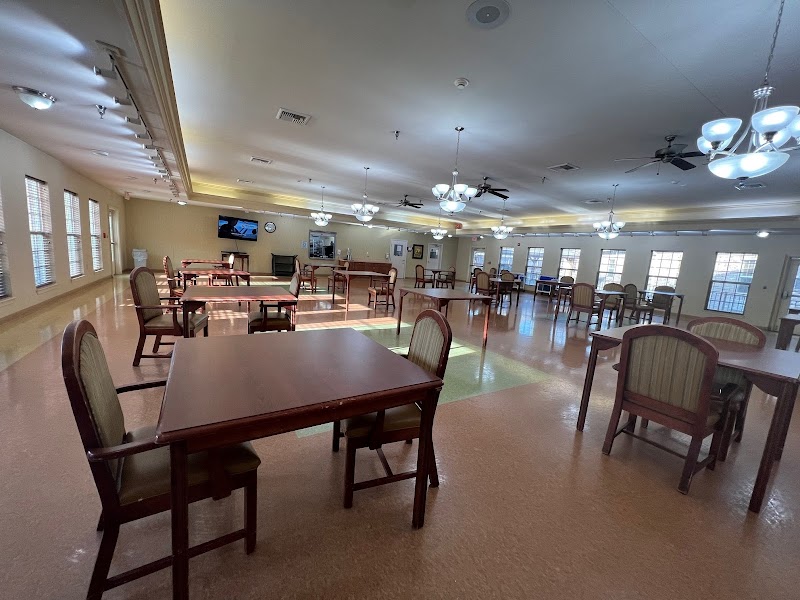
Who Owns and Operates Capstone Healthcare Estates At Veterans Memorial?

CAPSTONE HEALTHCARE ESTATES AT VETERANS MEMORIAL is owned by a for-profit company. For-profit facilities operate as businesses with obligations to shareholders or private owners. The facility is operated by CAPSTONE HEALTHCARE, a chain that manages multiple nursing homes. With 120 certified beds and approximately 100 residents (about 83% occupancy), it is a mid-sized facility located in HOUSTON, Texas.

How Does Capstone Healthcare Estates At Veterans Memorial Compare to Other Texas Nursing Homes?

Compared to the 100 nursing homes in Texas, CAPSTONE HEALTHCARE ESTATES AT VETERANS MEMORIAL's overall rating (4 stars) is above the state average of 2.8, staff turnover (45%) is near the state average of 46%, and health inspection rating (4 stars) is above the national benchmark.

What Should Families Ask When Visiting Capstone Healthcare Estates At Veterans Memorial?

Based on this facility's data, families visiting should ask: "Can you walk me through typical staffing levels on day, evening, and night shifts?" "Can I visit during a mealtime to observe dining assistance and food quality?" "How do you handle medical emergencies, and what is your hospital transfer rate?" "Can I speak with family members of current residents about their experience?" These questions are particularly relevant given the below-average staffing rating.

Is Capstone Healthcare Estates At Veterans Memorial Safe?

Based on CMS inspection data, CAPSTONE HEALTHCARE ESTATES AT VETERANS MEMORIAL has a clean safety record: no substantiated abuse findings (meaning no confirmed cases of resident harm), no Immediate Jeopardy citations (the most serious violation level indicating risk of serious injury or death), and is not on the Special Focus Facility watch list (a federal program monitoring the lowest-performing 1% of nursing homes). The facility has a 4-star overall rating and ranks #1 of 100 nursing homes in Texas. While no facility is perfect, families should still ask about staff-to-resident ratios and recent inspection results during their visit.

Do Nurses at Capstone Healthcare Estates At Veterans Memorial Stick Around?

CAPSTONE HEALTHCARE ESTATES AT VETERANS MEMORIAL has a staff turnover rate of 45%, which is about average for Texas nursing homes (state average: 46%). Moderate turnover is common in nursing homes, but families should still ask about staff tenure and how the facility maintains care continuity when employees leave.

Was Capstone Healthcare Estates At Veterans Memorial Ever Fined?

CAPSTONE HEALTHCARE ESTATES AT VETERANS MEMORIAL has no federal fines on record. CMS issues fines when nursing homes fail to meet care standards or don't correct problems found during inspections. The absence of fines suggests the facility has either maintained compliance or corrected any issues before penalties were assessed. This is a positive indicator, though families should still review recent inspection reports for the full picture.

Is Capstone Healthcare Estates At Veterans Memorial on Any Federal Watch List?

CAPSTONE HEALTHCARE ESTATES AT VETERANS MEMORIAL is not on any federal watch list. The most significant is the Special Focus Facility (SFF) program, which identifies the bottom 1% of nursing homes nationally based on persistent, serious quality problems. Not being on this list means the facility has avoided the pattern of deficiencies that triggers enhanced federal oversight. This is a positive indicator, though families should still review the facility's inspection history directly.