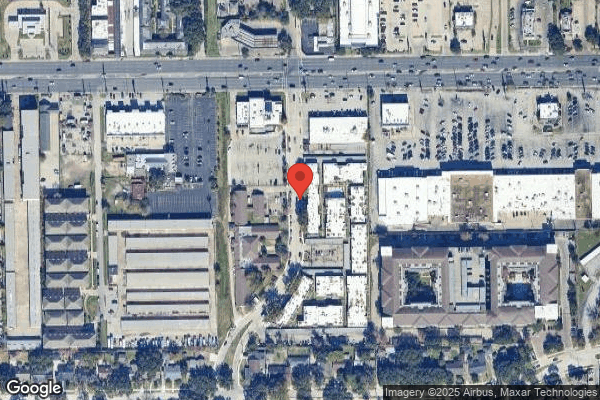
Oasis at Galleria

2808 Stoneybrook Drive, Houston, TX 77063 (713) 782-4355
For profit - Limited Liability company 112 Beds Independent Data: November 2025 10 Immediate Jeopardy citations
Trust Grade
0/100
#1062 of 1168 in TX
Last Inspection: February 2024

Within standard 12-15 month inspection cycle. Federal law requires annual inspections.

Overview

Oasis at Galleria has received a Trust Grade of F, indicating significant concerns about the facility's care and overall quality. It ranks #1062 out of 1168 nursing homes in Texas, placing it in the bottom half of facilities in the state, and #84 out of 95 in Harris County, suggesting limited local options for better care. The facility's trend is worsening, with issues increasing from 8 in 2024 to 13 in 2025, and they have a concerning staff turnover rate of 79%, which is much higher than the Texas average of 50%. They have incurred $448,216 in fines, higher than 98% of Texas facilities, indicating ongoing compliance problems. Despite having good RN coverage, which is better than 96% of Texas facilities, recent inspections revealed critical failures, including neglect in providing a clean environment, a lack of hot water for residents, and incidents of resident-to-resident abuse that were not adequately addressed. Overall, while there are some strengths, the facility has serious weaknesses that families should consider.

Trust Score
F
0/100
In Texas
#1062/1168
Bottom 10%
Safety Record
High Risk
Review needed
Inspections
Getting Worse
8 → 13 violations
Staff Stability
⚠ Watch
79% turnover. Very high, 31 points above average. Constant new faces learning your loved one's needs.
Penalties
✓ Good
$448,216 in fines. Lower than most Texas facilities. Relatively clean record.
Skilled Nurses
✓ Good
Each resident gets 54 minutes of Registered Nurse (RN) attention daily — more than average for Texas. RNs are trained to catch health problems early.
Violations
⚠ Watch
43 deficiencies on record. Higher than average. Multiple issues found across inspections.
★☆☆☆☆
1.0
Overall Rating
★☆☆☆☆
1.0
Staff Levels
★★★☆☆
3.0
Care Quality
★☆☆☆☆
1.0
Inspection Score
Stable
2024: 8 issues
2025: 13 issues

The Good

  • Full Sprinkler Coverage · Fire safety systems throughout facility
  • No fines on record

Facility shows strength in fire safety.

The Bad

1-Star Overall Rating

Below Texas average (2.8)

Significant quality concerns identified by CMS

Staff Turnover: 79%

33pts above Texas avg (46%)

Frequent staff changes - ask about care continuity

Federal Fines: $448,216

Well above median ($33,413)

Significant penalties indicating serious issues

Staff turnover is very high (79%)

31 points above Texas average of 48%

The Ugly 43 deficiencies on record

10 life-threatening
Jun 2025 5 deficiencies 3 IJ (3 affecting multiple)
CRITICAL (K) 📢 Someone Reported This

A family member, employee, or ombudsman was alarmed enough to file a formal complaint

Immediate Jeopardy (IJ) - the most serious Medicare violation

Free from Abuse/Neglect (Tag F0600)

Someone could have died · This affected multiple residents

**NOTE- TERMS IN BRACKETS HAVE BEEN EDITED TO PROTECT CONFIDENTIALITY** Based on observation, interviews and record reviews, the facility failed to protect the resident's right to be free from abuse...

Read full inspector narrative →
**NOTE- TERMS IN BRACKETS HAVE BEEN EDITED TO PROTECT CONFIDENTIALITY** Based on observation, interviews and record reviews, the facility failed to protect the resident's right to be free from abuse, neglect, and exploitation for two residents (Resident #111, #113 and #114) out of seven reviewed for abuse. The facility failed to protect Resident #113 and #114 from a physical altercation on 3/23/25. Resident #114 sustained redness and pain to the left eye and sent to the ER. The facility failed to address Resident # 114's continued threatening and aggressive behavior towards residents and staff. The facility failed to address Resident #113's inappropriate sexual behavior on 5/03/2024 towards an unknown female resident as documented in the medical records. An Immediate Jeopardy (IJ) was identified on 05/03/2025. The IJ template was provided to the facility on [DATE] at 1:58 PM. While the immediacy was removed on 05/08/2025 at 1:24 PM, the facility remained out of compliance at a scope of pattern and severity level of no actual harm that is not immediate jeopardy, due to the facility's need to evaluate the effectiveness of the corrective systems. Failures outside IJ -The facility failed to ensure CNA A properly repositioned Resident #111 CNA A shuffling and adjusting his head on the pillow. these failures could place residents at risk of physical or psychosocial harm as a result of the abuse. Findings included: 1. Record review of Resident #113's face sheet dated 04/22/25 reflected a [AGE] year-old male first admitted to the facility on [DATE] and discharged on 03/28/25 to another facility. His diagnoses included dementia, persistent mood disorders, hypertension, chronic pain syndrome and muscle weakness. Record review of Resident #113's quarterly MDS dated [DATE] reflected he had a BIMS score of 6 out of 15 indicating severe impaired cognition. Section E revealed he had no behaviors or refusals of care. He used a wheelchair for mobility. He required supervision to moderate assistance with all ADLs. Record review of Resident #113's care plan with the closed date of 03/31/25 included: Focus - resident had moods that were not easily altered by staff intervention as evidenced by persistent mood disorder, symptoms and signs involving appearance and behavior. Date initiated as 05/06/24. Interventions included - document staff interventions, notify physician, psych referrals. Focus - Resident was taking psychotropic medications and at risk for adverse reactions and behaviors. Date initiated was 05/06/24. Interventions included - monitor for anxiety driven behaviors and report to physician. Monitor for psychosis driven behaviors such as aggressiveness, combativeness, and report to physician. Focus - he was resistant to care and at risk of injury as evidenced by refusal of baths at times. Date initiated was 09/06/24. Focus - He had episodes of inappropriate behaviors and at risk for future episodes and injuries as evidenced by not allowing housekeeping to clean room, refusing care (becoming aggressive at times). Date initiated was 11/27/24. Interventions included - give medications as ordered, monitor and chart behaviors every shift and report progress to physician. Provide psych consult per order. Focus - Resident reportedly hit his roommate in the eye. Date initiated was 03/23/25. Interventions included - refer to Medical Behavioral Hospital for inpatient geri psych placement. Immediately inform resident to stop and separate from others when resident becomes aggressive. Further review of Resident #113's care plan revealed sexually inappropriate behavior was not addressed. Record review of Resident #113's progress note on 5/3/24 at 2:26 PM written by LVN U read in part: Resident #113 was observed by the nurse inappropriately touching on a female resident while she was on her bed resting. The female resident had long pants and a top on. The resident was redirected back to his room .and stated, I will not do it again. The RP was notified .NP notified; orders received for psych consult. Record review of Resident #113's progress note on 5/04/24 at 3:20 AM written by LVN V indicated the resident was verbally and physically abusive to anyone in his path while trying to go into another residents room. The only intervention was to let his aggression run its course and keep other residents safe. Resident #113 proceeded to constantly hit/bang/kick the window and door of the secure door. The activity continued for 2 hours. Resident #113 was going room to room waking other residents by banging on doors and opening or closing doors. Interventions were attempted to redirect Resident #113 failed. At 3:20 AM Resident #113 finally went to bed and slept. Record review of Resident #113's Psychological Services progress note dated 5/12/24 at 10:24 AM indicated the focus of the session was emotional withdrawal, communication, and physical decline. Further review revealed sexually inappropriate behavior, or aggressive behavior was not addressed. Record review of Resident #113's Psychological Services progress note dated 8/21/24 at 11:32 AM written by the LCSW indicated the resident was agitated when another resident wandered into his room. Further review indicated the resident did not like shared space and liked his privacy. Record review of a progress note on 11/24/24 at 6:05 PM written by LVN T indicated Resident #113 was following and yelling at his roommate calling him names as well as yelling at staff. Resident #113 would be upset when staff entered his room. He was redirected, told to calm down then continued to yell. Record review of Resident #113's progress note on 11/26/24 at 9:42 AM written by the Social Services Assistant indicated a care plan meeting with the RP was scheduled for 11/26/24 at 11:00 AM. Further review revealed there were no details regarding the outcome of the meeting. Record review of Resident #113's Psychological Services progress note dated 11/27/24 at 6:43 AM written by LCSW indicated he was agitated, frustrated with staff and another resident. Record review of Resident #113's Psychiatric progress note dated 2/6/25 written by the Psychiatric NP indicated the resident was improving but remained isolated and unable to tolerate a new roommate. Record review of progress note on 3/18/25 at 5:02 PM written by the ADON indicated Resident #113 was yelling, screaming and vocally aggressive to the nursing staff as he refused a shower. The ADON de-escalated the situation, and the resident later continued to refuse. The RP was notified. Record review of Resident #113's progress note on 3/23/25 at 12:07 PM written by RN F indicated at 12:45 PM the resident was observed threatening, grasping roommate in his wheelchair, telling roommate to leave the room. Record review of a progress note on 3/23/25 at 12:58 PM written by RN F indicated Resident #113 refused shower care and was reported to be hitting the staff. The resident was reoriented. Record review of Resident #113's progress note on 3/23/25 at 5:22 PM written by the SW indicated the SW left messages for the RP to report resident's increasingly aggressive behaviors. Further review indicated Resident #113 hit his roommate in the eye and they were immediately separated. Resident #113 remained in the office with SW while reaching out to a behavioral hospital for evaluation. Record review of Resident #113's progress note on 3/23/25 at 6:32 PM written by RN F indicated Resident #113 was reported by a CNA to be physically aggressive towards the roommate, verbally threatening and pushing the other resident's wheelchair. Record review of Resident #113's progress note on 3/23/25 at 7:47 PM written by RN F indicated the resident was kept separated from the roommate while waiting for transportation to behavioral center. Record review Resident #113's progress note on 3/23/25 at 9:44 PM written by LVN L indicated the resident was transported to the hospital at 9:00 PM accompanied by the RP. Record review of Resident #113's progress note on 3/23/25 at 11:40 PM written by the SW indicated the resident returned from the hospital. He was alert and calm and placed in a room alone. The resident was referred to Mental Health. Record review of Resident #113's progress note on 3/28/25 at 8:33 AM written by LVN L indicated the resident was transferred to another nursing facility. Record review of Resident #113's order summary report dated 04/22/25 indicated an order for behavior monitoring which included agitation, hitting, increasing complaints, kicking, cussing, aggression and refusing care every shift for use of Depakote starting 06/04/24. An order for Depakote 125mg tablet every 8 hours for mood disorder was started on 05/03/24. The last order change was on 02/26/25 for Depakote 250mg TID. An order for Memantine 5mg tablet twice a day for dementia was started on 5/16/24. An order for Melatonin 5mg at bedtime for insomnia was started on 5/20/24. In a telephone interview on 4/22/25 at 1:45 PM, LVN U stated the incident on 5/3/2024 when Resident #113 was inappropriately touching a female resident was reported to the Administrator at the time. LVN U did not recall the name of the female resident nor the details of what happened when asked about the inappropriate touching. In an interview on 4/22/25 at 2:25 PM the interim Administrator stated if a resident inappropriately touched another resident, they would be placed on 1:1 monitoring until sent out for evaluation, and that they did not need to be at the facility. In an interview on 4/23/25 at 9:20 AM, the Psychiatric NP stated it was concerning that Resident #113 even left his room. Had she known of Resident #113's sexual interaction with another resident, she would have assessed him and adjusted meds, have a talk with him and involve social services. He knew what he was doing, he was agitated and aggressive. The Psychiatric NP stated, he would have gotten away with it if he wasn't caught. If there were further events, he would have been discharged . Psychiatric NP stated she was not at the facility on 5/3/24 and did not start covering the facility until October 2024. The risks of having no interventions for behaviors would be residents could walk up to other residents, repeating the aggressive behavior and no one seeing it, and there would be risk of sexual abuse as well. She stated in the secure unit, every resident was supposed to be monitored, and there should not be residents with low BIMS scores wandering around. In an interview on 4/23/25 at 12:25 PM The DON stated sexual behavior should have been in the care plan for Resident #113. The MD should have been notified and the resident should have been transferred out for evaluation. The DON stated she was not at employee of the facility at the time of sexually inappropriate incident on 5/3/24. In a telephone interview on 4/23/25 at 3:20 PM, the SW revealed she was unaware of Resident #113 inappropriately touching a female resident on 5/3/2024. SW stated had she been notified, she would have talked to both residents involved. In an interview on 5/1/25 at 12:58PM, the Social Service Assistant stated she was not aware of Resident #113's sexual inappropriate behavior on 5/3/24. The Social Service Assistant stated if she had been aware then she would have immediately separated the residents, refer to psychologist and psychiatric services, and he would have to be removed from the facility. 2. Record review of Resident #114's face sheet dated 05/06/24 reflected a [AGE] year-old male first admitted to the facility on [DATE] and discharged on 03/26/25 to acute care hospital. His diagnoses included depression, personal history of suicidal behavior, dementia, tension headaches, hypertension, and hemiplegia (one sided paralysis). Record review of Resident #114's quarterly MDS dated [DATE] indicated he had a BIMS score of 9 out of 15 indicating moderate impaired cognition. Section E indicated he had no behaviors or refusals of care. He had impairment to one side of the upper body. He used a wheelchair for mobility. He required substantial assistance with most ADLs. Record review of Resident #114's undated care plan included: Focus - Resident had moods not easily altered by staff as evidenced by - history of suicidal behavior. Interventions included - notify physician if mood interferes with physical functioning, psych referral as needed. Focus - resident at risk for increased confusion and decline in ADLs as dementia progresses. Date initiated was 08/05/24. Interventions included - administer medications as ordered. Reorient resident daily as needed. Further review revealed verbal and physical aggressive behavior was not addressed nor was the physical altercation with the roommate Resident #113 on 03/23/25 addressed. Record review of Resident #114's chart revealed a progress note on 8/04/24 at 2:52 PM written by the SW indicated the Resident #114 reported a verbal altercation with another male resident resulting in an exchange of curse words. A referral to Psychiatry (Medication Management) was made on 8/4/24 by SW for anger outburst. Record review of Resident #114's Psychological Services progress note dated 8/27/24 at 4:55 PM written by the LCSW indicated a diagnosis of adjustment disorder with anxiety. Further review revealed anger outburst was not addressed. Record review of Resident #114's progress note on 11/12/24 at 2:07 PM written by The Social Service Assistant indicated he had agitation and verbal aggression towards his roommate. Resident #114 was then moved to a different room. Record review of Resident #114's Psychological Services progress note dated 11/21/24 at 5:12 PM written by the LCSW revealed verbal aggressive behavior was not addressed. Record review of Resident #114's progress note on 3/13/25 at 5:51 PM written by RN F indicated the resident was physically aggressive towards roommate and staff, threatening to kill the roommate. The resident refused collection of urine for test. The NP, DON and ADON were notified. Record review of Resident #114's progress note on 3/13/25 at 6:35 PM written by the DON indicated the resident was throwing drink containers out the door and at passing residents, yelling, cursing, and threatening staff. The resident was transferred to the ER for evaluation and the RP was notified. The resident returned to facility on 3/14/25. Record review of Resident #114's facility Behavioral Health note on 3/14/25 written by the Psychiatric NP for Medication follow up for dementia indicated Resident #114's medications were not adjusted at the ER visit, and he was tolerating medications with no problems. Further review indicated the resident expressed frustration regarding recent medical experiences including visit to the hospital. Further review indicated Resident #114 had psychiatric history of: combative, physical aggression, and confusion. Record review of Resident #114's progress note on 3/23/25 at 6:02 PM written by RN F indicated the resident told the nurse he was hit in his eyes by the roommate. Further review indicated he had discoloration to the left eye and the NP, RP, Administrator, DON and SW was notified. Record review of Resident #114's progress note on 3/23/25 at 7:35 PM written by SW indicated that Resident #114 verbally reported that his roommate hit him in the eye. Record review of the facility PIR (Provider Investigation Report) dated on 03/31/25 and signed by the acting Administrator at the time, indicated the incident of abuse by resident-to-resident altercation occurred on 03/23/25 at 4:30 PM involving Resident #113 and #114. The PIR indicated the incident was reported to the State on 3/24/25 at 5:00 PM. The report indicated Resident #114 alleged that the roommate, Resident #113 hit him in the eye and that it was not witnessed by any staff member. Resident #114 had redness to the left eye lid, denied pain and Resident #113 was unable to be interviewed to recall the incident. Each resident was sent out to the ER for evaluation. There were no delayed injuries for Resident #114 and Resident #113 was returned from psych hospital. The PIR indicated the incident occurred in the secure unit and that Resident #114 did not have capacity to make informed decisions and had the history of verbal and physical aggression as well as wandering. The PIR indicated that Resident #113 had a history of verbal and physical aggression as well as wandering. The PIR indicated the investigation findings were unconfirmed and the facility planned to find alternate placement for Resident #113 due to increasing behaviors. Further review indicated an emailed progress note dated 03/24/25 at 10:39 PM indicating Resident #114 was evaluated by the facility's LMSW and LCSW Therapists on 3/24/25. The progress note indicated Resident #114 reported that the roommate would sometimes become confused and agitated. Further review of the progress note indicated Resident #114 was calm and in no distress during the session. The PIR included the facility incident report dated 3/23/25 at 12:58 PM written by RN F. The incident report indicated RN F was notified by the CNA of Resident #113's physical aggression towards his roommate and that RN F observed Resident #113 verbally threatening and pushing the other resident's wheelchair in the hallway. The immediate actions taken residents were separated, kept away from each other by RN F and the attending staff in the unit. The DON and SW were notified. Further review of the PIR revealed no indication as to whether or not the Ombudsman and Law Enforcement were notified. The PIR did not include any statements by staff members. Record review of Resident #114's Order Summary Report dated 04/22/25 indicated an order for Venlafaxine extended release 37.5mg capsule daily for depression was started on 11/27/24. The most recent dose change was Venlafaxine extended release 75mg on 03/01/25. An order for Memantine 5mg tablet daily for dementia was started on 08/13/24. An order to monitor for side effects of antidepressant medication use every shift started on 11/27/24. Resident #113 had bronchitis and was treated with an antibiotic Azithromycin 500mg tablet every 8 hours beginning on 03/14/25 and ending on 3/19/25. In an interview on 4/20/25 at 9:30 AM, MA D said she recalled the incident between Resident #113 and #114. MA D stated Resident #113 originally was in the room by himself, and Resident #114 had a roommate that was discharged . MA D stated both residents resided in the same room on the secure unit. MA D stated the main cause of the incident was that Resident #113 would not allow Resident #114 to get into the room. MA D stated she knew they were not a good match because they would have arguments. MA D stated room changes do not work well with residents in the secure unit. Interview on 4/20/25 at 10:00 AM, CNA T stated that on 3/23/25 the altercation between Residents #113 and #114 took place in the secure unit hallway just outside the dining room. Resident #113 said to Resident #114 why are you going into my room!. Resident #113 grabbed Resident #114, there was a scuffle between the two men. CNA T stated they were swinging at each other, and she was in the middle trying to separate them. She stated she could not see if Resident #113 struck Resident #114 in the eye but that Resident #114's eye was red, and it was not red prior to that. CNA T stated Resident #114 had a pair of fingernail clippers in his hand. He was not supposed to have it; she did not know how he got hold of one. CNA T stated Resident #114 was afraid of Resident #113 because he would call him names; CNA T stated she reported to the nurse on duty. CNA T stated Resident #113 had taken swings at her in the past due to refusal of care. CNA T stated she would document and report to nursing but did not provide dates or names of staff. CNA T A stated Resident #113 and #114 should not have been put together as roommates due to their aggressive behavior towards one another which included arguing with one another. CNA T stated Resident #113 would get upset thinking the roommate was taking his stuff. CNA T stated she did not get a chance to write a witness statement regarding the altercation on 3/23/25. In an interview on 4/21/25 at 11:20 AM, the Social Service Assistant stated since Resident #114 did not want to get out of bed, he was a good roommate for Resident #113 and facility census increased so the two had to become roommates. The Social Service Assistant stated Resident #113 would be aggressive to other roommates in the past but never physical prior to the incident with Resident #114. Resident #113 had 2-3 roommates prior, and it always ended up not working because he would block roommates from getting into the room. The Social Service Assistant stated it was all documented in his chart and had multiple care plans with the family; he just did not want a roommate. In an interview on 04/22/25 at 10:06 AM, RN F stated MA D notified her about the incident between Resident #113 and #114. RN F stated she immediately notified the SW, ADON, DON she then walked into the secure unit and in the hallway, she saw both residents. RN F stated Resident #113 was upset, he pushed Resident #114's wheelchair and Resident #113 said to Resident #114, you cannot do that! RN F stated Resident #113 would often talk loudly when upset. RN F stated she heard about Resident #113 going into Resident #114's things but she did not witness that. RN F stated before they were roommates, they were friends talking and visiting with each other. RN F stated this was why they thought they would be compatible. Interview on 4/22/25 at 11:50 AM, MA D stated she heard the commotion in the hallway and saw CNA T separating the Residents #113 and #114. She heard Resident #113 say Trash, trash! and usually when he says these things she knows he was very agitated. She did see Resident #114 with fingernail clippers and heard Resident #114 say he was going to use it as he waved it in his hand. A nurse took the clippers away but she did not have the name of the nurse. She did provide a statement to Administrator for the incident. MA D stated there were other incidents where Resident #113 would block the door with his bed and not allow his roommates to enter, saying it was his room. Resident #113 would curse out the staff as well. Incidents like that were reported to administration. MA D could not recall dates or who it was reported to. In an interview on 4/22/25 at 2:25 PM with the interim Administrator and the DON, the interim Administrator stated that combative residents should not be put together and that they would agitate and possibly beat each other up. The interim Administrator stated nail clippers would not be allowed as they could cut themselves, or someone could wander into room, pick it up and use it as a weapon. The interim Administrator stated families may not always comply and if aware then the rooms would be searched. The DON stated she was not notified of the nail clippers. The DON stated she was aware Resident #114 was threatening to kill his previous roommate (before Resident #113 was roommate) and he was then transferred to hospital for observations and returned to the facility. The interim Administrator stated she would not have accepted him back if she were the Administrator at the time. The interim Administrator stated she was unable to locate the completed facility investigation for the resident-to-resident altercation on 3/23/25. In a telephone interview on 4/23/25 at 7:25 AM, the previous Administrator stated an internal investigation was completed for the resident-to-resident altercation incident on 3/23/25 and that she did conduct staff interviews. She stated the incident was unwitnessed and did not report to law enforcement because it was a verbal altercation, and the residents had dementia and were confused. She stated later that day, it was reported that Resident #114 had been struck by Resident #113 in the eye and that was when she sent Resident #114 out to hospital for evaluation. In an interview on 4/23/25 at 9:20 AM, the Psychiatric NP stated Resident #113 did not want to have roommates and would block the door. The Psychiatric NP stated she also followed Resident #114 and was not notified of Resident #114 threatening to kill the roommate. She learned about it much later. Resident #114 had an increase in antidepressant medication Venlafaxine on 2/27/25, and probably was not appropriate to be in the same room as Resident #113 due to behaviors. The risk would be that one day they would get on each other's nerves, and someone could get hurt especially if they were physical. In a telephone interview on 4/23/25 at 9:21 AM, The Psychiatric NP stated that she was the Psychiatric NP for both Resident #113 and #114. The Psychiatric NP stated Resident #114 was not aggressive, didn't bother anybody, and stayed in bed depressed. Resident #114 was more with it and that he did not have anything in common with anyone in the secure unit. She stated, at one time in January 2025, Resident #113 had a roommate and had witnessed he was annoyed with the roommate who was in bed and nonverbal. Resident #113 would accuse that roommate of taking his belongings. This behavior was discussed with her by the SW and DON. Prior to that, Resident #113 was fine with the curtain between his bed and the roommate's bed. Resident #113 would remain on his side. By February 2025, Resident #113 was in a room by himself. Resident #113 and Resident #114 seemed like they got along well and would be fine as roommates. In an interview on 4/23/25 at 12:25 PM the DON stated after altercation on 3/23/25, Residents #113 and #114 were placed in separate rooms and no increase in staff were made, when asked how the other residents were protected. The DON stated there were no further incidents. In a telephone interview on 4/23/25 at 3:20 PM the SW stated she was notified of the resident-to-resident altercation between Resident #113 and #114 on 3/23/25. The SW stated they were immediately separated and then she worked on trying to find a different place for Resident #113. The SW stated Resident #113 did not do well with roommates. In an interview on 4/24/25 at 9:05 AM, the DON stated Resident #114 would be verbal with staff and refuse care and that Resident #113 would stay in his room, and she did not know much about him but knew he refused care. The DON stated behaviors, whether verbal or physical, should be in care plan and MDS, so everybody knows about the behaviors. DON stated they should not have been roommates. The DON stated Resident #113 and Resident #114 had never been roommates in the past and that the decision to put them together was made by a previous Administrator. DON stated she was not notified of verbal or physical behaviors from either resident prior to the incident on 3/23/25. She stated Resident #113 was placed on 1:1 until transport to hospital and upon return was back to a room by himself. The DON stated Resident #113 had no behaviors while in hospital but should have been placed on 1:1 monitoring until he was transferred out for good. In an interview on 5/1/25 at 12:58PM the Social Service Assistant stated Resident #113 did not like it when staff would come into the room to clean up the roommate and would then be pretty aggressive towards staff. The Social Service Assistant stated after any incidents Resident #113 would have, the Social Service Assistant would call family every day for family to try and calm down Resident #113. It would work for a few days and then aggression would repeat. The Social Service Assistant stated other interventions were psych services, adjustment to meds and emergency visits. It was discussed with the family about transferring him out, but he needed a secure unit. There was never a concern about other residents' safety around Resident #113 as he didn't come out of his room. The Social Service Assistant stated having a roommate would be a risk because Resident #113 could cause chaos, agitation, and this would be more harmful to other residents. The Social Service Assistant stated, in reality the facility could not meet his needs, he needed his own room because anyone put into his room would be a disaster. This was shared with previous management but there was a time the facility was bed locked except for his room and the Administrator or Owner placed Resident #113 with another resident. The Social Service Assistant stated Resident #113 had three different roommates on different occasions. The Social Service Assistant stated the concerns about Resident #113 having a roommate to the Administrator/Owner and was told it was not a private room. The Social Service Assistant stated it was unsafe to have another resident room with him because the roommate would not get the needed care when Resident #113 would deny staff from entering. The Social Service Assistant stated after the first roommate, Resident #113 was by himself for about 6 months before he had roommates. Resident #114 was his last roommate. All staff were responsible for non-allowable items and cannot search a resident room without cause and consent. Record review of the facility policy for Abuse and Neglect, effective date of October 2022 read in part: .It is the policy of the facility to administer care and services in an environment that is free from any type of abuse, corporal punishment, misappropriation of property, exploitation, neglect, or mistreatment. The facility follows the federal guidelines dedicated to prevention of abuse and timely and thorough investigations of allegations Types of abuse: 1. Physical, 2. Verbal . Record review of the facility policy for Behavioral Assessment, Intervention and Monitoring, dated in 2001, read in part: .Policy Statement .5. Residents will have minimal complications associated with the management of altered or impaired behavior .Management 1. The interdisciplinary team will evaluate behavioral symptoms in residents to determine the degree of severity, distress and potential safety risk to the resident and develop a plan of care accordingly. Safety strategies will be implemented immediately if necessary to protect the resident and others from harm 11. The director of nursing, or designee, will evaluate whether the staffing needs have changed based on acuity of the residents and their plans of care. Additional staff and/or staff training will be provided if it is determined that the needs of the residents cannot be met with the current level of staff or staff training . This failure resulted in an identification of an Immediate Jeopardy (IJ) on 5/03/25. The Administrator was informed and was provided the IJ template on 05/03/25 at 1:58 PM. Plan of Removal (POR) was requested. The following Plan of Removal was submitted by the facility and was accepted on 5/06/25 at 7:19 PM: F600 Introduction: On 5/3/2025 at 01:58PM, the surveyor issued an Immediate Jeopardy F600 (IJ) template notification stating Regulatory Services had determined that the facility failed to protect the resident's right for Resident #113 and Resident #114 to be free from abuse. The facility failed to protect Resident #114 from a physical altercation on 3/23/25 where Resident #114 was sent to the ER for a red eye. The facility failed to address sexual behaviors in the care plan for Resident #113. All current residents could be at risk because of the failure to provide supervision. At the Time of the IJ it was noted that: 1. Both residents #113 and #114 were discharged prior to the change in ownership of the facility. Access to resident records that were closed prior to the change are not accessible by the current provider. 2. Resident #113 has been discharged safely from the facility on 3/26/2025. 3. Resident #114 has been discharged safely from the facility on 3/28/2025 . 4. Neither resident has returned to the facility. As a result of the IJ
CRITICAL (K) 📢 Someone Reported This

A family member, employee, or ombudsman was alarmed enough to file a formal complaint

Immediate Jeopardy (IJ) - the most serious Medicare violation

Tube Feeding (Tag F0693)

Someone could have died · This affected multiple residents

**NOTE- TERMS IN BRACKETS HAVE BEEN EDITED TO PROTECT CONFIDENTIALITY** Based on observation, interview, and record review, the facility failed to ensure residents who were fed by enteral means receiv...

Read full inspector narrative →
**NOTE- TERMS IN BRACKETS HAVE BEEN EDITED TO PROTECT CONFIDENTIALITY** Based on observation, interview, and record review, the facility failed to ensure residents who were fed by enteral means received the appropriate treatment and services to prevent complications of enteral feeding for 2 (Resident #18 and Resident #33 ) of 7 residents reviewed for enteral nutrition. - The facility failed to provide treatment and services, which included an abdominal binder, to prevent complications of enteral feeding due to Resident #18's behaviors of pulling on and pulling out her G-tube which resulted in: the resident pulling out her G-tube on 2 occasions (11/12/24 and 04/15/25) which required hospitalization to place a new tube; and on 1 occasion (03/27/25) the resident pulling on her G-tube and an IV pole falling on her head on. - The facility failed to provide treatment and services, which included an abdominal binder, to prevent complications of enteral feeding due to Resident #33's behaviors of pulling out his G-tube which resulted in the resident pulling out his G-tube on 3 occasions (02/04/25, 02/12/25, 02/23/25 and 04/15/25) which required hospitalization to place a new tube. An IJ was Identified on 04/17/25. The template was provided to the facility on [DATE] at 12:33 PM. While the IJ was removed on 04/22/25 the facility remained out of compliance at a scope of pattern and a severity level of no actual harm that was not immediate due to the to the facility's need to evaluate the effectiveness of the corrective systems. These failures could place residents at risk of injuries, hospitalization, and death. Findings Include: Resident #18 Record review of Resident #18's Face Sheet dated 04/15/25 revealed, a [AGE] year-old female who admitted to the facility 01/14/21 with diagnoses which included: dysphagia (difficulty swallowing), high blood pressure, contracture of the right hand/ left hand and left foot, Dementia with other behavioral disturbance and anxiety disorder. Record review of Resident #18's Quarterly MDS dated [DATE] revealed, severely impaired cognitive skills for daily decision making, upper and lower extremity functional limitations in range of motion, dependent on staff for all aspects of self-care (eating, oral hygiene, toileting hygiene, shower/bathing, dressing), dependent on staff for all aspects of mobility, no physical/verbal behavioral symptoms directed towards others and no behavioral symptoms not directed towards others. Record review of Resident #18's Care Plan printed 04/15/25 revealed, focus- requires the use of feeding tube and is at risk of aspiration (accidental inhalation of food/fluids into the airway), weight loss and dehydration. Feeding tube is related to dysphagia; intervention- administer tube feeding and water flushes as ordered, monitor/document/report to the physician as needed for the following complications related to tube feedings . tube dislodged. Focus initiated 12/29/22- inappropriate behaviors: resident has episodes of inappropriate behaviors of an causing her oxygen tubing from constantly falling off her face onto the floor. Interventions- monitor and chart behaviors every shift and report progress to MD. Focus- history of spitting and crying out at times according to staff and chary review; intervention- referred to mental health services as needed. Focus initiated 02/07/21- resident has impaired communication,[family]reports he is the only one that can get resident to verbally communicate; intervention-[family]will assist with translation when needed, staff will monitor for facial grimaces and body language. , focus- signs and symptoms of anxiety like hypersensitivity, paranoid, nervousness and is at risk for further episodes of anxiety and injury; intervention- medication as ordered, redirect resident from source of anxiety. Resident #18's care plan did not include the resident pulling on or pulling out her G-tube. Record review of Resident #18's Order Summary dated 04/15/25 revealed, she did not have an order for an abdominal binder, or orders for monitoring of increased movement, restlessness, or agitation. Record review of Resident #18's Progress Notes from to 04/15/25 revealed: *11/12/24 at 11:56 PM- CNA informed nurse during care that resident had pulled her G Tube from her abdomen. Nurse went to assess resident and she was found with tube laying on her abdomen without any s/s of pain or distress. DON and Attending notified *11/13/24 at 01:03 AM- EMS arrived to transport resident to hospital *03/27/25 at 05:32 PM- Resident #18 pulled her feeding tube and IV pole fell on her head. The resident had no bumps and bruises, and the NP was notified *03/28/25 at 09:40 AM- From incident yesterday evening pole fell on resident head right eye and forehead bruises was noted this morning, resident is already on neuro checks. NP was notified A.DON as well resident medication was administered. *04/15/25 at 05:47 PM- Patient pulled her G-tube out. Nurse sent patient to hospital for replacement . Record review of Resident #18's EMR revealed, no orders for monitoring of behaviors associated with Resident #18 pulling on and pulling out her G-tube. An observation and interview on 04/15/25 at 09:50 AM revealed, Resident #18 in bed with contracted feet and hands. The resident had a bruise with a scab and dry blood on her forehead, with her bed low to the ground and fall mat on the left side of the bed. The resident had a firm grip on her G-tube tubing, pulling it tightly and her abdomen was observed to rise as she tugged on the tubing. The surveyor immediately exited the room to notify facility staff. When the surveyor returned to the room with MA A the resident was no longer pulling on her tube but continued to pull her legs up and move her hands. MA A said the resident returned to the facility that morning from the hospital. The resident had large tan bandage strips loosely placed on top of the site where her G-tube entered her abdomen, there was no abdominal binder or other assistive device preventing Resident #18 from pulling out her G-tube. An observation and interview with LVN J on 04/15/25 at 11:15 AM revealed, Resident #18 squirming/fidgety/restless in bed, with her legs pulled up. There was tube feeding residue, not previously seen, on the resident's sheets and incontinent brief. LVN J said Resident #18 readmitted to the facility in the morning she pulled out her G-tube. She said the resident did not have an order for an abdominal binder, and a binder was not used to protect Resident #30 from dislodging her G-tube. LVN J said, she can have an abdominal binder. In an interview on 04/15/25 at 11:23 AM, the NP said she started following Resident #18, 6 weeks ago. She said the residents restless, fidgety, and squirming behavior is what she considered her baseline. The NP said she originally thought the resident's behaviors were due to a UTI so Resident #18 was treated with a course of antibiotics, but the behaviors remained when the medication was completed so she now believed she needed psych services. The NP said residents with excessive restlessness and continuous activity were at risk of pulling out their G-tube, so they should have an abdominal binder covering the tube which would prevent them from easily pulling out the tube. The NP said the resident did not have an order for an abdominal binder because she had not received any reports that the resident consistently pulled on her G-tube. She said the failure to have an abdominal binder on a G-tube resident with excessive movement and restlessness placed the resident at risk for the G-tube dislodgement, danger if the IV pole holding the feed falls leading to injuries. In an interview on 04/15/25 at 12:27 PM, MA B said Resident #18 always moved around and was restless. She said the resident had never had an abdominal binder, but she probably could use it. In an interview on 04/15/25 at 12:30 PM, MA A said he had worked at the facility for 8 years and Resident #18's normal behaviors included: agitation and trying to pull out her G-tube. He said the resident did not have an abdominal binder, so he put a sheet on top her G-tube to prevent her from pulling on it. In an interview on 04/15/25 at 12:35 PM, the DON said Resident #18 was non-verbal. She said the resident had always been grabby and fidgety and received psych services. In an interview on 04/15/25 at 12:38 PM, LVN J said Resident #18 just returned from the facility after she pulled out her G-tube and the IV pole fell and hit her head. She said she received an order for an abdominal binder from the NP and was waiting for central supply to deliver the binder. An observation on 04/16/25 at 07:47 AM revealed, Resident #18 in bed, with no abdominal binder in place. The resident was restless and taking off her clothing. In an interview on 04/16/25 at 07:48 AM, MA A said there was an order for an abdominal binder for Resident #18, but she did not have one on because it had not arrived at the facility. In an interview on 4/16/25 at 07:50 AM, LVN J said Resident #18 did not have an abdominal binder on. She put in an order for an abdominal binder for Resident #18 yesterday, but it had not arrived. In an interview on 04/16/25 at 11:27 AM, LVN H said Resident #18 was one of her residents. She said even though the resident is bedbound she did not stay in one place, moved her arms and legs around a lot and is very fidgety. LVN H said she worked with Resident #2 for the past two years and off-course she pulls out her G-tube but the staff could not restrict her. She said she had previously notified nursing management of the resident pulling on and out her g-tube, but no changes were made. She said on 04/15/25 at around 4 AM when she checked on the resident, she saw that Resident #18's G-tube was dislodged and the IV pole was on the floor. In an interview on 04/16/25 at 02:18 PM, RN A said Resident #18 was always fidgety and liked to play and pull on her G-tube. She said Resident #18 did not have an abdominal binder on the night 04/15/25, and she was never educated or informed about any interventions that should be in place to protect Resident #18. RN A said due to resident's movement and preference to pull on her G-tube she had communicated her concerns with nursing management and thought the resident needed an abdominal binder, but nothing was done. In an interview on 04/16/25 at 08:27 AM, the DON said she started her position in February 2025 and Resident #18 always had behaviors that included pulling on her G-tube. She said in March 2025 the resident pulled on her tubing which caused the IV pole holding her feeding to fall and hit her in the head leading to an injury. After the incident, the resident had neuro checks in place to confirm she did not have a change in condition and the IV pole was moved to the other side of the bed. The DON said Resident #18's behaviors were discussed in an IDT meeting, and it was decided a GDR was contraindicated and the only intervention in place after the incident in March was the NP ordering labs. In an interview on 4/16/25 at 03:48 PM, the DON said an abdominal binder was ordered from their vendor, but it had not arrived yet, so the staff were monitoring Resident #18's behaviors. She said Resident #18's abdominal binder was expected to arrive on 04/17/25 . Resident #33 Record review of Resident #33's Face Sheet dated 04/17/25 revealed, a [AGE] year-old male who admitted to the facility on [DATE] with diagnoses which included: chronic respiratory failure, asthma. Bipolar disorder, severe with psychotic features, paraplegia(paralysis of legs and lower injury), Gastrostomy and Tracheostomy (opening in neck to access the windpipe). Record review of Resident #33's Quarterly MDS dated [DATE] revealed, severely impaired cognitive skills for daily decision making. The resident had no behavioral symptoms present including physical or verbal behavioral symptoms towards others and no other behavioral symptoms towards others (hitting or scratching self, pacing, rummaging or disruptive sounds) Record review of Resident #33's undated Care Plan printed 04/17/25 revealed, Focus- risk of aspiration r/t feeding tube in place; intervention- report N/V, absent bowel sounds to MD and RP. Focus- history of depression and is at risk of episodes of depression, adverse reactions and depression driven behaviors; intervention- monitor for impeding episodes of depression- document any noted in clinical record, prove psych consult per order. Record review of Resident #33's Order Summary dated 04/17/25 revealed, she did not have an order for an abdominal binder prior to 04/15/25. Record review of Resident #33's Progress Notes from 01/16/25 to 04/17/25 revealed, Resident #33 pulled out or pulled on his G-tube on the following days: 02/04/25- Residents G-tube was dislodged 02/12/25- Residents G-tube was dislodged and he was sent out to the Hospital 02/23/25- Resident pulled out his G-tube and was sent out to the hospital ER for G-tube placement. 02/25/25- Resident was found pulling on G-tube around 9 am. Resident was cleaned up and abdominal binder was applied. 04/15/25- Residents G-tube became dislodged and he was sent out to the hospital ER of G-tube placement. In an interview on 04/16/25 at 09:18 AM, the MDS Nurse said she had been in her current position for 8 to 9 years but worked in the facility for 19 years. In an interview on 04/17/25 at 11:31 AM, the DON said Resident #18's abdominal binder had not arrived at the facility yet. In an interview on 04/16/25 at 11:40 AM, the MDS Nurse said she was responsible for completing resident care plans. She said the care plan functioned as a plan of how to care for a resident. The MDS nurse said everything needed to care for a resident should be included, day to day tasks/care, wound status, behaviors, diagnosis, code status, and weight management. She said if a resident had behaviors, those behaviors should be included in their care plan with specific details that include the type of behaviors and should include goals and interventions. The MDS Nurse said incorrect care plans posed no risks to residents because nobody looks at the care plan except state. She said staff do not look at resident care plans to determine how to care for residents but received care information from reports, documentation, and verbal communications. The MDS nurse said she did not know about Resident #18's continuous behaviors of pulling at and on her G-tube and she only knew that the resident had once pulled on her IV pole causing it to fall and injury her. She said based on the behaviors she now knows Resident #18 displayed, the resident's care plan should have had a focus area addressing them. In an interview on 04/17/25 at 12:50 PM, the DON said she took the role at the facility in February. She said the purpose of the care plan is to provide guidance for patient care and resident needs. The DON said she was responsible for the accuracy and completion of the care plan, but the MDS nurse is the person who actually completes the care plan. She said each resident's care plan should address their: diet, code status, diagnoses, treatments received and behaviors. The DON said the care plan triggers everything the nurses do for the residents and lets them know what interventions they need to implement. She said inaccuracies in the care plan can result in missed treatments or interventions and in Resident #18's case it led to the resident pulling out her G-tube, injury, and hospitalization to replace her G-tube. The DON said she was not aware of Resident #18's behaviors of pulling on and out her G-tube, she was not aware those behaviors were not in the resident's care plan, but it should have been. Record review of the facility policy Assistive Devices and Equipment with no revision date revealed, our facility provides, maintains, train s and supervises the use of assistive devices and equipment for residents. 1- devices and equipment that assist with resident mobility, safety and independence are provided for residents. 2- recommendations for the use of devices and equipment are based on the comprehensive assessment and documented in the resident's record. An IJ was Identified on 04/17/2025. The template was provided to the facility on [DATE] at 12:33 PM. The following Plan of Removal submitted by the facility was accepted on 04/18/2025 at 07:52 PM and the Administrator was notified on 04/18/25 at 08:01 PM. {Facility Name] 4/18/2025 Plan of Removal F689 On 4/17/2025 at 12:33 PM, the surveyor provided an Immediate Jeopardy (IJ) template notification stating Regulatory Services had determined the facility failed to provide adequate supervision and assistance devices to prevent accidents. The facility failed to provide supervision and/or devices to prevent Resident #18 from pulling her G-tube which resulted in: an injury after the IV pole fell and hit her in the head and her G-tube being dislodged on 2 occasions. 1. Immediate Action: o The Director of Nursing immediately reassessed Resident #18 to validate the resident's G-tube was in place, patent, and medication/nutrition was being administered per provider orders. An abdominal binder ordered on 4/15/2025 after displacement was received 4/17/2025 and applied per provider orders. No other concerns were identified. Resident #18 tolerated the application of device well and exhibits no distress . o The MDS Coordinator updated and revised Resident #18 care plan to include provider orders for G-tube, any current/historical behaviors including agitation, fidgeting, and attempts to remove or dislodge the G-tube. Care plan revisions include interventions to prevent/reduce displacement of G-tube and requirement of documenting provider notification of any changes in behavior specifically related risk of G-tube displacement. Start Date: 4/17/2025 Completion Date: 4/17/2025 Responsible: Administrator Immediate Action: o The Director of Nursing/Designee immediately conducted a review of all facility residents and determined 13 residents were currently receiving nutritional feeding through a G-Tube/Peg Tube. All 13 residents were immediately assessed to validate tubes were secure and patent. Further assessment included a 7 day look back record review to determine that there are no new changes in behavior, increased agitation, or fidgeting related to potential risk of G-Tube/Peg Tube displacement. o The Director of Nursing determined that 4 of the 13 residents receiving nutritional supplements via G-Tubes/Peg Tubes, including Resident #18, would potentially benefit from the use of an abdominal binder. The abdominal binders were previously ordered from the supply vendor and received, provider orders were obtained, and all abdominal binders have been applied to applicable residents and applicable residents are tolerating well with reduced risk of displacement. o It was identified in the expanded sample that 1 of the 13 residents [Resident #33] receiving nutrition via G-tube/Peg Tube had also displaced feeding tube on 2/4/25, 2/12/25, 2/23/25, and 4/15/25. After interview with staff, it was determined that residents is restless, and fidgets and these behaviors have been noted in a progress note dated 4/18/25. The MDS was opened with an ARD (Assessment Review Date) of 4/21/25 to capture these behaviors. The care plan has been revised. The resident is currently receiving physical therapy for range of motion and bed mobility. An occupational therapy eval has been requested. o The MDS Coordinator completed updates/revisions for the 13 resident care plans that included noting any current or historical behaviors (7 day look back) related to potential displacement of G-Tube/Peg tube and validated that if behaviors were identified, interventions included actions to take to reduce risk of displacement and documentation of provider notification. New orders for abdominal binders and monitoring for 4 of the 13 residents have been added to care plan interventions to assist in reducing the potential displacement of G-Tubes/Peg Tubes as applicable. Start Date: 4/17/2025 Completion Date: 4/18/2025 Responsible: Administrator Immediate Actions: o The QAPI Committee reviewed the policies and procedures regarding enteral feeding, safety precautions to validate accuracy. Added to the policy were recommendations to assist nursing staff when residents exhibit behaviors of attempts to remove tube i.e.: pulling, fidgeting, restlessness. o The Director of Nursing/Designee provided training to nursing staff who provide care to residents who receive nutritional feeding via a tube. Staff will not be allowed to provide direct resident care until training has been provided. o Training included validating G-Tube/Peg Tube is secure, patent, and provider orders for med/nutrition are administered per orders. o If resident is exhibiting restlessness, agitation, or changes in behaviors related to obstruction/removal of a G-tube will be documented in the resident record which pulls to the 24 hour report and the Provider/Director of Nursing are to be promptly notified and increased supervision is implemented to maintain tube replacement and patency until root cause of increased restlessness, agitation, changes in behavior are determined. o Completed a return determination with nursing staff on proper placement of G-tube and securing abdominal binder to validate competency. Start Date: 4/17/2025 Completion Date: 4/17/2025 Responsible: Administrator Immediate Actions: o The Director of Nursing/Designee will monitor residents with G-Tubes/Peg Tubes including those that require supportive devices such as abdominal binders that reduce the risk of tube displacement q shift and as needed to validate correct placement and patency of tubes for residents who currently have provider orders. If concerns are identified, immediate corrective action will be implemented, provider notified, and applicable staff re-educated. o The Director of Nursing/Designee will monitor changes in behavior including increased agitation and restlessness daily to promptly determine a root cause and ensure appropriate interventions have been implemented timely on the care plan to reduce potential negative outcomes, including displacement of G-Tube/Peg Tube. o An ad-hoc QAPI meeting was held, and the facility medical director was notified of the deficient practice and plan of removal. The Plan of Correction will be reviewed monthly during the QAPI meeting for the next 3 months and as needed until a lesser frequency is deemed appropriate. Meeting minutes will be taken and maintained for 12 months. Start Date: 4/17/2025 Completion Date: 4/17/2025 Responsible: Administrator Monitoring of the POR. An observation on 04/19/25 at 12:25 PM revealed, Resident #18 in bed with an abdominal binder on. An observation on 04/19/25 at 12:29 PM revealed, Resident #33 with an abdominal binder on. In an interview on 04/19/25 at 01:01 PM, MA B said she received training on G-tube safety on 04/16/25. She said the training addressed how to address active/agitated residents with G-tube, ensuring interventions like abdominal binders are in place, ensuring the resident is safe and administering medications as ordered if necessary. MA B said the training reinforced that G-tube residents with increased agitation could be at risk of dislodgement and the IV pole falling on them. In an interview on 04/20/25 at 06:45 AM, LVN H said she was trained on 04/17/25 about G-tube safety. She said Resident #18 moved around a lot and had a tendency to pull on and out her G-tube, . In an interview on 04/20/25 at 08:55 AM, MA A said he had not received any training on G-tubes, Care Plans or Accidents/Supervision. An observation on 04/20/25 at 08:57 AM revealed, Resident #22 in bed with an abdominal binder in place. An observation on 04/20/25 at 09:05 AM, revealed Resident #18 in bed with an abdominal binder in place. The resident was calm, in no immediate distress and did not have concerning body movement. In an interview on 04/20/25 at 09:00 AM, CNA K said she received training on G-tube safety in the previous week. She said if a resident with a G-tube was agitated they were expected to report it to the nurse and ensure an abdominal binder was on if there was an order. In an interview on 04/20/25 at 09:05 AM, LVN J could not answer what in-services she received and had to be prompted by the surveyor. She said she received training on G-tubes and care plans on 04/17/25 and 04/20/25. LVN J said when a resident on a G-tube has behaviors nurses are expected to document the incident in the chart and report it to management, while CNAs document behaviors in the POC and report it to their nurse. She said when residents with G-tubes become agitated they are at risk of dislodgment so nursing staff should initiate interventions like an abdominal binder if there is an order for one and notifications should be sent out. In an interview on 04/20/25 at 09:07 AM, the ADON said she completed training with staff on 04/17/25 regarding G-tube Placement, Behaviors and Abdominal binders. She said staff were educated that residents who are agitated, fidgety, constantly moving/irritated should be documents on having behaviors in the POC or the progress notes. The ADON said staff were trained that these residents are at risk of dislodgement and can also pull-down equipment. She said the training addressed reporting and documenting behaviors that increase risk of G-tube dislodgement, sending notifications and interventions that should be in place. The ADON said she also did training on resident care plans and how documentations played into the development of care plans, where to find a resident's care plan and how to review the interventions in place. She said this training was provided to CNAs, CMAs, Nurses, RTs, and anyone who provided care to residents., In an interview on 04/20/25 at 10:21 AM, LVN B said he had not received any training about G-tube safety and his knowledge was based on basic nursing. In an interview on 04/20/25 at 01:10 PM, the MDS Nurse said she received a 1-on-1 training from the Interim Administrator regarding care plan timing & accidents, incidents on 04/17/25 and training regarding G-tubes on 04/18/25. She said the training reinforced that she should know about resident behaviors such as pulling on and pulling out their G-tube and make sure there is the appropriate documentation. The MDS Nurse said behaviors should be tracked, orders should be in place for a binder, the binder must actually be used/in place on the resident and such orders must be in the resident's plan of care. The MDS nurse said even though the MDS is only a 7 day look back the behaviors should be documented in the resident's plan of care. The MDS nurse said she was educated that all behaviors should be documented in the care plan even if it were the resident's baseline behaviors because agitated residents are at risk of pulling out their G-tube which could result in rupture, injury, trauma, infection, and hospitalization. In an interview on 04/22/25 at 04:56 AM, RN A said she received training on G-tube safety the previous week and on 04/21/25. She said the training focused on preventing G-tube dislodgement with the use of a binder. RN A said when a resident with a g-tube is agitated or has increased movement nursing staff are expected assess the resident and if needed apply an abdominal binder or get an order for an abdominal binder. She said resident behaviors are to be documented in the resident's chart and interventions such as repositioning, medications administered as ordered, and notification sent to the MD/NP because increased behaviors/movement can place residents at risk of dislodgement, bleeding, bloating and infection. RN A said documenting any incidents that occur is important because it plays into the resident's care plan. In an interview on 04/22/25 at 05:01 PM, RN E said he received training on G-tube safety on 04/21/25. He said if a resident with a G-tube had behaviors such as fidgeting and pulling on the tube they should not be ignored, they should be assessed and interventions such as abdominal binders or PRN meds should be in place. RN E said if a resident even if these behaviors are continuous staff should document it whenever they see it because it plays into the care plan. In an interview on 04/22/25 at 05:05 AM, CNA X said he did not receive any training on G-tubes, care plans or behaviors in residents with behaviors but if a resident was observed pulling on their G-tube staff should ensure interventions like abdominal binders are in place, notification should be sent to their nurse and document the behaviors in the POC to prevent dislodgement. In an interview on 04/22/25 at 05:09, RT A said he had not received in-person training on G-tube safety but had received a text message on some trainings and asked if he could pull it up. RT A was not able to verbalize independently what the training he received was but read from his text that residents with increased agitation were at risk of dislodgement or injury so the nurse should be notified and the behaviors document. An observation on 04/22/25 at 05:20 AM revealed, Resident #18 in bed, with no abdominal binder on. In an interview on 04/22/25 at 05:25 AM, CNA A said she received training regarding G-tube safety on 04/20/25. She said when a resident with a G-tube was agitated or fidgety she is expected to observe them and document it in the POC. CNA A said Resident #18 did not have an abdominal binder on because it was only required when the resident was agitated which she was not at this time. In an interview on 04/22/25 at 05:29 AM, LVN B said he received training on G-tube safety on 04/21/25. He said residents with G-tubes that experienced behaviors were at risk for dislodgement, so they must notify the MD to receive an order for an abdominal binder or use one if order was in place. LVN B said Resident #18 did not have an abdominal binder in place because she only required one when she was agitated. In an interview on 04/22/25 at 08:50 AM, LVN D said she received training on G-tube safety on 04/21/25. She said residents with G-tubes that are fidgety are considered as having behaviors and that should be documented. In an interview on 04/22/25 at 09:18 AM, MA C said she had not received any training on G-tube safety. In an interview on 04/22/25 at 01:55 PM, MA C said she received training that day regarding residents with G-tubes displaying behaviors, communication & notifications of behaviors and the application of abdominal binders as ordered. She said if a resident with a G-tube was agitated they were at risk of G-tube dislodgement so interventions should be in place as ordered, nurse notified, and observations document ed in the residents POC. MA C said residents with behaviors like Resident #18 should have binders in place at all times except when care is provided. An observation on 04/22/25 at 02:00 PM, revealed Resident #22 sleeping in bed with her family member at her bedside. The family member said the resident currently had an abdominal binder on and had extra ones in her nightstand. In an interview on 04/22/25 at 02:18 PM, with the Interim Administrator and the DON, the Administrator said the facility performed an audit and identified 5 residents with a history of behaviors associated with pulling out their G tube. She said those resident's care plans have been updated, every shift monitoring has put in place and signs to have abdominal binders in place are located above the resident's beds. The Administrator said the facility failed to have a structure in place to track residents with behaviors. The DON said prior to the IJ notification the facility did not have interventions in place for G-tube residents with behaviors but now training was provided to CNAs, Nurses, RT about these behaviors, documenting behaviors, the use of abdominal binders and signage placed above the bed of residents that require abdominal binders. The DON said since the IJ notification the MDS nurse and
CRITICAL (K) 📢 Someone Reported This

A family member, employee, or ombudsman was alarmed enough to file a formal complaint

Immediate Jeopardy (IJ) - the most serious Medicare violation

Deficiency F0742 (Tag F0742)

Someone could have died · This affected multiple residents

**NOTE- TERMS IN BRACKETS HAVE BEEN EDITED TO PROTECT CONFIDENTIALITY** Based on observations, interviews, and record reviews the facility failed to ensure a resident who displayed or was diagnosed wi...

Read full inspector narrative →
**NOTE- TERMS IN BRACKETS HAVE BEEN EDITED TO PROTECT CONFIDENTIALITY** Based on observations, interviews, and record reviews the facility failed to ensure a resident who displayed or was diagnosed with a mental disorder or psychosocial adjustment disorder received appropriate treatment and services to correct the assessed problem or to attain the highest practicable mental and psychosocial well-being for 3 of 8 residents (Resident # 30, Resident #42 Resident #52) reviewed for treatment and services for mental and psychosocial concerns. - The facility failed to provide appropriate treatment and services to prevent and correct Resident #30's escalating behaviors which resulted in a suicide attempt on 04/13/25 and the resident attempting to draw a police officer's firearm when she had to be forcefully restrained and removed from the facility. - The facility failed to provide appropriate treatment and services to prevent and correct Resident #52's escalating behaviors which resulted in suicide threats and an incident on 05/03/25 when the resident had to be forcefully restrained and removed from the facility. - The facility failed to provide treatment and services to correct Resident #42's continuous behaviors of pacing up and down the secure unit, banging on the doors, getting in residents and staff faces, touching their shoulder while asking if his RP was dead. An IJ was identified on 05/03/25. The template was provided to the facility on [DATE] at 01:58 PM. While the IJ was removed on 05/08/25 the facility remained out of compliance at a scope of pattern and a severity level of no actual harm that was not immediate due to the to the facility's need to evaluate the effectiveness of the corrective systems. The IJ was called again on 06/07/25. The template was provided to the facility on [DATE] at 07:03 AM. While the IJ was removed on 06/19/25 the facility remained out of compliance at a scope of pattern and a severity level of no actual harm that was not immediate due to the to the facility's need to evaluate the effectiveness of the corrective systems. These failures could place residents at risk of minor and major injuries, suicide threats, attempted suicide, hospitalization, and death. Resident #30 Record review of Resident #30's Face Sheet dated 05/02/25 revealed, a [AGE] year-old female who admitted to the facility on [DATE] with diagnoses which included: spinal cord injury, anemia, nicotine dependence, Schizoaffective disorder (a mental health condition that combines symptoms of schizophrenia and a mood disorder, such as depression or bipolar disorder), bipolar disorder (mental health condition characterized by extreme mood swings, ranging from periods of intense happiness or irritability (mania or hypomania) to periods of deep sadness or despair) with sever psychotic features (hallucinations (seeing or hearing things that aren't real), delusions (false beliefs), and disorganized thinking) and paraplegia( paralysis of the legs and lower body, typically caused by a spinal cord injury). Record review of Resident #30's previous facility Progress Notes dated 12/26/24 at 02:21 PM revealed, Resident says she is hearing things and people talking about her. She is under mental distress. She is wanting to go to the psych hospital. Resident stated she no longer wanted to be here. Record review of the Resident #30's Quarterly MDS revealed, intact cognition as indicated by a BIMS score of 14 and use of antipsychotic medications during last 7 days. There were no evidence of an acute change in mental status, and no behaviors present. She had no potential indicators of psychosis such as hallucinations or delusions. Record review of Resident #30's undated Care Plan revealed, focus- history of being resistant to care at times and is at risk for injury; intervention- approach in a calm manner, talk while giving care. Focus- taking psychotropic medications and is at risk of adverse reactions and (depression, anxiety, and/or psychosis driven behaviors; interventions- monitor for psychosis driven behaviors such as aggressiveness, combativeness, manic episodes, observe and record any displayed behaviors or mood problems. Focus- Resident #30 verbalized suicidal ideations and became physically aggressive with police related to her diagnosis of bipolar and or anxiety, date initiated 04/13/25; interventions- provide medications as ordered, resident will be assisted with discharge planning as when needed, resident will be referred to inpatient geri psych placement as when needed, call 911 with request for the mental health team as/when needed. Record review of Resident #30's Progress Notes from 12/31/24 to 05/02/25 revealed : 01/01/25- EMS arrived at facility stating they received phone call from facility. This nurse was notified by CMA that this resident called EMS. Resident states that she is not feeling well and wants to go to the Hospital. Resident did not notify this nurse that she was not feeling well prior. Resident called EMS instead. EMS assessed resident. No abnormal findings. EMS spoke with resident about receiving care in facility before calling 911. Resident continues to state that she wants to go to the hospital. 01/02/25- Resident called 911 for pain pill when her pain was just due to be given to her, every effort to advise her to take her pain pill yield no result as she wants to go to hospital, NP made aware, administrator made aware, resident insisted on going to hospital, picked up in stable condition. 01/12/25- Note Text : On rounds at 7:04am resident did not complain of any discomfort, distress, or concerns, noted vaping in the room, was educated by this nurse that vaping is not proper and not allowed in the room, resident did not listen, but continue vaping. At about 7:54am, 911 ambulance arrived facility stated resident called them, complained of pain to lower back, sediment in urine, and brown urine output. Resident has UA result and labs pending ,this explained to resident Norco 5-325mg offered, resident refused, and still insisted going with 911 to the hospital, transferred by 911 to hospital ,per resident request. Resident is self-RP.NP notified. 01/22/25- SW informed nurse that resident was seen by Psych services today and was told that resident may be going through a manic episode. Resident is currently in bed with NAD. Given PRN pain medication. resident has no plan to harm herself stayed she is just little down today. MD informed stated to monitor for now and call her for any changes. 01/24/25- Resident informed SN that she called 911 due to pain on her lower back. Education provided on pain management such as other ways to manage pain without medications such as deep breathing, exercise , music therapy and others , resident verbalized understanding but still want to get stronger medication . NP notified . patient has been medicated with Norco Tablet 5-325 MG every 4 hours as needed, last one was at 1034am. Sn will continue to monitor. 01/31/25- Resident signed herself out after requesting (2) cigarettes. Resident was then transported to the ER by ambulance. Family notified. DON Notified. 02/01/25 at 08:01 AM- Resident requested cigarette, received her cigarette, signed out to go smoke out front where she then called 911 and requested transport. Resident would not specify where she wanted to be transported to. 911 arrived around 0710 and took resident on a stretcher to the ER. 02/01/25 at 03:15 PM- Resident returned from the hospital . Resident still appears anxious upon return and immediately returned to nurses' station to sign out with (4) cigarettes as of 0325 resident is signed out of the facility. 02/13/25 at 10:49 PM- Resident called 911 by herself twice this evening at 7:30pm and 9:40pm stating that she wants to go to the hospital because she is having spasms. Charge nurse informed her that he can notify her doctor and see if she can be given some new orders, but she refused. EMS arrived the first time and resident refused to go to the hospital they intended to transport her to. The second time the EMS arrived and took resident to Hospital at 10:00pm. 02/24/25- Note Text: At 21:30 hrs (09:30 PM), resident called the EMS via 911, requesting to be taken to the emergency room due to spasm and pain. Resident had already received her scheduled pain medication (Norco) at 20:00 hrs. Resident had not complained to Charge Nurse about being in pain prior to her calling 911, and charge nurse was not aware that she had called EMS 911 until the emergency personnel showed up in the unit. Resident was taken to the emergency room as she requested by the EMS technicians at 21:40 hrs. 03/02/25- Resident complains of hearing voices making fun of her, she said had been going on for a while now, she stated that she did not complain initially because she thought they might go away, but they getting louder, depriving her sleep. This morning observed resident in her sleep saying, stop stop stop. Resident also have diagnosis of schizophrenia and mild sleep disorder.NP notified, order received to consult psych. Order carry out. 03/08-25- Resident called EMS via 911, and they took her to the hospital at 18:45 hours for complaint of pain. Resident's emergency contact (family member)' and facility DON notified. 03/19/25- Resident came to Charge nurse and requested for her nightly medication to be administered to her, which was done. After taking her medications, she informed the Charge Nurse that she had called 911 so she can be taken to the hospital due to pain. Charge Nurse advised resident to give her pain pill (Norco) which she just took, time to become effective but she refused, insisting to go to the hospital. Charge nurse noted ant acute distress on resident both in her speech and behavior. Resident then wheeled herself in her wheelchair to the reception area awaiting the arrival of EMS ambulance. Upon arrival to the facility, the EMS personnel spoke briefly with resident and loaded her on their stretcher without asking the charge nurse any questions or informing him where they were taking resident to. When charge nurse inquired from them where they were taking resident to, they simply told him the hospital name and continued on. Facility Director of Nursing was notified. 03/22/25 T 05:53 AM- Behavioral Note-Resident removed her brief after ADL change claimed is too big despite the brief been her size and the large size that could be used for her. 03/22/25 at 10:09 AM- : Resident was observed alert and oriented with behavior, screamed , yelled, took clothes off. Attempted to talked to resident several times with no effect. NP. was notified order given Alprazolam 0.5mh twice a day for fourteen days for anxiety. 04/13/25 at 01:39 AM signed by LVN H- Patient called 911 at 11:00pm and had been disturbing other patients from sleeping. The two EMS that came refused to take her to hospital stated she has no good reason to go to hospital. Patient received all her pain med and other prescribed med, throwing stuff on the floor including her phone. Patient is threatening to kill herself. Nurse notified the physician, DON, and Administrator. 04/13/25 signed by SW- SW informed per staff that this resident had verbalized wanting to kill herself. SW visited with this resident, and she verbalized I tied something around my neck but, I could still breathe. I want my Xanax back. I want my Xanax back. I am going to get my Xanax back. SW attempted to contact resident's [family member], , unable to reach and voicemail full. Resident began to yell and scream as she exited the office. Staff was present to maintain visual of her per SW request while 911 contacted with a request for the Mental Health Response team. Upon 911 arriving officer was provided with the aforementioned information. He spoke with resident, and she informed him that she wanted to kill herself. He called for assistance and another officer arrived whom also spoke with resident and then SW observed resident began to hit the officers resulting in them restraining her until approximately 4 more officers arrived. SW was informed per that she was being transported to Hospital and that the District Attorney would be contacted but they were doubtful any criminal charges would be filed against her. SW informed the DON and LNFA and was able to contact her [family member] and informed him. He verbalized understanding. Care Plan updated to reflect. Record review of Resident #30's Hospital Progress note dated 04/22/25 at 01:22 PM revealed, Resident #30 continued to throw tantrums and screamed, covering her face with her pillow. The resident was requesting IV pain medication. Record review of Resident #30's Hospital Progress note dated 04/23/25 at 12:01 PM revealed, Resident #30 continued to throw tantrums and requested IV pain medication despite being notified that she was on oral pain medication. Record review of Resident #30's Hospital Progress note dated 04/24/25 at 11:52 AM revealed, Resident #30 called 911 from her hospital room and pretend to sleep when the MD entered her room. Record review of Resident #30's Hospital Psychiatric Consultation note dated 04/24/25 at 12:00 AM, revealed Resident #30 had bipolar disorder with discrete periods of mania and discreet periods of depression. She had poor impulse control and a history of PTSD and had attempted fake suicide in the past on multiple occasions by either choking herself or overdosing on medications. Resident #30 had a history of ideas of persecution, thinking that people were going to hurt her or that something negative was going to happen to her. Resident #30 had a history of auditory hallucinations commanding her to wrap a cord around her neck or to overdose on Seroquel. In the past Resident #30 contemplated starting a fire in her apartment following the command of the voices she heard, and she wished she had a weapon to hurt hospital or nursing staff. Resident #30 was admitted to a behavioral hospital in February of 2021 and in November of 2023 she was admitted to the hospital after typing a collar on her neck to kill herself. Record review of Resident #30's Progress Notes on 05/01/25 at 02:48 AM revealed, Note Text : Resident called EMS and requested to be taken back to the hospital for evaluation. Resident indicated to EMS personnel that she feels nauseated, dehydrated, and is not getting enough pain medications. Resident had not complained to Charge Nurse about any of these concerns tonight. Resident had received her nightly medications as ordered, including her PRN Norco pain medication. Charge Nurse offered to call resident's PCP to see if there may be any new orders, but she refused, stating her preference to go to the hospital. Upon resident's insistence to go to the hospital, EMS personnel took her to hospital. Record review of Resident #30's Order Summary Report that included all orders since admission on [DATE] and printed 05/02/25 at 01:50 PM revealed, Resident #30 had no behavior monitoring and behavior intervention orders. Record review of a 30-day lookback of Resident #30's Behavior Monitoring and Interventions dated 05/09/25 revealed, no documented behaviors observed prior to 05/09/25. On 05/09/25 at 10:30 AM Resident #30 was screaming and expressed frustration and angers at others. An observation an interview on 05/02/25 at 01:12 PM revealed, Resident #30 sitting in a wheelchair at the nursing station. There were other residents around her and no nursing staff within 15 feet on both sides of the nursing station. The resident said she just returned to the facility from the hospital, and she felt better now. Resident #30 said the voices got too loud so she hit herself in the face and tied a pillowcase around her neck to harm herself to stop the voices, but she could still breathe. As Resident #30 talked to the surveyors she swayed left to right & back and forth in her wheelchair. Resident #30 said she did not notify any staff of the voices prior to trying to harm herself but when she went to the hospital, they fixed her meds, so she did not hear the voices anymore and she did not want to harm herself. In an interview on 05/02/25 at 12:33 PM, the SW said Resident #30 was young and had obsessive drug seeking behaviors r/t to complaints of significant pain. She said the resident would call the police 1-2 times a week and had been hospitalized at least 6-7 times since admission. The SW said Resident #30 always yelled at staff and yelled to go to the hospital. The SW said in April she was notified that Resident #30 wanted to hurt herself. She said she first talked to the resident on the phone and then again when she arrived at the facility. The SW said Resident # 30 told her she tried to hurt herself by tying something around her neck, but she could still breathe, the resident became loud and said she was going to hurt herself, so she called 911 for a mental health response team. She said when the police arrived Resident #30 wheeled herself away from them down the hallway as they spoke to her and when both police officers approached her, Resident #30 started to scream and fought the police. The SW said Resident #30 attacked the police, the police tried to restrain her, the police drew then their guns and pointed them at the resident and Resident #30 was eventually handcuffed. She said Resident #30 was a risk to other patients because of her unpredict ableness. In an interview on 05/02/25 at 01:05 PM, MA C said Resident #30's normal behaviors included verbal aggression/yelling towards staff and other residents. She said the resident propels herself around the facility in her wheelchair cursing and yelling. She said the resident was not on any increased behavioral monitoring, not on 1-on-1 monitoring and was not safe to be in a room with others. In an interview on 05/02/25 at 01:21 PM, LVN J said Resident #30's regular behaviors included yelling and screaming at others. She said Resident #30's former roommate, Resident #22, was scared of her because of her yelling and screaming In an interview on 05/02/25 at 01:27 PM, Resident #22 said she was scared by her former roommates yelling and screaming, She said Resident #30 yelled and screamed at night, startling her. In an interview on 05/02/25, Anonymous A said Resident #30's regular behaviors included yelling/screaming and calling Anonymous A out of her name. Anonymous A staff said Resident #30's behaviors were towards anyone including residents and staff. Anonymous A said in one incident Resident #30 was screaming and she came down the hallway in her wheelchair with no clothes on. Anonymous A said last April, the social worker called the authorities because of Resident #30's behaviors and when they arrived, Anonymous A saw the resident attempt to pull the police officer's firearm. Anonymous A said Resident #30 liked to yell, scream and throw stuff at people and it makes Anonymous A antsy. In an interview on 05/02/25 at 01:36 PM, the MDS Nurse said she did not know Resident #30 had a history of attempted suicide or aggressive behaviors. She said the resident was always nice, but she liked to go to the ER on a weekly basis since arriving in the facility. The MDS nurse had she known of the resident's behaviors she would have included it in her care plan. In an interview on 05/02/25 at 02:04 PM, the Psychiatric NP said Resident #30 had a lot of anxiety and would call 911 often. She said the resident seemed hyper-manic and had racing thoughts. The Psychiatric NP said no one notified her that the resident was aggressive, she was unaware that the resident yelled at others, but she could believe Resident #30 rolled down the hall naked because the resident was always inappropriately dressed in her room. The Psychiatric Nurse said the resident had never shown any signs of suicidal ideation, or that she heard voices, but Resident #30 expressed anxiety and depression. She said she was unaware of Resident #30's previous history of suicide attempts, and she would have to review the hospital notes because based on what was discussed the resident's behaviors were more severe. The Psychiatric NP said Resident #30 should have a lot more monitoring by the staff and she did not know why the resident never communicated any of these issues with her. She said she had not read Resident #30's readmission clinicals from 04/30/25 but she assumes the resident is safe since she was discharged . The Psychiatric NP said based on Resident #30's behaviors she was not a safe person, and she expected the resident to have frequent assessments, close monitoring, increased therapy visits and should be encouraged to verbalize her feelings. She said Resident #30 needed additional monitoring to make sure nothing occurs. In an interview on 05/02/25 at 02:22 PM, the DON said prior to readmission she or her designee are supposed to receive and review the resident's hospital clinicals, but she did not, she said she thought the admitting nurse did. The DON said to her knowledge Resident #30 was not having behaviors in the hospital and since her return there had been no medication changes. She said since the resident returned to the facility there have been no interventions in place beyond the standard shift monitoring and based on her documented history of behaviors Resident #30 was not safe to be in a room with Resident #18 who was unable to communicate. In an interview on 05/02/25 at 02:27 PM, the Administrator said she did not know about Resident #30's aggressive behaviors or significant history of suicide, all she knew was that the resident would go to the hospital often. She said now that she knew the contents of the hospital psych consult notes and the resident's history of attempted suicide, the resident should be placed on 1on1 monitoring for at least 72 hours, because she was a resident safety risk having her unsupervised and ambulating in her wheelchair around the facility. In an interview on 05/02/25 at 02:37 PM, CNA T said in April she saw the police go towards the SWs office and then Resident #30 came down the hallway in her wheelchair. She said at first the police were talking to Resident #30, when she started yelling and screaming so the police tried to restrain the resident at which point Resident #30 attempted to pull the police officers firearm. CNA T said prior to the incident in April, Resident #30's regular behaviors included rolling around the facility in her wheelchair yelling/screaming/cursing at other residents and staff. In an interview on 05/02/25 at 02:46 PM, LVN T said she was the nurse scheduled when Resident #30 arrived at the facility, but she was on break, so the resident was already in the room when she returned. She said upon readmission Resident #30 had been roaming the facility unattended asking for cigarettes and pain medications. LVN T said in April she observed Resident #30 come out of SWs office screaming fuck you and the SW called 911 mental health. She said when the police talked to Resident #30, she said she was not suicidal but had attempted suicide the night before. LVN T said Resident #30 rolled away from the police, started fighting the police and when they attempted to restrain the resident grabbed their handcuffs and she heard the police say, let go of the gun. She said the SW thought they were going to shoot Resident #30, so she told her to get out of the way for safety. LVN T said more police arrived and then the ambulance took the resident away. LVN T said Resident #30's behaviors included hollering/yelling at people, calling people out of their name, calling Black people the n word, and she did all of this sometimes while going down the hall but the incident in April was the first time it had escalated to this point. LVN T said Resident #30, propelled herself freely in the facility down the halls, always yelling at others. She said when the resident returned on 04/30/25 , she did not receive the discharge clinicals that listed Resident #30's extensive suicide history, and the resident was not ordered or placed on 1on1 observation or suicide watch. In an interview on 05/02/25 at 02:57 PM, the ADON said Resident #30 can be extremely aggressive. She said the resident goes in and out of the hospital and calls 911 when she wants her pain medications, and the provider is aware of her behaviors. The ADON said she heard the resident was aggressive especially during night shift. She said everyone was aware of Resident #30's behaviors including social services, and it was documented in the resident's chart. The ADON said while she does not think Resident #30 is a threat to herself or others, she possibly made other residents feel scared. The ADON said when a resident has made threats of or attempted suicide interventions like 1on1 monitoring should be in place when they readmitted to the facility, but she did not know if Resident #30 had any others for this. The ADON said the IDT/Managers/Administration had not discussed interventions needed to ensure Resident #30's safety but management should absolutely have had that conversation. In an interview on 05//02/25 at 03;41 PM, the DON said she did not know Resident #30 had a history of attempted fake suicide, suicide attempts by tying a cord around her neck, auditory hallucinations telling her to harm herself by tying something around her neck or overdose on medications, wished to have a weapon to harm hospital and nursing staff or attempted suicide in November 2023. The DON said did not read the hospital discharge record sent to the facility prior to the resident readmitting that had the psychiatric consult notes describing all of Resident #30's previous behavioral issues and she honestly does not know why she did not. The DON said now that she knows Resident #30 had this history of behaviors the resident should have been somewhere more appropriate and based on the new information the facility had not provided Resident #30 adequate care. She said prior to today (05/02/25) Resident #30's behaviors placed the safety of herself and other residents in jeopardy. In an interview on 05/03/25 at 01:37 PM, the DON said since the surveyor alerted the facility of Resident #30's extensive history of fake suicide attempts, actual suicide attempts, auditory hallucinations, desire to harm others the resident was placed on 1on1 observation. She said the resident has had a sitter at all times, had not had any new behaviors and was doing well today. An observation and interview on 05/03/25 at 01:38 PM revealed, Resident #30 sitting in her wheelchair, writing in a notebook with headphones on. Resident #30 said she now had a sitter with her and has had no behaviors. She said she no longer heard voices since they put her on her proper meds in the hospital, but the doctor will take her off the medication in 10 days, and that is what keeps her calm. She said her Xanax helps her anxiety and bipolar and she was not drug seeking. Resident #30 said she was collating a list of songs for her online music store. In an interview on 05/03/25 at 01:42 PM, the DON said since Resident #30 had behaviors, received antidepressants and antipsychotic medications she should have had behavior monitoring orders. The DON said behavior monitoring orders are important for residents with behaviors in order to monitor for side effects or changes, and failure to have behavior monitoring orders would result in missed behaviors or change of condition. The DON looked through the resident's chart and said nope Resident #30 had no orders from her admission up until her suicide attempt on 04/13/25, and there were no orders entered when she returned to the facility on [DATE]. The DON said the lack of behavior monitoring played a part in the missed behavior monitoring and the missed residents change of condition. Resident #52 Record review of Resident #52's Face Sheet dated 04/24/25 revealed, a [AGE] year-old female who admitted to the facility on [DATE] with diagnoses which included: schizophrenia ( mental disorder characterized by a breakdown in thought process, making it difficult to distinguish between reality and fantasy), and anxiety disorder. Record review of Resident # 52's Significant change in status MDS dated [DATE] revealed, severely impaired cognition as indicated by a BIMS score of 05 out of 15. Active diagnosis of anxiety disorder and schizophrenia, no presence of any behavioral symptoms such as physical (hitting, kicking, pushing), verbal (threatening, screaming, or cursing at others) and no other behavioral symptoms not directed toward others. Antipsychotics were received on a daily basis; no gradual dose reduction was attempted and there was no physician documentation indicating a GDR was clinically contraindicated. Record review of Resident #52's undated Care Plan revealed, focus- signs and symptoms of anxiety like hypersensitivity, paranoid, nervousness and is at risk for further episodes of anxiety and injury; intervention- medication as ordered. Focus initiated 01/07/25- psychotropic medications and is at risk for adverse reactions and behaviors; interventions- monitor for adverse reactions and hypnotic driven behaviors such as tiredness and weakness, monitor for psychosis driven behaviors such as aggressiveness, combativeness, and manic episodes. There was no focus areas addressing suicidal behavior or suicide threats. Record review of Resident #52's Progress Notes from 01/06/25 to 05/06/25 revealed: 01/19/25 at 04:53 PM signed by RN G- Resident has been very rude to RT she does not like her to enter room to give care to her roommate. She yells/curse and shout. Education given to resident that her room needs assistance and staff will provide assistance without bothering her, but resident stated now. Resident also continue to ask staff for cups thorough the shift. Education given to resident that she is currently NPO and cannot consume anything by mouth at this time for her safety. Education did not work. She continue to ask anyone walking pass her room. 02/01/25 at 09:46 PM signed by RN G- Resident is currently crying and screaming she would like to go the hospital due to pain in her left legs. Resident was given all of her scheduled medication and Tylenol PRN. She also received her pain cream diclofenac cream applied to her ankle. Resident also propels herself around the facility not crying screaming she became very aggressive with staff. Screaming cursing and grabbing of laptop and other staff equipment she is not able to be redirected. 02/08/25 at 05:42 PM signed by RN G- Resident throw a cup a writer on this shift then later came and apologize. she also snatched the phone causing the cords to come undone and later apologize for that she stated she was in a bad mood due to her mother and boyfriend not answering the phone. She was educated not to throw things at staff or at all. She stated okay. 02/08/25 a6 06:56 PM signed by RN G- Resident still present with behaviors she snatched all of the cords and laptop and phone off the nurse station. She Started hitting another nurse on duty throwing stuff and cruising. Resident shouting, she will kill herself. 911 called at this time social worker present. 02/08/25 at 07:19 PM signed by the SW- This resident became physically aggressive with nursing staff by hitting, kicking, grabbing, and attempting to bite them. She then began to yell and scream I'm going to kill myself. I am going to kill myself. Attempts to verbally redirect unsuccessful. SW contacted her r/p, and she informed SW that she was having one of her episodes and in the past, she was sent to a Behavioral Hospital. SW contacted Behavioral hospital intake Dept via and was informed that they have no available beds till Monday. Recommended that she be sent to ER for assessment due to her aggression. 02/08/25 at 07:25 PM signed by the SW- Note Text : Resident was able to talk with her r/p and also to one of her male friends. They were able to get her to calm down and she again began to apologize for her behavior. She denied [TRUNCATED]
CONCERN (D) 📢 Someone Reported This

A family member, employee, or ombudsman was alarmed enough to file a formal complaint

Potential for Harm - no one hurt, but risky conditions existed

Investigate Abuse (Tag F0610)

Could have caused harm · This affected 1 resident

**NOTE- TERMS IN BRACKETS HAVE BEEN EDITED TO PROTECT CONFIDENTIALITY** Based on interviews and record reviews, the facility failed to have evidence that the alleged violation was thoroughly investiga...

Read full inspector narrative →
**NOTE- TERMS IN BRACKETS HAVE BEEN EDITED TO PROTECT CONFIDENTIALITY** Based on interviews and record reviews, the facility failed to have evidence that the alleged violation was thoroughly investigated for (Resident #113 and Resident #114) reviewed for freedom from abuse and neglect. The previous Administrator failed to have evidence that the alleged violation was thoroughly investigated by indicating whether the Ombudsman or Law Enforcement were notified and include witness statements from staff members when a resident-to-resident altercation between Resident #113 and #114 occurred on 3/23/25. This failure could place residents at risk for abuse from altercations and could place the residents at risk of harm. Findings included: Record review of the facility PIR (Provider Investigation Report) #572498 dated on 03/31/25 and signed by the acting Administrator at the time, indicated the incident of abuse by resident-to-resident altercation occurred on 03/23/25 at 4:30 PM involving Resident #113 and #114. The PIR indicated the incident was reported to the State on 3/24/25 at 5:00 PM. The report indicated Resident #114 alleged that the roommate, Resident #113, hit him in the eye and that it was not witnessed by any staff member. Resident #114 had redness to the left eye lid, denied pain and Resident #113 was unable to be interviewed to recall the incident. Each resident was sent out to the ER for evaluation. The PIR indicated the incident occurred in the secure unit and that Resident #114 did not have capacity to make informed decisions and had the history of verbal and physical aggression as well as wandering. The PIR indicated that Resident #113 had a history of verbal and physical aggression as well as wandering. The PIR indicated the investigation findings were unconfirmed and the facility planned to find alternate placement for Resident #113 due to increasing behaviors. The PIR included the facility incident report dated 3/23/25 at 12:58 PM written by RN F. The incident report indicated RN F was notified by the CNA of Resident #113's physical aggression towards his roommate and that RN F observed Resident #113 verbally threatening and pushing the other resident's wheelchair in the hallway. The immediate actions taken: residents were separated, kept away from each other by RN F and the attending staff in the unit. The DON and SW were notified. Further review of the PIR revealed no indication as to whether the Ombudsman or Law Enforcement were notified. The PIR did not include any statements by staff members. Record review of Resident #113's face sheet dated 04/22/25 reflected a [AGE] year-old male first admitted to the facility on [DATE] and discharged on 03/28/25 to another facility. His diagnoses included dementia, persistent mood disorders, hypertension, chronic pain syndrome and muscle weakness. Record review of Resident #113's quarterly MDS dated [DATE] reflected he had a BIMS score of 6 out of 15 indicating severe impaired cognition. Section E revealed he had no behaviors or refusals of care. He used a wheelchair for mobility. He required supervision to moderate assistance with all ADLs. Record review of Resident #113's care plan with the closed date of 03/31/25 included: Focus - resident had moods that were not easily altered by staff intervention as evidenced by persistent mood disorder, symptoms and signs involving appearance and behavior. Date initiated as 05/06/24. Focus - Resident was taking psychotropic medications and at risk for adverse reactions and behaviors. Date initiated was 05/06/24. Interventions included - Monitor for psychosis driven behaviors such as aggressiveness, combativeness, and report to physician. Focus - He had episodes of inappropriate behaviors and at risk for future episodes and injuries as evidenced by not allowing housekeeping to clean room, refusing care (becoming aggressive at times). Date initiated was 11/27/24. Focus - Resident reportedly hit his roommate in the eye. Date initiated was 03/23/25. Interventions included - refer to Medical Behavioral Hospital for inpatient geriatric psychiatric placement. Immediately inform resident to stop and separate from others when resident becomes aggressive. Record review of Resident #114's face sheet dated 05/06/24 reflected a [AGE] year-old male first admitted to the facility on [DATE] and discharged on 03/26/25 to acute care hospital. His diagnoses included depression, personal history of suicidal behavior, dementia, tension headaches, hypertension, and hemiplegia (one sided paralysis). Record review of Resident #114's quarterly MDS dated [DATE] indicated he had a BIMS score of 9 out of 15 indicating moderate impaired cognition. Section E indicated he had no behaviors or refusals of care. He had impairment to one side of the upper body. He used a wheelchair for mobility. He required substantial assistance with most ADLs. Record review of Resident #114's undated care plan included: Focus - resident at risk for increased confusion and decline in ADLs as dementia progresses. Date initiated was 08/05/24. Further review revealed verbal and physical aggressive behavior was not addressed nor was the physical altercation with the roommate Resident #113 on 03/23/25 addressed. Record review of Resident #113's progress note on 3/23/25 at 12:07 PM written by RN F indicated at 12:45 PM the resident was observed threatening, grasping roommate in his wheelchair, telling roommate to leave the room. Record review of Resident #113's progress note on 3/23/25 at 5:22 PM written by the SW indicated the SW left messages for the RP to report resident's increasingly aggressive behaviors. Further review indicated Resident #113 hit his roommate in the eye and they were immediately separated. Resident #113 remained in the office with SW while reaching out to a behavioral hospital for evaluation. Record review of Resident #113's progress note on 3/23/25 at 6:32 PM written by RN F indicated Resident #113 was reported by a CNA to be physically aggressive towards the roommate, verbally threatening and pushing the other resident's wheelchair. Record review of Resident #113's Clinical Census dated 4/22/25 indicated on 3/11/24 he was in a semi-private room on the secure unit and on 3/11/25 he was moved into the same room as Resident #114. He remained in the same room, without Resident #114, until discharge from the facility on 3/28/25. Record review of Resident #114's undated Clinical Census indicated on 1/25/25 he was in a semi-private room in the secure unit, the same room Resident #113 was moved into on 3/11/25. Resident #114 was moved to a different room on the secure unit on 3/23/25, away from Resident #113 until discharge from the facility on 3/26/25. In an interview on 4/22/25 at 2:25 PM, the Interim Administrator stated she would report suspected allegations of abuse to the state and would include contacting the Ombudsman and the police. She stated the timeline for reporting Abuse was within 2 hours. The Interim Administrator stated she would include interviews with the staff working for the last 48 hours prior to the incident as well as conducting safe surveys with the facility residents and conducting staff in services on abuse and neglect. She stated she did not find the rest of the investigation report. She stated she searched but was blocked on the electronic health records. In a telephone interview on 4/23/25 at 7:25 AM, the previous Administrator stated an internal investigation was completed for the resident-to-resident altercation incident on 3/23/25, and she did conduct staff interviews. She stated the incident was unwitnessed, and she did not report it to law enforcement because it was a verbal altercation, and the residents had dementia and were confused. In an interview on 4/24/25 at 9:05 AM, the DON stated it was important to thoroughly investigate abuse allegations to establish coordination with the QAPI program. She stated the Administrator would review reportable incidents, any Abuse allegations, review injuries, and discuss what happened and what the facility actions were. She said there were no changes to the Abuse policy and Residents #113 and #114 had already left by the time the QAPI was completed. Record review of the facility policy for Abuse and Neglect, effective date 10/2022 revealed in part: .VII. Reporting/Response .Have procedures to: .All allegations of abuse will be reported to HHSC immediately after the initial allegation is received .1150 B Any owner, operator, employee, contractor, or manager of the LTC facility has the right to report to the State Agency (HHSC), and at least one local law enforcement agency, any reasonable suspicion of crime against an individual who is a resident .
CONCERN (E) 📢 Someone Reported This

A family member, employee, or ombudsman was alarmed enough to file a formal complaint

Potential for Harm - no one hurt, but risky conditions existed

Deficiency F0925 (Tag F0925)

Could have caused harm · This affected multiple residents

Based on observations, interviews, and record review, the facility failed to maintain an effective pest control program so that the facility was free of pests for one of four shower rooms, (Shower on ...

Read full inspector narrative →
Based on observations, interviews, and record review, the facility failed to maintain an effective pest control program so that the facility was free of pests for one of four shower rooms, (Shower on Hall C), the nurse's stations (Station C & D), and on a towel on a Resident in Room D11 . The facility had live gnats in areas of the facility including the shower room on Hall C and on a towel on a Resident in Room D11. The facility had live roaches at station C & D Hall nursing station. This failure could place residents at risk for spread of infection, cross-contamination, and decreased quality of life. Findings included: An observation of Room D11 on 04/20/25 at 08:57 AM revealed, 5 gnats perched on a clean white towel that was placed on Resident #22s abdomen, and more than 3 gnats circling around the resident. The gnats did not move when the surveyor approached nor when the CNA removed the towel from the resident, wrapped the gnats in the towel and discarded the towel in the laundry room. An observation on 05/23/25 at 2:00 PM revealed gnats flying around in the shower room on Hall-C. An observation on 06/18/25 at 05:44 AM revealed, a small cockroach running across the counter at C & D Hall nursing station. RN A took a binder off the counter and killed the cockroach and said everyone had roaches. In an interview with Administrator on 06/04/25 at 11:01 AM, he stated he was aware that there were gnats in the facility, and he reported that pest control had been treating the facility and reported that they had last visited the facility a few days prior. He stated he would contact pest control to have them come out more often. Record review of the facilities pest control service inspection report dated 05/07/25 revealed, the facility was last treated for gnats/fruit/crane and the areas applied were the kitchen. Record review of the facilities pest control policy dated May 2008 revealed, Policy Statement: 1. This facility maintains an on-going pest control program to ensure that the building is kept free of insects and rodents.
Mar 2025 8 deficiencies 4 IJ (2 facility-wide)
CRITICAL (K) 📢 Someone Reported This

A family member, employee, or ombudsman was alarmed enough to file a formal complaint

Immediate Jeopardy (IJ) - the most serious Medicare violation

Comprehensive Care Plan (Tag F0656)

Someone could have died · This affected multiple residents

**NOTE- TERMS IN BRACKETS HAVE BEEN EDITED TO PROTECT CONFIDENTIALITY** Based on observation, interview and record review, the facility failed to ensure services provided, met professional standard of...

Read full inspector narrative →
**NOTE- TERMS IN BRACKETS HAVE BEEN EDITED TO PROTECT CONFIDENTIALITY** Based on observation, interview and record review, the facility failed to ensure services provided, met professional standard of quality for 1of 1 resident (Resident #6) reviewed for professional standards. - The facility failed to follow Resident #6's care plan by not applying a hand roll to his contracted left hand. This failure could place residents at risk of worsening of contractures, pain and deterioration of health. Findings included: Record review of Resident #6's face sheet dated 03/10/2025 revealed a [AGE] year-old male admitted to the facility on [DATE] His initial admission was 11/21/2022 and his original admission was 02/26/2018. His diagnoses included acute respiratory failure with hypoxia (inadequate gas exchange by the respiratory system), dependence on supplemental oxygen, Hemiplegia (one sided paralysis), Hemiparesis (paralysis to one side of body), stroke, chronic obstructive pulmonary disease (a lung condition caused by damage to the airway), anemia (reduced number of red blood cells), depression, functional quadriplegia (inability to completely move), congestive heart failure (is a condition where the heart is unable to pump enough blood to meet the body's needs), hypertension (elevated blood pressure) and anxiety. Resident #6 was his own RP. Record review of Resident # 6's Quarterly MDS (minimum data set, resident assessment, and care screening) dated 02/11/2025 revealed a BIMS score of 14 indicating he was cognitively intact. He had lower extremity impairment on both sides of the body that interfered with daily function. He was coded for no impairment to the upper extremity. He required total dependence on staff for lower body dressing and substantial maximum assist for upper body dressing and personal hygiene. He was always incontinent of urine and bowel. Record review of Resident #6's undated care plan revealed the skin injury to the finger on the left hand was not addressed. The resident's care plan only addressed bilateral feet contractures, his hand contractures or nail care were not documented. Focus: ADL self-care performance deficit related to impaired balance/coordination; intervention: personal hygiene- extensive assistance with 1-2 staff. Focus: deficit in the ability of sitting balance and postural stability r/t weakness and disease process, revised on 11/25/2020. The goal - Resident #6 will maintain current level of function, sitting balance and postural stability through the review period. Target date was 04/08/2025. Interventions included, staff will apply range of motion (ROM) during tasks and roll to the left hand daily, revised on 08/12/2022. An observation and interview on 03/10/25 at 04:30 PM [NAME] in bed on his back. His left arm was bent at the elbow and his fingernails were severely contracted. There was nothing between his hand and his fingers. Resident #6 said the left hand does not work d/t a stroke. He stated he used to have a hand roll to keep his contraction from getting worse, but he lost that a long time ago. He said he was not bothered by it too much. In an Interview on 3/11/2025 at 10:30 AM, the DOR stated Resident #6 was receiving passive ROM to the left arm/hand by OT. She stated the POC included passive ROM. She stated she could not locate information on when the hand roll was first ordered. She did not say why he didn't have a hand roll. She stated the last overview was regarding his feet and that he was due for an evaluation on 3/11/2025. In an interview on 3/11/25 at 10:55 AM, Resident #6 said he had a splint with his name on it long ago and it disappeared he has been here x 8 years and when he goes to hospital things go missing. Interview on 3/11/2025 at 11:15 AM, LVN B stated the purpose of the care plan was to know Resident #6's needs and if there was a new interaction that needed to be put into place. She stated she was unsure as to who would be responsible and why Resident #6 did not have a hand roll to his contracted hand. She stated the hand roll would be for exercise. She stated the risk would be lack of movement and then he would need therapy to prevent further stiffness. Interview on 3/11/2025 at 11:25 AM, the CNO stated the purpose of a care plan was to identify areas of actual and potential problems and set forth interventions that may facilitate in resolution of those problems. She stated the care plan is repetitive and requires re -evaluating if interventions are ineffective or resolved. She said tasks are usually disciplined specific. The assigned discipline for the task will be reflected in the resident's ADLs or Kardex (a documentation system that allows nurses to organize key resident information for their care plan). She stated staff have been educated on no skin on skin on contact. She stated a hand roll would aide in comfort and prevent skin breakdown. She stated the risks to the resident would be of macerated skin and impaired skin integrity. Record review of the facility's undated policy Care Plans, Comprehensive Person-Centered read in part: Policy Statement - A comprehensive, person-centered care plan that includes measurable objectives and timetables to meet the resident's physical, psychosocial and functional needs is developed and implemented for each resident . Record review of the facility's undated policy on Using the Care Plan read in part: Policy Statement - The care plan shall be used in developing the resident's daily care routines and will be available to staff personnel who have responsibility for providing care or services to the resident .
CRITICAL (K) 📢 Someone Reported This

A family member, employee, or ombudsman was alarmed enough to file a formal complaint

Immediate Jeopardy (IJ) - the most serious Medicare violation

Quality of Care (Tag F0684)

Someone could have died · This affected multiple residents

**NOTE- TERMS IN BRACKETS HAVE BEEN EDITED TO PROTECT CONFIDENTIALITY** Based on observation, interview, and record review, the facility failed to ensure residents received treatment and care in accor...

Read full inspector narrative →
**NOTE- TERMS IN BRACKETS HAVE BEEN EDITED TO PROTECT CONFIDENTIALITY** Based on observation, interview, and record review, the facility failed to ensure residents received treatment and care in accordance with professional standards of practices, the comprehensive care plan, and the residents' choices and based on the comprehensive assessment of a resident for 1 of 1 resident (Resident #6) reviewed for quality of care. - The facility failed to provide follow up care to Resident #6's left hand middle finger after an injury involving staff resulted in bleeding and pain. This failure could place residents at risk of pain and infection. Findings included: Record review of Resident #6's face sheet dated 03/10/2025 revealed a [AGE] year-old male admitted to the facility on [DATE] His initial admission was 11/21/2022 and his original admission was 02/26/2018. His diagnoses included acute respiratory failure with hypoxia (inadequate gas exchange by the respiratory system), dependence on supplemental oxygen, Hemiplegia (one sided paralysis), Hemiparesis (paralysis to one side of body), stroke, chronic obstructive pulmonary disease (a lung condition caused by damage to the airway), anemia (reduced number of red blood cells), depression, functional quadriplegia (inability to completely move), congestive heart failure (is a condition where the heart is unable to pump enough blood to meet the body's needs), hypertension (elevated blood pressure) and anxiety. Resident #6 was his own RP. Record review of Resident # 6's Quarterly MDS (minimum data set, resident assessment, and care screening) dated 02/11/2025 revealed a BIMS score of 14 indicating he was cognitively intact. He had lower extremity impairment on both sides of the body that interfered with daily function. He was coded for no impairment to the upper extremity. He required total dependence on staff for lower body dressing and substantial maximum assist for upper body dressing and personal hygiene. He was always incontinent of urine and bowel. Record review of Resident #6's undated care plan revealed the skin injury to the finger on the left hand was not addressed. The resident's care plan only addressed bilateral feet contractures, his hand contractures or nail care were not documented. Focus: ADL self care performance deficit related to impaired balance/coordination; intervention: personal hygiene- extensive assistance with 1-2 staff. An observation and interview on 03/10/25 at 01:42 PM revealed, Resident #6 with unkempt hands/fingers. On his right hand he had dirty, long fingernails and his left hand was contracted with long dirty fingernails. His middle finger on the left hand was wrapped with a dressing that was held in place with scotch tape. The dressing was undated, and a circular red spot was seen through the dressing. Resident #6 said sometime in the previous week, he said his finger was injured when it got caught on his shirt as two CNAs quickly took off his long sleeve shirt due to an ant being on him. He e said when his finger got caught it was painful and bled a lot, he said the fingernail was long and ripped so the nurse had to clip it off. Resident #6 he was given pain medication after the incident. He said the wound care nurse applied the dressing to finger. He stated it currently felt sore. Resident #6 did not know which day it happened and did not know the names of the CNAs or the wound care nurse. An observation and interview of Resident #6 with the DON on 03/10/2025 at 4:30 PM revealed, the DON said she did not hear about any injury regarding Resident #6's left hand and she expected staff to report this to the nurse right away in an incident report and call the MD to get orders. The DON removed the dressing from Resident #6's left hand middle finger, using normal saline to loosen it from the dried blood stuck on the finger. Resident #6 winced in pain and said it was tender when touched. A large cut was observed just below the nail bed but there was no active bleeding. The nail below the dressing was short, and the fingertip had thick, dried, bumpy skin. The DON stated the risk of not reporting the injury would be missed treatment. She stated her next step would be to apply a clean bandage, call the NP and write an incident report. She stated the risk of an unreported injury would be a missed treatment for the resident. In an interview on 03/10/2025 at 4:45 PM, the CNO (Chief Nursing Officer) stated she would have to get more information as to why no incident report was made for Resident #6's skin injury. She stated her expectation would be that the incident report be written, actions to be completed as well as a root cause analysis. The CNO also expected the MD and family to be notified, interventions placed, MD orders to be put into action so the resident could get treatment and the care plan updated. Record review of Resident #6's order summary report as of 03/09/2025 revealed no physician order for treatment to the finger. Record review of Resident #6's medical chart on 3/10/2025 at 4:07 PM, revealed no change in condition form addressing the skin injury to the finger. There were no accident/incident reports or skin assessments addressing Resident #6's injured middle finger. Record review of Resident #6's progress notes for date range: 02/08/2025 to 03/11/2025 and uploaded on 03/10/2025 at 3:39 PM, revealed no documentation of the resident's skin injury to his middle finger of the left hand. Record review of the facility's undated policy for Accidents/Incidents/Events - Investigation and Reporting, read in part: Policy Statement - All accidents or incidents involving residents .etc., occurring on our premises shall be investigated and reported to the Administrator. Policy Interpretation and Implementation 1. The Nurse Supervisor/Charge Nurse and/or the department director or supervisor shall promptly initiate and document investigation of the accident/incident/event
CRITICAL (L) 📢 Someone Reported This

A family member, employee, or ombudsman was alarmed enough to file a formal complaint

Immediate Jeopardy (IJ) - the most serious Medicare violation

Safe Environment (Tag F0584)

Someone could have died · This affected most or all residents

⚠️ Facility-wide issue

**NOTE- TERMS IN BRACKETS HAVE BEEN EDITED TO PROTECT CONFIDENTIALITY** Based on observations, interviews, and record review, the facility failed to ensure residents had a safe, clean, comfortable, an...

Read full inspector narrative →
**NOTE- TERMS IN BRACKETS HAVE BEEN EDITED TO PROTECT CONFIDENTIALITY** Based on observations, interviews, and record review, the facility failed to ensure residents had a safe, clean, comfortable, and homelike environment, including but not limited to receiving treatment and support for daily living safely for 18 of 18 residents reviewed (CR #1, Resident #2, #3, #4, #5, #6, #7, #10, #21, #22, #23, #24, #25, #26, #27, #28, #29 and #30) and 4 of 4 Halls (A, B, C & D Halls) reviewed for clean, comfortable, homelike environment, and clean bed and bath linens. - The facility failed to maintain a clean and homelike environment for all residents across the facility. - The facility failed to provide adequate clean linens (towels & Sheets) to meet the needs of all residents across all units which resulted in residents (CR#1, Resident #2, #7, #5, #3) who reported they stuck to their mattress, felt cold, unclean, dirty, worthless, neglected, and left CR #1 in tears. - The facility failed to provide adequate clean linens as Residents #6, #10, #21, #22, #24, #25, #26, #27, #28, #29 & #30 were observed laying on bare mattresses. - The facility failed to ensure privacy curtains were in resident rooms (B-5, B-10, C-1, C-8, and D-11). - The facility failed to provide hot water which resulted in residents receiving cold showers or no showers at all. - The facility failed to provide hot water in resident rooms & showers ( Rooms C6- C8, C-13, D-1, D-10, C Hall showers/sinks and D Hall Shower). An IJ that began on 02/11/25 was Identified on 03/07/2025. The template was provided to the facility on [DATE] at 04:08 PM. While the IJ was removed on 03/12/25 the facility remained out of compliance at a scope of widespread and a severity level of no actual harm that was not immediate due to the to the facility's need to evaluate the effectiveness of the corrective systems. These failures could place residents at risk of decreased feelings of self-worth, emotional destress, mental anguish, decline in health and infections. Findings included: Observations on 2/11/25 at 09:35 AM revealed, most residents in their rooms. Some residents were laying on bare mattresses due to the lack of linens in the facility. There was a total of six rooms observed. Observations on 2/11/25 at 11:28am revealed, the hallway and room closets at the end of A&B Hall and C&D Hall had no linen supplies. Water in the bathrooms were lukewarm; showers and sinks on C & D halls were lukewarm; sinks in the shower of the memory care unit had lukewarm water. Residents were laying on bare mattresses in rooms (B-4 & 5, B-12, C8, C6, D4). B-4, 5, & 10 had no privacy curtains. CR #1 Record review of CR #1's face sheet revealed CR #1 was initially admitted [DATE], readmitted [DATE], and discharged [DATE] with a diagnosis of anemia, coronary artery disease, congestive heart failure, hypertension, orthostatic, hypertension, renal failure, hepatitis, hyperlipidemia, COPD (lung disease), and respiratory failure. Resident was on dialysis. Record review of CR #1's MDS assessment revealed a BIMS Score of 13. CR #1 required supervision or touching assistance in the areas of eating and oral hygiene. CR #1 required partial, moderate assistance in toileting, and upper body dressing and personal hygiene. Record review of CR #1's Care Plan indicated the resident was at risk for skin break down. The goal was to remain clean, dry, intact without evidence of breakdown over the next 90 days. The target date was to 3/25. Interventions was to assess skin on a weekly basis and PRN (As needed) any breakdown, assist with repositioning as needed using padding between pressure areas. In an observation and interview on 02/12/25 at 08:30 AM, CR #1 was at a local hospital. He said while at the facility he was unable to take a bath every day because there was no hot water and no clean linens or towels. CR #1 stated that the facility washers were broken for the last two months and when his clothing went to the laundry, he could barely get all his items returned. CR #1 reported that he had an infection due to not having a shower and inadequate clean linens and not getting his IV bandage changed daily as ordered. CR#1 began to cry and said the situation in the facility was inhumane and it made him feel dirty and worthless. Resident #2 Record review of Resident #2's face sheet dated 02/12/25 revealed, a [AGE] year-old male admitted to the facility on [DATE]. His diagnoses included stroke, paraplegia (type of paralysis that affects the lower half of the body), depression, cognitive communication deficit and non-pressure chronic ulcer of the buttocks. Record review of Resident #2's annual MDS dated [DATE] revealed, a BIMS score of 9 indicating he had moderate cognitive impairment. He required moderate assistance from staff with shower/baths and footwear. Record review of Resident #2's care plan printed 02/12/25 revealed, focus- incontinent(bladder/bowel) and at risk for skin breakdown and pressure wound formation ; goal: clean, dry, odor free and dignity will be remained; intervention: check for incontinent episode during rounds, change promptly and apply protective skin barrier, observe for skin breakdown. In an interview on 2/11/25 at 10:00 AM, Resident #2 stated the facility's washing machines were not working and have not been working for over 2 weeks. Resident #2 stated his own clothes have been lost. Resident #2 also stated the hot water has been out since 1/25/25 and just started working yesterday, 2/10/25, but the heat or air condition still does not work. Resident #2 stated he feels helpless and neglected at times because this should not be happening. He stated he could not take a shower because the water was cold. He stated same with wash ups in the sink. Resident #2 said he was a human being and felt he should be treated with more respect. Resident #7 Record review of Resident #7's face sheet dated 03/12/2025 revealed a [AGE] year-old female admitted to the facility on [DATE]. Her diagnoses included diabetes, stroke, dementia, mild protein malnutrition, schizophrenia, bipolar disorder, anxiety, elevated blood pressure and non-pressure chronic ulcer of foot. Record review of Resident #7's quarterly MDS dated [DATE] revealed a BIMS score of 8 indicating she had moderate cognitive impairment. She required substantial assistance from staff for toileting, shower/baths, and lower body dressing. She required partial assistance with upper body dressing and personal hygiene. She was always incontinent of bowel and bladder. Record review of Resident #7's undated care plan revealed she was bedfast most/all the time and at risk for skin breakdown. Interventions included use position devices to prevent skin break down. An observation and interview on 03/06/25 at 11:30 AM revealed, Resident #7 in bed with no fitted sheet or flat sheet. There was a draw sheet beneath her and blankets on top of her. Resident #7 said the previous night nursing staff removed her fitted sheet because it was wet, and it was never replaced. She said she preferred to have a fitted sheet because without it her skin would stick to the plastic mattress, and she did not like it. Resident #7 and she preferred to have a top sheet and that there was always a problem with linen supplies. She said the facility did not have enough towels, diaper s or wipes and she did not understand why the facility was always out of the supplies that were needed. Resident #5 Record review of Resident #5's face sheet dated 03/11/2025 revealed, a [AGE] year-old male admitted to the facility on [DATE]. His diagnoses included Hemiplegia (one sided paralysis), Hemiparesis (paralysis to one side of body) d/t stroke, presence of prosthetic heart valve, depression, anxiety, diabetes, muscle weakness, dementia, high blood pressure and contractures of the left upper arm. An observation on 02/11/25 at 11:28 AM revealed, Resident #5 laying on a bare mattress in his room. In an observation and interview on 02/11/25 at 12:06 PM, Resident #5 stated there has not been warm or hot water in the facility for at least two weeks. Resident #5 stated he last showered on Sunday (2/9/25). Resident #5 stated the shower was still too cold. Resident #5 said most of the time he was unable to take a shower because there were no clean linens and the staff told him the linens were being washed at a local washeteria. He said the facility was supposed to be like home and the treatment he got did not make him feel good. An observation on 02/11/25 at 12:10 PM revealed, the water in Resident #5's bathroom was lukewarm. In an observation and interview on 03/07/25 between 9:55 AM and 10:25 AM, Resident #5 was observed in bed. He reported that his bed sheets had not been changed for a few days and prior to that he did not have sheets on his bed. Resident #5 said not having sheets was uncomfortable because his skin would stick to the mattress and on cold days the mattress made him cold. Resident #3 Record review of Resident #3's face sheet dated 03/11/2025 revealed a [AGE] year-old male admitted to the facility on [DATE]. His diagnoses included diabetes, cirrhosis of the liver (abnormal liver function), low blood pressures, muscle wasting and pain. Record review of Resident #3's annual MDS dated [DATE] revealed a BIMS Score of 12 indicating moderate cognitive impairment. An observation on 02/11/25 at 11:28 AM revealed, Resident #3 laying on a bare mattress in his room. In an observation and interview on 02/11/25 at 12:06 PM, Resident #3 said the facility's washing machine and dryer were not working so his family had to wash his clothing since the facility could not keep up with his clothes. He said the laundry room has lost his clothing items which was another reason his family washed his clothes. Resident #3 stated the last time he took a shower was last Sunday and it was cold. He stated he just couldn't wait any longer and had to bear with the uncomfortable shower to get clean. He stated the water was only lukewarm today, but for the last two weeks there has only been cold water. An observation on 02/11/25 at 12:10 PM revealed, the water in Resident #3's bathroom was lukewarm. In an observation and interview on 03/07/25 between 09:55 AM and 10:25 AM, Resident #3 was observed in bed. He reported that his sheets had not been changed for several days and prior to that he had no sheets. Resident # 3 said he felt unclean because he did not have clean sheets on his bed. Resident #6 Record review of Resident #6's face sheet dated 03/10/2025 revealed, a [AGE] year-old male admitted to the facility on [DATE] His initial admission was 11/21/2022 and his original admission was 02/26/2018. His diagnoses included acute respiratory failure with hypoxia (inadequate gas exchange by the respiratory system), dependence on supplemental oxygen, Hemiplegia (one sided paralysis), Hemiparesis (paralysis to one side of body), stroke, chronic obstructive pulmonary disease (a lung condition caused by damage to the airway), anemia (reduced number of red blood cells), depression, functional quadriplegia (inability to completely move), congestive heart failure (is a condition where the heart is unable to pump enough blood to meet the body's needs), hypertension (elevated blood pressure) and anxiety. Resident #6 was his own RP. Record review of Resident # 6's Quarterly MDS (minimum data set, resident assessment, and care screening) dated 02/11/2025 revealed, intact cognition as indicated by a BIMS score of 14 out of 15. He required total dependence on staff for lower body dressing and substantial maximum assist for upper body dressing and personal hygiene. He was always incontinent of urine and bowel. Record review of Resident #6's undated care plan revealed he was bedfast most/all the time and at risk for skin breakdown. Interventions included keep sheets clean and wrinkle free. An observation and interview on 3/6/2025 at 9:45 AM revealed, Resident #6 lying on an air mattress with a bath blanket and regular blanket. Resident #6 did not have a fitted sheet and his pillowcase was visibly dirty/soiled. He stated he did not have a fitted sheet because he was on an air mattress, so he was lying on a draw sheet. Resident #6 said he always had issues with clean linen. He stated there was never enough linen especially top sheets and the facility was always short on towels and blankets especially during a cold snap. Resident #4 Record review of Resident #4's face sheet revealed, a [AGE] year-old female admitted to the facility on [DATE] and initially admitted on [DATE]. Her diagnoses included Hemiplegia (one sided paralysis), Hemiparesis (paralysis to one side of body), stroke, end stage renal disease, dialysis dependent, diabetes, heart failure, anxiety, and depression. Record review of Resident #4's quarterly MDS dated [DATE] revealed, intact cognition as indicated by a BIMS score of 13. She had impairment to one side of upper and lower body that interfered with daily functions. She required substantial assistance from staff for showers/baths, and partial assistance with dressing and personal hygiene. Record review of Resident #4's undated care plan revealed, focus: risk for skin breakdown and injury due to decreased mobility; goal: skin will remain clean/dry, intact without evidence of breakdown; intervention- provide pressure reducing and positioning devices on resident bed/wheelchair as indicated. In an interview on 2/11/ 25 at 6:30 PM, Resident #4 stated she has not had a hot shower in 2-3 weeks. Resident #4 stated the water was either cold, cool, or lukewarm. Resident #4 stated the washing machine has been out for at least 3 weeks and the staff take dirty clothes, linens, and towels to the local washeteria. Resident #4 stated she was afraid to send her personal items to the laundry because items were often missing or lost. Resident #10 Record review of Resident #10's faces sheet dated 03/11/25 revealed, a [AGE] year-old male whose initial admission date was 05/07/21 and re-admitted on [DATE]. The resident's diagnosis included: Down Syndrome, moderate intellectual disabilities, need for assistance with personal care, cognitive communication deficit and retention of urine. An observation on 02/11/25 at 11:28 AM revealed, Resident #10 laying on a bare mattress in his room. An observation and interview on 3/7/2025 between 9:55 AM and 10 :25 AM in the secured unit revealed, Resident #10 was lying on the bare mattress. The resident was non-verbal and could not be interviewed so CNA G was asked why the resident's bed had no linens. CNA G said that the facility did not have enough clean linen on the unit. She said the laundry only had some sheets and bed pads, but it was not enough for every room. CNA G said it had been an ongoing issue and the facility did not have enough sheets and things for the residents. Residents #21-30 Observations on 02/11/25 at 11:28 AM revealed, the following additional residents not interviewed in their room laying on bare mattresses: 1. Resident #21 2. Resident #22 3. Resident #23 4. Resident #24 5. Resident #25 6. Resident #26 7. Resident #27 8. Resident #28 9. Resident #29 10. Resident #30 An observation on 02/11/25 at 06:45 PM revealed, Resident #29's bed did not have a privacy curtain. Observations on 03/06/25 at 10: 25 AM revealed, the following residents did not have sheets on their beds. 1. Resident #26 2. Resident #10 3. Resident #28 In an observation and Interview on 2/11/25 at 4:37 PM, Maintenance stated he got a complaint about the water issue on January 30th, 2025, that there was water coming out of the ceiling; however, when he came to the facility there was hot water running out of the ceiling. Maintenance stated the circulation pump busted on Sunday. Maintenance stated on Monday morning he ordered the pump which arrived on the 3rd of February 2025. It was installed the same day. Maintenance stated the policy for temperatures were important for environmental issues for residents, them maintaining their hygiene, and because it's important for their health. Walk through Water Temperature Observation with Maintenance in the following areas: Room D-1 Sink - 81 degrees Room D-10 Sink - 100 degrees D Hall shower sink - 105 degrees D Hall Shower - 93 degrees Rooms C6-C-8 Sinks - 92.7 Degrees Room C-13 - 100 Degrees C-Hall Shower - 93 degrees C Hall Sink - 93.6 Degrees. An observation on 02/12/25 at 7:05 PM revealed, enough linen for about 10 beds in the linen closet, dirty linen bags (waiting to be picked up and taken to the washeteria in the morning by laundry staff) at the end of each hall, and there were towels on staff carts in each hallway. An observation on 03/06/2025 at 9:00 AM revealed, there were no linens in linen closets in C Hall and D Hall. An observation on 03/06/25 at 10:38 AM revealed, there were no linens for beds on for Hall A. The linen closet was empty. An Observation on 03/06/25 at 11:00 AM revealed, the linen closet in C and D hall did not have linens. An observation and interview on 03/06/25 at 3:00 PM, 2 residential/standard size washing machines in use. An observation on 03/07/25 at 10:27 AM revealed, the linen closet on Hall A had no sheets, towels, or blankets. An observation on 03/07/25 at 11:02 AM revealed, the linen closet on Hall C had only 2 flat sheets on shelf. Observation on 3/6/25 at 10:38 AM of Hall A to check for linens on the bed. Rooms A6-8 did not have sheets on the bed. The linen closet for the hall was empty. In an interview on 2/11/25 at 10:15 AM, CW stated the residents were not being cared for. The CW stated residents were in soiled underwear or adult briefs a lot because the washing machines were broken and at certain times the staff were going to the washateria. The CW stated the trash outside of the facility hasn't been picked up in almost a month and it smelled and sometimes you could see rodents in the trash. The CW stated it was an eye sore for the neighborhood. In an Interview on 2/11/25 at 10:25 AM, LA stated his job was to do laundry. LA stated that the washing machines have been down since last Monday (2/3/25). LA stated the facility's dirty laundry was picked up daily and taken to the local washateria, where the linen, clothes, and towels were washed and returned to the facility. LA stated that the two domestic dryers in the facility were operable; however, the commercial dryer did not work. LA stated that the residents' clothes were organized by the resident's names that were labeled or marked on the inside of the clothes after being washed. He stated that the clothes without names came back to the laundry area and if a resident was missing clothing items or the CNAs knew that one of their residents were missing clothes, then they came here to the laundry area and retrieved the missing clothing items. LA stated that if a resident did not know or was not cognitive enough to know if they are missing clothes, then they probably would not be getting them. LA stated sometimes the CNAs would come get the residents clothes. When asked if he thought this was a good process, LA stated he did not know because he is only doing what he has been taught to do and at this point there has not been any complaining from the CNA's or residents. In an interview on 2/11/25 at 11:32 AM, CNA A stated there was no clean linen in the facility today. CNA A stated the last day of clean linen was Sunday (2/9/25) when she last stocked for second shift. CNA A stated the process for the MCU was to stock the clean linens for the second shift. CNA A stated when she came on to the MCU yesterday morning (2/10/25), there were no clean linens, and the residents were laying on their bare mattresses. CNA A stated she sanitized the mattresses to ensure cleanliness. In an interview on 2/11/25 at 12:00 PM, CNA B stated the A-Hall had hot water for approximately a week. However, prior to that, the water was cold and as the temperature changed outside to a little warmer, the inside showers and sinks in the rooms became lukewarm. CNA B stated without towels the showers have become interrupted and a lot of residents haven't received showers. CNA B stated the facility's commercial washing machines were out for the last two weeks. CNA B stated the first shift CNAs were hardly able to give the residents their baths or showers because there were no towels, or the water was too cold, and the residents refused. CNA B stated there were no face towels in the facility for the residents. The only towels, when they were clean, were bath towels. In an interview on 2/11/25 at 12:05 PM, the Housekeeper stated she was aware of the facility running short on linens because the washing machines have been broken for a while but could not give an exact timeline of how long the machines have been inoperable. The housekeeper stated that the trash outside had not been picked up in 2 weeks. In an interview on 2/11/25 at 12:15 PM, CNA C stated some of the residents were on bare mattresses because the facility did not have linens. CNA C stated she has only worked at the facility for a week, and it has been like this since she started. CNA C stated she just continue to check on resident and ensure when the washed linen return to facility she makes the beds up and ensure resident has clean towels and clothing. In an interview on 2/11/25 at 03:00 PM, CNA D who stated there was a problem with getting clean towels. CNA D stated it was difficult to do an adequate job caring for residents when there were no towels to clean residents, or the showers were too cold to bath them. CNA D stated this weekend (Sunday 2/9/2025) there were no briefs for residents, wipes, or gloves and some residents had to wear a towel for briefs. She stated it was like this on the morning and afternoon shifts. In an interview on 2/11/25 at 6:15 PM, CNA E stated he worked Sunday morning (2/9/25) from 6:00am to 2:00 PM. CNA E stated there were no linens or towels during his shift. CNA E stated that there were no briefs for residents on his hall and had to retrieve some briefs from other resident halls. CNA E stated that there were no gloves or wipes in the facility; however, did not offer any additional information on how the residents were cleaned. In an interview on 2/12/25 at 2:15 PM, CNA F stated the resident and facility laundry was picked up in the morning around 5:30am to be taken to the local washateria and usually returned in afternoon by 3:00 PM with clean linens. She stated she brought her own gloves when she worked because she was aware that there was a shortage of supplies and other items. In an interview on 2/12/25 at 2:25 PM, LVN A stated she has observed at times there was no clean linens in the facility. She stated the washer has been broken for a while, so the dirty clothes and laundry must go to the local washateria and return to the unit around 3:00 PM. She stated when there were no sheets, towels were used on residents temporarily for briefs or sheets. In an interview on 2/12/25 at 7:35 PM, the Administrator stated the facility's washing machines had been broken for 2 weeks. She stated parts have been ordered on 2/7/25. She stated until the parts arrive, the linens and towels had to be taken to the local washeteria for washing. The Administrator stated although the residents that were cognizant have stated they understand, she stated they should not have to be subjected to this because they were supposed to have linens and towels and not wait for them to be washed. She stated the facility has washed the private curtains and were in the process of hanging them in the rooms. In an interview on 3/6/25 at 12:55 PM, KL stated that sometimes clean linens were not available until the second shift, which started at 2:00 PM. They were always short on linens since last fall. It was not like that when KL first began working at the facility. KL reported that a complaint was made to management before, but KL felt being treated differently after reporting. KL did not report things much anymore afterwards because of fear of retaliation for reporting issues. KL ran out of briefs on the unit this morning but got some from another hall. KL stated normally we have briefs. KL stated that without necessary tools KL could not provide resident care fairly or not at all. In an interview on 3/6/25 at 3:00 PM, the Laundry Tech stated the washers were down one or two months ago and that was when he started taking the laundry to the washateria down the street. He stated his process was separating the linens from the towels and personal items were always bagged separately. He stated isolation bags would come in red or yellow bags and usually the nursing staff would hand deliver, so he knew whether to wash them or throw them away. He stated he would always wash contaminated isolation laundry last. There were 2 standard size washing machines in operation. He stated he washed the laundry the same way when using the machines at the washateria. He stated the transport driver would help him with transporting the laundry to washateria. He stated he never brought contaminated/isolation laundry to the washateria because he did not know how well they would be cleaned. He stated he did not know whether the nurses threw them away or not. In an interview on 3/7/25 at 11:49 AM, the Administrator stated that a shipment was received yesterday (03/06/2025) so that should have solved the problem of residents without any sheets or shortage of bed sheets. There should not be anyone without sheets today. Some CNAs are taking them to their hall and then another hall does not have enough until the next batch was washed. She stated that the facility was working on the distribution of linens. The laundry starts around 4:30 AM so that there are sheets available for each hall when the shift changes at 6am. She stated she was Not sure how the shortage happened but suspected that since the trash barrels and dirty linen barrels were the same color, someone may have been throwing out the sheets by mistake. She stated, the color of the barrels will be changed to prevent that from happening. The Administrator was asked the question if the company was experiencing financial problems that would prevent purchasing linens needed for the facility. She stated she was not aware of any problems and that the facility was very conscious of waste and did not want unnecessary purchases to be made. She stated that she did not think resident beds without bed sheets would affect the psychosocial well-being of the resident because the residents who were aware enough to understand that, know that it was us and not them. It was not their fault we were in short supply so they should not feel bad about themselves. When asked if there was a dignity issue, she stated nobody should be on a bare mattress and that the facility was working on the problem. She stated it was not a system failure with the linen process. She stated it was a hoarding thing because we were short for a long time and now the CNAs are worried, they will not have enough so they grab all they can. We have also found residents with extra linens in their room. When asked if the failure to provide services was neglect, she stated the facility had not failed to provide them, they are here, they are being moved by staff. Until we get an abundance, then they will stop doing it. It is a process of unlearning. She stated that neglect comes with intent and neglect was a willful act to not provide something. She stated Abuse and Neglect trainings for all new hires was part of the orientation and as coordinator, I make sure everyone was trained. We also do education multiple times a year. In an Interview on 3/7/25 at 2:17 PM, NP #2 stated the only health issue from not having sheets on the bed that she could think of was the skin rubbing on bare mattress could cause skin breakdown. For psychosocial affect, it would depend on if the resident had a preexisting mental health issue such as a phobia or an obsession with neatness. It may not affect some residents at all. It would be very individualized. In an interview on 3/7/25 at 2:24 PM, the DON said there was no health risk that she could think of regarding resident's not having linens on their beds. As far as dignity, some people prefer to have a sheet on them so that would bother them. She said she thought it only impacted how they thought about the facility staff, not how they think about themselves. The DON said she would be mad at the person that wasn't taking care of me if she was in the residents' situation. In an Interview on 3/7/25 at 2:35 PM, LVN A said I've seen residents without sheets on the bed sometimes. We wait for them to come around with fresh ones and then the bed gets made. I can't think of any health risks. Residents might get mad at us, but I have not seen anyone get upset with themselves. In an interview on 3/9/25 at 7:06 PM, TQ stated that it sucks that they don't have the supplies. TQ stated there were no gloves, no sheets, no briefs, no wipes, and no staff. TQ stated there were no gloves and cannot clean poop without them. TQ stated they need sheets, wipes, gloves, briefs, and staff. TQ stated they would scavenger hunt at night for these items. In the last couple of days, they have had supplies they need, and this was the first night they were fully staffed. Interview on 3/9/25 at 7:30 PM with Resident #8's RP, stated there had been times she visited, and they did not have sheets on the bed and the staff would go to look for sheets. Sometimes they found one and sometimes they said it was drying and could not put one on the bed. The RP stated Resident #8 had been wet during the evening of 3/9/25. She was going to try to move him because they need a system. Interview on 3/9/25 at 7:40 PM, RM stated most times they had problems with gloves, and they did not have the supplies. RM had to come to work bringing own supply of gloves to make sure gloves were available when needed. RM stated last week the CNA's complained about linen, wipes, and diapers. The CNA's tried to do what they could do. RM stated once they do not have the material to work with it affects the residents. The residents went without sheets. Some of the residents complained of being cold. They did not have enough things to cover them. Interview on 3/9/25 at 7:45 PM the Social Services stated she did not know what happened in the building. She stated all she knew was that the washer went out and the Administrator was taking the laundry aide to the laundromat/washeteria to wash the sheets. She stated she did not know what happened with the sheets. Record review of Facility provided invoice dated 02/04/25 revealed, the facility ordered linens and towels. Record review of Facility provided invoice dated 02/07/25 revealed, the facility ordered washing machine parts. Record review of the facility's undated policy on Abuse and Neglect - Clinical Protocol read in part: Definitions:2. Neglect as defined at 483.5, means the failure of the facility, its employees or service providers to provide goods and services to a resident that are necessary to avoid physical harm, pain, mental anguish or emotional distress . Record Review of the facility's undated policy Quality of Life- Homelike Environment reflected the following: Residents are provided with a safe, clean, comfortable, and homelike environment and encouraged to use their personal belongings to the extent possible. 2. The f[TRUNCATED]
CRITICAL (L) 📢 Someone Reported This

A family member, employee, or ombudsman was alarmed enough to file a formal complaint

Immediate Jeopardy (IJ) - the most serious Medicare violation

Free from Abuse/Neglect (Tag F0600)

Someone could have died · This affected most or all residents

⚠️ Facility-wide issue

**NOTE- TERMS IN BRACKETS HAVE BEEN EDITED TO PROTECT CONFIDENTIALITY** Based on observation, interview and record review, the facility failed to ensure all residents were free from neglect for 18 of ...

Read full inspector narrative →
**NOTE- TERMS IN BRACKETS HAVE BEEN EDITED TO PROTECT CONFIDENTIALITY** Based on observation, interview and record review, the facility failed to ensure all residents were free from neglect for 18 of 18 residents (CR #1, Resident #2, #3, #4, #5, #6, #7, #10, #21, #22, #23, #24, #25, #26, #27, #28, #29 and #30) and 4 of 4 Halls (A, B, C & D Halls) reviewed for neglect. - The facility failed to provide adequate clean linens (towels & Sheets) to meet the needs of all residents across all units which resulted in residents (CR#1, Resident #2, #7, #5, #3) who reported they stuck to their mattress, felt cold, unclean, dirty, worthless, neglected, and left CR #1 in tears. - The facility failed to provide adequate clean linens as Residents #6, #10, #21, #22, #24, #25, #26, #27, #28, #29 & #30 were observed laying on bare mattresses. - The facility failed to provide hot water in resident rooms & showers which resulted in residents receiving cold showers or no showers at all. - The facility failed to ensure there was hot water in rooms C6- C8, C-13, D-1, D-10, C Hall shower, C-Hall sink, and D Hall Shower. - The facility failed to provide sufficient supplies (briefs, gloves, wipes) for resident care. An IJ that began on 02/11/25 was Identified on 03/07/2025. The template was provided to the facility on [DATE] at 04:08 PM. While the IJ was removed on 03/12/25 the facility remained out of compliance at a scope of widespread and a severity level of no actual harm that was not immediate due to the to the facility's need to evaluate the effectiveness of the corrective systems. Failure outside of IJ; - The facility failed to provide nursing services to Resident #6 after he sustained a skin injury to his finger. These failures could place residents at risk of decline in health, infection, amputation, emotional distress, and mental anguish. Findings included: Observations on 2/11/25 at 09:35 AM revealed, most residents in their rooms. Some residents were laying on bare mattresses due to the lack of linens in the facility. There was a total of six rooms observed. Observations on 2/11/25 at 11:28am revealed, the hallway and room closets at the end of A&B Hall and C&D Hall had no linen supplies. Water in the bathrooms were lukewarm; showers and sinks on C & D halls were lukewarm; sinks in the shower of the memory care unit had lukewarm water. Residents were laying on bare mattresses in rooms (B-4 & 5, B-12, C8, C6, D4). B-4, 5, & 10 had no privacy curtains. CR #1 Record review of CR #1's face sheet revealed CR #1 was initially admitted [DATE], readmitted [DATE], and discharged [DATE] with a diagnosis of anemia, coronary artery disease, congestive heart failure, hypertension, orthostatic, hypertension, renal failure, hepatitis, hyperlipidemia, COPD (lung disease), and respiratory failure. Resident was on dialysis. Record review of CR #1's MDS assessment revealed a BIMS Score of 13. CR #1 required supervision or touching assistance in the areas of eating and oral hygiene. CR #1 required partial, moderate assistance in toileting, and upper body dressing and personal hygiene. Record review of CR #1's Care Plan indicated the resident was at risk for skin break down. The goal was to remain clean, dry, intact without evidence of breakdown over the next 90 days. The target date was to 3/25. Interventions was to assess skin on a weekly basis and PRN (As needed) any breakdown, assist with repositioning as needed using padding between pressure areas. In an observation and interview on 02/12/25 at 08:30 AM, CR #1 was at a local hospital. He said while at the facility he was unable to take a bath every day because there was no hot water and no clean linens or towels. CR #1 stated that the facility washers were broken for the last two months and when his clothing went to the laundry, he could barely get all his items returned. CR #1 reported that he had an infection due to not having a shower and inadequate clean linens and not getting his IV bandage changed daily as ordered. CR#1 began to cry and said the situation in the facility was inhumane and it made him feel dirty and worthless. Resident #2 Record review of Resident #2's face sheet dated 02/12/25 revealed, a [AGE] year-old male admitted to the facility on [DATE]. His diagnoses included stroke, paraplegia (type of paralysis that affects the lower half of the body), depression, cognitive communication deficit and non-pressure chronic ulcer of the buttocks. Record review of Resident #2's annual MDS dated [DATE] revealed, a BIMS score of 9 indicating he had moderate cognitive impairment. He required moderate assistance from staff with shower/baths and footwear. Record review of Resident #2's care plan printed 02/12/25 revealed, focus- incontinent(bladder/bowel) and at risk for skin breakdown and pressure wound formation ; goal: clean, dry, odor free and dignity will be remained; intervention: check for incontinent episode during rounds, change promptly and apply protective skin barrier, observe for skin breakdown. In an interview on 2/11/25 at 10:00 AM, Resident #2 stated the facility's washing machines were not working and have not been working for over 2 weeks. Resident #2 stated his own clothes have been lost. Resident #2 also stated the hot water has been out since 1/25/25 and just started working yesterday, 2/10/25, but the heat or air condition still does not work. Resident #2 stated he feels helpless and neglected at times because this should not be happening. He stated he could not take a shower because the water was cold. He stated same with wash ups in the sink. Resident #2 said he was a human being and felt he should be treated with more respect. Resident #7 Record review of Resident #7's face sheet dated 03/12/2025 revealed a [AGE] year-old female admitted to the facility on [DATE]. Her diagnoses included diabetes, stroke, dementia, mild protein malnutrition, schizophrenia, bipolar disorder, anxiety, elevated blood pressure and non-pressure chronic ulcer of foot. Record review of Resident #7's quarterly MDS dated [DATE] revealed a BIMS score of 8 indicating she had moderate cognitive impairment. She required substantial assistance from staff for toileting, shower/baths, and lower body dressing. She required partial assistance with upper body dressing and personal hygiene. She was always incontinent of bowel and bladder. Record review of Resident #7's undated care plan revealed she was bedfast most/all the time and at risk for skin breakdown. Interventions included use position devices to prevent skin break down. An observation and interview on 03/06/25 at 11:30 AM revealed, Resident #7 in bed with no fitted sheet or flat sheet. There was a draw sheet beneath her and blankets on top of her. Resident #7 said the previous night nursing staff removed her fitted sheet because it was wet, and it was never replaced. She said she preferred to have a fitted sheet because without it her skin would stick to the plastic mattress, and she did not like it. Resident #7 and she preferred to have a top sheet and that there was always a problem with linen supplies. She said the facility did not have enough towels, diaper s or wipes and she did not understand why the facility was always out of the supplies that were needed. Resident #5 Record review of Resident #5's face sheet dated 03/11/2025 revealed, a [AGE] year-old male admitted to the facility on [DATE]. His diagnoses included Hemiplegia (one sided paralysis), Hemiparesis (paralysis to one side of body) d/t stroke, presence of prosthetic heart valve, depression, anxiety, diabetes, muscle weakness, dementia, high blood pressure and contractures of the left upper arm. An observation on 02/11/25 at 11:28 AM revealed, Resident #5 laying on a bare mattress in his room. In an observation and interview on 02/11/25 at 12:06 PM, Resident #5 stated there has not been warm or hot water in the facility for at least two weeks. Resident #5 stated he last showered on Sunday (2/9/25). Resident #5 stated the shower was still too cold. Resident #5 said most of the time he was unable to take a shower because there were no clean linens and the staff told him the linens were being washed at a local washeteria. He said the facility was supposed to be like home and the treatment he got did not make him feel good. An observation on 02/11/25 at 12:10 PM revealed, the water in Resident #5's bathroom was lukewarm. In an observation and interview on 03/07/25 between 9:55 AM and 10:25 AM, Resident #5 was observed in bed. He reported that his bed sheets had not been changed for a few days and prior to that he did not have sheets on his bed. Resident #5 said not having sheets was uncomfortable because his skin would stick to the mattress and on cold days the mattress made him cold. Resident #3 Record review of Resident #3's face sheet dated 03/11/2025 revealed a [AGE] year-old male admitted to the facility on [DATE]. His diagnoses included diabetes, cirrhosis of the liver (abnormal liver function), low blood pressures, muscle wasting and pain. Record review of Resident #3's annual MDS dated [DATE] revealed a BIMS Score of 12 indicating moderate cognitive impairment. An observation on 02/11/25 at 11:28 AM revealed, Resident #3 laying on a bare mattress in his room. In an observation and interview on 02/11/25 at 12:06 PM, Resident #3 said the facility's washing machine and dryer were not working so his family had to wash his clothing since the facility could not keep up with his clothes. He said the laundry room has lost his clothing items which was another reason his family washed his clothes. Resident #3 stated the last time he took a shower was last Sunday and it was cold. He stated he just couldn't wait any longer and had to bear with the uncomfortable shower to get clean. He stated the water was only lukewarm today, but for the last two weeks there has only been cold water. An observation on 02/11/25 at 12:10 PM revealed, the water in Resident #3's bathroom was lukewarm In an observation and interview on 03/07/25 between 09:55 AM and 10:25 AM, Resident #3 was observed in bed. He reported that his sheets had not been changed for several days and prior to that he had no sheets. Resident # 3 said he felt unclean because he did not have clean sheets on his bed. Resident #6 Record review of Resident #6's face sheet dated 03/10/2025 revealed, a [AGE] year-old male admitted to the facility on [DATE] His initial admission was 11/21/2022 and his original admission was 02/26/2018. His diagnoses included acute respiratory failure with hypoxia (inadequate gas exchange by the respiratory system), dependence on supplemental oxygen, Hemiplegia (one sided paralysis), Hemiparesis (paralysis to one side of body), stroke, chronic obstructive pulmonary disease (a lung condition caused by damage to the airway), anemia (reduced number of red blood cells), depression, functional quadriplegia (inability to completely move), congestive heart failure (is a condition where the heart is unable to pump enough blood to meet the body's needs), hypertension (elevated blood pressure) and anxiety. Resident #6 was his own RP. Record review of Resident # 6's Quarterly MDS (minimum data set, resident assessment, and care screening) dated 02/11/2025 revealed, intact cognition as indicated by a BIMS score of 14 out of 15. He required total dependence on staff for lower body dressing and substantial maximum assist for upper body dressing and personal hygiene. He was always incontinent of urine and bowel. Record review of Resident #6's undated care plan revealed he was bedfast most/all the time and at risk for skin breakdown. Interventions included keep sheets clean and wrinkle free. An observation and interview on 3/6/2025 at 9:45 AM revealed, Resident #6 lying on an air mattress with a bath blanket and regular blanket. Resident #6 did not have a fitted sheet and his pillowcase was visibly dirty/soiled. He stated he did not have a fitted sheet because he was on an air mattress, so he was lying on a draw sheet. Resident #6 said he always had issues with clean linen. He stated there was never enough linen especially top sheets and the facility was always short on towels and blankets especially during a cold snap. Resident #4 Record review of Resident #4's face sheet revealed, a [AGE] year-old female admitted to the facility on [DATE] and initially admitted on [DATE]. Her diagnoses included Hemiplegia (one sided paralysis), Hemiparesis (paralysis to one side of body), stroke, end stage renal disease, dialysis dependent, diabetes, heart failure, anxiety, and depression. Record review of Resident #4's quarterly MDS dated [DATE] revealed, intact cognition as indicated by a BIMS score of 13. She had impairment to one side of upper and lower body that interfered with daily functions. She required substantial assistance from staff for showers/baths, and partial assistance with dressing and personal hygiene. Record review of Resident #4's undated care plan revealed, focus: risk for skin breakdown and injury due to decreased mobility; goal: skin will remain clean/dry, intact without evidence of breakdown; intervention- provide pressure reducing and positioning devices on resident bed/wheelchair as indicated. In an interview on 2/11/ 25 at 6:30 PM, Resident #4 stated she has not had a hot shower in 2-3 weeks. Resident #4 stated the water was either cold, cool, or lukewarm. Resident #4 stated the washing machine has been out for at least 3 weeks and the staff take dirty clothes, linens, and towels to the local washeteria. Resident #4 stated she was afraid to send her personal items to the laundry because items were often missing or lost. Resident #10 Record review of Resident #10's faces sheet dated 03/11/25 revealed, a [AGE] year-old male whose initial admission date was 05/07/21 and re-admitted on [DATE]. The resident's diagnosis included: Down Syndrome, moderate intellectual disabilities, need for assistance with personal care, cognitive communication deficit and retention of urine. An observation on 02/11/25 at 11:28 AM revealed, Resident #10 laying on a bare mattress in his room. An observation and interview on 3/7/2025 between 9:55 AM and 10 :25 AM in the secured unit revealed, Resident #10 was lying on the bare mattress. The resident was non-verbal and could not be interviewed so CNA G was asked why the resident's bed had no linens. CNA G said that the facility did not have enough clean linen on the unit. She said the laundry only had some sheets and bed pads, but it was not enough for every room. CNA G said it had been an ongoing issue and the facility did not have enough sheets and things for the residents. Residents #21-30 Observations on 02/11/25 at 11:28 AM revealed, the following additional residents not interviewed in their room laying on bare mattresses: 1. Resident #21 2. Resident #22 3. Resident #23 4. Resident #24 5. Resident #25 6. Resident #26 7. Resident #27 8. Resident #28 9. Resident #29 10. Resident #30 An observation on 02/11/25 at 06:45 PM revealed, Resident #29's bed did not have a privacy curtain. Observations on 03/06/25 at 10: 25 AM revealed, the following residents did not have sheets on their beds. 1. Resident #26 2. Resident #10 3. Resident #28 An observation on 02/12/25 at 7:05 PM revealed, enough linen for about 10 beds in the linen closet, dirty linen bags (waiting to be picked up and taken to the washeteria in the morning by laundry staff) at the end of each hall, and there were towels on staff carts in each hallway. An observation on 03/06/2025 at 9:00 AM revealed, there were no linens in linen closets in C Hall and D Hall. An observation on 03/06/25 at 10:38 AM revealed, there were no linens for beds on for Hall A. The linen closet was empty. An Observation on 03/06/25 at 11:00 AM revealed, the linen closet in C and D hall did not have linens. An observation and interview on 03/06/25 at 3:00 PM, 2 residential/standard size washing machines in use. An observation on 03/07/25 at 10:27 AM revealed, the linen closet on Hall A had no sheets, towels, or blankets. An observation on 03/07/25 at 11:02 AM revealed, the linen closet on Hall C had only 2 flat sheets on shelf. Observation on 3/6/25 at 10:38 AM of Hall A to check for linens on the bed. Rooms A6-8 did not have sheets on the bed. The linen closet for the hall was empty. In an interview on 2/11/25 at 10:15 AM, CW stated the residents were not being cared for. The CW stated residents were in soiled underwear or adult briefs a lot because the washing machines were broken and at certain times the staff were going to the washateria. The CW stated the trash outside of the facility hasn't been picked up in almost a month and it smelled and sometimes you could see rodents in the trash. The CW stated it was an eye sore for the neighborhood. . In an Interview on 2/11/25 at 10:25 AM, LA stated his job was to do laundry. LA stated that the washing machines have been down since last Monday (2/3/25). LA stated the facility's dirty laundry was picked up daily and taken to the local washateria, where the linen, clothes, and towels were washed and returned to the facility. LA stated that the two domestic dryers in the facility were operable; however, the commercial dryer did not work. LA stated that the residents' clothes were organized by the resident's names that were labeled or marked on the inside of the clothes after being washed. He stated that the clothes without names came back to the laundry area and if a resident was missing clothing items or the CNAs knew that one of their residents were missing clothes, then they came here to the laundry area and retrieved the missing clothing items. LA stated that if a resident did not know or was not cognitive enough to know if they are missing clothes, then they probably would not be getting them. LA stated sometimes the CNAs would come get the residents clothes. When asked if he thought this was a good process, LA stated he did not know because he is only doing what he has been taught to do and at this point there has not been any complaining from the CNA's or residents. In an interview on 2/11/25 at 11:32 AM, CNA A stated there was no clean linen in the facility today. CNA A stated the last day of clean linen was Sunday (2/9/25) when she last stocked for second shift. CNA A stated the process for the MCU was to stock the clean linens for the second shift. CNA A stated when she came on to the MCU yesterday morning (2/10/25), there were no clean linens, and the residents were laying on their bare mattresses. CNA A stated she sanitized the mattresses to ensure cleanliness. In an interview on 2/11/25 at 12:00 PM, CNA B stated the A-Hall had hot water for approximately a week. However, prior to that, the water was cold and as the temperature changed outside to a little warmer, the inside showers and sinks in the rooms became lukewarm. CNA B stated without towels the showers have become interrupted and a lot of residents haven't received showers. CNA B stated the facility's commercial washing machines were out for the last two weeks. CNA B stated the first shift CNAs were hardly able to give the residents their baths or showers because there were no towels, or the water was too cold, and the residents refused. CNA B stated there were no face towels in the facility for the residents. The only towels, when they were clean, were bath towels. In an interview on 2/11/25 at 12:05 PM, the Housekeeper stated she was aware of the facility running short on linens because the washing machines have been broken for a while but could not give an exact timeline of how long the machines have been inoperable. The housekeeper stated that the trash outside had not been picked up in 2 weeks. In an interview on 2/11/25 at 12:15 PM, CNA C stated some of the residents were on bare mattresses because the facility did not have linens. CNA C stated she has only worked at the facility for a week, and it has been like this since she started. CNA C stated she just continue to check on resident and ensure when the washed linen return to facility she makes the beds up and ensure resident has clean towels and clothing. In an interview on 2/11/25 at 03:00 PM, CNA D who stated there was a problem with getting clean towels. CNA D stated it was difficult to do an adequate job caring for residents when there were no towels to clean residents, or the showers were too cold to bath them. CNA D stated this weekend (Sunday 2/9/2025) there were no briefs for residents, wipes, or gloves and some residents had to wear a towel for briefs. She stated it was like this on the morning and afternoon shifts. In an observation and Interview on 2/11/25 at 4:37 PM, Maintenance stated he got a complaint about the water issue on January 30th, 2025, that there was water coming out of the ceiling; however, when he came to the facility there was hot water running out of the ceiling. Maintenance stated the circulation pump busted on Sunday. Maintenance stated on Monday morning he ordered the pump which arrived on the 3rd of February 2025. It was installed the same day. Maintenance stated the policy for temperatures were important for environmental issues for residents, them maintaining their hygiene, and because it's important for their health. Walk through Water Temperature Observation with Maintenance in the following areas: Room D-1 Sink - 81 degrees Room D-10 Sink - 100 degrees D Hall shower sink - 105 degrees D Hall Shower - 93 degrees Rooms C6-C-8 Sinks - 92.7 Degrees Room C-13 - 100 Degrees C-Hall Shower - 93 degrees C Hall Sink - 93.6 Degrees. In an interview on 2/11/25 at 6:15 PM, CNA E stated he worked Sunday morning (2/9/25) from 6:00am to 2:00 PM. CNA E stated there were no linens or towels during his shift. CNA E stated that there were no briefs for residents on his hall and had to retrieve some briefs from other resident halls. CNA E stated that there were no gloves or wipes in the facility; however, did not offer any additional information on how the residents were cleaned. In an interview on 2/12/25 at 2:15 PM, CNA F stated the resident and facility laundry was picked up in the morning around 5:30am to be taken to the local washateria and usually returned in afternoon by 3:00 PM with clean linens. She stated she brought her own gloves when she worked because she was aware that there was a shortage of supplies and other items. In an interview on 2/12/25 at 2:25 PM, LVN A stated she has observed at times there was no clean linens in the facility. She stated the washer has been broken for a while, so the dirty clothes and laundry must go to the local washateria and return to the unit around 3:00 PM. She stated when there were no sheets, towels were used on residents temporarily for briefs or sheets. In an interview on 2/12/25 at 7:35 PM, the Administrator stated the facility's washing machines had been broken for 2 weeks. She stated parts have been ordered on 2/7/25. She stated until the parts arrive, the linens and towels had to be taken to the local washeteria for washing. The Administrator stated although the residents that were cognizant have stated they understand, she stated they should not have to be subjected to this because they were supposed to have linens and towels and not wait for them to be washed. She stated the facility has washed the private curtains and were in the process of hanging them in the rooms. In an interview on 3/6/25 at 12:55 PM, KL stated that sometimes clean linens were not available until the second shift, which started at 2:00 PM. They were always short on linens since last fall. It was not like that when KL first began working at the facility. KL reported that a complaint was made to management before, but KL felt being treated differently after reporting. KL did not report things much anymore afterwards because of fear of retaliation for reporting issues. KL ran out of briefs on the unit this morning but got some from another hall. KL stated normally we have briefs. KL stated that without necessary tools KL could not provide resident care fairly or not at all. In an interview on 3/6/25 at 3:00 PM, the Laundry Tech stated the washers were down one or two months ago and that was when he started taking the laundry to the washateria down the street. He stated his process was separating the linens from the towels and personal items were always bagged separately. He stated isolation bags would come in red or yellow bags and usually the nursing staff would hand deliver, so he knew whether to wash them or throw them away. He stated he would always wash contaminated isolation laundry last. There were 2 standard size washing machines in operation. He stated he washed the laundry the same way when using the machines at the washateria. He stated the transport driver would help him with transporting the laundry to washateria. He stated he never brought contaminated/isolation laundry to the washateria because he did not know how well they would be cleaned. He stated he did not know whether the nurses threw them away or not. In an interview on 3/7/25 at 11:49 AM, the Administrator stated that a shipment was received yesterday (03/06/2025) so that should have solved the problem of residents without any sheets or shortage of bed sheets. There should not be anyone without sheets today. Some CNAs are taking them to their hall and then another hall does not have enough until the next batch was washed. She stated that the facility was working on the distribution of linens. The laundry starts around 4:30 AM so that there are sheets available for each hall when the shift changes at 6am. She stated she was Not sure how the shortage happened but suspected that since the trash barrels and dirty linen barrels were the same color, someone may have been throwing out the sheets by mistake. She stated, the color of the barrels will be changed to prevent that from happening. The Administrator was asked the question if the company was experiencing financial problems that would prevent purchasing linens needed for the facility. She stated she was not aware of any problems and that the facility was very conscious of waste and did not want unnecessary purchases to be made. She stated that she did not think resident beds without bed sheets would affect the psychosocial well-being of the resident because the residents who were aware enough to understand that, know that it was us and not them. It was not their fault we were in short supply so they should not feel bad about themselves. When asked if there was a dignity issue, she stated nobody should be on a bare mattress and that the facility was working on the problem. She stated it was not a system failure with the linen process. She stated it was a hoarding thing because we were short for a long time and now the CNAs are worried, they will not have enough so they grab all they can. We have also found residents with extra linens in their room. When asked if the failure to provide services was neglect, she stated the facility had not failed to provide them, they are here, they are being moved by staff. Until we get an abundance, then they will stop doing it. It is a process of unlearning. She stated that neglect comes with intent and neglect was a willful act to not provide something. She stated Abuse and Neglect trainings for all new hires was part of the orientation and as coordinator, I make sure everyone was trained. We also do education multiple times a year. In an Interview on 3/7/25 at 2:17 PM, NP #2 stated the only health issue from not having sheets on the bed that she could think of was the skin rubbing on bare mattress could cause skin breakdown. For psychosocial affect, it would depend on if the resident had a preexisting mental health issue such as a phobia or an obsession with neatness. It may not affect some residents at all. It would be very individualized. In an interview on 3/7/25 at 2:24 PM, the DON said there was no health risk that she could think of regarding resident's not having linens on their beds. As far as dignity, some people prefer to have a sheet on them so that would bother them. She said she thought it only impacted how they thought about the facility staff, not how they think about themselves. The DON said she would be mad at the person that wasn't taking care of me if she was in the residents' situation. In an Interview on 3/7/25 at 2:35 PM, LVN A said I've seen residents without sheets on the bed sometimes. We wait for them to come around with fresh ones and then the bed gets made. I can't think of any health risks. Residents might get mad at us, but I have not seen anyone get upset with themselves. In an interview on 3/9/25 at 7:06 PM, TQ stated that it sucks that they don't have the supplies. TQ stated there were no gloves, no sheets, no briefs, no wipes, and no staff. TQ stated there were no gloves and cannot clean poop without them. TQ stated they need sheets, wipes, gloves, briefs, and staff. TQ stated they would scavenger hunt at night for these items. In the last couple of days, they have had supplies they need, and this was the first night they were fully staffed. Interview on 3/9/25 at 7:30 PM with Resident #8's RP, stated there had been times she visited, and they did not have sheets on the bed and the staff would go to look for sheets. Sometimes they found one and sometimes they said it was drying and could not put one on the bed. The RP stated Resident #8 had been wet during the evening of 3/9/25. She was going to try to move him because they need a system. Interview on 3/9/25 at 7:40 PM, RM stated most times they had problems with gloves, and they did not have the supplies. RM had to come to work bringing own supply of gloves to make sure gloves were available when needed. RM stated last week the CNA's complained about linen, wipes, and diapers. The CNA's tried to do what they could do. RM stated once they do not have the material to work with it affects the residents. The residents went without sheets. Some of the residents complained of being cold. They did not have enough things to cover them. Interview on 3/9/25 at 7:45 PM the Social Services stated she did not know what happened in the building. She stated all she knew was that the washer went out and the Administrator was taking the laundry aide to the laundromat/washeteria to wash the sheets. She stated she did not know what happened with the sheets. Record review of Facility provided invoice dated 02/04/25 revealed, the facility ordered linens and towels. Record review of Facility provided invoice dated 02/07/25 revealed, the facility ordered washing machine parts. Record review of the facility's undated policy on Abuse and Neglect - Clinical Protocol read in part: Definitions:2. Neglect as defined at 483.5, means the failure of the facility, its employees or service providers to provide goods and services to a resident that are necessary to avoid physical harm, pain, mental anguish or emotional distress . Record Review of the facility's undated policy Quality of Life- Homelike Environment reflected the following: Residents are provided with a safe, clean, comfortable, and homelike environment and encouraged to use their personal belongings to the extent possible. 2. The facility staff and management shall maximize, the extent possible, the characteristics of the facility that reflect a personalized homelike setting. These characteristics include: a.
CONCERN (D) 📢 Someone Reported This

A family member, employee, or ombudsman was alarmed enough to file a formal complaint

Potential for Harm - no one hurt, but risky conditions existed

Medical Records (Tag F0842)

Could have caused harm · This affected 1 resident

**NOTE- TERMS IN BRACKETS HAVE BEEN EDITED TO PROTECT CONFIDENTIALITY** Based on observation, interview, and record review the facility failed to maintain medical records on each resident that were co...

Read full inspector narrative →
**NOTE- TERMS IN BRACKETS HAVE BEEN EDITED TO PROTECT CONFIDENTIALITY** Based on observation, interview, and record review the facility failed to maintain medical records on each resident that were complete and accurately documented, in accordance with accepted professional standards and practices, for 1 of 1 resident (Resident #6) whose records were reviewed for accuracy and completeness. - The facility failed to document Resident #6's injury to his left middle finger in the resident's chart. This failure could place residents at risk of having incomplete or inaccurate records and inadequate care. Findings included: Record review of Resident #6's face sheet dated 03/10/2025 revealed a [AGE] year-old male admitted to the facility on [DATE] His initial admission was 11/21/2022 and his original admission was 02/26/2018. His diagnoses included acute respiratory failure with hypoxia (inadequate gas exchange by the respiratory system), dependence on supplemental oxygen, Hemiplegia (one sided paralysis), Hemiparesis (paralysis to one side of body), stroke, chronic obstructive pulmonary disease (a lung condition caused by damage to the airway), anemia (reduced number of red blood cells), depression, functional quadriplegia (inability to completely move), congestive heart failure (is a condition where the heart is unable to pump enough blood to meet the body's needs), hypertension (elevated blood pressure) and anxiety. Resident #6 was his own RP. Record review of Resident # 6's Quarterly MDS (minimum data set, resident assessment, and care screening) dated 02/11/2025 revealed a BIMS score of 14 indicating he was cognitively intact. He had lower extremity impairment on both sides of the body that interfered with daily function. He was coded for no impairment to the upper extremity. He required total dependence on staff for lower body dressing and substantial maximum assist for upper body dressing and personal hygiene. He was always incontinent of urine and bowel. Record review of Resident #6's undated care plan revealed the skin injury to the finger on the left hand was not addressed. The resident's care plan only addressed bilateral feet contractures, his hand contractures or nail care were not documented. Focus: ADL self-care performance deficit related to impaired balance/coordination; intervention: personal hygiene- extensive assistance with 1-2 staff. An observation and interview on 03/10/25 at 01:42 PM revealed, Resident #6 with unkempt hands/fingers. On his right hand he had dirty, long fingernails and his left hand was contracted with long dirty fingernails. His middle finger on the left hand was wrapped with a dressing that was held in place with scotch tape. The dressing was undated, and a circular red spot was seen through the dressing. Resident #6 said sometime in the previous week, he said his finger was injured when it got caught on his shirt as two CNAs quickly took off his long sleeve shirt due to an ant being on him. He e said when his finger got caught it was painful and bled a lot, he said the fingernail was long and ripped so the nurse had to clip it off. Resident #6 he was given pain medication after the incident. He said the wound care nurse applied the dressing to finger. He stated it currently felt sore. Resident #6 did not know which day it happened and did not know the names of the CNAs or the wound care nurse. Interview on 03/10/2025 at 3:50 PM, LVN B stated she was unaware of Resident #6's injury to his left hand. She stated the dressing should have been dated. LVN stated she would have to check the progress notes to see if anybody wrote a note. She stated if skin injuries occurred, she would write an incident report, notify the DON, MD and family but she was unsure if this was done with Resident #6. LVN B could not explain why there was no documentation regarding Resident #6's injury and She said if left untreated Resident #6's finger could get infected. In an interview with the DON on 03/10/2025 at 4:30 PM, the DON said she did not hear about any injury regarding Resident #6's left hand and she expected staff to report this to the nurse right away in an incident report and call the MD to get orders. She stated her next step would be to apply a clean bandage, call the NP and write an incident report. She stated the risk of an unreported injury would be a missed treatment for the resident. The DON could not explain why there was no documentation regarding Resident #6's injury. In an interview on 03/10/2025 at 4:45 PM, the CNO (Chief Nursing Officer) stated she would have to get more information as to why no incident report was made for Resident #6's skin injury. She stated her expectation would be that the incident report be written, actions to be completed as well as a root cause analysis. The CNO also expected the MD and family to be notified, interventions placed, MD orders to be put into action so the resident could get treatment and the care plan updated. The CNO could not explain why there was no documentation regarding Resident #6's injury. Record review of Resident #6's medical chart on 3/10/2025 at 4:07 PM, revealed no change in condition form addressing the skin injury to the finger. There were no accident/incident reports or skin assessments addressing Resident #6's injured middle finger. Record review of Resident #6's progress notes for date range: 02/08/2025 to 03/11/2025 and uploaded on 03/10/2025 at 3:39 PM, revealed no documentation of the resident's skin injury to his middle finger of the left hand. Record review of the facility's undated policy for Accidents/Incidents/Events - Investigation and Reporting, read in part: Policy Statement - All accidents or incidents involving residents .etc., occurring on our premises shall be investigated and reported to the Administrator. Policy Interpretation and Implementation 1. The Nurse Supervisor/Charge Nurse and/or the department director or supervisor shall promptly initiate and document investigation of the accident/incident/event Record review of the facility undated policy for Change in a Resident's Condition or Status read in part: Policy Statement - Our facility shall promptly notify the resident, his or her Attending Physician, and representative (sponsor) of changes in the resident's medical/mental condition and/or status (e.g. changes in level of care, billing/payments, resident rights, etc.). Policy Interpretation and Implementation .8. The nurse will record in the resident's medical record information relative to changes in the resident's medical/mental condition or status . Record review of the facility's undated policy for Skin Assessment Monitoring Guidelines read in part: Policy - All residents will be assessed upon admission, quarterly and with a significant change in condition to identify risk factors that may lead to impaired skin integrity .Purpose: to prevent skin impairment by assessing risk factors in a timely manner. To gather accurate, objective and consistent data for the purpose of implementing an individualized Plan of Care designated to meet the resident's needs. To ensure consistency in the implementation of preventive measures to assist with maintaining skin integrity. To evaluate outcomes .6. If a skin concern is noted, do not assume that the nursing team is aware. Validate that there is a treatment or monitoring order, that physician and resident/representative are aware and care plan reflects area of concern. If it is determined to be a new area note on 24-hour report, add to Alert Charting. Notify resident/representative and Director of Nursing/designee, note new treatment/monitoring orders, revise care plan as indicated .
CONCERN (E) 📢 Someone Reported This

A family member, employee, or ombudsman was alarmed enough to file a formal complaint

Potential for Harm - no one hurt, but risky conditions existed

Assessment Accuracy (Tag F0641)

Could have caused harm · This affected multiple residents

**NOTE- TERMS IN BRACKETS HAVE BEEN EDITED TO PROTECT CONFIDENTIALITY** Based on observation, interview and record review the facility failed to accurately assess each resident's status for 1 of 1 res...

Read full inspector narrative →
**NOTE- TERMS IN BRACKETS HAVE BEEN EDITED TO PROTECT CONFIDENTIALITY** Based on observation, interview and record review the facility failed to accurately assess each resident's status for 1 of 1 resident (Resident #6) reviewed for accuracy of assessments. -The facility failed to document Resident #6's upper extremity impairment in the resident's quarterly MDS or care plan. This could place residents at risk of not having accurate assessments, which could compromise their plan of care. Record review of Resident #6's face sheet dated 03/10/2025 revealed a [AGE] year-old male admitted to the facility on [DATE] His initial admission was 11/21/2022 and his original admission was 02/26/2018. His diagnoses included acute respiratory failure with hypoxia (inadequate gas exchange by the respiratory system), dependence on supplemental oxygen, Hemiplegia (one sided paralysis), Hemiparesis (paralysis to one side of body), stroke, chronic obstructive pulmonary disease (a lung condition caused by damage to the airway), anemia (reduced number of red blood cells), depression, functional quadriplegia (inability to completely move), congestive heart failure (is a condition where the heart is unable to pump enough blood to meet the body's needs), hypertension (elevated blood pressure) and anxiety. Resident #6 was his own RP. Record review of Resident #6's MDS dated [DATE] revealed, intact cognition as indicated by a BIMS score of 14 out of 15, no presence of rejection of care, needed some help with self-care and no impairment for upper extremity functional limitation in range of motion. He needed supervision or touching assistance with eating and oral/personal hygiene, substantial/maximal assistance with upper body dressing and dependent for lower body dressing and putting on/taking off footwear. Resident #6's MDS listed diagnosis did not include any contractures. Record review of Resident #6's undated care plan revealed the skin injury to the finger on the left hand was not addressed. The resident's care plan only addressed bilateral feet contractures, his hand contractures or nail care were not documented. Focus: ADL self-care performance deficit related to impaired balance/coordination; intervention: personal hygiene- extensive assistance with 1-2 staff. An observation and interview on 03/10/25 at 04:30 PM revealed, Resident #6 lying in bed on his back. His left arm was bent at the elbow and his fingernails were severely contracted. There was nothing between his hand and his fingers. Resident #6 said the left hand does not work d/t a stroke. He stated he used to have a hand roll to keep his contraction from getting worse, but he lost that a long time ago. He said he was not bothered by it too much. In an interview on 03/11/25 at 11:08 AM, the MDS Nurse said the purpose of MDS to get assessment of pt for the state for reimbursement. The team is in charge of updating CP what triggers on MDS is updating and then team will care plan, update. We catch them as we can, MDS and CP . What are the risks, the care plan should have the weakness. She was responsible and just missed it on the MDS but knows it is in his CP. In an interview of 03/11/25 at 11:26 AM, the CNO said the MDS nurse is responsible for the MDS, but it was a multidisciplinary tool/assessment. She said the purpose of the MDS assessment is to drive the plan of care. She said incorrect MDSs could result in miss opportunities of care needed by residents. She said ideally the therapist who ordered the residents splint should have educated the nursing staff on the instructions to ensure the plan of care is followed correctly. The CNO said the purpose of a care plan, to identify areas of actual and potential problems and set forth interventions that may facilitate in resolution of those problems. The care plan is repeated re -evaluating if interventions are ineffective or resolution. She said the care plan tasks are discipline specific. Record review of the facility's undated policy Care Plans, Comprehensive Person-Centered read in part: Policy Statement - A comprehensive, person-centered care plan that includes measurable objectives and timetables to meet the resident's physical, psychosocial and functional needs is developed and implemented for each resident . Record review of the facility's undated policy titled 'Comprehensive Assessments and the Care Delivery Process' revealed, 'Assessment and information collection includes (WHAT, WHERE and WHEN?). The objective of the information collection (assessment) phase is to obtain, organize, and subsequently analyze information. about a patient. a. Assess the individual. (1) Gather relevant information from multiple sources, including: (a) Observation. (b) Physical assessment; (c) Symptom or condition-related assessments (Braden, AIMs, falls, etc.); (d) Resident and family interview; (e) Hospital discharge summaries; (f) Consultant reports; (g) Lab and diagnostic test results; and (h) Evaluations from other disciplines (for example, dietary, respiratory, social services, etc.). (2) Complete the Minimum Data Set within 14 days after admission, within 14 days after it is determined that Information analysis steps include (HOW AND WHY?). a. Define issues, including problems, risk factors, and other concerns (to which all disciplines can relate). (1) Determine CAAs that have been triggered during completion of the MDS; and (2) Expanding on the triggered CAAs and the data gathered in Step 1, begin to define problems and symptoms within the context of the overall clinical picture. For example, try to determine what precipitates, aggravates or causes problems instead of simply listing the problems. b. Define conditions and problems that are causing, or could cause, other problems. (1) Identify potential causes or contributing factors of problems and symptoms, including: (a) Medical; (b) Psychosocial; (c) Environmental; and (d) Functional. (2) Arrange conditions, problems and outcomes in their proper order based on the information gathered in steps 1 and 2. (3) Try to determine the interrelationship between existing problems. For example, does one symptom or cluster of symptoms seem to appear or worsen when another symptom or cluster of symptoms appears or worsens? (4) Determine the most plausible relationships between conditions and their causes. continues on next page c. Define current treatments and services; link with problems/diagnoses. (1) Identify the current interventions and treatments; and (2) Link these to problems and diagnoses they are supposed to be treating. d. Identify overall care goals and specific objectives of individual treatments. (1) Evaluate whether or not these treatments are accomplishing the anticipated results. e. Make decisions about care and treatment. (1) Apply clinical reasoning to assessment information and determine the most appropriate interventions. Decision making leading to a person-centered plan of care includes: a. Selecting and implementing interventions, based on the results of the above. Monitoring results and adjusting interventions includes: a. Periodically reviewing progress and adjusting treatments. (1) Continue to define or refine the objectives of specific treatments as well as overall care and services. Comprehensive assessments are conducted and coordinated by a registered nurse with appropriate participation of other health professionals. Completed assessments (baseline, comprehensive, MDS, etc .) are maintained in the resident's active record for a minimum of 15 months. These assessments are used to develop, review and revise the resident's comprehensive care plan.'
CONCERN (E) 📢 Someone Reported This

A family member, employee, or ombudsman was alarmed enough to file a formal complaint

Potential for Harm - no one hurt, but risky conditions existed

ADL Care (Tag F0677)

Could have caused harm · This affected multiple residents

**NOTE- TERMS IN BRACKETS HAVE BEEN EDITED TO PROTECT CONFIDENTIALITY** Based on observations, interviews and record review the facility failed to ensure that, for a resident who is unable to carry ou...

Read full inspector narrative →
**NOTE- TERMS IN BRACKETS HAVE BEEN EDITED TO PROTECT CONFIDENTIALITY** Based on observations, interviews and record review the facility failed to ensure that, for a resident who is unable to carry out activities of daily living, provide the necessary services to maintain grooming and personal care for 1 of 1 residents (Resident #6) reviewed for ADL care. -The facility failed to provide nail care to Resident #6, leaving him with long dirty nails that snagged on his clothing resulting in pain, injury and bleeding. This failure could place resident at risk of social embarrassment, isolation, infection, injury, pain, deterioration of health and a diminished quality of life. Findings included: Record review of Resident #6's face sheet dated 03/10/2025 revealed a [AGE] year-old male admitted to the facility on [DATE] His initial admission was 11/21/2022 and his original admission was 02/26/2018. His diagnoses included acute respiratory failure with hypoxia (inadequate gas exchange by the respiratory system), dependence on supplemental oxygen, Hemiplegia (one sided paralysis), Hemiparesis (paralysis to one side of body), stroke, chronic obstructive pulmonary disease (a lung condition caused by damage to the airway), anemia (reduced number of red blood cells), depression, functional quadriplegia (inability to completely move), congestive heart failure (is a condition where the heart is unable to pump enough blood to meet the body's needs), hypertension (elevated blood pressure) and anxiety. Resident #6 was his own RP. Record review of Resident # 6's Quarterly MDS (minimum data set, resident assessment, and care screening) dated 02/11/2025 revealed a BIMS score of 14 indicating he was cognitively intact. He had lower extremity impairment on both sides of the body that interfered with daily function. He was coded for no impairment to the upper extremity. He required total dependence on staff for lower body dressing and substantial maximum assist for upper body dressing and personal hygiene. He was always incontinent of urine and bowel. Record review of Resident #6's undated care plan revealed the skin injury to the finger on the left hand was not addressed. The resident's care plan only addressed bilateral feet contractures, his hand contractures or nail care were not documented. Focus: ADL self-care performance deficit related to impaired balance/coordination; intervention: personal hygiene- extensive assistance with 1-2 staff. An observation and interview on 03/10/25 at 1:42 PM revealed, Resident #6 with unkempt hands/fingers. On his right hand he had dirty, long fingernails and his left hand was contracted with long dirty fingernails. His middle finger on the left hand was wrapped with a dressing that was held in place with scotch tape. The dressing was undated, and a circular red spot was seen through the dressing. Resident #6 said sometime in the previous week, he said his finger was injured when it got caught on his shirt as two CNAs quickly took off his long sleeve shirt due to an ant being on him. He said when his finger got caught it was painful and bled a lot, he said the fingernail was long and ripped off, so the nurse had to clip it off. Resident #6 he was given pain medication after the incident. He said the wound care nurse applied the dressing to finger. He stated it currently felt sore. Resident #6 did not know which day it happened and did not know the names of the CNAs or the wound care nurse. In an interview on 03/10/25 at 01:50 PM, CNA E said, if a resident was not diabetic the CNAs could trim their nails. He said he was unaware Resident #6 had an injury to his finger. CNA E went into the resident's room to look at his fingernails and said Resident #6's nails needed to be cleaned and trimmed and his current state was a risk of infection. In an interview on 03/10/25 at 2:05 PM, LVN B said she had only been at the facility for 3-4 weeks and that maybe the activities department oversaw resident fingernails. She said she was unaware of Resident #6's injury and the resident's fingernails need to cut and cleaned. LVN B said there was a risk of infection if Resident #6 were to scratch himself and fingernails should be cleaned and checked at least every week. LVN B said long dirty nails may make residents feel sad. In an Interview on 03/10/25 at 3:20 PM, the DON she stated that she started working on February 17. She said, nailcare for diabetics, podiatry care would take care of it, or the nurses would cut as needed. She said nursing staff are responsible for nail care. and nursing staff would do periodic rounds. (She said the managers would take care of that) And make rounds to see if anybody needed nail care. The importance of nail care was for dignity and to keep infections down. CNAs would also be part of monitoring for nail care. In an interview on 03/11/25 at 10:00 AM, the DON said she was investigating which CNAs worked with Resident #6 last week, but she did not know at the moment. She said she checked with staff, but no one would come forward about what happened to Resident #6's finger. Record review of Resident #6's order summary report as of 03/09/2025 revealed, there were no physician orders for nail care. Record review of Resident #6's progress notes for date range: 02/08/2025 to 03/11/2025 and uploaded on 03/10/2025 at 3:39 PM, revealed no documentation of nail care or refusal of nail care. Record review of Resident #6's ADL report for March 2025 printed 03/10/25 at 4:10 PM revealed, no documentation of nail care. Record review of the facility undated policy for Change in a Resident's Condition or Status read in part: Policy Statement - Our facility shall promptly notify the resident, his or her Attending Physician, and representative (sponsor) of changes in the resident's medical/mental condition and/or status (e.g. changes in level of care, billing/payments, resident rights, etc.). Policy Interpretation and Implementation .8. The nurse will record in the resident's medical record information relative to changes in the resident's medical/mental condition or status . Record review of the facility's undated policy for Skin Assessment Monitoring Guidelines read in part: Policy - All residents will be assessed upon admission, quarterly and with a significant change in condition to identify risk factors that may lead to impaired skin integrity .Purpose: to prevent skin impairment by assessing risk factors in a timely manner. To gather accurate, objective and consistent data for the purpose of implementing an individualized Plan of Care designated to meet the resident's needs. To ensure consistency in the implementation of preventive measures to assist with maintaining skin integrity. To evaluate outcomes .6. If a skin concern is noted, do not assume that the nursing team is aware. Validate that there is a treatment or monitoring order, that physician and resident/representative are aware and care plan reflects area of concern. If it is determined to be a new area note on 24-hour report, add to Alert Charting. Notify resident/representative and Director of Nursing/designee, note new treatment/monitoring orders, revise care plan as indicated . Record review of the facility's undated policy for Accidents/Incidents/Events - Investigation and Reporting, read in part: Policy Statement - All accidents or incidents involving residents .etc., occurring on our premises shall be investigated and reported to the Administrator. Policy Interpretation and Implementation 1. The Nurse Supervisor/Charge Nurse and/or the department director or supervisor shall promptly initiate and document investigation of the accident/incident/event
CONCERN (E) 📢 Someone Reported This

A family member, employee, or ombudsman was alarmed enough to file a formal complaint

Potential for Harm - no one hurt, but risky conditions existed

Safe Environment (Tag F0921)

Could have caused harm · This affected multiple residents

Based on observations, interviews, the facility failed to provide a safe, functional, sanitary, and comfortable environment for residents, staff, and the public. - The sinks and toilets were loose in...

Read full inspector narrative →
Based on observations, interviews, the facility failed to provide a safe, functional, sanitary, and comfortable environment for residents, staff, and the public. - The sinks and toilets were loose in residents' bathrooms (C-6, C-7, C-8, D-1, and D-9). - The outside trash dumpster area had trash bags, boxes, and other debris on the ground. The trash bin was too full to shut the cover. - The facility failed to maintain hot water in multiple resident rooms across multiple units. - The window screen for resident room C-16 had been cut open leaving jagged edges. The windowpanes were held in place with duct tape. This failure could affect residents by placing them at risk for diminished quality of life due to the lack of a well-kept environment. The findings included: Observation Rounds made on 02/11/25 at 9:25AM found Rooms C-6, C-7, C-8, D-1, and D-9 all have loose toilets and the sinks were dislodging from the wall. Observation on 2/11/2025 at 10:15 AM revealed trash spilling out the trash dumpsters outside the building, trash bags, and boxes strewn against the facility wall, and on the ground. There was an unpleasant smell. Observation on 3/7/25 at 8:59 AM of the window for room C16 from outside the building. The window consists of 9 windowpanes with a screen covering the window. The section of the screen covering the bottom 6 panes appeared to be jaggedly cut on three sides leaving a flap of screen approximately 17 inches wide dangling over the wind sill. The windowpanes were left visible and were held in place with duct tape. Part of the duct tape was hanging loose and appeared aged with dirt. There were leaves and dirt in the area between the screen and window. Observation on 3/7/25 at 10:19 AM of the window from inside room C16 revealed duct tape on the inside holding the windowpanes in place. There did not appear to be any outside air coming onto the room from the duct taped window. Interview on 2/11/25 at 10:15 AM with a CW who stated the trash outside of the facility had not been picked up in almost a month and it smelled; and sometimes you could see rodents in and around the trash bin. The CW stated it was an eye sore for the residents and neighborhood. Interview on 2/11/25 at 12:05 PM with the Housekeeper who stated the trash outside had not been picked up in about 2 weeks. Interview on 2/11/25 at 4:37 PM with Maintenance who stated he got a complaint about the water issue on January 30, 2025. The original complaint was water coming out of the ceiling; however, when he came to the facility there was hot water running out of the ceiling. Maintenance stated the circulation pump busted on Sunday. Maintenance stated on Monday morning he ordered the pump which arrived on the 3rd of February 2025. It was installed the same day. Maintenance stated the policy for temperatures were important for environmental issues for residents, them maintaining their hygiene, and because it's important for their health. Walk through Water Temperature Observation with Maintenance in the following areas: Room D-1 Sink - 81 degrees Room D-10 Sink - 100 degrees D Hall shower sink - 105 degrees D Hall Shower - 93 degrees Rooms C6-C-8 Sinks - 92.7 Degrees Room C-13 - 100 Degrees C-Hall Shower - 93 degrees C Hall Sink - 93.6 Degrees. Interview on 2/12/25 at 8:30 AM with CR#1 who stated the trash outside the facility hasn't been picked up in a month. CR#1 stated you could smell it inside the facility. CR#1 stated the trash was right at the dialysis door room and it had a really foul odor. CR#1 stated he has complained to staff and administrator and told they are working on this issue. In an interview on 2/12/2025 at 7:35 PM the Administrator stated the last time the trash had been picked up was last Wednesday. She stated that the facility had paid waste management and were waiting for the trash to be picked up. She stated she has tried calling a few times, but only got a recording. She stated Waste Management had indicated that they did receive a check; however, they would wait 10 days before coming to the facility due to past checks not clearing and the work being done. Interview 3/11/25at 9:50 AM with the, CEO. When asked about the condition of the window and screen for Room C16, he reported that there used to be an air conditioning unit in the window that was removed. The window and screen have not been replaced. The resident may decide she wants to have the unit back in the summer. Record review of invoices found the last trash pick-up was last Wednesday. Record Review of Maintenance Service Policy revealed the following: 1. The Maintenance Department is responsible for maintaining the buildings, grounds, and equipment in a safe and operable manner at all times. 2. Functions of maintenance personnel include, but are not limited to: Maintaining the building in compliance with current federal, state, and local laws, regulations, and guidelines. Maintaining the building in good repair and free from hazards. Maintaining the heat/cooling system, plumbing fixtures, wiring, etc., in good working order. Establishing priorities in providing repair service. Maintaining the grounds, sidewalks, parking lots, etc., in good order. Others that may become necessary or appropriate. 10. Maintenance personnel shall follow established safety regulations to ensure the safety and well-being of all concerned. Record Review of Water Temperatures, Safety of Policy dated 6/3/2024 revealed the following: 1. Water heaters that service resident rooms, bathrooms, common areas, and tub/shower areas shall be set to temperatures of no more than 100-110 F, or the maximum allowable temperature per state regulation. 2. Maintenance staff is responsible for checking thermostats and temperature controls in the facility and recording these checks in a maintenance log. 3. Maintenance staff shall conduct periodic tap water temperature checks and record the water temperatures in a safety log.
Sept 2024 1 deficiency
CONCERN (D) 📢 Someone Reported This

A family member, employee, or ombudsman was alarmed enough to file a formal complaint

Potential for Harm - no one hurt, but risky conditions existed

Accident Prevention (Tag F0689)

Could have caused harm · This affected 1 resident

**NOTE- TERMS IN BRACKETS HAVE BEEN EDITED TO PROTECT CONFIDENTIALITY** Based on observations, interviews, and record review, the facility failed to ensure the residents environment remained as free o...

Read full inspector narrative →
**NOTE- TERMS IN BRACKETS HAVE BEEN EDITED TO PROTECT CONFIDENTIALITY** Based on observations, interviews, and record review, the facility failed to ensure the residents environment remained as free of accident hazards as was possible and ensure each resident received adequate supervision for two (Residents #4 and #10) of five residents reviewed for accidents and hazards. The facility failed to ensure Resident #4 had a fall mat in place at the bedside as indicated in her care plan. The facility failed to provide adequate supervision to Resident #10 when he fell from his wheelchair in his room. This failure could place residents at risk of falls with injury and hospitalization. The findings were: 1.Record review of Resident #4's face sheet dated 9/15/24 revealed a [AGE] year-old female who originally admitted to the facility on [DATE] and readmitted on [DATE]. Her diagnoses included, in part, dementia, pain, need for assistance with personal care, and chronic obstructive pulmonary disease (an ongoing lung condition caused by damage to the lungs). Record review of Resident #4's quarterly MDS assessment dated [DATE] revealed a BIMS score of 3 out of 15 which indicated severe cognitive impairment. She required assistance from staff with ADL care. She had 1 fall since admission or reentry or the prior assessment with no injury. Record review of Resident #4's care plan revised on 8/27/24 revealed she was at risk for falls and injuries as evidenced by an actual fall on 2/25/24 and 8/26/24. Interventions included to have a fall mat at the bedside (date initiated 2/26/24). In an observation on 9/15/24 at 1:24 p.m. revealed Resident #4 was asleep in bed on an air mattress. There were no fall mats on either side of the bed. In an observation on 9/15/24 at 4:46 p.m. of Resident #4 revealed she was in bed. There were no fall mats at the bedside. In an interview on 9/15/24 at 4:48 p.m. LVN S said Resident #4 fell around one month ago. She said the facility put the fall mat in place after she fell. She said she had a fall mat, but it was not there anymore. She said she would need to check the orders to verify but the fall mat should be in place, and she was unsure what happened. She said Resident #4 complained about the fall mat and did not want it there because the mat interfered with the tray. She said all staff should check if it was in place. She said she was unsure if there was a risk to the resident if the mat was not in place. In an interview on 9/15/24 at 4:53 p.m. CNA Y said Resident #4 did not need a fall mat because she did not move. She said no one told her she needed a fall mat. In an observation on 9/15/24 at 4:57 p.m. of Resident #4's room revealed there was a fall mat standing up against the other bed in the room. In an interview on 9/15/24 at 4:58 p.m. the DON said Resident #4 should have a fall mat to the right side of the bed and it was normally down. She said the facility put the fall mat in place because the resident had a fall and liked to lean to the side on her air mattress. She said the direction to put a fall mat down was located on the [NAME]. She said she would start an in-service on reviewing the [NAME]. In an observation on 9/15/24 at 5:02 p.m. the DON entered Resident #4's room and put her fall mat in place. The DON explained to the resident that the fall mat needed to be in place. In an interview on 9/15/24 at 5:05 p.m. the DON said the fall mat was an intervention. She said the mat would not prevent a fall but could prevent injury. 2. Record review of Resident #10's face sheet dated 9/15/24 revealed a [AGE] year-old male who readmitted to the facility on [DATE]. His diagnoses included Parkinson's disease (a disorder of the central nervous system that affects movement, often including tremors), epilepsy (seizures), blindness right eye category 5, blindness left eye category 5, chronic kidney disease, dementia, restlessness and agitation, weakness, and psychotic disorder with hallucinations. Record review of Resident #10's Fall Risk Evaluation dated 5/15/23 revealed he was alert or comatose, he had no falls in past 3 months of eval, he was chair bound, required restraints and assistance with elimination, his vision was poor, he had a balance problem while standing, decreased muscular coordination, and required use of assistive device. There was no noted drop in systolic blood pressure between lying and standing, no medication taken currently or within the last 7 days of assessment, no change in medication or dosage in past 5 days, and no predisposing disease. His fall risk was 7 out of 35. Record review of Resident #10's quarterly MDS assessment dated [DATE] revealed a BIMS score of 3 out of 15 which indicated severe cognitive impairment. He required assistance from staff with ADL care. He had no falls since admission/entry or reentry or the prior assessment. Record review of Resident #10's Un-witnessed Fall incident report dated 9/7/24 at 3:28 p.m. written by LVN B read in part, .Nurse heard yelling coming from the hall went to make rounds and found patient on the floor he hit his head . Resident's vitals were taken, nurse cleaned his head with normal saline . Nurse was calling 911 because the resident hit his head .Injury: abrasion at top of scalp . Record review of Resident #10's care plan revised on 9/9/24 revealed he was at risk for falls and injuries as evidenced by blindness, unsteady gait, and decreased mobility. He had an actual fall on 9/7/24 (date initiated 6/10/23, revised on 9/9/24). Interventions were to anticipate needs - provide prompt assistance and assist resident in bed after being up (date initiated 6/10/23 and revised on 9/9/24). Ensure call light was in reach - answer promptly (date initiated 6/10/23). Resident #10 was at risk for injury from increased tremors, involuntary muscle movements, and decline in ADLs (initiated 3/22/24). Interventions were to observe for increased tremors, unsteady gait, etc. - report to the MD. (initiated 3/22/24). In an interview on 9/15/24 at 10:42 a.m. CNA D said if Resident #10 was in the wheelchair she had to watch him because he leaned and could slide. She said he did not get out of bed much, but his family member wanted him up for 30 minutes and then back to bed. In a telephone interview on 9/15/24 at 1:02 p.m. Resident #10's family member said on 9/7/24 she reviewed the camera located in the resident's room and saw the facility staff place the resident, who had advanced dementia, in his wheelchair at 12:15 p.m. She said no one checked on him afterward and he was left unattended until he fell (at 3:21 p.m. per the video footage). In an observation on 9/15/24 at 1:35 p.m. of video footage dated 9/7/24 at 3:21 p.m. revealed Resident #10 was in his room sitting in his wheelchair on top of a yellow pillow. He was leaning forward with his head down. He tapped his foot slightly on the floor and then immediately toppled forward on the floor headfirst. After falling to the floor, the wheelchair rolled backwards. No one else was observed in the room and a call light could not be seen in reach. In an attempted interview on 9/15/24 at 1:09 p.m. with CNA E who was assigned to Resident #10 on 9/7/24 on the 2 p.m. - 10 p.m. shift was unsuccessful. In an interview on 9/15/24 at 2:32 p.m. CNA Y said she was new to the facility and worked as needed. She said she worked 6 a.m. - 2 p.m. on 6/7/24, the day of the incident. She said the Medication Aide (name unknown) told her to get Resident #10 up in the wheelchair per family request. She said she got him up after lunch, around 1:00 p.m., cleaned him up, and sat him directly in front of the camera. She said that was her first time working with him by herself and never saw him in a wheelchair before. She said she understood residents could sit in the wheelchair for a maximum of 2 hours. She said there were no signs in the room that indicated he was a fall risk, and he did not have a fall risk band on his arm. She said she walked up and down the hall and conducted rounds approximately every 30 minutes and saw him before the end of her shift at 2:00 p.m. She said he was still sitting comfortably in the chair. She said things can happen after a round and did not know about the fall until later. In a telephone interview on 9/15/24 at 2:50 p.m. LVN B said she and CNA Y sat Resident #10 up in a wheelchair right after lunch around 12:00 p.m. She said he could normally sit up for an hour or two, but she told CNA Y to only keep the resident up for 30 minutes and put him back to bed per family request. She said around 2:15 p.m. to 2:30 p.m. she was sitting at the nursing station and heard screaming. She said she made a round and found the resident on the floor. She said Resident #10 should be a fall risk while sitting in the wheelchair because an aide told her days after the incident that he could tilt over and fall. She said that was the first time she saw the resident in the chair and never saw him tilt previously. She said she called 911 because he was bleeding from the forehead but there were no negative findings from the hospital tests. She said if the resident was in the wheelchair, it should be locked at all times to keep him safe and secure. She said he was unable to self-propel. She said nursing staff round every 2 hours. In an interview on 9/15/24 at 3:26 pm CNA Y said she did not hear the staff say to put Resident #10 back to bed after 30 minutes. In an interview on 9/15/24 at 3:38 p.m. the DON said Resident #10 was sent to the hospital after the fall but returned that night and was fine. She said his family member called the facility a few days later and was upset because the resident was up in the wheelchair for 3 hours, which the DON said was not an unreasonable amount of time. She said the resident was previously not known to fall and was at moderate risk of falls. She said she did question why he was left in the room. She said it was best practice to lock the wheelchair while he was in it for safety reasons because it could move. She said he was unable to move the wheelchair on his own. She said she did not think it would have made a difference, regarding his fall, if the wheelchair was locked or unlocked. In an interview on 9/15/24 at 3:57 p.m. the Administrator said she was notified of Resident #10's fall. She said when residents were up, they have a right to fall, and could not be restrained or tied to a chair. She said residents could fall even if they sat in front of the nursing station. She said the facility could not sit with Resident #10 for 24 hours and said 2-3 hours was not an unreasonable time to be in a chair. She said family requests could be honored but it would need to be care planned. She said the family member's request of the resident being up for 30 minutes was not care planned and was unreasonable for the facility. She said the resident's family member changed her mind weekly on the resident being up. She said wheelchairs should not be locked because it could be considered a restraint and safety risk. She said he was a fall risk because he was blind and that was the only fall he had. In a telephone interview on 9/15/24 at 4:21 p.m. CNA D said around 2 weeks ago Resident #10's family member requested that the resident start to get up in the wheelchair for lunch. She said while the resident was in the chair, she saw him lean to the side. She said the resident was contracted and he would lean over easily. She said she would tell him to sit back up and he sat back up. She said she would stay by him, not leave his side, and push the wheelchair all the way to the table so he would not tip over. She said someone would need to watch him if he was up in the wheelchair. She said she did not tell anyone because he was not tipping over and it was not bad, just a little slouch. She said she would report it if he was falling over in his chair. She said during her shift, nursing staff never left him in the wheelchair by himself. She said if the resident was left alone in the wheelchair, she could redirect him to sit back up during rounds. She said she would lock the wheelchair if he was sitting in it and pull him all the way up to the table so he would not fall. In an interview on 9/15/24 at 4:34 p.m. Administrator said no one told her Resident #10 was leaning in his wheelchair. In an interview on 9/15/24 at 5:07 p.m. the DON said she never saw Resident #10 up in the wheelchair. She said he may not be ready to be in the room but maybe at the nursing station or in activities. She said when he was up in the chair staff should anticipate his needs. She said she would want staff to report any leaning in the wheelchair to better anticipate his needs, update the care plan and [NAME], and individualize his care. Record review of the facility's Falls and Fall Risk, Managing policy dated 2018 read in part, .Based on previous evaluations and current data, the staff will identify interventions related to the resident's specific risks and causes to try to prevent the resident from falling and to try to minimize complications from falling . 2. Resident conditions that may contribute to the risk of falls include . c. delirium and other cognitive impairment, i. functional impairments; j. visual deficits . Resident-Centered Approaches to Managing Falls and Fall Risk 1. The staff, with the input of the attending physician, will implement a resident-centered fall prevention plan to reduce the specific risk factor(s) of falls for each resident at risk or with a history of falls. Record review of the facility's Care Plan, Comprehensive Person-Centered policy dated 2018 read in part, .A comprehensive, person-centered care plan that includes measurable objectives and timetables to meet the resident's physical, psychosocial, and functional needs is developed and implemented for each resident Record review of the facility's Wheelchair policy dated 3/4/2020 read in part, .it is the policy of this center to utilize wheelchairs for residents and to promote safety. Procedure . 1. Apply brakes to lock wheels of wheelchair for transfer; for resident with ability to propel wheelchair but lack intact cognition to unlock do not lock wheels to avoid restraining mobility .10. Permit the resident to remain in the wheelchair according to the physician's order or as tolerated .14. Leave resident in comfortable position with call light within reach .
Jun 2024 1 deficiency
CONCERN (E) 📢 Someone Reported This

A family member, employee, or ombudsman was alarmed enough to file a formal complaint

Potential for Harm - no one hurt, but risky conditions existed

Deficiency F0687 (Tag F0687)

Could have caused harm · This affected multiple residents

**NOTE- TERMS IN BRACKETS HAVE BEEN EDITED TO PROTECT CONFIDENTIALITY** Based on observations, interviews, and record review the facility failed to ensure that residents received proper treatment and ...

Read full inspector narrative →
**NOTE- TERMS IN BRACKETS HAVE BEEN EDITED TO PROTECT CONFIDENTIALITY** Based on observations, interviews, and record review the facility failed to ensure that residents received proper treatment and care to maintain mobility and good foot health, and failed to provide foot care and treatment, in accordance with professional standards of practice, including to prevent complications from the resident's medical condition(s) for 1 (Resident #1) of 5 residents reviewed for foot care. The facility failed to ensure Resident #1 had his toenails trimmed by a podiatrist. This failure could place residents at risk of discomfort, poor foot hygiene, or a decline in residents' physical condition. Findings included: Record review of Resident #1's face sheet dated 6/28/2024 reflected a [AGE] year-old male who admitted to the facility on [DATE] with diagnoses that included: Type 2 diabetes mellitus without complications (high blood sugar), need for assistance for personal care, anemia (reduced healthy red blood cells), muscle wasting, and sepsis (infection of the blood stream). Record review of Resident #1's Care Plan dated 6/28/2024 reflected the following in part: Focus: Anemia [Resident #1] was a risk for increased weakness/fatigue AEB - Dx Anemia. Date initiated 3/18/2024. Goal: [Resident #1] will continue to maintain current ADL functions . will be within normal limits over the next 90 days. Date Initiated 3/18/2024. Interventions: Assist with ADLs as needed. Date Initiated: 3/18/2024. Record review of Resident #1's Quarterly MDS dated [DATE] reflected he had a BIMS score of 7, which indicated severe cognitive impairment. Active diagnoses included: Anemia and Diabetes Mellitus. Record review of Resident #1's progress note dated 6/10/2024 reflected the following: Podiatrist consult needed. Created by NP. Attempted record review of facility Date of Service for resident podiatry services from January 2024 - June 2024 was not able to be reviewed because the facility staff did not have access to the SW's documentation. Record review of Resident #1's Skin Monitoring: comprehensive CNA Shower Review dated 6/12/2024 reflected: Does the resident need his/her toenails cut? The Yes box was checked. Forward to DON/ADON The Yes box was checked. Record review of Resident #1's Skin Monitoring: comprehensive CNA Shower Review dated 6/21/2024 reflected: . long toenails (handwritten). Record review of Resident #1's Skin Monitoring: comprehensive CNA Shower Review dated 6/11/2024, 6/19/2024, 6/24/2024, and 6/26/2024 reflected the following: 6/11/2024 -: Does the resident need his/her toenails cut? Was not checked. 6/19/2024 -: Does the resident need his/her toenails cut? The No box was checked. 6/24/2024 -: Does the resident need his/her toenails cut? Was not checked. 6/26/2024 -: Does the resident need his/her toenails cut? Was not checked. During an observation and interview with Resident #1 on 06/28/2024 at 11:40 a.m. he was in his bed. Resident #1's toenails were extended and curled past his toenail bed on both feet. Resident #1's toenails extended approximately ½ inch. The skin on Resident #1's feet was dry and flaky. Resident #1 said he did not want his toenails to be long. He said he asked a person (he described as a podiatrist) if he could get his toenails clipped approximately a month ago and Resident #1 said the podiatrist said he needed to ask the nurse. Resident #1 said he told an unknown nurse but had not received podiatry services. Resident #1 said he wanted his toenails cut and was not use to his toenails being long. He said his toenails had not been cut since admission. During an interview on 6/28/2024 at 1:20 PM LVN A said he completed weekly skin assessments for Resident #1 and the last one was 6/27/2024. He said he saw Resident #1 had long toenails and they needed to be trimmed. He said he saw the consult note and assumed the SW would set up a podiatry appointment for Resident #1 . During an interview on 6/28/2024 at 1:42 p.m. with the SW and MDS RN via phone, the SW said she was responsible for adding residents to the list for podiatry services. The SW said it was a team effort to ensure residents were added to the podiatry service list. The SW said the podiatrist made visits to the facility January 30, 2024, February 2024 (unknown date), April 2, 2024, and June 6, 2024. The SW said Resident #1 had not received podiatry services since admission. The SW said residents received podiatry services once a year, based on insurance, or as needed. The MDS RN said Resident #1 was at risk for infection and skin issues related to elongated toenails. The SW said Resident #1 was at risk for infection because he had long uncut toenails. The SW said there was a podiatry request consult for Resident #1 documented in his progress notes on 6/10/2024, which meant he needed to be placed on the next podiatry service list. During an interview on 6/28/2024 at 2:02 p.m. the DON said she was not aware that Resident #1 had requested his toenails needed to be cut. She said there was a consult documented in Resident #1's nurses notes (6/10/2024) so he would be put on the next podiatrist visit. The DON said she observed Resident #1's toenails today and that they needed to be clipped. She said the length of Resident #1's toenails needed to be addressed and the toenails should have not been allowed to get that long. She said Resident #1's toenails were, thick, he had dry skin on his feet. He is diabetic and at risk for wounds because of the curled toenails digging into the skin. She said resident's toenails should be observed during showers, documented on shower sheets, and if nail care was needed, then the nurse should be notified. She said she was not able to explain how Resident #1's toenails had not been trimmed by podiatry since admission. During an interview on 6/28/2024 at 2:04 p.m., the NP said she observed Resident #1 today. The NP said Resident #1 had ingrown toenails on both feet specifically the great toe and third toe. The NP said Resident #1 should have received podiatry services because the facility staff could not trim his toenails because he was diabetic . She said Resident #1 as a diabetic, was at risk for infection from ingrown toenails. During an interview on 6/28/2024 at 3:13 p.m., the ADMIN said nursing should let the SW know if a resident needed podiatry services. She said the Nurses and CNAs should monitor the residents' toenails. She said Resident #1 was a diabetic and he should have received podiatry services to prevent his toenails from becoming overgrown. She said she was not a nurse and did not know if the resident was at risk for the overgrown toenails. Record review of the facility policy titled Podiatry Services (page 56 not dated), reflected the following: Routine and emergency podiatry services are available to meet the resident's health needs in accordance with the resident's assessment and plan of care. Podiatry services are facilitated through the Social Service Department. Record review of facility policy titled Quality of Life (page 62 not dated) reflected the following: .Quality in healthcare means providing person-centered care that meets the needs of the resident in a safe manner . Quality of care is a collaborative effort that involves the resident, the Attending Physician/Nurse Practitioner, family and the community as a whole.
Feb 2024 6 deficiencies
CONCERN (D)

Potential for Harm - no one hurt, but risky conditions existed

Incontinence Care (Tag F0690)

Could have caused harm · This affected 1 resident

**NOTE- TERMS IN BRACKETS HAVE BEEN EDITED TO PROTECT CONFIDENTIALITY** Based on observation, interview and record review the facility failed to provide appropriate treatment and services for care of ...

Read full inspector narrative →
**NOTE- TERMS IN BRACKETS HAVE BEEN EDITED TO PROTECT CONFIDENTIALITY** Based on observation, interview and record review the facility failed to provide appropriate treatment and services for care of 2 (Resident #135 and Resident #136) 0f 4 residents reviewed for urinary catheters. Resident #135's Suprapubic catheter (Catheter coming directly from the bladder) bag was on the floor. Resident #136's Foley catheter bag was found on the floor, and there was no device to hang it on the bed. This failure placed residents who had foley catheters at risk for urinary tract stress and urinary tract infection. Findings: Record review of Resident #135's Face Sheet dated 2/11/2024 revealed a [AGE] year old male who was admitted on [DATE] with diagnoses of Quadriplegia (Paralysis from the neck down), Neuromuscular Dysfunction of Bladder (Lack of bladder control), Disease of Spinal Cord, Need for assistance with Personal Care, Hypospadias (Opening of urethra is on underside of penis). Resident #135's quarterly MDS (Minimum Data Set) dated 10/26/2023 revealed a BIMS (Brief interview for mental status) score of 6 out of 15 indicating the resident was severely cognitively impaired. Section GG indicated Resident #135 had impairment in both upper and lower extremities and was dependent on all ADL's (Activities of daily living) including eating, dressing, bathing toileting and personal hygiene. The MDS indicated the resident was unable to roll or sit. Section H revealed an indwelling catheter. Record review of Resident # 135's Care Plan dated 11/1/2023 to present reflected in part, Resident #135 has a Suprapubic Catheter in place and is at risk for increased UTI's .Resident #135's foley catheter will remain patent and will not develop increased incidence of UTI's . Record Review of Resident #135's orders dated 10/22/2023 revealed in part .Empty Foley Catheter drain bag every shift and prn record amount every shift. Record Review of Resident #136's Face Sheet dated 2/11/2024 revealed a [AGE] year-old male who was admitted on [DATE] with diagnoses of Sepsis, Unspecified Organism (Infection of the bloodstream), Urinary Tract Infection (Infection of part of the urinary system), Benign Prostatic Hyperplasia (Enlarged prostate) with Lower Urinary Tract Symptoms, Personal History of Urinary Tract Infections. Record Review of Resident #136's orders dated 2/7/2024 revealed . Change F/C (Foley catheter) _16_fr_5_cc Q month and PRN (as needed) if dislodged .change Foley drainage bag Q Mon and PRN for leaks one time a day every 30 days between the first and the 15th of the month. Observation on 2/11/2024 at 9:41am the Surveyor and CNA AA observed Resident #136 Foley catheter bag on the floor. She said she saw the Foley bag on the floor. CAN AA picked up Resident #136's Foley bag and placed it on his bed and said, There is no device to hang the bag from the bed. Observation on 2/11/2024 at 9:41am the Surveyor and CNA AA observed Resident #135 Foley Catheter bag on the floor. CAN AA said she saw resident # 135's catheter on the floor. In an interview on 2/11/2024 at 9:41am with CNA AA she said when foley catheters were found on the floor they may not drain right, and the residents could have gotten an infection. In an interview with LVN J on 2/11/2024 at 10:00am, she said residents were not supposed to have foley catheters on the floor and said when foley catheters were on the floor, the residents could have gotten urinary trauma and infection, she said they were last in-serviced on foleys a month ago. In an interview on 2/11/22024 at 9:55am with MA D, she said foley catheters were supposed to be hanging off the side of the bed. She said when foley catheters touched the floor the resident could have gotten an infection, she said it had been a while since she was in-serviced on foley catheters. In an interview on 2/12/2024 at 6:04am with LVN G, she said she could not remember the last in-service on foley catheters. She said when a foley catheter was on the floor it could have become dislodged and put a strain on the urethra. She said when a foley catheter was on the floor it could have caused an infection. Record review of facilities policy titled; Catheter-Care/Insertion dated 2/17/2020 reflected in part, It is the policy of this center that the resident with a urinary catheter will be provided services in a safe and appropriate manner to minimize the risks of urinary tract complications .properly position bag below level of bladder (must not touch floor) and secure to bedframe.
CONCERN (E) 📢 Someone Reported This

A family member, employee, or ombudsman was alarmed enough to file a formal complaint

Potential for Harm - no one hurt, but risky conditions existed

Safe Environment (Tag F0584)

Could have caused harm · This affected multiple residents

In an observation of resident room B14 on 02/11/24 at 9:25 AM, it was revealed that a windowpane was missing from the window. The hole was covered by a piece of cardboard and held in place with grey d...

Read full inspector narrative →
In an observation of resident room B14 on 02/11/24 at 9:25 AM, it was revealed that a windowpane was missing from the window. The hole was covered by a piece of cardboard and held in place with grey duct tape. The area covered with cardboard was approximately 16X16 inches and located in the middle of the window. Resident #64 was in the bed next to the window with his head under the covers. The resident did not respond to efforts to engage in conversation. In an interview on 02/11/24 at 9:35 AM, with CNA AC, who regularly worked on hall B, stated that she did not know how or when the window was broken. In an interview on 02/11/24 at 1:38 PM, the Maintenance Director reported that he was not aware of the broken window in resident room B14. He stated that he had not placed the cardboard on the window. In an interview on 02/11/24 at 3:00 PM, Resident #64, who resided in the room, stated that he did not know the window was broken. In an interview on 02/11/24 at 3:03 PM, CNA H reported that he did not know that the window in room B14 had been broken and was covered with cardboard. In an interview on 02/12/24 at 10:29 AM, Med Aide E reported that she saw the window was broken and had been covered with cardboard when she returned from her days off on 2/8/24. She was not able to report who broke the window or when it had been broken. In an interview on 02/12/24 at 10:31 AM, CNA AC revealed that if something broke in the resident rooms, they notified the maintenance director or charge nurse. CNA AC was unable to report if the broken window was reported to the maintenance director or charge nurse. In an interview on 02/12/24 at 2:45 PM, the former DON revealed that he did not know about the broken window. He stated that he would investigate and let the surveyor know when and how the window was broken. The Former DON did not report any information about his investigation by exit time on 2/13/24 at 4:40 PM. In an observation of the window in room B14 on 02/13/24 at 12:29 PM, revealed the cardboard and grey duct tape had been removed and a glass pane had been inserted in the window. The pane was not properly attached to the window frame. A half inch wide gap was visible between the pane and window frame, allowing cold wind to pass through into the resident room. In an interview with the Regional Nurse Consultant on 2/13/24 at 2:35 PM, photographic evidence of the window in resident room B14 not being repaired correctly was reviewed. The Regional Nurse Consultant reported that it would be repaired right away due to the overnight temperature being forecasted to be 44 degrees Fahrenheit. Record review of the facility's policy titled, Maintenance Service dated 2001 reflected in part, The maintenance department is responsible for maintaining the buildings, grounds and equipment in a safe and operable manner at all times .b. Maintaining the building in good repair and free of hazards . Based on observation, interview, and record review, the facility failed to maintain a safe, clean, comfortable, and homelike environmen, including but not limited to receiving treatment and supports for daily living safely for 1 room (Room B14) of 9 resident rooms on Hall B and 1 of 4 halls (Hall C), reviewed for environment. The facility failed to ensure the window in resident room B14 was intact and windowpanes were properly attached to the window frame to prevent cold air from entering the room. The facility failed to ensure the wood laminate flooring on Hall C was not loose . This failure could place residents at risk of a diminished quality of life due to an unsafe, unmaintained, and uncomfortable environment. Findings included: Observation on 2/12/2024 at 6:29am revealed as the surveyor was walking down hallway C the flooring transitioned from tiles to wood laminate flooring. The wood laminate flooring was not secured to floor, and the surveyor tripped and almost fell to the ground. [NAME] laminate flooring bent up to surveyor's right knee. The surveyor observed hallway C's flooring. It was noted halfway down hallway there was tile flooring that then changed into wood laminate flooring. Where the two floorings met, there was silver tape that had been worn through and no longer covered the transition between the different floorings. The wood laminate flooring was loose along the area where the two floorings met. In an interview on 2/12/2024at 6:30am with LVN J she said she saw the surveyor trip on flooring and almost fall. She said the surveyor and residents may have been hurt due to flooring not being secured. In an interview on 2/12/2024 at 6:45am with LVN Q, she said when flooring was not secured a resident might have fallen and hit their head. She said the facility had done many in-services but was not sure if they had done any on the flooring.
CONCERN (E) 📢 Someone Reported This

A family member, employee, or ombudsman was alarmed enough to file a formal complaint

Potential for Harm - no one hurt, but risky conditions existed

PASARR Coordination (Tag F0644)

Could have caused harm · This affected multiple residents

**NOTE- TERMS IN BRACKETS HAVE BEEN EDITED TO PROTECT CONFIDENTIALITY** Based on interview and record review the facility failed to refer 1 of 3 residents (Resident #14), reviewed for PASRR screening ...

Read full inspector narrative →
**NOTE- TERMS IN BRACKETS HAVE BEEN EDITED TO PROTECT CONFIDENTIALITY** Based on interview and record review the facility failed to refer 1 of 3 residents (Resident #14), reviewed for PASRR screening and evaluations, with a newly evident mental disorder or a related condition for a level II PASRR review, in that: Resident #14 was not referred to the state-designated authority for a PASRR evaluation upon evidence of new diagnoses of schizoaffective disorder, bipolar type, dated 01/09/2023. This failure placed residents at risk of not receiving adequate services or care related to mental illnesses. Findings included: Record review of Resident #14's face sheet, dated 02/13/2024, revealed a -year-old male, who was originally admitted into the facility on [DATE], and was diagnosed with schizoaffective disorder (bipolar type) on 01/09/2023, chronic respiratory failure and anxiety disorder. Record review of Resident #14's MDS, dated [DATE], revealed the resident had a BIMS score of 11, indicating the resident's cognition was slightly impaired. It also reflected the resident's diagnosis of schizophrenia and anxiety disorder. Record review of Resident #14's physician's orders, dated 02/13/2024, reflected the resident was ordered to be referred to psych services starting 09/28/2023. It also reflected the resident's order of Trazodone HCL 50mg oral tablet daily for schizoaffective disorder bipolar type starting 01/12/2024. Record review of Resident #14's PASRR level 1 screening, dated 11/03/2023, revealed the resident was coded for not having a diagnosis of mental illness. In an interview with MDS Nurse on 02/13/24 09:26AM, she stated she just realized yesterday, 02/12/2023 that Resident #14had a schizophrenia diagnosis, and he had the diagnosis for a year. She stated she knew she was supposed to recode him as positive on the PASRR Level 1 screening but decided to wait for him to return from the hospital after he was discharged . She stated by the time Resident #14 returned from the hospital, it slipped her mind to update his PASRR Level 1. She stated she believed there was no perceived risk in Resident 314's case or any case of a resident that was positive with mental illness because they offered residents psych services in house. In an interview with Regional Nurse Consultant on 02/13/24 at 09:59 AM, she stated the importance of accurately assessing residents on the PASRR level 1 screening, was so that residents could be ensured any necessary specialized services they may need. She stated anyone with a mental illness should have been assessed by state local authorities. The Regional Nurse Consultant stated the MDS Nurse told her she missed the opportunity to reassess Resident #14 for mental illness. Record review of the facility's policy titled; PASRR Clinical Policy, not dated, reflected, . The PASRR level 1 (PL1) Screening Form is designed to identify persons who are suspected of having Mental Illness (MI), Intellectual Disability (ID) of a Developmental Disability (DD) also referred to as Related Conditions. The PASRR Evaluation (PE) is designed to confirm the suspicion of MI, ID or DD/RC and ensure the individual is placed in the most integrated residential setting receiving the specialized services needed to improve and maintain the individual's level of functioning .
CONCERN (E) 📢 Someone Reported This

A family member, employee, or ombudsman was alarmed enough to file a formal complaint

Potential for Harm - no one hurt, but risky conditions existed

Respiratory Care (Tag F0695)

Could have caused harm · This affected multiple residents

**NOTE- TERMS IN BRACKETS HAVE BEEN EDITED TO PROTECT CONFIDENTIALITY** Based on observation, interview and record review the facility failed to provide respiratory care consistent with professional s...

Read full inspector narrative →
**NOTE- TERMS IN BRACKETS HAVE BEEN EDITED TO PROTECT CONFIDENTIALITY** Based on observation, interview and record review the facility failed to provide respiratory care consistent with professional standards of practice for 2 (Resident #121 and Resident #128) of 5 residents reviewed for respiratory care. Resident #121 had no date on her oxygen tubing and the nebulizer face mask was found in a drawer with no bag covering. Resident #128's oxygen was in use, her humidified water was dated 12/22/2023 and her oxygen tubing had no date on it . This failure placed residents who received oxygen at risk for respiratory infection. Findings: On 2/11/2024 at 9:29am surveyor observed Resident # 121's oxygen in use and her humidified water was dated 12/22/2023. Record review of Resident #121's Face Sheet dated 2/11/2024 revealed a [AGE] year old female with an admission date of 1/14/2021 with diagnoses of Frontal Lobe Executive Function Deficit Following Other Cerebrovascular Disease (Difficulty concentrating or planning), Unspecified Dementia, Acute on Chronic Respiratory Failure, Unspecified Whether with Hypoxia (Decreased Oxygen supply) or Hypercapnia (High levels of carbon dioxide gas in system) Record Review of Resident #121's Quarterly MDS dated [DATE] revealed no BIMS score with cognitive patterns at code 3 indicating Resident #121 was severely cognitively impaired. Section GG revealed the resident was dependent on eating, bathing, and dressing. Resident #121 required substantial/maximal assistance with rolling and sitting. Record review of Resident 121's Care Plan dated 12/29/2023 reflected in part, has episodes of inappropriate behaviors of and causing her oxygen tubing from constantly falling off her face onto the floor .Impaired gas exchange respiratory failure .administer oxygen as prescribed per standing order. Record review of Resident #121's orders dated 12/12/2022 reflected in part, Change and date oxygen tubing and humidifier weekly and as needed every night shift every Monday for oxygen use. Record review of Resident #121's orders dated 2/7/2024 reflected in part, Resident #121 may have O2 at 2-3L/Min PRN SOB. Record review of Resident #128's Face Sheet dated 2/11/2024 revealed a [AGE] year old female with an admission date of 11/21/2023 with diagnoses of End stage renal disease (Kidneys do not function properly), Dysphagia following unspecified cerebrovascular disease (Difficulty swallowing after stroke), Hemiplegia and Hemiparesis (Paralysis and weakness on one side of the body) following cerebral infarction (Disrupted blood supply to the brain), dependence on renal dialysis . Record review of Resident #128's orders dated 8/24/2022 reflected in part, Change oxygen tubing every week .every night shift every Sunday . In an interview with CNA AA on 2/11/2024 at 9:30am she confirmed the resident had no date on her oxygen tubing and no date on her nebulizer tubing and mask and agreed it was found in a drawer and not covered by a bag . She said if there were no dates on oxygen tubing and no dates on nebulizer tubing, they would not know when to change it out and the resident could get an infection. In an interview with LVN J on 2/11/2024 at 10:00am she said residents who had outdated oxygen tubing and outdated humidified water cannisters were at risk for infection. She confirmed the residents humidified water cannister was dated 12/22/2023 . She said they were last in-serviced on respiratory care a month ago. In an interview on 2/12/2024 at 6:15am with RT A, he said he would not want a humidified water cannister that was dated 12/22/2023. He said if a respiratory mask was found in a drawer with no bag and not dated something could culture in it . He said the standard of care was to date oxygen tubing if the resident's oxygen tubing was not dated. Record review of the facility's policy titled Oxygen Administration dated Quarter 2, 2020 reflected in part, Verify there is a physician's order for this procedure. Review the physicians' orders or facility protocol for oxygen administration.
CONCERN (E) 📢 Someone Reported This

A family member, employee, or ombudsman was alarmed enough to file a formal complaint

Potential for Harm - no one hurt, but risky conditions existed

Deficiency F0727 (Tag F0727)

Could have caused harm · This affected multiple residents

Based on interview and record review, the facility failed to use the services of a registered nurse for at least 8 consecutive hours a day, 7 days a week, for 30 of 30 days reviewed for staffing, in t...

Read full inspector narrative →
Based on interview and record review, the facility failed to use the services of a registered nurse for at least 8 consecutive hours a day, 7 days a week, for 30 of 30 days reviewed for staffing, in that: There was no proof of RN coverage for 30 days, 09/01/2023 - 09/30/2023. This failure places all residents at risk of not receiving adequate medical care. Findings included: Record review of the facility's RN clock-in log, dated 09/01/2023 - 09/30/2023, revealed there were no RNs on record who punched in to work at the facility during that period of times. In an interview with the Former DON on 02/13/24 at 2:12 PM, he stated he was the DON during September 2023, and he had two other RNs hired for the facility. He stated he had one RN who worked night shifts as needed and one who worked as a weekend supervisor. He stated he never clocked in as a DON with RN credentials but he stated he was present working almost every day, some nights and even working 18-hour shifts to meet the needs of the residents in the building. He stated the importance of having RN coverage at least 8 hours a day was to meet the acuity of the building. He stated he could not explain the reason the facility was flagged for no RN coverage or why the facility was without RN clock-in documentation during September 2023. In an interview with the Regional Nurse Consultant on 02/13/24 at 3:43 PM, she stated based on the RN clock-in log for September 2023, it was clear the federal regulation for RN coverage was not followed since there was no proof of coverage based on their RN clock-in logs. Record review of the facility's policy on staffing, not dated, did not include statements about RN coverage.
CONCERN (F) 📢 Someone Reported This

A family member, employee, or ombudsman was alarmed enough to file a formal complaint

Potential for Harm - no one hurt, but risky conditions existed

Food Safety (Tag F0812)

Could have caused harm · This affected most or all residents

Based on observation, interview and record review, the facility failed to ensure food was stored and prepared under sanitary conditions in one of one kitchens, in that: - Multiple foods were stored w...

Read full inspector narrative →
Based on observation, interview and record review, the facility failed to ensure food was stored and prepared under sanitary conditions in one of one kitchens, in that: - Multiple foods were stored without labels or dates. - Dietary Aide A was observed not performing hand hygiene in between tasks and not properly washing dishes. - The Dietary Manager was observed washing dishes using the dishwasher temperature below the required temperature. the failures placed residents at risk of acquiring a food-borne illness. Findings included: Observations of the kitchen on 02/11/2024 at 8:54AM revealed: - In the walk-in cooler, one open bag of tortillas exposed to air. - In freezer #1, two bags of broccoli that were unlabeled. - In Fridge #1, three trays of individually poured drinks, six pans of leftover foods that were unlabeled. - In the freezer, an open bag onion rings was found unsealed and exposed to air. In an interview with Dietary Aide A on 02/11/2024 at 9:00AM, he stated that all foods need to be properly sealed and labeled with dates. In an interview with Dietary Aide B on 02/11/2024 at 9:05AM, she stated she could not identify the leftover foods because the night shift made the food and she could not give an account regarding what they made for dinner. Observations and interview with the Dietary Manager, on 02/12/2024 at 9:17AM, revealed the Dietary Manager was washing dishes using a low temperature dishwashing machine. He stated he was washing dishes. When asked the temperature the dishwasher was at, he looked at the gauge and stated it was about 80-90 degrees F. He stated the dishwasher was supposed to run on at least 120 degrees F. He stated that the dishwasher was 120 degrees F earlier this morning, but believed the water temperature went down after the laundry department started washing clothes and nursing aides started giving morning showers. When asked if operating the dishwasher at a lower temperature posed any risk to residents, he stated no because the dishwasher still used a sanitizing solution and he soaked the dishes in bleach solution prior to running it through the dishwasher. In an interview with Dietary Aide B on 02/12/2024 at 9:20AM, she stated she noticed the temperature on the dishwasher started to dip down about a week ago. In an interview with the Maintenance Director on 02/12/2024 at 10:03AM, he stated about a week he had noticed the issue with water not getting hot enough so today he was in the process of draining the water to fix the heating element. He stated he did not warn the Dietary Manager about the repair because he figured it would be a quick fix and that that they were not washing dishes at that time. The Maintenance Director refused to answer what risk dishwasher temperatures that were too low may pose to residents who used the dishware and cutlery. Observation and interview of Dietary Aide A on 02/12/24 at 10:55AM revealed Dietary Aide A was observed performing all of the following actions subsequently without washing his hands or changing his gloves: Dietary Aide A pureed macaroni beef pasta, taste tested the dish with a plastic spoon, threw the plastic spoon in the trash, and poured the pureed macaroni beef pasta in the pan and set it on the steam table. He rinsed out the blender container and spatula, used to puree the macaroni beef pasta, but did not wash or sanitize them, added bread and chicken broth into the blender to puree the bread down. Dietary Aide A stated he was not aware he performed all the actions without washing his hands. He stated he did not remember to wash his hands because he was in a rush. He also stated that he purposely did not wash and sanitize the blender container and spatula because he wanted to have the flavor from the macaroni beef pasta go into the bread. He stated the risk of not washing his hands in between tasks in the kitchen could involve possible contamination of surfaces and foodborne illnesses. Interview with the Dietary Manager on 02/12/2024 at 11:20AM, he revealed he did not send a message to the Maintenance Director about issues with the dishwasher reaching temperature until 9:27AM this morning, after surveyor intervention. In an interview with the Dietary Manager on 02/13/24 at 4:00PM, he stated the Maintenance Director did not tell him about his plan to work on the heating element. When asked about the risks an unrepaired dishwasher would cause for residents, he stated there should be no risk because the dishes were sanitized using bleach prior to running them through a dishwashing cycle. He stated Dietary Aide A should have washed his hands in between tasks and fully wash and sanitize the blender parts, and all staff were supposed to label foods prior to storing them. He stated he trained his kitchen staff multiple times to follow these rules but they still did what they wanted to do. Record review of the facility's policy on Food Preparation and Service, not dated, revealed, . 5. Food preparation staff will adhere to proper hygiene and sanitary practices to prevent the spread of foodborne illness . The policy provided did not address dishwashers. Record review of the facility's policy on Food Receiving and Storage, not dated, revealed, .8. All foods stored in the refrigerator or freezer will be covered, labeled and dated (use by date) . The policy provided did not address dishwashers. Record review of the Goof Code, date 2022, reflected, . EMPLOYEES are properly SANITIZING cleaned multiuse EQUIPMENT and UTENSILS before they are reused, through routine monitoring of solution temperature and exposure time for hot water SANITIZING, and chemical concentration, pH, temperature, and exposure time for chemical SANITIZING . holding FOOD or FOOD ingredients that are removed from their original packages for use in the FOOD ESTABLISHMENT, such as cooking oils, flour, herbs, potato flakes, salt, spices, and sugar shall be identified with the common name of the FOOD . Personal Cleanliness, i.e., handwashing procedures, including frequency and methodology of handwashing that ensure food employees keep their hands and fingertips clean and handwashing occurs at the times specified in section 2-301.14, including after using the toilet and between tasks that may recontaminate the hands .
Dec 2023 2 deficiencies
CONCERN (D) 📢 Someone Reported This

A family member, employee, or ombudsman was alarmed enough to file a formal complaint

Potential for Harm - no one hurt, but risky conditions existed

Deficiency F0919 (Tag F0919)

Could have caused harm · This affected 1 resident

**NOTE- TERMS IN BRACKETS HAVE BEEN EDITED TO PROTECT CONFIDENTIALITY** Based on observations, interviews and record review, the facility failed to ensure resident rooms were adequately equipped to al...

Read full inspector narrative →
**NOTE- TERMS IN BRACKETS HAVE BEEN EDITED TO PROTECT CONFIDENTIALITY** Based on observations, interviews and record review, the facility failed to ensure resident rooms were adequately equipped to allow residents to call for staff assistance through a communication system which relays the call directly to a staff member or to a centralized staff work area for 1 (Resident #2) of 6 residents reviewed for resident call systems. The facility failed to ensure Resident #2's call light was working properly. When the call light button was activated, the light did not light up over her door nor beep at the nurses' station. This failure could place residents at risk of being unable to obtain assistance for activities of daily living or in the event of an emergency. Findings include: Record review of Resident #2's facesheet revealed a [AGE] year-old man who was admitted on [DATE]. His admitting diagnoses included chronic respiratory failure (affects lungs and blood oxygen levels), COPD (type of lung disease), type 2 diabetes (high blood sugar), chronic kidney failure, stage 3 PU of the sacral region, stage 4 PU to the left buttock, and a need for assistance with personal care. Record review of Resident #2's care plan revised 11/16/23 revealed resident was at risk for skin break down and injury, decline in ADL functions, bowel and bladder incontinence, and decreased mobility. Record review of Resident #2's BIMS assessment BIMS assessment (a tool used to screen and identify the cognitive condition of residents) revised 09/27/23 revealed a score of 9 out of 15. In an observation on 12/14/2023 at 10:54 am, Resident #2 was lying in bed on his back. Resident #2 was in a pleasant mood and was alert and oriented. In an interview on 12/14/2023 at 11:10 am, Resident #2 stated that his call light was not working. He expressed that he hated to yell out, but he would have to in order to get assistance. He stated I told them it wasn't working but they do not do anything around here. I moved to this room a few weeks ago because they were painting in my old room, but the call light has not worked since I moved in here. Resident #2 then pushed the call light twice. In an observation on 12/14/2023 at 11:15 am, the surveyor checked the hallway and noticed the light did not flash above the resident's door to show that the call button had been pushed. At the nurses station, the call light panel was placed on the wall. The panel did not light up or beep indicating that Resident #2 had signaled for help using his call light. In an observation and interview on 12/14/2023 at 11:19am, the surveyor stopped CNA B in the hallway and asked if the call light worked in Resident #2's room. She stated that the call light should light up on the outside of the door. She walked in Resident #2's room and pushed the button and the Surveyor informed her that the light did not go off over the door or at the nurses stations. CNA B responded Oh, that's why he be yelling. She alerted a nurse on the floor and the maintenance man came to Resident #2's room. In an observation on 12/14/23 at 11:24 am, MM entered Resident #2's room to check the call light. He fidgeted with the cord where the call light plugged into the wall and said Oh I see, the bulb wasn't working. I can just switch out the bulb. The surveyor told MM that the light did not alert the call light panel at the nurses station after it had been pushed three times. MM fidgeted again with the wall piece for the call light and said that the panel had probably gone out. He stated that this is an old building and that happened from time to time, but he would grab another port and get the panel replaced today. In an observation on 12/14/23 at 11:46 am, maintenance was outside of Resident #2's room fixing the call light bulb above the resident's door. In an interview with CNA B on 12/14/2023 at 12:16 pm, she stated that she was not aware that Resident #2's call light was broken and simply that he was just hollering. In an interview on 12/14/2023 at 4:04 pm with the DON, he stated that he was not aware that Resident #2's call light was not working. He expressed that it was dangerous because he would not be able to get help if needed. In an interview on 12/14/2023 at 4:32 pm with MM, he explained that the card used for the call light was no longer any good and the button had blown out. He never got any notification that the call light was broken, but he switched out the card and everything was working again. This was confirmed by the surveyor. Record review of the facility's policy titled Answering the Call Light, revised October 2010, stated to: report all defected call lights to the nurse supervisor immediately.
CONCERN (E) 📢 Someone Reported This

A family member, employee, or ombudsman was alarmed enough to file a formal complaint

Potential for Harm - no one hurt, but risky conditions existed

Resident Rights (Tag F0550)

Could have caused harm · This affected multiple residents

**NOTE- TERMS IN BRACKETS HAVE BEEN EDITED TO PROTECT CONFIDENTIALITY** Based on observation, interview, and record review the facility failed to ensure residents received services in the facility wit...

Read full inspector narrative →
**NOTE- TERMS IN BRACKETS HAVE BEEN EDITED TO PROTECT CONFIDENTIALITY** Based on observation, interview, and record review the facility failed to ensure residents received services in the facility with reasonable accommodation of each resident's needs, for 3 (Resident #1, #2, #3) of 5 residents reviewed for accommodation of needs. 1.The facility failed to ensure there was a sustainable amount of incontinent care supplies for residents. 2. Residents #1, #2, and #3 were placed in the incorrect sized adult briefs after incontinent care. These findings could cause resident discomfort and a decreased quality of life. Findings include: Resident #1 Record review of Resident #1's face sheet revealed a [AGE] year-old woman who was admitted on [DATE]. Her diagnoses included acute chronic respiratory failure, COPD (type of lung disease), type 2 diabetes (high blood sugar), bacterial infection, hypertensive heart disease (high blood pressure that affected the heart) with heart failure, and a need for assistance with personal care. Record review of Resident #1's care plan revised on 11/09/23 revealed that she was incontinent of bladder and bowel, at risk for skin break down, and at risk for pressure wound formation. The care plan also revealed a risk for decline in ADL functions and injury r/t decreased mobility. Record review of Resident #1's BIMS assessment (a tool used to screen and identify the cognitive condition of residents) revised 10/22/23 revealed a score of 12 out of 15. In an observation on 12/14/23 at 10:23 am, Resident #1 was lying in bed on her back side. She was alert and oriented. In an interview on 12/14/2023 at 10:25 am, Resident #1 said that she was currently wearing a brief, but it felt small on her body. She stated that she overheard a member of the staff state that the facility had run out of wipes and diapers on 12/13/2023 and she did not know how she would change the residents. Resident #2 Record review of Resident #2's facesheet revealed a [AGE] year-old man who was admitted on [DATE]. His admitting diagnoses included chronic respiratory failure (affects lungs and blood oxygen levels), , COPD (type of lung disease), type 2 diabetes (high blood sugar), chronic kidney failure, stage 3 PU of the sacral region, stage 4 PU to the left buttock, and a need for assistance with personal care. Record review of Resident #2's care plan revised 11/16/23 revealed resident was at risk for skin break down and injury, decline in ADL functions, bowel and bladder incontinence, and decreased mobility. Record review of Resident #2's BIMS assessment BIMS assessment (a tool used to screen and identify the cognitive condition of residents) revised 09/27/23 revealed a score of 9 out of 15. In an observation on 12/14/2023 at 10:54 am, Resident #2 was lying in bed on his back. Resident #2 was in a pleasant mood and was alert and oriented. In an interview on 12/14/2023 at 11:00 am, Resident #2 expressed that he needed larger briefs but the aides continued to give him smaller ones. He explained that the smaller briefs were too tight and it would cause him a lot of pain while at his dialysis appointments. Resident #2 also explained that the smaller diapers would rub against his skin in between his legs and would make the sore (Stage 4 PU to left buttock)on his bottom worse. He stated I like the extra large briefs. I told them I like them larger but they won't do right. They treat me like a dog. In a follow up conversation with Resident #2 on 12/14/23 at 11:28am, he stated that if nothing else changed, I want larger sized diapers. They make the sore (Stage 4 PU to left buttock) unbearable. In an interview on 12/14/2023 at 11:58 am, CNA A stated that when she noticed the facility was out of briefs, she alerted the administrator, who returned later that day with pull ups. She explained that because some residents are bigger, pull ups are hard to place on them and they do not hold as much. CNA A expressed that the facility often ran out of briefs and although they just got a shipment, in another 2-3 days they would be out of briefs again. It was also revealed that aides had received verbal directions from the DON and Administrator to place smaller briefs on larger residents without fastening the straps. CNA A explained that these residents would be in bed nude from the bottom down, with an opened brief underneath them. Resident #3 Record review of Resident #3's facesheet revealed a [AGE] year-old woman who was admitted to the facility on [DATE]. Her diagnoses included type 2 diabetes (high blood sugar), obesity, hypertension (high blood pressure), and a need for assistance with personal care. Record review of Resident #3's care plan revealed she had bowel and bladder incontinence with functional loss related to dementia. The care plan also stated that she had an ADL self-care performance deficit and was at risk for not having their needs met in a timely manner. Record review of Resident #3's BIMS assessment (a tool used to screen and identify the cognitive condition of residents) revised 09/16/23 revealed a score of 13 out of 15. In an observation on 12/14/2023 at 12:03 pm Resident #3 was laying in bed on her back and had just finished lunch. In an interview on 12/14/2023 at 12:05 pm, Resident #3 expressed that she is a size 3xl-4xl in briefs but sometimes the facility would run out of briefs. She also could recall a time where she had sat in bed naked from the bottom down, with only an unfastened brief beneath her. In an interview on 12/14/2023 at 12:16 pm, CNA B stated that the facility was out of briefs for 2 days (12/11/2023-12/12/2023). She explained that sometimes they were short of wipes and briefs. CNA B stated that currently, the facility only had small and extra-large briefs. She explained that when they ran out, aides were given the okay from the DON and Administrator to take the available sized briefs and place them on the residents unfastened so that they will not cut off their circulation. In an observation of the supply room on 12/14/2023 at 12:24 pm, there are brown packaging boxes that are made up of 5 boxes of large gloves, 3 boxes of small/medium pull ups, 2 boxes of small briefs, 3 boxes of extra-large briefs, and 4 boxes of wipes. In an interview on 12/14/2023 at 3:36 pm, Nurse A recalled a few months back that there was a resident at the facility who weighed roughly 300lbs. She stated that aides would sit an opened brief under the resident and let her sit there more than likely because they did not have her size. Nurse A also stated that nurses have told her that they did not have enough briefs and this is why they improvised with unfastened briefs on residents. In an interview on 12/14/2023 at 4:04 pm, DON explained that the facility was not out of briefs for two days, but they were low on supplies. He explained that that week's delivery was backed up and the Administrator went to the store to grab extra briefs, however, they only had pullups. He stated that the issue was that pull ups did not provide the same amount of support as briefs because pull-ups are mainly used for accidents. During that time, the facility had briefs in size small, medium, and large, and pull ups in extra large and large sizes. The DON also stated that he performed daily audits of the supplies and the Administrator and himself were responsible for ordering supplies. When asked about improvisions made during the supply shortage, he revealed that he gave staff the okay to use something comfortable but not something smaller. He explained that staff were trained not to use anything smaller on residents because you do not want the residents to go without being changed. Further in the interview, he explained that it was okay for them to use a small brief, but told staff not to snap it so that residents can breathe and have room. The DON stated that main harm in residents wearing briefs that are not their size is discomfort. Record review of the facility policy on Resident Rights, revised October 2009, stated: -Our facility will make every effort to assist each resident in exercising his/her rights to assure that the resident is always treated with respect, kindness, and dignity.
Dec 2023 2 deficiencies 2 IJ (2 affecting multiple)
CRITICAL (K) 📢 Someone Reported This

A family member, employee, or ombudsman was alarmed enough to file a formal complaint

Immediate Jeopardy (IJ) - the most serious Medicare violation

Notification of Changes (Tag F0580)

Someone could have died · This affected multiple residents

**NOTE- TERMS IN BRACKETS HAVE BEEN EDITED TO PROTECT CONFIDENTIALITY** Based on observation, interview and record review, the facility failed to immediately consult with the resident's physician when...

Read full inspector narrative →
**NOTE- TERMS IN BRACKETS HAVE BEEN EDITED TO PROTECT CONFIDENTIALITY** Based on observation, interview and record review, the facility failed to immediately consult with the resident's physician when there was a significant change in the resident's physical status for 1 (Resident #1) of 3 residents reviewed for notification of changes. -The facility failed to notify the primary doctor (MD B) of Resident #1's pressure ulcers that were observed 10/6/23 to11/16/23 resulting in Stage. An Immediate Jeopardy (IJ) was identified on 12/7/2023. The IJ template was provided to the facility on [DATE] at 4:03 pm. While the IJ was removed on 12/8/2023 at 3:45 pm, the facility remained out of compliance at a severity of actual harm that is not IJ with a scope of pattern due to the facility's need to evaluate the effectiveness of the corrective systems. This failure could place residents at risk for delayed treatment, deteriorating pressure ulcers, infections, and hospitalization. Findings include: Record review of Resident #1's undated face sheet, revealed he was a [AGE] year-old male, who admitted to the facility on [DATE] with acute respiratory failure, type 2 diabetes (body does not produce insulin or resists it), nontraumatic intracerebral hemorrhage (bleeding to part of the brain), aphasia (unable to talk), anemia (low iron), epilepsy (seizures), anoxic brain injury (brain injury due to lack of oxygen), gastrostomy (tube into stomach for nutrition), and dependence on a ventilator (machine breathes for you). Record review of Resident# 1's entrance MDS, dated [DATE], revealed a blank BIMS score because it was unable to be performed due to the resident's cognition. The MDS also revealed the resident had impairment on both sides of his upper and lower extremities and was dependent with all activities. Resident #1 was always incontinent of bowel and bladder. The MDS revealed the resident was at risk of developing pressure ulcers/injuries but had no unhealed pressure ulcers/injuries at that time. It also indicated the resident had no venous/arterial ulcers, or any other wounds or skin problems. The MDS did not reveal a turning/re-positioning program, nutrition/hydration intervention, application of dressings, or pressure ulcer/injury care were being used. Record review of Resident #1's care plan, dated 10/3/23, revealed a Focus: Resident has an open wound to the sacrum and is at risk for infections. 11/8/23: 6cm x 5cm x 2cm, 11/15/23: 8cm x 7cm x 3cm- post debridement. Resident has an open wound to left ischium (hip area) and is at risk for infections. 11/8/23: 12cm x 4cm x 0cm, 11/15/23: 11cm x 6cm x 0cm- post debridement. Resident has a DTI to right heel. 11/8/23: 4cm x 6cm x 0cm, 11/15/23: 4cm x 6cm x 0cm. Resident has a DTI to left heel. 11/8/23: 4cm x 6cm x 0cm, 11/15/23: 4cm x 6cm x 0cm. Goal: Area will show signs of healing or heal without complications through/by next review date. Interventions: Follow up with MD as appropriate and scheduled. Keep dressing clean, dry, and intact. Observe dressing every shift and replace as needed for soiling, strike through drainage/bleeding. Provide treatment as ordered. Observe wound when changing dressing for S/S of healing or complications (odor, increased drainage etc.) or wound shows no improvement in 2 weeks notify MD of findings. Refer to wound care nurse as indicated. Focus: Resident #1 is bedfast most/all of the time and is at risk for skin break down. Goal: Resident #1 will have no increase in skin break down over the next 90 days. Interventions: Assess skin weekly for skin break down. Keep sheets clean and wrinkle free. Turn and re-position during rounds/PRN. Use positioning devices to prevent skin break down. Focus: Resident #1 is at risk for skin break down and injury AEB immobility and incontinence. Goal: Resident #1's skin will remain clean/dry, intact without evidence of break down over the next 90 days. Interventions: Assess skin on a weekly basis and PRN-report any break down to MD/RP. Assist with re-positioning as needed using padding between pressure areas. Check for incontinence during rounds and PRN-change promptly. Provide pressure reducing and positioning devices on resident's bed/wheelchair as indicated. Focus: Resident #1 is incontinent of (bladder/bowel) and is at risk for skin break down and pressure wound formation. Goal: Resident #1 will remain clean, dry, odor free and dignity will be maintained over the next 90 days. Interventions: Check for incontinent episode during rounds, change promptly and apply a protective skin barrier. Observe for s/sx of skin break down-report to nurse. Re-assess for possible toileting program-quarterly and PRN. Focus: Resident #1 is at risk for decline in ADL functions and injury r/t ICH, decreased mobility, anoxic brain damage. Goal: Resident #1 will be well dressed, groomed, clean, odor free and will have no decline in ADL functioning over the next 90 days. Interventions: Bed Mobility-Provide total assistance with 1-2 persons assistance. Dressing-Provide total assistance with 1-2 persons assistance. Personal hygiene/grooming-Provide total assistance with 1-2 persons assistance. Toileting-Provide total assistance with 1-2 persons assistance. Transfers- Provide total assistance with 1-2 persons assistance. Record review of Resident #1's previous hospital records dated 9/24/23, revealed a progress note from MD A which said, there was no rash or skin change. Record review of Resident #1's medical record revealed a Braden Scale for Predicting Pressure Sore Risk, dated 10/3/23 which indicated the resident was at moderate risk of developing pressure sores. Record review of Resident #1's Weekly Skin Monitoring dated 10/3/23, revealed an assessment from LVN A which indicated the resident had a small excoriation (scratch) on his left buttock. Record review of Resident #1's Weekly Skin Monitoring dated 10/6/23, revealed an assessment from the Wound Care Nurse which indicated the resident had a closed, dry area on sacrum (portion of spine between lower back and tailbone), a dry sore to the left buttocks, a dry sore to the left, rear, shoulder, a dry sore to the left knee, and bilateral (both) heel DTIs. Record review of Resident #1's Weekly Skin Monitoring dated 10/13/23, revealed an assessment from LVN B which indicated there were no skin issues on the resident. Record review of Resident #1's Wound-Weekly Observation Tool dated 10/18/23, revealed an assessment from the Wound Care Nurse saying the resident had a Stage II (only involves upper most layer of skin, shallow), acquired sacrum (portion of spine between lower back and tailbone) pressure ulcer, which measured 3.5cm x 3cm x 1cm. Record review of Resident #1's Weekly Skin Monitoring dated 10/20/23, revealed an assessment from the Wound Care Nurse which indicated the resident had redness to his sacrum (portion of spine between lower back and tailbone), redness to ischium (curved bone forming the base of pelvis) but it did not say which side, and bilateral (both) heel DTIs. Record review of Resident #1's Wound-Weekly Observation Tool dated 10/25/23, revealed an assessment from the Wound Care Nurse saying the resident had a Stage III (extends through skin into deeper into tissue and fat), acquired sacrum (portion of spine between lower back and tailbone) pressure ulcer, which measured 3.5cm x 3cm x 1cm. Record review of Resident #1's Weekly Skin Monitoring dated 10/27/23, revealed an assessment from the Wound Care Nurse which indicated the resident had redness and shearing (tearing) to his sacrum (portion of spine between lower back and tailbone), redness to the left ischium (curved bone forming the base of pelvis), and bilateral (both) heel DTIs. Record review of Resident #1's Weekly Skin Monitoring dated 11/3/23, revealed an assessment from the Wound Care Nurse which indicated the resident had a pressure wound to his sacrum (portion of spine between lower back and tailbone), shearing (tearing) to his left buttock, and bilateral (both) heel DTIs. Record review of Resident #1's medical record on 12/7/23 revealed no SBAR or Change in Condition documentation until 11/16/23. Record review revealed a Change in Condition Evaluation dated 11/16/23 and revealed there was a change in condition regarding a skin wound or ulcer that started on 11/16/23. It said Skin Evaluation-Describe Skin Changes: Wound. Describe the Wound: Any wound that will not stop bleeding OR that exposes subcutaneous tissue. Site: Sacrum- Exposed subcutaneous tissue. MD B was notified at 4:00 pm on 11/16/23. Record review of Resident #1's Physician Orders revealed there were no wound care orders until 11/16/23 by MD B: -Follow MD parameters as ordered. Notify MD for all changes in condition. Ordered 10/2/23. -PERFORM HEAD TO TOE ASSESSMENT. ASSESS ALL AREAS OF SKIN. Ordered on 10/2/23. -Skin assessment is to be done weekly, every day shift, every Mon for skin integrity support. Ordered 10/2/23. -Apply skin prep to both heels, every day shift. Ordered on 11/16/23. -Clean wound to left ischial (curved bone forming the base of pelvis) with NS, apply Alginate (type of wound dressing), cover with dry dressing, every day shift. Ordered 11/16/23. -Clean wound to sacrum (portion of spine between lower back and tailbone) with NS, pat dry, apply Alginate (type of wound dressing), cover with dry dressing, every day shift. Ordered 11/16/23. -Off load heels while in bed, every shift. Ordered 11/16/23. -Meropenem Intravenous Solution Reconstituted 1gm, Use 1gm intravenously every 8 hours for wound infection and severe leukocytosis for 14 days. Ordered 11/16/23. -Vancomycin HCl Intravenous Solution 1000mg/10ml, Use 1gm intravenously every 12hrs for wound infection and severe leukocytosis for 14 days. Ordered 11/16/23. -Zinc Oral Tablet, Give 50mg via G-tube one time a day to promote wound healing. Ordered 11/16/23. Record review of Resident #1's medical records revealed a Transfer Form filled out by RN A, dated 11/22/23, which indicated the resident was being transferred to the hospital for abnormal labs/wound infection. It also said the resident had started IV antibiotics (Vancomycin and Meropenem) on 11/17/23 for a possible wound infection and had no MDROs. The transfer form revealed the resident had an unstageable pressure ulcer to his sacrum (portion of spine between lower back and tailbone) and right buttocks, and DTIs to both heels. Interview with a family member on 12/1/23 at 9:58 am she revealed when Resident #1 first came to the facility, he had no wounds. Interview and observation with the hospital RN on 12/1/23 at 12:38 pm, Resident #1 was observed in ICU laying on his back on a bariatric air mattress. He had heel protecting boots on, had a foley (catheter into bladder to drain urine), PEG (tube into stomach for nutrition) tube running, and IV with antibiotics running, and was on a ventilator (machine breathes for you). She revealed Resident #1 had just returned from a debridement surgery for his wounds. She stated the resident came in with wounds to his sacrum (portion of spine between lower back and tailbone), both buttocks, both heels, and both ankles. She also said the resident had been running fever every night and was on contact isolation for Pseudomonas, Klebsiella, ESBL, VRE, and Staph Enterococcus (resistant bacteria). She said he had osteomyelitis (bone infection) to his sacrum (portion of spine between lower back and tailbone). Interview with LVN C on 12/5/23 at 10:25 am she revealed she informed the Wound Care Doctor verbally about pressure ulcers when he came to the facility weekly. She said nothing was documented that she spoke to the doctor. Interview with RN B on 12/5/23 at 10:30 am she revealed she would assess the residents with wound care orders to see if they had any other skin issues, and if they did, she would report it to the staff nurse. The staff nurse would notify the doctor. RN B said she had no communication with the doctor. Interview with LVN B on 12/5/23 at 11:12 am, she revealed she performed wound care over the weekend and saw two wounds she thought were worsening but did not remember which residents they were. She said she informed the DON and he said he would notify the doctor. She said she had no communication with the doctor. Interview on 12/7/23 at 12:05 pm with MD B, he said staff would update him verbally on wounds while he was in the facility, but he was unsure when Resident #1's wounds first started. He said there was not any documentation that he or his NP were notified. Record review of the facility's policy and procedure on Skin Assessment Monitoring Guidelines (revised 10/2021) read in part: Policy: All residents will be assessed upon admission, quarterly and with a significant change in condition to identify risk factors that may lead to impaired skin integrity .If a skin concern is noted, do not assume that the nursing team is aware. Validate that there is a treatment or monitoring order, that physician and resident/representative are aware and care plan reflects area of concern. If it is determined to be a new area note on 24-hour report, add to Alert Charting. Notify resident/representative and Director of Nursing/designee, note new treatment/monitoring orders, revise care plan as indicated. The Director of Nursing (DON)/designee will monitor Weekly Skin Monitoring UDAs in [EMR] to validate completion and follow up to any new skin areas identified. The Skin Committee will meet weekly and as needed to review Weekly Wound/Skin Report and make recommendations as deemed appropriate. Record review of the facility's policy and procedure on Wound Monitoring Guidelines (no revision date) read in part: Policy: It is the goal of the facility to maintain skin integrity. A resident who has developed or is admitted with a wound .will receive necessary treatment and services to promote healing, prevent infection and prevent new wounds from developing .Procedure: The licensed nurse will perform the following procedures for this classification of wounds identified on Admission, during Weekly Skin Monitoring Assessments or any other daily care: 1. Notify the physician for orders to treat each wound identified, including type. Wounds will be treated per established protocol unless otherwise specified by the physician. Transcribe orders onto Treatment Administration Record (TAR). Validate wound type/identification, goals and interventions are addressed on the resident's Care plan. Notify resident/resident representative regarding change in condition if applicable .6. All wounds .will be assessed on a weekly basis using the Weekly Wound Observation Tool (One Wound per UDA) in [EMR]. The Director of Nursing/designee will be responsible to validate that documentation is accurate and performed in a timely manner. 7. The Director of Nursing/designee will be responsible for completing and maintaining the Wound Log. Special Note: It is recommended that if a wound is initially classified as pressure injury/ulcer, however, the wound presents as vascular/arterial wound that prompt notification of physician with clarification orders related to type and classification of wound are obtained .Wound classification should be consistent throughout the resident medical record, including Weekly Skin Head to Toe UDAs, Wound Clinic notes, Physician Orders, Progress Notes and Care Plan. Consistency of documentation should be validated in Weekly Skin and Weight Meeting. On 12/7/2023 at 4:03pm the Administrator and DON were notified that an Immediate Jeopardy (IJ) was identified. The IJ template was provided to the facility on [DATE] at 4:03pm. The Plan of removal was accepted on 12/8/2023 at 12:47pm. The plan of removal reflected the following: The facility needs to notify the Primary Care MD of any change in status to residents so treatment can start without delay. R[Resident] #1 was discharged from the facility on 11/22/2023. 1). Action: Chief Nursing Officer updated and re-educated facility Administrator and Director of Nursing on the Policy and Procedure for a). Change in a Resident's Condition or Status and b). Charting and Documentation on 12/07/2023. Mode of Education was a memo in the form of a copy of the Policy and Procedure and occurred in a face-to-face meeting on 12/07/2023. Comprehension was assessed by the Chief Nursing Officer via the teach-back method on 12/07/2023. Start Date: 12/07/2023 Completion Date: 12/07/2023 Responsible: Chief Nursing Officer 2). Action: The Director of Nursing re-educated facility Licensed Nurses (RNs/LVNs) on duty of the facility Policy and Procedure for a). Change in a Resident's Condition or Status and b). Charting and Documentation on 12/07/2023. Staff not on duty during the training period will receive 1:1 training before starting their next shift from the Director of Nursing, or Assistant Director of Nursing or the facility Administrator. c) Nurses educated on notifying/consulting the physician for change of condition and wound or skin changes. Mode of Education was /will be a memo in the form of a copy of the Policy and Procedure and occurred in a face-to-face meeting on 12/07/2023 and ongoing until all Licensed Nurses (RNs/LVNS) have been re-educated. Education is to be added as part of the orientation for ongoing training of new hires, agency, and PRN staff through a combination of employee training, employee monitoring, and reporting processes. The teach-back method will be used to assess comprehension on 12/07/2023 and will be ongoing until all Licensed Nurses (RNs/LVNS) have been re-educated. Start Date: 12/07/2023 Completion Date: 12/08/2023 Responsible: The Director of Nursing 3). Action: The Director of Nursing educated Licensed Nurses (RNs/LVNs) specific education for reporting wound or skin changes of condition; nurses were/will be educated to report any exposed subcutaneous tissue; presence of or increased drainage; presence of or increase in odor; signs of infection, i.e. increased redness (erythema), swelling (induration), fever, increased size, or undermining AND any wound not responding to treatment upon weekly evaluation. The Director of Nursing educated Nurses on notifying/consulting the physician for change of condition and wound or skin changes. The director of Nursing will ensure that off-cycle Wound Observation Tool is completed within 24 hours upon discovery or a new wound and changes in current wounds and weekly thereafter. The Director of Nursing will provide additional education as deemed necessary to maintain ongoing compliance. Weekend Supervisor or Designee will do the same Saturday and Sunday. Compliance checks will be completed weekly by the Administrator by checking wound report to Wound Observation Tools completed in [EMR]. Start Date: 12/07/2023 Completion Date: 12/08/2023 Responsible: The Director of Nursing and Administrator 4). Action: The Director of Nursing and Assistant Director of Nursing have completed an audit of the development of new wounds or worsening wounds have been completed for the past 30 days, Wound Observation Tools have been completed and Interact Changes of Condition/SBAR Communication form have been completed in [EMR] for residents with Pressure Ulcers/injuries; both tools indicate MD notification. Start Date: 12/07/2023 Completion Date: 12/08/2023 Responsible: The Director of Nursing and Administrator 5). Action: The Director of Nursing and Administrator will review the 24-hour Report daily Monday through Friday in morning stand-up for potential and actual changes in resident's condition or status to ensure appropriate assessment, notification, and documentation. The facility will ensure the RNs/LVNs have complete Wound Observation Report and notified the MD upon a Resident Change of Condition or Status by ensuring the Interact SBAR Communication form is completed in [EMR]. The Administrator and Director of Nursing will provide additional education as deemed necessary to maintain ongoing compliance. Weekend Supervisor or Designee will do the same Saturday and Sunday. Compliance checks will be completed as part of monthly QAPI. Start Date: 12/07/2023 Completion Date: 12/08/2023 Responsible: The Director of Nursing and Administrator On 12/8/23 a monitoring visit was conducted to ensure the facility was following its POR. The visit revealed: Record review and interview on 12/8/23 at 9:12am revealed all facility residents were assessed by either the DON, ADON, or the CNO. Per the CNO they used the CNA Shower Sheet because it was the only form, they had with a body on it to mark an area. She also said if the CNA had marked something, the ADON, DON, or CNO still went back and double checked the skin. Out of all 65 facility's residents, 17 residents had redness or some kind of skin issues documented. After speaking with the CNO about some of the residents she went back and re-assessed them. Some of the residents did not have redness or scratches on them. There were 7 residents who had PUs. 1 of the resident's left the facility and the other one got better. Review of the resident's charts in [EMR] revealed the skin issues were documented. Interview on 12/8/23 at 11:27 am, LVN E revealed she had in-services on change in conditions and who to report them to. She said if there was a change in condition she would report it to the MD, and her supervisor. Then she would document it under the Change of Condition form in [EMR]. Interview on 12/8/23 at 11:33 am LVN F revealed she had training on change in condition and notifying the MD of a change in condition. She said if there was a change in condition, she would notify the MD and document it on the change of condition document in [EMR]. Interview on 12/8/23 at 11:49 am LVN G said she had in-services on change of condition. She said if there was a change in condition she would report it to the DON, the family, and the MD. She would report the change in [EMR] on the progress note. Record review on 12/8/23 at 12:56 pm revealed an in-service was given on 12/7/23 regarding Weekly Skin Monitoring to RNs and LVNs. 12 facility staff members signed the attendance sheet. The in-service was about skin assessment monitoring guidelines, wound monitoring guidelines, pressure injury management guidelines (with pictures), the Braden Scale, wound care insider (with pictures), skin monitoring: comprehensive CNA shower review, clinically unavoidable skin breakdown, and examples in [EMR]. In an interview with the DON on 12/8/23 at 1:00 pm he revealed they were putting red binders at every nurse's station that held information about examples of change in condition, who to notify, and SBAR sheets to use. Record review on 12/8/23 at 1:07 pm revealed an in-service was given on 12/7/23 regarding Change in Resident's Condition with 12 staff members signature in attendance. Record review also revealed in-services performed on 12/8/23 regarding Change in Resident Condition or Status and Charting Documentation for RNs and LVNs. 5 staff members signed for attendance. Interview on 12/8/23 at 3:07 pm, LVN E revealed the facility provided more in-services on wound care, wound measuring, and change of conditions and who to report to. Interview on 12/8/23 at 3:10 pm LVN F revealed there was another in-service on wound care, what to report to the MD regarding wounds, and what was considered a change in condition. Interview on 12/8/23 at 3:15 pm LVN G said there was another in-service about wounds, measuring wounds, and what was a change in condition. Record review on 12/8/23 at 3:18 pm revealed the Weekly Wound Observation Tool and the Interact Change in Condition, were completed for the 7 residents with wounds. Record review on 12/8/23 at 3:27 pm revealed the 24hr report for the morning, for Halls A & B on 12/8/23 was completed. The 24hr report included new admissions/discharges, residents with risk management cases (falls/chest pain), residents on antibiotics/new antibiotics ordered, residents with radiology/labs ordered, and residents who dad appointments/referrals. A copy of the 24hr report was kept for records. An Immediate Jeopardy (IJ) was identified on 12/7/2023. The IJ template was provided to the facility on [DATE] at 4:03pm. While the IJ was removed on 12/8/2023 at 3:45pm, the facility remained out of compliance at a severity of actual harm that is not immediate jeopardy with a scope of pattern due to the facility's need to evaluate the effectiveness of the corrective systems.
CRITICAL (K) 📢 Someone Reported This

A family member, employee, or ombudsman was alarmed enough to file a formal complaint

Immediate Jeopardy (IJ) - the most serious Medicare violation

Pressure Ulcer Prevention (Tag F0686)

Someone could have died · This affected multiple residents

**NOTE- TERMS IN BRACKETS HAVE BEEN EDITED TO PROTECT CONFIDENTIALITY** Based on interview, observation, and record review the facility failed to ensure residents received care consistent with profess...

Read full inspector narrative →
**NOTE- TERMS IN BRACKETS HAVE BEEN EDITED TO PROTECT CONFIDENTIALITY** Based on interview, observation, and record review the facility failed to ensure residents received care consistent with professional standards of practice, to prevent pressure ulcers, promote healing, and to prevent new ulcers from developing for 3 (Resident #1, Resident #2, and Resident #3) of 7 residents reviewed for pressure ulcers. -The facility failed to turn/re-position Resident #1 and Resident #2 every 2 hours who were completely dependent and bed bound to prevent Pressure Ulcer development. -The facility failed to perform accurate skin assessments for Resident #1 (10/13/23 to 10/27/23) and Resident #2 (11/7/23 to 12/4/23) for Pressure Ulcers. -The facility failed to treat Resident #1's facility acquired pressure ulcers for over a month after being identified by Wound Care Nurse on 10/6/23 (sacrum, knee, buttocks, bilateral heels) . -The facility failed to identify Residents #2's risk for Presure Ulcers related to incontinence of bowl/bladder and bedbound, treat, and prevent further damage of Resident #2's Stage II (shallow, affected upper layer of skin) facility aquired pressure ulcer. -The facility failed to identify Resident #3's facility acquired MASD (moisture associated skin damage) who was incontinent of bowl/bladder and bedbound. An Immediate Jeopardy (IJ) was identified on 12/6/2023. The IJ template was provided to the facility on [DATE] at 3:22pm. While the IJ was removed on 12/8/2023 at 12:45pm, the facility remained out of compliance at a severity of actual harm that is not immediate jeopardy with a scope of isolated due to the facility's need to evaluate the effectiveness of the corrective systems. These failures could place residents at risk of developing pressure ulcers/wounds, worsening pressure ulcers/wounds, and could cause pain, infection, hospitalization, or death. Findings include: Resident #1 Record review of Resident #1's undated face sheet, revealed he was a [AGE] year-old male, who admitted to the facility on [DATE] with acute respiratory failure, type 2 diabetes (body does not produce enough insulin or is resistant to it), nontraumatic intracerebral hemorrhage (bleeding into the brain), aphasia (unable to talk), anemia (low iron), epilepsy (seizures), anoxic brain injury (brain injury due to lack of oxygen), gastrostomy (tube in stomach for nutrition), and dependence on a ventilator (machine that breathes for you). Record review of Resident# 1's entrance MDS, dated [DATE], revealed a blank BIMS score because it was unable to be performed due to the resident's cognition. The MDS also revealed the resident had impairment on both sides of his upper and lower extremities and was dependent with all activities. Resident #1 was always incontinent of bowel and bladder. The MDS revealed the resident was at risk of developing pressure ulcers/injuries but had no unhealed pressure ulcers/injuries at that time. It also indicated the resident had no venous/arterial ulcers, or any other wounds or skin problems. The MDS did not reveal a turning/re-positioning program, nutrition/hydration intervention, application of dressings, or pressure ulcer/injury care were being used. Record review of Resident #1's care plan, dated 10/3/23, revealed a Focus: Resident has an open wound to the sacrum and is at risk for infections. 11/8/23: 6cm x 5cm x 2cm, 11/15/23: 8cm x 7cm x 3cm- post debridement. Resident has an open wound to left ischium (hip area) and is at risk for infections. 11/8/23: 12cm x 4cm x 0cm, 11/15/23: 11cm x 6cm x 0cm- post debridement. Resident has a DTI to right heel. 11/8/23: 4cm x 6cm x 0cm, 11/15/23: 4cm x 6cm x 0cm. Resident has a DTI to left heel. 11/8/23: 4cm x 6cm x 0cm, 11/15/23: 4cm x 6cm x 0cm. Goal: Area will show signs of healing or heal without complications through/by next review date. Interventions: Follow up with MD as appropriate and scheduled. Keep dressing clean, dry, and intact. Observe dressing every shift and replace as needed for soiling, strike through drainage/bleeding. Provide treatment as ordered. Observe wound when changing dressing for S/S of healing or complications (odor, increased drainage etc.) or wound shows no improvement in 2 weeks notify MD of findings. Refer to wound care nurse as indicated. Focus: Resident #1 is bedfast most/all of the time and is at risk for skin break down. Goal: Resident #1 will have no increase in skin break down over the next 90 days. Interventions: Assess skin weekly for skin break down. Keep sheets clean and wrinkle free. Turn and re-position during rounds/PRN. Use positioning devices to prevent skin break down. Focus: Resident #1 is at risk for skin break down and injury AEB immobility and incontinence. Goal: Resident #1's skin will remain clean/dry, intact without evidence of break down over the next 90 days. Interventions: Assess skin on a weekly basis and PRN-report any break down to MD/RP. Assist with re-positioning as needed using padding between pressure areas. Check for incontinence during rounds and PRN-change promptly. Provide pressure reducing and positioning devices on resident's bed/wheelchair as indicated. Focus: Resident #1 is incontinent of (bladder/bowel) and is at risk for skin break down and pressure wound formation. Goal: Resident #1 will remain clean, dry, odor free and dignity will be maintained over the next 90 days. Interventions: Check for incontinent episode during rounds, change promptly and apply a protective skin barrier. Observe for s/sx of skin break down-report to nurse. Re-assess for possible toileting program-quarterly and PRN. Focus: Resident #1 is at risk for decline in ADL functions and injury r/t ICH, decreased mobility, anoxic brain damage. Goal: Resident #1 will be well dressed, groomed, clean, odor free and will have no decline in ADL functioning over the next 90 days. Interventions: Bed Mobility-Provide total assistance with 1-2 persons assistance. Dressing-Provide total assistance with 1-2 persons assistance. Personal hygiene/grooming-Provide total assistance with 1-2 persons assistance. Toileting-Provide total assistance with 1-2 persons assistance. Transfers- Provide total assistance with 1-2 persons assistance. Record review of Resident #1's previous hospital records dated 9/24/23, revealed a progress note from MD A which said, there was no rash or skin change. Record review of Resident #1's medical record revealed a Braden Scale for Predicting Pressure Sore Risk, dated 10/3/23 which indicated the resident was at moderate risk of developing pressure sores. Record review of Resident #1's Weekly Skin Monitoring dated 10/3/23 at 6:04 am, revealed an assessment from LVN A which indicated the resident had a small excoriation (scratch) on his left buttock. Record review of Resident #1's Weekly Skin Monitoring dated 10/6/23 at 4:12 pm, revealed an assessment from the Wound Care Nurse which indicated the resident had a closed, dry area on sacrum (portion of spine between lower back and tailbone), a dry sore to the left buttocks, a dry sore to the left, rear, shoulder, a dry sore to the left knee, and bilateral (both) heel DTIs. Record review of Resident #1's Weekly Skin Monitoring dated 10/13/23 4:39am, revealed an assessment from LVN B which indicated there were no skin issues on the resident. Record review of Resident #1's Wound-Weekly Observation Tool dated 10/18/23 at 6:11pm, revealed an assessment from the Wound Care Nurse saying the resident had a Stage II (shallow, affects upper most layer of skin), acquired sacrum (portion of spine between lower back and tailbone) pressure ulcer, which measured 3.5cm x 3cm x 1cm. Record review of Resident #1's Weekly Skin Monitoring dated 10/20/23 at 10:24 am, revealed an assessment from the Wound Care Nurse which indicated the resident had redness to his sacrum (portion of spine between lower back and tailbone), redness to ischium (curved bone forming the base of pelvis) but it did not say which side, and bilateral (both) heel DTIs. Record review of Resident #1's Wound-Weekly Observation Tool dated 10/25/23 at 6:10 pm, revealed an assessment from the Wound Care Nurse saying the resident had a Stage III (extends through skin into deeper tissue and fat), acquired sacrum (portion of spine between lower back and tailbone) pressure ulcer, which measured 3.5cm x 3cm x 1cm. Record review of Resident #1's Weekly Skin Monitoring dated 10/27/23 2:19 pm, revealed an assessment from the Wound Care Nurse which indicated the resident had redness and shearing (tearing) to his sacrum (portion of spine between lower back and tailbone), redness to the left ischium (curved bone forming the base of pelvis), and bilateral (both) heel DTIs. Record review of Resident #1's Weekly Skin Monitoring dated 11/3/23 at 12:04pm, revealed an assessment from the Wound Care Nurse which indicated the resident had a pressure wound to his sacrum (portion of spine between lower back and tailbone), shearing (tearing) to his left buttock, and bilateral (both) heel DTIs. Record review of Resident #1's Visit Report dated 11/1/23, from the Wound Care Doctor revealed Wound #1 was a Stage III ( (extends through skin into deeper tissue and fat) pressure ulcer to the sacrum (portion of spine between lower back and tailbone), acquired 10/2/23, and measured 5cm x 5cm x 0cm. Wound #2 was a pressure ulcer to the left heel, acquired 10/2/23, measured 4cm x 6cm x 0cm, and was a deep tissue injury with non-blanchable deep red, maroon or purple discoloration. Wound #3 was a pressure ulcer to the right heel, acquired 10/2/23, measured 4cm x 6cm x 0cm, and was a deep tissue injury with non-blanchable deep red, maroon or purple discoloration. According to the Visit Report, the Wound Care Doctor performed a surgical debridement on the same day to Wound #1, and subcutaneous (fatty tissue) slough (dead tissue) was removed. Record review of Resident #1's Wound-Weekly Observation Tool dated 11/1/23, revealed an assessment from the Wound Care Nurse saying the resident had a left and right heel DTI that he was admitted with, and measured 4cm x 6cm x 0cm, and there was a Stage II (only upper most layer of skin, and does not extend into fat) pressure ulcer to the left ischial (curved bone forming the base of pelvis) from admission, that measured 12cm x 4cm x 0cm. She also recorded a sacrum (portion of spine between lower back and tailbone) Stage III (extends through skin into deeper tissue and fat) pressure ulcer that she indicated he was admitted with, and measured 5cm x 5cm x 0cm. Record review of Resident #1's Visit Report dated 11/8/23, from the Wound Care Doctor revealed Wound #1 was a deteriorating Stage IV (deep, extends into muscle, tendon, or bone) pressure ulcer to the sacrum (portion of spine between lower back and tailbone) and measured of 6cm x 5cm x 2cm. Wound #1 had exposed ligament (tissue connects bone to bone), with exposed ligament necrosis (dead tissue connects bone to bone) and exposed adipose necrosis (dead fat tissue). Wound #2, the pressure ulcer of the left heel, had no change and measured 4cm x 6cm x 0cm, and was a deep tissue injury with non-blanchable deep red, maroon or purple discoloration. Wound #3, the pressure ulcer to the right heel, had no change and measurements 4cm x 6cm x 0cm, and was a deep tissue injury with non-blanchable deep red, maroon or purple discoloration. The Visit Report revealed there was a new wound. Wound #4 was a Stage III (extends through skin into deeper tissue and fat) pressure ulcer to the left ischial (curved bone forming the base of pelvis), acquired on 10/2/23, and measured 12cm x 4cm x 0cm. According to the Visit Report, the Wound Care Doctor performed a surgical debridement on the same day to Wound #1, and ligament (tissue connects bone to bone) and subcutaneous (fatty tissue) slough (dead tissue) were removed. The Wound Care Doctor also performed a surgical debridement of Wound #4, and subcutaneous (fatty tissue) slough (dead tissue) was removed. Record review of Resident #1's Wound-Weekly Observation Tool dated 11/8/23, revealed an assessment from the Wound Care Nurse saying the resident had a left and right heel DTI that was unchanged, and measured 4cm x 6cm x 0cm. She said there was now a Stage III (extends through skin into deeper tissue and fat) pressure ulcer to the left ischial (curved bone forming the base of pelvis), that measured 12cm x 4cm x 0cm. There was also record of the sacrum (portion of spine between lower back and tailbone) worsening to a Stage IV (deep, extends into muscle, tendon, or bone) pressure ulcer, and measured 6cm x 5cm x 2cm. Record review of Resident #1's Visit Report dated 11/15/23, from the Wound Care Doctor revealed Wound #1 was a deteriorating Stage IV (deep, extends into muscle, tendon, or bone) pressure ulcer to the sacrum (portion of spine between lower back and tailbone), and measured 8 cm x 7 cm x 3 cm. Wound #1 had exposed ligament (tissue connects bone to bone), with exposed ligament necrosis (dead tissue connects bone to bone) and exposed adipose necrosis (dead fat tissue). Wound #2, the pressure ulcer of the left heel, had no change and measured 4 cm x 6 cm x 0 cm, and was a deep tissue injury with non-blanchable deep red, maroon or purple discoloration. Wound #3, the pressure ulcer to the right heel, had no change and measured of 4 cm x 6 cm x 0 cm, and was a deep tissue injury with non-blanchable deep red, maroon or purple discoloration. Wound #4, the Stage III (extends through skin into deeper tissue and fat) pressure ulcer to the left ischial (curved bone forming the base of pelvis) had no change, except it had signs of infection with infectious drainage and measured of 11 cm x 6 cm x 0 cm. According to the Visit Report, the Wound Care Doctor performed a surgical debridement on the same day to Wound #1, where ligament (tissue connects bone to bone) and subcutaneous (fatty tissue) slough (dead tissue) were removed. The Wound Care Doctor also performed a surgical debridement of Wound #4 where subcutaneous (fatty tissue) slough (dead tissue) was removed. Record review of Resident #1's Wound-Weekly Observation Tool dated 11/15/23, revealed an assessment from the Wound Care Nurse saying the resident had a left and right heel DTI that was unchanged, and measured 4 cm x 6 cm x 0 cm. She said there was a worsening Stage III (extends through skin into deeper tissue and fat) pressure ulcer to the left ischial (curved bone forming the base of pelvis), that measured 11 cm x 6 cm x 0 cm. There was also record of the sacrum (portion of spine between lower back and tailbone) Stage IV (deep, extends into muscle, tendon, or bone) pressure ulcer worsening, and measured 8 cm x 7 cm x 3 cm. Record review of Resident #1's Change in Condition dated 11/16/23, revealed an unknown nurse indicated the resident had a change in condition due to a skin wound or ulcer. The nurse indicated the resident had a sacrum (portion of spine between lower back and tailbone) wound with exposed subcutaneous tissue and had abnormal CBC results. The WBC was 21,000 (normal < 11), which indicated an infection. Record review of Resident #1's Weekly Skin Monitoring dated 11/17/23, revealed an assessment from the Wound Care Nurse which indicated the resident had a Stage IV (deep, extends into muscle, tendon, or bone) pressure wound to his sacrum (portion of spine between lower back and tailbone), a Stage III (extends through skin into deeper tissue and fat) pressure wound to his left buttock, and bilateral (both) heel DTIs. Record review of Resident #1's Physician's Orders as of 11/20/23, revealed the following orders from the MD B: -Apply skin prep to both heels, every day shift. Ordered 11/16/23, to start 11/17/23. -Clean wound to left ischial (curved bone forming the base of pelvis) with NS, apply Alginate (type of wound dressing), cover with dry dressing, every day shift. Ordered 11/16/23, to start 11/17/23. -Clean wound to sacrum (portion of spine between lower back and tailbone) with NS, pat dry, apply Alginate (type of wound dressing), cover with dry dressing, every day shift. Ordered 11/16/23, to start 11/17/23. -Off load heels while in bed, every shift. Ordered 11/16/23, to start 11/17/23. -Perform head to toe assessment. Assess all areas of skin. Ordered on 10/2/23. Record review of Resident #1's Physician Orders revealed there were no wound care orders prior to 11/16/23. Record review also revealed there were no orders for turning/re-positioning. Record review of Resident #1's November 2023 MAR revealed: -Clean wound to left ischial [curved bone forming the base of pelvis] with NS,apply Alginate (wound dressing), cover with dry dressing, one time a day. On 11/9/23-11/16/23 there was a 9 documented, which according to the MAR legend meant Other/See Nurse Notes. Record review of the nurse's notes revealed no documentation of the treatment. -Apply zinc (type of barrier cream) to shearing on left buttocks, one time [NAME]. On 11/4/23-11/8/23 there was a 9 documented, which according to the MAR legend meant Other/See Nurse Notes. Record review of the nurse's notes revealed no documentation of the treatment. -Clean wound to sacrum [portion of spine between lower back and tailbone] with NS, pat dry, apply Alginate (wound dressing), cover with dry dressing, one time a day. On 11/4/23-11/16/23 there was a 9 documented, which according to the MAR legend meant Other/See Nurse Notes. Record review of the nurse's notes revealed no documentation of the treatment. -Off load heels while in bed, one time a day. On 11/11/23-11/16/23 there was a 9 documented, which according to the MAR legend meant Other/See Nurse Notes. Record review of the nurse's notes revealed no documentation of the treatment. Record review of Resident #1's medical records revealed a Transfer Form filled out by RN A, dated 11/22/23, which indicated the resident was being transferred to the hospital for abnormal labs/wound infection. It also said the resident had started IV antibiotics (Vancomycin and Meropenem) on 11/17/23 for a possible wound infection and had no MDROs. The transfer form revealed the resident had an unstageable pressure ulcer to his sacrum (portion of spine between lower back and tailbone) and right buttocks, and DTIs to both heels. Interview with a family member on 12/1/23 at 9:5am she revealed when Resident #1 first came to the facility, he had no wounds. She stated staff wound never turn him or change him often enough, and she would try to get staff to turn him and change him every time she went to the facility. She said staff would argue with her that they had just turned him or changed him when she knew they had not because she would sit there all day. Interview and observation with the hospital RN on 12/1/23 at 12:3pm, Resident #1 was observed in ICU laying on his back on a bariatric air mattress. He had pressure relieving boots on, a foley (catheter into bladder for urine drainage), PEG (tube into stomach for nutrition) tube running, and IV with antibiotics running, and was on a ventilator (machine that breathes for you). She revealed Resident #1 had just returned from a debridement (removal of dead skin/tissue) surgery for his wounds. She stated the resident came in with wounds to his sacrum (portion of spine between lower back and tailbone), both buttocks, both heels, and both ankles. She also said the resident had been running fever every night and was on contact isolation for Pseudomonas, Klebsiella, ESBL, VRE, and Staph Enterococcus (different resistant strains of bacteria). She said he had osteomyelitis (bone infection) to his sacrum (portion of spine between lower back and tailbone). Record review of Resident #1's Emergency Department Note dated 11/22/23 from ER MD, revealed the resident was sent to the ER from the facility for an elevated WBC and low Hgb of 6.5. The progress note revealed the resident had a large decubitus ulcer, was started on broad-spectrum antibiotics, and was found to be anemic (low Hgb) with a Hgb of 4.1 (normal is > 12). The resident's lactic acid (an indicator of systemic infection) was 2.8 (normal is < 2) and his procalcitonin (an indicator of systemic infection) was 0.42 (normal is < 0.1). His WBC (indicator of infection) was 26.5 (normal is < 11). The admitting diagnoses were acute sepsis (systemic infection), leukocytosis (high WBC), acute anemia (low Hgb), and decubitus ulcer (pressure ulcer) of sacral region (portion of spine between lower back and tailbone) and he was admitted to ICU. Record review of Resident #1's Surgery Progress Note dated 11/25/23 from the Surgical MD, revealed he had sepsis (systemic infection), necrotic (dead tissue) decubitus wounds (pressure wounds) and protein-calorie malnutrition (not consuming enough proteins and calories to meet nutritional needs). The Progress Note revealed on 11/24/23 Resident #1 had debridement (surgical removal) involving bone and it was sent to pathology for review. The Progress Note said the resident was going to need a diverting colostomy (opening in the abdomen to the outside where the stool goes, to divert from the trauma and avoid contamination) and additional debridement (surgical removal). The plan and treatment: local wound care, antibiotics per ID, optimize nutrition, keep foley catheter (tube into bladder for constant drainage of urine) for wound care management, rectal tube (tube into rectum for constant drainage of feces), and surgery for colostomy (opening to outside of abdomen for stool to drain into) and additional debridement (surgical removal). According to the note the sacral (portion of spine between lower back and tailbone) wound was 11 cm x 8.5 cm 3.5 cm and the left ischial (curved bone forming the base of pelvis) wound was 11 cm x 10 cm x 7 cm. Record review of Resident #1's Surgery Progress Note dated 11/30/23 from Surgical MD, revealed on 11/27/23 the resident had a laparoscopic colostomy (minimally invasive surgery to divert stool from colon to exterior collection bag outside of abdomen) and debridement (surgical removal). The note also said the bone removed previously, came back from pathology revealing acute osteomyelitis (bone infection) of the left ischium (curved bone forming the base of pelvis), and the wounds were growing MDR organisms. He was also having low-grade fevers and still had leukocytosis (high WBC). Per Surgical MD, Resident #1 would need additional debridement (surgical removal) of the decubitus wounds. The sacral (portion of spine between lower back and tailbone) wound measured 11cm x 8cm x 4cm with scattered areas of necrosis (dead tissue) and the left ischial (curved bone forming the base of pelvis) wound measured 13cm x 13cm x 6cm with necrosis (dead tissue) along the bone and tendon (tissue that connects bone to bone). Record review of Resident #1's ICU Progress Notes dated 12/1/23 from ICU MD, revealed: -11/23/23: Consulted ID for sacral (portion of spine between lower back and tailbone) wound. The wound appeared to be the source of infection. Consulted surgery for possible debridement (surgical removal). -11/24/23: Resident had surgery for debridement (surgical removal) to sacral(portion of spine between lower back and tailbone) wound. Podiatry (foot doctor) was consulted for heel eschars (dead tissue). -11/25/23: Surgery planned for Monday (11/27/23). Needs a diverting colostomy (opening in the abdomen to the outside where the stool goes, to divert from the trauma and avoid contamination) and further debridement (surgical removal). -11/26/23: Surgery tomorrow (11/27/23). -11/27/23: Plan for ostomy (allows bodily waste to pass through a surgically created stoma on the abdomen)/debridement (surgical removal) today per surgery. -11/30/23: Plan for repeat debridement (surgical removal) tomorrow. Record review of Resident #1's lab results dated 11/30/23, revealed: -Left Ischium Bone: Klebsiella Pneumoniae-MDRO and Enterococcus Faecium, VRE-MDRO (Multi-Drug Resistant Bacteria) -Sacral Tissue: Enterococcus Faecium, VRE-MDRO and Staphylococcus, Not S. Aureus (Multi-Drug Resistant Bacteria) Interview with the Administrator on 12/5/23 at 10:10 am, she revealed the former Wound Care Nurse was let go 11/27/23. She said the ADON and DON performed wound care on 11/28/23 and 11/29/23. Then she said, RN B performed wound care the rest of the week, except on Saturday 12/2/23. The Administrator said on 12/2/23, LVN B performed wound care, then RN B would take back over again. The Administrator said the new Wound Care Nurse was starting on 12/7/23. Interview with LVN C on 12/5/23 at 10:25 am she revealed she informed the Wound Care Doctor verbally about pressure ulcers when he came to the facility, weekly. She said nothing was documented that she spoke to the doctor. She also said she monitored the wound status by looking at the wounds, but there were not orders to monitor every shift, so she would do it whenever she remembered to. LVN C said to prevent pressure ulcers, residents needed to be turned every 2 hours. Interview on 12/5/23 at 10:30 am with RN B she revealed she only worked PRN and had only been the Wound Care Nurse for the past 3-4 days. She said she did not monitor the wound progress by measuring or anything, she only followed the MD orders. She could observe for oozing/foul odor and see that the wound looked worse, but she had only been performing wound care for 3-4 days. She said she would see the residents who were on the wound list that was given to her, and she would assess them to see if they had any other skin issues. She said if the resident had any other skin issues, she would report it to the nurse and the nurse would notify the MD. She had no communication with the MD. Interview with the Wound Care Nurse on 12/5/23 at 10:34 am she said she quit at the facility on 11/27/23 because there were too many residents with wounds, and she did not have enough help. She said there were not enough CNAs, so residents were not being turned and mostly on Hall A the wounds were worsening. She revealed that she would have a resident with redness on Friday and then she would be off for the weekend and when she came back on Monday, there would be an open wound because the resident was not turned all weekend. She said she would tell the Administrator about the wounds worsening and about needing more help, but she never received any. The Wound Care Nurse said she remembered Resident #1 and that he did not have any wounds when he came to the facility, and that his wounds did worsen. Interview with the Wound Care Doctor on 12/5/23 at 11:02 am he said he compared the measurements of the wound from the previous week to the measurement of the current week to see if the wound was worsening. He said he did not see Resident #1 until 11/1/23, which was a month after he was admitted , and he did not know what happened between when he was admitted until when he saw him. Interview with LVN B on 12/5/23 at 11:12 am she said she was the PRN Wound Care Nurse who had only performed wound care once for the facility and it was on 12/1/23. She said she had an in-service on wound care, but that was all. She said she saw 2 residents who she thought had worsening wounds and she reported them to the DON, but she could not remember which residents they were. She said the DON told her he would take care of it and notify the Wound Care Doctor. She also said she had no communication with the Wound Care Doctor because she was only PRN. Interview with the Administrator and DON on 12/5/23 at 3:20 pm they revealed they had done a PIP at the end of November 2023 regarding skin assessments. The DON said the skin assessments the nurses were performing/documenting were not matching the Wound Care Doctor's skin assessments. The DON said the Wound Care Nurse was not assessing the residents like she was supposed to and then the staff nurses would assess the residents, so there would be different assessments with different findings on the same resident. The DON said the Wound Care Nurse was responsible for performing the admission assessment, any new wound, and then all the current wound assessments. He said if the staff nurse found a new wound, they were to tell the Wound Care Nurse and then she performed an assessment on the resident and then managed the resident. The Administrator said the Wound Care Nurse was not keeping up with the assessments on all the residents. The Administrator did not think the Wound Care Nurse was too overwhelmed with wounds or lack of help. The DON said he performed a skin sweep on 11/27/23 after they found out not all the assessments were being performed. Resident #2 Record review of Resident #2's undated face sheet, revealed he was a [AGE] year-old male admitted on [DATE] with diagnoses of chronic respiratory failure (not being getting enough oxygen), traumatic brain injury, traumatic subarachnoid hemorrhage (bleeding to part of the brain), moderate protein-calorie malnutrition, dependence on respirator (a machine to breathe for him), tracheostomy (a tube in his throat), and gastrostomy (a tube in his stomach for nutrition). Record review of Resident #2's entrance MDS, dated [DATE], revealed a blank BIMS score because it was unable to be performed due to the resident's cognition. According to the MDS, the resident had impairment on both sides of his upper and lower extremities and was dependent with all activities. The resident was always incontinent of bladder and bowel. The MDS revealed the resident was at risk of developing pressure ulcers/injuries but had 0 unhealed pressure ulcers/injuries. He also had 0 venous/arterial ulcers or any other wounds and skin problems. According to the MDS the resident was not receiving pressure ulcer/injury care, turning/re-positioning program, or application of any dressings. Record review of Resident #2's care plan, dated 11/15/23, revealed Focus: The resident has potential/actual impairment to skin: abrasion. Initiated 12/5/23. There were no goals or interventions listed. There was not anything care planned for potential skin break down, incontinence, or that he was bedbound. Record review of Resident #2's Receiving Nurse's Note dated 11/7/23 from unknown nurse, revealed A 32yrs old male, arrived the facility .skin intact . Record review of Resident #2's initial Weekly Skin Monitoring dated 11/7/23 from the Wound Care Nurse, revealed the resident had redness to both buttocks. Record review of Resident #2's Progress Note dated 11/9/23 from MD B, revealed for skin: no rash or lesions. Record review of Resident #2's Braden Scale for Predicting Pressure Ulcer Risk dated 11/14/23 by LVN D, revealed the resident was at a very high risk of developing pressure ulcers. Record review of Resident #2's Skilled Nursing Notes dated 11/11/23, 11/12/23, 11/14/23, 11/18/23, 11/19/23, 11/20/23, 11/22/23, 11/23/23, 11/26/23, 11/27/23, 12/1/23, and 12/5/23 from unknown nurse, revealed skin concern noted; redness to buttocks. Record review of Resident #2's Weekly Skin Monitoring dated 11/21/23 from the Wound Care Nurse, revealed the resident had redness to both buttocks. Record review of Resident #2's Weekly Skin Monitoring dated 11/27/23 from the ADON, revealed the resident had no skin issues documented. Record review of the MDS Resident Matrix, printed 12/1/23, revealed Resident #2 had no pressure ulcers listed. Record review of Resident #2's Weekly Skin Monitoring dated 12/2/23 from LVN B, revealed the resident had no skin issues documented. Record review of Resident #2's Weekly Skin Monitoring dated 12/4/23 from the ADON, revealed the resident had no skin issues documented. Record review of Resident #2's Weekly Skin Monitoring dated 12/5/23 from the DON, revealed the resident had sacrum excoriation. Record review of Resident #2's Wound Weekly Observation Tool dated 12/6/23, revealed bilate[TRUNCATED]
Aug 2023 1 deficiency
CONCERN (E) 📢 Someone Reported This

A family member, employee, or ombudsman was alarmed enough to file a formal complaint

Potential for Harm - no one hurt, but risky conditions existed

Safe Environment (Tag F0584)

Could have caused harm · This affected multiple residents

Based on observation, interviews, and record review the facility failed to maintain an environment with a comfortable temperature for 3 of 4 hallways (Hallway A, B, C) reviewed for environment in that...

Read full inspector narrative →
Based on observation, interviews, and record review the facility failed to maintain an environment with a comfortable temperature for 3 of 4 hallways (Hallway A, B, C) reviewed for environment in that: Residents room temperatures were not maintained at a comfortable and safe environment. The failure affected residents and could place them risk of discomfort and dissatisfaction with their environment. Findings Include: During an observation on 08/18/23 at 10:45 AM at the end of Hall A revealed it did not have a temperature reading due to there was no vents in the hallway. During an observation and interview on 08/18/23 at 10:47 AM residents' room Hall A2B ambient temperature was 85 degrees F. Resident was wearing no pants just briefs because the resident stated he was hot while sitting on his bed. During an observation on 8/18/23 at 10:50 AM temperature reading for residents' rooms Hall B ambient temperature was 84 degrees F taken by Maintenance Director 's digital thermometer. Residents were complaining of being hot in their room. During an observation on 08/18/23 at 10:55 AM temperature reading for residents' room Hall C ambient temperature was 85 degrees F. Resident in C 13 A stated that yesterday 08/17/23 someone bought a fan for his room, but the room was still uncomfortably hot. During an observation and interview on 08/18/23 at 11:00 AM the ambient temperature assessed by the Maintenance Director were as follows. Hall A - 83 degrees F, Hall C- 85 degrees F and Hall B - 84 degrees F. During an observation and interview on 08/18/23 at 11:30 AM with the Maintenance Director and Corporate Air Conditioner Specialist were trying to locate where the electrical breaker for the air conditioner units so that they can turn/set air condition units that were installed 7 years ago. Located thermostats for Hall A, Hall B and Hall C. The thermostat was set at 85 degrees F. The Maintenance Director stated that the thermostat should be set between 70- and 72-degrees F. He acknowledged that the thermostat was not set in a comfortable range. During an interview on 08/18 /23 at 3:30 PM the Administrator said they do not have a specific written policy for comfortable air temperature, but it was their policy to follow the State rule to maintain temperature between 72- and 80-degrees F
Jun 2023 1 deficiency
CONCERN (E) 📢 Someone Reported This

A family member, employee, or ombudsman was alarmed enough to file a formal complaint

Potential for Harm - no one hurt, but risky conditions existed

Deficiency F0925 (Tag F0925)

Could have caused harm · This affected multiple residents

**NOTE- TERMS IN BRACKETS HAVE BEEN EDITED TO PROTECT CONFIDENTIALITY** Based on observation, interview and record review, the facility failed to maintain an effective pest control program for 3 of 6 ...

Read full inspector narrative →
**NOTE- TERMS IN BRACKETS HAVE BEEN EDITED TO PROTECT CONFIDENTIALITY** Based on observation, interview and record review, the facility failed to maintain an effective pest control program for 3 of 6 (Residents #1, #2 and #3) residents reviewed for pest control as evidenced by: Residents #1, #2 and #3 reported they had gnats in their rooms. There were gnats in the resident's bedroom area and hallways. These failures affected Resident # 1, Resident #2, Resident # 3, and could place them at risk of infection and decline in their health. Findings include: Record review of Resident # 1 's face sheet revealed a [AGE] year-old woman, admitted to the facility on [DATE] with a diagnoses of type 2 diabetes mellitus, major depressive disorder, dementia, cognitive communication deficit, anemia, metabolic encephalopathy (a problem in the brain; it is caused by a chemical imbalance in the blood), anxiety disorder, essential (primary) hypertension, obesity, nail dystrophy (fingernails or toenails that are deformed, thickened or discolored) and psychosis . Record review of Resident # 1's MDS dated [DATE] revealed BIMS score of 14, indicating intact cognition. During an observation and interview on 6/29/2023 at 11:14a.m., with Resident #1, revealed her lying in bed. There were a few gnats flying in her room. She said was having issues with gnats. She said the gnats were always flying around her food and can be found everywhere in her room. She said the gnats usually comes when staff bring the trays to her room. She said she has yelled loudly to staff regarding the gnats in her room and she is sure staff has heard her complain because they are in other rooms as well. Record review of Resident # 2's face sheet revealed a [AGE] year-old man, admitted to the facility on [DATE] with a diagnosis of benign prostatic hyperplasia with lower urinary tract symptoms (needing to urinate frequently during the day and night, a weak urine stream, and leaking or dribbling), major depressive disorder, anemia, hyperlipidemia (high level of the electrolyte potassium in the blood), hyperthyroidism, presence of cardiac pacemaker, atrioventricular block second degree (a slowed heart rate that occurs because of the malfunction with the heart's electrical system), and muscle weakness. Record review of Resident # 2's MDS dated [DATE] revealed BIMS score of 15, indicating intact cognition. During an observation and interview on 6/29/2023 at 11:11a.m., with Resident # 2 revealed him sitting on his bed. There was a clear plastic cup filled with blue liquid. There were several gnats inside the cup. There are several gnats flying in his room. He said there was detergent inside the cup to help to kill the gnats. He said a visitor gave him the detergent. He said he has been having issues with gnats for a while now. He said there were gnats and mosquitos that would sometimes fly around his food, his drink and sleeping area. He said they are everywhere. He said the gnats are constant. He said he has told staff about the issues he has had with gnats more than three times, and they did not do anything about it. Record review of Resident # 3's face sheet revealed a [AGE] year-old man, admitted to the facility on [DATE] with a diagnosis of cerebral infraction (occurs as a result of disrupted blood flow to the brain due to problems with blood vessels that supply it), atherosclerotic heart disease (thickening or hardening of the arteries), type 2 diabetes mellitus, edema, sequelae of cerebral infraction (residual effects or conditions produced after the acute phase of an illness or injury has ended), muscle weakness, dry eye syndrome, and essential (primary) hypertension (abnormally high blood pressure that's not the result of a medical condition). Record review of Resident # 3's MDS dated [DATE] revealed BIMS score of 15, indicating intact cognition. Record review of Maintenance Log worksheet, revealed on 4/18/2023, a request was made for, Big roaches in room and gnats. There was a request for pest control on 12/22/22 and 12/28/22. Record review of Pest Control Company invoice revealed on 4/7/2023, 4//11/2023 and 4/21/2023 the company provided service for roaches, spiders, ants, 12 fruit fly traps, and 2 Cans Hot Pot. Record Review of Pest Control verification service receipt revealed extermination for gnats. During an observation and interview on 6/29/2023 at 11:02a.m., with Resident # 3 revealed him sitting in a wheelchair. There was a long strip of tape hanging from the ceiling near the television and another strip of tape hanging near a bed by the window. The strip of tape near the television and window, had several gnats stuck to it. He said the sticky tape was a gnat catcher that he made. He said there were a lot of gnats and cockroaches in the building and in his room. During an interview on 6/29/2023 at 11:20a.m., with CNA A, said there was an issue with gnats at the facility. She said it was a big problem because they were in the rooms, and they were flying around everywhere. She said she believed the facility had someone to spray because the gnats had calmed down compared to what it was at first. She said maintenance is responsible for taking care of the bugs. She if there is a pest control issue, said will let maintenance know or write it down in the maintenance logbook. She said she did not report anything to maintenance regarding the gnats. She said other residents and nurses have complained to maintenance. Interview on 6/29/2023 at 1:18p.m., the Maintenance Director said he was over maintenance, housekeeping, and laundry. He said he calls an outside company to come and spray the building. He said he normally calls if there is an issue, and he writes it in the maintenance logbook. He said pest control, comes once a month. He said he has had issues with gnats. He said there was an issue with gnats located in Room A2. He said they were coming from the drain and under the toilet. He said he made drillings in the walls to make holes, to put certain chemicals in them. He said they installed a new toilet. He said he is not sure the last time he put anything in the books about gnats. He said gnats haven't been an issue as of recent. He said residents are messy eaters and the gnats can get in their rooms. Interview on 6/29/2023 at 1:50p.m. with the Administrator, she said the maintenance director started working at the facility after January 17, She said before that, staff were turning in the maintenance log sheets into her. She said she thought he was keeping the maintenance logs in the book, but he was throwing them away. She said she told him he was supposed to have the logs in the binder. She said it is important to keep maintenance logs to track trends. She said she called pest control about gnats. She said she has cleaned resident rooms and asked them not leave food in their rooms. She said she is not sure where the gnats are coming from besides residents bringing food into their rooms. She said she will continue to have pest control to work on gnat's issue. She said at first, she thought they were coming from A hall, but they aren't coming from there. She said, pest control comes to spray once a month and when she calls. She said when they come, they will report to her and the maintenance director their concerns. Interview on 6/29/2023 at 1:57p.m., with maintenance assistance, said he usually does whatever the maintenance director tells him to do. He said checks the logbook and tell the maintenance director what needs to be done. He said they would call pest control and check to see if there was food in the resident's rooms because that will draw the gnats. He said it has been a while since he put a service order for gnats. He said someone should have come about a month ago to spray for bugs. He said there is a company that comes regularly. He said there has been an issue with gnats in the building. He said sometimes he would get stuff to kill the gnats and call pest control. He said if someone is eating in their room and leaving left over food the gnats could come. He said some residents would get upset if staff removed their food out of the room. He said he has been a maintenance assistant since January 2023. Record Review of the facility's policy titled Environment revised on 02/2014 read in part . Residents are provided with a safe, clean, comfortable, and homelike environment and encouraged to use their personal belongings to the extent possible. The facility staff and management shall maximize to the extent possible, the characteristics of the facility that reflect a personalized, homelike setting. These characteristics include cleanliness and order; comfortable yet adequate (suitable to task) lighting; inviting colors and décor, personalized furniture and room arrangements; pleasant, neutral scents; plants and flowers, where appropriate; comfortable temperatures; and comfortable noise levels .
Nov 2022 10 deficiencies 1 IJ
CRITICAL (J)

Immediate Jeopardy (IJ) - the most serious Medicare violation

Deficiency F0692 (Tag F0692)

Someone could have died · This affected 1 resident

**NOTE- TERMS IN BRACKETS HAVE BEEN EDITED TO PROTECT CONFIDENTIALITY** Based on observations, interviews, and records reviewed, the facility failed to maintain acceptable parameters of nutritional st...

Read full inspector narrative →
**NOTE- TERMS IN BRACKETS HAVE BEEN EDITED TO PROTECT CONFIDENTIALITY** Based on observations, interviews, and records reviewed, the facility failed to maintain acceptable parameters of nutritional status, such as usual body weight or desirable body weight range, unless the resident's clinical condition demonstrates that it is not possible for 1 (CR #24) of 17 residents reviewed for weight loss. The facility failed to ensure CR #24 did not have unplanned weight loss of 14.68 percent in 30 days. A 3-month significant wight loss was unavailable due to the facility's failure to weigh resident upon admission. The facility failed to have CR #24 consult the Speech Language Pathologist (SLP) for diet texture upgrade to mechanical soft. The facility failed to ensure CR #24 was weighed weekly for 4 weeks to re-establish his baseline weight. These failures could place residents at risk of not maintaining their nutritional needs. An Immediate Jeopardy (IJ) was identified on 11/18/2022. While the IJ was removed on 11/23/2022, the facility remained out of compliance at a scope of isolated and severity of actual harm that is not immediate due to the facility's need to complete in-service training and evaluate the effectiveness of the corrective systems. The findings included: CR #24 Record review of CR #24's face sheet revealed a [AGE] year-old male with an original admitted date of 08/29/2022 and re-entry date of 10/27/2022. Diagnoses included dysphagia (difficult in swallowing food or liquid) following unspecified cerebrovascular disease (affects the blood flow to the brain), non-Alzheimer's dementia, history of malignant neoplasm of larynx (cancer of voice box), and gastro-esophageal reflux disease without esophagitis (repeated back flow of stomach acid). Record review of CR #24's admission MDS dated [DATE] revealed the resident's BIMS score was left blank. The resident required limited assistance with one person assist for mobility, locomotion on and off unit, and eating. The resident required extensive assistance with 1 person assist for dressing and transfers. The resident was totally dependent with 1 person assist for toileting. Section D0500. Mood: E. Poor appetite or overeating was left blank. Section I5600. Nutritional noted Malnutrition (protein or calorie) or at risk for malnutrition. Section K0300.Weight Loss noted no or unknown weight loss. Section K0510. Nutritional Approaches: C. noted Mechanically altered diet - required change in texture of food or liquids. Record review of CR #24's Care Plan revised on 8/29/2022, read in part . Focus: Has nutritional problem or potential nutritional problem. Goal: Will comply with recommended diet for weight reduction daily through review date. Interventions: Monitor/document/report as needed any signs/symptoms of dysphagia . including refusing to eat, appears concerned during meals. House Shakes as ordered. Provide, serve diet as ordered. Monitor intake and record each meal. Staff to assist with feeding. Registered Dietician evaluate and make diet change recommendations as needed. Weigh at same time of day and record: The resident is weighed at same time using same scale . Record review of CR #24's Care Plan revised on 10/27/2022, read in part . Focus: The resident has an ADL self-care performance need. Goal: The resident will maintain current level of function in ADLs through the review date. Interventions: Eating: The resident is independent for eating . Record review of dietician's consulting notes dated 10/25/2022 read in part ., recommended he be weighed weekly, for four weeks, so a weight baseline could be reestablished . Record review of order summary report dated 11/18/2022 read in part . pureed texture, regular/thin liquids consistency, house shakes three times a day; yogurt with meals fortified meal plan . Record review of CR #24's weight logs titled Weight Summary Report dated 11/17/2022 read in part . 09/10/2022: 116 lbs., 10/11/2022: 115 lbs., and 10/25/2022: 107.6 lbs. Observation on 11/15/2022 at 10:57 a.m. revealed CR #24 was sitting in his wheelchair in the day room, in the secure unit. A head-to-toe visual assessment revealed he had a stoma (opening on the abdomen), was thin (cheek bones were noticeable on his face), and his skin looked pale. Observation and interview on 11/18/2022 at 10:34 a.m. revealed the ADON weighing CR #24 on a flat weight scale. The ADON went to CR #24's room and got the wheelchair. She took the wheelchair to the flat scale and weighed the empty wheelchair. She recorded the weight of the empty wheelchair. She went to CR #24's room and transferred him to his wheelchair. She propelled him to the flat scale and weighed him. She noted the resident's weight with him in the wheelchair and she subtracted the weight of the empty wheelchair to arrive at resident's last weight which was recorded at 91.8 lbs. During an interview on 11/18/22 at 12:46 p.m. CEO/Owner said he had been part owner of the facility for about 4-5 months. He said he believed the DON notified him about the broken weight scale at the facility. He said he could not recall the date but believed it was right away. He said if the facility needed a piece of equipment to be replaced, the Administrator and/or the DON would notify him. He said once notified, he would move forward with the purchase, especially when it affected patient care. He said he instructed the DON and the Administrator to locate a scale to rent. He said a vendor to rent from could not be located. He said he could not recall what vendors had been contacted. He said the weight scale was purchased on 11/01/2022. During an interview on 11/18/2022 at 1:43 p.m. with the RA, she said she had been at the facility for about 12 years. She said on or about 10/01/2022 CR #24 had a healthy appetite, was very active, but his health had declined when she returned to work on 11/11/2022. She said CR #24 only drank his mighty protein shakes. She said she reported it to RN A. She said she got him a mighty shake with all his meals. She said she helped him drink his shakes. She said he would drink them with assistance. She said he had not been eating. She said she would get him ice cream to help him with his caloric intake. She said she reported the resident's change in condition to LVN F. During a telephone interview on 11/18/22 at 2:21 p.m. with CR #24's family member, he said he had concerns with CR #24's eating and weight loss, but the facility had not communicated to him that he had not been eating. Resident's family member said he found out about resident not eating when he visited the facility and told them he was concerned about resident's respiratory care. CR #24's family member visited the facility about 3 weeks ago. Resident's family member said they were not notified about any changes to the resident's diet. The resident's family member said the resident did not have an active diagnosis of cancer but had a history of cancer that went back prior to 2011. Family member said he was sent to the emergency room last month; family member said the ER doctor, from the same hospital, instructed him to ask the hospital about the resident's dehydration. Record review of CR #24's laboratory work from the emergency room noted he had a high blood urea nitrogen level of 39 milligrams per deciliter, a high Creatinine level of 1.45 milligrams per deciliter, and a normal Albumin level of 3.8 grams per deciliter. During a telephone interview on 11/18/22 at 2:48 p.m. with the facility's RDC, she said she arrived at the facility on 09/15/2022. She said she visited the facility 2-3 times per month, and she had completed a comprehensive assessment on CR #24 on 11/9/2022. She said she recommended liquid protein be added to his diet due to CR #24's rapid weight loss. She said she had a colleague, RCD #1, who saw CR #24 on 10/25/2022. She said RDC #1 recommended CR #24 be weighed weekly, for four weeks, so a weight baseline could be reestablished. RCD said she was not aware that the RDC said she was not told about the broken scale until 11/09/2022 when she was leaving the facility. Interview on 11/18/2022 at 4:15 p.m. with the Maintenance Director he said he had worked at the facility for about a month. He said he did not know if the new scale had been calibrated because it was recently delivered; he could not remember the date. The Maintenance Director said he forgot and said he had calibrated the scale. He said he used two different methods to calibrate the scale. He said he first weighed himself and the scale gave him an accurate reading, and then he took a notebook binder full of papers, weighed it, removed some papers, reweighed the binder, placed the papers back into the binder, and reweighed the binder one last time. The Maintenance Director said the weight of the binder did not change, so he knew the scale worked properly. He said he believed the scale was dropped off at the front door of the facility on Friday, 11/11/2022, and he assembled it the following Monday, 11/14/2022. He said the scale needed to be calibrated every 3 months and/or every month. The Maintenance Director said a brand-new scale must be calibrated before it is used. He said he did not recall any of the staff members asking him if the scale had been calibrated prior to use. He said he did not document when he calibrated the scale. The Maintenance Director said as far as he knew, no one contacted an outside company to calibrate the scale. He said he had not received training on how to calibrate the scale from the facility. He said he just knew how it was done from prior work experience. During a telephone interview on 11/18/2022 at 6:05 p.m. with the Speech and Language Pathologist, she said she was familiar with CR #24. She said CR #24 was eating double portions at the time of admission. She said CR #24's physical endurance started to go down because of the disease process. She said she had not conducted a swallow test. She said she did not recall receiving the recommendation from RDC #1 requesting a swallow test for CR #24. She said CR #24 was on a puree diet. She said CR #24 liked the pureed meals. She said going from pureed to mechanical soft diet would require a swallow test. She said CR #24 had a recent stay at the hospital where a swallow test should have been performed. She said she had not done any swallow test for CR #24 in the past three months. She said she went to visit CR #24 on same day to conduct a swallow test. She said CR #24 refused the shake. She said the puree diet physician order for CR #24 was sustaining him. During an interview on 11/19/2022 at 10:38 a.m. with RN A. She said she had been at the facility for about 8-9 months. She said her responsibilities included conducting assessments, monitoring residents, and talking to their doctors. She said CR #24 was sent to the hospital in the morning because he became unresponsive. She said she started CPR, one of the facility's residents' aides called 911. She said EMS arrived and changed positions with the first responder. She said CR #24 was transported to the hospital. She said she was the nurse who fed CR #24 in the morning. She said he ate grits, a little bit of oatmeal, and drank some of his milkshake. She said she left after CR #24 finished eating. During an interview on 11/19/2022 at 10:38 a.m. with the Registered Nurse A said CR #24 became unresponsive approximately 45 minutes to an hour after he finished eating breakfast. She said Cardiopulmonary Resuscitation (CPR) was preformed, 911 and called, and emergency medical services took over upon their arrival at the facility. She said resident was transported to the hospital. The Charge Nurse said she fed the resident this morning, but he did not eat much (2-3 spoonsful of grits, oatmeal, and all his milkshake). She said when she the unit he was responsive and sitting up in his wheelchair. During a telephone interview on 11/19/2022 at 11:12 a.m. with CR #24's Nurse Practitioner he said he received the terminal cancer diagnosis from resident's clinical history records. He said the facility did not provide him and he did not see any documentation that CR #24 had an active and current diagnosis of cancer before signing the Clinically Unavoidable Weight Loss form on 11/17/2022. He said the cancer diagnosis was part of CR #24's past history and that the resident had radiation in 2003. He said the resident was admitted to the facility with weight concerns and were providing shakes to him. The Nurse Practitioner asked Surveyor what the point of the investigation was and said the resident ate when he wanted. The Nurse Practitioner did not want to answer any more questions and ended the interview. During an interview on 11/19/2022 at 1:41 p.m., Administrator #2 said she had been working at the facility for about 1 month. She said she discovered that the flat weight scale was not working on 10/18/2022. Administrator #2 said she was told by corporate maintenance on 10/18/2022, during their morning meeting, the scale was broken and a new one would be purchased within that day by regional maintenance. She said she requested an update from corporate office on the scale via text on 11/01/2022 and was told it would be delivered between 11/07/2022 and 11/10/2022. She said between 10/19/2022 and 11/01/2022, corporate never provided her with an update on the purchase of the new scale. Administrator #2 said her expectation was to have one purchased and delivered sooner. She said she was still learning and did not know how larger items were purchased but called two scale vendors the following week and was told they did not rent scales. She said the risk posed to residents when there was not a functioning scale in the facility. She said it could have the potential to affect residents' quality of care. She said residents could decline, they could have excessive weight loss, and/or weight gain, and weight variations indicative of other health issues. Administrator #2 said the risk posed to residents that required to be weighed weekly created a lack of care for their required nutritional needs. She said the delivery of the flat weight scale was scheduled to arrive on 11/11/2022. She said her expectation was that the scale needed to be setup and operational the day it was received. She said maintenance was responsible for completing the task but does not work onsite on the weekends. She said she followed up with maintenance on Monday, and it was setup and operational. She said she was not aware the scale was being used without having been calibrated until yesterday. She said when a recommendation for a diet change was made for a resident by a registered dietician, her expectation was for the order to be implemented within 24 to 72 hours. She said she was not aware if the facility had a policy for addressing specific timeframes for following through on dietician recommendations. Record review of the facility's policy related to weight loss, titled Weight Assessment and Intervention not dated read in part .Policy Statement The multidisciplinary team will strive to prevent, monitor, and intervene for undesirable weight loss for our residents. Policy Interpretation and Implementation Weight Assessment 1. The nursing staff will measure resident weights on admission, and weekly for four weeks thereafter. If no weight concerns are noted at this point, weights will be measured monthly thereafter. 2. Admissions and monthly weights will be recorded in each unit's Weight Record chart or notebook and the individual's medical record. Weekly weeks will be tracked separately. Analysis 1. Assessment information shall be analyzed by the multidisciplinary team and conclusions shall be made regarding the: a. Resident's target weight range c. The relationship between current medical condition or clinical situation and recent fluctuations in weight; d. Whether and to what extent weight stabilization or improvement can be anticipated. Interventions 1. Care planning for weight loss or impaired nutrition will be a multidisciplinary team effort and will include the Physician, nursing staff, the Dietician, the Consultant Pharmacy, and the resident or resident's legal surrogate. Interventions 1. Interventions for undesirable weight loss shall be based on careful consideration of the following: b. Nutrition and hydration needs of the resident . The Administrator was notified on 11/18/2022 at 7:10 p.m. that an IJ was identified due to the above failures. The IJ template was presented to the facility at this time. The facility's Plan of Removal was accepted on 11/21/2022 at 5:24 p.m. and included: Plan of Removal The facility (Dietary Manager and DON) conducted order and tray card audits on 11/19/2022 to ensure resident supplements are accurate and available as ordered. All nutrition recommendation orders from the last dietician visit on 11/9/2022 were reviewed by the DON, dietary manager, and physician/NP on 11/19/2022 to ensure implementation. Upon review on 11/18/2022, there have been no new admissions to the facility. On the 11/17/2022, the physician signed an Unavoidable Weight Loss form. On 11/18/2022, the diet, supplement, meal intake, and weight variance of CR #24 was reviewed by nursing management due to the triggered weight loss. Education was presented by the DON on 11/19/2022 to nursing management on Change of Condition notification. There was no diagnosis given by physician for dehydration. CNAs document through the Point of Care system the percentage intake of each resident. The documentation is reviewed at each clinical meeting Clinical meetings are Monday through Friday, excluding major holidays. This is effective as of 11/21/2022. CNAs/nursing staff report intake changes to the charge nurse and/or nursing supervisor. Then the resident is assessed by a licensed nurse and appropriate interventions are implemented. Nursing staff was educated on focused meal assessment and appropriate interventions on 11/21/2022 by the DON an regional nurse. CNAs were trained to verbally report residents who have a decline in percentage of intake. The nursing staff was educated on reporting meal intake was completed on 11/21/2022 by the DON and regional nurse. Any meal with poor intake is reported to the charge nurse/nurse supervisor. Two or more meals in less than 24 hours are identified by clinical alerts on the Point of Care dashboard and/or verbal report from nursing staff prompt a notification to the RD by the nursing management team. The notification to RD education was completed by the Regional nurse with the nursing management team on 11/21/2022. The RD reviews intakes during the assessment of the residents. Each Kardex in the Point of Care system identifies residents that require assistance with meal intake and hydration. The Kardex is updated during the clinical meetings and reviewed by the nurse management team. Kardex updates are made during the clinical meetings. As of 11/21/2022, the Kardex is current and has been reviewed by the DON and ADON. On 11/18/2022, the facility manually calibrated a new scale and assessed Resident #1 to begin to establish an accurate baseline weight. Resident #1 had a weight of 93.6 pounds. The physician was notified on 11/18/2022. The resident is not presently in the facility, discharged to the hospital. The new floor scale arrived for the facility on 11/11/2022 and was manually calibrated by the maintenance department on 11/18/2022. Hoyer lift scales were verified by an outside vendor for accuracy on 11/18/2022. A training on the use of the Hoyer lift scales was initiated on 11/19/2022 by the maintenance department for nursing management and with the designated staff assigned with weighing the residents. Additional training was provided by the maintenance director for use of the platform scale on 11/19/2020. Any suspicion of inaccuracy must be immediately reported to maintenance (via maintenance log), DON, or Administrator. Record review of CR #24's electronic Weight Summary, noted the following: August 2022: Resident was not weighed upon admission. September 6, 2022, at 3:04 p.m.: 116.0 pounds October 7, 2022, at 4:35 p.m.: 115.0 pounds October 21, 2022, at 10:26 a.m.: 107.6 pounds Record review of RDC #1's Nutrition Recommendation Form, dated 09/19/2022, noted Speech Language Pathologist consult for diet texture upgrade to regular. Record Review of CR #24's Care Plan Conference meeting notes, dated 10/19/2022, noted resident's family members and facility staff were in attendance. No nutritional and or weight concerns noted. Noted under Consults Needed section was none. Record review of RDC #2's Progress Notes for CR #24, dated 10/25/2022, noted resident had a 7.2% weight change in the past 30 days and there were no recent labs to review. RDC #2 noted the new scale was being used, possibly needed to be calibrated, and plan was placed to weigh resident weekly for the next four weeks to reestablish baseline weight. Record review of CR #24's emergency room report, dated 10/27/2022, noted resident was admitted , on 10/26/2022 at 8:38 p.m., for vomiting. Further review noted, resident had a history of Squamous Cell carcinoma of larynx (diagnosed 01/2003 and surgery completed on 04/16/2022) and history of cancer. Per family member, resident vomited yesterday (10/25/2022) and today (10/26/2022) at the facility. Noted on the report, under Assessment and Plan read in part, Per nutrition: suspect malnutrition, pureed menu, small frequent meals, continue boost plus. Record review of CR #24's electronic RDC #1 notes, dated 11/09/2022, noted resident lost a significant amount of weight since returning from hospital and being admitted (-8% x 60 days). RDC #1 noted resident's intake was okay and was mostly at 51-75%. RDC #1 requested liquid protein with a goal of weight remaining stable. RDC #1 recommended 30 ml (milliliter) of Protein liquid daily. Goal included maintaining a stable weight at 107 pounds (lbs.) and/or weight gain of 160 lbs. x 30 days. Goal also included an intake of meals/snacks/supplements by mouth improving to greater than (>) 75% x 30 days. Record review of CR #24's electronic Orders noted, Protein Liquid was ordered on 11/16/2022 and started on 11/17/2022, due to unspecified protein-calorie malnutrition. (The protein supplement order was placed 7 days and started 8 days after the RDC #2's recommended request on 11/09/2022.) All 54 residents have the potential to be affected, all residents will be weighed weekly for 4 weeks to reestablish baseline weights beginning 11/18/2022, with the first weekly weights being completed on 11/19/2022. Weekly weights will be monitored by DON/designee for weight variance greater than equal to 3% and/or 3 pounds beginning 11/20/2022. Any weekly weights greater than the parameter will receive physician and dietician notification in order to mitigate any patient decline beginning December 3 (week 3). Three residents were identified with weight loss. The RPs, physicians, and dietician were notified on 11/20/2022. The recommendation by the Physician was to continue with the current plan of care until the nest scheduled visit. On 11/18/2022, the facility completed a manual calibration in-service by maintenance department for the current scale with the nursing management and designees. A floor scale and two Hoyer scales are available for resident assessments. As of 11/18/2022, the scale is installed, calibrated, and operational. Baseline weights are being established on all residents in the facility. The first week of weights was completed on 11/19/2022 by nursing management and an additional nursing designee. The scale was calibrated prior to being used to record resident weights. All residents are potentially at risk, the dietician and medical director have been notified on 11/19/2022 for additional recommendations regarding weight loss concerns for the residents, as well as identifying the ideal weights for the residents. The pharmacy consultant has been contacted on 11/19/2022 to conduct a medication review for proper dosage corresponding to accurate weight. The facility (IDT team) will discuss weights during the morning meeting, weekly during the risk assessment meetings, monthly during QAPI, and as needed. The findings will be documented on QA forms and verified by the Administrator beginning 11/19/2022. By 11/19/2022, all residents will have a new initial weight established. On 11/19/2022, all supplement orders were audited for accuracy with dietary and nursing. The orders were accurate. The DON and Administrator made necessary notifications to the Medical Director, Pharmacy consultant, and dietician. The RP of Resident #1 was contacted (no answer, voice message left) to discuss care intentions. There was an emergency QAPI meeting held on 11/19/2022 at 3:12 pm via zoom with the Medical Director, DON, Administrator, DOR, Dietary Manager, Unit Manager, and corporate maintenance to discuss the preliminary findings, in-services, and interventions. The policies and procedures reviewed by QAPI committee in emergency meeting on 11/19/2022 include Change of condition; procedures for weighing residents; abuse and neglect; when to notify DON, Administrator, family and/or physician; and clinical meeting responsibilities The DON, Administrator, and regional nurse were responsible for preparing the QA tracking tools. The training occurred on 11/19/2022 with the facility staff and will be ongoing to capture staff on leave/absent and as part of new hire orientation. The DON and ADON were responsible for the training. A training will be placed in staffing sign in book on 11/20/2022 as a reference and for any agency staff to be available prior to a shift. Following the acceptance of the facility's Plan of Removal (POR), the facility was monitored from 11/22/2022 through 11/23/2022. Monitoring of the POR included: Observations and interview on 11/22/2022 at 10:15 a.m. revealed the facility had one platform scale and two Hoyer lift scales installed and operational. The Restorative Aide checked the platform scale for accuracy using hand weights and the scale displayed the same weight as the hand weights. CNAs were observed documenting meal intakes and checked meal assistance needs. RA verbalized adequate understanding of the training regarding documentation of meal intake, reporting changes in meal intake, focused meal assessments, proper interventions, proper use of Hoyer and platform scales, identifying and reporting scale inaccuracies, weight monitoring, and change in condition. During an interview on 11/22/2022 at 10:30 a.m. with CNA L. She verbalized adequate understanding of the training regarding documentation of meal intake, reporting changes in meal intake, focused meal assessments, proper interventions, proper use of Hoyer and platform scales, identifying and reporting scale inaccuracies, weight monitoring, and change in condition. During an interview on 11/22/2022 at 10:45 a.m. with CNA P. She verbalized adequate understanding of the training regarding documentation of meal intake, reporting changes in meal intake, focused meal assessments, proper interventions, proper use of Hoyer and platform scales, identifying and reporting scale inaccuracies, weight monitoring, and change in condition. During an interview on 11/22/2022 at 11:00 a.m. with LVN D. She verbalized adequate understanding of the training regarding documentation of meal intake, reporting changes in meal intake, focused meal assessments, proper interventions, proper use of Hoyer and platform scales, identifying and reporting scale inaccuracies, weight monitoring, and change in condition. During an interview on 11/22/2022 at 11:00 a.m. with LVN F. She verbalized adequate understanding of the training regarding documentation of meal intake, reporting changes in meal intake, focused meal assessments, proper interventions, proper use of Hoyer and platform scales, identifying and reporting scale inaccuracies, weight monitoring, and change in condition. During an interview on 11/23/2022 at 2 p.m. with LVN G. She verbalized adequate understanding of the training regarding documentation of meal intake, reporting changes in meal intake, focused meal assessments, proper interventions, proper use of Hoyer and platform scales, identifying and reporting scale inaccuracies, weight monitoring, and change in condition. During an interview on 11/23/2022 at 2:15 p.m. with DON. She verbalized adequate understanding of the training regarding documentation of meal intake, reporting changes in meal intake, focused meal assessments, proper interventions, proper use of Hoyer and platform scales, identifying and reporting scale inaccuracies, weight monitoring, and change in condition. During an interview on 11/23/2022 at 2:35 p.m. with ADON A. She verbalized adequate understanding of the training regarding documentation of meal intake, reporting changes in meal intake, focused meal assessments, proper interventions, proper use of Hoyer and platform scales, identifying and reporting scale inaccuracies, weight monitoring, and change in condition. During an interview on 11/23/2022 at 2:45 p.m. with Dietary Manager. She verbalized adequate understanding of the training regarding documentation of meal intake, reporting changes in meal intake, focused meal assessments, proper interventions, proper use of Hoyer and platform scales, identifying and reporting scale inaccuracies, weight monitoring, and change in condition. During an interview on 11/23/2022 at 3:00 p.m. with Regional Maintenance Director. She verbalized adequate understanding of the training regarding documentation of meal intake, reporting changes in meal intake, focused meal assessments, proper interventions, proper use of Hoyer and platform scales, identifying and reporting scale inaccuracies, weight monitoring, and change in condition. During an interview on 11/23/2022 at 3:00 p.m. with QA Lead Corporate Nurse. She verbalized adequate understanding of the training regarding documentation of meal intake, reporting changes in meal intake, focused meal assessments, proper interventions, proper use of Hoyer and platform scales, identifying and reporting scale inaccuracies, weight monitoring, and change in condition. Interview on 11/23/2022 at 10:18 a.m., the DON said if a resident ate less than 50% for 2 or more meals, the facility would offer a supplement, identify food preference, and notify the nurse, who would assess the resident. She said the nurse would notify the DON, MD, and RD. She said the scales could not be manually calibrated but could be checked for accuracy by putting a weight on it. She said the scales would be calibrated at least quarterly. The DON said the weights would be monitored weekly for 4 weeks to establish a baseline and any weekly weight that has a 3-to-5-pound discrepancy would be reported to the RD for intervention; if it was a huge loss, the MD would also be notified. Record review of the facility's in-service training related to a resident's change in condition dated 11/21/2022 confirmed that DON, ADON A, LVN F, LVN D, LVN G, CNA L, CNA P, RA, Dietary Manager, Regional Maintenance Director, and the QA Lead Corporate Nurse were all in attendance. The topic included training on how to report residents who were showing a decline in food intake. Record review of the facility's in-service training related to procedures for weighing residents dated 11/21/2022 confirmed that DON, ADON A, LVN F, LVN D, LVN G, CNA L, CNA P, RA, Dietary Manager, Regional Maintenance Director, and the QA Lead Corporate Nurse were all in attendance. The topic included training on how to weigh residents using the facility's scale. Record review of the facility's in-service training related to procedures for abuse and neglect dated 11/21/2022 confirmed that DON, ADON A, LVN F, LVN D, LVN G, CNA L, CNA P, RA, Dietary Manager, Regional Maintenance D[TRUNCATED]
CONCERN (D)

Potential for Harm - no one hurt, but risky conditions existed

Comprehensive Care Plan (Tag F0656)

Could have caused harm · This affected 1 resident

**NOTE- TERMS IN BRACKETS HAVE BEEN EDITED TO PROTECT CONFIDENTIALITY** Based on interview and record review the facility failed to develop and implement a comprehensive person-centered care plans, th...

Read full inspector narrative →
**NOTE- TERMS IN BRACKETS HAVE BEEN EDITED TO PROTECT CONFIDENTIALITY** Based on interview and record review the facility failed to develop and implement a comprehensive person-centered care plans, that includes measurable objectives and timeframes to meet a resident's medical, nursing, and mental and psychosocial needs that are identified in the comprehensive assessment and describe services to be furnished to attain or maintain the resident's highest practicable physical, mental, and psychosocial well-being for 2 of 5 (Resident #26 and #41) residents reviewed for comprehensive person-centered care plans. Resident #26 was care planned for anti-coagulant therapy but did not have any anti-coagulant medication. Resident #41 was taking psychotropic drugs but was not care planned for taking psychotropic drugs. This failure puts residents at risk of having their treatment needs unmet. Findings include: Record review of Resident #26's clinical record revealed a [AGE] year-old male admitted to the facility on [DATE] and a readmission date 2/15/22 with diagnoses of unspecified psychosis not due to a substance or known physiological condition, other neuromuscular (relating to nerves and muscles) dysfunction of bladder, non-stemi elevation myocardial infarction (heart attack), acute kidney failure, phobic anti-anxiety disorder, schizophrenia, major depressive disorder, phantom limb syndrome (the perception of sensations, often including pain, in an arm or leg long after the limb has been amputated), hemorrhagic disorder due to extrinsic circulating anti-coagulants, encounter for attention to cystostomy (a procedure wherein the urinary bladder and the skin are surgically connected to drain the urine through a tube that comes out through the abdominal wall). Record review of Resident #26's quarterly Minimum Data Set assessment, dated 9/01/22, revealed he was able to make himself understood and usually understands, total BIMS score of 15, with intact cognitive status. No hallucination or delusions. He did not receive anti-coagulant in the last 7 days. Record review of Resident #26's undated care plan revealed in part: the resident is on anti-coagulant therapy. Goals included the resident will be free from discomfort or adverse reactions related to anti-coagulant therapy. Interventions included administer anti-coagulant medications as ordered by physician. Record review of Medication Review Report dated 11/18/22 did not reveal anti-coagulant medication was prescribed for Resident #26. Interview on 11/17/22 approximately 9:35 am at Resident#26's stated he cannot recall taking any type of blood thinner. Record review of Resident #41's clinical record revealed a [AGE] year-old female admitted to the facility on [DATE] and a readmission date 9/16/22 with diagnoses of unspecified dementia with behavioral disturbance, end-stage renal disease, major depressive disorder, unspecified psychosis not due to a substance or known physiological condition, anxiety disorder, schizoaffective disorder depressive type (a mental disorder in which a person experiences a combination of symptoms of schizophrenia and mood disorder). Record review of Resident 41's admission Minimum Data Set assessment, dated 8/23/22, revealed she was able to make herself understood and usually understands, total BIMS score of 9, with moderately impaired cognitive status. No hallucination or delusions. She received antidepressant in the last 7 days, antianxiety in the last 6 days, and antipsychotic on a routine basis only. Record review of Resident #26's undated care plan did not reveal that she is taking psychotropic drugs. Further review of the care plan did not show any goal nor intervention for taking psychotropic drugs. Record review of Medication Administration Record for November 2022 revealed Resident #26 was administered Sertraline HCL 50 MG tablet at bedtime for major depression from November 1 to November 16, 2022; Risperdal Tablet 2 mg two times a day for schizoaffective disorder from November 1 to November 16, 2022; Seroquel tablet 100 mg two times a day for schizoaffective disorder from November 1 to November 16, 2022. Interview on 11/18/22 approximately 10:15 am, MDS LVN nurse stated that the care plans are not updated, because she was the only person doing the care plans at this time and no social worker to help. She only works Monday, Wednesday, and Friday and the only time she can work on care plans is when she works from home on Tuesdays and Thursdays. When she asked why Resident #41's psychotropic drugs were not care plan she stated that the care plans were not updated. Interview on 11/18/22 approximately 10:33 am the DON stated that care plans were not updated. She also stated care plans should be updated quarterly and it should include pretty much everything, that pertains to resident care. When asked about Resident#26's being care planned for anti-coagulant which Resident #26 is not taking at this time, she stated that maybe he had AC before, so it was not updated. Record review of the facility's policy Care Plans, Comprehensive Person-Centered dated as Revised in October 2018 reads in part A comprehensive, person-centered care plan that includes measurable objectives and timetables to meet the resident's psychosocial and functional needs is developed and implemented for each resident.
CONCERN (D)

Potential for Harm - no one hurt, but risky conditions existed

Respiratory Care (Tag F0695)

Could have caused harm · This affected 1 resident

**NOTE- TERMS IN BRACKETS HAVE BEEN EDITED TO PROTECT CONFIDENTIALITY** Based on observation, interview and record review the facility failed to ensure that 1 of 8 (Resident #21) residents reviewed fo...

Read full inspector narrative →
**NOTE- TERMS IN BRACKETS HAVE BEEN EDITED TO PROTECT CONFIDENTIALITY** Based on observation, interview and record review the facility failed to ensure that 1 of 8 (Resident #21) residents reviewed for respiratory care was provided care consistent with professional standards of practice. LVN F did not implement infection control measures when he attempted to place Resident #21's nasal cannula in her nose after retrieving the nasal cannula and tubing from the floor. This failure could place residents at risk for an infection or decline in health. Findings include: Record review of Resident #21's face sheet revealed a [AGE] year-old female admitted on [DATE]. Her diagnosis included dementia, cerebrovascular disease (a term for conditions that affect blood flow to your brain), anxiety, and gastrostomy infection. A gastrostomy is a surgically placed device used to give direct access to the stomach for supplemental feeding, hydration or medicine. Record review of Resident #21's quarterly MDS assessment dated [DATE] revealed a staff assessment for mental status was conducted. The resident's cognitive skills for daily decision making was severely impaired. She was totally dependent on one staff for bed mobility, dressing, eating and personal hygiene. Record review of Resident #21's order summary report for November 2022 revealed an order for O2 at 2-4 liters via nasal cannula to keep O2 sats > 96% every shift for right basilar consolidation, order date 7/20/22. Observation on 11/17/22 at 12:47 p.m. revealed Resident #21's oxygen tubing and nasal cannula were on the floor between the bed and the wall. There were approximately 7 ants crawling on the floor around the resident's bed. Observation and interview on 11/17/22 at 1:05 p.m. revealed LVN F picked Resident #21's nasal cannula up off the floor and placed it in her nose. As he adjusted the nasal cannula the Surveyor asked LVN F what the facility's policy was regarding a nasal cannula and O2 tubing on the floor. LVN F said the tubing was on the floor and he should get another one. LVN F and CNA A discarded the old tubing and retrieved a new one. Interview on 11/17/22 at 11:23 a.m. with LVN F, he said Resident #21's tubing was on the floor. He said he was about to place the tubing in her nose until the Surveyor asked about the policies of the facility. He said he needed to assume the floor was dirty and contaminated which could be an infection control concern. Interview on 11/17/22 at 12:15 p.m. with CNA A, she said Resident #21's tubing fell off the bed and LVN F picked it up without wiping it down. She said LVN F was about to place Resident #21's nasal cannula back in her nose until the Surveyor intervened. Interview on 11/18/22 at 10:50 a.m. with the DON, she said if O2 tubing was on the floor it should be thrown away because an infection can occur due to not knowing what is on the floor. She said the facility conducted periodic in-services on infection control. Record review of the facility's Use of Oxygen and Equipment policy dated July 2016 read in part, .purpose: to promote resident safety by administering oxygen and following infection control guidance . policy: . 2. The tubing should be kept off the floor . Infection control for handling oxygen tubing . 3. Oxygen equipment must be kept clean as needed .
CONCERN (D)

Potential for Harm - no one hurt, but risky conditions existed

Medication Errors (Tag F0758)

Could have caused harm · This affected 1 resident

**NOTE- TERMS IN BRACKETS HAVE BEEN EDITED TO PROTECT CONFIDENTIALITY** Based on interview and record review, the facility failed to ensure that residents with PRN orders for psychotropic drugs were l...

Read full inspector narrative →
**NOTE- TERMS IN BRACKETS HAVE BEEN EDITED TO PROTECT CONFIDENTIALITY** Based on interview and record review, the facility failed to ensure that residents with PRN orders for psychotropic drugs were limited to 14 days for 1 of 3 (Resident#26) residents whose medication regimens were reviewed in that: Resident #26's order for PRN Xanax (antianxiety medication) was not discontinued after 14 days. This failure could place residents with psychotropic medications at risk for receiving unnecessary drugs that could lead to adverse health effects. Findings Included: Resident #26 Record review of Resident #26's clinical record revealed a [AGE] year-old male admitted to the facility on [DATE] and a readmission date 2/15/22 with diagnoses which included unspecified psychosis not due to a substance or known physiological condition, other neuromuscular dysfunction of bladder, non-st elevation myocardial infarction, acute kidney failure, phobic anti-anxiety disorder, schizophrenia, major depressive disorder, phantom limb syndrome. Record review of Resident #26's quarterly Minimum Data Set assessment, dated 9/01/22, revealed he was able to make himself understood and usually understands, total BIMS score of 15, with intact cognitive status. No hallucination or delusions. He received anti-anxiety meds for 7 days. Record review of Resident #26's undated care plan revealed the resident with a diagnosis of unspecified psychosis. Exhibits behaviors. At risk to side effects to medications. Target behaviors will reduce to less than two times per week. Advice the resident and responsible party for medication and place signed consent in chart. Record review of Resident #26's Physician's Order, dated 8/21/22, revealed to give Xanax Tablet 0.5 mg every 12 hrs. as needed (PRN), for anxiety, start date 9/01/22. No Stop date order for PRN Xanax after 14 days. Record review of the Licensed Nurse Administration Record for October 2022 and November 2022 revealed Resident #26 was administered Xanax Tablet 0.5 mg, PRN on 10/03/22, 11/06/22, and 11/08/22. Further review of monitoring sheets did not reveal any anxiety behaviors for October and November 2022. In an interview on 11/18/22 at 10:33 AM, DON stated that PRN orders for psychotropic medications were to be discontinued after 14 days. She started at the facility on 9/26/22 and she did not know what happened why the Xanax continued to be ordered as a prn medication. She also stated the staff will not be able to monitor the residents' behavior if the PRN psychotropic drugs will extend beyond 14 days. Record review of the facility's undated policy titled Unnecessary Medications read in part Unnecessary medications will be reviewed as indicated upon admission/readmission, change in condition, and as per regulatory guidance. Unnecessary medication is any medication that is, 2. For excessive duration .pharmacist, director of nursing will review medications that are contraindicated, have a black box warning, and accordingly notify medical provider of findings and recommendations.
CONCERN (D)

Potential for Harm - no one hurt, but risky conditions existed

Deficiency F0761 (Tag F0761)

Could have caused harm · This affected 1 resident

**NOTE- TERMS IN BRACKETS HAVE BEEN EDITED TO PROTECT CONFIDENTIALITY** Based on observation, interview and record review, the facility failed to ensure that drugs and biologicals were stored in locke...

Read full inspector narrative →
**NOTE- TERMS IN BRACKETS HAVE BEEN EDITED TO PROTECT CONFIDENTIALITY** Based on observation, interview and record review, the facility failed to ensure that drugs and biologicals were stored in locked compartments and accessed only by authorized personnel for 1 of 8 residents (#31) reviewed for medication storage. Resident #31 had Loperamide (brand name Imodium, a medication used to treat diarrhea) unsecured in his room and did not have a physician's order to self-administer medication. This failure could place residents at risk of adverse side effects and decline in health. Findings Include: Record review of Resident #31's face sheet revealed a [AGE] year-old male admitted on [DATE]. His diagnoses included cerebral infarction (stroke), psychosis, expressive language disorder, and constipation. Record review of Resident #31's quarterly MDS assessment dated [DATE] revealed a BIMS score of 99 which indicated the resident was unable to complete the interview. A staff assessment for mental status was conducted and revealed his cognitive skills for daily decision making was modified independence. He required limited assistance of one person for transfers, dressing, toilet use, and personal hygiene. Record review of Resident #31's Care plan revised on 11/20/22 did not include self-administration of medication. Record review of Resident #31's Order Summary Report for November 2022 revealed there was no order for Loperamide or self-administration of medication. Record review of Resident #31's Self Administration of Medications assessment dated [DATE] revealed it was not appropriate for Resident #31 to self-administer his medications. During an observation and interview on 11/15/22 at 11:19 a.m. of Resident #31 in his room, there was a blister pack in his lap that contained four Loperamide 2 mg tablets. The Surveyor asked Resident #31 if he had diarrhea, he nodded his head yes. He shook his head no when asked if he reported his concern to the nurse. The resident wheeled to his bedside and pulled 2 boxes of Loperamide 2 mg out of his bedside drawer. During an observation and interview on 11/15/22 at 11:51 a.m. Resident #31 showed RN A the boxes of anti-diarrheal in his room. RN A said the resident would not let her remove them. She said she would notify the DON. Record review of Resident #31's progress note dated 11/15/22 at 12:05 p.m. written by the DON read in part, .Resident was noted with 4 boxes of OTC Imodium in his room. Resident was informed and educated why medications are not allowed in the room. Resident refused to give medications to this nurse and wheeled off in his wheelchair with medications in possession and upset. Reached out to SW for assistance with this issue . Record review of Resident #31's progress note dated 11/15/22 at 2:33 p.m. written by the DON read in part, .This nurse and MDS nurse went to speak with resident regarding him having Imodium in his possession. Resident stated via head shakes and use of word ta ta that he was taking about 8 tablets of Imodium a day. He also showed his stomach which was bloated, and resident stated he needed to go the bathroom. Reached out to NP and recommended KUB and to change Colace to routine versus prn . Record review of Resident #31's progress note dated 11/15/22 at 7:00 a.m. written by LVN B read in part, .KUB result received, findings reads there is mild colonic dilation consistent with ileus. The small bowel loops are unremarkable. Conclusion: mild colonic ileus. Result sent to NP . Will continue to monitor . (Ileus is the inability of the intestine to contract normally leading to a build-up of food material). During an observation and interview on 11/17/22 at 10:12 a.m. there was a box of Imodium at Resident #31's bedside. He gestured with his hands that he was taking 4 tablets in the morning and 4 tablets at night. He said his stomach hurt a little bit and he took 4 tablets this morning. The directions on the loperamide 2 mg box were to take 2 tablets after the first loose stool; 1 tablet after each subsequent loose stool; but no more than 4 tablets in 24 hours. During an interview on 11/18/22 at 10:50 a.m. the DON said residents were not allowed to have medication in their rooms. She said if a resident was deemed safe to self-administer medication, they would also need a doctor's order. She said Resident #31 was not deemed safe to have medication in his room. She said the resident informed her he was taking 8 Imodium tablets per day. She said she ordered a KUB and added Colace because he was taking the medication for constipation and the Imodium was not the right medication. She said all staff were responsible for checking the rooms for medication. Record review of Resident #31's progress note dated 11/18/22 at 4:13 p.m. written by MDS nurse read in part, .(Resident #31) went out today on pass, . this nurse spoke once again with him concerning over the counter medications, explained again that if he needed any medications he should only receive from our nursing staff, also explained that the imodium pills are anti-diarrhea medication and will not cause him to have a bowel movement, this medication will only stop him from boo boo, he acknowledged understanding once again. Explain the policy about medications . We went to his room and he gave me one half empty box of Imodium that he had just placed in his drawer . Record review of the facility's Administering Medications policy dated December 2012 read in part, . Policy Interpretation and Implementation: . 24. Residents may self-administer their own medications only if the Attending Physician, in conjunction with the Interdisciplinary Care Planning Team, has determined that they have the decision-making capacity to do so safely . Record review of the facility's Self-Administration of Medications policy dated December 2012 read in part, .Residents in our facility who wish to self-administer their medications may do so, if it is determined that they are capable of doing so . Policy Interpretation and Implementation . 8. Self-administered medications must be stored in a safe and secure place, which is not accessible by other residents .9. Staff shall identify and give to the charge nurse any medications found at the bedside that are not authorized for bedside storage, for return to the family or responsible party . Record review of the facility's Storage of Medications policy dated April 2007 read in part, .The facility shall store all drugs and biologicals in a safe, secure, and orderly manner .
CONCERN (D) 📢 Someone Reported This

A family member, employee, or ombudsman was alarmed enough to file a formal complaint

Potential for Harm - no one hurt, but risky conditions existed

Room Equipment (Tag F0908)

Could have caused harm · This affected 1 resident

Based on observations, interviews, and record review the facility failed to maintain mechanical, electrical, and patient care equipment in safe operating condition for 2 (Resident #29 and #41) of 15 r...

Read full inspector narrative →
Based on observations, interviews, and record review the facility failed to maintain mechanical, electrical, and patient care equipment in safe operating condition for 2 (Resident #29 and #41) of 15 residents reviewed for essential equipment. The facility failed to ensure Resident #29's and Resident #41's electric hospital beds were in good repair and in working order This failure affected Residents #29 and #41 and could have placed other residents at risk for diminished quality of life. Findings included: Resident #41 Observation and interview on 11/15/2022 at 9:17 a.m., revealed Resident #41 was lying in her hospital bed. She said she had been at the facility for approximately 3 months and there were several times when her hospital bed got stuck when she would try to lower it with the remote control. Resident #41 attempted to lower her bed, but resident's remote control did not work when she tried to lower the bed. Observation and interview on 11/17/2022 at 2:05 p.m. with the Maintenance Director Maintenance, he said he had been at the facility for about a month. He said he was unaware that Resident #29 and #41's motorized hospital bed was not working. He lifted the mattress as he conducted an inspection of the bed. He discovered that the cord to the resident's bed was unplugged. The remote control for the bed was missing. He tested the functionality of the bed and discovered that it was not working. The Maintenance Director confirmed that both beds for Resident's #29 and #41 were not working. He said it had not been reported to him. During an interview on11/17/22 at 2:20 p.m. with CNA I, she said she had been at the facility for about 3 months. She said she worked the 2 p.m. to 10 p.m. shift, and usually worked Hall B in the secured unit. She said her responsibilities included assisting the residents with feeding, changing, showering, and any activities of daily living. She said she knew the beds for Resident #29 and #41's beds were not working. She said she reported it to an agency nurse. Said she had not been trained on how to report inoperable equipment. During an interview on 11/18/2022 at 9:47 a.m. with CNA K, she said he had been at the facility for approximately one week. He said he worked 4 days on and 2 days off and worked the 6 a.m. to 2 p.m. shift. He said he knew about two hospital beds that were not working, Resident #24 and another Resident on Hall A but he could not recall resident's name. He said he was not aware Resident #29 and #41's beds were not working. He said nursing staff was supposed to report maintenance requests to the charge nurse. During an interview on 11/19/2022 at 1:41 p.m. with the Administrator, she said there was a maintenance log staff that was supposed to be used when a repair request was needed. She said staff working the halls should have been checking the beds during room rounds and notify maintenance through communication. She said each department addressed their protocols during the new hire orientation and maintenance would have gone over the logs and how they were to be used. She said lack of communication lead to the failure. She said she was not sure how it happened because the facility had extra beds onsite, so lack of communication could have been the reason. Record review of the facility's policy, titled, Maintenance Log Station 1 and II, not dated noted no requested entries prior to 11/15/2022, for Resident #29 and #41's inoperable beds. Record review of the facility's policy titled, Bed Safety not dated read in part, . Policy interpretation and Implementation . 2(a). Inspection by maintenance staff of all beds and related equipment as part of our regular bed safety program to identify risks and problems .3. The maintenance department shall provide a copy of inspections to the administrator and report results to the QA Committee for appropriate action . Record review of the facility's policy titled, Operations Policies and Procedures not dated, read in part, . Policy: It is the policy of this facility to establish a standard procedure for the preparation, maintenance and record keeping for maintenance required within the facility in accordance with regulatory standards. Procedure: The work order log has been designed to provide a list of maintenance needs in the building in a standard format by location, need, and date completed. Documentation of Work Orders for Needed Maintenance: 1. Identified maintenance need will be entered into the work order system. 2. The Maintenance Director will be responsible for prioritizing work orders .
CONCERN (E) 📢 Someone Reported This

A family member, employee, or ombudsman was alarmed enough to file a formal complaint

Potential for Harm - no one hurt, but risky conditions existed

Safe Environment (Tag F0584)

Could have caused harm · This affected multiple residents

Based on observations, interview, and record review the facility failed to maintain a safe, clean, comfortable, and homelike environment, including but not limited to receiving treatment and support f...

Read full inspector narrative →
Based on observations, interview, and record review the facility failed to maintain a safe, clean, comfortable, and homelike environment, including but not limited to receiving treatment and support for daily living safely for 3 (Halls B and C, lobby, dining area, and main hallways) of 4 hallways and for 3 of 3 (Resident #11, Resident #41, Resident #52) reviewed for safe, clean and comfortable environment. The facility failed to keep the inside of the facility odor free of urine. The facility failed to maintain a safe, clean, comfortable, and homelike environment for Resident #11, Resident #41, and Resident #52. These failures affected Resident #11, Resident #41 and Resident #52 and all other residents residing in the facility and placed them at risk of emotionally declining, diminished quality of life and infection from an unsafe and unclean environment. Findings included: During a walk-through inspection of the facility on 11/15/2022 at 9:08 a.m. this Surveyor smelled a strong urine odor in the lobby, main hallways, dining area, and Halls B and C. Observation on 11/15/2022 at 9:12 a.m. revealed a strong urine odor coming from three rooms #C4, C11, and C15 located in Hall C. Observation on 11/16/2022 at 9 a.m. revealed a strong urine odor in the lobby, main hallways, and dining area. Observation on 11/17/2022 at 9:08 a.m. revealed a strong urine odor in the lobby, main hallways, and dining area. Observation on 11/17/2022 at 1:35 p.m. revealed a strong urine odor in the lobby, main hallways, and dining area. Observation on 11/18/2022 at 9 a.m. revealed a strong urine odor in the lobby, main hallways, and dining area. Observation on 11/18/2022 at 10:34 a.m. revealed a strong odor of urine throughout the entire secured unit, Hall B, and the hallway that led to Hall A. Observation on 11/19/2022 at 10:30 a.m. revealed a strong urine odor in the lobby, main hallways, and dining area. Observation on 11/19/2022 at 11:12 a.m. revealed a strong urine odor in the lobby, main hallways, and dining area. Observation on 11/22/2022 at 10:45 a.m. revealed a strong urine odor in the lobby, main hallways, and dining area. Observation on 11/22/2022 at 11:36 a.m. revealed a strong urine odor in the main hallway that led to the lobby and Hall A. Observation on 11/22/2022 at 3:12 p.m. revealed a strong urine odor in the secured unit, Hall B. Observation on 11/23/2022 at 9:33 a.m. revealed a strong urine odor in the lobby, main hallways, and dining area. Observation on 11/15/2022 at 9:12 a.m. revealed Resident #52 in Hall C was lying in her bed with a sheet half on and the other half draped off her mattress. Resident #52 was covered up to her shoulders with a blanket that had two round brown stains approximately the size of golf balls. The room had a strong urine and feces odor. Observation and interview on 11/15/22 at 9:17 a.m. revealed Resident #41 lying in bed. She said she was admitted to the facility about 3 months ago. She said the strong urine odor had been present since the first day she arrived. She said she did not know the cause of the odor. A walk-through inspection on 11/15/2022 between 10:50 a.m. and 11:30 a.m. of the memory care unit revealed a strong urine odor throughout the memory care unit which included the lobby, main hallways, dining area, and Halls B and C. Observation on 11/15/2022 at 11:29 a.m. revealed Resident #11 sitting in his chair inside her room located in Hall B in the secure unit. She was wearing a hospital gown. Resident #11's bedroom had a strong urine odor. Resident #11 was alert, verbal, and aware of her surroundings. Observation on 11/23/2022 at 10:15 a.m. revealed a strong odor of urine throughout Hall C and main hallways that led to the hallway, lobby, and dining area. Observation and interview on 11/23/2022 at 10:05 a.m. with HA A said the facility needed better floor cleaning supplies. She said she believed that was the root cause for not being able to get rid of the strong urine odor in the facility. Observation of the housekeeping supply closet located by hallway C revealed the closet was stocked with 4 individual packets of all-purpose household cleaner. HA A said the all-purpose cleaner was being used to mop building floors. She said cleaning supplies for the floors arrived last week. She said she was using a splash of disinfectant solution from another company and a different all-purpose household cleaner before the cleaning supplies arrived last week. During an interview on 11/17/22 at 2:20 p.m. CNA I said she had been working at the facility for approximately 3 months. She said she worked the 2 p.m. to 10 p.m. shift, and usually worked Hall B in the secured unit. CNA I said there was a strong urine odor throughout the entire building. She said the urine odor was even stronger in Hall B. She said the root cause of the urine odor could be that the facility needed to do a better job of washing, deodorizer, and using sanitizing solution for mopping the floors and the halls needed to be mopped with frequency. During an interview on 11/19/2022 at 1:41 p.m. the Administrator said the facility had 2 housekeeping staff. She said she did not know what or how housekeeping was cleaning the facility. She said she had no understanding because the facility had enough cleaning supplies on hand. She said she was in the process of conducting a root cause analysis to find out what was causing the ongoing odor of urine in Halls B and C, common hallways, dining room, and lobby. During an interview on 11/23/22 at 9:36 a.m. HA A said she worked 8 a.m. to 4 p.m., 4 days on and 2 days off. She said she had been working at the facility for approximately 3 weeks, and some of her responsibilities included: deep cleaning the residents' rooms, wiping food carts, dressers, toilets, dumping the trash, and cleaning the community shower. She said she mopped the facility floors using an all-purpose household cleaner 3 times per day. She said the urine odor was here since she arrived at the facility. She said she thought the root cause was nursing staff not paying attention to the residents. She said she worked at the start of every shift. She said she would find soiled briefs in resident's garbage cans inside their rooms. She said the trash was not being emptied right away. She said soiled linens and clothes would be left on the residents' beds and/or on the floors which was part of the problem. She said she was reporting the strong urine odor to the Maintenance Director, but he was still learning. She said she had reported that the residents were complaining about their rooms not being clean in Hall A. She said she believed the main reason was CNAs not paying attention to their residents. Record review of the facility's policy for safe, clean, and comfortable environment titled, Quality of Life - Homelike Environment, revised April 2014, read in part .Policy Interpretation and Implementation .2. The facility staff and management shall maximize, to the extent possible, the characteristics of the facility that reflect a personalized, homelike setting. These characteristics include: e. Pleasant, neutral scents; 3. The facility staff and management shall minimize, to the extent possible, the characteristics of the facility that reflect a depersonalized, institutional setting. These characteristics include: b. Institutional odors .
CONCERN (E)

Potential for Harm - no one hurt, but risky conditions existed

Unnecessary Medications (Tag F0759)

Could have caused harm · This affected multiple residents

**NOTE- TERMS IN BRACKETS HAVE BEEN EDITED TO PROTECT CONFIDENTIALITY** Based on observation, interview, and record review, the facility failed to ensure that the medication error rate was not five pe...

Read full inspector narrative →
**NOTE- TERMS IN BRACKETS HAVE BEEN EDITED TO PROTECT CONFIDENTIALITY** Based on observation, interview, and record review, the facility failed to ensure that the medication error rate was not five percent (%) or greater. The facility had a medication error rate of 15% based on 4 errors out of 26 opportunities, which involved 2 of 8 residents (Resident #21 and Resident #29) reviewed for medication errors. -RN A did not administer two blood pressure medications, Lisinopril and Metoprolol, to Resident 21's as prescribed by the physician. RN A administered Resident #6's prescription Ammonium lactate cream 12% to Resident #21. -MA A did not remove both Rivastigmine patches (a patch used to treat dementia) prior to applying a new one. These failures could place residents at risk of inadequate therapeutic outcomes, increased negative side effects, and a decline in health. Findings include: Resident #21 Record review of Resident #21's face sheet revealed a [AGE] year-old female admitted on [DATE]. Her diagnosis included dementia, cerebrovascular disease, anxiety, and gastrostomy infection. Record review of Resident #21's quarterly MDS assessment dated [DATE] revealed a staff assessment for mental status was conducted. The resident's cognitive skills for daily decision making was severely impaired. She was totally dependent on one staff for bed mobility, dressing, eating and personal hygiene. Record review of Resident #21's order summary report for November 2022 revealed the following orders: Ammonium lactate cream 12% apply to both feet topically two times a day related to xerosis cutis (abnormally dry skin), order date 10/6/22. Lisinopril 20 mg give 1 tablet via PEG-tube one time a day for elevated blood pressure. Hold for SBP < 100 or HR < 55, order date 1/15/21. Metoprolol tartrate 50 mg give 1 tablet via g-tube two times a day for hypertension, order date 3/22/22. Record review of Resident #21's licensed nurse administration record for November 2022 revealed a 5 was documented by RN A for Lisinopril 20 mg and Metoprolol 50 mg on 11/16/22 at 9:00 a.m. A 5 indicated to hold/see progress notes. Record review of Resident #21's progress note dated 11/16/22 at 9:16 a.m. written by RN A read in part, .Lisinopril 20 mg give 1 tablet via PEG-tube one time a day . Hold for SBP < 100 or HR <55 . Hold BP 112/76, pulse 75 . Record review of Resident #21's progress note dated 11/16/22 at 9:17 a.m. written by RN A read in part, .Metoprolol Tartrate 50 mg give 1 tablet via G-tube two times a day for HTN . Hold BP 112/76, pulse 75 . During an observation and interview on 11/16/22 at 9:06 a.m. RN A entered Resident #21's room and took her blood pressure which was 112 (SBP) / 76 (DBP), pulse 75. RN A said she would not administer Resident #21's blood pressure medication because her blood pressure was too low. RN A then prepared and administered Memantine, Aspirin, Clearlax PEG 3350, and Trazodone to Resident #21 via g-tube. She did not administer Lisinopril 20 mg or Metoprolol tartrate 50 mg. During an observation and interview on 11/16/22 at 9:35 a.m. RN A retrieved Resident #6's Ammonium Lactate 12% moisturizing cream and applied it to Resident #21's feet. She said the cream for Resident #21 was reordered. During an interview on 11/16/22 at 9:43 a.m. RN A said Resident #21's Ammonium lactate was reordered but she was not sure when. She said she would call the pharmacy this morning to determine the status. She said she was not supposed to use another resident's medication and should have waited on the pharmacy. She said she should not have used the other resident's medication because he could run out of it. During an interview on 11/16/22 at 2:53 p.m. RN A said she did not administer Resident #21's blood pressure medications, metoprolol and lisinopril, this morning because her blood pressure was not up to 120 and was 112/67. She said when the systolic blood pressure is not up to 120 and diastolic not up to 60 you do not give the medication because it is outside of the parameters. She said the parameter for lisinopril was located on the physician's order and was hold for SBP < 100 or HR < 55. She said Resident #21's SBP was 112 this morning. She said she was supposed to administer the medication because the SBP was more than 100. She said she did not see the parameter when she was preparing the medications this morning and only saw the screen to input the blood pressure reading. She said there were no parameters for Metoprolol and if there were no parameters listed, she should call and ask the doctor. She said the resident's blood pressure could go up from not administering the blood pressure medications. She said it was important to follow the five rights of medication administration which included verifying the right patient, medication, dosage, and time. During an interview on 11/18/22 at 10:44 a.m. the DON said nurses were expected to follow the medication rights which included the right patient, medication, dose, time, and route. She said the blood pressure and pulse should be checked due to the parameters which is in the order and eMAR. She said a nurse can give the medication if the blood pressure or pulse is not below the parameter. She said the residents were on medication for a reason and it may have been needed to maintain the blood pressure at that level. She said she expected the nurse to follow the parameters and she should have given the medications. She said if the resident's cream was unavailable the nurse should have notified the DON or supervisor so the cream could be reordered or purchased. She said staff should not borrow or use other residents' medication due to infection control. Resident #29 Record review of Resident #29's face sheet revealed a [AGE] year-old male admitted on [DATE]. His diagnoses included Alzheimer's disease and cognitive communication deficit. Record review of Resident #29's annual MDS assessment dated [DATE] revealed a BIMS score of 6 out of 15 which indicated severe cognitive impairment. He required limited assistance of one staff for dressing and personal hygiene. Record review of Resident #29's care plan dated 9/28/22 revealed he had varying cognition throughout the day, impaired judgement, scattered thought processes and is at risk for a further decline in cognitive and functional abilities related to: Alzheimer's dementia. Resident #29 took Exelon patch as prescribed. Record review of Resident #29's order summary report for November 2022 read in part, .Exelon patch 24 hour (Rivastigmine) apply 9.5 milligram transdermally one time a day for Dementia remove old patch before placing new one. Document site. Examine for redness or rashes. And remove per schedule . Order date, 5/16/22 During an observation on 11/16/22 at 9:49 am MA A administered Resident #29's morning medications. The medications were Timolol eye drops, ferrous sulfate, gabapentin, lithium carbonate, losartan, memantine, vitamin d, and a Rivastigmine 9.5 mg / 24-hour patch. While administering Resident #29's patch, MA A first removed the old Rivastigmine patch located on the resident's upper back. MA A raised Resident #29's shirt and applied a new Rivastigmine patch on the resident's upper left side of back. While Resident #29's shirt was raised, the Surveyors observed another unlabeled Rivastigmine patch on the resident's lower right side of back. The patch was not removed. MA A lowered the resident's shirt and exited the room. During an observation and interview on 11/16/22 at 10:02 am MA A said when removing patches, she looked over the resident's body and referenced the MAR which showed her where the previous patch was located. After MA A completed charting in the eMAR the Surveyor asked MA A to raise Resident #29's shirt again. MA A raised Resident #29's shirt and removed the old unlabeled Rivastigmine patch located on the lower right side of his back. She said she removed a total of two patches and the resident was only supposed to have one patch on per day. She said the patch was not dated and she could not say how long it had been there. MA A said she would always remove the old patch prior to applying the new one because double patches could cause over medication. During an interview on 11/18/22 at 10:44 a.m. the DON said a patch should be removed prior to placing a new patch because it could increase the dosage within body and become toxic. She said the patch should also be dated and initialed to ensure it was put on and applied. Record review of the facility's Administering Medications policy dated December 2012 read in part, .Medications shall be administered in a safe and timely manner, and as prescribed . Policy Interpretation and Implementation . 5. If a dosage is believed to be inappropriate or excessive for a resident, or a medication has been identified as having potential adverse consequences for the resident or is suspected of being associated with adverse consequences, the person preparing or administering the medication shall contact the resident's Attending Physician or the facility's Medical Director to discuss the concerns . 7. The individual administering the medication must check the label to verify the right resident, right medication, right dosage, right time and right method (route) of administration before giving the medication . 8. The following information must be checked/verified for each resident prior to administering medications: b. vital signs, if necessary . 23. Medications ordered for a particular resident may not be administered to another resident, unless permitted by State law and facility policy, and approved by the Director of Nursing Services.
CONCERN (E) 📢 Someone Reported This

A family member, employee, or ombudsman was alarmed enough to file a formal complaint

Potential for Harm - no one hurt, but risky conditions existed

Deficiency F0919 (Tag F0919)

Could have caused harm · This affected multiple residents

Based on observations, interviews, and records reviewed, the facility failed to be adequately equipped to allow residents to call for staff assistance through a communication system which relays the c...

Read full inspector narrative →
Based on observations, interviews, and records reviewed, the facility failed to be adequately equipped to allow residents to call for staff assistance through a communication system which relays the call directly to a staff member or to a centralized staff work area for 6 (Residents #11, #29, #36, #54, #208 and #209) of 14 residents reviewed for call system in that: The facility failed to ensure Residents #11, #29, #36, #54, #208 and #209 call lights were in working order. This failure could have placed residents at risk of not being able to obtain assistance in the event of an emergency and/or have their needs met by nursing staff. Findings included: Observation and interview on 11/15/2022 at 11:29 a.m. revealed Resident #11 sitting in a chair wearing a hospital gown in her room in the secure unit. The Resident said her call did not work. Observation and interview on 11/17/2022 at 01:35 p.m. revealed Resident #11 sitting in her room. Resident #11 said her call light did not work and she had to call out for help when she needed assistance. Surveyor testing the call light by pushing the button. As this Surveyor looked above the door where the light is located, the light had not turned on. Surveyor intervention occurred after waiting 25 minutes for nursing staff to respond to this Surveyor pressing call button. Nursing staff never responded or came to check on Resident #11. Observation and interview on 11/17/2022 at 2:05 p.m. with the Maintenance Director, he said he had been at the facility for about a month. He said he was told about Resident #11's call light not working last week and fixed the light, but said he was not aware that the other call lights did not work. He said when a call light was not functioning, staff and/or anyone that became aware of a problem was responsible for documenting it in the maintenance logbook and/or reporting it to him via telephone. Observation on 11/17/2022 at 3:03 p.m., revealed the Maintenance Director testing the call lights in Resident #209's bathroom. The call light did not work. The light was located outside of the hallway, above the bedroom door. The Maintenance Director confirmed the call light was not working. Observation on 11/17/2022 at 3:05 p.m., revealed Maintenance Director testing all call lights in Hall B and confirmed that Residents #11, #29, #36, #54, and #208's call lights did not work. The lights were located above the exterior of the resident's door. Other call lights were located in the resident's bathroom and those call lights did not light up either when the Maintenance Director pushed the call lights for testing to see if they worked. All tested called lights proved to not be working by the Maintenance Director in the presence of this Surveyor. During an interview on 11/19/2022 at 1:46 p.m. with the Administrator, she said there was a maintenance log staff were supposed to use to record a request. She said her expectation was for the Maintenance Director to test the call lights once a month. She said she was made aware of the inoperable call lights in Hall B. She said it was brought to her attention about 2-3 days ago. She said she did not know if it was reported to maintenance or recorded in the log prior to the day she became aware. She said she did not have a check and balance system to ensure the Maintenance Director completed his tasks timely. She said she planned on auditing the logs soon. She said lack of communication could have been the failure for ensuring call lights were working. During an interview on 11/17/22 at 2:20 p.m. with CNA I, she said she had been at the facility for approximately 3 months. She said she worked the 2 p.m. to 10 p.m. shift, and usually worked Hall B in the secured unit. She said her responsibilities included assisting the residents with feeding, changing, showering, and other activities of daily living. She said she was aware that some call lights had not been working in the last 2 months. CNA, I said nursing staff were supposed to report the any issues to the shift nurse. She said she had reported the call lights not working to LVN B but she could not recall the date. Record review of the facility's log, titled, Maintenance Log Station 1 and II, not dated noted no requested entries prior to the Survey on 11/15/2022, for inoperable call lights for Residents #11, #29, #36, #54, #208 and #209 were recorded. On 11/18/2022 a request call light in B-Hall not working was entered on the maintenance log. Record review of the facility's policy, titled, Answering the Call Light not dated read in part . Policy: Any call light problem shall be reported to the maintenance staff in a timely fashion. General Guidelines .4. Report all defective call lights to the nurse supervisor promptly.5. Call light system that needs repair shall be reported to the maintenance staff promptly . Record review of the facility's log, titled, Maintenance Log Station 1 noted, no maintenance log entries prior to Survey on 11/15/2022 regarding inoperable call lights. Record review of the facility's policy, titled, Operations Policies and Procedures not dated read in part . Policy: It is the policy of this facility to establish a standard procedure for the preparation, maintenance and record keeping for maintenance required within the facility in accordance with regulatory standards. Procedure: The work order log has been designed to provide a list of maintenance needs in the building in a standard format by location, need, and date completed. Documentation of Work Orders for Needed Maintenance: 1. Identified maintenance need will be entered into the work order system. 2. The Maintenance Director will be responsible for prioritizing work orders .
CONCERN (F)

Potential for Harm - no one hurt, but risky conditions existed

Food Safety (Tag F0812)

Could have caused harm · This affected most or all residents

Based on observations, interviews, and record reviews, the facility failed to store, prepare, distribute, and serve food in accordance with professional standards for food service safety in 1 of 1 kit...

Read full inspector narrative →
Based on observations, interviews, and record reviews, the facility failed to store, prepare, distribute, and serve food in accordance with professional standards for food service safety in 1 of 1 kitchen reviewed in that: The facility failed to implement proper procedures for manually washing, rinsing, and sanitizing dishware when using the kitchen 3-compartment sink. The facility failed to clean (washing and sanitizing) cooking utensils, pots, pans, colanders and protect them from contamination like splashes, dust, grease, etc. The facility failed to store pots, pans, colanders, spatulas, and large cooking spoons from being exposed to grease, dust, grime, and other air pollutant debris. These failures could have affected all residents who ate from the kitchen and placed them at risk for food-borne illness leading to serious harm and or death. Findings included: Observation and interview on 11/15/2022 at 10:05 a.m. with Dietary Aide D. Dietary Aide D conducted a demonstration on how he tested the dishwasher sanitation process. His test revealed the chlorine test strip did not change colors and read below the required 50 ppm (parts per million) on the only dishwashing sanitizer in the facility's kitchen. Dietary Aide D said his responsibilities included washing dishes, preparing drinks, mopping, sweeping, and putting away food deliveries. He said he usually checked the sanitizing solution for accuracy when he ran the dishwasher. He said he checked the solution this morning. He said the dishwasher stopped working between that time and when Surveyor entered the kitchen. He said the test strip should have read 200 ppm. He said per policy, the next step was to report it to the Dietary Manager. Observation and interview on 11/15/2022 at 10:10 a.m. with Dietary Manager revealed the QAC sanitizing solution read at below 220 ppm. The Dietary Manager retested after emptying out the sanitizing compartment and refilling it. A second test confirmed the solution reading below the 220 ppm did not meet minimum requirement (220 ppm). She retested a third time to no avail. She looked at the sanitizing solution bottle below the compartment sink and realized that the solution container had approximately 3 inches of solution left. She said the sanitizing solution for the 3-compartment sink was preset and the sink was filled up and then the test strip was used to test for accuracy. She said kitchen staff should be checking the sanitizing solution for accuracy before running dishwasher. During an interview on 11/15/2022 at 10:37 a.m. with the Dietary Manager, she said the facility's procedure was to manually wash dishes using the 3-compartment sink. She said they were out of the multi-quat sanitizing solution so they were using a diluted chlorine solution. Observation, on 11/15/2022 at 9:26 a.m. revealed pots, pans, colanders, spatulas, and large cooking spoons hanging above the food preparation area on a horizontal metal pole exposed to grease, dust, and grime from air pollutant debris. The pots, pans and other aforementioned items were greasy and gritty to the touch. The Dietary Manager removed a hanging spatula from the pole and used it to cook without washing the spatula that had been exposed to external air pollutants. Observation on 11/17/2022 at 9:54 a.m. revealed Dietary Aide E touched her face mask after grabbing a fork with her bare hands and opened a plastic tub of peanut butter. She removed the foil cover from the jelly container, touched the trashcan lid, got 5 pieces of bread, made 3 sandwiches and placed them inside a sandwich bag without changing gloves and or washing her hands while moving from one task to another. Dietary Aide E washed her hands and donned new gloves after Surveyor intervention. Dietary Aide E said she knew better. She said she should have washed her hands after she touched her face mask, and she should have changed gloves when moving from one task to another to avoid cross-contamination. She said she was just moving too fast. She said the risk to residents when food was not handled with gloves and hands were not washed led to cross-contamination and could cause the residents to get sick and/or spread bacteria which could lead to infection. During an interview on 11/23/2022 at 11:27 a.m. with the Dietary Manager, she said she had been at the facility for one year. She said job responsibilities included: overseeing kitchen operations, work schedules, staff trainings, placing food orders, monitoring for the prevention of cross-contamination and implementing infection control practices for dietary staff. She said she did not recall the last time staff received training on monitoring the sanitizing solution, but the food handler's class they are required to pass went over said information. She said she did not know the type of sanitizing solution the dishwasher and/or 3-compartment sink used. She said the solution was checked before this Surveyor arrived that morning and the reading was correct. She said she had 14 years of experience working in hospital and/or facility kitchens and she knew what test strips were supposed to be used. She said she called the company that services the dishwasher, and they were coming to fix it on 11/18/2022. She said the risk to residents was growth of bacteria, infection control issues, stomach problems, and/or a virus leading to residents getting when the dishwasher's sanitizing solution was not checked daily. She said staff had to wear gloves when handling preparing foods. She said staff received training through the dietician, their food handler's course, and in-service trainings. She said it was acceptable to store pots, pans, colanders, and cooking utensils above the food preparation counter and there was no risk posed to resident's for said items being stored and exposed to debris. She could not recall the last time the kitchen staff was in-serviced for cross-contamination, storing pots, pans, colanders, spatulas, and large cooking spoons from being exposed to grease, dust, grime, and other air pollutant debris. She said she was not sure if the facility had a policy or if there was a regulation that addressed the topic. During a follow-up interview on 11/23/2022 at 1:14 p.m. with the Dietary Manager said hanging pots, pans, utensils, etc., had to be washed before used. She could not confirm whether kitchen staff were washing them prior to use. Record review of the facility's log titled, Dish Machine Temperature & Sanitizing Log not dated read in part .the AM Wash temperatures 120 degrees and final rinse temperatures (200 degrees) were recorded on two days when the machine was out of order on 11/16/2022 and 11/17/2022 . Record review of the facility's Sanitation policy, titled, Sanitation not dated read in part .Policy Interpretation and Implementation .3. Equipment, food contact surfaces and utensils shall be washed to remove or completely loosen soils by using the manual or mechanical means necessary and sanitized using hot water or chemical sanitizing solutions.5. Sanitizing of utensils . should be accomplished is one of the following ways: a. With an iodine solution. b. Contact with QAC. c. Contact with a chlorine. d. Immersion in hot water. 8. Dishwashing machines must be operated using the following: b. Final rinse with 50 ppm hypochlorite (chlorine) for at least 10 seconds. [low temperature] . Record review of the facility's Dietary Services policy titled, Food and Nutrition Services Policy & Procedure, not dated read in part . Purpose: To assure proper and safe food handling, storage, and preparation. Personnel: The following guidelines shall be used to monitor proper and safe food handling, storage, and preparation. Tongs, spoons, disposable gloves, or other utensils shall be used when handling food. No food shall be handled with bare hands . ?
Sept 2021 6 deficiencies
CONCERN (D)

Potential for Harm - no one hurt, but risky conditions existed

Incontinence Care (Tag F0690)

Could have caused harm · This affected 1 resident

**NOTE- TERMS IN BRACKETS HAVE BEEN EDITED TO PROTECT CONFIDENTIALITY** Based on observation, interview and record review, the facility failed to ensure a resident who is incontinent of bladder and bo...

Read full inspector narrative →
**NOTE- TERMS IN BRACKETS HAVE BEEN EDITED TO PROTECT CONFIDENTIALITY** Based on observation, interview and record review, the facility failed to ensure a resident who is incontinent of bladder and bowel receives appropriate treatment and services to prevent urinary tract infections for 2 of 2 (Residents #12 and #22) residents reviewed for incontinent care in that: 1.-CNA A did not clean the genitalia thoroughly or clean the catheter tubing when providing catheter care for Resident #12. 2.-CNA BB failed to clean Resident #22's perineal area properly, using soiled towel with fecal matter. These failures could affect incontinent place residents and residents with indwelling catheter placed them at risk for increased urinary tract infections due to improper care. Findings include: Resident #12 1.Record review of Resident #12's face sheet revealed a 68 years -old male, date of admission was admitted [DATE], 02/01/17 and readmitted on [DATE]. His with diagnoses included acute kidney failure, diffuse large B-cell lymphoma ( cancer of the lymph node), chronic pain, open wound of left buttock, neuromuscular dysfunction bladder, phantom limb syndrome, colostomy and gastro-esophageal reflux disease without esophagitis., Record review of the Physician's order dated 3/4/21 for Resident#12 revealed he had an order for Foley catheter French #20, bulb 30cc to be changed PRN (as needed) malfunction for diagnosis of: Neuromuscular/Neurogenic Bladder. Record review of Resident #12's quarterly MDS dated [DATE] revealed a BIMS score of 14 indicating that the resident was slightly cognitively intact. impaired. Further record review revealed that he required total assistance with activities of daily living and had an indwelling catheter. Record review Physician order dated 3/4/21 had Foley catheter French #20, bulb 30cc to be changed PRN ( as needed) malfunction for diagnosis of : Neuromuscular/Neurogenic Bladder Record review of Resident #12's Care Plan dated 7/2/21 revealed he was care planned for at risk for urinary tract infection related to Resident #12 will show no signs or symptoms of urinary infection and will be/remain free from catheter-related trauma through next review date, catheter care every shift, change catheter as ordered, monitor and document output, monitor for pain/discomfort due to catheter, monitor for sign /symptoms of infection and position catheter bag and tubing below the level of the bladder and away from entrance room door, observe for and remove kinks, cover with privacy bag when out of room. Record review of Resident #12's care dated 7/2/21 plan revealed he was is at risk for Pressure Ulcers or skin breakdown due to immobility, use of equipment including colostomy, indwelling catheter, wheelchair, chronic pain, occasional poor appetite and fluid intake, BMI, use of medications. Further review of the care plan revealed: Resident #12 will be free of preventable breakdown through next review date, Pressure relieving/reducing devices on bed/chair. Apply moisturizer to skin. Do not massage over bony prominences. Bathe per schedule. Diet as ordered. Offer substitutes if resident doesn't eat. Record intake and report a decline in intake to the physician. Monitor and report to MD as needed changes in skin status: appearance, color, impaired skin. Weekly skin checks to monitor for redness, circulatory problems, pressure sores, open areas, and other changes in skin integrity. Report new conditions to the physician Observation of incontinent care and indwelling catheter care on 09/1/21 at 3:10 PM , revealed that Resident #12 was lying in bed with indwelling catheter with 200 cc of urine to the bedside drainage. CNA A, wearing gloves gloved and removed the covered clothes. C.CNA A using the wet wipes cleaned the peri area, she did not wipe catheter from the insertion site and in a circular motion using a cleaned technique. CNA A used the dirty gloves to open restroom door to pick up urinal to empty to urine . She did not repositioned residentreposition the resident to clean the buttocks. Interview with CNAC.NA A on 9/1/21 at 3:39 PM she said she was nervous while performing incontinent/indwelling care for Resident #12. S. She said she was supposed to wipe the catheter down and had in-services on incontinent care and nobody had watched her doing it done since she started working with the facility June 2021. She confirmed not repositioning to clean Resident #12's buttocks. Resident #22: 2.Record review of Residentof Resident #22's faces face sheet revealed a 71 year -old male, date of admitted ssion was 01/24/18 and and readmitted on [DATE]. His with diagnoses included metabolic encephalopathy, heart failure, schizoaffective disorder, old myocardialold infarctionmyocardial infarction, history of falling and left heel deep tissue damage. Record review of Resident #22's quaterlyquarterly MDS assessment dated [DATE] revealed residentrevealed resident #22's BIMS score was blank ( undetermined) had severely impaired cognitive skills and required total care for all ADL's and always incontinent for bowel and bladder Record review of Resident #22's care plan revised date 8/1/21 revealed he hads functional bowel and bladder incontinence with dementia and The resident will remain free from skin breakdown due to incontinence and brief use through the review date, incontinent, Check the resident as required for incontinence. Wash, rinse and dry perineum. Change clothing PRN after incontinence episodes. Monitor/document for sign/symptom Urinary tract infection: pain, burning, blood tinged urine, cloudiness, no output, deepening of urine color, increased pulse, increased temp, urinary frequency, foul smelling urine, fever, chills, altered mental status, change in behavior, change in eating patterns. Observation on 09/02/21 at 9:20 AM . CNArevealed CNA B got warm soapy water in a basin, used face towel and cleaned Resident #22's external genitalia area thoroughly. CNA B changedB put on clean gloves gloves without without washing hands or and using hand sanitizer., put a clean gloves on. CNA B repositioned resident #22 on his left side to cleaned the buttocks. Resident #22 had small bowel movement( BM), CC.NA B picked up cleaned face towel and soaked it in the soapy water, cleaned in-between resident buttock with BM on the face towel, she folded the same face towel with BM 3 times and used it on resident's buttocks. CNA B then changed gloves for the second time and placed a clean set of gloves on without washing or sanitizing hands. CNA B then picked up a clean brief and placed it on Resident #22. Interview on 09/02/19 at 9:31 AM with CNA B she said she had been working at the facility for approximately 1 year. CNA B said she thought she did a great job. C.NA B agreed not changing gloves without washing hands or using sanitizer. CNA B said she did not receive training since she started working with facility July 2020. Interview on 09/02/21 at 4:15 PM with ADON, she said she had not done any in-services for the staff, she just started working as ADON in the facility August 2021 and she could not locate the training files for the staffs from previous DON. Interview with the Administrator on 9/3/21 at 11:00 AM, she said the previous DON who no longer worked at the facility was responsible for training staff and she could locate the training logs and would be monitoring the training closely . Record review of facility's policy and procedure not dated undated for perineal care revealed under procedures: Wash hands properly. Male- with catheter: 1. Hold catheter tubing to one side, as described above (hold tubing to one side against a leg without causing traction of the urethra.) 2. Wipe or wash tubing during procedure, giving attention to junction, giving attention to puncture of tubing and urinary meatus. Complete procedure as follows: Discard equipment or return it to the appropriate location. Wash hands properly before and after procedure. May use hand sanitizer in between glove changes if hands are not visibly soiled.
CONCERN (D)

Potential for Harm - no one hurt, but risky conditions existed

Drug Regimen Review (Tag F0756)

Could have caused harm · This affected 1 resident

**NOTE- TERMS IN BRACKETS HAVE BEEN EDITED TO PROTECT CONFIDENTIALITY** Based on interview and record review the facility failed to ensure all irregularities identified by the licensed pharmacist were...

Read full inspector narrative →
**NOTE- TERMS IN BRACKETS HAVE BEEN EDITED TO PROTECT CONFIDENTIALITY** Based on interview and record review the facility failed to ensure all irregularities identified by the licensed pharmacist were reviewed and what, if any action has been taken to address it by the attending physician to minimize or prevent adverse consequences to the extent possible for. If there is to be no change in the medication, the attending physician should document his or her rationale in the resident's medical record for 1 of 5 residents (Resident #12) reviewed for unnecessary medications, in that: Resident #12's Pharmacist consultant recommendation on 7/14/20 for a gradual dose reduction of Citalopram Hydrobromide (Celexa) (antidepressant) had no physician rationale for continued used. These deficient practices affect This failure could place residents who receive monthly pharmacy reviews and place them a risk of receiving unnecessary medications and dosages. on psychoactive medications and could result in a lack of GDR and untoward effects. The findings were: 1. Review of Resident #12's electronic face sheet revealed a 68 years -old male, admitted on date of admission was 02/01/17 and , readmitted on [DATE]. His with diagnoses included acute kidney failure, diffuse large B-cell lymphoma ( cancer of the lymph node), chronic pain, open wound of left buttock, neuromuscular dysfunction bladder, phantom limb syndrome, colostomy and gastro-esophageal reflux disease without esophagitis, Record review of Resident #12's quarterly MDS dated [DATE] revealed a BIMS score of 14 indicating that the resident was slightly cognitively impaired Review of Resident #12's physician orders dated 1/14/ 2020 revealed Citalopram Hydrobromide tablet 20 mg give 1 tablet by mouth one time a day for depression. Review of Resident #12's comprehensive plan of care dated 7/22/20 revealed Focus .has major depression, monitor change in behavior/mood/cognition, hallucinations/delusions. Record review of Resident #12's MAR dated 8/1/21 through 8/31/21 and 9/1/21 indicated was receiving Citalopram Hydrobromide tablet 20 mg give 1 tablet by mouth one time a day for depression Record review of Resident #12's quarterly MDS dated [DATE] revealed a BIMS score of 14 indicating that the resident was cognitively intact and indicated resident was on psychoactive medication Record review of the medical Director Report for recommendations created between 7/1/21/ and 7/14/2021 Medication Regime Review for Resident #12 revealed: 7/14/21 This resident has been taking the antidepressant Celexa 20 mg QD since January 2020. Please evaluate the current dose and consider a dose Please consider a gradual dose reduction for The physician checked, letters to physician was not checked and had noted addressed. Interview on 9/2/21 at 10:59 a.m. with the ADON -RN confirmed medication not reduced as recommended by the pharmacist for Resident #12. ADON- RN said she just started on this position on 8/15/21 and they were talking to a psychiatric NP, who would be in the facility next week to work on the drug dose reduction because the former DON was not doing the dose reduction and no one had looked into it yet. Review of the facility policy and procedure titled Monthly Drug Regimen Review dated February 2017 revealed the physician must document his or her rationale if no change is made to the residentsresidents' medications.
CONCERN (D)

Potential for Harm - no one hurt, but risky conditions existed

Deficiency F0757 (Tag F0757)

Could have caused harm · This affected 1 resident

**NOTE- TERMS IN BRACKETS HAVE BEEN EDITED TO PROTECT CONFIDENTIALITY** Based on interview and record review the facility failed to ensure each resident's drug regimen was free from unnecessary drugs ...

Read full inspector narrative →
**NOTE- TERMS IN BRACKETS HAVE BEEN EDITED TO PROTECT CONFIDENTIALITY** Based on interview and record review the facility failed to ensure each resident's drug regimen was free from unnecessary drugs for 2 of 2 (Resident #12 and #29) resident reviewed for unnecessary drugs. -The facility failed to ensure the diagnosis and/or indication for use was appropriate prior to administering SEROquelSeroquel Tablet 50 MG (QUEtiapineQuetiapine Fumarate) (an antipsychotic) milligrams (mg) to Resident #29. - The facility failed to ensure the resident on antipsychoactive and antidepressant Resident's #12 and #29 had consent before medications administration. to Resident #12 and #29. Theseis failures could placed residents receiving medications at risk of a possible adverse drug reaction or hospitalization. Findings include; Resident #29 Record review of Resident #29's face sheet revealed a [AGE] year-old male who was originally admitted to the facility on [DATE]. Hishis diagnoses included: moderate intellectual disabilities, Down Syndrome, hypertensive heart disease with heart failure, tachycardia, type 2 diabetes mellitus without complications, hyperlipidemia, gastro-esophageal reflux disease without esophagitis, chronic gastric ulcer, retention of urine and restlessness and agitation, dysphagia and pain. Record review of Resident #29's quarterly MDS and care plan dated 07/2/21 revealed a BIMS score of 00 indicating that the resident was cognitively impaired. MDS and care plan indicated that resident was receiving psychoactive medication. Record review of Resident #29's Medication Review Report for June 2021 revealed SEROquelSeroquel Tablet 50 MG (QUEtiapineQuetiapine Fumarate) Give 1 tablet by mouth three times a day for agitation order date 6/6/21 Record review of the medical Director Report for recommendations created between 8/1/21/ and 8/5/2021 revealed: Medication Regime Review: 8/1/21 had SEROquelSeroquel Tablet 50 MG (QUEtiapineQuetiapine Fumarate) Give 1 tablet by mouth three times a day for agitation start date was 6/6/21. restlessness and agitation is not an appropriate DX for his Seroquel. Please review with physician/Deer Oaks/Med Management. Record review of Resident #29's Medication Administration Record (MAR) for 6/6/2021 revealed SEROquelSeroquel Tablet 50 MG (QUEtiapineQuetiapine Fumarate), Give 1 tablet by mouth three times a day for agitation, Serraline HCL tablet 50 mg Give 1 tablet by mouth one time a day for depression and Trazodone HCL tablet 150 mg Give 1 tablet by mouth at bedtime for insomnia , start date was 6/6/21. There were no psychoactive consentpsychoactive consent for of medications used. MAR dated 8/1/21 through 8/31/21 and 9/1/21 revealed Resident #29 was taking Seroquel Tablet 50 MG (Quetiapine Fumarate), Give 1 tablet by mouth three times a day. Resident #12 Record review of Resident #12's face sheet revealed 68 years -old male, date of admission was 02/01/17, and readmitted on [DATE]. with His diagnoses included acute kidney failure, diffuse large B-cell lymphoma ( cancer of the lymph node), chronic pain, open wound of left buttock, neuromuscular dysfunction bladder, phantom limb syndrome, colostomy and gastro-esophageal reflux disease without esophagitis., Review of Resident #12's physician orders dated 1/14/ 2020 revealed Citalopram Hydrobromide tablet 20 mg give 1 tablet by mouth one time a day for depression. Record review of Resident #12's quarterly MDS dated [DATE] revealed a BIMS score of 14 indicating that the resident was cognitively intact. MDS and care plan indicated that resident was receiving psychoactive medication.slightly cognitively impaired. Review of Resident #12's physician orders dated 1/14/ 2020 revealed Citalopram Hydrobromide tablet 20 mg give 1 tablet by mouth one time a day for depression . Record review of electronic of Psycho consent form used for Resident #12 and Resident #29 revealed no medications listed on psychoactive consent used. Interview and record review on 9/3/21 9:30 AM with ADON, RN after checkeding for the computer for consent for the psychoactive meds and could did not find it . ADON- RN said those medications should be on a separate psychoactive form with medication name on it. ADON RN said that they were talking to the Psychiatric NP regarding the For medication not reduced as recommended by the pharmacist. ADON- RN said she just started on this position on 8/15/21. and they were talking to a psychiatric NP. ADON_RN said psychiatric NP would be in the facility next week to work on the drug dose reduction because the former DON was not doing the dose reduction. In an interview on 9/3/2021 at 4:00 PM, ADON, RN was asked for a policy regarding psychotropic medications consent; it was not received by the time of exit. Record review of the National Institutes of Health website dated [DATE] on 9/1/21 - The FDA has issued a separate warning regarding the increased mortality risk in elderly patients with dementia who are treated with atypical antipsychotics including seroquelSeroquel. https://www.ncbi.nlm.nih.gov/pmc/articles/PMC2846120/
CONCERN (E)

Potential for Harm - no one hurt, but risky conditions existed

Infection Control (Tag F0880)

Could have caused harm · This affected multiple residents

**NOTE- TERMS IN BRACKETS HAVE BEEN EDITED TO PROTECT CONFIDENTIALITY** Based on observation, interview and record review, the facility failed to establish and maintain an infection prevention and con...

Read full inspector narrative →
**NOTE- TERMS IN BRACKETS HAVE BEEN EDITED TO PROTECT CONFIDENTIALITY** Based on observation, interview and record review, the facility failed to establish and maintain an infection prevention and control program designed to provide a safe, sanitary and comfortable environment and to help prevent the development and transmission of communicable diseases and infections for twoone of thirteen residents ( Resident #12 and #22) reviewed for infection control, in that: CNA B did not sanitize or wash their hands between change of gloves glove changes while providing incontinent care to Resident #22. CNA A did not sanitize or wash their hands between change of gloves glove changes while providing incontinent/indwelling catheter care to Resident #12. This deficient practice These failures could place the affect residents and place them at risk for infection. Findings include: Resident #12 Record review of Resident #12's face sheet revealed 68 years -old male, date of admission was 02/01/17, readmitted on [DATE] with diagnoses included acute kidney failure, diffuse large B-cell lymphoma ( cancer of the lymph node), chronic pain, open wound of left buttock, neuromuscular dysfunction bladder, phantom limb syndrome, colostomy and gastro-esophageal reflux disease without esophagitis, Record review of Resident #12's quarterly MDS dated [DATE] revealed a BIMS score of 14 indicating that the resident was slightly cognitively impaired. Further record review revealed that he required total assistance with activities of daily living and had an indwelling catheter. Record review Physician order dated 3/4/21 had Foley catheter French #20, bulb 30cc to be changed PRN ( as needed) malfunction for diagnosis of :of: Neuromuscular/Neurogenic Bladder Record review of Resident #12's Care Plan dated 7/2/21 revealed care plan for at risk for urinary tract infection related to Resident #12 will show no signs or symptoms of urinary infection and will be/remain free from catheter-related trauma through next review date, catheter care every shift, change catheter as ordered, monitor and document output, monitor for pain/discomfort due to catheter, monitor for sign /symptoms of infection and position catheter bag and tubing below the level of the bladder and away from entrance room door, observe for and remove kinks, cover with privacy bag when out of room. Resident #12 is at risk for Pressure Ulcers or skin breakdown due to immobility, use of equipment including colostomy, indwelling catheter, wheelchair, chronic pain, occasional poor appetite and fluid intake, BMI, use of medications. Resident #12 will be free of preventable breakdown through next review date, Pressure relieving/reducing devices on bed/chair. Apply moisturizer to skin. Do not massage over bony prominences. Bathe per schedule. Diet as ordered. Offer substitutes if resident doesn't eat. Record intake and report a decline in intake to the physician. Monitor and report to MD as needed changes in skin status: appearance, color, impaired skin. Weekly skin checks to monitor for redness, circulatory problems, pressure sores, open areas, and other changes in skin integrity. Report new conditions to the physician Observation of incontinent care and indwelling catheter on 09/1/21 at 3:10 PM ,PM, revealed that Resident #12 was lying in bed with indwelling catheter with 200 cc of urine to the bedside drainage. CNA A gloved and removed the covered clothes. C.NA CNA A using the wet wipes cleaned the peri area, she did not wipe catheter from the insertion site and in a circular motion a cleaned technique. CNA A used the dirty gloves to open restroom door to pick up urinal to empty to urine . used the dirty gloves to open restroom door to pick up urinal to empty to urine. She did not repositioned resident to clean the buttocks. Interview with C.NA CNA A on 9/1/21 at 3:39 PM she said she was nervous while performing incontinent/indwelling care. She said she was supposed to wipe the catheter down and had in-services on incontinent care and nobody had watched her done since she started working with the facility June 2021. C.NA A said forgot to changed her gloves and wash her hands before opening the door.She confirmed not repositioning to clean Resident #12's buttocks Resident #22: Record review of Resident #22's face sheet revealed 71 year -old male, date of admission was 01/24/18 and readmitted [DATE] with diagnoses included metabolic encephalopathy, heart failure, schizoaffective disorder, old myocardial infarction, history of falling and left heel deep tissue damage. Record review of Resident #22's quaterly MDS assessment dated [DATE] revealed resident #22's BIM score was blank ( undetermined) had severely impaired cognitive skills and required total care for all ADL's. Record review Resident #22 care plan revealed he has functional bowelfunctional bowel and bladder incontinence with dementia and The resident will remain free from skin breakdown due to incontinence and brief use through the review date, incontinent, Checkincontinent, Check the resident as required for incontinence. Wash, rinse and dry perineum. Change clothing PRN after incontinence episodes. Monitor/document for sign/symptom Urinary tract infection: pain, burning, blood tinged urine, cloudiness, no output, deepening of urine color, increased pulse, increased temp, urinary frequency, foul smelling urine, fever, chills, altered mental status, change in behavior, change in eating patterns. Observation on 09/02/21 at 9:20 AM. CNA B got warm soapy water in a basin, used face towel cleaned external genitalia area thoroughly. CNA B changed gloves withoutgloves without washing hands and using hand sanitizer, put a clean glovesclean glove on. CNA B repositioned resident on his left side toside to cleaned the buttocks. Resident #22 had small bowel movement( BM), C.NA B picked up cleaned face towel and soak it in the soapy water, cleaned in-between resident buttock with BM on the face towel, she folded the same face towel with BM 3 times and used it resident buttocks. CNA B then changed gloves for the second time and placed a clean set of gloves on without washing or sanitizing hands. CNA B then picked up a clean brief andbrief and placed it on Resident #22. Interview on 09/02/19 at 9:31 AM with CNA B, she said she had been working at the facility for approximately 1 year. CNA B said she thought she did a great job with the incontinent care. C.NACNA B agreed not changing gloves without washing hands or using sanitizer . CNA B said she did not receive training on incontinent care since she started working with facility July 2020. Interview on 09/02/21 at 4:15 PM with ADON , she said she had not done any in-services for the staff., She said she just started working as ADON in the facility August 2021 and she could not locate the training files for the staffs from previous DON. ADON said she would be performing the in-services. Interview with the Administrator on 9/3/21 at 11:00 AM, she said the previous DON who no longer worked at the facility was responsible for training staff and she could locate the training logs. ADON RN was also the infection preventionist. Record review of facility's policy and procedure not dated for perineal care revealed under procedures: Wash hands properly. Male- with catheter: 1. Hold catheter tubing to one side, as described above (hold tubing to one side against a leg without causing traction of the urethra.) 2. Wipe or wash tubing during procedure, giving attention to junction, giving attention to puncture of tubing and urinary meatus. Complete procedure as follows: Discard equipment or return it to the appropriate location. Wash hands properly before and after procedure. May use hand sanitizer in between glove changes if hands are not visibly soiled. Record review of [NAME] and [NAME] Clinical Nursing Skills and Techniques 6th edition , Chapter 8 page 192 revealed in part: .If hands are not visibly soiled, an alcohol-based hand rub should be used for routinely decontaminating hands in the following situation: 1. Before having direct contact with clients .3. After contact with intact skin .4. After contact with body fluids or excretions, mucous membranes, non-intact skin, and wound dressing .5. When moving from a contaminated body site to a clean body site during care .
CONCERN (F)

Potential for Harm - no one hurt, but risky conditions existed

Deficiency F0761 (Tag F0761)

Could have caused harm · This affected most or all residents

Based on observation, interview, and record review , the facility failed to ensure drugs and biologicals used in the facility were labeled in accordance with currently accepted professional principles...

Read full inspector narrative →
Based on observation, interview, and record review , the facility failed to ensure drugs and biologicals used in the facility were labeled in accordance with currently accepted professional principles, included the appropriate accessory and cautionary instructions, the expiration date when applicable and stored all drugs and biologicals in locked compartments and under proper temperature controls, and permitted only authorized personnel to have access to the keys for 3 of 3 (D-Hall Nursing Cart, C-Hall Medication Aide Cart and D-Hall Nursing Cart) medication carts and 1 of 1 Central Supply Rooms reviewed for medication storage. - The D-Hall Nursing Cart contained expired medications. - The C-Hall Medication Aide Cart contained loose pills, expired medications and expired protein supplements. - The C-Hall Nursing Cart contained expired medications and medications without legible expiration dates. - The Central Supply Room contained expired Medications. These failures could place residents at risk of not receiving the therapeutic benefit of medications or adverse reactions to medications. Findings include: D-Hall Nursing Cart In an observation and interview on 09/01/21 at 08:45 AM, inventory of the D-Hall Nursing Cart with LVN A revealed: - An expired open bottle of Magnesium 500 milligrams (mg) with a manufacturer expiration date of 10/2020. - An expired open bottle of Geri-Tussin, an expectorant used to treat coughs, with a manufacturer expiration date of 08/2021. LVN A said staff were to check their carts for loose pills, expired and mislabeled medications on every shift. She said the expired bottles of expired Magnesium and Geri-Tussin could no longer be used because once a medication expires there can be a change in its potency. LVN A said all expired medications should be removed from the carts and placed in the drug disposal bin located in the medication storage room. Central Supply Room In an observation and interview on 09/01/21 at 08:55 AM, inventory of the Central Supply Room with LVN A revealed: - 1 expired and unopened bottle of Geri-Tussin with a manufacturer expiration date of 08/2021. - 3 expired and unopened bottles of Oyster Shell Calcium D with manufacturer expiration dates of 05/2021. - 1 expired and unopened bottle of Thiamine, Vitamin B-1, with a manufacturer expiration date of 05/2021. - 8 expired and unopened bottles of Docusate 100 mg, a stool softener, with manufacturer expiration dates of 05/2021. - 1 expired and unopened bottle of Docusate 250 mg with a manufacturer expiration date of 10/2020. LVN A said that there was no assigned staff to audit the Central Supply room for expired medications and that nursing staff stocked their carts from the central supply room. She said since all the identified medications were expired, they could no longer be used, and they should be discarded in the drug disposal bin located in the medication storage room. C-Hall Medication Aide Cart In an observation and interview on 09/01/21 at 09:10 AM, inventory of the C-Hall Medication Aide Cart with MA A revealed: - 2 loose unidentified pills in the cart drawer. - An open and expired bottle of Docusate 100mg with a manufacturer expiration date of 05/2021. - An open and expired bottle of PROSTAT, a protein supplement, with an expiration date of 04/15/21. MA A said that nursing staff should check their carts for loose pills and expired medications every shift and expired medications should not be used because they lose potency after they expire. She said all loose pills should be discarded in the sharps containers while expired medications should be placed in the drug disposal bin located in the Medication Storage Room. C-Hall Nursing Cart In an observation and interview on 09/01/21 at 09:23 AM, inventory of the C-Hall nursing Cart with LVN B revealed: - An expired Insulin Aspart pen labeled as opened on 07/22/21 with pharmacy label of discard after 28 days (08/19/21). - An expired BASAGLAR Insulin pen labeled as opened on 07/22/21 with a pharmacy label of discard after 28 days (08/19/21). - An open and expired of Zinc Sulfate 500 mg with a manufacturer expiration date of 07/2021. - An open bottle of Generalac, a laxative used to treat constipation and liver disease, with no manufacturer expiration date. LVN B said nursing staff should check their medication carts for loose pills and expired or inadequately labeled medications on each shift. He said all stock medications should have labels that identified the name of the medication, lot number and expiration dates and that since the bottle of Generalac did not have an expiration date it had to be discarded. LVN B said all multidose containers, like insulin, should be labeled on the date they were opened in order to track when they expired, and they should be used within the manufacturer's specified beyond use date. He said that expired insulin cannot be used due to unknown potency and they should be removed from the cart. LVN B said all expired and inadequately labeled medications should be discarded in the drug disposal bin located in the medication storage room. In an interview on 09/01/21 at 11:11 AM, the ADON said that all medication carts should be checked for loose pills, expired and inadequately labeled medications as they were used on each shift. She said all medications should have appropriate labeling that included an expiration date and lot number and if there was no visible expiration date medication should be discarded in the drug disposal area in the medication storage room. The ADON said that staff were expected to check for loose pills every shift and if any found, it should be discarded in the sharp's container crushed or whole. She said all multidose containers, including insulin, should be used for only one patient and be labeled with: patient name, doctor's name and lot number. The ADON said that once opened multidose vials should be labeled with the open date and they should be used within the manufacturer's specified beyond used date. She said administering expired medications could place residents at risk for adverse reactions associated to changes in potency and contamination. The ADON said that the facility did not currently have an assigned staff to audit the central supply room for expired, deteriorated and inadequately labeled medications. She said since she became the ADON on 08/18/21 the Administrator was responsible for ordering medications and stocking the central supply room. She said all nursing staff should check the expiration dates before stocking their carts or administrating the medications. In an interview on 09/01/21 at 11:30 AM, the Administrator said due to the low census their facility did not currently have an assigned staff to audit the Central Supply Room for expired, deteriorated or inadequately labeled medications. She was unable to identify who was currently responsible for auditing the Central Supply Room. Record review of manufacturer NovoLog Insulin Aspart documented titled Highlights of Prescribing Information revised 03/2021 revealed: After vials have be opened throw away all opened NovoLog vials after 28 days, even if they still have insulin left in them. Record review of manufacturer BASAGLAR Insulin Glargine document titled Highlights of Prescribing Information revise 07/2021 revealed: In-use BASAGLAR prefilled pens must be used within 28 days or be discarded, even if still contain BASAGLAR. Record review of the facility policy titled Medication Administration General Guidelines revised 09/2018 revealed: Medication Administration 8. Check expiration/date on package/container. No expired medication will be administered to a resident. a- Drugs dispensed in the manufacturer's original container will be labeled with a manufacturer's date. c- certain products or package types such as multi-dose vials and ophthalmic drops have specified shortened end of use dating, once opened, to ensure medication purity and potency. Record review of the facility policy titled Medication Storage- Storage of Medication revised 09/2018 revealed: 12. Insulin Products should be stored in th refrigerator until opened. Note the date on the label of insulin vials and pens when first used. 14. Outdated, contaminated, discontinued or deteriorated medications and those in containers that are cracked, soiled, or without secure closures are immediately removed from stock, disposed of according to procedures for medication disposal. Record review of the facility policy titled Discarding and Destroying Medications revised 10/2014 revealed: 1. Non-controlled and schedule V (non-hazardous) controlled substances will be disposed of in accordance with state regulations and federal guidelines regarding disposition of non-hazardous medications. Record review of the facility policy titled Labeling of Medication Containers revised 04/2007 revealed: 1. Medication Labels must be legible at all times. 4. Labels for each floor's stock medications shall include all necessary information, such as: a- the name and strength of the drug; b- the lot and control number; c- the expiration date when applicable, d- appropriate accessory and cautionary statements; and e- directions for use. 6. Labels for over-the-counter drugs shall include all necessary information, such as: a. The original label; b- The resident's name; c- the expiration date when applicable; and d- directions for use and appropriate accessory/cautionary statements. Record review of the facility policy titled Administering Medications revised April 2019 revealed: 12. The expiration/beyond use date on the medication is checked prior to administering. When a multi-dose container, the date opened is recorded on the container.
CONCERN (F)

Potential for Harm - no one hurt, but risky conditions existed

Food Safety (Tag F0812)

Could have caused harm · This affected most or all residents

Based on observation, interview, and record review, the facility failed to store, prepare, distribute and serve food in accordance with professional standards under sanitary conditions in 1 of 1 kitch...

Read full inspector narrative →
Based on observation, interview, and record review, the facility failed to store, prepare, distribute and serve food in accordance with professional standards under sanitary conditions in 1 of 1 kitchen reviewed for food safety. when they failed to: -Dietary ManagerDietary Manager did not wear a facial beard restraint while working in the kitchen. -The facility failed to eEnsure general cleanliness was maintained. - The fryer, stove, and oven vent hood were dirty. - The facility had clean plates, bowls, and pots and pans with dried food particles on them. - The facility's equipment was not cleaned and in proper working condition - The Stove hadwith dark stains, stove racks with dry food food particles -The fry pan with dark oil and dry food particles - The clean pans and pots had with dry dark stains - large steel container covered with a cleared plastic foiled with no date and no name. - Large plastic container with punch juice with no date and name. - Sliced of fresh tomatoes in a plastic container with no date and name. - Cranberry pecan white meat chicken salad no open date - Chile sauce in a large plastic container with no name and no date - Sauce tomatoes in a large plastic container with no name and no date - Thickened lemon flavoredlemon-flavored water high in vitamin C x 2 carton in original container with open date. - Thick and easy clear thickened iced tea beverage ( net(net 46 FLOZ46 FLOZ) 1.36 liter with no open date. - Dry cleaned bowls with dry food stained. - The clean plate warmer with dry greasy stained - Floor tiles broken by entrance door from the dining room, 3room, 3 compartment sink and low temp machine. These failures could placed all residents who ate food served by the kitchen at risk of cross contamination and food-borne illness. Findings included: An Oobservation on 08/31/21 from 9:38 AM to 11:00 AM, Kitchen during kitchen rounds with the dietary manager no facial hair beard restraint revealed the following : - Dietary manager not wearing a facial beard restraint preparing meal - The Stove top hadwith dark stains, and stove racks had with dry food food particles -The fry pan hadwith dark oil and dry food particles - Lot ofThe pans and pots with dry dark stains - Dry cleaned bowls with dry food stains.ed. - The Cclean plate warmer with dry greasy stains.ed - there were Floor tiles broken floor tiles by entrance door from the dining room, 3 compartment sink and low temp machine. In the refrigerator the were: -pudding in a large steel container covered with a cleared plastic foiled with no date and no label.name. -Large plastic container with punch juicepunch juice with no date and labelname. -Sliced of fresh tomatoes in a plastic container with no date and label.name. -Cranberry pecan white meat chicken salad no open date. -Chile sauce in a large plastic container with no label name and no date. -Sauce tomatoes in a large plastic container with no labelname and no date. -Thickened lemon flavoredlemon-flavored water high in vitamin C x 2 carton in original container with no open date on the carton. -Thick and easy clear thickened iced tea beverage ( net 46 FLOZ46 FLOZ) ( Fluid ounce) 1.36 liter with no open date. The Freezer had the following: - A pan cake in a cleared plastic bag had no labelname and no date. - The dDinner roll in a plastic bag with no date and no label.name Interview with the DM on 8/31/21 at 9:40 AM, after showing him items not dated and labeled, he said they were supposed to be labeled and dated, every items taken out of the original container and when storing used food items. DM confirmed the cleaned bowls were dirty and he was going to wash it again. He said he did not have enough staffs and the facility had fired a lot of staffs. He said he neededs more help. DM said he neededs to throw away some pots and pans. DM confirmed the cleaned bowls were dirty and he was going to wash it again . DM said the maintenance was getting the contract for the kitchen floor and they cleaned the equipment daily. Cleaning log was requested on 9/3/21 at 12:30 PM. No cleaning log provided upon request before exit on 9/3/21. On 9/1/21 at 12:10 PM DM observedObservation and interview on 9/1/21 at 12:10 PM revealed DM in the kitchen with no beard restraint preparing Lunch. Interview with DM on 9/1/21 at 12:10 PM with no bread restraint , DM he said he forgot the facial beard restraint and every time he put on N-95 mask and when he takes the mask off, , the net restraint comes off with it. In an interview on 9/2/21 at 11:16 AM with the Administrator, she said her expectation was to keep to keep the kitchen clean and for the DM to wear appropriate bread restraint and ensure the kitchen was cleaned , Record review of the facility policy titled 'Sanitation and Food Handling' dated 2012 documents all employees receive instruction in sanitation during orientation and through in-service programs. Hairnets .covering the hairline are worn at all times. [NAME] guards are required for facial hair. Handle all utensils and dishes so the food or customer contact surfaces are not touched.Remember to change gloves after touching anything that should not contact food . Review of Texas Food Establishment Rules dated 2012, RULE §228.38 regarding Hands and arms , (d) When to Wash. Food employees shall clean their hands and exposed portions of their arms . immediately before engaging in food preparation including working with exposed food, clean equipment and utensils, and unwrapped single-service and single-use articles .and before donning gloves to initiate a task that involves working with food. Website:(https://texreg.sos.state.tx.us/public/readtac$ext.TacPage?sl=R&app=9&p_dir=&p_rloc=&p_tloc=&p_ploc=&pg=1&p_tac=&ti=25&pt=1&ch=228&rl=38 accessed 2/9/21)
Understanding Severity Codes (click to expand)
Life-Threatening (Immediate Jeopardy)
J - Isolated K - Pattern L - Widespread
Actual Harm
G - Isolated H - Pattern I - Widespread
Potential for Harm
D - Isolated E - Pattern F - Widespread
No Harm (Minor)
A - Isolated B - Pattern C - Widespread

Questions to Ask on Your Visit

  • "What changes have you made since the serious inspection findings?"
  • "What safeguards are in place to prevent abuse and neglect?"
  • "Why is there high staff turnover? How do you retain staff?"
  • "Can I speak with families of current residents?"
  • "What's your RN coverage like on weekends and overnight?"

Our Honest Assessment

Strengths
  • • Licensed and certified facility. Meets minimum state requirements.
Concerns
  • • Multiple safety concerns identified: Federal abuse finding, 10 life-threatening violation(s), Special Focus Facility, $448,216 in fines, Payment denial on record. Review inspection reports carefully.
  • • 43 deficiencies on record, including 10 critical (life-threatening) violations. These warrant careful review before choosing this facility.
  • • $448,216 in fines. Extremely high, among the most fined facilities in Texas. Major compliance failures.
  • • Grade F (0/100). Below average facility with significant concerns.
Bottom line: This facility has a substantiated abuse finding. Extreme caution advised. Explore alternatives.

About This Facility

What is Oasis At Galleria's CMS Rating?

CMS assigns Oasis at Galleria an overall rating of 1 out of 5 stars, which is considered much below average nationally. Within Texas, this rating places the facility higher than 0% of the state's 100 nursing homes. A rating at this level reflects concerns identified through health inspections, staffing assessments, or quality measures that families should carefully consider.

How is Oasis At Galleria Staffed?

CMS rates Oasis at Galleria's staffing level at 1 out of 5 stars, which is much below average compared to other nursing homes. Staff turnover is 79%, which is 33 percentage points above the Texas average of 46%. High turnover can affect care consistency as new staff learn residents' individual needs. RN turnover specifically is 86%, which is notably high. RNs provide skilled clinical oversight, so turnover in this role can affect medical care quality.

What Have Inspectors Found at Oasis At Galleria?

State health inspectors documented 43 deficiencies at Oasis at Galleria during 2021 to 2025. These included: 10 Immediate Jeopardy (the most serious level, indicating potential for serious harm or death) and 33 with potential for harm. Immediate Jeopardy findings are rare and represent the most serious regulatory concerns. They require immediate corrective action.

Who Owns and Operates Oasis At Galleria?

Oasis at Galleria is owned by a for-profit company. For-profit facilities operate as businesses with obligations to shareholders or private owners. The facility operates independently rather than as part of a larger chain. With 112 certified beds and approximately 50 residents (about 45% occupancy), it is a mid-sized facility located in Houston, Texas.

How Does Oasis At Galleria Compare to Other Texas Nursing Homes?

Compared to the 100 nursing homes in Texas, Oasis at Galleria's overall rating (1 stars) is below the state average of 2.8, staff turnover (79%) is significantly higher than the state average of 46%, and health inspection rating (1 stars) is much below the national benchmark.

What Should Families Ask When Visiting Oasis At Galleria?

Based on this facility's data, families visiting should ask: "What changes have been made since the serious inspection findings, and how are you preventing similar issues?" "What safeguards and monitoring systems are in place to protect residents from abuse or neglect?" "How do you ensure continuity of care given staff turnover, and what is your staff retention strategy?" "Can you walk me through typical staffing levels on day, evening, and night shifts?" These questions are particularly relevant given the facility's Immediate Jeopardy citations, the substantiated abuse finding on record, the facility's high staff turnover rate, and the below-average staffing rating.

Is Oasis At Galleria Safe?

Based on CMS inspection data, Oasis at Galleria has documented safety concerns. The facility has 1 substantiated abuse finding (meaning confirmed case of resident harm by staff or other residents). Inspectors have issued 10 Immediate Jeopardy citations (the most serious violation level indicating risk of serious injury or death). The facility is currently on the Special Focus Facility watch list (a federal program monitoring the lowest-performing 1% of nursing homes nationwide). The facility has a 1-star overall rating and ranks #100 of 100 nursing homes in Texas. Families considering this facility should ask detailed questions about what corrective actions have been taken since these incidents.

Do Nurses at Oasis At Galleria Stick Around?

Staff turnover at Oasis at Galleria is high. At 79%, the facility is 33 percentage points above the Texas average of 46%. Registered Nurse turnover is particularly concerning at 86%. RNs handle complex medical decisions and coordinate care — frequent RN changes can directly impact care quality. High turnover means new staff may not know residents' individual needs, medications, or preferences. It can also be disorienting for residents, especially those with dementia who rely on familiar faces. Families should ask: What is causing the turnover? What retention programs are in place? How do you ensure care continuity during staff transitions?

Was Oasis At Galleria Ever Fined?

Oasis at Galleria has been fined $448,216 across 9 penalty actions. This is 11.9x the Texas average of $37,561. Fines at this level are uncommon and typically indicate a pattern of serious deficiencies, repeated violations, or failure to correct problems promptly. CMS reserves penalties of this magnitude for facilities that pose significant, documented risk to resident health or safety. Families should request specific documentation of what issues led to these fines and what systemic changes have been implemented.

Is Oasis At Galleria on Any Federal Watch List?

Oasis at Galleria is currently an SFF Candidate, meaning CMS has identified it as potentially qualifying for the Special Focus Facility watch list. SFF Candidates have a history of serious deficiencies but haven't yet reached the threshold for full SFF designation. The facility is being monitored more closely — if problems continue, it may be added to the official watch list. Families should ask what the facility is doing to address the issues that led to this status.