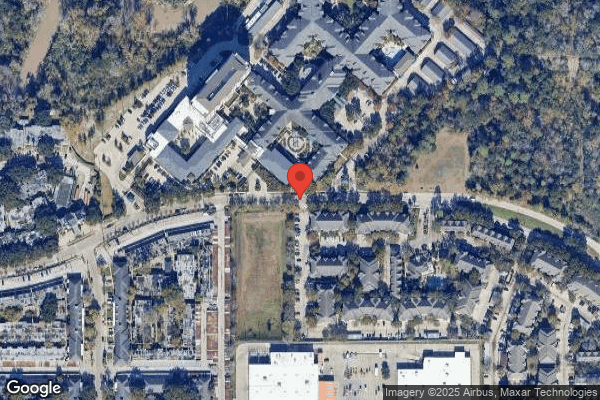




THE BUCKINGHAM

8580 WOODWAY DRIVE, HOUSTON, TX 77063 (713) 979-3777
Non profit - Corporation 92 Beds Independent Data: November 2025 2 Immediate Jeopardy citations
Trust Grade
11/100
#850 of 1168 in TX
Last Inspection: July 2024

Within standard 12-15 month inspection cycle. Federal law requires annual inspections.

Overview

The Buckingham nursing home has a Trust Grade of F, indicating significant concerns and poor overall quality of care. It ranks #850 out of 1,168 facilities in Texas, placing it in the bottom half, and #70 out of 95 in Harris County, meaning there are only a few local options that are better. The facility's performance trend is stable, with a consistent number of issues reported, but it has accumulated a concerning $172,892 in fines, which is higher than 92% of Texas facilities. Staffing is a relative strength, rated at 4 out of 5 stars with a turnover rate of 0%, suggesting that staff are experienced and familiar with residents' needs. However, there are critical incidents, including a failure to promptly notify medical personnel when a resident suffered a fall, leading to a six-hour delay in emergency care, which raises serious safety concerns. Overall, while staffing appears strong, the facility's poor trust score and critical incidents highlight significant weaknesses that families should carefully consider.

Trust Score
F
11/100
In Texas
#850/1168
Bottom 28%
Safety Record
High Risk
Review needed
Inspections
Holding Steady
7 → 7 violations
Staff Stability
○ Average
Turnover data not reported for this facility.
Penalties
○ Average
$172,892 in fines. Higher than 70% of Texas facilities. Some compliance issues.
Skilled Nurses
✓ Good
Each resident gets 81 minutes of Registered Nurse (RN) attention daily — more than 97% of Texas nursing homes. RNs are the most trained staff who catch health problems before they become serious.
Violations
⚠ Watch
21 deficiencies on record. Higher than average. Multiple issues found across inspections.
★★☆☆☆
2.0
Overall Rating
★★★★☆
4.0
Staff Levels
★★★★☆
4.0
Care Quality
★★☆☆☆
2.0
Inspection Score
Stable
2024: 7 issues
2025: 7 issues

The Good

  • 4-Star Staffing Rating · Above-average nurse staffing levels
  • 4-Star Quality Measures · Strong clinical quality outcomes
  • Full Sprinkler Coverage · Fire safety systems throughout facility
  • No fines on record

Facility shows strength in staffing levels, quality measures, fire safety.

The Bad

2-Star Overall Rating

Below Texas average (2.8)

Below average - review inspection findings carefully

Federal Fines: $172,892

Well above median ($33,413)

Significant penalties indicating serious issues

The Ugly 21 deficiencies on record

2 life-threatening
Jul 2025 4 deficiencies
CONCERN (D) 📢 Someone Reported This

A family member, employee, or ombudsman was alarmed enough to file a formal complaint

Potential for Harm - no one hurt, but risky conditions existed

Comprehensive Care Plan (Tag F0656)

Could have caused harm · This affected 1 resident

**NOTE- TERMS IN BRACKETS HAVE BEEN EDITED TO PROTECT CONFIDENTIALITY** Based on interview and record review the facility failed to develop and implement a comprehensive person-centered care plan that...

Read full inspector narrative →
**NOTE- TERMS IN BRACKETS HAVE BEEN EDITED TO PROTECT CONFIDENTIALITY** Based on interview and record review the facility failed to develop and implement a comprehensive person-centered care plan that includes measurable objectives and timeframes to meet a resident's medical, nursing, mental and psychosocial needs that are identified in the comprehensive assessment for 1 (CR#3) of 6 residents reviewed for comprehensive care plans. The facility failed to ensure that CR #3 had a comprehensive care plan that included all care areas triggered on her assessment. This failure could place all residents at risk of not receiving proper care and services to develop and improve their mental, physical and psychosocial well-being. Record review of CR#3's admission face sheet dated 7/18/2025 revealed she was an [AGE] year-old female who was admitted to the facility on [DATE]. Her diagnoses included cancer (a disease in which abnormal cells divide uncontrollably and destroy body tissues), coronary artery disease (buildup of plaque that causes narrowing of the arteries), heart failure (a chronic condition in which the heart doesn't pump blood), hyperlipidemia (high levels of fat in the blood), gastro esophageal reflux disease (a condition where stomach content flows back in the esophagus), protein calorie malnutrition (insufficient intake of both calorie and protein in the diet), anxiety disorder, respiratory failure (occurs when the lungs can't properly exchange gases oxygen and carbon dioxide). Record review of CR #3's admission MDS dated [DATE] revealed she was coded as having a BIMS score of 13 indicating she was cognitively intact and was occasionally incontinent of bladder and continent of bowel. Further record review revealed CR#3 was triggered for incontinence, pressure sore, pain, falls, ADLs and psych meds. Record review of CR#3's physician's order dated 6/6/2025 revealed an order for Sertraline 25 mg by mouth once a day for anxiety. Record review of CR #3's care plan initiated 6/05/2025 and revised on 6/16/2025 revealed it did not address anti-anxiety medication Sertraline. In an interview on 7/31/2025 at 4:00pm with MDS Coordinator A she confirmed the care plan did not address anti-anxiety medication sertraline. She said the program they were currently using was new and they were trying to work with it. She said the MDS was the main tool to guide them to develop an accurate and complete care plan. She said they were working on looking at the care plan as soon as they were admitted . She said because most of the residents were short stay residents, they must address all care areas as soon as possible. She said they were going to try and ensure that all triggered areas were captured on the care plans to ensure residents' care needs were addressed. Record review of the facility policy and procedures dated March 2022, Care Plans, Comprehensive Person-Centered read in part.Policy StatementA comprehensive, person-centered care plan that includes measurable objectives and timetables to meet the resident's physical, psychosocial and functional needs is developed and implemented for each resident.Policy Interpretation and Implementation1. The interdisciplinary team (IDT), in conjunction with the resident and his/her family or legal representative, develops and implements a comprehensive, person-centered care plan for each resident.2. The comprehensive, person-centered care plan is developed within seven (7) days of the completion of the required MDS assessment.
CONCERN (D) 📢 Someone Reported This

A family member, employee, or ombudsman was alarmed enough to file a formal complaint

Potential for Harm - no one hurt, but risky conditions existed

Quality of Care (Tag F0684)

Could have caused harm · This affected 1 resident

**NOTE- TERMS IN BRACKETS HAVE BEEN EDITED TO PROTECT CONFIDENTIALITY** Based on interview and record review the facility failed to ensure that residents receive treatment and care in accordance with ...

Read full inspector narrative →
**NOTE- TERMS IN BRACKETS HAVE BEEN EDITED TO PROTECT CONFIDENTIALITY** Based on interview and record review the facility failed to ensure that residents receive treatment and care in accordance with professional standards of practice, the comprehensive person-centered care plan, and the residents' choices for 1 of 6 residents (CR#2) reviewed for services.The facility failed to ensure CR#2 received pressure sore treatment as ordered by the physician. These failures could place residents at risk of worsening of their pressure sores due to not getting the treatment as prescribed by the physician. Record review of CR#2's admission face sheet dated 7/1/2025 revealed an [AGE] year-old female who was admitted to the facility on [DATE] and was discharged on 6/24/2025. Her diagnoses included cellulitis of the right lower limb, cellulitis unspecified (spreading skin infection that affects mostly the lower leg), urinary tract infection ( infection in the urinary system), pain (physical discomfort ranging from mild to severe and usually cause by illness or injury), dizziness and giddiness (feeling of lightness or unsteadiness), history of falling, anemia(a condition in which the blood doesn't have sufficient red blood cells), hypothyroidism (a condition where the thyroid gland doesn't produce enough thyroid hormones) and mild protein calorie malnutrition (deficiency or excess of energy, protein, and other nutrients). Record review of CR#2's admission MDS, dated [DATE], revealed CR#2 had a BIMS score of 15, which indicated she was cognitively aware. She was coded as continent of bowel and bladder and had no pressure sores. For ADL's she needed set up only for eating, for toileting and shower she needed partial assistance, oral hygiene, lower body and putting on footwear and personal hygiene the resident needed supervision. Skin condition was coded was coded as high risk for pressure. Record review of CR#2's care plan, dated 6/18/2025, revealed the resident had for therapeutic treatment regimen related to a primary diagnosis which included: Right Leg Cellulitis. Skilled nursing and rehabilitation services needed to addressed diagnosis management and functional declines for safe transition back to preferred community and had potential risk for falls related to the following factors: muscle weakness, decreased balance, unsteady gait, lack of coordination, impaired mobility and needs assistance with ADLs. Record review of CR#2's physicians order, dated 06/20/2025, revealed the following order for wound care: Wound Care Plan: Cleanse right leg with wound cleanser, pat dry, cover with Xeroform, wrap with kerlix, secure with tape daily and PRN. (Dx: Cellulitis, unspecified. Start date 6/20/2025 -06/24/2025). Record review of CR#2's nurse's notes, dated 06/24/2025, revealed the following documentation: While performing wound care for the patient, this nurse observed that the dressing had not been changed since the 21st. Once the dressing was cut, this nurse observed that the wound appeared reddened, swollen, and warmer than the surrounding skin, but there was no bleeding. The affected foot presented with +2. Record review of CR#2's treatment administration record revealed documentation wound treatment was signed by RN E as being done on 6/21/2025, 6/22/2025 and LVN C as done on 6/23/2025. Record review of an email from the facility, dated 7/2/2025, revealed: Upon review of the TAR of patient CR#2 and clarification conversation with nurse RN E, treatment was provided on 06/22/2025. In an interview on 7/01/2025 at 2:30 PM with LVN B via telephone he said he was the nurse who wrote in CR#2's clinical records on 06/24/2025. He said he was providing wound care treatment to the resident and when he was removing the soiled dressing from CR#2's foot he noticed it was dated 6/21/2025. He said the wound at the time appeared reddened, swollen, and warmer than the surrounding skin, but there was no bleeding. He said he called the NP and described what he saw, and she gave him orders for the resident to be sent to the ER for evaluation. In an interview on 07/01/2025 at 2:40 PM via telephone with RN E, she said she was the nurse who worked on 6/21/2025 and 6/22/2025 and she was the nurse who was responsible for wound care treatment for CR#2. She said she provided wound care treatment for CR#2 on 6/21/2025. She said she also work with CR#2 on 6/22/2025. She said she was supposed to provide treatment to CR#2's foot on 6/22/2025 but she did not provide the treatment, because the resident had family visitors, and she did not get a chance to do the treatment. She said she documented in error on 6/22/2025 that the treatment was done but it was not done. She said when she realized the treatment was not done, she tried to correct the documentation, but she could not make corrections because the system they were currently working with was new and she did not know how to do the corrections. She said when she realized she could not correct the documentation she wrote a note to the DON, slipped it under her office door asking her to correct the documentation for her. In an interview on 7/1/2025 at 2:50 PM with LVN C, she said she worked with CR#2 on 6/23/2025 and she did her wound treatment. She saidCR#2 had cellulitis, and she was sure she did the wound treatment for her. She was asked about the date on the soil dressing, and she said she could not recall the date on the soiled dressing. In an interview with the DON on 7/1/2025 at 3:25 PM, she said RN E wrote a note on 6/22/2024 and left it under her door explaining to her she had documented in error on CR#2's treatment record stating she had done wound treatment to CR#2's foot on 6/22/2025, but she did not provide the treatment and she was asking her to make the corrections to the documentation for her because, the system was new to her and she did not know how to make the corrections. She said regarding CR#2's wound treatment the resident was sent to the ER. She said she spoke to the Medical Director who was CR#2's doctor and he said he saw CR#2 and there was no significant change in the wound. She said the resident had not return to the facility and she was not sure if she was still in the hospital. The DON revealed the system was recently changed and staff were in the process of learning to understand it better. She said the staff would get more training on how to use the system. She said staff would have to learn not document until the task was done. In an interview on 7/18/2025 at 11:00am with the Medical Director who was CR#2's physician said there was no change in the wound, it had not gotten worse. Further interview with the Medical Director revealed he never actually saw the resident when she was in the hospital. He said he spoke with the doctor who provided care to CR#2 prior to her nursing home admission and when she was admitted to the ER from the nursing home. He said there was no change in the wound it had not gotten worst and orders in the ER was to continue with the same wound care treatment she currently has. The Medical Director said he could not say what could happen if a wound was not changed for several days because it's hypothetical and in her case it didn't affect CR#'2 wound. Hospital record was requested but not received, as a result it was difficult to determine that CR#2's wound getting worse was due to dressing change not done. Record review of the facility's policy and procedure for medication administration and documentation revealed it did not address documentation and following physician's order.
CONCERN (E) 📢 Someone Reported This

A family member, employee, or ombudsman was alarmed enough to file a formal complaint

Potential for Harm - no one hurt, but risky conditions existed

Pressure Ulcer Prevention (Tag F0686)

Could have caused harm · This affected multiple residents

**NOTE- TERMS IN BRACKETS HAVE BEEN EDITED TO PROTECT CONFIDENTIALITY** Based on observation, interview and record review the facility failed to ensure services were provided or arranged by the facili...

Read full inspector narrative →
**NOTE- TERMS IN BRACKETS HAVE BEEN EDITED TO PROTECT CONFIDENTIALITY** Based on observation, interview and record review the facility failed to ensure services were provided or arranged by the facility, as outlined by the comprehensive care plan that met professional standards of quality for 2 of 6 residents (Residents #1 and Resident#3) reviewed for services. 1. The facility failed to ensure Resident #1 and Resident #3 received pressure sore treatment as ordered by the physician. These failures could place residents at risk of worsening of their pressure sores due to not getting the treatment as prescribed by the physician. 1. Record review of Resident #1's face sheet revealed an [AGE] year-old male originally admitted to the facility on [DATE]. His medical diagnoses included hyperlipidemia (high levels of fat in the blood), muscle weakness (decreased strength in the muscles), anemia (a condition in which the blood doesn't have sufficient red blood cells), pneumonia (inflammation of the air sacs), sepsis due to Escherichia (a serious condition where the body's immune response to an E. coli infection becomes dysregulated), urinary tract infection (is infection in the urinary system), severe protein calorie malnutrition (deficiency or excess of energy, protein, and other nutrients), hypertension (high blood pressure), hemiplegia (muscle weakness or partial paralysis on one side of the body), acute respiratory failure with hypoxia ( a condition where the lungs cannot provide enough oxygen to the blood), pressure ulcer of the sacral region stage 4 (a wound that extends through the skin and subcutaneous tissue, exposing muscle, tendon or bone), Chronic osteomyelitis (a rare autoimmune disease that causes bone inflammation of the bone), and shortness of breath (difficulty breathing). Record review of Resident #1 quarterly MDS, dated [DATE], revealed Resident #1 was coded as severely impaired for cognition, was dependent on staff for eating, toileting, oral hygiene, putting on and taking off footwear and personal hygiene. For bowel and bladder, he was coded as having an external catheter and has a colostomy. For skin condition he was coded as high risk for pressure, and he had two stage four pressure sores. Record review of Resident #1's care plan, dated 6/16/2024, revealed the resident has an actual pressure sore, activities of daily living and incontinent care. Record review of the physician's order, dated 12/30/24, for sacral wound documented Cleanse with normal saline, pat wound dry, apply collagen, calcium alginate with sliver once a day. Record review of the treatment administration history revealed no documentation wound care treatment was done on 5/14/2025, 5/16/2025, 5/17/2025, 5/23/2025, 6/2/2025, 6/6/2025, 6/12/2025 and 6/26/2025. These dates were blank on the MARs. Record review of the nurse's progress notes, wound management, revealed no documentation as to why the treatment was not done. No other documentation was presented. Record review revealed Resident#1 was admitted to the facility on [DATE]. Note from older EMR said revealed he was admitted on [DATE] with a wound vac to his sacrum. On 2/19/24 the wound was measured at 12cm x 5.5cm x 3.0cm. According to H&P from 3/18/24, Resident #1 had necrotic sacral decubitus s/p debridement 1/17/24 currently with a wound vac. 7/7/25: It indicated the wound was 6cm x 4.3cm x 0.5cm and was stable. The wound had moderate, serous exudate that had no odor. There was 40% granulation tissue and 30% slough. The resident discharged on 7/12/25 Observation of Resident #1 on 6/27/2025 at 4:30 PM revealed he was in bed. He was alert with confusion and complaining things were crawling all over his body. The resident was on contact isolation for c-diff, infection control precaution was observed. The room was visible clean but smelled horrible due to c-diff. Call light was observed to be within reach. Observation on 7/1/2025 at 11:10 am of Resident #1 wound care by nurse surveyor revealed, Resident #1 sacrum wound about the size of a baseball, with a small amount of slough on the edges. Interview on 6/27/2025 at 6:10 PM, LVN A said Resident #1's wound had gotten better. She said Resident #1 was on isolation for C-diff and not wound infection. She said the resident stayed mostly in bed and when they tried to get him out of bed, he refused. LVN A stated Resident #1 has a pressure sore to his sacral area. In an interview on 7/1/2025 at 11:20am with LVN C she said the nurses have been doing wound care for about a month. She said restorative walks with the wound care MD when he comes on Wednesday. LVN C said the wound has gotten better and they tried to get him out of bed but he refuses. 2. Record review of Resident #3's admission face sheet revealed [AGE] year-old female who was admitted to the facility on [DATE]. Her diagnoses included diabetes mellitus with diabetic neuropathy (high blood sugar with nerve damage), acute cystitis without hematuria (inflammation or infection of bladder), lack of coordination (inability to control and coordinate muscle movements), cerebral infraction (this occurs when blood flow to the brain is blocked), acute respiratory failure with hypoxia (it's a condition when the lungs can't properly exchange causing abnormal levels of carbon dioxide or oxygen in the arteries), cellulitis unspecified (spreading skin infection that affects mostly the lower leg), pressure ulcer (injury to skin and underlying tissues), urinary tract infection ( infection in the urinary system), dysphagia (difficulty swallowing), gastro esophageal reflux disease ( a condition were the stomach acid flows back in the esophagus), pain (physical discomfort ranging from mild to severe and usually cause by illness or injury), hypertension (high blood pressure), insomnia (sleep disorder), atherosclerotic heart disease (build-up of fats, cholesterol and other substance in the artery wall). Record review of Resident #3's annual MDS, dated [DATE], revealed Resident #3 had a BIMS score at 14, which indicated she was cognitively aware for cognition, For ADLs she was coded as set up only for eating, oral hygiene, toileting, putting on and taking off footwear and personal hygiene. Partial assistance for toileting, shower and upper dressing and for lower body dressing she was coded as needing substantial assistance. For bowel and bladder, she was coded as always incontinent. For skin condition he was coded as high risk for pressure sore, and for skin condition she was coded as having 1 stage four pressure sore. Record review of Resident #3's care plan, initiated 4/21/2023 and revised 06/16/2025, addressed the resident's stage four pressure sore to the left hip. At risk for skin breakdown related to decreased mobility and current wounds and pain due to stage four pressure sores. Record review revealed Resident#3 was admitted the facility on 4/6/22. On 4/7/22 the R Heel wound was 2.0cm x 2.8cm, L Heel 1.4cm x 1.1cm, L Hip 27cm x 6.5cm, it was noted that there were open areas to the sacrum, but they were not measured. On 4/18/22 the sacrum was 0.6cm x 0.3cm. On 6/7/25 the L Hip was 3.0cm x 0.3cm x 0.2cm. There was light serous exudate with no odor. It made very small progress and stayed the same. In an interview on 7/1/2025 at 10:50am RN J said Resident #3 was admitted to the facility with stage four pressure sore to the hip. She said it was chronic. She said she goes out of the facility weekly for wound care treatment and the facility staff does daily care. She said the wound had gotten better. Record review of Resident #3's physician's order, dated 4/20/2024, revealed an order for left hip wound: Cleanse with normal saline, iodine packing with gauze only, cover with clear dressing once a day. 2. order for Breztri Aerosphere (budesonide-glycopyr-formoterol) HFA (hydrofluoroalkane) aerosol inhaler 160-9-4,8 mcg/actuation: 2 puffs: inhalation twice a day for acute respiratory failure with hypoxia (low level of oxygen in the body tissues). Record review of Resident #3's treatment administration history revealed no documentation the treatment to the hip was done as ordered on 06/17/2025 and 06/20/2025 at 9:00AM. 2. Order for Breztri Aerosphere (budesonide-glycopyr-formoterol) HFA aerosol inhaler 160-9-4,8 mcg/actuation: 2 puffs: inhalation twice a day was not done on 6/20/205 at 9:00pm. Record review of Resident #3's nurses progress notes, wound management, revealed no documentation as to why the treatment and medication administration were not documented as done. In an interview with Resident #3 on 6/27/2025 at 5:00 PM, Resident #3 said she was never abuse or neglected by the staff. She said she was treated well by the staff and the food was good and her call light was answered in a timely manner. Further interview with the DON on 7/1/2025 at 3:30pm she that there should be no blanks on the MARs and TAR's. She said blanks on the MARs and TARs could indicate that medications or treatments were done and the staff forgot to initial the medication or treatment records. She said it could also indicate the medications or treatment was not done. She also stated the system was recently changed and staff were in the process of getting to understand it better. She said they will be getting more training on how to use the new system. In an interview on 7/31/2025 at 5:30pm ADON said Resident #3 had an appointment and was not in the building on those days. She said she was going to look for the documentation when she was not in the building. She said they should have documented on the MAR indicating she was not in the building. She also stated that sometimes the internet doesn't work on the side of the building she lives on, and they would document on paper. In an interview on 7/31/2025 at 5:30 pm with the DON, Administrator and ADON they stated they had internet issues on the side of the facility where those residents' lives. They said they would use paper documentation to ensure that there was documentation when residents were given treatment or medications. They said they were going to look for the documentation for Resident #3, but no documentation was received. At that point they said there should be no blanks on the MARs/TARs. They said there should be some kind of documentation indicating why medication was not given and treatment was not done. Record review of the facility's policy and procedure dated March 2014 for Medication Administration and Documentation revealed the documentation presented did not address clinical records documentation.
CONCERN (E) 📢 Someone Reported This

A family member, employee, or ombudsman was alarmed enough to file a formal complaint

Potential for Harm - no one hurt, but risky conditions existed

Medical Records (Tag F0842)

Could have caused harm · This affected multiple residents

**NOTE- TERMS IN BRACKETS HAVE BEEN EDITED TO PROTECT CONFIDENTIALITY** Based on interviews, and record reviews, the facility failed to ensure, in accordance with accepted professional standards and p...

Read full inspector narrative →
**NOTE- TERMS IN BRACKETS HAVE BEEN EDITED TO PROTECT CONFIDENTIALITY** Based on interviews, and record reviews, the facility failed to ensure, in accordance with accepted professional standards and practices, medical records were maintained on each resident that were complete and accurately documented for 2 of 6 residents (Resident #1, Resident #3) reviewed for clinical records. 1. The facility failed to ensure Resident #1's pressure sore treatment form was accurate and complete with no blanks on the TARs on 6/18/2025, 6/23/2025, 6/25/2025 and 6/26/2025 and MARs on 6/19/2025. 2. The facility failed to ensure Resident #3's pressure sore treatment form was accurate and completed with no blanks on the TARs on 6/17/2025 and 6/20/2025 and on the MARs on 6/20/2025. These failures could place residents at risk of not receiving the care and treatment needed to improve their quality of life due to inaccurate or incomplete documentation. 1. Record review of Resident #1's face sheet revealed an [AGE] year-old male originally admitted to the facility on [DATE]. His medical diagnoses included hyperlipidemia (high levels of fat in the blood), muscle weakness (decreased strength in the muscles), anemia (a condition in which the blood doesn't have sufficient red blood cells), pneumonia (inflammation of the air sacs), sepsis due to Escherichia (a serious condition where the body's immune response to an E. coli infection becomes dysregulated), urinary tract infection (is infection in the urinary system), severe protein calorie malnutrition (deficiency or excess of energy, protein, and other nutrients), hypertension (high blood pressure), hemiplegia (muscle weakness or partial paralysis on one side of the body), acute respiratory failure with hypoxia ( a condition where the lungs cannot provide enough oxygen to the blood), pressure ulcer of the sacral region stage 4 (a wound that extends through the skin and subcutaneous tissue, exposing muscle, tendon or bone), Chronic osteomyelitis (a rare autoimmune disease that causes bone inflammation), and shortness of breath (difficulty breathing). Record review of Resident #1's quarterly MDS, dated [DATE], revealed Resident #1 was coded as severely impaired for cognition, was dependent on staff for eating, toileting, oral hygiene, putting on and taking off footwear and personal hygiene. For bowel and bladder, he was coded as having an external catheter and had a colostomy. For skin condition he was coded as high risk for pressure sores and had 2 stage four pressure sores. Record review of Resident #1's care plan, dated 6/16/2024, revealed the resident has an actual pressure sore, total care for activities of daily living and was always incontinent. Record review of Resident #1's physician's order, dated 12/30/24, for sacral wound documented, Cleanse with normal saline, pat wound dry, apply collagen, calcium alginate with silver once a day. Record review of Resident#1's physician's order dated 9/24/2024 revealed the following:1. Atorvastatin tablet 20mg amount to administer 1 tablet orally at bedtime .2 2. Vitamin C (ascorbic acid) 500mg amount to administer 1 tablet orally twice a day. Record review of Resident #1's medication administration record revealed blanks on the MARs for Atorvastatin on 6/19/2025 and Vitamin C on 6/19/20205 at 9:00pm. Record review of the nurse's progress notes, revealed no documentation as to why the medication record was blank. Record review of Resident #1's treatment administration record revealed blanks on the wound care treatment for 6/18/2025, 6/23/2025, 6/25/2025 and 6/26/2025. Further record review of the nurse's progress notes, wound management, revealed no documentation as to why the treatment record was blank. In an interview on 6/27/2025 at 6:10 PM, LVN A said Resident #1's wound had gotten better. She said Resident #1 was on isolation for C-diff and not wound infection. LVN A stated Resident #1 had a pressure sore to his sacral area and it was getting better. In an interview with the DON on 7/01/2025 at 4:30 pm she said wound care doctor comes to the building on Wednesdays, and she was sure treatments were done and they just didn't document. She said they should always document, and she was going to get the documentation. Documentation was later presented for review. 2. Record review of Resident #3's admission face sheet revealed a [AGE] year-old female who was admitted to the facility on [DATE]. Her diagnoses included diabetes mellitus with diabetic neuropathy (high blood sugar with nerve damage), acute cystitis without hematuria (inflammation or infection of bladder), lack of coordination (inability to control and coordinate muscle movements), cerebral infarction (this occurs when blood flow to the brain is blocked), acute respiratory failure with hypoxia (it's a condition when the lungs can't properly exchange gases causing abnormal levels of carbon dioxide or oxygen in the arteries), cellulitis unspecified (spreading skin infection that affects mostly the lower leg), pressure ulcer (injury to skin and underlying tissues), urinary tract infection ( infection in the urinary system), dysphagia (difficulty swallowing), gastro esophageal reflux disease ( a condition were the stomach acid flows back in the esophagus), pain (physical discomfort ranging from mild to severe and usually cause by illness or injury), hypertension (high blood pressure), insomnia (sleep disorder), atherosclerotic heart disease (build-up of fats, cholesterol and other substance in the artery wall). Record review of Resident #3's annual MDS, dated [DATE], revealed Resident #3 had a BIMS score of 14, which indicated she was cognitively intact. For ADLs she was coded as set up only for eating, oral hygiene, toileting, putting on and taking off footwear and personal hygiene. Partial assistance was needed for toileting, shower and upper dressing and for lower body dressing she was coded as needing substantial assistance. For bowel and bladder, she was coded as always incontinent. For skin condition she was coded as high risk for pressure sore and had 1 stage four pressure sore to the hip. Record review of Resident #3's care plan, initiated 4/21/2023 and revised 06/16/2025, addressed the resident's stage four pressure sore to the left hip. The resident was at risk for skin breakdown related to decreased mobility and current wounds and pain due to stage four pressure sore. Record review of Resident #3's physician's order, dated 4/20/2024, revealed an order for left hip wound: Cleanse with normal saline, iodine packing with gauze only, cover with clear dressing once a day. Record review of Resident#3's physician's order dated 5/30/2024 for Breztri Aerosphere (budesonide-glycopyr -formoterol) HFA aerosol inhaler 160-9-4,8 mcg/actuation: 2 puffs: inhalation twice a day for acute respiratory failure with hypoxia (low level of oxygen in the body tissues). Record review of Resident #3's treatment administration record revealed blanks on the treatment record form for 06/17/2025 and 06/20/2025 at 9:00AM. Further record review revealed blank on the MAR for Breztri Aerosphere (budesonide-glycopyr -formoterol) HFA aerosol inhaler 160-9-4,8 mcg/actuation: 2 puffs: inhalation twice a day was not documented as given on 6/20/2025 at 9:00pm. Record review of Resident #3's nurse's progress notes, wound management, revealed no documentation as to why the medication administration were not documented as done on 6/20/2025 and on the treatment record on 6/17/20205 and 6/20/2025. In an interview with LVN C on 7/01/2025 at 2:20pm regarding the blanks on Resident#1's treatment records and the MAR she said there should be no blanks on the MARs or TARs. She said if there were blanks on the MARs and TARs it was hard to determine if the medications or treatment were done. In an interview with LVN A on 7/01/2025 at 2:25pm she said there should be no blanks on the MARs and TARs. She said if there were blanks on the MARs and TARs that could indicate that the treatment or the medication was not done. She said in nursing if it was not documented in the resident's clinical records it was not done. She said when medications or treatments were done, they should be documented as done and if not done it should be documented and the reasons given. Further interview with the DON on 7/1/2025 at 3:30pm she that there should be no blanks on the MARs and TAR's. She said blanks on the MARs and TARs could indicate that medications or treatments were done and the staff forgot to initial the medication or treatment records. She said it would also indicate the medications or treatment was not done. She also stated the system was recently changed and staff were in the process of getting to understand it better. She said they will be getting more training on how to use the new system. She said staff will learn to document a task when it was done. In an interview on 7/31/2025 at 5:30pm she said Resident #3 had an appointment and was not in the building on those days. She said she was going to present the documentation. She said they should have documented on the MAR that she was not in the building. She also stated that sometimes the internet doesn't work on that side and they usually document on paper when that happens. In an interview on 7/31/2025 at 5:30 pm with the DON, Administrator and ADON they all said they had internet issues on the side of the facility where Resident #1 and Resident #3 resides. They said they were using handwritten information to ensure that there was documentation when residents were given treatment and their medications. They said they were going to look for the documentation for the residents. At that point they said there should be no blanks on the MARs/TARs. They said there should be some kind of documentation indicating why medication was not documented as given and treatment was not done or not done. No other documentation was given to the survey team for review. Record review of the facility's policy and procedure dated March 2014 for Medication Administration and Documentation revealed the documentation presented did not address clinical records documentation.
Mar 2025 2 deficiencies 2 IJ
CRITICAL (J) 📢 Someone Reported This

A family member, employee, or ombudsman was alarmed enough to file a formal complaint

Immediate Jeopardy (IJ) - the most serious Medicare violation

Notification of Changes (Tag F0580)

Someone could have died · This affected 1 resident

**NOTE- TERMS IN BRACKETS HAVE BEEN EDITED TO PROTECT CONFIDENTIALITY** Based on observations, interviews, and record review, the facility failed to immediately inform the resident; consult with the r...

Read full inspector narrative →
**NOTE- TERMS IN BRACKETS HAVE BEEN EDITED TO PROTECT CONFIDENTIALITY** Based on observations, interviews, and record review, the facility failed to immediately inform the resident; consult with the resident's physician; and notify, consistent with his or her authority, the resident representative(s) when there was a significant change in the resident's physical, mental, or psychosocial status or a need to alter treatment significantly for one (Resident #1) of seven residents reviewed for change in condition. The facility failed to notify the NP immediately by phone call when Resident #1 was found on the floor holding his head and appeared confused after an unwitnessed fall. Resident #1 was sent to the hospital approximately six hours later and admitted to the ICU with a diagnosis of subarachnoid hemorrhage (bleeding in the space between the brain and the tissue covering the brain). This failure placed residents at risk of harm, injuries, and delayed emergency services. An IJ was identified on 3/27/2025. The IJ template was provided to the facility on 3/27/2025 at 2:33 p.m. While the IJ was removed on 3/29/2025, the facility remained out of compliance at a scope of isolated with the severity level of no actual harm that was not immediate jeopardy because all staff had not been trained on 3/29/2025. This failure placed residents at risk of harm, injuries, and delayed emergency services. Findings included: Record review of Resident #1's face sheet, dated 3/18/2025, reflected a [AGE] year-old male who was admitted to the facility on [DATE]. Resident #1 diagnoses were not included. Record review of Resident #1's physician progress notes, dated 3/19/2025 revealed the following diagnoses: Alzheimer (memory loss), frequent falls, abnormal gait, seizures, atrial fibrillation (irregular and often very rapid heart rhythm), and insomnia (inability to fall asleep or stay asleep). Record review of Resident #1's care plan, revised on 3/12/2025, revealed the following in part: Category : 11 - Falls. Problem: [Resident #1] has risk for falls related to unsteady gait, disease processes. Goal: [Resident #1] will have no fall related injuries while in the health center through the next 30 days. Seek PT/OT evaluation and treat as ordered and follow recommendations. Keep floor .clean, dry and free of clutter .Reinforce safety precautions with resident . Record review of Resident #1's nursing notes written by RN A, dated 3/15/2025, revealed the following: During my midnight rounding, this writer heard a voice calling out for help, on getting down the hall-way, Patient [Resident #1] was noted on the floor in a semi-Fowler_position on the right side of his bed beside the window holding his head. He was asked what happened and he said I got off the bed and fell help me. When asked whether he [i.e. hit] his head anywhere? Is any part of the body hurting? He was not responding to the questions. He simply stretched out his hand asking to be picked up. No skin break down, swelling nor bruising noted. This writer waited for the CNAs to get mechanical lift. [Resident #1] was assisted back in bed, incontinence care was provided. Vitals: BP 144/88, P 91, T97.6, R 16, O2 sat 96% on R.A. As the writer wants to step out of the room, patient started screaming don't go and was attempting to get out of bed. This writer instructed the aid to sit with the patient, deem [i.e. dim] the light in the room since he is more calm having a company. Checked back after 15 mins for another set of vitals, patient was calm and resting in bed. 10 mins after, the aid told me patient was sleeping. Monitored him throughout the night, no fever, no sign of acute distress noted. Bed in the lowest position, floor mat placed on both sides of the bed, call light within reach. NP notified, she ordered that the patient be sent to the ER for scan. Left voice note for the responsible party as no one was picking the call. Last set of vitals: BP 127/84, P88, T97.8, O2 sat 97% on R.A . Record review of Resident #1's Incident Report dated 3/15/2025 revealed the following (hand written by RN A): Incident Category: Fall without injury. Severity: No injury. Location of incident: Room. Describe the incident: [Resident #1] had an unwitnessed fall, was seen in a semi- Fowler position (individual lies on their back on a bed, with the head of the bed elevated between 30-45 degrees, and the legs of the patient can be either straight or bent at the knees) on the left side of bed beside the window . Resident Description: Per [Resident #1], I got off the bed and fell. Witnessed: Not applicable. Staff Action at Time of Incident: [Resident #1] was assessed for injury and pain, vitals were taken every 15 mins for 1 hour, [Resident #1] was assisted back in bed using mechanical lift. Monitored for any change in condition through out the shift. Neuro/Vital Stats: 1. BP 144/88 P 91 T 97.6 R 16 96% on R.A 2. BP 127/84 P 98 T 97.7 R 16 97% on R.A 3. BP 130/82 P 92 T 97.6 R 18 96% on R.A. 4. BP 122/84 P 98 T 97.6 R 16 97% on R.A. Notified [NP A] by mobile on 3/25/2025 at 1:07 a.m. Record review of NP A's phone text message dated 3/15/2024 at 11:58 p.m. from RN A revealed the following: Text from CNA A to NP A - Good morning, [Resident #1] [room #] was noted on the floor beside his window. He was holding his head (it was not obvious whether he hit his head on the window frame or not). When asked what happened, he was unable to explain (confused) Bp 144/88, P 91, T 97.6, R 16, O2 sat is 96% on R.A. NP A's response text message at 6:22 a.m. to CNA A - Pt needs to go to ER for scan. NP A's response text message at 6:23 a.m. to CNA A - After 10pm I need you to call for urgent changes in condition. I was asleep. Just saw this. Record review of Resident #1's hospital record dated 3/15/2025 revealed the following in part: .History of Present Illness: [Resident #1] .presented on 3/15/2025 via EMS after a fall last night at nursing home. Per report, pt fell while he was trying to get out of bed last night. In ED, pt had CT (medical imaging test) brain which showed small SAH (bleeding in the space below one of the thin layers that cover and protect the brain) in right frontotemporal and left frontal region .Neurologic: Traumatic b/I SAH, on admission, Acute post-concussive enceph (Encephalopathy - disease that affects brain structure or function), on admission .Assessment plan: His CT was positive for small amounts of right subarachnoid hemorrhage in the frontal parietal area. Patient is neurologically stable at this time with only mild confusion. He does not remember the episode. Neurosurgery team was consulted for further evaluation. His neurological exam is nonfocal (no specifics). His labs were normal. At this point I recommend an interval CT scan to confirm stability. Will plan to see him back in neurosurgery clinic for head CT in 1 month. In an interview and observation on 3/18/2025 at 1:06 p.m. (hospital), Resident #1 said he had a fall. He said he did not remember who helped him after the fall. He said he had pain at the time of the fall to his head and legs. Resident #1 was being picked up by medical transport to return to the nursing home. In an interview on 3/19/2024 at 9:38 a.m., CNA A said RN A called her to Resident #1's room. CNA A said she saw Resident #1 on the floor. CNA A said Resident #1 was aware he fell. She said he had a bowel movement that was visible. She said RN A assessed Resident #1 on the floor. CNA A said she left to go and get the mechanical lift. She said she and RN A placed Resident #1 into his bed. She said RN A instructed her to stay with Resident #1. She said Resident #1 fell asleep after approximately 20 minutes and she left the room. She said she continued to round on him every 2 hours and RN A rounded too. She said she was not aware of when RN A made the notifications to the NP. In an interview on 3/18/2024 at 6:43 p.m., RN A said she heard Resident #1 yell out for help. RN A said she went into Resident #1's room and found him on the floor near the window. She said he was holding his forehead. She said he was aware he had fell. She said she asked him if he had pain, and he did not respond. She said she did not consider his confusion a change in condition. She said she completed a head-to-toe assessment and took his vitals. She said there were no visible injuries, and his vitals were within normal range. She said she text NP A at 1:07 a.m. that Resident #1 fell. RN A said NP A did not respond. RN A said she did not make a second notification after she did not hear back from NP A. RN A said she was trained to notify the physician by phone. She said she did not make a second notification based on her nursing judgment, that Resident #1 was stable. She said NP A text her back at 6:22 a.m. to send Resident #1 out to the ER for a scan. RN A said she did not think Resident #1 was at risk of any harm because she felt he was stable. In an interview on 3/19/2025 at 9:45 a.m., NP A said she was notified by text message on 3/15/2025 at 1:07 a.m. Resident #1 had a fall. NP A was notified in the text message that Resident #1 was confused and was holding his head when he was found on the floor. She said she was on call, but asleep at 1:07 a.m. and she woke up and responded to the text message at 6:22 a.m. She said she checked and did not have a missed phone call from RN A. She said based on the details of the notification she wanted the resident to be sent out when she was notified. She said the resident was at risk of a possible head injury since he was holding his head, it was unwitnessed, and he needed to be sent out to the hospital for further evaluation. She said she preferred the resident had not been allowed to fall asleep after there was a possibility he hit his head because that could have been a change in condition. She said Resident #1 should have sent out to the ER immediately to reduce the risk of injury. In an interview on 3/19/2025 at 11:50 a.m., the DON said RN A was trained to make a phone call to notify the physician or NP on call. DON said because RN A's assessment deemed Resident #1 was stable and the resident's vitals were within normal range, she did not think there was a risk to Resident #1 health. In an interview on 3/19/2025 at 1:15 p.m., the ADMIN said she expected RN A to call the NP (on call) after a fall. She said RN A should have called her also if she did not receive a call back from NP A. She said there are postings of whom to call after an incident. She said the time that lapsed between Resident #1's fall and when he was sent out to the ER was concerning to her. She said staff were trained to call by phone to notify a physician. She said there was no risk because RN A monitored the resident and sent out to the ER after NP A responded several hours later. Record review of facility policy Assessing Falls and Their Causes (revised 10/2010) 1. If a resident has just fallen, or is found on the floor without a witness to the event, nursing staff will record vital signs and evaluate for possible injuries to the head, neck, spine, and extremities . 4. Nursing staff will notify the resident's Attending Physician and family in an appropriate time frame. When a fall results in a significant injury or condition change, nursing staff will notify the practitioner immediately by phone . 8. If causes of a fall cannot be readily identified and if the fall is accompanied by other signs and symptoms (e.g., confusion or lethargy), the staff and physician will consider a possible underlying acute medical cause. Review of facility policy for Accidents and Incidents-Investigating and Reporting, revised 2/2014, reflected the following in part: All accidents or incident involving residents .etc., occurring on our premises shall be investigated and reported to the Administrator . g. The time the injured person's Attending Physician was notified, as well as the time the physician responded ' his or her instructions; Review of facility policy for Chang in a resident's condition or status (revised 2/2021) reflected the following in part: Our facility promptly notifies the resident, his or her attending physician .of changes in resident's medical/mental condition and /or status . 1. The nurse will notify the resident's attending physician or physician on call . Review of the facility's call procedure Change in a resident's condition and notification, (not dated), reflected the following: Please notify the Administrator IMMEDIATELY on the following .2. Change of Condition/Incidents/Accidents/Falls .etc. - [ADMIN and ADMIN phone numbers]] An IJ was identified on 3/27/2025. The IJ template was provided to the ADMIN on 3/27/2025 at 2:33 p.m. The following Plan of Removal submitted by the facility was accepted on 3/28/2025 at 3:41 p.m.: Allegation: The facility failed notify the on-call physician in a timely manner after Resident #1 had an unwitnessed fall. 03/28/2025 Plan of Removal F580 Facility Name and Vendor ID#: [Facility Name] Impact Statement: On 03/18/2025 a complaint survey was initiated at [Facility Name]. On 03/27/2025, the facility was provided notification that the survey agency had determined that the conditions at the facility constitute an immediate jeopardy to resident health. The facility failed to obtain emergency services for unwitnessed fall for Resident #1 after a fall on 03/15/2025 that resulted in acute subarachnoid hemorrhage (blood on the surface of the brain). Resident #1 arrived at the ER approximately 6 hours after the fall. Immediate Action: Please accept this as our Plan of Removal for the Immediate Jeopardy related to F580 (Physician Notification/Residents Rights) involving failure to immediately notify the physician after a significant change in condition. Resident #1 was readmitted back to the facility on [DATE] from a local area hospital. Residents that can be affected are those who reside in the community. All facility residents were assessed for any Change in Condition. Completion date: 03/27/2025 1:1 education was immediately provided to RN A on 03/27/2025 by the Director of Nursing and Administrator. Education has been extended on 03/28/2025 to all licensed nursing staff and CNAs. Instructor: DON and ADON. Direct care staff (PRNs, new hires, from vacation) will not be allowed to render care until in-service is completed. Test questions were given and taken by all registered and licensed nurses to ensure understanding of the policies and procedures. The topics covered were the following: 1. Policy & Procedure on Notification - Physician Notification 2. Policy & Procedure on Quality of Care - Change in a Resident's Condition o A significant change of condition is a major decline or improvement in the resident's status that: will not normally resolve itself without intervention by the staff or by implementing standard disease-related clinical interventions (is not self-limiting); impacts more than one area of the resident's health status; requires interdisciplinary review and/or revision to the care plan ultimately is based on the judgement of the clinical staff and the guidelines outlined in the Resident Assessment Instrument. o Prior to notifying the physician or healthcare provider, the nurse will make detailed observations and gather relevant and pertinent information for the provider, including (for example) information prompted by the Interact SBAR Communication Form in MatrixCare. Licenses nurse will follow physician order to call 911(emergency services), if applicable. 3. Updated Physician and Nurse Practitioner Notification Call Tree The updated call tree was completed on 03/27/2025. The appropriate action is to call 911 if the situation is emergent. The Physician and Nurse Practitioner Notification Call Tree is posted in all Nurses stations. All direct care staff were educated on the location and use during the in-service conducted by the Director of Nursing and the Administrator. Completion Date: 03/27/2025 Systematic Approach: Audit tools/checklists were developed to monitor timely provider notification and change-in-condition documentation. Registered and licensed nurses were educated on these audit tools. Completion date: 03/28/2025. A Notification Report audit on Change in Condition for residents in the last 30 days was reviewed and completed. These tools will be reviewed weekly for compliance. Reviewed by: Director of Nursing and Administrator The Administrator notified the Medical Director of the Immediate Jeopardy on 03/27/2025 at 3:11 p.m. An emergency QAPI meeting was held on 03/27/2025, which was inclusive of a review of our policies/protocols for Change in Condition and Physician Notification, the policies were found to be sufficient. Attendees were the following: Administrator, Medical Director, and Assistant Directors of Nursing. The Director of Nursing and the ADON were in-serviced by the Medical Director, PCP A on Change in Condition and Physician Notification on 03/27/2025. Staff in-services, to include all registered nurses, licensed clinical staff, were started on Physician Notification and all clinical staff on Changes in condition; this in-servicing will continue until all clinical staff have been trained. Staff will not be allowed to start on the floor or give care until this training has been completed. All new clinical staff will receive the in-services as part of the onboarding orientation process prior to being assigned and providing care to residents. All licensed clinical staff, will be in-serviced on Physician Notification and all clinical staff will be in-serviced on Changes in Condition. Post tests were conducted and completed to ensure understanding and competency. Completion Date: 03/27/2025 Verified by: DON All current residents were assessed to determine if there is any change in status and/or condition. The assessments were noted in the individual residents' EMR's. The physician will be made aware of any noted changes from the resident's normal baseline. This will be completed by the registered/licensed nurses and nursing leadership. Completion Date: 03/27/2025 After completion of the residents' audits, no other residents were found to be at imminent risk of having a change in condition and at their normal baseline completed 03/27/2025. Who will be responsible: Director of Nursing and ADONs Who will monitor: Administrator Monitoring of the plan of removal included the following (3/28/2025 - 3/29/2025): Record review of facility 1:1 education on change in condition, falls, physician notification provided to RN A on 03/27/2025 by the ADMIN and DON. Further review of education on change in condition, falls, physician notification to all licensed nursing staff and CNAs provided by the DON and ADON on 3/28/2025. Record review of facility in-services on notification to physician using the Call Tree System dated 3/27/2025 revealed the following: The Physician and Nurse Practitioner Notification Call Tree is posted in all Nurses stations. All direct care staff were educated on the location and use during the in-service conducted by the ADMIN and DON. Observation on 3/28/2025 revealed the Call Tree system posted at both nursing stations. 1. Call 911 if patient needs emergency services. If not, call: 1. NP A, [NP A phone number], 2. MD A [MD A phone number], 3. On-Call Physician Answering Service [phone number], If no answer, please call Management Team - AMDIN, DON, ADON. Record review of the facility audit for monitoring timely provider notifications and change in condition dated 2/28/2025 - 3/28/2025 revealed timely physician notifications. The tool is reviewed weekly. Record review of the facility QAPI meeting dated 3/27/2025 revealed a review of policies/protocols for Change in Condition and Physician Notification, the policies were found to be sufficient. Attendees were the following: ADMIN, MD, and ADON. Record review of the facility in-service on Change in condition and Physician Notification dated 3/27/2025 revealed the MD and PCP in-serviced DON and ADON. Record review of the facility in-service on Physician Notification and Changes in condition dated 3/27/2025 - 3/28/2029 revealed the DON in-serviced all clinical staff. Post test were conducted and completed to ensure understanding and competency. Record review of facility test, given and taken by all registered and licensed nurses to ensure understanding of the policies and procedures. The topics covered were the following: 1. Policy & Procedure on Notification - Physician Notification 2. Policy & Procedure on Quality of Care - Change in a Resident's Condition o A significant change of condition is a major decline or improvement in the resident's status that: will not normally resolve itself without intervention by the staff or by implementing standard disease-related clinical interventions (is not self-limiting); impacts more than one area of the resident's health status; requires interdisciplinary review and/or revision to the care plan ultimately is based on the judgement of the clinical staff and the guidelines outlined in the Resident Assessment Instrument. o Prior to notifying the physician or healthcare provider, the nurse will make detailed observations and gather relevant and pertinent information for the provider, including (for example) information prompted by the Interact SBAR Communication Form in MatrixCare. Licenses nurse will follow physician order to call 911(emergency services), if applicable. Interviews were conducted on 3/28/2025 - 3/29/2025 with staff (via phone and in person) on all shifts (6:00 a.m. - 6:00 p.m., 6:00 p.m. - 6:00 a.m., 2:00 p.m. - 10:00 p.m., 10:00 p.m. - 6:00 a.m., 6:00 a.m. - 2:00 p.m (nurses and cnas) included the MD, PCP A, ADMIN, DON, ADON, RN A, RN B, RN C, RN D, RN E, LVN A, LVN B, LVN C, LVN D, CNA A , CNA B, CNA C, Dietary A, and HK A (8:30 a.m. - 5:00 p.m.), to verify the in-services were conducted and to validate the staff understanding of the information presented to them. No concerns were found regarding understanding of requirements, training material, and expectations related the Call Tree system - to verify the in-services were conducted and to validate the staff understanding of the information presented to them. No concerns were found regarding understanding of requirements, training material, and expectations related the Call Tree system. All were instructed to make a phone call and not to text. Interviews were conducted on 3/28/2025 - 3/29/2025 with staff (via phone and in person) on all shifts (6:00 a.m. - 6:00 p.m., 6:00 p.m. - 6:00 a.m., 2:00 p.m. - 10:00 p.m., 10:00 p.m. - 6:00 a.m., 6:00 a.m. - 2:00 p.m (nurses and cnas) included the MD, PCP A, ADMIN, DON, ADON, RN A, RN B, RN C, RN D, RN E, LVN A, LVN B, LVN C, LVN D, CNA A , CNA B, CNA C, Dietary A, and HK A (8:30 a.m. - 5:00 p.m.), to verify the in-services were conducted and to validate the staff understanding of the information presented to them. No concerns were found regarding understanding of requirements, training material, and expectations related the Physician Notification and Changes in condition - to verify the in-services were conducted and to validate the staff understanding of the information presented to them. No concerns were found regarding understanding of requirements, training material, and expectations related the how and when to make physician notification and changes in condition. The Administrator was informed the Immediate Jeopardy was removed on 3/29/2025 at 2:52 p.m. The facility remained out of compliance at a severity level of no actual harm with the potential for more than minimal harm that is not immediate jeopardy and a scope of isolated due to the facility's need to evaluate the effectiveness of the corrective systems that were put into place.
CRITICAL (J) 📢 Someone Reported This

A family member, employee, or ombudsman was alarmed enough to file a formal complaint

Immediate Jeopardy (IJ) - the most serious Medicare violation

Quality of Care (Tag F0684)

Someone could have died · This affected 1 resident

**NOTE- TERMS IN BRACKETS HAVE BEEN EDITED TO PROTECT CONFIDENTIALITY** Based on interview, and record review, the facility failed to ensure that residents received treatment and care in accordance wi...

Read full inspector narrative →
**NOTE- TERMS IN BRACKETS HAVE BEEN EDITED TO PROTECT CONFIDENTIALITY** Based on interview, and record review, the facility failed to ensure that residents received treatment and care in accordance with professional standards of practice, the comprehensive person-centered care plan, and the residents' choices for one (Resident #1) of seven residents reviewed for quality of care. The facility failed to follow up with the on-call physician after not receiving a response which delayed Resident #1's transport to the ER after an unwitnessed fall which resulted in a subarachnoid hemorrhage and 6 hour delay in care. Resident #1 was sent to the hospital and admitted to the ICU. An IJ was identified on 3/27/2025. The IJ template was provided to the facility on 3/27/2025 at 2:32 p.m. While the IJ was removed on 3/29/2025, the facility remained out of compliance at a scope of isolated with the severity level of harm that was not immediate jeopardy because all staff had not been trained on 3/29/2025. This failure could place residents at risk for delay in needed treatment and care, resulting in further injury, hospitalization, and/or death. Findings included: Record review of Resident #1's face sheet, dated 3/18/2025, reflected a [AGE] year-old male who was admitted to the facility on [DATE]. Resident #1 diagnoses were not included. Record review of Resident #1's physician progress notes, dated 3/19/2025 revealed the following diagnoses: Alzheimer (memory loss), frequent falls, abnormal gait, seizures, atrial fibrillation (irregular and often very rapid heart rhythm), and insomnia (inability to fall asleep or stay asleep). Record review of Resident #1's care plan, revised on 3/12/2025, revealed the following in part: Category : 11 - Falls. Problem: [Resident #1] has risk for falls related to unsteady gait, disease processes. Goal: [Resident #1] will have no fall related injuries while in the health center through the next 30 days. Seek PT/OT evaluation and treat as ordered and follow recommendations. Keep floor .clean, dry and free of clutter .Reinforce safety precautions with resident . Record review of Resident #1's nursing notes written by RN A, dated 3/15/2025, revealed the following: During my midnight rounding, this writer heard a voice calling out for help, on getting down the hall-way, Patient [Resident #1] was noted on the floor in a semi-Fowler_position on the right side of his bed beside the window holding his head. He was asked what happened and he said I got off the bed and fell help me. When asked whether he [i.e. hit] his head anywhere? Is any part of the body hurting? He was not responding to the questions. He simply stretched out his hand asking to be picked up. No skin break down, swelling nor bruising noted. This writer waited for the CNAs to get mechanical lift. [Resident #1] was assisted back in bed, incontinence care was provided. Vitals: BP 144/88, P 91, T97.6, R 16, O2 sat 96% on R.A. As the writer wants to step out of the room, patient started screaming don't go and was attempting to get out of bed. This writer instructed the aid to sit with the patient, deem [i.e. dim] the light in the room since he is more calm having a company. Checked back after 15 mins for another set of vitals, patient was calm and resting in bed. 10 mins after, the aid told me patient was sleeping. Monitored him throughout the night, no fever, no sign of acute distress noted. Bed in the lowest position, floor mat placed on both sides of the bed, call light within reach. NP notified, she ordered that the patient be sent to the ER for scan. Left voice note for the responsible party as no one was picking the call. Last set of vitals: BP 127/84, P88, T97.8, O2 sat 97% on R.A . Record review of Resident #1's Incident Report dated 3/15/2025 revealed the following (hand written by RN A): Incident Category: Fall without injury. Severity: No injury. Location of incident: Room. Describe the incident: [Resident #1] had an unwitnessed fall, was seen in a semi- Fowler position (individual lies on their back on a bed, with the head of the bed elevated between 30-45 degrees, and the legs of the patient can be either straight or bent at the knees) on the left side of bed beside the window . Resident Description: Per [Resident #1], I got off the bed and fell. Witnessed: Not applicable. Staff Action at Time of Incident: [Resident #1] was assessed for injury and pain, vitals were taken every 15 mins for 1 hour, [Resident #1] was assisted back in bed using mechanical lift. Monitored for any change in condition through out the shift. Neuro/Vital Stats: 1. BP 144/88 P 91 T 97.6 R 16 96% on R.A 2. BP 127/84 P 98 T 97.7 R 16 97% on R.A 3. BP 130/82 P 92 T 97.6 R 18 96% on R.A. 4. BP 122/84 P 98 T 97.6 R 16 97% on R.A. Notified [NP A] by mobile on 3/25/2025 at 1:07 a.m. Record review of NP A's phone text message dated 3/15/2024 at 11:58 p.m. from RN A revealed the following: Text from CNA A to NP A - Good morning, [Resident #1] [room #] was noted on the floor beside his window. He was holding his head (it was not obvious whether he hit his head on the window frame or not). When asked what happened, he was unable to explain (confused) Bp 144/88, P 91, T 97.6, R 16, O2 sat is 96% on R.A. NP A's response text message at 6:22 a.m. to CNA A - Pt needs to go to ER for scan. NP A's response text message at 6:23 a.m. to CNA A - After 10pm I need you to call for urgent changes in condition. I was asleep. Just saw this. Record review of Resident #1's hospital record dated 3/15/2025 revealed the following in part: .History of Present Illness: [Resident #1] .presented on 3/15/2025 via EMS after a fall last night at nursing home. Per report, pt fell while he was trying to get out of bed last night. In ED, pt had CT (medical imaging test) brain which showed small SAH (bleeding in the space below one of the thin layers that cover and protect the brain) in right frontotemporal and left frontal region .Neurologic: Traumatic b/I SAH, on admission, Acute post-concussive enceph (Encephalopathy - disease that affects brain structure or function), on admission .Assessment plan: His CT was positive for small amounts of right subarachnoid hemorrhage in the frontal parietal area. Patient is neurologically stable at this time with only mild confusion. He does not remember the episode. Neurosurgery team was consulted for further evaluation. His neurological exam is nonfocal (no specifics). His labs were normal. At this point I recommend an interval CT scan to confirm stability. Will plan to see him back in neurosurgery clinic for head CT in 1 month. In an interview and observation on 3/18/2025 at 1:06 p.m. (hospital), Resident #1 said he had a fall. He said he did not remember who helped him after the fall. He said he had pain at the time of the fall to his head and legs. Resident #1 was being picked up by medical transport to return to the nursing home. In an interview on 3/19/2024 at 9:38 a.m., CNA A said RN A called her to Resident #1's room. CNA A said she saw Resident #1 on the floor. CNA A said Resident #1 was aware he fell. She said he had a bowel movement that was visible. She said RN A assessed Resident #1 on the floor. CNA A said she left to go and get the mechanical lift. She said she and RN A placed Resident #1 into his bed. She said RN A instructed her to stay with Resident #1. She said Resident #1 fell asleep after approximately 20 minutes and she left the room. She said she continued to round on him every 2 hours and RN A rounded too. She said she was not aware of who and when RN A made notifications. In an interview on 3/18/2024 at 6:43 p.m., RN A said she hear Resident #1 yell out for help. RN A said she went into Resident #1's room and found him on the floor near the window. She said was holding his forehead. She said he was aware he had fell. She said she asked him if he had pain, and he did not respond. She said she did not consider his confusion a change in condition. She said she completed a head-to-toe assessment and took his vitals. She said there were no visible injuries, and his vitals were within normal range. She said she text NP A at 1:07 a.m. that Resident #1 fell. RN A said NP A did not respond. RN A said she did not make a second notification after she did not hear back from NP A. RN A said she was trained to notify the physician by phone. She said she did not make a second notification based on her nursing judgement, that Resident #1 was stable. RNA said after she did not get a response from the NP and Resident #1's vitals and initial neuro checks were within normal range based on her nursing judgement. She said NP A text her back at 6:22 a.m. to send Resident #1 out to the ER for a scan. RN A said she did not think Resident #1 delay in being transported to the ER was at risk of any harm because she felt he was stable. In an interview on 3/19/2025 at 9:45 a.m., NP A said she was notified by text message on 3/15/2025 at 1:07 a.m. Resident #1 had a fall. NP A was notified in the text message that Resident #1 was confused and was holding his head when he was found on the floor. She said she was on call, but asleep at 1:07 a.m. and she woke up and responded to the text message at 6:22 a.m. She said she checked and did not have a missed phone call from RN A. She said based on the details of the notification she wanted the resident to be sent out when she was notified. She said the resident was at risk of a possible head injury since he was holding his head, it was unwitnessed, and he needed to be sent out to the hospital for further evaluation. She said she preferred the resident had not been allowed to fall asleep after there was a possibility he hit his head because that could have been a change in condition. She said Resident #1 should have sent out to the ER immediately to reduce the risk of injury and the delay could have impacted the resident negatively. In an interview on 3/19/2025 at 11:50 a.m., the DON said RN A was trained to make a phone call to notify the physician or NP on call. DON said because RN A's assessment deemed Resident #1 was stable and the resident's vitals were within normal range. She did not think there was a risk to Resident #1 health and the delay to the ER would not have affected Resident #1. In an Interview on 3/19/2025 at 1:15 p.m., the ADMIN said she expected RN A to call the NP (on call) after a fall. She said RN A should have called her also if she did not receive a call back from NP A. She said there are postings of whom to call after an incident. She said the time that lapsed between Resident #1's fall and when he was sent out to the ER was concerning to her. She said staff were trained to call by phone to notify a physician. She said there was no risk because RN A monitored the resident and sent out to the ER after NP A responded several hours later. Record review of facility policy Assessing Falls and Their Causes (revised 10/2010) 1. If a resident has just fallen, or is found on the floor without a witness to the event, nursing staff will record vital signs and evaluate for possible injuries to the head, neck, spine, and extremities . 4. Nursing staff will notify the resident's Attending Physician and family in an appropriate time frame. When a fall results in a significant injury or condition change, nursing staff will notify the practitioner immediately by phone . 8. If causes of a fall cannot be readily identified and if the fall is accompanied by other signs and symptoms (e.g., confusion or lethargy), the staff and physician will consider a possible underlying acute medical cause. Review of facility policy for Accidents and Incidents-Investigating and Reporting, revised 2/2014, reflected the following in part: All accidents or incident involving residents .etc., occurring on our premises shall be investigated and reported to the Administrator . g. The time the injured person's Attending Physician was notified, as well as the time the physician responded ' his or her instructions; Review of facility policy for Chang in a resident's condition or status (revised 2/2021) reflected the following in part: Our facility promptly notifies the resident, his or her attending physician .of changes in resident's medical/mental condition and /or status . 1. The nurse will notify the resident's attending physician or physician on call . Review of the facility's call procedure Change in a resident's condition and notification, (not dated), reflected the following: Please notify the Administrator IMMEDIATELY on the following .2. Change of Condition/Incidents/Accidents/Falls .etc. - [ADMIN and ADMIN phone numbers]] An IJ was identified on 3/27/2025. The IJ template was provided to the ADMIN on 3/27/2025 at 2:33 p.m. The following Plan of Removal submitted by the facility was accepted on 3/28/2025 at 3:41 p.m.: Allegation: The facility failed notify the on-call physician in a timely manner after Resident #1 had an unwitnessed fall. 03/28/2025 Plan of Removal F580 Facility Name and Vendor ID#: [Facility Name] Impact Statement: On 03/18/2025 a complaint survey was initiated at [Facility Name]. On 03/27/2025, the facility was provided notification that the survey agency had determined that the conditions at the facility constitute an immediate jeopardy to resident health. The facility failed to obtain emergency services for unwitnessed fall for Resident #1 after a fall on 03/15/2025 that resulted in acute subarachnoid hemorrhage (blood on the surface of the brain). Resident #1 arrived at the ER approximately 6 hours after the fall. Immediate Action: Please accept this as our Plan of Removal for the Immediate Jeopardy related to F580 (Physician Notification/Residents Rights) involving failure to immediately notify the physician after a significant change in condition. Resident #1 was readmitted back to the facility on [DATE] from a local area hospital. Residents that can be affected are those who reside in the community. All facility residents were assessed for any Change in Condition. Completion date: 03/27/2025 1:1 education was immediately provided to RN A on 03/27/2025 by the Director of Nursing and Administrator. Education has been extended on 03/28/2025 to all licensed nursing staff and CNAs. Instructor: DON and ADON Direct care staff (PRNs, new hires, from vacation) will not be allowed to render care until in-service is completed. Test questions were given and taken by all registered and licensed nurses to ensure understanding of the policies and procedures. The topics covered were the following: 1. Policy & Procedure on Notification - Physician Notification 2. Policy & Procedure on Quality of Care - Change in a Resident's Condition o A significant change of condition is a major decline or improvement in the resident's status that: will not normally resolve itself without intervention by the staff or by implementing standard disease-related clinical interventions (is not self-limiting); impacts more than one area of the resident's health status; requires interdisciplinary review and/or revision to the care plan ultimately is based on the judgement of the clinical staff and the guidelines outlined in the Resident Assessment Instrument. o Prior to notifying the physician or healthcare provider, the nurse will make detailed observations and gather relevant and pertinent information for the provider, including (for example) information prompted by the Interact SBAR Communication Form in MatrixCare. Licenses nurse will follow physician order to call 911(emergency services), if applicable. 3. Updated Physician and Nurse Practitioner Notification Call Tree The updated call tree was completed on 03/27/2025. The appropriate action is to call 911 if the situation is emergent. The Physician and Nurse Practitioner Notification Call Tree is posted in all Nurses stations. All direct care staff were educated on the location and use during the in-service conducted by the Director of Nursing and the Administrator. Completion Date: 03/27/2025 Systematic Approach: Audit tools/checklists were developed to monitor timely provider notification and change-in-condition documentation. Registered and licensed nurses were educated on these audit tools. Completion date: 03/28/2025. A Notification Report audit on Change in Condition for residents in the last 30 days was reviewed and completed. These tools will be reviewed weekly for compliance. Reviewed by: Director of Nursing and Administrator The Administrator notified the Medical Director of the Immediate Jeopardy on 03/27/2025 at 3:11 p.m. An emergency QAPI meeting was held on 03/27/2025, which was inclusive of a review of our policies/protocols for Change in Condition and Physician Notification, the policies were found to be sufficient. Attendees were the following: Administrator, Medical Director, and Assistant Directors of Nursing. The Director of Nursing and the ADON were in-serviced by the Medical Director, PCP A on Change in Condition and Physician Notification on 03/27/2025. Staff in-services, to include all registered nurses, licensed clinical staff, were started on Physician Notification and all clinical staff on Changes in condition; this in-servicing will continue until all clinical staff have been trained. Staff will not be allowed to start on the floor or give care until this training has been completed. All new clinical staff will receive the in-services as part of the onboarding orientation process prior to being assigned and providing care to residents. All licensed clinical staff, will be in-serviced on Physician Notification and all clinical staff will be in-serviced on Changes in Condition. Post tests were conducted and completed to ensure understanding and competency. Completion Date: 03/27/2025 Verified by: -DON All current residents were assessed to determine if there is any change in status and/or condition. The assessments were noted in the individual residents' EMR's. The physician will be made aware of any noted changes from the resident's normal baseline. This will be completed by the registered/licensed nurses and nursing leadership. Completion Date: 03/27/2025 After completion of the residents' audits, no other residents were found to be at imminent risk of having a change in condition and at their normal baseline completed 03/27/2025. Who will be responsible: Director of Nursing and ADONs Who will monitor: Administrator \ Monitoring of the plan of removal included the following (3/28/2025 - 3/29/2025): Record review of facility 1:1 education on change in condition, falls, physician notification provided to RN A on 03/27/2025 by the ADMIN and DON. Further review of education on change in condition, falls, physician notification to all licensed nursing staff and cnas provided by the DON and ADON on 3/28/2025. Record review of facility in-services on notification to physician using the Call Tree System dated 3/27/2025 revealed the following: The Physician and Nurse Practitioner Notification Call Tree is posted in all Nurses stations. All direct care staff were educated on the location and use during the in-service conducted by the ADMIN and DON. Observation on 3/28/2025 revealed the Call Tree system posted at both nursing stations. 1. Call 911 if patient needs emergency services. If not, call: 1. NP A, [NP A phone number], 2. MD A [MD A phone number], 3. On-Call Physician Answering Service [phone number], If no answer, please call Management Team - AMDIN, DON, ADON. Record review of the facility audit for monitoring timely provider notifications and change in condition dated 2/28/2025 - 3/28/2025 revealed timely physician notifications. The tool is reviewed weekly. Record review of the facility QAPI meeting dated 3/27/2025 revealed a review of policies/protocols for Change in Condition and Physician Notification, the policies were found to be sufficient. Attendees were the following: ADMIN, MD, and ADON. Record review of the facility in-service on Change in condition and Physician Notification dated 3/27/2025 revealed the MD and PCP in-serviced DON and ADON. Record review of the facility in-service on Physician Notification and Changes in condition dated 3/27/2025 - 3/28/2029 revealed the DON in-serviced all clinical staff. Post test were conducted and completed to ensure understanding and competency. Record review of facility test, given and taken by all registered and licensed nurses to ensure understanding of the policies and procedures. The topics covered were the following: 1. Policy & Procedure on Notification - Physician Notification 2. Policy & Procedure on Quality of Care - Change in a Resident's Condition o A significant change of condition is a major decline or improvement in the resident's status that: will not normally resolve itself without intervention by the staff or by implementing standard disease-related clinical interventions (is not self-limiting); impacts more than one area of the resident's health status; requires interdisciplinary review and/or revision to the care plan ultimately is based on the judgement of the clinical staff and the guidelines outlined in the Resident Assessment Instrument. o Prior to notifying the physician or healthcare provider, the nurse will make detailed observations and gather relevant and pertinent information for the provider, including (for example) information prompted by the Interact SBAR Communication Form in MatrixCare. Licenses nurse will follow physician order to call 911(emergency services), if applicable. Interviews were conducted on 3/28/2025 - 3/29/2025 with staff (via phone and in person) on all shifts (6:00 a.m. - 6:00 p.m., 6:00 p.m. - 6:00 a.m., 2:00 p.m. - 10:00 p.m., 10:00 p.m. - 6:00 a.m., 6:00 a.m. - 2:00 p.m (nurses and cnas) included the MD, PCP A, ADMIN, DON, ADON, RN A, RN B, RN C, RN D, RN E, LVN A, LVN B, LVN C, LVN D, CNA A , CNA B, CNA C, Dietary A, and HK A (8:30 a.m. - 5:00 p.m.), to verify the in-services were conducted and to validate the staff understanding of the information presented to them. No concerns were found regarding understanding of requirements, training material, and expectations related the Call Tree system - to verify the in-services were conducted and to validate the staff understanding of the information presented to them. No concerns were found regarding understanding of requirements, training material, and expectations related the Call Tree system. All were instructed to make a phone call and not to text. Interviews were conducted on 3/28/2025 - 3/29/2025 with staff (via phone and in person) on all shifts (6:00 a.m. - 6:00 p.m., 6:00 p.m. - 6:00 a.m., 2:00 p.m. - 10:00 p.m., 10:00 p.m. - 6:00 a.m., 6:00 a.m. - 2:00 p.m (nurses and cnas) included the MD, PCP A, ADMIN, DON, ADON, RN A, RN B, RN C, RN D, RN E, LVN A, LVN B, LVN C, LVN D, CNA A , CNA B, CNA C, Dietary A, and HK A (8:30 a.m. - 5:00 p.m.), to verify the in-services were conducted and to validate the staff understanding of the information presented to them. No concerns were found regarding understanding of requirements, training material, and expectations related the Physician Notification and Changes in condition - to verify the in-services were conducted and to validate the staff understanding of the information presented to them. No concerns were found regarding understanding of requirements, training material, and expectations related the how and when to make physician notification and changes in condition.] The Administrator was informed the Immediate Jeopardy was removed on 3/29/2025 at 2:52 p.m. The facility remained out of compliance at a severity level of no actual harm with the potential for more than minimal harm that is not immediate jeopardy and a scope of isolated due to the facility's need to evaluate the effectiveness of the corrective systems that were put into place.
Feb 2025 1 deficiency
CONCERN (E) 📢 Someone Reported This

A family member, employee, or ombudsman was alarmed enough to file a formal complaint

Potential for Harm - no one hurt, but risky conditions existed

ADL Care (Tag F0677)

Could have caused harm · This affected multiple residents

**NOTE- TERMS IN BRACKETS HAVE BEEN EDITED TO PROTECT CONFIDENTIALITY** Based on observation, interview, and record review, the facility failed to ensure residents unable to carry out activities of da...

Read full inspector narrative →
**NOTE- TERMS IN BRACKETS HAVE BEEN EDITED TO PROTECT CONFIDENTIALITY** Based on observation, interview, and record review, the facility failed to ensure residents unable to carry out activities of daily living received the necessary services to maintain good nutrition, grooming and personal and oral hygiene for 1 of 4 residents (Resident #1) reviewed for ADLs. The facility failed to ensure Resident #1 received showers as scheduled. These failures could place resident#1 at risk of not receiving services or care, decreased quality of life, and decreased self-esteem. Findings include: Record review of Resident #1's, undated face sheet, reflected a [AGE] year-old female who was originally admitted to the facility on [DATE], then admitted on [DATE] and currently admitted on [DATE] with a diagnosis of hypertensive heart disease with failure (high blood pressure), chronic kidney disease (Kidneys are failing), chronic respiratory failure with hypoxia (difficult breathing due to lungs unable to exchange oxygen and carbon dioxide over a period of time). Record Review of Resident #1's admission MDS dated [DATE] with a BIMS of 15 (resident is cognitively intact). Section GG (Functional abilities) revealed Resident #1 uses a wheelchair, requires substantial assistance from staff in the area of shower/bathing, toilet transfer, sit to stand, lying to sitting on the side of bed and sitting to lying and is dependent on staff for toileting hygiene, lower body dressing, putting on/taking off footwear. Resident #1 is unable to walk. Record Review of the baseline care plan for Resident #1, dated 2/12/25 revealed the following care areas: Category 16: Skin Integrity Problem: Resident#1 is at risk for skin breakdown Goal: Keep skin clean & dry. Avoid hot water, use mild soap for daily bathing. Record Review of Shower sheets for Resident #1 revealed there has never been a sheet made for resident since her arrival. In an interview on 2/24/25 at 4:45pm with Resident #1 who stated she had been in the facility for two weeks (2.12.25) and hasn't had a bath or shower. Resident#1 stated she has asked her CNA but she only ignores her. She stated she wants a bath because she can smell herself. She stated her bath times are Monday, Wednesday, and Friday on the dayshift. In an interview on 2/25/25 at 4:00pm Follow up with Resident #1 who stated she was given a shower yesterday evening after Surveyor spoke with CNA. She stated she did not shave her and she feels embarrassed to go outside of her room. In an interview on 2.25.25 at 5:40pm with ADON A stated the staff was expected to give a person-centered care to all the residents. She stated the residents are to get their bath/shower on their days and if the resident refuses it should be put on the shower skin audit form, the CNA should inform the nurse who should go to residents' room and educate them on the importance of having a shower or bed bath. Also, the residents' representative should be informed of the refusal. In an interview on 2/25/25 at 6:00pm Interview with CNA B who stated he knows if a resident refuses a bath or shower, he should contact his nurse, then complete the shower sheet. He stated person centered care is stressed and expected of all nursing staff. In an interview on 2/25/25 at 6:15pm with ADON B regarding resident showers, ADON B stated each resident should be given a shower or bed bath on their days; however, should be given additional shower or bath if need arises or if resident ask for it. She stated at no time should a resident go without a shower or bath without the nurse being notified to counsel resident. Shower sheets are located at the nurses' station and are required to be completed rather a resident is given a shower or refuses. The nurses are responsible for monitoring the showers and shower sheets. Not having a shower can cause someone to feel really bad. 2/26/25 at 10:30am Interview with CNA A stated she had been Resident #1's nurse since her arrival and was responsible for giving her a bath and shower. She stated she has not given the resident a bath or shower since her arrival. She stated the resident's medication makes her sleepy and when she comes into her room she will be sleep. She stated sometimes the resident sleep through her meal and when she attempts to take her tray the resident will wake up and state she hasn't eaten. CNA A stated she mentioned not giving showers to the nurse but couldn't tell what nurse or how many times she mentioned it. CNA A stated not having a shower or bath can lower self-esteem. In an interview on 2/26/25 at 10:45am with Resident #1 who returned to her room from the salon located inside the facility. She stated she finally got her hair washed the first time since being in the facility and she feels good. She then told CNA A she wanted a bath and the CNA responded she would give her one after making up her bed. In an interview 2/26/25 at 10:50am with CNA C stated all residents should be given shower/baths on their days scheduled. She stated if a resident is sleep, they are to be awaken and asked if they want a shower/bath. She stated shaving the facial hairs is apart of giving a bath. She stated if a resident refuses, then the nurse is notified, and the shower sheet should represent the refusal or shower/bath given. She stated resident have a right to feel good and dignified even if they are in the nursing home. This is important. In an interview on 2/26/25 at 12:30pm with Beautician who stated she is employed by an outside Contracted company for the facility. She stated she comes to the facility on Wednesday only. She states each resident has an opportunity to get their hair done. She stated a form is completed by the nursing staff (CNA's) and an appointment is made. The residents' room is charged for the service. She stated if she doesn't receive the form then she can't make an appointment for the residents. In an interview on 2/26/25 at 1:30pm the DON stated staff are to bath resident on their days and if there are any refusals then the nurse is to be notified and training completed. There should never be a resident that goes two weeks without a shower or bath, which includes shaving and washing hair if resident requires it at that time. This is unacceptable. She stated training will be completed immediately. The nurses are required to follow up on their floor. Residents are human beings and they have a right to be treated as such. No having a clean body can cause low self-esteem. Record review of facility's Accommodation of Needs Policy dated March 2021, revealed the following: Our facility's environment and staff behaviors are directed toward assisting the resident in maintaining and/or achieving safe independent functioning, dignity and well-being. Record review of facility's Quality of Life - Dignity policy dated August 2009, revealed the following: Each resident shall be cared for in a manner that promotes and enhances quality of life, dignity, respect and individuality. 2. treated with dignity means the residents will be assisted in maintaining and enhancing his or her self-esteem and self-worth. 3. Residents shall be groomed as they wish to be groomed (hair styles, nails, facial hair, etc.)
Jul 2024 3 deficiencies
CONCERN (D)

Potential for Harm - no one hurt, but risky conditions existed

Deficiency F0638 (Tag F0638)

Could have caused harm · This affected 1 resident

**NOTE- TERMS IN BRACKETS HAVE BEEN EDITED TO PROTECT CONFIDENTIALITY** Based on record review and interviews, the facility failed to assess a resident using the quarterly review instrument specified ...

Read full inspector narrative →
**NOTE- TERMS IN BRACKETS HAVE BEEN EDITED TO PROTECT CONFIDENTIALITY** Based on record review and interviews, the facility failed to assess a resident using the quarterly review instrument specified by the State and approved by CMS not less frequently than once every three months for two of eighteen (Resident #27 and Resident #35) of eighteen residents reviewed for MDS assessments. -The facility failed to complete Resident #27 and Resident #35's quarterly MDS assessment within three months of their most recent comprehensive assessment. This failure could lead to residents not receiving care required for their individualized needs. Findings include: Resident #27 Record review of Resident #27's face sheet revealed an [AGE] year-old woman admitted on [DATE]. Record review of Resident #27's diagnoses report revealed her diagnoses included acute respiratory failure (condition in which there is not enough oxygen or too much carbon dioxide in the body), COPD (persistent respiratory symptoms including progressive breathlessness and cough), metabolic encephalopathy (change in how the brain works due to an underlying condition), muscle weakness, hypertensive heart disease (a number of complications of high blood pressure that affect the heart) , peripheral vascular disease (a slow and progressive disorder of the blood vessels), and dementia (group of symptoms that affects memory, thinking and interferes with daily life). Record review of Resident #27's quarterly MDS assessment dated [DATE] with an ARD of 6/22/2024 revealed it was completed on 7/21/2024, submitted on 7/22/2024, and accepted on 7/22/2024. The MDS documented her BIMS score was three indicating severe cognitive impairment. Per the MDS, Resident #27 required assistance with or was totally dependent on staff for all ADL's. The MDS revealed she did not receive OT, PT, or ST services. Record review of Resident #27's undated care plan revealed a focus on her delirium with interventions including medication administration, redirection, appropriate communication techniques, and use of familiar caregivers when possible. Resident #35 Record review of Resident #35's face sheet revealed a [AGE] year-old man admitted on [DATE]. The face sheet documented his diagnoses included Chronic Inflammatory Demyelinating Polyneuritis (CIDP) (autoimmune condition that affects the myelin sheath around your peripheral nerves causing worsening symptoms, like muscle weakness and abnormal sensations, over at least eight weeks), abnormalities of gait (walking) and mobility, lack of coordination, primary open-angle glaucoma (most common type of glaucoma typically occurring when pressure within the eye has increased gradually over time) of both eyes, and muscle weakness. Record review of Resident #35's quarterly MDS dated [DATE] with an ARD of 03/18/2024 revealed a BIMS score of 12 indicating minimal cognitive impairment. The MDS documented he had an impairment of both upper and lower extremities, and he utilized a wheelchair for mobility. Per the MDS, Resident #35 required supervision or touch assistance with eating and oral hygiene, substantial or maximal assistance with upper body dressing, and was totally dependent on staff for assistance with toileting, bathing, lower body dressing, putting on or taking off footwear, and personal hygiene. The MDS revealed he required substantial or maximum assistance with rolling left to right or right to left, transferring from sitting to lying, lying to sitting on the side of his bed, chair to bed transfers, toilet transfers, and tub/shower transfers. The MDS indicated he had not walked during the review period, and he was able to wheel his wheelchair fifty feet making two turns, and one-hundred-fifty feet in the corridor. Per the MDS, Resident #35 used a manual wheelchair. The MDS revealed he did not receive OT, PT, or ST services, but he did receive restorative nursing services. Record review of Resident #35's quarterly MDS dated [DATE] revealed sections A (Identification Information), C (Cognitive Patterns), D (Mood), GG (Functional Abilities and Goals), I (Active Diagnoses), J (Health Conditions), l (Dental), O (Special treatments, Procedures, and Programs, and Z (Assessment Administration) were not completed, and the MDS had not been transmitted as required. Record review of Resident #35's MDS assessment list dated 7/24/2024 revealed his quarterly MDS assessment dated [DATE] had not been completed submitted or accepted by the receiving agency. Record review of Resident #35's MDS assessment list dated 7/25/2024 revealed his quarterly MDS assessment dated [DATE] had been completed on 7/24/2024, but it had not been submitted to or accepted by the receiving agency. Record review of Resident #35's undated care plan revealed a focus on his vision deficit with interventions including ensuring his glasses were within reach, reminding him to use his glasses, assessing his vision, and referring him for medical intervention if needed, and ensuring his glasses were clean and unscratched. The care plan documented a focus on his ADL and self-care deficit with interventions including OT, PT, and ST evaluation and treatment, assistance with bed mobility, transfers, dressing, bathing, and toileting, wheelchair use, and ensuring he was evaluated for fall risks. The care plan included a focus on Resident #35's refusal to be out of bed and participate in his care with interventions including diversion and redirection, medication administration, identification and monitoring for times of least resistance, and assistance to his wheelchair daily. The care plan revealed a focus on his fall risk with interventions including OT and/or PT evaluation and treatment as ordered, ensuring his floor and hallway were clean, dry, and free of clutter or obstacles, and reinforcing safety precautions. Interview on 7/24/2024 at 10:16 AM with the MDS Nurse, she said she had been employed since 1/15/2024. The MDS Nurse said her primary duties included entering the primary diagnoses for all residents, beginning the process for the entry and 5-day MDS assessments, and beginning the process for quarterly and annual MDS assessments. The MDS Nurse said she would identify the MDS's which were coming due the week prior to the due date. The MDS Nurse said when she identified an MDS assessment coming due soon, she would initiate the process and send the assessment to the IDT to complete their portions of the assessment. The MDS Nurse said she opens the assessment, and the IDT were responsible for entering their specific portions of the assessment. The MDS Nurse said dietary would be responsible for anything related to diet and activities would be responsible for any sections related to activities. The MDS Nurse said the purpose of an MDS assessment was to support billing for Medicare, insurance, and the state. The MDS Nurse said the business office would ask the MDS coordinators for information related to the acuity of the residents. The MDS Nurse said an MDS was to be submitted and transmitted within fourteen days of completion. The MDS Nurse said quarterly MDS assessments were due every ninety days, and the annual MDS assessments were due every 364 days. The MDS Nurse said due to the heavy workload for the facility's MDS Nurses, the facility had assessments which were completed and/or transmitted late. The MDS Nurse said if an MDS assessment was not submitted and transmitted timely the facility may be penalized monetarily by Medicare. The MDS Nurse said an MDS was completed when it was signed off on all sections, and it was submitted and transmitted when it was sent to Medicare. The MDS Nurse said an MDS may not be completed or submitted timely because of the facility's heavy MDS Nurse caseload. The MDS Nurse said the facility often had multiple admissions and discharges in the same week. The MDS Nurse said the outside forces included an internet outage, a recent hurricane, and the facility having no power for a week. The MDS Nurse said there was no internal system which identified when an MDS was coming due. The MDS Nurse said the MDS Nurses monitored the MDS due dates by inputting the dates in a paper tracking form, printing it, and identifying those coming due. The MDS Nurse said Resident #27's MDS was completed one month late due to the heavy case load. The MDS Nurse said she was unaware that Resident #35's MDS was not completed or transmitted. The MDS Nurse said she believed that the IDT did not complete their sections of the MDS. The MDS Nurse said there was no system in place to flag an MDS which had been initiated but was not completed and/or transmitted. The MDS Nurse said the MDS assessment informs the residents' care plans by identifying areas for planning. The MDS Nurse said the process to ensure MDS's were submitted timely was to review the paper tracking form identifying when an MDS was due and ensuring those were completed and submitted. The MDS Nurse said the paper tracking form was updated with any newly admitted residents identifying the due dates for quarterly and annual MDS assessments. The MDS Nurse said paper tracking forms also included documentation of the MDS assessments which were in progress to identify those that needed to be completed and transmitted. The MDS Nurse said no one reviewed for compliance with requirements on completion or transmission of assessments. The MDS Nurse said there was no regional oversight for the MDS Nurses. The MDS Nurse said she was aware that the facility had more than a thousand MDS assessments which had not been transmitted timely in the past. The MDS Nurse said she had started working at the facility in January of 2024 and completed the assessments for the residents with private pay insurance. The MDS Nurse said a former MDS Nurse had been responsible for the MDS assessments for any residents with a Medicare payment source. The MDS Nurse said she believed in May of 2024 an agency nurse had come on to assist with the backlog of assessments and determined that there had been more than a thousand MDS assessments between September 2023 and May 2024 which had not been transmitted. The MDS Nurse said those assessments had all been completed, but they were not transmitted by the former MDS Nurse. The MDS Nurse said the assessments were all transmitted beginning during the end of May 2024 and ending in June 2024. The MDS Nurse said this focus on the assessments may have led to Resident #35's MDS not being completed as required. The MDS Nurse said all the MDS assessments which had not been transmitted had been transmitted to Medicare between May 2024 and June 2024. The MDS Nurse said the facility's Admin and Executive Director were aware of the MDS assessments which had not been transmitted timely. The MDS Nurse said to ensure assessments were not transmitted late going forward the facility had partnered with a care watch program. The MDS Nurse said the MDS assessments were transmitted through the care watch program. The MDS Nurse said the care watch program would flag any assessments which needed adjustment, were late, or were rejected. The MDS Nurse said the care watch program was part of the facility's EHR. The MDS Nurse said there was no one on-site with oversight of the MDS assessment submission process other than the MDS Nurses. The MDS Nurse said the Admin and Executive Director both had access to the information through the care watch program to review transmissions, but not for late assessments. Interview on 7/24/2024 at 10:45 AM with the ADMIN, he said he was aware of the previous concern with more than one thousand MDS Assessments that had not been transmitted timely. The Admin said the facility discovered the concern in January of 2024 and called in a third party auditor to determine the extent of the concern. The Admin said in October of 2023 the facility's EHR changed its MDS assessment transmission process and that may have caused the previous MDS Nurse to fail to transmit the MDS assessments. To ensure the facility transmitted MDS assessments timely in the future the facility conducted the audit and implemented the findings into the QAPI program. The Admin said the MDS Nurses were also printing a paper tracking log for the MDS assessments which captured the due dates and those in progress. The Admin said the MDS Nurses update him with the specifics of that paper tracking log. The Admin said the new DON had also informed the staff of a dashboard which would identify MDS assessment due dates. The Admin said the staff would use the dashboard going forward. Record review of the facility's Resident Assessments policy dated October 2023 revealed a policy statement which read A comprehensive assessment of each resident is completed at intervals designated by the OBRA regulations and PPS requirements. Data from the Minimum Data Set (MDS) is submitted to the Internet Quality Improvement Evaluation System (iQUIES) as required. The policy documented the MDS coordinator was responsible for ensuring the assessment was completed timely and appropriately. Per the policy, the facility's required assessments included admission assessments, five-day assessments, quarterly assessments, annual assessments, and significant change assessments. The policy revealed the facility utilized the RAI requirements for completion and submission timeframes. Record review of the facility's MDS Completion and Submission Timeframes policy dated October 2023 revealed a policy statement which read Our facility will conduct and submit resident assessments in accordance with current federal and state submission timeframes. The policy required the MDS coordinator to ensure assessments were submitted timely. Per the policy, the facility followed the requirements provided in the RAI.
CONCERN (D) 📢 Someone Reported This

A family member, employee, or ombudsman was alarmed enough to file a formal complaint

Potential for Harm - no one hurt, but risky conditions existed

Food Safety (Tag F0812)

Could have caused harm · This affected 1 resident

Based on observations, interviews, and record review, the facility failed to store, prepare, distribute, and serve food in accordance with professional standards for food service safety in one of two ...

Read full inspector narrative →
Based on observations, interviews, and record review, the facility failed to store, prepare, distribute, and serve food in accordance with professional standards for food service safety in one of two walk-in freezer's observed. -The facility failed to ensure a tub of ice cream was stored with a lid and was open in the walk-in freezer. This failure could have placed residents who ate the ice cream at risk for illness from food-borne pathogens. Findings include: Observation at 8:21 AM on 7/23/2024 revealed a five-gallon container of ice cream was observed in the freezer without a lid. The ice cream had plastic film touching the ice cream, but not covering it. There were black-brown areas on the surface of the ice cream. The ice cream had ice crystals covering the surface of the ice cream. The ice cream was removed from the freezer and disposed of by the DD. Interview on 7/23/2024 at 8:44 AM with the DD, he said the ice cream in the walk-in freezer should have been stored with a lid. The DD said food that was stored incorrectly could cause residents to become ill. The DM removed the ice cream from the walk-in freezer and disposed of it in the refuse container. The DD said he did not know why the ice cream had been stored incorrectly. Interview on 7/25/2024 at 9:45 AM with the DM, she said all items in the freezers should be stored with a lid. The DM said the items in the freezer should have two dates on them, the date the item was obtained, and the date the item should be disposed of. The DM said the ice cream in the freezer should have had a lid on the freezer. The DM said without a lid, the ice cream could have become contaminated. The DM said if the ice cream became contaminated, residents could have become ill after eating it. Record review of the facility's undated Standard Storage Procedure policy revealed a policy statement which read It is as standard operating procedure of this facility to properly store food in a manner that emphasizes food safety, food rotation, checking and observing expiration dates, and practicing proper date marking to ensure product quality and safety. During a power failure, frozen and refrigerated foods are properly handled. The policy required staff to use proper storage practices. .
CONCERN (E) 📢 Someone Reported This

A family member, employee, or ombudsman was alarmed enough to file a formal complaint

Potential for Harm - no one hurt, but risky conditions existed

Comprehensive Care Plan (Tag F0656)

Could have caused harm · This affected multiple residents

**NOTE- TERMS IN BRACKETS HAVE BEEN EDITED TO PROTECT CONFIDENTIALITY** Based on observations, interviews, and record review, the facility failed to facility must develop and implement a comprehensive...

Read full inspector narrative →
**NOTE- TERMS IN BRACKETS HAVE BEEN EDITED TO PROTECT CONFIDENTIALITY** Based on observations, interviews, and record review, the facility failed to facility must develop and implement a comprehensive person-centered care plan for each resident that included measurable objectives and timeframes to meet a resident's medical, nursing, and mental and psychosocial needs that were identified in the comprehensive assessment for two of eighteen (Resident #25 and Resident #86) residents reviewed for comprehensive person-centered care plans. -The facility failed to develop a care plan with measurable objectives and time frames for Resident #25 and Resident #86 related to communication methods, ADL needs, and preferences. -The facility failed to document care plan for Resident #25's use of a catheter. This failure could lead the facility to fail to provide required care to residents, staff being unknowledgeable of residents' necessary care items, or residents' preferences not being recognized. Findings include: Resident #25 Record review of Resident #25's face sheet revealed a [AGE] year-old man admitted on [DATE]. The face sheet documented his diagnoses included nontraumatic chronic subdural hemorrhage (a collection of blood on the brain's surface, under the outer covering of the brain), dysphagia (difficulty in swallowing food or liquid), muscle wasting (loss of muscle leading to its shrinking and weakening) and atrophy (progressive and degeneration or shrinkage of muscles or nerve tissues), seizures (sudden, uncontrolled electrical disturbance in the brain which can cause changes in behavior, movements, feelings, and consciousness), rheumatoid arthritis (chronic inflammatory disease that affects the joints resulting in painful joints, swelling and stiffness in the joints), malnutrition (condition that results from lack of sufficient nutrients in the body), atherosclerotic heart disease (condition where the arteries become narrowed and hardened due to buildup of plaque in the artery wall), benign prostatic hyperplasia (condition in which the flow of urine is blocked due to the enlargement of prostate gland), and acute cystitis (infection or inflammation of the urinary bladder or any part of the urinary system caused by a type of bacteria called Escherichia coli). Record review of Resident #25's admission MDS dated [DATE] with an ARD of 6/1/2024 revealed a BIMS score of three indicating severe cognitive impairment. The MDS documented he used a walker and wheelchair for mobility, and he had an impairment of one upper and one lower extremity. Per the MDS, Resident #25 required assistance or was totally dependent on staff for all ADL's. The MDS revealed he was always incontinent of bladder and bowel, and he was not on a toileting program. The MDS documented he had received OT, PT, and ST services. Per the MDS, Resident #25 had no indwelling or external catheter, ostomy, or intermittent catheterization. Record review of Resident #25's undated care plan revealed a focus on his ADL deficit with interventions including OT, PT, and ST evaluation and treatment, screening every shift for pain using a one-to-ten scale. The interventions did not address his ADL or self-care needs although there were prefilled areas for each. The prefilled areas included bed mobility level of assist, transfer level of assist, ambulation level of assist, locomotion level of assist, dressing level of assist, personal hygiene level assist, bathing level of assist, toileting level of assist, safety precautions, and vital sign frequency. Each of the areas with a level of assist was prefilled with selections including independent, supervision, limited, extensive, total, with one, two, or three staff. The safety precaution section was prefilled with fall risk, aspiration, skin risk (tears, bruising, pressure), seizures, bleeding, elopement, hip precautions, and none. The vital sign frequency was prefilled with selections including every shift, daily, weekly, and as needed, weights daily, weekly, and monthly, and height on admission. The care plan included a focus on Resident #25's communication method with interventions including communication method and preferred language. The communication method area had prefilled selections for verbal, nonverbal, written, communication board, and translator, and the preferred language had an area with type the language here prefilled. The care plan documented a focus on Resident #25's preferences with interventions including orienting him to the community and addressing him by his first name. The interventions also included areas which were prefilled with selections for rising time and bedtime with prefilled language which read enter preferred rising time, bathing preference with prefilled selections for morning and evening, and food and drink preferences with prefilled language which read enter food or drinks resident prefers. The interventions for his preferences also included an area for his use of visual appliances with prefilled selections for glasses, contacts, or a magnifying glass, and hearing appliances with prefilled selections for left hearing aide, right hearing aide, bilateral hearing aides, an amplifier, or none. None of the prefilled selections or areas to fill in specific information was completed for his preferences, ADL self-care deficit, or communication foci. There was no care plan related to his foley catheter. Record review of Resident #25's nursing note dated 5/26/2024 revealed he was admitted with a foley catheter. Record review of Resident #25's nurse's note dated 6/5/2024 revealed he was incontinent of bowel, and he had a foley catheter intact and patent. Record review of Resident #25's nurse's note dated 7/21/2024 revealed his foley was intact and patent, and it was draining with clear yellow urine. Observation on 7/23/2024 at 9:06 AM of Resident #25 revealed he was eating breakfast. Resident #25 did not respond to any questions. Resident #25 had a catheter covered by a privacy bag. Resident #25 was covered by bed linens. Resident #25 appeared clean and appropriately groomed. Resident #86 Record review of Resident #86's undated face sheet revealed a [AGE] year-old woman admitted on [DATE]. The face sheet documented her diagnoses included a UTI (infection of any part of the urinary system, including kidneys, ureters, bladder, and urethra), spinal stenosis (condition where spinal column narrows and compresses the spinal cord), dysphagia (condition with difficulty in swallowing food or liquid), and cognitive communication deficit (cognitive communication disorder occurs when a person experiences any problem with communication caused by deficits in one or more cognitive processes). Record review of Resident #86's admission MDS dated [DATE] with an ARD of 7/9/2024 revealed no BIMS was conducted because she was rarely or never understood, but she did not have either a short or long-term memory problem. The MDS documented she was able to recall the current season, the location of her room, staff names and faces, but she could not recall that she was in a nursing facility. Per the MDS, Resident #86 presented modified independence in making decisions regarding tasks of daily life. The MDS documented she used a walker or wheelchair for mobility, and she had no impairment of either her upper or lower extremities. The MDS revealed she required supervision or assistance with all ADL's except eating and personal hygiene. Per the MDS, Resident #86 received OT. PT. and ST services. Record review of Resident #86's undated care plan revealed a focus on her ADL deficit with interventions including OT, PT, and ST evaluation and treatment, screening every shift for pain using a one-to-ten scale. The interventions did not address her ADL or self-care needs although there were prefilled areas for each. The prefilled areas included bed mobility level of assist, transfer level of assist, ambulation level of assist, locomotion level of assist, dressing level of assist, personal hygiene level assist, bathing level of assist, toileting level of assist, safety precautions, and vital sign frequency. Each of the areas with a level of assist was prefilled with selections including independent, supervision, limited, extensive, total, with one, two, or three staff. The safety precaution section was prefilled with fall risk, aspiration, skin risk (tears, bruising, pressure), seizures, bleeding, elopement, hip precautions, and none. The vital sign frequency was prefilled with selections including every shift, daily, weekly, and as needed, weights daily, weekly, and monthly, and height on admission. The care plan included a focus on Resident #86's communication method with interventions including communication method and preferred language. The communication method area had prefilled selections for verbal, nonverbal, written, communication board, and translator, and the preferred language had an area with type the language here prefilled. The care plan documented a focus on Resident #86's preferences with interventions including orienting her to the community and addressing her by her first name. The interventions also included areas which were prefilled with selections for rising time and bedtime with prefilled language which read enter preferred rising time, bathing preference with prefilled selections for morning and evening, and food and drink preferences with prefilled language which read enter food or drinks resident prefers. The interventions for her preferences also included an area for her use of visual appliances with prefilled selections for glasses, contacts, or a magnifying glass, and hearing appliances with prefilled selections for left hearing aide, right hearing aide, bilateral hearing aids, an amplifier, or none. None of the prefilled selections or areas to fill in specific information was completed for her preferences, ADL self-care deficit, or communication foci. Interview on 7/25/2024 at 1:19 PM with LVN B, she said she had been employed for two years. LVN B said a resident's care plan informs staff how to care for a resident. LVN B said care plans were created by the RN's when they assess the residents. LVN B said if a resident's care plan was not completed, she would speak to an RN. LVN B said if a resident's care plan was not completed, staff may not know how to care for the resident. LVN B said she did not know if any residents' care plans were not completed. Interview on 7/25/2024 at 1:32 PM with LVN C, she said she had been employed for three years. LVN C said a resident's care plan was the plan of care for that specific resident. 'RN's responsible for creating care plans. LVN C said if a resident did not have a completed care plan, required care could be missed by staff. LVN C said she was not aware of any residents whose care plans were incomplete. Interview on 7/25/2024 at 2:45 PM with the ADON, she said she had been employed for almost two years. The ADON said she did not create care plans. The ADON said the care plan outlined the care goals and interventions for a specific resident's care. The ADON said if a care plan was not completed timely and/or accurately areas of a resident's care might be missed. Interview on 7/25/2024 at 2:50 PM with the Temp MDS Nurse, she said she had been at the facility for approximately one month. The Temp MDS Nurse said she was only going to be at the facility until 8/23/2024. The Temp MDS Nurse said she did not complete the residents' care plans. The Temp MDS Nurse said she had been so busy with completing and transmitting MDS assessments that she did not have time to assist with care planning. The Temp MDS Nurse said she did not contribute to the care plan process. Interview on 7/25/2024 at 2:56 PM with the DON, she said the IDT created the residents' comprehensive care plans, but the MDS team was responsible and the holder of the care plans. The DON said the purpose of a care plan was to communicate the needs of a specific resident to the care team and family. The DON said a care plan helps to ensure residents' needs are met. The DON said if a resident's care plan was not completed accurately or timely staff could miss areas of care, and effective communication would be delayed. The DON said care plans were required to be updated as needed with care need changes and evaluated at least quarterly. The DON said the facility's incomplete care plans may be delayed because of a previous concern with MDS assessments which were delayed in transmission. The DON said the MDS department needed to catch up with the late MDS assessments, and the MDS staff required training on creation of care plans. The DON said delayed MDS assessments would lead to delayed care plans because the MDS assessments inform the care plans. The DON said going forward the facility would be working with the MDS team to ensure all care plans were up to date and completed. Interview on 7/25/2024 at 3:31 PM with the MDS Nurse, she said the baseline care plan was created by the nurses on the floor. The MDS Nurse said after the assessment, the MDS department was responsible for initiating the comprehensive care plan. The MDS Nurse said she had not received proper training related to care planning in the facility's EHR. The MDS Nurse said the facility had late MDS assessments which led to late care plans. The MDS Nurse said there was too large a workload for the MDS team which also led to late care plans. The MDS Nurse said she did not know how to create or complete care plans in the facility's EHR. The MDS Nurse said there was no staff responsible for oversight of the care plans. The MDS Nurse said she had not received any training related to the care plans. Interview on 7/25/2024 at 4:08 PM with the Admin, he said his understanding and expectations for care planning was that the care plans were completed and accurate in a timely manner. The Admin said the MDS Nurses were ultimately responsible for the residents' comprehensive care plans. The Admin said several staff members, including the MDS Nurse, had reported they were unfamiliar with the facility's EHR and how to create care plans in that EHR. The Admin said many staff had years of experience with the EHR. The Admin said the new DON had expertise in the EHR and was training staff in the system. The Admin said there were many new team members who had not previously worked with the EHR. The Admin said possible causes for delayed or incomplete care plans included lack of training and the prior MDS Nurse who was let go for failing to ensure compliance with regulations. The Admin said he had spoken to the current MDS Nurse that day, and she informed him at that time that she did not know how to create or complete a comprehensive care plan in the facility's EHR. The Admin said going forward he was going to ensure the current MDS Nurse would have training, contracted staff with expertise in the EHR would work with her, and the DON would train her. The Admin said the facility had begun the QAPI process to review the MDS assessments in January of 2024, and a PIP was created at that time. The Admin said a second PIP was created 5/20/2024 related to the MDS assessments and care plan creation. The Admin said the current MDS nurse had received the facility's EHR system-based training related to care plans after the PIP was created in May of 2024, but not in-person, hands-on training. The Admin said the facility would be obtaining hands-on, in person training on the EHR for the MDS Nurse and other staff who needed assistance with the EHR. Record review of the facility's Care Plans, Comprehensive Person-Centered policy dated March 2022 revealed a policy statement which read A comprehensive, person-centered care plan that includes measurable objectives and timetables to meet the resident's physical, psychosocial, and functional needs is developed and implemented for each resident. The policy required the facility's IDT to complete the care plan within seven days of the completion of the MDS assessment. Per the policy, the care plans should have included measurable objective timeframes and described the services to be provide to the resident. The policy required the care plan to be updated after a significant change, when a desired outcome was not met, after a readmission from a hospital stay, and at least quarterly. .
Feb 2024 4 deficiencies
CONCERN (D) 📢 Someone Reported This

A family member, employee, or ombudsman was alarmed enough to file a formal complaint

Potential for Harm - no one hurt, but risky conditions existed

Incontinence Care (Tag F0690)

Could have caused harm · This affected 1 resident

**NOTE- TERMS IN BRACKETS HAVE BEEN EDITED TO PROTECT CONFIDENTIALITY** Abbreviations: ADON - Assistant Director of Nursing AS-Agency Staff BIMS-Brief Interview for Mental Status CO2-Carbon Dioxide DO...

Read full inspector narrative →
**NOTE- TERMS IN BRACKETS HAVE BEEN EDITED TO PROTECT CONFIDENTIALITY** Abbreviations: ADON - Assistant Director of Nursing AS-Agency Staff BIMS-Brief Interview for Mental Status CO2-Carbon Dioxide DORC - Director of Resident Care DON - Director of Nursing ED - Executive Director FM-Family Member LVN-Licensed Vocational Nurse R-Resident MAR-Medication Administration Record MDS-Minimum Data Set MT - Resident Medication Technician OMB - Ombudsman O2-Oxygen RA-Resident Assistant RN-Registered Nurse PA Private Aide PICC-Peripherally Inserted Central Catheter SW-Social Worker TAR-Treatment Administration Record RN-Registered Nurse IT-Immediate Threat Based on observation, interview, and record review, the facility failed to ensure a resident who is incontinent of bladder receives appropriate treatment and services to prevent urinary tract infections and to restore continence to the extent possible for 1 of 3 residents (Resident #1) reviewed for indwelling urinary catheter care, in that: Resident #1's transported out of the facility with an indwelling urinnary catheter drainage bag leaking. These failures could place the residents with indwelling urinary catheter devices at risk for the development of new or worsening urinary tract infections. Findings Included: Resident #1's Face Sheet dated 1/11/24 revealed a [AGE] year-old, female who was admittance into the facility with a diagnosis of Acute Myeloblastic Leukemia (a type of cancer of the myeloid line blood cells), not having achieved remission, Neutropenia (abnormal low white blood cell count) (unspecified), Muscle weakness (Generalized), unsteadiness on feet. Resident #1's MDS assessment, dated 1/17/24 revealed a BIMS score of 14, indicating Resident#1 was cognitively intact. Resident #1's Care Plan (Category 6-Urinary Incontinence/Indwelling Catheter) dated 1/30/2024 revealed R#1 is at risk for alteration in Elimination of Bladder related to cancer of the bladder. Will remain clean, dry and free of breakdown related to Nephrostomy tubes (lets urine drain from the kidney through an opening in the skin on the back), F/C and abdominal drainage; FOLEY CATHETER CARE WITH SOAP AND WATER EVERY SHIFT; Apply dry dressing to nephrostomies site (left and right back and abdominal); once daily. Record Review of R #1's Physician Orders dated 1/11/2024 revealed the following -Start Date-1/12/24-Check CBC-Every Shift (Days Drawn) -Start Date-1/11/24-Assess Pain Every shift -Start Date-1/11/24-FOLEY Catheter care with soap and water every shift -Start Date-1/11/24-Incentive spirometry-Every shift -Start Date-1/12/24-Apply dry dressing to nephrostomies site (left and right back and abdominal)-once daily (Days) -Start Date-1/12/24-Record Urine Output every shift -Start Date-1/12/24-Record PO intake every shift-Every Shift -Start Date-1/12/24-Record Nephrostomy Output (right) every shift -Start Date-1/12/24-Record Nephrostomy Output (left) every shift -Start Date-1/12/24-Flush Orders for non-valved catheter Intermittent Meds 10ml of Normal Saline before Med 10ml of Normal Saline after Med Flush each port of PICC Line with 10cc of NS Daily-Every shift -Start Date-1/12/24-Observe IV site every shift for s/s of infection, infiltration, or extravasation -Start Date-1/24/24-Flush IV line double lumen with 10cc NS every shift-Every Shift -Start Date-1/24/24-Left fore arm surgical site with 1 stitch: clean with NS, pat dry, apply TAO, cover with dry dressing-Once daily (days) -Start Date-1/22/24-KUB in a.m.-one time for follow up to small ilieus 1X -Start Date-1/21/24-Monitor through out th night-ONE TIME for For worsening condition-Call on Call MD/NP -Start Date-1/21/24-STAT KUB- -Start Date-1/15/24-Suprapubic Dressing Change-Every 3 days as needed (PRN) Interview with Resident #1 on 01/31/24 at 9:36 a.m. revealed the facility nurses did not flush her PICC line on the left upper arm. She said she went to the hospital, and they tried to draw blood, but the line was clogged up. Hospital staff sent her to a lab where they had to unclog the PICC lines before the blood draw. Resident #1 said RN A had not flushed her PICC line and when she came back to the facility, after it was unclogged, the facility failed to flush the line until 01/24 /24. Resident #1 said one of her Foley bags was leaking and it was not changed but it was taped up and she went to her appointment with the leaking foley bag. In a telephone interview with OMB on 1/26/24 at 9:38am - it was revealed she received a telephone call from FM complaining about the staff not changing or cleaning the resident's PICC line or changing her catheter as ordered. The OMB stated she spoke with the FM who told her that Resident #1 was in the facility for 15 days. FM was told by the facility that there was nothing they could do without doctor's orders. FM presented the nursing staff with aftercare doctor's order, from the releasing facility. FM was informed by nursing staff they had not received the orders at the Facility's MD (medical doctor). OMB stated she reached out to the SW and is still awaiting a response. She further stated there is a care plan that the facility, R #1 and FM created that revealed what assistance will be provided, how Resident #1 would be treated, transportation set-up, and other nursing accommodations Resident #1 would get while in the facility. In an interview with FM on 1/26/2024 at 11:34am - it was revealed the facility initially stated they could not clean Resident #1's PICC Line because there was no doctor's order from the facility. He stated he showed the orders from OH, and still nothing was done for days. FM stated Resident #1 was in the facility over 13 days without her foley bags or PICC Line being cleaned. It was cleaned on 1/24/24. On 1/26/24 FM was at OH for an appointment with R#1 because of a surgical procedure. The hospital staff had to change the PICC Line and provided him with 2 Foley bags. An Interview with DON on 01/31/24 at 10:37am - revealed R#1 was admitted on [DATE] and the order to flush the PICC line was put in the computer on 01/12/24. DON said one of the nurses told her that one of Resident #1's Nephrostomy (a tube that lets urine drain from the kidney through an opening in the skin on the back) bags was leaking, and she fixed it so that it would not leak, and she would change it when she comes back from her appointment. She said the nurse was an agency nurse (Not official facility staff member but contracted through a placement agency) and she did not know what she meant by fixed the bag. She said that they have supplies to change the bag, but the nurse told her after the resident had left the building. She said none of the nurses told her that the suprapubic catheter (a medical device that helps drain urine from your bladder) was leaking, or the stitch was coming apart or had finally come apart. The DON stated Resident #1's PICC line was not flushed on the 12th,14th,15th,16th or the 24th of January 2024. She said the PICC line should be flushed as ordered to keep the line patent and if it was not flushed the line could clog. She said it could create a negative outcome if the staff did not get an order to flush the line with heparin. Review of the DON's report from her nursing staff reported - 24-hour Change Report/change of condition report dated 1/23/2024, revealed Resident #1 went out on Dr.'s appointment and Bags been leaking-No Bags her to replace them. Review of the Facility's Nursing Services, Revised December 2012, Policy and Procedural Manual for Long Term Care, Administering Medications shall be administered in a safe and timely manner, and as prescribed.
CONCERN (D) 📢 Someone Reported This

A family member, employee, or ombudsman was alarmed enough to file a formal complaint

Potential for Harm - no one hurt, but risky conditions existed

Deficiency F0694 (Tag F0694)

Could have caused harm · This affected 1 resident

**NOTE- TERMS IN BRACKETS HAVE BEEN EDITED TO PROTECT CONFIDENTIALITY** Abbreviations: ADON - Assistant Director of Nursing AS-Agency Staff BIMS-Brief Interview for Mental Status CO2-Carbon Dioxide DO...

Read full inspector narrative →
**NOTE- TERMS IN BRACKETS HAVE BEEN EDITED TO PROTECT CONFIDENTIALITY** Abbreviations: ADON - Assistant Director of Nursing AS-Agency Staff BIMS-Brief Interview for Mental Status CO2-Carbon Dioxide DORC - Director of Resident Care DON - Director of Nursing ED - Executive Director F/C-Foley Care FM-Family Member LVN-Licensed Vocational Nurse R-Resident MAR-Medication Administration Record MDS-Minimum Data Set MT - Resident Medication Technician OMB - Ombudsman O2-Oxygen RA-Resident Assistant PA Private Aide PICC-Peripherally Inserted Central Catheter SW-Social Worker TAR-Treatment Administration Record RN-Registered Nurse IT-Immediate Threat Based on interview, and record review the facility failed to administer parenteral fluids consistent with professional standards of practice for 1 of 3 residents (Resident #1) reviewed for parenteral intravenous (IV)/ peripherally inserted central catheter (PICC) therapy. The facility failed to flush Resident #1's PICC Line (delivers medications and other treatments directly to the large central veins near your heart) as ordered by the physician. This failure could place 1 resident receiving medication through PICC line at risk for infection, air embolism, and injury Findings Included: Resident #1's Face Sheet dated 1/11/24 revealed a [AGE] year-old, female who was admittance into the facility with a diagnosis of Acute Myeloblastic Leukemia (a type of cancer of the myeloid line blood cells), not having achieved remission, Neutropenia (abnormal low white blood cell count) (unspecified), Muscle weakness (Generalized), unsteadiness on feet. Resident #1's MDS assessment, dated 1/17/24 revealed a BIMS score of 14, indicating Resident#1 was cognitively intact. Resident #1's Care Plan (Category 6-Urinary Incontinence/Indwelling Catheter) dated 1/30/2024 revealed R#1 is at risk for alteration in Elimination of Bladder related to cancer of the bladder. Will remain clean, dry and free of breakdown related to Nephrostomy tubes (lets urine drain from the kidney through an opening in the skin on the back), F/C and abdominal drainage; FOLEY CATHETER CARE WITH SOAP AND WATER EVERY SHIFT; Apply dry dressing to nephrostomies site (left and right back and abdominal); once daily. Record Review of R #1's Physician Orders dated 1/11/2024 revealed the following -Start Date-1/12/24-Check CBC-Every Shift (Days Drawn) -Start Date-1/11/24-Assess Pain Every shift -Start Date-1/11/24-FOLEY Catheter care with soap and water every shift -Start Date-1/11/24-Incentive spirometry-Every shift -Start Date-1/12/24-Apply dry dressing to nephrostomies site (left and right back and abdominal)-once daily (Days) -Start Date-1/12/24-Record Urine Output every shift -Start Date-1/12/24-Record PO intake every shift-Every Shift -Start Date-1/12/24-Record Nephrostomy Output (right) every shift -Start Date-1/12/24-Record Nephrostomy Output (left) every shift -Start Date-1/12/24-Flush Orders for non-valved catheter Intermittent Meds 10ml of Normal Saline before Med 10ml of Normal Saline after Med Flush each port of PICC Line with 10cc of NS Daily-Every shift -Start Date-1/12/24-Observe IV site every shift for s/s of infection, infiltration, or extravasation -Start Date-1/24/24-Flush IV line double lumen with 10cc NS every shift-Every Shift -Start Date-1/24/24-Left fore arm surgical site with 1 stitch: clean with NS, pat dry, apply TAO, cover with dry dressing-Once daily (days) -Start Date-1/22/24-KUB in a.m.-one time for follow up to small ilieus 1X -Start Date-1/21/24-Monitor through out th night-ONE TIME for For worsening condition-Call on Call MD/NP -Start Date-1/21/24-STAT KUB- -Start Date-1/15/24-Suprapubic Dressing Change-Every 3 days as needed (PRN) Interview with Resident #1 on 01/31/24 at 9:36 a.m. revealed the facility nurses did not flush her PICC line on the left upper arm. She said she went to the hospital, and they tried to draw blood, but the line was clogged up. Hospital staff sent her to a lab where they had to unclog the PICC lines before the blood draw. Resident #1 said RN A had not flushed her PICC line and when she came back to the facility, after it was unclogged, the facility failed to flush the line until 01/24 /24. Resident #1 said one of her Foley bags was leaking and it was not changed but it was taped up and she went to her appointment with the leaking foley bag. In a telephone interview with OMB on 1/26/24 at 9:38am - it was revealed she received a telephone call from FM complaining about the staff not changing or cleaning the resident's PICC line or changing her catheter as ordered. The OMB stated she spoke with the FM who told her that Resident #1 was in the facility for 15 days. FM was told by the facility that there was nothing they could do without doctor's orders. FM presented the nursing staff with aftercare doctor's order, from the releasing facility. FM was informed by nursing staff they had not received the orders at the Facility's MD (medical doctor). OMB stated she reached out to the SW and is still awaiting a response. She further stated there is a care plan that the facility, R #1 and FM created that revealed what assistance will be provided, how Resident #1 would be treated, transportation set-up, and other nursing accommodations Resident #1 would get while in the facility. In an interview with FM on 1/26/2024 at 11:34am - it was revealed the facility initially stated they could not clean Resident #1's PICC Line because there was no doctor's order from the facility. He stated he showed the orders from OH, and still nothing was done for days. FM stated Resident #1 was in the facility over 13 days without her foley bags or PICC Line being cleaned. It was cleaned on 1/24/24. On 1/26/24 FM was at OH for an appointment with R#1 because of a surgical procedure. The hospital staff had to change the PICC Line and provided him with 2 Foley bags. An Interview with DON on 01/31/24 at 10:37am - revealed R#1 was admitted on [DATE] and the order to flush the PICC line was put in the computer on 01/12/24. DON said one of the nurses told her that one of Resident #1's Nephrostomy (a tube that lets urine drain from the kidney through an opening in the skin on the back) bags was leaking, and she fixed it so that it would not leak, and she would change it when she comes back from her appointment. She said the nurse was an agency nurse (Not official facility staff member but contracted through a placement agency) and she did not know what she meant by fixed the bag. She said that they have supplies to change the bag, but the nurse told her after the resident had left the building. She said none of the nurses told her that the suprapubic catheter (a medical device that helps drain urine from your bladder) was leaking, or the stitch was coming apart or had finally come apart. The DON stated Resident #1's PICC line was not flushed on the 12th,14th,15th,16th or the 24th of January 2024. She said the PICC line should be flushed as ordered to keep the line patent and if it was not flushed the line could clog. She said it could create a negative outcome if the staff did not get an order to flush the line with heparin. Review of the DON's report from her nursing staff reported - 24-hour Change Report/change of condition report dated 1/23/2024, revealed Resident #1 went out on Dr.'s appointment and Bags been leaking-No Bags her to replace them. Review of the Facility's Nursing Services, Revised December 2012, Policy and Procedural Manual for Long Term Care, Administering Medications shall be administered in a safe and timely manner, and as prescribed.
CONCERN (D) 📢 Someone Reported This

A family member, employee, or ombudsman was alarmed enough to file a formal complaint

Potential for Harm - no one hurt, but risky conditions existed

Respiratory Care (Tag F0695)

Could have caused harm · This affected 1 resident

**NOTE- TERMS IN BRACKETS HAVE BEEN EDITED TO PROTECT CONFIDENTIALITY** Abbreviations: ADON - Assistant Director of Nursing AS-Agency Staff BIMS-Brief Interview for Mental Status CO2-Carbon Dioxide CN...

Read full inspector narrative →
**NOTE- TERMS IN BRACKETS HAVE BEEN EDITED TO PROTECT CONFIDENTIALITY** Abbreviations: ADON - Assistant Director of Nursing AS-Agency Staff BIMS-Brief Interview for Mental Status CO2-Carbon Dioxide CNS-Central Nervous System COPD-chronic obstructive pulmonary disease DORC - Director of Resident Care DON - Director of Nursing ED - Executive Director F/C -Foley Catheter FM-Family Member LVN-Licensed Vocational Nurse R-Resident MAR-Medication Administration Record MDS-Minimum Data Set MT - Resident Medication Technician OMB - Ombudsman O2-Oxygen RA-Resident Assistant PA Private Aide PICC-Peripherally Inserted Central Catheter SW-Social Worker TAR-Treatment Administration Record RN-Registered Nurse IT-Immediate Threat Based on observation, interview, and record review the facility failed to ensure that a resident who needed respiratory care and services was provided such care, consistent with professional standards of practice for 1 of 2 residents (Resident #2) reviewed for respiratory therapy. Facility failed to administer oxygen according to physician's order Facility failed to ensure a filter was on the concentrator and the humidifier was not empty This failure placed residents who received oxygen at risk for respiratory complication. Findings Include Record review of Resident #2's undated Face Sheet reflected an [AGE] year old, male with a diagnosis of chronic respiratory failure with hypoxia (CNS depression, diseases of the respiratory muscles, and COPD), Dependence on supplemental oxygen, and other abnormalities of breathing. Record review of R #2's MDS assessment, dated 12/29/23 indicates moderately impaired for cognitive skills for daily decision making. No BIMS score, which suggest severe impairment. Record review of R #2's Care Plan dated 12/23/23 states R #2 has potential for complications from CHF and respiratory failure. Monitor Oxygen saturation and administer oxygen per physician orders. Record review of undated physician orders indicated staff to check oxygen saturation every shift - Three times daily. Oxygen at 2-4 lpm via nc to keep saturations above 90% - 2-4 lpm Nasal every shift as needed. 2-4 lpm NASL SHIFT. Observation on 1/31/24 at 12:57pm of R#2's room revealed R #2 lying in bed sleeping with oxygen cannula in both nostrils. There was no water in the humidifier bottle and no filter on the back of the Concentrator tank. Observation and interview on 1/31/24 at 1:25pm with LVN B leaving out of the resident's room, with a humidifier in her hand, as investigator was approaching the door. When asked what she was doing with the container, the nurse stated she had just changed the humidifier. Observation revealed the changed humidifier and the concentrator level set at 5 (Five). During the Interview with LVN B, she told investigator that she set the concentrator on level 5 but admitted the physician order was for 3. She stated she has made rounds today and checked on the resident, but she failed to check the humidifier or the level on the oxygen. She stated a humidifier that is administered to a resident with no water could cause dry nostrils, which could cause bleeding and irritations. LVN B checked the humidifier in the back where the filter is located and found the filter was missing. She stated it was important to have a filter because it helps to filter dust. She stated without the filter, the dust may go into the residents' nose and lungs. She stated even though she made rounds, she did not check the concentration levels. After changing the humidifier container, she set the concentrated level on 5. She stated too much CO2 could alter the resident's mental status. In an Interview with the DON on 1/31/2024 at 3:30pm - Revealed oxygen is administered if there is a doctor's order. She stated it could be changed (level) only in an emergency if the resident's O2 stats drop into the 80's. Nurses should make rounds to check on residents with oxygen and they should check the humidifier to ensure there is water. Check the concentrated is safe for the correct number of liters for the resident. Check the nasal cannula in place. Make sure tubing is dated. All the oxygen machines in the facility should have a filter. If there is no filter, the dirt/dust is not filtered and the harm it causes is the O2 stats may decrease because the resident is not getting the correct amount of oxygen, which can cause hyperoxygenation which affects the heart and blood sugar. Can become hypercapnic because of too much carbon dioxide in the blood stream. The ADON and DON monitors nurses to ensure they are checking the residents. In an Interview with the ADON on 1/31/2024 at 4:00pm -revealed oxygen is administered if there is a doctor's order. It should be administered above doctor's order if residents' O2 stats drop into the 80's and the doctor is to be notified immediately. Before increasing the level of oxygen, nurses are required to do a respiratory assessment and call the doctor immediately. Nurses should make rounds to check on residents who use oxygen, and check the humidifier to ensure there is water, check concentrated level is safe for the correct number of liters for the resident, check the nasal cannula is in place and make sure tubing is dated. The oxygen machine should have a filter because if the dirt is not filtered it can cause the O2 stats to decrease because they are not getting the correct amount of oxygen. The negative outcome if a resident is given more oxygen than ordered is called oxygen toxicity. It can affect the lungs, cause hyperoxygenation which affects the heart and blood sugar, and the resident can become hypercapnic. Review of the Facility's Nursing Services, Revised December 2012, Policy and Procedural Manual for Long Term Care, Administering Medications shall be administered in a safe and timely manner, and as prescribed.
CONCERN (D) 📢 Someone Reported This

A family member, employee, or ombudsman was alarmed enough to file a formal complaint

Potential for Harm - no one hurt, but risky conditions existed

Infection Control (Tag F0880)

Could have caused harm · This affected 1 resident

**NOTE- TERMS IN BRACKETS HAVE BEEN EDITED TO PROTECT CONFIDENTIALITY** Abbreviations: ADON - Assistant Director of Nursing AS-Agency Staff BIMS-Brief Interview for Mental Status CO2-Carbon Dioxide DO...

Read full inspector narrative →
**NOTE- TERMS IN BRACKETS HAVE BEEN EDITED TO PROTECT CONFIDENTIALITY** Abbreviations: ADON - Assistant Director of Nursing AS-Agency Staff BIMS-Brief Interview for Mental Status CO2-Carbon Dioxide DORC - Director of Resident Care DON - Director of Nursing ED - Executive Director F/C-Foley Catheter FM-Family Member LVN-Licensed Vocational Nurse R-Resident MAR-Medication Administration Record MDS-Minimum Data Set MT - Resident Medication Technician OMB - Ombudsman O2-Oxygen RA-Resident Assistant PA Private Aide PICC-Peripherally Inserted Central Catheter SW-Social Worker TAR-Treatment Administration Record RN-Registered Nurse IT-Immediate Threat Based on observation, interview, and record review, the facility failed to maintain an Infection Control Program designed to help prevent the development and transmission of disease and infection for one (RN B) of 2 staff members reviewed for infection control. Facility staff failed to follow effective hygiene procedures when providing care for resident (Resident #1), by not washing hands appropriately and not utilizing sterilized equipment. This failure placed resident at risk for the development and /or spread of infection. Findings included: Resident #1's Face Sheet dated 1/11/24 revealed a [AGE] year-old, female who was admittance into the facility with a diagnosis of Acute Myeloblastic Leukemia (a type of cancer of the myeloid line blood cells), not having achieved remission, Neutropenia (abnormal low white blood cell count) (unspecified), Muscle weakness (Generalized), unsteadiness on feet. Resident #1's MDS assessment, dated 1/17/24 revealed a BIMS score of 14, indicating Resident#1 was cognitively intact. Resident #1's Care Plan (Category 6-Urinary Incontinence/Indwelling Catheter) dated 1/30/2024 revealed R#1 is at risk for alteration in Elimination of Bladder related to cancer of the bladder. Will remain clean, dry and free of breakdown related to Nephrostomy tubes (lets urine drain from the kidney through an opening in the skin on the back), F/C and abdominal drainage; FOLEY CATHETER CARE WITH SOAP AND WATER EVERY SHIFT; Apply dry dressing to nephrostomies site (left and right back and abdominal); once daily. Record Review of R #1's Physician Orders dated 1/11/2024 revealed the following -Start Date-1/12/24-Check CBC-Every Shift (Days Drawn) -Start Date-1/11/24-Assess Pain Every shift -Start Date-1/11/24-FOLEY Catheter care with soap and water every shift -Start Date-1/11/24-Incentive spirometry-Every shift -Start Date-1/12/24-Apply dry dressing to nephrostomies site (left and right back and abdominal)-once daily (Days) -Start Date-1/12/24-Record Urine Output every shift -Start Date-1/12/24-Record PO intake every shift-Every Shift -Start Date-1/12/24-Record Nephrostomy Output (right) every shift -Start Date-1/12/24-Record Nephrostomy Output (left) every shift -Start Date-1/12/24-Flush Orders for non-valved catheter Intermittent Meds 10ml of Normal Saline before Med 10ml of Normal Saline after Med Flush each port of PICC Line with 10cc of NS Daily-Every shift -Start Date-1/12/24-Observe IV site every shift for s/s of infection, infiltration, or extravasation -Start Date-1/24/24-Flush IV line double lumen with 10cc NS every shift-Every Shift -Start Date-1/24/24-Left fore arm surgical site with 1 stitch: clean with NS, pat dry, apply TAO, cover with dry dressing-Once daily (days) -Start Date-1/22/24-KUB in a.m.-one time for follow up to small ilieus 1X -Start Date-1/21/24-Monitor through out th night-ONE TIME for For worsening condition-Call on Call MD/NP -Start Date-1/21/24-STAT KUB- -Start Date-1/15/24-Suprapubic Dressing Change-Every 3 days as needed (PRN) In an Interview on 1/26/2024 at 11:34am FM stated on 1/24/24 around between 5p-6p, RN#1 came into the room to clean the PICC line and dropped the syringe on the floor, then picked it up and used it. FM and and Resident #1were shocked. Both stated it happened so quickly they were unable to question. Observation on 01/31/24 at 9:46 a.m. reflected LVN A (agency nurse) walked into the room and she did not sanitize her hands before she donned her gloves and touched the PICC line dressing. In an Interview on 01/31/24 at 10:03 a.m., LVN A she said that she forgot to wash her hand before she donned the gloves and touched the resident PICC line. She said she could have transferred the germs from her hands to the resident PICC line and it could cause the resident to be sick. She said she was in serviced with her agency and today (1/31/24) was her second day working with residents. In an Interview with the DON on 1/31/2024 at 3:30pm - revealed ALL nursing staff should practice safe sanitation and infection control. She states failure to adhere to the Infection Control policy would cause the transfer of bacteria to residents, which could cause infection. In an Interview with the ADON on 1/31/2024 at 4:00pm-revealed there is handwashing and personal protective Equipment to prevent the spread of infection, and wound contamination. Record Review of the Handwashing/Hand Hygiene Policy revised August 2015 revealed, facility considers hand hygiene the primary means to prevent the spread of infections. Perform hand hygiene before applying non-sterile gloves.
Jun 2023 5 deficiencies
CONCERN (E)

Potential for Harm - no one hurt, but risky conditions existed

MDS Data Transmission (Tag F0640)

Could have caused harm · This affected multiple residents

**NOTE- TERMS IN BRACKETS HAVE BEEN EDITED TO PROTECT CONFIDENTIALITY** Based on interview and record review, the facility failed to ensure an encoded, accurate, and complete MDS discharge assessment ...

Read full inspector narrative →
**NOTE- TERMS IN BRACKETS HAVE BEEN EDITED TO PROTECT CONFIDENTIALITY** Based on interview and record review, the facility failed to ensure an encoded, accurate, and complete MDS discharge assessment was electronically completed and transmitted to the CMS System within 14 days after completion for 3 of 53 residents (Resident #21, Resident #38, and Resident #41) reviewed for discharge MDS assessments. The facility did not ensure Resident #21, #38, and #41's discharge MDS assessment was completed and transmitted within 14 days of completion. This deficient practice could place residents at risk of not having records completed and submitted in a timely manner as required. Finding included: Record review of Resident #21's face sheet, dated 6/01/23, revealed a [AGE] year-old female resident who was admitted to the facility on [DATE] and discharged [DATE]. Her diagnoses included: Fibromyalgia (chronic widespread pain), Hypertension, and autoimmune Thyroiditis. Record review of Resident #21's EHR on 6/01/23 revealed, no MDS discharge on record. Record review of Resident #38's face sheet, dated 6/01/23, revealed a [AGE] year-old male resident who was admitted to the facility on [DATE] and discharged [DATE]. His diagnoses included: Unsteadiness on feet and Dementia Record review of Resident #38's EHR on 06/01/2023 revealed, no MDS discharge on record. Record review of Resident #41's face sheet, dated 6/01/2023, revealed a [AGE] year-old female resident who was admitted to the facility on [DATE] and discharged [DATE]. Her diagnoses included: Hallucinations, Muscle Weakness and Altered Mental Status Record review of Resident #41's EHR on 06/01/23 revealed, no MDS discharge on record. In an interview with the MDS Coordinator 06/01/23 at 11:38 AM, the MDS Coordinator stated she was not aware that the MDS discharges were not completed. She stated during the time the residents were discharged there was another person responsible for completing the discharges and she reported that person is no longer employed at the facility. She stated she was now responsible for completing the MDS discharges and stated it should have been completed within 14 days after the resident was discharged . In an interview with the DON on 06/01/23 at 1:55 PM, she stated the MDS Coordinator was responsible for completing the MDS discharges. She stated the MDS discharges should have been completed when the residents were discharged from the facility. She stated the facility had another MDS Coordinator that was completing the discharges, but she left the facility the week prior, she stated she was not aware that the discharges had not been completed. She stated the risk of it not being completed could affect the residents' benefits. In an interview with the Administrator on 06/01/23 at 2:00 PM, she stated the MDS Coordinator was responsible for completing the MDS discharges. She stated the discharges should have been completed within 14 days after the resident was discharged . She stated she and the DON was responsible for overseeing the MDS Coordinator to ensure the MDS discharges were completed. She stated the risk of it not being completed timely is that is throws off the CMS census. Record review of the facilities MDS Completion and Submission timeframes policy, revised September 2010, reflected the discharge assessment completion date was 14 calendar days.
CONCERN (E)

Potential for Harm - no one hurt, but risky conditions existed

Unnecessary Medications (Tag F0759)

Could have caused harm · This affected multiple residents

**NOTE- TERMS IN BRACKETS HAVE BEEN EDITED TO PROTECT CONFIDENTIALITY** Based on observation, interview, and record review the facility failed to ensure that the medication error rate was not five per...

Read full inspector narrative →
**NOTE- TERMS IN BRACKETS HAVE BEEN EDITED TO PROTECT CONFIDENTIALITY** Based on observation, interview, and record review the facility failed to ensure that the medication error rate was not five percent or greater. The facility had a medication error rate of 16.67%, based on 5 errors out of 30 opportunities, which involved 4 (Residents #47, #50, #23 and #27) of 10 residents reviewed for medication errors. The facility crushed medications without a physician's order, and administered these medications to Resident #47, #23 and #27. The facility failed to administer Resident #50's antibiotic, Cefpoxidime with food as per pharmacy label instructions. These failures could place residents at risk of inadequate therapeutic outcomes, increased negative side effects, and a decline in health. Findings included: Resident #47 Record review of Resident #47's face sheet revealed a [AGE] year-old female admitted to the facility on [DATE]. Her diagnosis included fracture to right arm, fracture to right hand, brain bleed, muscle weakness, cognitive communication deficit, glaucoma (eye disease), HTN, long term drug therapy, vitamin deficiency, anemia and pneumonia. Record review of Resident #47's admission MDS dated [DATE] revealed the resident had a BIMS score of 15 indicating intact cognition. She required limited to extensive assistance with ADLs. She did not have any signs and symptoms of swallowing disorder. Record review of Resident #47's physician's order revealed a regular diet order and thin liquids, order date 05/16/2023. Anagrelide 1mg capsules, 4 capsules daily by mouth at 9:00AM, Amlodipine 10mg daily by mouth at 9:00AM, Carvedilol 25mg every 12hours by mouth at 8:00AM and 8:00PM, Aspirin 81mg daily by mouth at 9:00AM, Tylenol 500mg, 2 tabs by mouth every 8 hours at 8:00AM and Multivitamin with minerals one tablet daily by mouth at 9:00AM. Further review revealed there was no order to crush medications. Record review of Resident #47's Speech Therapy Evaluation and Plan of Care dated 05/17/2023 revealed the resident had no swallow disorder. Resident #27 Record review of Resident #27's face sheet revealed a [AGE] year-old-male admitted to the facility on [DATE]. His diagnoses included rhabdomyolysis (rapid muscle breakdown), chronic inflammatory demyelinating polyneuritis (an autoimmune disease of the peripheral nervous system), hyperlipidemia, benign prostatic hyperplasia (enlarged prostate gland), anxiety, depression, anorexia and cognitive communication deficit. Record review of Resident #27's quarterly MDS dated [DATE] revealed a BIMS score of 14 out of 15 indicating intact cognition. He required extensive to total assistance with all ADLs. He had no signs or symptoms of possible swallow disorder. Record review of Resident #27's physician's order revealed a regular diet order and thin liquids, order date 09/10/2022. Sertraline 100mg, 1.5 tabs by mouth daily at 9:00AM, liquid protein 30ml by mouth BID at 9:00AM, Vitamin C 500mg tablet by mouth BID daily and Multivitamin 1 tablet by mouth daily at 9:00AM. Further review revealed there was no order to crush medications. Resident #23 Record review of Resident #23's face sheet revealed an [AGE] year-old female admitted to the facility on [DATE]. Her diagnoses included dementia, HTN, diabetes, vitamin deficiency, depression, hypothyroidism and osteoporosis. Record review of Resident #23's annual MDS dated [DATE] revealed she had short term and long term memory problems. She required total assistance with all ADLs. She had no signs or symptoms of possible swallow disorder. She required mechanically altered diet and therapeutic diet during the last 7 days. Record review of Resident #23's physician's orders revealed an order for mechanical soft/chopped, thin liquid diet order date 04/22/2022. Metformin 500mg 1 tab by mouth BID. Further review revealed there was no order to crush medications. Record review of Resident #23's care plan revealed the resident was at risk for choking/aspiration and was on Mechanical soft diet, start date 04/22/2022. Further review of interventions did not include crushing medications. Resident #50 Record review of Resident #50's face sheet revealed an [AGE] year-old male admitted to the facility on [DATE]. His diagnoses included acute respiratory failure, metabolic encephalopathy (a neurologic disorder characterized by altered mental status) and muscle weakness. Record review of #50's MDS dated [DATE] revealed a BIMS score of 15 indicating intact cognition. He required extensive to total assistance with all ADLs. Record review of Resident #50's physician's orders revealed an order for Cefpodoxime 200mg tablet, 1 tablet by mouth every 12 hours x 7 days for peritonitis/Diverticulitis, start date was 05/31/2023. Record review of Resident #50's Cefpodoxime 200mg blister pack pharmacy label indicated in writing to take with food. During a medication pass observation on 05/30/2023 at 3:00PM, LVN C crushed the Metformin 500mg tablet, mixed with applesauce then administered to Resident #23. During a medication pass observation on 05/31/2023 at 8:30AM, LVN B crushed the Vitamin C 500mg tablet, Multivitamin tablet and Sertraline 150mg tablet. LVN B mixed the crushed oral medications with applesauce then administered to Resident #27. During a medication pass observation on 05/31/2023 at 8:57AM, LVN B crushed Tylenol 500mg tablets, Carvedilol 25mg tablet, Amlodipine 10mg tablet, Aspirin 81 mg tablet, Multivitamin tablet and opened the Anagrelide capsule. LVN B then mixed the medications with applesauce and administered to Resident #47. During a medication pass observation on 06/01/2023 at 7:50AM, LVN D administered Cefpodoxime 200mg tablet to Resident #50, without food. In an interview on06/01/2023 at 11:30AM, LVN B stated she crushed the medications for Resident #27 because the resident requested it. LVN B stated she crushed the medications for Resident #47 because she was following Speech Therapy recommendations and stated it may be posted in her room that medications should be crushed. LVN B stated she also checked Resident #47's diet order and that's where she would find the instructions to crush meds. In an interview on 06/01/2023 at 12:45PM, LVN D stated she forgot and should have given Resident #50's Cefpodoxime with food such as ensure or apple sauce. LVN D stated the risk to the resident would be nausea and some individuals get queasy. During an observation and interview on 06/01/2023 at 2:35PM, Resident #47's Her room did not have postings to crush medications before administering to the resident. The resident stated she had been seen by PT and did not know anything about ST. In an interview on 06/01/2023 at 2:40PM, NP B stated there should always be a physician's order for crushing meds prior to the nurse crushing meds and the orders should always be in the chart. In an interview on 06/01/2023 at 3:05PM DPT stated if ST recommended crushing meds the nurse would address the recommendation by notifying the MD. DPT stated only the MD can write the orders for crushing meds. DPT stated Resident #47 came from the hospital and was screened by ST. DPT stated the resident had no difficulty with swallowing. DPT stated the resident, or the nurses have not reported any swallowing difficulties. In an interview on 06/01/2023 at 3:50PM, the Administrator stated there should be a physician's order in the resident's chart to crush meds before the nurse crushes any medications. In an interview on 06/01/2023 at 5:00PM, the Administrator she did not know about the Cefpodoxime to be taken with food, but Resident #50 could have had food before or after the antibiotic was administered. The Administrator stated the risk of taking the antibiotic without food would be an upset stomach or absorption issues. The Administrator sent a message via text that the breakfast tray came out at 8:30AM. Record review of the facility policy for Crushing Medications, Nursing Services Policy and Procedure Manual for Long-Term Care, 2001 MED-PASS, Inc., revised April 2007 read in part: Policy Statement: Medications shall be crushed only when it is appropriate and safe to do so, consistent with physician orders 3. The following guidelines shall be followed when crushing a medication: a. The MAR or other documentation must indicate why it was necessary to crush the medication; . Record review of the Cefpodoxime package insert from www.accessdata.fda.gov read in part: .Clinical Pharmacology, Absorption and Excretion: .Effects of Food: The extent of absorption (mean AUC) and the mean peak plasma concentration increased when film-coated tablets were administered with food. Following a 200mg tablet dose taken with food, the AUC was 21 to 33% higher than under fasting conditions . Record review of the facility policy for Administering Medications, Nursing Services Policy and Procedure Manual for Long-Term Care 2001 MED-PASS, Inc., revised December 2012, read in part: Policy Statement, Medications shall be administered in a safe and timely manner, and as prescribed. Policy Interpretation and Implementation .3. Medications must be administered in accordance with the orders .7. The individual administering the medication must check the label THREE (3) times to verify the right resident, right medication, right dosage, right time and right method (route) of administration before giving the medication.
CONCERN (E)

Potential for Harm - no one hurt, but risky conditions existed

Deficiency F0760 (Tag F0760)

Could have caused harm · This affected multiple residents

**NOTE- TERMS IN BRACKETS HAVE BEEN EDITED TO PROTECT CONFIDENTIALITY** Based on interview and record review, the facility failed to ensure residents are free of significant medication errors for 1 (R...

Read full inspector narrative →
**NOTE- TERMS IN BRACKETS HAVE BEEN EDITED TO PROTECT CONFIDENTIALITY** Based on interview and record review, the facility failed to ensure residents are free of significant medication errors for 1 (Resident #47) of 10 residents reviewed for safe administration of medications, in that: -The facility failed to administer the correct number of Anagrelide capsules (a blood thinner to treat elevated blood platelet counts) daily as ordered by the physician to Resident #47 4 days over 14 days. This deficient practice could affect all residents who receive medication from the facility and place them at risk for inadequate therapeutic outcomes, increased negative side effects, decline in health, hospitalization, or death. Record review of Resident #47's face sheet revealed a [AGE] year-old female admitted to the facility on [DATE]. Her diagnoses included fracture to right arm, fracture to right hand, brain bleed, muscle weakness, cognitive communication deficit, glaucoma (eye disease), HTN, long term drug therapy, vitamin deficiency, anemia and pneumonia. Record review of Resident #47's admission MDS dated [DATE] revealed the resident had a BIMS score of 15 indicating intact cognition. She required limited to extensive assistance with ADLs. She received anticoagulants (medication that decrease the blood's ability to clot) during the last 5 days. Record review of Resident #47's signed physician's orders revealed an order for Anagrelide 1mg capsule, 4 capsules by mouth once daily for blood thinner, order date 05/18/2023 and start date 05/19/2023. Record review of Resident #47's Medication Record for 05/2023 revealed the resident received Anagrelide 1mg, 4 capsules by mouth once daily at 9:00AM on 05/19/2023 through 05/31/2023. Record review of Resident #47's hospital discharge instructions for visit date 05/09/2023 revealed the medication list to include Anagrelide 1mg oral capsule, take 4 capsules (4mg total) by mouth daily. Record review of Resident #47's interdisciplinary notes dated 05/16/2023 written by LVN A revealed hospital transfer orders and medications had been verified by NP and transcribed. The Physician's orders were faxed to the Pharmacy. Orders were verified by NP A. Record review of the Pharmacy Shipping Manifest dated 05/18/2023 at 1:21PM revealed Resident #47's order for Anagrelide HCL 1mg capsules, quantity 56 each was delivered to the facility. Record review of Resident #47's hospital lab results revealed the following platelet counts (small blood cells that help blood to clot) were: 262 on 05/12/2023, 285 on 05/13/2023, 408 on 5/14/2023, 363 on 5/15/2023 and 382 on 5/16/2023. The hospital lab reference range for platelet count was 133 to 450. Record review of Resident #47's labs drawn at the facility revealed the elevated platelet count was 466 on 5/17/2023. The lab's reference range/cutoff was 182 to 369 thousand cells per microliter. Further review revealed the resident's platelet count was 449 on 06/01/2023. During the medication pass observation on 05/31/2023 at 8:57AM, LVN B administered Anagrelide 1mg oral capsule, one capsule to Resident #47. In an observation and interview on 05/31/2023 at 4:47PM, RN A, stated Resident #47's confirmed the order for Anagrelide was for 4 capsules of 1mg daily, as it read on the pharmacy label. RN A stated the risk to the resident is clots. RN A stated he would notify the unit manager so they can discuss during the morning meeting. The pharmacy label indicated a quantity of 56 tablets. There were 16 broken blister seals and 40 tablets left. During an interview and observation on 05/31/2023 at 5:00PM, Resident #47 was visiting with family. She had a purple/red bruise to the right side of her face, large purple/red bruises to left forearm and both hands. Her skin was very thin, and her right arm was in a sling. She stated it was her Hematologist who first ordered the Anagrelide d/t to her high platelet count. She stated she had been on this medication for over a year. The family stated Resident #47 dose of Anagrelide was 4mg at home. In an interview on 05/31/2023 at 5:15PM, the DON stated the risk to Resident #47 of not getting the correct dose of Anagrelide was bleeding. The DON stated the nurses were responsible to make sure meds are administered properly as ordered. The DON stated she did not know what happened and will have to investigate. She stated she would be talking to LVN B tonight. The DON stated she planned to conduct medication inservices to all nursing staff and stated the NP B was ordering labs for Resident #47 and had a call out to the physician via text to notify of the medication error. During a telephone interview on 05/31/2023 a 6:00PM, NP B stated the Anagrelide was part of Resident #47's hospital discharge meds. NP B stated the resident had been on 4mg daily and NP B confirmed the order for Anagrelide 1mg capsules x 4 capsules for total of 4mg every day was correct. NP B stated the risks to Resident #47 is clotting d/t she had thrombocytosis (platelet count above normal range). NP B stated labs will need to be ordered again and will need to monitor Resident #47's vital signs more regularly so she does not develop deep vein thrombosis (formation of blood clot in a blood vessel). During a telephone interview on 06/01/2023 at 11:00AM, the pharmacy said that delivery of Resident #47's Anagrelide 1mg capsules was on 05/18/23 for 56 capsules and that this was the first time pharmacy had ever filled this order. During an interview on 06/01/2023 at 11:30AM, LVN B, stated the DON had spoken with her about the Anagrelide med error for Resident #47. LVN B, stated she did not give any more capsules of Anagrelide to Resident #47. She stated that she just didn't read the order properly and that next time she will read orders more carefully. LVN B confirmed that it was her initials on the MAR dates of administration on May 19, 23, and 27 of 2023 and stated that honestly, she did not know how many capsules she gave to Resident #47 on those days. Record review of Resident #47's Medication Record for 05/2023 revealed the DON administered Anagrelide 1mg capsule, give 3 tablets one time at this time, for blood thinner, 3 tablets PO x 1 on 05/31/2023 at 8:00PM. Record review of the facility policy for Administering Medications, Nursing Services Policy and Procedure Manual for Long-Term Care 2001 MED-PASS, Inc., revised December 2012, read in part: Policy Statement, Medications shall be administered in a safe and timely manner, and as prescribed. Policy Interpretation and Implementation .3. Medications must be administered in accordance with the orders .7. The individual administering the medication must check the label THREE (3) times to verify the right resident, right medication, right dosage, right time and right method (route) of administration before giving the medication. Record review of the fda.gov label for Anagrelide revised on 3/2018, read in part: .Indications and Usage, Anagrelide is a platelet reducing agent for the treatment of thrombocythemia, secondary to myeloproliferative neoplasm, to reduce the elevated platelet count and the risk of thrombosis and to ameliorate associated symptoms including thrombo-hemorrhagic events .
CONCERN (E)

Potential for Harm - no one hurt, but risky conditions existed

Deficiency F0761 (Tag F0761)

Could have caused harm · This affected multiple residents

Based on observation, interviews and record review the facility failed to ensure all drugs and biologicals were stored securely for three (Nurse Cart 2B Hall, Med Aide Cart 1A Hall, Nurse cart 2A Hall...

Read full inspector narrative →
Based on observation, interviews and record review the facility failed to ensure all drugs and biologicals were stored securely for three (Nurse Cart 2B Hall, Med Aide Cart 1A Hall, Nurse cart 2A Hall) of four medication carts reviewed for storage of medications. Nurse Cart 2B Hall, Med Aide Cart 1A Hall and Nurse cart 2A Hall had punctured protective seals on the back of multiple narcotic medication blister pill cards. This failure could place all residents at risk of not receiving the therapeutic benefit of medications, adverse reactions to medications and drug diversion. Findings included: Nurse Cart 2B Hall: Observation on 05/31/2023 at 10:00am revealed the narcotic storage of Lorazepam 0.5mg tablets #5 and #6 of 9 tablets had torn protective seals. A second blister card of Lorazepam 0.5mg, tablet #3 of 4 tablets had a torn protective seal. A third blister card of Lorazepam, tablet #6 of 30 tablets had a torn protective seal. In an interview on 05/31/2023 at 10:00AM, LVN E stated if the resident needed a dose of Lorazepam, he would use the tablets with the broken seal first. LVN E stated if the seal was broken there would be an infection control issue, or someone could remove the pills. LVN E stated he will waste the tablets with another nurse. Med Aide Cart 1A Hall: Observation on 05/31/2023 at 10:43AM revealed the narcotic storage of Lorazepam 0.5mg, tablet #10 of 10 tablets had a torn seal that was taped over with paper tape. In an interview with RN B and DON on 05/31/2023 at 10:43AM, RN B stated the Lorazepam tablet may fall out, get lost and the resident will not have any pills available when needed. RN B stated it should not have been taped, it should be wasted. The DON stated it should not have tape and will be wasted. Nurse Med Cart 2A Hall: Observation on 06/01/2023 at 12:45PM revealed the narcotic storage of Tramadol 50mg (1/2tabs), tablets #2, #3, #5 of 6 tablets had torn protective seals. A blister card of Lorazepam 0.5mg, had 16 tablets; blister seal #3 was torn, #15 had a puncture, #6 and #8 were torn and taped over with paper tape. A second blister card of Lorazepam 0.5mg tabs had 14 tablets and seal #8 was torn. A third Lorazepam 0.5mg blister card had 34 tablets and blister seal #6 was torn. In an interview on 06/01/2023 at 12:45PM, LVN D stated it was not correct to tape up the seals that were broken. LVN D stated the risk would be infection, loss of the drug, depletion of the resident's supply and the tablet may not be the same that was originally in the package. LVN D stated she would notify the ADON, waste the meds with another nurse and place reorders. In an interview on 06/01/2023 at 12:50PM, LVN E said all nurses in charge of medication carts were responsible for checking the integrity of blister seals on all packaging. In an interview on 06/01/2023 at 4:40PM, the Administrator stated she expected the nurses to be responsible for checking the integrity of the packaging since they are the ones who count it daily. The Administrator stated she expected nurses to waste the meds if the seals are broken as the tablets could fall out and picked up by anyone. The Administrator then stated, I don't know, I would probably tape it if the seal was broken only slightly then label it, do not use, or waste it later. Record review of the facility policy for storage of medications, revised April 2007 read in part: Policy Statement: The facility shall store all drugs and biologicals in a safe, secure and orderly manner. Policy Interpretation and Implementation: 1. Drugs and biologicals shall be stored in the packaging, containers or other dispensing systems in which they are received .2. The nursing staff shall be responsible for maintaining medication storage AND preparation areas in a clean, safe and sanitary manner. 3. Drug containers that have missing, incomplete, improper, or incorrect labels shall be returned to the pharmacy for proper labeling before storing Record review of the facility policy for Controlled Substances, revised December 2012 read in part: Policy Statement: The facility shall comply with all laws, regulations, and other requirements related to handling, storage, disposal, and documentation of Schedule II and other controlled substances Record review of the undated facility policy for Drug Diversion revealed in part: .Goal, to support the health and safety of its employees, patients and visitors. Policy: Drug diversion (theft) is prohibited. Suspected drug diversion will be investigated .
CONCERN (E)

Potential for Harm - no one hurt, but risky conditions existed

Food Safety (Tag F0812)

Could have caused harm · This affected multiple residents

Based on observation, interview, and record review, the facility failed to store, prepare, distribute, and/or serve food in accordance with professional standards for food service safety in 1 of 3 kit...

Read full inspector narrative →
Based on observation, interview, and record review, the facility failed to store, prepare, distribute, and/or serve food in accordance with professional standards for food service safety in 1 of 3 kitchens reviewed for food procurement in that: Facility failed to maintain proper storage, label and/or date. These failures could place residents at risk of foodborne illnesses and disease. Findings included: Observation on 05/30/23 at 08:30 AM, 1 of 1 walk in refrigerators in the facility's main kitchen revealed: 1-red top container of white sauce unlabeled and/or dated, 1-red top container of red sauce unlabeled and/or dated. 1-24 oz container opened and used Ricotta cheese unlabeled and/or dated. 1-2 lb. bag loosely folded over Mild cheddar cheese block unsealed/opened and unlabeled and/or dated. 1-2 lb. bag of American cheese slices unsealed/opened. Observation on 05/30/23 at 08:49 AM, 1 of 1 walk in pantries in the facility's main kitchen revealed: unsealed and unlabeled and/or undated 20lb bag of cornstarch sitting in a large bin with a scooper inside bag. Observation on 05/30/23 at 09:11 AM, 1 of 4 food preparation stations in the facility's main kitchen revealed: food thickening Thick & Easy unsealed/opened with small scooper inside. Observation on 05/30/23 at 09:12 AM, 1 of 4 standalone freezers in the facility's main kitchen revealed: plain beget bread unlabeled/undated. 2lb bag of Sysco breaded catfish unlabeled and/or undated. 1 small bag of poppy seed bagels that appeared to be covered in freezer burnt ice unlabeled and/or undated. 1 half full 6lb bag of platanos maruros unlabeled and/or dated. 6 bags of assorted Bakery Solutions Royal Danish Pastry unsealed/opened and unlabeled and or undated inside a box. 1-metal tin pan of cake prepared by date of 04/30/23 at 5:25 PM and an expired must use by date of 05/07/23 at 5:25 PM. 1-small bag of pasta that appeared to be covered in freezer burnt ice with a prepared date of 05/01/23 at 01:56 PM with no used by date, 1-apple pie prepared date of 05/02/23 at 04:02 PM and an expired must use by date of 05/09/23 at 4:02 PM. Observation on 05/31/23 at 11:30 AM, revealed: unsealed/opened, unlabeled/undated and outdated foods previously observed in 1 of 1 main kitchen had been removed, sealed, and/or labeled in 1 of 4 standalone freezers reviewed during the initial kitchen tour. Interview on 05/30/23 at 08:30 AM, [NAME] stated that the red top container of white sauce and red top container of red sauce and 1-24 oz container opened and used Ricotta cheese were used in last night's meal. [NAME] could not provide what dish was made last night that called for the red and white sauces. [NAME] stated he would label the red and white sauce and discard the Ricotta cheese container. Interview on 05/30/23 at 08:49 AM, Dining Services Director (DSD) stated the 2 lb. block of mild cheddar cheese was used that morning for breakfast and needed to be resealed and labeled. DSD stated that the large bag of course starch had come in that morning on the Tuesday food shipment order and used during breakfast preparation. He stated that the scooper inside the cornstarch should be stored outside of the container. He stated it is every one of the kitchen staff's responsibilities to ensure the foods are properly stored and labeled. Interview on 05/30/23 at 09:15 AM, DSD stated that the Danish pastries had been used that morning for breakfast and should have been securely sealed and labeled with opened and use by dates. He stated that he would have the staff go through the 1 of 4 standalone freezers in the facility's main kitchen to discard any outdated food items. Interview on 05-30-23 at 02:28 PM, Dietary Manager (DM) stated that she is over the staff in the two small serving kitchens on each floor of the facility and Clinical/Minimal Data Set charting. She stated that DSD is over the Executive Chef (EC) and the EC is over all the staff in the main kitchen. She stated that the EC had performed in-services on food storage had copies of the storage and labeling policies. Interview on 05/31/23 at 11:38 AM, Sous Chef stated that staff in the main kitchen have removed all outdated and freezer burn foods and insured all other foods in the refrigerators, freezers and pantries are properly sealed and labeled. Interview on 06/01/23 at 09:34 AM, DSD stated that all the kitchen staff had been in serviced on the proper food storage and labeling. Interview on 06/01/23 at 02:17 PM, Administrator stated that DSD and EC performed a complete walk through of the kitchen the evening of 5/31/23 and the early morning of 06/01/23 to ensure all food items were property labeled, stored, dated, and not outdated. DSD and EC also performed in-services on proper food storage with all the kitchen staff. She stated the risk of unlabeled/undated, unsealed and/or outdated food would be foods could lose nutritional value and taste, develop bacteria, freezer burn, and open foods could cross contaminate to other foods causing bacteria. These failures could place residents at risk for stomach problems and other diseases and illnesses and cause the residents to not enjoy the food. Interview on 06/01/23 at 03:17 PM, DSD stated that the foods that are not sealed could attract bugs and other airborne diseases that could cause the residents to get sick. Failure to property date foods could result in the facility serving foods to the residents that are expired and could make the residents sick. He stated that EC in-serviced all the staff on proper food storage and he and the EC made sure that all the items in the kitchen were properly sealed, labeled and within date range for consumption. Interview on 6/01/23 at 01:28 PM, EC stated that it is every kitchen staff's responsibility to ensure that the foods in the kitchen are properly stored, labeled, and used within date range. He stated he does not handle food he only manages the food handling staff. He stated he is responsible for ensuring all staff are trained on food handling in the kitchen. He stated that the staff that handle food in the kitchen have food handling certifications. The CMS 672 dated 06/01/23 indicated a census of 53. Record Review of the facility's Food Storage policy (undated). Frozen Meat/Poultry and Foods: 3. Storage . Foods should be stored in their original container if designed for freezing. Foods to be frozen should be stored in airtight containers or wrapped in heavy-duty aluminum foil or special laminated papers. Label and date all food items. Dry Storage: 7. Any opened products should be placed in seamless plastic or glass container with tight fitting lids and labeled and dated. 8. Label and date all storage containers or bins. Keep free of scoops. Lids need to be tight fitting and in good condition. Record Review of the facility's Standard Storage Procedure Policy. It is a standard operating procedure of this facility to properly store food in the manner that emphasizes food safety, food rotation, checking and observing expiration dates, and practicing proper date marking to ensure product quality and safety. Policy Interpretation and Implementation. 2. Proper storage practices help to ensure food is rotated and being used before expiration date. All items should be dated upon delivery to ensure older items are being used before newer ones. Expiration dates should be checked when putting away deliveries to ensure items closest to expiration date are at the front while items furthest from the expiration date are at the back. If any items found to have expired when rotating stock, those items should be properly researched if received recently and discarded. All refrigeration's, freezers and Storage areas need to be Safe and in Sanitized conditions at all times. Inspect daily. Date code genie - is the tool for proper labeling - it's the company, it's your standard. 3. Best practices should include the date of preparation, with the expiration date following 6 days later all prepared food items. If only one date is present, it must be assumed and treated as the expiration date.
Mar 2022 2 deficiencies
CONCERN (D)

Potential for Harm - no one hurt, but risky conditions existed

Deficiency F0761 (Tag F0761)

Could have caused harm · This affected 1 resident

**NOTE- TERMS IN BRACKETS HAVE BEEN EDITED TO PROTECT CONFIDENTIALITY** Based on observation, interview, and record review the facility failed to ensure drugs and biologicals used in the facility were...

Read full inspector narrative →
**NOTE- TERMS IN BRACKETS HAVE BEEN EDITED TO PROTECT CONFIDENTIALITY** Based on observation, interview, and record review the facility failed to ensure drugs and biologicals used in the facility were labeled in accordance with currently accepted professional principles, included the appropriate accessory and cautionary instructions, the expiration date when applicable and stored all drugs and biologicals in locked compartments and under proper temperature controls, and permitted only authorized personnel to have access to the keys for 1 out of 4 medication carts (1-B Back Medication Cart) reviewed for medication storage. - The facility failed to ensure the 1-Back Medication Cart did not contain an insulin pens without open dates. These failures could place residents receiving medications at risk of adverse medication reactions. In an observation and interview on [DATE] at 09:00 AM, inventory of the 1-B Back Cart with RN A revealed: - 2 open and in use Humalog Pens with manufacturer's instructions to discard 28 days after opened with no open date. - 1 open and in use Basaglar Pen with manufacturer's instructions to discard 28 days after opened with no open date. - 1open and in use Humulin N Pen with manufacturer's instructions to discard 14 days after opening, with no expiration date. RN A said that while he was not responsible for the failure to label the pens found, nursing staff were expected to check their carts daily for expired and inappropriately labeled medications. He said all multi-dose containers should be labeled with the date they are opened to track their beyond use date. RN A said without an open date the expiration of the insulin pens could not be determined so they are assumed to be expired. He said that when insulin expires it can lose efficacy so they must be discarded in the drug disposal bin in the medication storage room because if used on residents it could lead to side effects. In an interview on [DATE] at 10:10 AM, the DON said that multi-dose insulin pens and vials must be dated when opened to track the expiration date and if there is no open date the item cannot be used because it might be expired. She said nursing staff are expected to check their carts daily for expired and inappropriately labeled medication and dispose of them in the drug disposal bins located in the medication storage rooms. The DON said after medication expires it can lose efficacy or become contaminated, and if used they could put residents at risk for adverse drug reactions. Record review of the facility policy title Medications and Medication Labels revised 2007 revealed, 2- Multi-dose vials shall be labeled to assure product integrity, considering the manufacturers' specifications. (Example: Modified expiration dates upon opening the multi-dose vial.) 3- improperly or inaccurately labeled medications are refused and returned to the dispensing pharmacy. 7- Medication containers having soiled, damaged, incomplete, illegible, or makeshift labels are returned to the dispensing pharmacy for re-labeling or destroyed in accordance with the medication destruction policy. Record review of the facility policy titled Storage of Medication dated 2007 revealed, 12- Insulin products should be stored in the refrigerator until opened. Note the date on the label for insulin vials and pens when first used. The opened insulin vial may be stored in the refrigerator or at room temperature. Opened insulin pens must be stored at room temperature. 14- Outdated, contaminated, discontinued, or deteriorated medications and those in containers that are cracked, soiled or without secure closures are immediately removed from stock, disposed of according to procedures for medication disposal .
CONCERN (E)

Potential for Harm - no one hurt, but risky conditions existed

Quality of Care (Tag F0684)

Could have caused harm · This affected multiple residents

**NOTE- TERMS IN BRACKETS HAVE BEEN EDITED TO PROTECT CONFIDENTIALITY** Based on observation, interview, and record review the facility failed to ensure residents received treatment and care in accord...

Read full inspector narrative →
**NOTE- TERMS IN BRACKETS HAVE BEEN EDITED TO PROTECT CONFIDENTIALITY** Based on observation, interview, and record review the facility failed to ensure residents received treatment and care in accordance with professional standards of practice, the comprehensive person-centered care plan, and the resident's choices for 3 of 8 residents (Resident #20, #32 &50) reviewed for Quality of Care. 1. The facility failed to ensure Resident # 32's catheter was secured to an anchor to provide slack and to prevent pulling. 2. The facility failed to ensure Resident #20 did not exhibit skin breakdown at the catheter sight due to the catheter pulling and putting pressure against the tissue. 3. The facility failed to ensure Resident # 50's catheter was secured to an anchor to provide slack and to prevent pulling. These deficient practices could place residents at risk of pain and skin breakdown. The findings included: Resident #20 1. Review of Resident #20's face sheet, dated 06/02/2017, revealed he was a [AGE] year-old male, readmitted to the facility on [DATE] with the following diagnoses: urinary tract infection, personal history of COVID-19, dementia without behavior disturbstance, essential (primary) hypertension (high blood pressure), obstructive uropathy (blocked flow urine) secondary and chronic pain. Record review of Resident #20's quarterly MDS dated [DATE] revealed a BIMS score of 3 out15 indicating he was cognitively impaired for daily decision making. He was continent bladder, had an indwelling urinary catheter and was always incontinent of bowel. He was totally dependent on staff for toilet use which included cleansing self after elimination, pad changes and management of the catheter. He required extensive assistance from staff for bed mobility, dressing and personal hygiene. Review of resident #20's Care Plan, dated 12/23/12, revealed a plan of care for urinary catheter, with a goal of [The resident will show no signs or symptoms of a urinary tract infection through next review date .The resident will be/remain free from catheter-related trauma and complications through next review date .] This review revealed the following interventions: Monitor for and report to the physician any signs or symptoms of a urinary tract infection such as pelvic pain, burning with urination, blood-tinged urine, cloudiness, no output, deepening of urine color, increased pulse, urinary frequency, foul smelling urine, fever, chills, altered mental status, changes in behavior, or changes in eating patterns. Monitor and document output. Monitor for pain and discomfort due to the presence of a urinary catheter. Change urinary catheter per routine schedule, if leaking, or if a blockage is present as ordered by the Physician. Provide urinary catheter care per facility practice. Use a stabilizer or securement device to keep the urinary catheter securely in place. Position catheter bag and tubing below the level of the bladder. Position the catheter to prevent kinks, Privacy bag over the drainage bag. Review for possible removal of catheter per facility practice. Review of Resident #20's Physician's Orders, dated 10/20/2021, revealed an order for a Foley catheter, noting Foley catheter to be secured to prevent pulling, check every shift, and Foley catheter care. Observation of incontinent and indwelling catheter care on 03/24/2022 at 2:35 PM performed by CNA A revealed Resident #20's catheter bag had 200 cc of yellow urine in the drainage bag. This observation also revealed Resident #20's indwelling urinary catheter tubing was not secured to prevent it from pulling taut at the insertion site and to prevent the development of urinary tract infections. Resident #20 had slit to the head of the penis. Observation on 3/25/22 at 9:40 AM lying in bed with the LVN A revealed indwelling catheter not secured, LVN A confirmed catheter was not secured, and he was going to secured. LVN A measured the slit to the head of the penis, length was 3cm width 2cm and depth 0.5cm. LVN A said the slit was old. Interview with unit manager from assisted living facility (AL) on 3/25/22 at 11:30 AM, regarding the slit to Resident #20's penis, she said Resident #20 used to have a supra pubic catheter which he pulled it out several times, urologist then changed it supra pubic catheter to indwelling catheter and he had the slit to penis from the AL that was care planned. In an interview on 03/25/2022 at 12:40 PM the DON stated she instructed nurses staff to check catheter every two hours during rounds to ensured catheter was secured and she was not aware of the slit to Resident #20's penis. DON said Nurse Practitioner (NP) was called and new order obtain. 2. Review of Resident #32's face sheet, dated 01/21/2022, revealed he was a [AGE] year-old male, with the following diagnoses: urinary tract infection, personal history of COVID-19, acute kidney failure, other retention of urine, dementia without behavior disturbstance, essential (primary) hypertension ( high blood pressure) and repeated falls. Record review of Resident #32's quarterly MDS dated [DATE] revealed a BIMS score was blank out 15 indicating he was cognitively impaired for daily decision making. He had an indwelling urinary catheter and was always incontinent of bowel. He was totally dependent on staff for toilet use which included cleansing self after elimination, pad changes and management of the catheter. He required extensive assistance from staff for bed mobility, dressing and personal hygiene. Review of resident #32's Care Plan, dated 01/22/12, revealed a plan of care for urinary catheter, with a goal of [The resident will show no signs or symptoms of a urinary tract infection through next review date .The resident will be/remain free from catheter-related trauma and complications through next review date .] This review revealed the following interventions: Monitor for and report to the physician any signs or symptoms of a urinary tract infection such as pelvic pain, burning with urination, blood-tinged urine, cloudiness, no output, deepening of urine color, increased pulse, urinary frequency, foul smelling urine, fever, chills, altered mental status, changes in behavior, or changes in eating patterns. Monitor and document output. Monitor for pain and discomfort due to the presence of a urinary catheter. Change urinary catheter per routine schedule, if leaking, or if a blockage is present as ordered by the Physician. Provide urinary catheter care per facility practice. Use a stabilizer or securement device to keep the urinary catheter securely in place. Position catheter bag and tubing below the level of the bladder. Position the catheter to prevent kinks, Privacy bag over the drainage bag. Review for possible removal of catheter per facility practice. Observation on 03/25/22 at 10:53 AM with CNA B and CNA C assisting performing incontinent and indwelling catheter care to Resident #32 lying in bed indwelling catheter not secured was tucked in the brief, with the tubing connected to drainage bag with 150 cc urine in the bag. The tubing was slightly cloudy and during incontinent care CNA B placed indwelling catheter bag on the bed throughout the induration of catheter care. Interview with CNA C on 3/25/22 at 11:19 AM regarding incontinent/ Indwelling catheter care, she said the care was done well. CNA C was asked if Resident #32's indwelling catheter with urine should not be on the bed while providing catheter care, she said did not remember why catheter should not be placed on the bed and the nurse's secured the catheter. Interview with CNA B on 3/25/22 at 11:25 AM, she did not know why indwelling catheter with urine should not be placed on the bed during care. She said she should have place it on a towel on the bed. She said the nurses were responsible for securing catheter and she had in-service on incontinent and indwelling catheter care about 3 months ago. Interview with LVN A on 3/25/22 at 11:33 AM, he confirmed the nurses secured the catheter and he was supposed to check on the catheter every shift to ensured it was secured using the leg strap. He knew if indwelling catheter was not secured it would result in pulling, pain, discomfort and trauma which could result to urinary tract infection. He further stated he does head to toe assessment weekly, notify DON and document any change in resident condition. Interview with ADON, RN, (Trainer) on 3/25/2022 at 12:05 PM, she said she did an in-service on peri-care, indwelling catheter, handing washing with CNA in 12/2021 and she could not find the sign in sheets. ADON, RN then provided surveyor on 3/25/22 at 5:30 PM with in-service sign in sheet for: Topic peri care/catheter care male and female. ADON said the urine bag should be placed below bladder to prevent backing into the bladder. Record review of NP order dated 3/25/22 revealed the following for Resident #20: 1. Ensure securement device in place daily - three times daily -Three times daily for Foley catheter 2. Monitor for redness, excoriation and other signs of infections such as drainage or bleeding - Three times daily foe glans of penis. 3. Monitor closely and daily -Three times daily for glans of penis. 4. Glans of penis, back side inside healed slit area: apply Zinc Oxide with each incontinence care - Three times daily for anxiety 3. Record review of Resident #50's face sheet revealed a [AGE] year-old female admitted on [DATE] and originally admitted on [DATE]. The diagnoses included lumbar fracture, pneumonia (lung infection), atrial fibrillation (irregular heartbeat), hypotension (low blood pressure), muscle weakness, lack of coordination and dysphagia (swallowing difficulty). Record review of Resident #50's history and physical dated 03/14/2022 revealed the diagnoses, assessment and plan included urinary retention. Resident was tolerating the foley catheter. Record review of Resident #50's history and physical dated 03/22/2022 revealed the diagnoses, assessment and plan included metastatic breast cancer to the neck and spine. Record review of Resident #50's admission MDS dated [DATE] revealed a BIMS score of 14 out of 15 indicating she was cognitively intact. She had an indwelling urinary catheter and was always incontinent of bowel. She was totally dependent on staff for toilet use which included cleansing self after elimination, pad changes and management of the catheter. She required extensive assistance from staff for bed mobility, dressing and personal hygiene. She had an active diagnosis to include cancer. She had moisture associated skin damage. Record review of Resident #50's care plan revealed Resident #50 had indwelling catheter use related to neurogenic bladder with potential for infection (start date 03/11/2022). Goal: Resident #50 will be free of UTI signs and symptoms over the next 30 days. Interventions included: secure catheter to leg to avoid tension on urinary meatus and keep bag covered at all times to maintain personal dignity. Record review of Resident #50's physician orders revealed an order dated 03/14/2022 for foley catheter to be secured with securement device every shift for neurogenic bladder due to metastatic cancer. During an observation and interview on 03/23/2022 at 11:54 AM Resident #50 was lying in bed awake with bed covers over her lap covering her legs. She had a urine foley catheter tubing and bag hooked to the right side of the bed frame. The tubing and the green clamp on the tubing was touching the floor. The foley bag was facing the window away from the door and did not have a privacy cover. She stated she was unsure what type of anchor was currently used. During an observation and interview on 03/24/2022 at 9:34 AM, Resident #50 stated she had the urinary catheter because she cannot get up to use the bathroom. The family member said the catheter was there because she had cancer in the sacral area. Resident #50 was lying in bed, she was wearing adult brief, the foley catheter was not anchored to her thigh. The visible skin on her thigh was clean and clear. The tubing and green clip on the tubing was touching the floor. The bag was hanging on the bed frame and did not have a privacy bag. Resident #50 stated she would like it to be taken care of (anchored properly) if this is not the way it's supposed to be, rather than later. During an observation on 03/25/2022 at 12:50 PM, Resident #50 was asleep. The family member did not want her disturbed too much. She had bed covers over her lap. The foley tubing and green clip was touching the floor. The bag was hanging on the bed frame and did not have a privacy cover. In an interview on 03/25/2022 at 12:50 PM, CNA C stated that she had performed incontinent care in the morning for Resident #50 on 3/25/22 at 10:00 AM. She stated the foley was anchored to the resident's right thigh with an anchor device that had a plastic piece to hold the tubing. At first, she did not know what the green clip was used for. She then agreed that it was to clip the tubing to the bed or bed linen to keep it off the ground. She said the nurse is responsible for making sure there was an anchor for the tubing. The risks of not having an anchor for tubing was to prevent pulling, tugging as it could bleed and it could also spray urine if it should come out. She stated the privacy bag is for dignity so no other people can look at it. When asked who was responsible to ensure there was a privacy cover/bag she stated that she would go ahead and look for one. During an interview on 03/25/2022 at 1:55 PM, LVN B stated that she was assigned to Resident #50. She stated Resident #50 had a leg strap to anchor the tubing. If there is no anchor the risks are trauma to the resident. The tubing should not be touching the ground because it would be an infection control issue. She may not have a privacy bag/cover because she does not leave the room. We would use the privacy cover if the resident was in a w/c and out of the room. She said everyone is responsible to ensure the foley catheters have anchors in place and a privacy bag/cover. Review of the facility's policy and procedure for Indwelling Catheter Care ( Medline Plus) undated, revealed [in part]: - the purpose of the policy was to prevent infection and reduce irritation. - use a secure device to stabilize the catheter, to reduce pulling, involuntary removal of catheter, pain and bladder spasms - urine in drainage bags should be emptied at least once each shift - catheter care should be provided daily and as necessary Record review of Catheter-Associated Urinary Tract Infection (CAUTI), Last update: June 6, 2019, www.cdc.gov/infection control guidelines, revealed in part .II. Summary of Recommendations Table 1. Modified HICPAC Categorization Scheme* for Recommendations: Category IB: A strong recommendation supported by low quality evidence suggesting net clinical benefits or harms or an accepted practice (e.g., septic technique) supported by low to very low quality evidence . II. Proper Techniques for Urinary Catheter Insertion E. Properly secure indwelling catheters after insertion to prevent movement and urethral
Understanding Severity Codes (click to expand)
Life-Threatening (Immediate Jeopardy)
J - Isolated K - Pattern L - Widespread
Actual Harm
G - Isolated H - Pattern I - Widespread
Potential for Harm
D - Isolated E - Pattern F - Widespread
No Harm (Minor)
A - Isolated B - Pattern C - Widespread

Questions to Ask on Your Visit

  • "What changes have you made since the serious inspection findings?"
  • "Can I speak with families of current residents?"
  • "What's your RN coverage like on weekends and overnight?"

Our Honest Assessment

Strengths
  • • Licensed and certified facility. Meets minimum state requirements.
Concerns
  • • Multiple safety concerns identified: 2 life-threatening violation(s), $172,892 in fines. Review inspection reports carefully.
  • • 21 deficiencies on record, including 2 critical (life-threatening) violations. These warrant careful review before choosing this facility.
  • • $172,892 in fines. Extremely high, among the most fined facilities in Texas. Major compliance failures.
  • • Grade F (11/100). Below average facility with significant concerns.
Bottom line: Trust Score of 11/100 indicates significant concerns. Thoroughly evaluate alternatives.

About This Facility

What is The Buckingham's CMS Rating?

CMS assigns THE BUCKINGHAM an overall rating of 2 out of 5 stars, which is considered below average nationally. Within Texas, this rating places the facility higher than 0% of the state's 100 nursing homes. A rating at this level reflects concerns identified through health inspections, staffing assessments, or quality measures that families should carefully consider.

How is The Buckingham Staffed?

CMS rates THE BUCKINGHAM's staffing level at 4 out of 5 stars, which is above average compared to other nursing homes.

What Have Inspectors Found at The Buckingham?

State health inspectors documented 21 deficiencies at THE BUCKINGHAM during 2022 to 2025. These included: 2 Immediate Jeopardy (the most serious level, indicating potential for serious harm or death) and 19 with potential for harm. Immediate Jeopardy findings are rare and represent the most serious regulatory concerns. They require immediate corrective action.

Who Owns and Operates The Buckingham?

THE BUCKINGHAM is owned by a non-profit organization. Non-profit facilities reinvest revenue into operations rather than distributing to shareholders. The facility operates independently rather than as part of a larger chain. With 92 certified beds and approximately 89 residents (about 97% occupancy), it is a smaller facility located in HOUSTON, Texas.

How Does The Buckingham Compare to Other Texas Nursing Homes?

Compared to the 100 nursing homes in Texas, THE BUCKINGHAM's overall rating (2 stars) is below the state average of 2.8 and health inspection rating (2 stars) is below the national benchmark.

What Should Families Ask When Visiting The Buckingham?

Based on this facility's data, families visiting should ask: "What changes have been made since the serious inspection findings, and how are you preventing similar issues?" "Can I visit during a mealtime to observe dining assistance and food quality?" "How do you handle medical emergencies, and what is your hospital transfer rate?" "Can I speak with family members of current residents about their experience?" These questions are particularly relevant given the facility's Immediate Jeopardy citations.

Is The Buckingham Safe?

Based on CMS inspection data, THE BUCKINGHAM has documented safety concerns. Inspectors have issued 2 Immediate Jeopardy citations (the most serious violation level indicating risk of serious injury or death). The facility has a 2-star overall rating and ranks #100 of 100 nursing homes in Texas. Families considering this facility should ask detailed questions about what corrective actions have been taken since these incidents.

Do Nurses at The Buckingham Stick Around?

THE BUCKINGHAM has not reported staff turnover data to CMS. Staff turnover matters because consistent caregivers learn residents' individual needs, medications, and preferences. When staff frequently change, this institutional knowledge is lost. Families should ask the facility directly about their staff retention rates and average employee tenure.

Was The Buckingham Ever Fined?

THE BUCKINGHAM has been fined $172,892 across 30 penalty actions. This is 5.0x the Texas average of $34,808. Fines at this level are uncommon and typically indicate a pattern of serious deficiencies, repeated violations, or failure to correct problems promptly. CMS reserves penalties of this magnitude for facilities that pose significant, documented risk to resident health or safety. Families should request specific documentation of what issues led to these fines and what systemic changes have been implemented.

Is The Buckingham on Any Federal Watch List?

THE BUCKINGHAM is not on any federal watch list. The most significant is the Special Focus Facility (SFF) program, which identifies the bottom 1% of nursing homes nationally based on persistent, serious quality problems. Not being on this list means the facility has avoided the pattern of deficiencies that triggers enhanced federal oversight. This is a positive indicator, though families should still review the facility's inspection history directly.