Crimson Heights Health & Wellness
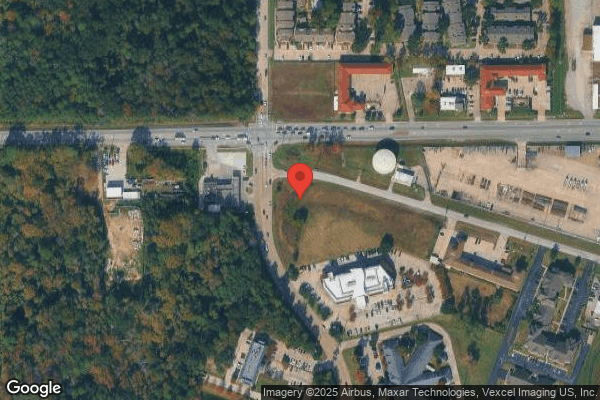
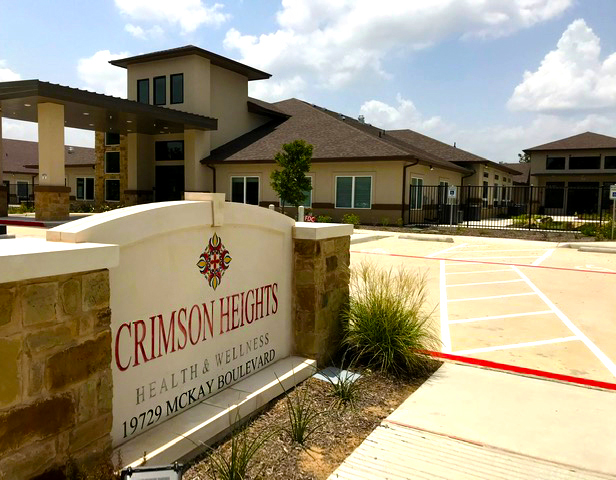
19279 McKay Dr., Humble, TX 77338 (940) 337-6231
For profit - Corporation 118 Beds FUNDAMENTAL HEALTHCARE Data: November 2025 3 Immediate Jeopardy citations
Trust Grade
0/100
#963 of 1168 in TX
Last Inspection: August 2025

Inspected within the last 6 months. Data reflects current conditions.

Overview

Crimson Heights Health & Wellness has received a Trust Grade of F, indicating poor performance with significant concerns. They rank #963 out of 1168 in Texas, placing them in the bottom half of facilities in the state, and #75 out of 95 in Harris County, meaning only a few local options are better. The facility is currently improving, having reduced their issues from 13 to 12 over the past year. While staffing is a weakness with a rating of 2 out of 5 stars and a turnover rate of 55%, the RN coverage is average, meaning they have some support but could improve further. However, the facility has faced serious incidents, including a resident sustaining a shoulder fracture due to improper transfer methods and another who eloped from the facility for several hours, highlighting ongoing safety and supervision issues despite some strengths in quality measures.

Trust Score
F
0/100
In Texas
#963/1168
Bottom 18%
Safety Record
High Risk
Review needed
Inspections
Getting Better
13 → 12 violations
Staff Stability
⚠ Watch
55% turnover. Above average. Higher turnover means staff may not know residents' routines.
Penalties
⚠ Watch
$42,446 in fines. Higher than 95% of Texas facilities. Major compliance failures.
Skilled Nurses
⚠ Watch
Each resident gets only 21 minutes of Registered Nurse (RN) attention daily — below average for Texas. Fewer RN minutes means fewer trained eyes watching for problems.
Violations
⚠ Watch
34 deficiencies on record. Higher than average. Multiple issues found across inspections.
★☆☆☆☆
1.0
Overall Rating
★★☆☆☆
2.0
Staff Levels
★★★★☆
4.0
Care Quality
★☆☆☆☆
1.0
Inspection Score
Stable
2024: 13 issues
2025: 12 issues

The Good

  • 4-Star Quality Measures · Strong clinical quality outcomes
  • Full Sprinkler Coverage · Fire safety systems throughout facility
  • No fines on record

Facility shows strength in quality measures, fire safety.

The Bad

1-Star Overall Rating

Below Texas average (2.8)

Significant quality concerns identified by CMS

Staff Turnover: 55%

Near Texas avg (46%)

Higher turnover may affect care consistency

Federal Fines: $42,446

Above median ($33,413)

Moderate penalties - review what triggered them

Chain: FUNDAMENTAL HEALTHCARE

Part of a multi-facility chain

Ask about local staffing decisions and management

The Ugly 34 deficiencies on record

3 life-threatening 2 actual harm
Aug 2025 3 deficiencies
CONCERN (D) 📢 Someone Reported This

A family member, employee, or ombudsman was alarmed enough to file a formal complaint

Potential for Harm - no one hurt, but risky conditions existed

Deficiency F0925 (Tag F0925)

Could have caused harm · This affected 1 resident

**NOTE- TERMS IN BRACKETS HAVE BEEN EDITED TO PROTECT CONFIDENTIALITY** Based on observation, interview and record review, the facility failed to maintain an effective pest control program so that the...

Read full inspector narrative →
**NOTE- TERMS IN BRACKETS HAVE BEEN EDITED TO PROTECT CONFIDENTIALITY** Based on observation, interview and record review, the facility failed to maintain an effective pest control program so that the facility was free of pests and rodents for 2 of 7 (Residents #1 and #2) resident rooms reviewed for environment.-The facility provided refrigerator located in the room of Resident #1 and #2 on 08/19/2025 was observed with dead insects.This failure has the potential to placed residents at risk for disease and a decline in their physical health. Findings included:Record review of Resident#1's Face Sheet dated 08/19/2025 revealed, a [AGE] year-old female who admitted to the facility on [DATE] with diagnosis to include dementia, anxiety, and Dysphagia (difficulty swallowing). Record review of Resident#1's Quarterly MDS assessment dated [DATE] revealed in section C a BIMS score of 02 indicating she was severe cognitive impairment. She was assessed to have Mechanically altered diet in Section K. Record review of the EMR (electronic medical record) of Resident #1 revealed physician order dated 079/27/2023 for a Pureed Diet with no added salt. Record review of Resident #1's Care Plan dated 07/24/2025 revealed:Focus: Resident is at risk for malnutrition and/or dehydration related to: NAS pureed diet and dx of dementia.Goal: will maintain nutritional status as evidenced by no significant weight change through next review. Will receive appropriate diet as ordered by physician.Intervention: encourage intakes of foods and fluids, offer alternatives if intakes do not appear adequate.Record review of Resident#2's Face Sheet dated 08/19/2025 revealed, a [AGE] year-old female who admitted to the facility on [DATE] with diagnosis to include dementia, anxiety, and Dysphagia (difficulty swallowing).Record review of Resident#2's Quarterly MDS assessment dated [DATE] revealed in section C a BIMS score was not scored because the resident rarely/never understood indicating she had severe cognitive impairment. She was assessed to have a feeding tube and mechanically altered diet in Section K. Record review of the EMR (electronic medical record) of Resident #2 revealed physician order dated 04/01/2025 for a Pureed Diet Continue PEG for supplemental nutrition as needed. Record review of Resident #2's Care Plan dated 06/09/2025 revealed:Focus: Resident receives a House Pureed diet and is at risk for malnutrition and weight.fluctuations.Goal: receive adequate nutrition and fluid intake and will not experience significant weight fluctuations thru the next review date.Intervention: Serve diet as ordered per MD.Focus: receives enteral tube feeding to supplement oral intake as needed.Goal: will remain free of complications related to Gtube; including: aspiration/infection.Intervention: Flush tube with 150 cc's warm water before and after tube feeding administration.In a phone interview on 08/19/2025 at 9:30am with Resident #1's family member, she said that when she visited on 08/17/2025 there was an odor coming from the refrigerator located in the room of Resident#1 and #2. She said that she opened the refrigerator and found what appeared to be dead gnats caused by decaying food inside. She said that she cleaned the refrigerator, discarded the items in the outside dumpster, and she did not speak to facility staff about her concerns. In an observation on 08/19/2025 at 10:30am video and photograph evidence were received from Resident #1's family member and dated Sunday at 3:48pm. The video and photographs showed a mini refrigerator with a brown bag on the bottom shelf, and what appeared to be small black insects on the bottom shelf. In an observation on 08/19/2025 at 10:45am, the room of Resident#1 and #2 was cleared of food items in the cabinet and refrigerator with no sign of insects. In an effort to interview both Resident#1 on 08/19/2025 at 10:45am, she was found to be non-interviewable. In an effort to interview both Resident#2 on 08/19/2025 at 10:50am, she was found to be non-interviewable. In an interview and observation on 08/19/2025 at 11:05am with Nurse Aide A, she said that she did not know who had the responsibility to clean out refrigerators located in the residents' room or how often. She said that food should not be left to rot and mold inside a refrigerator, because it could cause a smell or issue with pest control. In an interview and observation on 08/19/2025 at 11:10am with Housekeeper, she said that the housekeepers should check the refrigerators located in the resident's room daily for cleanliness. She said that food should not be left to rot and mold inside a refrigerator, because it could cause a smell or issue with pest control. In an interview and observation on 08/19/2025 at 11:15am with RN B, he said that he did not know who had the responsibility to clean out refrigerators located in the resident's room or how often. He said that food should not be left to rot and mold inside a refrigerator, because it could cause a smell or issue with pest control. In an interview and observation on 08/19/2025 at 11:05am with Nurse Aide C, she said that she did not know who had the responsibility to clean out refrigerators located in the resident's room or how often. She said that food should not be left to rot and mold inside a refrigerator, because it could cause a smell or issue with pest controlIn an interview on 08/19/2025 at 11:25am with ADON D, she said that she was unsure of who or how often the refrigerators in the resident's room should be checked for cleanliness, or how it was documented. She said that food should not be left to rot and mold inside a refrigerator, because it could cause a smell or issue with pest control. In an interview on 08/19/2025 at 11:45am with ADON E and the DON, both said that were unsure of who or how often should the refrigerators in the resident's room be checked for cleanliness, or how it was documented. Both said that food should not be left to rot and mold inside a refrigerator, because it could cause a smell or issue with pest control. Both viewed the video of taken of the refrigerator located in the room of Resident#1 and #2, and said it appeared to have food that was expired and what could be insects. In an interview on 08/19/2025 at 1:00pm with the Administrator and [NAME] President of Regulator Compliance, both said that nursing staff should check the contents of the refrigerators daily when the daily temperature is checked to ensure that outdated food is discarded, cleanliness of refrigerator and proper cooling. Both said that food should not be left to rot and mold inside a refrigerator, because it could cause a smell or issue with pest control. Both viewed the video of taken of the refrigerator located in the room of Resident#1 and #2, and said it appeared to have food that was expired and what could be insects. In an interview on 08/19/2025 at 1:33pm with the Maintenance Director, who said that he also oversees the housekeeping department. He said that food should not be left to rot and mold inside a refrigerator, because it could cause a smell or issue with pest control. He viewed the video taken of the refrigerator located in the room of Resident#1 and #2, and said it appeared to have food that was expired and dead gnats. He said that housekeepers should check the refrigerators in the resident's room daily to ensure that they are sanitary, free of pest control issues, and report any signs of pest control him immediately. He said that if staff were checking daily the refrigerator in the room of Resident#1 and 2 would not have been found in the condition viewed in the video. Record review of facility policy titled, Nutrition Policies and Procedures and dated 06/20/2023, read in part, Subject: Pest Control Policy: Facility will maintain an effectives pest control program to prevent or eliminate infestation of pest and rodents. Procedures:.5. Proper sanitation will be maintained, and clutter reduced to prevent food and harborage for pests.]
CONCERN (E) 📢 Someone Reported This

A family member, employee, or ombudsman was alarmed enough to file a formal complaint

Potential for Harm - no one hurt, but risky conditions existed

Safe Environment (Tag F0584)

Could have caused harm · This affected multiple residents

**NOTE- TERMS IN BRACKETS HAVE BEEN EDITED TO PROTECT CONFIDENTIALITY** Based on observation, interview and record review, the facility failed to maintain an effective pest control program so that the...

Read full inspector narrative →
**NOTE- TERMS IN BRACKETS HAVE BEEN EDITED TO PROTECT CONFIDENTIALITY** Based on observation, interview and record review, the facility failed to maintain an effective pest control program so that the facility was free of pests and rodents for 2 of 7 (Residents #1 and #2) resident rooms reviewed for environment.-The facility provided refrigerator located in the room of Resident #1 and #2 on 08/19/2025 was observed with dead insects.This failure has the potential to placed residents at risk for disease and a decline in their physical health. Findings included:Record review of Resident#1's Face Sheet dated 08/19/2025 revealed, a [AGE] year-old female who admitted to the facility on [DATE] with diagnosis to include dementia, anxiety, and Dysphagia (difficulty swallowing). Record review of Resident#1's Quarterly MDS assessment dated [DATE] revealed in section C a BIMS score of 02 indicating she was severe cognitive impairment. She was assessed to have Mechanically altered diet in Section K. Record review of the EMR (electronic medical record) of Resident #1 revealed physician order dated 079/27/2023 for a Pureed Diet with no added salt. Record review of Resident #1's Care Plan dated 07/24/2025 revealed:Focus: Resident is at risk for malnutrition and/or dehydration related to: NAS pureed diet and dx of dementia.Goal: will maintain nutritional status as evidenced by no significant weight change through next review. Will receive appropriate diet as ordered by physician.Intervention: encourage intakes of foods and fluids, offer alternatives if intakes do not appear adequate.Record review of Resident#2's Face Sheet dated 08/19/2025 revealed, a [AGE] year-old female who admitted to the facility on [DATE] with diagnosis to include dementia, anxiety, and Dysphagia (difficulty swallowing).Record review of Resident#2's Quarterly MDS assessment dated [DATE] revealed in section C a BIMS score was not scored because the resident rarely/never understood indicating she had severe cognitive impairment. She was assessed to have a feeding tube and mechanically altered diet in Section K. Record review of the EMR (electronic medical record) of Resident #2 revealed physician order dated 04/01/2025 for a Pureed Diet Continue PEG for supplemental nutrition as needed. Record review of Resident #2's Care Plan dated 06/09/2025 revealed:Focus: Resident receives a House Pureed diet and is at risk for malnutrition and weight.fluctuations.Goal: receive adequate nutrition and fluid intake and will not experience significant weight fluctuations thru the next review date.Intervention: Serve diet as ordered per MD.Focus: receives enteral tube feeding to supplement oral intake as needed.Goal: will remain free of complications related to Gtube; including: aspiration/infection.Intervention: Flush tube with 150 cc's warm water before and after tube feeding administration.In a phone interview on 08/19/2025 at 9:30am with Resident #1's family member, she said that when she visited on 08/17/2025 there was an odor coming from the refrigerator located in the room of Resident#1 and #2. She said that she opened the refrigerator and found what appeared to be dead gnats caused by decaying food inside. She said that she cleaned the refrigerator, discarded the items in the outside dumpster, and she did not speak to facility staff about her concerns. In an observation on 08/19/2025 at 10:30am video and photograph evidence were received from Resident #1's family member and dated Sunday at 3:48pm. The video and photographs showed a mini refrigerator with a brown bag on the bottom shelf, and what appeared to be small black insects on the bottom shelf. In an observation on 08/19/2025 at 10:45am, the room of Resident#1 and #2 was cleared of food items in the cabinet and refrigerator with no sign of insects. In an effort to interview both Resident#1 on 08/19/2025 at 10:45am, she was found to be non-interviewable. In an effort to interview both Resident#2 on 08/19/2025 at 10:50am, she was found to be non-interviewable. In an interview and observation on 08/19/2025 at 11:05am with Nurse Aide A, she said that she did not know who had the responsibility to clean out refrigerators located in the residents' room or how often. She said that food should not be left to rot and mold inside a refrigerator, because it could cause a smell or issue with pest control. In an interview and observation on 08/19/2025 at 11:10am with Housekeeper, she said that the housekeepers should check the refrigerators located in the resident's room daily for cleanliness. She said that food should not be left to rot and mold inside a refrigerator, because it could cause a smell or issue with pest control. In an interview and observation on 08/19/2025 at 11:15am with RN B, he said that he did not know who had the responsibility to clean out refrigerators located in the resident's room or how often. He said that food should not be left to rot and mold inside a refrigerator, because it could cause a smell or issue with pest control. In an interview and observation on 08/19/2025 at 11:05am with Nurse Aide C, she said that she did not know who had the responsibility to clean out refrigerators located in the resident's room or how often. She said that food should not be left to rot and mold inside a refrigerator, because it could cause a smell or issue with pest controlIn an interview on 08/19/2025 at 11:25am with ADON D, she said that she was unsure of who or how often the refrigerators in the resident's room should be checked for cleanliness, or how it was documented. She said that food should not be left to rot and mold inside a refrigerator, because it could cause a smell or issue with pest control. In an interview on 08/19/2025 at 11:45am with ADON E and the DON, both said that were unsure of who or how often should the refrigerators in the resident's room be checked for cleanliness, or how it was documented. Both said that food should not be left to rot and mold inside a refrigerator, because it could cause a smell or issue with pest control. Both viewed the video of taken of the refrigerator located in the room of Resident#1 and #2, and said it appeared to have food that was expired and what could be insects. In an interview on 08/19/2025 at 1:00pm with the Administrator and [NAME] President of Regulator Compliance, both said that nursing staff should check the contents of the refrigerators daily when the daily temperature is checked to ensure that outdated food is discarded, cleanliness of refrigerator and proper cooling. Both said that food should not be left to rot and mold inside a refrigerator, because it could cause a smell or issue with pest control. Both viewed the video of taken of the refrigerator located in the room of Resident#1 and #2, and said it appeared to have food that was expired and what could be insects. In an interview on 08/19/2025 at 1:33pm with the Maintenance Director, who said that he also oversees the housekeeping department. He said that food should not be left to rot and mold inside a refrigerator, because it could cause a smell or issue with pest control. He viewed the video taken of the refrigerator located in the room of Resident#1 and #2, and said it appeared to have food that was expired and dead gnats. He said that housekeepers should check the refrigerators in the resident's room daily to ensure that they are sanitary, free of pest control issues, and report any signs of pest control him immediately. He said that if staff were checking daily the refrigerator in the room of Resident#1 and 2 would not have been found in the condition viewed in the video. Record review of facility policy titled, Nutrition Policies and Procedures and dated 06/20/2023, read in part, Subject: Pest Control Policy: Facility will maintain an effectives pest control program to prevent or eliminate infestation of pest and rodents. Procedures:.5. Proper sanitation will be maintained, and clutter reduced to prevent food and harborage for pests.]
CONCERN (E) 📢 Someone Reported This

A family member, employee, or ombudsman was alarmed enough to file a formal complaint

Potential for Harm - no one hurt, but risky conditions existed

Food Safety (Tag F0812)

Could have caused harm · This affected multiple residents

**NOTE- TERMS IN BRACKETS HAVE BEEN EDITED TO PROTECT CONFIDENTIALITY** Based on observation, interview, and record review the facility failed to store, prepare, distribute, and serve food in accordan...

Read full inspector narrative →
**NOTE- TERMS IN BRACKETS HAVE BEEN EDITED TO PROTECT CONFIDENTIALITY** Based on observation, interview, and record review the facility failed to store, prepare, distribute, and serve food in accordance with professional standards for 3 of 7 (Residents #1,2, and 5) reviewed for food service safety. -The facility provided refrigerator located in the room of Resident #1 and #2 on 08/17/2025 was observed with a food item with an unknown use by date that appeared to be in a stage of decay, dead insects, and unpleasant odor. -The facility provided refrigerator located in the room of Resident #5 was observed to have expired ThickenLemon Flavored Water on 08/19/2025 with a package use by date of 05/09/2025. These failures could place residents at risk of foodborne illness and food contamination.Findings included:Record review of Resident#1's Face Sheet dated 08/19/2025 revealed, a [AGE] year-old female who admitted to the facility on [DATE] with diagnosis to include dementia, anxiety, and Dysphagia (difficulty swallowing). Record review of Resident#1's Quarterly MDS assessment dated [DATE] revealed in section C a BIMS score of 02 indicating she was severe cognitive impairment. She was assessed to have Mechanically altered diet in Section K. Record review of the EMR (electronic medical record) of Resident #1 revealed physician order dated 079/27/2023 for a Pureed Diet with no added salt. Record review of Resident #1's Care Plan dated 07/24/2025 revealed:Focus: Resident is at risk for malnutrition and/or dehydration related to: NAS pureed diet and dx of dementia.Goal: will maintain nutritional status as evidenced by no significant weight change through next review. Will receive appropriate diet as ordered by physician.Intervention: encourage intakes of foods and fluids, offer alternatives if intakes do not appear adequate.Record review of Resident#2's Face Sheet dated 08/19/2025 revealed, a [AGE] year-old female who admitted to the facility on [DATE] with diagnosis to include dementia, anxiety, and Dysphagia (difficulty swallowing).Record review of Resident#2's Quarterly MDS assessment dated [DATE] revealed in section C a BIMS score was not scored because the resident rarely/never understood indicating she had severe cognitive impairment. She was assessed to have a feeding tube and mechanically altered diet in Section K. Record review of the EMR (electronic medical record) of Resident #2 revealed physician order dated 04/01/2025 for a Pureed Diet Continue PEG for supplemental nutrition as needed.Record review of Resident #2's Care Plan dated 06/09/2025 revealed:Focus: Resident receives a House Pureed diet and is at risk for malnutrition and weight.fluctuations.Goal: receive adequate nutrition and fluid intake and will not experience significant weight fluctuations thru the next review date.Intervention: Serve diet as ordered per MD.Focus: receives enteral tube feeding to supplement oral intake as needed.Goal: will remain free of complications related to Gtube; including aspiration/infection.Intervention: Flush tube with 150 cc's warm water before and after tube feeding administration. Record review of Resident #5's Face Sheet dated 08/19/2025 revealed, a [AGE] year-old female who admitted to the facility on [DATE] with primary diagnosis Naegleriasis (infection of the brain).Record review of Resident #5's admission MDS assessment dated [DATE] revealed in section C a BIMS score was not scored because the resident rarely/never understood indicating she had severe cognitive impairment. She was assessed to have a feeding tube in Section K. Record review of the EMR (electronic medical record) of Resident #5 revealed physician order dated 06/14/2025 for a diet NPO.Record review of Resident's #5's Care Plan dated 07/02/2025 revealed:Focus: is at risk for aspiration due to presence of feeding tube related to dysphagia fluctuations.Goal: not develop symptoms of aspiration until next review. Tolerate tube feeding as evidenced bystable weight, no s/sx complaints of bloating.Intervention: Administer feeding via g-tube as orderedFocus: is at risk for dehydration and weight fluctuations r/t NPO status.Goal: will be free from signs and symptoms of dehydration as evidenced by: moist mucous membranes, good skin turgor, and labs within normal limits. Intervention: h20 at 30 ml/hr(milliliter each hour) .In a phone interview on 08/19/2025 at 9:30am with Resident #1's family member, she said that when she visited on 08/17/2025 there was an odor coming from the refrigerator located in the room of Resident#1 and #2. She said that she opened the refrigerator and found what appeared to be dead gnats caused by decaying food inside. She said that she cleaned the refrigerator, discarded the items in the outside dumpster, and she did not speak to facility staff about her concerns. In an observation on 08/19/2025 at 10:30am video and photograph evidence were received from Resident #1's family member and dated Sunday at 3:48pm. The video and photographs showed a mini refrigerator with a brown bag on the bottom shelf, and what appeared to be small black insects on the bottom shelf. The video showed someone to open the brown bag, and inside contained what appeared to be a rotisserie chicken that was black with decay and with a white fuzzy substance on the chicken.In an observation on 08/19/2025 at 10:45am, the room of Resident#1 and #2 was cleared of food items refrigerator with no sign of insects. In an effort to interview both Resident#1 on 08/19/2025 at 10:45am, she was found to be non-interviewable. In an effort to interview both Resident#2 on 08/19/2025 at 10:50am, she was found to be non-interviewable. In an interview and observation on 08/19/2025 at 11:05am with Nurse Aide A, she said that food items stored in the refrigerators located in the resident's room should be discarded in 3 days of being placed inside the refrigerator, discarded after the use by date if in the original container, because the items or no longer safe to consume and residents to become sick. She did not know who had the responsibility to clean out refrigerators and discard outdated food items located in the residents' room or how often. She said that food should not be left to rot and mold inside a refrigerator, because it could cause a smell or issue with pest control.In an interview and observation on 08/19/2025 at 11:10am with Housekeeper, she said that the housekeepers should check the refrigerators located in the resident's room daily for cleanliness, and she should report to nursing staff if there is outdated food found. She said that if residents ate outdated food, it could cause them to become sick. She said that food should not be left to rot and mold inside a refrigerator, because it could cause a smell or issue with pest control. In an interview and observation on 08/19/2025 at 11:15am with RN B, he said that food items stored in the refrigerators located in the resident's room should be discarded in 3 days of being placed inside the refrigerator, discarded after the use by date if in the original container, because the items or no longer safe to consume and the risk to residents would be food borne illness. He said that he did not know who had the responsibility to clean out refrigerators located in the resident's room or how often. He said that food should not be left to rot and mold inside a refrigerator, because it could cause a smell or issue with pest control.In an interview and observation on 08/19/2025 at 11:05am with Nurse Aide C, she said that food items stored in the refrigerators located in the resident's room should be discarded in 3 days of being placed inside the refrigerator, discarded after the use by date if in the original container, because the items or no longer safe to consume and residents to become sick. She did not know who had the responsibility to clean out refrigerators and discard outdated food items located in the residents' room or how often. She said that food should not be left to rot and mold inside a refrigerator, because it could cause a smell or issue with pest control.In an interview on 08/19/2025 at 11:25am with ADON D, she said that food items stored in the refrigerators located in the resident's room should be stored until the package use by date if in the original container or 72 hours if removed from the original package. She said that that if a resident consumed food after the use by date it could cause foodborne illness. She was unsure who should check the refrigerator in the resident's room for cleanliness and outdated food, how often the refrigerator should be checked, or how it should be documented. She said that food should not be left to rot and mold inside a refrigerator, because it could cause a smell or issue with pest control. In an observation on 08/19/2025 at 11:30am, the room of Resident#5 was observed to have expired Thicken Lemon Flavored Water (designed to provide hydration and comfort for individuals with swallowing difficulties) with a package use by date of 05/09/2025. In an effort to interview both Resident#5 on 08/19/2025 at 11:30am, she was found to be non-interviewable with Gastrostomy Tube (a surgically placed device used to give direct access to the stomach for supplemental feeding) in place. In an interview and observation on 08/19/2025 at 11:36am with Nurse Aide F, she said that food items stored in the refrigerators located in the resident's room should be discarded in 3 days of being placed inside the refrigerator, discarded after the use by date if in the original container, because the items or no longer safe to consume and residents to become sick. She did not know who had the responsibility to clean out refrigerators and discard outdated food items located in the residents' room or how often. She said that food should not be left to rot and mold inside a refrigerator, because it could cause a smell or issue with pest control. She was observed to look into the refrigerator located in the room of Resident#5 and pull out Thicken Lemon Flavored Water. She said that the item should have been thrown out after it expired on 05/09/2025. She said that the item did not belong to the resident because the Resident#5 does not consume food and has a feeding tube. She was observed to take the item to the nurse station and give it to RN B. In an interview and observation on 08/19/2025 at 11:40am with RN B, he said that Resident #5 had a continuous feeding tube and did not consume food items. He said that Thicken Lemon Flavored Water was used for residents with difficulty swallowing. He said that the item should have been thrown out after the use by date of 05/09/2025. He was observed to take the item to ADON E.In an interview on 08/19/2025 at 11:45am with ADON E and the DON, both said that food items stored in the refrigerators located in the resident's room should be stored until the package use by date if in the original container or 72 hours if removed from the original package. Both said that that if a resident consumed food after the use by date it could cause foodborne illness. Both were unsure who should check the refrigerator in the resident's room for cleanliness and outdated food, how often the refrigerator should be checked, or how it should be documented. Both said that Resident #5 had a continuous feeding tube and did not consume food items. Both said that Thicken Lemon Flavored Water was used for residents with difficulty swallowing. Both said that the item should have not been stored in the resident room and thrown out after the use by date of 05/09/2025. Both said that food should not be left to rot and mold inside a refrigerator, because it could cause a smell or issue with pest control. Both viewed the video of taken of the refrigerator located in the room of Resident#1 and #2, and said it appeared to have food that was expired and what could be insects. In an interview on 08/19/2025 at 1:00pm with the Administrator and [NAME] President of Regulator Compliance, with the DON present. Both said that that nursing staff should check the contents of the refrigerators daily when the daily temperature is checked to ensure that outdated food is discarded, cleanliness of refrigerator and proper cooling. Both said that the daily checks should be documented on the log daily that it was being completed. Both said that food items stored in the refrigerators located in the resident's room should be stored until the package use by date if in the original container or 72 hours if removed from the original package. Both said that that if a resident consumed food after the use by date it could cause foodborne illness. Both said that food should not be left to rot and mold inside a refrigerator, because it could cause a smell or issue with pest control. Both viewed the video of taken of the refrigerator located in the room of Resident#1 and #2, and said it appeared to have food that was expired and what could be insects. In an interview on 08/19/2025 at 1:33pm with the Maintenance Director, who said that he also oversees the housekeeping department. He said that food should not be left to rot and mold inside a refrigerator, because it could cause a smell or issue with pest control. He viewed the video taken of the refrigerator located in the room of Resident#1 and #2, and said it appeared to have food that was expired and dead gnats. He said that housekeepers should check the refrigerators in the resident's room daily to ensure that they are sanitary, free of pest control issues, and report any signs of pest control him immediately. He that he was not sure who should be checking for food storage, labeling, and expiration date of food in the resident's room. He said that if staff were checking daily the refrigerator in the room of Resident#1 and 2 would not have been found in the condition viewed in the video. In an interview on 08/19/2025 at 1:44pm with the Dietary Manager, who said that said that food items stored in the refrigerators located in the resident's room should be stored until the package use by date if in the original container or 72 hours if removed from the original package. She said that that if a resident consumed food after the use by date it could cause foodborne illness. She said that that nursing staff held the responsibility of checking for food storage, labeling, and expiration date of food in the residents room, and they should check daily. She said that food should not be left to rot and mold inside a refrigerator, because it could cause a smell or issue with pest control.Record review of facility policy titled, Nutrition Policies and Procedures and dated 06/20/2023, read in part, Subject: Pest Control Policy: Facility will maintain an effectives pest control program to prevent or eliminate infestation of pest and rodents. Procedures:.5. Proper sanitation will be maintained, and clutter reduced to prevent food and harborage for pests.Record review of facility policy titled, Nutrition Policies and Procedures, dated 06/20/2023 read in part, Subject: Food Safety In receiving and Storage Policy: Food will be received and stored by methods to minimize contamination and bacterial growth.6.Check expiration dates and use-buy dates to assure the dates are within acceptable parameters.Record review of facility policy titled, Nutrition Policies and Procedures, dated 06/20/2023 read in part, Subject: Food From Outside Sources, Safe Handling of Policy: Food served by the facility is purchased from commercial vendors that comply with federal, state, and local regulations. However, patients or residents have the right to choose to make choices, including the right to accept food from family, friends, or order foods for delivery. The facility discourages sharing of food with other residents due to the individual dietary requirements and varying consistency needs of individuals. The facility is responsible for ensure that goods brought into the facility from outside have been prepared and delivered using safe food handling practices.3. To the extent possible, nursing staff monitors the food provided for patients or residents by outside sources to verify safe handling/storage and appropriateness for the recommended dietary needs of the individual patient/resident.5. Foods are labeled to identify the patient/resident's name, container contents, and the date it was prepared. Food items are stored in disposable, tightly covered containers, or sealable plastic bags. Items will be stored for three (3) days. Expired and unlabeled items will be discarded.
Aug 2025 6 deficiencies 1 Harm
SERIOUS (H)

Actual Harm - a resident was hurt due to facility failures

Deficiency F0563 (Tag F0563)

A resident was harmed · This affected multiple residents

**NOTE- TERMS IN BRACKETS HAVE BEEN EDITED TO PROTECT CONFIDENTIALITY** Based on observation, interview and record review, it was determined the facility failed to have written policies and procedures...

Read full inspector narrative →
**NOTE- TERMS IN BRACKETS HAVE BEEN EDITED TO PROTECT CONFIDENTIALITY** Based on observation, interview and record review, it was determined the facility failed to have written policies and procedures regarding the visitation rights of residents, including those setting forth any safety restriction or limitation and the reason for the safety restriction or limitation for 1 of 23 residents (Resident #67) reviewed for resident rights. The facility failed to have written policies and procedures regarding visitation rights of residents when Resident #67's family member was no longer allowed to visit the facility after 1/27/25. This failure placed residents at risk of inaccurate or incomplete information, decreased emotional wellbeing and diminished quality of life. Findings included: Record review of Resident #67's Continuity of Care Document generated on 7/31/25 revealed he was readmitted on [DATE] with diagnoses of parkinsonism (a clinical syndrome characterized by tremor, bradykinesia, rigidity and postural instability), anxiety, psychosis (a mental disorder characterized by a disconnection from reality) and morbid obesity. He was [AGE] years of age. Record review of Resident #67's quarterly MDS assessment dated [DATE] revealed he had a BIMS of 9, indicating moderate cognitive impairment. He was dependent on staff to complete chair/bed-to-chair transfers and did not walk or sit on the side of the bed due to his medical condition or safety concerns. Record review of Resident #67's progress note dated 1/19/25 revealed a note written by LVN T that reflected Resident #67's family member was at the nurse's station yelling, screaming and threatening staff, and upset stating, my (family member's) food looks disgusting. Then the family member brought his tray and stated that it was not up to quality guidelines, then took pictures of the food. The nurse asked if she wanted to fill out a grievance form, and the family member stated she knew how to file a complaint. Record review of a document provided by the facility (undated) revealed a CNA (unspecified) unpacked Resident #67's personal belongings and discovered a firearm. The CNA alerted LVN E who secured the firearm until police arrived. The document contained two statements from LVN E and Resident #67. The statement from LVN E indicated a police report and charges were filed on behalf of the facility for unlawfully carrying a weapon, and the weapon was confiscated by the police for examination and evidence. The statement from Resident #67 indicated that the weapon belonged to him, and his family member may have brought it when he was admitted . Resident #67 could not state whether the police of his family member had the weapon. The following actions were listed on the document: ' .legal contacted related to incident, legal sent documentation that visitation was revoked due to (family member's) escalated behaviors, staff educated on revoking visitation of (family member), resident interviewed and asked if he would like to help find another facility so he can visit with his (family member) and resident stated he liked it here and he could talk to her on the phone because ‘I know how my (family member) is.' In an interview and observation on 7/30/25 at 2:30pm, Resident #67 stated he was a [NAME] and [NAME]. He said his family member brought his belongings in the facility when he readmitted in January 2025. He said there was a gun in his belongings. He said when the facility staff found the gun, they said his family member could no longer visit. He said it was too harsh of a punishment. He said that his family member was threatening to call the state (HHSC), but did not threaten violence. He said she was overzealous and gung-ho about his care. He said he had not seen his family member in 7 months, and it was hell not seeing her. He started to cry during the interview. He said she brought him meals to eat at the front door of the facility. In an interview on 7/30/25 at 3:34pm, LVN E said when Resident #67 moved in, his family member did not threaten violence. When asked if she said anything threatening, he said she did not say anything threatening, and stated It was the way she spoke to people, they felt threatened by her. He said the CNAs were scared of her and stated that they did not want to come to work if she was there. In an interview on 7/31/25 at 10:50am, the Social Worker said she had no interactions with Resident #67's family member prior to the decision not to allow her to visit. She said now, the family member brought Resident #67 food and clothes but did not enter the facility. She said they facetime, but it was not the same as hugging, touching or holding. In a telephone interview on 7/31/25 at 12:03pm, the Weekend Supervisor stated she did not witness Resident #67's family member threaten anyone and she was not violent. She said she had to ask the family member to calm down or watch her language before she would talk to her. She described the family member as passive aggressive. In an interview with on 7/31/25 at 1:00pm, the Administrator said when he learned of Resident #67 having a gun, he notified their legal department, completed an investigation and the legal department determined the resident's family member could no longer visit the facility. He said they took a statement from Resident #67 who said he did not realize the gun was in his room and that it was brought in with his belongings. He said his statement was the only piece of evidence they obtained during the investigation of the gun entering the facility. He said he did not interview Resident #67's family member. He said Resident #67's family member was verbally abusive toward staff. He said he met with her to explain that it was not appropriate in this setting. He said based on the family member's behavior and the gun incident, they decided she could no longer visit the facility. He said he could not remember how it was determined that the decision was not a violation of the resident rights. In an interview on 7/31/25 at 5:00pm, the DON said Resident #67's family member was belligerent and ignorant. She said there was never a calm moment, and she was never decent. She said at times, she disturbed the residents. She said the staff were complaining about her, and she cursed her out and would trail behind her. In an interview on 8/1/25 at 1:30pm, LVN T said Resident #67's family member was ugly, defensive and very short. She said she felt bad because that's her (Resident #67's family member), but she can't come due to the circumstances of denied visitation. In an interview on 8/1/25 at 3:11pm, Resident #67's family member stated Resident #67 moved into the facility for long-term care in January 2025. She said the Friday after he was readmitted on [DATE], she brought in his belongings. She said his home health aides packed his bags, so she did not know what was in them. She said she did not unpack his belongings when she dropped them off at the facility. She said the staff found the gun the next day. She said she did not meet with the police at the facility. She said she talked to the police department in April 2025 and they said they did not have any record of charges against her regarding the gun or trespassing. She said the facility notified her that she could no longer visit on 1/20/25, and they said she would receive a letter detailing the letter of trespassing. She said she did not receive anything until May 2025. She said they stereotyped her as an African American woman. She said the language they use to describe her, including disruptive and threatening, was racist. She said she got excited and raised her voice but did not yell at the top of my lungs. She said when she checked on Resident #67, she would find something wrong and take pictures. She said she was not intentionally finding stuff wrong. She said, You can't penalize me because I advocate for him. Record review of a letter addressed to Resident #67's family member dated 1/27/25 reflected in part, The purpose of this correspondence is to inform you that are no longer permitted to visit (Resident #67) at our facility or to enter the facility grounds for any reason. You were physically escorted by the police from the facility yesterday, January 26, 2025, because you were verbally threatening and intimidating staff members and other residents. A gun was found in (Resident #67's) room which (Resident #67) confirmed legally belonged to him but denied brining it into the facility and he believes you brought it into the facility. Additionally, staff have had multiple concerns about the manner in which you communicate, including but not limited to, yelling, cursing, threats of physical aggression, and persistent communications perceived as harassment. The concerns have been discussed with you previously in the past week and you acknowledge understanding. In an interview on 8/1/25 at 5:15pm, the Administrator said they would not allow Resident #67's family member to come for supervised visits. He said Resident #67 could go outside the facility to visit with her, go out on pass, or she could see him through the window. He said it was too risky to have her inside the facility. In an interview on 8/12/25 at 3:08pm, the Administrator said when he spoke to Resident #67's family member, they did not discuss a facility policy, he only discussed appropriate behavior in the facility. He said he was unaware of a visitation policy other than the policies provided. Record review of a Social Services Policy and Procedure regarding Resident Rights dated 6/9/23 revealed in part, The Facility employs measures to ensure patient and resident personal dignity, well-being and self-determination are maintained and will educate patients and residents regarding their rights and responsibilities. the resident has a right to a dignified existence, self-determination, and communication with and access to persons and services inside and outside the facility. The policy did not explain those situations where visitors may be restricted due to safety concerns. Record review of a facility policy regarding Visitation-Resident Right dated 11/18/21 revealed in part, The Facility's staff will honor the patient and resident right to have personal visitation according to visitation guidance. The facility will implement measures to ensure patient, resident, staff and visitor safety during the visitation time. The facility will notify visitors and residents of the potential risk for exposure to COVID-19 in the facility. Required Visitation. The Facility will not restrict visitation without clinical or safety cause. The policy did not explain those situations where visitors may be restricted due to safety concerns.
CONCERN (D)

Potential for Harm - no one hurt, but risky conditions existed

Safe Environment (Tag F0584)

Could have caused harm · This affected 1 resident

Based on observations, interviews, and record review, the facility failed to ensure residents had the right to a safe, clean, comfortable and homelike environment for 2 of 23 residents (Resident #27, ...

Read full inspector narrative →
Based on observations, interviews, and record review, the facility failed to ensure residents had the right to a safe, clean, comfortable and homelike environment for 2 of 23 residents (Resident #27, Resident #14) reviewed for environmental concerns. - The facility failed to ensure the wall in Resident #27's bedroom wall was repaired when the sheetrock was damaged.- The facility failed to ensure the air conditioning unit in Resident #14's bedroom was free of dirt and debris. These failures could place residents at risk of a diminished quality of life due to exposure to an environment that is unpleasant, unsanitary, and unsafe. The findings included: In an observation in Resident #27's room on 7/30/25 at 10:47am, the wall behind Resident #27's bed had sheetrock damage that was streaked, about 10 inches long. The streaks were white, and the wall was painted blue. There was sheetrock dust behind the bed on the floor. In an observation and interview in Resident #14's room on 7/31/25 at 12:21pm, Resident #14 said she had mold in her air conditioning vent. Her unit was located underneath the window in her room through the wall. There were multiple small, fuzzy white patches. Some were round and some were abnormally shaped. They were located in the airflow grate. In an interview on 7/31/25 at 12:25pm, the Maintenance Assistant said he was aware of sheetrock damage behind some of the residents' beds. He said they had to add sheetrock to the wall, patch it and repaint it. He said they were notified by the Admissions Director when a room was vacant and could be repaired. He said it had been a while since they completed maintenance rounds. In a telephone interview on 8/2/25 at 12:44pm, the Maintenance Director said the sheetrock damage was due to the residents or staff pushing the beds against the wall. He said the repair required too much work to fix it while the room was occupied. He said they wait until a resident moved out to fix the sheetrock. When asked about the air conditioning unit in Resident #14's room, he said he was notified by Resident #14 and they cleaned it yesterday. He said they pulled the vent off and used bleach wipes to remove the debris. He said most of it was dirt from the outside that built up on the grates. Record review of a facility policy for the Resident Right for Environment That Preserves Dignity dated 11/1/17 read in part, The facility staff will provide the patient/resident with the right to an environment that preserves dignity and contributes to a positive self-image.Facility Staff. creates a home-like environment for the patient/resident that includes.clean, orderly, comfortable, and safe environment.
CONCERN (D) 📢 Someone Reported This

A family member, employee, or ombudsman was alarmed enough to file a formal complaint

Potential for Harm - no one hurt, but risky conditions existed

Accident Prevention (Tag F0689)

Could have caused harm · This affected 1 resident

Deficiency Text Not Available

Read full inspector narrative →
Deficiency Text Not Available
CONCERN (D)

Potential for Harm - no one hurt, but risky conditions existed

Unnecessary Medications (Tag F0759)

Could have caused harm · This affected 1 resident

**NOTE- TERMS IN BRACKETS HAVE BEEN EDITED TO PROTECT CONFIDENTIALITY** Based on observation, interview, and record review the facility failed to ensure that the medication error rate was not five per...

Read full inspector narrative →
**NOTE- TERMS IN BRACKETS HAVE BEEN EDITED TO PROTECT CONFIDENTIALITY** Based on observation, interview, and record review the facility failed to ensure that the medication error rate was not five percent or greater. The facility had a medication error rate of 7%, based on 2 errors out of 27 opportunities, which involved 1 of 6 residents (Resident #11) reviewed for medication errors. MA V administered Oyster shell calcium instead of Calcium with Vitamin D to Resident #11 and administered Visine eye drops to both eyes instead of to the left eye only according to the Physician orders on 7/30/25. These failures could place residents at risk of inadequate therapeutic outcomes.Findings include: Record review of Resident #11's face sheet revealed a [AGE] year-old female who admitted on [DATE]. Her diagnoses included in part, mild intellectual disabilities, metabolic encephalopathy (a brain dysfunction caused by underlying metabolic disturbances, leading to symptoms like confusion, memory loss, and altered consciousness), asthma, schizophrenia, hypertension, and heart disease. Record review of Resident #'11's quarterly MDS assessment dated [DATE] revealed a BIMS score of 8 out of 15 which indicated moderate cognitive impairment. She required supervision or touching assistance with ADL care. Record review of Resident #11's care plan dated 5/23/25 revealed she had sneezing, watery eyes, scratchy throat, congestion headache related to seasonal allergies. The approach was to administer medications per order. Record review of Resident #11's Physician orders for July 2025 revealed orders for: Oyster Shell Calcium-Vit D3 500 mg - 5 mcg (200 unit); one tablet twice a day, order date 2/6/25;Visine dry eye relief 1% one drop in left eye three times a day, order date 2/6/25; In an observation on 7/30/25 at 7:28 a.m. revealed MA V prepared Resident #11's medication for administration. She prepared 14 medications which included Oyster shell calcium 500 mg (without Vitamin D) and Visine eye drops. MA V entered Resident #11's room and administered her the medication. Observation of the Visine eye drops revealed she administered one drop in Resident #11's left eye and one drop in her right eye. In an observation and interview on 7/30/25 at 7:53 a.m., MA V retrieved the Oyster shell calcium 500 mg from the medication cart and said she did not see Vitamin D3 listed as an ingredient on the medication bottle but only saw the Calcium. She said when she prepared the medication for Resident #11, she did not see the Vitamin D3 portion listed on the order. She said she did not have the combination of Calcium and Vitamin D3 available on her cart. She said the facility used to have the combination medication. She said the medication administered to Resident #11 and the medication prescribed were not same because of the Vitamin D3. She said she could notify her nurse or supervisor to change the order. MA V said the MD order for Visine eye drops was one drop in the left eye. She said she did not pay attention and should have read the directions on the order. She said the resident previously had an order for one drop in both eyes. She said the resident could have an allergic reaction. In an interview on 7/31/25 at 3:40 p.m. the DON said Resident #11 should have received whatever the order was written for. She said if the medication was not available the medication aide should mark the medication as not available, continue with the medication pass, look in the medication room for the medication and notify the nurse. She said the medication aide should not have picked up whatever was on the cart. She said when administering medications staff should read the bottle and only administer what was ordered. She said if the medication was not available it should have been documented. She said staff could also refer to the standing order and notify the MD for a change in order. The DON said when administering eye drops staff should check and verify the order. Record review of the facility's Medication Management Program revised 7/1/2016 read in part, .Preparing for the Medication Pass. 4. Authorized staff must understand. D. The 8 Rights for administering medication: . 2. The Right Drug, 3. The Right Dose.
CONCERN (D)

Potential for Harm - no one hurt, but risky conditions existed

Infection Control (Tag F0880)

Could have caused harm · This affected 1 resident

**NOTE- TERMS IN BRACKETS HAVE BEEN EDITED TO PROTECT CONFIDENTIALITY** Based on observation, interview, and record review the facility failed to maintain an infection prevention and control program d...

Read full inspector narrative →
**NOTE- TERMS IN BRACKETS HAVE BEEN EDITED TO PROTECT CONFIDENTIALITY** Based on observation, interview, and record review the facility failed to maintain an infection prevention and control program designed to provide a safe, sanitary and comfortable environment and to help prevent the development and transmission of communicable diseases and infections for 3 of 8 residents (Residents #48, #11 and #79) reviewed for infection control.The facility failed to ensure contents from Resident #48's consumed breakfast tray did not spill onto Resident #11's and #79's unconsumed lunch tray on 7/29/25. This failure could place residents at risk of infection. Findings include:Record review of Resident #48's face sheet revealed a [AGE] year-old male who admitted on [DATE]. His diagnoses included in part, age related cognitive decline, type 2 diabetes, disturbances in tooth eruption, diarrhea, seasonal allergic rhinitis, localized swelling, mass and lump, lower limb, and asthma.Record review of Resident #11's face sheet revealed a [AGE] year-old female who admitted on [DATE]. Her diagnoses included in part, mild intellectual disabilities, metabolic encephalopathy (a brain dysfunction caused by underlying metabolic disturbances, leading to symptoms like confusion, memory loss, and altered consciousness), asthma, schizophrenia, hypertension, and heart disease.Record review of Resident #79's face sheet revealed a [AGE] year-old female who readmitted to the facility on [DATE]. Her diagnoses included in part, dementia, psychotic disturbance, anxiety, multiple sclerosis (an autoimmune condition that affects your brain and spinal cord), and hungry bone syndrome (a condition that causes low calcium levels in the blood after parathyroid or thyroid surgery or metastatic prostate cancer).In an observation and interview on 7/29/25 at 11:53 a.m. of the meal cart on the 300-hallway revealed Resident #48's breakfast tray was on the top rack and contained a half empty cup of red juice, a spoon in a bowl and a covered plate. Items on the tray appeared to be eaten ( dirty). Resident #79's lunch tray was below Resident #48's breakfast tray and appeared to be untouched ( clean). There were plastic tops on Resident #79's beverages and a cover on the plate and bowls. Resident #79's meal ticket and plastic juice lid were soiled with red juice. Red juice also appeared to be spilled on the side of the meal cart rack and on Resident #48's breakfast tray. CNA H said she just picked up Resident #48's breakfast tray and juice from the tray spilled over on other trays. She said Resident #79 had not received her lunch tray yet. CNA H removed the juice from Resident #79's lunch tray and delivered the remainder of the tray to Resident #79. She said she would replace the juice. She said she knew not to put the dirty tray right next to the clean tray. She said she honestly did not know if a dirty tray could be placed above the clean tray and was not told that would be an issue. In an observation and interview on 7/29/25 at 12:00 p.m. of Resident #11 in her room revealed she was eating her lunch. Her tray, meal ticket, and butter container were soaked with juice. CNA H said the juice from Resident #48's breakfast tray also spilled on Resident #11's tray and she tried to clean it up. In an interview on 7/29/25 at 12:50 p.m. ADON D said dirty and clean trays should not be placed together on the cart. She said CNA H informed her she messed up and put a dirty tray on top of a clean tray and contents from the dirty tray spilled. ADON D said that could be an infection control issue and residents could be at risk of an unknown virus. She said the DON and ADON conducted infection control in services, including meal tray service, all the time. In an interview on 7/29/25 at 3:53 p.m. the DON said she expected staff to remove the trays after breakfast. She said there should not be used trays stored with clean food due to infection control issues and cross contamination. She said the facility trained staff a lot on infection control.Record review of the facility's Nutrition Policies and Procedures dated 6/20/23 read in part, .meal delivery . Procedures: .13. Do not return trays to the tray delivery cart until all unserved trays have been passed .
CONCERN (E)

Potential for Harm - no one hurt, but risky conditions existed

Comprehensive Care Plan (Tag F0656)

Could have caused harm · This affected multiple residents

**NOTE- TERMS IN BRACKETS HAVE BEEN EDITED TO PROTECT CONFIDENTIALITY** Based on observation, interview, and record review, the facility failed to develop and implement a comprehensive person-centered...

Read full inspector narrative →
**NOTE- TERMS IN BRACKETS HAVE BEEN EDITED TO PROTECT CONFIDENTIALITY** Based on observation, interview, and record review, the facility failed to develop and implement a comprehensive person-centered care plan for each resident, consistent with the resident rights, which included measurable objectives and time frames to meet resident's medical, nursing, and mental and psychological needs that were identified in the comprehensive assessment for 1 out of 5 residents (Resident #8), reviewed for care plans. The facility failed to: - Update Resident #8's care plan with her correct code status and had both full code and DNR on it. The care plan also was not updated with the correct tube feeding. These failures could place residents at risk for not obtaining/maintaining their highest practicable wellbeing. Findings include: Record review of Resident #8's undated face sheet revealed she was a [AGE] year-old female originally admitted on [DATE], with the most recent admission on [DATE]. She had diagnoses of cerebrovascular infarction (stroke), hemiplegia and hemiparesis (paralysis and weakness), tracheostomy (tube into throat for breathing), gastrostomy (tube into stomach for nutrition), quadriplegia (paralysis in both arms and legs), aphasia (trouble speaking), dysphagia (trouble swallowing), and stage 4 pressure ulcer to sacral region (ulcer deep enough to show bone in the tailbone area). Record review of Resident #8's Quarterly MDS assessment dated [DATE] revealed a BIMS could not be completed because of the resident's medical condition. The resident had severely impaired cognitive skills for daily decision making. Resident #8 had impairment on both sides of her upper and lower extremities and was dependent with all ADL's (helper does all of the effort). The MDS confirmed the resident had a feeding tube and received 51% or more of her total calories through it. The MDS also revealed the resident had a stage 4 pressure ulcer and a tracheostomy. Record review of Resident #8's care plan dated 7/3/25, revealed a Focus: Advanced Care Planning: Code Status DNR (Start: 2/14/25, Revised: 7/24/25). The goal was to be informed of her right to complete the advanced directive to direct medical care (Target Date: 10/24/25, Revised: 7/24/25). The intervention was the advanced directive was completed and placed in the medical record (Start: 2/14/25). Focus: Resident #8 requests for be full code status (Start: 4/21/24, Revised: 7/24/25). The goal was that the resident's wishes and directions would be carried out in accordance with the advanced directives through the review date (Target Date: 10/24/25, Revised: 7/24/25). The interventions included arranging for clergy or social services as directed and discussing advanced directives with the resident or RP (Start: 4/21/24). Focus: Resident #8 received nutrition and hydration via g-tube (tube into stomach for nutrition) and was at risk for malnutrition and dehydration (Start: 4/21/24, Revised: 7/24/25). The goal was that Resident #8 would remain free of complications related to the g-tube (Target Date: 10/24/25, Revised: 7/24/25). Interventions included enteral (delivery of nutrients directly into digestive system) feeding: formula-Bolus (all at one time) feeding with Isosource HN 1.2 (type of feeding) 165ml TID via g-tube and flush tube with 150ml warm water before and after tube feeding administration (Start: 4/21/24.) Record review of Resident #8's Physician Orders from 7/31/25, revealed the following orders from MD H:- Code Status: Full Code. Ordered on 10/10/24 at 5:42pm. Discontinued on 1/3/25 at 10:57am.- Bolus Feeding Isosource HN 1.2 165ml TID via g-tube. Ordered on 4/17/24. Discontinued on 4/29/24 at 11:59am.- Code Status: DNR. Ordered on 1/5/25 at 1:32pm.- Enteral Feeding: Formula Two Kal HN 2.0 (type of feeding) 38ml/hr x 22hr via pump per g-tube with 275ml water flush via pump Q4hr. Ordered on 4/29/25. Record review of Resident #8's Dietary Progress Notes revealed a note from 5/15/24 at 1:41pm from RD W, revealed RD W recommended discontinuing the Isosource 1.2 bolus QID. Record review of Resident #8's Dietary Progress Notes revealed a note from 9/13/24 at 3:27pm from RD W that said the resident was receiving EN 2 Kcal HN at 45ml Qhr x 22hr. In an observation on 7/29/25 at 9:45am, Resident #8 was lying in bed with a disconnected feeding tube next to her bed. The bag that was hanging was 2 Kal HN. In an interview on 7/31/25 at 2:50pm with the DON, she said the SW, or a nurse updated the care plan depending on what it was about. She said a nurse or the SW would update the code status or the type of tube feeding. She said the specifics of the tube feeding should not have been on the care plan because things changed so frequently. The DON said the MDS coordinator must have done a mass update on the care plans on 7/3/25 because the resident was not due for her review, and she must have missed the code status and tube feeding. She said having the incorrect code status on the care plan would not affect anything because DNR was listed in the resident's chart, and in the code book. She said the correct tube feeding was also ordered in the resident's chart so it would not have affected anything either. Record review of the facility's policy and procedure on Person-Centered Care Plan (Revised 10/1/20) read in part: .Will be reviewed and updated as needs are identified and after each MDS assessment (excluding discharge). The person-centered care plan is interdisciplinary and created to guide facility staff in providing the treatment, care and services necessary for the patient/resident to obtain and maintain the highest physical, mental, and psychosocial well-being possible.
Jul 2025 2 deficiencies 2 IJ
CRITICAL (J) 📢 Someone Reported This

A family member, employee, or ombudsman was alarmed enough to file a formal complaint

Immediate Jeopardy (IJ) - the most serious Medicare violation

Comprehensive Care Plan (Tag F0656)

Someone could have died · This affected 1 resident

**NOTE- TERMS IN BRACKETS HAVE BEEN EDITED TO PROTECT CONFIDENTIALITY** Based on interview and record review, the facility failed to develop and implement a comprehensive person-centered care plan whi...

Read full inspector narrative →
**NOTE- TERMS IN BRACKETS HAVE BEEN EDITED TO PROTECT CONFIDENTIALITY** Based on interview and record review, the facility failed to develop and implement a comprehensive person-centered care plan which included measurable objectives and timeframes to meet a resident's medical, nursing, mental and psychosocial needs for Resident #1. The facility failed to update Resident #1's care plan to reflect she was a two plus person physical assist that resulted in an improper transfer on 07/15/2025. This led to Resident #1's, left shoulder fracture. An immediate jeopardy (IJ) was identified on 07/20/2025. The IJ template was provided to the facility on [DATE] at 10:39 am by the Investigator. While the IJ was removed on 07/21/2025, the facility remained out of compliance at a scope of isolated with a severity level of potential for more than minimal harm that is not immediate jeopardy due to the facility's need to evaluate the effectiveness of the corrective systems that were put into place. This failure placed dependent residents at risk of being injured, bruised, or have fractured limbs. Findings include: Record review of Resident #1's face sheet revealed she was a [AGE] year-old female who was admitted to the facility on [DATE]. The resident's diagnoses included: Personal history of traumatic brain injury (Primary, Admission), Pain disorder with related psychological factors, Acute pain due to trauma, Pain disorder exclusively related to unsteadiness on feet, Cognitive communication deficit, need for assistance with personal care, other abnormalities of gait and mobility, Idiopathic gout, (a digestive disease-herat-burn) right ankle and foot, Muscle weakness (generalized), Conversion disorder with seizures or convulsions. Record review of Resident # 1's nurses notes, dated 07/15/2025, revealed Nurse A notified Resident # 1 primary Physician of the popping sound. The Dr. ordered a STAT x-ray to the left shoulder and upper arm. Nurse # 1 said she ordered the STAT x-ray with a local X-ray company. The x-ray revealed a left shoulder mild displaced fracture of the proximal humerus (a break in the upper arm bone near the shoulder joint) surgical neck. The Dr. gave orders for the Resident# 1 to be sent out to the hospital for further evaluation and a higher level of care. Resident was sent out by the night nurse. The Hospital x-ray revealed the same proximal humerus fracture. Record review of Resident #1's care plan, effective date 12/06/2024, revealed the resident the Resident requires a Hoyer lift with 2 staff for transfer. Further review revealed resident was at risk for falls related to unsteady gait. Revised on 7/17/2025 Record review of Resident # 1's MDS dated , 06/06/2025, revealed section C0500-BIMS coded as an 11 which indicated moderate cognition impairment. Section G-transfer revealed Resident # 1 depended totally on staff to move to or from between surfaces; bed, chair, wheelchair and standing, with two plus persons' physical assist. Record review of Resident #1's care plan with effective date of 12/6/24 revealed Resident #1 required 1-2 person(s) assist with transfers. Last revised on 5/5/25. During an interview with Nurse A on 07/18/2025 at 11:07 am, she stated she was at the nursing station documenting around shift change when CNA D came and asked her to come with him. Resident # 1 was still sitting in her wheelchair. CNA D said during the transfer, he attempted to pivot Resident #1 back into her bed when he heard a popping sound on Resident # 1's left shoulder, and the Resident was crying. Nurse A stated she did not review the care plan to know how many staff were required currently to assist Resident # 1 during transfers. Nurse A stated she assessed Resident #1 and gave her pain medication. During an interview with CNA D on via telephone on 07/18/2025 at 11:47 am, he stated he walked into Resident # 1's room and remembered she was a 1 person assist from the last time he checked the POC. He stated, he did not check the portion of the POC that would have showed if she was a one or two person assist, so he did not request for assistance. CNA D said, Resident # 1 was begging to be put back into bed. CNA D told the Resident; the mechanical lift was not working because the battery was not charged. CNA D in attempting to pivot Resident #1 back to her bed, he heard a popping sound from the resident's left shoulder. During an interview with Resident #1 on 07/18/2025 at 3:23 pm over the phone, she stated CNA D was trying to put her in bed by himself without using a mechanical lift. She stated CNA D did not tell her that, the mechanical lift was not working because the battery was not charged. Resident #1 said, she asked CNA D; Would you please use the Hoyer Lift, he said no. I can pick you up by myself. Resident #1 said, when CNA D picked her up from under her arms, she heard a popping sound from her left shoulder and started crying. Resident # 1 said when the nurse arrived at her room about 20 minutes later, she told the nurse CNA D picked her up in the wrong way, and her left arm popped. Resident #1 said, the nurse gave her pain medication on that day. Resident # 1 said In the past, it's been two staff helping to transfer me. This one decided not to use the Hoyer lift on Tuesday night.During an interview with the ADON on 07/21/2025 at 10:11 am, she stated updating the care plan to reflect the needs of the residents was the responsibility of all nurse managers, but the MDS coordinator was predominately over the care Plan. The ADON stated she did not know why Resident # 1's care plan was not updated prior to the incident. During an interview with the Administrator on 07/21/2025, at 11:43 am, he stated: I did not realize there was a discrepancy between the care plan and the MDS. During an interview with the Administrator on 07/20/2025 at 1:57 pm, the Administrator stated the MDS, and the Care Plan information should match. He said on the MDS if there is a 7 day look back period for transfer and there are 2 days where the transfer level required a higher level of assistance for the rest for the week, that is what is going to be coded on the MDS. He said the MDS will capture the highest level of assistance, and the care plan will capture the lowest. That is why Resident # 1's care plan and MDS do not match. During an interview with the DON on 07/21/2025, she stated it was the responsibility of the Director of Nursing, Assistant Director of Nursing, wound care nurse and MDS nurses to update care plans. The DON stated it was updated quarterly or when an incident occurred. During an interview via telephone on 07/19/2025 at 11:31 am with the MDS coordinator, she said assessments were done quarterly-every 3 months. She stated if a resident's care changed to hospice care, a new assessment was completed, and the care plan would be updated. The MDS coordinator said, the care plan and MDS should match. The MDS which had what was charted, and the care plan had the same information. The MDS coordinator was not on site. The facility's MDS policy revised on 05/05 2023 revealed: -Complete a comprehensive significant assessment as soon as needed to provide appropriate care to the individual. -A significant correction is completed when the MDS or care plan does not suit Residents' needs.On 07/20/2025 at 10:39 am., an Immediate Jeopardy was identified. The Administrator was provided with the IJ template on 07/20/2025 at 10:39 am and Plan of Removal (POR) was requested at that time. The POR summited by the Administrator was accepted on 07/20/2025 at 10:17 am. The POR revealed: Immediate Jeopardy, Plan of Removal 07/21/2025 at 11:34 am.F656 Develop/Implement Comprehensive Care Plan The facility failed to develop and implement a comprehensive person-centered care plan for Resident#1, which included measurable objectives and timeframes to meet a resident's medical, nursing, mental and psychosocial needs.Identified resident is being transferred using 2-person mechanical lift transfer per updated resident's plan of care. Resident #1's care plan and care profile were updated to reflect 2-person mechanical lift transfer on 7/17/25 by the Director of Nursing/Designee. Investigator observed Resident #1 during a transfer with 2 staff. The facility record reviewed by the Investigator revealed, Certified Nursing Assistant D no longer employed at facility. Last day of employment was 7/17/25 due to violation of rules and policies. Mechanical lifts in the facility were examined for proper functioning and operation including batteries on 7/18/25 at 12:15 pm by the Maintenance Director/designee. Facility record reviewed by the Investigator revealed, Licensed nurses and certified nurse aides were re-educated by Rehab Director/Designee by 7/18/25 on the following: Identifying changes to resident's activities of daily living assistance required and reporting to nurse/nurse management to update the plan of care. Accessing point of care profile of the resident to confirm assistance needed for activities of daily living Facility records reviewed by the Investigator revealed Licensed Nurses and certified Nurse aides had 2-person competency checks completed by the director of Nursing/Designee by 7/19/25. Nursing Staff not receiving the education or completing the competency by 7/19/25 will receive prior to their next scheduled shift. The Administrator, Director of Nursing and Nurse Assessment Coordinators were reeducated by the Clinical Consultant on comprehensive person-centered care plans including that the care plan and MDS should reflect the residents current transfer status on 7/20/25. Change in status needs will be discussed three times a week during nurse aide meeting. The Director of Nursing/Designee during this meeting will review the identified resident's profile and care plan to validate changes in assistance have been updated. Completed MDS will be reviewed in clinical morning meeting to validate current transfer status is reflected in the care plan and care profile Monday - Friday by the Director of Nursing/Designee. The Director of Nursing/Designee will randomly observe 3 certified nursing assistants performing transfers three times weekly to validate transfers are following the residents' plan of care. Resident's will be reviewed quarterly following the MDS schedule and as needed with changes of condition daily during the clinical meeting review to validate current transfer status matches the care plan and care profile by the Director of Nursing/Designee. The administrator will validate reviews in clinical morning meeting and review transfer observations to validate appropriate actions are taken to safeguard the residents. This was verbalized during a morning meeting. The Administrator stated the medical director was notified of the immediate jeopardy on 7/20/2025 by the administrator.An Ad Hoc (A meeting called to address specific quality issues) Quality Assurance Performance Improvement meeting was held on 7/20/2025 regarding the contents of this plan. Monitoring of the Plan of Removal included: Following acceptance of the facility's plan of removal, the facility was monitored from 07/20/2025 at 10:39 am to 07/21/2025 at 11:34 am. The Investigator confirmed the facility implemented their plan of removal sufficiently from 07/20/2025 to 07/21/2025. Record review, Resident #1's care plan was updated to reflect 2 persons transfer with a mechanical lift on 07/17/2025 by the DON. CNA D was terminated on 07/17/2025 due to violation of rules and policies. Record review of facility's records revealed, nurses and certified nurse assistants were re-educated on:-Identifying changes to Residents'' activities of daily living assistance requirements and reporting to nursing management to update care plan.-Nurses and CNAs to identify point of care profile of the residents to confirm assistance is needed. Nursing staff had competency checks from 07/18/2025 to 07/19/2025 with signatures. Record Review of facility's record revealed: Change in status will be discussed 3 times a week during Nurse Aides meetings. The DON/designee during these meetings will review the identified Residents' profile and care plan to validate changes in assistance have been updated. Interview with the facility Administrator on 07/21/2025 at 11:43 am, revealed the care plan was updated to reflect Resident # 1's current assistance needs. The Administrator, Regional Clinical Consultant, DON, ADON and the Medical Director, were informed the Immediate Jeopardy was removed on 07/21/2025 at 11:34 am. The facility remained out of compliance at a severity level of no actual harm with the potential for more than minimal harm that is not immediate jeopardy and a scope of isolated as the facility continued to monitor the implementation and effectiveness of their plan of removal.
CRITICAL (J) 📢 Someone Reported This

A family member, employee, or ombudsman was alarmed enough to file a formal complaint

Immediate Jeopardy (IJ) - the most serious Medicare violation

Accident Prevention (Tag F0689)

Someone could have died · This affected 1 resident

**NOTE- TERMS IN BRACKETS HAVE BEEN EDITED TO PROTECT CONFIDENTIALITY** Based on observation, interview, and record review, the facility failed to ensure each resident received supervision and assisti...

Read full inspector narrative →
**NOTE- TERMS IN BRACKETS HAVE BEEN EDITED TO PROTECT CONFIDENTIALITY** Based on observation, interview, and record review, the facility failed to ensure each resident received supervision and assistive devices to prevent accident for Resident #1. On 07/15/2025, CNA D transferred Resident #1 unassisted using a stand and pivot method instead of a mechanical lift (a device used to aid in the transfer and movement of individuals especially those with mobility limitation) device as required by her care plan dated 12/06/2024. During the transfer there was audible pop from Resident #1's left shoulder. Resident #1 had pain and sustained a fracture. An immediate jeopardy (IJ) was identified on 07/18/2025. The IJ template was provided to the facility on [DATE] at 05:34 pm. While the IJ was removed on 07/20/2025, the facility remained out of compliance at a scope of isolated with a severity level of potential for more than minimal harm that is not immediate jeopardy due to the facility's need to evaluate the effectiveness of the corrective systems that were put into place. This failure placed dependent residents at risk of experiencing pain, injuries, bruises, and fractures from possible accidents which could result in a diminished quality of life and hospitalization. Findings include: Record review of Resident #1's face sheet revealed, a [AGE] year-old female who was admitted to the facility on [DATE]. The resident's diagnoses included: Personal history of traumatic brain injury (Primary, Admission), Pain disorder with related psychological factors, Acute pain due to trauma, Pain disorder exclusively related to unsteadiness on feet, Cognitive communication deficit, Need for assistance with personal care, other abnormalities of gait and mobility, Idiopathic gout (A digestive disease-heart burn), right ankle and foot, Muscle weakness (generalized), Conversion disorder with seizures or convulsions (Violent , uncontrollable shaking of the body). Record review of Resident # 1's MDS dated , 06/06/2025, revealed section C0500-BIMS codes as an 11 which indicated moderate cognition impairment. Section G-transfer revealed Resident # 1 depended totally on staff to move to or from between surfaces; bed, chair, wheelchair and standing, with two plus persons' physical assist. Record review of Resident #1's care plan, dated 12/06/2024, revealed the Resident required a mechanical lift with 2 staff for transfer. Further review revealed resident was at risk for falls related to unsteady gait. Record review of Resident # 1's nurses notes, dated 07/15/2025, revealed Nurse A notified Resident # 1 primary Physician of the popping sound. The Dr. ordered a STAT x-ray to the left shoulder and upper arm. Nurse # 1 said she ordered the STAT x-ray with a local X-ray company. The x-ray revealed a left shoulder mild displaced fracture of the proximal humerus (a break in the upper arm bone near the shoulder joint) surgical neck. Nurse A stated, the Dr. gave orders for Resident# 1 to be sent out to the hospital for further evaluation and a higher level of care. Resident was sent out by the night nurse. The Hospital x-ray revealed the same proximal humerus fracture. Observation of the mechanical lift storage room on 07/18/2025, at 10:25 am revealed there were three mechanical lifts and a battery charging unit that could hold three mechanical lift batteries. Two of the mechanical lifts had fully charged batteries while the third battery was on the battery charging unit. During an interview with Nurse A on 07/18/2025 at 11:07 am , said, she was at the nursing station documenting around shift change when CNA D came and asked her to come with him. Resident # 1 was still sitting in her wheelchair. CNA D said during the transfer, he attempted to pivot Resident #1 back into her bed when he heard a popping sound on Resident # 1's left shoulder, and the Resident was crying. Nurse A stated she did not review the care plan to know how many staff were required currently to assist Resident # 1 during transfers. Nurse A stated she assessed Resident #1 and gave her pain medication. During an interview with CNA D via telephone on 07/18/2025 at 11:47 am, he stated he walked into Resident # 1's room and remembered Resident #1 was a 1 person assist from the last time he looked at the POC. He did not check the portion of the POC on the day of the incident that would have showed if she was a one or two person assist, so he did not request for assistance. CNA D said, Resident # 1 was begging to be put back into bed. CNA D told the resident the mechanical lift was not working because the battery was not charged. CNA D in attempting to pivot Resident #1 back to bed, he heard a popping sound from Resident #1's left shoulder. During an interview with Resident #1 on 07/18/2025 at 3:23 pm over the phone, she stated CNA D was trying to put her in bed by himself without using a mechanical lift. She stated CNA D did not tell her that, the Mechanical lift was not working because the battery was not charged. Resident #1 said, she asked CNA D, Would you please use the mechanical Lift, he said, no. I can pick you up by myself. Resident #1 said, when CNA D picked her up from under her arms, she heard a popping sound from her left shoulder and started crying. Resident # 1 said when the nurse arrived at her room about 20 minutes later, she told the nurse CNA D picked her up in the wrong way, and her left arm popped. Resident #1 said, the nurse gave her pain medication on that day. Resident # 1 said; In the past, it's been two staff helping to transfer me. This one decided not to use the mechanical lift on Tuesday night. During an interview with the DON on 07/18/2925 at 12:49 pm, she said transfers were covered during orientation, which include the use of gait belt and mechanical lift. The DON stated inappropriate transfers, could cause injury, bruising, skin tears, a fall, a fracture, dislocation and abrasions. The DON stated, delayed treatment could cause further injury or harm to the resident. The DON stated she was notified of Resident # 1's incident. The DON stated, the CNAs had a profile on the computer where they documented and saw what assistance was needed by the residents. During an interview with the Administrator on 07/18/2025 at 2:37 pm, he stated CNA D disclosed what happened to the DON. The Administrator stated CNA D was terminated on 07/17/2025 for completing an improper transfer with Resident #1. The Administrator stated an inappropriate transfer, could lead to injuries of the Resident or the staff. He said it was inappropriate transfer that led to Resident # 1's left shoulder fracture. Fracture. During an interview with the Maintenance Director on 07/18/2025 at 3:05 pm, he stated staff told him the mechanical lift battery charger was not working. He stated he got a new battery, and it started working. He stated that was roughly about 3 months ago. Record review of facility's residents' rights policy revised on 06/09 2023 revealed: The facility must provide equal access to quality care regardless of diagnosis, and severity of condition. A record review of the facility's mechanical lift policy, revised on 05/05/2023, revealed: Mechanical lifts may be used for enhanced safety of patients, residents in situations including but not limited to:-Lifting from the floor-Bed to chair-Lateral transfer-Toileting and bathing-Repositioning.-Sitting or lying-to stand Prior to initiating the use of a mechanical lift for a patient or resident: Determine how many caregivers are necessary to safely lift the patient or Resident. In most cases and for safety, a minimum of 2 caregivers is recommended. Evaluate the resident's medical stability. On 07/18/2025 at 05:34 pm., an Immediate Jeopardy was identified. The Administrator was provided with the IJ template on 07/18/2025 at 05:34 pm, and a Plan of Removal (POR) was requested at that time. The POR summited by the Administrator was accepted on 07/19/2025 at 07: 29 am. The POR revealed: Crimson Heights Health and Wellness, Immediate Jeopardy, Plan of Removal, 07/20/2025 at 09:37 am.F689 Free of Accident Hazards/Supervision/Devices. The facility failed to safely transfer Resident #1 when CNA D performed a two person transfer alone using a stand and pivot method instead of a full Hoyer lift when resident persistently asked to be put in bed. Identified resident is being transferred using 2-person Hoyer transfer per updated resident's plan of care. Resident #1's care plan and care profile were updated to reflect 2 person Hoyer transfer on 7/17/25 by the Director of Nursing/Designee. Certified Nursing Assistant D no longer employed at facility. Last day of employment was 7/17/25 due to violation of rules and policies. An audit was completed by the Director of Nursing/designee validating residents transfer status, including residents that require 2 person Hoyer lift with current orders, profiles, and care plans by 7/19/25. No discrepancies identified. Mechanical lifts in the facility were examined for proper functioning and operation including batteries on 7/18/25 at 12:15 pm by the Maintenance Director/designee. Licensed nurses and certified nurse aides were re-educated by Rehab Director/Designee on 7/18/25 on the following: Identifying changes to resident's activities of daily living assistance required and reporting to nurse/nurse management to update the plan of care. Accessing point of care profile of the resident to confirm assistance needed for activities of daily living Licensed Nurses and certified nurse aides will have 2-person competency checks completed by the Director of Nursing/Designee by 7/19/25. This was verified by the investigator. Nursing Staff not receiving the education or completing the competency by 7/19/25 will receive prior to their next scheduled shift. The Director of Nursing/Designee will randomly observe 3 certified nursing assistants performing transfers three times weekly to validate transfers are following the Resident's plan of care. This was verified by the investigator. Residents' will be reviewed quarterly following the MDS schedule and as needed with changes of condition daily during the clinical meeting review to validate accurate transfer status is included in the care plan and care by the Director of Nursing/Designee. New admissions and re-admissions will be reviewed daily in clinical morning meeting to validate transfer status included in the care plan and care profile is accurate. The weekend supervisor will validate care plans and care profile accuracy of transfer status on the weekend. There were no new admissions for the Investigator to observe. The Administrator will validate reviews in clinical morning meeting and review transfer observations to validate appropriate actions are taken to safeguard the residents. The Administrator verbalized this statement to the Investigator The medical director was notified of the immediate jeopardy on 7/18/2025 by the administrator.An Ad Hoc (A meeting called to address a specific issue) Quality Assurance Performance Improvement meeting was held on 7/18/2025 regarding the contents of this plan. Monitoring of the plan of removal included: Following acceptance of the facility's plan of removal, the facility was monitored from 07/18/2025 from 05:34 pm to 07/20/2025 at 09: 37 am. The Investigator confirmed the facility implemented their plan of removal sufficiently from 7/17/2025 to 07/20/2025 to remove IJ by: Record review of the facility completed reeducation from 07/17/2025 to 07/19/2025 on all-certified nurse assistants, completed by the ADON. The perpetrator, CNA D was terminated on 07/17/2025 due to violation of rules and policies. Resident # 1's care plan was updated to reflect 2-person mechanical lift transfer. Nurses and certified nurse assistants had two competency checks from 07/18/2025 to 07/19/2025 Observation of two CNAs on 07/18/2025 at 10:04 am, revealed they completed successful mechanical lift transfers from bed to wheelchair and wheelchair to bed. Observation of the storage room on 07/18/2025 at 10: 25 am revealed 3 mechanical lifts, and 2 of them had a fully charged battery. The third mechanical lift's battery was in the battery charging station. Observation on 07/18/2025 at 12:15 am, revealed all mechanical lift devices in the facility were examined for proper functioning and operation, including batteries and 07/18/2025 by Maintenance Director. Interviews were conducted with CNAs and nurses from 07/18/2025 at 10:04 am to 07/19/2025 at 10:57 pm ; CNA A,CNA C,CNA E, LVN A, CNA F, CNA F, LVN B, CNA G, LVN C, CNA H, CNA B, LVN D, RN A, CNA I, and CNA J, revealed they were reeducated on the use of mechanical lift and gait belt. The Administrator, DON, ADON, and Regional Clinical Consultant, Medical Director were informed, the Immediate Jeopardy was removed on 07/20/2025 at 09:37 am. The facility remained out of compliance at a severity level of no actual harm with the potential for more than minimal harm that is not immediate jeopardy and a scope of isolated as the facility continued to monitor the implementation and effectiveness of their plan of removal.
Jun 2025 1 deficiency
CONCERN (E) 📢 Someone Reported This

A family member, employee, or ombudsman was alarmed enough to file a formal complaint

Potential for Harm - no one hurt, but risky conditions existed

Safe Environment (Tag F0584)

Could have caused harm · This affected multiple residents

**NOTE- TERMS IN BRACKETS HAVE BEEN EDITED TO PROTECT CONFIDENTIALITY** Based on observation, interview, and record review the facility failed to ensure all patient care equipment was in safe operatin...

Read full inspector narrative →
**NOTE- TERMS IN BRACKETS HAVE BEEN EDITED TO PROTECT CONFIDENTIALITY** Based on observation, interview, and record review the facility failed to ensure all patient care equipment was in safe operating condition for one (Resident #1) of five residents reviewed for safe operating patient care equipment. The facility failed to ensure Resident #1 had a functioning toilet. This failure could place residents at risk of unsanitary conditions. Findings included: Record review of Resident #1's face sheet dated 6/18/25 revealed a [AGE] year-old male who admitted to the facility on [DATE]. His diagnosis included age-related cognitive decline, cellulitis (bacterial infection of the skin) of left lower limb, pain disorder, and cerebral infarction (stroke). Record review of Resident #1's quarterly MDS assessment dated [DATE] revealed a BIMS score of 11 out of 15 which indicated moderate cognitive impairment. He was always continent of bowel and bladder and required assistance from staff with toileting hygiene and toilet transfers. Record review of Resident #1's care plan edited 5/23/25 indicated he required assistance with ADL's, the approach included toileting with assist of independent. His care plan also indicated he had periods of socially inappropriate and verbal aggression. Resident #1 had a preference of using bags and bed pans to defecate and urinate in rather than use the toilet, dated 6/17/25. In an interview and observation on 6/17/25 at 9:21 a.m. in Resident #1's room revealed the sound of running water coming from the toilet. The toilet was not in use. The Surveyor attempted to flush the toilet and it would not flush. Resident #1 said his toilet had not been working since March (2025). He said he used a urinal and a bed pan and had to dispose of his urine and feces in his trash can because his toilet did not work. He said he did not want the staff to dispose of the urine and feces in his shower or sink. He said he informed the Receptionist and Maintenance Director that his toilet was not working (unknown date). In a telephone interview on 6/17/25 at 11:19 a.m. Resident #1's family member said the resident's toilet did not work and staff complained because he used his trash can for his bodily waste. In an observation and interview on 6/17/25 at 1:06 p.m. revealed CNA R attempted to flush Resident #1's toilet and it would not flush. She said the resident used the toilet this morning and it was working. She said Resident #1 used a bedpan and urinal and she would empty his urine in his toilet. She said she would report the non-working toilet. In an interview on 6/17/25 at 2:37 p.m. the Administration Assistant said Resident #1 informed her he had concerns with the toilet in his bathroom on an unknown date. In an interview on 6/17/25 at 4:52 p.m. the Maintenance Director said he was not aware that Resident #1's toilet was not flushing. He said the Assistant Maintenance primarily repaired toilets. In an observation and interview on 6/17/25 at 5:18 p.m. the Assistant Maintenance attempted to flush Resident #1's toilet but it would not flush. He said no one informed him that Resident #1's toilet was not working. He said to his knowledge the toilet was flushing previously and the aide said the resident did not use the toilet. He said he would have to notify the Maintenance Director about the toilet. In an interview on 6/17/25 at 5:25 p.m. CNA L said she was unsure if Resident #1's toilet was flushing properly. She said sometimes it flushed properly but other times the water would go down slowly. She said Resident #1 disposed of his waste in his trash can. In an interview on 6/17/25 at 5:40 p.m. the Administrator said he expected residents' toilets to function properly and for the Maintenance Director to address any problems. He said Resident #1's toilet not working was new and was not on the maintenance log. Record review of the facility's Maintenance Log for June 2025 revealed Resident #1's toilet was flushing slowly on 6/17 and was resolved on 6/17. Record review of the facility's Maintenance/Housekeeping - Routine Maintenance policy dated 3/2006 reflected in part, . the center performs routine maintenance on floors, walls, fixtures and equipment . Record review of the facility's Maintenance/Housekeeping - patient/resident room checklist policies and procedures dated 7/26/2017 reflected in part, . toilet . flush toilet to ensure adequate flow .
Dec 2024 1 deficiency
CONCERN (D) 📢 Someone Reported This

A family member, employee, or ombudsman was alarmed enough to file a formal complaint

Potential for Harm - no one hurt, but risky conditions existed

Pressure Ulcer Prevention (Tag F0686)

Could have caused harm · This affected 1 resident

**NOTE- TERMS IN BRACKETS HAVE BEEN EDITED TO PROTECT CONFIDENTIALITY** Based on observation, interview, and record review, the facility failed to ensure that residents received the necessary treatmen...

Read full inspector narrative →
**NOTE- TERMS IN BRACKETS HAVE BEEN EDITED TO PROTECT CONFIDENTIALITY** Based on observation, interview, and record review, the facility failed to ensure that residents received the necessary treatment and services, to promote healing, prevent infection for 1 of 5 residents (Resident #1) reviewed for pressure ulcers in that: -The facility failed to ensure Resident #1's right buttock stage 2 pressure wound had a dressing covering the wound on 12/04/2024. This failure could affect residents with wounds placing them at risk of infection, a decline in health, pain, and hospitalization. Findings included: Record review of Resident #1's (undated) face sheet revealed a [AGE] year-old female admitted to the facility on [DATE]. Her diagnoses included muscle weakness (occurs when your muscles are unable to contract properly, resulting in reduced strength), hypotension (a condition where the force of blood pushing against artery walls is lower than normal) and pain ( a sensory and emotional experience that can be unpleasant and distressing). Record review of Resident #1's quarterly MDS assessment dated [DATE] revealed she had a BIMS score 07 out of 15 which indicated she had severely impaired cognition. She required partial/maximal assistance with toileting hygiene, shower/bathe self, and personal hygiene. H0300 Urinary continence coded: always incontinent of bowel and bladder. Section M0150 Resident was at risk for developing pressure ulcers/injuries. Record review of Resident #1's care plan initiated 10/27/2024 and revised on 12/03/2024 revealed the following: Problem: (Resident#1) has a Stage II pressure ulcer on her Right Buttock related to [X] immobility, [X] incontinence, [] poor nutrition, [] decreased cognition, [] diabetes, [] heart failure, [] COPD, [] kidney failure Goal: Resident's ulcer will decrease in size and will not exhibit signs of infection as evidenced by wound documentation for 90 days. Interventions: CNAs to inspect skin, especially over bony prominences, during bathing and personal care and report findings to Licensed Nurse. Minimize skin exposure to moisture from incontinence, perspiration, or wound drainage by cleaning with mild cleansing agents and using skin barrier cream for skin protection. Record review of the Physician's orders for Resident #1 dated 12/03/2024 revealed an order to cleanse stage ll pressure injury with WC/NC, pat dry, apply collagen then cover with a bordered gauze dressing daily & Prn if soiled or dislodged. Observation and attempted interview on 12/04/24 at 9:53 a.m., revealed Resident #1 was resting on an air mattress. She was alert and well groomed. The resident mumbled for 5 minutes while being interviewed and could not make herself understood and did not respond appropriately to asked questions about her pressure sore/injuries. Observation on 12/04/24 at 9:59 a.m., revealed the Wound Care Nurse providing wound care for Resident #1. The Wound Care Nurse was assisted by CNA A. An open area of approximately 2.0 centimeters in diameter, was observed without a dressing on the right buttock. The Wound Care Nurse said, Hospice aide just gave bed bath to the resident. She might have taken the dressing off. In an interview on 12/04/24 at 10:09 a.m., with the Wound Care Nurse, he confirmed Resident #1's right buttock wound did not have a dressing on it. When asked how do the hospice aides know who to report these type of concerns to, and who is responsible for monitoring these aides when they are in the building, the WCN said the hospice aide should have immediately notified him or the floor nurse because there were prn orders if the dressing became soiled or dislodged. The WCN stated it was important to provide dressings on the wound to keep it protected from infections. In an interview on 12/04/24 at 10:21 a.m., with LVN ZZ, she stated the CNA, or the hospice aide did not notify her that Resident #1's dressing had come off. She said the aides were supposed to come and tell the nurses right away so the nurse can dress the wound as there were prn orders for dressing change. In an interview on 12/04/24 at 1:53 p.m., the ADON stated the Wound Care Nurse was responsible for wound care Monday through Friday. The Surveyor shared the observation from earlier. The ADON said her expectation was for wound dressings to be changed daily and as needed if soiled or dislodged according to physician's orders. When asked how do the hospice staff know who to notify and when they should be notified, the ADON stated she was going to get with hospice company so they could educate their staff. ADON stated the hospice aide should have notified the floor nurse/wound care nurse so they could dress the wound . She stated it was important to dress the wound to prevent infection. She stated Resident#1 was incontinent of bowel/bladder feces could get in and the wound could get worse. Record review of the facility's Wound Care policy dated (Revision: 6/1/2015) revealed read in part: . subject: Pressure ulcers. Policy: Pressure ulcers will be evaluated and treated in accordance with professional standards of practice to heal and prevent pressure ulcers unless clinically unavoidable . Record review of the facility's Wound Care policy dated (6/1/2015) revealed read in part: . subject: Performing A Dressing Change. Policy: A dressing change will follow specific manufacture's guidelines and general infection control principles. 6. Apply a cover dressing-date and initial cover dressing, place time reference on it .
Jun 2024 8 deficiencies 1 Harm
SERIOUS (G)

Actual Harm - a resident was hurt due to facility failures

ADL Care (Tag F0677)

A resident was harmed · This affected 1 resident

**NOTE- TERMS IN BRACKETS HAVE BEEN EDITED TO PROTECT CONFIDENTIALITY** Based on observations, interviews, and record reviews, the facility failed to assist with activities of daily life, for 2 of 8 r...

Read full inspector narrative →
**NOTE- TERMS IN BRACKETS HAVE BEEN EDITED TO PROTECT CONFIDENTIALITY** Based on observations, interviews, and record reviews, the facility failed to assist with activities of daily life, for 2 of 8 residents (Resident #50 and Resident #98) who was observed for assistance with ADLs. The facility failed to: - Provide supervision, or touching assistance, for Resident #98 during food service. - Answer Resident #50's call light for 50 minutes after repeated verbalizations/request for help as he was soiled with urine and bowel movement subsequently making him feel helpless and neglected. This failure placed residents at risk of poor nutrition, dehydration, skin breakdown, and unintended weight loss. Findings included: Resident #98 Record review of Resident #98's face sheet, dated 6/12/2024, reflected Resident #68 was a [AGE] year-old-male, who admitted to the facility on [DATE]. He was diagnosed with Acquired Absence of Left Leg Above Knee (which was an amputated extremity,) Type 2 Diabetes (which was a problem of the body's ability to use sugar for fuel,) Moderate Protein Calorie Malnutrition (which was a diagnostic code for nutritional metabolic disease,) and Other Symptoms and Signs Concerning Food and Fluid Intake (which was a diagnostic code nutrition deficiency.) Record review of Resident #98's admission MDS assessment, dated 5/28/2024, reflected Section C., Cognitive Patterns; Indicated Resident #98 had a BIMS Score of 5. A BIMS Score of 5 indicated Resident #98 had severe cognitive impairment. Section GG., Functional Abilities: Indicated Resident #98 required supervision or touching assistance while eating. Supervision or touching assistance meant the helper provided verbal cues and/or touching, steadying and/or contact guard assistance as the resident completed the activity. Assistance may have been provided throughout the activity, or intermittently. Resident #98 required partial/moderate assistance rolling left to right; sitting to lying; and lying to sitting on bed. Partial/moderate assistance meant the helper did less than half of the work completing the task. Record review of Resident #98' CP indicated a problem area, created 6/10/2024, for ADLs evidenced by the need for required assistance. The goal, created on 6/10/2024, indicated Resident #98 would improve ADL independence. The intervention for nursing staff, created 6/10/2024, indicated Resident #98 would require 1 staff member with bed mobility and 1 staff member with eating. Record review of Resident #98's general nursing order, dated 5/24/2024 and written by ADON B, indicated Resident #98 would receive assistance of 1 person while eating. Record review of Resident #98's weights indicated on 05/24/2024, the resident weighed 95.1 lbs. On 06/12/2024, the resident weighed 94.6 pounds which is a -0.53 % Loss. Interview on 6/11/2024 at 10:54 AM with Resident #98 revealed he had not been able to eat like he wanted. He took his meals in his room and stated the CNAs, who served him his meals, did not take time to feed him. He stated they brought him his meals, set up his tray, and then went on to the next person. Observation on 6/12/2024 at 12:04 PM reflected CNA D entering Resident #98's room to deliver his lunch. Observation on 6/12/2024 at 12:08 PM reflected CNA D exiting Resident #98's room after delivering his lunch. Observation and interview on 6/12/2024 at 12:08 PM reflected Resident #98 in his bed with this bed raised between 30 to 45 degrees. His lunch was on a bed side table positioned across his mid-section. His milk was opened, soup was uncovered and in front of him, his main dish was at the back of the tray still covered. His beverage still had the lid. Interview with Resident #98 revealed CNA B brought him the tray, set it up a little, and she said she would be back later to see if he needed any help. Observation on 6/12/2024 at 12:14 PM reflected the CNA D had not returned to the room. Observation on 6/12/2024 at 12:26 PM reflected the CNA D had not returned to the room. Observation and interview on 6/12/2024 at 12:36 PM of Resident #98's food tray reflected a small percentage of his lunch had been consumed. Interview revealed he was unable to eat his entire lunch because of his limited mobility and not being able to re-position his body. Interview and observation on 6/13/2024 at 1:53 PM with CNA D revealed there were residents on the hallway that required the assistance of 1 person while eating. She stated those residents were identified through shift change or by looking on the kiosk, which was a computer monitor mounted on the wall, which indicated the ADL care required. CNA D was observed having logged on the kiosk and having searched residents who required X 1, an additional, person for eating assistance. CNA D stated that residents, who required X 1 person for eating assistance, were supposed to receive plate set up and actual feeding. Interview and record review on 6/13/2024 at 2:12 PM with LVN G revealed the information which pertained to residents, and the required level of assistance for eating, was determined in the resident assessment, added to the CP, and found on the resident profile. The resident profile was available to the CNAs through the kiosk. LVN G stated that assistance X 1 person assistance for eating required set up, but a requirement to be fed was annotated with a comment, such as the resident needed to be fed. LVN G reviewed Resident #98's resident profile, which indicate eating assistance X 1. She stated there was no annotation having required the resident to be fed. LVN G reviewed Resident #98's assessments. LVN G noted the requirement for required supervision or touching assistance while eating. LVN G stated a resident who did not get their required level of assistance while eating risked weight loss and dehydration. Interview on 06/13/24 at 2:34 PM with the ADON A revealed nursing staff were trained to use the resident profile found in the kiosk to determine their required level of care. There were residents on skilled nursing that needed assistance x 1 for eating. Assistance X 1 person meant the resident needed 1 person in the room while eating for assistance. Safeguards in place to make sure a resident was receiving the required assistance would be thorough chart review, stop, and watch observations, and one-on-one visits. If a resident was not receiving the level of assistance while eating, the resident risked weight loss, dehydration, problems with wound healing, and frustration. Interview on 06/13/24 at 3:48 PM with the ADM revealed he expected his staff to follow facility policy in having aided in ADL care to residents. Residents who required the assistance of 1 person for eating were supposed to have a staff with them to assist set up and provide assistance during the meal. The system in place, to learn of such requirements, was the resident profile. Staff were supposed to refer the resident profile to learn of the required care. Residents who did not get the meal assistance they required were placed at risk of weight loss, thirst, isolation, and frustration. A failure to provide proper assistance for ADL care fell on nursing staff having failed to check the resident profile for required assistance. Record review of the facility's Activities of Daily Living Policy, dated 5-5-2023, indicated ADLs were related to personal care having included grooming, dressing, oral hygiene, transfer, bed mobility, eating, bathing, and communication system. Staff were expected to recognize and assess their resident's inability to perform an ADL and review the most current comprehensive or most recent quarterly assessment. Facility staff were supposed to provide assistance to maximize independence including, but not limited to, grooming, dressing, transfer, ambulation, eating, and communication. Resident #50 Review of Resident #50's Quarterly MDS assessment dated [DATE] reflected a [AGE] year-old male who was admitted to the facility on [DATE] with a BIMS score of 03, indicating severe cognitive impairment. The resident utilized a wheelchair, required supervision with eating, and was totally dependent in the areas of toileting and all transferring. He had diagnoses of dementia, cerebrovascular accident (stroke), hemiparalysis (a common after-effect of stroke that causes weakness on one side of the body), hypertension (when the pressure in your blood vessels is too high (140/90 mmHg or higher) and diabetes. Bowel and bladder care reflected always incontinent. Observation and interview with Resident #50 on 06/12/2024 at 12:45 pm revealed Resident 50's call light was turned on and his door was open. At 1:23 pm Resident #50 yelled out loudly, from his bed, 3 times, I need a change! At 1:28 pm Resident #50 again yelled out loudly, from his bed, 3 times, I need a change! At this time, the surveyor entered Resident #50's room observed him in his bed and asked him if he needed a brief change and if he was both wet and had a bowel movement and Resident #50 said, yes, both. At 1:35 pm, CNA A entered Resident #50's room. After CNA A exited Resident #50's room, surveyor entered his room and asked Resident 50 if his brief had been changed and he said it had been and he was clean. When asked how it made him feel that he was left in a wet dirty brief for 50 minutes he said it made him feel, real bad in a lot of ways and said they could be better. He said it, made me feel like crap and he felt like no one was there to help him and made him feel alone. Interview on 06/11/2024 at 2:25 pm with CNA B revealed staff should respond to call lights as soon as possible and if someone was calling from their room, they should be checked on because something could have happened to the resident. CNA B revealed it is not good resident care for the call light not to be in reach of the resident and a call light should not be located between the back of a bedside table and the wall. CNA B revealed that 50 minutes is too long for a resident to wait for someone to respond to their call light. Interview on 06/11/2024 2:05 pm with CNA A revealed that 50 minutes was too long for a resident to wait for their call light to be answer and residents would feel like their needs were not being meet if they were left in a wet and dirty brief. Interview on 06/13/2024 at 12:18 pm with the DON revealed that call lights should be answered as quickly as possible. She revealed it was not good care for a resident to wait 50 minutes in a wet and soiled brief for it to be changed. The DON revealed it was not good resident care for the resident's call light to be out of reach. She revealed it would not make a resident feel good to sit in a wet soiled brief for 50 minutes and call out for help more than once and for no one to come and help them. It would make the resident feel like no one is listening to them or coming to care for them. Interview on 06/13/2024 at 5:45 pm with the ADM revealed that 50 minutes is not timely for answering a resident call light. He revealed that for a resident to wait that long they could feel isolated, and his call light should have been answered. The ADM revealed a call light should be available and within reach of the resident and each time staff go into a resident's room, they should make sure the call light is in reach. Residents could have had an injury and not be able to get help from the staff if the call light is not in reach. Review of the facility's complaint/grievance report dated 10/26/2023 reflected a grievance that it took too long for staff to respond to the resident's call light. The facility responded to the grievance by stating they would education the staff in answering call lights within a timely manner. Review of facility complaint/grievance report dated 04/19/2024 reflected a grievance that a resident waited 45 minutes to have their call light answered. The administrative staff investigated the grievance and found that it did take 45 minutes for the resident's call light to be answered. Review of facility policy titled Facility Call Lights, Responding To dated 05/05/2023 reflected: Policy - The staff will respond to call lights or other requests for assistance to meet the patient's/resident's needs. Procedures: Respond to call lights and requests for assistance as quickly as practicable.
CONCERN (D)

Potential for Harm - no one hurt, but risky conditions existed

Deficiency F0558 (Tag F0558)

Could have caused harm · This affected 1 resident

**NOTE- TERMS IN BRACKETS HAVE BEEN EDITED TO PROTECT CONFIDENTIALITY** Based on observations, interviews, and record review, the facility failed to accommodate the needs and preferences for four (Res...

Read full inspector narrative →
**NOTE- TERMS IN BRACKETS HAVE BEEN EDITED TO PROTECT CONFIDENTIALITY** Based on observations, interviews, and record review, the facility failed to accommodate the needs and preferences for four (Resident #50, Resident #56, Resident #57 and Resident 66) of 10 residents reviewed for accommodation of needs, in that: The facility failed to ensure Resident #56, Resident #57, and Resident #66 had their call lights within reach. This deficient practice could place residents at risk for falls, not receiving care and nursing interventions in a timely manner, and subject them to skin breakdown. Findings included: Review of Resident #56's undated face sheet reflected a [AGE] year-old female who was admitted to the facility on [DATE] with diagnoses including dementia, cognitive communication deficit, symbolic dysfunctions (a language disorder), abnormalities of gait and mobility, and need for assistance with personal care. Review of Resident #56's MDS, dated [DATE], reflected a BIMS score of 00, indicating severe cognitive impairment. It further reflected she utilized a wheelchair and required extensive assistance with eating, transferring, bed mobility, and toileting. Review of Resident #56's care plan start date10/03/2022, reflected she was a fall risk and to keep call light in reach at all times. Review of Resident #57's undated face sheet reflected an [AGE] year-old female who was admitted to the facility on [DATE] with diagnoses including senile degeneration of brain, zoster (a viral infection that causes an outbreak of a painful rash or blisters on the skin), bipolar disorder, acute upper respiratory infection, symptoms and signs involving the circulatory and respiratory systems, nonsurgical wound dressing-monitor wound, pain, unspecified, restlessness and agitation, anxiety disorder due to known physiological condition, dementia, Parkinson's disease, Alzheimer's disease, chronic pain due to trauma, and essential hypertension. Review of Resident #57's MDS, dated [DATE], reflected a BIMS score of 06, indicating severe cognitive impairment. It further reflected she utilized a wheelchair and was dependent with toileting and transfers. Review of Resident #57's care plan start date 08/07/2023, reflected she was a fall risk and to keep call light in reach at all times. Review of Resident #66's undated face sheet reflected a [AGE] year-old female who was admitted to the facility on [DATE] last admission [DATE] with diagnoses including unsteadiness on feet, Type 2 diabetes, hyperosmolality (the blood has a high concentration of salt (sodium), glucose, and other substances) and hypernatremia (high sodium concentration, muscle weakness, need for assistance with personal care, abnormalities of gait and mobility, cognitive communication deficit, dehydration, Alzheimer's disease, and chronic obstructive pulmonary disease. Review of Resident #66's MDS, dated [DATE], reflected a BIMS score of 03, indicating severe cognitive impairment. It further reflected she utilized a wheelchair and required extensive assistance with bed mobility and transferring and total dependence with toileting. Review of Resident #66's care plan start date12/14/2023, reflected she was a fall risk and to keep call light in reach at all times. Observation on 06/11/2023 at 10:35 am revealed Resident #56's call light was not in reach. Surveyor attempted to interview Resident #56, but she was not interviewable. Observation on 06/11/2024 at 1:25 pm revealed Resident #57's door open and heard Resident #57 calling out, help me several times. Observation on 06/11/2024 at 1:30 pm revealed Resident #57's call light located between the wall and the back of her bed side table, out of Resident #57's reach. When surveyor entered the room Resident #57 said, I feel so stupid. Surveyor attempted to interview Resident #57, but she was not interviewable. Observation on 06/11/2024 at 1:35 pm revealed CNA C entered Resident #57's room. When CNA C exited Resident #57's room, surveyor entered the room and observed Resident #57's call light located between the wall and the back of her bedside table, out of Resident #57's reach. Observation on 06/12/2024 at 9:05 am of Resident #66's call light revealed it was in the trashcan located next to Resident #66's bed, out of Resident #66's reach. Review of facility policy titled Facility Call Lights, Responding To dated 05/05/2023 reflected: Policy - The staff will respond to call lights or other requests for assistance to meet the patient's/resident's needs. When leaving the patient or resident room, ensure the call light is placed within the patient's/resident's reach. FACILITY Environment
CONCERN (D)

Potential for Harm - no one hurt, but risky conditions existed

Assessment Accuracy (Tag F0641)

Could have caused harm · This affected 1 resident

**NOTE- TERMS IN BRACKETS HAVE BEEN EDITED TO PROTECT CONFIDENTIALITY** Based on interview and record review, the facility failed to ensure assessments accurately reflected the resident's status for 1...

Read full inspector narrative →
**NOTE- TERMS IN BRACKETS HAVE BEEN EDITED TO PROTECT CONFIDENTIALITY** Based on interview and record review, the facility failed to ensure assessments accurately reflected the resident's status for 1 of 4 residents (Residents #97) reviewed for resident assessments. The facility failed to ensure Resident #97's most recent admission MDS reflected that Resident #97 received dialysis services. This deficient practice could place residents at-risk for inadequate care due to inaccurate assessments. Findings include: A record review of Resident #97's face sheet dated 06/13/24 reflected a [AGE] year-old female who was admitted to the facility on [DATE]. Resident #97's diagnosis included end stage renal disease (a terminal illness that occurs when the kidneys can no longer function properly and support the body's needs; people with ESRD must receive dialysis or a kidney transplant to survive more than a few weeks), hypertension (high blood pressure), Bell's palsy (type of facial paralysis that results in a temporary inability to control the facial muscles on the affected side of the face), and legal blindness (having a central vision acuity of 20/200 or less in your best eye). A record review of Resident #97's admission MDS assessment, dated 03/29/24, reflected the resident had a BIMS score of 10, which indicated cognition was moderately impaired. Resident #97's admission MDS reflected Resident #97 had an active diagnosis of renal insufficiency, renal failure, or end stage renal disease (ESRD), and that resident did not receive dialysis services. A record review of Resident #97's care plan, dated 04/10/2024, reflected Resident #97 was care planned for receiving Hemodialysis Due to End Stage Renal Disease. Goal Will not develop complications from dialysis. Approaches: Maintain and encourage resident to go to dialysis. Do not take BP on the arm with shunt. Monitor patency of the shunt by assessing the presence of thrill and bruit, document findings. Weigh resident as ordered. Diet and fluid as ordered. Maintain fluid restriction as indicated. In an interview on 06/12/24 at 11:46 AM, Resident #97 stated she attended dialysis three times a week on Tuesday's, Thursday's, and Saturday's. She stated she had a dialysis port to right arm. She stated the best place to find her if she was not at dialysis would be activities. She stated staff took good care of her and she got to and from dialysis with no problems. She stated she had not had any problems with dialysis. She stated staff checked on her frequently and responded to her quickly when she called for them. She stated she did not have any concerns. In an interview with the DON on 06/13/24 at 12:51 pm, she stated that the MDS nurses were responsible for completing and ensuring the accuracy of the MDS assessments. She stated both of the MDS nurses had been doing the MDS assessments for a long time and she was sure they had been trained on completion and accuracy of MDS assessments. She stated an MDS report should reflect if a resident was receiving dialysis services. She stated she was aware that Resident #97 received dialysis services. She stated she was not aware that Resident #97's MDS assessment did not reflect that resident received dialysis services. She stated if a MDS assessment had not been completed correctly it could affect the care plan because the care plan was triggered by the MDS assessment. She stated if the plan of care was not completed correctly it could have affected the residents care. In an interview with the MDS A on 06/13/24 at 1:17 pm, she stated she and another staff member were responsible for completing the MDS assessments. She stated she was responsible for completing the Medicaid and private pay residents MDS assessments and her partner was responsible for completing the Medicare and skilled care residents MDS assessments. She stated her partner helped her out at times because she had so many. She stated she had been trained on completing and ensuring the accuracy of the MDS assessments. She stated if a resident was receiving dialysis services, the MDS assessment should have reflected it. She stated if a resident admitted to the facility and was receiving dialysis services, it should have been reflected in the admission MDS assessment. She stated if a MDS assessment was completed inaccurately, it could affect the billing and the accuracy, but she felt that it would not have affected the resident because there were many other ways to care for the residents. In an interview with the MDS B on 06/13/24 at 1:27pm, she stated she was responsible for completing the MDS assessments for residents that were on Medicare and skilled services. She stated she and her partner worked together as well. She stated she had been trained on completing and ensuring the accuracy of the MDS assessments. She stated if a resident was receiving dialysis services, the MDS assessment should have reflected it. She stated she knew Resident #97 but did not know if Resident #97 received dialysis services. She stated she had not completed a MDS assessment for Resident #97. She stated she was not aware that Resident #97's MDS assessment did not reflect resident received dialysis. She stated if a MDS assessment was completed it could have affected the triggers on the resident matrix, but she did not feel like it could have necessarily affected residents. A record review of the facility's Minimum Data Set (MDS) Nursing Policies and Procedures, dated 2023, complete revision: 5/5/2023, email revision: 09/28/2023 reflected Policy: A licensed nurse will conduct or coordinate each assessment with the interdisciplinary team. An MDS, which is a comprehensive, accurate, standardized reproducible assessment will be completed for each resident, using the RAI process. Facility staff complete a comprehensive assessment of each resident's needs, strengths, goals, life history, and preferences, and offer guidance for further assessment once problems have been identified. The comprehensive assessment is completed initially and periodically.Procedures: 1. Review the resident's medical record. This review may include pre-admission activities. Identify resident's status, care and services rendered during the Observation Period for the current assessment. Review is to include but not be limited to pre-admission, admission, and transfer notes; current plan of care, physicians' orders, progress notes, history and physical; nursing, dietary, activity, social service, and therapy notes and assessments; monthly summaries, lab and x-ray reports, consultations, medication administration records, treatment administration records, and resident, staff and family interviews .
CONCERN (D)

Potential for Harm - no one hurt, but risky conditions existed

Deficiency F0657 (Tag F0657)

Could have caused harm · This affected 1 resident

**NOTE- TERMS IN BRACKETS HAVE BEEN EDITED TO PROTECT CONFIDENTIALITY** Based on observations, interviews, and record review, the facility failed to ensure each resident's person-centered comprehensiv...

Read full inspector narrative →
**NOTE- TERMS IN BRACKETS HAVE BEEN EDITED TO PROTECT CONFIDENTIALITY** Based on observations, interviews, and record review, the facility failed to ensure each resident's person-centered comprehensive care plan was reviewed and revised by the interdisciplinary team after each assessment for 1 (Resident #3) of 16 residents reviewed for care plans. The facility failed to ensure Resident #3 comprehensive care plan was updated when her IV medication was discontinued. This failure could place residents at risk of receiving inadequate or unnecessary interventions not individualized to their health care needs. The Findings included: Review of Resident # 3's face sheet revealed an [AGE] year-old female admitted to the facility on [DATE] with a readmission on [DATE], with Diagnosis that included Acute kidney failure ( A condition in which the kidneys suddenly can't filter waste from the blood), Alzheimer's disease( a progressive disease that destroys memory and other important mental functions) and Dysphagia, oral phase ( Difficulty swallowing, oral phase involves using the mouth to prepare food or liquids for swallowing) Review of Resident # 3's quarterly MDS assessment dated [DATE] revealed a BIMS score of 11 which could indicate Moderate cognitive impairment. Review of Resident # 3's care plan updated 6/11/2024 revealed a problem of Resident #3 requires IV medication. With a goal of resident will not exhibit signs of complication from IV (localized infection, systemic infection, electrolyte imbalance etc.) Review of Resident # 3's physician orders dated 6/13/2024 revealed no current orders for IV medication, with an ordered stop date of 05/31/2024 for Zosyn (Antibiotic) IV every 6 hours. Order on 6/3/2024 to remove Midline IV. Observation of Resident # 3 on 6/11/2024 at 11:00 am revealed the resident was alert, clean, dry, and well groomed. No iv-access was observed. In an interview of Resident # 3 on 6/11/2024 at 11:00 am, she stated that she likes it here; they treat her well. She thinks she was in the hospital but cannot remember why. When asked about the dressing to her arm she was not sure what happened. Interview with the DON on 6/11/2024 at 12:30 pm revealed her expectations were that the care plan reflects an accurate picture of the resident and are updated in real time. She was not aware of Resident #3's care plan not being updated and stated they have several ways to communicate with the staff for resident updates, including record review and morning meeting. She stated that the MDS nurse is responsible for the care plan, but that any member of the Interdisciplinary team can update them. She stated that care plans not being updated can cause potential harm to the resident by them not receiving the care they need. Interview of MDS nurse A on 6/11/2024 1:18 pm revealed that she and the other MDS share duties. They are responsible for the MDS and the care plan. She stated that a change in the resident's orders and medical condition should be updated as it happens, and they review the orders and attend a daily meeting to gather information to information needed to update the care plan. She stated that is not sure why the care plan was not updated when the IV medication was discontinued. She stated there was no potential harm to the resident as the staff do not look at the care plans. Interview of MDS nurse B on 6/11/2024 at 1:33 pm revealed that she and another nurse share the MDS and care plan duties. She stated they have orders that they review and have a stand up meeting every morning addressing any issues with residents in the last 24 hours. She stated those are the two sources she uses to update the care plans. She was not aware that Resident #3's care plan was not updated and does not know why it was not. She stated that more of the staff go by the physician's orders and not the care plan, so she did not see any potential harm to the resident. Interview with the ADM on 6/11/2024 at 6:00 pm revealed his expectation was that care plans be current and updated timely. He stated they had several methods to communicate the needs of the residents to the Interdisciplinary team such as morning meeting and order review. He stated that the MDS nurses were responsible for the care plans but that he understood any member of the team had access to update them. He stated that he was not sure what could happen, but he did think it could interfere with the care. Review of Policy Care Plan Process, Person-centered care Revision May 5, 2023, revealed 9. Thru ongoing assessment, the facility will initiate person-centered care plans when the resident's clinical status or change of condition dictate the need such as but not limited to falls and pressure ulcer/development.
CONCERN (D)

Potential for Harm - no one hurt, but risky conditions existed

Deficiency F0761 (Tag F0761)

Could have caused harm · This affected 1 resident

Based on observation, interview, and record review, the facility failed to ensure that all drugs and biologicals were stored in locked compartments and inaccessible to unauthorized staff, visitors, an...

Read full inspector narrative →
Based on observation, interview, and record review, the facility failed to ensure that all drugs and biologicals were stored in locked compartments and inaccessible to unauthorized staff, visitors, and residents for 1 (Crash cart #1) of 8 medication/treatment carts reviewed for medication storage in that: The facility failed to ensure Crash Cart #1 was not left unattended and unlocked. This failure could allow residents, unsupervised access to medical equipment including sharps. Findings Include: Observation on 6/11/2024 at 2:20 pm of Crash cart # 1 revealed the handle was in the unlocked position and unattended on hallway three hundred not in view of the nursing station. Cart # 1 was in a frequently used hallway used by Staff, residents and visitor. Drawers were labeled drawer #1 IV started kit, needles, flashlight, Drawer # 2 Misc. supplies, Drawer # 3 Tubing o2 mask, Drawer # 4 Suction Supplies, Drawer # 5 BP Cup, sterile water, trach kit, Drawer #6 PPE, Cannister, Ambu bag, Bandages. Cart # 1 was secured with the handle placed in the locked position and secured with a numbered plastic tag. Interview with LVN A on 6/12/2024 at 1:00 pm revealed that the crash cart was supposed to be locked and it if is unlocked that means it was used and the nurse that used it is responsible to restock and lock it. She stated she thought the night supervisor was responsible for ensuring it is checked daily, but she is not sure of the process. She stated that she does have residents that wander, and they could be a risk if they were to get access to some of the items in the crash cart and that the crash cart is stored out of sight of the nurse's station. Interview with the DON on 6/14/2024 at 12:30 pm revealed the crash cart was considered a medication cart because it has medical supplies, and her expectation was that all medication carts be secured when not in use. She was made aware of the crash cart being in the unlocked position, it was secured and a plastic tag with a number was secure to the cart. She stated that the night supervisor is responsible to check the crash cart and ensure it is secured. An in-service was given to all licensed nursing staff about the crash cart, and they are responsible it the find it unlocked they are to secure it. She stated that a resident might be harmed with the sharps or other items on the cart. Interview with the ADM on 6/14/2024 at 6:00 pm revealed his expectation was that all medication carts or supply carts be secured per policy. He stated that he was not sure what is on the crash cart, but any medical equipment can be potential harmful to a resident if they were to get access to it. Review on 6/12/2024 at 2:00 pm of Inservice Crash Cart revealed all nursing staff were educated on the securing the crash cart after use on 6/11/2024 and 6/12/2024. Confirmed with staffing sheets all staff signed. Review on 6/14/2024 at 5:00 pm of policy Medication Storage dated 4/17/2024 In accordance with state and federal laws, the facility will store all drugs and biologicals in locked compartments under the proper temperature and other appropriate environmental controls to preserve their integrity.
CONCERN (D)

Potential for Harm - no one hurt, but risky conditions existed

Deficiency F0808 (Tag F0808)

Could have caused harm · This affected 1 resident

**NOTE- TERMS IN BRACKETS HAVE BEEN EDITED TO PROTECT CONFIDENTIALITY** Based on observation, interview and record review the facility failed to ensure residents received the diet ordered per physicia...

Read full inspector narrative →
**NOTE- TERMS IN BRACKETS HAVE BEEN EDITED TO PROTECT CONFIDENTIALITY** Based on observation, interview and record review the facility failed to ensure residents received the diet ordered per physician order for 1 of 3 residents (Resident #2) reviewed for therapeutic diets. The facility failed to provide Resident #2 with 1 Cream Soup at all meals as ordered by a physician. This failure could affect residents who had physician orders for 1 cream Soup at all meals and could put the residents at risk for weight loss and a decline in health. Findings: Review of Resident #2's face sheet, undated revealed an admission date of 07/26/2019 with a readmission date of 09/11/2023 with diagnoses which included Alzheimer's disease, Parkinson's disease, xerosis cutis (prevalent condition resulting from inadequate hydrolipids in the skin), cerebellar stroke syndrome happens when blood supply to the cerebellum is stopped, anxiety disorder due to known physiological condition, vitamin deficiency, functional intestinal disorder (disorders characterized by chronic gastrointestinal symptoms), and hyperlipidemia (an of cholesterol and triglycerides in your blood). Review of Resident #2's MDS assessment dated [DATE] revealed a BIMS score of 10, suggesting moderately impaired cognition. Review of Resident #2's Care Plan Problem Start Date 07/06/2023 category: Nutritional Status, Resident #2 received a bite sized diet and was at risk for malnutrition and weight fluctuations due to difficulty chewing serve diet as ordered per medical doctor. Review of Resident #'2 General Physician Orders dated 01/08/2024 revealed an order for 1 cream Soup at all meals date open ended. Observation of lunch on 06/12/2024 at 12:09 pm revealed a meal ticket for Resident #2 that listed cream soup and no cream soup was served with Resident #2's lunch. Interview on 06/12/2024 at 12:09 pm with the Dietary Manager confirmed that Resident #2 was not served cream soup with her meal and had never been served cream soup with any of her meals as part of a dietary order. She said she never received any notice that Resident #2 was supposed to receive cream soup with her meals. Record Review of the facility Policy Nutritional Policies and Procedures dated 06/20/2023 reflected facility policy is to obtain a physician's order for all therapeutic and mechanically altered diets. Those patients or residents who require therapeutic diets are assessed by the dietitian for appropriate individualized modifications. Use of a therapeutic and chemically altered diet is continually monitored to ensure they continue to be medically indicated. Prepare and serve all therapeutic and mechanically altered diets as planned. Check all trays for accuracy before they are served to the patient/ resident.
CONCERN (D)

Potential for Harm - no one hurt, but risky conditions existed

Medical Records (Tag F0842)

Could have caused harm · This affected 1 resident

**NOTE- TERMS IN BRACKETS HAVE BEEN EDITED TO PROTECT CONFIDENTIALITY** Based on interview and record review, the facility failed to ensure that medical records were accurately documented for 1 of 13 ...

Read full inspector narrative →
**NOTE- TERMS IN BRACKETS HAVE BEEN EDITED TO PROTECT CONFIDENTIALITY** Based on interview and record review, the facility failed to ensure that medical records were accurately documented for 1 of 13 residents (Resident #44) reviewed for accurate medical records, in that: 1. The facility failed to ensure Resident #44's vitals documentation accurately reflected her mealtimes and food intake. This deficient practice could result in errors in care and treatment and place residents at risk for low blood sugar, malnutrition, and potential inaccurate treatment for weight gain or loss. The findings were: Record review of Resident #44's face sheet (undated) revealed a [AGE] year old femail admitted to the facility on [DATE] and readmitted on [DATE] with diagnoses of dementia, hypo-osmolality (a condition where the levels of electrolytes, proteins, and nutrients in the blood are lower than normal and hyponatremia (serum sodium concentration of less than 135 units of measure used for electrolytes), epistaxis (nosebleed), type 2 diabetes mellitus with hypoglycemia (a condition in which your blood sugar level is lower than the standard range with coma), diabetes mellitus due to underlying condition with other diabetic kidney complication, diabetes mellitus due to underlying condition with diabetic chronic kidney disease, end stage renal disease, long term use of anticoagulants, acquired absence of right upper limb below elbow, presence of cardiac pacemaker and edema. Review of annual minimum data set (MDS) assessment for Resident #44 dated 03/30/2024 reflected a brief interview for mental status (BIMS) score of 2, indicating severe cognitive impairment. MDS reflected a helper did all the effort involved in Resident #44's eating, resident did none of the effort to complete the eating activity. Review of Resident #44's care plan problem start date 05/20/2024 reflected Resident #44 had experienced an 8.3% weigh loss in 90 days related to decreased appetite and calorie intake. Approach start date 05/20/2024 - monitor and record intake of food. Approach start date 05/20/2024 - monitor/record weight as ordered by physician. A review of facility's mealtimes reflected breakfast 7:00 am, lunch 11:30 am, and dinner 5:00 pm A review of Resident #44's vitals reflect the following mealtimes and food intake: 05/13/2024 10:44 am Breakfast 76-100% 12:48 pm Lunch 76-100% 12:48 pm PM Snack - None 12:48 pm Dinner - None 05/14/2024 1:33 pm Lunch 76-100% 1:33 pm PM Snack - None 1:33 pm Dinner - None 05/15/2024 12:59 pm Lunch 76-100% 12:59 pm PM Snack 76-100% 12:59 pm Lunch 76-100% 12:59 pm Dinner - None 05/16/2024 12:58 pm Breakfast 76-100% 12:58 pm PM Snack - None 12:58 pm Dinner - None 05/17/2024 1:39 pm Lunch 76-100% 1:39 pm PM Snack 76-100% 1:39 pm Dinner None 05/18/2024 1:14 pm Breakfast 51-75% 1:14 pm Lunch 76-100% 1:14 pm PM Snack 26-50% 1:22 pm Dinner 76-100% 05/19/2024 1:11 pm PM Snack 76-100% 1:11 pm Lunch 76-100% 1:11 pm Dinner76-100% 1:22 pm Lunch 76-100% 05/20/2024 12:54 pm Breakfast 26-50% 12:54 pm Lunch 1 - 25% 12:54 pm PM Snack 26-50% 12:54 pm Dinner 05/21/2024 1:24 pm Breakfast 76-100% 1:24 pm Lunch 76-100% 1:24 pm PM Snack 76-100% 1:24 pm Dinner None 05/22/2024 1:28 pm PM Snack 76-100% 1:28 pm Dinner None 1:28 pm PM Snack 76-100% 05/23/2024 1:54 pm Lunch 76-100% 1:54 pm PM Snack None 1:54 pm Diner None 05/24/2024 11:39 am Breakfast 76-100% 11:40 am AM Snack 76-100% 11:40 am Lunch 76-100% 11:40 am Dinner None 05/25/2024 1:46 pm Breakfast 76-100% 1:46 pm Lunch 76-100% 1:46 pm PM Snack 76-100% 05/26/2024 11:32 am Breakfast 76-100% 11:33 am AM Snack None 11:33 am Lunch 51-75% 11:37 am Dinner 51-75% 05/27/2023 9:25 am Breakfast 76-100% 9:25 am AM Snack 76-100% 1:19 pm Lunch 76-100% 1:19 pm PM Snack None 1:19 pm Dinner None 05/28/2024 1:11 pm Breakfast 76-100% 1:11 pm PM Snack 76-100% 1:11 pm Dinner None 05/29/2024 12:50 pm Dinner 76-100% 12:50 pm Lunch 76-100% 12:50 pm PM Snack 76-100% 12:50 pm Dinner None 05/30/2024 1:43 pm Breakfast 76-100% 1:43 pm Lunch 76-100% 1:43 pm PM Snack None 1:43 pm Dinner None 05/31/2024 1:24 pm Lunch 76-100% 1:24 pm PM Snack None 1:24 pm Dinner None 06/01/2024 1:04 pm PM Snack 76-100% 1:04 pm Lunch 76-100% 1:04 pm Breakfast 76-100% 1:04 pm Dinner 76-100% 06/02/2024 11:18 am Breakfast 1 - 25% 11:18 am AM Snack None 12:38 pm PM Snack None 12:38 pm Lunch 51-75% 12:38 pm Dinner 76-100% 06/03/2024 1:31 pm Lunch 76-100% 1:31 pm PM Snack None 1:31 pm Dinner None 06/04/2024 12:51 pm Breakfast 76-100% 12:51 pm Lunch None 12:51 pm PM Snack None 12:51 pm Dinner None 06/05/2024 12:59 pm Lunch 76-100% 12:59 pm PM Snack 76-100% 12:59 pm Dinner 76-100% 06/06/2024 1:12 pm Breakfast 76-100% 1:12 pm Lunch 76-100% 1:12 pm PM Snack None 1:12 pm Dinner None 06/07/2024 1:24 pm Breakfast 76-100% 1:24 pm Lunch 76-100% 1:24 pm PM Snack 76-100% 1:24 pm Dinner 76-100% 06/08/2024 1:43 pm Lunch 76-100% 1:43 pm PM Snack 76-100% 1:43 pm Dinner 76-100% 06/09/2024 9:19 am Dinner None 06/10/2024 1:07 pm Lunch 76-100% 1:08 pm PM Snack None 1:08 pm Dinner None 06/11/2024 1:37 pm Breakfast 76-100% 1:37 pm Lunch 51 - 75% 1:37 pm PM Snack None 1:37 pm Dinner None 06/12/2024 1:16 pm Lunch 51 - 75% 1:16 pm PM Snack 26 - 50% 1:32 pm Dinner None 06/13/2024 12:42 Breakfast 76-100% 12:42 Lunch None 12:42 PM Snack None 12:42 Dinner None An interview on 06/13/2024 with the DON at 4:15 pm revealed, when shown that the entries in Resident #44's electronic medical record were not accurate because several of them occurred at the same time and the entries for dinner and the amount recorded eaten for dinner occurred before dinner was served. The DON said that there was a facility policy for staff to have 100% documentation for tasks and if the task did not occur on that staff member's shift, but the electronic medical record required an entry, the staff made an entry for that event to comply with the 100% documentation requirement. The DON revealed that this was not good practice because inaccurate recording of a resident's food can affect a resident's blood sugar, dialysis, and nutrition status. Interview on 06/13/2024 with the ADM at 5:45 pm revealed resident care information and food intake should be accurately documented in their electronic medical record because it could affect the interventions that are needed by residents. Review of the facility's policy Documentation - Licensed Nursing dated 05/05/2023 reflected: The nursing staff will be responsible for recording care and treatment, observations and assessment and other appropriate entries in the patient/resident clinical record.
CONCERN (E)

Potential for Harm - no one hurt, but risky conditions existed

Deficiency F0802 (Tag F0802)

Could have caused harm · This affected multiple residents

**NOTE- TERMS IN BRACKETS HAVE BEEN EDITED TO PROTECT CONFIDENTIALITY** Based on observation, interview, and record review, the facility failed to provide sufficient staff to effectively conduct food ...

Read full inspector narrative →
**NOTE- TERMS IN BRACKETS HAVE BEEN EDITED TO PROTECT CONFIDENTIALITY** Based on observation, interview, and record review, the facility failed to provide sufficient staff to effectively conduct food and nutrition services for the facility's main dining room. The facility failed to serve meals, at the specific times posted, in the main dining room. This failure placed residents at risk of increased hunger, thirst, frustration, and decreased feelings of self-worth. Findings included: Record review of Resident #66's face sheet, dated 6/12/2024, reflected a [AGE] year-old female who admitted to the facility on [DATE]. Record review of Resident #45's face sheet, dated 6/12/2024, reflected an [AGE] year-old male who admitted to the facility on [DATE]. Record review of Resident #68's face sheet, dated 6/12/2024, reflected a [AGE] year-old male who admitted to the facility on [DATE]. Record review of Resident #75's face sheet, dated 6/12/2024, reflected a [AGE] year-old female who admitted to the facility on [DATE]. Record review of Resident #80's face sheet, dated 6/12/2024, reflected a [AGE] year-old male who admitted to the facility on [DATE]. Record review of Resident #254's face sheet, dated 6/12/2024, reflected a [AGE] year-old male who admitted to the facility on [DATE]. Record review of the facility's posted meal service reflected breakfast mealtime was 7:00 AM; lunch mealtime was 11:30 AM; and dinner mealtime was 5:00 PM. Observation and record review on 06/11/24 at 11:30 AM, in the facility's dining room, revealed residents beginning to congregate for the lunch meal service. Residents were arriving on their own and residents were being assisted by staff. The meal hours posted on the wall just outside the dining room, indicated lunch service began at 11:30 AM. Observations on 06/11/24 at 12:07 PM, in the facility's dining room, revealed meal service had not begun and the residents had not begun to eat lunch. Interview and observation on 06/11/24 at 12:08 PM with Resident #66 revealed her sitting at a dining room table. Interview with Resident #66 revealed she had been waiting for a long time to be served lunch and she had not been provided with any food. She was very hungry and having to wait for 38 minutes to be served made her feel like she was not thought of as worthy. Interview and observation on 06/11/24 at 12:10 PM with Resident #75 revealed her sitting at a dining room table. Interview with Resident #75 revealed she had been waiting for a long time to be served lunch and she had not been provided with any food. She was very hungry and having to wait for 40 minutes to be served made her feel like she was not valued. Interview and observation on 06/11/24 at 12:12 PM with Resident #80 revealed him sitting at a dining room table. Interview with Resident #80 revealed he had been waiting for a long time to be served lunch and he had not been provided with any food. He was hungry and having to wait for 42 minutes to be served made him feel bad. Observations on 06/11/24 at 12:15 PM, in the facility's dining room, revealed meal service had started to begin. Residents began receiving their meals. The delivery of the meal service was completed at 12:27 PM. Observations and record review on 06/12/24 at 8:14 AM, in the facility's dining room, revealed residents congregated for the breakfast meal service. Residents were seated in the dining room at the tables. Record review of the posted meal hours, posted on the wall just outside the dining room, indicated breakfast service began at 7:00 AM. At the time of the observation, staff were serving residents, but 14 residents had not been provided with their breakfast meal. Interview and observation on 06/12/24 at 8:21AM with Resident #68 revealed him sitting at a dining room table. He had just been approached by staff and served his breakfast meal. Interview with Resident #68 revealed he had been waiting for about an hour to eat. He felt annoyed he had to wait for such a long time. Interview and observation on 06/12/24 at 8:25 AM with Resident #254 revealed him sitting at a dining room table. He had just been approached by staff and served his breakfast meal. Interview with Resident #254 revealed he had been waiting for about an hour to eat. He was angry he had to wait for such a long time. Observation on 6/12/2024 at 8:28 AM of Resident #45 revealed him sitting in his wheelchair at a dining room table. He was observed scooting to the edge of his wheelchair inching towards to the breakfast meal of the resident to his immediate right. There was no breakfast meal in front of him at the time. Both his arms were slightly extended, parallel to the ground, and his hands were moving up and down, at the wrists, like someone would say hello or goodbye. A staff member, CNA C, was observed having re-directed Resident #45 to stay in his seat; Resident #45 received his breakfast meal. Interview on 6/12/2024 at 8:31 AM with CNA C revealed she knew Resident #45 very well. She described his body movements as his way of saying that he was hungry and wanted to eat. Interview on 06/12/24 at 10:27 AM with the DM revealed the facility started serving breakfast at 7:00 AM. The first residents served breakfast were the residents who ate in their rooms on the halls; then, the dining room was served last. The hall trays were sent to the halls beginning at 7:00 AM, where a nursing staff member met the carts and checked the tickets prior to service for the residents. The meals served to the residents on the hallways were completed by 7:30 AM to 7:45 AM. The kitchen, however, would not be able to start serving the residents in the dining hall until a nurse to came to check the tickets and trays for accuracy. The expected time of the nurse's arrival at the dining room was between 7:30 AM and 7:45 AM. The estimated time it took for nursing staff to check the tickets and serve residents in the dining hall was 15 minutes. If the nurse arrived at 7:30 AM, and it took 15 minutes to check tickets and serve the trays, the residents in the dining hall would have waited at their table for 45 minutes for breakfast. If the nurse arrived at 7:45 AM, and it took 15 minutes to check tickets and serve the trays, the residents in the dining hall would have waited at their table for 1 hour for breakfast. The DM stated that the nursing staff did not report to the dining hall between 7:30 AM to 7:45 AM. Furthermore, the kitchen staff would often have to wait an additional 15 minutes for the nurse to arrive to check the tickets and trays. When the nursing staff did not arrive until 8:00 AM, and it took 15 minutes to check tickets and serve the trays, the residents in the dining hall would have waited at their table up to 1 hour and 15 minutes for breakfast. The DM stated the lunch service, which began at 11:30 AM, and how the same method and times were congruent. The DM stated the residents in the dining room had to wait a long time to be served their breakfast and lunch. The DM stated she had addressed the late arrival of the nurse to the dining room, with the ADONs, DON, and the ADM. A schedule was created to address the consistency of the nurse's arrival times, but that schedule had not been effective. At times, the DM stated she utilized the audible paging system for a nurse to report to the dining hall, but that had been ineffective as well. For dinner, all residents were served in their rooms, where the delays did not occur. Interview on 06/12/24 at 10:47 AM with the [NAME] revealed that residents had to wait way to long in the dining hall before they got the chance to eat. The kitchen Staff had to wait for a nurse to check trays, which was supposed to happen between 7:30 AM to 7:45 AM, but they were rarely on time. One time, the kitchen staff had to wait so long, that she had called the DM on her day off for help. The call to her DM was ineffective, meaning the wait was not shortened. She stated that residents had complained, and even described residents as mad. She had observed ambulatory residents (those who could have moved on their own had gotten up and left before meal service had even begun. Observations on 06/12/24 at 11:29 AM reflected 26 residents waiting in dining hall for lunch. Interview on 06/12/24 at 11:54 AM with LVN E revealed she had reported to the dining hall on occasion to check the tickets and trays for residents who ate in the dining hall. She stated there was not a written schedule, but she would usually report to the dining hall about 11:45 AM for the lunch meal. When she would arrive, the dining hall was usually full of residents waiting for their meal. Interview and observation on 06/13/24 at 1:10 PM with LVN F revealed nursing staff reported to the dining hall to check tickets and trays before the meals were served to the residents. She stated the schedule was posted at one time in the staffing folder, but it was not there anymore. LVN F was observed, at the nursing station, looking through the staffing book, but the observation reflected the schedule was not there. Nursing staff had a mutual understanding of who was assigned on which days and which meals. The nurse, who was checking tickets, was supposed to be at the dining hall at 7:00 AM for breakfast and 11:30 for lunch. Interview on 6/13/2024 at 1:22 PM with LVN G revealed she was a nursing staff member who reported to the dining room at times to check tickets for resident's trays. She stated she reported to the dining hall between 7:00 AM and 7:30 AM. The meal service usually took about 15 minutes. If a resident had to wait long to eat, risks they might have faced were being hungry, thirsty, and sometimes angry. Diabetic residents had their blood sugars checked at 6:30 AM. If residents were at risk of low blood sugar, they would have received a small snack, usually orange juice, to combat low blood sugar to tide them over until breakfast. LVN G stated she had been as late as 8:00 AM in reporting the dining hall to check tickets, but those times were rare. Interview on 06/13/24 at 3:08 PM with KA revealed kitchen staff had been instructed to wait for the nurse to come to the dining hall and check tickets before they could start serving the residents. She worked 4 days a week and stated it was quite frequent kitchen staff would have to wait for a nurse, up to 30 minutes past the expected time, to come to the kitchen to proceed feeding the residents in the dining hall. She had observed residents at their tables looking bored, had heard residents calling out for food, had seen residents come to kitchen door to look in the kitchen, and one occasion heard a resident having pounded on the door. Interview on 06/13/24 at 3:23 PM with the ADON B revealed staff started transporting residents to the dining hall for breakfast around 6:45 AM for breakfast at 7:00 AM. Nursing staff usually reported to the dining hall between 7:30 AM to 7:45 AM to check the tickets and the trays before having served the to the residents. According to the times the meals started, and the times nursing staff arrived, residents were having to have waited 45 minutes to 1 hour to have their breakfast. If a resident was placed in a situation to wait at their table for 45 minutes to 1 hour before being served, they risked aggravation for having to wait and confusion as to why they were waiting. Interview on 06/13/24 at 4:07 PM with the ADM revealed he expected his staff to follow facility policy begin serving meals on time. A failsafe in place to identify and correct late meal services was management staff performing observations and ensuring mealtimes were being followed. Risks a resident might face for extended waiting times with meals were general dissatisfactions with the meal service. The failure for residents experiencing delayed meal services would have fallen on the nursing staff reporting to the dining hall on time to perform their duties. Record review of the facility's Meal Service in the Dining Room Policy, dated 6/20/2023, indicated the facility was supposed to serve meals at the times specified/posted.
Apr 2024 1 deficiency 1 IJ
CRITICAL (J) 📢 Someone Reported This

A family member, employee, or ombudsman was alarmed enough to file a formal complaint

Immediate Jeopardy (IJ) - the most serious Medicare violation

Accident Prevention (Tag F0689)

Someone could have died · This affected 1 resident

**NOTE- TERMS IN BRACKETS HAVE BEEN EDITED TO PROTECT CONFIDENTIALITY** Based on observation, interview and record review the facility failed to ensure each resident received adequate supervision and ...

Read full inspector narrative →
**NOTE- TERMS IN BRACKETS HAVE BEEN EDITED TO PROTECT CONFIDENTIALITY** Based on observation, interview and record review the facility failed to ensure each resident received adequate supervision and assistance devices to prevent accidents for 1 of 10 residents (Residents #1) reviewed for adequate supervision. The facility failed to provide Resident #1 with adequate supervision and monitoring related to his wandering behaviors which resulted in an elopement to an apartment complex by EMS. Resident #1 was absent from the facility for approximately 7 hours before he was noticed by staff that he was missing. This failure could affect residents who and place them at risk for physical harm and or pain. An Immediate Jeopardy (IJ) was identified on 3/28/2024. The IJ template was provided to the Administrator and DON on 3/28/2024 at 5:12 PM While the IJ was removed on 3/29/2024 at 1:45 PM, the facility remained out of compliance at a severity of no actual harm with potential for more than minimal harm that is not an immediate jeopardy and a scope of isolated, due to the facility's need evaluate the effectiveness of the corrective systems. These failures could place residents at risk for possible serious injuries, harm and death to residents who require supervision. Findings include: Record review of Resident #1's face sheet, dated 3/27/2024, revealed a [AGE] year-old male who was admitted to the facility on [DATE] with diagnoses which included Dementia (loss of cognitive functioning - thinking, remembering, and reasoning), abnormalities of gait and mobility, cognitive communication deficit. Record review of Resident #1's H/P dated 3/31/2023 revealed the following in part: .He (Resident #1) ran away from the home .and family member is afraid that he (Resident #1) will escape. Record review of Resident #1's care plan dated 10/4/2023 revealed the following in part: Problem - Exhibits risk factors for elopement risk. Goal - will not have any episodes of elopement over the next 90 days. Approach - 1. Assess resident for increased confusion, s/s of possible elopement as needed. 2. Convey an attitude of acceptance toward the resident. 3. Document about situation and complete elopement risk assessment with any increase in s/s of possible elopement risk, report such episodes to physician as needed. Record review of Resident #1's care plan dated 3/21/2024 revealed the following in part: Problem start date: 3/21/2024 - Resident #1 experienced an elopement r/t Dementia and confusion. Long Term Goal Target Date 6/21/2024 -Resident will not have any unaddressed episodes of elopement over the next 90 days. Approach: 1. Assess resident for increased confusion, s/s of possible elopement as needed. 2. Document about situation and complete elopement risk assessment with any increase in s/s of possible elopement risk, report such episodes to the physician as needed. 3. Elopement assessment completed. 4. Medication review. 5. Social service to review, refer out to secure unit as necessary. Problem - Exhibits risk factors for elopement risk. Goal - will not have any episodes of elopement over the next 90 days. Approach - 1. Assess resident for increased confusion, s/s of possible elopement as needed. 2. Convey an attitude of acceptance toward the resident. 3. Document about situation and complete elopement risk assessment with any increase in s/s of possible elopement risk, report such episodes to physician as needed. Record review of Resident #1's quarterly MDS, dated [DATE], revealed Resident #1 had a BIMS of 06, which indicated severe cognitive impairment. Section GG 120 - indicated Resident #1 used a walker (not accurate it was a cane). Section GG 170 - Mobility - Resident #1 is independent to walk 150 feet once standing the ability to walk at least 150 feet in a corridor or similar space. Wandering was not indicated for the lookback period for this MDS. Record review of Resident #1's progress notes dated 6/30/2023 - 3/20/2024 revealed the following: Elopement - 3/20/24 - found at hospital emergency room. Exit seeking - 1/29/24, 1/23/24,10/3/23, 6/30/23. Wandering - 1/28/24, 2/13/24, 3/5/24, 8/20/23 Record review of Resident #1's admission Elopement Assessment dated 4/25/2023 revealed the following in part: Is the patient confused? Answer: Yes Does the patient/resident have a history of wandering? Answer: Yes Is the patient/resident ambulatory/propels self? Answer: Yes Does the patient/resident have a diagnosis that requires supervision? Answer: Yes Decision: Proceed or Do not proceed. There is no answer or intervention documented. Record review of Resident #1's progress note, dated 3/20/2024 at 7:10 PM (late entry 3/22/2024 at 4:14 AM) by RN A revealed the following in part . Resident observed not to be in facility he was located on a neighboring property (nearby local hospita) by staff and returned to facility . Record review of Resident 1's progress note, dated 3/20/2024 at 10:30 PM (late entry 3/22/2024 at 2:49 AM) by RN B revealed the following in part . On arrival to facility, patient (Resident #1) was not able to be located by staff, whom reported the concern .Nurse supervisor (RN B) made contact with ER staff at name hospital, patient was confirmed to haven admitted .returned to facility at approximately 9:30 PM . Record review of EMS run sheet dated 3/20/24 revealed Resident #1 was seen at 2:44 PM at an apartment complex (.4 miles away from facility) and transported to a nearby hospital. Resident #1 was transferred to the hospital's care at 2:59 PM. Record review of Resident #1's MAR dated 3/20/2024 revealed the following: Resident #1 was not administered Donepezil 10mg tablet (prescribed for dementia) at 7:00 PM on 3/20/2024. Reason: Not administered - Resident Unavailable. Resident #1 was not administered Namenda 10mg tablet (prescribed for dementia) 7:00 PM on 3/20/2024. Reason: Not administered - Resident Unavailable. Interview on 3/27/2024 at 1:25 PM with DON, said she was notified approximately at 9:05 PM on 3/20/2027 when Resident #1 was not able to be located by RN B. The DON said staff should make rounds at least every 2 hours to ensure residents are present and if care is needed. The DON said all staff are responsible and should ensure residents are supervised and monitored. The DON said there is not a specific training or protocol that staff are trained on to confirm residents are present in the facility. Interview on 3/27/2024 at 2:15 PM ADON A said she worked on the day Resident #1 eloped from the facility. ADON A said she worked from approximately 9:00 AM to 9:00 PM. ADON A said she was normally in the office working and did not recall seeing Resident #1. She said Resident #1 wandered around the building daily. ADON A said the facility addressed his wandering by generally redirecting him (Resident #1). She said she was not able to give an exact time for when to round, but it should have been done every 1-2 hours. ADON A said staff should be mindful of Resident #1 because he wandered, which made him an elopement risk. ADON A said she was informed Resident #1 was missing when RN B arrived for his shift at approximately 7:45 PM. ADON A said she called Resident #'s family member to see if he was out on pass. ADON A said she received training on the elopement protocol, but there was no specific guidance regarding the frequency of resident being monitored during a shift. She said there was not a specific protocol on how staff members are monitored to ensure residents receive adequate supervision every two hours. ADON A said staff who worked directly with Resident #1 should have ensured he was present during their shift and if he was not seen, a Charge Nurse or ADON should have been notified. Interview on 3/27/2024 at 3:04 PM, RN B said he arrived at work at approximately 8:00 PM. He said he was told immediately by RN A that Resident #1 was missing. He said after they searched, he went to a nearby hospital to see if Resident #1 was there. He said he found the resident in the ER and brought him back, by car to the facility at approximately 9:05 PM. He said Resident #1 was not able to verbalize where he had been. He said Resident #1 had wandered out to the parking lot and was brought back in with no incident . He said it was not documented because the resident was easily redirected. He said Resident #1 would stand by exit doors. He said there was not an intervention to prevent Resident #1 from standing at the doors, but he would redirect Resident #1 when he wandered. Interview on 3/27/2024 at 3:23 PM, CNA A said she was assigned to Resident #1 for the 2:00 PM - 10:00 PM shift on the day Resident #1 eloped. CNA A said she did not see Resident #1 at the beginning of her shift and assumed he was in another part of the building with family member. She said he normally wandered around the building. She said she was told by nursing staff to redirect Resident #1 if she saw him wandering. She said she was not aware of his care-plan interventions related to elopement risk. CNA A said she was not able to do shift change with CNA B due to her being late to work. CNA A said approximately at 4:30 PM, when she was passing meal trays, she asked at the nurse's station if anyone had seen Resident #1. She said she did not receive an answer and could not remember the staff that were around the nurse station. She said she did not alert staff at that time that she had not seen Resident #1. She said she continued with her work duties. She said between 7:30 PM and 8:00 PM she picked up the meal trays and saw that Resident #1's tray was in his room untouched. CNA A said CNA C said she had not seen Resident #1 during the shift either. CNA A said she looked with RN A in another area of the building and did not find him. She said she should have ensured the resident was present in the building when she was not able to locate him throughout her shift. She said she is supposed to round every 2 hours but during her rounds she did not see Resident #1. Interview on 3/27/2024 at 3:58 PM, CNA C said she worked the 2:00 PM - 10:00 PM shift when Resident #1 eloped. She said she was not assigned to Resident #1 and had not seen him during her shift. She said she was supposed to round every two hours for the residents she was assigned. She said she does not document if a resident was present, she would visually verify a resident is present. She said after dinner, approximately 6:30 PM, she was asked by CNA A if she had seen Resident #1 and she told her she had not. CNA C said she looked for Resident #1 with CNA A after dinner in other areas of the building and did not see him. She said she returned to her duties for her assigned residents for the rest of the shift. Interview on 3/27/2024 at 4:16 PM, RN A said she worked the 6:00 PM to 6:00 AM shift when Resident #1 eloped. She said arrived approximately 6:15 PM. She said she started medication administration and Resident #1 was not in his room and she remember his dinner tray in the rooms. She said she saw his cane as well and assumed Resident #1 was in the bathroom. She said she did not check the bathroom or verify if Resident #1 was present. She said she continued with the medication pass. She said she was alerted by CNA A that Resident #1 was not able to be located. She said all staff looked for the resident for maybe 30 minutes. She said she informed RN B that Resident #1 was not able to be located. She said she notified RN B at the start of his shift, approximately at 7:45 PM, that Resident #1 could not be located. RN A said we monitored residents by rounding and checking on them. RN A said we don't have a check off to document a resident is in the building, but she said there was a sign out sheet for residents out on pass. She said she did not check that sheet. She said residents with elopement risk do not have a specific monitoring schedule. Interview on 3/28/2024 at 11:20 AM, LVN A said had worked with Resident #1 before but not on the day he eloped. LVN A said Resident #1 would wander around the building, go into resident rooms, and go towards the exit doors at the end of the hallways. She said she would redirect Resident #1 when he was at the exit doors. She said there was not a protocol related to accounting for a resident visually or if a resident was in the building. She said they round every 2 hours but did not explain what is done if the resident is not seen every 2 hours. She said she thought one of Resident #1's interventions were frequent monitoring but was not sure. Interview on 3/28/2024 at 12:20 PM, ADON B said it was common knowledge that a CNA would have learned in there CNA training to round every 2 hours and visually see residents to ensure they are supervised or monitored. ADON B said Resident #1 wandered the building and staff were instructed to redirect him. She said residents should be monitored to make sure they are in their rooms or the building but there was no specific documentation related to that. ADON B said she was not able explain why staff would not question where Resident #1 was during an 8-hour shift. Interview on 3/28/2024 at 2:20 PM, CNA B said she worked that 6:00 AM - 2:00 PM shift when Resident #1 eloped. She said she assisted Resident #1 up that morning and helped him to breakfast. She said it was normal for Resident #1 to wander around the building constantly. She said she had been trained to redirect Resident #1 when he wandered. She said she saw the resident eat lunch with his spouse approximately 11:30 AM - 12:00 PM. CNA B said she last saw Resident #1 approximately 1:45 PM, near the nurses' station watching TV on the skilled hall before she went to lunch. She said she did not return to that side of the building because she went to work on the long-term side for another shift. She said previously Resident #1 would attempt to the exit the long-term care exit doors when visitor would enter or exit the building. CNA B said she was instructed to redirect him. She said the DON, ADON or Charge Nurse were responsible and ensured CNAs supervised and monitored residents. Interview on 3/28/2024 at 3:22 PM, Administrator said the staff supervised and monitored residents by rounding. He said an example would be when staff completed medication administration. Administrator said Resident #1 would be monitored throughout the halls as he wandered. He said there was no specific training or policy to ensure resident was present in the building throughout the shift. He said he expected staff to round every 2 hours to monitor resident. He said he was informed approximately after 8:00 PM that Resident #1 was unable to be located. Administrator said he interviewed the staff that worked 2:00 PM - 10:00 PM. He said they reported on the day Resident #1 eloped and they did not find it weird or report the resident was missing because he wandered a lot and they thought he may have been with his on pass. Administrator said there was no sign in and out sheet for residents on pass . He said he did not know how staff tracked residents out on pass. Administrator said the CNA's and Nurses were responsible for ensuring residents were supervised during the shift. Administrator said it was the CNA's and Nurses responsibility to ensure the residents are present in the building and they should have rounded to monitor residents location. Interview on 3/28/2023 at 4:03 PM, ADON B said she was not sure who was responsible and reviewed the sign-in and out sheet for residents out on pass. She said she was not sure if staff reviewed the sign in and out sheet to verify if Resident #1 was out on pass. Observation on 3/28/2024 at 5:20 PM revealed, the main street to the facility had moderate traffic with fast moving vehicles. The main street had 3 unhoused citizens asking for money. The main street (four lanes) to the facility had posted speed limits of 35 mile per hour. The apartment complex that Resident #1 was seen at by EMS was .4 miles away from the facility. Record review of facility out of facility/on pass Sign in and out Sheet for residents dated March 2024 revealed two names on the form and it did not have Resident #1 on it. In an interview 3/28/2024 at 3:22PM, Administrator said the facility did not have a policy on supervision or how residents were monitored by staff throughout a shift . Record review of facility job description for Certified Nursing Assistant dated 6/27/2008 (Rev. 11/2016) revealed the following in part: To provide routine daily nursing care and services that support the care delivered to patients/residents residing in the facility in accordance with the established nursing care policy and procedures as directed by the supervisor . 3. Safety concerns are identified, and appropriate actions are taken to assure a patient [sic] safety. 4. Reports to the nursing supervisor any observations and pertinent information related to the care of the patient/resident. 20. Communication A. Reports all changes in a patients/residents condition as soon as possible to the nursing supervisor (LPN/LVN/RN) Standard Responsibilities: 5. C. Compliance with all regulatory requirements. Record review of facility job description for Registered Nurse dated 5/2/2005 (Rev. 11/2016) revealed the following in part: To plan and deliver nursing care to patients/residents requiring long-term and/or rehabilitative care. 1. Works using the guidelines established by the Nurse Practice Act, facility Policies and Procedures, and sound nursing judgement. 17. General Patient/Resident Care B. Interventions are performed in a timely manner. Explanations for delays in answers/responses are provided. E. Safety concerns are identified, and appropriate actions are taken to maintain and assure patient safety . Record review of facility Elopement policy dated (Complete revision 11/1/2017) revealed the following in part: To safely and timely redirect patient/residents to a safe environment. A prompt investigation and search will be conducted if a patient/resident is considered missing. The facility will determine a signal code, e.g. Code [NAME] to designate a missing patient/resident. This was determined to be an Immediate Jeopardy (IJ) on 3/28/2024. The Administrator and DON were notified. The Administrator was provide with the IJ template on 3/28/2024 at 5:12 PM. A plan of removal was requested. The following Plan of Removal was submitted by the facility and was accepted on 3/29/2024 at 9:14 AM. Date:3/28/24 F689 The facility failed to provide adequate supervision for Resident #1. Immediate action: Identified resident no longer resides at facility. Resident discharged home with on 3/25/24. 1:1 education provided to CNA A. CNA B, and RN A by the Director of Nursing on 3/29/24 on resident care and the elopement policy which included checking for residents needs approximately every 2 hours, validating during shift change resident's location, and notifying their supervisor immediately if a resident is not accounted for additional direction. Elopement assessments completed in the past 90 days on current residents in the facility will be reviewed by nursing managers for accuracy on 3/28/24. Any not completed in past 90 days or found to be inaccurate will be completed by the Director of Nursing on 3/28/24. None were identified as inaccurate. Identified residents at risk will be reviewed using the Elopement Risk Assessment for interventions on 3/28/24, by the Director of Nursing and any issues identified were corrected at the time of discovery. Care plans were updated to reflect the interventions by the Nurse Assessment Coordinator on 3/28/24. 10 residents identified as an elopement risk had their care plan updated. Facility Doors were validated to be in proper working order by Maintenance Director on 3/28/24. Facilities Plan to ensure compliance quickly Licensed Nurses will be reeducated on Accidents and Incidents, the elopement risk assessment process/accuracy and putting interventions in place based on the risks identified, which may include every 6 hour documentation to validate the resident's location. Nursing Staff will be reeducated on resident care and the elopement policy that includes o Checking for residents needs approximately every 2 hours o Validating during shift change resident's location o Notifications to Charge Nurse or Director of Nursing as indicated when a resident is not located This reeducation will be completed by the Director of Nursing/Designee on 3/28/24. Any member of the target audience not receiving this reeducation by 3/28/24 will receive prior to their next scheduled shift. This will be presented in New Hire Orientation. An elopement drill will be completed on 3/29/24 that includes: o The Administrator will notify the Charge Nurse, Director of Nursing and Social Service Designee that a resident is missing. The Director of Nursing/designee will announce Code [NAME] to signal the Elopement Drill Procedure o The Director of Nursing/designee will organize an immediate and thorough search of the center and surrounding grounds. The entire search process will be completed within 30 minutes o If the search fails to locate the missing resident in the allotted time, the Administrator/designee will place a mock telephone call to the appropriate community agencies, resident's legal representative and attending physician. Staff will provide the mock police with all the physical identifying information o The Search will continue if resident not located to include 2 staff members searching the surrounding streets by care for a 2 mile radius o When the volunteer resident is located the Charge Nurse will complete a head to toe assessment. The Social Services Designee will assess the resident for emotional distress. The Director of Nursing will notify the appropriate community agencies, attending physician and the resident's legal representative. o The facility's Quality Assurance Committee will investigate the incident and implement interventions to prevent reoccurrences o When the missing resident is found, an announcement will be made, Code [NAME] all clear. The Medical Director was notified of the Immediate Jeopardy on 3/28/24 Ad Hoc Quality Assurance and Performance Improvement Meeting was held on 3/28/24 to discuss contents of this plan. Monitoring of the POR included: Identified resident no longer resides at facility. Resident discharged home with spouse on 3/25/24. 1:1 education provided to CNA A. CNA B, and RN A by the DON on 3/29/24 on resident care and the elopement policy which included checking for residents needs approximately every 2 hours, validating during shift change resident's location, and notifying their supervisor immediately if a resident is not accounted for additional direction. Elopement assessments completed in the past 90 days on current residents in the facility will be reviewed by nursing managers for accuracy on 3/28/24. Any not completed in past 90 days or found to be inaccurate will be completed by the DON on 3/28/24. None were identified as inaccurate. Identified residents at risk will be reviewed using the Elopement Risk Assessment for interventions on 3/28/24, by the Director of Nursing and any issues identified were corrected at the time of discovery. Care plans were updated to reflect the interventions by the Nurse Assessment Coordinator on 3/28/24. 10 residents identified as an elopement risk had their care plan updated. Facility Doors were validated to be in proper working order by Maintenance Director on 3/28/24. Facilities Plan to ensure compliance quickly Licensed Nurses will be reeducated on Accidents and Incidents, the elopement risk assessment process/accuracy and putting interventions in place based on the risks identified, which may include every 6-hour documentation to validate the resident's location. Nursing Staff will be reeducated on resident care and the elopement policy that includes. o Checking for residents needs approximately every 2 hours. o Validating during shift change resident's location. o Notifications to Charge Nurse or Director of Nursing as indicated when a resident is not located. This reeducation will be completed by the Director of Nursing/Designee on 3/28/24. Any member of the target audience not receiving this reeducation by 3/28/24 will receive prior to their next scheduled shift. This will be presented in New Hire Orientation. An elopement drill will be completed on 3/29/24 that includes: o The Administrator will notify the Charge Nurse, Director of Nursing and Social Service Designee that a resident is missing. The Director of Nursing/designee will announce Code [NAME] to signal the Elopement Drill Procedure o The Director of Nursing/designee will organize an immediate and thorough search of the center and surrounding grounds. The entire search process will be completed within 30 minutes o If the search fails to locate the missing resident in the allotted time, the Administrator/designee will place a mock telephone call to the appropriate community agencies, resident's legal representative and attending physician. Staff will provide the mock police with all the physical identifying information. o The search will continue if resident not located to include 2 staff members searching the surrounding streets by care for a 2 mile radius o When the volunteer resident is located the Charge Nurse will complete a head to toe assessment. The Social Services Designee will assess the resident for emotional distress. The Director of Nursing will notify the appropriate community agencies, attending physician and the resident's legal representative. o The facility's Quality Assurance Committee will investigate the incident and implement interventions to prevent reoccurrences. o When the missing resident is found, an announcement will be made, Code [NAME] all clear. The Medical Director was notified of the Immediate Jeopardy on 3/28/24. Ad Hoc Quality Assurance and Performance Improvement Meeting was held on 3/28/24 to discuss contents of this plan. 9:30am-Record review of the listed residents Elopement risk seemed to be current and accurate. 10:15am-Record review of Inservice Title: Resident Monitoring/Incident/Accidents/Elopement. The Inservice was developed by DON on 03/27/24. o Round q 2 hours during general rounds, attention to those at risk for wandering/elopement. o Charge nurse does q 6-hour location verification in the record. o Check for location of at-risk residents during change of shift rounds. o Notify Charge Nurse/ADON or DON if resident is not located during this process o Nurse performs Elopement assessment, if identified as an elopement risk, the resident profile is updated, the MDS team will care plan with interventions. ADON/DON is notified. o NOTIFY DON/ADMINISTRATOR IMMEDIATELY IF A RESIDENT IS NOT LOCATED ON INITIAL SEARCH. 10:47am-The following staff were interviewed regarding In-Service Resident Monitoring/Incident/Accidents/Elopement. Staff were able to answer questions in a satisfactory manner and did not raise any concerns. 10:50am-Interview conducted with LVN D. 10:55am-Interview conducted with Restorative aide A. 11:00am Interview conducted with CNA D. 11:06am-Interview conducted with LVN B. 11:11am-interview conducted with ADON A. 11:15am-Interview conducted with LVN C. 11:20am-Interview conducted with CNA E. 11:24am-Interview conducted with Med Aide A. 11:30am-Interview conducted with CNA F. 11:36am-Interview conducted with CNA G. 11:45am-Interview conducted with LVN D. 11:50am-Interview conducted with CNA H. 12:00pm-Observations of staff and resident's interactions during lunch and on hallways did not raise any concerns and residents were being appropriately supervised. Residents were dressed appropriately none of the residents appeared to be in distress. Also while rounding observations were made of exit doors and all doors appeared to be secure and were fitted with an alarm in case of anyone exiting the door. 12:30pm-Record review of facility documentation from Maintenance Director dated 03/28/24 indicated that all exit doors were checked on 03/27/24 and were in working order. 1:00pm-Record review of document tilted Elopement Drill indicated that an Elopement Drill was conducted on 3/28/24 with 16 staff and RN B conducted the drill. 1:10pm-Attempted to call RN B for interview but was unable to reach him. 1:15pm-Interview with DON revealed that she wrote the Inservice and that she in-serviced staff on Service Resident Monitoring/Incident/Accidents/Elopement.] An Immediate Jeopardy (IJ) was identified on 3/28/2024. The IJ template was provided to the Administrator and DON on 3/28/2024 at 5:12 PM While the IJ was removed on 3/29/2024 , the facility remained out of compliance at a severity of no actual harm with potential for more than minimal harm that is not an immediate jeopardy and a scope of isolated, due to the facility's need evaluate the effectiveness of the corrective systems.
Jan 2024 3 deficiencies
CONCERN (D) 📢 Someone Reported This

A family member, employee, or ombudsman was alarmed enough to file a formal complaint

Potential for Harm - no one hurt, but risky conditions existed

Resident Rights (Tag F0550)

Could have caused harm · This affected 1 resident

**NOTE- TERMS IN BRACKETS HAVE BEEN EDITED TO PROTECT CONFIDENTIALITY** Based on interview and record review the facility failed to promote care for resident in a manner and in an environment that mai...

Read full inspector narrative →
**NOTE- TERMS IN BRACKETS HAVE BEEN EDITED TO PROTECT CONFIDENTIALITY** Based on interview and record review the facility failed to promote care for resident in a manner and in an environment that maintained or enhanced each resident's respect and dignity for 1 (Resident #1) of 3 residents reviewed for dignity. -The facility failed to provide dignity and respect for Resident #1 by allowing a staff member to provide direct patient care whom Resident #1 had petitioned verbally and via formal grievance not to be involved with his care or have any contact with him. This failure could place residents at risk for suppression of residents' rights, intimidation, retaliation, increased anxiety, and decreased quality of life. Findings include: Record review of Resident #1's face sheet dated 12/14/2023 revealed he was a [AGE] year-old male admitted to the facility on [DATE]. Resident #1 relevant diagnoses included: quadriplegia (paralysis of all 4 limbs), need for assistance with personal care, adult failure to thrive (syndrome of weight loss, decreased appetite and poor nutrition, and inactivity), neurogenic bowel (loss of normal bowel function), anxiety disorder, conduct disorder (unspecified), muscle weakness, and urinary tract infection. Record review of Resident #1's quarterly MDS assessment conducted 11/2023 revealed Resident #1 had a BIMS score of 15 which indicated Resident #1 was cognitively intact. Record review of the original grievance filed by Resident #1 and provided by a CR written and signed by the Adms D read: Complaint/Grievance: Communicated by: [Resident #1] Communicated to: [Admin D] Concerned about: Care, Violation of Rights Describe concern in detail: Due to recent escalating aggressive actions both verbal and physical, my family & I have decided that [LVN B] presents a danger to my immediate and LT health. Signature/Date: [Admin D] 7/20/2023 Documentation of Investigation: Staff Member Assigned Responsibility: [blank] Departments impacted by complaint or grievance: [blank] Findings of investigation: [blank] Result of action taken: [blank] Resolution: [Blank] Record review of the grievance rewritten by the DON and provided 2 hours after the original grievance was requested read: Complaint/ Grievance: Communicated by: [Resident #1] Communicated to: [Admin D] Concerned about: Care Describe concern in detail: Resident unsatisfied with interaction with ADON [LVN B]. He feels as if her tone is aggressive and requested she not be involved in his care. Resident also stated he couldn't sleep at night because of loud TV in neighboring room. Resident asked if we could have him turn off TV. Documentation of Investigation: Staff Member Assigned Responsibility: [DON] Departments impacted by complaint or grievance: Nursing Findings of investigation: The resident's interaction with ADON has been investigated. Plan to resolve includes limiting interactions. Resident educated on residents' rights and that other residents can listen / have on at comfortable volume and if needed he [Resident #1} can also close his door so that the TV does not bother/disturb his rest. Result of action taken: [DON] and ADON [LVN B] will oversee care to limited interaction between [LVN B] and resident [#1} Resolution: Resident [#1} states he is fine as long as he does not have to deal with ADON [LVN B] Record review of progress note written by LVN B on 7/28/2023 [2:05 AM] read in part: Writer [LVN B] accompanied assigned aide when resident rang bell. Writer assisted assigned CNA in pulling resident up in bed as one person is not able to reposition him safely. Resident then started yelling don't touch me. Writer then did not have any contact with resident as assigned CNA finished up with the bedtime routine. Record review of progress note written by LVN B on 8/11/2023 read: Writer [LVN B] approached resident to give him his morning medications at 4:22am and he stated he did not want writer to give him medication. Writer expressed to him that the other nurse will bring him medications when she is done with her med pass with her residents. Record review of LVN B's personnel file revealed there was no documentation concerning her being asked to stay away from Resident #1 or acknowledging her continued attempts to provide care to Resident #1 after his grievance was filed. Facility was unable to supply documentation of LVN B being instructed to stay away from Resident #1. Interview with the Ombudsman (Omb) on 12/14/2023 at 8:30 AM revealed that he was aware of the complaints of Resident #1 concerning Resident #1 wanting LVN B to stay away from him and not be involved in his care. The Omb said Resident #1 voiced his concerns to him on several occasions, and that he (the Omb) participated in a care plan meeting with the resident and interdisciplinary team a while back. He said he could not recall the date, but Resident #1 expressed concern about the administrative staff (the administrator and DON) not being responsive to his grievance and LVN B still had access to him when he (Resident #1) explicitly requested that she not work with him . Interview with the SW on 12/14/2023 at 12:40 PM revealed that she was aware of Resident #1 having concerns with a staff member but said she could not recall who it was. She said that Resident #1 filed a grievance in June or July of 2023 concerning this staff member, but the resident gave the grievance to Adms D instead of giving it to her. She said that she did not get a copy of this grievance because the administrator is the one over grievances. She said when a grievance is filed, it then goes to the head of the department of which the grievance is related to. In this case, the grievance would have been passed to the DON. The SW said that the DON would have investigated the grievance, completed the grievance form, and filed it with the administrator. Interview with CNA I on 12/14/2023 at 2:17 PM, she said the resident has a right to decline care from a staff member if they want. She said if a resident declines care from a specific person, the charge nurse should be notified, and the staff member swapped out . Interview with LVN Q on 12/14/2023 at 2:34 PM, she said if a resident did not want a certain nurse or aide to work with them, they have the right. She said in this situation, the staff member would be swapped out . [Resident #1 was unavailable for interview on 12/14/2023.] Interview with Resident #1 on 1/11/2024 at 9:11 AM by phone, he said that he had a history of issues with LVN B. Resident #1 said that he filed a grievance in July of 2023 asking that LVN B stay away from him and not be involved with his care. He said that her tone was aggressive, and she wanted to provide care when and how she wanted to instead of following his requests. He felt she did not respect him and was condescending and sarcastic towards him. He said that even after he filed this grievance, LVN B was the ADON and would continue to come into his room to assist staff and rush them with whatever task they were helping him with, despite him telling her to get out and don't touch me. Resident #1 said that he felt LVN B interfered with his care as an ADON by controlling how much time they gave him and what tasks they assisted him with. He said that he believed LVN B instructed nursing staff not to provide him with cough assistance . He said he felt this way because prior to LVN B becoming ADON, he had no issues and was completely satisfied with his care. He said that LVN B has never harmed him physically, but her lack of regard to his request to leave him alone was concerning as well as her ability to interfere with his care using her position. Resident #1 said that back in July when he filed his grievance, he came down to the facility administrative offices to hand the grievance to the administrator. He said he was unable to reach him directly, so he filed his grievance with Admin D. He said that after he turned in his grievance to Admin D, he followed up with DON who he said asked him to give her a chance to resolve the issue with LVN B. He said nothing ever happened and LVN B continued to be involved in his care despite his request. He said the situation has improved since November, but during the period of June through October of 2023, it was a problem. Interview with Adms D on 1/11/2024 at 10:50 AM, She read the copy of the grievance provided by a CR and confirmed that it was her writing and signature, dated 7/20/2023. She said that she completed the grievance and immediately turned it in to the DON and the Administrator. She said she had no further part with this grievance or the investigation of this grievance . Interview with the DON on 1/11/2024 at 11:05 AM, she said she was aware of the past grievance filed by Resident #1, but said she was unable to recall the details of it. Observed on 1/11/204 at 11:06 AM, the DON flipped through the grievance binder for Resident #1's grievance and did not find it there. She was shown a copy of the original, incomplete grievance taken 7/20/2023. Interview with the DON on 1/11/2024 at 11:08 AM, she said she was aware of Resident #1 having verbal complaints about different things. She said she was aware that Resident #1 and the nurse he referred to in the grievance [LVN B] have had not so favorable interactions. She said a care plan meeting was had with Resident #1, the ombudsman, and the IDT team where Resident #1 expressed his negative feelings about LVN B and not wanting her around him. She said she could not recall the date of the meeting. She said Resident #1 declined to have LVN B at the meeting because he did not want her to be around him. She said that at the meeting, she explained to the resident that LVN B did not have to provide direct care to him. She stated as the ADON, she would have to be able to provide emergency assistance such as if he stopped breathing or if an immediate medical decision needed to be made, or if the resident had to be sent out to the hospital. She said Resident #1's response was he would rather . not. She said Resident #1 phrased it differently but said he would not want her care. She said the extent of LVN B's interactions should have been limited to emergency situations and not providing routine care. She said there were 5 nurses working during the day and 3 nurses working at night, so she cannot justify why LVN B was still attempting to provide direct care to Resident #1 after the resident's grievance was filed in July of 2023. She said that she instructed LVN B to stay away from resident #1 unless it was an emergency, however, there was no documentation. Interview with LVN B on 1/11/2024 at 11:30 AM, she said her job is to make sure all the residents are getting what they need. She said there was an issue in the past where Resident #1 asked that she not be involved in his care. LVN B failed to answer question directly when asked, when were you told to no longer work with Resident #1. She said that as the ADON, she willingly worked the floor so she can be at the bedside, see the residents, and see how things are being done. Again, the ADON did not answer the question of whether she continued to provide direct patient care to Resident #1 after being asked not to. She said at this time, she has no involvement with Resident #1's direct care. She said that if she sees he is not well and needs to be sent out to the hospital or has an emergency, then she will help because it is her job to do so . Interview with the Administrator on 1/11/24 at 4:00 PM, he said the expectation is that if a resident refuses care from a particular staff member, then that staff member would need to find someone else to complete the task. He said there was a call-off on Resident #1's hall and LVN B had to work as a floor nurse. He said he was aware that she attempted to provide care to Resident #1 after the resident had filed his grievance. The administrator did not answer the question directly as to whether and when LVN B was given implicit instruction not to provide direct care to Resident #1. He said that LVN B was not usually a direct care nurse and occasionally would cover a shift if a nurse was needed . Record review of Social Services Policies and Procedures: Complaints/ Grievances Process read in part .The Facility's Leadership will support the patient's/ resident's rights to voice complaints/grievances to the facility or other agencies/entities that hear grievances regarding concerns they have about services and treatment received . 1. The Facility's Leadership will accept grievances/complaints from the patient/resident, family member, or visitor according to Facility Procedures . 2. Facility Leadership acts promptly to understand and resolve complaints and grievances completed in a reasonable expected time frame. 3. After receiving a grievance/complaint, the Facility's Leadership will seek a problem resolution and will keep the patient/resident informed of the progress toward resolution. 4. The Facility's Leadership will protect the patient's resident's right to file a grievance/ complaint without fear of reprisal, discrimination, or interference of the facility staff. 8. A copy of the unfinished grievance is kept with the grievance binder for ensuring all outstanding grievances are returned. Once the completed form is returned =, the unfinished copy may be discarded in accordance with HIPPA practices. 11. Maintain evidence demonstrating the results of all grievances for a period of no less than 3 years from the issuance of the grievance decision, refer to state requirements . .
CONCERN (D) 📢 Someone Reported This

A family member, employee, or ombudsman was alarmed enough to file a formal complaint

Potential for Harm - no one hurt, but risky conditions existed

Deficiency F0657 (Tag F0657)

Could have caused harm · This affected 1 resident

**NOTE- TERMS IN BRACKETS HAVE BEEN EDITED TO PROTECT CONFIDENTIALITY** Based on observation, interview, and record review, the facility failed to ensure comprehensive care plans were reviewed and rev...

Read full inspector narrative →
**NOTE- TERMS IN BRACKETS HAVE BEEN EDITED TO PROTECT CONFIDENTIALITY** Based on observation, interview, and record review, the facility failed to ensure comprehensive care plans were reviewed and revised by the Interdisciplinary Team after each assessment for 1 (Resident #1) out of 4 residents reviewed for care plan accuracy. -The facility failed to ensure Resident #1's comprehensive care plan identified his need cough assistance related to quadriplegia. This failure could place residents at risk for their medical, physical, and psychosocial needs not being met. Findings include: Record review of Resident #1's face sheet dated 12/14/2023 revealed he was a [AGE] year-old male admitted to the facility on [DATE]. Resident #1 relevant diagnoses included: quadriplegia (paralysis of all 4 limbs), need for assistance with personal care, adult failure to thrive (syndrome of weight loss, decreased appetite and poor nutrition, and inactivity), neurogenic bowel (loss of normal bowel function), anxiety disorder, conduct disorder (unspecified), muscle weakness, and urinary tract infection. Record review of Resident #36's quarterly MDS assessment conducted 11/2023 revealed Resident #1 had a BIMS score of 15 which indicated Resident #1 was cognitively intact. Record review of Resident #1's comprehensive care plan dated 09/26/2023 revealed the no portion included cough percussion related to quadriplegia. The following areas related to quadriplegia were listed: Problem: [Resident #1] requires assistance with ADL's r/t Quadriplegia. Goal: Will maintain a sense of dignity being clean, dry, odor free and well-groomed over next 90 days. Approach: Encourage independence, praise when attempts are made. Problem: [Resident #1] is at risk for pain r/t musculoskeletal condition. Goal: Will verbalize pain level is being controlled to an acceptable level. Approach: Administer medications as ordered; Assess effects of pain on disturbances in sleep, activity, self-care, appetite, psychosocial, etc.; Monitor and record any verbal or non-verbal signs of pain; Use non-medicated pain relief measures. Problem: [Resident #1] is at risk for falling r/t quadriplegia. Goal: Will remain free from injury. Approach: Keep bed in lowest position with brakes locked; Keep call light in reach at all times; Provide an environment free of clutter. Problems: [Resident #1] is limited in physical mobility, bedfast all or most of the time r/t quadriplegia. Goal: Will not exhibit complications of prolonged immobility (e.g., altered self-concept, sensory deprivation, muscle atrophy, contractures, skin breakdown, urinary stasis, infection, urinary incontinence, anorexia, constipation). Approach: Assist [Resident #1] with all ADLs as needed; Conduct a skin assessment . Record review of progress note date 07/01/2023 by MD C revealed: Quick Note: Patient lacks abdominal muscle control and likely incomplete diaphragmatic control. Quad cough is essential to clear secretions. Record review of EMS Run Record dated 10/27/2023 [received 12/15/2023] revealed: Time of PSAP (911 contacted): 3:50 AM Time unit arrived at patient: 4:06 AM Narrative: .dispatched to a breathing problem call and arrived at a nursing/rehab. facility to find a 54 y/o/w/m seated in bed complaining of needing assistance in expelling a mucous plug. The patient presented in no visible respiratory distress but complains of feeling somewhat lightheaded due to his inability to cough up mucous. The patient presents awake, alert and oriented x 4 . The pt was assisted in leaning forward as patient coughed up mucous plug (airway clogging mucous), vital signs unremarkable The patient denies chest pain, abdominal pain, no shortness of breath, no dizziness, no more lightheadedness . Interview on 12/14/2023 at 11:14 AM with MD C, he said Resident #1 had impaired cough secondary to his spinal cord diagnosis (quadriplegia) and did not have the strength in his musculature to cough without assistance. Interview on 12/14/2023 at 11:24 AM with MD B, he said that he ordered the percussion (cough assistance) to release phlegm and help Resident #1 release his mucous. He said that because of Resident #36's bedbound status, he can build up mucous as he was unable to fully release it on his own. He said the percussion is a procedure to help move phlegm. He said that how often it would have been needed would be variable because mucous production varies on an individual basis. Interview on 12/14/2023 at 4:45 PM with the DON, she said Resident #1 was a very intelligent man who was quadriplegic and fully alert. She said that LVN B just wanted to make sure the cough assistance was done in a proper way because sometimes the resident can give instructions that are not always safe. She said on the morning of 10/27/2023 the nurse in the building did not feel comfortable performing the [percussion] procedure. The DON said that percussion to release phlegm was entered into Resident #1's orders on 10/27/2023 after Resident #36 called 911 to receive cough assistance from EMS. She said percussion was not in Resident #1's care plan. She said that the resident has been at the facility since 2021 prior to her being there (2023), and to her knowledge, there was never an order for percussion (cough assistance). She stated it was not in his care plan, so she cannot speak to the history of it. The DON said she was unable to answer why percussion was not in the resident's care plan to-date and whether it should be. In an interview on 12/15/2023 at 7:51 AM with RN D, she said that she was the night supervisor on the night of 10/26/2023 into morning of 10/27/2023. She said that an aid came to her with a question about how to hit Resident #36 on the back. She said that she asked the CNA why she would need to that and she said that the CNA told her because the resident was saying he needed more air or something like that. She said that she did not feel he was in any danger and did not feel comfortable hitting Resident #1's back without an order . Interview with Resident #36 on 1/11/2024 at 9:11 AM by phone, Resident #1 said that he believed LVN B instructed nursing staff not to provide him with cough assistance . He said he felt this way because prior to LVN B becoming ADON, he had no issue receiving cough assistance. He said that cough assistance for him meant to lean him forward and pat (percuss) his back. He said it helped him to release mucous especially at night. Resident #1 said as a quadriplegic, he cannot cough adequately without assistance. He said that he required help coughing because he had mucous which could build up and make it hard to breathe. He said it is an awful feeling to not get help coughing when needed, and at worse, dangerous because the mucous could compromise his airway if he doesn't get help in a timely manner. He said on 10/27/2023, he called 911 because he could not wait on the nurse any longer. He said the EMT assisted him and he coughed up a big mucous plug (air way clogging mucous). In an interview on 1/11/2024 at 12:17 PM with NP A, she said there was a time where Resident #36 was asking staff to percuss his back to aid his cough. She said as a quadriplegic, he did not have the muscle control needed for an effective cough. She said it was okay to percuss resident preferably in bed while one staff member pats his back and the other provided support so he would not fall. NP A said that cough assistance could also be provided in Resident #1's chair if he is wearing a seatbelt and one staff member is present to support him while the other staff member pats his back. Interview on 1/11/2024 at 11:03 PM with LVN O, she said that Resident #1 would ask nursing staff to do things for him that was not in his orders. She said she was not comfortable with a task [cough assistance] that he was requesting. She said that she looked through his chart to see if there was an order or instructions. She said she did not see an order related to cough assistance and she did not feel comfortable doing it. Interview on 1/12/2024 at 12:55 PM with the DON, she said a complete care plan would allow staff to take care of the resident according to their personalized requirements. She said nurse management (DON, ADON, Charge nurses) were responsible for updating the care plans. She said during morning meetings, nurses communicate what is going on with a resident, and they are also able to pull up physician orders and notes any time to update the care plan. The DON said failure to update and revise the care plan can result in staff not having the instructions needed to provide personalized care for the resident. Interview on 1/12/2024 at 1:15 with the Administrator, he said his expectation is for each resident to have a complete care plan with appropriate updates to reflect their individual needs. He the interdisciplinary team is responsible for reviewing and updating care plans to include problem areas and interventions. Failure to do so can result in the resident receiving inadequate care . Record review of Care Plan Process, Person Centered Care Policy dated 2023 read in part . The facility will develop and implement a baseline and comprehensive care plan for each resident that includes the instructions needed to provide effective and person-centered care of the resident that meets professional standards of quality care . The services provided or arranged by the facility, as outlined by the comprehensive person-centered care plan will meet professional standards of quality . Procedures: . 6. The Interdisciplinary Team will review for effectiveness and revise the person-centered care plan after each assessment. This includes both the comprehensive and quarterly assessments . 9. Thru ongoing assessment, the facility will initiate person-centered care plans when the resident' clinical status or change of condition dictates . .
CONCERN (E) 📢 Someone Reported This

A family member, employee, or ombudsman was alarmed enough to file a formal complaint

Potential for Harm - no one hurt, but risky conditions existed

Respiratory Care (Tag F0695)

Could have caused harm · This affected multiple residents

**NOTE- TERMS IN BRACKETS HAVE BEEN EDITED TO PROTECT CONFIDENTIALITY** Based on interview and record review, the facility failed to ensure that a resident who needed respiratory care, was provided su...

Read full inspector narrative →
**NOTE- TERMS IN BRACKETS HAVE BEEN EDITED TO PROTECT CONFIDENTIALITY** Based on interview and record review, the facility failed to ensure that a resident who needed respiratory care, was provided such care, consistent with professional standards of practice, the comprehensive person-centered care plan, the residents' goals and preferences for 4 of 6 staff reviewed for provision of respiratory care. -The facility failed to assist Resident #1 in expelling mucous from lungs. This failure could place resident at risk for potential respiratory distress, emotional harm, and untimely care. The findings include: Record review of Resident #1's face sheet dated 12/14/2023 revealed he was a [AGE] year-old male admitted to the facility on [DATE]. Resident #1's relevant diagnoses included: quadriplegia (paralysis of all 4 limbs), need for assistance with personal care, adult failure to thrive (syndrome of weight loss, decreased appetite and poor nutrition, and inactivity), neurogenic bowel (loss of normal bowel function), anxiety disorder, conduct disorder (unspecified), muscle weakness, and urinary tract infection. Record review of Resident #1's quarterly MDS assessment conducted 11/2023 revealed Resident #1 had a BIMS score of 15 which indicated Resident #1 was cognitively intact. Record review of progress note dated 06/19/2023 written by LVN P revealed: Resident was leaned forward while in electric wheelchair as per his request. Resident states this helps him cough his phlegm out. Percussion technique did not take place while in chair at this time due to safety measures. Resident upset that percussion didn't take place. Refusing breathing treatment at this time. States, breathing treatment does nothing for me. No distress noted. NO cough noted. Record review of progress note dated 06/19/2023 by LVN B revealed: . Resident stated 'I do not want any cough medicine. It does nothing for me. I want to be leaned forward and percussed'. Writer [LVN B] expressed to resident that she was not comfortable leaning him forward in his specialized chair to percuss him because the last time it was done resident had to be repositioned > 20 times and while leaning forward he is at risk for fall . Resident appeared in no distress. Record review of progress note date 07/01/2023 by MD C revealed: Quick Note: Patient lacks abdominal muscle control and likely incomplete diaphragmatic control. Quad cough is essential to clear secretions. Record review of progress note dated 09/29/2023 by LVN O revealed: Pt was insisting to get in propelled position where his face is completely launched forward on bed in highest position and have CNA and myself pat on his back to help with cough. CNA and I expressed we did not feel comfortable doing such task due to resident getting red in the face. Pt kept aggressively saying I need to cough!. Will notify NP for orders to assist pt going forward. Record review of progress note dated 10/27/2023 written by LVN E revealed: Resident requested for CNA back clapping, and CNA reported that the ADON has warned them not to do it, because there was no written order for him for it. Resident was explained that an order was needed for what he was requesting. He insisted and called 911, and they came and performed it for him. Record review of progress note dated 10/27/2023 written by LVN D revealed: Notified by nurse and CNA that resident was requesting for chest physiotherapy/back clapping without an order. Resident assessed with unlabored respiration noted, and no s/s of SOB noted. Resident explained that his healthcare provider has to be contacted to get an order for one. Resident insisted and called 911 and procedure performed at bedside. DON notified. Record review of General Orders for Resident #1. The order description read in part .Order Description: Cough assist daily/ prn Received date: 10/27/2023 Start date: 10/27/2023 . Order Description: Percussion to help release phlegm Received date: 10/27/2023 Start date: 10/27/2023 . Record review of EMS Run Record dated 10/27/2023 [received 12/15/2023] read in part .Time of PSAP (911 contacted): 3:50 AM Time unit arrived at patient: 4:06 AM Narrative: .dispatched to a breathing problem call and arrived at a nursing/rehab. facility to find a 54 y/o/w/m seated in bed complaining of needing assistance in expelling a mucous plug. The patient presented in no visible respiratory distress but complains of feeling somewhat lightheaded due to his inability to cough up mucous. The patient presents awake, alert and oriented x 4 . The pt was assisted in leaning forward as patient coughed up mucous plug, vital signs unremarkable The patient denies chest pain, abdominal pain, no shortness of breath, no dizziness, no more lightheadedness . Interview on 12/14/2023 at 11:14 AM with MD C, he said Resident #1 has impaired cough secondary to his spinal cord diagnosis (quadriplegia) and did not have the strength in his musculature to cough without assistance. He said cough assistance would allow Resident #1 to have more effective coughs which would help him clear mucous and breath better. He said that he was a consulting physician that made a recommendation and documented in the progress notes. He said as a consulting physician he could make recommendations but the decision of whether to make the recommendation an order would be up to the resident's primary doctor. He said usually nurses would communicate that, but he cannot answer to what did or did not happen between the nurses and the other physician. Interview on 12/14/2023 at 11:24 AM with MD B, he said that he ordered the percussion (cough assistance) to release phlegm and help Resident #1 release his mucous. He said that because of Resident #1's bedbound status, he can build up mucous as he was unable to fully release it on his own. He said the percussion is a procedure to help move phlegm for the resident's comfort and protection of his airways. He said he did not know if there was a previous order for percussion prior to his assuming care of Resident #1. He said there likely was or should have been because it was required for the resident's condition. He said that how often it would have been needed would be variable because mucous production varies on an individual basis . Interview with LVN K on 12/14/2023 at 2:50 PM, she said that Resident #1 is a very bright man. She said he is at the facility because of his quadriplegia, and nothing is wrong with his mind. She said that she listened to what he said or what he asked for because he could express his needs. She said as his nurse, he never asked her to do anything that was unreasonable or that could not be accommodated. She said, but a recurring issue with Resident #1 was him asking for cough assistance. She said that Resident #1 cannot move his body, below neck, and has trouble coughing. She said when he needs to cough, he asks to be leaned forward and his back to pat, that's it [LVN K demonstrated what process looks like]. She said after that, he would cough up whatever (mucous) and would be done. She said until 10/27/2023, there was no order for it. She said the order cleared up the confusion surrounding whether or not to provide the cough assistance. Interview on 12/14/2023 at 4:45pm with the DON, she said Resident #1 was a very intelligent man who is quadriplegic and fully alert. She said in regard to the provision of cough assistance, the ADON [LVN B] wanted to make sure the cough assistance was done in a proper way because sometimes the resident can give instructions that are not always safe. She said on the morning of 10/27/2023 the nurse in the building did not feel comfortable performing the [percussion] procedure. She said instead of the nurse performing the procedure, the resident called 911, an ambulance was sent to the facility, and the EMT provided cough assistance. The DON said the nurse working that night [LVN D] was new to the facility and was not sure if staff was supposed to provide cough assistance because there was no order for it . The DON said that she followed up with they physician to get an order. Interview on 12/15/2023 at 7:51 AM with RN D, she said that she was the night supervisor on the night of 10/26/2023 into morning of 10/27/2023. She said that an aid came to her with a question about how to hit Resident #1 on the back. She said that she asked the CNA why she would need to that and she said that the CNA told her because the resident was saying he needed more air or something like that. RN D said that she went to Resident #1's floor nurse, LVN E, to ask if he had an order for back hitting. LVN E told her that Resident #1 did not have an order. LVN D said that she went to Resident #1's room and did an assessment. She said that she saw he was not short of breath, checked his oxygen sats, all of which was fine. She said that she did not feel he was in any danger and did not feel comfortable hitting Resident #1's back without an order. She said that she stepped out of the room to call the on-call doctor. She said while she was waiting for a call back with an order, Resident #1 called 911 for himself. She said that EMS did come and assist Resident #1 by patting his back and helping him cough. She said she did not get to speak with a doctor, but she notified the DON to follow up. She said when she returned for her next shift, the order had been put in for cough assistance. She said if Resident #1 had a special need for cough assist, then it should have been documented but it wasn't. She the resident did not get what he needed because the order was not in. Interview with Resident #1 on 1/11/2024 at 9:11 AM by phone, he felt LVN B interfered with his care as an ADON by controlling how and what tasks the nurses and aides assisted him with. He said that he believed LVN B instructed nursing staff not to provide him with cough assistance because prior to LVN B becoming ADON, he had no issues. He said the type of cough assistance he required was for someone to lean him forward and pat his back to help him release mucous and cough it up. Interview on 1/11/2024 at 11:30 AM with LVN B, she said cough assistance is called percussing. She said the position that Resident #1 wanted to be put in to do that is not safe. LVN B did not answer the question if she ever instructed staff not to provide cough assistance to Resident #1. She said that Resident #1 wanted to be faced down [suspended from chair]. She said MD Q and NP A told nursing staff not to provide cough assistance because the percussion could trigger tachycardia or some other condition. LVN B said she would have to go through the notes and get documentation about that, and would provide it [no documentation not provided]. She said the doctors became aware that there was a need for the resident to have percussion because the cough medicines and breathing treatments were not working so they went ahead and ordered percussion 10-27-2023. Interview on 1/11/2024 at 12:17 PM with NP A, she said there was a time where Resident #1 was asking staff to percuss his back to aid his cough. She said as a quadriplegic, he did not have the muscle control needed for an effective cough. She said it was okay to percuss resident preferably in bed while one staff member pats his back and the other provided support so he would not fall. NP A said that cough assistance could also be provided in Resident #1's chair if he is wearing a seatbelt and one staff member is present to support him while the other staff member pats his back. She said at no time did she tell staff that percussing the resident's back could trigger any medical condition. She said the purpose of the cough assistance was to help the resident cough effectively and expel mucous. She said this was for his own comfort and safety. Interview on 1/11/2024 at 12:31 PM with the DON, she said there was no order to provide cough assistance for Resident #1 prior to 10-27-2023 because MD Q did not feel comfortable with percussion. She said that she did not receive this info from MD Q, rather the ADON [LVN B] and she just went with it. Attempted to call LVN E by phone on 1/11/2024 at 12:45pm, 2:30pm, and 3:30pm, no answer or call back. Interview on 1/11/2024 at 11:03 PM with LVN O, she said that Resident #1 would ask nursing staff to do things for him that was not in his orders. She said that she started working at the facility in August of 2023, when she arrived, Resident #1 already had his own night routine, but she was not comfortable with a task [cough assistance] that he was requesting. She said that Resident #1 asked to be positioned with legs spread apart, almost like a split, and then he would want his chest pushed forward to where his chest and neck were parallel to the floor. She said that she started to do it but when he raised up, his face was red, and she stopped because he was red. She said despite turning red in the face, Resident #1 wanted her to press harder. She said that she positioned him back to normal in bed and went to look through his chart to see if there was an order or instructions. She said she did not see an order related to cough assistance and she did not feel comfortable doing it. She said that she documented that she would notify the NP, but did not because she would not typically contact the NP during night hours unless it is an emergency situation. She said that she handed it off for the morning nurse to notify the NP or doctor. She said usually daytime nurses interact with the NP unless it is critical situation. She said she later found out it's normal how Resident #1 asked her to help him cough, and that it was okay to provide assistance, because an order was entered. LVN O said that no one told her not to assist, but it looked strange, and she felt uncomfortable doing it. She said no training was provided on how to provide cough assistance, but she was told that it was okay to do it how the resident asked. Interview with the DON on 1/12/2023 at 12:55 PM, the DON said that if a consulting physician were to make a recommendation, a nurse should follow up with the resident's physician. She said nurse management including herself (DON, ADON, charge nurse) is responsible for making sure recommendations are followed up on and communicating with the primary doctor to verify if the recommendation is accepted and can be entered as an order. She said the ADON over skilled nursing [where Resident #1 is located] is LVN B. The DON said she said she was not aware that MD C entered the note saying that quad cough was essential. Observed the DON on 1/12/2023 at 12:57 PM verify via web search the definition of a quad cough and read aloud. The DON then went back to MD C's progress note. Interview with the DON on 1/12/2023 at 12:55 PM, she said that the MD C who wrote the progress note about quad cough [dated 07/01/2023] was a consulting physician. The DON said that the quad cough was essential to clear secretions and said that even though MD C said it was essential, he did not say that an order was needed for it. The DON said the resident had not had any complications related to needing quad cough or cough assistance, so an order had not been obtained until October of 2023. She said it was not standard to wait until there was a complication to get an order for a potential problem that has already been identified. When additional level of assistance is needed, nursing is supposed to contact the doctor taking care of the resident to clarify or input the orders. She said if staff expressed being uncomfortable providing resident with the assistance he was asking for, the NP or doctor should have been notified and the issue addressed, then if appropriate, the NP or doctor would have provided an order. She said when the order was obtained in October, the staff were shown how to properly provide percussion (cough assistance) with return demonstration [no documentation]. She said the only assistance Resident #1 required was to be leaned forward and pat on the back. She said failure to adequately communicate/follow up on physician recommendations could result in an order not being carried out in its entirety and staff not knowing what to do. Interview on 1/12/2024 at 1:15 PM with the Administrator (Admin), he said the nurses did not have orders to provide cough assistance and rightfully did not provide it. He said that the staff reached out to the physician for an order, but there was a medical reason why Resident #1 did not have orders for percussion or cough assistance. The Admin said this information did not come from the resident's provider but was told to him by a nursing staff member whom he could not recall. He said that his expectation is for nursing staff to follow orders and to immediately clarify with the primary physician if they are unsure about an order or recommendation . He said failure to do so could cause the resident to receive insufficient care. Record review of Physician and Other Communication/Change in Condition Policy read in part . Policy: To improve communication between physicians and nursing staff to promote optimal patient/resident care, provide nursing staff with guidelines for making decisions regarding appropriate and timely notification of medical staff regarding changes in a patient's/resident's condition, and provide guidance for the notification of patients/residents and their responsible party regarding change in conditions . 3.The nurse will document all assessments and changes in the patient's/resident's condition in the medical record. Changes and new approaches will be reflected in the individualized care plan. 4. If the physician does not respond within an acceptable time frame, the Medical Director and Director of Nursing will be notified. The Medical Director will provide medical orders as necessary to treat the patient's/resident's condition. Record review of Physician Orders Policy read in part . 2. A call is placed to the physician to confirm the orders and request any additional orders as needed. In the event the physician writing the transfer orders is not credentialed by the facility, the designated attending physician is contacted to confirm the transfer orders and request any additional orders . 11. PRN medications: A. Transcribe or electronically enter all PRN Medication/Treatment Orders to properly identified area of MAR. B. PRN orders should specify the condition for which they are being administered e.g., as needed for moderate pain. C. Follow administration procedure as listed . .
Apr 2023 9 deficiencies
CONCERN (D) 📢 Someone Reported This

A family member, employee, or ombudsman was alarmed enough to file a formal complaint

Potential for Harm - no one hurt, but risky conditions existed

Deficiency F0582 (Tag F0582)

Could have caused harm · This affected 1 resident

**NOTE- TERMS IN BRACKETS HAVE BEEN EDITED TO PROTECT CONFIDENTIALITY** Based on interview and record review the facility failed to ensure each resident was informed before, or at the time of admissio...

Read full inspector narrative →
**NOTE- TERMS IN BRACKETS HAVE BEEN EDITED TO PROTECT CONFIDENTIALITY** Based on interview and record review the facility failed to ensure each resident was informed before, or at the time of admission, and periodically during the resident's stay, of services available in the facility and of changes for those services, which included changes for services not covered under Medicare/Medicaid or by the facility's per diem rate for 2 of 3 residents (Residents #68 and #11) reviewed for beneficiary notices. The facility failed to give Residents #68 and #11 a SNF ABN when they were discharged from skilled services at the facility before their covered days were exhausted. This failure could place residents at risk of not being fully informed about services covered by Medicare. Findings included: Record review of Resident #68's face sheet revealed a [AGE] year-old female readmitted to the facility on [DATE]. Her diagnoses included Pneumonitis (inflammation of lung tissue), congestive heart failure, kidney failure, and myocardial infarction (stroke). Record review of Resident #68's MDS assessment dated [DATE] revealed she started speech therapy on 3/6/23 and occupational therapy on 3/7/23. Record review of Resident #68's SNF Beneficiary Protection Notification Review completed by the Social Worker revealed Resident #68 started Medicare Part A skilled services on 3/5/23 and the last covered day of part A service was on 3/20/23. The Social Worker marked that the facility/provider initiated the discharge from Medicare Part A Services when benefit days were not exhausted and noted that a SNF ABN, Form CMS-10055 was not issued to the resident when it should have been. Record review of Resident #11's face sheet revealed an [AGE] year-old male readmitted to the facility on [DATE]. His diagnoses included dementia, muscle wasting, osteoporosis (a condition when bone strength weakens and is susceptible to fracture), and hemiplegia (paralysis of one side of the body) and hemiparesis (weakness of one side of the body) following cerebral infarction (stroke). Record review of Resident #11's quarterly MDS assessment dated [DATE] revealed he started occupational therapy on 1/7/23 and ended it on 1/26/23. He started physical therapy on 12/30/22 and ended it on 1/19/23. Record review of Resident #11's SNF Beneficiary Protection Notification Review completed by the Social Worker revealed Resident #11 started Medicare Part A skilled services on 11/30/22 and the last covered day of part A service was on 12/9/23 (sic). The Social Worker marked that the facility/provider initiated the discharge from Medicare Part A Services when benefit days were not exhausted and noted that a SNF ABN, Form CMS-10055 was not issued to the resident when it should have been. In an interview on 4/6/23 at 4:04 p.m. the Social Worker said she was not aware she had to provide Advanced Beneficiary Notices when the residents stayed in the facility for long term care. She said she thought she only issued the ABNS if a skilled resident stayed in the facility past their discharge date . She said she was not aware that long term care residents required ABN notices. She said the purpose of the ABN was to inform the resident that they would still pay if they stayed past their discharge date . She the risk of not administering an ABN would include problems with the resident's insurance. In an interview on 4/6/23 at 7:06 p.m. the Administrator said ABNs were administered when a resident was discharged off skilled services but remaining in the facility for long term care. He said the Social Worker was responsible and oversaw the process. Record review of the facility's Business Office Policies and Procedures: SNF Beneficiary Notices of Medicare Non-Coverage Determination revised 4/2018 read in part, .Policy: 1. Client facilities are to inform residents in writing using the Skilled Nursing Facility Advance Beneficiary Notice of Non-coverage (SNF-ABN) a minimum of two (2) days prior to all Medicare services ending and proper documentation is obtained supporting receipt of the Notice .
CONCERN (D) 📢 Someone Reported This

A family member, employee, or ombudsman was alarmed enough to file a formal complaint

Potential for Harm - no one hurt, but risky conditions existed

Respiratory Care (Tag F0695)

Could have caused harm · This affected 1 resident

**NOTE- TERMS IN BRACKETS HAVE BEEN EDITED TO PROTECT CONFIDENTIALITY** Based on observation, interview, and record review the facility failed to ensure that a resident who needs respiratory care, inc...

Read full inspector narrative →
**NOTE- TERMS IN BRACKETS HAVE BEEN EDITED TO PROTECT CONFIDENTIALITY** Based on observation, interview, and record review the facility failed to ensure that a resident who needs respiratory care, including tracheostomy care and tracheal suctioning is provided such care consistent with professional standards of practice, the comprehensive person-centered care plan, the resident's goals, and preferences for 1 of 2 residents (Resident #73) reviewed for oxygen therapy. - Resident #73's oxygen setting was on 3 L continuous instead of 4 L continuous as ordered by the physician. This failure could place residents at risk of respiratory distress. The findings were: Record review of Resident #73's face sheet revealed a [AGE] year-old male who admitted to the facility on [DATE] and readmitted on [DATE]. His diagnosis included shortness of breath, intervertebral disc degeneration (a condition where one or more discs in the spine deteriorates due to age, which results in back or neck pain), lumbar region, metabolic encephalopathy (a brain disorder caused by various diseases or toxins that affect the body's chemistry and disrupt the brain's function) and dementia. Record review of Resident #73's quarterly MDS assessment dated [DATE] revealed his cognitive skills for daily decision making were severely impaired. The resident was on oxygen therapy. Record review of Resident #73's care plan dated 4/3/23 revealed the resident was not care planned for oxygen. Record review of Resident #73's Physician Order Report for April 2023 revealed an order for O2 at 4L nasal cannula continuous every shift; first, second, third, start date 3/22/23. Record review of Resident #73's Medication Administration History for April 2023 revealed his O2 saturation (measure of how much oxygen is traveling through your body in your red blood cells) was 98 % on 4/4/23, 97% on 4/5/23, and 95% on 4/6/23. In an observation on 4/4/23 at 9:43 a.m. Resident #73's oxygen was on 3 L. The resident was lying in bed asleep with the nasal cannula in place. In an observation on 4/5/23 at 2:15 p.m. Resident #73's oxygen was on 3 L. He was asleep in bed on his left side with the nasal cannula in place. In an observation on 4/6/23 at 8:56 a.m. Resident #73's oxygen was on 3 L. He was asleep in bed on his left side with the nasal cannula in place. In an observation on 4/6/23 at 1:26 p.m. Resident #73's oxygen was on 3 L. He was asleep in bed on his right side with the nasal cannula in place. In an observation and interview on 4/6/23 at 1:30 p.m. LPN K said Resident #73 was prescribed 4 L of continuous O2. LPN K and this Surveyor entered Resident #73's room. LPN K went to Resident #73's oxygen concentrator located on the wall and touched it. She said the O2 was on 3 L, and she adjusted it to 4 L. She said it looked like the level was on 4 L this morning and was unsure how or when it was lowered. She said Resident #73 was on oxygen for hypoxia (levels of oxygen in the blood are lower than normal). She said the resident was stable and his O2 saturations were in the 90s but not super high. She said she monitored the O2 level throughout the day and documented the level on the MAR once per shift. In an interview on 4/6/23 at 4:53 p.m. the DON said the nurse should ensure the oxygen is on the correct liters. She said the nurse was responsible for carrying out the MD order. She said Resident #73 had a diagnosis of shortness of breath and the wrong O2 level could cause an increase in shortness of breath and a decrease in O2 saturation. She said Resident #73's O2 saturation averaged around 97% based on his daily O2 saturations over the last month. Record review of the facility's Respiratory Policies and Procedures: Physician Orders policy dated 4/1/2022 read in part, .the prescription/physician order for respiratory therapy related modalities will contain all necessary information and directions to complete the treatment or procedure . procedures: 2. B. if the order is complete and judged to be appropriate, the Respiratory Care practitioner shall note the order by signing and dating the order and initiate services in accordance with Departmental policy .
CONCERN (D) 📢 Someone Reported This

A family member, employee, or ombudsman was alarmed enough to file a formal complaint

Potential for Harm - no one hurt, but risky conditions existed

Deficiency F0761 (Tag F0761)

Could have caused harm · This affected 1 resident

Deficiency Text Not Available

Read full inspector narrative →
Deficiency Text Not Available
CONCERN (D) 📢 Someone Reported This

A family member, employee, or ombudsman was alarmed enough to file a formal complaint

Potential for Harm - no one hurt, but risky conditions existed

Deficiency F0805 (Tag F0805)

Could have caused harm · This affected 1 resident

**NOTE- TERMS IN BRACKETS HAVE BEEN EDITED TO PROTECT CONFIDENTIALITY** Based on observation, interview, and record review, the facility failed to provide food in a form designed to meet the individua...

Read full inspector narrative →
**NOTE- TERMS IN BRACKETS HAVE BEEN EDITED TO PROTECT CONFIDENTIALITY** Based on observation, interview, and record review, the facility failed to provide food in a form designed to meet the individual resident needs for 1 (Resident #28) of 30 residents reviewed for dietary meals. -The facility failed to ensure that Resident #28's lunch was prepared and served per MD orders in a form (texture) to meet the resident's needs during dining observation. This failure could affect all residents who eat from the kitchen, causing a decrease in nutrition and enjoyment of meals, and increased risk of choking. Findings include: Record review of Resident #28's face sheet revealed that he was a [AGE] year-old male initially admitted on [DATE] then readmitted [DATE]. Diagnoses include aphasia (inability to formulate or comprehend speech) following stroke, dysphagia (difficulty swallowing) following stroke, muscle wasting and atrophy, hemiplegia following stroke, abnormalities of gait (walking) and mobility, age-related physical debility, dry eye syndrome, and pain-unspecified. Record review of Resident #28's diet orders in the EMR revealed an order for a Pureed Diet with nectar thick liquids. Record review of facility diets (undated) defined the pureed diet as, having no lumps, sits in a mound, does not drip, holds shape, can slide off spoon easily. Observation on 4/4/23 at 12:05 pm revealed Resident #28 was sitting at the end of the table nearest to staff exit and kitchen, eating independently. Observed Resident #28 was coughing into a napkin and spitting out something white and solid. Resident #28 took a bite of a dinner roll and started to cough and spit again. The resident's tray contained pureed spaghetti, lima beans, blended strawberries, and a whole, un-pureed dinner roll. Observation of the meal ticket on tray read PUREED in bold, black marker. LPN T was notified and immediately and went to check the resident. Interview on 4/4/23 at 12:23pm with LPN T said the resident should not have had the solid roll. She said it must have been a mistake on part of the kitchen. LPN T said the dietary staff are responsible for ensuring the appropriate food is on the tray. Observed on 4/4/23 at 12:23pm LPN T remove the roll from the resident while telling him, You cannot have the roll, it is unsafe. Interview on 4/4/23 at 12:25 pm with LPN T said a resident receiving improper diet texture could be harmful because the resident could choke. She said the dietary staff are responsible for ensuring that residents get the appropriate foods according to their diet. Interview on 4/4/23 at 1:10 pm with the DM said the dietary staff have been trained on the different diet textures. The resident's diets are printed in bold, black marker on the meal ticket and folded alongside of tray to ensure that dietary aides see it. The DM said that the dietary staff was responsible for ensuring residents receive their diets as ordered, however, a Nurse was responsible for checking every tray before a resident receives it as a final check. DM said that on that day, 4/4/23, LPN T was assigned to check trays in during lunch. DM said the consequences of an incorrect diet textures was the possibility of a resident choking. Interview on 4/5/23 at 10:10 am with [NAME] A said that she and other dietary staff have received training on the different diet textures and understood a resident could choke. [NAME] A described the process of matching meals to resident trays. She said meal tickets were placed on the tray and folded over. Hot items were plated from the steam table and the diet aides add drinks, rolls, and silverware. The meal ticket was folded over with the diet written in big, black letters (marker) so aides can see the diet clearly. Interview on 4/5/23 at 12:30 pm with Diet Aide B said she was aware that she mistakenly placed a who. She said that she had lot on her mind and made a mistake. Diet Aide B said that she was familiar with the diets. Interview on 4/6/23 at 5 pm the DON said there should be at least 1 nurse in the dining hall to do a final check of resident's tray before the resident gets it. The DON said LPN T was assigned to check lunch trays in the dining hall on 4/4/2023. The DON said the consequence of receiving improper texture was possible aspiration (inhaling food particles). Interview on 4/6/23 at 7:25 pm the Administrator said he expected the kitchen to provide residents' food according to their prescribed diets. He said a nurse was assigned to the dining area to act as a final check of resident trays before the tray is delivered to the resident.
CONCERN (D) 📢 Someone Reported This

A family member, employee, or ombudsman was alarmed enough to file a formal complaint

Potential for Harm - no one hurt, but risky conditions existed

Infection Control (Tag F0880)

Could have caused harm · This affected 1 resident

**NOTE- TERMS IN BRACKETS HAVE BEEN EDITED TO PROTECT CONFIDENTIALITY** Based on observation, interview, and record review, the facility failed to maintain an infection prevention and control program ...

Read full inspector narrative →
**NOTE- TERMS IN BRACKETS HAVE BEEN EDITED TO PROTECT CONFIDENTIALITY** Based on observation, interview, and record review, the facility failed to maintain an infection prevention and control program designed to provide a safe, sanitary, and comfortable environment and to help prevent the transmission of communicable diseases and infections for 1 (Resident #1) of 6 residents reviewed for infection control. -The facility failed to have signage and PPE set up outside of Resident #1's room in a timely manner to indicate she was on contact isolation. -The facility failed to inform Resident #1's CNA that she was on contact isolation in a timely manner. These failures could place residents in the facility at risk of contracting an infectious disease. Findings Include: Record review of Resident #1's face sheet revealed a [AGE] year-old female readmitted to the facility on [DATE]. Her diagnosis included urinary tract infection and extended spectrum beta lactamase resistance, ESBL (enzymes or chemicals produced by germs like certain bacteria. These enzymes make bacterial infections harder to treat with antibiotics.) Record review of Resident #1's quarterly MDS assessment dated [DATE] revealed Resident #1 had a BIMS score of 15 indicating intact cognition. She required extensive assistance of 1-2 people for bed mobility, transfers, dressing, toilet use, and personal hygiene. Record review of Resident #1's Physician Order Report for April 2023 revealed an order for Contact Isolation Dx: ESBL UTI every shift, start date 4/6/23. Record review of Resident #1's Progress Note dated 4/6/23 at 12:11 p.m. read in part, .C & S results reviewed by NP. Received orders to have midline placed. DX: multi drug resistant E-coli. Notified RP, she is aware . awaiting antibiotic treatment orders per NP . following contact isolation protocol . Record review of Resident #1's Progress Note dated 4/6/23 at 1:05 p.m. read in part, .Received IV antibiotic treatment Imipenem . In an observation, interview, and record review on 4/6/23 at 1:57 p.m. Resident #1 was in her room sitting in her electric wheelchair. There was no signage or PPE at the door to indicate the resident was on contact isolation. Two Surveyors and CNA H entered her room without donning PPE and spoke with the resident. CNA H assisted the resident with picking items up off the floor. Resident #1 told this Surveyor that the facility finally found out why she was itching. This Surveyor reviewed Resident #1's progress notes dated 4/6/23 at 12:11 p.m. and read that she had ESBL in the urine and contact isolation protocol was in place. The Surveyors immediately exited the room. In an observation on 4/6/23 at 2:06 p.m. Resident #1's door did not have isolation signs or PPE set up at the doorway to indicate the resident was on contact isolation. There was a box of gloves sitting on the rail in front of the resident's room. In an interview on 4/6/23 at 2:15 p.m. LPN K said Resident #1 was on contact isolation for ESBL in the urine, but everything was happening right now. She said the roommate was removed from the room and they normally placed isolation gear on the door, but it was all happening right now. In an interview on 4/6/23 at 2:18 p.m. CNA H said she was not notified that any of her residents were on isolation. She said she knew a resident was on isolation by the signage on the doorway. In an interview on 4/6/23 at 4:25 p.m. LPN K said she was unsure when she got the contact isolation order for Resident #1, but said it was around the same time she wrote the progress note and received the IV Imipenem order. She said generally staff were notified of contact isolation by placing a sign and PPE at the doorway. She said this protocol should be put in place within the hour. She said the ADON was responsible for placing isolation gear in place and notifying staff. She said the infection could spread if the isolation precautions were not put in place. In an interview on 4/6/23 at 5:45 p.m. the DON said if a resident was on contact isolation, staff should don (put on) gown and gloves. She said a contact isolation sign should be on the doorway and biohazard bins should be in place. She said isolation measures should be set up immediately to ensure nothing is spreading and to protect the residents and staff. She said she needed to clarify who was responsible for putting isolation gear in place. In an interview on 4/6/23 at 6:28 p.m. ADON A said isolation is initiated immediately after they get confirmation with the laboratory and receive an order. She said the isolation order should be entered as soon as it was received. She said the isolation process was to move the roommate, put PPE in bins in front of the doorway, post isolation signs and notify the family. She said the process does take a little while, but the isolation set up should be done during the first part of the process. She said 2 hours was not an acceptable amount of time. She said contact isolation included the donning of a gown and gloves anytime you step in the room. She said they should have put the isolation on the door to contain the spread of infection. She said Nurse Managers and infection control nurse monitored the process and inserviced staff on isolation. In an interview on 4/6/23 at 6:57 p.m. ADON B (infection control nurse) said she helped set everything up for Resident #1's isolation. She said she instructed staff to remove the roommate out while she went to look for things and put up the PPE. She said Resident #1 was briefed and the urine was contained. She said the isolation protocol was to post signage at the door, and put on PPE (gown and gloves) when entering the room. She said the timeframe to implement isolation protocols was the sooner the better, but said it was a big building. She said the delay was in getting things together. In an interview on 4/6/23 at 7:06 p.m. the Administrator said he expected isolation precautions to be set up in a timely fashion to prevent the spread of infection. He said the nurse managers were responsible for ensuring infection control. Record review of the facility's Infection Prevention and Control Policies and Procedures dated 9/2011 read in part, .Rationale for Transmission-Based Isolation: .5. Signs . c. Clearly identify the type of precautions and the appropriate PPE to be used. Place signage in a conspicuous place outside the resident's room . 5. Fundamentals of Isolation . 2. Gloves are worn for three important reasons: a. to provide a protective barrier and to prevent cross contamination of the hands .E. Gowns and protective apparel . 2. Provides barrier protection. 2. Reduces opportunities for transmission of microorganisms . N . 4. Contact isolation 1. Reduce risk of transmission of epidemiologically important microorganisms by direct or indirect contact .
CONCERN (E) 📢 Someone Reported This

A family member, employee, or ombudsman was alarmed enough to file a formal complaint

Potential for Harm - no one hurt, but risky conditions existed

PASARR Coordination (Tag F0644)

Could have caused harm · This affected multiple residents

**NOTE- TERMS IN BRACKETS HAVE BEEN EDITED TO PROTECT CONFIDENTIALITY** Based on interview, and record review the facility failed to coordinate assessments with the PASARR program under Medicaid in su...

Read full inspector narrative →
**NOTE- TERMS IN BRACKETS HAVE BEEN EDITED TO PROTECT CONFIDENTIALITY** Based on interview, and record review the facility failed to coordinate assessments with the PASARR program under Medicaid in subpart C of this part to the maximum extent practicable to avoid duplicative testing and effort for 2 of 4 residents (Residents #83 and #57) reviewed for PASARR Level I screenings. The facility failed to ensure an accurate PASARR Level I screening was completed for Residents #83 and #57 (A PASARR Level I screening is a preliminary assessment completed for all individuals prior to admission to a Medicaid-certified nursing facility to determine whether they might have a mental illness or intellectual disability). This failure could place residents at risk of not receiving necessary care and services in accordance with individually assessed needs. Findings included: 1.Record review of Resident #83's face sheet revealed a [AGE] year-old female admitted to the facility on [DATE] and readmitted on [DATE]. Her diagnosis included bipolar disorder (a mental health condition that causes extreme mood swings that include emotional highs (mania or hypomania) and lows (depression)), paranoid schizophrenia (a serious mental disorder in which people interpret reality abnormally), anxiety disorder, and vascular dementia. Record review of Resident #83's PASRR Level I Screening dated 11/16/21 indicated there was no evidence or an indicator that Resident #83 had a mental illness. Record review of Resident #83's quarterly MDS assessment dated [DATE] revealed her cognitive skills for daily decision making were severely impaired. In an interview on 4/6/23 at 12:08 p.m. the MDS nurse said Resident #83 should have had another PASRR screening completed because she had a qualifying diagnosis of bipolar disorder. She said she reviewed Resident # 83's chart and saw that she had a bipolar diagnosis. She said she did not review her PASRR at the time for accuracy and may have overlooked it. She said she was responsible for the PASRR accuracy. She said an inaccurate screening could cause the resident to miss offered services. 2. Record review of Resident #57's face sheet revealed she was a [AGE] year old female admitted on [DATE]. Her diagnosis included bipolar disorder, insomnia, unspecified dementia, and pain. Record review on 04/04/2023 at 1:45PM revealed there was no PASARR II with diagnosis at admission. Resident #57's PASSAR Level 1 Screening was completed 12/4/2020. Diagnosis of bipolar disorder was input 9/01/2020. There was no documentation of this discrepancy being addressed. In an interview on 4/6/23 at 11:27 a.m. the MDS nurse stated that the purpose of PASARR is to identify residents with mental disorders/intellectual disabilities who may be eligible for additional community resources. She stated that she does not know why Resident #57's PASARR was marked no for not having a mental disorder despite diagnosis of Bipolar disorder. She stated that she started her current role at the facility February of 2023 and has been trying to catch up on assessments. The task of reviewing the PASARR for accuracy or updates is her responsibility but was simply overlooked. She stated that failing to provide PASARR level II could be residents not receiving beneficial resources that they may be eligible for. In an interview on 4/6/23 at 7:06 p.m. the Administrator said the MDS nurse was responsible for ensuring the accuracy of PASSR screenings. He said if a resident had a qualifying diagnosis, they would need to rescreen the resident to see if they qualified for PASSAR services. He said it was important to have accurate screenings to ensure residents received all services offered. Record review of the facility's PASARR Documentation policy dated 10/1/20 read in part, .definitions: PASARR: federal requirement to help ensure individuals who have a mental disorder or intellectual disabilities are not inappropriately placed in nursing homes for long term care. PASARR requires that 1) all applicants to a Medicaid-certified nursing facility be evaluated for a serious mental disorder and/or intellectual disability; . 3) receive the services they need in those setting . General Guidelines For PASARR: .4. Individual seeking admission to a Medicaid Certified nursing facility (NF) receives a PASARR Level I Screen for intellectual disability (ID) or developmental disability (DD) or mental illness (MD) before or upon admission. 5. If the PASARR Level I screen indicates the individual may have an ID, DD, or MI diagnosis, follow the state-specific process for completion of the Level II evaluation .
CONCERN (E) 📢 Someone Reported This

A family member, employee, or ombudsman was alarmed enough to file a formal complaint

Potential for Harm - no one hurt, but risky conditions existed

Deficiency F0692 (Tag F0692)

Could have caused harm · This affected multiple residents

**NOTE- TERMS IN BRACKETS HAVE BEEN EDITED TO PROTECT CONFIDENTIALITY** Based on observation, interview, and record review the facility failed to maintain acceptable parameters of nutritional status, ...

Read full inspector narrative →
**NOTE- TERMS IN BRACKETS HAVE BEEN EDITED TO PROTECT CONFIDENTIALITY** Based on observation, interview, and record review the facility failed to maintain acceptable parameters of nutritional status, such as usual body weight or desirable body weight range for 1 of 6 residents reviewed for therapeutic diet (Resident #57). The facility failed to obtain weekly weight monitoring as ordered for Resident #57 after she was identified with severe weight loss resulting in delayed nutrition and medical intervention for continued weight loss. The facility failed to provide therapeutic diet in appropriate portion sizes per menu resulting in provision of inadequate calories. Failure to weigh residents as ordered could place all residents at risk of delayed nutrition and medical intervention for malnutrition and health management. Failure to provide therapeutic diets as prescribed and in appropriate portions could affect all residents who received therapeutic diets from the facility placing them at risk for malnutrition. Findings included: Record review of Resident #57s face sheet revealed she was a [AGE] year-old female admitted on [DATE]. Resident #57 with extensive diagnoses some of which include nondisplaced fracture of right tibia, breast cancer, insomnia, cellulitis, gastroesophogeal reflux (GERD), muscle wasting and atrophy, bipolar disorder, unspecified dementia, abnormal weight loss, age-related osteoporosis, and pain. Record review of Resident #57's electronic medical record revealed that the resident has an active order dated 4/3/23 for full liquid diet. Also noted order for weekly weights dated 3/13/23. Record review of RD assessment dated [DATE] identified Resident #57 with weight decline from 2/5/23 to 3/5/23 of a severe 7.7% weight loss (-10.7 lb) in one month. RD recommended weekly weights for resident. Last documented weights: -3/5/23- 127.8 lbs. -2/5/23- 138.5 lbs. -1/5/23- 133.2 lbs. No weekly weights obtained for resident for the month of March and, as of 4/5/23 at 10:30 am, there was no readmission weight taken since resident's return from the hospital on 4/3/23. Interview on 04/04/23 at 10:00 am with Resident #57 said she had gallbladder removal surgery and was discharged from the hospital 2 days ago. She said she understood that she required a liquid diet but complained she was not receiving an adequate amount of food. She said she returned from hospital on 4/3/23 and she was only given broth with her lunch because that was all that was available for her diet. Resident #57 said she requested jello, but there was none available during lunch service. She said she asked staff to make jello, and they did prepare orange jello to be served with her dinner. She states that she received the jello with dinner, but it was not fully set. Resident #57 said she was disappointed and angry by the full liquid meals that she has been provided by the facility. She was also unhappy that her family member is having to provide her with food to supplement such as cream soups, jello, and Ensure when she should be receiving adequate amounts of those items from the facility. Resident #57 said she was already losing weight before the surgery while on her regular diet due to the food being worse than usual lately. The resident said food quality varies based on who is cooking in the kitchen. Resident #57 said that she gets her weight taken every month but couldn't recall date of her last weight check. Observation and interview on 4/4/23 at 12:20 pm revealed Resident #57's lunch tray with tomato soup, and a partially filled 4-ounce cup of chocolate pudding for lunch. The resident said there was also milk on her tray, but she did not want it. Resident #57 denied declining anything else on her tray besides the milk. The resident said no substitution was offered for the milk, but she could ask for something else if she wanted. Observation on 4/5/23 at 12:05 pm revealed a full liquid test tray with tomato soup, partially filled 4 oz container with of chocolate pudding, 4 oz pre-packaged container of strawberry ice cream, an 8 oz carton of milk, and water. Noted that this is the same lunch that resident #57 stated that she received on 4/4/23 with addition of ice cream and milk. Interview on 4/6/23 at 10:10 am with the RD said he was aware of resident's gallbladder removal surgery and dietary change post-surgery requiring full liquid diet. He said that he was already following the resident for weight loss of unspecified cause. He said he saw Resident #57 in the dining hall at lunch yesterday on 4/5/23 and confirmed that he saw tomato soup and chocolate pudding on the resident's tray. He said he did not notice the portion sizes on the tray but confirmed that the resident should be receiving full liquid diet which would include 8 oz of pureed soup, 4 oz of pudding, 8oz of milk, and 4 oz of ice cream on her lunch tray. The RD said the resident may not have had all items due to her preference. The RD said he was unsure whether alternatives were offered but said the Resident #57 often goes to the kitchen and speaks to the manager or staff if she has a problem or request. The RD said he was unaware of issues concerning serving sizes, but he would do a training with kitchen staff to ensure understanding of portion sizes. He said receiving inadequate portion sizes can place residents at nutrition risk and unintentional weight loss. In the same interview, the RD said either nursing or restorative staff was responsible for adhering to weight monitoring orders. He said he was unsure of the process after he makes his recommendation. He said he could recommend more frequent weights but has no part in the weighing process. The RD's recommendation was sent to the DON. He could only see what weight was entered into the computer. The RD confirmed Resident #57's last documented weight was 3/5/23. The RD said the residents not being weighed as ordered places them at risk for having unintentional weight loss not addressed in a timely manner. He said weight changes can also signify a change in health condition, which could also be missed if weights are not monitored as ordered. Interview on 4/6/23 at 10:30 am the DM confirmed Resident #57 was on a full liquid diet. She said full liquid lunch should include 8 oz of pureed soup, 4 oz of pudding, 8oz of milk, and 4 oz of ice cream. She said portion sizes should be confirmed by using the correct serving utensil. If the serving size is not correct, then the proper scoop was not used. She said the pudding was dispensed and served in a 4oz (1/2 cup) plastic cup. If a full 4oz serving is being dispensed, then the cup should be full, however, on Resident #57's tray and test tray, the cup was filled to just below half-full, approximately 1.5-2. The DM said she was unsure which of her aides filled the pudding cups but concluded that the aide misunderstood the difference between ½ cup (4oz) portion size and filling a cup halfway. Interview on 4/6/23 at 12:00 pm with the MDS Nurse said if there was an order for more frequent weights, a form gets filled out by a Charge Nurse. The form is turned into the Restorative Aide who will get the weights and turn them in to the MDS Nurse. The MDS Nurse will then review the weights to determine if the resident is losing weight, gaining weight, or needs to be reweighed. If the MDS nurse deems that the resident should be re-weighed, the resident should be re-weighed within a couple of days. The weights will be given back to the MDS nurse who hands them off to the Charge Nurse to enter weights. The MDS Nurse said failure to weigh residents as ordered can result in unwanted weight loss not being detected and addressed in a timely manner. Interview with 4/6/23 at 2:00 pm LPN L said lower-level nursing staff (charge nurses/LVNs) really don't have much to do with weights beyond inputting them in the computer. She said that the obtaining of weights falls under Restorative. LPN L said she's not familiar with the weight policy because as nursing staff, she doesn't have to deal with it. She said weekly weights are usually for residents with CHF or kidney disease that have issues with fluid balance. She said she knows those residents can be impacted because if they are not weighed regularly, they can have issues with fluid overload which can be harmful. Other residents with weight loss whose weight is not monitored can lose more weight and you not know. Interview on 4/6/23 at 4:02pm with the DON said that the RD would enter his notes and recommendations as a progress note. Any nurse could see the progress note. A Nurse Manager would then enter the order in the computer and Restorative would then complete the weighing process. The DON repeated a nursing manager was responsible to ensure the Restorative Manager got the orders. She said a nursing manager could be the DON, ADON, or charge nurse. DON stated this is how she thought the process should go, but would double check to be sure. Interview on 4/6/23 at 5 pm with the DON. She said there has been a lot of transition with Nursing Management and Resident #57's weekly weight order was likely missed because of it. She said the DON was the one who receives the weight recommendations from the Dietitian and would get the order to the Restorative Manager who tracks weights. The DON said not taking weights as ordered can cause the resident harm by delaying intervention for residents at nutrition risk or with fluid related health conditions. Interview on 4/6/23 at 7:25 pm Administrator said his expectation was for residents to receive their diet as ordered. Failure to do so could place the resident at nutritional risk. He said dietary was responsible is for following the menu including the provision of a standard portion size or modified portion size if ordered. The Administrator said administrative nursing staff provide the order, restorative nurse and aides capture the weight, and charge nurses enter the weights in the computer. Failure to accurately capture weight as ordered places residents at risk for unidentified malnutrition or can delay intervention of medical conditions that cause fluctuations in weight. Record review of nutrition policies and procedures Weighing the Resident (8/1/2020) read 2. If the month-to-month weight shows more that a five-percent gain or loss, the patient/resident is reweighed within 24 hours. Record review of the facility Fall Winter '22-'23 Week 4 Menu Liquid Diets revealed food items and portion sizes that residents should receive on clear and full liquid diets. Full liquid menu: Breakfast: Broth 6 oz Cream of Wheat 6oz Ice Cream ½ cup Juice of Choice 4 oz Pudding ½ cup Coffee 6 oz 2% Milk 8 oz Lunch: Soup, pureed and strained 8 oz Margarine 1 each Pudding ½ cup Ice Cream ½ cup Water 8 oz 2% Milk 8 oz Dinner: Soup, pureed and strained 8 oz Margarine 1 each Pudding ½ cup Ice Cream ½ cup Water 8 oz
CONCERN (E) 📢 Someone Reported This

A family member, employee, or ombudsman was alarmed enough to file a formal complaint

Potential for Harm - no one hurt, but risky conditions existed

Unnecessary Medications (Tag F0759)

Could have caused harm · This affected multiple residents

**NOTE- TERMS IN BRACKETS HAVE BEEN EDITED TO PROTECT CONFIDENTIALITY** Based on observation, interview, and record review, the facility failed to ensure that the medication error rate was not five pe...

Read full inspector narrative →
**NOTE- TERMS IN BRACKETS HAVE BEEN EDITED TO PROTECT CONFIDENTIALITY** Based on observation, interview, and record review, the facility failed to ensure that the medication error rate was not five percent (%) or greater. The facility had a medication error rate of 8% based on 2 errors out of 25 opportunities, which involved 2 of 3 residents (Resident #68 and #11) reviewed for medication errors. MA G administered 5 mL of Megace (a prescription medicine used to treat the symptoms of loss of appetite and wasting syndrome) to Resident #68 instead of 10 mL as ordered by the physician. CNA I (who is also a medication aide) administered Calcium + D3 600 mg / 400 IU to Resident #11 instead of Calcium + D3 600 mg / 200 IU as ordered by the Physician. These failures could place residents at risk of not receiving the intended therapeutic benefits of prescribed medications. Findings included: 1. Record review of Resident #68's face sheet revealed a [AGE] year-old female readmitted to the facility on [DATE]. Her diagnoses included mild protein-calorie malnutrition, Pneumonitis (inflammation of lung tissue) due to inhalation of food and vomit, dehydration, congestive heart failure, kidney failure, and myocardial infarction (stroke). Record review of Resident #68's quarterly MDS assessment dated [DATE] revealed a BIMS score of 6 out of 15 which indicated severe cognitive impairment. She needed extensive assistance of 1-2 staff for ADLs. Record review of Resident #68's Physician Order Report for April 2023 revealed an order for Megestrol (Megace) suspension 400 mg / 10 mL amount: 10 mL once a day, start date 9/30/22. In an observation and interview on 4/5/23 at 9:39 a.m. MA G prepared Resident #68's morning medication for administration. She poured 5 mL of Megestrol 40 mg / 1 mL into a medication cup and placed it on top of the medication cart. She said the amount of Megace in the cup was 10 mL. MA G administered Resident #68's pills and right before she administered the Megace, this Surveyor asked her how much Megace liquid was in the cup. MA G looked at the cup and said there was 5 mL of Megace. She returned to the medication cart and poured more Megace in the cup to equal 10 mL. MA G returned to the room and administered the Megace to Resident #68. In an interview on 4/5/23 at 10:05 a.m., MA G said Megace was for Resident #68's appetite. She said when she originally prepared the medication, she did not look at the line on the cup correctly. She said she knew to verify the line on the cup to ensure accuracy. She said the order on the MAR and the pharmacy label on the bottle told her how much liquid to give. In an interview on 4/6/23 at 5:17 p.m. the DON said she expected staff to verify the accurate amount of liquid by looking at the medication cup from eye level. She said she wanted to ensure Resident #68 received the correct amount of Megace so she would be able to eat and get her nutrients. She said to ensure accuracy, she expected staff to check the medication order and verify the correct resident, dosage, and medication against the bottle prior to administering the medication. In an interview on 4/6/23 at 5:23 p.m. ADON A said Megace was used for Resident #68's appetite. She said she monitored nursing staff annually and conducted spot checks to ensure accurate medication administration. She said her last medication pass observation with MA G was one month ago and everything was fine. 2. Record review of Resident #11's face sheet revealed an [AGE] year-old male readmitted to the facility on [DATE]. His diagnosis included age-related osteoporosis, deficiency of other vitamins, dementia, and cerebral infarction (stroke). Record review of Resident #11's quarterly MDS assessment dated [DATE] revealed his cognitive skills for daily decision making were moderately impaired. He was totally dependent on one person for transfers and required extensive assistance of one person for ADL care. Record review of Resident #11's Prescription Order for April 2023 revealed an order for Calcium 600 mg - Vitamin D3 200 IU, 1 tablet twice a day, order date 10/4/22. In an observation and interview on 4/5/23 at 8:41 a.m. CNA I prepared and administered Calcium 600 mg - Vitamin D3 400 IU 1 tablet, along with 15 additional medications to Resident #11. This Surveyor verified the medications with CNA I after the medication pass and noted the difference in strength of the prescribed Vitamin D3 200 IU and the administered Vitamin D3 400 IU. CNA I said the nurse who entered the medication order might have entered it incorrectly. She said when she administered the medication she should match the name, dosage, and time to the computer. She said if the information did not match, she should verify with the nurse. Record review of Resident #11's Prescription Order for April 2023 revealed Calcium Carbonate - Vitamin D3 600 mg - 200 IU 1 tablet twice a day was discontinued on 4/5/23 at 9:26 a.m. In an interview on 4/6/23 at 1:38 p.m. LPN K said she notified Resident #11's NP that they did not have the prescribed Calcium Carbonate-Vitamin D 600 mg - 200 IU in stock and asked if it could be changed to the house stock. She said the NP approved the medication to be changed (after the medication pass observation conducted on 4/5/23 at 8:41 a.m.) In an interview on 4/6/23 at 5:17 p.m. the DON said the medication administered to Resident #11 and the medication prescribed were different medications. She said she expected nursing staff to ensure the medication order and inventory matched because the correct dosage needed to be provided to the resident. In an interview on 4/6/23 at 5:30 p.m. the facility's policy on Medication Administration was requested from the DON but was not received prior to exit. In an interview on 4/6/23 at 7:06 p.m. the Administrator said he expected nursing staff to follow the physician orders. He said charge nurses, or the nurse managers oversaw medication administration. Record review of the facility's Medication Procurement policy dated 4/1/2022 read in part, .The facility must provide or obtain routine medications and biologicals to meet the needs of each resident .
CONCERN (E) 📢 Someone Reported This

A family member, employee, or ombudsman was alarmed enough to file a formal complaint

Potential for Harm - no one hurt, but risky conditions existed

Deficiency F0922 (Tag F0922)

Could have caused harm · This affected multiple residents

Based on observations, interviews, and records reviewed, the facility failed to establish procedures to ensure that water is available to essential areas when there is a loss of normal water supply fo...

Read full inspector narrative →
Based on observations, interviews, and records reviewed, the facility failed to establish procedures to ensure that water is available to essential areas when there is a loss of normal water supply for 1 of 1 facility. -The facility failed to ensure enough emergency water was available. The facility's emergency water supply consisted of 21 cases, each case with 40 bottles each with 16.9 fluid ounces (500 milliliters) in the bottle for a census of 95 residents and 38 employees stored in a closet in the building. This failure could place residents at serious risk for complications from dehydration and poor sanitation. Findings included: Observation of the emergency water supply on 04/05/2023 at 3:15 p.m. revealed there were 21 cases of 40 each bottle with 16.9 fluid ounces (500 milliliters) of water for the emergency supply stored in the facility's shed located behind the building. Observation and interview on 4/5/23 at 3:15 PM with the Director of maintenance revealed 21 cases of 40 each bottles with 16.9 fluid ounces (500 milliliter). The Director of maintenance stated this was the facility's emergency water supply. Interview with the Dietary Manager on 4/5/23 at 3:40 PM revealed she was unable to state where the emergency water supply was or how much was in the facility at this time. She stated emergency water supply should be 1 gallon per resident and per staff member per day for three days and she ordered as needed. She was unable to recall the last time she ordered water for emergency supply. She stated it was important to have an emergency water supply to prevent residents from dehydration from getting sick. Observation on 4/6/23 at 7:50 AM with the DON revealed the closet on the 600 hall of the building and an additional closet in another location with 25 cases of 40 bottles with 16.9 fluid ounces (500 milliliter). Interview on 4/6/23 at 7:51 AM the DON stated there were 38 staff members per day in the facility. She did not provide an answer when asked if she had enough water for staff members and residents with the 21 cases. She stated there was an emergency contract with the water supply company to deliver water in the event of an emergency. DON did not answer directly when asked if she had enough emergency supply of water on 4/5/23. DON stated the reason three-day emergency water supply was important was to assure the well-being of residents and staff to maintain hydration and health. She said they should have 1 gallon of water per person for 3 days (1 gallon of water x 3 days x (95 residents + 38 staff members=133 persons) = 133 gallons of water) and on 4/5/23 had 840 bottles with 16.9 fluid ounces=14,196 fluid ounces =110.9 gallons. The facility should have had 332.7 gallons of potable water. Interview on 04/06/2023 at 845 a.m. with the Administrator, with DON present. Administrator stated per his policy he is required to have 0.5 gallon per resident and per staff per day for 4 days (0.5 gallon of water x 4 days x (95 residents + 38 staff members=133 persons) = 266 gallons of water). On 4/5/23 the facility had 110.9 gallons. On 4/6/23 had 110.9 +132 gallons for a total of 242.9 gallons and needed 266 gallons. Administrator stated he didn't know why the surveyor had been shown only 21 cases of emergency water supply on 4/5/23. I asked how often water is ordered for emergency water supply he stated as needed. Administrator states he is responsible for ensuring emergency water supply is on premises. Administrator stated kitchen manager is responsible for ordering emergency water supply, and the facility has a contract with the water supply company for emergency water delivery. DON stated the residents could become dehydrated during an emergency if they did not have enough water. Record review of the Emergency Disaster and Life Safety Policy and Procedures, Complete Manual Revision 8/1/2018 #68 reflected the facility maintains a minimum of a 96-hour (4 days) supply of potable water for consumption and a similar amount for water needs related to equipment and hygiene. Record review of kitchen emergency water supply requirement reflected Water breakdown- 3 day onsite supply 1 gallon of water per resident and per staff member.
Understanding Severity Codes (click to expand)
Life-Threatening (Immediate Jeopardy)
J - Isolated K - Pattern L - Widespread
Actual Harm
G - Isolated H - Pattern I - Widespread
Potential for Harm
D - Isolated E - Pattern F - Widespread
No Harm (Minor)
A - Isolated B - Pattern C - Widespread

Questions to Ask on Your Visit

  • "What changes have you made since the serious inspection findings?"
  • "Can I speak with families of current residents?"
  • "What's your RN coverage like on weekends and overnight?"

Our Honest Assessment

Strengths
  • • Licensed and certified facility. Meets minimum state requirements.
Concerns
  • • Multiple safety concerns identified: 3 life-threatening violation(s), 2 harm violation(s), $42,446 in fines. Review inspection reports carefully.
  • • 34 deficiencies on record, including 3 critical (life-threatening) violations. These warrant careful review before choosing this facility.
  • • $42,446 in fines. Higher than 94% of Texas facilities, suggesting repeated compliance issues.
  • • Grade F (0/100). Below average facility with significant concerns.
Bottom line: This facility has 3 Immediate Jeopardy findings. Serious concerns require careful evaluation.

About This Facility

What is Crimson Heights Health & Wellness's CMS Rating?

CMS assigns Crimson Heights Health & Wellness an overall rating of 1 out of 5 stars, which is considered much below average nationally. Within Texas, this rating places the facility higher than 0% of the state's 100 nursing homes. A rating at this level reflects concerns identified through health inspections, staffing assessments, or quality measures that families should carefully consider.

How is Crimson Heights Health & Wellness Staffed?
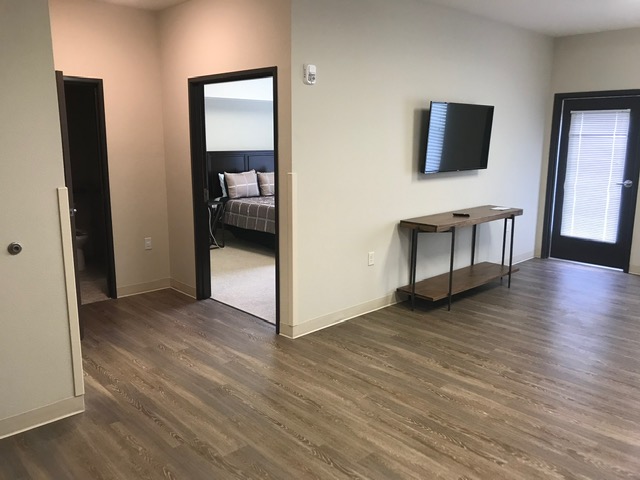
CMS rates Crimson Heights Health & Wellness's staffing level at 2 out of 5 stars, which is below average compared to other nursing homes. Staff turnover is 55%, compared to the Texas average of 46%.

What Have Inspectors Found at Crimson Heights Health & Wellness?

State health inspectors documented 34 deficiencies at Crimson Heights Health & Wellness during 2023 to 2025. These included: 3 Immediate Jeopardy (the most serious level, indicating potential for serious harm or death), 2 that caused actual resident harm, and 29 with potential for harm. Immediate Jeopardy findings are rare and represent the most serious regulatory concerns. They require immediate corrective action.

Who Owns and Operates Crimson Heights Health & Wellness?

Crimson Heights Health & Wellness is owned by a for-profit company. For-profit facilities operate as businesses with obligations to shareholders or private owners. The facility is operated by FUNDAMENTAL HEALTHCARE, a chain that manages multiple nursing homes. With 118 certified beds and approximately 105 residents (about 89% occupancy), it is a mid-sized facility located in Humble, Texas.

How Does Crimson Heights Health & Wellness Compare to Other Texas Nursing Homes?

Compared to the 100 nursing homes in Texas, Crimson Heights Health & Wellness's overall rating (1 stars) is below the state average of 2.8, staff turnover (55%) is near the state average of 46%, and health inspection rating (1 stars) is much below the national benchmark.

What Should Families Ask When Visiting Crimson Heights Health & Wellness?

Based on this facility's data, families visiting should ask: "What changes have been made since the serious inspection findings, and how are you preventing similar issues?" "Can you walk me through typical staffing levels on day, evening, and night shifts?" "Can I visit during a mealtime to observe dining assistance and food quality?" "How do you handle medical emergencies, and what is your hospital transfer rate?" These questions are particularly relevant given the facility's Immediate Jeopardy citations and the below-average staffing rating.

Is Crimson Heights Health & Wellness Safe?

Based on CMS inspection data, Crimson Heights Health & Wellness has documented safety concerns. Inspectors have issued 3 Immediate Jeopardy citations (the most serious violation level indicating risk of serious injury or death). The facility has a 1-star overall rating and ranks #100 of 100 nursing homes in Texas. Families considering this facility should ask detailed questions about what corrective actions have been taken since these incidents.

Do Nurses at Crimson Heights Health & Wellness Stick Around?

Crimson Heights Health & Wellness has a staff turnover rate of 55%, which is 9 percentage points above the Texas average of 46%. Moderate turnover is common in nursing homes, but families should still ask about staff tenure and how the facility maintains care continuity when employees leave.

Was Crimson Heights Health & Wellness Ever Fined?

Crimson Heights Health & Wellness has been fined $42,446 across 3 penalty actions. The Texas average is $33,503. While any fine indicates a compliance issue, fines under $50,000 are relatively common and typically reflect isolated problems that were subsequently corrected. Families should ask what specific issues led to these fines and confirm they've been resolved.

Is Crimson Heights Health & Wellness on Any Federal Watch List?

Crimson Heights Health & Wellness is not on any federal watch list. The most significant is the Special Focus Facility (SFF) program, which identifies the bottom 1% of nursing homes nationally based on persistent, serious quality problems. Not being on this list means the facility has avoided the pattern of deficiencies that triggers enhanced federal oversight. This is a positive indicator, though families should still review the facility's inspection history directly.