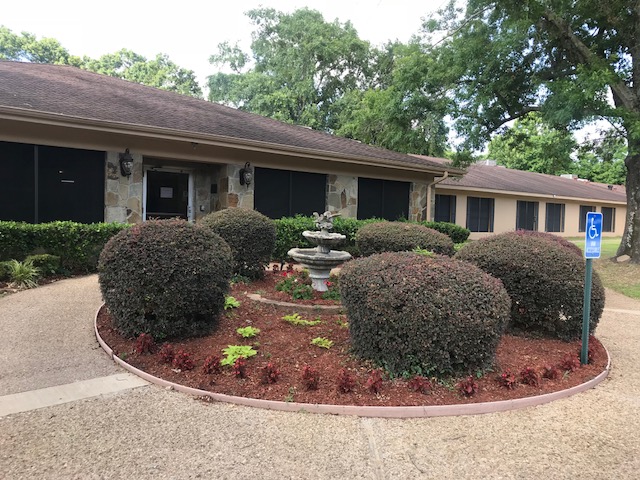
TWIN OAKS HEALTH AND REHABILITATION CENTER

1123 N BOLTON ST, JACKSONVILLE, TX 75766 (903) 586-9031
For profit - Limited Liability company 116 Beds CREATIVE SOLUTIONS IN HEALTHCARE Data: November 2025 2 Immediate Jeopardy citations
Trust Grade
11/100
#873 of 1168 in TX
Last Inspection: September 2024

Within standard 12-15 month inspection cycle. Federal law requires annual inspections.

Overview

Twin Oaks Health and Rehabilitation Center has a Trust Grade of F, indicating significant concerns and poor overall quality of care. They rank #873 out of 1168 facilities in Texas, placing them in the bottom half, and #5 out of 6 in Cherokee County, meaning only one local option is better. Although the facility’s trend is improving, with a decrease in critical issues from 16 to 1 over the past year, they still face serious challenges. Staffing is rated at 2 out of 5 stars, reflecting an average turnover rate of 53%, which can impact the continuity of care. There are serious issues, including a failure to manage pain effectively for one resident, which could lead to unnecessary suffering, and concerns about food safety practices that could risk residents' health. While the facility has some strengths, such as average RN coverage, the high fines of $174,431 and the presence of critical deficiencies highlight the need for families to proceed with caution.

Trust Score
F
11/100
In Texas
#873/1168
Bottom 26%
Safety Record
High Risk
Review needed
Inspections
Getting Better
16 → 1 violations
Staff Stability
⚠ Watch
53% turnover. Above average. Higher turnover means staff may not know residents' routines.
Penalties
✓ Good
$174,431 in fines. Lower than most Texas facilities. Relatively clean record.
Skilled Nurses
⚠ Watch
Each resident gets only 22 minutes of Registered Nurse (RN) attention daily — below average for Texas. Fewer RN minutes means fewer trained eyes watching for problems.
Violations
⚠ Watch
32 deficiencies on record. Higher than average. Multiple issues found across inspections.
★★☆☆☆
2.0
Overall Rating
★★☆☆☆
2.0
Staff Levels
★★★☆☆
3.0
Care Quality
★★☆☆☆
2.0
Inspection Score
Stable
2024: 16 issues
2025: 1 issues

The Good

  • Full Sprinkler Coverage · Fire safety systems throughout facility
  • No fines on record

Facility shows strength in fire safety.

The Bad

2-Star Overall Rating

Below Texas average (2.8)

Below average - review inspection findings carefully

Staff Turnover: 53%

Near Texas avg (46%)

Higher turnover may affect care consistency

Federal Fines: $174,431

Well above median ($33,413)

Significant penalties indicating serious issues

Chain: CREATIVE SOLUTIONS IN HEALTHCARE

Part of a multi-facility chain

Ask about local staffing decisions and management

The Ugly 32 deficiencies on record

2 life-threatening
Apr 2025 1 deficiency
CONCERN (D) 📢 Someone Reported This

A family member, employee, or ombudsman was alarmed enough to file a formal complaint

Potential for Harm - no one hurt, but risky conditions existed

Transfer Requirements (Tag F0622)

Could have caused harm · This affected 1 resident

**NOTE- TERMS IN BRACKETS HAVE BEEN EDITED TO PROTECT CONFIDENTIALITY** Based on interview and record review, the facility failed to ensure residents were able to remain in the facility and not discha...

Read full inspector narrative →
**NOTE- TERMS IN BRACKETS HAVE BEEN EDITED TO PROTECT CONFIDENTIALITY** Based on interview and record review, the facility failed to ensure residents were able to remain in the facility and not discharge resident from the facility unless the discharge is necessary for the resident's welfare and the resident's needs cannot be met by the facility. 1 of 3 residents (Resident #1) reviewed for discharge rights. The facility failed to ensure Resident #1's discharged was necessary for his welfare and failed to show the facility could not met his needs. This failure could place residents at risk of unsafe or improper discharge, placing residents at risk of not having appropriate services when discharged . Findings included: Record review of Resident #1's face sheet dated 04/14/25 indicated he was a [AGE] year-old male, admitted on [DATE], and his diagnoses included altered mental status, (cognitive mental disorder), restlessness and agitation, chromic kidney disease, hypertension, (high blood pressure), lack of coordination, muscle weakness and atrophy, and Hypothyroidism (underactive thyroid). Record review of Resident #1's MDS assessment dated [DATE] indicated he was admitted with a BIMS score of six, which indicated he had impaired cognitive ability. He was sometimes able to express his ideas and wants and was able to respond adequately to simple and direct communication. He was independent with bathing, dressing, toileting and eating. He was able to ambulate without assistance. Record review of Resident #1's care plan dated 04/09/25 indicated he sometimes displayed verbally aggressive behaviors. Interventions included social services to evaluate and visit with me, activity staff to visit with the resident, provide diversional activities, and remove the resident from public area when their behavior was disruptive and unacceptable. Interventions included discuss behavior, monitor behavior episodes, and attempt to determine underlying causes. The interventions did not include resident specific interventions or supervision to prevent resident physical aggression towards others. Record review of Resident #1's elopement assessment dated [DATE] indicated he understood and verbalized the need for him to be in a skilled nursing facility. He was restless and showed behaviors of pacing and wandering. Record review of Resident #1's nurse's notes dated 03/27/25, indicated he displayed behaviors of wandering, non-compliance with medication, treatment and was resistant to care. Record review of Resident #1's physician's orders dated 03/27/25 revealed his behaviors were to be monitored and behaviors were to be documented in the progress notes. Record review of Resident #1's progress note dated 03/27/25 documented by RN C revealed Resident #1 was on 15-minute checks due to a history of elopement, per the family member; no s/s of elopement but the family member said he did like to wander and had gotten out house and another nursing home. Record review of Monitoring Chart for Resident #1, dated 03/27/25 and 03/28/25 revealed staff monitored his behavior and documented every 15 minutes. Review of medical records showed there was no documentation made by Resident #1's physician as to the need for the discharge or that the discharge or that the facility could not meet Resident #1's needs. Record review of Resident #1's progress note dated 03/28/25 at 6:00 p.m. documented by RN A revealed, Continue to monitor resident. The resident was noted to be more aggressive trying to get out .I'm leaving get out of my way.jerking and rattling door, alarm sounding. Threw table in lobby everything replaced. Given Ativan. Family called. family member said she would be out there as soon as we can. 7:50 p.m. continue to monitor. Resident stated he is going to throw a rock and break the door. Tried to get a planter in the lobby and throw at window. Removed from grip and replaced. Reached across nurse's station tore fire extinguisher off wall. Went outside to patio and refused to return. Trying to find a way off the premises. Continued to try to get resident to come in and wait for family. Resident refused. NP notified of behavior. Family came while outside on patio and resident came in with them. 9:00 p.m. Family states resident does not need to be discharged to the hospital, they won't do anything for him, they didn't last time. Requested resident be discharged home with them. Talked to family member by phone, who is out of town, and she agreed. NP was notified. Orders received for the resident to be discharged with family with belongings, meds counted and sent with resident. During an interview on 04/14/25 at 12:40 p.m., the Administrator said Resident #1 was discharged home with his family on the evening of 03/28/25 which was on a Friday. The Administrator said she was not notified of the discharge until the next Monday morning. The Administrator said staff did not follow facility policy regarding Resident #1's discharge. The Administrator said there was no discharge plan, and the ombudsman was not notified of the discharge. The Administrator said Resident #1 was sent home with a family member. The Administrator said she was told that Resident #1 was attempting to elope and was seeking a way out of the facility. The Administrator said it was reported that Resident #1 turned over a table in the lobby, but she could find no evidence of a table in the lobby. During an interview on 04/14/25 at 12:58 p.m., RN B said she was the compliance nurse. She said she was not saying that Resident #1 was properly discharged . RN B said it was reported to her that Resident #1 was exit-seeking and wanted to leave. RN B said in addition to the exit seeking behavior, Resident #1 was upset and throwing stuff. RN B said the Director of Nursing made the decision to call the family and tell them to come get him. RN B said the DON no longer worked at the facility. RN B said the DON texted the Administrator but did not call to report Resident #1 was being discharged nor was the ombudsman notified of the discharge. RN B said Resident #1 needed to be in a secure unit due to his exit seeking behaviors, but the facility did not assist in locating an alternative placement. RN B said she was told it was the family's decision to discharge Resident #1. During an interview on 04/14/25/25 at 1:38 p.m., RN D said she contacted by RN A that Resident #1 was turned over a table in the lobby and had broken a shelf. RN D said RN A told her Resident #1 was trying to get out and she needed her to come to the facility. RN D said she worked at the facility but was also a family member for Resident #1 and one of his emergency contacts. RN D said when she arrived at the facility, Resident #1 was in the smoking area and was calm. RN D said Resident #1 was not displaying any behaviors at the time. RN D said the DON told RN A to call the police if RN D did not take Resident #1 home with her. RN D said she did not want RN A to call the police, so she took Resident #1 to her house, and he stayed there for two nights and slept on her sofa. RN D said she signed a form when Resident #1 was discharged with his medication. RN D said one of the medications was for his behaviors. The sign medication release form could not be located. RN D said she did not see Resident #1 showing aggressive behaviors when she arrived at the facility and that RN A did not want to deal with Resident #1 and wanted him out of the facility. RN D said Resident #1 went to live with a family member after he left her home. RN D said Resident #1 will remain at the famiily member's until another facility can be found. During an interview on 04/14/25 at 3:59 p.m. Ombudsman said she had not received any notification concerning the discharge of Resident #1. During an interview on 04/14/25 at 5:50 p.m., RN A said she was the charge nurse on the evening of 03/28/25 when Resident #1 was discharged . RN A said Resident #1 was displaying aggressive behaviors, turning over a table in the lobby and was looking for something to throw at the glass in the window. RN A said she gave Resident #1 an Ativan, and he was cooperative in taking the medication. RN A said the medication did not appear to work and Resident #1 continued to show exit-seeking behaviors. RN A said she called the DON and was told to contact Resident #1's family. RN A said she attempted to call Resident #1's family member but she could not reach her. RN A said she called RN D, who was also a family member. RN A said RN D and her husband came to the facility. RN A said when RN D and her husband arrived at the facility, Resident #1 was on the patio. RN A said they went to the patio to talk with Resident #1. RN A said she called the NP and the NP said to send him to the hospital for evaluation if the family agreed. RN A said RN D said there was no need to send Resident #1 to the hospital because he was not showing signs of aggression and there was nothing that the hospital could do. RN A said RN D agreed to take Resident #1 home with her. RN A said she gave Resident #1's medication to RN D and she signed for them. RN A said she did not contact the Administrator or the ombudsman. RN A said the facility did not attempt other interventions other than to have him removed from the facility. Review of the facility's Discharge Planning Process Policy dated 11/28/16.Facility must complete discharge planning when .discharging a resident to a private residence .Discharge planning includes A) Assessing the resident's continuing care needs, including: 1. Consideration of the resident's and family caregiver's preference for care; 2. How services will be accessed; and How care should be coordinated among multiple caregivers. B) Developing an interdisciplinary team discharge plan designed to ensure that the resident's needs will be met after discharge from the facility, including resident and family/caregiver educational needs; .D) Assisting the resident and family/caregivers in locating and coordinating post-discharge services Discharge summary must include: .2. A post-discharge plan of care will help the resident adjust to their new living environment Review of an undated facility's Discharge or transfer to another facility indicated Facility initiated discharge .The facility will permit each resident to remain in the facility, and not transfer or discharge the resident from the facility. The following limited circumstances, this facility may initiate transfers or discharges: A. The transfer or discharge is necessary for the resident's welfare and the resident's needs can not be met in the facility .C. The safety of individuals in the facility is endangered due to the clinical or behavioral status of the resident; . For circumstances A .the resident's physician must document information about the basis for the transfer or discharge. Additionally, for circumstances A .the inability to meet the resident's needs, the documentation made by the resident's physician must include: The specific resident needs the facility could not meet; The facility efforts to meet those needs; and the specific services the receiving facility will provide to meet the needs of the resident which cannot be met at the current facility. Documentation regarding the reason for the transfer or discharge may be completed by a nurse practitioner or other non-physician practitioner according to state law .
Sept 2024 13 deficiencies
CONCERN (D) 📢 Someone Reported This

A family member, employee, or ombudsman was alarmed enough to file a formal complaint

Potential for Harm - no one hurt, but risky conditions existed

Resident Rights (Tag F0550)

Could have caused harm · This affected 1 resident

**NOTE- TERMS IN BRACKETS HAVE BEEN EDITED TO PROTECT CONFIDENTIALITY** Based on observation, interview and record review, the facility failed to treat each resident with respect and dignity and care ...

Read full inspector narrative →
**NOTE- TERMS IN BRACKETS HAVE BEEN EDITED TO PROTECT CONFIDENTIALITY** Based on observation, interview and record review, the facility failed to treat each resident with respect and dignity and care in a manner that promotes maintenance or enhancement of his or her quality of life for 1 of 6 residents (Resident # 54) reviewed for resident rights. The facility did not ensure Resident # 54 was spoken to or addressed in a dignified manner. This failure could place residents at risk of decreased feelings of self-worth and decreased quality of life. Findings included: Record review of facility face sheet dated 09/25/2024 indicated Resident # 54 was a [AGE] year-old female admitted to facility on 07/03/2024 with diagnosis of Fracture of unspecified part of neck of left femur, subsequent encounter for closed fracture with routine healing, lack of coordination, Depression, Anxiety Disorder. Record review of admission MDS dated [DATE] indicated Resident # 54 had a BIMS of 09 indicating moderately impaired cognition and mood issues with feeling depressed and sad. During interview on 09/24/24 at 2:00pm CNA-F stated she did not witness the incident with Resident #54 initially but was called in to assist with getting her up off the floor and assuring she was ok and back in bed comfortably. CNA-F stated LVN-L voice was very heavy and she cannot say for sure if she was yelling at Resident #54 or if she was just reacting in an emergency manner to assure the resident was ok. CNA-F did witness Resident #54 crying and saying LVN-L was yelling and rude to her and she was angry at the nurse-L. During an interview on 09/24/24 at 02:17 PM the AD stated she remembered everything about the incident on 8/2/2024 with Resident #54. The AD stated she was going to Resident #54's room to get a list of items to be picked up from Wal-Mart and she saw her call light was on and she entered the room and Resident #54 was on the floor. The AD asked Resident #54 if she was ok and told Resident #54, she will be right back and went got the LVN-L on duty and NA-F. As soon as LVN-L entered the room LVN-L started yelling and asking her what the hell was she doing on the floor for approximately 30 seconds before LVN-L and NA-F picked her up and put her back on the bed. LVN-L continued yelling at Resident #54 as to why she got out of bed. Resident#54 was trying to explain that she did not get out of bed and was getting out of her chair to get back in the bed due to being left sitting up in her room. The AD said nurse and NA-F picked Resident #54 up from the floor and put her on her bed. The AD stated after about 30 minutes and Resident #54 was crying and getting increasingly upset she told LVN-L to leave the room. The AD said LVN-L left the room and NA-F went and got the ADON whom completed an assessment of Resident #54 and determined she had calmed down and not showing further signs of distress. The AD does not recall seeing LVN_L back at the facility since the incident. During an interview on 09/25/24 at 03:56 PM the Administrator stated she had been employed since February 2024. The Administrator said AD came to her and reported that Resident #54 was crying due to LVN-L raising her voice at her for trying to get out of bed on her own. Administrator stated she immediately went to Resident #54's room and Resident #54 was upset as she explained the situation. Administrator stated she assured Resident #54 that LVN-L would no longer be taking care of her. Administrator then reported to ADON that LVN-L would be sent home on a pending investigation concerning Resident #54. Administrator stated she suspended the LVN-L immediately pending further investigation. Administrator stated Resident #54 does not show other signs of distress since the incident. Administrator stated Resident #54 told her during the incident she was crying more from being angry due to the way she was talked to and not that she was harmed in any way. Administrator said LVN-L came back to the facility after the investigation was completed and only entered her office in the facility and she was then terminated. Administrator said no other issues of inappropriate interactions had been noted with Resident #54 or any other resident in the facility. During an interview on 09/24/24 at 10:50am RP stated Resident #54 had talked about staff mistreating her, treating her like shit or things will come up missing. RP identified Resident #54 as an honorary old lady and can be mean, negative, and short towards people. RP stated he normally weighs what she said as a complaint with a grain of salt. RP stated Resident #54 is lonely and he was working to get her moved into a facility near him so she can be closer to him and other family members so Resident #54 would get visits and be monitored better. RP stated Resident #54 had no one in the area where she resides, and he felt that contributed to her mood swings. RP stated Resident #54 don't like to talk about issues as she doesn't want to be a burden to anyone. RP stated no issues with staff and whenever he called to check on Resident #54 staff had been very helpful. On 09/24/2024 at 2:00 pm LVN-L was called twice with no answer and a text message was sent on 09/25/24 at 10:49am with no response. Record Review of facility policy (undated), titled Resident Rights indicated, .Respect and Dignity-The resident has a right to be treated with respect and dignity .
CONCERN (D)

Potential for Harm - no one hurt, but risky conditions existed

Deficiency F0760 (Tag F0760)

Could have caused harm · This affected 1 resident

**NOTE- TERMS IN BRACKETS HAVE BEEN EDITED TO PROTECT CONFIDENTIALITY** Based on observation, interview and record review the facility failed to ensure residents were free of significant medication er...

Read full inspector narrative →
**NOTE- TERMS IN BRACKETS HAVE BEEN EDITED TO PROTECT CONFIDENTIALITY** Based on observation, interview and record review the facility failed to ensure residents were free of significant medication errors for 1 of 5 residents (Resident #5) reviewed for significant medication errors. The facility failed to ensure Resident #5 was free of significant medication errors when a dose of digoxin 125 mcg and metoprolol tartrate 37.5 mg was administered on 09/22/2024. This failure could place residents at risk of adverse reaction related to taking medications not ordered by the physician. Findings include: Record review of a facility face sheet dated 9/25/2024 indicated Resident #5 was a [AGE] year old female that admitted to the facility on [DATE] with diagnoses of polyneuropathy (a nerve damage condition), essential hypertension (high blood pressure), tachycardia (a condition where the heart rate is faster than normal, usually more than 100 beats per minute while resting), and mild cognitive impairment (problems with a person's ability to think, learn, remember, use judgement, and make decisions). Record review of quarterly MDS dated [DATE] indicated Resident #5 had a BIMS score of 08 indicating moderately impaired cognition. She required supervision with ADL's. Record review of care plans dated 3/29/2024 indicated the Resident #5 had hypertension, impaired cognitive function and impaired vision. Record review of a facility medication error report dated 9/22/2024 revealed that Resident #5 was given the wrong medication. The report was completed by the ADON. The ADON was administering medications on the morning of 9/22/2024 and administered Resident #5 the wrong medication. Resident #5's physician was notified and orders to monitor resident every 30 minutes for 3 hours and if no change resume residents orders. The report did not indicate what medication was administered. Record review of physician orders dated 9/25/2024 revealed that Resident #5 received Metoprolol Tartrate 25mg one half tablet by mouth and Verapamil 40 mg tablet by mouth for hypertension every morning. Record review of blood pressure and pulse monitoring performed on 9/22/2024 every 30 minutes for 3 hours as ordered by the physician after administration of wrong medications. Vital signs remained stable during monitoring for Resident #5. During an interview with the ADON on 9/24/2024 at 11:35 AM she said had been employed at the facility since April 2024. She said on Sunday 9/22/2024 she had a medication aide that called in to work. She said she was assigned to pass medications for hall 300 and 400. She said another medication aide (MA D), was working in the facility also and had told her once she was caught up, she would come and help her with medication administration. She said MA D came and helped her. ADON said she was taking Resident #67's blood pressure and the MA D prepared the medications and placed them in a cup. The ADON said when she came back to the cart, the MA D handed her the pill cup with the medications and she administered the medications to Resident #5 that was meant for Resident #67. She said she realized after giving Resident #5 the medications, MA D told her that the medications were for Resident #67 and not Resident #5. The ADON reviewed the medications and noted that Digoxin 125 mcg and metoprolol tartrate 37.5 mg was administered to Resident #5. She said she immediately called the physician and reported to the physician that she had given Resident #67's medications to Resident #5. She said the physician told to monitor every 30 minutes for 3 hours. She said she called the physician back around 2 pm as it was time for the Resident #5 to have more medications and the physician told her it was ok to give and continue with everything. She said that Resident #5 did not have any adverse reactions from the medication error. She said she had training on medication administration on hire and had a competency skill check with the previous ADON. She said residents could be at risk for blood pressure problems and negative outcomes. During an interview with MA D on 9/25/2024 at 2:20 PM she said she had worked at the facility for 2 and a half years. She said that she was working on Sunday 9/22/2024 when the medication error occurred. She said that she had returned from break and that the ADON asked her to help the ADON pass out medications on hall 300. MA D said that she went over to help the ADON. MA D said that the ADON was taking residents blood pressures and MA D was preparing medications for residents to take. MA D said she was punching medications from the cards into cups. MA D said that the ADON was obtaining blood pressures, telling her the blood pressures to document and then the ADON was taking the medications to the residents. MA D said that Resident #67 was in the bathroom and her blood pressure was not obtained, MA D said she pushed her medications to the side and started to prepare Resident #5's medications. MA D said that the ADON took Resident #67's medications from the top of the medication cart. MA D said that when the ADON returned, MA D asked the ADON what Resident #67's blood pressure was and the ADON stated that she just gave Resident #5 her medication. MA D told the ADON she had not finished preparing Residents #5 medications so Resident #5 was given Resident #67's medication. MA D said that the ADON immediately went to the nurses station to notify the doctor. MA D said she gave the cart keys back to the ADON and went back to 100 hall to work. Record review of nurse proficiency audit dated 4/25/2024 indicated that the ADON was satisfactory in administering medication properly and documentation. During an interview with the administrator on 9/25/2024 she said that she has been working at the facility for 8 months. The administrator said that she was aware of the medication error that occurred on 9/22/2024. She said that medications errors are reviewed to make sure that all appropriate steps are performed to ensure resident safety. The administrator said that a review of the incident would be done during the QA/QI meeting. The administrator stated that she expected all of the nurses and medication aides to follow the five rights of medication administration. The administrator said that a resident could have adverse side effects from receiving the wrong medications. Record review of a facility policy titled Medication Administration Procedures, Pharmacy policy and procedure manual 2003 indicated, Medications are to be poured, administered, and charted by the same licensed person. 4. Before administering the dose, the nurse must make certain to correctly identify the resident to whom the medication is being administered 12. Medications prescribed for one resident are not to be administered to any other resident Any medication error will require a medication error report that includes the error and actions to prevent reoccurrence. 20. The five rights of medication should always be adhered to 1. right drug 2. right dose 3. right resident 4. right time 5. right route.
CONCERN (D)

Potential for Harm - no one hurt, but risky conditions existed

Deficiency F0761 (Tag F0761)

Could have caused harm · This affected 1 resident

**NOTE- TERMS IN BRACKETS HAVE BEEN EDITED TO PROTECT CONFIDENTIALITY** Based on observation, interview, and record review, the facility failed to ensure drugs and biologicals were stored in accordanc...

Read full inspector narrative →
**NOTE- TERMS IN BRACKETS HAVE BEEN EDITED TO PROTECT CONFIDENTIALITY** Based on observation, interview, and record review, the facility failed to ensure drugs and biologicals were stored in accordance with currently accepted professional principles for, 1 of 6 residents (Resident #324) reviewed for pharmacy services: The facility did not ensure medications were stored properly for Resident #324. Medication was left on bedside table and resident #324 is not care planned to have medication at bedside or self-administer medications. Resident #324 does not have physician orders to have medication at bed side or self-administer. This failure could place residents who receive medications at risk for not receiving the intended therapeutic effects of medications. Findings included: Record review of facility face sheet dated 09/25/2024 indicated Resident # 324 was a [AGE] year-old male admitted to facility on 09/13/2024 with diagnoses of acute respiratory failure with hypoxia (low oxygen levels with breathing). Record Review of comprehensive care plan dated 09/13/2024 did not indicate Resident # 324 could keep medication at bed side or safely self-administer medications. The care plan reflects to administer medications as ordered. Record review of admission MDS dated [DATE] indicated Resident # 324 had a BIMS of 10 indicating moderately impaired cognition. Record review of consolidated physician orders dated 09/25/2024 indicated Resident #324 had an order for Combivent Respimat Inhalation Aerosol Solution 20-100 MCG/ACT (Ipratropium-Albuterol) 1 puff inhale orally four times a day related to Acute respiratory failure with hypoxia. During an observation on 09/23/24 at 10:30 am Resident # 324 was observed with medication on nightstand. He stated he did not self-administer any medications and did not know there were medication on his nightstand. During an observation on 09/24/24 at 1:25 pm Resident #324 had Clear Eyes maximum itchy eye relief (over the counter) eye drops on his bed side table. This medication was not care planed or ordered by a physician. During an interview 09/25/24 at 03:19 PM LVN-L stated she was employed with the facility for 10 months. LVN-L stated they do not store medications in resident's room. All medications are stored on each LVN's med cart for all residents in the facility. LVN-L stated due to Residen t #324 having a G-Tube and bed confined with limited ROM he cannot self-administer his medications. LVN-L stated if medications are left in the room someone else could get them or the resident could take extra doses which could be very harmful to the residents in the facility. LVN-L stated she always try to make sure all meds are put on the cart and cart is kept locked when not in use. LVN-L does not recall any meds every being left in the rooms in the past other than resident #324's inhaler. LVN-L stated they do have an issue with his wife bringing over the counter medications to him if he asks her to. LVN-L stated if she finds medication on the bedside table, she will immediately pick it up, identify it and report it to the responsible person so they can store it properly or discard it. During an interview on 09/25/24 at 03:38 PM LVN-K stated she has been employed with the facility for 7 ½ month. LVN-K stated all medications should be stored in a locked med cart and not at the resident's bed side. She reports that if she sees medications inappropriately stored, she will get another nurse to witness, remove the medication, discard, or store the medication in a locked medication cart. LVN-K stated she will report the incident to her DON and report the medication error as directed by her superiors. LVN-K stated that if a resident takes the medication at the wrong time or an unprescribed med it could have minor to severe effects on a resident. She also stated that she would notify the Doctor if it were identified that the patient did not take their prescribed dose and it was too late to give or if a person took medications that were not prescribed. During an interview on 09/25/2024 at 2:10pm the ADON stated medications are never to be left at bedside or in a patient's room without a medication aide or nurse being present or in the process of administering the medication. The ADON stated all medication aides and nurses have been in-serviced on medication storage and should not have left any type of medication in a resident's room. Record Review of Medication Administration Policy dated October 25, 2017, titled Medication Administration Procedures did not address leaving medications at bed side.
CONCERN (D)

Potential for Harm - no one hurt, but risky conditions existed

Deficiency F0919 (Tag F0919)

Could have caused harm · This affected 1 resident

**NOTE- TERMS IN BRACKETS HAVE BEEN EDITED TO PROTECT CONFIDENTIALITY** Based on observation, interview, and record review, the facility failed to be equipped to allow residents to call for staff thro...

Read full inspector narrative →
**NOTE- TERMS IN BRACKETS HAVE BEEN EDITED TO PROTECT CONFIDENTIALITY** Based on observation, interview, and record review, the facility failed to be equipped to allow residents to call for staff through a communication system which relays the call directly to a centralized staff work area for 3 of 18 residents (Resident #68, #63, #29) reviewed for call lights. The facility failed to ensure Resident #68, #63, and #29's emergency call button in the bathroom had a pull cord from 9/24/2024-9/25/2024. These failures could place residents at risk of injury, pain, hospitalization, and a diminished quality of life. Findings included: 1. Record review of an admission Record for Resident #68 dated 9/25/2024 indicated he admitted to the facility on [DATE] and was [AGE] years old with diagnoses of dementia, hypertension, and BPH (enlarged prostate). Record review of a Quarterly MDS Assessment for Resident #68 dated 8/12/2024 indicated he had severe impairment in thinking with a BIMS score of 5, He required supervision with toileting and was always continent of bowel/bladder. Record review of a care plan for Resident #68 dated 5/9/2024 indicated he was at risk for falls with interventions to be sure the resident's call light was within reach and encourage the resident to use it for assistance as needed. 2. Record review of an admission Record for Resident #63 dated 9/24/2024 indicated he admitted to the facility on [DATE] and was [AGE] years old with diagnosis of other cerebrovascular disease (stroke), hypertension and BPH with lower urinary tract symptoms (enlarged prostate). Record review of a Quarterly MDS Assessment for Resident #63 dated 8/9/2024 indicated he had severe impairment in thinking with a BIMS of 4. He required setup or clean up assistance with toileting hygiene. He was occasionally incontinent of urine and always continent of bowel. Record review of a care plan for Resident #63 dated 5/21/2024 indicated he had bladder incontinence related to confusion. Interventions included to ensure resident has unobstructed path to the bathroom. 3. Record review of an admission Record for Resident #29 dated 9/25/2024 indicated he admitted to the facility on [DATE] and was [AGE] years old with diagnosis of schizophrenia (mental health condition that affects how people think, feel, and behave), major depressive disorder (persistent sadness or loss of interest) and BPH. Record review of a Quarterly MDS Assessment for Resident #29 dated 7/15/2024 indicated he had moderate impairment in thinking with a BIMS score of 12. He was independent with toileting and was occasionally of urine and always continent of bowel. Record review of a care plan for Resident #29 dated 1/16/2017 indicated he had an ADL self care performance deficit with interventions for toilet use was independent with toilet use. During an observation on 9/24/2024 at 7:58 AM, the bathroom for Resident's #68, #63 and #29 share a bathroom between two rooms and the call light in the bathroom did not have a pull string. During an observation on 9/25/2024 at 2:09 PM, the bathroom for Resident's #68, #63, and #29 had a call light string but was wrapped around the call light and would not reach the floor. During an interview on 9/25/2025 at 2:35 PM, the Regional Nurse and DON said the call lights in the bathrooms were the responsibility of the Maintenance Supervisor who was not at the facility and unavailable for an interview as he was on vacation. The Regional nurse said she noticed on yesterday 9/24/2024 that there were some call lights wrapped up and she unwrapped them, so they were long enough to reach close to the floor. She said she was not aware of the bathroom where Resident #68, #63 and #29 shared did not have a bathroom call light string until yesterday 9/24/2024 and one had been installed. She said if the call light strings were not attached or if they were wrapped, residents would not be able to reach them. During an interview on 9/25/2024 at 4:35 PM, the Administrator said the Maintenance Supervisor was responsible for ensuring the call lights in the bathrooms had strings and the staff were to ensure they were not wrapped around the bars. She said it was a collaborative effort by staff. She said maintenance had a program that staff utilized to tell what inspections and checks he had due. She said the Maintenance Supervisor was on vacation and not available for interview. She said the call light strings in the bathrooms should be hanging down from the wall and not short or wrapped around anything and easily accessible. She said residents may not be able to call for assistance, if too short may not be able to reach, which could result in an injury, and no one knew until someone made rounds. Record review of a Maintenance Task List dated 9/25/2024 indicated the nurse call system test: conduct a test of the nurse call system created on 9/17/2024. There was not a task list for checking the call light strings. A facility policy for call lights was requested, but none was provided as the facility said they did not have a policy for call lights.
CONCERN (D)

Potential for Harm - no one hurt, but risky conditions existed

Deficiency F0924 (Tag F0924)

Could have caused harm · This affected 1 resident

Based on observation, interview and record review, the facility failed to equip corridors with firmly secured handrails for 1 of 4 hallways (hall 400) reviewed for environmental conditions. The facil...

Read full inspector narrative →
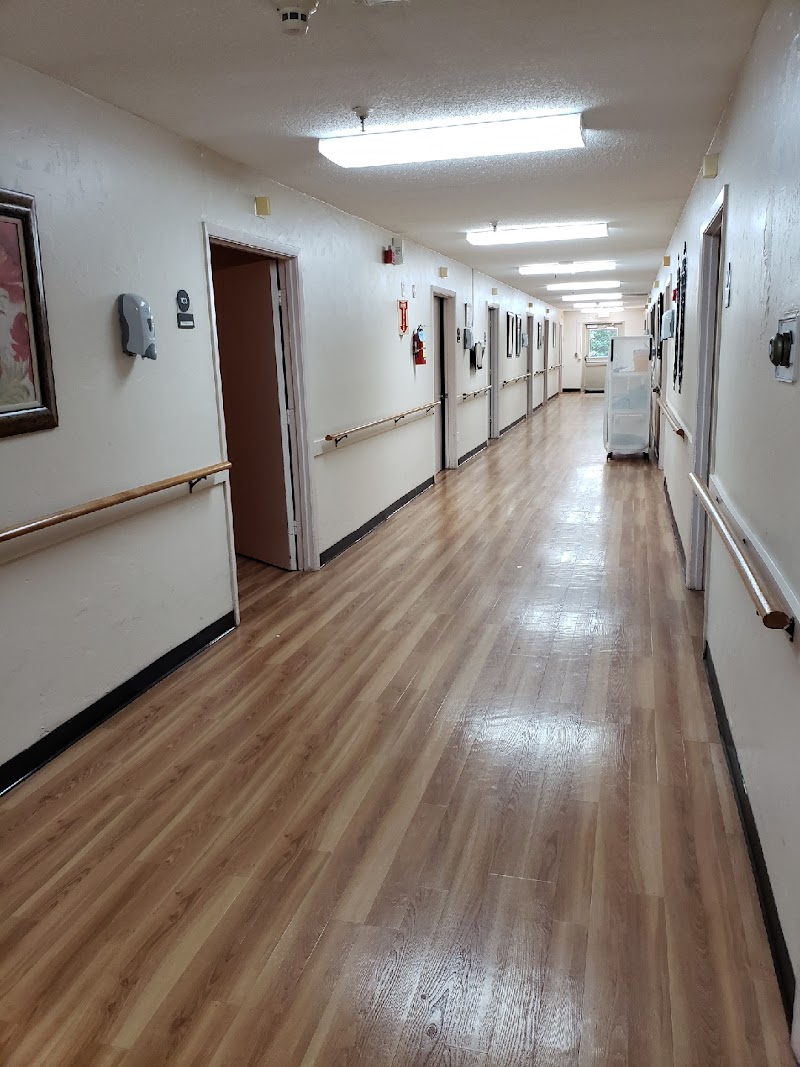
Based on observation, interview and record review, the facility failed to equip corridors with firmly secured handrails for 1 of 4 hallways (hall 400) reviewed for environmental conditions. The facility did not ensure a handrail found on 400 hall was firmly affixed to the wall. This failure could place residents at risk for avoidable accidents and decreased quality of life due to environmental hazards. Findings include: During an observation on 9/23/24 at 12:00 pm a handrail was observed loose in the hallway. It was detached from the wall on the end. The bracket was not secured to the wall. During an interview on 9/23/24 at 3:50 pm DON said the handrail being loose could cause residents to fall if it was not securely attached to the wall. During an interview on 9/25/24 at 3:06 pm Administrator said going forward she would ensure the maintenance supervisor inspected the handrails weekly. She said she would also be in-servicing the staff to use the computer system to put maintenance issues in the system that the maintenance supervisor needed to correct. She said maintenance supervisor was responsible for ensuring the handrails were securely attached to the wall. She said maintenance supervisor was off on vacation this week and was unavailable by phone. She said residents could be at risk of falls if they were using it to hold on to and it came off. She said they also could be at risk of being cut by the sharp edge. Record review of a facility policy titled Resident Rights dated 2003 and revised on 11/28/16 read Safe environment - The resident has a right to a safe, clean, comfortable, and homelike environment, including but not limited to receiving treatment and supports for daily living safely .
CONCERN (D) 📢 Someone Reported This

A family member, employee, or ombudsman was alarmed enough to file a formal complaint

Potential for Harm - no one hurt, but risky conditions existed

Deficiency F0925 (Tag F0925)

Could have caused harm · This affected 1 resident

**NOTE- TERMS IN BRACKETS HAVE BEEN EDITED TO PROTECT CONFIDENTIALITY** Based on observations, interviews, and record review, the facility failed to maintain an effective pest control program and ensu...

Read full inspector narrative →
**NOTE- TERMS IN BRACKETS HAVE BEEN EDITED TO PROTECT CONFIDENTIALITY** Based on observations, interviews, and record review, the facility failed to maintain an effective pest control program and ensure it was free of pests for 1 of 4 halls (Hall 300) reviewed for pest control. The facility failed to ensure an effective pest control program was in place to keep roaches out of the bathrooms for Resident # 42 and Resident #37. This failure could place residents at risk for injury due to an ineffective pest control program at the facility. Findings included: 1. Record review of an admission Record for Resident #42 dated 9/25/2024 indicated she admitted to the facility on [DATE] and was [AGE] years old with diagnoses of schizoaffective disorder, bipolar (a condition that causes hallucinations and delusion with mood swings), hypothyroidism (when the thyroid gland does not make enough thyroid hormones to meet the body's needs), and fibromyalgia (widespread muscle and bone pain). Record review of a Quarterly MDS Assessment for Resident #42 dated 9/8/2024 indicated she had moderate impairment in thinking with a BIMS score of 8. She required set up/clean up assistance with toileting and was always continent of bowel/bladder. 2. Record review of an admission Record for Resident #37 dated 9/25/2024 indicated she admitted to the facility on [DATE] and was [AGE] years old with diagnoses of COPD (a group of lung disease that affect breathing), malignant neoplasm of retroperitoneum (cancer that is in the hidden space behind the abdominal cavity that contains vital organs) and type 2 diabetes. Record review of a Quarterly MDS Assessment for Resident #37 dated 8/10/2024 indicated she had moderate impairment in thinking with a BIMS score of 11. She required supervision with toileting and was always continent of bladder and bowel. During an observation on 9/23/2024 at 10:12 AM, the bathroom of Resident #42 and Resident #37 had missing baseboards along the walls and two brown bugs were noted crawling on the floor when the light was turned on and went underneath the wall. During an observation and interview on 9/23/2024 at 10:14 AM, Resident #42 was in her room sitting on the side of her bed. She said she noticed some water bugs in the bathroom a couple days ago. During an interview on 9/23/2024 at 10:19 AM, Resident #37 was sitting up in a wheelchair in her room. She said she had been at the facility for 4 years. She said she noticed cockroaches in the bathroom at night and said she saw someone spray the facility a couple of weeks ago or last month some time. During an observation an interview on 9/24/2024 at 3:45 PM, Pest Control technician was in the facility and said he had been going to the facility for 9 years and visited on a monthly and prn basis. He said he was notified to visit the facility that day to treat the bathroom between the rooms of 303 and 305. He said during his monthly visits, he treated the exterior and interior of the facility for roaches. He said monthly they alternated the chemicals used. He said prior to 9/24/2024, he had not been told of the facility having a problem with roaches. He said he had a log at the nurse station for staff to indicate if they had any issues and during his visits would review and treat the areas indicated on the log. He said the facility never used the log. He said he was not sure what the problem was with roaches in room [ROOM NUMBER] and 305 but would inspect and treat. Record review of a facility pest control log undated indicated the facility did not complete the form, form was completed by the pest control technician. Record review of a pest control invoice dated 9/16/2024 indicated an additional service was requested for reports of little black ants. Treatment of Alpine WSG-BASF was used in target areas closets, laundry room and resident room. Record review of a pest control invoice dated 7/10/2024 indicated the kitchen was treated for roaches in the dish pit. Treatment used was Alpine WSG-BASF, Gentrol IGR-Zoecon, Bifen I/T-[NAME] to treat American Roaches and German Roaches, target areas were bathrooms, common areas, crack and crevice, dish pit, kitchen. During a follow-up interview on 9/24/2024 at 4:05 PM, Pest Control technician said he had treated the bathroom of 303 and 305 and said the problem was the issue of it not having baseboards. He said without baseboards, pests could come into the facility. During an interview on 9/25/2024 at 4:35 PM, the Administrator said pest control came to the facility monthly and prn and no one was aware about the facility having roaches. She said pest control came out on yesterday 9/24/2024 and treated bathroom for room [ROOM NUMBER] and the baseboards were replaced in the bathroom as well. She said residents could be at risk of infections if they did not have an effective pest control program. Record review of a facility policy undated titled Inset and Rodent Control indicated, .The facility will maintain an effective pest control program in order to provide an insect and vermin free food service department. 2. Facility will maintain appropriate screens, close fitting doors, properly sealed water/sewer pipes, structurally maintained walls, baseboards, etc. to prevent entrance access of insects and rodents .
CONCERN (E)

Potential for Harm - no one hurt, but risky conditions existed

Deficiency F0558 (Tag F0558)

Could have caused harm · This affected multiple residents

**NOTE- TERMS IN BRACKETS HAVE BEEN EDITED TO PROTECT CONFIDENTIALITY** Based on observations, interviews, and record reviews the facility failed to ensure the right to reside and receive services in ...

Read full inspector narrative →
**NOTE- TERMS IN BRACKETS HAVE BEEN EDITED TO PROTECT CONFIDENTIALITY** Based on observations, interviews, and record reviews the facility failed to ensure the right to reside and receive services in the facility with reasonable accommodation of resident needs and preferences except when to do so would endanger the health or safety of the resident or other residents for 3 of 7 residents (Residents #16, #50 and #53) reviewed for call lights. The facility failed to ensure the emergency call lights in Resident #16, #50, and #53s bathrooms were accessible from the floor on 9/23/2024. These failures could affect residents who used their call light or desire to use the call light and place them at risk of not being able to notify staff of their needs. Findings include: Resident #16 Record review of a facility face sheet dated 9/25/24 for Resident #16 indicated that he was an [AGE] year-old male admitted to the facility on [DATE] and subsequently readmitted on [DATE] with diagnoses including: bipolar disorder (a mental health condition that causes extreme mood swings), dementia, and parkinsonism (brain conditions that cause slowed movements, rigidity (stiffness) and tremors). Record review of a comprehensive MDS assessment dated [DATE] for Resident #16 indicated that he had a BIMS score of 3, which indicated that he had severe cognitive impairment. He required partial/moderate assistance with toileting hygiene and supervision with toilet transfers. He was occasionally incontinent of bladder and always continent of bowel. Record review of a comprehensive care plan dated 9/20/24 for Resident #16 indicated that he was at risk for falls and had an intervention which read: .be sure the resident's call light is within reach and encourage the resident to use it for assistance as needed . Resident #50 Record review of a facility face sheet dated 9/25/24 for Resident #50 indicated that he was a [AGE] year-old male admitted to the facility on [DATE] and subsequently readmitted on 430/24 with diagnoses including: respiratory failure (trouble breathing), lack of coordination, and type 2 diabetes (uncontrolled blood sugar). Record review of a quarterly MDS assessment dated [DATE] for Resident #50 indicated that he had a BIMS score of 12, which indicated that he had a moderate cognitive impairment. He required supervision with toileting hygiene and toilet transfers. He was always continent of bowel and bladder. Record review of a comprehensive care plan dated 9/18/24 for Resident #50 indicated that he was at risk for falls and had an intervention that read: .be sure the resident's call light is within reach and encourage the resident to use it for assistance as needed . Resident #53 Record review of a facility face sheet dated 9/25/23 for Resident #53 indicated that she was an [AGE] year-old female admitted to the facility on [DATE] with diagnoses including: dementia, lack of coordination, and hypertension (high blood pressure). Record review of a quarterly MDS assessment dated [DATE] for Resident #53 indicated that she had a BIMS score of 6, which indicated that she had severe cognitive impairment. She required set up assistance for toileting hygiene and toilet transfers. She was always continent of bowel and bladder. Record review of a comprehensive care plan dated 9/20/24 for Resident #53 indicated that she was at risk for falls and had an intervention that read: .be sure the resident's call light is within reach and encourage the resident to use it for assistance as needed . During an observation and interview on 9/23/24 at 10:23 am revealed the bathroom call light was wrapped around the grab bar multiple times. Resident #16 and #53 were observed in their room. Resident #16 did not speak, and Resident #53 said that they do use the restroom and have not had to use the call lights much. Resident #53 said they have not had any falls in the bathroom. During an observation and interview on 9/23/24 at 10:29 am the bathroom call light was wrapped around the grab bar multiple times in Resident #50's restroom. Resident #50 said he had never needed to use the call light in the bathroom but said he knew it was in there in case he had a fall. During an interview on 9/25/24 at 3:06 pm Administrator said the maintenance man was responsible for checking the bathroom call light to ensure they were long enough and not wrapped around grab bars. She said he was out this week on vacation and was unavailable by phone. She said resident's might not be able to call for help if they were to fall if the call lights were wrapped around the grab bars. She said she would be having the maintenance man checking them more often once he returned. She said she would be checking them until then. During an interview on 9/24/25 at 4:10 pm Administrator said they do not have a call light policy.
CONCERN (E)

Potential for Harm - no one hurt, but risky conditions existed

Accident Prevention (Tag F0689)

Could have caused harm · This affected multiple residents

**NOTE- TERMS IN BRACKETS HAVE BEEN EDITED TO PROTECT CONFIDENTIALITY** Based on observations, interviews, and record reviews, the facility failed to ensure each resident received adequate supervision...

Read full inspector narrative →
**NOTE- TERMS IN BRACKETS HAVE BEEN EDITED TO PROTECT CONFIDENTIALITY** Based on observations, interviews, and record reviews, the facility failed to ensure each resident received adequate supervision with smoking materials to prevent accidents for 2 of 5 residents (Resident #47 and Resident#62) reviewed for accidents and hazards. The facility failed to ensure residents were returning lighters to the staff when returning from smoking. This failure could place residents at risk of harm or injury and contribute to avoidable accidents. Findings included: Resident #47 Record review of admission Record for Resident #47 dated 9/25/24 indicated she was admitted to the facility on [DATE] and was [AGE] years old with diagnoses of nontraumatic intracerebral hemorrhage, and hemiplegia and hemiparesis affecting left non-dominate side. Review of quarterly MDS assessment dated [DATE] for Resident #47 indicated moderate cognitive impairment in thinking with a BIMS score of 10 She required extensive assistance with bed mobility, transfer, and toileting. She was independent with eating. Review of Safe Smoking assessment dated [DATE] for Resident #47 indicated she had a past accident / incident with smoking materials. Review of Nursing Progress note dated 6/19/2024 for Resident #47 revealed that she was falling asleep with cigarettes lit and resident was informed she had to be supervised while smoking and to keep smoking material at the nurses station. An observation on 9/23/2024 at 11:45 AM in the dining room revealed Resident #47 had a cigarette lighter lying on the arm of her wheelchair. In an interview at the same time Resident #47 stated that smoking materials are supposed to be kept at the nurse's station, but she keeps her lighter with her. Resident #62 Record review of an admission Record for Resident #62 dated 9/25/24 indicated he admitted to the facility on [DATE] and was [AGE] years old with diagnoses of paraplegia unspecified, tremor unspecified, stage 4 pressure ulcers right lower back, left lower back, sacral region, bilateral above knee amputations, and other specified bladder disorders. He required extensive assistance with bed mobility, transfer, and toileting. He was independent with eating. Review of a Quarterly MDS assessment dated [DATE] for Resident #62 indicated he did not have any impairment in thinking with a BIMS score of 13. A record review of Resident #62s safe smoking assessment dated [DATE] indicated all smoking materials would be kept at the nurses' station. An observation and interview on 9/23/2024 at 12:00 PM revealed Resident #62 had a cigarette lighter in his room, zipped up in a green bag. Resident #62 said that smoking materials are supposed to be kept at the nurses' station, but he don't let anyone touch his cigarettes or lighter. During an interview on 9/23/2023 at 1:00 PM, Administrator said that facility smoking policy was that all smoking materials are to be left at the nurse's station. She stated she was aware of an incident of Resident #47 falling asleep while smoking, but she was not injured. She said they would make sure staff were supervising residents when they are smoking and smoking materials would be kept at nurse's station. Record review of Smoking Policy dated 11/1/17 reveals that . Matches, lighters, or other ignition sources for smoking are not permitted to be kept or stored in a resident's room .
CONCERN (E)

Potential for Harm - no one hurt, but risky conditions existed

Infection Control (Tag F0880)

Could have caused harm · This affected multiple residents

**NOTE- TERMS IN BRACKETS HAVE BEEN EDITED TO PROTECT CONFIDENTIALITY** Based on observations, interviews, and record review the facility failed to establish and maintain an infection prevention and c...

Read full inspector narrative →
**NOTE- TERMS IN BRACKETS HAVE BEEN EDITED TO PROTECT CONFIDENTIALITY** Based on observations, interviews, and record review the facility failed to establish and maintain an infection prevention and control program designed to provide a safe, sanitary, and comfortable environment and to help prevent the development and transmission of communicable diseases and infections for 4 of 6 residents (Resident #6, #31, #55 and #62) and 4 of 8 staff (CNA A, CNA B, RN M, CNA F) reviewed for infection control. CNA A failed to wear a gown while emptying a foley catheter drainage bag for Resident #6 who was on enhanced barrier precautions on 9/23/2024. CNA B did not sanitize or wash her hands between glove changes and touched clean items with dirty gloves when providing incontinent care to Resident #31 on 9/23/2024. The facility failed to ensure that RN M donned a gown while providing wound care to Resident #55 on 9/24/24. CNA F failed to keep Resident #62's foley catheter drainage bag off of the ground and stepped on the bag twice while assisting with wound care for Resident #62. These failures could place residents at risk of exposure to infectious diseases due to improper infection control practices. Findings included: 1.Record review of a facility face sheet dated 9/24/2024 indicated Resident #6 was a [AGE] year-old male that admitted to the facility on [DATE] for diagnosis of dementia. Record review of a Quarterly MDS assessment dated [DATE] indicated Resident #6 could not complete BIMS assessment and had an indwelling catheter. Record review of a comprehensive care plan dated 7/30/2024 indicated Resident #6 was on enhanced barrier precautions and gloves and gown should be donned if any of the following activities are to occur: linen change, resident hygiene, transfer, dressing, toileting/incontinent care, bed mobility, wound care, enteral feeding care, catheter care, trach care, bathing, or other high-contact activity. Record review of a facility consolidated order report dated 9/24/2024 indicated Resident #6 had an indwelling catheter and required enhanced barrier precautions. During an observation on 09/23/24 at 10:15 am Resident # 6 was in the bed asleep with head elevated and call light in reach. Indwelling catheter present to bedside. Enhanced barrier precautions in place and sign and PPE outside the room. During an observation and interview on 9/23/24 at 10:20 am, CNA A entered the room of Resident #6 and emptied the foley bag wearing gloves only. She said she had worked at the facility for 14 years. She said Resident #6 was on precautions for a wound she thought. She said she was trained on enhanced barrier precautions and was told she only had to wear a gown if she was in contact with the resident's body. She said she should have put a gown on because she could come in contact with the resident's urine, and it could have splashed on her clothes that could spread infections. 2. Record review of an admission Record for Resident #31 dated 9/24/2024 indicated he admitted to the facility on [DATE] and was [AGE] years old with diagnoses of major depressive disorder (mood disorder that causes a persistent feeling of sadness and loss of interest), neuromuscular dysfunction of bladder (abnormal function of the bladder due to nerve damage), type 1 diabetes (a chronic condition that occurs when the body does not make or produce enough insulin), and paraplegia (paralyzed on the lower half of the body). Record review of a Quarterly MDS assessment dated [DATE] for Resident #31 indicated he did not have any impairment in thinking with a BIMS score of 15. He was frequently incontinent of urine. Bowel was not rated because the resident had an ostomy (a surgical opening in the stomach that allows urine or feces to exit the body). Record review of a care plan dated 7/21/2017 for Resident #31 indicated he had bladder incontinence related to neurogenic bladder. Interventions included for incontinent care at least every 2 hours and apply moisture barrier after each episode. During an observation on 9/23/2024 at 3:33 PM, CNA B and CNA C were in the hallway outside of Resident #31's room gathering supplies to provide incontinent care. The supplies were gathered and placed in a plastic bag, both CNA B and CNA C put on gowns. CNA B placed gloves on her hands without washing or sanitizing them and CNA C went into the bathroom and washed her hands. CNA B said she made a mistake, removed her gloves, placed them in the trash and then went into the bathroom to wash her hands. CNA B placed gloves on both hands. CNA C opened Resident #31's brief and pulled it down between his thighs. CNA B removed wipes from the plastic bag and wiped across his abdomen and placed it in the trash. CNA C removed another wipe and wiped down his right thigh and placed it in the trash and then removed another wipe and wiped down his left thigh and placed the wipe in the trash. CNA B removed another wipe and wiped his penis in a circular motion and pushed his foreskin back and cleaned and placed the wipe and gloves in the trash. CNA B washed her hands in the bathroom and applied gloves. CNA C rolled the resident onto his right side. CNA B removed wipes from the plastic bag and wiped his rectal area and placed the wipe in the trash. CNA B grabbed a clean brief and placed it on the bed and removed the dirty brief and placed it in the trash. CNA B removed her gloves and placed them in the trash and put on clean gloves without washing or sanitizing her hands. CNA B placed the brief underneath the resident's buttocks, and he was rolled to his left side and the brief was secured. CNA B and CNA C removed their gloves and gowns and placed them in the trash and washed their hands. During an interview on 9/23/2024 at 4:06 PM, CNA B said she had been employed at the facility for 4 years and worked 6 am-6 pm shift. She said during the care provided to Resident #31, when she went to pull the brief off, she should have removed her glove and washed or sanitized them before she grabbed a clean brief. She said she should have washed or sanitized her hands after she removed her gloves. She said she had recent skills check off on incontinent care and should have had sanitizer in the room. She said staff should wash their hands if soiled in any type of way and get clean gloves. She said when going from dirty to clean, you should change gloves, sanitize, or wash hands whatever was best at the moment and get a clean pair of gloves. She said residents could be at risk for cross contamination and infections. Record review of a competency check off for CNA B dated 8/2/2024 indicated she was satisfactory in perineal care for a male resident and checked off by CNA E. During an interview on 9/25/2024 at 2:19 PM, CNA E said she had been employed at the facility for 7 years and was recently promoted to being the lead CNA. She said she was responsible for overseeing the CNA's to make sure they were doing their jobs and she conducted competency check offs with them every 2-3 months. She said CNA B had a competency check in July 2024 with her. She said staff should perform hand hygiene before they entered the room, after changing gloves, and when changing from dirty to clean. She said hands should be washed or sanitized. She said there could be a risk for cross contamination or spreading infections if staff did not perform hand hygiene properly. During an interview on 9/25/2024 at 2:25 PM, the ADON said hand hygiene should be performed at the beginning of care, after pericare and anal care, when changing gloves and when finished. She said staff should be sanitizing their hands or washing them when going from dirty to clean. She said residents could be at risk for infection if staff did not perform hand hygiene. During an interview on 9/25/2024 at 2:35 PM, the Regional Nurse said the DON and ADON's were responsible for competency check offs with staff. She said the DON just started on 9/23/2024. She said staff should wash or sanitize their hands when going from dirty to clean and should change gloves and wash hands. She said there was a risk for infections and would provide more education with staff and conduct check offs. During an interview on 9/25/2024 at 4:35 PM, the Administrator said staff should perform hand hygiene when they remove dirty or their gloves. She said the DON, ADON and lead CNA helped with educating the staff. She said all staff would be reeducated on how to provide proper pericare on every nurse aide in the facility. She said there was a risk for cross contamination or infections. 3. Record review of a facility face sheet dated 9/24/24 for Resident #55 indicated that he was admitted to the facility on [DATE] and subsequently readmitted on [DATE] with diagnoses including: Stage 4 pressure ulcer of sacral region (Full thickness tissue loss with exposed bone, tendon, or muscle located on sacrum), type 2 diabetes mellitus (uncontrolled blood sugars), and hypertension (high blood pressure). Record review of a Quarterly MDS assessment dated [DATE] for Resident #55 indicated that he had a BIMS score of 11, which indicated that he had moderately impaired cognition. Section M (Skin Conditions) indicated that he had one Stage 4 pressure ulcer that was present upon admission/entry. Record review of a comprehensive care plan dated 7/30/24 for Resident #55 indicated that he was on enhanced barrier precautions with an intervention that read .Gloves and gown should be donned if any of the following activities are to occur: linen change, resident hygiene, transfer, dressing, toileting/incontinent care, bed mobility, wound care, enteral feeding care, catheter care, trach care, bathing, or other high-contact activity . During an observation on 9/24/24 at 2:41 pm RN M did not don a gown while providing wound care to Resident #55. During an interview on 9/24/24 at 2:45 pm RN M said he thought they only had to wear the gown if they were handling his urine because he had MDRO in his urine. He said that he had received training on infection control and enhanced barrier precautions, but the enhanced barrier precautions were new and he just must have misunderstood. Record review of a Nurse Proficiency Audit dated 2/19/24 for RN M indicated that he had demonstrated proficiency with dressing changes and infection control on 2/19/24. 4. Record review of an admission Record for Reisdent #62 dated 9/25/2204 indicated he admitted to the facility on [DATE] and was [AGE] years old with diagnoses of paraplegia unspecified, tremor unspecified, protein-calorie malnutrition, iron deficiency anemia, bipolar, depressive disorders, insomnia, stage 4 pressure ulcers right lower back, left lower back, sacral region, bilateral above knee amputations, and other specified bladder disorders. Review of a Quarterly MDS assessment dated [DATE] for Resident #62 indicated he did not have any impairment in thinking with a BIMS score of 13. Resident has an indwelling foley catheter to manage incontinence and assist in healing of pressure ulcers. Record review of a care plan dated 9/20/2024 for Resident #62 indicated interventions for and maintaining the drainage bag off the floor. During an observation of Resident #62 on 09/25/2024 at 8:30 AM revealed that his foley catheter drainage bag was lying on the ground. During an observation of Regional Nurse on 09/25/2024 at 9:00 AM performing wound care for Resident #62 revealed his foley catheter drainage bag was still lying on the ground. CNA F, who was assisting Regional Nurse, stepped on the foley drainage bag twice, but did not pick the bag up off the floor. In an interview on 09/25/2024 at 9:45 AM the Regional Nurse, who was the facility Infection Preventionist, said that all CNA's received training in foley care, and the expectation was to hang the drainage bag where it was not touching the floor. She stated that risks to patient are infection. In an interview on 09/25/2024 at 9:50 AM CNA F said she had received training in foley care and that the drainage bag should be kept off of the floor. She stated that risks to patients include bacteria and infection. A record review on 09/25/2024 of a proficiency audit for CNA F dated 7/31/24 indicated she was successfully checked-off on skills providing foley care to male resident's as satisfactory on 7/31/24. In an interview on 09/25/2024 at 10:10 AM the Administrator said that all CNAS receive training in foley care and that the expectation was that foley drain bags are to be hung and kept off the floor. She stated that we have one resident that prefers to have his foley laying on the ground, but it would need to be in a basin and not on the floor. She stated that would need to be ordered and care planned to be implemented. A record review on 09/25/2024 of policy titled Catheter Care dated 2/13/2007 stated .Be sure the catheter tubing and drainage bag are kept off the floor . Record review of a facility policy titled Fundamentals of Infection Control Precautions undated, .A variety of infection control measures are used for decreasing the risk of transmission of microorganisms in the facility. These measures make up the fundamentals of infection control precautions. 1. Hand Hygiene continues to be the primary means of preventing the transmission of infection. The following is a list of some situations that require hand hygiene: After contact with a resident's mucous membranes and body fluids or excretions; after removing gloves or aprons . Record review of a facility policy titled Enhanced Barrier Precautions undated indicated, .Enhanced Barrier Precautions (EBP refer to an infection control intervention designed to reduce transmission of multidrug-resistant organisms that employ targeted gown and glove use during high contact resident care activities. EBP are indicated for residents with any of the following: Indwelling medical device examples include urinary catheters. Donning PPE for Residents on EBP Based on Activity Provided / Assistance While in Resident Room: Perform wound care: any skin opening requiring a dressing .Don gloves and gown - YES
CONCERN (E)

Potential for Harm - no one hurt, but risky conditions existed

Deficiency F0883 (Tag F0883)

Could have caused harm · This affected multiple residents

**NOTE- TERMS IN BRACKETS HAVE BEEN EDITED TO PROTECT CONFIDENTIALITY** Based on interview and record review, the facility failed to ensure the resident's medical record included documentation that in...

Read full inspector narrative →
**NOTE- TERMS IN BRACKETS HAVE BEEN EDITED TO PROTECT CONFIDENTIALITY** Based on interview and record review, the facility failed to ensure the resident's medical record included documentation that indicates the resident received education on the influenza and the pneumococcal immunizations of 4 of 5 residents (Residents #6, #45, #55, #62) reviewed for immunizations. The facility failed to document education offered for the influenza and pneumococcal vaccination to Residents #6, #45, #55, #62. These failures could place residents at risk for contracting a viral disease that could spread through the facility and cause respiratory complications, and potential adverse health outcomes. Findings include: Resident #45 Record review of a facility face sheet dated 9/23/24 for Resident #45 indicated that he was a [AGE] year-old male admitted to the facility on [DATE] with diagnoses including: cutaneous abscess of buttock (a localized collection of pus in the skin that may occur on any skin surface), seizures, and hypertension (high blood pressure). Record review of a Quarterly MDS assessment dated [DATE] for Resident #45 indicated that he had a BIMS score of 14, which indicated he was cognitively intact. Section O (Special Treatments, Procedures, and Programs) indicated that resident did not receive his influenza vaccine in the facility for this year's influenza season because it was offered and declined. He was not up to date on his pneumonia vaccination. He did not receive the pneumonia vaccine because it was offered and declined. Record review of a comprehensive care plan dated 8/5/24 for Resident #45 indicated that he had no interventions for flu and pneumonia vaccinations. Record review of a physician order summary report dated 9/23/24 for Resident #45 indicated that he had the following orders: Influenza Vaccination Annually, dated 1/15/21. Record review of Resident #45's immunization tab in his electronic medical record indicated that he had refused the flu and pneumonia vaccination with no date of refusal listed. Resident #55 Record review of a facility face sheet dated 9/24/24 for Resident #55 indicated that he was a [AGE] year-old male admitted to the facility on [DATE] and subsequently readmitted on [DATE] with diagnoses including: pressure ulcer of the sacral region (a medical condition that involves tissue damage or necrosis in the area of the sacrum due to prolonged pressure), type 2 diabetes mellitus (uncontrolled blood sugars), and hypertension (high blood pressure). Record review of a quarterly MDS assessment dated [DATE] for Resident #55 indicated that he had a BIMS score of 11, which indicated he had moderate cognitive impairment. Section O (Special Treatments, Procedures, and Programs) indicated that resident did not receive his influenza vaccine in the facility for this year's influenza season because it was offered and declined. He was not up to date on his pneumonia vaccination. He did not receive the pneumonia vaccine because it was offered and declined. Record review of a comprehensive care plan dated 7/30/24 for Resident #55 indicated that he was at risk for signs and symptoms of Covid-19 and had interventions that read: .educate staff, resident, family and visitors of Covid-19 signs and symptoms and precautions . Record review of a physician's order summary report dated 9/24/24 for Resident #55 indicated that he had the following orders: Influenza vaccination Annually, dated 5/4/22, and Pneumonia vaccine per CDC recommendations, dated 7/5/24. Record review of Resident #55's immunization tab in his electronic medical record indicated that he had not received the flu vaccine for this influenza season and had not received the pneumonia vaccine due to refusal. There was no date of refusal listed. Resident #62 Record review of a facility face sheet dated 9/25/24 for Resident #62 indicated that he was a [AGE] year-old male admitted to the facility on [DATE] with diagnoses including: paraplegia, iron-deficiency anemia, and bipolar disorder. Record review of a quarterly MDS assessment dated [DATE] for Resident #62 indicated that he had a BIMS score of 13, which indicated that he was cognitively intact. Section O (Special Treatments, Procedures, and Programs) indicated that resident did not receive his influenza vaccine in the facility due to not being in facility during this year's influenza season. He was not up to date on his pneumonia vaccination. He did not receive the pneumonia vaccine because it was offered and declined. Record review of a comprehensive care plan dated 9/20/24 for Resident #62 indicated that he was at risk for signs and symptoms of Covid-19 and had interventions that read: .educate staff, resident, family and visitors of Covid-19 signs and symptoms and precautions . Record review of a physician's order summary report dated 9/25/24 for Resident #62 indicated that he had the following orders: pneumonia vaccine per CDC recommendations, dated 5/31/24. Record review of Resident #62's immunization tab in his electronic medical record indicated that he was not eligible for the flu vaccine, and his pneumonia vaccine was not given due to refusal, with no date of refusal listed. Resident #6 Record review of a facility face sheet dated 9/25/24 for Resident #6 indicated that he was a [AGE] year-old male admitted to the facility on [DATE] and subsequently readmitted on [DATE] with diagnoses including: dementia, hypertension, and schizophrenia. Record review of a quarterly MDS assessment dated [DATE] for Resident #6 indicated that BIMS should not be completed due to resident rarely/never being understood. He had moderate cognitive impairment. Section O (Special Treatments, Procedures, and Programs) indicated that resident received his influenza vaccine in the facility on 9/28/23. He was not up to date on his pneumonia vaccination. He did not receive the pneumonia vaccine because it was offered and declined. Record review of a comprehensive care plan dated 7/3/24 for Resident #6 indicated that he was at risk for signs and symptoms of Covid-19 and had interventions that read: .educate staff, resident, family and visitors of Covid-19 signs and symptoms and precautions . Record review of a physician's order summary report dated 9/25/24 for Resident #6 indicated that he had the following orders: Influenza Vaccine Annually, dated 6/25/19. Record review of Resident #6's immunization tab in his electronic medical record indicated that he last received the flu vaccine on 9/28/23, and did not receive pneumonia vaccine due to refusal, with no refusal date listed. During an interview on 9/25/24 at 4:07 pm the Regional Nurse said she could not provide documentation of resident education for immunization refusals. She said the nurses were supposed to have them sign a declination form after being educated if the resident refused. But there was no documentation of that in the facility. She said the DON would be responsible going forward to ensure that residents were educated on immunizations and providing documentation. She said residents could be at risk of not knowing what they were refusing if they were not provided education. During a joint interview on 9/25/24 at 4:12 pm the DON said she and the ADON both would be responsible for immunizations going forward. The ADON said the old DON had been responsible before she left. The DON said residents could be at risk of contracting infections, severe respiratory problems and even death if they were not properly educated and did not receive vaccinations. She said they would be providing education and have consent/declination forms signed going forward. During an interview on 9/25/24 at 4:19 pm Administrator said she would make the DON responsible for immunizations and ensure that she enforced it. She said that residents could get sick if they were not educated on the risks/benefits of immunizations. Record review of a facility policy titled Resident Influenza and Pneumonia Vaccine dated 2019 and revised 3/2024 read: .The following must occur prior to administering the immunization: * Provide a Vaccine Information Statement (VIS) to the resident and/or resident representative that corresponds to the influenza vaccine being administered to the recipient. The VIS will outline education, benefits and potential risks of the immunization. * The facility will maintain documentation of influenza vaccinations or refusals of the influenza immunization in the Point Click Care clinical record and will include: ^That the resident or resident's representative was provided education regarding the benefits and potential side effects of influenza immunization or did not receive the influenza immunization due to medical contradiction or refusal . and .The following must occur prior to administering the immunization: *Provide a Vaccine Information Statement (VIS) to the resident and/or resident representative that corresponds to the pneumonia vaccine being administered to the recipient. The VIS will outline education, benefits, and potential risks of the immunization. *The facility will maintain documentation of pneumonia vaccinations or refusals of the pneumonia immunization in the Point Click Care clinical record and will include: ^That the resident or resident's representative was provided education regarding the benefits and potential side effects of pneumonia immunization; and ^That the resident either received the pneumonia immunization or did not receive the pneumonia immunization due to medical contraindication or refusal .
CONCERN (E)

Potential for Harm - no one hurt, but risky conditions existed

Deficiency F0887 (Tag F0887)

Could have caused harm · This affected multiple residents

**NOTE- TERMS IN BRACKETS HAVE BEEN EDITED TO PROTECT CONFIDENTIALITY** Based on interview and record reviews, the facility failed to implement their policy to ensure the residents, or their responsib...

Read full inspector narrative →
**NOTE- TERMS IN BRACKETS HAVE BEEN EDITED TO PROTECT CONFIDENTIALITY** Based on interview and record reviews, the facility failed to implement their policy to ensure the residents, or their responsible party, received education of the benefits and risks, or potential side effects of Covid-19 immunizations, receipt of Covid-19 immunizations, or the residents did not receive the Covid-19 immunizations, due to medical contraindication, or refusal, for 4 of 5 residents who were reviewed for immunizations. (Residents #6, #45, #55, #62). The facility failed to document education offered for the covid-19 vaccination to Residents #6, #45, #55, #62. These failures could place residents at risk for contracting a viral disease that could spread through the facility and cause respiratory complications, and potential adverse health outcomes. Findings include: Record review of a facility face sheet dated 9/23/24 for Resident #45 indicated that he was a [AGE] year-old male admitted to the facility on [DATE] with diagnoses including: cutaneous abscess of buttock (a localized collection of pus in the skin that may occur on any skin surface), seizures, and hypertension (high blood pressure). Record review of a Quarterly MDS assessment dated [DATE] for Resident #45 indicated that he had a BIMS score of 14, which indicated he was cognitively intact. Record review of a comprehensive care plan dated 8/5/24 for Resident #45 indicated that he was at risk for signs and symptoms of Covid-19 and had interventions that read: .educate staff, resident, family and visitors of Covid-19 signs and symptoms and precautions . and .following facility protocol for Covid-19 screening/precautions . Record review of a physician order summary report dated 9/23/24 for Resident #45 indicated that he had the following orders: may have Pfizer Covid Vaccine, dated 1/24/21. Record review of Resident #45's immunization tab in his electronic medical record indicated that he had refused the Covid booster with no date of refusal listed. Record review of a facility face sheet dated 9/24/24 for Resident #55 indicated that he was a [AGE] year-old male admitted to the facility on [DATE] and subsequently readmitted on [DATE] with diagnoses including: pressure ulcer of the sacral region (a medical condition that involves tissue damage or necrosis in the area of the sacrum due to prolonged pressure), type 2 diabetes mellitus (uncontrolled blood sugars), and hypertension (high blood pressure). Record review of a quarterly MDS assessment dated [DATE] for Resident #55 indicated that he had a BIMS score of 11, which indicated he had moderate cognitive impairment. Record review of a comprehensive care plan dated 7/30/24 for Resident #55 indicated that he was at risk for signs and symptoms of Covid-19 and had interventions that read: .educate staff, resident, family and visitors of Covid-19 signs and symptoms and precautions . and .following facility protocol for Covid-19 screening/precautions . Record review of a physician's order summary report dated 9/24/24 for Resident #55 indicated that he did not have an order for Covid vaccination. Record review of Resident #55's immunization tab in his electronic medical record indicated that he had not received the covid-19 vaccine due to refusal, with no date of refusal listed. Record review of a facility face sheet dated 9/25/24 for Resident #62 indicated that he was a [AGE] year-old male admitted to the facility on [DATE] with diagnoses including: paraplegia, iron-deficiency anemia, and bipolar disorder. Record review of a quarterly MDS assessment dated [DATE] for Resident #62 indicated that he had a BIMS score of 13, which indicated that he was cognitively intact. Record review of a comprehensive care plan dated 9/20/24 for Resident #62 indicated that he was at risk for signs and symptoms of Covid-19 and had interventions that read: .educate staff, resident, family and visitors of Covid-19 signs and symptoms and precautions . and .following facility protocol for Covid-19 screening/precautions . Record review of a physician's order summary report dated 9/25/24 for Resident #62 indicated that he had no order for Covid vaccination. Record review of Resident #62's immunization tab in his electronic medical record indicated that he was not eligible for the flu vaccine, and his pneumonia vaccine was not given due to refusal and covid-19 vaccine was not given due to refusal, with no date of refusal listed. Record review of a facility face sheet dated 9/25/24 for Resident #6 indicated that he was a [AGE] year-old male admitted to the facility on [DATE] and subsequently readmitted on [DATE] with diagnoses including: dementia, hypertension, and schizophrenia. Record review of a quarterly MDS assessment dated [DATE] for Resident #6 indicated that BIMS should not be completed due to resident rarely/never being understood. He had moderate cognitive impairment. Record review of a comprehensive care plan dated 7/3/24 for Resident #6 indicated that he was at risk for signs and symptoms of Covid-19 and had interventions that read: .educate staff, resident, family and visitors of Covid-19 signs and symptoms and precautions . and .following facility protocol for Covid-19 screening/precautions . Record review of a physician's order summary report dated 9/25/24 for Resident #6 indicated that he had the following orders: may have Pfizer covid vaccine, dated 1/5/21. Record review of Resident #6's immunization tab in his electronic medical record indicated that he did not receive the covid booster due to refusal, with no refusal date listed. During an interview on 9/25/24 at 4:07 pm Regional Nurse said she could not provide documentation of resident education for immunization refusals. She said the nurses were supposed to have them sign a declination form after being educated if the resident refused. But there was no documentation of that in the facility. She said the DON would be responsible going forward to ensure that residents were educated on immunizations and providing documentation. She said residents could be at risk of not knowing what they were refusing if they were not provided education. During a joint interview on 9/25/24 at 4:12 pm DON said she and the ADON both would be responsible for immunizations going forward. ADON said the old DON had been responsible before she left. DON said residents could be at risk of contracting infections, severe respiratory problems and even death if they were not properly educated and did not receive vaccinations. She said they would be providing education and have consent/declination forms signed going forward. During an interview on 9/25/24 at 4:19 pm Administrator said she would make the DON responsible for immunizations and ensure that she enforced it. She said that residents could get sick if they were not educated on the risks/benefits of immunizations.
CONCERN (F) 📢 Someone Reported This

A family member, employee, or ombudsman was alarmed enough to file a formal complaint

Potential for Harm - no one hurt, but risky conditions existed

Food Safety (Tag F0812)

Could have caused harm · This affected most or all residents

Based on observation, interview, and record review, the facility failed to store, prepare, distribute, and serve food under sanitary conditions in the facility's only kitchen. The facility did not op...

Read full inspector narrative →
Based on observation, interview, and record review, the facility failed to store, prepare, distribute, and serve food under sanitary conditions in the facility's only kitchen. The facility did not operate the dish washer at the required temperature for sanitation of dishes. The facility staff was handling the lid of the trash can by the sink after washing their hands. These failures could place residents at risk for food-borne illnesses. Findings included: During an observation in the kitchen on 9/23/2024 at 9:10 AM a trash can next to the kitchen's handwashing sink did not have a foot-operated pedal to open the lid. During an observation on 9/23/2024 at 9:15 AM in the kitchen, Dietary Aid G ran the dishwasher at 110 degrees instead of the required 120 degrees according to the temperature gauge on the front of the dishwasher. A metal plate on the front of the dishwasher indicated dishwasher temperature must be 120 degrees for sanitization. A record review of Temperature/Chemical log dated September 1 through 24, 2024, revealed multiple instances of the dishwasher being operating temperatures between 100-200 degrees. During an interview on 9/23/2024 at 9:15 AM Dietary Aid G said that the dishwasher was supposed to be run at 120 degrees, but the Dietary Supervisor had not turned on the hot water. During an interview on 9/23/2024 at 9:20 AM the Dietary Supervisor said that staff use a clean paper towel or a clean towel to open the lid, or just leave the lid off and they were not using the trash can with a foot-operated pedal because it was too small. She said she was unaware of staff operating the dishwasher below 120 degrees because she was off sick. She said she always reminded staff and does frequent in-services regarding operating the dishwasher. Record review of an in-service dated 9/10/2024 indicated .check dishwasher, make sure you run machine to 120 before you start . During an interview on 9/26/2023 at 3:00 PM, the Administrator said the Dietary Supervisor was responsible for training all kitchen staff and that all kitchen staff had already been in-serviced again and Dietary Aide G had been counseled. She said the Dietary Supervisor would start checking the Temperature/Chemical log twice daily going forward. The Administrator said that the facility would obtain a larger trash can with a foot-operated lid for the kitchen. A copy of the kitchen sanitation policy was requested but not provided.
CONCERN (F)

Potential for Harm - no one hurt, but risky conditions existed

Smoking Policies (Tag F0926)

Could have caused harm · This affected most or all residents

Based on observations, interviews, and record review, the facility failed to follow their own established smoking policy for 1 of 1 smoking area reviewed for smoking. The facility failed to follow th...

Read full inspector narrative →
Based on observations, interviews, and record review, the facility failed to follow their own established smoking policy for 1 of 1 smoking area reviewed for smoking. The facility failed to follow their policy on smoking on 9/23/24 when cigarette ashes and multiple cigarette butts were observed in a trash can in smoking area. These failures could place residents at risk of injury, burns, and an unsafe smoking environment. Findings include: During an observation on 9/23/24 at 3:36 pm a silver metal trash can was observed in smoking area, it was lined with a clear plastic liner and ashes were observed on the liner. When the lid to trash can was opened, multiple cigarette butts were observed along with soda cans. One cigarette butt was observed still smoking. During an interview on 9/23/24 at 3:45 pm DON said there was risk for a fire if cigarette butts were not properly disposed . The DON said that today was her first day, but going forward they would be reworking their smoking policy to ensure this did not happen again. During an interview on 9/23/24 at 3:50 pm the ADON said the maintenance man was responsible for cleaning the ashtrays in the smoking areas. She said he was on vacation this week and unavailable by phone. During an interview on 9/25/24 at 3:06 pm the Administrator said the maintenance supervisor was responsible for checking the smoking area. She said she would be ordering more ashtrays for the smoking area and was considering removing the trash can altogether. She said there could be a risk for fire if cigarette butts were disposed of in the trash can. Record review of a facility policy titled Smoking Policy dated 11/1/17 read . ashtrays on noncombustible materials and safe design will be provided in all areas where smoking is permitted. Ashtrays will be a metal container with a self-closing cover device into which ash trays may be emptied. Ashtrays will be readily available in all areas where smoking is permitted .
Jan 2024 3 deficiencies 2 IJ
CRITICAL (J) 📢 Someone Reported This

A family member, employee, or ombudsman was alarmed enough to file a formal complaint

Immediate Jeopardy (IJ) - the most serious Medicare violation

Notification of Changes (Tag F0580)

Someone could have died · This affected 1 resident

**NOTE- TERMS IN BRACKETS HAVE BEEN EDITED TO PROTECT CONFIDENTIALITY** Based on interview and record review, the facility failed to ensure the physician was consulted for a change of condition for 1 ...

Read full inspector narrative →
**NOTE- TERMS IN BRACKETS HAVE BEEN EDITED TO PROTECT CONFIDENTIALITY** Based on interview and record review, the facility failed to ensure the physician was consulted for a change of condition for 1 of 7 residents reviewed for notification of changes. (Resident #1) Facility failed to ensure the physician was notified when Resident #1 had a change in behavior and complained of pain. An Immediate Jeopardy (IJ) was identified on 01/17/2024 at 4:00 p.m. While the IJ was removed on 01/18/2024 at 8:00 p.m., the facility remained out of compliance at a scope of isolated and severity of actual harm due to the facility's need to evaluate the effectiveness of the corrective systems/ plan of correction. These failures could place residents at risk for unnecessary pain, delay in treatment, and decreased quality of life. Findings included: Record review of Resident #1's face sheet, printed on 12/20/23 indicated she was an [AGE] year old female who admitted to facility on 2/25/22 and readmitted on [DATE] with diagnoses including Alzheimer's disease a type of dementia that affects memory, thinking and behavior), cognitive communication deficit (defined as an impairment in organization/ thought organization, sequencing, attention, memory, planning, problem-solving, and safety awareness), muscle wasting and atrophy in right and left shoulders (is the wasting or thinning of your muscle mass), and age related osteoporosis (a bone disease that occurs when the body loses too much bone, makes too little bone, or both. As a result, bones become weak and may break from a fall or, in serious cases, from sneezing or minor bumps). Record review of Resident #1's quarterly MDS assessment dated [DATE] indicated she has difficulty communicating some words or finishing thoughts but is able if prompted or given time. Resident #1 has ability to understand others. She had Brief Interview for Mental Status (BIMS) score of 3, which indicated a severe cognitive impairment. Section J indicated Resident #1 does not receive scheduled pain medication and had not received PRN pain medication, did not receive non-medication intervention for pain and had not been in pain over the 5 previous days. Record review of Resident #1's care plan indicated the following: Focus: The resident has a potential for uncontrolled pain due to Fracture of Right Humerus. Date Initiated: 12/20/23; Goal: -The resident will not have an interruption in normal activities due to pain. - The resident will verbalize adequate relief of pain or ability to cope with incompletely relieved pain. -The resident will not have discomfort related to side effects of analgesia. Date Initiated: 12/20/23; Intervention:- Anticipate the resident's need for pain relief and respond immediately to any complaint of pain. - Ensure sling is in place to right arm. - Evaluate the effectiveness of pain interventions . Review for compliance, alleviating of symptoms, dosing schedules and resident satisfaction with results, impact on functional ability and impact on cognition. - Identify and record previous pain history and management of that pain and impact on function. Identify previous response to analgesia including pain relief, side effects and impact on function. - Monitor/document for side effects of pain medication. Observe for constipation; new onset or increased agitation, restlessness, confusion, hallucinations, dysphoria; nausea; vomiting; dizziness and falls. Report occurrences to the physician. - Monitor/record/report to Nurse any s/sx of non-verbal pain: Changes in breathing (noisy, deep/shallow, labored, fast/slow); Vocalizations (grunting, moans, yelling out, silence); Mood/behavior (changes, more irritable, restless, aggressive, squirmy, constant motion); Eyes (wide open/narrow slits/shut, glazed, tearing, no focus); Face (sad, crying, worried, scared, clenched teeth, grimacing) Body (tense, rigid, rocking, curled up, thrashing). - Monitor/record/report to nurse loss of appetite, refusal to eat and weight loss.- Monitor/record/report to Nurse resident complaints of pain or requests for pain treatment. - Notify physician if interventions are unsuccessful or if current complaint is a significant change from residents past experience of pain. - Observe and report changes in usual routine, sleep patterns, decrease in functional abilities, decrease ROM , withdrawal, or resistance to care. - Report to Nurse any change in usual activity attendance patterns or refusal to attend activities related to s/sx or c/o pain or discomfort. Date Initiated: 12/20/23. Focus: The resident has an ADL Self Care Performance Deficit. Date Initiated: 03/01/23; Goal: The resident will maintain or improve current level of function in (Specify Bed Mobility, Transfers, Eating, Dressing, Toilet Use and Personal Hygiene; ADL Score). Revised on: 11/13/23; Intervention: Required staff x1 assist with Bathing, Bed Mobility, Dressing, and Toilet use. Resident #1 required a lift for all Transfers. Revised on: 03/08/22. Record review of Resident #1's physician order dated 12/20/23 revealed Tramadol Tablet 50mg - give one tablet by mouth every 6 hours as needed for pain; Order and Start Date: 2/25/22. Tylenol with Codeine #3 Tablet 300-30mg (Acetaminophen-Codeine) - give two tablets by mouth every 6 hours as needed for pain; Order and Start Date: 2/25/22. Record review of Resident #1's Treatment Administration Record printed on 12/20/23 revealed Tramadol and Tylenol PRN pain medications were not given from 12/01/23 to 12/20/23; and no pain level was documented from 12/01/23 to 12/20/23. The page was blank. Record review of Resident #1's incident report dated 12/20/23 completed by LVN B indicated the incident happened in Resident #1's room. Nursing Description: Late Entry for 12/16/23 at 1:31pm Obtained Stat portable x-ray of right upper and lower arm and right elbow related to Resident #1 complaining of pain to that arm. Resident #1 was noted to be hollering and cussing at aides when they touch that arm to roll or turn her to provide peri care and this behavior is very unlike resident. Resident Description: Resident #1 unable to give description. Immediate Action Taken: Order placed to obtain X-ray and called to get portable x-ray completed. Resident #1's family member notified, and NP notified. Injury Type: Fracture; Injury Location: Right upper arm. Record review of Resident #1's ER After Visit Summary dated 12/16/23 indicated the reason for visit: Arm Injury; Diagnosis: Closed displaced oblique fracture (occur when your bone is broken at an angle) of shaft of right humerus (upper arm bone) , initial encounter. Imaging Test: X-ray Humerus right 2 views; Application long arm splint and Orthopedic surgery referral. Record review of Resident #1's x-ray patient report dated 12/16/23 indicated Procedure: Right Humerus, 2+ views; Findings: Acute displaced spiral fracture of mid shaft of the right humerus bone is noted. Rest of the right humerus show normal alignment. The bones show normal architecture. Degenerative changes were seen at the few joints. Rest of the articular margins and joint space of various joints appear normal. There was no radiological evidence of any loose bodies. There was no evidence of any osteomyelitis or sequestrum. No soft tissue calcification was seen. Impression: Acute displaced spiral fracture of mid shaft of the right humerus bone is noted. Record review of Resident #1's Progress notes indicated the following: -On 12/13/23 at 11:09am; Completed by ADON G: COVID Booster given in Left deltoid, tolerated well, with no redness or swelling noted. -On 12/15/23 at 9:23pm; Completed by LVN E: LATE ENTRY - Called to Resident #1's room by care by staff. Resident #1 complaining her right arm was hurting and was holding that arm across her chest. No bruising, redness or swelling noted on arm. No obvious deformity or protrusions. Resident #1 was able to grasp hands of nurse firmly. Noted gauze on center of arm where blood drawn done previously, asked Resident #1 if that was the area that was hurting, and she replied yes then said no I'm not sure. Resident #1 was cursing staff to leave her alone. Will report to AM nurse in report to monitor. -On 12/16/23 at 1:31pm; Completed by LVN B: Obtained Stat portable x-ray of right upper and lower arm and right elbow related to Resident #1 complaining of pain to that arm. Resident #1 was noted to hollering and cussing at aides when they touch that arm to roll or turn her to provide peri care and that behavior was very unlike Resident #1. -On 12/16/23 at 4:32pm; Completed by LVN B: Resident #1 was transferred to a hospital on [DATE] 12:00am related to Resident #1 complaining of pain to right arm. Obtained portable x-ray which show a fractured humerus. -On 12/16/23 at 9:07pm; Completed by LVN E: Resident #1 returned from the ER. Sling to right arm in place, continue all previous orders and follow up with orthopedic doctor. During an observation on 12/30/23 at 1:55 p.m., Resident #1 was not interviewable. She was not able to answer or understand questions asked at that time. Resident #1 was well groomed, no odors, and did not appear distressed. Resident #1 was lying in bed resting with right arm was in a sling and propped on pillows. During an interview on 12/30/23 at 12:56 p.m., LVN B said she worked the 6am to 6pm shift, and she could not recall if the incident occurred on Saturday or Sunday, but CNA C came to her regarding Resident #1 favoring her right arm and would curse if anyone touched her which was not like Resident #1 to curse. She said Resident #1 had mentioned earlier (after breakfast, but before Lunch) that her arm was hurting, but LVN B said she assumed it was due to Resident #1 had received a COVID booster shot a few days before and that was the reason Resident #1's arm was sore. LVN B said Resident #1's right arm looked swollen compared to her left arm, which prompted her to go back and review Resident #1's COVID assessment to verify which arm Resident #1 received her booster shot and that was when she saw the booster was administered in Resident #1's left arm. LVN B said she called for an x-ray, and notified the MD, Resident #1's family member, and the DON. LVN B said the x-ray technician called her into Resident #1's room to view the x-ray and she said it was visible that Resident #1's arm was broken. LVN B said she sent Resident #1 to the ER for further evaluation and treatment. LVN B said she did not know how Resident #1's arm was fractured, possibly from Hoyer transfer but Resident #1 had not been transferred that day. During an interview on 12/30/23 at 1:17 p.m., CNA C said the morning of the incident, during the morning report she overheard the night nurse tell LVN B that Resident #1 had a booster shot and was complaining of arm pain. CNA C said whenever she made her first round (could not recall time) she observed Resident #1 holding her right arm, but she did not think too much of it because of what the night nurse had said during her report. CNA C said during her second round (did not recall time) Resident #1 was not wet, so she did not touch her arm. She said during her third round (did not recall time) Resident #1 was wet and she noticed Resident #1 was still holding her right arm. CNA C said CNA F asked her why Resident #1's right arm was hurting, CNA C said she explained that Resident #1's arm was hurting possibly due to booster shot she received a few days prior. She said CNA F asked Resident #1 location of pain, and Resident #1 pointed to location, she said CNA F touched area and Resident #1 yelled out in pain, so CNA F and CNA C propped arm and notified LVN B. CNA C said Resident #1 cursed at them and that was unlike her to curse because normally Resident #1 was cool, calm, and collected and gave them no issues. During an interview on 12/30/23 at 2:10 p.m., CNA D said on 12/15/23 around 7:00pm Resident #1's roommate asked for patient care and when she went to do patient care on the roommate, Resident #1 voiced pain and grabbed her arm. CNA D said she immediately notified LVN E and LVN E assessed Resident #1. She said she observed LVN E bend Resident #1's arm up and down, and Resident #1 squeezed LVN E' s hand. CNA D said Resident #1 did not voice being in pain when she performed patient care after LVN E's assessment. During an interview on 12/30/23 at 6:24 p.m., LVN E said she worked the 6pm to 6am shift and on 12/15/23. LVN E said after the CNAs first round the CNAs told her Resident #1 complained of arm pain and was holding her arm to her chest. LVN E said she observed Resident #1 holding her arm, and saw a gauze from the booster shot, and Resident #1 could not say exactly where her arm was hurting. LVN E said she did range of motion on Resident #1, with no issues. LVN E said she did not administer Resident #1 PRN pain medications because she did not feel pain medicine was needed. LVN E said she needed more facial grimacing . She said it was not normal for Resident #1 to hold her arm or complain of pain but during the rest of her shift Resident #1 did not complain of pain so did not think much of it. LVN E said she did not do any follow up interventions after her initial assessment, but she did verbally report to LVN B and documented on the 24-hour change of condition form to monitor Resident #1 because she complained of arm pain. During an interview on 12/30/23 at 4:23 p.m., the DON said staff did not document pain assessment on Resident #1 and she did an Inservice on pain management. She said Resident #1 had an order for PRN pain medication and no pain medication was given when Resident #1 complained of arm pain on 12/15/23 or on 12/16/23. The DON said Resident #1 was not cognitive enough to know she needed pain medication; therefore, pain medication should had been given whenever Resident #1 was complaining or showing signs of being in pain. She said the pain scale was not required if PRN pain medication was not given, because nurses only documented pain level if pain medications were given. The DON said the nurses should have notified the physician with any change of condition, but didn't; she did an in-service on 1-17-24 Topic, Notify the physician with any change of condition (SBAR). During an interview via phone on 1/8/24 at 8:56 a.m., CNA F said on 12/16/23 she worked the 6am-6pm shift on the 100 Hall. She said she assisted CNA C with the 200 Hall to do patient care with Resident #1 around 9:00am and during patient care Resident #1 told them that her arm was hurting and pointed at her right arm. CNA F said they told LVN B and LVN B explained to them that LVN E told her during morning report that Resident #1 started complaining of arm pain during the 6pm to 6am shift on 12/15/23 and was possibly due to lab drawn a few days prior. CNA F said she did see Resident #1 had gauze on her right hand and did not think anything of it after LVN B told them Resident #1 was sore from having blood drawn. CNA F said during her second round after lunch around 1pm she assisted CNA C with patient care on Resident #1 and when they rolled Resident #1 during patient care Resident #1 started cursing at them and calling them the B-word which was not like Resident #1, and she knew something was wrong. CNA F said after they finished patient care, they notified LVN B again that something was seriously wrong for her to react like that. CNA F said Resident #1 was not interviewable, and Resident #1 was able to answer questions, but her responses were random and often did not make sense. CNA F said Resident #1 did not normally complain of pain and was not cognitive enough to ask for pain medication, and she did not know if Resident #1 was given pain medication. During an interview via phone on 1/8/24 at 9:29 a.m., ADON G said she administered Resident #1's COVID booster shot on 12/13/23 and Resident #1 was not complaining of pain at that time. ADON G said her last time seeing Resident #1 was on 12/14/23 before she was on leave for the next three days, but on 12/14/23 it was after lunch and Resident #1 was up in her wheelchair outside her room on the 200 Hall, and she remembered seeing Resident #1's hands prayer style and she was resting her chin. ADON G said Resident #1 did not appear in pain during that time. ADON G said most residents had PRN pain meds and if a resident was complaining of pain, then nurses can give pain medications. ADON G said Resident #1 was non interviewable and did not normally complain of pain, she said Resident #1 should had been given pain medicine if she was showing signs and voicing pain. During an interview on 1/17/24 at 4:09 p.m., CNA H said on 12/15/23, she was walking down Hall 200 coming from her break and was going back to Hall 400 and saw CNA D standing outside Resident #1's door. CNA H said CNA D asked for someone to go get the nurse and CNA J left to get LVN E. CNA H said she was not involved much, and personally did not hear Resident #1 say she was hurting but she did see LVN E raise Resident #1's arm and ask Resident #1 if that hurt and Resident #1 said No. During an interview on 1/18/24 at 7:12 p.m., CNA J said on 12/15/23 around 9:15pm, she was working on hall 100 when she heard a call light on hall 200 and whenever she looked down hall 200 CNA D was coming out of Resident #1's room. She said CNA D motioned for her to come over and CNA D told her Resident #1 was saying her arm was broke and for CNA J to go get LVN E. CNA J said she left to go look for LVN E, and then she returned with LVN E to Resident #1's room. CNA J said CNA D and CNA H were both in Resident #1's room waiting for LVN E and Resident #1 was in bed holding her right arm. She said LVN E asked Resident #1 what was wrong, and she heard Resident #1 say my arm hurt, it's broke and was moaning ow, ow. CNA J said LVN E touched Resident #1's right arm and Resident #1 said it hurts. She said LVN E looked over at them and said Resident #1 had lab drawn earlier, and then LVN went to go verify in Resident #1's chart. CNA J said she returned to Resident #1's room around 5:00am to assist CNA D with rotating Resident #1 and Resident #1 was saying Oh my arm hurts, hurts so bad. CNA J said she made the comment to CNA D Are they not going to send Resident #1 out or get an x-ray because Resident #1 appeared to be in a lot of pain. CNA J said they did mention to LVN E that Resident #1 was still complaining of arm pain. Record review of revised pain management/assessment scaled policy dated 5/25/2016 indicated Pain is a subjective sensation `of discomfort derived from multiple sensory nerve interactions generated by physical, chemical, biological, or psychological stimuli. Policy: Complaints of pain will be assessed accordingly by the nurse and effectively managed through prescribed medications, and comfort measures, and all available resources of the facility. Goals: 1) Residents identifies pain characteristics. 2) Resident articulates factors that intensify pain. 3) Resident expresses a feeling of comfort and relief from pain. 4) Resident states and carries out appropriate pain interventions from pain relief. 5) Cognitively impaired residents will demonstrate actions of pain relief. Procedures: 1) Assess resident's physical symptoms of pain, physical complaints, and daily activities. Plain questions based on a resident communication ability were included in the Admission/readmission and weekly nursing summary. If a resident is verbal, the new questions will be identical to the questions asked on the MDS. If a resident is non-verbal, the questions will be a PAIN AD assessment. 2) Perform comfort measures to promote relaxation. 3) Plan activities with the resident to provide distraction, such as reading, craft, television, or visits, to help resident focus on non-pain related matters. 4) Manipulate the environment to promote periods of uninterrupted rest as much as possible. This promotes health, well-being, and increased energy level important to pain relief. 5) Apply heat or cold as ordered (specify) to minimize or relieve pain. 6) Help resident into a comfortable position and use pillows to splint or support painful area, as appropriate, to reduce muscle tension or spasm and to redistribute pressure on body part. 7) Ask resident to help establish goals and develop plan for pain control. This gives resident sense of control. 8) Instruct resident in use of relaxation techniques. 9) Have the resident to rate pain on a scale of one to ten with one being the least pain and ten being the worst pain experienced. The nurse may use the pain rating scale when assessing effectiveness of medications and assessing for pain intensity. Utilize the Pain Assessment Tool in documenting the resident's complaint of pain. 10) Assist the resident in maintaining a pain management and rest schedule, exercise program and medication regimen. 11) Encourage self-care activities. 12) Talk with the resident about pain and assess for pain relief after interventions. 13) Monitor for effectiveness of pain interventions. 14) The care plan team will routinely assess the effectiveness of pain management interventions. Appropriate care plan will be maintained for the management of the resident's pain. Record review of revised notifying the physician of change in status policy dated 03/11/13 indicated The nurse should not hesitate to contact the physician at any time when as assessment and their professional judgement deem it necessary for immediate medical attention. This facility utilizes the INTERACT tool, Change in Condition - When to notify the MD/MP/PA to review resident conditions and guide the nurse when to notify the physician. This tool informs the nurse if the resident condition requires immediate notification of the physician or non-immediate/Report on next workday notification of the physician. 1)The nurse will notify the physician immediately with significant change in status. The nurse will document signs and symptoms of significant change, time/date of call to physician, and interventions that were implemented in the resident's clinical record. 2) Before the physician is contacted, the nurse will gather and organize resident information. Applicable information will include current medications, vital signs, signs and symptoms initiating call, current laboratory information, and interventions that have currently been implemented. 3) The nurse may collect several non-emergent items and place one telephone call during the shift in order to avoid multiple calls to a physician with non-emergent questions. The nurse is responsible, however, for responding to a change of condition in a timely and effective manner. The nurse will document the time of the call to the physician in the clinical record .6) The nurse will monitor and reassess the resident's status and response to interventions. Physicians should develop a working diagnosis and guide and nursing staff in what to monitor, and when to notify the physician if the resident's condition does not improve. 7) The nurse will document all attempts to contact the physician, all attempts to notify the family and/or legal representative, the physician's response, the physician's orders and the resident's status and response to interventions. On 01/17/2024 at 4:00p.m., an Immediate Jeopardy (IJ) was identified. The Administrator was notified. The Administrator was provided with the IJ template, and a Plan of Removal (POR) was requested at that time. The Plan of Removal (POR) was accepted on 1/18/24 at 11:45am and indicated the following: Plan of Removal - F697 Pain Management On January 17, 2024, the facility learned that an IJ was being called due to F697 Pain Management. The Facility failed to: -Adequately assess Resident #1 for pain and administer pain medications as ordered. Resident #1 did not receive as needed pain medications from 12/15/23-12/20/23. -Notify the physician when Resident #1 had a change in behavior and complained of pain. -Notify the Administrator when Resident #1 had a change in behavior and complained of pain -Follow their pain management policy by not administering as needed pain medications due to staff not believing pain medication was needed and that Resident #1 needed more facial grimacing. -Follow up and monitor for continued signs and symptoms of pain for Resident #1 between 12/15/23 and 12/17/23. The facility needs to take immediate action to correct this noncompliance to ensure residents receive the care and services needed to prevent residents from not receiving pain medications and a diminished quality of life, that could lead to serious injury, harm, or death. -As of 1/17/24 resident # 1 was assessed for pain by the DON. No complaints of pain or additional issues noted. Resident #1 has pain medication ordered. -All residents in the facility were assessed for any increased pain by the DON and Charge Nurses as of 1/17/24. No additional residents were identified. -As of 1/17/24 the charge nurse B and charge nurse E were 1:1 in-serviced by the DON on pain management, monitoring for pain, administering pain medications for increased pain, monitoring for effectiveness of pain management interventions, and notifications of a change in condition including known or suspected fractures. All charge nurses were in-serviced on 1/17/24 by the Compliance Nurse/DON/ADON regarding the following topics below. All charge nurses including agency staff, new hires and PRN charge nurses not in-serviced by 1/17/24 will not be allowed to work in their assigned position until completion of these in-services: This will be ongoing. DON and ADON were in-service by Compliance Nurse. -Administering pain medication for residents with signs and symptoms of pain. -Pain management, monitoring for pain, administering pain medications for increased pain, monitoring for effectiveness of pain management interventions, and notifications of a change in condition including known or suspected fractures. All clinical staff were in-serviced on 1/17/24 by the Compliance Nurse/DON/ADON regarding the following topic below. All clinical staff including agency staff, new hires and PRN staff not in-serviced by 1/17/24 will not be allowed to work in their assigned position until completion of these in-services: This will be ongoing. DON and ADON were in-service by Compliance Nurse -Pain management Policy -Signs and symptoms of pain verbal and non-verbal. (Change in behaviors such as crying, whining, groaning, facial expressions, grimacing, frowning, protecting body movements, guarding, or clutching) -Notification of a change of condition to the charge nurse or physician immediately including fractures and signs and symptoms of increased pain. -Abuse and Neglect. Reporting injuries of unknown origin to the administrator immediately. The medical director was notified by the DON on 1/17/24 on the immediate jeopardy situation by the Administrator. An AD HOC QAPI meeting was held on 1/17/24 by the Interdisciplinary Team to discuss the immediate jeopardy and review the plan of removal for pain. In attendance was the Administrator, DON, Regional Nurse, Medical Director, [NAME] President of Clinical Services, [NAME] President of Operations. On 01/18/24 the surveyor confirmed the facility implemented their plan of removal sufficiently to remove the Immediate Jeopardy (IJ) by: Interviews and record reviews were conducted on 01/18/24 from 5:00 p.m. through 8:00 p.m. and included 5 LVNs, 6 CNAs, ADON, DON, and Regional Compliance Nurse. Staff were able to explain administering pain medication for residents with signs and symptoms of pain. Staff had knowledge on pain management, monitoring for pain, administering pain medications for increased pain, monitoring for effectiveness of pain management interventions, and notifications of a change in condition including known or suspected fractures. Staff were able to explain pain management Policy -Signs and symptoms of pain verbal and non-verbal. (Change in behaviors such as crying, whining, groaning, facial expressions, grimacing, frowning, protecting body movements, guarding, or clutching). Staff had knowledge on notification of a change of condition to the charge nurse or physician immediately including fractures and signs and symptoms of increased pain. Abuse and Neglect. Reporting injuries of unknown origin to the administrator immediately. All residents in the facility were assessed for any increased pain by the DON and Charge Nurses. This was verified by interview with DON and record review of audit sheets listing resident name and room number. In-Services addressed pain management, monitoring for pain, administering pain medications for increased pain, monitoring for effectiveness of pain management interventions, and notifications of a change in condition including known or suspected fractures. Staff was in-serviced on pain management Policy -Signs and symptoms of pain verbal and non-verbal. (Change in behaviors such as crying, whining, groaning, facial expressions, grimacing, frowning, protecting body movements, guarding, or clutching). Notification of a change of condition to the charge nurse or physician immediately including fractures and signs and symptoms of increased pain. Abuse and Neglect. Reporting injuries of unknown origin to the administrator immediately. The Charge Nurses was in-serviced on administering pain medication for residents with signs and symptoms of pain. Pain management, monitoring for pain, administering pain medications for increased pain, monitoring for effectiveness of pain management interventions, and notifications of a change in condition including known or suspected fractures. This was verified by record review of staff in-services signature sheets and staff interviews. The Director of Nursing / designee will educate all clinical staff including agency staff, new hires and PRN staff not in-serviced by 1/17/24 will not be allowed to work in their assigned position until completion of the above in-services. This was verified by interview with DON that it will occur and record review of staff signature sign-in sheets. Interview with Regional Compliance Nurse verified an Ad Hoc QAPI was conducted to discuss the immediate jeopardy concerning pain management and to develop the above-mentioned plan of care. An Immediate Jeopardy (IJ) was identified on 01/17/2024 at 4:00 p.m. While the IJ was removed on 01/18/2024 at 8:00 p.m., the facility remained out of compliance at a scope of isolated and severity of actual harm due to the facility's need to evaluate the effectiveness of the corrective systems/ plan of correction.
CRITICAL (J) 📢 Someone Reported This

A family member, employee, or ombudsman was alarmed enough to file a formal complaint

Immediate Jeopardy (IJ) - the most serious Medicare violation

Deficiency F0697 (Tag F0697)

Someone could have died · This affected 1 resident

**NOTE- TERMS IN BRACKETS HAVE BEEN EDITED TO PROTECT CONFIDENTIALITY** Based on observation, interview, and record review, the facility failed to provide pain management consistent with professional ...

Read full inspector narrative →
**NOTE- TERMS IN BRACKETS HAVE BEEN EDITED TO PROTECT CONFIDENTIALITY** Based on observation, interview, and record review, the facility failed to provide pain management consistent with professional standards of practice, for 1 of 7 residents (Resident #1) reviewed for pain management. 1. Facility failed to ensure Resident #1 was adequately assess for pain and administer pain medications as ordered from 12/15/23-12/20/23. 2. Facility failed to ensure the physician was notified when Resident #1 had a change in behavior and complained of pain. 3. Facility failed to ensure the Administrator was notified when Resident #1 had a change in behavior and complained of pain 4. Facility failed to follow their pain management policy by not administering as needed pain medications due to staff not believing pain medication was needed and that Resident #1 needed more facial grimacing. 5. Facility failed to follow up and monitor for continued signs and symptoms of pain for Resident #1 between 12/15/23 and 12/17/23. An Immediate Jeopardy (IJ) was identified on 01/17/2024 at 4:00 p.m. While the IJ was removed on 01/18/2024 at 8:00 p.m., the facility remained out of compliance at a scope of isolated and severity of actual harm due to the facility's need to evaluate the effectiveness of the corrective systems/ plan of correction. These failures could place residents at risk of not receiving pain medications and a diminished quality of life. Findings included: Record review of Resident #1's face sheet, printed on 12/20/23 indicated she was an [AGE] year old female who admitted to facility on 2/25/22 and readmitted on [DATE] with diagnoses including Alzheimer's disease a type of dementia that affects memory, thinking and behavior), cognitive communication deficit (defined as an impairment in organization/ thought organization, sequencing, attention, memory, planning, problem-solving, and safety awareness), muscle wasting and atrophy in right and left shoulders (is the wasting or thinning of your muscle mass), and age related osteoporosis (a bone disease that occurs when the body loses too much bone, makes too little bone, or both. As a result, bones become weak and may break from a fall or, in serious cases, from sneezing or minor bumps). Record review of Resident #1's quarterly MDS assessment dated [DATE] indicated she has difficulty communicating some words or finishing thoughts but is able if prompted or given time. Resident #1 has ability to understand others. She had Brief Interview for Mental Status (BIMS) score of 3, which indicated a severe cognitive impairment. Section J indicated Resident #1 does not receive scheduled pain medication and had not received PRN pain medication, did not receive non-medication intervention for pain and had not been in pain over the 5 previous days. Record review of Resident #1's care plan indicated the following: Focus: The resident has a potential for uncontrolled pain due to Fracture of Right Humerus. Date Initiated: 12/20/23; Goal: -The resident will not have an interruption in normal activities due to pain. - The resident will verbalize adequate relief of pain or ability to cope with incompletely relieved pain. -The resident will not have discomfort related to side effects of analgesia. Date Initiated: 12/20/23; Intervention:- Anticipate the resident's need for pain relief and respond immediately to any complaint of pain. - Ensure sling is in place to right arm. - Evaluate the effectiveness of pain interventions . Review for compliance, alleviating of symptoms, dosing schedules and resident satisfaction with results, impact on functional ability and impact on cognition. - Identify and record previous pain history and management of that pain and impact on function. Identify previous response to analgesia including pain relief, side effects and impact on function. - Monitor/document for side effects of pain medication. Observe for constipation; new onset or increased agitation, restlessness, confusion, hallucinations, dysphoria; nausea; vomiting; dizziness and falls. Report occurrences to the physician. - Monitor/record/report to Nurse any s/sx of non-verbal pain: Changes in breathing (noisy, deep/shallow, labored, fast/slow); Vocalizations (grunting, moans, yelling out, silence); Mood/behavior (changes, more irritable, restless, aggressive, squirmy, constant motion); Eyes (wide open/narrow slits/shut, glazed, tearing, no focus); Face (sad, crying, worried, scared, clenched teeth, grimacing) Body (tense, rigid, rocking, curled up, thrashing). - Monitor/record/report to nurse loss of appetite, refusal to eat and weight loss.- Monitor/record/report to Nurse resident complaints of pain or requests for pain treatment. - Notify physician if interventions are unsuccessful or if current complaint is a significant change from residents past experience of pain. - Observe and report changes in usual routine, sleep patterns, decrease in functional abilities, decrease ROM , withdrawal, or resistance to care. - Report to Nurse any change in usual activity attendance patterns or refusal to attend activities related to s/sx or c/o pain or discomfort. Date Initiated: 12/20/23. Focus: The resident has an ADL Self Care Performance Deficit. Date Initiated: 03/01/23; Goal: The resident will maintain or improve current level of function in (Specify Bed Mobility, Transfers, Eating, Dressing, Toilet Use and Personal Hygiene; ADL Score). Revised on: 11/13/23; Intervention: Required staff x1 assist with Bathing, Bed Mobility, Dressing, and Toilet use. Resident #1 required a lift for all Transfers. Revised on: 03/08/22. Record review of Resident #1's physician order dated 12/20/23 revealed Tramadol Tablet 50mg - give one tablet by mouth every 6 hours as needed for pain; Order and Start Date: 2/25/22. Tylenol with Codeine #3 Tablet 300-30mg (Acetaminophen-Codeine) - give two tablets by mouth every 6 hours as needed for pain; Order and Start Date: 2/25/22. Record review of Resident #1's Treatment Administration Record printed on 12/20/23 revealed Tramadol and Tylenol PRN pain medications were not given from 12/01/23 to 12/20/23; and no pain level was documented from 12/01/23 to 12/20/23. The page was blank. Record review of Resident #1's incident report dated 12/20/23 completed by LVN B indicated the incident happened in Resident #1's room. Nursing Description: Late Entry for 12/16/23 at 1:31pm Obtained Stat portable x-ray of right upper and lower arm and right elbow related to Resident #1 complaining of pain to that arm. Resident #1 was noted to be hollering and cussing at aides when they touch that arm to roll or turn her to provide peri care and this behavior is very unlike resident. Resident Description: Resident #1 unable to give description. Immediate Action Taken: Order placed to obtain X-ray and called to get portable x-ray completed. Resident #1's family member notified, and NP notified. Injury Type: Fracture; Injury Location: Right upper arm. Record review of Resident #1's ER After Visit Summary dated 12/16/23 indicated the reason for visit: Arm Injury; Diagnosis: Closed displaced oblique fracture (occur when your bone is broken at an angle) of shaft of right humerus (upper arm bone) , initial encounter. Imaging Test: X-ray Humerus right 2 views; Application long arm splint and Orthopedic surgery referral. Record review of Resident #1's x-ray patient report dated 12/16/23 indicated Procedure: Right Humerus, 2+ views; Findings: Acute displaced spiral fracture of mid shaft of the right humerus bone is noted. Rest of the right humerus show normal alignment. The bones show normal architecture. Degenerative changes were seen at the few joints. Rest of the articular margins and joint space of various joints appear normal. There was no radiological evidence of any loose bodies. There was no evidence of any osteomyelitis or sequestrum. No soft tissue calcification was seen. Impression: Acute displaced spiral fracture of mid shaft of the right humerus bone is noted. Record review of Resident #1's Progress notes indicated the following: -On 12/13/23 at 11:09am; Completed by ADON G: COVID Booster given in Left deltoid, tolerated well, with no redness or swelling noted. -On 12/15/23 at 9:23pm; Completed by LVN E: LATE ENTRY - Called to Resident #1's room by care by staff. Resident #1 complaining her right arm was hurting and was holding that arm across her chest. No bruising, redness or swelling noted on arm. No obvious deformity or protrusions. Resident #1 was able to grasp hands of nurse firmly. Noted gauze on center of arm where blood drawn done previously, asked Resident #1 if that was the area that was hurting, and she replied yes then said no I'm not sure. Resident #1 was cursing staff to leave her alone. Will report to AM nurse in report to monitor. -On 12/16/23 at 1:31pm; Completed by LVN B: Obtained Stat portable x-ray of right upper and lower arm and right elbow related to Resident #1 complaining of pain to that arm. Resident #1 was noted to hollering and cussing at aides when they touch that arm to roll or turn her to provide peri care and that behavior was very unlike Resident #1. -On 12/16/23 at 4:32pm; Completed by LVN B: Resident #1 was transferred to a hospital on [DATE] 12:00am related to Resident #1 complaining of pain to right arm. Obtained portable x-ray which show a fractured humerus. -On 12/16/23 at 9:07pm; Completed by LVN E: Resident #1 returned from the ER. Sling to right arm in place, continue all previous orders and follow up with orthopedic doctor. During an observation on 12/30/23 at 1:55 p.m., Resident #1 was not interviewable. She was not able to answer or understand questions asked at that time. Resident #1 was well groomed, no odors, and did not appear distressed. Resident #1 was lying in bed resting with right arm was in a sling and propped on pillows. During an interview on 12/30/23 at 12:56 p.m., LVN B said she worked the 6am to 6pm shift, and she could not recall if the incident occurred on Saturday or Sunday, but CNA C came to her regarding Resident #1 favoring her right arm and would curse if anyone touched her which was not like Resident #1 to curse. She said Resident #1 had mentioned earlier (after breakfast, but before Lunch) that her arm was hurting, but LVN B said she assumed it was due to Resident #1 had received a COVID booster shot a few days before and that was the reason Resident #1's arm was sore. LVN B said Resident #1's right arm looked swollen compared to her left arm, which prompted her to go back and review Resident #1's COVID assessment to verify which arm Resident #1 received her booster shot and that was when she saw the booster was administered in Resident #1's left arm. LVN B said she called for an x-ray, and notified the MD, Resident #1's family member, and the DON. LVN B said the x-ray technician called her into Resident #1's room to view the x-ray and she said it was visible that Resident #1's arm was broken. LVN B said she sent Resident #1 to the ER for further evaluation and treatment. LVN B said she did not know how Resident #1's arm was fractured, possibly from Hoyer transfer but Resident #1 had not been transferred that day. During an interview on 12/30/23 at 1:17 p.m., CNA C said the morning of the incident, during the morning report she overheard the night nurse tell LVN B that Resident #1 had a booster shot and was complaining of arm pain. CNA C said whenever she made her first round (could not recall time) she observed Resident #1 holding her right arm, but she did not think too much of it because of what the night nurse had said during her report. CNA C said during her second round (did not recall time) Resident #1 was not wet, so she did not touch her arm. She said during her third round (did not recall time) Resident #1 was wet and she noticed Resident #1 was still holding her right arm. CNA C said CNA F asked her why Resident #1's right arm was hurting, CNA C said she explained that Resident #1's arm was hurting possibly due to booster shot she received a few days prior. She said CNA F asked Resident #1 location of pain, and Resident #1 pointed to location, she said CNA F touched area and Resident #1 yelled out in pain, so CNA F and CNA C propped arm and notified LVN B. CNA C said Resident #1 cursed at them and that was unlike her to curse because normally Resident #1 was cool, calm, and collected and gave them no issues. During an interview on 12/30/23 at 2:10 p.m., CNA D said on 12/15/23 around 7:00pm Resident #1's roommate asked for patient care and when she went to do patient care on the roommate, Resident #1 voiced pain and grabbed her arm. CNA D said she immediately notified LVN E and LVN E assessed Resident #1. She said she observed LVN E bend Resident #1's arm up and down, and Resident #1 squeezed LVN E' s hand. CNA D said Resident #1 did not voice being in pain when she performed patient care after LVN E's assessment. During an interview on 12/30/23 at 6:24 p.m., LVN E said she worked the 6pm to 6am shift and on 12/15/23. LVN E said after the CNAs first round the CNAs told her Resident #1 complained of arm pain and was holding her arm to her chest. LVN E said she observed Resident #1 holding her arm, and saw a gauze from the booster shot, and Resident #1 could not say exactly where her arm was hurting. LVN E said she did range of motion on Resident #1, with no issues. LVN E said she did not administer Resident #1 PRN pain medications because she did not feel pain medicine was needed. LVN E said she needed more facial grimacing . She said it was not normal for Resident #1 to hold her arm or complain of pain but during the rest of her shift Resident #1 did not complain of pain so did not think much of it. LVN E said she did not do any follow up interventions after her initial assessment, but she did verbally report to LVN B and documented on the 24-hour change of condition form to monitor Resident #1 because she complained of arm pain. During an interview on 12/30/23 at 4:23 p.m., the DON said staff did not document pain assessment on Resident #1 and she did an Inservice on pain management. She said Resident #1 had an order for PRN pain medication and no pain medication was given when Resident #1 complained of arm pain on 12/15/23 or on 12/16/23. The DON said Resident #1 was not cognitive enough to know she needed pain medication; therefore, pain medication should had been given whenever Resident #1 was complaining or showing signs of being in pain. She said the pain scale was not required if PRN pain medication was not given, because nurses only documented pain level if pain medications were given. During an interview via phone on 1/8/24 at 8:56 a.m., CNA F said on 12/16/23 she worked the 6am-6pm shift on the 100 Hall. She said she assisted CNA C with the 200 Hall to do patient care with Resident #1 around 9:00am and during patient care Resident #1 told them that her arm was hurting and pointed at her right arm. CNA F said they told LVN B and LVN B explained to them that LVN E told her during morning report that Resident #1 started complaining of arm pain during the 6pm to 6am shift on 12/15/23 and was possibly due to lab drawn a few days prior. CNA F said she did see Resident #1 had gauze on her right hand and did not think anything of it after LVN B told them Resident #1 was sore from having blood drawn. CNA F said during her second round after lunch around 1pm she assisted CNA C with patient care on Resident #1 and when they rolled Resident #1 during patient care Resident #1 started cursing at them and calling them the B-word which was not like Resident #1, and she knew something was wrong. CNA F said after they finished patient care, they notified LVN B again that something was seriously wrong for her to react like that. CNA F said Resident #1 was not interviewable, and Resident #1 was able to answer questions, but her responses were random and often did not make sense. CNA F said Resident #1 did not normally complain of pain and was not cognitive enough to ask for pain medication, and she did not know if Resident #1 was given pain medication. During an interview via phone on 1/8/24 at 9:29 a.m., ADON G said she administered Resident #1's COVID booster shot on 12/13/23 and Resident #1 was not complaining of pain at that time. ADON G said her last time seeing Resident #1 was on 12/14/23 before she was on leave for the next three days, but on 12/14/23 it was after lunch and Resident #1 was up in her wheelchair outside her room on the 200 Hall, and she remembered seeing Resident #1's hands prayer style and she was resting her chin. ADON G said Resident #1 did not appear in pain during that time. ADON G said most residents had PRN pain meds and if a resident was complaining of pain, then nurses can give pain medications. ADON G said Resident #1 was non interviewable and did not normally complain of pain, she said Resident #1 should had been given pain medicine if she was showing signs and voicing pain. During an interview on 1/17/24 at 4:09 p.m., CNA H said on 12/15/23, she was walking down Hall 200 coming from her break and was going back to Hall 400 and saw CNA D standing outside Resident #1's door. CNA H said CNA D asked for someone to go get the nurse and CNA J left to get LVN E. CNA H said she was not involved much, and personally did not hear Resident #1 say she was hurting but she did see LVN E raise Resident #1's arm and ask Resident #1 if that hurt and Resident #1 said No. During an interview on 1/18/24 at 7:12 p.m., CNA J said on 12/15/23 around 9:15pm, she was working on hall 100 when she heard a call light on hall 200 and whenever she looked down hall 200 CNA D was coming out of Resident #1's room. She said CNA D motioned for her to come over and CNA D told her Resident #1 was saying her arm was broke and for CNA J to go get LVN E. CNA J said she left to go look for LVN E, and then she returned with LVN E to Resident #1's room. CNA J said CNA D and CNA H were both in Resident #1's room waiting for LVN E and Resident #1 was in bed holding her right arm. She said LVN E asked Resident #1 what was wrong, and she heard Resident #1 say my arm hurt, it's broke and was moaning ow, ow. CNA J said LVN E touched Resident #1's right arm and Resident #1 said it hurts. She said LVN E looked over at them and said Resident #1 had lab drawn earlier, and then LVN went to go verify in Resident #1's chart. CNA J said she returned to Resident #1's room around 5:00am to assist CNA D with rotating Resident #1 and Resident #1 was saying Oh my arm hurts, hurts so bad. CNA J said she made the comment to CNA D Are they not going to send Resident #1 out or get an x-ray because Resident #1 appeared to be in a lot of pain. CNA J said they did mention to LVN E that Resident #1 was still complaining of arm pain. Record review of revised pain management/assessment scaled policy dated 5/25/2016 indicated Pain is a subjective sensation `of discomfort derived from multiple sensory nerve interactions generated by physical, chemical, biological, or psychological stimuli. Policy: Complaints of pain will be assessed accordingly by the nurse and effectively managed through prescribed medications, and comfort measures, and all available resources of the facility. Goals: 1) Residents identifies pain characteristics. 2) Resident articulates factors that intensify pain. 3) Resident expresses a feeling of comfort and relief from pain. 4) Resident states and carries out appropriate pain interventions from pain relief. 5) Cognitively impaired residents will demonstrate actions of pain relief. Procedures: 1) Assess resident's physical symptoms of pain, physical complaints, and daily activities. Plain questions based on a resident communication ability were included in the Admission/readmission and weekly nursing summary. If a resident is verbal, the new questions will be identical to the questions asked on the MDS. If a resident is non-verbal, the questions will be a PAIN AD assessment. 2) Perform comfort measures to promote relaxation. 3) Plan activities with the resident to provide distraction, such as reading, craft, television, or visits, to help resident focus on non-pain related matters. 4) Manipulate the environment to promote periods of uninterrupted rest as much as possible. This promotes health, well-being, and increased energy level important to pain relief. 5) Apply heat or cold as ordered (specify) to minimize or relieve pain. 6) Help resident into a comfortable position and use pillows to splint or support painful area, as appropriate, to reduce muscle tension or spasm and to redistribute pressure on body part. 7) Ask resident to help establish goals and develop plan for pain control. This gives resident sense of control. 8) Instruct resident in use of relaxation techniques. 9) Have the resident to rate pain on a scale of one to ten with one being the least pain and ten being the worst pain experienced. The nurse may use the pain rating scale when assessing effectiveness of medications and assessing for pain intensity. Utilize the Pain Assessment Tool in documenting the resident's complaint of pain. 10) Assist the resident in maintaining a pain management and rest schedule, exercise program and medication regimen. 11) Encourage self-care activities. 12) Talk with the resident about pain and assess for pain relief after interventions. 13) Monitor for effectiveness of pain interventions. 14) The care plan team will routinely assess the effectiveness of pain management interventions. Appropriate care plan will be maintained for the management of the resident's pain. On 01/17/2024 at 4:00p.m., an Immediate Jeopardy (IJ) was identified. The Administrator was notified. The Administrator was provided with the IJ template, and a Plan of Removal (POR) was requested at that time. The Plan of Removal (POR) was accepted on 1/18/24 at 11:45am and indicated the following: Plan of Removal - F697 Pain Management On January 17, 2024, the facility learned that an IJ was being called due to F697 Pain Management. The Facility failed to: -Adequately assess Resident #1 for pain and administer pain medications as ordered. Resident #1 did not receive as needed pain medications from 12/15/23-12/20/23. -Notify the physician when Resident #1 had a change in behavior and complained of pain. -Notify the Administrator when Resident #1 had a change in behavior and complained of pain -Follow their pain management policy by not administering as needed pain medications due to staff not believing pain medication was needed and that Resident #1 needed more facial grimacing. -Follow up and monitor for continued signs and symptoms of pain for Resident #1 between 12/15/23 and 12/17/23. The facility needs to take immediate action to correct this noncompliance to ensure residents receive the care and services needed to prevent residents from not receiving pain medications and a diminished quality of life, that could lead to serious injury, harm, or death. -As of 1/17/24 resident # 1 was assessed for pain by the DON. No complaints of pain or additional issues noted. Resident #1 has pain medication ordered. -All residents in the facility were assessed for any increased pain by the DON and Charge Nurses as of 1/17/24. No additional residents were identified. -As of 1/17/24 the charge nurse B and charge nurse E were 1:1 in-serviced by the DON on pain management, monitoring for pain, administering pain medications for increased pain, monitoring for effectiveness of pain management interventions, and notifications of a change in condition including known or suspected fractures. All charge nurses were in-serviced on 1/17/24 by the Compliance Nurse/DON/ADON regarding the following topics below. All charge nurses including agency staff, new hires and PRN charge nurses not in-serviced by 1/17/24 will not be allowed to work in their assigned position until completion of these in-services: This will be ongoing. DON and ADON were in-service by Compliance Nurse. -Administering pain medication for residents with signs and symptoms of pain. -Pain management, monitoring for pain, administering pain medications for increased pain, monitoring for effectiveness of pain management interventions, and notifications of a change in condition including known or suspected fractures. All clinical staff were in-serviced on 1/17/24 by the Compliance Nurse/DON/ADON regarding the following topic below. All clinical staff including agency staff, new hires and PRN staff not in-serviced by 1/17/24 will not be allowed to work in their assigned position until completion of these in-services: This will be ongoing. DON and ADON were in-service by Compliance Nurse -Pain management Policy -Signs and symptoms of pain verbal and non-verbal. (Change in behaviors such as crying, whining, groaning, facial expressions, grimacing, frowning, protecting body movements, guarding, or clutching) -Notification of a change of condition to the charge nurse or physician immediately including fractures and signs and symptoms of increased pain. -Abuse and Neglect. Reporting injuries of unknown origin to the administrator immediately. The medical director was notified by the DON on 1/17/24 on the immediate jeopardy situation by the Administrator. An AD HOC QAPI meeting was held on 1/17/24 by the Interdisciplinary Team to discuss the immediate jeopardy and review the plan of removal for pain. In attendance was the Administrator, DON, Regional Nurse, Medical Director, [NAME] President of Clinical Services, [NAME] President of Operations. On 01/18/24 the surveyor confirmed the facility implemented their plan of removal sufficiently to remove the Immediate Jeopardy (IJ) by: Interviews and record reviews were conducted on 01/18/24 from 5:00 p.m. through 8:00 p.m. and included 5 LVNs, 6 CNAs, ADON, DON, and Regional Compliance Nurse. Staff were able to explain administering pain medication for residents with signs and symptoms of pain. Staff had knowledge on pain management, monitoring for pain, administering pain medications for increased pain, monitoring for effectiveness of pain management interventions, and notifications of a change in condition including known or suspected fractures. Staff were able to explain pain management Policy -Signs and symptoms of pain verbal and non-verbal. (Change in behaviors such as crying, whining, groaning, facial expressions, grimacing, frowning, protecting body movements, guarding, or clutching). Staff had knowledge on notification of a change of condition to the charge nurse or physician immediately including fractures and signs and symptoms of increased pain. Abuse and Neglect. Reporting injuries of unknown origin to the administrator immediately. All residents in the facility were assessed for any increased pain by the DON and Charge Nurses. This was verified by interview with DON and record review of audit sheets listing resident name and room number. In-Services addressed pain management, monitoring for pain, administering pain medications for increased pain, monitoring for effectiveness of pain management interventions, and notifications of a change in condition including known or suspected fractures. Staff was in-serviced on pain management Policy -Signs and symptoms of pain verbal and non-verbal. (Change in behaviors such as crying, whining, groaning, facial expressions, grimacing, frowning, protecting body movements, guarding, or clutching). Notification of a change of condition to the charge nurse or physician immediately including fractures and signs and symptoms of increased pain. Abuse and Neglect. Reporting injuries of unknown origin to the administrator immediately. The Charge Nurses was in-serviced on administering pain medication for residents with signs and symptoms of pain. Pain management, monitoring for pain, administering pain medications for increased pain, monitoring for effectiveness of pain management interventions, and notifications of a change in condition including known or suspected fractures. This was verified by record review of staff in-services signature sheets and staff interviews. The Director of Nursing / designee will educate all clinical staff including agency staff, new hires and PRN staff not in-serviced by 1/17/24 will not be allowed to work in their assigned position until completion of the above in-services. This was verified by interview with DON that it will occur and record review of staff signature sign-in sheets. Interview with Regional Compliance Nurse verified an Ad Hoc QAPI was conducted to discuss the immediate jeopardy concerning pain management and to develop the above-mentioned plan of care. An Immediate Jeopardy (IJ) was identified on 01/17/2024 at 4:00 p.m. While the IJ was removed on 01/18/2024 at 8:00 p.m., the facility remained out of compliance at a scope of isolated and severity of actual harm due to the facility's need to evaluate the effectiveness of the corrective systems/ plan of correction.
CONCERN (D) 📢 Someone Reported This

A family member, employee, or ombudsman was alarmed enough to file a formal complaint

Potential for Harm - no one hurt, but risky conditions existed

Report Alleged Abuse (Tag F0609)

Could have caused harm · This affected 1 resident

**NOTE- TERMS IN BRACKETS HAVE BEEN EDITED TO PROTECT CONFIDENTIALITY** Based on interview and record review, the facility failed to ensure that all alleged violations involving abuse, neglect, exploi...

Read full inspector narrative →
**NOTE- TERMS IN BRACKETS HAVE BEEN EDITED TO PROTECT CONFIDENTIALITY** Based on interview and record review, the facility failed to ensure that all alleged violations involving abuse, neglect, exploitation or mistreatment, including injuries of unknown source, are reported immediately, but no later than 2 hours after the allegation is made, if the events that cause the allegation involve abuse or result in serious bodily injury, for 1 of 1 facility self-reported incidents reviewed for reporting to the State Survey Agency. (Incident #471317) The facility failed to report an injury of unknown origin when Resident #1 was found to have a closed displaced oblique fracture of shaft of right humerus. This failure could place the residents at risk for increased risk for abuse and neglect. Findings included: Record review of Resident #1's face sheet, printed on 12/20/23 indicated she was an 86- year -old female who admitted to facility on 2/25/22 and readmitted on [DATE] with diagnoses including Alzheimer's disease a type of dementia that affects memory, thinking and behavior), cognitive communication deficit (defined as an impairment in organization/ thought organization, sequencing, attention, memory, planning, problem-solving, and safety awareness), muscle wasting and atrophy in right and left shoulders (is the wasting or thinning of your muscle mass), and age related osteoporosis (a bone disease that occurs when the body loses too much bone, makes too little bone, or both. As a result, bones become weak and may break from a fall or, in serious cases, from sneezing or minor bumps). Record review of Resident #1's quarterly MDS assessment dated [DATE] indicated she has difficulty communicating some words or finishing thoughts but is able if prompted or given time. Resident #1 has ability to understand others. She had Brief Interview for Mental Status (BIMS) score of 3, which indicated a severe cognitive impairment. Section J indicated Resident #1 does not receive scheduled pain medication and had not received PRN pain medication, did not receive non-medication intervention for pain and had not been in pain over the 5 previous days. Record review of Resident #1's care plan indicated the following: Focus: The resident has a potential for uncontrolled pain due to Fracture of Right Humerus. Date Initiated: 12/20/23; Goal: -The resident will not have an interruption in normal activities due to pain. - The resident will verbalize adequate relief of pain or ability to cope with incompletely relieved pain. -The resident will not have discomfort related to side effects of analgesia. Date Initiated: 12/20/23; Intervention:- Anticipate the resident's need for pain relief and respond immediately to any complaint of pain. - Ensure sling is in place to right arm. - Evaluate the effectiveness of pain interventions . Review for compliance, alleviating of symptoms, dosing schedules and resident satisfaction with results, impact on functional ability and impact on cognition. - Identify and record previous pain history and management of that pain and impact on function. Identify previous response to analgesia including pain relief, side effects and impact on function. - Monitor/document for side effects of pain medication. Observe for constipation; new onset or increased agitation, restlessness, confusion, hallucinations, dysphoria; nausea; vomiting; dizziness and falls. Report occurrences to the physician. - Monitor/record/report to Nurse any s/sx of non-verbal pain: Changes in breathing (noisy, deep/shallow, labored, fast/slow); Vocalizations (grunting, moans, yelling out, silence); Mood/behavior (changes, more irritable, restless, aggressive, squirmy, constant motion); Eyes (wide open/narrow slits/shut, glazed, tearing, no focus); Face (sad, crying, worried, scared, clenched teeth, grimacing) Body (tense, rigid, rocking, curled up, thrashing). - Monitor/record/report to nurse loss of appetite, refusal to eat and weight loss.- Monitor/record/report to Nurse resident complaints of pain or requests for pain treatment. - Notify physician if interventions are unsuccessful or if current complaint is a significant change from residents past experience of pain. - Observe and report changes in usual routine, sleep patterns, decrease in functional abilities, decrease ROM , withdrawal, or resistance to care. - Report to Nurse any change in usual activity attendance patterns or refusal to attend activities related to s/sx or c/o pain or discomfort. Date Initiated: 12/20/23. Record review of Resident #1's incident report dated 12/20/23 completed by LVN B indicated the incident happened in Resident #1's room. Nursing Description: Late Entry for 12/16/23 at 1:31pm Obtained Stat portable x-ray of right upper and lower arm and right elbow related to Resident #1 complaining of pain to that arm. Resident #1 was noted to be hollering and cussing at aides when they touch that arm to roll or turn her to provide peri care and this behavior is very unlike resident. Resident Description: Resident #1 unable to give description. Immediate Action Taken: Order placed to obtain X-ray and called to get portable x-ray completed. Resident #1's family member notified, and NP notified. Injury Type: Fracture; Injury Location: Right upper arm. Record review of Resident #1's ER After Visit Summary dated 12/16/23 indicated the reason for visit: Arm Injury; Diagnosis: Closed displaced oblique fracture of shaft of right humerus, initial encounter. Imaging Test: X-ray Humerus right 2 views; Application long arm splint and Orthopedic surgery referral. Record review of Resident #1's x-ray patient report dated 12/16/23 indicated Procedure: Right Humerus, 2+ views; Findings: Acute displaced spiral fracture of mid shaft of the right humerus bone is noted. Rest of the right humerus show normal alignment. The bones show normal architecture. Degenerative changes were seen at the few joints. Rest of the articular margins and joint space of various joints appear normal. There was no radiological evidence of any loose bodies. There was no evidence of any osteomyelitis or sequestrum. No soft tissue calcification was seen. Impression: Acute displaced spiral fracture of mid shaft of the right humerus bone is noted. Record review of Resident #1's Progress notes indicated the following: -On 12/13/23 at 11:09am; Completed by ADON G: COVID Booster given in Left deltoid, tolerated well, with no redness or swelling noted. -On 12/15/23 at 9:23pm; Completed by LVN E: LATE ENTRY - Called to Resident #1's room by care by staff. Resident #1 complaining her right arm was hurting and was holding that arm across her chest. No bruising, redness or swelling noted on arm. No obvious deformity or protrusions. Resident #1 was able to grasp hands of nurse firmly. Noted gauze on center of arm where blood drawn done previously, asked Resident #1 if that was the area that was hurting, and she replied yes then said no I'm not sure. Resident #1 was cursing staff to leave her alone. Will report to AM nurse in report to monitor. -On 12/16/23 at 1:31pm; Completed by LVN B: Obtained Stat portable x-ray of right upper and lower arm and right elbow related to Resident #1 complaining of pain to that arm. Resident #1 was noted to hollering and cussing at aides when they touch that arm to roll or turn her to provide peri care and that behavior was very unlike Resident #1. -On 12/16/23 at 4:32pm; Completed by LVN B: Resident #1 was transferred to a hospital on [DATE] 12:00am related to Resident #1 complaining of pain to right arm. Obtained portable x-ray which show a fractured humerus. -On 12/16/23 at 9:07pm; Completed by LVN E: Resident #1 returned from the ER. Sling to right arm in place, continue all previous orders and follow up with orthopedic doctor. Record review of intake worksheet for facility self-reported incident #471317 revealed it was received by HHSC on 12/17/23. During an observation on 12/30/23 at 1:55 p.m., Resident #1 was not interviewable. She was not able to answer or understand questions asked at that time. Resident #1 was well groomed, no odors, and did not appear distressed. Resident #1 was lying in bed resting with right arm in a sling and propped on pillows. During an interview on 12/30/23 at 12:56 p.m., LVN B said she worked the 6am to 6pm shift, and she could not recall if the incident occurred on Saturday or Sunday, but CNA C came to her regarding Resident #1 favoring her right arm and would curse if anyone touched her which was not like Resident #1 to curse. She said Resident #1 had mentioned earlier (after breakfast, but before Lunch) that her arm was hurting, but LVN B said she assumed it was due to Resident #1 had received a COVID booster shot a few days before and that was the reason Resident #1's arm was sore. LVN B said Resident #1's right arm looked swollen compared to her left arm, which prompted her to go back and review Resident #1's COVID assessment to verify which arm Resident #1 received her booster shot and that was when she saw the booster was administered in Resident #1's left arm. LVN B said she called for an x-ray, and notified the MD, Resident #1's family member, and the DON. LVN B said the x-ray technician called her into Resident #1's room to view the x-ray and she said it was visible that Resident #1's arm was broken. LVN B said she sent Resident #1 to the ER for further evaluation and treatment. LVN B said she did not know how Resident #1's arm was fractured, possibly from Hoyer transfer but Resident #1 had not been transferred that day. During an interview on 12/30/23 at 1:17 p.m., CNA C said the morning of the incident, during the morning report, she overheard the night nurse tell LVN B that Resident #1 had a booster shot and was complaining of arm pain. CNA C said whenever she made her first round (could not recall time) she observed Resident #1 holding her right arm, but she did not think too much of it because of what the night nurse had said during her report. CNA C said during her second round (did not recall time) Resident #1 was not wet, so she did not touch her arm. She said during her third round (did not recall time) Resident #1 was wet and she noticed Resident #1 was still holding her right arm. CNA C said CNA F asked her why Resident #1's right arm was hurting, CNA C said she explained that Resident #1's arm was hurting possibly due to booster shot she received a few days prior. She said CNA F asked Resident #1 location of pain, and Resident #1 pointed to location, she said CNA F touched area and Resident #1 yelled out in pain, so CNA F and CNA C propped arm and notified LVN B. CNA C said Resident #1 cursed at them and that was unlike her to curse because normally Resident #1 was cool, calm, and collected and gave them no issues. During an interview on 12/30/23 at 2:10 p.m., CNA D said on 12/15/23 around 7:00pm Resident #1's roommate asked for patient care and when she went to do patient care on the roommate, Resident #1 voiced pain and grabbed her arm. CNA D said she immediately notified LVN E and LVN E assessed Resident #1. She said she observed LVN E bend Resident #1's arm up and down, and Resident #1 squeezed LVN E' s hand. CNA D said Resident #1 did not voice being in pain when she performed patient care after LVN E's assessment. During an interview on 12/30/23 at 6:24 p.m., LVN E said she worked the 6pm to 6am shift and on 12/15/23. LVN E said after the CNAs first round the CNAs told her Resident #1 complained of arm pain and was holding her arm to her chest. LVN E said she observed Resident #1 holding her arm, and saw a gauze from the booster shot, and Resident #1 could not say exactly where her arm was hurting. LVN E said she did range of motion on Resident #1, with no issues. LVN E said she did not administer Resident #1 PRN pain medications because she did not feel pain medicine was needed. LVN E said she needed more facial grimacing . She said it was not normal for Resident #1 to hold her arm or complain of pain but during the rest of her shift Resident #1 did not complain of pain so did not think much of it. LVN E said she did not do any follow up interventions after her initial assessment, but she did verbally report to LVN B and documented on the 24-hour change of condition form to monitor Resident #1 because she complained of arm pain. During an interview on 12/30/23 at 4:23 p.m., the DON said staff did not document pain assessment on Resident #1 and she did an Inservice on pain management. She said Resident #1 had an order for PRN pain medication and no pain medication was given when Resident #1 complained of arm pain on 12/15/23 or on 12/16/23. The DON said Resident #1 was not cognitive enough to know she needed pain medication; therefore, pain medication should had been given whenever Resident #1 was complaining or showing signs of being in pain. She said the pain scale was not required if PRN pain medication was not given, because nurses only documented pain level if pain medications were given. During an interview via phone on 1/8/24 at 8:56 a.m., CNA F said on 12/16/23 she worked the 6am-6pm shift on the 100 Hall. She said she assisted CNA C with the 200 Hall to do patient care with Resident #1 around 9:00am and during patient care Resident #1 told them that her arm was hurting and pointed at her right arm. CNA F said they told LVN B and LVN B explained to them that LVN E told her during morning report that Resident #1 started complaining of arm pain during the 6pm to 6am shift on 12/15/23 and was possibly due to lab drawn a few days prior. CNA F said she did see Resident #1 had gauze on her right hand and did not think anything of it after LVN B told them Resident #1 was sore from having blood drawn. CNA F said during her second round after lunch around 1pm she assisted CNA C with patient care on Resident #1 and when they rolled Resident #1 during patient care Resident #1 started cursing at them and calling them the B-word which was not like Resident #1, and she knew something was wrong. CNA F said after they finished patient care they notified LVN B again that something was seriously wrong for her to react like that. CNA F said Resident #1 was not interviewable, and Resident #1 was able to answer questions, but her responses were random and often did not make sense. CNA F said Resident #1 did not normally complain of pain and was not cognitive enough to ask for pain medication, and she did not know if Resident #1 was given pain medication. During an interview via phone on 1/8/24 at 9:29 a.m., ADON G said she administered Resident #1's COVID booster shot on 12/13/23 and Resident #1 was not complaining of pain at that time. ADON G said her last time seeing Resident #1 was on 12/14/23 before she was on leave for the next three days, but on 12/14/23 it was after lunch and Resident #1 was up in her wheelchair outside her room on the 200 Hall, and she remembered seeing Resident #1's hands prayer style and she was resting her chin. ADON G said Resident #1 did not appear in pain during that time. ADON G said most residents had PRN pain meds and if a resident was complaining of pain, then nurses can give pain medications. ADON G said Resident #1 was non interviewable and did not normally complain of pain, she said Resident #1 should had been given pain medicine if she was showing signs and voicing pain. During an interview on 1/17/24 at 4:09 p.m., CNA H said on 12/15/23 she was walking down Hall 200 coming from her break and was going back to Hall 400 and saw CNA D standing outside Resident #1's door. CNA H said CNA D asked for someone to go get the nurse and CNA J left to get LVN E. CNA H said she was not involved much, and personally did not hear Resident #1 say she was hurting but she did see LVN E raise Resident #1's arm and ask Resident #1 if that hurt and Resident #1 said No. During an interview on 1/18/24 at 7:12 p.m., CNA J said on 12/15/23 around 9:15pm she was working on hall 100 when she heard a call light on hall 200 and whenever she looked down hall 200 CNA D was coming out of Resident #1's room. She said CNA D motioned for her to come over and CNA D told her Resident #1 was saying her arm was broke and for CNA J to go get LVN E. CNA J said she left to go look for LVN E, and then she returned with LVN E to Resident #1's room. CNA J said CNA D and CNA H were both in Resident #1's room waiting for LVN E and Resident #1 was in bed holding her right arm. She said LVN E asked Resident #1 what was wrong, and she heard Resident #1 say my arm hurt, it's broke and was moaning ow, ow. CNA J said LVN E touched Resident #1's right arm and Resident #1 said it hurts. She said LVN E looked over at them and said Resident #1 had lab drawn earlier, and then LVN went to go verify in Resident #1's chart. CNA J said she returned to Resident #1's room around 5:00am to assist CNA D with rotating Resident #1 and Resident #1 was saying Oh my arm hurts, hurts so bad. CNA J said she made the comment to CNA D Are they not going to send Resident #1 out or get an x-ray because Resident #1 appeared to be in a lot of pain. CNA J said they did mention to LVN E that Resident #1 was still complaining of arm pain. During an interview on 1/18/24 at 6:40 p.m., LVN E said on 12/16/23 she worked the 6pm to 6am shift, and Resident #1 had already been sent out to the ER during the previous shift, and Resident #1 returned from the ER during her shift. She said Resident #1's x-ray Final Report was faxed to facility on 12/16/23 during her shift, and she put the paperwork in the DON box. LVN E said she did not call or notify the DON or the Administrator whenever Resident #1 returned from the facility nor did she notified the DON or the Administrator when the Final Report confirming the fracture was received. She said she thought LVN B had already notified the DON and Administrator regarding Resident #1's preliminary findings and assumed that was the reason Resident #1 was sent to the ER for evaluation in the first place, and therefore it was no need for her to notify everyone again because LVN B had already done that. During an interview via phone on 1/17/24 at 2:27 p.m., the DON said LVN B did notify her on 12/16/23 regarding Resident #1 needing a STAT x-ray and was sent an unclear picture of Resident #1's x-ray but she could not see the picture good on her phone to verify it was a fracture and was aware Resident #1 was sent to ER for further evaluation. The DON said LVN E did not notify her after Resident #1 returned from the hospital on [DATE] nor of the final x-ray results findings. She said the following morning, on 12/17/23, she reviewed Resident #1's chart and the nurse 24-hour report regarding Resident #1's ER notes and the only notes she found on chart was Resident #1 returned to facility with a sling and referral for orthopedic, no new orders. The DON said it was poor documentation, and she had to ask LVN E if Resident #1 had a fracture. During an interview on 1/17/24 at 1:23 p.m., the Administrator said he was the Abuse Coordinator, and he followed the facility's abuse policy and the State regulations. He said any injury of unknown origin, and if the resident was not cognitively aware, and depending on the type of injury would determine if the incident needed to be called into the State. The Administrator said injuries with major injuries needed to be reported within two hours to the state. He said regarding Resident #1's incident #471317 he reported the incident to the state on 12/17/23, Sunday morning at 11:06am. The Administrator said the facility first learned of the incident regarding Resident #1 having a possible fracture was on 12/16/23 at 4:15pm and Resident #1 was sent to the ER around 4:30pm and returned to facility 9:07pm; however, he was not notified of the of the final x-ray results until the next day on 12/17/23 Sunday morning, and that was when he called it in the state. He said he expected for the staff to have notified either himself the Administrator and/or the DON on 12/16/23 whenever they received the final x-ray results revealing Resident #1 had a fracture, because he had two-hour window to report to the state regarding the findings of Resident #1's major injury and he was not notified, said he was not sure if the DON was notified. Record review of revised abuse policy dated 3/29/18 revealed The resident has the right to be free from abuse, neglect, misappropriation of resident property, and exploitation as defined in the subpart. This includes but is no limited to freedom from corporal punishment, involuntary seclusion and any physical or chemical restraint not required to treat the resident's medical symptoms. Residents should not be subjected to abuse by anyone, including, but not limited to, facility staff, other residents, consultants or volunteers, staff of other agencies serving the resident, family members or legal guardians, friends, or other individuals. The facility will provide and ensure the promotion and protection of resident rights. It is each individual's responsibility to recognize, report, and promptly investigate actual or alleged abuse, neglect, exploitation, mistreatment of residents or misappropriation of resident property abuse and situations that may constitute abuse or neglect to any resident in the facility . Definitions: 12) Injury of Unknown Source any injury to a resident where: The source of the injury was not observed by any person or the source of the injury could not to be explained by the resident; and The injury is suspicious because of the extent of the injury or the location of the injury (e.g., the injury is located in an area not generally vulnerable to trauma) or the number of injuries observed at one particular point in time or the incidence of injuries over time . E. Reporting 1. Any person having reasonable cause to believe an elderly or incapacitated adult is suffering from abuse, neglect or exploitation must report this to the DON, administrator, state and/or adult protective services. State law mandates that citizens report all suspected case of abuse, neglect or financial exploitation of the elderly and incapacitated persons. 2. When a suspected abused, neglected, exploited, mistreated or potential victim of misappropriation of property comes to the attention of any employee, that employee will make an immediate verbal report to the Abuse Preventionist or designee. If the discovery occurs outside of normal business hours, the Abuse Preventionist and/or designee will be called. 3. Facility employees must report all allegations of: abuse, neglect, exploitation, mistreatment of residents, misappropriation of resident property or injury of unknown source to the facility administrator. The facility administrator or designee will report to HHSC all incidents that meet the criteria of Provider Letter 19-17 dated 7/10/19. a) If the allegations involve abuse or result in serious bodily injury, the report is to be made within 2 hours of the allegation. b) If the allegation does not involve abuse or serious bodily injury, the report must be made with 24 hours of the allegation.
Oct 2023 2 deficiencies
CONCERN (E) 📢 Someone Reported This

A family member, employee, or ombudsman was alarmed enough to file a formal complaint

Potential for Harm - no one hurt, but risky conditions existed

Free from Abuse/Neglect (Tag F0600)

Could have caused harm · This affected multiple residents

**NOTE- TERMS IN BRACKETS HAVE BEEN EDITED TO PROTECT CONFIDENTIALITY** Based on interview and record review the facility failed to ensure the rights of residents to be free from abuse for 3 of 14 res...

Read full inspector narrative →
**NOTE- TERMS IN BRACKETS HAVE BEEN EDITED TO PROTECT CONFIDENTIALITY** Based on interview and record review the facility failed to ensure the rights of residents to be free from abuse for 3 of 14 residents reviewed for abuse. (Residents #1, #2, and #3) The facility failed to keep Residents #1, #2, and #3 free from verbal abuse by Nurse Aides CNA A, CNA B, and CNA C. The failure could place residents at risk for abuse, humiliation, intimidation, fear, shame, agitation, and decreased quality of life. The noncompliance was identified as PNC. The noncompliance began on 09/05/23 and ended on 09/14/23. The facility had corrected the noncompliance before the survey began. Findings included: 1. Review of Resident #1's face sheet dated 10/29/23 indicated Resident #1 was a [AGE] year-old male admitted on [DATE] with diagnoses of Hypertension, (High blood Pressure), bipolar disorder (a serious mental illness that causes unusual shifts in mood, ranging from extreme highs to lows), Muscle wasting and atrophy (Decrease of muscle mass and strength), and Seizures (Sudden, uncontrolled electrical disturbance in the brain which can cause changes in behavior, movements, feelings, and consciousness). Review of Resident #1's MDS assessment dated [DATE] indicated Resident #1 had a BIMS score of 12 and was cognitively able to understand and be understood by others and was cognitively intact. He required one-person physical assistance with dressing. Resident #1 was always continent to bowl and bladder. Review of Resident #1's Comprehensive care plan dated 02/10/23 indicated Resident #1 can verbalize/communicate required assistance. There was no indication of a history of physical or verbal behaviors toward staff or other residents. 2. Review of Resident #2's face sheet dated 10/29/23 indicated Resident #1 was a [AGE] year-old male admitted on [DATE] with diagnoses of Paraplegia (impairment in motor or sensory function of the lower extremities), Dementia without behavioral disturbance, Chronic kidney disease, Stage 3, (moderate to severe loss of kidney function), Anxiety (an emotion which is characterized by an unpleasant state of inner turmoil and includes feelings of dread over anticipated events), and Colostomy status (a surgical procedure that creates an opening in the large intestine which provides an alternative channel for feces to leave the body). Review of Resident #2's MDS assessment dated [DATE] indicated Resident #1 had a BIMS score of 10 and was cognitively able to understand and be understood by others and had moderately impaired cognition. He required extensive 2-person assistance with toileting, dressing and bed mobility. He was always incontinent to bladder and had a colostomy for bowel. Review of Resident #1's Comprehensive care plan dated last updated 10/03/23 indicated Resident #2 required a mechanical lift (Hoyer) for transfers and assistance of 2-staff for bathing, bed mobility and toileting. There was no indication of behavioral issues of verbal aggression toward staff of other residents. 3. Review of Resident #3's face sheet dated 10/29/23 indicated Resident #1 was a [AGE] year-old male initially admitted on [DATE], readmitted on [DATE] and discharged on 09/09/23. Resident #3 had a primary diagnosis of Pseudarthrosis after fusion or Arthrodesis. (A condition where the bones do not connect back together after spinal surgery) and diagnoses of contractures (a condition of shortening and hardening of muscles, tendons, or other tissue, often leading to deformity and rigidity of joints), Muscle weakness and atrophy, morbid obesity (extremely overweight), schizoaffective disorder, depressive type, (A mental disorder characterized by abnormal thought processes and an unstable mood), and diabetes. Review of Resident #3's MDS assessment dated [DATE] indicated Resident #3 had a BIMS score of 14 and was cognitively able to understand and be understood by others and was cognitively intact. Resident #3 exhibited verbal behavior symptoms directed toward others which may include threating others, screaming at others, or cursing at others. Resident #3 required extensive 2-person assistance in bed mobility, toileting, and dressing. Resident #3's functional status showed total dependence with most ADLs. Resident #3 was occasionally incontinent to bladder and always continent to bowel. Review of Resident #3's Comprehensive care plan dated 09/12/23 indicated Resident #3 had a potential of demonstrating verbal abusive behaviors toward others, poor coping skills and poor impulse control. Nursing staff were to analyze circumstances and triggers for behaviors and document. Assess and anticipate resident's needs for food, thirst, toileting needs, comfort level body positing and pain. Staff were to assess resident's understanding of the situation, allow time for the resident to express and feelings toward the situation. Give the resident as many choices as possible about care and activities. During an interview on 10/29/23 at 8:30 a.m. Resident #1 said he was in his room on 09/05/23 when CNA A came into his room without knocking and said, You're a nasty motherfucker that can't do for yourself Resident said he did not know why she said that to him, and it had never happened before. Resident #1 said he reported it to the new administrator the next day (09/06/23) when she arrived at work. Resident #1 said he had not seen CNA at the facility since that day. Resident #1 said he felt safe and was not afraid. During an interview on 10/29/23 at 8:20 a.m., Resident #2 said CNA A told him You can't even wipe your own ass, I don't need you, you need me. Resident #2 said he reported it to the previous administrator, but nothing was done. Resident #2 said CNA B refused to come into his room. Resident #2 said he had never had an issue with CNA C, but he had heard her tell another resident to Shut the Hell up. He said he was at Resident #1's room and heard CNA A call Resident #1 a Snatch ass nigger. Resident #2 said he currently feels safe at the facility because the new administrator and DON had gotten ride of them. Resident #2 said he had no problems with other staff and had no unmet needs at this time. During a telephone interview on 10/29/23 at 8:56, Resident #3 said he was discharged to another facility in Dallas in September. Resident #3 said when he was at the facility, he had problems with CNA B. Resident #3 said CNA B refused to provide care and would stand outside his door after 5:00 p.m. after the administrator and other administrative staff had gone home for the evening and make smart remarks and taunt him. Resident #3 said one day he asked for the nurse and CNA A told him, I am the nurse, I am all you get. Resident #3 said CNA A said to him You can't get up and wipe your own stank ass, you need me. When he said he was going to report her, CNA A said, Call your bitch ass sister, I don't care. Resident #3 said he also had words with CNA C and CNA C told him You are not going to do anything; you can't even wipe your own ass. He said the CNAs reported he was trying to run them over with his motorized wheelchair and that is why he was asked to go to another facility. Resident #3 said he was not able to read or write, but he had made numerous written statements complaining about CNA A, CNA B and CNA C, but the statements got lost somewhere and nothing was ever done. He said he is happy the new administrator fired the CNAs. During an interview on 10/29/23 at, 11:47 a.m. CNA C said she quit her job when the administrator told her on 09/06/23 she was suspended pending investigation of an allegation of verbal abuse of Resident #3. CNA said she had a verbal altercation with Resident #3 when he was making verbal treats to her saying he was going to Get her and her family and I knew where you lived. CNA C said she became upset with Resident #3 and said to him, You are not going to do anything, you can't even wipe your own ass. CNA C she had training on Resident Rights and Abuse and Neglect. On 10/29/23 at 11:40 a.m. an attempt was made to contact CNA A and CNA B by phone. A recorded message indicated the numbers had been changed or disconnected. There were no other phone numbers available for CNA A or CNA B. During an interview on 10/29/23 at 12:36 p.m., LVN A said she had witnessed CNA A and CNA B yell at Residents and called Resident #3 a Son of a bitch and a lazy fat motherfucker. LVN A said she had reported incidents to the former DON, but nothing was ever done about it. LVN A said CNA A and CNA B would stand at Resident #3's door and make remarks to him. They would tell him You think you are going to get us fired, but we are not going anywhere'. LVN A said CNA A, CNA B, and CNA C would ignore Resident #1, Resident #2, and Resident #3's call light and refuse to provide care. LVN A said she had reported incidents to the former DON, but nothing was ever done about it. LVN A said she went to the human resource manager and asked about the written statement she turned in to the former DON and the forms could not be found. LVN A said Resident #3 was not able to read or write, so someone would help him write out the statement. LVN A said those statements could not be found. LVN A said the former administrator and DON Just swept it under the rug. LVN said once the new administrator started, and the verbal abuse was reported all three CNAs were terminated. LVN A said she had received in-service training since the new administrator started in September, and she feels comfortable reporting abuse and neglect and feels the new administrator will not allow staff to verbally abuse residents as in the past. During an interview on 10/29/23 at 12:36 p.m., LVN B said she had witnessed CNA A and CNA B curse at Residents and called Resident #3 a Son of a bitch and a lazy fat motherfucker. LVN B said CNA A, would ignore Residents call light and refuse to provide care. LVN B said she had reported incidents to the former DON, but nothing was ever done about it. LVN B said she had reported CNA A and CNA B several time for verbal abuse and refusing to provide care, before the new administrator started on 09/04/23, but nothing was ever done. LVN A said the former administrator and DON just ignored it. LVN A said once the new administrator started, and the verbal abuse was reported all three CNAs were terminated. LVN B said she had not witnessed any abuse of residents since CNA A, CNA B and CNA C had been terminated. LVN B said staff received in-service on reporting abuse after the new administrator started and she would feel comfortable reporting abuse to the new administrator and felt like she could report incidents without fear of retaliation. During an interview on 10/29/23 at 8:45 a.m., LVN D said she was the assistant director of nursing and had overseen making the schedule for the CNAs. LVN said she was not aware of any verbal abuse of residents until Resident #1 made the allegation of verbal abuse by CNA A on 09/06/23 to the administrator. LVN D said she did not witness the incident but heard the Resident #3 attempted to run down staff with his motorized wheelchair. LVN D said because of his behavior, Resident #3 was immediately discharged to another facility, because he was found to be a danger to other residents. LVN D said she had been told not to assign CNA B to the same hallway as Resident #3, because they did not get along. LVN D said all allegations of abuse and neglect are reported to the Administrator, who is responsible for monitoring and assuring resident's safety. During an interview on 10/29/23 at 8:50 a.m., CNA D said she had worked at the facility for about a year. CNA D said Resident #3 was her a family member. CNA D said she normally works the 6:00 a.m. to 2:00 p.m. shift and did not work the same shift as CNA A, CNA B or CNA C, who works the 2:00 p.m. to 10:00 p.m. shift. CNA D said Resident #3 told her that CNA B had been rude to him. CNA D said Resident #3 was his own responsible party and she did not know he was being transferred to another facility in Dallas until the day he was leaving. CNA D said the facility Resident #3 was sent to in Dallas was closer to a family member and he was okay with moving and wanted to go to the new facility. CNA D said she had not witnessed any abuse or neglect and if so, would report it to the Administrator who is the Abuse Coordinator. CNA D said she had received training on reporting abuse and neglect since the new administrator started in September. CNA D said she had not witnessed any abuse or neglect since the new administrator had started. During an interview on 10/29/23 at 9:05 a.m., the Administrator said she was the abuse coordinator. She said she stated working at the facility on 09/04/23. She said on 09/06/23 Resident #1 reported to her that on the evening of 09/05/23 that CNA A walked into his room without knocking and stared curing and calling him names. Administrator said CNA A was not working when the incident was reported, but she called CNA A and advised her she was suspended pending investigation. Administrator said CNA A never admitted nor denied the allegation of verbal abuse toward Resident #1. Administrator said when she started interviewing staff during her investigation, she discovered there had been many instances where staff had verbally abused residents. Administrator said she suspended CNA A, CNA B and CNA C for verbal abuse of residents. Administrator said after her investigation all three nurse aides were terminated and not eligible for rehire. Administrator said the issue was addressed in the next QAPI meeting and all staff received training on recognizing and reporting abuse or neglect. Administrator said she was not aware of and did not know about any missing written statements prior to starting as the administrator on 09/04/23. Administrator said the written statement are nowhere to be found. The administrator said she and the DON are responsible for monitoring residents are safe. Administrator said she is responsible for reporting in incidents of abuse or neglect to the state. During an interview on 10/28/23 at 8:05 a.m. the DON said she had been DON since 07/30/23. The DON said the first time she became aware of any abuse was on 09/06/23 when Resident #1 reported to the Administrator that the day before CNA A cursed at him in his room. The DON said prior to this incident, she had not known of any abuse to residents. The DON said staff are required to report any allegation of abuse to her or the administrator who is the abuse coordinator. The DON said she was not aware of any staff being verbally abusive to residents prior to the allegation made by Resident #1 on 09/06/23. DON said the allegation of verbal abuse was substantiated and all three CNAs were terminated. The DON said all staff were trained on identifying and reporting abuse or neglect. The DON said she was not aware of any other incidents of abuse. The DON said there was a history of verbal abuse by the 3 CNAs prior to 09/05/23, but the previous DON and ADM did not address it to her knowledge. The DON said she and the administrator are responsible for monitoring to ensure the residents are treated with respect and dignity and the Administrator, as the abuse coordinator is responsible for reporting any allegations of abuse to the state. Review of a facility incident report dated 09/06/23, indicated on 09/05/23, Resident #1 reported to the Administrator that CNA A had walked into his room without knocking and said, You're a messy motherfucker that can't do for yourself and I'm through fucking with all you motherfuckers. Then CNA A left the room. Resident #2 was in the room and collaborated the incident. CNA A was suspended pending the results of an investigation. During the investigation it was found that there were 3 CNAs (CNA A, CNA B and CNA C) who were found to taunting, curing, and refusing to provide care to 3 residents (Residents #1, #2 and #3) CNA B and CNA C were also suspended on 09/06/23. After the investigation was completed by the Administrator, the allegation of verbal abuse was substantiated and, CNA A, CNA B, and CNA C were terminated for verbal abuse or a resident. Review of employee records indicated: On 05/08/23 CNA A received coaching by the DON on being a team player and refusing to go into certain resident's rooms. A Nurse Aide cannot refuse to provide care and services to residents. CNA A was suspended pending investigation into the allegation of verbal abuse. Records also indicated CNA A was terminated on 09/14/23 for verbal abuse of a resident. On 05/09/23, CNA B received a coaching by the DON on being a team player and refusing to go into certain resident's rooms. Nurse Aide can not refuse to provide care and services to residents. On 06/19/23 CNA B received a suspension for failing to give a resident a meal tray because she was outside smoking. On 06/21/23 CNA B received Inservice training from the DON on Resident Rights and customer service. CNA B was suspended on 09/06/23 pending investigation into allegations of verbal abuse and refusing to provide care to residents. On 09/14/23 CNA B was terminated for verbal abuse of a resident. On 09/06/23 CNA C was suspended pending investigation into the allegation of verbal abuse. Records also indicated CNA C was terminated on 09/14/23 for verbal abuse of a resident. Review of in-service records dated 09/02/23 through 09/12/23 indicated staff received training on Resident Rights, Verbal Abuse, HIPAA regulations, and Profanity toward Residents. Review of QAPI minutes dated 10/09/23 indicated QAPI team reviewed allegations of verbal abuse to several residents, Staff were suspended and terminated. Resident was discharged for aggressive behavior and discharged to another facility. Ombudsman notified and agreed with the immediate discharge of resident. Review of facility policy dated 03/29/18 indicated The resident has the right to be free from abuse .The facility will provide and ensure the promotion and protection of resident rights .3. Verbal abuse: Any use of oral, written, or gestured language that willfully includes disparaging and derogatory terms to residents. The noncompliance was identified as PNC. The noncompliance began on 09/05/23 and ended on 09/14/23. The facility had corrected the noncompliance before the survey began.
CONCERN (E) 📢 Someone Reported This

A family member, employee, or ombudsman was alarmed enough to file a formal complaint

Potential for Harm - no one hurt, but risky conditions existed

Abuse Prevention Policies (Tag F0607)

Could have caused harm · This affected multiple residents

**NOTE- TERMS IN BRACKETS HAVE BEEN EDITED TO PROTECT CONFIDENTIALITY** Based on interview and record review the facility failed to implement policy to ensure the rights of residents to be free from a...

Read full inspector narrative →
**NOTE- TERMS IN BRACKETS HAVE BEEN EDITED TO PROTECT CONFIDENTIALITY** Based on interview and record review the facility failed to implement policy to ensure the rights of residents to be free from abuse for 3 of 14 residents reviewed for abuse. (Residents #1, #2, and #3) The facility failed to keep Residents #1, #2, and #3 free from verbal abuse by Nurse Aides CNA A, CNA B, and CNA C. The failure could place residents at risk for abuse, humiliation, intimidation, fear, shame, agitation, and decreased quality of life. The noncompliance was identified as PNC. The noncompliance began on 09/05/23 and ended on 09/14/23. The facility had corrected the noncompliance before the survey began. Findings included: Review of facility policy dated 03/29/18 indicated The resident has the right to be free from abuse .The facility will provide and ensure the promotion and protection of resident rights .3. Verbal abuse: Any use of oral, written, or gestured language that willfully includes disparaging and derogatory terms to residents. 1. Review of Resident #1's face sheet dated 10/29/23 indicated Resident #1 was a [AGE] year-old male admitted on [DATE] with diagnoses of Hypertension, (High blood Pressure), bipolar disorder (a serious mental illness that causes unusual shifts in mood, ranging from extreme highs to lows), Muscle wasting and atrophy (Decrease of muscle mass and strength), and Seizures (Sudden, uncontrolled electrical disturbance in the brain which can cause changes in behavior, movements, feelings, and consciousness). Review of Resident #1's MDS assessment dated [DATE] indicated Resident #1 had a BIMS score of 12 and was cognitively able to understand and be understood by others and was cognitively intact. He required one-person physical assistance with dressing. Resident #1 was always continent to bowl and bladder. Review of Resident #1's Comprehensive care plan dated 02/10/23 indicated Resident #1 can verbalize/communicate required assistance. There was no indication of a history of physical or verbal behaviors toward staff or other residents. 2. Review of Resident #2's face sheet dated 10/29/23 indicated Resident #1 was a [AGE] year-old male admitted on [DATE] with diagnoses of Paraplegia (impairment in motor or sensory function of the lower extremities), Dementia without behavioral disturbance, Chronic kidney disease, Stage 3, (moderate to severe loss of kidney function), Anxiety (an emotion which is characterized by an unpleasant state of inner turmoil and includes feelings of dread over anticipated events), and Colostomy status (a surgical procedure that creates an opening in the large intestine which provides an alternative channel for feces to leave the body). Review of Resident #2's MDS assessment dated [DATE] indicated Resident #1 had a BIMS score of 10 and was cognitively able to understand and be understood by others and had moderately impaired cognition. He required extensive 2-person assistance with toileting, dressing and bed mobility. He was always incontinent to bladder and had a colostomy for bowel. Review of Resident #1's Comprehensive care plan dated last updated 10/03/23 indicated Resident #2 required a mechanical lift (Hoyer) for transfers and assistance of 2-staff for bathing, bed mobility and toileting. There was no indication of behavioral issues of verbal aggression toward staff of other residents. 3. Review of Resident #3's face sheet dated 10/29/23 indicated Resident #1 was a [AGE] year-old male initially admitted on [DATE], readmitted on [DATE] and discharged on 09/09/23. Resident #3 had a primary diagnosis of Pseudarthrosis after fusion or Arthrodesis. (A condition where the bones do not connect back together after spinal surgery) and diagnoses of contractures (a condition of shortening and hardening of muscles, tendons, or other tissue, often leading to deformity and rigidity of joints), Muscle weakness and atrophy, morbid obesity (extremely overweight), schizoaffective disorder, depressive type, (A mental disorder characterized by abnormal thought processes and an unstable mood), and diabetes. During an interview on 10/29/23 at 8:30 a.m. Resident #1 said he was in his room on 09/05/23 when CNA A came into his room without knocking and said, You're a nasty motherfucker that can't do for yourself Resident said he did not know why she said that to him, and it had never happened before. Resident #1 said he reported it to the new administrator the next day (09/06/23) when she arrived at work. Resident #1 said he had not seen CNA A, CNA B or CNA C at the facility since he reported CNA A to the administrator. Resident #1 said he felt safe and was not afraid. During an interview on 10/29/23 at 8:20 a.m., Resident #2 said CNA A told him You can't even wipe your own ass, I don't need you, you need me. Resident #2 said he reported it to the previous administrator, but nothing was done. Resident #2 said CNA B refused to come into his room. Resident #2 said he had never had an issue with CNA C, but he had heard her tell another resident to Shut the Hell up. He said he was at Resident #1's room and heard CNA A call Resident #1 a Snatch ass nigger. Resident #2 said he currently feels safe at the facility because the new administrator and DON had gotten rid of them. Resident #2 said he had no problems with other staff and had no unmet needs at this time. During a telephone interview on 10/29/23 at 8:56 a.m., Resident #3 said he was discharged to another facility in Dallas in September. Resident #3 said when he was at the facility, he had problems with CNA B. Resident #3 said CNA B refused to provide care and would stand outside his door after 5:00 p.m. after the administrator and other administrative staff had gone home for the evening and make smart remarks and taunt him. Resident #3 said one day he asked for the nurse and CNA A told him, I am the nurse, I am all you get. Resident #3 said CNA A said to him You can't get up and wipe your own stank ass, you need me. When he said he was going to report her, CNA A said, Call your bitch ass sister, I don't care. Resident #3 said he also had words with CNA C and CNA C told him You are not going to do anything; you can't even wipe your own ass. He said the CNAs reported he was trying to run them over with his motorized wheelchair and that is why he was asked to go to another facility. Resident #3 said he was not able to read or write, but he had made numerous written statements complaining about CNA A, CNA B and CNA C, but the statements got lost somewhere and nothing was ever done. He said he is happy the new administrator fired the CNAs. During an interview on 10/29/23 at, 11:47 a.m. CNA C said she quit her job when the administrator told her on 09/06/23 she was suspended pending investigation of an allegation of verbal abuse of Resident #3. CNA said she had a verbal altercation with Resident #3 when he was making verbal threats to her saying he was going to Get her and her family and I knew where you lived. CNA C said she became upset with Resident #3 and said to him, You are not going to do anything, you can't even wipe your own ass. On 10/29/23 at 11:40 a.m. an attempt was made to contact CNA A and CNA B by phone. A recorded message indicated the numbers had been changed or disconnected. There were no other phone numbers available for CNA A or CNA B. During an interview on 10/29/23 at 12:36 p.m., LVN A said she had witnessed CNA A and CNA B yell at Residents and called Resident #3 a Son of a bitch and a lazy fat motherfucker. LVN A said she had reported incidents to the former DON, but nothing was ever done about it. LVN A said CNA A and CNA B would stand at Resident #3's door and make remarks to him. They would tell him You think you are going to get us fired, but we are not going anywhere'. LVN A said CNA A, CNA B, and CNA C would ignore Resident #1, Resident #2, and Resident #3's call light and refuse to provide care. LVN A said she had reported incidents to the former DON, but nothing was ever done about it. LVN A said she went to the human resource manager and asked about the written statement she turned in to the former DON and the forms could not be found. LVN A said Resident #3 was not able to read or write, so someone would help him write out the statement. LVN A said those statements could not be found. LVN A said the former administrator and DON Just swept it under the rug. LVN said once the new administrator started, and the verbal abuse was reported all three CNAs were terminated. LVN A said she had received in-service training since the new administrator started in September, and she feels comfortable reporting abuse and neglect and feels the new administrator will not allow staff to verbally abuse residents as in the past. During an interview on 10/29/23 at 12:36 p.m., LVN B said she had witnessed CNA A and CNA B curse at Residents and called Resident #3 a Son of a bitch and a lazy fat motherfucker. LVN B said CNA A, would ignore Residents call light and refuse to provide care. LVN B said she had reported incidents to the former DON, but nothing was ever done about it. LVN B said she had reported CNA A and CNA B several time for verbal abuse and refusing to provide care, before the new administrator started on 09/04/23, but nothing was ever done. LVN A said the former administrator and DON just ignored it. LVN A said once the new administrator started, and the verbal abuse was reported all three CNAs were terminated. LVN B said she had not witnessed any abuse of residents since CNA A, CNA B and CNA C had been terminated. LVN B said staff received in-service on reporting abuse after the new administrator started and she would feel comfortable reporting abuse to the new administrator and felt like she could report incidents without fear of retaliation. During an interview on 10/29/23 at 8:45 a.m., LVN D said she was the assistant director of nursing and had overseen making the schedule for the CNAs. LVN D said she was not aware of any verbal abuse of residents until Resident #1 made the allegation of verbal abuse by CNA A on 09/06/23 to the administrator. LVN D said she did not witness the incident but heard the Resident #3 attempted to run down staff with his motorized wheelchair. LVN D said because of his behavior, Resident #3 was immediately discharged to another facility, because he was found to be a danger to other residents. LVN D said she had been told not to assign CNA B to the same hallway as Resident #3, because they did not get along. During an interview on 10/29/23 at 8:50 a.m., CNA D said she had worked at the facility for about a year. CNA D said Resident #3 was a family member of Resident #3. CNA D said she normally works the 6:00 a.m. to 2:00 p.m. shift and did not work the same shift as CNA A, CNA B or CNA C, who works the 2:00 p.m. to 10:00 p.m. shift. CNA D said Resident #3 told her that CNA B had been rude to him. CNA D said Resident #3 was his own responsible party and she did not know he was being transferred to another facility in Dallas until the day he was leaving. CNA D said the facility Resident #3 was sent to in Dallas was closer to family and he was okay with moving and wanted to go to the new facility. CNA D said she had not witnessed any abuse or neglect and if so, would report it to the Administrator who is the Abuse Coordinator. CNA D said she had received training on reporting abuse and neglect since the new administrator started in September. CNA D said she had not witnessed any abuse or neglect since the new administrator had started. During an interview on 10/29/23 at 9:05 a.m., the Administrator said she was the abuse coordinator. She said she stated working at the facility on 09/04/23. She said on 09/06/23 Resident #1 reported to her that on the evening of 09/05/23 that CNA A walked into his room without knocking and stared curing and calling him names. Administrator said CNA A was not working when the incident was reported, but she called CNA A and advised her she was suspended pending investigation. Administrator said CNA A never admitted nor denied the allegation of verbal abuse toward Resident #1. Administrator said when she started interviewing staff during her investigation, she discovered there had been many instances where staff had verbally abused residents. Administrator said she suspended CNA A, CNA B and CNA C for verbal abuse of residents. Administrator said after her investigation all three nurse aides were terminated and not eligible for rehire. Administrator said the issue was addressed in the next QAPI meeting and all staff received training on recognizing and reporting abuse or neglect. Administrator said she was not aware of and did not know about any missing written statements prior to starting as the administrator on 09/04/23. Administrator said the written statement are nowhere to be found. The administrator said she and the DON are responsible for monitoring residents are safe. Administrator said she is responsible for reporting in incidents of abuse or neglect to the state. During an interview on 10/28/23 at 8:05 a.m. the DON said she had been DON since 07/30/23. The DON said the first time she became aware of any abuse was on 09/06/23 when Resident #1 reported to the Administrator that the day before CNA A cursed at him in his room. The DON said prior to this incident, she had not known of any abuse to residents. The DON said staff are required to report any allegation of abuse to her or the administrator who is the abuse coordinator. The DON said she was not aware of any staff being verbally abusive to residents prior to the allegation made by Resident #1 on 09/06/23. DON said the allegation of verbal abuse was substantiated and all three CNAs were terminated. The DON said all staff were trained on identifying and reporting abuse or neglect. The DON said she was not aware of any other incidents of abuse. The DON said there was a history of verbal abuse by the 3 CNAs prior to 09/05/23, but the previous DON and ADM did not address it to her knowledge. The DON said she and the administrator are responsible for monitoring to ensure the residents are treated with respect and dignity and the Administrator, as the abuse coordinator is responsible for reporting any allegations of abuse to the state. Review of a facility incident report dated 09/06/23 indicated on 09/05/23, Resident #1 reported to the Administrator that CNA A had walked into his room without knocking and said, You're a messy motherfucker that can't do for yourself and I'm through fucking with all you motherfuckers. Then CNA A left the room. Resident #2 was in the room and collaborated the incident. CNA A was suspended pending the results of an investigation. During the investigation it was found that there were 3 CNAs (CNA A, CNA B and CNA C) who were found to taunting, curing, and refusing to provide care to 3 residents (Residents #1, #2 and #3) CNA B and CNA C were also suspended on 09/06/23. After the investigation was completed by the Administrator, the allegation of verbal abuse was substantiated and, CNA A, CNA B, and CNA C were terminated for verbal abuse or a resident. Review of employee records indicated: On 05/08/23 CNA A received coaching by the DON on being a team player and refusing to go into certain resident's rooms. A Nurse Aide cannot refuse to provide care and services to residents. CNA A was suspended pending investigation into the allegation of verbal abuse. Records also indicated CNA A was terminated on 09/14/23 for verbal abuse of a resident. On 05/09/23, CNA B received a coaching by the DON on being a team player and refusing to go into certain resident's rooms. Nurse Aide cannot refuse to provide care and services to residents. On 06/19/23 CNA B received a suspension for failing to give a resident a meal tray because she was outside smoking. On 06/21/23 CNA B received Inservice training from the DON on Resident Rights and customer service. CNA B was suspended on 09/06/23 pending investigation into allegations of verbal abuse and refusing to provide care to residents. On 09/14/23 CNA B was terminated for verbal abuse of a resident. On 09/06/23 CNA C was suspended pending investigation into the allegation of verbal abuse. Records also indicated CNA C was terminated on 09/14/23 for verbal abuse of a resident. Review of in-service records dated 09/02/23 through 09/12/23 indicated staff received training on Resident Rights, Verbal Abuse, HIPAA regulations, and Profanity toward Residents. Review of QAPI minutes dated 10/09/23 indicated QAPI team reviewed allegations of verbal abuse to several residents, Staff were suspended and terminated. Resident was discharged for aggressive behavior and discharged to another facility. Ombudsman notified and agreed with the immediate discharge of resident. The noncompliance was identified as PNC. The noncompliance began on 09/05/23 and ended on 09/14/23. The facility had corrected the noncompliance before the survey began.
Jul 2023 10 deficiencies
CONCERN (D) 📢 Someone Reported This

A family member, employee, or ombudsman was alarmed enough to file a formal complaint

Potential for Harm - no one hurt, but risky conditions existed

Grievances (Tag F0585)

Could have caused harm · This affected 1 resident

**NOTE- TERMS IN BRACKETS HAVE BEEN EDITED TO PROTECT CONFIDENTIALITY** Based on interview and record review, the facility failed to ensure prompt efforts were made to resolve grievances for 1 of 10 r...

Read full inspector narrative →
**NOTE- TERMS IN BRACKETS HAVE BEEN EDITED TO PROTECT CONFIDENTIALITY** Based on interview and record review, the facility failed to ensure prompt efforts were made to resolve grievances for 1 of 10 resident (Resident #40) reviewed for grievances. The facility did not ensure a grievance was completed for Resident #40's complaint of an employee who spilled water on his cellular phone causing the phone to no longer work. This failure could place residents at risk for grievances not being addressed or resolved promptly and a diminished quality of life. Findings included: Record review of Resident #40's face sheet dated 7/26/2023 indicated he was a [AGE] year-old male who was originally admitted on [DATE], readmitted on [DATE], and currently admitted on [DATE] with the diagnoses of diabetes (a group of disease that result in too much sugar in the blood), acute cystitis without hematuria (an infection of the bladder without blood in the urine), and dementia (memory loss). Record review of the Annual MDS dated [DATE] indicated Resident #40 was understood and understands others. The MDS indicated Resident #40's BIMS was 10 indicating moderate cognitive impairment. The MDS indicated in the Daily Preference section Resident #40 indicated it was very important to him to take care of his personal belongings or things. During an interview on 7/24/2023 at 2:42 p.m., Resident #40 said a staff member spilled water on his cell phone and now the speaker on the phone no longer works. Resident #40 said he had told the administrator twice . Resident #40 said his phone's speaker had been broken about two weeks. Record review of the grievances for July 2023 failed to reveal a grievance for Resident #40's broken cell phone. During an interview on 7/26/2023 at 10:01 a.m., the Administrator said she was aware of Resident #40's damaged cellular phone. The Administrator said she failed to complete a grievance form which was her policy but she had asked Resident #40 to bring her the phone to find out what type of phone he had. During an interview on 7/26/2023 at 10:03 a.m., Resident #40 said he had already taken his cell phone to the Administrator twice with no results. Resident #40 said he would take the cellular phone to the Administrator again. During an interview on 7/26/2023 at 4:10 p.m., the ADON said the grievance process was new to her since she recently become the ADON and therefore was unfamiliar on how to complete a form. The ADON said she did not believe the floor staff had access to the grievance application on the computer. The ADON said she herself had never completed a grievance. The ADON said a resolution to this grievance was important so Resident #40 could speak to his family. During an interview on 7/26/2023 at 5:16 p.m., the DON said she was unaware Resident #40's phone was damaged by a staff member spilling water. The DON said the grievance process included: the grievance/concern would be taken to the SW or the Administrator, the grievance form would be completed, the resolution would be implemented, and the complainant would be notified of the resolution. The DON said Resident #40 used his cellular phone to contact his family. During an interview on 7/26/2023 at 5:56 p.m., the Administrator said, I have tried today to replace Resident #40's cellular phone but the local store was out of his type. The Administrator said with a grievance unresolved this could lead to Resident #40 and others becoming unhappy and feel as though he was not important. The Administrator said Resident #40 came to her with this grievance, she was responsible, and she should have followed up with Resident #40. The Administrator said she planned to check at another retailer for the phone on her way home. Record review of a Grievances policy dated 11/02/2016 indicated the resident had the right to voice grievances to the facility or other agency or entity that hears grievances without discrimination or reprisal and without fear of discrimination or reprisal. Such grievances include those with respect to care and treatment which has been furnished as well as that which has not been furnished, the behavior of staff and other residents; and other concerns regarding their LTC (long term care) facility stay. The resident has the right to and the facility must make prompt efforts by the facility to resolve grievances the resident may have . 2. The grievance official of this facility is the administrator or the designee. 3. The grievance official will: Oversee the grievance process, receive and track grievances to their conclusion, issue written grievance decisions to the resident.
CONCERN (D)

Potential for Harm - no one hurt, but risky conditions existed

ADL Care (Tag F0677)

Could have caused harm · This affected 1 resident

**NOTE- TERMS IN BRACKETS HAVE BEEN EDITED TO PROTECT CONFIDENTIALITY** Based on observation, interview, record review, the facility failed to ensure a resident who was unable to carry out activities ...

Read full inspector narrative →
**NOTE- TERMS IN BRACKETS HAVE BEEN EDITED TO PROTECT CONFIDENTIALITY** Based on observation, interview, record review, the facility failed to ensure a resident who was unable to carry out activities of daily living received services to maintain grooming and personal hygiene for 1 of 23 residents (Resident #21) reviewed for ADLs. The facility did not ensure Resident #21's teeth were brushed. This failure could place residents at risk for not receiving services/care and a decreased quality of life. Findings include: Record review of a face sheet dated 07/26/2023 indicated Resident #21 was an [AGE] year-old female who admitted on [DATE] with the diagnoses of stroke, heart disease, and dementia (memory loss). Record review of the Quarterly MDS dated [DATE] indicated Resident #21 was usually understood and usually understands . The MDS in the Recall section indicated Resident #21 was unable to recall, and in the section of orientation of time she has well was unable to recall the year, month, or the day of the week. The MDS indicated Resident #21 was unable to complete an assessment of her cognitive status. The MDS indicated Resident #21 did reject care but not daily. The MDS indicated Resident #21 required extensive assistance of one staff to complete personal hygiene such as brushing her teeth. Record review of the comprehensive care plan dated 10/06/2019 and revised on 1/10/2020 indicated Resident #21 had oral/dental health problems. The goal was Resident #21 would be free of infection, pain, or bleeding in the oral cavity. The care plan intervention was to provide mouth care. The comprehensive care plan indicated Resident #21 had an ADL self-care deficit. The goal was Resident #21 would remain or improve her current level of function. One of the care plan interventions for Resident #21 was to assist with personal hygiene as required: hair, shaving, and oral care as needed. The care plan failed to indicate Resident #21 refused personal hygiene care. During an observation and interview on 7/24/2023 at 10:28 a.m., Resident #21 allowed the surveyor to see her top teeth. Resident #21's top teeth had a white sticky looking substance on them. Resident #21 said no one had brushed her teeth today. Resident #21 was unable to state when her teeth was last brushed. During an observation and interview on 7/24/2023 at 2:45 p.m., the hospice nurse said she and the hospice nurse aide was preparing for the provision of ADL care for Resident #21 . During an observation on 7/24/2023 at 3:47 p.m., Resident #21 continued to have white sticky like substance along the top edges of her gumline and down the middle of her teeth. During an observation on 7/25/2023 at 8:27 a.m., Resident #21's top teeth had a sticky white substance on her teeth. During an observation on 7/25/2023 at 4:05 p.m., Resident #21 continued to have a white substance on her gums and top teeth. During an observation and interview on 7/26/2023 at 8:24 a.m., Resident #21 continues to have a white substance on her gumline and halfway down her upper teeth. Resident #21 said she would feel better if her teeth were brushed. During an interview on 7/26/2023 at 2:40 p.m., CNA B said she was responsible for the oral care for Resident #21. CNA B said she had not brushed Resident #21's teeth today. CNA B said to be honest brushing Resident #21's teeth slipped my mind. CNA B said without oral care Resident #21's teeth could form a buildup and cause them to decay. During an interview on 7/26/2023 at 2:40 p.m., the ADON said CNAs were responsible for brushing of the resident's teeth. The ADON said she expected the resident's teeth to be brushed in the morning. The ADON said brushing the teeth would prevent infections from foods becoming a bacterium. The ADON said the personal hygiene task was on the computer kiosk system for the CNAs to complete. The ADON said when a resident's teeth were not brushed a resident may become embarrassed about the condition of their teeth. The ADON said ADLs were monitored during rounds. During an interview on 7/26/2023 at 5:26 p.m., the DON said she expect the resident's teeth to be brushed at least twice a day in the morning and night. The DON said if oral care was not performed teeth could rot, and hurt leading to residents to stop eating, weight loss, and infections. The DON said the kiosk computer system was monitored daily for uncompleted care tasks. The DON said she did make daily rounds looking for personal hygiene needs. During an interview on 7/26/2023 at 6:03 p.m., the Administrator said oral care should be performed a couple of times a day morning and evening. The Administrator said the nurse aides were responsible for performing oral care. The Administrator said nurse management monitors ADLs by making daily rounds. The Administrator said the lack of oral care could have a negative impact on the resident's teeth. Record review of an ADL Policy named Teeth Care/ Oral Hygiene policy dated 6/29/2005 indicated at least annually, the staff will ask the residents and/or responsible party if they desire a dental exam at the resident's expense. Oral and teeth care is the removal of soft plaque and food particles, bacteria, and odors to promote physical and psychological comfort. It helps prevent dental cavities and abnormal mouth conditions that result from medications or disease. It includes procedures such as brushing and flossing, gum massage, and mouth rinsing. It is performed in the morning or at bedtime, and after meals depending on individual needs The resident will receive mouth care at least daily.
CONCERN (D)

Potential for Harm - no one hurt, but risky conditions existed

Pharmacy Services (Tag F0755)

Could have caused harm · This affected 1 resident

**NOTE- TERMS IN BRACKETS HAVE BEEN EDITED TO PROTECT CONFIDENTIALITY** Based on observations, interviews, and record review, the facility failed to ensure drugs and biologicals used in the facility w...

Read full inspector narrative →
**NOTE- TERMS IN BRACKETS HAVE BEEN EDITED TO PROTECT CONFIDENTIALITY** Based on observations, interviews, and record review, the facility failed to ensure drugs and biologicals used in the facility were labeled in accordance with currently accepted professional principles, included the appropriate accessory and cautionary instructions, and the expiration date when applicable for 1 of 2 medication room refrigerator reviewed for medication storage (Station 1) and 1 of 3 residents reviewed for missing medication (Resident #42). 1.The facility failed to remove expired medications from station 1 medication room refrigerator. 2.The facility failed to prevent a diversion (missing medication) of Resident #42's Xanax (medication for anxiety {persistent worry or fear}) on 07/25/23. These failures could place residents at risk for not receiving the therapeutic benefit of medications or adverse reactions to medications. Findings included: 1.During an observation on 07/25/23 at 9:53 a.m., this surveyor reviewed station 1 medication room with LVN L and found these medications: *1 stool softener Bisacodyl 10mg suppository, Expired October 2022 *3 Acetaminophen 650 mg suppository, Expired October 2022 During an interview on 07/25/23 at 9:56 a.m., LVN L said the nurses and medication aides were responsible for checking the medication room and refrigerator to ensure expired medications were removed. She said she usually checks for expired medications in her free time. She said if residents had received an expired medication the medication could be ineffective, the residents could experience unexpected side effects, or it could make the residents sick. During an interview on 07/25/23 at 4:12 p.m., MA N said she was responsible to ensure no expired medication were on the medication cart. MA N said she did not have a process for checking expired medication. She said the nurses checked the refrigerator and medication room for expired medications. MA N said if a residents received an expired medication, it might not be as effective. During an interview on 07/26/23 at 1:12 p.m., the ADON said she did not expect the medication room refrigerator to have expired meds. She said she had recently started working for the facility as the ADON. She said as a nurse she expected the nurses to check the medication room refrigerator to make sure there was not any expired medications at least weekly. The ADON said she and the DON were responsible to monitor the medication room refrigerator weekly. The ADON said expired medication could be ineffective. During an interview on 07/26/23 at 2:01 p.m., the DON said she expected the nurses and medication aides to check the medication room refrigerators and remove the expired medications. She expected the nurses and medication aides to check the medication room and refrigerator at least daily to ensure there were no expired medication. The DON said pharmacy also checks for expired medication monthly on her visits to facility. She said the ADON and DON were responsible for monitoring that the nurses were checking the medication room refrigerator for expired medications. She said if a resident received an expired medication, it could cause an adverse reaction or the medication could be ineffective. During an interview on 07/26/23 at 2:44 p.m., the Administrator said he did not expect the nurses and medication aides to have expired medications in the medication room. She said the charge nurses and medication aides were responsible for ensuring the medication room refrigerator did not have expired medications in them. She said the ADON and DON were responsible for auditing the carts. She said there should have been plenty of opportunity to catch the expired medications. She said residents could have suffered an adverse effect if they took an expired medication. During an interview on 07/26/23 at 2:50 p.m., the DON said she did not have a policy of expired medication. She did give a policy on discontinued medication and storage of medication but neither had anything in reference to expired medication. 2. Record review of Resident #42's face sheet, dated 07/25/23, indicated a [AGE] year-old female who was admitted to the facility on [DATE] with diagnoses which included anxiety disorder (feelings of nervousness, panic, or fear), diabetes and high blood pressure. Record review of Resident #42's significant change in condition MDS assessment, dated 06/30/23, indicated Resident #42 was understood and sometimes understood others. Resident #42's BIMs score was 07, which indicated she was severely cognitively impaired. Resident #42 required total assistance with bathing, transfers, extensive assist with toilet use, dressing, bed mobility, personal hygiene, and supervision with eating. The MDS indicated Resident #42 took 7 antianxiety medications during the look back period. Record review of Resident #42's physicians order dated 04/27/23 indicated: Xanax 0.25mg, give 1 tablet by mouth two times a day for anxiety. Record review of Resident #42's comprehensive care plan, dated 05/04/23, indicated Resident #42 used antianxiety medication. The interventions were to administer medication as ordered and monitor/document any side effects and effectiveness. During an observation and interview on 07/25/23 at 8:26 a.m., while MA N was administering medication to Resident #42 MA N and surveyor observed the count sheet of Xanax not to be the correct count. The narcotic sheet had a total of 33 pills but only 32 pills were on the blister pack. MA N said she did not count #1 medication cart on 07/25/23 before accepting the keys from LVN L. She said she should have counted the cart before accepting the keys from LVN L but she did not. MA N said she trusted her co-worker but moving forward she would be counting the medication cart before accepting any keys. During an interview on 07/25/23 at 9:26 a.m., LVN L said she counted #1's medication cart prior to her shift on 07/25/23 and the count was correct. LVN L said she did not give any narcotics off #1's medication cart after she counted with prior nurse. LVN L said she did not count #1's medication cart with the MA N prior to giving her the keys. LVN L said she could not explain how the count was off for Resident #42. LVN L said failure to count the cart could lead to missing medication or count not being correct. LVN L said she would be counting the cart each time before passing the keys to the next person. During an interview on 07/25/23 at 10:00a.m., the DON said she and the corporate nurse counted all medication carts after the discrepancy was noted with the Xanax and all other medication counts were correct. The DON said nursing staff were responsible to count the medication cart prior to accepting keys. The DON said after they interviewed LVN L and MA N they could not conclude what happened to the missing Xanax. The DON said they drug tested both employees involved in the missing medication (LVN L and MA N). She said the drug test were negative. The DON said they would notify the physician and the family and continue their investigation. During an interview at 07/25/23 at 11:30 a.m., the administrator said when the nursing managers became aware of Resident #42 missing Xanax from #1's medication cart, they immediately counted all medication carts in the facility. She said then they drug tested LVN L and MA N, both tests were negative for controlled substance. The administrator said she then reported the missing Xanax to HHS. The administrator said they were still investigation investigating the missing Xanax but at this time it was inconclusive. Record review of an in-service done on 07/05/23 by the ADON indicated nursing staff were to count cart prior to accepting medication keys. Record review of Resident #42's progress note did not indicate family or physician was notified on 07/25/23. Record review of facility policy, Medication Administration Procedures, indicated:16. There shall be a narcotic audit at each change of shift to ensure against any discrepancy. Upon a correct audit, the nurses involved will sign the Narcotic Check List.at the time of the audit, the nurses are to observe for correct count and correct medication. Record review of facility policy, Abuse/Neglect, dated 03/19/18, indicated, The resident has the right to be free from abuse, neglect, misappropriation of resident property, and exploitation as defined in this subpart. This includes but is not limited to freedom from corporal punishment, involuntary seclusion and any physical or chemical restraint not required to treat the resident's medical symptoms. Comprehensive investigations will be the responsibility of the administrator and/or Abuse Preventionist. All allegations of abuse. neglect, exploitation, mistreatment of residents, misappropriation of resident property and injuries of unknown source will be investigated. 1. The administrator in consultation with the Risk Management Department will be responsible for investigating and reporting cases to the HHSC.2. After receipt of the allegation the Abuse Preventionist and administrator in conjunction with Risk Management will immediately evaluate the resident's situation using the criteria as stated in this policy. Determination will be made for required reporting to HHSC per reporting guidelines found in Provider letter 19-17.
CONCERN (E) 📢 Someone Reported This

A family member, employee, or ombudsman was alarmed enough to file a formal complaint

Potential for Harm - no one hurt, but risky conditions existed

Abuse Prevention Policies (Tag F0607)

Could have caused harm · This affected multiple residents

**NOTE- TERMS IN BRACKETS HAVE BEEN EDITED TO PROTECT CONFIDENTIALITY** Based on interviews and record review, the facility failed to implement written policies and procedures to prohibit and prevent ...

Read full inspector narrative →
**NOTE- TERMS IN BRACKETS HAVE BEEN EDITED TO PROTECT CONFIDENTIALITY** Based on interviews and record review, the facility failed to implement written policies and procedures to prohibit and prevent abuse, neglect, and exploitation for 4 of 12 staff (CNA G, Maintenance Supervisor, Activity Director, and Food Service Supervisor) reviewed for develop and implement abuse policies. The facility failed to ensure the Human Resource (HR) Coordinator implemented the facility's abuse/neglect policy and procedure when she failed to complete an Employee Misconduct Registry (EMR) check for CNA G upon hire and annually for the Maintenance Supervisor, Activity Director, and Food Service Supervisor. This failure could place residents at risk for abuse, neglect, exploitation, and misappropriation of property. Findings included: Record review of the facility's Abuse/Neglect policy revised on 03/29/2018, indicated . The resident has the right to be free from abuse, neglect, misappropriation of resident property, and exploitation as defined in this subpart .The facility will provide and ensure the promotion and protection of resident rights . Procedure A. Screening: Criminal History and Background checks . 2. All potential employees will be screened for history of abuse, neglect or mistreating of elderly/individuals as defined by the applicable requirements 483.12 (c) (1) (ii) (A) and (B). The facility will not knowingly employee individual with convictions barring employment as noted in section 250.006 of the Texas Health and Safety Code . 4. The facility will obtain verification from appropriate licensing boards and registries and maintain verification of results . 7. Employee will be screened for abuse, neglect, and exploitation of the elderly by accessing the Employee Misconduct Registry by calling the Texas Department of Aging and Disability at [PHONE NUMBER]. The hiring authority will follow the automated response prompts to screen the employee for abuse, neglect, exploitation of a resident or misappropriation of resident's or consumer's property. The hiring authority is responsible for training an individual to complete misconduct registry checks on every employee . The policy did not indicate how often the EMR should be checked. Record review of CNA G's personnel file on 07/26/23, indicated she was hired on 09/28/22. CNA G's employee misconduct registry was not completed upon hire. CNA G's EMR was completed until on 07/25/23, approximately 10 months late. Record review of the Maintenance Supervisor's personnel file on 07/26/23, indicated he was hired on 06/30/21 with the EMR completed on 06/30/21. The following EMR was completed on 07/25/23, which indicated the EMR had not been done for 2 years. Record review of the Activity Director's personnel file on 07/26/23, indicated she was hired on 03/24/20. The Activity Director's had an EMR completed on 06/14/22. The following EMR was completed on 07/25/23, which indicated it was 1 month late. Record review of the Food Service Supervisor's personnel record on 07/26/23, indicated she was hired on 02/19/01. The Food Service Supervisor's had an EMR completed on 06/14/22. The following EMR was completed on 07/25/23, which indicated it was 1 month late. During an interview on 07/26/23 at 02:26 PM, the Human Resource Coordinator said she was responsible for ensuring the employees EMR's were checked annually and upon hire. The Human Resource Coordinator said she checked the EMR annually when she received the employee's annual evaluation. The HR Coordinator said the EMR should be checked annually to ensure nothing had changed, as anything could happen within a year. The HR coordinator said the Activity Director's and the Food Service Supervisor's EMR were checked late and should have been checked in June of 2023. The HR Coordinator said CNA G's EMR should have been checked upon hire and the Maintenance EMR should have been checked last year on June 2022. The HR Coordinator said she was unsure of the risks of not running the EMR yearly and upon hire . The HR Coordinator said she had a checklist she completed to ensure the EMR, and nurse aide registry were completed as required. During an interview on 07/26/23 at 03:19 PM, the DON said the HR Coordinator was responsible for ensuring each employee's EMR was checked. The DON said she was unsure how often it was checked as the Administrator was the direct supervisor for the HR Coordinator. The DON said it was important for the EMR to be checked because that way they will know if someone had been accused of abuse. During an interview on 07/26/23 at 03:36 PM, the Administrator said the EMR should be checked at the time of hire with the background check before any staff started employment. The Administrator said EMR's were to be checked annually on each employee's anniversary date. The Administrator said the risk for not checking the EMR could cause them to not know if an employee was placed on the EMR and the risk for resident abuse. The Administrator said the HR Coordinator was responsible for ensuring the EMR was checked upon hire and annually .
CONCERN (E)

Potential for Harm - no one hurt, but risky conditions existed

Comprehensive Care Plan (Tag F0656)

Could have caused harm · This affected multiple residents

**NOTE- TERMS IN BRACKETS HAVE BEEN EDITED TO PROTECT CONFIDENTIALITY** 4.Record review of Resident #32's face sheet, dated 07/25/23, indicated a [AGE] year-old male who was admitted to the facility o...

Read full inspector narrative →
**NOTE- TERMS IN BRACKETS HAVE BEEN EDITED TO PROTECT CONFIDENTIALITY** 4.Record review of Resident #32's face sheet, dated 07/25/23, indicated a [AGE] year-old male who was admitted to the facility on [DATE] and re-admitted [DATE] with diagnoses which included heart failure (a long-term condition that happens when your heart can't pump blood well enough to give your body a normal supply), Diabetes ( a condition that happens when your blood sugar (glucose) is too high) Methicillin-resistant staphylococcus aureus({MRSA} a form of contagious bacterial infection)and dementia (the loss of cognitive functioning of thinking, remembering, and reasoning). Record review of Resident #32's quarterly MDS assessment, dated 05/26/23, indicated Resident #32 was understood and understood others. Resident #32's BIMs score was 08, which indicated he was moderately cognitively impaired. Resident #32 required total assistance with bathing, extensive assist with toilet use, dressing, bed mobility, limited with transfer, personal hygiene, and supervision with eating. Record review of Resident #32's left heel wound culture report dated 7/10/23 at 10:06am revealed diagnosis of MRSA. Record review of Resident #32's physicians order dated 07/11/23 indicated: Doxycycline Monohydrate 100mg, give 1 tablet by mouth 2 times a day for 30 days for diagnosis of MRSA. Record review of Resident #32's comprehensive care plan dated 06/02/23 did not indicate any plan of care or interventions for diagnosis of MRSA. During an interview on 07/26/23 at 2:53 p.m., the MDS nurse said she was responsible for the initial, quarterly, and off cycle care plans. The MDS nurse said nurses were responsible to add any new orders or changes in between those times for resident's care. The MDS nurse said care plans should be updated as needed to reflect resident's current care. During an interview on 07/26/23 at 3:35 p.m., the ADON said she was new to the ADON position and had learned last week about updating care plans. She said she was a charge nurse prior to becoming the ADON but had never updated a care plan. The ADON said she was not aware Resident #32's care plan had not been updated to reflect his diagnosis of MRSA. The ADON said failure to update a care plan could lead to staff not being aware of current care and interventions. During an interview on 07/26/23 at 4:13 p.m., the DON said she updated care plans in the morning meeting, standards of care meeting and sometimes by word of mouth. The DON said she missed updating Resident #32's care plan for MRSA and contact isolation. The DON said the ADON was new and still learning but she and the ADON would be ensuring care plans were up to date. The DON said the MDS nurse was the overseer of all care plans. The DON said it was important to update a care plan because it reflected residents' care and needs. During an interview on 07/26/23 at 4:32 p.m., The DON said she was not able to find a policy on revision of care plans, but she gave a policy on care planning. During an interview on 07/26/23 at 4:52 p.m., the administrator said acute care plan should be updated when the event occurs. She said the charges nurses, ADON and DON should update acute care plans. The administrator said she was not sure why the care plan for MRSA or contact isolation for Resident #32 was missed. The administrator said the MDS nurse was the overseer of all care plans. The administrator said care plans should be updated to inform staff of residents needs and what intervention have been put in place or need to be followed. Based on interview and record review, the facility failed to develop and implement a comprehensive person-centered care plan for each resident that includes measurable objectives and timeframes to meet a resident's medical, nursing, and mental and psychosocial needs for 4 (Resident's #180, #21, #40, and #32) of 9 residents reviewed for comprehensive care plans. 1.The facility failed to ensure Resident #180's care plan accurately reflected her being a smoker. 2.The facility failed to follow Resident #21's care plan for her fall mat. 3.The facility failed to update Resident 40's care plan for his intervention or diagnosis of urinary tract infection (UTI) an infection in any part of the urinary system). 4.The facility failed to update Resident #32's care plan for his intervention or diagnosis of (MRSA) methicillin-resistant Staphylococcus aureus (a bacteria that causes infections in various parts of the body). This failure placed residents at risk of not having their individual care needs met, which could cause a decline in physical health, psychosocial health, and quality of care. Findings included: Record review of Resident #180's face sheet dated 07/26/23 indicated she was a [AGE] year old female who admitted to the facility on [DATE] with the diagnoses of hepatitis c (virus causing infection to the liver), schizoaffective disorder (mental health condition), high blood pressure, and pain. Record review of Resident #180's admission MDS dated [DATE] indicated she had a BIMS score of 15 which means she was cognitively intact. The MDS also indicated Resident #180 required extensive assistance of 2 staff for bed mobility and toilet use, extensive assistance of 1 staff for bathing, limited assistance of 1 staff for transfers, and supervision for dressing, eating, and personal hygiene. Record review of Resident #180's care plan revised on 07/26/23 after surveyor intervention indicated resident was a smoker and would smoke in designated areas without occurrence of injury. Resident #180 had interventions to perform smoking assessment according to company policy and to keep all smoking material at the nurse's station. During an interview on 07/26/23 at 04:20 PM The ADON said it was important for Resident #180 to have a care plan for smoking. She said the MDS nurse, DON, and ADON were all responsible for ensuring care plans are in place. She said the risk for residents not having a care plan for smoking could have placed Resident #180 at risk of new staff not knowing how to care for resident or provide safety while smoking. During an interview on 07/26/23 at 04:57 PM The DON said smoking should have been on Resident #180's care plan. She said the DON, MDS nurse, and ADON were all responsible for completing and updating the care plans to ensure all problems and interventions are included. She said not having smoking included in Resident #180's care plan could have placed risk of staff not knowing the resident was a smoker, or not having interventions in place to care for resident. During an interview on 07/26/23 at 05:22 PM The Administrator said all residents that smoke should have had a care plan for smoking. She said the DON, MDS nurse, and ADON were responsible for ensuring care plans include smoking for residents who smoke. She said not having a care plan placed the resident at risks for staff not knowing resident was a smoker, or aware of any assistance needed. Record review of the facility's undated Comprehensive Care Planning indicated The facility will develop and implement a comprehensive person-centered care plan for each resident, consistent with the resident rights that include measurable objectives and timeframes to meet a resident's medical, nursing, and metal and psychological needs that are identified in the comprehensive assessment . Comprehensive Care Plans A comprehensive car plan will be- Developed within 7 days after completion of the comprehensive assessment . Record review of the SMOKING POLICY revised on 11/1/17 indicated Smoking policies must be formulated and adopted by the facility. The policies must comply with all applicable codes, regulations and standards, including local ordinances. The facility is responsible for informing residents, staff, visitors, and other affected parties of smoking policies through distribution and/or posting. The facility is responsible for enforcement of smoking policies which must include at least the following provisions: 1. Matches, lighters or other ignition sources for smoking are not permitted to be kept or stored in a resident's room 2. A safe smoking assessment will be done regularly for each resident who smokes. Smoking by residents classified as unsafe will be prohibited except when the resident will be directly supervised by facility personnel or visitors who are aware of the resident's limitations with smoking. The resident must be within direct view of the smoking supervisor, in reasonably close proximity of the supervisor, and the supervisor must be able to quickly respond in the event of an emergency. Additionally, the supervisor, whether staff or visitor must be aware of these responsibilities. 3. If the facility identifies that the resident needs assistance/supervision and/or additional protective devices for smoking, the facility includes this information in the resident's care plan, and reviews and revises the plan periodically as needed . 2.Record review of a face sheet dated 07/26/2023 indicated Resident #21 was an [AGE] year-old female who admitted on [DATE] with the diagnoses of stroke, heart disease, and dementia (memory loss). Record review of the Quarterly MDS dated [DATE] indicated Resident #21 was usually understood and usually understands. The MDS in the Recall section indicated Resident #21 was unable to recall, and in the section of orientation of time she was unable to recall the year, month, or the day of the week. Record review of the comprehensive care plan dated 8/30/2020 indicated Resident #21 required the intervention of a fall mat to be free from falls. During an observation on 7/25/2023 at 4:05 p.m., Resident #21's fall mat was up against the wall not on the floor while she was in the bed. During an observation on 7/26/2023 at 8:26 a.m., Resident #21's fall mat was sitting up against the wall when she was in the bed. During an interview on 7/26/2023 at 4:45 p.m., the ADON said fall mats were used to prevent falls with injury. The ADON said the fall mat should be placed at bedside on the floor when Resident #21 was in bed . 3.Record review of a face sheet dated 7/26/2023 indicated Resident #40 was a [AGE] year-old male who admitted originally admitted on [DATE] and had a current admission of 4/26/2023 with the diagnoses of bladder infection with blood in urine, dementia, and chronic kidney disease (lasting damage to kidney leading to kidneys stop functioning). Record review of an annual MDS dated [DATE] indicated Resident #40 was understood and he understood others. The MDS indicated Resident #40 had moderately impaired cognition. The MDS indicated Resident #40 required extensive assistance of two staff for toileting. The MDS indicated Resident #40 was always incontinent of urine. Record review of a laboratory report dated 7/18/2023 indicated Resident #40's urine culture had the bacteria Klebsiella Pneumoniae and in the antibiotic notes the report indicated ESBL (a contagious bacteria) detected. The report also indicated these organisms tend to be uniformly resistant to all Penicillin, Cephalosporins, and Aztreonam, and usually multi-drug resistant. The report also indicated under the area of Antibiotic Resistance Genes: ESBL 1. Record review of a nursing note dated 7/20/2023, LVN H wrote the NP was aware Resident #40 had a UTI and was ordered Cipro 500 milligrams one tablet twice daily for 14 days. Record review of the consolidated physician orders dated 6/26/2023 indicated on 7/20/2023 Resident #40 was ordered Ciprofloxacin 500 milligrams twice a day for 14 days for a urinary tract infection. Record review of the comprehensive care plan dated 7/31/2017 and updated 5/15/2018 indicated Resident #40 had neurogenic bladder disorder (bladder malfunction caused by brain, spinal cord, or nerve injury) and was at risk for septicemia (germs in the bloodstream that is life threatening) requiring prompt recognition and treatment of symptoms of a urinary tract infection. The interventions for Resident #40's care plan included: incontinent care at least every 2 hours, monitor for symptoms of urinary tract infection, and monitor and report to the physician possible causes of incontinence such as bladder infection. The care plan failed to mention any need to isolate with a contagious infection. Record review of the comprehensive care plan with a revised date of 7/26/2023 (after surveyor intervention) indicated Resident #40 contact isolation for ESBL in his urine. The goal was the infection would not spread to other residents. The interventions included to have PPE (personal protective equipment) readily available outside of the residents room; perform hand hygiene after removing the gown and gloves, wash hands or use hand sanitizer prior to entering the room. During an interview on 7/26/2023 at 5:29 p.m., the DON said the care planning process was a collective effort. The DON said during the morning meeting the DON and ADON would update the care plan. The DON said care planned interventions were monitored for being in place during champion rounds each morning by management, and shift rounds by the nurses. During an interview on 7/26/2023 at 6:05 p.m., the Administrator said she expected the care planned interventions to be in place. The Administrator said the CNAs and nurses were responsible for ensuring the interventions were in place according to the care plan and the management nurses were to monitor by making rounds every shift. Record review of facility policy titled, Comprehensive Care Planning, indicated, The facility will develop and implement a comprehensive person-centered care plan for each resident, consistent with the resident's rights that include measurable objectives and time frame to meet a residents medical, nursing, and mental and psychosocial needs that were identified in the comprehensive assessment. The resident's care plan will be reviewed after each admission, quarterly, annual and or significant change MDS assessment, and revised based on changing goals preferences and the needs of residents and in response to current interventions.
CONCERN (E)

Potential for Harm - no one hurt, but risky conditions existed

Accident Prevention (Tag F0689)

Could have caused harm · This affected multiple residents

**NOTE- TERMS IN BRACKETS HAVE BEEN EDITED TO PROTECT CONFIDENTIALITY** 2. Record review of Resident #76's face sheet dated 07/26/23, indicated she was a [AGE] year-old female who admitted to the faci...

Read full inspector narrative →
**NOTE- TERMS IN BRACKETS HAVE BEEN EDITED TO PROTECT CONFIDENTIALITY** 2. Record review of Resident #76's face sheet dated 07/26/23, indicated she was a [AGE] year-old female who admitted to the facility on [DATE]. Resident #76 diagnoses included anemia (a condition in which the blood doesn't have enough healthy red blood cells), bipolar (a disorder associated with episodes of mood swings ranging from depressive lows to manic highs), anxiety (a feeling of fear, dread, and uneasiness), and fibromyalgia (widespread muscle pain and tenderness). Record review of Resident #76's comprehensive care plan dated 05/29/23, indicated Resident #76 smoked. The care plan interventions included to ensure smoking occurred in the designated smoking areas, ensure the resident and/or responsible party was made aware of the facility smoking policy, and ensure that no oxygen was in the smoking area while the resident was smoking. Record review of Resident #76's quarterly MDS assessment dated [DATE], indicated she was able to make herself understood and was able to understand others. Resident #76 had a BIMS score of 9, which indicated her cognition was moderately impaired. The MDS indicated Resident #76 required supervision with bed mobility, transfers, walking, locomotion, dressing, eating, toileting, and personal hygiene. Resident #76 required extensive assistance with bathing. Record review of Resident #76's safe smoking assessment dated [DATE], indicated she was safe to smoke unsupervised. During an interview on 07/24/23 at 11:15 AM, Resident #76 said she smoked cigarettes. Resident #76 said she kept her cigarettes and lighter in her purple purse she carried. Resident #76 said she knew she was responsible for taking care of them. Resident #76 said the staff was aware she kept her smoking materials with her. Resident #76 said there was not a smoking schedule and she smoked whenever she wanted to. During an interview on 07/25/23 at 09:27 AM, Resident #76 said she had not had any accidents or burns while smoking. Resident #76 said she was safe smoker. Resident #76 said her smoking material was stored in her drawer. Resident #76 said it had been stressful to get her smoking material from the nurse, so she kept her lighter and cigarettes in her purse. Resident #76 said she was responsible for her cigarettes and lighter and was always private with them. Resident #76 said she never left her smoking materials out in the open where someone else could get ahold of them. During an observation and interview on 07/26.23 at 11:34 AM, Resident #76 was in her room and showed surveyor her two packets of Montego cigarettes and a red lighter she kept in the purple bag. Resident #76 said she always kept the purple bag on her and placed it in her nightstand drawer when she went to sleep. During an interview on 07/26/23 at 11:36 AM, CNA E said she was not aware of any residents that kept their smoking material on them. CNA E said resident's smoking material was kept in a tackle box behind the nurse's station. CNA E said if she saw a resident with their smoking material, she would ask for them and go and lock them up. CNA E said she would ensure the residents did not have any smoking materials on them. During an interview on 07/26/23 at 11:41 AM, LVN F said Resident #76 smoked. LVN F said if a resident was a safe smoker, they were able to smoke at any time by themselves. LVN F said no smoking materials were kept with the resident and no lighter was given to them . During an interview on 07/26/23 at 3:07 PM, the ADON said all smoking material was kept in the box behind the nurse's station. The ADON said safe smokers could go get their smoking materials and place them back after they were done smoking. The nurse or staff usually opened the box and gave them their smoking materials. The ADON said the resident usually brought the lighters back. The ADON said if the resident forgot to bring the lighter back they would go and get it from them. The ADON said the nurses were responsible for ensuring the smoking materials were brought back when the resident was finished smoking. The ADON said by not ensuring that the residents returned their smoking material could cause residents to smoke in their rooms. During an interview on 07/26/23 at 03:19 PM, the DON said smoking material was kept at the nurse's desk in a tackle box. The DON said the residents could go and ask the nurse when they wanted to smoke and the cigarettes and lighter were given to the safe smokers. The DON said some staff went out to smoke and they would light up the cigarettes for the residents. The DON said they do not know if they had been getting the resident's lighters back. The risk of residents keeping their smoking material could cause them to smoke inside the building or light the building on fire. The DON said the nurses and the med aides were responsible for ensuring they received the resident's smoking material back. During an interview on 07/26/23 at 03:36 PM, the Administrator said she expected all smoking material to be left at the nurse's station. The Administrator said if a resident was a safe smoker, they were allowed to get their smoking materials from the nurse and return them back. The Administrator said if the resident was considered an unsafe smoker, the staff was responsible in obtaining their smoking materials and assisting them to smoke. The Administrator said the nurses should know who they gave the smoking materials to and were responsible for ensuring they received them back. The Administrator said the risk for residents keeping their smoking material was the possibility of smoking in their room. The Administrator said the current safe smokers at the facility would not smoke inside the facility as they had constant monitoring. 3.Record review of the Resident #57's face sheet dated 7/26/23 indicated he was a [AGE] year old male who admitted to the facility on [DATE] with the diagnoses of Heart surgery, Aneurysm unspecified site (swelling or bulging of a blood vessel), respiratory failure, and history of lung cancer. Record review of Resident #57's BIMS assessment dated [DATE] indicated he had BIMS score of 9 which meant he had moderately impaired cognition. Record review of Resident #57's care plan dated 07/26/23 indicated he was a smoker, and he would smoke in designated areas without occurrence of injury with interventions in place that included smoking assessment to be completed according to company policy, monitor PRN when smoking to assure resident safety, and keep all smoking material at the nurse's station. Record review of Resident #57's safe smoking assessment dated [DATE] indicated it was completed 2 days after the admission date of 07/23/23 and indicated he was a safe smoker. During an observation on 07/24/23 at 2:45 PM Resident #57 was in his room laying on the bed asleep. Resident had a package of cigarettes (white box with red writing Lucky strike) in his pocket at the time. During an observation and interview on 07/25/23 at 08:56 AM Resident #57 was laying in his bed resting and continued to have a box of cigarettes in bed with him and he said he has his lighter in the box. He said residents smoke when they get ready, but they are supposed to notify staff and get their cigarettes and lighter when they go outside to smoke. He said he had his cigarettes because it was his last box before quitting. During an interview on 07/26/23 at 04:17 PM the ADON said she thought the social worker was responsible for completing the smoking assessments, but as it changed the nurses were then responsible for completing the smoking assessment . The ADON said the smoking assessment should have been completed upon admission for Resident #57 and Resident #180. She said completion of the smoking assessments for all smoking residents were important to ensure safety while smoking. 4.Record review of Resident #180's face sheet dated 07/26/23 indicated she was a [AGE] year old female who admitted to the facility on [DATE] with the diagnoses of hepatitis c (virus causing infection to the liver), schizoaffective disorder (mental health condition), high blood pressure, and pain. Record review of Resident #180's admission MDS dated [DATE] indicated she had a BIMS score of 15 which means she was cognitively intact. The MDS also indicated Resident #180 required extensive assistance of 2 staff for bed mobility and toilet use, extensive assistance of 1 staff for bathing, limited assistance of 1 staff for transfers, and supervision for dressing, eating, and personal hygiene. Record review of Resident #180's care plan revised on 07/26/23 indicated resident was a smoker and would smoke in designated areas without occurrence of injury. Resident #180 had interventions to perform smoking assessment according to company policy and to keep all smoking material at the nurse's station. Record review of the safe smoking assessment dated [DATE] indicated it was completed 19 days after the admission date of 07/07/23 and Resident #180 was a safe smoker. During an observation on 07/24/23 at 11:05 AM Resident #180 was in her room sitting in her wheelchair and had a green cigarette lighter in her room on the bed side table. During an observation on 07/25/23 at 04:09 PM Resident #180 was in the hallway rolling in the wheelchair to her room with her lighter in her hand. During an observation on 07/25/23 at 04:23 PM Resident #180 was sitting in her room with green lighter laying on her bedside table. During an interview on 7/26/2023 at 10:01 AM the DON said Resident #180 did not have a smoking assessment completed at that time, but she was going to complete one . During an interview on 07/26/23 at 04:12 PM the ADON said smoking items were supposed to be kept at the nurse's station in a marked box. She said no residents were supposed to keep their lighters nor cigarettes on their person. Resident #57's cigarettes were found in his room on 07/25/23 and were taken and placed at the nurse's station. Residents having cigarettes ad lighters in rooms place residents at risk for smoking in the rooms, setting off alarms, or catching the facility on fire. All staff are responsible for ensuring the residents do not have the items in the room, especially the nurse who gives the resident the cigarettes and lighters . During an interview on 07/26/23 at 04:50 PM the DON said the cigarettes and lighters were to be kept at the nurse's station. She said cigarettes and lighters were given out to the residents when they got ready to smoke and the resident had to return cigarettes and lighter when they returned inside the facility. The DON said there were no residents that are allowed to have cigarettes and lighters in their rooms. She said the failure of residents having cigarettes and lighters in the rooms places risk of residents smoking in the building, setting the building on fire, or harming other residents with the lighter. She said nurses, CNAs, and medication aides were responsible for ensuring the residents do not have the cigarettes and lighters on their person. During an interview on 07/26/23 at 04:55 PM the DON said smoking assessments should have been completed upon admission for smoking residents and monthly. She said the smoking assessment was overlooked when the admitting nurse admitted the residents. The DON said not completing the smoking assessments placed risks for staff not knowing if residents were safe smokers and could have placed resident at risk for accidents. During an interview on 07/26/23 at 05:16 PM the Administrator said cigarettes and lighters were to be kept at the nurse's station. She said the residents were to get the cigarettes from the nurse's station and go outside accompanied by a staff member while they were smoking. The Administrator said the nurses were supposed to ensure they received smoking items back from residents when they return from smoking. She said the failure to ensure cigarettes and lighters were in proper location placed risks for residents smoking in the building. During an interview on 07/26/23 at 05:19 PM The Administrator said smoking assessments should have been completed when staff were aware that a resident was a smoker and quarterly. She said smoking assessments should have been completed by the admitting nurse or the social worker, but the DON and the ADON were responsible for ensuring they were completed. She said the risk to the residents would be the staff not knowing what assistance the resident needed or deeming them a safe smoker. Based on observation, interview, and record review the facility failed to ensure the residents environment remained free of accident hazards for 4 of 9 residents (Residents #'s 8, 57, 76, and 180 ) reviewed for accident hazards. The facility failed to ensure the cigarettes and lighters for Resident #'s 57, 76 and 180 were properly secured in the designated locked box behind the nurse's station. The facility failed to complete a smoking assessment for Resident #'s 57 and 180 upon admission. The facility failed to ensure Resident #8 was transferred using a gait belt. These failures could place residents at risk for falls, injuries and decrease quality of life. Findings included: 1. Record review of a face sheet dated 7/26/2023 indicated Resident #8 was a [AGE] year-old male who originally admitted [DATE] and readmitted on [DATE] with the diagnoses of dementia (memory loss), heart failure, and chronic pain. Record review of a quarterly MDS dated [DATE] indicated Resident #8 was understood and usually understands others. The MDS indicated Resident #8's vision was severely impaired (no vision or only sees light, colors, or shapes) and his hearing was highly impaired (absence of useful hearing). The MDS indicated Resident #8 scored 00 on his BIMs indicating he had severe cognitive impairment. The MDS indicated Resident #8 was only transferred once or twice during the assessment period, but he required the assistance of two staff. The MDS indicated Resident #8 required extensive assistance of two staff with bed mobility, and extensive assistance of one staff with dressing, toilet use and personal hygiene. The MDS indicated Resident #8 had a balance deficit and was only able to steady himself with staff assistance when he transferred from seated to standing and transferring from surface-to-surface transfers. Record review of the comprehensive care plan dated 6/26/2019 indicated Resident #8 had an ADL self-care deficit. The goal was Resident #8 would maintain or improve his current level of function with bed mobility, transfers, eating, dressing, toilet use, and personal hygiene. The care plan failed to provide interventions for transferring Resident #8. During an observation on 7/25/2023 at 9:10 a.m., CNA C and NA D transferred Resident #8 from his wheelchair to his bed. CNA C and NA D put their arms underneath each of his arms, grabbed the back of his pants and rotated him around on to the bed. During the observation of the transfer Resident #8's feet never planted firmly on the ground to assist with the transferring. Resident #8 appeared to have his body still in a sitting type of position. Record review of the CNA proficiency audit dated 2/05/2023 indicated CNA C was checked off on the skills of transfers: 1 person, 2 person, and Hoyer lift 2 persons assist at a satisfactory result. The proficiency also indicated CNA C was checked off on wearing and using a gait belt with transfers at a satisfactory result. Record review of a Phase 2 Competencies for Aides indicated NA D was checked off by the previous ADON on 11/15/2022 in the skill area of assisting a resident to transfer to chair or wheelchair. The first competency demonstrated was to know the abilities of and limitations of the resident to participate in moving. Next, was to determine how much assistance was needed by using the computerized [NAME] (task care plan) The competency indicated to allow the resident to adjust to the sitting position before standing. Then show the resident the gait belt and explain its use as safety device. Then apply the gait belt over the resident's clothing around the waist and check the fit by inserting your fingers under it. Stand in front of the resident with your knees bent, feet apart and back straight. Then grasp the gait belt with an under-hand grip and move the resident forward so his or her feet are flat on the floor. Then lean forward and instruct the resident o place his or her hands on your shoulders. Do not let the resident put his or her arms around your neck. Place your hands on either side of the gait belt, and on prearranged signal, gradually assist the resident up into a standing position, supporting the knees and feet with your legs and feet as appropriate. The competency indicated NA D demonstrated competency in all these areas. During an interview on 7/25/2023 at 1:35 p.m., CNA C said she should have used a gait belt while transferring Resident #8. CNA C said using a gait belt could protect Resident #8 from injury and provides stability . CNA C said she had been evaluated on her skills of transfers this year. During an interview on 7/25/2023 at 1:41 p.m., NA D said she did not have a gait belt with her to use during the transfer of Resident #8. NA D said gait belts were available in the linen room. NA D said doing improper transfers could cause pulled muscles and a risk of further injury to Resident #8. During an interview on 7/26/2023 at 4:54 p.m., the ADON said a gait belt should be always used with transfers. The ADON the safety of the resident was important. The ADON said transferring a resident underneath their arms was not appropriate. The ADON said gait belts were available on the linen carts for use with transfers. The ADON said nursing staff had annual evaluations for the skill of transfers. During an interview on 7/26/2023 at 5:31 p.m., the DON said she expected the nursing staff to use a gait belt with transfers. The DON said a gait belt provided safety for the resident and the staff. The DON said when transferring without a gait belt a resident could get hurt under the arms or have bruising. The DON said she monitors transfers during rounds and annually with transfer evaluations. A policy for transferring a resident was requested was requested but not provided. During an interview on 7/26/2023 at 6:06 p.m., the Administrator said she would expect the use of a gait belt with transfers to provide support. The Administrator said a resident should never be transferred using underneath their arms. The Administrator said the DON was responsible for monitoring correct transfers, and annual skill evaluations.
CONCERN (E)

Potential for Harm - no one hurt, but risky conditions existed

Deficiency F0761 (Tag F0761)

Could have caused harm · This affected multiple residents

**NOTE- TERMS IN BRACKETS HAVE BEEN EDITED TO PROTECT CONFIDENTIALITY** Based on observation and interview the facility failed to ensure all drugs were only accessible by authorized personnel, labeled...

Read full inspector narrative →
**NOTE- TERMS IN BRACKETS HAVE BEEN EDITED TO PROTECT CONFIDENTIALITY** Based on observation and interview the facility failed to ensure all drugs were only accessible by authorized personnel, labeled and dated correctly for 4 of 4 medication carts (#1 and #2's medication cart and #1 and 2 's nurses' cart) and 1 of 2 medication room refrigerator (Station 1) observed and reviewed for medication storage. 1. The facility failed to ensure medications on #1's medication cart were labeled when opened for Resident #19 and Resident #20. 2. The facility did not ensure #2's medication cart and #1's and #2's nurses' cart were secured and unable to be accessed by unauthorized personnel. These failures could place residents at risk for not receiving drugs and biologicals as ordered. Findings included: 1.Record review of Resident #19's face sheet, dated [DATE], indicated a [AGE] year-old female who was admitted to the facility on [DATE] and re-admitted [DATE] with diagnoses which included COPD (a group of diseases that cause airflow blockage and breathing-related problems), allergies (occurs when your immune system reacts to a foreign substance), Parkinson's disease (a brain disorder that causes unintended or uncontrollable movements, such as shaking, stiffness, and difficulty with balance and coordination), heart failure (a long-term condition that happens when your heart can't pump blood well enough to give your body a normal supply), and Diabetes ( a condition that happens when your blood sugar (glucose) is too high). Record review of Resident #19's quarterly MDS assessment, dated [DATE], indicated Resident #19 was understood and understood others. Resident #19's BIMs score was 04, which indicated she was severely cognitively impaired. Resident #19 required extensive assistance with toilet use, dressing, bed mobility, transfer, personal hygiene, and supervision for eating. Record review of Resident #19's physicians order dated [DATE] indicated: Flonase allergy relief suspension (fluticasone propionate) give one puff in both nostrils one time a day for allergies. Record review of Resident #19's comprehensive care plan, dated [DATE], indicated Resident #19 had COPD. The interventions were to administer medication as ordered and monitor/document any side effects and effectiveness. (Fluticasone is a corticosteroid and has an off-label use for COPD given via oral, nasal, or topical routes). 2. Record review of Resident #20's face sheet, dated [DATE], indicated a [AGE] year-old female who was admitted to the facility on [DATE] with diagnoses which included COPD (a group of diseases that cause airflow blockage and breathing-related problems), allergies (occurs when your immune system reacts to a foreign substance), Parkinson disease (a brain disorder that causes unintended or uncontrollable movements, such as shaking, stiffness, and difficulty with balance and coordination), anxiety disorder (feelings of nervousness, panic or fear), and high blood pressure. Record review of Resident #20's quarterly MDS assessment, dated [DATE], indicated Resident #20 was understood and sometimes understood others. Resident #20's BIMs score was 06, which indicated she was severely cognitively impaired. Resident #20 required total assistance with bathing and extensive assist with eating, toilet use, dressing, bed mobility, transfer, and personal hygiene. Record review of Resident #20's physicians order dated [DATE] indicated: Flonase allergy relief suspension (fluticasone propionate) give one puff in both nostrils one time a day for allergies. Record review of Resident #20's comprehensive care plan, dated [DATE], indicated Resident #20 had COPD. The interventions were to administer medication as ordered and monitor/document any side effects and effectiveness. During an observation on [DATE] at 4:10 PM #1 medication cart contained a Fluticasone bottle for Resident #19 and a Fluticasone bottle for Resident #20 with no open dates. Resident #19 medication was dispensed on [DATE] and Resident #20 medication was dispensed on [DATE] according to the RX label on their boxes. During an interview on [DATE] at 4:33 p.m., LVN L said she did not see a date when Fluticasone medication was opened for Resident #19 nor Resident #20. LVN L said she believed this medication was only good for 30 days but would ask DON to clarify. LVN L said all medication should be dated when opened. LVN L said giving out of date mediation could cause it to be ineffective. During a phone interview on [DATE] at 4:53 p.m., the facility pharmacy pharmacist said Fluticasone was good for 30 days from the date bottle was opened. During an observation and interview on [DATE] at 9:14 a.m., #2's medication cart was unlocked, and staff, residents, and visitors were observed walking by the unlocked medication cart. MA P came out of a resident's room, and said she was the one responsible for leaving the cart unlocked. MA P said it was her responsibility to lock the cart when unattended. MA P said by leaving the cart unlocked and unattended, anyone could open the cart and take medications. During an observation and interview on [DATE] at 11:23 a.m., a hospice nurse was observed going through the medications inside #2's nurses' cart with no facility staff present. The hospice nurse said she was looking at her resident's medication to make sure they had enough supplies. The hospice nurse said LVN H gave her the keys to get inside the cart. LVN H walked up and said she had to go to the bathroom, so she gave the hospice nurse her keys. LVN H said she should not give her keys to another agency employee without her being present. LVN H said by giving another person the keys to her cart could lead to theft. During an interview on [DATE] at 11:33 a.m., the DON said she would not let any contracted agency be in the medication carts unattended. During an observation and interview on [DATE] 08:37 a.m., the #1 nurses' cart was unlocked with no facility staff present. The DON in training walked up and said the nurses were responsible for ensuring the medication cart remains locked. She said if medication carts were left unattended anyone could get the medication out and have an adverse reaction. During an interview on [DATE] at 3:35 p.m., the ADON said she expected the nurses to always keep the medication and nurses' carts locked for the security of the medications and to label medication correctly when opened. She said she and the DON were responsible to ensure med aides and nurses locked the cart but all should be accountability for their actions when medications carts were not locked while in use and labeling medication. The ADON said expired medication could be ineffective and failure to lock the medication or nurses' cart could lead to someone stealing medication or a resident opening the cart and taken the wrong medication. During an interview on [DATE] at 4:13 p.m., the DON said she expected the nurses and medication aides to date medications when opened. She expected the nurses and medication aides to check the medication room and carts at least daily to ensure all opened medication was labeled correctly. She said she and the ADON does weekly cart audits to ensure all medications are labeled. The DON said she was unsure how those medications were overlooked. She said if a resident received an expired medication, it could cause an adverse reaction or the medication could be ineffective. During an interview on [DATE] at 4:52 p.m., the administrator said nurse management were the overseer of staff ensuring medication or nurses carts were locked and all medication was labeled correctly. She said if carts were left open anyone could obtain anything off the carts without authorization. The administrator said residents could have suffered an adverse effect if they took an expired medication. The administrator said she expect medication and nurse's carts to be locked to ensure safety of others. Record review of the facility's Pharmacy Policy & Procedure Manual dated 2003 for Medication Administration Procedures indicated: 1. All medications are administered by licensed medical or nursing personnel. 8. After the medication administration process is completed, the medication cart must be completely locked, or otherwise secured. Record review of facility policy, Recommended medication Storage, dated 07/2012, indicated, medications that require an open date as directed by the manufacturer shall be dated when open in a manner that it is clear when the medication was open below is a list of medications that require a date when opening and the recommendation time frame the medication should be used. fluticasone expires six weeks after initial use.
CONCERN (E)

Potential for Harm - no one hurt, but risky conditions existed

Deficiency F0804 (Tag F0804)

Could have caused harm · This affected multiple residents

**NOTE- TERMS IN BRACKETS HAVE BEEN EDITED TO PROTECT CONFIDENTIALITY** Based on observation, interviews, and record review the facility failed to provide residents with food and drink that was palata...

Read full inspector narrative →
**NOTE- TERMS IN BRACKETS HAVE BEEN EDITED TO PROTECT CONFIDENTIALITY** Based on observation, interviews, and record review the facility failed to provide residents with food and drink that was palatable, attractive, and at a safe and appetizing temperature for two of three residents (Residents #40 and Resident #36) reviewed for palatable food. The facility failed to provide palatable food served at an appetizing taste to Resident #40 and Resident #36, who complained the food did not taste good. This failure could place residents at risk of decreased food intake, weight loss, altered nutritional status, and a diminished quality of life. Findings included: 1. Record review of Resident #40's face sheet dated 7/26/2023 indicated he was a [AGE] year-old male who was originally admitted on [DATE], readmitted on [DATE], and currently admitted on [DATE] with the diagnoses of diabetes (a group of disease that result in too much sugar in the blood), acute cystitis without hematuria (an infection of the bladder without blood in the urine), and dementia (memory loss). Record review of the Annual MDS dated [DATE] indicated Resident #40 was understood and understands others. The MDS indicated Resident #40's BIMS was 10 indicating moderate cognitive impairment. During an interview on 7/24/2023 at 10:05 a.m., Resident #40 said the food was so bad (barely warm and spicy). Resident #40 said the facility served chicken three times a week, rice three times a week, and canned beans. During an observation and interview on 7/24/2023 at 12:05 p.m., Resident #40 had two bar-b-que sandwiches, beans, potato salad, and a fried pie. Resident #40 said he was not eating the bar-b-que meat it was too stringy and the beans were barely warm. 2. Record review of Resident #36's face sheet dated 07/26/23, indicated a [AGE] year-old male who initially admitted to the facility on [DATE] and readmitted on [DATE]. Resident #36's diagnoses included diabetes mellitus (a condition that affects the way the body processes blood sugar), anxiety (a feeling of fear, dread, and uneasiness), depression (mental health disorder characterized by persistently depressed mood or loss of interest in activities), and kidney failure (a condition in which the kidneys lose the ability to remove waste and balance fluids). Record review of Resident #36's comprehensive care plan revised on 11/22/2018, indicated he was on a regular texture, regular consistency diet. The care plan interventions included to monitor weight, praise resident for eating well, serve diet and snacks as ordered, and registered dietician to assess per facility protocol. Record review of Resident #36's quarterly MDS dated [DATE], indicated he was able to make himself understood and able to understand others. The MDS indicated Resident #36 had a BIMS score of 11, which indicated his cognition was moderately impaired. The MDS indicated Resident #36 required extensive assistance with bed mobility, dressing, and toileting. Resident #36 required supervision with locomotion and eating. Resident #36 was totally dependent on staff with transfers and bathing. The MDS did not indicated Resident #36 had a weight loss or weight gain. Record review of Resident #36's order summary report dated 07/26/23, indicated he had an order for regular diet with start date of 11/08/18. During an interview on 07/24/23 at 10:46 AM, Resident #36 said the food was terrible. Resident #36 said the food had no taste and was received cold most of the time. During an interview and observation on 07/24/23 at 11:52 AM, Resident #36 said he did not like his lunch. Resident #36 said the beans were not cooked since they were hard when he tried them. Resident #36 did not eat his barbeque pork sandwich or the beans. Record review of the facility's menu for 07/25/23, indicated the menu for the lunch service would be: *Fried chicken *w/ Southern chicken gravy *Mashed Potatoes *Collard Greens *Cornbread *Margarine *Strawberry Shortcake *Iced Tea Record review of the facility's undated recipe for collard greens indicated these ingredients would be used in the preparation of the collard greens: *6 ½ Onion Yellow Jumbo *1/4 C Garlic Whole Peeled *1 ¼ C Margarine Solids Pure Veg *7/8 C Margarine Solids Pure Veg *1/4 C Base Chicken No Msg *1 2/3 Tbsp Salt iodized table *1 ¼ Tsp Pepper Black Ground * 20 ½ lb Greens Collard Chopped During an observation on 07/25/23 at 11:49 AM, the test tray left the kitchen on the last hall cart from the kitchen, hall 400. The test tray was delivered to surveyors at 12:01 PM after the last hall tray was served. During an observation on 07/25/23 at 12:01 PM, the surveyors sampled the test tray. The collard greens were warm and spicy. During an interview on 07/25/23 at 12:10PM, the Dietary Manager said she enjoyed the test tray and thought it tasted good. She said the collard greens were not too spicy for her. She said the residents have complained before about the food being too bland and they have changed the recipe to include more flavor like bacon fat and increased the seasoning. She said they used black pepper to season the collard greens. During an interview on 07/25/23 at 12:20 PM, the Dietary Manager said they follow the recipe, but they add seasonings as they see fit to help with the flavor. She said they did not follow the recipe for the seasonings, and they just put what they think is good for the seasoning. She said she was not sure if the recipe had black pepper, but she said they added some to help the flavor. She said some residents liked the food with less pepper and some like it with more pepper and she can't please everyone. She said there were salt and pepper shakers available to the residents in the dining room, and the residents that did not eat in the dining room had access to salt and pepper on their trays. During an interview on 07/26/23 at 01:14 PM, the Dietary Manager said she rounded on the residents in the dining room occasionally and asked about the food and she initially had residents complain to her about the food being bland. She said she then added more seasoning to the food to please the residents. She said then she heard complaints about the food being too spicy. She said she is trying her best to please all the residents but with 80 residents it was hard to please everyone. She said her current procedure was to try and use less seasoning for some residents that she knew liked to complain about the seasoning in the food. She said she tried to follow the recipe but she did not use any measuring device to measure the seasoning in the food on the previous day 07/25/23. She said she tried the food before it was served, and she thought it was good. She said the residents have access to salt and pepper shakers in the dining room and the other residents get salt and pepper packets on their trays if their diet order allows them. She said it was the Dietary Manager's responsibility to ensure the food is palatable and meets resident preferences. During an interview on 07/26/23 at 01:48 PM, the Dietary Manager said when a resident does not like the food served they offer an alternative to the resident and ask if there is something else they would like. She said if they did not like the alternative they cannot force the resident to eat. She said if a resident did not eat the food and did not accept an alternative over time it's possible they would lose weight. During an interview on 07/26/23 at 03:56 PM, the ADON said she has heard complaints from the residents about the food not tasting good. She said she had attempted to get the residents alternatives when they did not like the food. She said the dietary staff are responsible for ensuring the food is palatable for the residents. She said the residents could suffer weight loss if they were continually served unpalatable foods that they did not like. During an interview on 07/26/23 at 04:01 PM, the DON said she has heard complaints about the food from the residents. She said she took the complaints directly to the administrator and let the administrator handle those. She said she had still heard complaints from the residents about the food. She said the dietary manager was responsible for ensuring the food is palatable and meets resident preferences. She said the residents could suffer weight loss as a result of being served food they do not like. During an interview on 07/26/23 at 04:06 PM, the Administrator said she has heard from some of the residents that they do not like specific meals. She said the Dietary Manager had interviewed the residents that did not like some meals and they offered substitutes or alternatives to them. She said the Dietary Manager was responsible for ensuring that the residents were served palatable food. She said the residents could suffer weight loss as a result of receiving food they do not like continually. Record review of the facility's policy, undated, Resident Menus, stated: .Procedure . .5. The menus will be prepared as written using standardized recipes. The Dietary Service Manager and cooks are trained and responsible for the preparation and service of therapeutic diets as prescribed Record review of the facility's policy, Preparation of Foods, stated: We will establish safe and nutritional preparation of food. Food is to be prepared in such a manner as to maximize flavor, appearance, and nutritional value. Procedure . .2. All food will be prepared by methods that preserve nutritive value, flavor, and appearance with a variety of color, and will be attractively served at the proper temperature and in a form to meet the individual needs of the resident . .6. The Dietary Service Manager and cooks will taste and test meals daily. The administrator and DON may taste test meals if requested.
CONCERN (E)

Potential for Harm - no one hurt, but risky conditions existed

Infection Control (Tag F0880)

Could have caused harm · This affected multiple residents

**NOTE- TERMS IN BRACKETS HAVE BEEN EDITED TO PROTECT CONFIDENTIALITY** Based on observation, interview, and record review, the facility failed to establish and maintain an infection prevention and co...

Read full inspector narrative →
**NOTE- TERMS IN BRACKETS HAVE BEEN EDITED TO PROTECT CONFIDENTIALITY** Based on observation, interview, and record review, the facility failed to establish and maintain an infection prevention and control program designed to provide a safe, sanitary, and comfortable environment and to help prevent the development and transmission of communicable diseases and infections for 5 of 7 residents reviewed (Resident #'s 32, 40, 280, 19, and 8) for infection control practices. 1.The facility failed to implement contact isolation for Resident #32 (MRSA) Methicillin-resistant Staphylococcus aureus (a bacteria that causes infections in various parts of the body). 2.The facility failed to implement contact isolation for Resident #40 acquired a urinary tract infection with ESBL (extended spectrum beta-lactamase: enzymes produced by some bacteria making them resistant to some antibiotics). 3.The facility failed to ensure LVN L disinfected the glucometer prior to use for Resident #280. 4.The facility failed to ensure LVN L preformed hand hygiene between checking blood sugar and administering insulin to Resident #19. 5.CNA C and NA D failed to perform glove changes and hand hygiene during incontinent care for Resident #8. These deficient practices could place residents at risk for infection due to improper care practices. Findings included: 1.Record review of Resident #32's face sheet, dated 07/25/23, indicated a [AGE] year-old male who was admitted to the facility on [DATE] and re-admitted [DATE] with diagnoses which included heart failure (a long-term condition that happens when your heart can't pump blood well enough to give your body a normal supply), Diabetes (a condition that happens when your blood sugar (glucose) is too high) Methicillin-resistant staphylococcus aureus({MRSA} a form of contagious bacterial infection)and dementia (the loss of cognitive functioning of thinking, remembering, and reasoning). Record review of Resident #32's quarterly MDS assessment, dated 05/26/23, indicated Resident #32 was understood and understood others. Resident #32's BIMs score was 08, which indicated he was moderately cognitively impaired. Resident #32 required total assistance with bathing, extensive assist with toilet use, dressing, bed mobility, limited with transfer, personal hygiene, and supervision with eating. Record review of Resident #32's left heel wound culture report dated 7/10/23 at 10:06am revealed diagnosis of MRSA. Record review of Resident #32's physicians order dated 07/11/23 indicated: Doxycycline Monohydrate 100mg, give 1 tablet by mouth 2 times a day for 30 days for diagnosis of MRSA. Record review of Resident #32's comprehensive care plan dated 06/02/23 did not indicate any plan of care or interventions for diagnosis of MRSA. During an observation and interview on 07/24/23 at 9:16 a.m., Resident #32 had no isolation precautions noted outside the door nor was there any PPE readily available. Resident #32 was sitting up in his wheelchair in his room. Resident #32 said he was aware he was an antibiotic for infection, but he did not know the reason or if he required any precautions. During an interview on 07/24/23 at 3:41 p.m., CNA O said she was mostly the shower aide but also helped on all the halls as needed. CNA O said she was not aware of any type of precautions she needed to use when caring for Resident #32. She said she gave Resident#32 a shower last week and this week and did not use any precautions. She said Resident #32 did not have anything on his door or in his room indicating he was on isolation. CNA O said it was important to know if she needed to use precautions on Resident #32 because she gave showers to almost all residents. During an interview on 07/24/23 at 4:02 p.m., LVN H said she was Resident #32's nurse. She said she was aware he had MRSA in his wound to his left heel but was told by an unnamed staff that she only needed to use contact precaution while doing Resident #32's wound care. LVN H said she was not aware he needed to have a sign on his door or a cart outside of his room indicating he was on contact isolation. LVN H said it was important to notify all staff and visitors of any precautions needed to prevent the spread of infection. During an interview on 07/26/23 at 3:35 p.m., the ADON said she was aware Resident #32 was on contact isolation but only while preforming wound care. She said she dressed in PPE when she entered his room to preform wound care and nurses were aware of his contact precautions because they had made them verbally aware. The ADON said no PPE or signs were posted outside of Resident #32's door. The ADON said she realized containers for PPE and signs should have been posted outside Resident #32's door for contact precautions. She said failure to follow contact precautions could lead to the spread of infection. During an interview on 07/26/23 at 4:13 p.m., the DON said she knew Resident #32 was on contact precautions and he should have had a cart outside his room and signs on his door indicating he was on contact isolation. The DON said nursing staff were responsible to put out the isolation cart and signage on the door when Resident #32 started on his antibiotics. The DON said she and the ADON were to ensure carts and signage were placed. She said contact precautions were not put into place for Resident #32. The DON said she had put everything in place after surveyor intervention. The DON said failure to follow contact precautions could lead to the spread of infection. During an interview on 07/26/23 at 4:52 p.m., the administrator said she was not sure why the contact isolation for Resident #32 was missed. The administrator said the ADON/DON were responsible to ensure staff was aware of Resident #32's contact precautions. She said Resident #32 should have had gowns and gloves available outside of his room and signs posted on his door to alert staff and visitors of his precautions needed. The administrator said not following policy and procedure could lead to the spread of infection. 2. Record review of a face sheet dated 7/26/2023 indicated Resident #40 was a [AGE] year-old male who admitted originally admitted on [DATE] and had a current admission of 4/26/2023 with the diagnoses of bladder infection with blood in urine, dementia, and chronic kidney disease (lasting damage to kidney leading to kidneys stop functioning). Record review of an annual MDS dated [DATE] indicated Resident #40 was understood and he understood others. The MDS indicated Resident #40 had moderately impaired cognition. The MDS indicated Resident #40 required extensive assistance of two staff for toileting. The MDS indicated Resident #40 was always incontinent of urine. Record review of a laboratory report dated 7/18/2023 indicated Resident #40's urine culture had the bacteria Klebsiella Pneumoniae (bacterial infection) and in the antibiotic notes the report indicated ESBL (a contagious infection caused by a bacteria) detected. The report also indicated these organisms tend to be uniformly resistant to all Penicillin, Cephalosporins (antimicrobials used to manage a wide range of infections), and Aztreonam (new class of beta-lactam antibiotics), and usually multi-drug resistant. The report also indicated under the area of Antibiotic Resistance Genes: ESBL 1. Record review of a nursing note dated 7/20/2023, LVN H wrote the NP was aware Resident #40 had a UTI and was ordered Cipro 500 milligrams one tablet twice daily for 14 days. Record review of the consolidated physician orders dated 6/26/2023 indicated on 7/20/2023 Resident #40 was ordered Ciprofloxacin 500 milligrams twice a day for 14 days for a urinary tract infection. Record review of a Urinary Tract Infection Notes dated 7/20/2023 - 7/24/2023 indicated Resident #40's urine clarity was undetermined due to incontinence, he had the interventions of antibiotics and encouraged fluids, and it was noted Resident #40 had no transmission-based precautions. During an observation on 7/24/2023 at 3:36 p.m., Resident #40 had no isolation precautions noted outside the door nor was there any PPE readily available. Record review of a nurses note dated 7/25/2023 at 5:51 p.m., LVN H documented Resident #40's physician was notified of the urine culture detected ESBL. The note indicated Resident #40 was ordered to have contact isolation precautions and obtain another urine sample. During an interview on 7/25/2023 at 5:55 p.m., the DON said the physician was notified and was seeking the advice of a NP with experience with infections. The DON said the delay to know of the ESBL infection was she was working as a staff nurse on the day the laboratory results was returned. During an interview on 7/25/2023 at 6:15 p.m., an infectious disease epidemiologist stated Resident #40's ESBL was an infection and according to CDC guidelines recommended contact isolation. Record review of a Urinary Tract Infection Note dated 7/25/2023 indicated Resident #40's urine was cloudy in clarity; he was placed on transmission-based precautions related to ESBL of the urine (after surveyor intervention). During an interview on 7/26/2023 at 8:05 a.m., the DON said the physician said Resident #40 would always have the ESBL gene. The DON said the facility would continue contact isolation with incontinent care only. Record review of the comprehensive care plan with a revised date of 7/26/2023 (after surveyor intervention) indicated Resident #40 contact isolation for ESBL in his urine. The goal was the infection would not spread to other residents. The interventions included to have PPE (personal protective equipment) readily available outside of the resident's room; perform hand hygiene after removing the gown and gloves, wash hands or use hand sanitizer prior to entering the room. During an interview on 7/26/2023 at 4:36 p.m., the ADON said the process for a urinalysis and culture was after about three days the results return. The nurses review the results and forward to the physician for review. The ADON said then the physician would order an antibiotic treatment. The ADON said then the infection would be discussed in the facility's morning meeting. The ADON said Resident #40's laboratory culture had the pathogen at the top of the form and down in the bottom was the detection of ESBL. The ADON said the ESBL was missed being at the bottom of the form. The ADON said Resident #40 required contact isolation because ESBL was contagious. During an interview on 7/26/2023 at 5:19 p.m., the DON said she had called the laboratory with the concern of the ESBL detection placed at the bottom of the laboratory results. The DON said the process for the laboratory results were when the laboratory results return a copy was placed in her box for review as the infection preventionist. The DON said infections were reviewed in standards of care meetings on Thursdays. The DON said she was unable to have a standards of care meeting on 7/20/2023 because she was working as a charge nurse. During an interview on 7/26/2023 at 5:59 p.m., the Administrator said she was not aware of Resident #40's infection. The Administrator said when you truly have ESBL in your urine a resident would be placed on contact isolation. The Administrator said the DON was responsible for the oversight of the infections. The Administrator said when ESBL infections were not placed on contact isolation then the infections could spread. 3. Record review of Resident #280's face sheet, dated 07/25/23, indicated a [AGE] year-old female who was admitted to the facility on [DATE] and re-admitted [DATE] with diagnoses which included heart failure (a long-term condition that happens when your heart can't pump blood well enough to give your body a normal supply), Diabetes (a condition that happens when your blood sugar (glucose) is too high), and COPD (a group of diseases that cause airflow blockage and breathing-related problems). Record review of Resident #280's quarterly MDS assessment, dated 06/12/23, indicated Resident #280 was understood and understood others. Resident #280's BIMs score was 11, which indicated she was moderately cognitively impaired. Resident #280 required total assistance with transfers, extensive assistance toilet use, dressing, bed mobility, personal hygiene, bathing, and supervision for eating. The MDS indicated Resident #280 received insulin during the look back period for 7 days. Record review of Resident #280's physicians order dated 01/31/22 indicated: Humulin R solution 100 units per milliliter, inject as per sliding scale four times a day related to diagnosis of Diabetes mellitus. Record review of Resident #280's comprehensive care plan, dated 08/15/22, indicated Resident #280 had Diabetes Mellitus. Intervention were to do serum blood sugars as ordered, administer medication as ordered, monitor/document any side effects and effectiveness. During an observation and interview on 07/25/23 at 11:20 a.m., LVN L took the glucometer off medication cart without sanitizing the glucometer or her hands. LVN L went into Resident #280's room to perform a blood sugar check which revealed 140. LVN L came back to medication cart and started to prepare insulin for Resident #280. LVN L said when questioned by surveyor she did not sanitizer her hands between checking the blood sugar and given insulin to Resident #19. LVN L said she did not clean the glucometer in between Residents #19 and Resident #280. LVN L said she forgot but she should have sanitized her hands in between checking blood sugars and given insulin and cleaned the glucometer in between each resident to prevent the spread of infection. LVN L said she had been checked off on how to properly sanitize her hands and how to perform blood sugar checks. 4.Record review of Resident #19's face sheet, dated 07/25/23, indicated a [AGE] year-old female who was admitted to the facility on [DATE] and re-admitted [DATE] with diagnoses which included COPD (a group of diseases that cause airflow blockage and breathing-related problems), allergies (occurs when your immune system reacts to a foreign substance), Parkinson disease (a brain disorder that causes unintended or uncontrollable movements, such as shaking, stiffness, and difficulty with balance and coordination), heart failure (a long-term condition that happens when your heart can't pump blood well enough to give your body a normal supply), and Diabetes ( a condition that happens when your blood sugar (glucose) is too high). Record review of Resident #19's quarterly MDS assessment, dated 06/30/23, indicated Resident #19 was understood and understood others. Resident #19's BIMs score was 04, which indicated she was severely cognitively impaired. Resident #19 required extensive assistance with toilet use, dressing, bed mobility, transfer, personal hygiene, and supervision for eating. The MDS indicated Resident #19 received insulin during the look back period for 7 days. Record review of Resident #19's physicians order dated 07/22/22 indicated: Humalog solution 100 units per milliliter (insulin lispro) inject as per sliding scale three times a day related to diagnosis of Diabetes mellitus. Record review of Resident #19's comprehensive care plan, dated 08/17/21, indicated Resident #19 had Diabetes Mellitus. Intervention were to administer medication as ordered and monitor/document any side effects and effectiveness. During an observation on 07/25/23 at 11:13 a.m., LVN L went into Resident #19's room to do a blood sugar check. LVN L then came out of room, removed gloves, and prepared insulin. LVN L gave Resident #19's insulin as ordered without hand sanitizing her hands. LVN L came back to medication cart and then went into Resident #280's room without hand sanitizing her hands. During an interview on 07/26/23 at 3:35 p.m., the ADON said all nurses should know to clean the glucometer in between each resident and how to sanitize their hands properly. She said it was the ADON/DON responsibility to ensure staff was cleaning the glucometer and sanitizing hands properly. The ADON said nurses have had education on how to clean the glucometers properly in the past. The ADON said without cleaning the glucometer or sanitizing their hands it could lead to the spread of infection. During an interview on 07/26/23 at 4:13 p.m., the DON said she expected charge nurses to discard their gloves and hand hygiene once they completed checking the blood sugar and before they gave the insulin. The DON said they did skill check offs on hire, annually and as needed. The DON said she and the ADON were responsible for ensuring staff were trained on how to clean glucometers, hand hygiene and infection control. She said improper cleaning of glucometers or hands could place the resident at risk for infection. During an interview on 07/26/23 at 4:52 p.m., the administrator said she expected nurses to follow the policy and procedure when cleaning glucometers, checking blood sugars, and given insulin. The Administrator said nurse management was responsible to ensure the nurses were competent in their skill sets. The Administrator said she was not a nurse but believes if the nurses were not following policy and procedure, it could possibly lead to infection issues. Record review of competency skills did not reveal LVN L had been checked off on hand hygiene or disinfecting glucometers. 5. Record review of a face sheet dated 7/26/2023 indicated Resident #8 was a [AGE] year-old male who originally admitted [DATE] and readmitted on [DATE] with the diagnoses of dementia (memory loss), heart failure, and neuromuscular dysfunction of the bladder (lack of bladder control due to brain, spinal cord, or nerve problem). Record review of a quarterly MDS dated [DATE] indicated Resident #8 was understood and usually understands others. The MDS indicated Resident #8's vision was severely impaired (no vision or only sees light, colors, or shapes) and his hearing was highly impaired (absence of useful hearing). The MDS indicated Resident #8 scored 00 on his BIMs indicating he had severe cognitive impairment. Record review of the MDS indicated Resident #8 was always incontinent of bladder and had an indwelling catheter. The MDS indicated Resident #8 was always incontinent of bowel. The MDS indicated Resident #8 required extensive assistance of one staff for toilet use and personal hygiene. Record review of the comprehensive care plan dated 6/26/2019 indicated Resident #8 had an ADL self-care performance deficit. The care plan intervention included supervision to limited assistance of one staff with toileting. Record review of the consolidated physician orders dated July 26,2023 indicated Resident #8 had an order for a urinary catheter to gravity monitor every shift as of 7/04/2023. During an observation and interview on 7/25/2023 at 9:10 a.m., CNA C and NA D entered Resident #8's room. CNA C and NA D used hand sanitizing gel prior to entering the room. Resident #8 was transferred to his bed from his wheelchair by CNA C and NA D. CNA C and NA D pulled down Resident #8's pants to his ankles, then both staff tore his adult pull up off. CNA C used two wipes and performed a downward wipe on the front perineal area. The CNA C used on wipe and wiped downward on Resident #8's scrotum. Then NA D rolled Resident #8 toward her placing her hands on his back and hip area. CNA C wiped Resident #8's buttocks twice. Then CNA C obtained the clean incontinent pad opened it up, rolled it up, and placed underneath Resident #8. CNA C assisted Resident #8 to roll toward her then NA D rolled the incontinent pad out. Neither CNA C nor NA D completed hand hygiene before touching the clean incontinent pad. NA D obtained an adult brief with the same gloves to place on Resident #8 when Resident #8 had another incontinent episode. After CNA C washed her hands, she donned (put on) gloves. CNA C cleaned Resident #8's perineal area using two wipes downward. CNA C then assisted Resident #8 to roll toward NA D. CNA C cleansed Resident #8's buttocks using to wipes of the cleansing clothes, then she rolled up the dirty incontinent pad. CNA C then opened a clean brief and placed underneath Resident #8. NA D then rolled Resident #8 toward CNA C. Then NA D removed the incontinent pad and rolled out the brief. Both CNA C and NA D removed Resident #8's pants. CNA C placed the foley catheter inside of the privacy bag while NA D adjusted Resident #8's linen, opened two blankets and spread on top of Resident #8. NA D then adjusted the bed using the bed control, then applied the call light within reach, moved the bedside table close, and moved Resident #8's water pitcher within reach all before she removed her gloves. NA D said she should have removed her gloves before she touched Resident #8's linen, blankets, remote, table, and water pitcher. Record review of the CNA proficiency audit dated 2/05/2023 indicated CNA C was checked off on the skills of perineal care of a male and infection control awareness. Record review of a Phase 2 Competencies for Aides indicated the previous ADON evaluated the perineal care/ incontinent care of a male skills of NA D on 11/15/2022. During an interview on 7/26/2023 at 4:50 p.m., the ADON said the nursing staff to wash their hands before providing incontinent care, use hand gel when changing gloves, and wash hands after three times of hand hygiene and glove changes. The ADON said she expected nursing staff to change gloves between clean and dirty. The ADON said the nursing staff were evaluated annually on incontinent care. During an interview on 7/26/20023 at 5:34 p.m., the DON said nursing staff should wash their hands prior to performing care and change gloves between clean and dirty . The DON said residents could get infections such as UTIs when incontinent care was performed incorrectly. The DON said she monitors for infection control concerns during rounds. During an interview on 7/26/2023 at 6:09 p.m., the Administrator said she expected the nursing staff to wash their hands prior to performing incontinent care, wash hands, sanitize between clean and dirty, remove the gloves when they become soiled, and replace after hand hygiene. The Administrator said when incontinent care was done incorrectly this becomes an infection control issue. The Administrator said nursing management was responsible for monitoring incontinent care, incontinent care skills, during rounds. Record review of https://www.cdc.gov/infectioncontrolguidelines/isolation/appendix/index accessed on 8/01/2023 indicated: Multidrug-resistant organisms (MDROs) infection or colonization required contact and standard precautions. Record review of https://www.cdc.gov/infectioncontrol/guidelines/isolation accessed on 8/01/2023 indicated: I.D.2.a. Long-term care. The designation LTCF applies to a diverse group of residential settings, ranging from institutions for the developmentally disabled to nursing homes for the elderly and pediatric chronic-care facilities393-395. Nursing homes for the elderly predominate numerically and frequently represent long-term care as a group of facilities. Approximately 1.8 million Americans reside in the nation's 16,500 nursing homes.396 Estimates of HAI rates of 1.8 to 13.5 per 1000 resident-care days have been reported with a range of 3 to 7 per 1000 resident-care days in the more rigorous studies397-401. Guideline for Isolation Precautions: Preventing Transmission of Infectious Agents in Healthcare Settings (2007) Last update: July 2023 Page 36 of 206 The infrastructure described in the Department of Veterans Affairs nursing home care units is a promising example for the development of a nationwide HAI surveillance system for LTCFs402. LCTFs are different from other healthcare settings in that elderly patients at increased risk for infection are brought together in one setting and remain in the facility for extended periods of time; for most residents, it is their home. An atmosphere of community is fostered, and residents share common eating and living areas, and participate in various facility-sponsored activities403, 404. Since able residents interact freely with each other, controlling transmission of infection in this setting is challenging405. Residents who are colonized or infected with certain microorganisms are, in some cases, restricted to their room. However, because of the psychosocial risks associated with such restriction, it has been recommended that psychosocial needs be balanced with infection control needs in the LTCF setting406-409. Documented LTCF outbreaks have been caused by various viruses (e.g., influenza virus35, 410-412, rhinovirus413, adenovirus [conjunctivitis]414, norovirus278, 279 275, 281) and bacteria (e.g., group A streptococcus162, B. pertussis415, non-susceptible S. pneumoniae197, 198, other MDROs, and Clostridium difficile416) These pathogens can lead to substantial morbidity and mortality and increased medical costs; prompt detection and implementation of effective control measures are required. Risk factors for infection are prevalent among LTCF residents395, 417, 418. Age-related declines in immunity may affect responses to immunizations for influenza and other infectious agents and increase susceptibility to tuberculosis. Immobility, incontinence, dysphagia, underlying chronic diseases, poor functional status, and age-related skin changes increase susceptibility to urinary, respiratory and cutaneous and soft tissue infections, while malnutrition can impair wound healing419-423. Medications (e.g., drugs that affect level of consciousness, immune function, gastric acid secretions, and normal flora, including antimicrobial therapy) and invasive devices (e.g., urinary catheters and feeding tubes) heighten susceptibility to infection and colonization in LTCF residents424- 426. Finally, limited functional status and total dependence on healthcare personnel for activities of daily living have been identified as independent risk factors for infection401, 417, 427 and for colonization with MRSA428, 429 and ESBL-producing K. pneumoniae430. Several position papers and review articles have been published that provide guidance on various aspects of infection control and antimicrobial resistance in LTCFs406-408, 431- 436. The Centers for Medicare and Medicaid Services (CMS) have established regulations for the prevention of infection in LTCFs437. III.B.1. Contact precautions. Contact Precautions are intended to prevent transmission of infectious agents, including epidemiologically important microorganisms, which are spread by direct or indirect contact with the patient or the patient's environment as described in I.B.3.a. The specific agents and circumstance for which Contact Precautions are indicated are found in Appendix A. The application of Contact Precautions for patients infected or colonized with MDROs is described in the 2006 HICPAC/CDC MDRO guideline927. Contact Precautions also apply where the presence of excessive wound drainage, fecal incontinence, or other discharges from the body suggest an increased potential for extensive environmental contamination and risk of transmission. A single-patient room is preferred for patients who require Contact Precautions. When a single-patient room is not available, consultation with infection control personnel is recommended to assess the various risks associated with other patient placement options (e.g., cohorting, keeping the patient with an existing roommate). In multi-patient rooms, ?3 feet spatial separation between beds is advised to reduce the opportunities for inadvertent sharing of items between the infected/colonized patient and other patients. Healthcare personnel caring for patients on Contact Precautions wear a gown and gloves for all interactions that may involve contact with the patient or potentially contaminated areas in the patient's environment. Donning PPE upon room entry and discarding before exiting the patient room is done to contain pathogens, especially those that have been implicated in transmission through environmental contamination (e.g., VRE, C. difficile, noroviruses and other intestinal tract pathogens; RSV) Record review of a Nursing: Personal Care Perineal Care policy dated 5/11/2022 indicated the purpose of the procedure aims to maintain he resident dignity and self-worth and reduce embarrassment by providing cleanliness and comfort to the resident, preventing infections and skin irritation, and observing the resident's skin conditions .Start 10) Perform hand hygiene 24. Remove gloves 25. Perform hand hygiene Conclude: 26) Provide resident comfort and safety by re-clothing, straightening bedding, adjusting the bed and/or side rails, and placing call light within reach. Record review of the hand hygiene policy indicated, You may use alcohol-based hand cleaner, soap or water for the following: when coming on duty, before and after performing any invasive procedure (IE: finger stick), before and after entering isolation precaution settings, after removing gloves, and after completing duty. Record review of the glucometer policy dated February 17, 2007, indicated, #4 meter will be cleaned with a germicidal and allowed to air dry between patient testing. Record review of the infection control overview policy dated March 2023 indicated, The facility will establish and maintain an infection control program designed to provide a safe, sanitary, and comfortable environment and to help prevent the development and transmission of disease and infection. When the infection control program determines that a resident needs isolation to prevent the spread of infection the facility will isolate the resident. The facility will require staff to wash their hands after each direct contact for which hand washing was indicated by accepted professional practice. The facility will require staff to Donn and doff PPE before and after contact with residents who need isolation to prevent the spread of infection to others in the facility. It is the intent of this policy to ensure that the facility develops, implements, and maintain and infection prevention and control program to prevent, recognized, and control, to the extent possible, the onset and spread of infection within the facility. Perform surveillance and investigation to prevent, to the extent possible, the onset and the spread of infection; prevent and control outbreaks and cross contamination using transmission-based precautions in addition to standard precautions: Implement hand hygiene and PPE usage practices consistent with acceptable standards of practice to reduce the spread of infection and prevent cross contamination; properly store, handle, process, and transport linens to minimize contamination. The policy included two door signs that indicated: #1 contact precautions . display sign outside the door. Use (PPE) personal protective equipment in this order: #1 wash or gel hand, #2 gown, #3 glove. To take off and dispose in this order: #1 glove, #2 gown, #3 wash or gel. Room cleaning follow facility policy for contact precautions disinfected and curtain change requirements. #2 Stop contact precautions if you have any questions ask clinical staff. Everyone must clean hands when entering and leaving room. Staff must gown and glove at door, use resident dedicated or disposable equipment clean and disinfect shared equipment.
CONCERN (E)

Potential for Harm - no one hurt, but risky conditions existed

Deficiency F0925 (Tag F0925)

Could have caused harm · This affected multiple residents

**NOTE- TERMS IN BRACKETS HAVE BEEN EDITED TO PROTECT CONFIDENTIALITY** Based on observation, interview, and record review, the facility failed to maintain an effective pest control program to keep th...

Read full inspector narrative →
**NOTE- TERMS IN BRACKETS HAVE BEEN EDITED TO PROTECT CONFIDENTIALITY** Based on observation, interview, and record review, the facility failed to maintain an effective pest control program to keep the facility free from pests in 1 of 13 rooms (Resident #8's room) and 1 of 1 dining room reviewed for pest control. The facility did not maintain an effective pest control program to ensure the facility was free of flies. This failure could place residents at risk for an unsanitary environment and a decreased quality of life. Findings included: Record review of a face sheet dated 7/26/2023 indicated Resident #8 was a [AGE] year-old male who originally admitted [DATE] and readmitted on [DATE] with the diagnoses of dementia (memory loss), heart failure, and chronic pain. Record review of a quarterly MDS dated [DATE] indicated Resident #8 was understood and usually understands others. The MDS indicated Resident #8's vision was severely impaired (no vision or only sees light, colors, or shapes) and his hearing was highly impaired (absence of useful hearing). The MDS indicated Resident #8 scored 00 on his BIMS indicating he had severe cognitive impairment. Record review of the comprehensive care plan dated 3/25/2022 and revised on 7/25/2023 indicated Resident #8 had potential/actual impairment to skin integrity related to scabbed areas to his scalp. The goal of Resident #8's care plan was his scalp growths would remain free from infection . The intervention of avoid scratching and keep hands and body parts from excessive moisture, keep fingernails short, and follow facility protocol for treatments were implemented on 3/25/2022. After surveyor intervention on 7/25/2023 the interventions were change Resident #8's pillowcase daily, educate the family of causative factors and measure to prevent skin injury, encourage good nutrition and hydration, encourage Resident #8 to keep bouffant cap on his head, keep skin clean and dry, and notify the charge nurse if the resident removes the bouffant cap from his head. Record review of a pest control report dated 7/12/2023 indicated at 8:41 a.m. - 10:09 a.m., the service technician visited the facility. The report book indicated no insect activity was documented but he observed spiders on the exterior of the building. The record indicated he serviced the fly lights and treated for flies at the smoking area, the exterior, and at the dumpsters. Record review of a pest control report dated 6/14/2023 from 8:41 a.m. - 10:09 a.m., the service technician visited the facility. The record indicated in the report book no insect activity was documented. The technician documented he treated for flies at the exterior exits and at the dumpsters. During an observation on 7/24/2023 at 12:18 p.m., Resident #8 has flies flying around his meal. A fly was observed landing on his fried pie and one on his bed linen. During an observation on 7/24/2023 at 2:33 p.m., Resident #8 was sleeping and there were flies flying around his head. During an observation on 7/25/2023 at 8:13 a.m., in the dining room Resident #1's plate of breakfast had two flies crawling on the eggs. During an observation on 7/25/2023 at 8:15 a.m., Resident #8 had two flies on his coffee cup while he had breakfast in the dining room. During an observation on 7/25/2023 at 11:33 a.m., a fly landed on Resident #73's piece of cake while he ate in the dining room. During an observation on 7/25/2023 at 11:35 a.m., Resident #1's cornbread had a fly crawling on it. The ADON was asked to replace the cornbread. During an observation and interview on 7/25/2023 at 11:46 a.m., Resident #8 had dried blood-tinged drainage running down his head while he slept, . had a fly on his forehead, one on his shirt, one on his pillow, and 2 flies flying in his window. LVN L said Resident #8 did not have an order for a dressing to the numerous growths with blood-tinged drainage on his scalp . LVN L said disease could arise due to the flies in the room landing on Resident #8's scalp. During an interview on 7/25/2023 at 12:02 p.m., Resident #8's hospice nurse she was aware his room had numerous flies and Resident #8 had uncovered draining wounds to his scalp. The hospice nurse said a draining wound and flies could cause Resident #8 to have maggots to his wound. During an interview on 7/25/2023 at 1:47 p.m., the pest control technician said he had been servicing the building since January 2022. The pest control technician said he had been treating the facility for flies including liquids and baits. The pest control technician said the smoke in the smoking area (outside of hall 200) attracts flies. The service technician said he had just spoken to the administrator and the maintenance supervisor concerning the increased number of flies inside. The pest control technician said the flies were so bad in the dining room related to the dumpsters were directly at the back door of the kitchen/dining room. During an interview on 7/26/2023 at 4:04 p.m., the ADON said the flies were bad this year at the facility. The ADON said pest control does come. The ADON said she believed the flies on hall 200 were due from the number of times the back door was opened for the smoking area. The ADON said she would not like flies crawling on her food, she said flies were nasty, but she was unsure if flies could carry any diseases. The ADON said the one door in the dining room was used to exit residents to the facility van, and the other door in the dining room was where the dumpsters were located. The ADON said Resident #8 could get maggots from the flies landing on his draining skin wounds . During an interview on 7/26/2023 at 6:14 p.m., the Administrator said she had asked the pest control service technician to return for a second treatment yesterday. The Administrator said there was a fly light in the dining room, and they police the grounds daily for trash. The Administrator said the flies were exceptionally bad, and the patio door (hall 200 outside door) was opened and closed hundreds of times a day. Record review of an Insect and Rodent Control policy and procedure dated 2012 indicated the facility will maintain an effective pest control program to provide an insect and vermin free food service department. 1. Arrangements were made with a reputable company for regular spraying for insects which includes rodent control when required. 2. Facility will maintain appropriate screens, close fitting doors, properly sealed water/sewer pipes structurally maintained walls, baseboards, etc. to prevent entrance access of insects and rodents.
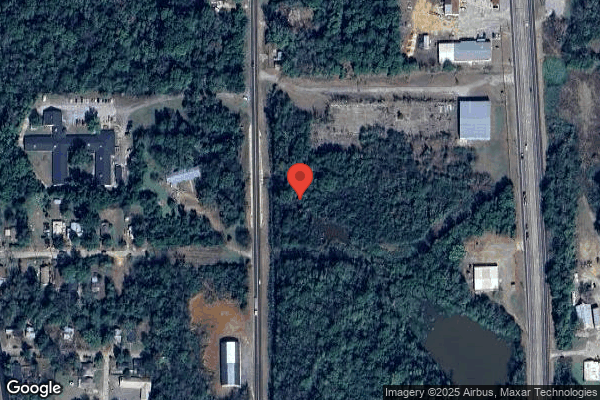
Jun 2022 3 deficiencies
CONCERN (D)

Potential for Harm - no one hurt, but risky conditions existed

Assessment Accuracy (Tag F0641)

Could have caused harm · This affected 1 resident

**NOTE- TERMS IN BRACKETS HAVE BEEN EDITED TO PROTECT CONFIDENTIALITY** 2. Recordreview of a face sheet dated 6/15/2022 indicated Resident #21 was an [AGE] year-old male, admitted to the facility on [...

Read full inspector narrative →
**NOTE- TERMS IN BRACKETS HAVE BEEN EDITED TO PROTECT CONFIDENTIALITY** 2. Recordreview of a face sheet dated 6/15/2022 indicated Resident #21 was an [AGE] year-old male, admitted to the facility on [DATE], and readmitted on [DATE]. His diagnoses included lung cancer, dementia, and muscle wasting. Record review of the MDS 3/25/2022 indicated Resident #21 was understood by others and usually understood others. Resident #21 had moderately impaired cognition. The MDS in Section P indicated Resident #21 used limb restraints less than daily . Record review of the consolidated physician's orders dated 6/15/2022 indicated Resident #21 did not have orders for limb restraints. During an interview on 6/14/2022 at 9:35 a.m., the MDS Nurse indicated Resident #21 had not used restraints. The MDS nurse indicated the miscoding of the MDS may have been a result of a computer glitch with the computer's mouse. During an interview on 6/15/2022 at 2:07 p.m., the DON indicated the MDS Nurse was responsible for ensuring accuracy of the MDS. During an interview on 6/15/2022 at 2:30 p.m., the ADM stated there was no use of restraints in the facility. She indicated the MDS Nurse had first responsibility for ensuring accuracy of the MDS and then the DON was responsible for ensuring accuracy of the MDS when she signed the MDS as complete. She indicated an inaccurate MDS could have the resident assessment or resident care reflected inaccurately. Record review of an undated policy and procedure Minimum Data Set Policy for MDS Assessment Data Accuracy, indicated the purpose of the MDS policy was to ensure each resident received an accurate assessment by qualified staff to address the needs of the residents who are familiar with his/her physical, mental, and psychosocial well-being .1. The assessment accurately reflects the resident's status Based on interview, and record review the facility failed to ensure an accurate MDS was completed for 2 of 18 residents reviewed for MDS assessment accuracy. (Resident #'s 3 and 21) * The facility failed to accurately reflect Resident #3 was PASRR II positive on his annual MDS. *The facility failed to accurately reflect Resident #21's use of a limb restraint on the MDS. This failure could place residents at risk for not receiving care and services to meet their needs. Findings included: 1. Record review of a face sheet dated 6/15/2022 indicated Resident #21 was a [AGE] year-old male admitted to the facility on [DATE]. His diagnoses included spastic hemiplegic cerebral palsy (abnormal brain development causing disorder of movement) and muscular dystrophy (abnormal genes causing muscle degeneration). A PASRR Screening dated 05/06/20 indicated Resident #3 was positive for developmental disability (DD). A PASRR Evaluation dated 06/08/20 indicated Resident #3 had DD before age [AGE]. A care plan dated 06/07/22 indicated Resident #3 had MI , ID , or DD and was PASRR positive however declined specialized services or case management through LA with an intervention that the LA would be invited annually to the care plan meeting for review of specialized services. The annual MDS dated [DATE] for Resident #3 indicated Section A1500 .Is the resident currently considered by the state level II PASRR process to have serious mental illness and/or intellectual disability or a related condition? was marked no. During an interview on 06/15/22 at 12:18 p.m. the MDS Nurse indicated she was responsible for ensuring information inputted on the MDS was correct. She indicated Resident #3 was PASRR positive but refused services. She said she did not realize she had incorrectly marked Resident #3's MDS regarding the PASRR.
CONCERN (D)

Potential for Harm - no one hurt, but risky conditions existed

Comprehensive Care Plan (Tag F0656)

Could have caused harm · This affected 1 resident

**NOTE- TERMS IN BRACKETS HAVE BEEN EDITED TO PROTECT CONFIDENTIALITY** Based on observation, interview, and record review, the facility failed to develop and implement comprehensive care plans that i...

Read full inspector narrative →
**NOTE- TERMS IN BRACKETS HAVE BEEN EDITED TO PROTECT CONFIDENTIALITY** Based on observation, interview, and record review, the facility failed to develop and implement comprehensive care plans that included measurable objectives and timetables to meet the resident's medical, nursing, mental and psychosocial needs that were identified in the comprehensive assessment for 2 of 18 residents reviewed for care plans. (Resident #'s 16 and 21) The facility failed to develop a care plan for Resident #16's diagnosis of constipation. The facility failed to implement the care planned intervention of a fall mat at bedside for Resident #21. This failure could place residents at risk for not having their needs met and negatively impacting their quality of life. Findings included: 1.Record Review of face sheet dated 6/22/22 indicated Resident #16 was [AGE] years old, admitted to the facility on [DATE] with diagnosis including Quadriplegia (paralysis from neck down), Hypertension (high blood pressure), GERD (acid reflux) and readmitted to the facility on [DATE] with diagnosis of constipation. Record review of the most recent comprehensive MDS dated [DATE] indicated Resident #16 made himself understood and understands others. Resident #16 had a BIMS score of 15 which indicated Resident #16 is cognitive intact. The assessment indicated Resident #16 did not reject care necessary to achieve the resident's goals for health or well-being. The MDS indicated Resident #16 required extensive assistance of 2 with bed mobility, dressing, toileting, personal hygiene, bathing, and supervision for eating. The MDS also indicated resident #16 is always incontinent of bowel. Record review of a physician's orders dated 05/20/22 revealed Resident #16 was on the following: Magnesium Oxide 400mg, give 1 tablet by mouth daily for supplement, started 3/11/22 with no stop date., Senna 8.6mg, give 2 tablets by mouth twice daily for constipation, started 3/10/22 with no stop date., Calcium carbonate 500mg, give 2 tablets by mouth twice daily, started 3/10/22 with no stop date., Enema mineral Oil, insert 1unit rectally as needed every twenty-four for constipation, started 3/10/22 with no stop date. Record review of the care plan revised on 04/20/22 did not indicate Resident #16 had the diagnosis of constipation. Record review of a nurse's note dated 3/2/22 indicated resident #16 had a Computed Tomography (CT) - (diagnostic imaging of inside the body) scan that revealed impaction (feces lodged in body passage of intestines). Resident # 16 was sent to the hospital. Resident #16 returned to facility on 3/10/22. Record review of Resident #16's hospital records dated 3/2/22 through 3/10/22 indicated Resident #16's admitting diagnosis was Atonic Constipation (occurs when there is lack of normal muscle tone or strength in colon). Resident # 16 was given new orders for Calcium carbonate, Enema mineral Oil, Magnesium Oxide, and Polyethylene Glycol related to constipation diagnosis during his hospital stay. During an interview on 6/13/22 at 9:15a.m., Resident #16 said he had a history of constipation, but never spent days in the hospital related to constipation. Resident #16 said his bowel movements were a lot better since his hospital stay. During an interview on 6/15/22 at 3:12 p.m., the MDS Nurse said all department head nurses were responsible to update the care plan. She said the ADON and DON mostly updated new orders, the treatment nurse updated skin orders, and she updated the care plans quarterly. The MDS Nurse said failure to keep care plans updated could affect continuation of care. During an interview on 6/15/22 at 3:17p.m., the ADON said it was all nursing's responsibility to update the care plan. She said the MDS Nurse would put in the new orders and would put in anything related to antibiotics or weights. During an interview on 6/15/22 at 3:21 p.m., the DON said anyone could update a care plan in there point click care software system. She said the ADON, MDS Nurse, treatment nurse and herself did most of the updating of the care plans. The DON reviewed Resident #16's care plan and indicated; he did not have a care plan on constipation. DON said Resident #16 admitted with a diagnosis of constipation and was not sure how it was missed, but he should have had a care plan for constipation. She said failure to have care plans implemented or updated could lead to residents not receiving appropriate care. During an interview on 6/15/22 at 3:38p.m., the RNC said all staff were responsible to update a care plan. She said the MDS Nurse ultimately responsible for any new orders when a resident return from the hospital because she should be capturing it on the MDS. The RNC said Resident # 16 should have had a care plan on constipation and failure to implement or update a care plan could lead to improper care. During an interview on 6/15/22 at 4:00p.m., the ADM said nurses start a baseline care plan upon admit until they learn more about the resident, then they can do a comprehensive care plan. The ADM said nursing was responsible to make sure that the care plan was done, and DON was the overseer. The ADM said failure to implement or update a care plan, could cause staff to miss care that a resident need. 2. Record review of a face sheet dated 6/15/2022 indicated Resident #21 was an [AGE] year-old male admitted to the facility on [DATE] and readmitted on [DATE]. His diagnoses included lung cancer, dementia, and muscle wasting. Record review of the MDS 3/25/2022 indicated Resident #21 was understood by others and usually understood others; had moderately impaired cognition; required extensive assistance with bed mobility, locomotion, dressing, eating, personal hygiene; and required total assistance with bathing and transfers . The MDS did not reflect any falls since admission or the prior assessment period. Record review of the comprehensive care plan dated 9/01/2017 and revised on 11/10/2021 indicated Resident #21 had falls related to confusion, balance problems, and safety unawareness; the goal of the care plan was to be free of falls; and the intervention implemented on 11/10/21 indicated a fall mat to the bedside. Record review of an event nurse's note dated 11/10/2021 indicted Resident #21 was found on the floor on his right side without injury. The event note indicated the physical factors included previous falls and the interventions implemented in response to the fall was a fall mat. Record review of an in-service dated 5/27/2022 indicated residents with falls required the beds to be low and fall mats to be in place. During an observation on 6/13/2022 at 12:20 p.m. revealed Resident #21 was lying in his bed and no fall mat was beside his bed. During an observation on 6/14/2022 at 2:30 p.m. revealed Resident #21 was lying in bed and no fall mat was beside his bedside. During an observation and interview on 6/14/2022 at 3:07 p.m., CNA B indicated she did not believe Resident #21 was a fall risk. CNA B validated there was not a fall mat at his bedside. CNA B accessed the care plan and validated he should have a fall mat at bedside. CNA B indicated Resident #21 could fall and even die from a fall. CNA B said she would go obtain a fall mat . During an interview on 6/14/2022 at 3:11 p.m., LVN C indicated Resident #21 was at risk to fall and he should have a fall mat at his bedside. LVN C indicated she was responsible for ensuring fall interventions were in place . LVN C was unsure why a fall mat was not at bedside. During an interview on 6/15/2022 at 2:07 p.m., the DON indicated Resident #21 should have had a fall mat. She indicated the fall mat must have gotten lost in a move. The DON indicated the care plan indicated the interventions and she updated the care plan. The DON said all nursing staff was responsible for ensuring fall prevention was in place. During an interview on 6/15/2022 at 2:30 p.m., the ADM indicated she expected the fall interventions such as a fall mat to be in place. The ADM indicated all staff had a responsibility in prevention of falls. The ADM indicated a resident's fall could be much harder without a fall mat. Record review of comprehensive care planning policy, indicated Each resident will have a person-centered comprehensive care plan developed and implemented to meet his other preferences and goals, and address the residents medical, physical, mental and psychosocial needs.
CONCERN (E)

Potential for Harm - no one hurt, but risky conditions existed

Infection Control (Tag F0880)

Could have caused harm · This affected multiple residents

**NOTE- TERMS IN BRACKETS HAVE BEEN EDITED TO PROTECT CONFIDENTIALITY** Based on observation, interview, and record review, the facility failed to maintain an infection prevention and control program ...

Read full inspector narrative →
**NOTE- TERMS IN BRACKETS HAVE BEEN EDITED TO PROTECT CONFIDENTIALITY** Based on observation, interview, and record review, the facility failed to maintain an infection prevention and control program to provide a safe, sanitary, and comfortable environment to prevent the development and the transmission of disease for 1 of 2 resident reviewed for antibiotics (Resident #21) and for 1 of 2 residents for incontinent care (Resident #22). The facility did not ensure Resident #21 was placed on the appropriate antibiotic treatment in a timely manner when it was determined the antibiotic he was originally prescribed was not appropriate. CNA's A and D did not sanitize/wash their hands between glove changes during incontinent care for Resident #22. CNA D did not use a clean wipe to clean the penis and touched clean items without changing gloves during incontinent care for Resident #22. These failures could place residents at risk for cross contamination, infection, worsened infection, decreased quality of life, or hospitalization. Findings included: 1. Record review of the face sheet dated 06/14/22 indicated Resident #21 was an [AGE] year-old male readmitted to the facility on [DATE]. His diagnoses included history of kidney infection and kidney failure. Record review of a physician's telephone order dated 04/19/22 indicated Resident #21 was to have a UA (urine test for infection) with a C&S (test can identify bacteria or yeast causing urine infection and which antibiotics for treatment). The order reflected to be collected by the hospice nurse. Record review of a laboratory report dated 04/20/22 indicated Resident #21 had an abnormal UA with a white blood cell count of 20-40 and the normal range was 0-3; red blood cell count of 20-40 with normal range of 0-3; and bacteria of MANY with a normal range of none. Handwritten at the bottom of the report was that the physician was notified and new orders were received for Cipro 500mg twice daily for 7 days. Record review of an SBAR note dated 04/20/22 indicated Resident #21 had a suspected UTI (bladder infection) due to the UA results of abnormal values, physician notified, and an order received for Cipro 500mg twice daily for 7 days. Record review of a laboratory report dated 04/22/22 (Friday) at 2:13 p.m. for Resident #21 indicated the C&S was completed. He had Escherichia Coli (bacteria found in the environment, foods, and intestines of people and animals) organism and was confirmed ESBL (organism uniformly resistant to specific antibiotics). The results also indicated the organism was resistant (the ability to defeat the drug) to Cipro. On the laboratory report the results were called to [someone] on 04/22/22 (Friday) at 2:00 p.m. by laboratory staff. The report also had at the top of the page it was faxed to the facility on [DATE] (Saturday) at 1:05 p.m. Record review of a physician's telephone order dated 04/25/22 (Monday) at 06:24 p.m. revealed to discontinue the Cipro 500 mg twice daily for 7 days with reason of resistance. The order was received by the facility's Medical Director and not the hospice physician. This was 3 days after the results of the C&S were completed and 6 days after the UA specimen was obtained. During an interview on 06/15/22 at 11:28 a.m. with the DON and ADON/IP, the ADON/IP indicated the hospice nurse would obtain the UA specimens and hospice received the laboratory results. She indicated the laboratory staff called the results for Resident #21 to hospice, the [someone] on the lab report. The ADON/IP indicated the hospice nurse would email her the results as a courtesy, but she did not receive the laboratory results routinely. The DON and ADON/IP indicated antibiotics should be changed as soon as the C&S was received, and they were not aware the appropriate antibiotic was delayed being administered by 3 days for Resident #21. They indicated if a resident did not receive the appropriate antibiotic they could have a worsening infection which could lead to hospitalization or even death. Record review of the Antimicrobial Stewardship Policy dated 2019 revealed, Procedures: 9. When a culture and sensitivity (C&S) is ordered, it should be preformed before the initiation of an antibiotic/anti-infective. Facility staff should perform the following actions: a. Treat results of C&S as a high priority; b. Communicate C&S results to the physician/prescriber as soon as available to determine if current antibiotic/anti-infective therapy should be continued, modified, or discontinued 2. Record review of the MDS dated [DATE] indicated Resident #22 was a [AGE] year-old male admitted on [DATE]. His diagnoses included hypertension (high blood pressure), neurogenic bladder(the nerves that carry messages back-and-forth between the bladder and the spinal cord and brain don't work the way they should), and paraplegia (paralysis of the legs and lower body). He was cognitively intact with a BIMS of 13 (13-15 intact cognition), required extensive assistance of 2 person for toileting, was always incontinent of bladder, and had an ostomy (an opening from the intestines to outside the body with a bag attached) for bowel. A Care Area assessment dated [DATE] indicated Resident #22 was triggered and care planned for Urinary Incontinence and ADL Functional/Rehabilitation Potential. During an observation on 06/13/22 at 03:39 p.m. CNA A and D were providing incontinent care to Resident # 22. CNA D cleaned front peri area, then with the soiled wipe, cleaned the penis shaft and around urethral area. CNA D cleaned the buttocks and rectal area, without changing the soiled gloves she placed a clean brief was under the resident. CNAs A and D removed the soiled gloves and without sanitizing/washing their hands put on clean gloves. CNA D placed the soiled supplies placed in trash liner. CNAs A and D removed the soiled gloves and without sanitizing/washing her hands put on clean gloves. CNAs A and D put clean clothes on the resident, placed a Hoyer lift sling under the resident, and transferred him to his wheelchair. During an interview on 06/13/22 at 03:50 p.m. CNAs A and D indicated they should have cleaned their hands between glove changes. CNA A indicated not cleaning their hands between glove changes placed residents at risk for infections. During an interview on 06/14/22 at 02:37 p.m. the DON indicated nurse aides were trained on incontinent care and handwashing upon hire, yearly, and as needed. She indicated staff should sanitize or wash hands between glove changes as it poses a risk of causing infections. Record review of a policy and procedure for perineal care of male resident revised December 8, 2009 .UR 03-3.1 Do Not wipe more than once with the same surface of the tissue or wipes Further review indicated the policy outlined procedure for washing hands with glove changes. According to the Texas Curriculum for Nurse Aides in Long-Term Care Facilities dated 01/2022 2.2 Infection Control 2.2.1 Procedural Guideline #6 - Hand Washing & Hand Hygiene 1. Purpose: To remove germs from hands and prevent the spread of infection. 2. Guidelines and Precautions B. Handwashing should be done at the following times: a. When coming on and going off duty. b. Before and after caring for each resident. c. Before applying gloves and after removing gloves. d. Before and after eating, drinking, smoking, using lip balm, touching contact lenses, wiping nose, using toilet. e. After contact with blood, body fluids and contaminated items (Procedural Guideline #7) f. before moving from work on a soiled body site to a clean body site on the same resident;
Understanding Severity Codes (click to expand)
Life-Threatening (Immediate Jeopardy)
J - Isolated K - Pattern L - Widespread
Actual Harm
G - Isolated H - Pattern I - Widespread
Potential for Harm
D - Isolated E - Pattern F - Widespread
No Harm (Minor)
A - Isolated B - Pattern C - Widespread

Questions to Ask on Your Visit

  • "What changes have you made since the serious inspection findings?"
  • "Can I speak with families of current residents?"
  • "What's your RN coverage like on weekends and overnight?"

Our Honest Assessment

Strengths
  • • Licensed and certified facility. Meets minimum state requirements.
Concerns
  • • Multiple safety concerns identified: 2 life-threatening violation(s), $174,431 in fines. Review inspection reports carefully.
  • • 32 deficiencies on record, including 2 critical (life-threatening) violations. These warrant careful review before choosing this facility.
  • • $174,431 in fines. Extremely high, among the most fined facilities in Texas. Major compliance failures.
  • • Grade F (11/100). Below average facility with significant concerns.
Bottom line: Trust Score of 11/100 indicates significant concerns. Thoroughly evaluate alternatives.

About This Facility

What is Twin Oaks Center's CMS Rating?

CMS assigns TWIN OAKS HEALTH AND REHABILITATION CENTER an overall rating of 2 out of 5 stars, which is considered below average nationally. Within Texas, this rating places the facility higher than 0% of the state's 100 nursing homes. A rating at this level reflects concerns identified through health inspections, staffing assessments, or quality measures that families should carefully consider.

How is Twin Oaks Center Staffed?

CMS rates TWIN OAKS HEALTH AND REHABILITATION CENTER's staffing level at 2 out of 5 stars, which is below average compared to other nursing homes. Staff turnover is 53%, compared to the Texas average of 46%.

What Have Inspectors Found at Twin Oaks Center?

State health inspectors documented 32 deficiencies at TWIN OAKS HEALTH AND REHABILITATION CENTER during 2022 to 2025. These included: 2 Immediate Jeopardy (the most serious level, indicating potential for serious harm or death) and 30 with potential for harm. Immediate Jeopardy findings are rare and represent the most serious regulatory concerns. They require immediate corrective action.

Who Owns and Operates Twin Oaks Center?

TWIN OAKS HEALTH AND REHABILITATION CENTER is owned by a for-profit company. For-profit facilities operate as businesses with obligations to shareholders or private owners. The facility is operated by CREATIVE SOLUTIONS IN HEALTHCARE, a chain that manages multiple nursing homes. With 116 certified beds and approximately 65 residents (about 56% occupancy), it is a mid-sized facility located in JACKSONVILLE, Texas.

How Does Twin Oaks Center Compare to Other Texas Nursing Homes?

Compared to the 100 nursing homes in Texas, TWIN OAKS HEALTH AND REHABILITATION CENTER's overall rating (2 stars) is below the state average of 2.8, staff turnover (53%) is near the state average of 46%, and health inspection rating (2 stars) is below the national benchmark.

What Should Families Ask When Visiting Twin Oaks Center?

Based on this facility's data, families visiting should ask: "What changes have been made since the serious inspection findings, and how are you preventing similar issues?" "Can you walk me through typical staffing levels on day, evening, and night shifts?" "Can I visit during a mealtime to observe dining assistance and food quality?" "How do you handle medical emergencies, and what is your hospital transfer rate?" These questions are particularly relevant given the facility's Immediate Jeopardy citations and the below-average staffing rating.

Is Twin Oaks Center Safe?

Based on CMS inspection data, TWIN OAKS HEALTH AND REHABILITATION CENTER has documented safety concerns. Inspectors have issued 2 Immediate Jeopardy citations (the most serious violation level indicating risk of serious injury or death). The facility has a 2-star overall rating and ranks #100 of 100 nursing homes in Texas. Families considering this facility should ask detailed questions about what corrective actions have been taken since these incidents.

Do Nurses at Twin Oaks Center Stick Around?

TWIN OAKS HEALTH AND REHABILITATION CENTER has a staff turnover rate of 53%, which is 7 percentage points above the Texas average of 46%. Moderate turnover is common in nursing homes, but families should still ask about staff tenure and how the facility maintains care continuity when employees leave.

Was Twin Oaks Center Ever Fined?

TWIN OAKS HEALTH AND REHABILITATION CENTER has been fined $174,431 across 1 penalty action. This is 5.0x the Texas average of $34,823. Fines at this level are uncommon and typically indicate a pattern of serious deficiencies, repeated violations, or failure to correct problems promptly. CMS reserves penalties of this magnitude for facilities that pose significant, documented risk to resident health or safety. Families should request specific documentation of what issues led to these fines and what systemic changes have been implemented.

Is Twin Oaks Center on Any Federal Watch List?

TWIN OAKS HEALTH AND REHABILITATION CENTER is not on any federal watch list. The most significant is the Special Focus Facility (SFF) program, which identifies the bottom 1% of nursing homes nationally based on persistent, serious quality problems. Not being on this list means the facility has avoided the pattern of deficiencies that triggers enhanced federal oversight. This is a positive indicator, though families should still review the facility's inspection history directly.