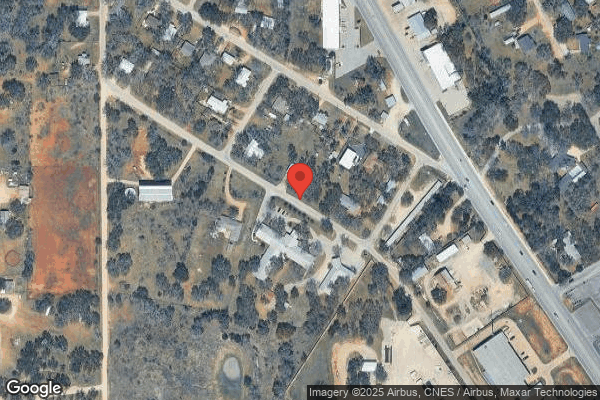

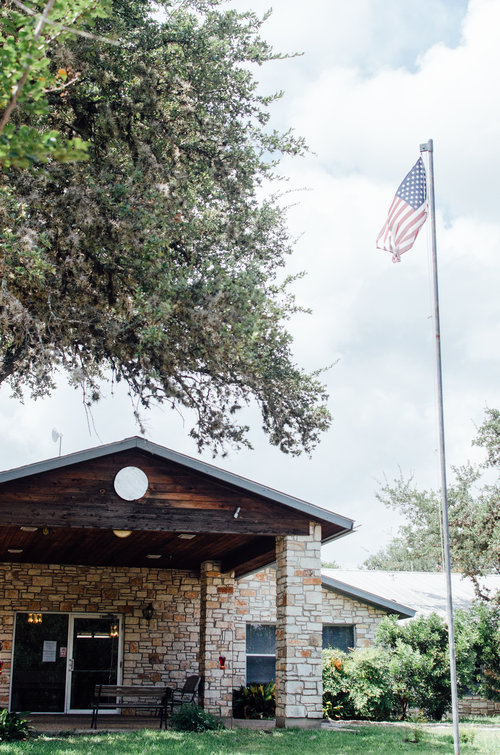


LBJ MEDICAL CENTER

206 HALEY RD., JOHNSON CITY, TX 78636 (830) 868-4093
For profit - Limited Liability company 60 Beds SLP OPERATIONS Data: November 2025 4 Immediate Jeopardy citations
Trust Grade
0/100
#756 of 1168 in TX
Last Inspection: April 2025

Within standard 12-15 month inspection cycle. Federal law requires annual inspections.

Overview

LBJ Medical Center has received a Trust Grade of F, indicating poor performance with significant concerns about care quality. It ranks #756 out of 1168 nursing facilities in Texas, placing it in the bottom half, and is the only option in Blanco County. The facility is showing signs of improvement, with the number of issues decreasing from 13 in 2024 to 4 in 2025, yet it still has a high fine amount of $70,932, which is concerning and higher than 85% of Texas facilities. Staffing is rated average with a turnover rate of 45%, which is slightly better than the state average, and it has good RN coverage, exceeding 95% of Texas facilities. However, there have been critical incidents where residents were not adequately monitored, leading to significant health risks, including failure to manage pain for a resident, which resulted in serious health complications, and incidents of abuse where proper protective measures were not taken, raising concerns about resident safety.

Trust Score
F
0/100
In Texas
#756/1168
Bottom 36%
Safety Record
High Risk
Review needed
Inspections
Getting Better
13 → 4 violations
Staff Stability
○ Average
45% turnover. Near Texas's 48% average. Typical for the industry.
Penalties
⚠ Watch
$70,932 in fines. Higher than 97% of Texas facilities. Major compliance failures.
Skilled Nurses
✓ Good
Each resident gets 44 minutes of Registered Nurse (RN) attention daily — more than average for Texas. RNs are trained to catch health problems early.
Violations
⚠ Watch
25 deficiencies on record. Higher than average. Multiple issues found across inspections.
★★☆☆☆
2.0
Overall Rating
★★★☆☆
3.0
Staff Levels
★★★☆☆
3.0
Care Quality
★★☆☆☆
2.0
Inspection Score
Stable
2024: 13 issues
2025: 4 issues

The Good

  • Full Sprinkler Coverage · Fire safety systems throughout facility
  • No fines on record
  • Staff turnover below average (45%)

    3 points below Texas average of 48%

Facility shows strength in fire safety.

The Bad

2-Star Overall Rating

Below Texas average (2.8)

Below average - review inspection findings carefully

Staff Turnover: 45%

Near Texas avg (46%)

Typical for the industry

Federal Fines: $70,932

Well above median ($33,413)

Moderate penalties - review what triggered them

Chain: SLP OPERATIONS

Part of a multi-facility chain

Ask about local staffing decisions and management

The Ugly 25 deficiencies on record

4 life-threatening
Apr 2025 4 deficiencies
CONCERN (D)

Potential for Harm - no one hurt, but risky conditions existed

Deficiency F0558 (Tag F0558)

Could have caused harm · This affected 1 resident

**NOTE- TERMS IN BRACKETS HAVE BEEN EDITED TO PROTECT CONFIDENTIALITY** Based on observations, interviews, and record review the facility failed to ensure residents received services in the facility w...

Read full inspector narrative →
**NOTE- TERMS IN BRACKETS HAVE BEEN EDITED TO PROTECT CONFIDENTIALITY** Based on observations, interviews, and record review the facility failed to ensure residents received services in the facility with reasonable accommodations of resident's needs and preferences except when to do so would endanger the health and safety of the resident or other residents for 2 of 7 residents (Resident #18 and #22) reviewed for resident rights. The facility failed to ensure Resident's #18's and Resident #22's call light was within reach on 03/31/25. This failure could place residents at risk of needs not being met. Findings included: Record Review of Resident #22's undated face sheet reflected the resident was a [AGE] year-old male admitted on [DATE]. His diagnoses included acute respiratory failure with hypoxia (a serious condition where the lungs fail to adequately oxygenate the blood, leading to low blood oxygen levels), diabetes (a group of diseases that result in too much sugar in the blood), atherosclerotic heart disease of native coronary artery (coronary artery disease) (heart disease involving the reduction of blood flow to the cardiac muscle due to a buildup of atheromatous plaque in the arteries of the heart), and chronic obstructive pulmonary disease (COPD) (a lung disease characterized by chronic respiratory symptoms and airflow limitation). Record Review of Resident #22's Quarterly MDS dated [DATE] reflected Resident #22 was independent for eating, required partial or moderate assistance for toileting, required supervision or touching assistance for bathing, and was dependent on staff for personal hygiene. The MDS reflected Resident #22' had a BIMS score of 08 which indicated Resident #22 was moderately cognitively impaired. Record review of Resident #22's care plan dated 03/18/25 reflected: Resident was at risk for falling R/T Chronic pain syndrome. Goal: Resident #22 would remain free from injury. Interventions included: Keep call light in reach at all times. Record review of Resident #22's care plan dated 03/18/25 reflected: Resident had moderately impaired, vision R/T Nonexudative age-related macular degeneration, bilateral. Goal: Resident #22 would not experience negative consequences of vision loss as evidenced by remaining physically safe and participating in social and self-care activities. Interventions included: Keep call light in reach at all times. In an interview and observation on 03/31/25 at 11:03 AM, Resident #22 stated things were fine and staff treated him well. Observed Resident #22's call light on the floor on the right side of the residents bed and on the other side of the residents bedside table, and out of the residents reach. He stated he has used his call light to call for staff and they responded immediately. He stated he usually had his call light close to him or attached to his bed, but where it was at that time, he would have had to roll off of the bed to get it. He stated he guessed it fell off when the last person was in there. Record Review of Resident #18's undated face sheet reflected the resident was a [AGE] year-old male admitted on [DATE]. His diagnoses included dementia (a general name for a decline in cognitive abilities that impacts a person's ability to perform everyday activities), diabetes (a group of diseases that result in too much sugar in the blood), aphasia (inability to use spoken language), and cerebral aneurysm (a weakness in the blood vessels in the brain that balloons and fills with blood). Record Review of Resident #18's Quarterly MDS dated [DATE] reflected Resident #18 required substantial or maximal assistance for eating and was dependent on staff for toileting, bathing, and personal hygiene. The MDS reflected Resident #18's BIMS score was left blank due to Resident #18 was rarely/never understood and was not able to answer questions. Record review of Resident #18's care plan dated 03/18/25 reflected: Resident was at risk for falling R/T hemiplegia. Unsafe self-transfers. Resident does not call for assistance. Staff anticipates resident's needs. Goal: Resident #18 would remain free from injury. Interventions included: Give resident verbal reminders to call for assistance with ADLs. In an observation on 03/31/25 at 11:27 AM, Resident #18 was lying in bed with his call light out of reach and wrapped around his overhead light fixture. Resident #18 had garbled speech and was not able to communicate with the state surveyor. The resident appeared clean and groomed and showed no signs of pain or distress. The resident was not able to demonstrate if he could or could not reach his call light. In an interview on 03/31/25 at 11:13 AM, CNA B stated all residents call lights should be within their reach at all times. She stated Resident #22 regularly put himself to bed and she thought he had just gotten into bed. She stated she usually clipped it to the side of his bed, where his call light was in reach. She stated Resident #22 could not have reached the call light where it was laying when the state surveyor saw it. She stated she had been in-serviced on call light placement and if a call light was out of reach it could cause a fall or the resident would not have been able to call for help. In an interview on 03/31/25 at 11:34 AM, LVN A stated Resident #18's call light should be in reach and all residents call lights should be in reach at all times. She stated she was trained on call light placement. She stated if a residents call light was out of their reach, they could have been injured or been in distress, could not get to staff if they needed something, and their needs may not have been met. She stated Resident #18 understood when he was spoken to but could not always answer back correctly due to having a diagnosis of aphasia. In an interview on 04/02/25 at 10:19 AM, the DON stated it was her expectation that all residents call lights should be within reach at all times. She stated staff have been trained on call light placement. She stated if a residents call light was out of reach, it could have inhibited them from getting the care or requests they may have needed. In an interview on 04/02/25 at 10:32 AM, the ADM stated it was her expectation that all residents had their call lights within reach at all times. She stated staff had been trained on call light placement. She stated if a resident could not reach their call light they could not notify the team if they needed assistance. Record review of the facility policy titled Answering the Call Light and dated 2001 (revised March 2021) reflected Purpose: The purpose of this procedure is to ensure timely responses to the resident's requests and needs. General Guidelines: 5. When the resident is in bed or confined to a chair be sure the call light is within easy reach of the resident.
CONCERN (D)

Potential for Harm - no one hurt, but risky conditions existed

PASARR Coordination (Tag F0644)

Could have caused harm · This affected 1 resident

**NOTE- TERMS IN BRACKETS HAVE BEEN EDITED TO PROTECT CONFIDENTIALITY** Based on interviews and record review, the facility failed to ensure individuals with mental health disorders were provided an a...

Read full inspector narrative →
**NOTE- TERMS IN BRACKETS HAVE BEEN EDITED TO PROTECT CONFIDENTIALITY** Based on interviews and record review, the facility failed to ensure individuals with mental health disorders were provided an accurate Preadmission Screening and Resident Review (PASRR) Level 1 Screening for 1 of 2 residents (Resident #14) reviewed for PASRR. The facility failed to ensure Resident #14 had an accurate PASRR Level 1 Screening indicating a diagnosis of mental illness on 03/03/2025. This failure could place residents at risk of not receiving needed individualized care, and specialized services to meet their needs. Findings included: Record review of Resident #14's face-sheet, dated 04/01/2025, revealed a [AGE] year-old female, admitted on [DATE]. Her diagnoses included metabolic encephalopathy (confusion, memory loss, and loss of consciousness due to an underlying condition affecting metabolism), bipolar disorder (a chronic mood disorder that causes intense shifts in mood, energy levels, and behavior), major depressive disorder (a mood disorder that causes a persistent feeling of sadness and loss of interest), type 2 diabetes mellitus (a condition that affects how the body uses sugar as a fuel), dependent personality disorder (a personality disorder characterized by a person's need to be taken care of and a fear of having to take care of themselves), avoidant personality disorder (a personality disorder characterized by poor self-esteem, an intense fear of rejections, and extreme shyness), anxiety disorder (a mental health condition characterized by excessive fear), and muscle weakness. Record review of Resident #14's admission MDS, dated [DATE], Section C (Cognitive Patterns) revealed a BIMS score of 14 indicating intact cognition. Section I (Active Diagnoses) revealed anxiety disorder, depression, and bipolar disorder. Record review of Resident #14's care plan, dated 05/23/2023 and revised on 03/18/2025, revealed Resident is at risk for changes in mood R/T anxiety disorder, bipolar disorder, depression, and dependent personality disorder. Record review of Resident #14's history and physical, dated 03/15/2025, revealed active medical problems that included: bipolar disorder, major depressive disorder, dependent personality disorder, and avoidant personality disorder. Record review of Resident #14's PASRR Level 1 Screening, dated 03/03/2025, section C0100, revealed no evidence or indicators Resident #14 was an individual that has a mental illness. During an interview on 04/02/2025 at 11:33 AM with the MDS, she stated she was responsible for PASRR documentation. She stated she received the PASRR from acute care facilities prior to the resident's admission. She stated if a PASRR assessment was incorrect then she was responsible for contacting the previous facility for a correct PASRR. She stated she didn't have any PASRR's under review for correction at that time. She stated a resident with diagnoses that included anxiety disorder, bipolar disorder, depression, and dependent personality disorder should have a positive PASRR Level 1 Screening. The MDS stated if a PASRR Level 1 screening was incorrectly indicated as negative then the resident wouldn't receive care and services available from the state. During an interview on 04/02/2025 at 11:43 AM with the DON, she stated the MDS was responsible for receiving and ensuring the accuracy of PASRR Level 1 Screenings. She stated she wasn't aware of any PASRR Level 1 screenings that were incorrect. The DON stated a resident with anxiety disorder, bipolar disorder, depression, and dependent personality disorder should be positive. She stated if PASRR screenings were incorrect the resident wouldn't have access to needed resources. During an interview on 04/02/2025 at 12:35 PM, the ADM stated the MDS and case management were responsible for the accuracy of PASRR Level 1 Screenings. She stated if the resident was admitted with a PASRR Level 1 screening that was incorrect then the acute care facility should have been contacted for a correction. She stated a resident wouldn't have access to available resources if the PASRR Level 1 Screening was completed incorrectly. Requested the facility policy related to PASRR Level 1 Screenings on 04/01/2025 at 1:10 PM from the ADM. No policy received prior to exit.
CONCERN (D)

Potential for Harm - no one hurt, but risky conditions existed

Comprehensive Care Plan (Tag F0656)

Could have caused harm · This affected 1 resident

**NOTE- TERMS IN BRACKETS HAVE BEEN EDITED TO PROTECT CONFIDENTIALITY** Based on observations, interviews, and record review, the facility failed to develop and implement a comprehensive person-center...

Read full inspector narrative →
**NOTE- TERMS IN BRACKETS HAVE BEEN EDITED TO PROTECT CONFIDENTIALITY** Based on observations, interviews, and record review, the facility failed to develop and implement a comprehensive person-centered care plan for each resident, which included measurable objectives and timeframes to meet a resident's medical, nursing, and mental and psychosocial needs for 2 of 7 residents (Resident's #30 and #14) reviewed for care plans. The facility failed to include the resident was a smoker and the resident had a diagnosis of acute gastritis with bleeding in Resident #30's comprehensive care plan. The facility failed to ensure Resident #14's care plan was updated to reflect their current ADL functional status. This failure could place residents at risk for not receiving necessary care and services or having important care needs identified and met. Findings included : Record review of Resident #30's undated face sheet reflected a [AGE] year-old female who was admitted to the facility on [DATE]. Resident #30 had diagnoses which included acute gastritis with bleeding (a condition where the stomach lining becomes inflamed and bleeds), Alzheimer's disease (a neurodegenerative disease that usually starts slowly and progressively worsens), dysphagia (difficulty in swallowing), and fibromyalgia (a functional somatic medical syndrome with symptoms of chronic widespread pain, accompanied by fatigue, sleep disturbance including awakening unfreshed, and cognitive symptoms). Record review of Resident #30's admission MDS assessment dated [DATE], reflected that Resident #30 was using tobacco. Record review of Resident #30's Quarterly MDS assessment dated [DATE], reflected that Resident #30 had a BIMS score of 06 which reflected the resident was severely cognitively impaired. Resident #30's Quarterly MDS assessment reflected the resident required supervision or touching assistance with eating, toileting, and personal hygiene, and partial to moderate assistance with bathing. Resident #30's Quarterly MDS reflected resident had a diagnosis of acute gastritis with bleeding. Record review of Resident #30's care plan reflected Resident #30 was not care planned for being a smoker or having a diagnosis of acute gastritis with bleeding. Record review of Resident #30's safe smoking evaluation, dated 01/21/25, reflected the resident had demonstrated ability to safely smoke. In an interview on 03/31/25 at 11:47 AM Resident #30 stated everything was good and the staff treated her good. She stated she did not usually need to use her call light because she mostly did thing's for herself. She stated she had been living in the facility for about a year and she wanted to go home. She stated she was going to talk to the staff about it and she had no concerns. Record review of Resident #14's face-sheet, dated 04/01/2025, revealed a [AGE] year-old female, admitted on [DATE]. Her diagnoses included metabolic encephalopathy (confusion, memory loss, and loss of consciousness due to an underlying condition affecting metabolism), bipolar disorder (a chronic mood disorder that causes intense shifts in mood, energy levels, and behavior), major depressive disorder (a mood disorder that causes a persistent feeling of sadness and loss of interest), type 2 diabetes mellitus (a condition that affects how the body uses sugar as a fuel), dependent personality disorder (a personality disorder characterized by a person's need to be taken care of and a fear of having to take care of themselves), avoidant personality disorder (a personality disorder characterized by poor self-esteem, an intense fear of rejections, and extreme shyness), anxiety disorder (a mental health condition characterized by excessive fear), and muscle weakness. Record review of Resident #14's admission MDS, dated [DATE], Section C (Cognitive Patterns) revealed a BIMS score of 14 indicating intact cognition. Section GG (Functional Abilities) revealed resident required Substantial/maximal assistance (Helper does MORE THAN HALF the effort. Helper lifts or holds trunk or limbs and provides more than half the effort) for toileting hygiene: the ability to maintain perineal (genital) hygiene, adjust clothes before and after voiding or having a bowel movement. Section H- Bladder and Bowel revealed resident was frequently incontinent of bowel and bladder. Review of Resident # 14's care plan, dated 05/23/2023 and revised 03/18/2025, revealed Resident experiences occasional bowel and bladder incontinence R/T impaired mobility with approaches that included Resident toilets self independently. During an interview on 04/02/2025 at 10:32 AM, Resident #14 stated she was unable to sit up independently and required assistance to go to the bathroom because of her weakness. In an interview on 04/02/25 at 10:19 AM, the DON stated it was a collaborative effort as far as who completed the care plans. She stated the baseline care plan was done by nursing administration within 48 hours and then the MDS nurse and herself updated the care plans for acute changes. She stated the MDS nurse mostly did the comprehensive care plans and then as a team, they updated them as needed. She stated they had all been trained on completing the care plans accurately. She stated if a resident was a smoker, and all of their diagnoses should be care planned, including acute gastritis with bleeding. She stated she was not aware Resident #30 was not care planned for being a smoker or having the diagnosis of acute gastritis with bleeding. She stated Resident #30 was not smoking when she first admitted to the facility, but had smoked prior to admitting, and she started back smoking after about a month or so. She stated she was going to correct Resident 30's MDS. She stated if a resident was not care planned for being a smoker or having a diagnosis of acute gastritis with bleeding, it would not be a whole reflection of the resident and that was how staff were made aware of residents continuity of care. In an interview on 04/02/25 at 10:26 AM, the MDS nurse stated the ADON was responsible for baseline care plans. She stated when she completed the MDS assessments it triggered the CAA's and then as a collaborative team, they care planned things as they came along. She stated she had been trained on completing the care plans accurately. She stated if a resident was a smoker, it should be care planned and all diagnoses should be care planned, including acute gastritis with bleeding. She stated she was not aware that Resident #30 was not care planned for being a smoker or for having a diagnosis of acute gastritis with bleeding. She stated if a resident was not care planned for smoking she was not sure what it could cause but if they were not care planned for having acute gastritis with bleeding, it could have possibly interrupted the resident's nursing care. In an interview on 04/02/25 at 10:32 AM, the ADM stated it was a combination of the MDS nurse and nursing administration that completed the care plans and they had all been trained on completing care plans accurately. She stated she was aware Resident #30 was a smoker. She stated she was not aware that Resident #30 was not care planned for being a smoker or for having a diagnosis of acute gastritis with bleeding. She stated if a resident was not care planned for being a smoker or for having all of their diagnoses, including acute gastritis with bleeding, the residents needs may not have been met. During an interview on 04/02/2025 at 10:51 AM, CNA C stated she utilized the care plans to determine the needs of the residents. She stated the DON, and the charge nurse were responsible for updating the care plans. CNA C stated if the care plans were current and correct then the resident might not receive the care they need. She stated Resident #14 required assistance to get up to the bathroom. During an interview on 04/02/2025 at 11:11 AM, RN D stated the nurses, and the case manager were responsible for starting and revising care plans. She stated if the care plan was not correct then the resident might not get the care they required. She stated Resident #14 required assistance to get out of bed and to the toilet. During an interview on 04/02/2025 at 11:33 AM, the MDS stated the DON was responsible for updating care plans related to ADL's. She stated the care plans were used by the staff providing care and if not updated they might not get the care they required. During an interview on 04/02/2025 at 11:43 AM, the DON stated the CNA's used the care plan for determining resident needs. She stated she was responsible for baseline care plans. She stated the resident might not get the help they need if the care plan wasn't correct. During an interview on 04/02/2025 at 12:35 PM, the ADM stated the MDS, and nursing administration were responsible for ensuring care plans were correct. She stated the care plans were utilized by staff providing care. She stated the resident might not get the care they needed if the care plan wasn't correct. Review of the facility policy revised on 01/26/2024 titled Comprehensive Care Plans revealed Policy: It is the policy of this facility to develop and implement a comprehensive person-centered care plan for each resident, consistent with resident rights, that includes measurable objectives and timeframes to meet a resident's medical, nursing, mental and psychosocial needs that are identified in the resident's comprehensive assessment. Policy Explanation and Compliance Guidelines: 1. The care planning process will include an assessment of the resident's strengths and needs and will incorporate the resident's personal and cultural preferences in developing goals of care. Services provided or arranged by the facility, as outlined by the comprehensive care plan, shall be culturally competent and trauma-informed. 2. The comprehensive care plan will be developed within 7 days after the completion of the comprehensive MDS assessment and by Day 21 of the patient's stay. All Care Assessment Areas (CAAs) triggered by the MDS will be considered in developing the care plan. Other factors identified by the interdisciplinary team, or in accordance with the resident's preferences, will also be addressed in the care plan. The facility's rationale for deciding whether to proceed with care planning will be evidenced in the clinical record. 3. The comprehensive care plan will describe, at a minimum, the following: a. The services that are to be furnished to attain or maintain the resident's highest practicable physical, mental, and psychosocial well-being. 7. The physician, other practitioner, or professional will inform the resident and/or resident representative of the risks and benefits of proposed care, of treatment, and treatment alternatives/options. The facility will attempt alternate methods for refusal of treatment and services and document such attempts in the clinical record, including discussions with the resident and/or resident representative. 8. Qualified staff responsible for carrying out interventions specified in the care plan will be notified of their roles and responsibilities for carrying out the interventions, initially and when changes are made. 9. The services provided or arranged by the facility, as outlined in the comprehensive care plan, will meet professional standards of quality, and will be provided by qualified persons in accordance with each resident's written plan of care .
CONCERN (F)

Potential for Harm - no one hurt, but risky conditions existed

Food Safety (Tag F0812)

Could have caused harm · This affected most or all residents

Based on observations, interviews, and record review the facility failed to store, prepare, and distribute food in accordance with professional standards for food service safety in 1 of 1 kitchen and ...

Read full inspector narrative →
Based on observations, interviews, and record review the facility failed to store, prepare, and distribute food in accordance with professional standards for food service safety in 1 of 1 kitchen and 1 of 1 nourishment room reviewed for kitchen and food sanitation. 1. The facility failed to ensure food in the refrigerator was properly sealed from air-borne contamination. 2. The facility failed to ensure food in the dry storage area was properly sealed from air-borne contamination. 3. The facility failed to maintain a sanitary open front refrigerator/freezer in the nourishment room. 4. The facility failed to label, date, and discard expired food items in the side-by-side refrigerator in the kitchen. 5. The facility failed to label, date, and discard expired food items in the nourishment room refrigerator and freezer. These failures could place residents at risk for food contamination and food-borne illness. Findings included: Observation on 04/01/2025 at 09:52 AM of the side-by-side refrigerator revealed an open a box of thawed bacon labeled with a date of 03/13/2025, that was not properly sealed, and the bacon was exposed to the elements. The box was located on the bottom shelf. There were 23 containers of individual yogurt labeled with a date of 02/27/2025 that had a manufacture's date of 03/26/2025. There was a label on the side of the shelf that listed bread, dated 03-13-2025 that contained four loaves of white bread that were dated 03/20/2025. There was one open container of thickened sweetened tea dated 02-13-2025. The manufacturing instructions revealed, Directions: Refrigerator prior to serving .After opening, may be kept up to 7 days under refrigeration. Observation on 04/01/2025 at 09:57 AM of the walk-in pantry revealed an open bag of potato chips that was not properly sealed. The bag was open at one end and exposed to the elements. Observation on 04/01/2025 at 10:52 AM in the kitchen revealed four loaves of bread were sitting in their packaging out on a cart and had not been disposed of. Observation on 04/01/2025 at 11:53 AM in the kitchen revealed three loaves of bread in their original packaging sitting out on a cart. The trash can had the container of tea, the yogurts, and the open bag of chips. The open box of bacon was in the refrigerator. Observation on 04/01/2025 at 12:03 PM revealed one open bag of bread on the counter dated 03/20/2025. Half of the bread had been served and the CK opened the bag to get out more bread. Observation on 04/01/2025 at 01:15 PM of the nourishment room revealed a sign on the outside of the refrigerator that reflected, As always, please remember to check all expirations of items in this refrigerator and discard if items are not properly labeled and/or expired. A sign on the freezer door reflected, Residents Refrigerator Only. Date and Name Required. Items will be eliminated for expiration day. Every Friday Housekeeping will clean out frig. The refrigerator contained a bowl of dry cereal covered in plastic wrap, an open soda bottle, a bottle of Gatorade, and a bottle of juice all of which were not labeled with a resident's name nor dated. The inside bottom shelf was dirty with brown stains and the pull-out drawer was dirty with hair, food crumbs, and light sticky residue. Observation of the inside freezer shelf was dirty with red residue stains. Five frozen food items in freezer were not labeled with resident's names and four of the items were not dated. There was one container of expired yogurt with a manufacture date of 03/07/2025 and a box of popsicles with a best buy date of January 2025. Observation on 04/02/2025 at 11:31 AM of the nourishment room revealed the refrigerator contained a bowl of dry cereal covered in plastic wrap, a bottle of Gatorade, and a bottle of juice all of which were not labeled with a resident's name nor dated. The inside bottom shelf was dirty with brown stains and the pull-out drawer was dirty with hair, food crumbs, and light sticky residue. Observation of the inside freezer shelf was dirty with red residue stains. Five frozen food items in freezer were not labeled with resident's names and four of the items were not dated. There was one container of expired yogurt with a manufacture date of 03/07/2025 and a box of popsicles with a best buy date of January 2025. In an interview on 04/01/2025 at 10:00 AM, the DA stated she had worked at the facility for 3 years. She had received training on labeling, dating, and storing food and handling expired food from the dietitian that came once a month. The DA stated all food must be covered or properly sealed in a plastic bag and labeled with an open date. All open food must be used or thrown away within 7 days or within the manufacture's used by date. All expired food must be thrown away, otherwise it would be bad for a resident to consume expired food. She stated the bread in the side-by-side refrigerator had been previously frozen and was dated with the date it was pulled out of the freezer and should be used or thrown away within 7 days. She stated all kitchen staff were responsible for checking food for proper labeling, storage, and dating and checking for expired food. In an interview on 04/01/2025 at 10:04 AM, the CK stated she had worked at the facility since 1992. She had received training on labeling, dating, and storing food and handling expired food from the dietitian that came once a month. The CK stated that all food must be covered or properly sealed in a bag, labeled with an opened date, and expired date. She stated all opened or cooked food must be used or thrown away within 7 days. If the food was not sealed properly, the CK stated that it could cause cross contamination from chemicals and could make residents sick. She stated all expired food must be thrown away, otherwise it could make residents sick. She stated the bread in the side-by-side refrigerator had been previously frozen, was dated with the date it was pulled out of the freezer, and it should be used or thrown away within 7 days. She stated all kitchen staff were responsible for checking food for proper labeling, storage, and dating and checking for expired food, which she did each morning. In an interview and observation on 04/01/2025 at 10:07 AM, the DM stated he had worked at the facility for about 1 ½ years and did not really have any experience. The DM stated he had received training on labeling, dating, and storing food. He had not received any training on handling expired food. The DM stated all food must be sealed in a bag, labeled with a received date, and an opened date. He stated all opened or cooked food must be used or thrown away within 7 days. If the food was not sealed properly, the DM stated that would be cross contamination and food not properly sealed should be thrown out. He stated all expired food must be thrown away, otherwise it could be dangerous and make the residents sick. He stated he was responsible for checking food for proper labeling, storage, and dating and checking for expired food. The DM stated the bread in the side-by-side refrigerator had been previously frozen and was dated with the date it was pulled out of the freezer and should be used or thrown away within 7 days. The state surveyor showed the DM the concerns in the kitchen. The DM stated he had no concerns about the box of bacon being left open. He stated the date of 03/13/2025 was when the bacon was received, not when it was opened. He thought it had been opened about 5 days ago and had no concern it was not labeled. He stated he planned to serve the bacon tomorrow morning for breakfast. The DM stated the bread was expired, and he planned to throw them out. The DM was observed placing two of the loaves of bread on the counter but did not throw them away. The DM stated the yogurt was expired and he planned to throw it away. He left the yogurt in the refrigerator. The DM stated he did not think the container of thickened sweetened tea had been opened and was not concerned. The state surveyor showed him the container had been opened. The DM was not sure what he would do. After reading the directions, he stated he would throw it away and took it out of the refrigerator and sat the container on the kitchen counter. He stated the bag of chips should have been sealed in a plastic bag and should be thrown away. The DM stated the food not being properly sealed, labeled, and dated, and the expired food did not meet his expectations. In an interview and observation on 04/01/2025 at 12:14 PM, the ADM stated her expectation was that kitchen staff follow their policy for food labeling and storage. She stated all food must be dated with an opened date, received date, labeled, and tightly sealed in plastic bag and used by the manufacture's guideline or within 7 days. The ADM stated there was a sign in the kitchen that listed when food needed to be used or thrown away for safety and they follow the recommended guidelines. She stated expired food needed to be thrown away to avoid residents getting salmonella, sick, and foodborne illnesses. The ADM stated the open box of bacon in the refrigerator would not meet her expectations and was observed throwing it away. The ADM stated she had no way of knowing how long it had been in the refrigerator. She stated if her kitchen staff stated the bread was expired, then it should be thrown out and serving it would not meet her expectation. She was observed telling the DM to throw out the bread. The DM stated he thought the bread was good and denied telling the state surveyor tit was expired, or he would throw it away. In an interview on 04/02/2025 at 04:00 PM, the RDN stated she visited the facility about once a month. She stated during that time she toured the kitchen and went over the Quality Assurance Checklist. She stated all her concerns were listed on the monthly checklist. The RDN stated her expectations for food storage were based off the facility policies. She stated all opened food was to be used within 7 days or it should have been disposed of. She stated manufacturers guidelines should have been followed and any items should have been thrown out by the manufacturers date. She stated any opened item in the refrigerator should have been sealed to prevent exposure. She stated the bacon and yogurt should have been discarded. The RDN stated consumption of expired or opened unsealed food items could lead to food that was subpar in quality or food-borne illness. In an interview on 04/02/2025 at 12:24 PM, HSK stated she had worked at the facility for two months. She received orientation training on cleaning duties. She stated she cleaned the nourishment room and cleaned the outside and inside of the refrigerator and freezer once every two weeks. She stated the refrigerator and freezer were last cleaned on 03/31/2025. She stated she also cleaned out and threw away food once a week by the use by date or expired date. She stated all food must be labeled with the resident's names and dated. In an interview on 04/02/2025 at 12:31 PM, CNA C stated all food in the resident's refrigerator in the nourishment room must be labeled with resident's name, room number, and dated. She stated everyone was responsible for doing that. She stated she had not used the nourishment refrigerator since it was moved recently and was not responsible for cleaning it. She stated not labeling it could lead to a resident not getting their prescribed diet and make them sick. In an interview on 04/02/2025 at 12:35 PM, RN E stated all food in the resident's refrigerator in the nourishment room must be labeled with the resident's name and dated so staff could identify whose food it was to avoid potential reactions due to residents with food restrictions, allergies, or textured diets. RN E stated nurses were supposed to check daily for expired food and dates. She stated food without a resident's name or date would be discarded to avoid residents getting sick from spoiled food. RN E stated the residents do not have access to that room. She stated she did not know who was responsible for cleaning the inside of the refrigerator or freezer. In an interview on 04/02/2025 at 12:45 PM the DON stated she did not know the facility's policy on resident's personal food or food in the nourishment room, but stated all food should be labeled with the resident's name and dated. The DON stated all staff were responsible for labeling and dating the room and could access the nourishment room for the residents. She stated the residents did not have access to the nourishment room. The DON stated she did not know who was responsible for checking and throwing out expired food or food that was not labeled and dated, but it was an administrative task. She stated it was important to label and date all food items to avoid residents getting an illness or being harmed due to expired food. She stated it would not meet her expectations to have expired food or food without labels and dates. The DON stated that housekeeping was responsible for cleaning the refrigerator and freezer, but she did not know how often that occurred. Review of the facility's Kitchen/Food Service observations dated 10/15/2024, 11/20/2024, and 12/18/2025 completed by the RDN reflected: Section: 5: Food storage Refrigerators/Freezers All leftovers and open food covered, labeled, and dated with a use by date. All other food items covered, labeled, and dated. Received dates present on all items. Food not expired or soiled. Section 6: Meal Service Observation Nourishment room: clean, no out of date foods, temps logs in use. RDN's comments dated 10/15/2024 regarding the nourishment room reflected, encouraged staff to label and date pt (residents) items discarding s/p 3 days; spill/dirty fridge needing addressing. RDN's comments dated 11/20/2024 regarding the nourishment room reflected, encouraged staff to label and date pt (residents) items discarding s/p 3 days . RDN's comments dated 12/18/2024 reflected, To work on - hazardous food storage, labeling/dating . and nourishment room Missing labels/date on food, spill in fridge needs cleaning. Review of the QA/Monitor Report dated 03/19/2025 completed by the registered dietitian reflected, No for nourishment room being clean, and no out of date foods. Review of the DM's certificate reflected the DM had completed the Food Manager Certification Program on 01/18/2023. Review of the facility's undated policy titled Food Storage reflected: Policy: To ensure that all food served by the facility is of good quality and safe for consumption, all food will be stored according to the state, federal and US Food Codes and HACCP guidelines. Procedure: 1. Dry storage rooms d. To ensure freshness, store opened and bulk items in tightly covered containers. All containers must be labeled and dated. 2. Refrigerators d. Date, label and tightly seal all refrigerated foods using clean, nonabsorbent, covered containers that are approved for food storage. e. Use all leftovers within 72 hours. Discard items that are over 72 hours old .
Dec 2024 1 deficiency 1 IJ
CRITICAL (J) 📢 Someone Reported This

A family member, employee, or ombudsman was alarmed enough to file a formal complaint

Immediate Jeopardy (IJ) - the most serious Medicare violation

Accident Prevention (Tag F0689)

Someone could have died · This affected 1 resident

**NOTE- TERMS IN BRACKETS HAVE BEEN EDITED TO PROTECT CONFIDENTIALITY** Based on interview, and record review, the facility failed to ensure the resident environment remained as free of accident hazar...

Read full inspector narrative →
**NOTE- TERMS IN BRACKETS HAVE BEEN EDITED TO PROTECT CONFIDENTIALITY** Based on interview, and record review, the facility failed to ensure the resident environment remained as free of accident hazards as was possible and each resident received adequate supervision and assistance devices to prevent accidents for one (Resident #1) of three residents reviewed for accidents and hazards. NA A failed to have another staff assist while providing care for Resident #1 in the bed on 12/29/2024. Resident #1 rolled out of the bed, fell to the floor face down, was transferred to the ER and was diagnosed with laceration on left forehead, a subdural hematoma (collection of blood outside the brain that can be life threatening), a subarachnoid hemorrhage(bleeding in the space below the arachnoid layer of the brain) and possible C6/T1 fractures (C6 is the 6th cervical vertebrae that is in your neck, supports the head, protect the spinal cord and allow head motion; T1 is the 1st Thoracic vertebrae, connect the neck to the upper back) . Resident #1 was hospitalized . This failure resulted in an identification of an Immediate Jeopardy (IJ) on 12/30/24 at 4:18 pm and an IJ template was given. While the IJ was removed on 12/31/24 at 1:47 pm, the facility remained out of compliance at a level of no actual harm with a potential for more than minimal harm, that was not immediate jeopardy at a scope of isolated, due to the facility's need to evaluate the effectiveness of the corrective systems. This deficient practice could place residents at risk for falls, injuries, hospitalization, and death. Findings included: Review of Resident #1's undated face sheet reflected a [AGE] year-old female who was admitted to the facility on [DATE] with diagnoses including Vascular dementia, Cognitive communication deficit, Unspecified sequelae of cerebral infarction (a condition that may occur at any time after causal condition. Cerebral infraction is process that result in an area of necrotic tissue in the brain) . Review of Resident #1's quarterly MDS assessment dated [DATE] reflected a BIMS( is a mandatory tool used to screen and identify the cognitive condition of residents) could not be conducted , and staff interview indicated Resident #1 had both short and long-term memory problems. Section GG (Functional abilities) reflected impairment on one side of both upper and lower extremities. It was also reflected in section GG Resident #1 was dependent to roll left and right - the ability to roll from lying on back to left and right side and return to lying on the back on the bed (Helper does all of the effort. Resident does none of the effort to complete the activity. Or the assistance of 2 or more helpers is required for the resident to complete the activity.). Review of Resident #1's care plan dated 10/29/2024 reflected Resident #1 had ADL Functional Status/Rehabilitation Potential and Bed Mobility amount of assist: x 2. The resident was at risk for falling related to Hemiplegia (characterized by total or complete paralysis on one side of the body), Impaired mobility, Poor sitting trunk control, and was NWB. The care plan reflected the resident was dependent transfers with a mechanical lift (often referred to as Hoyer lifts, are devices designed to help caregivers move a person from a sitting to standing position and from one place to another within a room or house). The resident was limited in the ability to dress/undress self, related to hemiplegia with contractures. Review of Resident #1's POC (carefully prepared outline of nursing care showing all of the patient's needs and the ways of meeting them) or CNAs reflected Resident #1 requires x2 assist with bed mobility. Review of Resident #1's progress note from 12/29/24 reflected written by LVN C CNA reported resident rolled off bed when she was changing brief. Supervisor RN here and advised. Resident face down on floor. Called EMS. EMS transporting resident to [city name]. Gash noted on forehead. Called (family) No answer. Unable to leave vm Left VM (DON) notified by nurse supervisor. family returned call. Advised resident will be transported to .ER. Review of Resident #1's hospital records from 12/29/24 reflected: Patient had a left forehead laceration that was repaired. She was also found to have subdural hematoma, subarachnoid hemorrhage and possible C6/T1 fractures. placed in C-collar. Will admit to Trauma Service for further care. During an interview on 12/30/2024 at 10:21 am NA B stated he knew not work alone with any Resident. NA B stated if the other CNAs were busy, he would call the nurse for assistance to provide care for a Resident. NA B stated he was in-serviced by the Weekend Supervisor on fall risk, bed safety and safe lifting. NA B stated he was trained on where and how to find the residents care plan in matrix. Later at about 1:30 pm, NA B demonstrated to the state surveyor on how to locate residents POC in matrix to provide care for resident. NA B stated is was important to know how to locate the residents POC to know how much assistance was needed. During a phone interview on 12/30/2024 at 11:17 am the Weekend supervisor stated on the morning of 12/29/2024 a little before 5:00 am, she heard the NA called out for help and she went to the room and found Resident #1 on the floor between the bed and the wall, by the window, face down with blood coming from her face. The Weekend Supervisor stated the NA was in the room by herself, and no other staff was in the room assisting the NA to provide care for Resident #1. The Weekend Supervisor stated she protected Resident #1's head because she was bleeding from the left eyebrow area, and moaning, while LVN C called EMS. She stated Resident #1 was immediately transferred to the ER due to concerns for injuries. The Weekend Supervisor said she notified the DON of the incident and initiated in-services on 12/29/2024 regarding fall preventions, safe lifting and bed safety. The Weekend Supervisor stated Resident #1 required 2-persons physical assist to roll over in bed due to her contractures from a stroke. She stated the CNAs/NAs were trained on how to check the residents POC for ADL assistance. During a phone interview on 12/29/2024 at 12:31 pm LVN C stated she was the nurse on duty when Resident #1 fell out of bed. LVN C stated she heard NA A called for help and stated Resident #1 had fallen from the bed. LVN C stated when she and the Weekend Supervisor got to the room, NA A was in the room without another staff, Resident#1 was face down on the floor between the wall and the bed with blood. LVN C stated they were not sure where the blood was coming from, so the Weekend Supervisor tried to protect Resident#1's head while went to call EMS. LVN C stated they did not want to move Resident #1 due to a possible head injury, so the Weekend Supervisor was on the floor with the Resident #1 until EMS got to the facility. LVN C stated EMS got to the facility, repositioned Resident #1 and they noted a big gash on her forehead and Resident #1 was transported to the local hospital ER. LVN C stated she completed an incident report, the Weekend Supervisor started in-services on safe transfers, bed safety and fall prevention. LVN C stated Resident #1 required 2-persons for bed mobility due to history stroke. During a phone interview on 12/30/2024 at 12:54 pm NA A stated on the morning of 12/29/2024 while she was getting Resident #1 ready for a Hoyer transfer , she rolled Resident #1 to the right side, and she fell out of bed, and landed between the bed and the window. NA A stated she notified LNV C and the Weekend Supervisor, and the resident was transferred to the ER. NA A stated she was going to call for help after prepping Resident #1 for the transfer. NA A stated she knew Resident #1 was 2-person assist with Hoyer transfers and she now found out that Resident #1 was 2-persons with bed mobility. NA A stated she was trained on how to check the matrix (the system used by the facility for electronic documentation) to access the residents POC to provide care and on how to position and transfer a resident. NA A said she was called by the Administrator and told she was suspended pending the investigation of the incident. During an interview on 12/30/2024 at 2:26 pm the Sr. VP of Clinical Operation stated NA A was not a CNA, she was an NA, and she knew not to provide care for residents unless there was a licensed nurse or another CNA present. She also stated the NA A knew Resident #1 was a 2-person assist with bed mobility and NA A knew how to check the POC for residents to know how to provide care. During an interview on 12/31/2024 at 10:51 am, the HR/BOM staff stated she was responsible to ensure all new hires knew their job descriptions. She stated NA A went over her job description. She Stated NA A was not yet certified so she could not do any direct care for a resident except if a CNA or a licensed nurse was present. Multiple telephone calls were attempted on 12/30/2024 at 11:16 am, 11:17 am,3:25 pm through 12/31/2024 at 10:16 am to reach NA A regarding her job description and not providing direct care for a r resident unless there was another CNA or a licensed nurse present but was unsuccessful. A returned call was not received prior to exit. Review of NA A's competency check-off dated 10/30/2024 reflected she was check-off on turns, repositioning residents timely/correctly, and transfers (1-person assist, 2-person assist and Hoyer lift). Review of the facility's in-services reflected the facility-initiated in-services on 12/29/2024 on safe lifting, bed safety and fall preventions for nursing staff (Nurses, CNAs and NAs). Review of NAs job description for the facility reflected: Position Title: NURSE AIDE Reports To Position: DIRECTOR OF NURSING JOB SUMMARY-- Under the supervision of the Charge Nurse, the Helping Hands Aide performs non-professional, non-direct resident care duties and assists in maintaining a positive physical and psychosocial environment for the resident. Review of facility's policy titled Accidents and incidents-Investigating and Reporting dated November 2021 reflected: Policy Statement All accidents or incidents involving residents, employees, visitors, vendors, etc., occurring on our premises shall be investigated and reported to the Administrator. The Nurse Supervisor/Charge Nurse and/or the department director or supervisor shall promptly initiate and document investigation of the accident or incident. Review of facility's policy titled Required Training, Certification and Continuing Education of Nurse Aides, undated, reflected: It is the policy of this facility to comply with State and Federal regulations and requirements as they pertain to the training, certification, and continuing education of its nurse aides. 2. This facility will employ nurse aides in the following circumstances: a. Those who have successfully completed a State approved nurse aide training or competency evaluation program (NATCEP) and are awaiting certification results. They may be employed as full-time and permanent but must provide documentation of certification within 4 months of their hire date. Facility will verify certification through the appropriate state's nurse aide registry. The Sr. VP for Clinical and ADON were notified on 12/30/24 at 4:18 pm that an IJ had been identified and an IJ template was provided. The following Plan of Removal submitted by the facility was accepted on 12/31/2024 @ 10:57 AM. Plan of Removal: F689 - The facility must ensure each resident receives adequate supervision and assistance devices to prevent accidents. NA failed to have another staff assist while providing care with Resident #1 in the bed. [Resident #1] rolled out of the bed, fell to the floor face down, was transferred to the ER and was diagnosed with laceration on left forehead and fracture of C6 and T1 vertebrae. 1. Immediate Actions Taken for Those Residents Identified: Action: [Resident #1] was assessed following fall, transferred to the ER, and subsequently admitted to the hospital for further evaluation and treatment. Person(s) Responsible: Charge Nurse/Weekend Supervisor Date: 12-29-2024, 5:30 a.m. 2. How the Facility Identified Other Possibly Affected Residents: Action: All residents' orders, care plans, resident profile and MDSs reviewed to ensure the methods of transfer match. Any discrepancies will be discussed with the IDT , to include clinical leadership, therapy, and certified nurse aides and licensed nursing staff, as needed, to verify the proper method of transfer is occurring. After any discrepancies have been identified and corrected, resident orders, care plans, resident profile and MDS will be compared no less than quarterly when MDS assessments are completed to ensure everything matches. When changes are made related to change of condition, all noted changes will be verified in the order, care plan, resident profile, and any significant change MDS assessment, if applicable. Person(s) Responsible: Director of Nursing, MDS Nurse, Regional MDS, and/or Designee Date: 12-30-2024 3. Measures Put into Place/System Changes to remove the immediacy, and what date these actions occurred: Action: Educate Director of Nursing and Assistant Director of Nursing on required new hire orientation with Certified Nurse Aides/Nurse Aides and licensed nurses to include return demonstration for where to find resident profile information in MatrixCare POC (transfer ability, bed mobility, self-care, toileting, eating, and the number of staff required to complete these activities of daily living to ensure resident safety). Person(s) Responsible: Sr. VP of Clinical Operations or designee Date: 12-30-2024 Action: Licensed Nurses and Certified Nursing Aides/Nurse Aides educated on Safe Lifting and Movement of Residents and checking resident profile to ensure appropriate number of staff used for all activities of daily living (i.e., transfers, bed mobility, toileting, eating, and self-care). Staff to be educated includes facility staff and temporary staff- agency and/or PRN staff (licensed nurses and nurse aides) that may transfer a resident or assist with activities of daily living. Unlicensed Nurse Aides will be educated that they are not authorized to transfer any resident without a Certified Nurse Aide or licensed nurse present. Licensed Nurses and Certified Nursing Aides/Nurse Aides will be educated prior to working their next shift. Person(s) Responsible: Director of Nursing and/or Designee Date: 12-30-2024 Action: Despite having documented education on Matrix POC and resident profiles as well as her own admission that she knew where to find transfer ability and mobility assistance requirements for each resident, by her own admission, the NA stated that she made the decision not to follow established policies and procedure which resulted in injury to [Resident #1]. The NA was suspended immediately pending outcome of the investigation. The NA's employment will be terminated effective immediately. Person(s) Responsible: Director of Nursing and/or Designee Date: 12-31-2024 4. How the Corrective Actions Will be Monitored, by whom and for how long: Action: Director of Nursing and/or Designee will observe 3 transfers/resident ADL activities per week x4 weeks to ensure staff (licensed nurses/CNAs/NAs) check the resident profile and perform the appropriate transfer or ADL care based on the resident plan of care which designates the number of staff required. Monitoring will continue for 4 weeks or until compliance is achieved. At no time will NAs be allowed to transfer residents without direct supervision. Person(s) Responsible: Director of Nursing and/or Designee Date: 12-30-2024 Action: Ad hoc QAPI performed with Medical Director to review the Immediate Jeopardy Template and the facility's plan to remove the immediacy. Person(s) Responsible: Administrator Date: 12-30-2024, 5:30 PM The Surveyor monitored the POR on 12/31/24 as followed: Review of facility's in-services reflected the following: 12/29/2024 the following in-services were initiated by the weekend supervisor for all direct care staff after the incident: Safe Lifting, fall prevention and bed safety. 12/30/2024 the DON and ADON were educated by the Sr. VP of Clinical Operation on new hire orientation. LVN/RN/CNA/NA must do return demonstration on how to find Resident's profile info in matrix. 12/30/2024 All direct care staff were in-serviced on POC training and abuse and neglect, initiated by the ADON. During interviews on 12/31/2024 from 11:10 am - 1:20 pm, two CNAs, one RN, and one LVN stated there were trained on abuse and neglect, safe lifting, fall prevention and bed safety, POC training prior to starting their shifts. They all stated they knew how to find the residents mobility status in the POC in matrix. They stated they had to do return demonstration on how to access a resident's POC. They all stated 2-person bed mobility meant 2-persons assist while working with a resident in the bed. Staff stated it was important to follow the resident's POC to prevent injuries. They all stated an NA was not to provide direct care for a resident independently except there is a licensed nurse or another CNA. Review of facility's POR document dated 12 /30/2024 @ 5:30 pm,reflected QAPI was held with the Medical Director, the ADON and the Administrator via phone to discuss the Immediate Jeopardy template. Review of NA A's personnel file reflected the staff was terminated as of 12/31/2024. The ADM, ADON and Sr, VP of clinical Operation were notified on 12/31/24 at 1:47 pm that the IJ had been removed. While the IJ was removed, the facility remained at a level of no actual harm that is not immediate jeopardy at a scope of isolated due to the facility's need to evaluate the effectiveness of the corrective systems.
Oct 2024 2 deficiencies 2 IJ (1 affecting multiple)
CRITICAL (J) 📢 Someone Reported This

A family member, employee, or ombudsman was alarmed enough to file a formal complaint

Immediate Jeopardy (IJ) - the most serious Medicare violation

Accident Prevention (Tag F0689)

Someone could have died · This affected 1 resident

**NOTE- TERMS IN BRACKETS HAVE BEEN EDITED TO PROTECT CONFIDENTIALITY** Based on observation, interview, and record review, the facility failed to ensure the resident environment remained as free of a...

Read full inspector narrative →
**NOTE- TERMS IN BRACKETS HAVE BEEN EDITED TO PROTECT CONFIDENTIALITY** Based on observation, interview, and record review, the facility failed to ensure the resident environment remained as free of accident hazards as was possible and each resident received adequate supervision and assistance devices to prevent accidents for one (Resident #2) of three residents reviewed for accidents and hazards. The facility failed to have consistent documentation for Resident #2's transfer status and failed to ensure she was properly transferred on 10/27/24. Her left leg foot caught on the wheelchair while being transferred by one person assistance to her bed which resulted in multiple fractures to her tibia and fibula (spiral fractures). This failure resulted in an identification of an Immediate Jeopardy (IJ) on 10/29/24 at 3:56 PM and an IJ template was given. While the IJ was removed on 10/30/24 at 3:00 PM, the facility remained out of compliance at a level of no actual harm at a scope of isolated with a potential for more than minimal harm, that was not immediate jeopardy, due to the facility's need to evaluate the effectiveness of the corrective systems. This deficient practice could place residents at risk for falls, injuries, and hospitalization. Findings included: Review of Resident #2's undated face sheet reflected a [AGE] year-old female who was admitted to the facility on [DATE] with diagnoses including Alzheimer's disease (a brain disorder that causes memory loss, thinking problems, and behavior changes), repeated history of falls, lack of coordination, and muscle wasting and atrophy (wasting away). Review of Resident #2's quarterly MDS assessment, dated 10/08/24, reflected a BIMS could not be conducted due to rarely/never being understood. Section G (Functional Status) reflected she required extensive assistance with 2+ assistance for transferring and bed mobility. Review of Resident #2's quarterly care plan, revised 10/29/24, reflected she had impaired balance during transfers R/T OA and limited ROM to bilateral shoulders. She was a 1-2 person transfer but can use mechanical lift depending on her capabilities with an intervention of providing 1 person assistance for transferring. Review of a Physical Therapy order, dated 05/01/24, reflected Resident #2 may be transferred using the mechanical lift for safe transfers. Review of a progress note in Resident #2's EMR, dated 10/27/24 at 11:03 PM and documented by LVN E, reflected the following: [CNA F] informed this nurse as he was pickins [sic] [Resident #2] from wheelchair to lay her in bed when he heard [Resident #1]'s left ankle pop. [CNA F] believes her foot got caught on wheelchair. Fibula is swollen and bruised. [Resident #2] is stating it hurts . Call made for STAT x-ray . Review of a progress note in Resident #2's EMR, dated 10/28/24 at 5:41 AM and documented by LVN E, reflected the following: 911 called for pickup . [Resident #2] complaining of pain. Left lower leg has gotten more swollen and bruised. Reapplied ice . (x-ray company) has not made it here yet. Review of a progress note in Resident #2's EMR, dated 10/28/24 at 8:45 AM and documented by LVN B, reflected the following: Recvd [sic] verbal report from (hospital ER) for [Resident #2] return . Verbal Report: Multiple fractures to tibia and fibula (spiral fractures) . Left leg placed in long splint from hip to mid-thigh. To be bedbound upon return to facility. Review of Resident #2's ER discharge paperwork, dated 10/28/24, reflected the following: Visit Diagnoses: Closed fracture of proximal end of left fibula (primary), closed nondisplaced spiral fracture of shaft of left tibia. Medical Decision Making: [Resident #2] was found to have left fibula and spiral tibia fracture . I did ask the charge nurse to file an APS report given reportedly low mechanism injury and injury pattern. Observation on 10/29/24 at 10:22 AM revealed Resident #2 asleep in her room. Her bed was in a low position, fall mat in place, and call light was within reach. During an interview on 10/29/24 at 10:33 AM, the PTA stated Resident #2 had not been on therapy's caseload since 2023. She stated it was up the staff member's preference on how to transfer Resident #2. She stated there were some aides who did not have the correct stand-and-pivot technique or did not feel comfortable transferring her alone. She stated Resident #2's physical abilities could fluctuate often. She stated in her opinion, to transfer her safely, there should be two staff members assisting. During a telephone interview on 10/29/24 at 12:38 PM, LVN E stated she was working the night shift when the incident with Resident #2 happened (10/27/24). She stated CNA F informed her he believed her foot got stuck in the wheelchair when he heard a popping sound. She stated the fractures she acquired were consistent with the twisting motion of her leg getting stuck in the wheelchair. She stated Resident #2 was a 1-2 person assist and it normally depended on the aide. She stated CNA F transferred her on his own before with no issues. She stated he was a big guy and used a gait belt and did not have any problems. During an interview on 10/29/24 at 1:03 PM, the DON stated staff knew residents' transfer status by their care plans, in the POC (EMR), and it was communicated to them. She stated the POC, MDS, and care plans should typically match. She stated Resident #2 could be a 1-2 person transfer or a mechanical lift could be utilized when needed. She stated Resident #2's physical ability fluctuated during the day - sometimes she was more tired at different times of the day. She stated the mechanical lift could be used for safety but it was not very typical that it was used for her. She stated CNA F told her when he was transferring Resident #2 from her wheelchair to her bed (on 10/27/24) he heard a pop and believed her leg was caught by the wheelchair. She stated upon hire, they conducted trainings and competencies regarding transferring but no in-servicing or trainings were conducted since the incident with Resident #2. Attempted interviews with CNA F On 10/29/24 were unsuccessful. Multiple telephone calls were attempted to reach CNA F. A returned call was not received prior to exit. Review of CNA F's competency check-off, dated 08/29/24, reflected he had been observed and checked off for transfers. review of the facility's Safe Lifting and Movement of Residents Policy, revised 03/31/23, reflected the following: Policy Statement: In order to protect the safety and well-being of staff and residents, and to promote quality of care, this facility uses appropriate techniques and devices to lift and move residents. . 3. Nursing staff, in conjunction with the rehabilitation staff, shall assess individual residents' needs for transfer assistance on an ongoing basis. Staff will document resident transferring and lifting needs in the care plan. The ADM and DON were notified on 10/29/24 at 3:56 PM that an IJ had been identified and an IJ template was provided. The following Plan of Removal submitted by the facility was accepted on 10/30/24 at 12:44 PM: Plan of Removal: F689 - The facility must ensure each resident receives adequate supervision and assistance devices to prevent accidents. The facility failed to ensure Resident #2 was properly transferred. Her foot got caught in the wheelchair when being transferred to the bed. She was diagnosed with multiple fractures to her tibia and fibula (spiral fracture). The facility failed to have consistent documentation for Resident #2's transfer status. 1. Immediate Actions Taken for Those Residents Identified: Action: Resident #2 was assessed by the LVN on duty post-accident, MD notified, MD ordered x-rays, Resident was sent to the hospital. Resident returned to facility. Resident discharge orders included remain non weight bearing and follow up with the orthopedic surgeon. This appointment was scheduled for 10/31/24. The Licensed Nurses and the CNAs were educated on the these orders, Person(s) Responsible: Charge Nurse Date: 10/30/2024 continue to monitor 2. How the Facility Identified Other Possibly Affected Residents: Action: All residents' orders, care plans, resident profile and MDSs reviewed by the Regional MDS Nurse to ensure the methods of transfer match. Any discrepancies were reviewed with the IDT on 10/30/24, to include clinical leadership, therapy, and certified nurse aides and licensed nursing staff. The method of transfer determined by IDT such as gait belt, one/two person or mechanical lift will be updated in the Orders, care plan, resident profile and the MDS. Resident #2 was reviewed upon return, and it was determined by the IDT that she was now a mechanical lift 2 person transfer. The orders, care plan and resident profile were updated. Person(s) Responsible: Director of Nursing, MDS Nurse, Regional MDS, and/or Designee Date: 10/30/2024 by 9AM 3. Measures Put into Place/System Changes to remove the immediacy, and what date these actions occurred: Action: Educate Administrator, Director of Nursing, Assistant Director of Nursing, and MDS Coordinator on residents' orders (if resident requires a mechanical lift), care plans, resident profile and MDSs accurately reflect residents' transfer status. Person(s) Responsible: Clinical Resource Nurse Date: 10/30/2024 by 1PM Action: The CNA that transferred Resident #2 when they received the fracture was educated on Safe Lifting and Movement of Residents on 10/28/24 and return demonstration was completed at this time. Licensed Nurses and Certified Nursing Aides educated on Safe Lifting and Movement of Residents and checking resident profile to ensure that they are aware of the correct transfer method for that resident. Lift and Transfer competencies will be performed on licensed Nurse and Certified Nurse Aides. Licensed Nurses and Certified Nursing Aides will be educated prior to working their next shift. There will be safe transfer training and how to access resident profile to ensure proper transfer is being used. The facility is not using agency personal, but all PRN and New hires will be trained prior to working their first shift Person(s) Responsible: Director of Nursing and/or Designee Date: 10/29/2024 by 10PM 4. How the Corrective Actions Will be Monitored, by whom and for how long: Action: MDS Coordinator to complete MDSs to include the transfer status in the look back period, prior to the RN signature, Director of Nursing will review the transfer coding on the MDS and will ensure orders (if mechanical lift), care plans, and resident profile match to have consistent documentation in place for all residents for next 4 weeks . Person(s) Responsible: Director of Nursing and/or Designee Date: 10/29/2024 by 10PM Action: Director of Nursing and/or Designee will observe 3 transfer a week, including any current, PRN or newly hired staff for x4 weeks and then monthly thereafter to ensue staff check resident profile and perform the appropriate transfer per the resident profile and procedure. The facility does not currently use agency staff. Person(s) Responsible: Director of Nursing and/or Designee Date: 10/29/2024 by 10PM QAPI: Action: Ad hoc QAPI performed with Medical Director to review the Immediate Jeopardy Template and the facility's plan to remove the immediacy. Person(s) Responsible: Administrator Date: 10/29/2024 by 10PM The Surveyor monitored the POR on 10/30/24 as followed: During an observation and interview on 10/30/24 at 1:10 PM revealed CNA D finding a resident's transfer status on their profile in their POC. Before the transfer, she locked the resident's wheelchair, ensured his feet were flat on the ground in front of him, explained to him what they were about to do, and appropriately utilized the gait belt to transfer him from his wheelchair to his bed. She stated she was in-serviced before her shift on safe transfers and locating residents' transfer status. During interviews on 10/30/24 from 1:42 PM - 2:50 PM, two RNs and three CNAs from both shifts stated they were in-serviced on safe transfers before working their shift. All stated they were able to find resident transfer statuses on their face sheet in the POC or in their care plans. They all stated gate belts should always be used for safety. The staff stated if it was a transfer from the wheelchair to the bed, you would ensure the wheelchair was locked, the resident's feet were flat on the floor and facing the bed, they were stable, and at a safe distance to the bed. They all stated limited assistance meant close supervision and residents should never transfer alone unless they were independent. The staff stated safe transfers were important to avoid injuries. Review of QAPI documentation, dated 10/29/24, reflected the DON and ADM met with the MD via telephone to discuss the Immediate Jeopardy template. Review of the audit conducted by the RMDSN to ensure all residents' care plans, orders, MDS, and profiles matched for transfers, dated 10/29/24, reflected 19 residents requiring 1 person assistance, five residents requiring 2-person assistance, two residents that were independent, and seven residents who required a hoyer (mechanical) lift. Review of an in-service, dated 10/29/24 and conducted by the CRN, reflected the DON, ADON, and MDSC were educated on the following: Ensure that all care plans, each residents' profiles, and the MDS match and line up per resident and that the proper transfer status is listed adequately in each place. Please ensure that if the resident is a mechanical lift that the orders are in place aligning with the care plan and MDS. Review of three residents' EMRs, on 10/30/24, reflected their transfer status consistent throughout their charts. Review of an in-serviced, dated 10/29/24 - 10/30/24 and conducted by the Administration staff, reflected all direct care staff were educated on safe transferring and finding resident transfer status in their POC profiles. Review of a document, dated 10/29/24 and documented by the DON, reflected the following: CNA F was re-educated on safe transfers and mobility post-incident and demo/re-demo skills were verified by nurse and DON. The ADM and DON were notified on 10/30/24 at 3:00 PM that the IJ had been removed. While the IJ was removed, The facility remained at a level of no actual harm at a scope of isolated that is not immediate jeopardy due to the facility's need to evaluate the effectiveness of the corrective systems.
CRITICAL (K) 📢 Someone Reported This

A family member, employee, or ombudsman was alarmed enough to file a formal complaint

Immediate Jeopardy (IJ) - the most serious Medicare violation

Deficiency F0697 (Tag F0697)

Someone could have died · This affected multiple residents

**NOTE- TERMS IN BRACKETS HAVE BEEN EDITED TO PROTECT CONFIDENTIALITY** Based on interview and record review, the facility failed to ensure that pain management was provided to residents who required ...

Read full inspector narrative →
**NOTE- TERMS IN BRACKETS HAVE BEEN EDITED TO PROTECT CONFIDENTIALITY** Based on interview and record review, the facility failed to ensure that pain management was provided to residents who required such services, consistent with professional standards of practice, the comprehensive person-centered care plan, and the residents' goals and preferences for one (Resident #1) of four residents reviewed for pain. The facility failed to provide effective pain management or investigate the reason for the increased pain for Resident #1 when he complained of pain to his lower abdomen/groin area from 09/01/24 - 09/03/24. He was sent to the ER on [DATE] and diagnosed with a UTI, sepsis, and a blood clot in his bladder. This failure resulted in an identification of an Immediate Jeopardy (IJ) on 10/29/24 at 3:56 PM and an IJ template was given. While the IJ was removed on 10/30/24 at 3:00 PM, the facility remained out of compliance at a level of no actual harm at a scope of isolated that was not immediate jeopardy due to the facility's need to evaluate the effectiveness of the corrective systems. This failure could place residents at risk for prolonged and unnecessary pain and suffering and a decreased quality of life. Findings included: Review of Resident #1's undated face sheet reflected a [AGE] year-old male who was admitted to the facility on [DATE] with diagnoses including acute kidney failure, disorder of urinary system, diabetes , and a history of UTIs and sepsis (a serious condition in which the body responds improperly to an infection). Review of Resident #1's quarterly MDS assessment, dated 08/20/24, reflected a BIMS score of 15, indicating he had no cognitive impairment. Section H (Bladder and Bowel) reflected he had an indwelling catheter. Review of Resident #1's quarterly care plan, dated 08/01/24, reflected he required a suprapubic catheter related to obstructive uropathy (a blockage in the urinary tract that makes it hard to urinate) with an intervention of frequent and as needed incontinence checks to ensure catheter was not leaking. It further reflected he was at risk for increased pain related to DM, PVD , and generalized weakness with an intervention of monitoring pain every shift. Review of Resident #1's progress note, dated 08/31/24 at 11:31 AM and documented by LVN F, reflected the following: [Resident #1] C/O lower abdominal pain. Distention noted. Has blood coming out around meatus/catheter and bloody urine. Denies any trauma. Cath appears intact . Called EMS for transport . Review of Resident #1's progress note, dated 08/31/24 at 7:41 PM and documented by LVN E, reflected the following: [Resident #1] returned by ambulance from (hospital) . [Resident #1] had suprapubic catheter reinserted 16F. Spoke with (nurse) from hospital who stated [Resident #1]'s urine is wine in color . Review of Resident #1's ER documentation, dated 08/31/24, reflected the following: . [Resident #1] is more altered than normal and pulled out his suprapubic cath and is now having blood and blood clots out of his cath. Final diagnosis: Suprapubic catheter dysfunction Review of Resident #1's progress note, dated 09/01/24 at 9:28 PM and documented by RN A, reflected the following: [Resident #1] c/o penile pain. PRN Tylenol given as ordered and [Resident #1] stated that it is not effective and requesting for a more effective pain pill . Nurse to notify PCP. Review of Resident #1's progress note, dated 09/01/24 at 10:50 PM and documented by RN A, reflected the following: (Physician) called and gave the ff T.O: Tramadol 50mg Q6hrs PRN x 10 days for pain - placed to MAR Review of Resident #1's progress note, dated 09/02/24 at 8:40 AM and documented by LVN B, reflected the following: [Resident #1] complaints of pain at penis . Tylenol given per PRN order on file . Review of Resident #1's progress note, dated 09/03/24 at 7:31 AM and documented by LVN B, reflected the following: Tramadol given for pain per PRN order on file. Review of Resident #1's progress note, dated 09/03/24 at 11:40 AM and documented by LVN B, reflected the following: [Resident #1]'s suprapubic catheter drainage tube not draining properly; repositioned tubing to gravity, currently flowing. [Resident #1] complains of pain; Tylenol given per PRN order on file. Review of Resident #1's progress note, dated 09/03/24 at 8:38 PM and documented by RN A, reflected the following: [Resident #1] complaining of penile pain. Tramadol still not due until 10:46PM. Tylenol PRN given as ordered. [Resident #1] stated that he wants to go to the ER and having a pain scale of 10 . Called 911 . Review of Resident #1's September 2024 MAR reflected the following documented for pain: 09/01/24: Day 8/10; Night 6/10 09/02/24: Day 2/10; Night 2/10 09/03/24: Day 2/10; Night 4/10 Review of Resident #1's physician order, dated 09/20/23, reflected acetaminophen capsule; 500 mg; 2 tabs ; every 6 hours - PRN. Review of Resident #1's September 2024 MAR reflected acetaminophen was administered the following times: 09/01/24: 7:33 AM (Somewhat effective) 09/01/24: 8:15 PM (Not effective) 09/02/24 8:37 AM (Somewhat effective) 09/02/24 2:39 PM (Effective) 09/02/24 8:39 PM (Effective) 09/03/24 11:37 AM (Not effective) 09/03/24 8:32 PM (Not effective) Review of Resident #1's physician order, dated 09/01/24, reflected tramadol; 50 mg; 1 tab; every 6 hours - PRN. Review of Resident #1's September 2024 MAR reflected tramadol was administered the following times: 09/01/24 11:09 PM - (Somewhat effective) 09/03/24 7:31 AM (Effective) 09/03/24 4:46 PM (Not effective) Review of Resident #1's hospital discharge paperwork, dated 09/17/24, reflected the following: admit date : [DATE] Service Date: 09/04/24 HPI: [Resident #1] . who presents with sepsis 2/2 SP tube infection . [Resident #1] presents from (facility) c/o severe pain to penis and lower abdomen. [Resident #1] has suprapubic catheter and noticed blood in catheter x4days . Brief Hospital Course: [Resident #1] transferred to our emergency room with complaining of severe lower abdominal pain and blood around the suprapubic catheter. [Resident #1] found to have hypoglycemia , acute renal failure and UTI and admitted to IMCU . underwent cystoscopy and evacuation of large clot . His urine culture grew multiple bacteria and treated with IV Zosyn more than 10-day course. [Resident #1] presented with an elevated creatinine and went up to 7.4 and subsequently down to 3.3. His acute kidney injury most likely related to large blood clot in the bladder neck obstructing the ureter. During a telephone interview on 10/21/24 at 11:15 AM, Resident #1's FM C stated before he (Resident #1) was sent to the hospital on [DATE], he had been complaining of pain to his penis for several days. She stated when she visited him before he was sent out, he was doubled over crying in pain and crying out, I just wish they would get this fixed! She stated it was heart-breaking and he should have been sent to the hospital sooner . During a telephone interview on 10/21/24 at 12:38 PM, Resident #1's NP stated when a resident was in pain, she would want to try all interventions first before sending them to the ER. She stated if the tramadol had not been effective for Resident #1 (from (09/01/24 - 09/03/24) she would have thought the staff would have reached out to her for other possible interventions such as a medication or dosage change. During a telephone interview on 10/21/24 at 12:54 PM, RN A stated the PRN medication (tramadol and Tylenol) had not helped to alleviate Resident #1's pain (from 09/01/24 - 09/03/24). She stated she could not remember how much pain he was in on 09/01/24, but believed it was a lot. She stated on 09/03/24, he was yelling/moaning/groaning in pain and the CNA told her he had been like that and he was getting worse. She stated whenever she thought he needed hospitalization in the past he would always refuse, but that day (09/03/24), he was in so much pain he kept telling her to send him. During an interview on 10/21/24 at 1:14 PM, LVN B stated she could not remember if the tramadol was effective for Resident #1 (at the beginning of September 2024). She stated he had always been very vocal about his pain levels. During an interview on 10/21/24 at 1:30 PM, CNA D stated she remembered Resident #1 being in a lot of pain, way much more than normal from 09/01/24 - 09/03/24. She stated there was something really, really wrong. She stated urine and blood was coming out of his penis. She stated he kept saying, it hurts, it hurts. She stated he believed he should have been sent to the hospital sooner but Resident #1 had a history of saying, Why? They do not do anything for me anyways. She stated on 09/03/24 he could not take the pain anymore and requested to go to the hospital. During an interview on 10/21/24 at 3:14 PM, the DON stated she remembered Resident #1 complaining of pain (at the beginning of September 2024) but could not remember if it was an increase in pain any more than normal. She stated she was not made aware that his pain medications were not effective. She stated her expectations would be for the nursing staff to notify the NP if they were not effective to ensure they could alleviate his pain in a timely manner . During a telephone interview on 10/29/24 at 11:40 AM, LVN B stated if she knew blood and urine was coming out of Resident 1's penis, it would be in her progress notes. She stated he had bouts where that would happen when there was over-flow and because of his end-stage kidney disease. She stated when it would happen, they would send him to the ER and they would send him back same day with no new orders. During a telephone interview on 10/29/24 at 12:38 PM, LVN E stated she remembered Resident #1 having pain at the beginning of September (2024) to his groin/stomach area. She stated she could not remember if the pain medications were effective. She stated she did not know about urine or blood coming out of his penis. She stated if she had, she would have notified the NP . During a telephone interview on 10/29/24 at 1:12 PM, Resident #1's NP stated if a resident was in pain and the current pain regiment was not effective and all interventions had been tried and the pain was still uncontrolled and unmanaged, she would expect for the nurses to use their nursing judgement regarding when to send a resident out to the ER. She stated she could not answer if Resident #1 had been sent out sooner (than 09/03/24) if it would have prevented the blood clot. Review of the facility's Pain Assessment and Management Policy, revised July of 2022, reflected the following: General Guidelines: 1. The pain management program is based on a facility-wide commitment to appropriate assessment and treatment of pain, based on professional standards of practice, the comprehensive care plan, and the resident's choices related to pain management. 2. Pain management is defined as the process of alleviating the resident's pain based on his or her clinical condition and established treatment goals. . 5. Acute pain (or significant worsening of chronic pain) should be assessed every 30 to 60 minutes after the onset and reassess as indicated until relief is obtained. . Reporting: Report the following information to the physician or practitioner: 1. Significant changes in the level of the resident's pain ; . 3. Prolonged, unrelieved pain despite care plan interventions. The ADM and DON were notified on 10/29/24 at 3:56 PM that an IJ had been identified and an IJ template was provided. The following POR was approved on 10/30/24 at 12:44 PM: Plan of Removal: F697 - The facility must ensure that pain management is provided to residents who require such services, consistent with professional standards of practice, the comprehensive person-centered care plan, and the residents' goals and preferences. The facility failed to provide effective pain interventions for Resident #1 when he was complaining of pain to his lower abdomen/groin area. The facility failed to investigate the reason for Resident #1`s pain. 1. Immediate Actions Taken for Those Residents Identified: Resident #1 no longer resides at [the facility]. 2. How the Facility Identified Other Possibly Effected Residents: Action: All residents' pain monitoring on the residents' Medication Administration Record MAR was reviewed by DCO for the month of October. Director of Nursing and/or Designee will communicate with Medical Director all residents that triggered for pain and any new orders will be implemented by the Director of Nurses Person(s) Responsible: Director of Clinical Operations, Director of Nursing, and/or Designee Date: 10/30/2024 by 10AM 3. Measures Put into Place/System Changes to remove the immediacy, and what date these actions occurred: Action: Director of Nurses educated Assessing pain, treating pain (as ordered), monitoring for effectiveness, and notifying physician for any residents whose pain medication is not effective or new onset or increase/change in pain. Person(s) Responsible: Clinical Resource Nurse Date: 10/29/2024 by 10PM Action: Licensed Nurses and Certified Nursing Aides educated over pain & reporting pain. Licensed Nurses: Assessing pain, treating pain (as ordered), monitoring for effectiveness, and notifying physician for any residents whose pain medication is not effective or new onset or increase/change in pain. Licensed Nurses and Certified Nursing Aides will be educated prior to working their next shift The Facility is not currently using agency personal, but PRN and new hires will be educated before working their first shift. Person(s) Responsible: Director of Nursing and/or Designee Date: 10/29/2024 by 10PM 4. How the Corrective Actions Will be Monitored, by whom and for how long: Action: Review pain assessments for prior day(s) during clinical meeting for 4 weeks and will be ongoing for any residents that have expressed or demonstrated pain to ensure effective intervention/investigation/notification for residents complaining of pain. Person(s) Responsible: Director of Nursing and/or Designee Date: 10/29/2024 continue ongoing QAPI: Action: Ad hoc QAPI performed with Medical Director to review the Immediate Jeopardy Template and the facility's plan to remove the immediacy. Person(s) Responsible: Administrator Date: 10/29/2024 by 10PM The Surveyor monitored the POR on 10/30/24 as followed: During interviews on 10/30/24 from 1:42 PM - 2:50 PM, two RNs and three CNAs from both shifts stated they were in-serviced on pain management before working their shift. The CNAs stated any time a resident was in pain a nurse should be notified immediately. All stated some non-verbal signs of pain would be grimacing, moaning, crying, or increased blood pressure. The nurses stated after administering pain medication, the effectiveness needed to be checked within the hour, and if it was not effective, the NP needed to be notified . All staff stated the importance of pain management was to ensure residents were comfortable, vital signs were controlled, and to ensure a good quality of life. During interviews on 10/30/24 from 12:38 PM - 12:59 PM with three residents , all reported they were not currently in pain and when they were, they told their nurse and would receive pain medication. Review of QAPI documentation, dated 10/29/24, reflected the DON and ADM met with the MD via telephone to discuss the Immediate Jeopardy template. Review of an in-serviced, dated 10/29/24 - 10/30/24 and conducted by the Administration staff, reflected all direct care staff were educated on pain management and reporting pain. Review of an in-service, dated 10/29/24 and conducted by the CRN, reflected the DON was in-serviced on assessing pain, treating pain (as ordered), monitoring the effectiveness, and notifying the MD. Review of a Daily Pain Audit, dated 10/30/24 and completed by the CRN, reflected all residents were audited for pain and only one had a pain score over 4 (from 1-10). He was administered his pain medication and it was effective. The ADM and DON were notified on 10/30/24 at 3:00 PM that the IJ had been removed. While the IJ was removed, the facility remained at a level of no actual harm at a scope of isolated that is not immediate jeopardy due to the facility's need to evaluate the effectiveness of the corrective systems.
Sept 2024 1 deficiency
CONCERN (D) 📢 Someone Reported This

A family member, employee, or ombudsman was alarmed enough to file a formal complaint

Potential for Harm - no one hurt, but risky conditions existed

Deficiency F0563 (Tag F0563)

Could have caused harm · This affected 1 resident

**NOTE- TERMS IN BRACKETS HAVE BEEN EDITED TO PROTECT CONFIDENTIALITY** Based on interviews and record review, it was determined that the facility failed to ensure residents have the right to receive ...

Read full inspector narrative →
**NOTE- TERMS IN BRACKETS HAVE BEEN EDITED TO PROTECT CONFIDENTIALITY** Based on interviews and record review, it was determined that the facility failed to ensure residents have the right to receive visitors of his or her choosing at the time of his or her choosing for 2 of 4 Residents (Resident #1 and Resident #2) reviewed for resident rights. The facility did not allow Resident #1 and Resident #2 to visit with a family member of a former resident. This failure placed residents at risk of isolation, decreased emotional wellbeing, and diminished quality of life. Findings included: Review of Resident #1's face sheet dated 09/06/2024 reflected that Resident #1 was a [AGE] year old female readmitted on [DATE] with diagnoses of heart failure (condition that occurs when heart is unable to pump enough blood and oxygen to the body's organs), muscle wasting and atrophy (a condition that causes muscle tissue to decrease in size and thin out), major depressive disorder (serious mental illness that affects how people feel, think and function in their daily lives), and anxiety disorder (mental health condition that cause people to experience excessive and uncontrollable feeling of fear and anxiety). Review of Resident #1's quarterly MDS dated [DATE] reflected the resident had a BIMs score of 14 which indicated no cognitive impairment. Review of Resident #1's care plan dated 04/12/2020 reflected that under activities the resident liked family visits often. Approach for this care plan included to provide setting in which activities were preferred including family visits. Review of the annual activities assessment dated [DATE] included that the resident was alert and oriented, talkative, and enjoyed family visits. Review of the quarterly activities assessment dated [DATE] included that the resident enjoyed small groups and enjoyed family and friends. Review of Resident #1's progress notes did not include any information regarding visitation limitations or concerns from the facility or Resident #1. Review of Resident #1's progress notes reflected no conversations or requests regarding visitors/visitation. Review of Resident #2's face sheet dated 09/06/2024 revealed a [AGE] year old female readmitted on [DATE] with diagnoses of lumbar spina bifida (birth defect when the spine does not fully develop), major depressive disorder recurrent (serious mental illness that affects how people feel, think, and function in their daily lives), and mild intellectual disabilities (a condition that affects a person's ability to learn and adapt to their environment). Review of Resident #2's quarterly MDS dated [DATE] reflected Resident #2 had a BIMS score of 15 which indicated no cognitive impairment. Review of Resident #2's care plan dated 07/02/2024 reflected Resident #2 was identified as being PASRR positive status due to mild intellectual disabilities. Goal for this care plan included to maintain the highest level of practicable well-being. Review of Resident #2's progress notes reflected no conversations or requests regarding visitors/visitation. During an interview on 09/06/2024 at 12:21 PM with Resident #1, she stated that she has had one issue of not being able to have some visitors. She stated that she was friendly with another resident for a long time, which has since passed, and that resident's family would visit often. She stated that after the other resident passed, Resident #1 was told by the ADM and the DON that the family was not allowed to visit her. She stated that she was asked to sign a document about visitation but did not understand it. She stated that she signed the document initially, but then told the ADM that she did not want to sign another that did not allow her friends to visit her. Resident #1 stated that she believed the facility staff told her they would only be able to visit outside. Resident #1 stated that she was told if those visitors wanted to visit her, they would have to let the facility know in advance and set an appointment. Resident #1 stated that was strange and she had not heard of that, and it was unusual to make someone schedule an appointment to visit with her. Resident #1 stated that she missed her friends and would like to see them. During an interview on 09/06/2024 at 1:40 PM, Resident #2 stated that the facility limited her visitors and that she was unable to visit with the family of her former roommate. She stated that she had to sign a form saying she did not want the visitors to come, but she had since notified the facility that she would like them to come and visit. She stated that she was not sure why they were unable to come and see her. She stated that it made her sad that they could not come to see her. Resident #2 stated that she had their phone number, but it was not the same as it was to visit in person. Resident #2 stated that she believed she was told she would have to visit outside if she wanted the visitors to come. During an interview on 09/06/2024 at 1:57 PM, the SW stated that Resident #1 did not want a specific family to visit her and then later decided that she did. The SW stated that Resident #2 also wanted a specific family to come and visit her. She stated that as of right now there were no residents that have requested not to have a visit with anyone specific. The SW stated that she believed residents were asked if they wanted visits from family members of former residents and that she believed there were not any residents who wanted visits. The SW stated that from her understanding the visitor would have to call the facility and let them know when they would visit the facility to ensure that management was here during the visit. The SW stated that this was not considered home-like. The SW stated that no residents have stated that they were scared of these visitors nor had the family had issues directly with any residents at the facility. During an interview on 09/06/2024 at 2:06 PM with the ADM, she stated that when specific visitors would come into the facility they would go around and visit every resident not just their relative. She stated that they could restrict visits to only when residents requested. She stated that during a resident council meeting the residents were asked about visits with this family and that some residents stated that they did not want a visit. The ADM stated that this was not documented on the resident council minutes. She stated that initially Resident #1 stated she did not want a visit and requested her statement be torn up. She stated that she told Resident #1 if she wanted to visit it was no problem but the family would have to notify the facility and that they could go visit in the resident's room. The ADM stated that there were residents at the facility that did not want visits from this family, and she needed to protect their rights. The ADM stated that during the resident council meeting Resident #2 did not want a visit and then also changed her mind. The ADM stated that they told the resident council if they did want to visit with this family it would have to be in an area to protect the rights of resident who did not want those visitors here. During an interview on 09/06/2024 at 2:51 PM, the AD stated that Resident #1 was spunky and was the of the resident council. She stated that she was social, and she could be very loving and caring. The AD stated that Resident #2 was very kindhearted and very talkative. She stated that she was a social butterfly and used to have visitors but not as many lately. She stated that she would benefit from family visits and would benefit from having family closeness and family encounters. Review of facility grievance dated 08/05/2024 revealed that Resident #1 was playing bingo and appeared anxious and was fidgeting. When asked what was wrong, Resident #1 responded all this going on the (visitors) just makes me upset. Review of resident council minutes dated 07/24/2024, no information regarding visitors included as discussed during meeting. Review of facility policy titled Resident Rights Guidelines for All Nursing Procedures with revision date of October 2010 reflected resident rights included visitation. Review of facility all staff in-service dated 08/16/2024 reflected that resident rights were reviewed and included resident rights should always be upheld. Review of facility policy titled Visitation: Right to Access and Visitation dated June 13, 2024 reflected It is the policy of the facility to support and facilitate the resident's right to receive visitors of his or her choosing at the time of his or her choosing, subject to the resident's rights to deny visitation when applicable, and in a manner that does not impose on the rights of another resident. Further review reflected visitation would be person-centered, consider the psychosocial well-being of the resident, and support his or her quality of life. Policy included The facility will ensure all visitors enjoy full and equal visitation privileges consistent with resident preferences
Jul 2024 1 deficiency
CONCERN (D) 📢 Someone Reported This

A family member, employee, or ombudsman was alarmed enough to file a formal complaint

Potential for Harm - no one hurt, but risky conditions existed

Food Safety (Tag F0812)

Could have caused harm · This affected 1 resident

Based on interviews and record reviews, the facility failed to store, prepare, distribute, and serve food in accordance with professional standards for food service safety for 1 of 1 kitchen. The fac...

Read full inspector narrative →
Based on interviews and record reviews, the facility failed to store, prepare, distribute, and serve food in accordance with professional standards for food service safety for 1 of 1 kitchen. The facility failed to ensure [NAME] A checked and logged food temperatures before serving breakfast on 07/29/24. This failure could place residents who received meals and/or snacks from the kitchen at risk for foodborne illness. Findings included: Record review of the facility's food temperature logbook revealed no entries for breakfast meal service on 07/29/24. During an interview on 07/29/24 at 11:18 a.m., DA A revealed kitchen staff received complaints about the food being cold, but not during her workdays. DA A stated her workdays were Monday through Friday. DA A also stated cooks checked food temperatures before each meal service and documented food temperatures in the logbook. DA A stated residents' health could not be affected if the cook forgot to check and log food temperatures before serving meals because nursing staff would notify cooks if residents' meals were cold. During an interview on 07/29/24 at 11:23 a.m., [NAME] B revealed kitchen staff did not receive any complaints about the food being cold during her shift. [NAME] B stated she worked Thursday, Friday and Monday mornings. [NAME] B also stated Cooks checked and documented food temperatures in the logbook before meals were served for each meal service. [NAME] B stated she documented food temperatures in the logbook. [NAME] B also stated she forgot to take and document food temperatures for breakfast meal service because she was running behind and forgot about it. [NAME] B stated residents' health could not be affected if cook forgot to check and log food temperatures before serving meals because nursing staff would notify cooks if residents' meals were cold. During an interview on 07/29/24 at 3:41 p.m., the DM revealed he sometimes received complaints about the food being cold, but he did not receive anything recently. The DM stated the cooks checked food temperatures before serving meals. The DM also stated cooks documented food temperature in the logbook. The DM stated residents' health could be affected if cooks did not check and document food temperatures before serving meals because food temperature could not be right. The DM explained residents could also become sick, but it was dependent on the meat and if the meat was not the right temperature. The DM further explained that residents could get food bugs. The DM stated he was informed by [NAME] B that she did not check and log food temperatures before serving breakfast on 07/29/24. The DM also stated this never happened in the past. The DM stated he did not recently retrain cooks on checking and documenting food temperatures. During an interview on 07/30/24 at 12:52 p.m., the DON revealed residents' could have upset GI (relating to the stomach and intestines) and psychosocial adverse effects if the cook forgot to check and log food temperatures before serving meals. Record review of the facility's Taking Temperatures policy and procedure, revised 06/01/19, revealed the following, The facility realizes the critical nature of serving foods at the correct temperatures to ensure the health of its residents. The facility will take and record the temperatures of all foods prior to service. Foods not at the correct temperature will be corrected or discarded as necessary.
Jun 2024 2 deficiencies
CONCERN (E) 📢 Someone Reported This

A family member, employee, or ombudsman was alarmed enough to file a formal complaint

Potential for Harm - no one hurt, but risky conditions existed

Deficiency F0565 (Tag F0565)

Could have caused harm · This affected multiple residents

**NOTE- TERMS IN BRACKETS HAVE BEEN EDITED TO PROTECT CONFIDENTIALITY** Based on observation, interview, and record review, the facility failed to ensure the views of the residents were considered and...

Read full inspector narrative →
**NOTE- TERMS IN BRACKETS HAVE BEEN EDITED TO PROTECT CONFIDENTIALITY** Based on observation, interview, and record review, the facility failed to ensure the views of the residents were considered and acted upon promptly concerning issues of resident care and life in the facility for two (Resident #2 and Resident #3) of three residents reviewed for resident council grievances. The facility failed to ensure the DM attended the RC A meeting after several requests by Resident Council members such as Residents #2 and #3. This deficient practice could place residents at risk of a decreased sense of self-worth, a decline in quality of life, and loss of dignity. Findings included: Review of Resident #2's undated face sheet reflected a [AGE] year-old female who was admitted to the facility on [DATE] with diagnoses including vitamin D deficiency, other specified nutritional deficiencies, and muscle wasting and atrophy. Review of Resident #2's quarterly MDS assessment, dated 04/11/24, reflected a BIMS of 15, indicating she was cognitively intact. Review of Resident #3's undated face sheet reflected a [AGE] year-old male who was admitted to the facility on [DATE] with diagnoses including hypertension (high blood pressure), muscle weakness, and other lack of coordination. Review of Resident #3's quarterly MDS assessment, dated 05/30/24, reflected a BIMS of 15, indicating he was cognitively intact. During an observation and interview on 06/19/24 at 11:32 AM, Residents #2 and #3 were in the activity room and they stated they were frustrated with the food served at the facility. They stated what was even more frustrating was that the RC A had requested on several occasions that the DM attend their meeting so they could be heard, and he had never showed up. Resident #2 stated it hurt their feelings and they (residents) deserved to be heard. Resident #3 stated the DM did not care about their concerns because he got to go home and eat what he wanted. During an interview on 06/19/24 at 10:21 AM, the DM stated he had been invited to a Resident Council meeting a couple of times but he had been too busy to attend. He stated he was not aware if he was expected to go or not when he was invited. During an interview on 06/19/24 at 12:37 PM, the AD stated the residents that attend Resident Council meetings have requested the DM to attend on many occasions. She stated the DM will not come to the meetings and always said he was too busy. She stated that made the residents feel terrible as they wanted answers and just wanted to be heard. During an interview on 06/19/24 at 2:28 PM, the ADM stated it was her expectation if a staff member was invited to a Resident Council meeting that they attend. She stated it was important for the staff members to hear the residents' concerns and address them. She stated the residents had a right to be heard. She stated not attending when invited could cause the residents to feel like they were not important. Review of RC A minutes, dated 02/27/24, reflected the following: Dietary: . [DM] has not attended [RC A] in several months . Residents feel he does not listen to their requests. Review of the facility's Grievances/Complaints Policy, revised April 2017, reflected the following: . 3. All grievances, complaints or recommendations stemming from resident or family groups concerning issues of resident care in the facility will be considered . Review of the facility's Resident Rights Policy, revised February 2021, reflected the following: Employees shall treat all residents with kindness, respect, and dignity.
CONCERN (E) 📢 Someone Reported This

A family member, employee, or ombudsman was alarmed enough to file a formal complaint

Potential for Harm - no one hurt, but risky conditions existed

Deficiency F0800 (Tag F0800)

Could have caused harm · This affected multiple residents

**NOTE- TERMS IN BRACKETS HAVE BEEN EDITED TO PROTECT CONFIDENTIALITY** Based on observation, interview, and record review, the facility failed to provide each resident with a nourishing, palatable, w...

Read full inspector narrative →
**NOTE- TERMS IN BRACKETS HAVE BEEN EDITED TO PROTECT CONFIDENTIALITY** Based on observation, interview, and record review, the facility failed to provide each resident with a nourishing, palatable, well-balanced diet that met his or her daily nutritional and special dietary needs, taking into consideration the preferences of each resident for three (Resident #1, Resident #2, and Resident #3) of five residents reviewed for food preferences. The facility failed provide fresh fruit for Residents #1, #2, and #3. This deficient practice could put residents at risk of weight loss, an increase of feelings of self-worth, and a decreased quality of life. Findings included: Review of Resident #1's undated face sheet reflected a [AGE] year-old female who was admitted to the facility on [DATE] with diagnoses including vitamin B deficiency, constipation, depression, anxiety disorder, and muscle wasting and atrophy (wasting away). Review of Resident #1's quarterly MDS assessment, dated 05/22/24, reflected a BIMS of 15, indicating she was cognitively intact. During an interview on 06/19/24 at 9:52 AM, Resident #1 stated they (residents) received fresh fruit occasionally, usually just a banana. She stated she did not like the canned fruit and would love to have fresh fruit more often. Review of Resident #2's undated face sheet reflected a [AGE] year-old female who was admitted to the facility on [DATE] with diagnoses including vitamin D deficiency, other specified nutritional deficiencies, and muscle wasting and atrophy. Review of Resident #2's quarterly MDS assessment, dated 04/11/24, reflected a BIMS of 15, indicating she was cognitively intact. Review of Resident #3's undated face sheet reflected a [AGE] year-old male who was admitted to the facility on [DATE] with diagnoses including hypertension (high blood pressure), muscle weakness, and other lack of coordination. Review of Resident #3's quarterly MDS assessment, dated 05/30/24, reflected a BIMS of 15, indicating he was cognitively intact. During an interview on 06/19/24 at 11:32 AM, Residents #2 and #3 were in the activity room and they stated they were frustrated with the food served at the facility, primarily that they never received fresh fruit. They both stated they went to Resident Council meetings regularly and had been requesting fresh fruit for several months. Resident #2 stated they did not like the canned fruit and it made them feel mad and aggravated. Resident #3 stated, If you wanted fresh fruit, you would go and get it. Well, we cannot go and get it, so why is it so hard to get fresh fruit? During an observation and interview on 06/19/24 at 10:21 AM revealed the kitchen's dry storage included canned fruit. There was no fresh fruit in any of the refrigerators. The DM was asked if the kitchen provided the residents with fresh fruit, and he pointed to a bunch of brown bananas on a shelf. He stated they provided bananas and other fruit sometimes but they did not currently have anything other than bananas because their food delivery was on Friday's. During an interview on 06/19/24 at 12:37 PM, the AD stated the residents (including residents that attended Resident Council) had been requesting fresh fruit for at least four months . She stated the DM was well aware and kept saying he would order it. She stated she had started buying fresh fruit herself such as melon and pears because the residents desired it so much. During an interview on 06/19/24 at 2:28 PM, the DON stated she believed the DM did order fresh fruit but it came from a different city and was not always real fresh. She stated she knew the AD had been purchasing fresh fruit for the residents. She stated it was important for the residents to be served food they were requesting. She stated they did not have a policy related to food preferences. Review of a food invoice for a food delivery, dated 06/06/24, reflected no fresh fruit had been purchased. Ten cans of apple sauce had been purchased. Review of Resident Council Minutes, dated 04/30/24, reflected the following: Dietary - alternatives - need variety. Review of Resident Council Minutes, dated 05/30/24, reflected the following: Dietary - tired of cheesecake pudding, apple sauce, and canned fruit.
Feb 2024 6 deficiencies
CONCERN (D) 📢 Someone Reported This

A family member, employee, or ombudsman was alarmed enough to file a formal complaint

Potential for Harm - no one hurt, but risky conditions existed

Deficiency F0582 (Tag F0582)

Could have caused harm · This affected 1 resident

**NOTE- TERMS IN BRACKETS HAVE BEEN EDITED TO PROTECT CONFIDENTIALITY** Based on interview and record review, the facility failed to ensure each resident was informed before, or at the time of admissi...

Read full inspector narrative →
**NOTE- TERMS IN BRACKETS HAVE BEEN EDITED TO PROTECT CONFIDENTIALITY** Based on interview and record review, the facility failed to ensure each resident was informed before, or at the time of admission, and periodically during the residents stay, of services available in the facility and of changes for those services, which included changes for services not covered under Medicare/Medicaid or by the facility's per diem rate for 2 of 3 residents (Resident #20 and Resident #33) reviewed for resident rights. The facility failed to ensure Residents #20 and Resident #33 were given a completed SNF ABN (a notice given to Medicare beneficiaries to transfer financial liability to the beneficiary before the SNF provides an item or service that would usually be paid for by Medicare, but Medicare was not likely to provide coverage because care was not medically reasonable and necessary, or was custodial in nature) when discharged from skilled services at the facility prior to covered days being exhausted. This failure could place residents at risk for not being aware of changes to provided services. Findings included: 1. Record review of Resident 20's electronic face sheet dated 02/15/2024 revealed resident was a [AGE] year-old female who was admitted on [DATE] with diagnoses that include: cerebral infarction (stroke), diabetes, heart failure (heart disease), muscle wasting, anorexia, gastrostomy (surgically implanted tube from the abdomen into the stomach for introduction of food), and chronic obstructive pulmonary disease (lung disease). Record review of Resident #20's quarterly MDS assessment dated [DATE] revealed: Section B- Hearing, Speech, and Vision she was usually understood and could understand others; Section C- Cognitive Patterns Resident #20 had a BIMS score of 12 (moderate cognitive impairment). Record review of the SNF Beneficiary Protection Notification Review indicated Resident #20 received Medicare Part A Skilled Services on 9/07/2023 and his last covered day of Part A services was 10/21/2023. The SNF Beneficiary Protection Notification Review indicated the facility/provider initiated the discharge from Medicare Part A Services when benefit days were not exhausted. Record review of Resident #20's SNF ABN dated 10/19/2023 revealed no evidence that estimated cost was completed. 2. Record review of Resident 33's electronic face sheet dated 02/15/2024 revealed resident was an [AGE] year-old male who was originally admitted on [DATE] with diagnoses that include: aphasia following cerebral infarction (inability to swallow after stroke), acute kidney failure, sepsis (infection in the blood), hypertension (high blood pressure), myocardial infarction (heart attack), dementia, and neuromuscular disfunction of bladder (brain disorder affecting ability to urinate). Record review of Resident #33's quarterly MDS dated [DATE] revealed: Section B- Hearing, Speech, and Vision resident was usually able to make self-understood ; Section C- Cognitive Patterns BIMS score of 9 (moderate cognitive impairment). Record review of the SNF Beneficiary Protection Notification Review indicated Resident #263 received Medicare Part A Skilled Services on 3/22/2023 and her last covered day of Part A services was 4/6/2023. The SNF Beneficiary Protection Notification Review indicated the facility/provider initiated the discharge from Medicare Part A Services when benefit days were not exhausted. Record review of Resident #33's SNF ABN dated 11/02/2023 revealed no evidence that estimated cost was completed. During an interview on 02/15/2024 at 11:37 a.m., the ADMN did not provide an answer to this deficiency. During an interview on 02/15/2024 at 11:39 a.m., the DRC stated MDS coordinators monitored that SNF ABN forms were filled out completely and correctly. She stated the facility did not have an MDS coordinator on staff at the time forms were filled out and their corporate had been filling in and completing the forms. She stated her expectation would be that the estimated cost would be filled in on the ABN form. The DRC stated the effect of not having estimated cost on the ABN form would be that the resident would not have all the information before deciding to continue or discontinue services. She stated that she felt education played a role in forms not being filled out appropriately and that she would make sure newly hired MDS coordinator understood how to fill out the form completely. The DRC stated the facility did not have policy on ABN forms and stated that the facility used the CMS form instructions. Review of CMS.gov accessed on 02/15/2024 at https://www.cms.gov/medicare/forms-notices/beneficiary-notices-initiative/ffs-snf-abn revealed: The SNFABN provides information to the beneficiary so that s/he can decide whether or not to get the care that may not be paid for by Medicare and assume financial responsibility. SNFs must use the SNFABN when applicable for SNF Prospective Payment System services (Medicare Part A) . Body D. Estimated Cost Section: In this section, the SNF enters the estimated cost of the corresponding care that may not be covered by Medicare. The SNF should enter an estimated total cost or a daily, per item, or per service cost estimate. SNFs must make a good faith effort to insert a reasonable cost estimate for the care. The lack of a cost estimate entry on the SNFABN or an amount that is different than the final actual cost charged to the beneficiary does not invalidate the SNFABN.
CONCERN (E) 📢 Someone Reported This

A family member, employee, or ombudsman was alarmed enough to file a formal complaint

Potential for Harm - no one hurt, but risky conditions existed

Deficiency F0657 (Tag F0657)

Could have caused harm · This affected multiple residents

**NOTE- TERMS IN BRACKETS HAVE BEEN EDITED TO PROTECT CONFIDENTIALITY** Based on interviews and record reviews, the facility failed to make sure that the comprehensive care plan is prepared by a team ...

Read full inspector narrative →
**NOTE- TERMS IN BRACKETS HAVE BEEN EDITED TO PROTECT CONFIDENTIALITY** Based on interviews and record reviews, the facility failed to make sure that the comprehensive care plan is prepared by a team that included the attending physician, a nurse, and a nurse aide with responsibility for the resident for 4 of 13 residents (Residents #1, #9, #25, and #30) reviewed for care plans. The facility failed to ensure that care plan meetings were completed quarterly and within 7 days after completion of the comprehensive assessment. This failure could place the residents at risk for not receiving the care and services to meet their needs. Findings include: Resident #1 Review of Resident #1's electronic face sheet dated 02/14/2024 revealed the resident was a [AGE] year-old female who was admitted to the facility on [DATE] with diagnoses that include: dementia, hallucinations, dysphagia (difficulty swallowing), cellulitis (skin infection), hypertension (high blood pressure) and atrial fibrillation (irregular heartbeat). Review of Resident #1's quarterly MDS assessment dated [DATE] revealed the resident had no BIMS and resident was rarely/never understood. Review of Resident #1's care plan conference report on 02/14/2024 revealed no evidence of a care plan meeting being performed since 10/15/2021. Resident #9 Review of Resident #9's electronic face sheet dated 02/14/2024 revealed the resident was an [AGE] year-old female who was admitted to the facility on [DATE] with diagnoses that included: Alzheimer's disease, muscle wasting, edema (swelling), dysphagia (difficulty swallowing), repeated falls, pain, and diabetes. Review of Resident #9's quarterly MDS assessment dated [DATE] revealed the resident had a BIMS score of 5 (severe cognitive impairment). Review of Resident #9's care plan conference on 02/14/2024 revealed no evidence of a care plan meeting being performed since 09/16/2021. Resident #25 Review of Resident #25's electronic face sheet revealed resident was an [AGE] year-old female who was admitted to the facility on [DATE] with diagnoses that included: Alzheimer's disease, dementia, muscle wasting, dysphagia (difficulty swallowing), and atrial fibrillation (irregular heartbeat). Review of Resident #25's quarterly MDS assessment dated [DATE] revealed the resident had no BIMS and resident is rarely/never understood. Review of Resident #25's care plan conference on 02/15/2024 revealed no evidence of a care plan meeting ever being performed. Resident #30 Review of Resident #30's electronic face sheet dated 02/14/2024 revealed resident was a [AGE] year-old male who was admitted to the facility on [DATE] with diagnoses that included: Eisenmenger's syndrome (irregular blood flow in the heart and lungs), lack of coordination, and thoracic aortic aneurysm (a bulge in the part of aorta a major artery that runs through the chest). Review of Resident #30's quarterly MDS assessment dated [DATE] revealed the resident had a BIMS score of 10 (moderate cognitive impairment). Review of Resident 30#'s care plan conference on 02/14/2024 revealed no evidence of a care plan meeting being performed between 01/13/2023 and 07/12/2023. During an interview on 02/15/2024 at 2:38 p.m., the ADMN was present and did not provide an answer to this deficiency. During an interview on 02/14/2024 at 2:38 p.m., the RCN stated her expectation would be for care plan meetings to occur quarterly and as needed when significant change warranted a MDS care plan to be scheduled. She stated she believed the failure occurred from not having an MDS coordinator, full time, in the last six to seven months. She stated facility had a traveling MDS coordinator that came to building on Tuesdays and Thursdays during that time, but no documentation of care plan meetings could be found in electronic medical charts. She also believed that having a new DON that started in October of 2023 and staff transitioning could have led to the failure of care plans to not be performed. The RCN stated the DON should have been monitoring that care plan meetings were being performed and that the RCN was ultimately responsible to monitor that care plan meetings were occurring. She stated that not having care plan meetings could result in residents and their family members not having a say in plan of care. Review of facility policy titled Comprehensive Care Plans dated 01/26/2024 revealed: It is the policy of this facility to develop and implement a comprehensive person-centered care plan for each resident, consistent with resident rights, that includes measurable objectives and timeframes to meet a residents medical, nursing, mental and psychosocial needs that are identified in the resident's comprehensive assessment .The comprehensive care plan will be developed within 7 days after the completion of the comprehensive MDS assessment and by Day 21 of the patient's stay. All Care Assessment Areas (CAAs) triggered by the MDS will be considered in developing the care plan. Other factors identified by the interdisciplinary team, or in accordance with the resident's preferences, will also be address in the care plan. The facility's rationale for deciding whether to proceed with care planning will be evidence in the clinical record .Resident specific interventions that reflect the resident's needs and preferences and align with the resident's cultural identity, as indicated. If the resident is non-English speaking, the facility will identify how communication will occur with the resident. The care plan will identify the language spoken and tools used to communicate .The comprehensive care plan will be prepared by an interdisciplinary team, that includes, but is not limited to: a. The attending physician or non-physician practitioner designee involved in the resident's care, if the physician is unable to participate in the development of the care plan. B. A registered nurse with responsibility for the resident. C. A nurse aide with responsibility for the resident. D. A member of the food and nutrition services staff. E. The resident and the resident's representative, to the extent practicable.
CONCERN (E) 📢 Someone Reported This

A family member, employee, or ombudsman was alarmed enough to file a formal complaint

Potential for Harm - no one hurt, but risky conditions existed

Deficiency F0727 (Tag F0727)

Could have caused harm · This affected multiple residents

Based on record review and interviews, the facility failed to ensure the use of the services of a registered nurse for at least 8 consecutive hours a day, seven days a week for one of one facility rev...

Read full inspector narrative →
Based on record review and interviews, the facility failed to ensure the use of the services of a registered nurse for at least 8 consecutive hours a day, seven days a week for one of one facility reviewed for nursing services. The facility failed to provide evidence that a Registered Nurse (RN) worked 8 consecutive hours a day, seven days a week for 7 of 90 days (07/19/2023, 07/25/2023, 07/26/2023, 08/02/2023, 08/04/2023, 08/23/2023 and 09/27/2023) reviewed. This failure placed the residents at risk for altered physical, mental, and psychological well-being due to decisions that would have required an RN to make in the management of the residents' healthcare needs and in managing and monitoring the direct care staff. Findings included: Record review of facility's RN nursing schedules from 07/01/2023-09/30/2023 revealed there was no evidence for at least 8 consecutive hours of RN coverage for the days of 07/19/2023, 07/25/2023, 07/26/2023, 08/02/2023, 08/04/2023, 08/23/2023 and 09/27/2023. During an interview on 02/15/2024 at 01:46 PM, the DRC stated her expectation was that there should be at least 8 consecutive hours of RN coverage on a daily basis. The DRC stated not having the RN coverage could have affected the residents by not receiving appropriate assessment skills needed for resident care. The DRC stated what led to the failure was the lack of RN availability in the community. The DRC stated the DON was responsible for scheduling RNs, and if unavailable, the ADMN was responsible to make sure RN coverage was in compliance. Record Review of facility policy titled Staffing, undated, revealed: Policy Statement: Our center provides sufficient nursing staff with the appropriate skills and competencies necessary to provide care and related services to ensure resident safety and attain or maintain the highest practicable physical, mental and psychosocial well-being of each resident in accordance with resident care plans and the facility assessment. Policy Interpretation and Implementation: . .4. The facility utilizes the services of a registered nurse for at least 8 consecutive hours a day, 7 days a week.
CONCERN (E) 📢 Someone Reported This

A family member, employee, or ombudsman was alarmed enough to file a formal complaint

Potential for Harm - no one hurt, but risky conditions existed

Deficiency F0761 (Tag F0761)

Could have caused harm · This affected multiple residents

Based observations, interviews, and record reviews, the facility failed to store all drugs and biologicals in locked compartments for 1 of 1 treatment carts reviewed for label and storage of drugs and...

Read full inspector narrative →
Based observations, interviews, and record reviews, the facility failed to store all drugs and biologicals in locked compartments for 1 of 1 treatment carts reviewed for label and storage of drugs and biologicals. The facility failed to ensure the treatment cart (#1 of 1) was locked when unattended by LVN-A. This failure could place residents at risk of having access to unauthorized medications, wound care and medical supplies leading to possible harm or drug diversions. Findings included: Observation on 02/13/2024 at 11:08 AM revealed LVN-A retrieved medication cream from treatment cart #1 on the 200 hall. The treatment cart was observed to be left unlocked from 11:08 AM until 11:35 AM and 5 residents were seen walking within 5 ft of treatment cart. Drawer 1 of treatment cart #1 was observed to have contained wound care creams (zinc oxide ointments, calmoseptine ointment, skin protectant ointment, and Vitamin A&D ointment). Drawer 2 of treatment cart #1 was observed to have contained creams (Tacrolimus Ointment 1%, Hemorrhoidal Cream) as well as pain relief Lidocaine Patches and eyedrops. During an interview on 02/13/2024 at 11:35 AM, the DON stated there were creams and supplies for treatments and wound care that were stored in the open treatment cart. She stated with the treatment cart being left open, residents could have easily been able to have access to medications and creams. She stated the negative impact to residents would have been possibly taking medications that did not belong to them, or if ingested, they could have had an adverse reaction. She stated the failure was due to not locking the cart when a medication was retrieved and walking away. The DON stated the nursing staff should have monitored the carts. Her expectations were for all carts to be locked when leaving the cart unattended. During an interview on 02/13/2024 at 11:41 AM, LVN-A stated she left the cart unlocked when she removed a residents medication cream to administer and forgot to lock the cart when she walked away. She stated it was the nurses that monitored the treatment carts. LVN-A stated she did not remember if she had taken any in-services for open medication and/or treatment carts but stated they were to be locked at all times. She stated the negative impact to residents could be that they could eat, possibly poisoning themselves, or put on their skin having an allergic reaction. The LVN-A stated the failure occurred with nursing staff performing too many tasks at once. She stated her expectation was to always make sure the carts were locked when not in use. Record Review of the facility's policy and procedures /Storage of Medications with the revised date of 11/2020 revealed: Policy heading: The facility stores all drugs and biologicals in a safe, secure, and orderly manner. Policy Interpretation and Implementation: 1. Drugs and biologicals used in the facility are stored in locked compartments Only persons authorized to prepare and administer medication have access to locked medication . .6. Compartments (including, but not limited to, drawers, cabinets, rooms, refrigerators, carts, and boxes) containing drugs and biologicals are locked when not in use. Unlocked medication carts are not left unattended.
CONCERN (E) 📢 Someone Reported This

A family member, employee, or ombudsman was alarmed enough to file a formal complaint

Potential for Harm - no one hurt, but risky conditions existed

Menu Adequacy (Tag F0803)

Could have caused harm · This affected multiple residents

**NOTE- TERMS IN BRACKETS HAVE BEEN EDITED TO PROTECT CONFIDENTIALITY** Based on observation, interview, and record review, the facility failed to ensure the menu was followed for 4 of 4 (Resident #1,...

Read full inspector narrative →
**NOTE- TERMS IN BRACKETS HAVE BEEN EDITED TO PROTECT CONFIDENTIALITY** Based on observation, interview, and record review, the facility failed to ensure the menu was followed for 4 of 4 (Resident #1, Resident #6, Resident #7 and Resident #25) residents who received a pureed meal reviewed during the lunch meals served reviewed for food and nutrition services. 1. The facility failed to ensure residents, receiving a puree texture diet, were provided the food according to the menu, including an herb roll and banana cake on 02/14/2024 at 11:50 AM. 2. The facility failed to ensure the recipes for pureed meals were followed for rice and charro beans on 02/13/2024 at 11:00 AM, and frosted banana cake on 02/14/2024 at 11:50 AM. This failure could place residents that eat out of the kitchen at risk of poor intake, chemical imbalance, and/or weight loss. Findings included: Record review of Resident # 1's Quarterly MDS dated [DATE] revealed a [AGE] year-old female admitted on [DATE]; Section C- Cognitive Patterns had a BIMS score of 0 (severe cognitive impairment); Section I-Active Diagnosis with following diagnosis of Dementia; Section K- Swallowing/Nutritional Status Resident #1 had a mechanically altered diet. Record review of Resident # 6's Quarterly MDS dated [DATE] revealed a [AGE] year-old female admitted on [DATE]; Section C- Cognitive Patterns had a BIMS score of 0 (severe cognitive impairment); Section I-Active Diagnosis with following diagnosis of Alzheimer and dementia; Section K- Swallowing/Nutritional Status Resident # 6 had a mechanically altered diet. Record review of Resident # 7's Quarterly MDS dated [DATE] revealed an [AGE] year-old female admitted on [DATE]; Section C- Cognitive Patterns had a BIMS score of 03 (severe cognitive impairment); Section I-Active Diagnosis with following diagnosis of Alzheimer and dementia; Section K- Swallowing/Nutritional Status Resident # 25 had a mechanically altered diet. Record review of Resident # 25's Quarterly MDS dated [DATE] revealed an [AGE] year-old male admitted on [DATE]; Section C- Cognitive Patterns had a BIMS score of 0 (severe cognitive impairment); Section I-Active Diagnosis with following diagnosis of Alzheimer and dementia; Section K- Swallowing/Nutritional Status Resident # 25 had a mechanically altered diet. Record review of facility puree menu for lunch meal on 02/13/204 revealed: Puree Sour Cream Chicken Enchiladas, Puree Spanish rice, Pure Refried beans, Puree Churro bites. Record review of facility puree menu for lunch meal on 02/14/2024 revealed: Puree Meatball w/Spaghetti, spaghetti noodles, puree capri vegetables, puree herb butter roll, puree cheesecake. Record review of facility puree menu for lunch meal on 02/15/2024 revealed: puree frosted banana cake. During an observation and interview on 02/13/2024 between 11:00 AM to 12:30 PM of the kitchen revealed the DM added 5 ladles of warm broth to the 5 servings of rice before he started to puree the rice. Once the DM started to puree the rice, he added some warm water, then added a hot dog bun, then a little more water and 3 scoops of thickener. The DM stated he had recipes, but he did not use them. He stated he knew what to do when pureeing food. The DM stated he was taught to add bread to the mixture but did not get the recipe to see what the recipe stated. The DM started to puree the charro beans he added warm broth, then added a hot dog bun and then added 2 scoops of the thickener. The DM did not look at the recipe to confirm what to add to the beans. The DM did not puree a dessert of mixed fruit and cream; puree residents were given yogurt. The DM did not have an explanation for not pureeing the fruit and cream. The DM stated they were supposed to have churros but he forgot to order them so that was why they were having fruit and cream. During an observation and interview on 02/14/2024 at 11:50 AM, the DM prepared the banana cake and did not follow the menu that stated it should have been iced banana cake. The puree meal was served with puree spaghetti and meatballs, puree vegetable mixture and a container of yogurt with fruit. The DM stated he did not have a reason for not icing the banana cake. The DM stated he did not puree a roll because the puree meal had noodles, and he forgot to puree the cake. The DM stated residents that received a puree diet should have received the same menu has regular diet. The DM did not give a reason as to why, except he forgot. The DM stated he did not think it would have affected the residents not receiving the same items or receiving the same dessert two days in a row. During an interview on 02/14/24 at 3:37 PM, the Dietician stated the residents that received puree diets should have received what the generated menu stated they should have received. The Dietician stated the DM should have followed the recipes when pureeing food. The DM stated if the recipe did not call for bread, he should not have added the bread. The Dietitian stated he should not have used water to thin the puree. The Dietitian stated that if the menu statedfrosted banana cake, then he should have iced the cake. The Dietitian stated her expectation was that the DM followed the menus and ordered what was on the menu. The Dietitian did not have an explanation for the DM not following the recipes or menu. The Dietician stated not icing the cake could have affected residents' satisfaction and the icing may have encouraged them to eat the cake. The Dietitian stated she did not think adding the bread would have affected the rice flavor and nutritional value minimally. The Dietitian stated staff should use Thickner(a white powder) to thicken puree items. During an interview on 2/15/2024 at 2:15 PM, the ADMN stated residents who received puree diets should have received the same meal as the residents on a regular diet. The ADMN stated the effect on residents could have been they received meals that might not be as flavorful, and they may not have received the appropriate nutritional value, especially if the menu or recipe was not followed. The ADMN stated what led to failure was the DM did what he wanted instead of following the menu and recipes. The ADMN stated the Dietitian and herself were responsible to monitor the DM. The ADMN stated she did not think they had a policy for puree diets. Record reveiew of facility recipe dated 02/23/2024 for Pur Spanish Rice revealed: Ingrediants: Puree [NAME] Instant; Base Chicken Paste, Tap Water, spice cumin ground, spice chili powder light, spice garlic powder, margarine vegetable solids, juice tomato. Instrucitons: Bring pepared chicken broth to boil. Whisk in pureed rice mix; contine whisking until lumps disapper. Whisk in tomatoe juice, all spices, and margarine until well blended. Reheat to an interal temerature of 165 held for 15 second, within 2 hours one time only. During exit conference on 02/15/2024 at 3:30 PM, the ADMN stated they did not have any relevant policies or recipes to provide.
CONCERN (F) 📢 Someone Reported This

A family member, employee, or ombudsman was alarmed enough to file a formal complaint

Potential for Harm - no one hurt, but risky conditions existed

Food Safety (Tag F0812)

Could have caused harm · This affected most or all residents

**NOTE- TERMS IN BRACKETS HAVE BEEN EDITED TO PROTECT CONFIDENTIALITY** Based on observations, interviews, and record reviews, the facility failed to properly store, prepare, distribute, and serve foo...

Read full inspector narrative →
**NOTE- TERMS IN BRACKETS HAVE BEEN EDITED TO PROTECT CONFIDENTIALITY** Based on observations, interviews, and record reviews, the facility failed to properly store, prepare, distribute, and serve food in accordance with professional standards for food service safety for 1 of 1 kitchen reviewed for food and nutrition services. The facility failed to ensure foods were labeled properly in refrigerators. The facility failed to ensure that food items were disposed of properly. The facility failed to ensure staff used proper hand hygiene. These failures could place residents that eat out of the kitchen at risk for food borne illnesses. The findings included: During an observation on 02/13/2024 between at 9:00 AM to 9:30 AM of the kitchen's refrigerator revealed: 1. One open container of tartar sauce with an open date of 12/10/2023 not labeled with a use by date. 2. One open container of coleslaw dressing with an open date of 1/12/2024 not labeled with a use by date. 3. One head of lettuce that was brown. During an observation and interview on 02/13/2024 between 11:00 AM to 12:30 PM of the kitchen revealed the hand washing sink was being used as a prep sink and a handwashing sink. The DM used the hand washing sink to fill a pitcher of water, he then poured some of the water into the pureed rice mixture. The DM laid the clean spatula and blade for the blender on counter next to the sink. The DM washed his hands in sink where he had placed the utensils needed for puree. While he washed his hands, soap and water was observed to drip on the clean utensils and splashed on the wall. The DM failed to wash hands after making a peanut butter and jelly sandwich and starting a new task. The DA lifted the trash can lid and then lifted the lid that was storing the residents' drinks without washing her hands. The DM failed to his wash hands after changing gloves on several occasions. The DM stated the sink next to the microwave was the handwashing sink and the sink on the other side of the kitchen was the prep sink. The DM stated he should not have used the handwashing sink as the prep sink. The DM stated items should be thrown out after a week. During an interview on 02/14/24 03:37 PM, the Dietician stated the coleslaw dressing and tartar sauce should have been discarded no more than a month after it had been opened. The Dietician stated the staff should have washed their hands each time they changed tasks and after changing gloves. The Dietitian stated the DM should not have used the handwashing sink as a prep sink. The Dietitian stated she had told the DM to make the sink next to the microwave his prep sink and the sink on the back wall of kitchen the hand washing sink. The Dietician stated the DM using the same sink for washing hands and to prep food could have caused cross contamination which could have led to residents getting sick. During an interview on 2/15/2024 at 2:15 PM, the ADMN stated the Dietitian was responsible to monitor the DM. The ADMN stated food should have been thrown out after it had been open for more than a week. The ADMN stated vegetables that appeared to have spoiled should have been thrown out. The ADMN stated the DM and the DA should not have used the same sink to wash hands that he was prepping food. The ADMN stated this could have led to cross contamination. The ADMN stated what led to failure was the DM doing what he wanted instead of following the polices. The ADMN stated all residents ate out of the kitchen. Record review of facility's policy titled, Food Storage dated 2018 revealed: To ensure that all food served by the facility is a good quality and safer consumption of the store according to the state, federal and US food codes in HACCP guidelines . all containers must be labeled and dated . Date, label and tightly seal, all refrigerated food using clean, non-[NAME] cover containers that are approved for food storage During exit conference on 02/15/2024 at 3:30 PM the ADMN stated they did not have any other policies to provide. Review of the FDA Food Code 2022 https://www.fda.gov/food/retail-food-protection/fda-food-code accessed 02/15/2024 revealed: 3-602.11 Food Labels. (A) FOOD PACKAGED in a FOOD ESTABLISHMENT, shall be labeled as specified in LAW, including 21 CFR 101 - Food labeling, and 9 CFR 317 Labeling, marking devices, and containers. (B) Label information shall include: (1) The common name of the FOOD, or absent a common name, an adequately descriptive identity statement; (2) If made from two or more ingredients, a list of ingredients and sub-ingredients in descending order of predominance by weight, including a declaration of artificial colors, artificial flavors and chemical preservatives, if contained in the FOOD; (3) An accurate declaration of the net quantity of contents; (4) The name and place of business of the manufacturer, [NAME], or distributor; and (5) The name of the FOOD source for each MAJOR FOOD ALLERGEN contained in the FOOD unless the FOOD source is already part of the common or usual name of the respective ingredient. Pf (6) Except as exempted in the Federal Food, Drug, and Cosmetic Act § 403(q)(3) - (5), nutrition labeling as specified in 21 CFR 101 - Food Labeling and 9 CFR 317 Subpart B Nutrition Labeling. (7) For any salmonid FISH containing canthaxanthin or astaxanthin as a COLOR ADDITIVE, the labeling of the bulk FISH container, including a list of ingredients, displayed on the retail container or by other written means, such as a counter card, that discloses the use of canthaxanthin or astaxanthin. Time/temperature control for safety refrigerated foods must be consumed, sold or discarded by the expiration date. Review of the FDA (Food and Drug Administration) Food Code (https://www.fda.gov/food/retail-food-protection/fda-food-code accessed 02/15/24), FOOD EMPLOYEES shall clean their hands and exposed portions of their arms . immediately before engaging in FOOD preparation including working with exposed FOOD, clean EQUIPMENT and UTENSILS, and unwrapped SINGLESERVICE and SINGLE-USE ARTICLES and: (A) After touching bare human body parts other than clean hands and clean, exposed portions of arms; . (D) . after coughing, sneezing, using a handkerchief or disposable tissue, using tobacco, eating, or drinking; . (E) After handling soiled EQUIPMENT or UTENSILS; . (F) During FOOD preparation, as often as necessary to remove soil and contamination and to prevent cross contamination when changing tasks; . (G) When switching between working with raw FOOD and working with READY-TO-EAT FOOD; (H) Before donning gloves to initiate a task that involves working with FOOD; and (I) After engaging in other activities that contaminate the hands.
Nov 2023 1 deficiency
CONCERN (F) 📢 Someone Reported This

A family member, employee, or ombudsman was alarmed enough to file a formal complaint

Potential for Harm - no one hurt, but risky conditions existed

Food Safety (Tag F0812)

Could have caused harm · This affected most or all residents

Based on observation, interview and record review the facility failed to store, prepare, distribute, and serve food in accordance with professional standards for food safety in the facility's only kit...

Read full inspector narrative →
Based on observation, interview and record review the facility failed to store, prepare, distribute, and serve food in accordance with professional standards for food safety in the facility's only kitchen reviewed for dietary services. 1.The facility failed to ensure expired food items were discarded appropriately. 2.The facility failed to ensure the food service staff wore hair restraint while on duty in the kitchen. These failures could place residents at risk for food contamination and food-borne illness. Findings include: On 11/22/23 at 11:00AM in the facility kitchen it was observed that: 1. DA A was not wearing hair restrains during kitchen duty. 2. There were 8 packets of turkey breast kept in the kitchen sink for thawing at room temperature. No running water was present. 3. In the refrigerator in the kitchen there were: a. two packets of tortilla containing about a dozen tortillas packet with 08/25/23 written on it. b. One plastic bag which contained shredded cheese with 11/10/23 written on it. c. One plastic bag which contained about one dozen boiled eggs with no dates on it. d. One plastic bag which contained Swiss cheese with 09/26/23 written on it. During an observation and interview on 11/22/23 at 11:00AM, DA A stated she had the hair net in her pocket. She then immediately took it out and put it on. DA A said, hair restraints were compulsory to prevent hair from contacting food, however she forgot to wear it. During an interview on 11/22/23 at 11:15AM with the DM, he stated the outdated items that was in the refrigerator should have been thrown away as the facility policy instructs to either consume food items within 7 days once they were opened or removed from the freezer for thawing or thrown away after 7 days . Since they passed 7 days those were supposed to be discarded. He stated consumption of expired foods could cause food borne diseases. The DM stated storing food products in the appropriate storage area in a sealed packet with the name, open and used by dates on it was necessary to know whether they were usable or not. He stated outdated food could cross contaminate other food. Regarding the turkey breast he stated, he knew it should be thawed in the refrigerator however he was in a hurry to prepare it as early as possible for the thanksgiving party. He said it was his responsibility to ensure that the kitchen was compliant with food safety protocols. DM stated hair nets were mandatory while working at the kitchen and DA A was wearing it however removed it at some point and he said that was not appropriate. During an interview on 11/22/23 at 1:30 PM with the ADM, he stated improper food handling caused food borne diseases and the staff in the kitchen needed further training related to food storage and handling. Record review on 11/22/23 of the in -services conducted reflected, there were no trainings or in-services conducted on food storage and handling since 04/01/23. Record review on 11/22/23 of the facility's, undated, policy titled, Employee Sanitation reflected: Policy: The Nutrition & Foodservice employees of the facility will practice good sanitation practices in accordance with the state and US Food Codes in order to minimize the risk of infection and food borne illness All employees must wear clean outer clothing. Hairnets, headbands, caps, beard coverings or other effective hair restraints must be worn to keep hair from food and food-contact surfaces . Record review on 11/22/23 of the facility's, undated, policy titled, Food Storage reflected: Policy: To ensure that all food served by the facility is of good quality and safe for consumption, all food will be stored according to the state, federal and US Food Codes and HACCP guidelines . Refrigerators: . Date, label and tightly seal all refrigerated foods using clean, nonabsorbent, covered containers that are approved for food storage Use all leftovers within 72 hours. Discard items that are over 72 hours old. Review of website https://www.cms.gov/medicare/provider-enrollment-and-certification/guidanceforlawsandregulations/downloads/appendix-pp-state-operations-manual.pdf , accessed on 11/30/23 reflected : Hair Restraints/Jewelry/Nail Polish - According to the current standards of practice such as the Food Code of the FDA, food service staff must wear hair restraints (e.g., hairnet, hat, and/or beard restraint) to prevent hair from contacting food . Thawing some foods at room temperature may not be acceptable because it may be within the danger zone for rapid bacterial proliferation. Recommended methods to safely thaw frozen foods include: Thawing in the refrigerator, in a drip-proof container, and in a manner that prevents cross-contamination. Completely submerging the item under cold water (at a temperature of 70 degrees F or below) that is running fast enough to agitate and float off loose ice particles
Jun 2023 2 deficiencies
CONCERN (E) 📢 Someone Reported This

A family member, employee, or ombudsman was alarmed enough to file a formal complaint

Potential for Harm - no one hurt, but risky conditions existed

Deficiency F0565 (Tag F0565)

Could have caused harm · This affected multiple residents

Based on interview and record review, the facility failed to consider the views of a resident or family group and act promptly upon the grievances and recommendations of such groups concerning issues ...

Read full inspector narrative →
Based on interview and record review, the facility failed to consider the views of a resident or family group and act promptly upon the grievances and recommendations of such groups concerning issues of resident care and life and failed to demonstrate their response and rationale for such response for one of one resident council. There was no documentation of the facility's effort to resolve grievances collected at Resident Council meetings on 03/24/23, 04/25/23, and 05/26/23. This failure placed residents at risk of indignity and a diminished quality of life. Findings included: Review of Resident Council minutes reflected the following with no resolutions or follow-up documented: -03/24/23 concerns Resident said another resident wanders into her room. -04/25/23 concerns Resident requesting new AC heat system to room Feeders leaving before resident is done Kitchen, same but better. Spreading workers thin. Menus print out weekly - post out in dining room -05/25/23 concerns Other residents coming into rooms uninvited and nothing done Aides handling residents in rushed manner Bedsheets stay on beds for two weeks or longer Fresh water plus container holding water not washed Medication not given on time/having to wait longer than usual for new orders Aides always on the phones (cell) Don't listen to resident concerns- ignored Vending machines never working properly During a confidential interview, an anonymous resident stated the resident council frequently voiced grievances during the meetings, and the ADM was often present in the resident council meetings stated the ADM usually responded to grievances by saying We'll see about it and when he said that the resident council never heard back about it again. The resident stated s/he did not think the ADM was a good person to be with older people as he did not come out of his office at all, and when the residents wanted to talk to him about a problem there was always an excuse not to. The resident stated s/he had lived in the facility with many administrators at the facility and thought the current ADM was the only one who truly did not care what happened to the residents. During an interview on 06/19/23 at 03:10 PM, the AD stated when there were grievances or concerns during resident council, she would take the grievances to each department. The AD stated, for example, she took the dietary services concerns to the dietary department while she took the concern about a resident wandering into another resident's room to nursing. When asked whose responsibility it was to follow up on resident council concerns, she stated she guessed it was hers. The AD stated she ran the reception desk at her last building and this was her first job as a certified activity director. When asked if she had the authority to investigate concerns brought forth about other departments, she said she did not. The AD stated she could not remember if she was specifically told she should follow up with resident council concerns or if it was someone else's job. The AD stated she was not directly told about the Resident Council Grievance Response form and had not been filling them out. The AD stated she did not know if every concern brought forth at the resident council had been addressed, and she did not think anyone had followed up with the resident council. The AD stated she had not brought concerns directly to the ADM, because he was not the head of any of the departments about which concerns were voiced. During an interview on 06/19/23 at 03:48 PM, the ADM stated the procedure for resident council concerns was the AD was supposed to document the concern and take it to the appropriate department to get it resolved. When asked who would be responsible for resolving and following up with the resident council, he stated it depended on the concern. The ADM stated if resident said, I didn't get any peach cobbler, the AD would check with the dietary manager, notify him, and ask if he could make sure the resident got the peach cobbler next time. After that, the AD should have gone back to the resident and notified him or her that a peach cobbler would be provided. The ADM stated that unless the concern was very medicinal or a nursing issue, most grievances should have been handled by the AD. When asked if the AD should have attempted to investigate and resolve the issues of the CNAs being rushed, being on their phones, or the water pitchers not being washed or sheets not being changed, the ADM stated she should have gone to the department heads. When asked if the Resident Council Grievance Response form should have been used, the ADM stated it should have. When asked how the residents felt their concerns had been addressed without the form or if no one followed up with them, he stated they might not feel they were being heard. When asked if he recalled that this issue was cited at the annual recertification survey in January 2023, the ADM stated it probably was, but they had so many surveys by the State Agency come through the facility that it he could not keep track. When the ADM was asked to pull up the plan to correct the deficiency regarding resident council grievances, he stated he had been in-serviced by the regional vice president, and the issue was referred to the facility's QAPI. The ADM stated they had done well for a while, but the former activity director and the social worker were no longer at the facility, and he had not addressed the new program thoroughly with the AD, because he was too busy being a plumber and sheet rock technician. The ADM stated the grievances on the resident council minutes were not immaterial complaints and should have been addressed by the department heads. When asked what his role in resolving grievances or enforcing the grievance resolution process was, he stated he should monitor, but he was too busy taking care of everything else. Review of the Activity Director Job Description dated 05/20/21 reflected the Essential Job Functions did not include investigating or following up on any concerns or grievances voiced by the Resident Council. It did include Other duties as assigned. Review of facility policy dated February 2021 and titled Resident Council reflected the following: The facility supports residents' rights to organize and participate in the resident council. The purpose of the resident council is to provide a forum for: B. Discussion of concerns and suggestions for improvement. 6. A Resident Council Response Form will be utilized to track issues and their resolution. The facility department related to any issues will be responsible for addressing the items of concern. 7. The quality assurance and performance improvement committee will review information and feedback from the resident Council as part of their quality review. Issues documented on Council Response Forms may be referred to the QAPI committee, if applicable.
MINOR (C) 📢 Someone Reported This

A family member, employee, or ombudsman was alarmed enough to file a formal complaint

Minor Issue - procedural, no safety impact

Deficiency F0577 (Tag F0577)

Minor procedural issue · This affected most or all residents

Based on observation, interview, and record review, the facility failed to post in a place readily accessible to residents, and family members and legal representatives of residents, the results of th...

Read full inspector narrative →
Based on observation, interview, and record review, the facility failed to post in a place readily accessible to residents, and family members and legal representatives of residents, the results of the most recent survey of the facility for one of one facility. There were no results present in the publicly available survey binder from the previous recertification survey (exit date 01/13/23). This failure placed residents at risk of not being able to fully exercise their rights or have them exercised on their behalf by members of the community. Findings included: Review of the State Agency's database for health surveys reflected the most recent annual survey at the facility was concluded on 01/13/23. Observation on 06/19/23 at 03:30 PM revealed a desk near the front door with two binders at it, both of which were labeled State Survey Results. Neither binder had the most recent annual recertification survey (01/13/23) enclosed. One binder had several copies of the annual recertification survey 2567 from October 2021, and the other had several copies of an investigation 2567 from 05/09/23. During an interview on 06/19/23 at 03:39 PM, the ADM stated the survey results were in the binder at the front of the building. When he was informed the results were not in the binders at the front of the building, he stated they had to be in the binders somewhere in his office. He began looking through the binders and could not find the results of the most recent survey. When asked when the most recent survey was, the ADM first said the one on 10/27/21 was the most recent survey. The ADM stated it was his responsibility to ensure the results were available. Review of facility policy dated October 2021 and titled Survey Results, Examination of reflected the following: Policy statement: copies of survey results are maintained in an accessible location. (Note: survey results means the statement of deficiencies, CMS form 2567). Policy interpretation and implementation: 1. Copies of previous survey reports and state approved plans of correction are available upon request to the public, residents or their legal representatives, sponsors, designated ombudsman representative, and staff members.
May 2023 1 deficiency
CONCERN (D) 📢 Someone Reported This

A family member, employee, or ombudsman was alarmed enough to file a formal complaint

Potential for Harm - no one hurt, but risky conditions existed

Report Alleged Abuse (Tag F0609)

Could have caused harm · This affected 1 resident

**NOTE- TERMS IN BRACKETS HAVE BEEN EDITED TO PROTECT CONFIDENTIALITY** Based on interview and record review, the facility failed to ensure that all allegations involving abuse, neglect, or injuries o...

Read full inspector narrative →
**NOTE- TERMS IN BRACKETS HAVE BEEN EDITED TO PROTECT CONFIDENTIALITY** Based on interview and record review, the facility failed to ensure that all allegations involving abuse, neglect, or injuries of an unknown source were reported immediately but not later than 24 hours after the allegation was made for one (Resident #1) of four residents reviewed for abuse, in that: The facility failed to report to the State survey agency of an injury of unknow origin as Resident #1 was found with a deep red/purple bruise and swelling to her pelvic area. This deficient practice placed residents at risk for decreased self-worth, decreased quality of life, and harm. Findings included: Review of Resident #1's undated face sheet reflected a [AGE] year-old female who was admitted to the facility on [DATE] with diagnoses including unspecified dementia, generalized anxiety disorder, mood disorder due to known physiological condition, and muscle wasting and atrophy. Review of Resident #1's quarterly MDS assessment, dated 01/09/23, reflected the BIMS could not be conducted due to the resident rarely/never being understood. Review of Resident #1's quarterly care plan, revised 01/11/23, reflected she had a history of bruising easily and skin tears due to combative behaviors with the intervention of monitoring for skin changes and reporting to the nurse any new bruising or skin tears immediately. Review of Resident #1's progress notes, dated 05/01/23 at 6:48 AM, documented by RN A, reflected the following: Upon assessment, [Resident #1] lying flat in bed . Faint yellowing noted to lower abdomen above the pubic bone that extends to the right hip. Small deep red purple bruise noted to the pubic bone. [Resident #1] denies pain to that area. Review of Resident #1's progress notes, dated 05/01/23 at 12:48 PM, documented by RN A, reflected the following: Portable pelvic 2 view x-ray ordered from (company). DON aware of finding during AM shift change. Contacted Administrator and verbally informed him of finding . Review of Resident #1's progress notes, dated 05/01/23 at 4:57 PM, documented by RN A, reflected the following: Final x-ray report received via fax. Findings: No acute fracture or dislocation identified. Impression: No acute fracture is identified. During an interview on 05/09/23 at 11:01 AM, RN A stated Resident #1 was often combative with care and would try to hit or scratch staff members, but never saw her hit herself. She stated due to the strange placement of the bruise and it being an unknown injury, she thought it was very concerning absolutely believed it should have been reported to the State. She stated she notified the DON and her Abuse/Neglect Coordinator, the ADM. During an interview on 05/09/23 at 12:42 PM, the DON stated she was notified of Resident #1's bruising/swelling of her pubic bone by RN B. She stated she immediately e-mailed and texted her Abuse/Neglect Coordinator, her ADM. She stated she conducted a thorough investigation. She stated she immediately did a skin sweep on all residents, finding no additional concerns. She stated she ensured an x-ray was ordered for Resident #1 to rule out a fracture. She stated she interviewed staff that had recently worked with Resident #1 and conducted in-services on abuse, neglect, signs and symptoms of abuse, and reporting injuries of unknown origin right away. She stated she was not sure why the incident was not self-reported to the State as it should have been, but she had believed her Abuse/Neglect Coordinator would have done so. During an interview on 05/09/23 at 1:05 PM, the ADM stated he was notified of Resident #1's bruise in passing by the DON. He stated he then did not see the DON for a few days, and it slipped his mind. He stated the incident should have been reported to the State, due to it being an injury of unknown origin. Review of an in-service conducted on 05/02/23 by the DON, reflected all staff from every shift were educated on abuse and neglect, different types of abuse, signs of abuse or neglect, and reporting to their nurse, DON, and Abuse/Neglect Coordinator (ADM). The DON documented which staff had been unavailable in person but were in-serviced by phone. Review of the facility's Abuse Prevention Program, revised June of 2021, reflected the following: Policy Statements: 1. The Administrator is responsible for the overall coordination and implementation of our Center's abuse prevention program policies and procedures. . 7. All reports of resident abuse, neglect, exploitation, mistreatment and/or injuries of unknown source (abuse) shall be promptly reported to local, state, and federal agencies (as defined by current regulations) and thoroughly investigated by Center management. . Role of the Administrator: 1. The Administrator has the overall responsibility for the coordination and implementation of our Center's abuse prevention program policies and procedures. The Administrator is the Abuse Prevention Coordinator. Reporting: . 2. An alleged violation of abuse, neglect, exploitation, or mistreatment (including injuries of unknown source) will be reported immediately, but no later than two hours if the alleged violation involves abuse or has resulted in serious bodily injury . Review of HHSC's Long-Term Care Regulatory Provider Letter PL 19-17, issued 07/10/19, reflected the following: A NF must report to HHSC the following types of incidents, in accordance with applicable state and federal requirements: - Abuse - Neglect - Suspicious injuries of unknown source
Jan 2023 4 deficiencies 1 IJ (1 affecting multiple)
CRITICAL (K)

Immediate Jeopardy (IJ) - the most serious Medicare violation

Free from Abuse/Neglect (Tag F0600)

Someone could have died · This affected multiple residents

**NOTE- TERMS IN BRACKETS HAVE BEEN EDITED TO PROTECT CONFIDENTIALITY** Based on observation, interview, and record review, the facility failed to ensure residents were free from abuse and neglect for...

Read full inspector narrative →
**NOTE- TERMS IN BRACKETS HAVE BEEN EDITED TO PROTECT CONFIDENTIALITY** Based on observation, interview, and record review, the facility failed to ensure residents were free from abuse and neglect for 4 of 16 residents (Residents #2, 12, 18, and 28 ) reviewed for abuse/neglect. The facility failed to take sufficient protective measures after Resident #18 physically assaulted Resident #2 on 04/27/22, verbally assaulted Resident #28 on 08/10/22, or after Resident #18 physically assaulted Resident #12 on 12/28/22. This failure resulted in an identification of an Immediate Jeopardy (IJ) on 01/10/23 at 11:25 AM. While the IJ was removed on 01/13/23, the facility remained out of compliance at a severity level of potential for more than minimal harm and a scope of pattern due to the facility continuing to monitor the implementation and effectiveness of the corrective systems. This failure placed residents at risk of bodily, emotional, and psychosocial harm and neglect, including hospitalization or death. Findings included: Review of facility's policy Abuse Prevention Program dated June 2021 reflected the following: Policy Statement 1. The administrator is responsible for the overall coordination and implementation of our centers abuse, prevention, program, policies, and procedures. 2. All residents have the right to be free from abuse, collect, misappropriation of resident property and exploitation. This includes but is not limited to freedom from corporal punishment, involuntary, seclusion, verbal, mental, sexual or physical abuse, and physical or chemical restraint not required to treat the residents symptoms. 6. Our center will protect residents from harm, reprisal, discrimination, or coercion, during investigations of abuse allegations. 7. Our center will provide protections for the health, welfare, and rights of each resident residing in the center to ensure the reporting of crimes. 9. All occurrences of abuse, neglect, miss treatment, injuries of unknown source and theft or misappropriation of resident. Property will be analyzed by the quality assurance and performance improvement committee to determine if system changes need to be made. Policy Interpretation and Implementation As part of the resident abuse prevention program, the administration will: 8. Involve the resident council in monitoring and evaluating the centers abuse, prevention program, and 9. Establish and implement a QAPI review and analysis of abuse incidents; and implement changes to prevent future occurrences of abuse. Identification 4. The physician and staff will help identify risk factors for peace within the center; for example, significant numbers of residence/patience, with unmanaged, problematic behavior; significant injuries and physically dependent individuals; problematic family relationships; issues related to staff, knowledge, and skill; or performance that might affect resident care. Investigation 1. The administrator has the overall responsibility for the coordination and implementation of our centers. Abuse, prevention, program, policies, and procedures. The administrator is the abuse prevention coordinator. In the absence of the administrator, the Director of nursing will serve in this capacity. 2. Administrator has the authority to delegate coordination and implementation of various components of these policies and procedures to other individuals within the center. 7. The administrator will ensure that any further potential abuse, neglect, exploitation, or miss treatment is prevented. 8. The administrator will inform the resident and his/her representative of the status of the investigation, and measures taken to protect the safety and privacy of the resident. Response Treatment/Management 1. The staff and physician will monitor individuals who have been abused to address any issues regarding their medical condition, mood, and function. Monitoring/Follow-Up 2. The Medical Director will advise center management and staff about ways to ensure the basic medical, functional, and psychosocial needs are being met, and that potentially preventable or treatable conditions affecting function and quality of life or dressed appropriately. 3. Physician will advise the center and help review and address abuse and neglect issues as part of the quality assurance process. Protection of residents during abuse investigations 1. During abuse, investigations, residence will be protected from harm by the following measures: see. c. If the alleged abuse involves another resident, the accused resident's representative and attending physician will be informed of the alleged abuse incident, and that there may be restrictions on the accused resident's ability to visit other resident rooms on attended. If necessary, the accused resident's family members may be required to help meet this requirement. d. Within five working days of the alleged incident, the center will give the resident, the resident's representative, state survey and certification agencies, accused individuals, the ombudsman as needed, etc. a written report of the findings of the investigation, and a summary of corrective action taken to prevent such an incident from recurring. Analysis 1. The quality assurance and performance improvement committee will review all reports of abuse, neglect, mistreatment, injuries of unknown source and theft or misappropriation of resident property during their regularly scheduled meetings. 2. Reviews of each occurrence will be made to determine if policies, procedures, or center systems need to be modified to prevent further incidents of abuse or theft. 3. The quality assurance and performance improvement committee will provide the administrator with a written report of its findings and recommendations. The administrator will review such recommendations and act accordingly. 4. Copies of any changes to our abuse prevention program policies and procedures will be provided to Residents and Center stuff as established by center policy and training programs. Resident #2 Review of the undated face sheet for Resident #2 reflected a [AGE] year-old male admitted to the facility on [DATE] with diagnoses of hemiplegia and hemiparesis (paralysis of half the body), dementia with behavioral disturbance, and cognitive communication deficit (difficulty speaking and understanding language). Review of the quarterly MDS for Resident #2 dated 11/03/22 reflected a BIMS score of 11, indicating a mild cognitive impairment. It reflected a mood severity score of 00, indicating little or no depressive mood. It reflected Resident #2 required the extensive assistance of one person for transfer and the limited assistance of one person for locomotion. Review of the care plan for Resident #2 dated 10/11/22 reflected the following: Resident is limited in range of motion to RT side R/T CVA. Resident has delusions R/T Psychotic Disorder with Delusions. Impaired memory/recall problem R/T Hx of CVA AEB short term memory problem. Maintain body in functional alignment when at rest Review of a progress note dated 04/27/22 documented by LVN B reflected: During shift change, CNA yelled down the hall for nurses to come to resident's room due to an altercation. This nurse and oncoming nurse went to resident's room and oncoming nurse separated residents who were in the middle of room. This nurse interviewed both residents to attempt to determine factors contributing to altercation and actions of both residents during the event. This nurse obtained this resident's statement which was difficult due to constant interruption from (Resident #18) even with attempted redirection. resident's statement of altercation was obtained without difficulty or interruption from resident. This resident's statement he reported he was cold in his room and drew the curtain in attempt to prevent the cold air from blowing directly on him like he always does when he feels cool. However (Resident #18) stated that he didn't care that his roommatewas cold that he felt claustrophobic and therefore drew the curtain back. (Resident #2) reported that after (Resident #18) did not care he was cold that he swung at (Resident #18) in an attempt to get him to leave the curtain alone swung at (Resident #18) but did not make contact with (Resident #18) during the swing. This nurse specifically asked (Resident #18) if this resident actually touched or made contact with him during the swing with (Resident #18) reported He tried to hit me but did not. Then resident stated that (Resident #18) hit this resident in the head with his crutch and knocked his cowboy hat off his head. CNA indicated when she came in the room before contacting nurses (Resident #18) was picking up hat from ground and throwing it back at this resident. (Resident #18) reported that, Yes he hit (Resident #2) and was aware of situation and circumstance during this event. This nurse did clarify with both residents that the only one that made contact hitting this resident was (Resident #18), both agreed that this was the case. Oncoming nurse asked (Resident #18) to calm down in the day room. While (Resident #18) was walking past this resident, he was being verbally aggressive and very hostile toward this resident. (Resident #2) did make an attempt to grab at (Resident #18) at this time but was unable to; CNA intervened and no contact made. (Resident #18) continued to yell and be very hostile toward this resident in a very loud tone. This nurse called DON to inform her of altercation and that this resident received a blow to the head with crutch by (Resident #18). No LOC. She informed this nurse to separate residents so they could calm down/cool off and then she would call back, check in and address event tomorrow being she was at home. This nurse informed oncoming nurse of conversation. (Resident #18) in day room. This resident stayed in room, sitting in his wheelchair. Resident #12 Review of the undated face sheet for Resident #12 reflected an [AGE] year-old female admitted to the facility on [DATE] with diagnoses of vascular dementia with behavioral disturbance, impulse disorder, major depressive disorder, and anxiety disorder. Review of the quarterly MDS for Resident #12 dated 12/19/22 reflected a BIMS score of 01, indicating a severe cognitive impairment. It reflected a mood severity score of 05, indicating a moderately depressive mood. It reflected Resident #12 required the extensive assistance of one person for transfer and the limited assistance of one person for locomotion. Review of the care plan for Resident #12 dated 10/11/22 reflected the following: Resident has impaired decision making R/T dementia. Was struck by another resident on 08/14/20. Resident will have positive experiences in daily routine without overly demanding tasks and without becoming overly stressed. Determine if decisions made by the resident endanger the resident or others. Intervene if necessary. Encourage to verbalize feelings, concerns and fears. Clarify misconceptions. Respect resident's rights to make decision(s). Use non-verbal communication techniques to encourage response. Review of progress notes for Resident #12 reflected the following: *12/28/2022 by LVN B: This nurse heard yelling coming from another resident's (Resident #18's) room, when approaching the room, PT was in the hallway and looking in (Resident #18's) room as this nurse was approaching room-stating Don't hit resident! PT informed this nurse that (Resident #18) just struck (Resident #12) in the face. When this nurse arrived to room it was crowded in the doorway, because it was on the opposite side of (Resident #18) who struck (Resident #12). (Resident #12) had a banana that was taken from (Resident #18) roommate's side of the room. This nurse and med aide removed (Resident #12) from room to evaluate to, (Resident #12) crying and did say I'm ok. Some redness on left cheek and neck areas. (Resident #12) offered ice pack or pain reliever-resident declined at this time. This nurse contacted ADM, DON and RP. Witness statement faxed to admin. *01/02/2023 by PsyPA: A patient visit with (Resident #12) was conducted at (facility) on 01/02/23. She appeared at ease with no emotional or physical discomfort. Her EMR was reviewed, and staff input was sought. It was reported that (Resident #12) was struck by another resident on 12/28/22, during an incident involving her presence in another resident's room and a banana. No serious injuries were reported. Cognitive function was unchanged. No adverse side effect from prescribed psychiatric medication were reported by staff. The current plan of care appears to be reasonable. Psychiatric medication, require no changes. SPC will continue to visit with the resident, review progress notes and make recommendations regularly. Resident #28 Review of the undated face sheet for Resident #28 reflected a [AGE] year-old male admitted to the facility on [DATE] with diagnoses of heart failure, hypertension (high blood pressure), kidney failure, and asthma. Review of the quarterly MDS for Resident #28 dated 12/20/22 reflected a BIMS score of 7, indicating a moderate cognitive impairment. It reflected a mood severity score of 00, indicating little or no depressive mood. It reflected Resident #28 required supervision of one person for transfer and the limited assistance of one person for locomotion. Resident #18 Review of the undated face sheet for Resident #18 reflected a [AGE] year-old male admitted to the facility on [DATE] with diagnoses of cerebral palsy, muscle wasting and atrophy, lack of coordination, muscle weakness, psychophysiological insomnia (disorder in which sleep-preventing associations have become internalized and persist even though the initial cause of insomnia has been removed), major depressive disorder, disruptive mood dysregulation disorder (mood disorder diagnosed in children who present with recurrent irritable or angry mood and severe temper outbursts that interfere with their ability to function at home, in school, or with their friends), spinal muscular atrophy (a genetic neuromuscular disorder that affects motor neurons in the spinal cord causing progressive muscle degeneration and weakness), borderline intellectual functioning, and irritability and anger. Review of the quarterly MDS for Resident #18 dated 12/20/22 reflected a BIMS score of 15, indicating no cognitive impairment. It reflected a mood severity score of 00, indicating little or no depressive mood. It reflected Resident #18 exhibited verbal behavioral symptoms toward others 1-3 days of the lookback period. It reflected Resident #18 required the extensive assistance of two people for transfer and the limited assistance of one person for locomotion. Review of the care plan for Resident #18 dated 10/11/22 reflected no care planning for aggressive behaviors. It reflected no care planning related to Resident #18's cognition. Review of progress notes for Resident #18 reflected the following: *04 /27/22 written by LVN B During shift change, CNA yelled down the hall for nurses to come to (Resident #18)'s room due to an altercation. This nurse and oncoming nurse went to (Resident #18)'s room and oncoming nurse separated residents who were in the middle of room. This nurse interviewed both residents to attempt to determine factors contributing to altercation and actions of both residents during the event. This nurse obtained (Resident #2)'s statement which was difficult due to constant interruption from (Resident #18) even with attempted redirection. (Resident #18)'s statement of altercation was obtained without difficulty or interruption from (Resident #2). In (Resident #2)'s statement he reported he was cold in his room and drew the curtain in attempt to prevent the cold air from blowing directly on him like he always does when he feels cool. However this (Resident #18) stated that he didn't care that his (Resident #2) was cold that he felt claustrophobic and therefore drew the curtain back. (Resident #2) reported that after this (Resident #18) did not care he was cold that he swung at this (Resident #18) in an attempt to get him to leave the curtain alone but did not make contact with this (Resident #18) during the swing. This nurse specifically asked (Resident #18) if the (Resident #2) actually touched or made contact with him during the swing with this (Resident #18) reporting He tried to hit me but did not. Then (Resident #2) stated that (Resident #18) hit (Resident #2) in the head with his crutch and knocked his cowboy hat off his head. CNA indicated when she came in the room before contacting nurses the (Resident #18) was picking up hat from ground and throwing it back at (Resident #2). This (Resident #18) reported that, Yes he hit (Resident #2) and was aware of situation and circumstance during this event. This nurse did clarify with both (Resident #18)s that the only one that made contact hitting (Resident #2) was this (Resident #18), both agreed that this was the case. Oncoming nurse asked (Resident #18) to calm down in the day room. While (Resident #18) was walking past (Resident #2), he was being verbally aggressive and very hostile toward (Resident #2). (Resident #2) did make an attempt to grab at this (Resident #18) at this time but was unable to; CNA intervened, and no contact made. This (Resident #18) continued to yell and be very hostile toward (Resident #2) in a very loud tone. This nurse called DON to inform her of altercation and that (Resident #2) received a blow to the head with crutch by this (Resident #18). No LOC. She informed this nurse to separate residents so they could calm down/cool off and then she would call back, check in and address event tomorrow being she was at home. This nurse informed oncoming nurse of conversation. (Resident #18) in day room. As this nurse was leaving the facility and holding the door open for another (Resident #18) to come in, this (Resident #18) started walking out the building, this nurse tried to stop (Resident #18) from coming out by informing him he needed to sign out. This (Resident #18) ignored this nurse and pushed by to continue outside without notifying the staff/signing out as care plan. This nurse informed charge nurse that (Resident #18) was outside. *04/28/22 by former DON: (Resident #18) reports he is in a foul mood today. Seen by (PsyPA) this morning for discussion. No changes noted to orders. Patient's (family member) came in to speak with DON regarding yesterday's incident - writer not part of conversation. After discussion, resident and (family member) left the facility for the day. (family member) given labeled/individually packaged medications for the day. - no questions for RN. 04/28/22 by former DON: Talked with (Resident #18's) (family member) today in a long meeting of approx. an hour. (Resident #18's) (family member) was concerned about the altercation between (Resident #18) and the roommate. I have discussed this at length and the plan is to have the roommate moved and the Mental health PA to once again talk to (Resident #18). *05/04/22 by LVN B: This nurse heard this resident down the hall yelling SHUT UP at another resident in the hallway. This nurse redirected this resident and informed him not to speak to residents in this manner. Resident stated that the resident yelled at him first, no indication this happened. *7/20/22 by LVN B: This nurse heard this resident yell, Shut up! from the nurse's station and this nurse went to the day where this nurse confronted resident to ask what/who he was yelling at and he said that he was yelling at another resident, because she yelled at him first. This nurse spoke to resident and informed him not to yell at anyone and to respect other residents. Resident told the nurse, he will not and that he didn't not want this nurse to look at him and if he was to go anywhere it was outside. This nurse did not engage in behavior and informed DON. *07/20/22 by LVN B: This nurse went back to check on resident in day room, when resident had another female resident in a wheelchair in very close contact. This nurse removed female resident and then this resident huffed and puffed and proceeded to the outside patio. This nurse informed DON and DON notified (therapist) and now since resident is interfering with the care and health of our residents the DON stated to keep resident on an every 30 minutes monitoring at this time. This nurse informed oncoming shift and informed CNAs. *08/10/22 by LVN D: CNA witnessed pt. shoving cane into other resident's face in front on the nurses station. They were standing about 5 feet apart and cane did not touch (Resident #28). It was obvious that pt. did not want to hurt (Resident #28) but was informed that his actions were unacceptable. Pt. has been upset since he dropped his phone on the floor earlier today and the phone stopped working correctly. (Resident #28) stated that he was Okay and that he would let (Resident #18) cool down. (Resident #28) went down to his room and got ready for bed. (Resident #18) stayed at the nurse's station and talked to (former staff member), he calmed down after their conversation and then headed to his room. Pt. has history of agitation and aggressive behavior. Will continue to monitor. *10/17/22 by the SW: Completed Safe Survey with resident today. Stated he was not afraid of any abuse or neglect. In fact he said if anyone tried to hurt him he would hurt them first. He was upset and stated he felt he was being wrongfully accused of inappropriately touching someone. Resident went on to say he is misunderstood and his (family member) feels as if he is being discriminated against because he is misunderstood. He stated that the way to treat the other residents is like you would a child, slap their hands and tell them no when they misbehave. Resident stated that the pillow in his chair is the blue wedge pillow that his (family member) previously referred to be missing. He stated he keeps it in his chair at all times. *10/28/22 by unnamed agency LVN: Observed resi throwing items out of his room. This nurse was down the hall checking blood sugars and went to go see what was going on. This nurse observed resi slowly slid self down to his knees then lay his crutches out beside him. Resident did let himself slid down the last 6 inches to a foot slightly harder but did not appear to be in any pain. Resi then looked up and saw this nurse standing there and got himself up without saying anything. Shortly after this resi came screaming down the hall scaring other residents that he did not want fish. This nurse advised him that screaming down the hall was not appropriate behavior, and it was disrespectful to the other residents. Resi then stated well I am angry because I just fell. Resi again told that was not appropriate behavior. Resi was walking around ad lib with use of his crutches. No redness noted to knees and no pain or limitations to movement beyond normal deformity noted or expressed. Resi then was approached by another resident asking if he was ok and he yelled at that resident as well. *11/15/22 by MD: Staff reports more aggressive behavior lately. Chart and meds reviewed. Request psych visit with pt. and daytime staff to review and evaluate. *12/28/22 by LVN B: This nurse heard yelling coming from resident's room, when approaching the room, PT was in the hallway and looking in resident's room as this nurse was approaching room-stating Don't hit resident! PT informed this nurse that this resident just struck another resident in the face. When this nurse arrived to room it was crowded in the doorway, because it was on the opposite side of the resident's room. Resident upset that resident was taking roommate's banana. This nurse and med aide removed other resident from this resident's room. This resident kept yelling with PT about other resident She shouldn't be in my room! Resident then seen going to his side of the room and sitting in recliner and getting on his phone. This nurse then receives a phone call from DON stating that resident contacted mom and DON received an email from mom regarding incident. This nurse informed admin and DON of incident. Regional DON informed this nurse that she overheard the conversation resident was having on the phone admitting to hitting resident. *12/30/22 by the DON: This nurse addressed the altercation with resident that happened on 12/28/2022 between him and another resident. I spoke with him on how to control his anger and other ways he could have handled the situation. He agreed that he should have left the room and came to find a staff member to help. He stated that he gets angry really fast and it's hard for him to control his temper. He did ask to speak to his therapist. I emailed his therapist who replied that he would be by to see resident as soon as he could. Resident seems to be calm during this conversation but very defensive. Will continue to monitor. *01/02/23 by PsyPA: A patient visit with (Resident #18) was conducted at (facility) on 01/02/23. He demonstrated agitation and anger and repeatedly complained about the facility staff and his family. He said that he is never happy and that when death comes, he will welcome it, because he will be at peace. It was reported in the resident's progress notes that he had struck an elderly resident with dementia resident in the face on 12/28/22, because the other resident had taken a banana that belonged to his roommate. (Resident #18) says that the other resident struck in first. When questioned about the incident, he attempted to justify his actions as a manifestation of the anger which he holds inside of himself because, as he says, no one understands his personal pain, nor do they attempt to understand his needs. He has demonstrated problems with personal interaction with other residents, some of whom are elderly and suffering from dementia. He believes that the facility will try to discharge him, and he is fearful of where he will end up. Changes to his psychiatric medication will likely not resolve any of these issues, and (Resident #18) has been resistant any increases or additions to his medication. (Psychiatric clinic) will continue to visit with the resident, review progress notes and make recommendations regularly. *01/04/23 by the DON: Contract for Safety signed by resident. Witnessed by DON and BOM. Resident's (family member) informed and verbalized understanding. Resident has no threats for harming himself or others. Review of the facility investigation report (HHSC 3613) dated 01/04/23 reflected the following: Description of the allegation: PT heard Resident #18 yelling at someone, he walked to Resident #18's door and saw Resident #12 on Resident #18's roommate's side of the room holding a banana. Resident #18 was yelling at her to 'give it back.' When she didn't. Resident #18 struck Resident #12 in the face and neck. Description of Injury: Resident #12 was very shaken and upset. Description of Assessment: Head to toe assessment, resident crying. Some redness on left cheek and neck areas. Resident offered ice pack or pain reliever - resident declined at this time. Provider response: Residents separated, Resident #12 assessed. 911 call to report incident, PD report #2219528. Families/RPs notified. Medical Director notified. Resident #18 cautioned about striking other residents. Body audits on all of the residents, safe surveys conducted, no findings of abuse or neglect to other residents. Referral concerning this incident made to Resident #18 psych NP and LCSW therapist. Investigation Summary: PT witnessed Resident #18 strike Resident #12 in the face and neck. In an interview on 1/2/2023 conducted by psych NP, Resident #18 admitted striking Resident #12, because she had taken a banana belonging to his roommate, and that Resident #12 struck him first. Monitored Resident #12 for any signs of injury or dress. Nursing continues to monitor Resident #18 behaviors. Observation on 01/09/23 at 07:03 AM revealed Resident #18, a younger male with contractions in his arms and legs, walking with aluminum crutches in hall 100. Resident #12, a frail, elderly female self-ambulated in her wheelchair up and down hall 100 and did not reply when addressed. No staff was immediately visible on hall 100 until 7:10 AM. During an interview on 01/09/23 at 07:15 AM Resident #18 stated there was an incident three weeks ago in the sanctuary of his room regarding himself and Resident #12. Resident #18 stated he was not what they would call an impulsive person and then amended his statement to say that he was actually impulsive. Resident #18 stated he would be lying if he said he did not do this on impulse. Resident #18 began speaking about some family history and the psychological and anger management problems it had caused him. Resident #18, with that understood, he was not saying what he did was a good idea, and he took responsibility for everything that happened. Resident #18 stated at the time of the incident, he was already a little bit frustrated, and Resident #12 happened to be in the wrong place at the wrong time. Resident #18 stated he was sitting on his end of the room by the computer, window, and bathroom when Resident #12 came in as a wanderer. Resident #18 stated staff would often overlook these wandering residents going into rooms. Resident #18 stated Resident #12 came into their room and began going through his roommate's refrigerator and got out and began eating a banana. Resident #18 stated without yelling and screaming but making his voice heard, he told Resident #12 she could not be in there. Resident #18 stated there was staff at the time was walking up and down the halls, and no one came in and intervened. Resident #18 stated he understood they could not always stop what they were doing, and what he was told afterward was, It's not your responsibility to protect your roommate's stuff. Resident #18 stated if it was not his responsibility, it had to be somebody else's. Resident #18 stated he was not saying the staff did not act accordingly, as they may have been waiting for the right moment to intervene, but no one came in. Resident #18 stated he went toward Resident #12 and told her again to leave. Resident #18 stated he grabbed Resident #12 and pulled her back out of the refrigerator and his roommate's side of the room, took the banana out of her hand, and told her a third time he needed her to leave. Resident #18 stated Resident #12 said, go to hell and hit him with an open palm on the right side of his face. Resident #18 stated as a knee jerk reaction, he slapped Resident #12 in the face. Resident #18 stated at this point the PT and LVN B came into his room. Resident #18 stated they did not bother to react if a wandering resident was in there, but they would react if Resident #18 got loud enough and hit her. Resident #18 stated he did not injure her, she was not broken, and there were no marks. Resident #18 stated he was making the point that he may have been outraged and pissed off, but that was not an excuse for what he did. Resident #18 stated Resident #12 could not defend herself. Resident #18 stated Resident #12 had not been in his room since then. Resident #18 stated the ADM had not talked to him about this incident. Resident #18 stated he had anger management problems and unresolved anger, but he would not lash out at anyone unless it was an emotional reaction. During an interview on 01/09/23 at 11:17 AM, LVN B stated she was a witness to part of the incident of resident-to-resident abuse of Resident #12 by Resident #18.
CONCERN (D)

Potential for Harm - no one hurt, but risky conditions existed

Accident Prevention (Tag F0689)

Could have caused harm · This affected 1 resident

**NOTE- TERMS IN BRACKETS HAVE BEEN EDITED TO PROTECT CONFIDENTIALITY** Based on observation, interview, and record review the facility failed to ensure the resident environment remained as free of ac...

Read full inspector narrative →
**NOTE- TERMS IN BRACKETS HAVE BEEN EDITED TO PROTECT CONFIDENTIALITY** Based on observation, interview, and record review the facility failed to ensure the resident environment remained as free of accidents and hazards as possible for one of 16 residents (Resident #34) reviewed for accidents and hazards. The facility failed to ensure both brakes worked on Resident #34's wheelchair. This failure placed residents at risk of injuries and hospitalization. Findings included: Review of the undated face sheet for Resident #34 reflected a [AGE] year-old male admitted to the facility on with diagnoses of cerebral infarction (stroke), cerebral atherosclerosis (the result of thickening and hardening of the walls of the arteries in the brain), hemiplegia and hemiparesis (paralysis son one side of the body), type two diabetes mellitus, dysphagia (trouble swallowing), hypertension (high blood pressure), hyperlipidemia (high cholesterol), major depressive disorder, obesity, chronic viral hepatitis C, abdominal hernia (opening in the abdomen through which various abdominal organs can protrude), and atherosclerotic heart disease (buildup of fats, cholesterol and other substances in and on the artery walls). Review of the quarterly MDS for Resident #34 dated 12/06/22 reflected a BIMS score of 13, indicating a mild cognitive impairment. It also reflected that Resident #34 was totally dependent on the assistance of two staff for transfers and required the extensive assistance of one person for locomotion. It reflected Resident #34 required a wheelchair for mobility. Review of the care plan for Resident #34 dated 10/26/22 reflected the following: Falls/Safety/Elopement Risk. Resident (#34) will remain free of injuries and falls. Replace cushion for prevention of falls. Assess resident's footwear for proper fit and non-skid soles. Encourage use of call light. Instruct resident on safety measures. Keep call light within reach. Orthostatic hypotension precautions. PT referral. The care plan did not include specific goals or interventions for mobility and did not mention a wheelchair. Review of the progress notes for Resident #34 dated 01/03/2023 documented by LVN D reflected Resident refusing to get out of bed because he is tired and he complaining that the breaks (sic) on his W/C are broken. Will put a work order in for W/C. During an interview and observation on 01/09/23 at 08:35 AM Resident #34 stated both brakes on his wheelchair did not work. Observation revealed the left brake on his wheelchair was bent and did not contact the wheel or keep it from turning. He stated he was not willing to get out of bed and into his wheelchair with the brake not working, because he would not do something to hurt himself. He stated it had been like that forever. He stated he occasionally got up by two people helping him and holding the wheelchair. He stated he had not fallen or been injured because of the malfunctioning brake. Observation and interview on 01/10/22 at 12:40 PM revealed Resident #34 up in his wheelchair. The left brake did not contact the wheel. He stated he had used his legs to transfer, and they had gotten him up without a mechanical lift. During an interview on 01/10/22 at 3:11 PM, the MAINTD stated the facility process for discovering wheelchairs needing repair was usually the resident reporting it, staff noticing it snag on something, or staff noticing the broken part. He stated he was not aware of a routine check for wheelchairs. He stated after he worked on wheelchairs, he had the nurses come verify that he did the work correctly and completely. He stated Resident #34's wheelchair had already been fixed a couple of times, and it had broken again. The MAINTD stated he had noticed when Resident #34 was in his chair, it often had a bunch of blankets and other items piled onto it, and he had begun to wonder if maybe that was why the brakes kept getting bent. The wheelchair brake system needed a whole new assembly, and he had ordered on 01/09/23 and was waiting on that. The MAINTD stated he thought there were extra wheelchairs in the facility, but that was the responsibility of the therapy department. When asked to review the maintenance log, the MAINTD stated resolved maintenance issues no longer showed up on the log. The log was not provided prior to exit. During an interview on 01/10/23 at 03:32 PM, RN A stated she was not aware of any formal process for checking that wheelchairs were in good repair. RN A stated the only way she found out about wheelchair malfunction was if staff or residents reported it to her, and at that point, RN A told the MAINTD. RN A stated conducting transfers in and out of or using a wheelchair with one non-functioning brake could have the negative impacts of allowing falls and injuries. RN A stated there had to be a better system of documenting what is going with wheelchairs. RN A stated she thought there was a backup in the therapy gym, but two weeks ago when they were looking for one in the therapy gym, they could not find one. During an interview on 01/10/23 at 03:31 PM, the DOR stated if they received a report of a broken wheelchair, the MAINTD checked it out and tried to fix it. The DOR stated they had access to backups for residents. The DOR stated if Resident #34's wheelchair brake was compromised, that was not a safe situation. The DOR stated she would try to find him a spare wheelchair. Observation on 01/11/22 at 09:13 AM revealed Resident #34 was in bed with his wheelchair beside his bed. The brake was still non-functional. During an interview on 01/11/23 at 11:01 AM, CNA C stated she was aware the brake on Resident #34's wheelchair was broken, and therapist had told him they would get him a new chair. CNA C stated Resident #34 was who told her the therapist said he would get a new one. CNA C stated when Resident #34 moved into the facility, he didn't have a wheelchair at all, and the one he had been using belonged to the facility. CNA C stated Resident #34 required a two-person transfer by mechanical lift, and if they needed to transfer him since his brake had broken, they would lock one brake and one of the staff would stand behind and hold the wheelchair while the other operated the mechanical lift. CNA C stated he did not get up very often since his wheelchair broke. During an interview on 01/11/23 at 01:27 PM, the DON stated the process by which they ensured wheelchairs were in good condition was the overnight CNAs were required to wipe them all down and check that they were in good repair . She stated she did not think they kept a log of those activities, but if there were any problems, the CNAs would enter work orders into their online maintenance log. She stated she had been aware of the broken brake on Resident #34's wheelchair for a week, and it had been entered into the maintenance log, where the MAINTD had addressed it the day prior, on 01/10/22. She stated they had two extra wheelchairs in the shed, but they had already used those, and the chair he was using now was his third wheelchair since he admitted to the facility. She stated they ensured his transfers were safe by utilizing enough staff for a safe transfer and were not transferring by Hoyer if he needed to get up right now. She stated it was his choice not to get up while his wheelchair was broken. She stated the wheelchair he was using was provided for him on Monday 01/09/22, and the brake had been working initially. She stated they had ordered his personal wheelchair and had also ordered two new spare wheelchairs. She stated, until they arrive, if he wanted to get out of bed, they would have to find another wheelchair into which to transfer him. She stated she had not in-serviced the CNAs about the issue but had discussed it with them. During an interview on 01/11/23 at 03:54 PM, the ADM stated the process by which wheelchairs were checked for good repair depended on the type of wheelchair. The ADM stated they had regular wheelchairs that the MAINTD could look at and usually fix, and then they had space age wheelchairs that only the company that manufactured them could service. The ADM stated it would probably violate the warranty to even touch those kinds of chairs. When asked again what the process was for ensuring that wheelchairs were in good repair, the ADM stated they had one resident, Resident #34, who tore things up from fixtures to flooring, and the ADM thought Resident #34 had broken the brakes on his own wheelchairs. The ADM was asked again what the facility's process was for ensuring wheelchairs were in good condition, and the ADM stated he had three or four new chairs ordered and coming into the pool of available wheelchairs. The ADM stated it was not cost effective to fix them and easier to replace them. When asked about why the ADM thought Resident #34 was breaking the wheelchairs or if there was any corroboration of that, the ADM stated they did not document along the way because they were not conspiracy theorists. The ADM stated Resident #34 was an exploiter and a manipulator and had law firms calling the facility every week to speak to him. The ADM stated Resident #34 was a manipulator and not a nice person and had been in jail for murdering two people, and this was one of the reasons why the ADM thought Resident #34 had broken his own wheelchair brakes. When asked how he knew Resident #34 had murdered two people, the ADM stated he thought the BOM had found something like that when she was going through the admission process. He stated Resident #34 came from TDCJ, and the social worker at TDCJ gave them bad information that the reason he was in jail was for something else. When asked if they would normally admit a convicted murderer to the facility, the ADM stated Resident #34 could not do any damage . When asked again if there was any corroborating information for the claim that Resident #34 broke his own wheelchairs, the ADM stated the fact that three different wheelchairs were broken in the same way made it obvious. The ADM stated they had not realized it the first or second time, but by the third time, there was no other explanation. The ADM then stated, but now we're going to waste more money putting a brand new wheelchair under him. The ADM stated no testing or assessment had been done, to his knowledge, to see if there was something about Resident #34's physicality that was causing the brakes to malfunction. The ADM stated someone would have to exert a lot of force to do that kind of damage on purpose, and the physiology of it was beyond the ADM's scope. The ADM stated it was pointless to assess Resident #34 for that. He stated the problem was Resident #34 was not a good person. He stated a possible impact of a resident having malfunctioning wheelchair brakes was that the chair could pivot during transfer and cause an injury. The ADM provided a copy of the invoice for the wheelchair brake assembly dated 01/09/23. During an interview on 01/11/23 at 2:34 PM, the BOM stated Resident #34 had not been in prison for murder. She stated she ran his background before they admitted him, because he was coming to the facility on parole, but his convictions were for drug-related and theft crimes. She stated Resident #34 sometimes claimed he had been incarcerated for murder, but it was not true. When asked if she had told the ADM that Resident #34 had been in prison for two [NAME], she stated she had not. Review of facility policy provided in response to a request for policy related to accidents and hazards/fall prevention, dated July 2017, and titled Accidents and Incidents reflected no information pertinent to the potential for hazards in the physical environment or resident equipment.
CONCERN (E)

Potential for Harm - no one hurt, but risky conditions existed

Resident Rights (Tag F0550)

Could have caused harm · This affected multiple residents

Based on interview and record review, the facility failed to ensure residents had the right to exercise their rights as a resident of the facility and as a citizen or resident of the United States for...

Read full inspector narrative →
Based on interview and record review, the facility failed to ensure residents had the right to exercise their rights as a resident of the facility and as a citizen or resident of the United States for 8 of 16 residents (Residents #10, 13, 14, 16, 18, 21, 28, and 32) reviewed for rights. Residents #10, 13, 14, 16, 18, 21, 28, and 32 had not been provided the opportunity to vote in local, state, or national elections while residing in the facility. This failure placed residents at risk of feeling disenfranchised of their rights as citizens of the United States. Findings included: During a group interview on 01/10/22 at 10:00 AM, Residents #10, 13, 14, 16, 18, 21, 28, and 32 each stated they had never been assisted with voting in elections while living at the facility. Each of the residents stated individually that she or he would like to vote and thought voting was very important. They each agreed that no staff from the facility had ever offered to arrange a mail in ballot, to drive them to a polling location or discussed voting with them in any way. Residents #10, 14, 21, and 32 stated they had forgotten about voting but thought it was very important. During an interview on 01/11/23 at 11:51 AM, the ACTD stated she had worked at the facility for 39 years. She stated she had never involved the residents in voting or offered opportunities for them to vote. The ACTD stated she did not know they wanted to vote. The ACTD did not know what sort of negative impact this would have on residents. During an interview on 01/11/22 at the ADM stated residents were allowed to vote. The ADM stated residents could either do absentee ballots or go to a polling location. When asked whether the facility had arranged for them to have access to voting opportunities, the ADM stated he was not familiar with the county's process as he did not live in the same county as the facility. The ADM stated if the residents were registered to vote, they could request a mail in ballot. He stated they did not actually need an absentee ballot, as they were present in their permanent addresses in the facility. The ADM stated he thought a couple resident's family members took them to vote. When asked whether the facility should arrange opportunities for residents to vote, the ADM stated he had a one-person van. When asked who was responsible for arranging voting opportunities for residents, the ADM stated he was sure the ACTD was not educated about providing that service to the residents and did not provide another answer. The ADM stated they would need to arrange voting months in advance due to people needing to get registered to vote. He stated a potential impact to residents was they might feel disenfranchised. Review of the facility policy dated February 2017 and titled Resident Rights reflected the following: Policy Statement: Employees shall treat all residents with kindness, respect, and dignity. 1. Federal and state laws guarantee certain basic rights to all residents of this facility. These rights include the resident's right to: a. a dignified existence b. be treated with respect, kindness, and dignity.
CONCERN (E)

Potential for Harm - no one hurt, but risky conditions existed

Deficiency F0565 (Tag F0565)

Could have caused harm · This affected multiple residents

Based on interview and record review, the facility failed to consider the views of a resident or family group and act promptly upon the grievances and recommendations of such groups concerning issues ...

Read full inspector narrative →
Based on interview and record review, the facility failed to consider the views of a resident or family group and act promptly upon the grievances and recommendations of such groups concerning issues of resident care and life and failed to demonstrate their response and rationale for such response. There was no documentation of the facility's effort to resolve grievances collected at Resident Council meeting on 12/17/22. This failure placed residents at risk of indignity and a diminished quality of life. Findings included: Review of Resident Council minutes dated 12/17/22 reflected the following concerns: Nurse Aides: Some not friendly! Dietary: When sick can't get soup from kitchen? Is that not part of their job or is it? Too spicy. Activities: Don't do enough need activity director Administrator: Needs to interact with residents more by just saying hi! Other: Kitchen will not serve as requested During a confidential group interview, ten residents stated their complaints from the previous month's Resident Council meeting (December) had not been addressed. They stated the full time activity director quit, and they only have the part time ACTD who works Mondays and Wednesdays. One resident stated the food produced by the full time dietary manager was horrible, and they wished the lady who had been substituting in the kitchen while the full time dietary manager was on leave would go on full time. Several other residents agreed. Another resident stated the ADM never came out of his office and sat in there with the door closed all the time, but then when the State Agency staff were in the building one day, he came up and put his arm around the resident like the resident was his long, lost friend. The resident stated they were very angered by the incident. Two of the other residents corroborated her account. Several residents agreed the ADM should have been addressing grievances but that he did not. They stated he was slow to react to issues and did not get involved enough. All ten residents agreed that the concerns listed on the Resident Council minutes from December 2022 were unresolved, and they had not heard from anyone about them. Several residents stated they mentioned these issues regularly to various staff and had been doing so for months, but nothing had been done about them. During an interview on 01/11/23 at 10:08 AM, the ADM stated the former activity director used to resolve the grievances from Resident Council, usually by talking to the department heads. He stated if there was something related to abuse or neglect, it went right to him, but the routine I only got one cookie at lunch was sorted out by the department head responsible. During an interview on 01/11/23 at 11:51 AM, the ACTD stated she did not conduct or attend Resident Council, and the other activity director who worked Tuesday, Thursday, and Friday had overseen it but had just retired or quit. She stated the procedure for addressing resident Council concerns was to go to the department head and have them come speak at the meeting. She stated they did not write down the resolution. She stated she had not received any training or direction on how to handle the Resident Council grievances. During an interview on 01/11/23 at 02:19 PM, the DON stated she had never seen a form, and she could see the validity in each of the concerns voiced by the Resident Council. She stated each of them should have been investigated and resolved. She stated they hired a full time activity director, but then the background check came back with unacceptable results, and they could not start her in the position. She stated she wished the entire interdisciplinary team could work together to resolve the concerns, but she has not been able to make that happen in this facility. During an interview on 01/11/23 at 03:54 PM, the ADM stated he looked for any follow up for the Resident Council minutes concerns and could not find any. He stated their previous part time activity director had been handling it and quit suddenly. He stated in the absence of an activity director, the social worker should probably have followed through with it. When asked if the social worker knew that was her role, he stated she did not. When asked who should have notified the social worker or delegated the task of resolving the grievances, he said it was probably his fault the grievances were not addressed. He stated he should have looked at the minutes but did not put one and one together to make three. He stated he would take the beating on that one. The ADM stated the concerns voiced in Resident Council had not been brought to the QAPI meetings. When asked about the topics of specific grievances, the ADM stated he thought none of them were complex or out of the ordinary. The ADM stated it was mostly issues like the food does not taste as well as when there was a ton of salt on it. He stated he learned to use pepper instead of salt and that was what the residents should have learned to do. The ADM stated, of course the food would not taste as good without salt, but we cannot just let these old people have an unhealthy diet because they liked it better. With regard to the concern of CNAs not being friendly, the ADM stated some people will always say that. The ADM stated there were a couple very needy people here who were needy to the point where it was disturbing. As an example, the ADM stated a particular resident only ever wanted to eat junk food, but half of that resident's problems would go away if they would follow the doctor's advice about diet. The ADM stated the resident would say to him, You're being mean to me. The ADM stated he was not going to enable their bad health habit. He stated they had their classic frequent whiners, and the CNAs were not being mean but just were not giving in to them. As far as the concern that the dietary manager was not honoring resident preferences, the ADM stated people thought alternate menu meant they could order whatever they wanted, and often at the last minute. He stated if a resident did not let them know early about the preference, they were going to go to the back of a line. When asked about the Resident Council concern about his own availability to the residents, he spoke at length about several plans he had for the future of the facility. When asked again about his availability to and rapport with the residents, the ADM stated he went out among them often, but he had to shut his office door most of the time because of his hearing problem. He stated he did not get to spend as much time communing with the residents as he would have liked, because he was scrambling for staff and scrambling for equipment. The ADM stated a potential impact of not resolving Resident Council grievances on the residents was an issue that is subjective and the other is objective. The ADM stated they would never get past unsalted food and cooking. He stated the healthy food was never going to make everybody happy, so they had to compensate for the salt another way. When asked a second time what a potential negative impact on the residents might be, the ADM stated they needed to know there was an ear to their problems. The ADM stated he thought they were going to have more time to address those things next month when they would not be covering two shifts a day. When asked a third time how the residents might be affected by the failure, he stated he had been running advertisements for an activity director. Review of facility policy dated February 2021 and titled Resident Council reflected the following: The facility supports residents' rights to organize and participate in the resident council. The purpose of the resident council is to provide a forum for: B. Discussion of concerns and suggestions for improvement. 6. A Resident Council Response Form will be utilized to track issues and their resolution. The facility department related to any issues will be responsible for addressing the items of concern. 7. The quality assurance and performance improvement committee will review information and feedback from the resident Council as part of their quality review. Issues documented on Council Response Forms may be referred to the QAPI committee, if applicable.
Understanding Severity Codes (click to expand)
Life-Threatening (Immediate Jeopardy)
J - Isolated K - Pattern L - Widespread
Actual Harm
G - Isolated H - Pattern I - Widespread
Potential for Harm
D - Isolated E - Pattern F - Widespread
No Harm (Minor)
A - Isolated B - Pattern C - Widespread

Questions to Ask on Your Visit

  • "What changes have you made since the serious inspection findings?"
  • "Can I speak with families of current residents?"
  • "What's your RN coverage like on weekends and overnight?"

Our Honest Assessment

Strengths
  • • 45% turnover. Below Texas's 48% average. Good staff retention means consistent care.
Concerns
  • • Multiple safety concerns identified: 4 life-threatening violation(s), $70,932 in fines. Review inspection reports carefully.
  • • 25 deficiencies on record, including 4 critical (life-threatening) violations. These warrant careful review before choosing this facility.
  • • $70,932 in fines. Extremely high, among the most fined facilities in Texas. Major compliance failures.
  • • Grade F (0/100). Below average facility with significant concerns.
Bottom line: This facility has 4 Immediate Jeopardy findings. Serious concerns require careful evaluation.

About This Facility

What is Lbj Medical Center's CMS Rating?

CMS assigns LBJ MEDICAL CENTER an overall rating of 2 out of 5 stars, which is considered below average nationally. Within Texas, this rating places the facility higher than 0% of the state's 100 nursing homes. A rating at this level reflects concerns identified through health inspections, staffing assessments, or quality measures that families should carefully consider.

How is Lbj Medical Center Staffed?

CMS rates LBJ MEDICAL CENTER's staffing level at 3 out of 5 stars, which is average compared to other nursing homes. Staff turnover is 45%, compared to the Texas average of 46%. This relatively stable workforce can support continuity of care.

What Have Inspectors Found at Lbj Medical Center?

State health inspectors documented 25 deficiencies at LBJ MEDICAL CENTER during 2023 to 2025. These included: 4 Immediate Jeopardy (the most serious level, indicating potential for serious harm or death), 20 with potential for harm, and 1 minor or isolated issues. Immediate Jeopardy findings are rare and represent the most serious regulatory concerns. They require immediate corrective action.

Who Owns and Operates Lbj Medical Center?

LBJ MEDICAL CENTER is owned by a for-profit company. For-profit facilities operate as businesses with obligations to shareholders or private owners. The facility is operated by SLP OPERATIONS, a chain that manages multiple nursing homes. With 60 certified beds and approximately 31 residents (about 52% occupancy), it is a smaller facility located in JOHNSON CITY, Texas.

How Does Lbj Medical Center Compare to Other Texas Nursing Homes?

Compared to the 100 nursing homes in Texas, LBJ MEDICAL CENTER's overall rating (2 stars) is below the state average of 2.8, staff turnover (45%) is near the state average of 46%, and health inspection rating (2 stars) is below the national benchmark.

What Should Families Ask When Visiting Lbj Medical Center?

Based on this facility's data, families visiting should ask: "What changes have been made since the serious inspection findings, and how are you preventing similar issues?" "Can I visit during a mealtime to observe dining assistance and food quality?" "How do you handle medical emergencies, and what is your hospital transfer rate?" "Can I speak with family members of current residents about their experience?" These questions are particularly relevant given the facility's Immediate Jeopardy citations.

Is Lbj Medical Center Safe?

Based on CMS inspection data, LBJ MEDICAL CENTER has documented safety concerns. Inspectors have issued 4 Immediate Jeopardy citations (the most serious violation level indicating risk of serious injury or death). The facility has a 2-star overall rating and ranks #100 of 100 nursing homes in Texas. Families considering this facility should ask detailed questions about what corrective actions have been taken since these incidents.

Do Nurses at Lbj Medical Center Stick Around?

LBJ MEDICAL CENTER has a staff turnover rate of 45%, which is about average for Texas nursing homes (state average: 46%). Moderate turnover is common in nursing homes, but families should still ask about staff tenure and how the facility maintains care continuity when employees leave.

Was Lbj Medical Center Ever Fined?

LBJ MEDICAL CENTER has been fined $70,932 across 3 penalty actions. This is above the Texas average of $33,788. Fines in this range indicate compliance issues significant enough for CMS to impose meaningful financial consequences. Common causes include delayed correction of deficiencies, repeat violations, or care failures affecting resident safety. Families should ask facility leadership what changes have been made since these penalties.

Is Lbj Medical Center on Any Federal Watch List?

LBJ MEDICAL CENTER is not on any federal watch list. The most significant is the Special Focus Facility (SFF) program, which identifies the bottom 1% of nursing homes nationally based on persistent, serious quality problems. Not being on this list means the facility has avoided the pattern of deficiencies that triggers enhanced federal oversight. This is a positive indicator, though families should still review the facility's inspection history directly.