KERENS CARE CENTER

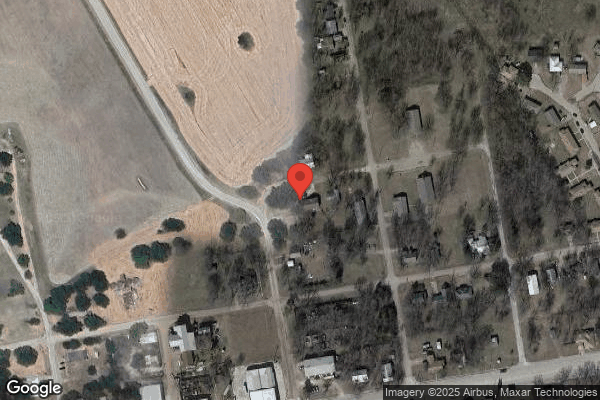
809 NE 4TH ST, KERENS, TX 75144 (903) 396-3211
For profit - Corporation 70 Beds CREATIVE SOLUTIONS IN HEALTHCARE Data: November 2025
Trust Grade
60/100
#499 of 1168 in TX
Last Inspection: April 2025

Within standard 12-15 month inspection cycle. Federal law requires annual inspections.

Overview

Kerens Care Center has a Trust Grade of C+, indicating it is slightly above average but not exceptional. It ranks #499 out of 1168 nursing homes in Texas, placing it in the top half, but is only #5 out of 6 in Navarro County, suggesting limited local competition. Unfortunately, the facility is worsening, with reported issues increasing from 5 in 2024 to 9 in 2025. Staffing is average with a 3/5 star rating and a turnover rate of 53%, which is around the state average. On a positive note, there have been no fines reported, and the facility boasts better RN coverage than 87% of Texas facilities, ensuring residents receive more comprehensive care. However, there are significant concerns as well. A serious incident occurred where a resident was transferred without proper equipment, resulting in a rib fracture. Additionally, three residents lacked a reliable call system, which could hinder their ability to summon help in emergencies. Lastly, the facility failed to provide a private space for resident council meetings, limiting residents' ability to voice their concerns confidentially. Overall, while there are strengths in staffing and RN coverage, the increasing trend of issues and specific incidents raise important questions for families considering this home.

Trust Score
C+
60/100
In Texas
#499/1168
Top 42%
Safety Record
Moderate
Needs review
Inspections
Getting Worse
5 → 9 violations
Staff Stability
⚠ Watch
53% turnover. Above average. Higher turnover means staff may not know residents' routines.
Penalties
✓ Good
No fines on record. Clean compliance history, better than most Texas facilities.
Skilled Nurses
○ Average
Each resident gets 34 minutes of Registered Nurse (RN) attention daily — about average for Texas. RNs are the most trained staff who monitor for health changes.
Violations
⚠ Watch
14 deficiencies on record. Higher than average. Multiple issues found across inspections.
★★★☆☆
3.0
Overall Rating
★★★☆☆
3.0
Staff Levels
★★★★☆
4.0
Care Quality
★★★☆☆
3.0
Inspection Score
Stable
2024: 5 issues
2025: 9 issues

The Good

  • 4-Star Quality Measures · Strong clinical quality outcomes
  • Full Sprinkler Coverage · Fire safety systems throughout facility
  • No fines on record

Facility shows strength in quality measures, fire safety.

The Bad

3-Star Overall Rating

Near Texas average (2.8)

Meets federal standards, typical of most facilities

Staff Turnover: 53%

Near Texas avg (46%)

Higher turnover may affect care consistency

Chain: CREATIVE SOLUTIONS IN HEALTHCARE

Part of a multi-facility chain

Ask about local staffing decisions and management

The Ugly 14 deficiencies on record

1 actual harm
Apr 2025 1 deficiency
CONCERN (D) 📢 Someone Reported This

A family member, employee, or ombudsman was alarmed enough to file a formal complaint

Potential for Harm - no one hurt, but risky conditions existed

Comprehensive Care Plan (Tag F0656)

Could have caused harm · This affected 1 resident

**NOTE- TERMS IN BRACKETS HAVE BEEN EDITED TO PROTECT CONFIDENTIALITY** Based on observation, interviews, and record review the facility failed to develop and implement a comprehensive person-centered...

Read full inspector narrative →
**NOTE- TERMS IN BRACKETS HAVE BEEN EDITED TO PROTECT CONFIDENTIALITY** Based on observation, interviews, and record review the facility failed to develop and implement a comprehensive person-centered care plan for each resident, consistent with the resident rights, that included measurable objectives and timeframes to meet a resident's medical, nursing, and mental and psychosocial needs that were identified in the comprehensive assessment for 1 of 6 residents (Resident #1) reviewed for comprehensive care plans. Resident #1's comprehensive care plan did not reflect Resident #1's mechanical soft texture diet. This deficient practice could place residents at risk for not receiving proper care and services due to inaccurate care plans. Findings include: A record review of Resident #1's face sheet dated 04/30/2025, reflected a [AGE] year-old male who was re-admitted to the facility on [DATE]. Resident #1's diagnoses included: unspecified dementia (a condition that causes a decline in thinking, memory, and reasoning abilities), seizures (sudden, temporary disruption of the brain's normal electrical activity, resulting in changes in behavior, movement, feelings, or consciousness.), muscle wasting and atrophy (the muscles are shrinking and losing strength), lack of coordination (having difficulty controlling your movements and making them work together smoothly) and muscle weakness (reduced ability of the body to contract muscle properly, resulting in a lower strength in one or more muscle). A record review of Resident #1's Quarterly MDS assessment, dated 04/10/2025, reflected the resident had a BIMS score of 99, which indicated the BIMS interview was not completed. Resident #1's Quarterly MDS reflected Resident #1 was dependent in the following areas: toileting hygiene, shower/bathe self, and personal hygiene. Resident #1 required substantial/maximal assistance with eating, oral hygiene, and putting on/taking off footwear. Resident #1's Quarterly MDS also reflected he received a mechanically altered diet. A record review of Resident #1's care plan, dated 04/30/2025, reflected Resident #1's care plan did not reflect Resident #1's mechanical soft diet. A record review of Resident #1's physician orders dated 04/30/2025, reflected Resident #1 had a physician order dated 12/08/2023 for regular diet, mechanical soft texture, regular consistency. During an observation on 04/30/2025 at 12:10 pm., Resident #1 was observed eating a mechanical soft diet during lunch in the dining area with the assistance of LVN A. Attempted to interview Resident #1 on 04/30/2025 at 12:10 pm., Resident #1 could not be interviewed due to his severe cognitive impairment. During an interview with LVN A on 04/30/2025 at 12:50pm, LVN A stated that Resident #1 received a mechanical soft diet. LVN A stated Resident #1 has a physician order for his mechanical soft diet. LVN A stated during the dining times she reviews the meal tickets to ensure residents are receiving the correct texture diet. LVN A was not aware that Resident #1's care plan did not reflect his mechanical soft diet. During an interview with the MDS Coordinator on 04/30/2025 at 3:00pm, the MDS Coordinator stated that Resident #1's mechanical soft diet should have been reflected on his care plan. The MDS Coordinator stated she and other department heads were responsible for ensuring that care plans were up to date and accurate. The MDS Coordinator stated if a resident's care plan was not accurate then the resident would not receive the appropriate care needed. During an interview with the ADM on 04/30/2025 at 3:50pm, the ADM stated Resident #1's mechanical soft diet should have been reflected on his care plan. ADM stated it was the MDS Coordinator's responsibility for ensuring care plans have the most accurate information for the resident's care. ADM stated that Resident #1 could have received the wrong texture diet because of his care plan not reflecting his mechanical soft diet. A record review of the facility's Comprehensive Care Planning policy, not dated, reflected The facility will develop and implement a comprehensive person-centered care plan for each resident, consistent with the resident rights that includes measurable objectives and timeframes to meet a resident's medical, nursing, and mental and psychosocial needs that are identified in the comprehensive assessment. The comprehensive care plan will describe the following- The services that are to be furnished to attain or maintain the resident's highest practicable physical, mental, and psychosocial well-being Each resident will have a person-centered comprehensive care plan developed and implemented to meet his other preferences and goals, and address the resident's medical, physical, mental, and psychosocial needs .
Apr 2025 7 deficiencies
CONCERN (D)

Potential for Harm - no one hurt, but risky conditions existed

Resident Rights (Tag F0550)

Could have caused harm · This affected 1 resident

**NOTE- TERMS IN BRACKETS HAVE BEEN EDITED TO PROTECT CONFIDENTIALITY** Based on observations, interviews, and record review the facility failed to protect and promote an environment that ensured the ...

Read full inspector narrative →
**NOTE- TERMS IN BRACKETS HAVE BEEN EDITED TO PROTECT CONFIDENTIALITY** Based on observations, interviews, and record review the facility failed to protect and promote an environment that ensured the resident's right to a dignified existence for 2 of 2 residents (Resident #24 and #3) reviewed for resident rights. The facility failed to to address Resident #3's eating restrictions in a dignified manner and protect confidentiality related to incontinence care needs on Resident #24. This failure could place residents at risk for shame and loss of dignity that could negatively impact their quality of life. Findings included: Record review of Resident #3's undated face sheet, revealed he was a [AGE] year-old male admitted [DATE] with diagnoses of pneumonitis, epilepsy (seizures), stroke, malnutrition, right side muscle weakness related to stroke, dementia, and anxiety. Record review of Resident #3 's Quarterly MDS assessment dated [DATE], revealed a BIMS score of 99, which indicated the resident's cognitive ability could not be determined due to other medical conditions. Record review of Resident #3's Care Plan, reflected a focus area was initiated for depression on 5/16/23 (ongoing) with a goal for the resident to decrease signs and symptoms of depression. Record review of Resident #24's undated face sheet, revealed she was a [AGE] year-old female admitted [DATE] with diagnoses of diabetes type 2, depression, anxiety, stroke, falls, and muscle weakness. Record review of Resident #24 's Quarterly MDS assessment dated [DATE], revealed a BIMS score of 02, which indicated the resident's cognitive ability was severely impaired. Record review of Resident #24's Care Plan, reflected a focus area was initiated for depression with a goal for the resident to be free from discomfort or adverse reactions from antidepressants. Observation on 04/08/25 at 10:46 AM revealed Resident #24, had a note on her door that opened into the public hallway saying, Please Check Resident 24's (Sign had residents name on it.) Pull-ups are on both legs Thanks. In an interview on 04/09/2025 at 11:50 AM with the ADON when asked by the state surveyor where Resident #3 could be located, she stated he was at the feeder table. There was 1 resident in the presence of the state surveyor and the ADON when this was said. In a follow up interview on 04/09/2025 at 11:58 AM with the ADON when asked why she referred to the table in the dining room as the feeder table she stated she was not supposed to say feeder table; she did not know the correct term for it, and she realized as soon as she said it, she should not have said it. She stated she was aware that was a dignity issue, and she would ask her DON what the correct term was. In a phone interview on 04/10/2025 at 11:15 AM, the Responsible Party for Resident #24 stated she posted the sign. In an interview on 4/10/2025 at 1:32 PM, CNA G stated the policy on maintaining confidentiality regarding resident's incontinence/wearing briefs was to keep all information private and it was important to maintain privacy because it was not anyone else's business. She stated the negative outcome to residents if not done could be embarrassment and it could cause them depression. She stated a sign stating a resident wears a brief might indicate the resident was incontinent and that a sign visible in the hallway was not private. In an interview on 4/10/2025 at 1:43 PM LVN H stated, the policy on maintaining confidentiality regarding resident's incontinence/wearing briefs was they were not supposed to tell anybody. She stated it was important to maintain privacy on incontinence for resident's dignity and privacy and the negative outcome to residents if not maintained could be humiliation and loss of dignity. She stated a sign stating a resident wore a brief would indicate the resident was incontinent and a sign visible in the hallway was not private. In an interview on 4/10/2025 at 1:50 PM the ADM stated, the policy on maintaining confidentiality regarding incontinence/wearing briefs was that the facility was confidential about that information, and it was important to maintain privacy on incontinence because it was a dignity issue for the resident. He stated the negative outcome to residents if not done could be aggressiveness and embarrassment. He stated a sign stating a resident wore a brief would of course indicate the resident was incontinent and a sign visible in the hallway was not private. A record review of the facility undated policy titled, Resident Rights, reflected the following: The resident has a right to a dignified existence. A facility must treat each resident with respect and dignity and care for each resident in a manner and in an environment that promotes quality of life. The facility must protect and promote the rights of the resident.
CONCERN (D)

Potential for Harm - no one hurt, but risky conditions existed

ADL Care (Tag F0677)

Could have caused harm · This affected 1 resident

**NOTE- TERMS IN BRACKETS HAVE BEEN EDITED TO PROTECT CONFIDENTIALITY** Based on observations, interviews, and record review, the facility failed to ensure residents who were unable to carry out activ...

Read full inspector narrative →
**NOTE- TERMS IN BRACKETS HAVE BEEN EDITED TO PROTECT CONFIDENTIALITY** Based on observations, interviews, and record review, the facility failed to ensure residents who were unable to carry out activities of daily living received necessary services to maintain personal hygiene for one (Resident #36) of five residents reviewed for ADL care. The facility failed to shave Resident #36's facial hair all along the under side of her chin that was approximately 1 cm in length This deficient practice could place residents at risk of a decline in their sense of well-being and level of satisfaction with life. Findings included: Review of Resident #36's quarterly MDS assessment dated [DATE], reflected an [AGE] year-old-female that was admitted to the facility on [DATE] with diagnoses including high blood pressure, dementia, anxiety, depression, muscle wasting and atrophy, muscle weakness, and unsteadiness of feet. Her BIMS score was a 04, indicating severe cognitive impairment. She required substantial/maximal assistance to maintain personal hygiene. Review of Resident #36's care plan revealed she had an ADL Self Care Performance Deficit with goals to remain clean, dry, and well-groomed and to maintain or improve current level of function in personal hygiene. She had interventions including to assist with personal hygiene was required: hair, shaving, and oral care. Observation and interview on 4/09/25 at 09:36 AM with Resident #36 in her room revealed her sitting in her wheelchair looking at one of the bare walls. The resident had facial hair along her chin that was approximately 1 cm in length. When asked about her chin hair the resident stated it bothered her that it was there, and she wanted it trimmed if the hair was not plucked out 1 by 1. She was unable to recall the last time the facility shaved it for her. In a telephone interview on 04/09/25 at 2:54 PM with Resident #36's FM he stated the resident used to always take care of her shaving needs herself. He did not think there would be any issues with someone helping her out in that area now, she had not shown any combative behaviors. In an interview on 04/09/25 at 3:11 PM with CNA E she stated she had worked at the facility PRN for 2 years, worked 2 days a week, usually 2 or 3 days during the week. She did help with showers, and she had been waiting on razors to be brought back to the memory care unit. She stated some days she had a hard time persuading Resident #36 to get in the shower, but the resident did not regularly refuse or have a history of being combative. She could not recall the last time she shaved Resident #36 . She stated that shaving should be done during the residents' shower time if needed or when asked by the resident. In an interview on 04/10/25 at 9:16 AM the ADM stated typically during showers was when residents would be shaved, but it could be outside of that time as well . The CNA's were responsible for providing showers and ADL care during the residents' assigned shower days. Review of the facility's Shaving, Electric/Safety Razors policy undated reflected: It [shaving] is usually done as a part of daily personal hygiene, although every other day is sufficient for some based on the beard growth. It is done to promote cleanliness and a positive body image.
CONCERN (E)

Potential for Harm - no one hurt, but risky conditions existed

Deficiency F0558 (Tag F0558)

Could have caused harm · This affected multiple residents

**NOTE- TERMS IN BRACKETS HAVE BEEN EDITED TO PROTECT CONFIDENTIALITY** Based on observations, interviews, and record review the facility failed to ensure each resident's bedside, toilet and bathing f...

Read full inspector narrative →
**NOTE- TERMS IN BRACKETS HAVE BEEN EDITED TO PROTECT CONFIDENTIALITY** Based on observations, interviews, and record review the facility failed to ensure each resident's bedside, toilet and bathing facilities were adequately equipped to allow all residents to call for staff assistance through a communication system that would relay the call directly to a staff member or a centralized staff work area for 3 of 10 residents (Resident #20, Resident #28, and Resident #31) reviewed for the resident call system . The facility failed to provide a working communication system, which was easily at reach, which would allow Resident #20, Resident #28, and Resident #31 the ability to safely call for staff for assistance. This failure could place residents at risk of not having a means of directly contacting caregivers in an emergency or when they needed support for daily living. Findings included: Record review of Resident #20's face sheet dated 04/09/2025 reflected an [AGE] year-old male who was admitted to the facility on [DATE]. Resident #20 had diagnoses which included metabolic encephalopathy (brain disease), cellulitis (bacterial infection involving inner layers of the skin), vitamin D deficiency, dry eye, constipation, muscle wasting, abnormalities of gait and mobility, unsteadiness on feet, lack of coordination, reduced mobility, insomnia (difficulty sleeping), glaucoma (eye disease), hypertension (high blood pressure), adult failure to thrive, and history of falling. Record review of Resident #20's Quarterly MDS dated [DATE] reflected Resident #20 had a BIMS score of 03, which indicated severe cognitive impairment. The MDS further reflected Resident #20 needed assistance of two or more helpers for his activities of daily living. Resident #20 required moderate assistance for bed mobility, and transfers, and he used a wheelchair for mobility. Record review of Resident #20's Care Plan, dated 03/07/25, ensure Resident #20's call light was within reach and encourage the resident to use it for assistance as needed. Review of Resident #28's Face Sheet dated 04/09/2025 reflected she was a [AGE] year-old female who was admitted to the facility on [DATE]. Resident #28's diagnoses included dementia (memory, thinking, difficulty), toxic encephalopathy (neurological disorder dur to being exposed to toxic substances), pain due to trauma, muscle wasting, abnormalities of gait and mobility, sexual disorder, delusional disorder (serious mental illness that causes unshakeable false beliefs for at least a month), muscle weakness, unsteadiness on feet, reduced mobility, muscle wasting, lack of coordination, depression, hyperthyroidism (excessive production of thyroid hormones), anxiety (feeling of uneasiness or worry), hyperlipidemia (high cholesterol), seizures, and hypertension (high blood pressure). Record review of Resident #28's Quarterly MDS dated [DATE] reflected Resident #28 had a BIMS score of 06, which indicated severe cognitive impairment. The MDS further reflected Resident #28 required supervision and touching assistance from staff for her activities of daily living, and transfers, and she walked independently. Record review of Resident #28's Care Plan, dated 01/27/25, Ensure/provide a safe environment: Call light in reach, Adequate low glare light, bed in lowest position and wheels locked, Avoid isolation. Review of Resident #31's Face Sheet dated 04/09/2025 reflected he was a [AGE] year-old male who was admitted to the facility on [DATE]. Resident #31's diagnoses included encephalitis and encephalomyelitis (inflammation of the brain and the spinal cord), dysphagia (difficulty swallowing), insomnia (difficulty sleeping), calculus of gallbladder (stones in the gallbladder), muscle wasting, unsteadiness on feet, abnormalities of gait and mobility, collapsed vertebra (compression fracture of the spine), nicotine dependency, muscle weakness, nystagmus (involuntary eye movement), hypertension (high blood pressure), and ataxia (impaired balance or coordination due to damage to the brain, nerves or muscles). Record review of Resident #31's Quarterly MDS dated [DATE] reflected Resident #31 had a BIMS score of 07, which indicated severe cognitive impairment. The MDS further reflected Resident #21 required supervision and touching assistance from staff for his activities of daily living, and transfers, and he walked independently. Record review of Resident #31's Care Plan, last revised on 03/01/25, Encourage the resident to use bell to call for assistance. Observation of Resident #31's call light on 04/08/2025 at 11:08am revealed his call light was not within reach of the resident. Resident #31's call light was hanging straight to the floor between the bed and the wall. The resident could not reach the call light. Resident #31 was sitting on the end of his bed in the middle and could not reach the call light if he needed it. Observation of Resident #20's call light on 04/08/2025 at 11:08am revealed his call light was not within Resident #20's reach. Resident #20's call light was on his roommates bedside table. The resident was laying in his bed, and he could not reach the call light if he needed it. Observation of Resident #28's call light on 04/08/2025 at 1:09pm revealed her call light was on the floor approximately 40 feet from the resident. Resident #28 was laying in her bed and could not reach her call light if she needed it. During an interview with Resident #20 on 04/08/2025 at 11:10am revealed he would not answer questions about the call light. During an interview on 04/09/2025 09:33am with Resident #28 revealed her call light was rarely in reach. She said she would have to go underneath her bedside table to get her call light. During an interview on 04/09/2025 09:35am with Resident #31 revealed his call light was always hung straight to the floor. Resident #31 also said he did not use the call light anyway. During an interview with the ADON on 04/10/2025 at 09:312am revealed she had been trained on resident rights. She said the policy was the call light should always be within the resident's reach. She said the call light should be within reach any time the resident was in their room. She said if the call lights were not in the resident's reach the resident would not be able to get the help they needed, and the staff could not tend to them quickly. She also said the resident could fall or worst-case die depending on what was going on with the resident. She said everyone was responsible for ensuring the call light was within reach. She said it was monitored by doing rounds. She said the call light was not in reach because the residents were not in their room a lot and staff may have forgotten to put it back after making the bed. During an interview with LVN B on 04/02/2025 at 1:22pm revealed she had been trained on resident rights. She said the call light was supposed to be where the resident could reach it. She also said that if the resident was paralyzed the call light should be placed on the side that was not paralyzed. She said all staff were responsible for ensuring the call lights were within reach. She said if the call lights were not within the resident's reach the resident could fall or get hurt. She also said the nurses and CNA's were responsible for ensuring the call lights were within the resident's reach. She said the CNA's and nurses monitor the call lights by doing rounds and would put the call light in the resident's reach if it was not in their reach. She said the staff did not pay attention to the call lights and that was why the call lights were not in reach. During an interview with MA B on 04/10/2025 at 10:00am revealed she and staff had been trained on resident rights. She said the call light was supposed to be within the resident's reach. She also said if the resident was in the wheelchair the call light was supposed to be close to the wheelchair. She said the call light needed to be within the residents reach in case of an emergency or in case the residents needed staff. She said the call lights were monitored by the charge nurse and all staff were responsible for ensuring the call lights were within the resident's reach. She said call lights were monitored by walking the halls and checking the call lights. She said she did not know why the call light was not in reach. She said some may have fallen off the residents bed. During an interview with the ADM on 04/10/2025 at 10:16am revealed she and staff had been trained on resident rights. She said the call light was supposed to be within the resident's reach. She also said it was important to have the call light in the resident's reach in case of an emergency. She said if the call lights were not within the resident's reach the resident could die in worst case scenario. She also said management were responsible for ensuring the call lights were within the resident's reach. She said the call lights were monitored by doing rounds. She said she did not know why the call light was not in reach. Policy for dignity and call lights were requested from the ADM on 04/09/2025 at 11:11am, and at 4:17pm. The policy was not received on exit.
CONCERN (E)

Potential for Harm - no one hurt, but risky conditions existed

Deficiency F0565 (Tag F0565)

Could have caused harm · This affected multiple residents

Based on interviews, and record review the facility failed to provide a private space for residents' monthly council meetings and the confidential resident group meeting during survey for five of five...

Read full inspector narrative →
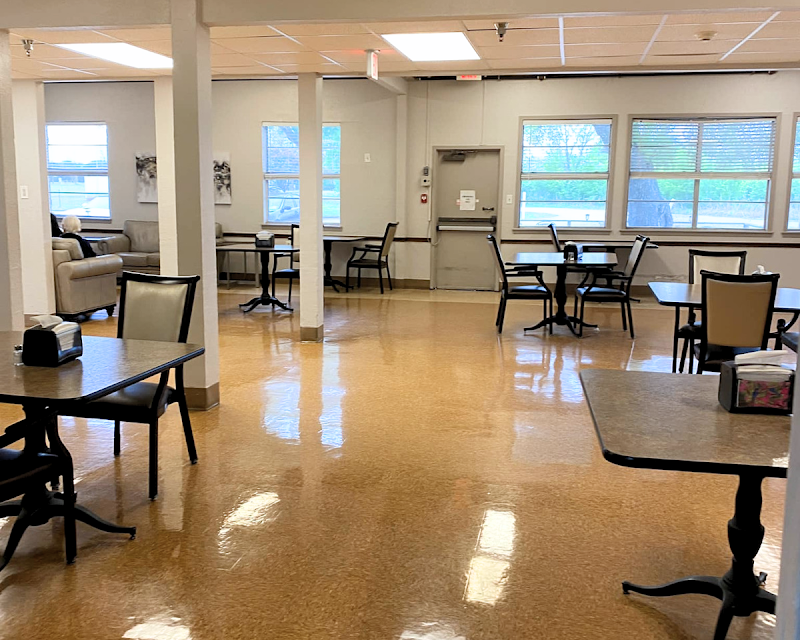
Based on interviews, and record review the facility failed to provide a private space for residents' monthly council meetings and the confidential resident group meeting during survey for five of five residents reviewed for resident council. The facility did not provide a private space for resident council meetings. This failure could place residents, who attended resident council meetings, at risk of not being able to exercise their rights of being able to voice their grievances in private without uninvited staff being present. Findings included: During an interview on 04/08/2025 at 10:20 am, with the Activity Director revealed the Resident Council meetings were held in the dining room. She stated there was not another area for the residents to meet in private. She stated she would close the doors and place signs on the doors. She stated she would notify staff before the meeting not to come in or out of the dining room until after the resident group meeting. The Activity Director offered to move the Resident Council meeting to a bedroom so it would be private since it was a few residents. During an interview on 04/09/2024 at 09:30am, during a confidential resident group meeting held in a bedroom with five residents revealed their meetings were normally held in the dining room. The residents in attendance of the resident group meeting stated interruptions occurs every- time they had a Resident Council meeting. The residents stated their meetings have never been private. The residents in the meeting stated they could not speak freely because staff would come in. The residents stated the AD would get the staff out during the meeting, but staff continued to interrupt their council meetings. The residents in the meeting stated they would like some place private to meet. During an interview with the ADON on 04/10/2025 at 9:35am revealed she had been trained on resident rights. She said the resident council must have a private place to meet. She said staff were not to be a part of the meeting unless the council invited them. She said the AD was responsible for ensuring the resident council had a private place to meet. She said she had not heard the resident council wanted a more private place to meet. She said if the resident council did not have a private meeting space the residents may not feel comfortable voicing their concerns. During an interview with the AD on 04/010/2025 at 9:37am revealed she had been trained on resident rights. She said the residents were to have a private meeting space for their resident council meeting. She said staff could not be in the meeting without the permission of the resident council. She said she was responsible for ensuring they had a private place to meet. She said she put signs on the dining room door to keep staff out. She said the resident council had not asked for a private place. She said the residents may not feel comfortable saying what they want or would not come to the meetings because it was not private. During an interview with the ADM on 04/10/2025 at 10:12am revealed she had been trained on resident rights. She said the resident council should have a private area to meet, and staff could not attend unless invited. She said she was responsible for ensuring the resident council had a private area to meet. She said if the resident council did not have a private area people could overhear their meeting and try to retaliate. She also said it was a dignity issue. Record Review of the facility's Resident Rights Policy dated 3/09/2022 revealed the residents had the right to be treated with respect and dignity. The resident had the right to privacy. The residents had the right to organize and participate in resident groups in the facility.
CONCERN (E)

Potential for Harm - no one hurt, but risky conditions existed

Safe Environment (Tag F0584)

Could have caused harm · This affected multiple residents

Based on interviews and observations, the facility failed to provide a safe, clean, comfortable, and homelike environment, allowing the resident to use his or her personal belongings to the extent pos...

Read full inspector narrative →
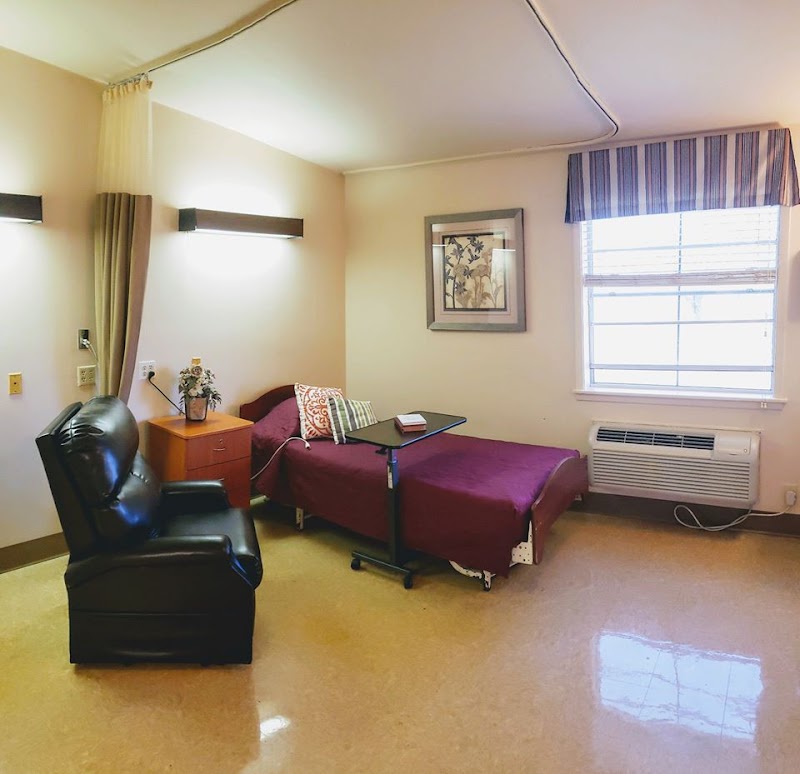
Based on interviews and observations, the facility failed to provide a safe, clean, comfortable, and homelike environment, allowing the resident to use his or her personal belongings to the extent possible for 1 of 1 memory care units (10 total residents) reviewed for homelike environment. The facility failed to provide a homelike environment inside the rooms (by hanging pictures, having decor present, or having color present) for the residents who lived in the memory care unit of the facility. This deficient practice could lead to regression and/or a feeling of institutionalization for the residents. Findings included: In an observation on 4/09/2025 at 09:33 AM in the facility's secured unit revealed a few paintings hung in the hallway as well in the dining room and dayroom. Observations of all 5 rooms (2 residents per room) revealed grey colored walls that were barren of any decorations. No personal or homelike decorations were observed in any of the 5 rooms. Each room contained 2 beds, 2 dressers, televisions, blinds on the window, over-bed lights, a privacy curtain between beds, and in some rooms, a recliner. In a confidential interview on 4/09/25 at 10:15 AM with a residents FM who resided in the facility's secured unit revealed the family of the resident had given the resident a few family pictures to have in the room. This FM did not regularly visit the resident. No pictures were visible in this resident's room. In an interview on 4/09/2025 at 11:30 AM with CNA D she stated she had been working at the facility for a year and a half. When asked about the walls in the resident rooms being bare and not personalized, she stated a lot of the residents exhibited behaviors such as tearing things off the walls. She stated it was just the rules here because some have behaviors and can take the stuff off the wall others cannot have décor in their rooms. She stated they had decor in the dining room and day room because that's where residents gathered and can be watched by the staff. She stated the memory care unit was full; having 2 residents per room for a total of 10 residents and it was hard to watch everybody if they were not in the same location. In a telephone interview on 04/09/25 at 2:54 PM with Resident #36's FM he stated he did not visit the resident often and another FM would be able to provide décor to the resident during that FM's next visit. In an interview on 04/10/25 at 9:16 AM the ADM stated the facility in the past had a decorative team that came and decorated the facility but the residents in the memory care unit took down the pictures that were up. She stated the facility had consistently tried to add more decorations and residents would pull them down. She stated they [facility staff] told family members to bring things to make the resident rooms their home. She stated it was a challenge to keep things in place. She stated a negative outcome to the rooms not feeling homelike could be regression, and she did not want the residents to feel institutionalized. Review of the facility's undated policy titled Resident Rights packet reflected, Safe environment - The resident has a right to a safe, clean, comfortable, and homelike environment, including but not limited to receiving treatment and supports for daily living safely. The facility must provide- 1. A safe, clean, comfortable, and homelike environment, allowing the resident to use his or her personal belongings to the extent possible. a. This includes ensuring that the resident can receive care and services safely and that the physical layout of the facility maximizes resident independence and does not pose a safety risk. b. The facility shall exercise reasonable care for the protection of the resident's property from loss or theft. 2. 2. Housekeeping and maintenance services necessary to maintain a sanitary, orderly, and comfortable interior;
CONCERN (E)

Potential for Harm - no one hurt, but risky conditions existed

Deficiency F0679 (Tag F0679)

Could have caused harm · This affected multiple residents

Based on observations, interviews, and record review the facility failed to provide, based on the comprehensive assessment and care plan, both facility-sponsored group and individual activities and in...

Read full inspector narrative →
Based on observations, interviews, and record review the facility failed to provide, based on the comprehensive assessment and care plan, both facility-sponsored group and individual activities and independent activities designed to meet the interests of and support the physical, mental, and psychosocial well-being in the 1 of 1 memory care units (10 residents) reviewed for activities. The facility did not provide the memory care unit residents with individual or group activities. Findings included: In an observation on 04/09/25 at 9:35 AM in the memory care unit revealed the residents all sitting in the day room with a television on and 1 staff member present with them. Some residents were looking at the television and some were looking around and mumbling to themselves. There was no activity calendar posted in the memory care unit. There was no evidence of activities (puzzles, books, baby dolls, toys, coloring books, pencils, crayons) within the memory care unit. In an observation and interview on 04/09/25 at 2:09 PM with CNA D she stated they did not do activities back there [in the memory care unit], and at the time they were just chilling. The residents were observed to be sitting in the day room talking to themselves and looking around. CNA E was observed to be trying different remote controls to turn on the television, but they did not work. She then got a radio and turned it on for the residents to listen to. In an observation on 04/09/25 at 3:00 PM in the memory care unit revealed all the residents sitting in the day room with 1 staff member present. The television was on, and some residents were watching, and some were looking around and mumbling to themselves. There was no activity schedule posted. In an interview on 04/09/25 at 3:11 PM CNA E stated she had worked at the facility PRN for 2 years, worked 2 days a week, usually 2 or 3 days during the week. She stated activities vary, sometimes they watched the television and/or listened to the radio. She stated the residents liked to walk up and down the hall for exercise and when it was nice outside, they would go outside in the secure courtyard . In an interview on 04/09/2025 at 3:25 PM CNA F stated she did not work in the memory care unit, but she usually went back there to provide breaks to the CNA's when they asked. She stated the residents could have activities back there, but it did not take long for the residents to wander back into the day room. She stated the residents were usually in the day room when she provided breaks so the 1 staff could see all the residents . In an interview on 04/09/2025 at 4:40 PM the AD stated she had been working at the facility for less than 6 months. She had been using the previous AD's activity calendar's and would adjust the activities as needed, but she did not utilize the activity calendar to provide activities to the memory care unit. She stated she did not have an activity log for the memory care unit because she did not do activities with them, but that she was responsible for doing activities with them. She stated the CNA in the memory care unit had recently painted 2 residents nails. The AD inquired with the state surveyor if activities should be done daily in the memory care unit to which the state surveyor recommended, she check with the ADM . In an interview on 04/10/25 at 9:16 AM the ADM stated they did some activities in the memory care unit, but it was not as much as the other population of residents. She stated she did not feel the posted activity calendar in the main area of the facility should apply to the MC unit because some activities were inappropriate for the ability levels of the residents in the MC unit. She stated that due to the state surveyors concerns a group activity was prompted to be done in the memory care unit at 11:00 AM on 4/10/25 . Review of the facility's policy titled SecureCare Activity Program dated last revised January 2023 reflected, The SecureCare Program will provide a robust therapeutic activity program to meet the individual needs of each resident, provide a safe environment that maximizes independence, and provides resident centered care. Therapeutic activity programs will promote a variety of engaging activities geared towards sensory stimulation and skill retention. 1. The Activity Director and Director of Nursing or designee will work in conjunction to develop an organized therapeutic activity program for the SecureCare Program to include community resources and involvement within, as well as outside the health care center. 2. Each resident will have a therapeutic plan of care to meet individual needs and interests, maintain functional ADL skills, and provide social interaction, while protecting the resident from environmental over-stimulation. 3. The Activity Program will include small group activities and individual activities. 4. Programs should take place in mornings, afternoons and evenings that span throughout the entire week.
CONCERN (E)

Potential for Harm - no one hurt, but risky conditions existed

Infection Control (Tag F0880)

Could have caused harm · This affected multiple residents

**NOTE- TERMS IN BRACKETS HAVE BEEN EDITED TO PROTECT CONFIDENTIALITY** Based on observations, interviews, and record review the facility failed to establish and maintain an infection prevention and c...

Read full inspector narrative →
**NOTE- TERMS IN BRACKETS HAVE BEEN EDITED TO PROTECT CONFIDENTIALITY** Based on observations, interviews, and record review the facility failed to establish and maintain an infection prevention and control program designed to provide a safe, sanitary, and comfortable environment and to help prevent the transmission of communicable diseases and infections for 4 of 4 resident (Resident #13, #14, #24, and #39) and 1 of 1 laundry carts reviewed for infection control. The facility failed to ensure MA B performed proper hand hygiene and sanitize contaminated medication cart and blood pressure equipment when passing medications on Resident #13, #14, #24, and #39. The facility failed to ensure laundry staff handled and stored linens in a manner to ensure cleanliness and protect from dust and soil to prevent cross-contamination and the spread of infections for 1 of 1 laundry carts. This failure could place residents at risk for development of communicable diseases and infections. Findings included: Record review of Resident 13's undated face sheet, revealed he was a [AGE] year-old male admitted [DATE] with diagnoses of chronic obstructive pulmonary disease (lung disease makes breathing hard), malnutrition, depression, anxiety, and heart disease. Record review of Resident #13's Quarterly MDS assessment dated [DATE], revealed a BIMS score of 07, which indicated the resident's cognitive ability was severely impaired. Record review of Resident 13's Care Plan, reflected a focus area was initiated for Impaired cognitive function/dementia 7/25/2024 with a goal for the resident to be able to communicate basic needs and an intervention to administer medications as ordered. Record review of Resident #14's undated face sheet, revealed she was an [AGE] year-old female admitted [DATE] with diagnoses of dementia, kidney disease, anemia, abnormal gait, depression, and heart failure. Record review of Resident 14's Quarterly MDS assessment dated [DATE], revealed a BIMS score of 06, which indicated the resident's cognitive ability was severely impaired. Record review of Resident 14's Care Plan, reflected a focus area was initiated for Respiratory Infection on 1/31/25 with a goal for the resident to be free from signs and symptoms of infection. Record review of Resident 's 24 undated face sheet, revealed she was a [AGE] year-old female admitted [DATE] with diagnoses of diabetes type 2, depression, anxiety, stroke, falls, and muscle weakness. Record review of Resident 24 's Quarterly MDS assessment dated [DATE], revealed a BIMS score of 02, which indicated the resident's cognitive ability was severely impaired. Record review of Resident #24's Care Plan, reflected a focus area was initiated for a skin cellulitis infection on 4/1/25 with a goal for the resident to be free from complications related to infection. Record review of Resident 39's undated face sheet, revealed he was a [AGE] year-old male admitted [DATE] with diagnoses of vascular dementia, stroke, anxiety, hypertension (high blood pressure), and cellulitis of lower limb. Record review of Resident 39's Quarterly MDS assessment dated [DATE], revealed a BIMS score of 03, which indicated the resident's cognitive ability was severely impaired. Record review of Resident 39's Care Plan, reflected a focus area was initiated for impaired cognitive function/dementia with a goal for the resident to maintain current level of cognitive function. Observation on 04/08/25 at 01:14 PM to 1:25 PM revealed LS-1 pushing the uncovered laundry cart up and down the North Hall delivering linens to residents' rooms. LS-I then took the cart into the secure unit with the cover still up. Observation on 04/09/25 at 08:45 AM revealed MA B removed a blood pressure cuff from the top of the medication cart and preceded into Resident #24's room to take her blood pressure. MA B touched the resident's arm then returned to work on the medication cart to prepare the medications. She placed the uncleaned blood pressure cuff on top of the cart. After preparing the medications, she returned to the resident, and gave the medications. She then returned to the medication cart to move to the next resident without performing hand hygiene. Observation on 04/09/25 at 08:53 AM revealed MA B removed an uncleaned blood pressure cuff from the top of the medication cart and preceded into Resident #14's room to take her blood pressure. MA B touched the resident's arm then returned to work on the medication cart to prepare the medications. She placed the uncleaned blood pressure cuff on top of the cart. After preparing the medications, she returned to the resident, and gave the medications. She then returned to the medication cart to move to the next resident. She performed hand hygiene here but did not clean the blood pressure cuff or the medication cart top. Observation on 04/09/25 at 09:10 AM revealed MA B removed an uncleaned blood pressure cuff from the top of the medication cart and preceded into Resident #13's room to take his blood pressure. MA B touched the resident's arm then returned to work on the medication cart to prepare the medications. She placed the uncleaned blood pressure cuff on top of the cart. After preparing the medications, she returned to the resident, and gave the medications. She then returned to the medication cart to move to the next resident without performing hand hygiene. Observation on 04/09/25 at 09:23 AM revealed MA B removed a blood pressure cuff from the top of the medication cart and preceded into Resident #39's room to take his blood pressure. MA B touched the resident's arm then returned to work on the medication cart to prepare the medications. She placed the uncleaned blood pressure cuff on top of the cart. After preparing the medications, she returned to the resident, and gave the medications. She then returned to the medication cart to move to the next resident without performing hand hygiene. Observation on 04/09/25 at 10:16 AM to 10:24 AM revealed LS-J pushing the partially uncovered laundry cart up and down the North Hall delivering linens to resident rooms. LS-J then took the cart into the Secure unit and the cover was then lifted completely, leaving the clothes open while she delivered clothes to the rooms. The residents had full access to the clothes and linens on the cart. In an interview on 4/8/25 at 01:50 PM LS-I stated, she worked the laundry area 2 days a week and she stated she kept the cart covered when travelling to the halls, but when she started delivering laundry to the rooms down the hall, she left the cart uncovered because the rooms were close together. She stated, laundry should be covered to protect it from germs and that was done because the residents could get sick if you did not. In an interview on 4/9/25 at 09:23 AM MA B stated, the policy on cleaning equipment between residents was to clean after every 2-3 residents and that was important to prevent the spread of infection and illnesses. She stated the policy on hand hygiene was to clean between each resident to stop the spread of infections. She stated if this was not done residents could get infections and get sick. In an interview on 4/9/25 at 01:50 PM LS-J stated, she normally delivered the laundry with the top down, and she slid it over so she can see what room to go to. She stated the policy was to keep linen carts always covered to prevent cross-contamination that could make residents sick. In an interview on 4/10/25 at 01:32 PM CNA G stated, the policy on hand hygiene between residents was to perform hand hygiene between residents and the policy on cleaning equipment between residents was to clean between residents. She stated it was important to clean hands and equipment for infection control and the negative outcome if that were not done was residents could get an infection or illness. She stated the policy for delivering linens was to keep the cart covered and that was important to keep them clean so residents would not get illnesses. In an interview on 4/10/25 at 01:43 PM LVN H stated, the policy on hand hygiene between residents was to hand sanitize between each resident for 2 times then hand wash the next time and the policy on cleaning equipment between residents was you need to use purple wipes between residents to clean and allow it to sit the appropriate time to dry. She stated it was important to clean hands and equipment because of infection control and the negative outcome if that were not done could be infections or sepsis that could lead to death. She stated the policy for delivering linens was linens were supposed to be always covered and that it was important to keep linens covered during transport because of infection control. She stated, and the negative outcome if that were not done could be infections or sepsis that could lead to death. In an interview on 4/10/2025 at 1:50 PM the ADM stated, the policy on hand hygiene between residents was that staff were required to do hand hygiene always between residents-100% of the time. He stated the policy on cleaning equipment between residents was that it was required 100% of the time. He stated it was important to clean hands and equipment between residents because it could cause infection to spread if not done and could cause death. He stated the policy for delivering linens was to keep them covered during transport for infection control and the negative outcome to residents if linens were not covered could be infections. A record review of the facility policy titled, Fundamentals of Infection control Precautions-Hand Hygiene: Dated 2019 with a last revision date of 3/2024 reflected the following: Hand hygiene continues to be the primary means to prevent the spread infections. Hand Hygiene is required upon and after meeting a resident's intact skin (when taking a blood pressure). Hand Hygiene is required after handling soiled equipment. A record review of the facility policy titled, Linens with a date of 2018 reflected the following: Transport bulk clean linen to resident's rooms in a clean, covered cart. All clean linen will be stored in a secured area. The linen cart will be covered. Per facility, there was no policy specific to sanitizing equipment between residents.
Feb 2025 1 deficiency
CONCERN (E) 📢 Someone Reported This

A family member, employee, or ombudsman was alarmed enough to file a formal complaint

Potential for Harm - no one hurt, but risky conditions existed

Pharmacy Services (Tag F0755)

Could have caused harm · This affected multiple residents

**NOTE- TERMS IN BRACKETS HAVE BEEN EDITED TO PROTECT CONFIDENTIALITY** Based on observations, interviews and record review, the facility failed to provide pharmaceutical services (including procedure...

Read full inspector narrative →
**NOTE- TERMS IN BRACKETS HAVE BEEN EDITED TO PROTECT CONFIDENTIALITY** Based on observations, interviews and record review, the facility failed to provide pharmaceutical services (including procedures that assure the accurate acquiring, receiving, dispensing, and administering of all drugs and biologicals) to meet the needs of each resident for 7 of 18 residents (Resident #5, #8, #9, #10, #11, #12, #14) reviewed for medications and pharmaceutical services, in that: The facility failed to ensure narcotic audits were properly conducted on or about 2/6/2025, through 2/8/2025, per the facility's policies and procedures, resulting in unaccounted for, misplaced, and/or misappropriated medications, including (2) tablets of Lorazepam 1mg, (1) tablet of Tylenol #3 (Codeine), (2) tablets of Lorazepam .5mg, (1) tablet of Phenobarbital 60mg, and (1) tablet of Amoxicillin 500mg. The facility failed to ensure medications, including controlled substances, were administered to Resident #5 and Resident #9 on 2/7/2025, at 1800 (6:00 PM), as ordered or scheduled, resulting in the delayed administration of necessary medications. LVN A failed to follow the facility's Medication Administration Procedures policy on 2/26/2025, in that LVN A withdrew and prepared scheduled medications, including narcotics, for Resident #8, #10, and #11, in anticipation of their future administration, but failed to administer the medications or properly dispose of thee medications. LVN A also failed to sign residents' narcotic count sheets after removing the medications, thus creating discrepancies in the count for those medications. LVN A failed to completely and accurately document the administration of Resident #14's Fentanyl 12mcg Transdermal Patch in that LVN A signed the medication out on the resident's narcotic sheet prior to 10:55AM on 2/26/2025 but post-dated the administration for 2/26/2025 at 12:00 PM. LVN A did not withdraw the patch from the prescription box, administer or apply the medication, but documented a reduction in the count by 1 when 2 patches remained, causing a discrepancy in the count. These failures placed the residents at risk of not receiving the intended therapeutic benefits of their medications or care needed to maintain their highest practicable physical, mental, and psychosocial well-being. Findings included: Review of Resident #5's face sheet on 2/26/2025 reflected a [AGE] year-old female admitted to the facility on [DATE]. Her diagnoses that include, but are not limited to Unspecified Dementia (dementia that is not specified by a doctor; a group of symptoms that affects memory, thinking, and interferes with daily life), Unspecified Glaucoma (an eye condition that damages the optic nerve), Schizoaffective Disorder, Bipolar Type (a form of mental illness that has the features of both schizophrenia and a mood disorder), Major Depressive Disorder (a mood disorder characterized by persistent feelings of sadness, loss of interest and changes in sleep and appetite), and anxiety disorder (a condition characterized by overwhelming worry or fear). Review of Resident #5's Quarterly MDS assessment dated [DATE], revealed a BIMS summary score of 12, indicating moderate cognitive impairment. Review of Resident #5's Physician's Orders dated February 26, 2025, reflected she was prescribed Lorazepam Tablet .5mg, Give 1 tablet by mouth at bedtime related to ANXIETY DISORDER, UNSPECIFIED. The start date on this medication was 12/1/2024. Review of Resident #8's face sheet on 2/26/2025 reflected a [AGE] year-old male admitted to the facility originally on 11/16/2022, with a most recent readmission date of 10/8/2024. His diagnoses include, but are not limited to Atherosclerotic Heart Disease of Native Coronary Artery with Unspecified Angina Pectoris (a buildup of fats, cholesterol, and other substances in and on the artery walls), Infection and Inflammation Reaction Due to Other Cardiac and Vascular Devices, Implants and Grafts, Sequela (a complication or condition that follows a prior illness or disease), Methicillin Resistant Staphylococcus Aureus Infection (MRSA; a type of bacteria that is resistant to several antibiotics), Cellulitis of Left Upper Limb (a bacterial infection of the skin and the tissue beneath the skin), Bipolar Disorder (chronic mood disorder that causes extreme shifts in mood, energy levels and behavior), and Unspecified Psychosis (a mental health condition characterized by a disconnection from reality). Review of Resident #8's Quarterly MDS assessment dated [DATE], revealed a BIMS summary score of 7, indicating severe cognitive impairment. Review of Resident #8's Physician's Orders dated February 26, 2025, reflected he was prescribed Clindamycin HCl Capsule 300 MG, to be given as 1 capsule by mouth three times a day related to Cellulitis of the left upper limb. The start date of the medication was 2/21/2025. The end date of the medication was 2/28/2025. Review of Resident #9's face sheet on 2/26/2025 reflected a [AGE] year-old male admitted to the facility on [DATE], with diagnoses that included, but are not limited to Eencephalopathy (any disease or disorder that affects the brain, leading to changes in thinking, behavior and overall brain function), Major Depressive Disorder (a mood disorder characterized by persistent feelings of sadness, loss of interest, and changes in sleep and appetite), and Anxiety Disorder (a condition characterized by overwhelming worry or fear). Review of Resident #9's Quarterly MDS assessment dated [DATE], revealed a BIMS summary score of 5, indicating severe cognitive impairment. Review of Resident #9's Physician's Orders dated 1/ 21/2025, reflected he was prescribed Lorazepam .5 MG Tab, 1 tablet to be given by mouth every night at bedtime. The start date of this medication was 1/26/2025. Review of Resident #10's face sheet on 2/26/2025 reflected an [AGE] year-old female admitted to the facility on [DATE], with diagnoses that include, but are not limited to Dementia (a group of symptoms affecting memory, thinking and social abilities), Poly osteoarthritis (osteoarthritis that affects five or more joints simultaneously), chronic pain, Psychotic Disorder with delusions (a mental health condition where a person has unshakable beliefs that are untrue), Anxiety Disorder ((a condition characterized by overwhelming worry or fear), and homicidal ideations (thoughts about homicide). Review of Resident #10's Quarterly MDS assessment dated [DATE], revealed a BIMS summary score of 3, indicating severe cognitive impairment. Review of Resident #10's Physician's Orders on 2/26/2025 reflected she was prescribed Lorazepam 1 MG Tablet, 1 tablet to be given two times a day for agitation/anxiety, with a start date of 10/5/2023, and Tylenol with Codeine #3 300-30 mg Tablet (Acetaminophen-Codeine), t tablet to be given by mouth to times a day for pain related to poly osteoarthritis. Review of Resident #11's face sheet on 2/26/2025 reflected a [AGE] year-old female admitted to the facility originally on 1/19/2022 and readmitted to the facility most recently on 3/20/2024. Resident #11's diagnoses include Alzheimer's Disease (a brain disorder that slowly destroys memory and thinking skills), limitation of activities due to disability, Parkinson's Disease (a movement disorder that affects the nervous system and causes tremor and stiffness), Post Traumatic Stress Disorder (a mental condition caused by a traumatic event), Bipolar Disorder (a chronic mood disorder that causes extreme shifts in mood, energy levels, and behavior), Major Depressive Disorder (a mood disorder characterized by persistent feelings of sadness, loss of interest and changes in sleep and appetite),, and chronic pain. Review of Resident #11's Quarterly MDS assessment dated [DATE], revealed a BIMS summary score of 10, indicating moderate cognitive impairment. Review of Resident #11's Physician's Orders on 2/26/2025, reflected she was prescribed Phenobarbital Oral Tablet 60 MG, 1 tablet to be given by mouth two times a day related to seizures (other). The start date of this medication was 5/18/2023. Review of Resident #12's face sheet on 2/26/2025 revealed a [AGE] year-old female admitted to the facility originally on 7/19/2024 and readmitted to the facility on [DATE]. Resident #12's diagnoses include Schizoaffective Disorder (a mental health condition that combines schizophrenia and mood disorder symptoms), Depressive Type, Non Traumatic Ischemic Infarction of Muscle, Right Thigh (severely blocked blood flow), Hypothyroidism (underactive thyroid), Altered Mental Status, and Cognitive Communication Deficit. with no formal diagnoses listed. Review of Resident #12's Quarterly MDS assessment dated [DATE], revealed a BIMS summary score of 2, indicating severe cognitive impairment. Review of Resident #12's Physician's Orders on 2/26/2025, reflected she was prescribed amoxicillin related to a tooth abscess. The order indicated Amoxicillin Tab 500 MG, 1 tablet to be given by mouth three times a daily for 7 days. The start date of this medication was 1/30/2025. Review of Resident #14's face sheet on 2/26/2025 revealed an [AGE] year-old male admitted the to facility on 1/24/2025. Resident #14's diagnoses include Malignant Neoplasm of Prostate (prostate cancer), Anemia (a blood condition characterized by not having enough healthy red blood cells or hemoglobin to carry to the body's tissues), Gout (a form of arthritis characterized by sudden and severe attacks of pain, swelling, redness and tenderness), and Restlessness and Agitation. Review of Resident #14's Physician's Orders on 2/26/2025, reflected he was prescribed Fentanyl Transdermal Patch 72 Hour 12 MCG/HR, which was to be applied as 1 patch transdermal every 72 hours related to Malignant Neoplasm of Prostate and remove per schedule, The start date of this medication was 2/17/2025. Review of the initial Facility Reported Incident report submitted by ADM on 2/8/2025 at 10:59AM via the web, revealed the date/time of the reported drug diversion incident to be 2/7/2025 at 8:00PM. In the report it stated that the medication aide (MA A) was believed to be responsible for the reported drug diversion. The report stated the medication aide had already been suspended for an unrelated incident when the facility discovered the drug diversion and the Director of Nursing (DON) took over the medication pass at the time of MA A's suspension. Review of a supplemental report submitted by ADM on 2/10/2025 at 11:59 AM, indicated none of the involved residents missed any doses of their medications, and none suffered any adverse effects. It also indicated a police report was filed. The following medications were reported to be missing: LORAZEPAM 1MG belonging to Resident #19, a Benzodiazepine. LORAZEPAM 1MG belonging to Resident #10, a Benzodiazepine. TYLENOL #3 belonging to Resident #10, a combination of acetaminophen and Codeine, an Opiate. PHENOBARBITAL 60MG belonging to Resident #11, a Barbiturate. LORAZEPAM .5MG belonging to Resident #5, a Benzodiazepine. LORAZEPAM .5MG belonging to Resident #9, a Benzodiazepine. AMOXICILLIN 500MG belonging to Resident #12, an antibiotic. Review of the Provider Investigation Report submitted by the facility to HHS on 2/14/2025 , revealed a reported incident of drug diversion which occurred on 2/7/2025 at 6:30 PM at the facility. Resident #9, who is described as an interviewable resident with the capacity to make informed decisions, was listed as one of the residents involved in the incident. The report states that Resident #9 confirmed he was not given any medications on the evening of 2/7/2025. Resident #5 was also listed as an involved resident. Resident #5 was described as an interviewable resident without the capacity to make informed decisions whose diagnosis is unspecified dementia (a group of symptoms affecting memory, thinking and social abilities). Resident #5 also denied receiving her scheduled medication(s) on the evening of 2/7/20253. In total, 6 residents were found to have medications missing or unaccounted for. All residents were assessed, and no signs or symptoms of distress were noted. The residents reportedly didn't exhibit behaviors abnormal from their baseline. The medication cart was audited, and no other discrepancies were discovered. Facility staff believed MA A was responsible for the missing medication in that MA A was instigated and engaged in unprofessional verbal disagreements with other staff members on the day of the incident which led to the facility's DON returning to the facility to diffuse the situation and to suspend MA A pending investigation into an unrelated incident. Reportedly MA A refused to write a statement regarding the unrelated incident and refused to count the medication cart with the DON. MA A went home and DON took over med pass and assumed responsibility for the medication cart. MA A was ultimately terminated as the report stated that MA A admitted that she had made the errors by mistake, according to the facility (ADM). The responsible parties for the 6 residents involved were notified, the police were notified, and a report was made. The Medical Director was notified. The pharmacy was notified. The physician and pharmacy recommended no further treatment. Medication Carts were audited to ensure that no more medications were missing. All staff were in-serviced on Drug Diversion and Abuse, Neglect and Medication Administration. The DON was to have conducted random med cart audits, as well as follow along on random med passes. Safe surveys were conducted, which indicated no negative findings or confirmation of abuse or neglect. Review of Investigation Statement written by DM on 2/7/2025 stated that DM observed MA A in the dining room at suppertime and there seemed to be an argument going on. Review of Investigation Statement written by NB on 2/7/2025 at 5:30PM stated that she observed MA A engaged in an argument with other staff members while other staff were feeding residents. Review of Investigation Statement written by LVN A on 2/7/2025, from 5:45PM-6:00 PM, stated while LVN A was sitting at a dining room table, feeding a resident, when MA A came over and began talking about how tired she was and how she had worked 20 days straight. LVN A made the comment that she was tired of hearing MA A complain, which caused MA A to become upset and begin arguing loudly with other staff in front of resident. Review of Investigation Statement written by LVN A on 2/7/2025 at 2200 (10:00 PM), in which it is which stated that she passed medications on the unit at approximately 2000(8PM). DON and LVN A counted narcotics at approximately 2115-2130 (9:15 PM-9:30 PM) on 2/7/2025 when they noticed a discrepancy in the count on both carts. Review of Investigation Statement written by MA A on 2/8/2025 (date deduced from information contained within the statement), stated MA A was in the dining room passing trays and she just started screaming at the employees for no reason. MA A stated that she refused to write a statement on the night of the incidentlast nite because she couldn't think. She ends the statement by writing, I do apologize on my behalf. MA A makes no admission to any conduct related to the missing medications. Review of the 12 panel Drug Test Results Record for DON showed that DON submitted to a urinalysis drug test on 2/7/2025 at 1030PM. The results were interpreted by DON at 10:35PM and confirmed by LVN A at 10:55PM. The results were negative. The substances tested for were Phencyclidine (PCP), Methylenedioxymethamphetamine (MDMA), Amphetamines, Methadone, Barbiturate, Buprenorphine (Opiate), Oxycodone (Opioid Analgesic), Methamphetamine, Benzodiazepine, Opiates, Marijuana and Cocaine. Review of the 12 panel Drug Test Results Record for LVN A showed that LVN A submitted to a urinalysis drug test on 2/7/2025 at 10:50PM, which was received by DON. The results were interpreted by DON at 10:55PM. The results were negative. The substances tested for were Phencyclidine (PCP), Methylenedioxymethamphetamine (MDMA), Amphetamines, Methadone, Barbiturate, Buprenorphine (Opiate), Oxycodone (Opioid Analgesic), Methamphetamine, Benzodiazepine, Opiates, Marijuana and Cocaine. Review of the 12 panel Drug Test Results Record for MA A showed that MA A submitted to a urinalysis drug test on 2/8/2025 at 11:35AM, which was received by DON. The results were interpreted by DON at 11:45AM. The results were negative. The substances tested for were Phencyclidine (PCP), Methylenedioxymethamphetamine (MDMA), Amphetamines, Methadone, Barbiturate, Buprenorphine (Opiate), Oxycodone (Opioid Analgesic), Methamphetamine, Benzodiazepine, Opiates, Marijuana and Cocaine. Review of the police report #2502-00028 filed by the facility on 2/8/2025 with KPD revealed that a police officer was dispatched to the facility on 2/8/2025 at 12:13PM in reference to a theft of narcotics. The officer met with DON who stated that MA A accidentally wrote the wrong date on several of the [patients] medicine logs. DON stated that instead of writing 2/7/2025, MA A wrote 2/8/2025 when she gave the [patients] their medicine on the previous day (Friday, 2/7/2025). DON said she was the one who caught the mistake, and that MA A is an elderly lady who just made a mistake but didn't take anything. DON stated that MA A had been drug tested and DON and LVN A counted the medicine and found that nothing was missing at all. DON stated that it was simply a mistake of MA A writing the wrong date. DON told the officer that she just needed to file a report in order to document the incident for the state. The officer cleared the scene at 12:38PM. Review of the facility's in-service records from 12/3/2024 through 2/8/2025 reflected facility staff were in-serviced on procedures regarding Medication Administration (specifically not to pre-pull medications), Abuse and Neglect, Medications to be Given as Ordered, Code of Conduct, and Drug Diversion. The in-service training attendance rosters for 2/8/2025 do not indicate the time in which they were presented to staff, but MA A's signature was contained on each including Drug Diversion and Medication Administration. Review of the Controlled Drug Monitoring Record (audit) dated 2/8/2025 through 2/14/2025 stated, Does all count sheets on all med carts match remaining medication supply? Each date is separated into columns and in each column a date is recorded and the say of the week, as well as an option to circle Yes or No. If a No response is chosen instructions are given to describe and note corrective action. On each of the days listed all count sheets matched the remaining medication supply. Review of the Employee Disciplinary Report signed by MA A, DON, and ADM on 2/11/2025, showed MA A was placed on investigatory suspension pending an investigation into resident rights due to MA A yelling in front of residents. Review of Employee Disciplinary Report signed by MA A, DON, and ADM on 2/11/2025, stated it was discovered on 2/7/2025, following MA A's suspension for raising her voice at other staff in front of residents, that there were medications missing from the medication cart. As a result, MA A was terminated. Review of the statement written by DON regarding the incident involving MA A. The statement is typed and not dated, but dated but stated in part that DON returned to the facility due to argument between several employees, including MA A. MA A refused to provide a statement and said she was going home instead. DON then took over the medication cart from MA A, who reportedly refused to count with DON at that time. Following her assumption of the medication cart, DON said she spoke with the hospice nurse and a resident's wife family member regarding hospice services and care, which she stated took some time. DON stated that she gave 2 residents their medications when the residents came to the desk asking for their nighttime medications. DON said that she and LVN A then counted the narcotics on the cart and did not notice any discrepancies at that time. DON said while giving scheduled narcotics to a resident at around 9:15 PM/9:30 PM, she noticed that the previous signed out medication was for 2/8/2025. Upon closer inspection of all of the narcotic count sheets, DON states she realized that there were multiple residents with medications signed out for 2/7/2025 & 2/8/2025 as given. DON states she immediately notified ADM. Review of Resident #5's Individual Patient's Controlled Substance Record reflected Resident #5 was prescribed 15 Lorazepam .5MG Tab on 1/29/2025, with an order to give one tablet by mouth every night at bedtime. The administration documentation shows MA A documented the administration of 1 tablet on 2/7/2025 at 2000 (8PM), and 1 tablet on 2/8/2025 at 2000 (8PM). Review of Resident #9's Individual Patient's Controlled Substance Record reflected Resident #9 was prescribed 30 Lorazepam .5MG Tab on 1/21/2025, with an order to give 1 tablet by mouth every night at bedtime. The administration documentation shows that MA A documented the administration of 1 tablet on 2/7/2025 at 2000 (8PM), and 1 tablet on 2/8/2025 at 2000 (8PM). Review of Resident #10's Individual Patient's Controlled Substance Record reflected Resident #10 was prescribed 30 Lorazepam 1mg tablets on 1/17/2025, with administration directions to give 1 tab by mouth twice a day. The administration documentation shows MA A documented the administration of 1 tablet on 2/6/2025 at 2000 (8PM) leaving 12 tablets remaining. LVN A documented the administration of 1 tablet on 2/7/2025 at 800 AM leaving 11 tablets remaining. MA A documents the administration of 1 tablet on 2/8/2025 at 2000 (8PM) leaving 10 tablets remaining, and 1 tablet on 2/8/2025 at 2000 (8PM); leaving 9 tablets remaining. Review of Resident #10's Individual Patient's Controlled Substance Record reflected Resident #10 was prescribed 30 Tylenol #3 tablets on 1/17/2025, with administration directions to give 1 tablet by mouth twice a day. The administration documentation shows LVN A documented the administration of 1 tablet on 2/7/2025 at 800 AM leaving 11 tablets remaining. The administration documentation shows that MA A documented the administration of 1 tablet on 2/8/2025 at 2000 (8PM) leaving 10 tablets remaining, and the administration of 1 tablet on 2/8/2025 with no time indicated leaving 9 tablets remaining. Review of Resident #11's Individual Patient's Controlled Substance Record reflected Resident #11 was prescribed 60MG of Phenobarb on 1/25/2025, with an order to give 1 tablet by mouth twice daily. The administration documentation shows MA A documented the administration of 1 tablet on 2/8/2025 at 2000 (8PM) leaving 10 tablets remaining. But following this administration documentation, the administration of 1 tablet on 2/7/2025 at 2000 (8PM) by DON leaving 9 tablets remaining. Review of Resident #12's Individual Patient's Antibiotic Usage Record reflected Resident #12 was prescribed 21 Amoxicillin 500MG Tab on 1/30/2025, with an order to take one tablet by mouth three times daily for 7 days. On 2/6/2025, MA A documented the administration of one tablet given at 1800 (6:00 PM), which left 2 tablets remaining. DON made a handwritten note on the usage record that states, This was the med card on 2/7/25. 2/8 charting was completed as given on 02/07/2025. In an interview with ADM on 2/26/2025 at 8:40AM. ADM stated it's her belief that MA A was responsible for the missing medications on 2/7/2025. ADM stated that she doesn't believe MA A purposefully or intentionally misappropriated the missing medications. ADM stated that MA A had not been acting like herself that day and it's possible MA A was suffering from some sort of cognitive decline. ADM stated that MA A was arguing with staff and DON went to the facility to investigate. ADM said MA A's husband and son had to get her out of her car upon arriving home that evening. ADM said MA A did not remember driving home the next day. ADM stated that MA A was administered a drug test the next morning and the results were negative. ADM stated it is believed that MA A pre-dated her medication administrations. ADM said according to what was documented, the count was right, but further investigation revealed 7 pills were missing. The ADM stated that MA A worked the 2PM-10PM shift as a medication aide and had been employed with the facility since 2/24/2021. This was MA A's first incident. In an interview with DON on 2/26/2025 at 8:40AM, DON stated that it was reported to her that MA A was arguing with staff and causing a disruption in front of the residents. Since DON lived practically next door to the facility, DON reported that she immediately presented to the facility to investigate. DON said MA A refused to write a statement or count the med cart with her and just wanted to go home. DON stated that she assumed responsibility for the medication cart without counting the medications on the cart to ensure all were accounted for. When the discrepancies were discovered, DON called MA A at 11:00PM on 2/7/2025 to inquire about the missing medications. DON was unable to reach MA A. DON said MA A expressed to her prior to this event that she thought she was dying. No further details or explanation were provided by MA A or DON. In an interview with LVN A on 2/26/2025, at 10:15AM, LVN A stated that she has been employed with this facility for 2 years. LVN A stated that medication aides typically administer medications from 2PM-10PM, but she switched shifts on this day. Observation of medication administration by LVN A on 2/26/2025 at 10:15AM revealed 10 medications administered with 13 opportunities for error. LVN A administered all medications with no errors observed. The medications administered were Calcium 600+D, Cranberry, Fish Oil, Folic Acid, Guanfacine, Multi-Vitamin, Omeprazole, Risperidone, Sodium Chloride, and Vitamin D. Observation of medication cart audit with LVN A and review of the medication cards on the North Hall Treatment Cart on 2/26/2025 at 10:34AM revealed 3 individual medication cups, labeled with Resident #8, #10, and #11's last names on the outside of each cup. The cups were stacked on top of each other and LVN A pushed the cups toward the back of the cart to conceal the medications. The cups contained 1 Clindamycin Cap 300MG belonging to Resident #8, 1 Lorazepam 1mg tablet, 1 Acetaminophen-Codeine #3 tablet belonging to Resident #10, 1 Phenobarbital Tab 60MG, and 1 Hydrocodone/APAP Tab 5-325MG belonging to Resident #11. Observation and review of Resident #8's Individual Patient's Antibiotic Usage Record on 2/26/2025 at 10:39AM revealed no documentation of the administration of 1 Clindamycin Cap 300MG on 2/26/2025 by LVN A. Observation and review of Resident #10's Controlled Substance Record on 2/26/2025 at 10:39AM revealed no documentation of Lorazepam 1mg tab on 2/26/2025. Observation and review of Resident #11's Individual Patient's Controlled Substance Record on 2/26/2025 at 10:40AM revealed no documentation of the administration of 1 Hydrocodone/APAP Tab 5-325MG on 2/26/2025 by LVN A. Observation and review of the Med Cart Controlled Drugs-Audit Record for February 2025 on 2/26/2025 at 10:49AM showed LVN A signed the audit record on 2/7/2025 at 6AM which indicated the narcotic count was correct when she accepted the cart and assumed her shift. LVN A signed the audit record on 2/7/2025 at 2PM which indicated the narcotic count was correct when she and accepted the cart from herself. LVN A signed the audit record on 2/7/2025 at 10PM which indicated the count was correct. Observation and review of the Med Cart Controlled Drugs-Audit Record for February 2025 on 2/26/2025 at 10:49AM showed LVN A failed to audit the Med Cart Controlled Drugs before she assumed her shift at 6AM in that LVN A failed to sign the audit record. LVN A was also observed to have signed the audit record during the medication cart audit in an effort to conceal her lack of documentation, however, LVN A signed the audit record incorrectly as the nurse going off duty at 2PM and then again on duty at 10PM. Observation of treatment cart audit for North Hall with LVN C conducted on 2/26/2025 at 10:51AM revealed no discrepancies. Observation of treatment cart audit for East Hall with LVN B conducted on 2/26/2025 at approximately 10:53AM revealed no discrepancies. Observation of med cart audit with LVN A on 2/26/2025 at 10:55AM revealed 2 Fentanyl Transdermal Patches contained in the prescription box belonging to Resident #14. Observation and review of Resident #14's Controlled Substance Administration Record on 2/26/2025 at 10:55AM revealed LVN A documented the administration of 1 Fentanyl 12MCG/HR Patch on 2/26/2025 at 12PM, leaving 1 remaining. In an interview with LVN A on 2/26/2025 at 10:55AM, she admitted she documented the administration of a Fentanyl Patch for Resident #14 on the Medication Administration Record but did not actually administer the medication or sign out the medication. She stated documenting the administration of medications before they are actually given is a bad habit. LVN A stated Resident #14 was a hospice patient who was sleeping hard. She did not want to disturb him. LVN A said she should have documented that she was unable to administer the medication and that she would re-check the resident in 30 minutes. The negative outcome that could have resulted was inaccurate documentation and unaccounted for medications. LVN A stated that she had been in-serviced on this topic some in the past 3 months, In an interview with LVN A on 2/26/2025 at approximately 11AM, she admitted that she had pre-poured the 3 cups of medication found and acknowledged the cups contained narcotics. LVN A said that she has been in-serviced on this issue. She said she is never to pre-pour medications. LVN A stated she believed doing it this way saved tome and was more efficient. She said she recognized now this is why the facility is in the situation it's in. LVN A also admitted that the missing signature on the med cart log was Her's. Observations and/or interviews were conducted on 2/26/2025 from 12:52PM until 1:39PM, of Resident #5, #8, #9, #10, #11, #12, #14, and #19. Of those residents that were able to be interviewed, none expressed complaints or issues. All believed they received all medications and treatments as ordered. All expressed satisfaction with their treatment by staff at the facility and denied being subjected to any form of abuse or neglect. Observations of those residents unable to be interviewed revealed no concerns for the residents, their environment, or their state of being. No residents were observed to be in distress or unhappy. Review of Employee Disciplinary Report dated 2/26/2025 stated LVN A was placed on investigatory suspension pending investigation into allegations of medication error. Review of 1:1 In-service Record on Medication Administration Procedure with LVN A on 2/26/2025 stated, Under no circumstance are we to ever preset meds. When you pop a narcotic or any other medication that requires counting you must sign out for that medication right after you pop the medication. Review of statement written by LVN A on 2/26/2025, indicated an admission by LVN A to pre-filling 3 residents' 11:00AM meds. LVN A stated she did this to save time. She stated that she had been in-serviced many times about setting up meds. LVN A also admitted that she did not sign the narcotic sheets as she was &qu[TRUNCATED]
Jul 2024 3 deficiencies
CONCERN (D) 📢 Someone Reported This

A family member, employee, or ombudsman was alarmed enough to file a formal complaint

Potential for Harm - no one hurt, but risky conditions existed

Safe Transfer (Tag F0626)

Could have caused harm · This affected 1 resident

**NOTE- TERMS IN BRACKETS HAVE BEEN EDITED TO PROTECT CONFIDENTIALITY** Based on interview, and record review the facility failed to implement a policy that is in accordance with the State Medicaid Pl...

Read full inspector narrative →
**NOTE- TERMS IN BRACKETS HAVE BEEN EDITED TO PROTECT CONFIDENTIALITY** Based on interview, and record review the facility failed to implement a policy that is in accordance with the State Medicaid Plan to allow a resident to return to his previous room upon discharge from the hospital for 1 of 1 resident reviewed for discharges. The facility failed to ensure Resident #1 received the services required when they failed to allow Resident #1 to return to the facility after his hospitalization and they failed to appropriately notify the resident, his representative, and the LTC Ombudsman of the discharge. This failure placed residents at risk of an extended, unnecessary hospitalization and a traumatic psychosocial adjustment to a new facility. Findings include: Record review of Resident #1's undated face sheet, reflected he was an [AGE] year-old male that was admitted to the facility on [DATE] with diagnoses of Alzheimer's, Urinary Tract Infection, Muscle Weakness, Bipolar (mental illness), and Restlessness and Agitation. He was discharged to the hospital on 6/23/24 to be evaluated for urinary tract infection and behavior. Record review of Resident #1's Quarterly MDS reflected a BIMS score of 4, which indicated the resident's cognition was severely impaired. Record review of Resident #1's Care Plan, reflected a Focus area was initiated for potential for delirium or an acute confusion episode on 12/18/23. In an interview on 7/29/24 at 11:05 a.m., the ADM stated, Resident #1 was not at the facility because he went to the hospital. The ADM stated that she discussed with his family member that it would be best if he did not come back to the facility because she did not want a pattern of abuse from resident to resident. The resident had been aggressive twice with other residents. The ADM stated, the facility would have taken him back; however, his family member understood and found another place. In a telephone interview on 7/29/24 at 3:54 p.m. Resident #1's family member stated, she was told by the ADM that Resident #1 could not return to the facility from the hospital, due to his aggressiveness. She also stated the discharge planner at the local hospital was also told that the facility would not allow the resident to return. In a telephone interview on 7/29/24 at 4:03 p.m. with the local hospital discharge planner stated there were multiple notes documented at the hospital stating that the Emergency Room, the family member and the case managers were told that the resident could not return to the nursing facility. She agreed to provide the notes to the state. In an interview on 7/30/24 at 12:01 pm DON stated, 'We told the daughter we would lie to place the resident elsewhere, but we would take him back. There is no paperwork (discharge or bed release) because daughter agreed to find him another place. In an interview with OM the business office manager on 7/30/24 at 1:00 pm, she stated there is no discharge paperwork for Resident #1. A record review of the hospital documentation on Resident #1, reflected that the facility refused to allow Resident 1 to return to the facility from the hospital: Note on 6/24/24 9:11 a.m. emergency room nurse reflected, Called the nursing home to update on plan of care - talked to Assistant Director of Nurses, Director of Nurses, and Administrator (ADM) and explained situation, The ADM said the pt has had two offenses for aggression and cannot return to facility. Informed that we would have to explore placement at another NH. Note on 6/24/24 10:19 a.m. by resident's doctor reflected, Nursing home reported that they could not take care of him anymore and refused to take him back. Patient is intermittently confused. Patient aggressive with staff at nursing home and was refused back there. Left in our ER. Note on 6/24/24 1:50 p.m. Discharge Planner's notes reflected, Resident's family member is aware that the facility has stated Resident #1 cannot return the facility he came from. Note on 6/24/24 2:13 p.m. Case Manager's notes reflected, Received call from another local nursing home; they are able to accept patient and report he can come today Resident was discharge to an alternate facility on 6/25/24 (2-days hospitalization). A record review of the facility policy named, Nursing Facility Resident Rights dated November 2021 reflects on page 3 of 4, residents have the right to receive a 30-day written notice sent to them, their legally authorized representative or a family member for transfers or discharges.
CONCERN (D) 📢 Someone Reported This

A family member, employee, or ombudsman was alarmed enough to file a formal complaint

Potential for Harm - no one hurt, but risky conditions existed

Comprehensive Care Plan (Tag F0656)

Could have caused harm · This affected 1 resident

**NOTE- TERMS IN BRACKETS HAVE BEEN EDITED TO PROTECT CONFIDENTIALITY** Based on interview, and record review the facility failed to develop and implement a comprehensive person-centered care plan for...

Read full inspector narrative →
**NOTE- TERMS IN BRACKETS HAVE BEEN EDITED TO PROTECT CONFIDENTIALITY** Based on interview, and record review the facility failed to develop and implement a comprehensive person-centered care plan for 1 of 1 resident (resident #2) reviewed for care plans. The facility failed to ensure Resident #2 had a care plan to reflect the accurate diet she was on. Resident #2 was care planned for pureed textured diet when she was receiving regular diet. This failure could place residents at risk of getting insufficient nutrition with the wrong diet order which could have diminished her physical and psychosocial well-being. Findings include: Review of Resident #2's undated face sheet reflected that she was a [AGE] year-old female admitted with diagnoses of Malnutrition, Encephalopathy, Chronic Ulcer of Right Calf, Chronic Kidney Disease, Dementia and Anemia. Review of 7/29/24 of Resident #2's Quarterly MDS reflected her BIMS score was 99, which indicates they could not fully evaluate her cognitive abilities. Review of resident #2's 7/5/24 Care Plan reflected she was on a pureed texture diet order with a goal to maintain weight and proper nutrition. The care plan also reflected in the Activities of Daily Living section that on 5/31/24 an intervention was initiated that she required one staff assisting her for eating. Review of Resident #2's orders reflected a diet order on 6/8/24 of a Regular Diet, Pureed Texture, Regular Consistency. The order was signed by PCP on 6/10/24. In an interview on 7/30/24 at 12:20 pm, the LVN stated that on 7/27/24 resident #2 ate whole pieces of shrimp that her family had brought to her. She stated that she thought the resident was on a regular soft diet and that she had never seen the resident eat a pureed diet. In an interview on 7/30/24 at 12:55 with the DS, she stated that resident #2 has received a Regular diet with regular texture (not pureed) for the whole time she has been at the facility. She further stated that she thinks the pureed diet order was an error and that the resident can also feed herself without assistance. In an interview on 7/30/24 at 1:15 pm with PCP regarding the Regular pureed diet order signed on 6/10/24 by PCP, he stated that he was not familiar with the patient as he has so many patients, he can't remember them all. He was not sure if he had seen the resident. He referred surveyor to speak to his Nurse Practitioner. In an interview on 7/30/24 at 1:48 pm the NP stated, the pureed diet was not a diet she would have ordered and that it must have come from when the resident was in the hospital. She further stated that she had seen the resident eating and the correct order for this resident would have been a regular diet with regular texture (not pureed). She also stated the resident was able to feed herself without assistance. In an interview on 7/30/24 at 2:12 pm with the CNA, she stated on 7/27/24 at 3:00 pm resident #2 was eating rice with bite size shrimp. She further stated that she had never seen the resident eat anything, but regular texture diet and she had no problem feeding herself. In an interview on 7/30/24 at 2:30 pm with the ADM she stated, the policy was to serve the diet as ordered by the physician. She also stated that now she was aware that Resident #2 had a Regular pureed diet ordered but was getting a Regular diet with regular texture instead. The ADM stated the negative outcome to an incorrect diet can be as severe as death. In an interview on 7/30/24 at 2:59 pm with the DON she stated, the policy was to serve the diet as ordered and to check the food against the diet order. She further stated that she knew Resident #2 had a pureed diet order but didn't know until now that she wasn't getting that diet. She stated the negative outcome to an incorrect diet can be choking and aspiration (food going into the lungs). In an interview on 7/30/24 at 3:10 pm with the ADON he stated, the policy on serving the diet was that the food should be checked and verified when passing the food to the residents. He stated that he knew resident #2 had a pureed diet ordered but he was not sure what was served to her. He stated the negative outcome to an incorrect diet can be aspiration (food going into the lungs). Record Review of the facility policy titled, Diet Orders/Diet Manual and dated 2012, reflect The Physician will prescribe diets in accordance with the approved Diet Manual and a written order must appear on the medical record before the resident can be served.
CONCERN (D) 📢 Someone Reported This

A family member, employee, or ombudsman was alarmed enough to file a formal complaint

Potential for Harm - no one hurt, but risky conditions existed

Medical Records (Tag F0842)

Could have caused harm · This affected 1 resident

**NOTE- TERMS IN BRACKETS HAVE BEEN EDITED TO PROTECT CONFIDENTIALITY** Based on interview, and record review the facility failed to ensure medical records were complete and accurate in accordance wit...

Read full inspector narrative →
**NOTE- TERMS IN BRACKETS HAVE BEEN EDITED TO PROTECT CONFIDENTIALITY** Based on interview, and record review the facility failed to ensure medical records were complete and accurate in accordance with accepted professional standards and practices when the facility to maintain a correct medical record for 1of 1 resident (resident #2) reviewed for diet orders. Evidence supports the resident medical record was not accurate. The facility failed to ensure Resident #2 had an accurate medical record when the physician signed an incorrect diet order for a pureed diet that the resident wasn't getting and did not need. This failure could place residents at risk of getting insufficient nutrition with the wrong diet order which could have diminished her physical and psychosocial well-being. Findings include: Review of Resident #2's undated face sheet reflected that she was a [AGE] year-old female admitted with diagnoses of Malnutrition, Encephalopathy, Chronic Ulcer of Right Calf, Chronic Kidney Disease, Dementia and Anemia. Review of 7/29/24 of Resident #2's Quarterly MDS reflected her BIMS score was 99, which indicates they could not fully evaluate her cognitive abilities. Review of resident #2's 7/5/24 Care Plan reflected she was on a pureed texture diet order with a goal to maintain weight and proper nutrition. The care plan also reflected in the Activities of Daily Living section that on 5/31/24 an intervention was initiated that she required one staff assisting her for eating. Review of Resident #2's orders reflected a diet order on 6/8/24 of a Regular Diet, Pureed Texture, Regular Consistency. The order was signed by PCP on 6/10/24. In an interview on 7/30/24 at 12:20 pm, the LVN stated that on 7/27/24 resident #2 ate whole pieces of shrimp that her family had brought to her. She stated that she thought the resident was on a regular soft diet and that she had never seen the resident eat a pureed diet. In an interview on 7/30/24 at 12:55 with the DS, she stated that resident #2 has received a Regular diet with regular texture (not pureed) for the whole time she has been at the facility. She further stated that she thinks the pureed diet order was an error and that the resident can also feed herself without assistance. In an interview on 7/30/24 at 1:15 pm with PCP regarding the Regular pureed diet order signed on 6/10/24 by PCP, he stated that he was not familiar with the patient as he has so many patients, he can't remember them all. He was not sure if he had seen the resident. He referred surveyor to speak to his Nurse Practitioner. In an interview on 7/30/24 at 1:48 pm the NP stated, the pureed diet was not a diet she would have ordered and that it must have come from when the resident was in the hospital. She further stated that she had seen the resident eating and the correct order for this resident would have been a regular diet with regular texture (not pureed). She also stated the resident was able to feed herself without assistance. In an interview on 7/30/24 at 2:12 pm with the CNA, she stated on 7/27/24 at 3:00 pm resident #2 was eating rice with bite size shrimp. She further stated that she had never seen the resident eat anything, but regular texture diet and she had no problem feeding herself. In an interview on 7/30/24 at 2:30 pm with the ADM she stated, the policy was to serve the diet as ordered by the physician. She also stated that now she was aware that Resident #2 had a Regular pureed diet ordered but was getting a Regular diet with regular texture instead. The ADM stated the negative outcome to an incorrect diet can be as severe as death. In an interview on 7/30/24 at 2:59 pm with the DON she stated, the policy was to serve the diet as ordered and to check the food against the diet order. She further stated that she knew Resident #2 had a pureed diet order but didn't know until now that she wasn't getting that diet. She stated the negative outcome to an incorrect diet can be choking and aspiration (food going into the lungs). In an interview on 7/30/24 at 3:10 pm with the ADON he stated, the policy on serving the diet was that the food should be checked and verified when passing the food to the residents. He stated that he knew resident #2 had a pureed diet ordered but he was not sure what was served to her. He stated the negative outcome to an incorrect diet can be aspiration (food going into the lungs). Record Review of the facility policy titled, Diet Orders/Diet Manual and dated 2012, reflect The Physician will prescribe diets in accordance with the approved Diet Manual and a written order must appear on the medical record before the resident can be served.
May 2024 1 deficiency 1 Harm
SERIOUS (G) 📢 Someone Reported This

A family member, employee, or ombudsman was alarmed enough to file a formal complaint

Actual Harm - a resident was hurt due to facility failures

Accident Prevention (Tag F0689)

A resident was harmed · This affected 1 resident

**NOTE- TERMS IN BRACKETS HAVE BEEN EDITED TO PROTECT CONFIDENTIALITY** Based on observations, interviews and record reviews, the facility failed to ensure each resident received adequate supervision ...

Read full inspector narrative →
**NOTE- TERMS IN BRACKETS HAVE BEEN EDITED TO PROTECT CONFIDENTIALITY** Based on observations, interviews and record reviews, the facility failed to ensure each resident received adequate supervision and assistance devices to prevent accidents for one (Resident #7) of seven residents reviewed for quality of care. The facility failed to ensure Resident #7 was transferred using a gait belt on 03/11/2024 that resulted in a 10th rib fracture and pneumothorax This failure could place residents at risk of accidents and injuries. The findings included: Record Review of progress notes dated 5/24/24 revealed, Resident #7 was transferred with one staff assistance without a gait belt from her bed to her wheelchair by CNA A. Student nurse aide reported resident had no complaints of discomfort during transfer. Resident was taken to dining room for breakfast and during breakfast she complained of pain to left shoulder/arm and generalized chest. NP was notified and ordered x-ray to chest, left arm and left shoulder. Observed 2 staff transfer with Hoyer lift on 5/24/24 @ 11:00 am. No issues noted with transfer procedure. Observed 1 staff transfer using gait belt on 05/24/24 @ 11:33 am. No issues noted with transfer procedure. Record review of report on Resident #7 from All-Stat dated 03/11/2024 reflected x-ray of left forearm study was within normal limits. Report of left shoulder x-ray reflected no acute injuries or complications associated with the existing shoulder arthroplasty. Report of x-ray to ribs, bilateral, with posteroanterior chest, 4 views revealed suspicious fracture of the posterior aspect of the right 10th rib following trauma. Clinical correlation and further imaging, if symptomatic are recommended for confirmation and management. Small right lower lobe pneumothorax, likely related to trauma. Close monitoring or further evaluation may be necessary depending on the clinical presentation and symptoms. Linear atelectasis in the basal segment of the left lower lobe, possibly due to minor lung compression or reduced air entry. Clinical evaluation for underlying causes or contributary factors is suggested. Record Review of progress notes dated 5/24/24 revealed, after receipt of x-ray report of right-side 10th rib fracture and small pneumothorax resident was transported to ER then via air lift to Parkland Hospital due to local hospitals being on divert, for further evaluation. Frontal chest radiograph revealed: 1. The eighth right rib is not completely visualized. Cannot rule out a fracture at this location. Recommend correlation with point tenderness. In addition, patient positioning makes evaluation of the lower right ribs difficult. Recommend dedicated right rib radiographs if there is continuing clinical concern. 2. No obvious pneumothorax. 3. Bronchial wall thickening and interstitial prominence, nonspecific, but can be seen with pulmonary edema, reactive airway disease, or viral infection. Component of chronic interstitial disease cannot be excluded. 4. Left basilar atelectasis. Blunting of the left costophrenic angle may be due to trace effusion or pleural scar. No additional recommendations. Xray of right ribs on 03/11/2024 revealed Suspected subtle nondisplaced fracture of the posterior right 11th rib. Suggest correlation with area of tenderness. The attending physician note stated, upon arrival patient is pleasant and denying medical complaints aside from mild cough which she states she has had for several weeks. Of note patient is a poor historian with baseline dementia, EMS reports that she is in a wheelchair however she reports she is ambulatory. Patient does not recall any trauma to the chest or any part of her body. Musculoskeletal General: no swelling; Cervical back: normal range of motion; Comments: No obvious point tenderness to the thoracic chest, no skin changes. Resident was also diagnosed with a urinary tract infection. ER report stated, Upon assessment pt noted to have nonproductive cough. Pt endorsing pain with deep inhalations during assessment RLL noted to be diminished. Pt currently denies CP, abd pain, NVD, neuro concerns. Resident was transferred from Parkland back to facility on 03/12/2024 at 12:33 am. Record review of Resident #7's facility face sheet dated 05/09/2024 indicated Resident #7 was an [AGE] year-old female admitted to the facility on [DATE] with a diagnosis of unspecified dementia (impaired ability to remember, think, or make decisions that interferes with doing everyday activities). Record review of a quarterly MDS assessment dated [DATE] indicated Resident #7 had a BIMS of 03 indicating severely impaired cognition. MDS indicated Resident #7 was dependent on chair/bed-to-chair transfers. It did not indicate how many staff required for transfers. It stated, Helper does all of the effort. Resident does none of the effort to complete the activity. Or the assistance of two or more helpers is required for the resident to complete the activity. Review of Quarterly MDS for Resident#7 dated 01/25/2024 revealed the resident was dependent with 1- or 2-person transfer. Record review of the comprehensive care plan initiated 10/06/2023 with revision of transfers on 03/13/2024 indicated Resident #7 was at risk for falls and required assist of two staff with Hoyer lift transfers. Review of Care Plan on Resident #7 dated 10/06/2023 and revised on 02/15/2024 reflected resident is at risk for falls with interventions for one staff to assist with transfers. Review of records dated 03/13/2024 for Resident #7 indicated head to toe assessment was completed on all sixteen residents that require transfer assist and care plans of each of those residents reflected transfer status. Review of Inservice records dated 03/11/2024 reflected training provided to all staff regarding abuse and neglect; how to use [NAME]; and Moving a Resident, Bed to Chair/Chair to Bed Transfers, Gait Belt Transfers. Review of personnel record reflected disciplinary action for CNA A for improper transfer was initiated on 03/11/2024. Staff suspension removed following one on one inservice on proper transfers/using gait belt, using [NAME] correctly and abuse & neglect dated 03/18/2024 Record review of the CNA Proficiency Audit dated 07/29/2023 indicated CNA A was observed and was competent on transfers. Record review of therapy records for Resident #7 indicated no therapy evaluation for accuracy of transfer assistance was completed due to rural area of facility not physical therapy available. Record review of weekly audits to focus on s/s of staff performing duties in a neglectful manner, interview staff about observing transferring without gait belt, interview residents about staff using gait belt with transfers, and observe 10 ADL's were completed from 03/11/2024 through 05/04/2024. Record review of MAR for Resident #7 dated 03/01/2024 through 03/31/2024 reflected resident had Tylenol with Codeine #3, 300/30mg one tablet by mouth scheduled twice daily. She was also ordered Tylenol with Codeine #3 on 03/12/2024, one tablet by mouth every 8 hours as needed for pain for 14 days. Do not exceed 2600 mg in 24 hours. No as needed pain medications were given from 03/13/2024 through 03/27/2024. Record review of injury nurses notes on Resident #7 dated 03/11/2024 through 03/14/2024 indicated resident was assessed each shift for ADL decline, pain and change in condition requiring physician notification due to fracture and no changes had occurred. During an interview on 05/09/2024 at 1:05 pm, CNA A said she was a student nurse aide and she transferred Resident #7 as a one person assist. She said she was trained on the use of a gait belt for transfers but did not have one available at that time. She said she should not have had the resident hug her around the neck and pull her to a standing position by the waist of her pants. She reported the resident never hollered, showed discomfort or anything at that time. She said she should have placed a gait belt around the resident to transfer properly. During an interview on 05/09/2024 at 2:58 pm, the DON said it was facility's policy to use a gait belt for transfers. She said the nursing administration was responsible to ensure training was completed for all staff regarding proper transfer techniques. She said all staff were trained on hire, annually, with any incident or change in status on transfers. She said she was responsible for competency checks for the nurses and aides. She said that CNA A was trained on proper transfer technique using a gait belt and Resident #7 required a one person assist with a gait belt for all transfers at that time. She reported the care plan was updated on 3/13/2024 to reflect that Resident #7's transfer status changed and required two staff and Hoyer lift for transfers. She said that each resident had a care plan regarding their transfer status and the aides were aware of each resident's transfer needs. She said if a resident were not properly transferred it could result in injury. She said she expected all staff to transfer residents properly according to policy. Interview with Resident #7 on 05/24/2024 at 3:30 pm. She was pleasant and said she was doing ok. She said that no one in the facility had ever hurt or mistreated her and she felt safe. When asked how the food was, she was confused. When asked if the cooks were good, she said, No he died, and I don't cook. She said she goes to the church for lunch, and she feels ok. Resident requested help to straighten her legs and wanted to go to dinner. Interview with NP on 05/24/2024 at 3:40 pm who reported resident has history of upper respiratory infections with cough. She reported she suspects the fractures that were noted on x-rays were more likely to be caused due to coughing rather than due to the transfer from bed to wheelchair but cannot be certain. Record review of the facility's policy titled Moving a Resident, Bed to Chair/Chair to Bed dated 2003 indicated, .Position a gait belt around the resident's waist and clasp it. Make sure it is tight enough that only a slight hand movement will guide the patient, but not so tight that you cannot firmly grasp the belt without making the patient uncomfortable .
Feb 2024 1 deficiency
CONCERN (D)

Potential for Harm - no one hurt, but risky conditions existed

Infection Control (Tag F0880)

Could have caused harm · This affected 1 resident

**NOTE- TERMS IN BRACKETS HAVE BEEN EDITED TO PROTECT CONFIDENTIALITY** Based on observation, interview and record review, the facility failed to maintain an infection and prevention control program t...

Read full inspector narrative →
**NOTE- TERMS IN BRACKETS HAVE BEEN EDITED TO PROTECT CONFIDENTIALITY** Based on observation, interview and record review, the facility failed to maintain an infection and prevention control program that included, at a minimum, a system for preventing and controlling infections for 1 of 2 residents (Resident #5) and 1 of 2 staff (CNA A) reviewed for incontinent care as indicated by: The facility failed to ensure CNA A washed or sanitized her hands while going from a dirty to clean surface when performing incontinent care on Resident #5. This deficient practice placed residents at risk for cross contamination and the spread of infection. Findings included: Record Review of Resident #5's face sheet dated 02/28/24 reflected Resident #5 was an [AGE] year-old female with an admission date of 08/16/23. Resident #5's diagnoses included dementia (disorder which manifests as a set of related symptoms, which usually surfaces when the brain is damaged by injury or disease), cerebrovascular disease (a variety of medical conditions that affects the blood vessels of the brain and the cerebral circulation, anxiety (an emotion characterized by an unpleasant state of inner turmoil and includes feelings of dread over anticipated events), and hypertension (high blood pressure - long term condition in which blood pressure in arteries is persistently elevated). Record Review of the most recent quarterly MDS assessment dated [DATE] reflected Resident #5 had a BIMS score of 99 indicating Resident #5 was cognitively impaired and not able to complete the interview successfully. MDS reflected resident was always incontinent of bladder and frequently incontinent of bowel. Record review of Residents # 5's care plan dated 08/16/23 reflected resident had bladder incontinence. Goal: The resident will remain free from skin breakdown due to incontinence and brief use through the review date. Interventions: Incontinent care at least q2h and apply moisture barrier after each episode. Monitor/document for s/sx UTI: pain, burning, blood tinged urine, cloudiness, no output, deepening of urine color, increased pulse, increased temp, urinary frequency, foul smelling urine, fever, chills, altered mental status, change in behavior, change in eating patterns. Monitor/document/report to MD PRN possible medical causes of incontinence: bladder infection, constipation, loss of bladder tone, weakening of control muscles, decreased bladder capacity, diabetes, Stroke, medication side effects. Record review of Residents # 5's care plan dated 08/16/23 reflected resident had bowel incontinence. Goal: The resident will not have any complications r/t bowel incontinence. Interventions: Apply barrier cream after every incontinent episode. Check resident every two hours and assist with toileting as needed. Provide peri care after each incontinent episode. Report any skin change to the nurse immediately. In an interview on 02/26/24 at 11:23 AM with Resident #5, she stated she was doing fine, and staff treated her well and were really good. She stated staff took good care of her and she got her showers and medications like she was supposed to. She stated staff checked on her frequently and they always helped her when she needed it. In an observation on 02/27/24 at 09:35 AM of incontinent care that was performed by CNA A and CNA B for Resident #5, CNA A did not properly sanitize her hands in between a dirty and clean surface. CNAs A and B washed their hands, applied their gloves, and began incontinent care for Resident #5. CNA B was assisting Resident #5 with turning while CNA A cleaned Resident #5's front side and then back side. CNA A removed and discarded Resident #5's brief. CNA A then placed a clean brief on Resident #5 without washing or sanitizing her hands or doffing or changing gloves in between. In an interview on 02/27/24 at 10:45 AM with CNAs A and B, CNA A stated she did not wash or sanitize her hands when going from a dirty to clean surface when Resident #5's brief was changed. They stated they had been trained on incontinent care and infection control but had not been told specifically to wash or sanitize hands during brief change when going from a dirty to clean surface. They stated they were aware they should wash their hands when going from a dirty to clean surface but did not think of the incontinent care that way. They stated if they did not wash or sanitize their hands when going from a dirty to clean surface, it could cause cross contamination and a risk of transferring infection. In an interview on 02/28/24 at 09:01 AM with the ADM, she stated it was the facility's policy for staff to wash or sanitize their hands when going from a dirty to clean surface. She stated hand hygiene should have been performed during incontinent care after any resident was cleaned and any dirty linens or brief was removed. She stated staff had been in-serviced on infection control and hand washing. She stated if staff did not wash or sanitize their hands when going from a dirty to clean surface, it could cause the spread of infection. In an interview on 02/28/24 10:17 AM with the DON, she stated it was the facility's policy for staff to wash or sanitize hands when going from a dirty to clean surface. She stated hand washing or sanitizing hands should have been performed during incontinent care after cleaning a resident and discarding dirty linens or brief's and before applying clean briefs or linens. She stated staff had been in-serviced on infection control and hand hygiene. She stated if hand hygiene or sanitizing was not performed during incontinent care or when going from a dirty to clean surface, it could cause an infection. Record Review of the facility policy titled Section - Personal Care - Perineal Care dated as created 04/25/22 and effective 05/11/22, provided by the ADM, revealed the following: An incontinent resident of urine and/or bowel should be identified, assessed, and provided appropriate treatment and services to restore as much normal bladder/bowel function as possible; It is essential that residents using various devices, absorbent products, external collection devices, etc., be checked (and changed as needed) on a schedule based upon the resident's voiding pattern, professional standards of practice, and the manufacturer's recommendations. Purpose: This procedure aims to maintain the resident dignity and self-worth and reduce embarrassment by providing cleanliness and comfort to the resident, preventing infections and skin irritation, and observing the resident's skin condition. Procedure content: Start - 10) Perform hand hygiene, 11) [NAME] gloves and all other PPE per standard precautions, 17) Gently perform perineal care, wiping from clean, urethral area, to dirty rectal area, to avoid contaminating the urethral area - CLEAN TO DIRTY!, 24) Doff gloves and PPE, 25) Perform hand hygiene, 26) Provide resident comfort and safety by re-clothing (if applicable - incontinence pad(s) and brief(s), . Record review of the undated facility policy titled Hand Hygiene, provided by the ADM, revealed the following: You may use alcohol based hand cleaner or soap/water for the following: Before and after assisting resident with personal care (e.g., oral care, bathing); Upon and after coming in contact with a resident's intact skin; After contact with a resident's mucous membranes and body fluids or excretions; After handling soiled or used linens, dressings, bedpans, catheters and urinals; After removing gloves or aprons.
Understanding Severity Codes (click to expand)
Life-Threatening (Immediate Jeopardy)
J - Isolated K - Pattern L - Widespread
Actual Harm
G - Isolated H - Pattern I - Widespread
Potential for Harm
D - Isolated E - Pattern F - Widespread
No Harm (Minor)
A - Isolated B - Pattern C - Widespread

Questions to Ask on Your Visit

  • "Can I speak with families of current residents?"
  • "What's your RN coverage like on weekends and overnight?"

Our Honest Assessment

Strengths
  • • No fines on record. Clean compliance history, better than most Texas facilities.
Concerns
  • • 14 deficiencies on record, including 1 serious (caused harm) violation. Ask about corrective actions taken.
Bottom line: Mixed indicators with Trust Score of 60/100. Visit in person and ask pointed questions.

About This Facility

What is Kerens's CMS Rating?

CMS assigns KERENS CARE CENTER an overall rating of 3 out of 5 stars, which is considered average nationally. Within Texas, this rating places the facility higher than 99% of the state's 100 nursing homes. This mid-range rating indicates the facility meets federal standards but may have areas for improvement.

How is Kerens Staffed?

CMS rates KERENS CARE CENTER's staffing level at 3 out of 5 stars, which is average compared to other nursing homes. Staff turnover is 53%, compared to the Texas average of 46%.

What Have Inspectors Found at Kerens?

State health inspectors documented 14 deficiencies at KERENS CARE CENTER during 2024 to 2025. These included: 1 that caused actual resident harm and 13 with potential for harm. Deficiencies causing actual harm indicate documented cases where residents experienced negative health consequences.

Who Owns and Operates Kerens?

KERENS CARE CENTER is owned by a for-profit company. For-profit facilities operate as businesses with obligations to shareholders or private owners. The facility is operated by CREATIVE SOLUTIONS IN HEALTHCARE, a chain that manages multiple nursing homes. With 70 certified beds and approximately 40 residents (about 57% occupancy), it is a smaller facility located in KERENS, Texas.

How Does Kerens Compare to Other Texas Nursing Homes?

Compared to the 100 nursing homes in Texas, KERENS CARE CENTER's overall rating (3 stars) is above the state average of 2.8, staff turnover (53%) is near the state average of 46%, and health inspection rating (3 stars) is at the national benchmark.

What Should Families Ask When Visiting Kerens?

Based on this facility's data, families visiting should ask: "Can I visit during a mealtime to observe dining assistance and food quality?" "How do you handle medical emergencies, and what is your hospital transfer rate?" "Can I speak with family members of current residents about their experience?"

Is Kerens Safe?

Based on CMS inspection data, KERENS CARE CENTER has a clean safety record: no substantiated abuse findings (meaning no confirmed cases of resident harm), no Immediate Jeopardy citations (the most serious violation level indicating risk of serious injury or death), and is not on the Special Focus Facility watch list (a federal program monitoring the lowest-performing 1% of nursing homes). The facility has a 3-star overall rating and ranks #1 of 100 nursing homes in Texas. While no facility is perfect, families should still ask about staff-to-resident ratios and recent inspection results during their visit.

Do Nurses at Kerens Stick Around?

KERENS CARE CENTER has a staff turnover rate of 53%, which is 7 percentage points above the Texas average of 46%. Moderate turnover is common in nursing homes, but families should still ask about staff tenure and how the facility maintains care continuity when employees leave.

Was Kerens Ever Fined?

KERENS CARE CENTER has no federal fines on record. CMS issues fines when nursing homes fail to meet care standards or don't correct problems found during inspections. The absence of fines suggests the facility has either maintained compliance or corrected any issues before penalties were assessed. This is a positive indicator, though families should still review recent inspection reports for the full picture.

Is Kerens on Any Federal Watch List?

KERENS CARE CENTER is not on any federal watch list. The most significant is the Special Focus Facility (SFF) program, which identifies the bottom 1% of nursing homes nationally based on persistent, serious quality problems. Not being on this list means the facility has avoided the pattern of deficiencies that triggers enhanced federal oversight. This is a positive indicator, though families should still review the facility's inspection history directly.