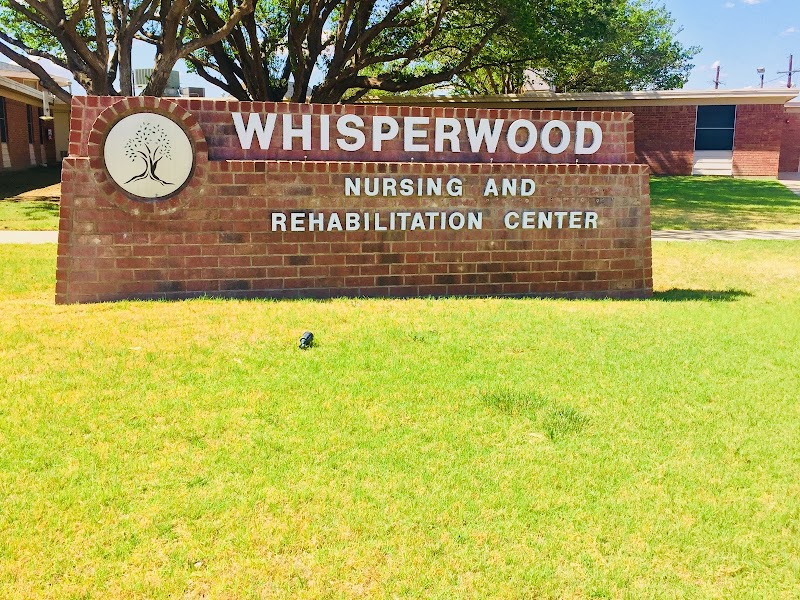
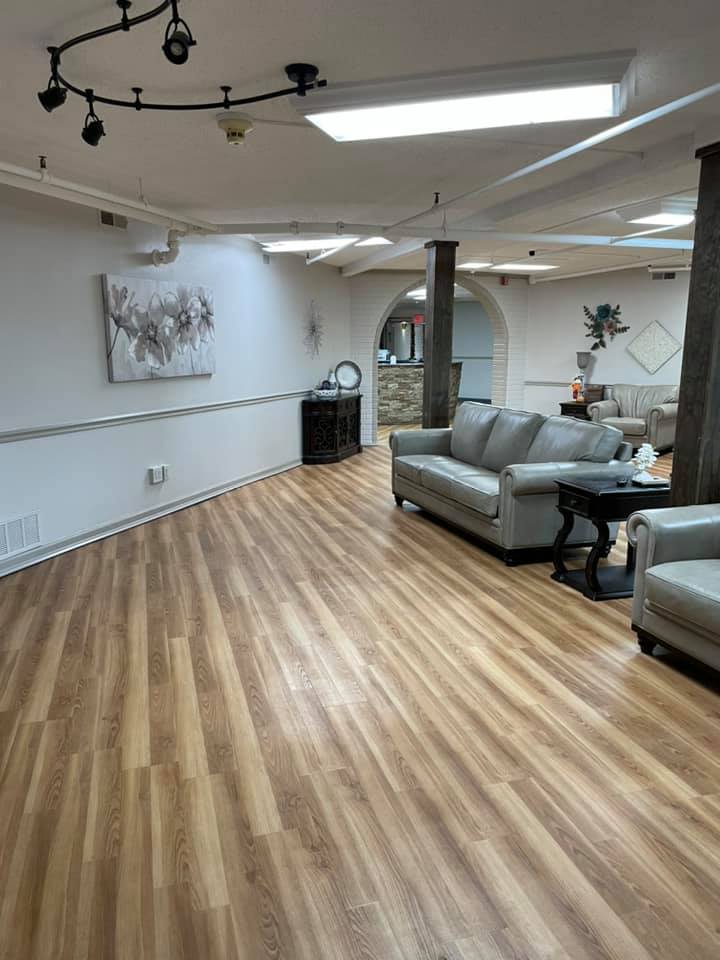
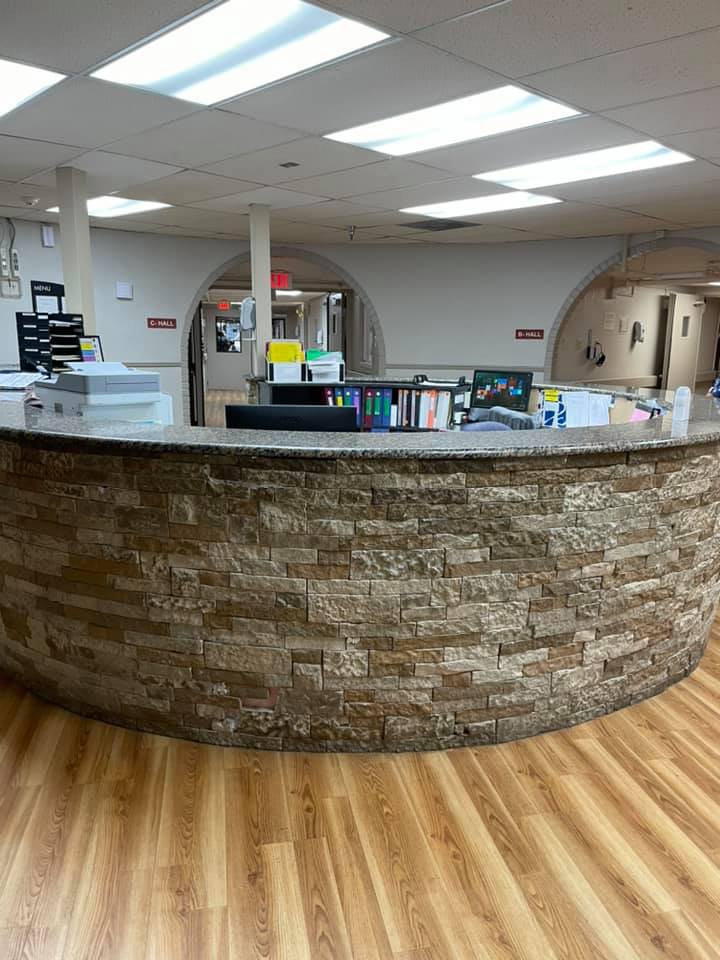
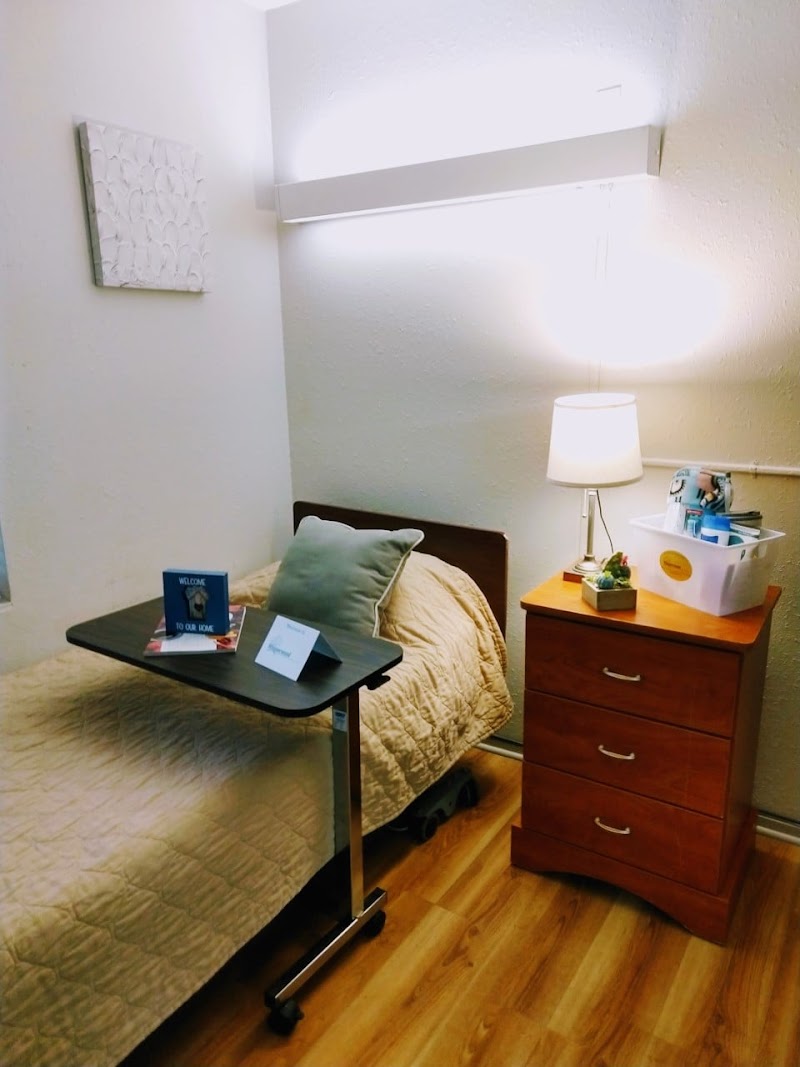
Whisperwood Nursing & Rehabilitation Center

5502 W 4TH ST, Lubbock, TX 79416 (806) 793-1111
Government - Hospital district 114 Beds CREATIVE SOLUTIONS IN HEALTHCARE Data: November 2025 8 Immediate Jeopardy citations
Trust Grade
0/100
#1166 of 1168 in TX
Last Inspection: November 2024

Within standard 12-15 month inspection cycle. Federal law requires annual inspections.

Overview

Whisperwood Nursing & Rehabilitation Center has received a Trust Grade of F, indicating significant concerns and a very poor level of care. The facility ranks #1166 out of 1168 in Texas, placing it in the bottom half of all nursing homes in the state, and #15 out of 15 in Lubbock County, which means there are no better local options available. Unfortunately, the facility is worsening, having increased the number of issues from 8 in 2024 to 9 in 2025. Staffing is average with a 3/5 star rating, but the 72% turnover rate is alarming, far exceeding the Texas average of 50%. Specific incidents include staff failing to protect residents from verbal abuse, with multiple staff members not reporting these incidents, which raises serious concerns about resident safety and compliance with abuse policies. While the facility has some average staffing coverage, the critical issues and high turnover suggest that families should be cautious when considering this option for their loved ones.

Trust Score
F
0/100
In Texas
#1166/1168
Bottom 1%
Safety Record
High Risk
Review needed
Inspections
Getting Worse
8 → 9 violations
Staff Stability
⚠ Watch
72% turnover. Very high, 24 points above average. Constant new faces learning your loved one's needs.
Penalties
✓ Good
$40,646 in fines. Lower than most Texas facilities. Relatively clean record.
Skilled Nurses
⚠ Watch
Each resident gets only 20 minutes of Registered Nurse (RN) attention daily — below average for Texas. Fewer RN minutes means fewer trained eyes watching for problems.
Violations
⚠ Watch
35 deficiencies on record. Higher than average. Multiple issues found across inspections.
★☆☆☆☆
1.0
Overall Rating
★★★☆☆
3.0
Staff Levels
★★★★☆
4.0
Care Quality
★☆☆☆☆
1.0
Inspection Score
Stable
2024: 8 issues
2025: 9 issues

The Good

  • 4-Star Quality Measures · Strong clinical quality outcomes
  • Full Sprinkler Coverage · Fire safety systems throughout facility
  • No fines on record

Facility shows strength in quality measures, fire safety.

The Bad

1-Star Overall Rating

Below Texas average (2.8)

Significant quality concerns identified by CMS

Staff Turnover: 72%

25pts above Texas avg (46%)

Frequent staff changes - ask about care continuity

Federal Fines: $40,646

Above median ($33,413)

Moderate penalties - review what triggered them

Chain: CREATIVE SOLUTIONS IN HEALTHCARE

Part of a multi-facility chain

Ask about local staffing decisions and management

Staff turnover is very high (72%)

24 points above Texas average of 48%

The Ugly 35 deficiencies on record

8 life-threatening
Aug 2025 5 deficiencies 4 IJ
CRITICAL (J) 📢 Someone Reported This

A family member, employee, or ombudsman was alarmed enough to file a formal complaint

Immediate Jeopardy (IJ) - the most serious Medicare violation

Free from Abuse/Neglect (Tag F0600)

Someone could have died · This affected 1 resident

**NOTE- TERMS IN BRACKETS HAVE BEEN EDITED TO PROTECT CONFIDENTIALITY** Based on interview, and record review, the facility failed to ensure the residents had the right to be free from verbal abuse an...

Read full inspector narrative →
**NOTE- TERMS IN BRACKETS HAVE BEEN EDITED TO PROTECT CONFIDENTIALITY** Based on interview, and record review, the facility failed to ensure the residents had the right to be free from verbal abuse and neglect for 2 (Resident #1 and #2) of 7 residents reviewed for abuse. The facility staff failed to protect Resident #1 from verbal abuse from Resident #2 on 7/11/25 between 7:00 PM and 7:30 PM.The noncompliance was identified as PNC. The IJ began on 07/11/25 and ended on 7/25/25. The facility had corrected the noncompliance before the survey began.This failure could place residents at risk of abuse, neglect, trauma, injury and psychosocial harm. Findings included: Resident #1 Record review of Resident #1's face sheet, 8/14/25, revealed an [AGE] year-old-female was admitted to the facility on [DATE] with diagnoses to include dementia (memory loss), schizoaffective disorder (mental disorder), anxiety (increased worry), insomnia (difficulty sleeping), major depressive disorder (increase sadness) and UTI (infection in the urinary system). Record review of Resident #1's Comprehensive Minimum Data Set, dated [DATE], revealed: Section C Brief Interview for Mental Status score revealed a score of 00, which indicated the resident's cognition was severely impaired. Record review of Resident #1's care plan, dated 7/14/25, revealed the following:Resident #1 had a focus for elopement and wandering specifically that she wandered aimlessly (date initiated 8/14/25). The goal was for Resident #1 to remain safe within the facility unless accompanied by a staff or authorized person. Interventions included distracting resident from wandering by offering pleasant diversions and supervising closely and make regular compliance rounds. Resident #1 had a focus for coping, specifically Resident #1 had a tough time coping with a roommate as roommate might have been verbally aggressive towards Resident #1 (date initiated 7/14/25). The goal was for Resident #1 to feel comfortable in a safe living environment. Interventions included staff would listen to Resident #1's concerns. Staff would monitor if Resident #1 were unable to cope with roommate and the social worker would find a new roommate if applicable. Record review of Resident #1's progress notes, dated 5/13/25-8/14/25, revealed: No incidents documented involving Resident #1 and any other residents on 7/11/25.07/13/25 at 9:11 PM LVN B documented: family report a CNA reported to them Resident #1's roommate was cursing at her and telling her to clean up after herself in the bathroom. Initial treatment included skin assessment; roommate placed on 1:1 monitoring supervision. Medical doctor and nurse practitioner notified. Responsible party was notified. 07/13/25 at 10:37 PM LVN B documented skin assessment conducted with no negative findings. 07/14/25 at 2:58 AM LVN B documented trauma assessment conducted. There were no negative findings or experiences documented or found. Resident #1 did not express fear or anger. 7/14/25 at 9:36 PM the DON documented a late entry indicating Resident #1's family reported to administration that the CNA (unidentified in the progress note) told them Resident #1's roommate was cursing at Resident #1 and telling her to clean up after herself in the bathroom. Resident #1's roommate was placed on one-to-one monitoring. Skin Assessment performed on Resident #1. A room swap was made. Family was aware and notified. FNP was notified. 7/15/25 at 8:36 AM LVN EE documented that Resident #1 appeared to be in no pain and monitoring was conducted. 7/15/25 at 8:37 AM LVN EE documented that Resident #1 had no signs or symptoms of distress noted, resident in good spirits.7/15/25 at 10:13 PM LVN BB documented that Resident #1 had no signs or symptoms of distress and did not complain of any pain.During an interview on 8/14/25 at 12:31 PM, Resident #1 could not recall the incident that occurred between she and Resident #2. She could not identify her last roommate by name. She stated she could not remember if she was afraid on 7/11/25. She could not remember how long she had been in the room that she was and why she had moved. She reported that she felt safe at the facility. Resident #2 Record review of Resident #2's face sheet, dated 8/14/25, revealed a [AGE] year-old-female was admitted to the facility on [DATE] with diagnoses to include intermittent explosive disorder (mental disorder characterized by outburst of anger or violence), anxiety (increased worry) and dementia (memory loss). Record review of Resident #2's Comprehensive Minimum Data Set, dated [DATE], revealed: Section C Brief Interview for Mental Status score revealed a score of 08, which indicated the resident's cognition was moderately impaired. Section E did not reveal any coded behaviors.Record review of Resident #2's Quarterly Minimum Data Set, dated [DATE], revealed: Section E Behavior Resident #2 had other behavioral symptoms not directed towards others.Resident #2's care plan, dated 7/14/25 revealed the following:Resident #2 had a focus for behavioral symptoms specifically that Resident #2 had potential to demonstrate physical behaviors. (initiated 7/4/25) The goal was for Resident #2 to demonstrate effective coping skills. Interventions included staff analyzing key times, places, circumstances, triggers, and what de-escalates behavior and document. Staff should assess and address sensory deficits and notify the charge nurse of any physically abusive behaviors. When Resident #2 becomes agitated staff should intervene before agitation escalates. Resident #2 had a focus for behavioral symptoms specifically that Resident #2 had a behavior problem related to being verbally aggressive to staff and other residents. (initiated 7/14/25) The goal was for Resident #2 to not have episodes of being verbally aggressive. Interventions included anticipate the needs of Resident #2. Staff should provide opportunity for positive interaction. Consultation with psychiatry will be made if needed. Staff should also intervene as necessary to protect the rights and safety of others. Staff will also monitor behavior episode of Resident #2. Record review of Resident #2's progress notes, dated 5/13/25-8/14/25, revealed: No incidents documented involving Resident #2 and any other residents on 7/11/25.7/13/25 at 9:11 PM the DON documented Resident #2 had a behavior (verbal, resident to resident alleged behavior). Resident #2 scolded her roommate (Resident #1) with curse words to clean up her mess in the bathroom. 1:1 mentoring supervision implemented. Consulted FNP for new orders of hydroxyzine 50 mg PO Q4 hours prn. Recommended to conduct room swap. Resident #2 stated we get along good. Resident #2 stated she worried about her roommate because she sleeps all day and does not sleep much. Attempted to contact Resident #2's family. 7/14/25 at 8:20 AM the DON documented late entry: Informed by administrator the resident's (unspecified in this progress note) roommate's family informed her the CNA (unspecified in this progress note) told them Resident #2 was cursing at her roommate and telling her to clean up after herself in the bathroom. Resident #2 was immediately place on one-on-one observation. Consulted psych provider for any new orders/recommendations. New order to start hydroxyzine 50 mg prn Q4 hours for anxiety/agitation. Performed a roommate swap and may d/c one-on-one monitoring but ensure frequent monitoring as the resident was not physically aggressive. Attempted to notify Family Member FF multiple times. D/c one-on-one supervision. Resident #2 currently does not have a roommate currently.07/15/25 at 10:18 AM the SW documented that she received notification from the administration that a referral to the behavioral center was needed. The SW notified Family Member FF, and he agreed to the referral and the referral was completed. 07/15/25 at 10:24 AM LVN EE documented no verbal behaviors noted, and Resident #2 was in good spirits. 07/15/25 at 10:29 PM LVN BB documented Resident #2 was quiet without negative behaviors, toward resident or staff. 07/16/25 at 8:57 AM LVN EE documented Resident #2 had no behaviors. 07/16/25 at 8:57 PM LVN B documented no behaviors reported during her shift. 07/17/25 at 2:57 PM The SW documented that the referral for Resident #2 was denied due to Resident #2's insurance being out of network. During an interview on 8/14/25 at 12:33 PM, Resident #2 stated she does not remember why her last roommate moved. She stated she got along well with her last roommate. She could not identify her last roommate by name. She could not report if she had an incident with Resident #1 on 7/11/25. During an interview on 8/14/25 at 9:31 AM, CNA A stated she did not have a calendar in front of her but believed the incident occurred on 7/11/25. She stated she worked the night shift (6:00 PM- 6:00 AM). She stated on that day (7/11/25) her partner that she worked with that day called in late. She stated she and LVN B were the only ones on the locked female unit. She stated around 7:00 PM or 7:30 PM while LVN B was attending to another resident next door to Resident #1 and Resident #2 they (CNA A and LVN B) heard Resident #2 yell a loud and clear Get your mother fucking ass in that God Damn bathroom and clean that shit up! CNA A stated she and LVN B looked at each other. CNA A stated LVN B asked her Who is she (Resident #2) hollering at? CNA A stated LVN B instructed her (CNA A) to go and look. CNA A stated when she stepped into Resident #1 and Resident #2's room she observed Resident #1 standing in front of Resident #2 and the look on Resident #1's face gave her (CNA A) the impression that she was scared. CNA A stated she motioned for Resident #1 to come with her. CNA A stated she took Resident #1 to where LVN B was and during this time LVN B then goes to Resident #2. CNA A stated she and Resident #1 stood outside the room where Resident #2 and LVN B were. CNA A stated LVN B asked Resident #2 what was going on and Resident #2 voiced her complaint about Resident #1 pissing on the bathroom floor. She stated LVN B instructed Resident #2 that if it happened again, she needed to call staff for help. CNA A stated she went to get a towel to clean up the urine in the bathroom and while she was doing this Resident #1 followed LVN B. CNA A stated Resident #2 yelled at her Don't clean up that shit! This is why she (Resident #1) don't learn because y'all baby her (Resident #1)! CNA A stated Resident #1 was afraid and did not go back to the room with Resident #2 for majority of the night. CNA A stated Resident #1 did not go to bed until Resident #2 was asleep. CNA A stated she was under the impression that since LVN B witnessed the incident along with her that she would report it to the abuse coordinator, document and notify the family. CNA A stated a couple of days later (unsure of the exact date), Resident #1's family came to the facility and in passing the family asked why is it that when they have come in Resident #1 is not in her bed and sometimes is found in other resident's bed. CNA A stated she told them that it was most likely because she (Resident #1) was afraid of her roommate (Resident #2). She stated that immediately once she mentioned the incident to Family Member CC, he became upset and exclaimed no one told him about the incident. She stated that LVN B was upset with her and told her at that time to complete a report. She stated unsure of the date the following Monday she was suspended because she failed to report the incident. CNA A stated she did not feel it was right that she was suspended for failure to report when LVN B also heard the incident and was present. CNA A stated that the ADM told her that LVN B may have misheard what happened. CNA A stated this was not the case because Resident #2 said what she said very loud, and they were next door to their room. CNA A stated Resident #1 slept in the same room with Resident #2 the night of the incident. CNA A stated she was told that Resident #1 was moved out of the room only after Resident #1's family complained. CNA A stated Resident #2 had a history of aggression and that she had expressed concern in the past. CNA A stated Resident #2 had broken the facility door before and was an exceptionally large lady in comparison to Resident #1. She stated although she did not believe Resident #2 physically hit Resident #1, she believed that Resident #1 was afraid because she would not go back in her room the night of the incident. She stated she and other staff reported to LVN B that even they (staff) were afraid of Resident #2. CNA A stated no other incidents had occurred between Resident #1 and Resident #2 since 7/11/25 but she could not attest for any time after she was suspended. She stated she was trained that if she suspects or witness abuse, she was to report abuse to her chain of command, and this would have been LVN B. She stated that being a CNA for over 25 years this was the way it has always been. She stated that the ADM stated at the time of her suspension that she was supposed to report the incident to her (the ADM). CNA A stated the nurses were responsible for reporting incidents to the family. CNA A stated the night of the incident Resident #1 did not have any injuries that she could visibly see. During an interview on 8/14/25 at 10:32 AM, CNA C stated she had never worked the female locked unit. She stated she had guarded the door once when the doors were not working. She stated she had not worked directly with Resident #1 and Resident #2. During an interview on 8/14/25 at 10:43 AM, CNA D stated she did not have any information regarding the verbal incident between Resident #1 and Resident #2 that occurred on 07/11/25. She stated she is unaware if any incidents had occurred since 7/11/25. During an interview on 8/14/25 at 11:09 AM, CNA E stated she did not have any firsthand information about the verbal incident that occurred on 7/11/25 between Resident #1 and Resident #2. She stated Resident #1 and Resident #2 had never had issues before 7/11/25 or since 7/11/25. She stated Resident #2 rarely has behaviors. She stated Resident #1 has no behaviors but will ask questions over and over. During an interview on 8/14/25 at 11:24 AM, CNA F stated she did not have any firsthand information about Resident #1's and Resident #2's verbal altercation that occurred on 7/11/25. She stated there had been no additional altercations between Resident #1 and Resident #2. She stated Resident #1 had an issue where she wanted to leave the unit but never had any altercations with residents in the unit. During an interview on 8/14/25 at 11:35 AM, CNA G stated she does not work the female unit and did not have any information regarding the incident that occurred on 7/11/25 between Resident #1 and Resident #2. During an interview on 8/14/25 at 11:45 AM, CNA H stated although she works the female locked unit at times, she did not have any information regarding the verbal altercation that occurred between Resident #1 and Resident #2. She stated she did not have any information about Resident #1 and Resident #2's behaviors as she had not worked the female locked unit in a while. During an interview on 8/14/25 at 11:55 AM, LVN I stated he did not have any firsthand information about the verbal altercation that occurred on 7/11/25 between Resident #1 and Resident #2. He stated Resident #1 and Resident #2 did not have a history of verbal altercations and there had been no incidents since 7/11/25. He stated Resident #1 was pleasantly confused. He stated she would wander but no other behaviors. He stated in the past Resident #2 had behaviors that included hoarding briefs. He stated in the past on an unknown date she (Resident #2) broke the female locked unit door but was sent to a behavior unit because of that behavior. He stated the facility manages Resident #2's behavior well through close monitoring. During an interview on 8/14/25 at 12:11 PM, LVN J stated she did not have any firsthand information about Resident #1 and Resident #2's verbal altercation that occurred on 7/11/25 as she did not work the female locked unit on that date. She stated she did not have any additional information regarding Resident #2 or Resident #1 behaviors. During an interview on 8/14/25 at 1:04 PM, CNA K stated she did not have firsthand information regarding Resident #1 and Resident #2 verbal altercation that occurred on 7/11/25. She stated she had worked with both residents before and after 7/11/25. She stated the two had never had any issues before or after. She stated Resident #2 never comes out of her room. She stated Resident #1 can be active at times. She stated neither resident has ever had significant behaviors in her presence. Interviews conducted on 8/14/25 between 10:32 AM-1:04 PM, revealed that daytime staff (CNA C, CNA D, CNA E, CNA F, CNA G, CNA H, LVN I, LVN J and CNA K) had been trained on the facility's abuse policy. The staff were able to identify the abuse coordinator, and stated if they suspected or witnessed abuse, they would report directly to the abuse coordinator. During their interviews, staff was able to report that apart of the suspicion or witnessing abuse they would protect the resident. During an interview on 8/14/25 at 2:33 PM, the ADM stated that she was unsure of the date and time but while at home one-night LVN B called her and explained that Resident #1's family was upset. She stated LVN B told her about the initial complaint from the family involved cleaning supplies and them (Family Member CC) having to clean the restroom. The ADM stated that she received a call from Family Member DD 30 minutes later who stated that the real reason that they (family) were upset was because Resident #1 had been abused and her roommate (Resident #2) was screaming at her (Resident #1). The ADM stated at the time Family Member DD notified her of Resident #2 screaming at Resident #1 she was unaware of the incident. She stated once Family Member DD notified her, she notified the DON, and the DON instructed for 1:1 to be started for Resident #2 to LVN B. The ADM stated that LVN B stated she was unaware of any incidents of abuse that involved Resident #1 and Resident #2. She (the ADM) stated that she started her abuse process. The ADM stated LVN B reported to her that she (LVN B) heard yelling one night (date was not specified) and LVN B instructed CNA A to see what happened. The ADM stated LVN B reported to her that CNA A never reported to her that Resident #2 was yelling at Resident #1. The ADM stated Resident #2 had a history of yelling at staff. The ADM stated she immediately suspended CNA A for not reporting directly to her. She stated she interviewed CNA A and CNA stated she did tell Family Member CC about the incident between Resident #1 and Resident #2. The ADM stated she asked CNA A why she did not report the incident directly to her as the abuse coordinator as she had been trained and CNA A response was my bad. During an interview on 8/15/25 at 12:15 PM, the ADM stated that she was unsure of the exact date of the incident between Resident #1 and Resident #2, but voiced that she was notified of the incident on 7/13/25 by Family Member DD. The ADM stated she reported the incident to HHSC on 7/13/25 at 11:05 PM. She stated Resident #2 was placed on 1:1 supervision as soon as she was notified of the incident on 7/13/25. She stated Resident #1 was not moved out of the room with Resident #2 because of bed availability. She stated room moves had to be made before she could move Resident #1 out of the room with Resident #2. The ADM stated Resident #1 shared the same bedroom with Resident #2 after the incident up until she was notified on 7/13/25. The ADM said no additional incidents had occurred between Resident #1 and Resident #2. She stated she suspended CNA A on 7/14/25 and the last date CNA A had been in the facility was on the morning of her shift ended on 7/14/25. She started safe surveys were conducted on the female locked unit and there were no findings. She stated after consulting with the corporate office and gaining approval she terminated CNA A for failure to report ANE. She stated they started re-education on the facility's abuse policy and by 7/14/25 100 percent of her staff had been trained on the facility's abuse policy. The ADM stated she was sure all staff had been trained because the day they started re-education it was the facility's pay day and each staff that came in had to pick up their check. They re-educated and quizzed the staff verbally on the expectations. She stated staff had always been trained to report to her as the abuse coordinator. She stated Resident #2 was referred to psychiatric services for the incident.During an interview on 8/15/25 at 12:20 PM, the DON stated that on 07/09/25 Resident #2 had a recent change in medication where she had started Depakote. She stated because of the incident between Resident #1 and Resident #2 it was decided to continue to monitor the newly change medication and they added a PRN medication (Hydroxyzine). The ADM, DON, regional Nurse Consultant and Director of Operations were notified on 8/15/25 at 4:08 PM that a PNC IJ situation was identified due to the above failures and the IJ template and 3-strike letter was provided.Interviews conducted on 8/15/25 between 4:31 PM-6:16 PM, revealed that administration, daytime and nighttime staff (the DM, MDS Coordinator, ADON, HR, the Maintenance Supervisor, DS L, [NAME] M, LVN N, LVN O, CNA P, MA Q, CNA R, CNA S, RN T, CNA U, MA V, CNA W, CNA X, CNA Y, CNA Z, CNA AA, and LVN BB) had been trained on the facility's abuse policy recently (within the past 30-60 days). The staff voiced they had been trained by the ADM, DON and or the ADON. They stated that they were given the opportunity to ask questions if they needed to. They were all able to identify the abuse coordinator as the ADM and that they needed to report all suspected or witnessed abuse to the ADM. They all were able to voice that they would not assume that an incident had been reported but would report the incident as it was their responsibility. They all were able to report that protection of the resident(s) involved was a part of following the abuse protocol for the facility. They all were able to report that if they did not see any protection interventions put in place that they would follow up with management and or the abuse coordinator. All nurses interviewed were able to report that it was their responsibility to notify family and or responsible party of any significant events involving the residents that resided at the facility. All staff interviewed voiced that they were comfortable, confident in their role carrying out the facility's expectation regarding the facility's abuse policy and requirements. During an interview on 8/15/25 at 6:18 PM, Family Member CC stated they were not notified of the incident that occurred with Resident #1 and Resident #2 at the time of the incident. Family Member CC stated CNA A notified them that Resident #1 was afraid of her roommate (Resident #2). Family Member CC stated he had not observed any incidents between Resident #1 and Resident #2. He stated that they (he and his family) were incredibly pleased with how the facility responded to them reporting their concerns about Resident #1. Family Member CC stated as soon as they reported the incident the facility staff moved Resident #1. Family Member CC stated there had been no incidents since the incident. Family member CC stated that he was unsure if Resident #1 was afraid, but they (he and the family) had concerns that Resident #1 was sleeping in other resident's beds because she had a UTI. He stated when he asked CNA A about what she thought regarding Resident #1 sleeping in other's beds CNA disclosed the incident. He stated he honestly believed CNA was trying to console them because they had other concerns within the same night. He stated since the incident between Resident #1 and Resident #2 the facility staff have done so well notifying them (he and family). During an interview on 8/15/25 at 5:15 PM, the ADM stated regarding the failure to prevent abuse she had been trained on the facility's policy. She stated they review the abuse policy routinely. She stated the purpose of the policy was to protect the residents and ensure they investigate all allegations of abuse. The ADM stated when the allegation was reported to her on 7/13/25 she did investigate and found that CNA A failed to report timely. The ADM stated when she interviewed CNA A, she stated CNA A stated she thought LVN B had reported it. The ADM stated she reminded CNA A at that time it was her responsibility and CNA A's response was my bad. The ADM stated the potential negative outcome for not preventing abuse was residents could endure harm. The ADM stated she could not confirm if Resident #1 was abused. The ADM stated she had no indication that Resident #1 was harmed or was withdrawn. She stated after the incident no staff reported any changes. The ADM stated she was unaware that Resident #2 had yelled at Resident #1. She stated she became aware of the incident on 7/13/25 when the family called her. The ADM stated the system to monitor residents and ensuring they are not abused was re-educating staff, making rounds, and talking to residents and family about abuse. She stated staff are trained upon hire, annually and when there is an incident. The ADM stated she had never observed Resident #2 be aggressive to Resident #1 or any other residents. The ADM stated she expected facility staff to prevent abuse for all residents. The ADM stated all staff are responsible for preventing abuse. The ADM stated the reason abuse was not prevented in the incident involving Resident #1 and Resident #2 was because she was unaware of the incident as it was not reported to her by CNA A. The ADM stated she was unaware that Resident #2 was treating Resident #1 in any way that was negative. During an interview on 8/15/25 at 5:42 PM, the DON stated regarding the failure to prevent abuse that she was familiar with the facility's ANE policy. The DON stated the purpose of preventing abuse was to prevent harm to the residents. The DON stated they did not want to harm the residents. The DON stated Resident #1 has always had the behavior of wandering as she (Resident #1) was pleasantly confused. The DON stated Resident #1 may have been in other resident's room during the time the family noticed not because she was afraid of Resident #2 but because of her dementia diagnoses. The DON stated residents with dementia do not remember. The DON stated she did not feel that Resident #2 abused Resident #1. The DON stated she interviewed Resident #2 and Resident #2 expressed that she and Resident #1 were good. She stated Resident #2 expressed that she (Resident #2) had concern regarding Resident #1's eating and sleeping habits. The DON stated she was unaware of the incident and was made aware of the incident on 7/13/25 when the ADM notified her. The DON stated their system to monitor and ensure residents do not experience abuse was through education to staff. The DON stated the staff were repeatedly trained on the policy and should have known what to do. She stated they also investigate all allegations, speak to staff and residents. The DON stated CNA A failed to report to the abuse coordinator, the ADM, and if CNA A had reported the incident, then the facility could protect the residents. The DON stated she had been trained on the abuse policy and all staff had all been trained. The DON stated she had never observed Resident #2 be verbally abusive to Resident #1. The DON stated she expected staff to prevent abuse from happening. The DON stated all staff are responsible for preventing abuse. The DON stated she does not feel abuse occurred but that regarding the incident between Resident #1 and Resident #2 CNA A did fail to report the incident to the abuse coordinator. During an interview on 8/15/25 at 8:45 PM, LVN B stated she was unsure of the exact date of the incident that occurred between Resident #1 and Resident #2. LVN B stated that she was in the last room at the end of the hallway assisting another resident. She stated CNA A heard one of the residents raise their voice. She stated she asked CNA A which resident raised their voice and was told by CNA A that it was Resident #2 and Resident #1. LVN B stated CNA A told her that Resident #2 was raising her voice at Resident #1. LVN B stated she voiced to Resident #2 that she does not need to raise her voice. LVN B stated that was it and she left Resident #2 in her room. LVN B stated 5 minutes later both residents could not remember the incident. LVN B stated she does not know what specifically Resident #2 said to Resident #1. She stated CNA A did not specify what was said but only stated Resident #2 was yelling at Resident #1 because there was piss on the floor. LVN B stated she did not suspect abuse because normally Resident #2 was loud resident and that was the way she talked. She stated working on the locked unit residents have behaviors and she considered Resident #2 yelling as one of her behaviors and she needed redirection. LVN B stated Resident #1 did not appear afraid to her. LVN B stated Resident #1 went back to her room within an hour of the incident. LVN B stated that CNA A did not report to her or indicate that Resident #1 was afraid. LVN B stated after the incident between Resident #1 and Resident #2 she never had a discussion with Resident #1's family nor did she discuss the incident any further with CNA A. LVN B stated that had not been any other incidents since the verbal incident between Resident #1 and Resident #2 nor had there been any incidents before. LVN B stated CNA A reported to the Resident #1's family that Resident #1 felt threatened by Resident #2 and that is what caused them to call the ADM. She stated when they called the ADM, she was instructed to place Resident #2 on 1:1 supervision. LVN B stated she did not report the incident to the abuse coordinator because she felt it was a nursing judgement call to redirect Resident #2. LVN B stated she had been trained on the facility's abuse policy recently (within the past 30-60 days) by the ADM, DON and ADON. She stated that protection of the resident(s) involved was a part of following the abuse protocol for the facility. She stated if she did not see any protection interventions put in place that she would follow up with management and or the abuse coordinator. LVN B stated Resident #1 and Resident #2 shared the same room after the incident up until she was instructed to place Resident #2 on 1:1 supervision. LVN B stated no other incidents occurred with Resident #1 and Resident #2 after the verbal incident on the unknown date that she was aware of. She stated before the incident that occurred with Resident #1 and Resident #2, she had received training on the facility's ANE policy.During the investigation held on 8/14/25-8/15/25 there were no observation of any interactions between Resident #1 and Resident #2. Resident #1 and Resident #2 were observed in their separate rooms during the visit. Record review of the facility's Form 3614 (Provider Investigation Report), dated 7/17/25, revealed:Incident Date: 7/11/25Person(s) or Resident(s) involved:Resident #1 Alleged Perpetrator: None listed.Witnesses:CNA ADescription of the Allegation: Resident #1's roommate cusses at her and tries to make her clean up the bathroom. Assessment:7/13/25: Resident has no injuries. Provider Response: Resident #2 was placed on one-to-one monitoring immediately upon receiving report from Resident #1's family. Resident #1 was assessed for any injuries-none noted. Physician notified. Family, physician and psychiatry notified for Resident #2.Investigation Summary: Resident #1's family reported to LVN B, that they had been finding Resident #1 bathroom with bowel and urine on the floor and they had been bringing toilet paper because she had not had toilet paper and sometimes paper towels. LVN B notified the ADM via phone of the concern. The ADM later received a call from Family Member B stating what family had reported and added that Resident #2 had been yelling and cussing at Resident #1. LVN B was aware that one evening she heard raised voices and sent CNA A to see what was going on but nothing was ever reported to LVN B about cussing or demanding residents to het on her knees and clean up the bathroom. CNA A was suspended pending investigation and will be terminated for failure to report. Both residents lack capacity to m[TRUNCATED]
CRITICAL (J) 📢 Someone Reported This

A family member, employee, or ombudsman was alarmed enough to file a formal complaint

Immediate Jeopardy (IJ) - the most serious Medicare violation

Abuse Prevention Policies (Tag F0607)

Someone could have died · This affected 1 resident

**NOTE- TERMS IN BRACKETS HAVE BEEN EDITED TO PROTECT CONFIDENTIALITY** Based on interviews and record review, the facility failed to implement written policies and procedures that prohibit and preven...

Read full inspector narrative →
**NOTE- TERMS IN BRACKETS HAVE BEEN EDITED TO PROTECT CONFIDENTIALITY** Based on interviews and record review, the facility failed to implement written policies and procedures that prohibit and prevent abuse and neglect for 2 of 7 residents (Resident #1, and #2) reviewed for abuse. CNA A failed to follow the facility's abuse policy by not reporting the incident (verbal abuse) to the facility's Abuse Coordinator involving Resident #1and Resident #2 that occurred on 7/11/25 between 7:00 PM and 7:30 PM.LVN B failed to follow the facility's abuse policy by not reporting the incident (verbal abuse) to the facility's Abuse Coordinator involving Resident #1and Resident #2 that occurred on 7/11/25 between 7:00 PM and 7:30 PM.The ADM failed to follow the facility's abuse policy by not reporting the incident (verbal abuse) to HHSC involving Resident #1 and Resident #2 that occurred on 7/11/25 between 7:00 PM and 7:30 PM.The facility failed to notify Resident #1's family of the verbal abuse incident that occurred on 7/11/25 between 7:00 PM and 7:30 PM.The facility failed to put protective measures to protect Resident #1 from Resident #2 after a verbal abuse incident occurred on 7/11/25.The noncompliance was identified as PNC. The IJ began on 07/11/25 and ended on 7/14/25. The facility had corrected the noncompliance before the survey began.These failures could place residents as risk for abuse and injury. Findings included: Record review of the facility's abuse policy, dated 3/29/18, revealed the following: The resident has the right to be free from abuse,.Residents should not be subjected to abuse by anyone, including, but notlimited to, facility staff, other residents,.PreventionThe facility will provide the residents, families, and staff an environment free from abuse and neglect.The facility will be responsible to identify, correct, and intervene in situations of possible abuse/neglect.The facility has in place a method to identify events such as suspicious bruising of residents, occurrences, patterns, and trends that may constitute abuse.ReportingAny person having reasonable cause to believe an elderly or incapacitated adult is suffering from abuse,neglect or exploitation must report this to the DON, administrator, state and/or adult protective services.State law mandates that citizens report all suspected cases of abuse, neglect or financial exploitation ofthe elderly and incapacitated persons.When a suspected abused, neglected, exploited, mistreated or potential victim of misappropriation ofproperty comes to the attention of any employee, that employee will make an immediate verbal report tothe Abuse Preventionist or designee. If the discovery occurs outside of normal business hours, theAbuse Preventionist and/or designee will be called.Facility employees must report all allegations of: abuse, neglect, exploitation, mistreatment of residents, misappropriation of resident property or injury of unknown source to the facility administrator. The facility administrator or designee will report to HHSC.If the allegations involve abuse or result in serious bodily injury, the report is to be made within 2 hours of the allegationIf the allegation does not involve abuse or serious bodily injury, the report must be made within 24 hours of the allegation.Protection (Resident to Resident)The above policy will apply to potential resident-to-resident abuse. Provider letter 19-17 will be reviewed to determine if resident-to-resident abuse occurred.Resident #1 Record review of Resident #1's face sheet, 8/14/25, revealed an [AGE] year-old-female was admitted to the facility on [DATE] with diagnoses to include dementia (memory loss), schizoaffective disorder (mental disorder), anxiety (increased worry), insomnia (difficulty sleeping), major depressive disorder (increase sadness) and UTI (infection in the urinary system). Record review of Resident #1's Comprehensive Minimum Data Set, dated [DATE], revealed: Section C Brief Interview for Mental Status score revealed a score of 00, which indicated the resident's cognition was severely impaired. Record review of Resident #1's care plan, dated 7/14/25, revealed the following:Resident #1 had a focus for elopement and wandering specifically that she wandered aimlessly (date initiated 8/14/25). The goal was for Resident #1 to remain safe within the facility unless accompanied by a staff or authorized person. Interventions included distracting resident from wandering by offering pleasant diversions and supervising closely and make regular compliance rounds. Resident #1 had a focus for coping, specifically Resident #1 had a tough time coping with a roommate as roommate might have been verbally aggressive towards Resident #1 (date initiated 7/14/25). The goal was for Resident #1 to feel comfortable in a safe living environment. Interventions included staff would listen to Resident #1's concerns. Staff would monitor if Resident #1 were unable to cope with roommate and the social worker would find a new roommate if applicable. Record review of Resident #1's progress notes, dated 5/13/25-8/14/25, revealed: No incidents documented involving Resident #1 and any other residents on 7/11/25.07/13/25 at 9:11 PM LVN B documented: family report a CNA reported to them Resident #1's roommate was cursing at her and telling her to clean up after herself in the bathroom. Initial treatment included skin assessment; roommate placed on 1:1 monitoring supervision. Medical doctor and nurse practitioner notified. Responsible party was notified. 07/13/25 at 10:37 PM LVN B documented skin assessment conducted with no negative findings. 07/14/25 at 2:58 AM LVN B documented trauma assessment conducted. There were no negative findings or experiences documented or found. Resident #1 did not express fear or anger. 7/14/25 at 9:36 PM the DON documented a late entry indicating Resident #1's family reported to administration that the CNA (unidentified in the progress note) told them Resident #1's roommate was cursing at Resident #1 and telling her to clean up after herself in the bathroom. Resident #1's roommate was placed on one-to-one monitoring. Skin Assessment performed on Resident #1. A room swap was made. Family was aware and notified. FNP was notified. 7/15/25 at 8:36 AM LVN EE documented that Resident #1 appeared to be in no pain and monitoring was conducted. 7/15/25 at 8:37 AM LVN EE documented that Resident #1 had no signs or symptoms of distress noted, resident in good spirits.7/15/25 at 10:13 PM LVN BB documented that Resident #1 had no signs or symptoms of distress and did not complain of any pain.During an interview on 8/14/25 at 12:31 PM, Resident #1 could not recall the incident that occurred between she and Resident #2. She could not identify her last roommate by name. She stated she could not remember if she was afraid on 7/11/25. She could not remember how long she had been in the room that she was and why she had moved. She reported that she felt safe at the facility. Resident #2 Record review of Resident #2's face sheet, dated 8/14/25, revealed a [AGE] year-old-female was admitted to the facility on [DATE] with diagnoses to include intermittent explosive disorder (mental disorder characterized by outburst of anger or violence), anxiety (increased worry) and dementia (memory loss). Record review of Resident #2's Comprehensive Minimum Data Set, dated [DATE], revealed: Section C Brief Interview for Mental Status score revealed a score of 08, which indicated the resident's cognition was moderately impaired. Section E did not reveal any coded behaviors.Record review of Resident #2's Quarterly Minimum Data Set, dated [DATE], revealed: Section E Behavior Resident #2 had other behavioral symptoms not directed towards others.Resident #2's care plan, dated 7/14/25 revealed the following:Resident #2 had a focus for behavioral symptoms specifically that Resident #2 had potential to demonstrate physical behaviors. (initiated 7/4/25) The goal was for Resident #2 to demonstrate effective coping skills. Interventions included staff analyzing key times, places, circumstances, triggers, and what de-escalates behavior and document. Staff should assess and address sensory deficits and notify the charge nurse of any physically abusive behaviors. When Resident #2 becomes agitated staff should intervene before agitation escalates. Resident #2 had a focus for behavioral symptoms specifically that Resident #2 had a behavior problem related to being verbally aggressive to staff and other residents. (initiated 7/14/25) The goal was for Resident #2 to not have episodes of being verbally aggressive. Interventions included anticipate the needs of Resident #2. Staff should provide opportunity for positive interaction. Consultation with psychiatry will be made if needed. Staff should also intervene as necessary to protect the rights and safety of others. Staff will also monitor behavior episode of Resident #2. Record review of Resident #2's progress notes, dated 5/13/25-8/14/25, revealed: No incidents documented involving Resident #2 and any other residents on 7/11/25.7/13/25 at 9:11 PM the DON documented Resident #2 had a behavior (verbal, resident to resident alleged behavior). Resident #2 scolded her roommate (Resident #1) with curse words to clean up her mess in the bathroom. 1:1 mentoring supervision implemented. Consulted FNP for new orders of hydroxyzine 50 mg PO Q4 hours prn. Recommended to conduct room swap. Resident #2 stated we get along good. Resident #2 stated she worried about her roommate because she sleeps all day and does not sleep much. Attempted to contact Resident #2's family. 7/14/25 at 8:20 AM the DON documented late entry: Informed by administrator the resident's (unspecified in this progress note) roommate's family informed her the CNA (unspecified in this progress note) told them Resident #2 was cursing at her roommate and telling her to clean up after herself in the bathroom. Resident #2 was immediately place on one-on-one observation. Consulted psych provider for any new orders/recommendations. New order to start hydroxyzine 50 mg prn Q4 hours for anxiety/agitation. Performed a roommate swap and may d/c one-on-one monitoring but ensure frequent monitoring as the resident was not physically aggressive. Attempted to notify Family Member FF multiple times. D/c one-on-one supervision. Resident #2 currently does not have a roommate currently.07/15/25 at 10:18 AM the SW documented that she received notification from the administration that a referral to the behavioral center was needed. The SW notified Family Member FF, and he agreed to the referral and the referral was completed. 07/15/25 at 10:24 AM LVN EE documented no verbal behaviors noted, and Resident #2 was in good spirits. 07/15/25 at 10:29 PM LVN BB documented Resident #2 was quiet without negative behaviors, toward resident or staff. 07/16/25 at 8:57 AM LVN EE documented Resident #2 had no behaviors. 07/16/25 at 8:57 PM LVN B documented no behaviors reported during her shift. 07/17/25 at 2:57 PM The SW documented that the referral for Resident #2 was denied due to Resident #2's insurance being out of network. During an interview on 8/14/25 at 12:33 PM, Resident #2 stated she does not remember why her last roommate moved. She stated she got along well with her last roommate. She could not identify her last roommate by name. She could not report if she had an incident with Resident #1 on 7/11/25. During an interview on 8/14/25 at 9:31 AM, CNA A stated she did not have a calendar in front of her but believed the incident occurred on 7/11/25. She stated she worked the night shift (6:00 PM- 6:00 AM). She stated on that day (7/11/25) her partner that she worked with that day called in late. She stated she and LVN B were the only ones on the locked female unit. She stated around 7:00 PM or 7:30 PM while LVN B was attending to another resident next door to Resident #1 and Resident #2 they (CNA A and LVN B) heard Resident #2 yell a loud and clear Get your mother fucking ass in that God Damn bathroom and clean that shit up! CNA A stated she and LVN B looked at each other. CNA A stated LVN B asked her Who is she (Resident #2) hollering at? CNA A stated LVN B instructed her (CNA A) to go and look. CNA A stated when she stepped into Resident #1 and Resident #2's room she observed Resident #1 standing in front of Resident #2 and the look on Resident #1's face gave her (CNA A) the impression that she was scared. CNA A stated she motioned for Resident #1 to come with her. CNA A stated she took Resident #1 to where LVN B was and during this time LVN B then goes to Resident #2. CNA A stated she and Resident #1 stood outside the room where Resident #2 and LVN B were. CNA A stated LVN B asked Resident #2 what was going on and Resident #2 voiced her complaint about Resident #1 pissing on the bathroom floor. She stated LVN B instructed Resident #2 that if it happened again, she needed to call staff for help. CNA A stated she went to get a towel to clean up the urine in the bathroom and while she was doing this Resident #1 followed LVN B. CNA A stated Resident #2 yelled at her Don't clean up that shit! This is why she (Resident #1) don't learn because y'all baby her (Resident #1)! CNA A stated Resident #1 was afraid and did not go back to the room with Resident #2 for majority of the night. CNA A stated Resident #1 did not go to bed until Resident #2 was asleep. CNA A stated she was under the impression that since LVN B witnessed the incident along with her that she would report it to the abuse coordinator, document and notify the family. CNA A stated a couple of days later (unsure of the exact date), Resident #1's family came to the facility and in passing the family asked why is it that when they have come in Resident #1 is not in her bed and sometimes is found in other resident's bed. CNA A stated she told them that it was most likely because she (Resident #1) was afraid of her roommate (Resident #2). She stated that immediately once she mentioned the incident to Family Member CC, he became upset and exclaimed no one told him about the incident. She stated that LVN B was upset with her and told her at that time to complete a report. She stated unsure of the date the following Monday she was suspended because she failed to report the incident. CNA A stated she did not feel it was right that she was suspended for failure to report when LVN B also heard the incident and was present. CNA A stated that the ADM told her that LVN B may have misheard what happened. CNA A stated this was not the case because Resident #2 said what she said very loud, and they were next door to their room. CNA A stated Resident #1 slept in the same room with Resident #2 the night of the incident. CNA A stated she was told that Resident #1 was moved out of the room only after Resident #1's family complained. CNA A stated Resident #2 had a history of aggression and that she had expressed concern in the past. CNA A stated Resident #2 had broken the facility door before and was an exceptionally large lady in comparison to Resident #1. She stated although she did not believe Resident #2 physically hit Resident #1, she believed that Resident #1 was afraid because she would not go back in her room the night of the incident. She stated she and other staff reported to LVN B that even they (staff) were afraid of Resident #2. CNA A stated no other incidents had occurred between Resident #1 and Resident #2 since 7/11/25 but she could not attest for any time after she was suspended. She stated she was trained that if she suspects or witness abuse, she was to report abuse to her chain of command, and this would have been LVN B. She stated that being a CNA for over 25 years this was the way it has always been. She stated that the ADM stated at the time of her suspension that she was supposed to report the incident to her (the ADM). CNA A stated the nurses were responsible for reporting incidents to the family. CNA A stated the night of the incident Resident #1 did not have any injuries that she could visibly see. During an interview on 8/14/25 at 10:32 AM, CNA C stated she had never worked the female locked unit. She stated she had guarded the door once when the doors were not working. She stated she had not worked directly with Resident #1 and Resident #2. During an interview on 8/14/25 at 10:43 AM, CNA D stated she did not have any information regarding the verbal incident between Resident #1 and Resident #2 that occurred on 07/11/25. She stated she is unaware if any incidents had occurred since 7/11/25. During an interview on 8/14/25 at 11:09 AM, CNA E stated she did not have any firsthand information about the verbal incident that occurred on 7/11/25 between Resident #1 and Resident #2. She stated Resident #1 and Resident #2 had never had issues before 7/11/25 or since 7/11/25. She stated Resident #2 rarely has behaviors. She stated Resident #1 has no behaviors but will ask questions over and over. During an interview on 8/14/25 at 11:24 AM, CNA F stated she did not have any firsthand information about Resident #1's and Resident #2's verbal altercation that occurred on 7/11/25. She stated there had been no additional altercations between Resident #1 and Resident #2. She stated Resident #1 had an issue where she wanted to leave the unit but never had any altercations with residents in the unit. During an interview on 8/14/25 at 11:35 AM, CNA G stated she does not work the female unit and did not have any information regarding the incident that occurred on 7/11/25 between Resident #1 and Resident #2. During an interview on 8/14/25 at 11:45 AM, CNA H stated although she works the female locked unit at times, she did not have any information regarding the verbal altercation that occurred between Resident #1 and Resident #2. She stated she did not have any information about Resident #1 and Resident #2's behaviors as she had not worked the female locked unit in a while. During an interview on 8/14/25 at 11:55 AM, LVN I stated he did not have any firsthand information about the verbal altercation that occurred on 7/11/25 between Resident #1 and Resident #2. He stated Resident #1 and Resident #2 did not have a history of verbal altercations and there had been no incidents since 7/11/25. He stated Resident #1 was pleasantly confused. He stated she would wander but no other behaviors. He stated in the past Resident #2 had behaviors that included hoarding briefs. He stated in the past on an unknown date she (Resident #2) broke the female locked unit door but was sent to a behavior unit because of that behavior. He stated the facility manages Resident #2's behavior well through close monitoring. During an interview on 8/14/25 at 12:11 PM, LVN J stated she did not have any firsthand information about Resident #1 and Resident #2's verbal altercation that occurred on 7/11/25 as she did not work the female locked unit on that date. She stated she did not have any additional information regarding Resident #2 or Resident #1 behaviors. During an interview on 8/14/25 at 1:04 PM, CNA K stated she did not have firsthand information regarding Resident #1 and Resident #2 verbal altercation that occurred on 7/11/25. She stated she had worked with both residents before and after 7/11/25. She stated the two had never had any issues before or after. She stated Resident #2 never comes out of her room. She stated Resident #1 can be active at times. She stated neither resident has ever had significant behaviors in her presence. Interviews conducted on 8/14/25 between 10:32 AM-1:04 PM, revealed that daytime staff (CNA C, CNA D, CNA E, CNA F, CNA G, CNA H, LVN I, LVN J and CNA K) had been trained on the facility's abuse policy. The staff were able to identify the abuse coordinator, and stated if they suspected or witnessed abuse, they would report directly to the abuse coordinator. During their interview staff was able to report that apart of the suspicion or witnessing abuse they would protect the resident. During an interview on 8/14/25 at 2:33 PM, the ADM stated that she was unsure of the date and time but while at home one-night LVN B called her and explained that Resident #1's family was upset. She stated LVN B told her about the initial complaint from the family involved cleaning supplies and them (Family Member CC) having to clean the restroom. The ADM stated that she received a call from Family Member DD 30 minutes later who stated that the real reason that they (family) were upset was because Resident #1 had been abused and her roommate (Resident #2) was screaming at her (Resident #1). The ADM stated at the time Family Member DD notified her of Resident #2 screaming at Resident #1 she was unaware of the incident. She stated once Family Member DD notified her, she notified the DON, and the DON instructed for 1:1 to be started for Resident #2 to LVN B. The ADM stated that LVN B stated she was unaware of any incidents of abuse that involved Resident #1 and Resident #2. She (the ADM) stated that she started her abuse process. The ADM stated LVN B reported that she (LVN B) heard yelling one night (date was not specified) and LVN B instructed CNA A to see what happened. The ADM stated LVN B reported to her that CNA A never reported to her that Resident #2 was yelling at Resident #1. The ADM stated Resident #2 had a history of yelling at staff. The ADM stated she immediately suspended CNA A for not reporting directly to her. She stated she interviewed CNA A and CNA stated she did tell Family Member CC about the incident between Resident #1 and Resident #2. The ADM stated she asked CNA A why she did not report the incident directly to her as the abuse coordinator as she had been trained and CNA A response was my bad. During an interview on 8/15/25 at 12:15 PM, the ADM stated that she was unsure of the exact date of the incident between Resident #1 and Resident #2, but voiced that she was notified of the incident on 7/13/25 by Family Member DD. The ADM stated she reported the incident to HHSC on 7/13/25 at 11:05 PM. She stated Resident #2 was placed on 1:1 supervision as soon as she was notified of the incident on 7/13/25. She stated Resident #1 was not moved out of the room with Resident #2 because of bed availability. She stated room moves had to be made before she could move Resident #1 out of the room with Resident #2. The ADM stated Resident #1 shared the same bedroom with Resident #2 after the incident up until she was notified on 7/13/25. The ADM no additional incidents had occurred between Resident #1 and Resident #2. She stated she suspended CNA A on 7/14/25 and the last date CNA A had been in the facility was on the morning of her shift ended on 7/14/25. She started safe surveys were conducted on the female locked unit and there were no findings. She stated after consulting with the corporate office and gaining approval she terminated CNA A for failure to report ANE. She stated they started re-education on the facility's abuse policy and by 7/14/25 100 percent of her staff had been trained on the facility's abuse policy. The ADM stated she was sure all staff had been trained because the day they started re-education it was the facility's pay day and each staff that came in had to pick up their check. They re-educated and quizzed the staff verbally on the expectations. She stated staff had always been trained to report to her as the abuse coordinator. She stated Resident #2 was referred to psychiatric services for the incident.During an interview on 8/15/25 at 12:20 PM, the DON stated that on 07/09/25 Resident #2 had a recent change in medication where she had started Depakote. She stated because of the incident between Resident #1 and Resident #2 it was decided to continue to monitor the newly change medication and they added a PRN medication (Hydroxyzine). The ADM, DON, regional Nurse Consultant and Director of Operations were notified on 7/15/25 at 4:08 PM and a PNC IJ situation was identified due to the above failures and the IJ template and 3-strike letter was provided.Interviews conducted on 8/15/25 between 4:31 PM-6:16 PM, revealed that administration, daytime and nighttime staff (the DM, MDS Coordinator, ADON, HR, the Maintenance Supervisor, DS L, [NAME] M, LVN N, LVN O, CNA P, MA Q, CNA R, CNA S, RN T, CNA U, MA V, CNA W, CNA X, CNA Y, CNA Z, CNA AA, and LVN BB) had been trained on the facility's abuse policy recently (within the past 30-60 days). The staff voiced they had been trained by the ADM, DON and or the ADON. They stated that they were given the opportunity to ask questions if they needed to. They were all able to identify the abuse coordinator as the ADM and that they needed to report all suspected or witnessed abuse to the ADM. They all were able to voice that they would not assume that an incident had been reported but would report the incident as it was their responsibility. They all were able to report that protection of the resident(s) involved was a part of following the abuse protocol for the facility. They all were able to report that if they did not see any protection interventions put in place that they would follow up with management and or the abuse coordinator. All nurses interviewed were able to report that it was their responsibility to notify family and or responsible party of any significant events involving the residents that resided at the facility. During an interview on 8/15/25 at 6:18 PM, Family Member CC stated they were not notified of the incident that occurred with Resident #1 and Resident #2 at the time of the incident. Family Member CC stated CNA A notified them that Resident #1 was afraid of her roommate (Resident #2). Family Member CC stated he had not observed any incidents between Resident #1 and Resident #2. He stated that they (he and his family) were incredibly pleased with how the facility responded to them reporting their concerns about Resident #1. Family Member CC stated as soon as they reported the incident the facility staff moved Resident #1. Family Member CC stated there had been no incidents since the incident. Family member CC stated that he was unsure if Resident #1 was afraid, but they (he and the family) had concerns that Resident #1 was sleeping in other resident's beds because she had a UTI. He stated when he asked CNA A about what she thought regarding Resident #1 sleeping in other's beds CNA disclosed the incident. He stated he honestly believed CNA was trying to console them because they had other concerns within the same night. He stated since the incident between Resident #1 and Resident #2 the facility staff have done so well notifying them (he and family). During an interview on 8/15/25 at 5:15 PM, the ADM stated regarding the failure to prevent abuse she had been trained on the facility's policy. She stated they review the abuse policy routinely. She stated the purpose of the policy was to protect the residents and ensure they investigate all allegations of abuse. The ADM stated when the allegation was reported to her on 7/13/25 she did investigate and found that CNA A failed to report timely. The ADM stated when she interviewed CNA A, she stated CNA A stated she thought LVN B had reported it. The ADM stated she reminded CNA A at that time it was her responsibility and CNA A's response was my bad. The ADM stated the potential negative outcome for not preventing abuse was residents could endure harm. The ADM stated she could not confirm if Resident #1 was abused. The ADM stated she had no indication that Resident #1 was harmed or was withdrawn. She stated after the incident no staff reported any changes. The ADM stated she was unaware that Resident #2 had yelled at Resident #1. She stated she became aware of the incident on 7/13/25 when the family called her. The ADM stated the system to monitor residents and ensuring they are not abused was re-educating staff, making rounds, and talking to residents and family about abuse. She stated staff are trained upon hire, annually and when there is an incident. The ADM stated she had never observed Resident #2 be aggressive to Resident #1 or any other residents. The ADM stated she expected facility staff to prevent abuse for all residents. The ADM stated all staff are responsible for preventing abuse. The ADM stated the reason abuse was not prevented in the incident involving Resident #1 and Resident #2 was because she was unaware of the incident as it was not reported to her by CNA A. The ADM stated she was unaware that Resident #2 was treating Resident #1 in any way that was negative. The ADM stated regarding the failure to follow the facility's abuse policy that she had been trained on the facility policy and it is routine that they go over the abuse policy. She stated the overall potential negative outcome for not following the facility's abuse policy was the residents would not be free from abuse in their own home. The ADM stated she was unaware that the facility's ANE policy was not being followed. She stated she became aware on 7/13/25 when Resident #1's family called her. The ADM stated the facility's system to ensure that the facility ANE policy (specifically ANE was reported to the appropriate parties (HHSC and abuse coordinator), protection measures were put in place and family was notified) was being followed was through staff education, re-education, routine rounds and talking to staff. The ADM stated she and all her staff had been trained on the facility's ANE policy (specifically ANE was reported to the appropriate parties (HHSC and abuse coordinator), protection measures were put in place and family was notified) and their specific roles as it related to the policy. The ADM stated she expected all staff to follow the abuse policy. Specifically, the ADM stated she expected family to be notified of incidents of ANE, the abuse coordinator to be notified immediately if they suspect or witness abuse, incidents of ANE to be reported to HHSC and protective measures to protect residents should be implemented. The ADM stated everyone was responsible for following the abuse policy. The ADM stated more specifically the nursing staff, DON or the ADM was responsible for family notifications. The ADM stated all staff was responsible for reporting to the abuse coordinator immediately. The ADM stated she and the DON was responsible for reporting incidents to HHSC. The ADM stated once they were notified, they were responsible for implementing protective measures, but all staff had been trained to ensure resident safety. The ADM stated the reason the facility ANE policy was not followed was because CNA A did not report the details of the incident between Resident #1 and Resident #2 to LVN B. The ADM stated the potential negative outcome for not notifying family was the family would not be aware of issues and they are supposed to be aware of issues concerning their resident. The ADM stated if CNA A would have notified the LVN B then LVN B could have notified Resident #1's family. The ADM stated the reason Resident #1's family was not notified was because CNA A did not report the details of the incident to LVN B. The ADM stated the potential negative outcome for not reporting to the abuse coordinator was the abuse coordinator would not know. The ADM stated with the abuse coordinator not knowing of an incident then they would not be able to report to HHSC timely to HHSC. The ADM stated the reason the incident was not reported to HHSC timely was because CNA A did not report to the incident to LVN B or to her timely. The ADM stated the potential negative outcome for not reporting to HHSC would be a thorough investigation may not be conducted. The ADM stated the reason that the incident was not reported to HHSC timely was because CNA A did not report the details to LVN B or to her as the abuse coordinator. The ADM stated the potential negative outcome for not implementing protective measures for a resident after an incident would be resident safety could be affected. The ADM stated protective measures are put in place to ensure that the resident is safe. The ADM additionally stated that she also ensures that protective measures were put in place by initiating 1:1 supervision until other protective measures can be put in place. The ADM stated protective measures were not put in place for Resident #1 because CNA A did not report the incident details to LVN B. During an interview on 8/15/25 at 5:42 PM, the DON stated regarding the failure to prevent abuse that she was familiar with the facility's ANE policy. The DON stated the purpose of pr[TRUN
CRITICAL (J) 📢 Someone Reported This

A family member, employee, or ombudsman was alarmed enough to file a formal complaint

Immediate Jeopardy (IJ) - the most serious Medicare violation

Report Alleged Abuse (Tag F0609)

Someone could have died · This affected 1 resident

**NOTE- TERMS IN BRACKETS HAVE BEEN EDITED TO PROTECT CONFIDENTIALITY** Based on interviews and record review, the facility failed to ensure that all alleged violations involving abuse, neglect, explo...

Read full inspector narrative →
**NOTE- TERMS IN BRACKETS HAVE BEEN EDITED TO PROTECT CONFIDENTIALITY** Based on interviews and record review, the facility failed to ensure that all alleged violations involving abuse, neglect, exploitation or mistreatment, including injuries of unknown source and misappropriation of resident property, were reported immediately, but not later than 2 hours if the alleged violation involved abuse or neglect and resulted in bodily injury, to other officials (including the State Agency) and the Abuse Coordinator for 2 of 7 residents (Resident #1, and #2) reviewed for abuse. CNA A failed to report the allegation of abuse involving Resident #1 and Resident #2, to the abuse Coordinator (ADM) on 7/11/25 when she heard Resident #2 verbally assault Resident #1 between 7:00 PM and 7:30 PM.LVN B failed to report the allegation of abuse involving Resident #1 and Resident #2, to the abuse Coordinator (ADM) on 7/11/25 when she heard Resident #2 verbally assault Resident #1 between 7:00 PM and 7:30 PM.The Abuse Coordinator (ADM) failed to follow the facility's abuse policy by not reporting to HHSC verbal abuse involving Resident #1 and Resident #2 that occurred on 7/11/25 between 7:00 PM and 7:30 PM.The noncompliance was identified as PNC. The IJ began on 07/11/25 and ended on 7/14/25. The facility had corrected the noncompliance before the survey began.These failures could place residents as risk for abuse and neglect. Findings included: Resident #1 Record review of Resident #1's face sheet, 8/14/25, revealed an [AGE] year-old-female was admitted to the facility on [DATE] with diagnoses to include dementia (memory loss), schizoaffective disorder (mental disorder), anxiety (increased worry), insomnia (difficulty sleeping), major depressive disorder (increase sadness) and UTI (infection in the urinary system). Record review of Resident #1's Comprehensive Minimum Data Set, dated [DATE], revealed: Section C Brief Interview for Mental Status score revealed a score of 00, which indicated the resident's cognition was severely impaired. Record review of Resident #1's care plan, dated 7/14/25, revealed the following:Resident #1 had a focus for elopement and wandering specifically that she wandered aimlessly (date initiated 8/14/25). The goal was for Resident #1 to remain safe within the facility unless accompanied by a staff or authorized person. Interventions included distracting resident from wandering by offering pleasant diversions and supervising closely and make regular compliance rounds. Resident #1 had a focus for coping, specifically Resident #1 had a tough time coping with a roommate as roommate might have been verbally aggressive towards Resident #1 (date initiated 7/14/25). The goal was for Resident #1 to feel comfortable in a safe living environment. Interventions included staff would listen to Resident #1's concerns. Staff would monitor if Resident #1 were unable to cope with roommate and the social worker would find a new roommate if applicable. Record review of Resident #1's progress notes, dated 5/13/25-8/14/25, revealed: No incidents documented involving Resident #1 and any other residents on 7/11/25.07/13/25 at 9:11 PM LVN B documented: family report a CNA reported to them Resident #1's roommate was cursing at her and telling her to clean up after herself in the bathroom. Initial treatment included skin assessment; roommate placed on 1:1 monitoring supervision. Medical doctor and nurse practitioner notified. Responsible party was notified. 07/13/25 at 10:37 PM LVN B documented skin assessment conducted with no negative findings. 07/14/25 at 2:58 AM LVN B documented trauma assessment conducted. There were no negative findings or experiences documented or found. Resident #1 did not express fear or anger. 7/14/25 at 9:36 PM the DON documented a late entry indicating Resident #1's family reported to administration that the CNA (unidentified in the progress note) told them Resident #1's roommate was cursing at Resident #1 and telling her to clean up after herself in the bathroom. Resident #1's roommate was placed on one-to-one monitoring. Skin Assessment performed on Resident #1. A room swap was made. Family was aware and notified. FNP was notified. 7/15/25 at 8:36 AM LVN EE documented that Resident #1 appeared to be in no pain and monitoring was conducted. 7/15/25 at 8:37 AM LVN EE documented that Resident #1 had no signs or symptoms of distress noted, resident in good spirits.7/15/25 at 10:13 PM LVN BB documented that Resident #1 had no signs or symptoms of distress and did not complain of any pain.During an interview on 8/14/25 at 12:31 PM, Resident #1 could not recall the incident that occurred between she and Resident #2. She could not identify her last roommate by name. She stated she could not remember if she was afraid on 7/11/25. She could not remember how long she had been in the room that she was and why she had moved. She reported that she felt safe at the facility. Resident #2 Record review of Resident #2's face sheet, dated 8/14/25, revealed a [AGE] year-old-female was admitted to the facility on [DATE] with diagnoses to include intermittent explosive disorder (mental disorder characterized by outburst of anger or violence), anxiety (increased worry) and dementia (memory loss). Record review of Resident #2's Comprehensive Minimum Data Set, dated [DATE], revealed: Section C Brief Interview for Mental Status score revealed a score of 08, which indicated the resident's cognition was moderately impaired. Section E did not reveal any coded behaviors.Record review of Resident #2's Quarterly Minimum Data Set, dated [DATE], revealed: Section E Behavior Resident #2 had other behavioral symptoms not directed towards others.Resident #2's care plan, dated 7/14/25 revealed the following:Resident #2 had a focus for behavioral symptoms specifically that Resident #2 had potential to demonstrate physical behaviors. (initiated 7/4/25) The goal was for Resident #2 to demonstrate effective coping skills. Interventions included staff analyzing key times, places, circumstances, triggers, and what de-escalates behavior and document. Staff should assess and address sensory deficits and notify the charge nurse of any physically abusive behaviors. When Resident #2 becomes agitated staff should intervene before agitation escalates. Resident #2 had a focus for behavioral symptoms specifically that Resident #2 had a behavior problem related to being verbally aggressive to staff and other residents. (initiated 7/14/25) The goal was for Resident #2 to not have episodes of being verbally aggressive. Interventions included anticipate the needs of Resident #2. Staff should provide opportunity for positive interaction. Consultation with psychiatry will be made if needed. Staff should also intervene as necessary to protect the rights and safety of others. Staff will also monitor behavior episode of Resident #2. Record review of Resident #2's progress notes, dated 5/13/25-8/14/25, revealed: No incidents documented involving Resident #2 and any other residents on 7/11/25.7/13/25 at 9:11 PM the DON documented Resident #2 had a behavior (verbal, resident to resident alleged behavior). Resident #2 scolded her roommate (Resident #1) with curse words to clean up her mess in the bathroom. 1:1 mentoring supervision implemented. Consulted FNP for new orders of hydroxyzine 50 mg PO Q4 hours prn. Recommended to conduct room swap. Resident #2 stated we get along good. Resident #2 stated she worried about her roommate because she sleeps all day and does not sleep much. Attempted to contact Resident #2's family. 7/14/25 at 8:20 AM the DON documented late entry: Informed by administrator the resident's (unspecified in this progress note) roommate's family informed her the CNA (unspecified in this progress note) told them Resident #2 was cursing at her roommate and telling her to clean up after herself in the bathroom. Resident #2 was immediately place on one-on-one observation. Consulted psych provider for any new orders/recommendations. New order to start hydroxyzine 50 mg prn Q4 hours for anxiety/agitation. Performed a roommate swap and may d/c one-on-one monitoring but ensure frequent monitoring as the resident was not physically aggressive. Attempted to notify Family Member FF multiple times. D/c one-on-one supervision. Resident #2 currently does not have a roommate currently.07/15/25 at 10:18 AM the SW documented that she received notification from the administration that a referral to the behavioral center was needed. The SW notified Family Member FF, and he agreed to the referral and the referral was completed. 07/15/25 at 10:24 AM LVN EE documented no verbal behaviors noted, and Resident #2 was in good spirits. 07/15/25 at 10:29 PM LVN BB documented Resident #2 was quiet without negative behaviors, toward resident or staff. 07/16/25 at 8:57 AM LVN EE documented Resident #2 had no behaviors. 07/16/25 at 8:57 PM LVN B documented no behaviors reported during her shift. 07/17/25 at 2:57 PM The SW documented that the referral for Resident #2 was denied due to Resident #2's insurance being out of network. During an interview on 8/14/25 at 12:33 PM, Resident #2 stated she does not remember why her last roommate moved. She stated she got along well with her last roommate. She could not identify her last roommate by name. She could not report if she had an incident with Resident #1 on 7/11/25. During an interview on 8/14/25 at 9:31 AM, CNA A stated she did not have a calendar in front of her but believed the incident occurred on 7/11/25. She stated she worked the night shift (6:00 PM- 6:00 AM). She stated on that day (7/11/25) her partner that she worked with that day called in late. She stated she and LVN B were the only ones on the locked female unit. She stated around 7:00 PM or 7:30 PM while LVN B was attending to another resident next door to Resident #1 and Resident #2 they (CNA A and LVN B) heard Resident #2 yell a loud and clear Get your mother fucking ass in that God Damn bathroom and clean that shit up! CNA A stated she and LVN B looked at each other. CNA A stated LVN B asked her Who is she (Resident #2) hollering at? CNA A stated LVN B instructed her (CNA A) to go and look. CNA A stated when she stepped into Resident #1 and Resident #2's room she observed Resident #1 standing in front of Resident #2 and the look on Resident #1's face gave her (CNA A) the impression that she was scared. CNA A stated she motioned for Resident #1 to come with her. CNA A stated she took Resident #1 to where LVN B was and during this time LVN B then goes to Resident #2. CNA A stated she and Resident #1 stood outside the room where Resident #2 and LVN B were. CNA A stated LVN B asked Resident #2 what was going on and Resident #2 voiced her complaint about Resident #1 pissing on the bathroom floor. She stated LVN B instructed Resident #2 that if it happened again, she needed to call staff for help. CNA A stated she went to get a towel to clean up the urine in the bathroom and while she was doing this Resident #1 followed LVN B. CNA A stated Resident #2 yelled at her Don't clean up that shit! This is why she (Resident #1) don't learn because y'all baby her (Resident #1)! CNA A stated Resident #1 was afraid and did not go back to the room with Resident #2 for majority of the night. CNA A stated Resident #1 did not go to bed until Resident #2 was asleep. CNA A stated she was under the impression that since LVN B witnessed the incident along with her that she would report it to the abuse coordinator, document and notify the family. CNA A stated a couple of days later (unsure of the exact date), Resident #1's family came to the facility and in passing the family asked why is it that when they have come in Resident #1 is not in her bed and sometimes is found in other resident's bed. CNA A stated she told them that it was most likely because she (Resident #1) was afraid of her roommate (Resident #2). She stated that immediately once she mentioned the incident to Family Member CC, he became upset and exclaimed no one told him about the incident. She stated that LVN B was upset with her and told her at that time to complete a report. She stated unsure of the date the following Monday she was suspended because she failed to report the incident. CNA A stated she did not feel it was right that she was suspended for failure to report when LVN B also heard the incident and was present. CNA A stated that the ADM told her that LVN B may have misheard what happened. CNA A stated this was not the case because Resident #2 said what she said very loud, and they were next door to their room. CNA A stated Resident #1 slept in the same room with Resident #2 the night of the incident. CNA A stated she was told that Resident #1 was moved out of the room only after Resident #1's family complained. CNA A stated Resident #2 had a history of aggression and that she had expressed concern in the past. CNA A stated Resident #2 had broken the facility door before and was an exceptionally large lady in comparison to Resident #1. She stated although she did not believe Resident #2 physically hit Resident #1, she believed that Resident #1 was afraid because she would not go back in her room the night of the incident. She stated she and other staff reported to LVN B that even they (staff) were afraid of Resident #2. CNA A stated no other incidents had occurred between Resident #1 and Resident #2 since 7/11/25 but she could not attest for any time after she was suspended. She stated she was trained that if she suspects or witness abuse, she was to report abuse to her chain of command, and this would have been LVN B. She stated that being a CNA for over 25 years this was the way it has always been. She stated that the ADM stated at the time of her suspension that she was supposed to report the incident to her (the ADM). CNA A stated the nurses were responsible for reporting incidents to the family. CNA A stated the night of the incident Resident #1 did not have any injuries that she could visibly see. Interviews conducted on 8/14/25 between 10:32 AM-1:04 PM, revealed that day time staff (CNA C, CNA D, CNA E, CNA F, CNA G, CNA H, LVN I, LVN J and CNA K) had been trained on the facility's abuse policy. The staff were able to identify the abuse coordinator, and stated if they suspected or witnessed abuse, they would report directly to the abuse coordinator. During their interview staff was able to report that apart of the suspicion or witnessing abuse they would protect the resident. During an interview on 8/14/25 at 2:33 PM, the ADM stated that she was unsure of the date and time but while at home one-night LVN B called her and explained that Resident #1's family was upset. She stated LVN B told her about the initial complaint from the family involved cleaning supplies and them (Family Member CC) having to clean the restroom. The ADM stated that she received a call from Family Member DD 30 minutes later who stated that the real reason that they (family) were upset was because Resident #1 had been abused and her roommate (Resident #2) was screaming at her (Resident #1). The ADM stated at the time Family Member DD notified her of Resident #2 screaming at Resident #1 she was unaware of the incident. She stated once Family Member DD notified her, she notified the DON, and the DON instructed for 1:1 to be started for Resident #2 to LVN B. The ADM stated that LVN B stated she was unaware of any incidents of abuse that involved Resident #1 and Resident #2. She stated that she started her abuse process and notified HHSC the same day the family notified her. The ADM, DON, regional Nurse Consultant and Director of Operations were notified on 7/15/25 at 4:08 PM and a PNC IJ situation was identified due to the above failures and the IJ template and 3-strike letter was provided.Interviews conducted on 8/15/25 between 4:31 PM-6:16 PM, revealed that administration, daytime and nighttime staff (the DM, MDS Coordinator, ADON, HR, the Maintenance Supervisor, DS L, [NAME] M, LVN N, LVN O, CNA P, MA Q, CNA R, CNA S, RN T, CNA U, MA V, CNA W, CNA X, CNA Y, CNA Z, CNA AA, and LVN BB) had been trained on the facility's abuse policy recently (within the past 30-60 days). The staff voiced they had been trained by the ADM, DON and or the ADON. They stated that they were given the opportunity to ask questions if they needed to. They were all able to identify the abuse coordinator as the ADM and that they needed to report all suspected or witnessed abuse to the ADM. They all were able to voice that they would not assume that an incident had been reported but would report the incident as it was their responsibility. All staff interviewed voiced that they were comfortable, confident in their role carrying out the facility's expectation regarding the facility's abuse policy and requirements. During an interview on 8/15/25 at 12:15 PM, the ADM stated that she was unsure of the exact date of the incident between Resident #1 and Resident #2, but voiced that she was notified of the incident on 7/13/25 by Family Member DD. The ADM stated she reported the incident to HHSC on 7/13/25 at 11:05 PM. The ADM stated she was sure all staff had been trained because the day they started re-education it was the facility's pay day and each staff that came in had to pick up their check. They re-educated and quizzed the staff verbally on the expectations. She stated staff had always been trained to report to her as the abuse coordinator. She stated Resident #2 was referred to psychiatric services for the incident.During an interview on 8/15/25 at 6:18 PM, Family Member CC stated they were not notified of the incident that occurred with Resident #1 and Resident #2 at the time of the incident. Family Member CC stated CNA A notified them that Resident #1 was afraid of her roommate (Resident #2). Family Member CC stated he had not observed any incidents between Resident #1 and Resident #2. He stated that they (he and his family) were incredibly pleased with how the facility responded to them reporting their concerns about Resident #1. Family Member CC stated as soon as they reported the incident the facility staff moved Resident #1. Family Member CC stated there had been no incidents since the incident. Family member CC stated that he was unsure if Resident #1 was afraid, but they (he and the family) had concerns that Resident #1 was sleeping in other resident's beds because she had a UTI. He stated when he asked CNA A about what she thought regarding Resident #1 sleeping in other's beds CNA disclosed the incident. He stated he honestly believed CNA was trying to console them because they had other concerns within the same night. He stated since the incident between Resident #1 and Resident #2 the facility staff have done so well notifying them (he and family). During an interview on 8/15/25 at 5:15 PM, the ADM stated the facility's system to ensure that the facility ANE policy (specifically ANE was reported to the appropriate parties (HHSC and abuse coordinator) and family was notified) was being followed was through staff education, re-education, routine rounds and talking to staff. The ADM stated she and all her staff had been trained on the facility's ANE policy (specifically ANE was reported to the appropriate parties (HHSC and abuse coordinator), and family was notified) and their specific roles as it related to the policy. The ADM stated she expected all staff to follow the abuse policy. Specifically, the ADM stated she expected family to be notified of incidents of ANE, the abuse coordinator to be notified immediately if they suspect or witness abuse and incidents of ANE to be reported to HHSC. The ADM stated more specifically the nursing staff, DON or the ADM was responsible for family notifications. The ADM stated all staff was responsible for reporting to the abuse coordinator immediately. The ADM stated she and the DON was responsible for reporting incidents to HHSC. The ADM stated the potential negative outcome for not notifying family was the family would not be aware of issues and they are supposed to be aware of issues concerning their resident. The ADM stated if CNA A would have notified the LVN B then LVN B could have notified Resident #1's family. The ADM stated the reason Resident #1's family was not notified was because CNA A did not report the details of the incident to LVN B. The ADM stated the potential negative outcome for not reporting to the abuse coordinator was the abuse coordinator would not know. The ADM stated with the abuse coordinator not knowing of an incident then they would not be able to report to HHSC timely to HHSC. The ADM stated the reason the incident was not reported to HHSC timely was because CNA A did not report to the incident to LVN B or to her timely. The ADM stated the potential negative outcome for not reporting to HHSC would be a thorough investigation may not be conducted. The ADM stated the reason that the incident was not reported to HHSC timely was because CNA A did not report the details to LVN B or to her as the abuse coordinator. During an interview on 8/15/25 at 5:42 PM, the DON stated the system to monitor ANE was reported to the appropriate parties (HHSC and abuse coordinator), and family was notifications was inservicing and educating staff on the policy. The DON stated they teach the staff over and over to follow the abuse policy which included reporting and family notifications. The DON stated she reviews documentation to also ensure that the policy was being followed. The DON stated that she had been trained on the facility's expectation that ANE was reported to the appropriate parties (HHSC and abuse coordinator), and family notifications as well as all her staff. The DON stated she expected that all staff to follow the expectation that ANE was reported to the appropriate parties (HHSC and abuse coordinator), and family notifications were made. The DON stated specifically for family notifications she expected family to be notified of all things that had to do with the residents. The DON stated that she expected for family to be notified of all incidents and any changes. The DON stated expected that the abuse coordinator should be notified immediately of any suspicions of ANE so that the proper steps are taken and followed. The DON stated that she expected HHSC to notified timely according to their policy so the proper investigations can be initiated. The DON stated whichever staff witnessed the incident was responsible for reporting to the abuse coordinator. The DON stated the nurse involved in the incident was responsible for notifying the family, but this could only be done after the person reported the incident to the nurse. The DON stated the abuse coordinator was responsible for notifying HHSC. The DON stated that the reason ANE was not reported to the appropriate parties (HHSC and abuse coordinator) was because CNA A did not report the incident between Resident #1 and Resident #2 to LVN B and the abuse coordinator. The DON stated that the potential negative outcome for not notifying family was the family would not bee aware of what was going on with the resident. The DON stated it was improper for notifications not to be done. The DON stated the reason the family was not notified was because CNA A did not notify LVN B or the abuse coordinator. The DON stated the potential negative outcome of not reporting to the abuse coordinator immediately was the situation with the resident would not be addressed and the residents would be at risk for harm. The DON was unaware that Resident #1's family had not been notified. The DON stated the reason the abuse coordinator was not notified was because CNA A did not notify LVN B or her. The DON stated the potential negative outcome of not reporting to HHSC timely was the facility would not be following the proper procedures. The DON stated that potentially the incident would not be investigated, and safety could not be ensured. The DON stated she was unaware that HHSC had not been notified because she was unaware of the incident until it was reported on 7/13/25. The DON stated the reason HHSC was not notified was because CNA A did not notify LVN B or the abuse coordinator. During an interview on 8/15/25 at 8:45 PM, LVN B stated she was unsure of the exact date of the incident that occurred between Resident #1 and Resident #2. LVN B stated that she was in the last room at the end of the hallway assisting another resident. She stated CNA A heard one of the residents raise their voice. She stated she asked CNA A which resident raised their voice and was told by CNA A that it was Resident #2 and Resident #1. LVN B stated CNA A told her that Resident #2 was raising her voice at Resident #1. LVN B stated she voiced to Resident #2 that she does not need to raise her voice. LVN B stated that was it and she left Resident #2 in her room. LVN B stated 5 minutes later both residents could not remember the incident. LVN B stated she does not know what specifically Resident #2 said to Resident #1. She stated CNA A did not specify what was said but only stated Resident #2 was yelling at Resident #1 because there was piss on the floor. LVN B stated she did not suspect abuse because normally Resident #2 was loud resident and that was the way she talked. She stated working on the locked unit residents have behaviors and she considered Resident #2 yelling as one of her behaviors and she needed redirection. LVN B stated Resident #1 did not appear afraid to her. LVN B stated Resident #1 went back to her room within an hour of the incident. LVN B stated that CNA A did not report to her or indicate that Resident #1 was afraid. LVN B stated after the incident between Resident #1 and Resident #2 she never had a discussion with Resident #1's family nor did she discuss the incident any further with CNA A. LVN B stated that had not been any other incidents since the verbal incident between Resident #1 and Resident #2 nor had there been any incidents before. LVN B stated CNA A reported to the Resident #1's family that Resident #1 felt threatened by Resident #2 and that is what caused them to call the ADM. She stated when they called the ADM, she was instructed to place Resident #2 on 1:1 supervision. LVN B stated she did not report the incident to the abuse coordinator because she felt it was a nursing judgement call to redirect Resident #2. LVN B stated she did not notify the family of the incident but could not give a reason as to why because she could not remember what was going on that day to be able to give the investigator accurate information. LVN B stated an incident of the same nature involving Resident #1 and Resident #2 would have been an incident that she would notify family of. She stated she did not document the incident in either resident's progress notes. LVN B stated she could not give the investigator a reason because she could not recall specifically what went on that day that would potentially hinder her in documenting. LVN B stated she had been trained on the facility's abuse policy recently (within the past 30-60 days) by the ADM, DON and ADON. LVN B was able to identify the abuse coordinator as the ADM and that she needed to report all suspected or witnessed abuse to the ADM. She stated that she would not assume that an incident had been reported but would report the incident as it was her responsibility. She stated that protection of the resident(s) involved was a part of following the abuse protocol for the facility. She stated if she did not see any protection interventions put in place that she would follow up with management and or the abuse coordinator. LVN B stated Resident #1 and Resident #2 shared the same room after the incident up until she was instructed to place Resident #2 on 1:1 supervision. LVN B stated no other incidents occurred with Resident #1 and Resident #2 after the verbal incident on the unknown date that she was aware of. LVN B stated it was her responsibility to notify family and or responsible party of any significant events involving the residents that resided at the facility. She stated before the incident that occurred with Resident #1 and Resident #2, she had received training on the facility's ANE policy.During the investigation held on 8/14/25-8/15/25 there were no observation of any interactions between Resident #1 and Resident #2. Resident #1 and Resident #2 were observed in their separate rooms during the visit. Record review of the facility's Form 3614 (Provider Investigation Report), dated 7/17/25, revealed:Incident Date: 7/11/25Person(s) or Resident(s) involved:Resident #1 Alleged Perpetrator: None listed.Witnesses:CNA ADescription of the Allegation: Resident #1's roommate cusses at her and tries to make her clean up the bathroom. Assessment:7/13/25: Resident has no injuries. Provider Response: Resident #2 was placed on one-to-one monitoring immediately upon receiving report from Resident #1's family. Resident #1 was assessed for any injuries-none noted. Physician notified. Family, physician and psychiatry notified for Resident #2.Investigation Summary: Resident #1's family reported to LVN B, that they had been finding Resident #1 bathroom with bowel and urine on the floor and they had been bringing toilet paper because she had not had toilet paper and sometimes paper towels. LVN B notified the ADM via phone of the concern. The ADM later received a call from Family Member B stating what family had reported and added that Resident #2 had been yelling and cussing at Resident #1. LVN B was aware that one evening she heard raised voices and sent CNA A to see what was going on but nothing was ever reported to LVN B about cussing or demanding residents to het on her knees and clean up the bathroom. CNA A was suspended pending investigation and will be terminated for failure to report. Both residents lack capacity to make informed decisions. Room changes were done, and Resident #2 remained one to one until the room changes were done. Referral was made to the behavior center for Resident #2. No issues since Resident #2 does not have a roommate. Facility Investigation Findings: UnconfirmedProvider Action Taken Post-Investigation: Continue to monitor resident and re-education with staff on abuse, neglect and reporting procedures.Record review of CNA A's witness statement, dated 7/14/25, revealed: I was in the room talking to my nurse, LVN B, when I heard Resident #2 yelling and cussing, saying Get your fucking ass in that goddamn bathroom and clean up that mess right now. I'm sick of this shit. LVN B had asked me to go see who she was talking to. I walked to the door and saw Resident #1 standing in front of Resident #2. I motioned for Resident #1 to come out in the hall. I then told LVN B she was talking to Resident #1. LVN B then asked Resident #2 what was going on and Resident #2 stated Resident #1 had peed on the bathroom floor and had done it before, and she wanted her to clean it up. LVN B told Resident #2 that Resident #1 could not do that because she could fall. I had went to get a towel to clean up the urine and Resident #2 stated to me that Resident #1 needed to get on her hands and knees and clean that shit up because she was tired of her doing that. I had advised Resident #2 that Resident #1 was not able to do so. I told Resident #2 if it happened again for her to let me or any aide that is on the hall and we would clean it up. Resident #2 then told me as long as we keep babying her and not making her clean up her mess then she would never stop. I walked out of the room and nothing more was said. Record review of Resident #2's 1:1 monitoring supervision sheet, dated 7/13/25-, revealed:Resident #2 was on 1:1 monitoring from 7/13/25 at 9:49 PM until 7/14/25 at 4:45 AM.Record review of CNA Record review of staff (LVN BB), undated, witness statements that revealed they had never observed Resident #2 being mean or rude to Resident #1.Record review of staff (CNA Z) written statement, undated, revealed she was not sure of the date, but she heard Resident #2 tell Resident #1 tell Resident #1 to clean up the bathroom, or she would make her and then she would kick her butt. The statement stated Resident #2 told Resident #1 she knew what she was doing. Record review of staff (CNA HH), dated 7/14/25, witness statements that revealed they had never observed Resident #2 being mean or rude to Resident #1.Record review of LVN B's written statement, dated, 7/16/25, revealed she (LVN B) was in the room assisting another resident in the restroom
CRITICAL (J) 📢 Someone Reported This

A family member, employee, or ombudsman was alarmed enough to file a formal complaint

Immediate Jeopardy (IJ) - the most serious Medicare violation

Investigate Abuse (Tag F0610)

Someone could have died · This affected 1 resident

**NOTE- TERMS IN BRACKETS HAVE BEEN EDITED TO PROTECT CONFIDENTIALITY** Based on interviews and record reviews the facility failed to prevent further potential abuse, neglect, exploitation, or mistrea...

Read full inspector narrative →
**NOTE- TERMS IN BRACKETS HAVE BEEN EDITED TO PROTECT CONFIDENTIALITY** Based on interviews and record reviews the facility failed to prevent further potential abuse, neglect, exploitation, or mistreatment for 2 of 7 residents (Resident #1, #2) reviewed for abuse.The facility failed to immediately implement protective measures to protect Resident #1 from Resident #2 after a verbal abuse incident occurred on 7/11/25 between 7:00 PM and 7:30 PM.The noncompliance was identified as PNC. The IJ began on 07/11/25 and ended on 7/14/25. The facility had corrected the noncompliance before the survey began.These failures could place residents as risk for further abuse to include emotional and physical.Findings Included: Resident #1 Record review of Resident #1's face sheet, 8/14/25, revealed an [AGE] year-old-female was admitted to the facility on [DATE] with diagnoses to include dementia (memory loss), schizoaffective disorder (mental disorder), anxiety (increased worry), insomnia (difficulty sleeping), major depressive disorder (increase sadness) and UTI (infection in the urinary system). Record review of Resident #1's Comprehensive Minimum Data Set, dated [DATE], revealed: Section C Brief Interview for Mental Status score revealed a score of 00, which indicated the resident's cognition was severely impaired. Record review of Resident #1's care plan, dated 7/14/25, revealed the following:Resident #1 had a focus for elopement and wandering specifically that she wandered aimlessly (date initiated 8/14/25). The goal was for Resident #1 to remain safe within the facility unless accompanied by a staff or authorized person. Interventions included distracting resident from wandering by offering pleasant diversions and supervising closely and make regular compliance rounds. Resident #1 had a focus for coping, specifically Resident #1 had a tough time coping with a roommate as roommate might have been verbally aggressive towards Resident #1 (date initiated 7/14/25). The goal was for Resident #1 to feel comfortable in a safe living environment. Interventions included staff would listen to Resident #1's concerns. Staff would monitor if Resident #1 were unable to cope with roommate and the social worker would find a new roommate if applicable. Record review of Resident #1's progress notes, dated 5/13/25-8/14/25, revealed: No incidents documented involving Resident #1 and any other residents on 7/11/25.07/13/25 at 9:11 PM LVN B documented: family report a CNA reported to them Resident #1's roommate was cursing at her and telling her to clean up after herself in the bathroom. Initial treatment included skin assessment; roommate placed on 1:1 monitoring supervision. Medical doctor and nurse practitioner notified. Responsible party was notified. 07/13/25 at 10:37 PM LVN B documented skin assessment conducted with no negative findings. 07/14/25 at 2:58 AM LVN B documented trauma assessment conducted. There were no negative findings or experiences documented or found. Resident #1 did not express fear or anger. 7/14/25 at 9:36 PM the DON documented a late entry indicating Resident #1's family reported to administration that the CNA (unidentified in the progress note) told them Resident #1's roommate was cursing at Resident #1 and telling her to clean up after herself in the bathroom. Resident #1's roommate was placed on one-to-one monitoring. Skin Assessment performed on Resident #1. A room swap was made. Family was aware and notified. FNP was notified. 7/15/25 at 8:36 AM LVN EE documented that Resident #1 appeared to be in no pain and monitoring was conducted. 7/15/25 at 8:37 AM LVN EE documented that Resident #1 had no signs or symptoms of distress noted, resident in good spirits.7/15/25 at 10:13 PM LVN BB documented that Resident #1 had no signs or symptoms of distress and did not complain of any pain.During an interview on 8/14/25 at 12:31 PM, Resident #1 could not recall the incident that occurred between she and Resident #2. She could not identify her last roommate by name. She stated she could not remember if she was afraid on 7/11/25. She could not remember how long she had been in the room that she was and why she had moved. She reported that she felt safe at the facility. Resident #2 Record review of Resident #2's face sheet, dated 8/14/25, revealed a [AGE] year-old-female was admitted to the facility on [DATE] with diagnoses to include intermittent explosive disorder (mental disorder characterized by outburst of anger or violence), anxiety (increased worry) and dementia (memory loss). Record review of Resident #2's Comprehensive Minimum Data Set, dated [DATE], revealed: Section C Brief Interview for Mental Status score revealed a score of 08, which indicated the resident's cognition was moderately impaired. Section E did not reveal any coded behaviors.Record review of Resident #2's Quarterly Minimum Data Set, dated [DATE], revealed: Section E Behavior Resident #2 had other behavioral symptoms not directed towards others.Resident #2's care plan, dated 7/14/25 revealed the following:Resident #2 had a focus for behavioral symptoms specifically that Resident #2 had potential to demonstrate physical behaviors. (initiated 7/4/25) The goal was for Resident #2 to demonstrate effective coping skills. Interventions included staff analyzing key times, places, circumstances, triggers, and what de-escalates behavior and document. Staff should assess and address sensory deficits and notify the charge nurse of any physically abusive behaviors. When Resident #2 becomes agitated staff should intervene before agitation escalates. Resident #2 had a focus for behavioral symptoms specifically that Resident #2 had a behavior problem related to being verbally aggressive to staff and other residents. (initiated 7/14/25) The goal was for Resident #2 to not have episodes of being verbally aggressive. Interventions included anticipate the needs of Resident #2. Staff should provide opportunity for positive interaction. Consultation with psychiatry will be made if needed. Staff should also intervene as necessary to protect the rights and safety of others. Staff will also monitor behavior episode of Resident #2. Record review of Resident #2's progress notes, dated 5/13/25-8/14/25, revealed: No incidents documented involving Resident #2 and any other residents on 7/11/25.7/13/25 at 9:11 PM the DON documented Resident #2 had a behavior (verbal, resident to resident alleged behavior). Resident #2 scolded her roommate (Resident #1) with curse words to clean up her mess in the bathroom. 1:1 mentoring supervision implemented. Consulted FNP for new orders of hydroxyzine 50 mg PO Q4 hours prn. Recommended to conduct room swap. Resident #2 stated we get along good. Resident #2 stated she worried about her roommate because she sleeps all day and does not sleep much. Attempted to contact Resident #2's family. 7/14/25 at 8:20 AM the DON documented late entry: Informed by administrator the resident's (unspecified in this progress note) roommate's family informed her the CNA (unspecified in this progress note) told them Resident #2 was cursing at her roommate and telling her to clean up after herself in the bathroom. Resident #2 was immediately place on one-on-one observation. Consulted psych provider for any new orders/recommendations. New order to start hydroxyzine 50 mg prn Q4 hours for anxiety/agitation. Performed a roommate swap and may d/c one-on-one monitoring but ensure frequent monitoring as the resident was not physically aggressive. Attempted to notify Family Member FF multiple times. D/c one-on-one supervision. Resident #2 currently does not have a roommate currently.07/15/25 at 10:18 AM the SW documented that she received notification from the administration that a referral to the behavioral center was needed. The SW notified Family Member FF, and he agreed to the referral and the referral was completed. 07/15/25 at 10:24 AM LVN EE documented no verbal behaviors noted, and Resident #2 was in good spirits. 07/15/25 at 10:29 PM LVN BB documented Resident #2 was quiet without negative behaviors, toward resident or staff. 07/16/25 at 8:57 AM LVN EE documented Resident #2 had no behaviors. 07/16/25 at 8:57 PM LVN B documented no behaviors reported during her shift. 07/17/25 at 2:57 PM The SW documented that the referral for Resident #2 was denied due to Resident #2's insurance being out of network. During an interview on 8/14/25 at 12:33 PM, Resident #2 stated she does not remember why her last roommate moved. She stated she got along well with her last roommate. She could not identify her last roommate by name. She could not report if she had an incident with Resident #1 on 7/11/25. During an interview on 8/14/25 at 9:31 AM, CNA A stated she did not have a calendar in front of her but believed the incident occurred on 7/11/25. She stated she worked the night shift (6:00 PM- 6:00 AM). She stated on that day (7/11/25) her partner that she worked with that day called in late. She stated she and LVN B were the only ones on the locked female unit. She stated around 7:00 PM or 7:30 PM while LVN B was attending to another resident next door to Resident #1 and Resident #2 they (CNA A and LVN B) heard Resident #2 yell a loud and clear Get your mother fucking ass in that God Damn bathroom and clean that shit up! CNA A stated she and LVN B looked at each other. CNA A stated LVN B asked her Who is she (Resident #2) hollering at? CNA A stated LVN B instructed her (CNA A) to go and look. CNA A stated when she stepped into Resident #1 and Resident #2's room she observed Resident #1 standing in front of Resident #2 and the look on Resident #1's face gave her (CNA A) the impression that she was scared. CNA A stated she motioned for Resident #1 to come with her. CNA A stated she took Resident #1 to where LVN B was and during this time LVN B then goes to Resident #2. CNA A stated she and Resident #1 stood outside the room where Resident #2 and LVN B were. CNA A stated LVN B asked Resident #2 what was going on and Resident #2 voiced her complaint about Resident #1 pissing on the bathroom floor. She stated LVN B instructed Resident #2 that if it happened again, she needed to call staff for help. CNA A stated she went to get a towel to clean up the urine in the bathroom and while she was doing this Resident #1 followed LVN B. CNA A stated Resident #2 yelled at her Don't clean up that shit! This is why she (Resident #1) don't learn because y'all baby her (Resident #1)! CNA A stated Resident #1 was afraid and did not go back to the room with Resident #2 for majority of the night. CNA A stated Resident #1 did not go to bed until Resident #2 was asleep. CNA A stated she was under the impression that since LVN B witnessed the incident along with her that she would report it to the abuse coordinator, document and notify the family. CNA A stated a couple of days later (unsure of the exact date), Resident #1's family came to the facility and in passing the family asked why is it that when they have come in Resident #1 is not in her bed and sometimes is found in other resident's bed. CNA A stated she told them that it was most likely because she (Resident #1) was afraid of her roommate (Resident #2). She stated that immediately once she mentioned the incident to Family Member CC, he became upset and exclaimed no one told him about the incident. She stated that LVN B was upset with her and told her at that time to complete a report. She stated unsure of the date the following Monday she was suspended because she failed to report the incident. CNA A stated she did not feel it was right that she was suspended for failure to report when LVN B also heard the incident and was present. CNA A stated that the ADM told her that LVN B may have misheard what happened. CNA A stated this was not the case because Resident #2 said what she said very loud, and they were next door to their room. CNA A stated Resident #1 slept in the same room with Resident #2 the night of the incident. CNA A stated she was told that Resident #1 was moved out of the room only after Resident #1's family complained. CNA A stated Resident #2 had a history of aggression and that she had expressed concern in the past. CNA A stated Resident #2 had broken the facility door before and was an exceptionally large lady in comparison to Resident #1. She stated although she did not believe Resident #2 physically hit Resident #1, she believed that Resident #1 was afraid because she would not go back in her room the night of the incident. She stated she and other staff reported to LVN B that even they (staff) were afraid of Resident #2. CNA A stated no other incidents had occurred between Resident #1 and Resident #2 since 7/11/25 but she could not attest for any time after she was suspended. She stated she was trained that if she suspects or witness abuse, she was to report abuse to her chain of command, and this would have been LVN B. She stated that being a CNA for over 25 years this was the way it has always been. She stated that the ADM stated at the time of her suspension that she was supposed to report the incident to her (the ADM). CNA A stated the nurses were responsible for reporting incidents to the family. CNA A stated the night of the incident Resident #1 did not have any injuries that she could visibly see. During an interview on 8/14/25 at 10:32 AM, CNA C stated she had never worked the female locked unit. She stated she had guarded the door once when the doors were not working. She stated she had not worked directly with Resident #1 and Resident #2. During an interview on 8/14/25 at 10:43 AM, CNA D stated she did not have any information regarding the verbal incident between Resident #1 and Resident #2 that occurred on 07/11/25. She stated she is unaware if any incidents had occurred since 7/11/25. During an interview on 8/14/25 at 11:09 AM, CNA E stated she did not have any firsthand information about the verbal incident that occurred on 7/11/25 between Resident #1 and Resident #2. She stated Resident #1 and Resident #2 had never had issues before 7/11/25 or since 7/11/25. She stated Resident #2 rarely has behaviors. She stated Resident #1 has no behaviors but will ask questions over and over. During an interview on 8/14/25 at 11:24 AM, CNA F stated she did not have any firsthand information about Resident #1's and Resident #2's verbal altercation that occurred on 7/11/25. She stated there had been no additional altercations between Resident #1 and Resident #2. She stated Resident #1 had an issue where she wanted to leave the unit but never had any altercations with residents in the unit. During an interview on 8/14/25 at 11:35 AM, CNA G stated she does not work the female unit and did not have any information regarding the incident that occurred on 7/11/25 between Resident #1 and Resident #2. During an interview on 8/14/25 at 11:45 AM, CNA H stated although she works the female locked unit at times, she did not have any information regarding the verbal altercation that occurred between Resident #1 and Resident #2. She stated she did not have any information about Resident #1 and Resident #2's behaviors as she had not worked the female locked unit in a while. During an interview on 8/14/25 at 11:55 AM, LVN I stated he did not have any firsthand information about the verbal altercation that occurred on 7/11/25 between Resident #1 and Resident #2. He stated Resident #1 and Resident #2 did not have a history of verbal altercations and there had been no incidents since 7/11/25. He stated Resident #1 was pleasantly confused. He stated she would wander but no other behaviors. He stated in the past Resident #2 had behaviors that included hoarding briefs. He stated in the past on an unknown date she (Resident #2) broke the female locked unit door but was sent to a behavior unit because of that behavior. He stated the facility manages Resident #2's behavior well through close monitoring. During an interview on 8/14/25 at 12:11 PM, LVN J stated she did not have any firsthand information about Resident #1 and Resident #2's verbal altercation that occurred on 7/11/25 as she did not work the female locked unit on that date. She stated she did not have any additional information regarding Resident #2 or Resident #1 behaviors. During an interview on 8/14/25 at 1:04 PM, CNA K stated she did not have firsthand information regarding Resident #1 and Resident #2 verbal altercation that occurred on 7/11/25. She stated she had worked with both residents before and after 7/11/25. She stated the two had never had any issues before or after. She stated Resident #2 never comes out of her room. She stated Resident #1 can be active at times. She stated neither resident has ever had significant behaviors in her presence. Interviews conducted on 8/14/25 between 10:32 AM-1:04 PM, revealed that daytime staff (CNA C, CNA D, CNA E, CNA F, CNA G, CNA H, LVN I, LVN J and CNA K) had been trained on the facility's abuse policy. The staff were able to identify the abuse coordinator, and stated if they suspected or witnessed abuse, they would report directly to the abuse coordinator. During their interview staff was able to report that apart of the suspicion or witnessing abuse they would protect the resident. During an interview on 8/14/25 at 2:33 PM, the ADM stated that she was unsure of the date and time but while at home one-night LVN B called her and explained that Resident #1's family was upset. She stated LVN B told her about the initial complaint from the family involved cleaning supplies and them (Family Member CC) having to clean the restroom. The ADM stated that she received a call from Family Member DD 30 minutes later who stated that the real reason that they (family) were upset was because Resident #1 had been abused and her roommate (Resident #2) was screaming at her (Resident #1). The ADM stated at the time Family Member DD notified her of Resident #2 screaming at Resident #1 she was unaware of the incident. She stated once Family Member DD notified her, she notified the DON, and the DON instructed for 1:1 to be started for Resident #2 to LVN B. The ADM stated that LVN B stated she was unaware of any incidents of abuse that involved Resident #1 and Resident #2. She (the ADM) stated that she started her abuse process. The ADM stated LVN B reported to her that she (LVN B) heard yelling one night (date was not specified) and LVN B instructed CNA A to see what happened. The ADM stated LVN B reported to her that CNA A never reported to her that Resident #2 was yelling at Resident #1. The ADM stated Resident #2 had a history of yelling at staff. The ADM stated she move Resident #1 away from Resident #2 on 7/14/25. The ADM could not specifically state when the incident between the two residents happened but that she became aware of the incident on 7/13/25. During an interview on 8/15/25 at 12:15 PM, the ADM stated that she was unsure of the exact date of the incident between Resident #1 and Resident #2, but voiced that she was notified of the incident on 7/13/25 by Family Member DD. She stated Resident #2 was placed on 1:1 supervision as soon as she was notified of the incident on 7/13/25. She stated Resident #1 was not moved out of the room with Resident #2 because of bed availability. She stated room moves had to be made before she could move Resident #1 out of the room with Resident #2. The ADM stated Resident #1 shared the same bedroom with Resident #2 after the incident up until she was notified on 7/13/25. The ADM no additional incidents had occurred between Resident #1 and Resident #2. She started safe surveys were conducted on the female locked unit and there were no findings. She stated they started re-education on the facility's abuse policy and by 7/14/25 100 percent of her staff had been trained on the facility's abuse policy. The ADM stated she was sure all staff had been trained because the day they started re-education it was the facility's pay day and each staff that came in had to pick up their check. They re-educated and quizzed the staff verbally on the expectations. She stated Resident #2 was referred to psychiatric services for the incident.During an interview on 8/15/25 at 12:20 PM, the DON stated that on 07/09/25 Resident #2 had a recent change in medication where she had started Depakote. She stated because of the incident between Resident #1 and Resident #2 it was decided to continue to monitor the newly change medication and they added a PRN medication (Hydroxyzine). The ADM, DON, regional Nurse Consultant and Director of Operations were notified on 7/15/25 at 4:08 PM and a PNC IJ situation was identified due to the above failures and the IJ template and 3-strike letter was provided.Interviews conducted on 8/15/25 between 4:31 PM-6:16 PM, revealed that administration, daytime and nighttime staff (the DM, MDS Coordinator, ADON, HR, the Maintenance Supervisor, DS L, [NAME] M, LVN N, LVN O, CNA P, MA Q, CNA R, CNA S, RN T, CNA U, MA V, CNA W, CNA X, CNA Y, CNA Z, CNA AA, and LVN BB) had been trained on the facility's abuse policy recently (within the past 30-60 days). The staff voiced they had been trained by the ADM, DON and or the ADON. They stated that they were given the opportunity to ask questions if they needed to. They all were able to report that protection of the resident(s) involved was a part of following the abuse protocol for the facility. They all were able to report that if they did not see any protection interventions put in place that they would follow up with management and or the abuse coordinator. All nurses interviewed were able to report that it was their responsibility to notify family and or responsible party of any significant events involving the residents that resided at the facility. During an interview on 8/15/25 at 6:18 PM, Family Member CC stated they were not notified of the incident that occurred with Resident #1 and Resident #2 at the time of the incident. Family Member CC stated CNA A notified them that Resident #1 was afraid of her roommate (Resident #2). Family Member CC stated he had not observed any incidents between Resident #1 and Resident #2. He stated that they (he and his family) were incredibly pleased with how the facility responded to them reporting their concerns about Resident #1. Family Member CC stated as soon as they reported the incident the facility staff moved Resident #1. Family Member CC stated there had been no incidents since the incident. Family member CC stated that he was unsure if Resident #1 was afraid, but they (he and the family) had concerns that Resident #1 was sleeping in other resident's beds because she had a UTI. He stated when he asked CNA A about what she thought regarding Resident #1 sleeping in other's beds CNA disclosed the incident. He stated he honestly believed CNA was trying to console them because they had other concerns within the same night. He stated since the incident between Resident #1 and Resident #2 the facility staff have done so well notifying them (he and family). During an interview on 8/15/25 at 5:15 PM, the ADM stated the facility's system to ensure that protection measures were put in place was through staff education, re-education, routine rounds and talking to staff. The ADM stated she and all her staff had been trained on implementing protection measures for residents and their specific roles as it related to the facility's abuse policy. Specifically, the ADM stated she expected the abuse coordinator to be notified immediately if they suspect or witness abuse, and protective measures to protect residents should be implemented. The ADM stated once they were notified, they were responsible for implementing protective measures, but all staff had been trained to ensure resident safety. The ADM stated the potential negative outcome for not implementing protective measures for a resident after an incident would be resident safety could be affected. The ADM stated protective measures are put in place to ensure that the resident is safe. The ADM additionally stated that she also ensures that protective measures were put in place by initiating 1:1 supervision until other protective measures can be put in place. The ADM stated protective measures were not put in place for Resident #1 because CNA A did not report the incident details to LVN B. During an interview on 8/15/25 at 5:42 PM, the DON stated the system to monitor implementation of protection measures were through inservicing and educating staff on the abuse policy. The DON stated they teach the staff over and over to follow the abuse policy which included protecting the residents from abuse. The DON stated she reviews documentation to also ensure that the policy was being followed and that protection measures were put in place. The DON stated that she had been trained to implement protection measures for residents when there is a suspicion or witnessed abuse as well as all her staff. The DON stated she expected that all staff to implement protection measures for all residents that experienced abuse or potentially could experience abuse. The DON stated expected that the abuse coordinator should be notified immediately of any suspicions of ANE so that the proper steps are taken and followed. The DON stated she expected for protective measures to be put in place to protect residents so that the residents are always safe, and the proper additional interventions can be put in place and implemented. The DON stated all staff were responsible for implementing protective measures, but this could only be done if the incident was reported correctly. The DON stated the potential negative outcome of not implementing protective measures for residents was harm to the residents involved could occur. The DON stated she was unaware that protective measures were not implemented immediately because she was unaware of the incident. The DON stated the reason protective measures were not implemented at the time of the incident was because CNA A did not notify LVN B or the abuse coordinator. During an interview on 8/15/25 at 8:45 PM, LVN B stated she was unsure of the exact date of the incident that occurred between Resident #1 and Resident #2. LVN B stated that she was in the last room at the end of the hallway assisting another resident. She stated CNA A heard one of the residents raise their voice. She stated she asked CNA A which resident raised their voice and was told by CNA A that it was Resident #2 and Resident #1. LVN B stated CNA A told her that Resident #2 was raising her voice at Resident #1. LVN B stated she voiced to Resident #2 that she does not need to raise her voice. LVN B stated that was it and she left Resident #2 in her room. LVN B stated 5 minutes later both residents could not remember the incident. LVN B stated she does not know what specifically Resident #2 said to Resident #1. She stated CNA A did not specify what was said but only stated Resident #2 was yelling at Resident #1 because there was piss on the floor. LVN B stated she did not suspect abuse because normally Resident #2 was loud resident and that was the way she talked. She stated working on the locked unit residents have behaviors and she considered Resident #2 yelling as one of her behaviors and she needed redirection. LVN B stated Resident #1 did not appear afraid to her. LVN B stated Resident #1 went back to her room within an hour of the incident. LVN B stated that CNA A did not report to her or indicate that Resident #1 was afraid. LVN B stated after the incident between Resident #1 and Resident #2 she never had a discussion with Resident #1's family nor did she discuss the incident any further with CNA A. LVN B stated that had not been any other incidents since the verbal incident between Resident #1 and Resident #2 nor had there been any incidents before. LVN B stated CNA A reported to the Resident #1's family that Resident #1 felt threatened by Resident #2 and that is what caused them to call the ADM. She stated when they called the ADM, she was instructed to place Resident #2 on 1:1 supervision. LVN B stated she did not report the incident to the abuse coordinator because she felt it was a nursing judgement call to redirect Resident #2. LVN B stated she had been trained on the facility's abuse policy recently (within the past 30-60 days) by the ADM, DON and ADON. LVN B was able to identify the abuse coordinator as the ADM and that she needed to report all suspected or witnessed abuse to the ADM. She stated if she did not see any protection interventions put in place that she would follow up with management and or the abuse coordinator. LVN B stated Resident #1 and Resident #2 shared the same room after the incident up until she was instructed to place Resident #2 on 1:1 supervision. LVN B stated no other incidents occurred with Resident #1 and Resident #2 after the verbal incident on the unknown date that she was aware of. She stated before the incident that occurred with Resident #1 and Resident #2, she had received training on the facility's ANE policy.During the investigation held on 8/14/25-8/15/25 there were no observation of any interactions between Resident #1 and Resident #2. Resident #1 and Resident #2 were observed in their separate rooms during the visit. Record review of the facility's Form 3614 (Provider Investigation Report), dated 7/17/25, revealed:Incident Date: 7/11/25Person(s) or Resident(s) involved:Resident #1 Alleged Perpetrator: None listed.Witnesses:CNA ADescription of the Allegation: Resident #1's roommate cusses at her and tries to make her clean up the bathroom. Assessment:7/13/25: Resident has no injuries. Provider Response: Resident #2 was placed on one-to-one monitoring immediately upon receiving report from Resident #1's family. Resident #1 was assessed for any injuries-none noted. Physician notified. Family, physician and psychiatry notified for Resident #2.Investigation Summary: Resident #1's family reported to LVN B, that they had been finding Resident #1 bathroom with bowel and urine on the floor and they had been bringing toilet paper because she had not had toilet paper and sometimes paper towels. LVN B notified the ADM via phone of the concern. The ADM later received a call from Family Member B stating what family had reported and added that Resident #2 had been yelling and cussing at Resident #1. LVN B was aware that one evening she heard raised voices and sent CNA A to see what was going on but nothing was ever reported to LVN B about cussing or demanding residents to het on her knees and clean up the bathroom. CNA A was suspended pending investigation and will be terminated for failure to report. Both residents lack capacity to make informed decisions. Room changes were done, and Resident #2 remained one to one until the room changes were done. Referral was made to the behavior center for Resident #2. No issues since Resident #2 does not have a roommate. Facility Investigation Findings: UnconfirmedProvider Action Taken Post-Investigation: Continue to monitor resident and re-education with staff on abuse, neglect and reporting procedures.Record review of CNA A's witness statement, dated 7/14/25, revealed: I was in the room talking to my nurse, LVN B, when I heard Resident #2 yelling and cussing, saying Get your fucking ass in that goddamn bathroom and clean up that mess right now. I'm sick of this shit. LVN B had asked me to go see who she was talking to. I walked to the door and saw Resident #1 standing in front of Resident #2. I motioned for Resident #1 to come out in the hall. I then told LVN B she was talking to Resident #1. LVN B then asked Resident #2 what was going on and Resident #2 stated Resident #1 had peed on the bathroom floor and had done it before, and she wanted her to clean it up. LVN B told Resident #2 that Resident #1 could not do that because she could fall. I had went to get a towel to clean up the urine and Resident #2 stated to me that Resident #1 needed to get on her hands and knees and clean that shit up because she was tired of her doing that. I had advised Resident #2 that Resident #1 was not able to do so. I told Resident #2 if it happened again for her to let me or any aide that is on the hall and we would clean it up. Resident #2 then told me as long as we keep babying her and not making her clean up her mess then she would never stop. I walked out of the room and nothing more was said. Record review of Resident #2's 1:1 monitoring supervision sheet, dated 7/13/25-, revealed:Resident #2 was on 1:1 monitoring from 7/13/25 at 9:49 PM until 7/14/25 [TRUNCATED]
CONCERN (D) 📢 Someone Reported This

A family member, employee, or ombudsman was alarmed enough to file a formal complaint

Potential for Harm - no one hurt, but risky conditions existed

Notification of Changes (Tag F0580)

Could have caused harm · This affected 1 resident

**NOTE- TERMS IN BRACKETS HAVE BEEN EDITED TO PROTECT CONFIDENTIALITY** Based on interview and record review, the facility failed to immediately notify with the responsible party of an incident involv...

Read full inspector narrative →
**NOTE- TERMS IN BRACKETS HAVE BEEN EDITED TO PROTECT CONFIDENTIALITY** Based on interview and record review, the facility failed to immediately notify with the responsible party of an incident involving the resident which had the potential for requiring physician intervention for 2 (Resident #1 & Resident #2) of 7 residents reviewed for notification of change.The facility failed to immediately notify Resident #1's responsible party when Resident #2 verbally abused Resident #1 on 7/11/25 between 7:00 PM and 7:30 PM. This failure could place residents responsible party at the risk of not being aware/informed of residents' conditions. Findings included:Resident #1 Record review of Resident #1's face sheet, 8/14/25, revealed an [AGE] year-old-female was admitted to the facility on [DATE] with diagnoses to include dementia (memory loss), schizoaffective disorder (mental disorder), anxiety (increased worry), insomnia (difficulty sleeping), major depressive disorder (increase sadness) and UTI (infection in the urinary system). Record review of Resident #1's Comprehensive Minimum Data Set, dated [DATE], revealed: Section C Brief Interview for Mental Status score revealed a score of 00, which indicated the resident's cognition was severely impaired. Record review of Resident #1's care plan, dated 7/14/25, revealed the following:Resident #1 had a focus for elopement and wandering specifically that she wandered aimlessly (date initiated 8/14/25). The goal was for Resident #1 to remain safe within the facility unless accompanied by a staff or authorized person. Interventions included distracting resident from wandering by offering pleasant diversions and supervising closely and make regular compliance rounds. Resident #1 had a focus for coping, specifically Resident #1 had a tough time coping with a roommate as roommate might have been verbally aggressive towards Resident #1 (date initiated 7/14/25). The goal was for Resident #1 to feel comfortable in a safe living environment. Interventions included staff would listen to Resident #1's concerns. Staff would monitor if Resident #1 were unable to cope with roommate and the social worker would find a new roommate if applicable. Record review of Resident #1's progress notes, dated 5/13/25-8/14/25, revealed: No incidents documented involving Resident #1 and any other residents on 7/11/25.07/13/25 at 9:11 PM LVN B documented: family report a CNA reported to them Resident #1's roommate was cursing at her and telling her to clean up after herself in the bathroom. Initial treatment included skin assessment; roommate placed on 1:1 monitoring supervision. Medical doctor and nurse practitioner notified. Responsible party was notified. 07/13/25 at 10:37 PM LVN B documented skin assessment conducted with no negative findings. 07/14/25 at 2:58 AM LVN B documented trauma assessment conducted. There were no negative findings or experiences documented or found. Resident #1 did not express fear or anger. 7/14/25 at 9:36 PM the DON documented a late entry indicating Resident #1's family reported to administration that the CNA (unidentified in the progress note) told them Resident #1's roommate was cursing at Resident #1 and telling her to clean up after herself in the bathroom. Resident #1's roommate was placed on one-to-one monitoring. Skin Assessment performed on Resident #1. A room swap was made. Family was aware and notified. FNP was notified. 7/15/25 at 8:36 AM LVN EE documented that Resident #1 appeared to be in no pain and monitoring was conducted. 7/15/25 at 8:37 AM LVN EE documented that Resident #1 had no signs or symptoms of distress noted, resident in good spirits.7/15/25 at 10:13 PM LVN BB documented that Resident #1 had no signs or symptoms of distress and did not complain of any pain.During an interview on 8/14/25 at 12:31 PM, Resident #1 could not recall the incident that occurred between she and Resident #2. She could not identify her last roommate by name. She stated she could not remember if she was afraid on 7/11/25. She could not remember how long she had been in the room that she was and why she had moved. She reported that she felt safe at the facility.Resident #2 Record review of Resident #2's face sheet, dated 8/14/25, revealed a [AGE] year-old-female was admitted to the facility on [DATE] with diagnoses to include intermittent explosive disorder (mental disorder characterized by outburst of anger or violence), anxiety (increased worry) and dementia (memory loss). Record review of Resident #2's Comprehensive Minimum Data Set, dated [DATE], revealed: Section C Brief Interview for Mental Status score revealed a score of 08, which indicated the resident's cognition was moderately impaired. Section E did not reveal any coded behaviors.Record review of Resident #2's Quarterly Minimum Data Set, dated [DATE], revealed: Section E Behavior Resident #2 had other behavioral symptoms not directed towards others.Resident #2's care plan, dated 7/14/25 revealed the following:Resident #2 had a focus for behavioral symptoms specifically that Resident #2 had potential to demonstrate physical behaviors. (initiated 7/4/25) The goal was for Resident #2 to demonstrate effective coping skills. Interventions included staff analyzing key times, places, circumstances, triggers, and what de-escalates behavior and document. Staff should assess and address sensory deficits and notify the charge nurse of any physically abusive behaviors. When Resident #2 becomes agitated staff should intervene before agitation escalates. Resident #2 had a focus for behavioral symptoms specifically that Resident #2 had a behavior problem related to being verbally aggressive to staff and other residents. (initiated 7/14/25) The goal was for Resident #2 to not have episodes of being verbally aggressive. Interventions included anticipate the needs of Resident #2. Staff should provide opportunity for positive interaction. Consultation with psychiatry will be made if needed. Staff should also intervene as necessary to protect the rights and safety of others. Staff will also monitor behavior episode of Resident #2. Record review of Resident #2's progress notes, dated 5/13/25-8/14/25, revealed: No incidents documented involving Resident #2 and any other residents on 7/11/25.7/13/25 at 9:11 PM the DON documented Resident #2 had a behavior (verbal, resident to resident alleged behavior). Resident #2 scolded her roommate (Resident #1) with curse words to clean up her mess in the bathroom. 1:1 mentoring supervision implemented. Consulted FNP for new orders of hydroxyzine 50 mg PO Q4 hours prn. Recommended to conduct room swap. Resident #2 stated we get along good. Resident #2 stated she worried about her roommate because she sleeps all day and does not sleep much. Attempted to contact Resident #2's family. 7/14/25 at 8:20 AM the DON documented late entry: Informed by administrator the resident's (unspecified in this progress note) roommate's family informed her the CNA (unspecified in this progress note) told them Resident #2 was cursing at her roommate and telling her to clean up after herself in the bathroom. Resident #2 was immediately place on one-on-one observation. Consulted psych provider for any new orders/recommendations. New order to start hydroxyzine 50 mg prn Q4 hours for anxiety/agitation. Performed a roommate swap and may d/c one-on-one monitoring but ensure frequent monitoring as the resident was not physically aggressive. Attempted to notify Family Member FF multiple times. D/c one-on-one supervision. Resident #2 currently does not have a roommate currently.07/15/25 at 10:18 AM the SW documented that she received notification from the administration that a referral to the behavioral center was needed. The SW notified Family Member FF, and he agreed to the referral and the referral was completed. 07/15/25 at 10:24 AM LVN EE documented no verbal behaviors noted, and Resident #2 was in good spirits. 07/15/25 at 10:29 PM LVN BB documented Resident #2 was quiet without negative behaviors, toward resident or staff. 07/16/25 at 8:57 AM LVN EE documented Resident #2 had no behaviors. 07/16/25 at 8:57 PM LVN B documented no behaviors reported during her shift. 07/17/25 at 2:57 PM The SW documented that the referral for Resident #2 was denied due to Resident #2's insurance being out of network. During an interview on 8/14/25 at 12:33 PM, Resident #2 stated she does not remember why her last roommate moved. She stated she got along well with her last roommate. She could not identify her last roommate by name. She could not report if she had an incident with Resident #1 on 7/11/25. During an interview on 8/14/25 at 9:31 AM, CNA A stated she did not have a calendar in front of her but believed the incident occurred on 7/11/25. She stated she worked the night shift (6:00 PM- 6:00 AM). She stated on that day (7/11/25) her partner that she worked with that day called in late. She stated she and LVN B were the only ones on the locked female unit. She stated around 7:00 PM or 7:30 PM while LVN B was attending to another resident next door to Resident #1 and Resident #2 they (CNA A and LVN B) heard Resident #2 yell a loud and clear Get your mother fucking ass in that God Damn bathroom and clean that shit up! CNA A stated she and LVN B looked at each other. CNA A stated LVN B asked her Who is she (Resident #2) hollering at? CNA A stated LVN B instructed her (CNA A) to go and look. CNA A stated when she stepped into Resident #1 and Resident #2's room she observed Resident #1 standing in front of Resident #2 and the look on Resident #1's face gave her (CNA A) the impression that she was scared. CNA A stated she motioned for Resident #1 to come with her. CNA A stated she took Resident #1 to where LVN B was and during this time LVN B then goes to Resident #2. CNA A stated she and Resident #1 stood outside the room where Resident #2 and LVN B were. CNA A stated LVN B asked Resident #2 what was going on and Resident #2 voiced her complaint about Resident #1 pissing on the bathroom floor. She stated LVN B instructed Resident #2 that if it happened again, she needed to call staff for help. CNA A stated she went to get a towel to clean up the urine in the bathroom and while she was doing this Resident #1 followed LVN B. CNA A stated Resident #2 yelled at her Don't clean up that shit! This is why she (Resident #1) don't learn because y'all baby her (Resident #1)! CNA A stated Resident #1 was afraid and did not go back to the room with Resident #2 for majority of the night. CNA A stated Resident #1 did not go to bed until Resident #2 was asleep. CNA A stated she was under the impression that since LVN B witnessed the incident along with her that she would report it to the abuse coordinator, document and notify the family. CNA A stated a couple of days later (unsure of the exact date), Resident #1's family came to the facility and in passing the family asked why is it that when they have come in Resident #1 is not in her bed and sometimes is found in other resident's bed. CNA A stated she told them that it was most likely because she (Resident #1) was afraid of her roommate (Resident #2). She stated that immediately once she mentioned the incident to Family Member CC, he became upset and exclaimed no one told him about the incident. She stated that LVN B was upset with her and told her at that time to complete a report. She stated unsure of the date the following Monday she was suspended because she failed to report the incident. CNA A stated she did not feel it was right that she was suspended for failure to report when LVN B also heard the incident and was present. CNA A stated that the ADM told her that LVN B may have misheard what happened. CNA A stated this was not the case because Resident #2 said what she said very loud, and they were next door to their room. CNA A stated Resident #1 slept in the same room with Resident #2 the night of the incident. CNA A stated she was told that Resident #1 was moved out of the room only after Resident #1's family complained. CNA A stated Resident #2 had a history of aggression and that she had expressed concern in the past. CNA A stated Resident #2 had broken the facility door before and was an exceptionally large lady in comparison to Resident #1. She stated although she did not believe Resident #2 physically hit Resident #1, she believed that Resident #1 was afraid because she would not go back in her room the night of the incident. She stated she and other staff reported to LVN B that even they (staff) were afraid of Resident #2. CNA A stated no other incidents had occurred between Resident #1 and Resident #2 since 7/11/25 but she could not attest for any time after she was suspended. She stated she was trained that if she suspects or witness abuse, she was to report abuse to her chain of command, and this would have been LVN B. She stated that being a CNA for over 25 years this was the way it has always been. She stated that the ADM stated at the time of her suspension that she was supposed to report the incident to her (the ADM). CNA A stated the nurses were responsible for reporting incidents to the family. CNA A stated the night of the incident Resident #1 did not have any injuries that she could visibly see. During an interview on 8/14/25 at 2:33 PM, the ADM stated that she was unsure of the date and time but while at home one-night LVN B called her and explained that Resident #1's family was upset. She stated LVN B told her about the initial complaint from the family involved cleaning supplies and them (Family Member CC) having to clean the restroom. The ADM stated that she received a call from Family Member DD 30 minutes later who stated that the real reason that they (family) were upset was because Resident #1 had been abused and her roommate (Resident #2) was screaming at her (Resident #1). The ADM stated at the time Family Member DD notified her of Resident #2 screaming at Resident #1 she was unaware of the incident. She stated once Family Member DD notified her, she notified the DON. She stated she interviewed CNA A and CNA stated she did tell Family Member CC about the incident between Resident #1 and Resident #2. The ADM stated she asked CNA A why she did not report the incident directly to her as the abuse coordinator as she had been trained and CNA A response was my bad. During an interview on 8/15/25 at 12:15 PM, the ADM stated that she was unsure of the exact date of the incident between Resident #1 and Resident #2, but voiced that she was notified of the incident on 7/13/25 by Family Member DD. The ADM stated she reported the incident to HHSC on 7/13/25 at 11:05 PM. The ADM stated she suspended CNA A on 7/14/25 and the last date CNA A had been in the facility was on the morning of her shift ended on 7/14/25. She stated after consulting with the corporate office and gaining approval she terminated CNA A for failure to report ANE. She stated they started re-education on the facility's abuse policy and by 7/14/25 100 percent of her staff had been trained on the facility's abuse policy. The ADM stated she was sure all staff had been trained because the day they started re-education it was the facility's pay day and each staff that came in had to pick up their check. During an interview on 8/15/25 at 6:18 PM, Family Member CC stated they were not notified of the incident that occurred with Resident #1 and Resident #2 at the time of the incident. Family Member CC stated CNA A notified them that Resident #1 was afraid of her roommate (Resident #2). Family Member CC stated he had not observed any incidents between Resident #1 and Resident #2. He stated that they (he and his family) were incredibly pleased with how the facility responded to them reporting their concerns about Resident #1. Family Member CC stated as soon as they reported the incident the facility staff moved Resident #1. Family Member CC stated there had been no incidents since the incident. Family member CC stated that he was unsure if Resident #1 was afraid, but they (he and the family) had concerns that Resident #1 was sleeping in other resident's beds because she had a UTI. He stated when he asked CNA A about what she thought regarding Resident #1 sleeping in other's beds CNA disclosed the incident. He stated he honestly believed CNA was trying to console them because they had other concerns within the same night. He stated since the incident between Resident #1 and Resident #2 the facility staff have done so well notifying them (he and family). During an interview on 8/15/25 at 5:15 PM, the ADM stated the facility's system to ensure that the facility ANE policy (specifically family was notified) was being followed was through staff education, re-education, routine rounds and talking to staff. The ADM stated she and all her staff had been trained on the facility's ANE policy (specifically family was notified) and their specific roles as it related to the policy. The ADM stated she expected all staff to follow the abuse policy. Specifically, the ADM stated she expected family to be notified of incidents of ANE. The ADM stated more specifically the nursing staff, DON or the ADM was responsible for family notifications. The ADM stated the potential negative outcome for not notifying family was the family would not be aware of issues and they are supposed to be aware of issues concerning their resident. The ADM stated if CNA A would have notified the LVN B then LVN B could have notified Resident #1's family. The ADM stated the reason Resident #1's family was not notified was because CNA A did not report the details of the incident to LVN B. During an interview on 8/15/25 at 5:42 PM, the DON stated that she had been trained on the facility's abuse policy (specifically family was notified) as well as all her staff. The DON stated she expected that all staff follow the abuse policy (specifically was notified). The DON stated specifically for family notifications she expected family to be notified of all things that had to do with the residents. The DON stated that she expected for family to be notified of all incidents and any changes. The DON stated the nurse involved in the incident was responsible for notifying the family, but this could only be done after the person reported the incident to the nurse. The DON stated that the reason the family was not notified of the incident between Resident #1 and Resident #2 was because CNA A did not report the incident between Resident #1 and Resident #2 to LVN B and the abuse coordinator. The DON stated that the potential negative outcome for not notifying family was the family would not be aware of what was going on with the resident. The DON stated it was improper for notifications not to be done. The DON stated the reason the family was not notified was because CNA A did not notify LVN B or the abuse coordinator. During an interview on 8/15/25 at 8:45 PM, LVN B stated she was unsure of the exact date of the incident that occurred between Resident #1 and Resident #2. LVN B stated that she was in the last room at the end of the hallway assisting another resident. She stated CNA A heard one of the residents raise their voice. She stated she asked CNA A which resident raised their voice and was told by CNA A that it was Resident #2 and Resident #1. LVN B stated CNA A told her that Resident #2 was raising her voice at Resident #1. LVN B stated she voiced to Resident #2 that she does not need to raise her voice. LVN B stated that was it and she left Resident #2 in her room. LVN B stated 5 minutes later both residents could not remember the incident. LVN B stated she does not know what specifically Resident #2 said to Resident #1. She stated CNA A did not specify what was said but only stated Resident #2 was yelling at Resident #1 because there was piss on the floor. LVN B stated she did not suspect abuse because normally Resident #2 was loud resident and that was the way she talked. She stated working on the locked unit residents have behaviors and she considered Resident #2 yelling as one of her behaviors and she needed redirection. LVN B stated Resident #1 did not appear afraid to her. LVN B stated Resident #1 went back to her room within an hour of the incident. LVN B stated that CNA A did not report to her or indicate that Resident #1 was afraid. LVN B stated after the incident between Resident #1 and Resident #2 she never had a discussion with Resident #1's family nor did she discuss the incident any further with CNA A. LVN B stated that there had not been any other incidents since the verbal incident between Resident #1 and Resident #2 nor had there been any incidents before. LVN B stated CNA A reported to the Resident #1's family that Resident #1 felt threatened by Resident #2 and that is what caused them to call the ADM. LVN B stated she did not notify the family of the incident but could not give a reason as to why because she could not remember what was going on that day to be able to give the investigator accurate information. LVN B stated an incident of the same nature involving Resident #1 and Resident #2 would have been an incident that she would notify family of. LVN B stated she had been trained on the facility's abuse policy recently (within the past 30-60 days) by the ADM, DON and ADON. LVN B stated it was her responsibility to notify family and or responsible party of any significant events involving the residents that resided at the facility.The facility staff (The ADM and Regional Nurse Consultant) did not provide a policy regarding notification to responsible parties. The facility did provide a policy regarding notification to the physician on 08/22/25 at 12:16 PM. A request for notification to the family was requested on 08/22/25 at 2:16 PM. As of 8/29/25 the policy for notification to the family was not provided.
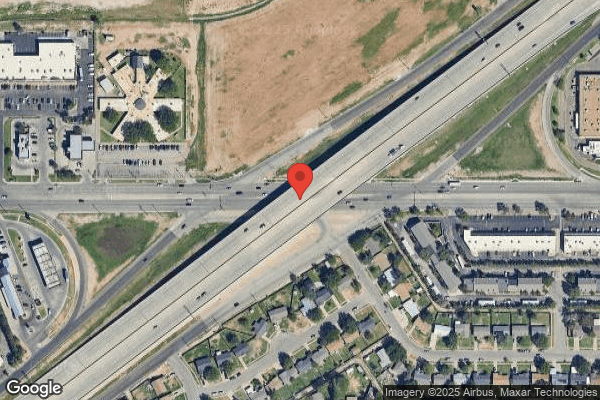
Jul 2025 1 deficiency 1 IJ
CRITICAL (J) 📢 Someone Reported This

A family member, employee, or ombudsman was alarmed enough to file a formal complaint

Immediate Jeopardy (IJ) - the most serious Medicare violation

Deficiency F0692 (Tag F0692)

Someone could have died · This affected 1 resident

**NOTE- TERMS IN BRACKETS HAVE BEEN EDITED TO PROTECT CONFIDENTIALITY** Based on observations, interviews, and record review, the facility failed to ensure that 1 of 8 residents (Resident #1) reviewed...

Read full inspector narrative →
**NOTE- TERMS IN BRACKETS HAVE BEEN EDITED TO PROTECT CONFIDENTIALITY** Based on observations, interviews, and record review, the facility failed to ensure that 1 of 8 residents (Resident #1) reviewed for quality of care was offered a therapeutic diet when there is a nutritional problem, and the health care provider ordered a therapeutic diet.On 6/27/25 the facility did not ensure Resident #1 received her physician ordered NPO diet Enteral Feed diet (a method of providing nutrition directly into the gastrointestinal tract) when CNA provided Resident #1 with a plate of puree food (chili dog on a bun, sauerkraut, tater tots, diced onions, assorted gelatin; pureed). An IJ was identified on 07/02/25 at 2:50 PM. The IJ template was provided to the facility on [DATE] at 2:50 PM. While the IJ was removed on 7/03/25 at 9:23 AM, the facility remained out of compliance at a scope of no harm and a severity level of isolated because all staff had not been trained on 7/03/25.This failure put residents at risk for health complications related to nonadherence to diet order. Findings included:Record review of Resident #1's face sheet, undated, revealed a [AGE] year-old-female was initially admitted to the facility on [DATE] and readmitted on [DATE] with diagnoses to include cerebral palsy, Aphagia (inability or refusal to swallow), unspecified severe protein malnutrition, major depressive disorder, diaphragmatic hernia without obstruction and partial intestinal obstruction (abdominal organs moved through a hole in the diaphragm and are experiencing partial blockage in the digestive tract), dysphasia (difficulty swallowing food or liquids), dysarthria (weaken muscles of neck), moderate intellectual disability, and GERD (gastro esophageal reflux disease).Record review of Resident #1's Comprehensive Minimum Data Set, dated [DATE], revealed: Section C - Brief Interview for Mental Status score revealed a score of 06, which indicated the resident's cognition was severely impaired. Section K - Swallowing/Nutritional Status revealed while a resident, she utilized a feeding tube and she received 51% or more of her total calories through tube feeding at a rate of 501 cc/daily. Section V - Care Area Assessment (CAA) Summary:CAA Results: 13. Feeding Tube Record review of Resident #1's Care plan dated 5/23/25, revealed:Nutritional StatusFOCUS: Resident #1 was NPO had a peg tube and received her nutrition per physician orders via peg tube. (initiated 9/23/24 revised on 5/16/25)GOAL: Resident #1 would maintain ideal weight and receive proper nutrition daily. (initiated 9/23/24 revised on 5/16/25)INTERVENTIONS: Follow orders for PEG Feedings. (initiated 5/16/25) Record review of Resident #1's Care plan dated,5/26/25, revealed:Nutritional StatusFOCUS: Resident #1 had a peg tube and received her nutrition orally (Regular diet, pureed texture, and nectar consistency fluids). (initiated 9/23/25 revised on 7/01/25)GOAL: Resident #1 will maintain ideal weight and receive proper nutrition daily. (initiated 9/23/25 revised on 7/01/25)INTERVENTIONS: Follow PEG Orders for feedings (initiated 6/16/25) Record review of Resident #1's physician orders, dated 6/27/25, revealed NPO diet, NPO texture, NPO consistency. order date 4/28/2025 and Enteral Feed every 12 hours IsoSource 1.5 50 ml/hr x (over) 22 hours off from 1900-2100 (7pm-9pm) .order date 6/15/2025. Record review of Resident #1's Progress Notes dated, 3/30/25-7/01/25, revealed:RN W documented on 6/27/25 at 1:24 PM The chest x-ray of [Resident #1] came in and [Resident #]1 has pulmonary edema, and pneumonia. Notified the results to RR, FNP who ordered IV Rocephin 1 g daily for 5 days. RN W documented on 6/28/25 at 1:30 AM [Resident #1] was given food by the day CNA (cannot specified) and chest x-ray taken due to that although it came negative but showed Resident #1 has pneumonia and is on Rocephin. RN W administered Resident #1's first dose.Record Review of Resident #1's hospital records dated 4/26/2025 revealed Resident #1 Peg evaluation, Aspiration pneumonia (a lung infection that develops when food, liquids, or other foreign materials are inhaled into the lungs, causing inflammation and infection), dysphagia, has failed swallow evaluations.Record Review of Resident #1's hospital records dated 4/27/2025 revealed Resident #1 underwent EGD (procedure that uses a camera to examine the esophagus) with PEG placement on 4/23.20 French PEG placement (a feeding tube that is 20 inch in diameter) was successfully completed. Record review of Resident #1 hospital discharge orders revealed Diet: NPO.hydration/water.125ml/q4hrs.continuous tube feeding.Jevity 1.2.rate 60. Record Review of Resident #1's Xray report, dated 6/19/25, revealed Subtle patchy opacity (a faint or indistinct area of increased density) is seen in the right upper lung and left lower lung. This could be due to pulmonary edema (a condition where fluid builds up in the lungs, making it difficult to breathe), atelectasis (Complete or partial collapse of a lung or a section (lobe) of a lung) and/or pneumonia (an infection that inflames the air sacs in one or both lungs).Record Review of Resident #1's Xray report, dated 6/27/25 revealed Subtle patchy opacity (a faint or indistinct area of increased density) is seen in the right upper lung and left lower lung. This could be due to pulmonary edema (a condition where fluid builds up in the lungs, making it difficult to breathe), atelectasis (Complete or partial collapse of a lung or a section (lobe) of a lung) and/or pneumonia (an infection that inflames the air sacs in one or both lungs).Record review of Resident #1's dietary ticket, dated 6/27/25, revealed: NPO/PureeBeverage texture: NectarDuring an interview on 7/1/25 at 3:41 PM, Resident #1 only answered yes and no questions. She answered yes to receiving a tray on 6/27/25, consuming the food on the tray in its entirety, to the food being good and being able to consume the food without complication. She answered no to being in any pain and she stated no when asked was she to receive a tray on 6/27/25. During interviews conducted on 07/01/25 at 9:00 AM, the ADM stated CNA A gave Resident #1 a tray that contained pureed food. She stated CNA C reported the incident to RN W on 6/27/25. The ADM stated after investigating the incident, she found that the vendor that was used for dietary needs was implementing a system update which made it impossible to print the dietary tickets for the facility. She stated the system to print the tickets had never been down before. She stated the vendor had to print the dietary tickets for the facility and when the tickets were printed, Resident #1's, who was actively in NPO status, because she received her nutrition via PEG tube, ticket was printed and included with the remainder of the facility resident dietary tickets. She stated initially CNA C assumed Resident #1 received regular textured food because CNA C knew other residents received regular textured food. The ADM stated that she spoke with CNA A who stated that the food that she served Resident #1 was pureed and described it as that slurpee stuff. The ADM stated when she interviewed CNA A, she inquired what happened and she was told by CNA A that she read the ticket and was surprised because Resident #1 did not usually get a tray. The ADM stated CNA A stated she consulted with CNA B and CNA B told CNA A to leave the tray for Resident #1. The ADM stated Resident #1 received her PEG tube at the end of the April 2025, and since then, Resident #1 had been crying because she wanted to eat. The ADM stated she reported the incident to state because CNA C stated it was negligent and Resident #1 should not have received a tray of food because she was NPO. During an interview conducted on 07/01/25 at 9:10 AM, the DON stated Resident #1 had a PEG tube in place on 6/27/25. The DON stated Resident #1 had the PEG placed in April 2025 due to ongoing stomach issues and she was experiencing pain. The DON stated Resident #1 also had a history of pneumonia. The DON stated ever since the PEG placement, Resident #1 had been crying because she wanted to eat. The DON stated when Resident #1 received a tray on 6/27/25 and RN W was notified, he (RN W) notified facility management, RR, the MD and ordered an x-ray. She stated RN W reported to her that the x-ray did not have any significant findings. The DON stated that she was told by RN W that there were signs of pneumonia, but it was lingering pneumonia from a previous diagnosis. The DON stated Rocephin was ordered, and the first dose was given that night. The DON stated there were no signs of aspiration. The DON stated since 6/27/25, the orders for Resident #1 were changed and Resident #1 was actively able to consume food orally. She stated when Resident #1 consumed her meal, a staff sat with her and a nurse was present during the meal. During an interview conducted on 07/01/25 at 11:25 AM, CNA A stated on 6/27/25 they (she and CNA B) were passing out trays. She stated she received the tray for Resident #1. She stated it was not whole food. She described the food as food that you slurped up and it looked like baby food. CNA A stated that she did not believe a nurse checked the trays before the resident trays were brought to the hall. CNA A stated she looked at the dietary ticket for Resident #1 and remember seeing her name on the ticket, but did not remember seeing anything else. She stated after she saw that Resident #1 had a tray, she consulted with CNA B, and she was told by CNA B to leave the tray with Resident #1. CNA A stated she left the tray, but did not see her consume the food on the tray. She stated she did not know if Resident #1 consumed the entire tray of food or not because their shift did not pick up the trays. She stated the potential negative outcome was Resident #1 could have choked or died. She stated her nurse would have been LVN L, but LVN L did not bring the resident trays to the hall. CNA A stated that the dietary staff (did not know which one) brought the trays on 6/27/25. CNA A stated she was a newer staff and had been employed at the facility for about three weeks. She stated she had only been a CNA for a brief time. She stated she did not realize Resident #1 receiving the tray of food was an issue until the ADM called her the following day (6/28/25) and asked her about the incident. CNA A stated she was told that when she returned, she was instructed to give a statement. CNA A stated she gave Resident #1 the food because she did not know Resident #1 could not have food. She was unaware that she had a PEG tube for her nutrition. She stated she later found out Resident #1 had a PEG tube when the ADM called her. She stated there were no other residents with PEG tube placements. She stated she did not contact or consult a nurse. She stated after consulting CNA B, she thought it was ok. She stated CNA B had been with the facility longer than her. CNA A stated she did not have access to the facility's EMR/PCC at the time of the incident (6/27/25). She stated she just received access not to long before the interview but did not remember the exact date. She stated the facility process of checking the trays was the nurse would check the trays in the dining room. She stated dietary staff brought the trays to the hall normally. She stated they (CNAs) checked the dietary ticket for the name and served the tray. She stated on 6/27/25, she was floating between halls and not assigned to any hall. She stated she had been trained that NPO meant nothing by mouth, and she would know if someone was NPO if the resident had a feeding tube.During interviews conducted on 07/01/25 at 12:18 PM, CNA B stated NPO meant the resident could not be fed by mouth. CNA B stated she was never officially told that Resident #1 was NPO, but she assumed she was because Resident #1 never received a tray since she had worked at the facility. She stated she had worked at the facility for at least a month. CNA B stated there were no other residents in the facility that were NPO status. CNA B stated she was unaware that Resident #1 received a tray on 6/27/25. She stated she found out about the incident on 6/28/25 when she was asked who gave Resident #1 a tray. She stated the night/evening staff picked up the tray and that was how they (nighttime staff) found it. CNA B stated she worked with CNA A on 6/27/25. She stated CNA A did not consult her (CNA B) about giving Resident #1 the tray. CNA B stated she could not recall telling CNA A anything about leaving the tray for Resident #1. She stated at the time of the incident she did not receive any additional training or instruction about Resident #1 or about any residents that could not eat. She stated they (staff that worked 6/28/25) were told that Resident #1 was not to receive a tray on 6/27/25. CNA B stated she was unsure if the tray was checked by a nurse on 6/26/25. She stated she could not remember who the nurse was on 6/26/25. She stated the facility process for administering the trays to the resident during mealtimes was the nurse should check the trays in the dining room but not the trays on the hall. CNA B stated she had never had any issues with the trays being wrong on the halls. She stated the staff from dietary brought the resident trays from dining room to the halls to serve to the residents that eat in their rooms. She stated it was different staff each time, but always dietary staff. During interviews conducted on 07/01/25 at 1:23 PM, DA P stated he had been trained that NPO was nothing by mouth. He stated he knew a resident was NPO based off the dietary ticket. He stated if a resident was NPO, they (residents) should not have a dietary ticket. He stated if the saw on a ticket conflicting information he was unsure what to do. He stated he was not present on 6/27/25 when Resident #1 received a tray. He stated the facility process for distributing resident trays was the nurse checked the tray. He stated they (dietary staff) was not to serve until a nurse was in the dining room. He stated the nurse was to take the trays to the hall for the residents that eat in their room. He stated in the dining room, the nurse checked the tray and handed it to the CAN and the CNA would then distribute to the residents. He stated he was unsure if the CNAs were checking in addition to the nurse checking. During interviews conducted on 07/01/25 at 12:18 PM, DA Q stated NPO was nothing by mouth. He stated they (dietary staff) knew when a resident was NPO because it should say it on the resident's dietary ticket. He stated if he saw a diet texture and NPO on a ticket he would contact a charge nurse so that they (dietary and clinical staff) could figure it out together. DA Q stated he was not working on 6/27/25 and was unaware that Resident #1 had a PEG tube. He stated the facility process for distributing trays to residents was the nurse would sometimes check the tray before. He stated the nurses sometimes were busy. He stated there were times when the CNA would grab the tray and go. He stated, the majority of the time, the nurse checked the tray before distribution. He stated the trays that went to the halls were checked half the time. He stated he was unsure what the nurses checked for on residents' trays. During interviews conducted on 07/01/25 at 1:51 PM, the DM stated NPO meant nothing by mouth and the dietary staff know because if there was a change, then the nurse would send the dietary department a communication form so that the dietary cards were updated. The DM stated whether they (residents) eat their food or not each resident should have a dietary card. She stated if the resident was NPO then they (residents) should not have a dietary card. She stated when they (dietary staff) print out the dietary cards Resident #1's card did not normally print out when they (dietary staff) printed them out. She stated she was unsure why when the vendor printed the dietary tickets for them (dietary staff) Resident #1 had a dietary card to print out. She stated on 6/27/25, during breakfast and lunch, she assisted the dietary staff with ensuring that all residents received the appropriate diet. She stated the vendor printed the tickets out for supper, she handed the dietary tickets to the dietary staff, and did not check the tickets for accuracy. She did not have a reason she did not check the tickets. She stated she did not think about checking the tickets for accuracy. She stated she left at 5:00 PM on 6/27/25 and was not present when the dietary staff prepared Resident #1 tray. She stated [NAME] T would have been the only staff that she would have thought that did not know that Resident #1 did not consume food orally. She stated DA R, and DA S would have known Resident #1 did not consume food orally because they had worked at the facility for a while. She stated once they (dietary staff) saw the ticket they (dietary staff) should have questioned the ticket. She stated the ticket first went to the cook who would place the entre on the plate. The DM stated that the cook was looking for the texture and should be checking the dietary ticket in its entirety. The DM stated then the plate goes to the first dietary aide who was added things such as vegetables and any other sides. The DM stated the first dietary aide was continuing the correct texture that was listed on the ticket and should also be checking the dietary ticket in its entirety. She stated each dietary staff would have had the opportunity to identify on Resident #1's ticket that she was NPO. The DM stated the dietary staff should have consulted with the charge nurse on 6/27/25 when they (dietary staff) observed a diet texture and the status of NPO listed. The DM stated then the last part of the plating process was the last/second dietary aide would add things such as drinks, bread, and desserts. They (dietary staff) would hand the tray to the nurse or place it on the cart for the tray to go to the hall. She stated the second dietary aide should also be checking the dietary ticket in its entirety. The DM stated Resident #1 had never received a tray while on NPO status. The DM stated they (the facility) had never had issues with their system before. She stated when she gave the dietary workers the dietary tickets, she was unaware Resident #1 had a ticket. The DM stated the potential negative outcome for serving Resident #1 a tray, when she was not supposed to, was that she could have choked, aspirated, and possibly died. The DM stated she was unsure if Resident #1's tray was checked on 6/27/25. The DM stated she expected the residents to receive the correct meal on their ticket and if they (residents) were not to have a meal, then they (residents) should not receive one. The DM stated she was never at the facility for dinner because she left at 5:00 PM daily. She stated she was present during breakfast and lunch, and she normally observed dietary staff checking the dietary tickets and nurses checking the trays before distribution to the residents. During interviews conducted on 07/01/25 at 2:37 PM, [NAME] T stated he worked on 6/27/25, but he did not know specifically who Resident #1 was until after she was served and management addressed them (dietary staff). He stated he was new and was at the beginning of the plating process. He stated after him the plate would go through, two other workers and then a CNA would check it. [NAME] T stated he did not remember reading Resident #1's ticket. He stated he normally looks at the texture but did not remember seeing NPO on Resident #1's ticket. [NAME] T stated he was told/trained by the DM that NPO meant that the resident could not receive anything by mouth and received their nutrition by tube. [NAME] T stated even if he had seen NPO he may not have done anything different because he was not made aware of the NPO status until after the incident. He stated he was trained on NPO and the incident the day after the incident before his shift started. He stated he recently learned that he was to look at the entire dietary ticket. [NAME] T stated he knew to ask questions if he needed to, and would, moving forward. [NAME] T stated he was still new and stated he honestly could not tell the difference between the CNAs or the nurses as he was a newer employee. [NAME] T stated he had only worked at the nursing facility for 2-3 weeks. During interviews conducted on 07/01/25 at 2:39 PM, LVN L stated she knew what NPO was and that it meant nothing by mouth. She stated she knew that a resident had the status of NPO when it was listed in the residents' chart. She stated they (facility staff) were also told during shift change if a person received a new order of NPO. She stated the staff would have access to NPO information in the EMR. LVN L stated she was unaware that Resident #1 had been given a tray by CNA A because she did not remember which CNAs worked on 6/27/25, and she was not told that Resident #1 received a tray. She stated on 6/28/25 she received the information during shift change in report from RN W. She stated RN W stated that Resident #1 received a tray. LVN L stated she did not monitor the dining room on 6/27/25 during dinner time. She stated she monitored breakfast, and Resident #1 did not receive a tray during breakfast on 6/27/25. She stated LVN O would have been the other nurse on duty. She stated she was unaware if he was in the dining room, or if the dining room trays were checked before the resident trays went to the hallway. She stated that there were only two nurses on duty, and they (LVN L and LVN O) were training other nurses that day. LVN L stated she had never seen Resident #1 consume food or receive a tray. LVN L stated she did not receive any specialized training because of the incident. She stated the facility process for distributing resident trays was once the tray came off the line, the nurse checked the ticket against the tray for accuracy. She stated the nurse was checking to make sure the resident had the correct diet texture. She stated then they (nurses) gave the tray to a CNA to distribute. LVN L stated the cook for that day was new and she remembered the system that dietary used was down, but she did not have much information about it. LVN L stated she was aware that Resident #1 had a PEG and was NPO. She stated Resident #1 had a PEG tube because she had stomach issues, but she was unsure of the details and specifics. She stated when she checked the ticket, she checked the dietary ticket in its entirety for the correct resident and diet details. During interviews conducted on 07/01/25 at 3:16 PM, DA R stated NPO meant the resident could not have anything by mouth. He stated they (dietary staff) knew when a resident was NPO because the nurses told them (dietary staff), and it would indicate the information on the dietary ticket. He stated he knew Resident #1 did not eat and knew who she was. DA R stated he was aware that Resident #1 was NPO. He stated he observed her ticket on 6/27/25 and saw she was to receive a pureed tray and that was why he was served one. DA R stated their cook (Cook T) was new but since he made the plate for Resident #1, he assumed that it was ok. DA R stated he was unsure if the trays were checked by a nurse but did not remember seeing a nurse. DA R stated the facility process in distributing trays was the nurse was to check the tray before it was served to the resident. He stated on 6/27/25, he took the tray to the Hall were Resident #1 resided and this was because they (dietary staff) did not see a nurse. He stated once he took the cart to the hall, it would have been the nurse's aides to serve the trays to the residents. He stated that when it was time to serve meals, the dietary staff announced the mealtime over the loudspeaker. He stated he had not received any additional training regarding the incident. He stated when he checked the dietary ticket, he looked at the ticket in its entirety. He stated he did not see the word NPO on the ticket on 6/27/25. During interviews conducted on 07/01/25 at 4:50 PM, RN W stated NPO meant nothing by mouth and the resident was not allowed to have anything by mouth. He stated that he knew a resident was NPO because of the MAR, EMR, or PCC. He stated he was aware that Resident #1 was NPO. RN W stated he worked the night shift on 6/27/25. He stated he was notified by CNA C that Resident #1 hit her call light for her tray to be picked up. RN W stated CNA C reported that the tray was empty when she picked up Resident #1's tray. RN W stated when he went to see Resident #1, he observed red Kool-Aid on her face. He stated he notified management, the MD, and the RR. He stated the MD ordered an x-ray. He stated the x-ray was completed and it showed that she had lingering pneumonia but no signs of aspiration. RN W stated Resident #1 had pneumonia in the past and had received treatment, so the MD ordered IV Rocephin and he administered the medication the night of 6/27/25. He stated when he started his shift on 6/27/25 at 6:00 PM, LVN L gave him report and it did not include any information about Resident #1 receiving a tray of food. RN W stated he would not have been responsible for any meal monitoring because when he arrived at the facility, dinner would have already started as it started at 5:00 PM. He stated the evening/night shift were only responsible for passing out snacks and picking up dinner trays if there were any left. He stated when he reported the incident to the DON, the DON told him she would educate the staff. RN W stated he immediately verbally educated his staff on what NPO was and the importance. During an interview on 7/01/2025 at 10:24am with Resident #1's Guardian, she stated she had received a call during the weekend and was told Resident #1 had been served a tray of food although she was NPO. She stated Resident #1 had been placed on NPO after a PEG placement due to recurrent GI issues and recurrent aspiration pneumonia. She stated Resident #1 had not had any food since she had the PEG tube placed and had a decrease in quality of life, but as of 6/30/2025, Resident #1 had the PEG tube removed by hospice and was allowed pleasure feedings. During an interview on 7/01/2025 at 4:51 pm with the MD, he stated he had been made aware of the incident that occurred on 6/27/2025 with Resident #1, and from his understanding, there had been no complications from the incident. He stated he expected the staff at the facility to follow the diet orders for each resident. He stated the potential negative outcome of Resident #1 receiving the incorrect diet could have been aspiration pneumonia). The MD stated Resident #1 had a diaphragmatic hernia and the PEG tube had been placed because Resident #1 was having reflux (referred to the backward flow of stomach contents into the esophagus), and there were concerns about possible aspiration. The MD stated he had spoken to the ADM (unknown date) and the ADM would be ensuring all the diet orders were reviewed for accuracy with the kitchen staff and with the floor staff. The MD stated after speaking with Resident #1's guardian, they decided Resident #1 would have the PEG tube removed.During interviews conducted on 07/02/25 at 12:55 PM, the DON stated if the vendor's system was to stop working again, the facility intended to address the issue by ensuring the dietary staff knew to report the issue to the DM, DON, and ADM. She stated once they (management staff) were notified, they (DON/ADM) would work with the DM and dietary staff comparing the diet orders in the EMR/PCC to what the dietary staff had. She stated on 6/27/25, there were two nurses on duty, and they (LVN L and LVN O) were training two new nurses. She stated if there were three nurses then they (nurses on duty) would have split the mealtimes equally (1 nurse per mealtime). She stated if there would have been two nurses then they (nurses on duty) should have had one meal monitoring per nurse and split the dinner meal to monitor. She stated the nurses should have communicated to ensure monitoring for dinner was conducted by a nurse on 6/27/25. She stated on 6/27/25, there was no specific nurse assigned to dinner mealtime monitoring. She stated the nurses that were on duty (not the nurses that were being trained) would have been responsible. She stated it would have been between LVN L and LVN O who would have been responsible for monitoring the dinner mealtime. She stated the facility process was that nurses assigned to certain halls had specific meals that they (nurses on duty) were responsible for. The DON stated on 6/27/25, Resident #1 should not have received a tray of food, and should not have had a dietary ticket. She stated at the time, the dietary or clinical staff noticed that Resident #1 received a dietary ticket or there was a discrepancy on her dietary ticket they (the dietary and clinical staff) should have notified the DM and or a charge nurse. The DON stated the DM should have checked the dietary tickets for accuracy before giving the dietary tickets to the dietary staff. The DON stated that she did not see Resident #1's dietary ticket, but was told by the DM that the ticket indicated Resident #1 was NPO and could receive a pureed diet texture. The DON stated when there was conflicting information, the staff had been trained to verify with a charge nurse. The DON stated Resident #1 was NPO on 6/27/25. The DON stated Resident #1 had her PEG tube placed in April 2025 because she had aspiration pneumonia in the past. It was determined that it was safest if she had the PEG placed. The DON stated Resident #1 had dysphasia. She stated Resident #1 was once on mechanical soft and because she was having difficulty swallowing, she was moved to pureed. The DON stated when Resident #1 would consume the mechanical soft, she would have increased coughing. The DON stated Resident #1 even vomited a few times. The DON stated all the staff had been trained by her, the ADM, and the DM except for some of the nighttime shift. She stated the nighttime shift would be trained before they (nighttime shift) were allowed to work their shift. The DON stated she was familiar with the facility's policies related to dietary services and residents receiving the correct prescribed therapeutic diet. She stated the purpose of having the correct diet and having a policy for therapeutic diet was for resident safety and to prevent choking. She stated the potential negative outcome for not following the policies, or ensuring the residents have the correct diet, was the resident could choke or aspirate. She stated that residents could potentially not receive the nutrition they (residents at the facility) needed and could experience weight loss. The DON stated, on 6/27/25, she was unaware that Resident #1 had received a tray of food while she was ordered to be NPO. She stated she was unaware that CNA A was not following the physician order for Resident #1. She stated the system to monitor or ensure that staff were following the physicians order for diets, was once the MD ordered the diet, then it was entered in the EMR/PCC. The nursing staff then reported the change to dietary via communication form. She stated the CNAs were informed because the information was accessible in the EMR/PCC. She stated she and her staff had been trained regarding residents receiving the correct diet per physicians' orders. She stated she expected for all staff to follow the physician orders and for all residents to receive their meal as ordered by the physician. The DON stated the reason Resident #1 received the tray when she was not supposed to was because the vendor generated a dietary ticket, and the tray was not checked. She stated the dietary staff, and clinical staff should have asked the nurse about any discrepancies. The DON confirmed that CNA A had access to the facility EMR/PCC as of 6/24/25. During interviews conducted on 07/02/25 at 2:50 PM, the ADM stated if the system that dietary used to print dietary tickets goes down again, they (the ADM, DON, and DM) would ensure to check all tickets printed from the vendor for accuracy. The ADM stated on 6/27/25 one of the charge nurses on duty would have been responsible for monitoring the dinner mealtime. She stated it would have been between LVN L and LVN O. The ADM stated that the nurses would have known who was responsible for the meal monitoring based off the scheduling system created by the DON and ADON. The ADM stated, on 6/27/25, what should have happened was at the moment the staff observed Resident #1 had a dietary ticket and that it had a diet texture and listed as NPO, they (the clinical and
Mar 2025 3 deficiencies
CONCERN (D) 📢 Someone Reported This

A family member, employee, or ombudsman was alarmed enough to file a formal complaint

Potential for Harm - no one hurt, but risky conditions existed

Abuse Prevention Policies (Tag F0607)

Could have caused harm · This affected 1 resident

**NOTE- TERMS IN BRACKETS HAVE BEEN EDITED TO PROTECT CONFIDENTIALITY** Based on interviews and record review, the facility failed to implement written policies and procedures that prohibit and preven...

Read full inspector narrative →
**NOTE- TERMS IN BRACKETS HAVE BEEN EDITED TO PROTECT CONFIDENTIALITY** Based on interviews and record review, the facility failed to implement written policies and procedures that prohibit and prevent abuse and neglect for 2 of 10 residents (Resident #1, and #2) reviewed for abuse. The ADM (Abuse Preventionist) and the DON failed to follow the facility's abuse policy by not reporting the allegation of abuse to HHSC regarding the Resident-to-Resident inappropriate sexual activity between residents (Resident #1 kissed Resident #2) that occurred on an unknown date. The ADM (Abuse Preventionist) and the DON failed to follow the facility's abuse policy by not notifying the family representative regarding the Resident-to-Resident inappropriate sexual activity between residents (Resident #1 kissed Resident #2) that occurred on an unknown date. The ADM (Abuse Preventionist) and the DON failed to follow the facility's abuse policy by not conducting a thorough investigation and documenting regarding the Resident-to-Resident inappropriate sexual activity between residents (Resident #1 kissed Resident #2) that occurred on an unknown date. These failures could place residents as risk for abuse and neglect. Findings included: Record review of Resident #1's face sheet, dated 03/19/25, revealed an [AGE] year-old-male was admitted to the facility on [DATE] with diagnoses to include dementia (memory loss), major depressive disorder, and anxiety. Record review of Resident #1's Comprehensive Minimum Data Set, dated [DATE], revealed: Section C Brief Interview for Mental Status score revealed a score of 08, which indicated the resident's cognition was moderately impaired. Section B Hearing, Speech and Vision revealed that Resident #1 had clear speech, had the ability to make himself understood and had the ability to understand others. Record review of Resident #5's care plan, dated 10/01/24, revealed the following: Focus Sexually inappropriate AEB: was witnessed kissing a female resident on the lips in the dining room initiated 1/21/25. Goal Resident will have no episodes of sexually inappropriate behavior in the next 90 days initiated 1/21/25. Interventions Evaluate the resident ability to understand behavior and the consequences of that behavior initiated 1/21/25. Explain to the resident the acceptable expressions of sexuality based on the cognitive evaluation initiated 1/21/25. Listen/talk to the resident-see if they will tell you why they do the behavior initiated 1/21/25. Psychiatric Services consult as needed initiated 1/21/25. Reinforce with staff that clear, firm limits are healthy and required when resident makes inappropriate gestures or statements initiated 1/21/25. Report incidents of inappropriate sexual behavior to charge nurse and if other resident are involved, immediately intervene to protect the safety of all residents involved initiated 01/21/25 Record review of Resident #1's progress notes dated 01/18/25-01/19/25 revealed: There was no progress note related to Resident #1 kissing Resident #2. An interview was not conducted with Resident #1 because he was not actively in the facility on 03/19/25. Record review of Resident #2's face sheet, dated 03/19/25, revealed a [AGE] year-old-female was admitted to the facility on [DATE] with diagnoses to include dementia (memory loss), and chronic hepatitis C. Record review of Resident #2's Comprehensive Minimum Data Set, dated [DATE], revealed: Section C Brief Interview for Mental Status score revealed a score of 03, which indicated the resident's cognition was severely impaired. Section B Hearing, Speech and Vision revealed that Resident #2 had clear speech, usually made herself understood and usually had the ability to understand others. Record review of Resident #5's care plan, dated 02/10/25, revealed the following: Focus Cognitive Function: Resident #2 has impaired cognitive function/dementia or impaired thought processes Dementia, impaired decision making initiated 2/13/23. Goal The resident will maintain current level of cognitive function initiated 02/13/23. Interventions/Task Discuss concerns about confusion, disease process, nursing home placement with the resident/family and care givers initiated 02/13/23. Record review of Resident #2's care plan, 2/10/25, did not address a desire to be in a relationship or incidents of inappropriate sexual behavior. Record review of Resident #2's progress notes dated 01/18/25-01/19/25 revealed there was no progress note related to Resident #2 being kissed by Resident #1. During an interview on 03/19/25 at 2:09 PM, Resident #2 stated she had a boyfriend. She said she did not know his name but that he was at the facility on 03/19/25. She said she did not remember if she kissed anyone. After asking why she was being questioned, she said she could kiss if she wanted to and felt safe in the facility. During an interview on 03/19/25 at 11:59 AM, the DON said that the Activity Director reported to her a few days after the incident (Resident #1 and Resident #2 kissed) occurred. She was unable to report the date the incident occurred. She stated it was reported to her that it was a peck on the lips. She said she was told that the residents were separated. She said Resident #2 had a BIMS of 3. The DON said she was unsure if anything else was done regarding the incident. She said the only person she spoke with was the Activity Director about the incident, and she would have more information. During an interview on 03/19/25 at 12:02 PM, the Activity Director stated that approximately 2 months ago, Resident #1 and Resident #2 kissed. The Activity Director stated that Resident #1 resided in the male-locked unit, and he would come out and assist her with activities. She stated that Resident #1 would shake hands and hug other residents, and Resident #1 was friendly. She said that because he was out of the male-locked unit, he was with her and helped her gather supplies, gather residents, and deliver items. The Activity Director stated they were near the nurse's station when he kissed Resident #2. Before she knew it, she observed Resident #1 and Resident #2 pecking each other on the lips. The Activity Director stated she separated both residents and explained to Resident #1 that he could not do that because of illnesses he could be exposed to. She stated Resident #1 joked and said, They were both grown. The Activity Director stated she spoke with Resident #2, but she did not understand at that moment and did not recall the incident. The Activity Director stated she believed Resident #2 had dementia. The Activity Director stated she did not think any other staff observed the incident. The Activity Director stated she reported the incident to the ADM and DON the same day the incident occurred. She said it was discussed the next morning in the morning meeting but did not remember the details of the meeting. She said that neither of the residents had a history of inappropriate sexual behaviors. The Activity Director stated she did not document the incident in either of the resident's progress notes. She stated she did not have a reason for not documenting the incident. She stated moving forward, she had just reminded Resident #1 of the best way to greet people. She stated the incident did not happen again. She stated she did not pass the information about the incident to the male-locked unit staff. During an interview on 03/19/25 at 1:15 PM, Family Member E stated she was not notified by facility staff about Resident #1 kissing another resident, but that Resident #1 told her about it. She said he told her he was told not to do it anymore. She could not remember if the kiss was on the lips or cheeks. She referred to the incident by saying, It was just a kiss! The interview ended abruptly because she said she was out with her grandchildren and would call back. During an interview on 03/19/25 at 1:30 PM, the Assistant Activity Director stated she had no first-hand information about Resident #1 kissing Resident #2. She stated that she heard about it but was not given specific instructions related to Resident #1 regarding the matter. She said that Resident #1 had never displayed behavior like that before. She said neither resident had the cognitive ability to make decisions independently. An attempt to interview Family Member F was unsuccessful on 03/19/25 at 1:18 PM. During an interview on 03/19/25 from 12:13 PM to 2:22 PM with LVN A, LVN B, C, and D revealed that they had provided care for Resident #1. They were all unaware of Resident #1 kissing Resident #2. They had not been given specific instructions regarding Resident #1's inappropriate behavior. They had never witnessed him having inappropriate behavior. They all expressed that Residents #1 and #2 could not make decisions cognitively. During an interview on 03/19/25 at 2:34 PM, the ADM stated that HR had told her that Resident #1 had kissed Resident #2. The ADM stated Resident #1 greets everyone and the ladies at the facility and swoons over him. ADM stated that she once was told by Family Member E that while in the community, he (Resident #1) oversaw completing shopping for the ladies in his apartment complex. She said that after HR told her she went and spoke with the Activity Director, she (the Activity Director) told her (The ADM) both residents (Resident #1 and #2) greeted each other and pecked each other on the lips. She said The Activity Director pulled both Residents apart. The ADM stated it was unusual but not an issue. She said she (The ADM) did not see it as inappropriate. She said they discussed the incident in the morning meeting and lightly mentioned that they should plan it because it could be inappropriate. She said she assumed that was why the DON care planned it as inappropriate behavior. The ADM stated Resident #2 was not cognitively able to make her own decisions, and neither was Resident #1. She said she had spoken with Resident #2, and she did not remember. She said she did not talk with Resident #1. She said Resident #1 greets people in this manner. She showed the investigator that he would give a side hug, press his face to other residents, and made a kissing sound. She said he was not asking permission of the residents to greet them in that manner. The ADM stated she did not think there was anything to it. She said she did have a surveillance system, but where the incident occurred, it would not have been an unobstructed view for the cameras. She said she did not even think to look at the camera because she did not think Resident #1 meant to do it. The ADM stated she did not report it to Resident #1's family, and Resident #1 does not have family. The ADM stated Resident #2's family representative was her boyfriend, who did not answer phone calls. She stated when she spoke with Resident #2, she (Resident #2) was not upset. She said she was not sure if an incident like this would necessarily be reported to the family, depending on the resident. She said it was something that they needed to watch but did not consider it an issue because Resident #2 was not upset and could not remember. She said it was reported to her that Resident #2 was pecking him back. She said Resident #2 could let her feelings be known. She said HR was not in the facility today because she was out attending a funeral. During an interview on 03/19/25 at 3:04 PM, the DON stated she was familiar with the facility's abuse policy, specifically reporting to HHSC , notifying the family representative, and conducting a thorough investigation. She said the purpose of reporting to HHSC was so that HHSC could come and investigate. She said the purpose of notifying the family representative was because that was the policy. She said the purpose of conducting a thorough investigation and documenting it was to determine if they needed to substantiate, figure out what happened, and what could have been done to prevent it. She stated they usually get witness statements from all the people who were involved. She stated they typically would try to interview the staff and residents as soon as it happens so that the information was fresh on their minds. She said the longer they wait, the more the residents could forget. She said the PNO of not following the facility's abuse policy was that the facility would be cited for deficiencies. She said the PNO of not notifying the family representative was the family may have further questions and would not know what was going on with the resident's care. She said she did not notify the families of the residents who were involved. She said the PNO of not conducting a thorough investigation and documenting it was then they could not prevent it from happening again and the lack of documenting would make it difficult for others to know about the incident. She said the incident should have been documented in the resident progress notes. She said she did not know it was not documented in the progress notes. She said she was aware that the facility did not report the incident to HHSC, investigate, or contact the family members of both residents involved. She said she was unaware that the incident between Resident #1 and #2 should have been investigated, but in hindsight, she could see where they should have been investigated. She said the system for monitoring that the facility's abuse policy was being followed was using the provider letter and policies to determine if the incident needed to be reported to HHSC. She said her system to monitor family notifications was she would review risk management. She said the system to monitor investigations was if they had a self-report, they would follow the self-report protocol based on what occurred. She said that this was generated in their computer system. She said she would review all documentation. She said she had been trained to report all reportable incidents to HHSC. She said she had been trained to notify family representatives of any significant incidents that involve residents. She said she had been trained to conduct a thorough investigation regarding allegations of abuse. She said she had been trained to conduct a thorough investigation and document regarding ANE. She said she expected all reportable incidents to be reported to HHSC. She said she expected all family representatives to be notified if there was an incident that involved any resident. She said she expected all allegations of ANE reported to be documented and thoroughly investigated. She said she and the ADM were responsible for reporting reportable incidents to HHSC. She said the charge nurse was typically responsible for notifying the resident's family when they were involved in an incident. She said she and the ADM were responsible for investigating and the documentation of the investigation. She said the incident was not reported to HHSC because it was a peck, and she was not troubled by it. She said he was supervised every time Resident #1 was out of the male-locked unit. She said he greeted a lot of people but did not kiss them on the lips. She said she had never seen him make contact with any other resident on the lips. She said the family was not notified because they did not perceive it as concerning or find out about the incident until several days later. She said Resident #2 was not troubled. She said that the reason the incident was not thoroughly investigated or documented was because they did not perceive the incident as ANE. She said she did not customize the care plan but used a template. She stated all staff were trained to notify if there was an allegation of ANE. During an interview on 03/19/25 at 3:36 PM, the ADM stated she was familiar with the facility's abuse policy, specifically reporting to HHSC, notifying the family representative, and conducting a thorough investigation. She said the purpose of reporting ANE to HHSC was to protect the resident and to have a second set of eyes. It ensured that nothing was not missed. She said the purpose of notifying the family representative was to let the family know what was going on with their care. She said conducting a thorough investigation and documenting was to ensure they did not miss anything and get the whole story. She said an investigation would involve interviewing other residents to see if it was a pattern. She said she would also interview the residents involved. She said they would interview any witnesses. She only interviewed Resident #2, HR, and the Activity Director. She said she did not document the interviews because she did not think about it. She said she did not perceive the incident between Resident #1 and Resident #2 as an incident. She said that the PNO of not reporting to HHSC was when the incidents that should have been reported may not have been investigated. She said the PNO of not notifying family representatives was the family needed to know what was going on, and if they did not notify the family, they could fail to do something they (the family) wanted them to do regarding the residents. She said she was aware that the incident where Resident #1 kissed Resident #2 was not reported to HHSC. She said she was aware that the family was not notified and did not notify the family of Residents #1 and #2. She said she does not believe that anyone would have done a notification because an incident report was not completed. She said she was aware an investigation was not completed because they did not feel it was a reportable incident, and she failed to report it. She said the system to monitor reportable incidents to HHSC was they always reviewed incidents. She said they typically reported incidents to the corporate office, and they all came to an agreement. She said if one person agreed that the incident should be reported, they should report it to HHSC. She said they did not report the incident between Resident #1 and #2 to the corporate nurse and operation manager. She said she did not consider it a reportable incident when it was reported to her. She said she heard it from HR, and she told her they (Resident #1 and Resident #2) were kissing. She said the system to monitor family notifications was to ensure that the DON would complete the notification if it were a reportable incident. If it was the charge nurse, she should also be checking behind the incident reports. She said the system they used to monitor investigations was that she and the DON drive the process and get interviews. She said she was unsure if she would have expected the incident to be documented in the resident progress notes. She said she had been trained to report reportable incidents to HHSC. She said she had been trained to notify family members if the resident was involved in a reportable incident. She said she had been trained to conduct a thorough investigation and document that investigation. She said she had been trained to report reportable incidents to HHSC. She said she expected family representatives to be notified if there were any incidents, new orders, or behaviors. She said she expected all reportable incidents to be thoroughly investigated and documented. She said she typically reported incidents to HHSC but that the DON could do it in her absence. She said the DON typically would report incidents to the corporate office. She said that depending on the incident would determine who was responsible for notifying the family representative. She said it would be the charge nurse or nurse present during the incident. She said she, as the ADM, was responsible for conducting a thorough investigation and documenting the investigation. She said she did not report the incident to HHSC because she felt it was accidental. She said there was no harm or intent. She said the family was notified because they did not feel it was an incident or harmful behavior between the two. She said the incident (Resident #1 and Resident #2 kissing) was not investigated and documented because they genuinely did not feel it was reportable. She said she mentioned in the morning meeting on an unknown date that the incident needed to be care planned with the DON being new care planned the incident as inappropriate sexual behavior, but she did not feel that the behavior was sexually inappropriate. During an interview on 03/24/25 at 2:58 PM, she said she did not witness Resident #1 and Resident #2 kiss, but she was told about the incident on an unknown date by the Activity Director while they were doing work for Meals on Wheels. She said although she did not remember the day she was told, she knew she was not told about the incident the same day the incident occurred because the Activity Director just casually mentioned the incident. She said the Activity Director told her that while they (The Activity Director and Resident #1) were bringing other residents to have an appetizer, Resident #1 and Resident #2 kissed. She said it was like a greeting and that the Activity Director joked about the incident. HR stated she did not get the impression as if it was a bad thing. She said she had never seen Resident #1 do this (kiss or greet other residents) before. She said Resident #1 was friendly and felt like he worked at the facility. She said she reported the incident to the ADM in casual conversation. She said she and the ADM were talking about Resident #2's boyfriend dumping her at the facility and being difficult to contact. HR stated she joked with the ADM and said, Oh, he better behave because Resident #2 was kissing boys. She said the ADM stopped and said, Oh God, what? We should probably get that care planned. HR said the ADM spoke about it in the morning meeting the following day. She said they should care plan it just in case it came up or happened again, and they would have a reference. She said both residents have memory issues where they cannot remember very well, but Resident #2 was verbal enough to express if she did not want something, she would let it be known. She said Resident #2 would wink and flirt a little. Record review of the facility policy, Abuse/Neglect, date revised 03/29/18, revealed: The resident has the right to be free from abuse . Residents should not be subjected to abuse by anyone, including, but not limited to, facility staff, other residents . The facility will provide and ensure the promotion and protection of resident rights. It is each individual's responsibility to recognize, report, and promptly investigate actual or alleged abuse, neglect, and situations that may constitute abuse or neglect to any resident in the facility. Prevention The facility will provide the residents, families, and staff an environment free from abuse and neglect. All reports of abuse or suspicion of abuse/neglect or potentially criminal behavior will be investigated as per facility protocol. Investigations will be reviewed by the facility administrator and/or Abuse Preventionist within 24 hours of complaint. Appropriate notification to state and home office will be the responsibility of the administrator and per policy. Reporting Any person having reasonable cause to believe an elderly or incapacitated adult is suffering from abuse, neglect or exploitation must report this to the DON, administrator, state and/or adult protective services. State law mandates that citizens report all suspected cases of abuse, neglect or financial exploitation of the elderly and incapacitated persons. When a suspected abused, neglected, exploited, mistreated or potential victim of misappropriation of property comes to the attention of any employee, that employee will make an immediate verbal report to the Abuse Preventionist or designee. If the discovery occurs outside of normal business hours, the Abuse Preventionist and/or designee will be called. Facility employees must report all allegations of: abuse, neglect, exploitation, mistreatment of residents, misappropriation of resident property or injury of unknown source to the facility administrator. The facility administrator or designee will report to HHSC all incidents that meet the criteria of Provider Letter 19-17 dated 7/10/19. If the allegation does not involve abuse or serious bodily injury, the report must be made within 24 hours of the allegation. Investigation Comprehensive investigations will be the responsibility of the administrator and/or Abuse Preventionist. All allegations of abuse, neglect, exploitation, mistreatment of residents, misappropriation of resident property and injuries of unknown source will be investigated. The administrator in consultation with the Risk Management Department will be responsible for investigating and reporting cases to the HHSC. After receipt of the allegation the Abuse Preventionist and administrator in conjunction with Risk Management will immediately evaluate the resident's situation using the criteria as stated in this policy. Determination will be made for required reporting to HHSC per reporting guidelines found in Provider letter 19-17. A report to the appropriate agency will include the following: The name and address of the suspected victim. The name and address of the suspected victim's care giver, if known. Resident to Resident The above policy will apply to potential resident-to-resident abuse. Provider letter 19-17 will be reviewed to determine if resident-to-resident abuse occurred.
CONCERN (D) 📢 Someone Reported This

A family member, employee, or ombudsman was alarmed enough to file a formal complaint

Potential for Harm - no one hurt, but risky conditions existed

Report Alleged Abuse (Tag F0609)

Could have caused harm · This affected 1 resident

**NOTE- TERMS IN BRACKETS HAVE BEEN EDITED TO PROTECT CONFIDENTIALITY** Based on interviews and record review, the facility failed to ensure that all alleged violations involving abuse, neglect, explo...

Read full inspector narrative →
**NOTE- TERMS IN BRACKETS HAVE BEEN EDITED TO PROTECT CONFIDENTIALITY** Based on interviews and record review, the facility failed to ensure that all alleged violations involving abuse, neglect, exploitation or mistreatment, including injuries of unknown source and misappropriation of resident property, were reported immediately, but not later than 2 hours if the alleged violation involved abuse or neglect and resulted in bodily injury, to other officials (including the State Agency) and the administrator of the facility for 2 of 10 residents (Resident #1 and #2) reviewed for reporting abuse, in that: The ADM (Abuse Preventionist) and the DON failed to follow the facility's abuse policy by not reporting the allegation of abuse to HHSC regarding the Resident-to-Resident inappropriate sexual activity between residents (Resident #1 kissed Resident #2) that occurred on an unknown date. These failures could place residents as risk for abuse and neglect. Findings included: Record review of Resident #1's face sheet, dated 03/19/25, revealed an [AGE] year-old-male was admitted to the facility on [DATE] with diagnoses to include dementia (memory loss), major depressive disorder, and anxiety. Record review of Resident #1's Comprehensive Minimum Data Set, dated [DATE], revealed: Section C Brief Interview for Mental Status score revealed a score of 08, which indicated the resident's cognition was moderately impaired. Section B Hearing, Speech and Vision revealed that Resident #1 had clear speech, had the ability to make himself understood and had the ability to understand others. Record review of Resident #5's care plan, dated 10/01/24, revealed the following: Focus Sexually inappropriate AEB: was witnessed kissing a female resident on the lips in the dining room initiated 1/21/25. Goal Resident will have no episodes of sexually inappropriate behavior in the next 90 days initiated 1/21/25. Interventions Evaluate the resident ability to understand behavior and the consequences of that behavior initiated 1/21/25. Explain to the resident the acceptable expressions of sexuality based on the cognitive evaluation initiated 1/21/25. Listen/talk to the resident-see if they will tell you why they do the behavior initiated 1/21/25. Psychiatric Services consult as needed initiated 1/21/25. Reinforce with staff that clear, firm limits are healthy and required when resident makes inappropriate gestures or statements initiated 1/21/25. Report incidents of inappropriate sexual behavior to charge nurse and if other resident are involved, immediately intervene to protect the safety of all residents involved initiated 01/21/25 Record review of Resident #1's progress notes dated 01/18/25-01/19/25 revealed: There was no progress note related to Resident #1 kissing Resident #2. An interview was not conducted with Resident #1 because he was not actively in the facility on 03/19/25. Record review of Resident #2's face sheet, dated 03/19/25, revealed a [AGE] year-old-female was admitted to the facility on [DATE] with diagnoses to include dementia (memory loss), and chronic hepatitis C. Record review of Resident #2's Comprehensive Minimum Data Set, dated [DATE], revealed: Section C Brief Interview for Mental Status score revealed a score of 03, which indicated the resident's cognition was severely impaired. Section B Hearing, Speech and Vision revealed that Resident #2 had clear speech, usually made herself understood and usually had the ability to understand others. Record review of Resident #5's care plan, dated 02/10/25, revealed the following: Focus Cognitive Function: Resident #2 has impaired cognitive function/dementia or impaired thought processes Dementia, impaired decision making initiated 2/13/23. Goal The resident will maintain current level of cognitive function initiated 02/13/23. Interventions/Task Discuss concerns about confusion, disease process, nursing home placement with the resident/family and care givers initiated 02/13/23. Record review of Resident #2's care plan, 2/10/25, did not address a desire to be in a relationship or incidents of inappropriate sexual behavior. Record review of Resident #2's progress notes dated 01/18/25-01/19/25 revealed there was no progress note related to Resident #2 being kissed by Resident #1. During an interview on 03/19/25 at 2:09 PM, Resident #2 stated she had a boyfriend. She said she did not know his name but that he was at the facility on 03/19/25. She said she did not remember if she kissed anyone. After asking why she was being questioned, she said she could kiss if she wanted to and felt safe in the facility. During an interview on 03/19/25 at 11:59 AM, the DON said that the Activity Director reported to her a few days after the incident (Resident #1 and Resident #2 kissed) occurred. She was unable to report the date the incident occurred. She stated it was reported to her that it was a peck on the lips. She said she was told that the residents were separated. She said Resident #2 had a BIMS of 3. The DON said she was unsure if anything else was done regarding the incident. She said the only person she spoke with was the Activity Director about the incident, and she would have more information. During an interview on 03/19/25 at 12:02 PM, the Activity Director stated that approximately 2 months ago, Resident #1 and Resident #2 kissed. The Activity Director stated that Resident #1 resided in the male-locked unit, and he would come out and assist her with activities. She stated that Resident #1 would shake hands and hug other residents, and Resident #1 was friendly. She said that because he was out of the male-locked unit, he was with her and helped her gather supplies, gather residents, and deliver items. The Activity Director stated they were near the nurse's station when he kissed Resident #2. Before she knew it, she observed Resident #1 and Resident #2 pecking each other on the lips. The Activity Director stated she separated both residents and explained to Resident #1 that he could not do that because of illnesses he could be exposed to. She stated Resident #1 joked and said, They were both grown. The Activity Director stated she spoke with Resident #2, but she did not understand at that moment and did not recall the incident. The Activity Director stated she believed Resident #2 had dementia. The Activity Director stated she did not think any other staff observed the incident. The Activity Director stated she reported the incident to the ADM and DON the same day the incident occurred. She said it was discussed the next morning in the morning meeting but did not remember the details of the meeting. She said that neither of the residents had a history of inappropriate sexual behaviors. The Activity Director stated she did not document the incident in either of the resident's progress notes. She stated she did not have a reason for not documenting the incident. She stated moving forward, she had just reminded Resident #1 of the best way to greet people. She stated the incident did not happen again. She stated she did not pass the information about the incident to the male-locked unit staff. During an interview on 03/19/25 at 1:15 PM, Family Member E stated she was not notified by facility staff about Resident #1 kissing another resident, but that Resident #1 told her about it. She said he told her he was told not to do it anymore. She could not remember if the kiss was on the lips or cheeks. She referred to the incident by saying, It was just a kiss! The interview ended abruptly because she said she was out with her grandchildren and would call back. During an interview on 03/19/25 at 1:30 PM, the Assistant Activity Director stated she had no first-hand information about Resident #1 kissing Resident #2. She stated that she heard about it but was not given specific instructions related to Resident #1 regarding the matter. She said that Resident #1 had never displayed behavior like that before. She said neither resident had the cognitive ability to make decisions independently. An attempt to interview Family Member F was unsuccessful on 03/19/25 at 1:18 PM. During an interview on 03/19/25 at 2:34 PM, the ADM stated that HR had told her that Resident #1 had kissed Resident #2. The ADM stated Resident #1 greets everyone and the ladies at the facility and swoons over him. ADM stated that she once was told by Family Member E that while in the community, he (Resident #1) oversaw completing shopping for the ladies in his apartment complex. She said that after HR told her she went and spoke with the Activity Director, she (the Activity Director) told her (The ADM) both residents (Resident #1 and #2) greeted each other and pecked each other on the lips. She said The Activity Director pulled both Residents apart. The ADM stated it was unusual but not an issue. She said she (The ADM) did not see it as inappropriate. She said they discussed the incident in the morning meeting and lightly mentioned that they should plan it because it could be inappropriate. She said she assumed that was why the DON care planned it as inappropriate behavior. The ADM stated Resident #2 was not cognitively able to make her own decisions, and neither was Resident #1. She said she had spoken with Resident #2, and she did not remember. She said she did not talk with Resident #1. She said Resident #1 greets people in this manner. She showed the investigator that he would give a side hug, press his face to other residents, and made a kissing sound. She said he was not asking permission of the residents to greet them in that manner. The ADM stated she did not think there was anything to it. She said she did have a surveillance system, but where the incident occurred, it would not have been an unobstructed view for the cameras. She said she did not even think to look at the camera because she did not think Resident #1 meant to do it. She said she was not sure if an incident like this would necessarily be reported to the family, depending on the resident. She said it was something that they needed to watch but did not consider it an issue because Resident #2 was not upset and could not remember. She said it was reported to her that Resident #2 was pecking him back. She said Resident #2 could let her feelings be known. During an interview on 03/19/25 at 3:04 PM, the DON stated she was familiar with the facility's abuse policy, specifically reporting to HHSC. She said the purpose of reporting to HHSC was so that HHSC could come and investigate. She said the PNO of not following the facility's abuse policy (reporting to HHSC) was that the facility would be cited for deficiencies. She said she was aware that the facility did not report the incident to HHSC. She said the system for monitoring that the facility's abuse policy was being followed was using the provider letter and policies to determine if the incident needed to be reported to HHSC. She said she had been trained to report all reportable incidents to HHSC. She said she expected all reportable incidents to be reported to HHSC. She said she and the ADM were responsible for reporting reportable incidents to HHSC. She said the incident was not reported to HHSC because it was a peck, and she was not troubled by it. She said he was supervised every time Resident #1 was out of the male-locked unit. She said he greeted a lot of people but did not kiss them on the lips. She said she had never seen him make contact with any other resident on the lips. She stated all staff were trained to notify if there was an allegation of ANE. During an interview on 03/19/25 at 3:36 PM, the ADM stated she was familiar with the facility's abuse policy, specifically reporting to HHSC. She said the purpose of reporting ANE to HHSC was to protect the resident and to have a second set of eyes. It ensured that nothing was not missed. She said she did not perceive the incident between Resident #1 and Resident #2 as an incident. She said that the PNO of not reporting to HHSC was when the incidents that should have been reported may not have been investigated. She said she was aware that the incident where Resident #1 kissed Resident #2 was not reported to HHSC. She said the system to monitor reportable incidents to HHSC was they always reviewed incidents. She said they typically reported incidents to the corporate office, and they all came to an agreement. She said if one person agreed that the incident should be reported, they should report it to HHSC. She said they did not report the incident between Resident #1 and #2 to the corporate nurse and operation manager. She said she did not consider it a reportable incident when it was reported to her. She said she heard it from HR, and she told her they (Resident #1 and Resident #2) were kissing. She said she had been trained to report reportable incidents to HHSC. She said she typically reported incidents to HHSC but that the DON could do it in her absence. She said she did not report the incident to HHSC because she felt it was accidental. She said there was no harm or intent. She said she mentioned in the morning meeting on an unknown date that the incident needed to be care planned with the DON being new care planned the incident as inappropriate sexual behavior, but she did not feel that the behavior was sexually inappropriate. During an interview on 03/24/25 at 2:58 PM, she said she did not witness Resident #1 and Resident #2 kiss, but she was told about the incident on an unknown date by the Activity Director while they were doing work for Meals on Wheels. She said although she did not remember the day she was told, she knew she was not told about the incident the same day the incident occurred because the Activity Director just casually mentioned the incident. She said the Activity Director told her that while they (The Activity Director and Resident #1) were bringing other residents to have an appetizer, Resident #1 and Resident #2 kissed. She said it was like a greeting and that the Activity Director joked about the incident. HR stated she did not get the impression as if it was a bad thing. She said she had never seen Resident #1 do this (kiss or greet other residents) before. She said Resident #1 was friendly and felt like he worked at the facility. She said she reported the incident to the ADM in casual conversation. She said she and the ADM were talking about Resident #2's boyfriend dumping her at the facility and being difficult to contact. HR stated she joked with the ADM and said, Oh, he better behave because Resident #2 was kissing boys. She said the ADM stopped and said, Oh God, what? We should probably get that care planned. HR said the ADM spoke about it in the morning meeting the following day. She said they should care plan it just in case it came up or happened again, and they would have a reference. She said both residents have memory issues where they cannot remember very well, but Resident #2 was verbal enough to express if she did not want something, she would let it be known. She said Resident #2 would wink and flirt a little. Record review of the facility policy, Abuse/Neglect, date revised 03/29/18, revealed: The resident has the right to be free from abuse . Residents should not be subjected to abuse by anyone, including, but not limited to, facility staff, other residents . The facility will provide and ensure the promotion and protection of resident rights. It is each individual's responsibility to recognize, report, and promptly investigate actual or alleged abuse, neglect, and situations that may constitute abuse or neglect to any resident in the facility. Reporting Any person having reasonable cause to believe an elderly or incapacitated adult is suffering from abuse, neglect or exploitation must report this to the DON, administrator, state and/or adult protective services. State law mandates that citizens report all suspected cases of abuse, neglect or financial exploitation of the elderly and incapacitated persons. When a suspected abused, neglected, exploited, mistreated or potential victim of misappropriation of property comes to the attention of any employee, that employee will make an immediate verbal report to the Abuse Preventionist or designee. If the discovery occurs outside of normal business hours, the Abuse Preventionist and/or designee will be called. Facility employees must report all allegations of: abuse, neglect, exploitation, mistreatment of residents, misappropriation of resident property or injury of unknown source to the facility administrator. The facility administrator or designee will report to HHSC all incidents that meet the criteria of Provider Letter 19-17 dated 7/10/19. If the allegation does not involve abuse or serious bodily injury, the report must be made within 24 hours of the allegation. After receipt of the allegation the Abuse Preventionist and administrator in conjunction with Risk Management will immediately evaluate the resident's situation using the criteria as stated in this policy. Determination will be made for required reporting to HHSC per reporting guidelines found in Provider letter 19-17. A report to the appropriate agency will include the following: The name and address of the suspected victim. The name and address of the suspected victim's care giver, if known. Resident to Resident The above policy will apply to potential resident-to-resident abuse. Provider letter 19-17 will be reviewed to determine if resident-to-resident abuse occurred.
CONCERN (D) 📢 Someone Reported This

A family member, employee, or ombudsman was alarmed enough to file a formal complaint

Potential for Harm - no one hurt, but risky conditions existed

Investigate Abuse (Tag F0610)

Could have caused harm · This affected 1 resident

**NOTE- TERMS IN BRACKETS HAVE BEEN EDITED TO PROTECT CONFIDENTIALITY** Based on interviews and record reviews the facility failed to have evidence all allegations of abuse, neglect or mistreatment we...

Read full inspector narrative →
**NOTE- TERMS IN BRACKETS HAVE BEEN EDITED TO PROTECT CONFIDENTIALITY** Based on interviews and record reviews the facility failed to have evidence all allegations of abuse, neglect or mistreatment were thoroughly investigated for 2 of 10 residents (Resident #1, and #2) reviewed for abuse. The ADM (Abuse Preventionist) and the DON failed to follow the facility's abuse policy by not conducting a thorough investigation and documenting regarding the Resident-to-Resident inappropriate sexual activity between residents (Resident #1 kissed Resident #2) that occurred on an unknown date. These failures could place residents as risk for abuse and neglect by not investigating allegations of abuse, neglect, exploitation, or mistreatment. Findings included: Record review of Resident #1's face sheet, dated 03/19/25, revealed an [AGE] year-old-male was admitted to the facility on [DATE] with diagnoses to include dementia (memory loss), major depressive disorder, and anxiety. Record review of Resident #1's Comprehensive Minimum Data Set, dated [DATE], revealed: Section C Brief Interview for Mental Status score revealed a score of 08, which indicated the resident's cognition was moderately impaired. Section B Hearing, Speech and Vision revealed that Resident #1 had clear speech, had the ability to make himself understood and had the ability to understand others. Record review of Resident #5's care plan, dated 10/01/24, revealed the following: Focus Sexually inappropriate AEB: was witnessed kissing a female resident on the lips in the dining room initiated 1/21/25. Goal Resident will have no episodes of sexually inappropriate behavior in the next 90 days initiated 1/21/25. Interventions Evaluate the resident ability to understand behavior and the consequences of that behavior initiated 1/21/25. Explain to the resident the acceptable expressions of sexuality based on the cognitive evaluation initiated 1/21/25. Listen/talk to the resident-see if they will tell you why they do the behavior initiated 1/21/25. Psychiatric Services consult as needed initiated 1/21/25. Reinforce with staff that clear, firm limits are healthy and required when resident makes inappropriate gestures or statements initiated 1/21/25. Report incidents of inappropriate sexual behavior to charge nurse and if other resident are involved, immediately intervene to protect the safety of all residents involved initiated 01/21/25 Record review of Resident #1's progress notes dated 01/18/25-01/19/25 revealed: There was no progress note related to Resident #1 kissing Resident #2. An interview was not conducted with Resident #1 because he was not actively in the facility on 03/19/25. Record review of Resident #2's face sheet, dated 03/19/25, revealed a [AGE] year-old-female was admitted to the facility on [DATE] with diagnoses to include dementia (memory loss), and chronic hepatitis C. Record review of Resident #2's Comprehensive Minimum Data Set, dated [DATE], revealed: Section C Brief Interview for Mental Status score revealed a score of 03, which indicated the resident's cognition was severely impaired. Section B Hearing, Speech and Vision revealed that Resident #2 had clear speech, usually made herself understood and usually had the ability to understand others. Record review of Resident #5's care plan, dated 02/10/25, revealed the following: Focus Cognitive Function: Resident #2 has impaired cognitive function/dementia or impaired thought processes Dementia, impaired decision making initiated 2/13/23. Goal The resident will maintain current level of cognitive function initiated 02/13/23. Interventions/Task Discuss concerns about confusion, disease process, nursing home placement with the resident/family and care givers initiated 02/13/23. Record review of Resident #2's care plan, 2/10/25, did not address a desire to be in a relationship or incidents of inappropriate sexual behavior. Record review of Resident #2's progress notes dated 01/18/25-01/19/25 revealed there was no progress note related to Resident #2 being kissed by Resident #1. During an interview on 03/19/25 at 2:09 PM, Resident #2 stated she had a boyfriend. She said she did not know his name but that he was at the facility on 03/19/25. She said she did not remember if she kissed anyone. After asking why she was being questioned, she said she could kiss if she wanted to and felt safe in the facility. During an interview on 03/19/25 at 11:59 AM, the DON said that the Activity Director reported to her a few days after the incident (Resident #1 and Resident #2 kissed) occurred. She was unable to report the date the incident occurred. She stated it was reported to her that it was a peck on the lips. She said she was told that the residents were separated. She said Resident #2 had a BIMS of 3. The DON said she was unsure if anything else was done regarding the incident. She said the only person she spoke with was the Activity Director about the incident, and she would have more information. During an interview on 03/19/25 at 12:02 PM, the Activity Director stated that approximately 2 months ago, Resident #1 and Resident #2 kissed. The Activity Director stated that Resident #1 resided in the male-locked unit, and he would come out and assist her with activities. She stated that Resident #1 would shake hands and hug other residents, and Resident #1 was friendly. She said that because he was out of the male-locked unit, he was with her and helped her gather supplies, gather residents, and deliver items. The Activity Director stated they were near the nurse's station when he kissed Resident #2. Before she knew it, she observed Resident #1 and Resident #2 pecking each other on the lips. The Activity Director stated she separated both residents and explained to Resident #1 that he could not do that because of illnesses he could be exposed to. She stated Resident #1 joked and said, They were both grown. The Activity Director stated she spoke with Resident #2, but she did not understand at that moment and did not recall the incident. The Activity Director stated she believed Resident #2 had dementia. The Activity Director stated she did not think any other staff observed the incident. The Activity Director stated she reported the incident to the ADM and DON the same day the incident occurred. She said it was discussed the next morning in the morning meeting but did not remember the details of the meeting. She said that neither of the residents had a history of inappropriate sexual behaviors. The Activity Director stated she did not document the incident in either of the resident's progress notes. She stated she did not have a reason for not documenting the incident. She stated moving forward, she had just reminded Resident #1 of the best way to greet people. She stated the incident did not happen again. She stated she did not pass the information about the incident to the male-locked unit staff. During an interview on 03/19/25 at 1:15 PM, Family Member E stated she was not notified by facility staff about Resident #1 kissing another resident, but that Resident #1 told her about it. She said he told her he was told not to do it anymore. She could not remember if the kiss was on the lips or cheeks. She referred to the incident by saying, It was just a kiss! The interview ended abruptly because she said she was out with her grandchildren and would call back. During an interview on 03/19/25 at 1:30 PM, the Assistant Activity Director stated she had no first-hand information about Resident #1 kissing Resident #2. She stated that she heard about it but was not given specific instructions related to Resident #1 regarding the matter. She said that Resident #1 had never displayed behavior like that before. She said neither resident had the cognitive ability to make decisions independently. An attempt to interview Family Member F was unsuccessful on 03/19/25 at 1:18 PM. During an interview on 03/19/25 at 2:34 PM, the ADM stated that HR had told her that Resident #1 had kissed Resident #2. The ADM stated Resident #1 greets everyone and the ladies at the facility and swoons over him. ADM stated that she once was told by Family Member E that while in the community, he (Resident #1) oversaw completing shopping for the ladies in his apartment complex. She said that after HR told her she went and spoke with the Activity Director, she (the Activity Director) told her (The ADM) both residents (Resident #1 and #2) greeted each other and pecked each other on the lips. She said The Activity Director pulled both Residents apart. The ADM stated it was unusual but not an issue. She said she (The ADM) did not see it as inappropriate. She said they discussed the incident in the morning meeting and lightly mentioned that they should plan it because it could be inappropriate. She said she assumed that was why the DON care planned it as inappropriate behavior. The ADM stated Resident #2 was not cognitively able to make her own decisions, and neither was Resident #1. She said she had spoken with Resident #2, and she did not remember. She said she did not talk with Resident #1. She said Resident #1 greets people in this manner. She showed the investigator that he would give a side hug, press his face to other residents, and made a kissing sound. She said he was not asking permission of the residents to greet them in that manner. The ADM stated she did not think there was anything to it. She said she did have a surveillance system, but where the incident occurred, it would not have been an unobstructed view for the cameras. She said she did not even think to look at the camera because she did not think Resident #1 meant to do it. She stated when she spoke with Resident #2, she (Resident #2) was not upset. She said it was reported to her that Resident #2 was pecking him back. She said Resident #2 could let her feelings be known. During an interview on 03/19/25 at 3:04 PM, the DON stated she was familiar with the facility's abuse policy, specifically conducting a thorough investigation. She said the purpose of conducting a thorough investigation and documenting it was to determine if they needed to substantiate, figure out what happened, and what could have been done to prevent it. She stated they usually get witness statements from all the people who were involved. She stated they typically would try to interview the staff and residents as soon as it happens so that the information was fresh on their minds. She said the longer they wait, the more the residents could forget. She said the PNO of not conducting a thorough investigation and documenting it was then they could not prevent it from happening again and the lack of documenting would make it difficult for others to know about the incident. She said the incident should have been documented in the resident progress notes. She said she did not know it was not documented in the progress notes. She said she was unaware that the incident between Resident #1 and #2 should have been investigated, but in hindsight, she could see where they should have been investigated. She said the system to monitor investigations was if they had a self-report, they would follow the self-report protocol based on what occurred. She said that this was generated in their computer system. She said she would review all documentation. She said she had been trained to conduct a thorough investigation regarding allegations of abuse. She said she had been trained to conduct a thorough investigation and document regarding ANE. She said she expected all allegations of ANE reported to be documented and thoroughly investigated. She said she and the ADM were responsible for investigating and the documentation of the investigation. She said that the reason the incident was not thoroughly investigated or documented was because they did not perceive the incident as ANE. During an interview on 03/19/25 at 3:36 PM, the ADM stated she was familiar with the facility's abuse policy, specifically conducting a thorough investigation. She said conducting a thorough investigation and documenting was to ensure they did not miss anything and get the whole story. She said an investigation would involve interviewing other residents to see if it was a pattern. She said she would also interview the residents involved. She said they would interview any witnesses. She only interviewed Resident #2, HR, and the Activity Director. She said she did not document the interviews because she did not think about it. She said she did not perceive the incident between Resident #1 and Resident #2 as an incident. She said she was aware an investigation was not completed because they did not feel it was a reportable incident, and she failed to report it. She said she did not consider it a reportable incident when it was reported to her. She said she heard it from HR, and she told her they (Resident #1 and Resident #2) were kissing. She said the system they used to monitor investigations was that she and the DON drive the process and get interviews. She said she was unsure if she would have expected the incident to be documented in the resident progress notes. She said she had been trained to conduct a thorough investigation and document that investigation. She said she expected all reportable incidents to be thoroughly investigated and documented. She said she, as the ADM, was responsible for conducting a thorough investigation and documenting the investigation. She said the incident (Resident #1 and Resident #2 kissing) was not investigated and documented because they genuinely did not feel it was reportable. She said she mentioned in the morning meeting on an unknown date that the incident needed to be care planned with the DON being new care planned the incident as inappropriate sexual behavior, but she did not feel that the behavior was sexually inappropriate. Record review of the facility policy, Abuse/Neglect, date revised 03/29/18, revealed: The resident has the right to be free from abuse . Residents should not be subjected to abuse by anyone, including, but not limited to, facility staff, other residents . The facility will provide and ensure the promotion and protection of resident rights. It is each individual's responsibility to recognize, report, and promptly investigate actual or alleged abuse, neglect, and situations that may constitute abuse or neglect to any resident in the facility. Investigation Comprehensive investigations will be the responsibility of the administrator and/or Abuse Preventionist. All allegations of abuse, neglect, exploitation, mistreatment of residents, misappropriation of resident property and injuries of unknown source will be investigated. The administrator in consultation with the Risk Management Department will be responsible for investigating and reporting cases to the HHSC. Resident to Resident The above policy will apply to potential resident-to-resident abuse. Provider letter 19-17 will be reviewed to determine if resident-to-resident abuse occurred.
Dec 2024 1 deficiency 1 IJ
CRITICAL (J) 📢 Someone Reported This

A family member, employee, or ombudsman was alarmed enough to file a formal complaint

Immediate Jeopardy (IJ) - the most serious Medicare violation

Accident Prevention (Tag F0689)

Someone could have died · This affected 1 resident

**NOTE- TERMS IN BRACKETS HAVE BEEN EDITED TO PROTECT CONFIDENTIALITY** Based on observations, interviews, and record review, the facility failed to ensure each resident received adequate supervision ...

Read full inspector narrative →
**NOTE- TERMS IN BRACKETS HAVE BEEN EDITED TO PROTECT CONFIDENTIALITY** Based on observations, interviews, and record review, the facility failed to ensure each resident received adequate supervision and assistance devices to prevent accidents for 1 of 5 residents (Resident #4) reviewed for elopement. The facility failed to supervise Resident #4 while he was outside smoking. When the gate opened on 12/05/2024, Resident #4 was able to exit through the gate and leave the grounds. An Immediate Jeopardy situation was determined to have existed on 12/05/2024. It was determined to be past non-compliance due to the facility having implemented actions that corrected the non-compliance on 12/05/2024 before the beginning of the survey. This failure could place residents at risk for serious injury, harm, impairment, or death. Findings included: Record Review of Resident #4's facesheet dated 12/10/2024 revealed that Resident #4 was initially admitted to the facility on [DATE] with a readmission on [DATE]. Resident #4 had a medical history of neuroleptic induced parkinsonism (condition that occurs when antipsychotic drugs cause parkinsonism like symptoms such as tremors and rigidity ), dementia with behavioral disturbance (loss of thinking, remembering, and reasoning with behavioral changes including agitation, aggression, wandering, delusions, hallucinations, depression often impacting their quality of life), schizoaffective disorder bipolar type (is a rare mental illness that combines schizophrenia symptoms with bipolar disorder symptoms of highs and lows), amnestic disorder (memory loss), schizophrenia (mental health condition that affects everything from how you think to how you feel and behave), anxiety disorder (feeling of fear, dread, and uneasiness), mild intellectual disability (deficits in intellectual functions pertaining to abstract/theoretical thinking), extrapyramidal and movement disorder (a group of movement disorders that CNA occur as a side effect of certain drugs particularly antipsychotics ), ataxia (impaired coordination, CNA be due to damage to brain, nerves, or muscles), borderline intellectual functioning (difficulty adapting to changes or learning new skills), and major depressive disorder (mood disorder that causes a persistent feeling of sadness and loss of interest). Record review of Resident #4's MDS dated [DATE] revealed, Section C- Cognitive patterns revealed a BIMS score of 00 which indicated Resident #4 had a severe cognitive impairment. Record review of Resident #4's care plan dated 07/22/2019 revealed focus: **MENS SECURE UNIT** Resident #4 is at risk for wandering due to cognitive loss and has exit seeking behavior related to parkinson's and dementia. He currently resides on the secured unit related to high risk of elopement. Revision on 07/13/2023. Goals: Resident #4 will not leave facility unattended through the review date. Date initiated 07/22/2019, revision on 10/31/2019, target date 12/29/2024. Interventions/Tasks: Assess for fall risk 11/14/2019. Distract resident from wandering by offering pleasant diversions, structured activities, food, conversation, television, book. Date initiated 11/14/2019, revision on 11/14/2019. Identify pattern of wandering: is wandering purposeful, aimless, or escapist? Is resident looking for something? Does it include the need for exercise? Intervene as appropriate. Date initiated, 07/22/2019. If Resident #4 is exit seeking, stay with him, and notify the charge nurse by calling out, sending another staff member, call system, etc. Date initiated 07/22/2019, revision 08/08/2019. Monitor for fatigue and weight loss. Date initiated 07/22/2019. Monitor for resident messing with his window in his room. Date initiated 10/10/2020. Resident #4 resides on the male secure unit. Date initiated 01/02/2020. Resident #4 will reside in the secure unit. Date initiated 12/06/2024. Focus: **Smoker Alert** Resident #4 is a smoker. Safe smoking assessment completed; Resident #4 able to safely smoke supervised. Smoking materials to be kept at the nurses station. Date initiated 7/22/2019, revision 12/06/2024. Goal: Will smoke in designated areas without occurrence of injury of the next 90 days. Date initiated 07/22/2019, revision on 10/31/2029. Target Date 12/29/2024. Interventions/Tasks: 1. Perform smoking assessment according to facility policy. Date initiated 08/06/2019. 2. Explain/Show where designated smoking areas are, and smoking times-repeat as needed. Date initiated 08/06/2019. 3. Monitor when smoking to assure resident safety. Date initiated 08/06/2019, revision on 12/06/2024. 4. Keep all smoking materials at nurses station. Date initiated 08/06/2019. 5. Gather all smoking supplies after smoking time is completed, he saves his cigarette butts to take to his room, assist him in disposing of them properly. Date initiated 10/23/202, revision 12/06/2024. Focus: Actual elopement or elopement attempt. Resident #4 was confused and wandered outside the facility unattended. Dated initiated 12/05/2024, revision on 12/06/2024. Goal: Will remain safe in the facility with no further elopements or elopement attempts, unless accompanied by staff or other authorized person through review date. Date initiated 12/06/2024. Target date 12/292024. Interventions/Tasks: Directly supervise resident while smoking. Date initiated 12/06/2024. Provide structural activities: toileting, walking inside and outside, reorientation strategies including signs, pictures, and memory boxes. Date initiated 12/05/2024. Distract Resident #4 from elopement attempts by offering pleasant diversions, structured activities, food, conversation, television, books. Date initiated, 12/05/2024. If Resident #4 is exit seeking, stay with the resident, and notify the charge nurse by calling out, sending another staff member, call system, etc. Date initiated 12/05/2024. Record review of Resident #4's elopement risk assessment dated [DATE] reveals Resident #4 is an elopement risk with a score of 25 out of 28. Elopement risk assessment dated [DATE] revealed a score of 27 out of 28 which reveals elopement risk. Record review of Resident #4's safe smoking assessment dated [DATE] revealed: A. Evaluation: 6. Resident #4 is unable to enter door code to get to designated smoke area. B. Summary: 2. This resident requires direct supervision while smoking. 5. Care Plan up to date or updated. Safe smoking assessment dated [DATE] revealed: A. Evaluation: 6. Resident #4 resides on the secure unit and is unable to access it independently. 12. Trouble using fine motor skills. B. Summary: 2. This resident requires direct supervision while smoking. 4. All smoking materials will be kept at the nurses station. 5. Care plan up to date or updated. 6. The evaluation has been discussed with the resident. Record review of progress notes for Resident #4 dated 12/05/2024 revealed: Event- Elopement/Attempted: Blood pressure 146/74, Temperature 97.8, Pulse 81, Respirations 22. Door exited: smoke door on D Hall. How long missing: unknown. Where was the resident discovered: off campus. Code Orange was initiated. Injuries: No. Cognition/Behavior at time of event: Cognitive impairment, paces, wanders. CNA's alerted nurse that resident was outside smoking and is now missing. Initial Treatment/New Orders: No. Resident Statement: I went for a walk. Physician and family notified. Interventions: Resident #4 placed back on the secure unit. During an interview on 12/11/2024 at 8:55 AM, the ADM stated that on Tuesday 12/03/2024, the facility became aware that the secured door on Hall A was not locked. The ADM reported that she called the repair company at that time, and they arrived that evening. ADM stated that the repair company was able to remotely tell them what to do to get the door back locked and secure. The repair company came back on Wednesday 12/04/2024 to continue to work and troubleshoot the problem. On Thursday 12/05/2024, ADM stated that the repairman was in her office at the time of the event. ADM stated that the worker was telling her that everything was secure at this time, but they would have to make arrangements for staff to monitor the Chapel door and two gates that evening because he was going to have to leave that circuit disengaged, due to him having to wait on a part that was being shipped. The worker reported that the Chapel Door circuit was losing voltage and affected two gates. During their conversation, RN called a Code Orange and reported that Resident #4 was missing. ADM reported that there were three staff on the unit when the incident happened. Resident #4 is the only resident that smokes on Hall D secured unit. The CNA A reported that the gate was closed when she let Resident #4 go out. ADM reported that she went to check the gate and reported that when it was disengaged it swung open. ADM stated that the Code Orange was called at 3:40 PM and the resident was located at 3:54 PM. ADM reported that HR located the resident in an alley, approximately a half a mile from the facility. ADM reported that the repair company basically replaced the whole system. ADM stated they had staff at the facility all weekend monitoring the doors and gates, and that she still had staff checking the doors, stating that she was no longer just going to rely on the system. ADM stated that the facility completed elopement assessments on every resident. ADM stated they had also changed their smoking policy to all residents have to have direct supervision when smoking. During an interview on 12/11/2024 at 10:00 AM, RN stated that on 12/05/2024 that she entered Hall D Secure Unit to check on the residents and to see if the CNA's needed anything. RN stated that when she got back there she sat down by CNA B, and then CNA A and HA came in from outside. RN stated that when HA was leaving she asked her to check on a resident that she thought was sick, and CNA A was checking on another resident that was up without assistance. RN stated she left the unit at that time, then a few minutes later, RN went back to the unit to tell CNA A and CNA C to get some clothes ready for a resident they were going to send out. RN stated around 3:40 PM that CNA C notified her that while she was on break, that one of the CNA' let Resident #4 go out and smoke, and now they cannot find him. RN stated she immediately called a Code Orange and made assignments. RN stated that she had not seen Resident #4 outside, and the staff did not report to her that he was outside. RN stated she thought CNA A and HA had just gone out to vape on their own. RN stated when they got Resident #4 back to the facility, that she completed a full head-to-toe assessment with no injuries noted. RN stated that Resident #4 reported he had just gone for a walk. RN stated she notified the family and reported that they were happy he was able to go for a walk and hoped he had enjoyed it. RN stated that they had immediate in-services, and now all smokers have to be directly supervised, and the care plans have been updated. During an interview on 12/11/2024 at 10:53 AM, HR stated that when she heard the Code Orange, she left her office to see who it was. HR stated after checking around the facility that she got in her car. HR stated that she knew Resident #4 did not like commotion or being around a lot of people and did not think he would stay around the main roads. HR stated that she drove around the back of the facility, where there is an open field that leads to a remote residential/business area. HR stated that she located Resident #4 shuffling down an alley. HR asked Resident #4 if he wanted to get in the car and go for a ride. HR stated that Resident #4 stated no and then swung a hand in a downward motion, indicating for her to go away. HR stated that she called the ADM who came to the area. HR stated that ADM got out and went to talk to Resident #4, asking him if he wanted to get a hamburger and a milkshake, Resident #4 stated he did. HR stated they were able to get him in the car, and they went to the drive through at a fast food establishment. HR stated that Resident #4 just wanted a coke. HR stated that Resident #4 indicated he was tired when they asked him how he was. HR stated that she googled the location, and it was 1.2 miles driving, but Resident #4 was probably only about half a mile the way he went. HR stated the staff have a secure app on their phones for communication, and notifications started coming in immediately. HR revealed that she had been in-serviced on the Code Orange, Elopement Protocol, and Supervised Smoking. Observation on 12/11/2024 at 11:20 AM, HR accompanied me to the main smoking area that is off of the main dining room. The Chapel is in the back left corner of the main dining room. HR had to put in the code to the side door for us to enter the smoking area. From the back of the fence, the gate to Unit D secured smoking area was able to be visualized and was closed. There is a large vacant field behind the facility, which leads to a residential/business section. HR verbalized and pointed out the road she was on while looking for Resident #4. During an interview on 12/11/2024 at 12:20 PM, the ADON stated the facility has been doing a lot of education and follow-up. ADON stated that CNA A is a brand new CNA. The ADON reported that CNA A got called away to assist with another resident. ADON stated that the department heads were at the facility all weekend checking doors and the gates. ADON also reported that facility staff are continuing to check the doors to be sure they are secured. During an interview on 12/11/2024 at 12:51 PM, CNA A stated that she has been certified for about a month and a half. CNA A stated that her residents are like her family, and that she was so glad that Resident #4 was not hurt. CNA A stated that she had just returned from her break, and that her partner, CNA C then left the unit for her break. CNA A stated Resident #4 was wanting to go smoke, but stated she did not have a lighter, then HA came on the unit and CNA A asked her if she had a lighter. CNA A stated that HA left the unit to find a lighter, and when she got back, CNA A asked HA if she wanted to hit her vape before she left. CNA A stated they went outside, and she lit Resident #4's cigarette. CNA A stated that Resident #4 likes to walk over and stand at the turtle sanctuary that is in the back corner of the secured smoking area. CNA A stated that she and the HA were standing by the door, then HA stated she needed to leave. CNA A asked Resident #4 if he was ready to come in, and he said he was not ready. CNA A stated that she told Resident #4 to come to the door when he was ready to come in, and that she would be watching for him. CNA A stated she knows the gate was closed when they were outside. CNA A stated that when they went back in, that HA was leaving and hollered at her to come help with a resident that was up without assistance. CNA A stated that when she heard that, it was just instinct to run to go assist so that resident did not fall. She also reported that HA had notified RN that she was concerned that another resident needed to be checked because HA thought he was sick. CNA A stated that after they got that resident in bed, she heard another resident holler out. CNA A stated she had to go assist him or he will go to the bathroom in the floor. CNA A stated by that time CNA C had returned from her break, and that the RN asked them to get some clothes packed for a resident they were going to send out. CNA A stated that when they were in that resident's room getting clothes packed, she looked out the window and did not see Resident #4. CNA A stated that she figured Resident #4 was at the door ready to come in, but when she got to the door, he was not there, and the gate was open. CNA stated she went out and looked out the gate and did not see him. CNA A went inside and told CNA C that she could not locate Resident #4. CNA A stated they looked in all the rooms and closets and could not find him. CNA C notified RN who then called the Code Orange and protocol started. CNA A stated that no one had told her they were working on the gates, otherwise, I would not have let him go outside. CNA A stated that when she was being trained and she was working on her hours, that staff would just let Resident #4 go out and smoke, stating that he will be ok, the gate is locked. CNA A stated that Resident #4 will never be outside alone again. CNA A revealed that she had been in-serviced on the Orange Code, Elopement Protocol, and Supervised Smoking. During an interview on 12/11/2024 at 3:21 PM, CNA B stated that she was told to go cover Unit D while CNA C went on her lunch break. CNA B stated that when she got back to the unit, she asked CNA A what she needed to do, and CNA A reported that she had just completed her rounds. CNA B stated that at that point she sat down in a chair just outside the common area. CNA B stated that Resident #4 was wanting a light. CNA B stated that HA came on the unit and was talking to CNA A, and then the RN came in the unit and CNA B stated she was talking to her. CNA B stated that she did not see Resident #4, CNA A, and HA go outside. CNA B stated that while she was talking to the RN, that the other two girls came in and they were all four talking. CNA B stated that when HA was leaving, that HA hollered for CNA A to come assist with a resident, and that HA also notified RN about a resident that she thought might be sick. CNA B stated she was walking off the unit because she saw that CNA C was back on the unit. CNA B stated she went to the nursing station to work on some documentation, and she had four residents to document on. CNA B stated that when the Code Orange was called she had one more resident to chart on. CNA B stated that she cleared her halls she was assigned to, then went outside. Stated she saw CNA A and CNA C outside by a fence, stating that CNA A looked really upset. Stated that the ADON came out and told them someone needed to go back to the unit. CNA C stated she did not want to leave CNA A alone. CNA B stated that she would stay with her, and then CNA A took off running. CNA B stated that she was following her, then she fell and did not CNA A any longer. CNA C stated at that point she went back into the facility, and when she got to the nursing station she heard that they had located Resident #4. CNA B stated that she has been in-serviced on elopement and resident supervision of residents while smoking. During observation on 12/11/2024 at 5:00 PM, Investigator left facility and drove the route that HR had reported she had taken to locate Resident #4. Observed a large vacant field behind the facility. The area contains a residential area, including an apartment complex, with a couple of places of business. Area was remote with no traffic during drive through. During an interview on 12/12/24 at 9:10 AM, ADM stated that Resident #4's care plan stated supervision, which meant that the resident was just to be visually seen, and they were observing from the windows. ADM stated staff have been in-serviced and all residents that smoke have to be directly supervised, meaning the staff have to be outside with the residents. If it is found out that a resident is not being directly supervised, it is automatic termination. ADM stated they have been making observations to make sure staff is complying. ADM stated that she guessed if she would have had someone at the doors and gates while the repair company was here, that this probably would not have happened. ADM stated that CNA C clocked back in on 12/05/2024 at 3:00 PM, and that HA had clocked out at 3:03 PM on 12/05/2024. ADM stated their policy for notifying the police is 30 minutes. ADM stated she was in the process of getting information on what Resident #4 was wearing so she could call them, but Resident #4 had been located prior to her making that call. During an interview on 12/12/2024 at 9:35 AM, the DON came into the Conference Room and had CNA C on the phone. Phone interview with CNA C revealed that on 12/05/2024, she had returned from her lunch break around 3:00 PM. CNA C stated she entered Unit D and she saw RN, CNA A, CNA B, and HA on the other end of the hall. CNA C stated that she had gotten about halfway down the hall when HA hollered for CNA A that a resident was walking without assistance. CNA C stated that CNA A came down the hall to assist with that resident, then another resident was hollering out and CNA A went to check on him. CNA C stated that the RN had instructed them to get some clothes ready for a resident they were sending out. CNA C stated as she and CNA A were getting clothes packed, that is when CNA A stated that Resident #4 was outside smoking, so CNA A went to go check on him. CNA C stated that she heard CNA A yelling he was not out there, stating CNA A was hysterical. CNA C stated she was trying to calm her down and voiced for them to check the closets in all the rooms, because Resident #4 likes to hide sometimes. CNA C stated that they could not locate Resident #4, so she notified RN. CNA C stated that CNA A was being pulled in all directions, and she was just trying to do the right thing. CNA C reported that when she was being trained on the unit, that the staff would let Resident #4 go out to smoke and was told to just keep an eye on him. CNA C stated that now all residents are direct supervision for smoking, and if staff fails to do that, it is automatic termination. CNA C voiced that Resident #4 paces often and he will shadowbox, stating he will swing at you. During an interview on 12/12/2024 at 2:40 PM, the DON stated that they were monitoring smoking times to make sure staff is directly supervising. If staff is found not to be directly supervising, that employee will be immediately terminated. DON reported that the ADM had sent surveys to all of the employees earlier regarding elopement protocol and supervision, stating they all answered correctly. During a phone interview on 12/12/2024 at 2:45 PM, HA stated that on 12/5/2024 that she was getting ready to leave the facility for the day. HA stated that CNA A and her are good friends, so she went back to Hall D secure unit to let her know that she was leaving. HA stated when she got to the unit that CNA A asked her if she had a lighter. HA stated she did not, so she went out of the unit to find a lighter. When she got back, CNA A asked her if she wanted to go out and hit her vape before she left. HA stated that she, CNA A, and Resident #4 stepped outside. CNA A lit Resident #4's cigarette and then he walked to where the turtles are. HA stated after a few minutes she told CNA A that she needed to go, so she stepped inside, and CNA A was asking Resident #4 if he was ready to go in, and he was not ready. HA stated her and CNA A went in, and she saw RN and CNA B sitting in chairs just outside the common area. HA stated when she was leaving she saw a resident who was walking without assistance and yelled for CNA A to come help. HA stated that she saw another resident that she thought might be sick, so she told the RN who went in to check on him. HA stated when they got the other resident settled back in bed, she left the unit. HA stated she was suspended, has been in-serviced on elopement, and direct supervision of residents when they are outside smoking. Observation on 12/12/2024 at 4:35 PM, Resident #4 ambulated out of his room. Investigator introduced self and asked how he was doing. Resident #4 made eye contact but did not engage in conversation. His stance appeared as if he was ready to bolt. Staff walked up and talked with Resident #4. Resident #4 pointed to medication cart and stated he wanted some water. Resident #4 with steady gait followed staff to get water. Observation on 12/11/24 at 8:45 AM front entrance door was locked. Investigator rang doorbell and staff member approached door to enter code. During an interview on 12/11/2024 at 9:50 AM, MDS Nurse revealed that she had been in-serviced on Code Orange drills, Elopement Protocol, and Supervised Smoking. MDS Nurse stated that she helped with the door watches. During an observation on 12/11/2024 at 11:47 AM, Investigator put in the code to Secure Hall D. The alarm sounded upon entering unit and stopped when the door was closed. The alarm goes off when entering and exiting the unit. Resident #4 was resting in bed with eyes closed. The door that goes out to the smoking area also requires a code, and it was working. During an observation on 12/11/2024 at 11:55 AM, Investigator put in the code to Secure Hall C. The alarm sounded upon entering unit and stopped when the door was closed. The alarm goes off when entering and exiting the unit. The same thing occurred when leaving the Secure Hall C unit. The door was working. Record review on 12/11/2024 reviewed the Plan of Correction: Interventions put into place to prevent reoccurrence dated 12/05/2024, the document Self-Reporting Protocol/ Ad Hoc QAPI- Missing Resident or Elopement, Elopement Prevention QA Check List dated 12/05/2024 at 4:30 PM, 6:30 PM, 9:30 PM. 12/06/24 at 1:00 PM and 5:45 PM. 12/7/2024 at 1:00 AM, 3:30 PM, 7:30 PM. 12/08/2024 2:30 PM. Record review of in-service: Smoking Policy: If resident is unsupervised while smoking it will be an automatic termination, dated 12/05/2024 with 57 staff member signatures. Record review of in-service: Elopement Response: Codes are on the back of name badge. If it is not, notify HR for a new name tag. Code Orange is called if an employee discover a resident is missing from the facility. Undated with 59 staff member signatures. The following policy reviewed: Smoking Policy, Resident admission Packet, revised 11/01/2017. Smoking policies must be formulated and adopted by the facility. The policies must comply with all applicable codes, regulations, and standards, including local ordinances. The facility is responsible for enforcement of smoking policies which must include at least the following provisions: 2. A safe smoking assessment will be done regularly for each resident who smokes. Smoking by resident classified as unsafe will be prohibited except when the resident will be directly supervised by facility personnel or visitors who are aware of the resident's limitations with smoking. 3. If the facility identifies the resident needs assistance/supervision and/or additional protective devices for smoking, the facility includes this information in the resident's care plan, and reviews and revises the plan periodically as needed. The following policy reviewed: Elopement prevention dated 2003, revised 10/27/2010. Policy Statement: Every effort will be made to prevent elopement episodes while maintaining the least restrictive environment for residents who are at risk for elopement. 1. Physical Plant: All facility exits that residents have access to will have a device in place to alert staff of possible elopement attempts. The following policy reviewed: Elopement Response dated 2003, revised 10/27/2010. Policy statement: Nursing personnel must report and investigate all reports of missing residents. When an elopement has occurred or is suspected, our elopement response plan will be immediately implemented. Policy Interpretation and Implementation: 2. C. A resident must demonstrate a free willful intent to leave the facility without prior notification of staff or is a wandering, confused resident who leaves the facility unattended. 7. Post return resident evaluation and care: C. The facility will evaluate its elopement prevention program and all residents will be reassessed for elopement. The ADM was notified on 12/12/2024 at 11:45 AM, that a past non-compliance IJ situation had been identified to the above failures. It was determined these failures placed Resident #4, in an IJ situation on 12/05/2024. These failures have the potential to affect all residents residing in the Secure Unit. The facility implemented the following interventions to prevent reoccurrence: Medical Director was notified of the elopement on 12/05/2024 at 4:30 PM. All exit doors and gates were checked by the Administrator on 12/05/2024 at 4:45 PM for proper alarming and functioning. No issues were identified. Repair company was in the facility on 12/05/2024 to assess power voltage. Repair company returned to the facility on [DATE] to continue assessment and repairs around 8:00 AM and repairs were completed around 12:30 PM. On 12/05/2024 staff were posted at the exit doors and gates until repair company completed all repairs. Elopement risk assessments were completed on all residents. Staff were in-serviced on 12/05/2024 on elopement response protocol and smoking policy by DON/Designee. All staff not present will be in-serviced prior to their next scheduled shift by DON/Designee. On 12/05/2024 an AD Hoc QAPI meeting was held with the medical director, facility Administrator, Director of Nurses, and Social Services Director to review the plan of correction. Monitoring: On 12/06/2024 the facility will monitor exit and gates for functioning 5x per week for 4 weeks, and prn thereafter to identify any potential future failures. On 12/06/2024 the DON/Designee will monitor resident smoke breaks for staff supervision 5x a week for 4 weeks and, then prn thereafter. On 12/06/2024 the DON/Designee will monitor elopement risk assessments to ensure completion 5x per week for 4 weeks, then prn thereafter. Interviews, observations, and record reviews confirmed that staff have been in-serviced on direct supervision of residents who smoke and elopement protocol.
Nov 2024 5 deficiencies
CONCERN (D)

Potential for Harm - no one hurt, but risky conditions existed

Deficiency F0685 (Tag F0685)

Could have caused harm · This affected 1 resident

**NOTE- TERMS IN BRACKETS HAVE BEEN EDITED TO PROTECT CONFIDENTIALITY** Based on observation, interview and record review, the facility failed to assist the resident in making appointments to ensure r...

Read full inspector narrative →
**NOTE- TERMS IN BRACKETS HAVE BEEN EDITED TO PROTECT CONFIDENTIALITY** Based on observation, interview and record review, the facility failed to assist the resident in making appointments to ensure residents receive proper treatment and assistive devices to maintain hearing abilities for one of one resident (Resident #47) reviewed for hearing devices. The facility failed to assist Resident #47 in locating missing hearing aids, and did not make an appointment to replace them, leaving Resident #47 to struggle to hear causing Resident #47 to become frustrated and depressed. Staff did not know that Resident #47 had hearing aids and were not assisting him with aids to hear. This failure could place residents at risk for limited social interactions and a decline in hearing. The findings included: Record review of Resident # 47's Face sheet reflected a [AGE] year-old male readmitted to the facility on [DATE] with an initial admission date of 08/10/2023. Diagnoses included dementia, hypothyroidism (a condition in which the thyroid gland doesn't produce enough thyroid hormone), stroke, depression, vitamin D deficiency, hyperlipidemia (a condition in which there are high levels of fat particles in the blood), high blood pressure, acid reflux. Review of Resident #47's care plan dated 08/10/2023 revealed that Resident #47 was listed as having a communication/hearing deficit and stated that Resident #47 had a hearing deficit due to sensorineural hearing loss. The care plan stated that Resident #47 throws hearing aids away. Interventions listed as: do not cut off or interject when the resident is speaking, if resident has a device to assist them with hearing, encourage them to use it, maintain eye contact while speaking to resident, monitor hearing ability and report any changes to the physician, notify MD/family of any changes, speak in a clear voice and face them when speaking to the resident, the resident uses a hearing aid. Record Review of Resident #47's MDS assessment dated [DATE] revealed that Resident #47 had a BIMS of 3 meaning that Resident #47 had severe cognitive impairment. Under section O of the MDS labeled, Special treatments, Procedures, and Programs, for Speech-Language Pathology and Audiology Services were left blank and incomplete. Under the section titled, Hearing, revealed that Resident #47 was listed as highly impaired for hearing. Under the section titled, Hearing Aid, revealed that Resident #47 was listed as not having a hearing aid. Record Review of Resident #47's Physician Orders dated 11/07/2024 obtained by verbal consent, revealed: assist resident with putting hearing aides on in the am one time a day, assist resident with taking out hearing aids at bedtime. Record Review of Resident #47's Physician Orders as of 11/07/2024 did not indicate an order for hearing aids. During an interview with Resident #47 on 11/05/2024 at 4:12 PM. Resident #47 stated that he could not hear anything. Observed Resident #47 struggling to hear questions from Surveyor by Resident #47 saying, What, I can't hear you. Resident #47 stated that someone took his hearing aids and he had not had his hearing aids since right after coming to the facility. Resident #47 stated that he keeps asking staff about the hearing aids and no one will help. Resident #47 stated that it does not matter what anyone says because Resident #47 can't hear them anyway. During an interview with Resident #47 on 11/06/2024 at 9:39 AM. Resident #47 voiced frustration of not being able to hear and stated that he needs help to get some hearing aids. Resident #47 stated he can not hear what people are saying. Resident #47 stated that he can hear that people are saying something, but he cannot hear the words. Resident #47 stated it makes it hard to do anything. During an attempted interview call with RP for Resident #47 on 11/06/2024 at 10:30 AM. Attempted to make contact with RP to verify if Resident #47 had a hearing aid device. No answer. Left return contact information. No return call. During an observation of Resident #47 on 11/06/2024 at 11:50 AM. Observed CNA E trying to get Resident #47 to the dining room for lunch and CNA E had to talk loudly and Resident #47 struggled to hear what CNA E was saying. Observed CNA E had to repeat herself a couple of times before Resident #47 was able to hear her. During an interview with Social Worker on 11/07/2024 at 9:50 AM. The Social Worker stated that she believes that Resident #47's hearing aids went missing right after Resident #47 got to the facility. The Social Worker stated that Resident #47 came into the facility with hearing aids. The Social Worker stated that Resident #47 will have to wait until the ENT doctor orders the hearing aids at the six-month re-evaluation appointment in order for Medicaid to pay for them. The Social Worker stated that the next appointment for Resident #47 is in February 2025. The Social Worker stated that there is nothing else that they can do until then. During an observation of Resident #47 in activity group in the dining room on 11/07/2024 at 10:52 AM. Observed Resident #47 sitting in activities against the wall and Social Worker assisting with putting hearing aids in Resident #47's ears. During a resident council meeting on 11/07/2024 at 11:00 AM, Resident #47 stated several times that he could not hear. The State Surveyor positioned herself in front of him and spoke louder, however Resident #47 stated several times he could not hear and asked if the service was over. Resident #47 stated he was leaving the meeting because he could not hear and then exited the meeting. Observed that Resident #47 was not wearing hearing aids. During an interview with CNA E on 11/07/2024 at 11:08 AM. CNA E stated that she had not known Resident #47 to ever have hearing aids. CNA E stated that she had worked on D hall for three months and was trained by a former CNA to just raise her voice to talk to Resident #47. CNA E stated that no one in the facility had told her that Resident #47 had to have hearing aids. CNA E observed the new hearing aids that the speech therapist stated she found in Resident #47's room and CNA E stated that she had never seen the hearing aids before. CNA E stated that she knew that Resident #47 could not hear hardly at all but thought that was how it was. During an interview with CNA F on 11/07/2024 at 11:12 AM. CNA F stated that she had worked on D hall for several weeks and was not aware that Resident #47 needed to wear hearing aids. CNA F stated that no one told her that Resident #47 wore hearing aids. CNA F stated that Resident #47 would state that someone took his hearing aids but stated that she had never seen any hearing aids. CNA F stated she had never assisted Resident #47 with hearing aids. CNA F stated that she would have to talk louder and sometimes Resident #47 would still not hear what she said. During an interview with Social Worker on 11/07/2024 at 11:19 AM. The Social Worker stated that she had went and talked to SLP with speech therapy and she had brought those hearing aids to her, stating that she had found them in Resident #47's room. The Social Worker stated that the SLP stated that she had found the hearing aids on top of Resident #47's nightstand. The Social Worker stated that she had helped Resident #47 put them in his ears in the dining room during activities because she believed that he was struggling to hear anything, which would make it difficult to participate in activities. The Social Worker stated that she understands how this could be frustrating for Resident #47. During an attempted interview with RP on 11/07/2024 at 11:27 AM. Attempted to contact RP for Resident #47 with no answer. Left message with return contact information. No return call. During an interview with SLP on 11/07/2024 at 11:40 AM. The SLP stated that the Social Worker came to her and stated that Surveyor was asking questions about Resident #47's hearing aids and no one could find them. The SLP stated that she went to Resident #47's room and found them on his nightstand. The SLP stated that she was not sure why none of the other staff could find them to assist Resident #47 with the devices. The SLP stated that these are the hearing aids that she had known Resident #47 to always have. The SLP stated that she does not see Resident #47 on a day-to-day basis and only evaluated Resident #47 on a quarterly basis. The SLP stated that she had not seen Resident #47 since April 2024. During an interview with CNA D on 11/07/2024 at 11:50 AM. CNA D stated that she had worked on D hall for several months and she had never known Resident #47 to wear hearing aids. CNA D observed the hearing aids that were brought to Resident #47's room and stated that she had never seen the hearing aids before. CNA D stated that she had always known that Resident #47 could not hear hardly at all because he would get really frustrated by it. CNA D stated that she would always just have to talk louder with Resident #47. CNA D stated that she does think that by Resident #47 not having hearing aids would affect the quality of life and cause the resident to become depressed and not want to socialize. During an interview with ADON B on 11/07/2024 at 12:00 PM. ADON B stated that she was not seeing an initial inventory list in Resident #47's medical history file. ADON B stated that she is not sure why this had not been completed but could verify that there was not one. During an interview with ADON C on 11/07/2024 at 12:03 PM. ADON C stated that she was not seeing an initial inventory list in Resident #47's PCC file. ADON C stated that she could also verify that there had not been one completed for Resident #47. During an interview with Resident #47 on 11/07/2024 at 2:12 PM. Resident #47 stated, I got some new hearing aids, Do you see, I can hear now. Resident #47 showed excitement that he could hear by smiling and talking cheerfully. Resident #47 stated that he had not seen these hearing aids before but guessed the facility bought them. Resident #47 stated that it took a long time to get some hearing aids but Resident #47 was glad to be able to hear. During an interview with the DON on 11/07/2024 at 3:09 PM. The DON stated that she did not think that an initial inventory list was ever completed for Resident #47's items upon admission. The DON stated that she was not sure why this had not been done. The DON stated that she had now completed an inventory list of Resident #47's belongings, as of 11/07/2024. The DON stated that she would make sure that the inventory lists are completed from now on. The DON stated that she had just completed an in-service for assisting with hearing aids. The DON stated that she would expect staff to notify someone if they noticed that Resident #47 was struggling to hear. The DON stated that the negative outcome for the resident not being able to hear is that it could be frustrating for him, causing behaviors due to the frustration and that struggling to hear could potentially cause the hearing to get worse. During an interview with the Administrator on 11/07/2024 at 4:09 PM. The Administrator stated that she would expect that staff would assist the resident with putting in the hearing aids, replacing batteries, or cleaning them. The Administrator stated that she would expect that if Resident #47 was struggling with hearing that they would report to the DON, herself, or social services. The Administrator stated that the negative outcome of the resident not being able to hear would be that it could affect all areas of quality of life and communication. Record review of the facility's policy titled, Sensory or Perceptual Alteration (auditory), Revised July 1, 2005, reflected, Change in the characteristics of auditory stimuli to altered sensory reception, transmission, or integration. Assessment may include history of ear disorders, trauma, surgery, and age. Access to basic health care services is the right of every resident and access to information regarding basic services is one essential element of that right. Facility will make provisions to optimize all aspects of resident rights and quality of life issues. Goals: 4. The resident compensates for auditory loss by use of signing, gestures, lip-reading, hearing aid, and other measures. Procedure: 1. Assess the resident upon admission and in conjunction with IDT meetings thereafter. Document any auditory deficits and plan for care accordingly. 3. Determine how to communicate effectively with the resident. You may use gestures, written words, signing, lip-reading, etc. If the resident has a hearing aid, encourage its use. Planned communication with resident improves care delivery. 4. Refer resident to appropriate ancillary services (speech therapy) for evaluation and treatment. Ancillary services have specialty training to facilitate communication with residents experiencing sensory deficits. 5. Ancillary services will facilitate education of staff as necessary with communication techniques and specialty equipment. 6. The physician may refer the resident for evaluation and treatment for sensory deficits. The facility will assist the resident with transfer and treatment compliance issues. 8. Provide sensory stimulation by using tactile and visual stimuli to help compensate for hearing loss. Encourage family to bring familiar objects from home. Sensory stimulation of resident's other senses helps compensate for hearing loss. 10. Make sure other staff members are aware of residents hearing deficit. Record information on resident's medical record and chart cover. This ensures effective nursing care delivery by staff. 12. Educate resident in alternative ways of coping with hearing loss, care of hearing aid, if prescribed, and safety and protective measures to avoid harm or injury (use amplifier or signal devices on telephone, visual cues in environment). Knowledgeable residents will be better able to cope with hearing loss. 15. The facility will provide the resident with a picture communication device and/or communication boards as needed.
CONCERN (E)

Potential for Harm - no one hurt, but risky conditions existed

Resident Rights (Tag F0550)

Could have caused harm · This affected multiple residents

**NOTE- TERMS IN BRACKETS HAVE BEEN EDITED TO PROTECT CONFIDENTIALITY** Based on observations, interviews, and record reviews, the facility failed to ensure each resident was treated with respect, dig...

Read full inspector narrative →
**NOTE- TERMS IN BRACKETS HAVE BEEN EDITED TO PROTECT CONFIDENTIALITY** Based on observations, interviews, and record reviews, the facility failed to ensure each resident was treated with respect, dignity, and care for each resident in a manner and in an environment that promotes the maintenance or enhancement of their quality of life, recognizing each resident's individuality and the facility failed to protect and promote the rights of the resident for 4 of 21 residents (Resident #9, Resident #26, Resident #41, and Resident #231) reviewed for resident rights in that: 1. CNA H failed to knock on the door prior to entering Resident #41's room during wound care. 2. CNA I failed to provide full privacy while providing peri care for Resident #9 3. CNA E and CNA F failed to provide full privacy while providing peri care for Resident #231. 4. Resident #26 was observed with no clothes on, just a brief and right sock on while in his room with the door open on 11/05/2024 and 11/06/2024. These failures could place residents at risk for diminished quality of life and loss of dignity and self-worth. The findings included: Resident #9: Record Review of Resident #9's face sheet revealed an [AGE] year-old female, admitted on [DATE] with diagnoses of: acute respiratory failure with hypoxia (impairment of gas exchange between the lungs and the blood causing an absence of enough oxygen in the tissues to sustain bodily functions), hypothyroidism (a condition in which the thyroid gland doesn't produce enough thyroid hormone), hyperlipidemia (a condition in which there are high levels of fat particles in the blood), dementia, high blood pressure, heart failure, acid reflux. Record review of Resident #9's Quarterly MDS assessment dated [DATE], revealed Resident #9 had a BIMS Score of 03, meaning Resident #9 had severe cognitive impairment. Under section for Bowel & Bladder listed Resident #9 as always being incontinent for urinary and bowel. During an observation of CNA I providing peri care for Resident #9 on 11/6/2024 at 11:20 am. CNA I failed to pull the privacy curtain all the way before proceeding with providing peri care for Resident #9. CNA I did close the door but did not close the privacy curtain all the way, just half way, dividing the resident from roommate. During an interview with CNA I on 11/06/2024 at 11:37 am. CNA I stated that she should have closed the privacy curtain all of the way providing full privacy. CNA I stated that she had been trained in providing privacy for resident by in-services, approximately every couple of weeks. CNA I stated that the negative potential outcome of not providing full privacy is that someone could walk in and it may make the resident feel embarrassed and invaded of privacy. Resident#26: Record Review of Resident #26's face sheet revealed a [AGE] year-old male, admitted on [DATE] with an initial admit date of 01/17/2023 with diagnoses of: dementia, constipation, muscle weakness, insomnia, acid reflux, schizoaffective disorder (a chronic mental illness), high blood pressure, hypothyroidism (low thyroid hormone levels), type 2 diabetes, congestive heart failure, hyperlipidemia (high lipids/fats in blood), depression. Record review of Resident #26's Quarterly MDS assessment, dated 08/12/2024, revealed Resident #26 had a BIMS Score of 00, meaning Resident #26 had severe cognitive impairment. Under section for Bowel & Bladder listed Resident #26 as always incontinent with urinary continence. During an observation of Resident #26 on 11/5/2024 at 12:57 pm. Observed Resident #26 laying in his bed with no sheet, no clothes on, with a brief and one sock on the right foot. Observed the resident's door open with other residents walking by. Resident #26's room is located next to the dining room. During an observation of Resident #26 on 11/5/2024 at 4:11 pm. Observed Resident #26 laying in his bed with no sheet, no clothes on, with a brief and one sock on the right foot. Observed the resident's door open with other residents walking by. Resident #26's room is located next to the dining room. During an observation of Resident #26 on 11/6/2024 at 7:29 am. Observed Resident #26 in his room, laying in his bed with no sheet, no clothes on, with a brief and one sock on the right foot. Observed the resident's door open with other residents walking by. Resident #41 Record review of Resident #41's face sheet, dated 11/7/24, revealed a [AGE] year-old male who was admitted to the facility on [DATE] with the following diagnoses: cerebral infarction (stroke), projectile vomiting (forceful vomiting), and peripheral vascular disease (poor blood circulation). Record review of Resident #41's comprehensive MDS assessment, dated 04/17/24, revealed Resident #41 has a BIMS score of 13, which indicates intact cognition. Resident #41 was checked off on having a diabetic foot ulcer. During an observation on 11/06/24 at 10:35 AM of wound care performed by the WCN, CNA H was heard talking outside Resident #41's room and the door opened as she continued talking with her head turned towards the hallway. CNA H turned her head and saw the surveyor in the room, then 3 small knocks were heard on the door. CNA H did not knock prior to entering Resident #41's room. Interview on 11/06/24 at 10:55 AM, Resident #41 stated staff rarely knocks on his door before entering. Resident #41 stated sometimes it bothers him when the staff don't knock before entering his room. Interview on 11/07/24 at 12:59 PM, CNA H stated sometimes the residents get mad at them for knocking too hard when entering their rooms. CNA H stated she has been trained on knocking on the resident's door prior to entering. CNA H stated there are not many potential negative outcomes to the residents by not knocking on their door prior to entering as the residents can usually hear the staff talking in the hallways before going in their rooms. Resident #231 Record Review of Resident #231's face sheet revealed a [AGE] year-old male, admitted on [DATE] with diagnoses of: dementia, depression, anxiety, high blood pressure, acid reflux, muscle weakness, amnesia. Record review of Resident #231's admission MDS assessment, dated 09/27/2024, revealed Resident #231 had a BIMS Score of 14, meaning Resident #231 was cognitively intact. Under section for Bowel & Bladder listed Resident #231 as occasionally being incontinent for urinary and bowel. During an observation of CNA E and CNA F providing peri care for Resident #231 on 11/6/2024 at 10:25 am. CNA E and CNA F failed to pull the privacy curtain all the way before proceeding with providing peri care for Resident #231. CNA F opened the door and left it completely open in the middle of peri care to go get some more wipes, leaving Resident #231 uncovered and completely exposed. CNA E failed to cover Resident #231. CNA E stood next to the bed while Resident #231 was exposed, waiting for CNA F to get back with wipes while the door was open the entire time. When CNA F returned to Resident #231's room with the wipes she then closed the door. During an interview with CNA E on 11/6/2024 at 4:54 pm. CNA E stated that she had been trained in privacy and dignity by in-services, monthly. CNA E stated that it is usually a verbal in-service provided by the DON. CNA E stated that she knows that she should provide privacy by pulling the privacy curtain completely. CNA E stated that she did not think to do that. CNA E stated that she does not know why Resident #26 was left in his room with only a brief and one sock on with no sheet, with the door open. CNA E stated that the negative potential outcome of not providing privacy to a resident is that it could leave them feeling anxious and embarrassed and may put them in an awkward position by being seen by others. During an interview with CNA F on 11/07/2024 at 3:04 pm. CNA F stated that she does not know why Resident 26 was left in nothing with a brief and one sock on with the door open for two days. CNA F stated that she does not really like going around Resident #26 because he shows sexual behaviors. CNA F stated that she is not sure why she did not pull the privacy curtain while assisting with peri care for Resident #231. CNA F stated, My mind went blank. CNA F stated that she had been trained in dignity by in-services, approximately every few weeks. CNA F stated that the negative potential outcome of not providing dignity is that the resident would be embarrassed or be worried if someone may see them undressed or it may even embarrass them if their roommate were to see them like that. During an interview with the admin on 11/07/24 at 2:27 PM, the admin stated she expects the staff to always provide privacy to everyone with any type of care being provided. The admin stated she expects staff to shut the doors when providing care, and knock and introduce themselves. The admin stated this is their house [the residents], not ours [the staff]. The admin stated the staff have been trained on privacy and dignity. The admin stated a potential negative outcome to the residents was it could cause mental anguish or embarrassment for them. Record review of the facility policy titled, Resident Rights undated, reflected the following: .A facility must treat each resident with respect and dignity and care for each resident in a manner and in an environment that promotes maintenance or enhancement of his or her quality of life, recognizing each resident's individuality. The facility must protect and promote the rights of the residents
CONCERN (E)

Potential for Harm - no one hurt, but risky conditions existed

Deficiency F0692 (Tag F0692)

Could have caused harm · This affected multiple residents

**NOTE- TERMS IN BRACKETS HAVE BEEN EDITED TO PROTECT CONFIDENTIALITY** Based on observation, interview, and record review, the facility failed to ensure residents were offered sufficient fluid intake...

Read full inspector narrative →
**NOTE- TERMS IN BRACKETS HAVE BEEN EDITED TO PROTECT CONFIDENTIALITY** Based on observation, interview, and record review, the facility failed to ensure residents were offered sufficient fluid intake to maintain proper hydration and health for 5 of 12 residents (Resident # 26, Resident #49, Resident #53, Resident #67, Resident #231) reviewed for hydration. The facility failed to ensure Resident #26, Resident #49, Resident #53, Resident #67, and Resident #231 received adequate fluid intake on 11/5/24, 11/6/24, and 11/7/24. This failure could place residents at risk for dehydration, decline in health, organ problems, seizures, and failure to thrive. Findings included: Resident #26: Record Review of Resident #26's face sheet revealed a [AGE] year-old male, admitted on [DATE] with diagnoses of: dementia, constipation, muscle weakness, hypothyroidism (a condition in which the thyroid gland does not produce enough thyroid hormone), insomnia, acid reflux, schizoaffective disorder (a mental health condition including schizophrenia and mood disorder symptoms), high blood pressure, type 2 diabetes, hyperlipidemia (a condition in which there are high levels of fat particles in the blood), heart failure, inflammation, depression. Record review of Resident #26's Quarterly MDS assessment dated [DATE], revealed Resident #26 had a BIMS Score of 00, meaning Resident #49 was unable to recall. Record review of Resident #26's care plan dated 08/7/2023 revealed that Resident #26 had potential fluid deficit due to oral intake, diuretic use, and poor oral intake with the interventions of: Monitor/document/report to MD PRN s/sx of dehydration: decreased or no urine output, concentrated urine, strong odor, tenting skin, cracked lips, furrowed tongue, new onset confusion, dizziness on sitting/standing, increased pulse, headache, fatigue/weakness, dizziness, fever, thirst, recent/sudden weight loss, dry/sunken eyes. Notify Physician if: Persistent symptoms of diarrhea, nausea/vomiting unresolved past 48 hours; persistent output exceeding intake past 48 hours; abnormal lab. Record Review of Resident #26's active physician orders as of 11/07/2024 revealed no fluid restrictions. During an observation of Resident #26 in the dining room on 11/06/2024 at 9:55 am. Observed Resident #26 sitting in his wheelchair in the dining room, stating he is thirsty. Made CNA E aware that Resident #26 was thirsty. Resident #49: Record Review of Resident #49's face sheet revealed a [AGE] year-old male, admitted on [DATE] with diagnoses of: high blood pressure, acid reflux, psychotic disorder (a mental disorder characterized by a disconnection from reality), anxiety, edema, dysphagia (difficulty swallowing foods or liquids), aphasia (a language disorder that affects a person's ability to communicate), urinary tract infection. Record review of Resident #49's Quarterly MDS assessment dated [DATE], revealed Resident #49 had a BIMS Score of 03, meaning Resident #49 was severely cognitively impaired. Record review of Resident #49's care plan dated 11/08/2022 revealed that Resident #49 had potential fluid deficit due to oral intake and diuretic use with the interventions of: encourage the resident to drink fluids of choice, invite the resident to activities that promote additional fluid intake, offer drinks during one-on-one visits, ensure that all beverages offered comply with diet/fluid restrictions and consistency requirements, Monitor/document/report to MD PRN s/sx of dehydration: decreased or no urine output, concentrated urine, strong odor, tenting skin, cracked lips, furrowed tongue, new onset confusion, dizziness on sitting/standing, increased pulse, headache, fatigue/weakness, dizziness, fever, thirst, recent/sudden weight loss, dry/sunken eyes. Record Review of Resident #49's active physician orders as of 11/07/2024 revealed no fluid restrictions. During an observation of hydration for Resident #49 on 11/06/2024 at 9:48 am. Observed Resident #49 with an empty pitcher sitting on his bedside table with no liquid in the pitcher. Resident #49 stated he would like some water when asked. Surveyor made CNA F aware that Resident #49 would like some water. During an observation of Resident #49 on 11/7/2024 at 7:29 am. Observed Resident #49 laying in his bed awake. Observed Resident #49 smacking his lips, stating he needs water. Observed no water in Resident #49's pitcher. Made CNA E aware that Resident #49 needed water. Resident #53: Record Review of Resident #53's face sheet revealed an [AGE] year-old male, admitted on [DATE] with diagnoses of: chronic kidney disease, dehydration, depression, gout (a form of arthritis that causes severe pain, swelling, redness and tenderness in the joints), retention of urine, hypothyroidism, type 1 diabetes, hyperlipidemia, dementia, high blood pressure. Record review of Resident #53's Quarterly MDS assessment dated [DATE], revealed Resident #53 had a BIMS Score of 11, meaning Resident #53 was moderately cognitively impaired. Record review of Resident #53's care plan dated 07/14/2023 revealed that Resident #53 had potential for fluid deficit due to dementia, diuretic use, and poor oral intake with the interventions of: encourage the resident to drink fluids of choice, ensure the resident has fluids in reach, inform the nurse if the resident is refusing to drink fluids, invite the resident to activities that promote additional fluid intake, offer drinks during one on one visits, ensure that all beverages offered comply with diet/fluid restrictions and consistency requirements, monitor/document/report to MD PRN s/sx of dehydration decreased or no urine output, concentrated urine, strong odor, tenting skin, cracked lips, furrowed tongue, new onset confusion, dizziness on sitting/standing, increased pulse, headache, fatigue/weakness, dizziness, fever, thirst, recent/sudden weight loss, dry/sunken eyes. Record Review of Resident #53's active physician orders as of 11/07/2024 revealed no fluid restrictions. During an observation of hydration for Resident #53 on 11/06/2024 at 9:50 am. Observed Resident #53 with an empty pitcher sitting on his bedside table with no liquid in the pitcher. During an observation of Resident #53 on 11/7/2024 at 7:32 am. Observed Resident #53 lying in bed, awake. Resident #53 stated he would like something to drink. Made CNA F aware that Resident #53 would like some water. Observed Resident #53 with an empty pitcher with no water. Resident #67: Record Review of Resident #67's face sheet revealed a [AGE] year-old male, admitted on [DATE] with diagnoses of: depression, schizophrenia, anxiety, bipolar disorder. Record review of Resident #67's Annual MDS assessment dated [DATE], revealed Resident #67 had a BIMS Score of 9, meaning Resident #67 was moderately cognitively impaired. Record review of Resident #67's care plan dated 09/12/2024 revealed that Resident #67 had potential for fluid deficit due to dementia and poor oral intake with the interventions of: monitor and document intake and output as per facility policy, monitor/document/report to MD PRN s/sx of dehydration decreased or no urine output, concentrated urine, strong odor, tenting skin, cracked lips, furrowed tongue, new onset confusion, dizziness on sitting/standing, increased pulse, headache, fatigue/weakness, dizziness, fever, thirst, recent/sudden weight loss, dry/sunken eyes. Record Review of Resident #67's active physician orders as of 11/07/2024 revealed no fluid restrictions. During an initial tour on 11/5/2024 at 10:32 am, Resident #67 stated he would like some water. Observed an empty pitcher on his bedside table. Made CNA D aware that Resident #67 would like some water. During an observation of hydration for Resident #67 on 11/6/2024 at 9:46 am. Observed Resident #67 with an empty pitcher with no water. Observed the empty pitcher sitting on top of the refrigerator across the room. Resident #67 stated that he was thirsty and wanted water. Surveyor had to get CNA E to get some water. During an observation of Resident #67 on 11/7/2024 at 7:42 am. Observed Resident #67 laying in bed and his empty pitcher sitting in the same place as the day before, empty. Observed the empty water pitcher sitting on top of the refrigerator in the room, under the tv, across the room. Resident #231: Record Review of Resident #231's face sheet revealed a [AGE] year-old male, admitted on [DATE] with diagnoses of: dementia, depression, anxiety, high blood pressure, acid reflux, muscle weakness, amnesia. Record review of Resident #231's admission MDS assessment dated [DATE], revealed Resident #231 had a BIMS Score of 14, meaning Resident #231 was cognitively intact. Record Review of Resident #231's active physician orders as of 11/07/2024 revealed no fluid restrictions. During an observation of hydration for Resident #231 on 11/06/2024 at 9:52 am. Observed Resident #231 with an empty pitcher sitting on his bedside table with no liquid in the pitcher. During an observation of the hydration station in the dining room on 11/06/2024 at 9:56 am. Observed no pitcher of water available in the dining room for residents. During an interview with CNA E about the hydration station on 11/06/2024 at 9:59 am. CNA E stated that they have no water right now because the DON came to get the jug to take to the kitchen to get cleaned and filled with water. CNA E stated that the DON came to get the water container earlier that morning. During an observation of the hydration station in the dining room on 11/7/2024 at 8:00 am. Observed a large container of water full of ice and water with cups. During an interview with CNA D on 11/5/2024 at 11:49 am. CNA D stated that there was no water or hydration set up at this time. CNA D stated that she is not sure why. CNA D stated that she had been having to run to the kitchen to get water for the residents. CNA D stated that she had fallen behind is why it had not been done. CNA D stated that the negative outcome for not keeping residents hydrated is they could become dehydrated. During an interview with the Administrator on 11/7/2024 at 4:18 PM. The Administrator stated that she expects staff to offer hydration rounds frequently. The Administrator stated that the staff have been trained to make hydration rounds by in-services every couple of weeks. The Administrator stated that the negative potential outcome of not providing hydration rounds is that it could cause multiple issues for the resident, and it affects all systems including skin integrity. During an interview with CNA F on 11/7/2024 at 2:58 PM. CNA F stated that normally hydrations rounds are to be made every couple of hours. CNA F stated that they usually have a hydrations station completely set up. CNA F stated that she does not know why it had not been set up and what was taking the kitchen staff so long to clean the water container and get it filled and returned. CNA F stated that the DON came to get the water container earlier that morning of 11/6/2024 to get it cleaned and filled. CNA F stated that if there is no water on D hall then she will have to go to the kitchen to get the resident something to drink. CNA F stated that she had not done that because she was busy. CNA F stated that if the resident is wanting something to drink, they can come ask her and she will go to the kitchen to get them something. CNA F stated that the negative potential outcome of a resident not having access to water is that they can become dehydrated and have a decline in health. During an interview with DON on 11/7/2024 at 3:12 PM. The DON stated that she expects staff to make hydration rounds hourly. The DON stated that the staff have been in-serviced on hydration rounds. The DON stated that training is approximately monthly. The DON stated that the negative potential outcome of not providing hydration rounds is that it could affect the health of the resident. During an interview with CNA E on 11/7/2024 at 3:58 pm. CNA E stated that the DON came and got the water container and took it to the kitchen to get cleaned and filled and she had not seen it since then. CNA E stated that it had been taking too long to get the water container back from the kitchen. CNA E stated that she checked with the kitchen, and they told her that they were busy and that is why it was taking so long but that they would get her the water container. CNA E stated that eventually a guy from the kitchen brought the water container full of water and ice. CNA E stated that she would go to the kitchen to get residents water if they needed it. CNA E stated that she had gotten busy and that is why it had not been done. CNA E stated that the negative potential outcome of not providing hydration rounds frequently could cause the resident to become dehydrated. Record review of a facility Policy, labeled, Hydration,, dated 2023, revealed: The facility provides each resident with sufficient fluid intake to maintain proper hydration and health. The resident will receive sufficient amounts of fluid based on assessed need to prevent dehydration and promote optimum psychological functions daily. Goals: 1. The resident will maintain adequate hydration. 4. Fluid intake is monitored routinely. 5. The resident will not demonstrate signs or symptoms of dehydration. Procedure: 2. Staff should offer hydration, unless contraindicated, at the following intervals. 1. Direct care interaction with the resident in the resident's room. 2. Prior to, during, and following meals. 3. During medication pass. 4. During activities. 3. The facility may utilize fine dining programs to encourage fluids prior to, during, and following meals. The facility may use education and encouragement to increase fluid intake with intermittent direct care duties. Fresh water will be maintained at bedside when not contraindicated. The facility may implement a dehydration cart system designed to offer appropriate fluids every shift to residents except where contraindicated. Alternative treatment approaches may include use of popsicles, gelatin, and other similar non-fluid foods as recommended by the Dietician. 4. Residents who demonstrate a risk for dehydration will be care planned and treated accordingly. 6. Residents will also be frequently monitored for indications of dehydration.
CONCERN (E)

Potential for Harm - no one hurt, but risky conditions existed

Food Safety (Tag F0812)

Could have caused harm · This affected multiple residents

**NOTE- TERMS IN BRACKETS HAVE BEEN EDITED TO PROTECT CONFIDENTIALITY** Based on observation, interview, and record review, the facility failed to store, prepare, distribute, and serve food in accorda...

Read full inspector narrative →
**NOTE- TERMS IN BRACKETS HAVE BEEN EDITED TO PROTECT CONFIDENTIALITY** Based on observation, interview, and record review, the facility failed to store, prepare, distribute, and serve food in accordance with professional standards for food service safety in 1 of 1 kitchen reviewed for dietary services. 1) The facility failed to keep food properly sealed in the refrigerator. 2) The facility failed to properly store bowls, plates and pans in the kitchen area. 3) The facility failed to keep the microwave handles and buttons and the deep fryer clean and ready for use. 4) The facility failed to store Liquid Steel [NAME] (cleaning solution) separately from where food is stored. These failures could place residents at risk for food contamination and foodborne illness. The findings included: Observation during a kitchen tour on 11/05/24 at 9:46 AM revealed 1 pack of King Hawaiian Rolls 24 count not properly sealed in the small refrigerator. 1 bottle of Liquid Steel [NAME] was noted to be sitting on top of the small refrigerator. 6 silver preparation bowls and 3 silver pots were noted to be sitting right side up on the bottom shelf of food preparation tables in the kitchen. The microwave handle was noted to have dry substances stuck on the inside of the handle. The microwave buttons were noted to have dry sticky substances stuck on them. The deep fryer was noted to have dried substances on the fryer basket and on the back and sides where the oil is stored. Observation on 11/05/24 at 12:04 PM of the food temperature checks on the food line revealed 7 small bowls sitting right side up and 14 small plates sitting right side up where dishes are stored outside of the kitchen behind the steam table. Observation of the kitchen on 11/06/24 at 11:04 AM, 3 silver pots were noted to be sitting right side up on a bottom shelf. Interview on 11/06/24 at 4:20 PM, the DM stated the FSS was out for the day and would not be available for interview. Interview on 11/07/24 at 9:52 AM, the DM stated the FSS was out for the day and would not be available for interview. Interview on 11/07/24 at 2:11 PM, the DM stated that he is mainly responsible for ensuring kitchen foods and items are stored properly and chemicals are not stored in food areas, but all the kitchen staff should be more mindful. The DM stated the Liquid Steel [NAME] was probably left over from the night cleaning and was not properly stored. The DM stated the King Hawaiian Rolls should have been sealed all the way when stored. The DM stated the microwave handle and buttons probably got dirty as he made breakfast and lunch that day. The DM stated the deep fryer should be cleaned after each use so it is ready to use the next time it is needed. The DM stated he does not know why the deep fryer was not cleaned after it was last used. The DM stated he was not trained on storing bowls, pots or plates upside down. The DM stated a potential negative outcome for storing the Liquid Steel [NAME] in the food area was the bottle could leak and cause issues if it gets into food. The DM stated microscopic bacteria, dust or allergens could get onto plates and bowls not stored properly and the resident could get sick, cause an allergic reaction or cause fatality. The DM stated cleaning and sanitizing in the kitchen was his top priority. Interview on 11/07/24 at 2:27 PM, the admin stated chemicals should not be stored in food preparation or food storage areas. The admin stated she did not know why the Liquid Steel [NAME] was stored in a food storage area. The admin stated the deep fryer and the microwave should be kept clean and the bowls, plates and pots should be stored properly. The admin stated she expects the kitchen staff to follow their cleaning schedules and keep the kitchen clean. The admin stated all the kitchen staff have been trained on storing items and kitchen cleanliness. The admin stated a potential negative outcome to the residents was a risk for unsanitary conditions. Record review of the facility's policy and procedure title, Food Storage and Supplies dated 2012, reflected the following: All facility storage areas will be maintained in an orderly manner that preserves the condition of food and supplies. We will ensure storage areas are clean, organized, dry and protected from vermin, and insects. Procedure: 2. Insecticides, sprays, and cleaning supplies are stored separately from food products and disposable supplies. 4. Open packages of food are stored in closed containers with covers or in sealed bags, and dated as to when opened Record review of the facility's policy and procedure titled, Equipment Sanitation dated 2012, reflected the following: We will provide clean and sanitized equipment for food preparation. The facility will clean all food service equipment in a sanitary manner
CONCERN (E)

Potential for Harm - no one hurt, but risky conditions existed

Infection Control (Tag F0880)

Could have caused harm · This affected multiple residents

**NOTE- TERMS IN BRACKETS HAVE BEEN EDITED TO PROTECT CONFIDENTIALITY** Based on observation, interview and record review, the facility failed to establish and maintain an infection prevention and con...

Read full inspector narrative →
**NOTE- TERMS IN BRACKETS HAVE BEEN EDITED TO PROTECT CONFIDENTIALITY** Based on observation, interview and record review, the facility failed to establish and maintain an infection prevention and control program, designed to provide a safe, sanitary, and comfortable environment to help prevent the development and transmission of communicable diseases and infections for 2 of 2 Residents observed for infection control practices (Resident #9, and Resident #231) in that: 1. CNA I failed to use proper hand washing techniques before and after assisting with resident during peri care for Resident #9. CNA I washed her hands for 15 seconds and 17 seconds with soap and friction before rinsing. CNA I used the same paper towel to dry hands to turn off faucet. 2. CNA E and CNA I failed to wash hands prior to gathering peri care supplies. 3. CNA F and CNA E failed to use proper hand washing techniques before, during, and after assisting with Resident #231's peri care. 4. CNA I failed to wash hands or use hand sanitizer prior to gathering peri care supplies 5. CNA E put on a new pair of gloves without washing hands or using hand sanitizer These failures could place residents at risk for infection through cross contamination of pathogens. The findings included: Resident #9: Record Review of Resident #9's face sheet revealed an [AGE] year-old female, admitted on [DATE] with diagnoses of: acute respiratory failure with hypoxia (impairment of gas exchange between the lungs and the blood causing an absence of enough oxygen in the tissues to sustain bodily functions), hypothyroidism (a condition in which the thyroid gland doesn't produce enough thyroid hormone), hyperlipidemia (a condition in which there are high levels of fat particles in the blood), dementia, high blood pressure, heart failure, acid reflux. Record review of Resident #9's Quarterly MDS assessment dated [DATE], revealed Resident #9 had a BIMS Score of 03, meaning Resident #9 had severe cognitive impairment. Under section for Bowel & Bladder listed Resident #9 as always being incontinent for urinary and bowel. Under Skin Conditions listed Resident #9 as being at risk for pressure ulcers but does not currently have pressure ulcers. Record Review of Resident #9's Care Plan dated 08/28/2024 revealed Resident #9 had bowel and urinary incontinence with the interventions of: apply barrier cream after every incontinent episode, provide peri care after each incontinent episode, report any skin change to the nurse immediately, monitor and document intake and output as per facility policy, monitor/document for s/sx of UTI: pain, burning, blood tinged urine, cloudiness, no output, deepening of urine color, increased pulse, increased temperature, urinary frequency, foul smelling urine, fever, chills, altered mental status, change in behavior, change in eating habits. During an observation of CNA I providing peri care for Resident #9 on 11/06/2024 at 11:20 am. CNA I failed to wash hands or use hand sanitizer prior to gathering peri care supplies. CNA I washed hands prior to proceeding with peri care. CNA I turned on faucet, and wet hands. CNA I rubbed hands together for 15 seconds and rinsed hands. CNA I used three clean paper towels to dry hands and then used the same paper towel to turn off faucet. CNA I proceeded in providing complete peri care for Resident #9. After CNA provided peri care she discarded used gloves in the trash. CNA washed hands after providing peri care for Resident #9. CNA I turned on water and wet hands. CNA I used two squirts of soap and rubbed hands together for 17 seconds. CNA I used three clean paper towels to dry her hands and then used the same paper towel to turn off faucet. CNA I discarded the used paper towels in the trash. CNA I gathered used laundry and trash and removed from Resident #9's room. During an interview with CNA I on 11/06/2024 at 11:39 AM. CNA I stated that she realized that she should have washed her hands for 20 to 25 seconds and used a clean paper towel to turn off the water faucet. CNA I stated that she had been trained in infection control practices/ hand washing by in-services monthly and proficiency checks every few months. CNA I stated that the DON is responsible for providing training. CNA I stated that the negative potential outcome for not providing adequate hand washing techniques would be the spread of bacteria. Resident #231: Record Review of Resident #231's face sheet revealed a [AGE] year-old male, admitted on [DATE] with diagnoses of: dementia, depression, anxiety, high blood pressure, acid reflux, muscle weakness, amnesia. Record review of Resident #231's admission MDS assessment dated [DATE], revealed Resident #231 had a BIMS Score of 14, meaning Resident #231 was cognitively intact. Under section for Bowel & Bladder listed Resident #231 as occasionally being incontinent for urinary and bowel. Under Skin Conditions listed Resident #231 as being at risk for pressure ulcers but does not currently have pressure ulcers. Record Review of Resident #231's Care Plan dated 08/28/2024 revealed Resident #231 had urinary incontinence with the interventions of: apply barrier cream after each incontinent episode, monitor/document for s/sx of UTI: pain burning, blood-tinged urine, cloudiness, no output, deepening of urine color, increased pulse, increased temperature, urinary frequency, foul smelling urine, fever, chills, altered mental status, change in behavior, change in eating patterns. Monitor/document/report to MD as needed medical causing incontinence: bladder infection, constipation, loss of bladder tone, weakening of control muscles, decreased bladder capacity, diabetes, stroke, medication side effects. During an observation on 11/6/2024 at 10:44 am CNA E failed to wash her hands prior to gathering peri care supplies. CNA E and CNA F were providing peri care for Resident #231. CNA F turned on water faucet and wet her hands, used two squirts of soap and used friction for nine seconds and rinsed. CNA F grabbed a clean paper towel to dry her hands and then used the same paper towel to dry hands to turn off the faucet and then discarded the paper towel. CNA E washed hands correctly before beginning peri care. CNA E and CNA F put on clean gloves. CNA E unfastened Resident #231's brief from the front and tucked it up under the resident between the legs. CNA E provided peri care to the front side of Resident #231 by using one swipe per wipe beginning at the top groin, the left groin, and groin area, and then the penis. CNA E discarded each wipe after use. CNA E and CNA F rolled Resident #231 to the right side and removed the remainder of the backside of the brief and discarded in the trash. CNA E removed gloves and discarded in the trash, while CNA F kept the same gloves on. CNA E put on a new pair of gloves without washing hands or using hand sanitizer. CNA E provided peri care to the backside buttocks for Resident #231. CNA E used one wipe per swipe to the buttocks area beginning at the center buttock, right buttock, left buttock. CNA F had to stop and get more wipes during the procedure because Resident #231 was having a bowel movement. CNA F removed gloves and discarded them in the trash. CNA F left the room and came back a few minutes later with more wipes. CNA went to the resident's restroom to wash hands. CNA F turned on faucet and wet hands. CNA F used two squirts of soap to wash hands. CNA F rubbed her hands together for six seconds and then rinsed hands. CNA F used three paper towels to dry hands and used the same paper towel to turn off faucet, then discarded the used paper towels in the trash. CNA F put on clean gloves and proceeded with peri care. CNA E proceeded in using clean wipes to continue wiping the center buttocks. CNA E discarded each wipe in the trash after use. CNA F placed a clean brief underneath Resident #231 and then rolled him on his back and then pulled the remainder of the brief through the front between the legs and then fastened the brief. CNA E and CNA F removed gloves and discarded in the trash. CNA E washed hands correctly after peri care. CNA F turned on the water faucet and wet hands. CNA F used two squirts of soap, rubbed hands together for 5 seconds, and then rinsed hands. CNA F used four clean paper towels to dry hands and then used the same paper towels to turn off faucet. CNA F discarded in the trash. CNA E gathered all trash and used laundry and removed from Resident #231's room. During an interview with CNA E on 11/6/2024 at 4:54 pm. CNA E stated that she had been trained in infection control practices/ hand washing by in-services through verbal communication and the training is monthly. CNA E stated that proficiency checks had been provided every few months. CNA E stated that the negative potential outcome of not washing hands is the spread of bacteria and contamination. During an interview with CNA F on 11/06/2024 at 5:11 PM. CNA F stated that she had been trained in infection control practices/ hand washing approximately every two to three weeks. CNA F stated that she had been trained by proficiency checks monthly. CNA F stated that the policy states to wet hands, scrub, use clean napkins to dry hands, dispose, and grab a new napkin to turn off the faucet. CNA F stated that the policy stated to wash hands for 45 to 60 seconds. CNA F stated that the negative potential outcome of not washing hands correctly is spreading germs and you could spread germs to everyone. During an interview with the DON on 11/07/2024 at 3:09 PM. The DON stated that staff had been trained in infection control practices by in-services monthly and proficiency checks quarterly. The DON stated that she expects staff to provide complete and correct hand washing techniques. The DON stated that the negative potential outcome of not providing hand washing is the spread of infections and germs. During an interview with the Administrator on 11/07/2024 at 4:10 pm revealed that the Administrator expected staff to wash their hands. The Administrator stated that all staff had been trained in hand washing and infection control practices by proficiency checks and in-services and all training is ongoing and regularly quarterly. The Administrator stated that the negative potential outcome is the spread of infection. Record review of the facility policy titled; Hand Washing undated, revealed: We will ensure proper hand washing procedures are utilized. Employees are to frequently perform hand washing as outlined below. Procedure: 2. The hand washing technique is as follows: a. Remove ring and watch if they cannot be sanitized during the hand washing process. b. Turn on water, adjusting to warm temperature and forceful flow. d. Deliver soap in palm. e. Lather up soap. f. Cup fingertips within the palms of the hands and rub vigorously. g. Interlock fingers and work them back and forth and side to side. h. Scrub back of hands, wrists, and lower arms. i. Rinse hands, wrists, and lower arms thoroughly. 3. Dry hands and arms with paper towel, then turn off the faucets with a new paper towel. 4. Discard used paper towels in trash receptacle. Record Review of website for handwashing revealed: US Centers for Disease Control and Prevention. (2024, February 16). About Handwashing. Clean Hands. https://www.cdc.gov/clean-hands/about/index.html Why it's important: Washing hands can keep you healthy and prevent the spread of respiratory and diarrheal infections. Germs can spread from person to person or from surfaces to people. How it works: Washing your hands is easy, and it's one of the most effective ways to prevent the spread of germs. Follow these five steps every time. 1. Wet your hands with clean, running water (warm or cold), turn off the tap, and apply soap. 2. Lather your hands by rubbing them together with the soap. Lather the backs of your hands, between your fingers, and under your nails. 3. Scrub your hands for at least 20 seconds. Need a timer? Hum the Happy Birthday song from beginning to end twice. 4. Rinse your hands well under clean, running water. 5. Dry your hands using a clean towel or an air dryer
May 2024 2 deficiencies
CONCERN (D) 📢 Someone Reported This

A family member, employee, or ombudsman was alarmed enough to file a formal complaint

Potential for Harm - no one hurt, but risky conditions existed

Comprehensive Care Plan (Tag F0656)

Could have caused harm · This affected 1 resident

**NOTE- TERMS IN BRACKETS HAVE BEEN EDITED TO PROTECT CONFIDENTIALITY** Based on observation, interview, and record review, the facility failed to develop and implement a comprehensive person-centered...

Read full inspector narrative →
**NOTE- TERMS IN BRACKETS HAVE BEEN EDITED TO PROTECT CONFIDENTIALITY** Based on observation, interview, and record review, the facility failed to develop and implement a comprehensive person-centered care plan for each resident consistent with the resident rights, that includes measurable objectives and timeframes to meet a resident's medical, nursing, and mental, and psychosocial needs that were identified in the comprehensive assessment, for 1 of 5 residents (Resident #1) The facility failed to complete a comprehensive care plan for Resident #1's need for nail care. The deficient practice could place residents at risk of not receiving proper care and services. The findings included: Record review of Resident #1's Order Summary Report dated 04/09/24 indicated she was admitted on [DATE], and her diagnoses included Alzheimer's Disease (progressive disorder that destroys memory and other important mental functions), major depressive disorder (a mental health disorder characterized by persistently depressed mood or loss of interest in activities, causing significant impairment in daily life), recurrent severe without psychotic features (if remission is not sustained, episodes tend to recur with greater severity), mild intellectual disabilities (slower in all areas of conceptual development and social and daily living skills), generalized anxiety disorder (is an exaggerated anxiety about everyday life events for no reason), catatonic disorder due to known physiological condition (is a group of symptoms that usually involve a lack of movement and communication, and also can include agitation, confusion, and restlessness), paranoid schizophrenia (when a person experiences paranoia that feeds into delusions and hallucinations), and bipolar disorder (disorder associated with episodes of mood swings ranging from depressive low to manic highs). Record review of Resident #1's Initial Skin assessment dated [DATE] included the area of other skin findings as resident didn't want me to check under her breast. This report did not include nail care. Record review of Resident #1's Care Plan Detail with review start date 02/09/24, indicated she refuses showers and changing clothing. The interventions included allowing the resident to make decisions about treatment regime to provide sense of control, encourage as much participation/interaction by the resident as possible during care activities, and if resident resist with ADLS, reassure resident, ensure safety, leave and return 5-10 minutes later and try again. Resident 1's Care Plan included Activities of Daily Living (ADLs) for needing one staff with assistance for dressing; skin inspection for redness, open areas, scratches, cut, bruises, and report changes to the nurse, and requires one staff participation with bathing. Record review of Resident #1's Weekly Skin Assessment included Other skin findings not described above with choices (did not include nail care), and the responses provided were No, Yes, and Resident Refused Assessment. In addition, this report included Are there any new areas that have been communicated to the physician/NP or family? And the responses included No and Yes. The flowing Weekly Skin Assessments were marked as follows: 05/06/24, No for skin findings and communication to physician, NP, or family. 04/29/24, No for skin findings and communication to physician, NP, or family. 04/22/24, No for skin findings and communication to physician, NP, or family. 04/15/24, No for skin findings and communication to physician, NP, or family. 04/08/24, No for skin findings and communication to physician, NP, or family. 04/01/24, No for skin findings and communication to physician, NP, or family. 03/23/24, No for skin findings and communication to physician, NP, or family. 03/16/24, No for skin findings and communication to physician, NP, or family. 03/05/24, No for skin findings and communication to physician, NP, or family. 02/27/24, No for skin findings and communication to physician, NP, or family. 02/20/24, No for skin findings and communication to physician, NP, or family. 02/13,24, No for skin findings and communication to physician, NP, or family. 02/05/24, No for skin findings and communication to physician, NP, or family. Review of Resident #1's Progress Notes from 05/09/24 to 1/26/24 did not include refusal for nail care. During an interview with Resident #1 on 05/08/24 at 5:15 pm, indicated she wanted her toenails trimmed because they were hurting her feet. During an interview with Certified Nurse Aide (CNA A) on 05/08/24 at 5:35 pm, indicated Resident #1 does not like being touched, and her toenails have been long since March 2024. CNA A said she used to report Resident #1's toenails to the charge nurse but hasn't done that recently. Observation of Resident #1's toenails on 05/08/24 at 6:01 pm, revealed the left foot toenail plates (the visible part of the nail) were longer that the nail bed (the skin beneath the nail plate). These toenail plates were overgrown, thick, curved, ragged, chipped, uneven, cracked, and had a yellowish color. These toenails were approximately ¼ inch to ½ inch past the nail bed and had redden areas around the nail bed. The big toenail plate was thick, jagged, cracked, yellowish, and had ½ by ¼ nail plate missing, which exposed the nail bed. The second toenail plate was approximately ½ inch long, was growing sideways and stabbing into the big toe. The third toenail plate was approximately 3/4 inch long. The fourth toenail plate was approximately ¾ inch long and curved down in front of the toe and under the 2nd toe. The little toenail plate was approximately ½ long. The right foot toenail plates were overgrown, thick, curved, ragged, chipped, uneven, cracked, and had a yellowish color. The big toenail plate was yellow and ¼ of inch long. The second toenail bed was approximately 3/4 inch long and curved down in front of the toe. The third toenail plate was approximately ½ inch long and curved sideways under the second toe. The fourth toenail plate was ½ long. The little toeplate was approximately ½ inch long. During an interview with Registered Nurse (RN A) on 05/08/24 at 5:45 pm, indicated she was not informed of Resident #1's need for nail care. RN A said Resident A had 2two visits with the podiatrist but refused care. During an interview on 05/10/24 at 1:05 pm, DON said since Resident #1's admission [DATE]) into this facility, she had not been scheduled to see a podiatrist. During an interview on 05/08/24 at 5:47 PM with Resident #1 indicated she would allow pictures to be taken of her toenails and agreed to have RN A assist her and trim her nails. Observation of Resident #1 on 05/08/22 at 6:08 pm indicated RN A attempted trimming Resident #1's toenails with a 2-inch nail clipper and a 3-inch nail clipper but was unsuccessful. Resident #1 was cooperative with this process. Observation of Resident #1 on 05/08/24 at 6:10 pm indicated ADON A used a 3-inch scissor type nail clipper and was able to trim them; however, she said she needed to see the podiatrist to trim her nails appropriately. Resident #1 was cooperative with this process. During an interview on 05/08/24 at 6:14 pm RN A indicated Resident #1 would have to see the podiatrist to trim her nails with their tools. During an interview on 05/09/24 at 12:03 pm with Licensed Vocational Nurse (LVN A), indicated she was unaware Resident #1 needed nail care. LVN A said the CNA should report it to the charge nurse (CN) the need for nail care; however, if the CN is unable to provide the nail care, she would inform the wound care nurse (WCN). If the WCN is unable to provide nail care she would report it to the CN, who should notify the social worker (SW), who would place the resident on podiatrist's list to see the podiatrist. During an interview on 05/09/24 at 2:28 pm with Registered Nurse (RN A), indicated resident nail care starts with the certified nurse aide (CNA), who bathes and dresses resident as needed. This CNA should provide care, if they are unable to do so, they should inform the charge nurse (CN). If the CN was unable to provide the care, she should inform the wound care nurse (WCN). If the WCN is unable to provide care, she should report to the CN. The CN should inform the social worker (SW), who should place resident on the podiatrist's list to be seen at the next podiatrist clinic. The podiatrist usually schedules their podiatry clinic once every 3 months. RN A said upon admission Resident #1 refused a skin assessment and attempts to have her nails trimmed, and since her admission could not recall being informed of Resident #1's need for nail care. During an interview on 05/09/24 at 2:55 pm with Certified Nurse Aide (CNA B). indicated when she has cared for Resident #1, she has refused nail care, showers, and grooming, but at times will allow her to brush her hair. CNA B said if Resident #1 refuses care, she should inform the charge nurse (CN) but couldn't recall the last time she reported this to the CN. The CN said when she showers a resident, she will fill out a shower sheet (Skin Monitoring Comprehensive CNA Shower Review: that includes the question, does resident need nail care, yes or no. After filling out this sheet, she turns it in to the CN. During an interview on 05/09/24 at 3:16 pm, Certified Nurse Aide (CNA C), indicated Resident #1 does not like to be touched, and she refuses showers. CNA C recalled informing the charge nurse Resident #1 had long nails, but unable to specify which charge nurse and when was the last time she report her long nails. CNA C said if a resident needs nail care, she should be able to trim them; however, she prefers to report this to the nurse. During an interview on 05/10/24 at 8:38 pm, Assistant Director of Nurses (ADON A), indicated the Skin Monitoring Comprehensive CNA Shower Review dated 04/06/24 did not indicated Resident #1 needed nail care. ADON A said the system of nail care requires a CNA to provide nail care during showers. If the resident was diabetic, then a licensed nurse should provide the nail care. If the licensed nurse was unable to trim the nails, then she should refer the resident to the social worker, who should place the resident on the podiatrist's list for nail care at their next podiatry clinic, which is once every 3 months. ADON A said Resident #1's nail care was not done, because she refuses care. The resident's Interdisciplinary Team (IDT) should have met to incorporate interventions; however, if these interventions were not working, the interventions should have been updated. ADON A said she was unaware Resident #1's toenails needed trimming. During an interview on 05/10/24 at 11:27 am with Social Worker (SW A) indicated she is responsible for making referrals to the podiatrist for nail care. SW A said any of the facility's staff can request referrals directly to her if they have concerns about resident's nail care. The podiatrist has a clinic at the facility every 3 months, and the last time he was at the facility was 01/26/24 and was scheduled to return on 05/20/24. However, if a resident needs nail care between podiatrist visits, the nurses are expected to trim their nails. SW A said if she had been informed Resident #1 needed nail care, she would have spoken directly to the resident but not forced her to have nails trimmed. If resident refused, she would have shared the toenails concern via an email with the administrator, DON, and/or ADON to determine what should be done to address her nails. SW A, who reviewed the pictures of Resident #1's toenails said she was not informed they were this bad, and she would have asked the nurse to trim them. During an interview on 05/10/24 at 12:03 pm with the Wound Care Nurse (WCN A), indicated a resident's Weekly Skin Assessment should cover from head to toe, including toenails. WCN A said she reviewed Resident #1's Skin Monitoring: Comprehensive CNA Shower Review dated 05/02/24, indicating she had refused her shower and nail care. This report included Does the resident need /his/her toenails cut? WCN A said she saw and attempted to trim Resident #1's toenails, but she refused. On the following day (05/03/24) WCN A said she tried again to trim Resident #1's toenails, but she refused. WCN A said she was going to inform SW A, who is responsible for referring and placing resident on the podiatry clinic's list, but as of 05/08/24 she had not informed SW A. During an interview on 05/10/24 at 12:27 pm with Minimum Date Set Coordinator (MDS A), indicated Resident #1 refuses all care, which includes shower and grooming. If she was informed a resident was refusing care, she would pursue updating the care plan to include refusals and interventions needed. MDS A said refusals would be shared during the morning meeting, this is passed on to the nurses' report, and the nurse should update the care plan as needed. MDS A, who reviewed pictures of Resident #1's toenails, said these toenails were bad and inflamed. MDS A said nothing flagged Resident #1's need for nail care, and she was unaware they were in bad condition. During an interview on 05/10/24 at 1:05 pm with Director of Nurses (DON), who reviewed the picture of Resident #1's toenails, indicated her toenails were long, she had fungus and lots of dry skin. The DON said the CNAs are responsible for filling out a shower report and reporting to the CN the need for nail care. Afterwards, the toenails should be trimmed by the CN or the WCN. The DON said he reviewed Resident #1's Skin Monitoring Comprehensive CNA Shower Review dated 02/17/24 and 02/29/24, and they did not include her refusal for nail care. The DON said since Resident #1's admission [DATE]) into this facility, she had not been scheduled to see a podiatrist. The DON said prior to 05/09/24, Physician A had not been notified of the condition of Resident #1's toenails. Review of the facility's policy and procedure for Comprehensive Care Planning (not dated) indicated The facility will develop and implement a comprehensive person-centered care plan for each resident, consistent with the resident rights that includes measurable objectives and timeframes to meet a resident's medical, nursing, and mental and psychosocial needs that are identified in the comprehensive assessment. The comprehensive care plan will describe the following- The services that are to be furnished to attain or maintain the resident's highest practicable physical, mental, and psychosocial well-being; and the right to refuse treatment. Each resident will have a person-centered comprehensive care plan developed and implemented to meet his other preferences and goals, and address the resident's medical, physical, mental and psychosocial needs. Through the care planning process, facility staff will work with the resident and his/her representative, if applicable, to understand and meet the resident's preferences, choices and goals during their stay at the facility. The facility will establish, document and implement the care and services to be provided to each resident to assist in attaining or maintaining his or her highest practicable quality of life. Care planning drives the type of care and services that a resident receives. Resident goals set the expectation for the care and services he or she wishes to receive. Measurable objectives describe the steps toward achieving the resident's goals, and can be measured, quantified, and/or verified. The comprehensive care plan will reflect interventions to enable each resident to meet his/her objectives. Interventions are the specific area and services that will be implemented. When developing the comprehensive care plan, facility staff will at a minimum, use the Minimum Data Set (MDS) to assess the resident's clinical condition, cognitive and functional status, and use of services. If a Care Area Assessment (CAA) is triggered, the facility will further assess the resident to determine whether the resident is a risk of developing, or currently has a weakness or need associated with that CAA, and how the risk, weakness or need affects the resident. Documentation regarding these assessments and the facility's rationale for deciding whether to proceed with care planning for each area triggered will be recorded in the medical record. In situations where a resident's choice to decline care of treatment (e.g., due to preferences, maintain autonomy, etc.) poses a risk to the resident's health or safety, the comprehensive care plan will identify the care or service being declined, the risk the declination poses to the resident, and efforts by the interdisciplinary team to educate the resident and representative, as appropriate. The facility's attempt to find alternative means to address the identified risk/need should be documented in the care plan. The resident's care plan will be reviewed after each Admission, Quarterly, Annual and/or Significant Change MDS assessment, and revised based on changing goals, preferences and needs of the resident and in response to current interventions.
CONCERN (D) 📢 Someone Reported This

A family member, employee, or ombudsman was alarmed enough to file a formal complaint

Potential for Harm - no one hurt, but risky conditions existed

Deficiency F0687 (Tag F0687)

Could have caused harm · This affected 1 resident

**NOTE- TERMS IN BRACKETS HAVE BEEN EDITED TO PROTECT CONFIDENTIALITY** Based on observation, interview, and record review, the facility failed to ensure residents received proper treatment and care t...

Read full inspector narrative →
**NOTE- TERMS IN BRACKETS HAVE BEEN EDITED TO PROTECT CONFIDENTIALITY** Based on observation, interview, and record review, the facility failed to ensure residents received proper treatment and care to maintain mobility and good foot health for 1 of 5 residents (Resident #1) reviewed for foot care. The facility failed to ensure Resident 1 toenails were trimmed. The deficient practice placed residents at risk of discomfort, poor foot hygiene, and a decline in resident's physical condition. The findings were: Review of Resident #1's Order Summary Report dated 04/09/24 indicated she was admitted on [DATE], and her diagnosis included Alzheimer's Disease (progressive disorder that destroys memory and other important mental functions), major depressive disorder (a mental health disorder characterized by persistently depressed mood or loss of interest in activities, causing significant impairment in daily life), recurrent severe without psychotic features (if remission is not sustained, episodes tend to recur with greater severity), mild intellectual disabilities (slower in all areas of conceptual development and social and daily living skills), generalized anxiety disorder (is an exaggerated anxiety about everyday life events for no reason), catatonic disorder due to known physiological condition (is a group of symptoms that usually involve a lack of movement and communication, and also can include agitation, confusion, and restlessness), paranoid schizophrenia (when a person experiences paranoia that feeds into delusions and hallucinations), and bipolar disorder (disorder associated with episodes of mood swings ranging from depressive low to manic highs). Review of Resident #1's admission MDS dated [DATE], indicated she scored a 9 on her Brief Interview for Mental Status. Review of Resident #1's Weekly Skin Assessment included Other skin findings not described above with choices (did not include nail care), and the responses provided were No, Yes, and Resident Refused Assessment. In addition, this report included Are there any new areas that have been communicated to the physician/NP or family? And the responses included No and Yes. The flowing Weekly Skin Assessments were marked as follows: 05/06/24, No for skin findings and communication to physician, NP, or family. 04/29/24, No for skin findings and communication to physician, NP, or family. 04/22/24, No for skin findings and communication to physician, NP, or family. 04/15/24, No for skin findings and communication to physician, NP, or family. 04/08/24, No for skin findings and communication to physician, NP, or family. 04/01/24, No for skin findings and communication to physician, NP, or family. 03/23/24, No for skin findings and communication to physician, NP, or family. 03/16/24, No for skin findings and communication to physician, NP, or family. 03/05/24, No for skin findings and communication to physician, NP, or family. 02/27/24, No for skin findings and communication to physician, NP, or family. 02/20/24, No for skin findings and communication to physician, NP, or family. 02/13,24, No for skin findings and communication to physician, NP, or family. 02/05/24, No for skin findings and communication to physician, NP, or family. Resident #1's Initial Skin assessment dated [DATE] included the area of other skin findings as resident didn't want me to check under her breast. This report did not include nail care. Review of Resident #1's Care Plan Detail with review start date 02/09/24, indicated she refuses showers and changing clothing. The interventions included allowing the resident to make decisions about treatment regime to provide sense of control, encourage as much participation/interaction by the resident as possible during care activities, and if resident resist with ADLS, reassure resident, ensure safety, leave and return 5-10 minutes later and try again. Resident 1's Care Plan included Activities of Daily Living (ADLs) for needing one staff with assistance for dressing; skin inspection for redness, open areas, scratches, cut, bruises, and report changes to the nurse, and requires one staff participation with bathing. Review of Resident #1's Progress Notes from 1/26/24 to 05/09/24 did not include refusal for nail care. During an interview on 05/08/24 at 5:15 pm with Resident #1, who pulled her socks off and said look at my toenails, indicated she wanted her toenails trimmed because they were hurting her feet. During an interview with Certified Nurse Aide (CNA A) on 05/08/24 at 5:35 pm, indicated Resident #1 does not like being touched, and her toenails have been long since March 2024. CNA A said she used to report Resident #1's toenails to the charge nurse but hasn't done that recently. Observation of Resident #1's toenails on 05/08/24 at 6:01 pm, revealed the left foot toenail plates (the visible part of the nail) were longer that the nail bed (the skin beneath the nail plate). These toenail plates were overgrown, thick, curved, ragged, chipped, uneven, cracked, and had a yellowish color. These toenails were approximately ¼ inch to ½ inch past the nail bed and had redden areas around the nail bed. The big toenail plate was thick, jagged, cracked, yellowish, and had ½ by ¼ nail plate missing, which exposed the nail bed. The second toenail plate was approximately ½ inch long, was growing sideways and stabbing into the big toe. The third toenail plate was approximately 3/4 inch long. The fourth toenail plate was approximately ¾ inch long and curved down in front of the toe and under the 2nd toe. The little toenail plate was approximately ½ long. The right foot toenail plates were overgrown, thick, curved, ragged, chipped, uneven, cracked, and had a yellowish color. The big toenail plate was yellow and ¼ of inch long. The second toenail bed was approximately 3/4 inch long and curved down in front of the toe. The third toenail plate was approximately ½ inch long and curved sideways under the second toe. The fourth toenail plate was ½ long. The little toeplate was approximately ½ inch long. During an interview with Registered Nurse (RN A) on 05/08/24 at 5:45 pm, indicated she was not informed of Resident #1's need for nail care. RN A said Resident A had 2two visits with the podiatrist but refused care. During an interview with Resident #1 on 05/08/24 at 5:47 PM indicated she would allow pictures to be taken of her toenails and agreed to have RN A assist her and trim her nails. Observation of Resident #1 on 05/08/22 at 6:08 pm indicated RN A attempted trimming Resident #1's toenails with a 2-inch nail clipper and a 3-inch nail clipper but was unsuccessful. Resident #1 was cooperative with this process. Observation of Resident #1 on 05/08/24 at 6:10 pm indicated ADON A used a 3-inch scissor type nail clipper and was able to trim them; however, she said she needed to see the podiatrist to trim her nails appropriately. Resident #1 was cooperative with this process. During an interview on 05/08/24 at 6:14 pm RN A indicated Resident #1 would have to see the podiatrist to trim her nails with their tools. During an interview on 05/09/24 at 12:03 pm with Licensed Vocational Nurse (LVN A), indicated she was unaware Resident #1 needed nail care. LVN A said the CNA should report to the charge nurse (CN) the need for nail care; however, if the CN is unable to provide the nail care, she would inform the wound care nurse (WCN). If the WCN is unable to provide nail care she would report it to the CN, who should notify the social worker (SW), who would place the resident on podiatrist's list to see the podiatrist. During an interview on 05/09/24 at 2:28 pm with Registered Nurse (RN A), indicated resident nail care starts with the certified nurse aide (CNA), who bathes and dresses resident as needed. This CNA should provide care, if they are unable to do so, they should inform the charge nurse (CN). If the CN was unable to provide the care, she should inform the wound care nurse (WCN). If the WCN is unable to provide care, she should report to the CN. The CN should inform the social worker (SW), who should place resident on the podiatrist's list to be seen at the next podiatrist clinic. The podiatrist usually schedules their podiatry clinic once every 3 months. RN A said upon admission Resident #1 refused a skin assessment and attempts to have her nails trimmed, and since her admission could not recall being informed of Resident #1's need for nail care. During an interview on 05/09/24 at 2:55 pm, Certified Nurse Aide (CNA B). indicated Resident #1 refuses nail care, showers, and grooming, but at times will allow her to brush her hair. CNA B said if she refuses care, she should inform the charge nurse (CN) but couldn't recall the last time she reported this to the CN. The CN said when she showers a resident, she will fill out a shower sheet that includes the question, does resident need nail care, yes or no. After filling out this sheet, she turns it in to the CN. During an interview on 05/09/24 at 3:16 pm, Certified Nurse Aide (CNA C), indicated Resident #1 does not like to be touched, and she refuses showers. CNA C recalled informing the charge nurse Resident #1 had long nails, but unable to specify which charge nurse and when was the last time she report her long nails. CNA C said if a resident needs nail care, she should be able to trim them; however, she prefers to report this to the nurse. During an interview on 05/10/24 at 8:38 pm, Assistant Director of Nurses (ADON A), indicated the Skin Monitoring Comprehensive CNA Shower Review dated 04/06/24 did not indicated Resident #1 needed nail care. ADON A said the system of nail care requires a CNA to provide nail care during showers. If the resident was diabetic, then a licensed nurse should provide the nail care. If the licensed nurse was unable to trim the nails, then she should refer the resident to the social worker, who should place the resident on the podiatrist's list for nail care at their next podiatry clinic, which is once every 3 months. ADON A said Resident #1's nail care was not done, because she refuses care. The resident's Interdisciplinary Team (IDT) should have met to incorporate interventions; however, if these interventions were not working, the interventions should have been updated. ADON A said she was unaware Resident #1's toenails needed trimming. During an interview on 05/10/24 at 11:27 am with Social Worker (SW A) indicated she is responsible for making referrals to the podiatrist for nail care. SW A said any of the facility's staff can request referrals directly to her if they have concerns about resident's nail care. The podiatrist has a clinic at the facility every 3 months, and the last time he was at the facility was 01/26/24 and was scheduled to return on 05/20/24. However, if a resident needs nail care between podiatrist visits, the nurses are expected to trim their nails. SW A said if she had been informed Resident #1 needed nail care, she would have spoken directly to the resident but not forced her to have nails trimmed. If resident refused, she would have shared the toenails concern via an email with the administrator, DON, and/or ADON to determine what should be done to address her nails. SW A, who reviewed the pictures of Resident #1's toenails said she was not informed they were this bad, and she would have asked the nurse to trim them. During an interview on 05/10/24 at 12:03 pm with the Wound Care Nurse (WCN A), indicated a resident's Weekly Skin Assessment should cover from head to toe, including toenails. WCN A said she reviewed Resident #1's Skin Monitoring: Comprehensive CNA Shower Review dated 05/02/24, indicating she had refused her shower and nail care. This report included Does the resident need /his/her toenails cut? WCN A said she saw and attempted to trim Resident #1's toenails but she refused. On the following day (05/03/24) WCN A said she tried again to trim Resident #1's toenails, but she refused. WCN A said she was going to inform the social worker so she could refer her to the podiatrist, but as of 05/08/24 she had not informed the social worker. During an interview on 05/10/24 at 12:27 pm with Minimum Date Set Coordinator (MDS A), indicated Resident #1 refuses all care, which includes shower and grooming. If she was informed a resident was refusing care, she would pursue updating the care plan to include refusals and interventions needed. MDS A said refusals would be shared during the morning meeting, this is passed on to the nurses' report, and the nurse should update the care plan as needed. MDS A, who reviewed pictures of Resident #1's toenails, said these toenails were bad and inflamed. MDS A said nothing flagged Resident #1's need for nail care, and she was unaware they were in bad condition. During an interview on 05/10/24 at 1:05 pm with Director of Nurses (DON), who reviewed the picture of Resident #1's toenails, indicated her toenails were long, she had fungus and lots of dry skin. DON said the CNAs are responsible for filling out a shower report and reporting to the CN the need for nail care. Afterwards, the toenails should be trimmed by the CN or the WCN. DON said he reviewed Resident #1's Skin Monitoring Comprehensive CNA Shower Review dated 02/17/24 and 02/29/24, and they did not include her refusal for nail care. DON said since Resident #1's admission [DATE]) into this facility, she had not been scheduled to see a podiatrist. DON said prior to 05/09/24, Physician A had not been notified of the condition of Resident #1's toenails. Review of the facility's policy and procedure for Nail Care dated 2003 indicated Nail management is the regular care of the toenails and fingernails to promote cleanliness, and skin integrity of tissues, to prevent infection, and injury from scratching by fingernails or pressure of shoe on toenails. It includes cleansing, trimming, smoothing, and cuticle are and is usually done during the bath. Nails can become thinner and more brittle in the elderly and thicker if peripheral circulation is impaired. Nails are also important in assessment, as changes occur with certain medical condition, such as clubbing, with chronic obstructive pulmonary disease or cardiac disease. Color changes with circulatory or lymphatic impairment and certain drug therapy is common. Ingrown toenails are also common in the elderly. Fungal infections of the toenails, dry, brittle ridges and thickening of the nails all occur in the elderly with some frequency. Nail care, especially trimming, is performed by a podiatrist in those with diabetes and peripheral vascular disease. The goals included nail care will be performed regularly and safely, and the resident will be free from abnormal nail conditions and free from infections. The procedures included Nails that are ingrown, thickened, or infected should be cared for by a podiatrist. Report conditions immediately to the primary nurse. The nurse will ensure a referral to the podiatrist. Review of the facility's policy and procedure for Foot Care dated 2003 indicated Foot management is the daily assessment, bathing, lubrication, and protection of the feet. It is done to promote cleanliness and peripheral circulation of the feet. Foot care is especially important in those residents with diabetes mellitus or peripheral circulatory conditions because of the susceptibility to infection and skin breakdown. If required, trimming of the toenails is performed by a podiatrist. Goals: The resident will maintain intact skin integrity, be free from infection, and remain free from injury to the feet. The procedures included Daily assessment of the feet should be done when care is given. Any breaks in skin, blisters, cracks, or other abnormalities should be noted and reported to the primary nurse immediately. The primary nurse will advise the physician and obtain a referral to the wound care nurse or the podiatrist.
Sept 2023 10 deficiencies
CONCERN (D)

Potential for Harm - no one hurt, but risky conditions existed

Comprehensive Care Plan (Tag F0656)

Could have caused harm · This affected 1 resident

**NOTE- TERMS IN BRACKETS HAVE BEEN EDITED TO PROTECT CONFIDENTIALITY** Based on record review and interview, the facility failed to develop a comprehensive care plan to meet the highest practicable p...

Read full inspector narrative →
**NOTE- TERMS IN BRACKETS HAVE BEEN EDITED TO PROTECT CONFIDENTIALITY** Based on record review and interview, the facility failed to develop a comprehensive care plan to meet the highest practicable physical, mental, psychosocial well-being for 1 of 21 residents (Resident #2) reviewed for care plans as follows: Resident #2 did not have a care plan for mood state. These failures could place residents at risk of not receiving the care required to meet their Individualized needs. Findings include: Record review of Resident #2's face sheet, dated 09/24/23, revealed a [AGE] year-old-female was admitted to the facility on [DATE] with diagnoses to include dementia and mood disorder. Record review of comprehensive MDS assessment dated [DATE] revealed Resident #2 was usually understood (difficulty communicating some words or finishing thoughts but was able if prompted or given time). The MDS revealed Resident #02 had a BIMS of 06 which indicated the resident's cognitive state was severely impaired. Section D (Mood) of the MDS reflected, Feeling tired or having little energy: Symptom present 2-6 days (several days); Moving or speaking so slowly that people could have noticed, Or the opposite being so fidgety or restless that you have been moving around a lot more than usual: Symptom present 12-14 days (nearly every day). Section V Care Area Assessment (CAA) Summary reflected, CAA Results: (List the CAA that triggered and not Care Planned) 08. Mood State. Record review of the care plan, dated 09/20/23 for Resident #2 revealed no care plan for mood state. During an interview on 09/26/23 at 10:07 AM, MDS Coordinator stated if a resident was missing a triggered care plan, the staff would not know how to deal with the resident. Specifically for mood, the staff may not know how to give Resident #2 effective care if she experiences mood changes. A care plan was based on all of the resident's behavior. She said the care plan should be individualized. She said all the clinical staff use the care plan. She said she was unaware that the triggered care plan for mood was not included in the care plan. She said she was not sure how and why she missed it. She said that the DON would check them after her. She said her care plans were audited quarterly. She said the last audit of her care plans would have been in June 2023. She said the missing care plan should have been caught. She said she had been trained in creating care plans. She said she expected that all the triggered CAAs should have been care planned. She said everyone was responsible for care plans, especially all of nursing. During an interview on 09/26/23 at 10:21 AM, the ADM stated she was unaware any residents were missing care plans until the surveyor told her. She said she was not sure why the care plan was not done. She said the potential negative outcome could have been that the Resident #2 would not receive the care needed regarding the triggered care plan. She said they have care plan meetings, and all the information is reviewed. She said the respective discipline reviews them. She said her expectation was all triggered care areas should be care-planned and have the appropriate interventions. She said she had not received specific training as an administrator regarding care plans. She said the MDS Coordinator and nursing were responsible for care plans. During an interview on 09/26/23 at 11:22 AM, the DON stated she said she was unaware that Resident #2 was missing any care plans and was unsure why it was not done. She said a care plan tells a story about the resident. She said missing a care plan could cause staff to miss something when providing care. She said she reviews care plans daily, during morning meetings and standard of care meetings. She said she expected all needs to be care planned. She said she was not aware of the CAAs from the MDS. She said she has not specifically been trained on care plans. A record review of the facility policy titled Comprehensive Care Planning, undated, revealed the following: The facility will develop and implement a comprehensive person-centered care plan for each resident, consistent with the resident rights that includes measurable objectives and timeframes to meet a resident's medical, nursing, and mental and psychosocial needs that are identified in the comprehensive assessment. The comprehensive care plan will describe the following - The services that are to be furnished to attain or maintain the resident's highest practicable physical, mental, and psychosocial well-being; and Each resident will have a person-centered comprehensive care plan developed and implemented to meet his other preferences and goals, and address the resident's medical, physical, mental and psychosocial needs. Residents' goals set the expectations for the care and services he or she wishes to receive. Measurable objectives describe the steps toward achieving the resident's goals, and can be measured, quantified, and/or verified. The comprehensive care plan will reflect interventions to enable each resident to meet his/her objectives. Interventions are the specific care and services that will be implemented. When developing the comprehensive care plan, facility staff will, at a minimum, use the Minimum Data Set (MDS) to assess the resident's clinical condition, cognitive and functional status, and use of services. If a Care Area Assessment (CAA) is triggered, the facility will further assess the resident to determine whether the resident is at risk of developing, or currently has a weakness or need associated with that CAA, and how the risk, weakness or need affects the resident. Documentation regarding these assessments and the facility's rationale for deciding whether or not to proceed with care planning for each area triggered will be recorded in the medical record.
CONCERN (D)

Potential for Harm - no one hurt, but risky conditions existed

Tube Feeding (Tag F0693)

Could have caused harm · This affected 1 resident

**NOTE- TERMS IN BRACKETS HAVE BEEN EDITED TO PROTECT CONFIDENTIALITY** Based on observation, interview, and record review, the facility failed to ensure a resident who is fed by enteral means receive...

Read full inspector narrative →
**NOTE- TERMS IN BRACKETS HAVE BEEN EDITED TO PROTECT CONFIDENTIALITY** Based on observation, interview, and record review, the facility failed to ensure a resident who is fed by enteral means receives the appropriate treatment to prevent complications of enteral feeding including but not limited to aspiration pneumonia, diarrhea, vomiting, dehydration, metabolic abnormalities, and stomach ulcers for 1 of 1 resident fed by gastrostomy tube (g-tube) (Resident #33), in that: LVN A did not administer meds by gravity, she pushed them in via g-tube. This failure could result in residents aspirating (inhaling into airway) gastric contents and/or stomach ulcers in residents with a g-tube. The findings include: Record review of Resident #33's face sheet, dated 09/24/23, revealed a [AGE] year-old-male was admitted to the facility on [DATE] with diagnoses to include unspecified dementia (loss of cognitive functioning), psychotic disorder with delusions, and gastrostomy status (g-tube). Record review of the comprehensive MDS assessment dated [DATE] revealed Resident #33 was sometimes understood. The MDS revealed Resident #33 had a BIMS of 00 which indicated the resident's cognition was severely impaired. The MDS further documented Nutritional Approach While Resident was feeding tube. Record review of the current care plan for Resident #33, dated 07/10/23, revealed a focus area for Nutrition: NPO - Tube feeding. Record review of the order summary report for Resident #33, dated 09/24/23, revealed orders for: - NPO diet for peg tube in place related to encephalopathy (brain disease), dated 08/06/22. - buspirone 15mg via PEG-tube three times a day for anxiety, agitation, dated 09/19/23. -eliquis 2.5mg Give 2.5mg enterally two times a day for acute pulmonary embolism (blood clot in the lungs), dated 06/13/23. -folic acid 1mg Give 1 tablet enterally one time a day related to alcohol dependence, dated 06/13/23. -levetiracetam oral solution 100mg/5mL Give 5mL enterally two times a day related to seizures, dated 03/27/23. -potassium chloride solution 20meq/15mL (10%) Give 7.5mL via g-tube two times a day related to hypokalemia (low potassium in blood), dated 09/13/23. -thiamine HCL tablet 100mg Give 1 tablet enterally one time a day related to alcohol dependence, dated 06/13/23. Observation on 09/25/23 at 8:09 AM, revealed LVN A began to administer morning medications to Resident #33 via g-tube. LVN A began by flushing the g-tube with 30mL of water via push, not by gravity. LVN A then diluted the first medication with water and pushed the medication into the g-tube. LVN A then flushed the g-tube with 10mL of water via push, not gravity. LVN A administered all morning medications and flushes by push, not gravity. Interview on 09/25/23 at 11:03 AM, LVN A stated she normally administered Resident #33's medications via gravity, not by pushing them in. LVN A stated she was nervous, and she knows she messed up. LVN A stated she had been trained to administered g-tube medications via gravity. LVN A stated she was unsure what the potential negative outcome to the resident could be. Interview on 09/25/23 at 11:29 AM, the DON stated she expects the nurses to administer medications to residents with a g-tube via gravity. The DON stated knows LVN A was nervous and that is why she messed up. The DON stated the facility has provided some g-tube care education during staff meetings, but she did not have any specific competencies to show for g-tube medication administration for LVN A. The DON stated the potential negative outcome to the residents is pushing in a lot of air, and that could do some damage. Record review of facility policy, titled, Enteral Medication Administration, dated 01/25/13 reflected the following: .10. Do not force any medication or fluid into the tube. Allow gravity to work. If necessary, gentle pressure may be applied after repositioning the resident.
CONCERN (D)

Potential for Harm - no one hurt, but risky conditions existed

Medication Errors (Tag F0758)

Could have caused harm · This affected 1 resident

**NOTE- TERMS IN BRACKETS HAVE BEEN EDITED TO PROTECT CONFIDENTIALITY** Based on interview and record review, the facility failed to ensure residents receiving psychotropic medications had an approved...

Read full inspector narrative →
**NOTE- TERMS IN BRACKETS HAVE BEEN EDITED TO PROTECT CONFIDENTIALITY** Based on interview and record review, the facility failed to ensure residents receiving psychotropic medications had an approved diagnosis and PRN orders for psychotropic drugs were limited to 14 days unless the attending physician or prescribing practitioner believed, and documented, that it was appropriate for the PRN order to be extended beyond 14 days, for 1 of 21 residents (Resident #14): Resident #14 continued to have a PRN order for Clonazepam 0.5mg after 14 days without an evaluation by the physician for continued treatment. This failure could result in residents receiving psychotropic and antipsychotic medications when contraindicated and could also result in residents experiencing adverse drug reactions, decreased quality of life and dependence on unnecessary psychotropic medications. The findings include: Record review of Resident #14's face sheet, dated 09/25/23, revealed a [AGE] year-old-male was admitted to the facility on [DATE] with diagnoses to include unspecified dementia (loss of cognitive functioning), restless legs syndrome, and major depressive disorder (mood disorder). Record review of the comprehensive MDS assessment dated [DATE] revealed Resident #14 was understood. The MDS revealed Resident #14 had a BIMS of 08 which indicated the resident's cognition was moderately impaired. Section N revealed the resident took the following medication within the past 7 days of the comprehensive assessment: No medications listed in the section. Record review of a care plan dated 08/08/23 for Resident #14 revealed a focus for: Anti-Anxiety Medication: Resident #14 has anxiety/panic disorder and uses anti-anxiety medications. Record review of the order summary report for Resident #14, dated 09/25/23, revealed an order for: Clonazepam oral tablet 1mg Give 0.5 tablet by mouth as needed for anxiety once daily as needed, dated 06/07/23. Record review of the treatment administration record for Resident #14 for August 2023, dated 09/25/23, revealed Resident #14 received the medication Clonazepam 1mg 0.5 tablet by mouth on 08/14/23 at 10:45 AM. Record review of Resident #14's progress notes and physician's notes from 06/01/23 to 09/25/23 revealed no documentation related to the evaluation for the continued use of PRN Clonazepam. Record review of the facility's pharmacy consult reports for July 2023 and August 2023 revealed no recommendations for Resident #14's medications. Interview on 09/25/23 at 12:01 PM, the DON stated she knew of the 14-day stop order for PRN anti-psychotic medications. The DON stated she and the ADON were responsible for monitoring for PRN anti-psychotic medications, and it should have been done daily. The DON stated she thought the medication was missed because she had been covering a lot of shifts and the ADON was still new at the facility. The DON stated the potential negative outcome to the resident was they could need more or less of the medication. Interview on 09/25/23 at 12:06 PM, the ADM stated the DON and the ADON were responsible for monitoring the residents' medications for PRN anti-psychotic medications. The ADM stated she did not know why the medication was missed. The ADM stated she did not know the potential negative outcome to the resident. Record review of the facility's policy, titled Psychotropic Drugs, dated 10/15/17, reflected the following: The intent of this policy is that each resident's entire drug/medication regimen is managed and monitored to promote or maintain the resident's highest practicable mental, physical, and psychosocial wellbeing, the facility implements gradual dose reductions(GDR) and non-pharmacological interventions, unless contraindicated, prior to initiating or instead of continuing psychotropic medication; and PRN orders for psychotropic medications are only used when the medication is necessary and PRN use is limited. A psychotropic drug is any drug that affects brain activities associated with mental processes and behavior. These drugs include, but are not limited to, drugs in the following categories: (iii) Anti-anxiety; . The facility must will ensure that- 4. PRN orders for psychotropic drugs are limited to 14 days. Except as provided in §483.45(e)(5), if the attending physician or prescribing practitioner believes that it is appropriate for the PRN order to be extended beyond 14 days, he or she should document their rationale in the resident's medical record and indicate the duration for the PRN order. 5. PRN orders for anti-psychotic drugs are limited to 14 days and cannot be renewed unless the attending physician or prescribing practitioner evaluates the resident for the appropriateness of that medication.
CONCERN (D)

Potential for Harm - no one hurt, but risky conditions existed

Deficiency F0761 (Tag F0761)

Could have caused harm · This affected 1 resident

**NOTE- TERMS IN BRACKETS HAVE BEEN EDITED TO PROTECT CONFIDENTIALITY** Based on observation, interview and record review the facility failed to ensure, in accordance with State and Federal laws, all ...

Read full inspector narrative →
**NOTE- TERMS IN BRACKETS HAVE BEEN EDITED TO PROTECT CONFIDENTIALITY** Based on observation, interview and record review the facility failed to ensure, in accordance with State and Federal laws, all drugs and biologicals were stored in locked compartments under proper temperature controls and permitted only authorized personnel to have access to for 1 of 21 residents reviewed for medication administration (Resident #46). The facility failed to ensure Resident #46 medication was not left unattended. This failure could place residents at risk to having access to unauthorized medication and/or lead to possible harm or drug diversion. Findings include: Record review of Resident #46's face sheet, dated 09/24/23, revealed a [AGE] year-old-male was admitted to the facility on [DATE] with diagnoses to include schizoaffective disorder, major depressive disorder, anxiety and diabetes. Record review of the comprehensive MDS assessment dated [DATE] revealed Resident #46 was usually understood. The MDS revealed Resident #46 had a BIMS of 14 which indicated the resident's cognition was intact. Section N revealed the resident took the following medication within the past 7 days of the comprehensive assessment: Antipsychotic (7 days), D. Antianxiety (1 day) E. Antidepressant (7 days) F. Hypnotic (7 days) .H. Opioid (7 days) Record review of a care plan, dated 08/02/23 for Resident #46 did the following: Cognitive Function: [Resident #46] has impaired cognitive function and impaired thought processes r/t psychotropic drug use for dx of schizophrenia. Anti-Depressant Use: [Resident #46] requires antidepressant medication for dx of major depressive disorder. Record review of Resident #46's order summary report dated 09/24/23 revealed the following orders: Clopidogrel Bisulfate Tablet 75 MG Give 1 tablet by mouth one time a day Metoprolol Succinate ER Tablet Extended Release 24 Hour 50 MG Give 1 tablet by mouth one time a day Prozac Oral Capsule 20 MG (Fluoxetine HCl) Give 1 capsule by mouth one time a day Sertraline HCl Tablet 100 MG Give 2 tablet by mouth one time a day Amoxicillin Give 875 mg by mouth two times a day Colace Oral Capsule 100 MG Give 1 capsule by mouth two times a day Tamsulosin HCl Capsule 0.4 MG Give 1 capsule by mouth two times a day amlodpine Besylate Tablet 10 MG Give 1 tablet by mouth one time a day Gabapentin Capsule 300 MG Give 1 capsule by mouth three times a day Aspirin Tablet 325 MG Give 1 tablet by mouth one time a day Atorvastatin Calcium Tablet 80 MG Give 1 tablet by mouth one time a day Record review of Resident #46's medication administration record dated 09/01/23-09/26/23 revealed the following medications were given on 09/24/23 by Medication G at 8:00 AM: Clopidogrel Bisulfate Tablet 75 MG Give 1 tablet Metoprolol Succinate ER Tablet Extended Release 24 Hour 50 MG Give 1 tablet Prozac Oral Capsule 20 MG (Fluoxetine HCl) Give 1 capsule Sertraline HCl Tablet 100 MG Give 2 tablet Amoxicillin Give 875 mg Colace Oral Capsule 100 MG Give 1 capsule Tamsulosin HCl Capsule 0.4 MG Give 1 capsule amlodpine Besylate Tablet 10 MG Give 1 Gabapentin Capsule 300 MG Give 1 capsule Aspirin Tablet 325 MG Give 1 tablet Atorvastatin Calcium Tablet 80 MG Give 1 tablet The following observations were conducted on 09/24/23: At 11:41 AM, the surveyor observed 12 pills in a medication cup located on Resident #46 bedside table. During an interview on 09/24/23 at 11:41 AM, Resident #46 said the pills on the table were from the morning. He said he did not feel well. At 1:36 PM observed 12 pills in a medication cup located on Resident #46's bedside table. At 2:30 PM, the 12 pills inside the medication cup on Resident #46 bedside table were no longer present. During an interview on 09/24/23 at 2:30 PM, Resident #46 said he was feeling better and had taken his morning medication 30 minutes before speaking with the surveyor (2:00 PM). During an interview on 09/26/23 at 10:21 AM, the ADM said she was unaware of the identified resident's medications on his bedside table in his room. She said that she had addressed that in the past with other staff but not with Medication Aide G. She said the potential negative outcome of leaving medications in the room and not monitoring the resident take them was staff would not know when the resident may have taken them. Staff may not know if the resident or another resident took them. She said the resident may take them too close to the next dose of medications. She said she does rounds, and they have what is called champion rounds, and staff should also be looking for medications. She said she had not been trained in medication administration. She said she expected the medication aides to watch the residents take their medications. She said if the resident does not take their medications, the nursing or clinical staff must take them back and destroy them. She said she does not believe that any resident in the facility has been checked off to administer their medications independently. She said if they had, they would have been assessed by nursing staff, and the resident would have a lock box in their room. She said Resident #46 was known to be difficult and mean. During an interview on 09/26/23 at 11:22 AM, the DON said she was not aware that Resident #46's medications had been left on his bedside table. She said she typically checks because he had a behavior of not wanting to take his medications at the time of administration. She said he had done that for the past 4 months that she had worked at the facility. She said she had not care planned the behavior because she was just learning, and care plans were one of those things that she was not familiar with. She said when she would do champion rounds, she noticed that medications were in his room. She said she believed some of the nursing staff were intimidated. She said that she believed Medication Aide G was intimidated. She said the medication aide normally does not leave medications in the room. She said the potential negative outcome of leaving medications unattended in the room was that staff would not know if the resident took the medication. She said if he took the medication at 2:30 PM, it could be close to the next medication pass. She said that anyone could have taken the medications. She said her system for monitoring was following behind the medication aides. She said she had been trained in medication administration. She said she expected the medication aide to monitor the resident taking the medication and not leave until the medication was taken. She said the nurses and the medication aide were responsible for ensuring that the resident's medications were taken properly and not left on the bedside table. She said no residents self-administer meds in the facility, and if they did, then the residents would be checked off that they were able and capable. During an interview on 09/26/23 at 11:30 AM Resident #46 said that multiple staff leave his medications for him. He said that he takes them when he wakes up. He said he wakes up at different times. He said on 09/24/23 he was not feeling well and asked them to leave his medication. During an interview on 09/28/23 at 11:13 AM, Medication Aide G said on 09/24/23, she went to give Resident #46 his medications, and he asked her to leave the medications. She said she was not aware that he did not take his medications when she administered them. She said he was usually awake, but that particular morning he was asleep. She said it was normal that he asked her to leave them. She said she did not have a reason for leaving them on 09/24/23. She said she never returned to check if he took the medication. She said another resident could have taken the medications. She said she had been trained in medication administration. She said she expected residents to take their medications when they were given and not keep them. A record review of the facility policy titled Recommended Medication Storage revised July 2012, revealed it did not address medication storage specifically. A record review of the facility policy titled Medication Administration Procedures, dated 2003, revealed the following: After the medication administration process is completed, the medication cart must be completely locked, or otherwise secured. If a controlled medication removed from its packaging and is not to be administered (resident refusal or contamination) the does needs to wasted to where the drug is unable to be used and/or destroyed and disposed of. If a controlled medication is wasted it must be documented on the controlled accountability sheet for the medication and witnessed by a nurses. Both staff members must sign on the accountability sheet verifying the drug was wasted.
CONCERN (E)

Potential for Harm - no one hurt, but risky conditions existed

Deficiency F0552 (Tag F0552)

Could have caused harm · This affected multiple residents

**NOTE- TERMS IN BRACKETS HAVE BEEN EDITED TO PROTECT CONFIDENTIALITY** Based on interviews and record reviews the facility failed to ensure the residents had the right to be informed of the risks, an...

Read full inspector narrative →
**NOTE- TERMS IN BRACKETS HAVE BEEN EDITED TO PROTECT CONFIDENTIALITY** Based on interviews and record reviews the facility failed to ensure the residents had the right to be informed of the risks, and participate in, his or her treatment which included the right to be informed in advance, by the physician or other practitioner or professional, of the risks and benefits of proposed care, of treatment and treatment alternatives or treatment options and to choose the alternative or option he or she preferred, for 6 of 21 residents (Residents #6, #25, #33, #37 ') reviewed for resident rights . 1. The facility failed to obtain a signed informed consent based on information of the benefits, risks, and options available for Residents #6 prior to administering melatonin (sleep aide). 2. The facility failed to obtain a signed informed consent based on information of the benefits, risks, and options available for Residents #14 prior to administering donepezil. 3. The facility failed to obtain a signed informed consent based on information of the benefits, risks, and options available for Residents #25 prior to administering Remeron (anti-depressant medication). 4. The facility failed to obtain a signed informed consent based on information of the benefits, risks, and options available for Residents #33 prior to administering melatonin (sleep aide). 5. The facility failed to obtain a signed informed consent based on information of the benefits, risks, and options available for Residents #37 prior to administering Buspirone (anti-depressant). 6. The facility failed to obtain a signed informed consent based on information of the benefits, risks, and options available for Residents #39 prior to administering melatonin (sleep aide). These failures could place residents at risk of receiving medications without their prior knowledge or consent, or that of their responsible party or being aware of the risk of the medications prescribed. Findings included: 1. Record review of Resident #06's face sheet, dated 09/24/23, revealed a [AGE] year-old-male was admitted to the facility on [DATE] with diagnoses to include dementia and major depressive disorder. Record review of the comprehensive MDS assessment dated [DATE] revealed Resident #06 was usually understood. The MDS revealed Resident #06 had a BIMS of 15 which indicated the resident's cognition was intact. Section N of the MDS for medications the resident took within the past 7 days of the comprehensive assessment reflected no medications listed in the section. Record review of Resident #06's order summary report dated 09/24/23 revealed the following orders: Melatonin Oral Tablet 5 mg (give 3 tablets at bedtime) ordered 08/04/23. Record review of Resident #06's medication administration record dated 09/01/23-09/26/23 revealed the following medications were given: Melatonin 5 mg was given at 9:00 PM on 09/01/23-09/03/23, 09/05/23-09/14/23 and 09/20/23-09/25/23. Record review of the care plan, dated 09/08/23 for Resident #06 revealed no focus for use of melatonin. Record review of Resident #06's electronic medical record revealed no consent for melatonin. During an interview on 09/26/23 at 8:01 PM Resident #06 said he did not know if the facility staff had explained the side effects of his melatonin. He said he knew that he needed it to help him sleep. He said he did not know any of the side effects. 3. Record review of Resident #25's face sheet, dated 09/24/23, revealed an [AGE] year-old-female was admitted to the facility on [DATE] with diagnoses to include Alzheimer's disease (brain disorder), shortness of breath and major depressive disorder (mood disorder). Record review of the comprehensive MDS assessment dated , 09/14/23, revealed Resident #25 was usually understood. The MDS revealed Resident #25 had a BIMS of 00 which indicated the resident's cognition was severely impaired. Section N of the MDS for medications the resident took within the past 7 days of the comprehensive assessment reflected, Antidepressant: 7 out of 7 days. Record review of the care plan, dated 09/19/23 for Resident #25 revealed a focus for Depression Management: [Resident #25] has a dx of depression and has noted that she feels down, depressed, or hopeless. She takes an anti-depressant and is at risk for adverse reactions. Record review of Resident #25's order summary report dated 09/24/23 revealed the following orders: Remeron tablet 15mg (mirtazapine) Give 15mg by mouth at bedtime related to mood disorder with major depressive-like episodes, dated 12/03/23. Record review of Resident #25's medication administration record dated 09/29/23 revealed the following medications were given: Remeron 15mg at bedtime from the 09/01/23-09/28/23 at 7:00 PM. Record review of Resident #25's electronic medical record revealed no consent for Remeron. During a phone interview on 09/26/23 at 9:06 AM, Family member B stated she was not aware of Resident #25 taking Remeron. Family member B stated the facility had called about another medication, but she was unaware of the Remeron and had not given consent for the medication. 4. Record review of Resident #33's face sheet, dated 09/24/23, revealed a [AGE] year-old-male was admitted to the facility on [DATE] with diagnoses to include unspecified dementia (loss of cognitive functioning), psychotic disorder with delusions, and gastrostomy status. Record review of the comprehensive MDS assessment dated [DATE] revealed Resident #33 was sometimes understood. The MDS revealed Resident #33 had a BIMS of 00 which indicated the resident's cognition was severely impaired. Section N of the MDS for medications the resident took within the past 7 days of the comprehensive assessment reflected, Hypnotic: 0 out of 7 days. Record review of the care plan, dated 07/10/23 for Resident #33 revealed a focus for Sleeping: [Resident #33] has difficulty sleeping and staying asleep with the intervention: Administer medication as ordered. Record review of Resident #33's order summary report dated 09/24/23 revealed the following orders: Melatonin 10mg Give 1 tablet enterally at bedtime for insomnia, dated 06/16/23. Record review of Resident #33's medication administration record dated 09/29/23 revealed the following medications were given: Melatonin 10mg at bedtime from the 1st - 28th at 7:00 PM. Record review of Resident #33's electronic medical record revealed no consent for melatonin. During a phone interview on 09/26/23 at 9:27 AM, Family member C stated the facility did call him to speak with him regarding Resident #33's medications. Family member C stated he was aware of the medication melatonin being given. He said he was not given informed consent. 5. Record review of Resident #37's face sheet, dated 09/24/23, revealed an [AGE] year-old-female was admitted to the facility on [DATE] with diagnoses to include sarcopenia (loss of muscle and strength), urinary tract infection, and anxiety. Record review of comprehensive MDS assessment dated [DATE] revealed Resident #37 was usually understood. The MDS revealed Resident #37 had a BIMS of 03 which indicated the resident's cognition was severely impaired. Section N of the MDS for medications the resident took within the past 7 days of the comprehensive assessment reflected, Antianxiety: 7 out of 7 days. Record review of the care plan, dated 08/21/23 for Resident #37 revealed a focus for Anti-Anxiety Management: [Resident #37] uses anti-anxiety medications. Record review of Resident #37's order summary report dated 09/25/23 revealed the following orders: Buspirone tablet 10mg Give 1 tablet by mouth three times a day related to anxiety disorders, dated 04/27/22. Record review of Resident #37's medication administration record dated 09/29/23 revealed the following medications were given: Buspirone 10mg three times a day from the 09/01/23-09/28/23 at 8:00 AM, 2:00 PM and 7:00 PM. Record review of Resident #37's electronic medical record revealed no consent for Buspirone. During a phone interview on 09/26/23 at 9:20 AM, Family member D stated the facility had not contacted her regarding Resident #37's order for buspirone. Family member D stated she did not recall the facility going over risks and benefits regarding the medication buspirone and she did not recall giving consent for the medication to be given. 6. Record review of Resident #39's face sheet, dated 09/24/23, revealed a [AGE] year-old-female was admitted to the facility on [DATE] with diagnoses to include congestive heart failure and sleep apnea (sleep disorder). Record review of comprehensive MDS assessment dated [DATE] revealed Resident #39 was usually understood. The MDS revealed Resident #39 had a BIMS of 14 which indicated the resident's cognition was intact. Section N of the MDS for medications the resident took within the past 7 days of the comprehensive assessment did not reflect the use of a hypnotic. Record review of the care plan, dated 08/23/23 for Resident #39 revealed no focus for the use melatonin. Record review of Resident #39's order summary report dated 09/24/23 revealed the following orders: Melatonin Oral Tablet 5 mg (give 1 tablet at bedtime for insomnia) ordered 08/09/23. Record review of Resident #39's medication administration record dated 09/01/23-09/26/23 revealed the following medications were given: Melatonin Oral Tablet 5 mg at 9:00 PM on 09/01/23-09/25/23. Record review of Resident #39's electronic medical record revealed no consent for melatonin. The surveyor attempted to interview Resident #39 on 09/26/23 at 8:30 AM but she was sleep. During an interview on 09/26/23 at 10:21 AM, the ADM said the potential negative outcome of not having medication consent was that the facility would not have the families or the residents' permission to administer the medication. She said they would not know the side effects of the medication to make an informed decision about taking the medication. She said she was unaware of any issues with the residents' consents. She said that she was not aware that melatonin needed a consent. She said that she would look at new orders, and if she saw a medication needing consent, she would follow up to ensure the consent was obtained. She said if there was no consent, she would request one. She said she had no formal training regarding consents but knew the general requirement that antipsychotics needed a consent. She said she expected that if a resident was on an antipsychotic, the facility staff should get consent. During an interview on 09/26/23 at 11:22 AM, the DON said she was unaware that melatonin needed a consent, which was why residents who took melatonin did not have consent. She said she was unaware of any residents or responsible parties being uneducated. She said the potential negative outcome of not educating or providing consent for approved medications was that the resident or responsible party might not realize a resident was having side effects and not know what was happening. She said the residents and responsible parties should know so they could refuse them if they wanted to. She said the ADONs typically were the staff that monitored the consents, and that was her system for monitoring, but she had new ADONs. She said that all nursing staff, including the ADONs, medication aides, and DON, were responsible for completing the medication consent. She said antianxiety and antidepressants did not fall under antipsychotics. She said antipsychotics were a class of their own. She said she had been trained on medication consent. She said she expected to have all consents signed or at least a conversation before the administration. She said the melatonin prescribed for the facility's residents was for sleep. A record review of the facility policy titled Psychotropic Drugs, revised October 2017, revealed the following: The intent of this policy is that each resident's entire drug/medication regimen is managed and monitored to promote or maintain the resident's highest practicable mental, physical, and psychosocial wellbeing, the facility implements gradual dose reductions(GDR) and non-pharmacological interventions, unless contraindicated, prior to initiating or instead of continuing psychotropic medication; and PRN orders for psychotropic medications are only used when the medication is necessary and PRN use is limited. A psychotropic drug is any drug that affects brain activities associated with mental processes and behavior. These drugs include, but are not limited to, drugs in the following categories: (i) Anti-psychotic; (ii) Anti-depressant; (iii) Anti-anxiety; and (iv) Hypnotic Consent A psychotropic consent form explains the risks and benefits of psychotropic medication. The resident or their representative must provide documented consent prior to administration of a newly ordered psychotropic medication. If needed, consent can be obtained by telephone from the resident's representative for Antidepressants; Antimania; Antianxiety agents; Sedatives, hypnotics, or other sleep-promoting drugs; or Psychomotor stimulants. Consent for antipsychotics must be in a written form. Phone or verbal consent is not allowed. Permission given by or a request made by the resident and/or representative does not serve as a sole justification for the medication itself.
CONCERN (E)

Potential for Harm - no one hurt, but risky conditions existed

Accident Prevention (Tag F0689)

Could have caused harm · This affected multiple residents

**NOTE- TERMS IN BRACKETS HAVE BEEN EDITED TO PROTECT CONFIDENTIALITY** Based on observation, interview, and record review, the facility failed to ensure the residents environment remained as free fro...

Read full inspector narrative →
**NOTE- TERMS IN BRACKETS HAVE BEEN EDITED TO PROTECT CONFIDENTIALITY** Based on observation, interview, and record review, the facility failed to ensure the residents environment remained as free from accidents and hazards as possible, for 6 of 21 residents (Residents #32, #44, #53, #62, #66, and #70) observed for bathroom sink water temperature in that: 6 residents (Residents #32, #44, #53, #62, #66, and #70) were living in resident rooms where the sink water temperature was not held between the state regulated water temperature of 100-110 Fahrenheit (F) degrees (Rooms #35, #37, #41 and #42). This failure could place residents at risk for diminished quality of life, injury and burns. The findings included: Record review of Resident #66's admission record, dated 09/25/23, revealed an [AGE] year-old female was admitted to the facility on [DATE] with diagnoses to include Alzheimer's disease (brain disorder), anxiety and pain. Record review of Resident #66's comprehensive MDS assessment, dated 09/07/23, revealed Resident #66 was usually understood. The MDS revealed Resident #66 had a BIMS of 00 which indicated the resident's cognition was severely impaired. Section G of the MDS revealed Resident #66 was able to walk in her room with supervision and set-up help only. Observation on 09/24/23 at 9:45 AM in the women's secure unit, room [ROOM NUMBER] revealed the water temperature from the resident-use sink was 125.8 degrees F, checked with the surveyor's digital thermometer. Resident #66 was lying in bed and was non-interview able. Record review of Resident #44's admission record, dated 09/25/23, revealed an [AGE] year-old female was admitted to the facility on [DATE] with diagnoses to include metabolic encephalopathy (problem in the brain), anemia (decreased healthy red blood cells), and unspecified dementia (loss of cognitive functioning). Record review of Resident #44's comprehensive MDS assessment, dated 07/19/23, revealed Resident #44 was understood. The MDS revealed Resident #44 had a BIMS of 03 which indicated the resident's cognition was severely impaired. Section G of the MDS revealed Resident #44 was able to walk in her room with supervision and one person physical assist. Record review of Resident #62' admission record, dated 09/24/23, revealed a [AGE] year-old female was admitted to the facility on [DATE] with diagnoses to include unspecified dementia (loss of cognitive functioning), Alzheimer's disease (brain disorder), and anxiety. Record review of Resident #62's comprehensive MDS, dated [DATE], revealed Resident #62 was understood. The MDS revealed Resident #62 had a BIMS of 11 which indicated the resident's cognition was moderately impaired. Section G of the MDS revealed Resident #62 was able to walk in her room with supervision and set-up help only. Observation on 09/24/23 at 9:49 AM in the women's secure unit, room [ROOM NUMBER] revealed the water temperature from the resident-use sink was 121 degrees F, checked with the surveyor's digital thermometer. Resident #44 was not in the room and Resident #62 was lying in bed and was non-interview-able. Record review of Resident #32's admission record, dated 09/26/23, revealed a [AGE] year-old male was admitted to the facility on [DATE] with diagnoses to include chronic atrial fibrillation (irregular heartbeat), anxiety, and unspecified dementia (loss of cognitive functioning). Record review of Resident #32's comprehensive MDS, dated [DATE], revealed Resident #32 was understood. The MDS revealed Resident #32 had a BIMS of 10 which indicated the resident's cognition was moderately impaired. Section G of the MDS revealed Resident #32 was able to walk in his room with supervision and set-up help only. Observation on 09/24/23 at 10:13 AM in the men's secure unit, room [ROOM NUMBER] revealed the water temperature from the resident-use sink was 118 degrees F, checked with the surveyor's digital thermometer. Resident #32 was sitting on bed in room and was non-interview-able. Record review of Resident #70's admission record, dated 09/25/23, revealed a [AGE] year-old male was admitted to the facility on [DATE] with diagnoses to include chronic obstructive pulmonary disease (lung disease), mild cognitive impairment and personal history of traumatic brain injury. Record review of Resident #70's comprehensive MDS, dated [DATE], revealed Resident #70 was sometime understood. The MDS revealed Resident #70 was unable to complete the BIMS interview and staff assessment for mental status was conducted. The staff assessment revealed Resident #70 had moderately impaired cognitive skills for daily decision making. Section G of the MDS revealed Resident #70 was able to walk in his room with supervision and set-up help only. Record review of Resident #53's admission record, dated 09/24/23, revealed a [AGE] year-old male was admitted to the facility on [DATE] with diagnoses to include neurocognitive disorder with Lewy bodies (progressive loss of cognitive functioning), essential hypertension (high blood pressure) and wandering. Record review of Resident #53's comprehensive MDS, dated [DATE], revealed Resident #53 was understood. The MDS revealed Resident #53 had a BIMS of 03 which indicated the resident's cognition was severely impaired. Section G of the MDS revealed Resident #53 was able to walk in his room with supervision and two person physical assist. Observation on 09/24/23 at 10:17 AM in the men's secure unit, room [ROOM NUMBER] revealed the water temperature from the resident-use sink was 114.8 degrees F, checked with the surveyor's digital thermometer. Resident #70 was not in the room and Resident #53 was sitting on the edge of the bed in room and was non-interview-able. During an interview on 09/24/23 at 2:09 PM the ADM was asked about the hot water in rooms #35, #37, #41 and #42. The ADM stated the Maintenance Supervisor was responsible for checking the water temperatures. The ADM stated the Maintenance Supervisor should be doing random room checks every week and he should have all the documentation. The ADM stated she had no idea why some of the water temperatures in the rooms are too hot. The ADM stated the potential negative outcome to the residents was they could be burned or scalded. During an interview on 09/25/23 at 10:09 AM, with the Maintenance Supervisor regarding hot water temperatures for rooms #35, #37, #41, and #42, the Maintenance Supervisor stated he randomly checks the water temperatures every Monday and he keeps a log for record. The Maintenance Supervisor stated he thinks the waters were too hot in some of the rooms because about a week and a half ago, around 09/15/23, the generators were getting worked on at the facility and the facility lost power for a few minutes. The Maintenance Supervisor stated all the hot water temperatures were controlled electronically, so him and his assistant had to manually turn the hot water back on. The Maintenance Supervisor stated he thinks the water temperatures were accidentally increased at that time. The Maintenance Supervisor stated the water temperatures were checked the day after the hot water was turned back on and thinks him and his assistant didn't check them good enough. The Maintenance Supervisor stated the potential negative outcome to the residents was they could burn their hands or more. Record review water temperature logbook for dates 08/07/23 through 09/11/23 revealed no high-water temperatures. Record review grievance report from June 2023 through September 2023 revealed no hot water concerns. Record review of the facility's incident/accident log, dated 09/24/23, revealed no incidents/accidents regarding burns. Time frame reviewed was from 04/24/23 to 09/24/23. Record review of facility's policy title, Hot Water Systems, dated 2013, reflected the following: .6. Water temperatures should be maintained at 100 degrees F at a minimum, and 110 degrees F at a maximum
CONCERN (E)

Potential for Harm - no one hurt, but risky conditions existed

Deficiency F0813 (Tag F0813)

Could have caused harm · This affected multiple residents

**NOTE- TERMS IN BRACKETS HAVE BEEN EDITED TO PROTECT CONFIDENTIALITY** Based on observation, interview, and record review, the facility failed to maintain and ensure safe and sanitary storage of resi...

Read full inspector narrative →
**NOTE- TERMS IN BRACKETS HAVE BEEN EDITED TO PROTECT CONFIDENTIALITY** Based on observation, interview, and record review, the facility failed to maintain and ensure safe and sanitary storage of residents' food items for 2 of 3 refrigerators reviewed for food safety (Conference Room refrigerator, and room [ROOM NUMBER]) in that: The refrigerator located in in the conference room did not have a thermometer in the freezer or refrigerator. The refrigerator did not have a log. The refrigerator contained staff personal food, residents' food and unlabeled food. The refrigerator located in room [ROOM NUMBER] contained food and did not have a temperature log present nor did it have a thermometer inside the refrigerator. This failure could place resident at risk for food borne illnesses. Findings include: The following observations were conducted on 09/24/23: At 9:32 AM, a white refrigerator was observed in the facility's conference room. There was no thermometer in the refrigerator and no thermometer in the freezer. There was no log on or around the refrigerator. There was a bag of unknown take-out food with a resident's name on the bag and a date of 05/25. In the bottom right drawer were two sets of paper plates. One plate contained spaghetti, and the other set contained garlic bread. There was no label or date on the food item. A half gallon of butter pecan and strawberry ice cream was in the freezer. The ice cream was unlabeled and undated. At 1:57 PM, an observation of the refrigerator in room [ROOM NUMBER] revealed there was no temperature log and no thermometer. The following was observed unlabeled: oranges (oranges in an open container, not peeled), an egg sandwich, and a partially eaten marshmallow treat. The same observation was made on 09/25/23 at 9:12 AM. The following observations occurred on 09/25/23: At 8:46 AM, a white refrigerator was observed in the facility conference room. There was no thermometer in the refrigerator and no thermometer in the freezer. There was no log on or around the refrigerator. There was a bag of unknown take-out food with a resident name on the bag and the date of 05/25; in the bottom right drawer were two sets of paper plates. One contained spaghetti, and the other set contained garlic bread. There was no label or date on the food item. A half gallon of butter pecan and strawberry ice cream was in the freezer. The ice cream was unlabeled and undated. During an interview on 09/25/23 at 1:54 PM, Dietary [NAME] A said the dietary staff was not responsible for the refrigerator in the conference room. She said she did not know who was responsible. She said the refrigerator was for food for the residents. During an interview on 09/25/23 at 02:19 PM, Dietary [NAME] D said the fridge in the conference room was the dietary staff's responsibility, but housekeeping should also help to keep it clean. She said that the housekeeping team is new. She said they kept it clean, but the nursing staff was responsible for the food in the fridge. She said she was not sure who was supposed to monitor the temperature. She said the failure to monitor could make the residents sick. She said the refrigerator should be checked so that food can be rotated and thrown away. She said the refrigerator in the conference room was for the residents, but staff use it. She said it was her understanding that it was for the family members who brought food in. She said the dietary staff would provide shakes and place them in the refrigerator for the medication aides. She said she was unaware of the items in the fridge. She said she had been trained on the expectations of a dietary worker and was comfortable in her role. During an interview on 09/25/23 at 02:36 PM, the DM said the dietary staff was responsible for cleaning the fridge in the conference room. She said the refrigerator was supposed to be used for residents. She said if the family brought food, it would go in that fridge. She said staff continued to place their items in the fridge. She said that once, she had to place a sign to tell staff not to place their items in that fridge. She said the staff have a fridge where they can place their items in the break room. She said that she had thrown away so many dishes in the past. She said the potential negative outcome of unlabeled food being in the refrigerator is that they do not know how long the food has been there or if the food had been thawed out before. She said not monitoring the temperature could put the resident at risk of bacteria growing if the fridge is not at the proper temperature. She said she was unaware that personal food was in the fridge. She said she had not checked that fridge in several days. She said that she expected all refrigerators to have a log and thermometer. She said no personal food should have been in that refrigerator, and all food should be dated. She said she has received training on expectations in the kitchen and feels comfortable in her role. During an interview on 09/26/23 at 09:43 AM, Dietary [NAME] B said the dietary staff was responsible for the fridge in the conference room, but they had no control over who put items in it. He said the only thing that should be in the refrigerator were the residents' items. He said they have had this issue and reported it to the ADM. He said he was unsure what the ADM said because the conversation was between the DM and the ADM. He said having personal items in the residents' refrigerators could cause cross-contamination with the residents' food. He said the expectation was that they should not bring in personal food unless it is taken to the staff break room. He said he was only trained for one day at the facility but that he can read recipes when needed. He said he had been trained on everything that was discussed. During an interview on 09/26/23 at 10:21 AM, the ADM she said their policy does not require them to label or monitor food in the resident's room. She said staff should check the fridges to ensure there was no moldy food when they do their champion rounds. She said all refrigerators should have a thermometer. She said they make sure the residents refrigerators had a thermometer. She said the thermometer's purpose was to ensure the fridge was working. When asked what range the thermometer should be in, she said it should be within 32 to 40 degrees Fahrenheit. She said they should notify administration staff if the thermometer was within the red range. She said the red range was a range that indicated that the temperature was not right. She said champion rounds should be conducted daily. She said the staff assigned should throw out the out-of-date snacks. She said the facility staff does not date the residents' food according to their policy. She said the refrigerator in the conference room was monitored by dietary. She said she was unaware of the unlabeled items and personal items identified in the refrigerator in the conference room. A record review of the facility policy titled Food brought to the facility from unapproved sources , dated 2012, did not reveal any information concerning food brought in from family or outside sources. A record review of the facility policy titled Personal Refrigerator policy, dated 2012, revealed: Temperature Control The refrigerator compartment should be maintained at temperature of 35-41 degrees [F]. The freezer compartment should be maintained at zero degrees or less, or food frozen to a solid state. Temperatures can monitored by the use of a thermometer designed for a refrigerator/freezer that can be purchased from a department store. A request for policy related to food brought in by family members requested during survey (09/24-09/26/23) and again via email on 10/03/23. Only policy provided was the one for unapproved sources.
CONCERN (F)

Potential for Harm - no one hurt, but risky conditions existed

Deficiency F0801 (Tag F0801)

Could have caused harm · This affected most or all residents

Based on interview and record review, the facility failed to employ sufficient staff with appropriate competencies and skill sets to carry out the functions of the food and nutrition service for the f...

Read full inspector narrative →
Based on interview and record review, the facility failed to employ sufficient staff with appropriate competencies and skill sets to carry out the functions of the food and nutrition service for the facility's only kitchen reviewed for dietary services. The facility failed to ensure the designated Dietary Manager completed the required dietary managers certification course or had any other qualifying credentials. This failure could place residents at risk for the spread of foodborne illness and residents not having their nutritional needs met. The findings include: During an interview on 09/25/23 at 02:36 PM, the DM said she had not completed the dietary manager training course. She said no other dietary manager was consistently over her at this time. She said that she has the corporate hotline available if she needs it. She said she believed that if she needed help, she could call a travel dietary manager if needed. She said she had not had time to complete the course because she works in the kitchen sometimes. She said she did not have any other higher education in food sanitation. During an interview on 09/26/23 at 10:21 AM, the ADM said the dietician was part-time. She said they recently hired a new dietician, and she has not had a visit to the facility. The dietician should have her first visit on 09/28/23. She said the former dietician's last visit was early September 2023, 09/15/23. She said that the DM had not completed any dietary manager certification course. She said the DM did not have an associate's degree or higher degree in kitchen sanitation. She said she does not know how long she has been enrolled in the course. She did not disclose the name of the course. She said the DM had to get an extension to complete the course. She said when the DM became the dietary manager, she received a pay increase for assuming the role. She said there was a certified dietary manager who came over but that she does not come over routinely. She said someone comes from corporate every 3-6 months. She said the dietician comes once or twice a month. She said the potential negative outcome of having someone who was not certified in the kitchen was the education and monitoring of the kitchen could be lacking. She said it could affect the residents and the food preparation in a negative way. She said the dietary manager's position had been open for a while, and they decided to put the DM into the role. She said her expectation was for the dietary manager to be certified. Record review of an email sent by the ADM on 10/03/23 revealed the following: Dietary Manager-we do not have a policy-we just go by state regulations DM took the dietary manager role 7/14/21 The course is through the [University of Dakota]. She was enrolled in the course in 2021 and the extension was purchased the week of 9/17/23. She has until June 2024 to complete. She only lacks 2 units to have this completed.
CONCERN (F)

Potential for Harm - no one hurt, but risky conditions existed

Food Safety (Tag F0812)

Could have caused harm · This affected most or all residents

Based on observation, interview, and record review, the facility failed to store, prepare, distribute and serve food in accordance with professional standards for food service safety in 1 of 1 kitchen...

Read full inspector narrative →
Based on observation, interview, and record review, the facility failed to store, prepare, distribute and serve food in accordance with professional standards for food service safety in 1 of 1 kitchen reviewed for dietary services, in that: The facility failed to ensure to date and label all food (DM). Dietary staff failed to store flour in the dry storage area properly as it was uncovered (DM) Dietary staff failed to cover food that was not actively being served (DM, Dietary [NAME] A and Dietary [NAME] B) Dietary Staff touched ready to eat foods with their bare hands (Dietary [NAME] A and Dietary [NAME] B) Dietary Staff failed to clean the microwave in the food preparation area (DM, Dietary [NAME] A and Dietary [NAME] B.) Dietary Staff had personal items in the food preparation area (Dietary [NAME] B) Dietary staff exposed the lip of clean cups to the bottom of a tray that could potentially be contaminated and used the cups to serve hydration to residents (Dietary Aide C) Dietary Staff stored cracked eggs with unused eggs (Dietary [NAME] A). The facility failed to serve hot foods at the appropriate temperature of 135 F These failures could place residents at risk for food contamination and foodborne illness. The findings include: The following observations were conducted on 09/24/23: At 9:35 AM, Dietary [NAME] A was cutting sweet potatoes. She was not wearing gloves. She handled two potatoes. At 9:39 AM, observed 14 eggs sitting out on a cart. 2 of the 14 eggs were cracked. At 9:39 AM observed the microwave and the glass plate had unknown food particles on it. The top of the microwave had dried food stuck to it. The food was dark brown in color. At 9:40 AM observed creole seasoning undated. The creole seasoning had been opened. At 9:43 AM observed a tray of empty cups upright with another tray on top of them. The lip of the cups on the bottom were in contact with the bottom of the tray. At 9:48 AM, the flour was open, and the lid was on the floor in the dry storage. The contents of the flour bucket was exposed to air. At 9:58 AM, an open package of fruit punch powder was observed under the serving line. The contents of the package was exposed to air. Observed the fried pork chops uncovered from 11:51 AM- 11:58 AM. Dietary [NAME] B took the pork chops to the serving line. The pork chops remained uncovered until 12:17 PM. At 11:56 AM, observed a personal bottle of water, a cup of red drink with ice and no lid, and a pair of sunglasses on the same shelf with clean drink glasses. At 11:59 AM, Dietary Aide C confirmed that the cups exposed to the bottom of the tray had been filled with drink and were being used for the residents. At 12:04 PM, observed Dietary [NAME] D open the chicken base container. Dietary [NAME] A retrieved some of the chicken base. The chicken base was not closed and remained open until Dietary [NAME] B closed it at 12:09 PM. At 12:08 PM, observed Dietary [NAME] B retrieve the cup with the red drink in it and take it to the back. Observed cornbread uncovered at 12:09 PM when Dietary [NAME] A started cutting pieces to puree. Dietary [NAME] B cut the cornbread at 12:17 PM and placed it in an alternative container. He left the cornbread uncovered at 12:18 PM. The cornbread was placed on the line at 12:30 PM. Dietary [NAME] A started the puree process at 11:51 AM. She completed the puree porkchop at 11:55 AM. She completed the puree black eye peas at 12:05 PM. She completed the puree sweet potatoes at 12:08 PM. She completed the puree cornbread at 12:09 PM. Throughout the process, all pureed food was uncovered. At 12:19 PM, Dietary [NAME] A took the puree food to the serving line. Puree food and the remainder of the food on the serving line was uncovered not being served. Serving did not start until 12:37 PM. At 12:25 PM, Dietary [NAME] B placed spaghetti in the microwave, uncovered, and warmed up the item. Observation revealed the following food temperatures were taken from the food on the steam table on 09/24/23 by Dietary [NAME] A: Regular Fried porkchop 130 F at 12:26 PM Mechanical Soft Fried Porkchop 118 F at 12:29 PM Puree Fried Porkchop 123 F at 12:30 PM Puree Sweet Potatoes 118 F at 12:32 PM Dietary [NAME] A did not attempt to reheat the items. At 01:19 PM, Dietary [NAME] B ate fruit from the large mixing bowl in the food preparation area with his bare hands. Dietary [NAME] D was actively dipping servings of fruit for residents from the same bowl. The following observations occurred on 09/25/23: At 8:52 AM, the microwave in the food preparation area had unknown food particles inside and had a smear of food dried on the handle. The food on the handle was yellow in color. At 9:00 AM observed 7 eggs in the refrigerator in the dry storage. 1 of the 7 eggs was broken. There were 2 cracked eggshells also observed next to the uncracked eggs. At 9:29 AM observed 70 uncooked rolls on the steam table uncovered. At 11:49 AM observed 35 rolls in the food preparation area uncovered. They were not served until 12:27 PM. During an interview on 09/25/23 at 1:54 PM, Dietary [NAME] A said she was not sure who was responsible for the microwave. She said she had not seen the microwave because she did not use it. She said not having a clean microwave could cause contamination. She said she did not know if a system existed to monitor it. She said she was unaware of any personal items in the food preparation area. She said she did not see any personal items. She said it was her understanding that all their items would be kept in the DM's office. She said that she does know that drinks should have lids on them. She said they are all responsible for ensuring their items are not in the food preparation area. She said a potential negative outcome was that the personal items could get messed up. She said she did not know anything about the uncovered bread or cornbread. She said she did realize that the puree items were uncovered. She said not covering the food could cause the food to go bad. She said the dietary aides were responsible for covering the bread. She said she was responsible for covering the puree food and pork chops. She said the food should have been covered right after being prepared. She said staff should not touch food with their bare hands. She said she knew she was touching the food with her bare hand. She said she knew that she should have been using gloves. She said she saw the state surveyor, and that was when she went to get gloves. She said she could have gotten the residents sick by touching food with her bare hands. Dietary [NAME] A confirmed that the fried porkchop was 130 degrees Fahrenheit. She could not confirm any other temperatures she took on 09/24/23. She said the form they used to document the temperatures was difficult to read. She said the hot food on the serving line should have been 165 F or higher. She said she did not have a reason why she did not reheat the food that were not at the appropriate temperature. She said she did not know what the food temperature was supposed to be or that her food temperatures were not right until 09/25/23 when she reviewed the food temps with the DM. She said she was trained three weeks before 09/24/23 and sometimes forgot the things that she had been trained on. She said food served at the wrong temperature to the residents was not good and could make the residents sick. During an interview on 09/25/23 at 02:19 PM, Dietary [NAME] D said everyone in the kitchen was responsible for keeping the microwave clean. She said that the system was for each shift to clean the microwave. She said she was unaware it was dirty on Sunday, 09/24/23, or Monday, 09/25/23. She said using a dirty microwave could get the residents sick. She said she did see the personal items on Monday, 09/25/23 (the cup with a drink) but did not see the sunglasses. She said having personal items in the food preparation could have potentially gotten into the residents food. She said the cooks and the dietary manager are responsible for ensuring that all the staffs items are in the back or the dietary manager's office. She said that it was expected that their drinks were to be covered with a lid. She said the dry storage room was also the responsibility of everyone. She said she was unaware that the lid to the flour was not on the container. She said bugs or rodents could have gotten in the flour. She said she was unaware of the open fruit punch powder, uncovered rolls, uncovered bread, chicken base, and the cups exposed to the tray's bottom. She said the potential negative outcome was that the punch powder could spill or get bugs. She said bugs could have gotten on the uncovered food. She said that staff should not be touching food with their bare hands. She said she did see Dietary [NAME] B eat out of the bowl with the fruit. She said she did not redirect him. She said she did not have a particular reason why she did not. She said he could have contaminated the food. She said she continued to serve the fruit. She said the dietary cooks and the DM were responsible for ensuring that staff were not touching the food with their bare hands. Dietary [NAME] D said food temperatures on the serving line should be 165 degrees Fahrenheit or more for hot foods. She said if the food was not at that temperature, the cook should have reheated it until it was at the correct temperature. She said it could have made residents sick if it was not at the correct temperature. She said she had been trained on the expectations of a dietary worker and was comfortable in her role. During an interview on 09/25/23 at 02:36 PM, the DM said everyone in the kitchen was responsible for the cleanliness of the microwave. She said it was a daily task, and there was a system in place to monitor the cleaning of the microwave. She said there was a log that staff should check off daily. She said she was unaware that the microwave was dirty. She said she did not check it on 09/24/23 and 09/25/23. She said she was nervous that state was there and did not check it. She said the potential negative outcome was cross-contamination. She said the staff could grab the containers and cross-contaminate with the other food items if the microwave was dirty. She said the stuck on cooked food in the microwave could fall into the new food, and no one wants old food cooked with new food. She said on 09/24/23, she did see the personal cup in the food preparation area without the lid. She said she removed the item. She said she expected personal items to be in the back of the kitchen on the shelf. She said she was unaware that the item (personal cup) was in the area until after the surveyor was in the food preparation area. She said the cup's contents could have spilled onto the residents clean dishes, and if not noticed, that could have been served to the residents, and they could have been exposed to foodborne illness. She said having personal items in the food preparation area could get the residents sick. She said if a staff member has a bug or an illness and touched their items and then touched the food, the residents could get the bug or the illness. She said that everyone is responsible for the cleanliness of the dry storage. She said she was not aware that the flour was open. She said she noticed it on 09/24/23 when the surveyor was in the kitchen. She said she observed the lid on the floor. She said the potential negative outcome of the flour being open was bugs and actual critters could have gotten in the flour. She also said if bugs got in the flour and they did not see it, they could have cooked it in the food and made the residents sick. She said her system was that she walks through the pantry daily but had not walked through on 09/24/23. She said she saw the uncovered rolls on 09/25/23 and the cornbread and pork chops on 09/24/23. She said regarding the pork chops, she saw them on the line without a lid, and they were not serving then. She said she did see the fruit punch powder open under the serving line. She said she disposed of it. She said she did not see the chicken base open. The potential negative outcome of the food being uncovered was that it could lose temperature and be too cold to serve. She said flies or other bugs could get on the food and cause cross-contamination. She said the DM ensured the food was covered and stored properly. She said the food was uncovered because it was difficult to cool the bread if it was covered. She said dietary staff should not be touching food with their bare hands. She said that the residents are at risk of cross-contamination if staff touch food. She said she was unaware that any staff had touched any food with their bare hands. She said she had been working with Dietary [NAME] A on wearing gloves and was new. She said that staff should not eat food in the food preparation area. The DM said she was unaware that the food 09/24/23 was not at the right temperature. She said the food should be at 165 degrees Fahrenheit or higher. She said if the food was not at the right temperature, the staff should not have served the food but reheated the food in the microwave or the oven until it was at 165 degrees Fahrenheit. She said not having the food at the correct temperature could cause foodborne illness and make the residents sick. She said if staff need to eat, they should be leaving the food preparation area. She said she has received training on expectations in the kitchen and feels comfortable in her role. During an interview on 09/26/23 at 09:43 AM, Dietary [NAME] B said he knew the microwave was dirty, but they were already late for lunch. He said the spaghetti was frozen, and if he warmed it up without the lid, it would warm faster. He said a potential negative outcome was that the food could have exploded in the microwave. He said old stuck on food could have also fallen in the spaghetti. He said it could have also affected the residents because a resident could have been allergic to whatever food fell in the spaghetti. He said he did not see the personal items in the food preparation area on 09/24/23. He said all drinks should be kept in the DM's office. He said things like jackets and purses could be kept in the back of the kitchen on the white shelf but not in the food preparation area. He said many ladies work there, and if there are personal items such as makeup, things can drop in the milk or the juices and contaminate the residents food. He said staff should not be touching food with their bare hands. He said touching food with their bare hands could cause food to get on the residents food. He said he did not realize he was eating in the food preparation area. He said having food uncovered can cause food to be cold and potentially spoil. He said that could make the residents sick. He said the expectation was that all food should be covered as soon as they were done preparing it. He said that the dry storage room was everyone's responsibility. He said that he was unaware that the lid for the flour was not on the container. He said that potentially flies or bugs could have gotten in the flour. Dietary [NAME] B said hot foods on the hot steam table should be between 175 degrees Fahrenheit and 180 degrees Fahrenheit. He said the residents could get sick if the food was not held at those temperatures. He said he was only trained for one day at the facility but that he can read recipes when needed. He said he had been trained on everything that was discussed. During an interview on 09/26/23 at 10:21 AM, the ADM said she was unaware of any issues with the dry storage. She said the potential negative outcome was it all falls under kitchen sanitation, and things should be clean and germ-free. She said staff should not be using bare hands to touch food or eating the food in the food preparation area. She said that could affect the residents because they were supposed to receive their food in a sanitary manner, and the identified issues were not conducive to sanitary conditions. The ADM said she was unaware of the dietary staff serving food that was not at the appropriate temperature. She said she became aware when the DM told her. She said the potential negative outcome was that the resident could be exposed to foodborne illness. She said the purpose of having temperature regulations was to make the food palatable and prevent foodborne illness. She said the system to prevent low-temperature food from being served was dietary staff should be checking temperatures and writing them on the log. She said that the dietary staff should ensure the food was at the correct temperature; if not, they should have reheated it to the correct temperature. She said the temperature of hot foods should be at 140 degrees Fahrenheit or above. She said the dietary cook was responsible for ensuring the food was at the correct temperature. A record review of the facility policy titled Dietary Food Service Personnel Policy and Procedure , dated 2012, revealed the following: Work Conduct: All personal belongings (cigarette packages, sweaters, papers, books, cell phones, and purses) must be kept out of the food preparation area. There is to be no eating while on duty, except in the employee dining area during scheduled breaks. Cooks are expected to taste their products. NO OTHER EATING WILL BE TOLERATED. Sanitation and Food Handling: All food must be kept at its safest temperature. Room temperature is never acceptable for potentially hazardous foods. If more than 15 minutes holding is necessary, the food must be in a refrigerator at less than 41 degrees [F] or kept hot, above 140 degrees [F]. Do not handle food with bare hands. Use the proper utensil or wear disposable gloves. All unused food must be securely covered. All items are to be dated and labeled as to their content. Store items in their original container unless instructed to do otherwise. A record review of the facility policy titled Storage Refrigerators , dated 2012, revealed the following: Food must be covered when stored, with a date label identifying what is in the container. A record review of the facility policy titled Food Safety, dated 2012, revealed the following: 1. Gloves must be worn for preparation and service of foods where direct hand to food contact is unavoidable. A record review of the facility policy titled Food Safety, dated 2012, revealed the following: 2. Potentially hazardous food shall be maintained at: 41 degrees F or less, or 140 degrees [F] or above. 3. Reheat all leftovers 165 degrees [F] or above for a minimum of 15 seconds.
CONCERN (F)

Potential for Harm - no one hurt, but risky conditions existed

Deficiency F0925 (Tag F0925)

Could have caused harm · This affected most or all residents

**NOTE- TERMS IN BRACKETS HAVE BEEN EDITED TO PROTECT CONFIDENTIALITY** Based on observation, interview, and record review the facility failed to maintain an effective pest control program to ensure t...

Read full inspector narrative →
**NOTE- TERMS IN BRACKETS HAVE BEEN EDITED TO PROTECT CONFIDENTIALITY** Based on observation, interview, and record review the facility failed to maintain an effective pest control program to ensure the facility was free of pests for 1 of 1 kitchen and 2 of 32 resident rooms (Kitchen Food Preparation area, room [ROOM NUMBER] and room [ROOM NUMBER]). The facility failed to ensure room [ROOM NUMBER] and the Kitchen Food Preparation area were free from flies. This failure could place residents at risk for the potential spread of infection, cross-contamination, and decreased quality of life. Findings included: Record review of Resident #39's face sheet, dated 09/24/23, revealed a [AGE] year-old-female was admitted to the facility on [DATE] with diagnoses to include congestive heart failure and sleep apnea (sleep disorder). Record review of the comprehensive MDS assessment dated [DATE] revealed Resident #39 was usually understood. The MDS revealed Resident #39 had a BIMS of 14 which indicated the resident's cognition was intact. The following observations were conducted on 09/24/23: At 11:37 AM observed 2 flies in room [ROOM NUMBER]. Observed a fly swatter hanging from Resident #39's wheelchair. During an interview on 09/24/23 at 11:37 AM, Resident #39 said the flies could be pretty bad. She said she took her fly swatter with her to kill them. At 11:51 AM, the surveyor observed 3 flies in the kitchen food preparation area. They were near the container of fried pork chops and landed on the counter. At 12:05 PM, observed 3 flies. Two were on the clean hanging utensils, and one landed on the lid of an open chicken base. Observed 3 flies near the uncovered puree items in the food preparation area at 12:17 PM. At 12:34 PM, Dietary [NAME] A told Dietary [NAME] D, I know; the flies! and Dietary [NAME] D responded, I know, it's a lot of them, huh? At 1:38 AM observed 10 flies on a resident sleeping in room [ROOM NUMBER]. Observation on 09/25/23 at 8:53 AM revealed a fly landed on clean trays in the kitchen food preparation area. During an interview on 09/25/23 at 1:54 PM, Dietary [NAME] A said she knew about the fly issue and it had been that way for about a month. She said she was not aware of anything that had been done to address the fly issue. She said she did see flies, but mainly around the dishwasher. She said flies could potentially get on the food or the dishes. During an interview on 09/25/23 at 02:19 PM, Dietary [NAME] D said they had been having issues with the flies in the kitchen. She said they come every summer. She said there was no reason why the two doors that led into the kitchen from the dining area were always open. She said that they can be closed. She said she is unsure if anything has been done to address the flies in the kitchen. She said she was not aware that any of the residents had complained. She said the potential negative outcome was that the flies could get into the food. She said she had been trained on the expectations of a dietary worker and was comfortable in her role. During an interview on 09/25/23 at 02:36 PM, the DM said she was aware of the flies and that they had a fly issue. She said as long as she has worked at the facility, they have kept the doors open to the kitchen into the dining room. She said the doors had to be open, so the residents knew the kitchen was open and available. She said the potential negative outcome of having the fly issue was the flies could get into the food. She said no one could determine when a fly would fall dead and fall into the food, which could cause cross-contamination. She said all together, flies are nasty. She said she has received training on expectations in the kitchen and feels comfortable in her role. During an interview on 09/26/23 at 09:43 AM, Dietary [NAME] B said they have always had an issue with flies. He said they cannot do a whole lot about the issues. He said they have a fly swatter that they use. He said it was located in the back by the white shelf where they kept their items. He said that on 09/24/23, he did not think that it was that bad. He said he had seen worse. He said he wished they could get the fly strips or some type of fly paper. He said the flies seem to come in when the residents come in from smoking. He said the doors into the kitchen have always been open. During an interview on 09/26/23 at 10:21 AM, the ADM said in the past, they had issues with flies. She said she was not aware of the issues with flies in the kitchen. She said she may have based that on the observations in the dining room. She said she does sometimes go back to the kitchen. She said the doors to the kitchen have always been open as she can remember, and she never addressed it. She said she visits the kitchen mostly between breakfast and lunch. She said the potential negative outcome of having flies was they could get on the food. She said she believed the flies were coming from the door where the residents go out to smoke. She said the system she had in place for the flies was her fly sconces in the dining room. She said she has not had formal training on pests but knows the residents do not want flies around their food. She said she expected the flies not to be in the food preparation area. A record review of the facility policy titled Insect and Rodent Control dated 2012, revealed the following: Insect and Rodent Control The facility will maintain an effective pest control program in order to provide an insect and vermin free food service department. Procedure: 1. Arrangements are made with a reputable company for regular spraying for insects which includes rodent control when required. 2. Facility will maintain appropriate screens, close fitting doors, properly sealed water/sewer pipes, structurally maintained walls, baseboards, etc. to prevent entrance access of insects and rodents. 3. Sanitation of facility will be maintained per other stated sanitation policies to prevent food sources, breeding places, etc. for insects or rodents. 4. Deliveries of food and supplies will be monitored for prevention of insect and rodent access.
Jul 2023 3 deficiencies
CONCERN (E) 📢 Someone Reported This

A family member, employee, or ombudsman was alarmed enough to file a formal complaint

Potential for Harm - no one hurt, but risky conditions existed

Assessment Accuracy (Tag F0641)

Could have caused harm · This affected multiple residents

**NOTE- TERMS IN BRACKETS HAVE BEEN EDITED TO PROTECT CONFIDENTIALITY** Based on observation, interview and record review, the facility failed to ensure an assessment accurately reflected a resident's...

Read full inspector narrative →
**NOTE- TERMS IN BRACKETS HAVE BEEN EDITED TO PROTECT CONFIDENTIALITY** Based on observation, interview and record review, the facility failed to ensure an assessment accurately reflected a resident's status for three of 13 residents (Resident #3, Resident #6, Resident #12) reviewed for accuracy of MDS assessments. The facility failed to ensure residents were accurately reflected for ADL functions on the MDS. This failure could place residents at risk for not receiving the correct care to meet their physical, mental, and psychosocial needs. Findings include: 1. Record review of Resident #3's admission record, dated 07/11/2023, revealed a [AGE] year-old male who was admitted to the facility on [DATE], to the male secure unit. Resident #3 had diagnoses which included: chronic atrial fibrillation (irregular heart beat), anxiety disorder, dementia, intermittent explosive disorder (sudden episodes of impulsive aggressive, violent behavior or angry verbal outburst), cognitive communication deficit, and chronic venous hypertension (idiopathic) with other complications unspecific lower extremities (where there is increased pressure inside your veins and the veins in the legs are damaged). Record review of Resident #3's Quarterly MDS, dated [DATE], revealed Section C a BIMS of 10, indicated moderately impaired cognition. Section G, Functional Status for walking in room as self-performance was 1, indicated supervision and support as 3 indicated two plus person physical assistance. Walking in corridor as self-performance as 1, indicated supervision and support as 3 indicated two plus person assistance. Locomotion off unit as self-performance as 1 indicated supervision and support as 2 indicated one-person physical assistance. Dressing self-performance as 1 indicated supervision and support as 3 indicated two plus person physical assistance. Eating as self-performance as 1 indicated supervision and support as 3 indicated two plus person physical assistance. Personal hygiene self-performance as 2 indicated limited assistance and support as 2 indicated one-person physical assistance. Observation and interview on 07/11/2023 at 10:30 AM revealed Resident #3who resided in the men's secure unit, was walking around with no assistance. Resident #3, stated he showered himself; he fed himself; he dressed himself; and he went to the bathroom by himself. He stated he needed no assistance in taking care of himself. During an interview on 07/11/2023 at 11:50 AM, NA C stated Resident #3 was able to shower himself with only setup assistance. She stated Resident #3 was more independent than most of the residents in the secure unit. 2. Record review of Resident #6's admission record, dated 07/11/2023, revealed an [AGE] year-old male originally admitted to the facility on [DATE] and readmitted [DATE] to the male secure unit. Resident #6 had diagnoses which included the following: Alzheimer's Disease with late onset (memory loss), Type 2 diabetes with diabetic neuropathy (nerve damage caused by long term high blood sugar levels), depressive disorder (feeling of sadness & loss of interest), anxiety disorder (persistent and excessive worry that interferes with daily activity), emphysema (lung condition causes shortness of breath), chronic obstructive pulmonary disease (lung disease), osteoarthritis (swelling & tenderness of joints), cognitive communication deficit, and personal history of prostate cancer. Record review of Resident #6's Acute hospital MDS, dated [DATE], revealed Section G Functional Status bed mobility, transfer and dressing self-performance as 3 indicated extensive assistance and support as 2 indicated one-person physical assistance. walking in room, walking in corridor, locomotion on and off the unit, and personal hygiene as self-performance 2 indicated limited assistance and support as 2 indicated one-person physical assistance. Observation on 07/11/2023 at 10:35 AM, revealed Resident #6 was sitting in a wheelchair in the dining area. He propelled himself with his feet to the hallway. 3. Record review of Resident #12's admission record, dated 07/11/2023, revealed a 70-year- old male who was admitted to the facility on [DATE] to the male secure unit. Resident #12 had diagnoses which included: neurocognitive disorder with Lewy Bodies (progressive dementia which leads to decline in thinking, reasoning and independent function), benign prostatic hyperplasia with lower urinary tract symptoms (frequent urination with weak stream and leaking or dribbling of urine), psychosis, psychotic disorder with hallucinations, anxiety disorder, wandering in disease, and chronic pain syndrome. Record review of Resident #12's Acute Hospital MDS, dated [DATE], revealed in Section G Functional Status transfer, walking in room, walking in corridor, dressing, and eating self-performance as one indicated supervision and support as three indicated two plus person physical assistance. In an observation on 07/11/2023 at 10:20 AM, Resident #12 was standing in the doorway of his room. He proceeded to walk down the hall towards the dining area. In an observation on 07/11/2023 at 10:40 AM, Resident #12 was sitting in the dining room eating breakfast by feeding himself. During an interview on 07/11/2023 at 10:41 AM, NA C stated Resident #12 did not talk he just looked at you when you spoke to him although he could understand some things. He could feed himself; he ambulated with no assistance and toileted himself with cueing. During an interview on 07/11/2023 at 11:05 AM, LVN I stated information on the MDS would self-populate when she went and clicked on refresh to update the MDS. She stated she did not go back and check to ensure the information on Section G Functional Status was accurate. She stated she probably didn't check on the support part of the MDS. LVN I was asked about Resident #3, Resident #6 and Resident #12 and inconsistencies of self-performance and support on section G of their MDS's and she stated, that information is probably inaccurate just a carryover from previous MDS's that were completed. LVN I stated she got the information for the MDS, from the POC, when she updated the MDS the electronic system would pull over information the CNA's documented in the POC for the MDS, She stated she should have gone to the CNA's and asked if the information was accurate, and then she should have gone and looked at the residents to see if that type of care was requires. During an interview on 07/11/2023 at 2:00 PM, the DON stated Resident #3 would be able to shower himself with setup assistance only. She stated Resident #6 would need assistance with a shower. During an interview on 07/11/2023 at 4:17 PM, LVN E stated she was at the facility as the MDS Corporate Nurse and had planned on doing an in-service for the MDS nurses and CNAs on coding ADLs properly. She stated residents in the unit were coded for supervision and if staff had not seen a resident in the unit in at least 10 minutes they needed to go look for the resident and put eyes on them. She stated she verified with CNA H who worked nights he had been coding the residents in the men's secure unit as two persons assist because there had been two CNAs in the unit at nights working, not providing assistance at the same time to each resident just two staff in the unit working. She stated she started an in-service with staff on what a two-person assist was and when to code that way not just because two people were in the unit working. During an interview on 07/11/2023 approximately 4:45 PM, the Corporate RN stated there was not a policy regarding MDS, the MDS RAI Manual was followed in conducting MDS assessments.
CONCERN (E) 📢 Someone Reported This

A family member, employee, or ombudsman was alarmed enough to file a formal complaint

Potential for Harm - no one hurt, but risky conditions existed

Deficiency F0679 (Tag F0679)

Could have caused harm · This affected multiple residents

Based on observation, interview and record review the facility failed to provide, based on the comprehensive assessment and care plan and the preferences of each resident, an ongoing program to suppor...

Read full inspector narrative →
Based on observation, interview and record review the facility failed to provide, based on the comprehensive assessment and care plan and the preferences of each resident, an ongoing program to support residents in their choice of activities, both facility-sponsored group and individual activities and independent activities, designed to meet the interests of and support the physical, mental, and psychosocial well-being of each resident, encouraging both independence and interaction in the community for eight of 13 residents (Residents #3, #4, #5, #6, #7, #8, #10, and #12) reviewed for activities. The facility failed to offer engaging activities in the secure units. This failure could place residents at risk by not addressing their physical, mental, and psychosocial needs for each to attain or maintain their highest practicable physical, mental, and psychosocial outcome. Findings include: 1. Record review of Resident #3 (BIMS 10) activity assessment, dated 05/08/2023, revealed the resident preferred doing things with groups of people, participating in favorite activities, spending time away from the nursing home. During an interview on 07/11/2023 at 10:30 AM, Resident #3 stated they did not do any activities in the unit. He stated they were bored. 2. Record review of Resident # 4's (BIMS 00) activity assessment, dated 05/2/2023, revealed the resident was interviewed and not the family, the activity assessment was incomplete. 3. Record review of Resident #5's (BIMS 08) clinical record revealed no documentation of an activity assessment for Resident #5. 4. Record review of Resident #6's (BIMS 00) activity assessment, dated 05/22/2023, revealed the resident was interviewed and not the family; the activity assessment was incomplete. 5. Record review of Resident #7's (BIMS 01) clinical record revealed no documentation of an activity assessment for Resident #7. 6. Record review of Resident #8's (BIMS 05) activity assessment, dated 04/21/2023, revealed it was incomplete. 7. Record review of Resident #10's (BIMS 03) clinical record revealed no documentation of an activity assessment for Resident #10. 8. Record review of Resident #12's (BIMS 02) activity assessment, dated 05/22/2023, revealed the resident was interviewed, and the family was not. The resident preferences were choosing clothes to wear and caring for personal belongings. During an observation on 07/11/2023 at 10:20 AM, revealed residents in the men's secure unit were walking up and down the hall, watching TV and/or laying down in their bedrooms. Observation made on 07/11/2023 at 11:40 AM in Unit D, the secure men's unit of one staff in the unit at the end of the hall with two residents. One resident was sitting in his wheelchair in the dining room, A wooden box was observed with different puzzle pieces all different sizes of puzzle pieces were in the box, along with crayons, and markers and one coloring book. There was a large ball observed in the corner of the dining room. Observation of a closet revealed a radio in the closet, plastic bowling pins in the closet. There was a large activity calendar posted on the wall. During an interview on 07/11/2023 at 11:25AM, the Activity Director stated when she first started to work at the facility, she had an activity assistant, but the facility took away the assistant job position. She stated she did not document any activities that were done with any of the residents. She stated, no one ever told her she needed to document any activities. She stated the facility provided materials for activities for the secure units and the materials were in the closets in the units. She stated she was unaware if the staff in the secure units provided the activities to the residents. She stated when the beauty shop was on the activity calendar, she was busy taking the residents one at a time out of the unit to the beauty shop and sitting with the resident while in the beauty shop, so she was not sure what staff was doing with the other residents during that time in the units for an activity. She stated the beauty shop was on the activity calendar but not all residents participate, depending on if they had money or not. She stated there were different people that went to the facility to sing or play music and she would bring a few residents out of the secure units to participate in those activities. She stated not all the residents in the secure unit could go out of the unit and go to the activity. She stated she could not be in two places at one time, so if she had an activity in the dining room around lunch time, she could not be in the secure unit to do the same activity during lunch time. She stated she didn't know if the staff working in the secure units provided the activities to the residents in the units. During an interview on 07/11/2023 at 2:00 PM, the Administrator stated the residents in the secure unit should be participating in activities because the Activity Director had reported to her and the DON the activities, she had provided for the residents in the secure unit. During an interview on 07/12/2023 at 11:45 AM, CNA F stated she worked in the men's secure unit and the Activity Director did not go to the secure unit and do activities with the residents. She stated she would try to do activities with the residents in the unit when she could, but she didn't have time being busy providing resident care. She stated the male residents did not like to color or put puzzles together and they usually put the puzzle pieces in their mouth. She stated she did not know why they had the large activity calendar on the wall in the secure unit because the men did not participate in activities. She stated she did not have time to do activities because she was busy doing her job providing resident care and monitoring the residents. Record review of Activity Programming policy dated 2011 revealed: STANDARD: The activity Director and staff will provide for ongoing Activity programs. PRACTICE GUIDELINES: 1. Recreation programs are based on the interest and needs of the residents expressed through the Activity assessment. 2. Resident's or family's expressed needs and interests are included in the development of programs. Input from residents may be done on a n individual basis or may be discussed at Resident Council/Group. 3. Activity programs are be designed based on resident's leisure interests and implemented to meet the needs (physical, cognitive, creative, social, spiritual, independent, and sensory) of the residents. 4. Programs will be geared to maintain functional ADL's, provide social interactions and, at the same time, protect residents from environmental over stimulation. 5. Those who cannot participate in group settings are provided individuals programming. Inability to participate could include those who refuse to participate in activities, those who are in isolation, or physician ordered bed rest. 6. Programming includes large groups, small groups, individual and independent opportunities. 7. Programs may take place in mornings, afternoons and/or evenings that span throughout the entire week. 8. Programs use various areas available in and out of the health care center. 9. The resident population is cognitively assessed routinely to determine the number of functional level programs needed. 10. The opportunity is provided for regular community outings/trips. Programs are developed to include community resources and involvement within, as well as outside the health care center.
CONCERN (E) 📢 Someone Reported This

A family member, employee, or ombudsman was alarmed enough to file a formal complaint

Potential for Harm - no one hurt, but risky conditions existed

Accident Prevention (Tag F0689)

Could have caused harm · This affected multiple residents

**NOTE- TERMS IN BRACKETS HAVE BEEN EDITED TO PROTECT CONFIDENTIALITY** Based on observation, interview and record review the facility failed to ensure the residents environment remained as free from ...

Read full inspector narrative →
**NOTE- TERMS IN BRACKETS HAVE BEEN EDITED TO PROTECT CONFIDENTIALITY** Based on observation, interview and record review the facility failed to ensure the residents environment remained as free from accidents and hazards as possible, and the facility failed to ensure each resident received adequate supervision to prevent accidents for five of eight residents (Resident #1, Resident #2, Resident #3, Resident #4 and Resident #7) reviewed for accidents and supervision. The facility failed to provide adequate supervision to the women's and men's secure units to help defuse aggressive behaviors. This failure could place residents at risk for incidents of aggression that could lead to injuries such as bruising, skin tears, fractures, suffocation, and subdural hematomas. Findings include: 1. Record review of Resident #1's, undated face sheet, indicated she was an [AGE] year-old female who was admitted to the facility on [DATE]. Resident #1 had diagnoses which included: dementia unspecified severity (memory loss), with agitation (nervous), lack of coordination (unable to control muscle movement), cognitive communication deficit (difficulty with thinking), dementia in other diseases classified elsewhere with behavioral disturbance, psychotic disorder with delusions due to known physiological condition (mental illness), mood disorder due to known physiological condition with major depressive-like episode (mood swings), anxiety disorder, Alzheimer's disease with late onset (destroys memory and mental functions), restlessness, and agitation. Record review of Resident #1's Annual MDS, dated [DATE], indicated on Section C, BIMS Summary Score of a 03, indicated severe cognitive impairment. Section E, Behavior indicated none; behaviors did not exist. Section G, Functional Status indicated she required supervision oversight, encouragement or cueing with bed mobility and transfers, and when walking in her room/corridors and locomotion on and off her unit. Record review of Resident #1's Care Plan, dated 05/02/2023, indicated she was a potential to demonstrate verbally and abusive behaviors to staff and other residents. The interventions included resident was very territorial of her belongings and her room when she got a roommate, she would yell at them and continue to put her stuff on their side of the room. Analyze of key times, places, circumstances, triggers, and what de-escalates behavior and document, assess resident's understanding of the situation. Allow time for the resident to express self and feelings towards the situation. Record review of the facility Provider Investigation Report, dated 06/01/2023, indicated on 05/29/2023 Resident #1 was observed by staff to have her hands on Resident #2's shirt collar near her neck. Resident #1 had a history of having difficulty with all roommates. Resident #1 thought her roommates were in her house and did not belong. No injuries noted and notifications were made to physician, and family. 2. Record review of Resident #2's, undated, face sheet indicated she was a 66 -year-old female who was admitted to the facility on [DATE]. Resident #2 had diagnoses which included: unspecified dementia (memory loss), unspecified severity, without behavioral disturbance, psychotic disturbance (mental health issue), mood disturbance (mood swings), anxiety (fear about everyday situations), difficulty in walking, schizoaffective disorder, depressive type, intermittent explosive disorder(mental health and mood disorder), muscle weakness (decreased strength in muscles), lack of coordination, schizophrenia (disorder that affect's a person's ability to think, feel and behave clearly), and cognitive communication disorder (difficulty communicating). Record review of Resident #2's Quarterly MDS, dated [DATE], indicated on Section C, BIMS Summary Score of a 03, indicated severe cognitive impairment. Section E, Behavior indicated none, behaviors did not exist. Section G, Functional Status indicated she required supervision oversight, encouragement or cueing with bed mobility and transfers, and when walking in her room/corridors and locomotion on and off her unit. Record review of Resident #2's Care Plan, dated 07/03/2023, indicated she was a potential to have behavior problems due to dementia and psychological issues. Resident #2 had behaviors of making allegations against staff and family. Will shake her head back and forth while chanting lets go lets go. Resident will sit down anywhere and then refuse to get up when angry or attention seeking. Interventions included assist resident to develop more appropriate methods of coping and interacting. Encourage resident to express feelings appropriately. Minimize potential for the resident's disruptive behaviors by offering tasks that divert attention. Record review of Resident #2's Incident Report, dated 05/29/2023 at 7:15PM, written by LVN A, indicated Med Aide B reported to LVN A that Resident #1 was choking Resident #2 for approximately two seconds and then Resident #1 let go of Resident #2. Resident #2 stated she choked me. The residents were separated, and one resident went to another room. No injuries noted, notification was made to family, administrator, physician, and DON. During an observation and interview on 07/11/2023 at 10:23 AM, NA C was the only staff person in Unit D, men's secure unit. NA C stated she just completed her CNA classes at the facility; she had been employed about two and half months. NA C stated she came in for the 6AM to 6PM shift and there was another NA at the beginning of the shift, around 7:00 AM, that staff member was called to another hall due to a staff member calling in. She stated this was not the first time she worked on the secure unit by herself. NA C stated the training in the CNA class was the training she received. During an observation on 07/11/2023 at 11:40 AM there was one staff member, NA C, observed working in the secure men's unit. The census was 14 in Unit D. During an observation on 07/11/2023 at 1:46 PM, NA C was the only staff member in the men's secure unit. During an interview on 07/11/2023 at 10:30 AM, Resident #3 stated there is not enough staff back here, most of the time it is just one staff person because they will pull the other staff person off to another hall. 3. Record review of Resident #3's admission record, dated 07/11/2023, revealed a [AGE] year-old male who was admitted to the facility on [DATE], to the male secure unit. Resident #3 had diagnoses which included: chronic atrial fibrillation (irregular heartbeat), anxiety disorder (feeling nervous), dementia (memory loss), intermittent explosive disorder (sudden episodes of impulsive aggressive, violent behavior or angry verbal outburst), cognitive communication deficit, and chronic venous hypertension (idiopathic) with other complications unspecific lower extremities (where there is increased pressure inside your veins and the veins in the legs are damaged). Record review of Resident #3's Quarterly MDS, dated [DATE], revealed Section C a BIMS of 10, indicated moderately impaired cognition. Section G, Functional Status for walking in room as self-performance was 1, indicated supervision and support as 3 indicated two plus person physical assistance. Walking in corridor as self-performance as 1, indicated supervision and support as 3 indicated two plus person assistance. Locomotion off unit as self-performance as 1 indicated supervision and support as 2 indicated one-person physical assistance. Dressing self-performance as 1 indicated supervision and support as 3 indicated two plus person physical assistance. Eating as self-performance as 1 indicated supervision and support as 3 indicated two plus person physical assistance. Personal hygiene self-performance as 2 indicated limited assistance and support as 2 indicated one-person physical assistance. During an interview on 07/11/2023 at 11:50 AM, NA C stated she was the only staff assigned to work in The men's unit. She stated when staff called in sick to work on the floor the facility would pull one of the staff working in the secure men's unit to work on the floor. She stated that left only one staff to work in the secure unit with 14 or 15 residents. She stated she could not monitor the residents when she had to go in a room to provide care for another resident. She stated she could open the door and call out for a staff to come help her; however, it took time to get a staff to come and she would have residents who needed their brief changed. She stated she could not make the residents wait to have their brief changed so if help didn't come, she would have to go in the resident's room and change the brief by herself. She stated during that time residents were left alone without a second staff to monitor them. She stated she had four residents in the secure men's unit that needed briefs changed. She stated she had one resident who needed assistance with his meal to ensure he didn't choke. She stated she was not able to give showers to residents if she worked by herself because she would have to leave the shower room door propped open in order to hear if any of the other residents needed assistance. She stated there was one resident that was ambulatory, and he received tube feeding. She stated if he was walking around, he went in other residents' rooms and he would eat their food or drink their drinks. She stated he was Resident #4 and when he was awake walking around the unit, he required constant supervision. She stated Resident # 4 would go in other resident's rooms and then an altercation would happen because the other residents did not want him in their rooms. She stated Resident #4 had been involved in resident-to-resident altercations because of going in other residents' rooms and those residents wanted him to leave their room. She stated when she needed help, she would get out her cell phone and text or call another CNA from one of the other halls to come help her. Record review of Facility Provider Investigation Report dated 06/16/2023 indicated Resident #4 was involved in a resident-to-resident altercation on 06/16/2023 with Resident #7. Resident #4 was found in the bathroom with Resident #7, by DON. Resident #4 was pulling down on Resident #7's arm trying to pull him to the ground with his teeth clinched. No injuries and no bruising or redness noted. Both residents reside in Unit D. Resident #4 was referred to a behavioral facility however was not cooperative with the assessment. Continue to monitor. Record review of Resident #4's undated Face Sheet indicated he was a [AGE] year-old male who was admitted to the facility on [DATE]. The face sheet included the following diagnosis: unspecified dementia, unspecified severity, with anxiety, psychotic disorder with delusions due to know physiological condition, dysphagia, gastrostomy status, encephalopathy, dementia in other diseases classified elsewhere with behavioral disturbances, mood disorder, unspecified lack of coordination, unspecified dementia with behavioral disturbance, alcohol dependence uncomplicated, anxiety disorder due to known physiological condition. Record review of Resident #4's Quarterly MDS dated [DATE] indicated on Section C BIMS Summary Score 00, as Resident #4 was unable to complete Brief Interview for Mental Status. Section E, for behaviors indicated physical behavioral symptoms directed towards others as 1 indicating behavior of this type occurred 1 to 3 days. Verbal behavioral symptoms directed towards other indicated 1 indicating behavior of this type occurred 1 to 3 days. Other behavioral symptoms not directed towards others as 1 indicating behavior of this type occurred 1 to 3 days. Rejection of care as 1 indicating behavior of this type occurred 1 to 3 days. Wandering as 3 indicating behavior of this type occurred daily. Section G Functional Status indicated he required extensive assistance and 2 plus persons physical assistance with bed mobility positioning in bed, transfer from bed to chair, or standing position, walk in room, walk in corridor, dressing, and eating, toilet use as extensive assistance with one-person physical assistance and personal hygiene as limited assistance and one plus person assistance. Record review of Resident #4's Care Plan dated 07/10/2023 indicated behaviors as Resident #4 has potential to demonstrate physical/verbal behaviors towards staff and other residents. Resident #4 does not stick to NPO status grabs whatever food is near him-family aware that resident does this situation. Resident has a habit of scratching his skin to the point of making sores. Interventions as give the resident as many choices as possible about care and activities and allow him within reason to make his decisions. If the resident has physical behaviors toward another resident, immediately intervene to protect the residents involved and call for assistance. If intervening would be unsafe, call out for staff assistance immediately. Labs obtained per physician order for physical hitting another resident. Monitor resident during meals, he has been noted to place silverware in his pocket. When resident becomes agitated, intervene before agitation escalates; guide away from source of distress; engage calmly in conversation; if response is aggressive staff to walk calmly away, and approach later. Nutrition as NPO - Tube Feeding Resident #4 will grab food from other residents' plates and eat food causing potential for aspiration. Resident #4 has a communication problem not always understanding direct conversation or responding accordingly. Interventions as monitor/document for physical nonverbal indicators of discomfort or distress and follow up as needed. Monitor/document frustration level, wait 30 seconds before providing resident #4 with word. Nutrition as NPO - Tube Feeding Resident #4 will grab food from other residents' plates and eat food causing potential for aspiration. Record review of Resident #7's undated Face Sheet indicated he was a [AGE] year-old male admitted to the facility on 01/202023. The face sheet following diagnosis: mild cognitive impairment of uncertain or unknown etiology, personal history of traumatic brain injury, cognitive communication deficit, psychotic disorder with delusions due to known physiological condition, vascular dementia, unspecified severity, with other behavioral disturbance, major depressive disorder, recurrent sever without psychotic features. Record Review of Resident #7's quarterly MDS dated [DATE] indicated on Section C BIMS Summary Score 01 indicating sever impairment. Section E Behaviors scored 0 indicating none. Section G Functional Status for bed mobility, transfer, walking in room and corridor, dressing, eating, toilet use indicated supervision and setup help only. Locomotion on unit and off unit indicated limited assistance and one-person physical assistance, personal hygiene indicated extensive assistance with one-person physical assistance. Record Review of Resident #7's Care Plan dated 05/08/2023 Men's Secure Unit, elopement/wandering risk, history of vascular dementia, disoriented to place, history of attempts facility unattended, impaired safety awareness, resident wanders aimlessly and resides in the men's secure unit. Interventions, distract resident from wandering by offering pleasant diversions, structured activities, food, conversation, television, book, if the resident is exit seeking, stay with the resident, and notify the charge nurse by calling out, sending another staff member, call system. Provide structured activities: toileting, walking inside and outside, reorientation strategies including signs, pictures, and memory boxes. During an interview on 07/11/2023 at 2:00 PM, the Administrator stated the residents in the men's secure unit wonder off if they were not behind a secured door. The Administrator stated the residents required supervision to a point. During an interview on 07/11/2023 at 3:54 PM, MA B stated on 05/29/2023 she went in the woman's secured unit to pass medications and did not realized staff working in the woman's secured unit left when she entered the unit. She stated she heard yelling coming from the end of the hall and ran to the end and found Resident #1 and Resident #2 in their room and Resident #1 had Resident #2 by the shirt collar. She stated she told Resident #1 to let go of Resident #2 and she did and then she had Resident #1 leave the room with her and go to the dining room. MA B stated she continued to pass medications and then heard yelling again and went back to the room and found Resident #1 had returned to the room and had Resident #2 by the shirt. She stated she told Resident #1 to let go of Resident #2. She stated Resident #1 let go of Resident #2. She stated the night shift CNA entered the woman's secured unit and she asked for them to go get the nurse. MA B stated there were times where she would cover the women's secure unit because they would have one CNA J working in the unit. She stated the facility tried to have two CNAs in the woman's secured unit however that didn't always happen. During an interview on 07/11/2023 at 3:15 PM, LVN D stated he worked as the charge nurse for the woman's secured unit, and two other halls. He stated he would make rounds in men's secured unit, just to help out and check on the residents since that was the secure men's unit. He stated the facility did try to have two CNA's working in the secured woman's unit but the secured men's unit at times would have one CNA. He stated, he did not believe the secure units had enough staff, both secure units should have at least two CNAs at all times. He stated, CNA's will go to the doors of the unit and open them and call for help or use the phone. During an interview on 07/11/2023 at 4:17 PM, LVN E stated all residents in the men's and women's secure unit were coded as 1, which meant they all required supervision. She stated if staff had not seen a resident in the secure unit for at least 10 minutes the staff were to go find the resident and put their eyes on the resident. During an interview on 07/11/2023 at 5:15 PM, LVN A stated on 05/29/2023 he was getting report when staff notified him of a resident-to-resident altercation in the woman's secured unit. He stated he entered the woman's secured unit and MA B told him Resident #1 and Resident #2 had an altercation. He stated he completed assessments on both residents and made notifications to physicians, and family. He stated the two residents were roommates and neither resident wanted to change rooms, however Resident #2 did agree and changed rooms. During an interview on 07/12/2023 at 8:30 AM, the Administrator stated staff who worked in either secure unit received training on residents with behaviors and residents with dementia in orientation. She stated staff who worked in the unit also received special training before working with residents in the secure unit with behaviors and memory concerns. During an interview on 07/12/2023 at 11:45 AM, CNA E stated she was the CNA for the men's secured unit and at times she worked by herself as the only CNA in the unit. She stated usually what happened was someone would call in sick in the main area and so they would pull a CNA from the men's secured unit, which left only one CNA in the unit. She stated when she worked by herself in the men's secured unit, she was not able to shower resident's until she was able to have an additional staff come to the unit. She stated there were times when she came in for her shift, 6AM-6PM, and one of the night CNAs had already left, leaving only one CNA in the unit. She stated at times the facility would place a NA in the unit to work with her but they are new staff and don't know the residents, so it is like working by yourself. She stated the residents in the male secure unit needed supervision and there were times they could use three CNAs in the unit. She stated the only way to get help when working in the unit was to open the door and call out for help or go get her cell phone and call the facility. She stated they did have a facility phone in the men's secured unit; however, she stated the phone was no longer in the unit and she was unsure what had happened to the phone. She stated she spends a lot of time redirecting the male residents and providing care to them. She stated when she was the only staff working in the men's secured unit and had to provide care for a resident there was not any other staff to monitor the other residents. She stated she was not able to always chart the care provided to each resident until later in her shift when she was by herself due to not having time since she was the only staff in the unit. During an interview on 07/12/2023 at 2:35 PM, NA G stated she worked at the facility for a few months and worked in both the woman's and men's secured units. She stated at times she had to work by herself in both units because staff called in sick and they pulled staff from the units to the main floor. She stated when she worked by herself in the men's unit, she was not able to shower residents because she didn't have anyone to watch the other residents while giving one a shower. She stated when she would change a resident's brief in the men's secure unit the other residents were left unattended because there wasn't another staff in the unit. During an interview on 07/12/2023 at 2:40 PM, the Physician Assistant for the medical director stated, if the resident is in the secure unit, they require a higher level of monitoring. Record review of the facility in-services, dated 04/12/2023, titled Secure Unit documented: Staff cannot leave the secure unit unattended for any reason. If you are the only aide on the hall, you must call your nurse or med aid to relieve you while you go out. You can't go get coffee or just run out to grab a bag of briefs. This is not allowed. Someone must remain on the unit at all times. You must make rounds every 2 hours on the unit. More frequent on some residents depending on their actions/behaviors on that day. If there are two staff assigned for your shift. One must have eyes on the hallway, and one must have eyes on the dining area. You must complete the secure care training on SNF clinic by 4/30/23. If you have questions about it or can't find it, please see Administrator. Never for any reason-can you allow a resident off of the hallway unless you are accompanying them. They cannot go to activities in the dining room unless the AD or you are sitting with them the entire time. Never for any reason-can you send a secure care resident out for coffee or snacks etc. Charge nurses for secure care unit---must make walking rounds upon arrival with off going nurse on the unit you are assigned to. You must round at least every 2 hours on the unit. Record review of the facility's, undated, Resident Rights policy revealed, The resident has a right to a dignified existence, self-determination, and communication with and access to persons and services inside and outside the facility, including those specified in this policy. Safe Environment- The resident has a right to safe, clean, comfortable, and homelike environment, including but not limited to receiving treatment and support for daily living safely. The facility must provide- 1. A safe, clean, comfortable, and homelike environment, allowing the resident to use his or her personal belongings to the extent as possible. a. This includes ensuring that the resident can receive care and services safety and that the physical layout of the facility maximizes resident independence and does not pose a safety risk.
Feb 2023 3 deficiencies 2 IJ
CRITICAL (J) 📢 Someone Reported This

A family member, employee, or ombudsman was alarmed enough to file a formal complaint

Immediate Jeopardy (IJ) - the most serious Medicare violation

Notification of Changes (Tag F0580)

Someone could have died · This affected 1 resident

**NOTE- TERMS IN BRACKETS HAVE BEEN EDITED TO PROTECT CONFIDENTIALITY** Based on the interview and record review, the facility failed to immediately inform the physician and/or Resident/Responsible P...

Read full inspector narrative →
**NOTE- TERMS IN BRACKETS HAVE BEEN EDITED TO PROTECT CONFIDENTIALITY** Based on the interview and record review, the facility failed to immediately inform the physician and/or Resident/Responsible Party (RP) when there was a need to alter treatment for 1 of 5 residents reviewed for notification of changes. (Residents #1) - The facility failed to notify the physician that Resident #1 had an elevated blood sugar of 501. An IJ was identified on 02/25/23 at 5:02 PM. The IJ template was provided to the facility on [DATE] at 5:05 PM. While the IJ was removed on 02/26/23 at 1:24 PM, the facility remained out of compliance at a severity level of actual harm and a scope of isolated due to the facility continuing to monitor the implementation and effectiveness of their Plan of Removal. This failure could place residents at risk of not having notifications made for health-related issues and could hinder resident treatment. Findings included: Review of Resident #1's face sheet revealed he was an [AGE] year-old male admitted to the facility on [DATE] with a primary diagnosis of dementia and a secondary diagnosis of type 1 diabetes. Review of Resident #1's admission MDS, dated [DATE], revealed his BIMS was 09, suggesting that the resident's cognitive was moderately impaired. Review of Resident #1's 48-hour baseline care plan, dated 02/20/23, revealed that diabetes management had not been care planned. Review of Resident #1's physician's orders dated 02/27/23 revealed the following order was written on 02/17/23: HumaLOG Subcutaneous Solution 100 UNIT/ML (Insulin Lispro) Inject as per sliding scale: if 0 - 59 Give OJ ; 60 - 150 = 0 units; 151 - 200 = 2 units; 201 -250 = 4 units; 251 - 300 = 6 units; 301 - 350 = 8 units; 351 - 400 = 10 units; 401 - 450 = 12 units; 451+ Call physician, subcutaneously four times a day for diabetes-related to Type 2 Diabetes Mellitus with unspecified diabetic retinopathy . Record Review of Resident #1's admission Medical Records, dated 02/15/22, listed diabetes mellitus and diabetic retinopathy as active problems and past medical problems. Record review of Resident #1's admission note, dated 02/18/23, revealed the resident had the a diagnosis of diabetes. Record Review of the Investigative worksheet for intake # 408693 revealed the following: On 2/23/23 [Resident #1] was eating feces and throwing up what appeared to be feces. [LVN H] got orders for a KUB, but the family requested he go out to be evaluated. [LVN H] canceled the KUB and called Non-Emergency transport resident to ER. After calling non-emergency transport,[ LVN H] got a blood sugar of 501 and did not administer insulin per sliding scale orders. [LVN H] reports she reported to EMS that he had a blood sugar of 501 and she had not administered insulin. It was reported that when he arrived to the ER his blood sugar was in the 700s but EMS reported 400s. Record review of Resident #1's progress notes dated 02/23/23, entered by LVN H, revealed the following: LVN H at 11:00 AM spoke with Resident #1's family about sending him out to the ER. LVN H checked Resident #1 blood sugar, and it was 501. The note reflected she reported to the transportation staff his blood sugar and that she had not given him insulin. The progress note reflected the MD Representative was notified that Resident #1 was going to the ER because the family wanted him to and that the KUB would be canceled. The progress note did not specifically indicate the MD Representative was notified of the blood sugar level of 501. Record review of Resident #1 Medication Administration Record, dated 02/25/23, revealed the Resident #1's blood sugar was documented as 149 on 02/23/23 at 07:00 AM which did not require any units of the sliding scale insulin to be given according to the physician's orders. Resident #1's blood sugar was documented as 501 on 02/23/23 at 11:00 AM. The record reflected no documented evidence Humalog subcutaneous solution 100 unit/ML was as administered. Record review of the MD standing order, dated 01/29/21, revealed the following documentation: 10. Sliding Scale insulin greater than 451 10 units , recheck in 30 minutes, if no significant improvement call the physician. On 02/25/23 at 2:31 PM an observation of 5 Humalog insulin injection 100/ml dated 02/21/23 for Resident #1 located in the medication storage room refrigerator. Attempted to obtain hospital records on the following dates and times: 03/01/23 at 4:15 PM and on 03/03/23 at 11:28 PM. An Interview was conducted on 02/25/23 at 10:39 AM LVN J said Resident #1 had not been at the facility for a long time. He said he came in the morning of the incident (02/23/23) to help with coverage. He said his blood sugar was 149 that morning when he checked it. He said Resident #1 did have behaviors where he was smearing feces between 6 AM and 7 AM that morning. He said he addressed the behavior by contacting the MD Representative and getting an order for a medication to calm him. LVN J said that his shift ended and that he left the facility at 8:45 AM. He said he completed all treatments for all of the resident's assigned to him. He said he gave report to the oncoming nurse. He said he specifically reported to LVN H about Reisdent #1's behaviors. He stated Resident #1 was calm and resting in bed when he left. He said Resident #1's blood sugar ran high 300 to 400 regularly. He said they normally had to give him his coverage (sliding scale insulin). He said it was important to always follow the sliding scale. He said there were times when they did not give insulin, but it was because they were following the sliding scales or an actual order from the physician. He said a potential negative outcome was a resident could go into a diabetic coma. He stated during that, the resident was at risk of organ failure and also at risk of becoming septic (the body's extreme response to infection). He said blood sugar was fragile because it could quickly transition either way. An Interview was conducted on 02/25/23 at 10:58 AM LVN I said she did not have any specific information regarding the incident with Resident #1 but that as a nurse the sliding scale is always followed. She said the MD is notified if a resident's blood sugar is above the parameters or below what is listed in the orders. She said when notifying the MD she should receive additional instructions to treat the information she reported. An Interview was conducted on 02/25/23 at 11:09 AM, the Administrator stated LVN H is new. She said she was told by LVN H on 02/24/23 that she did not give the insulin because Resident #1 had not eaten and was throwing up. When asked why she reported the incident as neglect, she said when the MD Representative called and reported that she had not been notified that Resident #1 blood sugar was 501 and the insulin should have been given, she took it that the MD representative was alleging that the resident had not been adequately taken care of. She said after interviewing LVN H, the nurse did well with notifying the family, the MD Representative, and the transport staff. She said she expected the nursing staff to follow all physician orders. An Interview was conducted on 02/25/23 at 11:57 AM the MD Representative said she was the MD's nurse and was the equivalent of notifying the doctor. She said LVN J called first on 02/23/23 (time not disclosed) and wanted an order for Ativan to settle him down because he was exhibiting behaviors. She said she was told he was digging in his brief and painting the walls with his feces. She said LVN H called her later on 02/23/23 (time not disclosed) and told her she thought he was vomiting feces, which sounded like a bowel obstruction . The MD Representative said LVN H never mentioned that Resident #1 had an elevated blood sugar. The MD Representative said she was concerned that LVN H called an ambulance agency and not EMS or 911. The MD Representative said if notified, she would have told LVN H to go by the sliding scale and notified the doctor about the elevated blood sugar. She said the facility had standing orders that instructed the staff to notify the MD if the blood sugar was outside the sliding scale parameters. She said Resident #1 would have continued to be confused without insulin administration. She said if a blood sugar exceeded 451, they were to give 10 units of short-acting insulin but was not for sure because she did not have the orders in front of her at the time of the interview. She stated there is a standing order at the facility. She stated none of that was done that she was aware of. When asked what the potential negative outcome would be for not administering the insulin to a resident with an elevated blood sugar, she said it was hard to answer because it can be different individually. She said some people lose consciousness or can experience metabolic acidosis due to diabetes. She said acidosis could affect several body parts, such as the kidneys and mental status. She said it could build up toxins in the body. She said the elevated blood sugar could have caused the vomiting. She said LVN H should have known to treat the blood sugar. She said the lack of insulin contributes to the admitting diagnosis. She said if they had given his insulin, that would have started the blood sugar coming down but doing nothing did not help the resident. The MD representative said that she was not notified about Resodent #1 blood sugar level until after his admission in the hospital. She said that she had limited access to the hospital medical recor and this is how she was aware that the resident's blood sugar was at 749 when he arrived at the hospital. An Interview was conducted on 02/25/23 at 1:57 PM, LVN H stated she had been a nurse since 1990 and had been trained in dealing with residents with diabetes. She said she took over Resident #1 from LVN J around 10:15 AM or 10:30 AM on 02/23/23 She stated she was told by LVN J that Resident #1 had been throwing up and had not had breakfast. She said LVN J reported Resident #1's blood sugar was 147 at 7:00 AM that day. LVN H said it was reported to her that Resident #1 vomit appeared like poop. She stated she observed Resident #1's vomit. She stated it was dark and resembled coffee grounds. She stated she notified Resident #1's family. She said the family wanted Resident #1 to go the ER. She said she checked Resident #1 insulin between 11:15 AM and 11:20 AM. She stated his blood sugar was 501. She stated she notified the MD Representative shortly after she checked the blood sugar. She stated she was still determining the exact time but believed it was 7 to 8 minutes after she took the resident blood sugar is when she called and notified the MD representative of Resident #1 blood sugar level. When asked what the representative said when she told her about the elevated blood sugar, she said the representative said, Oh, okay. She said she had already called the non-emergency transportation before she checked Resident #1 blood sugar. She said she is unsure why she called the non-emergency transportation vs. the emergency transportation. She said at that time she did not think it was an emergency. She said Resident #1 family was okay with her not giving the insulin. She said it seemed like the non-emergency transportation was taking a long time, so she called them twice. She said the resident waited 40- 45 minutes. She said she checked his blood sugar because the family had requested it, but because it would have been the scheduled time to check it. She said it was her decision not to administer the insulin. She said she was afraid that he would bottom out. She said Resident #1 had not had any food that day and that it concerned her. When asked to explain bottom out, she said that happens when a resident's blood sugar exceeds 60. She said the physician must be the one to determine whether insulin should be held if the resident's blood sugar is outside of the parameters of the sliding scale. She said she further told the MD Representative she was holding the insulin and canceling the KUB . She said she told the MD Representative she was sending Resident #1 out because of his vomiting and she had concerns about bowel obstruction. She stated when Resident #1 was picked up by the non-emergency transportation she told them he had a blood sugar level of 500 and that she had not given him the sliding scale insulin. She stated in hindsight that she should have given the insulin and at blood sugar levels of 501 and that was a dangerous level and should have been an emergent situation but that she did not call 911 because the non emergency transport said they were near the facility. Record review of the facility's policy, Glucometer, revised 02/13/2007, revealed the following documentation: Abnormal Results 1. Notify the physician if the blood glucose is outside of any physician-specific parameters and implement any new orders prescribed. Record review of the facility's policy, Guidelines for notifying Physicians of Clinical Problems , dated 02/2014, revealed the following: Overview These guidelines are to help ensure that 1) medical care problems are communicated to the medical staff in a timely, efficient and effective manner and 2) all significant changes in resident status are assessed and documented in the medical record. When contacting the practitioner, especially at night and on weekends the nurse should have the following information available: 1. Detailed description of current issues or problems, including a chronological story story of symptoms and treatment to date, On 02/25/23 at 5:02 PM, the Administrator was notified that the facility would be placed in immediate jeopardy status due to failure to administer Resident #`1 sliding scale insulin when the resident blood sugar was outside the parameters . Record Review of the POR submitted by the Administrator revealed the following: 02/25/2023 Plan of Removal- Quality of Care Interventions: 100% blood sugar audit in progress Physician will be notified of all blood sugars outside the parameters The following in-services were initiated 02/24/2023 by Admin: Any nurse not present or in-serviced on 2/25/23 will not be allowed to assume their duties until in-serviced: o Following facility policy for hypoglycemia located in the Glucometer policy: o Following facility policy for hyperglycemia located in the Glucometer policy: o Staff in-service on utilization of SBARs and E-transfers (SBAR includes change of condition, notification to physician/family, and new orders if applicable) o Staff in-service on following physician orders and not deviating from orders unless directed by physician. · Notify the physician if the blood glucose is outside of any physician specific parameters and implement any new orders as prescribed. o In-Service nursing staff that any transport going to the emergency room will be 911. There will be no non emergent transports when going to the emergency room. · Abnormal Results-see glucometer policy · If the resident is unresponsive, notify emergency medical services. Notified Medical Director of IJ situation on 2/25/23 at 6:06 PM. Monitoring: ADMIN/ADON/Regional Compliance/Designee will review 5-8 residents sliding scale results for proper notification to MD if outside parameters weekly x 4 weeks. ADMIN/ADON/Regional Compliance/Designee will monitor all blood sugars outside parameters of sliding scale for notification to MD weekly x 4 weeks. Regional Compliance Nurse will review ADMIN/DON/Designee for monitoring compliance weekly x 4 weeks. The QA Committee will review findings and Physician Notification Policy and will make changes as needed monthly. On 03/26/23, the surveyor confirmed the plan of removal had been implemented sufficiently to remove the IJ by the following: Record review of Resident #2 electronic medical record conducted and revealed there were no discrepancies for sliding scale insulin orders. Record review of Resident #3 electronic medical record conducted and revealed there were no discrepancies for sliding scale insulin orders. Record review of LVN H's Certificate of Completion , dated 02/24/23, reflected she had a satisfactory completion of Preparing and Administering insulin. Record review of LVN H Certificate of Completion , dated 02/24/23, reflected she had a satisfactory completion of Insulin Administration. Record review of the facility's signature sheet and in-service, High and Low Blood Sugars CNA Protocol, dated 02/26/23, reflected the in-service instructed CNAs were instructed to monitor the resident's baseline and notify nurses of any change in symptoms. Record review of the facility's signature sheet and in-service, Emergency vs. Non-Emergency Transportation, dated 02/26/23, reflected the in-service instructed facility staff that if any resident was being sent to the emergency room for any reason, then 911 emergency transport should be used. Record review of the facility's signature sheet and in-service on hyperglycemia, dated 02/25/23 reflected the several factors that could contribute to hyperglycemia in people with diabetes. It listed early symptoms and unrelated symptoms such as headache, blurred vision, frequent urination, and fatigue. It listed the negative outcomes if hyperglycemia was untreated. The outcomes included abdominal pain, shortness of breath, fruity-smelling breath, coma, nausea and vomiting, dry mouth, weakness, and confusion. An Interview was conducted on 02/26/23 at 3:39 PM, LVN F said she had received additional training before she was allowed to work. She reported if a resident's blood sugar were outside of the sliding scale parameters, she was trained to contact the physician and follow the physician's orders. She said she was trained to stay within the physician's orders. She said if she reports concerns regarding a resident, she has been trained to document the response of the MD. She stated if the resident's elevated blood sugar is not addressed, it can result in a coma. She said she feels competent in the facility's expectations regarding blood sugars, MD notification, following physician orders, and deciphering between emergency vs. non-emergency situations. An Interview was conducted on 02/26/23 at 3:23 PM the MD said he was not notified about the elevated blood sugar until after the resident was already admitted to the hospital. He said he was told that he was not notified because transportation was already there to pick up the resident. He stated he could not remember who notified him and when they notified him but that he was notified after the resident was admitted into the hospital. He said if he had been notified he would have instructed the staff to follow the sliding scale . He said without giving insulin, there is increased confusion. In addition, he said it places the resident at risk for dehydration, infection, and renal failure. He said even if the resident has not eaten, he would have instructed the sliding scale insulin to be given because, with elevated blood sugar at 500, there is no concern that it will go too low. An Interview was conducted on 02/26/23 at 3:39 PM LVN F said she was not allowed to work until she was in-serviced. She said she was never trained to go outside the physician's orders. She said she was trained to report the information to the MD and wait for additional instructions if blood sugar levels were outside the sliding scale parameters. She said she was competent in the facility's expectations regarding blood sugars, MD notification, following physician's orders, and deciphering between emergency vs. non-emergency situations. An Interview was conducted on 02/26/23 at 3:58 PM, RN C said she had received additional training before being allowed to work. She said she would never deviate outside of physician's orders. She said emergency transportation should be used if a resident needed to go to the emergency room. She said elevated blood sugars outside of the sliding scale ranges should be reported to the physician for additional instructions. She said she feels competent in the facility's expectations regarding blood sugars, MD notification, following physician orders, and deciphering between emergency vs. non-emergency situations. An Interview was conducted on 02/27/23 at 9:31 AM LVN D said she had been trained prior to work about blood sugar expectations. She said she were supposed to notify the MD if there are concerns with blood sugar levels. She said she was to never deviate outside the physician's orders for any reason. She said if physician's orders are not followed, the worst that could happen would be the resident could go into a coma and die. She said she feels competent in the facility's expectations regarding blood sugars, MD notification, following physician orders, and deciphering between emergency vs. non-emergency situations. An Interview was conducted on 02/27/23 at 9:39 AM LVN C She said she was trained before working her shift. She said she was instructed but already knew to stay within the physician's orders. She said blood sugar levels outside the sliding scale parameters should be reported to the physician. She said if the physician did not respond appropriately with clear, concise instructions, she would clarify to ensure she was heard. She said she feels competent in the facility's expectations regarding blood sugars, MD notification, following physician orders, and deciphering between emergency vs. non-emergency situations. An Interview was conducted on 02/27/23 at 9:50 AM, LVN B said she was trained before her shift about the importance of blood sugar levels. She said they were trained to notify the MD if the blood sugar level was too high or too low. She said if a resident has to go to the ER, non-emergency transport should not be used. She said she is required to document the response of the MD when they notify them of a change in the resident's condition. She said she feels competent in the facility's expectations regarding blood sugars, MD notification, following physician orders, and deciphering between emergency vs. non-emergency situations. An interview was conducted on 03/09/23 at 11:19 AM with LVN H. When asked why she did not document her conversation in detail with the MD representative specifically about notification of the blood sugar, she said: Things were happing so fast, and at the moment I was like, oh ok She said at that time she did not think to ask further information or clarification on what to do When asked had she been trained before the incident to document detailed notifications of MD instructions she said as a nurse she had been trained but not specifically by the facility. She said she was unaware of their process at that time for documentation. When asked about her experience as a nurse, what has she been taught about information that was not documented, and what does that mean? She said it would mean it was not done. A negative outcome could be not following the doctor's orders or knowing what was said. She said she was trained to contact the MD representative Monday-Friday 8-5, and then the MD Representative would contact the MD or the MD assistant. She said she was trained not to contact the MD directly. She said she was unaware that standing orders were available at the facility. She said at the previous facility, she was trained not to use the standing orders and to still notify the physician. An interview was conducted on 03/09/23 at 11:28 with the Administrator. When asked what her expectation of documentation of notifications was, she said they would document if there were any new orders and follow up with the orders. When asked about her experience as an administrator and what she was taught regarding information that is not documented and she said if it was not documented, it was not done. She said she did send the phone records of LVN H to HHSC but clarified that those records would not indicate the content of the calls. She said that based on the progress note entered in the electronic medical chart provided to the surveyor, she would not be able to tell if the MD was notified of the elevated blood sugar. She said that the MD was notified that day but not before leaving. She said that she expected the MD to be notified before the resident went to the ER. An interview was conducted on 03/09/23 at 11:47 AM with the MD representative. She said on 02/23/23, LVN H did not give her a detailed description of Resident #1 current issue with elevated blood sugar. She said the facility has standing orders is what the facility has on hand and what they have on anyone so that the MD does not have to call for everything. She said in the previous interview when she said she would have instructed LVN H to give the 10 units; she knew this exact amount because the facility has a standing order for sliding scale insulin, and that is what should have been followed on 02/23/23 when Resident #1 blood sugar was elevated to 501. When asked which order should be followed if the standing order differs from what is in the resident's electronic medical record, she said that the orders shouldn't have been different. She said the sliding scale order had been the same for a long time. She said she was not sure who entered the information on the facility. She said she does not review the orders once given to the facility. An interview was conducted on 03/09/23 at 6:08 PM with the MD, and when asked for clarification about the sliding scale order for Resident #1, he said that the sliding scale order should have been the same as the standing order. He said he did not know why the order on the computer would be different. He said the only reason the standing order would not match what was in the electronic medical record would be if the resident was under a different doctor and then came to the doctor. He said he was the attending doctor, and the orders should have matched. He said his standing order for sliding scale insulin was any blood sugar level over 451, 10 units would have been given, and after 30 minutes, if there were no changes, he should have been notified. On 02/25/23 at 5:06 PM, an Immediate Jeopardy (IJ) was identified. While the IJ was removed on 02/26/23 at 4:14 PM, the facility remained out of compliance at a severity level of actual harm and a scope of isolated due to the facility continuing to monitor the implementation and effectiveness of their Plan of Removal.
CRITICAL (J) 📢 Someone Reported This

A family member, employee, or ombudsman was alarmed enough to file a formal complaint

Immediate Jeopardy (IJ) - the most serious Medicare violation

Deficiency F0760 (Tag F0760)

Someone could have died · This affected 1 resident

**NOTE- TERMS IN BRACKETS HAVE BEEN EDITED TO PROTECT CONFIDENTIALITY** Based on records reviews, and interviews, the facility failed to ensure that its residents are free of any significant medicatio...

Read full inspector narrative →
**NOTE- TERMS IN BRACKETS HAVE BEEN EDITED TO PROTECT CONFIDENTIALITY** Based on records reviews, and interviews, the facility failed to ensure that its residents are free of any significant medication errors for one (Resident #1) of five residents reviewed for medication review. 1.LVN H failed to give Resident #1 sliding scale insulin when his blood sugar levels were noted at 501, greater than the 451 listed in the physician's orders. As a result, resident #1 blood sugar level continued to increase from 501 to 749, contributing to his emergency admission diagnosis of DKA. An IJ was identified on 02/25/23 at 5:02 PM. The IJ template was provided to the facility on [DATE] at 5:05 PM. While the IJ was removed on 02/26/23 at 1:24 PM, the facility remained out of compliance at a severity level of actual harm and a scope of isolated due to the facility continuing to monitor the implementation and effectiveness of their Plan of Removal. The failure placed the resident at risk of elevated blood sugars and potential risk for worsening conditions, including metabolic acidosis (production of too much acid in the body) and or death. Findings include: Review of Resident #1's face sheet revealed he was an [AGE] year-old male admitted to the facility on [DATE] with a primary diagnosis of dementia and a secondary diagnosis of type 1 diabetes. Review of Resident #1's admission MDS, dated [DATE], revealed his BIMS was 09, suggesting that the resident's cognitive was moderately impaired. Review of Resident #1's 48-hour baseline care plan, dated 02/20/23, revealed that diabetes management had not been care planned. Review of Resident #1's physician's orders dated 02/27/23 revealed the following order was written on 02/17/23: HumaLOG Subcutaneous Solution 100 UNIT/ML (Insulin Lispro) Inject as per sliding scale: if 0 - 59 Give OJ ; 60 - 150 = 0 units; 151 - 200 = 2 units; 201 -250 = 4 units; 251 - 300 = 6 units; 301 - 350 = 8 units; 351 - 400 = 10 units; 401 - 450 = 12 units; 451+ Call physician, subcutaneously four times a day for diabetes-related to Type 2 Diabetes Mellitus with unspecified diabetic retinopathy . Record Review of Resident #1's admission Medical Records, dated 02/15/22, listed diabetes mellitus and diabetic retinopathy as active problems and past medical problems. Record review of Resident #1's admission note, dated 02/18/23, revealed the resident had the a diagnosis of diabetes. Record Review of the Investigative worksheet for intake # 408693 revealed the following: On 2/23/23 [Resident #1] was eating feces and throwing up what appeared to be feces. [LVN H] got orders for a KUB, but the family requested he go out to be evaluated. [LVN H] canceled the KUB and called Non-Emergency transport resident to ER. After calling non-emergency transport,[ LVN H] got a blood sugar of 501 and did not administer insulin per sliding scale orders. [LVN H] reports she reported to EMS that he had a blood sugar of 501 and she had not administered insulin. It was reported that when he arrived to the ER his blood sugar was in the 700s but EMS reported 400s. Record review of Resident #1's progress notes dated 02/23/23, entered by LVN H, revealed the following: LVN H at 11:00 AM spoke with Resident #1's family about sending him out to the ER. LVN H checked Resident #1 blood sugar, and it was 501. The note reflected she reported to the transportation staff his blood sugar and that she had not given him insulin. The progress note reflected the MD Representative was notified that Resident #1 was going to the ER because the family wanted him to and that the KUB would be canceled. The progress note did not specifically indicate the MD Representative was notified of the blood sugar level of 501. Record review of Resident #1 Medication Administration Record, dated 02/25/23, revealed the Resident #1's blood sugar was documented as 149 on 02/23/23 at 07:00 AM which did not require any units of the sliding scale insulin to be given according to the physician's orders. Resident #1's blood sugar was documented as 501 on 02/23/23 at 11:00 AM. The record reflected no documented evidence Humalog subcutaneous solution 100 unit/ML was as administered. Record review of the MD standing order, dated 01/29/21, revealed the following documentation: 10. Sliding Scale insulin greater than 451 10 units , recheck in 30 minutes, if no significant improvement call the physician. On 02/25/23 at 2:31 PM an observation of 5 Humalog insulin injection 100/ml dated 02/21/23 for Resident #1 located in the medication storage room refrigerator. Attempted to obtain hospital records on the following dates and times: 03/01/23 at 4:15 PM and on 03/03/23 at 11:28 PM. An Interview was conducted on 02/25/23 at 10:39 AM LVN J said Resident #1 had not been at the facility for a long time. He said he came in the morning of the incident (02/23/23) to help with coverage. He said his blood sugar was 149 that morning when he checked it. He said Resident #1 did have behaviors where he was smearing feces between 6 AM and 7 AM that morning. He said he addressed the behavior by contacting the MD Representative and getting an order for a medication to calm him. LVN J said that his shift ended and that he left the facility at 8:45 AM. He said he completed all treatments for all of the resident's assigned to him. He said he gave report to the oncoming nurse. He said he specifically reported to LVN H about Reisdent #1's behaviors. He stated Resident #1 was calm and resting in bed when he left. He said Resident #1's blood sugar ran high 300 to 400 regularly. He said they normally had to give him his coverage (sliding scale insulin). He said it was important to always follow the sliding scale. He said there were times when they did not give insulin, but it was because they were following the sliding scales or an actual order from the physician. He said a potential negative outcome was a resident could go into a diabetic coma. He stated during that, the resident was at risk of organ failure and also at risk of becoming septic (the body's extreme response to infection). He said blood sugar was fragile because it could quickly transition either way. An Interview was conducted on 02/25/23 at 10:58 AM LVN I said she did not have any specific information regarding the incident with Resident #1 but that as a nurse the sliding scale is always followed. She said the MD is notified if a resident's blood sugar is above the parameters or below what is listed in the orders. She said when notifying the MD she should receive additional instructions to treat the information she reported. An Interview was conducted on 02/25/23 at 11:04 AM RN B said she did not have any specific information regarding Resident #1 but blood sugar levels are very serious, and nursing staff must make sure they are giving insulin orders as prescribed because it could affect the resident to the point of placing them in a coma. However, she said there is no reason not to give the insulin if it is prescribed. An Interview was conducted on 02/25/23 at 11:09 AM, the Administrator stated LVN H is new. She said she was told by LVN H on 02/24/23 that she did not give the insulin because Resident #1 had not eaten and was throwing up. When asked why she reported the incident as neglect, she said when the MD Representative called and reported that she had not been notified that Resident #1 blood sugar was 501 and the insulin should have been given, she took it that the MD representative was alleging that the resident had not been adequately taken care of. She said after interviewing LVN H, the nurse did well with notifying the family, the MD Representative, and the transport staff. She said she expected the nursing staff to follow all physician orders. An Interview was conducted on 02/25/23 at 11:35 AM, RN A said he did not have any information regarding Resident #1. She stated however, when asked if there is any instance where an elevated blood sugar would not be treated if the blood sugar is showing to be 500 or more, he said he would have given the prescribed sliding scale insulin because the blood sugar is at 500, and at that level, the resident could go into DKA. He said that is risky for the resident and could result in death. An Interview was conducted on 02/25/23 at 11:57 AM the MD Representative said she was the MD's nurse and was the equivalent of notifying the doctor. She said LVN J called first on 02/23/23 (time not disclosed) and wanted an order for Ativan to settle him down because he was exhibiting behaviors. She said she was told he was digging in his brief and painting the walls with his feces. She said LVN H called her later on 02/23/23 (time not disclosed) and told her she thought he was vomiting feces, which sounded like a bowel obstruction . The MD Representative said LVN H never mentioned that Resident #1 had an elevated blood sugar. The MD Representative said she was concerned that LVN H called an ambulance agency and not EMS or 911. The MD Representative said if notified, she would have told LVN H to go by the sliding scale and notified the doctor about the elevated blood sugar. She said the facility had standing orders that instructed the staff to notify the MD if the blood sugar was outside the sliding scale parameters. She said Resident #1 would have continued to be confused without insulin administration. She said if a blood sugar exceeded 451, they were to give 10 units of short-acting insulin but was not for sure because she did not have the orders in front of her at the time of the interview. She stated there is a standing order at the facility. She stated none of that was done that she was aware of. When asked what the potential negative outcome would be for not administering the insulin to a resident with an elevated blood sugar, she said it was hard to answer because it can be different individually. She said some people lose consciousness or can experience metabolic acidosis due to diabetes. She said acidosis could affect several body parts, such as the kidneys and mental status. She said it could build up toxins in the body. She said the elevated blood sugar could have caused the vomiting. She said LVN H should have known to treat the blood sugar. She said the lack of insulin contributes to the admitting diagnosis. She said if they had given his insulin, that would have started the blood sugar coming down but doing nothing did not help the resident. The MD representative said that she was not notified about Resodent #1 blood sugar level until after his admission in the hospital. She said that she had limited access to the hospital medical recor and this is how she was aware that the resident's blood sugar was at 749 when he arrived at the hospital. An Interview was conducted on 02/25/23 at 12:36 PM, the Hospital RN said Resident #1's admitting diagnosis was DKA. He said the lack of insulin could contribute to the diagnosis. He said the failure to give the resident insulin would allow his blood sugar to rise, which can become very dangerous for the resident. He said he was not clear on the surrounding events that led Resident #1 to be admitted , but it was his understanding that there was no insulin available at the facility that he resided at. He said the resident blood sugar level was noted as 749 when he was admitted . He said the sliding scale insulin is vital to prescribed residents because it means the long-lasting insulin is not enough, and they need the sliding scale insulin to maintain. He said with a blood sugar as high as 500 there should have been no concerns with his blood sugar going too low. He stated when a resident reaches the level of DKA it becomes complex to treat. He said DKA is treated with an IV drip and requires constant insulin and hourly monitoring because during the process the resident is at high risk of going either way regarding blood sugar levels. He said in his experience, even if a resident has not eaten when blood sugars reach that level, then the sliding scale insulin should be given, and the physician notified. He said to have high blood sugar it is odd that the resident's blood sugar was elevated. He said failure to give the sliding scale insulin at such elevated blood sugar levels could cause at the very worst DKA, coma, or death, but that it can also cause vomiting. An Interview was conducted on 02/25/23 at 12:46 PM, the Hospital MD said she was not the admitting MD but had treated Resident #1 since he had been at the hospital. She said it is her understanding that Resident #1 was given long-acting insulin but not his sliding-scale insulin and when he arrived his blood sugar level was 749. She said his admitting diagnosis (DKA) was the only issue they found since he was hospitalized . She said there were no signs of infection. However, she said with his diagnosis of dementia and the medications he is on could cause constipation and that may have explained the vomiting. She stated in her experience she would have encouraged giving the sliding scale insulin even if he had not eaten because the high blood sugar needed to be addressed. When asked about the potential negative outcome of not giving insulin, she said, He could end up in a condition the way he is now and how he came to us. She said he came in with elevated blood sugar which required him to be admittted to medical ICU and on an insulin drip that focused on lowering his blood sugar to safer levels. An Interview was conducted on 02/25/23 at 12:53 PM Family Member A said she was aware that Resident #1 did not have insulin given to him and that his blood sugar tested high. She said she was told by Family Member B the reason the insulin was not given was that the nurse ( LVN H) did not want to interfere with the treatment that the ER would give. An Interview was conducted on 02/25/23 at 12:56 PM, Resident #1 said he did not know why he was at the hospital. He was unable to answer any questions that were asked accurately. He was not oriented to time and place. An Interview was conducted on 02/25/23 at 1:33 PM Family Member B said she was aware Resident #1 was admitted to the hospital with the diagnosis of DKA, and she knew Resident #1 was not given his sliding scale insulin. She said she was told by LVN H that she did not administer any insulin because she did not want to interfere with the treatment the EMS workers would give. She said the facility knew Resident #1 was a brittle diabetic . She said during admission she explained he needed his blood sugar checked at least 4 times a day. She said he never became acclimated to the nursing facility, which was traumatic for him. She said Resident #1, waited 45 minutes for transportation to the ER from the time his blood sugar was tested until he was picked up from the facility. An Interview was conducted on 02/25/23 at 1:57 PM, LVN H stated she had been a nurse since 1990 and had been trained in dealing with residents with diabetes. She said she took over Resident #1 from LVN J around 10:15 AM or 10:30 AM on 02/23/23 She stated she was told by LVN J that Resident #1 had been throwing up and had not had breakfast. She said LVN J reported Resident #1's blood sugar was 147 at 7:00 AM that day. LVN H said it was reported to her that Resident #1 vomit appeared like poop. She stated she observed Resident #1's vomit. She stated it was dark and resembled coffee grounds. She stated she notified Resident #1's family. She said the family wanted Resident #1 to go the ER. She said she checked Resident #1 insulin between 11:15 AM and 11:20 AM. She stated his blood sugar was 501. She stated she notified the MD Representative shortly after she checked the blood sugar. She stated she was still determining the exact time but believed it was 7 to 8 minutes after she took the resident blood sugar is when she called and notified the MD representative of Resident #1 blood sugar level. When asked what the representative said when she told her about the elevated blood sugar, she said the representative said, Oh, okay. She said she had already called the non-emergency transportation before she checked Resident #1 blood sugar. She said she is unsure why she called the non-emergency transportation vs. the emergency transportation. She said at that time she did not think it was an emergency. She said Resident #1 family was okay with her not giving the insulin. She said it seemed like the non-emergency transportation was taking a long time, so she called them twice. She said the resident waited 40- 45 minutes. She said she checked his blood sugar because the family had requested it, but because it would have been the scheduled time to check it. She said it was her decision not to administer the insulin. She said she was afraid that he would bottom out. She said Resident #1 had not had any food that day and that it concerned her. When asked to explain bottom out, she said that happens when a resident's blood sugar exceeds 60. She said the physician must be the one to determine whether insulin should be held if the resident's blood sugar is outside of the parameters of the sliding scale. She said she further told the MD Representative she was holding the insulin and canceling the KUB . She said she told the MD Representative she was sending Resident #1 out because of his vomiting and she had concerns about bowel obstruction. She stated when Resident #1 was picked up by the non-emergency transportation she told them he had a blood sugar level of 500 and that she had not given him the sliding scale insulin. She stated in hindsight that she should have given the insulin and at blood sugar levels of 501 and that was a dangerous level and should have been an emergent situation but that she did not call 911 because the non emergency transport said they were near the facility. Record review of the facility's policy, Glucometer, revised 02/13/2007, revealed the following documentation: Abnormal Results 1. Notify the physician if the blood glucose is outside of any physician-specific parameters and implement any new orders prescribed. Record review of the facility's policy, Guidelines for notifying Physicians of Clinical Problems , dated 02/2014, revealed the following: Overview These guidelines are to help ensure that 1) medical care problems are communicated to the medical staff in a timely, efficient and effective manner and 2) all significant changes in resident status are assessed and documented in the medical record. When contacting the practitioner, especially at night and on weekends the nurse should have the following information available: 1. Detailed description of current issues or problems, including a chronological story story of symptoms and treatment to date, Record Review of the facility's policy, Nursing Care of the Resident with Diabetes Mellitus, dated 05/07/23 revealed: Glucose Monitoring (1) The management of individuals with diabetes mellitus should follow physician's orders. .(5) Approximate reference ranges for hypoglycemia (high blood sugar) are: 1. Mild hypoglycemia 55-70 mg/dl 2. Moderate hypoglycemia 40-55 mg/dl 3. Severe hypoglycemia <40 mg/dl. On 02/25/23 at 5:02 PM, the Administrator was notified that the facility would be placed in immediate jeopardy status due to failure to administer Resident #`1 sliding scale insulin when the resident blood sugar was outside the parameters . Record Review of the POR submitted by the Administrator revealed the following: 02/25/2023 Plan of Removal- Quality of Care Interventions: 100% blood sugar audit in progress Physician will be notified of all blood sugars outside the parameters The following in-services were initiated 02/24/2023 by Admin: Any nurse not present or in-serviced on 2/25/23 will not be allowed to assume their duties until in-serviced: o Following facility policy for hypoglycemia located in the Glucometer policy: o Following facility policy for hyperglycemia located in the Glucometer policy: o Staff in-service on utilization of SBARs and E-transfers (SBAR includes change of condition, notification to physician/family, and new orders if applicable) o Staff in-service on following physician orders and not deviating from orders unless directed by physician. · Notify the physician if the blood glucose is outside of any physician specific parameters and implement any new orders as prescribed. o In-Service nursing staff that any transport going to the emergency room will be 911. There will be no non emergent transports when going to the emergency room. · Abnormal Results-see glucometer policy · If the resident is unresponsive, notify emergency medical services. Notified Medical Director of IJ situation on 2/25/23 at 6:06 PM. Monitoring: ADMIN/ADON/Regional Compliance/Designee will review 5-8 residents sliding scale results for proper notification to MD if outside parameters weekly x 4 weeks. ADMIN/ADON/Regional Compliance/Designee will monitor all blood sugars outside parameters of sliding scale for notification to MD weekly x 4 weeks. Regional Compliance Nurse will review ADMIN/DON/Designee for monitoring compliance weekly x 4 weeks. The QA Committee will review findings and Physician Notification Policy and will make changes as needed monthly. On 03/26/23, the surveyor confirmed the plan of removal had been implemented sufficiently to remove the IJ by the following: Record review of Resident #2 electronic medical record conducted and revealed there were no discrepancies for sliding scale insulin orders. Record review of Resident #3 electronic medical record conducted and revealed there were no discrepancies for sliding scale insulin orders. Record review of LVN H's Certificate of Completion , dated 02/24/23, reflected she had a satisfactory completion of Preparing and Administering insulin. Record review of LVN H Certificate of Completion , dated 02/24/23, reflected she had a satisfactory completion of Insulin Administration. Record review of the facility's signature sheet and in-service, High and Low Blood Sugars CNA Protocol, dated 02/26/23, reflected the in-service instructed CNAs were instructed to monitor the resident's baseline and notify nurses of any change in symptoms. Record review of the facility's signature sheet and in-service, Emergency vs. Non-Emergency Transportation, dated 02/26/23, reflected the in-service instructed facility staff that if any resident was being sent to the emergency room for any reason, then 911 emergency transport should be used. Record review of the facility's signature sheet and in-service on hyperglycemia, dated 02/25/23 reflected the several factors that could contribute to hyperglycemia in people with diabetes. It listed early symptoms and unrelated symptoms such as headache, blurred vision, frequent urination, and fatigue. It listed the negative outcomes if hyperglycemia was untreated. The outcomes included abdominal pain, shortness of breath, fruity-smelling breath, coma, nausea and vomiting, dry mouth, weakness, and confusion. An Interview was conducted on 02/26/23 at 3:39 PM, LVN F said she had received additional training before she was allowed to work. She reported if a resident's blood sugar were outside of the sliding scale parameters, she was trained to contact the physician and follow the physician's orders. She said she was trained to stay within the physician's orders. She said if she reports concerns regarding a resident, she has been trained to document the response of the MD. She stated if the resident's elevated blood sugar is not addressed, it can result in a coma. She said she feels competent in the facility's expectations regarding blood sugars, MD notification, following physician orders, and deciphering between emergency vs. non-emergency situations. An Interview was conducted on 02/26/23 at 3:23 PM the MD said he was not notified about the elevated blood sugar until after the resident was already admitted to the hospital. He said he was told that he was not notified because transportation was already there to pick up the resident. He stated he could not remember who notified him and when they notified him but that he was notified after the resident was admitted into the hospital. He said if he had been notified he would have instructed the staff to follow the sliding scale . He said without giving insulin, there is increased confusion. In addition, he said it places the resident at risk for dehydration, infection, and renal failure. He said even if the resident has not eaten, he would have instructed the sliding scale insulin to be given because, with elevated blood sugar at 500, there is no concern that it will go too low. An Interview was conducted on 02/26/23 at 3:39 PM LVN F said she was not allowed to work until she was in-serviced. She said she was never trained to go outside the physician's orders. She said she was trained to report the information to the MD and wait for additional instructions if blood sugar levels were outside the sliding scale parameters. She said she was competent in the facility's expectations regarding blood sugars, MD notification, following physician's orders, and deciphering between emergency vs. non-emergency situations. An Interview was conducted on 02/26/23 at 3:58 PM, RN C said she had received additional training before being allowed to work. She said she would never deviate outside of physician's orders. She said emergency transportation should be used if a resident needed to go to the emergency room. She said elevated blood sugars outside of the sliding scale ranges should be reported to the physician for additional instructions. She said she feels competent in the facility's expectations regarding blood sugars, MD notification, following physician orders, and deciphering between emergency vs. non-emergency situations. An Interview was conducted on 02/27/23 at 9:31 AM LVN D said she had been trained prior to work about blood sugar expectations. She said she were supposed to notify the MD if there are concerns with blood sugar levels. She said she was to never deviate outside the physician's orders for any reason. She said if physician's orders are not followed, the worst that could happen would be the resident could go into a coma and die. She said she feels competent in the facility's expectations regarding blood sugars, MD notification, following physician orders, and deciphering between emergency vs. non-emergency situations. An Interview was conducted on 02/27/23 at 9:39 AM LVN C She said she was trained before working her shift. She said she was instructed but already knew to stay within the physician's orders. She said blood sugar levels outside the sliding scale parameters should be reported to the physician. She said if the physician did not respond appropriately with clear, concise instructions, she would clarify to ensure she was heard. She said she feels competent in the facility's expectations regarding blood sugars, MD notification, following physician orders, and deciphering between emergency vs. non-emergency situations. An Interview was conducted on 02/27/23 at 9:50 AM, LVN B said she was trained before her shift about the importance of blood sugar levels. She said they were trained to notify the MD if the blood sugar level was too high or too low. She said if a resident has to go to the ER, non-emergency transport should not be used. She said she is required to document the response of the MD when they notify them of a change in the resident's condition. She said she feels competent in the facility's expectations regarding blood sugars, MD notification, following physician orders, and deciphering between emergency vs. non-emergency situations. An interview was conducted on 03/09/23 at 11:19 AM with LVN H. When asked why she did not document her conversation in detail with the MD representative specifically about notification of the blood sugar, she said: Things were happing so fast, and at the moment I was like, oh ok She said at that time she did not think to ask further information or clarification on what to do When asked had she been trained before the incident to document detailed notifications of MD instructions she said as a nurse she had been trained but not specifically by the facility. She said she was unaware of their process at that time for documentation. When asked about her experience as a nurse, what has she been taught about information that was not documented, and what does that mean? She said it would mean it was not done. A negative outcome could be not following the doctor's orders or knowing what was said. She said she was trained to contact the MD representative Monday-Friday 8-5, and then the MD Representative would contact the MD or the MD assistant. She said she was trained not to contact the MD directly. She said she was unaware that standing orders were available at the facility. She said at the previous facility, she was trained not to use the standing orders and to still notify the physician. An interview was conducted on 03/09/23 at 11:28 with the Administrator. When asked what her expectation of documentation of notifications was, she said they would document if there were any new orders and follow up with the orders. When asked about her experience as an administrator and what she was taught regarding information that is not documented and she said if it was not documented, it was not done. She said she did send the phone records of LVN H to HHSC but clarified that those records would not indicate the content of the calls. She said that based on the progress note entered in the electronic medical chart provided to the surveyor, she would not be able to tell if the MD was notified of the elevated blood sugar. She said that the MD was notified that day but not before leaving. She said that she expected the MD to be notified before the resident went to the ER. An interview was conducted on 03/09/23 at 11:47 AM with the MD representative. She said on 02/23/23, LVN H did not give her a detailed description of Resident #1 current issue with elevated blood sugar. She said the facility has standing orders is what the facility has on hand and what they have on anyone so that the MD does not have to call for everything. She said in the previous interview when she said she would have instructed LVN H to give the 10 units; she knew this exact amount because the facility has a standing order for sliding scale insulin, and that is what should have been followed on 02/23/23 when Resident #1 blood sugar was elevated to 501. When asked which order should be followed if the standing order differs from what is in the resident's electronic medical record, she said that the orders shouldn't have been different. She said the sliding scale order had been the same for a long time. She said she was not sure who entered the information on the facility. She said she does not review the orders once given to the facility. An interview was conducted on 03/09/23 at 6:08 PM with the MD, and when asked for clarification about the sliding scale order for Resident #1, he said that the sliding scale order should have been the same as the standing order. He said he did not know why the order on the computer would be different. He said the only reason the standing order would not match what was in the electronic medical record would be if the resident was
CONCERN (D) 📢 Someone Reported This

A family member, employee, or ombudsman was alarmed enough to file a formal complaint

Potential for Harm - no one hurt, but risky conditions existed

Deficiency F0655 (Tag F0655)

Could have caused harm · This affected 1 resident

**NOTE- TERMS IN BRACKETS HAVE BEEN EDITED TO PROTECT CONFIDENTIALITY** Based on record review and interview, the facility failed to develop a baseline care plan within 48 hours that included the mini...

Read full inspector narrative →
**NOTE- TERMS IN BRACKETS HAVE BEEN EDITED TO PROTECT CONFIDENTIALITY** Based on record review and interview, the facility failed to develop a baseline care plan within 48 hours that included the minimum healthcare information necessary to properly care for the resident, including initial goals and interventions based on admission orders for 1 of 5 residents (Resident #1) reviewed for baseline care plans. The facility failed to ensure the following: -a baseline care plan item for Resident #1 that addressed his diabetes diagnosis. This failure placed residents at risk of unmet care needs Findings included: Record review of Resident #1's face sheet , dated 02/27/23, revealed he was an [AGE] year-old male admitted to the facility on [DATE] with a primary diagnosis of dementia and a secondary diagnosis of type 1 diabetes. Review of Resident #1's admission MDS, dated [DATE], revealed his BIMS was 09, suggesting that the resident's cognitive was moderately impaired. Review of Resident #1's 48-hour baseline care plan, dated 02/20/23, revealed that diabetes management had not been care planned. Review of Resident #1's physician's orders dated 02/27/23 revealed the following orders were written on 02/17/23: -Humalog Subcutaneous Solution 100 UNIT/ML (Insulin Lispro) Inject as per sliding scale: if 0 - 59 Give OJ; 60 - 150 = 0 units; 151 - 200 = 2 units; 201 -250 = 4 units; 251 - 300 = 6 units; 301 - 350 = 8 units;351 - 400 = 10 units; 401 - 450 = 12 units; 451+ all physician, subcutaneously four times a day for diabetes-related to Type 2 Diabetes Mellitus with unspecified diabetic retinopathy (Diabetes complication that affects the eyes) -metformin HCl Tablet 500 MG Give 1 tablet by mouth two times a day related to type 2 diabetes mellitus with diabetic neuropathy. Interview on 02/27/23 at 11:52 AM, the MDS Nurse said she were responsible for completing the comprehensive assessments. She said she did not complete the baseline care plan. However, she said when completing Resident #1's admission assessment, she marked that the resident had diabetes. She said it would have been the admission nurse's responsibility to ensure that information was placed in the care plan. She said failure to include diabetes management in the resident's 48-hour baseline care plan could cause Resident #1 to miss treatment and interventions specific to the diagnosis. An Interview was conducted on 02/27/23 at 11:59 AM, LVN H said she was originally the first person to initiate Resident #1's care plan, but she stopped because, because in her experience, only RNs could initiate the baseline care plan. She said in the past the RN would initiate the baseline care plan, then LVNs could go in behind and finish putting information in. She stated, however, she stopped once she realized she had initiated the care plan. She stated it was Wednesday or Thursday of last week (02/22/23 or 02/23/23) when she was told it was ok for her as an LVN to initiate the baseline care plan. She stated that since Resident #1 came in with the diagnosis of diabetes, that would have been something that she would have planned and included in the 48-hour baseline care plan. She said it should be included, so that staff (nurses and CNAs) know how to treat his blood sugar. She stated the lack of information in the baseline care plan would make it difficult for staff to specifically know how to treat and what signs and symptoms to look for. She stated she had not been trained on the facility-specific process but now knows it is the admitting nurse. An Interview was conducted on 02/27/23 at 12:33 PM, the Compliance Nurse said the admission nurse is responsible for completing the 48-hour baseline care plan. She said the triggered items should automatically carry over into the care plan when the admission nurse completes the notes. She said if the admission nurse fails to check the appropriate box within the system, then it is not visible in the care plan and therefore is not officially in the care plan for staff to use. She said failure for the information, such as diabetes management not being in the baseline care plan, could affect the resident negatively because staff could not effectively take care of the residents. An Interview was conducted on 02/27/23 at 12:38 PM, the Administrator said that her expectation was the 48-hour care plan should be completed within 48 hours. She said after realizing that Resident #1's diabetes management was not care planned, she was learning more about how baseline care plans are created. She said typically, the DON was the person who ensured that the baseline care plans were done. She said that is usually supervised by clinical. She said she had been without a DON for three weeks. She said she expected everything in place at admission to be included in the care plan. She said failure to have information such as diabetes management could affect the resident negatively because staff may not know the resident's full care plan. Record review of the facility's policy, Baseline Care plans (undated) revealed the following: Completion and implementation of the baseline care plan within 48 hours of a resident's admission is intended to promote continuity of care and communication among nursing home staff, increase resident safety, and safeguard against adverse events that are most likely to occur right after admission; and to ensure the resident and representative, if applicable, are informed of the initial plan for delivery of care and services by receiving a written summary of the baseline care plan. This facility will develop and implement a baseline care plan for each resident that includes the instructions needed to provide effective and person-centered care of the resident that meet professional standards of quality care. The baseline care plan will- Be developed within 48 hours of a resident's admission. Include the minimum healthcare information necessary to properly care for a resident including, but not limited to- o Initial goals based on admission orders. o Physician orders. o Dietary orders. o Therapy services. o Social services. o PASARR recommendation, if applicable. The baseline care plan will reflect the resident's stated goals and objectives, and include interventions that address his or her current needs. It will be based on the admission orders, information about the resident available from the transferring provider, and discussion with the resident and resident representative, if applicable. Because the baseline care plan documents the interim approaches for meeting the resident's immediate needs, professional standards of quality care would dictate that it must also reflect changes to approaches, as necessary, resulting from significant changes in condition or needs, occurring before the development of the comprehensive care plan. Facility staff will implement the interventions to assist the resident in achieving care plan goals and objectives.
Jul 2022 2 deficiencies
CONCERN (D)

Potential for Harm - no one hurt, but risky conditions existed

Resident Rights (Tag F0550)

Could have caused harm · This affected 1 resident

**NOTE- TERMS IN BRACKETS HAVE BEEN EDITED TO PROTECT CONFIDENTIALITY** Based on observation, interview, and record review the facility failed to ensure residents were treated with respect and dignity...

Read full inspector narrative →
**NOTE- TERMS IN BRACKETS HAVE BEEN EDITED TO PROTECT CONFIDENTIALITY** Based on observation, interview, and record review the facility failed to ensure residents were treated with respect and dignity during care for 1 of 1 resident observed for Resident Rights (Resident #164). 2 0f 2 NAs failed to provide privacy for Resident #164 during incontinent care, while exposing Resident #164 to other resident's and staff. The facility's failure to ensure residents have the right respect and dignity during care could result in emotional distress and the feeling for lack of privacy for the resident. Findings include: Record review of Resident #164's clinical record (Face sheet) date not listed revealed: Resident #164 was a [AGE] year-old female with an admission date of 03/23/2022. Resident #164 has diagnoses of dementia, anxiety, depression, psychotic disorder with delusions, insomnia, Parkinson's disease, cognitive communication deficit. Record Review of Resident #164's Quarterly MDS, dated on 05/07/2022, stated: Resident #164 has a BIMS Score (Brief Interview for Mental Status) of 99 completed, meaning that the BIMS score was incomplete. Section C under Cognitive Patterns indicated that Resident #164 had memory problem for short-term memory and long-term memory and moderately impaired for cognitive skills and daily decision making. Under Section G for Functional Status indicated extensive 2 person assist for bed mobility ambulation, toileting, bathing, and hygiene. Under Section H for Bladder and Bowel indicated that Resident #164 was frequently incontinent of bowel and urinary. Record Review of Resident #164's care plan, dated 07/21/2022, states: 1. Antidepressant Management, Interventions: Educate the resident/family/caregivers about risks and side effects. Give medications as ordered. Monitor document/report to MD of ongoing s/s of depression. 2. Requires antipsychotic medications for Parkinson's disease; Interventions: Educate the resident/family/caregivers about risks and benefits. Monitor/record occurrence of target behavior and symptoms. Monitor/record side effects to MD and adverse reactions. 3. Antianxiety Management; Interventions: Educate the resident/family/caregivers about risks, benefits and side effects. Give anti-anxiety medication as ordered by physician. Monitor/record occurrences for target behavior symptoms. The resident is taking anti-anxiety medications which are associated with an increased risk of confusion, amnesia, loss of balance, and cognitive impairment. 4. Urinary Management dated 02/28/2022, Resident has bladder incontinence; Interventions: Incontinent care at least q2 hour and apply moisture barrier after each episode 5. Cognitive Management dated 06/29/2022, Resident has impaired cognitive dementia or impaired thought process; Interventions; Communication: Use the residents preferred name. Identify yourself at each interaction. Face the resident when speaking and make eye contact. Reduce any distractions. Turn off TV, radio, close door etc. The resident understands consistent, simple, directive sentences. Provide the resident with the necessary cues, stop and return if agitated. 6. Delirium Management dated 06/29/2022, Resident is at risk for delirium or an acute confessional episode of dementia. Interventions: Communication: Use the residents preferred name, identify yourself at each interaction. Face the resident when speaking and make eye contact. Reduce any distractions-turn off tv, radio, close door, etc. Use consistent, simple, directive sentences. Provide resident with necessary cues, stop and return if agitated. Consult with family and interdisciplinary team, review chart to establish baseline level of functioning. Educate the resident/family/caregivers to observe for and report any signs or symptoms of delirium. Observation made on 07/26/2022 at 9:27 a.m. of NA D and NA E provided incontinent care with Resident #164 with the door open and exposing Resident #164. NA D and NA E were observed changing Resident #164 from the hallway, with the door open halfway, Resident #164 did not have anything covering her pelvic area. Resident #164 was completely exposed. No draw sheet was being, curtain was not pulled, and door was open, exposing the resident. Interview with NA D on 07/26/2022 at 10:09 am revealed that NA D was aware that the resident was being exposed. NA D stated that she could not get the door to close because the bed was pushed down, and she could not close the door. NA D stated she did not think to use the curtain and that she was in a hurry. NA D stated she did not know what the big deal was. NA D stated she has been trained in resident rights and dignity. NA D stated she has monthly training, but it is not always in resident rights or dignity. NA D stated the negative potential outcome for the resident is that she might feel embarrassed by being exposed. Interview with NA E on 07/26/2022 at 10:13 am revealed NA E was aware the resident was being exposed. NA E stated she has been trained before for resident's rights and dignity, but it was an in-service. NA E was apologetic for exposing the resident and stated she understands that the resident should not have been exposed. NA E stated she would make sure to respect the resident's privacy from now on. NA E stated that the negative potential outcome for the resident was she would feel that she does not have any rights to not being exposed. Interview with DON on 07/26/2022 at 10:24 a.m., When the DON was informed of the failure of NA D and NA E to provide privacy during incontinent care the DON stated she was disappointed that the two NAs were exposing Resident #164 and she would take care of it immediately. DON stated she expects for the staff to respect all of the resident's privacy and not expose the resident. DON stated she would in-service the two NAs for resident rights and dignity. DON stated that training for dignity and resident rights have been provided and is provided on a monthly basis. DON stated the negative potential outcome for the resident would cause the resident emotional distress. Interview on 07/26/2022 at 11:10 am. the Administrator stated she was made aware of the situation and the two NAs are being educated how to provide privacy for residents. Administrator stated she expects the staff to provide privacy for the residents in all situations. Administrator stated the negative potential outcome for the resident would be the resident not feeling that she has any rights and being exposed would make resident uncomfortable in the facility and possibly distress. Record review of facility policy provided, date not listed, labeled, Resident [NAME] of Rights, under: Privacy and Confidentiality: 18. You have the right to personal privacy and confidentiality of your personal and clinical records. Personal privacy includes privacy in accommodations, medical treatment, written and telephone communications, personal care, visits, and meetings of family and resident groups, but this does not require facility to provide a private room. 36. Dignity/Self Determination and Participation: You have the right to receive care from the facility in a manner and in an environment that promotes, maintains, or enhances your dignity and respect in full recognition of your individuality. Record review of facility policy, labeled, Personal Care, provided, dated on 04/25/2021, under: Procedure Content: 7. Provide privacy and modestly by closing the door and/or curtain. Record review of facility policy labeled, Perineal Care, date not listed, under: Personal Guidelines: f). Provide privacy as appropriate such as close doors/curtains.
CONCERN (E)

Potential for Harm - no one hurt, but risky conditions existed

Infection Control (Tag F0880)

Could have caused harm · This affected multiple residents

**NOTE- TERMS IN BRACKETS HAVE BEEN EDITED TO PROTECT CONFIDENTIALITY** Based on observation, interview and record review, the facility failed to maintain an infection control program designed to prov...

Read full inspector narrative →
**NOTE- TERMS IN BRACKETS HAVE BEEN EDITED TO PROTECT CONFIDENTIALITY** Based on observation, interview and record review, the facility failed to maintain an infection control program designed to provide a safe, comfortable and sanitary environment to help prevent the development and transmission of diseases for six of six residents (Residents #20, #28, #34, #37, #38 and #42), 4 of 4 staff (CNA A, CNA B, CNA C and LVN F) reviewed for infection control. CNA A failed to change gloves or perform hand hygiene when providing incontinent care for Resident #20. CNA B failed to perform hand hygiene between glove changes when providing incontinent care for Resident #28. CNA C failed to perform hand hygiene between gloves changes when providing incontinent care for Resident #38. LVN F failed to perform hand hygiene while performing wound care for Resident #34, #37, and #42. These failures could place residents at risk for spread of infection and cross contamination. Findings include: Resident #20 Record review of admission record for Resident #20 dated 07/24/22 revealed a [AGE] year-old female admitted to the facility on [DATE] and readmitted on [DATE] with diagnosis to include dementia (cognitive loss), hypertension (high blood pressure), anxiety, and depression. Record review of Comprehensive Assessment for Resident #20 dated 01/05/22 revealed Section C Brief Interview for Mental Status score revealed a score of 00, which indicated the resident's cognition was severely impaired. Section H - Bladder and Bowel: HO300 Urinary continence was coded 2, 2 - Frequently incontinent (7 or more episodes of urinary incontinence, but at least one episode of continent voiding). H0400 Bowel Continence was coded 2, 2 - Frequently incontinent (2 or more episodes of bowel incontinence, but at least one continent bowel movement). Record review of care plan for Resident #20 care plan dated 06/14/22 revealed Goal: [NAME] had an ADL Self Care Performance. Goal: The resident will maintain or improve current level of function in (Specify Bed Mobility, Transfers, Eating, Dressing, Toilet Use and Personal Hygiene; ADL Score) through the review date. Interventions: Toilet use: requires staff x1 for assistance. During an observation of incontinent care on 07/25/22 at 02:07 PM, CNA A provided incontinent care for Resident #20. CNA A did not change gloves or perform hand hygiene after removing urine soiled brief. CNA C placed the clean brief under the resident with dirty gloves. During an interview with CNA A on 07/25/22 at 03:37 PM, CNA A was asked about changing gloves and hand hygiene during incontinent care for Resident #20. CNA B stated she had been trained to wash hands with soap and water or use hand sanitizer between glove changes. CNA A stated the failure occurred because she forgot to change her gloves and wash her hands between glove changes. CNA A stated it is important to wash hands between glove changes to prevent infections. CNA A stated the potential negative outcome from not washing hands is the residents could develop infections. During an interview with ADON A on 07/26/22 @ 03:55 pm ADON A stated CNA A did not change her gloves during incontinent care with Resident #20. Resident # 28 Record review of admission record for Resident #28 dated 07/26/22 revealed a [AGE] year-old male admitted to the facility on [DATE] and readmitted on [DATE] with diagnosis to include dementia (cognitive loss), congestive heart disease (fluid around heart), and anxiety. Record review of Comprehensive Assessment for Resident #28 dated 03/26/22 revealed Section C Brief Interview for Mental Status score revealed a score of 02, which indicated the resident's cognition was severely impaired. Section H - Bladder and Bowel: HO300 Urinary continence was coded 2, 2 - Frequently incontinent (7 or more episodes of urinary incontinence, but at least one episode of continent voiding). H0400 Bowel Continence was coded 2, 2 - Frequently incontinent (2 or more episodes of bowel incontinence, but at least one continent bowel movement). Record review of Resident #28 care plan dated 07/01/22 revealed Focus: May apply barrier cream as needed. Goal: incontinence and brief use. Interventions: Incontinent care at least q2h and PRN apply moisture barrier after each episode. Monitor/document for s/sx UTI: pain, burning, blood tinged urine, cloudiness, no output, deepening of urine color, increased pulse, increased temp, Urinary frequency, foul smelling urine, fever, chills, altered mental status, change in behavior, change in eating patterns. Monitor/document/report to MD PRN possible medical causes of incontinence: bladder infection, constipation, loss of bladder tone, weakening of control muscles, decreased bladder capacity, diabetes, Stroke, medication side effects. During an observation of incontinent care on 07/25/22 at 02:46 PM, CNA B performed incontinent care on Resident #28. CNA B did not perform hand hygiene between glove change when changing gloves when moving from dirty to clean, when removing soiled brief and before donning clean gloves and placing clean brief under Resident #28. During an interview with CNA B on 07/25/22 at 03:27 PM, CNA B was asked about hand hygiene during incontinent care for Resident #28. CNA B stated she had been trained to wash hands with soap and water or use hand sanitizer between glove changes. CNA B stated the failure occurred because she forgot to wash her hands between glove changes. CNA B stated it is important to wash hands between glove changes to prevent spread of germs. CNA B stated the potential negative outcome from not washing hands is the residents could develop infections. Resident #38 Record review of admission record for Resident #38 dated 07/26/22 revealed an [AGE] year-old male admitted to the facility on [DATE] with diagnosis to include stroke, hypertension (high blood pressure), and weakness. Record review of Quarterly Assessment for Resident #38 dated 06/03/22 revealed Section C Brief Interview for Mental Status score revealed a score of 05, which indicated the resident's cognition was severely impaired. Section H - Bladder and Bowel: HO300 Urinary continence was coded 3, 3 - Always incontinent (no episodes of continent voiding). H0400 Bowel Continence was coded 3, 3 - Always incontinent (no episodes of continent bowel movements). Record review care plan for Resident #38 dated 06/29/22 revealed Resident #38 Focus: bladder incontinence d/t BPH and requires medication to manage condition may have skin barrier as needed. Goal: The resident will remain free from skin breakdown due to incontinence and brief use through the review date. Interventions: ACTIVITIES: notify nursing if incontinent during activities. INCONTINENT care at least q2h and apply moisture barrier after each episode. CNA Monitor/document for s/sx UTI: pain, burning, blood tinged urine, cloudiness, no output, deepening of urine color, increased pulse, increased temp, Urinary frequency, foul smelling urine, fever, chills, altered mental status, change in behavior, change in eating patterns. Monitor/document/report to MD PRN possible medical causes of incontinence: bladder infection, constipation, loss of bladder tone, weakening of control muscles, During an observation of incontinent care on 07/25/22 at 03:07 PM, CNA C performed incontinent care on Resident #38. CNA C did not perform hand hygiene between glove change when going from dirty to clean and removing soiled brief before donning clean gloves and placing clean brief under Resident #38. During an interview with CNA C on 07/25/22 at 3:18 PM, CNA C was asked about hand hygiene during incontinent care for Resident #38. CNA C stated she had been trained to wash hands with soap and water or use hand sanitizer between glove changes. CNA C stated the failure occurred because I just forgot. CNA C stated it is important to wash hands between glove changes because of risk of spreading germs. CNA C stated the potential negative outcome from not washing hands is the residents could develop infections. During an interview on 07/26/22 at 03:55 PM, with ADON A and ADON B, ADON B stated CNA B and CNA C did not wash hands or change gloves at the appropriate times. ADON B stated CNAs should wash hands or use alcohol-based hand rub between glove changes. ADON A stated the CNAs do competency check offs upon hire and quarterly. ADON B stated the potential negative outcome could be spread of germs and infections. During an interview with DON on 07/26/22 at 04:02 PM DON stated she expects CNA's to wash hands and change gloves at the appropriate time. She stated, gloves and hand hygiene should be performed any time you go from dirty to clean during incontinent care. She stated she expects CNA's to follow policy and change gloves when deemed necessary. She stated ADON's monitor CNA's skills competences upon hire and annual. She stated all administrative staff were responsible for ensuring CNA's follow proper infection control. She stated, CNA's were monitored for proper infection control and incontinent care using skills competency, random audits and the ADON's work the floor with CNA's. She stated it is important to follow infection control guidelines to prevent infections. She stated the possible negative outcome for resident with incontinent care could be infections. During an interview with Administrator on 07/26/22 at 04:20 PM, Administrator stated ADON's train and monitor CNA's upon hire and annually. She stated all staff were responsible for ensuring CNA's follow proper infection control. She stated CNA's are monitored for proper incontinent care and infection control by observing. She states CNA's are trained upon hire and annually. She stated, it is important to follow infection control guidelines to prevent the spread of infections. She states the possible negative outcome for the resident could be urinary tract infections and skin breakdown. Resident #37 Record review of admission record for Resident #37 dated 07/26/22 revealed a [AGE] year-old female admitted to the facility on [DATE] with down syndrome, urinary tract infection, pneumonia, depression, lupus, muscle weakness, abdominal pain. Record review of physician orders dated 07/08/2022. Right heel: Cleanse with normal saline. Pat dry with gauze. Apply skin prep daily. Record review of Quarterly assessment dated [DATE], revealed Section C Brief Interview for Mental Status score revealed no score listed (the functioning cognitive level). Section G - Functional Status: Bed mobility was coded 3, 3 - Extensive assistance. Section M-Skin Conditions: Number of unstageable pressure ulcers due to coverage of wound bed by slough and/or eschar: 1, Under M1200: Pressure reducing device for bed checked, Pressure ulcer/injury care checked. Record review of Resident #37 care plan dated 04/07/2022 revealed Resident #37 is at risk for pressure ulcer or potential for pressure ulcer development. Right and Left heel unstageable, Cleanse with normal saline/wound cleanser, Pat dry with gauze, Apply skin prep or betadine. Cover with border gauze. During an observation of wound care on 07/25/22 at 11:54 am, LVN F performed wound care on Resident #37. LVN F did not perform hand hygiene prior to gathering wound care supplies or prior to putting on gloves to care for the wound. LVN F did not perform hand hygiene after taking off dirty bandage and replacing with new one after care. Resident #34 Record review of admission record for Resident #34 dated 07/26/22 revealed a [AGE] year-old male admitted to the facility on [DATE] with anxiety, Alzheimer's disease, depression, bacterial skin infection, chronic ulcer of buttock, high blood pressure, kidney failure, type 2 diabetes, glaucoma, heart failure, difficulty swallowing, lack of coordination, cognitive communication deficit, history of falling. Record review of physician orders dated 07/14/2022. Apply to left outer ankle topically one time a day related to peripheral vascular disease, Apply Santyl and calcium alginate, Secure with bordered gauze. Record review of Quarterly assessment dated [DATE], revealed Section C Brief Interview for Mental Status score revealed score of 3 meaning moderately impaired. Section G - Functional Status: Bed mobility was coded 3, 3 - Extensive assistance. Section M-Skin Conditions: incomplete, Section M: Under M1200: Pressure reducing device for bed checked. During an observation of wound care on 07/25/22 at 012:18 pm, LVN F performed wound care on Resident #34. LVN F did not perform hand hygiene between removing the old bandage and cleaning the wound and replacing bandage with new one. LVN F did not perform hand hygiene after wound care. Resident #42 Record review of admission record for Resident #42 dated 07/26/22 revealed a [AGE] year-old female admitted to the facility on [DATE] with respiratory failure, high blood pressure, cognitive communication deficit, stage 1 kidney disease, fat particles in the blood, dementia, acid reflux, rapid heart rate caused by poor blood flow. Record review of physician orders dated 07/20/2022. Cleanse with wound cleanser or normal saline. Pat dry with gauze. Apply xeroform. Secure with silicone gauze. Daily and PRN (as needed). Record review of Quarterly assessment dated [DATE], revealed Section C Brief Interview for Mental Status score revealed no score listed. Section G - Functional Status: Bed mobility was coded 3, 3 - Extensive assistance. Section M-Skin Conditions: incomplete, Section M: Under M1200: Pressure reducing device for bed checked. During an observation of wound care on 07/25/22 at 12:32 pm, LVN F performed wound care on Resident #42. LVN F did not perform hand hygiene prior to gathering supplies and after cleaning wound. During an interview with LVN F on 07/25/22 at 10:15 am, LVN F stated that she was just nervous and that was the reason she failed to use proper hand hygiene while providing wound care for Resident #37, #34, and #42. LVN F stated that she has been trained in hand washing and the facility does provide skills checks. LVN F stated that the potential negative outcome for not using hand hygiene while providing wound care would be spreading of germs. During an interview on 07/26/22 at 10:24 am, the DON stated she expects staff would use proper hand hygiene techniques during wound care. DON stated the potential negative outcome for the resident would be transmission of germs and infection. Record review of the facility's policy titled Perineal Care Female, revision 5/31/22 revealed: Purpose: To clean the female perineum without contaminating the urethral area with germs from the rectal area. Procedural Guidelines A. Beginning Steps a. Wash hands F. If heavy soiling is present, wear gloves and use tissues or wipes to remove heavy soiling prior to perineal care . H. Wash hands and put on clean gloves for perineal care. I. Gently wash perineal area J. Cleaning the rectal and buttocks area b. Gently wash the rectal area and buttock . c. change gloves f. change gloves h. remove gloves K. Closing steps a. If gloved, remove and discard gloves. Wash hands Record review of the facility's policy titled Perineal Care Male; revision dated 12/8/09 revealed: Purpose: To clean the male perineum without contaminating the urethral area with germs from the rectal area. Procedural Guidelines A. Beginning Steps Wash hands F. If heavy soiling is present, wear gloves and use tissues or wipes to remove heavy soiling prior to perineal care . H. Wash hands and put on clean gloves for perineal care. I. Gently wash perineal area . J. Cleaning the rectal and buttocks area Gently wash the rectal area and buttocks . Change gloves . Change gloves . Remove gloves K. Closing steps If gloved, remove and discard gloves. Wash hands Record review of the facility's policy title Treatment Table, dated 2003 1. Wash hands. Put on gloves. 8. Wash hands. Take bedside table/cart to treatment cart. Put on gloves. Discard linens, red bags, etc., using universal precautions. Clean scissors, pen etc., with alcohol preps. 9. Clean top of treatment cart, bedside table/cart, IV pole and vacu-max if used with disinfectant. (See Infection Control manual for approved type) Remove gloves, wash hands.
Understanding Severity Codes (click to expand)
Life-Threatening (Immediate Jeopardy)
J - Isolated K - Pattern L - Widespread
Actual Harm
G - Isolated H - Pattern I - Widespread
Potential for Harm
D - Isolated E - Pattern F - Widespread
No Harm (Minor)
A - Isolated B - Pattern C - Widespread

Questions to Ask on Your Visit

  • "What changes have you made since the serious inspection findings?"
  • "What safeguards are in place to prevent abuse and neglect?"
  • "Why is there high staff turnover? How do you retain staff?"
  • "Can I speak with families of current residents?"
  • "What's your RN coverage like on weekends and overnight?"

Our Honest Assessment

Strengths
  • • Licensed and certified facility. Meets minimum state requirements.
Concerns
  • • Multiple safety concerns identified: Federal abuse finding, 8 life-threatening violation(s), Special Focus Facility, $40,646 in fines. Review inspection reports carefully.
  • • 35 deficiencies on record, including 8 critical (life-threatening) violations. These warrant careful review before choosing this facility.
  • • $40,646 in fines. Higher than 94% of Texas facilities, suggesting repeated compliance issues.
  • • Grade F (0/100). Below average facility with significant concerns.
Bottom line: This facility has a substantiated abuse finding. Extreme caution advised. Explore alternatives.

About This Facility

What is Whisperwood Nursing & Rehabilitation Center's CMS Rating?

CMS assigns Whisperwood Nursing & Rehabilitation Center an overall rating of 1 out of 5 stars, which is considered much below average nationally. Within Texas, this rating places the facility higher than 0% of the state's 100 nursing homes. A rating at this level reflects concerns identified through health inspections, staffing assessments, or quality measures that families should carefully consider.

How is Whisperwood Nursing & Rehabilitation Center Staffed?

CMS rates Whisperwood Nursing & Rehabilitation Center's staffing level at 3 out of 5 stars, which is average compared to other nursing homes. Staff turnover is 72%, which is 25 percentage points above the Texas average of 46%. High turnover can affect care consistency as new staff learn residents' individual needs. RN turnover specifically is 75%, which is notably high. RNs provide skilled clinical oversight, so turnover in this role can affect medical care quality.

What Have Inspectors Found at Whisperwood Nursing & Rehabilitation Center?

State health inspectors documented 35 deficiencies at Whisperwood Nursing & Rehabilitation Center during 2022 to 2025. These included: 8 Immediate Jeopardy (the most serious level, indicating potential for serious harm or death) and 27 with potential for harm. Immediate Jeopardy findings are rare and represent the most serious regulatory concerns. They require immediate corrective action.

Who Owns and Operates Whisperwood Nursing & Rehabilitation Center?

Whisperwood Nursing & Rehabilitation Center is owned by a government entity. Government-operated facilities are typically run by state, county, or municipal agencies. The facility is operated by CREATIVE SOLUTIONS IN HEALTHCARE, a chain that manages multiple nursing homes. With 114 certified beds and approximately 76 residents (about 67% occupancy), it is a mid-sized facility located in Lubbock, Texas.

How Does Whisperwood Nursing & Rehabilitation Center Compare to Other Texas Nursing Homes?

Compared to the 100 nursing homes in Texas, Whisperwood Nursing & Rehabilitation Center's overall rating (1 stars) is below the state average of 2.8, staff turnover (72%) is significantly higher than the state average of 46%, and health inspection rating (1 stars) is much below the national benchmark.

What Should Families Ask When Visiting Whisperwood Nursing & Rehabilitation Center?

Based on this facility's data, families visiting should ask: "What changes have been made since the serious inspection findings, and how are you preventing similar issues?" "What safeguards and monitoring systems are in place to protect residents from abuse or neglect?" "How do you ensure continuity of care given staff turnover, and what is your staff retention strategy?" "Can I visit during a mealtime to observe dining assistance and food quality?" These questions are particularly relevant given the facility's Immediate Jeopardy citations, the substantiated abuse finding on record, and the facility's high staff turnover rate.

Is Whisperwood Nursing & Rehabilitation Center Safe?

Based on CMS inspection data, Whisperwood Nursing & Rehabilitation Center has documented safety concerns. The facility has 1 substantiated abuse finding (meaning confirmed case of resident harm by staff or other residents). Inspectors have issued 8 Immediate Jeopardy citations (the most serious violation level indicating risk of serious injury or death). The facility is currently on the Special Focus Facility watch list (a federal program monitoring the lowest-performing 1% of nursing homes nationwide). The facility has a 1-star overall rating and ranks #100 of 100 nursing homes in Texas. Families considering this facility should ask detailed questions about what corrective actions have been taken since these incidents.

Do Nurses at Whisperwood Nursing & Rehabilitation Center Stick Around?

Staff turnover at Whisperwood Nursing & Rehabilitation Center is high. At 72%, the facility is 25 percentage points above the Texas average of 46%. Registered Nurse turnover is particularly concerning at 75%. RNs handle complex medical decisions and coordinate care — frequent RN changes can directly impact care quality. High turnover means new staff may not know residents' individual needs, medications, or preferences. It can also be disorienting for residents, especially those with dementia who rely on familiar faces. Families should ask: What is causing the turnover? What retention programs are in place? How do you ensure care continuity during staff transitions?

Was Whisperwood Nursing & Rehabilitation Center Ever Fined?

Whisperwood Nursing & Rehabilitation Center has been fined $40,646 across 3 penalty actions. The Texas average is $33,485. While any fine indicates a compliance issue, fines under $50,000 are relatively common and typically reflect isolated problems that were subsequently corrected. Families should ask what specific issues led to these fines and confirm they've been resolved.

Is Whisperwood Nursing & Rehabilitation Center on Any Federal Watch List?

Whisperwood Nursing & Rehabilitation Center is currently an SFF Candidate, meaning CMS has identified it as potentially qualifying for the Special Focus Facility watch list. SFF Candidates have a history of serious deficiencies but haven't yet reached the threshold for full SFF designation. The facility is being monitored more closely — if problems continue, it may be added to the official watch list. Families should ask what the facility is doing to address the issues that led to this status.