VILLAGE CREEK REHABILITATION AND NURSING CENTER
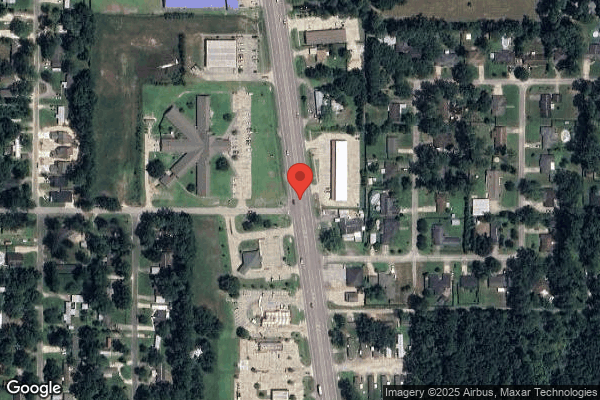
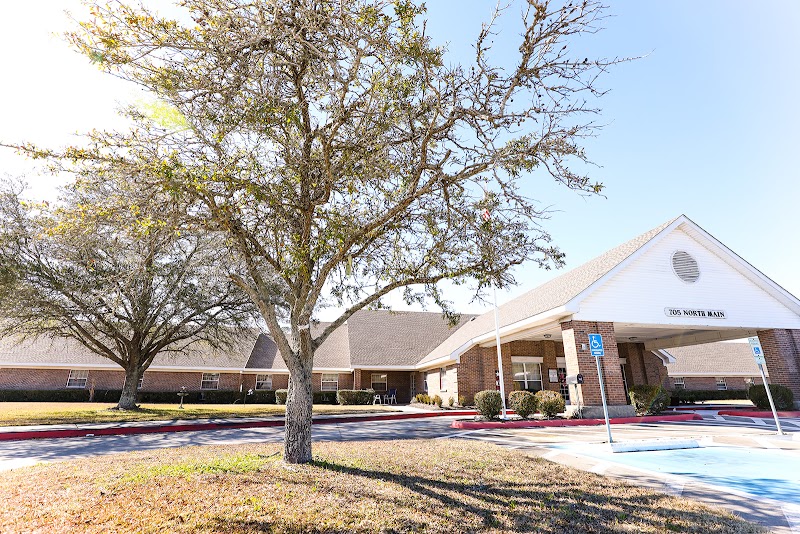
705 N MAIN ST, LUMBERTON, TX 77657 (409) 755-0100
Government - Hospital district 120 Beds NEXION HEALTH Data: November 2025 2 Immediate Jeopardy citations
Trust Grade
0/100
#1144 of 1168 in TX
Last Inspection: January 2025

Within standard 12-15 month inspection cycle. Federal law requires annual inspections.

Overview

Village Creek Rehabilitation and Nursing Center in Lumberton, Texas, has received a Trust Grade of F, indicating significant concerns about the quality of care provided. With a state rank of #1144 out of 1168, this facility is in the bottom half of Texas nursing homes, and ranks last in Hardin County at #5 of 5. The facility's trend is stable, with 4 reported issues in both 2024 and 2025, but these include critical failures such as not ensuring residents were free from abuse and inadequate infection control measures in the laundry area. Staffing is a concern, as it has a low rating of 1 out of 5, with a turnover rate of 54%, which is average for Texas but suggests a lack of stability. Additionally, the facility has incurred $54,438 in fines, which is also average, but demonstrates ongoing compliance issues that families should consider when evaluating care options.

Trust Score
F
0/100
In Texas
#1144/1168
Bottom 3%
Safety Record
High Risk
Review needed
Inspections
Holding Steady
4 → 4 violations
Staff Stability
⚠ Watch
54% turnover. Above average. Higher turnover means staff may not know residents' routines.
Penalties
○ Average
$54,438 in fines. Higher than 61% of Texas facilities. Some compliance issues.
Skilled Nurses
⚠ Watch
Each resident gets only 17 minutes of Registered Nurse (RN) attention daily — below average for Texas. Fewer RN minutes means fewer trained eyes watching for problems.
Violations
⚠ Watch
28 deficiencies on record. Higher than average. Multiple issues found across inspections.
★☆☆☆☆
1.0
Overall Rating
★☆☆☆☆
1.0
Staff Levels
★★★☆☆
3.0
Care Quality
★★☆☆☆
2.0
Inspection Score
Stable
2024: 4 issues
2025: 4 issues

The Good

  • Full Sprinkler Coverage · Fire safety systems throughout facility
  • No fines on record

Facility shows strength in fire safety.

The Bad

1-Star Overall Rating

Below Texas average (2.8)

Significant quality concerns identified by CMS

Staff Turnover: 54%

Near Texas avg (46%)

Higher turnover may affect care consistency

Federal Fines: $54,438

Above median ($33,413)

Moderate penalties - review what triggered them

Chain: NEXION HEALTH

Part of a multi-facility chain

Ask about local staffing decisions and management

The Ugly 28 deficiencies on record

2 life-threatening
Jan 2025 4 deficiencies
CONCERN (D) 📢 Someone Reported This

A family member, employee, or ombudsman was alarmed enough to file a formal complaint

Potential for Harm - no one hurt, but risky conditions existed

Safe Environment (Tag F0584)

Could have caused harm · This affected 1 resident

**NOTE- TERMS IN BRACKETS HAVE BEEN EDITED TO PROTECT CONFIDENTIALITY** Based on observation, interview and record review, the facility failed to ensure the resident had the right to a safe, clean, co...

Read full inspector narrative →
**NOTE- TERMS IN BRACKETS HAVE BEEN EDITED TO PROTECT CONFIDENTIALITY** Based on observation, interview and record review, the facility failed to ensure the resident had the right to a safe, clean, comfortable, and homelike environment, which included but not limited to receiving treatment and supports for daily living safely for 2 of 20 residents (Resident #2 and #13) reviewed for environment. The facility failed to maintain a sanitary and comfortable homelike environment for Resident #2 and Resident #13's rooms. This failure could place residents at risk for a diminished quality of life due to the lack of a well-kept, home-like environment. Findings included: 1. Record review of Resident #2's face sheet dated 01/15/25 indicated he was [AGE] years old, admitted to the facility on [DATE] with diagnoses of bi-polar (disorder associated with episodes of mood swings), anxiety (mental health disorder with feelings of worry and fear) and depression (common mental disorder with loss of pleasure). Record review of the MDS significant change assessment dated [DATE] indicated Resident #2 BIMS (cognitive screening measure assessment) score was 13, which indicated he was cognitively intact. During an observation on 01/13/25 at 9:20 a.m., the Resident #2's room had discoloration (grayish to black spots) that extended out and around the light switch on the wall and electrical receptacle on the wall above the built in dresser drawers. There were 2 areas grayish black spots along left side of the door frames which were 1 by 6 inches of the room. During an interview on 1/15/25 at 9:30 a.m., Resident #2 said that the black and gray spots on the walls been there since he moved in. He said he would like the areas to be painted. 2. Record review of Resident#13's face sheet dated 01/15/25, indicated Resident #13 was a [AGE] year-old male admitted to the facility on [DATE]. Resident#13 was diagnosed with major depressive disorder (mental illness with persistently depressed mood) and chronic obstructive pulmonary disease (lung diseases that block airflow and make it hard to breath). Record review of the quarterly MDS assessment dated [DATE] indicated Resident #13 was cognitively intact with a BIMS score of 14. During an observation on 01/14/25 at 9:40 a.m., Resident #13 had discoloration (grayish to black spots) that extended out and around the light switch on the wall and electrical receptacle on the wall above the built in dresser drawers. There were 2 areas grayish black spots along left side of the door frames which were 1 by 6 inches of the room. During an interview on 1/14/25 at 9:45 a.m., Resident #13 said his room had black and gray spots on the walls for months. He said an unnamed housekeeper would wipe around the door frame with a bleach rag. He stated, the mildew just comes back, and it needs to be fixed the right way. During an interview and observation on 1/15/25 at 11:45 a.m., the Administrator observed the areas, and she took pictures indicating she would get with the regional corporate maintenance and see what their plans were. She said they had received bids in November 2024 work on the water damage. She said the bids were sent to the corporate office. She said the areas in the resident's rooms would need to be fixed also and said she was unsure why that happened. The Administrator said her expectation was for the building to be maintained and would provide the survey team with the policy about maintaining the environment. During exit on 1/15/25 at 1:30 p.m., the Administrator said she was unable to find a policy on maintaining the environment.
CONCERN (E) 📢 Someone Reported This

A family member, employee, or ombudsman was alarmed enough to file a formal complaint

Potential for Harm - no one hurt, but risky conditions existed

Food Safety (Tag F0812)

Could have caused harm · This affected multiple residents

Based on observation, interview, and record review, the facility failed to distribute and serve food in accordance with professional standards for food service safety for 1 of 1 kitchen. The facility ...

Read full inspector narrative →
Based on observation, interview, and record review, the facility failed to distribute and serve food in accordance with professional standards for food service safety for 1 of 1 kitchen. The facility failed to ensure Dietary Staff A and Dietary Staff B's hair was completely contained with an effective hair restraint. This failure could place residents at risk of being served unsanitary food. Findings included: During an observation and interview on 01/13/25 at 7:55 a.m., while preparing meal for residents in the dining room Dietary Staff A's hair was not totally contained in a hair restraint, at the back of the neckline. The hair restraint did not cover approximately 3 inches of the lower neckline. The Dietary Manager said the dietary staff's hair should have been completely contained. She informed Dietary Staff A her hair needed to be adjusted in a hair restraint after surveyor intervention. During an observation on 01/13/25 at 10:30 a.m., Dietary Staff A's hair remained outside of hair restraint at the neckline. Dietary Staff A was preparing tray carts for noon meal. During an observation and interview on 01/13/25 at 11:20 a.m., Dietary Staff A's hair was not completely contained in a hair restraint at the neckline. The hair restraint did not completely cover approximately 2 inches of the lower neckline. Lunch trays were being prepared for residents' meal. Dietary Staff A said she had been employed at facility approximately one month and had been trained on hair hygiene. During an observation and interview on 01/14/25 at 7:45 a.m. and 8:15 a.m., Dietary Staff B's hair was outside of the hair restraint with approximately 3-inch sprigs of hair eluding from the ears to neckline area. This occurred while preparation for breakfast meal was occurring in food service area. Dietary Staff B said she had been trained on hair restraint hygiene. The Dietary Manager acknowledged stated Dietary Staff B's hair had not totally been contained in a hair restraint and should have been. During an interview on 01/14/25 at 8:25 a.m., the Dietary Manager said her expectations were for all dietary employees to have their hair completely contained in hair restraints while involved with food preparation and serving from the kitchen. She said unsecured hair could play a role in hair landing in food while being prepared. During an interview on 01/15/25 at 11:15 a.m., the Administrator said her expectations were for dietary employees to have their hair completely contained in hair restraints while preparing food and meals for residents. She said hair that was not restrained could land in the food and was unsanitary. A facility policy dated October 2023 titled Staff Attire indicated All staff members will have their hair off the shoulders, confined in a hair net or cap, and facial hair properly restrained.
CONCERN (E) 📢 Someone Reported This

A family member, employee, or ombudsman was alarmed enough to file a formal complaint

Potential for Harm - no one hurt, but risky conditions existed

Safe Environment (Tag F0921)

Could have caused harm · This affected multiple residents

Based on observation, interview, and record review, the facility failed to provide a safe and sanitary environment for 2 of 4 linen/storage rooms (Hall 2 and Hall 3), 2 of 4 hall's ceiling vents (Hall...

Read full inspector narrative →
Based on observation, interview, and record review, the facility failed to provide a safe and sanitary environment for 2 of 4 linen/storage rooms (Hall 2 and Hall 3), 2 of 4 hall's ceiling vents (Hall 3 and Hall 4), and 1 of 1 nurses' station ceiling area reviewed for physical environment. The facility failed to maintain the ceiling in the Hall 2's linen/storage room. The facility failed to maintain the ceiling in Hall 3's linen/storage room and prevent odor. The facility failed to maintain the ceiling above 1 of 1 nurse's station free of stains. The facility failed to maintain the vent and ceiling around the vents on Hall 3. The facility failed to maintain the vents and ceiling around the vents on Hall 4. (2 of 3 vents) These failures could place residents, staff, and visitors at risk of being in unsafe, uncomfortable environment and decreased quality of life due to poor conditions of the facility. Findings included: During observations on 01/13/25 from 8:15 a.m. to 9:35 a.m., the following were observed: -The white ceiling above the 1 of 1 nurse's station had an area 2 feet by 2 feet of brown and yellowish stains around the vent and another area had an approximately 4-inch circle in the ceiling with an open area in the sheet rock. -On Hall 4, two of 3 vents were discolored around the vents in the ceiling. The vents had a grayish substance which extended on the ceiling 2-3 inches. During observations on 01/13/25 from 9:50 a.m. to 11:00 a.m., the following were observed: -Hall 3's linen storage room was not being used but there was a section of the ceiling that had been removed approximately 4 by 6 foot leaving the attic exposed. The section of the ceiling 3 by 6 foot which remained was covered with grayish black spots and the linen room had a musty smell. The top shelf was covered with a thick black substance which extended up the corner of the shelf. -Hall 2's linen/supply closet had a hole approximately 4 inches and water damage noted on the ceiling. During an interview on 01/13/25 at 1:00 p.m., the Maintenance Supervisor said the water damage happened back in October and November 2024, from the AC duct work sweating. He said the facility received bids but had not decided on the plans for fixing the duct and the sheet rock repairs needed. He said the repairs needed to be done to make the building look better. During an interview and observation on 1/15/25 at 11:45 a.m., the Administer observed the areas, and she took pictures indicating she would get with the regional corporate maintenance and see what their plans were. She said they had received bids in November 2024 work on the water damage. She said the bids were sent to the corporate office. The Administrator said her expectation was for the building to be maintained and would provide the survey team with the policy about maintaining the environment. During an exit interview on 1/15/25 at 1:30 p.m., the Administrator said she was unable to find a policy on maintaining the environment.
CONCERN (F) 📢 Someone Reported This

A family member, employee, or ombudsman was alarmed enough to file a formal complaint

Potential for Harm - no one hurt, but risky conditions existed

Infection Control (Tag F0880)

Could have caused harm · This affected most or all residents

Based on observation, interview, and record review, the facility failed to maintain an Infection Prevention and Control Program designed to provide a safe, sanitary, and comfortable environment and to...

Read full inspector narrative →
Based on observation, interview, and record review, the facility failed to maintain an Infection Prevention and Control Program designed to provide a safe, sanitary, and comfortable environment and to help prevent the development and transmission of communicable diseases and infections for 1 of 1 laundry area observed for infection control. The facility failed to ensure that dirty and clean linen had a separation of the airflow in the laundry. These failures could place the residents at risk of cross-contamination and the development of infection. Findings included: During an observation on 01/15/25 at 8:39 a.m., the laundry area had a shear curtain between the clean and dirty linen. The air flow was not prevented from dirty to clean linen by the thin sheer curtain 2 foot by 4 feet and left opening on the bottom of the doorway an approximate 3-foot area not covered at all. During an interview on 01/15/25 at 8:45 a.m., the Laundry Supervisor said had requested for rubber curtain flaps back in November 2024 from the maintenance department. She said she was responsible for the laundry. She said the rubber flaps could prevent cross contamination. During an interview 0n 01/15/25 at 11:00 a.m., the Administrator said she was not aware of the laundry needing rubber curtain flaps. She said the rubber curtain flaps were here and had been put up after surveyor intervention. Record review of the Laundry Operations dated 06/2016 indicated . The laundry room must have a process in place to effectively sort soiled linen without cross contaminating clean linen.
Nov 2024 4 deficiencies 2 IJ
CRITICAL (J) 📢 Someone Reported This

A family member, employee, or ombudsman was alarmed enough to file a formal complaint

Immediate Jeopardy (IJ) - the most serious Medicare violation

Free from Abuse/Neglect (Tag F0600)

Someone could have died · This affected 1 resident

**NOTE- TERMS IN BRACKETS HAVE BEEN EDITED TO PROTECT CONFIDENTIALITY** Based on interviews and record review, the facility failed to ensure residents the right to be free from abuse for 1 of 16 resid...

Read full inspector narrative →
**NOTE- TERMS IN BRACKETS HAVE BEEN EDITED TO PROTECT CONFIDENTIALITY** Based on interviews and record review, the facility failed to ensure residents the right to be free from abuse for 1 of 16 residents (Resident #2) reviewed for abuse. The facility failed to ensure Resident #2 was free from sexual abuse on 08/28/24 and 09/02/24. An IJ was identified on 11/19/24. The IJ began on 08/28/24 and was removed on 09/04/24. While the IJ was removed on 09/04/24, the facility remained out of compliance at a scope of isolated and a severity level of no actual harm because all staff had not been trained on monitoring behaviors after an inappropriate behavior was identified. This failure could place residents at risk of abuse, physical harm, mental anguish, and emotional distress. Findings included: Record review of Resident #1's face sheet dated 11/19/24 indicated he was a [AGE] year-old male admitted on [DATE]. His diagnoses included unspecified intracranial injury without loss of consciousness (brain injury), major depressive disorder (mental disorder), and other sequelae of non-traumatic intracerebral hemorrhage (causes of stroke). Record review of Resident #1's quarterly MDS assessment dated [DATE] indicated he had unclear speech, was rarely/never understood, usually understood others, had severely impaired cognitive skills, and utilized a wheelchair for mobility. Record review of Resident #1's electronic care plan dated 08/23/24 did not address sexually inappropriate behaviors. Record review of Resident #1's incident report dated 08/28/24 indicated Resident #1 was noted leaning against another resident (Resident #2) with his face at breast level flicking Resident #2's breast. Resident #1 was removed from the TV room and taken to his room. MD and RP notified. DON B documented If resident is brought to common areas, resident is to be kept away from other female residents. Record review of Resident #1's incident report dated 09/02/24 indicated Resident #1 had his hand down a female resident's pants/briefs. DON B documented Resident #1 was removed from the area and taken to his room and placed on 1 to 1. The MD, RP, and police were notified. Resident #1 had his fingers in Resident #2's brief with pinky and palm visible outside of brief. Police notified the administrator that Resident #1 had a warrant out for his arrest. Record review of the facility investigation dated 09/04/24 indicated after police notification on 09/02/24 and prior to his discharge on [DATE], Resident #1 was arraigned by a judge in the facility for an outstanding warrant in another county for continuous sexual abuse of a child under 14 years. Record review of Resident #1's progress note dated 09/04/24 at 1:00 p.m. and completed by LVN P indicated Resident #1 discharged home with Family Member R. Record review of Resident #2's face sheet dated 08/28/24 indicated she was a [AGE] year-old female admitted on [DATE]. Her diagnoses included cerebral palsy (movement disorder), anxiety disorder (feelings of fear, dread, or uneasiness), conversion disorder with seizures or convulsions (mental health issue disrupts how the brain works), epilepsy (seizure disorder), and microcephaly (small head). Record review of Resident #2's progress note dated 08/28/24 at 2:03 p.m. completed by previous DON B indicated another resident was noted flicking Resident #2's breast in the TV room. Resident #2 was removed from the TV room, a skin assessment was completed, no psychosocial harm to resident. MD was notified and responsible party was called. Record review of Resident #2's care plan dated 08/28/24 indicated there was a report of alleged inappropriate flicking of her breast by a male resident while she was watching TV, in the TV room. Interventions included staff were to monitor and ensure accused perpetrator was not in the area of Resident #2. Record review of Resident #2's progress note dated 09/02/24 at 7:35 p.m. completed by LVN S indicated Resident #2 was in her wheelchair at the nursing station with another resident's hand inside Resident #2's pants/brief. Resident #2 was taken with LVN S to be monitored. Resident #2 was assessed head to toe. ADON, DON B, RP were notified. Telemed visit completed by NP DD. Record review of Resident #2's care plan dated 09/02/24 indicated staff observed a male resident with his hand inside the top of Resident #2's pants while she was seated in her wheelchair. Interventions included monitoring for psychological distress. Record review of Resident #2's progress note dated 09/02/24 at 9:17 p.m. completed by NP DD indicated Resident #2 was awake and alert and non-verbal at baseline. Resident #2 was assessed head to toe and no visible injures or distress noted. Nursing to continue to monitor Resident #2 for any changes or signs of distress. Record review of Resident #2's progress note dated 09/03/24 at 4:30 a.m. completed by LVN EE indicated Resident #2 continued to yell in room. Resident #2 was assisted up to her wheelchair and moved to nursing station with her tablet for activities. Resident #2 was closely monitored by staff. Record review of Resident #2's progress note dated 09/03/24 at 8:33 a.m. completed by DON B indicated she spoke to NP DD regarding Resident #2. Resident #2 continued to holler out but resident was at her baseline. NP DD said to continue to monitor and notify MD of any changes. Record review of Resident #2's progress note dated 09/05/24 at 1:00 a.m. completed by LVN EE indicated Resident #2 continued to scream and yell and was one on one with the nurse. Notified physician. Received one time dose of Lorazepam and new referral for psych consult. Record review of Resident #2's social service note dated 09/05/24 at 2:30 p.m. completed by the Administrator indicated a psych services referral was made. Social worker will continue Resident #2's status. Record review of Resident #2's psych evaluation dated 09/08/24 at 2:46 p.m. completed by LVN I indicated the resident was assessed by psych services and there were no new orders. Record review of Resident #2's quarterly MDS assessment dated [DATE] indicated she was rarely/never understood, usually understood others, had severe cognitive impairment, utilized a wheelchair for mobility, and was dependent on all ADLS. During an interview on 11/19/24 at 11:45 a.m., previous Administrator C said he was standing at the nurse's station with the maintenance staff on 08/28/24 (after the lunch meal). He said he observed that Resident #1 and Resident #2 were in the TV room common area. He said Resident #1's head was near Resident #2's breast, between the breast and armpit area. He said Resident #1 was flicking with his fingers between the breast and armpit area. He said Resident #1 was removed from the common area. He said the residents were assessed and there were no injuries. He said a care plan should have been developed and implemented on 08/28/24 to prevent further inappropriate sexual behaviors from Resident #1 and to protect Resident #2. He said a second incident occurred on 09/02/24 when Resident #1 was found with his fingers inside Resident #2's pants. He said Resident #1 had been brought from his room to the TV room common area and was watching TV. He said Resident #2 was near the nurse station. He said LVN I left the nurse's station to care for another resident. He said ADON J returned to the nurse's station area and observed Resident #1 had his fingers inside of Resident #2's pants. Previous Administrator C said Resident #1 and Resident #2 were immediately separated. He said Resident #1 was placed on 1 to 1. He said the residents were assessed and there were no injuries. He said the police were notified. He said the police requested the residents' face sheets. He said he received a call within 10 minutes of providing the face sheets to the police and was informed that the police had been looking for Resident #1, for the previous 6 months, as Resident #1 had an outstanding warrant for continuous sexual abuse of a child under the age of 14. He said Resident #1 remained on 1-1 supervision until he was arraigned by a judge (while at the facility). He said Resident #1 was discharged on 09/04/24 with Family Member R. During an interview on 11/19/24 at 12:36 p.m., ADON J said Resident #1 was not supposed to be around Resident #2. She said she could not recall if he was not supposed to be around all females. She said she could not recall any specific training regarding Resident #1's supervision or monitoring his behavior. She said she was working on 09/02/24. She said Resident #1 repeatedly left his bed and put himself on his floor. She said staff assisted him in his wheelchair and he was brought to the TV room common area. She said Resident #1 was adjacent to the nurse's station. She said she left the nurse's station to continue her duties and when she returned to the nurse's station area, she observed Resident #1 with his fingers inside Resident #2's pants. She said the residents were immediately separated. She said Resident #1 was resistant to moving his hand out of Resident #2's pants. She said she had to physically move his hand and arm away from Resident #2. She said Resident #1 was immediately placed on 1-1 supervision until he was discharged on 09/04/24. She said she did not know how Resident #1 was left unsupervised. She said there were no current residents in the facility with identified sexually inappropriate behaviors. During an interview on 11/19/24 at 12:52 p.m., CNA D said that after the incident on 08/28/24, the staff were instructed to keep Resident #1 away from female residents. She said the facility's abuse prohibition policy was reviewed and it included that if you see anything report it and separate residents immediately if the abuse was resident on resident. During an interview on 11/19/24 at 12:56 p.m., MA E said that after the incident with Resident #1 and Resident #2 on 08/28/24, staff were instructed to keep Resident #1 away from Resident #2. During an interview on 11/19/24 at 1:04 p.m., RN F said after the first incident on 08/28/24, staff were told to keep Resident #1 away from Resident #2. During an interview on 11/19/24 at 1:10 p.m., MA G said after the first incident on 08/28/24, staff were instructed to report any type of abuse witnessed and to keep Resident #1 away from Resident #2. During an interview on 11/19/24 at 1:14 p.m., Activity Director H said after the first incident on 08/28/24, staff were to report any type of abuse seen and to keep Resident #1 away from Resident #2. During an interview on 11/19/24 at 1:21 p.m., previous MDS LVN K said she thought she updated Resident #2's care plan after the first and second incidents of sexually inappropriate behavior. She said she did not know why the care plans and interventions were not updated. She said there was a risk of further incidents of inappropriate sexual behaviors if the care plans and interventions were not updated immediately. During an interview on 11/19/24 at 2:48 p.m., RDO L said staff failure to follow the facility's abuse prevention policy could place residents at risk of abuse. She said previous Administrator C and previous DON B were in-serviced on 09/02/24 on types of abuse, investigation, interventions for mitigation, inappropriate resident to resident contact to include how to intervene, and 1 to 1 supervision of alleged perpetrator. She said facility staff had not been trained on monitoring behaviors after an inappropriate behavior was identified. She said Resident #1 should have been placed on 1 to 1 supervision after the first incident of inappropriate sexual behavior on 08/28/24. During an interview on 11/20/24 at 11:54 a.m., previous Administrator C said he was aware the nurses and aides supervised Resident #2 when he was in the common areas. However, there was no formal monitoring system or interventions in place for supervision. He said staff had not been trained on monitoring behaviors after an inappropriate behavior was identified. During an interview on 11/20/24 at 2:30 p.m., CNA M said on 09/02/24 he assisted Resident #1 to his wheelchair and brought him to the TV room. He said Resident #2 was not at the nurse's station when he brought Resident #1 to the TV room. He said he went on his break and when he returned from his break, he was made aware of Resident #1's fingers being inside of Resident #2's pants. He said Resident #1 was mobile with his wheelchair. He said he was aware of the previous incident of Resident #1's sexually inappropriate behavior on 08/28/24. He said he was trained to ensure Resident #1 was kept away from female residents. He had not been trained in monitoring behaviors after an inappropriate behavior was identified. During an interview on 11/21/24 at 9:05 a.m., previous DON B said Resident #1 was supposed to be set away from any other female residents. She said she was not aware Resident #1 was mobile with his wheelchair. She said if she were aware Resident #1 was mobile with his wheelchair, he would have been on 1-1 from the date of the first incident on 08/28/24. She said there were IDT meetings and care plan conferences after the incidents on 08/28/24 and 09/02/24 at risk of harm if there were insufficient interventions in place to protect Resident #2 and other female residents from Resident #1. During an interview on 11/21/24 at 11:15 a.m., the Administrator said residents were at risk of abuse when the facility's Abuse Prohibition Policy was not implemented. She said Resident #1 should have been on 1 to 1 staffing and his behavior monitored following the first incident of inappropriate sexual behavior on 08/28/24. She said Resident #1's care plan should have been reviewed, updated, and interventions implemented to prevent further inappropriate sexual behaviors and abuse. She said there were no current residents in the facility with identified sexually inappropriate behaviors. During an interview on 11/21/24 at 1:25 p.m., LVN I said he was aware of the first incident on 08/28/24 regarding Resident #1's inappropriate sexual behavior toward Resident #2. He said he was in-serviced to keep Resident #1 away from the female residents. He had not been trained in monitoring behaviors after an inappropriate behavior was identified. He said on 09/02/24, Resident #1 was in the TV room common area. He said Resident #2 was adjacent to the nurse's station. He said he saw another resident walking on a hall that should not have been walking and he went to assist the resident to bed. He said by the time he returned to the nurse station there was a lot of commotion, and he was made aware of Resident #1's fingers being inside of Resident #2's pants. He said he was not aware Resident #1 could move his wheelchair fast enough to make it over to Resident #2. Record review of the facility's Abuse Prohibition Policy revised 11/07/23 indicated each resident has the right to be free from abuse, mistreatment, neglect, corporal punishment, involuntary seclusion, and financial abuse. 5. Resident identified as exhibiting abusive behaviors will be reviewed and have their treatment plans modified as appropriate. Protection: 1. All residents will be immediately protected from harm. 4. If another resident is the alleged perpetrator, they shall immediately be assessed for treatment options. The safety and protection of other residents is the facility's primary concern. Resident to Resident incidents: The following guidelines will be implemented when resident to resident incidences occur: 1. The staff observing the incident will immediately separate the residents involved. 2. The charge nurse will assess the victim to determine any injury. 3. Physician and family of both victim and perpetrator will be notified of the incident. The abuse coordinator will be immediately contacted. 6. The interdisciplinary team will make the determination what course of action needs to be taken with the perpetrator such as, but not limited to the following: *Immediate discharge from the facility due to potential of harm to other residents. *Can the behavior be controlled by location monitoring? The facility and physician of the perpetrator will be notified of the next steps. 7. If the perpetrator is placed on location monitoring, staff will be instructed on reason for monitoring and targeted behaviors being monitored. 8. If the perpetrator is on a behavioral contract, facility staff will be in-serviced accordingly, and the resident and family will be notified of the consequences. 9. If the perpetrator continues to exhibit inappropriate behaviors/or violates the behaviors identified on the behavioral contract, staff will immediately notify the Administrator/DON. 10. The team will conduct an emergency review to determine further course of action such as immediate discharge. 11. The victim will be seen by Social Services to determine further psychological support needed as well as follow up with physician/family. 13. If the incident involves sexual behavior, the following will occur: *Determine if both the victim and perpetrator are able to make decisions. *Determine if sexual contact was consensual. *If the contact was not consensual, follow steps 1-12. 1. Sexual abuse is non-consensual sexual contact of any type with a resident Sexual abuse includes, but is not limited to: a. unwanted intimate touching of any kind especially of breasts or perineal (genital) area; . Record review of the facility's Resident Rights policy dated 04/2017 indicated . Residents shall: . g. Be free from mental, emotional, and physical abuse and neglect, from chemical or physical restraints, and from financial exploitation and misappropriation of property; . During interviews on 11/19/24, 11/20/24, and 11/21/24 with staff who represented all shifts, (the current Administrator, 1 ADON, 2 RNs, 5 LVNs, 8 CNAs, 4 medication aides, 1 maintenance supervisor, 1 activity director, and 1 human resource officer) were able to give examples of abuse and neglect, would report immediately to the abuse coordinator or designee, were aware there was no current resident in the facility identified with inappropriate sexual behaviors, and were aware of the facility's 1 to 1 monitoring protocol for alleged perpetrators. Record review of the facility's in-service records dated 08/28/24 indicated Resident #1 was to be kept away from female residents. Record review of an in-service dated 09/02/24 indicated previous Administrator C and previous DON B were in-serviced on types of abuse, investigation, interventions for mitigation, inappropriate resident to resident contact to include how to intervene, and 1 to 1 supervision of alleged perpetrator. Record review of in-service dated 09/02/24, 09/08/24 and 09/13/24 indicated 43 out of 53 staff indicated staff were retrained and tested on abuse and neglect prevention and reporting, inappropriate resident to resident contact, how to intervene, and 1 to 1 supervision of alleged perpetrators. The remaining staff would be trained prior to working any shift. The facility incorporated the same training into new hire orientation as of 09/02/24. An IJ was identified on 11/19/24. The IJ began on 08/28/24 and was removed on 09/04/24. While the IJ was removed on 09/04/24, the facility remained out of compliance at a scope of isolated and a severity level of no actual harm because all staff had not been trained on monitoring behaviors after an inappropriate behavior was identified.
CRITICAL (J) 📢 Someone Reported This

A family member, employee, or ombudsman was alarmed enough to file a formal complaint

Immediate Jeopardy (IJ) - the most serious Medicare violation

Comprehensive Care Plan (Tag F0656)

Someone could have died · This affected 1 resident

**NOTE- TERMS IN BRACKETS HAVE BEEN EDITED TO PROTECT CONFIDENTIALITY** Based on interviews and record review, the facility failed to develop and implement the comprehensive person-centered care plan ...

Read full inspector narrative →
**NOTE- TERMS IN BRACKETS HAVE BEEN EDITED TO PROTECT CONFIDENTIALITY** Based on interviews and record review, the facility failed to develop and implement the comprehensive person-centered care plan used to maintain the resident's highest practicable physical well-being for 2 of 16 residents (Resident #1 and Resident 3) reviewed for care plans. 1. The facility failed to develop and implement interventions in the care plan to prevent Resident #1's sexual abuse of Resident #2. An IJ was identified on 11/19/24. The IJ began on 08/28/24 and was removed on 09/04/24. While the IJ was removed on 09/04/24, the facility remained out of compliance at a scope of isolated and a severity level of no actual harm because resident care plans were not reviewed and revised. 2. The facility failed to develop and implement Resident #3's care plan and interventions to prevent Resident #3's verbal and emotional abuse of Resident #4. These failures could place residents at risk of abuse, physical harm, mental anguish, and emotional distress. Findings included: 1. Record review of Resident #1's face sheet dated 11/19/24 indicated he was a [AGE] year-old male admitted on [DATE]. His diagnoses included unspecified intracranial injury without loss of consciousness (brain injury), major depressive disorder (mental disorder), and other sequalae of non-traumatic intracerebral hemorrhage (causes of stroke). Record review of Resident #1's quarterly MDS assessment dated [DATE] indicated he had unclear speech, was rarely/never understood, usually understood others, had severely impaired cognitive skills, and utilized a wheelchair for mobility. Record review of Resident #1's electronic care plan dated 08/23/24 did not address sexually inappropriate behaviors. Record review of Resident #1's incident report dated 08/28/24 indicated Resident #1 was noted leaning against another resident (Resident #2) with his face at breast level flicking Resident #2's breast. Resident #1 was removed from the TV room and taken to his room. MD and RP notified. DON B documented If resident is brought to common areas, resident is to be kept away from other female residents. Record review of Resident #1's incident report dated 09/02/24 indicated Resident #1 had his hand down a female resident's pants/briefs. DON B documented Resident #1 was removed from the area and taken to his room and placed on 1 to 1. The MD, RP and police were notified. Resident #1 had his fingers in Resident #2's brief with pinky and palm visible outside of brief. Police notified administrator Resident #1 had a warrant out for his arrest. Record review of the facility investigation dated 09/04/24 indicated after police notification on 09/02/24 and prior to his discharge on [DATE], Resident #1 was arraigned by a judge in the facility for an outstanding warrant in another county for continuous sexual abuse of a child under 14 years. Record review of Resident #1's progress note dated 09/04/24 at 1:00 p.m. and completed by LVN P indicated Resident #1 discharged home with his family member. 2. Record review of Resident #2's face sheet dated 08/28/24 indicated she was a [AGE] year-old female admitted on [DATE]. Her diagnoses included cerebral palsy (movement disorder), anxiety disorder (feelings of fear, dread, or uneasiness), conversion disorder with seizures or convulsions (mental health issue disrupts how the brain works), epilepsy (seizure disorder), and microcephaly (small head). Record review of Resident #2's quarterly MDS assessment dated [DATE] indicated she was rarely/never understood, usually understood others, had severe cognitive impairment, utilized a wheelchair for mobility, and was dependent for all ADLS. Record review of Resident #2's care plan dated 08/28/24 indicated there was a report of alleged inappropriate flicking of her breast by a male resident while she was watching TV in the TV room. Interventions included staff were to monitor and ensure accused perpetrator was not in the area of Resident #2. Record review of Resident #2's care plan dated 09/02/24 indicated staff observed a male resident with his hand inside the top of Resident #2's pants while she was seated in her wheelchair. Interventions included monitoring for psychological distress. 3. Record review of Resident #3's face sheet dated 11/20/24 indicated she was a [AGE] year-old female, admitted on [DATE], and her diagnoses included persistent mood affective disorder (low mood lasting for years), major depressive disorder (persistently depressed mood), anxiety disorder, and unspecified intellectual disabilities. Record review of Resident #3's quarterly MDS assessment dated [DATE] indicated she was able to make herself understood, she understood others, was cognitively intact (BIMS score 15), and required minimal assist for some ADLS. Record review of Resident #3's electronic care plan dated 09/25/24 did not include verbal and emotional abuse of Resident #4. 4. Record review of Resident #4's face sheet dated 11/20/24 indicated he was a [AGE] year-old male admitted on [DATE] and his diagnoses included schizophrenia (mental disorder), unspecified psychosis (disconnection from reality), major depressive disorder, anxiety disorder, and unspecified intellectual disabilities. Record review of Resident #4's quarterly MDS assessment dated [DATE] indicated he was able to make himself understood and understood others, was cognitively intact (BIMS score of 13), and required supervision for some ADLS. Record review of Resident #4's care plan dated 10/25/23 indicated he was spiritually married to Resident #3 and they had a set of babies, and he was at risk for psychosocial issues related to his knowledge the babies were not real, and his wife believed they were real. Interventions included talking about feelings related to current personal situation, continue to go to (named provider) and speak with a counselor), and encourage Resident #4 to speak with Resident #3 about his feelings. Record review of Resident #4's care plan dated 04/01/24 indicated he was at risk for depression related to accusations and emotional manipulation. On 03/29/24, (named provider) reported Resident #4 was in emotional distress from Resident #3. Interventions included discussing concerns, fears, issues, and encouraging Resident #4 to express feelings. Record review of the facility investigation dated 04/11/24 indicated Resident #4's psych counselor alleged Resident #4 reported that Resident #3 made emotionally abusive comments towards Resident #4. Resident #3 was removed from their room. Resident #3 denied the allegations. Resident #3 and Resident #4 were in-serviced regarding emotional/verbal abuse, emotional abuse vs normal conflict, isolating others, and threatening behavior. Staff were in-serviced on abuse/neglect, emotional abuse, customer service, and resident rights. Safe surveys were completed with no concerns found. Resident #3 and Resident #4 were interviewed and said the allegations were a misunderstanding and the residents wanted to return to live in the same room. The facility continued to monitor Resident #3 and Resident #4's relationship. There were no addtional concerns noted as of 11/21/24. During an interview on 11/19/24 at 11:15 a.m., Resident #4 said he never wanted to be separated from Resident #3. He said he never felt he was abused. He said he felt safe living in the same room with Resident #3 and he wanted to move back in with Resident #3. He said they were married and he loved Resident #3. He said he received information on abuse and continued to attend day services of his choice. During an interview on 11/19/24 at 11:45 a.m., previous Administrator C said he was standing at the nurse's station with the maintenance staff on 08/28/24 (after the lunch meal). He said he observed that Resident #1 and Resident #2 were in the TV room common area. He said Resident #1's head was near Resident #2's breast, between the breast and armpit area. He said Resident #1 was flicking with his fingers between the breast and armpit area. He said Resident #1 was removed from the common area. He said the residents were assessed and there were no injuries. He said a care plan should have been developed and implemented on 08/28/24 to prevent further inappropriate sexual behaviors from Resident #1 and to protect Resident #2. He said a second incident occurred on 09/02/24 when Resident #1 was found with his fingers inside Resident #2's pants. He said Resident #1 had been brought from his room to the TV room common area and was watching TV. He said Resident #2 was near the nurse station. He said LVN I left the nurse's station to care for another resident. He said ADON J returned to the nurse's station area and observed Resident #1 had his fingers inside of Resident #2's pants. Previous Administrator C said Resident #1 and Resident #2 were immediately separated. He said Resident #1 was placed on 1 to 1. He said the residents were assessed and there were no injuries. He said the police were notified. He said the police requested the residents' face sheets. He said he received a call within 10 minutes of providing the face sheets to the police and was informed that the police had been looking for Resident #1, for the previous 6 months, as Resident #1 had an outstanding warrant for continuous sexual abuse of a child under the age of 14. He said Resident #1 remained on 1-1 supervision until he was arraigned by a judge (while at the facility). He said Resident #1 was discharged on 09/04/24 with Family Member R. He said he was informed by CM N of Resident #3's alleged verbal and emotional abuse of Resident #4. He said there was a care plan conference and Resident #3's care plan was supposed to be reviewed and updated to include the allegation of alleged verbal and emotional abuse. He said the previous MDS LVN K was responsible for updating resident care plans. He said he was not aware Resident #3's care plan was not updated. During an interview on 11/19/24 at 12:36 p.m., ADON J said Resident #1 was not supposed to be around Resident #2. She said she could not recall if he was not supposed to be around all females. She said she could not recall any specific training regarding Resident #1's supervision or monitoring his behavior. She said she was working on 09/02/24. She said Resident #1 repeatedly left his bed and put himself on his floor. She said staff assisted him in his wheelchair and he was brought to the TV room common area. She said Resident #1 was adjacent to the nurse's station. She said she left the nurse's station to continue her duties and when she returned to the nurse's station area, she observed Resident #1 with his fingers inside Resident #2's pants. She said the residents were immediately separated. She said Resident #1 was resistant to moving his hand out of Resident #2's pants. She said she had to physically move his hand and arm away from Resident #2. She said Resident #1 was immediately placed on 1-1 supervision until he was discharged on 09/04/24. She said she did not know how Resident #1 was left unsupervised. She said there were no current residents in the facility with identified sexually inappropriate behaviors. During an interview on 11/19/24 at 1:21 p.m., previous MDS LVN K said she thought she updated Resident #2's care plan after the first and second incidents of sexually inappropriate behavior. She said she did not know why the care plans and interventions were not updated. She said there was a risk of further incidents of inappropriate sexual behaviors if the care plans and interventions were not updated immediately. She said she did not know why Resident #3's care plan was not updated after it was alleged, she verbally and emotionally abused Resident #4. She said she thought she updated the care plan and put interventions in place as required after the care conferences. During an interview on 11/20/24 at 11:54 am., CM O said Resident #3 was verbally assaultive toward Resident #4. She said Resident #4 said Resident #3 was making him stay home to take care of the baby dolls with her. She said Resident #4 indicated Resident #3 threatened Resident #4 with divorce and would throw her wedding rings at him. She said there was a care plan conference and Resident #3 understood what she was doing was not right. She said Resident #3 never said he was abused. During an interview on 11/20/24 at 2:30 p.m., CNA M said on 09/02/24 he assisted Resident #1 to his wheelchair and brought him to the TV room. He said Resident #2 was not at the nurse's station when he brought Resident #1 to the TV room. He said he went on his break and when he returned from his break, he was made aware of Resident #1's fingers being inside of Resident #2's pants. He said Resident #1 was mobile with his wheelchair. He said he was aware of the previous incident of Resident #1's sexually inappropriate behavior on 08/28/24. He said he was trained to ensure Resident #1 was kept way from female residents. He had not been trained in monitoring behaviors after an inappropriate behavior was identified. During an interview on 11/21/24 at 9:05 a.m., previous DON B said Resident #1 was supposed to be set away from any other female residents. She said she was not aware Resident #1 was mobile with his wheelchair. She said if she were aware Resident #1 was mobile with his wheelchair, he would have been on 1-1 from the date of the first incident on 08/28/24. She said there were IDT meetings and care plan conferences after the incident on 08/28/24 and 09/02/24 and the previous MDS LVN K was responsible for updating the resident care plans. She said she did not know why Resident #1's care plan was not updated. She said the corporate MDS supervisor was responsible for ensuring the care plans were updated as required. She said other residents were at risk of harm if there were insufficient interventions in place to protect Resident #2 and other female residents from Resident #1. She said Resident #4's care plan should have been reviewed, updated, and interventions implemented to prevent further verbal and emotional abuse of Resident #3. During an interview on 11/21/24 at 11:32 a.m., RDO L said any of the nurse staff could update resident care plans. She said previous Administrator C and previous DON B were responsible for ensuring resident care plans and interventions were updated. If care plans were not updated as required, residents were at risk of not receiving care and services required. During an interview on 11/20/24 at 11:54 a.m., previous Administrator C said Resident #1's care plan should have been updated to keep him away from all female residents. He said Resident #3's care plan should have been reviewed, updated, and interventions implemented to prevent further verbal and emotional abuse of Resident #4. During an interview on 11/21/24 at 11:15 a.m., the Administrator said Resident #1's care plan should have been reviewed, updated, and interventions implemented to prevent further inappropriate sexual behaviors and abuse. She said Resident #3's care plan should have been reviewed, updated, and interventions implemented to prevent further verbal and emotional abuse of Resident #4. During an interview on 11/21/24 at 1:25 p.m., LVN I said he was aware of the first incident on 08/28/24 regarding Resident #1's inappropriate sexual behavior toward Resident #2. He said he was in-serviced to keep Resident #1 away from the female residents. He had not been trained in monitoring behaviors after an inappropriate behavior was identified. He said on 09/02/24, Resident #1 was in the TV room common area. He said Resident #2 was adjacent to the nurse's station. He said he saw another resident walking on a hall that should not have been walking and he went to assist the resident to bed. He said by the time he returned to the nurse station there was a lot of commotion, and he was made aware of Resident #1's fingers being inside of Resident #2's pants. He said he was not aware Resident #1 could move his wheelchair fast enough to make it over to Resident #2. Record review of the facility's Comprehensive Person-Centered Care Plan policy dated 10/2022 indicated A comprehensive, person-centered care plan that includes measurable objectives and timetables to meet the resident's physical, psychosocial, and functional needs is developed and implemented for each resident.8. Incorporate identified problem areas; . An IJ was identified on 11/19/24. The IJ began on 08/28/24 and was removed on 09/04/24. While the IJ was removed on 09/04/24, the facility remained out of compliance at a scope of isolated and a severity level of no actual harm because resident care plans were not reviewed and revised.
CONCERN (D) 📢 Someone Reported This

A family member, employee, or ombudsman was alarmed enough to file a formal complaint

Potential for Harm - no one hurt, but risky conditions existed

Report Alleged Abuse (Tag F0609)

Could have caused harm · This affected 1 resident

**NOTE- TERMS IN BRACKETS HAVE BEEN EDITED TO PROTECT CONFIDENTIALITY** Based on interviews and record review, the facility failed to ensure that all alleged violations involving abuse, neglect, explo...

Read full inspector narrative →
**NOTE- TERMS IN BRACKETS HAVE BEEN EDITED TO PROTECT CONFIDENTIALITY** Based on interviews and record review, the facility failed to ensure that all alleged violations involving abuse, neglect, exploitation, or mistreatment, including injuries of unknown source and misappropriation of resident property, were reported immediately, but not later than 2 hours after the allegation was made, if the events that caused the allegation involved abuse or result in serious bodily injury, or not later than 24 hours if the events that caused the allegation did not involve abuse and did not result in serious bodily injury, to the administrator of the facility and to other officials (including to the State Survey Agency and adult protective services where state law provides for jurisdiction in long-term care facilities) in accordance with State law through established procedures for 1 of 16 residents (Resident #6) reviewed for reporting allegations of neglect. The facility failed to report an allegation of neglect within 24 hours to the State Agency when it was reported on 04/22/24 that Resident #6 only received trach care 1 time per week. This failure could place residents at risk of abuse, physical harm, mental anguish, and emotional distress. Findings included: Record review of Resident #6's face sheet dated 11/19/24 indicated he was a [AGE] year-old male, admitted on [DATE], and his diagnoses included quadriplegia paralysis of both arms and legs and tracheostomy (surgical opening in the neck to help air and oxygen reach the lungs). Record review of Resident #6's quarterly MDS assessment dated [DATE] indicated he was able to make himself understood and understood others, he was cognitively intact (BIMS 14), utilized a wheelchair, was dependent for all ADLS, and received tracheostomy care and oxygen therapy. Record review of Resident #6's care plan dated 11/21/23 indicated Resident #6 had a tracheostomy. Interventions included ensure trach ties were secured at all times, monitor and document for restlessness, agitation, confusion, increased heart rate, monitor and document level of consciousness, mental status and lethargy PRN, oxygen settings via trach at 5 L, humidified 28%, provide good oral care daily and PRN, and suction as necessary. Record review of physician orders for Resident #6 dated 01/24/24 indicated tracheostomy suction every 4 hours and PRN. Record review of physician orders for Resident #6 dated 01/31/24 indicated tracheostomy care every shift and PRN. Record review of MAR/TAR for Resident #6 dated 04/2024 indicated tracheostomy care was completed as ordered. Record review of Resident #6's nurse note dated 03/29/24 at 1:00 p.m., completed by ADON J, indicated Resident #6 discharged home with Family Member Q. Record review of the facility investigation dated 05/02/24 indicated Resident #6's Family Member Q alleged on 04/22/24 that Resident #6 only received tracheostomy care 1 time per week prior to his discharge on [DATE]. The allegation was not substantiated. During an interview on 11/20/24 at 9:49 a.m., previous Administrator C said he was the abuse coordinator (while administrator) and had received an email from the corporate office with an allegation of neglect on 04/22/24. He said he misread the email and did not notice the email included the allegation of neglect. He said when he was made aware of the allegation of neglect on 04/25/24, he reported it to HHS. He said he knew the allegation of neglect was reportable within 24 hours. He said it was his mistake. Record review of the facility's Abuse Prohibition Policy dated 05/201 and reviewed on 05/17/2025 indicated . Neglect is defined as the failure of the facility, its employees, or service providers to provide goods and services to a resident that are necessary to avoid physical harm, mental anguish, or emotional distress. Neglect occurs when the facility is aware of, or should have been aware of, good or services that a resident(s) requires but the facility fails to provide them to the resident(s), that has resulted in or may result in physical harm, pain, mental anguish, or emotional distress. Neglect includes cases where the facility's indifference or disregard for resident care, comfort, or safety, resulted in or could have resulted in, physical harm, pain, mental anguish, or emotional distress. Investigation . 2. The Abuse Coordinator will report such allegations to the state agency in accordance with state law. The Abuse Coordinator will report all allegations of abuse, neglect with serious bodily injury, mistreatment with serious bodily injury, exploitation with serious bodily injury, and injuries of unknown source with serious bodily injury within two hours of the allegation. The Abuse Coordinator will report all other allegations of neglect, mistreatment, exploitation, injuries of unknown source and misappropriation within 24 hours of the allegation.Reporting/Response: . 2. The facility will report all allegations and substantiated occurrences of abuse, neglect, or misappropriation of resident property to the state agency and to all other agencies as required by law and will take all necessary corrective actions depending on the results of the investigation. The Abuse Coordinator will report all allegations of abuse, neglect with serious bodily injury, mistreatment with serious bodily injury, exploitation with serious bodily injury, and injuries of unknown source with serious bodily injury immediately or within two hours of the allegation. The Abuse Coordinator will report all other allegations of neglect, mistreatment, exploitation, injuries of unknown source and misappropriation within 24 hours of the allegation.
CONCERN (D) 📢 Someone Reported This

A family member, employee, or ombudsman was alarmed enough to file a formal complaint

Potential for Harm - no one hurt, but risky conditions existed

Medical Records (Tag F0842)

Could have caused harm · This affected 1 resident

**NOTE- TERMS IN BRACKETS HAVE BEEN EDITED TO PROTECT CONFIDENTIALITY** Based on interviews and record review, the facility failed to maintain clinical records on each resident in accordance with acce...

Read full inspector narrative →
**NOTE- TERMS IN BRACKETS HAVE BEEN EDITED TO PROTECT CONFIDENTIALITY** Based on interviews and record review, the facility failed to maintain clinical records on each resident in accordance with accepted professional standards and practices that were complete and accurately documented for 1 of 16 residents (Resident #5) reviewed for accuracy of clinical records. The facility did not ensure ADL care was documented for Resident #5 on the ADL task sheet. This failure could place residents at risk of not receiving care and services to meet their needs. Findings included: Record review of a face sheet dated 11/21/24 indicated Resident #5 was an [AGE] year-old female admitted on [DATE]. Her diagnoses included cerebral infarction (a medical condition that occurs when blood flow to the brain is disrupted, causing brain cells to die) and atherosclerotic heart disease of native coronary artery (a condition where plaque builds up in the arteries that supply blood to the heart). Record review of an admission evaluation dated 12/29/23 indicated Resident #5 was independent with bed mobility, required supervision assistance to transfer, required one-person physical assistance with dressing, personal hygiene, and toileting, and required supervision with meals for set up, cuing, and reminders of mealtimes. Record review of an ADL task sheet dated December 2023 and initialed by CNA I indicated Resident #5 was provided limited assistance with bed mobility, toileting, transferring, and partial/moderate assistance with sitting to standing and transferring to the toilet on 12/29/24 during the 2:00 p.m. to 10:00 p.m. shift. No further ADL assistance was documented for 12/30/23 or 12/31/23. Record review of a discharge MDS dated [DATE] indicated Resident #5 had a memory problem and had some difficulty in new situations, required setup/clean up assistance with eating, required partial/moderate assistance with bed mobility, and maximal assistance for sit to stand and toileting. She was always continent of bladder and always incontinent of bowel. During an interview on 11/21/24 at 8:42 a.m., the ADON said that CNAs were to document all ADL care assistance for all residents on the ADL task sheets every shift. She said CNAs complete their facility orientation and during orientation they receive sign on information for the electronic medical record. She said CNAs were then assigned with another CNA to become familiar with resident care and documentation of task sheets. She said the DON, the ADON, and the charge nurses were responsible for overseeing that CNAs charted all ADL care assistance. She reviewed Resident #5's task sheets and said the documentation of ADL assistance was not completed for 12/30/23 and 12/31/23. She said the facility policy indicated if care was not documented it was not done. She said the possible negative outcome of not documenting care given could be that residents might not receive needed care. During an interview on 11/21/24 at 11:25 a.m. CNA N said she did not remember Resident #5 but stated the task sheet indicated she had assisted her with care. She said that administration had been stressing to all CNAs the importance of documenting ADL care given on the task sheets, but missing documentation was always a problem. During an interview on 11/21/24 at 11:30 a.m., the Administrator said she expected all ADL assistance to be documented completely and accurately on the task sheets. She said possible negative outcome of inaccurate medical records could be residents not receiving services as needed. Record review of the facility policy titled Charting and Documentation last revised July 2017, indicated All services provided to the resident, progress toward the care plan goals, or any changes in the resident's medical, physical, functional, or psychosocial condition, shall be documented in the resident's medical record. The medical record should facilitate communication between the interdisciplinary team regarding the resident's condition and response to care.
Nov 2023 10 deficiencies
CONCERN (D) 📢 Someone Reported This

A family member, employee, or ombudsman was alarmed enough to file a formal complaint

Potential for Harm - no one hurt, but risky conditions existed

Deficiency F0583 (Tag F0583)

Could have caused harm · This affected 1 resident

Based on observation, interview and record review, the facility failed to ensure residents had a right to personal privacy and confidentiality of their personal and medical records for 2 of 20 residen...

Read full inspector narrative →
Based on observation, interview and record review, the facility failed to ensure residents had a right to personal privacy and confidentiality of their personal and medical records for 2 of 20 residents reviewed for resident rights. (Residents #20 and #70) The facility failed to ensure Resident #70's medical supply billing information was secured and protected from public access. The facility failed to ensure Resident #20's billing information and payment source information were protected from public access. This failure could place the residents at risk of their private records being exposed to public access. Findings included: During observation, interview and record review on 11/28/23 at 11:57 a.m., there were 5 invoices for Resident #70's medical billing in the garbage facing up in the garbage can near the entrance door to the BOM's office. At the bottom of 4 of the invoices was written Hospice. The invoices included Resident #70's name, description of supplies ordered, and the price of each supply with the total amount of money owed. The BOM said the can was a garbage can and the papers in the can were to be disposed of in the trash. She said the 5 invoices were Resident #70's but there was no HIPAA information on the resident and she had disposed of the information in the trash. She said she did not plan to shred the information. When asked if the resident's name, the medication the resident was billed for, the amount owed and the word hospice written at the bottom of the page was HIPAA information, she said she could either throw the invoices away or shred them. She then said the invoices were HIPAA information and needed to be shredded. She said the negative outcome would be nothing, then she said the resident's information could be exposed to the public. The BOM said she had been trained by corporate on HIPAA and resident rights. During interview and record review on 11/28/23 at 12:00 p.m., after reviewing Resident #70's invoices, the Administrator said the 5 invoices included the resident's private information and should be shredded. He said the information on the invoices did contain HIPAA information and should not be thrown in the garbage. He said not complying with HIPAA was against resident rights. He said his expectations were for the BOM to secure resident information. During observation and record review on 11/29/23 at 07:47 a.m., upon entrance into the facility, the surveyor entered the main door to the Administrator/HR/BOM's office with no staff present in the offices. The door to the BOM's office was open and there were 2 personal checks totaling $26,700 attached with a paperclip to Resident #20's Cash Receipt Report (a document indicating the amount received in payment for a resident's account) and Deposit Detail Report (a detail of the money to be deposited for a resident) lying on an overbed table near the open door. The 2 checks included the payer sources' name and address. One of the checks indicated the payment was for Resident #20. During observation, interview and record review on 11/29/23 at 08:00 a.m., after observing there were no staff present and the door to the BOM's office was open with checks and billing information lying on the table inside, the administrator said Resident #20's checks and billing information should not be on the table with the door open and unlocked. After reviewing Resident #20's information, he said the resident's billing documents and checks included private information and should be kept in a secure locked cabinet when it was not being utilized. He said he had trained the BOM on 11/28/23 regarding HIPAA and would have to retrain her today 11/29/23 and she would be counseled. During interview and record review on 11/29/23 at 08:08 a.m., after reviewing Resident #20's private billing information and checks, the BOM said she had left them on the table with the door to the BOM's open and unlocked so that staff could get to the supply closet. She said the information did contain HIPAA information and should not have been left out with the door open and unlocked. She said leaving the information out could put the resident's information at risk of being exposed to the public and the checks could be stolen. She said she had been trained on HIPAA violations and resident rights and did know leaving the information unsecured with the door open was against the resident's rights. Record review of a Resident Rights policy dated February 2021 indicated: . Federal and state laws guarantee certain basic rights to all residents of this facility. These rights include the resident's right to: . t. privacy and confidentiality; . The unauthorized release, access, or disclosure of resident information is prohibited. All release, access, or disclosure of resident information must be in accordance with current laws governing privacy of information issues. All inquiries concerning the release of resident information should be directed to the HIPAA compliance officer.
CONCERN (D) 📢 Someone Reported This

A family member, employee, or ombudsman was alarmed enough to file a formal complaint

Potential for Harm - no one hurt, but risky conditions existed

Free from Abuse/Neglect (Tag F0600)

Could have caused harm · This affected 1 resident

**NOTE- TERMS IN BRACKETS HAVE BEEN EDITED TO PROTECT CONFIDENTIALITY** Based on interview and record review the facility failed to ensure the rights of residents to be free from abuse or neglect for ...

Read full inspector narrative →
**NOTE- TERMS IN BRACKETS HAVE BEEN EDITED TO PROTECT CONFIDENTIALITY** Based on interview and record review the facility failed to ensure the rights of residents to be free from abuse or neglect for 1 of 20 residents reviewed for abuse or neglect. (Residents #22) The facility failed to ensure Resident #22 was free from verbal abuse/neglect by CNA A. The failure could place residents at risk for abuse/neglect, humiliation, intimidation, fear, shame, agitation, and decreased quality of life. Findings included: Record review of Resident #22's face sheet dated 11/29/23 indicated Resident #22 was a [AGE] year-old male admitted on [DATE] with diagnoses of autistic disorder (a developmental disability caused by difference in the brain), anxiety (nervousness) schizoaffective disorder (mental health condition), major depressive disorder ( mood disorder), severe intellectual disability (major delay in development and might have lack in communication or understanding), and seizures (sudden, uncontrolled electrical disturbance in the brain which can cause changes in behavior, movements, feelings, and consciousness). Record review of the MDS assessment dated [DATE] indicated Resident #22 was usually understood and had difficulty communicating some words or finishing thoughts, but was able if prompted or given time. He was severely impaired with cognition with a BIMS of 3. The behavioral symptoms indicated he was yelling at others for 1 to 3 days with no refusal of care. Transfers, bed mobility and toilet use indicated extensive assistance of 2 persons. Record review of the care plan dated 11/14/23 indicated it did not address Resident #22's mobility or his transferring ability from bed to wheelchair. Record review of the six videos of the incident on 11/11/23 indicated the following: -4:30 a.m. CNA A was in Resident #22's room bedside Resident 22's bed with the wheelchair by the bed attempting to get Resident #22. While pulling on his left arm , she said no one can help, you help or I will have to put you back in bed, He yelled out no. -4:32 a.m. video: CNA A said last time grab the chair or I will put you in the bed to Resident #22 while she pulling on his left arm attempting to get him up from the side of the bed to standing position . She said to Resident #22, I am not playing with you. I have things to do. -4:34 a.m. video: Resident #22 was standing up and was facing his wheelchair and holding on to the wheelchair and CNA A said, turn around and sit down or I will put you back in bed. CNA A was holding on to the left side of the waist of Resident #22 's pajama pants. There was no gait belt (a belt you put around a patient waist to assist with transferring from bed to wheelchair) was on the resident's waist. There was no other staff assisting CNA A. -4:37 a.m. video: CNA A and Resident #22 were standing between the wheelchair and the bed and Resident #22 started leaning towards the bed and fell across the bed. CNA A said, See what you did. The resident was assisted over on the bed on his side and was across the middle of the bed and was not in a secure position. CNA A left Resident #22 on the bed and walked out of reach of the resident, towards the door and yelled out, I am going to have to have help with Resident #22. -4:39 a.m. video: the Treatment Nurse was walking into the room. She began talking with Resident #22 and putting on a pair of gloves to assist the resident while CNA A was standing in the room. -4:40 a.m. video: The treatment nurse was explaining what they were doing, and she asked Resident #22 if he wanted up and then assisted with the transfer. CNA A and the treatment nurse placed their arms under his arms and lifted him to the wheelchair. During an interview on 11/27/23 at 11:37 a.m., Resident #22's family said there was an incident of abuse and she reported it on 11/11/23 to the Administrator. She said she sent the videos to the Administrator. She said the facility promptly terminated the CNA A and the facility investigated the incident. She said Resident #22 had a hard time understanding things and had difficulty communicating at times . She said she felt the staff (CNA A) was threatening him with the comments about being put to bed. She said she had sent the videos to the facility when she saw and heard the CNA A with Resident #22. During an interview on 11/29/23 at 2:25 p.m., CNA A said on 11/11/23, she tried to assist Resident #22 up from the bed to his wheelchair for the day. She said he usually required one person for assistance with transfers. She said she told the resident if he did not help by standing up, she would just have to put him back to bed. She denied she was trained on using gait belts during transfers. She said was trained on abuse/neglect upon hire. She denied abusing Resident #22, but said the facility told her she was terminated for abusing Resident #22. During an interview on 11/28/23 at 11:00 a.m., the Administrator said CNA A was terminated. He said the staff were trained to be encouraging and pleasant with residents, not to threaten residents. He said with the resident being half on and half off the bed the staff should have called for help without leaving Resident #22. The Administrator said Resident #22 could have fallen off the bed when she just left him. Record review of the facility's policy titled, Abuse Prohibition Policy - This protocol was intended to assist in the prevention of abuse, neglect and misappropriation of property. Each resident has the right to be free from abuse, mistreatment, neglect, corporal punishment, involuntary seclusion and financial abuse. dated 05/01/01, indicated 1. The facility will prohibit neglect, mental or physical abuse, including involuntary seclusion and the misappropriation of property or finances of residents. Mental abuse includes, but is not limited to, humiliation, harassment, and threats of punishment or deprivation. Mental abuse includes, but is not limited to, abuse that is facilitated or caused by nursing home staff. Verbal abuse is defined as the use of, oral, written or gestured language that willfully includes disparaging or derogatory terms to residents or their families, or within their hearing distance regardless of their age, ability to comprehend, or disability. Examples of verbal/mental abuse include, but are not limited to, cursing, yelling, saying things to frighten a resident, denying food or care, isolating a resident, etc. Neglect is defined as the failure of the facility, its employees, or service providers to provide goods and services to a resident that are necessary to avoid physical harm, mental anguish, or emotional distress. Neglect occurs when the facility is aware of, or should have been aware of, good or services that a resident(s) requires but the facility fails to provide them to the resident(s), that has resulted in or may result in physical harm, pain, mental anguish, or emotional distress. Neglect includes cases where the facility's indifference or disregard for resident care, comfort or safety, resulted in or could have resulted in, physical harm, pain, mental anguish, or emotional distress.
CONCERN (D) 📢 Someone Reported This

A family member, employee, or ombudsman was alarmed enough to file a formal complaint

Potential for Harm - no one hurt, but risky conditions existed

PASARR Coordination (Tag F0644)

Could have caused harm · This affected 1 resident

**NOTE- TERMS IN BRACKETS HAVE BEEN EDITED TO PROTECT CONFIDENTIALITY** Based on interview and record review, the facility failed to coordinate assessments with the pre-admission screening and residen...

Read full inspector narrative →
**NOTE- TERMS IN BRACKETS HAVE BEEN EDITED TO PROTECT CONFIDENTIALITY** Based on interview and record review, the facility failed to coordinate assessments with the pre-admission screening and resident review (PASRR) program to the maximum extent practicable to avoid duplicative testing and effort for 2 of 20 residents (Resident #5 and #16) reviewed for PASRR. The facility failed to refer Resident #5 for PASRR Level II assessment to the state designated authority after their PL 1 was negative but acquired a diagnosis of bipolar disorder (a mental illness that causes unusual shifts in a person's mood, energy, activity levels, and concentration). The facility failed to refer Resident #16 for PASRR Level II assessment to the state designated authority after their PL 1 was negative but acquired diagnoses of major depressive disorder (mental disorder characterized by persistent hopelessness, disinterest in and lack of enjoyment of normal activities, and prolonged sadness that affects people on a daily basis and can be recurring) and mood disorder (a group of mental conditions characterized by persistent disturbance of mood, especially depression). This failure could place all residents who had a mental illness at risk for not receiving needed assessment, care, and specialized services to meet their needs. Findings included: 1. Record review of the face sheet dated November 2023 indicated Resident #5 was a [AGE] year-old male admitted to the facility on [DATE] with a diagnosis of bipolar disorder as of 04/06/22. Record review of a PL 1 for Resident #5, completed by the referring facility on 12/29/21, indicated the resident was negative for mental illness, developmental disability, and intellectual disability. Record review of a significant change MDS dated [DATE] indicated Resident #5 was not considered by the state level II PASRR process to have serious mental illness or intellectual disability or a related condition and a negative Level II Preadmission Screening and Resident Review diagnosis. The assessment indicated Resident #5 had a BIMS score of 14 of 15 indicating intact cognition with a diagnosis of bipolar disorder. Record review of a care plan updated 06/19/23 indicated Resident #5 received psychotropic medication for bipolar disorder including monitoring for adverse reactions, side effects and behaviors. Record review of physician's orders dated 11/27/23, indicated Resident #5 was prescribed Wellbutrin (a medication to treat depression) 150 mg one time a day for depression related to bipolar disorder with a start date of 11/07/23. Record review of a MAR dated 11/1/23 through 11/30/23 indicated Resident #5 received Wellbutrin 150 mg daily for depression related to bipolar disorder from 11/07/23 to 11/28/23. 2. Record review of face sheet dated November 2023 indicated Resident #16 was a [AGE] year-old male admitted to the facility on [DATE] and readmitted [DATE] with a diagnosis of major depressive disorder and mood disorder as of 01/03/20. Record review of a PASRR Level 1 Screening for Resident #16, completed by the referring facility on 08/19/17 , indicated the resident was negative for mental illness, developmental disability, and intellectual disability. Record review of an annual MDS dated [DATE] indicated Resident #16 was not considered by the state level II PASRR process to have serious mental illness or intellectual disability or a related condition and a negative Level II Preadmission Screening and Resident Review diagnosis. The assessment indicated Resident #16 had a BIMS score of 15 of 15 indicating intact cognition with a diagnosis of bipolar disorder. Record review of a care plan updated 10/03/23 indicated Resident #16 received psychotropic medication for mood disorder and depression including monitoring for adverse reactions of psychotropic medication and behaviors. Record review of physician's orders dated 11/27/23, indicated Resident #16 was prescribed Duloxetine HCL (a medication to treat depression) 30 mg one time a day for major depressive disorder with a start date of 05/11/23. Record review of a MAR dated 11/01/23 through 11/30/23 indicated Resident #16 received Duloxetine HCL 30 mg daily for major depressive disorder from 11/01/23 through 11/27/23. During an interview on 11/28/23 at 2:30 p.m., the ADON and DON said they were not trained in the PASRR process. The DON said the MDS nurse was responsible for PASRR forms, but she quit 11/03/23. The DON said the Regional Case Mix nurse was currently responsible for PASRR forms. The DON said Resident #5 and #16's PL1's were negative and should have had a 1012 Form (a form a nursing home completes for residents with a current negative PL 1 to determine whether to submit a new positive PL1 form because futher evaluation is needed). She said they were overlooked. She said the risk of not completing a 1012 form timely was a resident could miss out on deserved services. She said a 1012 Form was completed after surveyor intervention for the two residents. The DON said her expectation was for PASRR forms to be completed timely and correctly. During an interview on 11/28/23 at 2:50 p.m., the Regional Case Mix nurse said the MDS nurse was responsible for PASRR forms but left a month ago. She said there was no back up in the building. The Regional Case Mix nurse said she was now responsible for PASRR forms. She said she completed the 1012 Forms for all residents that did not have one on 11/28/23 including Residents #5 and 16 but they should have been completed before now. She said they were just overlooked. The Regional Case Mix nurse said the risk of a 1012 Form not being completed timely was a resident could possibly miss out on PASRR services. During an interview on 11/28/23 at 3:07 p.m., the Administrator said the MDS nurse was responsible for completion of PASRR forms and now corporate was helping out with PASRR forms. He said it was overlooked for the residents. The Administrator said the risk of all PASRR forms not being completed timely and correctly was a resident may not receive PASRR services. He said his expectation was for PASRR forms to be completed timely and accurately. Record review of a facility policy, titled, PASRR Policy and Procedures revised 1/24/23 indicated, The facility uses the most current version of PASRR Rules, TAC Title 40, Part 1 Chapter 19, Sub-chapter BB as they pertain to PASRR Level 1, Level 2 (PE), specialized Services and IDT meetings. This TAC may be found on the Texas Health and Human Services website. Record review of the October 2023 Long-Term Care Facility Resident Assessment Instrument 3.0 User's Manual titled, A1500: Preadmission Screening and Resident Review (PASRR) Item Rationale Health-related Quality of Life indicated . o All individuals who are admitted to a Medicaid certified nursing facility, regardless of the individual's payment source, must have a Level I PASRR completed to screen for possible mental illness (MI), intellectual disability (ID), developmental disability (DD), or related conditions o Individuals who have or are suspected to have MI or ID/DD or related conditions may not be admitted to a Medicaid-certified nursing facility unless approved through Level II PASRR determination. Those residents covered by Level II PASRR process may require certain care and services provided by the nursing home, and/or specialized services provided by the State.
CONCERN (D) 📢 Someone Reported This

A family member, employee, or ombudsman was alarmed enough to file a formal complaint

Potential for Harm - no one hurt, but risky conditions existed

Comprehensive Care Plan (Tag F0656)

Could have caused harm · This affected 1 resident

**NOTE- TERMS IN BRACKETS HAVE BEEN EDITED TO PROTECT CONFIDENTIALITY** Based on interview and record review, the facility failed to develop and implement a comprehensive person-centered care plan for...

Read full inspector narrative →
**NOTE- TERMS IN BRACKETS HAVE BEEN EDITED TO PROTECT CONFIDENTIALITY** Based on interview and record review, the facility failed to develop and implement a comprehensive person-centered care plan for each resident that included measurable objectives and timeframes to meet a resident's medical, nursing, and mental and psychosocial needs that are identified in the comprehensive assessment for 1 of 20 residents reviewed for care plans. (Resident #22) The facility did not develop a care plan for Resident #22's transfer assist and needs. This failure could place the residents at risk of not receiving the care and services to maintain their highest level of well-being. Findings included: Record review of Resident #22's face sheet dated 11/29/23 indicated Resident #22 was a [AGE] year-old male admitted on [DATE] with diagnoses of autistic disorder (a developmental disability caused by difference in the brain), anxiety (nervousness) schizoaffective disorder (mental health condition), major depressive disorder ( mood disorder), severe intellectual disability (major delay in development and might have lack in communication or understanding) and seizures (sudden, uncontrolled electrical disturbance in the brain which can cause changes in behavior, movements, feelings, and consciousness). Record review of the MDS assessment dated [DATE] indicated Resident #22 was usually understood; had difficulty communicating some words or finishing thoughts but was able if prompted or given time. He was severely impaired with cognition with a BIMS of 3. Transfers, bed mobility, and toilet use indicated extensive assist of 2 persons. Record review of the care plan dated 11/14/23 did not include what Resident #22's needs were for transferring. Record review of the nurse aide flowsheet for November 2023 indicated Resident #22 required a 1- person transfer. During an interview on 11/29/23 at 4:00 p.m., the DON said the care plans should be correct and should have addressed Resident #22's need for assistance with transfers and mobility. She said his care plan did not address his mobility for transfers and she was responsible to oversee the care plans. Record review of the policy titled Care Plans, Comprehensive Person-Centered dated January 2023 indicated Policy Statement A comprehensive, person-centered care plan that includes measurable objectives and timetables to meet the resident's physical, psychosocial and functional needs is developed and implemented for each resident.Assessments of residents are ongoing and care plans are revised as information about the residents and the residents' conditions change. Areas of concern that are identified during the resident assessment will be evaluated before interventions are added to the care plan. Identifying problem areas and their causes, and developing interventions that are targeted and meaningful to the resident, are the endpoint of an interdisciplinary process.
CONCERN (E) 📢 Someone Reported This

A family member, employee, or ombudsman was alarmed enough to file a formal complaint

Potential for Harm - no one hurt, but risky conditions existed

Deficiency F0645 (Tag F0645)

Could have caused harm · This affected multiple residents

**NOTE- TERMS IN BRACKETS HAVE BEEN EDITED TO PROTECT CONFIDENTIALITY** Based on interview and record review, the facility failed to ensure individuals identified with MI, DD or ID were evaluated for ...

Read full inspector narrative →
**NOTE- TERMS IN BRACKETS HAVE BEEN EDITED TO PROTECT CONFIDENTIALITY** Based on interview and record review, the facility failed to ensure individuals identified with MI, DD or ID were evaluated for services for 3 of 20 residents reviewed for PASRR (Residents #31, #60 and #67). The facility did not have an accurate PASRR level 1 screening for Residents #31, #60, and #67 upon admission therefore a PASRR Evaluation was not conducted. This failure could place residents who have a diagnosis of mental disorder, developmental disability or intellectual disability at risk for a diminished quality of life and not receiving necessary care and services in accordance with individually assessed needs. Findings included: 1. Record review of a face sheet dated 11/28/23 indicated Resident #31 was a [AGE] year-old female admitted [DATE], and readmitted [DATE], with diagnoses of major depressive disorder (mental disorder characterized by persistent hopelessness, disinterest in and lack of enjoyment of normal activities, and prolonged sadness that affects people on a daily basis and can be recurring) as of 6/11/21 and schizoaffective disorder (mental condition including schizophrenia and mood disorder symptoms that can involve mania or depression) as of 02/11/22. Record review of an annual MDS dated [DATE] indicated Resident #31 had a BIMS score of 8 indicating she had moderately impaired cognition, was positive for PASRR, and had a diagnosis of depression and schizoaffective disorder and received medication for depression 7 of 7 days. Record review of a care plan revised 05/19/23 indicated Resident #31 was currently taking psychotropic medication including asenapine (antipsychotic medication), lithium (antipsychotic medication) and sertraline (antidepressant medication) and required monitoring for adverse reactions, side effects and behaviors. Record review of PASRR level 1 screening completed by the transferring facility dated 07/12/21 indicated Resident #31 was negative for mental illness, intellectual disability, and developmental disability. No PASRR Level II Screening or Form 1012 (Mental Illness/Dementia Resident Review) was found in the clinical record from 11/01/23 through 11/27/23. Record Review of physician's orders dated November 2023 indicated Resident #31 had a diagnoses of major depressive disorder and schizoaffective disorder. The orders indicated Resident #31 was prescribed Lithium 300 mg two times a day for schizoaffective disorder with a start date of 03/03/23. Sertraline 150 mg daily for major depressive disorder with a start date of 10/18/23 and Asenapine maleate 10 mg at bedtime for schizoaffective disorder with a start date of 03/03/23. 2. Record review of a face sheet dated 11/29/23 indicated Resident #60 was a [AGE] year-old female admitted [DATE] with diagnoses of psychosis (severe mental condition where thoughts and emotions are so affected that contact is lost with external reality) with an onset date of 09/15/22 and schizoaffective disorder (mental condition including schizophrenia [disorder that effects a person's ability to think, feel and behave clearly] and mood disorder symptoms that can involve mania or depression) with an onset date of 11/10/22. Record review of a PASRR level 1 screening completed by the transferring facility dated 09/23/22 indicated Resident #60 was negative for mental illness, intellectual disability, and developmental disability. There was no PASRR Level II Screening or Form 1012 found in the clinical record from the resident's admission on [DATE] to 11/28/23. Record review of an annual MDS dated [DATE] indicated Resident #60 was not PASSR positive. The resident had a diagnoses of psychotic disorder and schizophrenia and had mood problems with trouble concentrating. Resident #60 received antidepressant medications in the last 7 days. Record Review of physician's orders dated November 2023 indicated Resident #60 had diagnoses of psychotic disorder and schizoaffective disorder. 3. Record review of Resident #67's face sheet dated 11/28/23, indicated he was a [AGE] year-old male, admitted to the facility on [DATE] with a diagnoses of quadriplegia (paralysis below the neck and affects a person's extremities) and bipolar disorder. Record review of PASRR level 1 screening completed by the transferring facility dated 10/24/23 indicated Resident #67 was negative for mental illness, intellectual disability, and developmental disability. No PASRR Level II Screening or Form 1012 was found in the clinical record from the resident's admission on [DATE] to 11/28/23. Record review of an annual MDS dated [DATE] indicated Resident #67 was not PASSR positive. The resident had diagnoses of bipolar and anxiety. Resident #67 received antianxiety medications in the last 7 days. Record review of care plans revised on 11/27/23 did not indicate Resident #67 was PASRR positive. A care plan updated on 11/28/23 indicated the resident received psychotropic medications related to bipolar disorder and was PASRR positive. Record Review of physician's orders dated November 2023 indicated Resident #6 had diagnoses of bipolar disorder. During an interview on 11/28/23 at 2:30 p.m., the ADON and DON said they were not trained on the PASRR process. The DON said the MDS nurse was responsible for PASRR forms but she quit on 11/03/23. The DON said the Regional Case Mix nurse was currently responsible for PASRR forms. The DON said Residents #31, #60 and #67's PL1s were negative and should have been positive. She said they were overlooked. She said the risk of not completing a PL1 correctly was a resident could miss out on deserved services. She said a 1012 Form was completed on 11/28/23 after surveyor intervention for the residents. The DON said her expectation was for PASRR forms to be completed timely and correctly. During an interview on 11/28/23 at 2:50 p.m., the Regional Case Mix nurse said the MDS nurse was responsible for PASRR forms but left a month ago. She said there was no back up in the building. The Regional Case Mix nurse said she was now responsible for PASRR forms. She said she completed 1012 Forms for all residents who did not have one on (11/27/23) yesterday including Residents #31, #60 and #67, but they should have been completed before now. She said they were just overlooked. The Regional Case Mix nurse said the risk of an incorrect PL1 was a resident could possibly miss out on PASRR services. During an interview on 11/28/23 at 3:07 p.m., the Administrator said the MDS nurse was responsible for completion of PASRR forms, but now corporate was helping out with PASRR forms. The Administrator said the risk of all PASRR forms not completed timely and correctly, would be a resident may not receive PASRR services. He said his expectation was for PASRR forms to be completed timely and accurately. Record review of a facility policy, titled, PASRR Policy and Procedures revised 1/24/23 indicated, The facility . uses the most current version of PASRR Rules, TAC Title 40, Part 1 Chapter 19, Sub-chapter BB as they pertain to PASRR Level 1, Level 2 (PE), specialized Services and IDT meetings. This TAC may be found on the Texas Health and Human Services website. Record review of the October 2023 Long-Term Care Facility Resident Assessment Instrument 3.0 User's Manual titled, A1500: Preadmission Screening and Resident Review (PASRR) Item Rationale Health-related Quality of Life indicated . o All individuals who are admitted to a Medicaid certified nursing facility, regardless of the individual's payment source, must have a Level I PASRR completed to screen for possible mental illness (MI), intellectual disability (ID), developmental disability (DD), or related conditions o Individuals who have or are suspected to have MI or ID/DD or related conditions may not be admitted to a Medicaid-certified nursing facility unless approved through Level II PASRR determination. Those residents covered by Level II PASRR process may require certain care and services provided by the nursing home, and/or specialized services provided by the State.
CONCERN (E) 📢 Someone Reported This

A family member, employee, or ombudsman was alarmed enough to file a formal complaint

Potential for Harm - no one hurt, but risky conditions existed

Pressure Ulcer Prevention (Tag F0686)

Could have caused harm · This affected multiple residents

**NOTE- TERMS IN BRACKETS HAVE BEEN EDITED TO PROTECT CONFIDENTIALITY** Based on observation, interview, and record review, the facility failed to ensure that residents with pressure injuries receive ...

Read full inspector narrative →
**NOTE- TERMS IN BRACKETS HAVE BEEN EDITED TO PROTECT CONFIDENTIALITY** Based on observation, interview, and record review, the facility failed to ensure that residents with pressure injuries receive treatment and care in accordance with the comprehensive assessments, professional standards of practice, the comprehensive person-centered care plan, and the residents' choices for 1 of 3 residents (Resident #67) reviewed for wound treatment. The facility failed to accurately assess Resident #67's newly identified pressure injuries on both of his heels and coccyx area, failed to notify the physician and obtain treatment orders, and failed to provide wound care for both heels and his coccyx area when the areas were identified on 11/25/23. This failure could place residents at risk for developing new pressure wounds, inconsistent care resulting in the deterioration of existing wounds, a decline in health, pain, and hospitalization. Findings included: Record review of Resident #67's face sheet dated 11/28/23, indicated he was a [AGE] year-old male, admitted to the facility on [DATE] with a diagnosis of quadriplegia (paralysis below the neck and affects a person's extremities). Record review of an admission MDS assessment dated [DATE] indicated Resident #67 was cognitively intact with BIMS of 12. He was at risk for pressure injuries, and none were was noted on this assessment. Resident #67 had no issues with his skin. Record review of his admission evaluation dated 10/31/23 indicated Resident #67 had no issues with his skin. Record review of the weekly body skin check dated 11/24/23 for Resident #67 indicated he did not have issues with his skin. Record review of weekly body skin check dated 11/28/23 for Resident #67 indicated he had a DTI pressure injury to both heels and and coccyx shearing. Record review of Resident #67's physician's order summary dated 11/28/23 indicated Resident #67 had no wound care orders for his heels or for the wound on his coccyx area. Record review of Resident #67's physician's order summary dated November 29, 2023, indicated Resident #67 had wound care orders for his heels to clean with normal saline and to apply skin prep. Record review of Resident #67's nursing notes dated November 2023 did not contain any evidence the resident's physician was notified of the new wounds or treatments were initiated for his heels and coccyx area or that the pressure injuries were assessed. During an observation and interview on 11/28/23 at 10:00 a.m., Resident #67 said his family saw the wounds on his heels and coccyx area Saturday (11/25/23). He said nobody at the facility was treating the wounds. His family, who was in the room, said they reported those areas on 11/25/23 and the nurses looked at his skin. The family said one of the nurses who looked was the ADON; however, no treatments were initiated. His family uncovered Resident #67 and revealed his heels. There was a raised fluid-filled area noted on the back of both heels approximately 1 inch by 2 inch. The resident's coccyx area had an open wound approximately 1 inch by 3 inches. During an interview on 11/28/23 at 10:45 a.m., the ADON said the treatment nurse was notified this weekend (11/25/23) about Resident #67's new wounds via the phone. The ADON said no new treatments were initiated when she was made aware. She said Resident #67's physician's was not notified because she thought the treatment nurse would call the physician and obtain new treatment orders. During an interview on 11/28/23 at 11:00 a.m., the Treatment Nurse said the ADON reported to her on 11/25/23 that Resident #67 had new pressure injuries on both of his heels and his coccyx area. She said, I did not double check [Resident #67's] orders, treatments, assess the wounds or notify the doctor during the weekend or follow up on Monday (11/27/23) for treatments. She said the nurses who identified the wounds should have notified the physician, obtained treatment orders or used standing orders, assessed the wounds, and initiated treatment. She said, I just got busy on Monday and did not follow up. During an interview on 11/28/23 at 2:00 p.m., the DON said her expectations were for the nurses to report to her if a resident has new skin issues and to notify the physician and the wound care nurse when new skin issues were identified. She said the wounds were to be assessed with measurements and for treatment to begin. She said the nurses did not follow the facility's policy during this past weekend and all nurses had been trained onin the wound care policy. She said wounds could get worse if not treated properly. The DON said the RNs performed the staging of pressure injuries and LVNs assessed and obtained orders. Record review of the facility's policy titled . Pressure Injury Prevention Program indicated All residents will be assessed for the risk of pressure injury development at the time of admission, on a quarterly basis, and upon significant change in condition thereafter. Each resident will also receive a weekly skin check to identify new areas of concern or the development of new pressure injuries to ensure a timely adjustment to the resident's change in condition/risk level. Based on the results of these assessments, specific interventions will be implemented to prevent the development of avoidable pressure injuries, or, to treat new/existing pressure injuries. 5. If a pressure injury/ skin breakdown is identified, the following will be done- If a pressure injury/ skin breakdown is identified, the following will be done- If new area found-if pressure injury- complete new wound evaluation / assessment if non-pressure area-complete new wound evaluation / assessment must include: Size, Stage (staged by RN or PT), Location, Drainage amount If odor if present Signs and symptoms of infection if present Wound bed description, Wound edge and surrounding tissue description, How the resident tolerated the wound care If pain with dressing change identified, treatment paused to allow for appropriate pain management before resumption. If pain with dressing change previously identified, confirm order for pain management in place and pre-medication completed per order.Any noted changes in condition requiring new or updated interventions Wound status Notify MD-obtain treatment orders Notify RP/ or family if they are RP or Resident has directed family to be updated Update care plan Note on 24-hour report Referrals to therapy, dietician or other consultant as deemed necessary Monitor weekly via weekly wound reporting and skin integry quality assurance processes .
CONCERN (E) 📢 Someone Reported This

A family member, employee, or ombudsman was alarmed enough to file a formal complaint

Potential for Harm - no one hurt, but risky conditions existed

Deficiency F0761 (Tag F0761)

Could have caused harm · This affected multiple residents

Based on observation, interview, and record review, the facility failed to ensure all drugs and biologicals used in the facility were labeled in accordance with currently accepted professional princip...

Read full inspector narrative →
Based on observation, interview, and record review, the facility failed to ensure all drugs and biologicals used in the facility were labeled in accordance with currently accepted professional principles in 2 of 2 nurse medication carts reviewed. (Halls 100 and 200 nurse medication carts) Four multi-dose Humalog insulin vials (used to lower blood sugar) had no label on bottle to identify resident and/or no open date on vial; A multi-dose glargine insulin vial (used to lower blood sugar) had no open date; A multi-dose Novolog insulin vial (used to lower blood sugar) had no open date; and Two multi-dose Humulin R insulin vials (used to lower blood sugar) had no open and no label on bottle to identify resident; This failure could place residents at risk of not receiving the therapeutic benefits of their medications. Findings included: 1. During an observation of Hall 100 nurse medication cart on 11/27/23 at 11:45 a.m., the following was found: *Two multi-dose Humulin R insulin vials had no labels on the bottles to identify the resident; and *A multi-dose Humalog insulin vial had no label on the bottle to identify the resident. During an interview at this time, LVN B acknowledged there were no identifying labels on the 3 insulin vials that were being stored in the original boxes. She said she thought since a label was on the insulin box it would be okay. 2. During an observation of Hall 200 nurse medication cart on 11/27/23 at 12:15 p.m., the following was found: *A multi-dose glargine insulin vial had no open date; *A multi-dose Novolog insulin vial had no open date; *A multi-dose Humalog insulin vial had no open date; and *Two multi-dose Humalog insulin vials had no labels on the bottles to identify the residents. During an interview on 11/27/23 at this time, RN D said insulin vials should have open dates on them. She said she thought it was okay to have the resident's name on insulin box that the vials were stored in, but said they did need a label to identify the resident along with open dates. During an interview on 11/28/23 at 1:58 p.m., the DON said all insulin vials should be dated when obtained from the refrigerator in the medication room and should have strip labels with the identifying resident name attached. She said she did monthly audits on nurse medication carts with last audit being in October. A policy dated February 2023, titled Medication Labeling and Storage indicated the following:.5. Multi-dose vial that has been opened or accessed (needle punctured) are dated and discarded with 28 days unless the manufacturer specifies a shorter or longer date for the open vial. 8. If medication containers have missing, incomplete, improper, or incorrect labels, contact the dispensing pharmacy for instructions regarding returning or destroying these items.
CONCERN (E) 📢 Someone Reported This

A family member, employee, or ombudsman was alarmed enough to file a formal complaint

Potential for Harm - no one hurt, but risky conditions existed

Deficiency F0836 (Tag F0836)

Could have caused harm · This affected multiple residents

Based on interview and record review, the facility failed to hire a part time or contracted social worker for a facility of 120 beds or less to provide social services a sufficient amount of time to m...

Read full inspector narrative →
Based on interview and record review, the facility failed to hire a part time or contracted social worker for a facility of 120 beds or less to provide social services a sufficient amount of time to meet the needs of the residents for 1 of 1 facility reviewed for a social worker. The facility did not employ or contract a qualified social worker as required by state regulations from 05/24/23 to 11/29/23. This failure could place residents at risk of administrative duties not being carried out to attain or maintain the highest practicable physical, mental and psychosocial well-being of each resident. Findings included: Record review of an undated form, titled, Bed Classifications (Number and Location) completed and signed by the administrator on 11/27/23 indicated the facility had a licensed capacity of 120 beds. During an interview on 11/27/23 at 11:00 a.m., he Administrator said he was hiring a social worker today. During an interview on 11/29/23 at 11:00 a.m., the HR said the facility did not currently have a social worker. She said the previous social worker was termed on 05/24/23 and that was her last day she worked. The HR said the social worker that was being interviewed decided not to take the position until maybe next year 2023 . She said the facility had advertised online and with an internet-based agency that was sent out to multiple companies that advertised open jobs. HR said the administrator, DON, and administrative staff all had been doing the social worker jobs to the best of their ability. During an interview on 11/29/23 at 2:10 p.m., the Administrator said the facility did not have a social worker for about 6 months. The Administrator said nursing services, the DON, and the ADON were making podiatry and psychiatric service referrals. The Administrator said the residents had not suffered any negative effects. He said the risk of a facility not having a social worker as required was residents may not get needed services including referrals for psychiatric services, dental and podiatry. The Administrator said he was responsible for hiring a social worker for the facility. The Administrator said his expectation was for the facility to follow the HHS regulations.
CONCERN (E) 📢 Someone Reported This

A family member, employee, or ombudsman was alarmed enough to file a formal complaint

Potential for Harm - no one hurt, but risky conditions existed

Medical Records (Tag F0842)

Could have caused harm · This affected multiple residents

Based on observation, interview and record review, the facility failed to safeguard medical record information against loss, destruction, or unauthorized use for 2 of 20 residents reviewed for residen...

Read full inspector narrative →
Based on observation, interview and record review, the facility failed to safeguard medical record information against loss, destruction, or unauthorized use for 2 of 20 residents reviewed for resident records. (Residents #20 and #70) The facility failed to ensure Resident #70's medical billing information was secured and protected from loss and unauthorized access. The facility failed to ensure Resident #20's billing information and payments were secured from loss and unauthorized use. This failure could place the residents at risk of unauthorized access to the residents' private information. Findings included: During observation, interview and record review on 11/28/23 at 11:57 a.m., there were 5 invoices for Resident #70's medical billing in the garbage facing up in the garbage can near the entrance door to the BOM's office. At the bottom of 4 of the invoices was written Hospice. The invoices included Resident #70's name, description of supplies ordered, and the price of each supply with the total amount of money owed. The BOM said the can was a garbage can and the papers in the can were to be disposed of in the trash. She said the 5 invoices were Resident #70's but there was no HIPAA information on the resident and she had disposed of the information in the trash. She said she did not plan to shred the information. When asked if the resident's name, the medication the resident was billed for, the amount owed and the word hospice written at the bottom of the page was HIPAA information, she said she could either throw the invoices away or shred them. She then said the invoices were HIPAA information and needed to be shredded. She said the negative outcome would be nothing, then she said the resident's information could be exposed to the public. The BOM said she had been trained by corporate on HIPAA and resident rights. During interview and record review on 11/28/23 at 12:00 p.m., after reviewing Resident #70's invoices, the Administrator said the 5 invoices included the resident's private information and should be shredded. He said the information on the invoices did contain HIPAA information and should not be thrown in the garbage. He said not complying with HIPAA was against resident rights. He said his expectations were for the BOM to secure resident information. During observation and record review on 11/29/23 at 07:47 a.m., upon entrance into the facility, the surveyor entered the main door to the Administrator/HR/BOM's office with no staff present in the offices. The door to the BOM's office was open and there were 2 personal checks totaling $26,700 attached with a paperclip to Resident #20's Cash Receipt Report (a document indicating the amount received in payment for a resident's account) and Deposit Detail Report (a detail of the money to be deposited for a resident) lying on an overbed table near the open door. The 2 checks included the payer sources' name and address. One of the checks indicated the payment was for Resident #20. During observation, interview and record review on 11/29/23 at 08:00 a.m., after observing there were no staff present and the door to the BOM's office was open with checks and billing information lying on the table inside, the administrator said Resident #20's checks and billing information should not be on the table with the door open and unlocked. After reviewing Resident #20's information, he said the resident's billing documents and checks included private information and should be kept in a secure locked cabinet when it was not being utilized. He said he had trained the BOM on 11/28/23 regarding HIPAA and would have to retrain her today 11/29/23 and she would be counseled. During interview and record review on 11/29/23 at 08:08 a.m., after reviewing Resident #20's private billing information and checks, the BOM said she had left them on the table with the door to the BOM's open and unlocked so that staff could get to the supply closet. She said the information did contain HIPAA information and should not have been left out with the door open and unlocked. She said leaving the information out could put the resident's information at risk of being exposed to the public and the checks could be stolen. She said she had been trained on HIPAA violations and resident rights and did know leaving the information unsecured with the door open was against the resident's rights. Record review of a HIPAA Compliance H5MAPL0374 policy dated August 2007 indicated: It is the policy of this facility to protect resident information from unauthorized use, access to, or release. Our facility will not condone the unauthorized use, access to, or release of protected resident information as defined by current HIPAA rules and regulations.
CONCERN (E) 📢 Someone Reported This

A family member, employee, or ombudsman was alarmed enough to file a formal complaint

Potential for Harm - no one hurt, but risky conditions existed

Deficiency F0947 (Tag F0947)

Could have caused harm · This affected multiple residents

Based on interview and record review, the facility failed to maintain record of the required annual in-service records ensure the required in-service trainings for nurse aides were sufficient to ensur...

Read full inspector narrative →
Based on interview and record review, the facility failed to maintain record of the required annual in-service records ensure the required in-service trainings for nurse aides were sufficient to ensure the continuing competencies of nurse aides, but must be no less than 12 hours per year and included abuse, neglect training for 5 of 5 staff, (CNA C, CNA E, CNA F, MA G and MA H), records reviewed for staff training. The facility failed to provide CNA C, CNA E, CNA F, MA G and MA H with Abuse/Neglect training and 12 hours of training per year. This failure could place residents at risk of being cared for by untrained staff. The findings included : Record review of training hours for CNA C, CNA E, CNA F, MA G and MA H revealed: CNA C had a hire date of 1/6/22 and the training transcript did not include evidence of training for 12 hours each year since hire date CNA E had a hire date of 10/28/22 and the training transcript did not include evidence of training for 12 hours each year since hire date. CNA F had a hire date of 06/28/22 and the training transcript did not include evidence of training for 12 hours each year since hire date. MA G had a hire date of 10/20/11and the training transcript did not include evidence of training for 12 hours each year since hire date. MA H had a hire date of 02/09/22 and the training transcript did not include evidence of training for 12 hours each year since hire date. During an interview on 11/29/23 at 3:00 p.m., the HR Director stated training and in-servicing records for direct care staff were completed by the staffing coordinator and she had quit on 09/29/23. The HR Director stated it was her own responsibility to place completed records in the computer of completed training for staff when the staffing coordinator would give her the records. She said the DON and ADON were in the previous staffing coordinator's office and they were trying to locate the training records. The HR Director stated that she was unaware of why the trainings were unable to be located in the computer or in the staffing coordinator's office. During an interview on 11/29/23 at 03:36 p.m., the Administrator said they were unable to find training transcripts that was reviewed. The Administrator said the staffing coordinator had quit, and she was responsible for tracking and ensuring all training required by the state and federal requirements were completed and at least 12 years annually. He said no one had been assigned to that task. He said his expectation was for the training records and trainings to be maintained so the residents would have well trained direct care staff as required . He said the risk to the residents was receiving care from incompetent staff.
Oct 2023 5 deficiencies
CONCERN (D) 📢 Someone Reported This

A family member, employee, or ombudsman was alarmed enough to file a formal complaint

Potential for Harm - no one hurt, but risky conditions existed

PASARR Coordination (Tag F0644)

Could have caused harm · This affected 1 resident

**NOTE- TERMS IN BRACKETS HAVE BEEN EDITED TO PROTECT CONFIDENTIALITY** Based on interview and record review, the facility failed to ensure recommendations from PASARR evaluation were incorporated for...

Read full inspector narrative →
**NOTE- TERMS IN BRACKETS HAVE BEEN EDITED TO PROTECT CONFIDENTIALITY** Based on interview and record review, the facility failed to ensure recommendations from PASARR evaluation were incorporated for 1 of 1 resident reviewed for coordination of PASARR services. (Resident #1) Facility failed to provide specialized services for PASARR positive residents as agreed to during Resident #1's IDT meeting or provide information the services were no longer needed by the required timeframe. This failure could place the residents with intellectual and developmental disabilities at risk of not receiving specialized services that would enhance their highest level of functioning. Findings included: Record review of a face sheet dated 10/25/23 indicated Resident #1 was a [AGE] year-old male who admitted on [DATE]. His diagnoses included epilepsy (neurological disorder that causes seizures or unusual sensations and behaviors), muscular dystrophy, hydrocephalus (condition characterized by excess fluid build-up in fluid-containing cavities of the brain) with drainage device, gastrostomy (an opening into the stomach from the abdominal wall, made surgically for the introduction of food), colostomy (an operation that creates an opening for the large intestine through the abdomen), major depressive disorder (mental health disorder characterized by persistently depressed mood or loss of interest in activities, causing significant impairment in daily life), anxiety disorder (persistent and excessive worry that interferes with daily activities), type 2 diabetes (chronic condition that affects the way the body processes blood sugar), and hypertension (a condition in which the force of the blood against the artery walls is too high). Record review of a PASARR Level 1 Screening dated 03/30/23 indicated Resident #1 had intellectual disability and developmental disability. Record review of a PASARR Evaluation dated 04/03/23 indicated Resident #1 did meet criteria for DD. Record review of Resident #1's care plan initiated 04/06/23 indicated the facility IDT had determined that the resident PASARR positive due to diagnoses of cerebral palsy (congenital disorder of movement, muscle tone, or posture due to abnormal brain development). Interventions included follow up with agency representatives as needed to ensure recommendations are fully implemented. Record review of the admission MDS dated [DATE] indicated Resident #1 currently was considered by the state level II PASARR process to have serious mental illness and/or intellectual disability or a related condition with intellectual disability marked and he had a BIMS score of 00 out of 15 indicating he had severely impaired cognition. Record review of Resident #1's PCSP form Quarterly IDT/SPT Meeting dated 9/21/23 indicated in section A2800. Nursing Facility Specialized Services: G. Specialized Occupational Therapy (OT) was coded 4 (discontinued), H. Specialized Physical Therapy (PT) was coded 4 (discontinued), and I. Specialized Speech Therapy (ST) was coded 4 (discontinued). Record review of an email dated 09/26/20 at 10:56 a.m. from the PASARR Unit- Program Specialist IDD Services indicated: * the email was sent to the MDS Nurse and the Administrator. * This email is to summarize our phone conversation regarding your facility's non-compliance with the requirements outlined in the Texas Administrative Code, Chapter 19, Subchapter BB, section §19.2704(i)(7)(A), which states your facility must initiate nursing facility specialized services within 20 business days after the date that the services are agreed to in the IDT meeting for the resident we spoke about. * As discussed on the phone, you will need to submit a NFSS request form for PASRR Specialized Services (Therapies and Assessments ST, OT and PT) by 9/25/2023 * A complaint against your facility will be submitted to the Health and Human Services Commission Regulatory Division and a complaint investigation will be conducted because of one of the following: o If the IDD PASRR Unit does not receive the NFSS request for specialized services in the LTC Portal by the specified due date(s) documented in this email. o If a NFSS request is denied and the Nursing Facility did NOT complete a follow up request to ensure services were approved for the resident. o The facility did not request a Service Planning Team (SPT) meeting with the resident's LIDDA by the noted due date to document changes, remove/update the services from the resident's comprehensive care plan in the portal on the PCSP form. (This would need to be completed if the individual's Medicaid is not active, if the PASRR specialized services are no longer needed or the resident is refusing services) Record review of the facility's undated PASARR Policy and Procedure indicated Nexion uses the most current version of PASRR Rules, TAC Title 40, Part 1 Chapter 19, Sub-chapter BB as they pertain to PASRR Level 1, Level 2 (PE), Specialized Services, and IDT meetings. This TAC may be found on the Texas Health and Human Services website. During an interview 10/25/23 at 12:17 a.m. the MDS Nurse said she was responsible for following up with the PASARR services. She said it was important to follow up with the recommended services to help the resident. She said she submitted the NFSS form. During an interview on 10/31/23 at 01:45 p.m., the ADM said he was made aware facility failed to provide specialized services for PASARR positive residents as agreed to during Resident #1's IDT meeting. He said he was not aware of an email from the PASARR unit.
CONCERN (D) 📢 Someone Reported This

A family member, employee, or ombudsman was alarmed enough to file a formal complaint

Potential for Harm - no one hurt, but risky conditions existed

Deficiency F0655 (Tag F0655)

Could have caused harm · This affected 1 resident

**NOTE- TERMS IN BRACKETS HAVE BEEN EDITED TO PROTECT CONFIDENTIALITY** Based on interview and record review, the facility failed to develop and implement a baseline care plan for each resident that i...

Read full inspector narrative →
**NOTE- TERMS IN BRACKETS HAVE BEEN EDITED TO PROTECT CONFIDENTIALITY** Based on interview and record review, the facility failed to develop and implement a baseline care plan for each resident that included the instructions for resident care needed to provide effective and person-centered care and provide a summary of the baseline care plan to the resident and/or their representative for 1 of 4 residents reviewed for new admissions (Residents #11). The facility did not have a completed baseline care plan, within 48 hours of admission and did not provide a written summary to the resident or their representative for Resident #11. This failure could place residents at risk of not receiving care and services to meet their needs. Findings included: Record review of a face sheet dated 10/26/23 indicated Resident #11 was an [AGE] year-old female admitted on [DATE]. Her diagnoses included fracture of neck of right femur (fracture upper leg bone), anemia (condition that develops when your blood produces a lower-than-normal amount of healthy red blood cells), diabetes type 2 (chronic condition that affects the way the body processes blood sugar), hypertension (condition in which the force of the blood against the artery walls is too high), heart failure(condition that develops when your heart doesn't pump enough blood for your body's needs), neuralgia (particular type of pain that often feels like a shooting, stabbing or burning sensation), kidney failure (when your kidneys have stopped working well enough for you to survive without dialysis or a kidney transplant). Record review of Resident #11's records revealed there was no baseline care plan implemented within 48 hours of admission to the facility for Resident #11. There were no initial admission or discharge goals. There was no resident immediate health and safety needs identified. There were no dietary interventions or goals identified. There were no instructions to provide effective and person-centered care that meets professional standards and quality care. The medications section was not marked for anticoagulant, anticonvulsant, cardiac (B/P) medications, diuretics, opioids, or black box medications. The Therapy Services section was left blank for skilled therapy services for rehabilitation care. The Social Services section was left blank for mental health needs, behavioral concerns, and depression screening; and there was no written summary of the baseline care plan provided to the resident or their representative. Record review of Resident #11's physician orders dated September 2023 indicated Resident #11 was to receive anastrozole (nonsteroidal aromatase inhibitors), amlodipine besylate (calcium channel blockers), atenolol (beta-blocker), lisinopril (angiotensin-converting enzyme inhibitor), atorvastatin (HMG-CoA reductase inhibitors (statins)), rivaroxaban (oral anticoagulant), gabapentin (anticonvulsant), Lasix (diuretic), and tramadol (opioid with black box warning). During an interview on 10/31/23 at 10:00 am, the DON said it was the admitting nurses' responsibility and other members of the interdisciplinary team to fill out the baseline care plan. She said it was her responsibility to ensure it was correct. She said a copy should have been provided to the resident or their representative. Record review of a facility Care Plans - Baseline policy revised March 2022 indicated: Policy Statement: A baseline plan of care to meet the resident ' s immediate health and safety needs is developed for each resident within forty-eight (48) hours of admission.
CONCERN (E) 📢 Someone Reported This

A family member, employee, or ombudsman was alarmed enough to file a formal complaint

Potential for Harm - no one hurt, but risky conditions existed

Abuse Prevention Policies (Tag F0607)

Could have caused harm · This affected multiple residents

**NOTE- TERMS IN BRACKETS HAVE BEEN EDITED TO PROTECT CONFIDENTIALITY** Based on interview and record review, the facility failed to implement their written policies and procedures to prohibit and pre...

Read full inspector narrative →
**NOTE- TERMS IN BRACKETS HAVE BEEN EDITED TO PROTECT CONFIDENTIALITY** Based on interview and record review, the facility failed to implement their written policies and procedures to prohibit and prevent abuse, neglect, and exploitation of residents and misappropriation of resident property for 11 of 14 residents (Residents #2, #3, #4, #5, #6, #7, #8, #9, #10, #13, and #14) reviewed for abuse and neglect. The facility failed to implement their Abuse Policy and ensure all allegations of abuse were reported to HHSC within 2 hours of the allegation for Residents #2, #3, #4, #5, #6, #7, #8, #9, #10, #13, and #14. This failure could place residents at risk of further abuse, physical harm, mental anguish, and emotional distress. Findings included: Record review of the facility's Abuse and Neglect Policy revision date 09/14/23 indicated Abuse Prohibition Program Reporting/Response .2 The Abuse Coordinator will report all allegations of abuse, neglect with serious bodily injury, mistreatment with serious bodily injury, exploitation with serious bodily injury, and injuries of unknown source with serious bodily injury immediately or within two hours of the allegation. 1. Record review of a face sheet dated 10/25/23 indicated Resident #2 was a [AGE] year-old male admitted on [DATE]. His diagnoses included paraplegia (injury to the spinal cord or brain that stops signals from reaching the lower body), major depressive disorder (mental health disorder characterized by persistently depressed mood or loss of interest in activities, causing significant impairment in daily life), anxiety disorder (persistent and excessive worry that interferes with daily activities), and type 2 diabetes (chronic condition that affects the way the body processes blood sugar). Record review of a face sheet dated 10/25/23 indicated Resident #3 was a [AGE] year-old male admitted on [DATE]. His diagnoses included mood affective disorder (mental disorders that primarily affect a person's emotional state), impulse disorder (a group of mental health disorders that involve problems with self-control), hypertensive heart disease (caused by chronically high blood pressure), and hypertension (a condition in which the force of the blood against the artery walls is too high). Record review of a Provider Investigation Report dated 10/18/22 indicated an incident category of Abuse. A Description of the Allegation was on the morning of 10/11/22 Resident #3 threw up in his room and his roommate Resident #2 confronted him about cleaning it up or calling someone to come clean it up. Both Residents got into an argument and Resident #3 threatened to beat Resident #2 with his cane. The report indicated the incident occurred on 10/11/22 at 09:00 a.m. and it was reported to HHSC on 10/11/22 at 12:00 p.m. (3 hours after the incident occurred). 2. Record review of a face sheet dated 10/25/23 indicated Resident #4 was a [AGE] year-old female admitted on [DATE]. Her diagnoses included legal blindness, functional quadriplegia (the complete inability to move due to severe disability or frailty caused by another medical condition without physical injury or damage to the spinal cord), hypertension (condition in which the force of the blood against the artery walls is too high), low back pain, and chronic kidney disease (a disease or condition impairs kidney function causing kidney damage). Record review of a Provider Investigation Report dated 02/06/23 indicated an Incident Category of Abuse. A Description of the Allegation was Resident #4 could not remember the day, but CNA A and CNA B belittled her for going to the bathroom in her bed and telling her she was more than capable of using the bathroom instead of wetting her bed. The report indicated the incident was 02/01/23 at 09:00 a.m. and reported to HHSC on 02/02/23 at 10:35 a.m. (25 ½ hours after it was reported to the facility) 3. Record review of a face sheet dated 10/25/23 indicated Resident #5 was a [AGE] year-old female admitted on [DATE]. Her diagnoses included heart failure (a condition that develops when the heart does not pump enough blood for the body's needs) , schizoaffective disorder (mental health condition with a combination of symptoms of schizophrenia and mood disorder), major depressive disorder (mental health disorder characterized by persistently depressed mood or loss of interest in activities, causing significant impairment in daily life), bipolar disorder (disorder associated with episodes of mood swings ranging from depressive lows to manic highs), and anxiety disorder (persistent and excessive worry that interferes with daily activities). Record review of a face sheet dated 10/25/23 indicated Resident #6 was a [AGE] year-old female admitted on [DATE]. Her diagnoses included dementia (loss of cognitive functioning), major depressive disorder (mental health disorder characterized by persistently depressed mood or loss of interest in activities, causing significant impairment in daily life), convulsions (neurological disorder that causes seizures or unusual sensations and behaviors). Record review of a Provider Investigation Report dated 02/06/23 indicated an Incident Category of Abuse. A Description of the Allegation was Resident #5 went to the nursing station and informed the DON Resident #6 had kicked her in the back while they were in the smoking area. Resident #5 said she was sitting in Resident #6's spot and Resident #6 told her to move. Resident #5 said when she did not move, Resident #6 kicked her in the back 4 times. The report indicated the incident occurred on 02/01/23 at 04:00 p.m. and was reported to HHSC on 02/02/23 at 04:30 p.m. (24 ½ hours after the incident occurred). 4. Record review of a face sheet dated 10/25/23 indicated Resident #7 was a [AGE] year-old male admitted on [DATE]. His diagnoses included bilateral below keen amputation (surgical removal of the leg below the knee, both legs), alcoholic cirrhosis of the liver (a condition in which healthy tissue is replaced with scar tissue due to alcohol), chronic viral hepatitis C (a virus that causes chronic liver inflammation and long-term damage), major depressive disorder(mental health disorder characterized by persistently depressed mood or loss of interest in activities, causing significant impairment in daily life), and anxiety disorder (persistent and excessive worry that interferes with daily activities). Record review of a face sheet dated 10/25/23 indicated Resident #8 was a [AGE] year-old female admitted on [DATE]. Her diagnoses included dementia (loss of cognitive functioning), dissociative fugue (a sudden, unexpected temporary loss of personal identity and impulsively travel away from one's home with an inability to recall some or all past events), and major depressive disorder (mental health disorder characterized by persistently depressed mood or loss of interest in activities, causing significant impairment in daily life). Record review of a Provider Investigation Report dated 09/13/23 indicated an Incident Category of Abuse. A Description of the Allegation was Resident #7 and Resident #8 were in the dining room being playful with teases and joking around. Resident #8 came around the dining table and bit Resident #7 on the shoulder. The report indicated the incident occurred on 09/06/23 at 01:10 p.m. and was reported to HHSC on 09/06/23 at 06:37 p.m. (almost 4 ½ hours after the incident occurred). 5. Record review of Resident #5 face sheet dated 10/26/23 indicated she was a [AGE] year-old female initially admitted on [DATE] and readmitted on [DATE] with diagnoses including heart failure (a condition that develops when your heart doesn't pump enough blood for your body's needs), peripheral vascular disease (a blood circulation disorder that causes the blood vessels outside of the heart and brain to narrow, block, or spasm), schizoaffective disorder (mental health condition with a combination of symptoms of schizophrenia and mood disorder), depression (mental health disorder characterized by persistently depressed mood or loss of interest in activities, causing significant impairment in daily life), type 1 diabetes (a chronic condition in which the pancreas produces little or no insulin), and hypertension (a condition in which the force of the blood against the artery walls is too high). Record review of Resident #5's MDS dated [DATE] indicated she had a BIMS score of 15 which indicated she was cognitively intact. She required supervision and limited assistance in performing all activities of daily living. She was continent of bowel and occasionally incontinent of bladder. Record review of Resident #6 face sheet dated 10/26/23 indicated she was a [AGE] year-old female admitted on [DATE] with diagnoses including dementia (loss of cognitive functioning), type 2 diabetes (a chronic condition that affects the way the body processes blood sugar), stroke affecting right dominant side (a disease that affects the arteries leading to and within the brain affecting right dominant side of body)and hypertension (a condition in which the force of the blood against the artery walls is too high). Record review of Resident #6's MDS dated [DATE] indicated she had a BIMS score of 99 which indicated she was not able to complete the BIMS questionnaire. She required limited and extensive assistance in performing all activities of daily living. She was continent of bowel and occasionally incontinent of bladder. Record review of Resident #9 face sheet dated 10/26/23 indicated he was a [AGE] year-old male admitted on [DATE] with diagnoses including type 2 diabetes (a chronic condition that affects the way the body processes blood sugar), migraines (a type of headache characterized by recurrent attacks of moderate to severe throbbing and pulsating pain on one side of the head), cerebrovascular disease (a group of conditions that affect blood flow and the blood vessels in the brain), peripheral vascular disease (a blood circulation disorder that causes the blood vessels outside of the heart and brain to narrow, block, or spasm), and hypertension (a condition in which the force of the blood against the artery walls is too high). Record review of Resident #9's MDS dated [DATE] indicated he had a BIMS score of 13 which indicated he was cognitively intact. He required supervision and limited assistance in performing all activities of daily living. He was continent of bowel and occasionally incontinent of bladder. Record review of Resident #10 face sheet dated 10/26/23 indicated he was a [AGE] year-old male initially admitted on [DATE] and readmitted on [DATE] with diagnoses including type 2 diabetes (a chronic condition that affects the way the body processes blood sugar), schizoaffective disorder (mental health condition with a combination of symptoms of schizophrenia and mood disorder), depression (medical illness that negatively affects how you feel, the way you think and how you act), seizures (a sudden, uncontrolled burst of electrical activity in the brain), and hypertension (a condition in which the force of the blood against the artery walls is too high). Record review of Resident #10's MDS dated [DATE] indicated he had a BIMS score of 15 which indicated he was cognitively intact. He required supervision assistance in performing all activities of daily living. He was continent of bowel and bladder. Record review of Resident #13 face sheet dated 10/26/23 indicated she was a [AGE] year-old female admitted on [DATE] with diagnoses including diabetes type 2 (a chronic condition that affects the way the body processes blood sugar), age-related cognitive decline, depression (medical illness that negatively affects how you feel, the way you think and how you act), hypertension (a condition in which the force of the blood against the artery walls is too high), gout (a type of inflammatory arthritis that causes pain and swelling in your joints) and spinal stenosis (a narrowing of the spinal canal in the lower part of your back). Record review of Resident #13's MDS dated [DATE] indicated she had a BIMS score of 9 which indicated she was moderately impaired cognitively. She required limited and extensive assistance in performing all activities of daily living. She was incontinent of bowel and bladder. Record review of Resident #14 face sheet dated 10/26/23 indicated he was a [AGE] year-old male admitted on [DATE] with diagnoses including schizoaffective disorder (mental health condition with a combination of symptoms of schizophrenia and mood disorder), dysphagia (swallowing difficulties), neurocognitive disorder with Lewy bodies (a type of progressive dementia that leads to a decline in thinking, reasoning and independent function), benign neoplasm of prostate (a noncancerous enlargement of the prostate gland), and hypertension (a condition in which the force of the blood against the artery walls is too high). Record review of Resident #14's MDS dated [DATE] indicated he had a BIMS score of 13 which indicated he was cognitively intact. He required supervision and limited assistance in performing all activities of daily living. He was continent of bowel and bladder. Record review of a Provider Investigation Report dated 08/17/23 indicated an Incident Category of Abuse- A Description of the Allegation was prior AD acted inappropriately with residents (Resident #5, Resident #6, Resident #9, Resident #10, Resident #13, and Resident #14) she was assisting. The report indicated she was mad, yelling, and using profanity with the residents under her care. The report indicated the incident occurred on 08/17/23 at 12:30 p.m. and was reported to HHSC on 08/17/23 at 05:06 p.m. (4 ½ hours after the incident occurred). During an interview on 10/30/23 at 11:55 a.m. the Administrator said he was the Abuse Coordinator. He said he thought allegations of abuse without injury of serious harm had to be reported within 24 hours. He said he did not realize the information had been updated to indicate all allegations of abuse with or without injury of serious harm were to be reported within 2 hours.
CONCERN (E) 📢 Someone Reported This

A family member, employee, or ombudsman was alarmed enough to file a formal complaint

Potential for Harm - no one hurt, but risky conditions existed

Report Alleged Abuse (Tag F0609)

Could have caused harm · This affected multiple residents

**NOTE- TERMS IN BRACKETS HAVE BEEN EDITED TO PROTECT CONFIDENTIALITY** Based on interview and record review, the facility failed to ensure all alleged violations involving abuse were reported immedia...

Read full inspector narrative →
**NOTE- TERMS IN BRACKETS HAVE BEEN EDITED TO PROTECT CONFIDENTIALITY** Based on interview and record review, the facility failed to ensure all alleged violations involving abuse were reported immediately, but not later than 2 hours after the allegation was made in accordance with State law through established procedures for 11 of 14 residents (Residents #2, #3, #4, #5, #6, #7, #8, #9, #10, #13, and #14) reviewed for abuse and neglect. The facility failed to report allegations of abuse immediately, but not later than 2 hours to HHSC when: *Resident #3 threatened to beat Resident #2 with his cane. *Resident #4 made an allegation of abuse regarding CNA A. *Resident #5 alleged Resident #6 kicked her in the back. *Resident #7 reported he was bit by Resident #8. *Community members accused the AD of being verbally abusive to Residents #5, # 6, #9, #10, #13, and #14 during a community outing. This failure could place residents at risk of abuse, physical harm, mental anguish, and emotional distress. Findings included: 1.Record review of a face sheet dated 10/25/23 indicated Resident #2 was a [AGE] year-old male admitted on [DATE]. His diagnoses included paraplegia (injury to the spinal cord or brain that stops signals from reaching the lower body), major depressive disorder (mental health disorder characterized by persistently depressed mood or loss of interest in activities, causing significant impairment in daily life), anxiety disorder (persistent and excessive worry that interferes with daily activities), and type 2 diabetes (chronic condition that affects the way the body processes blood sugar). Record review of a face sheet dated 10/25/23 indicated Resident #3 was a [AGE] year-old male admitted on [DATE]. His diagnoses included mood affective disorder (mental disorder that primarily affects a person's emotional state), impulse disorder (a group of mental health disorders that involve problems with self-control), hypertensive heart disease (caused by chronically high blood pressure), and hypertension (a condition in which the force of the blood against the artery walls is too high). Record review of a Provider Investigation Report dated 10/18/22 indicated an incident category of Abuse. A Description of the Allegation was on the morning of 10/11/22 Resident #3 threw up in his room and his roommate Resident #2 confronted him about cleaning it up or calling someone to come clean it up. Both Residents got into an argument and Resident #3 threatened to beat Resident #2 with his cane. The report indicated the incident occurred on 10/11/22 at 09:00 a.m. and it was reported to HHSC on 10/11/22 at 12:00 p.m. (3 hours after the incident occurred). 2.Record review of a face sheet dated 10/25/23 indicated Resident #4 was a [AGE] year-old female admitted on [DATE]. Her diagnoses included legal blindness, functional quadriplegia (the complete inability to move due to severe disability or frailty caused by another medical condition without physical injury or damage to the spinal cord), hypertension (condition in which the force of the blood against the artery walls is too high), low back pain, and chronic kidney disease (a disease or condition impairs kidney function causing kidney damage). Record review of a Provider Investigation Report dated 02/06/23 indicated an Incident Category of Abuse. A Description of the Allegation was Resident #4 could not remember the day, but CNA A and CNA B belittled her for going to the bathroom in her bed and telling her she was more than capable of using the bathroom instead of wetting her bed. The report indicated the incident was 02/01/23 at 09:00 a.m. and reported to HHSC on 02/02/23 at 10:35 a.m. (25 ½ hours after it was reported to the facility) 3.Record review of a face sheet dated 10/25/23 indicated Resident #5 was a [AGE] year-old female admitted on [DATE]. Her diagnoses included heart failure (a condition that develops when the heart doesn't pump enough blood for the body's needs) , schizoaffective disorder (mental health condition with a combination of symptoms of schizophrenia and mood disorder), major depressive disorder (mental health disorder characterized by persistently depressed mood or loss of interest in activities, causing significant impairment in daily life), bipolar disorder (disorder associated with episodes of mood swings ranging from depressive lows to manic highs), and anxiety disorder (persistent and excessive worry that interferes with daily activities). Record review of a face sheet dated 10/25/23 indicated Resident #6 was a [AGE] year-old female admitted on [DATE]. Her diagnoses included dementia (loss of cognitive functioning), major depressive disorder (mental health disorder characterized by persistently depressed mood or loss of interest in activities, causing significant impairment in daily life), convulsions (neurological disorder that causes seizures or unusual sensations and behaviors). Record review of a Provider Investigation Report dated 02/06/23 indicated an Incident Category of Abuse. A Description of the Allegation was Resident #5 went to the nursing station and informed the DON Resident #6 had kicked her in the back while they were in the smoking area. Resident #5 said she was sitting in Resident #6's spot and Resident #6 told her to move. Resident #5 said when she did not move, Resident #6 kicked her in the back 4 times. The report indicated the incident occurred on 02/01/23 at 04:00 p.m. and was reported to HHSC on 02/02/23 at 04:30 p.m. (24 ½ hours after the incident occurred). 4.Record review of a face sheet dated 10/25/23 indicated Resident #7 was a [AGE] year-old male admitted on [DATE]. His diagnoses included bilateral below keen amputation (surgical removal of the leg below the knee, both legs), alcoholic cirrhosis of the liver (a condition in which healthy tissue is replaced with scar tissue due to alcohol), chronic viral hepatitis C (a virus that causes chronic liver inflammation and long-term damage), major depressive disorder(mental health disorder characterized by persistently depressed mood or loss of interest in activities, causing significant impairment in daily life), and anxiety disorder (persistent and excessive worry that interferes with daily activities ). Record review of a face sheet dated 10/25/23 indicated Resident #8 was a [AGE] year-old female admitted on [DATE]. Her diagnoses included dementia (loss of cognitive functioning), dissociative fugue (a sudden, unexpected temporary loss of personal identity and impulsively travel away from one's home with an inability to recall some or all of past events), and major depressive disorder (mental health disorder characterized by persistently depressed mood or loss of interest in activities, causing significant impairment in daily life). Record review of a Provider Investigation Report dated 09/13/23 indicated an Incident Category of Abuse. A Description of the Allegation was Resident #7, and Resident #8 were in the dining room being playful with teases and joking around. Resident #8 came around the dining table and bit Resident #7 on the shoulder. The report indicated the incident occurred on 09/06/23 at 01:10 p.m. and was reported to HHSC on 09/06/23 at 06:37 p.m. (almost 4 ½ hours after the incident occurred). During an interview on 10/26/23 at 11:55 a.m., the Administrator said he was the Abuse Coordinator. He said he thought allegations of abuse without injury of serious harm had to be reported within 24 hours. He said he did not realize the information had been updated that all allegations of abuse with or without injury of serious harm were to be reported within 2 hours. Record review of Resident #5 face sheet dated 10/26/23 indicated she was a [AGE] year-old female initially admitted on [DATE] and readmitted on [DATE] with diagnoses including heat failure (a condition that develops when your heart does not pump enough blood for your body's needs), peripheral vascular disease (a blood circulation disorder that causes the blood vessels outside of the heart and brain to narrow, block, or spasm), schizoaffective disorder (mental health condition with a combination of symptoms of schizophrenia and mood disorder), depression (mental health disorder characterized by persistently depressed mood or loss of interest in activities, causing significant impairment in daily life), type 1 diabetes (a chronic condition in which the pancreas produces little or no insulin), and hypertension (a condition in which the force of the blood against the artery walls is too high). Record review of Resident #5's MDS dated [DATE] indicated she had a BIMS score of 15 which indicated she was cognitively intact. She required supervision and limited assistance in performing all activities of daily living. She was continent of bowel and occasionally incontinent of bladder. Record review of Resident #6 face sheet dated 10/26/23 indicated she was a [AGE] year-old female admitted on [DATE] with diagnoses including Dementia (loss of cognitive functioning), type 2 diabetes (a chronic condition that affects the way the body processes blood sugar), stroke affecting right dominant side (a disease that affects the arteries leading to and within the brain affecting right dominant side of body) and hypertension (a condition in which the force of the blood against the artery walls is too high). Record review of Resident #6's MDS dated [DATE] indicated she had a BIMS score of 99 which indicated she was not able to complete the BIMS questionnaire. She required limited and extensive assistance in performing all activities of daily living. She was continent of bowel and occasionally incontinent of bladder. Record review of Resident #9 face sheet dated 10/26/23 indicated he was a [AGE] year-old male admitted on [DATE] with diagnoses including type 2 diabetes (a chronic condition that affects the way the body processes blood sugar), migraines (a type of headache characterized by recurrent attacks of moderate to severe throbbing and pulsating pain on one side of the head), cerebrovascular disease (a group of conditions that affect blood flow and the blood vessels in the brain), peripheral vascular disease (a blood circulation disorder that causes the blood vessels outside of the heart and brain to narrow, block, or spasm), and hypertension (a condition in which the force of the blood against the artery walls is too high). Record review of Resident #9's MDS dated [DATE] indicated he had a BIMS score of 13 which indicated he was cognitively intact. He required supervision and limited assistance in performing all activities of daily living. He was continent of bowel and occasionally incontinent of bladder. Record review of Resident #10 face sheet dated 10/26/23 indicated he was a [AGE] year-old male initially admitted on [DATE] and readmitted on [DATE] with diagnoses including type 2 diabetes (a chronic condition that affects the way the body processes blood sugar), schizoaffective disorder (mental health condition with a combination of symptoms of schizophrenia and mood disorder), depression (medical illness that negatively affects how you feel, the way you think and how you act), seizures (a sudden, uncontrolled burst of electrical activity in the brain), and hypertension (a condition in which the force of the blood against the artery walls is too high). Record review of Resident #10's MDS dated [DATE] indicated he had a BIMS score of 15 which indicated he was cognitively intact. He required supervision assistance in performing all activities of daily living. He was continent of bowel and bladder. Record review of Resident #13 face sheet dated 10/26/23 indicated she was a [AGE] year-old female admitted on [DATE] with diagnoses including diabetes type 2 (A chronic condition that affects the way the body processes blood sugar), age-related cognitive decline, depression (medical illness that negatively affects how you feel, the way you think and how you act), hypertension (a condition in which the force of the blood against the artery walls is too high), gout (a type of inflammatory arthritis that causes pain and swelling in your joints) and spinal stenosis (a narrowing of the spinal canal in the lower part of your back). Record review of Resident #13's MDS dated [DATE] indicated she had a BIMS score of 9 which indicated she was moderately impaired cognitively. She required limited and extensive assistance in performing all activities of daily living. She was incontinent of bowel and bladder. Record review of Resident #14 face sheet dated 10/26/23 indicated he was a [AGE] year-old male admitted on [DATE] with diagnoses including schizoaffective disorder (mental health condition with a combination of symptoms of schizophrenia and mood disorder), dysphagia (swallowing difficulties), neurocognitive disorder with Lewy bodies (a type of progressive dementia that leads to a decline in thinking, reasoning and independent function), benign neoplasm of prostate (a noncancerous enlargement of the prostate gland), and hypertension (a condition in which the force of the blood against the artery walls is too high). Record review of Resident #14's MDS dated [DATE] indicated he had a BIMS score of 13 which indicated he was cognitively intact. He required supervision and limited assistance in performing all activities of daily living. He was continent of bowel and bladder. Record review of an email to HHSC Complaint and Incident Intake reported date 08/17/23 at 5:06 pm indicated the name and title of the person making the initial report; [Administrator] the date and time the person became aware of the reportable incident; 08/17/23 approximately 12:30 p.m .a description of the allegation; AD acting inappropriately with the residents she was tending to. Stated she was mad, yelling and using profanity. Record review of the Provider Investigation Form indicated the following: *Date Reported to HHSC-08/17/23 *Time: 05:06 pm *Incident Category: Abuse *Incident Date: 08/17/23; and *Time of Incident: 12:30 pm During an interview on 10/26/23 at 11:30 am, the Administrator said he was the Abuse Coordinator. He said on 08/17/23 around 11:45 am, while some of the residents (Resident #5, Resident #6, Resident #9, Resident #10, Resident #13, and Resident #14) were on a community outing to Walmart, he received phone calls from two people in the community reporting that the responsible staff member (prior AD) was fussing & cussing and yelling at the residents as they were getting on the van. He said witness statement was taken from one community person and he was unable to get a written witness statement with the other caller because they hung up before getting call back information but both callers were concerned with the way the staff member was speaking to the residents. He said the staff member (prior AD) was suspended and then terminated after the investigation. Record review of the facility's Abuse and Neglect Policy revision date 09/14/23 indicated Abuse Prohibition Program Reporting/Response .2 The Abuse Coordinator will report all allegations of abuse, neglect with serious bodily injury, mistreatment with serious bodily injury, exploitation with serious bodily injury, and injuries of unknown source with serious bodily injury immediately or within two hours of the allegation.
CONCERN (E) 📢 Someone Reported This

A family member, employee, or ombudsman was alarmed enough to file a formal complaint

Potential for Harm - no one hurt, but risky conditions existed

Medical Records (Tag F0842)

Could have caused harm · This affected multiple residents

**NOTE- TERMS IN BRACKETS HAVE BEEN EDITED TO PROTECT CONFIDENTIALITY** Based on interview and record review the facility failed to ensure medical records were maintained on each resident with accurat...

Read full inspector narrative →
**NOTE- TERMS IN BRACKETS HAVE BEEN EDITED TO PROTECT CONFIDENTIALITY** Based on interview and record review the facility failed to ensure medical records were maintained on each resident with accurate and complete documentation for 16 of 31 residents (Residents #2, #3, #4, #5, #6, #7, #8, #12, #15, #16, #17, #18, #19, #20, #21, and #22) reviewed for complete medical records. The facility did not have the required documentation and/or follow up documentation of incidents involving Residents #2, #3, #4, #5, #6, #7, #8, #12, #15, #16, #17, #18, #19, #20, #21, and #22. This failure could place residents at risk of the medical record by not being an accurate representation of their medical condition or medical needs. Findings included: 1.Record review of a face sheet dated 10/25/23 indicated Resident #2 was a [AGE] year-old male admitted on [DATE]. His diagnoses included paraplegia (injury to the spinal cord or brain that stops signals from reaching the lower body), major depressive disorder (mental health disorder characterized by persistently depressed mood or loss of interest in activities, causing significant impairment in daily life), anxiety disorder (persistent and excessive worry that interferes with daily activities), and type 2 diabetes (chronic condition that affects the way the body processes blood sugar). Record review of a face sheet dated 10/25/23 indicated Resident #3 was a [AGE] year-old male admitted on [DATE]. His diagnoses included mood affective disorder (mental disorders that primarily affect a person's emotional state), impulse disorder (a group of mental health disorders that involve problems with self-control), hypertensive heart disease (caused by chronically high blood pressure), and hypertension (a condition in which the force of the blood against the artery walls is too high). Record review of a Provider Investigation Report dated 10/18/22 indicated on the morning of 10/11/22 Resident #3 threw up in his room and his roommate Resident #2 confronted him about cleaning it up or calling someone to come clean it up. Both Residents got into an argument and Resident #3 threatened to beat Resident #2 with his cane. Record review of Resident #2's medical records progress notes dated 10/11/22 through 10/14/22 recorded no account of the incident, name of witnesses, time that the physician and family were notified, physician orders received, condition of resident (vital signs, orthostatic BPs (Blood Pressure), mental status, physical status, etc), action to prevent a re-occurrence, follow up documentation regarding the resident's treatment and condition, and other pertinent data. Record review of Resident #3's medical records progress notes dated 10/11/22 through 10/14/22 recorded no account of the incident, name of witnesses, time that the physician and family were notified, physician orders received, condition of resident (vital signs, orthostatic BPs (Blood Pressure), mental status, physical status, etc), action to prevent a re-occurrence, follow up documentation regarding the resident's treatment and condition, and other pertinent data. 2.Record review of a face sheet dated 10/25/23 indicated Resident #4 was a [AGE] year-old female admitted on [DATE]. Her diagnoses included legal blindness (the better eye using the best possible methods of correction has visual acuity of 20/200 or worse or that the visual field is restricted to 20 degrees or less), functional quadriplegia (the complete inability to move due to severe disability or frailty caused by another medical condition without physical injury or damage to the spinal cord), hypertension (condition in which the force of the blood against the artery walls is too high), low back pain, and chronic kidney disease (a disease or condition impairs kidney function causing kidney damage). Record review of a Provider Investigation Report dated 02/06/23 indicated on 02/01/23 Resident #4 could not remember the day, but CNA A and CNA B belittled her for going to the bathroom in her bed and telling her she was more than capable of using the bathroom instead of wetting her bed. Record review of Resident #4's medical records progress notes dated 02/01/23 through 02/10/23 recorded no documentation of time that the physician and family were notified, physician orders received, condition of resident (vital signs, orthostatic BPs, mental status, physical status, etc), action to prevent a re-occurrence, follow up documentation regarding the resident's treatment and condition, and other pertinent data. 3.Record review of a face sheet dated 10/25/23 indicated Resident #5 was a [AGE] year-old female admitted on [DATE]. Her diagnoses included heart failure (a condition that develops when the heart doesn't pump enough blood for the body's needs) , schizoaffective disorder (mental health condition with a combination of symptoms of schizophrenia and mood disorder), major depressive disorder (mental health disorder characterized by persistently depressed mood or loss of interest in activities, causing significant impairment in daily life), bipolar disorder (disorder associated with episodes of mood swings ranging from depressive lows to manic highs), and anxiety disorder (persistent and excessive worry that interferes with daily activities). Record review of a face sheet dated 10/25/23 indicated Resident #6 was a [AGE] year-old female admitted on [DATE]. Her diagnoses included dementia (loss of cognitive functioning), major depressive disorder (mental health disorder characterized by persistently depressed mood or loss of interest in activities, causing significant impairment in daily life), convulsions (neurological disorder that causes seizures or unusual sensations and behaviors). Record review of a Provider Investigation Report dated 02/06/23 indicated on 02/02/23 Resident #5 went to the nursing station and informed the DON Resident #6 had kicked her in the back while they were in the smoking area. Resident #5 said when she did not move Resident #6 kicked her in the back 4 times. Record review of Resident #5's medical records progress notes dated 02/02/23 through 02/10/23 recorded no documentation of name of witnesses, time that the physician and family were notified, physician orders received, condition of resident (vital signs, orthostatic BPs, mental status, physical status, etc), action to prevent a re-occurrence, follow up documentation regarding the resident's treatment and condition, and other pertinent data. Record review of Resident #6's medical records progress notes dated 02/03/23 through 02/10/23 recorded no documentation of circumstances surrounding the incident, name of witnesses, time that the physician and family were notified, physician orders received, condition of resident (vital signs, orthostatic BPs, mental status, physical status, etc), action to prevent a re-occurrence, follow up documentation regarding the resident's treatment and condition, and other pertinent data. 4. Record review of a face sheet dated 10/25/23 indicated Resident #7 was a [AGE] year-old male admitted on [DATE]. His diagnoses included bilateral below keen amputation (surgical removal of the leg below the knee, both legs), alcoholic cirrhosis of the liver (a condition in which healthy tissue is replaced with scar tissue due to alcohol), chronic viral hepatitis C (a virus that causes chronic liver inflammation and long-term damage), major depressive disorder(mental health disorder characterized by persistently depressed mood or loss of interest in activities, causing significant impairment in daily life), and anxiety disorder (persistent and excessive worry that interferes with daily activities ). Record review of a face sheet dated 10/25/23 indicated Resident #8 was a [AGE] year-old female admitted on [DATE]. Her diagnoses included dementia (loss of cognitive functioning), dissociative fugue (a sudden, unexpected temporary loss of personal identity and impulsively travel away from one's home with an inability to recall some or all of past events), and major depressive disorder (mental health disorder characterized by persistently depressed mood or loss of interest in activities, causing significant impairment in daily life). Record review of a Provider Investigation Report dated 09/13/23 indicated on 09/06/23 Resident #7 and Resident #8 were in the dining room being playful with teases and joking around. Resident #8 came around the dining table and bit Resident #7 on the shoulder. Record review of Resident #7's medical records progress notes dated 09/06/23 through 09/10/23 recorded no documentation of circumstances surrounding the incident, physician orders received, condition of resident (vital signs, orthostatic BPs, mental status, physical status, etc), action to prevent a re-occurrence, follow up documentation regarding the resident's treatment and condition, and other pertinent data. Record review of Resident #8's medical records progress notes dated 09/06/23 through 09/10/23 recorded no documentation of circumstances surrounding the incident, name of witnesses, time that the physician and family were notified, physician orders received, condition of resident (vital signs, orthostatic BPs, mental status, physical status, etc), action to prevent a re-occurrence, follow up documentation regarding the resident's treatment and condition, and other pertinent data. 5. Record review of Resident #12 face sheet dated 10/26/23 indicated she was a [AGE] year-old female initially admitted on [DATE] with diagnoses including: constipation (passing fewer than three stools a week or having a difficult time passing stool), urinary tract infection (infection in the kidneys, ureters, bladder, or urethra), peripheral neuropathy (happens when the nerves that are located outside of the brain and spinal cord (peripheral nerves) are damaged), osteoporosis (condition in which bones become weak and brittle), history of falls, depression (medical illness that negatively affects how you feel, the way you think and how you act) and chronic obstructive pulmonary isease (a lung disease that blocks airflow making it difficult to breathe). Record review of Resident #12's MDS assessment dated [DATE] indicated she had a BIMS score of 12 which indicated she was moderately impaired cognitively. She required limited assistance in performing all activities of daily living. She was continent of bowel and occasionally incontinent of bladder. Record review of Resident #12's care plan dated 01/18/23 indicated she had an actual fall 12/28/22, related to poor balance, poor communication/comprehension, unsteady gait. Care plan dated 1/20/23 indicated the resident is high risk for falls with intervention to review information on past falls and attempt to determine cause of falls, record possible root causes, after remove any potential causes, if possible, educate resident/family/caregiver/IDT as to causes. Record review of Resident #12's medical records progress noted dated 12/28/22 revealed no documentation of the incident, name of witnesses, time that the physician and family were notified, physician orders received, condition of resident (vital signs, orthostatic BPs, mental status, physical status, etc), action to prevent a re-occurrence, follow up documentation regarding the resident's treatment and condition, and other pertinent data. 6. Record review of a face sheet dated 10/25/23 indicated Resident #15 was a [AGE] year-old female admitted on [DATE]. Her diagnoses included schizoaffective disorder (mental health condition with a combination of symptoms of schizophrenia and mood disorder), major depressive disorder (mental health disorder characterized by persistently depressed mood or loss of interest in activities, causing significant impairment in daily life), anxiety disorder (persistent and excessive worry that interferes with daily activities), elevated white blood cell count, strange and inexplicable behavior, delusional disorder (a disorder where a person has trouble recognizing reality), and profound intellectual disabilities (a condition that affects a person's ability to learn and function at an expected level). Record review of a Provider Investigation Report dated 12/22/22 indicated on 12/18/22 Resident #15 was noted to have discoloration on the top of her right eyelid and she did not know how she got it. Record review of Resident #15's medical records progress notes dated 12/18/22 through 12/25/22 recorded no documentation of circumstances surrounding the incident, name of witnesses, time that the physician and family were notified, physician orders received, condition of resident (vital signs, orthostatic BPs, mental status, physical status, etc), action to prevent a re-occurrence, follow up documentation regarding the resident's treatment and condition, and other pertinent data. 7. Record review of a face sheet dated 10/25/23 indicated Resident #16 was a [AGE] year-old female admitted on [DATE]. Her diagnoses included chronic hepatitis C (a virus that causes chronic liver inflammation and long-term damage), major depressive disorder (mental health disorder characterized by persistently depressed mood or loss of interest in activities, causing significant impairment in daily life), congestive heart failure (a condition in which the heart's main pumping chamber (left ventricle) is weak and becomes stiff), type 2 diabetes (a chronic condition that affects the way the body processes blood sugar), and hypertension (a condition in which the force of the blood against the artery walls is too high). Record review of a Provider Investigation Report dated 12/29/22 indicated on 12/28/22 Resident #16 said a CNA was rough with changing her and was talking about her to another CNA. Record review of Resident #16's medical records progress notes dated 12/28/22 through 12/31/22 recorded no documentation of condition of resident (vital signs, orthostatic BPs, mental status, physical status, etc), action to prevent a re-occurrence, follow up documentation regarding the resident's treatment and condition, and other pertinent data. 8. Record review of a face sheet dated 10/25/23 indicated Resident #17 was an [AGE] year-old female admitted on [DATE]. Her diagnoses included Alzheimer's disease (progressive disease that destroys memory and other important mental functions), congestive heart failure (a condition in which the heart's main pumping chamber (left ventricle) is weak and becomes stiff), hypertension (a condition in which the force of the blood against the artery walls is too high), and major depressive disorder (mental health disorder characterized by persistently depressed mood or loss of interest in activities, causing significant impairment in daily life). Record review of a Provider Investigation Report dated 01/03/23 indicated on 12/30/22, Resident #17 said a CNA hit her leg with something hard, became angry with her, and said she was too needy. Record review of Resident #17's medical records progress notes dated 12/30/22 through 01/02/23 recorded no documentation of condition of resident (vital signs, orthostatic BPs, mental status, physical status, etc), action to prevent a re-occurrence, follow up documentation regarding the resident's treatment and condition, and other pertinent data. 9.Record review of a face sheet dated 10/25/23 indicated Resident #18 was a [AGE] year-old female admitted on [DATE]. Her diagnoses included congestive heart failure (a condition in which the heart's main pumping chamber (left ventricle) is weak and becomes stiff), anxiety disorder (persistent and excessive worry that interferes with daily activities), and atrial fibrillation (a type of irregular heartbeat). Record review of a Provider Investigation Report dated 01/27/23 indicated on 01/22/23 Resident #18 had a new swollen area with redness to the back of her hand. Record review of Resident #18's medical records progress notes dated 01/22/23 through 01/24/23 recorded no documentation of condition of resident (vital signs, orthostatic BPs, mental status, physical status, etc), action to prevent a re-occurrence, follow up documentation regarding the resident's treatment and condition, and other pertinent data. 10. Record review of a face sheet dated 10/25/23 indicated Resident #19 was a [AGE] year-old female admitted on [DATE]. Her diagnoses included Alzheimer's disease (progressive disease that destroys memory and other important mental functions), dementia (loss of cognitive functioning), anxiety disorder (persistent and excessive worry that interferes with daily activities), and hypertension (a condition in which the force of the blood against the artery walls is too high). Record review of a face sheet dated 10/25/23 indicated Resident #20 was a [AGE] year-old female admitted on [DATE]. Her diagnoses included Alzheimer's disease (progressive disease that destroys memory and other important mental functions), anxiety disorder (persistent and excessive worry that interferes with daily activities), major depressive disorder (mental health disorder characterized by persistently depressed mood or loss of interest in activities, causing significant impairment in daily life), and hypertension (a condition in which the force of the blood against the artery walls is too high). Record review of a Provider Investigation Report dated 02/06/23 indicated on 02/04/23 a CNA went into resident room and found Resident #20 in bed with Resident #19. Resident #20 had removed Resident #19's brief and was patting her vagina. Record review of Resident #19's medical records progress notes dated 02/04/23 through 02/07/23 recorded no documentation of circumstances surrounding the incident, name of witnesses, time that the physician and family were notified, physician orders received, condition of resident (vital signs, orthostatic BPs, mental status, physical status, etc), action to prevent a re-occurrence, follow up documentation regarding the resident's treatment and condition, and other pertinent data. Record review of Resident #20's medical records progress notes dated 02/04/23 through 02/07/23 recorded no documentation of circumstances surrounding the incident, name of witnesses, time that the physician and family were notified, physician orders received, condition of resident (vital signs, orthostatic BPs, mental status, physical status, etc), action to prevent a re-occurrence, follow up documentation regarding the resident's treatment and condition, and other pertinent data. 11. Record review of a face sheet dated 10/25/23 indicated Resident #21 was a [AGE] year-old female admitted on [DATE]. Her diagnoses included dementia (loss of cognitive functioning), chronic hepatitis C (a virus that causes chronic liver inflammation and long-term damage), schizoaffective disorder (mental health condition with a combination of symptoms of schizophrenia and mood disorder), heart failure (a condition that develops when the heart doesn't pump enough blood for the body's needs), congestive heart failure (a condition in which the heart's main pumping chamber (left ventricle) is weak and becomes stiff), and hypertension (a condition in which the force of the blood against the artery walls is too high). Record review of a Provider Investigation Report dated 03/24/23 indicated on 03/17/23 Resident #21 had a skin tear to the back of her hand. Record review of Resident #21's medical records progress notes dated 03/17/23 through 03/20/23 recorded no documentation of circumstances surrounding the incident, name of witnesses, time that the physician and family were notified, physician orders received, condition of resident (vital signs, orthostatic BPs, mental status, physical status, etc), action to prevent a re-occurrence, follow up documentation regarding the resident's treatment and condition, and other pertinent data. 12.Record review of a face sheet dated 10/25/23 indicated Resident #22 was a [AGE] year-old female admitted on [DATE]. Her diagnoses included cerebral palsy (congenital disorder of movement, muscle tone, or posture due to abnormal brain development), anxiety disorder (persistent and excessive worry that interferes with daily activities), and major depressive disorder (mental health disorder characterized by persistently depressed mood or loss of interest in activities, causing significant impairment in daily life). Record review of a face sheet dated 10/25/23 indicated Resident #7 was a [AGE] year-old male admitted on [DATE]. His diagnoses included bilateral below keen amputation (surgical removal of the leg below the knee, both legs), alcoholic cirrhosis of the liver (a condition in which healthy tissue is replaced with scar tissue due to alcohol), chronic viral hepatitis C (a virus that causes chronic liver inflammation and long-term damage), major depressive disorder(mental health disorder characterized by persistently depressed mood or loss of interest in activities, causing significant impairment in daily life), and anxiety disorder (persistent and excessive worry that interferes with daily activities ). Record review of a Provider Investigation Report dated 09/29/23 indicated on 09/23/23 Resident #22 accused Resident #7 of taking $30.00 from her earlier in the day. Later in the day, Resident #7 entered Resident #22's room and the two began to argue over possessions each had obtained. Resident #7 had thrown items in Resident #22's room and called her a bitch. Record review of Resident #22's medical records progress notes dated 09/23/23 through 09/27/23 recorded no documentation of circumstances surrounding the incident, name of witnesses, time that the physician and family were notified, physician orders received, condition of resident (vital signs, orthostatic BPs, mental status, physical status, etc), action to prevent a re-occurrence, follow up documentation regarding the the resident's treatment and condition, and other pertinent data. Record review of Resident #7's medical records progress notes dated 09/23/23 through 09/27/23 recorded no documentation of circumstances surrounding the incident, name of witnesses, time that the physician and family were notified, physician orders received, condition of resident (vital signs, orthostatic BPs, mental status, physical status, etc), action to prevent a re-occurrence, , follow up documentation regarding the resident's treatment and condition, and other pertinent data. During an interview on 10/26/23 at 11:40 a.m., the DON said nurses were to document all information regarding an incident involving a resident in the clinical record. She said they were to also to do follow-up documentation for 72 hours after an incident. She said she expected the nurses to do the documentation. She said if it was not done then the following shift staff would not be aware to monitor for possible issues related to the incident. Record review of the facility Policy for Resident Incident and Visitor Accident Report reviewed January 2023 indicated: Policy: B. Resident Incidents/Accidents: 2. Licensed Nurse must: a. Examine the resident and obtain vital signs. 3. Pertinent documentation to be completed: a. Incident Witness Statement b. Incident Report c. Incident Investigation d. Nurse Progress notes g. Follow up documentation every shift for 72 hours or more frequently if needed. Include: Vital signs, every shift; Neuro checks, if applicable; physical and mental status if resident, every shift. 5. Incident documentation in the medical record should include: date and time of incident, nature of injury, circumstances surrounding the incident, name of witnesses, time that the physician and family were notified, physician orders received, condition of resident (vital signs, orthostatic BPs, mental status, physical status, etc), disposition of resident (example: transferred to hospital, etc), action to prevent a re-occurrence, follow up documentation regarding the resident's treatment and condition, other pertinent data
Oct 2022 5 deficiencies
CONCERN (D)

Potential for Harm - no one hurt, but risky conditions existed

Comprehensive Care Plan (Tag F0656)

Could have caused harm · This affected 1 resident

**NOTE- TERMS IN BRACKETS HAVE BEEN EDITED TO PROTECT CONFIDENTIALITY** Based on interview and record review, the facility failed to develop and implement a comprehensive person-centered care plan for...

Read full inspector narrative →
**NOTE- TERMS IN BRACKETS HAVE BEEN EDITED TO PROTECT CONFIDENTIALITY** Based on interview and record review, the facility failed to develop and implement a comprehensive person-centered care plan for each resident that included measurable objectives and timeframes to meet a resident's medical, nursing, and mental and psychosocial needs that are identified in the comprehensive assessment for 1 of 20 residents reviewed for care plans. (Resident #24). The facility failed to care plan Resident #24 for the use of trazadone (a medication used to treat depression and anxiety) and Cymbalta (a medication used to treat depression and anxiety). This failure could place the residents at risk of not receiving care and services to maintain their highest practicable level of physical, mental, and psychosocial well-being. Findings included: Record review of the face sheet dated October 2022 indicated Resident #24, was a [AGE] year-old female admitted to the facility on [DATE]. Her diagnoses included anxiety (intense, excessive, and persistent worry and fear about everyday situations). Record review of the physician orders dated October 2022 indicated Resident #24 had an order for trazadone 50 mg daily and Cymbalta 30 mg twice a day. Record review of the MAR dated October 2022 indicated Resident #24 received trazadone 50 mg daily and Cymbalta 30 mg twice a day. Record review of the MAR dated September 2022 indicated Resident #24 received trazadone 50 mg daily and Cymbalta 30 mg twice a day. Record review of the most recent MDS assessment dated [DATE] indicated Resident #24 had clear speech, ability to understand and be understood by others, a BIMS of 12 out of 15 indicating intact cognition response and received an antidepressant and antianxiety medication 7 of 7 days in the look back period. Record review of the care plans dated 08/11/22 indicated Resident #24 did not have a care plan for trazadone or Cymbalta. During an interview on 10/5/22 at 8:55 a.m., the Care Plan Nurse reviewed Resident #24's care plan with surveyor and said the trazadone and Cymbalta use for Resident #24 was not indicated on the care plan. The Care Plan Nurse agreed trazadone and Cymbalta use should have been indicated on the care plan. She said she was not sure why the medications were not included in the care plan. She said she was responsible for completing the care plan for Resident #24. She said the potential negative outcome would be there could be safety concerns and the resident could possibly not receive the services she required. During an interview on 10/05/2022 at 4:00 p.m., the DON said the Care Plan Nurse was responsible for ensuring the resident's care plans were completed accurately. The DON said her expectation was for the care plans to be completed accurately to reflect the residents care needs. During an interview on 10/05/2022 at 4:00 p.m., the Administrator said the DON was the Care Plan Nurse's supervisor. He said the Care Plan Nurse had received training on care plans. The Administrator said the potential negative outcome would be there could be care issues and the resident could possibly not receive the care she required. Record review of the policy, titled Care Plans, Comprehensive Person-Centered dated December 2016 indicated, . 8. The comprehensive, person-centered care plan will: . b. Describe the services that are to be furnished to attain or maintain the resident's highest practical physical, mental, and psychosocial well-being; . g. Incorporate identified problem areas; h. Incorporate risk factors associated with identified problems; . o. Reflect currently recognize standards of practice for problem areas and conditions. 9. Areas of concern that are identified during the resident assessment will be evaluated before interventions or added to the care plan.
CONCERN (D)

Potential for Harm - no one hurt, but risky conditions existed

Respiratory Care (Tag F0695)

Could have caused harm · This affected 1 resident

**NOTE- TERMS IN BRACKETS HAVE BEEN EDITED TO PROTECT CONFIDENTIALITY** Based on observation, interview and record review, the facility failed to ensure that a resident who needed respiratory care was...

Read full inspector narrative →
**NOTE- TERMS IN BRACKETS HAVE BEEN EDITED TO PROTECT CONFIDENTIALITY** Based on observation, interview and record review, the facility failed to ensure that a resident who needed respiratory care was provided such care, consistent with professional standards of practice and the comprehensive person-centered care plan for 1 of 20 residents reviewed for oxygen therapy. (Resident #47) The facility did not obtain orders for Resident #47's oxygen. The resident received oxygen via tracheostomy (an incision in the windpipe made to relieve an obstruction to breathing). This failure could place the residents at risk of not receiving the care and services to maintain their highest practicable physical, mental, and psychosocial well-being. Findings included: Record review of the physician orders dated October 2022 indicated Resident #47, admitted [DATE], was [AGE] years old with diagnoses of cerebral vascular accident (stroke), tracheostomy (an incision in the windpipe made to relieve an obstruction to breathing) and respiratory failure. There was no documentation to indicate the resident had oxygen ordered. Record review of the most recent quarterly MDS dated [DATE] indicated Resident #47 was cognitively severely impaired, had diagnoses of stroke and respiratory failure and had a tracheostomy. The assessment did not indicate the resident received oxygen. Record review of a care plan updated 07/01/22 indicated Resident #47 had a tracheostomy. The interventions indicated the resident received oxygen via trach collar at 40% continuously. During observations on 10/03/22 at 8:57 a.m., Resident #47 was lying in bed with his eyes open. The resident did not respond when spoken to. There was an oxygen concentrator connected directly to the resident's tracheostomy set at 2.5 liters per minute. During observation, interview, and record review on 10/03/22 at 12:30 p.m., LVN A, as she was observing Resident #47's oxygen settings, said the resident did have oxygen therapy in progress at 2.5 liters per minute. During review of the resident's clinical record, she said there were no orders for the resident's oxygen. She said the negative outcome of not having orders would be the resident could receive the incorrect dose of oxygen and the nurses would not know how to care for the resident. She said the resident should have orders for the oxygen and she would call the physician to clarify. During an interview on 10/04/22 at 10:52 a.m., the DON said Resident #47 did have oxygen via tracheostomy. She said the resident should have orders for the oxygen and her expectations were for the nurses to ensure the residents had orders in place for their care needs. She said the nurse who admitted the resident should have obtained orders for the oxygen. She said the orders for new residents were reviewed in the facility morning meetings. She said not having orders for the resident's oxygen was overlooked. Record review of an Oxygen Administration policy dated October 2010 indicated: . Verify that there is a physician's order for the procedure. Review the physician's orders or facility protocol for oxygen administration.
CONCERN (D)

Potential for Harm - no one hurt, but risky conditions existed

Pharmacy Services (Tag F0755)

Could have caused harm · This affected 1 resident

**NOTE- TERMS IN BRACKETS HAVE BEEN EDITED TO PROTECT CONFIDENTIALITY** Based on interview and record review, the facility failed to provide pharmaceutical services to ensure the accurate administrati...

Read full inspector narrative →
**NOTE- TERMS IN BRACKETS HAVE BEEN EDITED TO PROTECT CONFIDENTIALITY** Based on interview and record review, the facility failed to provide pharmaceutical services to ensure the accurate administration of medications for 1 of 20 residents (Resident #1) reviewed for medication administration in that:. Resident #1 scheduled doses of intravenous medications were missed and the starting of the antibiotic was delayed. This failure could place residents at risk of not receiving the therapeutic benefits of their medications and a decline in health. Findings included: Record review of the admission record dated 10/05/22 indicated Resident #1 was admitted on [DATE], was [AGE] years old with diagnoses of chronic kidney disease, urinary tract infection and heart failure. Record review of the MDS dated [DATE] indicated Resident #1 had a BIMS score of 04 which indicated severely impaired cognition. Record review of the Care plan dated 09/02/21 indicated Resident #1 was incontinent and at risk for septicemia (blood infection) approaches prompt recognition of UTI and treatment of symptoms. Record review of the Physician orders dated October 2022 indicated Resident #1 was ordered to have PICC line (a long, flexible catheter (thin tube) that is put into a vein in your upper arm and is a form of intravenous access that can be used for a prolonged period of time) inserted then start Imipenem-Cilastatin (antibiotic to treat a bacterial infection) 1000 mg IV every 12 hours times 7 days dated 9/30/22. Record review of the The MARS dated October 2022 indicated Resident #1 received the PICC line on 10/01/22 and the Imipenem-Cilastatin 1000 mg IV every 12 hours was not started until 10/04/22. During a review of medication error incident report log with a print date of 10/04/22 indicated Resident #1's antibiotic was not delivered and caused a delay in starting the antibiotic. During review of Resident #1's medical chart, the progress notes written by the DON indicated on 09/30/22 physician had ordered PICC line and IV therapy with Imipenem-Cilastatin 1000 mg IV every 12 hours times 7 days. Resident #1 received PICC per outside IV company on 10/01/22. Her physician was notified on 10/03/22 and he said to start antibiotic when available. During an interview 10/05/22 at 11:00 a.m., the DON said the nurses were responsible for notifying her if medications were not delivered. She said she was not notified of Resident #1 not receiving her Imipenem-Cilastatin 1000 mg IV every 12 hours times 7 days until 10/03/22. The DON said the pharmacy had not sent the medication because the pharmacy needed a clarification on the medication. She said all the nurses had been trained to notify DON when medications were unavailable. She said if residents did not receive their medications as ordered the residents could decline and infection could increase. During an interview on 10/05/22 at 12:26 p.m., Resident #1's physician said he had ordered the PICC line and IV antibiotic and no one let him know the antibiotic was unavailable until 10/03/22. He said the delay of starting the antibiotic could have let Resident # 1 become septic and at this time there was no indication of her being septic. He said he was the medical director for the facility and had been working with the facility on medications being available. He said the facility had improved and he would continue to work with the facility. During an interview 10/05/22 at 12:45 p.m. LVN D said she worked 10/02/22 on the IV medication Imipenem-Cilastatin for Resident # 1 was not available and she did not call the doctor, DON or the pharmacy, she said there was alot going on that day. LVN D said they were trained recently on medications not being available and the procedure of notifying DON physician and pharmacy. She said Resident #1 did not have a decline and the antibiotic delay could place residents at risk of decline. Record review of the Medication Orders: Guiding Principles dated June 2008 indicated 3. Medication orders will be accurate, timely, appropriate .
CONCERN (D)

Potential for Harm - no one hurt, but risky conditions existed

Deficiency F0813 (Tag F0813)

Could have caused harm · This affected 1 resident

**NOTE- TERMS IN BRACKETS HAVE BEEN EDITED TO PROTECT CONFIDENTIALITY** Based on observation, interview and record review the facility failed to follow their written policy regarding use and storage o...

Read full inspector narrative →
**NOTE- TERMS IN BRACKETS HAVE BEEN EDITED TO PROTECT CONFIDENTIALITY** Based on observation, interview and record review the facility failed to follow their written policy regarding use and storage of foods brought to residents by family and other visitors to ensure safe and sanitary storage, handling, and consumption for 3 of 13 residents reviewed for personal food. (Residents #5, 29 and 30) The facility did not remove expired foods from Resident #5, 29, and 30's personal refrigerator. This failure could affect the quality of life and well-being of residents by failing to ensure foods were safe for consumption by residents. Findings included: 1. Record review of the face sheet dated 10/05/22 indicated Resident #5 was a [AGE] year-old female re-admitted on [DATE] with diagnoses including stroke, anxiety, and hemiplegia (a condition caused by brain damage or spinal cord injury that leads to paralysis on one side of the body). Record review of a quarterly MDS dated [DATE], indicated Resident #5 was severely impaired of cognition and needed extensive assist for bed mobility, dressing and hygiene and was independent for eating. During an interview and observation on 10/03/22 at 9:15 a.m., Resident #5 stated that she did not know if her refrigerator was cleaned out. Resident #5's personal refrigerator had one 236 ml carton of milk with an expiration date of 09/04/22 and 4 Jell-O cups size 3.3 oz of red Jell-O with an expiration date of June 2022. 2. Record review of the face sheet dated 10/05/22 indicated Resident #29 was a [AGE] year-old female admitted on [DATE] with diagnoses including heart failure (a condition in which the heart does not pump blood as well as it should), dementia (a group of thinking and social symptoms that interfere with daily function), anxiety, depression, and schizoaffective disorder (a chronic mental health condition characterized primarily by symptoms of schizophrenia, such as hallucinations or delusions). Record review of the annual MDS dated [DATE], indicated Resident #29 was severely impaired of cognition and needed extensive assistance for bed mobility, dressing, hygiene and independent for eating. During an observation on 10/03/22 at 09:40 a.m., Resident #29's personal refrigerator had one 236 ml carton of milk with an expiration date of 09/15/22 and one open and empty 236 ml carton of milk with an expiration date of 09/25/22. 3. Record review of the face sheet dated 10/05/22 indicated Resident #30 was a [AGE] year-old female admitted on [DATE] with diagnoses including chronic obstructive pulmonary disease (COPD) (a group of lung diseases that block airflow and make it difficult to breath), dementia, anxiety, and depression. Record review of the MDS dated [DATE], indicated Resident #30 was moderately impaired of cognition and required supervision and set up for dressing, hygiene and eating. During an observation on 10/03/22 at 9:40 a.m., Resident #30's personal refrigerator had one 236 ml carton of milk with an expiration date of 09/06/22, one 236 ml carton of milk with an expiration date of 08/21/22. During an interview on 10/03/22 at 9:45 a.m., LVN B said Resident #'s 5, 29 and 30's refrigerators had expired products that should have been removed and must have just been missed. LVN B said CNA A or the activities director were responsible for removing expired items from resident's refrigerators. She said the risk of refrigerators not being cleaned out of expired items was spoilage and the resident could become sick. During an interview on 10/03/22 at 9:50 a.m., CNA A said she was responsible for checking refrigerators for expired products and temperatures and she was checking them now. She said she must have missed the expired items in Resident #5, 29 and 30's personal refrigerators and they should have been removed. She said the risk of not removing expired products was residents could get sick. During an interview on 10/5/22 at 9:40 a.m., the activities director said she was responsible for cleaning out the resident's personal refrigerators and removing expired products. She said CNA A was her back up and the Neighbor program staff double check the rooms a few days a week. The activities director said she or CNA A must have missed Resident #5, 39 and 30's rooms. She said they had been in-serviced to remove expired products from the residents' personal refrigerators about 3 months ago. The activity director said the risk was bacteria growth and the resident getting sick. During an interview on 10/05/22 at 11:17 a.m., LVN C said she was the neighbor program staff member for Resident #5 and 30. LVN C said she checks on her residents a couple days a week, for concerns and problems and she tries to check for spoiled foods. LVN C said it was possible she just missed checking them. She said expired products should not be left in residents' personal refrigerators. LVN C said the risk was residents could get sick. She said they received instruction on expectations of the neighbor program at monthly meetings. During an interview on 10/05/22 at 11:20 a.m., the DON said she was the Neighbor program staff member for Resident #30. The DON said her expectation was all resident personal refrigerators be kept clean and without expired items. She said the expired items left in Resident #5, 29 and 30's personal refrigerators must have been overlooked. The DON said the CNAs or Neighbor program staff members were responsible for cleaning personal refrigerators and removing expired items with the activity's director as a double check or back up. She said the risk for residents was ingestion, food poison and potential gastrointestinal issues. During an interview on 10/05/22 at 12:02 p.m., the administrator said the expired items in Resident #5, 29 and 30's personal refrigerators should have been removed. He said the night aides were responsible for cleaning, checking the temperatures and removing expired items with the CNA A double checking. He said the expired items were just overlooked or missed. The administrator said the staff were instructed to clean refrigerators, remove expired items and check tamps daily. He said the risk for residents was potential sickness from expired items. The administrator said his expectation related to resident's personal refrigerators was to be cleaned, temperature checked and free of expired products. Review of the policy revised October 2017, titled Foods Brought by Family/ Visitors indicated, . 8. The nursing staff will discard perishable foods on or before the use by date. 12. Facility staff will assist the resident with accessing his or her food is unable to do so independently. Review of a policy reviewed 08/11/20, titled, Guidelines for Resident Refrigerators indicated, . 2. All perishable items in the refrigerator must be dated and labeled. 4. Refrigerator will be cleaned and defrosted periodically. During the exit on 10/05/22 at 5:45 p.m., the administrator was asked for any additional information related to resident personal refrigerators. No additional information was provided.
CONCERN (E)

Potential for Harm - no one hurt, but risky conditions existed

Assessment Accuracy (Tag F0641)

Could have caused harm · This affected multiple residents

**NOTE- TERMS IN BRACKETS HAVE BEEN EDITED TO PROTECT CONFIDENTIALITY** Based on observation, interview and record review, the facility failed to ensure each resident received an accurate assessment, ...

Read full inspector narrative →
**NOTE- TERMS IN BRACKETS HAVE BEEN EDITED TO PROTECT CONFIDENTIALITY** Based on observation, interview and record review, the facility failed to ensure each resident received an accurate assessment, reflective of the resident's status at the time of the assessment 3 of 20 residents reviewed for accuracy of assessments. (Resident #s 4, 43, and 47) The facility failed to ensure Resident #4's assessment accurately reflected the resident used tobacco. The facility failed to ensure Resident #43's assessment accurately reflected the resident used tobacco. The facility failed to ensure Resident #47's assessment accurately reflected the resident was on oxygen. These failures could place the residents at risk of not receiving the care and services to maintain their highest practicable physical, mental and psychosocial well-being. Findings included: 1. Record review of the face sheet dated October 2022 indicated Resident #4, was a [AGE] year-old female admitted to the facility on [DATE]. Her diagnoses included nicotine (chemical compound present in tobacco) dependence. Record review of the Smoking Safety Evaluation dated 9/9/22 indicated Resident #4 smoked. The assessment indicated Resident #4 needed supervision with smoking. Record review of the most recent comprehensive MDS assessment dated [DATE] indicated Resident #4 had clear speech, ability to understand and be understood by others, a BIMS of 15 out of 15 indicating intact cognition response and did not indicate tobacco use. Record review of the care plans dated 12/14/21 indicated Resident #4 was at risk for injury due to smoking. During an interview on 10/05/22 at 8:46 a.m., Resident #4 said she smokes daily. During an observation on 10/05/22 at 11:08 a.m., Resident #4 was observed smoking. During an interview on 10/05/22 at 8:55 a.m., the ADON said the MDS Nurse was out on leave and not available for interview. The ADON reviewed Resident #4's MDS dated [DATE] with surveyor and said Resident #4's tobacco use was not indicated on the MDS assessment. The ADON said Resident #4's tobacco use should have been indicated on the MDS assessment. She said the possible negative outcome could be the resident would not receive the care and services she required. 2. Record review of the face sheet dated October 2022 indicated Resident #43, was a [AGE] year-old female admitted to the facility on [DATE]. Her diagnoses included nicotine (chemical compound present in tobacco) dependence. Record review of the Smoking Safety Evaluation dated 09/09/22 indicated Resident #43 smoked. The assessment indicated Resident #43 needed no supervision with smoking. Record review of the most recent comprehensive MDS assessment dated [DATE] indicated Resident #43 had clear speech, ability to understand and be understood by others, a BIMS of 14 out of 15 indicating intact cognition response and did not indicate tobacco use. Record review of the care plans dated 08/08/22 indicated Resident #43 was a safe smoker. During an interview on 10/05/22 at 8:38 a.m., Resident #43 said she smokes daily. During an observation on 10/05/22 at 10:45 a.m., Resident #43 was observed smoking. During an interview on 10/05/22 at 8:55 a.m., the ADON said the MDS Nurse was out on leave and not available for interview. The ADON reviewed Resident #43's MDS dated [DATE] with surveyor and said Resident #43's tobacco use was not indicated on the MDS assessment. The ADON said Resident #43's tobacco use should have been indicated on the MDS assessment. She said the possible negative outcome could be the resident would not receive the care and services she required. 3. Record review of physician orders dated October 2022 indicated Resident #47, admitted [DATE], was [AGE] years old with diagnoses of cerebral vascular accident (stroke), tracheostomy (an incision in the windpipe made to relieve an obstruction to breathing) and respiratory failure. There was no documentation to indicate the resident had oxygen ordered. Record review of the most recent quarterly MDS dated [DATE] indicated Resident #47 was cognitively severely impaired, had diagnoses of stroke and respiratory failure and had a tracheostomy. The assessment did not indicate the resident received oxygen. Record review of a care plan updated 07/01/22 indicated Resident #47 had a tracheostomy. The interventions indicated the resident received oxygen via trach collar at 40% continuously. During observations on 10/03/22 at 8:57 a.m., Resident #47 was lying in bed with his eyes open. The resident did not respond when spoken to. The resident had an oxygen concentrator set at 2.5 liters per minute connected directly to the resident's tracheostomy. During an interview on 10/05/22 at 8:55 a.m., the ADON said the MDS nurse was out on leave and was not available for interview. She said the MDS assessment for Resident #47 did not indicate the resident received oxygen and it was not correct. She said the resident did receive oxygen via tracheostomy. She said the possible negative outcome could be the resident would not receive the care and services he required. She said her expectations were for the assessment to accurately reflect the resident's care needs. During an interview on 10/05/22 at 4:00 pm the DON said the MDS Nurse was responsible for ensuring the resident's assessments were accurate. She said the corporate MDS nurse was available to her for consultation. She said her expectations were for the assessments to be completed correctly. She said the potential negative outcome would be there could be care issues and the resident could possibly not receive the care he required. During an interview on 10/05/22 at 4:00 p.m., the administrator said the MDS Nurse was responsible for ensuring the resident's assessments were accurate. He said the MDS nurse had worked in the position for 6-8 years and his expectations were for the assessments to be completed correctly. He said the DON was the MDS nurse's supervisor. She said the facility monitored the resident's care in their QA meetings. Record review of the MDS Coding Policy dated 03/25/22 indicated, . facilities utilize the most up to date Resident Assessment Instrument (RAI) manual for determination of coding each section of the Resident Assessment, timely and accurately.
Understanding Severity Codes (click to expand)
Life-Threatening (Immediate Jeopardy)
J - Isolated K - Pattern L - Widespread
Actual Harm
G - Isolated H - Pattern I - Widespread
Potential for Harm
D - Isolated E - Pattern F - Widespread
No Harm (Minor)
A - Isolated B - Pattern C - Widespread

Questions to Ask on Your Visit

  • "What changes have you made since the serious inspection findings?"
  • "What safeguards are in place to prevent abuse and neglect?"
  • "Can I speak with families of current residents?"
  • "What's your RN coverage like on weekends and overnight?"

Our Honest Assessment

Strengths
  • • Licensed and certified facility. Meets minimum state requirements.
Concerns
  • • Multiple safety concerns identified: Federal abuse finding, 2 life-threatening violation(s), $54,438 in fines. Review inspection reports carefully.
  • • 28 deficiencies on record, including 2 critical (life-threatening) violations. These warrant careful review before choosing this facility.
  • • $54,438 in fines. Extremely high, among the most fined facilities in Texas. Major compliance failures.
  • • Grade F (0/100). Below average facility with significant concerns.
Bottom line: This facility has a substantiated abuse finding. Extreme caution advised. Explore alternatives.

About This Facility

What is Village Creek Rehabilitation And Nursing Center's CMS Rating?

CMS assigns VILLAGE CREEK REHABILITATION AND NURSING CENTER an overall rating of 1 out of 5 stars, which is considered much below average nationally. Within Texas, this rating places the facility higher than 0% of the state's 100 nursing homes. A rating at this level reflects concerns identified through health inspections, staffing assessments, or quality measures that families should carefully consider.
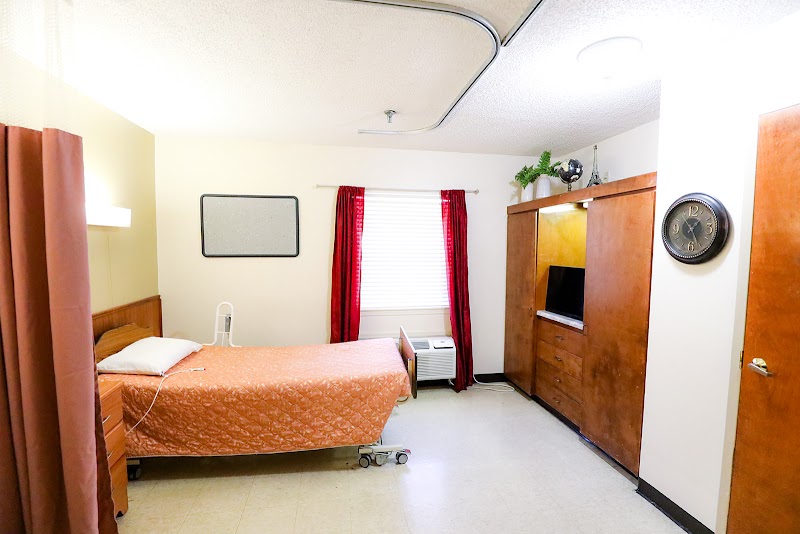
How is Village Creek Rehabilitation And Nursing Center Staffed?

CMS rates VILLAGE CREEK REHABILITATION AND NURSING CENTER's staffing level at 1 out of 5 stars, which is much below average compared to other nursing homes. Staff turnover is 54%, compared to the Texas average of 46%. RN turnover specifically is 100%, which is notably high. RNs provide skilled clinical oversight, so turnover in this role can affect medical care quality.

What Have Inspectors Found at Village Creek Rehabilitation And Nursing Center?

State health inspectors documented 28 deficiencies at VILLAGE CREEK REHABILITATION AND NURSING CENTER during 2022 to 2025. These included: 2 Immediate Jeopardy (the most serious level, indicating potential for serious harm or death) and 26 with potential for harm. Immediate Jeopardy findings are rare and represent the most serious regulatory concerns. They require immediate corrective action.
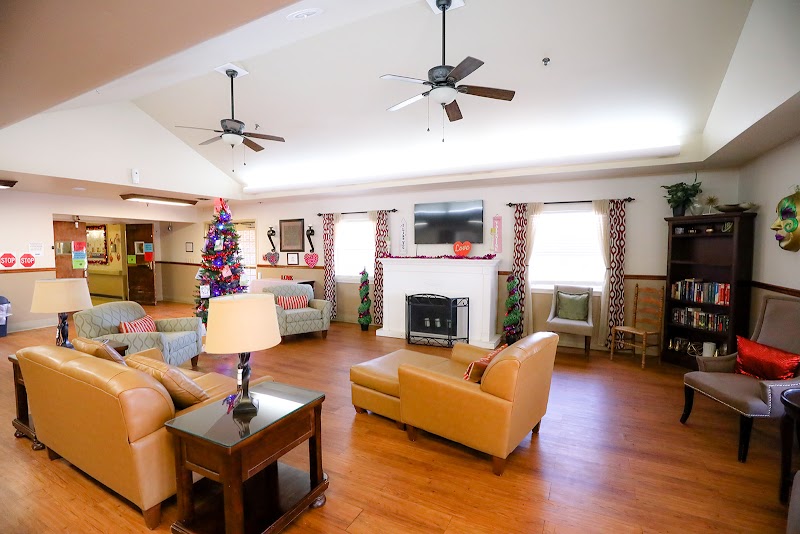
Who Owns and Operates Village Creek Rehabilitation And Nursing Center?

VILLAGE CREEK REHABILITATION AND NURSING CENTER is owned by a government entity. Government-operated facilities are typically run by state, county, or municipal agencies. The facility is operated by NEXION HEALTH, a chain that manages multiple nursing homes. With 120 certified beds and approximately 68 residents (about 57% occupancy), it is a mid-sized facility located in LUMBERTON, Texas.
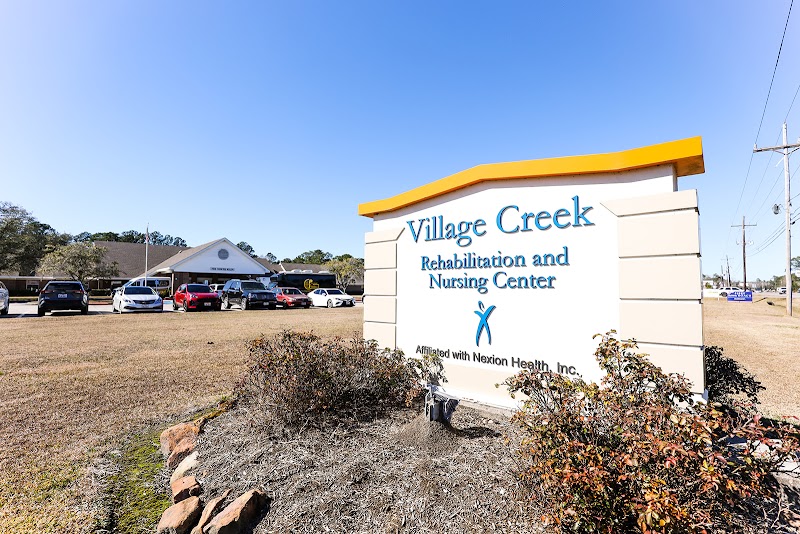
How Does Village Creek Rehabilitation And Nursing Center Compare to Other Texas Nursing Homes?

Compared to the 100 nursing homes in Texas, VILLAGE CREEK REHABILITATION AND NURSING CENTER's overall rating (1 stars) is below the state average of 2.8, staff turnover (54%) is near the state average of 46%, and health inspection rating (2 stars) is below the national benchmark.

What Should Families Ask When Visiting Village Creek Rehabilitation And Nursing Center?

Based on this facility's data, families visiting should ask: "What changes have been made since the serious inspection findings, and how are you preventing similar issues?" "What safeguards and monitoring systems are in place to protect residents from abuse or neglect?" "Can you walk me through typical staffing levels on day, evening, and night shifts?" "Can I visit during a mealtime to observe dining assistance and food quality?" These questions are particularly relevant given the facility's Immediate Jeopardy citations, the substantiated abuse finding on record, and the below-average staffing rating.

Is Village Creek Rehabilitation And Nursing Center Safe?

Based on CMS inspection data, VILLAGE CREEK REHABILITATION AND NURSING CENTER has documented safety concerns. The facility has 1 substantiated abuse finding (meaning confirmed case of resident harm by staff or other residents). Inspectors have issued 2 Immediate Jeopardy citations (the most serious violation level indicating risk of serious injury or death). The facility has a 1-star overall rating and ranks #100 of 100 nursing homes in Texas. Families considering this facility should ask detailed questions about what corrective actions have been taken since these incidents.

Do Nurses at Village Creek Rehabilitation And Nursing Center Stick Around?

VILLAGE CREEK REHABILITATION AND NURSING CENTER has a staff turnover rate of 54%, which is 8 percentage points above the Texas average of 46%. Moderate turnover is common in nursing homes, but families should still ask about staff tenure and how the facility maintains care continuity when employees leave.

Was Village Creek Rehabilitation And Nursing Center Ever Fined?

VILLAGE CREEK REHABILITATION AND NURSING CENTER has been fined $54,438 across 1 penalty action. This is above the Texas average of $33,623. Fines in this range indicate compliance issues significant enough for CMS to impose meaningful financial consequences. Common causes include delayed correction of deficiencies, repeat violations, or care failures affecting resident safety. Families should ask facility leadership what changes have been made since these penalties.

Is Village Creek Rehabilitation And Nursing Center on Any Federal Watch List?

VILLAGE CREEK REHABILITATION AND NURSING CENTER is not on any federal watch list. The most significant is the Special Focus Facility (SFF) program, which identifies the bottom 1% of nursing homes nationally based on persistent, serious quality problems. Not being on this list means the facility has avoided the pattern of deficiencies that triggers enhanced federal oversight. This is a positive indicator, though families should still review the facility's inspection history directly.