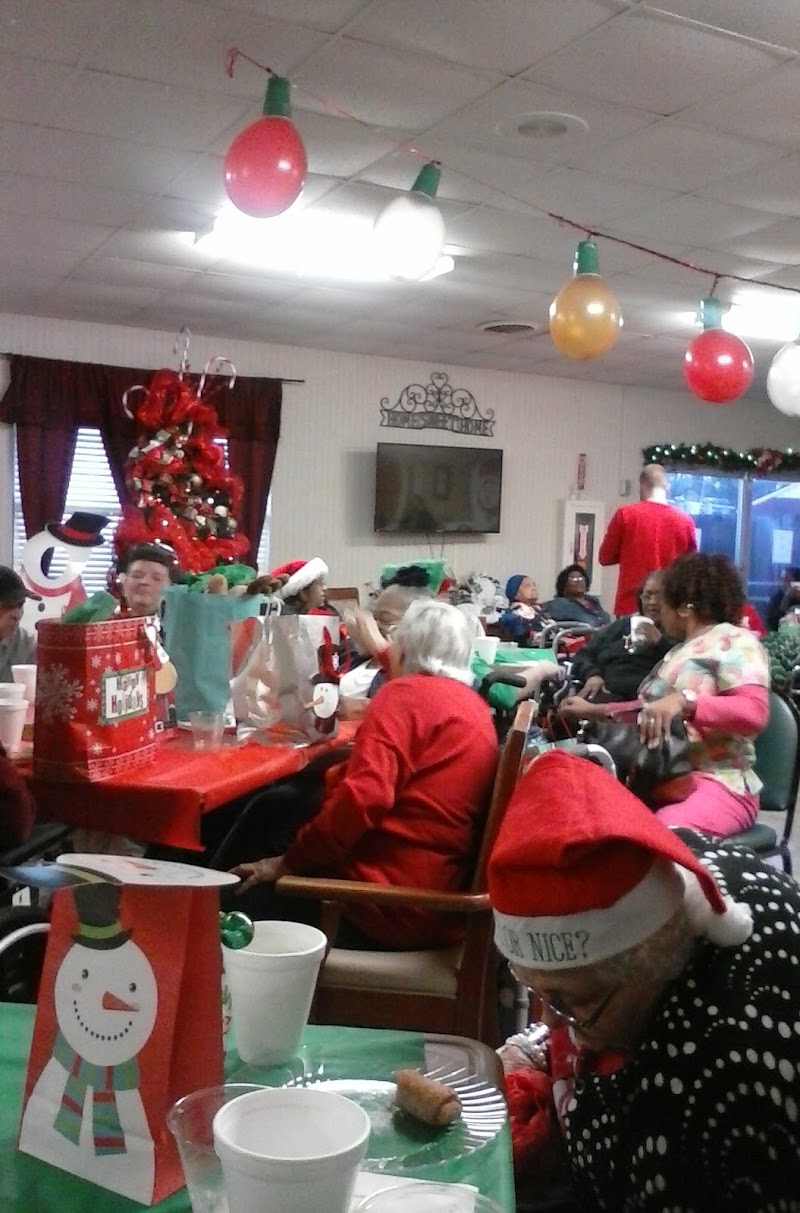
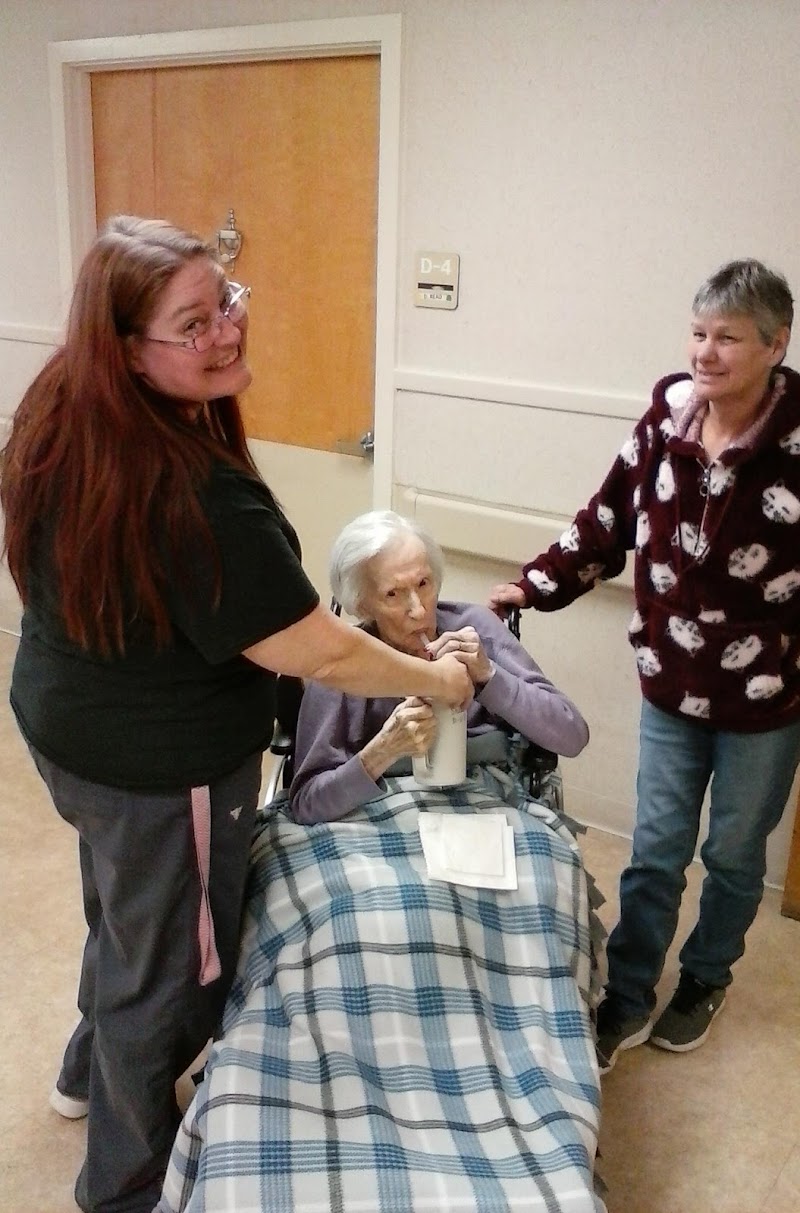
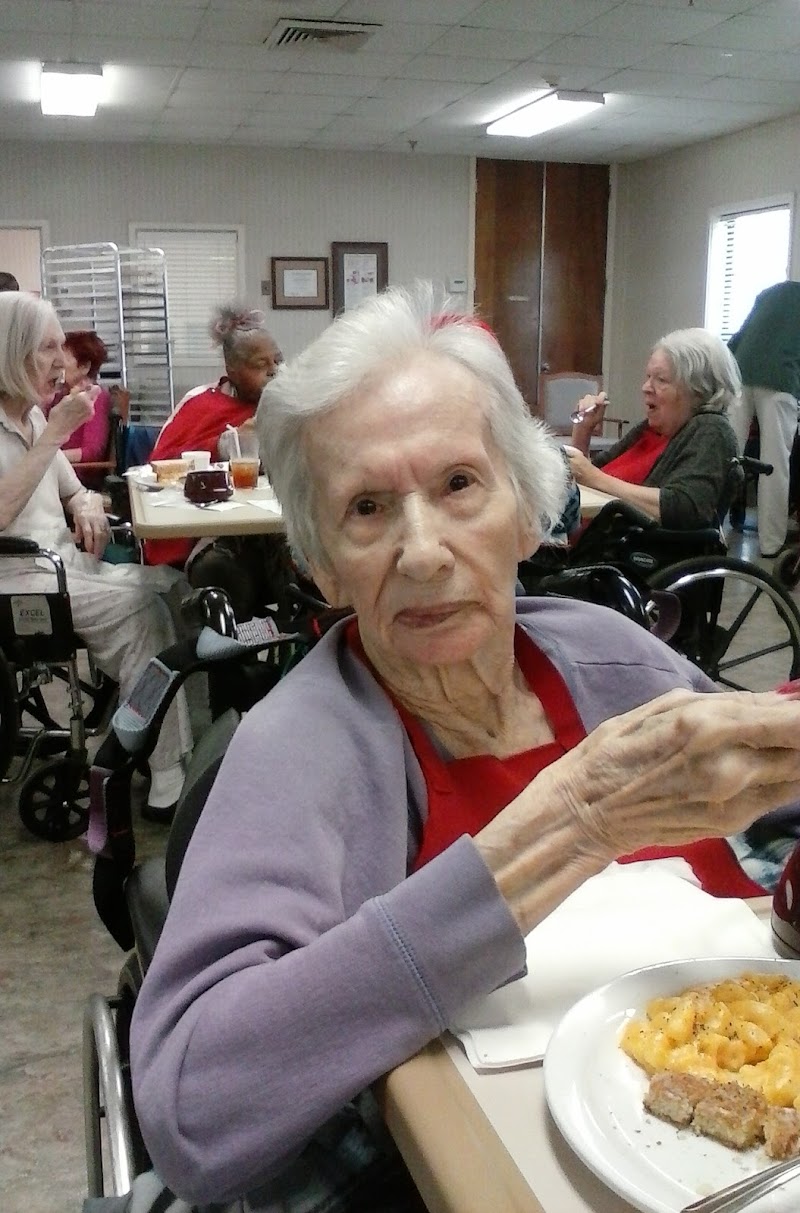
MARSHALL MANOR NURSING & REHABILITATION CENTER

1007 S WASHINGTON AVE, MARSHALL, TX 75670 (903) 935-7971
Government - Hospital district 179 Beds CARING HEALTHCARE GROUP Data: November 2025
Trust Grade
35/100
#770 of 1168 in TX
Last Inspection: May 2025

Inspected within the last 6 months. Data reflects current conditions.

Overview

Marshall Manor Nursing & Rehabilitation Center has received a Trust Grade of F, indicating significant concerns about the quality of care. Ranked #770 out of 1168 facilities in Texas, they fall in the bottom half, and #2 out of 3 in Harrison County means there is only one local option that performs better. The facility is experiencing a worsening trend, with issues increasing from 7 in 2024 to 9 in 2025. On a positive note, staffing is a strength, earning a 4 out of 5 stars with a turnover rate of 33%, which is lower than the state average. However, there have been serious concerns, such as failing to provide necessary treatments for residents' mobility issues and not maintaining proper infection control protocols, putting residents at risk.

Trust Score
F
35/100
In Texas
#770/1168
Bottom 35%
Safety Record
High Risk
Review needed
Inspections
Getting Worse
7 → 9 violations
Staff Stability
○ Average
33% turnover. Near Texas's 48% average. Typical for the industry.
Penalties
✓ Good
No fines on record. Clean compliance history, better than most Texas facilities.
Skilled Nurses
⚠ Watch
Each resident gets only 21 minutes of Registered Nurse (RN) attention daily — below average for Texas. Fewer RN minutes means fewer trained eyes watching for problems.
Violations
⚠ Watch
25 deficiencies on record. Higher than average. Multiple issues found across inspections.
★★☆☆☆
2.0
Overall Rating
★★★★☆
4.0
Staff Levels
★★★★☆
4.0
Care Quality
★★☆☆☆
2.0
Inspection Score
Stable
2024: 7 issues
2025: 9 issues

The Good

  • 4-Star Staffing Rating · Above-average nurse staffing levels
  • 4-Star Quality Measures · Strong clinical quality outcomes
  • Full Sprinkler Coverage · Fire safety systems throughout facility
  • No fines on record
  • Staff turnover below average (33%)

    15 points below Texas average of 48%

Facility shows strength in staffing levels, quality measures, fire safety.

The Bad

2-Star Overall Rating

Below Texas average (2.8)

Below average - review inspection findings carefully

Staff Turnover: 33%

13pts below Texas avg (46%)

Typical for the industry

Chain: CARING HEALTHCARE GROUP

Part of a multi-facility chain

Ask about local staffing decisions and management

The Ugly 25 deficiencies on record

May 2025 8 deficiencies
CONCERN (D)

Potential for Harm - no one hurt, but risky conditions existed

Deficiency F0558 (Tag F0558)

Could have caused harm · This affected 1 resident

**NOTE- TERMS IN BRACKETS HAVE BEEN EDITED TO PROTECT CONFIDENTIALITY** Based on observations, interviews, and record review the facility failed to ensure each resident had the right to reside and rec...

Read full inspector narrative →
**NOTE- TERMS IN BRACKETS HAVE BEEN EDITED TO PROTECT CONFIDENTIALITY** Based on observations, interviews, and record review the facility failed to ensure each resident had the right to reside and receive services in the facility with reasonable accommodation of resident needs and preferences for 1 of 19 residents (Resident #76) reviewed for reasonable accommodations. The facility failed to ensure Resident #76 had a comfortable mattress. This failure could place residents at risk of a diminished quality of life due to an environment that is uncomfortable. Findings included: Record review of Resident #76's face sheet dated 5/7/25 indicated Resident #76 was a [AGE] year-old male admitted to the facility on [DATE]. Resident #76 had diagnoses including cerebral infarction (occurs when blood flow to the brain is blocked, leading to tissue damage or death), pain, insomnia (is a sleep disorder characterized by difficulty falling asleep, staying asleep, or waking up too early, causing daytime impairments), type 2 diabetes (is a chronic condition that happens when you have persistently high blood sugar levels), and hemiplegia (is a condition characterized by paralysis affecting one side of the body) and hemiparesis (is one-sided muscle weakness). Resident #76's face sheet indicated. Record review of Resident #76's quarterly MDS assessment dated [DATE] indicated Resident #76 was understood and had the ability to understand others. Resident #76's BIMS score was 13 which indicated intact cognition. Resident #76 required setup assistance for ADLs. Resident #76 was at risk for developing pressure ulcers/injuries. Record review of Resident #76's care plan dated 9/10/24 indicated Resident #76 was at risk for alternations in skin integrity due to impaired mobility and potential for skin associated skin damage due to occasional incontinence of bowel and bladder. Interventions included provide all preventative skin care and interventions as directed. Record review of a maintenance request dated 5/5/25 at 1:30 p.m. indicated, .RN D . [Resident #76's room] . description of problem .wants a new mattress . if corrected please explain what you did to correct .replaced mattress .completed by Maintenance J .5/5/25 . During an observation and interview on 5/5/25 at 10:31 a.m., Resident #76 was lying in the bed. Resident #76 said his only complaint was he had asked for a new mattress at the beginning of last week and still had not gotten one. He said the mattress was not comfortable and it was thin. He said he could not remember who the person was he told about wanting a new mattress. The state surveyor was unable to fully visualize Resident #76's mattress due to the resident being in the bed. Resident #76's mattress appeared slightly lower towards the middle of the mattress. During an observation and interview on 5/6/26 at 3:35 p.m., LVN K said Resident #76 had complained a few times about his mattress. She said Resident #76 had recently lost weight and may have a hole in the mattress from when he was heavier. She said she had not put a work order in for Resident #76's mattress. She said someone else may have done it. LVN K looked in the maintenance request book at the nursing station. Resident #76 had a maintenance request dated and completed on 5/5/25. During an interview on 5/7/25 at 10:17 a.m., RN D said on 5/5/25 was the first time Resident #76 had mentioned his mattress was uncomfortable. She said she put the mattress change request in the maintenance book on 5/5/25 and it was changed the same day. She said it was the resident's right to be comfortable and it affected the resident's dignity to have a good mattress. She said the residents could become unhappy, lose sleep, and become dissatisfied if they had to sleep on an uncomfortable mattress. During an interview on 5/7/25 at 10:20 a.m., CNA F said Resident #76 had never mentioned his mattress being uncomfortable to her. She said Resident #76 laid in his bed a lot. She said if a resident complained about their mattress, she would put it in the maintenance book. She said then maintenance would swap the mattress out for the resident. She said lying on an uncomfortable mattress could cause the resident's back to hurt or develop bed sores. During an interview on 5/7/25 at 3:01 p.m., Maintenance J said Resident #76's mattress was changed on 5/5/25. He said if staff needed something from maintenance, it was placed in the maintenance request book. He said sometimes staff told him things verbally. He said on 5/5/25 was the first time he was aware Resident #76 wanted a new mattress. He said Resident #76 told him the mattress hurt. He said Resident #76's mattress did have an indentation in it. During an interview on 5/7/25 at 3:05 p.m., the DON said anyone could put a maintenance request in the maintenance book. She said primarily the nurses put the request in the book. She said she expected staff to place the work order in the maintenance book the same day it was found or reported. She said most of the time, maintenance was able to fix the issue the same day or the next day. She said it was important for a resident to have a comfortable mattress to rest well and prevent skin breakdown. She said an uncomfortable mattress could affect the resident's behavior, appetite, and skin integrity. She said she did not know if maintenance performed mattress inspections. During an interview on 5/7/25 at 3:34 p.m., LVN K said she may have verbally told maintenance about Resident #76's request for a new mattress. She said she also may have put a maintenance request in the book, and it was previously pulled. During an interview on 5/7/25 at 3:40 p.m., the Administrator said staff verbally told maintenance about work requests if they were available or placed it in the maintenance book. He said any staff could report a maintenance issue. He said a resident was at risk for sleep deprivation if they had an uncomfortable mattress. He said the facility did not do scheduled mattress inspections. He said the CNAs, residents, or family members reported issues with mattresses. Record review of a facility's Quality of Life- Accommodation of Needs revised 8/2009 indicated, . Our facility's environment and staff behaviors are directed toward assisting the resident in maintaining and/or achieving independent functioning, dignity, and well-being . The resident's individual needs and preferences shall be accommodated to the extent possible .
CONCERN (D)

Potential for Harm - no one hurt, but risky conditions existed

Pressure Ulcer Prevention (Tag F0686)

Could have caused harm · This affected 1 resident

**NOTE- TERMS IN BRACKETS HAVE BEEN EDITED TO PROTECT CONFIDENTIALITY** Based on observations, interviews, and record review, the facility failed to ensure residents received care, consistent with pro...

Read full inspector narrative →
**NOTE- TERMS IN BRACKETS HAVE BEEN EDITED TO PROTECT CONFIDENTIALITY** Based on observations, interviews, and record review, the facility failed to ensure residents received care, consistent with professional standards of practice, to prevent pressure ulcers based on the comprehensive assessment for 1 of 5 Residents (Resident #9) whose records were reviewed for skin integrity. The facility failed to ensure Resident #9's pressure-relieving mattress (is designed to distribute the patient's body weight over a broad surface area and help prevent skin breakdown) was on the correct settings. This failure could place residents at risk for developing pressure ulcers and could contribute to developing avoidable pressure ulcers. Findings included: Record review of Resident #9's face sheet dated 05/07/25 indicated a 97-years-old female initially admitted to the facility on [DATE]. Resident #9 had diagnoses including pressure ulcer of sacral region stage 2 (stage 2 pressure injuries are opened. The skin breaks open, wear away, or forms an ulcer, which is usually tender ad painful), contracture of muscle, multiple sites, hemiplegia and hemiparesis following a cerebral infarction affecting the right side(weakness of the right side following a stroke), contracture of muscle, left ankle and foot, contracture, right foot, contracture, left foot, muscle weakness (decreased strength in the muscles) and muscle wasting and atrophy, not elsewhere classified (multiple sites multiple muscle groups throughout the body are experiencing a loss of muscle mass and strength). Record review of Resident #9's quarterly MDS assessment dated [DATE] indicated Resident #9 was usually understood and usually understood others. Resident #9 had a BIMS score of 3 which indicated severe cognitive impairment. Resident #9 required maximal assistance to roll left and right. Resident #9 was dependent to sit to lying, lying to sitting on side of the bed, and chair-to-chair transfer. Resident #9 weighed 136 pounds. Resident #9 was at risk of pressure ulcer/injuries. Resident #9 received pressure ulcer/injury care as skin and ulcer/injury treatment, pressure reducing device for bed, and application of dressing to feet. Record review of Resident #9's care plan dated 01/02/24 indicated a pressure ulcer: actual stage 2 sacrum pressure ulcer, related to decreased mobility, nutritional risk, and friction/shear. Interventions included pressure relieving mattress, pressure-relieving cushion, repositioning every 2 hours, treatments per MD orders, assess wound weekly as per schedule and as needed, incontinent care as needed, notify MD/RP of any changes in status, update MD/RP weekly on wound progress, seen by wound specialist in house weekly, nutritional supplement prostat, vitamins/ minerals multi vitamin, zinc and vitamin C, and treatment collagen. Record review of Resident #9's care plan dated 04/28/25 indicated a pressure ulcer: pressure ulcer, related to decreased sensation, decreased mobility, and incontinence. Interventions included reposition every 2 hours, collagen and dry dressing treatments every Monday, Wednesday, and Friday, assess wound weekly, incontinent care as needed, and notify MD/RP of any changes in status. Record review of a facility's wound report dated 03/26/25-05/01/25 indicated .Resident #9 .facility acquired on 04/28/25 .stage 2 sacrum .improved .0.3x0.4x0.1 centimeters .assessment date 04/30/25 . Record review of Resident #9's physicians order dated 04/28/25 indicated sacrum: cleanse with normal saline or wound cleanser, pat dry, apply collagen to wound bed, then cover with dry dressing, as needed related to pressure ulcer of sacral region, stage 2. Record review of Resident #9's physicians order dated 04/28/25 indicated sacrum: cleanse with normal or wound cleanser, pat dry, apply collagen to wound bed, then cover with dry dressing, every day shift every Mon, Wed and Friday related to pressure ulcer of sacral region, stage 2 . Record review of Resident #9's weight record dated 05/06/25 indicated: *01/06/25 141 pounds *02/06/25 134.8 pounds *03/06/25 136.8 pounds *04/03/25 134.8 pounds During an observation on 05/05/25 at 9:21 a.m., Resident #9 was lying in bed resting. Resident #9 said she had no complaints about the facility. Resident #9's pressure relieving mattress weight setting was 360 pounds. During an observation on 05/05/25 at 3:13 p.m., Resident #9 was lying in her bed asleep. Resident #9's pressure relieving mattress weight setting was 360 pounds. During an observation on 05/06/24 at 9:31 a.m., Resident #9 was lying in her bed resting. Resident #9's pressure relieving mattress weight setting was 360 pounds. During an interview on 05/06/25 at 2:36 p.m., LVN Q said she did not know Resident #9 had a certain setting her bed needed to be set on. She said maintenance was responsible for the bed setting as far as she knew or maybe the treatment people. She said if the bed was not on the right setting that could cause a problem with the resident, such as skin breakdown. During an interview on 05/07/25 at 1:46 p.m., the Treatment Nurse said the charge nurse was responsible for the setting on the beds with the low air loss mattress beds. He said Resident #9 bed should be set according to her weight. He said a negative effect of the wrong setting of the low air loss mattress would be the flow would not circulate correctly if the setting was not set correct. He said too firm would have too much pressure and too soft would cave in on Resident #9. He said with the bed not set to the correct weight it would minimize Resident #9's healing potential. During an interview on 05/07/25 at 2:01 p.m., LVN ADON P said the nurse were responsible for ensuring that the low air loss mattress was on the correct setting. She said the mattress should be set according to the resident's weight. She said if there has too much pressure or too low pressure it could affect the resident and the mattress would be ineffective for the resident. During an interview on 05/07/25 at 2:33 p.m., the DON said the pressure relieving mattress should be set based on resident weight. She the nurses were responsible for making sure the beds were on the correct settings. She said if a mattress was too firm, it could cause skin breakdown or worsen the skin breakdown. During an interview on 05/07/25 at 2:46 p.m., the ADM said the nurses were responsible for ensuring the setting was set correctly for the pressure relieving mattress. He said the settings were normally based on the weight of the resident. He said with bed not on the correct setting could lead to a decline in Resident #9's skin integrity. Record review of a facility's Pressure Ulcer/Injury Risk Assessment policy revised 09/2013, indicated . The purpose of this procedure is to provide guidelines for the structured assessment and identification of residents at risk of developing pressure ulcers/injuries.the care plan must be modified as the resident's condition changes, or if current interventions are deemed inadequate. Record review of a facility's Support Surface Guidelines policy dated 09/2013, indicated . The purpose of this procedure is to provide guidelines for the assessment of appropriate pressure reducing and relieving devices for residents at risk of skin breakdown.redistributing support surfaces are to promote comfort for all bed- or chairbound residents, prevent skin breakdown, promote circulation, and provide pressure relief or reduction.any individual at risk for developing pressure ulcers should be placed on a redistribution support surface, such as foam, gel, static air, alternating air, or air-loss or gel when lying in bed . Record review of a facility's Pressure Ulcer Injury Overview policy revised 07/2017, indicated . The purpose of this procedure is to provide information regarding clinical identification of pressure ulcers/injuries and associated risk factors, which is derived from the definitions in §483.25(b)(1) Pressure ulcers . Record review of a facility's Prevention of Pressure Ulcer policy revised 07/2017, indicated . The purpose of this procedure is to provide information regarding identification of pressure ulcer/injury risk factors and interventions for specific risk factors.select appropriate support surfaces based the resident's mobility, continence, skin moisture and perfusion, body size, weight, and overall risk factors .
CONCERN (D)

Potential for Harm - no one hurt, but risky conditions existed

Incontinence Care (Tag F0690)

Could have caused harm · This affected 1 resident

**NOTE- TERMS IN BRACKETS HAVE BEEN EDITED TO PROTECT CONFIDENTIALITY** Based on observation, interviews, and record review, the facility failed to ensure a resident with urinary incontinence, based o...

Read full inspector narrative →
**NOTE- TERMS IN BRACKETS HAVE BEEN EDITED TO PROTECT CONFIDENTIALITY** Based on observation, interviews, and record review, the facility failed to ensure a resident with urinary incontinence, based on the resident's comprehensive assessment, received appropriate treatment and services to prevent urinary tract infections (UTI) for 1 of 4 residents (Residents #81) reviewed for urinary catheters. The facility failed to ensure Resident #81's indwelling urinary catheter (tube inserted into the bladder to drain urine) was secured by an anchor device (used to secure an indwelling urinary catheter). The facility failed to ensure CNA O performed proper catheter care to Resident #81. These failures could place residents at risk for indwelling urinary catheter dislodgement, urethral (empties urine from the bladder and out of the body) damage, pain, and urinary tract infections. Findings included: Record review of Resident #81's face sheet dated 05/07/25 indicated a 94-years-old male initially admitted to the facility on [DATE]. Resident #81 had diagnoses including: heart failure, unspecified (a chronic condition in which the heart doesn't pump blood as well as it should), sepsis, unspecified organism (a life-threatening condition where the body's response to infection leads to widespread inflammation and tissue damage, but the specific infectious agent is not identified), and acute kidney failure, unspecified (a condition in which the kidneys suddenly can't filter waste from the blood). Record review of Resident #81's Order Summary Report dated 5/07/25 indicated an order to ensure foley catheter care every shift with a start date of 4/16/25. Record review of Resident #81's Order Summary Report dated 5/07/25 indicated an order to ensure foley catheter leg strap every shift with a start date of 4/16/25. Record review of the comprehensive MDS dated [DATE] indicated Resident #81 had clear speech, understood others, and was understood by others. The MDS indicated he had a BIMS score of 12 indicating moderate cognitive impairment. Resident #81 required moderate assistance from staff for oral hygiene, toileting hygiene, and personal hygiene. The MDS indicated Resident #81 had an indwelling catheter (urinary catheter) and was always incontinent of bowel. Record review of the care plan dated 5/01/25 indicated Resident #81 had a foley catheter due to obstructive uropathy. He could not void without the foley catheter, due to obstructive uropathy. Interventions included: assess any complaints of dysuria, pubic or abdominal pain, assess pain level as needed, provide foley catheter care as per facility policy and procedure, use a foley catheter Velcro strap around the thigh to secure the tubing. Record review of a Competency Assessment, Foley Cath Care Checkoff dated 5/02/24 indicated CNA O was proficient in catheter care. Record review of a Competency Assessment, Peri care/Incontinent Care Evaluation dated 5/02/24 indicated CNA O was proficient in incontinent care. Record review of a Competency Assessment, Foley Cath Care Checkoff dated 2/15/25 indicated CNA N was proficient in catheter care. Record review of a Competency Assessment, Peri care/Incontinent Care Evaluation dated 2/15/25 indicated CNA N was proficient in incontinent care. During an observation on 05/06/25 at 2:00 P.M., CNA O performed incontinent care and catheter care assisted by CNA N. Resident #81's catheter leg securement device was not secured to the resident's leg. CNA O performed incontinent care starting from Resident #81's buttocks. She wiped both buttocks and applied a clean brief without changing her gloves or sanitizing her hands. After performing incontinent care to Resident #81's buttocks she started catheter care. She changed her gloves to before starting catheter care, but she did not wash or sanitize her hands. After CNA O performed catheter care she did not change the dirty brief and she did not change the dirty gloves before pulling up the Resident #81's pants. During an interview on 05/06/25 at 2:12 P.M., CNA N she said CNA O needed to slow down and listen. She said Resident #81's catheter was just hanging, because it was not secured. She said CNA O always worked fast. She said CNA O started with the back of Resident #81 and she was supposed to start with the catheter care first; before she did the behind. She said CNA O changed Resident #81's brief and did not change her gloves or sanitize her hands. She said then CNA O started the catheter care after cleaning the rectum. She said CNA O changed her gloves but did not wash or sanitize before starting catheter care. She said CNA O performed catheter care and did not remove the dirty brief after catheter care was performed. CNA N said CNA O did not remove her dirty gloves before pulling up Resident #81's pants. She said he could get an infection or urinary tract infection (infection in any part of the urinary system) from improper catheter care, improper incontinent care, and improper hand hygiene. She said Resident #81's catheter care did not look good, and he looked like he had redness and a discharge to his catheter site. During an interview on 05/06/25 at 2:29 P.M., CNA O said she knew the catheter was on the wrong side when she performed catheter care, she said it should have been on the right side of Resident #81 instead of the left side. She said she had notified LVN ADON Q that the resident's catheter securement device needed to be replaced. She said she should had started the catheter care first on Resident #81; from the front then worked her way to the back. She said she should have changed her gloves and sanitized her hands before she applied Resident #81's clean brief. She said she had anxiety and gets nervous with people watching her. She said a negative effective of improper catheter care, incontinent care, and improper hand hygiene was e.coli (a rod-shaped bacterium that's commonly found in the intestines) can get into the catheter and it can cause skin breakdown. During an interview on 05/06/25 at 2:36 P.M., LVN Q said she would expect the CNA's to start from the front to back with catheter care. She said she would expect them to start with the head of the penis then from the head of the penis down the tubing with a male resident, that had catheter care. She said then from side one side to the other side wiping down, then to the back side of the resident. She said to clean the back side of the resident last, because there was a harmful bacterium in the rectum that should not be brought to the front to the catheter. She said all residents with catheters should have a tubing securement device. She said a negative effect of improper catheter care, improper incontinent care, and improper hand hygiene was infection. During an interview on 05/07/25 at 2:01 P.M., LVN ADON P said she would expect the CNA's to clean from front to back and make sure the resident was free from any bile and ensure that the catheter was secured. She said gloves should be changed properly during the process of incontinent care and catheter care. She said she would have performed catheter care and change gloves and sanitized or washed hands before pulling up Resident #81's pants. She said CNA O notified her that Resident #81's catheter securement device was not securing the catheter and she had replaced it. She said improper incontinent care, catheter care, and hand hygiene could cause infection and cross contamination. During interview on 05/07/25 at 2:33 P.M., the DON said she expect the CNA's to start from front to back and at the penis away from the resident's body with catheter care for a male. She said then after cleaning the front wash or sanitize your hands, then move to the back, then apply clean gloves. She said she would expect the CNA's to change the brief if they got it dirty while cleaning another part of the body. She said all residents with catheters should have a securement device in place. She said improper incontinent care, catheter care, and hand hygiene made the resident at risk for infection and skin breakdown. During an interview on 05/07/25 at 2:46 P.M., the ADM said the CNA's were trained and they know what they were supposed to do and he expected them to do what they were trained to do. He said all residents with catheters should have a securement device in place. He said improper incontinent care, improper catheter care, and improper hand hygiene has a potential for infection. Record review of a facility's Urinary Continence and Incontinence-Assessment and Management policy revised 09/2010, indicated .3. The physician and staff will provide appropriate services and treatment to help residents restore or improve bladder function and prevent urinary tract infections to the extent possible.4. Indwelling urinary catheters will be used sparingly, for appropriate indicators only . Record review of a facility's Catheter Care, Urinary policy dated 09/2014, indicated . The purpose of this to prevent catheter-associated urinary tract infections . 1. Use standard precautions when handling or manipulating the drainage system .2. Maintain clean technique when handling or manipulating the catheter, tubing, or drainage bag.a. do not clean the periurethral area with antiseptics to prevent catheter-associated UTIs while the catheter is in place. Routine hygiene (e.g., cleansing of the meatal surface during daily bathing or showering) is appropriate . b. be sure the catheter tubing and drainage bag are kept off the floor . c. empty the drainage bag regularly using a separate, clean collection container for each resident. Avoid splashing and prevent contact of the drainage spigot with the nonsterile container . d. empty the collection bag at least every eight (8) hours
CONCERN (D)

Potential for Harm - no one hurt, but risky conditions existed

Drug Regimen Review (Tag F0756)

Could have caused harm · This affected 1 resident

**NOTE- TERMS IN BRACKETS HAVE BEEN EDITED TO PROTECT CONFIDENTIALITY** Based on interviews and record review, the facility failed to act upon the recommendations of the pharmacist report of irregular...

Read full inspector narrative →
**NOTE- TERMS IN BRACKETS HAVE BEEN EDITED TO PROTECT CONFIDENTIALITY** Based on interviews and record review, the facility failed to act upon the recommendations of the pharmacist report of irregularities and to ensure the attending physician documented in the resident's medical record that the identified irregularity has been reviewed and what, if any, action has been taken to address it in response to the pharmacist report for 2 of 5 residents (Resident #42 and Resident #89) reviewed for (MRR) Medication Regimen Review. 1. The facility failed to ensure a proper rationale was given for not following the pharmacy consultant's recommendation to discontinue Resident #42's Seroquel (an antipsychotic medication that treats several kinds of mental health conditions including schizophrenia and bipolar disorder) medication. 2. The facility failed to ensure Resident #89's Medication Regimen Review dated 4/28/25, had a detailed rationale for not implementing the pharmacist's recommendations. These failures could place residents at risk from maintaining their highest practicable level of physical, mental, and psychosocial well-being, and could place them at risk for adverse consequences related to medication therapy. Findings included: 1. Record review of Resident #42's face sheet, dated 05/07/25, indicated she was an [AGE] year-old female, admitted to the facility on [DATE]. Her diagnoses included vascular dementia (a type of dementia caused by reduced blood flow to the brain, damaging brain tissue, and impairing cognitive function), Parkinsonism (a clinical syndrome characterized by movement-related symptoms like tremors, slow movement, and rigidity), anxiety disorder (mental health conditions characterized by excessive fear and worry that significantly impair daily functioning), and delusional disorder (mental health condition characterized by one or more firmly held, false beliefs that persist for at least one month). Record review of Resident #42's significant change MDS assessment, dated 12/17/24, indicated she was rarely/never understood, and rarely/never was able to understand others. A BIMS assessment was not conducted because the resident was rarely/never understood. Record review of Resident #42's Order Summary Report, dated 05/07/25, indicated this order: *Seroquel oral tablet 25mg (Quetiapine Fumarate) Give 1 tablet by mouth two times a day related to Parkinsonism; Delusional Disorders. The start date was 03/26/25. Record review of Resident #42's care plan, indicated a focus dated 03/10/23, I am at risk for the development of complications related to receiving psychotropic medications. Interventions included: *Assess the reason I need the medication and reevaluate as needed. Assess for medication dose adjustment to achieve a minimum effective level of medication and notify my doctor as needed. *Conduct a drug utilization review per facility pharmacy consultant as needed. Record review of Resident #42's Consultant Pharmacist/Physician Communications, dated MRR Date 04/02/25 indicated: .This resident is taking a low dose of Seroquel . .I recommend DC unless therapeutic response outweighs risk/benefit. In such case, please document clear rationale and justification in chart . The Physician/Prescriber Response was marked as DISAGREE, and no rationale was given. The form was signed by RN L and dated 04/09/25. During an interview on 05/07/25 at 02:36 PM, ADON B said she expected the RN that signed the consultant pharmacist communication to write a verbal order or document some sort of rationale for the doctor disagreeing with the recommendation. She said the potential risk was the resident could be on an unnecessary medication. During an interview on 05/07/25 at 02:44 PM, the DON said she expected the nurse that signed the consultant pharmacist communication to write a verbal order or have the doctor sign it. She said the risk was the resident could be on unnecessary medication. During an interview on 05/07/25 at 02:54 PM, the Administrator said he expected the nurse to clarify if it was a verbal order or have the doctor sign the consultant pharmacist recommendation. He said the risk was resident could be on an unnecessary medication or there could be some confusion on what the order was. 2. Record review of Resident #89's face sheet dated 5/6/25 indicated resident #89 was an [AGE] year-old female admitted to the facility on [DATE] and readmitted on [DATE]. Resident #89 had diagnoses including vascular dementia (is a type of dementia caused by reduced blood flow to the brain, damaging brain tissue, and affecting cognitive function), Parkinson's disease (is a progressive neurological disorder that primarily affects movement, causing symptoms like tremors, stiffness, and slowness of movement), generalized anxiety disorder (is a mental health condition characterized by persistent and excessive worry about various aspects of life, often in a way that is difficult to control), pain, hypertension (high blood pressure), difficulty in walking, and fall on same level. Record review of Resident #89's consolidated physician order dated 5/6/25 indicated: *Ativan Oral Tablet (Lorazepam) (is used to treat anxiety disorders) 0.5mg, give 1 tablet by mouth every 24 hours as needed for anxiety related to generalized anxiety disorder for 14 days. Start date 4/25/25. *Cyclobenzaprine HCL Oral Tablet (is used to help relax certain muscles in your body) 7.5mg, give 1 tablet by mouth every 12 hours as needed for muscle spasms related to muscle spasms. Start date 11/20/24. *Diphenhydramine HCL Oral Tablet (is an antihistamine and sedative) 25mg, give 1 tablet by mouth every 6 hours as needed for itching/allergies. Start date 11/20/24. *Flomax Oral Capsule 0.4.mg (Tamsulosin HCL) (helps relax the muscles in the prostate and the opening of the bladder), give 1 capsule by mouth one time a day related to retention of urine. Start date 11/20/24. *Metoprolol Tartrate Oral Tablet (is a medication that lowers your blood pressure and heart rate) 25mg, give 1 tablet by mouth one time a day related to essential (primary) hypertension. Start date 11/21/24. *Norco Oral Tablet 5-325 mg (Hydrocodone-Acetaminophen) (is a combination medicine taken to help treat pain), give 1 tablet by mouth every 6 hours as needed for pain related to pain. Start date 11/20/24. *Remeron Oral Tablet 30mg (Mitrazapine) (is commonly used to treat depression), give 1 tablet by mouth one time a day at hour of sleep related to depressive episodes. Start date 12/26/24. Record review of Resident #89's significant change in status MDS assessment dated [DATE] indicated Resident #89 was understood and had the ability to understand others. Resident #89 had minimal difficulty hearing, clear speech, and impaired vision with corrective lenses. Resident #89's BIMS score was 15 which indicated intact cognition. Resident #89 had falls since admission/entry or reentry or the prior assessment. Resident #89 had 2 falls with no injury and 1 with minor injury. Resident #89 had received anti-anxiety, antidepressant, and opioids during the last 7 days. Record review of Resident #89's care plan dated 11/15/24, reviewed 4/21/25 indicated Resident #89 had falls second to Parkinson's disease with tremors, poor balance, and posture. Resident #89 received multiple medications, history of hypotension and syncope with poor safety awareness and poor impulse control. Interventions included medication review as needed to assess for side effects and adverse drug reactions and sitter provided to assist with visual checks. Record review of Resident #89's Interim Medication Regimen Review dated 4/28/25 indicated, .Rec. Category: Interim Review - Fall Risk .Consultant Pharmacist .Interim Review requested due to recent falls and increased confusion . [Resident #89] is currently has orders for three medications listed on Beers Criteria (is a list of medications that older adults should potentially avoid or use with caution due to the risk of harm outweighing the benefits), and all three can contribute to increased fall risk and confusion. I consider these three the greatest contributors to falls and confusion .Cyclobenzaprine 7.5mg Q12H PRN .Diphenhydramine 25mg Q6H PRN .Lorazepam 0.5mg BID and 0.5mg PRN once daily .I recommend DC cyclobenzaprine, diphenhydramine, and PRN dose of lorazepam .I also recommend plan to GDR routine lorazepam with plan to DC .Hydrocodone-Acetaminophen and Mirtazapine can also contribute .Both can cause sedation and confusion, and both can contribute to an increased fall risk . I recommend ensuring resident is taking lowest necessary dose of Norco and ensure that all non-pharmacological interventions are attempted and documented . I further recommend a plan to GDR mirtazapine to 15mg within the next month or two with a further plan to DC if tolerated . Finally, tamsulosin, metoprolol, and mirtazapine can all contribute to an increased risk of orthostatic hypotension . I recommend monitoring resident for orthostatic hypotension and counsel resident to sit up and rise from a seated position slowly to reduce risk of orthostatic hypotension (is a drop in blood pressure that occurs when a person stands up after sitting or lying down) . Recommendation Summary .DC Cyclobenzaprine .DC Diphenhydramine .DC PRN Ativan .Next month GDR Ativan to 0.25mg BID .Confirm Norco dosing is lowest effective dose .In July, GDR Mirtazapine to 15mg QHS .Monitor Resident for orthostatic hypotension .'Has a sitter now' .NP M .5/5/25 . During an interview on 5/7/25 at 3:05 p.m., the DON said the ADONs and the DON reviewed the MRRs and contacted the NP/MDs. She said hall B did not have an ADON, so she was responsible for hall B's MRRs. She said she had reviewed Resident #89's MRR from 4/28/25. She said when the NP or the MD reviewed the MRRs and disagreed with the recommendation, the facility expected a reason for not following the recommendations. She said, has a sitter now was not an appropriate response for Resident #89's MRR. She said she did not know NP M had written that response to Resident #89's MRR on 5/5/25. She said Resident #89 had a fall 4/20/25 and the facility provided a sitter as an intervention. She said Resident #89 would have a sitter until she was back to her baseline. She said Resident #89 was experiencing confusion possibly from a UTI (is an infection that affects a part of the urinary tract). She said Resident #89 was receiving treatment for the UTI. She said she reviewed the MRRs a few days after they were completed by the pharmacist and when she knew the NP/MD had rounded at the facility. She said it was important for the MRRs to have rationale or reasons for disagreeing with the recommendations to explain why, know how to better take care of the resident, and know when to notify the NP/MD when something was not working. She said it placed the resident at risk for not receiving the interventions they needed. During an interview on 5/7/25 at 3:40 p.m., the Administrator said the DON reviewed the all the resident's MRRs then gave them to the halls ADONs. He said the facility expected the MRRs to have rationales and staff should follow up. He said he did not know if NP M's response to Resident #89's MRR was an appropriate response to the recommendations. He said he would defer to NP M's response. He said the DON was responsible for overseeing the resident's MRRs. During an interview on 5/8/25 at 4:20 p.m., NP M said she had reviewed Resident #89's MRR a couple days ago. She said she could not recall what Resident #89's MRR recommendations were. She said she spoke with the staff to see what the biggest problems were and reviewed the resident's chart before responding to the pharmacist recommendations. She said Resident #89 had several falls but was also non complaint. She said Resident #89's sitter was a new intervention. She said she felt the new intervention needed to be tried then reevaluated. She said she did not know how long the facility planned to have a sitter with Resident #89. Record review of the facility's policy, Tapering Medications and Gradual Dose Reduction, last revised April 2007, indicated: .1. After medications are ordered for a resident, the staff and practitioner shall seek an appropriate dose and duration for each medication that also minimizes the risk of adverse consequences . 2. All medications shall be considered for possible tapering. Tapering that is applicable to antipsychotic medications shall be referred to as gradual dose reduction . 3. Residents who use antipsychotic drugs shall receive gradual dose reductions and behavioral interventions, unless clinically contraindicated, in an effort to discontinue these drugs . 5. The Physician will review periodically whether current medications are still necessary in their current doses; for example, whether an individual's conditions or risk factors are sufficiently prominent or ensuring that they require medication therapy to continue in the current dose, or whether those conditions and risks could potentially be equally well managed or controlled without certain medications, or with a lower dose . 9. When a medication is tapered or stopped, the staff and practitioner shall document the rationale for any decisions to restart a medication or reverse a dose reduction; for example, because of a return of clinically significant symptoms . 10. Residents who use antipsychotic drugs shall receive gradual dose reductions, unless clinically contraindicated, in an effort to discontinue the use of such drugs. Pertinent behavioral interventions will also be at-tempted. (Behavioral interventions refer to non-pharmacological attempts to influence an individual's behavior, including environmental alterations and staff approaches to care) . 11. Within the first year after a resident is admitted on an antipsychotic medication or after the resident has been started on an antipsychotic medication, the staff and practitioner shall attempt a GDR in two separate quarters (with at least one month between the attempts), unless clinically contraindicated. After the first year, the facility shall attempt a GDR at least annually, unless clinically contraindicated . 12. For any individual who is receiving an antipsychotic medication to treat behavioral symptoms related to dementia, the GDR may be considered clinically contraindicated if: a. The resident's target symptoms returned or worsened after the most recent attempt at a GDR within the facility; and b. The physician has documented the clinical rationale for why any additional attempted dose reduction at that time would be likely to impair the resident's function or increase distressed behavior . 13. For any individual who is receiving an antipsychotic medication to treat a psychiatric disorder other than behavioral symptoms related to dementia (for example, schizophrenia, bipolar mania, or depression with psychotic features), the GDR may be considered contraindicated, if: a. The continued use is in accordance with relevant current standards of practice and the physician has documented the clinical rationale for why any attempted dose reduction would be likely to impair the resident's function or cause psychiatric instability by exacerbating an underlying psychiatric disorder; or b. The resident's target symptoms returned or worsened after the most recent attempt at a GDR within the facility and the physician has documented the clinical rationale for why any additional attempted dose reduction at that time would be likely to impair the resident's function or cause psychiatric instability by exacerbating an underlying medical or psychiatric disorder . 14. Attempted tapering of sedatives and hypnotics shall be considered as a way to demonstrate whether the resident is benefiting from a medication or might benefit from a lower or less frequent dose. Tapering shall be done consistent with the following: a. For as long as a resident remains on a sedative/hypnotic that is used routinely and beyond the manufacturer's recommendations for duration of use, the physician shall attempt to taper the medication at least quarterly unless clinically contraindicated. Clinically contraindicated means: (1) The continued use is in accordance with relevant current standards of practice and the physician has documented the clinical rationale for why any attempted dose reduction would be likely to impair the resident's function or cause psychiatric instability by exacerbating an underlying medical or psychiatric disorder; or (2) The resident's target symptoms returned or worsened after the most recent attempt at tapering the dose within the facility and the physician has documented the clinical rationale for why any additional attempted dose reduction at that time would be likely to impair the resident's function or cause psychiatric instability by exacerbating an underlying medical or psychiatric disorder . Record review of https://agsjournals.onlinelibrary.[NAME].com/doi/epdf/10.1111/jgs.18372 was accessed on 5/12/25 and indicated, .the Beers Criteria was developed .with the purpose of identifying medications for which potential harm outweighed the expected benefit and that should be avoided in nursing home residents .Table 2 .potentially inappropriate medication use in older adults .Diphenhydramine (oral) .risk for confusion .drugs is associated with an increased risk of falls .Lorazepam .older adults increases sensitivity .increase the risk of cognitive impairment, delirium, falls, fracture .Cyclobenzaprine .adverse effects, sedation and increased risk of fractures .
CONCERN (D)

Potential for Harm - no one hurt, but risky conditions existed

Food Safety (Tag F0812)

Could have caused harm · This affected 1 resident

Based on observation, interviews, and record review, the facility failed to store, prepare, distribute, and serve food in accordance with professional standards for food service safety in the facility...

Read full inspector narrative →
Based on observation, interviews, and record review, the facility failed to store, prepare, distribute, and serve food in accordance with professional standards for food service safety in the facility's only kitchen reviewed for food safety requirements. The facility failed to ensure the CNA Class Instructor did not walk into the kitchen without a hairnet during lunch service on 05/06/25. This failure could place residents at risk of foodborne illness and food contamination. Findings included: During an observation and interview on 05/06/25 at 11:56AM the CNA Class Instructor walked into the kitchen. She was not wearing a hairnet. The kitchen staff had the food out on the steam table and were plating the food for lunch. When questioned if she was wearing a hairnet she said, I'm just giving this sticky note to her. She pointed to one of the cooks on the serving line. She then handed the note to a dietary staff on the serving line next to the steam table and then walked out of the kitchen. During an interview on 05/07/25 at 01:35 PM, the Dietary Manager said she expected all staff that enter the kitchen to wear a hairnet. She said the risk was that a hair could get in the food and potentially cause a foodborne illness. During an interview on 05/07/25 at 02:54 PM, the Administrator said he expected the staff to wear a hairnet while in the kitchen. He said a hair could fall in the food and potentially cause foodborne illness. Record review of the facility's policy, Food Preparation and Service, last revised July 2014, indicated: .Food service employees shall prepare and serve food in a manner that complies with safe food handling practices . .Food Service/Distribution . .7. Dietary staff shall wear hair restraints (hair net, hat, beard restraint, etc.) so that hair does not contact food . .13. Only Dietary staff are allowed in the kitchen. If for any reason other departments must enter the kitchen staff must wear hair restraints (hair net, hat, beard restraint, etc.) .
CONCERN (D)

Potential for Harm - no one hurt, but risky conditions existed

Antibiotic Stewardship (Tag F0881)

Could have caused harm · This affected 1 resident

**NOTE- TERMS IN BRACKETS HAVE BEEN EDITED TO PROTECT CONFIDENTIALITY** Based on interviews, and record review, the facility failed to promote antibiotic stewardship by ensuring the appropriate use of...

Read full inspector narrative →
**NOTE- TERMS IN BRACKETS HAVE BEEN EDITED TO PROTECT CONFIDENTIALITY** Based on interviews, and record review, the facility failed to promote antibiotic stewardship by ensuring the appropriate use of antibiotic therapy and providing written rationale, by the provider, when an antibiotic was used despite criteria, to determine the appropriate the use of an antibiotic for 1 of 5 residents reviewed antibiotic use. (Resident #31) The facility failed to ensure Resident #31 did not receive Cephalexin (is a cephalosporin antibiotic used to treat a variety of bacterial infections) for prophylactic antibiotic use. The facility failed to ensure Resident #31's Cephalexin, ordered prophylactically, was discontinued after he was started on Cefdinir (is a cephalosporin antibiotic used to treat a variety of bacterial infections) for an active UTI. These failures could place residents receiving antibiotics at risk for unnecessary antibiotic use, inappropriate antibiotic use, and increased antibiotic-resistant infections. Findings included: Record review of Resident #31's face sheet dated 5/5/25 indicated Resident #31 was an [AGE] year-old male admitted on [DATE] and readmitted on [DATE]. Resident #31 had diagnoses including urinary tract infection (is an infection in any part of the urinary system, including the bladder, urethra, kidneys, or ureters), neuromuscular dysfunction of bladder (the nerves that carry messages back and forth between the bladder and the spinal cord and brain don't work the way they should), and retention of urine (is when your bladder doesn't empty completely or at all). Record review of Resident #31's significant change in status MDS assessment dated [DATE] indicated Resident #31 was understood and had the ability to understand others. Resident #31 had a BIMS score of 10 which indicated moderate cognitive impairment. Resident #31 required substantial/maximal assistance for toileting hygiene. Resident #31 had an indwelling catheter (is a thin, hollow tube inserted through the urethra into the urinary bladder to collect and drain urine) and frequent bowel incontinence. Resident #31 had received an antibiotic during the last 7 days. Record review of Resident #31's care plan dated 2/12/25 indicated Resident #31 had recurrent urinary tract infections. Intervention included assess causative factors that may have led to the development of the UTI. If identified, help develop additional approaches and interventions to prevent the reoccurrence. Record review of Resident #31's consolidated physician order dated 5/5/25 indicated Cephalexin Oral Capsule 250mg, give 1 capsule by mouth one time a day related to encounter for prophylactic measures. Start date 3/13/25. Record review of Resident #31's Telephone Orders dated 5/5/25 indicated Cefdinir 300mg 1 capsule by mouth two times a day for 10 days related to UTI. Record review of Resident #31's culture and sensitivity (is a laboratory procedure used to identify bacteria or fungi causing an infection and determine which antibiotics (or antifungals) are effective in treating it) results dated 5/2/25 indicated low pathogen detection of pseudomonas aeruginosa (is a germ that can cause infections). Pseudomonas aeruginosa may develop resistance during prolonged therapy with all antimicrobial agents. During an interview on 5/7/25 at 2:13 p.m., RN D said Resident #31 was currently on an antibiotic for a pseudomonas UTI. She said Resident #31 had a history of UTIs. She said Resident #31 used to have an indwelling catheter. She said Resident #31 had seen a urologist (is a medical doctor who specializes in the diagnosis and treatment of diseases and conditions of the urinary tract and the reproductive system) who discontinued the indwelling catheter in March 2025. She said Resident #31 refused to see the urologist after that appointment. She said she felt after Resident #31's last UTI, he would benefit from a prophylactic antibiotic. She said she spoke with NP M about a prophylactic antibiotic for Resident #31 and convinced her to order Cephalexin. She said Resident #31 started having behaviors earlier in the week and urinalysis with culture and sensitivity was collected and sent on 5/2/25. She said she spoke with NP M about Resident #31's, 5/2/25 lab results and she ordered Cefdinir. She said NP M did not order Resident #31's Cephalexin to be discontinued. She said the day after (5/6/25) she received the order for Resident #31's Cefdinir, she thought about him being on two antibiotics. She said she probably should have informed NP M of Resident #31 being on two antibiotics. She said the DON was over the antibiotic stewardship program. During an interview on 5/7/25 at 3:05 p.m., the DON said she was the ICP. She said the facility's antibiotic stewardship program did not recommend the use of prophylactic antibiotics. She said she was not aware Resident #31 was on Cephalexin as a prophylactic antibiotic. She said Resident #31 Cephalexin should have been discontinued when he was prescribed Cefdinir on 5/5/25. She said a resident could experience C.diff (is a bacterial infection that can cause serious digestive problems, particularly diarrhea and colitis) and GI issues being on two antibiotics. She said a resident being on a prophylactic antibiotic placed them at risk for a MDRO (is an infection caused by a germ (usually bacteria) that has become resistant to multiple antibiotics). She said as the DON and ICP, she provided in-services to staff on discouraging the use of prophylactic antibiotics. She said she monitored antibiotic use by reviewing the infection sheets the nursing staff completed that informed her who had an infection and what antibiotic was ordered. During an interview on 5/7/25 at 3:40 p.m., the Administrator said he could not speak on the use of prophylactic antibiotics use. He said the DON, who was the ICP, oversaw the antibiotic stewardship program. He said he expected the ordered antibiotic to treat the organism growing. He said proper antibiotic treatment affected the overall care and well-being of the residents. During an interview on 5/7/25 at 4:20 p.m., NP M said she was not a fan of prophylactic antibiotics. She said Resident #31 had a complicated medical history. She said Resident #31 had previously been seen by a urologist then refused to return. She said she had ordered a new urologist consult on 5/1/25. She said she did not recall Resident #31 being on Cephalexin for prophylactic antibiotic use. She said she wished the staff had reminded her Resident #31 was on Cephalexin when Cefdinir was ordered. She said prophylactic antibiotics did not work and risked the resident becoming resistant to antibiotics. She said a resident should only be prescribed two types of antibiotics when treating different type of organisms or infections. She said if a resident was on two types of antibiotics, their lab work needed to be monitored. She said a resident being on two types of antibiotics placed them at risk for yeast infection and C.diff, and could affect their kidneys. Record review of a facility's Antibiotic Stewardship policy revised 12/2016 indicated, . Antibiotics will be prescribed and administered to residents under the guidance of the facility's Antibiotic Stewardship Program . The purpose of our Antibiotic Stewardship Program is to monitor the use of antibiotics in our residents . Record review of a facility's Antibiotic Stewardship policy revised 12/2016 indicated, . 3. Appropriate indications for use of antibiotics include: a. Criteria met for clinical definition of active infection or suspected sepsis; and b. Pathogen susceptibility, based on culture and sensitivity, to antimicrobial (or therapy begun while culture is pending) .
CONCERN (E)

Potential for Harm - no one hurt, but risky conditions existed

Deficiency F0688 (Tag F0688)

Could have caused harm · This affected multiple residents

**NOTE- TERMS IN BRACKETS HAVE BEEN EDITED TO PROTECT CONFIDENTIALITY** Based on observations, interviews, and record review, the facility failed to provide residents with limited range of motion appr...

Read full inspector narrative →
**NOTE- TERMS IN BRACKETS HAVE BEEN EDITED TO PROTECT CONFIDENTIALITY** Based on observations, interviews, and record review, the facility failed to provide residents with limited range of motion appropriate treatment and services to increase range of motion and to prevent further decrease in range of motion for 2 of 5 residents reviewed for range of motion. (Resident #38 and Resident #65) 1. The facility failed to provide restorative therapy for limited range of motion for Resident #38 as recommended by occupation therapy on 04/22/25. 2. The facility failed to ensure Resident #65 wore a left upper extremity splint (is a medical device that stabilizes a part of your body and holds it in place) per the facility's range of motion/contracture (is a permanent shortening or stiffening of a muscle, tendon, or joint, leading to a loss of mobility and range of motion) log on 5/5/25, 5/6/25, and 5/7/25. These failures could place residents who had contractures at risk of not attaining/or maintaining their highest level of physical, mental, and psychosocial well-being. Findings included: 1. Record review of a face sheet dated 05/07/25 revealed Resident #38 was a [AGE] year-old male that admitted to the facility on [DATE] with diagnoses including diabetes, benign neoplasm of pituitary gland (a non-cancerous tumor of the pituitary gland), and presence of artificial hip joint. Record review of an Order Summary Report for Resident #38 revealed a physician's order for PT/OT to evaluate and treat with a start date of 03/29/25. Record review of an admission MDS dated [DATE] revealed Resident #38 was understood and understood others. Resident #38 had a BIMS score of 12 which indicated moderate cognitive impairment. The MDS indicated Resident #38 had limited range of motion to the upper extremities on one side and limited range of motion on both sides of the lower extremities. The MDS indicated Resident #38 required set up to partial/moderate assistance with ADL's. Record review of a care plan dated 04/15/25 revealed Resident #38 had the potential to have falls related to poor balance and posture. There was an intervention for PT/OT to screen and evaluate the resident as needed. The care plan revealed Resident #38 had the potential for pain due to chronic pain related to arthritic changes along with a history of bilateral total hip replacements with multiple revisions. Record review of an Occupation Therapy, OT Discharge Summary revealed Resident #38 received occupational therapy services from 03/31/25 to 04/22/25. The discharge summary revealed the discharge reason was, Maximum Potential Achieved. Resident #38 was referred to the restorative nursing program. Record review of a Restorative Training Form revealed Resident #38 was discharged form OT services on 04/22/25. The form recommended bilateral upper extremity exercise across all joints/planes as tolerated with focus on upper body and lower body dressing task. The form recommended lower extremity exercises of one pound ankle weights across all joints/planes as tolerated with focus on functional transfers. Record review of the documentation for the Restorative Nursing Program from 04/22/25 - 05/06/25 revealed no documentation for Resident #38. During an interview on 05/07/25 at 9:03 a.m., the Director of the Rehabilitation Department said Resident #38 was discharged from therapy on 04/22/2025 because he had reached his max potential. She said he had often refused services and at times only allowed staff to provide limited services. She said he was referred to the restorative program upon his discharge from occupational therapy. She said she was not sure how long that process took for him to be added to the restorative program. She said the DON oversaw the restorative program . During an interview on 05/07/25 at 9:44 a.m., Resident #38 said he just graduated from therapy. He said he did not have any contractures. He said his only issue was pain in his hips. He said he had surgeries on both hips, and he felt like he needed more surgeries on them. He said since he was discharged from therapy the aides were not doing exercises with him. He said he had not refused to participate in exercises. He said his hip pain and limited range of motion in his hips had not gotten any worse since admission. During an interview on 05/07/25 at 9:54 a.m., the DON said she could not find Restorative Training Form recommending Resident #38 to receive restorative services. She said she was unaware he had been referred to the restorative program. She said sometimes therapy put the forms in her box and sometimes slid it under her door. She said she preferred it be slid under her door and discussed at the morning meeting. She said it would only take 5 minutes to initiate restorative services for the resident. She said two weeks without restorative services could cause an increase in weakness, develop contractures, and increase the resident's risk of falling. During an interview on 05/07/25 at 10:12 a.m., the Director of the Rehabilitation Department said when a resident was discharged from therapy they were then immediately discharged to the restorative program. She said they complete the Restorative Training Form and place it in the DON's box so the resident could be added to the Restorative Program. She said she did not know what had happened to the Restorative Training Form for Resident #38. She said it was placed in the DON's box. She said she was not sure how not having restorative services for 2 weeks could negatively affect a resident. During an interview on 05/07/25 at 11:22 a.m., Restorative Aide A said, usually the DON, or the therapy department would tell her the restorative form was on the table in the restorative office for her to add a resident to the restorative program. She said she never got a form for Resident #38. She said she just found out on 05/07/25 that he was supposed to be on the restorative program. She said he would start the program on 05/07/25. During an interview on 05/07/25 at 1:30 p.m., the Administrator said therapy would make a recommendation for restorative therapy to the nursing department. He said therapy would also ask nursing if anyone has had any decline. He said the nursing staff were responsible for admitting a resident to the restorative program. He said the recommendation would go directly to the DON and she would admit the resident to the restorative program. He said he would have expected the process admit Resident #38 to have begun as soon as nursing received the recommendation from the therapy department. He said a resident not receiving recommended restorative therapy, there was always the possibility of decline. 2. Record review of Resident #65's face sheet dated 5/6/25 indicated Resident #65 was a [AGE] year-old female admitted to the facility on [DATE] and readmitted on [DATE]. Resident #65 had diagnoses including cerebral infarction (occurs when blood flow to the brain is blocked, leading to tissue damage or death), hemiplegia (is a condition characterized by paralysis affecting one side of the body) and hemiparesis (is one-sided muscle weakness) following cerebral infarction affecting left non-dominant side, pain, and rheumatoid arthritis (is a form of arthritis that causes pain, swelling, and stiffness in your joints). Record review of Resident #65's quarterly MDS assessment dated [DATE] indicated Resident #65 was understood and had the ability to understand others. Resident #65 had a BIMS score of 14 which indicated intact cognition. Resident #65 had functional limitation in range of motion on one side, on the upper and lower extremities. Resident #65 required setup for eating, partial assistance for oral hygiene, and maximal assistance for toileting and personal hygiene, upper and lower body dressing, and putting on/taking off footwear. Record review of Resident #65's care plan dated 8/24/23, reviewed 4/10/25 indicated Resident #65 required weight bearing support from staff during ADL care due to impaired mobility, very poor vision, hemiplegia, and chronic pain. Intervention included to provide range of motion to extremities daily during routine ADL care as tolerated and as will allow. Record review of Resident #65's Nursing Restorative Plan of Care dated 04/2025 indicated, .date restorative plan written .3/6/25 .approaches/interventions with frequency .perform right lower extremity therapy exercise with 3-pound ankle weights .perform postural control/positioning .DON .4/1/25 . The plan of care did not reflect left upper extremity splint placement. Record review of the facility's ROM/Contracture log dated 2025 indicated, .Resident #65 .contracture location or type .LLE/LUE ROM/TONE .device provided .LUE SPLINT .RNP .Yes . During an interview and observation on 5/5/25 at 10:40 a.m., Resident #65 was lying in bed watching television. Resident #65 said she had contractures in her arm and leg. She said she was currently not on therapy service. She said she should have a hand brace, but it was in her drawer somewhere. She said no one had offered to put the hand brace on. During an observation on 5/6/25 at 9:20 a.m., Resident #65 was lying in bed. Resident #65 did not have splint on her left upper extremity. During an interview on 5/6/25 at 11:00 a.m., the DON said she oversaw the RNP and two employees, RA A and RA H, and implemented the program. She said RA H was responsible for A/B wing and RA A was responsible for C/D wing. She said the RAs primarily did range of motion and CNAs and LVNs applied splints and hand rolls. She said the RAs only did the braces if there was a detailed restorative plan for it. She said the RAs normally visited the residents on the RNP daily, but they were also back up drivers. She said the RAs documented on a flowsheet when they provided treatment. During an observation on 5/6/25 at 11:15 a.m., Resident #65 was sitting up in a Broda chair (a wheelchair with ergonomic tilt and recline functions, designed to reduce pressure points, enhance comfort, and improve posture). Resident #65 did not have a splint on her left upper extremity. During an observation on 5/6/25 at 3:30 p.m., Resident #65 was sitting up in a Broda chair. Resident #65 did not have a splint on her left upper extremity. During an observation on 5/6/25 at 5:00 p.m., Resident #65 was sitting up in a Broda chair. Resident #65 did not have a splint on her left upper extremity. During an observation on 5/7/25 at 8:15 a.m., Resident #65 was lying in bed. Resident #65 did not have a splint on her left upper extremity. During an interview on 5/7/25 at 9:28 p.m., COTA E, with the DOR present, said Resident #65 was currently not on rehab therapy services. She said Resident #65 had been on OT 12/19/24-1/16/25 and PT 2/6/25-3/5/25. She said Resident #65 had been discharged to the restorative program. She said Resident #65 had limited range of motion to her left hand and leg. The DOR said therapy wrote the nursing restorative plan of care and gave it to the RNP. COTA E said Resident #65 should have a hand splint to her left hand. COTA E and the DOR said when Resident #65 was on therapy services, she never refused to wear the hand splint. The DOR said the hand splint was not from rehab therapy, but an outside physician ordered the splint. COTA E said she had shown ADON B how to correctly put Resident #65's hand splint on. The DOR said she did not know who was responsible for putting on Resident #65's hand splint since she was on RNP. COTA E said Resident #65's hand splint was important to decrease the risk of developing a contracture. During an interview on 5/7/25 at 10:38 a.m., RN G said she had been working at the facility since January 2025. She said she worked Monday thru Friday, 7am-3pm shift. She said Resident #65 had limited range of motion in her leg. She said she had never been shown or placed a hand splint on Resident #65. She said she knew Resident #65 was on the RNP. She said if the nurses were responsible for applying a resident's hand splint, it would be on the TAR. She said a hand splint was important for a resident with limited range of motion or contracture to prevent pain or discomfort. During an interview on 5/7/25 at 11:30 a.m., Restorative Aide H said she was responsible for the A hall. She said Resident #65 was one of her residents. She said she tried to see the residents every day for restorative therapy. She said she worked on Resident #65's right side of her body. She said she had placed a hand splint on Resident #65 before, but she did not keep it on. She said she did not know who was responsible for applying Resident #65's hand splint or how long it was supposed to be on. She said Resident #65 had the same range of motion since she started the RNP. She said Resident #65 liked to keep her hand closed. She said she did not put Resident #65's hand splint on at all last week or this week. She said Resident #65's hand splint was important to keep her hand open and from drawing up. She said the hand splint could help Resident #65 eventually use her hand and keep her fingers straight. During an interview on 5/7/25 at 2:40 p.m., ADON B said Resident #65 was not supposed to wear a hand splint. She said the only hand splint she knew about was one the family ordered a couple of months ago. She said Resident #65 had worn a hand splint one time for 30 minutes and asked her to remove it. She said Resident #65 never tried the hand splint again. She said a COTA had never shown her how to place a hand splint on Resident #65. She said she did not receive a copy of the resident's nursing restorative plan of care. She said if there was an order for Resident #65's hand splint then it would be on the TAR. She said if Resident #65's hand splint had been on the TAR, the nurses would have been responsible for applying it. She said the RAs were responsible for applying Resident #65's hand splint since she was on the RNP. She said Resident #65's hand splint was important to prevent further contractures. During an interview on 5/7/25 at 3:05 p.m., the DON said rehab therapy would communicate with the nursing staff to get an order for the duration and skin care of the splint. She said the PTs and/or OTs could write an order for the splint. She said if the hand splint was on Resident #65's nursing restorative program then the RAs were responsible for applying it. She said Resident #65's splint was important to decrease the risk of further contracture and maintain mobility. She said she was responsible for ensuring the RNP was implemented by the RAs. She said she oversaw the RNP by monitoring the staff during restorative therapy and reviewing the plan of care at the end of the month. During an interview on 5/7/25 at 3:40 p.m., the Administrator said he was told the family ordered Resident #65's hand splint. He said the facility was not aware Resident #65's hand splint needed to be applied. He said ADON B said the hand splint the family ordered did not fit Resident #65. He said the RAs were responsible for providing the restorative therapy. He said the DON was responsible for overseeing the restorative therapy program. He said splints prevented a decline of a resident's range of motion. Record review of a Rehabilitative Nursing Care facility policy last revised in July 2013 indicated, .Rehabilitative nursing care is provided for each resident admitted .The facility's rehabilitative nursing care program is designed to assist each resident to achieve and maintain an optimal level of self-care and independence .Rehabilitative nursing care is performed daily for those residents who require such service .Maintaining good body alignment and proper positioning .Assisting residents with their routine range of motion exercises .
CONCERN (E)

Potential for Harm - no one hurt, but risky conditions existed

Infection Control (Tag F0880)

Could have caused harm · This affected multiple residents

**NOTE- TERMS IN BRACKETS HAVE BEEN EDITED TO PROTECT CONFIDENTIALITY** Based on observations, interviews, and record review, the facility failed to establish and maintain an infection prevention and ...

Read full inspector narrative →
**NOTE- TERMS IN BRACKETS HAVE BEEN EDITED TO PROTECT CONFIDENTIALITY** Based on observations, interviews, and record review, the facility failed to establish and maintain an infection prevention and control program designed to provide a safe, sanitary, and comfortable environment, and to help prevent the development and transmission of communicable diseases and infections for 2 of 19 residents (Resident # 81 and Resident #89) and 1 of 1 Laundry room reviewed for infection control practices. 1.The facility failed to ensure CNA O changed her gloves or sanitized her hands after performing incontinent care and applying a clean brief for Resident #81. She touched a clean brief with her dirty gloves, and she touched the resident's pants with dirty gloves. 2.The facility failed to ensure Resident #89 was placed on contact isolation (implemented to prevent the spread of germs that are transmitted through direct or indirect contact with a person or objects they have touched) after her urinalysis with culture and sensitivity (UA examines urine for physical and chemical characteristics, while C&S identifies any bacterial infection and determines its sensitivity to antibiotics), dated 4/22/25, resulted with Vancomycin Resistant Enterococcus (VRE ) (is a super bug, bacterial infection where the bacteria are resistant to the antibiotic vancomycin). 3.The facility failed to ensure laundry in the facility's laundry room was not stored on the floor or touching the floor on 5/7/25. These failures could place residents at risk of exposure to communicable diseases, cross-contamination, and infections. Findings included: 1.Record review of Resident #81's face sheet dated 05/07/25 indicated a 94-years-old male initially admitted to the facility on [DATE]. Resident #81 had diagnoses including: heart failure, unspecified (a chronic condition in which the heart doesn't pump blood as well as it should), sepsis, unspecified organism (a life-threatening condition where the body's response to infection leads to widespread inflammation and tissue damage, but the specific infectious agent is not identified), and acute kidney failure, unspecified (a condition in which the kidneys suddenly can't filter waste from the blood). Record review of Resident #81's Order Summary Report dated 5/07/25 indicated an order to ensure foley catheter care every shift with a start date of 4/16/25. Record review of the comprehensive MDS dated [DATE] indicated Resident #81 had clear speech, understood others, and was understood by others. The MDS indicated he had a BIMS score of 12 indicating moderate cognitive impairment. Resident #81 required moderate assistance from staff for oral hygiene, toileting hygiene, and personal hygiene. The MDS indicated Resident #81 had an indwelling catheter (urinary catheter) and was always incontinent of bowel. Record review of the care plan dated 5/01/25 indicated Resident #81 had a foley catheter due to obstructive uropathy. He could not void without the foley catheter, due to obstructive uropathy. Interventions included: assess any complaints of dysuria, pubic or abdominal pain, assess pain level as needed, provide foley catheter care as per facility policy and procedure, use a foley catheter Velcro strap around the thigh to secure the tubing. Record review of a Competency Assessment, Foley Cath Care Checkoff dated 5/02/24 indicated CNA O was proficient in catheter care. Record review of a Competency Assessment, Peri care/Incontinent Care Evaluation dated 5/02/24 indicated CNA O was proficient in incontinent care. Record review of a Competency Assessment, Foley Cath Care Checkoff dated 2/15/25 indicated CNA N was proficient in catheter care. Record review of a Competency Assessment, Peri care/Incontinent Care Evaluation dated 2/15/25 indicated CNA N was proficient in incontinent care. During an observation on 05/06/25 at 2:00 P.M., CNA O performed incontinent care and catheter care assisted by CNA N. CNA O performed incontinent care starting from Resident #81's buttocks. She wiped both buttocks and applied a clean brief without changing her gloves or sanitizing her hands. After performing incontinent care to Resident #81's buttocks she started catheter care. She changed her gloves to before starting catheter care, but she did not wash or sanitize her hands. After CNA O performed catheter care she did not change the dirty brief and she did not change the dirty gloves before pulling up the Resident #81's pants. During an interview on 05/06/25 at 2:12 P.M., CNA N she said CNA O needed to slow down and listen.She said CNA O always worked fast. She said CNA O started with the back of Resident #81 and she was supposed to start with the catheter care first; before she did the behind. She said CNA O changed Resident #81's brief and did not change her gloves or sanitize her hands. She said then CNA O started the catheter care after cleaning the rectum. She said CNA O changed her gloves but did not wash or sanitize before starting catheter care. She said CNA O performed catheter care and did not remove the dirty brief after catheter care was performed. CNA N said CNA O did not remove her dirty gloves before pulling up Resident #81's pants. She said he could get an infection or urinary tract infection (infection in any part of the urinary system) from improper catheter care, improper incontinent care, and improper hand hygiene. She said Resident #81's catheter care did not look good, and he looked like he had redness and a discharge to his catheter site. During an interview on 05/06/25 at 2:29 P.M., CNA O said she knew the catheter was on the wrong side when she performed catheter care, she said it should have been on the right side of Resident #81 instead of the left side. She said she should had started the catheter care first on Resident #81; from the front then worked her way to the back. She said she should have changed her gloves and sanitized her hands before she applied Resident #81's clean brief. She said she had anxiety and gets nervous with people watching her. She said a negative effective of improper catheter care, incontinent care, and improper hand hygiene was e.coli (a rod-shaped bacterium that's commonly found in the intestines) can get into the catheter and it can cause skin breakdown. During an interview on 05/06/25 at 2:36 P.M., LVN Q said she would expect the CNA's to start from the front to back with catheter care. She said she would expect them to start with the head of the penis then from the head of the penis down the tubing with a male resident, that had catheter care. She said then from side one side to the other side wiping down, then to the back side of the resident. She said to clean the back side of the resident last, because there was a harmful bacterium in the rectum that should not be brought to the front to the catheter. She said a negative effect of improper catheter care, improper incontinent care, and improper hand hygiene was infection. During an interview on 05/07/25 at 2:01 P.M., LVN ADON P said she would expect the CNA's to clean from front to back and make sure the resident was free from any bile and ensure that the catheter was secured. She said gloves should be changed properly during the process of incontinent care and catheter care. She said she would have performed catheter care and change gloves and sanitized or washed hands before pulling up Resident #81's pants. She said improper incontinent care, catheter care, and hand hygiene could cause infection and cross contamination. During interview on 05/07/25 at 2:33 P.M., the DON said she expect the CNA's to start from front to back and at the penis away from the resident's body with catheter care for a male. She said then after cleaning the front wash or sanitize your hands, then move to the back, then apply clean gloves. She said she would expect the CNA's to change the brief if they got it dirty while cleaning another part of the body. She said improper incontinent care, catheter care, and hand hygiene made the resident at risk for infection and skin breakdown. During an interview on 05/07/25 at 2:46 P.M., the ADM said the CNA's were trained and they know what they were supposed to do and he expected them to do what they were trained to do. He said improper incontinent care, improper catheter care, and improper hand hygiene has a potential for infection. 2. Record review of Resident #89's face sheet dated 5/6/25 indicated resident #89 was an [AGE] year-old female admitted to the facility on [DATE] and readmitted on [DATE]. Resident #89 had diagnoses including vascular dementia (is a type of dementia caused by reduced blood flow to the brain, damaging brain tissue and affecting cognitive function), Parkinson's disease (is a progressive neurological disorder that primarily affects movement, causing symptoms like tremors, stiffness, and slowness of movement), and urinary tract infection (is an infection that affects a part of the urinary tract). Record review of Resident #89's significant change in status MDS assessment dated [DATE] indicated Resident #89 was understood and had the ability to understand others. Resident #89's BIMS score was 15 which indicated intact cognition. Resident #89 required moderate assistance for toileting hygiene. Resident #89 had occasional urinary incontinence. Record review of Resident #89's care plan dated 11/25/24, reviewed 4/21/25 indicated Resident #89 had the potential for hydration and fluid maintenance problem. Intervention included obtain labs as directed and ensure the MD notification of lab results. Record Review of Resident #89's hard copy, physician's order dated 4/21/25-5/5/25 did not reflect a contact isolation order. Record review of Resident #89's consolidated physician orders dated 5/6/25 did not reflect a contact isolation order. Record review of Resident #89's Urinalysis with culture and sensitivity dated 4/22/25 indicated, .moderate enterococcus faecium, pseudomonas aeruginosa .the detected enterococcus is Vancomycin Resistant .NP M .4/24/25 . Record review of the facility's Infection Control log dated April 2025 indicated, . [Resident #89] .UTI .Enterococcus .Standard Precaution . During an interview on 5/6/25 at 11:00 a.m., the DON said she did not know Resident #89's UA from 4/22/25 had VRE. She said she had reviewed the results and spoke with NP M about antibiotic treatment. She said residents with VRE were placed on contact isolation the duration of the antibiotic treatment. She said Resident #89 was not placed on contact isolation for the UA results from 4/22/25. She said not placing a resident with VRE on contact isolation could spread the organism to other residents. She said as the ICP, she was responsible for reading the UA and C&S results and initiating isolation precautions. During an interview on 5/7/25 at 2:13 p.m., RN D said residents with VRE in the urine were normally placed on contact isolation. She said NP M had visited the facility on 4/24/25. She said NP M had reviewed and signed Resident #89's, 4/22/25 UA results. She said NP M did not order any new orders. She said residents with VRE were placed on contact isolation to decrease the risk of spreading VRE. She said Resident #89 was placed on contact isolation on 5/6/25 and another UA was ordered. During an interview on 5/7/25 at 3:40 p.m., the Administrator said the DON, who was the ICP, was responsible for reviewing UA results and making sure the residents were placed on the appropriate type of isolation. He said the residents were placed on isolation to prevent the spread of the organism. He said it became an infection control issue when residents were not placed on isolation. During an interview on 5/8/25 at 4:20 p.m., NP M said she could not recall if she noticed Resident #89's C&S results, from 4/22/24, reported VRE in her urine. She said the facility had policies and procedures they should follow when a resident had a resistant organism growing. She said most facilities placed their residents on contact isolation for VRE in the urine. She said the resident was placed on contact isolation for the duration of the antibiotics. She said when a resident with VRE was not placed on isolation, it could spread around the nursing home. 3. During an observation on 5/7/25 at 9:36 a.m., the clean side of the facility's laundry room, had the following items: *One small, white bag with resident labeled socks on the floor. *One small box of socks on the floor. *Three large clear bags of clothing on the floor. *One long sleeve of a shirt touched the floor. The long sleeve shirt was on top of a pile of clothes in a metal hamper on wheels. HSK Supervisor C placed the long sleeve shirt back in the pile of clothing. *One mechanical lift pad hung on a hook, with one of the loops touching the ground. *Two items of clothing fell on the floor from a metal hamper on wheels. HSK Supervisor C placed both items back in the pile of clothing. *Two house coat sleeves touched the floor. The house coats were draped over a metal hamper near the dryer. During an interview on 5/7/25 at 9:50 a.m., the HSK Supervisor said the laundry staff working today was not interviewable. She said the laundry staff did not speak English. She said the bags and boxes of clothing should not be on the floor. She said resident's clothing should not touch floor. She said the clothing in the bags and metal hampers were getting sorted. She said some of the clothing was going to be kept for residents who needed clothes at the facility. She said most of the clothes, in the bags and hampers were going to be donated to a local donation station. She said she had not taken the clothes to the local donation station because she wanted to make sure a resident or family member did not come back to claim anything. She said it was cross contamination for clothes to touch the floor or be on the floor then possibly given to the residents. She said the residents could get an infection from the contaminated clothes or lift pad. She said she was responsible for ensuring staff stored clothing correctly. She said she did rounds in the laundry room about every 2 hours to oversee the staff. During an interview on 5/7/25 at 3:05 p.m., the DON said clothing and lift pads should not touch the floor. She said it was an infection control issue. She said it placed the residents at risk for being exposed to germs. She said the residents could become sick and be exposed to dirt or grime. She said HSK Supervisor C should ensure resident's laundry was stored correctly. She said HSK Supervisor C should have a checking system in place and provided in-services to the laundry staff to ensure infection control was being maintained. During an interview on 5/7/25 at 3:40 p.m., the Administrator said it was an infection control issue for clothing to touch the floor. He said the laundry staff should be ensuring clothing and items in the laundry area were not on the ground or touching the ground. He said HSK Supervisor C should be overseeing the laundry staff. He said the residents would not be clean if they wore clothes that touched the floor. Record review of a facility's Urinary Continence and Incontinence-Assessment and Management policy revised 09/2010, indicated .3. The physician and staff will provide appropriate services and treatment to help residents restore or improve bladder function and prevent urinary tract infections to the extent possible. Record review of a facility's Catheter Care, Urinary policy dated 09/2014, indicated . The purpose of this to prevent catheter-associated urinary tract infections . 1. Use standard precautions when handling or manipulating the drainage system .2. Maintain clean technique when handling or manipulating the catheter, tubing, or drainage bag.a. do not clean the periurethral area with antiseptics to prevent catheter-associated UTIs while the catheter is in place. Routine hygiene (e.g., cleansing of the meatal surface during daily bathing or showering) is appropriate . b. be sure the catheter tubing and drainage bag are kept off the floor . c. empty the drainage bag regularly using a separate, clean collection container for each resident. Avoid splashing and prevent contact of the drainage spigot with the nonsterile container . d. empty the collection bag at least every eight (8) hours Record review of a facility's Departmental (Environmental Services)- Laundry and Linen policy revised 1/2014 indicated, .The purpose of this procedure is to provide a process for the safe and aseptic handling, washing, and storage of linen . Clean linen will remain hygienically clean (free of pathogens in sufficient numbers to cause human illness) through measures designed to protect it from environmental contamination, such as covering clean linen carts . Record review of a facility's Standard Precautions revised 12/2007 indicated, . Wear gloves when in direct contact with a resident who is infected or colonized with organisms that are transmitted by direct contact (VRE, MRSA, VISA-VRSA, etc.) . Wear a gown (clean, non-sterile) to protect skin and prevent soiling of clothing during procedures and resident care activities that are likely to generate splashes or sprays of blood, body fluids, secretions, or excretions or cause soiling of clothing . Record review of https://www.ncbi.nlm.nih.gov/books/NBK513233/ was accessed on 5/12/25 and indicated, . Enterococcus is frequently cited as one of the three most likely etiologies of both uncomplicated and complicated UTI, especially healthcare-associated UTIs . Of these, the vast majority is E. faecalis, though the majority of vancomycin-resistant isolates are E. faecium .Enterococcus can persist on hands for as long as 60 minutes after inoculation and as long as four months on inanimate surfaces . Basic infection control prevention practices such as hand hygiene can help . This includes washing hands with soap and water or using alcohol-based hand rubs before and after patient encounters . Contact precautions such as wearing gowns and gloves also decrease transmission . There are reports that VRE can be transmitted by direct patient contact, touching of contaminated surfaces/equipment or through hand transfer after contact with the affected patient .
Apr 2025 1 deficiency
CONCERN (D) 📢 Someone Reported This

A family member, employee, or ombudsman was alarmed enough to file a formal complaint

Potential for Harm - no one hurt, but risky conditions existed

Free from Abuse/Neglect (Tag F0600)

Could have caused harm · This affected 1 resident

**NOTE- TERMS IN BRACKETS HAVE BEEN EDITED TO PROTECT CONFIDENTIALITY** Based on observation, interview and record review, the facility failed to ensure residents were free from abuse for 1 of 6 resid...

Read full inspector narrative →
**NOTE- TERMS IN BRACKETS HAVE BEEN EDITED TO PROTECT CONFIDENTIALITY** Based on observation, interview and record review, the facility failed to ensure residents were free from abuse for 1 of 6 residents (Resident #1) reviewed for abuse. The facility failed to ensure Resident #1 did not experience physical abuse by Resident #2 on 4/5/25. The noncompliance was identified as PNC. The noncompliance began on 4/5/25 and ended on 4/6/25. The facility had corrected the noncompliance before the investigation began on 4/15/25. This failure could place residents at risk for emotional distress and further abuse. Findings included: 1. Record review of Resident #1's face sheet dated 4/15/25 indicated Resident #1 was an [AGE] year-old female admitted to the facility on [DATE]. Resident #1 had diagnoses including metabolic encephalopathy (is a change in how your brain works due to an underlying condition), altered mental status, and legal blindness. Record review of Resident #1's admission MDS assessment dated [DATE] indicated Resident #1 was rarely/never understood and rarely/never had the ability to understand others. Resident #1 had a BIMS score of 00 which indicated severe cognitive impairment. Record review of Resident #1's care plan dated 3/18/25 indicated: *Resident #1 had impaired vision due to macular degeneration (an eye disease that causes vision loss). Intervention included attempt to provide a safe and obstacle free environment. *Resident #1 had impaired cognitive and decision-making abilities. Intervention included monitor facial expressions and body language for signs and symptoms of distress. Record review of Resident #1's nurses note by LVN B, dated 4/5/25 indicated, . [CNA A] reported that [Resident #2] kicked [Resident #1] on her left leg just below the knee .may have x-ray .no signs/symptoms of pain noted at this time . Record review of Resident #1's Incident/Accident Report by LVN B, dated 4/5/25 indicated, . [Resident #1] was in hall talking to . [Resident #2] was trying to tell [Resident #1] what to do . [CNA A] said '[Resident #2] just kicked [Resident #1]' .assessed [Resident #1] .no apparent injury . Record review of Resident #1's Left tibia and fibula (are the two bones that form your lower leg), 2 view x-ray results dated 4/6/25 indicated, .no evidence of acute fracture or dislocation of the tibia or fibula . Record review of Resident #1's social service progress notes by the Social Service Designee (SSD), dated 4/7/25 indicated, .Spoke with [Responsible Party of Resident #1] and offered [local provider] referral related to incident that happened over the weekend between [Resident #1] and [Resident #2] .[RP of Resident #1] did not think [Resident #1] needs a referral at this time . [RP of Resident #1] said they visited with [Resident #1] over the weekend and [Resident #1] didn't remember anything about the incident .I [SSD] also spoke with [Resident #1] and she was in a pleasant mood and did not remember incident . During an interview and observation on 4/15/25 at 3:45 p.m., Resident #1 said no one had kicked her that she could remember. Resident #1 had disorganized thoughts and appeared confused about the questions asked. Resident #1 appeared without distress or pain. 2. Record review of Resident #2's face sheet dated 4/15/25 indicated Resident #2 was an [AGE] year-old female admitted to the facility on [DATE] and readmitted on [DATE]. Resident #2 had diagnoses including moderate intellectual disability (is defined as observable developmental delays, which may be accompanied by physical impairments), generalized anxiety disorder (excessive, ongoing anxiety and worry that are difficult to control and interfere with day-to-day activities), and mood affective disorder (is a mental health condition that primarily affects your emotional state). Resident #2 had been discharged on 4/7/25 to psychiatric hospital. Record review of Resident #2's quarterly MDS assessment dated [DATE] indicated Resident #2 was understood and had the ability to understand others. Resident #2 had clear speech, moderate difficulty hearing, and moderately impaired vision with correctives lenses. Resident #2 had a BIMS score of 09 which indicated moderate cognitive impairment. Resident #2 had not displayed behaviors during the assessment period. Resident #2 had no functional limitation in range of motion and did not use a mobility device. Resident #2 required setup for oral hygiene, dressing, and putting on/taking off footwear, supervision for toileting and personal hygiene, and moderate assistance for shower/bathe self. Record review of Resident #2's care plan with target date of 6/15/25 indicated: *Resident #2 had specific preferences, wants, needs, and likes. Interventions included Resident #2 talked loud and times and many need reminders to lower voice and to honor others personal space. Resident #2 did not like to be told what to do and had tendency to become defensive and say, You are not my momma you can't tell me what to do. Approach [Resident #2] with a calm friendly tone to prevent upsetting. Resident #2 could become argumentative with the staff at times when they were only trying to help. *Resident #2 had exhibited behavior symptoms. Resident #2 had poor impulse control, intellectual disabilities with episodes of poor social judgement and reasoning skills. Resident #2 had episodes of invading others personal space. Resident #2 had episodes of agitation and yelling. Resident #2 had difficulty regulating emotions and behaviors. Resident #2 had episodes of making fun of others and calling them ugly names and thinking they were talking about me or telling me what to do. Intervention included calmly redirect when exhibiting an inappropriate behavior. Record review of Resident #2's nurse's notes dated 4/5/25 by LVN B, indicated, . [CNA A] said [Resident #2] kicked [Resident #1] just below her left knee . [Resident #2] apologized . Record review of Resident #2's Incident/Accident Report dated 4/5/25 by LVN B, indicated, .4/5/25 .1:45pm .hallway near nursing station .normal resident's condition before incident/accident . [Resident #1] and another resident talking while in their wheelchairs . [Resident #2] was telling [Resident #1] what to do . [Resident #1] ignored [Resident #2] .when I [LVN B] was not looking [CNA A] said '[Resident #2] kick [Resident #1]' .assessed [Resident #1] .no signs/symptoms of an injury noted .no apparent injury .awake, alert, and oriented to person, place or time . Record review of CNA A's witness statement dated 4/5/25 indicated, .I [CNA A] was down the hall and I [CNA A] saw [Resident #2] kicked [Resident #1] on her left leg below her kneecap . Record review of MA D statement dated 4/5/25 indicated, .I [MA D] didn't see the incident when it happened, but after they asked [Resident #2] why she did it, [Resident #2] went and apologized to [Resident #1] and said 'I [Resident #2] am sorry for kicking you' . Record review of the facility's Provider Investigation Summary and Findings dated 4/10/25 indicated, .at around 1:45pm on Saturday April 5th on the C wing hallway .[CNA A] was coming out of a resident's room when she looked down the hall and observed [Resident #2], as she was standing kick [Resident #1], in her left shin as she was sitting in her wheelchair . [CNA A] called out to [Resident #2] and who then went down the hall to her room . [Resident #2] did not voice any complaints of pain but was upset . Charge nurse did an assessment of [Resident #1] and determined she may have a mark on her left shin but wasn't sure if it was varicose veins or bruising . [Resident #2] could not verbalize why she did what she did but was apologetic . [Resident #2] was moved off the wing that [Resident #1] resides on and a sitter was placed with her til she was transferred to [local behavioral center] .what happened preceding the incident is unknown as the why [Resident #2] did what she did . [Resident #2] did not deny it and there is an eyewitness . During an interview on 4/15/25 at 10:00 a.m., the DON said Resident #2 was still at an inpatient behavioral hospital. Unable to interview Resident #2. During an interview on 4/15/25 at 1:43 p.m., MA D said Resident #2 had behaviors and was hard to redirect at times. She said Resident #2 was bossy and had a history of hitting other residents. She said Resident #2 got loud when staff tried to redirect her and refused to follow directions. She said sometimes if staff left Resident #2 alone or explained to her why something needed to be done, she was more agreeable. She said in the past, Resident #2 told her when she had done something wrong. She said sometimes Resident #2 would tell her the reason she did something was because she got mad. She said Resident #2 said she did not think about the action before she did it. She said Resident #2 was normally apologetic. She said she did not witness the incident on 4/5/25 but was Resident #2's sitter on 4/6/25 and 4/7/25. She said Resident #2 was still on the C wing when she was her sitter. She said she asked Resident #2 about the incident. She said Resident #2 told her; Resident #1 pushed her against the wall so she kicked her. She said Resident #2 was stressing about the incident and told her she would not do it again. She said this incident was the first incident between Resident #1 and Resident #2. She said Resident #2 wandered the halls and visited other residents. She said Resident #2 knew hitting people was wrong but could not control herself. During an interview on 4/15/25 at 2:52 p.m., CNA A said before she went into another resident's room on 4/5/25, she saw Resident #1 and another resident sitting at the nursing station holding hands. She said as she was coming out of the resident's room, she saw Resident #2 walk up to Resident #1. She said Resident #2 kicked Resident #1 on her left leg near the knee. She said she did not see Resident #1 do anything to Resident #2. She said after the incident, Resident #2 ran away to the lobby area. She said she hollered out for LVN B and him came to the nursing station. She said she asked Resident #2 why she kicked Resident #1. She said Resident #2 just said she was sorry and apologized to Resident #1. She said Resident #2 did not mention if Resident #1 did something to her first. She said Resident #2 picked on everybody especially those who could not defend themselves. She said this incident was the second time she had heard Resident #2 hitting another resident. She said Resident #2 had behaviors at times but was easy to redirect. She said Resident #2 was ambulatory and walked around the facility. She said Resident #2 was placed on 1:1 monitoring until she was transferred to a behavioral hospital. She said immediately after the incident on 4/5/25, Resident #1 kept saying, she kicked me. She said Resident #2 understood she kicked Resident #1. She said Resident #2 kicked her with intention. She said Resident #2 pulled her leg back like when you ball up your fist before you hit someone. She said Resident #2 apologized to Resident #1 and told her we're friends now. She said Resident #1 eventually had a bruise on her leg. She said Resident #1 had not mentioned the incident since it happened on 4/5/25. She said no residents had reported to her being afraid of Resident #2. During an interview on 4/15/25 at 3:07 p.m., LVN B said the incident between Resident #1 and Resident #2 happened on 4/5/25. He said before he left the nursing station on 4/5/25, he overheard Resident #2 trying to tell Resident #1 what to do. He said Resident #1 was trying to console another resident. He said CNA A reported to him that Resident #2 had kicked Resident #1. He said the residents were immediately separated. He said Resident #2 was placed on 1:1 monitoring and family, medical doctor, and the DON were notified. He said a bruise was not noted on Resident #1 over the weekend. He said he had initially thought a dark arear on her left leg was a bruise but it was varicose veins. He said Resident #2 was bossy and liked to argue with everyone. He said Resident #2 wandered the halls and went to different floors. He said Resident #2 was usually easy redirect. He said Resident #2 apologized so it was not like she did not know what she was doing. He said he did not know if Resident #2 intent was to hurt Resident #1. He said Resident #1 did not appear upset after the incident. During an interview on 4/15/25 at 3:58 p.m., the DON said Resident #2 had a similar incident in January 2025. She said Resident #2 hit a male resident. She said after the incident in January 2025, Resident #2 had a sitter with 1:1 monitoring, psych consult, and medication changes. She said when the 1:1 monitoring was discontinued, Resident #2 was placed on every 15 minutes visual checks. She said after the incident on 4/5/25, she had a sitter until she was transferred out on 4/7/25. She said Resident #2 did not have any behavioral changes leading up to the incident on 4/5/25. She said Resident #2 wandered and visited residents and staff everywhere. She said Resident #2 was moved from C wing to A wing. She said Resident #1 did not develop a bruise after the incident. She said the darkened area on Resident #1's leg was a varicose vein. She said the facility ordered the x-ray to error on the cautionary side. She said Resident #2, said she knew what she had done was wrong and should not had done it. She said Resident #2 said she would not do it anymore. She said according to the facility's abuse policy, Resident #2 physically abused Resident #1. She said the facility tried to prevent resident to resident altercations by noticing behavior changes, notifying the physician of behavior changes, and getting psych consults. She said depending on the resident's behaviors, the resident could be placed on every 15-minute checks or 1:1 monitoring. She said the family was also involved to see if they noticed any changes and what worked to help with the behaviors. She said when a resident was abused, they could become fearful, anxious, sleeping problems, depressed, or scared all the time. During an interview on 4/15/25 at 4:44 p.m., the corporate administrator said from what he knew of the incident on 4/5/25, Resident #2 had kicked Resident #1. He said Resident #2 was transferred to a behavioral hospital and her room changed to another floor. He said Resident #2 had an intellectual disability and was childlike. He said he felt Resident #2's actions were not intentional but impulsive. He said Resident #2's actions on 4/5/25 was not willful intent so he did not consider it abuse. Record review of a facility's Abuse Prevention Program revised on 12/2016 indicated, .our resident have the right to be free from abuse, neglect .this includes but is not limited to .physical abuse .protect our residents from abuse by anyone including, but not necessarily limited to .other residents . The facility took the following actions to correct the non-compliance: Record review of Resident #1 and Resident #2's Incident/Accident Report dated 4/5/25 indicated the family members/responsible parties, nurse practitioner, and/or medical doctor had been notified on the incident. Record review of safe survey interview form dated 4/5/25 indicated 5 residents who resided on C hall with Resident #2 were interviewed. All 5 residents indicated no one had been hurtful, physically, or verbally, did not have any problems with another resident in the facility, felt safe and free from any harm or abuse, and felt they were free to voice a complaint with fear of retaliation. Record review of Resident #2's visual every 15-minute check dated 4/6/25 and 4/7/25 were completed. Record review of Resident #2's nurse's notes dated 4/7/25 at 1:05 a.m., indicated urinalysis (is a medical test that analyzes a urine sample to assess kidney function, identify potential infections, and detect other health issues) was collected via in and out catheter. Record review of Resident #2's nurse's notes dated 4/7/25 at 1:00 p.m., indicated Resident #2 was transferred to room A20-A. Record review of Resident #2's nurse's notes dated 4/7/25 at 5:00 p.m., indicated Resident left the facility via facility transportation to go to a behavioral hospital. Record review of a local behavioral hospital referral dated 4/7/25 indicated Resident #2 needed evaluation for inpatient treatment. Record review of the PIR dated 4/10/25 indicated the facility had reported the incident within the regulated timeframe. The PIR reflected a thorough investigation had been conducted with witness/involved person statements obtained and the resident was protected during the investigation. Record review of a facility's resident roster dated 4/15/25 indicated Resident #2 was out of the facility and would return to room A20-A. Record review of Resident #2's urinalysis results dated 4/7/25, reviewed on 4/15/25, did not reflected a urinary tract infection that could have contributed to Resident #2's behavior. Record review of a facility conducted in-service, Abuse, Neglect, and Exploitation; Resident to Resident abuse dated 4/6/25, was conducted by the DON indicated, fifty-six staff members across all shifts had been in-serviced. Interviews of sampled resident during the investigation on 4/15/25 reflected no residents complained of resident abuse/neglect. The sampled residents verified they did not fear any residents and knew who to report abuse/neglect allegation to. Interviews of sampled staff members during the investigation on 4/15/25 reflected they had been in-serviced on abuse/neglect and resident to resident altercation on 4/6/25. The sampled staff members, across all shifts indicated they were not aware of any abuse/neglect in the facility and knew to immediately report alleged abuse/neglect allegations to the DON and Assistant Administrator (Abuse Coordinator). Record review of facility incident/accident reports for the past three (3) months revealed no concerns in the area(s) of Resident Abuse (Resident to Resident Altercation), Resident Neglect. Appropriate facility responses and investigations were done as necessary. Incident report for Resident-to-Resident altercation was addressed with appropriate facility response and investigation. Resident #2 was placed with sitter and 15-minute visual checks. Resident #2 was transferred to a local behavioral hospital. Resident #1 was assessed for injuries and x-ray obtained for precautionary measures. Resident #1 responsible party was offered a psych consult which was declined. Resident #1 and Resident #2 no longer resided on the same floor. Record review of facility complaints for the past three (3) months revealed no concerns in the area(s) of Resident Abuse or Resident Neglect. The monthly grievance logs did not reflect any complaints related to Resident #2. The noncompliance was identified as PNC. The noncompliance began on 4/5/25 and ended on 4/6/25. The facility had corrected the noncompliance before the investigation began on 4/15/25.
Apr 2024 5 deficiencies
CONCERN (D)

Potential for Harm - no one hurt, but risky conditions existed

Deficiency F0645 (Tag F0645)

Could have caused harm · This affected 1 resident

**NOTE- TERMS IN BRACKETS HAVE BEEN EDITED TO PROTECT CONFIDENTIALITY** Based on interview and record review, the facility failed to ensure individuals with mental health disorders were provided an ac...

Read full inspector narrative →
**NOTE- TERMS IN BRACKETS HAVE BEEN EDITED TO PROTECT CONFIDENTIALITY** Based on interview and record review, the facility failed to ensure individuals with mental health disorders were provided an accurate Preadmission Screening and Resident Review (PASRR) Screening for 1 of 5 residents (Resident #73) reviewed for PASRR. The facility failed to review Resident #73's PASRR level 1 assessment for accuracy. Resident #73 had a diagnosed of bipolar disorder not reflected on PASRR Level 1. This failure could place residents at risk of not receiving needed assessments (PASRR Evaluation), individualized care, and specialized services to meet their needs. Findings included: Record review of a face sheet printed 04/09/24 indicated Resident #73 was a [AGE] year-old, female and admitted on [DATE] with diagnoses including bipolar disorder (a mental illness that causes unusual shifts in a person's mood, energy, activity levels, and concentration), autistic disorder (problems with social communication and interaction, and restricted or repetitive behaviors or interests), epilepsy (a brain condition that causes recurring seizures), intellectual disability (limits to a person's ability to learn at an expected level and function in daily life) and attention deficit hyperactivity disorder (a chronic condition including attention difficulty, hyperactivity, and impulsiveness). Record review of an admission MDS assessment dated [DATE] indicated Resident #73 was not currently considered by the state level II PASRR process to have serious mental illness and/or intellectual disability. The MDS indicated Resident #73 had condition related to ID/DD status of autism and epilepsy. The MDS indicated Resident #73 was sometimes understood and rarely/never had the ability to understand others. The MDS indicated Resident #73 had adequate hearing, no speech, and adequate vision. The MDS indicated Resident #73 was unable to complete the BIMS assessment due to being rarely/never understood. The MDS indicated Resident #73 had short-and-long term memory problem and severely impaired cognitive skills for daily decision making. Record review of a care plan dated 07/05/23, revised on 04/02/24, indicated Resident #73 had potential to feel depressed due to nursing home placement and had a diagnosis of bipolar and autism. Intervention included assess for the need for additional counseling and refer to social/psych/activity services as needed. Record review of a care plan dated 07/26/23, revised on 04/02/24, indicated Resident #73 had a level II PASRR assessment completed by Local Authority on 07/25/23. Resident #73 was eligible for specialized services and benefits related to intellectual and development disability. Resident #73 had a diagnosis of autism, attention deficit hyperactivity disorder with seizure disorder. Resident #73 care needs are greater than support available in community at this time and best served in long term care settings. Intervention included conduct PASRR comprehensive service plan meetings as required, review and revise care plan as needed. Record review of Resident #73's PASRR level 1 screening dated 06/22/23, completed by the RN case manager at a local hospital, indicated .mental illness .is there evidence or an indicator this is an individual that has a mental illness .No . During an interview on 04/10/24 at 10:00 a.m., MDS Coordinator H said she was responsible for PASRR residents. She said Resident #73 was PASRR positive for DD and ID due to diagnoses of autism and epilepsy. She said Resident #73 had a diagnosis of bipolar disorder. She said she did not know why the PASRR Level 1 done at the hospital did not mention Resident #73 having a bipolar diagnosis. She said she was the MDS Coordinator who submitted the PASRR Level 1 to the portal. She said she normally tried to ensure the referring entity completed the PASRR Level 1 correctly. She said somehow no one caught the error. She said during care plan meetings and IDT meetings with the LA, no one realized the error. She said it was important for the PASRR Level 1 to be accurately completed so residents did not miss specialized services. During an interview on 04/10/24 at 3:40 p.m., the DON said if Resident #73 had a diagnosis of bipolar disorder, then mental illness should have been marked on the PASRR Level 1. She said then the LA decided if the resident qualified. She said the MDS coordinator was responsible for PASRR Level 1s. She said if a PASRR Level 1 was not done correctly resident, specialized services were not received. During an interview on 04/10/24 at 4:00 p.m., the ADM said mental illnesses should be on the PASRR Level 1. He said the MDS Coordinator was responsible for PASRR being completed correctly. He said when the PASRR Level 1 assessments were not correct, residents lost out on services available to them. Record review of the facility's undated Preadmission Screening and Resident Review (PASRR) policy indicated .all persons needing admission to a nursing facility must have a preadmission screening for possible mental illness and or mental retardation (DD/ID) (Level 1) .all persons who reside in a nursing facility are subject to resident review . The policy did not address accuracy of the PASRR Level 1.
CONCERN (D)

Potential for Harm - no one hurt, but risky conditions existed

Medication Errors (Tag F0758)

Could have caused harm · This affected 1 resident

**NOTE- TERMS IN BRACKETS HAVE BEEN EDITED TO PROTECT CONFIDENTIALITY** Based on interviews and record review, the facility failed to ensure each residents' drug regimen was free from unnecessary psyc...

Read full inspector narrative →
**NOTE- TERMS IN BRACKETS HAVE BEEN EDITED TO PROTECT CONFIDENTIALITY** Based on interviews and record review, the facility failed to ensure each residents' drug regimen was free from unnecessary psychotropic drugs (without adequate behavior monitoring) for 1 (Resident # 25) of 5 residents whose medications were reviewed for pharmacy services in that: 1. The facility failed to ensure Resident #25 had behavior monitoring for Haloperidol (a first-generation typical antipsychotic; is used to treat nervous, emotional, and mental conditions). 2.The facility failed to ensure Resident #25 had side effect monitoring for Haloperidol. 3. The facility failed to ensure Resident #25 had documented behaviors to justify administration of Haloperidol and effectiveness of administration. These failures could place residents at risk of possible medication side effects, adverse consequences, decreased quality of life, and dependence on unnecessary medications. Findings included: Record review of a face sheet printed on 04/09/24 indicated Resident #25 was a [AGE] year-old, female and admitted on [DATE] with diagnoses including senile degeneration of brain (the mental deterioration (loss of intellectual ability) that is associated with or the characteristics of old age), depression (a common and serious medical illness that negatively affects how you feel, the way you think and how you act), and anxiety disorder ( feelings of fear, dread, and uneasiness). Record review of a Medicare Part A 5-day schedule MDS assessment dated [DATE] indicated Resident #25 was sometimes understood and sometimes had the ability to understand others. The MDS indicated Resident #25 had a BIMS score of 04 which indicated severe cognitive impairment. The MDS indicated Resident #25 did not have psychosis but had other behavioral symptoms not directed toward others. The MDS indicated Resident #25 was dependent on staff for toileting, hygiene, showering or bathing herself, required moderate assistance for oral hygiene, and supervision for eating. Record review of a care plan dated 04/05/24 indicated Resident #25 was at risk for the development of complications related to receiving psychotropic medications. Interventions included assess the reason to need the medication and reevaluate as needed, monitor, and document all behaviors, and observe for side effects and adverse reactions of medications. Record review of Resident #25's consolidated physician orders dated 04/08/24 indicated Haloperidol 5mg, give 1 tablet orally every 4 hours as needed for anxiety with agitation related to senile degeneration of brain for 14 days. The consolidated physician orders did not reveal an order for behavioral monitoring of Resident #25for signs and symptoms of anxiety or agitation or monitoring for sign and symptoms of antipsychotic side effects. Record review of Resident #25's MAR dated 04/01/24-04/30/24 indicated Haloperidol 5mg, give 1 tablet orally every 4 hours as needed for anxiety with agitation related to senile degeneration of brain for 14 days. The MAR indicated dose given 04/08/24 at 3:20 p.m. by RN E. The MAR did not reveal monitoring for signs and symptoms of anxiety or agitation or monitor for sign and symptoms of antipsychotic side effects. Record review of Resident #25's nurse's notes dated 04/01/24-04/10/24 did not reveal behaviors, non-pharmacological intervention used, or effectiveness of administration of Haloperidol 5mg on 04/08/24 at 3:20 p.m. During an interview on 04/10/24 at 2:20 p.m., RN E said she was assigned to Resident #25 on 04/08/24. She said on 04/08/24, Resident #25 was yelling out and about to fall in her room. She said she thought CNA F was with her when Resident #25 was acting out. She said Resident #25 attempted to fight her and CNA F. She said Resident #25 was combative which she had never acted like that. She said she may not have documented why she gave the prn Haloperidol and interventions she tried before administering the medication. She said she did not put Resident #25's prn administration on the 24-hour report either. She said she thought she told the unit manager of Resident #25's behavior and that she gave her prn Haloperidol. She said she was new to Unit A but believed she was supposed to document in a nurse's note why she gave it. She said it was important to document why a prn medication was given to know why it was given, intervention used before it was given, and keep track if the resident had adverse reaction. During an interview on 04/10/24 at 2:30 p.m., LVN G said the admission nurse was responsible to put orders in for behavior and side effects monitoring. She said when a prn medication was given nonpharmacological interventions should be done then medicate the resident. She said Resident #25 was placed on hospice services and was cold turkey some of her psychotropic medications. She said Resident #25 was refusing food and being combative. She said when residents had behaviors, she documented on a nurse's note only because the behavior was not continuous, and Resident #25 was able to redirect. She said when prn medication was given it was supposed to documented why it was given on a nurse's not, on the MAR, and TAR behavior monitoring. She said it was important to document behaviors and side effect monitoring to know if it was effective and observe for adverse reactions. During an interview on 04/10/24 at 3:27 p.m., ADON D said there was one staff member who input orders. She said she did not know if certain medications triggered behavior and side effect monitoring orders. She said nursing staff were supposed to monitor and document behavior and side effect monitoring ever shift. She said monitoring was important in case of adverse reaction and know why the medication was given. She said when prn medications were given, behavior monitoring should have been completed and nurse's note written. She said the nurse should have documented nonpharmacological interventions tried and if it was effective. She said it was important to know why the prn medication was given. During an interview on 04/10/24 at 3:40 p.m., the DON said certain medication needed behavior and side effect monitoring. She said the admitting nurse or the nurse who received the medication, should input behavior and side effect monitoring. She said nurse staff were supposed to monitor and document behavior and side effect monitoring ever shift. She said monitoring was important to monitor drug effectiveness, adverse reactions, and for prn medications to know if it helped. She said when prn medications were given, nurses should document behaviors, interventions, and whether the medication was effective. She said nurses should be documenting on the MAR, TAR, nurse's note, and 24-hour report. During an interview on 04/10/24 at 4:00 p.m., the ADM said behavior and side effect monitoring should be done for psychotropic medications. He said during chart audits and care plan meeting if orders did not have monitoring. He said he expected nursing to document behavior and intervention when prn medication was given. He said it was important because it was to track if the medication is needed and if it worked. Record review of a facility's Antipsychotic Medication Use policy revised 12/2016 indicated .antipsychotic medications may be considered for residents with dementia .the attending physician and other staff will gather and document information to clarify a resident's behavior, mood, function, medical condition .will identify, evaluate and document .symptoms that may warrant the use of antipsychotic medications .the staff will observe, document, and report to the attending physician information regarding effectiveness of any interventions, including antipsychotic medications .nursing staff shall monitor for and report any of the following side effects and adverse consequences .
CONCERN (D)

Potential for Harm - no one hurt, but risky conditions existed

Infection Control (Tag F0880)

Could have caused harm · This affected 1 resident

**NOTE- TERMS IN BRACKETS HAVE BEEN EDITED TO PROTECT CONFIDENTIALITY** ased on observation, interview, and record review, the facility failed to ensure an infection prevention and control program des...

Read full inspector narrative →
**NOTE- TERMS IN BRACKETS HAVE BEEN EDITED TO PROTECT CONFIDENTIALITY** ased on observation, interview, and record review, the facility failed to ensure an infection prevention and control program designed to provide a safe and sanitary environment and to help prevent the development and transmission of communicable diseases and infections for 2 (Resident #3, Resident #70) of 19 residents reviewed for infection control. The facility failed to ensure CNA F performed hand hygiene between going back and forth, several times, feeding Resident #3 and Resident #70 lunch on 04/08/24. This failure could place residents at risk for cross-contamination and the spread of infection. Findings included: 1. Record review of a face sheet printed 04/10/24 indicated Resident #3 was a [AGE] year-old, female and admitted on [DATE] with diagnoses including dementia (the loss of cognitive functioning - thinking, remembering, and reasoning - to such an extent that it interferes with a person's daily life and activities), cerebral palsy (a group of disorders that affect a person's ability to move and maintain balance and posture), muscle weakness, and protein-calorie malnutrition (a nutritional status in which reduced availability of nutrients leads to changes in body composition and function). Record review of a quarterly MDS assessment dated [DATE] indicated Resident #3 was understood and understood others. The MDS indicated Resident #3 had a BIMS score of 03 which indicated severe cognitive impairment. The MDS indicated Resident #3 had impairment on both sides of the upper and lower extremities with functional limitation in range of motion. The MDS indicated Resident #3 was dependent on staff for assistance with eating. Record review of a care plan dated 09/21/20, revised on 02/05/24, indicated Resident #3 had self-care deficit and needed assistance with all aspects of ADL. Resident #3 had dementia, late effects of cerebral palsy with intellectual disability and head trauma. Resident #3 had contractures and poor insight to care needs. Resident #3 needed care as well as feeding due to impaired mobility and had no use of upper extremities. Interventions included provide physical assistance with all meals and fluid intake. 2. Record review of a face sheet printed on 04/10/24 indicated Resident #70 was a [AGE] year-old, female and admitted on [DATE] with diagnoses including dysphagia (difficulty swallowing) following cerebral infarction (stroke), contracture (a fixed tightening of muscle, tendons, ligaments, or skin that prevents normal movement of the associated body part) of right hand, feeding difficulties, muscle weakness, and need for assistance with personal care. Record review of a quarterly MDS assessment dated [DATE] indicated Resident #70 was usually understood and usually had the ability to understand others. The MDS indicated Resident #70 had adequate hearing, unclear speech, and moderately impaired vision with corrective lenses. The MDS indicated Resident #70 had a BIMS score of 15 which indicated intact cognition. The MDS indicated Resident #70 had impairment on both sides if the upper and lower extremities with functional limitation in range of motion. The MDS indicated Resident #70 required setup or clean-up assistance for eating. Record review of care plan dated 06/21/22, revised 01/23/24, indicated Resident #70 had self-care deficit and needed assistance with all aspects of ADL. Resident #70 had late effects of CVA (stroke) with hemiplegia (a symptom that involves one-sided paralysis), essential tremors, contractures, and decreased vision with abnormal eye movement. Intervention included provide physical assistance with all meals and fluid intake. During an observation on 04/08/24 at 12:25 p.m., Resident #3 and Resident #70 were in the television room for lunch service. Resident #70 was sitting in a Broda (is a full-positioning chair used for people who need long-term assistance) chair and a plate with a metal plate boundary attached. Resident #70 was not feeding herself. CNA F was sitting down assisting Resident #3 with lunch. CNA F stopped feeding Resident #3, went to Resident #70's side and fed her a few bites without washing hands or using hand gel. CNA F left Resident #70's side and sat back down with Resident #3. CNA F restarted feeding Resident #3 without washing her hands or using hand gel. CNA F finished feeding Resident #3 then went back to Resident #70's side and restarted feeding her without hand gel or handwashing. During an interview on 04/10/24 at 1:52 p.m., CNA F said she worked prn, on all the halls. She said she had worked at the facility off and on for 6-7 years. CNA F said she worked Unit A on 04/08/24 and assisted Resident #3 and Resident #70 with lunch. She said she remembered feeding the residents but did not remember going in between Resident #3 and Resident #70 without washing her hands or using hand gel. She said if she did feed one resident then went to the next resident without proper handwashing it should not be done because of cleanliness. She said it was not good for infection control. During an interview on 04/10/24 at 2:30 p.m., LVN G said it was not okay for a CNA to assist two residents with eating at the same time without handwashing or hand gel in between interactions. She said that practice was not allowed, and CNAs knew not to do that. She said it was not allowed due to the potential for cross contamination. She said she worked that day but did not see CNA F go between the residents without proper hand hygiene. During an interview on 04/10/24 at 3:40 p.m., the DON said CNAs should feed one resident at a time. She said CNA F should have called for help to feed the other resident. She said feeding two residents was not allowed because of cross contamination. She said the other resident could have gotten sick or been given the wrong diet when staff fed residents at the same time. She said CNAs were aware they could not feed two residents without using hand gel or washing hands between assistance. During an interview on 04/10/24 at 4:00 p.m., the ADM said staff should hand gel between residents when assisting with meals. He said it was an infection control issue. Record review of a facility's Handwashing/Hand Hygiene policy revised 08/2015 indicated .the facility considers hand hygiene the primary means to prevent the spread of infections .all personnel shall follow the handwashing/hand hygiene procedures to help prevent the spread of infections to other personnel, residents, and visitors .use an alcohol-based hand rub .or alternatively soap and water for .before and after assisting a resident with meals .
CONCERN (E)

Potential for Harm - no one hurt, but risky conditions existed

Comprehensive Care Plan (Tag F0656)

Could have caused harm · This affected multiple residents

**NOTE- TERMS IN BRACKETS HAVE BEEN EDITED TO PROTECT CONFIDENTIALITY** ased on observation, interview, and record review, the facility failed to develop and implement a comprehensive person-centered ...

Read full inspector narrative →
**NOTE- TERMS IN BRACKETS HAVE BEEN EDITED TO PROTECT CONFIDENTIALITY** ased on observation, interview, and record review, the facility failed to develop and implement a comprehensive person-centered care plan to meet each resident's medical, nursing, mental and psychosocial needs for 3 of 19 residents reviewed for care plans. (Resident# 13, Resident #47, Resident #73) 1. The facility failed to develop a care plan for Resident #13 and Resident #47's use of a transfer bar. 2. The facility failed to implement Resident #73's care plan intervention to wear a seizure safety helmet while out of bed on 04/09/24. These failures could place residents at risk of not having individual needs met and cause residents not to receive needed services. Findings included: 1. Record review of a face sheet printed 04/09/24 indicated Resident #13 was a [AGE] year-old, female and admitted on [DATE] with diagnoses including fracture of shaft of left fibula (a long bone in the lower extremity that is positioned on the lateral side of the tibia), fracture of lower end tibia (the shinbone; the larger of the two bones in the lower leg), acquired absence of right leg below knee, muscle weakness, and history of falling. Record review of an annual MDS assessment dated [DATE] indicated Resident #13 was understood and understood others. The MDS indicated Resident #13 had minimal difficulty hearing, clear speech, and moderately impaired vision with corrective lenses. The MDS indicated Resident #13 had a BIMS score of 13 which indicated intact cognition. The MDS indicated Resident #13 required moderate assistance for toilet hygiene, shower/bathe self, dressing, and personal hygiene and independent for oral hygiene. The MDS indicated Resident #13 required substantial assistance for rolling left and right and sitting to lying, and moderate assistance for lying to sitting on side of bed. Record review of a care plan dated 05/12/23, revised on 02/05/24, indicated Resident #13 required weight bearing support from staff during ADL care due to right and left below the knee amputation, impaired mobility, and legal blindness. An intervention included encouraging the resident to increase participation in all aspects of ADLs. There was no care plan or intervention for the use of transfer bar. During an observation and interview on 04/08/24 at 11:02 a.m., Resident #13 was sitting up in bed with a transfer bar on both sides of her bed. Resident #13 said she was able to turn side to side with assistance using the rails. During an observation on 04/10/24 at 12:00 p.m., Resident #13 was sitting in her wheelchair at the bedside. Resident #13 had a transfer bar on both sides of her bed. 2. Record review of a face sheet printed on 04/10/24 indicated Resident #47 was a [AGE] year-old, female and admitted on [DATE] with diagnoses including metabolic encephalopathy ( a problem in the brain caused by a chemical imbalance in the blood), dementia (impaired ability to remember, think, or make decisions that interferes with doing everyday activities), history and repeated falls, displaced intertrochanteric fracture of left femur (is a type of hip fracture or broken hip), and muscle weakness. Record review of a significant change of status MDS assessment dated [DATE] indicated Resident #47 was rarely/never understood and rarely/never understood others. The MDS indicated Resident #47 had minimal hearing difficulty, clear speech, and adequate vision. The MDS indicated Resident #47 had short and long-term memory problems and severely impaired cognitive skills for daily decision making. The MDS indicated Resident #47 required maximal assistance for putting on footwear and personal hygiene, moderate assistance for eating, oral and toilet hygiene, dressing, and showering or bathing herself. The MDS indicated Resident #47 required moderate assistance for rolling left and right, sitting to lying, and lying to sitting on side of bed. Record review of a care plan dated 04/05/24 indicated Resident #47 needed assistance with all aspects of ADL care. Resident #47 had vascular dementia (brain damage caused by multiple strokes) with malnutrition requiring feeding tube placement (soft, flexible plastic tubes through which liquid nutrition travels through your gastrointestinal (GI) tract). Intervention included required weight bearing assistance with transfer. No care plan or intervention for use of transfer bar. During an observation on 04/08/24 at 10:24 a.m., Resident #47 was lying down in bed with a transfer bar on the right side of the bed. Resident #47 did not react or respond to greeting. During an observation on 04/09/24 at 07:50 a.m., Resident #47 was lying down in bed asleep with a transfer bar on the right side of the bed. 3. Record review of a face sheet printed 04/09/24 indicated Resident #73 was a [AGE] year-old, female and admitted on [DATE] with diagnoses including bipolar disorder (a mental illness that causes unusual shifts in a person's mood, energy, activity levels, and concentration), autistic disorder (problems with social communication and interaction, and restricted or repetitive behaviors or interests), epilepsy (ia brain condition that causes recurring seizures), intellectual disability (limits to a person's ability to learn at an expected level and function in daily life) and attention deficit hyperactivity disorder (a chronic condition including attention difficulty, hyperactivity, and impulsiveness). Record review of Resident #73's consolidated physician order dated 04/08/24 indicated may have seizure helmet in place while out of bed for preventative measure and seizure precautions. Record review of a quarterly MDS assessment dated [DATE] indicated Resident #73 was sometimes understood and sometimes had the ability to understand others. The MDS indicated Resident #73 had adequate hearing, unclear speech, and adequate vision. The MDS indicated Resident #73 was unable to complete the BIMS assessment due to being rarely/never understood. The MDS indicated Resident #73 had short-and-long term memory problem and severely impaired cognitive skills for daily decision making. The MDS indicated Resident #73 was dependent for shower/bathe self, substantial assistance for eating and oral hygiene, and partial assistance for toileting hygiene, body dressing, putting on/off footwear, and personal hygiene. Record review of a care plan dated 07/05/23, revised on 04/02/24, indicated Resident #73 had a seizure which placed her at risk to have injuries during the episode. Resident #73 had the potential to have more seizures. An intervention included that the resident may have seizure safety helmet in place while out of bed for preventative measures/seizure precautions. During an observation on 04/09/24 at 7:50 a.m., Resident #73 was in her wheelchair on the hall A community room. Resident #73 was leaning sideways in her wheelchair with no seizure safety helmet in place. During an observation on 04/09/24 at 11:02 a.m., Resident #73 was in her wheelchair in the community room. She was then pushed into her room with no seizure safety helmet in place. During an interview on 04/10/24 at 1:52 p.m., CNA F said she worked prn, on all the halls. She said she had worked at the facility off and on for 6-7 years. CNA F said Resident #73 had seizures and was supposed to wear the seizure helmet when out of the bed. She said she felt liked Resident #73 should wear the helmet in bed too. She said honestly, Resident #73 should have the seizure helmet on all the time. She said the seizure helmet was in case she had a seizure. She stated it protected Resident #73's head. She said if Resident #73 did not wear her seizure helmet, she could hurt herself during a seizure. She said Resident #47 no longer followed commands, so she did not use the bar on the bed anymore. During an interview on 04/10/24 at 2:30 p.m., LVN G said Resident #73 was supposed to have on the seizure helmet when she was out of the bed. She said she felt like Resident #73 should have the helmet on all the time for seizure precaution. She said if Resident #73 did not have the seizure helmet on during an active seizure, she could injury her head. She said it was the CNAs and LVNs, but primarily the LVN's responsibility to ensure Resident #73 had the seizure helmet on when she was out of the bed. She said she did notice later in the afternoon on 04/09/24, Resident #73 was out of the bed without her helmet on. She said Resident #13 and Resident #47 had mobility rails. She said she knew if the rails were not to help with transferring, then it was considered a restraint. She said the facility did not have an assessment for transfer bars. She said the transfer bars should be care planned so it was clear what the rails were for. She said Resident #47 used the bar to transfer but after her recent hospital admission she had declined. She said Resident #13 used her transfer bar to transfer herself. During an interview on 04/10/24 at 3:37 p.m., the ADON D said Resident #73 should have had her seizure helmet on when out of the bed. She said the CNA should put the helmet on when they got her out of the bed. She said the LVNs should have made sure the CNAs placed the helmet on when she was out of the bed. She said it was important to follow the care plan intervention to keep the resident safe. She said Resident #13 and Resident #47 had mobility bars on their bed. She said Resident #13 and Resident #47 should have had a care plan problem for the mobility bars. She said nursing staff should have informed the MDS coordinator that the residents had mobility bars on their beds. She said it was important to have a care plan for the bars to know it was for mobility not a restraint. During an interview on 04/10/24 at 3:40 p.m., the DON said the mobility bars were usually care planned. She said the mobility bars were needed to help resident to turn. She said Resident #47 had good and bad days and assisted with turning on some days. She said Resident #47 still used the mobility bars when she was more alert. She said because the mobility bars were not care planned, staff, especially new staff, may not have known why they were needed and if the resident was safe to use them. She said Resident #73 was supposed to have the seizure helmet when she was out of the bed. She said the helmet was for seizure precaution intervention on the care plan. She said Resident #73 not wearing the seizure helmet when she fell on the floor during a seizure risked a head injury, contusion, and subdural hematoma. She said the CNAs and LVNs should have ensured Resident #73 had the seizure helmet on but ultimately it was the LVNs responsibility. During an interview on 04/10/24 at 4:00 p.m., the ADM said he expected staff to follow the resident's care plans. He said Resident #73 not wearing her seizure helmet placed her at risk for injury. He said all staff were responsible to ensure Resident #73 had the helmet on when out of bed. He said the mobility bars should have been care planned. He said the charge nurse and MDS coordinator were responsible for developing care plans with interventions. He said it was important to follow or develop a care plan because it was the resident's plan of care and set the tone of how care was going to be provided. Record review of a facility Care Plans, Comprehensive Person-Centered policy revised 12/16 indicated .a comprehensive, person centered care plan .meet the resident's physical, psychosocial and functional needs is developed and implemented .the Interdisciplinary Team (IDT), in conjunction with the resident and his/her family or legal representative, develops and implements a comprehensive .care plan for each resident .the comprehensive, person-centered care plan will .describe the services that are to be furnished .incorporate identified problem areas .aid in preventing or reducing decline in the resident's functional status .reflect currently recognized standards of practice for problems areas and conditions .the IDT must review and update the care plan .
CONCERN (E)

Potential for Harm - no one hurt, but risky conditions existed

Accident Prevention (Tag F0689)

Could have caused harm · This affected multiple residents

**NOTE- TERMS IN BRACKETS HAVE BEEN EDITED TO PROTECT CONFIDENTIALITY** ased on observation, interview, and record review, the facility failed to ensure each resident received adequate supervision and...

Read full inspector narrative →
**NOTE- TERMS IN BRACKETS HAVE BEEN EDITED TO PROTECT CONFIDENTIALITY** ased on observation, interview, and record review, the facility failed to ensure each resident received adequate supervision and assistance devices to prevent accidents for 5 of 20 residents (Resident #32, Resident #19, Resident #47, Resident #62, and Resident # 73) reviewed for quality of care. 1. The facility failed to keep Resident #32's smoking materials locked up at the nurse's station. Resident #32's cigarette and lighter was on his bedside table in his room. 2. The facility failed to ensure Resident #19, Resident #47, Resident #62, and Resident #73 did not have objects on top of their overhead light fixtures. These failures could place residents at risk for injury, harm, and impairment or death. Findings included: 1. Record review of Resident #32's admission Record indicated he was a [AGE] year-old male admitted to the facility on [DATE]. His diagnoses included Polymyositis (an uncommon inflammatory disease that causes muscle weakness affecting both sides of your body), Hypokalemia (a lower-than-normal potassium level in your bloodstream), and Bacteremia (viable bacteria in the blood). Record review of Resident #32's Quarterly MDS assessment dated [DATE] revealed the resident had a BIMS score of 13 which indicated he was cognitively intact. The MDS also revealed, Resident #32, required substantial assistance with transfer and ADLs. Record review of Resident #32's Care Plan revealed a problem initiated on 2/1/2024 for smoking. It stated Resident # 32 would be compliant with facility policies regarding smoking. Resident # 32 was care planned for leaving his smoking materials at the nurse's station and that he was unable to keep smoking materials in his bedroom. During an observation on 04/08/24 at 3:43 p.m., Resident #32 bedside table had a pack of cigarettes that was open. A cigarette lighter was observed inside the pack of cigarettes. Resident #32 was not in the room during the observation. Resident #32's roommate said that the cigarettes belonged to Resident #32. During an interview on 04/08/24 at 3:48 p.m., CNA A said she was supposed to lock up resident's smoking materials when they were finished smoking. She said Resident #32 had just finished smoking. She said his package of cigarettes and the lighter were in Resident #32's room. She said facility policy required residents to leave their smoking materials at the nurse's station. During an interview on 04/09/24 at 10:06 a.m., Resident #32 said he smoked cigarettes. He said he had left earlier to go to the doctor. He said he left his cigarettes in the room. He said sometimes he would go to the nurse's station to get cigarettes and sometimes he had them in his room. During an interview on 04/09/24 at 11:00 a.m., The DON said she expected all residents to follow the facility's smoking policy and leave their smoking materials in the nurse's office. She said that facility staff should follow facility policies and ensure that residents did not have their smoking materials in their rooms. She said a risk of residents having their smoking materials in their room was that they could start a fire or harm themselves or others. During an interview on 04/09/24 at 11:15 a.m., The Administrator said he expected all residents follow the facility smoking policy which is to leave their smoking materials in the nurse's office. He said that facility staff should follow facility policy and ensure that resident's do not have their smoking materials in their rooms. He said that residents can be placed at risk for fire if a resident kept their smoking materials in their room. 2. During an observation on 04/08/24 at 9:38 a.m., Resident #73 was sitting up in her bed. Above Resident #73's bed, on the overhead light fixture was a stuffed animal. The overhead light fixture was on. Resident #62 was also sitting up in her bed. Above Resident #62's bed, on the overhead light fixture was a clear picture frame. The overhead light fixture was on. During an observation on 04/08/24 at 10:24 a.m., Resident #47 was lying down in her bed. Above Resident #47's bed, on the overhead light fixture, was a stuffed animal and picture frame. During an observation on 04/08/24 at 10:48 a.m., Resident #19 was sitting up in her bed. In Resident #19's room, the privacy curtain was draped over the on, overhead light fixture near the bedroom door. During an observation 04/08/24 at 12:43 p.m., Resident #73 was sitting up in her bed. Above Resident #73's bed, on the overhead light fixture, was a stuffed animal. The overhead light fixture was on. Resident #62 was also sitting up in her bed. Above Resident #62's bed, on the overhead light fixture was a clear picture frame. The overhead light fixture was on. During an observation on 04/09/24 at 7:50 a.m., Resident #47 was lying down in her bed. Above Resident #47's bed, on the overhead light fixture, was a stuffed animal and picture frame. During an interview on 04/10/24 at 1:52 p.m., CNA F said she worked prn, on all the halls. She said she had worked at the facility off and on for 6-7 years. She said she preferred things not be on the overhead light because pictures could fall. She said stuff animals on the overhead lights could be a fire hazard. She said sometimes family members visited and put things on the overhead light. She said having items on the overhead light could hurt the resident. During an interview on 04/10/24 at 2:30 p.m., LVN G said having items on the overhead lights was a safety hazard. She said she preferred items not be on the overhead lights. She said privacy curtains should not be draped on the overhead light either. She said she tried to keep Resident #73's stuff animals in her bed not on the overhead light. She said picture frames on the overhead lights could fall and hit a resident on the head. She said family did put things on the overhead light and she had to call family to let them know she took it down. During an interview on 04/10/24 at 3:27 p.m., ADON D said items should not be on the overhead light. She said things such as privacy curtains and stuffed animals could become flammable sitting on the overhead light. She said it was the unit managers and maintenance responsible to make sure items were not on the overhead light. During an interview on 04/10/24 at 3:40 p.m., the DON said stuffed animals, picture frames, and privacy curtains were not allowed on the overhead light. She said items on the overhead lights were a fire and safety hazards. She said picture frames could fall and cause injuries. She said all staff members were responsible to ensure items were not stored on top of the overhead light. She said staff members needed to be educated to take things off the overhead lights and family members not to place things on it. During an interview on 04/10/24 at 4:00 p.m., the ADM said items were not supposed to be stored on the overhead lights. He said items stored on the overhead light was a fire hazard. He said all staff were responsible to make sure things were not stored on top of the overhead lights. Record review of a facility policy revised on July 2017 entitled [Facility] Smoking Policy revealed, Provide maximum safety to all residents at all times. It is the intent of the facility to provide an environment to allow those residents who wish to smoke the opportunity to do so in a safe environment, with optimal safety themselves, other residents, volunteers, visitors, staff members and non-smokers . Residents will be informed of the written smoking policy prior or at the time of admission . Smoking materials will be kept in a designated area accessible to staff. Safe smokers will request these items from their nurse or staff member. At no time will residents be allowed to keep any smoking materials in their room. Record review of a facility's Fire Safety and Prevention policy revised on 05/11 indicated .all personnel must learn methods of fire prevention and must report condition(s) that could result in a potential fire hazard .fire prevention is the responsibility of all personnel, residents, visitors, and the general public .
Mar 2024 2 deficiencies
CONCERN (D) 📢 Someone Reported This

A family member, employee, or ombudsman was alarmed enough to file a formal complaint

Potential for Harm - no one hurt, but risky conditions existed

Deficiency F0602 (Tag F0602)

Could have caused harm · This affected 1 resident

**NOTE- TERMS IN BRACKETS HAVE BEEN EDITED TO PROTECT CONFIDENTIALITY** Based on interview and record review the facility failed to ensure residents were free from misappropriation and exploitation of...

Read full inspector narrative →
**NOTE- TERMS IN BRACKETS HAVE BEEN EDITED TO PROTECT CONFIDENTIALITY** Based on interview and record review the facility failed to ensure residents were free from misappropriation and exploitation of property for 1 of 6 residents reviewed for misappropriation of property. (Resident #13) The facility failed to protect Resident #13 from misappropriation/exploitation by allowing two staff members to take payment/gifts from Resident #13 in return for services. This failure could place residents who resided in this facility at risk of misappropriation of property. Findings included: Record review of a face sheet dated 03/12/2024 at 1:03 PM indicated Resident #13 was a [AGE] year-old female initially admitted to the facility on [DATE] with a diagnoses which included Pathological Fracture, Right Fibula (a break to your fibula (a calf bone is a leg bone on the lateral side of the tibia) caused by a forceful impact that results in injury), Poly osteoarthritis Unspecified (a term used when at least five joints are affected with arthritis), and Tobacco Use (a major risk factor cardiovascular and respiratory diseases). Record review of the Quarterly MDS assessment dated [DATE] indicated Resident #13 was understood and understood others. The MDS assessment indicated Resident #13 had a Brief interview for mental Status score of 12, which indicated moderately impaired cognition. The MDS assessment indicated Resident #13 required limited assistance with Activities of Daily Living. Record review of the care plan dated 03/12/2024 indicated Resident #13 had memory loss and impaired cognitive and impaired decision-making abilities. Record review of an order Summary Report dated 03/12/2024 indicated Resident #13 was admitted to the facility for skilled services. Record review of Provider Investigation Report dated 09/22/2023 indicated Resident #13 reported to Social Services that she had some money missing from her bank account. Upon questioning it was revealed that Resident #13 had given her bank card to two different employees on separate occasions to purchase items for her and had paid for their service and loaned one of them money that had not been completely repaid. There was no known witness other than the individuals named as perpetrators. There were no physical issues regarding the incident. Resident #13 was upset about the loss of money ($100.00) and the amount not repaid on the loan ($12.00). Both employees had been terminated. During an interview on 03/12/2024 at 2:26 PM CNA J said she was outside on break smoking when Resident #13 heard her mention she was going to get cigarettes. Resident #13 asked CNA J if she would get her cigarettes too. CNA J said she bought Resident #13 cigarettes with Resident #13's card and returned her card back and cigarettes the same day. During an interview on 03/12/2024 at 2:26 PM Laundry aide R said Resident #13 wanted to go home to check on her house. Laundry aide R said Resident #13 said she needed a battery for her car, so Resident #13 bought a battery and cables for the battery. Laundry aide R said Resident #13 did not need the cables, so Resident #13 returned the cables back to the store. The store returned the money back to the card for the cables. Laundry aide R said Resident #13 had the receipts. Laundry aide R said she took Resident #13 to her home on 7/21/23. Laundry aide R said Resident #13 paid for her items by herself, and she did not touch Resident #13's card. During an interview on 03/13/2024 at 9:14 AM Social Services said Resident #13 told her she had given some employees her card to make purchases for her. Social Services said Resident #13 thought employees had made other purchases. During an interview on 03/13/2024 at 9:45 AM the DON stated, I remember a little of it. I don't know the exact timeline, but I remember Resident #13 had charges on her card that she did not know where they came from. Her and the Social worker looked at her statements. There were 2 employees that used to buy things for her, and she let them borrow money. She may have given them gas money for going for her. They were both terminated for being out of compliance. During an interview on 03/13/2024 at 1:30 PM Administrator said Resident #13 had let CNA J use her debit card. The Administrator said Resident #13 lent the card to Laundry aide R. The Administrator said both staff members knew they were not to take money from a resident. The Administrator said he thought this was misappropriation and it was not allowed for an employee to take money from residents. The Administration said the facility terminated the two staff members due to this incident. Record review of the facility's undated Abuse Investigation and Reporting Policy and Investigation Incidents of Theft and/ or Misappropriation of Resident Property, states Residents have the right to be free from theft and/or misappropriation of personal property.
CONCERN (D) 📢 Someone Reported This

A family member, employee, or ombudsman was alarmed enough to file a formal complaint

Potential for Harm - no one hurt, but risky conditions existed

Report Alleged Abuse (Tag F0609)

Could have caused harm · This affected 1 resident

**NOTE- TERMS IN BRACKETS HAVE BEEN EDITED TO PROTECT CONFIDENTIALITY** Based on interview and record review, the facility failed to ensure that all alleged violations involving abuse, neglect, exploi...

Read full inspector narrative →
**NOTE- TERMS IN BRACKETS HAVE BEEN EDITED TO PROTECT CONFIDENTIALITY** Based on interview and record review, the facility failed to ensure that all alleged violations involving abuse, neglect, exploitation, or mistreatment are reported immediately for 1 of 3 residents reviewed for abuse and neglect. (Resident #24). Transportation Driver A failed to report when Resident # 24 was not properly strapped into the facility transportation van resulting in a fall from wheelchair. This failure could place residents all resident transported by the facility at risk for pain, physical harm, diminished quality of life or serious injury. Findings included: Record review of a face sheet dated 3/13/2024 revealed Resident # 24 was a [AGE] year-old male admitted on [DATE] with diagnoses including Type II Diabetes (a long term condition in which the body has trouble controlling blood sugar and using it for energy), End Stage Renal Disease (chronic kidney disease when the kidneys are no longer working to meet your body's needs) with dependence on renal dialysis (a treatment that helps the body remove extra fluid and waste products from the blood) , and Atrial Fibrillation ( an irregular, often rapid heart rate that commonly causes poor blood flow). Record review of the quarterly MDS assessment dated [DATE] revealed Resident #24 was understood and understood others. The MDS revealed a BIMS score of 10, indicating moderate cognitive impairment. The MDS indicated Resident #24 required moderate assistance with ADLs. Record review of a care plan dated 8/16/2023 revealed Resident #24 was legally blind with impaired mobility, left above the knee amputation (AKA) , seizures, renal failure with dialysis 3 times a week, poor endurance, poor safety awareness, poor diabetes management, and poor cardiac status. Resident # 24's care plan revealed he was at risk for bleeding due to use of anticoagulant- antiplatelet (medications used that reduce blood clotting in an artery or vein or the heart) use. Record review of facility training dated 8/7/2023 and titled Boarding Wheelchair Bound Resident into Van checklist indicated Transportation Driver A was checked off by Transportation Driver F. Record Review of facility training dated 8/7/2023, titled Individual safety responsibilities: Authorized Driver indicated 18. Incidents: Report any incident to supervisor immediately was signed and dated by Transportation Driver A. Record Review of facility training record titled Securing wheelchair in van check off dated 8/7/2023 indicated Transportation Driver A met expectations to following: 1. Explain to resident how the wheelchair will be secured. 2. Roll the wheelchair onto the lift backwards. 3. Lock the wheelchair. 4. Tell the resident you are going to raise the lift. 5. Roll the resident into the van, positioning between floor anchorages. 6. Secure the back strap restraints to the wheelchair making sure the hooks are secured inside to the outside. 7. Secure the front strap restraints to the wheelchair making sure the hooks are secured inside to the outside. 8. Secure the seat restraints across the lap, making sure the shoulder strap was secure. 9. Double check all strap restraints to ensure they are secure. Record review of Transportation Driver A completed Securing wheelchair van check off . dated 8/7/2023, Individual safety responsibilities: Authorized driver . 18. Incidents: Report any incident to supervisor immediately .Critical Element checklist . Record review of hospital record dated 9/5/2023 indicated resident arrived at the emergency department via ambulance after a fall from wheelchair while being loaded into the wheelchair van. Resident # 24 reported he struck his head on the right side, right shoulder and was currently on blood thinners. Resident # 24 reported he was rolled in the wheelchair transport van and fell on his right side and hit his head. Hospital records indicated Resident # 24 fell from 3 to 5 ft on concrete. Resident # 24 received CT scan of head and brain revealing no acute intracranial findings, 3 view x-rays of the right shoulder indicated mild degenerative changes without acute osseous findings (no abnormal findings) of the right shoulder. Record review of an incident report dated 9/5/2023 at 4:00 pm, indicated a [AGE] year-old male Resident # 24 fell out of wheelchair inside of the transportation van. The incident report indicated Resident # 24 had pain 5 out of 10 to back of head and neck and was sent to the local hospital for further evaluation and treatment. Record Review of Transportation Driver A's written statement dated 9/5/2023 indicated she rolled Resident # 24 on the van and locked the wheels down in the back. Transportation Driver A proceeded to pull out of the parking lot and then identified Resident # 24 going back. The Transportation Driver A revealed she backed down and got help to get Resident # 24 back in his seat and looked at his head to ensure he did not hit his head. The statement indicated Resident #24 was fine but was scared a little. Record review of Transportation Driver A's second written statement dated 9/5/2023 indicated Resident #24 was assisted on van and locked down the wheelchair. Transportation driver A admitted she did not use the lap belt and only applied the locks on the wheelchair. The Transportation Driver A indicated she proceeded to drive away and started up an incline and Resident # 24 flipped over and out of his chair. Resident #24 was lying on his back at the time. Transportation Driver A got Resident #24 up and a passerby assisted Resident #24 back in his wheelchair. The Transportation Driver A looked over Resident #24 to make sure he was ok, then buckled him up with the lap strap and transported him back to the facility. Record Review of Facility investigation summary dated 9/5/2023 at 5:00 p.m., the DON interviewed Resident # 24 and identified Transportation Driver A as the driver. Resident #24 recalled Driver A and an unidentified lady from the parking lot assisted him back in his wheelchair. Transportation Driver A completed her training prior, demonstrated to the ADM how to properly secure residents and ensure van lift and all straps and fasteners were in working order. Transportation Driver A was removed from transportation pending further investigation. On 9/6/2023 at 10:30 a.m., Transportation Driver A admitted she failed to secure the lap belt, because she was just going a short distance. She acknowledged receiving training prior to her first transport and denied notifying anyone at the facility of the incident. During review of Progressive Disciplinary action form dated 9/6/2023 , Transportation Driver A was placed on suspension with approval of ADM during investigation of violations with 1st written notice. The progressive disciplinary action indicated employee did not ensure resident safety in van which caused an incident of the resident falling backwards. Record review of Inservice dated 9/6/2023 indicated Neglect was The failure to provide goods and services, including medical services that are necessary to avoid physical or emotional harm, pain, or mental illness . Any injury of unknown origin should be investigated for abuse and neglect immediately . The Administrator/Abuse coordinator, DON, ADON and supervisor should be notified immediately . Any unusual occurrence must have incident report completed .Anytime an injury occurs: Fall with injury, any skin tear or bruising or injury, make sure you report to your supervisor .If you cannot determine how something occurred or resident cannot tell you how injury occurred, then it is reportable to the state, so make sure to let the supervisor know .All allegations of abuse or neglect should be reported immediately to administrator . Record review of Intake , with a priority date of 09/07/23 indicated a self-report was made by the facility on 09/05/23 at 7:11 p.m. concerning the incident where Resident #24 tipped backwards while being transported from dialysis requiring assistance from van driver and a passerby. Record review of Personal change notice dated 9/7/2023 indicated Transportation Driver A was terminated due to employee had an incident with a resident while transporting in van. Record review of a facility investigation dated 09/07/23 revealed on 9/5/2023, LVN #E received a phone call at approximately 4:45 p.m., from dialysis inquiring about Resident #24. The caller inquired to LVN E if Resident #24 was feeling ok after falling in the van. The facility was unaware of incident at time of call. A head-to-toe assessment was completed. No visible injuries noted. Resident #24 was complaining of 5 out of 10 pain to the back of his head. The resident representative was notified, and Resident #24 was sent to the emergency room for further evaluation. The imaging and assessment from the hospital were negative for injury. During an interview on 3/13/2024 at 9:49 a.m., Resident #24 said he was leaving dialysis and Transportation Driver A had secured the back straps to secure his wheelchair but did not secure the front straps on his wheelchair. Resident #24 said he was blind but could is aware of what the driver is doing. Resident #24 said Transportation Driver A went up the hill exiting the dialysis driveway and it caused his wheelchair to flip backwards. Resident #24 said a passerby stopped and assisted him back into his wheelchair. He said Transportation Driver A secured the wheelchair correctly and returned to the facility. Resident #24 denied any injuries and denied feeling sore or fearful. Resident #24 said he was sent to the emergency room for further evaluation. During an interview on 3/13/2024 at 11:59 a.m., the DON said she initiated the incident investigation on 9/5/2023, all staff were retrained and in-serviced on ANE. The DON said she was not sure when the checkoffs for the van and the process was started after another incident. The DON said she expects staff to report immediately any incident and she was made aware of this incident after Resident #24 returned to the facility and the dialysis facility called to check on the resident. She said once the incident was known, Resident #24 was sent to the emergency room for further evaluation. During an interview on 3/13/2024 at 12:26 p.m., the ADM said the facility completed an in-service on Abuse, Neglect and Exploitation and he expects all straps, harnesses, and seatbelts to be secured on the van and the bus when residents are transported. The ADM said he expects transportation drivers to perform daily checklist of equipment prior to transporting residents and the drivers should not transport a resident if equipment was not functional. The ADM said he was made aware of a broken strap on the lift gate on the van and the van was currently placed out of service until fixed. The ADM said they are currently looking for the part and attempting to fix it. The ADM said he expects staff to report any incidents to him immediately. During an interview on 3/14/2024 at 2:02 p.m., Transportation driver B said he has been employed since 3/11/2024. Transportation driver B said the ADM did a ride along with him for 1 day. Transportation Driver B said there was a pre-inspection checklist that he performs prior to use of the facility vehicle. He said the pre-inspection is to be performed before loading residents. The transportation driver B said the lift securement strap was working on the previous day and he noticed the lift harness was broken when he already had his 2 residents loaded. He said he received a phone call from ADM after loading the residents and he notified ADM of the lift harness not functioning. Transportation Driver B said the lift harness had nothing to do with the residents and it was just an extra precaution. He said there was no way a resident could tip over or roll off the lift with the 8-inch panel that raises up on the back of the van. Record review of the facility's abuse investigation and reporting dated December 2016 indicated .all reports of resident abuse, neglect, exploitation, misappropriation of resident property, mistreatment and/or injuries of unknown source shall be promptly reported .all alleged violations involving abuse, neglect, exploitation, or mistreatment, including injuries of an unknown source and misappropriation of property will be reported by the facility Administrator, or his/her designess, to the following persons or agencies: the State licensing/certification agency responsible for surveying/licensing the facility .suspected abuse, neglect, exploitation or mistreatment (including injuries of unknown source and misappropriation of resident property) will be reported within two hours if the alleged events have resulted in serious bodily injury; if event that cause the allegation do not involve abuse or not resulted in serious bodily injury, the report must be made within twenty-four hours .
Feb 2023 9 deficiencies
CONCERN (D) 📢 Someone Reported This

A family member, employee, or ombudsman was alarmed enough to file a formal complaint

Potential for Harm - no one hurt, but risky conditions existed

Abuse Prevention Policies (Tag F0607)

Could have caused harm · This affected 1 resident

**NOTE- TERMS IN BRACKETS HAVE BEEN EDITED TO PROTECT CONFIDENTIALITY** Based on interview and record review, the facility failed to implement written policies to prevent abuse, neglect, and exploitat...

Read full inspector narrative →
**NOTE- TERMS IN BRACKETS HAVE BEEN EDITED TO PROTECT CONFIDENTIALITY** Based on interview and record review, the facility failed to implement written policies to prevent abuse, neglect, and exploitation for 1 of 10 (Resident #4) residents reviewed for abuse. The facility staff did not immediately report the state agency Resident #4's outcry that she was abused. This failure could place the resident at risk for unreported allegations of abuse, neglect, and injuries of unknown origin. Findings included: Record review of the facility's Abuse Investigation and Reporting policy dated 6/01/21 indicated, All allegations of abuse will be referred to the Abuse Committee for interventions .Mistreatment or abuse of any nature including neglect, verbal, mental, social, sexual or physical abuse will not be tolerated and any employee who is found guilty of abusing a resident is subject to immediate discharge with referral to the local enforcement agency and State Regulatory Agency All allegations of abuse will be referred to the Abuse Committee for interventions reporting and follow-up with local and state agencies Record review of Resident #4's face sheet dated 12/26/22 indicated Resident #4 was a [AGE] year-old female, admitted to the facility on [DATE]. Shows that Resident #4 is diagnosed with Stable Angina, Chronic diastolic heart failure compensated, Emphysema, Hypertension, Osteoarthritis hands, Degenerative Disk Disease Lumbar and neck, Closed fracture of right hip, Bipolar Depression and grief daughter passed away, History of psychosis. Record review of Resident #4's care plan undated indicated Resident #4 will, I may recall something I have seen on TV or dream about and think it is real Record review of the MDS dated [DATE] indicated Resident #4 showed a BIMS (Brief interview for mental status) score of 12 which shows mild impairment to understand. The MDS indicated Resident #4 extensive assistance with mobility. Record review of Resident #4's nursing progress note (missing note from charts provided to state agency anonymously by an anonymous individual) documented by LVN L dated 12/28/22 at 12:00 p.m. indicated, Called to room to answer resident call light. Upon entering room resident stated that she could not move leg. But was able to lift leg off bed when said nurse made resident aware that she was indeed lifting leg off mattress. Resident stated, Just go. I know you don't believe. Yall let that nigger throw me into the wall four times and nobody did a thing about it. Said nurse exited room at this time During an interview with Resident #4 on 02/16/2023 at 8:28 a.m. She stated that about one year ago a black man picked her up by her wrists and ankles and threw her against a wall. She said it happened last January. She said that she did not know his name except he was huge and fat. She said he weighed about 600 pounds. She said she did not go to a hospital when this happened. She said she is not hurt. She said she has not seen that man since it happened. She said she did not know his name. She stated that she did not have any marks or bruising on the visible areas of her body. During an interview with LVN L on 02/23/2023 at 3:13 PM she stated that she worked on A wing with Resident #4 and she worked with her last December of 2022. She said that she knew that Resident #4 had some falls in December but she does not remember the exact date. She said that she believed she had more than one fall in December. She said that she is not sure if Resident #4 alleged any abuse by a staff in December. She said that the nurses note 12/28/22 at 12:00 p.m. that says, Called to room to answer resident call light. Upon entering room resident stated that she could not move leg. But was able to lift leg off bed when said nurse made resident aware that she was indeed lifting leg off mattress. Resident stated, Just go. I know you don't believe. Yall let that nigger throw me into the wall four times and nobody did a thing about it. Said nurse exited room at this time. was signed by her on 12/28/2022 at 12:00 p.m. She said that she does not know why this nurses note was missing from the charts. She said that the protocol for reporting abuse is to speak to the Administrator or the DON. She said that she reported this incident to LVN M which is her unit manager. During an interview with LVN M on 02/23/2023 at 4:00 p.m. she stated that she never received a report from LVN L stating that Resident #4 was assaulted by a staff. During an interview on 2/23/23 at 12:02 p.m. the DON said the administrator was responsible for reporting incidents to the state agency. The DON said some incidents should be reported within 2 hours and other incidents should be reported within 24 hours. The DON said she would have to look up what incidents needed to be reported when. The DON said Resident #4 was admitted to the hospital when she started at the facility. The DON said the importance of incidents being reported in a timely manner to ensure resident safety. I do not know why LVN L failed to report this allegation. The DON stated he was not aware of this incident until he was made aware by the state agency on 2/16/23. During an interview on 2/24/23 at 11:33 a.m. the Administrator said the types of incidents that should be reported to the state agency included falls with injury, abuse, neglect, resident to resident altercations, and injury of unknown origin. The Administrator said incidents should be reported to the state agency within 24 hours depending on the severity. The Administrator said the facility had a 2-hour window for most reportable incidents, unless the facility was trying to determine what was going on. All staff in the facility is required to report in these time frames. The Administrator said that if a staff was told by a resident, they should have reported the incident to him the abuse coordinator. If an incident was reported to a supervisor, then that supervisor should report to him as well. He believes that LVN L did not report this incident because Resident #4 has a history of making false reports. The Administrator stated he was not aware of this allegation until the state agency informed him of the details on 2/16/2023.
CONCERN (D) 📢 Someone Reported This

A family member, employee, or ombudsman was alarmed enough to file a formal complaint

Potential for Harm - no one hurt, but risky conditions existed

Report Alleged Abuse (Tag F0609)

Could have caused harm · This affected 1 resident

**NOTE- TERMS IN BRACKETS HAVE BEEN EDITED TO PROTECT CONFIDENTIALITY** Based on interview and record review it was determined the facility failed to ensure all alleged violations involving neglect an...

Read full inspector narrative →
**NOTE- TERMS IN BRACKETS HAVE BEEN EDITED TO PROTECT CONFIDENTIALITY** Based on interview and record review it was determined the facility failed to ensure all alleged violations involving neglect and abuse were reported immediately or within 2 hours for 1 of 10 residents (Resident #4) reviewed for reporting in that: The facility failed to report to the State agency Resident #4 had alleged abuse on 12/28/2022. This failure could place the resident at risk for unreported allegations of abuse, neglect, and injuries of unknown origin. Findings Include: Record review of Resident #4's face sheet dated 12/26/22 indicated Resident #4 was a [AGE] year-old female, admitted to the facility on [DATE]. Shows that Resident #4 is diagnosed with Stable Angina, Chronic diastolic heart failure compensated, Emphysema, Hypertension, Osteoarthritis hands, Degenerative Disk Disease Lumbar and neck, Closed fracture of right hip, Bipolar Depression and grief daughter passed away, History of psychosis. Record review of the MDS dated [DATE] indicated Resident #4 showed a BIMS (Brief interview for mental status) score of 12 which shows mild impairment to understand. The MDS indicated Resident #4 extensive assistance with mobility. Record review of Resident #4's nursing progress note (missing note from charts provided to state agency anonymously by an anonymous individual) dated 12/28/22 at 12:00 p.m. indicated, Called to room to answer resident call light. Upon entering room resident stated that she could not move leg. But was able to lift her leg off bed when said nurse made resident aware that she was indeed lifting leg off mattress. Resident stated, Just go. I know you don't believe. Yall let that nigger throw me into the wall four times and nobody did a thing about it. Said nurse exited room at this time Record review of Resident #4's care plan undated indicated Resident #4 will, I may recall something I have seen on TV or dream about and think it is real During an interview with Resident #4 on 02/16/2023 at 8:28 a.m. She stated that about one year ago a black man picked her up by her wrists and ankles and threw her against a wall. She said it happened last January. She said that she did not know his name except he was huge and fat. She said he weighed about 600 pounds. She said she did not go to a hospital when this happened. She said she is not hurt. She said she has not seen that man since it happened. She said she did not know his name. She stated that she did not have any marks or bruising on the visible areas of her body. During an interview with LVN L on 02/23/2023 at 3:13 PM she stated that she worked on A wing with Resident #4 and she worked with her last December of 2022. She said that she knew that Resident #4 had some falls in December but she does not remember the exact date. She said that she believed she had more than one fall in December. She said that she is not sure if Resident #4 alleged any abuse by a staff in December. She said that the nurses note 12/28/22 at 12:00 p.m. that says, Called to room to answer resident call light. Upon entering room resident stated that she could not move leg. But was able to lift leg off bed when said nurse made resident aware that she was indeed lifting leg off mattress. Resident stated, Just go. I know you don't believe. Yall let that nigger throw me into the wall four times and nobody did a thing about it. Said nurse exited room at this time. was signed by her on 12/28/2022 at 12:00 p.m. She said that she does not know why this nurses note was missing from the charts. She said that the protocol for reporting abuse is to speak to the Administrator or the DON. She said that she reported this incident to LVN M which is her unit manager. During an interview with LVN M on 02/23/2023 at 4:00 p.m. she stated that she never received a report from LVN L stating that Resident #4 was assaulted by a staff. She stated she was not made aware of this allegation until the state agency informed her of the details at the present time. During an interview on 2/23/23 at 12:02 p.m. the DON said the administrator was responsible for reporting incidents to the state agency as well as himself if the Administrator is not available. The DON said some incidents should be reported within 2 hours and other incidents should be reported within 24 hours. The DON said the importance of incidents being reported in a timely manner to ensure resident safety. The DON said that if a staff was told by a resident they were abused by another staff then they should have ensured the immediate safety of the resident, ensure the resident was physically well, and the report the allegation of abuse to the administrator. The DON stated he was not aware of this incident until he was made aware by the state agency on 2/16/23 During an interview on 2/24/23 at 11:33 a.m. the Administrator said the types of incidents that should be reported to the state agency included falls with injury, abuse, neglect, resident to resident altercations, and injury of unknown origin. The Administrator said incidents should be reported to the state agency within 24 hours depending on the severity. The Administrator said the facility had a 2-hour window for most reportable incidents, unless the facility was trying to determine what was going on. All staff in the facility is required to report in these time frames. The Administrator said that if a staff was told by a resident, they should have reported the incident to him the abuse coordinator. If an incident was reported to a supervisor, then that supervisor should report to him as well. He believes that LVN L did not report this incident because Resident #4 has a history of making false reports. The Administrator stated he was not aware of this allegation until the state agency informed him of the details on 2/16/2023 Record review of the facility's Abuse Investigation and Reporting policy dated 6/01/21 indicated, Mistreatment or abuse of any nature including neglect, verbal, mental, social, sexual or physical abuse will not be tolerated and any employee who is found guilty of abusing a resident is subject to immediate discharge with referral to the local enforcement agency and State Regulatory Agency
CONCERN (D) 📢 Someone Reported This

A family member, employee, or ombudsman was alarmed enough to file a formal complaint

Potential for Harm - no one hurt, but risky conditions existed

Investigate Abuse (Tag F0610)

Could have caused harm · This affected 1 resident

**NOTE- TERMS IN BRACKETS HAVE BEEN EDITED TO PROTECT CONFIDENTIALITY** Based on interview and record review, the facility failed to thoroughly investigate an allegation of physical abuse, for one Res...

Read full inspector narrative →
**NOTE- TERMS IN BRACKETS HAVE BEEN EDITED TO PROTECT CONFIDENTIALITY** Based on interview and record review, the facility failed to thoroughly investigate an allegation of physical abuse, for one Resident (#4), of five residents reviewed for abuse, in that: Resident #4 made an allegation of physical abuse by staff. The facility did not thoroughly investigate the allegation. There was no evidence of interviews with pertinent staff or other residents regarding the allegation. This failure could place the resident at risk for uninvestigated allegations of abuse, neglect, and injuries of unknown origin. Findings included: Record review of the facility's Abuse Investigation and Reporting policy dated 6/01/21 indicated, All allegations of abuse will be referred to the Abuse Committee for interventions .Mistreatment or abuse of any nature including neglect, verbal, mental, social, sexual or physical abuse will not be tolerated and any employee who is found guilty of abusing a resident is subject to immediate discharge with referral to the local enforcement agency and State Regulatory Agency The facility will conduct an investigation of an alleged abuse/neglect or injury of unknown origin, violation of social media, and misappropriation of resident property in accordance with state law Record review of Resident #4's face sheet dated 12/26/22 indicated Resident #4 was a [AGE] year-old female, admitted to the facility on [DATE]. Shows that Resident #4 is diagnosed with Stable Angina, Chronic diastolic heart failure compensated, Emphysema, Hypertension, Osteoarthritis hands, Degenerative Disk Disease Lumbar and neck, Closed fracture of right hip, Bipolar Depression and grief daughter passed away, History of psychosis. Record review of Resident #4's care plan undated indicated Resident #4 will, I may recall something I have seen on TV or dream about and think it is real Record review of the MDS dated [DATE] indicated Resident #4 showed a BIMS (Brief interview for mental status) score of 12 which shows mild impairment to understand. The MDS indicated Resident #4 extensive assistance with mobility. Record review of Resident #4's nursing progress note (missing note from charts provided to state agency anonymously by an anonymous individual) dated 12/28/22 at 12:00 p.m. indicated, Called to room to answer resident call light. Upon entering room resident stated that she could not move leg. But was able to lifteft leg off bed when said nurse made resident aware that she was indeed lifting leg off mattress. Resident stated, Just go. I know you don't believe. Yall let that nigger throw me into the wall four times and nobody did a thing about it. Said nurse exited room at this time During an interview with Resident #4 on 02/16/2023 at 8:28 a.m. She stated that about one year ago a black man picked her up by her wrists and ankles and threw her against a wall. She said it happened last January. She said that she did not know his name except he was huge and fat. She said he weighed about 600 pounds. She said she did not go to a hospital when this happened. She said she is not hurt. She said she has not seen that man since it happened. She said she did not know his name. She stated that she did not have any marks or bruising on the visible areas of her body. During an interview with CNA (V) on 02/16/2023 at 9:30 a.m. she stated that she has not been told that Resident #4 alleged that she was being physically abused by a male staff. She stated that she has never seen Resident #4 fall or seen her laying on the floor. She stated that she does not have any concerns for Resident #4 She stated that she has not heard that a staff picked Resident #4 up and threw her against a wall. During an interview with CNA (W) on 02/23/2023 at 2:50 p.m., stated that he has worked at Marshall Manor since December of 2022. He stated that he started the week before Christmas. He stated that he worked on A wing. He stated that he worked the 3:00 p.m. to 11 p.m. shift. He stated that he did not work with Resident #4 any while working at Marshall Manor after his first day with her. He stated that after the first week of him working at Marshall Manor Resident #4 said she was not comfortable with a male staff and LVN M said for him to not work with Resident #4 any longer and he would not be scheduled to work with Resident #4. He stated that if he did work on the hall Resident #4 is on he was to not work with Resident #4 directly. He stated that he has worked in Resident #4's room before but if Resident #4 needed direct care another nurse or CNA would assist her. He stated that he is not allowed to do direct care with Resident #4. He stated that he is allowed to do simple tasks like answer her call light or get her a soda. He stated that he does come into contact with Resident #4 while working. He stated that he is not allowed to be hands on with resident #4. He stated that he did not know if he worked on 12/28/2022. He stated that he does not know if Resident #4 says anything that is inappropriate. He stated that she has not said anything to make him angry. He stated that she has never said anything racist to him before. He stated that he does know that Resident #4 says some racist remarks. He said that she has never made any of those racist remarks in front of him before. He said that the remarks do not make him angry. He stated that he has never harmed Resident #4. He stated that he has never picked Resident #4 up or have been rough with her. He stated that he doesn't have anything else that I want to share. He stated that today is the first day that he has learned that Resident #4 said he abused her. During an interview with LVN L on 02/23/2023 at 3:13 p.m., PM she stated that she worked on A wing with Resident # 4 and she worked with her last December of 2022. She said that she knew that Resident #4 had some falls in December but she does not remember the exact date. She said that she believed she had more than one fall in December. She said that she is not sure if Resident #4 alleged any abuse by a staff in December. She said that the nurses note 12/28/22 at 12:00 p.m. that says, Called to room to answer resident call light. Upon entering room resident stated that she could not move leg. But was able to left leg off bed when said nurse made resident aware that she was indeed lifting leg off mattress. Resident stated, Just go. I know you don't believe. Yall let that nigger throw me into the wall four times and nobody did a thing about it. Said nurse exited room at this time. was signed by her on 12/28/2022 at 12:00 p.m. She said that she does not know why this nurses note was missing from the charts. She said that the protocol for reporting abuse is to speak to the Administrator or the DON. She said that she reported this incident to LVN M which is her unit manager. During an interview with LVN M on 02/23/2023 at 4:00 p.m. she stated that she never received a report from LVN L stating that Resident #4 was assaulted by a staff. She stated she was not made aware of this allegation until the state agency informed her of the details at the present time. During an interview on 2/23/23 at 12:02 p.m. the DON said the administrator was responsible for reporting incidents to the state agency as well as himself if the Administrator is not available. The DON said some incidents should be reported within 2 hours and other incidents should be reported within 24 hours. The DON said the importance of incidents being reported in a timely manner to ensure resident safety. The DON said that if a staff was told by a resident they were abused by another staff then they should have ensured the immediate safety of the resident, ensure the resident was physically well, and the report the allegation of abuse to the administrator. The DON stated he was not aware of this incident until he was made aware by the state agency on 2/16/23. During an interview on 2/24/23 at 11:33 a.m. the Administrator said the types of incidents that should be reported to the state agency included falls with injury, abuse, neglect, resident to resident altercations, and injury of unknown origin. The Administrator said incidents should be reported to the state agency within 24 hours depending on the severity. The Administrator said the facility had a 2-hour window for most reportable incidents, unless the facility was trying to determine what was going on. All staff in the facility is required to report in these time frames. The Administrator said that if a staff was told by a resident, they should have reported the incident to the abuse coordinator which is myself. If reported to a supervisor, then that supervisor should report to me as well. I believe that LVN L did not report this incident because Resident #4 has a history of making false reports. The Administrator stated he was not aware of this allegation until the state agency informed him of the details on 2/16/2023
CONCERN (D) 📢 Someone Reported This

A family member, employee, or ombudsman was alarmed enough to file a formal complaint

Potential for Harm - no one hurt, but risky conditions existed

Assessment Accuracy (Tag F0641)

Could have caused harm · This affected 1 resident

**NOTE- TERMS IN BRACKETS HAVE BEEN EDITED TO PROTECT CONFIDENTIALITY** Based on interview and record review, the facility failed to ensure assessments accurately reflected the status for 2 of 21 resi...

Read full inspector narrative →
**NOTE- TERMS IN BRACKETS HAVE BEEN EDITED TO PROTECT CONFIDENTIALITY** Based on interview and record review, the facility failed to ensure assessments accurately reflected the status for 2 of 21 residents reviewed for assessments. (Resident #2 and Resident #26) in that: Resident assessments for Resident #2 and Resident #26 did not reflect that each resident was PASSR positive. This failure could place residents at risk of not having individual needs met and a decreased quality of life. Findings included: 1. Record review of the face sheet dated 02/14/23 indicated Resident #2 was [AGE] years old and was admitted [DATE]. Record review of consolidated physician's orders dated 02/15/23 indicated the Resident #2 had diagnoses including renal failure (kidney failure), mild cognitive impairment, and major depressive disorder (a mental health disorder characterized by persistently depressed mood or loss of interest in activities). Record review of the most recent MDS dated [DATE] indicated Resident #2 was understood and understood others. Resident #2 had a BIMS score of 13 indicating the resident was cognitively intact. Section A1500 of the MDS indicated Resident #2 was not considered by the State level II PASSR process to have serious mental illness and/or intellectual disability or a related condition. Record review of a care plan initiated on 02/06/23 indicated Resident #2 had positive PASSR eligibility related to the resident's mental illness Major Depressive Disorder with inpatient treatment 11/23/18. The care plan indicated Resident #2 was eligible and would benefit from specialized services. Record review of a PASSR Evaluation dated 12/05/18 indicated Resident #2 met the PASSR definition of mental illness. 2. Record review of the face sheet dated 02/15/23 indicated Resident #26 was [AGE] years old and was admitted [DATE]. Record review of consolidated physician's orders dated 02/15/23 indicated the Resident #26 had diagnoses including paranoid schizophrenia (a disorder that affects a person's ability to thing, feel, and behave clearly. This includes delusions and hallucinations), social phobia (a chronic mental health condition in which social interactions cause irrational anxiety), and major depressive disorder (a mental health disorder characterized by persistently depressed mood or loss of interest in activities). Record review of the most recent MDS dated [DATE] indicated Resident #26 was understood and understood others. Resident #26 had a BIMS score of 15 indicating the resident was cognitively intact. Section A1500 of the MDS indicated Resident #26 was not considered by the State level II PASSR process to have serious mental illness and/or intellectual disability or a related condition. Record review of a care plan initiated on 01/25/23 indicated Resident #26 had positive PASSR eligibility due to the resident's developmental disability. The care plan indicated Resident #26 was eligible for specialized services through the local mental health authority. Record review of a PASSR Evaluation dated 10/26/21 indicated Resident #26 met the PASSR definition of mental illness. During an interview on 02/14/2023 at 11:00 a.m., the MDS Coordinator stated Resident #2 was PASRR positive for mental illness. She said Resident #26 was PASRR positive for mental illness and intellectual disabilities. The MDS Coordinator stated it was an oversight on her part that Resident #2's 01/31/2023 annual MDS and Resident #26's 12/07/2022 annual MDS were not coded to reflect the PASRR positive status. The MDS Coordinator stated there was no potential negative outcome because the facility was aware both residents were PASRR positive, and they were receiving all of the benefits of that program. During an interview on 02/15/23 at 1:35 p.m., the DON said the MDS nurses were responsible for completing MDSs. He said he met with them daily to make sure the MDSs were complete and correct. He said the MDS was the resident's assessment. He said if the MDS was incorrect it could paint the wrong picture of the resident. He said they do hold PASSR meetings quarterly and monthly for PASSR positive residents with the resident's representative. He said the representative comes out to make sure the residents were receiving their services. During an interview on 02/15/23 at 2:52 p.m., the Administrator said the MDS Coordinator was the person responsible for completing the MDSs for each resident. He said he would have expected for the MDSs for Resident #2 and Resident #26 to have reflected they were PASSR positive. He said there were certain services PASSR provided, and the resident might not have access to those services. Review of an undated Resident Assessment (MDS) - Regulations provided by the facility indicated, .The facility much conduct initially and periodically a comprehensive, accurate, standardized, reproducible assessment of each resident's functional capacity .To ensure the resident receives necessary care and services .
CONCERN (D) 📢 Someone Reported This

A family member, employee, or ombudsman was alarmed enough to file a formal complaint

Potential for Harm - no one hurt, but risky conditions existed

Deficiency F0688 (Tag F0688)

Could have caused harm · This affected 1 resident

**NOTE- TERMS IN BRACKETS HAVE BEEN EDITED TO PROTECT CONFIDENTIALITY** Based on observation, interview and record review, the facility failed to ensure a resident with limited range of motion receive...

Read full inspector narrative →
**NOTE- TERMS IN BRACKETS HAVE BEEN EDITED TO PROTECT CONFIDENTIALITY** Based on observation, interview and record review, the facility failed to ensure a resident with limited range of motion receives appropriate treatment and services to increase range of motion and/or to prevent further decrease in range of motion for 1 of 21 residents (Resident #47) reviewed for range of motion and mobility, in that: Resident #47 who had a limited range of motion to unilateral lower extremities was not provided any treatment and services to prevent further decrease in ROM. This failure had the potential to affect resident with limited ROM by placing them at risk for a decline in their functional abilities. Findings Included: Record review of the face sheet dated 02/16/23 revealed Resident #47 was an [AGE] year-old female admitted [DATE] and readmitted on [DATE] with diagnoses including lack of physical exercise, muscle spasm (involuntary contractions of a muscle), peripheral vascular disease (a circulatory condition in which narrowed blood vessels reduce blood flow to the limbs), and pressure ulcer (bedsore) of unspecified heel. Record review of a physician order for Resident #47 written by LVN E dated 12/01/22 revealed Evaluate and treat PT/OT Record review of the admission MDS dated [DATE] revealed Resident #47 was understood and understood others. The MDS revealed Resident #47 had adequate hearing, clear speech, and adequate vision. The MDS revealed Resident #47 BIMS was 03 which indicated severe cognitive impairment and required extensive assistance for bed mobility, dressing, personal hygiene and total dependence for transfer, toilet use and bathing. The MDS revealed Resident #47 had functional limitation (interfered with daily functions or placed resident at risk of injury) in range of motion impairment to one side of upper and lower extremities. Record review of Resident #47's care plan dated 12/15/22 revealed at risk for complications related to my contractures. Interventions included encourage and assist me to participate in range of motion active and passive exercise as tolerated, monitor contractures per MD orders, observe for signs/symptoms of increased contractures. Record review of Resident #47's care plan dated 12/15/22 revealed the potential to have falls related to my poor balance and posture, limited range of motion with contractures and foot drop (right foot turns in). Intervention PT/OT screen and evaluate as needed. Record review of Resident #47's PT discharge summary completed by PT N with date of service 09/28/22-10/21/22 revealed . discharge reason exhausted benefits, prognosis to maintain current level of function=excellent with participation in Restorative Nursing Program .Progress and response to treatment: Patient has made consistent progress with skilled intervention . Record review of Resident #47's OT discharge summary completed by OT Q with date of service 09/28/22-10/21/22 revealed . discharge reason: discharged per physician or case manager . prognosis to maintain current level of function= Good with consistent staff follow-through . Progress and response to treatment: Patient has made consistent progress with skilled intervention . Restorative Program Established/Trained=Restorative ADL Program .ADL program established/trained: bilateral upper extremities strengthening and endurance for dressing with reaching . Record review of Resident #47's undated Restorative Training Form revealed bilateral upper extremities therapy exercise with 1.5 # wrist weights .Bilateral lower extremities range of motion exercise with 2.5# 3x15 with focus on functional bed mobility .dynamic sitting balance exercises . Record review of Resident #47's therapy screen dated 12/02/22 completed by COTA J revealed .re-admit . indicate all areas reflecting a change in condition or an area with a deficit that may warrant therapy: difficulty performing ADLs, difficulty with mobility, joint limitation/ contractures . right lower extremities range of motion .other: no change in above limitations post discharge from previous therapy service .no recent change/deficits noted . Record review of the list of residents on the restorative program as of 02/13/23 did not reveal Resident #47 on the list. During an observation and interview on 02/13/23 at 10:25 a.m., Resident #47 was lying in bed on her back with heel protectors on heels and pillow underneath. Resident #47 had limited range of motion to both legs and right foot turned inward. Resident #47 said she was not getting out of bed as much because of her bedsore. She said no one did range of motion exercise with her and she was not going to PT/OT either. During an observation and interview on 02/14/23 at 11:26 a.m., Resident #47 was lying in bed on her left side with heel protectors on her heels. Resident #47 had limited range of motion to both legs and right foot turned inward. She said no one exercised her today. During an interview on 02/15/23 at 3:53 p.m., CNA G said Resident #47 was repositioned every 2 hours, but she did not perform range of motion exercises. She said restorative therapy did things like that. During an observation and interview on 02/16/23 at 8:50 a.m., Unit Manager C and surveyor looked through Resident #47's paper chart to see what services should be provided for her decreased range of motion. Unit Manager C showed surveyor a physician order completed by LVN E and signed by a MD dated 12/1/22. Unit Manager C said she should be on therapy services. During an interview on 02/16/23 at 9:05 a.m., COTA J said she was the director of therapy services. She said all resident admitted into the facility has a screening performed by therapy. COTA J said she was not aware Resident #47 had an order from 12/1/22 for PT/OT to evaluate and treat. She said Resident #47 was screened by her on 12/2/22 and PT/OT was not indicated because her functional level was the same from when she was discharge from therapy on 10/21/22. COTA J said if she knew about the physician order for evaluation and treatment placed on 12/1/22, she would have discontinued it because of her screening results. COTA J said Resident #47 discharged home from the facility at the end of November 2022 and was readmitted beginning of December 2022. She said Resident #47 was placed on the restorative program for limited range of motion after discharge from therapy due to max potential reached. She said when Resident #47 was readmitted in December 2022 and PT/OT was not recommended, restorative therapy should have resumed. COTA J said she had not accessed Resident #47 since the screening on 12/2/22 and screenings were done quarterly. She said usually when a resident received therapy orders, a nurse called the department to inform them. COTA J said new admissions or residents receiving therapy were discussed during morning meetings and she could not recall Resident #47 being mentioned for therapy evaluation and treatment. She said she could not place Resident #47 on the restorative program because she was not on PT/OT services. COTA J said the nursing staff had to place the order for restorative. She said Resident #47's quarterly screening was not due until 03/02/23 but would evaluate her today (02/16/23). During an interview on 02/16/23 at 9:25 a.m. Unit Manager C said Resident #47 had decreased range of motion to her right lower extremities. She said therapy provided a list of residents on therapy services or had contractures and Resident #47 was not on the list. The Unit Manager C said the house supervisor, LVN E, helped with Resident #47's admission and took the verbal physician order. She said physician orders were given to someone in the MDS office to be place in the computer system and report was given or placed in the 24-hour communication book to inform staff of new orders. The Unit Manager C said therapy screened all admissions then an evaluation and treatment were performed. She said when Resident #47 discharged home in November 2022, she had reached her max potential through therapy services. The Unit Manager C said she thought Therapy, or the DON decided who received restorative therapy. She said she was not sure who wrote the restorative therapy training plan. Unit Manager C said CNAs should be evaluating resident's range of motion during ADLs. During an interview on 02/16/23 at 11:06 a.m., the DON said new admissions and residents receiving therapy were discussed in morning meetings. He said the facility also had therapy meetings every Thursday to discuss residents. The DON said he could not remember if Resident #47 was mentioned in either of these meeting. He said the nurses were responsible for ensuring physician orders are done. The DON said the therapy department performed the screens and evaluations, so they were responsible for recommendations of restorative therapy and developing the plans. He said the facility prided itself on providing therapy to all residents even if the resident did not have the right insurance to cover it. The DON said he did not know how Resident #47 got missed for PT/OT or restorative therapy. During an interview on 02/16/23 at 11:42 p.m., the ADM said the facility had meetings on Thursday to discuss skilled residents which Resident #47 was probably admitted non-skilled. He said Resident #47's physician order for PT/OT evaluation and treatment should have been addressed by therapy and nursing staff. On 02/16/23 at 12:00 p.m. and 12:05 p.m., unsuccessful attempts to reach LVN E by phone. Record review of a facility Restorative Nursing Services policy dated 07/21 revealed .residents will receive restorative nursing care as needed to help promote optimal safety and independence .restorative nursing care consists of nursing interventions that may or may not be accompanied by formalized rehabilitative services (e.g., physical, occupational or speech therapies) .residents may be started on a restorative nursing program upon admission, during the course of stay or when discharged from rehabilitative .
CONCERN (D) 📢 Someone Reported This

A family member, employee, or ombudsman was alarmed enough to file a formal complaint

Potential for Harm - no one hurt, but risky conditions existed

Accident Prevention (Tag F0689)

Could have caused harm · This affected 1 resident

**NOTE- TERMS IN BRACKETS HAVE BEEN EDITED TO PROTECT CONFIDENTIALITY** Based on observation, interview and record review, the facility failed to ensure each resident received adequate supervision and...

Read full inspector narrative →
**NOTE- TERMS IN BRACKETS HAVE BEEN EDITED TO PROTECT CONFIDENTIALITY** Based on observation, interview and record review, the facility failed to ensure each resident received adequate supervision and assistance devices to prevent accidents for 1 of 21 residents (Residents #240) reviewed for accidents. The facility failed to perform a safe, proper mechanical lift for Resident #240. This failure could place residents at risk for decreased ADL function, physical and mental impairment. Findings included: Record review of the face sheet dated 02/16/23 revealed Resident #240 was [AGE] year-old male admitted on [DATE] with diagnoses including cerebral infarction (stroke), hemiplegia (muscle weakness or partial paralysis on one side of the body that can affect the arms, legs, and facial muscles) affecting left nondominant side, and ataxia (impaired balance or coordination, can be due to damage to brain, nerves, or muscles). Resident #240 was admitted to the facility less than 21 days ago. No MDS for Resident #240 was completed prior to exit. Record review of Resident #240's baseline care plan dated 02/08/23 revealed alert/oriented with confusion at times and soft voice. The baseline care plan revealed history/potential for falls d/t mechanical lift with no interventions noted. The baseline care plan revealed bed mobility assists of 2 staff, dependent on staff, transfer via mechanical lift, walking/mobile per wheelchair, dependent on staff, toileting assist and grooming/hygiene of 1 staff, and dependent on staff for bathing. Resident #240's was admitted to the facility less than 21 days ago. No comprehensive care plan for Resident #240 was completed prior to exit. During an observation and interview on 02/13/23 at 12:01 p.m., Resident #240 was sitting in his wheelchair slumped forward with a lift pad underneath, head hanging down with his left arm hanging down the outside of the wheelchair. Resident #240 said he needed help to scoot up in the wheelchair but could not find his call light. The call light was placed within reach and Resident #240 pushed the button. The Unit Manager D arrived to answer the light then CNA B arrived. Resident #240 told Unit Manager D he wanted to scoot up in his wheelchair. CNA B and Unit Manager D attempted to pull Resident #240 up by the back of his pants twice. On the second attempt to pull Resident #240 by his pants, Resident #240 started to fall forward, out of his wheelchair. Unit Manager D placed her arm around Resident #240 to stop his forward motion. CNA B told Unit Manager D maybe they could get therapy to help stand him up since their way was not working. Unit Manager D told Resident #240 since they could not scoot him up in the wheelchair, they needed to put him back to bed. Unit Manager D went out into the hallway and asked CNA K to get the mechanical lift. CNA K arrived with the mechanical lift and placed the lift in front of Resident #240. CNA B said, the lift pad underneath his knees is too short. After they struggled to get the hooks of the lift pad to reach the s hook on the mechanical lift arm, CNA B and CNA K attached the bottom section of the lift pad with purple-colored hooks to the s hooks (lifting arm). When Resident #240 was lifted, his head was in the opening on the side instead of at the top of the lift pad. As Resident #240 was being lifted the strap from the lift pad started to scrap the side of his face, the surveyor had to make the staff aware of the issue. CNA K placed the mechanical lift underneath the bed and lowered Resident #240 on his bed without locking the brakes. During an interview on 02/15/23 at 2:07 p.m., CNA B said she had worked at the facility since 2018. She said she worked the 7-3pm shift, primarily on the D hall where Resident#240 was. CNA B said the ways to lift a resident up in wheelchair was with the mechanical lift or their pants. She said the facility instructed the CNAs to use a gait belt. CNA B said when Resident #240 was transferred on 02/13/23, the lift pad was not underneath him good because he had slid down in his wheelchair. She said but once you lift residents their butts will slide in the right position. CNA B said she did not notice Resident #240 about to fall out of his wheelchair when they were attempting to pull him up by his pants. She said Resident #240 was lying sideways in lift sling when he was supposed to be straight to prevent them from possible falling out. CNA B said she did not remember the lift pad strap scrapping his face during the transfer. She said when Resident #240 was lowered to his bed, the brakes should have been locked on the mechanical lift. CNA B said she felt the transfer with Resident #240 was not too unsafe because three people were in the room to hopefully prevent something from happening. She said the facility had recently provided an in-service on transfers to the CNAs. During an interview on 02/15/23 at 2:34 p.m., Unit Manager D said a gait belt should have been used instead of Resident #240's pants to scoot him up in his wheelchair. She said the lift sling was not quite right underneath Resident #240 because they had to use the purple-colored hook on the lift sling. Unit Manager D said Resident #240's head was not properly positioned in the sling during transfer and his head sort of got caught by the sling strap. She said she recalled the surveyor calling out about the sling strap on Resident #240's face. Unit Manager D said the mechanical lift should be locked when lowering a resident, but she did not see if CNA K or CNA B locked the brakes. She said safe transfers prevented falls and injuries to the residents. On 02/15/23 at 3:30 p.m., unsuccessful attempt to interview CNA K by phone. During an interview on 02/15/23 at 3:53 p.m., CNA G said mechanical lifts were performed by 2-3 people depending on if the resident had a foley catheter. She said facility instructed the aides to use a gait belt for transfers to avoid skin friction. CNA G said the brakes should be locked on the mechanical lift when raising and lowering a resident. She said in was for safety in case of a fall. CNA G said a resident's head should be in a comfortable, straight position to avoid choking. She said the lift sling should have slack so the purple-colored hook would not be safe to use. During an interview on 02/16/23 at 8:30 a.m., Resident #240 said he was so tired on Monday (02/13/23), he was just happy to get back in bed. He said during the move somethings did not seem right, but he would not know for sure. During an interview on 02/16/23 at 11:06 a.m., the DON said Resident #240 could have been repositioned with lift pad or contact therapy for assistance. He said the use of the gait belt depended on the resident's strength. The DON said he expected the brakes to be locked when raising or lowering a resident. He said he expected the resident to be properly aligned in the sling to prevent friction. The DON said the mechanical lift should have been locked at when the CNAs lowered and raised Resident #240 from the wheelchair to the bed. He said Resident #240's head should have been centered in the mechanical lift sling not to the side. The DON said the Unit Managers were responsible for their staff's trainings. During an interview on 02/16/23 at 11:42 a.m., the ADM said mechanical lifts required 2-3 people for transfer. He said he expected the staff to use the appropriate size sling. The ADM said he expected the resident to be secured and safe. And the lift operated properly by staff. On 02/16/23 at 12:10 p.m., unsuccessful attempt to interview CNA K by phone. Record review of CNA B's Transferring a Resident Using a Mechanical lift dated 08/19/22 revealed .this CNA/Nurse demonstrated competency of transferring a resident with a mechanical lift . Record review of CNA K's Training Trails dated 02/13/23 revealed .falls/transfer/unusual occurrences .when assisting with transfers, always use a gait belt . No competency for mechanical lift noted. Record review of an undated facility Transfer, Two Person Mechanical lift policy revealed .position wheelchair so that you can maneuver the lift safely from the bed to over the chair .lock wheels/brakes .place the widest part of the sling under the resident's buttocks and thigh, so that the lower edge of the seat is under the resident's knees .
CONCERN (D) 📢 Someone Reported This

A family member, employee, or ombudsman was alarmed enough to file a formal complaint

Potential for Harm - no one hurt, but risky conditions existed

Respiratory Care (Tag F0695)

Could have caused harm · This affected 1 resident

**NOTE- TERMS IN BRACKETS HAVE BEEN EDITED TO PROTECT CONFIDENTIALITY** Based on observation, interview, and record review, the facility failed to ensure that residents requiring respiratory care are ...

Read full inspector narrative →
**NOTE- TERMS IN BRACKETS HAVE BEEN EDITED TO PROTECT CONFIDENTIALITY** Based on observation, interview, and record review, the facility failed to ensure that residents requiring respiratory care are provided such care, consistent with professional standards of practice for 2 of 5 residents reviewed for respiratory care (Resident #55 and Resident #21). The facility did not ensure Resident #55's was oxygen concentrator filter was cleaned. RN R did not ensure Resident #21's nasal cannula (device that delivers oxygen to the nose) tubing was connected to the oxygen concentrator (source of oxygen). These failures could place residents who require respiratory care at risk for respiratory infections and exacerbation of respiratory disease. Findings Included: 1.Record review of the consolidated physician orders dated 2/15/23 indicated Resident #55 was [AGE] years old, readmitted to the facility on [DATE] with diagnoses including anxiety disorder, heart failure, history of stroke, history of heart attack, chronic respiratory failure (condition that occurs when the lungs cannot get enough oxygen into the blood or eliminate enough carbon dioxide from the body), COPD (Chronic obstructive pulmonary disease is a chronic inflammatory lung disease that causes obstructed airflow from the lungs). Record review of the care plan revised on 1/5/23 indicated Resident #55 had COPD The care plan interventions included provide oxygen as directed and as needed per nursing judgement. During an observation on 2/13/23 at 10:51 a.m., Resident #55 was sitting in her recliner. Resident #55 had her nasal cannula on. The filter on Resident #55's oxygen concentrator had several clumps of thick dust on it. During an interview on 2/13/23 at 11:00 a.m., LVN S said nurses cleaned the oxygen concentrator filters on Saturday nights. LVN S said it was important to ensure oxygen concentrator filters were clean to prevent the resident from having increased respiratory problems. During an observation on 2/14/23 at 10:31 a.m., Resident #55 was sitting in her recliner. Resident #55 had her nasal cannula on. The filter on Resident #55's oxygen concentrator had several clumps of thick dust on it. During an observation and interview on 2/15/23 at 10:15 a.m., Resident #55 was sitting in her recliner. Resident #55 had her nasal cannula) on. The filter on Resident #55's oxygen concentrator had several clumps of thick dust on it. During an interview on 2/15/23 at 3:37 p.m., LVN T said she cared for Resident #55 on 2/11/23 (a Saturday). She probably did not clean the filter on Resident #21's oxygen concentrator because it (the concentrator) probably had a plastic bag over it. LVN T clarified that when an oxygen concentrator was not in use a bag was placed over it and Resident #55 does not often wear oxygen. She said the concentrator should have been cleaned before the bag was placed over the concentrator and checked to ensure it was cleaned before use. LVN T said it was important to ensure oxygen concentrator filters were clean to prevent the resident from having respiratory complications. 2. Record review of the consolidated physician orders dated 2/15/23 indicated Resident #21 was readmitted to the facility on [DATE] with diagnoses including COPD. Record review of the MDS dated [DATE] indicated Resident # 21 understood and made himself understood. The MDS indicated Resident # 21 had a moderate cognitive impairment (BIMS of 11). The MDS indicated she had no behavior of rejecting care. The MDS indicated Resident # 21 had active diagnoses of respiratory failure. The MDS indicated # 21 had had shortness of breath or trouble breathing with exertion and when lying flat. The MDS indicated Resident # 21 had received oxygen therapy while a resident during the 14 day look back period. Record review of the care plan dated 1/23/23 indicated Resident # 21 had a compromised cardiac function and diagnosis of heart failure. The care plan indicated Resident 21 required the use of oxygen. The care plan interventions included, administer oxygen as ordered. Record review of the active physician order with a start date 1/13/23 instructed Resident # 21 to be administered oxygen via a nasal cannula continuously at 2L/in (liters per minute). Record review of the active physician order with a start date of 1/13/23 indicated Resident # 21 was to wear her CPAP (continuous positive airway pressure is a machine that uses mild air pressure to keep breathing airways open while you sleep) machine while she slept and was to have it removed when she woke. During an observation on 2/13/23 at 10:04 a.m., the surveyor stood outside of the room of Resident # 21. RN R asked Resident #21 if she was short of breath. The surveyor was unable to hear Resident #21's response to RN R. RN R left the room and immediately returned with an SPo2 monitor (a monitor that measures oxygen saturation of the blood). During an observation and interview at 2/13/23 at 10:08 a.m., the surveyor entered Resident # 21's room. Resident #21 laid in her bed and wore a nasal cannula. When asked if she was short of breath, she responded by nodding her head yes. Resident # 21 displayed no signs or symptoms of respiratory distress (her breathing was even and unlabored). The nasal cannula tubing was not connected to the oxygen concentrator. The CPAP tubing was connected to the oxygen concentrator. During an observation and interview on 2/13/23 at 10:17 a.m. LVN S stood at the bedside of Resident # 21. Resident # 21 told LVN S she did not feel the oxygen coming through the nasal cannula. LVN S disconnected the CPAP tubing and connected the nasal cannula tubing to the oxygen concentrator. Within seconds Resident # 21 said she could feel the oxygen coming from the nasal cannula. LVN S said Resident #21 wore the nasal cannula during the day and the CPAP at night. During an interview on 2/13/23 at 10:19 a.m., LVN S said the nurse assigned to Resident # 21 may not have realized the CPAP was connected to the concentrator while she (# Resident 21) slept and the tubing needed to be switched. LVN S said RN R should have checked to ensure the nasal cannula tubing was secured to the oxygen concentrator. During an interview on 02/13/23 at 10:23 a.m., Resident #21 indicated she felt better and was not short of breath. Resident # 21 said she wore the CPAP at night and the nasal cannula while she was awake. Resident # 21 said she had not been awake for very long and indicated she had not had the nasal cannula tubing on very long. Resident # 21 could not quantify the amount of time she had been awake. Resident # 21 said she did not think her nasal cannula tubing had ever been disconnected from her oxygen concentrator while she wore it in the past (before the occurrence today 2/13/23) because she felt the oxygen coming through the nasal cannula. Record review of the nursing note dated 2/13/23 written by RN R at 11:00 a.m. indicated at the time of the surveyors' observation on 2/13/23 at 10:04 a.m., Resident #21 reported to her (RN R) she did not feel oxygen coming through the nasal cannula tubing. The note indicated Resident #21's oxygen saturation was 96% (a normal oxygen saturation is 95%-100%) and that she adjusted tubing machine and it appears to be working as usual. During an interview on 2/15/23 at 3:00 p.m., LVN U said she was the unit supervisor (of the unit Resident #21 resided on). LVN U said RN R should have checked to ensure the nasal cannula tubing was connected to the concentrator. She said there was no system in place to ensure the nasal cannula tubing was connected to the oxygen concentrator but was sure RN R would not make the same mistake as LVN S had instructed her on the need to ensure CPAP tubing was disconnected in the mornings (when not used) and the nasal cannula tubing was connected to the concentrator. LVN U said it was important to ensure the nasal cannula tubing was connected to the oxygen concentrator to ensure Resident's that required oxygen supplementation were getting oxygen. LVN U said there was not a daily system in place to ensure oxygen concentrator filters were cleaned. LVN U said she tried to ensure nurses the filters were cleaned weekly. LVN U said she was going to add checking oxygen concentrator filters to her daily rounds. LVN U said it was important for oxygen concentrator filters to be cleaned to prevent respiratory infections and respiratory complications. During an interview on 2/15/23 at 3:37 p.m. RN R said she was a new nurse and been working at the facility as a new nurse since October 2022. RN R said she did not realize Resident #21's CPAP tubing was connected to the oxygen concentrator at night and assumed the nasal cannula tubing remained connected to the oxygen concentrator all the time. RN R said LVN S instructed her after the situation (after the occurrence of the nasal cannula tubing not having been connected on 2/13/23) to ensure for Resident #21, the CPAP tubing was disconnected once she (Resident #21) awake and the nasal cannula tubing was connected. During an interview on 2/16/23 at 9:20 a.m., the DON said he expected nurses to ensure oxygen concentrators filters were cleaned weekly on the Saturday night shifts. The DON said if the oxygen concentrator filter was covered with a plastic bag (not used) he would not have necessarily expected the nurse to have cleaned the filter. The DON added, the nurse that initiated the oxygen therapy should have checked the oxygen concentrator filter before or shortly after beginning the oxygen administration. The DON said himself and the Administrator performed rounds just about daily and could not say why the dirty oxygen filter was missed. The DON said it was important to ensure oxygen filters were cleaned to prevent respiratory complications. The DON said RN R was a new nurse and had completed her skills check off list before working on the floor. The DON said he could not say if checking to ensure CPAP tubing was disconnected from the oxygen concentrator and ensuring the nasal cannula tubing was connected to the oxygen concentrator was part of the skills check off. The DON said there was no system in place to monitor this (CPAP tubing was disconnected from the oxygen concentrator and the nasal cannula tubing was connected to the oxygen concentrator) but said he would find a solution to eliminate the opportunity for error. The DON said perhaps placing two oxygen concentrators in the resident room, each designated for CPAP/nasal cannula tubing would be a solution. The DON said it was important to ensure nasal cannula tubing was connected to the oxygen concentrator to ensure residents received oxygen and remained free of respiratory complications. During an interview on 2/16/23 at 9:30 a.m., the Administrator said he expected nurses to follow policy and procedure with regards to cleaning oxygen concentrator filters. The Administrator said he expected nurses to ensure that oxygen tubing was connected to the oxygen source when oxygen was administered to a Resident. Record review of RN R Skills Checklist dated 10/10/22 indicated had completed her skills check off, which included training over the CPAP generator. The skills check off did not specifically address disconnecting an oxygen source from the CPAP after a resident woke and connecting the nasal cannula to the oxygen concentrator. Record review of the facility policy and procedure, revised October 2010, titled, Oxygen Administration, found it stated, Purpose: The purpose of this procedure is to provide guidance for safe oxygen administration .(7) check the tubing connected to the oxygen cylinder to assure it is free from kinks .(12) Check the mask, tank humidifying jar etc., to be sure they are in good working order and securely fastened . Record review of the undated facility checklist tilted Checklist 2: Care, Cleaning and Disinfection of high flow nasal cannula, found it stated, . (2) Check and change air and dust filters every 3 months and clean regularly as recommended . Record review of the undated facility procedure titled, IC 0622.00 Cleaning Oxygen Concentrator, found it stated, . (2) Clean the particle filter * Begin by removing the filter per manufacturer's instructions * Fill a tub or sink with warm water and a mild dishwashing soap * Dip the filter into the solution tub or sink * Use a wet cloth to remove excess dirt and dust * Rinse the filter to remove any excess soap * Let the filter air-dry or place on thick towel to absorb excess water .
CONCERN (E) 📢 Someone Reported This

A family member, employee, or ombudsman was alarmed enough to file a formal complaint

Potential for Harm - no one hurt, but risky conditions existed

Deficiency F0558 (Tag F0558)

Could have caused harm · This affected multiple residents

**NOTE- TERMS IN BRACKETS HAVE BEEN EDITED TO PROTECT CONFIDENTIALITY** Based on observation, interviews, and record review, the facility failed to ensure 1 of 10 residents reviewed received reasonabl...

Read full inspector narrative →
**NOTE- TERMS IN BRACKETS HAVE BEEN EDITED TO PROTECT CONFIDENTIALITY** Based on observation, interviews, and record review, the facility failed to ensure 1 of 10 residents reviewed received reasonable accommodation of needs. (Resident #11, Resident #40, and Resident # 240) The facility failed to ensure Residents # 11, #40 and #240 had access to their call light. This failure could place residents at risk of injury that could lead to possible falls, major injuries, hospitalization, and unmet needs. Findings include: Record review of an undated face sheet indicated Resident #11 was a [AGE] year-old male admitted on [DATE]. Senile degeneration of brain, Dementia without behavio ral disturbance, History of recurrent UTI's, Leukocytosis, Personal history of fall, congestive heart failure. Record review of the most recent quarterly MDS dated [DATE] indicated Resident #11 is rarely or never understood. The MDS revealed Resident #11's BIMs (Brief Interview for Mental Status) score was a 00 as the BIMS was not completed. The MDS indicated Resident #11 required assistance with bed mobility, transfers, walking, dressing, eating, toileting, personal hygiene, and bathing. The MDS revealed Resident #11 had no falls since admission/entry, reentry, or prior assessment. Record review of an undated care plan revealed Resident #11 was at risk for falls related to history of falling, poor balance and posture, use of multiple medication, memory loss, pain, impaired physical mobility, poor safety awareness, and weakness. The interventions included to keep call light and frequently used items in his reach. Keep his call light within reach and inform him of where it is. During an observation and interview on 2/13/23 at 3:00 p.m., Resident # 11 cannot reach his call light as his left arm is in a sling and immobilized. Resident # 11 would need the call light within reach of his right arm. However, the right side of his body was next to the wall opposite of the call light. Resident # 11 stated he could not get his call light. He attempted to reach for the call light but stopped, grimaced, and said it was painful to try and reach the call light with his right arm. He did not attempt to reach the call light with his left arm which was in the sling and immobilized. During an observation on 02/13/23 at 3:04 p.m., CNA A came inside room and performed tasks as well as moved Resident # 11's call light button underneath his pillow near the left side of his head. After CNA A left Resident #11 was asked if he could reach his call light. Resident # 11 stated he could not reach his call light. During an observation on 02/14/2023 at 8:30 a.m., Resident # 11's call light was laying on the floor inaccessible to Resident #11. During an observation on 02/14/2023 at 11:52 a.m., Resident # 11's call light was laying on the floor inaccessible to Resident #11. During an interview on 2/15/23 at 2:00 p.m., DON stated that he expects that residents will have access to call lights while in their bed. He stated that a resident could be placed at risk for harm if they were unable to call for help. During an interview on 2/15/23 at 105 p.m., the Administrator indicated that he would expect that all residents had access to their call lights while in their room. He stated that the call light should be within reach of the resident. He stated that each resident's needs should be taken into account when determining if a resident could reach their call light. He stated that their facility will use the pad call light for a resident that does not have the ability to push a call light button. Record review of the facility's policy and procedure titled Answering Call Light undated indicated that the purpose of this policy was . The purpose of this procedure is to ensure responses to the resident's requests and needs Make sure the call light is in reach of the resident when in bed or siting in the wheelchair or recliner in their room Some residents may not be able to use the call light. Keep it placed near the resident in case you need to summon help. These residents will need to be checked more frequently than others. Record review of the face sheet dated 02/16/23 revealed Resident #40 was [AGE] year-old male admitted on [DATE] with diagnoses including muscle weakness (decreased strength in the muscles), lack of coordination, difficulty walking, muscle wasting and atrophy (the wasting (thinning) or loss of muscle tissue), history of falling, and need for assistance with personal care. Record review of the quarterly MDS dated [DATE] revealed Resident #40 was understood and understood others. The MDS revealed Resident #40 had a BIMS of 08 which indicated mild cognitive impairment and required extensive assistance for bed mobility, transfer, dressing, toilet use, and bathing. The MDS revealed Resident #40 had limited range of motion to upper and lower extremities on one side. Record review of Resident 40's care plan dated 12/27/22 revealed potential to have falls. Resident #40 received multiple medications. Resident #40 have history of falls prior to admission. Resident #40 have chronic atrial fibrillation (is an irregular and often very rapid heart rhythm (arrhythmia) that can lead to blood clots in the heart) anemia (a low number of red blood cells), weakness late effects of cerebrovascular accident (stroke; damage to the brain from interruption of its blood supply) with poor safety awareness and diagnosis of dementia (progressive or persistent loss of intellectual functioning), and history of seizures (is a sudden, uncontrolled burst of electrical activity in the brain). Interventions included encourage to use call light and to ask for assistance as needed, keep call light and frequently used items in reach, and 2 staff weight bearing assistance with transfers. During an observation on 02/13/23 at 11:04 a.m., Resident #40 was lying in bed with nasal cannula on his face. Resident #40's call light was laying on the floor near his nightstand table. During an observation on 02/13/23 at 2:26 p.m., Resident #40 was lying in bed with nasal cannula on his face. Resident #40's call light was draped over his nightstand table not within reach. During an observation on 02/14/23 at 08:25 a.m., Resident #40 was lying in bed with nasal cannula on his face. Resident #40's call light was laying on the floor near his nightstand table. During an observation on 02/14/23 at 4:11 p.m., Resident #40 was lying in bed with nasal cannula on his face. Resident #40's call light was laying on the floor near his nightstand table. During an interview on 02/15/23 at 3:30 p.m., LVN F said Resident #40 could use his call light. She said Resident #40 call light should be always in reach to get assistance and all staff should make sure it was. LVN F said nurses and aides should check for placement during rounds, passing out medications, water, and snacks, or after providing care. She said if resident are unable to perform ADLs independently, then they need a way to get help. During an interview on 02/15/23 at 3:53 p.m., CNA G said Resident #40 could and did use his call light. She said she has arrived for her 3pm-11pm shift and found Resident #40's call light on the floor. CNA G said she made sure to wrap the cord around the half rail to help it not fall on the floor. She said Resident #40's call light needed to be within reach in case he needed something. CNA G said it was primarily the aide's responsibility to keep call lights within reach because they had the most contact with residents. She said but anyone who came into the room and noticed the call light on the floor should place it within reach or notify nursing staff. During an observation and interview on 02/15/23 at 4:08 p.m., Resident #40 was sitting up in his bed with his call light wrapped around half rails, within reach. Resident #40 said sometimes his call light is on the floor or not within reach which happened a few times a week. He said he has needed help before, and his call light was on the floor but could not remember when it happened. Resident #40 said he just had to wait until someone showed up. He said his call light was on the floor on Monday (02/13/23) and Tuesday (02/14/23) of this week. During an interview on 02/15/23 at 4:13 p.m., CNA/CMA H said Resident #40 could use his call light. She said Resident #40's call light should always within reach to get help. CNA/CMA H said when call lights are not within reach, needs are not met, or falls could happen. She said all nursing staff should make sure resident's call lights are within reach. During an interview on 02/16/23 at 8:40 a.m., the Unit Manager C said Resident #40 resided on her unit. She said Resident #40 could use his call light to get assistance or help. She said all staff should make sure call lights were in reach during every 2-hour rounds. The Unit Manager C said call lights are for getting help or assistance so needed to be within reach. Record review of the face sheet dated 02/16/23 revealed Resident #240 was [AGE] year-old male admitted on [DATE] with diagnoses including cerebral infarction (stroke), hemiplegia (muscle weakness or partial paralysis on one side of the body that can affect the arms, legs, and facial muscles) affecting left nondominant side, and ataxia (impaired balance or coordination, can be due to damage to brain, nerves, or muscles). Resident #240 was admitted to the facility less than 21 days ago. No MDS for Resident #240 was completed prior to exit. Record review of Resident #240's baseline care plan dated 02/08/23 revealed alert/oriented with confusion at times and soft voice. The baseline care plan revealed history/potential for falls d/t mechanical lift with no interventions noted. The baseline care plan revealed bed mobility assists of 2 staff, dependent on staff, transfer via mechanical lift, walking/mobile per wheelchair, dependent on staff, toileting assist and grooming/hygiene of 1 staff, and dependent on staff for bathing. Resident #240's was admitted to the facility less than 21 days ago. No comprehensive care plan for Resident #240 was completed prior to exit. During an observation and interview on 02/13/23 at 12:01 p.m., Resident #240 was sitting is his wheelchair slumped forward, head hanging down with his left arm hanging down the outside of the wheelchair. Resident #240 had beads of sweat noted to the top of his head and labored breathing. Resident #240 said he needed help to scoot up in the wheelchair but could not find his call light. Resident #240 call light was attached to the top portion of his jacket and the open, top portion was covering the call light. The call light was attached to his stroke affected side (left) and Resident #240 could not lift his arm up reach it. Resident #240 said he was too tired to reach with his right hand to grab the call light on his left shoulder. During an interview on 02/15/23 at 2:07 p.m., CNA B said Resident #240 had left sided weakness from a stroke. She said she would place Resident #240's call light on his right side because he had more mobility on that side. CNA B said it was important to have call lights within reach to prevent falls and so residents can get help. She said it was the CNAs responsibility to make sure call lights were within reach when they got the resident up and any staff member who goes in the room should also check for placement. CNA B said on 02/13/23, she did not have Resident #240 but did go in the room to help pull him up. She said Resident #240's left arm was hanging down on the outside of his wheelchair probably causing him to slide out of the chair. CNA B said she did not recall where the call light was when she arrived in Resident #240's room. She said CNA K was assigned to Resident #240 but therapy had recently dropped him off in his room so he could eat lunch. During an interview on 02/15/23 at 2:34 p.m., Unit Manager D said she answered Resident #240's call light on 02/13/23. She said Resident #240 had a stroke which affected the left side of his body. The Unit Manager D said when she arrived in Resident #240's room, the call light was attached to the left side of his body, not within reach. She said resident's call lights should be within reach to get help. The Unit Manager D said when call lights are not within reach, residents needs could not be met. She said it was everyone's responsibility to make sure call lights are within reach.
CONCERN (E) 📢 Someone Reported This

A family member, employee, or ombudsman was alarmed enough to file a formal complaint

Potential for Harm - no one hurt, but risky conditions existed

Deficiency F0698 (Tag F0698)

Could have caused harm · This affected multiple residents

**NOTE- TERMS IN BRACKETS HAVE BEEN EDITED TO PROTECT CONFIDENTIALITY** Based on interview and record review, the facility failed to ensure dialysis service were provided consistently with professiona...

Read full inspector narrative →
**NOTE- TERMS IN BRACKETS HAVE BEEN EDITED TO PROTECT CONFIDENTIALITY** Based on interview and record review, the facility failed to ensure dialysis service were provided consistently with professional standards of practice for 1 of 1 resident reviewed for dialysis services. (Residents #51) The facility failed to address comment/concerns to remove pressure dressing after treatment on Resident #51's communication report form from dialysis. This failure could place residents who received dialysis at risk for complications and not receiving proper care and treatment to meet their needs. Findings included: Record review of the face sheet dated 02/15/23 revealed Resident #51 was a [AGE] year-old male admitted on [DATE] with diagnoses including dependence on renal dialysis (is a procedure to remove waste products and excess fluid from the blood when the kidneys stop working properly), chronic kidney disease (longstanding disease of the kidneys leading to renal failure.), end stage renal disease (is the final, permanent stage of chronic kidney disease), arteriovenous fistula (are abnormal connections between arteries and veins) and cerebral infarction (stroke). Record review of the annual MDS dated [DATE] revealed Resident #51 was understood and understood others. The MDS revealed Resident #51 had a BIMS of 09 which indicated moderate cognitive impairment and required extensive assistance for ADLs. The MDS revealed Resident #51 received dialysis while a resident of this facility and within the last 14 days. Record review of the care plan dated 02/06/23 revealed Resident #51 was at risk for complications related to renal failure. Resident #51 received hemodialysis (refers to the mechanical treatment of blood to clean it of impurities and excess fluids when the body's kidneys aren't working properly) 3 times weekly at a local dialysis center. Goal initiated on 12/21/20 revealed no hospitalization will occur related to my diagnosis of renal failure thru next review. Interventions included assess shunt site for sign/symptoms of infection every shift, keep right upper arm shunt (aids the connection from a hemodialysis access point to a major artery) site clean and dry, has had several shunt revisions due to clotting problems and remove pressure dressing to right upper arm shunt site after return from dialysis treatment. Record review of Resident #51's dialysis communication report (sent with the resident after each dialysis appointment) dated 02/01/23 revealed problems or concerns: TAKE OFF Bandage after TREATMENT! Record review of Resident #51's dialysis communication report dated 02/03/23 revealed status post arteriovenous fistula-access pulling multiple clots . Record review of Resident #51's dialysis communication report dated 02/08/23 revealed problems or concerns: left bandage on arm! Please remove dressing after 24 hours Record review of Resident #51's dialysis communication report dated 02/10/23 revealed problems or concerns: Please ensure dressing is removed post dialysis During an interview on 02/15/23 at 8:38 a.m., the administrator of the local dialysis center said Resident #51 received treatment at the center. She said her main complaint with the facility was Resident #51's pressure dressings were not getting removed after treatment. The administrator of the dialysis center said Resident #51 arrived with his pressure dressing from his previous treatment at least once a week. She said it was important to not keep the same dressing on for an extended amount of time due to the risk of infection to Resident #51's shunt. The administrator of the local dialysis said the main reason the pressure dressing should not be left on for more than 24-hours was it increased the risk of forming blood clots (gel-like clumps of blood) in Resident #51's shunt. She said earlier this month (February), Resident #51 had to get a fistulagram (is a procedure that studies your dialysis fistulas. It can detect problems like clots or narrowing) procedure to remove clots and he also has had to get shunt replacements in the past due to clotting. She said the dialysis nurses write to remove the dressing on the facility communication form, but it does not stop it from happening. During an interview on 02/15/23 at 3:30 p.m., LVN F said Resident #51 had an arteriovenous fistula to his right arm. She said the facility communicated with the dialysis center with a communication form. LVN F said the facility started the form with pre dialysis information like vital signs, breakfast eaten, and results of checking the shunt for thrill and bruit (is an indication that the site is communicating well between arterial and venous circulations). She said the dialysis center filled the dialysis section with vital signs and medications during treatment, and problems or concerns. LVN F said the pressure dressing over the shunt was supposed to be left on for a few hours. She said she had never sent Resident #51 back to dialysis with the previously treatment pressure dressing still on. LVN F said leaving the pressure dressing on for more than 24 hours was an infection risk. She said leaving the pressure dressing on could also cause blood clots in the dialysis fistula. During an interview on 02/15/23 at 4:08 p.m., Resident #51 said the facility staff did not always remove the dressing from his arm after dialysis. He said when he went to dialysis the staff were not happy his dressing was still on his arm. During an interview on 02/16/23 at 9:25 a.m., Unit Manager C said the nurses were responsible for reading and addressing concerns from dialysis. She said she had not seen the dialysis communication notes about Resident #51 dressing being left on after treatment. Unit Manager C said the nurses should remove the dressing 3-4 hours after Resident #51 returned from dialysis treatment. She said the nurses on the 3-11 pm shift were the first shift to assess the site to see if the pressure dressing was able to be removed because Resident #51 did not return from dialysis until 2:30 p.m. Unit Manager C said leaving the pressure dressing on for an extended time risked blood clots forming. She said there was standard practice of removal time and nurses should have to sign off on the treatment administration record. During an interview on 2/16/23 at 10:24 a.m., The dialysis facility charge nurse indicated she had contacted the facility by phone at least 2 times in the past 3 months regarding Resident #51 returning to dialysis with the same dressing left in place from the previous dialysis appointment. The dialysis facility charge nurse said these calls were made after instructions on the dialysis communication sheet (sent with the resident after each dialysis appointment) regarding the removal of the dressing were repeatedly ignored. The dialysis facility charge nurse said she could not say who she had spoken to at the facility. During an interview on 02/16/23 at 11:06 a.m., the DON said the charge nurses were responsible for checking the communication note from the dialysis center and addressing the comments and concerns. He said the nurses should be removing the dressing after dialysis treatment. The DON said the nurses should remove the dressing but only if the bleeding had stop which may not be within 3-4 hours after treatment. He said the dressing should be removed within 24 hours. The DON said he had never received a phone call from the dialysis center complaining about the dressing being left on Resident #51's arm. He said the dressing being left on could cause contact dermatitis (is an allergic or irritant reaction) to skin from the tape and maybe risk of infection. The DON said after dialysis treatments a pressure dressing was placed over the shunt which could constricted the blood flow around the site. During an interview on 02/16/23 at 11:42 a.m., the ADM said he expected the nursing department to address the concerns the dialysis center reported on the communication sheet in a timely manner. He said he had received calls from the dialysis center but not related to Resident #51's pressure dressings not being removed before his next treatment. Record review of a facility's End-Stage Renal Disease, Care of a Resident with policy dated 09/10 revealed .residents with end-stage renal disease will be cared for according to currently recognized standards of care .education and training of staff includes, specifically .the care of grafts and fistulas .the resident's comprehensive care plan will reflect the resident's needs to dialysis care .
Understanding Severity Codes (click to expand)
Life-Threatening (Immediate Jeopardy)
J - Isolated K - Pattern L - Widespread
Actual Harm
G - Isolated H - Pattern I - Widespread
Potential for Harm
D - Isolated E - Pattern F - Widespread
No Harm (Minor)
A - Isolated B - Pattern C - Widespread

Questions to Ask on Your Visit

  • "What safeguards are in place to prevent abuse and neglect?"
  • "Can I speak with families of current residents?"
  • "What's your RN coverage like on weekends and overnight?"

Our Honest Assessment

Strengths
  • • No fines on record. Clean compliance history, better than most Texas facilities.
  • • 33% turnover. Below Texas's 48% average. Good staff retention means consistent care.
Concerns
  • • Multiple safety concerns identified: Federal abuse finding. Review inspection reports carefully.
  • • 25 deficiencies on record. Higher than average. Multiple issues found across inspections.
  • • Grade F (35/100). Below average facility with significant concerns.
Bottom line: This facility has a substantiated abuse finding. Extreme caution advised. Explore alternatives.

About This Facility

What is Marshall Manor Nursing & Rehabilitation Center's CMS Rating?

CMS assigns MARSHALL MANOR NURSING & REHABILITATION CENTER an overall rating of 2 out of 5 stars, which is considered below average nationally. Within Texas, this rating places the facility higher than 0% of the state's 100 nursing homes. A rating at this level reflects concerns identified through health inspections, staffing assessments, or quality measures that families should carefully consider.

How is Marshall Manor Nursing & Rehabilitation Center Staffed?

CMS rates MARSHALL MANOR NURSING & REHABILITATION CENTER's staffing level at 4 out of 5 stars, which is above average compared to other nursing homes. Staff turnover is 33%, compared to the Texas average of 46%. This relatively stable workforce can support continuity of care. RN turnover specifically is 56%, which is notably high. RNs provide skilled clinical oversight, so turnover in this role can affect medical care quality.

What Have Inspectors Found at Marshall Manor Nursing & Rehabilitation Center?

State health inspectors documented 25 deficiencies at MARSHALL MANOR NURSING & REHABILITATION CENTER during 2023 to 2025. These included: 25 with potential for harm.

Who Owns and Operates Marshall Manor Nursing & Rehabilitation Center?

MARSHALL MANOR NURSING & REHABILITATION CENTER is owned by a government entity. Government-operated facilities are typically run by state, county, or municipal agencies. The facility is operated by CARING HEALTHCARE GROUP, a chain that manages multiple nursing homes. With 179 certified beds and approximately 94 residents (about 53% occupancy), it is a mid-sized facility located in MARSHALL, Texas.

How Does Marshall Manor Nursing & Rehabilitation Center Compare to Other Texas Nursing Homes?

Compared to the 100 nursing homes in Texas, MARSHALL MANOR NURSING & REHABILITATION CENTER's overall rating (2 stars) is below the state average of 2.8, staff turnover (33%) is significantly lower than the state average of 46%, and health inspection rating (2 stars) is below the national benchmark.

What Should Families Ask When Visiting Marshall Manor Nursing & Rehabilitation Center?

Based on this facility's data, families visiting should ask: "What safeguards and monitoring systems are in place to protect residents from abuse or neglect?" "Can I visit during a mealtime to observe dining assistance and food quality?" "How do you handle medical emergencies, and what is your hospital transfer rate?" "Can I speak with family members of current residents about their experience?" These questions are particularly relevant given the substantiated abuse finding on record.

Is Marshall Manor Nursing & Rehabilitation Center Safe?

Based on CMS inspection data, MARSHALL MANOR NURSING & REHABILITATION CENTER has documented safety concerns. The facility has 1 substantiated abuse finding (meaning confirmed case of resident harm by staff or other residents). The facility has a 2-star overall rating and ranks #100 of 100 nursing homes in Texas. Families considering this facility should ask detailed questions about what corrective actions have been taken since these incidents.

Do Nurses at Marshall Manor Nursing & Rehabilitation Center Stick Around?

MARSHALL MANOR NURSING & REHABILITATION CENTER has a staff turnover rate of 33%, which is about average for Texas nursing homes (state average: 46%). Moderate turnover is common in nursing homes, but families should still ask about staff tenure and how the facility maintains care continuity when employees leave.

Was Marshall Manor Nursing & Rehabilitation Center Ever Fined?

MARSHALL MANOR NURSING & REHABILITATION CENTER has no federal fines on record. CMS issues fines when nursing homes fail to meet care standards or don't correct problems found during inspections. The absence of fines suggests the facility has either maintained compliance or corrected any issues before penalties were assessed. This is a positive indicator, though families should still review recent inspection reports for the full picture.

Is Marshall Manor Nursing & Rehabilitation Center on Any Federal Watch List?

MARSHALL MANOR NURSING & REHABILITATION CENTER is not on any federal watch list. The most significant is the Special Focus Facility (SFF) program, which identifies the bottom 1% of nursing homes nationally based on persistent, serious quality problems. Not being on this list means the facility has avoided the pattern of deficiencies that triggers enhanced federal oversight. This is a positive indicator, though families should still review the facility's inspection history directly.