
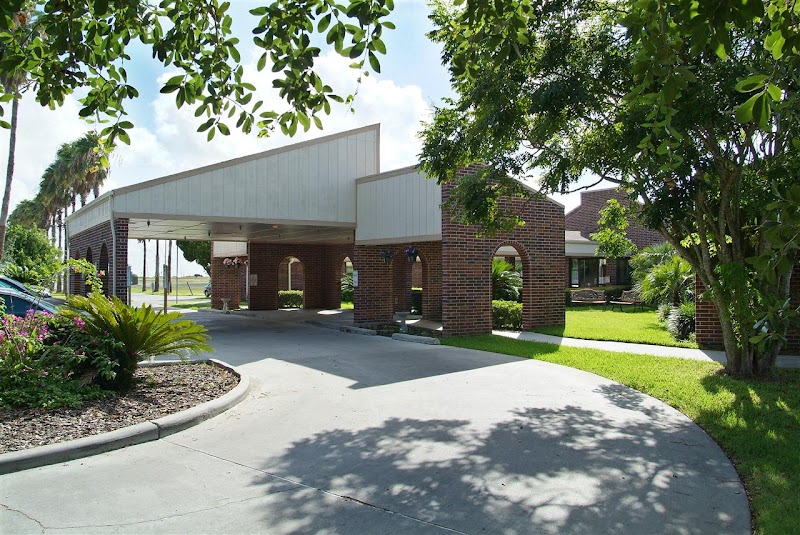

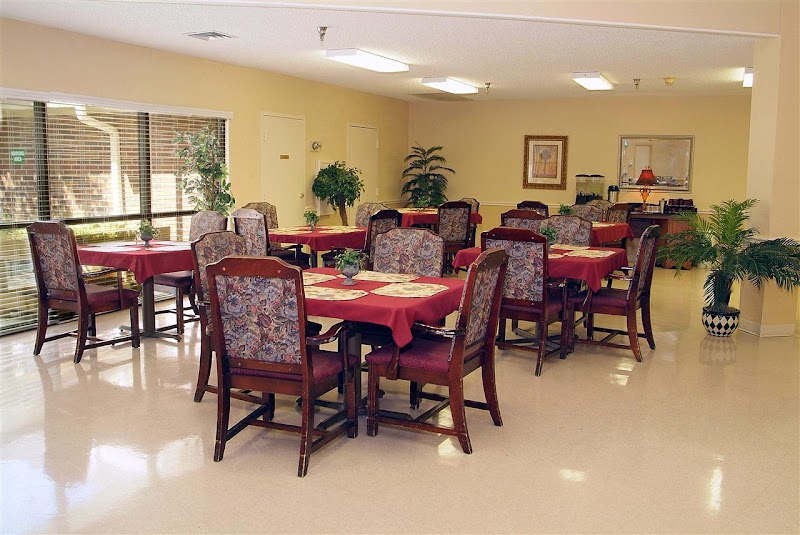
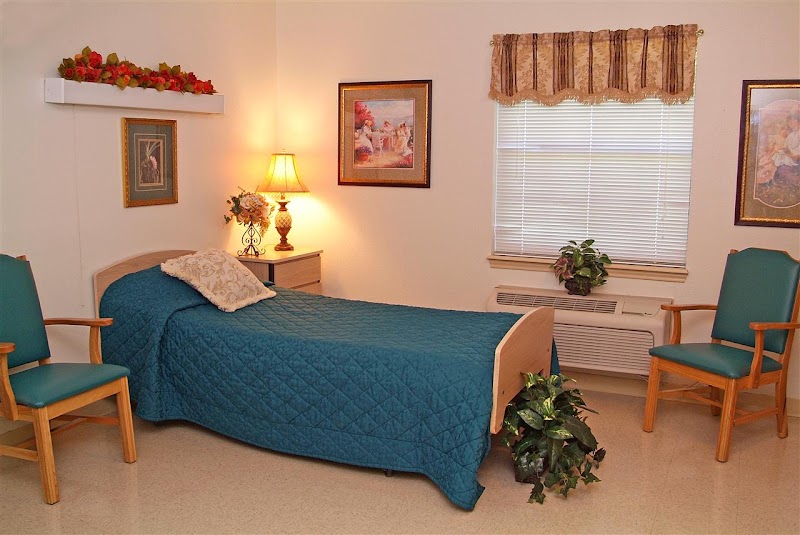
PALMA REAL

1220 LOOP 459, MATHIS, TX 78368 (361) 547-3318
For profit - Corporation 90 Beds CANTEX CONTINUING CARE Data: November 2025
Trust Grade
90/100
#104 of 1168 in TX
Last Inspection: April 2025

Within standard 12-15 month inspection cycle. Federal law requires annual inspections.

Overview

Palma Real in Mathis, Texas, has received a Trust Grade of A, indicating it is an excellent facility that is highly recommended. It ranks #104 out of 1,168 nursing homes in Texas, placing it in the top half, and is #1 out of 2 in San Patricio County, meaning it is the best option locally. However, the facility is experiencing a worsening trend, with the number of issues increasing from 4 in 2024 to 5 in 2025. Staffing is a concern, with a below-average rating of 2 out of 5 stars, although the turnover rate is 38%, which is better than the state average. Notably, the facility had no fines, which is a positive sign. However, there are several concerning incidents, such as improper food handling and medication administration errors, which could put residents at risk. Overall, while Palma Real has strengths, including good health inspections and quality measures, families should be aware of its staffing issues and recent compliance failures.

Trust Score
A
90/100
In Texas
#104/1168
Top 8%
Safety Record
Low Risk
No red flags
Inspections
Getting Worse
4 → 5 violations
Staff Stability
○ Average
38% turnover. Near Texas's 48% average. Typical for the industry.
Penalties
✓ Good
No fines on record. Clean compliance history, better than most Texas facilities.
Skilled Nurses
⚠ Watch
Each resident gets only 19 minutes of Registered Nurse (RN) attention daily — below average for Texas. Fewer RN minutes means fewer trained eyes watching for problems.
Violations
⚠ Watch
12 deficiencies on record. Higher than average. Multiple issues found across inspections.
★★★★★
5.0
Overall Rating
★★☆☆☆
2.0
Staff Levels
★★★★★
5.0
Care Quality
★★★★☆
4.0
Inspection Score
Stable
2024: 4 issues
2025: 5 issues

The Good

  • 5-Star Quality Measures · Strong clinical quality outcomes
  • Full Sprinkler Coverage · Fire safety systems throughout facility
  • No fines on record
  • Staff turnover below average (38%)

    10 points below Texas average of 48%

Facility shows strength in quality measures, fire safety.

The Bad

Staff Turnover: 38%

Near Texas avg (46%)

Typical for the industry

Chain: CANTEX CONTINUING CARE

Part of a multi-facility chain

Ask about local staffing decisions and management

The Ugly 12 deficiencies on record

Apr 2025 5 deficiencies
CONCERN (D) 📢 Someone Reported This

A family member, employee, or ombudsman was alarmed enough to file a formal complaint

Potential for Harm - no one hurt, but risky conditions existed

Deficiency F0561 (Tag F0561)

Could have caused harm · This affected 1 resident

**NOTE- TERMS IN BRACKETS HAVE BEEN EDITED TO PROTECT CONFIDENTIALITY** Based on observation, interview and record review, the facility failed to promote and facilitate resident self-determination thr...

Read full inspector narrative →
**NOTE- TERMS IN BRACKETS HAVE BEEN EDITED TO PROTECT CONFIDENTIALITY** Based on observation, interview and record review, the facility failed to promote and facilitate resident self-determination through support of resident choice, including but not limited to the right to make choices about aspects of his or her life in the facility that were significant tothe resident for one (1) of ten (10) residents reviewed for self-determination. (Resident #4) Resident #4 was not given the choice to drink sodas or eat candy sent to her as gifts from family. Staff were stored candy, and sodas in an office and was not given access to items when she wanted to consume them. The gifts were held without permission from Family Member #A who had power of attorney over her. This failure could place all residents dependent on staff, at risk of their needs and preferences not being met by the facility. Findings included: Record review of Resident #4's Face Sheet dated 04/16/25 reflected a [AGE] year-old female admitted [DATE] with diagnoses of Chronic obstructive pulmonary disease, Dementia, major depressive disorder, heart failure, osteoarthritis, essential hypertension, and pneumonia. Record review of Resident #4's quarterly MDS dated [DATE] reflected a BIMS score of 04 indicating the resident was severely cognitively impacted. Review of Section G, Functional Status reflected for eating, Resident #4 was able to feed herself with assistance of tray set up by staff. Record review or Resident #4's Care Plan revealed Resident #4 needs minimal help of feed herself. Resident #4 is dependent on staff for activities of daily living needs substantial to maximal assistance in areas. Resident# 4 needed help to be transfered from wheelchair to bed or bathroom. Resident #4 is encouraged to join activities daily with other residents. Review of Resident #1's Physician Progress Notes dated 02/01/25 revealed the following: NAS diet(No salt added excludes salt during cooking and preparation, and restricts certain foods), Ground Texture regular/ thin consistency Record review of resident #4's April 2025 Physician Orders revealed no diabetes diagnosis or food restrictions. Review of Resident #4's weight record revealed a 3.0% weight gain from 04/04/25. In observation on 04/15/25 at 9:30 AM Resident #4 revealed she had no candy or snacksin her room. Four sodas were in a bottom drawer in her night stand. The gifts of lotions were on her night and the satin pillow cases were not on her pillows. In an interview on 04/15/25 at 1:58 with Resident #4's Family Member #A, she said sent Resident#4 a gift to the facility for the resident's birthday, Family Member #A claimed she called the facility and found out the gift she send her was not given her mother and was held back due to a request from another family member. Family Member #B, requested the gift be held until she arrived in March. Family Member #A called the facility and found out from a staff member Residen t#4's candy was being held in one of the staff offices. Family Member #A also sent a Valentines gift with several hygiene items, and she also found out some of the items were held. Family Member #A claimed she had sent her some hair products, satin pillowcases, and candy. She was told that the candy was being held by Social Worker and Activities Directors office and her lotions were at the nurse's desk. Family Memeber #A was upset as she felt that her mother had no access to her treats, she had sent her and did not understand why they treats were being kept from her as she has no diet restrictions. In an interview on 04/16/2025 at 1:30pm Resident #4 stated that she did not have any of the candy or sodas her daughter had sent her. The resident stated she could not recall any other gifts other than her birthday gifts and did not get all her gifts from staff. The resident could not recall where her satin pillow cases were located as they were not on her pillows. In an interview on 04/16/25 at 2:05 CNA A she stated the satin pillowcases given to the resident as gifts were with laundry services to be washed . CNA A stated the resident has sodas in her nightstand drawer so that only she had access to them. CNA A remembered the gifts and soda but did not remember the resident having any candy in her room. In an interview on 04/16/25 at 4:01 pm with Business Office Manager she stated the mail is brought to the business office and then it is distributed to the residents unopened. The business office manger stated she had spoken with Family Member #B and was told to hold Resident #4's gift till she arrived in March. She stated Family Member #B goes often to see the Resident #4 so she did what was asked of her.The Business Office Manger stated family #A found out and asked for the gifts to be given to Resident #4 immediately. She stated the package was taken by the Activities Director and the Social Worker and was to be given to the resident. In an interview on 04/16/25 at 4:22pm with social worker she stated the gift was received in January and Family Member #B had asked staff to hold the gift till she arrived in March. Family Member #B oversees the resident's finances but Family Member #A has Power of Attorney over Resident #4. The social worker stated she and the activities director opened the gift so that the items could be inventoried and kept as the resident had plenty of candy and sodas already. When Family Member # A found out the gifts were kept from Resident #4, she ask to speak to the activities director or social worker to see why the gift were held from her. The activities direct took the gift to resident#4 and video chatted with Family Member #A to show Resident#4 opening the birthday gifts but the candies were kept in the office. The Social Woker stated the activities director used the candies from the birthday and Valentine's gifts as an incentive to motivate the resident to be more involved in activities around the facility. The social worker stated Family Member #A was sending large amounts of candy and soda that is why it was kept in the office. Review of the facility's Statement of Resident's Rights dated August 2022 reflected the resident is to be supported by the facility in exercising his or her rights
CONCERN (D)

Potential for Harm - no one hurt, but risky conditions existed

Deficiency F0645 (Tag F0645)

Could have caused harm · This affected 1 resident

**NOTE- TERMS IN BRACKETS HAVE BEEN EDITED TO PROTECT CONFIDENTIALITY** Based on interviews and record reviews, the facility failed to ensure a PASRR evaluation was completed on newly admitted residen...

Read full inspector narrative →
**NOTE- TERMS IN BRACKETS HAVE BEEN EDITED TO PROTECT CONFIDENTIALITY** Based on interviews and record reviews, the facility failed to ensure a PASRR evaluation was completed on newly admitted residents prior to admission or after admission for 1 (Resident #48) of 5 residents reviewed for PASRR screenings. The facility failed to ensure Resident #48's PASRR L1 screening dated 12/10/24 accurately reflected his diagnoses of mental illness. There was no evidence that Resident #48 was referred to a Level 2 PASRR Screening and Evaluation. This failure could affect residents by placing them at risk for not receiving needed treatments and services. Findings included: Record review of Resident #48's face sheet revealed a [AGE] year-old male with an admission date of 01/22/25 and original and initial admission dates of 12/11/24. Diagnoses included major depressive disorder, recurrent, severe with psychotic symptoms, and mood (affective) disorder dated 12/13/24, unspecified dementia with mood disturbance dated 12/16/24. Record review of Resident #48's quarterly MDS report 03/17/25 revealed a BIMS score of 8 indicating moderate cognitive impairment. He was dependent on staff for all transfers. He required substantial assistance with toileting, lower body dressing, and footwear, moderate assistance with showering and positioning, supervision with upper body dressing and personal hygiene, and set-up with oral hygiene and eating. He utilized a wheelchair and could self-propel short distances. He was always incontinent of bladder and bowel. Record review of Resident #48's PL1 from a local hospital dated 12/10/24 was negative for MI (mental illness), ID (intellectual disability), and DD (developmental disability). There were no other PL1 screenings for Resident #48. Record review of Resident #48's Care Plan dated 12/11/24 revealed he was at risk for Activity Intolerance r/t major depressive disorder, severe with psychotic symptoms, and mood disorder Date Initiated: 12/16/2024 Revision on: 02/15/2025. He was at risk for Impaired Social Interaction r/t major depressive disorder, severe with psychotic symptoms, mood disorder Date Initiated: 12/16/2024 Revision on: 02/15/2025. He had a behavior problem of being accusatory r/t major depressive disorder, severe with psychotic symptoms, mood disorder. He places himself on the floor and crawls to the doorway or hallway Date Initiated: 12/13/2024 Revision on: 02/15/2025. He used anti-anxiety medications (Ativan) r/t Adjustment issues, Anxiety disorder Date Initiated: 12/16/2024 Revision on: 02/15/2025. He used psychotropic medications Ativan, Depakote, Fluoxetine r/t Mood disorder, anxiety, and mood disturbance Date Initiated: 12/13/2024 Revision on: 02/15/2025. He had a mood problem r/t Disease Process Major depressive disorder with psychotic features; yells and curses, removes clothing and presents himself naked to others, accusatory, places self on floor, and crawls on floor. Date Initiated: 12/13/2024 Revision on: 02/15/2025. Record review of Resident #48's mental health warrant dated 01/09/25 revealed he was transferred to a local psyche facility for assessment due to exposing himself to staff and did not have the urgency to cover up when visitors came including children. He yelled at staff and threw his briefs on the floor. He used his bed to urinate and defecated on and refused to leave his briefs on. He was verbally aggressive with staff and had no regard to other residents. He was combative with care and at times would not allow care. He threatened to leave (the facility) and kill himself by throwing himself out of the window. He was impulsive, refused medication, and tried to hit staff. The document was signed by the SW Returned 01/22/25 with no med changes and no new diagnoses. In an interview with the MDS on 04/17/25 at 2:15 pm revealed Resident #48 was admitted from a local hospital on [DATE] with a negative PL1. She said they (the facility) submitted what the local hospitals provided. She said a Form 1012; Mental Illness/Dementia Resident Review (used to assist nursing facilities in determining whether a resident with a negative PASRR Level 1 Screening form needs further evaluation for mental illness, or when an individual's diagnosis was changed) should have been sent for Resident #48 because his diagnoses included major depressive disorder, recurrent, severe with psychotic symptoms, and mood (affective) disorder dated 12/13/24. She said she just missed it. The MDS said she would submit a Form 1012 today. She said a Form 1012 was for when a resident had a negative PL1 needed further evaluation for mental illness or if the diagnosis changed. In an interview with the SW on 04/17/25 at 2:18 pm, she said she just was not thinking about PASRR when everything was going on with him at the time she submitted a mental health warrant on Resident #48. She said the IDT worked as a group when a resident's behaviors were getting to be a problem. The SW said per protocol, if the resident was in the hospital within 30 days of their most recent admission date, they would not re-submit. She said the guideline did not specify if the PL1 should be resubmitted if there was a change within those 30 days. In an interview with the DON on 04/17/25 at 2:22 pm, she said Resident #48 was seen by psyche on 12/13/24. She said he returned from the local psyche hospital on [DATE]. She said there was no PL1 reinitiated as a positive after his return. Record review of the facility policy dated November 2016, titled, Patient Care Management System revealed under 7. Any specialized services or specialized rehabilitative services the nursing facility will provide as a result of PASRR recommendations. If a facility disagrees with the findings of the PASRR, it must indicate its rationale in the resident's medical record.
CONCERN (D)

Potential for Harm - no one hurt, but risky conditions existed

Pressure Ulcer Prevention (Tag F0686)

Could have caused harm · This affected 1 resident

**NOTE- TERMS IN BRACKETS HAVE BEEN EDITED TO PROTECT CONFIDENTIALITY** Based on observations, interviews, and record reviews the facility failed to ensure residents who entered the facility received ...

Read full inspector narrative →
**NOTE- TERMS IN BRACKETS HAVE BEEN EDITED TO PROTECT CONFIDENTIALITY** Based on observations, interviews, and record reviews the facility failed to ensure residents who entered the facility received care and treatment consistent with professional standards of practice to prevent pressure ulcers and a resident with pressure ulcers receives necessary treatment and service to promote healing and/or prevent further development of skin breakdown or pressure ulcers, for two (Resident #214 and Resident#50) of two residents reviewed for prevention and maintenance of pressure ulcers. The facility failed to ensure Resident #214 and Resident #50, who were identified as at risk of developing pressure ulcers, received necessary treatment and services thru proper use of low air loss air mattresses, which was chosen as prophylaxis to prevent the development of or worsening of pressure ulcers. This failure could place residents at risk of developing pressure ulcers for worsening of existing pressure ulcers. The findings included: Record review of Resident #214's Face Sheet dated 04/15/2025 documented a [AGE] year-old male admitted to the facility on [DATE] with a diagnoses of Sepsis, and history of traumatic brain injury. Record review of Resident #214's five-day MDS assessment dated [DATE] indicated Resident #214 -Had Indwelling catheter, genitourinary obstructive uropathy(a blockage in ther urinary track, occurs whe urine flow is impeded leading to urine backflowand potential kidney damage), malnutrition, respiratory failure, oxygen therapy, suctioning as needed Bipap/CPAP(Bilevel Positive Airway machine is a device that helps people breathe by providing air at different pressure levels when inhaling and exhailing /continuous positvie airway pressure a device used to treat sleep apnea and other breathing disorders by delivering a constan flow of pressureized air though a mask) -Was totally dependent for bed mobility, transfers, toilet use, and bathing -Was always incontinent or urine and bowel - Had one pressure ulcer at admission in the Coccyx area(located at the bottom of the spine, just below the sacrum) and was at risk of developing additional pressure ulcers -Skin/Ulcer Treatment: pressure reduce device for bed Record review of Resident #214's Consolidated April 2025 Care Plan indicated Pressure Ulcer Prevention Assess for appropriate footwear Date Initiated 04/11/2025. Barrier Cream Date Initiated 04/11/2025 Revision on 04/11/202; 5 Encourage out of bed Date Initiated 04/11/2025. Revision on 04/11/2025; Encourage to float heels as tolerated Date Initiated 04/11/2025 Revision on 04/11/2025. Pressure Redistribution Mattress Date Initiated: 04/11/2025 Revision on 04/11/2025; Therapy disciplines to screen, evaluate, and treat as indicated; Turn and reposition q 2 hours and as needed. Keep body in good alignment Date Initiated: 04/11/2025 Revision on: 04/11/2025; Use suspension devices, pillows, and/or wedges to reduce pressure on heels and boney prominences Date Initiated: 04/11/2025 Revision on 04/11/2025. Record review of Resident #214's April 2025 Physician Orders indicated air mattress ordered 04/13/2025. Record review of Resident #214's April 2025 weight log indicated Resident #214 was 139 pounds. Record Review of -Resident #214's Wound Assessment Report dated 04/11/2025 indicated: -Wound Type: Pressure Ulcer -Wound Location: Coccyx: unstageable (Full-thickness skin and tissue loss in which the extent of tissue damage within the ulcer cannot be confirmed because it is obscured by slough or eschar) -Date Wound Identified: 04/11/25, present at admission -Drainage: Exudate moderate (serous clear watery fluid, which is separated from solid elements) -Measurement = Length 8.5cm, Width 8.5 cm, depth-0 -Wound Bed: Epithelial Tissue: Boggy (tissue or area this is soft, spongy, and may feel wet to touch) -Wound Edges: Attached edges appears flush with wound bed or as a sloping edge -Surrounding Skin: Erythema (redness of the skin may be intense bright red to dark red or purple) -Fragile: skin that is at risk for breakdown Record review of Resident #214's Skin-Acute Care Plan dated 04/20/2025 documented Pressure Ulcer: unstageable Coccyx related to accident, decreased mobility, incontinence, friction/shear .Approach: Pressure relief device: Air Mattress; Reposition every two hours; Treatment as ordered . In an interview on 04/17/25 at 02:33 PM LVN A stated she was taking care of Resident #214 on Monday, 04/14/2025 and on Tuesday, 04/15/25. LVN A recalled Monday, 04/14/2025 going into his room reviewed all mattress control settings but could not recall what settings the bed was on. LVN A stated she took care of Resident #214 on Tuesday, 04/15/2025 but could not recall checking his bed settings on that day. LVN A stated she was trained on the air mattress on Friday, 04/11/25 when the mattress was set up. She stated not having the correct weight on the settings could cause a breakdown of the skin. Observation of Resident #214 on 04/15/25 at 9:06 AM revealed the resident was lying in bed on his back in 30-degree angle and was asleep. The bed had indicated Medline air mattress, and the pressure was set at max 400lbs. Record review of Resident #214's Change in Condition Report dated 04/15/25 documented Skin Status Evaluation noted a change in the condition of the residents skin pressure ulcer. New onset Grade 2 or higher-pressure ulcer/injury, or progression of pressure of ulcer/injury despite interventions. Unstageable pressure ulcer presents to Coccyx area wound bed exhibiting slough. And is unstageable due to necrotic(black/dead) tissue. Care Plan stated refer to specalized practioner for specialized treatment. Interview with the DON on 04/15/25 at 4:00 PM revealed she stated she was aware Resident #214 had a current pressure ulcer and was in use of a low air loss air mattress. The DON said Resident #214's mattress pump should be set at the correct setting according to the resident's weight. The DON said each nurse caring for the R #214, as well as the Treatment Nurse, should be checking the low air loss mattress and pumps at the beginning of and throughout their shift for correct settings as per the physician orders and or manufacturer instructions. The DON said the all staff in contact with the resident are responsible for ensuring and implementing these practices. The DON said the purpose of the low air loss mattress was to prevent and treat pressure injuries. The DON said if the mattress was set over R #214's weight, the mattress was too firm placing the resident at risk for pressure injury worsening or possibly acquiring a new pressure injury. The DON stated the resident was admitted with the pressure ulcer staged at unstagable and a diagnosis of sepsis the resident was admitted to hospital for wound debribment Review of the undated Medline Supra CXC Low Air Loss and Alternating Pressure Mattress Manufacturer Recommendations documented .Use for prevention and stage1 through 4 pressure ulcers; pump alarms to indicate low pressure, Adjustable to patients' weight for customized therapy, 300lb weight capacity .Directions for Use: .Pressure adjust knob controls the air pressure output. When turning clockwise the output pressure will increase. [NAME] versa for decreasing air pressure. Please consult your physician for a suitable setting . 2. Record review of Resident #50's Face Sheet dated 04/15/2025 documented a [AGE] year-old female initially admitted to the facility on [DATE] and readmitted [DATE] with diagnoses of Alzheimer's disease unspecified, other amnesia, pain unspecified, restlessness and agitation, repeated falls, and history of falling. Record review of resident #50s quarterly MDS assessment dated [DATE] indicated Resident #50 -Had a Brief Interview of Mental Status of 01 (severe cognitive impairment) -Was totally dependent for bed mobility, transfers, toilet use, and bathing -Was at risk of developing pressure ulcers but does not have any pressure ulcers -Skin/Ulcer Treatment: pressure reduce device for bed and chair . Record review of #50's care plan revealed o Potential for Impaired Skin Integrity as evidenced by Braden Scale for Predicting Pressure Ulcer Risk High Risk for Pressure Ulcer Initiated on 04/15/2025. Educate resident and representative about the proper usage of pressure reducing devices Date Initiated: 04/15/2025. Evaluate skin integrity. Initiated on 04/15/2025. Low Air Mattress initiate on 04/15/2025. Record review of #50 physician's orders dated 04/15/25 revealed resident is to have weekly head to toe skin assessments and a low air loss mattress to be checked for proper functioning. Observation of Resident #50 on 04/15/25 at 9:10 AM revealed the air mattress was set at 350lbs on her proactive mattress. In an interview with LVN #B on 04/17/25 at 9:54 AM she stated the air mattress for resident #50 was a preventive measure as she had pressure ulcers in the past. LVN#B stated she incorrect setting on the air mattress can contribute to a pressure ulcer getting worse. LVN B also stated if a resident is on preventive measure the incorrect setting can create new ulcers for the resident if the resident is at high risk for pressure ulcers. LVN she received training for air mattress settings about a week ago. Interview with the DON on 04/15/25 at 4:00 PM revealed she stated she was aware Resident #214 had a current pressure ulcer and was in use of a low air loss air mattress. The DON said R #214s mattress pump should be set at the correct setting according to the resident's weight. The DON said each nurse caring for the R #214, as well as the Treatment Nurse, should be checking the low air loss mattress and pumps at the beginning of and throughout their shift for correct settings as per the physician orders and or manufacturer instructions. The DON said the all staff in contact with the resident are responsible for ensuring and implementing these practices. The DON said the purpose of the low air loss mattress was to prevent and treat pressure injuries. The DON said if the mattress was set over R #214's weight, the mattress was too firm placing the resident at risk for pressure injury worsening or possibly acquiring a new pressure injury. Review of the undated Proactive Protekt Aire 6000 Pressure and Low-Air-Loss Therapy Mattress Replacement Systems Manufacturer's Instructions documented .Caution: Please cover the mattress with a cotton sheet to avoid direct skin contact and for the patient's comfort, Users can adjust the pressure level of the air mattress to a desired firmness by themselves or according to the suggestions from a health care professional. It is recommended to press Auto Firm on the panel when the mattress is first inflated. User can the easily adjust the air mattress to a desired firmness according to the patient's weight and comfort.
CONCERN (D)

Potential for Harm - no one hurt, but risky conditions existed

Medical Records (Tag F0842)

Could have caused harm · This affected 1 resident

**NOTE- TERMS IN BRACKETS HAVE BEEN EDITED TO PROTECT CONFIDENTIALITY** Based on interviews and record review, the facility failed to maintain clinical records on each resident that were complete and ...

Read full inspector narrative →
**NOTE- TERMS IN BRACKETS HAVE BEEN EDITED TO PROTECT CONFIDENTIALITY** Based on interviews and record review, the facility failed to maintain clinical records on each resident that were complete and accurately documented in accordance with accepted professional standards and practices for 3 (Residenst #30, #34, and #55) of 4 residents reviewed for accuracy and completeness of clinical records. The facility failed to obtain and/or revise advanced directive orders for Residents #30, #34, and #55. This deficient practice could affect residents who require care and monitoring and place them at risk of receiving or not receiving advanced directives to meet their needs. The findings were: 1.Record review of Resident #30's face sheet revealed a [AGE] year-old female with an admission date of [DATE] and initial and original admission dates of [DATE]. Diagnoses included Diabetes, stroke with subsequent weakness on both sides and speech deficit, heart disease, depression, kidney failure, morbid obesity, schizophrenia, psychosis, impaired vision, and anxiety. Record review of Resident #30's quarterly MDS dated [DATE] revealed a BIMS score of 13 indicating intact cognition. She was independent with eating, required moderate assistance with upper body dressing, rolling left and right, sitting up, chair to bed transfers, and personal hygiene. She required substantial assistance with oral hygiene, toileting, and lower body dressing. She utilized a motorized wheelchair, was frequently incontinent of bladder and occasionally incontinent of bowel. Record review of Resident #30's care plan dated [DATE] revealed Resident #30 requested Code Status of: Full Code (perform CPR-cardiopulmonary resuscitation) Date Initiated: [DATE] Revision on: [DATE]. Record review of Resident #30's active physician orders revealed no code status ordered. There was no code status in her order summary or on her profile page. In an interview with the DON on [DATE] at 1:47 pm, she said Resident #30 did not have Advanced Directives for resident #30 and did not know how it could have happened because the care plans pulled from the physician orders. She said the facility transitioned to their electronic health record system starting on [DATE] and had been refining it ever since. She said advanced directives were reviewed on admission, during a care coordination meeting on ([DATE]) after admission, as needed, significant changes or a care plan meeting. She said the nurse managers reviewed the orders and the SW reviewed the code statuses of all new admissions and care plans and significant changes. She said the SW entered and inputs the advanced directive orders-she just missed it. The DON said she was responsible for overseeing accuracy and completion. She said she missed it too. She could not say how often advanced directives were reviewed. 2.Record review of Resident #34's face sheet revealed an [AGE] year-old female with an admission date of [DATE]. Diagnoses included respiratory failure, dementia, high blood pressure, and heart failure. Record review of Resident #34's admission MDS dated [DATE] revealed a BIMS score of 09, indicating moderate cognitive impairment. She required supervision with eating, oral hygiene, and positioning in bed. She required moderate assistance with sitting up, lying down, and upper body dressing. She required substantial assistance with all other ADL's including transferring and mobility via wheelchair. She was always incontinent of bladder and bowel. Record review of Resident #34's care plan dated [DATE] revealed Resident #34 requested Code Status of: Full Code Date Initiated: [DATE] Revision on: [DATE]. Record review of Resident #34's active physician orders revealed no code status ordered. There was no code status in her order summary or on her profile page. In an interview with the DON on [DATE] at 1:47 pm, she said Resident #34 did not have Advanced Directives and did not know how it could have happened because the care plans pulled from the physician orders. She said the facility transitioned to their electronic health record system starting on [DATE] and had been refining it ever since. She said advanced directives were reviewed on admission, during a care coordination meetings, after admission, as needed, significant changes or a care plan meeting. She said it was on her admission assessment dated [DATE] (confirmed). She said the nurse managers reviewed the orders and the SW reviewed the code statuses of all new admissions and care plans and significant changes. She said the SW entered and inputs the advanced directive orders-she just missed it. The DON said she was responsible for overseeing accuracy and completion. She said she missed it too. She could not say how often advanced directives were reviewed. 3.Record review of Resident #55's face sheet revealed a [AGE] year-old female with an admission date of [DATE] and original and initial dates of [DATE]. Diagnoses included obesity, stroke with subsequent inability to speak or swallow, anoxic (lack of oxygen) brain damage, gastrostomy tube, depression, anxiety, high blood pressure, heart failure, liver failure, convulsions (seizures), and history of sudden cardiac arrest. Record review of Resident #55's initial admission MDS dated [DATE] revealed a BIMS score of 00 indicating severe cognitive impairment. She was dependent on staff for all ADL's and required a mechanical lift for transfers. She could sit in a wheelchair but could not propel one. She was always incontinent of bladder and bowel. Record review of Resident #55's care plan dated [DATE] revealed Full Code dated initiated [DATE] and revised on [DATE]. Record review of Resident #55's active physician orders revealed no code status ordered. There was no code status in her order summary or on her profile page. In an interview with the DON on [DATE] at 2:27 pm, she said Resident #55's advanced directives were not on her profile. She said it was not in the physician orders. She said her Care plan coded her as a full code. She said it was missed by the SW and by reviewers including herself. She said if there was not a code status in the system, the resident would be a full code, even if their wishes were to be a DNR (Do Not Resuscitate). She said staff knew the resident's code status by looking at their profile or the physician's orders. She said Resident #55 did not have a code status ordered, so she would be a full code. She said every nurse that had seen her chart would have seen there was no code status, and no one brought it to her attention so she could have fixed it much sooner. She said the SW could input orders, but the nurses had to confirm the orders. In an interview with the SW on [DATE] at 3:39 pm, she said her role in advanced directives was to make sure they were in the charts and to ask the residents if they want to be DNR or Full Code. She said the nurses do it on the weekends. She said she thought she put Resident #55's advanced directive in her chart but she just missed it. She said the outcome could be that if something happened, there would be a lot of chaos. She said advanced directives defaulted to Full Code. She said if Resident #55 was a DNR, she would have gotten CPR against her and her family's will. She said there were a lot of people that saw that but did not make anyone aware. She said it was her responsibility. She said she must have missed Resident #30 and Resident #34's as well. Record review of the facility policy dated [DATE], titled, Advanced Directives revealed under #1. An Acknowledgement Receipt for Advance Directives/Medical Treatment Decisions must be completed for each Patient upon admission and upon any change in the status of the Patient's Advance Directives. #5. The Advanced Directive report must be reviewed daily for all Patients. The Social Worker or designee must verify the Advance Directive report for accuracy to ensure the clinical record reflects the current advanced directive status and use it to monitor the existence of a DNR.
CONCERN (E)

Potential for Harm - no one hurt, but risky conditions existed

Food Safety (Tag F0812)

Could have caused harm · This affected multiple residents

Based on observation, interviews and record review, the facility failed to store, prepare, distribute, and serve food in accordance with professional standards for food service safety for 1 of 1 kitch...

Read full inspector narrative →
Based on observation, interviews and record review, the facility failed to store, prepare, distribute, and serve food in accordance with professional standards for food service safety for 1 of 1 kitchen reviewed for storage, preparation and sanitation. 1. The facility failed to ensure non-stick pans were not missing the coating. The facility failed to ensure coffee cups and bowls were clean. The facility failed to ensure product were 18 inches from the ceiling in the walk-in refrigerator and freezer. The facility failed to ensure spices were not open to air. The facility failed to ensure the walk-in freezer did not have ice accumulation inside of it. The facility failed to ensure the FSM appropriately followed infection control practices when the FSM grabbed the top of resident dessert cups by top rims with bare hands, while passing out meal trays to 5 of 24 residents in the dining room during lunch on 04/15/25. 2. The facility failed to ensure the FSM appropriately followed infection control practices when the FSM grabbed the top of resident dessert cups by top rims with bare hands, while passing out meal trays to 5 of 24 residents in the dining room during lunch on 04/15/25. These failures could place residents who received meals and/or snacks from the kitchen and satellite kitchens at risk for food contamination and food borne illness. Findings included: 1. During the initial tour and observation of the kitchen on 04/15/25 at 8:35 am revealed 4 non-stick type pans with flaking and scrape marks in the coating. There were 58 of 58 coffee cups that were stained and scratched. There were 4 of 12 plastic bowls with what appeared to be hardened food substance on and in them. The dirty cups and bowls were on the clean rack. There were 10 of 19, 21-ounce containers of spices that were open to air. There were 5 boxes of product and 11, 1-gallon containers in the walk-in refrigerator that were stacked less than 6 inches from the ceiling. There were 7 boxes of product in the walk-in freezer that were stacked less than 6 inches from the ceiling. There was ice accumulation behind the fan/condenser and ice droplets on the ceiling of the walk-in freezer. In an interview with the FSM on 04/15/25 at 8:35 am, she said she had worked in her position at the facility for 2 years. She said the non-stick pans became bare of the coating due to wear and tear. She said the kitchen staff used metal utensils in the non-stick pans because they were not allowed to use plastic because plastic chipped off. She said she was trained that way by the former dietary manager two years ago. She said she followed rules, wrong or right. She said it was not right to have used metal utensils in non-stick pans. She said the right thing to do was to use plastic or rubber utensils in the non-stick pans because that kind of material would not scratch or harm the coating. She said the non-stick pans would be more expensive to replace than plastic or rubber utensils. She said food got stuck in the non-stick pans when the coating was scratched. She said bacteria could get stuck in the scratches on the non-stick pans, then the bacteria could transfer to the food, which would transfer to the resident's and make them sick. She said she did not know if non-stick coating was toxic, but the chips of it could get into the food and make residents sick. She said she had new cups to replace the stained and scratched cups but had not put them out yet. She said the dirty cups and bowls were on the clean racks and coffee cart that was being used for service. She said she did not know why she had not already removed the stained and scratched cups when she got the new ones. She said all kitchen staff was responsible for making sure dishes were clean before they were used, and she was ultimately responsible. She said she would not want to drink from the dirty coffee cups. She said the dirty bowls looked like they had old oatmeal stuck to them. She said the open spice containers were supposed to be closed at all times to ensure insects, dust, or moisture did not contaminate the contents. She said contaminated spices could change the flavor of the food and make residents sick. She said the boxes in the walk-in refrigerator and freezer were a lot less than18 inches from the ceiling. She said the stacked boxes were a fire safety hazard because they blocked the sprinklers. She said the ice droplets on the ceiling of the walk-in freezer were because it was in defrost mode. She said she knew about the ice build-up behind the fan in the walk-in freezer because she broke it (the ice) off whenever she cleaned the walk-in freezer. She said it (the ice build-up) was always like that. She said she had not notified the MS about the ice build-up in the walk-in freezer. She said the process for reporting kitchen needs was for her to tell the MS verbally. Observation and interview with the FSM and RD during dining services on 04/15/25 at 12:46 pm revealed 4 of the dirty cups had been used for service and drank from by some of the residents (unknown). The FSM said she did not know why the cups were on the resident's table and they had definitely been used. The RD said the dirty cups on the table should never have been used due to cross contamination and because of the potential to make resident's sick. During an observation of dining on 04/15/25 at 12:51 PM the FSM was observed grabbing dessert cups from the top of the lid while she passed out dessert to 5 of 25 residents. In an interview on 04/15/25 at 01:02 PM the FSM stated by grabbing the dessert cups from the lids, it could contaminate the dessert cups and make residents sick through cross contamination. The FSM stated she did not realize she was grabbing the dessert cups from the lid and was just handing them out to residents. The FSM stated she had just told the staff serving not to grab cups from the top only from the bottom. The FSM stated there is no official staff training for serving food to residents in the dining room. In an interview on 04/16/25 at 03:40 PM the DON stated staff should not grab resident dessert cups from the top of the lids due to infection and cross contamination. The DON stated staff should grab the dessert cups from the side or bottom. The DON stated the last infection control in-service was done monthly and all staff are included. The DON stated the facility held a Skilled Fair on 02/5/25, and all staff were required to attend for hands on infection control training. In an interview on 04/17/25 at 11:58 AM the IP stated staff should not be grabbing any cups from the top because they could get their hands in the food and cross contamination could occur. The IP stated staff should be grabbing cups either underneath or on the side to avoid touching the rim of the cup. The IP stated infection control in-services are conducted at least once a month with all staff. In an interview with the MS on 04/17/25 at 3:53 pm, he said he worked at the facility for 11 years. He said the process of getting kitchen repairs done was for the FSM to tell him verbally. He said there were no logs or electronic reporting system, just word of mouth. He said he was unaware of the ice build-up on the condenser fan box and ceiling of the walk-in freezer. He said he had seen boxes stacked in the walk-ins within a foot of the ceiling. He said stacking boxes within 6 inches of the ceiling in the walk-ins was a no-no. He said boxes stacked that high could cause a fire safety hazard by blocking the sprinklers should there be a fire. He said the boxes and containers should be only 18 inches from the ceiling. He said he never said anything to the FSM or kitchen staff or in-serviced them about the potential fire safety hazard. He said there was no way to track repairs because there were no logs for any repairs other than maybe emails. 2. During an observation of dining on 04/15/25 at 12:51 PM the FSM was observed grabbing dessert cups from the top of the lid while she passed out dessert to 5 of 25 residents. In an interview on 04/15/25 at 01:02 PM the FSM stated by grabbing the dessert cups from the lids, it could contaminate the dessert cups and make residents sick through cross contamination. The FSM stated she did not realize she was grabbing the dessert cups from the lid and was just handing them out to residents. The FSM stated she had just told the staff serving not to grab cups from the top only from the bottom. The FSM stated there is no official staff training for serving food to residents in the dining room. In an interview on 04/16/25 at 03:40 PM the DON stated staff should not grab resident dessert cups from the top of the lids due to infection and cross contamination. The DON stated staff should grab the dessert cups from the side or bottom. The DON stated the last infection control in-service was done monthly and all staff are included. The DON stated the facility held a Skilled Fair on 02/5/25, and all staff were required to attend for hands on infection control training. In an interview on 04/17/25 at 11:58 AM the IP stated staff should not be grabbing any cups from the top because they could get their hands in the food and cross contamination could occur. The IP stated staff should be grabbing cups either underneath or on the side to avoid touching the rim of the cup. The IP stated infection control in-services are conducted at least once a month with all staff. Record review of kitchen in-services dated 01/03/25 Dish Machine Cleaning, 02/20/25 Grease Fire Guidelines, 02/25/25 Cleaning Schedule, 03/04/25 Time Management/Food Carts, 04/15/25 Stained Cup ware/Bowls. Record review of the facility policy revised 03/19 titled, Food Storage revealed under #4. Plastic containers with tight-fitting covers must be used for storing cereals, cereal products, flour, sugar, dried vegetables, and bulk foods .11. Food is stored a minimum of 8 inches above the floor and 18 inches from the ceiling on clean racks or other clean surfaces .#14. All refrigerator units are kept clean and in good working condition at all times. Record review of facility's Infection Control policy dated February 2025 stated: 1. The facility must establish an infection prevention and control program (IPCP) that must include: a. A system for preventing, identifying, reporting, investigating, and controlling infections and communicable diseases. This applies to all Patients, staff, volunteers, visitors, and other individuals providing services under a contractual arrangement based upon the facility assessment. References: FDA Food Code 2022 Ch. 4-202 Cleanability 4-202.11 Food-Contact Surfaces. (A)Multiuse FOOD-CONTACT SURFACES shall be: (1) Smooth; (2) Free of breaks, open seams, cracks, chips, inclusions, pits, and similar imperfections. Ch. 4-501.11 Good Repair and Proper Adjustment. (A) EQUIPMENT shall be maintained in a state of repair and condition that meets the requirements specified under Parts 4-1 and 4-2. 4-602 Frequency 4-602.11 Equipment Food-Contact Surfaces and Utensils. (A) Equipment food-contact surfaces and utensils shall be cleaned: (5) At any time during the operation when contamination may have occurred. (C) Except as specified in (D) of this section, if used with TIME/TEMPERATURE CONTROL FOR SAFETY FOOD, EQUIPMENT FOOD-CONTACT SURFACES and UTENSILS shall be cleaned throughout the day at least every 4 hours.
Feb 2024 4 deficiencies
CONCERN (D) 📢 Someone Reported This

A family member, employee, or ombudsman was alarmed enough to file a formal complaint

Potential for Harm - no one hurt, but risky conditions existed

Comprehensive Care Plan (Tag F0656)

Could have caused harm · This affected 1 resident

**NOTE- TERMS IN BRACKETS HAVE BEEN EDITED TO PROTECT CONFIDENTIALITY** Based on observations, interviews and record reviews the facility failed to develop and implement a comprehensive person-centere...

Read full inspector narrative →
**NOTE- TERMS IN BRACKETS HAVE BEEN EDITED TO PROTECT CONFIDENTIALITY** Based on observations, interviews and record reviews the facility failed to develop and implement a comprehensive person-centered care plan that includes measurable objectives and time frames to meet a resident's medical and nursing needs to be furnished to attain or maintain the resident's highest practicable physical, mental, and psychosocial well-being for 2 of 8 residents (Resident #4 and #36), reviewed for care plans in that: The facility failed to implement a comprehensive person-centered care plan for Residents #4 and #36 in that: 1) Resident #4's Care Plan dated 02/24/23 failed to indicate her Code status was either DNR or Full Code 2) Resident #36's Care Plan dated 02/20/23 failed to indicate a specific therapeutic diet These deficient practices could place residents in the facility at risk of not being provided with the necessary care or services and implementing personalized plans developed to address their specific needs. The Findings include: 1)Record review of the admission record dated 08/02/19 for Resident #4 revealed Resident #4 was an [AGE] year-old female. Resident #4's diagnoses included epilepsy, pneumonia, heart failure, reflux, moderate protein calorie malnutrition, a history of urinary tract infections, cognitive communication deficit, fainting, a history of falls, COPD, dementia, insomnia, depression, and symptoms and signs concerning food and fluid intake. 1)Record review of Resident # 4's MDS assessment dated [DATE] indicated a BIMS of 4-severe cognitive impairment, required set-up for eating, and was dependent on staff for all other ADL's. Resident # 4's mood was documented as having little/no interest or pleasure in doing things. Resident #4 was to have a mechanically altered diet as well as a therapeutic diet. Record review of Resident # 4's physician orders dated prior to 02/24/23 indicated DNR for Code Status. STATUS: Active (current). Record review of Resident #4's care plan dated 02/24/23 indicated a Code status of DNR with a goal of Code Status will be maintained over the next 90 days or until resident or family desires a change. The interventions included inform staff of FULL CODE STATUS. STATUS: Active (current). 2)Record review of the admission record dated 11/08/20 for Resident #36 revealed Resident #36 had a re-entry date of 10/22/23 and was a [AGE] year-old female. Resident #36's diagnoses included a stroke with right sided weakness, diabetes, high blood pressure, depression, insomnia, dementia, nutritional deficiency, schizoaffective disorder, anxiety, reflux, and was a smoker. Record review of Resident # 36's MDS assessment dated [DATE] indicated Resident #36 was cognitively intact with a BIMS of 15, required set-up for eating and substantial to partial assistance for all other ADL's. The MDS dated [DATE] indicated Resident #36 required a mechanically altered diet. Record review of Resident #36's physician orders revealed a diet for Regular Diet dated 12/23/23 and 03/01/23. The physician orders did not include a regular ground diet, LCS (low concentrated sweets) NSOT (no salt on tray) until 02/20/24. Record review of Resident #36's care plans dated 02/20/23, indicated no care plan for a therapeutic diet. There was an entry dated 08/30/23 for a protein supplement 30ml once daily x 30 days. STATUS: Active (current). There was an entry that indicated Resident #36 had no natural teeth or tooth fragments with an intervention to provide a mechanically altered diet (grind meat) dated 08/30/23 STATUS: Active (current). Record review of Resident #36's Nursing admission assessment dated [DATE] indicated under Nutrition: Own Teeth? With the answer yes, Specialized Diet required? Answer No, Check all that apply-difficulty chewing. Interview on 02/21/24 at 9:03 am with Resident #36 stated she was getting a regular diet and sometimes they chopped it up, but they were not supposed to. Resident #36 stated it was ok with her (that they chopped it) because she has had a dominant side stroke and eating made her tired. Resident #36 stated she wore a bridge in her mouth. Interview on 02/23/24 at 10:22 am with the ADM stated the care plans were a team effort-everyone does their part. they recently did a validation review with the corporation around the end of December to make sure the care plans were complete and accurate. The ADM stated they did education and action plans (PIP=performance improvement plans) for missing a diet, specialty wheelchairs, fall preventions, and others-she stated she could not remember nor could pull up the link from the validation review on her computer. The ADM stated each department was ultimately responsible for care plans and review the care plans weekly. The ADM stated she and the DON were ultimately responsible for the accuracy and timeliness of all care plans. The ADM stated there was always room for improvement and they discussed care plans in their monthly QAPI meetings and care plans were always important. Review of Care Plans, Comprehensive Person-Centered facility Policy revised 03/2022 stated, A comprehensive, person-centered care plan that includes measurable objectives and timetables to meet the resident's physical, psychosocial, and functional needs is developed and implemented for each resident. Policy Interpretation and Implementation: 1. The interdisciplinary team (IDT), in conjunction with the resident and his/her family or legal representative, develops and implements a comprehensive, person-centered care plan for each resident. 3. The care plan interventions are derived from a thorough analysis of the information gathered as part of the comprehensive assessment. 9. Care plan interventions are chosen only after data gathering, proper sequencing of events, careful consideration of the relationship between the resident's problem areas and their causes, and relevant clinical decision making. 10. When possible, interventions address the underlying source(s) of the problem area(s), not just symptoms or triggers. 11. Assessments of residents are ongoing and care plans are revised as information about the residents and the resident's conditions change. 12. The IDT reviews and updates the care plan: a. when there has been a significant change in the resident's condition. b. when the desired outcome is not met. c. when the resident has been re-admitted to the facility from a hospital stay. d. at least quarterly, in conjunction with the required quarterly MDS assessment.
CONCERN (D) 📢 Someone Reported This

A family member, employee, or ombudsman was alarmed enough to file a formal complaint

Potential for Harm - no one hurt, but risky conditions existed

Deficiency F0919 (Tag F0919)

Could have caused harm · This affected 1 resident

**NOTE- TERMS IN BRACKETS HAVE BEEN EDITED TO PROTECT CONFIDENTIALITY** Based on observation, interviews and record review, the facility failed an adequately equipped system allowed residents to call ...

Read full inspector narrative →
**NOTE- TERMS IN BRACKETS HAVE BEEN EDITED TO PROTECT CONFIDENTIALITY** Based on observation, interviews and record review, the facility failed an adequately equipped system allowed residents to call for staff assistance through a communication system for 1 (Resident #45) of 8 residents reviewed for call light button placement. The facility failed to ensure that Resident #45 ' s call light was functioning properly. This failure put residents at risk of not being able to call for assistance when needed. Findings included: Record review of Resident #45 ' s face sheet dated 02/20/2024 revealed he was [AGE] years old and was admitted to the facility on [DATE]. Record review of Resident #45 ' s admission Note dated 02/20/2024 revealed he had diagnoses including dementia, left hip surgery, urinary tract infection/ extended-spectrum beta-lactamase (enzymes or chemical produced by germs that make it harder to treat with antibiotics. It is a type of urinary tract infection). He had memory deficits, contact isolation and was on fall precautions, Record review of Resident #45 ' s baseline care plan dated 02/20/2024 revealed he needed extensive assistance from one person to bathe, for toileting and for walking. He required limited assistance from one person to move around in bed, and to transfer between surfaces. He was at risk of falling, and his call bell was to be in place. He had a cognitive impairment. The level or type of impairment was not specified in the care plan. In observation and interview on 02/20/24 at 09:57 AM, Resident #45 revealed he had been waiting a long time for someone to come to ask them to refill his water jug. He was not able to remember how long he had been waiting. When asked how he called for help he said he pressed the call light, which he then demonstrated. It was observed that the light on the wall (an indicator that the call light had been activated) did not light up, and observation of the light outside Resident #45 ' s room also did not light up. Resident #45 stated that the call light had not worked since the resident was moved to that room on 02/16/2024. In interview and observation on 02/20/2024 at 12:00 PM, C.N.A 1 was observed pressing Resident #45 ' s call light button and pushed the call light cord into the wall, with no change. C.N.A. 1 was observed to push Resident #45 ' s call light button again and went into the hall to see if the light went on. She stated that the call light was not working, and she needed to let the maintenance man know so he could fix it. C.N.A. 1 stated that she did not know that the call light had been broken and the resident rarely used it C.N.A. 1 stated the harms to a call light not working she stated that a resident could get hurt or have a serious accident. In an interview on 02/21/24 at 12:03 PM, the Maintenance Director said he had not heard anything from any of the staff in regard to a call light not functioning. The Maintenance director stated if there was an issue with something not working in a residents room he would correct it immediately. The Maintenance Director stated that the staff will add it to the maintenance log and he will review, fix, then add that it had been resolved. The Maintenance said not having a working call light put the resident at risk of not getting the help she needed. He said when something was broken a note could be put in a notebook at the front of the facility and usually maintenance staff would come down and get it fixed right away. The maintenance director stated that a new room should be checked by Maintenance and Housekeeping Director before a resident was moved in. During an interview on 02/21/24 at 11:10 AM with CNA 2, she stated the risk could be an injury if the residents are not able to use the call light for help. The resident still did not have a functioning call light. When asked how often the call lights should be checked if functioning, she stated every time the staff enters the room. If the call light is broken it is that person's job to go immediately to inform the maintenance and add it to the Work Order book. This interview related to the specific failure because this C.N.A. was working with the resident during the time that the call light was broken and had not noticed that the residents call light was broken or submitted a work order. The resident had a broken call light and it had been broken 02/16/2024 to 02/20/2024. During an interview with the Housekeeping Director on 02/21/24 @ 1:14 PM, she stated that she does not remember filling out those forms Guardian Angel Checklist forms), but that it was her writing, and she must have Just missed it. She state a residents residing in a room with a call light that was not working properly, could result in a resident being seriously hurt or ill because they cannot come out to ask for help like a regular resident at the facility. Record Review of the Maintenance logs from the dates 02/16/2024 to 02/22/2024 : There had not been a work order submitted since 11/2023. Record review of the housekeeping log from 02/26/2024 to 02/22/2024 : There had been forms completed by the Housekeeping Director stating that the room Resident #45 was transferred to for contact isolation was ready and there were no issues with the room. Record review of the facility Call Lights: Accessibility and Timely Response policy dated 02/2023 revealed, The purpose of this policy was to assure the facility was adequately equipped with a call light at each resident's bedside, toilet, and bathing facility to allow residents to call for assistance. All staff will be educated on the proper use of the resident call system, including how the system works and ensuring resident access to the call light. Staff will ensure the call light was within reach of resident and secured, as needed. The call system will be accessible to residents while in their bed or other sleeping accommodations within the resident ' s room.
CONCERN (E) 📢 Someone Reported This

A family member, employee, or ombudsman was alarmed enough to file a formal complaint

Potential for Harm - no one hurt, but risky conditions existed

Food Safety (Tag F0812)

Could have caused harm · This affected multiple residents

Based on observation, interview, and record review, the facility failed to store, prepare, distribute, and serve food in accordance with professional standards for food service safety for 1 of 1 kitch...

Read full inspector narrative →
Based on observation, interview, and record review, the facility failed to store, prepare, distribute, and serve food in accordance with professional standards for food service safety for 1 of 1 kitchen reviewed for sanitation in that: A. Food temperature was not taken prior to serving meal. B. Hot foods were served at an unsafe temperature level. These failures could place residents who eat foods prepared in the kitchen at risk of cross contamination and food-borne illnesses. Findings include: During observation and interview on 02/22/24 at 8:03 AM the Kitchen Aide was plating food. The Kitchen Aide stated no, temperatures had been taken. Further observation of the temperature log revealed , no temperatures were logged in for AM of 2/22/24. The Kitchen Aide took the temperatures of food. Temperatures revealed scrambled eggs temperature of 165 degrees, puree eggs temperature was 167 degrees. The Kitchen Aide stated she was very busy and rushed and that she did not take time to take temperatures. The Kitchen Aide stated that not checking if food was at the correct temperature required could cause food borne illness. Upon the test tray observation on 02/22/24 @ 8:13am, the oatmeal had a temperature of 177 degrees. This temperature was taken by the investigator with the Dietary Manager present. The Dietary manager stated the required temperature of the oatmeal should be at 165 degrees. She stated she did not know why the temperature was much higher. The temperature log for 02/22/24 indicated the oatmeal was logged under cereal and the temperature was documented at 166 degrees. The Dietary Manager stated she did not how the oatmeal was logged at 166 degrees, but the test tray oatmeal had a temperature of 177 degrees, she stated that she did not know how it could be at 177 degrees. During interview on 02/22/24 at 9:02 AM the Dietary Manager stated that food temperatures are required to be taken at serving place before serving. The Dietary Manager stated that this failure could place resident at risk for cross contamination and food borne illness. She stated the Food warmer was set at 135 degrees to preserve temperature. The Dietary Manager stated she oversaw the temperature logs, if not her then, the cook in the morning or evening are trained to check food temperature log. She stated serving a tray with a temperature high could result in a resident being burned or harmed. During interview on 02/23/24 at 2:13 PM the Administrator stated the Dietary Director oversaw that policies are being followed. The Administrator stated staff are trained upon hire and as needed. The Administrator stated these failures could result in dissatisfaction of food served, cross contamination and foodborne illnesses. The Administrator stated she followed up with the Dietary Manager to confirm in-services were completed. Record review of In- Service Training Report Topic: Time/Temperature Control/ Logging Temperatures dated 7/21/22 conducted by Dietary Director and signed by all dietary staff. Record review of policy Food temperature, not dated, revealed 3. Record reading on Food Temperature Chart (form 401) at beginning of tray line and end of tray line. 4. Acceptable serving temperatures are: Eggs, omelets 140 degrees- 155 degrees.
MINOR (B) 📢 Someone Reported This

A family member, employee, or ombudsman was alarmed enough to file a formal complaint

Minor Issue - procedural, no safety impact

Safe Environment (Tag F0921)

Minor procedural issue · This affected multiple residents

Based on observation, interview, and record review, the facility failed to provide a safe, functional, sanitary, and comfortable environment for one of one laundry room reviewed for environment. -The...

Read full inspector narrative →
Based on observation, interview, and record review, the facility failed to provide a safe, functional, sanitary, and comfortable environment for one of one laundry room reviewed for environment. -The facility failed to properly document the deep cleaning tasks that were performed for dates 02/22/24 and 02/23/24. The facility failed to properly document the Lint Collection tasks for dates 02/21/24 and 02/22/24. -The facility failed to properly scrub their hands for at least 20 seconds with soap and water to prevent cross contamination and infection. -The facility failed to properly dispose and maintain the lint accumulation in the facility dryers in a timely manner. This failure could put residents at risk for an unsafe environment. Findings include: Record review of the Laundry Deep Cleaning Chart on 02/23/24 at 11:53 AM indicated that the deep cleaning tasks had not been completed on 02/22/24 or 02/23/24. Record review of the Laundry Lint Trap Log on 02/23/24 at 11:52 AM indicated that the laundry lint trap cleaning had not been documented for the dates of dates 02/20/24 from 06:00 AM through 02:00 PM and 02/23/24 from 06:00 AM through 11:00 AM. Observation on 2/23/24 at 12:20 PM during the laundry room inspection, LS was observed to walk to the sink, scrubbed her hands with soap and water for only 9 seconds before rinsing her hands of soap and water and handling clean linen. Further inspection revealed the lint collector area beneath the dryer had large football sized clumps of lint accumulated on the electrical component at the top of the lint collector area. In addition, the Laundry Deep Cleaning Chart and the Laundry Lint Trap Log had not been completed. In an interview on 2/23/24 at 12:42 PM, the LS stated she had not gotten around to the Lint Trap Log yet today because she had been busy all morning. She stated, I have never seen that form (deep cleaning chart) before. She stated the lint was accumulated around the electrical outlet because, I don't touch anything up there. I don't want to break it, so I just leave it alone. She stated there could be a fire if the lint was not emptied out completely. LS stated, I don't remember the length of time I should wash my hands. She stated that germs could spread if hand washing was not performed correctly. In an interview on 2/23/24 at 12:20 PM with the HD, she stated she was going to be doing an in-service immediately with LS. She stated the LS had just started on 02/03/2024, and was nervous during the interview with the Investigator. The HD stated that the Laundry Lint Trap Log was to be filled out every hour immediately after the lint has been cleaned out of the lint collector. The Laundry Deep Cleaning chart should be filled out every day immediately after the task has been completed. The HD stated all staff are given in-services on hand hygiene monthly, and LS had just completed hers at the beginning of the month. HD stated the lint not being cleaned out properly could result in a fire in the laundry room. She stated the forms should be filled out properly to be able to facilitate keeping the laundry room clean and sanitized for the residents clothing. The HD stated not washing their hands properly could result in bacteria and infection spreading to the residents. In an interview with the Administrator on 02/23/24 at 01:13 PM, she stated the LS was new and just completed all her trainings recently. The Administrator stated she does not know why the LS could not demonstrate or speak about proper hand hygiene because they are in-serviced monthly on infection control. Record review of the facility provided Infection Control Policy from Laundry and Linen. (Revised January 2014) reflected, This facility's infection control policies and practices are intended to facilitate maintaining a safe, sanitary and comfortable environment and to help prevent and manage transmission of diseases and infections. Record review of the facility provided Hand Washing/Hand Hygiene policy dated Qtr 3, 2018 reflected, This facility considers hand hygiene the primary means to prevent the spread of infections .Use an alcohol-based hand rub for the following situations: g. Before and after separating soiled and clean linen at all times h. wash hands before handling clean linen k. After handling used dressings, contaminated equipment, etc. m. After removing gloves.
Nov 2023 1 deficiency
CONCERN (D) 📢 Someone Reported This

A family member, employee, or ombudsman was alarmed enough to file a formal complaint

Potential for Harm - no one hurt, but risky conditions existed

Infection Control (Tag F0880)

Could have caused harm · This affected 1 resident

**NOTE- TERMS IN BRACKETS HAVE BEEN EDITED TO PROTECT CONFIDENTIALITY** Based on observation, record review, and interview, the facility failed to establish and maintain an infection prevention and co...

Read full inspector narrative →
**NOTE- TERMS IN BRACKETS HAVE BEEN EDITED TO PROTECT CONFIDENTIALITY** Based on observation, record review, and interview, the facility failed to establish and maintain an infection prevention and control program, designed to provide a safe, sanitary, and comfortable environment and to help prevent the development and transmission of communicable diseases and infections, for one of the residents (R# 1) of five that were reviewed for infection control and transmission-based precautions policies and practices, in that: a.CNA A did not cleanse the catheter tubing while providing catheter care. These failures could place residents at risk for infection through cross contamination of pathogens. The findings included: Record review of R#1's Face Sheet dated 11/13/2023, admitted [DATE], documented a [AGE] year-old male with the following diagnoses of: Parkinson's disease (brain disorder that causes unintended or uncontrollable movements, such as shaking, stiffness, and difficulty with balance and coordination), dysphagia (swallowing difficulties), chronic ischemic heart disease, benign prostatic hyperplasia (age-associated prostate gland enlargement that can cause urination difficulty). Record review of R #1's MDS dated [DATE], revealed R#1 had a 02/15 BIMS score documenting a severe cognitive impairment. R#1 was coded to have an indwelling catheter. R#1 also required extensive assistance of staff to assist in activities of daily living. Record review of R #1's Comprehensive Care Plan date initiated 10/19/2023 revealed, R#1 has a foley catheter and was at risk for increased UTI's. due to urinary retention. Interventions: change the foley catheter, tubing, and bag per order. Ensure leg strap or other method to secure catheter is in place unless contraindicated. Monitor urine for odor, color, sediments and amount of urine, and report abnormalities to MD. Encourage PO and fluid intake within dietary limits. Keep tubing/bag below the bladder, do not kink tubing. Perform catheter care per order. Record review of R#1's Physician Order dated 03/09/2023 revealed: Indwelling catheter care every shift with soap and water or may use wipes as appropriate/ desired by patient. During an observation on 11/13/2023 at 12:53PM, while providing catheter care on R#1, CNA A cleaned the penile area but did not cleanse from the meatus (opening) outward for at least 4 inches of catheter tubing. During an interview on 11/13/2023 at 1:14PM, CNA A stated she was given a competency check off yearly on foley care. CNA A stated she was nervous and should have cleaned the catheter tubing to prevent infection. CNA A stated by not cleaning the catheter tubing, R#1 could have potentially been exposed to infection, which could have led to a urinary tract infection which can affect the well-being of R#1. CNA A stated the urinary discharge could potentially infiltrate the urinary system and cause a terrible infection which could affect R#1's safety. CNA A stated she normally cleans the catheter but forgot this time. CNA A stated she was last in-serviced about foley catheter care a couple of weeks ago. During an interview on 11/13/2023 at 1:28PM, the DON stated CNA A was taught to cleanse penile area, followed by cleaning the tubing. The DON stated CNA A should have cleansed the catheter tubing as a standard of care to promote infection control. The DON stated by omitting the catheter tube cleaning, the well-being of R#1 could have been compromised. The DON stated R#1 potentially could have contracted an infection, and if not treated, R#1 could experience altered mental status, frequent urination, or worse sepsis. The DON stated all clinical staff are given competency skills checkoffs via online education portal, which includes foley catheter care. The DON stated peri-care (Perineal Care) in-services are conducted periodically and as needed. Record Review of the facility's Perineal Care Protocol, dated 02/2022, stated: If catheter is present, stabilize the catheter, then gently wipe the catheter tubing with new wipe from the meatus outward for at least 4 inches of tubing. Record Review of the facility's Nurse Aide Proficiency Audit dated 08/14/2023 documents a passing evaluation regarding infection control and catheter care for CNA A. Record review of the facility's Peri-care (Perineal Care) In-service Training Report dated 11/10/2023, reflected CNA A was in attendance.
Jan 2023 2 deficiencies
CONCERN (E)

Potential for Harm - no one hurt, but risky conditions existed

Unnecessary Medications (Tag F0759)

Could have caused harm · This affected multiple residents

**NOTE- TERMS IN BRACKETS HAVE BEEN EDITED TO PROTECT CONFIDENTIALITY** Based on observations, interviews, and record reviews the facility failed to ensure a medication error rate below 5% for 1 of 2 ...

Read full inspector narrative →
**NOTE- TERMS IN BRACKETS HAVE BEEN EDITED TO PROTECT CONFIDENTIALITY** Based on observations, interviews, and record reviews the facility failed to ensure a medication error rate below 5% for 1 of 2 Residents (Resident #26) reviewed for medication administration errors, in that: MA A administered 26 medications of which 8 were administered to Resident #26 50 minutes after they were scheduled, which resulted in a 30% medication error rate. This failure could place residents at risk for not receiving therapeutic effects of their medications and possible adverse reactions. The findings included: A record review of Resident #26's face sheet, dated 1/5/2022, revealed an admission date of 5/8/2019 with diagnoses which included pain, hypertension [high blood pressure], neuralgia [a sharp, shocking pain that follows the path of a nerve], pain, and hypokalemia [a low level of potassium in the blood. Potassium helps control how muscles, the heart, and the digestive system work]. A record review of Resident #26's quarterly MDS, dated [DATE], revealed Resident #26 was an [AGE] year-old female assessed with a mildly impaired cognition. A record review of Resident #26's physician's orders revealed Resident #26 was to receive the following medications daily at 7:00 AM: docusate 100mg two times daily for constipation; furosemide 40mg two times daily for edema; gabapentin 100mg three times daily, for neuralgia; hydralazine 25mg two times a day for high blood pressure; hydrocodone 10mg, acetaminophen 325mg three times a day, for pain; labetalol 200mg two times daily, for high blood pressure; lisinopril 10mg two times daily, for high blood pressure; and potassium chloride 10 mEq two times a day for low potassium. During an observation on 1/5/2023 at 8:50 AM revealed MA A administered medications to Resident #26 at 8:50 AM which were scheduled for 7:00 AM. The medications were as follows: docusate 100mg two times daily for constipation; furosemide 40mg two times daily for edema; gabapentin 100mg three times daily, for neuralgia; hydralazine 25mg two times a day for high blood pressure; hydrocodone 10mg, acetaminophen 325mg three times a day, for pain; labetalol 200mg two times daily, for high blood pressure; lisinopril 10mg two times daily, for high blood pressure; and potassium chloride 10 mEq two times a day for low potassium. During an interview on 1/5/2023 at 8:52 AM MA A stated she administered Resident #26's 7:00 AM medications at 8:50 AM, late, due to her duties to administer medications to the facility's entire census of 62 residents. MA A stated she began her duties a 6:00 AM and was scheduled for a 16-hour day. MA A stated she had been employed as the MA for longer than a year and was late due to other duties besides medication administration. MA A stated, You saw me in the dining room assisting residents with their meals. MA A stated Resident #26 was not the last resident who needed medications. MA A stated she still had many more residents to administer medications to. MA A stated she had not alerted anyone to her late medication administration. MA A stated her supervisor was the ADON. MA A stated it was her responsibility to administer medications on time meaning 1 hour prior and/or 1 hour after the scheduled time; 7 AM meds no later than 8 AM. MA A stated there may be risks if residents did not receive medications on time. During an interview on 1/5/2022 at 2:20 PM the ADON stated she was MA A's supervisor, and she was not given a report about MA A's late medication pass. The ADON stated MA A was responsible for administering medications for Residents at the time the medications were scheduled and if she could not, MA A should have reported the failure to the ADON. The ADON stated if she had learned of the late medication administration, she could have intervened to ensure residents received their medications as scheduled. A record review of the facility's medication error rate policy was not possible due to the request for a policy, made of the ADON and the Administrator on 1/5/2022 at 2:20 resulted in a policy titled medications which did not address the medication error rate.
CONCERN (E)

Potential for Harm - no one hurt, but risky conditions existed

Infection Control (Tag F0880)

Could have caused harm · This affected multiple residents

**NOTE- TERMS IN BRACKETS HAVE BEEN EDITED TO PROTECT CONFIDENTIALITY** Based on observations, interviews, and record reviews the facility failed to establish an infection prevention and control progr...

Read full inspector narrative →
**NOTE- TERMS IN BRACKETS HAVE BEEN EDITED TO PROTECT CONFIDENTIALITY** Based on observations, interviews, and record reviews the facility failed to establish an infection prevention and control program (IPCP) that must include, at a minimum, a system for preventing, identifying, reporting, investigating, and controlling infections and communicable diseases for all residents, staff, volunteers, visitors, and other individuals based upon the facility assessment conducted according to and following accepted national standards, for 1 of 1 facility's reviewed for an established process to make everyone entering the facility aware of recommended actions to prevent transmission to others if they have any of the following three criteria: 1) a positive viral test for SARS-CoV-2 2) symptoms of COVID-19, [Possible symptoms include Fever or chills, Cough, Shortness of breath or difficulty breathing, Fatigue, Muscle or body aches, Headache, New loss of taste or smell, Sore throat, Congestion or runny nose, Nausea or vomiting, Diarrhea] or 3) close contact with someone with SARS-CoV-2 infection (for patients and visitors) or a higher-risk exposure (for healthcare personnel (HCP)), in that: The facility did not have an established process to make everyone entering the facility aware of recommended actions to prevent transmission to others if they have any of the following three criteria: 1) a positive viral test for SARS-CoV-2 2) symptoms of COVID-19, 3) close contact with someone with SARS-CoV-2 infection (for patients and visitors) or a higher-risk exposure (for healthcare personnel (HCP)) This failure could place residents at risk for contracting the SARS-CoV-2 virus during a COVID-19 pandemic. The findings include: During an observation and record review on 01/03/2023 at 08:10 AM revealed the facility's front entrance door was decorated with a holiday [NAME] which partially obstructed an 8x11 CDC poster titled, What healthcare personnel should know about caring for patients with confirmed or possible coronavirus disease 2019 (COVID-19). The poster did not reveal recommended actions, for visitors, to prevent transmission to others if they have any of the following three criteria: 1) a positive viral test for SARS-CoV-2 2) symptoms of COVID-19, [Possible symptoms include Fever or chills, Cough, Shortness of breath or difficulty breathing, Fatigue, Muscle or body aches, Headache, New loss of taste or smell, Sore throat, Congestion or runny nose, Nausea or vomiting, Diarrhea] or 3) close contact with someone with SARS-CoV-2 infection (for patients and visitors) or a higher-risk exposure (for healthcare personnel (HCP)). During an observation on 01/03/2022 at 08:14 AM revealed 2 surveyors visiting the facility self-signed in via an automated electronic visitor's log and were not provided any recommended actions to prevent COVID-19 transmission to others. A record review of Resident #38's face sheet revealed an admission date of 9/29/2022, with diagnoses which included influenza due to unspecified influenza virus [flu virus]. A record review of Resident #38's quarterly MDS, dated [DATE], revealed Resident #38 was an [AGE] year-old medically complex female with mild impaired cognition and was hard of hearing. A record review of Resident #38's care plan, dated 01/05/2023, revealed, COVID-19 risk-resident is at risk for psychosocial well-being concern related to medically imposed restrictions related to COVID-19 precautions . educate staff the Resident's family and visitors of COVID-19 signs and symptoms and precautions. During an observation and interview on 01/03/2023 at 10:50 AM revealed Resident #38 was in her room with a visitor/family member. Resident #38 and her visitor wore surgical masks. Resident #38's visitor stated she used the self-sign automated electronic visitor's log and was not provided any recommended actions if she was COVID-19 positive, exposed to COVID-19, and/or if she had signs and symptoms of COVID-19 prior to visiting with Resident #38. Resident #38's visitor / family member stated, I just signed in with my name and [Resident #38's] name. Resident #38's visitor/family stated she had not been called attention to any facility posters. A record review of Resident #264's face sheet, dated 01/04/2022, revealed an admission date of 12/26/2022 with diagnoses which included COVID-19. A record review of Resident #264's admission MDS, dated [DATE], revealed Resident #264 was an [AGE] year-old male with severe mental cognition impairment diagnosed with COVID-19. A record review of Resident #264's care plan, dated 01/04/2022, revealed, COVID-19 risk-resident is at risk for psychosocial wellbeing concern related to medically imposed restrictions related to COVID-19 precautions . educate staff, Resident, family and visitors of COVID-19 signs and symptoms and precautions. During an observation and interview on 01/03/2023 at 5:15 PM revealed Resident #264 in his room with his visitor/ family. Further observation revealed neither he nor his visitor/ family member wore a face mask. Resident #264's visitor stated she used the self-sign automated electronic visitor's log and was not provided any recommendations actions if she was COVID-19 positive, exposed to COVID-19, and/or if she had signs and symptoms of COVID-19 prior to visiting with Resident #264, my [Resident #264] just got here . he is under isolation . no one told me if I need to wear a face mask Resident #264's visitor/family stated she had not called attention to any facility posters. Observation on 01/04/2023 at 10:20 AM revealed 4 visitors arrived at the facility's entrance with one of the visitors stating, we are here to visit Resident #264. Observed visitors were assisted by the ADON with utilizing the automated electronic visitors' log. Observation revealed visitors were not provided any recommended actions to prevent COVID-19 transmission to others During an observation and interview on 01/04/2023 at 10:27 AM the Medical Records Technician (MRT) stated she was assigned to assist visitors with utilizing the automated electronic visitors' log. The MRT stated someone was not always posted to assist visitors and today at this time it was her turn to assist visitors with the automated electronic visitors' log. MRT demonstrated the automated electronic visitors' log by assisting this surveyor to sign in as if this surveyor was visiting the facility. Throughout the demonstration this surveyor was never provided any recommended actions to prevent COVID-19 transmission to others. During an interview on 01/05/2023 at 4:00 PM with the Administrator, the DON, and the ADON Infection Preventionist, the ADON Infection Preventionist stated the facility followed the CDC guidelines for COVID-19 infection prevention and control. The Administrator stated the facility's corporation leadership removed the COVID-19 screening questions from the automated electronic log in system due to relaxed requirements removing COVID-19 screening. The DON concurred. The Administrator stated the facility established a process to make everyone entering the facility aware of recommended actions to prevent COVID-19 transmission to others by displaying an 8x11 CDC poster titled, What healthcare personnel should know about caring for patients with confirmed or possible coronavirus disease 2019 (COVID-19) on the facility's front door. The Administrator then demonstrated the signage, which was partially obstructed by a holiday [NAME], to which the Administrator removed the [NAME]. The Administrator did not state how the poster provided recommended actions, for visitors, to prevent transmission to others. A record review of the facility's policy titled Coronavirus - COVID-19 Protocols, dated 10/04/2022, revealed, Coronavirus (COVID-19) poses a serious threat to adults, 65 and over, especially those greater than [AGE] years old and for those patients with underlying health conditions. Processes have been established in order to decrease risk of exposure, transmission and to determine appropriate tasks . all individuals are encouraged to stay home if respiratory symptoms and or COVID-19 symptoms are present . educate and keep patients, patient responsible parties, employees and vendors, updated on COVID-19 findings as new information becomes available from the local/state/federal government . Visitors: no screening required . facility should provide guidance via posted signs at the entrances for recommended actions for visitors who are COVID positive, have symptoms of COVID-19, or have had a close contact exposure. visitors with confirmed COVID infection or symptoms should defer non urgent visits until they meet the CDC criteria for healthcare settings to end isolation. visitors who have had close contact with someone with COVID-19 should defer non urgent visits until 10 days after their close contact if they meet criteria described in CDC guidance . the facility will follow CDC, CMS, state, and local health authority guidance at all times.
Understanding Severity Codes (click to expand)
Life-Threatening (Immediate Jeopardy)
J - Isolated K - Pattern L - Widespread
Actual Harm
G - Isolated H - Pattern I - Widespread
Potential for Harm
D - Isolated E - Pattern F - Widespread
No Harm (Minor)
A - Isolated B - Pattern C - Widespread

Questions to Ask on Your Visit

  • "Can I speak with families of current residents?"
  • "What's your RN coverage like on weekends and overnight?"

Our Honest Assessment

Strengths
  • • Grade A (90/100). Above average facility, better than most options in Texas.
  • • No major safety red flags. No abuse findings, life-threatening violations, or SFF status.
  • • No fines on record. Clean compliance history, better than most Texas facilities.
  • • 38% turnover. Below Texas's 48% average. Good staff retention means consistent care.
Concerns
  • • 12 deficiencies on record. Higher than average. Multiple issues found across inspections.
Bottom line: Generally positive indicators. Standard due diligence and a personal visit recommended.

About This Facility

What is Palma Real's CMS Rating?

CMS assigns PALMA REAL an overall rating of 5 out of 5 stars, which is considered much above average nationally. Within Texas, this rating places the facility higher than 99% of the state's 100 nursing homes. This rating reflects solid performance across the metrics CMS uses to evaluate nursing home quality.

How is Palma Real Staffed?

CMS rates PALMA REAL's staffing level at 2 out of 5 stars, which is below average compared to other nursing homes. Staff turnover is 38%, compared to the Texas average of 46%. This relatively stable workforce can support continuity of care.

What Have Inspectors Found at Palma Real?

State health inspectors documented 12 deficiencies at PALMA REAL during 2023 to 2025. These included: 11 with potential for harm and 1 minor or isolated issues.

Who Owns and Operates Palma Real?

PALMA REAL is owned by a for-profit company. For-profit facilities operate as businesses with obligations to shareholders or private owners. The facility is operated by CANTEX CONTINUING CARE, a chain that manages multiple nursing homes. With 90 certified beds and approximately 59 residents (about 66% occupancy), it is a smaller facility located in MATHIS, Texas.

How Does Palma Real Compare to Other Texas Nursing Homes?

Compared to the 100 nursing homes in Texas, PALMA REAL's overall rating (5 stars) is above the state average of 2.8, staff turnover (38%) is near the state average of 46%, and health inspection rating (4 stars) is above the national benchmark.

What Should Families Ask When Visiting Palma Real?

Based on this facility's data, families visiting should ask: "Can you walk me through typical staffing levels on day, evening, and night shifts?" "Can I visit during a mealtime to observe dining assistance and food quality?" "How do you handle medical emergencies, and what is your hospital transfer rate?" "Can I speak with family members of current residents about their experience?" These questions are particularly relevant given the below-average staffing rating.

Is Palma Real Safe?

Based on CMS inspection data, PALMA REAL has a clean safety record: no substantiated abuse findings (meaning no confirmed cases of resident harm), no Immediate Jeopardy citations (the most serious violation level indicating risk of serious injury or death), and is not on the Special Focus Facility watch list (a federal program monitoring the lowest-performing 1% of nursing homes). The facility has a 5-star overall rating and ranks #1 of 100 nursing homes in Texas. While no facility is perfect, families should still ask about staff-to-resident ratios and recent inspection results during their visit.

Do Nurses at Palma Real Stick Around?

PALMA REAL has a staff turnover rate of 38%, which is about average for Texas nursing homes (state average: 46%). Moderate turnover is common in nursing homes, but families should still ask about staff tenure and how the facility maintains care continuity when employees leave.

Was Palma Real Ever Fined?

PALMA REAL has no federal fines on record. CMS issues fines when nursing homes fail to meet care standards or don't correct problems found during inspections. The absence of fines suggests the facility has either maintained compliance or corrected any issues before penalties were assessed. This is a positive indicator, though families should still review recent inspection reports for the full picture.

Is Palma Real on Any Federal Watch List?

PALMA REAL is not on any federal watch list. The most significant is the Special Focus Facility (SFF) program, which identifies the bottom 1% of nursing homes nationally based on persistent, serious quality problems. Not being on this list means the facility has avoided the pattern of deficiencies that triggers enhanced federal oversight. This is a positive indicator, though families should still review the facility's inspection history directly.