CROCKETT COUNTY CARE CENTER
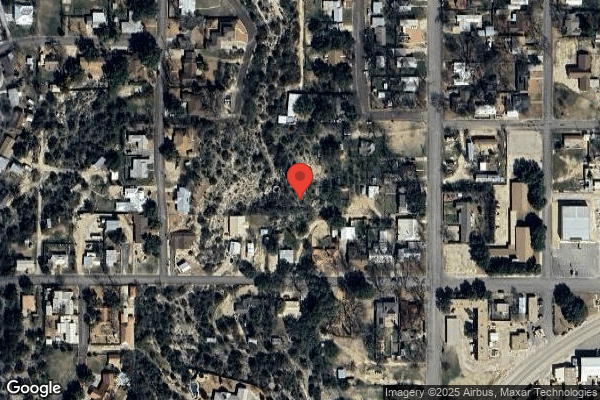
102 MEDICAL DRIVE, OZONA, TX 76943 (325) 392-3096
Government - County 50 Beds Independent Data: November 2025
Trust Grade
80/100
#221 of 1168 in TX
Last Inspection: June 2025

Inspected within the last 6 months. Data reflects current conditions.

Overview

Crockett County Care Center in Ozona, Texas, has a Trust Grade of B+, indicating it is above average and recommended for families considering care options. It ranks #221 out of 1168 nursing homes in Texas, placing it in the top half of facilities statewide, and is the only option in Crockett County. However, the facility is experiencing a worsening trend, with reported issues increasing from 2 in 2024 to 3 in 2025. Staffing is a strength, with no turnover reported and an average rating for RN coverage, which suggests stability in care. On the downside, the facility has been cited for several concerns, including failure to properly label medications and lapses in infection control practices, which could potentially put residents at risk for medication errors and infections.

Trust Score
B+
80/100
In Texas
#221/1168
Top 18%
Safety Record
Low Risk
No red flags
Inspections
Getting Worse
2 → 3 violations
Staff Stability
○ Average
Turnover data not reported for this facility.
Penalties
✓ Good
No fines on record. Clean compliance history, better than most Texas facilities.
Skilled Nurses
○ Average
Each resident gets 33 minutes of Registered Nurse (RN) attention daily — about average for Texas. RNs are the most trained staff who monitor for health changes.
Violations
○ Average
6 deficiencies on record. Average for a facility this size. Mostly minor or procedural issues.
★★★★☆
4.0
Overall Rating
★★★☆☆
3.0
Staff Levels
★★☆☆☆
2.0
Care Quality
★★★★☆
4.0
Inspection Score
Stable
2024: 2 issues
2025: 3 issues

The Good

  • Full Sprinkler Coverage · Fire safety systems throughout facility
  • No fines on record

Facility shows strength in fire safety.

The Bad

No Significant Concerns Identified

This facility shows no red flags. Among Texas's 100 nursing homes, only 0% achieve this.

The Ugly 6 deficiencies on record

Jun 2025 3 deficiencies
CONCERN (E)

Potential for Harm - no one hurt, but risky conditions existed

Deficiency F0761 (Tag F0761)

Could have caused harm · This affected multiple residents

Based on observations, interviews, and record review the facility failed to ensure drugs and biologicals used in the facility were labeled in accordance with currently accepted professional principles...

Read full inspector narrative →
Based on observations, interviews, and record review the facility failed to ensure drugs and biologicals used in the facility were labeled in accordance with currently accepted professional principles, which included the appropriate accessory and cautionary instructions, and the expiration date when applicable for 1 of 3 medication carts (Nurse Cart) and 1 of 1 medication storage room reviewed for medication storage. 1. The facility failed to ensure 2 of 2 insulin pens were labeled with an open date in the Nurse Medication Cart. 2. The facility failed to ensure the medication room was free of expired medications. These failures could place residents at risk of not receiving the therapeutic benefit of medications or adverse reactions to medications. Findings included: Observation of the medication room on 06/11/2025 at 10:30 AM revealed the following: - Four unopened 8-ounce jars of protein powder in cabinet with expiration date of 05/24/2025. - One opened box of 0.9% sodium chloride inhalation solution 5ml/vial with a total of 56 vials with an expiration date of 04/2025 - Four boxes of 3% sodium chloride inhalation solution 15ml/vial with a total of 160 vials with an expiration date of 05/31/2025 - One unopened box Dulcolax suppositories (8 total) in refrigerator with expiration date of 04/2025 Observation of Nurse Cart on 06/11/2025 at 2:40 PM revealed the following: - One Lantus Solostar 100 units/ml injector pen with approximately 160 units remaining with no label to indicate open date. - One Tresiba FlexTouch 100 units/ml injector pen with approximately 220 units remaining with no label to indicate open date. In an interview on 06/11/2025 at 2:50 PM with LVN A, she stated that the night shift nurse went through the medication room each month (on the 15th) to ensure that all expired medications were removed and disposed of. She stated that there were no residents currently using the protein powder or the sodium chloride. She stated that any resident needing a protein supplement received one from the dietary department and was unsure why the protein powder was in the medication room at all. She stated that the sodium chloride was on hand for a resident no longer in the facility and should have been disposed of during the last medication room clean out. She stated that the Dulcolax suppositories were floor stock and should have been disposed of during the last medication storage room clean out. She stated that insulin pens should be labeled with the date they were opened and disposed of after 28 days. She stated that she did not know when the two insulin pens were opened. She stated that if insulin pens were not dated when opened it could put the residents at risk of receiving expired and possibly ineffective insulin. In an interview on 06/12/2025 at 1:08 PM, the ADON stated that all expired meds should be removed from the medication room and medication carts. She stated that any time a container was opened it should be dated with that date. She stated each nurse, or med aide was responsible for checking the dates on the meds they would be giving to ensure the medication was not expired. She stated that the CNA Supervisor was responsible for ordering and restocking the floor stock and she goes went through the med room once a month to clean out the expired items in the med room. She stated that all insulin pens are were to be labeled with the resident's name and the date the pen was opened. Insulin pens were to be disposed of after 28 days or 30 days depending on the manufacturer suggestions. She stated that she believed the reason the expired items were in the med room is was due to the CNA Supervisor being on extended leave and the job not being delegated to another staff member. She stated there was no excuse for the insulin pens to be without open dates. She stated that medications that were expired would not be as effective if given to residents. In an interview on 06/12/2025 at 1:32 PM, the Administrator stated she had no additional information or comments about medication labeling and storage. Record review of the facility's policy titled Storage of Medication, revision date April 2019, revealed, in part: Discontinued, outdated, or deteriorated drugs or biologicals are returned to the dispensing pharmacy or destroyed. Record review of the facility's policy titled Labeling of Medication Containers, revision date of April 2019, revealed, in part: Labels for individual resident medications include all necessary information, such as .The date the medication was dispensed .The expiration date when applicable.
CONCERN (E)

Potential for Harm - no one hurt, but risky conditions existed

Infection Control (Tag F0880)

Could have caused harm · This affected multiple residents

**NOTE- TERMS IN BRACKETS HAVE BEEN EDITED TO PROTECT CONFIDENTIALITY** Based on observation, interview, and record review the facility failed to establish and maintain an infection prevention and con...

Read full inspector narrative →
**NOTE- TERMS IN BRACKETS HAVE BEEN EDITED TO PROTECT CONFIDENTIALITY** Based on observation, interview, and record review the facility failed to establish and maintain an infection prevention and control program designed to provide a safe, sanitary and comfortable environment and to help prevent the development and transmission of communicable diseases and infections for 2 (Resident #5 and Resident #20) of 3 residents reviewed for infection control. 1. CNA D failed to change her gloves when going from dirty to clean and failed to perform hand hygiene when she provided incontinent care to Resident #20. 2. CNA C failed to change her gloves when going from dirty to clean and failed to perform hand hygiene when she provided incontinent care to Resident #5. These failures could place residents at risk for cross contamination and the spread of infection. Findings include: 1. Record review of Resident #20's admission record, dated 06/12/2025, indicated an [AGE] year-old female who was admitted to the facility on [DATE]. Resident #20 had diagnoses which included Alzheimer's Disease (a progressive disease that destroys memory and other mental functions) and Chronic Kidney Disease (a gradual loss of kidney function). Record review of Resident #20's care plan, dated 02/12/2025, indicated in part: Focus: Resident has a history of bladder incontinence related to Alzheimer's Disease. Goal: Resident will remain free from skin breakdown due to incontinence and brief use through the review date. Interventions/Tasks: Clean peri-area with each incontinence episode. Resident is offered toileting on rounds and prefers to wear protective undergarments. Record review of Resident #20's MDS, dated [DATE], indicated in part: Cognitive Skills for Daily Decision Making was a 3, which indicated the resident was severely impaired and never/rarely made decisions. Urinary and Bowel Continence documented Resident #20 was always incontinent. During an observation on 06/11/2025 at 03:27 PM revealed CNA D and CNA F performed incontinent care for Resident #20. Both CNAs washed their hands and donned gloves. CNA D wiped the front part of the perineum. Both CNAs turned Resident #20 on her left side and CNA D wiped the resident's rectal area. While still wearing the same gloves, CNA D placed a clean brief on Resident #20. CNA D then changed gloves, without washing or sanitizing hands between glove change. Both CNAs dressed Resident #20 in clean pants. CNA D doffed her gloves and exited the room without washing or sanitizing hands. CNA D returned with the mechanical lift to transfer Resident #20 to her wheelchair. During an interview on 06/11/2025 at 04:20 PM, CNA D said she should have changed her gloves after she wiped Resident #20's rectal area before putting the clean brief on the resident. CNA D said she knew about changing her gloves when going from dirty to clean and washing her hands when doffing gloves but had forgotten. 2. Record review of Resident #5's admission record, dated 06/12/2025, indicated a [AGE] year-old female who was admitted to the facility on [DATE]. Resident #5 had a diagnosis which included Alzheimer's Disease. Record review of Resident #5's care plan, dated 04/03/2025, indicated in part: Focus: Resident #20 had bladder and bowel incontinence related to Alzheimer's/Dementia. Goal: Resident will remain free from skin breakdown due to incontinence and brief use through the review date. Interventions/Tasks: Check every 2 hours and as required for incontinence. Wash, rinse and dry perineum. Record review of Resident #5's MDS, dated [DATE], indicated in part: resident had a Brief Interview for Mental Status (BIMS) score of 4, which indicated severe cognitive impairment. Urinary and Bowel continence documented Resident #5 was always incontinent. During an observation on 06/11/2025 at 03:50 PM, revealed CNA C and CNA E performed incontinent care for Resident #5. Both CNAs washed their hands and donned gloves. CNA C wiped the front part of the perineum. Both CNAs turned Resident #5 on her left side and CNA C wiped the resident's rectal area. While still wearing the same gloves, CNA C placed a clean brief on Resident #5. CNA C changed gloves, without washing or sanitizing hands between glove change. Both CNAs placed a hoyer lift sling underneath Resident #5. CNA C doffed her gloves and exited the room without washing or sanitizing hands. CNA C returned with the hoyer lift and Resident #5's wheelchair. During an interview on 06/12/2025 at 01:40 PM, CNA C said she did not change gloves between going from dirty to clean and did not wash hands between glove changes and after removing gloves to exit. CNA C said the lapses could cause infections. During an interview on 06/11/2025 at 04:12 PM, the ADON regarding incontinent care said it was her expectation for staff to wash their hands before starting incontinent care, change gloves when going from dirty to clean, and wash or sanitize hands between glove changes. The ADON said each step was a vital part of infection prevention. During an interview on 06/12/2025 at 03:00 PM, the Administrator was made aware of the observations of incontinent care. The Administrator stated lapses in infection control could lead to serious complications to the residents, staff, and facility. Record review of the facility's policy titled Perineal Care, dated 02/2018, indicated in part: The purposes of this procedure are to provide cleanliness and comfort to the resident, to prevent infections and skin irritation, and to observe the resident's skin condition. The following equipment and supplies will be necessary when performing this procedure: Personal protective equipment (e.g., gloves, mask etc., as needed). Avoid unnecessary exposure of the resident's body. Put on gloves. Wash the perineal area, wiping from front to back, rinse and dry thoroughly. Wash the rectal area, rinse and dry thoroughly. Discard disposable items into designated containers, remove gloves and discard into designated container, wash and dry your hands thoroughly. Record review of the facility's policy titled [The facility] Hand Hygiene, dated 03/08/2023, indicated in part: Hand Hygiene is a general term for cleaning your hands by handwashing with soap and water or the use of an antiseptic hand rub, also known as alcohol-based hand rub (ABHR). Staff will perform hand hygiene when indicated, using proper technique consistent with accepted standards of practice. Hand Hygiene is indicated and will be performed under the conditions listed in, but not limited to, the attached hand hygiene table. The hand hygiene table indicated in part the following conditions require hand hygiene: 1. After handling contaminated objects, 2. Before applying and after removing personal protective equipment (PPE), including gloves, 3. Before and after handling clean or soiled dressings, linens, etc., 4. After handling items potentially contaminated with blood, body fluids, secretions, or excretions, 5. When moving from a contaminated body site to a clean body site. Additional considerations: the use of gloves does not replace hand hygiene. If your task requires gloves, perform hand hygiene prior to donning gloves and immediately after removing gloves.
CONCERN (F)

Potential for Harm - no one hurt, but risky conditions existed

Deficiency F0727 (Tag F0727)

Could have caused harm · This affected most or all residents

Based on interview and record review the facility failed to designate a registered nurse to serve as the director of nursing on a full-time basis for 1 of 1 DON (DON) reviewed for DON coverage. The fa...

Read full inspector narrative →
Based on interview and record review the facility failed to designate a registered nurse to serve as the director of nursing on a full-time basis for 1 of 1 DON (DON) reviewed for DON coverage. The facility failed to have a full-time DON as of September of 2024 through 6/11/2025. This failure could place residents at risk of lack or nursing oversight and a higher level of care. Findings include: Record review of the DON's Letter of Resignation, dated 08/14/24, revealed the DON submitted her letter of resignation on 08/14/24 for resignation effective on 9/30/24. In an interview on 06/11/25 at 3:14 PM with the Administrator, she stated the previous DON resigned due to family matters in September of 2024. The Administrator stated the job has been posted since in the local newspaper, social media like Facebook and Indeed. The Administrator stated there was no applicants for this position. The Administrator stated the current ADON was going to be trained by a contract agency for a nurse leadership role. The Administrator stated this was the steps the facility was taking to prevent any negative outcome. The Administrator stated the DON position had significant oversite duties and without any systems in place this could result in a negative outcome. In an interview on 06/11/25 at 3:33 PM with the ADON, she stated they did not have a DON. The ADON stated the DON resigned due to a personal matter. The ADON stated the last day the DON worked at the facility was in September of 2024. The ADON stated since then they had been without a DON. Record review of the facility's policy titled Director of Nursing Services, dated 2006, reflected: The Nursing Services department is under the direct supervision of a Registered Nurse. Policy Interpretation and Implementation 1. The nursing services department is managed by the Director of Nursing Services. The Director is a Registered Nurse (RN), licensed by this state, and has experienced ini nurse service administration, rehabilitative and geriatric nursing. 2. The director is employed full-time (40-hours per week) and is responsible for, but is not necessarily limited to: a. developing and periodically updating the nursing service objectives and statements of philosophy; b. developing standards of nursing practice; c. developing and maintaining nursing policy and procedure manuals; d. developing and maintaining weitten job descriptions for each level oof nursing personnel; e. scheduling of daily rounds to visit residents; f. Developing methods for coordination of nursing services with other resident services; g. Recruiting and retaining the number and levels of nursing personnel necessary to meet the nursing care needs of each resident; h. Developing staff training programs for nursing service personnel; i. Participating in the planning and budgeting for nursing services; j. Ensuring that all health services notes are informative and descriptive of the supervision and care rendered including the residents response to his or her care; k. Assessing the nursing requirements for each resident admitted and assisting the Attending Physician in planning for the residents care; l. Participating in the development and implementation of the resident assessment (MDS) and comprehensive care plan. m. Establishing resident selection criteria for determining which residents may ne fed by paid feeding assistants; and n. Assuring the nursing care personnel are administering care and services in accordance with the residents assessment and care plan.
May 2024 2 deficiencies
CONCERN (D) 📢 Someone Reported This

A family member, employee, or ombudsman was alarmed enough to file a formal complaint

Potential for Harm - no one hurt, but risky conditions existed

Comprehensive Care Plan (Tag F0656)

Could have caused harm · This affected 1 resident

**NOTE- TERMS IN BRACKETS HAVE BEEN EDITED TO PROTECT CONFIDENTIALITY** Based on interview and record review the facility failed to develop and implement a comprehensive, person-centered care plan for...

Read full inspector narrative →
**NOTE- TERMS IN BRACKETS HAVE BEEN EDITED TO PROTECT CONFIDENTIALITY** Based on interview and record review the facility failed to develop and implement a comprehensive, person-centered care plan for each resident that included measurable objectives and time frames to meet, attain, and/or maintain the resident's highest practicable physical, mental, and psychosocial well-being for 2 of 14 residents (Resident #5 and Resident #31) reviewed for care plans. 1.The facility failed to ensure that Resident #5 had a care plan in place for her use of diuretic medication related to her diagnosis of edema. 2.The facility failed to ensure that Resident #31 had care plans in place for her diagnosis of diabetes mellitus and her use of insulin. These failures could affect residents by placing them at risk of not receiving individualized care and services to meet their needs. The findings included: Resident #5 Review of Resident #5's admission Record dated 5/9/24 revealed she was an [AGE] year-old female originally admitted to the facility on [DATE], with a most recent admission date of 4/28/21. She had diagnoses which included congestive heart failure, chronic kidney disease - stage three, and edema. Review of Resident #5's Annual MDS assessment dated [DATE] revealed a BIMS (Brief Interview for Mental Status) score of 5 indicating severe cognitive impairment. She was dependent on staff for all ADLs except eating for which she only required setup assistance. She was always incontinent of bowel and bladder, and she was taking a diuretic medication. Review of Resident #5's care plan, most recent revision date 3/6/24, revealed no care plan in place for her use of a diuretic medication related to her diagnosis of edema. Review of Resident #5's Order Summary Report dated 5/9/24 revealed the following order: - Lasix Oral Tablet 80 mg (Furosemide) Give 1 tablet by mouth one time a day for edema (Order Date: 6/21/23, Start Date: 6/22/23) Resident #31 Review of Resident #31's admission Record dated 5/9/23 revealed she was a [AGE] year-old female admitted to the facility on [DATE], with diagnoses which included Type 2 Diabetes Mellitus with unspecified complications and Type 2 Diabetes Mellitus with diabetic retinopathy (damage caused to blood vessels at the back of the eye caused by poorly controlled blood sugar) and macular edema (swelling in the area of the retina responsible for central vision). Review of Resident #31's Quarterly MDS assessment dated [DATE] revealed she had sort and long-term memory problems with severely impaired cognitive skills for daily decision making. She was dependent on staff for all ADLs. She received insulin injections daily and a hypoglycemic medication. Review of Resident #31's care plan, most recent revision date 4/24/24, revealed no care plan in place for her diagnosis of diabetes and no care plan in place for her insulin use. Review of Resident #31's Order Summary Report dated 5/9/24 revealed the following orders: - NCS (No Concentrated Sweets) Diet (Order Date: 9/7/22, Start Date: 9/7/22) - A1C (blood test to measure average blood sugar levels over a 3 month period) in the morning every 6 months starting on the 15th related to Type 2 Diabetes Mellitus - Every 6 months May/November (Order Date: 11/14/23, Start Date: 11/15/23) - Lantus SoloStar Solution Pen-injector 100 Unit/ml (Insulin Glargine) - Inject 14 unit subcutaneously at bedtime related to Type 2 Diabetes Mellitus (Order Date: 10/26/22, Start Date: 10/26/22) - Metformin Hcl Tablet 500 mg give 1 tablet by mouth two times a day related to Type 2 Diabetes Mellitus (Order Date: 9/7/22, Start Date: 9/7/22) - Novolog FlexPen Solution Pen-Injector 100 units/ml (Insulin Aspart) - Inject as per sliding scale (if 71-150 = 0; 150-180 = 2 units; 181-220 = 4 units; 221-260 = 6 units; 261 - 300 = 10 units; 351-400 = 12 units; >400 12 units and call physician) subcutaneously before meals and at bedtime related to Type 2 Diabetes Mellitus (Order Date: 9/7/22, Start Date: 9/7/22) In an interview on 5/9/24 at 2:12 PM with the Care Plan Nurse, she explained the MDS Coordinator was responsible for completing the baseline care plan and starting the comprehensive care plan based on the triggered items from the initial MDS assessment. She stated a resident's care plan already had the MDS triggered items on it when she it came to her. She stated she added focus areas to the care plan based on new orders received, incident reports, and new information from staff regarding the residents. She stated that she did the quarterly renewal/revisions to the care plans and the MDS Coordinator did the annual revisions to the care plans. She stated that initially the MDS Coordinator would be responsible for creating a care plan for a specific diagnosis or medication based on the MDS assessment, but if an additional medication was added then she (Care Plan Nurse) would be responsible for adding it to the care plan. She stated that Resident #5 should have had a care plan in place for her use of a diuretic medication related to her diagnosis of edema based on the MDS assessment and that Resident #31 should have had a care plan in place for her diagnosis of diabetes and a separate care plan in place for her insulin use based on the MDS assessment. In an interview on 5/9/24 at 3:26 PM with the DON, she stated that a care plan should contain information regarding care to be provided to a resident, anything medically/psychologically/physically unique to the resident, and individualized instructions for the care of the resident. The DON reviewed Resident #31's care plan and stated that she was admitted with the diagnosis of diabetes and there should have been a care plan for both her diabetes diagnosis and her use of insulin dating back to her admission in 2022. She stated she was surprised to see that those care plans were missing. She stated that Resident #5 should have had a care plan for her use of a diuretic medication due to her edema diagnosis. She stated she had not done care plan audits in quite a while but she would add it to her list of audits for the future. Review of facility policy titled Comprehensive Care Plans dated February 2023, revealed, in part, It is the policy of this facility to develop and implement a comprehensive person-centered care plan for each resident, consistent with resident rights, that includes measurable objectives and timelines to meet a resident's medical, nursing, and mental and psychosocial needs that are identified in the resident's comprehensive assessment. All Care Assessment Areas (CAAs) triggered by the MDS will be considered in developing the plan of care. The facility's rationale for deciding whether to proceed with care planning will be evidenced in the clinical record. The comprehensive care plan will describe the services that are to be furnished to attain or maintain the resident's highest practicable physical, mental, and psychosocial well-being.
CONCERN (E) 📢 Someone Reported This

A family member, employee, or ombudsman was alarmed enough to file a formal complaint

Potential for Harm - no one hurt, but risky conditions existed

Deficiency F0577 (Tag F0577)

Could have caused harm · This affected multiple residents

Based on observation, interview and record review the facility failed to ensure that residents had the right to examine the results of the most recent survey of the facility conducted by Federal or St...

Read full inspector narrative →
Based on observation, interview and record review the facility failed to ensure that residents had the right to examine the results of the most recent survey of the facility conducted by Federal or State surveyors and any plan of correction in effect with respect to the facility; and were posted in a place readily accessible to residents, and family members and legal representatives of residents for 7 of 7 residents interviewed in a confidential group meeting. The facility failed to have the survey results book readily accessible for the residents to review. This failure could place residents at risk of not being able to fully exercise their rights to be informed of the facility's survey history. Findings included: During a confidential group meeting on 5/8/24 at 11:00 am, seven out of seven residents in attendance stated they did not know where or how to access the survey results in the facility, or that it was an option for them to do so. Four of the seven residents in attendance stated that they would like to read the results from previous surveys to know what issues were found by the surveyors and what the facility had planned to do to fix the problems that had been identified. Observation on 5/8/24 at 2:25 PM revealed that the survey results binder was in a clear plastic wall mounted file holder on Hall 400. The location of the binder was accessible by walking down Hall 400 towards resident rooms located on that hall; all other resident rooms were located on the opposite side of the building. The binder was labeled Plan of Correction Health Survey and was behind another binder labeled Plan of Correction Life Safety Survey. In an interview with Administrator on 5/8/24 at 4:41 PM, he stated that the survey results binder was not located in an easily accessible location for all residents and that the binder should be relocated to somewhere more central for all the residents. He stated the issue with moving the binders was finding a safe place to hang the file holder since most of the residents were in wheelchairs and he did not want any of them to hit their head on it. He stated that the binders had been in the same spot since before he started working in the facility. He stated that the labeling on the binder would be confusing for the residents because they would not understand what Plan of Correction meant. He stated that the binder should have been labeled State Survey Results and said that he would make sure it was changed immediately. In an interview on 5/9/24 at 2:39 PM with the Activity Director she stated that she had talked to the residents about the survey results binder during Resident Council meetings in the past, but she did not bring it up at every meeting. She stated she had explained where the binders were located and had taken residents individually to the binders when they had asked where they were. She stated that she only spoke about the survey results binders during Resident Council meetings so only the residents that attended the meetings would have heard about them. She stated that since it had been several months since she had discussed the survey results binders at a meeting, some of the newer residents would not have heard about them even during Resident Council. She stated she did not like where the binders were located because the residents who lived on Hall 100, Hall 200, and Hall 300 rarely, if ever, came down that hall and would not see the binders. She stated that the binders should be hung in the dining room/living room area where all the residents like to congregate because all the residents would be able to see them. Review of facility policy titled Examination of Survey Results, revised April 2017, revealed, in part: Survey reports and plans of correction are readily accessible to the resident, family members, resident representative and to the public. Residents may examine the results of the most recent survey of the facility conducted by federal or state surveyors, as well as any plans of correction in effect. A copy of the most recent survey report and any plans of correction are kept in a binder in the residents' day room. Survey reports, certifications, complaint investigations and plans of correction for the preceding three years are available for any individual to review upon request.
Mar 2023 1 deficiency
CONCERN (D) 📢 Someone Reported This

A family member, employee, or ombudsman was alarmed enough to file a formal complaint

Potential for Harm - no one hurt, but risky conditions existed

Deficiency F0558 (Tag F0558)

Could have caused harm · This affected 1 resident

**NOTE- TERMS IN BRACKETS HAVE BEEN EDITED TO PROTECT CONFIDENTIALITY** Based on observation, interview, and record review the facility failed to ensure residents received services in the facility wit...

Read full inspector narrative →
**NOTE- TERMS IN BRACKETS HAVE BEEN EDITED TO PROTECT CONFIDENTIALITY** Based on observation, interview, and record review the facility failed to ensure residents received services in the facility with reasonable accommodation of each resident's needs for 1 (residents who were in their rooms during observation) of 29 residents reviewed for call lights: Resident #12's call light was out of reach. This deficient practice could affect residents who need assistance with activities of daily living of not having needs met. Findings Include: Review of Resident #12's admission Record dated, 3/16/23, revealed he was a [AGE] year-old male admitted to the facility on [DATE] with diagnoses that included hemiplegia and hemiparesis (paralysis) following a stroke affecting the right side. Review of Resident #12's quarterly MDS Assessment, dated 2/22/23, revealed: He had a mental status exam of 13 of 15 (indicating he was cognitively intact). He needed extensive assistance of one person for most ADLs. Review of Resident #12's Care Plan, revised 12/1/22, revealed: Focus: Resident had an ADL self-care performance related to stroke, right sided weakness. Goal: Resident will maintain current level of ADL function through the review dated Interventions: ensure /provide a safe environment. Call light in reach. Observation on 03/14/23 at 9:56 AM revealed Resident #12 was in his room up in his wheelchair. Resident #12's call light on the A side of the room was clipped to the privacy curtain above his head. The other call light (B side) was draped on the over bed light out of reach of the resident. Resident #12 reached for the call light (clipped to the curtain) with his right arm, but was unable to reach above his shoulder. He asked the surveyor to give him the call light. Interview 03/16/23 at 2:32 PM the DON stated her expectation was that call lights be answered within two minutes. She revealed she expected the residents be able to use the light for whenever they needed. The DON stated if the call light was higher than the resident's range of motion would allow then it was out of reach. She stated all staff were responsible for monitoring that the call light was within reach. The DON stated the definition of within reach was if the resident could grab it. The DON stated Resident #12's range of motion was completely intact on the left side, but she did not know about the right side. She said Resident #12 was not a resident who played helpless and liked to be as independent as he could. The DON stated she did not know why the call light was clipped to the curtain. She said Resident #12 told her yesterday that he liked for the call light to be on a cabinet on his right side so he would not knock it over. She said she did an in-service about it. Review of the in-service material and call light policy (undated), completed with staff 3/15/23, revealed: Call lights: accessibility and timely response: The purpose of this policy is to assure the facility is adequately equipped with a call light at each resident's bedside, toilet, and bathing facility to allow residents to call for assistance. Call lights will directly relay to a staff member or centralized location to ensure appropriate response. Policy Explanation: Staff will ensure the call light is within reach of resident and secured, as needed. Practice Guidelines - Accessible Call lights Why you do it: To assure appropriate placement of call lights for resident accessibility. How you do it - Determine if the call light is easily accessible. Identify resident function in the environment: limitations, strengths, adaptation needs, preferences. Assist the resident in arranging the environment for as much independent function as possible.
Understanding Severity Codes (click to expand)
Life-Threatening (Immediate Jeopardy)
J - Isolated K - Pattern L - Widespread
Actual Harm
G - Isolated H - Pattern I - Widespread
Potential for Harm
D - Isolated E - Pattern F - Widespread
No Harm (Minor)
A - Isolated B - Pattern C - Widespread

Questions to Ask on Your Visit

  • "Can I speak with families of current residents?"
  • "What's your RN coverage like on weekends and overnight?"

Our Honest Assessment

Strengths
  • • Grade B+ (80/100). Above average facility, better than most options in Texas.
  • • No major safety red flags. No abuse findings, life-threatening violations, or SFF status.
  • • No fines on record. Clean compliance history, better than most Texas facilities.
Concerns
  • • No significant concerns identified. This facility shows no red flags across CMS ratings, staff turnover, or federal penalties.
Bottom line: Generally positive indicators. Standard due diligence and a personal visit recommended.

About This Facility

What is Crockett County's CMS Rating?

CMS assigns CROCKETT COUNTY CARE CENTER an overall rating of 4 out of 5 stars, which is considered above average nationally. Within Texas, this rating places the facility higher than 99% of the state's 100 nursing homes. This rating reflects solid performance across the metrics CMS uses to evaluate nursing home quality.

How is Crockett County Staffed?

CMS rates CROCKETT COUNTY CARE CENTER's staffing level at 3 out of 5 stars, which is average compared to other nursing homes.

What Have Inspectors Found at Crockett County?

State health inspectors documented 6 deficiencies at CROCKETT COUNTY CARE CENTER during 2023 to 2025. These included: 6 with potential for harm.

Who Owns and Operates Crockett County?

CROCKETT COUNTY CARE CENTER is owned by a government entity. Government-operated facilities are typically run by state, county, or municipal agencies. The facility operates independently rather than as part of a larger chain. With 50 certified beds and approximately 31 residents (about 62% occupancy), it is a smaller facility located in OZONA, Texas.

How Does Crockett County Compare to Other Texas Nursing Homes?

Compared to the 100 nursing homes in Texas, CROCKETT COUNTY CARE CENTER's overall rating (4 stars) is above the state average of 2.8 and health inspection rating (4 stars) is above the national benchmark.

What Should Families Ask When Visiting Crockett County?

Based on this facility's data, families visiting should ask: "Can I visit during a mealtime to observe dining assistance and food quality?" "How do you handle medical emergencies, and what is your hospital transfer rate?" "Can I speak with family members of current residents about their experience?"

Is Crockett County Safe?

Based on CMS inspection data, CROCKETT COUNTY CARE CENTER has a clean safety record: no substantiated abuse findings (meaning no confirmed cases of resident harm), no Immediate Jeopardy citations (the most serious violation level indicating risk of serious injury or death), and is not on the Special Focus Facility watch list (a federal program monitoring the lowest-performing 1% of nursing homes). The facility has a 4-star overall rating and ranks #1 of 100 nursing homes in Texas. While no facility is perfect, families should still ask about staff-to-resident ratios and recent inspection results during their visit.

Do Nurses at Crockett County Stick Around?

CROCKETT COUNTY CARE CENTER has not reported staff turnover data to CMS. Staff turnover matters because consistent caregivers learn residents' individual needs, medications, and preferences. When staff frequently change, this institutional knowledge is lost. Families should ask the facility directly about their staff retention rates and average employee tenure.

Was Crockett County Ever Fined?

CROCKETT COUNTY CARE CENTER has no federal fines on record. CMS issues fines when nursing homes fail to meet care standards or don't correct problems found during inspections. The absence of fines suggests the facility has either maintained compliance or corrected any issues before penalties were assessed. This is a positive indicator, though families should still review recent inspection reports for the full picture.

Is Crockett County on Any Federal Watch List?

CROCKETT COUNTY CARE CENTER is not on any federal watch list. The most significant is the Special Focus Facility (SFF) program, which identifies the bottom 1% of nursing homes nationally based on persistent, serious quality problems. Not being on this list means the facility has avoided the pattern of deficiencies that triggers enhanced federal oversight. This is a positive indicator, though families should still review the facility's inspection history directly.