LAVACA BAY NURSING AND REHABILITATION CENTER
118 TRINITY SHORES DRIVE, PORT LAVACA, TX 77979 (361) 551-0500
Government - Hospital district 130 Beds Independent Data: November 2025 2 Immediate Jeopardy citations
Trust Grade
9/100
#1025 of 1168 in TX
Last Inspection: December 2024

Within standard 12-15 month inspection cycle. Federal law requires annual inspections.

Overview

Lavaca Bay Nursing and Rehabilitation Center has received a Trust Grade of F, indicating significant concerns and a poor reputation among facilities. It ranks #1025 out of 1168 in Texas, placing it in the bottom half of nursing homes statewide, and it is the second of only two options in Calhoun County, meaning there is limited local competition. The facility is experiencing a worsening trend, with reported issues increasing from 11 in 2023 to 20 in 2024. Staffing is rated poorly, with a 1/5 star rating and a turnover rate of 56%, which is about average for Texas but suggests instability. Notably, there have been serious incidents, such as a resident falling and fracturing a leg due to inadequate supervision and a failure to honor a Do Not Resuscitate order, highlighting significant weaknesses in care and safety protocols. While there are some strengths, such as average RN coverage, the overall picture raises serious concerns for families considering this home for their loved ones.

Trust Score
F
9/100
In Texas
#1025/1168
Bottom 13%
Safety Record
High Risk
Review needed
Inspections
Getting Worse
11 → 20 violations
Staff Stability
⚠ Watch
56% turnover. Above average. Higher turnover means staff may not know residents' routines.
Penalties
⚠ Watch
$21,720 in fines. Higher than 97% of Texas facilities. Major compliance failures.
Skilled Nurses
⚠ Watch
Each resident gets only 17 minutes of Registered Nurse (RN) attention daily — below average for Texas. Fewer RN minutes means fewer trained eyes watching for problems.
Violations
⚠ Watch
32 deficiencies on record. Higher than average. Multiple issues found across inspections.
★☆☆☆☆
1.0
Overall Rating
★☆☆☆☆
1.0
Staff Levels
★☆☆☆☆
1.0
Care Quality
★★☆☆☆
2.0
Inspection Score
Stable
2023: 11 issues
2024: 20 issues

The Good

  • Full Sprinkler Coverage · Fire safety systems throughout facility
  • No fines on record

Facility shows strength in fire safety.

The Bad

1-Star Overall Rating

Below Texas average (2.8)

Significant quality concerns identified by CMS

Staff Turnover: 56%

Near Texas avg (46%)

Frequent staff changes - ask about care continuity

Federal Fines: $21,720

Below median ($33,413)

Minor penalties assessed

Staff turnover is elevated (56%)

8 points above Texas average of 48%

The Ugly 32 deficiencies on record

2 life-threatening
Dec 2024 16 deficiencies
CONCERN (D)

Potential for Harm - no one hurt, but risky conditions existed

Resident Rights (Tag F0550)

Could have caused harm · This affected 1 resident

**NOTE- TERMS IN BRACKETS HAVE BEEN EDITED TO PROTECT CONFIDENTIALITY** Based on observation, interview and record review, the facility failed to treat each resident with respect and dignity and care ...

Read full inspector narrative →
**NOTE- TERMS IN BRACKETS HAVE BEEN EDITED TO PROTECT CONFIDENTIALITY** Based on observation, interview and record review, the facility failed to treat each resident with respect and dignity and care for each resident in a manner and in an environment that promotes maintenance or enhancement of his or her quality of life, recognizing each resident's individuality for 1 of 6 resident units (300 unit) reviewed for dignity. Laundry Aide X walked into several resident rooms in the 300 unit without knocking. This failure could place residents at risk for diminished quality of life, loss of dignity and self-worth. The findings included: During an interview on 12/17/24 at 8:17 a.m., Resident #75, who resided on the 300 unit revealed sometimes staff had entered her room without knocking and it bothered her because it was an invasion of privacy. Resident #75 stated, what if they come in and I'm naked or something? Record review of Resident #75's most recent quarterly MDS assessment, dated 9/18/24 revealed the resident was cognitively intact for daily decision-making skills. Observation on 12/17/24 beginning at 8:51 a.m., revealed Laundry Aide X, who was delivering laundry on the 300 unit entered the following resident rooms without knocking: room [ROOM NUMBER] at 8:51 a.m. room [ROOM NUMBER] at 8:51 a.m. room [ROOM NUMBER] at 8:53 a.m. room [ROOM NUMBER] at 8:54 a.m. re-entered room [ROOM NUMBER] at 8:54 a.m. room [ROOM NUMBER] at 8:55 a.m. re-entered room [ROOM NUMBER] at 9:00 a.m. room [ROOM NUMBER] at 9:02 a.m. During an interview on 12/17/24 at 9:04 a.m., Laundry Aide X acknowledged she had entered resident rooms without knocking and revealed if the door was open to a resident room, she assumed there was no resident in the room and only knocked if a resident door was closed. Laundry Aide X acknowledged she was supposed to knock on the resident room door and announce laundry before entering the room. Laundry Aide X revealed she was working without help. Laundry Aide X stated, I should be knocking before going into a room because there could be patient care going on even if the door is open. I have been taught that I need to knock on the door to let the resident know I am coming in but sometimes some residents don't mind. I say yes, it is a violation of their rights. During an interview on 12/18/24 at 9:43 a.m., the Administrator acknowledged, not knocking on the door to a resident's room was not appropriate. The Administrator revealed it was his expectation for staff to knock on the resident's door before entering and announce themselves to gain permission from the resident. The Administrator acknowledged it was a resident rights issue. Record review of the facility policy and procedure titled, Resident Rights, dated February 2021 revealed in part, .Employees shall treat all residents with kindness, respect, and dignity .1. Federal and state laws guarantee certain basic rights to all residents of this facility. These rights include the resident's right to: a. a dignified existence .
CONCERN (D)

Potential for Harm - no one hurt, but risky conditions existed

Deficiency F0576 (Tag F0576)

Could have caused harm · This affected 1 resident

Based on interview and record review, the facility failed to promote the residents' right to receive mail, for all facility residents: Facility staff did not distribute mail received on Saturdays to ...

Read full inspector narrative →
Based on interview and record review, the facility failed to promote the residents' right to receive mail, for all facility residents: Facility staff did not distribute mail received on Saturdays to the residents. This deficient practice could result in residents not receiving mail in a timely manner and a diminished quality of life. The findings were: During a confidential resident group meeting on 12/17/24 at 3:00 p.m., 3 of 10 members of the resident group stated they never received mail on Saturdays because the Receptionist was off on the weekends. During an interview on 12/17/24 at 5:11 p.m., the Receptionist acknowledged she worked as the receptionist Monday through Friday and did not work on the weekends. The Receptionist revealed, during the week she collected the mail from the mailbox and the local post office. The Receptionist revealed, once she collected the mail, it was placed in a small nook labeled Activities behind the receptionist area. The Receptionist revealed, the Activity Director or the Activity Aide would then collect the mail from the small nook and distribute the mail to the residents from Monday to Friday. The Receptionist acknowledged any mail delivered on Saturday stayed in the mailbox until she returned to work on Monday. During an interview on 12/18/24 at 8:49 a.m., the Activity Director revealed she typically worked Monday through Friday and occasionally popped in on Saturdays. The Activity Director acknowledged the Receptionist was tasked with collecting the mail from the mailbox and the post office, and then the Activity Director or her aide were responsible for distributing the mail to the residents Monday through Friday. The Activity Director acknowledged that any mail delivered on Saturday stayed in the mailbox until the Receptionist returned to the facility the following Monday. The Activity Director stated, If I am able to get mail on Saturday, so should the residents. During an interview on 12/18/24 at 9:39 a.m., the Administrator revealed, the residents should be getting their mail everyday as it was a resident right. Record review of the facility policy and procedure titled, Mail and Electronic Communication, revision date 2017 revealed in part, .Resident are allowed to communicate privately with individuals of their choice and may send and receive personal mail, e-mail and other electronic forms of communication confidentially .4. Mail and packages will be delivered to the resident within twenty-four (24) hours of delivery on premises or to the facility's post office box (including Saturday deliveries) .
CONCERN (D)

Potential for Harm - no one hurt, but risky conditions existed

Deficiency F0726 (Tag F0726)

Could have caused harm · This affected 1 resident

**NOTE- TERMS IN BRACKETS HAVE BEEN EDITED TO PROTECT CONFIDENTIALITY** Based on observation, interview, and record review, the facility failed to ensure that licensed staff were able to demonstrate t...

Read full inspector narrative →
**NOTE- TERMS IN BRACKETS HAVE BEEN EDITED TO PROTECT CONFIDENTIALITY** Based on observation, interview, and record review, the facility failed to ensure that licensed staff were able to demonstrate the specific competencies and skill sets necessary to care for resident's needs for 1 of 4 staff (CNA-K) reviewed for competencies. The facility failed to ensure CNA-L had competencies to care as evidence by CNA-L did not clean the resident's genital area when CNA-L was providing incontinent and indwelling urinary catheter care to Resident #74 on 12/18/2024. This failure could potentially affect residents by placing them for cross contamination and infections due to staff who lack the appropriate skills and competencies to provide minimize infections. Findings included: Record review of Resident #74's face sheet, dated 12/19/2024, revealed the resident was [AGE] years old male and admitted to the facility on [DATE] and re-admitted to the facility on [DATE] with the diagnosis of dementia (impairment of brain functions), peripheral vascular disease (reduced blood flow to the limbs), neuromuscular dysfunction of bladder (lack of bladder control), urinary tract infection (bladder infection), and hypertension (high blood pressure). Record review of Resident #74's quarterly MDS, dated [DATE], reflected his BIMS score was 3 of 15 reflecting he had severe cognitive impairment. Further record review of Resident #74's quarterly MDS, dated [DATE], indicated the resident had indwelling urinary catheter and required dependent (Helper does all of the effort) to toilet hygiene and substantial/maximal assistance (helper does more than half the effort) to chair/bed-to-chair transfer, and always incontinent to bowel. Record review of Resident #74's care plan, edited 10/02/2024, revealed The resident is at risk for infection related to indwelling medical device; to prevent the infection, all staff will utilize gown, gloves, and hand hygiene during high-contact resident care activities and the resident is incontinent of bowel as related to cognitive impairment. For intervention, monitor for incontinence and provide incontinent care as needed. Observation on 12/18/2024 at 10:15 a.m. revealed CNA-M hold Resident #74, and CNA-L was cleaning the resident's groin area and indwelling urinary catheter. The CNA-L and CNA-M turned the resident to right side and started cleaning the resident's buttock area, then put a new brief to the resident without cleaning the resident's penis. Interview on 12/18/2024 at 10:36 a.m. with CNA-L stated she did not clean Resident #74's penis and cleaned only the catheter. The CNA-L stated she should have cleaned the resident's penis with circular motion. Further interview with the CNA-L said she was nervous, forgot cleaning Resident #74's penis, and the facility conducted skill check off every year. Interview on 12/18/2024 at 3:59 p.m. the DON stated CNA-L should have cleaned the resident's penis with a circular motion to prevent a possible urinary tract infection. The current DON said the previous DON completed the CNA-L's clinical skills checklist for perineal care on 12/07/2024, and CNA-L passed it. The DON had the responsibility to monitor and check the CNAs' skills. Record review of CNA-L's clinical Skills Checklist for Perineal care for male, dated 12/07/2024, indicated the CNA-L had performed all skills satisfactory which included .10. Wash perineal area starting with urethra and working outward. (If the resident has an indwelling catheter, gently wash the juncture of the tubing from the urethra down the catheter about 3 inches.) gently rinse and dry the area. A. retract fore skin of the uncircumcised male. B. wash and rinse urethra area using a circular motion, and C. continue to wash the perineal area including the penis, scrotum, and inner thigh. Do not reuse the sane washcloth or water to clean the urethra.
CONCERN (D)

Potential for Harm - no one hurt, but risky conditions existed

Pharmacy Services (Tag F0755)

Could have caused harm · This affected 1 resident

**NOTE- TERMS IN BRACKETS HAVE BEEN EDITED TO PROTECT CONFIDENTIALITY** Based on observation, interview and record review, the facility failed to provide pharmaceutical services {including procedures ...

Read full inspector narrative →
**NOTE- TERMS IN BRACKETS HAVE BEEN EDITED TO PROTECT CONFIDENTIALITY** Based on observation, interview and record review, the facility failed to provide pharmaceutical services {including procedures that assure accurate acqyuiring, receiving, dispensing, and administering of all drugs and biologicals) to meet the needs of residents for one of four carts reviewed for accuracy. 1. Resident #64 had 2 missing hydrocodone (NARCO)tablets that were not documented as given and could not be accounted for during November 27, 2024. These failures could place residents who received medications, including narcotics at risk for not receiving the intended therapeutic effects of their prescribed medications and experiencing unintended and harmful effects of medications prescribed to others and place the facility at risk for drug diversion. The findings included: Record review of Resident # 64's face sheet, dated 12/18/24 reflected a male age [AGE]. The resident was admitted on [DATE] with diagnoses that included: joint replacement, cancer, and pain. RP was listed as: resident. Record review of Resident #64's admission MDS, dated [DATE], reflected the resident's BIMS score was 15 (cognitively intact). Resident as incontinent of both bladder and bowel; transfer and bed mobility were extensive assistance. Record review of Resident #64's Physician' Orders, dated November 2024, reflected, hydrocodone NARCO) 10-325 every 6 hours for pain and arthritis PRN. Record review of Resident# 64's MAR, dated November 2024, reflected: 11/26/24-No PRN NARCO given. 11/27/24-No PRN NARCO given. 11/28/24-10:52 AM-No entry that the medication (NARCO) was given on 11/28/24 at 3: AM as claimed by LVN H). Record review of Nurse Note dated from 11/27/24 and 11/28/24 reflected no notes establishing that NARCO was given to Resident #64. During an interview on 12/18/24 at 2:22 PM, the past Administrator stated he was informed during the change shift on 12/6/24 that the narcotic count was short in an unknown cart. The past Administrator stated, the cart with the missing narcotics was put out service and double locked pending an investigation. The past Administrator stated the DON did a reconciliation and two NARCO pills belong to Resident #64 were found missing. The past Administrator stated that LVN H was suspended pending an investigation. The past Administrator stated that the facility's investigation could not account for the missing NARCO belonging to Resident #64. The past Administrator stated that LVN H signed the reconciliation form on 11/26/24 and could not account for the missing NARCO. The past Administrator stated that no in-service training was done for the staff except for LVN H on ANE. Record review of facility's investigation file reflected: NARCO count dated 11/27/24- was short 2 pills. Resident # 64 was prescribed Hydrocodone 10-325 Mg (delivery of 40 pills on was 7/18/24). Written Statement by LVN H dated 12/2/24 stated LVN H had no idea how there were 2 missing NARCO although he/she had signed for the blister pack. LVN H stated he/she left the cart opened and unsecured to help another resident for a short period of time. Statement 11/27/24: LVN A (day shift) identified that the reconciliation was incorrect and notified the DON. Statement 11/27/24: LVN I (day shift) count was incorrect for Resident #64. During an interview on 12/18/24 at 3:21 PM, the DON stated she investigated the diversion and discovered the card in questioned was delivered in July 2024. The DON stated the resident discharged home in September 2024 with the NARCO order. The DON stated the resident was readmitted [DATE] with 38 NARCO tablets and there were 2 missing from the card. The card was signed in with 38 NARCOs by 2 nurses. On 11/26/24 the count was off 2 NARCO but LVN H signed for the 2 missing NARCOs. The DON stated LVN H signed for the additional 2 NARCOs. The DON stated LVN H stated he left the cart opened on 11/27/24 during the night shift. The DON stated LVN H accepted responsibility for the 2 missing NARCOs caused by the unsecured cart. During telephone interview on 12/18/24 at 3:44 PM, LVN A stated she identified that the reconciliation was incorrect and notified the DON. LVN A stated that LVN H did not give her a reason for the missing NARCO. LVN A stated that LVN H told her that he/she gave the medication (NARCO) to the Resident #64 on 11/27/23 at 3:00 AM and forgot to update the MAR. During a telephone interview on 12/18/24 at 4:17 PM, LVN H stated, I was getting the pills for Resident [#64] around 3 AM in the morning of 11/27/24 and a call light went off .I left my cart unsecured .that is on me .there was a resident awake [R#50] near the cart and might have access to the unsecured cart .I gave the Resident [#64]his medication and at the end of shift it was when the missing NARCO was discovered . LVN H stated he forgot to document the narcotic sheet for Resident #64 of the NARCO given and also forgot to annotate the MAR November 2024. During telephone interview on 12/18/24 at 5:30 PM, RN J stated she received a call on 11/27/24 about the drug diversion from another staff member. She directed that the Administrator be notified. RN J stated the cart with the missing medication was secured. RN J stated LVN H was suspended pending an investigation. RN J stated that LVN H did not given her an explanation on how the NARCO went missing. Record review of facility's Controlled Substances policy dated April 2019 reflected: .controlled substances .are secured and maintained in a locked cabinet or compartment .Accurate accountability of the inventory of all controlled dugs is maintained at all times .
CONCERN (D)

Potential for Harm - no one hurt, but risky conditions existed

Drug Regimen Review (Tag F0756)

Could have caused harm · This affected 1 resident

**NOTE- TERMS IN BRACKETS HAVE BEEN EDITED TO PROTECT CONFIDENTIALITY** Based on record review and interview, the facility failed to ensure any drug regimen irregularities reported by the Pharmacist C...

Read full inspector narrative →
**NOTE- TERMS IN BRACKETS HAVE BEEN EDITED TO PROTECT CONFIDENTIALITY** Based on record review and interview, the facility failed to ensure any drug regimen irregularities reported by the Pharmacist Consultant were acted upon, for two residents (Residents #34 and #59) of five residents whose medications were reviewed. 1. The facility's Pharmacy Consultant recommended the physician should consider a gradual dose reduction for Resident #34's Mirtazapine for depression on 11/25/2024. However, the facility failed to ensure communicating to the resident's primary care physician regarding the recommendation. 2. The facility's Pharmacy Consultant recommended adding Do Not Crush to Resident #59's medication administration record for the resident's Diltiazem for hypertension (high blood pressure) on 10/22/2024. However, the facility failed to ensure adding the recommendation to the medication administration record. The failures could place residents receiving medications at risk for adverse consequences and could cause a decline in their physical, mental, and psychosocial condition. The findings were: 1. Record review of Resident #34's face sheet, dated 12/19/2024, revealed the resident was [AGE] years old female and admitted to the facility on [DATE] and re-admitted to the facility on [DATE] with the diagnosis of dementia (impairment of brain functions), micturition (urinary incontinence), muscle weakness, hypertension (high blood pressure), and depression. Record review of Resident #34's annual MDS, dated [DATE], reflected her BIMS score was 99 reflecting she could not complete cognitive assessment. Further record review of Resident #34's annual MDS, dated [DATE], indicated the resident was taking an antidepressant as ordered. Record review of Resident #34's care plan, edited 12/17/2024, revealed the resident has a diagnosis of depression and is at risk for increased depression, social isolation, and adverse consequences related to receiving an anti-depression medication, and for intervention, administer medication per physician orders and gradual dose reduction if indicated by physician as ordered/indicated. Record review of Resident #34's physician order, dated 02/12/2024, indicated the resident had the order of Remeron (Mirtazapine) 7.5 mg by mouth once a day at bedtime for major depressive disorder. Record review of Resident #34's medication administration record from 12/01/2024 to 12/31/2024 indicated the resident was receiving Remeron (Mirtazapine) 7.5 mg by mouth once a day at bedtime for major depressive disorder as scheduled time from 6:30 PM to 10:30 PM. Record review of Resident #34's Expanded Drug Regimen Review Report, dated 11/25/2024, indicated Please, follow up on letter to physician regarding trial discontinue of Mirtazapine in progress. Record review of Resident #34's medical chart from 11/25/2024 to 12/19/2024 indicated there was no medical records regarding facility communication of the pharmacist recommendation for discontinue of Mirtazapine for Resident #34's depression to the resident's primary care physician. Interview on 12/18/2024 at 4:26 p.m. the DON stated she could not find any record regarding facility communication of the pharmacist recommendation for discontinue of Mirtazapine for Resident #34's depression to the resident's primary care physician. The DON and all leadership group took over the facility on 12/16/2024 because a new company bought the facility, so they received the pharmacy review binder on 12/16/2024 from the previous leadership group. The DON did not know why the previous leadership group did not follow the pharmacist recommendation. It was the DON's responsibility to report all pharmacy recommendations to the physicians, and Resident #34 might not have the chance of gradual dose reduction. 2. Record review of Resident #59's face sheet, dated 12/19/2024, revealed the resident was [AGE] years old male and admitted to the facility on [DATE] and re-admitted to the facility on [DATE] with the diagnosis of dementia (impairment of brain functions), hypertension (high blood pressure), muscle weakness, encephalopathy (brain dysfunction), type 2 diabetes mellitus (not control blood sugar in the body), and heart failure (not pumping blood enough). Record review of Resident #59's quarterly MDS, dated [DATE], reflected his BIMS score was 5 out of 15 which reflecting he had severe cognitive impairment. Further record review of Resident #59's quarterly MDS, dated [DATE], indicated the resident had active diagnosis of heart failure and hypertension. Record review of Resident #59's care plan, edited 10/30/2024, revealed the resident has a diagnosis of hypertension and is at risk for decreased cardiac output, activity intolerance and imbalanced nutrition. For intervention, administer medication per the physician orders. Refer to medication administration record for current medications. Record review of Resident #59's physician's order, dated 09/13/2024, indicated the resident had the order of Diltiazem tablet 6.0 mg at bedtime by mouth Hold of systolic blood pressure less than 120 or heart rate less than 60 for hypertension. Record review of Resident #59's medication administration record from 12/01/2024 to 12/31/2024 indicated the resident was receiving Diltiazem tablet 6.0 mg at bedtime by mouth Hold of systolic blood pressure less than 120 or heart rate less than 60 for hypertension as scheduled time from 6:30 AM to 10:30 AM. Further record review of the medication administration record indicated there was no Do Not Crush. Instructions reflected. Record review of Resident #59's Expanded Drug Regimen Review Report, dated 10/22/2024, indicated Recommended adding Do Not Crush to medication administration record for diltiazem for hypertension (high blood pressure). Interview on 12/18/2024 at 3:32 p.m. the DON stated the facility did not add Do Not Crush on Resident #59's medication administration record per the pharmacist's recommendation, and the DON and all leadership group took over the facility on 12/16/2024 because the new company bought the facility, so they received the pharmacy review binder on 12/16/2024 from the previous leadership group. The DON did not know why the previous leadership group did not follow the pharmacist's recommendation. It was DON's responsibility to report all pharmacy recommendations to the physicians, and Resident #59 might have the wrong drug strength over time. Record review of the facility policy, titled Medication Regimen Review, dated 11/28/2022, indicated . 5. The pharmacist shall communicate any irregularities to the facility in the following ways: a. verbal communication to the attending physician, director of nursing, and/or staff of any urgent needs. b. written communication to the attending physician, the facility's medical director, and the director of nursing.f. Facility staff shall act upon all recommendations according to procedures for addressing medication regimen review irregularities.
CONCERN (D) 📢 Someone Reported This

A family member, employee, or ombudsman was alarmed enough to file a formal complaint

Potential for Harm - no one hurt, but risky conditions existed

Deficiency F0761 (Tag F0761)

Could have caused harm · This affected 1 resident

Based on observation, interview and record review, the facility failed to ensure that drugs and biologicals used in the facility were secured and distributed properly for one of four nurse medication ...

Read full inspector narrative →
Based on observation, interview and record review, the facility failed to ensure that drugs and biologicals used in the facility were secured and distributed properly for one of four nurse medication carts (Hall 200 nurse medication cart and Hall 300 medication cart) reviewed for drug storage and use, as evidenced by: 1. The nurse medication cart for the 300-hall contained 5 loose pills. These failures could place residents who received medications, including narcotics at risk for not receiving the intended therapeutic effects of their prescribed medications and experiencing unintended and harmful effects of medications prescribed to others and place the facility at risk for drug diversion. The findings included: 1. During an observation and interview on 12/17/24 at 9:15 AM of the nurse cart for the 300 hall with LVN F, revealed 5 loose pills in the bottom of the cart drawers that held the blister packs. When asked what could happen if loose pills are left in the cart, LVN F stated anything could happen if the pills were consumed by a resident for whom they were not prescribed. LVN F stated a resident could be allergic to one of the pills and the consequences could be horrific. During an interview on 12/18/24 at 10:16 AM with the acting DON, when asked what could happen if loose pills are found in the carts, the acting DON stated residents might not receive the medication they needed resulting in a delay in therapy, and if a resident consumed something that was not prescribed for them, the resident could experience adverse effects or an allergic reaction. The acting DON stated her expectation was for the staff to check carts per shift for loose pills. Review of the facility's policy titled Medication Carts and Supplies for Administering Meds dated 10/01/19, reflected the purpose of the mobile medication system is to ensure appropriate control and surveillance of resident assigned medications. Review of the facility's policy titled Disposal of Medications and Medication-Related Supplies dated April 2019, reflected unused, unwanted, and non-returnable medications should be removed from their storage area and secured until destroyed.
CONCERN (D)

Potential for Harm - no one hurt, but risky conditions existed

Deficiency F0849 (Tag F0849)

Could have caused harm · This affected 1 resident

**NOTE- TERMS IN BRACKETS HAVE BEEN EDITED TO PROTECT CONFIDENTIALITY** Based on interview and record review, the facility failed to collaborate with hospice representatives and coordinate the hospice...

Read full inspector narrative →
**NOTE- TERMS IN BRACKETS HAVE BEEN EDITED TO PROTECT CONFIDENTIALITY** Based on interview and record review, the facility failed to collaborate with hospice representatives and coordinate the hospice care planning process for each resident receiving hospice services, to ensure quality of care for the resident, ensuring communication with the hospice medical director, the resident's attending physician, and others participating in the provision of care for 1 of 1 resident (Resident #36) reviewed for hospice services, in that: The facility failed to monitor hospice aide and nursing visit per the hospice plan of care and keep the correct visit log sheet in Resident #36's hospice binder. This failure could place residents who receive hospice services at-risk of receiving inadequate end-of-life care due to a lack of documentation, coordination of care and communication of resident needs. The findings were: Record review of Resident #36's face sheet, dated 12/19/2024, revealed the resident was a [AGE] year old female, admitted to the facility on [DATE] and re-admitted to the facility on [DATE] with the diagnoses of Alzheimer's disease (destroy memories and thinking skills), muscle weakness, urinary tract infection (bladder infection), hypertension (high blood pressure), and muscle wasting and atrophy (loss of muscle mass). Record review of Resident #36's annual MDS, dated [DATE], reflected her BIMS score was 0 of 15 reflecting she had severe cognitive impairment. Further record review of Resident #36's annual MDS, indicated the resident required to substantial/maximal assistance (helper does more than half the effort) to sit to stand, chair-to-bed transfer, and toilet transfer. Record review of Resident #36's care plan, edited 12/10/2024, revealed the resident is on hospice and palliative services related to intrinsic and extrinsic factors such as Alzheimer's disease. For intervention, Hospice to guide overall management of plan of care with the facility, attend facility care plan meetings, weekly nursing assessment, provide hospice documentation to the facility. Record review of Resident #36's physician order, dated 12/06/2024, indicated the resident had the order of admit to hospice for Alzheimer's disease on 12/06/2024. Record review of Resident #36's hospice plan of care, dated 12/06/2024, indicated hospice aide and nurse should visit two times a week. Record review of Resident #36's patient visit log indicated the hospice nurse made a visit on 12/17/2024, and there was no more dates for signature regarding visit. Interview on 12/18/2024 at 9:14 a.m. with the hospice clinical director of the hospice company on the phone stated the hospice aide and nurses visited two times the week from 12/08/2024 to 12/14/2024 to provide hospice care to Resident #36, but they did not sign on the visit log sheet. They might forget signing on the sheet. Interview on 12/18/2024 at 9:02 a.m. with LVN-F stated she did not know that the hospice nurse signed on the visit log only 12/17/2024. The LVN-F though the hospice aide and nurse might visit last week (from 12/08/2024 to 12/14/2024) as scheduled, but the nurse could not make sure if they visited or not. As a floor nurse, the nurse should have monitored, communicated with hospice staff, and kept hospice documentation. Interview on 12/18/2024 at 5:20 p.m. with the DON stated facility nurses should have monitored, communicated with hospice staff, and kept hospice documentation for Resident #36. The facility should have checked to ensure that the hospice nurse and aide made visits per the hospice plan of care and should have kept the record in Resident #36's hospice binder. The DON stated lack of communication with the hospice might cause lack of services to the resident. Further interview with the DON said the facility did not have specific hospice policy, and facility nurses had a responsibility to communicate with hospice nurses.
CONCERN (D)

Potential for Harm - no one hurt, but risky conditions existed

Infection Control (Tag F0880)

Could have caused harm · This affected 1 resident

**NOTE- TERMS IN BRACKETS HAVE BEEN EDITED TO PROTECT CONFIDENTIALITY** Based on observations, interviews, and record reviews, the facility failed to establish and maintain an infection control progra...

Read full inspector narrative →
**NOTE- TERMS IN BRACKETS HAVE BEEN EDITED TO PROTECT CONFIDENTIALITY** Based on observations, interviews, and record reviews, the facility failed to establish and maintain an infection control program designed to provide a safe, sanitary, and comfortable environment and to help prevent the development of communicable diseases and infections for 1 (Residents #74) of 18 residents reviewed for infection control. CNA-L touched the new and clean brief with old and dirty gloves while providing incontinent and indwelling urinary catheter care to Resident #74 on 12/18/2024. This failure could place residents at risk for cross contamination and infections. The findings included: Record review of Resident #74's face sheet, dated 12/19/2024, revealed the resident was a [AGE] year old male, admitted to the facility on [DATE] and re-admitted to the facility on [DATE] with diagnoses of dementia (impairment of brain functions), peripheral vascular disease (reduced blood flow to the limbs), neuromuscular dysfunction of bladder (lack of bladder control), urinary tract infection (bladder infection), and hypertension (high blood pressure). Record review of Resident #74's quarterly MDS, dated [DATE], reflected his BIMS score was 3 of 15 reflecting he had severe cognitive impairment. Further record review of Resident #74's quarterly MDS, dated [DATE], indicated the resident had indwelling urinary catheter and required dependent (Helper does all of the effort) to toilet hygiene and substantial/maximal assistance (helper does more than half the effort) to chair/bed-to-chair transfer, and always incontinent to bowel. Record review of Resident #74's care plan, edited 10/02/2024, revealed The resident is at risk for infection related to indwelling medical device; to prevent the infection, all staff will utilize gown, gloves, and hand hygiene during high-contact resident care activities and the resident is incontinent of bowel as related to cognitive impairment. For intervention, monitor for incontinence and provide incontinent care as needed. Observation on 12/18/2024 at 10:15 a.m. revealed CNA-M hold Resident #74, and CNA-L was cleaning the resident's groin area. CNA-L turned the resident to his right side and started cleaning the resident's buttock area, then put a new brief to the resident without changing CNA-L's old and dirty gloves. Interview on 12/18/2024 at 10:36 a.m. with CNA-L stated she touched Resident #74's new and clean brief with old and dirty gloves. CNA-L stated she should have changed her old and dirty gloves, and then put the new and clean brief to the resident. Further interview with the CNA-L said she was nervous and forgot to change her gloves. Interview on 12/18/2024 at 3:59 p.m. with the DON stated CNA-L should have touched Resident #74's new and clean brief with new and clean gloves. The DON had responsibility to monitor and check infection control to prevent any possible infection. Record review of the facility policy and procedure, titled Perineal care, dated 10/24/2022, revealed . 15. Reposition as desired and cover the resident. 16. Remove gloves and discard. Perform hand hygiene. 17. Ensure call light is within reached.
CONCERN (D)

Potential for Harm - no one hurt, but risky conditions existed

Deficiency F0941 (Tag F0941)

Could have caused harm · This affected 1 resident

Based on interviews and record review, the facility failed to provide mandatory effective communications training to 1 of 25 (RN V) staff sampled for licensure and training. The facility failed to en...

Read full inspector narrative →
Based on interviews and record review, the facility failed to provide mandatory effective communications training to 1 of 25 (RN V) staff sampled for licensure and training. The facility failed to ensure that RN V had completed effective communications training. This failure could place residents at risk of being care for by untrained staff. The findings included: Review of the facility's training log, undated, showed no evidence of training for effective communications for RN V. During an interview on 12/18/24 at 10:55 AM with the Regional HR Manager, regarding licensure and training, it was noted that several sampled employees were missing required federal or state trainings. During an interview on 12/18/24 at 1:30 PM with the acting HR Coordinator, regarding licensure and training, it was noted that RN V was missing training for effective communications. The facility was provided time to locate and verify the missing trainings. During a second interview on 12/18/24 at 3:30 PM with the acting HR Coordinator, verified RN did not receive the effective communications trainings. During a third interview on 12/18/24 at 5:00 PM with the acting HR Coordinator and the Regional VP of Operations, the HR Coordinator stated that at the facility where she was the full time HR Coordinator, she and the Staffing Nurse were responsible for ensuring staff were receiving necessary trainings, and she was not sure who was responsible for training oversight at this facility. When asked what could happen to residents who were receiving care from staff who do not have all the required trainings, the acting HR Coordinator stated there could be consequences, and that residents could experience neglect or adverse outcomes if staff do not have the training to respond appropriately to situations like falls. The Regional VP of Operations stated that multiple applicants were being considered for the role of HR Coordinator and that until the position was filled, the Administrator would be responsible for staff training. Review of the Training Requirements policy dated 10/13/22, stated it is the policy of this facility to develop, implement, and maintain an effective training program for all new and existing staff, individuals providing services under a contractual arrangement, and volunteers consistent with their expected roles. Review of the Nursing Services and Sufficient Staff policy dated 10/24/22, stated it is the policy of this facility to provide sufficient staff with appropriate competencies and skill sets to assure resident safety and attain or maintain the highest practicable physical, mental, and psychosocial well-being of each resident.
CONCERN (E) 📢 Someone Reported This

A family member, employee, or ombudsman was alarmed enough to file a formal complaint

Potential for Harm - no one hurt, but risky conditions existed

Abuse Prevention Policies (Tag F0607)

Could have caused harm · This affected multiple residents

**NOTE- TERMS IN BRACKETS HAVE BEEN EDITED TO PROTECT CONFIDENTIALITY** Based on observation, interview and record review, the facility failed to implement its written policies and procedures that pro...

Read full inspector narrative →
**NOTE- TERMS IN BRACKETS HAVE BEEN EDITED TO PROTECT CONFIDENTIALITY** Based on observation, interview and record review, the facility failed to implement its written policies and procedures that prohibit and prevent abuse, neglect, and misappropriation for 2 of 24 residents (Resident #31 and #64) reviewed for misappropriation. The facility did not conduct training after an allegation of misappropriation of $20 involving Resident #31 on 11/22/24. The facility did not conduct training after an allegation of misappropriation involving the missing of two NARCO pills for Resident # 64 on 11/27/24. This failure could place residents at risk for misappropriation, a diminished quality of life, and psychosocial harm. The findings were: Record review of facility's Abuse, Neglect, Exploitation and Misappropriation Prevention Program, dated Revised 2021 read: .Provide staff orientation and training/orientation programs that includes topics such as abuse prevention, identification and reporting of abuse . [ANE policy given to surveyor did not fully address the 7 elements to include investigation response] 11/22/24 Misappropriation Record review of Resident #31's face sheet, dated 12/16/24, reflected a male age [AGE]. The resident was admitted on [DATE] with diagnoses that included: acute kidney failure, hypertension, and Parkinson's disease (brain disease). The RP was listed as: family member. Record review of Resident #31's admission MDS, dated [DATE], reflected a BIMS score was 13 (cognitively intact). Observation and interview on 12/16/24 at 12:25 PM, revealed Resident #31 was in bed watching TV. The resident was alert and oriented to person and place. The resident stated, .my [family member] gave me the $20 dollars when I went to the hospital. I put the $20 in my lunch box. I cannot prove that the money was stolen. My [family member] told the Administrator about the missing money. [11/22/24] I do not have safe, nor do I want one. I do not keep money in my room. There was no other theft of other property. The resident stated the past Administrator was aware of the missing $20 but the resident was not certain as to whether other staff were aware of the missing $20. During interview on 12/16/24 at 1:00 PM, the past interim Administrator stated he visited with the family and the money was lost or misplaced. The past Administrator stated, the facility's investigation did not reveal that anyone entered his (Resident #31) room. The past Administrator stated that the current plan was to replace the money. The past Administrator stated the resident was offered a locked box or to put money in a trust, but the resident refused. The Administrator stated there were no cameras in the room. The past Administrator stated, Abuse and neglect training was not done .yes we had an allegation of theft . The Administrator stated that in general we do abuse and neglect training when there was an allegation .we should have done the training as part of the 7 elements of ANE. The Administrator added that training was part of the overall ANE facility's policy. The Administrator stated that the family and resident made the allegation of the missing $20 on 11/22/24. The past interim Administrator stated that there was no grievance process to include required training. During interview on 12/16/24 at 2:20 PM, the DON stated she started employment on 12/09/24 and was not aware of the incident involving the alleged theft of $20 involving Resident #31. The DON stated when the incident was reported of alleged misappropriation in November 2024 training on ANE should have started for all staff as part of the facility's ANE policy. The DON stated the training needed to be done for staff to know how to report ANE and recognize ANE. The DON stated that she did not know why the training was not done on 11/11/24. [Except for the past Administrator, the staff was not aware of the missing $20 on 11/22/24.] During an interview on 12/16/24 at 3:10 PM, LVN A stated when there was an allegation of ANE an in-service needed to be conducted for staff to know the signs of ANE and whom to report. LVN A stated she worked with Resident #31 for about 9 months. LVN A stated she did not remember whether she attended an in-service on ANE in November 2024 for the incident on 11/22/24. During an interview on 12/16/24 at 3:10 PM, Med Aide K stated: when there was an allegation of ANE an in-service needed to be conducted so staff knew the signs of ANE and whom to report. Med Aide K stated she worked with Resident #31 for about 3 years. During an interview on 12/17/24 at 8:30 AM, the past Administrator stated that the training done on 12/5/24 incorporated the incident on 11/22/24 but the training was not specific to the incident on 11/22/24. During a telephone interview on 12/17/24 at 10:00 AM, RN B stated the training on ANE on 12/5/24 was general training on ANE and not specific to the incident on 11/22/24. RN B stated, the training did discuss the incident of 11/22/24 as an example of misappropriation and a second example presented at the in-service involved as an example of neglect. Record review of facility's staff list dated 12/16/24 reflected the number of paid staff was 90. Record review of facility's general ANE training reflected training was done on 12/5/24 which was 13 days after the incident on 11/22/24. Record review of facility's grievance log form 11/22/2024 reflected a family member alleged that $20 was missing out of the Resident #31's shaving kit. Resolution: money was returned on 12/16/24 [after surveyor's entrance]. 11/27/24 Misappropriation Record review of Resident #64 's face sheet, dated 12/18/24 reflected a male age [AGE]. The resident was admitted on [DATE] with diagnoses that included: joint replacement, cancer, and pain. The RP was listed as: resident. Record review of Resident #64 's admission MDS, dated [DATE], reflected the resident's BIMS score was 15 (cognitively intact). Record review of Resident #64's Physician' Orders, dated November 2024, reflected, hydrocodone NARCO) 10-325 every 6 hours for pain and arthritis PRN. Record review of Resident# 64's MAR, dated November 2024, reflected: 11/26/24-No PRN NARCO given. 11/27/24-No PRN NARCO given. 11/28/24-10:52 AM-No entry that the medication (NARCO) was given on 11/28/24 at 3: AM as claimed by LVN H). Count was short 2 NARCO pills. Record review of Resident #64's Nurse's Notes dated from 11/27/24 and 11/28/24 reflected no notes establishing that NARCO was given to Resident #64. During an interview on 12/18/24 at 2:22 PM, the past Administrator stated: he was informed during the change shift on 12/6/24 that the narcotic count was short in an unknown cart. The past Administrator stated, The cart with the missing narcotics (NARCO) [for Resident # 64] was put out service and double locked pending an investigation. The past Administrator stated the DON did a reconciliation and two NARCO pills belonging to Resident #64 were found missing. The past Administrator stated that LVN H was suspended pending an investigation. The past Administrator stated that the facility's investigation could not account for the missing NARCO belonging to Resident #64. The past Administrator stated that LVN H signed the reconciliation form on 11/26/24 and could not account for the missing NARCO. The past Administrator stated that no in-service training was done for the staff except for LVN H on ANE. Record review of facility's investigation file reflected: NARCO count dated 11/27/24- was short 2 pills. Resident #64 was prescribed Hydrocodone 10-325 Mg (delivery of 40 pills on was 7/18/24). Written Statement by LVN H dated 12/2/24 reflected LVN H had no idea how there were 2 missing NARCO although he/she had signed for the blister pack. LVN H stated he/she left the cart opened and unsecured to help another resident for a short period of time. Statement 11/27/24: LVN A (night shift) identified that the reconciliation was incorrect and notified the DON. Statement 11/27/24: LVN I (day shift) count was incorrect for Resident #64. No in-service training sheets on ANE were present. During an interview on 12/18/24 at 3:21 PM, the DON stated she investigated the diversion and discovered the card in question was delivered in July 2024. The DON stated, the resident discharged home in September 2024 with the NARCO order. The DON stated the resident was readmitted [DATE] with 38 NARCO tablets and there were 2 missing from the card. [The DON stated that the count started with 38 and therefore no NARCO went missing] The card was signed in with 38 NARCOs by 2 nurses. On 11/26/24 the count was off 2 NARCO but LVN H signed for the 2 missing NARCOs. The DON stated LVN H signed for the additional 2 NARCOs. The DON stated, LVN H stated he left the cart opened on 11/27/24 during the night shift. The DON stated, LVN H accepted responsibility for the 2 missing NARCOs caused by the unsecured cart. The DON stated that she realized on 12/16/24 [date of surveyor's entrance] that training was not initiated on the day of the incident on 11/27/24 per the ANE policy; but training was started at the time of surveyor's entrance. [DON tried to explain that LVN H signed a card missing 2 NARCO and the incoming LVN A refused to accept the shift change reconciliation because 2 NARCO pills were missing. LVN H stated that the unsecured medication cart resulted in the 2 missing NARCO] During telephone interview on 12/18/24 at 3:44 PM, LVN A stated she identified that the reconciliation was incorrect on 11/27/24 at 6:00 AM and notified the DON. LVN A stated that LVN H did not give her a reason for the missing NARCO. LVN A stated that LVN H told her that he/she gave the medication (NARCO) to the Resident #64 on 11/27/23 at 3:00 AM and forgot to update the MAR. During a telephone interview on 12/18/24 at 4:17 PM, LVN H stated I was getting the pills for [Resident #64} around 3:00 AM in the morning of 11/27/24 and a call light went off .I left my cart unsecured .that is on me .there was a resident awake (Resident #50) near the cart and might have access to the unsecured cart .I gave the {Resident #64] his medication and at the end of shift if was when 11/27/24 at 6:00 AM) the missing NARCO was discovered . LVN H stated he forgot to document the narcotic sheet for Resident #64 of the NARCO given and also forgot to annotate the MAR November 2024. {The missing NARCO was a PRN medication for Resident #64 and not given on 11/27/24] During telephone interview on 12/18/24 at 5:30 PM, RN J stated she received a call on 11/27/24 about the drug diversion from another staff member. She directed that the Administrator be notified. RN J stated the cart with the missing medication was secured. RN J stated LVN H was suspended pending an investigation. RN J stated that LVN H did not give her an explanation on how the NARCO went missing.
CONCERN (E)

Potential for Harm - no one hurt, but risky conditions existed

Incontinence Care (Tag F0690)

Could have caused harm · This affected multiple residents

**NOTE- TERMS IN BRACKETS HAVE BEEN EDITED TO PROTECT CONFIDENTIALITY** Based on observation, interview, and record review, the facility failed to ensure a resident who was incontinent of bladder rece...

Read full inspector narrative →
**NOTE- TERMS IN BRACKETS HAVE BEEN EDITED TO PROTECT CONFIDENTIALITY** Based on observation, interview, and record review, the facility failed to ensure a resident who was incontinent of bladder receives appropriate treatment and services to prevent urinary tract infections and to restore continence to the extent possible for 2 of 18 residents (Resident #23 and #74) reviewed for incontinence care. 1. CNA Y wiped in the wrong direction and did not complete care when providing incontinent care to Resident #23. 2. When CNA-L and CNA-M were providing incontinent and indwelling urinary catheter care to Resident #74 on 12/18/24, CNA-L did not clean the resident's genital area. These failures could place residents who required incontinence care at risk for cross contamination and the development of new or worsening urinary tract infections. The findings included: 1. Record review of Resident #23's face sheet, dated 12/18/24 revealed a [AGE] year old female admitted to the facility on [DATE] with diagnoses that included dementia (impaired ability to remember, think, or make decisions that interferes with doing everyday activities), lack of coordination, stage 3 chronic kidney disease (kidneys are damaged and can't filter blood the way they should), and Alzheimer's disease (a progressive disease that destroys memory and other important mental functions). Record review of Resident #23's most recent quarterly MDS assessment, dated 11/6/24 revealed the resident was severely cognitively impaired for daily decision-making skills and was always incontinent of bowel and bladder. Record review of Resident #23's comprehensive care plan, with edit date 11/20/24 revealed the resident was at risk for impaired skin integrity related to incontinence of bowel and bladder with approaches that included to monitor for incontinence and provide incontinence care as needed. Observation on 12/18/24 at 2:58 p.m., revealed during incontinent care to Resident #23, CNA Y, after cleaning Resident #23's vaginal area, was assisted by CNA Z and positioned Resident #23 onto her left side to expose her anal and buttock area. Resident #23 was observed with a copious amount of stool to the anal area. CNA Y took a wipe and wiped in the wrong direction from back to front on three different occasions to Resident #23's anal area. During each pass with a wipe to Resident #23's anal area, copious amounts of stool was observed. CNA Y then placed a clean brief on the bed and assisted by CNA Z, rolled Resident #23 onto her back. CNA Y and CNA Z acknowledged they completed incontinent care to Resident #23. The Surveyor requested CNA Y and CNA Z to unfasten the clean brief from Resident #23 and assisted the resident onto her left. The Surveyor requested CNA Y take a clean wipe and wipe Resident #23's anal area. CNA Y took a wipe and wiped Resident #23's anal area and revealed a copious amount of stool. CNA Y wiped Resident #23's anal area with several wipes until there was no stool seen on the wipe. During a joint interview on 12/18/24 at 3:19 p.m., CNA Y acknowledged she had caught herself when she wiped Resident #23's anal area in the wrong direction. CNA Y and CNA Z revealed, wiping in the wrong direction, from back to front could cause the resident to develop an infection, especially since the resident was elderly and had stool. CNA Y stated, You should stop wiping when the wipe does not have anymore stool, it comes out clean. CNA Y and CNA Z stated they had not had training on providing incontinent care while working for the facility but had been trained while working for the facility's sister facility. During an interview on 12/18/24 at 4:00 p.m., the DON stated the facility provided competency training on incontinent care recently. The DON stated it was her expectation when providing incontinent care to wipe from front to back to prevent infection and an increase in urinary tract infections. The DON further stated, when providing incontinent care, the aides should visualize the area and wipe the area until no stool was visualized. The DON stated, not wiping the area completely or correctly could result in skin breakdown if stool was left on the area. 2. Record review of Resident #74's face sheet, dated 12/19/2024, revealed the resident was [AGE] years old male and admitted to the facility on [DATE] and re-admitted to the facility on [DATE] with the diagnosis of dementia (impairment of brain functions), peripheral vascular disease (reduced blood flow to the limbs), neuromuscular dysfunction of bladder (lack of bladder control), urinary tract infection (bladder infection), and hypertension (high blood pressure). Record review of Resident #74's quarterly MDS, dated [DATE], reflected his BIMS score was 3 of 15 reflecting he had severe cognitive impairment. Further record review of Resident #74's quarterly MDS, dated [DATE], indicated the resident had indwelling urinary catheter and was dependent (helper does all of the effort) for toilet hygiene and always incontinent to bowel. Record review of Resident #74's care plan, edited 10/02/2024, revealed The resident is at risk for infection related to indwelling medical device; to prevent the infection, all staff will utilize gown, gloves, and hand hygiene during high-contact resident care activities and the resident is incontinent of bowel as related to cognitive impairment. For intervention, monitor for incontinence and provide incontinent care as needed. Observation on 12/18/2024 at 10:15 a.m. revealed CNA-M held Resident #74, and CNA-L was cleaning the resident's groin area and indwelling urinary catheter. The CNA-M and CNA-L turned the resident to his right side and started cleaning the resident's buttock area, then put a new brief to the resident without cleaning the resident's penis. Interview on 12/18/2024 at 10:36 a.m. CNA-L stated she did not clean Resident #74's penis and cleaned only the catheter. The CNA-L stated she should have cleaned the resident's penis with a circular motion. Further interview CNA-L said she was nervous and forgot about cleaning Resident #74's penis. Interview on 12/18/2024 at 3:59 p.m. the DON stated CNA-L should have cleaned the resident's penis with a circular motion to prevent a possible urinary tract infection. The current DON said the previous DON completed the CNA-L's clinical skills checklist for perineal care on 12/07/2024, and CNA-L passed it. The DON had the responsibility to monitor and check the CNAs' skills. Record review of CNA Y's Clinical Skills Checklist dated 12/7/24 revealed the CNA had satisfied the requirements for performing incontinence care. Record review of CNA Z's Clinical Skills Checklist dated 12/9/24 revealed the CNA had satisfied the requirements for performing incontinence care. Record review of the facility policy and procedure, titled Perineal care, dated 10/24/2022, revealed in part, . It is the practice of this facility to provide perineal care to all incontinent residents during routine bath and as needed in order to promote cleanliness and comfort, prevent infection to the extent possible, and to prevent and assess for skin breakdown .9. If perineum (the region of the body located between the anus and the external genitalia) is grossly soiled, turn resident on side, remove any fecal material with toilet paper, then remove and discard .a. Cleanse buttocks and anus, front to back .12. Males . e. hold the shaft of the penis with one hand and was with the other. Begin cleansing tip of penis at urethral meatus using a circular motion and working outward.
CONCERN (E)

Potential for Harm - no one hurt, but risky conditions existed

Deficiency F0727 (Tag F0727)

Could have caused harm · This affected multiple residents

Based on interviews and record review, the facility failed to use the services of a registered nurse for at least 8 consecutive hours a day, 7 days a week for 5 days of 30 days for November 2024 (11/1...

Read full inspector narrative →
Based on interviews and record review, the facility failed to use the services of a registered nurse for at least 8 consecutive hours a day, 7 days a week for 5 days of 30 days for November 2024 (11/10/24, 11/16/24, 11/18/24, 11/23/24, and 11/30/24) upon review for nursing services. The facility had less than 8 hours a day of RN coverage for 11/10/24, 11/16/24, 11/18/24, 11/23/24, and 11/30/24 for a total of 5 days from November 1, 2024 through November 30, 2024. This failure could result in residents not receiving the required services to meet their needs. The findings were: Record review of the facility timesheets revealed less than 8 hours a day of RN coverage for 11/10/24 (6.23 hours), 11/16/24 (5 hours), 11/18/24 (6.23 hours), 11/23/24 (6.23 hours), and 11/30/24 (5.5 hours). During an interview on 12/17/24 at 5:15 PM with the VP of Clinical, the VP of Clinical stated their nurses began to enter the facility on a consulting basis the first week of December 2024. The VP of Clinical stated the current acting ADON began serving as the acting ADON on 12/03/24, and that the current acting DON began serving as the acting DON on 12/09/24. During an interview on 12/18/24 at 10:09 AM with the acting DON, when asked what could happen if there was not a registered nurse present in the facility for 8 consecutive hours a day for seven days a week, the acting DON stated residents might have to get transferred to a hospital to receive the services they need that must be provided by a registered nurse, or there might be a delay in needed services if the resident was waiting for a registered nurse to arrive at the facility. Record review of the Nursing Services-Registered Nurse (RN) policy, dated 10/24/22, reflected the facility will utilize the services of a Registered Nurse for at least 8 consecutive hours per day, 7 days per week.
CONCERN (E)

Potential for Harm - no one hurt, but risky conditions existed

Medical Records (Tag F0842)

Could have caused harm · This affected multiple residents

**NOTE- TERMS IN BRACKETS HAVE BEEN EDITED TO PROTECT CONFIDENTIALITY** Based on observation, interview, and record review, the facility failed to maintain clinical records on each resident that were ...

Read full inspector narrative →
**NOTE- TERMS IN BRACKETS HAVE BEEN EDITED TO PROTECT CONFIDENTIALITY** Based on observation, interview, and record review, the facility failed to maintain clinical records on each resident that were complete and accurately documented in accordance with accepted professional standards and practices for five (5) (Resident #23, #25, #73, #74, and #78) of 18 residents reviewed for accuracy and completeness of clinical records. 1. The facility failed to obtain a consent for Resident #23 to reside in the secure unit. 2. Resident #25 was in the secure unit, but there was no physician order for putting the resident in the secure unit. 3. The facility failed to obtain a consent and a physician's order for Resident #73 to reside in the secure unit. 4. Resident #74 was in the secure unit, but there was no physician order for putting the resident in the secure unit. 5. The facility failed to obtain a consent and a physician's order for Resident #78 to reside in the secure unit. This failure placed facility residents at risk for lack of resident right due to misinformation by incomplete and inaccurate medical records. The findings included: 1. Record review of Resident #23's face sheet, dated 12/18/24 revealed a [AGE] year-old female admitted to the facility on [DATE] with diagnoses that included dementia (impaired ability to remember, think, or make decisions that interferes with doing everyday activities), abnormalities of gait and mobility, major depressive disorder, recurrent, severe with psychotic symptoms, and Alzheimer's disease (a progressive disease that destroys memory and other important mental functions). Record review of Resident #23's most recent quarterly MDS assessment, dated 11/6/24 revealed the resident was severely cognitively impaired for daily decision-making skills. Record review of Resident #23's comprehensive care plan, dated 12/10/24 revealed the resident wandered and was an elopement risk and resided in the HOPE UNIT (secure unit) related to cognitive impairment secondary to advanced age. Record review of Resident #23's Physician Order Report, dated 12/1/24-12/18/24 revealed the following order: - May Reside on Hope Unit (secure unit), with order date 10/10/23 and no stop date Record review of Resident #23's electronic health record revealed there was no consent obtained for the resident to reside in the secure unit. Observation on 12/18/24 at 2:58 p.m. revealed Resident #23 in the secure unit assisted by CNA Y and CNA Z during incontinent care. 2. Record review of Resident #25's face sheet, dated 12/19/2024, revealed an [AGE] year old male, admitted to the facility on [DATE] and re-admitted to the facility on [DATE]. His diagnoses included encephalopathy (brain dysfunction), heart failure (not pumping blood enough), pulmonary edema (too much fluid in the lung), type 2 diabetes mellitus (not control blood sugar in the body), and hypertension (high blood pressure). Record review of Resident #25's quarterly MDS, dated [DATE], reflected his BIMS score was 3 out of 15 which reflected he had severe cognitive impairment and not coded for behaviors. Further record review of Resident #25's quarterly MDS, dated [DATE], indicated the resident required dependent (helper does all of efforts) to sit to stand, char-to-bed transfer, and toilet transfer. Record review of Resident #25's care plan, dated 2/11/2024, indicated the resident wanders (elopement risk), so resides at HOPE unit (secure unit) related to cognitive impairment secondary to advance age. For intervention, the facility staff will provide adequate supervision and assistance on performing activities dual livings and monitor resident's whereabouts to ensure safety. Record review of Resident #25's Consent for Placement in Secure Unit, dated 12/18/2024, indicated Resident #25's representative gave the consent for putting the resident in the secure unit. Record review of Resident #25's physician order, dated 12/01/2024 to 12/19/2024, indicated there was no physician order regarding putting the resident in the secure unit. Observation on 12/16/2024 at 2:40 p.m. revealed Resident #25 was sleeping on his bed in his room which was located in the secure and locked unit. Interview on 12/18/2024 at 5:12 p.m. with the DON stated to put residents in the secure unit, the facility needed to have an elopement assessment, BIMS score, care plan, consent, and physician order. There was no physician order for Resident #25 regarding putting the resident in the secure unit. The facility did not know why the resident did not have the physician order. The DON stated not having a physician's order might cause a lack of resident's right. 3. Record review of Resident #73's face sheet dated 12/17/24 revealed a [AGE] year-old female admitted to the facility on [DATE] and re-admitted on [DATE] with diagnoses that included dementia (impaired ability to remember, think, or make decisions that interferes with doing everyday activities), anxiety disorder (a normal reaction to stress in an intense, excessive, and persistent worry and fear about everyday situations), abnormalities of gait and mobility and major depressive disorder (a mental health disorder characterized by persistently depressed mood or loss of interest in activities, causing significant impairment in daily life). Record review of Resident #73's most recent significant change MDS assessment, dated 10/31/24 revealed the resident was severely cognitively impaired for daily decision-making skills. Record review of Resident #73's Physician Order Report, dated 12/1/24-12/19/24 revealed there was no order for the resident to reside in the secure unit. Record review of Resident #73's comprehensive care plan, dated 12/10/24 revealed the resident had cognitive loss and dementia and resided in the Hope Unit (secure unit) related to history of wandering. Record review of Resident #73's electronic health record revealed there was no consent obtained for the resident to reside in the secure unit. Observation on 12/16/24 at 3:24 p.m. revealed Resident #73 in the secure unit sleeping in her room. Observation on 12/18/24 at 1:12 p.m. revealed Resident #73 with an unidentified staff in the secure unit being assisted from the wheelchair to the bed. 4. Record review of Resident #74's face sheet, dated 12/19/2024, revealed a [AGE] year old male, admitted to the facility on [DATE] and re-admitted to the facility on [DATE]. His diagnoses included dementia (impairment of brain functions), peripheral vascular disease (reduced blood flow to the limbs), neuromuscular dysfunction of bladder (lack of bladder control), urinary tract infection (bladder infection), and hypertension (high blood pressure). Record review of Resident #74's quarterly MDS, dated [DATE], reflected his BIMS score was 3 of 15 which reflected he had severe cognitive impairment. Further record review of Resident #74's quarterly MDS, indicated the resident required dependent (Helper does all of the effort) to toilet hygiene and substantial/maximal assistance (helper does more than half the effort) to chair/bed-to-chair transfer, and always incontinent to bowel. Record review of Resident #74's care plan, edited 12/10/2024, revealed the resident wanders (elopement risk), so resides at HOPE unit (secure unit) related to cognitive impairment secondary to advance age. For intervention, the facility staff will provide adequate supervision and assistance on performing activities dual livings and monitor resident's whereabouts to ensure safety. Record review of Resident #74's Consent for Placement in Secure Unit, dated 12/18/2024, indicated Resident #74's representative gave the consent for putting the resident in the secure unit. Record review of Resident #74's physician order, dated 12/01/2024 to 12/19/2024, indicated there was no physician order regarding putting the resident in the secure unit. Observation on 12/16/2024 at 2:36 p.m. revealed Resident #74 was sleeping on his bed in his room which was located in the secure and locked unit. 5. Record review of Resident #78's face sheet dated 12/18/24 revealed an [AGE] year-old male admitted to the facility on [DATE] with diagnoses that included dementia (impaired ability to remember, think, or make decisions that interferes with doing everyday activities), psychotic disorder (any clinical symptom that entails a marked loss of contact with reality, notably including delusions, hallucinations, disorganized speech, or disorganized behavior), anxiety (a normal reaction to stress in an intense, excessive, and persistent worry and fear about everyday situations), abnormalities of gait and mobility, and bipolar disorder (mental health condition characterized by extreme mood swings). Record review of Resident #78's most recent quarterly MDS assessment, dated 11/15/24 revealed the resident was severely cognitively impaired for daily decision-making skills. Record review of Resident #78's Physician Order Summary, dated 12/1/24 to 12/18/24 revealed there was no order for the resident to reside in the secure unit. Record review of Resident #78's comprehensive care plan, dated 12/10/24 revealed the resident had cognitive loss, dementia and was an elopement risk and resided in the HOPE UNIT (secure unit) related to exit seeking behaviors secondary to cognitive impairment and advance age. Record review of Resident #78's electronic health record revealed there was no consent obtained for the resident to reside in the secure unit. During an interview on 12/18/24 at 5:12 p.m., the DON acknowledged Resident #23, #25, #73, #74 and #78 did not have a record of consent for the residents to resided in the secure unit. The DON further acknowledged Resident #25, #73, #74 and #78 did not have a physician's order for the residents to reside in the secure unit. The DON revealed the facility needed to implement an elopement assessment, BIMS score, care plan, consent, and physician order to place residents in the secure unit. The DON revealed the facility could not justify a reason why these residents did not have these elements implemented. The DON acknowledged, obtaining an elopement assessment, BIMS score, care plan, consent, and physician's order was needed to protect the resident's rights. On 12/19/24 at 9:14 a.m., the Administrator provided the Survey Team with an electronically signed consent for Resident #23, #25, #73, #74 and #78 to reside in the secure unit, all dated 12/18/24. Record review of the facility policy and procedure document titled, Charting and Documentation, revision date July 2017 revealed in part, .All services provided to the resident, progress toward the care plan goals, or any changes in the resident's medical, physical, functional or psychosocial condition, shall be documented in the resident's medical record. The medical record should facilitate communication between the interdisciplinary team regarding the resident's condition and response to care .The following information is to be documented in the resident medical record .c. Treatments or services performed .7. Documentation of procedures and treatments will include care-specific details .
CONCERN (E)

Potential for Harm - no one hurt, but risky conditions existed

Deficiency F0943 (Tag F0943)

Could have caused harm · This affected multiple residents

Based on interviews and record review, the facility failed to provide required training on restraints for 5 of 25 (Activity Director, CNA Q, PTA O, CNA N, and the Speech Therapist) staff sampled for l...

Read full inspector narrative →
Based on interviews and record review, the facility failed to provide required training on restraints for 5 of 25 (Activity Director, CNA Q, PTA O, CNA N, and the Speech Therapist) staff sampled for licensure and training. The facility failed to ensure that the Activity Director, CNA Q, PTA O, CNA N, and the Speech Therapist had completed their mandatory restraints training. This failure could place residents at risk of being cared for by untrained staff. The findings included: Review of the facility's training log, undated, showed no evidence of training for restraints for the Activity Director, CNA Q, PTA O, CNA N, and the Speech Therapist. During an interview on 12/18/24 at 10:55 AM with the Regional HR Manager, regarding licensure and training, it was noted that several sampled employees were missing required federal or state trainings. During an interview on 12/18/24 at 1:30 PM with the acting HR Coordinator, regarding licensure and training, it was noted that the Activity Director, CNA Q, PTA O, CNA N and the Speech Therapist were missing training for restraints. The facility was provided time to locate and verify the missing trainings. During a second interview on 12/18/24 at 3:30 PM with the acting HR Coordinator, verified that the Activity Director, CNA Q, PTA O, CNA N and the Speech Therapist did not receive training for restraints. During an interview on 12/18/24 at 5:00 PM with the acting HR Coordinator and the Regional VP of Operations, the HR Coordinator stated that at the facility where she was the full time HR Coordinator, she and the Staffing Nurse were responsible for ensuring staff were receiving necessary trainings, and she was not sure who was responsible for training oversight at this facility. When asked what could happen to residents who were receiving care from staff who do not have all the required trainings, the acting HR Coordinator stated there could be consequences, and that residents could experience neglect or adverse outcomes if staff do not have the training to respond appropriately to situations like falls. Review of the Training Requirements policy dated 10/13/22, stated it is the policy of this facility to develop, implement, and maintain an effective training program for all new and existing staff, individuals providing services under a contractual arrangement, and volunteers consistent with their expected roles. Review of the Nursing Services and Sufficient Staff policy dated 10/24/22, stated it is the policy of this facility to provide sufficient staff with appropriate competencies and skill sets to assure resident safety and attain or maintain the highest practicable physical, mental, and psychosocial well-being of each resident.
CONCERN (E)

Potential for Harm - no one hurt, but risky conditions existed

Deficiency F0944 (Tag F0944)

Could have caused harm · This affected multiple residents

Based on interviews and record review, the facility failed to provide required Quality Assurance Performance Improvement (QAPI) training that outlines and informs staff of the elements and goals of th...

Read full inspector narrative →
Based on interviews and record review, the facility failed to provide required Quality Assurance Performance Improvement (QAPI) training that outlines and informs staff of the elements and goals of the facility's QAPI program, for 10 of 25 (Housekeeper P, MA R, CNA S, Food Service Director, RN T, LVN U, Speech Therapist, Social Worker, Occupational Therapist, and LVN E) staff sampled for licensure and training. The facility failed to ensure that Housekeeper P, MA R, CNA S, Food Service Director, RN T, LVN U, Speech Therapist, Social Worker, Occupational Therapist, and LVN E had completed their mandatory QAPI training. This failure could place residents at risk of being care for by untrained staff. The findings included: Review of the facility's training log, undated, showed no evidence of training for QAPI for Housekeeper P, MA R, CNA S, the Food Service Director, RN T, LVN U, the Speech Therapist, the Social Worker, the Occupational Therapist, and LVN E. During an interview on 12/18/24 at 10:55 AM with the Regional HR Manager, regarding licensure and training, it was noted that Housekeeper P, MA R, CNA S, the Food Service Director, RN T, LVN U, the Speech Therapist, the Social Worker, the Occupational Therapist, and LVN E were missing required federal or state trainings. During an interview on 12/18/24 at 1:30 PM with the acting HR Coordinator, regarding licensure and training, it was noted that Housekeeper P, MA R, CNA S, the Food Service Director, RN T, LVN U, the Speech Therapist, the Social Worker, the Occupational Therapist, and LVN E, were missing training for QAPI. The facility was provided time to locate and verify the missing trainings. During a second interview on 12/18/24 at 3:30 PM with the acting HR Coordinator, verified Housekeeper P, MA R, CNA S, the Food Service Director, RN T, LVN U, the Speech Therapist, the Social Worker, the Occupational Therapist, and LVN E had not received the QAPI training. During a third interview on 12/18/24 at 5:00 PM with the acting HR Coordinator and the Regional VP of Operations, the HR Coordinator stated that at the facility where she was the full time HR Coordinator, she and the Staffing Nurse were responsible for ensuring staff were receiving necessary trainings, and she was not sure who responsible for training oversight at this facility. When asked what could happen to residents who were receiving care from staff who do not have all the required trainings, the acting HR Coordinator stated there could be consequences, and that residents could experience neglect or adverse outcomes if staff do not have the training to respond appropriately to situations like falls. Review of the Training Requirements policy dated 10/13/22, stated it is the policy of this facility to develop, implement, and maintain an effective training program for all new and existing staff, individuals providing services under a contractual arrangement, and volunteers consistent with their expected roles. Review of the Nursing Services and Sufficient Staff policy dated 10/24/22, stated it is the policy of this facility to provide sufficient staff with appropriate competencies and skill sets to assure resident safety and attain or maintain the highest practicable physical, mental, and psychosocial well-being of each resident.
CONCERN (E)

Potential for Harm - no one hurt, but risky conditions existed

Deficiency F0949 (Tag F0949)

Could have caused harm · This affected multiple residents

**NOTE- TERMS IN BRACKETS HAVE BEEN EDITED TO PROTECT CONFIDENTIALITY** Based on interviews and record review, the facility failed to provide required training on behavioral health for 2 of 25 employe...

Read full inspector narrative →
**NOTE- TERMS IN BRACKETS HAVE BEEN EDITED TO PROTECT CONFIDENTIALITY** Based on interviews and record review, the facility failed to provide required training on behavioral health for 2 of 25 employees sampled for licensure and training. The facility failed to ensure that 2 of 25 staff reviewed for behavioral health training (RN V and the Physical Therapist) had completed this mandatory training. This failure could place residents at risk of not attaining or maintaining their highest practicable physical, mental, and psychosocial well-being due to lack of staff training. The findings included: Review of the facility's training log showed no evidence of training for behavioral health for RN V and the Physical Therapist. During an interview on 12/18/24 at 10:55 AM with the Regional HR Manager, regarding licensure and training, it was noted that several sampled employees were missing required federal or state trainings. During an interview on 12/18/24 at 1:30 PM with the acting HR Coordinator, regarding licensure and training, it was noted that 2 of 25 employees sampled for licensure and training, were missing training for behavioral health. The facility was provided time to locate and verify the missing trainings. During a second interview on 12/18/24 at 3:30 PM with the acting HR Coordinator, the missing trainings were verified. During a third interview on 12/18/24 at 5:00 PM with the acting HR Coordinator and the Regional VP of Operations, the HR Coordinator stated that at the facility where she is the full time HR Coordinator, she and the Staffing Nurse are responsible for ensuring staff are receiving necessary trainings, and she is not sure who responsible for training oversight at [NAME] Senior Living. When asked what could happen to residents who are receiving care from staff who do not have all the required trainings, the acting HR Coordinator stated there could be consequences, and that residents could experience neglect or adverse outcomes if staff do not have the training to respond appropriately to situations like falls. The Regional VP of Operations stated that multiple applicants were being considered for the role of HR Coordinator and that until the position was filled, the Administrator would be responsible for staff training. Review of the Training Requirements policy dated 10/13/22, stated it is the policy of this facility to develop, implement, and maintain an effective training program for all new and existing staff, individuals providing services under a contractual arrangement, and volunteers consistent with their expected roles. Review of the Nursing Services and Sufficient Staff policy dated 10/24/22, stated it is the policy of this facility to provide sufficient staff with appropriate competencies and skill sets to assure resident safety and attain or maintain the highest practicable physical, mental, and psychosocial well-being of each resident.
Nov 2024 2 deficiencies
CONCERN (D) 📢 Someone Reported This

A family member, employee, or ombudsman was alarmed enough to file a formal complaint

Potential for Harm - no one hurt, but risky conditions existed

Medical Records (Tag F0842)

Could have caused harm · This affected 1 resident

**NOTE- TERMS IN BRACKETS HAVE BEEN EDITED TO PROTECT CONFIDENTIALITY** Based on observation, interviews, and record reviews, the facility failed to maintain medical records, in accordance with accept...

Read full inspector narrative →
**NOTE- TERMS IN BRACKETS HAVE BEEN EDITED TO PROTECT CONFIDENTIALITY** Based on observation, interviews, and record reviews, the facility failed to maintain medical records, in accordance with accepted professional standards and practices that are complete; and accurately documented for 1 of 6 residents (Resident #1 ) reviewed for medical records. Resident #1's 2024 POC (an electronic record system) documentation for showers was not accurately documented by CNA's in October and November of 2024. This failure could result in residents not having accurate overall view of their care and services. The findings were: Record review of Resident #1's face sheet, dated reflected a female age [AGE]. The resident was admitted on [DATE]with diagnoses which included unspecified dementia (a term used to describe a group of symptoms affecting memory, thinking and social abilities.), Alzheimer's disease (most common of dementia affecting memory), Crohn's disease(inflammation of the digestive tract), Anxiety and depression(feelings on hopelessness and anxiousness). Record review of Resident #1's quarterly MDS, dated [DATE] reflected the resident's BIMS score was 5 (severe impairment) . The residents shower and bathing was listed as assistance of 1 staff member. Record review of Resident #1's Care Plan , dated 1/9/2024, reflected a care area of ADL's support and interventions included: bathing extensive assistance and dressing. Record review of Resident #1's Nurses Notes for the months of October and November 2024 reflected there were no days the resident refused a shower or bathing. Record review of Resident #'s October and November POC reflected the shower days were Tuesday, Thursday, and Saturday. Further, the POC was documented as the resident not receiving showers on 10/22/2024,10/24/2024,10/26/2024, 11/5/2024,11/9/2024,11/12/2024,11/14/2024. During an observation and interview on 11/19/2024 at 10:22 am Resident #1 was able to respond to questions asked by surveyor. The resident was in her room sitting on side of the bed, well groomed, no odors of urine or feces. The resident was able to say she received showers with the assistance of staff but could not recall the dates. She stated she required one person to help her. She further stated some days she did not want to shower and would get a shower another day. During an interview on 11/21/2024 at 2:30 pm CNA A stated she had worked with Resident #1 on many of the shower days listed and she had given her a shower. She stated she may have forgotten to document the shower was done. She further revealed when a resident has a shower or a bedbath CNA's are to document in the POC if they had one or refused. During an interview on 11/22/24 at 1:30 pm the facility Administrator stated the nursing staff should document in the residents POC when they receive a shower and also if they refuse a shower so that nursing personnel can provide interventions. He further revealed he did not know why the CNA's did not document in Resident #1's POC.
MINOR (C) 📢 Someone Reported This

A family member, employee, or ombudsman was alarmed enough to file a formal complaint

Minor Issue - procedural, no safety impact

Staffing Information (Tag F0732)

Minor procedural issue · This affected most or all residents

Based on observation, interview, and record review the facility failed to post daily information that included the facility name, current date total number and actual hours worked by registered nurses...

Read full inspector narrative →
Based on observation, interview, and record review the facility failed to post daily information that included the facility name, current date total number and actual hours worked by registered nurses, licensed practical or licensed vocational nurses, certified nurse aides directly responsible for resident care per shift and the resident census for 4 days (11/19/2024,11/20/2024,11/21/2024, and 11/22/2024) of 13 days reviewed. The facility did not post the required current nurse staffing information for 11/19/2024,11/20/2024,11/21/2024, and 11/22/2024. This failure could place residents, their families, and facility visitors at risk of not having access to information regarding the total number of hours staff worked and the facility census. Findings included: During an observation on 11/19/2024 at 10:00 am, a document labeled Daily Nurse Staffing Report dated 11/6/2024, was posted in a plastic sheet protector and taped inside a glass cabinet on 100 hall. During an observation on 11/20/2024 at 11:30 am, a document labeled Daily Nurse Staffing Report dated 11/6/2024, was posted in a plastic sheet protector and taped inside a glass cabinet on 100 hall. During an observation on 11/21/2024 at 9:30 am, a document labeled Daily Nurse Staffing Report dated 11/6/2024, was posted in a plastic sheet protector and taped inside a glass cabinet on 100 hall. During an observation on 11/22/2024 at 8:30 am, a document labeled Daily Nurse Staffing Report dated 11/6/2024, was posted in a plastic sheet protector and taped inside a glass cabinet on 100 hall. Record review on 11/19/2024 of Daily Nurse Staffing Report was dated 11/6/2024 and did not reflect dates from 11/6/2024-11/19/2024. During an interview on 11/22/24 at 1:30 p.m. the facility Administrator stated the daily nurse staffing data was located was in a plastic sheet protector and taped inside a glass cabinet on 100 hall. The Administrator further revealed the staffing coordinator was new to her position as of 3 weeks and had not learned all the requirements of staffing. He stated it was a requirement to have staffing posted and he would make sure the staffing coordinator would post the staffing moving forward. The Administrator stated there was not a policy on posting staffing, it is a state requirement.
Aug 2024 1 deficiency
CONCERN (D) 📢 Someone Reported This

A family member, employee, or ombudsman was alarmed enough to file a formal complaint

Potential for Harm - no one hurt, but risky conditions existed

Transfer Notice (Tag F0623)

Could have caused harm · This affected 1 resident

**NOTE- TERMS IN BRACKETS HAVE BEEN EDITED TO PROTECT CONFIDENTIALITY** Based on interview and record review, the facility failed to notify the resident and resident's representative of the discharge ...

Read full inspector narrative →
**NOTE- TERMS IN BRACKETS HAVE BEEN EDITED TO PROTECT CONFIDENTIALITY** Based on interview and record review, the facility failed to notify the resident and resident's representative of the discharge and the reasons for the move in writing and in a language and manner they understand, failed to update the recipients of the notice as soon as practicable once the updated information became available, and failed to send a copy of the notice to a representative of the Office of the State Long-Term Ombudsman for 1 of 5 residents (Resident #1) reviewed for discharge, in that: The facility failed to notify Resident #1's RP in writing and did not notify the State Long Term Care Ombudsman by phone or in writing of Resident #1's discharge due to safety concerns. This deficient practice could place residents at risk of being discharged and not allowed to return to the facility, causing a disruption in their care and services and potential decline in health. Findings included: Closed record review of Resident #1's undated face sheet revealed the resident was a [AGE] year-old male admitted to the facility initially on 3/14/2024 with diagnoses that included Hypertension (High pressure in the arteries [vessels that carry blood from the heart to the rest of the body]. Symptoms varies from person to person and generally include unexplained fatigue and headache), Diabetes Mellitus 2 (Type 2 diabetes is a condition that happens because of a problem in the way the body regulates and uses sugar as a fuel.), cognitive deficit (Cognition is the mental action or process of acquiring knowledge and understanding through thought, experience, and the senses), GERD (Gastroesophageal reflux disease is a condition in which stomach acid repeatedly flows back up into the tube connecting the mouth and stomach, called the esophagus) mood disorder, hepatitis (is a liver disease that can have different causes and outcomes, from mild to life-threatening) and hearing loss. Resident #1 discharged to a hospital on 5/11/2024, returned to facility on 5/14/2024 and then discharged to a psychiatric facility on 5/14/2024 for medication review and behavioral placement. Further review of the face sheet revealed the resident's primary payor source was Managed Care Provider. Closed record review of Resident #1's quarterly MDS, dated [DATE], revealed the resident had a BIMS score of 14 indicating he was cognitively intact. Further review of this MDS reveals the resident had no symptoms of delirium, no behaviors documented. Closed record review of Resident #1's care plan, dated 3/22/2024, revealed a focus area that included Resident #1 required assistance on staff for ADL care. There was a focus area indicating behaviors of resisting care, refusal of care, hitting staff and cursing at staff. No behaviors towards other residents before the incident leading to his admission to the psychiatric facility on 5/15/2024. Closed record review of Resident #1's EHR revealed a primary physician's note dated 5/1/2024 that indicated the resident had intact judgement and insight. Resident #1 was alert and oriented. Closed record review of a progress note in Resident #1's EHR, dated 5/10/2024 at 4:30 p.m. authored by LVN A, revealed Resident #1 was in the dining room and approached a second resident who Resident #1 claimed to be in his spot and hit him multiple times on the left side of his head. Resident #1 was removed from the area. The hitting was witnessed by Medication Aide B. Resident #1 was immediately placed on one-to-one observation and the RP was notified. The RP voiced she could not come to facility as she was out of town. Resident #1 was asked why he hit another resident and he stated he was in his spot, so he had to show him how to remember. Resident #1 admitted to hitting the other resident. The primary physician was notified. The Social Worker was notified. Closed record review of Resident #1's EHR revealed on 5/11/204 at 7:20 a.m. Resident #1 left the facility via van accompanied by 2 staff members to the local hospital for evaluation and treatment. Closed record review of Resident #1's EHR revealed on 5/14/2024 at 9:40 p.m. Resident #1 returned from the local hospital and the resident's RP was notified. Closed record review of Resident #1's EHR revealed on 5/15/2024 at 8:18 a.m. authored by DON, the RP had been notified of Resident #1's aggressive behaviors and the local hospital had recommended transfer to a behavioral hospital. Resident #1 was transferred to a behavioral facility leaving the nursing facility at 2:32 p.m. on 5/15/2024. Closed record review of Resident #1's EHR from 05/14/2024 to 05/19/2024 revealed there was no documentation of written notification to the resident's RP or the LTC Ombudsman of the resident's discharge from the facility. Record review of a progress note in Resident #1's EHR, dated 5/20/2024 at 1:55 p.m. authored by the facility's SW, revealed the SW had called the resident's RP to provide contact information on Resident #1's transfer to the behavioral center. During an interview on 7/31/2024 at 3:30 p.m. the facility Regional Nurse RN, who was acting DON at facility, stated Resident #1's RP was bringing the resident back to the facility, but the facility had not accepted him back. The Regional Nurse RN further revealed the local hospital had to accept him because he was a fully paid managed care provider at the facility, and they had to make the decision by a process of approval before he could come back to the nursing facility and that had not been done. The Regional Nurse RN further stated she felt Resident #1 was unsafe to other residents in the facility because he stated he would hit again if needed. During an interview on 7/31/2024 at 4:00 p.m., the Administrator stated Resident #1 and his RP had been denied readmission at this date due to no preauthorization approval from the managed care approver and his behaviors. During an interview on 7/31/2024 at 4:35 p.m. with Resident #1's RP, she stated she was not notified by the facility that the resident was being transferred and discharged to another facility and would not be allowed to return to the facility. Resident #1's RP further stated the Ombudsman and her had received an appeal and the resident was allowed to return to the facility. Resident #1's RP stated the facility had told her Resident #1 could not return to facility due to his behaviors. During a phone interview on 7/31/2024 at 4:40 p.m. with the Ombudsman, the Ombudsman stated the facility was required to send her discharge notices. The Ombudsman stated she had not been informed of Resident #1's discharge, and further stated she was notified by Resident #1's RP about the facility not allowing him to return. The Ombudsman stated an appeal was accepted on and he would be allowed to return to the facility. During a phone interview on 8/1/2024 at 10:14 a.m. with Resident #1's primary Physician, he stated Resident #1 had an encounter of hitting another resident. Resident #1's primary Physician stated before the resident had left the facility, he had ordered lab work including a urinalysis to see if any infection was occurring. Resident #1's primary Physician further revealed the lab work came back inconclusive for no infection. Resident #1's primary physician stated Resident #1 was transferred to a behavioral hospital and he had not been accepted back to facility because he nor the facility felt he was appropriate due to his behavior of hitting the other resident. During an interview on 8/1/2024 at 10:30 a.m. with the facility SW stated she had been notified by nursing staff that Resident #1 had hit another resident and was going to be transferred to a behavioral facility by the local hospital that he had gone to for an evaluation. The SW further revealed she had not communicated with the local hospital for the transfer because the managed care provider had already processed it. The SW stated normally the interdisciplinary team which included herself, the DON, and the Administrator communicate with the local hospital for any transfers or anything to do with a resident who is placed in their facility. SW further revealed the DON did that as far as she knew. Telephone attempts to contact Medication Aide B on 8/1/2024 at 12:53 p.m. and 8/2/2024 at 9:15 a.m. were unsuccessful. During an interview with LVN A on 8/2/2024 at 10:27 a.m., LVN A stated she was the charge nurse for Resident #1 on the day he hit another resident. LVN A stated she heard another staff member (Medication Aide B) call for assistance in the dining room and she went. LVN A stated she had been told by Medication Aide B that Resident #1 had hit another resident in the face because he was in his spot. LVN A stated prior to the incident Resident #1 had not hit any other resident. Record review of the facility's policy titled, Transfer or Discharge, dated 2001 (revised October 2022), revealed, Policy Statement: Once admitted to the facility, residents have the right to remain in the facility. Facility-initiated transfers and discharges, when necessary, must meet specific criteria and require resident/representative notification and orientation, and documentation as specified in this policy. Notice of Transfer or Discharge 1. Except as specified below, the resident and his or her representative are given a thirty (30)-day advance written notice of an impending transfer or discharge from this facility. 2. Notice of Transfer is provided to the resident and representative as soon as practicable before the transfer and to the long-term care (LTC) ombudsman when practicable (e.g., in a monthly list of residents that includes all notice content requirements).
May 2024 1 deficiency 1 IJ
CRITICAL (J) 📢 Someone Reported This

A family member, employee, or ombudsman was alarmed enough to file a formal complaint

Immediate Jeopardy (IJ) - the most serious Medicare violation

Deficiency F0578 (Tag F0578)

Someone could have died · This affected 1 resident

**NOTE- TERMS IN BRACKETS HAVE BEEN EDITED TO PROTECT CONFIDENTIALITY** Based on interview and record reviews, the facility failed to comply with the requirements specified in 42 CFR part 489, subpart...

Read full inspector narrative →
**NOTE- TERMS IN BRACKETS HAVE BEEN EDITED TO PROTECT CONFIDENTIALITY** Based on interview and record reviews, the facility failed to comply with the requirements specified in 42 CFR part 489, subpart I (Advance Directives). The facility was not relieved of its obligation to provide this information to the individual once he or she was able to receive such information. Follow-up procedures must be in place to provide the information to the individual directly at the appropriate time for 1 of 1 (Resident #1) reviewed for Advanced Directives, in that: Resident #1's RP wished to have a DNR code status for Resident #1. Resident #1's OOHDNR was not valid, and Resident #1 was administered CPR by LVN A and RN B on 4/26/20204. This deficient practice could affect residents with an OOH-DNR and could result in residents not getting their Do Not Resuscitate wishes honored. The noncompliance was identified as PNC. The IJ (Immediate Jeopardy) began on 4/26/2024 and ended on 4/26/2024. The facility had corrected the noncompliance before the survey began. The findings included: Record review of Resident #1's admission Record, dated 5/2/2024, revealed the resident was admitted to the facility on [DATE] with diagnoses that included: ESRD (end stage renal disease, pulmonary edema, diabetes II (a chronic (long-lasting) health condition that affects how your body turns food into energy.), altered mental status, anemia (a problem of not having enough healthy red blood cells or hemoglobin to carry oxygen) in chronic kidney disease, vascular dialysis catheter, peripheral vascular disease (a slow and progressive disorder of the blood vessels. Narrowing, blockage, or spasms in a blood vessel can cause PVD), acquired absence of right leg below the knee, dependence on renal dialysis, cognitive communication deficit disorder of brain. Further review revealed the resident expired on 05/06/2024. Record review of Resident #1's electronic chart revealed in red lettering (on the banner of the resident electronic chart on top)- DNR. Record review of Resident #1's consolidated physician orders for April 2024 revealed an order for a code status of DNR order date was 4/25/2024. Record review of Resident #1's OOHDNR, dated 4/24/2024, revealed the document had no physician signature in the electronic chart. Record review of Resident #1's telephone order, dated 4/25/2024, revealed an order for the resident's code status to be change to DNR was created by ADON/RN N. Further review revealed this order for DNR was not signed by the physician until 4/30/2024. Record review of Resident #1's admission MDS, dated [DATE], revealed the resident had a BIMS score of 2, which indicated the resident was severely cognitively impaired. Further review revealed MDS section I Active Diagnoses indicated the resident had diagnoses of: PVD (peripheral vascular disease), renal insufficiency renal failure, or end stage renal disease (ESRD), Diabetes, Alzheimer's disease, cerebrovascular accident (CVA)/transient ischemic attack (TIA) or stroke, non-Alzheimer's Dementia, asthma, and anemia in chronic kidney disease. Record review of Resident #1's care plan, dated 4/25/2024, revealed the resident's care plan indicate a code status of DNR (dated 4/25/2024). Further review revealed interventions for the resident's DNR code status was: do not perform CPR, should resident be found without pulse, respiration. Record review of Resident #1 progress notes, dated 4/26/2024, revealed it was documented Resident #1 was pronounced dead on 4/26/2024 at 4:43 AM by EMS. Record review of Resident #1 progress note dated 4/26/2024 at 5:30 PM by LVN A, revealed LVN A documented on 04/26/2024 at approximately at 3:58 AM RN B came down the hall and asked if Resident #1 was a full code or DNR. LVN A looked it up on the computer and thought LVN A saw that Resident #1 was a full code. At that time, facility staff started CPR and LVN A came back the desk to call 911. EMS arrived approximately 10 minutes later and took ever CPR. LVN A stayed with Resident #1 to help and provide information as needed. Approximately 15 minutes later, RN N came to the room and stated Resident #1 was a DNR not a full code. By that time CPR had been in progress for approximately 30 minutes. So, EMS continued the CPR also the OOHDNR form EMS requested was not signed by a DR. So, they (EMS) continued the code until they called the local emergency room and spoke to the DR who called the code and time of death at 4:43 AM. LVN A then contacted [Resident #2's family member] and explained to them the Resident #1 had passed away. Resident #1's family member arrived at the facility soon afterwards. During an interview with LVN A on 5/3/2024 at 4:55 PM, LVN A stated he was the night nurse who cared for Resident #1 on 04/26/2024. LVN A stated the last time he saw Resident #1 earlier that night Resident #1 had vomited (Mexican food brought in by the resident's family member), nurse cleaned Resident #1 up and changed the resident's clothes. LVN A stated Resident #1 seemed to be quiet and brought the resident his pain medications. LVN A stated the Resident #1's family member had brought the resident food that night and maybe it did not set well in his stomach. LVN A stated Resident #1 was normal for him not to eat too much. LVN A stated Resident #1 was in and out of the hospital and left home and then came back to the facility. LVN A stated Resident #1 was re-admitted from home because the resident's family member could not care for him. LVN A stated he did CPR which entailed compressions, called 911, and EMS, and further stated when EMS had placed the AED pads-did not advise to shock the resident and continued to be unresponsive. LVN A stated RN B, who was working as a CNA that night, found Resident #1 and came to get him. LVN A stated Resident #1 was found unresponsive with no pulse, and when he looked at the resident's chart and he thought the resident was a full code. During an interview with RN B on 5/3/2024 at 9:21 AM, RN B stated she worked as needed and was working in a CNA slot that night. RN B stated Resident #1's family member had brought Mexican food in and Resident #1 had vomited once that night. RN B stated the resident's vitals were normal and had been cleaned by her and LVN A around 11:30 PM. RN B stated Resident #1 had behaviors of yelling out for help and when staff went to check on him, the resident had forgotten what he needed. RN B stated she would check on Resident #1 every 30 minutes. RN B stated LVN A administered Resident #1 pain medications around 11:30 PM. RN B stated she found Resident #1 unresponsive about 3:55 AM and notified LVN A. RN B stated Resident #1 had no pulse, and he had not fallen. RN B stated LVN A checked the computer for Resident #1's code status, and replied the resident was a full code, so they got the crash cart, vital machine, compressions, and 911 was contacted. RN B stated they had started CPR compressions, then EMS arrived and took over- maybe around 4-5 AM. RN B stated another nurse brought Resident #1's OOHDNR form, and EMS stated it was not valid since the physician signature was missing. EMS preceded to do CPR on Resident #1, then she left the room. RN B stated LVN A was still in Resident #1's room with EMS. During an interview Resident #1's family member on 5/3/2024 at 11:00 AM, Resident #1's family member stated she had signed the OOHDNR due to Resident #1 being in poor health and was too weak. During an interview with the Admission/Marketer on 5/3/2024 at 11:50 AM, the Admission/Marketer stated Resident #1's family member had requested Resident #1 to have an OOHDNR form due the hospital physician stated Resident #1 was in poor health. The Admission/Marketer stated she let Resident #1 family member know the OOHDNR had to be completed before the resident was considered a DNR. The Admission/Marketer stated she gave the OOHDNR, that had two witnesses' signatures, and then gave the OOHDNR to one of the ADON/RN/Medical Records D. The Admission/Marketer stated she uploaded Resident #1's OOHDNR and in parentheses added OFS (out for signature). During an interview with ADON/RN/Medical Records D on 5/3/2024 at 12:08 PM, ADON/RN/Medical Records D stated when the Admission/Marketer gave her a OOHDNR she would take it to the physician's office to have the physician sign the OOHDNR for residents and then would upload the OOHDNR form in the resident record. ADON/RN/Medical Records D stated she would notify the ADM, DON, and charge nurse of the OOHDNR was completed and in the resident's chart. ADON/RN/Medical Records D stated she did not remember receiving Resident #1's OOHDNR form or uploading it to the resident's chart in the computer. ADON/RN/Medical Records D stated, in Resident #1's chart, under Advanced Directive and initial OFS, ADON/RN/Medical Records D stated she was not sure what OFS initial meant. During an interview with the DON on 5/3/2024 at 1:45 PM, the DON stated the staff had notified her of Resident #1's death and she had come to the facility. The DON stated nursing staff was responsible in making sure all residents had the correct code status in their charts. The DON stated Resident #1 did not have an OOHDNR form completed, so the resident would remain full code. The Administrator and DON were notified on 5/3/2024 at 10:23 PM, that a past non-compliance IJ situation had been identified due to the above failures. The facility course of action prior to entrance included: PNC IJ verification: F578 During an interview with ADON/LVN C on at 5/3/2024 at 5:33 PM, ADON/ LVN C stated she did the staff training with nursing staff on OODNR/CPR/change of conditions on 4/26/2024. Record review revealed 84 of 84 direct care staff were in serviced on 4/26/2024 Code Status/change of condition with ADON/RN/Medical Records D and ADON C. Nurses, CNA, MA where to find the location of the code status. Non-clinical staff refer to charge nurse for assistance with code status, If you do not have access to matrix. If at any time these do not match you must notify the ADON, DON and Administrator immediately. Interviews with nursing staff revealed they had received trainings for OOHDNR forms, resident code status location, and chance of condition - nursing staff were able to state what trained on: During an interview with the Administrator on 5/3/2024 at 7:17 PM, the Administrator stated she was trained on where to locate a resident's code status on [the electronic medical records system] (face sheet, order, care plan, OOHDNR). The Administrator stated if the code status's does not match, then let the charge nurse know. During an interview with RN D on 5/3/204 at 7:58 PM, RN D stated she worked here for about one month and had worked here in the past. RN D stated she was trained on where they could find the code status for residents in different locations in chart, could find in orders, could find in the POC for aides, make sure the OODNR was completed. RN D stated staff were to notify the Administrator, DON, or ADON if a resident's code status did not match. During an interview with CNA E on 5/3/2024 at 8:01 PM with CNA E had worked here for 1 year. Yes, she was trained was on residents POC [the electronic medical records system] (residents care plan on the POC). CNA E stated she would notify the charge nurse if change in resident. During an interview with on 5/3/2024 at 8:08 PM with ADON/ LVN F worked here for 7 months. Yes, she was trained was about advanced directives, where to find the code status for residents [the electronic medical records system] and how to access it. If the code status does not match, she would look for the OODNR in documents. The OODNR was valid with Resident/RP signature, 2 witnesses' signatures and physician signature. If missing a signature, it would not be valid. Notify Admin, DON, ADON if do not match. During an interview with on 5/3/2024 at 8:15 PM with MA G had worked here for 4 yrs. Yes, she was trained on code status, [the electronic medical records system] (resident on banner at top of chart, face sheet) Also, trained on notifying charge nurse if the code status does not match. During an interview with on 5/3/2024 at 8:18 PM with CNA H worked here for 2 weeks. Yes, she was trained on OODNR. CNA H sated she would check the residents POC [the electronic medical records system] for the code status. Also, CNA H would ask nurse about a resident code status. CNA H would notify the charge nurse for change in resident condition. During an interview with on 5/3/2024 at 8:25 PM with ADON/LVN I had worked here for 5 months. Yes, she was trained on where to find code status [the electronic medical records system]. ADON/LVN I was trained on where to find who initiated the code status in residents' chart. For OODNR's when admitting she would view the OODNR form to make sure all signatures were completed. ADON/LVN I stated until the OODNR was completed, staff should not create the order. If the code status does not match look at OODNR form and verify its valid. If not validated she would let the floor manager know and correct the code status with DON/ADON and Resident/family. If OODNR form not valid then resident was still considered a full code. During an interview on 5/3/2024 at 8:31 PM with LVN J had been working here for 2 years. Yes, she was trained on advanced directives and mock CPR. This entailed staff check resident code status, [the electronic medical records system] staff brought crash cart, who would call 911, and ADON's monitored. LVN J stated she was trained on advanced directives where to find in the resident chart, the definition, how the OODNR form needs to be filled out completely and where to go to access it. If transferring print out the OODNR form, so it will go with resident. If code status does not match in the resident chart, you have to perform CPR if resident was not responsive. LVN J stated she would notify the ADM, DON, ADON if the resident code status did not match and change of resident condition. During an interview on 5/3/2024 at 8:36 PM with LVN K stated she had worked here for 3.5 yrs. Yes, she was trained on computer. LVN K stated she was trained on where to find the code status, [the electronic medical records system] (on top banner of resident chart, face sheet, and in documents-advanced directive). Also, trained on where to find crash cart and mock CPR. If the OODNR form had to have all signatures to be competed. If the OODNR form was not completed the resident remained full code. If code status does not match, LVN K would double check the OODNR. Resident remains full code until DNR status was completed/valid. LVN K she was trained on who to notify for resident change of conditions. During an interview on 5/3/2024 at 8:48 PM with CNA L had worked here for 4 yrs. Yes, she was trained on where to find code status on residents POC [the electronic medical records system]. CNA L stated she was trained on who can do CPR or not. CNA L stated she was trained to talk to nurse about any change in the resident. During an interview on 5/3/2024 at 8:51 PM with CNA M had worked here for 1.5 yrs. Yes, she was trained on resident code status where to find on POC [the electronic medical records system]. CNA M stated if resident was a DNR, it would be in red and had resident picture. If she sees something wrong with resident, she alerts a nurse. If resident had a change of condition, she would get the nurse. During an interview on 5/3/2024 on 9 AM DON had worked here for 2 weeks. Yes, she was trained on code status, where to find it. The DON stated she could find the resident code status on [the electronic medical records system] (top of banner in resident chart, face sheet, order, OODNR). If the residents code status did not match and when she would follow the OODNR form. The DON stated, if the OODNR form was missing signatures the resident was a full code. The DON stated she was trained on change of condition of a resident- she would complete the SBAR and prompt nurse. Record review of the facility's policy titled, Emergency Procedure- Cardiopulmonary Resuscitation, dated 02/2018, revealed, 6. If an individual is found unresponsive and not breathing normally, a license staff member who is certified in CPR/BLS shall initiate CPR unless: a. is known that a DNR order that specifically prohibits CPR and/or external defibration exist for that individual: 7. If the resident's DNR status is unclear, CPR will be initiated until it is determined that there is a valid OOHDNR. The noncompliance was identified as PNC. The IJ began on 4/26/2204 and corrected on 4/26/2024. The facility had corrected the noncompliance before the survey began on 5/2/2024.
Oct 2023 7 deficiencies
CONCERN (D) 📢 Someone Reported This

A family member, employee, or ombudsman was alarmed enough to file a formal complaint

Potential for Harm - no one hurt, but risky conditions existed

Deficiency F0604 (Tag F0604)

Could have caused harm · This affected 1 resident

**NOTE- TERMS IN BRACKETS HAVE BEEN EDITED TO PROTECT CONFIDENTIALITY** Based on observation, interview, and record review, the facility failed to ensure residents had the right to be treated with res...

Read full inspector narrative →
**NOTE- TERMS IN BRACKETS HAVE BEEN EDITED TO PROTECT CONFIDENTIALITY** Based on observation, interview, and record review, the facility failed to ensure residents had the right to be treated with respect and dignity, including the right to be free from any physical restraints imposed for purposes of discipline or convenience, and not required to treat the resident's medical symptoms for 1 of 1 (Resident #74) resident observed for physical restraints in that: The facility failed to assess, care plan and obtain a consent for Resident #74 to be in a recliner which prevents rising on her own. This failure could place residents at risk for a decreased quality of life, a decline in physical functioning and injury. The findings included: Record review of Resident #74's face sheet dated 10/26/2023 revealed the resident was admitted to the facility on [DATE] with diagnoses which included: Alzheimer's disease (is a brain disorder that slowly destroys memory and thinking skills, and, eventually, the ability to carry out the simplest tasks), left side hemiplegia and hemiparesis following a stroke (hemiplegia is defined as paralysis of partial or total body function on one side of the body, whereas hemiparesis is characterized by one sided weakness, but without complete paralysis), depression recurrent (A mental health disorder characterized by persistently depressed mood or loss of interest in activities, causing significant impairment in daily life), high blood pressure (a common condition in which the long-term force of the blood against your artery walls is high enough that it may eventually cause health problems, such as heart disease, hypothyroidism (A condition in which the thyroid gland doesn't produce enough thyroid hormone), chronic kidney disease stage 3 (your kidneys have mild to moderate damage, and they are less able to filter waste and fluid out of your blood) and delusional disorders (A delusion is an unshakable belief in something that's untrue). Record review of Resident #74's physician's orders dated 10/26/2023 revealed there was no order for the recliner (restraint). Record review of Resident #74's annual comprehensive assessment (MDS) dated [DATE] revealed the resident was assessed by the staff and indicated the resident had long and short- term memory problems and does not have the ability to recall current season, room, staff faces and/or names and that she is in a nursing home. With her ADLs she requires extensive to total dependence on 1 staff member for assistance. Review of Section P Restraints and Alarms, number G chair prevents rising was coded 0 indicating it was not used Record review of Resident #74's quarterly MDS dated [DATE] revealed the resident was assessed by the staff and indicated the resident had long and short- term memory problems and does not have the ability to recall current season, room, staff faces and/or names and that she is in a nursing home. With her ADLs she requires extensive to total dependence on 1 staff member for assistance. Review of Section P Restraints and Alarms, number G chair prevents rising was coded 0 indicating it was not used. Record review of Resident #74's comprehensive care plan dated 10/01/2023 and revision 06/02/2023 and 06/03/2023 revealed focus area is high risk for falls related to poor safety awareness secondary to dementia, stroke and history of falls. One of the interventions stated Be sure the resident's call light is within reach and encourage the resident to use it for assistance if needed. The resident needs prompt response to all requests for assistance. Further review of the care plan revealed no documentation for the recliner. Observation on 10/24/2023 at 3:13 p.m. revealed Resident #74 was reclined in a recliner with her feet up in a reclining position and not able to get up. The resident was confused and was trying to get up but, unable to. The recliner was at the foot of the bed. Observation on 10/25/2023 at 1:54 p.m. revealed Resident #74 was lying on the recliner in a reclining position asleep. The recliner was at the foot of the bed. Interview on 10/26/2023 at 2:25 p.m. with LVN C confirmed Resident #74 could not get out of the recliner LVN C stated, Resident #74 cannot get out of the recliner by herself but, her daughter wants her to sit in the recliner. Interview on 10/27/2023 at 9:35 a.m. with CNA D revealed she had been working at the facility for almost 4 years. When asked about Resident #74's recliner. CNA D stated the resident has always had the recliner and said when she first came Resident #74 was walking on her [NAME] toes. Resident #74 cannot get out of the recliner by herself. If she did she would fall. CNA D stated The recliner was at the daughter's request. Her daughter always placed her in the recliner after lunch. Interview on 10/26/2023 at 9:46 a.m. with CNA D revealed Resident #74 was total care and staff have to feed her. Interview on 12/26/2023 at 12:10 p.m. with the DON revealed she was not aware a recliner could be considered a restraint. The DON stated so, I guess if anyone comes in with a recliner, we should assess them to see if they can get out by themselves and if they can't we need to assess, get orders, get consent and care plan the recliner as a restraint. Record review of the facility Policy for the use of restraints revised on 04/2017 revealed in part the following: Restraints shall only be used for the safety and well-being of the resident(s) and only after other alternatives have been tried unsuccessfully 4. Practices that inappropriately utilize equipment to prevent resident mobility are considered restraints and are not permitted, including c. placing a resident in a chair that prevents the resident from rising 6. Prior to placing a resident in a restraint, there shall be a pre-restraining assessment and review to determine the use for the restraint 9. Residents shall only be used upon the written order of a physician and after obtaining consent from the resident and/or representative .
CONCERN (D) 📢 Someone Reported This

A family member, employee, or ombudsman was alarmed enough to file a formal complaint

Potential for Harm - no one hurt, but risky conditions existed

Assessment Accuracy (Tag F0641)

Could have caused harm · This affected 1 resident

**NOTE- TERMS IN BRACKETS HAVE BEEN EDITED TO PROTECT CONFIDENTIALITY** Based on interview and record review, the facility failed to ensure assessments accurately reflected the resident's status for 1...

Read full inspector narrative →
**NOTE- TERMS IN BRACKETS HAVE BEEN EDITED TO PROTECT CONFIDENTIALITY** Based on interview and record review, the facility failed to ensure assessments accurately reflected the resident's status for 1 of 1 Resident #74) resident who's quarterly MDS was reviewed for accuracy in that: Resident #74's quarterly MDS assessment dated [DATE] incorrectly documented the resident had a restraint. This failure could place residents at risk for inadequate care due to inaccurate assessments. The findings included: Record review of Resident #74's face sheet dated 10/26/2023 revealed the resident was admitted to the facility on [DATE] with diagnoses which included: Alzheimer's disease (is a brain disorder that slowly destroys memory and thinking skills, and, eventually, the ability to carry out the simplest tasks), left side hemiplegia and hemiparesis following a stroke (hemiplegia is defined as paralysis of partial or total body function on one side of the body, whereas hemiparesis is characterized by one sided weakness, but without complete paralysis), depression recurrent (A mental health disorder characterized by persistently depressed mood or loss of interest in activities, causing significant impairment in daily life), high blood pressure (a common condition in which the long-term force of the blood against your artery walls is high enough that it may eventually cause health problems, such as heart disease, hypothyroidism (A condition in which the thyroid gland doesn't produce enough thyroid hormone), chronic kidney disease stage 3 (your kidneys have mild to moderate damage, and they are less able to filter waste and fluid out of your blood) and delusional disorders (A delusion is an unshakable belief in something that's untrue). Record review of Resident #74's physician's orders dated 10/26/2023 revealed there was no order for the recliner (restraint). Record review of Resident #74's quarterly MDS dated [DATE] revealed the resident was assessed by the staff and indicated the resident had long and short- term memory problems and does not have the ability to recall current season, room, staff faces and/or names and that she is in a nursing home. With her ADLs she requires extensive to total dependence on 1 staff member for assistance. Review of Section P Restraints and Alarms, number G chair prevents rising has 0 indicating it was not used. Record review of Resident #74's comprehensive care plan dated 10/01/2023 and revision 06/02/2023 and 06/03/2023 revealed focus area is high risk for falls related to poor safety awareness secondary to dementia, stroke and history of falls. One of the interventions stated Be sure the resident's call light is within reach and encourage the resident to use it for assistance if needed. The resident needs prompt response to all requests for assistance. Further review of the care plan revealed no documentation for the recliner. Observation on 10/24/2023 at 3:13 p.m. revealed Resident #74 was reclined in a recliner with her feet up in a reclining position and not able to get up. The resident was confused and was trying to get up but, unable to. The recliner was at the foot of the bed. Observation on 10/25/2023 at 1:54 p.m. revealed Resident #74 was lying on the recliner in a reclining position asleep. The recliner was at the foot of the bed. Interview on 10/26/2023 at 2:25 p.m. with LVN C confirmed Resident #74 could not get out of the recliner LVN C stated, Resident #74 cannot get out of the recliner by herself but, her daughter wants her to sit in the recliner. Interview on 10/27/2023 at 9:35 a.m. with CNA D revealed she had been working at the facility for almost 4 years. When asked about Resident #74's recliner. CNA D stated the resident has always had the recliner and said when she first came Resident #74 was walking on her [NAME] toes. Resident #74 cannot get out of the recliner by herself. If she did she would fall. CNA D stated The recliner was at the daughter's request. Her daughter always placed her in the recliner after lunch. Interview on 10/26/2023 at 9:46 a.m. with CNA D revealed Resident #74 was total care and staff have to feed her. Interview on 12/26/2023 at 12:10 p.m. with the DON revealed she was not aware a recliner could be considered a restraint. The DON stated so, I guess if anyone comes in with a recliner, we should assess them to see if they can get out by themselves and if they can't we need to assess, get orders, get consent and care plan the recliner as a restraint. Record review of the Facility Policy and Procedure dated 11/2019 states in part: 4. The resident assessment coordinator is responsible to ensure the MDS assessment has been completed for each resident. Each assessment is coordinated and certified as being complete by the resident assessment coordinator, who is registered nurse .
CONCERN (D) 📢 Someone Reported This

A family member, employee, or ombudsman was alarmed enough to file a formal complaint

Potential for Harm - no one hurt, but risky conditions existed

Deficiency F0645 (Tag F0645)

Could have caused harm · This affected 1 resident

**NOTE- TERMS IN BRACKETS HAVE BEEN EDITED TO PROTECT CONFIDENTIALITY** Based on record review and interview, the facility failed to ensure individuals with mental disorders were evaluated and receive...

Read full inspector narrative →
**NOTE- TERMS IN BRACKETS HAVE BEEN EDITED TO PROTECT CONFIDENTIALITY** Based on record review and interview, the facility failed to ensure individuals with mental disorders were evaluated and received care and services in the most integrated setting appropriate to their needs for 1 of 5 residents, (Resident #39) reviewed for Pre-admission Screening and Resident Review (PASRR) Level 1 screenings. The facility failed to identify on Resident #39's PASRR Level l that the resident had a diagnosis of a mental disorder. This deficient practice could affect all residents who had a mental illness and place them at risk for not receiving needed care and services to meet their needs. Findings include: Record Review of Resident #39's admission record revealed Resident #39 has a diagnosis of Post-Traumatic Stress Disorder (PTSD) prior to admission to the facility on [DATE]. Record Review of the admission PASRR Level I for Resident #39, dated 09/28/2023, revealed no was the response documented for the question: Is there evidence or an indicator this is an individual that has a Mental Illness? Record Review of the facilities admission Criteria Policy Statement reveled all new admissions and readmissions are screen for mental disorders (MD), intellectual disabilities (ID) or related disorders (RD) per the Medicaid Pre-admission Screening and Resident Review (PASRR) process. Interview with LVN F on 10/27/2023 at 9:27 A.M. revealed Resident #39 was admitted from the hospital where a PASRR Level 1 was completed on the day of admission. Staff F stated that the facility reviews the PASRR Level 1 for accuracy at admission and, if needed, must correct the PASRR Level 1 within 48 hours of admission. Staff F was asked to identify qualifying mental health diagnosis that could be listed on a PASRR Level 1. Staff F stated depression and schizophrenia but could not recall others. Staff F stated the facility has a procedure they follow when reviewing PASRR Level 1 prior to or at admission. Staff F stated that Resident #39's PASRR was reviewed at admission, appeared to be correct so no corrections were made. A PASARR Level I Screening dated 9/28/23 indicated Resident #39 had no indication of mental illness. No Level II screening was found for Resident #39 in the clinical record. The admission record dated 10/15/23 indicated Resident #39, under Diagnosis Information section, indicated resident has a diagnosis of PTSD with onset date of 10/06/2022 and 09/28/2023. The facility's PASRR Policy, dated 2001 and updated March 2019, reflected, all new admissions and readmissions are screen for mental disorders (MD), intellectual disabilities (ID) or related disorders (RD) per the Medicaid Pre-admission Screening and Resident Review (PASRR) process.
CONCERN (D) 📢 Someone Reported This

A family member, employee, or ombudsman was alarmed enough to file a formal complaint

Potential for Harm - no one hurt, but risky conditions existed

Infection Control (Tag F0880)

Could have caused harm · This affected 1 resident

Based on observation, interview, and record review, the facility failed to maintain an Infection prevention and control program designed to provide a safe, sanitary, and comfortable environment and to...

Read full inspector narrative →
Based on observation, interview, and record review, the facility failed to maintain an Infection prevention and control program designed to provide a safe, sanitary, and comfortable environment and to help prevent the development and transmission of communicable disease and infection for 1 of 6 residents (Resident #27) reviewed for infection control, in that: While providing incontinent care for Resident #27, the soiled brief came in contact with Resident #27's clean genitals and CNA A did not wash her hands after cleaning the resident and before touching the clean brief. These failures could place residents at-risk for infection due to improper care practices. The findings include: Record review of Resident #27's face sheet, dated 10/26/2023, revealed an admission date of 10/26/2021, with diagnoses which included: Cerebral infarction(Stroke), Chronic kidney disease(gradual loss of kidney function), Diabetes mellitus(high level of sugar in the blood), Hypertension(High blood pressure). Record review of Resident #27's MDS quarterly assessment, dated 08/11/2023, revealed the resident had a BIMS score of 5, indicating severe cognitive impairment. Resident #27 required limited to extensive assistance, had an indwelling catheter and was occasionally incontinent of bowel and bladder. Record review of Resident #27's care plan, dated 02/06/2023, revealed a care plan with a problem of I, [ .], have Indwelling catheter in place related to obstructive uropathy and a goal of [ .] will remain free from catheter-related trauma or complications through review date Observation on 10/26/23 11:25 a.m., revealed while providing catheter care and incontinent care for Resident # 27 CNA A, after cleaning the resident's scrotum, rolled the soiled brief between the resident's legs. The soiled brief came in contact with Resident #27's cleaned scrotum when CNA A and CNA B turned the resident on his side. CNA A placed the clean brief by Resident #27's side prior to clean the resident's buttock. After cleaning the resident's buttock, CNA A did not change her gloves and wash her hands prior to touching the clean brief. During an Interview with CNA A on 10/26/2023 at 11:30 a.m., CNA A confirmed placing the soiled brief between the resident leg and confirmed they came in contact with the resident scrotum. she forgot to change her glove and wash her hands prior to handling the clean brief. She confirmed receiving infection control training within the year. She confirmed there was a risk of infection for the resident. During an interview with the DON on 10/26/2023 at 3:07 p.m., the DON confirmed the staff should not place the soiled brief during the resident leg because there was a risk they would get in contact with the cleaned genitals. She confirmed the staff should have changed gloves and wash their hands prior to touching the clean brief to prevent cross contamination and infection. She confirmed the staff received infection control training within the year. The DON confirmed they did annual check of the staff skills. They also did spot check of skills and infection control knowledge in case of noted issues. The staff nurse, who is in charge of training, was in charge of the skills check. Review of CNA orientation skills checklist, dated 03/04/2023, revealed CNA A passed competency in infection control and perineal care. Review of the facility's policy, titled Perineal care , dated February 2018, revealed The purpose of this procedure are to provide cleanliness and comfort to the resident, too prevent infections and skin irritation, and to observe the resident skin. Review of facility's Incontinent care proficiency checklist, dated 10/26/2023, revealed Dispose of soiled clothes in a plastic bag [ .] turn resident to side away from you [ .]Use hand gel between glove changes. [ .] wash hands after cleaning the resident and before touching clean linens.
CONCERN (E) 📢 Someone Reported This

A family member, employee, or ombudsman was alarmed enough to file a formal complaint

Potential for Harm - no one hurt, but risky conditions existed

Deficiency F0558 (Tag F0558)

Could have caused harm · This affected multiple residents

**NOTE- TERMS IN BRACKETS HAVE BEEN EDITED TO PROTECT CONFIDENTIALITY** Based on observations, interviews and record reviews, the facility failed to provide reasonable accommodation of resident needs ...

Read full inspector narrative →
**NOTE- TERMS IN BRACKETS HAVE BEEN EDITED TO PROTECT CONFIDENTIALITY** Based on observations, interviews and record reviews, the facility failed to provide reasonable accommodation of resident needs for 3 of 3 (Resident #56, #74 and #77) residents reviewed for call lights in that: The facility failed to ensure Residents #56, #74 and #77's call light was within reach and placed for easy access. The deficient practice could place residents at risk of not receiving care or attention needed and falling. The Findings Include: Record review of Resident #56's face sheet, dated 10/26/2023, revealed the resident was admitted to the facility on [DATE] with diagnoses which included: Parkinson's Disease (progressive disease of the nervous system marked by tremor, muscular rigidity, and slow, imprecise movement, chiefly affecting middle-aged and elderly people), major depression, recurrent (A mental health disorder characterized by persistently depressed mood or loss of interest in activities, causing significant impairment in daily life.), paranoid schizophrenia (When a person experiences paranoia that feeds into delusions and hallucinations, it's common for them to feel afraid and unable to trust others), vascular dementia severe with psychotic disturbance ((impaired ability to remember, think, or make decisions that interferes with doing everyday activities and disruptions to a person's thoughts and perceptions that make it difficult for them to recognize what is real and what isn't) and high blood pressure (a common condition in which the long-term force of the blood against your artery walls is high enough that it may eventually cause health problems, such as heart disease). Record review of Resident #56's quarterly MDS assessment, dated 08/14/2023, revealed the resident's BIMS score was blank, staff assessed the resident which indicated Resident #56 had long and short-term memory problems, not able to recall current season, location of own room, staff names and faces, that she was in a nursing home. The resident required extensive assistance one person for physical assistance for bed mobility, transferring, dressing and total dependence of one person for eating, toileting, hygiene. Record review of Resident #56's care plan, (from the facility former program) dated 01/04/23 with revision date of 01/04/2023, revealed Resident #56 had a focus area of a deficit with ADL self-care, mobility and performance and one of the interventions was Call light in easy reach. Encourage and remind resident to call for staff assistance as needed. Further review revealed a second focus area for Resident #56 for, at risk for falls related to intrinsic and extrinsic factors such as: history of falls, impaired cognition, Parkinson's and depression. The intervention was the same as for ADLs. Record review of Resident #56's physician orders dated 10/26/2023 revealed there were no orders for any special call light. Observation on 10/24/2023 at 3:16 p.m. of Resident #56 lying in bed revealed the resident's call light was on the floor at the head of the bed. The call light was not within reach for Resident #56 to use. Observation on 10/25/2023 at 3:16 p.m. of Resident #56 lying in bed revealed the call light remained in the same position as the day before, on the floor at the head of the bed. The call light was not within reach for Resident #56. Observation on 10/26/2023 at 2:17 p.m. of Resident #56 lying in bed and the call light was under her pillow and not within reach for the resident. Interview on 10/26/2023 at 2:27 p.m. LVN C confirmed call light was not within reach for Resident #56 and stated, she probably need on that is a bulb instead of the push button one. LVN C removed the call light from under Resident #56's pillow and attached the call light to her bed within reach. Record review of Resident #74's face sheet dated 10/26/2023 revealed the resident was admitted to the facility on [DATE] with diagnoses which included: Alzheimer's disease (is a brain disorder that slowly destroys memory and thinking skills, and, eventually, the ability to carry out the simplest tasks), left side hemiplegia and hemiparesis following a stroke (hemiplegia is defined as paralysis of partial or total body function on one side of the body, whereas hemiparesis is characterized by one?sided weakness, but without complete paralysis), depression recurrent (A mental health disorder characterized by persistently depressed mood or loss of interest in activities, causing significant impairment in daily life), high blood pressure (a common condition in which the long-term force of the blood against your artery walls is high enough that it may eventually cause health problems, such as heart disease, hypothyroidism (A condition in which the thyroid gland doesn't produce enough thyroid hormone), chronic kidney disease stage 3 (your kidneys have mild to moderate damage, and they are less able to filter waste and fluid out of your blood) and delusional disorders (A delusion is an unshakable belief in something that's untrue). Record review of Resident #74's annual comprehensive assessment (MDS) dated [DATE] revealed the resident was assessed by the staff and indicated the resident had long and short- term memory problems and does not have the ability to recall current season, room, staff faces and/or names and that she is in a nursing home. With her ADLs she requires extensive to total dependence on 1 staff member for assistance. Record review of Resident #74's quarterly MDS dated [DATE] revealed the resident was assessed by the staff and indicated the resident had long and short- term memory problems and does not have the ability to recall current season, room, staff faces and/or names and that she is in a nursing home. With her ADLs she requires extensive to total dependence on 1 staff member for assistance. Record review of Resident #74's comprehensive care plan dated 10/01/2023 and revision 06/02/2023 and 06/03/2023 revealed focus areas of ADL self-performance deficit due to history stroke and dementia and one of the interventions Call light in easy reach. Encourage/remind resident to call staff for assistance. The other focus area is high risk for falls related to poor safety awareness secondary to dementia, stroke and history of falls. One of the interventions stated Be sure the resident's call light is within reach and encourage the resident to use it for assistance if needed. The resident needs prompt response to all requests for assistance. Further review of the care plan revealed no documentation for the recliner. Observation on 10/24/2023 at 3:13 p.m. revealed Resident #74 was reclined in a recliner with her feet up and not able to get up. The resident was confused and was trying to get up but, unable to. The recliner was at the foot of the bed. The call light was over by the head of the bed and not within reach for Resident #74. Observation on 10/25/2023 at 1:54 p.m. revealed Resident #74 was lying on the recliner in a reclining position asleep. The call light was observed attached to the head of the bed. The recliner was at the foot of the bed. The call light was not within reach of the resident. Observation on 10/26/2023 at 2:15 p.m. revealed Resident #74 lying in her bed asleep. The call light was draped across her bedside dresser and the call light device was on the floor by the dresser. Resident #74 was not able to reach the call light. Interview on 10/26/2023 at 2:25 p.m. with LVN C confirmed the call light was across the bedside dresser and on the floor and was not within reach for Resident #74. When asked about the recliner and if Resident #74 could get out of the recliner LVN C stated, Resident #74 cannot get out of the recliner by herself but, her daughter wants her to sit in the recliner. Interview on 10/27/2023 at 9:35 a.m. with CNA D revealed she had been working at the facility for almost 4 years. When asked about Resident #74's recliner. CNA D stated the resident has always had the recliner and said when she first came Resident #74 was walking on her [NAME] toes. Resident #74 cannot get out of the recliner by herself. If she did she would fall. The call light on the bed is where Resident #74 cannot reach it. CNA D stated The recliner was at the daughter's request. Her daughter always placed her in the recliner after lunch. Interview on 10/26/2023 at 9:46 a.m. with CNA D revealed Resident #74 was total care and staff have to feed her. Record review of Resident #77's face sheet revealed the resident was admitted to the facility on [DATE] with diagnoses which included dementia (impaired ability to remember, think, or make decisions that interferes with doing everyday activities), Type 2 diabetes (a chronic (long-lasting) health condition that affects how your body turns food into energy), osteoarthritis (when the protective cartilage that cushions the ends of the bones wears down over time), anxiety (a normal reaction to stress an intense, excessive, and persistent worry and fear about everyday situations), high blood pressure, depression (A mental health disorder characterized by persistently depressed mood or loss of interest in activities, causing significant impairment in daily life) and hypothyroidism (A condition in which the thyroid gland doesn't produce enough thyroid hormone). Record review of Resident #77's Quarterly MDS dated [DATE] revealed the resident had a BIMS (Brief Interview for Mental Status) was 99 indicating the resident was unable to complete the interview. Facility staff completed the cognitive assessment of Resident #77 revealed the resident had long and short-term memory problems not able to recall current season, location of room, staff faces and names, and she was in a nursing facility. Resident #77's ADLs, she requires extensive assistance with 2 + staff to help her with bed mobility, transfer, dressing toileting and hygiene. Record review of Resident #77's comprehensive care plan dated 08/25/2023 and revision the same date revealed a focus are indicating Resident #77 was at risk for falls due to deconditioning, gait/balance and unaware of safety needs. One of the interventions was to make sure the resident's call light was within reach and encourage the resident to use the call light for assistance as needed. Observation on 10/24/2023 at 3:30 p.m. of Resident #77 revealed the resident was in bed asleep with her body facing the foot of the bed. The call light was attached to the head of the bed and was not within reach. Observation on 10/25/2023 at 2:00 p.m. of Resident #77 revealed the resident was setting up in her wheelchair on the right side of her bed and was straightening the cover on her bed. When this surveyor asked Resident #77 why she was sleeping with her body facing the foot of the bed. Resident #77 stated, I do that so I can look out the window and see when my family comes to visit me and her family can see her. Further observation reveled the call light was on the floor at the head of the bed. When this surveyor asked Resident #77 where her call light was, she reached down and picked it up and threw the call light on top of the bed and said there it is. Observation on 10/26/2023 at 2:20 p.m. revealed the call light on the floor by the head of the bed. Resident #77 was lying facing the foot of the bed. The call light was not within the resident's reach. Interview on 10/26/2023 at 2:30 p.m. with LVN C confirmed the call cord was lying on the floor. LVN C picked the call light up and placed it at the head of the bed and was not within reach of Resident #77. LVN C confirmed the call light was not long enough to reach the foot of the bed. When this surveyor asked LVN C what can happen if the resident can not reach the call light she stated the resident could fall and then when asked who's responsibility it was to ensure the call light was within the resident's reach she stated It is everyone who should be looking where the call light is placed otherwise a resident could fall trying to get up. Interview on 10/26/2023 at 9:50 a.m. with CNA D revealed Resident #77 she did not know why Resident #77 liked to lay at the foot of the bed. LVN D stated when she has gone into Resident #77's room she will turn the resident around with her head at the head of the bed. Then the resident will go back into the same position. Interview on 12/26/2023 at 12:00 p.m., with the DON revealed if the call lights are not within reach, the resident was not able to let anyone know what their needs are and can fall if they get up unassisted. When asked who was responsible for the call lights the DON stated it is everyone's responsibility to ensure the call light was within the resident's reach. Record review of the Facility Policy Interpretation and Implementation for the Resident Call System dated 09/2022 stated Residents are provided with a means to call staff for assistance through a communication system that directly calls a staff member or a centralized work station. 1. Each resident with a means to call staff directly for assistance from his/her bed from toileting/bathing facilities and from the floor 4. If the resident has a disability that prevents him/her from making use of the call system, an alternative means by communication that is usable for the resident is provided and documented in the care plan.
CONCERN (E) 📢 Someone Reported This

A family member, employee, or ombudsman was alarmed enough to file a formal complaint

Potential for Harm - no one hurt, but risky conditions existed

Deficiency F0658 (Tag F0658)

Could have caused harm · This affected multiple residents

**NOTE- TERMS IN BRACKETS HAVE BEEN EDITED TO PROTECT CONFIDENTIALITY** Based on observation, interview and record review the facility failed to provide services as outlined by the comprehensive care ...

Read full inspector narrative →
**NOTE- TERMS IN BRACKETS HAVE BEEN EDITED TO PROTECT CONFIDENTIALITY** Based on observation, interview and record review the facility failed to provide services as outlined by the comprehensive care plan to meet professional standards of quality for 3 of 3 (Residents #20, #32 and #48) residents observed for insulin injections in that: LVN E administered 9 Units of Aspart (brand name Novolog) insulin to Resident #20 without priming the flex pen before injection. LVN E administered 7 Units of Lispro insulin to Resident #32 without priming the flex pen before injection. LVN E administered 2 Units of Lispro insulin to Resident #48 without priming the flex pen before injection. This deficient practice could affect residents who received insulin by a flex pen in the facility by not receiving the intended therapeutic benefit of their medication. The Findings included: Record review of Resident #20's face sheet, dated 10/27/2023 revealed an admission date of 09/21/2020 with diagnoses which included cerebral vascular accident (CVA) (occurs as a result of disrupted blood flow to the brain due to problems with the blood vessels that supply it), osteoarthritis (when the protective cartilage that cushions the ends of the bones wears down over time), type 2 diabetes mellitus (a chronic (long-lasting) health condition that affects how your body turns food into energy, major depression, recurrent (A mental health disorder characterized by persistently depressed mood or loss of interest in activities, causing significant impairment in daily life), anxiety (a normal reaction to stress an intense, excessive, and persistent worry and fear about everyday situations) and high blood pressure (a common condition in which the long-term force of the blood against your artery walls is high enough that it may eventually cause health problems, such as heart disease). Record review of Resident #20's physician orders report dated 10/27/2023 revealed an order for insulin Novolog Flex Pen U-100 insulin (insulin aspart U-100), insulin pen, 100 units per milliliter, amount to administer per sliding scale if blood sugar is 201 to 250, give 9 units before meals and at bedtime with order date 10/23/2023 and no end date. Record review of Resident #20's medication administration record dated 10/27/2023 revealed on 10/26/2023 at 11:30 am LVN E gave Resident #20, aspart 9 units for blood sugar of 242 per sliding scale. Record review of Resident #20's care plan dated 10/19/2020 with a revision on 08/25/2022 revealed a focus area indicating Resident #20 was a diabetic and one of the interventions was to administer NOVOLOG (aspart) as ordered by the physician. Record review of Resident #20's annual MDS dated [DATE] revealed the resident had a BIMS score of 06 and was dependent upon staff for mobility and transferring. Section N Medications N0350 A. Insulin Injections, 7 days out of 7 days, indicating the resident gets daily insulin injections. Observation on 10/26/2023 at 12:00 p.m., during the medication pass revealed LVN E obtained an accu- check (blood glucose measuring system) reading on Resident #20 with results of 242. LVN E administered 9 units of aspart insulin per flex pen but did not prime the pen before injecting the insulin. Record review of Resident # 32's face sheet dated 10/27/2023 revealed the resident was admitted to the facility on [DATE] with diagnoses which included dementia (impaired ability to remember, think, or make decisions that interferes with doing everyday activities). and type 2 diabetes (a chronic (long-lasting) health condition that affects how your body turns food into energy). Record review of Resident 32's physician's orders dated 10/27/23 revealed an order for Lispro insulin pen 100 Units/ml, give per sliding scale. If blood sugar is 200 to 300 give 7 Units. Before meals and at bedtime. Started on 10/23/2023. Record review of Resident #32's medication administration record dated 10/27/2023 revealed on 10/26/2023 at 11:30 am LVN E gave Resident #32, lispro 7 units for blood sugar of 261 per sliding scale. Record review of Resident #32's care plan dated 05/31/2020 with a revision on 08/16/2022 revealed a focus area indicating Resident #32 was a diabetic and one of the interventions was to administer lispro (admelog solostar) as ordered by the physician. Record review of Resident #32's annual MDS dated [DATE] revealed the resident had a BIMS score of 99 and was assessed by staff indicating the resident had long term and short- term memory problems and was dependent upon staff for ADLs. Section N Medications N0350 A. Insulin Injections, 7 days out of 7 days, indicating the resident gets daily insulin injections. Observation on 10/26/2023 at 11:20 a.m. during the medication pass revealed LVN E obtained an accu- check (blood glucose measuring system) reading on Resident #32 with results of 261. LVN E administered 7 units of lispro insulin per flex pen but did not prime the pen before injecting the insulin. Record review of Resident # 48's face sheet dated 10/27/2023 revealed the resident was admitted to the facility on [DATE] with diagnoses which included chronic kidney disease stage 3 (your kidneys are damaged and can't filter blood the way they should), type 2 diabetes (a chronic (long-lasting) health condition that affects how your body turns food into energy), congestive heart failure (a serious condition in which the heart doesn't pump blood as efficiently as it should) and high blood pressure (a common condition in which the long-term force of the blood against your artery walls is high enough that it may eventually cause health problems, such as heart disease). Record review of Resident 48's physician's orders dated 10/27/23 revealed an order for Lispro insulin pen 100 Units/ml, give per sliding scale. If blood sugar is 151 to 200 give 2 Units. Before meals and at bedtime. Started on 10/23/2023. Record review of Resident #48's medication administration record dated 10/27/2023 revealed on 10/26/2023 at 12:00 noon LVN E gave Resident #48, lispro 2 units for blood sugar of 153 per sliding scale. Record review of Resident #48's care plan dated 11/06/2020 with a revision on 10/04/2022 revealed a focus area indicating Resident #48 was a diabetic and one of the interventions was to administer lispro as ordered by the physician. Record review of Resident #48's annual MDS dated [DATE] revealed the resident had a BIMS score of 14 indicating his cognition was intact and was independent to supervision with staff for ADLs. Section N Medications N0350 A. Insulin Injections, 7 days out of 7 days, indicating the resident gets daily insulin injections. Interview on 10/26/2023 at 12:10 p.m. stated she did not prime the pens prior to administering insulin to Residents #20, 32 and 48 because they were not new pens. LVN E stated, she was not aware the insulin pen had to be primed before each injection. LVN E stated if the insulin pen had been new you prime the pen. LVN E stated when asked what could happen, she stated the resident may not be getting the amount of insulin needed. Interview on 10/27/2023 at 12:20 p.m. with the DON revealed she had already talked and retrained LVN E on the insulin injection with a pen. She stated she told LVN E she was sure she was not the only one who was not aware to prime the pen before giving the insulin. The DON stated she had already completed a Clinical Skills Checklist with LVN E. When asked what could happen to a resident if they do not get all their insulin, she stated the resident could end up having a reaction. Record review of LVN E's training revealed she was hired on 06/15/2020 and had RN/LVN Skills Check list on 10/18/2023 and the Clinical Skills Checklist for Insulin Injection per Insulin Pen training on 10/26/2023. Record review of the facility policy and procedure for Administering medications dated 04/2019 revealed the policy does not indicate anything concerning priming an insulin pen.
CONCERN (E) 📢 Someone Reported This

A family member, employee, or ombudsman was alarmed enough to file a formal complaint

Potential for Harm - no one hurt, but risky conditions existed

Food Safety (Tag F0812)

Could have caused harm · This affected multiple residents

Based on observation, interview, and record review, the facility failed to store, prepare, distribute, and serve food in accordance with professional standards for food service safety for 1 of 1 kitch...

Read full inspector narrative →
Based on observation, interview, and record review, the facility failed to store, prepare, distribute, and serve food in accordance with professional standards for food service safety for 1 of 1 kitchen. The facility failed to ensure DA was wearing a beard restraint who had facial hair. These failures could place resident who received meals and/or snacks from the kitchen at risk for food borne illness. The findings were: Observation and interview on 10/26/2023 at 11:09 a.m. revealed the DA opening cans of diced peaches not wearing a beard restraint with approximately half inch hairs to his chin and hair to the sides of his upper lip. The DA stated he should have been wearing a beard guard. DA then walked over to the Interim DM then returned and stated the Interim DM told him there were none for him to wear. The DA then washed his hands and went back to preparing the diced peaches without wearing a facial hair net. The DA was observed putting diced peaches in souffle dishes. The DA stated during his food handlers training he did remember having been trained the use of hair nets, however he had forgotten about beard guards/restraints. During an interview on 10/26/2023 at 11:33 a.m. the interim DM stated there had not been a male staff member in the kitchen for a long time and they did not have any beard guards/restraints. The interim DM further stated the food handlers course covered a lot of things, but she was sure hair restraints was part of the course. During an interview on 10/26/2023 at 2:34 p.m. the interim DM stated the purpose of hair restraints was to keep the hair from getting in the food. Interim DM further stated hair getting into food could make them sick and it could contaminate the food. Record review of dietary staff's food handlers' certificates revealed the staff in mention had taken the food handler's course. The interim DM's food handlers certificate revealed she had completed the food handlers' course 08/22/2022 with expiration for 5 years from the date. The DA's food handler's certificate revealed a completion date of 04/05/2023. Record review of the facility's policy titled Food Preparation and Service, revision date November 2022, Policy Statement: Food and nutrition services employees prepare, distribute and serve food in a manner that complies with safe food handling practices., Section: Food Distribution and Services, 8. Food and nutrition services staff wear hair restraints (hair nets, hat, beard restraint, etc.) so that hair does not contact food. Review of the Food Code, U.S. Public Health Service, U.S. FDA, 2022, U.S. Department of H&HS, revealed, 2-402 Hair Restraints, 2-402.11, Effectiveness., (A) Except as provided in paragraph (B) of this section, FOOD EMPLOYEES shall wear hair restraints such as hats, hair coverings or nets, beard restraints, and clothing that covers body hair, that are designed and worn to effectively keep their hair from contacting exposed FOOD; clean EQUIPMENT, UTENSILS, and LINENS; and unwrapped SINGLE-SERVICE and SINGLE-USE ARTICLES.
Oct 2023 3 deficiencies
CONCERN (D) 📢 Someone Reported This

A family member, employee, or ombudsman was alarmed enough to file a formal complaint

Potential for Harm - no one hurt, but risky conditions existed

Deficiency F0657 (Tag F0657)

Could have caused harm · This affected 1 resident

**NOTE- TERMS IN BRACKETS HAVE BEEN EDITED TO PROTECT CONFIDENTIALITY** Based on interview and record review, the facility failed to review and revised the Comprehensive Care Plan for 1 of 12 resident...

Read full inspector narrative →
**NOTE- TERMS IN BRACKETS HAVE BEEN EDITED TO PROTECT CONFIDENTIALITY** Based on interview and record review, the facility failed to review and revised the Comprehensive Care Plan for 1 of 12 residents (R#1 ) reviewed for revision of the Care Plan. R#1's Care Plan was not revised or documented new interventions after the resident was involved in four residents to resident altercations. This failure could denied the interdisciplinary team information on recommended interventions for dealing with resident to resident altercations. The findings included: Record review of Resident #1's face sheet, dated 10/10/23, and EMR (electronic medical record) revealed, the resident was re-admitted on [DATE] with diagnoses that included: fluid in the lung, emphysema, muscle wasting, dementia, delusional disorders, insomnia, anxiety, depression, and Alzheimer's disease. Resident was a male age [AGE]. RP (responsible party) was listed as: family member. Resident was housed in the secured unit of the facility. Record review of R#1's BIMS score dated 9/14/23 revealed a score of zero (severely impaired). Record review of Resident# 1's Care Plan, 04/25/23 , revealed, the goals and interventions for a resident with dementia and behaviors included: monitoring, encourage the resident to communicate needs, document, and report, as needed, any changes ., and assess. Further review revealed the CP read .Analyze times of day, places, circumstances, triggers, and what de-escalates behavior and document Record review of facility's incident reports involving R#1's resident to resident altercations revealed: On 05/14/23, R#1 came in contact with R#4's face. Staff nurse separated the residents; assessed and there were no injuries. Staff nurse did not revise the CP for R#1 involving a resident to resident altercation initiated by R# 4 as the aggressor. The incident report did not mention whether the CP was revised. On 09/02/23 at 4:00 PM, R#1 was yelling at R#5 and an allegation surfaced that R#1 struck R#5 in the face. Both residents were separated, and assessment of both residents revealed no injuries. Staff nurse did not revise the CP for R#1 involving a resident to resident altercation initiated by R# 5 as the aggressor. The incident report did not mention whether the CP was revised. On 09/02/23 at 5:00 PM, R#1 struck in the face R#5. Both residents were separated; assessed and there were no injuries. Staff nurse did not revise the CP for R#1 involving a resident to resident altercation initiated by R# 1 as the aggressor. The incident report did not mention whether the CP was revised. On 09/03/23 at 6:00 PM, R#1 made contact with R# 5's chest. Residents were separated; assessed and there were no injuries. New intervention was the relocation of R#5's to another room outside the secured unit. R#1 was placed on 15 minute monitoring. Staff nurse did not revise the CP for R#1 involving a resident to resident altercation initiated by R# 6 as the aggressor. The incident report did not mention whether the CP was revised. Record review of R#1's physician orders, dated September 2023, revealed: psychotropic medications for R#'1's dementia and behaviors included: Trileptal Oral Tablet 150 MG (Oxcarbazepine) Give 1 tablet by mouth two times a day for delusions . Trazodone HCl Oral Tablet 50 MG (Trazodone HCl) Give 1 tablet by mouth at bedtime for insomnia/depression . The physician's orders included referring R#1 to psychiatric and psychological services as needed. During an interview on 10/10/23 at 3:32 PM,LVN M stated the CP dated 4/25/23 was not capturing specific dates of aggression and any new interventions . LVN M stated, the CP should reflect episodes of aggression or falls so as to communicate resident needs and interventions attempted. LVN M added, the management team should communicate episodes of aggression at routine meetings and request an update of the CP. LVN M stated R#1's CP could have been updated at the quarterly meetings. During a joint interview on 10/10/23 at 3:48 PM, the DON stated the resident (R#1) had dementia and a history of alcoholism; he was not aware of his aggressive behaviors. The Administrator stated that the resident had been aggressive during some unwitnessed episodes. R#1 was moved to another location hoping to control his behaviors. R#1 wants to help other residents. We have tried to transfer the resident to another facility without success at this time. The DON stated the CP should capture episodes of falls and episodes for aggression especially if they are repeating. The DON stated: I do not know why the CP was not routinely updated after every episode of aggression for R#1 against other residents, but it will be corrected. The Administrator stated a new intervention put in place for R#1 was the 72 hour monitoring after the third episode of aggression (09/02/23). The Administrator stated R#1's aggression was not captured in the CP because there was no injury to any resident; and the allegation was inconclusive. The Administrator stated, after the third episode of aggression interventions included: monitoring; and continuance of past interventions, separation and in-service on abuse/neglect, and explore a transfer of R#1 to another facility. The Administrator stated that R#1's CP was not updated to reflect the 72 monitoring. Regarding the fourth episode of aggression R#1 was moved to another hall in the secured unit. The Administrator stated the new intervention of moving R#1 to another hall was not captured in the CP. The DON stated the expected process for updating the CP included; any changes were to be captured in the care planned at time of the incident or at time of the new intervention and no later than the quarterly CP meeting. Record review of facility's Care Plan policy dated revised March 2023 read: .Assessments of residents are ongoing and care plans are revised as information about the residents and the residents' conditions change .
CONCERN (D) 📢 Someone Reported This

A family member, employee, or ombudsman was alarmed enough to file a formal complaint

Potential for Harm - no one hurt, but risky conditions existed

Pharmacy Services (Tag F0755)

Could have caused harm · This affected 1 resident

**NOTE- TERMS IN BRACKETS HAVE BEEN EDITED TO PROTECT CONFIDENTIALITY** Based on observation, interview and record review the facility failed to provide pharmaceutical services (including procedures t...

Read full inspector narrative →
**NOTE- TERMS IN BRACKETS HAVE BEEN EDITED TO PROTECT CONFIDENTIALITY** Based on observation, interview and record review the facility failed to provide pharmaceutical services (including procedures that assure the accurate acquiring, receiving, dispensing, and administering of all drugs and biologicals) to meet the needs of each resident, for 1 of 22 residents (R#8) reviewed for drug administration in that: Had this surveyor not intervened, CMA O would have administered R#8 her senna [a medication used to treat constipation] almost 12 hours before its scheduled timeframe. This deficient practice could affect residents who receive medication and place them at risk for not receiving a therapeutic effect. The findings were: Record review of R#8'S face sheet, dated 10/11/23, revealed R#8 was admitted to the facility on [DATE] with diagnoses of atherosclerotic heart disease of native coronary artery [buildup of fats in the arteries that supply blood to the heart muscle] without angina pectoris [chest pain], contact with and (suspected) exposure to COVID-19, ganglion [a noncancerous lump], other site, and muscle wasting and atrophy [shrinking of muscle or nerve tissue], not elsewhere classified, multiple sites. Record review of R#8'S annual MDS, dated [DATE], revealed R#8 had a BIMS score of 12, signifying moderate cognitive impairment. Record review of R#8's physician orders obtained, 10/11/23, revealed the following orders: - Senna Oral Tablet 8.6 MG (Sennosides) Give 2 tablet, by mouth at bedtime for CONSTIPATION hold for loose stools/give 2 tablets to equal 17.2 mg. The start date of this medication was 10/3/23. Record review of R#8's October 2023 MAR and TAR, obtained 10/11/23, revealed R#8's Senna was scheduled to be given at 20:00 [8:00 p.m.] Observation, interview, and record review on 10/11/23 at 7:57 a.m. revealed CMA O began to prepare R#8's Senna. CMA O used a paper copy of R#8's MAR to prepare the medication. CMA O placed R#8's Senna into a plastic medication cup. On 10/11/23 at 8:10 a.m., CMA O poured water from the medication cart's water pitcher into a plastic cup, obtained a pair of gloves, and locked the medication cart. As CMA O was about to enter R#8's room, this surveyor intervened and asked CMA O if she was now going to give R#8 the medications she just prepared. CMA O stated, yes. This surveyor then asked CMA O to review R#8's October 2023 MAR and confirmed R#8's Senna was meant to be administered at 8:00 p.m. CMA O stated she was nervous and today was the first time she used a paper MAR. During an interview on 10/11/23 at 8:37 a.m., CMA O when asked what training did she have to ensure the right resident was given the right medication, CMA O stated, we have just the MARS that go off of. [sic]. CMA O stated the rights of medication administration include the right resident, right dose, right documentation, right route, and right time. When asked why it was important to ensure the right resident was given the right medication, CMA O stated, Because if it's the wrong person, you could harm them if they don't need it. During an interview on 10/11/23 at 4:10 p.m., the DON stated, we have the [medication administration] competency that's done upon hire and we do it annually as a refresher and we also do it as needed. Corporate will come in and they'll do an observation and they'll make recommendation. It's a lot of [as needed] from time to time. The DON stated the facility's consulting pharmacist will also visit to do cart audits and medication administration observations. The DON stated the facility also conducted random medication cart checks weekly and these audits included checking if medication was given at the right time. When asked what sort of negative effects could occur to the resident if a medication was given at the wrong time, the DON stated, Depending on the medication, itself, it can have an effect where it's running into another medication that it shouldn't be given near and if you're not going an appropriate amount of time you can give something too close together. You can get sedations, you can get all sorts of outcomes by not following when the medication is supposed to be given. Record review of a facility policy titled, Administering Medications, dated April 2019, revealed the following: Medications are administered in accordance with the prescriber orders, including any required time frame . Medications are administered within one (1) hour of their prescribed time, unless otherwise specified.
CONCERN (E) 📢 Someone Reported This

A family member, employee, or ombudsman was alarmed enough to file a formal complaint

Potential for Harm - no one hurt, but risky conditions existed

Deficiency F0602 (Tag F0602)

Could have caused harm · This affected multiple residents

**NOTE- TERMS IN BRACKETS HAVE BEEN EDITED TO PROTECT CONFIDENTIALITY** Based on observation, interview and record review, the facility failed to ensure that a resident had the right to be free from a...

Read full inspector narrative →
**NOTE- TERMS IN BRACKETS HAVE BEEN EDITED TO PROTECT CONFIDENTIALITY** Based on observation, interview and record review, the facility failed to ensure that a resident had the right to be free from abuse, neglect, misappropriation of resident property, and exploitation for 1 of 14 residents (R#6) reviewed for misappropriation of resident property. The facility failed to ensure that R#6 was not subject to financial misappropriation by CNA A from the time period July 6, 2023, to August 8, 2023. CNA A misappropriated checking account funds from R#6 totaling $15,083. This was determined to be Past Non-Compliance from 07/06/23 until 08/08/23, due to the facility having implemented actions that corrected the non-compliance prior to the beginning of the survey. This failure could have the potential to affect the residents in the facility by placing them at risk for misappropriation of resident property. The findings included: Record review of R#'6s face sheet, dated 10/10/23, and EMR (electronic medical record) revealed, the resident was admitted on [DATE] and re-admitted [DATE] and discharged [DATE] for an infection to the amputated lower left extremity with diagnoses that included: osteo, infection to left knee prosthesis, cognitive deficits, and major depression. Resident was a female; age [AGE]. RP (responsible party) was listed as: the resident. Record review of R# 6's quarterly MDS dated [DATE] revealed: BIMS score of 13 (moderately impaired in cognition). Regarding ADLs: transfer was extensive with two staff assistance (mechanical lift) ; bed mobility was extensive with two staff assistance; toileting was extensive with one staff assistance. Resident was incontinent of bowel and bladder. R#6's ROM was impairment of left lower extremity. Record review of R#6's checks revealed the following: Check # 3537 dated 07/06/23 for $1,083 was written by R#6 to CNA A as a loan; Check # 3541 dated 7/20/23 for $3,000 was forged [admitted by CNA A] written to Party E ; Check # 3545 dated 7/25/23 for $3,000 was forged {admitted by CNA ] written to Party E ; and Check # 3549 for $8,000 was forged [admitted by CNA A] written to Party F. Record review of law enforcement report# 23-00542 authored by Officer C, dated 08/08/23, in reference to R#1, revealed: Family Member A alleged that CNA A forged three checks totaling $14,000. Case was forwarded to Officer D for review.[ Information was not available in the said law enforcement that captured the interview with Officer D] Record review of R#6's admission inventory sheet dated 7/29/22 revealed: the resident had a purse but the items in the purse were not inventoried; to include the existence of a checkbook. Record review of R#6's Nurse Note dated 08/08/23 revealed Family Member B alerted the facility to possible misappropriation the resident was transferred to a hospital for an infection to her amputated left lower extremityy.; [which did not allow the facility to interview the resident about the alleged misappropriation.] Record review of R#6's CP dated 07/28/22 revealed the resident had impaired cognitive function and impaired thought processes related to depression and anxiety. An intervention included for staff to communicate with the resident over her needs. Record review of employee CNA A's timecard revealed last day of employment was 07/20/23 at 5:55 PM. Record review of facility's investigative file dated 08/15/23 revealed: CNA A wrote a thank you comment note, undated, to R#6, thanking her for help given. Record review of facility's employee file for CNA A revealed: CNA A was arrested by law enforcement on 08/26/23 and released 08/27/23. During a telephone interview on 10/11/23 at 8:20 PM, R#6 stated: I never wrote checks to an employee at the nursing home or to a CNA .the CNA [A] may have stollen checks from my checkbook which I carried in my purse . R#6 stated that [Family Member B] was addressing the stollen check situation with law enforcement. She (R#6) heard from [Family Member B] that the CNA [CNA A] was arrested for the theft of the checks and forging her signature. R#6 stated, she [CNA A] stole the checks. R#6 was angry over the stollen checks and the monies taken from her checking account. R#6 stated she was not familiar with the following individuals listed on the checks: CNA A Check # 3537 dated 07/06/23 for $1,083; Party E Check # 3541 dated 7/20/23 for $3,000; Party E Check # 3545 dated 7/25/23 for $3,000; and Party F Check # 3549 dated 08/02/23 for $8,000. R#6 stated she had a lot of money; but was angry over the misappropriation of checking funds. During a telephone interview on 10/12/23 at 8:26 AM, Family Member B stated: resident (R#6) wrote a check on 07/06/23 to CNA A as a loan to be paid back in 90 days. The CNA gave her a sad sorry. The other checks were written without the permission of the resident. I visited the administrator and was encouraged to make a police report The family member became suspicious after the $8,000 check written on 08/03/23 to a Party F. Family Member B stated Party E was related to CNA A. Family Member B stated: I know this for a fact because I have worked with [Party E] in the community .and later found out that [Party F was related to CNA A]. Family Member B stated that CNA A got into the resident's purse and took the three stolen checks. During a joint interview with the DON and the administrator on 10/12/23 at 10:59 AM, the DON stated: she had no direct knowledge of the incident on 8/8/23. The DON stated that nursing staff should not request favors or monetary rewards or gifts from residents; and it was part of abuse/neglect training. The Administrator stated: on 08/08/23, he was informed by a [Family Member B] that possible forgery of checks occurred involving R#6 and CNA A. The family member intended on calling the police; and the administrator stated he would also call the police and HHS. The Administrator stated he suspended the employee pending an investigation; and could not get a written or verbal statement from the employee [CNA A]; the employee's last date of work was 07/20/23. The employee [CNA A] was terminated after 8/8/23 because, evidence revealed CNA A engaged in misappropriation. Preventative measures put in place included: in-service training on abuse/neglect for all staff. R#6 was to be offered again a locked box once she returned from the hospital. HHS and physician were notified. At the time of the reported incident by Family Member B , R#6 was hospitalized for her knee infection. During a telephone interview on 10/13/23 at 12:15 PM, CNA A stated she provided ADL care to R#6 for over one year and they got closed. The ADL care involved showering, transfer and bed mobility with another staff, and incontinent care for both bowel and bladder. The incontinent care was only provided by CNA A without another staff member being present. In July 2023, CNA A shared with R#6 that she was experiencing some financial hardship. R#6 wrote CNA A check for $1,083 (on July 6, 2023) as a loan. CNA A did not inquire or got approval from facility management to accept the check. CNA A stated she had received training from the facility on abuse and neglect which included not to accept gifts or money from residents. CNA A stated that her financial difficulties lead her to take the check for $1,083. CNA A added that she was not thinking right. CNA A stated that in reference to check # 3541 ($3,000 to Party E), #3545 ($3,000 to Party E) and #3549 ($8,000 to Party F) she took the checks from R#1's purse and signed the checks as R#6. CNA A stated that Party E and Party F were related to her. CNA A stated, I was stupid for signing the checks [forged signature belonging to R#6]. CNA A stated she was arrested [08/26/23 and released 08/27/23] for the misappropriation of the checks and realized her actions could jeopardize her certifications as a CNA and Medication Aide. CNA A stated the misappropriation was wrong and that she was trying to put her life together. Record review of CNA A's employee filled revealed last abuse/neglect training was completed on 05/23/23. Date of hire was 04/06/23 and last date at work was 07/20/23CNA A received abuse/neglect training during orientation (date of hire was 04/26/23). EMR dated 04/04/23 and criminal history check dated 04/04/23 revealed no negative information. Record review of facility's grievance log date range August 2023 to October 12, 2023, revealed: no allegations of misappropriation. Record review of facility's Abuse, neglect, and Exploitation Policy & Prevention Program dated January 2020 read: .Misappropriation of resident property is defined as the deliberate misplacement, exploitation, or wrongful, temporary, or permanent use of a resident's belongings or money without the resident's consent . It was determined this failure placed residents in Past Non-Compliance from 07/06/23 until 08/08/23.The facility took the following action to correct the non-compliance: Record review of employee CNA A's timecard revealed last day of employment was 07/20/23 at 5:55 PM. Record review of facility's employee roster dated 10/12/23 revealed a total of 149 employees on payroll; not including CNA A. Record review of facility's Inservice training from 08/08/23 to 10/12/23 revealed 207 employee signatures; all staff completed abuse/neglect training to include misappropriation at a percent of 100% (Number of paid employees equaled 149 on 10/12/23). Record review of facility's investigative file, undated, revealed: HHS notified on 08/08/23-finding of facility's internal investigation was unconfirmed pending the police investigation. Incident sheet dated 01/26/23 revealing R#6 refused a locked box. Police report # 23-00542 dated 08/08/23. Date of employee's last date of work was 07/20/23. CNA A terminated 08/08/23. CNA A arrested 08/26/23 and released 08/23/23. Record review of facility's Resident Council minutes revealed that on 09/12/23 minutes, abuse/neglect was an agenda item. Observation and interview on 10/12/23 at 7:47 AM, R#2 was in bed; receiving continuous 02 at 2.5 liters per minute; alert and oriented to person and place. There was a locked safe in the resident's room. The resident stated: they have taken it [resident did not describe what was taken] .in the past .staff .do not know what was taken .do not remember how long the safe box has been here I feel safe here .I have no complaints Observation and interview on 10/12/13 at 7:55 AM of R#3 revealed: there was a safe in the room. R#3 was in bed alert and oriented watching TV. The resident stated it was a personal choice to have a strong box . The resident stated that he had not experienced any theft. R#3 stated that last week $187 was returned to him by a laundry staff member. He had left the money in a shirt pocket sent to the laundry. The staff in the facility was described as honest by the resident. As vice president of the Resident Council, the resident stated that in the past ninety days no resident had voiced a complaint about missing money or property. I have never heard of staff stealing money or valuables. During an interview on 10/12/23 at 8:09 AM, CNA G[day (6 AM-6 PM) and night shift (6 PM-6 AM)]stated she received training on abuse and neglect a couple of months ago and the highlight was to report misappropriation if suspected. The abuse coordinator was the Administrator. During an interview on 10/12/23 at 8:13 AM, CNA H [day shift] stated she received training on abuse and neglect a couple of weeks ago. The highlight of the misappropriation was to report to the Administrator. During an interview on 10/12/23 at 8:17 AM, CNA I [day shift] stated: she received training on abuse and neglect a couple of months ago. The highlight of misappropriation was to report it to the Administrator. She had worked with CNA A for a couple of months; and CNA had poor work habits in that being absent. During an interview on 10/12/23 at 8:39 AM, CNA J [day shift and night] stated: she received training on abuse and neglect a couple of months ago. The highlight of the misappropriation training was to report it to the Administrator. She had worked with CNA A for a couple of months; CNA was described as having medium work habits;' not defined. During an interview on 10/12/23 at 8:43 AM, CNA K [day and night shift]stated: she received training on abuse and neglect a couple of weeks ago. The highlight of the misappropriation training was to report to the Administrator and not take things from residents. During an interview on 10/12/23 at 8:49 AM, CNA L [day and night shift]stated: she received training on abuse and neglect a couple of months ago and the highlight was to report misappropriation if suspected. The abuse coordinator was the Administrator.
Sept 2023 1 deficiency 1 IJ
CRITICAL (J) 📢 Someone Reported This

A family member, employee, or ombudsman was alarmed enough to file a formal complaint

Immediate Jeopardy (IJ) - the most serious Medicare violation

Accident Prevention (Tag F0689)

Someone could have died · This affected 1 resident

**NOTE- TERMS IN BRACKETS HAVE BEEN EDITED TO PROTECT CONFIDENTIALITY** Based on observation, interview, and record review, the facility failed to ensure each resident received adequate supervision an...

Read full inspector narrative →
**NOTE- TERMS IN BRACKETS HAVE BEEN EDITED TO PROTECT CONFIDENTIALITY** Based on observation, interview, and record review, the facility failed to ensure each resident received adequate supervision and assistance devices to prevent accidents for 1 of 9 residents (Resident #1) reviewed for accidents and hazards, in that: CNA A did not request assistance from a second staff when providing incontinent care and changing bed linens for Resident #1, resulting in the resident falling out of bed on 09/05/2023 and fracturing her right leg. An Immediate Jeopardy (IJ) was identified on 9/9/23 at 5:05 p.m. While the IJ was removed on 9/11/23, the facility remained out of compliance at a scope of isolated and and a severity level of no actual harm with potential for more than minimal harm because of residents' safety. This deficient practice could place the residents at risk for serious injury. The findings included: Record review of Resident #1's face sheet, dated 11/8/22, revealed Resident #1 was admitted to the facility on [DATE] with diagnoses of Alzheimer's Disease (progressive disease that destroys memory and other mental functions), Muscle Wasting, Abnormalities of Gait and Mobility, and Morbid Obesity (being more than 80-100 pounds above ideal body weight). Record review of Resident #1's admission MDS, dated [DATE], revealed Resident #1 had a BIMS score of 10, signifying moderate cognitive impairment, extensive assistance with two+ physical assistance for bed mobility, total dependence with two+ physical assistance for transfers, substantial/maximal assistance (helper does MORE THAN HALF the effort. Helper lifts or holds trunk or limbs and provides more than half the effort) for toileting hygiene and was always incontinent of bowel and bladder. Record review of Resident #1's annual MDS, dated [DATE], revealed Resident #1 had a BIMS score of 10, signifying moderate cognitive impairment, total dependence with two+ physical assistance for bed mobility/transfers and dependent (Helper does ALL of the effort. Resident does none of the effort to complete the activity. Or, the assistance of 2 or more helpers is required for the resident to complete the activity) for toileting hygiene and was frequently incontinent of bowel and always incontinent of bladder. Record review of Resident #1's care plan, dated 12/1/22, revealed the following Focus area: [Resident #1], have an ADL self-care performance and mobility deficit related to intrinsic and extrinsic factors such as: limited mobility, impaired cognition, depression, heart failure, anxiety, pain, contracture of left ankle/foot. This Focus area had the following interventions: The resident requires extensive assistance by 2 staff to turn and reposition in bed and in chair at least every 2 hours and as necessary . Resident requires total assistance by 2 staff .The resident requires extensive assistance by 2 staff with personal hygiene .The resident requires extensive assistance by 2 staff for toileting Record review of Resident #1's Kardex, dated 11/8/22, revealed the following: Bathing - Resident requires total assistance by 2 staff; Bed Mobility - The resident requires extensive assistance by 2 staff to turn and reposition in bed and in chair at least every 2 hours and as necessary; The resident requires extensive assistance by 2 staff for toileting. Record review of Resident #1's incident report, dated 9/5/23 at 4:25 a.m. and written by LVN O, revealed the following verbiage: CNA called [sic] me to residents [sic] room, upon entering residents [sic] room I observed resident lying on the floor on her right side. The CNA said that as she was changing residents [sic] bed linens resident was holding onto her bedside dresser for support and her legs were hanging off the bed then she slid off the bed. I observed resident for any injuries and resident has redness to her right cheek and bridge of nose. Resident c/o pain to right knee. Residents [sic] right leg appears to be turned inward. I called [DON's name], DON . I notified .administrator. MD and called [county] EMS (911) for Transport to ER. Residents [sic] RP notified as well. Record review of Resident #1's progress note, dated 9/5/23 at 5:20 a.m. and written by LVN O, revealed the following verbiage: CNA called [sic] me to residents [sic] room, upon entering residents [sic] room I observed resident lying on the floor on her right side. The CNA said that as she was changing residents [sic] bed linens resident was holding onto her bedside dresser for support and her legs were hanging off the bed then she slid off the bed. I observed resident for any injuries and resident has redness to her right cheek and bridge of nose. Resident c/o pain to right knee. Residents [sic] right leg appears to be turned inward. I called [DON's name], DON . I notified .administrator. MD and called [county] EMS (911) for Transport to ER. Residents [sic] RP notified as well. Record review of facility's electronic medical record system's 24-hour communication bulletin revealed: 9/5/23 [Resident #1] - witnessed fall out of bed, sent to ER for evaluation and treatment. During an attempted interview and observation on 9/8/23 at 3:26 p.m., Resident #1 was observed in ICU of Hospital A with family at bedside. Resident #1 was observed to have bruising to right hand and arm, swelling and bruising to the left hand, and bruising to the left elbow. Resident #1 was unable to respond to surveyor's questions. During an interview with Hospital Representative T on 9/8/23 at 3:26 p.m., Hospital Representative T stated Resident #1 was extubated (removal of breathing tube) at 11:30 a.m., placed on a face mask with oxygen at 40%. Hospital Representative T further stated the resident's wrists were restrained due to confusion and to avoid pulling of tubes and IV. Record review of Resident #1's radiology report of right femur (the bone that runs from the hip to the knee), dated 9/5/23 at 6:32 am, revealed the following: CLINICAL HISTORY: Trauma/Injury . IMPRESSION: 1. Comminuted [fragmented], displaced and angulated fracture involving the right distal femoral metaphysis [neck portion of a long bone]. 2. Marked soft tissue swelling. Record review of Resident #1's hospital Physician's Order Sheet, dated 9/5/23 at 9:01 a.m., revealed the following: Admit Status: ICU .Diagnosis: Right femoral fracture. Record review of Resident #1's radiology report of right femur (the bone that runs from the hip to the knee), dated 9/6/23 at 4:10 p.m., revealed the following: . IMPRESSION: Intraoperative open reduction internal fixation [operation to repair broken bones] involving the right femur . During a telephone interview on 9/8/23 at 11:32 a.m. Resident #1's RP stated the resident arrived at the hospital with swelling of the right leg and was diagnosed with a fracture, Resident #1 subsequently had surgery to repair the fracture and is now in the ICU and on a ventilator. Resident #1's RP stated the resident was able to follow directions but was 100% bedridden, and further stated the resident did not move or get up. Resident #1's RP stated Resident #1 needed extensive assistance and during the incident there was only one person in the room and the resident was holding on to the dresser. Observation on 9/9/23 at 12:13 p.m. of Resident #1's room revealed there was a side table located to the side of Resident #1's bed at the head of the bed, which placed the side table to the right side of the resident when in the bed. Phone interviews were attempted with CNA R on 9/8/23 at 4:52 p.m. and 9/9/23 at 4:17 p.m. but no return call was received prior to the end of the investigation. During an interview with the DON on 9/8/23 at 5:04 p.m., the DON stated CNA A was suspended immediately following the incident with Resident #1's injury. The DON stated the facility had begun in-servicing regarding ADLs, specifically two-person assistance. During a telephone interview with LVN O on 9/8/23 at 5:40 p.m., LVN O stated she was not in the room when the incident involving Resident #1 on 9/5/23 happened. LVN O stated CNA A called her to the resident's room and LVN O found Resident #1 lying on the floor on her right side. LVN O stated CNA A had said she had been changing the linens on Resident #1's bed when CNA A rolled the resident over and the resident used the dresser for support. LVN O further stated CNA A had said that Resident #1 rolled off the bed and fell. LVN O stated Resident #1 was unable to sit up on her own, was unable to ambulate, and was unable to turn on her side without assistance. LVN O stated staff were expected to follow the individual care plans. During an interview with CNA A on 9/9/23 at 10:35 a.m., CNA A stated that on 9/5/23 she was scheduled to work in the facility's memory care unit, but around 9:45 p.m. she was asked to help on the skilled unit. CNA A stated she asked if there had been any changes in resident conditions and was told no by CNA R. CNA A stated that during the shift Resident #1 voided and she provided incontinent care for the resident and proceeded to change the bed linens because they were soiled. CNA A stated she asked Resident #1 to turn and hold on to the dresser drawer next to the resident's bed, which was opened. CNA A stated Resident #1 was laying on right side holding to the dresser draw, the resident slightly moved her leg, the bed shifted, and Resident #1 rolled off the bed with her leg hitting the floor first. CNA A further stated that Resident #1 was kneeling on the floor while she (CNA A) was on the opposite side of the bed. CNA A stated she ran around to the other side, moved the bed, put her hands under the resident's head and right shoulder, laid her down on the floor and called for the nurse. CNA A stated Resident #1's bed was in a low position due to the resident's short stature and the bed's wheels were locked. CNA A stated she was providing care to Resident #1 alone, and further stated she did not know that Resident #1 required two-person assist for transfers. CNA A stated she always asked for help when providing care to residents that required two-person assistance. CNA A stated she was not trained on how to access the Kardex (a system used to provide a brief overview of each resident and was updated as needed) in the facility's electronic medical records system. CNA A further stated she was informed on 9/9/23, by the DON and Administrator, that the Kardex included everything staff needed to know to care for the residents. CNA A stated she thought the Kardex was for the nurses and repeated that she was never trained how to access it or how to use. CNA A stated had she known how to access the Kardex, she would have reviewed all the residents' plans to know what type of care they required. CNA A stated CNAs reported changes and the care residents required to each other verbally. CNA A stated she had worked at the facility for three years and received one week of training when she was hired and then shadowed another CNA. CNA A further stated that initial training included becoming familiar with the residents, how to provide individual resident care, resident preferences and ADL training, which included scenarios. CNA A stated she also received training regarding ANE and fall prevention. CNA A stated hat abuse was when someone verbally abused a person and neglect was when proper care was not provided to residents, like not changing them or not showering them. CNA A further stated that not following a resident's plan was considered neglect. CNA A stated she was upset because the incident resulting in Resident #1's fall could have been prevented had she known Resident #1 required two-person assistance. CNA A stated there were three other residents she cared for on the night of 9/5/23 that she knew required two-person assistance from having worked with them in the past; and further stated she had asked for assistance when providing care for those three residents and received help, but she stated she was not aware that Resident #1 required more assistance. CNA A stated that otherwise she would have asked for help. During an interview on 9/9/23 at 1:12 p.m., the DON, who started working at the facility on 9/6/23, stated the residents' needs assessments were completed admission and quarterly. The DON stated each residents' needs were included in the individual care plans and that information was then transferred onto the Kardex. The DON stated after the IDT met, agreed and finalized the care plans, the MDS nurse, herself, and the nurse managers were responsible for updating the resident care plans. The DON stated changes/updates to the care plans were relayed to the charge nurse, added to the 24-hour communication bulletin in the facility's electronic medical records system, and the Kardex updated to reflect the care plan; changes were then communicated verbally to the CNAs. The DON stated all staff had access to the information included in the Kardex, and further stated that her expectation was for CNAs to communicate verbally at shift change; however, they were still responsible for checking the Kardex at the start of their shift, before providing care. The DON stated she was told on 9/9/23 by CNA A, that CNA A had not received education regarding access and use of the Kardex. The DON stated she was now responsible for nursing education and verifying competency. During an interview with the Administrator on 9/9/23 at 1:55 p.m., the Administrator stated the expectation was that the DON reviewed the competency of the staff. The Administrator stated competency was reviewed when staff were hired but after that he did not know how often staff competencies was evaluated. During an interview with the OT on 9/9/23 at 2:42 p.m., the OT stated Resident #1 was totally dependent on staff for mobility. During an interview with the Administrator on 9/9/23 at 3:45 p.m., the Administrator stated the care plans were available for the staff to review in the facility's electronic medical records system and it was everyone's responsibility to report any changes in residents' condition. The Administrator stated, with regard to the Kardex, staff were expected to review the Kardex at the start of their shift at a minimum. The Administrator stated the facility did not have a policy, but this was the expectation. The Administrator further stated he did not think this expectation had been relayed to the staff by previous management. With regards to the incident, the Administrator stated that per the documentation, CNA A was changing Resident #1 and the resident was holding on to the nightstand when the resident slid down off the bed. The Administrator stated the facility did not use bedrails. The Administrator stated CNA A was immediately suspended, and CNA A was asked to report to the facility and the DON reviewed the Kardex with her. During a telephone interview on 9/10/23 at 1:01 p.m., CNA A stated she had received training on how to regarding how to turn and reposition residents. CNA A stated that when Resident #1 resided in the memory care unit the resident was able to turn on her own and was told that Resident #1 was a one-person assist because the resident was able to turn herself in the bed. CNA A further stated she was familiar with Resident #1 when she resided in the memory care unit. CNA A stated that changes were communicated verbally and that she had asked on 9/5/23 if there were any changes in resident condition and was told by CNA R there were not any. CNA A stated she was asked to work on the skilled unit around 10:00 p.m. on 9/5/23, further stated that she did not work on the skilled unit. CNA A stated she knew how to care for the memory care residents and what their needs were because she had worked with them for almost one year and was familiar with the residents. CNA A stated she was not made aware that she could access the Kardex for all residents in the facility (both memory care and skilled) until 9/9/23. CNA A stated that prior to this she was only able to access the ADLs section. CNA A stated when she worked the night of 9/9/23 she reviewed the Kardex for all her residents, and further stated the Kardex included exactly what was supposed to be done when providing care to the residents and repeated that if she had known about the Kardex, the incident with Resident #1 on 9/5/23 could have been prevented. CNA A stated on 9/9/23, she was asked, by the DON and Administrator, about the Kardex and she told them she had seen it but had been told it was only used by nurses. CNA A stated she was unable to recall when this was or who gave her this information. CNA A stated she did not ask the LVN or other staff on duty on 9/5/23 how to access the Kardex because she thought they were for nurses only. When asked by the surveyor about the training she signed in for in April and November 2022, which included the Kardex, CNA A stated she did not remember that training. During an interview with the DON on 9/10/23 at 1:17 p.m., when asked who monitors whether a staff member was properly trained on how to care for residents, the DON stated she was now responsible for ensuring that staff were properly trained on how to care for the residents. The DON stated that Prior to her starting employment at the facility it was the previous DON's responsibility. During a telephone interview with LVN S on 9/10/23 at 1:23 p.m., LVN S stated she had frequently conducted in-services regarding use of the Kardex. LVN S stated the Kardex in-services included showing staff how to access the Kardex in the facility's electronic medical records system and POC. LVN S stated everyone had access to the Kardex. LVN S stated during the in-service she demonstrated how the nurses accessed the Kardex versus how CNAs accessed the Kardex. LVN S further stated during the in-service she also explained to the staff what the Kardex was used for. LVN S stated these in-services were always in-person and were provided for new employees and as needed. LVN S stated she could not recall when she provided this training to CNA A, but stated if CNA A had signed in that meant she had definitely received the training. During an interview with the ADON on 9/10/23 at 3:21 p.m., the ADON stated staff should never provide care to residents who required two-person assist alone, and further stated there were always other staff in the facility and there was no excuse for not asking for help from a second person. The ADON stated special needs of the residents were found in the Kardex and training regarding the Kardex was provided to staff upon hire. Record review of the facility's Education Bundle in-service, provided by LVN Q on 9/8/23, revealed: .Purpose: staff will follow Kardex for all care given to residents if you are needing 2 people for any task ensure that you find assistance prior to going to do any care. Goal: ensure that resident receive proper care and to prevent any incidents. Subject: kardex and adl care. Further review revealed the sign-in sheet was signed by 7 out of 97 nursing employees. Record review of the facility's In-Service Training Report, dated 4/11/22 and conducted by LVN S, revealed: TOPIC: Kardex/Patient Care .SUMMARY OF TRAINING SESSION .When completing patient care, please ensure to read through Kardex to ensure appropriate patient care is provided. Further review revealed the sign-in sheet for the above-mentioned training included CNA A's signature. Record review of the facility's CNA Orientation Skills Checklist for CNA A, dated 11/22/22 and signed by LVN S, revealed the checklist included Kardex. Further review revealed the checklist also included a statement that read: I certify that the above employee has demonstrated proficiency and/or verbalized an understanding of the skills listed on this form. Record review of the facility's procedure titled, Turning a Resident on His/Her Side Away From You, dated 10/2010, revealed: .Preparation: Review the resident's care plan to assess for any special needs of the resident. The Administrator and the DON were notified of an IJ on 9/9/23 at 5:05 p.m. and were given a copy of the IJ Template and a Plan of Removal (POR) was requested. The facility provided a POR and it was accepted on 9/10/23 at 3:29 p.m. The POR was documented as follows: Plan of Removal: All direct care nursing staff will be in-serviced on the following- - The expectation for all direct care nursing staff is to identify and utilize the Kardex to review resident's care plan to assess for any special needs of the resident. - All direct care nursing staff will demonstrate and acknowledge that they are aware of how to identify and utilize the Kardex to review resident's care plan to assess for any special needs of the resident. Specifically, the Kardex is located in the POC dashboard which is accessible by all direct care nursing staff in the facility. To access the employee will log into their POC, select the resident and then select the Kardex button located on the right hand side of their screen. This will then display any special needs of the resident as directed in their care plan. - DON and designees audited employee roster to ensure 100% of direct care nursing staff are in-serviced regarding identification and utilization of the Kardex. - The training regarding identification and utilization of the Kardex in order to allow direct care nursing staff to review the resident's care plan to assess for any special needs of the resident will be an ongoing continuous training to be conducted quarterly with first training completed 9/9/2023. Training will also be included in new hire process for all direct care nursing staff. - The utilization of [the facility's electronic medical records system] in the facility does not differ from unit to unit, it is displayed in the same format for all direct care nursing staff. - The facility DON/ADON/Designee notified all direct care nursing staff of facility's policy regarding Turning a Resident on His/Her Side Away From You to educate staff on promoting good body alignment. The policy directs the direct care nursing staff to review the resident's care plan to assess for any special needs of the resident. In addition to the policy direct care nursing staff have been made aware that if assistance is needed to provide resident ADL care they should seek assistance prior to providing care. - The training confirmations will be stored with their employee file in the Human Resources department. - On 9/6/23, the Director of Nursing initiated an addendum to the original in-service initiated on 9/5/2023 by Administrator to include visual aids to assist staff with identification of the Kardex location, this is to include all direct care nursing staff to cover the topics of: - Importance of and expectation that all direct care nursing staff will be able to identify and utilize the Kardex to review resident's care plan to assess for any special needs of the resident. - Importance of and expectation that all licensed nurse staff will demonstrate and acknowledge that they are aware of how to identify and utilize the Kardex to review resident's care plan to assess for any special needs of the resident. Demonstration of and acknowledgement that all direct care nursing staff are aware of the above- - DON/ DON Designee will contact all direct care nursing staff to obtain signature and return demonstration on site or via [video conference] with demonstration and acknowledgment, however, if unable to obtain face to face or visual presentation a verbal acknowledgement will be obtained along with 2 signatures by DON/DON Designee to serve as a return demonstration of understanding that- - Kardex is to be utilized to review resident's care plan to assess for any special needs of the resident prior to providing care. Effective 9/9/23 the DON/ADON/designee will randomly observe direct care nursing staff demonstrate how to locate and utilize the Kardex. - The DON/ADON/designee will conduct random observations with all direct care nursing staff of their ability to locate the Kardex and review to assess for any special needs of the resident. - All direct care nursing staff were contacted in person or by phone and verbally in-serviced. - All direct care nursing staff in-services will be completed by 7:30 pm 9/9/23. - All direct care nursing staff will be made aware and provided with a copy of the facility's policy regarding Turning a Resident on His/Her Side Away From You and to also include specific direction that if assistance is needed they should seek assistance prior to providing ADL care by 10:30 pm 9/9/2023. Results of all observations will be reviewed by the Interdisciplinary Team to ensure that proper adherence to this process is met. Any deviations or omissions will be addressed immediately with staff member. This will be reviewed monthly in QAPI until compliance is met. Validation of the POR: On 09/10/2023 at 3:30 p.m., Administrator provided in-service sign-in sheets for all nursing staff, in-service was completed on 9/9/23. Record review of facility Education Bundle in-service on 9/10/23, revealed the following: .Purpose: staff will follow Kardex for all care given to residents if you are needing 2 people for any task ensure that you find assistance prior to going to do any care. Goal: ensure that resident receive proper care and to prevent any incidents. Subject: kardex and adl care. The sign-in sheet was signed by 97 out of 97 nursing employees. In-service documentation included a handout of the POC Shift Dashboard, which includes tabs for the Kardex and Care Plan, as well as an example of a Kardex and information included in the resident Kardex (this included: Bed Mobility, Toileting and Transferring). Record review of facility In-Service Training Report on 9/10/23, revealed the following: TOPIC: Facility Policy re: repositioning, assessing resident care plan, assistance with ADL care .SUMMARY OF TRAINING SESSION: Facility policy regarding Turning a Resident on His/Her Side Away From You discusses how to promote good body alignment and for the direct care nursing staff to review the resident's care plan to assess for any special needs of the resident. If staff needs assistance to provide ADL care, they must seek help prior to providing the resident care. Please review attached policy for Turning a Resident on His/Her Side Away From You for the detailed purpose, preparation and steps in the Procedure, Documentation and Reporting. During interview on 9/9/23 at 3:45 p.m., the DON stated that in-service was completed for all staff, those that were not available in person were called via video conference to conduct the ADL, Kardex and Turning/Repositioning in-service. During an interview on 9/10/23 at 4:49 p.m., LVN B stated she had received training that included transfers, Kardex and Care Plans. LVN B stated during the in-service she was told to check the Kardex for any special needs the residents might have and was shown how to access the Kardex in the facility's electronic medical records system. LVN B further stated she had access all records, both SNF and Memory Care. Following the interview LVN B demonstrated how to access the Kardex and Care Plans in the facility's electronic medical records system. During an interview on 9/10/23 at 4:51 p.m., CNA C stated she received an in-service on 9/9/23 that included where to find and how to read the Kardex, transfers and bed mobility which included using proper technique and the right amount of assistance when provided care to the residents. Following the interview CNA C demonstrated how to access the Kardex and Care Plans in the facility's electronic medical records system. During an interview on 9/10/23 at 4:56 p.m. CNA D stated she did receive in-service regarding ADLs, Kardex and transfers. CNA D stated the ADL in-service included resident diets, incontinent and incontinent care, the Kardex in-service included ensuring that it was reviewed every morning before providing care and the transfers in-service included using proper techniques, equipment, and level of resident assistance. Following the interview CNA D demonstrated how to access the Kardex. During an interview on 9/10/23 at 5:00 p.m. CNA E stated she received training on 9/9/23 which included fall prevention, notifying nurses of changes in resident condition, what the Kardex was for and how to access it and following special needs of the residents. CNA E stated she had also received training regarding abuse, neglect and exploitation. Following the interview CNA E demonstrated how to access the Kardex. During an interview on 9/10/23 at 5:04 p.m. LVN F stated she recently received training which included how to access the Kardex to check for updates on resident needs and accessing resident care plans. Following the interview LVN F demonstrated how to access the Kardex and care plans. During an interview on 9/10/23 at 5:07 p.m. CNA G stated she had not received training recently. During a demonstration, CNA G was able to locate the Kardex and stated the Kardex was used to review residents' special needs. CNA G stated she accessed the Kardex weekly and when there were new admits. CNA G stated if a resident has a change in condition the nurses would communicate with the CNAs. CNA G stated the expectation was that she accessed the Kardex every other day, and the DON clarified that her expectation were that the Kardex be accessed every shift before providing patient care. Record review of the in-service training records revealed CNA G had received in-services regarding the Kardex, ADLs, and turning residents on 9/9/23. During an interview on 9/10/23 at 5:13 p.m. CNA H stated she received an in-service this week but could not remember what day. CNA H stated the in-service included Kardex, which includes information regarding the residents, transfers, ADLs, level of assistance, turning, repositioning and level of assistance. CNA H stated she usually accessed the Kardex at least twice during her shift. During an interview on 9/10/23 at 6:50 p.m. LVN I stated she recently received an in-service regarding Kardex, transfers, repositioning, asking for assistance when needed and ANE. Following the interview LVN I demonstrated how to access the Kardex. During an interview on 9/10/23 at 6:56 p.m. CNA J stated she did received training recently which included Kardex, falls, and ANE. CNA J stated the Kardex included resident history, special needs and any changes in condition. CNA J stated during the ANE in-service she was told to report any ANE to the Administrator and if she saw anything she considered ANE to report it. CNA J stated she was required to access the Kardex daily when providing care to residents. Following the interview CNA J was able to demonstrate how to access the Kardex. During an interview on 9/10/23 at 6:58 p.m. CNA K stated she received training regarding ANE, ADLs, turning the resident, fall prevention and protecting the residents. CNA K stated the Kardex included resident history, changes in condition, assistive devices, bowel/bladder status and assistance level. CNA K stated she accessed the Kardex daily when providing care because anything can change. CNA K stated she was able to access all resident records in the facility. CNA K stated that in her opinion they should always have two staff when providing care for the residents' safety. Following the interview CNA K was able to demonstrate how to access the Kardex. During an interview on 9/10/23 at 7:05 p.m. CNA L stated she received training on 9/9/23 which included Kardex, transfers and fall prevention. CNA L stated the Kardex included information regarding resident needs to help provide care. CNA L stated she accessed the Kardex every shift and as needed when she was not sure how to care for a resident. Following the interview CNA L was able to demonstrate how to access the Kardex. During an interview with the DON on 9/10/23 at 7:03 p.m., the DON stated the facility
Aug 2022 1 deficiency
CONCERN (F)

Potential for Harm - no one hurt, but risky conditions existed

Food Safety (Tag F0812)

Could have caused harm · This affected most or all residents

Based on observation, interviews and record review, the facility failed to store, prepare, distribute and serve food in accordance with professional standards for food service safety for 1 of 1 kitche...

Read full inspector narrative →
Based on observation, interviews and record review, the facility failed to store, prepare, distribute and serve food in accordance with professional standards for food service safety for 1 of 1 kitchen reviewed for kitchen sanitation in that: 1. Food items were not labeled and/or dated and did not contain discard dates. 2. Food items were opened and not refrigerated as recommended by the manufacturer. 3. Unpasteurized eggs were being used to make over easy eggs for a resident. Findings included: 1. Observation and interview on 8/16/2022 at 11:57 a.m. of the freezer behind the food prep table revealed: a. 9 white circular shaped items in a clear cellophane bag with no label or date, identified as crusts by the Cook. b. 15-cylinder shaped items approximately 15 inches in length and 1 inch in diameter in a clear cellophane bag not labeled or dated, identified as churros by the cook. c. A 29.7-pound box labeled biscuits opened and identified by the cook as needing to be returned to the manufacturer as not usable, damaged. [NAME] A said kitchen staff reported they believed they had gotten too warm prior to being delivered and the individual shapes were no longer uniform shape and size, as they had merged together and were now frozen together. The [NAME] said she forgot to throw them out. In an interview on 8/16/2022 11:57 a.m., [NAME] A said the items in the freezer should be labeled and dated and explained she did not know why they were not. In an Interview on 8/16/2022 the DM explained all items in the freezer should be labeled and dated according to the facility's policy. The DM further stated items should be labeled and dated in the freezer to prevent freezer burn and to prevent illness. In an interview on 8/19/2022 at 9:25 am, the Administrator said the items in the freezer should be closed properly, labeled, and dated so that people know when they can be used and when they are not in compliance to ensure they taste like they are supposed to and prevent adverse effects. Review of the facility's Food Receiving, and Storage Policy revealed: All food stored in the refrigerator or freezer will be covered, labeled and dated (use by date). 2. Observation on 8/17/2022 at 3:51 p.m. of the dry storage area revealed: a. (1) 32-ounce glass jar of jelly opened with no open date and not stored according to the manufacturers label. b. (1) 20-ounce glass jar of jelly opened with no open date and not stored according to the manufacturers label. c. 5 individual packages of oatmeal with no dates. d. 2 individual packages of instant grits with no dates. e. 12-quart container containing approximately 6 quarts of what was identified by the cook as breakfast cereal. In an interview on 8/17/2022 at 3:51 p.m. [NAME] A read the label on both containers of jelly and confirmed the manufacturers label indicated the jelly should be refrigerated after opening on both containers. [NAME] A said the jelly should be refrigerated if the label says it should be refrigerated because it might be good and further stated if you give it to a resident, they could get sick. The cook said all items should be labeled to make sure the resident was served food that was good. In an interview on 8/17/2022 at 4:00 p.m., the DM explained if the manufacturers label says an item should be refrigerated after it was opened, it was important to follow the directions so the item does not go bad and make a resident sick. She explained she would continue to train staff about the importance of ensuring items were labeled and dated after being opened or taken out of the manufacturers box it was delivered in. Review of the facility's Food Receiving, and Storage Policy revealed Dry food that are stored in bins will be removed from original packaging, labeled and dated (use by date). 3. Observation on 8/17/2022 revealed [NAME] A taking 3 eggs from the refrigerator from an egg container that was labeled Grade AA eggs. The eggs were not labeled or marked. In an Interview on 8/17/2022 at 4:30 p.m. [NAME] A did not know whether the eggs were pasteurized or unpasteurized. She explained she just used whatever the DM gets for her to use. [NAME] A said she was going to use the eggs to prepare over easy eggs for a resident. In an interview on 8/18/2022 at 4:32 p.m. the DM said she thought she had ordered pasteurized eggs and was unaware the new box of eggs in the refrigerator was unpasteurized. In an interview on 8/18/2022 at 4:38 p.m. [NAME] B stated she has not been serving unpasteurized eggs to any resident over easy. She explained, you are only supposed to use pasteurized eggs to give to residents in the facility if they are not going to be cooked thoroughly because it could make the resident get sick. In an interview on 8/18/2022 the contracting Regional Dietician said he heard there were unpasteurized eggs in the kitchen during an observation. He explained unpasteurized eggs were not supposed to be used in the facility and he was unaware they were in the kitchen. He further stated unpasteurized eggs could put immunocompromised residents at risk for salmonella or other bacteria. In an interview on 8/18/2022 at 3:03 p.m. the Administrator said he was unaware that anyone in the kitchen would use an unpasteurized egg, that was not cooked thoroughly to serve a resident. He explained that should not be used in a nursing facility and the facility should always have pasteurized eggs. Review of the facility's Food Receiving, and Storage Policy, dated July 2014, revealed the When food is delivered to the facility it will be inspected for safe transport and quality before being accepted.
Understanding Severity Codes (click to expand)
Life-Threatening (Immediate Jeopardy)
J - Isolated K - Pattern L - Widespread
Actual Harm
G - Isolated H - Pattern I - Widespread
Potential for Harm
D - Isolated E - Pattern F - Widespread
No Harm (Minor)
A - Isolated B - Pattern C - Widespread

Questions to Ask on Your Visit

  • "What changes have you made since the serious inspection findings?"
  • "Why is there high staff turnover? How do you retain staff?"
  • "Can I speak with families of current residents?"
  • "What's your RN coverage like on weekends and overnight?"

Our Honest Assessment

Strengths
  • • Licensed and certified facility. Meets minimum state requirements.
Concerns
  • • Multiple safety concerns identified: 2 life-threatening violation(s). Review inspection reports carefully.
  • • 32 deficiencies on record, including 2 critical (life-threatening) violations. These warrant careful review before choosing this facility.
  • • $21,720 in fines. Higher than 94% of Texas facilities, suggesting repeated compliance issues.
  • • Grade F (9/100). Below average facility with significant concerns.
Bottom line: Trust Score of 9/100 indicates significant concerns. Thoroughly evaluate alternatives.

About This Facility

What is Lavaca Bay's CMS Rating?

CMS assigns LAVACA BAY NURSING AND REHABILITATION CENTER an overall rating of 1 out of 5 stars, which is considered much below average nationally. Within Texas, this rating places the facility higher than 0% of the state's 100 nursing homes. A rating at this level reflects concerns identified through health inspections, staffing assessments, or quality measures that families should carefully consider.
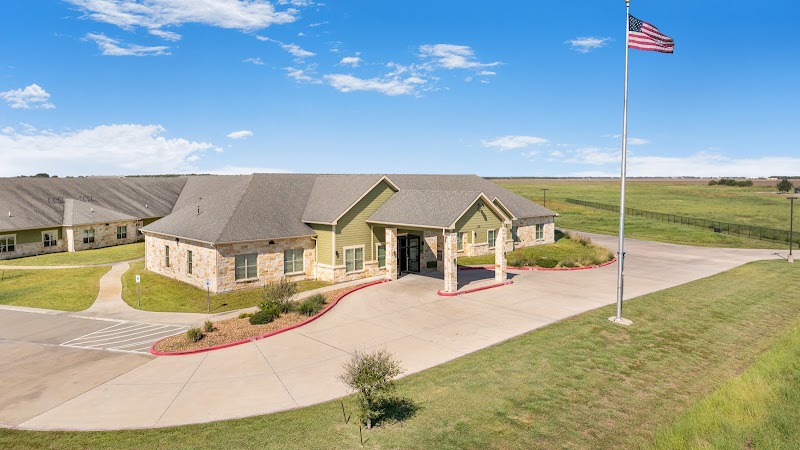
How is Lavaca Bay Staffed?

CMS rates LAVACA BAY NURSING AND REHABILITATION CENTER's staffing level at 1 out of 5 stars, which is much below average compared to other nursing homes. Staff turnover is 56%, which is 10 percentage points above the Texas average of 46%. High turnover can affect care consistency as new staff learn residents' individual needs. RN turnover specifically is 62%, which is notably high. RNs provide skilled clinical oversight, so turnover in this role can affect medical care quality.

What Have Inspectors Found at Lavaca Bay?

State health inspectors documented 32 deficiencies at LAVACA BAY NURSING AND REHABILITATION CENTER during 2022 to 2024. These included: 2 Immediate Jeopardy (the most serious level, indicating potential for serious harm or death), 29 with potential for harm, and 1 minor or isolated issues. Immediate Jeopardy findings are rare and represent the most serious regulatory concerns. They require immediate corrective action.
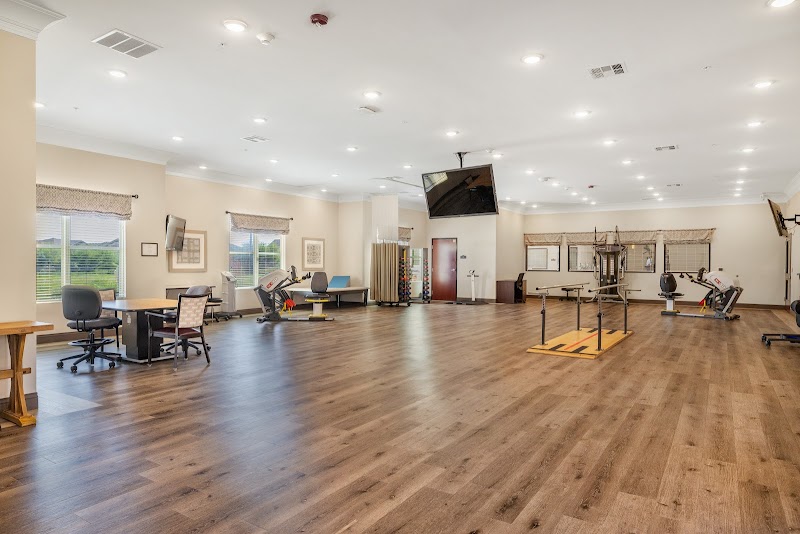
Who Owns and Operates Lavaca Bay?

LAVACA BAY NURSING AND REHABILITATION CENTER is owned by a government entity. Government-operated facilities are typically run by state, county, or municipal agencies. The facility operates independently rather than as part of a larger chain. With 130 certified beds and approximately 89 residents (about 68% occupancy), it is a mid-sized facility located in PORT LAVACA, Texas.
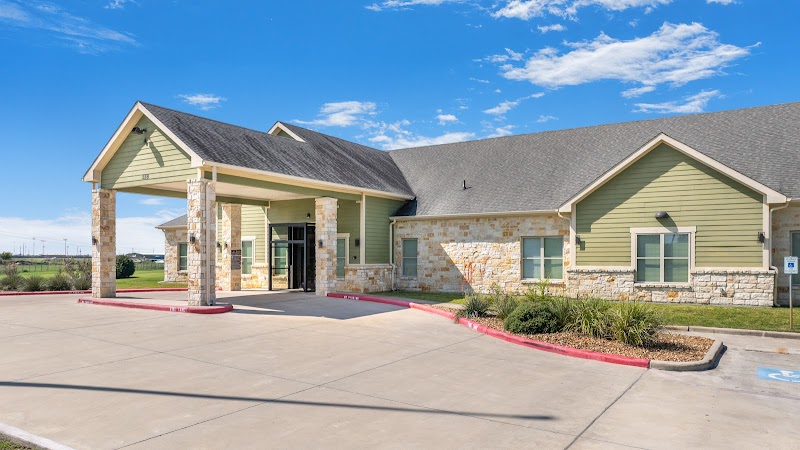
How Does Lavaca Bay Compare to Other Texas Nursing Homes?

Compared to the 100 nursing homes in Texas, LAVACA BAY NURSING AND REHABILITATION CENTER's overall rating (1 stars) is below the state average of 2.8, staff turnover (56%) is near the state average of 46%, and health inspection rating (2 stars) is below the national benchmark.

What Should Families Ask When Visiting Lavaca Bay?

Based on this facility's data, families visiting should ask: "What changes have been made since the serious inspection findings, and how are you preventing similar issues?" "How do you ensure continuity of care given staff turnover, and what is your staff retention strategy?" "Can you walk me through typical staffing levels on day, evening, and night shifts?" "Can I visit during a mealtime to observe dining assistance and food quality?" These questions are particularly relevant given the facility's Immediate Jeopardy citations, the facility's high staff turnover rate, and the below-average staffing rating.

Is Lavaca Bay Safe?

Based on CMS inspection data, LAVACA BAY NURSING AND REHABILITATION CENTER has documented safety concerns. Inspectors have issued 2 Immediate Jeopardy citations (the most serious violation level indicating risk of serious injury or death). The facility has a 1-star overall rating and ranks #100 of 100 nursing homes in Texas. Families considering this facility should ask detailed questions about what corrective actions have been taken since these incidents.

Do Nurses at Lavaca Bay Stick Around?

Staff turnover at LAVACA BAY NURSING AND REHABILITATION CENTER is high. At 56%, the facility is 10 percentage points above the Texas average of 46%. Registered Nurse turnover is particularly concerning at 62%. RNs handle complex medical decisions and coordinate care — frequent RN changes can directly impact care quality. High turnover means new staff may not know residents' individual needs, medications, or preferences. It can also be disorienting for residents, especially those with dementia who rely on familiar faces. Families should ask: What is causing the turnover? What retention programs are in place? How do you ensure care continuity during staff transitions?

Was Lavaca Bay Ever Fined?

LAVACA BAY NURSING AND REHABILITATION CENTER has been fined $21,720 across 2 penalty actions. This is below the Texas average of $33,296. While any fine indicates a compliance issue, fines under $50,000 are relatively common and typically reflect isolated problems that were subsequently corrected. Families should ask what specific issues led to these fines and confirm they've been resolved.

Is Lavaca Bay on Any Federal Watch List?

LAVACA BAY NURSING AND REHABILITATION CENTER is not on any federal watch list. The most significant is the Special Focus Facility (SFF) program, which identifies the bottom 1% of nursing homes nationally based on persistent, serious quality problems. Not being on this list means the facility has avoided the pattern of deficiencies that triggers enhanced federal oversight. This is a positive indicator, though families should still review the facility's inspection history directly.