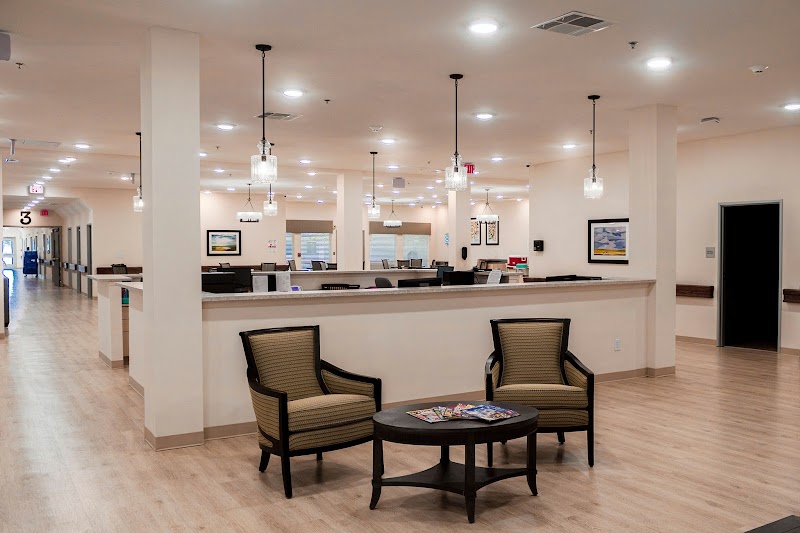
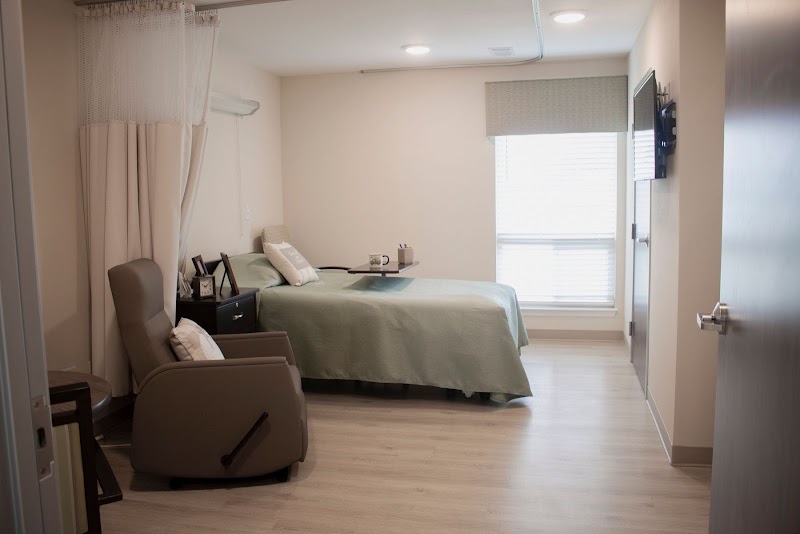
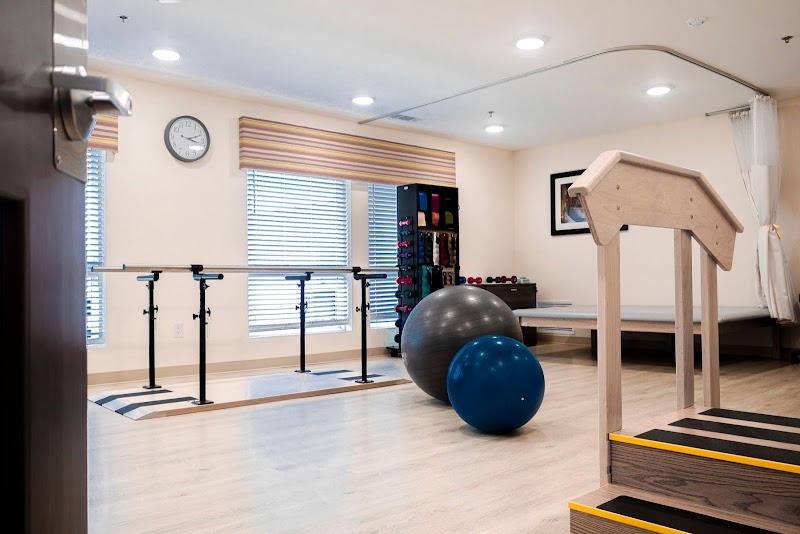
MISSION RIDGE REHAB & NURSING CENTER

401 SWIFT STREET, REFUGIO, TX 78377 (361) 526-9223
For profit - Limited Liability company 90 Beds CREATIVE SOLUTIONS IN HEALTHCARE Data: November 2025 2 Immediate Jeopardy citations
Trust Grade
19/100
#784 of 1168 in TX
Last Inspection: November 2024

Within standard 12-15 month inspection cycle. Federal law requires annual inspections.

Overview

Mission Ridge Rehab & Nursing Center has received a Trust Grade of F, indicating significant concerns about the quality of care provided. It ranks #784 out of 1,168 facilities in Texas, placing it in the bottom half, though it is the only option available in Refugio County. The facility is showing signs of improvement, with issues decreasing from 12 in 2024 to just 2 in 2025. Staffing is rated average, with a turnover rate of 53%, which is close to the state average, but it has good RN coverage, exceeding that of 90% of Texas facilities. However, the facility has faced serious incidents, including a resident falling and sustaining injuries due to inadequate supervision and another resident becoming unresponsive due to missed blood sugar checks, highlighting critical areas needing attention.

Trust Score
F
19/100
In Texas
#784/1168
Bottom 33%
Safety Record
High Risk
Review needed
Inspections
Getting Better
12 → 2 violations
Staff Stability
⚠ Watch
53% turnover. Above average. Higher turnover means staff may not know residents' routines.
Penalties
⚠ Watch
$23,373 in fines. Higher than 98% of Texas facilities. Major compliance failures.
Skilled Nurses
○ Average
Each resident gets 39 minutes of Registered Nurse (RN) attention daily — about average for Texas. RNs are the most trained staff who monitor for health changes.
Violations
⚠ Watch
23 deficiencies on record. Higher than average. Multiple issues found across inspections.
★★☆☆☆
2.0
Overall Rating
★★★☆☆
3.0
Staff Levels
★★★☆☆
3.0
Care Quality
★★☆☆☆
2.0
Inspection Score
Stable
2024: 12 issues
2025: 2 issues

The Good

  • Full Sprinkler Coverage · Fire safety systems throughout facility
  • No fines on record

Facility shows strength in fire safety.

The Bad

2-Star Overall Rating

Below Texas average (2.8)

Below average - review inspection findings carefully

Staff Turnover: 53%

Near Texas avg (46%)

Higher turnover may affect care consistency

Federal Fines: $23,373

Below median ($33,413)

Minor penalties assessed

Chain: CREATIVE SOLUTIONS IN HEALTHCARE

Part of a multi-facility chain

Ask about local staffing decisions and management

The Ugly 23 deficiencies on record

2 life-threatening 1 actual harm
Sept 2025 2 deficiencies 1 IJ
CRITICAL (J) 📢 Someone Reported This

A family member, employee, or ombudsman was alarmed enough to file a formal complaint

Immediate Jeopardy (IJ) - the most serious Medicare violation

Accident Prevention (Tag F0689)

Someone could have died · This affected 1 resident

**NOTE- TERMS IN BRACKETS HAVE BEEN EDITED TO PROTECT CONFIDENTIALITY** Based on observation, interview, and record review, the facility failed to ensure each resident received adequate supervision an...

Read full inspector narrative →
**NOTE- TERMS IN BRACKETS HAVE BEEN EDITED TO PROTECT CONFIDENTIALITY** Based on observation, interview, and record review, the facility failed to ensure each resident received adequate supervision and assistance devices to prevent accidents for one (Resident #1) of 2 residents reviewed for accidents and hazards.The facility failed to ensure CNA A provided adequate supervision and used a 2-person assist while providing incontinent care to Resident #1. CNA A left Resident #1's bedside, while she lay on her right side. Due to her positioning, Resident #1 fell off the bed. Resident #1 sustained a rib fracture and contusions (bruising) to her right cheekbone, forehead, and back on 06/02/25.A PNC (Past Non-Compliance) Immediate Jeopardy (IJ) situation was identified on 06/02/25. The PNC IJ was removed on 06/30/25. The facility had corrected the noncompliance before the investigation began. This failure could place residents requiring supervision at risk for injury and accidents with potential for more than minimal harm.Findings included:Record review of Resident #1's face sheet dated 07/25/22 revealed an [AGE] year-old female with an admission date of 07/25/22 with diagnoses including dementia with agitation, heart disease, femur fracture, wrist fracture, traumatic brain bleed, muscle weakness, abnormal gait and mobility, muscle wasting and atrophy, anxiety, malnutrition, mental disorders, depression, insomnia, and herpes.Record review of Resident #1's quarterly MDS report dated 07/23/25 revealed Resident #1 had a BIMS score of 99, indicating severe cognitive impairment and was dependent on staff for all ADLs. Resident #1 required 2-person assistance for transfers via mechanical lift, bed mobility, and incontinent care. She could sit in a recliner-type wheelchair but could not self-propel due to upper and lower body impairment and contractures to her hands. She was incontinent of bladder and bowel.Record review of Resident #1's Care Plan dated 07/26/22 indicated she was dependent on staff for all ADLs and required 2-person assistance for transfers, bed mobility, and incontinent care. The following care plan updates were implemented after the incident on 06/02/25: Resident #1 has potential for pain due to contractures of the joints of both hands. She has limited use of her hands due to contractures and a recent fracture of a rib from a fall. Date Initiated: 06/02/2025 Revision on: 06/06/2025. The resident utilizes a bolster or concave mattress to prevent unintentional slipping or rolling out of bed. Date Initiated: 07/23/2025 The resident will not be injured from a fall from the bed. Date Initiated: 07/23/2025 Ensure the bolster is in place while the resident is in the bed. Date Initiated: 07/23/2025. The resident will receive assistance with all ADLs (bathing, dressing, grooming, toileting, eating, mobility) as needed, to maintain skin integrity, prevent infections, and promote comfort, while respecting their preferences and ensuring safety. Date Initiated: 06/06/2025. Revision on: 06/06/2025. The resident is at risk for falls r/t impaired cognition and poor safety awareness. The resident had a recent fall. Date Initiated: 06/02/2025. Revision on: 06/06/2025. The resident will not sustain serious injury through the review date. Date Initiated: 06/02/2025. Revision on: 06/06/2025. The resident will remain free from falls and injury by implementing safety measures, such as environmental modifications and supervision, and by increasing awareness of safety cues, with the support of staff and family, to promote a safe living environment. Date Initiated: 06/06/2025. Target Date: 10/15/2025. Mechanical lift with staff x2 to assist with transfers. Date Initiated: 06/02/2025 Resident may have a mattress with bolsters. Date Initiated: 06/11/2025 Resident to have a low bed and floor mat on both sides of the bed. Date Initiated: 06/02/2025 Revision on: 06/02/2025 Review information on past falls and attempt to determine the cause of falls. Record possible root causes. Record review of the physician notes dated 06/05/25: EXAM: .Resident #1 is functionally impaired due to the physiological changes of an advanced age state and moderate dementia. The patient requires medication management with continued treatment. Resident #1 is vulnerable to safety risks and requires ongoing supervision to maintain their protection from harm. Resident #1's vocabulary and fund of knowledge indicate her cognitive function is at/or below lifetime baseline, indicating a moderate state of dementia.Record review of the Facility's PIR dated 06/06/25 revealed the fall incident was on 06/02/25 at 10:40 am. There were no witnesses. Resident #1 was assessed by a nurse (LVN C), and the findings were redness to the right side of the forehead and cheekbone, and swelling of the cheekbone. Resident #1 was sent to a local hospital for evaluation. The Resident #1 returned the same day with diagnoses of contusions (bruises) to the right cheek and forehead, mid back, and a non-displaced rib fracture. CNA A was suspended on 06/02/25 pending investigation. Police Case #134533. Steps taken immediately and corrective action implemented by the facility beginning 06/02/25:Medical Director, RP, notified. Resident sent to hospital. In-service on Abuse & Neglect initiated. Staff statements obtained. Actual/alleged abuse/neglect monitoring ad hoc protocol initiated. In-servicing on checking & following Kardex/POCs including making sure second person is available before initiating care. Bed mobility/transfer for 2-person assist. One on one in- servicing with alleged perpetrator. Monitoring initiated from ad-hoc protocol for the next 30 days or as needed to ensure compliance. Weeks 1-4 monitoring of incontinent care was completed by the DON. Care plans were updated for all residents on air mattresses to be 2-person assists. Transfer training techniques discussed and demonstrated with use of proper body mechanics with 2-person transfers. Discussed bed mobility training with proper rolling technique's and scooting upward in bed safely with 2-person assist. Coaching Form for CNA A to follow P&P and refrain from leaving residents unattended while providing incontinent care. (verified)Written witness statement by CNA A dated and signed 06/02/25 revealed I was in the room changing Resident #1 when I needed to change my gloves. Resident #1 was lying on her right side on the bed. When I turned my back to get some gloves when I heard a loud noise, that's when I turn to see what happened, I saw that Resident #1 had fallen off the bed. Another co-worker was in the room before the incident had happened, but she had to step out for a few minutes.Written witness statement by CNA-B dated and signed 06/02/25 revealed .I asked CNA A if she needed help, and she said yes. I told her give me a minute I had to go to another hall. I said I'll be right back. I came back and CNA A had already started (incontinent care) with Resident#1. I was moving the mechanical lift and shower chair out the door to another room. Came back and CNA A said Resident #1 fell out of bed. I saw her (Resident #1 on the ground). I went to call nurse and DON.Written statement by the ADM (at the time) dated and signed 06/05/25 revealed During my review of Resident #1's fall on 06/02/25, I met with the DON and family member of the resident. The family member stated she saw on camera [Resident #1] fell out of bed when nurse aide left bedside to get clean gloves. Resident's family member stated she was informed of the incident and staff's (unknown) description matched what she saw on camera. Video was not shared with facility.Record review of Resident #1's fall risk assessments dated 07/25/22 was 18, 07/27/22 was 12, 07/31/22 was 13, 08/07/22 was 12, 01/06/23 was 12, and 06/02/25 was 10. All scores indicated her fall risk was high since admission. Record review of the local hospital records dated 06/02/25 at 11:25 am: Chief complaint: fell out of bed at nursing home while staff was changing brief, possibly hit right side of head on floor/dresser. History of Present Illness: Here for a fall, unsure if any injuries as she is only alert and oriented to self, and only sometimes, at her baseline. She Is bed bound, from remote traumatic SAH and right hip fracture, has been bed bound for some time, (muscle) wasting in legs, does not speak much at all. She comes in today because they were changing her on nursing home on her bed, and they accidentally walked away with the rail up, and she was still on her side, causing her to roll off the bed. She had some redness on the side of her face, right side, but no other obvious injuries. They brought to ER to make sure no other injuries. She does not cooperate with history or exam, so she has no specific complaints, she Is alert, not drowsy or tired appearing, but just looks around room and will not answer questions. At 12:20 pm: concluded Resident #1 had a closed fracture of one rib of left side with routine healing. Contusion of back. Contusion of face. Contusion of head. Fall. Observation of Resident #1 on 09/10/25 at 1:00 pm revealed a well-kempt female in a recliner wheelchair with blankets on. She was awake and positioned close to a television in the common area. She had a light blanket covering her and one around her shoulders. She did not respond to her name nor look in the direction of my voice. In an interview with the DON on 09/09/2025 at 2:25 pm, she said the facility was making communication more user-friendly by providing Resident #1's family with her direct email and cell phone number. She said Resident #1 was the only resident with an in-room camera. In an interview with the DON on 09/10/25 at 8:50 am, she said CNA A was by herself, and Resident #1 could not move on her own. She said and demonstrated how CNA A turned to get gloves about 8 feet away from the bed, heard a thump, and found Resident #1 on the floor on 06/02/25. She said Resident #1 was on an air mattress, and CNA A probably did not know about the 2-person requirement for residents on air mattresses. She said, That rule was implemented that day. She said CNA A should have known Resident #1 was a 2-person assist anyway. She said she also audited all residents on air mattresses, updated their care plans, and all staff in-services were done for the new 2-person requirement when patient care was done on someone on an air mattress. She said the rule existed at the time of the incident, but she did not know about it until the day of the incident, and found it in a QAPI ad-hoc she came across while looking for a policy. She said she conducted follow-up monitoring for 4 weeks. She said a police report was also done, and a case number was provided. She said Resident #1's family member was upset after seeing the incident on the in-room camera. She said CNA A was not allowed in Resident #1's room for a period of time, but could now go in as long as someone else was with her. She said CNA A was suspended for less than 3 days due to immediate education, in-services, and corporate allowed CNA A back on the floor. She said CNA A did not have any reprimands in her personnel file. In an interview with RN E on 09/10/2025 at 11:28 am, she said she had worked at the facility for 1 year. She said she heard about a resident who had rolled off her mattress when she was being changed. She said, That resident is heavy, so she should have been a 2-person assist anyway. In an interview with CNA F on 09/10/2025 at 1:08 pm, she said she had worked at the facility for 25 years. She said Resident #1 would call out whenever anyone touched her at all. She said she heard about Resident #1 falling out of the bed. She said she heard CNA A had put Resident #1 in bed and had turned her on her side, then CNA A went to get gloves, and the resident flipped herself over and off the bed. CNA F said that since that happened, Resident #1 was a 2-person assist whenever we went in to do anything for her. She said the mechanical lift and residents on air mattresses required 2 people now. She said leaving a resident's bedside like that would be neglect.During a phone interview with RN G on 09/10/2025 at 2:30 pm she said CNA A turned Resident #1 on her side, then left the bedside to get gloves, and Resident #1 fell off the bed. She said Resident #1 was a 2-person assist at the time, but CNA A did it by herself, and this was not the first time CNA A had done something that got her in trouble. She said Resident #1's family member asked her one day why Resident #1 was still in bed. She said CNA A told her and the family member she just didn't do it. RN G said she was on duty the day of the incident and assisted LVN C with the situation. During a phone interview with RN H on 09/10/2025 at 2:48 pm he said he could not recall and did not know the details of Resident #1 falling out of bed. He said there probably should have been 2 people in there. He said he was not surprised. During a phone interview with CNA A on 09/10/2025 at 4:05 pm she said she was changing Resident #1 on 06/02/25 and needed to change her gloves because they were soiled. She said she left Resident #1 lying on her side in the middle of the bed, changed her gloves, turned around, and she was on the ground. She said the gloves were by the door, the bed was by the window (B bed). She said Resident#1 had never moved like that before, meaning she never rolled by herself. She said 2 staff members were changing Resident #1 now. She said she should have known better than to leave Resident #1. She said she did not have all her supplies ready to go for changing Resident #1, like she was taught. She said Resident #1 had always been a 2-person assist because she did not move or do anything for herself. She said, and another staff member, CNA B, put Resident #1 to bed with the mechanical lift, but CNA B left the room, and I should have waited for her to return to help, but I took it upon myself to change her. I did not want to wait. She said CNA B did not work there anymore because of attendance. [Termed 06/24/25 for NCNS] She said Resident #1's bed was waist high on her and she's 5'3, about 3 feet off the floor when she fell. She said she found out Resident #1 had a fractured rib as a result of the fall. She said Resident #1 landed on her face when she fell. She said they waited for the paramedics to move her. She said Resident #1 fell on a fall mat. She said there was a fall mat on each side of her bed. She said RN G came in when she called for help. She said Resident #1 was a 2-person assist for everything. She said she never changed her by herself, and she just wasn't thinking. She said there was a camera in her room, but she did not see the video. She said it was around 10 or 10:30 in the morning. During a phone interview with LVN C on 09/10/2025 at 4:43 pm she said, Resident #1 could not hold herself in place, so if she was on her side, gravity could easily make her fall. She said Resident #1 was not responsive to anything but pain and was non-communicative except to yell out. She said Resident #1 was not hard of hearing. She said she did not know why CNA A left the resident's side. She said Resident #1 was a mechanical lift that required 2 people. She said she assessed Resident #1 after the fall and did not move her. She said they waited for the paramedics to move her. She said she could see redness on Resident #1's face. She said RN G assisted her with the situation.In an interview with CNA D on 09/10/2025 at 6:13 pm, she said she heard Resident #1 had fallen from her bed. She said the accident could have been avoided because Resident #1 was little and stiff. She said CNA A should have made sure she had everything she needed before she got started with Resident #1, so she did not have to step away. She said Resident #1 was probably too close to the edge of the bed to start with. She said Resident #1 always had fall mats. She said Resident #1 was a 2 person everything. Interviews with current staff beginning 09/09/25 at 2:25 pm: CNA A, LVN C, CNA D, RN E, CNA F, RN G, RN H, and CNA J were all aware and correctly identified steps in the facility policies regarding transfers and 2-person assists. Record review of CNA A's personnel file included a counseling form dated 03/10/25 for Failure to check on a resident for several hours. 06/10/25 for failure to report an incident involving a resident transfer from a Geri chair to the bed. There were no other details about the incidents. Record review of an in-service dated 06/03/25-Any resident on an air mattress needs at least 2 staff to assist with bed mobility and/or incontinent care in the bed. Record review of facility In-services dated 06/03/25 included: 2. Any resident on an air mattress needs at least 2 staff to assist with bed mobility and/or incontinent care in the bed. 3. Mechanical lift-2 people assist always: No exceptions. 4. How to use the kardex (a concise summary of a patient's care plan, used as a quick reference guide) in the electronic health record 5. Ensure that you follow all care planned interventions, including how many staff are required to perform ADLs and/or if they need a mechanical lift 6. If, for any reason, the number of staff assistance is not listed for bathing, bed mobility, transferring, walking, or incontinent care, then you should contact the charge nurse, the assistant DON, and/or the DON. 7. If more assistance is required than what is on the kardex, report to the DON or the assistant DON so it can be updated. 8. Report all change in the conditions of residents to the charge nurse, assistant DON, and/or the DON.Record review of the facility's corporate email communication with the DON dated 09/10/25 revealed there was no policy for air mattress.Record review of the facility's undated policy titled, Fall Policy stated, Preventing falls requires an interdisciplinary program that focuses on modifying the extrinsic factors, correcting intrinsic factors, and educating the resident and family. A Fall Risk Assessment will be completed on admission and after each fall. The MDS will also assist in determining a resident who is at risk.The assessment tool should be scored, and interventions implemented as indicated. Appropriate interventions will be addressed immediately in the interdisciplinary plan of care. Reassessment will occur after each fall. Interventions will be resident-centered. See Appendix A for Fall Intervention Methods on the following pages. In instances where fall risk measures do not prevent a fall, the residents will be assessed immediately for injury. Vital signs and first aid measures will be completed immediately. The Charge Nurse will notify the attending physician and family member as soon as possible after the resident has been stabilized. The nurse will complete an event fall nurses' note after each fall. Falls resulting in serious injury will be reported to the DON and/or Administrator. The DON or designee will be responsible for investigating all resident falls to attempt to determine the cause and need for new interventions as required. Appropriate education will be provided to all staff members as needed on fall prevention. Appendix A.Positioning devices such as bolsters, wedges, and special mattresses can increase safety in bed/chair. Staff must be trained in safe transfer techniques and proper use of body mechanics.Record review of the facility's undated policy titled, Abuse/Neglect stated, The resident has the right to be free from abuse, neglect.Residents should not be subjected to abuse by anyone.The facility will provide and ensure the promotion and protection of resident rights. It is each individual's responsibility to recognize, report, and promptly investigate actual or alleged abuse, neglect.and situations that may constitute abuse or neglect to any resident in the facility. Definitions: 4. Adverse event. An adverse event is an untoward, undesirable, and usually unanticipated event that causes death or serious injury, or the risk thereof. 7. Neglect is the failure of the facility, its employees or service providers to provide goods and services to a resident that are necessary to avoid physical harm, pain, mental anguish, or emotional distress. 10. Mistreatment means inappropriate treatment or exploitation of a resident. Procedure: C. Prevention-The facility will provide the residents, families, and staff with an environment free from abuse and neglect. Record review of the facility's undated policy titled, Turning a Resident in Bed 17. Assure the resident is placed in the center of the bed and not on the edge of the bed.Record review of the facility's undated policy titled, Corporate Code of Conduct stated, As an integral member of this facility's team, you are expected to accept certain responsibilities and exhibit a high degree of personal integrity always. This not only involves sincere respect for the rights and feelings of others but also demands that both in your business and your personal life, you refrain from any behavior that might be harmful to you, your coworkers, and/or that might be viewed unfavorably by current or potential customers or by the public at large.Types of behavior and conduct that this facility considers inappropriate include, but are not limited to, the following:.Disregarding safety or security regulations, Violation of residents' rights, Failure to carry out duties and responsibilities, or performing work of substandard quality or quantity.If your performance, work habits, overall attitude, conduct, or demeanor becomes unsatisfactory in the judgment of this facility, i.e., violates any of the above or violates any other Facility policies, rules, or regulations, you will be subject to disciplinary action, up to and including termination. The noncompliance was identified as PNC. The IJ began on 06/02/25 and ended on 06/30/25. The facility had corrected the noncompliance before the survey began.
CONCERN (D) 📢 Someone Reported This

A family member, employee, or ombudsman was alarmed enough to file a formal complaint

Potential for Harm - no one hurt, but risky conditions existed

Quality of Care (Tag F0684)

Could have caused harm · This affected 1 resident

**NOTE- TERMS IN BRACKETS HAVE BEEN EDITED TO PROTECT CONFIDENTIALITY** Based on observation, interviews, and record review, the facility failed to ensure residents received treatment and care in acco...

Read full inspector narrative →
**NOTE- TERMS IN BRACKETS HAVE BEEN EDITED TO PROTECT CONFIDENTIALITY** Based on observation, interviews, and record review, the facility failed to ensure residents received treatment and care in accordance with professional standards of practice for 1 of 2 residents (Resident #2) reviewed for quality of care and dignity. The facility failed to ensure staff were providing adequate incontinent care for Resident #2 and that staff knew not to photograph the scenario on 02/27/25. The failures could affect residents residing in the facility, resulting in not receiving needed care and affecting their dignity.Findings included:Record review of Resident #2's face sheet dated 06/11/24 revealed an [AGE] year-old male with diagnoses including heart failure, malnutrition, high blood pressure, fecal urgency, abnormalities of gait and mobility, and muscle weakness.Record review of Resident #2's quarterly MDS dated [DATE] revealed a BIMS score of 09, indicating moderate cognitive impairment. He was independent with eating and oral hygiene and required supervision for all transfers and bed mobility. He utilized a manual wheelchair and could self-propel. He was always incontinent of bladder and bowel, had a pressure-reducing mattress, and was at risk for MASD. He was receiving hospice services. Record review of Resident #2's care plan dated 06/12/24 revealed: The resident is on diuretic therapy. Date Initiated: 06/12/2024 Revision on: 09/26/2024. The resident will be free of any discomfort or adverse side effects of diuretic therapy through the review date. Date Initiated: 06/12/2024 Revision on: 07/19/2024. The resident has bowel incontinence. Date Initiated: 06/12/2024. The resident will not have any complications r/t bowel incontinenceDate Initiated: 06/12/2024. Apply barrier cream after every incontinence episode. Date Initiated: 06/12/2024 Check resident every two hours and assist with toileting as needed. Date Initiated: 06/12/2024. Provide peri care after each incontinence episode. Date Initiated: 06/12/2024. See care plans on Mobility, ADLs, Cognitive Deficit, Communication Date Initiated: 06/12/2024. The resident has a terminal prognosis and/or is receiving hospice services for the diagnosis of Acute on chronic combined systolic congestive and diastolic congestive heart failure. Date Initiated: 10/06/2024 Revision on: 06/12/2025. The resident's dignity and autonomy will be maintained at the highest level through the review date. Date Initiated: 10/06/2024 Revision on: 10/30/2024. Work with nursing staff to provide maximum comfort for the resident. Date Initiated: 10/06/2024. The resident has an ADL Self Care Performance Deficit. Date Initiated: 06/12/2024. The resident will maintain or improve the current level of function in (Specify Bed Mobility, Transfers, Eating, Dressing, Toilet Use, and Personal Hygiene; ADL Score) through the review date. Date Initiated: 07/04/2024 Bathing requires staff x2 for assistance. Date Initiated: 06/12/2024 Bed Mobility: requires staff x1 for assistance. Date Initiated: 06/12/2024. Toilet use: requires staff x2 for assistance Date Initiated: 06/12/2024. The resident has bladder incontinence. Date Initiated: 06/12/2024. The resident will remain free from skin breakdown due to incontinence and brief use through the review date. Date Initiated: 06/12/2024 Revision on: 07/19/2024. Notify nursing if incontinent during activities. Date Initiated: 06/12/2024. Monitor/document for s/sx UTI (Urinary Tract Infection) Date Initiated: 06/12/2024. The resident has a pressure ulcer or potential for pressure ulcer development Date Initiated: 10/06/2024. Follow facility policies/protocols for the prevention/treatment of skin breakdown. Date Initiated: 10/06/2024. The resident needs assistance to turn/reposition at least every 2 hours. Date Initiated: 10/06/2024. Observation and interviews with Resident #2 and a family member on 09/09/2025 at 1:15 pm revealed he was sitting up in his recliner. He was alert and oriented x3. He had no complaints and talked about his time in the military. He said he was able to walk with assistance. A rollator walker was in front of him. The family member showed me the changing sheets staff and residents used to document Resident #2's incontinent care, and she explained that both the staff member and the resident had to sign the changing sheets. There was a sign inside his room on his wall that read Q 2-hour Checks. Resident #2 said he did not recall the incident.During a phone interview with Resident #2‘s family member on 09/09/2025 at 1:25 pm she said, pictures were taken by some of the girls, but they have left or been fired since then. She said she did not have any of the pictures and did not know who, if anyone, had them. She described the scenario as, Resident #2 had been soiled and wet all night. In the recliner where he slept, his legs and the floor around him were covered in dry, caked-on feces and dried urine. She said, That kind of treatment was negligent and cruel. She said she had discussed the situation with the DON, and the DON was very, very upset. She said there was a sign for checking Resident #2 every 2 hours on his wall. She said she was an old, retired nurse and what she saw was unbelievable. She said some of the CNAs came by every 2 hours on the dot, but others did not. She said staff had a sheet they sign when they change Resident #2 and have the resident sign it as well. She said Resident #2 burned his butt sitting on a heating pad a couple of years ago, and that was where the wounds came from and why he was admitted to the facility. She said Resident #2 was in hospice. She said Resident #2 burned his butt sitting on a heating pad a couple of years ago, and that was where the wounds came from and why he was admitted to the facility. She said the wounds on his bottom were healed now, but he was always moist down there. In an interview with the DON on 09/09/2025 at 2:25 pm she said the facility was fully staffed with 3 CNAs for day shift, 2-3 on night shift, and 2 nurses per shift. She said weekends were also 3 & 2. She said department heads made champion rounds every morning and afternoon. She said all staff were responsible Q (every) 2 hours for checking residents and walking rounds, including nights, weekends, and weekend nights. She said the nurses were responsible for making sure the q 2 hr. checks were done.In an interview with CNA J on 09/09/2025 at 5:19 pm she said she had not heard anything about anyone being covered in dried feces and/or urine in late February 26th and the morning of February 27th. Her schedule showed she was working as the driver at 7:22 am on the 27th.In an interview with LVN L on 09/10/2025 at 10:15 am, she said nurses worked 12-hour shifts, 6 am-6 pm. She said she had worked at the facility for about a year. She said Resident #2 was covered in feces and urine. She said there were photos taken because it was unbelievable. She said she did not know who had the pictures, but she had seen them. She said the DON spoke with the staff. She said she would have fired the staff responsible on the spot. She said she did not know who was working at the time of the incident. She said there was a rule for residents to be checked every 2 hours. She said, This was blatant neglect. In an interview with RN E on 09/10/2025 at 11:22 am, she said she remembered the situation because she heard about it. She said they (unknown) had found him like that, meaning there was feces and urine on and around Resident #2, and she did not remember who said that. She said she worked the night it happened, but the resident was not found until the morning. She said she had stayed over the morning of 02/27/25 to help someone across the hall from Resident #2. She said there was no smell, and his call light was not on when she was across the hall. She said she had the impression the incident really happened because why else would the staff be talking about it?. She said she heard staff say Resident #2 had a lot of poop, like a loooot of poop on and around him. She said Resident #2 pooped and urinated a lot when he goes. She said he was on a diuretic. She said she did not hear anything about the feces and urine being dried and stuck to him. She said residents were checked every 2-3 hours at night. She said she did not recall if he was checked every 2-3 hours that night because she was in charge of the other hall. She said staff (CNAs and/or Nurses) were supposed to check residents every 2-3 hours. She said the nurses were responsible for making sure the residents were checked every 2-3 hours. She said she was working the other side of the building that night. She said the nurses were responsible for their crews. She said she did not remember if there was an in-service because the DON was always saying make your rounds. In an interview with the DON on 09/10/2025 at 12:25 pm she said she was familiar with Resident #2. She said she was not at the facility at the time of the incident but heard about how he was covered in dried poop. She said neither the family member nor the resident used his call light. She said Resident #2 and his family would tell the DON they did not want to bother them. The DON said CNA K, who was assigned to that hall, had been terminated for poor performance after the incident. She said she saw the pictures on someone's phone, but did not know who took the photos. She said the pictures were awful. She said the resident and his family member had been spoken to by her on multiple occasions, including today, about not wanting to bother anyone when either one of them needed something to use the call light. In an interview with CNA F on 09/10/2025 at 1:24 pm she said she had worked at the facility for 25 years. She said she did not know about the incident. She said the CNAs checked on residents every 2 hours, and it was always that way. She said the last training for Q2 hr. checks, lifts, and feeding was on or about the 12th of August. She said the nurses were responsible for making sure the residents had been checked on every 2 hours. She said if a resident was found with poop on them, it would be neglect. In a phone interview with RN G on 09/10/2025 at 2:22 pm she said she saw the pictures of Resident #2. She said she did not know who took them. She said it was pretty bad. She said there was dried, crusty poop all up the back of his legs, the chair, on the floor, and mixed urine and poop had pooled and run across the floor. She said she did not know who the CNA was on the floor that night. She said it was uncalled for. She said his family member, who found him, had been crying because she was so upset. She said the state the resident was in was neglectful. In a phone interview with RN H on 09/10/2025 at 2:46 pm he said he barely recalled Resident #2 being covered in feces and urine. He said he was not sure if he was in the facility at the time. He was reminded of his time sheet at this time. He said he did not recall which aide he worked with. He said he did not notice anything out of the ordinary on the night in question. He said he made frequent rounds throughout his shifts, and his last rounds were around 5:00 am. He said Resident #2 would pee and poop himself and wouldn't ask for help because he was hardheaded and did not want to bother anyone, and would rather sit in his own stuff. He said he recalled Resident #2‘s family member being very upset, but that was a while back. He said he had many conversations with both of them about it not being good in any way for the resident to sit in soiled clothing. In an interview with CNA D on 09/10/2025 at 5:45 pm she said she was not working on that hall at the time of the incident. She said Resident #2's room was on CNA K's side and CNA K was her partner at work. She said CNA K was always lazy. She said the CNAs had certain tasks to get done when they first got to work. She said they were expected to pick up meal trays and look at the plates to make sure residents were eating, take linen and trash barrels out, lay the residents down, change the residents who were already in bed, stock briefs, gloves, etc. She said it took her about 2 hours when she first came in to get to the point where she could chart. She said she would walk the halls to peek in and/or check on her residents basically every 2 two hours, but CNA K would plop down at the nurse's station and pretend to be charting and CNA K would disappear throughout her shift, and no one would know where she was. She said CNA K was on her phone most of the time she was at work. She said CNA K would get mad if the nurses asked her to do something/anything. She said she would call in or just not show up to work, and always had some excuse. She said she was let go for that. She said CNA K probably only went in his room the first round, and that was typical. She said she would talk to whoever the nurse was about not being able to find CNA K. She said she felt like CNA K was neglecting her patients by not checking on them. She said CNA K was freaking out and told her that she forgot to check on her patients that night of the 26th. She said she didn't work with CNA K after that.Additional evidence obtained by the ADM on 09/11/25 at 6:00 pm. A verbal statement by CNA K stated she always checked on Resident #2 due to his being a fall risk. She reported that she checked on residents every 2 hours, and her last round was done around 4:00 am on 02/27/25. She reported she was busy and forgot to chart. Record review of Resident #2's progress notes for 02/27/25 revealed no mention of dried feces & urine on 02/27/25. Record review of the undated facility policy titled, Abuse and Neglect under Protecting Resident Privacy and Prohibiting Mental Abuse Related to Photographs and Audio-video Recordings by Nursing Home Staff: Each resident has the right to be free from all types of abuse, including mental abuse. Mental abuse includes, but is not limited to, abuse that is facilitated or caused by nursing home staff taking or using photographs or recordings in any manner that would demean or humiliate a resident(s). This facility establishes an environment that is as homelike as possible and includes a culture and environment that treats each resident with respect and dignity. Treating a nursing home resident in any manner that does not uphold a resident's sense of self-worth and individuality dehumanizes the resident and creates an environment that perpetuates a disrespectful and/or potentially abusive attitude towards the resident(s). Our residents have the right to personal privacy of not only his/her own physical body, but also of his/her personal space, including accommodations and personal care. Taking photographs or recordings of a resident and/or his/her private space without the resident's or designated representatives ' written consent is a violation of the resident's right to privacy and confidentiality. Examples include, but are not limited to, staff taking unauthorized photographs of a resident's room or furnishings (which may or may not include the resident), or a resident eating in the dining room, or a resident participating in an activity in the common area. Taking unauthorized photographs or recordings of residents in any state of dress or undress using any type of equipment (e.g., cameras, smartphones, and other electronic devices) and/or keeping or distributing them through multimedia messages or on social media networks is a violation of a resident's right to privacy and confidentiality. If a photograph or recording of a resident, or the manner that it is used, demeans or humiliates a resident, regardless of whether the resident provided consent and regardless of the resident's cognitive status, it is considered mental abuse. This would include, but is not limited to, photographs and recordings of residents that contain nudity, sexual and intimate relations, bathing, showering, toileting, providing perineal care such as after an incontinence episode, agitating a resident to solicit a response, derogatory statements directed to the resident, showing a body part without the resident's face whether it is the chest, limbs, or back, labeling resident's pictures and/or providing comments in a demeaning manner, directing a resident to use inappropriate language, and showing the resident in a compromised position.Record review of the facility's undated policy titled, Abuse/Neglect stated, The resident has the right to be free from abuse, neglect.Residents should not be subjected to abuse by anyone.The facility will provide and ensure the promotion and protection of resident rights. It is each individual's responsibility to recognize, report, and promptly investigate actual or alleged abuse, neglect.and situations that may constitute abuse or neglect to any resident in the facility. Definitions: 4. Adverse event. An adverse event is an untoward, undesirable, and usually unanticipated event that causes death or serious injury, or the risk thereof. 7. Neglect is the failure of the facility, its employees or service providers to provide goods and services to a resident that are necessary to avoid physical harm, pain, mental anguish, or emotional distress. 10. Mistreatment means inappropriate treatment or exploitation of a resident. Procedure: C. Prevention-The facility will provide the residents, families, and staff with an environment free from abuse and neglect.Record review of the facility's undated policy titled, Corporate Code of Conduct stated, As an integral member of this facility's team, you are expected to accept certain responsibilities and exhibit a high degree of personal integrity always. This not only involves sincere respect for the rights and feelings of others but also demands that both in your business and your personal life, you refrain from any behavior that might be harmful to you, your coworkers, and/or that might be viewed unfavorably by current or potential customers or by the public at large.Types of behavior and conduct that this facility considers inappropriate include, but are not limited to, the following:.Disregarding safety or security regulations, Violation of residents' rights, Failure to carry out duties and responsibilities, or performing work of substandard quality or quantity.If your performance, work habits, overall attitude, conduct, or demeanor becomes unsatisfactory in the judgment of this facility, i.e., violates any of the above or is in violation of any other Facility policies, rules, or regulations, you will be subject to disciplinary action, up to and including termination.
Nov 2024 7 deficiencies 1 Harm
SERIOUS (G) 📢 Someone Reported This

A family member, employee, or ombudsman was alarmed enough to file a formal complaint

Actual Harm - a resident was hurt due to facility failures

Quality of Care (Tag F0684)

A resident was harmed · This affected 1 resident

**NOTE- TERMS IN BRACKETS HAVE BEEN EDITED TO PROTECT CONFIDENTIALITY** Based on interview, and record review, the facility failed to ensure that a resident receives treatment and care in accordance w...

Read full inspector narrative →
**NOTE- TERMS IN BRACKETS HAVE BEEN EDITED TO PROTECT CONFIDENTIALITY** Based on interview, and record review, the facility failed to ensure that a resident receives treatment and care in accordance with professional standards of practice, the comprehensive person-centered care plan, and the resident's choices, for 1 of 3 residents (Resident #48) reviewed for quality of care. 1. The facility staff failed to ensure blood sugar checks were completed per physician's orders. Resident #48's blood sugar level dropped below normal causing him to become unresponsive then subsequently coded while he was in EMS care at the facility. 2. The facility failed to ensure that LVN G documented Resident #48's blood sugar result on the morning of [DATE]. 3. The facility failed to ensure that LVN D documented Resident #48's FSBG (Finger Stick Blood Glucose) result when LVN D checked his blood sugar and it was below normal after Resident #48 was found unresponsive on his bathroom floor. 4. The facility failed to ensure that LVN D or RN E documented administration of Glucagon Emergency Injection Kit 1mg (Glucagon rDNA) to Resident #48 when he was found unresponsive on his bathroom floor and his FSBG result was below normal. 5. The facility failed to ensure that LVN D accurately and timely documented in the progress notes in Resident #48's EHR when Resident #48 was found unresponsive on his bathroom floor, went into cardiac arrest, and died at the facility on [DATE]. 6. The facility failed to ensure that LVN D accurately and timely documented Resident #48's Postmortem Assessment in PCC after Resident #48 died at the facility on [DATE]. 7. The facility failed to ensure that the ADON accurately and timely documented Resident #48's Discharge Summary in PCC after Resident #48 died at the facility. These failures could place the residents at risk of not receiving care and services to maintain their highest practicable physical, mental, and psychosocial well-being. The findings included: Record review of Resident #48's admission Record reflected a [AGE] year-old male that was admitted to the facility on [DATE]. Resident #48's diagnoses included idiopathic peripheral autonomic neuropathy (damage to the nerves that control automatic body functions such as heart rate, blood pressure, breathing and digestion but the cause of the damage is unknown), hypoglycemia (low blood sugar), unsteadiness on feet, generalized muscle weakness, unspecified abnormalities of gait and mobility, lack of coordination, other reduced mobility, bilateral primary osteoarthritis of knee (the cartilage lining both knee joints is worn down or damaged causing pain, stiffness, swelling, and decreased range of motion), essential (primary) hypertension (high blood pressure), diabetes mellitus (a disorder that causes blood sugar levels to be high), and nocturia (waking up one or more times during the night to urinate). Record review of Resident #48's quarterly MDS dated [DATE] reflected in section C that Resident #48 had a BIMS score of 10 which indicated that he had moderate cognitive impairment. Section GG0115 (Functional Limitation in Range of Motion) reflected that Resident #48 had impairment to both upper extremities (shoulder, elbow, wrist, and/or hand) and both lower extremities (hip, knee, ankle and/or foot) and that he normally used a wheelchair. Section GG130 reflected that Resident #48 was independent with sitting to standing and transferring from bed to chair (or wheelchair) and back. Resident #48 required set up or clean up assistance with walking 10 feet, walking 50 feet, and walking 150 feet. Section GG170 reflected that Resident #48 used a motorized wheelchair and was able to wheel 50 feet with two turns and was able to wheel 150 feet in a corridor. Section H0200 reflected that Resident #48 was always continent of bladder and bowel. The assessment reflected Resident #48 was independent with eating. Record review of Resident #48's Care Plan reflected the following: Focus: (Cancelled) Risk for decline due to diabetes mellitus. Goal: Resident #48 will be free from and s/s of hyperglycemia (high blood sugar), Resident #48 will be free from any s/s of hypoglycemia (low blood sugar), and Resident #48 will have no complications related to diabetes through the review date. Focus: (Cancelled) Risk for falls due to pain and neuropathy (damage to the nerves of the hands and/or feet that caused pain, numbness, and weakness). Actual falls: [DATE], [DATE], [DATE]. Goal: Resident #48 will not sustain serious injury; Resident #48 will be free from injury due to falls through review date. Interventions: Be sure the call light is within reach and encourage resident to use it for assistance when needed. Educate resident/ family about safety reminders and what to do if a fall occurs. Ensure that resident is wearing appropriate footwear when ambulating or mobilizing in scooter. Resident uses a raised toilet seat. Focus: (Cancelled) Resident #48 is a full code. Goal: Request for CPR to be initialed will be followed. Record review of Resident #48's Order Summary Report with active orders as of [DATE] reflected the following orders: 1. Accucheck for s/s of hypoglycemia or hyperglycemia as needed r/t diabetes mellitus. Order date [DATE]. 2. Blood sugar checks two times a day related to hypoglycemia. Order date [DATE]. 3. Full Code. Order date [DATE] 4. Glucagon Emergency Injection Kit 1mg (Glucagon rDNA). Inject 1mg subcutaneously as needed for hypoglycemia. Order date: [DATE]. 5. Glucose Oral Gel 40% (Dextrose-Diabetic use). Give 1 vial by mouth as needed for hypoglycemia. Administer for blood glucose <60. 6. Amlodipine Besylate Tablet 10mg. Give 1 tablet by mouth one time a day r/t HTN. Hold if SBP (Systolic blood pressure) <110 or DPB (diastolic blood pressure) <60. Record review of Resident #48's MAR (Medication Administration Record) in PCC dated [DATE] reflected the following: 1. Amlodipine Besylate Tablet 10mg was not given due to vital signs being outside of parameters. (Resident #48's blood pressure was documented as 96/57). 2. Glucagon Emergency Injection Kit 1mg did not have any documented administrations. 3. Glucose Oral Gel 40% did not have any documented administrations. 4. Blood sugar checks 2 times a day was blank where there should be a checkmark if Resident #48's blood sugar was checked on [DATE] at or near 6:30am 5. Blood sugar checks 2 times a day had a checkmark on [DATE] at 6:30am which indicated that Resident #48's blood sugar was checked at or near that time. 6. Accucheck as needed for s/s of hypoglycemia or hyperglycemia did not have any documented checks (all of the boxes were blank) for the month of [DATE]. Record review of Resident #48's Blood Sugar Summary in PCC reflected that Resident #48's blood sugar was 111 mg/dL on [DATE] at 9:00 am. There was no documentation for Resident #48's blood sugar on [DATE] even though it was documented as being done on the MAR on [DATE] at 6:30am. Record review Resident #48's Progress Notes in PCC reflected the following: LATE ENTRY Type: Nursing Progress Note Effective date: [DATE] at 9:00pm Created date: [DATE] at 5:37pm Note text: Charge nurse went in to give [Resident #48] medications. Charge nurse did not see resident in room, and when calling his name, no response. Charge nurse then asked the CNA if [Resident #48] was outside. CNA stated no he should be in his room. I stated that he was not in his room and I had called his name but he did not answer. The CNA walked in to check the bathroom and [Resident #48] was on the floor breathing but not responding to verbal commands. EMS (Emergency Medical Services) was called. While EMS was transferring [Resident #48] from the floor to the stretcher, [Resident #48] then coded (did not have a heartbeat and was not breathing). EMS then performed CPR (Cardiopulmonary Resuscitation) and followed their protocols. When EMS went through all their protocols, they called the ER (Emergency Room) and the ER doctor then stated to stop CPR. The RN was present and pronounced resident dead at 2035 (8:35pm). RP was here in the facility at the time. MD was called to notify of resident passing. [Funeral Home] picked up resident at 2100 (9:00pm) and RP was here and spoke with [FH person]. No belongings taken at this time, RP stated she would be back to get them. Record review of Resident #48's Standard Assessments in PCC reflected the following: Postmortem Assessment Effective [DATE] at 9:00pm and signed by LVN D on [DATE] that reflected: A.1. Location resident was discovered: bathroom. 2. How was the resident discovered: on floor. B.1. Advanced Directive. The resident was DNR? YES (That was incorrect, Resident #48 was a Full Code) C. Assessment. Select all that apply: box a. Unresponsive to verbal, tactile, and painful stimuli was the only box checked. The other boxes that were not checked were: box b. No respirations auscultated (heard) with stethoscope at bilateral (both left and right) lung fields, box c. No apical pulse auscultated (no heartbeat heard) with stethoscope and no carotid pulse is palpable, box d. pupils are fixed and dilated, box e. body temperature indicates hypothermia; skin is cold relative to the resident's baseline skin temperature, box f. generalized cyanosis (bluish discoloration of the skin or mucous membranes). D.1. Has an RN pronounced the resident dead: Yes 2. Name of pronouncing RN: RN E 3. Time of death: 8:35pm G.3. Date/time (physician) notified: [DATE] at 8:35pm Date/time (Responsible party) notified: [DATE] at 8:35pm Postmortem Assessment Effective [DATE] at 9:00pm and signed by LVN D on [DATE] that reflected: Struck out by: LVN D Struck out reason: wrong date/time Struck out date: [DATE] at 5:40pm B.1. The resident was DNR? No (That was correct, Resident #48 was a Full Code) C. Assessment (The information was the same as the above assessment) D.3. Time of death: 8:35am (incorrect) G.3. Date/time (physician) notified: [DATE] at 8:40am (incorrect) Date/time (Responsible party) notified: [DATE] at 8:35pm (correct) Discharge Summary Effective [DATE] at 9:00pm and signed by the ADON on [DATE] that reflected: A.A. Reason for discharge: Resident expired. A.1. Date of discharge: [DATE] 2. Diagnosis at time of discharge: (Resident #48's diagnoses are in the space provided) 3. Brief history: Resident coded while EMS in facility getting ready to transfer to ER. EMS followed their protocol, performed CPR until all measures were taken. ER doctor called off coded and RN E pronounced resident time of death at 8:35pm. 4. Pertinent physical and laboratory findings: None (none of the information about the resident being found on the floor in his bathroom unresponsive nor his fingerstick that was done by the facility prior to EMS arrival and indicated that his blood sugar was low were documented here) 5. Course of treatment: None (The Glucagon administration that was done by the facility prior to EMS arrival was not documented here) This form has the physician's signature and is dated [DATE]. Discharge Summary effective [DATE] at 9:00pm and signed by LVN D on [DATE] that reflected: Struck out by: LVN D Struck out reason: incorrect documentation. Struck out date: [DATE] at 5:38pm A.A. Reason for discharge: Resident expired at 8:35am (incorrect time) A.3. Brief history: (The same information as the above discharge summary except that it states RN E pronounced resident time of death at 8:35am) A.4. Pertinent physical and laboratory findings: N/A (none of the information about the resident being found on the floor in his bathroom unresponsive nor his fingerstick that was done by the facility prior to EMS arrival and indicated that his blood sugar was low were documented here) A.5. Course of treatment: None (The Glucagon administration that was done by the facility prior to EMS arrival was not documented here) Record review of Resident #48's EMS report dated [DATE] reflected the following information: CLINICAL IMPRESSION Primary impression: Diabetic Hypoglycemia Chief complaint: Fall Patient's level of distress: Severe Signs and Symptoms: Hypoglycemia (primary) Injury: Falls- Fall, unspecified- 0 ft - Nursing home [DATE] Mechanism of injury: Blunt Medical/Trauma: Medical Barriers of care: Unconscious Alcohol/ drugs: None reported Initial patient acuity: Emergent VITAL SIGNS 7:52pm AVPU: U (Unresponsive) BP: 110/68 P: 84 SpO2: 69% BG: LOW GCS: 6 ASSESSMENTS [DATE] at 7:51pm Mental status: unresponsive Skin: cold Eyes: left pupil 6mm non-reactive, right pupil 6mm non-reactive NARRATIVE [Medic unit] dispatched to [Facility] for elderly male who fell, is unresponsive but breathing. [Medic unit] responded code 3 (lights and sirens) to scene. AOSTF (arrived on scene to find) 74 Y/O Male laying on his right side next to the commode in his room. Nursing home staff stated that fall was unwitnessed, also that his BGL read low. Nursing home staff had administered 1mg of Glucagon prior to arrival. Patient's ABC's patent, slow/snoring respirations noted, unresponsive, skin cool and dry, vomit noted near patient's face. No deformities, contusions, abrasions, punctures, burns, tenderness, lacerations, or swelling noted. Patient placed on monitor, blood pressure cuff and pulse ox. BGL checked by EMS, read low. IV established to (left antecubital with a 20 gauge intravenous catheter). Patient administered D10 drip (10% dextrose (sugar) solution in water- used to help increase a person's blood sugar) wide open rate. Patient moved from original position to supine. Patient placed on soft c-collar (device used to stabilize the neck), slid on to vacuum mattress. Patient secured and carried to stretcher. Upon placement on stretcher, patient was not breathing. No pulse detected; immediate CPR performed. Patient moved from stretcher to floor. Patient placed on EKG pads (electrocardiogram pads), asystole noted via manual interpretation. Epi 1:10,000 (Epinephrine- a medication used to help restart the heart) administered every 4 minutes as per protocol. I-gel (a tube that is put into the airway to assist with giving oxygen) placed in patient airway, size 4 with supplemental high flow oxygen, along with in-line ETCO2 (end tidal carbon dioxide- used in conjunction with oxygen when doing CPR), LR (lactated ringers- a solution used to help rehydrate a person) administered IV (intravenously). PEA (pulseless electrical activity- the heart is giving off electrical signals but is not beating) noted during rhythm checks, CPR continued. After fourth round of Epi, online medical control contacted, [ER doctor] gave instruction to cease resuscitation efforts. Family on scene. Dispatch contacted, informed of patient status. Family funeral home contacted by dispatch. Patient remained on scene with family and nursing home staff, awaiting arrival of funeral home staff. EOR (End of Report). [paramedic's name]. Added: Once CPR was initiated, patient was ventilated manually with BVM (bag valve mask) and supplemental oxygen. Patient respirations managed at a rate of 1 breath every 6 seconds. SPECIALTY PATIENT-CPR Cardiac arrest: yes, after EMS arrival Cardiac arrest etiology: cardiac (presumed) Estimated Time of Arrest: 0-2 minutes Time 1st CPR: [DATE] at 8:04pm Initial rhythm: Asystole (flat line) End of event: Expired in the field (not in a hospital) Date/Time expired: [DATE] at 8:25pm TIMES Call received: 7:42pm Dispatched: 7:43pm En Route: 7:45pm On scene: 7:47pm At patient: 7:49pm Depart scene: 9:47pm DISPATCHED AS: Fall In an interview on [DATE] at 3:15 pm in the Adm's office with the CN present, the Adm stated that Resident #48 was found unresponsive in the bathroom. The Adm stated it was an unexpected death, but Resident #48 had been refusing a lot of help recently such as refusing labs, refusing medications, and would refuse transfer help some days. The Adm stated that Resident #48 was not on hospice but they had started bringing it up with the family member. The Admin stated, I did not talk to the family member, but we had been discussing bringing it up with her and SOMEONE did discuss it with her. I'm not sure who or when. When asked if Resident #48's death should have been reported the CN stated, the death is reportable only if suspicious. They found him unresponsive, called EMS, he coded, CPR initiated, he was pronounced, then released to [the funeral home]. The business office reports deaths through the TULIP website monthly and they usually have until the 5th of the month. In an interview on [DATE] at 3:06pm the DON stated that Resident #48 was a frail man, but he was not on hospice or anything, so his death was not expected. The DON stated, I do not remember who called me that night. What was reported to me was, they found him in the bathroom on the floor, he was breathing but not responding. They called 911. EMS came here and as they were getting him ready to transport, he coded, and I believe EMS started CPR. I don't know anything else about his death. The DON stated that Resident #48 needed assistance to get up to his wheelchair. The DON stated that the nurse who called her said they did not find any injury. The DON stated that she did not recall that they mentioned anything else. When asked about the documentation, the DON stated, the cardinal rule: if you don't document- it didn't happen. When asked what her expectation was the DON stated she would like to see more progress notes done with better detail. The DON stated Resident #48's death should have been documented, as soon as possible but definitely before the end of the shift. The DON stated she would need to ask the ADON about the documentation because she thought the ADON had to call LVN D in to do the postmortem assessment because LVN D did not know how to do it. The DON stated that LVN D was the nurse in that hall that night. RN E was working that night but was not in that hall, but it had to be an RN to pronounce. The DON stated that they did check his blood sugar but did not tell her what it was. The DON stated they also did a full set of vital signs. The DON stated, I would have expected them to document that they checked his sugar or gave him Glucagon prior to EMS arrival. The DON stated she was going to have to do a lot of education and reeducation with the nurses on documentation. The DON stated it was important to document things immediately or as soon as possible because by not documenting Resident #48's morning blood sugar or that it was checked, and glucagon given that evening could call into question what actually happened that day. When asked if the death was investigated by the facility, the DON stated there was not an investigation on this death. The DON stated that the CN looked into it because the Adm reported it to corporate. In an interview on [DATE] at 4:36pm in the Adm's office with the Adm present, when asked about Resident #48's status when he was found in the bathroom, the CN stated that Resident #48 was responsive, just not to verbal. When asked if unresponsive meant the same as not responsive, the CN clarified that Resident #48 was unresponsive, but he was breathing. When asked if Resident #48 being on the floor in his bathroom meant that he had sustained an unwitnessed fall, the CN stated, I'm not sure if he had a fall. I would not assume that he did. I can just go by what I see in the chart and what I see documented. In an interview on [DATE] at 4:54pm, CNA F stated yes, she remembered Resident #48 and she was working the night he passed away. CNA F stated dinner was usually right at 6:00pm when the night shift arrived and at about 6:30-6:40pm they started getting trays out of the rooms. CNA F stated Resident #48 usually ate in his room and that evening his tray was in the room, but she did not check the tray to see if he had eaten dinner. CNA F stated that Resident #48 had gotten to where he would not eat much, and they would give him a snack and/ or juice around 10:00pm because the nurse would say Resident #48's blood sugar was low. CNA F stated that CNAs did not check blood sugars. CNA F stated Resident #48's rolling walker was right before you got to the bathroom in his room. CNA F stated that she found Resident #48 in the bathroom and stepped out of the room to get LVN D, who went in right away. CNA F stated Resident #48 was on his right side with his head was toward the corner of the bathroom. (Bathroom is roughly 6ft wide by 9ft long.) CNA F stated Resident #48's pants were partway down with urine and feces (diarrhea) on the floor and a moderate amt of brown vomit by his face. CNA F stated there was no blood that she noticed. CNA F stated that Resident #48 had his tennis shoes on. CNA F stated that LVN D checked Resident #48's vital signs while he was on his side on the floor, but she did not remember if LVN D checked Resident #48's blood sugar. CNA F stated that she did not recall that LVN D gave Resident #48 a shot or anything. CNA F stated that LVN D called EMS. CNA F stated that once EMS got there, she stepped out of the bathroom and into Resident #48's room. CNA F stated that EMS put Resident #48 onto the vacuum mat, suctioned the air out, then moved him to the EMS stretcher in the room by the bed. CNA F stated that she reached down to get the foot stretcher belt and when she looked up they noticed Resident #48 was not breathing so EMS took Resident #48 off the stretcher and put him on the floor. CNA F stated she walked out of the room then because there were 4-5 EMS people in the room. In an interview on [DATE] at 5:20pm, LVN B stated that their glucometer range is 40 to 219mg/dL and it gets QC'd (quality control checked) every day. LVN B stated she did not work on Monday [DATE] but the last time she saw Resident #48 on Sunday [DATE], he was ok and the same as always. In an interview on [DATE] at 5:27pm LVN D stated she did remember Resident #48. LVN D stated, We came on shift at 6:00pm. I was going down the hall passing meds. I went to Resident #48's room, knocked on the door, opened it, called out his name and he did not answer. LVN D stated the door to Resident #48's bathroom was open but she did not think that Resident #48 was in there because the bathroom door was open and he always answered if she called his name. LVN D stated she turned and went into the room across from Resident #48 and got ready to give that resident her pills. LVN D stated CNA F came down the hall and she asked CNA F if she knew where Resident #48 was. LVN D stated that CNA F replied that Resident #48 should be in his room. LVN D stated when she told CNA F that she had checked his room and called his name and he was not in there, CNA F went in and checked and found Resident #48 in the bathroom. LVN D stated that when CNA F told her that Resident #48 was on the floor of the bathroom, she stopped what she was doing and went in there. LVN D stated that Resident #48 was laying on his left side with his face toward the door and it looked like he had thrown up a small amount of brown (not coffee ground or bloody) vomit. LVN D stated she did not remember any urine or feces, just the vomit. LVN D stated they checked Resident #48, and he was still breathing, had a pulse, and his eyes were open. LVN D stated she was calling his name, but he was not responding. LVN D stated Resident #48's pants were halfway on, and he had shoes and socks on. LVN D stated she did check all of Resident #48's vital signs but does not recall what they were. LVN D stated she then called EMS and the doctor to let him know that she was going to send Resident #48 out because it looked like he had fallen, and she was concerned that he may have hurt himself based on how they found him. LVN D stated she checked Resident #48's blood sugar and it was low, but she did not remember what the number was. LVN D stated, I believe I did document it, but I do not remember for sure. LVN D stated Resident #48 had an order for Glucagon, so RN E gave it to him when she (LVN D) went to open the door for EMS. LVN D stated that EMS went to his room and did an assessment and CNA F helped to get Resident #48 dressed. LVN D stated, From that point I remember making a phone call to the family member to let her know we were sending him out and when I went back into the room, they told me that when they were transferring Resident #48 to the stretcher, he had coded. LVN D stated that EMS ran the code and that she did not recall them ever getting a pulse back. LVN D stated that Resident #48 was a very independent person and did most things for himself. LVN D stated Resident #48 had a cane that he used to go from his bed to the toilet, but she did not remember if the cane was in the bathroom. LVN D stated she did not know if Resident #48 ate dinner that evening because she had just gotten on shift. When asked to recap what had happened, LVN D stated, This all started around 7:30ish pm. The CNA (CNA F) was coming down the hall picking up hall trays. I asked her if he (Resident #48) was out front because he didn't answer and she said no, he should be in his room. She probably hadn't picked up his tray yet because she was making her way down the hall picking up trays. After I asked about where he was, she went into the room and found him in the bathroom- the bathroom door was open. Originally, the room door was closed because he always kept it closed. When I stepped in his room, the curtain was back. I didn't think to look for his scooter because he didn't answer me, so I assumed he was up front when he didn't answer. I could see the bed, so I knew he wasn't in the bed. I didn't check the bathroom because the bathroom door was open, and he didn't respond back to me. I don't know if he would normally close the bathroom door because I was not very familiar with him. We didn't move anything out of the bathroom, so I know his scooter wasn't in there. LVN D stated she thought she had documented the blood sugar somewhere, maybe on the transfer papers when she was going to send him out. LVN D stated she was going to check in Resident #48's EHR to see if the blood sugar result was documented anywhere, and at 6:13pm, LVN D stated that she was not able to find the documentation of the blood sugar or the glucagon administration in Resident #48's EHR. In a telephone interview on [DATE] at 6:18pm RN E stated she did remember Resident #48 and that she was working the night of his code. RN E stated she was called into Resident #48's room because he was found in the bathroom unresponsive. RN E stated, The first thing that came to my mind was to check his sugar. RN E stated that LVN D told her that Resident #48's sugar was low, so she gave him Glucagon subcutaneously (into the fatty tissue) in his abdomen and as soon as she gave him the injection, EMS was in the room. RN E stated Resident #48 was laying in the corner between the toilet and the wall, he had his head kind of tucked in, so he was more facing the toilet and the back wall by the toilet. RN E stated she did not even know that Resident #48 had coded, but someone told her so she was in the hallway for a little while. RN E stated she was in the room when EMS was using the [NAME] device (a device that does chest compressions automatically so that EMS personnel are able to do other things) on him. RN E stated that EMS called medical control and the ER (Emergency Room) doctor said to stop CPR. RN E stated she did not remember if she documented the Glucagon or not. RN E stated normally she would document it on the MAR, but everything happened so fast she did not remember if it was documented. RN E stated it was important to document medications that were given to show proof that it was given. RN E stated if medications that were given were not documented, the provider would not know what medications were given, especially if they were PRN (as needed) medications. RN E stated that Resident #48 normally did not go into the bathroom with his scooter, he would ambulate to the bathroom with his 3 wheel walker. RN E stated Resident #48 had fallen a couple of months prior because he would walk really fast with the 3 wheeled walker and wore flip flops. In a telephone interview on [DATE] at 6:35pm LVN G stated she remembered Resident #48 and she was working day shift on [DATE]. LVN G stated she did not remember what his blood pressure was that morning and could not recall if it was lower than normal. LVN G that she did check Resident #48's blood sugar that morning, but I could not recall what it was. LVN G stated normally the result would be documented in the chart in the MAR, but that it had changed so that it was just a check mark for yes it had been checked. LVN G stated she usually kept a log of who she checked sugars on and what they were, but her bag was in her car and her car was in the shop. LVN G stated if Resident #48's sugar had been low she would have gotten him something and called the doctor. LVN G stated Resident #48 was up eating breakfast that morning, he was up in his chair that day, and that he was acting normal and there was nothing out of the ordinary going on for him. LVN G stated she did not know if Resident #48 ate lunch because he ate in his room, and she was in the dining room at lunchtime. LVN G stated it was important to make sure that things were documented so that everyone knew what had or had not been done. LVN G stated, If it wasn't documented, it wasn't done is what we were taught in school. I feel bad that I didn't document it, but if it had been low, I would have done something about it and called the doctor. LVN G stated it was important to document the blood sugar results so that the physician was able to see how they were trending and be able to treat the resident accordingly. LVN G stated usually if Resident #48 felt like his sugar was getting low he would ask her to check his sugar and/or ask for an orange juice. In an interview on [DATE] at 11:53am, the DON stated they had started a 100% check on all of the diabetic residents and residents that had blood sugar checks to make sure that there was a place to document the blood sugar results on the MAR. The DON stated that the issue with Resident #48's blood sugar results not having a space on the MAR was because when the physician changed the order to check it to two times a day, he did not check off the box on the order that required it to be documented in the MAR. The DON stated that they were going to make sure that all of the orders for blood sugar checks had that box checked off. Record review of the Long-Term Care Regulation Provider Letter numbered PL 2024-14 that was provided by the DON reflected in part: Title: Abuse, Neglect, Exploitation, Misappropriation of Resident Property and Other Incidents that a Nursing Facility (NF) Must Report to the Health and Human Services Commission (HHSC) Date Issued: [DATE] 1.0 Subject and Purpose This letter provides a guidance for reporting to HHSC and . It also clarifies the types of events that are not reportable to HHSC, and updates rule references. To aid providers in understanding the reporting requirements, this letter includes: Attachment 1, describing reporting requirements and providing examples to help determine what constitutes a reportable incident. Attachment 2, a flow chart to assist in decisions about making reports. 2.0 Policy Details and Provider Responsibilities 2.1 Incidents that a NF must report to HHSC: A NF must report to CII the following types of incidents, in accordance with applicable state and federal requirements: Death due to unusual circumstances Suspicious injuries of unknown source 2.3 Events that a NF Does Not Need to Report to CII A NF is not required to report to CII: Injury that is not suspicious or of unknown source. Deaths that are not unusual circumstances. 2.4 R[TRUNCAT
CONCERN (D) 📢 Someone Reported This

A family member, employee, or ombudsman was alarmed enough to file a formal complaint

Potential for Harm - no one hurt, but risky conditions existed

Report Alleged Abuse (Tag F0609)

Could have caused harm · This affected 1 resident

**NOTE- TERMS IN BRACKETS HAVE BEEN EDITED TO PROTECT CONFIDENTIALITY** Based on interviews, and record review, the facility failed to ensure that all alleged violations involving abuse, neglect, expl...

Read full inspector narrative →
**NOTE- TERMS IN BRACKETS HAVE BEEN EDITED TO PROTECT CONFIDENTIALITY** Based on interviews, and record review, the facility failed to ensure that all alleged violations involving abuse, neglect, exploitation, or mistreatment, including injuries of unknown source and misappropriation of resident property, were reported immediately, but not later than 2 hours after the allegation was made, if the events that caused the allegation involve abuse or resulted in serious bodily injury, or not later than 24 hours if the events that cause the allegation do not involve abuse and do not result in serious bodily injury, to the administrator of the facility and to other officials (including to the State Survey Agency and adult protective services where state law provides for jurisdiction in long-term care facilities) in accordance with State law through established procedures for 1 of 3 residents (Resident #48) reviewed for abuse/neglect reporting. The facility failed to report an allegation of neglect to the State Agency when Resident #48 was found unresponsive on his bathroom floor, went into cardiac arrest, and died at the facility on [DATE]. This failure could place residents at risk for not having allegations of abuse/neglect reported which could lead to injury or a decrease in physical, mental, and/or psychosocial wellbeing. The findings included: Record review of Resident #48's admission Record reflected a [AGE] year-old male that was admitted to the facility on [DATE]. Resident #48's diagnoses included idiopathic peripheral autonomic neuropathy (damage to the nerves that control automatic body functions such as heart rate, blood pressure, breathing and digestion but the cause of the damage is unknown), hypoglycemia (low blood sugar), unsteadiness on feet, generalized muscle weakness, unspecified abnormalities of gait and mobility, lack of coordination, other reduced mobility, bilateral primary osteoarthritis of knee (the cartilage lining both knee joints is worn down or damaged causing pain, stiffness, swelling, and decreased range of motion), essential (primary) hypertension (high blood pressure), diabetes mellitus (a disorder that causes blood sugar levels to be high), and nocturia (waking up one or more times during the night to urinate). Record review of Resident #48's quarterly MDS dated [DATE] reflected in section C that Resident #48 had a BIMS score of 10 which indicated that he had moderate cognitive impairment. Section GG0115 (Functional Limitation in Range of Motion) reflected that Resident #48 had impairment to both upper extremities (shoulder, elbow, wrist, and/or hand) and both lower extremities (hip, knee, ankle, and/or foot) and that he normally used a wheelchair. Section GG130 reflected that Resident #48 was independent with sitting to standing and transferring from bed to chair (or wheelchair) and back. Resident #48 required set up or clean up assistance with walking 10 feet, walking 50 feet, and walking 150 feet. Section GG170 reflected that Resident #48 used a motorized wheelchair and was able to wheel 50 feet with two turns and was able to wheel 150 feet in a corridor. Section H0200 reflected that Resident #48 was always continent of bladder and bowel. Record review of Resident #48's Care Plan reflected the following: Focus: (Cancelled) Risk for decline due to diabetes mellitus. Goal: Resident #48 will be free from and s/s of hyperglycemia (high blood sugar), Resident #48 will be free from any s/s of hypoglycemia (low blood sugar), and Resident #48 will have no complications related to diabetes through the review date. Focus: (Cancelled) Risk for falls due to pain and neuropathy (damage to the nerves of the hands and/or feet that caused pain, numbness, and weakness). Actual falls: [DATE], [DATE], [DATE]. Goal: Resident #48 will not sustain serious injury; Resident #48 will be free from injury due to falls through review date. Interventions: Be sure the call light is within reach and encourage resident to use it for assistance when needed. Educate resident/ family about safety reminders and what to do if a fall occurs. Ensure that resident is wearing appropriate footwear when ambulating or mobilizing in scooter. Resident uses a raised toilet seat. Focus: (Cancelled) Resident #48 is a full code. Goal: Request for CPR to be initialed will be followed. Record review of Resident #48's Blood Pressure Summary in PCC reflected that Resident #48's blood pressure was documented as 96/57 on [DATE] at 7:26am. Record review of Resident #48's Blood Sugar Summary in PCC reflected that Resident #48's blood sugar was checked on [DATE] at 9:25pm and was 123 mg/dL. There was no documentation for Resident #48's blood sugar on [DATE] even though it was documented as being done on the MAR. Record review Resident #48's Progress Notes in PCC reflected the following: LATE ENTRY Type: Nursing Progress Note Effective date: [DATE] at 9:00pm Created date: [DATE] at 5:37pm Note text: Charge nurse went in to give [Resident #48] medications. Charge nurse did not see resident in room, and when calling his name, no response. Charge nurse then asked the CNA if [Resident #48] was outside. CNA stated no he should be in his room. I stated that he was not in his room and I had called his name but he did not answer. The CNA walked in to check the bathroom and [Resident #48] was on the floor breathing but not responding to verbal commands. EMS (Emergency Medical Services) was called. While EMS was transferring [Resident #48] from the floor to the stretcher, [Resident #48] then coded (did not have a heartbeat and was not breathing). EMS then performed CPR (Cardiopulmonary Resuscitation) and followed their protocols. When EMS went through all their protocols, they called the ER (Emergency Room) and the ER doctor then stated to stop CPR. The RN was present and pronounced resident dead at 2035 (8:35pm). RP was here in the facility at the time. MD was called to notify of resident passing. [Funeral Home] picked up resident at 2100 (9:00pm) and RP was here and spoke with [FH person]. No belongings taken at this time, RP stated she would be back to get them. Record review of Resident #48's Standard Assessments in PCC reflected the following: An eTransfer Form Effective [DATE] at 7:57pm, however this form was not filled out. (Resident was not transported) Postmortem Assessment Effective [DATE] at 9:00pm and signed by LVN D on [DATE] that reflected: A.1. Location resident was discovered: bathroom. 2. How was the resident discovered: on floor. B.1. Advanced Directive. The resident was DNR? YES (Resident was a Full Code) C. Assessment. Select all that apply: box a. Unresponsive to verbal, tactile, and painful stimuli was the only box checked. D.1. Has an RN pronounced the resident dead: Yes 2. Name of pronouncing RN: RN E The time of death: 8:35pm Discharge Summary Effective [DATE] at 9:00pm, signed by the ADON on [DATE] that reflected: A.A. Reason for discharge: Resident expired. A.1. Date of discharge: [DATE] 2. Diagnosis at time of discharge: (Resident #48's diagnoses are in the space provided) 3. Brief history: Resident coded while EMS in facility getting ready to transfer to ER. EMS followed their protocol, performed CPR until all measures were taken. ER doctor called off coded and RN E pronounced resident time of death at 8:35pm. 4. Pertinent physical and laboratory findings: None 5. Course of treatment: None This form has the physician's signature and is dated [DATE]. Record review of Resident #48's EMS report reflected the following information in part: CLINICAL IMPRESSION Primary impression: Diabetic Hypoglycemia Chief complaint: Fall Patient's level of distress: Severe Signs and Symptoms: Hypoglycemia (primary) Injury: Falls- Fall, unspecified- 0 ft - Nursing home [DATE] Mechanism of injury: Blunt Medical/Trauma: Medical Barriers of care: Unconscious Alcohol/ drugs: None reported Initial patient acuity: Emergent ASSESSMENTS [DATE] at 7:51pm Mental status: unresponsive Skin: cold Eyes: left pupil 6mm non-reactive, right pupil 6mm non-reactive NARRATIVE [Medic unit] dispatched to [Facility] for elderly male who fell, is unresponsive but breathing. [Medic unit] responded code 3 (lights and sirens) to scene. AOSTF (arrived on scene to find) 74 Y/O Male laying on his right side next to the commode in his room. Nursing home staff stated that fall was unwitnessed, also that his BGL read low. Patient's ABC's patent, slow/snoring respirations noted, unresponsive, skin cool and dry, vomit noted near patient's face. No deformities, contusions, abrasions, punctures, burns, tenderness, lacerations, or swelling noted Upon placement on stretcher, patient was not breathing. No pulse detected; immediate CPR performed After fourth round of Epi (a medication used to help restart the heart), on line medical control contacted, [ER doctor] gave instruction to cease resuscitation efforts. SPECIALTY PATIENT-CPR Cardiac arrest: yes, after EMS arrival Cardiac arrest etiology: cardiac (presumed) Estimated Time of Arrest: 0-2 minutes Time 1st CPR: [DATE] at 8:04pm Initial rhythm: Asystole (flat line) End of event: Expired in the field (not in a hospital) Depart scene: 9:47pm DISPATCHED AS: Fall In an interview on [DATE] at 3:15 PM in the Adm's office with the CN present, the Adm stated that Resident #48 was found unresponsive in the bathroom. The Adm stated it was an unexpected death, but Resident #48 had been refusing a lot of help recently such as refusing labs, refusing medications, and would refuse transfer help some days. The Adm stated that Resident #48 was not on hospice but they had started bringing it up with the family member. The Admin stated, I did not talk to the family member, but we had been discussing bringing it up with her and SOMEONE did discuss it with her. I'm not sure who or when. When asked if Resident #48's death should have been reported the CN stated, the death is reportable only if suspicious. They found him unresponsive, called EMS, he coded, CPR initiated, he was pronounced, then released to [the funeral home]. The business office reports deaths through the TULIP website monthly and they usually have until the 5th of the month. In an interview on [DATE] at 3:06pm the DON stated that Resident #48 was a frail man, but he was not on hospice or anything, so his death was not expected. The DON stated, I do not remember who called me that night. What was reported to me was, they found him in the bathroom on the floor, he was breathing but not responding. They called 911. EMS came here and as they were getting him ready to transport, he coded, and I believe EMS started CPR. I don't know anything else about his death. The DON stated that the nurse who called her said they did not find any injury. The DON stated that she did not recall that they mentioned anything else. When asked if the death was investigated by the facility, the DON stated there was not an investigation on this death. The DON stated that the CN looked into it because the Adm reported it to corporate. The DON stated, I don't know why it wasn't reported to state. Now, I feel like I should have called it in. It was an unwitnessed fall, and he was unconscious. If they do follow some type of algorithm, I don't know about it. In an interview on [DATE] at 4:36pm in the Adm's office with the Adm present, when asked about Resident #48's status when he was found in the bathroom, the CN stated that Resident #48 was responsive, just not to verbal. When asked if unresponsive meant the same as not responsive, the CN clarified that Resident #48 was unresponsive, but he was breathing. When asked if Resident #48 being on the floor in his bathroom meant that he had sustained an unwitnessed fall, the CN stated, I'm not sure if he had a fall. I would not assume that he did. I can just go by what I see in the chart and what I see documented. When asked if a resident that was found unresponsive after a fall should have been reported the CN stated, I'm still saying no it did not need to be reported. When asked if she concurred, the Adm stated, I concur . Record review of the Long-Term Care Regulation Provider Letter numbered PL 2024-14 that was provided by the DON reflected in part: Title: Abuse, Neglect, Exploitation, Misappropriation of Resident Property and Other Incidents that a Nursing Facility (NF) Must Report to the Health and Human Services Commission (HHSC) Date Issued: [DATE] 1.0 Subject and Purpose This letter provides a guidance for reporting to HHSC. It also clarifies the types of events that are not reportable to HHSC, and updates rule references. To aid providers in understanding the reporting requirements, this letter includes: Attachment 2, a flow chart to assist in decisions about making reports. 2.0 Policy Details and Provider Responsibilities 2.1 Incidents that a NF must report to HHSC: A NF must report to CII the following types of incidents, in accordance with applicable state and federal requirements: Death due to unusual circumstances Suspicious injuries of unknown source 2.4 Reportable Incidents and Timeframes This table describes required reporting timeframes for each incident type. It also describes events a NF is not required to report: Type of Incident: Do Report: an incident that results in serious bodily injury and that involves any of the following: Injuries of unknown source When to Report: Immediately, but not later than two hours after the incident occurs or is suspected. Type of Incident: Do Report: an incident that does not result in serious bodily injury but that involves any of the following: A death under unusual circumstances When to Report: Immediately, but no later than 24 hours after the incident occurs or is suspected. Attachment 1: Definitions and Examples of ANE and other Reportable Incidents Injuries of unknown source: Note: an injury should be classified as an injury of unknown source when ALL of the following conditions are met: The source of the injury was not observed by any person; and The source of the injury could not be explained by the resident; and The injury is suspicious because of: The extent of the injury; or Death due to unusual circumstances. Record review of the facility's Abuse/Neglect Policy/ Procedure TG 03-1.0 Rev: [DATE] reflected in part: E. Reporting 3. Facility employees must report all allegations of: abuse, neglect, exploitation, mistreatment of residents, misappropriation of resident property or injury of unknown source to the facility administrator The facility administrator or designee will report to HHSC all incidents that meet the criteria of Provider Letter 19-17 dated [DATE]. a. If the allegations involve abuse or result in serious bodily injury, the report is to be made within 2 hours of the allegation. F. Investigation Comprehensive investigations will be the responsibility of the administrator and/ or the Abuse Preventionist. All allegations of abuse, neglect, exploitation, mistreatment of residents, misappropriation of resident property and injuries of unknown source will be investigated. 1. The administrator in consultation with the Risk Management Department will be responsible for investigating and reporting cases to the HHSC. 2. After receipt of the allegation the Abuse Preventionist and administrator in conjunction with Risk Management will immediately evaluate the resident's situation using the criteria as stated in this policy. Determination will be made for required reporting to HHSC per reporting guidelines found in Provider Letter 19-17. The written report must be sent to HHSC no later than the 5th working day after the initial report. The facility will use the designated state reporting form. 6. The Abuse Preventionist and/ or administrator will conduct a thorough investigation of the incident(s). A copy of the written report will accompany any personnel action deemed necessary. If personnel action occurs, a copy of all pertinent documents will be placed in the employee's file.
CONCERN (D)

Potential for Harm - no one hurt, but risky conditions existed

Deficiency F0645 (Tag F0645)

Could have caused harm · This affected 1 resident

**NOTE- TERMS IN BRACKETS HAVE BEEN EDITED TO PROTECT CONFIDENTIALITY** Based on interviews, and record reviews, the facility failed to ensure a PASRR evaluation was completed on newly admitted reside...

Read full inspector narrative →
**NOTE- TERMS IN BRACKETS HAVE BEEN EDITED TO PROTECT CONFIDENTIALITY** Based on interviews, and record reviews, the facility failed to ensure a PASRR evaluation was completed on newly admitted residents prior to admission or after admission for 1 (Resident #5) of 5 residents reviewed for PASRR screenings. The facility failed to ensure Resident #5's PASRR Level 1 screening indicated he was positive for mental illness. This failure could place residents at risk of not receiving or benefiting from specialized therapy and equipment services they may require. Findings were: Record review of Resident #5's face sheet indicated an admission date on 08/20/20 with diagnoses including Diabetes Primary 08/10/20, Paranoid Schizophrenia 08/10/20, and vascular dementia 08/10/20. Record review of Resident #5's quarterly MDS dated [DATE] documented a BIMS score of 13 indicating he was cognitively intact. He did not display any behaviors during the assessment, and he was independent for all functional abilities. He was ambulatory without assistive devices. He was continent of bladder and bowel. His active diagnoses included medically complex conditions, diabetes, non-Alzheimer's dementia, and schizophrenia. He was taking antipsychotic and antidepressant medications; gradual dose reductions were deemed clinically contraindicated by the physician. Record review of Resident #5's care plan dated 03/20/21 reflected the resident required use of antipsychotic and mood stabilizing medications r/t dx of paranoid schizophrenia *Risperdal, Depakote Date Initiated: 03/04/2021 Revision on: 09/30/2024. Deer Oaks to evaluate and treat Date Initiated: 05/23/2022. The resident has potential fluid deficit r/t impaired cognition, prescribed medication, and continuous pacing. Date Initiated: 03/04/2021 Revision on: 03/20/2021.The resident required antidepressant medication *Trazodone Date Initiated: 06/15/2021 Revision on: 09/30/2024. The resident has an anticonvulsant ordered r/t: schizophrenia Date Initiated: 09/05/2024 Revision on: 09/05/2024. Record review of Resident #5's physician orders revealed Trazodone Tablet 50 MG Give 1 tablet by mouth at bedtime related to primary insomnia Active 6/14/2024. Risperdal Tablet 2 MG (risperidone) Give 1 tablet by mouth two times a day related to paranoid schizophrenia Active 3/22/2021. Depakote Sprinkles Capsule Delayed Release Sprinkle 125 MG (Divalproex Sodium) Give 2 capsule by mouth one time a day related to paranoid schizophrenia 2 capsules=250MG. Do not crush. Active 3/2/2021. May go out of facility to attend heritage program as scheduled Active 10/7/2024. Record review of Resident #5's PASRR L1 dated 08/10/20, Section C0100. Mental Illness (MI) Is there evidence or an indicator this is an individual that has a Mental Illness? No. Section C0200. Intellectual Disability (ID) Is there evidence or an indicator this is an individual that has an Intellectual Disability? No. Section C0300. Developmental Disability (DD) Is there evidence or an indicator this is an individual that has a Developmental Disability? No. In an interview with the MDS nurse on 11/07/24 at 2:35 PM she said Resident # 5's diabetes was his primary diagnosis and his paranoid schizophrenia was secondary as reflected in his EHR. She said his PASRR dated 08/10/20 was negative. She produced a 1012 dated 11/10/21 and said there was no evaluation. In an interview with the MDS nurse on 11/07/24 at 3:30 PM, she said Resident # 5's 1012 was never sent and his diagnoses were misaligned, that dementia was supposed to be his primary diagnosis. She said she was under the impression that when dementia was a primary diagnosis, it negated any mental illnesses and therefore the PL1 would be negative. However, dementia was not listed as his primary diagnosis and the 1012 should have been sent because the decision was not the facility's to make. She said and Resident # 5 could have missed out on any specialized therapy or equipment services he might have required. In an interview with the MDS nurse on 11/07/24 at 4:30 PM, she said she re-submitted the L1 and sent a 1012 for Resident #5. She said she was responsible for reviewing PASRR when residents were admitted . She said she should have been paying more attention and from now on, she would. She said resident's could be getting services they otherwise would not get without a proper screening. Record review of the facility policy revised 03/06/19 titled PASRR Nursing Facility Specialized Services (NFSS) Policy and Procedure under Policy: It is the policy of Creative Solutions in Healthcare facilities to ensure NFSS forms are submitted timely and accurately. Under Procedure: 1. PL1 is completed. 2. If PL1 is coded as suspicion of MI, ID, or DD, then a PASRR Evaluation (PE) is required.
CONCERN (D)

Potential for Harm - no one hurt, but risky conditions existed

Deficiency F0657 (Tag F0657)

Could have caused harm · This affected 1 resident

**NOTE- TERMS IN BRACKETS HAVE BEEN EDITED TO PROTECT CONFIDENTIALITY** Based on observations, interviews, and record review, the facility failed to ensure that the comprehensive care plans were revie...

Read full inspector narrative →
**NOTE- TERMS IN BRACKETS HAVE BEEN EDITED TO PROTECT CONFIDENTIALITY** Based on observations, interviews, and record review, the facility failed to ensure that the comprehensive care plans were reviewed and revised by the interdisciplinary team after each assessment, for 1 resident (Resident #43) of 5 residents whose care plans were reviewed for timing and revision. Resident #43's care plan was not revised after his diet was changed from mechanical to nothing by mouth. Resident #43's care plan was not revised after returning from a local hospital with a new g-tube (feeding tube). Resident #43's care plan was not revised after enteral feeding was started. Resident #43's most recent care plan dated 10/15/24 was not revised after an actual fall on 10/31/24. This failure could place residents at risk for inadequate care. The findings included: Record review of Resident #43's face sheet dated 10/12/24 reflected a [AGE] year-old male with an original admission date of 04/24/24, and an initial admission date of 09/06/24. Diagnoses included Giardiasis 10/12/24 (a common parasitic intestinal infection causing diarrhea and prevalent in areas with poor sanitation and unsafe water), Methicillin Resistant Staphylococcus (a type of bacteria that is resistant to many antibiotics; a staph infection that does not respond well to the antibiotics that usually treat staph infections), Gastrostomy 09/13/24 (a surgically placed tube that provides access to the stomach for feeding. Latin for stomach and new opening), Enterocolitis (inflammation of the small intestine) r/t clostridium difficile 09/12/24 (a highly contagious bacterium and a leading cause of diarrhea worldwide that is associated with antibiotics), gastro-esophageal reflux disease, chronic respiratory failure due to pneumonia 08/22/24 or aspiration pneumonia 04/24/24 (inhalation of food and vomit), malnutrition, unspecified dementia, stroke 04/24/24 with subsequent memory and cognitive deficits, aphasia (a language disorder that can cause a person to lose the ability to speak, understand language, or both. It is caused by damage to specific regions of the brain, usually from a stroke or head trauma), and dysphagia (the muscles used for swallowing do not work properly, making it difficult or impossible to safely swallow food, liquids, or saliva. It is commonly caused by a stroke). Record review of Resident #43's quarterly MDS revealed a BIMS score of 01, indicating severe cognitive impairment. He was total care requiring maximal assistance for all functional abilities. He was incontinent of bladder and bowel. His active diagnosis was medically complex conditions. He was receiving an anticoagulant and antibiotics. Record review of Resident #43's care plan dated 04/25/24 and revised on 11/02/24 revealed revealed no updates regarding his diet change from mechanical to NPO, after returning from a local hospital with a new g-tube, and after enteral feeding was started: Focus: o Resident has a diet order other than Regular and is at risk for unplanned weight loss or gain. Diet: NPO Date Initiated: 09/06/2024 Revision on: 10/04/2024. Interventions: o Determine food preferences and provide within dietary limitations. Date Initiated: 05/11/2024. o Encourage meal completion and document amount consumed. Date Initiated: 05/11/2024. o Offer sub if resident eats less than 50% or dislikes meal and offer supplement if resident continues to eat less than 50%. Date Initiated: 05/11/2024 Praise resident for eating well. Date Initiated: 05/11/2024. o Red Glass Program Date Initiated: 07/04/2024 o Resident requires frequent cueing at mealtimes Date Initiated: 7/04/2024 o Serve diet and snacks as ordered Date Initiated: 05/11/2024 o The resident has mechanically altered diet Date Initiated: 05/11/2024. Record review of Resident #43's most recent care plan dated 10/15/24 and revised on 10/23/24 revealed no updates regarding a fall on 10/31/24 requiring transfer to a local hospital due to bleeding from a thumb laceration and a skin tear on his finger or care of the laceration and skin tear. There were no updates regarding another transfer to a local hospital and same day return on 11/03/24 for fever, high heart rate, and coughing with increased secretions requiring frequent suctioning. Focus: The resident is risk for falls r/t history of falls Date Initiated: 05/11/2024 Revision on: 05/11/2024 Goals: The resident will be free of falls through the review date. Date Initiated: 05/11/2024 Target date: 10/22/24. Record review of Resident #43's physician orders: Weekly Weights (g-tube) one time a day every Wed. Active 11/6/2024. Weekly Weights (g-tube) one time a day every Wed. Discontinued 11/6/2024 6:00 AM by the ADON. Mucus Relief Oral Tablet (Guaifenesin) Give 1 tablet via G-Tube four times a day for cough / congestion. Active 11/02/24. NPO diet, NPO texture, NPO consistency Diet Active 10/12/2024. Record review of Resident #43's progress notes: transferred to a hospital on [DATE] at 1:00 AM related to fall; laceration to left thumb - bleeding due to Eliquis. 11/3/2024 at 11:06 AM Patient exited facility via stretcher accompanied by staff and paramedics by ambulance for hospital evaluation. All appropriate paperwork completed, copied, and given to paramedics. 11/3/2024 at 3:36 PM Resident returned to facility via EMS. Per hospital paperwork, patient presenting with right upper lobe, and bilateral lower lobe ground glass opacities. (Infection and/or scarring possibly caused by pneumonia). Record review of Resident #43's weekly weights report revealed he was weighed on 09/25/24 (127 lbs.), 10/02/24 (128.5 lbs.), 10/12/24 133 lbs.), 10/16/24 (133 lbs.), and 10/30/24 (133.5 lbs.), which was the last documented weight. Observation of Resident #43 on 11/04/24 at 10:00 AM revealed he was non-interviewable and did not respond to questions. He was slowly moving both legs back and forth in bed. His eyes were open and he did not turn his head or move his eyes to the sound of his name. He was thin but not gaunt. In an interview with the DON and the ADON on 11/07/24 at 1:06 PM, the ADON said Resident #43 contracted COVID and pneumonia around the middle of October 2024. The DON said Resident # 43's care plan had not been updated for his hospitalizations which should have included the removal of the red glass program because he went to the hospital on [DATE]-[DATE] and came back with a g-tube. The DON said Resident #43 was hospitalized again on 10/05/24-10/12/24 for COVID/aspiration pneumonia and returned with Giardia. The DON said Resident #43 went to the emergency room on [DATE] and returned, then Resident #43 went to the hospital again from 10/31/24 - 11/01/24 after a fall from his bed with a laceration to his thumb and bruising on his head. The DON said a stroke was ruled out. The DON said Resident #43's responsible party requested he be transferred on 11/03/24 for low grade fever and high heart rate. The ADON said Resident # 43 was on weekly weights because he had a g-tube, and they did not need an order for that because it was in their g-tube program. The ADON said the registered dietician was referred only when necessary. The ADON said the weight watcher program should be in the care plan with the interventions per the Red Glass and Fortified Food Program. The ADON explained the Red Glass program was mostly for resident's that were eating food because the supplements listed were in the program were for PO (by mouth) residents. She said a red glass on a resident's tray was there to alert staff to pay closer attention to those resident's food and fluid intake. The ADON did not answer as to why Resident #43 continued to be on the Red Glass Program since he was receiving enteral feeding. The ADON said weights were done every Wednesday, and Thursday was the deadline. The ADON said the CNA's weigh the residents and she entered the weights. She said Resident #43 did not have a weight done on 11/06/24 as ordered because he was already on weekly weights. The ADON said she had not paid attention to the dates Resident #43 weights had been taken. The ADON was unaware Resident #43 had not been weighed upon his return with a g-tube from the hospital. The DON said Resident #43 should have been weighed upon his return from the hospital. They both said nursing was responsible for updating care plans. They both said the care plans were integral to resident care. They both said they were unaware nursing staff were not updating care plans. The DON said the care plans were supposed to paint the picture of all aspects of the resident in order to measure if interventions were meeting the goals set forth by the interdisciplinary team. Record review of the facility's Red Glass and Fortified Food Program dated 2012 revealed under Procedure: 2. Residents on enteral feedings with unfavorable weight changes will be re-evaluated for protein, calorie, and vitamin/mineral needs with adjustments recommended as needed by the registered dietician. There were no other referrals related to enteral feeding. Record review of the facility's undated policy titled Comprehensive Care Planning revealed: The facility will develop and implement a comprehensive person-centered care plan for each resident, consistent with the resident rights that includes measurable objectives and timeframes to meet a resident's medical, nursing, and mental and psychosocial needs that are identified in the comprehensive assessment. The comprehensive care plan will describe the following- The services that are to be furnished to attain or maintain the resident's highest practicable physical, mental, and psychosocial well-being. Each resident will have a person-centered comprehensive care plan developed and implemented to meet his other preferences and goals, and address the resident's medical, physical, mental, and psychosocial needs. Care planning drives the type of care and services that a resident receives. The comprehensive care plan will reflect interventions to enable each resident to meet his/her objectives. Interventions are the specific care and services that will be implemented. When developing the comprehensive care plan, facility staff will, at a minimum, use the Minimum Data Set to assess the resident's clinical condition, cognitive and functional status, and use of services. Documentation regarding these assessments and the facility's rationale for deciding whether or not to proceed with care planning for each area triggered will be recorded in the medical record. The resident's care plan will be reviewed after each Admission, Quarterly, Annual and/or Significant Change MDS assessment, and revised based on changing goals, preferences and needs of the resident and in response to current interventions.
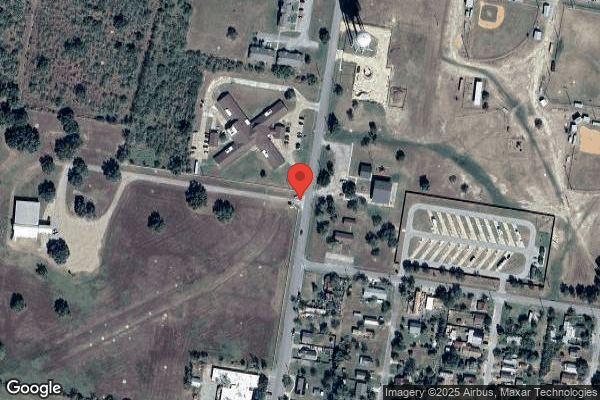
CONCERN (D)

Potential for Harm - no one hurt, but risky conditions existed

Deficiency F0761 (Tag F0761)

Could have caused harm · This affected 1 resident

Based on observation, interview, and record review, the facility failed to ensure all drugs and biological were stored in locked compartments for one wound care cart of one reviewed for storage, in th...

Read full inspector narrative →
Based on observation, interview, and record review, the facility failed to ensure all drugs and biological were stored in locked compartments for one wound care cart of one reviewed for storage, in that: The facility failed to ensure the wound care cart was locked when left unattended. This deficient practice could place residents at risk of misappropriation of medications or harm due to accidental ingestion of unprescribed mediations. The findings included: During an observation on 11/05/24 at 03:41 PM and at 03:46 PM the wound care cart was found unlocked and unattended. This surveyor was able to open all drawers revealing multiple wound care supplies and wound care medications. During an interview on 11/05/24 at 04:05 PM LVN B stated the wound care cart should be locked at all times because anyone could get into the cart. LVN B stated it was important to lock the wound care cart due to anyone would have unauthorized access to supplies and tamper with them or ingest something that could lead to a reaction. LVN B stated she could not recall the last in-service on locking carts. In an interview on 11/06/24 at 08:44 AM the DON stated the wound care cart should not have been left unlocked. The DON stated the wound care cart should be locked at all times for resident, staff, and visitor safety as anyone could get into the wound care cart and grab prescription creams and ointments that are prescribed for specific residents. The DON stated the last in-service on keeping carts locked was about a week ago but would conduct another in-service immediately. on 11/7/24 at 2:03 PM the facility ADM stated there was no specific policy on keeping medication/wound care carts locked when not in use.
CONCERN (D) 📢 Someone Reported This

A family member, employee, or ombudsman was alarmed enough to file a formal complaint

Potential for Harm - no one hurt, but risky conditions existed

Medical Records (Tag F0842)

Could have caused harm · This affected 1 resident

**NOTE- TERMS IN BRACKETS HAVE BEEN EDITED TO PROTECT CONFIDENTIALITY** Based on interviews and record review, the facility failed to maintain clinical records on each resident that were complete and ...

Read full inspector narrative →
**NOTE- TERMS IN BRACKETS HAVE BEEN EDITED TO PROTECT CONFIDENTIALITY** Based on interviews and record review, the facility failed to maintain clinical records on each resident that were complete and accurately documented, in accordance with accepted professional standards and practices for 1 (Resident #48) of 3 residents reviewed for clinical records. The facility failed to ensure that LVN G documented Resident #48's blood sugar result on the morning of [DATE]. The facility failed to ensure that LVN D documented Resident #48's blood sugar result on the evening of [DATE] when he was found unresponsive on his bathroom floor. The facility failed to ensure that RN E documented the administration of Glucagon to Resident #48 on the evening of [DATE] when he was found unresponsive on his bathroom floor and his blood sugar was low. The facility failed to ensure that LVN D timely and accurately documented the incident on [DATE] when Resident #48 was found unresponsive on his bathroom floor and passed away at the facility while in EMS care. The facility failed to ensure that LVN D timely and accurately documented the Postmortem Assessment for Resident #48 on [DATE] after he passed away at the facility. The facility failed to ensure that the ADON and/or LVN D timely and accurately documented the Discharge Summary for Resident #48 on [DATE] after he passed away at the facility. The facility failed to ensure that Resident #48 being found unresponsive on his bathroom floor and subsequent death while in EMS care was documented as a fall with major injury. These deficient practices could affect residents whose records are maintained by the facility and could place them at risk for errors in care and treatment. The findings included: Record review of Resident #48's admission Record reflected a [AGE] year-old male that was admitted to the facility on [DATE]. Resident #48's diagnoses included idiopathic peripheral autonomic neuropathy (damage to the nerves that control automatic body functions such as heart rate, blood pressure, breathing and digestion but the cause of the damage is unknown), diabetes mellitus (a disorder that causes blood sugar levels to be high), hypoglycemia (low blood sugar), unsteadiness on feet, generalized muscle weakness, unspecified abnormalities of gait and mobility, lack of coordination, other reduced mobility, bilateral primary osteoarthritis of knee (the cartilage lining both knee joints is worn down or damaged causing pain, stiffness, swelling, and decreased range of motion), essential (primary) hypertension (high blood pressure), and nocturia (waking up one or more times during the night to urinate). Record review of Resident #48's quarterly MDS dated [DATE] reflected in section C that Resident #48 had a BIMS score of 10 which indicated that he had moderate cognitive impairment. Section GG0115 (Functional Limitation in Range of Motion) reflected that Resident #48 had impairment to both upper extremities (shoulder, elbow, wrist, and/or hand) and both lower extremities (hip, knee, ankle and/or foot) and that he normally used a wheelchair. Section GG130 reflected that Resident #48 was independent with sitting to standing and transferring from bed to chair (or wheelchair) and back. Resident #48 required set up or clean up assistance with walking 10 feet, walking 50 feet, and walking 150 feet. Section GG170 reflected that Resident #48 used a motorized wheelchair and was able to wheel 50 feet with two turns and was able to wheel 150 feet in a corridor. Section H0200 reflected that Resident #48 was always continent of bladder and bowel. Record review of Resident #48's Care Plan reflected the following: Focus: (Cancelled) Risk for decline due to diabetes mellitus. Goal: Resident #48 will be free from and s/s of hyperglycemia (high blood sugar), Resident #48 will be free from any s/s of hypoglycemia (low blood sugar), and Resident #48 will have no complications related to diabetes through the review date. Focus: (Cancelled) Risk for falls due to pain and neuropathy (damage to the nerves of the hands and/or feet that caused pain, numbness, and weakness).Actual falls: [DATE], [DATE], [DATE]. Goal: Resident #48 will not sustain serious injury, Resident #48 will be free from injury due to falls through review date. Interventions: Be sure the call light is within reach and encourage resident to use it for assistance when needed. Educate resident/ family about safety reminders and what to do if a fall occurs. Ensure that resident is wearing appropriate footwear when ambulating or mobilizing in scooter. Resident uses a raised toilet seat. Focus: (Cancelled) Resident #48 is a full code. Goal: Request for CPR to be initialed will be followed. Record review of Resident #48's Order Summary Report with active orders as of [DATE] reflected the following orders: 1. Accucheck for s/s of hypoglycemia or hyperglycemia as needed r/t diabetes mellitus. Order date [DATE]. 2. Blood sugar checks two times a day related to hypoglycemia. Order date [DATE]. 3. Full Code. Order date [DATE] 4. Glucagon Emergency Injection Kit 1mg (Glucagon rDNA). Inject 1mg subcutaneously as needed for hypoglycemia. Order date: [DATE]. 5. Glucose Oral Gel 40% (Dextrose-Diabetic use). Give 1 vial by mouth as needed for hypoglycemia. Administer for blood glucose <60. 6. Amlodipine Besylate Tablet 10mg. Give 1 tablet by mouth one time a day r/t HTN. Hold if SBP (Systolic blood pressure) <110 or DPB (diastolic blood pressure) <60. Record review of Resident #48's MAR (Medication Administration Record) in PCC dated [DATE] reflected the following: 1. Glucagon Emergency Injection Kit 1mg does not have any documented administrations. 2. Glucose Oral Gel 40% did not have any documented administrations. 3. Blood sugar checks 2 times a day was blank where there should be a checkmark if Resident #48's blood sugar was checked on [DATE] at or near 6:30am. 4. Blood sugar checks 2 times a day had a checkmark on [DATE] at 6:30am which indicated that Resident #48's blood sugar was checked at or near that time. 5. Accucheck as needed for s/s of hypoglycemia or hyperglycemia did not have any documented checks (all of the boxes were blank) for the month of [DATE]. Record review of Resident #48's Blood Sugar Summary in PCC reflected that there was no documentation for Resident #48's blood sugar on [DATE]. Record review of Resident #48's Progress Notes in PCC dated [DATE] to [DATE] reflected the following entry: Type: Nursing Progress Note Effective Date: [DATE] 9:00pm Created By: LVN D Created Date: [DATE] at 5:37pm Note text: Charge nurse went in to give [Resident #48] medications. Charge nurse did not see resident in room, and when calling his name, no response. Charge nurse then asked the CNA if [Resident #48] was outside. CNA stated no he should be in his room. I stated that he was not in his room, and I had called his name but he did not answer. The CNA walked in to check the bathroom and [Resident #48] was on the floor breathing but not responding to verbal commands. EMS (Emergency Medical Services) was called. While EMS was transferring [Resident #48] from the floor to the stretcher, [Resident #48] then coded (did not have a heartbeat and was not breathing). EMS then performed CPR (Cardiopulmonary Resuscitation) and followed their protocols. When EMS went through all their protocols, they called the ER (Emergency Room) and the ER doctor then stated to stop CPR. The RN was present and pronounced resident dead at 2035 (8:35pm). RP was here in the facility at the time. MD was called to notify of resident passing. [Funeral Home] picked up resident at 2100 (9:00pm) and RP was here and spoke with [FH person]. No belongings taken at this time, RP stated she would be back to get them. Record review of Resident #48's Standard Assessments in PCC reflected the following: A Postmortem Assessment Effective [DATE] at 9:00pm and signed by LVN D on [DATE] that reflected: A.1. Location resident was discovered: bathroom. 2. How was the resident discovered: on floor. B.1. Advanced Directive. The resident was DNR? YES (That was incorrect, Resident #48 was a Full Code) C. Assessment. Select all that apply: box a. Unresponsive to verbal, tactile, and painful stimuli was the only box checked. The other boxes that were not checked were: box b. No respirations auscultated (heard) with stethoscope at bilateral (both left and right) lung fields, box c. No apical pulse auscultated (no heartbeat heard) with stethoscope and no carotid pulse is palpable, box d. pupils are fixed and dilated, box e. body temperature indicates hypothermia; skin is cold relative to the resident's baseline skin temperature, box f. generalized cyanosis (bluish discoloration of the skin or mucous membranes). D.1. Has an RN pronounced the resident dead: Yes 2. Name of pronouncing RN: RN E 3. Time of death: 8:35pm G.3. Date/time (physician) notified: [DATE] at 8:35pm Date/time (Responsible party) notified: [DATE] at 8:35pm A Postmortem Assessment Effective [DATE] at 9:00pm and signed by LVN D on [DATE] that reflected: Struck out by: LVN D Struck out reason: wrong date/time Struck out date: [DATE] at 5:40pm B.1. The resident was DNR? No (That was correct, Resident #48 was a Full Code) C. Assessment (The information was the same as the above assessment) D.3. Time of death: 8:35am (incorrect) G.3. Date/time (physician) notified: [DATE] at 8:40am (incorrect) Date/time (Responsible party) notified: [DATE] at 8:35pm (correct) A Discharge Summary Effective [DATE] at 9:00pm and signed by the ADON on [DATE] that reflected: A.A. Reason for discharge: Resident expired. A.1. Date of discharge: [DATE] 2. Diagnosis at time of discharge: (Resident #48's diagnoses are in the space provided) 3. Brief history: Resident coded while EMS in facility getting ready to transfer to ER. EMS followed their protocol, performed CPR until all measures were taken. ER doctor called off coded and RN E pronounced resident time of death at 8:35pm. 4. Pertinent physical and laboratory findings: None (none of the information about the resident being found on the floor in his bathroom unresponsive nor his fingerstick that was done by the facility prior to EMS arrival and indicated that his blood sugar was low were documented here) 5. Course of treatment: None (The Glucagon administration that was done by the facility prior to EMS arrival was not documented here) This form has the physician's signature and is dated [DATE]. A Discharge Summary effective [DATE] at 9:00pm and signed by LVN D on [DATE] that reflected: Struck out by: LVN D Struck out reason: incorrect documentation. Struck out date: [DATE] at 5:38pm A.A. Reason for discharge: Resident expired at 8:35am (incorrect time) A.3. Brief history: (The same information as the above discharge summary except that it states RN E pronounced resident time of death at 8:35am) A.4. Pertinent physical and laboratory findings: N/A (none of the information about the resident being found on the floor in his bathroom unresponsive nor his fingerstick that was done by the facility prior to EMS arrival and indicated that his blood sugar was low were documented here) A.5. Course of treatment: None (The Glucagon administration that was done by the facility prior to EMS arrival was not documented here) Record review of Resident #48's EMS report dated [DATE] reflected the following information: CLINICAL IMPRESSION Primary impression: Diabetic Hypoglycemia Chief complaint: Fall Patient's level of distress: Severe Signs and Symptoms: Hypoglycemia (primary) Injury: Falls- Fall, unspecified- 0 ft - Nursing home [DATE] Mechanism of injury: Blunt Medical/Trauma: Medical Barriers of care: Unconscious Alcohol/ drugs: None reported Initial patient acuity: Emergent VITAL SIGNS 7:52pm AVPU: U (Unresponsive) BP: 110/68 P: 84 SpO2: 69% BG: LOW GCS: 6 ASSESSMENTS [DATE] at 7:51pm Mental status: unresponsive Skin: cold Eyes: left pupil 6mm non-reactive, right pupil 6mm non-reactive NARRATIVE [Medic unit] dispatched to [Facility] for elderly male who fell, is unresponsive but breathing. [Medic unit] responded code 3 (lights and sirens) to scene. AOSTF (arrived on scene to find) 74 Y/O Male laying on his right side next to the commode in his room. Nursing home staff stated that fall was unwitnessed, also that his BGL read low. Nursing home staff had administered 1mg of Glucagon prior to arrival. Patient's ABC's patent, slow/snoring respirations noted, unresponsive, skin cool and dry, vomit noted near patient's face. No deformities, contusions, abrasions, punctures, burns, tenderness, lacerations, or swelling noted. Patient placed on monitor, blood pressure cuff and pulse ox. BGL checked by EMS, read low. IV established to (left antecubital with a 20 gauge intravenous catheter). Patient administered D10 drip (10% dextrose (sugar) solution in water- used to help increase a person's blood sugar) wide open rate. Patient moved from original position to supine. Patient placed on soft c-collar (device used to stabilize the neck), slid on to vacuum mattress. Patient secured and carried to stretcher. Upon placement on stretcher, patient was not breathing. No pulse detected; immediate CPR performed. Patient moved from stretcher to floor. Patient placed on EKG pads (electrocardiogram pads), asystole noted via manual interpretation. Epi 1:10,000 (Epinephrine- a medication used to help restart the heart) administered every 4 minutes as per protocol. I-gel (a tube that is put into the airway to assist with giving oxygen) placed in patient airway, size 4 with supplemental high flow oxygen, along with in-line ETCO2 (end tidal carbon dioxide- used in conjunction with oxygen when doing CPR), LR (lactated ringers- a solution used to help rehydrate a person) administered IV (intravenously). PEA (pulseless electrical activity- the heart is giving off electrical signals but is not beating) noted during rhythm checks, CPR continued. After fourth round of Epi, online medical control contacted, [ER doctor] gave instruction to cease resuscitation efforts. Family on scene. Dispatch contacted, informed of patient status. Family funeral home contacted by dispatch. Patient remained on scene with family and nursing home staff, awaiting arrival of funeral home staff. EOR (End of Report). [paramedic's name]. Added: Once CPR was initiated, patient was ventilated manually with BVM (bag valve mask) and supplemental oxygen. Patient respirations managed at a rate of 1 breath every 6 seconds. SPECIALTY PATIENT-CPR Cardiac arrest: yes, after EMS arrival Cardiac arrest etiology: cardiac (presumed) Estimated Time of Arrest: 0-2 minutes Time 1st CPR: [DATE] at 8:04pm Initial rhythm: Asystole (flat line) End of event: Expired in the field (not in a hospital) Date/Time expired: [DATE] at 8:25pm TIMES Call received: 7:42pm Dispatched: 7:43pm En Route: 7:45pm On scene: 7:47pm At patient: 7:49pm Depart scene: 9:47pm DISPATCHED AS: Fall In an interview on [DATE] at 3:15 PM in the Adm's office with the CN present, the Adm stated that Resident #48 was found unresponsive in the bathroom. The Adm stated it was an unexpected death, but Resident #48 had been refusing a lot of help recently such as refusing labs, refusing medications, and would refuse transfer help some days. The Adm stated that Resident #48 was not on hospice but they had started bringing it up with the family member. The Adm stated, I did not talk to the family member, but we had been discussing bringing it up with her and SOMEONE did discuss it with her. I'm not sure who or when. When asked if Resident #48's death should have been reported the CN stated, the death is reportable only if suspicious. They found him unresponsive, called EMS, he coded, CPR initiated, he was pronounced, then released to [the funeral home]. The business office reports deaths through the TULIP website monthly and they usually have until the 5th of the month. In an interview on [DATE] at 3:06pm the DON stated that Resident #48 was a frail man, but he was not on hospice or anything, so his death was not expected. The DON stated, I do not remember who called me that night. What was reported to me was, they found him in the bathroom on the floor, he was breathing but not responding. They called 911. EMS came here and as they were getting him ready to transport, he coded, and I believe EMS started CPR. I don't know anything else about his death. The DON stated that Resident #48 needed assistance to get up to his wheelchair. The DON stated that the nurse who called her said they did not find any injury. The DON stated that she did not recall that they mentioned anything else. When asked about the documentation, the DON stated, the cardinal rule: if you don't document- it didn't happen. When asked what her expectation was the DON stated she would like to see more progress notes done with better detail. The DON stated Resident #48's death should have been documented as soon as possible but definitely before the end of the shift. The DON stated she would need to ask the ADON about the documentation because she thought the ADON had to call LVN D in to do the postmortem assessment because LVN D did not know how to do it. The DON stated that LVN D was the nurse in that hall that night. RN E was working that night but was not in that hall, but it had to be an RN to pronounce. The DON stated that they did check his blood sugar but did not tell her what it was. The DON stated they also did a full set of vital signs. The DON stated, I would have expected them to document that they checked his sugar or gave him Glucagon prior to EMS arrival. The DON stated she was going to have to do a lot of education and reeducation with the nurses on documentation. The DON stated it was important to document things immediately or as soon as possible because by not documenting Resident #48's morning blood sugar or that it was checked, and glucagon given that evening could call into question what actually happened that day. When asked if the death was investigated by the facility, the DON stated there was not an investigation on this death. The DON stated that the CN looked into it because the Adm reported it to corporate. The DON stated, I don't know why it wasn't reported to state. Now, I feel like I should have called it in. It was an unwitnessed fall, and he was unconscious. If they do follow some type of algorithm, I don't know about it. In an interview on [DATE] at 4:36pm in the Adm's office with the Adm present, when asked about Resident #48's status when he was found in the bathroom, the CN stated that Resident #48 was responsive, just not to verbal. When asked if unresponsive meant the same as not responsive, the CN clarified that Resident #48 was unresponsive, but he was breathing. When asked if Resident #48 being on the floor in his bathroom meant that he had sustained an unwitnessed fall, the CN stated, I'm not sure if he had a fall. I would not assume that he did. I can just go by what I see in the chart and what I see documented. When asked if a resident that was found unresponsive after a fall should have been reported the CN stated, I'm still saying no it did not need to be reported. When asked if she concurred, the Adm stated, I concur. In an interview on [DATE] at 4:54pm, CNA F stated yes, she remembered Resident #48 and she was working the night he passed away. CNA F stated dinner was usually right at 6:00pm when the night shift arrived and at about 6:30-6:40pm they started getting trays out of the rooms. CNA F stated Resident #48 usually ate in his room and that evening his tray was in the room, but she did not check the tray to see if he had eaten dinner. CNA F stated that Resident #48 had gotten to where he would not eat much, and they would give him a snack and/ or juice around 10:00pm because the nurse would say Resident #48's blood sugar was low. CNA F stated that CNAs did not check blood sugars. CNA F stated Resident #48's rolling walker was right before you got to the bathroom in his room. CNA F stated that she found Resident #48 in the bathroom and stepped out of the room to get LVN D, who went in right away. CNA F stated Resident #48 was on his right side with his head was toward the corner of the bathroom. (Bathroom is roughly 6ft wide by 9ft long.) CNA F stated Resident #48's pants were partway down with urine and feces (diarrhea) on the floor and a moderate amt of brown vomit by his face. CNA F stated there was no blood that she noticed. CNA F stated that Resident #48 had his tennis shoes on. CNA F stated that LVN D checked Resident #48's vital signs while he was on his side on the floor, but she did not remember if LVN D checked Resident #48's blood sugar. CNA F stated that she did not recall that LVN D gave Resident #48 a shot or anything. CNA F stated that LVN D called EMS. CNA F stated that once EMS got there, she stepped out of the bathroom and into Resident #48's room. CNA F stated that EMS put Resident #48 onto the vacuum mat, suctioned the air out, then moved him to the EMS stretcher in the room by the bed. CNA F stated that she reached down to get the foot stretcher belt and when she looked up they noticed Resident #48 was not breathing so EMS took Resident #48 off the stretcher and put him on the floor. CNA F stated she walked out of the room then because there were 4-5 EMS people in the room. In an interview on [DATE] at 5:20pm, LVN B stated that their glucometer range was 40 to 219mg/dL and it gets QC'd (quality control checked) every day. LVN B stated she did not work on Monday [DATE] but the last time she saw Resident #48 on Sunday [DATE], he was ok and the same as always. In an interview on [DATE] at 5:27pm LVN D stated she did remember Resident #48. LVN D stated, We came on shift at 6:00pm. I was going down the hall passing meds. I went to Resident #48's room, knocked on the door, opened it, called out his name and he did not answer. LVN D stated the door to Resident #48's bathroom was open but she did not think that Resident #48 was in there because the bathroom door was open and he always answered if she called his name. LVN D stated she turned and went into the room across from Resident #48 and got ready to give that resident her pills. LVN D stated CNA F came down the hall and she asked CNA F if she knew where Resident #48 was. LVN D stated that CNA F replied that Resident #48 should be in his room. LVN D stated when she told CNA F that she had checked his room and called his name and he was not in there, CNA F went in and checked and found Resident #48 in the bathroom. LVN D stated that when CNA F told her that Resident #48 was on the floor of the bathroom, she stopped what she was doing and went in there. LVN D stated that Resident #48 was laying on his left side with his face toward the door and it looked like he had thrown up a small amount of brown (not coffee ground or bloody) vomit. LVN D stated she did not remember any urine or feces, just the vomit. LVN D stated they checked Resident #48, and he was still breathing, had a pulse, and his eyes were open. LVN D stated she was calling his name, but he was not responding. LVN D stated Resident #48's pants were halfway on, and he had shoes and socks on. LVN D stated she did check all of Resident #48's vital signs but does not recall what they were. LVN D stated she then called EMS and the doctor to let him know that she was going to send Resident #48 out because it looked like he had fallen, and she was concerned that he may have hurt himself based on how they found him. LVN D stated she checked Resident #48's blood sugar and it was low, but she did not remember what the number was. LVN D stated, I believe I did document it, but I do not remember for sure. LVN D stated Resident #48 had an order for Glucagon, so RN E gave it to him when she (LVN D) went to open the door for EMS. LVN D stated that EMS went to his room and did an assessment and CNA F helped to get Resident #48 dressed. LVN D stated, From that point I remember making a phone call to the family member to let her know we were sending him out and when I went back into the room, they told me that when they were transferring Resident #48 to the stretcher, he had coded. LVN D stated that EMS ran the code and that she did not recall them ever getting a pulse back. LVN D stated that Resident #48 was a very independent person and did most things for himself. LVN D stated Resident #48 had a cane that he used to go from his bed to the toilet, but she did not remember if the cane was in the bathroom. LVN D stated she did not know if Resident #48 ate dinner that evening because she had just gotten on shift. When asked to recap what had happened, LVN D stated, This all started around 7:30ish pm. The CNA (CNA F) was coming down the hall picking up hall trays. I asked her if he (Resident #48) was out front because he didn't answer and she said no, he should be in his room. She probably hadn't picked up his tray yet because she was making her way down the hall picking up trays. After I asked about where he was, she went into the room and found him in the bathroom- the bathroom door was open. Originally, the room door was closed because he always kept it closed. When I stepped in his room, the curtain was back. I didn't think to look for his scooter because he didn't answer me, so I assumed he was up front when he didn't answer. I could see the bed, so I knew he wasn't in the bed. I didn't check the bathroom because the bathroom door was open, and he didn't respond back to me. I don't know if he would normally close the bathroom door because I was not very familiar with him. We didn't move anything out of the bathroom, so I know his scooter wasn't in there. LVN D stated she thought she had documented the blood sugar somewhere, maybe on the transfer papers when she was going to send him out. LVN D stated she was going to check in Resident #48's EHR to see if the blood sugar result was documented anywhere, and at 6:13pm, LVN D stated that she was not able to find the documentation of the blood sugar or the glucagon administration in Resident #48's EHR. In a telephone interview on [DATE] at 6:18pm RN E stated she did remember Resident #48 and that she was working the night of his code. RN E stated she was called into Resident #48's room because he was found in the bathroom unresponsive. RN E stated, The first thing that came to my mind was to check his sugar. RN E stated that LVN D told her that Resident #48's sugar was low, so she gave him Glucagon subcutaneously (into the fatty tissue) in his abdomen and as soon as she gave him the injection, EMS was in the room. RN E stated Resident #48 was laying in the corner between the toilet and the wall, he had his head kind of tucked in, so he was more facing the toilet and the back wall by the toilet. RN E stated she did not even know that Resident #48 had coded, but someone told her so she was in the hallway for a little while. RN E stated she was in the room when EMS was using the [NAME] device (a device that does chest compressions automatically so that EMS personnel are able to do other things) on him. RN E stated that EMS called medical control and the ER (Emergency Room) doctor said to stop CPR. RN E stated she did not remember if she documented the Glucagon or not. RN E stated normally she would document it on the MAR, but everything happened so fast she did not remember if it was documented. RN E stated it was important to document medications that were given to show proof that it was given. RN E stated if medications that were given were not documented, the provider would not know what medications were given, especially if they were PRN (as needed) medications. RN E stated that Resident #48 normally did not go into the bathroom with his scooter, he would ambulate to the bathroom with his 3 wheel walker. RN E stated Resident #48 had fallen a couple of months prior because he would walk really fast with the 3 wheeled walker and wore flip flops. In a telephone interview on [DATE] at 6:35pm LVN G stated she remembered Resident #48 and she was working day shift on [DATE]. LVN G stated she did not remember what his blood pressure was that morning and could not recall if it was lower than normal. LVN G that she did check Resident #48's blood sugar that morning, but I could not recall what it was. LVN G stated normally the result would be documented in the chart in the MAR, but that it had changed so that it was just a check mark for yes it had been checked. LVN G stated she usually kept a log of who she checked sugars on and what they were, but her bag was in her car and her car was in the shop. LVN G stated if Resident #48's sugar had been low she would have gotten him something and called the doctor. LVN G stated Resident #48 was up eating breakfast that morning, he was up in his chair that day, and that he was acting normal and there was nothing out of the ordinary going on for him. LVN G stated she did not know if Resident #48 ate lunch because he ate in his room, and she was in the dining room at lunchtime. LVN G stated it was important to make sure that things were documented so that everyone knew what had or had not been done. LVN G stated, If it wasn't documented, it wasn't done is what we were taught in school. I feel bad that I didn't document it, but if it had been low, I would have done something about it and called the doctor. LVN G stated it was important to document the blood sugar results so that the physician was able to see how they were trending and [NAME] able to treat the resident accordingly. LVN G stated usually if Resident #48 felt like his sugar was getting low he would ask her to check his sugar and/or ask for an orange juice. In an interview on [DATE] at 11:53am, the DON stated they had started a 100% check on all of the diabetic residents and residents that had blood sugar checks to make sure that there was a place to document the blood sugar results on the MAR. The DON stated that the issue with Resident #48's blood sugar results not having a space on the MAR was because when the physician changed the order to check it to two times a day, he did not check off the box on the order that required it to be documented in the MAR. The DON stated that they were going to make sure that all of the orders for blood sugar checks had that box checked off. Record review of the facility's Documentation policy dated 2003 reflected in part: Documentation is the recording of all information, both objective and subjective, in the clinical record of an individual resident. It includes observations, investigations, and communications of the resident involving care and treatments. It has legal requirements regarding accuracy and completeness, legibility and timing. Special forms in the clinical record are utilized in nursing documentation, such as assessment, care plan, nursing progress notes, flow sheets, medication sheets, incident reports, and summary sheets (daily, weekly, monthly, discharge). Documentation also occurs in the clinical software Point Click Care (PCC). Goal 1. The facility will maintain complete and accurate documentation for each resident on all appropriate clinical record sheets. 2. The facility will ensure that information is comprehensive and timely and properly signed. 6. Document completed assessments in a timely manner and per policy. 7. Complete documentation in the electronic health record in a timely manner. Each entry will be dated and timed. Each entry will be signed with proper signature and title. If PCC is used for the assessment the signature and title of the person entering the information will be signed by entering their password. 8. Documentation during and following an acute episode, following an event, and during physiologic, mental, or emotional Changes or instability.
CONCERN (E)

Potential for Harm - no one hurt, but risky conditions existed

Infection Control (Tag F0880)

Could have caused harm · This affected multiple residents

**NOTE- TERMS IN BRACKETS HAVE BEEN EDITED TO PROTECT CONFIDENTIALITY** Based on observations, interviews, and record review, the facility failed to maintain an infection prevention and control progra...

Read full inspector narrative →
**NOTE- TERMS IN BRACKETS HAVE BEEN EDITED TO PROTECT CONFIDENTIALITY** Based on observations, interviews, and record review, the facility failed to maintain an infection prevention and control program, including hand hygiene, designed to provide a safe, sanitary, and comfortable environment, and to help prevent the development and transmission of communicable diseases and infections for two (Resident #16 and Resident #43) of 4 residents reviewed for infection control practices. 1. The facility failed to ensure LVN B kept Resident #16's open wounds from coming in contact with a soiled surface. 2. The facility failed to ensure LVN A utilized EBP while flushing and giving medications through Resident #43's g-tube. These failures could place residents that require wound care at risk for healthcare associated cross-contamination and infections. The findings included: 1. Record review of Resident #16's face sheet dated 11/6/24 reflected an [AGE] year-old-male with an original admission date of 6/14/22. Diagnoses included dementia (cognitive decline that affects memory, thinking, and daily activities), congestive heart failure, type 2 diabetes (insufficient production of insulin in the body), liver disease, and peripheral vascular disease (narrowing of arteries that reduce blood flow to the arms and legs). Resident #16 had a sacrum/gluteal (base of spine/buttocks), cleft/buttocks (groove between the buttocks) cluster wounds. Record review of Resident #16's care plan dated 10/31/24 revealed: Resident #16 had a pressure ulcer. Interventions included: Administer treatments as ordered and monitor for effectiveness. Replace loose or missing dressings as needed. Record review of Resident #16's MDS dated [DATE] reflected a BIMS score of 7 (indicated severe cognitive impairment) and had moisture associated skin damage. During a wound care observation on 11/05/24 at 04:30 PM Resident #16 was observed rolling back onto his soiled brief multiple times throughout wound care. In an interview on 11/05/24 at 04:39 PM LVN B stated she was nervous and did not realize Resident #16's wounds were touching the soiled brief. LVN B stated Resident #16's wounds should not have come in contact with the soiled brief as the wounds could get infected. LVN B stated exposing the open wounds to a soiled surface was cross-contamination and could result in slower healing. LVN B stated she used to be a wound care nurse but did not have any specialized training or certifications. LVN B stated administration had not conducted wound care competency checks and she could not remember when the last in-service on wound care was. In an interview on 11/06/24 at 08:48 AM the DON stated Resident #16's wounds should not be touching other soiled surfaces since it could cause an infection and possibly delay healing. The DON stated Resident #16 was at a higher risk for infection and increased skin breakdown due to the cross contamination. The DON stated the last in-service on infection control was about a week ago but will immediately in-service staff on infection control. The DON stated she had not done competency checks on wound care but would start that process and was going to in-service staff on infection control immediately. 2. Record review of Resident #43's face sheet dated 10/12/24 reflected a [AGE] year-old male with an original admission date of 04/24/24, and an initial admission date of 09/06/24. Diagnoses included Giardiasis 10/12/24 (a common parasitic intestinal infection causing diarrhea and prevalent in areas with poor sanitation and unsafe water), Methicillin Resistant Staphylococcus (a type of bacteria that is resistant to many antibiotics; a staph infection that does not respond well to the antibiotics that usually treat staph infections), Gastrostomy 09/13/24 (a surgically placed tube that provides access to the stomach for feeding. Latin for stomach and new opening), Enterocolitis (inflammation of the small intestine) r/t clostridium difficile 09/12/24 (a highly contagious bacterium and a leading cause of diarrhea worldwide that is associated with antibiotics), gastro-esophageal reflux disease, chronic respiratory failure due to pneumonia 08/22/24 or aspiration pneumonia 04/24/24 (inhalation of food and vomit), malnutrition, unspecified dementia, stroke 04/24/24 with subsequent memory and cognitive deficits, aphasia (a language disorder that can cause a person to lose the ability to speak, understand language, or both. It is caused by damage to specific regions of the brain, usually from a stroke or head trauma), and dysphagia (the muscles used for swallowing do not work properly, making it difficult or impossible to safely swallow food, liquids, or saliva. It is commonly caused by a stroke). Record review of Resident #43's quarterly MDS revealed a BIMS score of 01, indicating severe cognitive impairment. He was total care requiring maximal assistance for all functional abilities. He was incontinent of bladder and bowel. His active diagnosis was medically complex conditions. He was receiving an anticoagulant and antibiotics. Record review of Resident #43's most recent care plan dated 10/15/24 and revised on 11/02/24 revealed Resident #43 was on enhanced barrier precautions Date Initiated and revised: 09/25/2024. There will not be any transmissions of infection from or to the resident Date initiated: 09/25/24. Gloves and gown should be donned if any of the following activities were to occur: linen change, resident hygiene, transfer, dressing, toileting/incontinent care, bed mobility, wound care, enteral feeding care, catheter care, bathing, or other high-contact activity. Date Initiated: 09/25/2024. Posting at the resident's room entrance indicating the resident was on enhanced barrier precautions. Date Initiated: 09/25/2024. Observation of LVN A at Resident #43's bedside on 11/04/24 at 1:33 PM revealed LVN A wore gloves but did not utilize any other EBP when administering medication via Resident #43's g-tube. There was no signage on or near the door, but there was a container with gowns, face shields, and gloves outside of Resident #43's room. In an interview with LVN A on 11/04/24 at 1:33 PM, she said the staff exercised EBP at this facility. She said she did not know she was supposed to wear a gown, gloves, and use a face shield while performing a medication pass via g-tube. She said EBP was to be used with any open wounds, urinary tract infections, and any kind of contact isolation. She said she received education about EBP during her re-orientation on 11/04/24. In an interview with the DON on 11/06/2024 at 9:06 AM, she said they utilized EBP at the facility. She said the facility currently had 8 residents with EBP and she just did an in-service. She said EBP was used for residents who had higher risks for infection because they were already compromised. She said the facility guidelines indicated using EBP for any indwelling catheter, chronic wounds, g-tubes, central lines, or colonized MDROs (Multi Drug Resistant Organisms). She said the process to initiate EBP was to place a sign on the resident's door and educate staff on gowning up when doing high acuity care such as incontinent care, touching, or any contact. She said g-tubes were an opening; a wound so the residents with g-tubes were susceptible to cross-contamination and infection. She said she and the ADON were monitoring residents who were on EBP. She said they did so by checking the dashboard (EHR) for nurses and in the assignment book for the CNAs and nurses. The DON said EBP was supposed to be in the care plans and point of care for CNAs. She said they also observed resident rooms for signs on the door, PPE outside the rooms, and if staff were actually doing it during their daily morning rounds. She said LVN A had not been working at the facility for about 3 months and was recently re-hired on Monday, 11/04/24. She said LVN A should have known better about the medications and the EBP. She said LVN A had electronic on-boarding and she needed to get with HR to see what exactly was in there for new hires. She said EBP was a part of orientation as well as g-tube medication administration. She said orders were not required for EBP but were found in the task section of the EHR. In an interview with corporate HR on 11/06/24 at 10:56 AM, he said g-tube medication administration was not part of the new hire orientation. It was a 3-day training once the nurse started working on the floor. He said he could not find LVN A's g-tube training. In an interview with HK on 11/07/24 at 1:48 PM, she said she was not familiar with what EBP meant. She said isolation of some kind was when residents had the sign outside the room and the PPE cart. She said residents could have something contagious and she did not want to spread it. She said she would still gown up if there was a cart but no sign. She said she did not have any training on EBP, but she knew to read the signs and look for carts if someone was on isolation. In an interview with LVN C on 11/07/24 at 2:01 PM, she said EBP was utilized for those residents with a urinary catheter, wounds, PICC lines (Percutaneous Intravenous Central Catheter), or Tessio's (a type of intravenous line placed in the chest wall used for dialysis), and g-tubes. She said we put on more PPE than usual. She said all direct care staff should know who the residents were who required EBP. She said she received training during her orientation on 10/11/24. She said any device going into the body needed to be protected. She said there had to be a sign on the outside of the resident's rooms and a cart with PPE if the resident was on any kind of isolation or required EBP. She said EBP was utilized to protect the resident's and staff to prevent cross contamination to or from the resident's. She said staff could take something (germs) home or the resident's (who were already vulnerable) could get really sick. Record review of LVN A's personnel file and interview with HR on 11/07/24 at 2:10 PM, he said infection control and PPE training were completed but orientation on g-tubes was not found. He said the DON had just asked him to assign g-tubes to everyone. He said the g-tube training for LVN A might be in the proficiency checkoff's and he would obtain that information. He did not obtain the information before exit. Record Review of Resident #43's EHR under tasks revealed: Enhanced Barrier Precautions (EBP) 10/7/2024 System Generated (I) Record review of the facility's Infection Prevention and Control policy dated 3/13/2019 and revised on 4/2024 stated: Compliance Guidelines: The infection prevention and control program is a facility-wide effort involving all disciplines and individuals and is an integral part of the quality assurance and performance improvement program. Prevention of Infection a. Important facets of infection prevention include: 3. Instituting measures to avoid complications or dissemination;
Oct 2024 5 deficiencies 1 IJ
CRITICAL (J) 📢 Someone Reported This

A family member, employee, or ombudsman was alarmed enough to file a formal complaint

Immediate Jeopardy (IJ) - the most serious Medicare violation

Accident Prevention (Tag F0689)

Someone could have died · This affected 1 resident

**NOTE- TERMS IN BRACKETS HAVE BEEN EDITED TO PROTECT CONFIDENTIALITY** Based on observations, interviews, and record review, the facility failed to ensure that each resident received adequate supervi...

Read full inspector narrative →
**NOTE- TERMS IN BRACKETS HAVE BEEN EDITED TO PROTECT CONFIDENTIALITY** Based on observations, interviews, and record review, the facility failed to ensure that each resident received adequate supervision to prevent accidents for one (Resident #1) of 10 residents reviewed for supervision. The facility failed to ensure Resident #1 received adequate supervision while Resident #1 was unaccounted for approximately 36 minutes from 5:40 PM to 6:16 PM on 09/04/24 travelling approximately 500 feet while she eloped from the 200 hall exit door. Resident #1 was found approximately 100 feet from the front entrance along the side of the facility. The Immediate Jeopardy (IJ) template was provided to the facility on [DATE] at 4:10 PM. While the IJ was removed on 10/04/24 at 2:10 PM, the facility remained out of compliance at a scope of isolated and a severity level of potential for more than minimal harm because all staff was not aware of and did not implement the facility's Elopement Prevention, Elopement Response, and emergency codes policies. This failure could place residents requiring supervision at risk for injury and accidents with potential for more than minimal harm. Findings included: Record review of Resident #1's face sheet revealed an [AGE] year-old female with an original admission date of 02/23/22 and a current admission date of 07/09/24. Pertinent diagnosis included Unspecified Dementia (diagnosis given when a person has dementia but it does not fit into a specific type). Record review of Resident #1's Quarterly MDS assessment section C, cognitive patterns, dated 09/12/24 revealed a BIMS score of 4 (severe impairment). Record review of Resident #1's care plan revealed the focus The resident is at risk for wandering initiated on 09/05/24. Interventions listed for this focus included: Assess for fall risk initiated on 09/05/24 Distract resident from wandering by offering pleasant diversions, structured activated, food, conversation, television, book initiated on 09/05/24 and revised on 09/27/24 Identify pattern of wanderings: Is wandering purposeful, aimless or escapist? Is resident looking for something? Does it indicate the need for more exercise? Intervene as appropriate initiated on 09/05/24 If the resident is exit seeking, stay with the resident and notify the charge nurse by calling out, sending another staff member, call system, etc. initiated on 09/05/24. Monitor for fatigue and weight loss initiated on 09/05/24. Provide structured activities: toileting, walking inside and outside, reorientation strategies including signs, pictures and memory boxes initiated on 09/05/24. Further record review of Resident #1's care plan revealed the focus At risk for elopement as evidenced by: actual elopement due to acute confusion initiated on 09/04/24 and revised on 09/05/24. Interventions listed for this focus included: Assess/record/report to MD risk factors for potential elopement such as: Wandering, Repeated requests to leave facility, statements such as 'I'm leaving' 'I'm going home', attempts to leave facility, elopement attempts from previous facility, home, or hospital initiated on 09/05/24. Supervise closely and make regular compliance rounds whenever resident is in room initiated on 09/05/24. Determine the reason the resident is attempting to elope. Is the resident looking for something or someone? Does it indicate the need for more exercise? Intervene as appropriate initiated on 09/05/24. Provide structured activities: toileting, walking inside and outside, reorientation strategies including sign, pictures, and memory boxes initiated on 09/05/24. Distract resident from elopement attempts by offering pleasant diversions, structured activities, food, conversation, television, books initiated on 09/05/24. If the resident is exit seeking, stay with the resident and notify the charge nurse by calling out, sending another staff member, call system, etc. initiated on 09/05/24. Record review revealed Resident #1 had elopement risk assessments dated 06/04/24 and 09/04/24 with scores of 6 and 17, respectively. Interviews with staff revealed a score of 10 or higher indicated the resident was an elopement risk. Record review of the provider investigation report dated 09/12/24 revealed the following narrative: Resident was in COVID isolation down hot zone hallway. an unknown employee put in the master code at the end of the hall to unlock the door. When master code was put in the door remained unlocked and disabled the alarm. Resident wheeled out of her room on the 200 hall and went to the end of the hall. She stated to staff she pushed on the door and it opened up so she went through the door. Resident started to wheel down the facility drive way once she was outside. A passerby saw her and called the facility to notify. Staff went outside to retrieve resident. She was heading back towards the front door and stated she went through a door and was looking for her room. Resident was assessed and no injuries or concerns were noted by staff. Resident was placed on 1:1 due to acute confusion. Once resident returned to original room acute confusion left and resident has had no concerns and has not been wandering. Further review of the provider investigation report revealed in-services covering Elopement Prevention/Elopement Response were conducted for 61 staff members on 09/05/24 by the ADM. Further review of the provider investigation report revealed Resident #1 was last seen in the facility before elopement on 09/04/24 at 5:40 PM. Resident #1 was not brought back into the facility until 6:16 PM, 36 minutes later. In an interview with the MS on 10/01/24 at 12:25 PM, the MS stated the master code could no longer be used to unlock any of the doors. The MS stated he removed the master code from all doors on 09/05/24, the day after the elopement incident. The MS stated that when the master code turned off the alarm and unlocked the door. The MS stated that in order to turn the alarm back on and lock the door, the master code would have to be input again. The MS stated only one code worked on each exit door from the facility now, and the door would only stay unlocked to be opened for several seconds before the alarm sounded if the door was still open. The MS stated he did not know who had access to the master code. The MS stated the master code had been the same since he started working at the facility in 2019. The MS stated he checked the doors every day he works. The MS stated when checking the doors he confirmed the alarms, locks, and codes worked properly from both inside and outside the facility. Record review of the maintenance logs from 08/01/24 to 10/01/24 revealed the door alarm and lock checks were completed 5 days per week. During an observation on 10/01/24 at 1:20 PM, this surveyor input the master code into all exit doors in the facility. The master code was ineffective in all doors except for the 100 hall exit door. After inputting the code, the door unlocked and alarm deactivated. The door could freely open and close without it locking or the alarm sounding. The MS was informed the master code still worked on the exit door for hall 100 and he removed the code from the door. In an interview with the AD on 10/01/24 at 12:46 PM, The AD stated during an elopement, the ADM would be notified and staff would search for the resident. The AD stated she thought there was a 10 minute timeframe to find the resident. The AD stated she could not remember the last elopement in-service received but thought it was about a month ago. The AD stated the facility had not had an elopement in a while and could not remember the last one. The AD stated the last resident she remembered leaving the facility did not really leave the facility but just stepped out the door. The AD stated for an event to be considered an elopement, the resident must have been outside the building heading for the street. The AD stated if a resident left the facility and the staff did not know about it, it would absolutely be an elopement. The AD stated she heard about a resident going out the back door and rolled herself out of the building, but did not get any training about that incident. The AD stated Resident #1 was not the only resident on the COVID unit the day of her elopement. The AD stated the facility did not use wander guards. The AD stated all staff received in-services when there was an elopement and that she had been dealing with the illness of her husband and could not remember if she received the elopement in-service. The AD stated if the elopement occurred at night the ADM would be notified regardless of the time of the elopement. The AD stated while staff were outside looking for the resident, the staff inside would continue searching and conduct a head count of residents. In an interview with DA H on 10/01/24 at 12:56 PM, DA H stated if she learned about a resident leaving the facility when they were not supposed to she would call 911 and the ADM. DA H stated she had not received any training on elopements and had not received any training on the codes to the exit doors. DA H stated she had not been working at the facility long but felt like she should know the codes and elopement procedures. In an interview with Resident #1 on 10/01/24 at 1:01 PM, Resident #1 stated her children come to visit her in the facility. Resident #1 stated she currently lived in room [ROOM NUMBER]. Resident #1 stated she enjoyed going outside, playing bingo, and putting on makeup. Resident #1 stated when she wanted to go outside she asked an employee to open the door for her. Resident #1 stated the staff member does not go outside with her, and that they just open the door and let her go out alone. Resident #1 stated that when she went outside she mostly stayed in the front patio area. Resident #1 stated she could not remember moving to the 200 hall, having COVID, or leaving the facility on 09/04/24. Resident #1 stated she had not heard of any residents eloping during her time at the facility. In an interview with RN E on 10/01/24 at 1:10 PM, RN E was unable to name the correct code to signify an active elopement. RN E stated during an elopement she would stop what she was doing, make sure the doors were locked, and start a head count. RN E stated she would open the door and look outside once she found out who was missing. RN E stated she depended on the door alarms to notify staff that a resident had left the facility. RN E stated staff did receive training on elopement. RN E stated she thought there was a resident that left the facility 2 months ago. RN E stated she received in-service after that elopement but could not remember when specifically. RN E stated she was not at the facility when the elopement occurred. RN E stated once an elopement was identified, the first thing staff should do was look through rooms to try to identify who was missing. RN E stated someone in charge would call a code orange and expect staff to be looking outside while some would look inside. RN E stated resident rounding was typically every 2 hours. RN E stated there were residents that left the facility for dialysis or appointments, but those residents do not sign out during those situations. RN E stated residents signed out when they left with their family on other outings. RN E stated residents that sit just outside the facility did not need to sign out. In an interview with LVN J on 10/02/24 at 1:03 PM, LVN J stated Resident #1 had good days and bad days regarding exit-seeking behaviors. LVN J stated on Resident #1's bad days she would pack up her belongings and put her bag in the lobby and say she was leaving. LVN J stated when Resident #1 is in that frame of mind she would stay in it all day. LVN J stated on those days Resident #1 would push on the door and ask other people to let her out. LVN J stated Resident #1 displayed these behaviors weekly. LVN J stated if a resident eloped, she would look in the facility to see in the resident is in the building, call the RP, and then start looking outside. LVN J stated there were steps in the elopement procedure. LVN J stated if they noticed a resident missing, it would be communicated to look in the facility for the resident while other staff members would look in the sign out book. LVN J stated staff would call the RP and ADM while also looking outside. LVN J stated all of these steps happen simultaneously. LVN J stated she had an elopement drill months ago but could not recall when. LVN J stated there were no specific roles for staff members. LVN J stated rounding on residents was every 2 hours. LVN J stated she used to have the master code, but did not know who was supposed to know it. LVN J stated she did not think nursing staff were supposed to have the code, but were using it. LVN J stated the master code unlocked the door, and will not relock until the master code was entered again. LVN J stated residents were allowed to go outside, but only with a staff member. LVN J stated she did not know what the score represented on an elopement risk assessment. LVN J stated if a resident was exit-seeking, they could be put on 15-minute checks until it was determined they were no longer necessary. LVN J stated once a resident was triggered for elopement assessment due to a high assessment score, the resident would be assessed by the ADM. In an interview with CNA F on 10/2/24 at 1:56 PM, CNA F stated she was not at the facility when Resident #1 eloped. CNA F stated when a code orange was called, staff would be looking inside and outside for residents, family would be called, and administration would be notified. CNA F stated the last time she was in-serviced on elopement was about 2 weeks ago. In an interview with CNA G on 10/02/24 at 2:03 PM, CNA G stated she was not working the day of the elopement. CNA G stated when a code orange was called, staff would start a head count and tell the ADM. CNA G stated staff would check doors and call family. CNA G stated the last time she received an elopement in-service was on 09/05/24. CNA G stated the master code would open the door and keep it open until the master code was put in again to lock the door. CNA G stated she did not know if the code was used on other doors, but knew it was used on the 200 hall back door. CNA G stated a little of everyone used the master code. CNA G stated she heard about Resident #1's elopement the day after it happened. CNA G stated Resident #1 had a history of pushing on doors and trying to get out. CNA G stated last week, Resident #1 packed up all of her belongings and was sitting in the front lobby, pushing on the door occasionally. CNA G stated resident rounding occurred every 2 hours, but that the fell behind sometimes. In an interview with CNA K on 10/02/24 at 2:52 PM, CNA K stated she was working on the 100 hall the day of Resident #1's elopement. CNA K stated LVN L went outside and brought Resident #1 back inside the facility. CNA K stated she did know the master code, and that nurses would use the master code when taking out linens. CNA K stated the master code must be put in twice - once for unlocking and once for locking the door. CNA K stated she never used the master code. CNA K stated she did not know how many people knew the master code. CNA K stated the 200 hall was typically only used for residents in isolation due to medical conditions. CNA K stated code orange signified an elopement. CNA K stated during an elopement they would start looking for the resident. CNA K stated they would break up into groups and go down their halls. CNA K stated she received a phone call from a friend at 6:14 PM stating Resident #1 was outside the facility. CNA K stated the friend that called her was a former employee at the facility. CNA K stated her friend happened to be driving by the facility at the time Resident #1 was outside towards the front of the building. CNA K stated since the elopement the staff takes extra care to keep an eye on Resident #1. CNA K stated Resident #1 would go to the window and look out and sometimes stated she wanted to go home. CNA K stated Resident #1 sometimes packed her stuff up and sat on the couch in the front lobby. CNA K stated she had not seen Resident #1 try to open any exit doors. CNA K stated the residents in isolation on the 200 hall were rounded on every 2 hours. CNA K stated Resident #1 received her dinner at around 5:00 PM, so that may have been the last time she was seen before the elopement. CNA K stated there were times when no staff were present on the 200 hall with the COVID residents. CNA K stated she had never seen a door unlocked before. In an interview with the ADM on 10/02/24 at 3:40 PM, the ADM stated there was an attempted elopement back in January of this year. The ADM stated after that attempt the door code was changed and knowledge of it was limited to only staff and contractors. The ADM stated they do elopement drills once per month. The ADM stated during an elopement, the staff would check all rooms and the sign out binder. The ADM stated if the resident was not found in 15 minutes they would start notifying all important people. The ADM stated they would search the inside and the outside at the same time. The ADM stated they did 4 elopement drills in September 2024. The ADM stated on 09/04/24, the ADON called her at 6:17 PM to inform her that Resident #1 had exited the 200 hall door. The ADM stated the ADON pushed on the 200 hall door and it was not locked. The ADM stated someone had put in the master code and disabled the locks and alarm. The ADM stated Resident #1 was put on 1 to 1 for 24 hours after the elopement. The ADM stated after the 1 to 1 ended, Resident #1 was checked on every 15 minutes for the next few days. The ADM stated Resident #1 was assessed after the elopement and no injuries were found. The ADM stated that resident used to pack up her belongings and say she was going home, and that she still did so occasionally but never attempted to leave. The ADM stated the master code was only supposed to be known by her, the maintenance supervisor, and the housekeeping supervisor. The ADM stated she had never seen anybody use the code except during an evacuation. The ADM stated she had spoken to MS about changing the master code before the elopement, but that he told her he did not know how to change the code from the doors. The ADM stated she did not know how many employees knew the master code at the time of Resident #1's elopement. The ADM stated MS figured out how to remove the master code on 09/05/24, the day after the elopement, and proceeded to remove the master code from all exit doors at that time. The ADM stated they did an elopement assessment on every resident after the elopement of Resident #1. The ADM stated they did door checks 3 times per day for the next 8 days after the elopement of Resident #1. The ADM stated 3 residents were in the 200 hall on 09/04/24. The ADM stated cameras are in the facility, but that they cannot record anything. The ADM stated she had been trying to get the cameras fixed for many months. In an interview with CNA M on 10/02/24 at 5:54 PM, CNA M stated she was working on the 300 hall during the elopement of resident #1. CNA M stated she heard CNA K yell out at approximately 6:15 PM that Resident #1 got out of the unit. CNA M stated when a code orange is called, the staff would go down every hall and check every room for the resident. CNA M stated they would search by themselves. CNA M stated the last time she was part of an elopement drill was in November 2023 on day shift. CNA M stated she was aware of the master code and knew the combination. CNA M stated all of the staff should have been aware of the master code. CNA M stated she had seen other CNA's and housekeepers use the master code. CNA M stated Resident #1 was not allowed to go outside without supervision. In an interview with CNA N on 10/02/24 at 6:22 PM, CNA N stated she was working on the 100 hall during the elopement of Resident #1. CNA N stated she did not hear any commotion prior to seeing other staff members wheeling in Resident #1 through the front door at around 6:15 PM. CNA N stated during a code orange they would assess the situation and try to find the resident. CNA N stated she would search her hall. CNA N stated they would search the entire inside of the facility before checking the outside. CNA N staff members would search their respective assigned hallways and rooms. CNA N stated she did not recall the last time she took part in an elopement drill. CNA N stated there were 2 codes that worked on the doors. CNA N stated she knew the master code, but did not use it. CNA N stated she had never seen anyone use the master code. CNA N stated she had never seen one of the exit doors unlocked. CNA N stated Resident #1 was not allowed to go outside unsupervised. In an interview with LVN L on 10/02/024 at 6:39 PM, LVN L stated he was the one who wheeled Resident #1 inside the facility after CNA K received the phone call which notified the facility her elopement. LVN L stated Resident #1 was approximately 100 feet from the entrance of the facility when he got to her. LVN L estimated it would take Resident #1 approximately 3-5 minutes to get from the 200 exit door to where he found her outside. LVN L stated when he reached Resident #1 outside she told him she was trying to go home. LVN L stated he performed a head-to-toe check on Resident #1 after getting her back to the 200 hall and found no injuries. LVN L stated he checked the 200 hall exit door and found that it was closed, but unlocked. LVN L stated he was aware there was a code that turned off the locks and alarms, but he did not know the code. LVN L stated he had seen other staff use the master code. LVN L stated he thought most staff knew the master code. LVN L stated during an elopement, his role was to inform everybody, and if the resident could not be found in 15-30 minutes he would call the police. LVN L stated during an elopement, they will search the inside first, and then move to the outside if they could not find the resident. LVN L stated he was in-serviced on elopements after this incident. LVN stated he has never been part of an elopement drill in 3-4 years on night shift. LVN L stated Resident #1 was not allowed to go outside unsupervised. In an interview with LVN O on 10/02/24 at 7:18 PM, LVN O stated she checked the door after Resident #1 was returned to her room and found that it was closed, but was not locked and the alarm was not set. LVN O stated she knew the master code, but she had never used it. LVN O stated the only time she could remember the master code used was during an emergency. LVN O stated during a code orange she would do an initial sweep and yell out for everyone to start searching their hallways and rooms. LVN O stated they would sweep the inside a second time before searching the outside. LVN O stated a staff member notify the ADM and then call the police if the resident could not be located. LVN O stated she did not think Resident #1 was allowed to go outside unsupervised. LVN O stated she received an in-service on elopement after this incident. LVN O stated she thought the last elopement drill on her night shift was 2-3 years ago when a resident was found in the kitchen bathroom. During an observation on 10/03/24 at 9:15 AM, this surveyor paced out the distance from the 200 hall exit door to where LVN L stated he found Resident #1 during her elopement. The distance between where Resident #1 was found and the 200 hall exit door was approximately 500 feet. Resident #1 was also approximately 100 feet from a street when she was found by LVN L. Record review of the facility policy Elopement Prevention dated 10/27/10 reflected the following: Physical Plant 1. All facility exits that residents have access to will have a device in place to alert staff of possible elopement attempts. Examples of these devices: Wanderguard system Keypad exit magnetic locks Keyed Alarms Secured Unit Or a combination of the above. Staff will receive training during their orientation process and then annually regarding: Elopement prevention Operation of all exit devices Actions to take if elopement occurs Record review of the facility policy Elopement Response dated 10/27/10 reflected the following: A resident is determined missing when he/she leaves the facility without the staff's knowledge. Deployment Procedure: A. Charge Nurse on each unit send staff down each hall to check each room, including bathroom, closet and bed for correct resident. B. Check all rooms on the hall including tub and bathrooms, linen closets and any recreation rooms. Check all common areas and offices. If unable to locate resident in the building, proceed as follows: A. Unaffected Area - Charge Nurse designates one CNA per hall to remain on unit along with him/herself and sends remaining staff to affected area. B. Affected Area - Charge Nurse assigns staff to specific outside areas to ensure that all surrounding areas are searched. C. After 30 minutes, if the resident has not been found, the following calls must be made: Report missing resident to the police Update responsible party Update administrator/ VP of Risk Management, ADO, COO, and VP of Clinical Services Record review of the undated facility policy Emergency Code Reference reflected Orange= Elopement or Missing Resident An Immediate Jeopardy (IJ) was identified on 10/03/24 at 4:10 PM. The IJ template was presented to the ADM, and a plan of removal was requested. PLAN OF REMOVAL FOR IMMEDIATE JEOPARDY Problem: F689 Free of Accident- Elopement Interventions: Elopement risk assessments completed for all residents in facility on 10/3/24. Any resident identified as an elopement risk had monitoring initiated in point of care by RCN on 10/3/24 for CNAS to report any exit seeking behaviors immediately. Any residents identified as an elopement risk had a care plan completed by RCN on 10/3/24 indicating elopement risk for charge nurses to review. Administrator Completed check of all facility exit doors on 10/3/24 to ensure they are functioning properly. Inservices Staff (to include new hires and agency) were in serviced on the following topics 10/3/24, any staff not present for in servicing will not be allowed to assume their duties until in serviced. Admin or designee will staff have received the below in-services. Elopement policy Elopement prevention policy Emergency code reference Facility Sign out book Administrator completed Inservice with Maintenance director on 10/3/24 regarding Monitoring Door codes/locks to ensure they are functioning appropriately 5 times a week. Monitoring: Maint Director or designee will check Door alarm or lock function will be monitored 5times a week for each exit door to ensure they are functioning appropriately. Documentation will be maintained in a monitoring log. This monitoring will continue for 6 weeks and periodically thereafter to ennsure compliance. [NAME] or designee will conduct 2 elopement drills per week, 1 drill between 6am-6pm and 1 drill between 6pm and 6am. Elopement drill will be completed for 6 weeks and periodically there after to ensure compliance. Don or designee will review resident sign out book 5 times a week to ensure residents sign in and out of facility correctly x 6 weeks and periodically there after to ensure compliance. Documentation will be placed on monitoring log DON /Designee will review 2 times a week for all new admits/re admit or post elopement or attempted elopement to ensure that any residents at risk for elopement have interventions in place x 6 weeks and periodically there after to ensure compliance. Documentation will be placed on monitoring log. The [Medical Director] was notified of this plan on 10/3/24 and an off cycle QAPI plan was initiated regarding this event. Verification of Plan of Removal: In an interview with RN A on 10/4/24 at 10:35 AM, RN A stated if there was an elopement, a code orange would be called to alert staff to start a head count of residents and start looking inside and outside of the facility as well as closets, showers, and anywhere someone could be. RN A stated staff would also check the out on pass binder to see if the resident was out of the facility. RN A stated staff would also notify administration. RN stated if a resident was not found within 30 minutes of searching, local law enforcement would be notified. RN stated the family of the resident would be notified if resident was found or not. In an interview with RN S on 10/4/24 at 10:43 AM, RN S stated if code orange was called, staff start a head count of residents and start looking everywhere, every crack and crevasse. RN S stated staff would look outside simultaneously while someone was checking the out on pass binder. RN S stated if a resident was not found within 30 minutes, local law enforcement would be notified to report a missing person. RN S stated there was no master code utilized and all doors have alarms on them and lock when closed. In an interview with CNA N on 10/04/24 at 10:52 AM, CNA N stated she would start by notifying staff that is working, divide the halls among staff, and begin searching for the resident. CNA N stated she would next call the DON, ADM, and notify family. CNA N stated after searching for 30 minutes she would call the police. CNA N stated the elopement policies were in the black binder at the nurse's station. CNA N stated the emergency code for a missing resident was orange. CNA N stated the sign out book was being used. In an interview with SNA C on 10/4/24 at 10:51 AM, SNA C stated if a code orange was called staff would split up and start looking for the resident and begin a head count. SNA C stated staff would start looking in all the rooms, kitchen, bathrooms, closets, showers, as well as the out on pass binder to see if the resident possibly left out on pass with family. SNA C stated if a resident was not found within 30 minutes, staff, the resident's family, and the police would be notified. SNA C stated there was no master code and all the doors locked once the door closed after putting in the code to be let out. SNA C stated the doors had an alarm and would go off and alert staff that someone was trying to exit the facility without a code. In an interview with SNA B on 10/4/24 at 10:57 AM, SNA B stated if a code[TRUNCATED]
CONCERN (D) 📢 Someone Reported This

A family member, employee, or ombudsman was alarmed enough to file a formal complaint

Potential for Harm - no one hurt, but risky conditions existed

Transfer Notice (Tag F0623)

Could have caused harm · This affected 1 resident

**NOTE- TERMS IN BRACKETS HAVE BEEN EDITED TO PROTECT CONFIDENTIALITY** Based on interviews and record reviews, the facility failed to send a copy of the notice of transfer or discharge, and the reaso...

Read full inspector narrative →
**NOTE- TERMS IN BRACKETS HAVE BEEN EDITED TO PROTECT CONFIDENTIALITY** Based on interviews and record reviews, the facility failed to send a copy of the notice of transfer or discharge, and the reasons for the transfer or discharge in writing to the resident, resident representative, or the Office of the State Long-Term Care Ombudsman for one of six residents (Resident #8) reviewed for transfer and discharge. The facility failed to notify the Resident and Resident Representative of the transfer or discharge and the reason in writing and in a language or manner they understand. This failure could affect residents at the facility by placing them at risk of being discharged and not having access to available advocacy services, discharge/transfer options, and the appeal processes. Findings included: Record review of Resident #8's face sheet revealed she is an [AGE] year-old female admitted to the facility on [DATE]. Diagnoses included Unspecified Dementia, Syncope, Malnutrition, Urinary Tract Infection, Pain, Muscle Wasting, Depression, and Anxiety. Interview with Resident #8's RP, 9/26/24 at 10:51 AM, stated that R#8 is doing so much better since being moved to an assisted living facility with a memory care unit. She stated she is eating better, gaining weight, not falling, taking less medication, and walking better. She stated she was grateful R#8 had to be sent to the hospital because it was the doctor in the hospital that found that she was being over medicated. She felt like no one was listening to her at the other facility, and that R#8 was just kicked out. She stated they were not given a notice or anything but were told that they needed to find another facility or take her home and needed to know by the end of the day when and where she would be going. They had to have her out the next day. Interview with CNA D, 9/26/24 at 1051 AM, she denied remembering R#8's fall. Remembered the R#8 wandering frequently. CNA D does not recall the resident or family reporting abuse or neglect. She stated R#8 was prone to falls so fall precautions used were: lower bed, fall mat, therapy evals if needed. Interview with ADON, 9/26/24 at 12:42 PM, she sated resident #8 had a UTI and was confused and trying to use the trashcan as a toilet. She stated resident #8 was more independent when she arrived, but gradually became more forgetful. ADON remembered having a disagreement with the previous DON about the medications and remembered the psych doctor had ordered clonazepam for her, and when resident #8 started the medication, she had a fall while trying to sit on the couch and missed. Family had stated they didn't think she needed to be on the medicine. ADON brought to the DONs attention that they were giving her a whole tablet instead of a half tablet. She stated they were giving her the whole tablet when she thought she was supposed to only be getting ½ tablet but doesn't remember the exact situation. ADON felt like the previous DON was covering something up, so she thinks the previous DON got the order for the whole tablet. ADON didn't feel the resident needed that high of a dose. ADON stated the previous DON was accusing the LVNs of taking Resident #8s meds but refused to drug test the nurses. She does remember resident having diarrhea but doesn't remember her being in briefs. She remembered her exiting out the door, but she thinks it was when a family member had let her out or she followed a family member out the door. She stated that resident #8 would stand by the door and push until the alarm went off trying to get out. She also stated she thinks residents must have a 30-day notice prior to discharge. Interview with Administrator, 9/26/24 at 2:30 PM, she stated if it is no longer considered a safe facility for the resident, such as elopement, the facility will give them shorter notice, but unsure of the exact time frame the notice should be given in. Other than elopement it's a 30-day notice. Stated she didn't do a written notice with the family or resident that she can recall but will look for copy of it. Discharge was related to wandering and medication issues. She stated family kept wanting to try something new, but not giving it time to work. She does not remember the med error about her getting a whole tab, but remembered there was something going on in relation to the family not wanting that medication, and wanting it changed to something else, but denied it being a med error. Administrator denied remembering if there was any abuse or neglect reported to her, but if it was reported, she would investigate within her 2-hour window and report to state if needed. After checking for a discharger or transfer notice, she came back and stated she never gave them a written discharge notice. Interview with CNA E, 9/27/24 at 9:48 AM, she stated she is trained on abuse, neglect, and exploitation all the time, as well as falls and incidents. Last training was recently, sometime this month, but she doesn't remember the exact date. CNA E denied ever seeing abuse in the facility. She stated she would report to the administrator or person in charge if the administrator was gone. CNA E did not remember Resident #8 falling, as well as her diarrhea and being in briefs. She stated they don't double up on briefs, and also did not remember hearing of her being over medicate. Stated she has heard of other CNAs doubling up on briefs, but no one on her team does this because it is not allowed. CNA E denied knowing anything about Resident #8's discharge process or paperwork. Interview with CNA F, 9/27/24 at 10:35 AM, she stated Resident #8 was always trying to get out the door, and she did get out one day. CNA F stated they try to redirect residents from the doors and getting out the door. If a resident is missing, CNA F stated she would reach out to the van driver, who keeps up with the list of residents that have left the facility. CNA F denied ever hearing of mistreatment or abuse with Resident #8. CNA F stated she never saw Resident #8 trying to use trashcan as restroom, and she never heard any complaints that she was being over medicated. CNA F denied knowing anything about Resident #8's discharge process or paperwork. Interview with LVN G, 9/27/24 at 11:00 AM, she stated that she does remember a chaotic time with trying to get the resident's medications straight, but it wasn't due to medication errors, but due to every time the doctor ordered or changed something, the family wouldn't give it time to work, and would complain to have it changed or adjusted. She stated that there was never a med error because the med order was clarified with the provider to be sure they were giving it appropriately, and she remembered the provider specifically telling them the order was correct, and to give as ordered. She denied remembering if the resident was given appropriate transfer or discharge paperwork. Interview with Director of Medical Records, 9/27/24 at 4:45 PM, she stated that written notices are rarely hand delivered anymore, but they typically email them. She stated that if the nurses do not put their part in correctly to discharge the resident home, then the system does not trigger her to given written discharge/transfer notice. She also stated that in conjunction to Resident #8 never having a written discharge or transfer notice, she could not find three of the discharge notices on the list that were supposed to have been done. She stated they recently had a meeting to discuss better ways of tracking and improving written notices, but are still working on it, and that she is going to mention this issue in the next meeting. Record review of Discharge summary dated [DATE] revealed Resident #8's discharge summary was completed, but there is no written transfer or discharge notice. Discharge summary revealed that plan of care was reviewed, and there was an elopement risk and wandering behavior. Discharge summary also revealed that discharge options were reviewed with family, and family understands resident is not safe here, and they consent to resident being transferred. Record review of Resident #8's progress notes dated 1/20/24 revealed that resident had exited the facility behind someone leaving, and that 15-minute observations were conducted, as well as an emergency meeting between family and facility management was to be held on 1/22/24. Record review of facility Discharge and Transfer policy, effective 12/2017 and revised 4/10/24, under subsection Facility Initiated Discharge, revealed the facility may initiate transfers and discharges in the following circumstances: necessary for the resident's welfare and resident's needs cannot be met. It also revealed, under subsection Notification of Discharges, that for a facility initiated non-emergent transfer or discharge of a resident, the facility will notify the resident and the resident's representative of the transfer or discharge and the reasons for the move in writing and in a language and manner they understand with at least 30 days notice prior to discharge, and additionally the facility will send a copy of the notice of transfer or discharge to the representative of the Office of the Stated Long-Term Care (LTC) Ombudsman. Record review of an Admission/Discharge To/From Report dated 9/26/2024 revealed 5 separate residents listed as transfer or discharges but only showed written notifications done for three out of the five residents listed. Resident #8 is not listed as written transfer or discharge notification was never even initiated.
CONCERN (D) 📢 Someone Reported This

A family member, employee, or ombudsman was alarmed enough to file a formal complaint

Potential for Harm - no one hurt, but risky conditions existed

Deficiency F0657 (Tag F0657)

Could have caused harm · This affected 1 resident

**NOTE- TERMS IN BRACKETS HAVE BEEN EDITED TO PROTECT CONFIDENTIALITY** Based on interviews and record reviews, the facility failed to revise and review the care plans for 2 of 9 residents (R#4 and R#...

Read full inspector narrative →
**NOTE- TERMS IN BRACKETS HAVE BEEN EDITED TO PROTECT CONFIDENTIALITY** Based on interviews and record reviews, the facility failed to revise and review the care plans for 2 of 9 residents (R#4 and R#7) whose care plans were reviewed, in that: 1)The facility failed to ensure R#4's care plans to reflect actual falls. 2)The facility failed to update R#7's care plans to reflect actual falls. These failures could place residents at risk of receiving incorrect care and cause health complications with subsequent illnesses or injury. Findings were: 1)Record review of R#4's face sheet revealed an [AGE] year-old female with an admission date of 08/17/20. Diagnoses included cognitive communication deficit, dizziness, muscle wasting, other symptoms and signs involving the musculoskeletal system, abnormalities of gait and mobility, diabetes with neuropathy, major depression, osteoporosis, arthritis, dementia, history of falling, sacrum fracture, and sepsis from a UTI. R#4's quarterly MDS revealed a BIMS of 7, indicating moderate cognitive impairment. She required minimal assistance with dressing and footwear, set-up with oral and personal hygiene, and was independent with eating. She had a wheelchair and could self-propel. She was incontinent of bladder and bowel. Record Review of R#4's quarterly care plan dated 08/11/24 revealed she was at risk for falls r/t psychotropic medication use and dx of dementia Abnormal gait Date Initiated: 06/05/2024 Revision on: 09/27/2021. All interventions were dated 09/27/21 and included anticipate needs, call light and personal items within reach, family education, ensure appropriate footwear, review and determine the cause of past falls. Fall mat and bed low were the most recent entries in the care plan with initiation and revision dates of 06/23/24. Actual unwitnessed falls with injury dated 09/18/23 and 09/24/23 were not in R#4's care plan. In an interview with CNA D on 09/26/24 at 10:51 am, she stated she was in-serviced over falls and abuse but did not remember the date and stated it was recently. In an interview with RN A on 09/26/24 at 10:55 am, she stated the process after a resident had fallen either witnessed or unwitnessed, whoever first discovered a fall would report to her, and she would assess the resident, then notify the ADM, DON, and ADON. She said she was in-serviced about two weeks ago on falls and ANE. She said falls were definitely supposed to be in the care plans. In an interview with the ADON on 09/26/2024 at 12:45 pm, she stated they document these incidents. She said the process for falls was the nurse would assess residents, notify the doctor, DON, Admin, ADON, and family, as well as call EMS if the resident needed to be sent out. She said she could not remember the most recent fall in-service, but stated they got in-serviced sometimes with falls as well as monthly at meetings. Interview with the ADM on 10/04/2024 at 3:00 pm revealed actual falls with injury should be in the care plan. She said the DON and nurses should be entering information and updating care plans timely. She said the care plans were important because staff use the care plans to know what was going on with the resident, so the care plans needed to be updated as events or changes happen, not just quarterly. In an interview with the ADM on 10/07/2024 at 3:50 pm, she stated the facility did not have a policy for residents signing out when they left the facility and the sign out logs were the only means they had of keeping track of the whereabouts of residents when they left the facility for outside activities/program for senior adults, or when they left out on pass. She said falls were supposed to be updated in care plans when they happen, otherwise care plans should be updated quarterly. In an interview with the MDS nurse on 10/07/2024 at 2:51 pm, she stated almost every resident had a generic order for may go out on pass with meds, but those going to the special offsite activities/program for senior adults should have orders specific to that, because those orders would come from the psychiatrists. She said falls should be in the care plans. Record review of R#4's fall events revealed she had actual unwitnessed falls with injury (skin tear) dated 09/18/23 and 09/24/23 for which she was hospitalized for altered mental status (AMS). Record review of R#4's hospital records dated 09/19/23-09/22/23 indicated R#4 had fallen at the facility due to AMS because of a urinary tract infection (UTI). Record review of the facility's eTransfer form dated 01/03/24 indicated R#4 was sent to the local hospital after a fall for AMS. This fall was not addressed in R#4's care plan. Record review of R#4's weekly fall risk assessments dated 04/17/24-06/06/24 indicated she was a high fall risk. Quarterly fall risk assessments dated 01/12/24 indicated R#4 was a high fall risk. Fall risk assessments dated 04/13/23 and 06/29/23 indicated R#4 was a high fall risk. 2)Record review of R#7's face sheet revealed an [AGE] year-old female with an original admission date of 09/26/21 and a re-admission on [DATE]. Diagnoses included encephalopathy (a group of conditions of damage or disease that affects the brain causing brain dysfunction), dementia, diabetes with neuropathy, right leg fracture, abnormalities of gait and mobility, muscle weakness, lack of coordination, major depression, chronic kidney disease, and fatigue. R#7's quarterly MDS dated [DATE] revealed a BIMS of 2, indicating severe cognitive impairment. She required substantial assistance with footwear, partial assistance with lower body dressing, and toileting, supervision with showering, upper body dressing, oral and personal hygiene, and was independent with eating, and transferring. She had a manual wheelchair and could self-propel. She was frequently incontinent of bladder and always incontinent of bowel. Her active diagnosis was other neurological conditions. Observation and interview with R#7 on 10/07/2024 at 9:40 am revealed she was in bed sleeping. Her hair appeared clean, and she had on clean clothing. There was a fall mat on the floor at bedside, the bed was against the wall on the other side. The bed was in low position. She was able to swallow crushed meds in pudding and hold and drink a nutrition supplement. She was awakened by the nurse for meds. She was able to answer simple questions but did not remember falling or breaking her hip. In an interview with CNA D on 09/26/24 at 10:51 am, she stated she was in-serviced over falls and abuse but did not remember the date and stated it was recently. In an interview with RN A on 09/26/24 at 10:55 am, she stated the process after a resident had fallen either witnessed or unwitnessed, whoever first discovered a fall would report to her, and she would assess the resident, then notify the ADM, DON, and ADON. She said she was in-serviced about two weeks ago on falls and ANE. She said falls were definitely supposed to be in the care plans. In an interview with the ADON on 09/26/2024 at 12:45 pm, she stated they document these incidents. She said the process for falls was the nurse would assess residents, notify the doctor, DON, Admin, ADON, and family, as well as call EMS if the resident needed to be sent out. She said she could not remember the most recent fall in-service, but stated they got in-serviced sometimes with falls as well as monthly at meetings. Interview with the ADM on 10/04/2024 at 3:00 pm revealed actual falls with injury should be in the care plan. She said the DON and nurses should be entering information and updating care plans timely. She said the care plans were important because staff use the care plans to know what was going on with the resident, so the care plans needed to be updated as events or changes happen, not just quarterly. In an interview with LVN J on 10/07/2024 at 9:43 am revealed she had known R#7 for a couple of years. She said on or around 04/18/24, R#7 was walking with her walker towards the 400 hall. She said she heard a crash, in front of the MDS office. She said R#7 was on the floor with her walker on top of her. She said she assessed R#7 and discovered hip pain. She said she called 911 & transferred R#7 to the local hospital. LVN J said R#7 had her same shoes (sneakers) on as usual. She said R#7 could not say why or how she fell. She said no one saw it happen. LVN J said R#7 was in the hospital for several days, up to a week. She said R#7 had surgery and had not been able to get back to her baseline. LVN J said physical therapy was working with her and she could take some steps. LVN J said R#7 could walk around the facility all day but now she can't. She said sometimes R#7 propels herself in her wheelchair, but it's as if she forgets and starts scooting the chair. LVN J said R#7's mentation had not changed-she was always forgetful because of her dementia. She said R#7 knew her name and could answer simple questions in the moment. LVN J said the ADON & DON should be updating care plans-the charge nurses don't really do that. She said it was important to have updated care plans so everyone was aware of what was going on, such as what could and could not be done or do. She said she did not often look at care plans, unless there was a new resident. She said she would not know if they were updated or not. She said care plans were extremely important for communication you learn a lot. She said her patients pretty much stayed the same. She said since she was a charge nurse, she got information in report. She said she did not know if the CNAs had access to the care plans. She said CNAs used the [NAME]-that's where they would find changes. She said the ADON and DON updated the [NAME]'s. In an interview with the MDS nurse on 10/07/2024 at 10:20 am revealed she did the comprehensive care plans and the nurse's input anything outside of the quarterly, such as diet changes, falls, etc. She said she audited care plans quarterly but could not say when she last audited a care plan. Record review of R#7's profile revealed her care plan conference was 322 days overdue - 11/17/23. R#7's quarterly care plan dated 08/02/24 revealed she was at risk for falls r/t psychotropic medication use and dx of dementia and Abnormal gait Date Initiated: 09/27/2021 Revision on: 06/05/2024. The goal included she would not sustain serious injury through the review date. Date Initiated: 09/27/2021 Revision on: 09/30/2022 Target Date: 08/18/2024. She would be free of falls through the review date. Date Initiated: 06/29/2023 Revision on: 06/30/2023 Target Date: 08/18/2024. Interventions included: Anticipate and meet the resident's needs. Date Initiated: 09/27/2021, Be sure the resident's call light, is within reach and encourage the resident to use it for assistance as needed. Date Initiated: 09/27/2021, educate the resident/family/caregivers about safety reminders and what to do if a fall occurs. Date Initiated: 09/27/2021. Encourage the resident to participate in activities that promote exercise, physical activity for strengthening and improved mobility Date Initiated: 09/27/2021, Revision on: 10/04/2021. Ensure that the resident is wearing appropriate footwear when ambulating or mobilizing in WC Date Initiated: 09/27/2021, Revision on: 10/04/2021 o Keep furniture in locked position. Date Initiated: 09/27/2021. Keep needed items, water, etc, in reach. Date Initiated: 09/27/2021. Medication review Date Initiated: 06/30/2023. Place the bed in the lowest position while resident is in bed Date Initiated: 06/23/2024. Pt evaluate and treat as ordered or PRN. Date Initiated: 09/27/2021. Review information on past falls and attempt to determine cause of falls. Record possible root causes. Alter remove any potential causes if possible. Educate resident/family/caregivers/IDT as to causes. Date Initiated: 09/27/2021. Staff x 1 to assist with transfers Date Initiated: 09/27/2021. The resident needs a safe environment with: even floors free from spills and/or clutter; adequate, glare-free light; a working and reachable call light, the bed in low position at night; Slide rails as ordered, handrails on walls, personal items within reach) Date Initiated: 09/27/2021 Revision on: 10/04/2021. The resident needs activities that minimize the potential for falls while providing diversion and distraction Date Initiated: 09/27/2021. The resident uses fall mat x1 while in bed Date Initiated: 06/23/2024 Revision on: 06/23/2024. The resident is on Pain medication Therapy Date Initiated: 02/08/2023 Revision on: 03/07/2023. Monitor for increased risk for falls Date Initiated: 03/07/2023. The actual fall with injury on 04/18/24 was not reflected in the care plan. The most recent revision to R#7's care plan was 06/23/24. Record review of R#7's nursing progress notes dated 04/18/24 at 2:13 am revealed notified by staff that resident was lying on floor between fridge and bed, resident alert to name, follows commands, denied any acute pain. ROM (range of motion), VS (vital signs), and neuro status is WNL (within normal limits) for residents' baseline. No bumps, bruises or injuries noted. All proper parties notified. 4/18/2024 at 10:05 am Activity Note Text: Resident was ambulating with her walker to the 400 Hall and fell, this nurse heard a loud noise and upon stepping out of a room, resident was noted to be laying on the floor with her walker underneath her, resident 1st c/o pain to her right hip, then c/o pain to her left hip. [NAME] removed from underneath resident, otherwise resident not moved, 911 immediately called, VS taken all WNL. Per EMTs (emergency medical technician) resident transferred to stretcher via inflatable back board. Resident transported to the local hospital. 4/18/2024 10:05 Nursing Progress Note Text: This nurse was in room [ROOM NUMBER] when a loud noise was heard, looked out the door and saw the resident lying on her back on the floor on top of her walker. Staff rushed to resident, who stated that she fell, but she doesn't know why. Also c/o of bilat hip pain, 911 called for emergent transfer to local hospital for possible hip fx. MD/RP notified and agreed with transfer. VS taken and WNL. Resident not moved until EMTs arrived and transferred to stretcher. Record review of x-ray report dated 04/18/24 revealed R#7 had a right hip fracture. Record review of R#7's quarterly fall risk assessments dated 04/13/23, 06/29/23, 01/12/24, 04/17/24, 04/18/24, 04/22/24, 05/07/24, 05/16/24, 05/30/24 and 06/06/24 were scored high risk from 13-22. Record review of the facility's undated Comprehensive Care Planning policy documented .Resident's preferences and goals may change throughout their stay, so facilities should have ongoing discussions with the resident and resident representative, if applicable, so that changes can be reflected in the comprehensive care plan. The resident's care plan will be reviewed after each admission, quarterly, annual and/or significant change MDS assessment, and revised based on changing goals, preferences and needs of the resident and in response to current interventions.
CONCERN (D) 📢 Someone Reported This

A family member, employee, or ombudsman was alarmed enough to file a formal complaint

Potential for Harm - no one hurt, but risky conditions existed

Safe Environment (Tag F0921)

Could have caused harm · This affected 1 resident

Based on observation, interview, and record review, the facility failed to provide a safe, functional, sanitary, and comfortable environment for residents, staff, and the public in one (300 hall) of f...

Read full inspector narrative →
Based on observation, interview, and record review, the facility failed to provide a safe, functional, sanitary, and comfortable environment for residents, staff, and the public in one (300 hall) of four halls reviewed for environment. The facility failed to ensure the shower room on the 300 hall was closed and locked. This failure could place residents, staff, and visitors at risk for falls and result in serious injury. The findings: During an observation on 10/4/24 at 3:55 p.m., the 300 hall shower room was closed but unlocked. During an observation on 10/9/24 at 9:36 a.m., the 300 hall shower room door was propped open with door stopper. No residents were observed in the hall. In an interview and observation on 10/4/24 at 3:56 p.m., SNA C was able to open 300 hall shower room. When SNA C tried to lock the shower door, the door did not lock. SNA C stated the shower door lock had been broken for maybe about a week but could not remember and stated she thought it was reported but did not know. SNA C stated all shower rooms should be locked at all times for resident safety. In an interview on 10/4/24 at 4:01 p.m., the DON was able to open the shower room door. The DON was able to lock the shower door while it was open, so the keypad is working. The DON tried to lock the door while closed and door would sound like it was locking and would not stay locked when the handle was turned down. The DON stated this was the first time she was made aware the shower room on the 300 hall was not locking. In an interview on 10/4/24 at 4:00 p.m., the MS stated the 300 hall shower door was not locking for about 6 weeks. The MS stated he inspected the door and that is when he realized the lock was broken. The MS stated he spoke with administration about the lock being broken and was informed they would have to order a new one, but the locks were on back order and was waiting to get a new lock. The MS stated he tried to fix the lock a few times, but it was not working. The MS stated he was going to swap out the locks on the DON's door so the 300 hall shower room could lock properly. Record review of Maintenance Log/ Work Orders dated 7/1/24 to 10/3/24 reflected no work order or for 300 hall shower room door/lock. In an interview on 10/9/24 at 9:40 a.m., RN E stated all shower doors are supposed to be closed and locked for resident privacy, safety, and to prevent falls. RN E stated she did not notice the shower door was propped open as she was in a resident's room and just came out. RN E stated staff do get in-services on making sure shower rooms are closed and locked when not in use periodically but could not state when the last one was. In an interview on 10/9/24 at 9:45 a.m., CNA D stated there was a new shower aide that worked that morning who just and thinks she could have been the one to leave the shower door open but was not sure. CNA D denied leaving the shower door open and stated her, and another aide were in a room with a resident and did not see the shower door open or she would have closed it for resident safety. CNA D stated last week staff had an in-service on making sure shower rooms/storage rooms were locked at all times. In an interview on 10/9/24 at 9:45 a.m., SNA C stated she thought a new shower aide that just started working at the facility was the one to leave the shower door open. SNA C denied leaving the shower door open and stated she did not see the shower door open as she was helping a resident in the room. SNA C stated there was an in-service on making sure shower rooms/storage rooms were locked at all times last week. In an interview on 10/9/24 at 10:30 a.m., the DON stated the new CNA was not giving showers on the 300 hall. The DON stated the CNA's working the 300 hall were the ones scheduled to give showers that morning. The DON stated all staff, including new staff had training/onboarding training on all shower doors should be closed and locked at all times. The DON stated she was going to perform another in-service on keeping shower doors closed and locked immediately. The DON stated it was important all shower room doors were kept closed to ensure resident and visitor safety. Record review of in-service on shower rooms being locked at all times dated 10/7/24. Record review of the facility's Hazardous Communication Program policy dated 2003 stated: 37. Doors to hazardous areas must be kept closed unless provided with an approved hold-open device such as an alarm activated magnetic hold-open device. Doors must be single-swing type with positive latching hardware.
CONCERN (E) 📢 Someone Reported This

A family member, employee, or ombudsman was alarmed enough to file a formal complaint

Potential for Harm - no one hurt, but risky conditions existed

Comprehensive Care Plan (Tag F0656)

Could have caused harm · This affected multiple residents

**NOTE- TERMS IN BRACKETS HAVE BEEN EDITED TO PROTECT CONFIDENTIALITY** Based on observation, interview, and record review, the facility failed to develop and implement a comprehensive person-centered...

Read full inspector narrative →
**NOTE- TERMS IN BRACKETS HAVE BEEN EDITED TO PROTECT CONFIDENTIALITY** Based on observation, interview, and record review, the facility failed to develop and implement a comprehensive person-centered care plan for each resident, that included measurable objectives and time frames to meet the resident's physical, mental and psychosocial needs, for six residents (R#6, R#2, R#3, R#5, R#18, and #19) of sixteen residents reviewed for comprehensive care plans, in that: 1)The facility failed to ensure floor mats were in place for R#6 while in bed as stated in the care plan. 2)The facility failed to ensure R#2's care plans reflected he was eligible to attend special offsite activities/program for senior adults without signing out in the sign-out logs. 3)The facility failed to update R#3's care plans to reflect she was eligible to attend special offsite activities/program for senior adults without signing out in the sign-out logs. 4)The facility failed to update R#5's care plans reflected he was eligible to attend special offsite activities/program for senior adults without signing out in the sign-out logs. 5)The facility failed to update care plans for R#18 who had bruising and swelling to her finger and R#19 had a large bruise to her right upper arm. 6)The facility failed to update care plans for R#19 who had a large bruise to her right upper arm. These failures could place residents at risk for not receiving necessary care or services to address their needs and prevent subsequent illnesses or injury. The findings included: 1)Record review of R#6 ' s face sheet dated [DATE] reflected an [AGE] year-old-female with an original admission date of [DATE]. Diagnoses included heart failure, dementia (loss of memory, language, problem-solving and other thinking abilities that affect daily life), muscle weakness, diabetes mellitus (insufficient production of insulin in the body) and unsteadiness on feet. Record review of R#6 ' s care plan dated [DATE] with a revision date of [DATE] stated Resident #6 was at risk for falls related to hypertension and diabetes mellitus. Interventions included floor mats at bedside when bed was in use. Record review of R#6 ' s MDS dated [DATE] reflected a BIMS of 2 (severe cognitive impairment). In an interview and observation on [DATE] at 9:53 a.m., the MDS Coordinator observed R#6's room with this surveyor and confirmed R#6 did not have floor mats at bedside while R#6 was in bed as stated in the care plan. The MDS Coordinator stated R#6 should have floor mats placed beside the bed while R#6 was in bed. The MDS Coordinator stated sometimes housekeeping would move the floor mats when they were cleaning and usually puts them back down but stated she did not see the housekeeper in the room. The MDS Coordinator stated staff should know to put the floor mats on the floor when R#6 was in bed. The MDS Coordinator stated it was important to implement Resident #6 ' s care plan as it was person-centered and to prevent falls. In an interview on [DATE] at 10:08 a.m., the DON stated R#6 should have floor mats as indicated on the care plan. The DON stated a floor mat should be utilized since it was part of the resident ' s intervention and was individualized to the person ' s plan of care. In an interview on [DATE] at 11:13 a.m., RN A stated R#6 should have a floor mat while in bed. RN A stated when she went into R#6 ' s room earlier, there was a floor mat at the bedside. RN A stated she could not recall when the last in-service was on following care plans. RN A stated care plans should be followed since it was person-centered, and floor mats were used as an intervention for fall risk residents. In an interview on [DATE] at 11:27 a.m., CNA B stated R#6 should have a floor mat while she was in bed. CNA B stated she was not sure if she saw the floor mat on the ground for R#6 earlier that day and if she did not, then she overlooked it and did not realize it was not there when it should have been. CNA B stated the floor mat was needed to prevent falls and care plans need to be followed. CNA B stated she does not remember when the last in-service was for following care plans. 2)Record review of R#2's face sheet revealed a [AGE] year-old female with an original admission date of [DATE] and a re-admission date of [DATE]. Diagnoses included dementia, stroke, abnormalities of gait and mobility, cognitive communication deficit, and major depression. R#2's quarterly MDS dated [DATE] revealed a BIMS of 5, indicating severe cognitive impairment. Her functional abilities required substantial assistance with oral and personal hygiene, toileting, bathing, dressing including footwear, and all mobility. She could not walk and required a motorized wheelchair which she could control. She was incontinent of bladder and bowel. Her active diagnoses included non-traumatic brain dysfunction, cancer, stroke, non-Alzheimer's dementia, malnutrition, and depression. She was on hospice and required scheduled pain medication. Record review of R#2's quarterly care plan dated [DATE] revealed she had a focus for poor safety awareness and inability to care for self, initiated and revised on [DATE]. The focus for acute confusional episodes initiated on [DATE] and revised on [DATE] had interventions including monitor, record and report to physician new onset of delirium, changes in behavior, altered mental status, variation in cognitive function, communication decline, disorientation, lethargy, restlessness and agitation, altered sleep cycle, dehydration, infection, delusions, and hallucinations. Date initiated [DATE]and no revision date. Focus: R#2 needs out of room social, spiritual, and stimulus activities and mental stimulation, will participate in special events, karaoke, music, trivia, social gatherings, coffee chat. Dates initiated and revised: [DATE]. The goal included .have the choice of participating in the special offsite activities/program for senior adults virtual or activity group activities. Date initiated [DATE], revision date [DATE]. There were no other revisions. In an interview with the ADM on [DATE] at 3:50 pm, she stated the facility did not have a policy for residents signing out when they left the facility and the sign out logs were the only means they had of keeping track of the whereabouts of residents when they left the facility for outside activities/program for senior adults, or when they left out on pass. She said falls were supposed to be updated in care plans when they happen, otherwise care plans should be updated quarterly. In an interview with the MDS nurse on [DATE] at 2:51 pm, she stated almost every resident had a generic order for may go out on pass with meds, but those going to the special offsite activities/program for senior adults should have orders specific to that, because those orders would come from the psychiatrists. She said falls should be in the care plans. Record review of R#2's physician active orders as of [DATE] revealed no specific order to attend special off-site activities/program for senior adults or go out on pass. Record review of the facility's schedule for certain residents, including R#2, to attend special off-site activities/program for senior adults revealed R#2 was scheduled for [DATE], [DATE], [DATE], [DATE], [DATE], [DATE], [DATE], [DATE], [DATE] and [DATE]. [DATE] and [DATE] indicated R#2 had a virtual (tablet) visit. There were no other indicators in the special off-site activities/program for senior adult's schedule that R#2 had refused any offsite or other virtual visits, nor was she signed out at any time. Record review of the facility's sign-out books revealed there were no names on the pages of the sign out books for any date prior to [DATE]. 3)Record review of R#3's face sheet revealed a [AGE] year-old female with an admission date of [DATE]. Diagnoses included dementia, anxiety, impulse disorder, bipolar disorder, major depressive disorder, recurrent-severe, with psychotic symptoms, mood disorder, post-traumatic stress disorder (PTSD), insomnia, schizoaffective disorder, personality change due to known physiological condition, muscle wasting, seizures, and abnormalities of gait and mobility. R#3's quarterly MDS dated [DATE] revealed a BIMS of 4, indicating severe cognitive impairment. She required substantial assistance with dressing and footwear, set-up with oral and personal hygiene, and was independent with eating. She had a wheelchair and could self-propel. She was incontinent of bladder and bowel. Her active diagnoses were non-traumatic brain dysfunction, cancer, heart failure, non-Alzheimer's dementia, seizures, anxiety, depression, PTSD, and Bipolar. Observation and interview with R#3 on [DATE] at 1:36 pm revealed she could speak but could not hold a conversation. Her hair was clean and combed, her clothes were clean and there were no foul odors. She was wearing a long-sleeved sweater. She was slowly self-propelling in her wheelchair about the facility. She had a visual impairment and was unable to see well, as whenever someone came up to her to speak with her, she would not look directly at them, but towards their voice. She wore eyeglasses. She could not say if she attended special off-site activities/program for senior adults. In an interview with the ADM on [DATE] at 3:50 pm, she stated the facility did not have a policy for residents signing out when they left the facility and the sign out logs were the only means they had of keeping track of the whereabouts of residents when they left the facility for outside activities/program for senior adults, or when they left out on pass. She said falls were supposed to be updated in care plans when they happen, otherwise care plans should be updated quarterly. In an interview with the MDS nurse on [DATE] at 2:51 pm, she stated almost every resident had a generic order for may go out on pass with meds, but those going to the special offsite activities/program for senior adults should have orders specific to that, because those orders would come from the psychiatrists. She said falls should be in the care plans. Record review of R#3's quarterly care plan dated [DATE] revealed o Monitor for escalating anxiety, depression or suicidal thought and report immediately to the nurse Date Initiated: [DATE] o Perform the following de-escalation techniques as required: music, coloring, heritage program discussions, sitter Date Initiated: [DATE], Revision on: [DATE]. o Assist me to identify strengths, positive coping skills and reinforce these Date Initiated: [DATE]. o Continue with seeing Psych Services Date Initiated: [DATE]. o The resident uses anti-anxiety medications Date Initiated: [DATE]. Paradoxical side effects: Mania, Hostility and rage, Aggressive or impulsive behavior, Hallucinations. Date Initiated: [DATE]. R#3's care plan had no indication she attended special off-site activities/program for senior adults. The latest revision in R#3's care plan was [DATE], indicating R#3's care plans had not been updated or revised quarterly. Record review of R#3's physician active orders as of [DATE] revealed no specific order to attend special off-site activities/program for senior adults. There was an order dated [DATE] that she may go out on pass with meds. Record review of R#3's elopement risk assessments dated [DATE], [DATE], [DATE], and [DATE] documented R#3 was a high risk for elopement. Record review of the facility's schedule for certain residents, including R#3, to attend special off-site activities/program for senior adults revealed R#3 was scheduled for [DATE], [DATE], [DATE], [DATE], [DATE], and [DATE]. There were no other indicators in the special off-site activities/program for senior adult's schedule that R#3 had refused any offsite or virtual visits, nor was she signed out at any time. Record review of the facility's sign-out books revealed there were no names on the pages of the sign out books for any date prior to [DATE]. Interview with the ADM on [DATE] at 3:00 pm revealed actual falls with injury should be in the care plan. She said the DON and nurses should be entering information and updating care plans timely. She said the care plans were important because staff use the care plans to know what was going on with the resident, so the care plans needed to be updated as events or changes happen, not just quarterly. In an interview with the ADM on [DATE] at 3:50 pm, she stated the facility did not have a policy for residents signing out when they left the facility and the sign out logs were the only means they had of keeping track of the whereabouts of residents when they left the facility for outside activities/program for senior adults, or when they left out on pass. She said falls were supposed to be updated in care plans when they happen, otherwise care plans should be updated quarterly. In an interview with the MDS nurse on [DATE] at 2:51 pm, she stated almost every resident had a generic order for may go out on pass with meds, but those going to the special offsite activities/program for senior adults should have orders specific to that, because those orders would come from the psychiatrists. She said falls should be in the care plans. 4)Record review of R#5's face sheet revealed a [AGE] year-old male with an original admission date of [DATE] and a re-admission on [DATE]. He was his own representative. Diagnoses included diabetes with neuropathy, right leg cellulitis, unsteadiness and abnormalities of gait and mobility, muscle weakness, dementia, lack of coordination, obesity, major depression, anxiety, mood disorder, and age-related physical debility. R#5's quarterly MDS dated [DATE] revealed a BIMS of 12, indicating moderate cognitive impairment. He required substantial assistance with footwear, lower body dressing, and toileting, supervision with showering, set-up with upper body dressing, and was independent with oral and personal hygiene, eating, and transferring. He had a manual wheelchair and could self-propel. He was frequently incontinent of bladder and bowel. His active diagnoses were medically complex conditions. Observation of R#5's room revealed he was not in the room on [DATE] at 10:11 am. In an interview with RN E on [DATE] at 10:12 am, she said she was also looking for R#5 because she needed to give him his meds. She said she did not see him in the common areas, and he was probably in his room. In an interview with RN E on [DATE] at 10:13 am, she said R#5 was not in his room and there was a sign-out binder at the nurse's station. Upon realizing there were no signatures in the sign out logs, she sought out the ADON. Observation and interview with the ADON on [DATE] at 10:13 am, two sign-out binders were observed on the upper deck of the nurse's station. The ADON stated neither one had any resident's names signed in them. The ADON explained that one binder was for special off-site activities/program for senior adults and had a [DATE] appointment sheet, the other binder was for going out on pass and general. The ADON said she was unaware of R#5's whereabouts and called the appointment she thought he might be at. She verified his presence off site. In an interview with the ADM on [DATE] at 10:29 am, she said residents in the special off-site activities/program for senior adults were picked up on Tuesdays and Thursdays. She said the ones who attend the special off-site activities/program for senior adults did not sign out and were kept track of separately. She said she would let us know how residents were kept up with, and where it was located, but right now she was not sure who kept up with residents leaving and going or how to prove it. She said the other sign out book was for other residents who were for going out on pass and general. When asked about R#5, and nurses stated they thought he was in his room, R#5 was not in his room and the staff did not know where the resident was. R#5 was out of the facility for an appointment and no sign out book was done. In an interview with R#5 on [DATE] at 3:30 pm, he said he rarely, if ever signed out when he left the facility to go the special off-site activities/program for senior adults. He said the facility had a list of the residents that went there and that was how they knew if they (those residents) were gone. In an interview with the ADM on [DATE] at 12:15 pm, she stated the facility had a sign out book but did not implement it until [DATE]. The ADM stated that the nurses were the ones who monitored the sign out book The ADM stated she was in charge of making sure the nurses were monitoring the sign out book but had not been ensuring it was being done. The ADM stated the facility did not have a policy for the sign out book. When asked about how the facility monitored the residents' whereabouts, the ADM stated the residents told the nurses so they should know but there was no way of knowing for sure since there was no monitoring in place. The ADM said the facility did not have a policy regarding the residents signing out. Record Review of R#5's quarterly care plan dated [DATE] revealed R#5 required hypnotic medications Date Initiated: [DATE] Revision on: [DATE]. The resident uses anti-anxiety medications Date initiated [DATE] Revision on [DATE]. The resident requires antidepressant medication Date initiated [DATE] Revision on [DATE]. R#5 is dependent on staff for activities, cognitive stimulation, and social interaction. Dates initiated and revised on [DATE]. Interventions included assist by: with arranging community activities. Arrange transportation. Date Initiated: [DATE]. There was no revision date. R#5 has little or no activity involvement r/t depression, disinterest, R#5 wishes not to participate. Dates initiated and revised [DATE]. Interventions included R#5's preferred activities are the special offsite activities/program for senior adults online. Dates initiated and revised [DATE]. There were no updates regarding Resident #5 leaving the community to attend an outside activity. Record review of R#5's elopement risk assessments dated [DATE] through [DATE] triggered for elopement risk. Record review of R#5's physician active orders as of [DATE] revealed no specific order to attend special off-site activities/program for senior adults. There was an order dated [DATE] that he may go out on pass with meds. Record review of the facility's schedule for certain residents, including R#5, to attend special off-site activities/program for senior adults revealed R#5 was scheduled for [DATE], [DATE] (tablet), [DATE] (tablet), [DATE] (in person), [DATE], [DATE], [DATE], [DATE], [DATE] (in person), and [DATE]. There were no other indicators in the special off-site activities/program for senior adult's schedule that R#5 had refused any offsite or virtual visits, nor was he signed out at any time. Record review of the facility's sign-out books revealed there were no names on the pages of the sign out books for any date prior to [DATE]. In an interview with the MDS nurse on [DATE] at 10:20 am revealed she did the comprehensive care plans and the nurse's input anything outside of the quarterly, such as diet changes, falls, etc. She said she audited care plans quarterly but could not say when she last audited a care plan. 5)Record review of admission record revealed R#18 was an [AGE] year-old female with diagnoses of Dementia, Muscle Wasting, Abnormalities of Gait and Mobility, Muscle Weakness, Disorientation, Anxiety, and Depression. Record review of medical diagnoses for R#18 revealed she did not reveal a diagnosis of gout. Record review of R#18's care plan conference dated [DATE] revealed R#18's right index finger pain and was treated with ibuprofen. Record review of all of R#18's care plans did not note the fact that resident may get finger or hand caught in wheels on wheelchair during transfers or mobility, nor does it indicate that resident sometimes hit her hand on her nightstand or bedside table. Record review of nurses' note, dated [DATE], revealed injury to R#18's right index finger with fracture and increased pain. This note also revealed that resident had stated that she jammed her finger during morning care. Record review of injury nurses' note, dated [DATE], revealed that R#18 had a fracture of right index finger. Record review of progress notes, dated [DATE], revealed R#18 presented with bruising, pain and swelling to right index finger and x-ray was ordered. Progress note dated [DATE] revealed Ibuprofen was ordered as needed for pain. Progress note dated [DATE] revealed continued monitoring R#18 for pain, bruising and swelling, and that resident was able to open and close hand with minimal pain. Progress note dated [DATE] and [DATE] revealed follow-up x-ray showed no evidence of fracture to right index finger as previously thought. Record review of x-ray report from radiology, for R#18, dated [DATE], revealed multiple views of the right index finger demonstrated no evidence of fracture. Record review of provider investigation report for R#18, interview with the Administrator, dated [DATE], revealed that resident told administrator on [DATE] that she jammed finger while getting ready, but on [DATE] told staff that she got her hand caught in her wheelchair. Record review revealed that staff were in-serviced [DATE] over abuse and neglect. Observation of R#18, [DATE], revealed that the resident had minor swelling and bruising to right thumb. Interview on [DATE] at 10:45 AM with R#18, she stated she did not remember injuring her finger previously, and that it was her thumb that was injured. She stated she had the bruising and swelling to her right thumb because she banged it on a loose screw when she wheeled herself. She stated she had lived in this facility most of her life. She also stated that someone came and stole her teeth out of her mouth, and that she could not find her toothbrush. R#18 also stated that she never got her hand caught in her wheelchair. Interview on [DATE] at 10:51 AM with RN H, she stated she remembered the swelling and bruising to R#18's finger and thought she may have hit it on something because she had had previous bruising from bumping things. Stated she claimed that someone stole her tooth while she was sleeping at night. Thinks she may be on a blood thinner but can't recall for sure. Resident#18 has never claimed or reported any abuse to her. Interview on [DATE] at 12:42 PM with ADON, she stated the first x-ray showed a fracture, but the second x-ray showed no fracture. She stated that R#18 told her it happened during transfer. ADON also stated that R#18's right thumb was currently swollen with mild bruising, and resident told her that she thought something may have bit her or that she may have hit it on her bedside table. Resident had never claimed or reported any abuse or neglect to her. Interview [DATE] at 1:35 PM with PTA, he stated he previously had R#18 on services, most recently was for cellulitis of foot, but did not remember R#18 having any falls around the time of the swelling and bruising to her finger or recently. He stated she had some difficulty with transfers but denied remember her having any bruising or swelling anywhere. He stated that if he was aware of a resident fall, he called the DON to come check on resident to assess them. Stated he had been in-serviced on falls and abuse, neglect and exploitation (ANE), and that the administrator wass the ANE coordinator. If resident claimed or reported abuse to him, he would assess the resident then tell the charge nurse and administrator. Interview [DATE] at 2:35 pm with the Administrator, she stated R#18 denied knowing what happened, but stated she had pain. Also, stated the resident had gout, and it happened with gout flare ups at times. First x-ray showed fracture, but the next two x-rays did not show fracture, but, per the Administrator, the facility concluded that she caught her finger or hand in her wheelchair. Administrator also stated that thumb was currently bruised and swollen, and nursing staff reported to her in the past that it had happened previously. Interview [DATE] at 9:48 AM with CNA E, she stated she was in-serviced and trained on ANE all the time with falls and incidents, and that the last training was recent, sometime this month. CNA E denied ever seeing abuse in the facility or R#18 ever reporting abuse to her, or anyone getting rough with her. She stated she would report any abuse to the administrator or the person in charge if the administrator was gone. She stated she was unsure of how R#18 got the injury, but thought it may have come from her wheelchair, but she had not known her to have had injuries such as this in the past. Interview on [DATE] at 10:30 AM with CNA F, she stated she remembered R#18's finger being swollen and bruised but did not remember what happened to it. She denied receiving any complaints of abuse or mistreatment from any residents, and she stated that R#18 bumped into things frequently. CNA F denied ever hearing anyone say anything about R#18's fingers ever getting caught in her wheelchair. Interview on [DATE] at 1:16 PM with the Administrator, she stated she searched for care plans for R#18 for both a finger injury and/or a wheelchair injury (wheelchair was the outcome of their previous investigation). She stated the care plans were completed by multiple people to include herself, the DON and the ADON, and that she would own up to it and admit that this incident was never care planned. She also stated she knew they had a problem with their care plans, but she was hoping since hiring a new DON it would get worked out. 6)Record review of admission record for R#19 revealed that she was an [AGE] year-old-female with diagnoses of Dementia, Major Depressive Disorder, Dependence on wheelchair, Protein - Calorie malnutrition, anxiety, restlessness and agitation, pain, and altered mental status. (R#19 was deceased as of [DATE]) Record review of all of R#19's care plans revealed that pulling out midlines and other peripheral IV sites were not care planned. R#19's MDS revealed she had a BIMS of 4, indicating severe cognitive impairment. Record review of progress note dated [DATE] revealed R#19 pulled out peripheral IV site. Record review of progress note dated [DATE] revealed R#19 pulled out midline. Record review of progress note dated [DATE] revealed R#19 pulled out midline and had a moderate amount of bleeding, and a pressure dressing was applied. Record review of nurses' note dated [DATE] revealed 5cm x 7cm blue and purple bruise to R#19's upper right arm. Resident denied knowing how bruise got there. Record review of progress note dated [DATE] revealed R#19 had a bruise of unknown origin that appeared on the clinical alerts on the clinical dashboard on [DATE], and administrator notified. Assessment of bruise on [DATE] revealed bruise was parallel to previous midline area that R#19 had pulled out on [DATE]. Record review of progress note dated [DATE] revealed bruise to R#19's right upper arm remained dark purple in center and faded to a lighter maroon, and green/yellow. Area was tender to touch and measured 9cm x 9cm. Resident #19 unable to state how bruise occurred. Interview [DATE] at 12:50 PM with ADON, she stated she remembered the bruise to R#19's right arm, and that she had a PICC line or midline around that time but did not remember if it was on her right arm. She stated R#19 had pulled out midlines and IVs in the past. She did not remember her falling or having any altercations with other residents. The ADON stated she remembered R#19 bruised easily but did not remember if she was on a blood thinner or not. Interview [DATE] at 1:40 PM with the PTA, he stated he remembered the bruise on R#19's arm, but was not sure how it happened, but it possibly happened during a transfer because she was difficult to transfer. He stated he remembered R#19 hollered constantly and was hard to transfer. He said he did not remember her having a PICC or midline. Interview [DATE] at 2:39 PM with Administrator, she stated R#19 had pulled out PICC or midline the day before the bruise showed up in the same area on her arm. There had been a pressure dressing in that area. She stated resident had history of pulling out PICC lines and midlines. She is unsure if R#19 bruises easily, and not sure if she was on a blood thinner. Administrator stated she searched the care plan for PICC or Midline being pulled out by R#19 but stated that she could not find this one either, and that she knew they had a problem with their care plans, but she was hoping since hiring a new DON it would get worked out. Interview [DATE] at 10:40 AM with CNA F, she stated she remembered the bruise to R#19's arm, and that R#19 had a wrap or dressing to her arm. She stated R#19 had pulled out PICC lines in the past. CNA F stated R#19 had never complained about abuse or neglect to her, and she never noticed staff or other residents get rough with her. Interview [DATE] at 9:48 AM with CNA E, she stated she had been in-serviced and trained on abuse, neglect and exploitation many times with falls and incidents. Last training was recently, sometime this month. CNA E denied ever seeing or suspecting abuse in the facility, and she stated she would report it to the administrator or person in charge if the administrator was gone. CNA E remembered R#19's bruise had purple and green and was approximately the size of her hand. She said she was unsure of how R#19 got that bruise, but she thinks she pulled out her PICC line. CNA E said she was unsure if resident had done that in the past and denied any staff getting rough with her. CNA E stated R#19 had never complained about abuse to her. Record review of the facility's undated Comprehensive Care Planning policy documented .Resident's preferences and goals may change throughout their stay, so facilities should have ongoing discussions with the resident and resident representative, if applicable, so that changes can be reflected in the comprehensive care plan. The resident's care plan will be reviewed after each admission, quarterly, annual and/or significant change MDS assessment, and revised based on changing goals, preferences and needs of the resident and in response to current interventions. Record review of Comprehensive Care Planning policy not dated stated: Each resident will have a person-centered comprehensive care plan developed and implemented to meet his other preferences and goals, and address the resident ' s medical, physical, mental, and psychosocial needs. The comprehensive care plan will reflect interventions to enable each resident to meet his/her objectives. Interventions are the specific care and services that will be implemented.
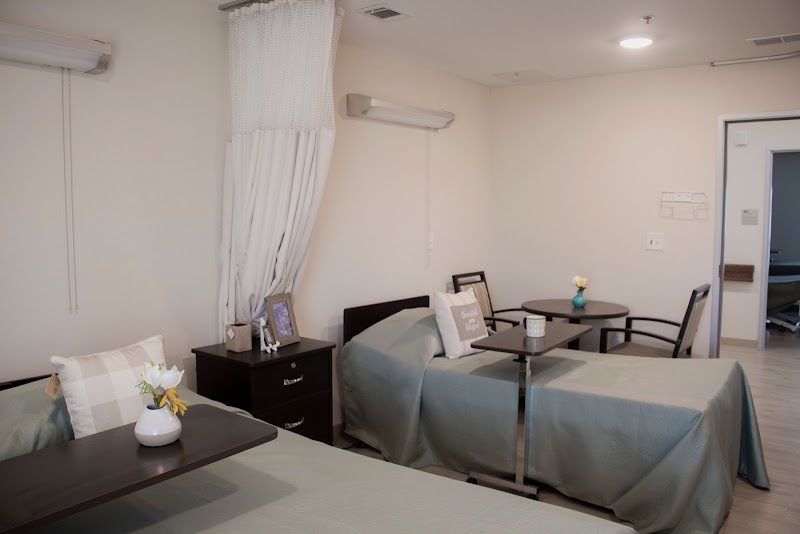
Aug 2023 5 deficiencies
CONCERN (D) 📢 Someone Reported This

A family member, employee, or ombudsman was alarmed enough to file a formal complaint

Potential for Harm - no one hurt, but risky conditions existed

Deficiency F0578 (Tag F0578)

Could have caused harm · This affected 1 resident

**NOTE- TERMS IN BRACKETS HAVE BEEN EDITED TO PROTECT CONFIDENTIALITY** Based on interviews and record reviews, the facility failed to ensure residents' right to formulate advanced directives for 1 of...

Read full inspector narrative →
**NOTE- TERMS IN BRACKETS HAVE BEEN EDITED TO PROTECT CONFIDENTIALITY** Based on interviews and record reviews, the facility failed to ensure residents' right to formulate advanced directives for 1 of 8 residents (Resident # 33) reviewed for advanced directives in that: There was no order for Full Code for Resident #33 This failure could place residents at risk of having their end-of-life wishes dishonored The findings included: A record review of Resident #33's face sheet dated 07/13/23 revealed an original admission date of 07/13/23 with diagnoses including alcohol-induced dementia, gastrostomy (feeding tube), severe malnutrition, anxiety, low blood pressure, COPD, difficulty swallowing, alcohol dependence, schizophrenia (a set of symptoms characterized by a loss of touch with reality due to a disruption in the way that the brain processes information including delusions (false beliefs), hallucinations (seeing or hearing things that don't exist), bipolar, and Alzheimer's. Further review revealed Resident #33 was under guardianship and the Advanced Directive section was blank. Resident #33's profile for Code Status was blank. A record review of Resident #33's MDS dated [DATE] documented a BIMS of 9, indicating moderate cognitive impairment. A record review of Resident #33's care plan dated 07/13/23 documented Full Code on page 4 with an initiation date of 07/21/23. An interview with the DON on 08/03/23 at 09:54 am stated the code status should be in the physician orders, the Care Plan, and [NAME] (a quick view tool used by staff in the electronic health record). The DON stated the admitting nurse was responsible for placing those orders and updating the care plan. The DON stated it was important to have a code status because the staff needed to know in case there was an emergency, such as if the resident stopped breathing. A full code would have to be initiated, even if they were DNR and that would cause problems because we (the facility) would be working against the resident's wishes. A record review of Guardianship dated 03/15/23 documented that Resident #33 was incapacitated. A record review of the facility policy, Self Determination End of Life Measures revised 02/13/23 documented 5. The facility will ensure compliance with the requirements of Texas law concerning appropriate health care provisions when a resident has not provided written documentation for his/her advance directive, has not made a decision regarding his/her advance directive, or is incapacitated. 11. There are two witnesses required for all advance directive documents. Each witness must be a competent adult . No records or documents were found with two witness signatures regarding advance directives for Resident #33.
CONCERN (D) 📢 Someone Reported This

A family member, employee, or ombudsman was alarmed enough to file a formal complaint

Potential for Harm - no one hurt, but risky conditions existed

Deficiency F0583 (Tag F0583)

Could have caused harm · This affected 1 resident

**NOTE- TERMS IN BRACKETS HAVE BEEN EDITED TO PROTECT CONFIDENTIALITY** Based on observation, interview, and record review, the facility failed to ensure the right to personal privacy for 1 of 8 resid...

Read full inspector narrative →
**NOTE- TERMS IN BRACKETS HAVE BEEN EDITED TO PROTECT CONFIDENTIALITY** Based on observation, interview, and record review, the facility failed to ensure the right to personal privacy for 1 of 8 residents (Resident #34) reviewed for privacy, in that: Resident #34's privacy curtain was left open during peri care This failure could place residents at risk to be treated in an undignified manner Findings included: A record review of Resident #34's face sheet documented an [AGE] year-old male originally admitted on [DATE] and a re-admission on [DATE]. Resident #34's diagnoses included Parkinson's, Lewy Bodies (neurocognitive disorder), major depression, high blood pressure, malnutrition, a visual disorder, dementia with agitation and behavioral disturbance, hallucinations, lack of coordination, anxiety, and constipation. Observation on 08/01/23 at 2:10 pm revealed when this surveyor went to interview Resident #34, after knocking prior to entering his room, Resident #34's privacy curtain was open, and his bottom was exposed during peri care. Resident #34 was turned to his right side, facing the wall of his room, while CNA A provided peri care. CNA A did not close Resident #34's curtain for the duration of peri care. An interview with the DON on 08/03/23 at 9:26 am revealed the process for incontinent care was to knock on the door prior to entering, explain the procedure, wash hands with soap and water, pull the curtain, and have supplies ready to go. Record review of the facility policy, Perineal Care effective 05/11/22 documented 7) Provide privacy and modesty by closing the door and/or curtain 14) Limit resident exposure to the perineal area-provide privacy at all times . Record review of the facility policy, Resident Rights, undated, documented the resident has a right to a dignified existence .A facility must treat each resident with respect and dignity and care for each resident in a manner and in an environment that promotes maintenance or enhancement of his or her quality of life, recognizing each resident's individuality. The facility must protect and promote the rights of the resident .Respect and dignity-The resident has the right to be treated with respect and dignity .Privacy and confidentiality- The resident has the right to personal privacy and confidentiality .1. Personal privacy includes .personal care .2. The facility must respect the resident's right to personal privacy .Safe Environment- The resident has the right to a safe, clean, comfortable and homelike environment, including but not limited to receiving treatment .a. This includes ensuring that the resident can receive care and services safely .
CONCERN (D) 📢 Someone Reported This

A family member, employee, or ombudsman was alarmed enough to file a formal complaint

Potential for Harm - no one hurt, but risky conditions existed

Deficiency F0692 (Tag F0692)

Could have caused harm · This affected 1 resident

**NOTE- TERMS IN BRACKETS HAVE BEEN EDITED TO PROTECT CONFIDENTIALITY** Based on observations, interviews, and record reviews, the facility failed to ensure residents maintained acceptable means of hy...

Read full inspector narrative →
**NOTE- TERMS IN BRACKETS HAVE BEEN EDITED TO PROTECT CONFIDENTIALITY** Based on observations, interviews, and record reviews, the facility failed to ensure residents maintained acceptable means of hydration for 1 of 8 (Resident #34) reviewed for hydration. Resident #34 did not have fluids for hydration available at the bedside during three surveyor observations from 08/01/2023 through 08/03/2023. This failure could place residents at risk for dehydration, decline in health, serious illness or hospitalization Findings included: A record review of Resident #34's face sheet documented an [AGE] year-old male originally admitted on [DATE] and a re-admission on [DATE]. Resident #34's diagnoses included Parkinson's, Lewy Bodies (neurocognitive disorder), major depression, high blood pressure, malnutrition, a visual disorder, dementia with agitation and behavioral disturbance, hallucinations, lack of coordination, anxiety, and constipation. Record review of Resident #34's care plan dated 07/23/23 documented a focus that the resident had a potential fluid deficit r/t impaired cognition and impaired mobility-date initiated 01/25/22. The goal was Resident #34 will be free of symptoms of dehydration and maintain moist mucous membranes, good skin turgor-date initiated 01/25/22. The interventions documented included: inform the nurse if the resident was refusing to drink fluids, nursing staff to encourage the resident to drink fluids of choice, nursing staff to ensure the resident had fluids in reach, invite the resident to activities that promote additional fluid intake, offer drinks during one-to-one visits, all initiated 01/25/22. Resident #34's care plan had a focus that the resident had an ADL self-care performance deficit initiated 01/25/22 with interventions including Eating: the resident was able to hold cup, feed self, eat finger foods independently-date initiated 02/18/22. A record review of Resident #34's MDS dated [DATE] documented a BIMS of 10. Observation of Resident #34's room, bedside table, and rolling bedside table on 08/01/23 at 2:39 pm revealed no cup, glass, mug, or other vessel with water or other beverage. Observation of Resident #34's room, bedside table, and rolling bedside table on 08/02/23 at 9:37 am revealed no cup, glass, mug, or other vessel with water or other beverage. Observation of Resident #34's room, bedside table, and rolling bedside table on 08/03/23 at 9:10 am revealed no cup, glass, mug, or other vessel with water or other beverage. Observation of Resident #34's room, bedside table, and rolling bedside table, and interview with the DON on 08/03/23 at 9:10 am revealed no cup, glass, mug, or other vessel with water or other beverage. The DON stated there was supposed to be a mug or cup at the bedside all the time. An interview with Resident #34 on 08/01/23 at 2:39 pm revealed the staff brought him things to drink only if he asked for it. Resident #34 stated his mouth and lips were dry a lot of the time. An interview with the DON on 08/03/23 at 9:33 am revealed Resident #34 used his call light when he wanted something to drink. The DON stated she made rounds throughout the day, answered call lights, and did whatever she had to do. The DON stated she was primarily on the 100 hall yesterday (08/02/23) and the day before that (08/01/23), she made rounds on the 300 hall but did not notice Resident #34 had no beverages at the bedside, and that she was actually in Resident #34's room on 08/01/23. The facility failed to pruduce a policy on hydration.
CONCERN (E) 📢 Someone Reported This

A family member, employee, or ombudsman was alarmed enough to file a formal complaint

Potential for Harm - no one hurt, but risky conditions existed

Food Safety (Tag F0812)

Could have caused harm · This affected multiple residents

Based on observation, interview, and record review, the facility failed to store, prepare, distribute, and serve food in accordance with professional standards for food service safety for 1 of 1 kitch...

Read full inspector narrative →
Based on observation, interview, and record review, the facility failed to store, prepare, distribute, and serve food in accordance with professional standards for food service safety for 1 of 1 kitchen reviewed and 1 of 1 nutrition room for sanitation. 1. The facility failed to ensure utensils were clean and in working order 2. The facility failed to ensure the meat slicer was kept clean 3. The facility failed to ensure the steam table was kept clean 4. The facility failed to ensure kitchen staff knew how to calibrate thermometers 5. The facility failed to ensure food items in the nutrition room refrigerator were not expired 6. The facility failed to ensure food items in the nutrition room refrigerator were labeled and dated These failures could place residents at risk of foodborne illnesses. Findings include: Observation of the kitchen during initial tour on 08/01/23 beginning at 10:47 am revealed a drawer with dirty utensils including 1 metal pastry scraper, 1 metal icing knife, and 1 small metal beater with dark brown spots all over them, 2 plastic spatulas that were cracked and had flaking pieces that fell off when touched, and 2 large plastic spoons that were melted and cracked. The meat slicer blade had similar dark brown spots around the entirety of the outer/cutting side of the blade. The steam table wells had yellowish water in them with yellow floating debris (could not see the bottom of the wells) and a thick layer of a yellowish-white flaking substance around the waterlines of all 4 wells. Observation and interview with the DS and COOK on 08/03/23 at 11:20 am during temperature checks for lunch service, the COOK was calibrating the thermometer in ice water. She stated the calibration temperature should be 35F. The DS stated the calibration temperature in ice water should be 35F. The DS stated food temperatures should be 165F-175F for all the different foods. The COOK and the DS both stated they did not know what temperature was freezing or boiling. Temperatures recorded for lunch service were: Asian Beef 175.9F, Mixed vegetables with beef soup 206.2F, and Spring roll, 147.7F which was placed back in the oven. The COOK re-calibrated the thermometer between each temperature taken. Observation of the Nutrition room refrigerator and interview with the DON on 08/03/23 at 04:20 pm revealed fifteen 4 oz. containers of thickened water with use by date of June 2023, eleven 4 oz. containers labeled vanilla pudding with use by date of 08/02/23, and one 4 oz., container with a similar looking substance of the pudding unlabeled and undated. The DON stated dietary was responsible for ordering, preparing food, and stocking the nutrition room refrigerator. The DON stated, I'm not going to lie, I stock the refrigerator, too. I just didn't look at the expiration dates. The DON stated she was responsible for the nutrition room. The DON stated expired food could make the resident's sick. Interview with the DS on 08/01/23 at 10:47 am revealed they had a cleaning schedule, and the steam table was cleaned every other day. The DS stated the kitchen staff did not use the utensils in the drawer and did not know why they were in there. The DS stated that the dark brown spots on the metal utensils in the drawer look like rust, and the flaking pieces of the plastic utensils could get in the food and make someone sick or break a tooth. An interview with the COOK on 08/01/23 at 10:52 am stated the staff did not use the utensils in the drawer and did not know why the utensils were in the drawer. Record review of the facility instructions for Digital Thermometer Calibration documented .the temperature should read 32F when calibrated using the freezing point method, and 212F when using the boiling point method. Record review of the facility's Daily Services Policy and Procedure Manual dated 2012, Daily Food Temperature Controldocumented under Procedure: 4. All hot foods shall be cooked and held for service at temperatures of 140F or above. 5. Any hot or cold food which does not meet the minimum acceptable temperature shall be heated to a temperature of 165F and held for at least 15 seconds.
CONCERN (E)

Potential for Harm - no one hurt, but risky conditions existed

Infection Control (Tag F0880)

Could have caused harm · This affected multiple residents

**NOTE- TERMS IN BRACKETS HAVE BEEN EDITED TO PROTECT CONFIDENTIALITY** Based on observation, interview, and record review, the facility failed to establish and maintain a infection prevention program...

Read full inspector narrative →
**NOTE- TERMS IN BRACKETS HAVE BEEN EDITED TO PROTECT CONFIDENTIALITY** Based on observation, interview, and record review, the facility failed to establish and maintain a infection prevention program to provide a safe and sanitary environment for 1 of 1 laundry room, and 1 of 1 resident (Resident #34) reviewed for infection control, in that: A: failed to maintain an infection and prevention control program that included, at a minimum, a system for preventing and controlling Legionella through a program that identifies areas in the water system where Legionella bacteria can grow and spread. B: failed to ensure laundry was disinfected by monitoring/maintaining a water temperature of 140 degrees. C: failed to provide a safe, sanitary, and comfortable environment to help prevent the development and transmission of infections for 1 of 1 resident (Resident #34) reviewed for infection control These deficient practices place facility residents at risk for airborne infections. Findings include: A: During an interview with the administrator on 8/3/2023 at 10:00 am she said no system was in place to measure testing protocols or to intervene when control limits were not met. The administrator said they looked at the drains in the showers, looked at the air conditioner for proper function, and looked at the water systems monthly but did not have a map indicating where those items were that needed to be looked at. During an observation of an air conditioner vent in the laundry room on 8/3/2023 at 11:00 pm, excess condensation was noted on the vent, and the ceiling was discolored near the vent. During an interview on 8/3/2023 at 11:00 pm with the Maintenance director he was asked if air conditioner vents that displayed excess condensation were checked for legionella, and he said he did not know how to do that. B: During an interview with the administrator on 8/3/2023 at 11:10 am she said the washing machines check the temperature of the water. The administrator said the temperature of the water should be 125 degrees. Record review of the manufacturer the temperature should be above 125 degrees to disinfect clothes. During an interview with the housekeeping supervisor on 8/3/2023 at 11:10 am she said the water should be 180 degrees to disinfect the clothes. During an interview with the housekeeping staff on 8/3/2023 at 11:10 am she said clothes were disinfected with hot water. She did not know what temperature water should be to disinfect clothes. During an interview with the Maintenance director on 8/3/2023 at 11:10 am he said he did not know what temperature water should be to disinfect clothes. During an interview with the administrator on 8/3/2023 at 3:45 pm she said the temperatures of the laundry water are not recorded. This time, the Administrator said the water temperature should be at 140 degrees F. A record review of the facility Environment of Care Policy and Procedure Manual (2003) indicates: The water temperatures of the laundry and kitchen areas should be maintained at a temperature of 140 degrees F. A: A record review of the facility's Legionella Water Management Program Policy Interpretation and Implementation indicates the water management program includes the following elements: b: A detailed description and diagram of the water system in the facility, including the following: 1 receiving 2 cold water distribution 3 heating 4 hot water distribution 5 waste c: The identification of areas in the water system that could encourage the growth and spread of Legionella or other waterborne bacteria, including storage tanks, water heaters, filters, aerators, showerheads and hoses, misters, atomizers, air washers and humidifiers, hot tubs, fountains and medical devices such as CPAP machines, hydrotherapy equipment etc. d: The identification of situations that can lead to Legionella growth, such as: 1 construction 2 water main breaks 3 changes in municipal water quality 4 the presence of biofilm, scale or sediments 5 water temperature fluctuations 6 water pressure changes 7 water stagnation 8 inadequate disinfection e: specific measures used to control the introduction and/or spread of legionella )e.g., temperature, disinfectants) f: the control limits or parameters that are acceptable and that are monitored g: a diagram of where the control measures are in place h: a system to monitor control limits and the effectiveness of control measures I: a plan for when control limits are not met or not effective J: documentation of the program C: A record review of Resident #34's face sheet documented an [AGE] year-old male originally admitted on [DATE] and a re-admission on [DATE]. Resident #34's diagnoses included Parkinson's, Lewy Bodies (neurocognitive disorder), major depression, high blood pressure, malnutrition, a visual disorder, dementia with agitation and behavioral disturbance, hallucinations, lack of coordination, anxiety, and constipation. A record review of Resident #34's MDS dated [DATE] documented a BIMS of 10, indicating moderate cognitive impairment. Observation on 08/01/23 at 2:10 pm revealed Resident #34 was turned to his right side, facing the wall of his room, while CNA A provided peri care. CNA A did not change gloves before placing a clean brief beneath Resident #34. CNA A repeatedly pulled wipes from the package they were in with soiled gloves during peri care. CNA A touched Resident #34 while directing him to turn from his right side to his back with soiled gloves. An interview with the DON on 08/03/23 at 9:26 am revealed the process for incontinent care was to knock on the door prior to entering, explain the procedure, wash hands with soap and water, pull the curtain, and have supplies ready to go. The DON stated during incontinent care, gloves were worn, enough wipes should be pulled out, so they (staff) don't dig back into the package to avoid contamination, then use one wipe per swipe, from front to back. Gloves should be changed, and hand sanitizer should be used before putting on clean gloves unless the gloves were visibly soiled, then put on clean gloves, then place the clean brief. The DON stated the CNAs got training via annual competencies, in-services as needed, and when she found a trend of infections going up, such as UTIs. The DON stated UTIs could be prevented to an extent, but some of the residents were more susceptible and/or have comorbidities. An interview with LVN A on 08/03/23 at 02:23 am revealed the process for incontinent care was to wash hands, knock, explain the procedure, put gloves on, remove the soiled brief, change gloves, use ABHR, provide care with a wipe from the container in single wipes from top to bottom; the wipes would be taken from the container prior to starting. If more wipes were needed, remove gloves, use ABHR, put on new gloves, put the new brief on, throw away the trash, remove gloves, and sanitize hands. Interview with LVN B 08/03/23 02:29 pm revealed the process for incontinent care was to knock, announce self, wash hands, explain the procedure, close the curtain/provide privacy, get supplies: gloves, a bag for trash, barrier cream if needed, wipes. Put down a barrier, put all supplies on it, assess for pain prior to turning, and get assistance if needed. Open the soiled brief, wipe front to back, wipe the outsides of the labia one at a time until clean, roll the resident to his/her other side, wipe bottom front to back, then wipe the butt cheeks, remove gloves, wash hands, put on new gloves, apply barrier cream, take gloves off, use ABHR, put new gloves on, place the new brief under the resident, remove the trash, remove gloves, wash hands. Use only 1 wipe per swipe; the wipes are out of the container, and if more are needed, either have an assistant get them, or change gloves, ABHR, and put on new gloves. An interview with LVN C on 08/03/23 at 02:36 pm revealed the process for incontinent care was to knock, announce self, explain why she's there, ask permission, provide privacy, gather linens; whatever I need, explain the procedure, don gloves, clean front to back with the proper number of cloths, one at a time, right then left then middle of labia then bottom to top for the back. Remove soiled linen, remove gloves, wash hands, put on new gloves, place the new brief under the resident, change sheets if needed, reposition the resident, and provide comfort. LVN C stated she teaches her students not to cross-contaminate. An interview with CNA B on 08/03/23 at 02:43 pm revealed the process for incontinent care was to knock on the door, announce self, wash hands, explain the procedure, put gloves on, get supplies, a new brief, and wipes. Wipe once, throw it away, wipe at least 2 more times and throw them away after use, remove gloves, use ABHR, put on new gloves, then place the new brief and adjust the resident. Put trash in the trash bag, put dirty gloves in the trash bag, tie it up and place it in the dirty barrel, wash hands, make sure the resident has their call light, and the bedside table with remote, and water, and whatever else they wanted on it within reach, then let them know to use the call light if they need anything else. Record review of the facility policy, Perineal Care effective 05/11/22 documented under Prepare: 1) Assemble supplies 2) Knock 3) Acknowledge resident 4) Introduce yourself . 6) Explain procedure 7) Provide privacy 8) Prepare work station 9) Reposition bed 10) Perform hand hygiene 11) [NAME] gloves 12) Remove an adequate number of pre-moistened cleansing wipes 13) Position resident 14) Provide privacy at all times 15) Protect mattress if needed 16) Wipe the pubis area 17) Perform perineal care, wiping from clean to dirty and avoiding contamination to the urethral area . 21) Gently perform care to the buttocks and anal area, working from front to back and avoiding contamination to the urethral area . 23) .apply moisture barrier as directed 24) Doff gloves 25) Perform hand hygiene 26) Provide comfort . 29) Return resident items on the table 30) Tie off the disposable trash bag 31) Perform hand hygiene . Always perform hand hygiene before and after glove use
May 2022 4 deficiencies
CONCERN (D)

Potential for Harm - no one hurt, but risky conditions existed

PASARR Coordination (Tag F0644)

Could have caused harm · This affected 1 resident

**NOTE- TERMS IN BRACKETS HAVE BEEN EDITED TO PROTECT CONFIDENTIALITY** Based on interview and record review, the facility failed to refer residents with a possible serious mental disorder for a level...

Read full inspector narrative →
**NOTE- TERMS IN BRACKETS HAVE BEEN EDITED TO PROTECT CONFIDENTIALITY** Based on interview and record review, the facility failed to refer residents with a possible serious mental disorder for a level II resident review for one (R)esidents (R #10 ) out of two Residents reviewed for PASARR services: The facility failed to refer Resident #10 to the appropriate state-designated mental health or intellectual disability authority for review after Resident #10 was diagnosed with a newly evident mental disorder. This deficient practice has the potential to result in missed opportunities for residents with a mental illness for qualifying for additional care and services. The findings included: Record review of Resident #10's Face Sheet dated 05/25/22 documented a [AGE] year-old female admitted [DATE] with the diagnoses of: Schizoaffective Disorder (02/03/22) [A mental disorder in which a person experiences a combination of symptoms of schizophrenia and mood disorder.], Unspecified, Dementia (02/10/21) in other diseases classified elsewhere without behavioral disturbance. Record review of Resident #10's Psychiatry Progress Note dated 02/03/22 documented the following diagnoses: Schizophrenia [A mental disorder characterized by delusions, hallucinations, disorganized thoughts, speech and behavior.], unspecified, unspecified mood [affective] disorder, and age related cognitive decline. Record review of Resident #10's Quarterly Minimum Data Set (MDS) date 03/07/22 documented an active diagnoses of Schizophrenia. Record review of Resident #10's comprehensive Care Plan dated 03/11/22 documented I require anti-psychotic medications related to psychosis, diagnosis: Schzoaffective disorder unspecified psychosis . Record review of Resident #10's Physician Orders revealed Resident #10 was prescribed Abilify (antipsychotic) Tablet 5 milligrams, Give 1 tablet by mouth one time a day related to SCHIZOAFFECTIVE DISORDER, UNSPECIFIED. Resident #10's PASRR Level 1 assessment dated [DATE] documented had no evidence or indicator this was an individual that had a Mental Illness, Intellectual Disability or a Developmental Disability. In an interview with Licensed Vocational Nurse (LVN) A on 05/25/22 at 10:09 AM revealed she identified herself as the MDS Coordinator and she was responsible for ensuring all residents had an MDS assessment document in clinical records. LVN A said once she was made aware of a resident being newly diagnosed with a mental illness, she was responsible for ensuring that a 1012 Form - Mental Illness/Dementia Resident Review form was completed and sent to the local authority. LVN A said she did not know how Resident #10's new mental illness diagnoses Got past me. LVN A said the Director of Nursing (DON) added Resident #10's new diagnoses into the electronic record system but could not recall if the DON informed her of the new diagnoses. In an interview with the DON on 05/25/22 at 11:11 AM, she explained she was new to her position and was learning and fixing the processes of the facility. The DON said she was not fully aware of the PASRR process but stated she was aware it was important in that the PASRR process could be of assistance to the resident's care. The DON said in February 2022, she received Resident #10's Psychiatric Progress Note dated 02/03/22 in which she entered Resident #10's schizophrenia diagnoses in the electronic clinical records. The DON said she could not recall if she had a specific conversation with LVN A about Resident #10's new mental illness diagnoses. The DON said her current process to ensure everyone was made aware of any new mental illness, intellectual disability or developmental disability is that after she received any diagnoses that was an indicator for the positive PASRR process, she would personally inform the MDS Coordinator so that she could implement her processes. The DON said she currently did not monitor any PASRR process to ensure the process was implemented correctly But I will do so going forward. Record review of the facility's Preadmission Screening and Resident Review (PASRR) Level 1 [PL1] Screen Policy and Procedure dated 10/30/17 documented It is the process of [the facility] to obtain a PL1 screening form from the referring facility prior to admission to the nursing facility. The PL1 will be submitted timely per PASRR Regulatory timeframes .
CONCERN (D)

Potential for Harm - no one hurt, but risky conditions existed

Tube Feeding (Tag F0693)

Could have caused harm · This affected 1 resident

**NOTE- TERMS IN BRACKETS HAVE BEEN EDITED TO PROTECT CONFIDENTIALITY** Based on observation, interview, and record review, the facility failed to ensure residents who were fed by enteral means receiv...

Read full inspector narrative →
**NOTE- TERMS IN BRACKETS HAVE BEEN EDITED TO PROTECT CONFIDENTIALITY** Based on observation, interview, and record review, the facility failed to ensure residents who were fed by enteral means received the appropriate treatment and services to prevent complications of enteral feeding, for one Resident (Resident #13) of two residents reviewed for feeding tubes, in that: Certified Nurse Aide (CNA) A was not competent in, and did not follow facility protocols regarding feeding tube nutrition and care. CNA A adjusted Resident #13's feeding pump while providing Resident #13 with incontinent care. This failure could place residents with feeding tubes at risk for reflux, aspiration, nausea, vomiting, cramps, or diarrhea. Findings included: Review of Resident #13's Face sheet dated 5/24/22 documented age [AGE] year-old male admitted on [DATE] with the diagnosis traumatic brain injury, muscle wasting/weakness, unspecified convulsions, contact with and (suspected) exposure to other viral communicable diseases, anxiety, hypertension, and gastrostomy (opening in the stomach for food status. Record Review of Resident #13's Care plan dated 2/11/21 documented: The resident requires tube feeding related to dysphagia and history of traumatic brain injury. Date initiated 3/3/21. Goal: The resident will remain free of side effects or complications related to tube feeding through review date. Interventions: Clean insertion site daily as ordered, monitoring for signs and symptoms of infection or breakdown such as redness, pain, drainage, swelling . Record Review of Resident #13's Minimum Data Set, dated [DATE] documented BIMS: 00 Severe cognitive impairment. Cognitive skills for daily decision making - severely impaired. Toilet use requires total dependence, two persons physical assist. Personal Hygiene- how resident maintains personal hygiene, including combing hair, brushing teeth, shaving, applying makeup, washing/drying face and hands (excludes baths and showers) requires total dependence, two persons physical assist. During an observation of care for Resident # 13 on 5/24/22 at 11:07 AM, CNA A paused the feeding pump prior to Nurse aide B changing Resident #13's brief. The resident's head was lowered. After, CNA A and Nurse aide B changed the resident, CNA A pushed a button on the feeding pump to start the feeding. During an interview with Nurse aide B on 05/24/22 at 11:14 AM, she revealed the facility and charge nurses allow CNAs to pause and run the resident's feeding machines only when they need to provide care. She revealed she will have a nurse with her at times and when the nurse is there, the nurse will pause or stop the g-tube feeding pump but usually the CNA's just pause it to provide care. She stated, CNAs are not allowed to turn off and turn on the pumps but we are allowed to pause the pumps real quick. She revealed she was unsure if the practice of pausing the feeding machine for the residents was within a CNAs scope of practice, and was unsure if had been educated by facility staff on pausing the feeding machines. During an interview with LVN C on 5/24/22 at 11:22 AM revealed while CNAs are in the resident's room to provide care they are allowed to pause G-tube feeding machines. CNAs are not allowed to unhook, turn off, or on g-tube feeding machines. Charge nurses are allowed to turn off and on and unhook g-tube feeding machines. LVN C revealed the CNAs are not properly trained on how to turn off or on the g-tube feeding machines. She revealed the CNAs are trained on how to pause the machine but she stated she would have to check with DON and find the answer. During an interview with CNA A on 5/24/22 at 11:26 AM revealed she had been educated on pausing g-tube feeding machines by some of the nursing staff but was unable to name exactly who educated her. She revealed she pauses the g-tube feeding machines before providing care or lowering the head of the bed. She revealed CNAs usually pause it while they are in the room doing care. She revealed she has been working at this facility for 22 years and pausing of the g-tube feeding machines are within the CNA scope of practice. During an interview with DON on 5/24/22 at 11:30 AM it was revealed CNAs are not supposed to pause, stop, or turn on feeding machines. She stated, they are to call a charge nurse that is licensed to do it before providing care. She revealed it is not within the CNAs scope of practice. When care needs to be provided to a g-tube resident, and they need the feeding paused the CNAs should get a nurse to assist them. She revealed the importance of getting a charge nurse to assist the CNAs in handling feeding machines, is because it is not in the CNAs scope of practice. Record review of CNA Proficiency Audit for CNA A dated 3/22/21 documented no skills for pausing or adjusting feeding tubes. Record review of Texas Health and Human Service Commission Texas Nurse Aide Performance record for Nurse aide B dated 2/4/21 documented no skills for pausing or adjusting feeding tubes. Record review of the facility's Enteral nutrition policy and procedure dated 2/13/07 documented The Nursing Service Department is responsible for all feeding equipment and the administration of tube feedings. The facility was unable to provide training on feeding equipment and feeding pumps.
CONCERN (D)

Potential for Harm - no one hurt, but risky conditions existed

Deficiency F0726 (Tag F0726)

Could have caused harm · This affected 1 resident

**NOTE- TERMS IN BRACKETS HAVE BEEN EDITED TO PROTECT CONFIDENTIALITY** Based on observation, interview, and record review, the facility failed to ensure residents who were fed by enteral means receiv...

Read full inspector narrative →
**NOTE- TERMS IN BRACKETS HAVE BEEN EDITED TO PROTECT CONFIDENTIALITY** Based on observation, interview, and record review, the facility failed to ensure residents who were fed by enteral means received the appropriate treatment and services to prevent complications of enteral feeding, for one Resident (Resident #13) of two residents reviewed for feeding tubes, in that: Certified Nurse Aide (CNA) A was not competent in feeding tube nutrition and care. CNA A adjusted Resident #13's feeding pump while providing Resident #13 with incontinent care. This failure could place residents with feeding tubes at risk for reflux, aspiration, nausea, vomiting, cramps, or diarrhea. Findings included: Review of Resident #13's Face sheet dated 5/24/22 documented age [AGE] year-old male admitted on [DATE] with the diagnosis traumatic brain injury, muscle wasting/weakness, unspecified convulsions, contact with and (suspected) exposure to other viral communicable diseases, anxiety, hypertension, and gastrostomy (opening in the stomach for food status. Record Review of Resident #13's Care plan dated 2/11/21 documented: The resident requires tube feeding related to dysphagia and history of traumatic brain injury. Date initiated 3/3/21. Goal: The resident will remain free of side effects or complications related to tube feeding through review date. Interventions: Clean insertion site daily as ordered, monitoring for signs and symptoms of infection or breakdown such as redness, pain, drainage, swelling . Record Review of Resident #13's Minimum Data Set, dated [DATE] documented BIMS: 00 Severe cognitive impairment. Cognitive skills for daily decision making - severely impaired. Toilet use requires total dependence, two persons physical assist. Personal Hygiene- how resident maintains personal hygiene, including combing hair, brushing teeth, shaving, applying makeup, washing/drying face and hands (excludes baths and showers) requires total dependence, two persons physical assist. During an observation of care for Resident # 13 on 5/24/22 at 11:07 AM, CNA A paused the feeding pump prior to Nurse aide B changing Resident #13's brief. The resident's head was lowered. After, CNA A and Nurse aide B changed the resident, CNA A pushed a button on the feeding pump to start the feeding. During an interview with Nurse aide B on 05/24/22 at 11:14 AM, she revealed the facility and charge nurses allow CNAs to pause and run the resident's feeding machines only when they need to provide care. She revealed she will have a nurse with her at times and when the nurse is there, the nurse will pause or stop the g-tube feeding pump but usually the CNA's just pause it to provide care. She stated, CNAs are not allowed to turn off and turn on the pumps but we are allowed to pause the pumps real quick. She revealed she was unsure if the practice of pausing the feeding machine for the residents was within a CNAs scope of practice, and was unsure if had been educated by facility staff on pausing the feeding machines. During an interview with LVN C on 5/24/22 at 11:22 AM revealed while CNAs are in the resident's room to provide care they are allowed to pause G-tube feeding machines. CNAs are not allowed to unhook, turn off, or on g-tube feeding machines. Charge nurses are allowed to turn off and on and unhook g-tube feeding machines. LVN C revealed the CNAs are not properly trained on how to turn off or on the g-tube feeding machines. She revealed the CNAs are trained on how to pause the machine but she stated she would have to check with DON and find the answer. During an interview with CNA A on 5/24/22 at 11:26 AM revealed she had been educated on pausing g-tube feeding machines by some of the nursing staff but was unable to name exactly who educated her. She revealed she pauses the g-tube feeding machines before providing care or lowering the head of the bed. She revealed CNAs usually pause it while they are in the room doing care. She revealed she has been working at this facility for 22 years and pausing of the g-tube feeding machines are within the CNA scope of practice. During an interview with DON on 5/24/22 at 11:30 AM it was revealed CNAs are not supposed to pause, stop, or turn on feeding machines. She stated, they are to call a charge nurse that is licensed to do it before providing care. She revealed it is not within the CNAs scope of practice. When care needs to be provided to a g-tube resident, and they need the feeding paused the CNAs should get a nurse to assist them. She revealed the importance of getting a charge nurse to assist the CNAs in handling feeding machines, is because it is not in the CNAs scope of practice. Record review of CNA Proficiency Audit for CNA A dated 3/22/21 documented no skills for pausing or adjusting feeding tubes. Record review of Texas Health and Human Service Commission Texas Nurse Aide Performance record for Nurse aide B dated 2/4/21 documented no skills for pausing or adjusting feeding tubes. Record review of the facility's Enteral nutrition policy and procedure dated 2/13/07 documented The Nursing Service Department is responsible for all feeding equipment and the administration of tube feedings. The facility was unable to provide training on feeding equipment and feeding pumps.
CONCERN (D)

Potential for Harm - no one hurt, but risky conditions existed

Infection Control (Tag F0880)

Could have caused harm · This affected 1 resident

**NOTE- TERMS IN BRACKETS HAVE BEEN EDITED TO PROTECT CONFIDENTIALITY** Based on observation, interview, and record review, the facility failed to maintain an infection prevention and control program,...

Read full inspector narrative →
**NOTE- TERMS IN BRACKETS HAVE BEEN EDITED TO PROTECT CONFIDENTIALITY** Based on observation, interview, and record review, the facility failed to maintain an infection prevention and control program, including hand hygiene, designed to provide a safe, sanitary and comfortable environment, and to help prevent the development and transmission of communicable diseases and infections, for one Resident (Resident #13) of six residents reviewed for infection control practices, in that: 1.) Nurse aide B did not: -perform hand hygiene between glove changes during care for Resident #13. This failure could place residents that require assistance with personal care at risk for healthcare associated cross-contamination and infections. Findings include: Review of Resident #13's Face sheet dated 5/24/22 documented age [AGE] year-old male admitted on [DATE] with the diagnosis traumatic brain injury, muscle wasting, unspecified convulsions, contact with and (suspected) exposure to other viral communicable diseases, anxiety, hypertension, and gastrostomy status. Record Review of Resident #13's Care plan dated 2/11/21 documented: The resident requires tube feeding related to dysphagia and history of traumatic brain injury. Date initiated 3/3/21. Goal: The resident will remain free of side effects or complications related to tube feeding through review date. Interventions: Clean insertion site daily as ordered, monitoring for signs and symptoms of infection or breakdown such as redness, pain, drainage, swelling . Record Review of Resident #13's Minimum Data Set, dated [DATE] documented Cognitive skills for daily decision making - severely impaired. Toilet use requires total dependence, two persons physical assist. Personal Hygiene- how resident maintains personal hygiene, including combing hair, brushing teeth, shaving, applying makeup, washing/drying face and hands (excludes baths and showers) requires total dependence, two persons physical assist. During an observation of personal care for Resident # 13 on 05/24/22 at 11:07 AM revealed Nurse aide B cleaned Resident # 13's front area, threw away the dirty wipes, and removed dirty gloves. She placed a new set of gloves on and cleaned the buttocks of the Resident #13 with wipes. She removed the dirty brief, changed gloves and placed a new brief on the resident. No hand hygiene was performed between glove changes. After CNA A and nurse aide B repositioned Resident # 13, they removed their gloves and washed their hands in the restroom. During an interview with Nurse aide B on 5/24/22 at 11:14 AM she revealed she should have washed her hands or performed hand hygiene before and after care, and between glove changes but she forgot to. She revealed it was important to perform hand hygiene to prevent spread of infection or bacteria. She revealed she had been trained and educated by the DON and ADON on how and when to perform hand hygiene. During an interview with DON on 5/24/22 at 11:30 AM she revealed she was aware of the mistake Nurse aide B had done during personal care for Resident #13, because Nurse aide B had told her she messed up during the observation. She stated, hand hygiene should be performed between every glove change and the staff are aware of it because they have been educated on it multiple times. She revealed the importance of hand hygiene was to help prevent spread of bacteria and infections among staff and residents. Record review of CNA Proficiency Audit for CNA A dated 3/22/21 documented Satisfactory for Perineal care and prper hand washing and infection control awareness. Record review of Texas Health and Human Service Commission Texas Nurse Aide Performance record for Nurse aide B dated 2/4/21 documented Satisfactory performance for Perineal care/incontinent care and hand hygiene competency validation. Record Review of the facility's undated Hand Hygiene policy documented you may use alcohol-based hand cleaner or soap/water for the following: - before and after assisting a resident with personal care - after removing gloves . Record Review of the facility's Perineal Care policy dated 4/25/22 documented, this procedure aims to maintain the resident dignity and self-worth and reduce embarrassment by providing cleanliness and comfort to the resident, preventing infections and skin irritation, and observing the resident's skin condition. Important Points: -Always perform hand hygiene before and after glove use.
Understanding Severity Codes (click to expand)
Life-Threatening (Immediate Jeopardy)
J - Isolated K - Pattern L - Widespread
Actual Harm
G - Isolated H - Pattern I - Widespread
Potential for Harm
D - Isolated E - Pattern F - Widespread
No Harm (Minor)
A - Isolated B - Pattern C - Widespread

Questions to Ask on Your Visit

  • "What changes have you made since the serious inspection findings?"
  • "Can I speak with families of current residents?"
  • "What's your RN coverage like on weekends and overnight?"

Our Honest Assessment

Strengths
  • • Licensed and certified facility. Meets minimum state requirements.
Concerns
  • • Multiple safety concerns identified: 2 life-threatening violation(s), 1 harm violation(s). Review inspection reports carefully.
  • • 23 deficiencies on record, including 2 critical (life-threatening) violations. These warrant careful review before choosing this facility.
  • • $23,373 in fines. Higher than 94% of Texas facilities, suggesting repeated compliance issues.
  • • Grade F (19/100). Below average facility with significant concerns.
Bottom line: Trust Score of 19/100 indicates significant concerns. Thoroughly evaluate alternatives.

About This Facility

What is Mission Ridge Rehab & Nursing Center's CMS Rating?

CMS assigns MISSION RIDGE REHAB & NURSING CENTER an overall rating of 2 out of 5 stars, which is considered below average nationally. Within Texas, this rating places the facility higher than 0% of the state's 100 nursing homes. A rating at this level reflects concerns identified through health inspections, staffing assessments, or quality measures that families should carefully consider.

How is Mission Ridge Rehab & Nursing Center Staffed?

CMS rates MISSION RIDGE REHAB & NURSING CENTER's staffing level at 3 out of 5 stars, which is average compared to other nursing homes. Staff turnover is 53%, compared to the Texas average of 46%.

What Have Inspectors Found at Mission Ridge Rehab & Nursing Center?

State health inspectors documented 23 deficiencies at MISSION RIDGE REHAB & NURSING CENTER during 2022 to 2025. These included: 2 Immediate Jeopardy (the most serious level, indicating potential for serious harm or death), 1 that caused actual resident harm, and 20 with potential for harm. Immediate Jeopardy findings are rare and represent the most serious regulatory concerns. They require immediate corrective action.

Who Owns and Operates Mission Ridge Rehab & Nursing Center?

MISSION RIDGE REHAB & NURSING CENTER is owned by a for-profit company. For-profit facilities operate as businesses with obligations to shareholders or private owners. The facility is operated by CREATIVE SOLUTIONS IN HEALTHCARE, a chain that manages multiple nursing homes. With 90 certified beds and approximately 41 residents (about 46% occupancy), it is a smaller facility located in REFUGIO, Texas.

How Does Mission Ridge Rehab & Nursing Center Compare to Other Texas Nursing Homes?

Compared to the 100 nursing homes in Texas, MISSION RIDGE REHAB & NURSING CENTER's overall rating (2 stars) is below the state average of 2.8, staff turnover (53%) is near the state average of 46%, and health inspection rating (2 stars) is below the national benchmark.

What Should Families Ask When Visiting Mission Ridge Rehab & Nursing Center?

Based on this facility's data, families visiting should ask: "What changes have been made since the serious inspection findings, and how are you preventing similar issues?" "Can I visit during a mealtime to observe dining assistance and food quality?" "How do you handle medical emergencies, and what is your hospital transfer rate?" "Can I speak with family members of current residents about their experience?" These questions are particularly relevant given the facility's Immediate Jeopardy citations.

Is Mission Ridge Rehab & Nursing Center Safe?

Based on CMS inspection data, MISSION RIDGE REHAB & NURSING CENTER has documented safety concerns. Inspectors have issued 2 Immediate Jeopardy citations (the most serious violation level indicating risk of serious injury or death). The facility has a 2-star overall rating and ranks #100 of 100 nursing homes in Texas. Families considering this facility should ask detailed questions about what corrective actions have been taken since these incidents.

Do Nurses at Mission Ridge Rehab & Nursing Center Stick Around?

MISSION RIDGE REHAB & NURSING CENTER has a staff turnover rate of 53%, which is 7 percentage points above the Texas average of 46%. Moderate turnover is common in nursing homes, but families should still ask about staff tenure and how the facility maintains care continuity when employees leave.

Was Mission Ridge Rehab & Nursing Center Ever Fined?

MISSION RIDGE REHAB & NURSING CENTER has been fined $23,373 across 2 penalty actions. This is below the Texas average of $33,313. While any fine indicates a compliance issue, fines under $50,000 are relatively common and typically reflect isolated problems that were subsequently corrected. Families should ask what specific issues led to these fines and confirm they've been resolved.

Is Mission Ridge Rehab & Nursing Center on Any Federal Watch List?

MISSION RIDGE REHAB & NURSING CENTER is not on any federal watch list. The most significant is the Special Focus Facility (SFF) program, which identifies the bottom 1% of nursing homes nationally based on persistent, serious quality problems. Not being on this list means the facility has avoided the pattern of deficiencies that triggers enhanced federal oversight. This is a positive indicator, though families should still review the facility's inspection history directly.