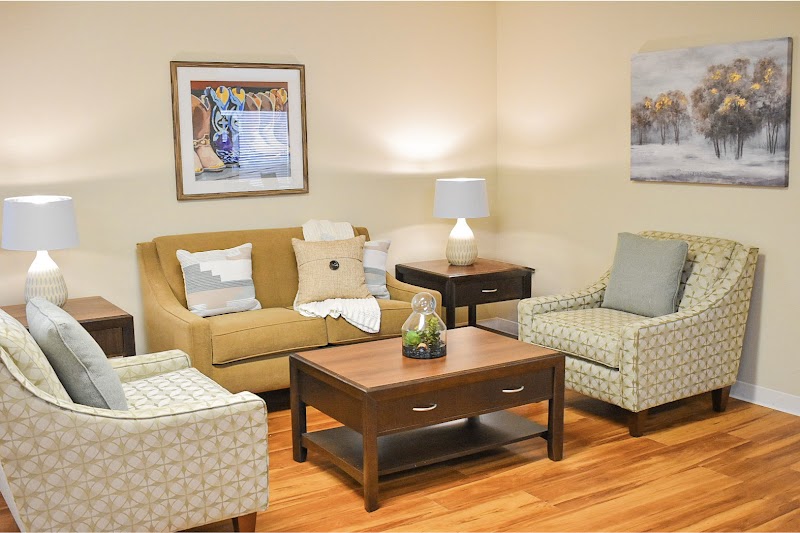
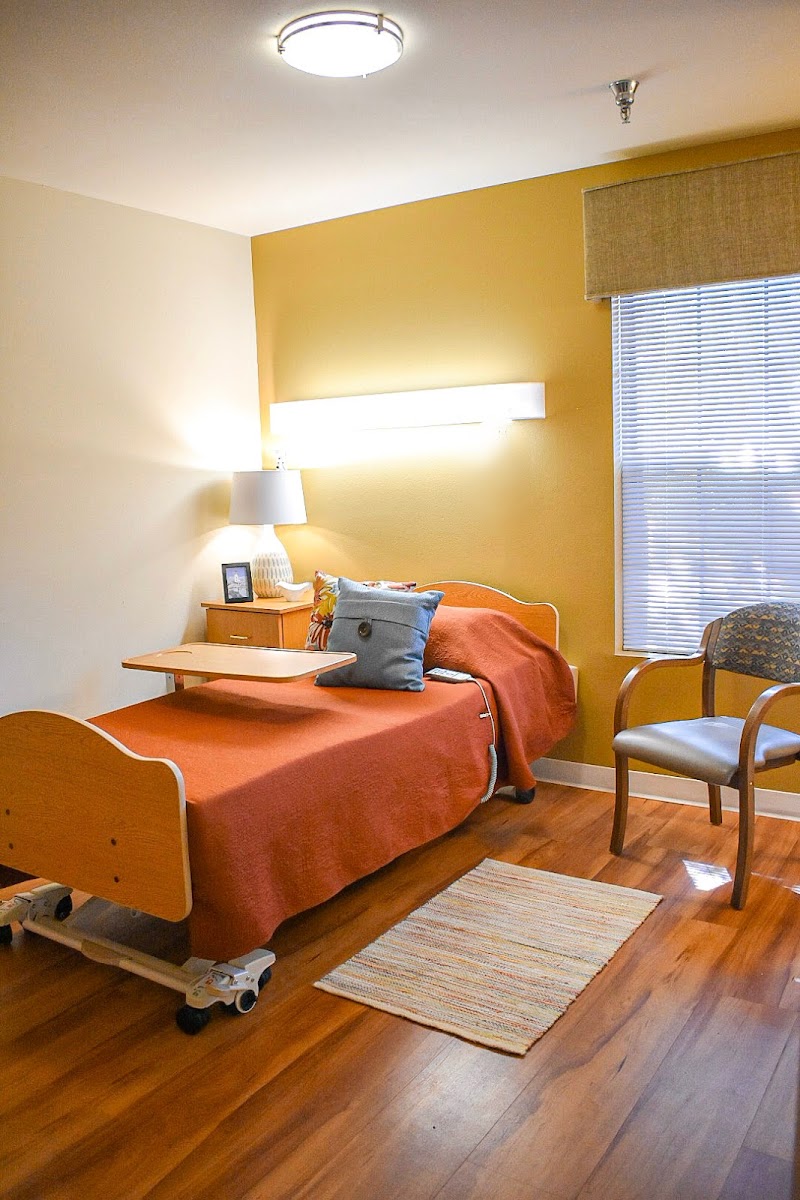
ROCKPORT NURSING AND REHABILITATION CENTER

1902 FM 3036, ROCKPORT, TX 78382 (361) 729-9971
Non profit - Other 92 Beds WELLSENTIAL HEALTH Data: November 2025 3 Immediate Jeopardy citations
Trust Grade
12/100
#829 of 1168 in TX
Last Inspection: January 2025

Within standard 12-15 month inspection cycle. Federal law requires annual inspections.

Overview

Rockport Nursing and Rehabilitation Center has received a Trust Grade of F, indicating significant concerns about the quality of care provided. Ranking #829 out of 1168 facilities in Texas places them in the bottom half, and they are the second of only two options in Aransas County, meaning there is very limited local competition. The facility is trending worse, with the number of issues increasing from three in 2024 to six in 2025. Staffing is a weakness, rated at 1 out of 5 stars with a turnover rate of 55%, which is slightly above the state average, suggesting instability among staff. Serious incidents reported include residents being physically restrained improperly and staff failing to report abuse allegations, highlighting severe issues with oversight and resident safety. While the quality measures rating is excellent at 5 out of 5, the concerning findings indicate that families should carefully consider these serious deficiencies when researching care options.

Trust Score
F
12/100
In Texas
#829/1168
Bottom 30%
Safety Record
High Risk
Review needed
Inspections
Getting Worse
3 → 6 violations
Staff Stability
⚠ Watch
55% turnover. Above average. Higher turnover means staff may not know residents' routines.
Penalties
✓ Good
$20,088 in fines. Lower than most Texas facilities. Relatively clean record.
Skilled Nurses
⚠ Watch
Each resident gets only 24 minutes of Registered Nurse (RN) attention daily — below average for Texas. Fewer RN minutes means fewer trained eyes watching for problems.
Violations
⚠ Watch
16 deficiencies on record. Higher than average. Multiple issues found across inspections.
★★☆☆☆
2.0
Overall Rating
★☆☆☆☆
1.0
Staff Levels
★★★★★
5.0
Care Quality
★★☆☆☆
2.0
Inspection Score
Stable
2024: 3 issues
2025: 6 issues

The Good

  • 5-Star Quality Measures · Strong clinical quality outcomes
  • Full Sprinkler Coverage · Fire safety systems throughout facility
  • No fines on record

Facility shows strength in quality measures, fire safety.

The Bad

2-Star Overall Rating

Below Texas average (2.8)

Below average - review inspection findings carefully

Staff Turnover: 55%

Near Texas avg (46%)

Frequent staff changes - ask about care continuity

Federal Fines: $20,088

Below median ($33,413)

Minor penalties assessed

Chain: WELLSENTIAL HEALTH

Part of a multi-facility chain

Ask about local staffing decisions and management

Staff turnover is elevated (55%)

7 points above Texas average of 48%

The Ugly 16 deficiencies on record

3 life-threatening
Jul 2025 1 deficiency
CONCERN (D) 📢 Someone Reported This

A family member, employee, or ombudsman was alarmed enough to file a formal complaint

Potential for Harm - no one hurt, but risky conditions existed

Comprehensive Care Plan (Tag F0656)

Could have caused harm · This affected 1 resident

**NOTE- TERMS IN BRACKETS HAVE BEEN EDITED TO PROTECT CONFIDENTIALITY** Based on interview and record review, the facility failed to ensure the comprehensive care plan was developed and implemented wi...

Read full inspector narrative →
**NOTE- TERMS IN BRACKETS HAVE BEEN EDITED TO PROTECT CONFIDENTIALITY** Based on interview and record review, the facility failed to ensure the comprehensive care plan was developed and implemented within a timely manner for each resident consistent with resident rights to include measurable objectives and timeframes to meet residents medical, nursing, mental, and psychosocial needs identified in the comprehensive assessment for 1 (Resident #1) out of 5 residents reviewed for care plans. The facility failed to update or revise Resident #1's care plan to reflect Resident #1's verbal and combative behavior of resistant to care or refusal of care. This failure could place resident at risk for receiving inadequate care and services. Findings included:Record review of Resident #1's face sheet dated [DATE] revealed a [AGE] year-old female with an admission date of [DATE]. Diagnoses included Alzheimer's with Late Onset (a chronic condition which primarily affects memory, thinking, and behavior), Dementia (decline in cognitive function which affects daily life, memory, reasoning, and language skills), Cognitive Communication Deficit (difficulties in communication which arise from impaired cognitive functions, such as attention, memory, reasoning, and problem-solving), and Need for Assistance with Personal Care.Record review of Resident #1's quarterly MDS assessment, dated [DATE], revealed BIMS was not conducted as Resident #1 was rarely or never understood. The language section of the MDS revealed the preferred language was Vietnamese, and MDS was unable to determine if an interpreter was needed to communicate with a doctor or health care staff.Record review of Resident #1's current care plan initiated [DATE] and revised [DATE] revealed a care plan for resident resistive to care related to dementia, Resident #1 yelled at staff during incontinent care and refused to allow staff to shower her, obtain vitals, or weigh her. Care plan goal initiated [DATE] revealed Resident #1 would cooperate with care through next review. Care Plan interventions initiated [DATE] revealed: allow resident to make decisions about treatment, encourage participation, and if resident resists ADLs, reassure her, leave and return 5-10 minutes later to try again. Goals and Interventions were added[DATE]. Care plan also revealed Resident #1 had a communication problem related to a language barrier, initiated [DATE], and revised [DATE]. Interventions for communication problem care plan, initiated [DATE], included anticipate and meet Resident #1's needs, Resident #1 preferred to communicate in Vietnamese, and Resident #1 required communication cue cards located in nightstand.Record review of Resident #1's progress note dated [DATE] revealed RN-A was called to Resident #1's room by the CNA, who had reported Resident #1 had slid off bed after incontinent care. Resident #1 was noted to be on the floor on the left side of her bed, lying on her left side with her sheet wrapped around her. Resident #1 was alert and yelling in Vietnamese, as well as moving her arms and legs. CNA attempted to use an electronic translator to attempt to interview resident, but translator was unable to produce a response. No visible injuries were noted, skin assessment performed, and Resident #1 was assisted by 2 staff back into bed, and incontinent care was provided. Resident refused to allow blood pressure or oxygen to be taken, but pulse was 74 and respirations were 18. Record review of Resident #1's Kardex (a quick reference or an extension of the care plan, derived from the care plan, used by CNAs and other staff to stay updated on residents key needs and care) dated [DATE] revealed a communication section with interventions to include: ask yes or no questions to determine resident's needs, Resident #1 prefers to communicate in Vietnamese, Resident #1 required communication cue cards which were located in the bedside table and ensure availability and functioning of adaptive communication equipment. In an interview on [DATE] at 10:05 AM, CNA-B stated Resident #1 spoke Vietnamese, so she could not understand her, but she would smile in response when spoken to like she understood some things which were said to her in English, but other than this, the staff had no way to formally communicate with this resident or understand what Resident #1 was saying to them or needing from them. CNA-B stated Resident #1 would get worked up frequently and yell, but she had never seen her get combative. CNA-B stated she walked into Resident #1's room on [DATE] after Resident had fallen out of bed. She stated she had offered assistance with the resident since she had showered her earlier in the day and had a good rapport with her. She stated Resident #1 was talking and yelling in Vietnamese but was not crying or grimacing like she was in pain. She stated she had no other way to communicate with her or understand her, as CNA-C had already tried the translator device, and it had not worked. It was not typically used for this resident as it would not pick up what she was saying or yelling. She did say she could answer some simple yes or no questions if they point to things and asked, such as pointing to or rubbing stomach and asking if it hurt. In an interview on [DATE] at 10:39 AM, CNA-C stated after Resident #1 fell out of bed on [DATE], she was being combative and yelling and speaking in Vietnamese, but she could not understand what Resident #1 was saying. CNA-C stated she and RN-A tried to use the translator to understand Resident #1, but it was not picking up or understanding what the resident was saying. She also stated Resident #1 yells frequently, which was typical for her. She stated she had no other way to formally communicate with Resident #1 to find out what she was saying or what she needed, but she would shake her head yes or no to simple questions such as pain.In an interview on [DATE] at 11:09 AM the ADON stated it was either her or the MDS nurse which typically updated the clinical care plans. She stated at some point in time between the previous care plan which was initiated [DATE] and the current care plan, which was initiated [DATE], there was a behavior problem listed, but it must have dropped off, been deleted, or gotten closed out, and this was why there was a new problem for resistive to care added on [DATE]. She stated she was not sure why the goals and interventions were not added to the care plan until [DATE], the day Resident #1 expired, and she also stated she did not remember if it was herself or the MDS nurse who had added them. The ADON stated Resident #1 had always been combative and verbally aggressive with incontinent care and ADLs, and it was something which should have always been care planned, so it dropping off or being removed was by mistake. She stated Resident #1 was able to nod in response or say simple phrases like thank you, but she did have the cue cards at bedside to assist with communication. She stated the CNAs utilized the Kardex, which was derived from the care plan, to learn and know more about the residents they were caring for, and Resident #1's language preferences were on the care plan and the Kardex. She stated if a CNA did not typically work the hall of a resident, then they may not have known the cue cards were in the bedside table. She stated the CNAs should have been looking at the Kardex, but many times they may have only skimmed it for the highlights such as transfer and mobility status. She stated she felt like maybe the CNAs needed more training on what the Kardex was and how it was used. In an interview on [DATE] at 1:17 PM, the MDS Nurse stated she hadn't really started working on care plans because she was new and just started this job and was still training. She also stated Resident #1's MDS assessment and care plan probably were not the best due to the language barrier with Resident #1, and she was not able to ask Resident #1 any questions, so she mostly asked staff which took care of her on a daily basis regarding the MDS questions. She also stated she was not able to consult with family as Resident #1 did not have any family, and the only contact was a friend who never returned phone calls or came to care plan meetings or to visit Resident #1. The MDS nurse stated the care plan problem resistive to care or refuses care was care planned previously, and she wasn't sure why it was ever removed or dropped off; she also was not sure why the current care plan was initiated [DATE], but the goals and interventions were not initiated until [DATE]. In an interview on [DATE] at 2:31 PM, CNA-B stated she knew what a Kardex was because she learned about it in her CNA program, and she knew she was supposed to be reviewing it and using it, but she admitted the Kardex rarely got used, and she had not reviewed it for Resident #1. She stated she had not known there were cue cards in Resident #1's bedside table. CNA-B also stated she had never had an in-service or training in this facility regarding the use of the Kardex. She stated if she and the other staff had reviewed the Kardex, they would have known there were cue cards in the bedside table, and they may have been able to better communicate with Resident #1 and understand what she was yelling about. Record review of the facility's Comprehensive Care Plan Policy, dated [DATE], revealed It is the policy of this facility to develop and implement a comprehensive person-centered care plan for each resident, consistent with resident rights, which includes measurable objectives and timeframes to meet a resident's medical, nursing and mental and psychosocial needs which were identified in the resident's comprehensive assessment. The care planning process will include an assessment of the resident's strengths and needs and will incorporate the resident's personal and cultural preferences in developing goals of care.
Jan 2025 5 deficiencies
CONCERN (D) 📢 Someone Reported This

A family member, employee, or ombudsman was alarmed enough to file a formal complaint

Potential for Harm - no one hurt, but risky conditions existed

Free from Abuse/Neglect (Tag F0600)

Could have caused harm · This affected 1 resident

**NOTE- TERMS IN BRACKETS HAVE BEEN EDITED TO PROTECT CONFIDENTIALITY** Based on interview and record review, the facility failed to ensure the right to be free from abuse for one (Resident #1) of two...

Read full inspector narrative →
**NOTE- TERMS IN BRACKETS HAVE BEEN EDITED TO PROTECT CONFIDENTIALITY** Based on interview and record review, the facility failed to ensure the right to be free from abuse for one (Resident #1) of two residents reviewed for abuse. The facility failed to ensure Resident #1 was free from abuse. On 01/25/25, Resident #2 hit Resident #1 in the stomach with a closed fist as she was walking past her. This failure could place residents at risk for abuse and psychological harm. Findings included: Record review of Resident #1's face sheet dated 10/19/24 revealed a [AGE] year-old female with diagnoses including dementia (disease that results in loss of memory, language problem, problem-solving and other thinking abilities that are severe enough to interfere with daily life), muscle wasting, high blood pressure, congenital (present at birth) malformation of brain, and abnormalities of gait and balance. Record review of Resident #1's admission MDS Assessment, dated 10/24/24, reflected a [AGE] year-old female who admitted on [DATE]. Her BIMS score of 03 indicated the resident had severe cognitive impairment with inattention and disorganized thinking. She required supervision for all ADL ' s. She could walk without the use of a wheelchair, walker, or cane. She was occasionally incontinent of urine and frequently incontinent of bowel. Record review of Resident #1's Care Plan dated 11/07/24, reflected Resident #1 was an elopement risk related to degenerative cognitive disease and was appropriate for placement in the secure unit. Resident #1 had a behavior problem r/t degenerative cognitive disease and declined showers and assistance with care. She carried her clothes and items from her room with her keys around unit asking to open door as she had been dismissed. Record review of Resident #2's face sheet dated 07/16/21 revealed an [AGE] year-old female with an original admission date of 09/07/20. Diagnoses included Alzheimer ' s Disease, dementia, lack of coordination, major depression, Diabetes with glaucoma and neuropathy, anxiety, and spinal stenosis (could not walk). Record Review of Resident #2's Quarterly MDS Assessment, dated 12/26/24, reflected her BIMS score of 02 indicated the resident had severe cognitive impairment with inattention and disorganized thinking. She required partial assistance with eating and oral hygiene and substantial assistance with all other ADL ' s. She utilized a manual wheelchair and required assistance to propel. She was always incontinent of bladder and bowel. She did not display any behaviors at the time (look back period) of the MDS assessment. She took antipsychotic, antianxiety, antidepressant, and anticonvulsant medications. Resident #2's quarterly care plan dated 01/27/25 reflected Resident #2 was the aggressor of physical aggression towards another resident. Resident yelling and throwing drinks at one resident, then punched another resident in the abdomen. Date Initiated: 01/27/25. The goal was the resident would have no long-term issues related to incident through the target date of 12/26/24. Interventions included labs drawn per physician order, referral sent to local psychiatric hospital for in-patient psych evaluation, placed on 1:1 post incident per physician order, and social services to perform a psychosocial assessment. Date Initiated: 01/27/25. Resident #2 was physically aggressive related to anger; resident will occasionally grab other residents by the arms without provocation. Date Initiated: 10/09/20 Revision on: 11/25/24. The goal was the resident would demonstrate effective coping skills through the review date. Date Initiated: 10/09/20 Revision on: 10/24/24 Target Date: 12/26/24. Interventions included place resident on 1:1 due to aggressive episode until discontinued by physician, administer medications as ordered Date initiated 11/25/24, monitor/document for side effects and effectiveness Date Initiated: 10/09/20, analyze times of day, places, circumstances, triggers, and what de-escalates behavior and document. Date Initiated: 10/09/20, assess and address for contributing sensory deficits. Date Initiated: 10/09/20, assess and anticipate resident's needs: food, thirst. toileting needs, comfort level, body positioning, pain etc. Date Initiated: 10/09/20, monitor/document/report PRN any signs or symptoms of resident posing danger to self and others. Date Initiated: 10/09/20, place resident on 1:1 for aggressive episodes as ordered if indicated. Date Initiated: 11/25/24. Resident #2 required a structured environment in the secure unit related to cognitive deficit Date Initiated: 09/16/24, Revision on: 12/27/24. The goal was the resident safety would be maintained through review date. Date Initiated: 10/03/24. Revision on: 12/27/24. Target Date: 12/26/24. Interventions included encourage activity participation, explain what you are going to do before touching the person with cognitive loss, speak calmly. Date Initiated: 10/03/24. Revision on: 12/27/24. The resident had impaired cognitive function and impaired thought processes related to dementia with behavior issues and delusions. Date Initiated: 09/11/20. Revision on: 09/25/24. Interventions included cue, reorient and supervise as needed, Date Initiated: 09/11/20. Engage the resident in simple, structured activities that avoid overly demanding tasks, keep the resident's routine consistent and try to provide consistent care givers as much as possible to decrease confusion. Date Initiated: 01/20/21. Monitor/document frustration level. Wait 30 seconds before providing resident with word. Date Initiated: 09/16/20. Observation of Residents #1 and #2 in the secure unit on 01/29/25 from 1:40 pm to 2:30 pm revealed Resident #2 was sitting at a table with no one next to her, but across the table from her. She was pulling the hem out of her dress. Three different residents walked near or toward Resident #2 and LVN G was quick to intervene by approaching each of them calmly and redirecting them away from Resident #2. Resident #2 would intermittently burst out laughing for no apparent reason. Resident #2 would stare at everyone and occasionally, she would look at the television. Resident #1 was independently ambulating around the secure unit with a steady gait. She had shoes on, she was braless but well kempt otherwise, and had a large purse over her left shoulder. The purse appeared to be stuffed full. She was smiling, cheerful, and talkative. Attempted interview with Resident #2 on 01/29/25 at 2:00 pm was unsuccessful. She stared at this surveyor and did not answer any questions. She maintained a flat affect. In an interview with Resident #1 on 01/29/25 at 2:15 pm, she said she did not remember ever being hit by anyone. She said she was carrying her purse (packed with her clothes) because she was leaving for home today. In an interview with the ADM on 01/29/2025 at 10:55 am, she said Resident #2 was referred to a behavioral hospital either locally or in another town. She said the facility had exhausted interventions (no roommate, seating during meals at her own table and not allowing others within arm ' s reach of her in the common areas). She said Resident #2 ' s family refused to allow her out of the secured unit even as a trial because the secure unit was all females there and the family was adamant about keeping her there. In an interview with LVN G on 01/29/2025 at 1:42 pm she said staff in the secure unit were monitoring Resident #2 by making sure she was always in eyesight unless she was in bed. LVN G said she took Resident #2 with her when she needed to give meds or go down the hall. She said Resident #2 was not left unattended. LVN G said she had bruising on her right forearm from 01/26/25 during Resident #2 ' s incident, but she knew she could step away, whereas the residents did not know to get out of harm ' s way. She said the residents in the secure unit did not understand their behavior, why, or how to behave in certain circumstances. She said the main thing was to keep others away from Resident #2. She said she only worked in the secure unit. In an interview with RN F on 01/29/2025 at 2:12 pm, she said staff in the secure unit were monitoring Resident #2 by making sure she was always in sight of a CNA or nurse and making sure others (residents) were not within Resident #2 ' s arm ' s reach. She said Resident #2 ' s demeanor would change frequently. She said it was difficult to pinpoint triggers with Resident #2. She said some days she would not see those behaviors and she never knew when Resident #2 would act out. She said nurses documented behaviors daily in their progress notes. She said the 1:1 ordered over the weekend was discontinued the next day because Resident #2 ' s behaviors dissipated. She said the behavior monitoring came from the physician orders but did not trigger to go into the care plan. She said she was informed about Resident #2 ' s 1:1 and continuing monitoring from the charge nurse (LVN G). She said Resident #2 had her nails done yesterday with no problems. She said the resident was seated at the end of the table, the others were on the sides of the table, out of arm ' s reach. She said she had not experienced Resident #2 throwing objects but had been cussed out by her before. She said she was surprised to hear Resident #2 had hit Resident #1 in the stomach on 01/25/25. In a phone interview with LVN H on 01/29/2025 at 3:15 pm, she said she was the nurse on duty on 01/25/25 and Resident #1 did not start the altercation on 01/25/25. She said 2 other residents had begun dickering at the table in the common area of the secure unit. She said she was in the process of removing Resident #2 from the situation as a de-escalation tactic. She said as she was locking the brakes on Resident #2 ' s wheelchair (LVN ' s back was toward the hallway), Resident #1 came walking around the corner from the hallway and Resident #2 stuck out her fisted hand, striking Resident #1 in the center of her upper abdomen. She said she saw a red mark on Resident#1 ' s upper abdomen when she assessed her. She said Resident #1 denied any pain but said she got the wind knocked out of her-she was not in any distress. She said not very aggressive for me. Neither of them remembered what had occurred. LVN H said she tried to keep an eye on all of them equally. She said Resident #2 was not typically aggressive for her. She said she heard about Resident #2 ' s aggression from others. In an interview with the DON on 01/29/25 at 4:13 pm, she said for the most part because it was a secure and behavioral unit, the nurses were aware of the ones that tended to have more behaviors than others. Staff monitored them a little more closely- they do not need to necessarily keep them in their line of sight. She said all residents there had constant behavior that would require that kind of monitoring. Staff kept a close eye on Resident #2 and there were a lot of residents around the area when the incident occurred. She said there was a heightened awareness with Resident #2. The residents with a history of aggressive behaviors were monitored more closely than residents without aggressive behaviors. She said they have tried medication adjustments but were not seeing the improvements that we needed to see for her to remain at the facility. She said before the incident on 01/25/25, she thought there was still a chance Resident #2 could have stayed, but afterwards she did not feel Resident #2 could stay there to keep everyone safe. She said she did not know if LVN H could have prevented the punch. She said Resident #1 happened to be walking by. She said Resident #2 had a specialty wheelchair with a high back. She said LVN H assessed a slight red mark on Resident #1 that dissipated quickly. She said Resident #2 went on 1 to 1 after the incident and was discontinued by the physician on Monday, 01/27/25 because Resident #2 was no longer displaying aggressive behaviors. She said staff had not identified any type of trigger for her outbursts. She said staff in the secure unit tried to keep her more distant from other residents without isolating her. She said there has been some heightened awareness since this incident. She said the family had been very difficult throughout this ordeal with a lot of denial. They don't see the aggressive behaviors. We had a lot of talks with them (the family) while adjusting medications. She said the facility did not have a behavioral agreement with the family. She said the aides in the secured unit were very consistent-they were very familiar with the residents back there and their propensity for different behaviors. She said increased monitoring was not added to the care plan after the incident on the 25th. She said the nurses in the secure unit should say that they were monitoring Resident #2 more closely now after the incident. She said if Resident #2 was out of her room, then she would want to have a line of sight on her. When asked why that was not in the care plan the DON did not respond. She said it was important to keep the care plan updated to keep everyone on the team on the same page. She said if everyone was not on the same page, then someone could miss a specific intervention that was recently added. She said every resident at the facility had a right to be free from abuse. Record review of the facility policy dated 08/15/22, titled Abuse, Neglect, and Exploitation revealed under policy, It is the policy of this facility to provide protections for the health, welfare and rights of each resident by developing and implementing written policies and procedures that prohibit and prevent abuse .Abuse means the willful infliction of injury with resulting physical harm, pain or mental anguish, which can include certain resident to resident altercations. Instances of abuse of all residents, irrespective of any mental or physical condition, cause physical harm, pain or mental anguish. Willful' means the individual must have acted deliberately, not that the individual must have intended to inflict injury or harm. Physical Abuse includes, but is not limited to hitting, slapping, punching, biting, and kicking. Policy Explanation and Compliance Guidelines: The facility will develop and implement written policies and procedures that: Prohibit and prevent abuse . The facility will make individual determinations in consideration of current staffing patterns, staff qualifications, competency and knowledge, clinical resources, physical environment, and equipment. Existing staff will receive annual education through planned in-services and as needed. Prevention of Abuse, Neglect and Exploitation: The facility will implement policies and procedures to prevent and prohibit all types of abuse, neglect, misappropriation of resident property, and exploitation that achieves: B. Identifying, correcting and intervening in situations in which abuse . is more likely to occur with the deployment of trained and qualified, registered, licensed, and certified staff on each shift in sufficient numbers to meet the needs of the residents, and assure that the staff assigned have knowledge of the individual residents' care needs and behavioral symptoms; D. The identification, ongoing assessment, care planning for appropriate interventions, and monitoring of residents with needs and behaviors which might lead to conflict or neglect. VI. Protection of Resident: The facility will make efforts to ensure all residents are protected from physical and psychosocial harm, as well as additional abuse, during and after the investigation. Examples include but are not limited to: A. Responding immediately to protect the alleged victim and integrity of the investigation. Examining the alleged victim for any sign of injury, including a physical examination or psychosocial assessment if needed. C. Increased supervision of the alleged victim and residents. D. Room or staffing changes, if necessary, to protect the resident(s) from the alleged perpetrator. F. Providing emotional support and counseling to the resident during and after the investigation, as needed. G. Revision of the resident's care plan if the resident's medical, nursing, physical, mental, or psychosocial needs or preferences change as a result of an incident of abuse.
CONCERN (D) 📢 Someone Reported This

A family member, employee, or ombudsman was alarmed enough to file a formal complaint

Potential for Harm - no one hurt, but risky conditions existed

Deficiency F0657 (Tag F0657)

Could have caused harm · This affected 1 resident

**NOTE- TERMS IN BRACKETS HAVE BEEN EDITED TO PROTECT CONFIDENTIALITY** Based on interviews and record reviews, the facility failed to ensure that the comprehensive care plans were reviewed and revise...

Read full inspector narrative →
**NOTE- TERMS IN BRACKETS HAVE BEEN EDITED TO PROTECT CONFIDENTIALITY** Based on interviews and record reviews, the facility failed to ensure that the comprehensive care plans were reviewed and revised by the interdisciplinary team after each assessment, for 1 resident (Resident #2) of 5 residents whose care plans were reviewed for timing and revision. The facility failed to include heightened monitoring strategies to Resident #2 ' s care plan after she hit another resident on 01/25/25. This failure could place residents at risk of not receiving appropriate care to meet their current needs. Findings included: Record review of Resident #2's face sheet dated 07/16/21 revealed an [AGE] year-old female with an original admission date of 09/07/20. Diagnoses included Alzheimer ' s Disease, dementia, lack of coordination, major depression, Diabetes with glaucoma and neuropathy, anxiety, and spinal stenosis (could not walk). Record Review of Resident #2's Quarterly MDS Assessment, dated 12/26/24, reflected her BIMS score of 02 indicated the resident had severe cognitive impairment with inattention and disorganized thinking. She required partial assistance with eating and oral hygiene and substantial assistance with all other ADL ' s. She utilized a manual wheelchair and required assistance to propel. She was always incontinent of bladder and bowel. She did not display any behaviors at the time (look back period) of the MDS assessment. She took antipsychotic, antianxiety, antidepressant, and anticonvulsant medications. Resident #2's quarterly care plan dated 01/27/25 reflected Resident #2 was the aggressor of physical aggression towards another resident. Resident yelling and throwing drinks at one resident, then punched another resident in the abdomen. Date Initiated: 01/27/25. The goal was the resident would have no long-term issues related to incident through the target date of 12/26/24. Interventions included labs drawn per physician order, referral sent to local psychiatric hospital for in-patient psych evaluation, placed on 1:1 post incident per physician order, and social services to perform a psychosocial assessment. Date Initiated: 01/27/25. Resident #2 was physically aggressive related to anger; resident will occasionally grab other residents by the arms without provocation. Date Initiated: 10/09/20 Revision on: 11/25/24. The goal was the resident would demonstrate effective coping skills through the review date. Date Initiated: 10/09/20 Revision on: 10/24/24 Target Date: 12/26/24. Interventions included place resident on 1:1 due to aggressive episode until discontinued by physician, administer medications as ordered Date initiated 11/25/24, monitor/document for side effects and effectiveness Date Initiated: 10/09/20, analyze times of day, places, circumstances, triggers, and what de-escalates behavior and document. Date Initiated: 10/09/20, assess and address for contributing sensory deficits. Date Initiated: 10/09/20, assess and anticipate resident's needs: food, thirst. toileting needs, comfort level, body positioning, pain etc. Date Initiated: 10/09/20, monitor/document/report PRN any signs or symptoms of resident posing danger to self and others. Date Initiated: 10/09/20, place resident on 1:1 for aggressive episodes as ordered if indicated. Date Initiated: 11/25/24. Resident #2 required a structured environment in the secure unit related to cognitive deficit Date Initiated: 09/16/24, Revision on: 12/27/24. The goal was the resident safety would be maintained through review date. Date Initiated: 10/03/24. Revision on: 12/27/24. Target Date: 12/26/24. Interventions included encourage activity participation, explain what you are going to do before touching the person with cognitive loss, speak calmly. Date Initiated: 10/03/24. Revision on: 12/27/24. The resident had impaired cognitive function and impaired thought processes related to dementia with behavior issues and delusions. Date Initiated: 09/11/20. Revision on: 09/25/24. Interventions included cue, reorient and supervise as needed, Date Initiated: 09/11/20. Engage the resident in simple, structured activities that avoid overly demanding tasks, keep the resident's routine consistent and try to provide consistent care givers as much as possible to decrease confusion. Date Initiated: 01/20/21. Monitor/document frustration level. Wait 30 seconds before providing resident with word. Date Initiated: 09/16/20. In an interview with the ADM on 01/29/2025 at 10:55 am, she said Resident #2 was referred to a behavioral hospital either locally or in another town. She said the facility had exhausted interventions (no roommate, seating during meals at her own table and not allowing others within arm ' s reach of her in the common areas). She said Resident #2 ' s family refused to allow her out of the secured unit even as a trial because the secure unit was all females there and the family was adamant about keeping her there. In a phone interview with RMDS on 01/29/25 at 1:00 pm, she said Resident #2 did not display any behaviors at the time (look back period) of the MDS assessment on 12/26/24. In an interview with LVN G on 01/29/2025 at 1:42 pm she said staff in the secure unit were monitoring Resident #2 by making sure she was always in eyesight unless she was in bed. LVN G said she took Resident #2 with her when she needed to give meds or go down the hall. She said Resident #2 was not left unattended. LVN G said she had bruising on her right forearm from 01/26/25 during Resident #2 ' s incident, but she knew she could step away, whereas the residents did not know to get out of harm ' s way. She said the residents in the secure unit did not understand their behavior, why, or how to behave in certain circumstances. She said the main thing was to keep others away from Resident #2. She said she worked only in the secure unit. She said she did not update care plans. She said care plans should be updated whenever something changed with a resident. In an interview with RN F on 01/29/2025 at 2:12 pm, she said staff in the secure unit were monitoring Resident #2 by making sure she was always in sight of a CNA or nurse and making sure others (residents) were not within Resident #2 ' s arm ' s reach. She said Resident #2 ' s demeanor would change frequently-it could be daily or several times a day or not for days. She said it was difficult to pinpoint triggers with Resident #2. She said some days she would not see those behaviors and she never knew when Resident #2 would act out. She said nurses documented behaviors daily in their progress notes. She said the behavior monitoring came from the physician orders but did not trigger to go into the care plan. She said she was informed about Resident #2 ' s 1:1 and continuing monitoring from the charge nurse (LVN G). She said she did not update care plan and nothing had changed with Resident #2. In a phone interview with LVN H on 01/29/2025 at 3:15 pm, she said she was the nurse on duty on 01/25/25 and Resident #1 did not start the altercation on 01/25/25. She said 2 other residents had begun dickering at the table in the common area of the secure unit. She said she was in the process of removing Resident #2 from the situation as a de-escalation tactic. She said as she was locking the brakes on Resident #2 ' s wheelchair (LVN ' s back was toward the hallway), Resident #1 came walking around the corner from the hallway and Resident #2 stuck out her fisted hand, striking Resident #1 in the center of her upper abdomen. She said she saw a red mark on Resident#1 ' s upper abdomen when she assessed her. She said Resident #1 denied any pain but said she got the wind knocked out of her-she was not in any distress. She said not very aggressive for me. Neither of them remembered what had occurred. LVN H said she tried to keep an eye on all of them equally. She said Resident #2 was not typically aggressive for her. She said she heard about Resident #2 ' s aggression from others. She said she did not update care plans. In an interview with the DON on 01/29/25 at 4:13 pm, she said, For the most part, because it was a secure and behavioral unit, the nurses were aware of the residents that tended to have more behaviors than others. Staff monitored them a little more closely- they did not necessarily need to keep them in their line of sight. She said all residents there (in the secure unit) had constant behavior that would require monitoring. Staff kept a close eye on Resident #2. She said there was a heightened awareness with Resident #2. The residents with a history of aggressive behaviors were monitored more closely than residents without aggressive behaviors. She said she did not know if anyone could have prevented the punch. She said Resident #2 had a specialty wheelchair with a high back. She said Resident #2 went on 1 to 1 after the incident. She said staff had not identified any type of trigger for her outbursts. She said staff in the secure unit tried to keep her more distant from other residents without isolating her. She said the facility did not have a behavioral agreement with the family. She said increased monitoring was not added to the care plan after the incident on the 25th. She said the nurses in the secure unit should say that they were monitoring Resident #2 more closely now after the incident. She said if Resident #2 was out of her room, then she would want to have a line of sight on her. When asked why that was not in the care plan the DON did not respond. She said it was important to keep the care plan updated to keep everyone on the team on the same page. She said if everyone was not on the same page, then someone could miss a specific intervention that was recently added. She said every resident at the facility had a right to be free from abuse. Record review of the facility policy dated 10/24/22, titled, Care Plan revisions Upon Status Change. 1. The comprehensive care plans will be reviewed and revised as necessary when a resident experiences a status change.
CONCERN (D)

Potential for Harm - no one hurt, but risky conditions existed

Deficiency F0761 (Tag F0761)

Could have caused harm · This affected 1 resident

**NOTE- TERMS IN BRACKETS HAVE BEEN EDITED TO PROTECT CONFIDENTIALITY** Based on observation and interviews, the facility failed to ensure all drugs and biologicals were stored in accordance with curr...

Read full inspector narrative →
**NOTE- TERMS IN BRACKETS HAVE BEEN EDITED TO PROTECT CONFIDENTIALITY** Based on observation and interviews, the facility failed to ensure all drugs and biologicals were stored in accordance with currently accepted professional principles for 1 of 2 medication rooms (Medication room [ROOM NUMBER]). The facility failed to keep Medication room [ROOM NUMBER] free from the employee personal food items on 01/28/25 as there were sunflower seeds, coke, and a tumbler cup in the room. This deficient practice could place residents at risk of receiving medications contaminated by food and drinks. The findings included: During an observation of Medication room [ROOM NUMBER] on 01/28/25 at 4:30 PM, this state surveyor found an opened box designed to hold 12 bags of sunflower seeds containing 5 sealed individual bags of sunflower seeds, a 12-pack of coke cans with 8 unopened cans remaining in the 12-pack, and a [NAME] cup. The box of sunflower seeds had MA D's name written on the top. The items were all in lower cabinets inside Medication room [ROOM NUMBER]. In an interview with the ADON on 01/29/25 at 9:53 AM, the ADON stated employee personal food items should not be stored in the medication rooms. The ADON stated employee personal food items should be stored in the employee break room. The ADON stated personal food items should not be stored in the medication rooms because it could cause cross contamination and become an infection control problem. The ADON stated MA D's name was written on the box of sunflower seeds. The ADON stated the [NAME] cup belonged to CNA E. The ADON stated she did not know who the cans of coke belonged to. The ADON stated CNA E did not have access to the medication rooms. In an interview with MA D on 01/29/25 at 10:01 AM, MA D stated she did not put the box of sunflower seeds in Medication room [ROOM NUMBER]. MA D stated she did not know the coke was in Medication room [ROOM NUMBER] either. MA D stated she went in Medication room [ROOM NUMBER] about once per shift, but only opened the top cabinets that contained the medications. MA D stated the sunflower seeds were a gag gift given to her about 2 weeks ago by an anonymous person at the facility. MA D stated she did eat sunflower seeds at the facility on her break in the employee break room. MA D stated she kept her sunflower seeds in her backpack in the employee break room. MA D stated the last time she remembered seeing the box of sunflower seeds was about a week ago at the 200-hall nurse's station. MA D stated she was going to take the box home, but someone removed it from the 200-hall nurse's station, and she was not worried about it so she did not search for it. MA D stated personal food items did not belong in the medication rooms. MA D stated employee personal food items could go in the break room. MA D stated personal food items were not allowed in the medication room because of a risk for cross contamination. In an interview with CNA E on 01/29/25 at 10:12 AM, CNA E stated it was her [NAME] cup that was found in Medication room [ROOM NUMBER]. CNA E stated she did not have access to either medication room. CNA E stated the last time she had the cup was at the facility on Sunday, 01/26/25 when she worked from 6:00 AM to 6:00 PM. CNA E stated she always stored her [NAME] cup in the break room. CNA E stated she thought she left her [NAME] cup at the 200-hall nurse's station before she left work on 01/26/25. CNA E stated another employee must have seen it at the nurse's station and put it in the lower cabinet in Medication room [ROOM NUMBER]. CNA E stated personal food items should not be kept in the medication room because it was a contamination risk. In an interview with the DON on 01/29/25 at 10:22 AM, the DON stated personal food items should not be stored in the medication rooms. The DON stated employee personal food items should be stored in the break room. The DON stated they go in the medication rooms and clean them out every few weeks. The DON stated she did not know who put the sunflower seeds, coke, or [NAME] cup in Medication room [ROOM NUMBER]. The DON stated personal employee food items should not be stored in the medication rooms because of the potential for cross contamination. This state surveyor requested a facility policy regarding the proper storage of medications in the medication room or proper storage of employee personal food items. The DON reported on 01/29/25 at 1:50 PM that she was unable to find any facility policy covering the requested parameters. In an interview with the ADM on 01/29/25 at 1:55 PM, a facility policy was requested regarding the proper storage of medications in the medication room or proper storage of employee personal food items. The ADM reported on 01/29/25 at 2:40 PM that she was unable to find any facility policy covering the requested parameters.
CONCERN (D)

Potential for Harm - no one hurt, but risky conditions existed

Infection Control (Tag F0880)

Could have caused harm · This affected 1 resident

**NOTE- TERMS IN BRACKETS HAVE BEEN EDITED TO PROTECT CONFIDENTIALITY** Based on observation, interview and record review the facility failed to establish and maintain an infection prevention and cont...

Read full inspector narrative →
**NOTE- TERMS IN BRACKETS HAVE BEEN EDITED TO PROTECT CONFIDENTIALITY** Based on observation, interview and record review the facility failed to establish and maintain an infection prevention and control program designed to provide a safe, sanitary and comfortable environment and to help prevent the development and transmission of communicable diseases and infections for 1 (Resident #178) of 4 residents reviewed for infection control in that: 1. The facility failed to ensure that Resident #178 had EBP (Enhanced Barrier Precautions) signage and PPE (Personal Protective Equipment) available for staff providing care to Resident #178 on 1/27/25 and 1/28/25 due to Resident #178 having an indwelling urinary catheter. Findings included: Observation on 1/27/25 at 11:00am reflected EBP signage and a PPE cart on the door of Resident 178's original room which was shared with a roommate who also required EBP. Observation on 1/28/25 at 9:00am and 3:30pm reflected that Resident #178 had been moved to another room. That room did not have any EBP signage or PPE available for staff. Record review of Resident #178's admission record reflected a [AGE] year-old female that was admitted to the facility on [DATE]. Diagnoses included acute transverse myelitis (acute inflammation of the spinal cord that causes pain, weakness, sensory problems and bladder/ bowel dysfunction) in demyelinating disease (condition that causes damage to the protective layer of the spinal cord) of the central nervous system, paraplegia (inability to move the legs), and urinary retention (difficulty urinating and completely emptying the bladder). Record review of Resident #178's admission MDS dated [DATE] reflected Resident #178 had a BIMS score of 15 which indicated no cognitive impairment. Record review of Resident #178's Initial Nursing Evaluation dated 1/23/25 at 9:52pm reflected the presence of an indwelling catheter upon admission to the facility. Record review of Resident #178's Initial Baseline/Advanced Care Plan form dated 1/24/25 at 12:28am reflected in part: Problem: The resident has an Indwelling Catheter. Goal: The resident will be/remain free from catheter-related trauma through review date. Goal: The resident will show no s/sx of Urinary infection through review date. Record review of Resident #178's order skilled nurse's note dated 1/24/25 at 9:20am reflected in part: E. BLADDER/GU 1. Bladder Function: a. Bladder function unchanged 2. Catheter b. Foley Catheter with care provided c. Catheter patent, draining and insitu. Record review of Resident #178's care plan on 1/27/25 at 2:23pm reflected in part: Problem: Resident #178 has an indwelling catheter r/t urinary retention. Initiated: 1/24/25. Interventions: Position catheter bag and tubing below the level of the bladder and away from entrance room door. Check tubing for kinks each shift. Monitor and document output as ordered. Initiated 1/24/25. Problem: Resident #178 has a urinary tract infection. Initiated: 1/24/25. Interventions: Administer antibiotic medications as ordered. Maintain universal precautions when providing resident care. Initiated: 1/24/25. Record review of Resident #178's Order Summary Report on 1/28/25 at 1:51pm reflected the following orders: Check foley catheter every shift. Foley cath care q shift and PRN as needed. Foley cath care q shift and PRN every shift. Foley catheter: Change 16F with 10ml bulb as needed for PRN plugged or out. Foley: Document output for foley catheter Q shift every shift. Foley: Foley catheter: Irrigate foley catheter with 60ml of NS as needed. Monitor for privacy bag placement everyy shift. Monitor that collection bag is off the floor and hung below bladder level every shift. There were no orders for any type of precautions or PPE use listed. In an interview on 1/28/25 at 3:34pm, CNA A stated that she was not aware that Resident #178 should have been on enhanced barrier precautions and that she had not been wearing any PPE while performing resident care activities such as brief changes, hygiene, and transfers. CNA A was not able to tell me specifically what EBP was for but was able to recall with prompting. CNA stated that infection control in-services were done monthly and were also part of their required online quarterly training and the last in-service was approximately one month ago. CNA A stated if PPE was not used with residents who had indwelling devices, it could lead to infections and possibly hospitalizations. In an interview on 1/28/25 at 3:40pm, CNA B stated that Resident #178 should have had EBP (after prompting). CNA B stated she had not been wearing PPE when helping with Resident #178's transfers or peri-care. CNA B stated the last in-service for infection control was about a month ago and that it was also part of the monthly in-services. CNA B stated if EBP was not observed with residents who had urinary catheters it could lead to the resident getting a urinary tract infection. In an interview on 1/28/25 at 3:45pm, RN C stated that EBP was used to protect the resident from infections. RN C stated that EBP was used with residents that had surgical wounds or open wounds. RN C recalled that EBP was also used for residents that had urinary catheters, feeding tubes, and/or external dialysis catheters after prompting. RN C stated she had been working at this facility for approximately six months and that staff was in-serviced on infection control upon hire and quarterly and that her last in-service was 3 months ago. RN C stated maybe Resident #178 was not on EBP because she had just gotten here three days ago and it had been overlooked. In an interview on 1/28/25 at 3:50pm, the DON stated when R#178 was in the original room, the EBP covered both residents. She was moved to another room due to her roommate's wound culture requiring her to be placed on contact precautions, the EBP signage did not get re-posted. The DON stated that EBP should have been ordered and care planned and she was not sure why the EBP order did not get put in or care planned for Resident #178. The DON stated in-services on infection control were done pretty frequently and it was part of staff's ongoing HealthStream (online) training. The DON stated if EBP was not utilized for residents that required it, those residents could potentially contract an infection that could lead to sepsis, hospitalization, and/or death. In an interview on 1/29/25 at 10:51am, the IP stated Resident #178 was moved to another room due to her roommate's wound culture results indicating that she needed to be placed on contact precautions. Resident #178 was on EBP along with her roommate prior to the move, however staff just overlooked the need to place her back on EBP. The IP stated it was important to place residents with indwelling devices on EBP so that they did not acquire any infections. The IP further stated if staff did not use appropriate PPE and the resident developed an infection it could lead to sepsis, hospitalization, or even death. The IP stated staff was in-serviced on infection control upon hire, at least monthly, and as needed. The IP stated that the EBP should have been ordered and care planned when the resident arrived and that it had been ordered and care planned prior to this interview. The IP stated that she thought that Resident #178 had come in over the weekend and that they started reviewing all the orders for the weekend admissions on Monday morning. The IP stated that she was going to in-service staff on EBP during this week. In an interview on 1/29/25 at 11:17am, the ADM stated it was important to place residents with indwelling devices on EBP to prevent them from developing an infection that may be inadvertently passed along by staff. The ADM stated if staff failed to utilize EBP, it could lead to residents developing infections which could cause sepsis. The ADM stated the IP oversaw all of the precautions and/or isolations for the facility and the charge nurses for each hall were responsible for making sure that the precautions or isolations are implemented. The ADM stated it is up to all staff to ensure that appropriate precautions are being implemented for residents and if a staff member came across a resident who should have some type of precautions but did not, they were responsible for making the charge nurse aware so that the orders and care plan could be updated and the signs and PPE put into place. The ADM stated education and in-services are done upon hire and then monthly and as needed as well as in staff's online training quarterly. Record review of the facility's Enhanced Barrier Precautions policy dated 4/5/24 reflected in part: Policy: It is the policy of this facility to implement enhanced barrier precautions for the prevention of transmission of multidrug-resistant organisms. Policy Explanation and Compliance Guidelines: 1. Prompt recognition of need: a. All staff receive training on enhanced barrier precautions upon hire and at least annually and are expected to comply with all designated precautions. b. All staff receive training on high-risk activities and common organisms that require enhanced barrier precautions. c. The facility will have the discretion on how to communicate to staff which residents require the use of EBP, as long as staff are aware of which residents require the use of EBP prior to providing high-contact care activities. 2. Initiation of Enhanced Barrier Precautions: b. An order for enhanced barrier precautions will be obtained for residents with any of the following: i. Wounds (e.g., chronic wounds such as pressure ulcers, diabetic foot ulcers, unhealed surgical wounds, and chronic venous stasis ulcers) and/or indwelling medical devices (e.g., central lines, urinary catheters, feeding tubes, tracheostomy/ventilator tubes) even if the resident is not known to be infected or colonized with a MDRO. 3. Implementation of Enhanced Barrier Precautions: a. Make gowns and gloves available immediately near or outside of the resident ' s room. Note: face protection may also be needed if performing activity with risk of splash or spray (i.e., wound irrigation, tracheostomy care). b. PPE for enhanced barrier precautions is only necessary when performing high-contact care activities and may not need to be donned prior to entering the resident ' s room. e. The Infection Preventionist will incorporate periodic monitoring and assessment of adherence to determine the need for additional training and education. 4. High-contact resident care activities include: a. Dressing b. Bathing c. Transferring d. Providing hygiene e. Changing linens f. Changing briefs or assisting with toileting g. Device care or use: central lines, urinary catheters, feeding tubes, tracheostomy/ventilator tubes 9. Enhanced barrier precautions should be used for the duration of the affected resident ' s stay in the facility or until resolution of the wound or discontinuation of the indwelling medical device that placed them at higher risk.
CONCERN (E)

Potential for Harm - no one hurt, but risky conditions existed

Food Safety (Tag F0812)

Could have caused harm · This affected multiple residents

Based on observation, interviews and record review, the facility failed to store, prepare, distribute, and serve food in accordance with professional standards for food service safety for 1 of 1 kitch...

Read full inspector narrative →
Based on observation, interviews and record review, the facility failed to store, prepare, distribute, and serve food in accordance with professional standards for food service safety for 1 of 1 kitchen reviewed and 1 of 1 resident refrigerator/freezer reviewed for storage, preparation and sanitation. -The facility failed to ensure plastic dishes were clean on the clean rack in the kitchen. -The facility failed to ensure staff personal food items were kept out of the resident's refrigerator and freezer in the activities area. -The facility failed to ensure food items in the resident's refrigerator and freezer were labeled and dated. -The facility failed to ensure food items in the resident's refrigerator and freezer were not expired. -These failures could place residents at risk for complications from food contamination. Findings included: Observations during the initial tour of the kitchen on 01/27/25 at 10:30 am revealed 50 of 50 plastic cups had thick white or yellowish substances stuck to the insides and bottoms on the clean rack. The dirty bowls also had scratches on the insides and bottoms. One of them had what appeared to be melted plastic in the bottom of it. There was an open box of breakfast cereal mix on a prep table. Observation of the locked resident refrigerator and freezer on 01/28/25 9:22 am in the activities area had 7 unlabeled ice cream sandwiches, 16 popsicles, a 3-pound tub of frozen cookie dough labeled with a staff member's name, a 2.7-pound box of another cookie dough labeled with a staff member's name, a half-melted popsicle that was unlabeled and undated, an unlabeled 22-count bag of frozen flour tortillas expired on 02/17/23, and an undated zip-type plastic bag of 4 eggrolls covered with frost inside the bag and covering the food. There was a large, partially full pitcher of a light red liquid dated 01/23/25, an unlabeled 10-ounce container of small tomatoes, an unlabeled, partially full 15.38-ounce container of hot sauce expired 04/20/23, a 12-ounce container of electrolyte drink labeled with a staff member ' s name, an unlabeled 13-ounce can of whipped cream expired 12/26/24, 1 unlabeled stick of butter, an unlabeled 10-ounce bag of shredded carrots expired on 01/05/25, an unlabeled 1-ounce bag of potato chips, an unlabeled 14-ounce container of chocolate drink expired on 11/04/24, an unlabeled and expired 24-ounce half-full jar of pasta sauce, and an unlabeled half-full jar of grape jelly. In an interview with DA on 01/27/25 at 10:32 am, she said the dirty bowls were on the clean rack and it was the dishwasher's responsibility to check the dishes for cleanliness. She said she was the dishwasher today but did not look at the bowls that were already on the clean rack. In an interview with the DM on 01/27/25 at 10:33 am, she said the dirty bowls were on the clean rack and it was the dishwasher's responsibility to check the dishes for cleanliness. She said she was responsible for monitoring the dishwashing staff but had not done so recently. She said the dirty bowls on the clean rack were old and had been there forever. She said those particular bowls should have been thrown away. She said the dirty bowls could harbor bacteria and could make residents sick if they were served from the dirty dishes. She said she had new bowls in the supply room. She did not have an answer to why the dirty bowls had not been thrown away. Kitchen policies and in-services requested at this time. In-services regarding the kitchen were not provided. In an interview with the [NAME] on 01/27/25 at 10:35 am, she said she opened the box of breakfast cereal mix yesterday and did not put it away properly. She said the open box of breakfast cereal mix could cause cross contamination and make residents sick. She said cross contamination could occur because the breakfast cereal mix could attract bugs. In an interview with the AD on 01/28/25 at 9:22 am, she identified the items in the locked refrigerator and freezer in the activities area as belonging to the staff. She identified the locked refrigerator and freezer in the activities area as being strictly for the residents. She said she told staff they could not use this refrigerator or freezer for personal items, but she found items in there frequently. She said she was the only one with the key for the refrigerator and the code for the freezer. The AD did not answer when asked how the staff items got inside the refrigerator and/or freezer. She said she did not have any training regarding the activities area refrigerator/freezer. In an interview with the ADM on 01/28/25 at 9:59 am, she said the AD was responsible for the activities room refrigerator/freezer and with other staff putting their belongings in there without her knowing was not acceptable. She said cross contamination of resident and staff items could cause illness to both parties, especially the residents. In an interview with MR on 01/28/25 at 10:12 am, she said she owned the tub of cookie dough in the resident's freezer. She said she had donated it to the activities department and was not sure how long ago-she thought less than a year. She said resident and staff food was not allowed together because of cross contamination and could make the resident's sick. In an interview with the SW on 01/28/25 at 10:16 am, she said she owned the box of cookie dough in the resident's freezer and she had forgotten about it. She said she bought it as a school fund-raiser from another staff member ' s child last year. She said she knew the activities area refrigerator/freezer was used for resident's but did not know she could not place her things in there because of infection control-like allergies or cross contamination. She said cross contamination could make the residents sick. She said monthly all-staff meetings were informative of not storing personal belongings with resident belongings but was not sure the last time they talked about it, but was sure they talked about it. She said she was going to take the dough home the day she got it but forgot. She said she asked the AD for the code to the freezer and the AD gave it to her. In an interview with the ADIR on 01/28/25 at 10:31 am, she said she sold the cookie dough to staff last November, and it was delivered in December 2024. She said one person donated her dough (MR) to the activities department for the residents. She said the activities area refrigerator/freezer was for residents only. She said staff had training on personal belongings not too long ago, so it was common knowledge. She said we (staff) could not put anything in that refrigerator/freezer because it was specifically for the residents only. She said everything had to be labeled and dated with their names to keep cross- contamination from happening and the residents could get sick. We just don't do it. Record review of the facility ' s policy dated 10/01/18, titled, General Kitchen Sanitation revealed All nutrition and food service employees will maintain clean, sanitary kitchen facilities in accordance with the state and United States Food Codes in order to minimize the risk of infection and food borne illness. Record review of the facility policy dated 10/01/18, titled, Mechanical Cleaning and Sanitizing of Utensils and Portable Equipment revealed 3. Rinse or scrape equipment and utensils and, when necessary, soak to remove gross food particles and soil prior to being washed. FDA Food Code 2022 Ch. 3-305 Preventing contamination from the premises 3-305.11 Food Storage (A) Except as specified in (B) and (C) of this section, FOOD shall be protected from contamination by storing the FOOD: (2) Where it is not exposed to splash, dust, or other contamination. Ch. 4-202 Cleanability 4-202.11 Food-Contact Surfaces. Frequency 4-602.11 Equipment Food-Contact Surfaces and Utensils. (A) food-contact surfaces and utensils shall be cleaned: (5) At any time during the operation when contamination may have occurred.
Dec 2024 3 deficiencies
CONCERN (D) 📢 Someone Reported This

A family member, employee, or ombudsman was alarmed enough to file a formal complaint

Potential for Harm - no one hurt, but risky conditions existed

Notification of Changes (Tag F0580)

Could have caused harm · This affected 1 resident

**NOTE- TERMS IN BRACKETS HAVE BEEN EDITED TO PROTECT CONFIDENTIALITY** Based on interview and record review the facility failed to immediately consult with the resident's physician when there was a s...

Read full inspector narrative →
**NOTE- TERMS IN BRACKETS HAVE BEEN EDITED TO PROTECT CONFIDENTIALITY** Based on interview and record review the facility failed to immediately consult with the resident's physician when there was a significant change or a need to alter treatment, for one resident (Resident #1) of three residents reviewed for notification of changes. The facility failed to consult with Resident #1's physician when Resident #1 held her groin, indicating pain, yelling ow ow ow on 07/06/2024. On 07/06/2024 there was indication of groin pain, which was different from 07/05/2024's left and right knee pain. These failures could affect residents who experience a change in condition that require immediate pain assessment and assistance. The findings included: Record review of Resident #1's face sheet dated 12/15/2024, revealed Resident #1 was initially admitted on [DATE], and readmitted on [DATE]. Resident #1 was a [AGE] year-old female who was admitted with diagnosis' fracture of unspecified part of neck of right femur (the bone of the thigh or upper hind limb, articulating at the hip and the knee), subsequent encounter for closed fracture with routine healing, cognitive communication deficit, age-related osteoporosis without current pathological fracture, dementia in other diseases classified elsewhere, moderate, with other behavioral disturbance, and history of falling. Record review of Resident #1's discharge MDS assessment dated [DATE] revealed, a BIMS of empty value indicating unable to complete the interview, and needed substantial assistance with toileting, bathing, dressing, personal hygiene and dependent for bed-to-chair transfer. Additionally, Resident #1 was coded for history of falling. Record review of Resident #1's care plan date initiated 07/06/2024 revealed, Problem: [Resident #1] has had an actual fall r/t impaired cognition, impaired mobility, behaviors, psychotropic drug use, unrealistic sense of abilities. 7/5/24- ambulating without walker; no injuries. Interventions: 7/5/24- Placed sign with resident name on her door due to wandering into other residents' rooms. Will speak to family regarding moving resident closer to nurses' station. (7/8/24- Pelvic x-ray ordered due to increased pain, noted right femoral neck fracture. Resident sent to hospital.) Continue interventions on the at-risk plan. For no apparent acute injury, determine and address causative factors of the fall. Monitor/document /report PRN x 72h to MD for s/sx: Pain, bruises, change in mental status, new onset: confusion, sleepiness, inability to maintain posture, agitation. Neuro-checks per policy if applicable. Pharmacy consults to evaluate medications if indicated. Report to nurse any s/sx 72hour post fall: Pain, bruises, change in mental status, sleepiness, inability to maintain posture, agitation. Therapy screening evaluation. Record review of Resident #1's progress note dated 07/05/2024 at 15:32 (3:32PM) revealed, ADON A documented CNA notified Charge nurse that [Resident #1] was ambulating in hallway towards the nurses' station without her walker and upon approaching the resident to redirect and assist her, [Resident #1] then leaned her back against the wall and slid herself to the floor in a soft manner and upright position. Resident was assessed from head to toe and vitals obtained. Assisted to a standing position per staff assist x 1 and ambulated with assist to her room. No complaints voiced at this time. call light in reach. [primary care provider] was notified and no further orders were received. skin intact. Record review of Resident #1's pain evaluation effective date 07/05/2024 at 16:13 (4:13PM) revealed, Resident #1's complaint of right knee (front): description: chronic pain with ambulation; left knee (rear) description: chronic pain with ambulation. 4b: Negative vocalization-occasional moan or groan low-level of speech with a negative or disapproving quality. 4c: Facial expression: Sad/frightened/frown- Sad. Frightened. Frown. Record review of Resident #1's progress notes administration note dated 07/06/2024 at 9:50AM LVN A documented, Tramadol HCL Tablet 50mg. Give 50mg by mouth every 6 hours as needed for pain. Note: Resident crying and yelling out it hurts while rubbing her thighs and knees. Record review of Resident #1's progress notes effective date 07/06/2024 at 13:54 (1:54PM) LVN A documented follow up pain scale was effective and numerical value 0. Record review of Resident #1's progress notes effective date 07/06/2024 at 21:24 (9:24PM) LVN A documented Administration note: Tramadol HCl tablet 50MG: Give 50MG by mouth every 6 hours as needed for pain Resident holding groin and yelling OW OW OW nurse assessed area for any redness or any other irregularity, none noted. Bowel sounds active in all 4 quadrants, no bowel movement at the time no hardened area near anus. Record review of Resident #1's progress note dated 07/07/2024 at 12:37PM LVN A documented Resident refusing to sit up into a complete sitting position yells out in pain when staff assist her to turn. Resident grabbing and holding onto her groin thighs and knees. All medication orders followed with no relief. Nurse attempted nonpharmacological interventions. no changes noted in pain. [Primary Care Provider] notified of increased pain. DON notified of change. Received N.O for Tramadol 50 MG PO Q6H X5 DAYS and Acetaminophen 500 MG PO Q6H X5 DAYS. Resident has accepted all medications. Record review of Resident #1's radiology results report examination dated 07/08/2024 at 14:24 (2:24PM) Impression: The bones are osteoporotic. There is an acute right femoral neck fracture. On 12/16/2024 at 1:13PM, 1:28PM, 1:49PM attempted interview with LVN A. Additionally, ADON A, DON, and Administrator attempted to contact LVN A, but staff member was not responding. ADON A stated LVN A was on maternity leave. LVN A did not return call prior to exit conference. During an interview on 12/15/2024 at 3:56PM ADON A stated Resident #1 had a witnessed fall on 07/05/2024 and 2 days later, Resident #1began to complain about a lot of pain. ADON A stated after Resident #1's verbalized pain the facility advocated for an x-ray, but that Resident #1 was still walking around up to that point. ADON A stated Resident #1 always complained about her chronic knee pain. ADON A stated Resident #1 would often refuse medications and care, and to persuade Resident #1 to receive an x-ray, for her, was identical to pulling teeth. ADON A stated Resident #1 on 07/05/2024 did not show any indication of unusual pain other than her chronic knee and thigh pain. ADON A stated Resident #1 was seen on 07/06/2024, was seen wandering in the hallway. ADON A stated on 07/07/2024 Resident #1 exhibited signs of severe pain and the primary care physician was notified. ADON A stated on 07/08/2024 Resident #1 again exhibited unmanaged pain to which an x-ray was ordered, and results concluded Resident #1 had an acute fracture. ADON A stated Resident #1 was very hard to treat as Resident #1 would refuse care. ADON A stated while reviewing 07/06/2024's progress note, as LVN A described a different area of pain, the expectation would be for the nurse to notify the practitioner of the pain irregularity. ADON A stated Resident #1's complaints of knee and thigh pain were not out of character. ADON A stated, while reading LVN A's 07/06/2024 progress notes, LVN A should have notified the primary care physician as an effort to advocate for the well-being of Resident #1. ADON A stated LVN A had previously been re-educated on a separate nursing matter concerning documentation, and stated once LVN A returns she will be removed from independently caring for residents and will be retrained with another staff member. ADON A reiterated that LVN A should have notified the primary care physician of Resident #1's groin pain, and potentially compromised the resident's well-being. ADON A stated while reviewing the progress notes, the resident's pain was being managed on 07/06/2024, and it wasn't until the following day on 07/07/2024 that Resident #1 exhibited pain that was then deemed unmanageable, to which the nurses advocated for additional interventions including medications and x-rays. ADON A stated LVN A is out on maternity leave. ADON A stated while, reviewing Resident #1's progress notes if Resident #1 had a change in pain location or an increase in pain, LVN A should have notified the primary care physician to inquire about any additional interventions, and stated LVN A had been educated on notifying physicians. ADON A stated she would want to see that staff was doing something about the pain. ADON A stated she would provide those above mentioned LVN A re-trainings. During an interview on 12/16/2024 at 3:29PM the DON stated she has worked for this facility since the end of June 2024. The DON stated Resident #1 had horrible knee pain and it was difficult to see Resident #1 endure the pain while Resident #1 walked the hallway. The DON stated she does not know what LVN A was thinking or her intent on 07/06/2024, but that Resident #1 would not be able to verbalize pain. The DON stated the expectation of the facility would be to follow the professional standard of nursing and conduct a thorough head to toe exam and notify the primary care provider if any irregularities are noted. The DON stated she could not provide a definitive answer regarding if pain would be an irregular finding. The DON stated she could not give a definitive answer or what was an abnormal and normal finding regarding a pain assessment. The DON stated Resident #1 was still ambulating on 07/05/2024 and 07/06/2024, but if LVN A found something irregular during her assessment, she should have notified the primary care physician, as an effort to advocate for the well-being of Resident #1. The DON stated the groin is anatomically different from the knees and thighs, and that if she were the nurse taking care of the resident, she would have notified the physician of Resident #1's groin pain. The DON stated any unusual findings on assessment the provider would be notified. The DON stated if LVN A did not notify the physician of Resident #1's complaint of groin pain on 07/06/2024, she could have potentially compromised the well-being of Resident #1, by prolonging pain endurance. The DON stated while reviewing Resident #1's progress notes, on 07/06/2024 Resident #1's pain was being managed, but that there appeared to be no documentation of notifying the physician of Resident #1's groin pain. The DON stated the plan once LVN A returns from maternity leave, is to retrain her with another knowledgeable clinical staff member. During a brief interview on 12/16/2024 at 2:13PM the Administrator stated that she would have to locate LVN A's individual documentation re-training in-service within her in-service binder but alluded to not being able to locate the requested documentation. Additionally, that retraining document for LVN A was not provided by time of exit conference. Record review of the facility's Notification of Changes policy and procedure date implemented 10/24/2022 documents, The purpose of this policy is to ensure the facility promptly informs the resident, consults the resident's physician, and notifies, consistent with his or her authority, the resident's representative when there is a change requiring notification. Circumstances requiring notification include: 2. Significant change in the resident's physical, mental or psychosocial condition such as deterioration in health, mental or psychosocial status. Record review of the facility's Pain Management policy and procedure date implemented 08/15/2022 documented, the facility must ensure that pain management is provided to resident who require such services, consistent with professional standards of practice, the comprehensive person-entered care plan and the residents' goals and preferences. Recognition: 2. The facility will observe for nonverbal indicators which may indicate the presence of pain. Theses indicators include but are no limited to b. Loss of function or inability to perform activities of daily living (e.g., rubbing a specific location of the body, or guarding a limb or other body parts). Pain Management and Treatment: 1. Based upon the evaluation, the facility in collaboration with the attending physician/prescriber, other health care professionals and the resident and/or resident's representative will develop, implement, monitor and revise as necessary interventions to prevent or manage each individual's resident pain beginning at admission.
CONCERN (D) 📢 Someone Reported This

A family member, employee, or ombudsman was alarmed enough to file a formal complaint

Potential for Harm - no one hurt, but risky conditions existed

Transfer Notice (Tag F0623)

Could have caused harm · This affected 1 resident

**NOTE- TERMS IN BRACKETS HAVE BEEN EDITED TO PROTECT CONFIDENTIALITY** Based on interviews and record review the facility failed to notify the resident, resident's representative, and ombudsman of th...

Read full inspector narrative →
**NOTE- TERMS IN BRACKETS HAVE BEEN EDITED TO PROTECT CONFIDENTIALITY** Based on interviews and record review the facility failed to notify the resident, resident's representative, and ombudsman of the transfer or discharge and the reasons for the move in writing and in a language and manner they understood before transferring or discharging the resident for 1 of 4 residents (Resident #2) reviewed for transfer and discharge. Resident #2's responsible party and the ombudsman were not notified in writing of the effective date of transfer or discharge for Resident #2, the reason for the transfer/discharge, the location to which the resident would be transferred, or the right of appeal. Resident #2 was discharged on 5/21/2024 to an emergency room hospital for a psychological evaluation. This deficient practice could affect residents who are transferred or discharged from the facility at risk of having their discharge rights violated. The findings included: Record review of Resident #2's face sheet dated 12/15/2024 revealed a [AGE] year-old female who was admitted on [DATE]. Diagnoses included Alzheimer's disease (decline in cognitive abilities that impacts a person's ability to perform everyday activities), and frontotemporal neurocognitive disorder (types of dementia involving the progressive degeneration of the brain's frontal and temporal lobes). Date of discharge 05/21/2024, discharged to behavioral hospital. Record review of Resident #2's Optional State Assessment MDS assessment dated [DATE] reflected a BIMS score of 12 (moderate cognitive impairment) with supervision oversight for bed mobility, transfers, eating, and was not coded for any behavioral issues. Record review of Resident #2's care plan date initiated 5/15/2024 reflected no behaviors including physical or psychological (suicidal ideation, or homicidal ideations) noted. Resident #2 was admitted on [DATE] and discharged [DATE]. The resident has impaired cognitive function/dementia or impaired thought processes. Communicate with the resident/family/caregivers regarding residents' capabilities and needs. Use the resident preferred name. Identify yourself at each interaction. Face the resident when speaking and make eye contact. Reduce any distractions- turn off TV, radio, close door etc. The resident understands consistent, simple, directive sentences. Provide the resident with necessary cues stop and return if agitated. Cue, reorient and supervise as needed. Engage the resident in simple, structured activities that avoid overly demanding tasks. Keep the resident's routine consistent and try to provide consistent care givers as much as possible in order to decrease confusion. Record review of Resident #2's progress notes dated 05/21/2024 at 15:37 (3:37PM) revealed, Charge Nurse notified this nurse that [Resident #2] is inconsolable and crying, stated she wanted slit her throat Upon entering the dining area in the tradition's unit, [Resident #2] was sitting at the table and crying. She stated, I want to take a knife and cut my throat When asked what happened she stated she wanted a cigarette, and no one will let me smoke when I want to smoke! this nurse assisted resident to smoking area and she calmed a bit. She continued to express the want to harm herself. Administrator, DON, MD and [family member] notified. Orders received to send to ER for evaluation. Record review of Resident #2's physician's order dated 05/21/2024 revealed, send to ED for further evaluation and treatment. Record review of Resident #2's Transfer/Discharge notice on Resident #2's electronic health record dated 05/21/2024 at 16:00 (4:00PM) revealed, 1. On this date 05/21/2024, the facility representative is notifying a. Resident and b. Resident Representative of a transfer/discharge. 3. The resident is being discharged /transferred for the reasons below: a. Emergency transfer to Acute Care setting. 4. Bed Hold Policy Provided. 5. CC: Facility Ombudsman. Requested on 12/15/2024 at 11:16AM for DON and ADON A to provide the written notification of Resident #2's discharge to Resident #2's responsible party and ombudsman. No documentation was provided by exit conference. Requested on 12/15/2024 at 12:34PM for the Administrator to provide the written notification of Resident #2's discharge to local ombudsman and responsible party. No documentation was provided by exit conference. Record review of the facility's Complaint/Grievance Follow-up Report date received 06/11/2024, date of initial contact: 06/11/2024, Name of Person Contacted: [Ombudsman B], Name of person Assigned to Resolve Compliant/grievance: Administrator, Nature of Complaint: Ombudsman stating she filed complaint with state for improper discharge of resident to behavioral hospital and now facility does not have a bed available for her on secure unit. Follow up: Comments: Please see attached document. The attached document is the Resident admission Agreement revised: 10/14/2021, with a highlighted portion on page 10 entitled Bed Hold stating Consequently it is the responsibility of the Medicaid recipient or responsible party to reserve a bed at this healthcare facility and to [ay bed hold charges as stated in this agreement .The first notice is provided upon admission or readmission to the facility. The second notice is provided at the time of transfer for hospitalization or therapeutic leave that does not meet the criteria for Medicaid payment. There were no other documents attached to grievance complaint. During an interview on 12/15/2024 at 11:57AM and on 12/16/2024 at 11:41AM the SW stated she started her employment at the facility in late March 2024. The SW stated once a resident is admitted /readmitted to the facility she will conduct a series of assessments including demographic information, and transitional planning care form. The SW stated she is not involved in the discharge process if the resident is transferred to an emergency room but does play a part in facility-to-facility transfer, and when a resident is discharged to home. The SW stated she was notified during a morning meeting of Ombudsman B's concern of improper discharge of Resident #2. During a morning clinical meeting and stated she does not recall the date of the meeting. The SW stated on 5/21/2024 Resident #2 was discharged to the emergency room for a psych evaluation. The SW stated once the resident is outside of the facility, she does not follow up with outside facility entities. The SW stated if a resident verbalized suicidal ideations, the clinical staff would advocate for a psychological evaluation and treatment for the well-being of the resident. The SW stated during June 2024 she recalls speaking with the Ombudsman A about the concern of not receiving the discharge list from the facility. The SW stated she does not recall the specific details when she spoke to Ombudsman A. The SW stated, when the residents are discharged home, she will provide a discharge summary and when they need to follow up with the PCP. The SW stated maybe the hospital nurse case manager may provide discharge notification something, but it is more for home discharge, but she herself does not send any written notification to RPs if a resident is being transferred to another facility after the hospital. During an interview on 12/16/2024 at 11:26AM the BOM stated she does not send out any discharge/transfer written notifications to the RP or Ombudsman. The BOM stated her scope of practice, within the electronic health record was to ensure the electronic health record is complete to which she will then close out the record to reflect the resident is no longer within the facility. The BOM stated her normal practice is to close out the electronic health record, the day after the resident is transferred/discharged . The BOM stated that is the extent of her role regarding the discharge process. During an interview on 12/16/2024 at 12:20PM the Admissions Director/Coordinator stated she does not send out any discharge/transfer written notifications to the RP or Ombudsman. The Admissions Director stated she is not a part of the discharge process. During an interview on 12/16/2024 at 12:36PM the Administrator stated Resident #2 was transferred to a hospital for a psychological evaluation on 05/21/2024 as she was voicing suicidal ideations. The Administrator stated she was unaware that the facility needed to notify the RP and Ombudsman in written form about the discharge/transfer of Resident #2. The Administrator stated on 5/21/2024 the RP was notified verbally of Resident #2's transfer to the hospital for a psychological evaluation, but stated she was unaware that she needed to additionally notify the ombudsman. The Administrator stated she does not recall discharge written notifications being sent out for Resident #2. The Administrator did not provide a definitive answer when asked how could not providing the written discharges/transfer notifications affect the residents. The Administrator reiterated she was unaware that she needed to provide written notifications to RPs and Ombudsman. The Administrator stated once the resident is transferred/discharged out of the facility to another facility she, herself, does not have a follow up process. The Administrator stated she will attempt to locate written discharge documents for Resident #2 to RP and Ombudsman. Record review of the facility's Discharge Summary and Place of Care date implemented 10/24/2022 reflected it does not include the process for providing documentation upon discharge.
CONCERN (D) 📢 Someone Reported This

A family member, employee, or ombudsman was alarmed enough to file a formal complaint

Potential for Harm - no one hurt, but risky conditions existed

Comprehensive Care Plan (Tag F0656)

Could have caused harm · This affected 1 resident

**NOTE- TERMS IN BRACKETS HAVE BEEN EDITED TO PROTECT CONFIDENTIALITY** Based on interview and record review, the facility failed to develop and implement a comprehensive person-centered care plan for...

Read full inspector narrative →
**NOTE- TERMS IN BRACKETS HAVE BEEN EDITED TO PROTECT CONFIDENTIALITY** Based on interview and record review, the facility failed to develop and implement a comprehensive person-centered care plan for each resident, consistent with resident rights, that included measurable objectives and time frames to meet residents' physical, mental, and psychosocial needs, for 1 resident (Resident #3) of 4 residents reviewed for care plans. The facility did not care plan Resident #3's refusal of care nor his aggressive behaviors. These failures could place residents at risk for not receiving necessary care and services. The findings included: Record review of Resident #3's Face Sheet dated [DATE] documented an [AGE] year-old male initially admitted on [DATE] and readmitted on [DATE] with the diagnoses of: Alzheimer's disease (cognitive deficits), dementia (cognitive deficits), mood disorder due to physiological condition with depressive features, dementia in other diseases classified elsewhere, moderate, with psychotic disturbance, and generalized anxiety disorder. Resident #3 was discharged [DATE]. Record review of Resident #3's Quarterly Minimum Data Set assessment dated [DATE] revealed Resident #3 had a brief interview of mental status score of 3 (severe impaired cognition). Resident #3 was coded for rejection of care occurring 1 to 3 days, but not coded for verbal/physical behaviors directed to others (including: hitting, kicking, pushing, scratching, grabbing, abusing other sexually, threatening other, screaming at others, or cursing at others). Resident #3 was additionally coded for needing substantial assistance for toileting, showering, dressing, and personal hygiene. Resident #3 was coded for needing partial/moderate assistance for transferring from chair/bed-to-chair transfer. Record review of Resident #3's Care Plan date initiated [DATE] refelcted care plans [resident] uses antipsychotic medication (Seroquel) related to behaviors. However, there are no specific behaviors (including verbal or physical aggressiveness) noted throughout the care plan. Nor is there any plan of care for Resident #3's refusal of care. Record review of Resident #3's Progress note dated [DATE] at 15:58 (3:58PM) the Administrator documented Admin and DON spoke with [family member] that nursing staff will be instructed to notify her of any updates regarding resident, including when resident refuses ADL care. Record review of Resident #3's Progress note dated [DATE] at 8:18AM revealed LVN C documented CNA reported that resident refused to go to dining room for breakfast, yelling and telling staff to get out of his room. Reapproached by nurse and assisted to dining room, pleasant mood, good appetite, no further refusal of care. X1 extensive assist with shower. Record review of Resident #3's Progress note dated [DATE] at 11:57 AM revealed LVN B documented Spoke with [family member], to inform that [Resident #3] has refused his shower x2, she informed me he was probably tired from being gone all day yesterday and it was alright if he does not have a shower today, but if he refuses on his next shower day on Monday to call her so she can help. Record review of Resident #3's Progress note dated [DATE] at 1:32AM LVN D documented, Phlebotomist in facility to obtain ordered labs for procedure. Resident refusing to have labs drawn. Attempted to call [family member] x2 to speak with resident. No answer left voicemail. Attempted to encourage resident to allow labs to be drawn after explaining the purpose and resident became combative and attempted throwing remote at this nurse. Repeatedly screaming to get the f*** out and don't come back. Left the room with the phlebotomist and attempted calling RP again. No answer. Will update when call is returned. Record review of Resident #3's Progress note dated [DATE] at 11:50AM, the SW documented [Resident #3 was on the schedule to see optometry today ([DATE]). He declined. I called his [family member] to inform her. Record review of Resident #3's Progress note dated [DATE] at 22:38 (10:38PM) RN A documented Refused to be assessed by this nurse. Yelling at aides and roommate. Record review of Resident #3's Progress note dated [DATE] at 7:30AM LVN D documented, CNA attempted to assist resident to change brief and resident grabbed CNAs wrist and began yelling at her to get out of his room. This nurse went into room to intervene and attempted to find out why he is upset, and he immediately became verbally aggressive again yelling to get out of his room and to leave him alone. Attempted to encourage help due to being fall risk, resident continued with agitation. Record review of Resident #3's Progress note dated [DATE] at 14:40 (2:40PM) revealed LVN C documented Resident continues with increased agitation at times. Much reorientation, redirection, and reapproach when needed. Resident arguing with residents at lunch table where he normally sits, moved to another table. Record review of Resident #3's Progress note dated [DATE] at 10:00AM revealed LVN C documented Resident sitting in recliner refusing assistance with toileting and incontinent care. Different staff members attempted to assist, and resident continues to refuse care. Resident stated I know I am wet. This is my body and I do not want you to touch me. Record review of Resident #3's Progress note dated [DATE] at 10:30AM revealed LVN C documented Call to [family member] and notified that resident continues to refuse care after several attempts . Record review of Resident #3's Progress note dated [DATE] at 12:00PM revealed LVN C documented Resident allowed OT to transfer to wheelchair and to dining room, continued to refuse incontinent care. Record review of Resident #3's Progress note dated [DATE] at 15:32 (3:32PM) revealed LVN C documented Call to [physician] reported that resident continues to refuse care with episodes of anxiety and agitation/ aggression. Record review of Resident #3's Progress note dated [DATE] at 13:01 (1:01PM) revealed LVN C documented Reported to [primary care provider] continuation of behaviors including refusing care, easily agitated, argumentative, episodes of anxiety. During an interview on [DATE] at 1:25PM LVN C stated Resident #3 would refuse care often. LVN C stated Resident #3 was diagnosed with dementia. LVN C stated when Resident #3 would refuse care, she would instruct the CNAs to revisit and offer showers, with different people. LVN C stated CNAs would document refusal for shower in Resident #3's electronic health record. LVN C stated the CNA, would notify her each time Resident #3 refused care. LVN C stated Resident #3 was combative with several CNAs but does not recall specific names. LVN C stated if she were to encounter any care refusals, she would document in nurses' notes. LVN C also stated she would also notify the administration during daily care meetings, and Administrator was made aware of all concerns, and addressed them in care plan meetings. LVN C stated she does not edit resident care plans, and stated the care plans are updated by the MDS Coordinator and possibly the managerial administration. LVN C stated care plans afford the nursing clinical staff to know what the plan of care is for each of their residents. LVN C stated if a resident was exhibiting certain behaviors, the nurse could review the care plan and see which interventions were viable for taking care of those specific resident behaviors. LVN C stated if care plans are not updated accordingly, there could be a potential negative effect on the resident's well-being. LVN C stated she could not recall when she was last in-serviced about care plans. During an interview on [DATE] at 3:12PM ADON A stated Resident #3 was physically aggressive towards staff. ADON A stated Resident #3's family member would be notified each time Resident #3 was refusing showers, and when he was exhibiting aggressive behaviors. ADON A stated Resident #3 would chronically refuse brief changes, transfers from bed to chair, showers, became very confused, and would become angry and combative with staff and family. ADON A stated care plans were utilized to notify the clinical staff that there is a problem, and interventions needed to fix the issues. ADON A stated care plans were in place to communicate what goal is warranted for each resident. ADON A stated Resident #3's chronic refusals of care would be something to care plan. ADON A stated, while reviewing the care plan for Resident #3, Resident #3's chronic refusals of care should have been care planned. ADON A stated she did not see the chronic refusal behavior on Resident #3's care plan, nor did she see any interventions for Resident #3's aggressive behavior. ADON A stated the care plan would be updated by the MDS Coordinator. ADON A stated care plans would aid in interventions, like if family wanted to be called, or if something works, care plans should be updated to reflect current concerns and effective interventions. ADON A stated the well-being of Resident #3 could have been affected negatively since his care plan was not updated accordingly. ADON A stated nurses have access to edit care plans. ADON A stated, while reviewing Resident #3's care plan, that it should have been updated to include specific aggressive behaviors, and his refusal of care. ADON A stated she does not know why Resident #3's care plan was not updated to reflect the two noted concerns. ADON A stated she was certain the care plan was updated to include Resident #3's aggressive behaviors and refusal of care, but does not understand why those two concerns are not in Resident #3's care plan. ADON A stated last month nurses were educated via in-service on the expectation of documenting in care plans. During an interview on [DATE] at 2:35PM the MDS Coordinator/Case Management Specialist (CM), stated 2-3 months before Resident #3 expired, the resident would refuse to shower, eat, and became physically and verbally combative. CM stated Resident #3 was combative with staff, stopped eating, and refused to take showers. CM stated nurses would try hard to advocate for the resident's well-being, but he would refuse. CM stated the family would be notified when Resident #3 would refuse showers. CM stated Resident #3's violent and refusal behaviors were care planned. CM stated, while reviewing Resident #3's care plan, she did not see the behaviors care planned. CM stated Resident #3's refusal for care including incontinent care, and bathing are not care planned. CM stated these behaviors and refusals should be care planned. CM stated nurses, social workers, activities director, ADONs, and DON all have access to edit. CM stated ADONs and DON, and nurses update acute incident/accidents. CM stated this particular care plan for Resident #3 was not updated to reflect Resident #3's refusal of care, and aggressive behaviors. CM stated care plans are utilized to know what is happening with resident, and what is needed to provide an in-depth perspective of what is going on with Resident #3 and is also used to know the facility is doing what they are supposed to do for the resident. CM stated interventions used when Resident #3 was exhibiting aggressive behaviors (including verbal and physical aggression) included offering sandwiches or coffee. CM stated care planning could have helped de-escalate Resident #3's aggression, but continued to state, nothing was helping during Resident #3's progressive decline. CM stated by not editing Resident #3's care plan, Resident #3's well-being could have been negatively impacted. CM stated department heads from the facility were in-serviced by their corporation consultant about care planning last March/April of 2023. During an interview on [DATE] at 3:29PM the DON stated she began her employment with the facility the end of [DATE]. The DON stated aggressive behaviors and refusals would be care planned. The DON stated care plans are tools that communicate to staff interventions if they had questions regarding the care of the resident. The DON gave no definitive answer when asked how non-updated care plans could affect the resident. The DON gave no definitive answer when asked, why Resident#3's care plan was not updated. The DON stated she could not speak to the previous DON's actions or intent. The DON stated if a resident did exhibit aggressive behaviors, she would care plans the specific behaviors, additionally if a resident was exhibiting/verbalizing refusal of care, she would include that concern into the care plan. The DON stated, her process is that if there is a concern, it is addressed during next IDT meeting which happens daily Monday-Friday. The DON stated during the IDT meetings, care plans are updated accordingly. The DON could not recall when the last care plan in-service was conducted. The DON stated the MDS Coordinator, ADONs, and department heads have access to edit care plans, but gave no definitive answer as to why Resident #3's care plan was not updated for his refusal of care nor his aggressive behaviors. Record review of the facility's [DATE], [DATE] Care Plans in-service reviewed. Record review of the facility's Care Plan Revisions Upon Status Change date implemented [DATE] documented, Policy: The purpose of this procedure is to provide a consistent process for reviewing and revising the care plan for those residents experiencing a status change 2. Procedure for reviewing and revising the care plan when a resident experience a status change 2d. The care plan will be updated with the new or modified interventions. 2f. Care plans will be modified as needed by the MDS Coordinator or other designated staff member.
Nov 2023 2 deficiencies
CONCERN (E)

Potential for Harm - no one hurt, but risky conditions existed

Deficiency F0552 (Tag F0552)

Could have caused harm · This affected multiple residents

**NOTE- TERMS IN BRACKETS HAVE BEEN EDITED TO PROTECT CONFIDENTIALITY** Based on interviews and record reviews the facility failed to ensure the resident's had the right to be informed of the risks, a...

Read full inspector narrative →
**NOTE- TERMS IN BRACKETS HAVE BEEN EDITED TO PROTECT CONFIDENTIALITY** Based on interviews and record reviews the facility failed to ensure the resident's had the right to be informed of the risks, and participate in, his or her treatment which included the right to be informed in advance, by the physician or other practitioner or professional, of the risks and benefits of proposed care, of treatment and treatment alternatives or treatment options and to choose the alternative or option he or she preferred, for 3 of 16 residents (Resident #38, Resident # 41, Resident #63) reviewed for resident rights . The facility failed to obtain informed consent based on information of the benefits, risks, and options available from Resident #38 prior to administering Ativan, a sedative used to treat anxiety (excessive worry and tension that disrupts daily life and lasts 6 months or longer). The facility failed to obtain informed consent based on information of the benefits, risks, and options available from Resident #41 prior to administering Mirtazapine, an antidepressant used to treat depression (a mood disorder that causes a persistent feeling of sadness or loss of interest). The facility failed to obtain informed consent based on information of the benefits, risks, and options available from Resident #63 prior to administering Mirtazapine, an antidepressant used to treat depression (a mood disorder that causes a persistent feeling of sadness or loss of interest). This failure could place residents at risk of receiving medications without their prior knowledge or consent, or that of their responsible party. Findings include: Record review of Resident #38's face sheet revealed admission date of 11/03/20 with diagnoses of major depressive disorder (a mental condition characterized by a persistently depressed mood and long-term loss of pleasure or interest in life), and dementia a condition characterized by progressive or persistent loss of intellectual functioning), Alzheimer's (a progressive disease that destroys memory and other important mental functions), and anxiety (excessive worry and tension that disrupts daily life and lasts 6 months or longer) . She was [AGE] years of age. Record review of Resident #38's quarterly MDS, dated [DATE], indicated he had a BIMS score of 02, which indicated she was severely cognitively impaired. The MDS also indicated Resident #38 was diagnosed with Alzheimer's, dementia, anxiety and depression. Record review of Resident #38's care plan dated 08/31/23 indicated, in part: Focus: resident is verbally aggressive related to dementia, Poor impulse control. Goal: The resident will demonstrate effective coping skills through the review date. Intervention: Administer medications as ordered. Monitor/document for side effects and effectiveness. Record review of Resident #38's medication profile dated 05/29/23 indicated in part: Ativan 1 milligram, give 1 tablet by mouth 2 times a day related to anxiety. Record review of Resident #38's Medication Administration record shows that Ativan tablet 1mg was administered by mouth two times a day at 1200 and 2000 starting 05/29/2023. Record review of Resident #38's clinical records revealed no evidence that the resident or the residents representative signed a consent form for the use of Ativan with start date of 05/29/23. Record review of Record review of Resident #41's face sheet revealed admission date of 03/01/23 with diagnoses of major depressive disorder (a mental condition characterized by a persistently depressed mood and long-term loss of pleasure or interest in life), and dementia (a condition characterized by progressive or persistent loss of intellectual functioning). She was [AGE] years of age. Record review of Resident #41's admission MDS, dated [DATE], indicated he had a BIMS score of 04, which indicated she was severely cognitively impaired. The MDS also indicated Resident #41 had diagnosis of non-Alzheimer's dementia and depression. Record review of Resident #41's care plan indicated, in part: Focus: resident has an ADL self-care performance deficit related to Alzheimer's, Dementia. Goal: The resident will continue to participate in at least 3 out of room activities a week through next review date. Intervention: Monitor, document, and report any changes, any potential for improvement, reasons for self-care deficit, expected course, declines in function. Record review of Resident #41's medication profile dated 05/22/23 indicated in part: Mirtazapine 15 milligram, give 1 tablet by mouth at bedtime. Record review of Resident #41's Medication Administration record shows that Mirtazapine oral tablet 15mg was administered once a day at 2100 starting 05/22/2023. Record review of Resident #41's clinical records revealed no evidence that the resident or the residents representative signed a consent form for the use of Mirtazapine with start date of 05/22/23. Record review of Record review of Resident #63's face sheet revealed admission date of 04/29/22 with diagnoses of dementia (progressive loss of intellectual functioning, memory, and abstract thinking), anxiety disorder (ongoing anxiety that interferes with daily activities), Alzheimer's (a progressive disease that destroys memory and other important mental functions). She was [AGE] years of age. Record review of Resident #63's quarterly MDS, dated [DATE], indicated he had a BIMS score of 01, which indicated he was severely cognitively impaired. The MDS also indicated Resident #63 was diagnosed with mood disorder, Alzheimer's, dementia, and anxiety. Record review of Resident #63's care plan indicated, in part: Focus: has potential to be physically aggressive related to Dementia. Goal: The resident will demonstrate effective coping skills through the review date. Intervention: Administer medications as ordered. Monitor/document for side effects and effectiveness. Record review of Resident #63's medication profile dated 08/15/23 indicated in part: Mirtazapine 15 milligram, give 1 tablet by mouth at bedtime. Record review of Resident #63's Medication Administration record shows that Mirtazapine oral tablet 15mg was administered by mouth once a day at 2100 starting 08/15/2023. Record review of Resident #63's clinical records revealed no evidence that the resident or the residents representative signed a consent form for the use of Mirtazapine with start date of 08/15/23. Interview on 11/01/2023 at 1:00pm, RN C stated that when a new order is received, the nurse who takes the order is responsible for calling the residents representative to obtain consent, prior to administering the medication. The consent is then scanned in by medical records. RN C stated that if the consent is not in chart, then it could be in medical records. Interview on 11/01/2023 at 1:30 pm, Medical records staff stated that she scanned in all consents that nurses have turned in to her. She stated that she kept hard copies of all consents that she received. She stated that the missing consents were not in her possession. Interview on 11/01/2023 at 1:45 pm, the DON stated that all residents receiving psychiatric medications should have a written consent signed and scanned into their chart. When the nurse gets the order, they should immediately contact the family representative and get consent. I could not find those consents, which means we failed to get those consents prior to administration of medications. We need to tighten ship on that, we currently have no one checking behind the nurses to ensure they obtained consent. Record review of the facility's policy revised 08/15/22, titled Psychotropic Medications indicated, in part: Upon noting an order for psychoactive medication on admission or initiation of therapy: Complete the Consent for Use of Psychoactive Medication therapy with the resident and/ or the resident representative at the initiation of psychoactive medication and educate on the benefits, potential negative outcomes, alternatives, and outcomes of psychoactive medication use. Consent prior to the use of initiating medication. Consent prior to the use of initiating medication.
CONCERN (E)

Potential for Harm - no one hurt, but risky conditions existed

Infection Control (Tag F0880)

Could have caused harm · This affected multiple residents

**NOTE- TERMS IN BRACKETS HAVE BEEN EDITED TO PROTECT CONFIDENTIALITY** [NAME], [NAME] Based on observation, interview, and record review, the facility failed to maintain an infection prevention and c...

Read full inspector narrative →
**NOTE- TERMS IN BRACKETS HAVE BEEN EDITED TO PROTECT CONFIDENTIALITY** [NAME], [NAME] Based on observation, interview, and record review, the facility failed to maintain an infection prevention and control program designed to provide a safe, sanitary, and comfortable environment to help prevent the development and transmission of communicable diseases and infections for 2 (Resident #7 and #48) of 5 residents reviewed for infection control. CNA A failed to wash her hands and change her gloves after they became contaminated during incontinent care while assisting Resident #7. CNA D and NA G failed to wash their hands and change their gloves after they became contaminated during incontinent care while assisting Resident #48. This failure could place resident's risk for cross contamination and the spread of infection. Finding include: RESIDENT #7 Record review of Resident #7's admission record dated 11/02/2023 indicated she was admitted to the facility on [DATE] with diagnoses of dementia, muscle wasting and atrophy. She was [AGE] years of age. Record review of Resident #7's care plan dated 08/06/23 indicated in part: Problem: Skin integrity: The resident is at risk for impaired skin integrity related to: bladder incontinence, bowel incontinence, contractures. Goal: The resident will remain free from alterations in skin integrity. Interventions: Provide timely incontinent care; provide and/or encourage good skin care (keeping skin clean, conditioned, and reducing excess moisture). Avoid massage over boney prominences during provision of care. Record review of Resident #7's MDS dated [DATE] indicated in part: BIMS = 09 indicating resident was moderately impaired. Urinary continence = Always incontinent. Bowel continence = Always incontinent. During an observation on 10/31/23 at 10:02 AM, CNA A performed incontinent care for Resident #7. CNA A washed her hands and then put on some clean gloves. CNA A then undid the resident's brief and took some wet wipes and wiped the resident vaginal and rectal area. CNA A then applied a clean brief, changed the bed sheets, adjusted the resident's pillow and then covered her, while still wearing the same gloves she used to wipe the residents vaginal and rectal area. During an interview on 11/01/23 at 10:54 AM, CNA A said she should have changed her gloves after she wiped Resident #7's vaginal and rectal area. CNA A said not changing her gloves could lead to cross contamination as she had also touched the bed sheets and other items with the same gloves that possibly came in contact with the resident's urine and other areas. CNA A said she had received training on when to change her gloves once they were contaminated. CNA A said the failure occurred because she got nervous and forgot to change her gloves once they became contaminated. RESIDENT #48 Review of Resident #48's admission Record dated 11/2/23 revealed he was an [AGE] year-old male admitted to the facility 3/31/22 with diagnoses which included Alzheimer's Disease, hypertension (high blood pressure), chronic kidney disease stage 2, and muscle wasting and atrophy. Review of Resident #48's Annual MDS assessment dated [DATE] revealed: He scored a 3 on his mental status exam indicating severe cognitive impairment. He required extensive assistance with ADLs except for eating which only required supervision. He was always incontinent of bladder and frequently incontinent of bowel. Review of Resident #48's Care Plan, revision date 7/26/23, revealed: Problem - Skin Integrity : Resident #48 is at risk for impaired skin integrity related to anemia, bladder incontinence, impaired circulation o sensation, impaired cognition, peripheral vascular disease. Goal - The resident will remain free from alterations in skin integrity (i.e., pressure ulcers) by/through next review date. Interventions - Provide timely incontinent care; provide and/or encourage good skin care (keeping skin clean, conditioned, and reducing excess moisture); avoid massage over boney prominences during provision of care. During observation on 10/31/23 on 12:21 PM, CNA D and NA G entered Resident #48's room and informed him they were there to do incontinent care and get him dressed for lunch. NA G and CNA D both washed their hands and donned gloves. CNA D stated that Resident #48's sheets and clothing were saturated with urine and that all the bedding would need to be removed. CNA D unfastened the soiled brief and then CNA D used wipes to clean resident front to back using each wipe only once then discarding into trash bag placed at bedside. NA G assisted resident to turn to his left side and held him in place while CNA D cleaned the resident's left buttock and tucked soiled brief and bedding under resident. CNA D placed clean brief under the resident and NA G and CNA D then rolled resident to his right side and NA G pulled the soiled bedding and soiled brief the rest of the way out from under him, placing them in a trash bag, pulled the clean brief further under him and used wipes to clean his right buttock. Resident #48 was rolled onto his back and the clean brief was repositioned and fastened. CNA D and NA G then assisted the resident in dressing. Neither CNA D nor NA G changed their gloves or performed hand hygiene after coming into contact with the soiled linens and soiled brief, or after performing incontinent care. In an interview on 11/2/23 at 2:48 PM, CNA D stated that the proper procedure for incontinent care was to knock, introduce herself, explain what she was going to do, make sure she had supplies (wipes, clothes, brief, trash bag for dirty stuff), close curtain before she undressed the resident and make sure door is closed for privacy. She stated that she would wash her hands for 20 seconds to a minute, washing under nails, palms of hands, between fingers and thumb, then rinse, and get paper towels to dry hands and turn off faucet - never used clean hands to turn off faucet. After her washing hands then she would put on gloves and tell the resident again, what she was about to do. She stated then she would remove the resident's pants or dirty clothing and place them in dirty laundry bag. CNA D stated after removing the resident's clothes, she unfastened the soiled brief. She stated that to clean the resident, she would use a wipe and clean the groin from front to back once, then throw the wipe away and repeat that process until the area was clean. Then she would tell the resident that she was going to turn them and turn them to the side and repeat cleaning with wipes using only once then throwing away until resident is clean. Then she would tuck the soiled brief under resident. CNA D stated that after removing the soiled brief she would remove her dirty gloves, use hand sanitizer, or wash her hands and put on clean gloves. She stated she would tuck a clean brief under resident and make sure it was positioned correctly and then tell the resident to roll back over towards her and then roll them back onto the other side and remove the soiled brief then roll them back to flat on their back and pull the clean brief out and adjust it to fasten. She stated she would throw soiled brief away after she had gotten the clean brief on the resident. She stated that after the incontinent care was done, she would continue assisting the resident with whatever else they needed at that time. CNA D stated that the care with Resident #48 did not go great because they did not have hand sanitizer and they did not wash their hands after they finished. CNA D acknowledged that she and NA G did not change their gloves during the incontinent care. She stated she just forgot to change her gloves because it was a very busy time of day and that she was frustrated with herself because she knew better. CNA D stated that the importance of changing gloves during resident care was to prevent cross contamination from dirty areas to clean areas, and to help stop the spread of infections in the facility whether it was from resident to staff or staff to resident. During an interview on 11/02/23 at 03:20 PM, the DON said it was her expectation that staff used good infection control practices during resident personal care such as if they touched a dirty surface then they had to use hand sanitize or wash their hands. The DON said staff were expected to remove their gloves after the gloves were soiled or became contaminated and wash their hands. The DON was made aware of the observations of incontinent care. The DON said the infection control nurse who is ADON E did audits such and check-offed staff for infection control on a monthly basis. During an interview on 11/02/23 at 03:25 PM, ADON E said she monitored staff when they performed incontinent care as part of her weekly audit and would sample at least 4 staff per week and all staff annually. ADON E said it was expected for staff to wash their hands prior to performing personal care and after they removed their gloves. ADON E was made aware of the observations of incontinent care. ADON E said staff were expected to change their gloves once they became contaminated to prevent contamination of the clean items. ADON E said the failure probably occurred because the staff got nervous and forgot to change their gloves once they became contaminated. During an interview on 11/02/23 at 03:47 PM, the Administrator said it was his expectation for residents to be free from cross contamination or infection. The Administrator said it was his expectation for the staff to follow the policy regarding hand hygiene in order to prevent health issues. The Administrator said the DON, ADON, infection control preventionist and himself were responsible to monitor the infection prevention procedures. The Administrator was made aware of the observations of incontinent care. The Administrator said if the staff used contaminated gloves to perform resident care that could lead to the spread of infections. The Administrator said the failure occurred due to missed steps and staff could have forgotten some of the steps. Record review of the facility's policy titled Infection control - purpose and policy dated 04/15 indicated in part: The infection control program is the umbrella program that encompasses both policy and procedures that fall under the purview of infection control. Periodic changes should be published under the direction of the infection control committee. The purpose of the infection control program is to investigate, control and prevent infections in our facilities; decide which procedures such as isolation should be applied to an individual resident; maintain a record of incidents and corrective actions related to infections. The following general policy to prevent the spread of infection applies - Employees should wash their hands after each direct resident contact for which hand washing is indicated by accepted professional practice. Record review of the facility's policy titled Gloves dated 04/15 indicated in part: Gloves should be worn when handling blood, body fluids, secretions, excretions, mucous membranes and/or non-intact skin. All employees should wear gloves when touching blood, body fluids, secretions, excretions, mucous membranes and/or non-intact skin. When gloves are indicated they should be used only once and discarded into the appropriate receptacle. Handwashing and/or hand disinfectant is necessary when gloves are removed. Record review of the facility's policy titled Incontinence Care (Male/Female, Catheters) dated 04/15 indicated in part: The purpose of this procedure is to provide guidelines that should aid in preventing the resident's exposure and spread of infections. Soiled disposable items should be handled so as to prevent contamination of the environment. Wash your hands thoroughly at the following intervals - before the procedures; anytime they become soiled with blood or body fluids; whenever in doubt; and upon completion of your task or procedure. Wash your hands thoroughly or use hand sanitizer at the following intervals: before resuming the procedure after an interruption; and when changing/removing gloves or any personal protective equipment. Use a washcloth with warm water and soap or incontinent product to cleanse the labia. Use one area of the washcloth for each downward, cleansing stroke, wipe from front to back, cleanse around the urethral area, move outward towards thighs and avoid rectum, finish with a clean moist cloth to remove soap and other incontinent product that may require rinsing. Remove gloves sanitize hands and apply clean gloves. Remove soiled items, replace with clean dry briefs or under pad as indicated, place disposable brief or under pad into waste container, discard disposable equipment and supplies in designated containers. Remove gloves and discard into designated container, wash and dry your hands, reposition the bed covers, make resident comfortable. Wash and dry your hands thoroughly.
Jul 2023 3 deficiencies 3 IJ (3 affecting multiple)
CRITICAL (K) 📢 Someone Reported This

A family member, employee, or ombudsman was alarmed enough to file a formal complaint

Immediate Jeopardy (IJ) - the most serious Medicare violation

Deficiency F0604 (Tag F0604)

Someone could have died · This affected multiple residents

**NOTE- TERMS IN BRACKETS HAVE BEEN EDITED TO PROTECT CONFIDENTIALITY** Based on observation, interview, and record review, the facility failed to ensure residents were treated with respect and dignit...

Read full inspector narrative →
**NOTE- TERMS IN BRACKETS HAVE BEEN EDITED TO PROTECT CONFIDENTIALITY** Based on observation, interview, and record review, the facility failed to ensure residents were treated with respect and dignity, including the right to be free from any physical restraints imposed for purposes of discipline or convenience for 3 of 3 residents (Residents #1, #2, and #3) reviewed for abuse and failed to provide ongoing oversight and supervision of staff to assure that its policies are implemented as written for three (Residents #1, #2, and #3) of three residents reviewed for abuse, oversight, and supervision. 1. Resident #1 was placed in a chair and tied to it with a lab coat by LVN A. 2. Resident #2 was held down with the full force of LVN A's body. 3. Resident #3 had her hands held above her head and her mouth covered when she protested by LVN A. On 7/11/2023 at 2:10 PM, the facility Administrator, DON, and the Corporate HR were notified that an Immediate Jeopardy situation had been identified due to the above failures. The Administrator was provided with an Immediate Jeopardy Template at that time, with a revised Template on 7/13/2023 at 2:47 PM. These failures resulted in the identification of Immediate Jeopardy (IJ) on 07/11/23 at 2:10 PM. While the immediacy was removed on 7/14/2023 at 12:00 PM, the facility remained out of compliance at a scope of pattern and a severity level of no actual harm with potential for more than minimal harm after the IJ immediacy was removed due to the facility's need to monitor the implementation of the plan of removal. The findings included: A review of Resident #1's face sheet accessed on 7/7/2023 indicated a [AGE] year-old female with a diagnosis included dementia, senile degeneration (of older individuals who suffered from cognitive decline, memory loss), epilepsy, anxiety, and age-related osteoporosis. A review of Resident #1's Annual Minimum Data Set assessment for Cognitive Patterns dated 5/26/2023 and accessed on 7/7/2023 revealed a BIMS score of 00, which indicated severe cognitive impairment. A review of Resident #1's care plan initiated on 5/25/2023 indicated she was unable to sit still for any length of time and will sit herself down on the floor from chair, wheelchair and bed and crawl around on the floor. Interventions included, among other things, to approach/speak in a calm manner. Divert attention. Monitor for restlessness and assist Resident to sit on the floor in a safe space. A review of Resident #2's face sheet accessed on 7/7/2023 revealed an [AGE] year-old female with a diagnosis of dementia with other behavioral disturbance and major depressive disorder. A review of Resident #2's Quarterly Minimum Data Set assessment for Cognitive Pattern dated 4/13/2023 and accessed 7/7/2023 revealed a BIMS score of 6, which indicated severe cognitive impairment. A review of Resident #2's care plan initiated on 3/1/2023 revealed she was an elopement risk/wanderer and had behavioral problems with episodes of aggression. Interventions included diverting attention and speaking to Resident in a calm manner. A review of Resident #3's face sheet accessed on 7/7/2023 indicated an [AGE] year-old female with a diagnosis of Alzheimer's disease, dementia, osteoporosis, and anxiety disorder. A review of Resident #3's Annual Minimum Data Set assessment for Cognitive Pattern dated 4/3/2023 and accessed 7/7/2023 indicated a BIMS score of 1, which indicates severe cognitive impairment. A review of Resident #3's care plan initiated on 11/4/2022 indicates Resident becomes physically aggressive with staff during Resident care with interventions that include redirection, provide physical and verbal cues to alleviate anxiety, and 1:1 supervision until calm. Record review of a witness statement dated 6/15/2023 at 5:10 PM authored by CNA C documented that LVN A was aggressive with residents and that CNA C saw Resident #1 tied up. Record review of a witness statement dated 6/15/2023 authored by LVN B documented she untied Resident #1 with the help of CNA C. LVN B said she asked LVN A why she tied the Resident up and LVN A said she was exhausted by Resident #1 wandering up and down the halls. Record review of transcript of training for LVN A indicate training on abuse (6/2/2022), managing aggressive behaviors (6/21/2022), preventing abuse (6/22/2022) and (9/27/2022). Record review of Resident #1 incident report dated 6/15/2023 at 5:45 PM documented in the investigation summary the following: On 6-15-2023 at 4:00 PM CNA C was assigned to the 100 hall memory unit. She then noticed that Resident #1 had been tied to a chair at the nurse's station by means of a lab coat that belonged to LVN A. She tried to untie Resident #1 but was not able to. She then contacted LVN B, charge nurse assigned to 200 hall, about the situation. Both attempted to unite the resident but needed to have the resident slip underneath the knot in order to get her free. LVN B then contacted LVN A to ask if Resident #1 was OK. LVN A answered that she was exhausted due to the resident wandering all over. Upon learning of this incident, the person in charge of LVN A was contacted and advised of the incident involving her nurse. She was advised to never send the alleged perpetrator back to our facility. No further information at this time. Investigation findings: confirmed. During a telephone interview with the Administrator on 6/23/2023 at 3:45 PM he said I don't know where (LVN A) is now. She's not in my building. I did not report her to the BON. I thought you were going to do that. We are in the process of reporting her to the BON now. She doesn't work for me directly. She was contracted through the (company). During a telephone interview with the [company] regional staffing scheduler on 7/6/2023 at 10:30 AM revealed LVN A was suspended on June 15, 2023. She said LVN A was terminated after the investigation. She said they reported her to the BON for sure. She said their corporate RN, would have made the report to the BON. During a telephone interview with the [company] Corporate RN on 7/6/2023 at 1:30 PM she said she did not notify the BON. The Corporate RN said she assumed LVN A was already working at her previous job. She said she would report to the BON today. Record review of US Postal Service Certified First Class indicated notification to the Texas Board of Nursing was made on 7/6/2023. The Abuse Prevention Coordinator (APC) did not notify the licensing agent- Board of Nursing (BON) after an investigation was completed and until the surveyor's inquiry of LVN A's confirmed abuse of Residents #1, #2, and #3. The Abuse Prevention Coordinator did not notify the licensing agent (BON) after LVN B was issued a do-not-return to the facility for failure to immediately report witnessed abuse by LVN A to Resident #1 or being informed of abuse by LVN A to Residents #2 and #3. During an interview with the DON on 6/23/2023 at 4:40 PM she said she knew the nurse that tied up Resident #1. The DON said she did not report it to the BON. The DON said she called the agency the next day as soon as she found out. The DON said LVN A worked for the rest of her shift the night of the incidents after it was discovered she had tied up Resident #1 because no one immediately reported the incidents. The DON said LVN B was not allowed to work again for the facility because she did not report the abuse in a timely manner. The DON did not notify the BON about LVN B not reporting witnessed abuse. The DON said LVN B called her the next day to report the incident. The DON said she did call the police, but the police decided to not come out. The DON said the facility social worker assessed Resident #1 to make sure there were no ill effects they would have noticed. The DON said they have a lot of agency nurses, and she said she understood the nurses she got from agencies were the responsibility of the facility. The DON stated LVN B made her aware of the incident on 6/15/2023 when LVN B came in to work at 2 PM. During an observation and interview of Resident #1 on 7/6/2023 at 10:50 AM Resident #1 was found in her room, resting. Fall mat was in place. She was in no obvious distress. She was easily aroused and smiling upon hearing her name. Resident #1 was deemed un-interviewable. Resident #2 was observed in her room in bed. Resident #2 was deemed un-interviewable. Resident #2 was in no obvious distress. Resident #3 was observed in a common area in the locked unit. Resident #3 was deemed un-interviewable. Resident #3 was smiling and in no obvious distress. During an interview on 7/6/2023 at 11:00 AM with CNA D she said Resident #1 was usually nice, but around 4 PM her sundowners started kicking in and she would want to murder you. Resident #1 was usually sweet though. CNA D said there were enough staff on the floor. CNA D said her hall had two CNAs and a nurse for a census that was not that high. During an interview with CNA C on 7/7/2023 at 2:00 PM she indicated there were several things not in the witness statement she gave dated 6/15/2023 at 5:10 PM. CNA C said she told the DON, HR, and the ADON there were other things that happened, but they wanted to hear about Resident #1. CNA C said she asked LVN A to help her change Resident #2 during the early morning of June 15, 2023, and LVN A put her whole-body weight on Resident #2 to hold her down. CNA C said resident #2 seemed upset by being restrained. CNA C also indicated she asked LVN A for assistance changing Resident #3 on the night of June 14 and 15, 2023. CNA C said LVN A took Resident #3's hands and held them above her head and LVN A held her hand over Resident #3's mouth when Resident #3 screamed. CNA C said after she completed her rounds, she exited the secured unit and told LVN B about LVN A's actions towards Resident's #2 and #3. Further interview with CNA C revealed at approximately 3:30 AM, she and LVN B found Resident #1 sitting in a chair with a lab jacket tied around her and the chair with a tight knot at Resident #1's stomach area. CNA C said at first Resident #1 was calm but then she began to scream for help and was attempting to get up and out of the restraint. CNA C said she observed LVN A cover Resident #1's mouth with LVN A's hand when she started to scream. CNA C said she and LVN B attempted to remove the knot, but both were unsuccessful since the knot was too tight. CNA C said LVN B was going to cut the lab coat to get Resident #1 free, but LVN A protested saying it was an expensive jacket. CNA C said LVN A just stood there and watched while CNA C and LVN B attempted to free Resident #1. CNA C said LVN B had to tilt the chair back on its two back legs as CNA C slid Resident #1 out of the chair from under the jacket. CNA C said she was not aware how to report the things that happened but was aware that abuse should be reported to the administrator or DON immediately after the incident. She stated, We weren't taught those things in my class. CNA C said she was made aware of the protocol after it happened. She said she was trained to call the cops if she saw someone hitting a resident. CNA C said she was going to come in the next day and leave a note under the DONs door. An attempt was made to interview LVN A via telephone on 07/07/23 at 2:46 PM and 07/09/23 at 7:20 PM. No answer, voice message was left and return phone call received. Interview with LVN B on 07/09/23 at 5:35 PM revealed she was working the 6:00 PM- 6:00 AM shift on 06/14/23-06/15/23 on the 200 Hall. LVN B stated she was a pool nurse for the facility's parent company as was LVN A. LVN B said she worked with LVN A on a couple of other occasions and had not had any issues with her. LVN B said at approximately between 2:00 AM - 3:00 AM, CNA C walked out of the 100 Hall (secured unit) into the 200 Hall and approached LVN B as CNA C was crying and appeared upset. LVN B said CNA C told LVN B that she was upset and frustrated because LVN A was being rough with the residents, further saying LVN A was rough handling the residents, pinning them down. LVN B said CNA C took a few minutes to calm down and then went back to the 100 hall to finish her rounds. LVN B said she heard yelling coming from the 100 hall and when she went to check, she saw both LVN A and CNA C changing Resident #2 and was told by LVN A We got this, we got it. LVN B said she did not see anything wrong, so she went back to her hall. LVN B said later on (unsure of time lapse) CNA C again came out of the 100 hall looking upset with a flushed red face saying she could not take this. LVN B said she was dealing with two residents arguing on the 200 hall but she told CNA C she would go to the 100 Hall as soon as she could. LVN B said approximately 30-45 minutes later she opened the 100 hall locked doors, entered the 100 hall, and walked toward the dining area, hearing someone crying. LVN B said she saw Resident #1 sitting in a dining room chair with her arms down to her sides. A lab jacket was tied around the chair and tied into a tight knot in front of Resident #1's stomach. LVN B said Resident #1 was crying, screaming, and attempting to get loose from the tied lab jacket. LVN B said LVN A was standing by her medication cart approximately 3-4 feet away from Resident #1 and CNA C stood behind Resident #1 trying to remove the lab jacket. LVN B said she asked LVN A what was going on and LVN A said she was frustrated and tired that Resident #1 was agitated and was waking everyone else up. LVN B said she told LVN A This cannot happen, you're trippin, untie her now. LVN B said LVN A refused so LVN B attempted to remove the knot but was unable. LVN B said CNA C tried to undo the knot but was also unsuccessful. LVN B said she told LVN A that she was going to cut her jacket and that LVN A began to argue that her jacket was expensive, and it was not going to be cut. LVN B said Resident #1 was getting more agitated and her screaming was getting louder, Resident #1 was attempting to stand up with the chair on her back and LVN A began laughing at her. LVN B said she and CNA C leaned the chair back on the back to legs and slid Resident #1 out from under the jacket. LVN A said she did not do a head-to-toe assessment on Resident #1, but that Resident #1 did not seem to have any injuries or to be hurt. LVN B said she asked LVN A since she was frustrated, for her to take the 200 hall and she would cover the 100 hall but LVN A refused. LVN B said she went back to the 200 hall to continue her duties and check on the residents. LVN B said she did not go back to check any resident in the 100 hall after that. LVN B said she did not call any management at any time during her shift to report the incidents because she was overwhelmed and was also dealing with two residents fighting and trying to remove televisions from the walls. LVN B said she dealt with the two agitated residents for approximately two hours which led to her being behind with her other duties such as passing medications, collecting lab draws, and making the schedule for the next shift. LVN B said she got so behind that she did not finish her shift until 9 AM that morning. LVN B stated she did not know how long Resident #1 was restrained but estimated it was at least 30 minutes. LVN B said she left the facility without reporting any incident that happened. LVN B said she was tired and said she had worked her fifth 16-hour shift and had to return to the facility at 2:00 PM for another double shift. LVN B said she realized she had not reported the incident until she returned to the facility at 2:00 PM. LVN B said she immediately told the DON and then called the ADON with the DON present and LVN B's supervisor on the phone listening to her statement of the incident. LVN B said she was asked why she did not report the incident immediately or before the end of her shift, and she said she knew she should have reported the situation immediately but was so busy and tired and distraught that she simply forgot to report it before she left the building. LVN B said she did not remember to report the incident until she arrived back at the facility later that day at 2:00 PM and saw she was assigned to the secured unit and that was when she remembered the incident and to report it. During an interview with the ADON on 7/10/2023 at 10:25 AM she said no one had complained about LVN A before this event. The ADON said LVN A worked at the facility quite a bit, for the corporation. She said that none of the other nurses had reported any previous complaints about LVN A. The ADON said she wrote CNA C's statement of witnessed incident during her interview and CNA C did not mention there were other things that happened besides Resident #1 being tied up. During an interview with the Administrator on 7/10/2023 at 12:45 PM he said no one had complained to him about LVN A before this incident. During an interview with LVN E on 7/12/2023 at 12:40 PM she said she knew why the surveyor was present for physical restraints on Resident #1, and LVN A. LVN E said it tore her up when she heard it. LVN E came back on 6/19/2023 and heard it. LVN E said the CNAs told her what happened. LVN E said nurse B relieved her a few times. LVN E said she didn't know LVN B well, but she threatened her and that is why LVN E went back to PRN. LVN E said she was not aware that LVN A restrained anyone before Resident #1. LVN E said she never saw LVN A restrain anyone. LVN E said she never saw LVN A be abusive with any residents. LVN E said she would have stopped the abuse and reported it immediately. During an interview with the DON on 7/13/2023 at 2:50 PM revealed she knew why notification to the BON was important and stated it was important To remove their license and to protect the patients. Record review of facility's policy on abuse (Revised December 2017) indicated Abuse is defined as the willful infliction of injury, unreasonable confinement, intimidation, or punishment with resulting physical harm, pain or mental anguish. Record review of facility's policy on restraints (Implemented 8/15/2022) indicated that it is the policy of the facility that each resident shall attain and maintain his/her highest practicable well-being in an environment that prohibits the use of restraints for discipline or convenience and limits restraint use to circumstances in which the resident has medical symptoms that warrant the use of restraints. On 07/11/23 at 2:10 PM, an Immediate Jeopardy (IJ) was identified. The Administrator and DON were notified. The Administrator and DON were provided with the IJ template, and a Plan of Removal (POR) was explained and requested at that time. On 7/12/2023 at 5:37 PM, the facility was notified of the acceptance of the Plan of Removal (POR). The facility's Plan of Removal documented: PLAN OF REMOVAL 7/12/2023 LETTER OF CREDIBLE ALLEGATION FOR REMOVAL OF IMMEDIATE JEOPARDY On July 11, 2023, at approximately 2:30pm the Administrator was notified by the surveyor that an Immediate Jeopardy had been called for Resident #1. The Facility respectfully submits this Letter for Plan of Removal pursuant to Federal and State regulatory requirements. The immediate jeopardy allegations are as follows: Issue: F-Tag: 604 Right to be free from physical restraints Done for those affected: Head to toe assessment was completed on 6/15/23 for Resident #1 with no negative outcome. The Medical Director and the attending physician were notified on 6/15/23. Social Services completed a psychosocial assessment on Resident #1 on 6/16/23 with no ill effects. Head to toe assessment was completed by Licensed Nurse on Resident #2 on 7/11/23 with no negative outcome. Social Service completed a psychosocial assessment on Resident #2 on 7/11/23 with no ill effects. Head to toe assessment was completed on 07/12/2023 for Resident #3 with no negative outcome. The Medical Director and the attending physician were notified on 07/12/2023. Regional Clinical Nurse completed a psychosocial assessment on Resident #3 on 07/12/2023 with no ill effects. Identify residents who could be affected: Director of Nursing and/ or designee reviewed the last 30 days of incident reports to evaluate if anyone else could have been affected. No other residents were identified. Action Taken: Effective immediately on 7/11/2023, the Administrator/ DON and/ or designee began education to all staff on the new process. This process includes defining of restraints, demonstration of said restraints, and what the observer/employee should do if they observe behavior issues or catastrophic behaviors from residents. This should include providing safety of the resident and contacting abuse coordinator. The education will also include the different types of Abuse including restraints, timely reporting, and reporting to the Abuse Prevention Coordinator. The facility Administrator and/or Director of Nursing will be responsible for monitoring the implementation of the new process. This will be conducted by utilization of designated check list to be completed three times a week for four weeks. 24 Hour Report and Incident Reports will be reviewed in the morning clinical meeting attended by the Administrator and Director of Nursing to review for any inappropriate use of restraints. Re-education of all staff will be completed by 07/12/2023. Those that are PRN and/ or out on FMLA/ LOA will have the education completed prior to accepting assignment for their next scheduled shift. Involvement of Medical Director: The Medical Director was notified about the immediate jeopardy on 7/11/2023. Involvement of QA: On 7/11/2023 an Ad Hoc QAPI meeting was held with the Administrator, Director of Nursing, Regional Clinical Specialist, Medical Director, Regional [NAME] President of Operations, to review the plan of removal. Who is responsible for the implementation of the process? The Director of Nursing and Administrator will be responsible for the implementation of the new process. The new process/system was started on 7/11/2023. Who is responsible for the monitoring of the process? The Facility Administrator will be responsible for monitoring the implementation of this new process. Please accept this letter as our plan of removal for the determination of Immediate Jeopardy issued on 7/11/2023. Sincerely, Administrator The surveyor confirmed the Plan of Removal had been implemented sufficiently to remove the Immediate Jeopardy by: Record reviews of In-services included: In-Service training report for nursing, therapy, dietary, housekeeping, maintenance, managers (7/11/2023) abuse/neglect and restraint management. The in-service included definitions of abuse and restraints, and instructions on procedures to follow if abuse is witnessed, i.e. stopping the abuse, calling the abuse Coordinator immediately and not going home. Other tools used for training included the [company] Restraints Policy (8/15/2022) and Abuse/Neglect Policy (8/15/2022). A staff roster was used to ensure training was received by all staff. 92 staff were identified, and 9 PRN staff were pending in-service as of 7/14/2023 at 12:00 PM. Provisions were made to in-service untrained staff upon entrance to facility. A staff education tracking list was created to review in-service retention for staff with 100% success for ten out of ten staff on 7/13/2023. During in-person and telephone interviews with day, evening, and night facility staff on 7/13/2023 and 7/14/2023 it was determined 14 out of 14 staff interviewed were able to define types of restraints, identify restraints as a form of abuse, and describe steps to be taken in the event of witnessing such an occurrence. The following 14 staff were interviewed: CNA G LVN H Nursing assistant in training I CNA J LVN K CNA L LVN M CNA N LVN O CNA P CNA Q LVN R Med Aid S LVN T Record review of the facility's Abuse Policy dated 8/15/2022 indicated the facility will implement policies and procedures to prevent and prohibit all types of abuse that achieves: Assigning responsibility for the supervision of staff on all shifts for identifying inappropriate staff behaviors . Reporting/Response: the facility will have written procedures that include reporting to the state nurse aide registry or licensing authorities any knowledge it has of any actions by a court of law which would indicate an employee is unfit for service. The Administrator will follow up with government agencies, during business hours, to confirm the initial report was received, and to report the results of the investigation when final within 5 working days of the incident, as required by state agencies. Review of the Nursing Practice Act, Texas Occupations Code, Section 301.401 - 301.419, requires nurse, nursing peer view committees, employers of nurses, as well as other entities, to report to the Texas Board of Nursing any nurse who engages in conduct subject to reporting, pursuant of Section 301,401 in that: Constitutes abuse Indicates that a nurse lacks knowledge, skill, judgement, or conscientiousness to such an extent that the nurse's continued practice of nursing could reasonably be expected to pose a risk of harm to a patient, regardless of whether the conduct consists of a single incident or a pattern of behavior. If an employer terminates, suspends for 7 or more days, makes an agency nurse a do-not-return, or takes other substantive disciplinary action against a nurse for practice related errors, a report to the BON is required. Review of the Texas Administrative Code, Title 22, Part 11, Chapter 217, Rule 217.11, Standards of Nursing Practice revealed The Texas Board of Nursing is responsible for regulating the practice of nursing within the State of Texas for Vocational Nurses, Registered Nurses, and Registered Nurses with advanced practice authorization. The standards of practice establish a minimum acceptable level of nursing practice in any setting for each level of nursing licensure or advanced practice authorization. Failure to meet these standards may result in action against the nurse's license even if no actual patient injury resulted. (1) Standards Applicable to All Nurses. All vocational nurses, registered nurses and registered nurses with advanced practice authorization shall: (A) Know and conform to the Texas Nursing Practice Act and the board's rules and regulations as well as all federal, state, or local laws, rules or regulations affecting the nurse's current area of nursing practice; (B) Implement measures to promote a safe environment for clients and others; . (D) Accurately and completely report and document: (i) the client's status including signs and symptoms; .(ii) abuse . (v) client response(s); and (vi) contacts with other health care team members concerning significant events regarding client's status; . The Texas Administrative Code, Title 22, Part 11, Chapter 217, Rule 217.12, Unprofessional Conduct revealed The unprofessional conduct rules are intended to protect clients and the public from incompetent, unethical, or illegal conduct of licensees. The purpose of these rules is to identify unprofessional or dishonorable behaviors of a nurse which the board believes are likely to deceive, defraud, or injure clients or public. Actual injury to a client need not be established. These behaviors include but are not limited to: Unsafe Practice--actions or conduct including, but not limited to: (A) Carelessly failing, repeatedly failing, or exhibiting an inability to perform vocational, registered, or advance practice nursing in conformity with the standards of minimum acceptable level of nursing practice set out in Rule 217.11 Record review of facility's policy on abuse (Revised December 2017) indicated Abuse is defined as the willful infliction of injury, unreasonable confinement, intimidation, or punishment with resulting physical harm, pain or mental anguish. Record review of facility's policy on restraints (Implemented 8/15/2022) indicated that it is the policy of the facility that each resident shall attain and maintain his/her highest practicable well-being in an environment that prohibits the use of restraints for discipline or convenience and limits restraint use to circumstances in which the resident has medical symptoms that warrant the use of restraints. Record review of training for LVN A indicates on 6/2/2022 and 9/27/2022 Preventing, Recognizing and Reporting Abuse training was completed. Record review of training for LVN B indicates on 5/30/2023 a last reminder was received and acknowledged by LVN B for Abuse Prevention Program ([NAME] 2) training due. No transcript was forthcoming from the facility. Record review of training for CNA C indicates Certification as a Texas Nurse Aid on 6/1/2023, with expiration on 6/1/2025. On 7/14/2023 at 12:00 PM, the Administrator and DON were informed the IJ was lifted. However, the facility remained out of compliance at a scope of pattern and a severity level of no actual harm with potential for more than minimal harm after the IJ immediacy was removed due to the facility's need to monitor and evaluate the effectiveness of the corrective systems.

CRITICAL (K) 📢 Someone Reported This

A family member, employee, or ombudsman was alarmed enough to file a formal complaint

Immediate Jeopardy (IJ) - the most serious Medicare violation

Abuse Prevention Policies (Tag F0607)

Someone could have died · This affected multiple residents

**NOTE- TERMS IN BRACKETS HAVE BEEN EDITED TO PROTECT CONFIDENTIALITY** Based on interview and record review, the facility failed to ensure that all alleged violations involving abuse are reported imm...

Read full inspector narrative →
**NOTE- TERMS IN BRACKETS HAVE BEEN EDITED TO PROTECT CONFIDENTIALITY** Based on interview and record review, the facility failed to ensure that all alleged violations involving abuse are reported immediately, but not later than 2 hours after the allegation is made, if the events that cause the allegation involve abuse or result in serious bodily injury to the administrator of the facility and to other officials (including to the State Survey Agency where state law provides for jurisdiction in long-term care facilities) in accordance with State law through established procedures, for 3 of 3 residents (Residents #1, #2, and #3) reviewed for abuse. Resident #1 was placed in a chair and tied to it with a lab coat by LVN A. Resident #2 was held down with the full force of LVN A's body. Resident #3 had her hands held above her head and her mouth covered when she protested by LVN A. LVN B and CNA C had knowledge and witnessed LVN A abuse Residents #1, #2, and #3 and failed intervene to remove LVN A away from the residents to further prevent abuse. LVN B and CNA C had knowledge and/or witnessed LVN A abuse Residents #1, #2, and #3 and failed to notify the Abuse Prevention Coordinator/Administrator immediately. This failure could place residents at risk of abuse and injury. The staff failing to immediately report the incidents to the administrator/other officials could have led to the further abuse from LVN A. If the administrator/other officials were immediately notified, actions could have been taken to remove LVN A from the facility therefor preventing further abuse. On 7/11/2023 at 2:10 PM, the facility Administrator, DON, and the Corporate HR were notified that an Immediate Jeopardy situation had been identified due to the above failures. The Administrator was provided with an Immediate Jeopardy Template at that time, with a revised Template on 7/13/2023 at 2:47 PM. These failures resulted in the identification of Immediate Jeopardy (IJ) on 07/11/23 at 2:10 PM. While the immediacy was removed on 7/14/2023 at 12:00 PM, the facility remained out of compliance at a scope of pattern and a severity level of no actual harm with potential for more than minimal harm after the IJ immediacy was removed due to the facility's need to monitor the implementation of the plan of removal. The findings were: A review of Resident #1's face sheet accessed on 7/7/2023 indicated a [AGE] year-old female with a diagnosis included dementia, senile degeneration (of older individuals who suffered from cognitive decline, memory loss), epilepsy, anxiety, and age-related osteoporosis. A review of Resident #1's Annual Minimum Data Set assessment for Cognitive Patterns dated 5/26/2023 and accessed on 7/7/2023 revealed a BIMS score of 00, which indicated severe cognitive impairment. A review of Resident #1's care plan initiated on 5/25/2023 indicated she was unable to sit still for any length of time and will sit herself down on the floor from chair, wheelchair and bed and crawl around on the floor. Interventions included, among other things, to approach/speak in a calm manner. Divert attention. Monitor for restlessness and assist resident to sit on the floor in a safe space. A review of Resident #2's face sheet accessed on 7/7/2023 revealed an [AGE] year-old female with a diagnosis of dementia with other behavioral disturbance and major depressive disorder. A review of Resident #2's Quarterly Minimum Data Set assessment for Cognitive Pattern dated 4/13/2023 and accessed 7/7/2023 revealed a BIMS score of 6, which indicated severe cognitive impairment. A review of Resident #2's care plan initiated on 3/1/2023 revealed she was an elopement risk/wanderer and had behavioral problems with episodes of aggression. Interventions included diverting attention and speaking to resident in a calm manner. A review of Resident #3's face sheet accessed on 7/7/2023 indicated an [AGE] year-old female with a diagnosis of Alzheimer's disease, dementia, osteoporosis and anxiety disorder. A review of Resident #3's Annual Minimum Data Set assessment for Cognitive Pattern dated 4/3/2023 and accessed 7/7/2023 indicated a BIMS score of 1, which indicates severe cognitive impairment. A review of Resident #3's care plan initiated on 11/4/2022 indicates resident becomes physically aggressive with staff during resident care with interventions that include redirection, provide physical and verbal cues to alleviate anxiety, and 1:1 supervision until calm. Record review of a witness statement dated 6/15/2023 at 5:10 PM authored by CNA C documented that LVN A was aggressive with residents and that CNA C saw Resident #1 tied up. Record review of a witness statement dated 6/15/2023 authored by LVN B documented she untied Resident #1 with the help of CNA C. LVN B said she asked LVN A why she tied the resident up and LVN A said she was exhausted by resident #1 wandering up and down the halls. Interview with the DON on 6/23/2023 at 4:40 PM she said she knew the nurse that tied up Resident #1. The DON said she did not report it to the BON. The DON said she called the agency the next day, as soon as she found out. The DON said LVN A worked for the rest of her shift the night of the incidents after it was discovered she had tied up Resident #1 because no one immediately reported the incidents. The DON said LVN B was not allowed to work again for the facility because she did not report the abuse in a timely manner. The DON did not notify the BON about LVN B not reporting witnessed abuse. The DON said LVN B called her the next day to report the incident. The DON said she did call the police, but the police decided to not come out. The DON said the facility social worker assessed Resident #1 to make sure there were no effects they would have noticed. The DON said they have a lot of agency nurses, and she said she understood the nurses she got from agencies were the responsibility of the facility. During an observation and interview of Resident #1 on 7/6/2023 at 10:50 AM Resident #1 was found in her room, resting. Fall mat was in place. She was in no obvious distress. She was easily aroused and smiling upon hearing her name. Resident #1 was deemed un-interviewable. During an interview with CNA C on 7/7/2023 at 2:00 PM she indicated there were several things not in the witness statement she gave dated 6/15/2023 at 5:10 PM. CNA C said she asked LVN A to help her change resident #2 during the early morning of July 15, 2023, and LVN A put her whole-body weight on resident #2 to hold her down. CNA C said resident #2 seemed upset by being restrained. CNA C also indicated she asked LVN A for assistance changing resident #3 on the night of June 14 and 15, 2023. CNA C said LVN A took resident #3's hands and held them above her head and LVN A held her hand over Resident #3's mouth when Resident #3 screamed. CNA C said after she completed her rounds, she exited the secured unit and told LVN B about LVN A's actions towards Resident's #2 and #3. Further interview with CNA C revealed at approximately 3:30 AM, she and LVN B found Resident #1 sitting in a chair with a lab jacket tied around her and the chair with a tight knot at Resident #1's stomach area. CNA C said at first Resident #1 was calm but then she began to scream for help and was attempting to get up and out of the restraint. CNA C said she observed LVN A cover Resident #1's mouth with LVN A's hand when she started to scream. CNA C said she and LVN B attempted to remove the knot, but both were unsuccessful since the knot was too tight. CNA C said LVN B was going to cut the lab coat to get Resident #1 free, but LVN A protested saying it was an expensive jacket. CNA C said LVN A just stood there and watched while CNA C and LVN B attempted to free Resident #1. CNA C said LVN B had to tilt the chair back on its two back legs as CNA C slid Resident #1 out of the chair from under the jacket. CNA C said she was not aware how to report the things that happened but was aware that abuse should be reported to the administrator or DON immediately after the incident. She stated We weren't taught those things in my class. CNA C said she was made aware of the protocol after it happened. She said she was trained to call the cops if she saw someone hitting a resident. CNA C said she was going to come in the next day and leave a note under the DONs door. Interview with LVN B on 07/09/23 at 5:35 PM revealed she was working the 6:00 PM- 6:00 AM shift on 07/14/23-07/15/23 on the 200 Hall. LVN B stated she was a pool nurse for the facility's parent company as was LVN A. LVN B said she worked with LVN A on a couple of other occasions and had not had any issues with her. LVN B said at approximately between 2:00 AM - 3:00 AM, CNA C walked out of the 100 Hall (secured unit) into the 200 Hall and approached LVN B as CNA C was crying and appeared upset. LVN B said CNA C told LVN B that she was upset and frustrated because LVN A was being rough with the residents, further saying LVN A was rough handling the residents, pinning them down. LVN B said CNA C took a few minutes to calm down and then went back to the 100 hall to finish her rounds. LVN B said she heard yelling coming from the 100 hall and when she went to check, she saw both LVN A and CNA C changing Resident #2 and was told by LVN A We got this, we got it. LVN B said she did not see anything wrong, so she went back to her hall. LVN B said later on (unsure of time lapse) CNA C again came out of the 100 hall looking upset with a flushed red face saying she could not take this. LVN B said she was dealing with two residents arguing on the 200 hall but she told CNA C she would go to the 100 Hall as soon as she could. LVN B said approximately 30-45 minutes later she opened the 100 hall locked doors, entered the 100 hall, and walked toward the dining area, hearing someone crying. LVN B said she saw Resident #1 sitting in a dining room chair with her arms down to her sides. A lab jacket was tied around the chair and tied into a tight knot in front of Resident #1's stomach. LVN B said Resident #1 was crying, screaming, and attempting to get loose from the tied lab jacket. LVN B said LVN A was standing by her medication cart approximately 3-4 feet away from Resident #1 and CNA C stood behind Resident #1 trying to remove the lab jacket. LVN B said she asked LVN A what was going on and LVN A said she was frustrated and tired that Resident #1 was agitated and was waking everyone else up. LVN B said she told LVN A This cannot happen, you're trippin, untie her now. LVN B said LVN A refused so LVN B attempted to remove the knot but was unable. LVN B said CNA C tried to undo the knot but was also unsuccessful. LVN B said she told LVN A that she was going to cut her jacket and that LVN A began to argue that her jacket was expensive, and it was not going to be cut. LVN B said Resident #1 was getting more agitated and her screaming was getting louder, Resident #1 was attempting to stand up with the chair on her back and LVN A began laughing at her. LVN B said she and CNA C leaned the chair back on the back to legs and slid Resident #1 out from under the jacket. LVN A said she did not do a head-to-toe assessment on Resident #1, but that Resident #1 did not seem to have any injuries or to be hurt. LVN B said she asked LVN A since she was frustrated, for her to take the 200 hall and she would cover the 100 hall but LVN A refused. LVN B said she went back to the 200 hall to continue her duties and check on the residents. LVN B said she did not go back to check any resident in the 100 hall after that. LVN B said she did not call any management at any time during her shift to report the incidents because she was overwhelmed and was also dealing with two residents fighting and trying to remove televisions from the walls. LVN B said she dealt with the two agitated residents for approximately two hours which led to her being behind with her other duties such as passing medications, collecting lab draws, and making the schedule for the next shift. LVN B said she got so behind that she did not finish her shift until 9 AM that morning. LVN B stated she did not know how long Resident #1 was restrained but estimated it was at least 30 minutes. LVN B said she left the facility without reporting any incident that happened. LVN B said she was tired and said she had worked her fifth 16-hour shift and had to return to the facility at 2:00 PM for another double shift. LVN B said she realized she had not reported the incident until she returned to the facility at 2:00 PM. LVN B said she immediately told the DON and then called the ADON with the DON present and LVN B's supervisor on the phone listening to her statement of the incident. LVN B said she was asked why she did not report the incident immediately or before the end of her shift, and she said she knew she should have reported the situation immediately but was so busy and tired and distraught that she simply forgot to report it before she left the building. LVN B said she did not remember to report the incident until she arrived back at the facility later that day at 2:00 PM and saw she was assigned to the secured unit and that was when she remembered the incident and to report it. During an interview with the ADON on 7/10/2023 at 10:25 AM she said no one had complained about LVN A before this event. The ADON said LVN A worked at the facility quite a bit, for the company. She said that none of the other nurses had reported any previous complaints about LVN A. The ADON said she wrote CNA C's statement of witnessed incident during her interview and CNA C did not mention there were other things that happened besides Resident #1 being tied up. During an interview with the Administrator on 7/10/2023 at 12:45 PM he said no one had complained to him about LVN A before this incident. On 07/11/23 at 2:10 PM, an Immediate Jeopardy (IJ) was identified. The Administrator and DON were notified. Specific to this citation, the severity was changed after administrative review, on 08/10/23 at 2:30 PM, the Administrator was provided with the IJ template, and a Plan of Removal (POR) was explained and requested at that time. Due to no change in deficiency after re-entering the facility on 08/10/23, the facility's original plan of removal was accepted. On 7/12/2023 at 5:37 PM, the facility was notified of the acceptance of the Plan of Removal (POR). The facility's Plan of Removal documented: PLAN OF REMOVAL 7/12/2023 LETTER OF CREDIBLE ALLEGATION FOR REMOVAL OF IMMEDIATE JEOPARDY On July 11, 2023, at approximately 2:30pm the Administrator was notified by the surveyor that an Immediate Jeopardy had been called for Resident #1. The Facility respectfully submits this Letter for Plan of Removal pursuant to Federal and State regulatory requirements. The immediate jeopardy allegations are as follows: Issue: F-Tag: 604 Right to be free from physical restraints Done for those affected: Head to toe assessment was completed on 6/15/23 for Resident #1 with no negative outcome. The Medical Director and the attending physician were notified on 6/15/23. Social Services completed a psychosocial assessment on Resident #1 on 6/16/23 with no ill effects. Head to toe assessment was completed by Licensed Nurse on Resident #2 on 7/11/23 with no negative outcome. Social Service completed a psychosocial assessment on Resident #2 on 7/11/23 with no ill effects. Head to toe assessment was completed on 07/12/2023 for Resident #3 with no negative outcome. The Medical Director and the attending physician were notified on 07/12/2023. Regional Clinical Nurse completed a psychosocial assessment on Resident #3 on 07/12/2023 with no ill effects. Identify residents who could be affected: Director of Nursing and/ or designee reviewed the last 30 days of incident reports to evaluate if anyone else could have been affected. No other residents were identified. Action Taken: Effective immediately on 7/11/2023, the Administrator/ DON and/ or designee began education to all staff on the new process. This process includes defining of restraints, demonstration of said restraints, and what the observer/employee should do if they observe behavior issues or catastrophic behaviors from residents. This should include providing safety of the resident and contacting abuse coordinator. The education will also include the different types of Abuse including restraints, timely reporting, and reporting to the Abuse Prevention Coordinator. The facility Administrator and/or Director of Nursing will be responsible for monitoring the implementation of the new process. This will be conducted by utilization of designated check list to be completed three times a week for four weeks. 24 Hour Report and Incident Reports will be reviewed in the morning clinical meeting attended by the Administrator and Director of Nursing to review for any inappropriate use of restraints. Re-education of all staff will be completed by 07/12/2023. Those that are PRN and/ or out on FMLA/ LOA will have the education completed prior to accepting assignment for their next scheduled shift. Involvement of Medical Director: The Medical Director was notified about the immediate jeopardy on 7/11/2023. Involvement of QA: On 7/11/2023 an Ad Hoc QAPI meeting was held with the Administrator, Director of Nursing, Regional Clinical Specialist, Medical Director, Regional [NAME] President of Operations, to review the plan of removal. Who is responsible for the implementation of the process? The Director of Nursing and Administrator will be responsible for the implementation of the new process. The new process/system was started on 7/11/2023. Who is responsible for the monitoring of the process? The Facility Administrator will be responsible for monitoring the implementation of this new process. Please accept this letter as our plan of removal for the determination of Immediate Jeopardy issued on 7/11/2023. Sincerely, Administrator The surveyor confirmed the Plan of Removal had been implemented sufficiently to remove the Immediate Jeopardy by: Record reviews of In-services included: In-Service training report for nursing, therapy, dietary, housekeeping, maintenance, managers (7/11/2023) abuse/neglect and restraint management. The in-service included definitions of abuse and restraints, and instructions on procedures to follow if abuse is witnessed, i.e. stopping the abuse, calling the abuse Coordinator immediately and not going home. Other tools used for training included the [company] Restraints Policy (8/15/2022) and Abuse/Neglect Policy (8/15/2022). A staff roster was used to ensure training was received by all staff. 92 staff were identified, and 9 PRN staff were pending in-service as of 7/14/2023 at 12:00 PM. Provisions were made to in-service untrained staff upon entrance to facility. A staff education tracking list was created to review in-service retention for staff with 100% success for ten out of ten staff on 7/13/2023. During in-person and telephone interviews with day, evening, and night facility staff on 7/13/2023 and 7/14/2023 it was determined 14 out of 14 staff interviewed were able to define types of restraints, identify restraints as a form of abuse, and describe steps to be taken in the event of witnessing such an occurrence. The following 14 staff were interviewed: CNA G LVN H Nursing assistant in training I CNA J LVN K CNA L LVN M CNA N LVN O CNA P CNA Q LVN R Med Aid S LVN T Record review of the facility's Abuse Policy dated 8/15/2022 indicated the facility will implement policies and procedures to prevent and prohibit all types of abuse that achieves: Assigning responsibility for the supervision of staff on all shifts for identifying inappropriate staff behaviors . Reporting/Response: the facility will have written procedures that include reporting to the state nurse aide registry or licensing authorities any knowledge it has of any actions by a court of law which would indicate an employee is unfit for service. The Administrator will follow up with government agencies, during business hours, to confirm the initial report was received, and to report the results of the investigation when final within 5 working days of the incident, as required by state agencies. During an interview with the DON on 7/13/2023 at 2:50 PM revealed she knew why notification to the BON was important and stated it was important To remove their license and to protect the patients. Record review of facility's policy on abuse (Revised December 2017) indicated Abuse is defined as the willful infliction of injury, unreasonable confinement, intimidation, or punishment with resulting physical harm, pain or mental anguish. Record review of facility's policy on restraints (Implemented 8/15/2022) indicated that it is the policy of the facility that each resident shall attain and maintain his/her highest practicable well-being in an environment that prohibits the use of restraints for discipline or convenience and limits restraint use to circumstances in which the resident has medical symptoms that warrant the use of restraints. On 7/14/2023 at 12:00 PM, the Administrator and DON were informed the IJ was lifted. However, the facility remained out of compliance at a scope of pattern and a severity level of no actual harm with potential for more than minimal harm after the IJ immediacy was removed due to the facility's need to monitor and evaluate the effectiveness of the corrective systems.
CRITICAL (K) 📢 Someone Reported This

A family member, employee, or ombudsman was alarmed enough to file a formal complaint

Immediate Jeopardy (IJ) - the most serious Medicare violation

Report Alleged Abuse (Tag F0609)

Someone could have died · This affected multiple residents

**NOTE- TERMS IN BRACKETS HAVE BEEN EDITED TO PROTECT CONFIDENTIALITY** Based on interview and record review, the facility failed to ensure that all alleged violations involving abuse are reported imm...

Read full inspector narrative →
**NOTE- TERMS IN BRACKETS HAVE BEEN EDITED TO PROTECT CONFIDENTIALITY** Based on interview and record review, the facility failed to ensure that all alleged violations involving abuse are reported immediately, but not later than 2 hours after the allegation is made, if the events that cause the allegation involve abuse or result in serious bodily injury to the administrator of the facility and to other officials (including to the State Survey Agency where state law provides for jurisdiction in long-term care facilities) in accordance with State law through established procedures, for 3 of 3 residents (Residents #1, #2, and #3) reviewed for abuse. Resident #1 was placed in a chair and tied to it with a lab coat by LVN A. Resident #2 was held down with the full force of LVN A's body. Resident #3 had her hands held above her head and her mouth covered when she protested by LVN A. LVN B and CNA C had knowledge and/or witnessed LVN A abuse Residents #1, #2, and #3 and failed to notify the Abuse Prevention Coordinator/Administrator immediately. The Abuse Prevention Coordinator did not notify the licensing agent (Board of Nursing - BON) of abuse committed by LVN A after an investigation was completed and until the surveyor's inquiry. This failure could place residents at risk of abuse and injury. The staff failing to immediately report the incidents to the administrator/other officials could have led to the further abuse from LVN A. If the administrator/other officials were immediately notified, actions could have been taken to remove LVN A from the facility therefor preventing further abuse. On 7/11/2023 at 2:10 PM, the facility Administrator, DON, and the Corporate HR were notified that an Immediate Jeopardy situation had been identified due to the above failures. The Administrator was provided with an Immediate Jeopardy Template at that time, with a revised Template on 7/13/2023 at 2:47 PM. These failures resulted in the identification of Immediate Jeopardy (IJ) on 07/11/23 at 2:10 PM. While the immediacy was removed on 7/14/2023 at 12:00 PM, the facility remained out of compliance at a scope of pattern and a severity level of no actual harm with potential for more than minimal harm after the IJ immediacy was removed due to the facility's need to monitor the implementation of the plan of removal. The findings were: A review of Resident #1's face sheet accessed on 7/7/2023 indicated a [AGE] year-old female with a diagnosis included dementia, senile degeneration (of older individuals who suffered from cognitive decline, memory loss), epilepsy, anxiety, and age-related osteoporosis. A review of Resident #1's Annual Minimum Data Set assessment for Cognitive Patterns dated 5/26/2023 and accessed on 7/7/2023 revealed a BIMS score of 00, which indicated severe cognitive impairment. A review of Resident #1's care plan initiated on 5/25/2023 indicated she was unable to sit still for any length of time and will sit herself down on the floor from chair, wheelchair and bed and crawl around on the floor. Interventions included, among other things, to approach/speak in a calm manner. Divert attention. Monitor for restlessness and assist resident to sit on the floor in a safe space. A review of Resident #2's face sheet accessed on 7/7/2023 revealed an [AGE] year-old female with a diagnosis of dementia with other behavioral disturbance and major depressive disorder. A review of Resident #2's Quarterly Minimum Data Set assessment for Cognitive Pattern dated 4/13/2023 and accessed 7/7/2023 revealed a BIMS score of 6, which indicated severe cognitive impairment. A review of Resident #2's care plan initiated on 3/1/2023 revealed she was an elopement risk/wanderer and had behavioral problems with episodes of aggression. Interventions included diverting attention and speaking to resident in a calm manner. A review of Resident #3's face sheet accessed on 7/7/2023 indicated an [AGE] year-old female with a diagnosis of Alzheimer's disease, dementia, osteoporosis and anxiety disorder. A review of Resident #3's Annual Minimum Data Set assessment for Cognitive Pattern dated 4/3/2023 and accessed 7/7/2023 indicated a BIMS score of 1, which indicates severe cognitive impairment. A review of Resident #3's care plan initiated on 11/4/2022 indicates resident becomes physically aggressive with staff during resident care with interventions that include redirection, provide physical and verbal cues to alleviate anxiety, and 1:1 supervision until calm. Record review of a witness statement dated 6/15/2023 at 5:10 PM authored by CNA C documented that LVN A was aggressive with residents and that CNA C saw Resident #1 tied up. Record review of a witness statement dated 6/15/2023 authored by LVN B documented she untied Resident #1 with the help of CNA C. LVN B said she asked LVN A why she tied the resident up and LVN A said she was exhausted by resident #1 wandering up and down the halls. Interview with the DON on 6/23/2023 at 4:40 PM she said she knew the nurse that tied up Resident #1. The DON said she did not report it to the BON. The DON said she called the agency the next day, as soon as she found out. The DON said LVN A worked for the rest of her shift the night of the incidents after it was discovered she had tied up Resident #1 because no one immediately reported the incidents. The DON said LVN B was not allowed to work again for the facility because she did not report the abuse in a timely manner. The DON did not notify the BON about LVN B not reporting witnessed abuse. The DON said LVN B called her the next day to report the incident. The DON said she did call the police, but the police decided to not come out. The DON said the facility social worker assessed Resident #1 to make sure there were no effects they would have noticed. The DON said they have a lot of agency nurses, and she said she understood the nurses she got from agencies were the responsibility of the facility. During an observation and interview of Resident #1 on 7/6/2023 at 10:50 AM Resident #1 was found in her room, resting. Fall mat was in place. She was in no obvious distress. She was easily aroused and smiling upon hearing her name. Resident #1 was deemed un-interviewable. During an interview with CNA C on 7/7/2023 at 2:00 PM she indicated there were several things not in the witness statement she gave dated 6/15/2023 at 5:10 PM. CNA C said she asked LVN A to help her change resident #2 during the early morning of July 15, 2023, and LVN A put her whole-body weight on resident #2 to hold her down. CNA C said resident #2 seemed upset by being restrained. CNA C also indicated she asked LVN A for assistance changing resident #3 on the night of June 14 and 15, 2023. CNA C said LVN A took resident #3's hands and held them above her head and LVN A held her hand over Resident #3's mouth when Resident #3 screamed. CNA C said after she completed her rounds, she exited the secured unit and told LVN B about LVN A's actions towards Resident's #2 and #3. Further interview with CNA C revealed at approximately 3:30 AM, she and LVN B found Resident #1 sitting in a chair with a lab jacket tied around her and the chair with a tight knot at Resident #1's stomach area. CNA C said at first Resident #1 was calm but then she began to scream for help and was attempting to get up and out of the restraint. CNA C said she observed LVN A cover Resident #1's mouth with LVN A's hand when she started to scream. CNA C said she and LVN B attempted to remove the knot, but both were unsuccessful since the knot was too tight. CNA C said LVN B was going to cut the lab coat to get Resident #1 free, but LVN A protested saying it was an expensive jacket. CNA C said LVN A just stood there and watched while CNA C and LVN B attempted to free Resident #1. CNA C said LVN B had to tilt the chair back on its two back legs as CNA C slid Resident #1 out of the chair from under the jacket. CNA C said she was not aware how to report the things that happened but was aware that abuse should be reported to the administrator or DON immediately after the incident. She stated We weren't taught those things in my class. CNA C said she was made aware of the protocol after it happened. She said she was trained to call the cops if she saw someone hitting a resident. CNA C said she was going to come in the next day and leave a note under the DONs door. Interview with LVN B on 07/09/23 at 5:35 PM revealed she was working the 6:00 PM- 6:00 AM shift on 07/14/23-07/15/23 on the 200 Hall. LVN B stated she was a pool nurse for the facility's parent company as was LVN A. LVN B said she worked with LVN A on a couple of other occasions and had not had any issues with her. LVN B said at approximately between 2:00 AM - 3:00 AM, CNA C walked out of the 100 Hall (secured unit) into the 200 Hall and approached LVN B as CNA C was crying and appeared upset. LVN B said CNA C told LVN B that she was upset and frustrated because LVN A was being rough with the residents, further saying LVN A was rough handling the residents, pinning them down. LVN B said CNA C took a few minutes to calm down and then went back to the 100 hall to finish her rounds. LVN B said she heard yelling coming from the 100 hall and when she went to check, she saw both LVN A and CNA C changing Resident #2 and was told by LVN A We got this, we got it. LVN B said she did not see anything wrong, so she went back to her hall. LVN B said later on (unsure of time lapse) CNA C again came out of the 100 hall looking upset with a flushed red face saying she could not take this. LVN B said she was dealing with two residents arguing on the 200 hall but she told CNA C she would go to the 100 Hall as soon as she could. LVN B said approximately 30-45 minutes later she opened the 100 hall locked doors, entered the 100 hall, and walked toward the dining area, hearing someone crying. LVN B said she saw Resident #1 sitting in a dining room chair with her arms down to her sides. A lab jacket was tied around the chair and tied into a tight knot in front of Resident #1's stomach. LVN B said Resident #1 was crying, screaming, and attempting to get loose from the tied lab jacket. LVN B said LVN A was standing by her medication cart approximately 3-4 feet away from Resident #1 and CNA C stood behind Resident #1 trying to remove the lab jacket. LVN B said she asked LVN A what was going on and LVN A said she was frustrated and tired that Resident #1 was agitated and was waking everyone else up. LVN B said she told LVN A This cannot happen, you're trippin, untie her now. LVN B said LVN A refused so LVN B attempted to remove the knot but was unable. LVN B said CNA C tried to undo the knot but was also unsuccessful. LVN B said she told LVN A that she was going to cut her jacket and that LVN A began to argue that her jacket was expensive, and it was not going to be cut. LVN B said Resident #1 was getting more agitated and her screaming was getting louder, Resident #1 was attempting to stand up with the chair on her back and LVN A began laughing at her. LVN B said she and CNA C leaned the chair back on the back to legs and slid Resident #1 out from under the jacket. LVN A said she did not do a head-to-toe assessment on Resident #1, but that Resident #1 did not seem to have any injuries or to be hurt. LVN B said she asked LVN A since she was frustrated, for her to take the 200 hall and she would cover the 100 hall but LVN A refused. LVN B said she went back to the 200 hall to continue her duties and check on the residents. LVN B said she did not go back to check any resident in the 100 hall after that. LVN B said she did not call any management at any time during her shift to report the incidents because she was overwhelmed and was also dealing with two residents fighting and trying to remove televisions from the walls. LVN B said she dealt with the two agitated residents for approximately two hours which led to her being behind with her other duties such as passing medications, collecting lab draws, and making the schedule for the next shift. LVN B said she got so behind that she did not finish her shift until 9 AM that morning. LVN B stated she did not know how long Resident #1 was restrained but estimated it was at least 30 minutes. LVN B said she left the facility without reporting any incident that happened. LVN B said she was tired and said she had worked her fifth 16-hour shift and had to return to the facility at 2:00 PM for another double shift. LVN B said she realized she had not reported the incident until she returned to the facility at 2:00 PM. LVN B said she immediately told the DON and then called the ADON with the DON present and LVN B's supervisor on the phone listening to her statement of the incident. LVN B said she was asked why she did not report the incident immediately or before the end of her shift, and she said she knew she should have reported the situation immediately but was so busy and tired and distraught that she simply forgot to report it before she left the building. LVN B said she did not remember to report the incident until she arrived back at the facility later that day at 2:00 PM and saw she was assigned to the secured unit and that was when she remembered the incident and to report it. During an interview with the ADON on 7/10/2023 at 10:25 AM she said no one had complained about LVN A before this event. The ADON said LVN A worked at the facility quite a bit, for the company. She said that none of the other nurses had reported any previous complaints about LVN A. The ADON said she wrote CNA C's statement of witnessed incident during her interview and CNA C did not mention there were other things that happened besides Resident #1 being tied up. During an interview with the Administrator on 7/10/2023 at 12:45 PM he said no one had complained to him about LVN A before this incident. On 07/11/23 at 2:10 PM, an Immediate Jeopardy (IJ) was identified. The Administrator and DON were notified. Specific to this citation, the severity was changed after administrative review, on 08/10/23 at 2:30 PM, the Administrator was provided with the IJ template, and a Plan of Removal (POR) was explained and requested at that time. Due to no change in deficiency after re-entering the facility on 08/10/23, the facility's original plan of removal was accepted. On 7/12/2023 at 5:37 PM, the facility was notified of the acceptance of the Plan of Removal (POR). The facility's Plan of Removal documented: PLAN OF REMOVAL 7/12/2023 LETTER OF CREDIBLE ALLEGATION FOR REMOVAL OF IMMEDIATE JEOPARDY On July 11, 2023, at approximately 2:30pm the Administrator was notified by the surveyor that an Immediate Jeopardy had been called for Resident #1. The Facility respectfully submits this Letter for Plan of Removal pursuant to Federal and State regulatory requirements. The immediate jeopardy allegations are as follows: Issue: F-Tag: 604 Right to be free from physical restraints Done for those affected: Head to toe assessment was completed on 6/15/23 for Resident #1 with no negative outcome. The Medical Director and the attending physician were notified on 6/15/23. Social Services completed a psychosocial assessment on Resident #1 on 6/16/23 with no ill effects. Head to toe assessment was completed by Licensed Nurse on Resident #2 on 7/11/23 with no negative outcome. Social Service completed a psychosocial assessment on Resident #2 on 7/11/23 with no ill effects. Head to toe assessment was completed on 07/12/2023 for Resident #3 with no negative outcome. The Medical Director and the attending physician were notified on 07/12/2023. Regional Clinical Nurse completed a psychosocial assessment on Resident #3 on 07/12/2023 with no ill effects. Identify residents who could be affected: Director of Nursing and/ or designee reviewed the last 30 days of incident reports to evaluate if anyone else could have been affected. No other residents were identified. Action Taken: Effective immediately on 7/11/2023, the Administrator/ DON and/ or designee began education to all staff on the new process. This process includes defining of restraints, demonstration of said restraints, and what the observer/employee should do if they observe behavior issues or catastrophic behaviors from residents. This should include providing safety of the resident and contacting abuse coordinator. The education will also include the different types of Abuse including restraints, timely reporting, and reporting to the Abuse Prevention Coordinator. The facility Administrator and/or Director of Nursing will be responsible for monitoring the implementation of the new process. This will be conducted by utilization of designated check list to be completed three times a week for four weeks. 24 Hour Report and Incident Reports will be reviewed in the morning clinical meeting attended by the Administrator and Director of Nursing to review for any inappropriate use of restraints. Re-education of all staff will be completed by 07/12/2023. Those that are PRN and/ or out on FMLA/ LOA will have the education completed prior to accepting assignment for their next scheduled shift. Involvement of Medical Director: The Medical Director was notified about the immediate jeopardy on 7/11/2023. Involvement of QA: On 7/11/2023 an Ad Hoc QAPI meeting was held with the Administrator, Director of Nursing, Regional Clinical Specialist, Medical Director, Regional [NAME] President of Operations, to review the plan of removal. Who is responsible for the implementation of the process? The Director of Nursing and Administrator will be responsible for the implementation of the new process. The new process/system was started on 7/11/2023. Who is responsible for the monitoring of the process? The Facility Administrator will be responsible for monitoring the implementation of this new process. Please accept this letter as our plan of removal for the determination of Immediate Jeopardy issued on 7/11/2023. Sincerely, Administrator The surveyor confirmed the Plan of Removal had been implemented sufficiently to remove the Immediate Jeopardy by: Record reviews of In-services included: In-Service training report for nursing, therapy, dietary, housekeeping, maintenance, managers (7/11/2023) abuse/neglect and restraint management. The in-service included definitions of abuse and restraints, and instructions on procedures to follow if abuse is witnessed, i.e. stopping the abuse, calling the abuse Coordinator immediately and not going home. Other tools used for training included the [company] Restraints Policy (8/15/2022) and Abuse/Neglect Policy (8/15/2022). A staff roster was used to ensure training was received by all staff. 92 staff were identified, and 9 PRN staff were pending in-service as of 7/14/2023 at 12:00 PM. Provisions were made to in-service untrained staff upon entrance to facility. A staff education tracking list was created to review in-service retention for staff with 100% success for ten out of ten staff on 7/13/2023. During in-person and telephone interviews with day, evening, and night facility staff on 7/13/2023 and 7/14/2023 it was determined 14 out of 14 staff interviewed were able to define types of restraints, identify restraints as a form of abuse, and describe steps to be taken in the event of witnessing such an occurrence. The following 14 staff were interviewed: CNA G LVN H Nursing assistant in training I CNA J LVN K CNA L LVN M CNA N LVN O CNA P CNA Q LVN R Med Aid S LVN T Record review of the facility's Abuse Policy dated 8/15/2022 indicated the facility will implement policies and procedures to prevent and prohibit all types of abuse that achieves: Assigning responsibility for the supervision of staff on all shifts for identifying inappropriate staff behaviors . Reporting/Response: the facility will have written procedures that include reporting to the state nurse aide registry or licensing authorities any knowledge it has of any actions by a court of law which would indicate an employee is unfit for service. The Administrator will follow up with government agencies, during business hours, to confirm the initial report was received, and to report the results of the investigation when final within 5 working days of the incident, as required by state agencies. During an interview with the DON on 7/13/2023 at 2:50 PM revealed she knew why notification to the BON was important and stated it was important To remove their license and to protect the patients. Record review of facility's policy on abuse (Revised December 2017) indicated Abuse is defined as the willful infliction of injury, unreasonable confinement, intimidation, or punishment with resulting physical harm, pain or mental anguish. Record review of facility's policy on restraints (Implemented 8/15/2022) indicated that it is the policy of the facility that each resident shall attain and maintain his/her highest practicable well-being in an environment that prohibits the use of restraints for discipline or convenience and limits restraint use to circumstances in which the resident has medical symptoms that warrant the use of restraints. On 7/14/2023 at 12:00 PM, the Administrator and DON were informed the IJ was lifted. However, the facility remained out of compliance at a scope of pattern and a severity level of no actual harm with potential for more than minimal harm after the IJ immediacy was removed due to the facility's need to monitor and evaluate the effectiveness of the corrective systems.
Sept 2022 2 deficiencies
CONCERN (E)

Potential for Harm - no one hurt, but risky conditions existed

Deficiency F0761 (Tag F0761)

Could have caused harm · This affected multiple residents

Based on observation, interview, and record review, the facility failed to store all drugs and biologicals in locked compartments on 2 of 5 medication carts reviewed for storage of drugs. Nurses' Med...

Read full inspector narrative →
Based on observation, interview, and record review, the facility failed to store all drugs and biologicals in locked compartments on 2 of 5 medication carts reviewed for storage of drugs. Nurses' Medication Cart was left unattended and unlocked by nurse's station area on the 300 hall. Nurses' Medication Cart was left unlocked in the 200 hall by nurse's station. This deficient practice could affect residents who have medications on the Nurses' Medication Cart and could result in lost medications, drug diversion, or harm due to accidental ingestion of unprescribed medications. Findings included: Findings included: Observation on 09/21/22 at 09:45 AM 300 hall nurse medication cart revealed it was unlocked and unattended. This surveyor opened the top drawer recognizing the cart being unlocked. Multiple medications in bulk bottles and blister packs were easily assessable for removable. LVN A walked out with the DON of the medication room located behind the nurses' station and identified herself as being responsible for the unlocked medication cart. Interview with LVN A at 09/21/22 09:46 AM Revealed she said the medication cart should be locked at all times and got distracted from locking it. LVN A stated it was important to keep medication cart locked at all times due to anyone being able to open it and get medications not prescribed to them. 09/21/22 at 11:30 AM This surveyor requested the Policy on Medication Storage from DON. Observation on 09/22/22 09:31 AM Revealed 200 hall nurse medication cart was unlocked and 200 hall nurse LVN D was behind nurses' station. This surveyor opened the top drawer recognizing the cart being unlocked. Multiple medications in bulk bottles and blister packs were easily assessable for removable. LVN D walked around nurses' station to and identified herself as being responsible for the unlocked cart. Interview with LVN D on 09/22/22 at 09:33 AM revealed she forgot to lock it after getting an inhaler for a resident just moments ago. This surveyor asked LVN D why is it important to keep medication locked at all times, LVN D did not answer this surveyors question and stated I understand the importance of keeping the medication cart locked at all times. 09/21/22 01:11 PM Record review of the Facility's Medication Carts and Supplies for Administering Medication policy and procedure dated 10/01/19, states; #2. The Medication cart is locked at all times when not in use. #3. Do not leave the medication cart unlocked or unattended in the resident care areas. 09/22/22 01:39 PM Interview with DON revealed, when asked about the facilities policy and procedure for medication carts, DON stated I have only been here for four days, I don't know what the policy states. This surveyor read facility's Policy and Procedure for Medication Carts and Supplies for Administering Medication to DON, line #2, which states, The medication cart is locked at all times when not in use. This surveyor asked DON what at all times meant to her and she stated, at all times when not using medication cart. This surveyor asked, if a nurse is in the medication room away from the medication cart, should it be locked? DON stated, well yeah, when not standing right in front of it and not using it, yeah. Record Review of Policy on Medication Storage dated 10/01/19 Record review of the Facility's Medication Carts and Supplies for Administering Medication Policy and Procedure dated 10/01/19 stated .#2. The Medication cart is locked at all times when not in use. #3. Do not leave the medication cart unlocked or unattended in the resident care areas.
CONCERN (E)

Potential for Harm - no one hurt, but risky conditions existed

Infection Control (Tag F0880)

Could have caused harm · This affected multiple residents

**NOTE- TERMS IN BRACKETS HAVE BEEN EDITED TO PROTECT CONFIDENTIALITY** Based on observation, interview, and record review, the facility failed to maintain an infection prevention and control program,...

Read full inspector narrative →
**NOTE- TERMS IN BRACKETS HAVE BEEN EDITED TO PROTECT CONFIDENTIALITY** Based on observation, interview, and record review, the facility failed to maintain an infection prevention and control program, including hand hygiene, designed to provide a safe, sanitary and comfortable environment, and to help prevent the development and transmission of communicable diseases and infections, for four Residents (#3, #15, 27, and #54) of 17 residents reviewed for infection control practices during personal care: 1. Certified Medication Aide (CMA) B did not perform hand hygiene after touching various objects in the immediate vicinity, prior to putting on clean gloves, and prior to administering Resident #15 her eyedrops. 2. Licensed Vocational Nurse (LVN) C did not perform hand hygiene between glove changes and did not wash her hands for at least 20 seconds when performing wound care for Resident #3, #27, and #54. These failures could place residents that require assistance with personal care and medication administration at risk for healthcare associated cross-contamination and infections. The findings included: 1. Record review of Resident #15's Face Sheet dated 09/22/22 documented a [AGE] year-old female admitted [DATE] with the diagnoses of: Unspecified visual loss, glaucoma (damaged nerve connecting the eye to the brain usually due to high eye pressure), dry eyes, and osteoporosis (condition in which bones become weak and brittle). Record review of Resident #15's Quarterly Minimum Data Set, dated [DATE] revealed Resident #15 had severely impaired vision, had clear speech, and had a brief interview of mental status score of 9- moderately impaired cognition. Record review of Resident #15's September 2022 Physician Orders documented Dorzolamide HCl Solution 2% (used to treat increased eye pressure), Instill 1 drop in both eyes two times a day for high pressure in eyes; Latanoprost Solution 0.005 % (used to treat increased eye pressure), Instill 1 drop in both eyes one time a day for pressure in eyes. Miacalcin Solution 200 Units (Calcitonin Salmon- used to treat osteporosis), 1 spray alternating nostrils one time a day for osteoarthritis. Odd days use left nare and even days use right nare (nostril). Observation of medication pass on 09/21/22 at 09:29 AM revealed CMA B locked her medication cart using her right hand, knocked on Resident #15's door with her right hand and moved the privacy curtain to the right side with her right hand. CMA B spoon fed Resident #15 her crushed medications then administered Calcitonin-Salmon 200 units nasal spray in Resident #15's left nostril. CMA B retrieved gloves from a box in the wall mount beside the sink, put them on and administered Resident #15 her Dorzolamide HCL 2% eye drops in both eyes, without performing hand hygiene. At 9:36 PM, CMA B knocked on Resident #15's door with her right hand, moved the privacy curtain to the side with her right hand, retrieved gloves from the wall mount, put the gloves on, and administered Resident #15's Latanoprost 0.005% to both eyes, without performing any hand hygiene. Interview with CMA B on 09/21/22 at 09:39 AM revealed she said she should have washed her hands before putting on her gloves and administering Resident #15 her eye drops but forgot. CMA B said it was important to perform hand hygiene before administering eye drops to prevent cross contamination and possibly infection. 2.) Resident #3 Record review of Resident #3's Face Sheet dated 09/23/22 documented a [AGE] year-old female admitted [DATE] with the diagnoses of: Dementia, cerebral infarction (stroke), diabetes mellitus (high blood sugar), left hip replacement surgery. Record review of Resident #3's Quarterly Minimum Data Set, dated [DATE] revealed she had a brief interview of mental status score of 4- severe cognitive impairment, usually made self understood and usually understood others. Resident #3 required extensive assistance with one person physical assist for bed mobility, transfers, dressing, and personal hygiene. Resident #3 was at risk for pressure ulcer development. No pressure ulcers documented at the time of this assessment. Record review of Resident #3's Physician Orders dated September 2022 documented Clean surgical site left hip with normal saline, pat dry with 4x4 gauze, apply Calcium Alginate (debriding treatment for wound healing) dressing, cover with optifoam dressing. Observation on 09/22/22 at 09:17 AM revealed Resident #3 was lying in bed on her right side with her eyes closed. LVN C stood outside of Resident #3's room and gathered supplies for wound care. At 9:24 AM, LVN C removed Resident #3's left hip dressing that had moderate clear drainage. LVN C removed her gloves and immediately put on clean gloves, without performing any hand hygiene. LVN C cleaned Resident #3's wound, dried the wound, removed her gloves, applied clean gloves and placed a Calcium Alginate dressing over Resident #3's wound. LVN C did not perform hand hygiene between glove changes. LVN C washed her hands, scrubbed her hands with soap and water for a total of 10 seconds then rinsed her hands with water. Resident #27 Record review of Resident #27's Face Sheet dated 09/23/22 documented an [AGE] year-old female admitted [DATE] with the diagnoses of: Dementia, cerebral infarction (stroke), pressure ulcer (damage to an area of the skin caused by constant pressure on the area for a long time). Record review of Resident #27's Quarterly Minimum Data Set, dated [DATE] revealed she had a brief interview of mental status score of 9- moderately impaired cognition, usually made self understood and usually understood others. Resident #27 required extensive assistance with one person physical assist for bed mobility, transfers, dressing, and personal hygiene. Resident #27 was at risk for pressure ulcer development. No pressure ulcers documented at the time of this assessment. Record review of Resident #27's Physician's Orders dated September 2022 documented Cleanse pressure injury to coccyx (a small triangular bone at the base of the spinal column in humans) with normal saline, pat dry with 4x4 gauze, apply medihoney (wound cleanser and debrider), cover with optifoam dressing, daily and PRN (as needed). Observation of Resident #27 on 09/22/22 at 09:43 AM revealed she was lying in bed on her left side with her eyes closed. LVN C entered the room and informed Resident #27 of wound care needed to be done. LVN C washed her hands, scrubbed her hands with soap and water for a total of 13 seconds before rinsing her hands with water. LVN C removed Resident #27's coccyx dressing and threw it away in the trash. LVN C removed her gloves and put on clean gloves, without performing hand hygiene between glove changes. LVN C cleaned Resident #27's coccyx wound then removed her gloves and put on clean gloves, without performing any hand hygiene between glove change. LVN C washed her hands, scrubbed her hands with soap and water for a total of 11 seconds then rinsed her hands with water. Resident #54 Record review of Resident #54's Face Sheet dated 09/23/22 documented a [AGE] year-old female admitted [DATE] with the diagnoses of: Dementia, Alzheimer's Disease, receptive-expressive language disorder. Record review of Resident #54's Quarterly Minimum Data Set, dated [DATE] revealed she had short and long term memory problem, had severe cognitive impairment, rarely/never made self understood and sometimes understood others. Resident #54 required extensive assistance with one person physical assist for bed mobility, transfers, dressing, and personal hygiene. Resident #54 was at risk for pressure ulcer development but did not have any pressure ulcers at the time of the assessment. Record review of Resident #54's Physician Orders dated September 2022 documented Cleanse deep tissue injury (DTI - purple or maroon localized skin discoloration due to damage of underlying soft tissue from pressure or shear) to right great toe with normal saline, pat dry, apply skin prep and leave open to air. Cleanse DTI to right bunion with normal saline, pat dry, apply skin prep, and leave open to air. Observation of Resident #54 on 09/22/22 at 10:02 AM revealed she was lying in bed on her right side with her right foot elevated on a pillow. LVN C washed her hands, scrubbed her hands with soap and water for a total of 14 seconds before rinsing her hands with water. LVN C applied clean gloves, cleaned Resident #54's right great toe wound with normal saline and gauze, pat dried with clean dry gauze, and rubbed skin prep over the wound. LVN C removed her gloves and washed her hands, scrubbed her hands with soap and water for a total of 15 seconds before rinsing her hands with water. Interview with LVN C on 09/22/22 at 01:06 PM revealed she said she forgot to perform hand hygiene between glove changes. LVN C said she Usually sing the Happy Birthday song in my head three times when washing my hands. When asked if she sang the song while performing hand washing she said I didn't. LVN C said she was trained to wash her hands with soap and water for 20 seconds before rinsing her hands with water. LVN C said she was last trained on hand hygiene approximately 3-4 months ago. LVN C said it was important to perform proper hand hygiene to prevent infection. Interview with Registered Nurse (RN) E on 09/22/22 at 11:20 AM revealed she said she was the facility's Infection Preventionist. RN E said the facility's hand hygiene policy was to wash hands with soap and water for a total of 20 seconds before rinsing. RN E said staff were expected to perform hand hygiene before and after resident contact, between glove changes, and glove removal. RN E said the importance of hand hygiene was to prevent infection and disease. RN E said she conducted random monthly observations of personal care and hand hygiene but said she had not been able to meet her observation quota in the last couple of months due to other duties. Interview with the Director of Nurses (DON) on 09/22/22 at 01:39 PM revealed she said the facility policy was to perform and hygiene before putting on gloves, between gloves changes, and after removing gloves. The DON said she was employed just four days ago and had not had a chance to do any care observations of staff. The DON said it was important to perform hand hygiene to prevent cross contamination and wound infection. Record review of LVN C's Hand Washing competency and proficiency test dated 04/04/22 revealed competency was met. Record review of CMA B's Hand Washing competency and proficiency test dated 04/24/22 revealed competency was met. Record review of the facility's Handwashing- Hand Hygiene policy and procedure dated 01/2018 documented Use a alcohol-based hand rub containing at least 62% alcohol; or, alternatively, soap and water for the following situations: b. Before and after direct contact with residents; c. Before preparing or handling medications; . l. After contact with objects in the immediate vicinity of the resident . The use of gloves does not replace handwashing/hand hygiene. Integration of glove use along with routine hand hygiene is recognized as the best practice for preventing healthcare-associated infections. Applying gloves: 1. Perform hand hygiene before applying non-sterile gloves .
Understanding Severity Codes (click to expand)
Life-Threatening (Immediate Jeopardy)
J - Isolated K - Pattern L - Widespread
Actual Harm
G - Isolated H - Pattern I - Widespread
Potential for Harm
D - Isolated E - Pattern F - Widespread
No Harm (Minor)
A - Isolated B - Pattern C - Widespread

Questions to Ask on Your Visit

  • "What changes have you made since the serious inspection findings?"
  • "Why is there high staff turnover? How do you retain staff?"
  • "Can I speak with families of current residents?"
  • "What's your RN coverage like on weekends and overnight?"

Our Honest Assessment

Strengths
  • • Licensed and certified facility. Meets minimum state requirements.
Concerns
  • • Multiple safety concerns identified: 3 life-threatening violation(s). Review inspection reports carefully.
  • • 16 deficiencies on record, including 3 critical (life-threatening) violations. These warrant careful review before choosing this facility.
  • • $20,088 in fines. Higher than 94% of Texas facilities, suggesting repeated compliance issues.
  • • Grade F (12/100). Below average facility with significant concerns.
Bottom line: This facility has 3 Immediate Jeopardy findings. Serious concerns require careful evaluation.

About This Facility

What is Rockport's CMS Rating?

CMS assigns ROCKPORT NURSING AND REHABILITATION CENTER an overall rating of 2 out of 5 stars, which is considered below average nationally. Within Texas, this rating places the facility higher than 0% of the state's 100 nursing homes. A rating at this level reflects concerns identified through health inspections, staffing assessments, or quality measures that families should carefully consider.

How is Rockport Staffed?

CMS rates ROCKPORT NURSING AND REHABILITATION CENTER's staffing level at 1 out of 5 stars, which is much below average compared to other nursing homes. Staff turnover is 55%, which is 9 percentage points above the Texas average of 46%. High turnover can affect care consistency as new staff learn residents' individual needs.

What Have Inspectors Found at Rockport?

State health inspectors documented 16 deficiencies at ROCKPORT NURSING AND REHABILITATION CENTER during 2022 to 2025. These included: 3 Immediate Jeopardy (the most serious level, indicating potential for serious harm or death) and 13 with potential for harm. Immediate Jeopardy findings are rare and represent the most serious regulatory concerns. They require immediate corrective action.

Who Owns and Operates Rockport?

ROCKPORT NURSING AND REHABILITATION CENTER is owned by a non-profit organization. Non-profit facilities reinvest revenue into operations rather than distributing to shareholders. The facility is operated by WELLSENTIAL HEALTH, a chain that manages multiple nursing homes. With 92 certified beds and approximately 74 residents (about 80% occupancy), it is a smaller facility located in ROCKPORT, Texas.

How Does Rockport Compare to Other Texas Nursing Homes?

Compared to the 100 nursing homes in Texas, ROCKPORT NURSING AND REHABILITATION CENTER's overall rating (2 stars) is below the state average of 2.8, staff turnover (55%) is near the state average of 46%, and health inspection rating (2 stars) is below the national benchmark.

What Should Families Ask When Visiting Rockport?

Based on this facility's data, families visiting should ask: "What changes have been made since the serious inspection findings, and how are you preventing similar issues?" "How do you ensure continuity of care given staff turnover, and what is your staff retention strategy?" "Can you walk me through typical staffing levels on day, evening, and night shifts?" "Can I visit during a mealtime to observe dining assistance and food quality?" These questions are particularly relevant given the facility's Immediate Jeopardy citations, the facility's high staff turnover rate, and the below-average staffing rating.

Is Rockport Safe?

Based on CMS inspection data, ROCKPORT NURSING AND REHABILITATION CENTER has documented safety concerns. Inspectors have issued 3 Immediate Jeopardy citations (the most serious violation level indicating risk of serious injury or death). The facility has a 2-star overall rating and ranks #100 of 100 nursing homes in Texas. Families considering this facility should ask detailed questions about what corrective actions have been taken since these incidents.

Do Nurses at Rockport Stick Around?

Staff turnover at ROCKPORT NURSING AND REHABILITATION CENTER is high. At 55%, the facility is 9 percentage points above the Texas average of 46%. High turnover means new staff may not know residents' individual needs, medications, or preferences. It can also be disorienting for residents, especially those with dementia who rely on familiar faces. Families should ask: What is causing the turnover? What retention programs are in place? How do you ensure care continuity during staff transitions?

Was Rockport Ever Fined?

ROCKPORT NURSING AND REHABILITATION CENTER has been fined $20,088 across 1 penalty action. This is below the Texas average of $33,280. While any fine indicates a compliance issue, fines under $50,000 are relatively common and typically reflect isolated problems that were subsequently corrected. Families should ask what specific issues led to these fines and confirm they've been resolved.

Is Rockport on Any Federal Watch List?

ROCKPORT NURSING AND REHABILITATION CENTER is not on any federal watch list. The most significant is the Special Focus Facility (SFF) program, which identifies the bottom 1% of nursing homes nationally based on persistent, serious quality problems. Not being on this list means the facility has avoided the pattern of deficiencies that triggers enhanced federal oversight. This is a positive indicator, though families should still review the facility's inspection history directly.