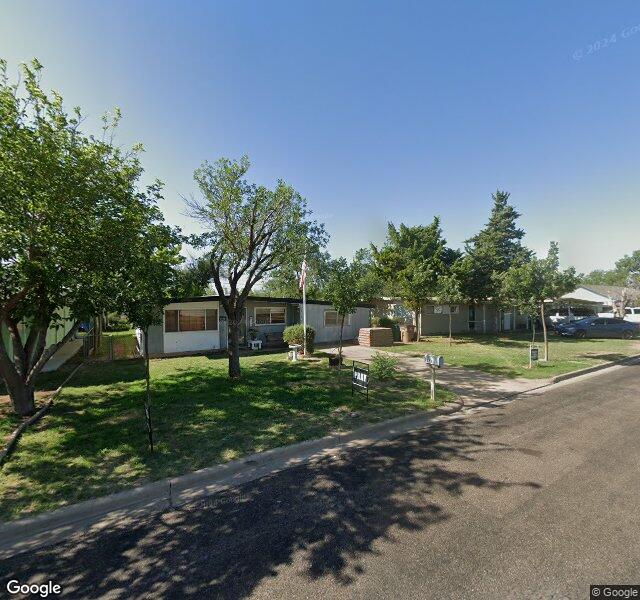
PARK PLAZA NURSING AND REHABILITATION CENTER

2210 HOWARD ST, SAN ANGELO, TX 76901 (325) 944-0561
For profit - Corporation 90 Beds CREATIVE SOLUTIONS IN HEALTHCARE Data: November 2025
Trust Grade
40/100
#798 of 1168 in TX
Last Inspection: March 2025

Within standard 12-15 month inspection cycle. Federal law requires annual inspections.

Overview

Park Plaza Nursing and Rehabilitation Center has received a Trust Grade of D, indicating below-average performance with some concerns about care quality. It ranks #798 out of 1168 facilities in Texas, placing it in the bottom half, and #5 out of 7 in Tom Green County, meaning there are only two options that are better locally. The facility is improving, as it reduced the number of issues from 18 in 2024 to just 4 in 2025. However, staffing is a significant weakness, with a poor rating of 1 out of 5 stars and a high turnover rate of 74%, which is well above the Texas average. There have been no fines reported, which is a positive aspect, but there are serious concerns regarding food safety practices, such as failing to date and label food items properly, and patient dignity issues where residents were not treated with respect regarding their catheter bags. Additionally, there were concerns about the care of residents with indwelling catheters, with one resident's tubing dragging on the floor, increasing infection risks. Overall, while some areas are showing improvement, families should weigh the strengths and weaknesses carefully.

Trust Score
D
40/100
In Texas
#798/1168
Bottom 32%
Safety Record
Low Risk
No red flags
Inspections
Getting Better
18 → 4 violations
Staff Stability
⚠ Watch
74% turnover. Very high, 26 points above average. Constant new faces learning your loved one's needs.
Penalties
✓ Good
No fines on record. Clean compliance history, better than most Texas facilities.
Skilled Nurses
○ Average
RN staffing data not reported for this facility.
Violations
⚠ Watch
29 deficiencies on record. Higher than average. Multiple issues found across inspections.
★★☆☆☆
2.0
Overall Rating
★☆☆☆☆
1.0
Staff Levels
★★★★☆
4.0
Care Quality
★★★☆☆
3.0
Inspection Score
Stable
2024: 18 issues
2025: 4 issues

The Good

  • 4-Star Quality Measures · Strong clinical quality outcomes
  • Full Sprinkler Coverage · Fire safety systems throughout facility
  • No fines on record

Facility shows strength in quality measures, fire safety.

The Bad

2-Star Overall Rating

Below Texas average (2.8)

Below average - review inspection findings carefully

Staff Turnover: 74%

27pts above Texas avg (46%)

Frequent staff changes - ask about care continuity

Chain: CREATIVE SOLUTIONS IN HEALTHCARE

Part of a multi-facility chain

Ask about local staffing decisions and management

Staff turnover is very high (74%)

26 points above Texas average of 48%

The Ugly 29 deficiencies on record

Mar 2025 4 deficiencies
CONCERN (D)

Potential for Harm - no one hurt, but risky conditions existed

Respiratory Care (Tag F0695)

Could have caused harm · This affected 1 resident

**NOTE- TERMS IN BRACKETS HAVE BEEN EDITED TO PROTECT CONFIDENTIALITY** Based on observation, interviews, and record review, the facility failed to ensure that a resident who needs respiratory care, i...

Read full inspector narrative →
**NOTE- TERMS IN BRACKETS HAVE BEEN EDITED TO PROTECT CONFIDENTIALITY** Based on observation, interviews, and record review, the facility failed to ensure that a resident who needs respiratory care, is provided such care, consistent with professional standards of practice for 1 of 4 (Resident #3) reviewed for respiratory care. Resident #3's oxygen nasal cannula and SVN mask were not covered in a plastic bag when they were not used. These failures could place all residents who use respiratory equipment at risk for respiratory infections. The findings included: Record review of Resident #3's admission record dated 03/13/25 indicated she was admitted to the facility on [DATE] with diagnoses of muscle weakness and hypoxemia (Low blood oxygen). She was [AGE] years of age. Record review of Resident #3's care plan dated 10/17/2024 indicated in part: (Focus: Resident has impaired oxygen exchange and shortness of breath r/t COPD and hypoxemia. Uses oxygen @ 3 liters per minute continuously when asleep & PRN during the daytime. Goal: Resident will have adequate air exchange as evidenced by normal breathing patterns and usual mental status through the review period. Interventions: Assure that Resident has oxygen on and there is no kink in tubing. Record review of Resident #3's quarterly MDS assessment dated [DATE] indicated in part: BIMS = 10 indicating resident was moderately impaired. Respiratory Treatments - Oxygen therapy. Record review of Resident #3's Physicians Orders dated 03/13/2025 documented in part: Change O2 tubing and nasal cannula as needed when visibly soiled or malfunctions. During an observation and interview on 03/11/25 at 10:35 AM Resident #3's nasal cannula tubing was seen wrapped around the oxygen tank on her wheelchair. During further observation the resident's SVN mask was seen resting on top of the dresser on and not bagged. The resident was seen in her bed awake and alert and wearing an oxygen cannula that was connected to an oxygen machine. Resident #3 said that when she used her wheelchair she would use the oxygen cannula to get around that was connected to the oxygen tank. The resident said staff had wrapped the nasal cannula tubing around her oxygen tank to store it while she was not using it. Resident #3 said she used the SVN mask to get breathing treatments and was not sure why the SVN mask and nasal cannula were nor placed in a plastic bag. During an interview on 03/13/25 at 11:10 AM RN D said that whenever a resident was not using their oxygen that it was supposed to be stored in a bag so that the nasal cannula was not in danger of becoming contaminated. RN D said it was the same expectation for the SVN masks, that if they were not being used the mask were supposed to be kept in a bag to prevent contamination which could lead to respiratory infections. During an interview on 03/13/25 at 03:08 PM the DON said it was expected for the oxygen cannula tubing and SVN mask to be stored in a bag when not in use. The DON said if the items were not stored in a bag and left out it could lead to potential cross contaminations and infections. The DON said the failure probably occurred because the staff forgot to change the oxygen tubing and SVN masks and store them in a bag. During an interview on 03/13/2025 at 3:46 PM the ADO was made aware of the oxygen items left out and not stored in bags. The ADO said oxygen items left out like that could lead to cross contamination. Record review of the facility's policy titled Respiratory policies and procedures dated June 1, 2006 indicated in part: Oxygen therapy via nasal cannula is administered as ordered by a physician and includes correct flow rate, mode of delivery and frequency. Gather supplies - Treatment bag-replace entire set-up every seven days, date and store in treatment bag when not in use. Aerosol mask - oxygen therapy via aerosol mask is administered as ordered by a physician and includes flow rate, concentration, mode of delivery and frequency. Gather supplies, replace entire set-up every seven days. Date and store in treatment bag when not in use.
CONCERN (D)

Potential for Harm - no one hurt, but risky conditions existed

Deficiency F0761 (Tag F0761)

Could have caused harm · This affected 1 resident

Based on observation, interview and record review the facility failed to store all drugs and biologicals in locked compartments for 1 of 2 nurse medication carts (The north hall medication cart) revie...

Read full inspector narrative →
Based on observation, interview and record review the facility failed to store all drugs and biologicals in locked compartments for 1 of 2 nurse medication carts (The north hall medication cart) reviewed for medication storage and security. LVN C failed to ensure the nurse medication cart for the north hall was secured when it was left unattended. These failures could place residents at risk for drug diversion or accidental ingestion. Findings included: During an observation on 03/11/25 at 10:20 AM the nurse medication cart on the north hall was observed unlocked and unattended. During an observation and interview on 03/11/25 10:25 AM LVN C was observed coming out of a resident's room. LVN C said that it was her nurse medication cart and it was her that had accidentally left it open. LVN C said she had stepped away to help one of the staff members and had forgotten to lock the cart. LVN C said leaving the cart unlocked and unattended could lead to unauthorized people having access of the cart. Inside the cart were several bubbled packed prescribed medications, insulin pens and other over the counter medications. During an interview on 03/13/25 at 03:04 PM the DON said it was expected for the medication carts to be locked when left unattended. The DON said if the cart was left unlocked and unattended that could lead to a risk of residents or visitors having access to the cart. The DON said the failure probably occurred because the nurse was called out to assist a staff member and she forgot to lock the cart. During an interview on 03/13/2025 at 3:44 PM the ADO was made aware of the medication cart left unlocked. The ADO said if the cart was left unlocked and unattended that could lead to unauthorized people getting into the cart. Record review of the facility's policy Medication Administration Procedures dated 2003 indicated in part: All medications are administered by licensed medical or nursing personnel. During the medication administration process the unlocked side of the cart must always be in full view of the nurse. After the medication administration process is completed, the medication cart must be completely locked or otherwise secured.
CONCERN (D)

Potential for Harm - no one hurt, but risky conditions existed

Infection Control (Tag F0880)

Could have caused harm · This affected 1 resident

**NOTE- TERMS IN BRACKETS HAVE BEEN EDITED TO PROTECT CONFIDENTIALITY** Based on observation, interview, and record review the facility failed to establish and maintain an infection prevention and con...

Read full inspector narrative →
**NOTE- TERMS IN BRACKETS HAVE BEEN EDITED TO PROTECT CONFIDENTIALITY** Based on observation, interview, and record review the facility failed to establish and maintain an infection prevention and control program designed to provide a safe, sanitary, and comfortable environment and to help prevent the development and transmission of communicable diseases and infections for 1 (Resident #36) of 7 residents reviewed for infection prevention and control. CNA A and CMA B failed to change her gloves when going from dirty to clean during Resident #36's incontinent care. CNA A and CMA B failed to use PPE during incontinent care and urinary catheter care performed for Resident #36 as the resident was on EBP precautions. These failures could place residents at risk of infections, secondary infections, and communicable diseases. Finding include: Record review of Resident #36's admission record dated 03/13/25 indicated he was admitted to the facility on [DATE] with diagnoses of muscle weakness, reduced mobility, and retention of urine. He was [AGE] years of age. Record review of Resident #36's care plan dated 10/17/2024 indicated in part: (Focus: Resident is on enhanced barrier precautions. Goal: There will not be any transmission of infection from or to the resident. Interventions: Gloves and gown should be donned if any of the following activities are to occur- resident hygiene, transfer, dressing, toileting/incontinent care). Record review of Resident #36's annual MDS assessment dated [DATE] indicated in part: BIMS = 15 indicating resident was cognitively intact. Bladder and Bowel = Urinary Continence Not rated, resident had a catheter. Bowel Continence - Always incontinent. During an observation on 03/11/25 at 11:04 AM CNA A and CMA B performed incontinent care on Resident #36. CNA A brought in a sit to stand lift machine and connected it to the sling the resident already had wrapped around and under his shoulders. Both staff members sanitized their hands and put gloves on. CNA A then pressed the button on the machine and raised the resident to a standing position. CNA A then undid the resident's brief, and it was noted that he had - had a bowel movement. Both CNA A and CMA B took some wet wipes and wiped the bowel movement. It was noted that the resident had a urinary catheter which was attached to his penis and secured to his leg. After CMA B wiped the bowel movement from the resident's rectal area she took some wet wipes and wiped the resident's catheter and penis area while still wearing the same gloves she used to wipe the resident's bowel movement. While still wearing the same gloves she used to wipe Resident #36's bowel movement, CNA A took the old brief and placed it in the trash and then took the new brief and fastened it to the resident. CNA A then pulled Resident #36's pants up and then took the lift machine remote and pressed the down button to lower the resident back unto his wheelchair while still wearing the same gloves that she had used to wipe the resident's bowel movement. Neither of the CNA's were noted to wear any PPE be sides the gloves as outside the resident's door was a posting that indicated Multidrug-resistant organisms (MDROs) are a threat to our residents, Enhanced Barrier Precautions (EBP) steps. During an interview on 03/11/25 at 11:28 AM CNA A said she should have changed her gloves before she applied the new brief, pulled the resident's pants and pressed the remote buttons on the lift to stand machine. CNA A said if she did not change her gloves then it could lead to the spread of infections and cause cross contamination. CNA A said she had forgotten to change her gloves at the proper time. When asked about the posting regarding MDROs posted outside Resident #36's door and if it applied to them during incontinent care CNA A said she was not sure why the posting was there and did not believe it applied to them for incontinent care. During an interview on 03/11/25 at 02:36 PM CMA B said she should have changed her gloves before she performed catheter care to the resident's penis area as she had just wiped the resident's bowel movement with the same gloves. CMA B said not changing her gloves could lead to UTI's and cross contamination. When asked about the posting regarding MDROs posted outside Resident #36's door and if it applied to them during incontinent care CMA B said she was not sure why the posting was there and did not believe it applied to them for incontinent care. During an interview on 03/13/2025 at 3:08 PM the DON said whenever a resident was on EBP staff were expected to use PPE such as gloves and gowns. The DON said staff were expected to wear EBP for Resident #36 during the incontinent care as he had a urinary catheter. The DON said staff not wearing EBP could possibly lead to the spread of infection to others due to possible cross contamination. The DON said the failure probably occurred because the staff was in a hurry, and that the staff would be re-educated on the use of EBP and when to use it. The DON said CMA B should have changed her gloves before she performed incontinent care to Resident #36's urinary catheter. The DON said CNA A should have changed her gloves after she had wiped the resident's bowel movements and then proceeded to do other tasks such as touching the new brief. The DON said the ADON and herself would monitor for infection control by doing rounds and in-services. The DON said she believed the failure occurred because the staff got nervous and forgot the steps. During an interview on 03/13/2025 at 3:48 PM the ADO was made aware of the staff not changing their gloves or using EBP during incontinent care performed on Resident #36. The ADO acknowledged that staff not changing their gloves or using EBP could lead to cross contamination. Record review of the facility's policy titled Infection control plan overview and dated 03/2024 indicated in part: Infection control - the facility will establish and maintain an infection control program designed to provide a safe and sanitary and comfortable environment and to help prevent the development and transmission of disease and infection. Infection control program the facility will establish an infection control program under which it investigates, controls, and prevents investigations in the facility. Maintains a record of incidents and corrective actions related to infections. Record review of the facility's policy titled Catheter care and dated 02/23/2007 indicated in part: Provide perineal care to the incontinent resident to prevent skin rashes and breakdown. Procedure - gather supplies, gloves, pre-moistened no-rinse disposable wash cloths, wash your hands thoroughly with soap and water or alcohol, apply gloves, gently was rinse and dry around the juncture of the catheter and meatus. If using pre-moistened no-rinse disposable wash cloths, rinsing is not required, then wash the catheter from the meatus down the tube about 3 inches, dispose of wash cloths, remove gloves and wash hands. Record review of the facility's undated policy titled Enhanced barrier precautions indicated in part: Multidrug-resistant organism (MDRO) transmission is common in long term care (LTC) facilities. Many residents in nursing homes are at increased risk of becoming colonized and developing infections with MDROs. Enhanced Barrier Precautions (EBP) refer to an infection control intervention designed to reduce transmission of multidrug- resistant organisms that employ targeted gown and glove use during high contact resident care activities. EBP are used in conjunction with standard precautions and expand the use of PPE to donning of gown and gloves during high-contact resident care activities that provide opportunities for transfer of MDROs to staff hands and clothing. A single set of PPE cannot be used for more that 1 patient. EBP are indicated for residents with any of the following: Wounds and/or indwelling medical devices even if the resident is not known to be infected or colonized with a MDRO. Indwelling medical devices examples include central lines, urinary catheters. Record review of the facility's policy titled Perineal Care Male and dated 12/08/2009 indicated in part: Purpose to clean the male perineum without contaminating the urethral area with germs from the rectal area. Beginning steps, wash hands, gather needed supplies, expose the resident's perineal area, if heavy soiling is present, wear gloves and use tissues or wipes to remove heavy soiling prior to perineal care. Wash hands and put on clean gloves for perineal care, gently wash perineal area wiping from clean urethral area toward dirty rectal area to avoid contaminating urethral area with germs from the rectum. If at any time your gloves become contaminated with feces change gloves.
CONCERN (E) 📢 Someone Reported This

A family member, employee, or ombudsman was alarmed enough to file a formal complaint

Potential for Harm - no one hurt, but risky conditions existed

Incontinence Care (Tag F0690)

Could have caused harm · This affected multiple residents

**NOTE- TERMS IN BRACKETS HAVE BEEN EDITED TO PROTECT CONFIDENTIALITY** Based on observation, interview, and record review the facility failed to ensure 1 of 7 residents (Resident #36) with indwelling...

Read full inspector narrative →
**NOTE- TERMS IN BRACKETS HAVE BEEN EDITED TO PROTECT CONFIDENTIALITY** Based on observation, interview, and record review the facility failed to ensure 1 of 7 residents (Resident #36) with indwelling urinary catheters received appropriate care to prevent urinary tract infections to the extent possible. Resident #36's indwelling catheter tubing was dragging on the floor on 3 of 3 days observed. This failure could place residents with indwelling urinary catheters at risk of infection. The findings included: Resident #36 Record review of Resident #36's admission record dated 03/13/25 indicated he was admitted to the facility on [DATE] with diagnoses of muscle weakness, reduced mobility and retention of urine. He was [AGE] years of age. Record review of Resident #36's care plan dated 10/17/2024 indicated in part: Focus: The resident has an indwelling catheter. Goal: The resident will be/remain free from catheter-related trauma through review date. Interventions: Check tubing for kinks and maintain the drainage bag off the floor. Record review of Resident #36's annual MDS assessment dated [DATE] indicated in part: BIMS = 15 indicating resident was cognitively intact. Appliances had indwelling catheter, Urinary continence = Not rated, resident had a catheter. Observation on 3/11/25 at 12:10 pm Resident #36 self-propelling in wheelchair with foley catheter tubing dragging on the floor. Observation on 3/12/25 at 12:32 pm Resident #36 self-propelling in wheelchair with foley catheter tubing dragging on the floor. Observation on 3/13/25 at 3:20 pm Resident #36 self-propelling in wheelchair with foley catheter tubing dragging on the floor. During an interview on 03/13/25 at 03:10 PM the DON said the bag and/or tubing should not be touching the floor as that could lead to a possible infection and cross contamination. The DON said due to the tubing touching the floor could lead to the risk of infections and possible cross contamination. The DON said the failure occurred probably because the catheter tubing was too low when Resident #36 was placed on his wheelchair. She stated this is a new wheelchair that is smaller than normal, and this may be the reason it is dragging. The DON was not aware that the tubing was dragging. Record review of facility policy titled Catheter Care dated 2/13/2007 revealed a subsection under general guidelines 10. Be sure the catheter tubing and drainage bag are kept off the floor.
Apr 2024 1 deficiency
CONCERN (D) 📢 Someone Reported This

A family member, employee, or ombudsman was alarmed enough to file a formal complaint

Potential for Harm - no one hurt, but risky conditions existed

Infection Control (Tag F0880)

Could have caused harm · This affected 1 resident

**NOTE- TERMS IN BRACKETS HAVE BEEN EDITED TO PROTECT CONFIDENTIALITY** Based on observation, interview, and record review, the facility failed to maintain an infection prevention and control program ...

Read full inspector narrative →
**NOTE- TERMS IN BRACKETS HAVE BEEN EDITED TO PROTECT CONFIDENTIALITY** Based on observation, interview, and record review, the facility failed to maintain an infection prevention and control program designed to provide a safe, sanitary, and comfortable environment to help prevent the development and transmission of communicable diseases and infections for one (Resident #1) of three residents reviewed for infection control practices. CNA A failed to perform proper hand hygiene and glove changes while providing incontinence care to Resident #1 on 03/29/24. This failure could place residents at risk for the spread of infection. Findings included: Review of Resident #1's face sheet dated 04/01/24, revealed an 84- year- old female admitted to the facility on 06/06//22 with diagnoses including Covid-19, overactive bladder, gastronomy (feeding tube) and dementia. Review of Resident #1's MDS assessment dated [DATE] revealed Resident #1 required total assistance with most activities of daily living (ADLs) and one-person physical assistance with transfer. Resident #1 was always incontinent of bowel and bladder. Review of Resident #1's Care Plan dated 02/15/22 revealed he had bowel and bladder incontinence related to over-active bladder. Observation of incontinence care for Resident #1 on 03/29/24 at 9:50 a.m. revealed CNA A used antiseptic and donned gloves (after retrieving the gloves her pocket) before commencing care. CNA A removed Resident #1's brief that was soiled with urine. CNA A wiped the resident from front to back. CNA A did not change gloves but continued to clean Resident #1. CNA A's gloves were visibly soiled with urine. CNA A used the same soiled gloves to apply skin protector to Resident #1. She did not wash her hands, change gloves, or perform hand hygiene before retrieving Resident #1's clean brief and placing it underneath the resident and fastening. CNA A washed hands before leaving Resident #1's room. In an interview on 03/29/24 at 10:03 a.m. with CNA A, she revealed she should have changed her gloves during care. CNA A also stated she should have changed her gloves before retrieving a clean brief and placing it underneath Resident #1. CNA A was asked why she did not change her gloves. She said she was nervous. CNA A stated she had infection control training (computer-based learning) about 2 weeks ago. She has been employed in the facility for 2 month and did not receive training with return demonstration from the facility. She said the resident could acquire an infection when she did not follow good infection control practices including not changing gloves before retrieving the resident's clean brief. During an interview with the RCN B on 04/01/24 at 4:58p.m., revealed she was aware of some of the concerns raised about infection control. She stated she expected the aides to follow the facility protocols during care, one of which was to ensure hand washing or sanitizing hand and change of gloves before retrieving clean brief. RCN B noted the facility conducts yearly competency training and periodic in-services if needed. Review of the facility's Perineal care policy created 04/25/22 reflected: Purpose: This procedure aims to maintain the resident dignity and self-worth and reduce embarrassment by providing cleanliness and comfort to the resident, preventing infections and skin irritation, and observing the resident skin condition. Important Points: o If heavily soiled, use an incontinence pad, brief, towel, or wipes to remove soiling, from front to back, prior to performing perineal care. o Do not wipe more than once with the same surface o Doffing and discarding of gloves are required if visibly soiled o Always perform hand hygiene before and after glove use
Feb 2024 17 deficiencies
CONCERN (D) 📢 Someone Reported This

A family member, employee, or ombudsman was alarmed enough to file a formal complaint

Potential for Harm - no one hurt, but risky conditions existed

Pharmacy Services (Tag F0755)

Could have caused harm · This affected 1 resident

Based on observation, interview and record review the facility failed to provide pharmaceutical services including procedures that assure accurate administering of medications for 2 of 4 medication ca...

Read full inspector narrative →
Based on observation, interview and record review the facility failed to provide pharmaceutical services including procedures that assure accurate administering of medications for 2 of 4 medication carts (South nurse medication cart, & North nurse medication cart) reviewed. The facility failed to ensure expired medications were removed from medication carts. These failures could place residents who receive medications at risk for receiving outdated medications which could result in residents not receiving the intended therapeutic effects medications. Findings included: During an observation / interview on 02/06/2024 at 11:41 a.m. revealed the South Hall nurses' cart had diphenhydramine (medication used for itching and allergic symptoms) 25mg bottle with expiration date not visible. LVN G stated she was not able to read the expiration date on the medication bottle. She stated she did not know when medication expired, and that medication should not be stored on cart without visible expiration date. She did not know why medication was on the cart but should not be administered without knowing expiration date. During an observation / interview on 02/06/2024 at 12:07 p.m. revealed the North Hall nurses' cart had medication a bottle of hydroxyzine (medication used for anxiety, nausea, allergies, and itching) 10mg with discard by date of 12/23/2023. LVN B stated medication should not be stored on cart when expired. She stated she felt change in medication orders had led to failure to remove medication. LVN B stated the facility's policy was to remove medication from cart when no longer ordered or expired. During an interview on 02/08/2024 at 10:41 a.m. the DON stated medications that are expired should not be kept on the medication carts. She stated she and the ADON were responsible for monitoring nurses and CMAs to ensure they stored medications appropriately. She stated the effect that storing expired / discontinued medication inside medication carts could cause residents to receive medication that are no longer ordered or not effective which could lead to harm. During an interview on 02/08/2024 at 10:42 a.m., the RCN stated she expected for expired medications to be removed from cart. She stated leaving expired medication on the cart could cause residents being given medications that are not as effective causing symptoms to not be managed. She was not sure what led to the failure of expired medications being on medication carts. She stated ADON and DON were to monitor that medications were stored appropriately. Record review of the facility Medication Reconciliation revised on 10/25/2017 revealed: In addition, the pharmacist may collaborate with the facility and medical director on other aspects of pharmaceutical services including, but not limited to .Interacting with the quality assessment and assurance committee to develop procedures and evaluate pharmaceutical services including delivery and storage systems within the various locations of the facility in order to prevent. To the degree possible, loss or tampering with the medication supplies, and to define and monitor corrective actions for problems related to pharmaceutical services and medications .
CONCERN (E) 📢 Someone Reported This

A family member, employee, or ombudsman was alarmed enough to file a formal complaint

Potential for Harm - no one hurt, but risky conditions existed

Resident Rights (Tag F0550)

Could have caused harm · This affected multiple residents

**NOTE- TERMS IN BRACKETS HAVE BEEN EDITED TO PROTECT CONFIDENTIALITY** Based on observation, interview, and record review, the facility failed to treat residents with respect, dignity, and care for e...

Read full inspector narrative →
**NOTE- TERMS IN BRACKETS HAVE BEEN EDITED TO PROTECT CONFIDENTIALITY** Based on observation, interview, and record review, the facility failed to treat residents with respect, dignity, and care for each resident in a manner that promotes maintenance or enhancement of his or her quality of life for 2 of 4 residents (Resident #13 & Resident # 45) reviewed for dignity. The facility failed to ensure staff treated Resident #13 & Resident #45 with dignity by covering their catheter bags with privacy bags. This failure could place residents at risk of a diminished quality of life and lead to a loss of self-esteem. The findings included: Record review of Resident # 13's face sheet dated 02/09/2024 revealed, [AGE] year-old female admitted on [DATE] with diagnosis: neuroleptic induced parkinsonism (disorder of the brain that affects the functioning of muscles) and Neuromuscular dysfunction of bladder (disorder of the brain that affects functioning of the bladder). Record review of Resident # 13's comprehensive MDS assessment dated [DATE] revealed, Section C- Cognitive Behavior revealed a BIMS of 05 meaning severe cognitive impairment; Section GG- Functional Abilities and Goals revealed Resident #13 required substantial/maximal assistance (helper does more than half the effort); Section H- Bladder and Bowel revealed Resident #13 had an indwelling catheter. Record review of Resident #13's care plan dated 01/16/2024 revealed; Focus: The resident an indwelling catheter .Interventions: The resident has an indwelling catheter. Position catheter bag and tubing below the level of the bladder and in a privacy bag. During an observation on 02/06/2024 at 2:31 p.m. Resident #13 was lying in bed with the catheter bag hanging from the bed and no privacy bag covering it. During an observation on 02/09/2024 at 7:37 a.m. Resident #13 was sitting in the dining room with the foley catheter bag touching the footrest of the wheelchair and her sock with no privacy bag covering it. Record review of Resident # 45's face sheet dated 02/09/2024 revealed, [AGE] year-old male admitted on [DATE] with diagnosis: obstructive and reflux uropathy (a condition that obstructs urine from emptying through the urethra). Record review of Resident # 45's quarterly MDS assessment dated [DATE] revealed, Section C-Cognitive Behavior revealed a BIMS of 11 meaning moderate cognitive impairment; Section GG - Functional Abilities and Goals revealed Resident #45 required substantial/maximal assistance (helper does more than half the effort); Section H- Bladder and Bowel revealed Resident #45 had an indwelling catheter. Record review of Resident #45's care plan dated 02/09/2024 revealed: Focus: The resident had an indwelling catheter .Interventions: The resident had indwelling catheter. Position catheter bag and tubing below the level of the bladder and in a privacy bag. During an observation on 02/07/2024 at 9:07 a.m. Resident #45 was seen wheeling himself down the 200 halls from the dining room with the foley catheter bag hanging from the bottom of the wheelchair and not covered with a privacy bag. During an interview on 02/08/2024 at 4:31 p.m., Resident #45 stated he would prefer his catheter bag was covered. He stated he was unable to cover the catheter with a privacy bag himself. During an interview on 02/07/2024 at 9:07 a.m., LVN A stated there should be a privacy bag covering the catheter bag. LVN A stated she did not know why the catheter bags did not have a privacy bag. She stated the facility's policy was for catheter bags to be covered with privacy bags. LVN A stated not covering with a privacy bag could cause the resident to have dignity issues. During an interview on 02/08/2024 at 10:24 a.m., the DON stated catheter bags should be covered with a privacy bag. She stated it was the CNAs and charge nurses' responsibility to make sure a privacy bag was covering the catheter bags. The DON stated she monitors CNAs and charge nurses are covering catheters with privacy bags. She stated it was her expectation that privacy bags be covering catheters bags when residents were in their rooms and when they were out of their rooms. She stated not covering the catheter with a privacy bag could affect the resident's dignity. She did not know where the failure to cover had occurred. Review of facility policy titled, Catheter Care dated February 13, 2007, revealed: Review the resident's plan of care daily for changes. Review of facility policy titled, Resident Rights reviewed on 2/08/2024 revealed: The Resident has a right to a dignified existence .A facility must treat each resident with respect and dignity and care for each resident in a manner and in an environment that promotes maintenance or enhancement of his or her quality of life, recognizing each resident's individuality. The facility must protect and promote the rights of the resident.
CONCERN (E) 📢 Someone Reported This

A family member, employee, or ombudsman was alarmed enough to file a formal complaint

Potential for Harm - no one hurt, but risky conditions existed

Investigate Abuse (Tag F0610)

Could have caused harm · This affected multiple residents

**NOTE- TERMS IN BRACKETS HAVE BEEN EDITED TO PROTECT CONFIDENTIALITY** Based on record reviews and interviews, the facility failed to thoroughly investigate allegations of Abuse and Neglect and Injur...

Read full inspector narrative →
**NOTE- TERMS IN BRACKETS HAVE BEEN EDITED TO PROTECT CONFIDENTIALITY** Based on record reviews and interviews, the facility failed to thoroughly investigate allegations of Abuse and Neglect and Injury of Unknown Origin for 6 of 11 residents (Resident #6, #17, #20, #37, #27 and #42) reviewed. The facility did not have documentation that thorough investigations of allegations of Neglect for Resident #,6, #17, #20, #37, #27 and #42 were completed. This failure could place residents who report allegations of abuse at risk of not being thoroughly investigated. Findings included: Resident #6 Record review of Resident #6's electronic face sheet dated 02/07/2024 revealed the resident was a [AGE] year-old female who was admitted on [DATE] and an original admission date of 10/28/2022 with diagnoses that included: Chronic Obstructive Pulmonary Disease (airflow blockage and breathing related problems), muscle weakness, Lack of Coordination, violent behavior, spastic hemiplegia (muscle tightness and involuntary contractions in the limbs and extremities on one side of the body) affecting left nondominant side. Review of Resident #6's Quarterly MDS assessment dated [DATE] revealed: Section C- Cognitive Patterns Resident #6 had a BIMS score of 08 (moderate impairment); Section GG- Functional Abilities and Goals Resident #6 had upper and lower extremity impairment on both sides and required a wheelchair for mobility. Record review of Facility's Incident report dated 12/07/2023 revealed an allegation of Abuse of Resident #6 and Resident #37, I (was in the Human Resources and hear both resident cursing each other on the hallway. I rushed to hallway. I saw both of resident close to each other and cursing and swinging arms. I saw Resident #6 wheeling her wheelchair backward and run into Resident #37's chair. I separated them and moved Resident #37 back to his room. I ask him what happened, he was unable to verbalize the incident. He Just said Bullshit. I asked med what happened, she said just into him and he was mad. Both residents were separated with there was no physical or emotional destress. Review, on 02/06/2024, of facility's investigation revealed no evidence of witness interviews with residents and staff, no evidence of staffing in-services, and no evidence of resident medical information. Resident #17 Record review of Resident #17's face sheet dated 02/09/2024 revealed: [AGE] year-old male admitted on [DATE] and an original admission date of 01/15/2016 with the following diagnosis Intermittent Explosive disorder, Moderate Intellectual disabilities, Major Depressive Disorder, and bipolar disorder. Record review of Resident #17's Annual MDS assessment dated [DATE] revealed: Section C- Cognitive Patterns BIMS score of 5 (severe cognitive impairment). Resident #37 Record review of Resident #37's face sheet dated 02/09/2024 revealed: [AGE] year-old male admitted on [DATE] and an original admission date of 06/16/2021 with the following diagnosis Traumatic Brain injury, heart failure, anxiety disorder and Dementia. Record review of Resident #37's Annual MDS assessment dated [DATE] revealed: Section C- Cognitive Patterns BIMS score of 3 (severe cognitive impairment). Record review of Facility's Incident report dated 11/29/2023 revealed an allegation of Abuse of Resident #37 THE REPORTER STATED THE INCIDENT OCCURED ON 11/28/23, AT 5:00 PM, IN THE DINING ROOM. THE REPORTER STATED THERE WERE WITNESSES. Unknown Resident WAS IN THE DINING ROOM WHEN HE SAW Resident #37 STRUCK Resident #17. HE ALSO STATED THAT KITCHEN STAFF HEARD THE INCIDENT. THE REPORTER WAS NOTIFIED AND ASSISTED Resident #37 BACK TO HIS ROOM AND ASKED HIM WHAT HAPPENED. HE STATED THAT HE DIDN'T DO SHIT. THE REPORTER SPOKE WITH Resident #17 AND ASKED HIM WHAT HAPPENED. HE STATED, HE SLAPPED ME. THE REPORTER HAD BOTH RESIDENTS ASSESSED WITH NO INJURIES. THE RESIDENTS WERE NOT EMOTIONALLY DISTRESSED. Record review of Facility's Incident report dated 01/16/2024 revealed an allegation of Abuse of Resident #37 I was in the Human Resources and hear both resident cursing each other on the hallway. I rushed to hallway. I saw both of resident close to each other and cursing and swinging arms. I saw Resident #6 wheeling her wheelchair backward and run into Resident #37's chair. I separated them and moved Resident #37 back to his room. I ask him what happened, he was unable to verbalize the incident. He Just said Bullshit. I asked what happened, she said I just into him and he was mad. Both residents were separated with there was no physical or emotional destress. Review, on 02/06/2024, of facility's investigations revealed no evidence of witness interviews with residents and staff, no evidence of staffing in-services, and no evidence of resident medical information. Resident #46 Record review of Resident #46's face sheet dated 02/09/2024 revealed: [AGE] year-old female admitted on [DATE] and an original admission date of 01/20/2022 with the following diagnosis Dementia and Major Depressive Disorder. Record review of Resident #46's Annual MDS assessment dated [DATE] revealed: Section C- Cognitive Patterns BIMS score of 3 (severe cognitive impairment). Record review of Facility's Incident report dated 02/01/2024 revealed an allegation of Abuse of Resident #46 It was brought to my attention this morning that the resident has a bruise of a size of a quarter in her forehead. The resident was assessed by the charge nurse and the DON for any possible discomfort. The resident is unable to verbalize the incident. Both the MD and the responsible party were notified. There was not physical or emotional distress involved and the resident is safe. Review, on 02/06/2024, of facility's investigation revealed no evidence of witness interviews with residents and staff, no evidence of staffing in-services, and no evidence of resident medical information. Resident #20 Record review of Resident #20's face sheet dated 02/09/2024 revealed a [AGE] year-old female who was admitted to the facility on [DATE] with diagnoses which included dementia, Alzheimer's Disease (disease that destroys memory and other important mental functions), muscle weakness, and lack of coordination. Record review of Resident #20's quarterly MDS assessment dated [DATE] revealed: Section C (Cognitive Patterns) BIMS assessment revealed a score of 0 meaning severe cognitive impairment; Section GG (Functional Abilities) revealed Resident #20 was independent in rolling left to right; and Section P (Restraints and Alarms) revealed physical restraints bed rail not used. Record review of Facility's Incident report dated 12/07/2023 revealed an allegation of Abuse of Resident #20 Both residents were sited on the same table in the dining room. #27 started getting agitated and swing her hand toward Resident #20's face. There was no evidence that she intentionally hit her. According to the Certified Nurse that was in the dining room at the time, it seems that she may have hit her in the face unintentionally. There was no bruise on both residents. Both residents cannot verbalize the incident. Both residents were assessed by the charge nurse and the DON. There is no bruises or emotional distress on both residents. Review, on 02/06/2024, of facility's investigation revealed no evidence of witness interviews with residents and staff, no evidence of staffing in-services, and no evidence of resident medical information. Resident #42 Record review of Resident #42's face sheet, dated 02/09/2024, revealed a [AGE] year-old male who was admitted to the facility on [DATE], with the following diagnoses which included type-2 diabetes, hemiplegia (weakness) and hemiparesis (paralyzes) to right dominant side, stroke and lack of coordination. Record review of Resident #42's Quarterly MDS Assessment, dated 01/11/2024, revealed Section C- Cognitive Patterns Resident #42 had a BIMS score of 15 (cognitively intact); Section G: ADL Assistance revealed Resident #42 had functional limitation in range of motion to upper and lower extremity on one side. Record review of Facility's Incident report dated 01/25/2024 revealed an allegation of Neglect of Resident #42 The resident was schedule to see a podiatrist doctor at the beginning of the years 2024 to cut his foot nail. The podiatrist office call to reschedule the appointment later in January because their office is close of the New Year. I called both [family members] to informed them about the changes. The responsible party hanged up the phone on me while I was trying to explain the re-scheduling to her. I went and spoke with the [family member] and give her a copy of the new schedule. Review, on 02/06/2024, of facility's investigation revealed no evidence of witness interviews with residents and staff, no evidence of staffing in-services, and no evidence of resident medical information. During an interview on 02/06/2024 at 2:30 PM the ADMIN stated he had investigated each intake with in-services and conclusions. He stated he did not print the investigation out for his records. He stated was not aware he had to fill out a 3613-A form. During an interview on 02/07/24 at 11:26 AM the ADO stated the ADMN should have the PIR reports on file. He stated the ADMN should have completed the initial self-report. The ADO stated the facility had protocols in place to aid in completing an investigation correctly. He stated that he expected the ADMN to follow those protocols and should have been completed within 5 days with a conclusion. He stated in completing an investigation and following those protocols, it could have helped and aid the facility staff to take steps and prevent it from happening again. The ADO stated the ADMN monitored investigations using facility program with day 5 the ADMN been reminded of the form 3613-A, submitting all supporting documents from his investigation. He stated a failure to investigate would have a negative impact for residents and visitors which would lead to further intakes. He stated in not coming up with adequate interventions, residents would not have possibly gotten the proper care. The ADO stated he felt the staff not following the policies and procedures and company's expectations led to the failure. He stated his expectations were for staff to follow the protocols with a completed investigation. Record Review of policy titled, Abuse/Neglect dated 03/29/2018, revealed: .The facility will provide and ensure the promotion and protection of Resident rights. It is each individual's responsibility to recognize, report, and promptly investigate actual or alleged abuse, neglect, exploitation, mistreatment of residents or misappropriation of resident property abuse and situations that may constitute abuse or neglect to any resident in the facility . .C. Prevention .6. The facility will designate an Abuse Preventionist to monitor tracking and trending data and completion of investigations as needed . .D. Identification The facility will identify and investigate events that may constitute abuse/neglect. The facility will determine the direction of the investigation based on a thorough examination of events. Opportunities to prevent abuse/neglect will be managed accordingly . .F. Investigation Comprehensive investigations will be the responsibility of the administrator and/or Abuse Preventionist. All allegations of abuse, neglect .and injuries of unknown source will be investigated. 1. The administrator in consultation with the Risk Management Department will be responsible for investigating and reporting cases to the HHSC. 2. After receipt of the allegation the Abuse Preventionist and administrator in conjunction with Risk Management will immediately evaluate the resident's situation using the criteria as stated in the policy. 3. A report to the appropriate agency will include the following: . .g. Other pertinent information as available. The written report must be sent to HHSC no later than the fifth working day after the initial report. The facility will use the designated state reporting form. .6. The Abuse Preventionist and/or administrator will conduct a thorough investigation of the incident(s). A copy of the written report will accompany any personnel action deemed necessary. 7. The facility will report and cooperate with any and all investigations concerning reports of abuse, and neglect .
CONCERN (E) 📢 Someone Reported This

A family member, employee, or ombudsman was alarmed enough to file a formal complaint

Potential for Harm - no one hurt, but risky conditions existed

Comprehensive Care Plan (Tag F0656)

Could have caused harm · This affected multiple residents

**NOTE- TERMS IN BRACKETS HAVE BEEN EDITED TO PROTECT CONFIDENTIALITY** Based on interview and record review, the facility failed to develop and implement a person-centered, comprehensive care plan fo...

Read full inspector narrative →
**NOTE- TERMS IN BRACKETS HAVE BEEN EDITED TO PROTECT CONFIDENTIALITY** Based on interview and record review, the facility failed to develop and implement a person-centered, comprehensive care plan for each resident, consistent with resident rights, that included measurable objectives and timeframes to meet residents medical, nursing, mental and psychosocial needs that were identified in the comprehensive assessment for 5 (Resident # 32, Resident #33, Resident #44, Resident #48, and Resident #49) of 5 residents reviewed for care plans. The facility failed to ensure care plans specified measurable objectives that could be evaluated or quantified for Resident #32, Resident #33, Resident #44, Resident #48, and Resident #49. The facility failed to ensure care plans specified measurable objectives that could be evaluated or quantified with a timeframe to achieve for Resident #32, Resident #33, Resident #44, Resident #48, and Resident #49. These failures could place residents at risk for not receiving timely interventions or interventions not individualized to meet their specific physical, mental, and/or emotional needs. Findings included: Record review of Resident #32's electronic face sheet revealed a [AGE] year-old male, initially admitted on [DATE] with a recent admission date of [DATE]. Resident #32's medical diagnoses included chronic respiratory problems, dementia, major depression, heart failure, weakness, heartburn, repeated falls, head injury, high blood pressure, and high cholesterol. Record review of Resident #32's Quarterly MDS assessment dated [DATE], Section C 1000. Cognitive Skills for Daily Decision Making revealed Resident #32 was Severely impaired - never/rarely made decisions. Record review of Resident #32's Comprehensive Care Plan reviewed and revised [DATE] revealed objectives lacking ability to be evaluated or quantified were: Mr. [resident] will not sustain serious injury . , The resident's fall risk will be reduced ., Mr. [resident] will display optimal breathing pattern daily. , Mr. [resident] will pass soft, formed stool. , Mr. [resident] will improve current level of function in ADL's. , Mr. [resident] will have no indications of psychosocial well being problem . , Mr. [resident] will identify coping mechanisms (new and old) . , Mr. [resident] will demonstrate adjustment to nursing home placement. , Mr. [resident] will not have an interruption in normal activities due to pain . , Mr. [resident] will not have discomfort related to side effects of analgesia . , Residents needs will be met . , My/RR's decision for DNR will be honored . , I will have fewer episodes of allergies . , My dignity will be maintained and fewer incidents of incontinence . , Resident will be safe from any injuries . , The resident will cooperate with care . , The resident will demonstrate effective coping skills . , The resident will seek out staff/caregiver when agitation occurs . , The resident will show decreased episodes of s/sx of depression. , The resident will be able to communicate basic needs on a daily basis . , The resident's, dignity and autonomy will be maintained at highest level . , The resident will display optimal breathing pattern daily . , and Resident will maintain ideal weight and receive proper nutrition daily . The objective lacking ability to be evaluated or quantified and did not provide a timeframe for achieving was Maintain stable weight and nutritional parameters. Record review of Resident #33's electronic face sheet revealed an [AGE] year-old female, admitted on [DATE] with medical diagnoses of heart failure, Alzheimer's disease, major depression, dementia, history of falling, placement of a cardiac pacemaker (an implanted device to regulate heart rhythm). Record review of Resident #33's Quarterly MDS assessment dated [DATE], Section C 0500 BIMS Summary Score revealed Resident #33 scored 1 out of 15 indicating severe cognitive impairment. Record review of Resident #33's Comprehensive Care Plan reviewed and revised [DATE] revealed objectives lacking ability to be evaluated or quantified were: Resident/responsible party's decision for DNR will be honored. , The resident will be able to communicate basic needs on a daily basis. , The resident will maintain involvement in cognitive stimulation, social activities as desired. , The resident will verbalize less difficulty breathing and be more comfortable . , The resident will not sustain serious injury . , The resident will not have an interruption in normal activities due to pain . , Dignity will be maintained and the resident will be kept comfortable . , and The resident will maintain or improve current level of function . The objective lacking ability to be evaluated or quantified and did not provide a timeframe for achieving was Maintain stable weight and nutritional parameters. Record review of Resident #44's electronic face sheet revealed an [AGE] year-old female, admitted on [DATE] with medical diagnoses of Alzheimer's disease, high cholesterol, difficulty sleeping, major depression, weakness, history of head trauma, disease of the liver, and vitamin deficiency. Record review of Resident #44's Quarterly MDS dated [DATE], Section C 0500 BIMS Summary Score revealed Resident #44 scored 4 out of 15 indicating severe cognitive impairment. Record review of Resident #44's Comprehensive Care Plan reviewed and revised [DATE] revealed objectives lacking ability to be evaluated or quantified were: My/RR's decision for DNR will be honored ., I will maintain my current level of function . , I will not have discomfort related to side effects of analgesia . , I will verbalize adequate relief of pain or ability to cope with incompletely relieved pain . , I will not sustain serious injury related to a fall . , I will have my needs met with input from my RR . , I will have fewer episodes of allergies . , The resident will demonstrate adjustment to nursing home placement . , Medication will be administers safely., The resident will develop skills to cope with cognitive decline and maintain safety . , The resident's comfort will be maintained . , The resident's dignity and autonomy will be maintained at highest level . , I will have adequate air exchange as evidenced by normal breathing patterns and usual mental status . , The resident will have fewer episodes of yelling out weekly ., and The resident will not have an interruption in normal activities due to pain . The objectives lacking ability to be evaluated or quantified and did not provide a timeframe for achieving were: I will receive medication as ordered by the Physician. while on pass., I will be offered/administered all Immunizations as ordered by his physician., and Maintain stable weight and nutritional parameters. Record review of Resident #48's electronic face sheet revealed a [AGE] year-old female, admitted on [DATE] with medical diagnoses of adult-onset diabetes, shortness of breath, Alzheimer's disease, weakness, high blood pressure, difficulty swallowing, depression, and anxiety. Record review of Resident #48's Quarterly MDS dated [DATE], Section C 1000. Cognitive Skills for Daily Decision Making revealed Resident #32 was Severely impaired - never/rarely made decisions. Record review of Resident #48's Comprehensive Care Plan reviewed and revised [DATE] revealed objectives lacking ability to be evaluated or quantified were: The resident will cooperate with care. , I will have adequate air exchange as evidenced by normal breathing patterns and usual mental status . , I will maintain my current level of function . , I will not sustain a serious injury related to a fall . , The resident will be able to communicate basic needs on a daily basis . , The resident will develop skills to cope with cognitive decline and maintain safety . , The resident will improve current level of cognitive function . , The resident's safety will be maintained . , The resident will demonstrate happiness with daily routine . , The resident will be able to communicate basic needs on a daily basis . , and Resident will maintain ideal weight and receive proper nutrition daily . The objectives lacking ability to be evaluated or quantified and did not provide a timeframe for achieving were Request for CPR to be initiated will be followed, Medication will be administers safety and as ordered, The resident will receive medications as ordered by the physician, The resident will be compliant with thyroid replacement therapy., and Maintain stable weight and nutritional parameters. Record review of Resident #49's electronic face sheet revealed a [AGE] year-old female, admitted on [DATE] with medical diagnoses respiratory disease, kidney disease, high blood pressure, heart failure, gout (a type of arthritis that causes pain and swelling in the joints), Sjogren syndrome (a disease that occurs when the immune system attacks the body causing dry skin, dry eyes, fatigue and joint pain), and a skin infection. Record review of Resident #49's Quarterly MDS assessment dated [DATE], Section C 0500 BIMS Summary Score revealed Resident #49 scored 12 out of 15 indicating moderately impaired cognition. Record review of Resident #49's Comprehensive Care Plan reviewed and revised [DATE] revealed objectives lacking ability to be evaluated or quantified were: My/RR's decision for DNR will be honored . , I will maintain my current level of function . , The resident's comfort will be maintained . , I will have adequate air exchange as evidenced by normal breathing patterns and usual mental status . ,I will not have an interruption in normal activities due to pain . , I will have my needs met with input from my RR . , and The resident will have no s/sx of complications r/t fluid deficit . The objectives lacking ability to be evaluated or quantified and did not provide a timeframe for achieving were: Medication will be administers safety and as ordered, and The resident will receive medications as ordered by the physician, while on pass. During an interview on [DATE] at 10:52 AM, RCN stated goals should be measurable and include a timeframe to complete or be reviewed. She stated previous nursing leadership responsible for creating, reviewing and revising the care plans did not do their jobs. Record review of Facility policy titled Comprehensive Care Planning undated revealed The facility will develop and implement a comprehensive person-centered care plan for each resident, consistent with the resident rights that includes measurable objectives and timeframes to meet a resident's medical, nursing, and mental and psychosocial needs . Measurable objectives describe the steps toward achieving the resident's goals, and can be measured, quantified, and/or verified.
CONCERN (E) 📢 Someone Reported This

A family member, employee, or ombudsman was alarmed enough to file a formal complaint

Potential for Harm - no one hurt, but risky conditions existed

Deficiency F0657 (Tag F0657)

Could have caused harm · This affected multiple residents

**NOTE- TERMS IN BRACKETS HAVE BEEN EDITED TO PROTECT CONFIDENTIALITY** Based on interview and record review, the facility failed to review and revise resident-centered comprehensive care plans within...

Read full inspector narrative →
**NOTE- TERMS IN BRACKETS HAVE BEEN EDITED TO PROTECT CONFIDENTIALITY** Based on interview and record review, the facility failed to review and revise resident-centered comprehensive care plans within 7 days of a comprehensive assessment for 5 (Resident #13, Resident #32, Resident #44, Resident #48, and Resident #49) of 6 residents reviewed for care plans. The facility failed to review and revise Resident #13, Resident #32, Resident #44, Resident #48, and Resident #49's Comprehensive Patient-Centered Care Plan within 7 days following the completion of a comprehensive assessment. This failure could put residents at risk for not receiving the care and services needed to maintain or improve physical, mental, emotional, psychological well-being. Findings included: Record review of Resident #13's electronic face sheet revealed a [AGE] year-old female, initially admitted on [DATE] with her most recent admission on [DATE]. Resident #13 was admitted with medical diagnoses that included kidney disease, bipolar disorder, major depression, low thyroid function, drug induced involuntary muscle movement, abnormal weight loss, and history of falls. Record review of Resident #13's Annual MDS assessment dated [DATE], Section C 0500 BIMS Summary Score revealed Resident #13 scored 5 out of 15 indicating severe cognitive impairment. Record review of Resident #13's recent comprehensive assessment revealed a completion date of 01/16/2024. Review of Resident #13's date of last care plan review completed was 11/10/2023. Record review of Resident #32's electronic face sheet revealed a [AGE] year-old male, initially admitted on [DATE] with a recent admission date of 07/04/2023. Resident #32's medical diagnoses included chronic respiratory problems, dementia, major depression, heart failure, weakness, heartburn, repeated falls, head injury, high blood pressure, and high cholesterol. Record review of Resident #32's Quarterly MDS assessment dated [DATE], Section C 1000. Cognitive Skills for Daily Decision Making revealed Resident #32 was Severely impaired - never/rarely made decisions. Record review of Resident #32's recent comprehensive assessment revealed a completion date of 11/17/2023. Review of Resident #32's date of last care plan review completed was 10/06/2023. Record review of Resident #44's electronic face sheet revealed an [AGE] year-old female, admitted on [DATE] with medical diagnoses of Alzheimer's disease, high cholesterol, difficulty sleeping, major depression, weakness, history of head trauma, disease of the liver, and vitamin deficiency. Record review of Resident #44's Quarterly MDS assessment dated [DATE], Section C 0500 BIMS Summary Score revealed Resident #44 scored 4 out of 15 indicating severe cognitive impairment. Record review of Resident #44's recent comprehensive assessment revealed a completion date of 01/16/2024. Review of Resident #44's date of last care plan review completed was 10/06/2023. Record review of Resident #48's electronic face sheet revealed a [AGE] year-old female, admitted on [DATE] with medical diagnoses of adult-onset diabetes, shortness of breath, Alzheimer's disease, weakness, high blood pressure, difficulty swallowing, depression, and anxiety. Record review of Resident #48's Quarterly MDS assessment dated [DATE], Section C 1000. Cognitive Skills for Daily Decision Making revealed Resident #48 was Severely impaired - never/rarely made decisions. Record review of Resident #48's recent comprehensive assessment revealed a completion date of 01/11/2024. Review of Resident #48's date of last care plan review completed was 10/06/2023. Record review of Resident #49's electronic face sheet revealed a [AGE] year-old female, admitted on [DATE] with medical diagnoses respiratory disease, kidney disease, high blood pressure, heart failure, gout (a type of arthritis that causes pain and swelling in the joints), Sjogren syndrome (a disease that occurs when the immune system attacks the body causing dry skin, dry eyes, fatigue and joint pain), and a skin infection. Record review of Resident #49's Quarterly MDS assessment dated [DATE], Section C 0500 BIMS Summary Score revealed Resident #49 scored 12 out of 15 indicating moderately impaired cognition. Record review of Resident #49's recent comprehensive assessment revealed a completion date of 12/15/2023. Review of Resident #49's date of last care plan review completed was 09/27/2023. Interview on 02/09/24 at 12:30 PM, the DON stated she was aware that care plans had not been updated due to the previous DON and ADON leaving without notice. The DON stated her expectation was that care plans be comprehensive and be person centered. She also stated her expectation was for care plans to be updated timely. She stated care plans should have been reviewed any time there was a change and at minimum quarterly. DON stated the team (DON, ADON, MDS, and nurses) were responsible to ensure care plans were completed and reviewed timely. Interview on 02/09/24 at 2:34 PM, the MDS Coordinator stated she was behind on updating care plans. The MDS Coordinator stated care plans should be reviewed and revised if needed within 7 days after each comprehensive assessment. She stated the failure occurred due to former nursing leadership walking out in December 2023. Record review of facility policy titled Comprehensive Care Planning undated revealed A comprehensive care plan will be developed within 7 days after completion of the comprehensive assessment, The resident's care plan will be reviewed after each Admission, Quarterly, Annual and/or Significant Change MDS assessment, and revised based on changing goals .
CONCERN (E) 📢 Someone Reported This

A family member, employee, or ombudsman was alarmed enough to file a formal complaint

Potential for Harm - no one hurt, but risky conditions existed

Deficiency F0687 (Tag F0687)

Could have caused harm · This affected multiple residents

**NOTE- TERMS IN BRACKETS HAVE BEEN EDITED TO PROTECT CONFIDENTIALITY** Based on observation, interview and record review the facility failed to ensure residents received proper treatment and care to ...

Read full inspector narrative →
**NOTE- TERMS IN BRACKETS HAVE BEEN EDITED TO PROTECT CONFIDENTIALITY** Based on observation, interview and record review the facility failed to ensure residents received proper treatment and care to maintain mobility and good foot health for 1 of 3 residents (Resident #42) reviewed for foot care. The facility failed to ensure Resident #42 received podiatry care since admission on [DATE]. This deficient practice could place residents at risk of overall poor foot hygiene and a decline in resident's physical condition. The findings were: Record review of Resident #42's face sheet, dated 02/09/2024, revealed a [AGE] year-old male who was admitted to the facility on [DATE], with the following diagnoses which included type-2 diabetes, hemiplegia (weakness) and hemiparesis (paralysis) to right dominant side, stroke and lack of coordination. Record review of Resident #42's Quarterly MDS Assessment, dated 01/11/2024, revealed Section C- Cognitive Patterns Resident #42 had a BIMS score of 15 (cognitively intact); Section G: ADL Assistance revealed Resident #42 had functional limitation in range of motion to upper and lower extremity on one side. Record review of Resident #42's Care Plan revised on 01/27/2024, revealed Focus: Goal: Interventions: Inspect feet daily for open areas, sores, pressure areas, blisters, edema or redness; Focus: Resident has thick, yellow toenails that require trimming by a nurse Goal : Resident will be free of pain or discomfort Interventions Nursing will perform toenails/fingernails care when needed for resident, Resident will see podiatrist when needed Record review of Resident #42's Order Summary Report revealed a start date of 07/05/2023 and May have Podiatry Consult PRN. During an observation on 02/06/24 at 10:53 AM revealed Resident #42's toenails had been trimmed and were short. Resident #42 stated he had seen the podiatrist on January 30, 2024 he had cut his toenails and he was feeling better and had no pian. During an interview on 02/06/2024 at 3:55 PM the family representative stated Resident #42's toenails had not been clipped in a long time and that he had not been seen by a podiatrist since he had been admitted to the facility. During an interview on 02/08/2024 at 9:15 AM the ADO stated his expectation was residents who were diabetic should have been on the list to be seen by the podiatrist quarterly. The ADO stated his expectation was that when staff observe residents' toenails that needed to be trimmed the nurse should have been notified and the nurse should have trimmed nails immediately. The ADO stated Resident #42 should have been seeing the podiatrist due to his diagnosis of diabetes. The ADO stated when he was made aware of Resident #42's toenails on 01/26/2024 he clipped the resident's toenails himself and attempted to get the resident's appointment moved up from January 30, 2024. The ADO stated Resident #42 had seen podiatrist on January 30, 2024 and was scheduled for routine visits. During an interview on 2/08/2024 at 2:30 PM the ADON stated her first day working at the facility was January 26, 2024 and she learned about Resident #42's issues with his feet. ADON stated Resident #42 was scheduled to see the Podiatrist on January 30, 2024. The ADON stated there were no open areas, redness, or infection. The ADON stated by her observation it had been at least a month since someone had trimmed his toenails. The ADON stated since he was diabetic, he should have been seen by the podiatrist quarterly. The ADON stated the social worker was responsible to schedule podiatrist appointments. The ADON stated nurses were supposed to do a weekly skin assessment and they should have been documenting toenails on the skin assessment. The ADON stated what led to the failure was the nurse was not completing an accurate assessment and lack of communication. The ADON stated the effect on the resident could have been infection or pain to the resident. During an interview on 02/09/24 at 12:30 PM the DON stated her expectation was that residents who were diabetic should have been seen by the podiatrist on a regular basis, and the nurses should have been taking care of clipping residents' nails when an issue arose. The DON stated the nurses were responsible for completing nail care and the ADON and DON were responsible to monitor. The DON stated the effect on residents could have been minor injury and/or infection. The DON stated what led to the failure was the changes in leadership the last several months left no one to monitor the nurses. Record review of facility document for residents with routine foot care for 09/23/23 and 11/30/2023 revealed no evidence of Resident #42 was seen by the podiatrist. Record review of facility policy titled, Foot Care dated 2003 revealed Become familiar with medical conditions that compromise circulation in the feet and assess or need of nail trimming. Request referral to podiatrist if nail trimming is needed.
CONCERN (E) 📢 Someone Reported This

A family member, employee, or ombudsman was alarmed enough to file a formal complaint

Potential for Harm - no one hurt, but risky conditions existed

Accident Prevention (Tag F0689)

Could have caused harm · This affected multiple residents

**NOTE- TERMS IN BRACKETS HAVE BEEN EDITED TO PROTECT CONFIDENTIALITY** Based on observation, interview and record review, the facility failed to ensure each resident received adequate supervision to ...

Read full inspector narrative →
**NOTE- TERMS IN BRACKETS HAVE BEEN EDITED TO PROTECT CONFIDENTIALITY** Based on observation, interview and record review, the facility failed to ensure each resident received adequate supervision to prevent accidents for 3 of 5 (Residents #3, #6, and #18) residents reviewed for smoking safety. The facility failed to ensure Residents #6 was supervised when smoking per assessment. The facility failed to ensure Residents #3, #6, and #18's lighters and cigarettes were not stored on their person. These failures could affect residents who smoke at risk of serious bodily harm, physical impairment, or death. The findings included: Resident #3 Record review of Resident #3's electronic face sheet dated 02/09/2024 revealed resident was a [AGE] year-old female who was admitted on [DATE]. Resident #3's diagnoses included: Chronic Obstructive Pulmonary Disease. Review of Resident #3's Quarterly MDS assessment dated [DATE] revealed: Section C- Cognitive Patterns Resident #3 had a BIMS score of 15 (cognitively intact). Section GG-Functional Abilities and Goal: Resident #3 used a manual wheelchair. Record review of Resident #3 Electronic Health Record from 09/07/2023 through 02/09/2024 revealed she did not have any Safe Smoking Assessment. During observation on 02/07/2024 at 1:54 PM, Residents #3 were observed smoking in the designated smoking area of the facility having cigarettes and lighters on their person with no supervision. During an interview on 02/08/2024 at 9:33 AM the ADON stated there was not an assessment on Resident #3. She stated the assessment should have been done upon admission and monthly if needed. She stated herself as ADON, the DON and MDS should have monitored the resident assessments. The ADON stated the negative impact to residents who smoke and not having a smoking assessment would be an unsafe smoking environment for everyone at the facility. She stated the failure was upper management not keeping up with the assessments. Her expectations were to make sure the assessments be done for each resident that smoked. During an interview on 02/09/24 at 1:46 PM the ADO stated the smoking assessments should be done on admission or once they find out they are a smoker. The assessment would then be flagged with a monthly reminder to continue monthly assessments. The ADO also stated if a residents condition changes, an assessment would be done then as well. He stated compliance nurses would also do random auditing, but the DON was the ultimate one to monitor the smoking assessments. He stated the negative impact of not having a smoking assessment would be unsafe for residents possibly start a fire with residents getting burnt. The ADO stated the failure was having changes in upper management. His expectations were for a smoking assessment to be performed on a resident once identified as a smoker and to be done and completed monthly. Record review of facility policy titled Smoking Policy last revised on 11/01/2017 revealed: . .2. A safe smoking assessment will be done regularly for each resident who smokes . Resident #6 Record review of Resident #6's electronic face sheet dated 02/07/2024 revealed resident was a [AGE] year-old female who was admitted on [DATE] and an original admission date of 10/28/2022 with diagnoses that included: Chronic Obstructive Pulmonary Disease, muscle weakness, Lack of Coordination, violent behavior, spastic hemiplegia (muscle tightness and involuntary contractions on one side of the body) affecting left nondominant side. Review of Resident #6's Quarterly MDS assessment dated [DATE] revealed: Section C- Cognitive Patterns Resident #6 had a BIMS score of 08 (moderately impairment); Section GG- Functional Abilities and Goals Resident #6 had upper and lower extremity impairment on both sides and required a wheelchair for mobility. Record review of Resident #6's Safe Smoking assessment dated [DATE] revealed: Resident requires direct supervision while smoking; Resident requires a fire-resistant smoking apron while smoking; Residents smoking materials will be kept at the nurses station. Record review of Resident #6's Comprehensive Care Plan last revised on 10/20/2023 revealed: Focus: The resident is a smoker and requires supervision and smoking apron due to shaking, hemiplegia and dexterity issues. Goal: Resident will be able to smoke without causing injury. Interventions: Safe Smoking Assessment every month. Record review of Resident #6's Safe Smoking assessment dated 12/28/2023 (noted assessment date) revealed: A. Evaluation-When observed, the resident cannot independently light smoking materials safely. The resident had only complete use of one hand. The resident has had past accidents/incidents with smoking materials. There were visible burn marks on the residents clothing. B. Summary-The resident requires direct supervision while smoking. The resident requires a fire-resistant smoking apron while smoking. All smoking materials will be kept at the nurses station. Record Review of Resident #6's smoking assessments were initiated on 07/06/2023. She had missing monthly assessments for 09/2023 and 01/2024. During observation on 02/07/2024 at 1:54 PM, Resident #6 was observed smoking in the designated smoking area with no apron for Resident #6 and no supervision. Resident #18 Record review of Resident #18's electronic face sheet dated 02/09/2024 revealed resident was a [AGE] year-old male who was admitted on [DATE] and an original admission date of 03/08/2015 with diagnoses that included: heart disease, pain, mild cognitive impairment, muscle weakness, difficultly walking and lack of coordination. Review of Resident #18's Quarterly MDS assessment dated [DATE] revealed: Section C- Cognitive Patterns Resident #18 had a BIMS score of 09 (moderately impaired); Section GG- Functional Abilities and Goals Resident #18 used a cane/crutch for mobility. Record review of Resident #18's Comprehensive Care Plan last revised on 07/05/2023 revealed: Focus: The resident is a smoker, and all smoking materials will be returned to charge nurse. Record review of Resident #18's Safe Smoking assessment dated [DATE] revealed: B. Summary-All smoking materials will be kept at the nurses station. During an observation and interview on 02/06/2024 at 11:50 AM, Resident #18 was observed with cigarettes in his shirt pocket. He stated he also carried his own lighter. During observation on 02/07/2024 at 1:54 PM, Residents #18 were observed smoking in the designated smoking area of the facility having cigarettes and lighters on their person with no supervision. During observation and interview on 02/07/2024 at 1:57 PM the Dietary Staff stated those 3 residents (#3, #6, #18) had their own cigarettes and lighters. The Dietary Staff stated she did not usually go out with the residents and realized they had their own cigarettes and lighters but stated she was not supervising the residents at that time. The Dietary Staff stated she did not think the residents were able to have their own. During an interview on 02/07/2024 at 2:55 PM the ADMIN stated there was a lockbox that Residents were supposed to have kept their cigarettes and lighters in after smoking. He stated when the Residents go out with the supervising aide, they would refuse to hand them back in. The ADMIN stated all of the residents who smoked had signed the smoking policy agreement. During an interview on 02/08/24 at 9:07 AM the DON stated all of the smokers were required to be educated on safe smoking in the designated smoking area and follow the policy and procedures they had signed. She stated the code to go out to the designated smoke break area from the dining room should be kept between staff, and residents should not be going out to smoke on their own. The DON stated it was the ADMIN that monitored the code and had not been changed, even though residents were smoking without supervision. She also stated they should not have cigarettes and/or lighters on their person and smoking supplies should have been placed in a lockbox after use. She stated if residents were found to have them, they would have been confiscated. The DON stated the negative impact for unsupervised residents could have been possibly burned, or smoke inhalation. The DON stated there were residents that were supposed to have smoking vests on but some refused most times. She stated the supervising aides were supposed to tell the nurses when they refuse to do so. The DON stated she could not say why the residents were able to smoke unsupervised, and they may have been getting cigarettes from visitors as they came in. She stated the failure occurred when the cigarettes and lighters were not being kept in the lockbox as well as with residents being allowed to keep them. The DON stated the failure also occurred with staff not reporting residents having cigarettes and lighters on their person, to the upper management. Her expectations were that staff would be more knowledgeable about the lockbox with a designated supervised person to be with them. During an interview on 02/09/24 at 1:40 PM the ADMIN stated there were no in services for staff supervising smokers. He stated they should have been in serviced before being allowed to supervise the smoking residents. Record review of facility policy titled, Uniform Smoke Free Policy undated, revealed: No storage is permitted in rooms with gas fired equipment Smoking by residents classified as unsafe will be prohibited except when the resident will be directly supervised by facility personnel Smoking tobacco, matches, lighter or other smoking paraphernalia are not permitted to be kept or stored in a resident's room. A resident, who is assessed safe to smoke unsupervised, will be instructed to obtain their smoking paraphernalia from a designated, secured area. The resident will be instructed to return the smoking paraphernalia following the smoking session. The resident may smoke at their request, unless the time interferes with resident care A resident who is assessed unsafe to smoke unsupervised must be in direct view of the smoking supervisor, in a reasonably close proximity of the supervisor, and the supervisor must be able to quickly respond in the event of an emergency. Additionally, the supervisor, whether staff or visitor, must be aware of these responsibilities.
CONCERN (E) 📢 Someone Reported This

A family member, employee, or ombudsman was alarmed enough to file a formal complaint

Potential for Harm - no one hurt, but risky conditions existed

Incontinence Care (Tag F0690)

Could have caused harm · This affected multiple residents

**NOTE- TERMS IN BRACKETS HAVE BEEN EDITED TO PROTECT CONFIDENTIALITY** Based on observation, interview and record review the facility failed to ensure a resident who is incontinent of bladder receive...

Read full inspector narrative →
**NOTE- TERMS IN BRACKETS HAVE BEEN EDITED TO PROTECT CONFIDENTIALITY** Based on observation, interview and record review the facility failed to ensure a resident who is incontinent of bladder receives appropriate treatment and services to prevent urinary tract infections for 1 (Resident #40) of 4 residents reviewed for catheters. The facility failed to provide appropriate treatment and indwelling catheter services consistent with professional standards of practice by not changing Resident #40's urinary catheter as ordered and ensuring Resident #40's urinary catheter collection bag was not on the floor. This failure placed residents with urinary catheters at risk for infection threatening their physical and mental well-being. Findings included: Record review of Resident #40's electronic face sheet revealed a [AGE] year-old female admitted [DATE] with medical diagnoses of a stroke, high blood pressure, paralysis in both arms and legs, neuromuscular dysfunction of the bladder (lacking control of the muscles that control bladder function due to brain, spinal cord, or nerve problems), difficulty eating, adult-onset diabetes, inability to speak, and inability to stand or walk. Record review of Resident #40's Quarterly MDS dated [DATE] revealed in Section C 1000. Cognitive Skills for Daily Decision Making revealed Resident #40 was Severely impaired - never/rarely made decisions. Observation on 02/06/24 at 02:31 PM revealed Resident #40's urinary catheter tubing was cloudy. The tubing was not dated. Observation on 02/08/24 at 4:45 PM, revealed Resident #40's urinary catheter collection bag was lying on the floor under the right side of the bed. Observation on 02/09/24 at 07:26 AM, revealed Resident # 40's catheter was in a privacy bag, hanging below the right side of the bed. The tubing was cloudy. The tubing was not dated. Record review of Resident #40's care plan dated 07/05/2023 revealed Focus: The resident has an indwelling catheter. Goal: The resident will show no s/sx of infection through the review date. Review date: 10/22/2023. Interventions: Change the catheter as ordered. Revised 08/23/2023. Review of Physician's order dated 06/17/2023 reflected Change 16f 10 cc foley catheter q28days and PRN one time a day every 28 day(s) related to neuromuscular dysfunction of bladder. Review of Resident #40's Wound Assessment Record dated October 2023 revealed the catheter was due to be changed 10/06/23. The box to note who changed the catheter was blank. Resident #40's progress note on 10/17/23 indicated the urinary catheter was changed. Review of Resident #40's Wound Assessment Record dated November 2023 revealed the catheter was due to be changed 11/03/23. The box to note who changed the catheter was blank indicating the catheter was not changed as scheduled. Review of Resident #40's Wound Assessment Record dated December 2023 revealed the catheter was due to be changed 12/29/23. The box to note who changed the catheter was blank indicating the catheter was not changed on 12/29/23. The record indicated the catheter was changed on 12/01/23. Review of Resident #40's Wound Assessment Record dated January 2024 revealed the catheter was due to be changed 01/26/24. The box to note who changed the catheter was blank indicating the catheter was not changed. During an interview on 02/09/24 at 7:40 AM, MA C and CNA A stated urinary catheter collection bags should never be placed on the floor due to the risk of cross-contamination. MA C stated training on catheter care was provided by the facility about every 3 months either face-to-face or online. CNA D stated placing a catheter collection bag on the floor could put residents at risk for the bladder not draining properly, the collection bag and/or tube could become a trip hazard, the collection bag and/or tubing may get caught up and possibly pull the catheter out, and leaving the collection bag on the floor increased the potential for infection. MA C stated all staff were responsible for ensuring bags were not left on the floor. MA C stated the charge nurse was responsible for monitoring and the administrator checked all residents during morning rounds every day. During an interview on 02/09/24 at 9:28 AM, LVN B stated the physician's order for Resident # 40 was for the urinary catheter to be changed every 28 days and PRN. She stated the resident refused the recent scheduled change because the catheter had been changed a week earlier. LVN B explained a notation would be made in the Wound Administration Record or progress notes if there was an issue and the catheter was not changed when scheduled. She stated nursing personnel were responsible for monitoring proper catheter care. Her expectations were to be informed of issues with catheters such as if there was leaking or no urine output. LVN B stated Resident #40 frequently refused catheter change. She explained Resident #40 prefers only certain staff members to do certain tasks. LVN B stated a notification pops up on the computer when nursing staff access resident records and a catheter change was due. LVN B explained training for catheters was via an online program. She stated staff received notifications when training is due. LVN B could not recall how often catheter training was required. LVN B stated the consequences of placing the collection bag on the floor may be that the bag would get run over, a hole may develop in the bag, or someone may trip and pull the catheter out. She stated the collection bag could have been left on the floor after the resident was transferred to bed and staff forgot to attach the collection bag to the bed. Another reason LVN B provided was because staff often unhooked the collection bag to make it easier to empty at the end of the shift and probably forgot to rehang it. She stated not hanging the collection bag up off of the floor may affect a resident because it could cause bladder spasms from urine backflow. LVN B stated nursing personnel were responsible for monitoring proper catheter care. LVN B stated s/sx of possible infection were complaints of burning or pain from spasms and expected direct care providers to report. LVN B stated Resident #40 was not being treated for UTI. Record review of physician's orders for Resident #40 confirmed LVN B's statement. During an interview on 02/09/24 at 10:52 AM, RCN stated her expectation of catheter care was for catheters to be changed when ordered. She stated several catheter change orders had been changed to PRN only in order to decrease the risk of catheter associated infection. RCN stated the nursing staff were responsible for changing catheters and the DON was ultimately responsible to ensure the changes were done. RCN explained the risk of failing to change a catheter as ordered would be infection. RCN stated when a resident refused a catheter change the provider was notified, a care plan meeting was scheduled, the resident was advised of the consequences including potential transfer to the hospital or to a urologist. She explained a Negotiated Risk Agreement would be reviewed with the resident and/or their representative and the IDT would be involved. RCN stated if the resident's primary physician ordered the catheter change, the facility would be responsible for ensuring it was done. She stated the nursing staff was required to review the WAR daily to see what treatments such as catheter change were due. She stated the nursing administration performed an audit in the electronic records system daily to make sure orders were completed. The RCN accessed Resident #40's records and acknowledged Resident #40 was scheduled for a catheter change on 01/26/24 and it was not done. She explained the electronic system popped up a screen to document a reason when a resident refused a task. She stated unfortunately too many nurses just enter refused as the explanation. RCN stated it was not appropriate for a catheter collection bag to be left on floor. She stated all staff were responsible for ensuring collection bags were off the floor. Her stated expectation was for collections bags to be kept off the floor. She explained staff received training at hire and annually. Face-to-face training was done during orientation and again if a problem was identified, and subsequent training such as annual training was done online. RCN stated staff were notified when online training was due via email and/or text message. She stated staff's notification preference was set-up during orientation. RCN stated compliance with required training was monitored by nursing leadership. Record review of facility policy titled Catheter Care, revised 02/13/07, revealed Change the catheter and drainage system as needed unless ordered otherwise by the physician. and Be sure the catheter tubing and drainage bag are kept off the floor.
CONCERN (E) 📢 Someone Reported This

A family member, employee, or ombudsman was alarmed enough to file a formal complaint

Potential for Harm - no one hurt, but risky conditions existed

Tube Feeding (Tag F0693)

Could have caused harm · This affected multiple residents

**NOTE- TERMS IN BRACKETS HAVE BEEN EDITED TO PROTECT CONFIDENTIALITY** Based on observations, interviews and record reviews, the facility failed to ensure that a resident who uses a feeding tube for ...

Read full inspector narrative →
**NOTE- TERMS IN BRACKETS HAVE BEEN EDITED TO PROTECT CONFIDENTIALITY** Based on observations, interviews and record reviews, the facility failed to ensure that a resident who uses a feeding tube for liquid nourishment, fluids, and medications received the appropriate treatment and services to prevent complications of enteral feeding including but not limited to aspiration pneumonia, diarrhea, vomiting, dehydration, metabolic abnormalities, and nasal-pharyngeal ulcers for 1 of 3 (Resident #40) reviewed for gastrostomy tube. The facility failed to check the placement of Resident #40's gastrostomy tube prior to administering water flushes and medication administration via gastrostomy tube. This failure could place residents who use gastrostomy tubes at risk of aspiration pneumonia. The findings included: Record review of Resident # 40's face sheet dated 02/09/2024 revealed, [AGE] year-old female admitted on [DATE] with diagnosis: dysphasia following other cerebrovascular disease (difficulty swallowing after stroke) and dysphagia, oropharyngeal phase (difficulty swallowing). Record review of Resident # 40's quarterly MDS assessment dated [DATE] revealed, Section C- Cognitive Behavior resident was rarely/never understood; Section GG- Functional Abilities and Goals revealed eating not attempted due to medical condition or safety concerns; Section K- Swallowing/Nutritional Status revealed Resident #40 had a feeding tube while a resident. Record review of Resident #40's care plan dated 02/09/2024 revealed; Focus: Resident is NPO and requires an alternate method of nourishment. RP agreed on no residual or placement checks .Goal: I will be free of aspiration through the review date .Interventions: Check for tube placement and gastric contents/residual volume per facility protocol and record. Hold feed if greater than 100cc. During an observation and interview on 02/07/2024 at 8:23 a.m., LVN A administered a water flush and antinausea medication via Resident #40's gastrostomy tube without checking for tube placement. LVN A stated Resident #40 did not like for staff to check for placement and that was why she did not perform it. LVN A did not know what the care plan stated for Resident #40. She stated not checking for placement put the resident at risk for aspiration. During an interview on 02/09/2024 at 9:08 a.m., ADON stated her expectation would be for RP to sign an associated risk consent when RP did not want the facility to check for gastrostomy tube placement prior to administering nutrition / medication into it. She stated the effect of not checking placement prior to using the gastrostomy tube could cause peritonitis (inflammation in the tissue that lines the inside of the abdominal cavity). ADON stated she and DON were responsible for monitoring staff are properly using gastrostomy tubes. She did not know why the failure occurred. During an interview on 02/09/2024 at 9:08 a.m., DON stated her expectation would be for resident's RP to sign consent and care plan be updated if resident or RP would not allow for gastrostomy tube placement prior to administering medication. She stated she was responsible for monitoring that staff perform care appropriately and did not know if there was a policy for what to do if there was a refusal of placement checks. She stated not checking placement placed resident at risk of infection. She does not know why consent was not gotten because she has only worked at the facility for less than one month. Review of facility policy titled Gastrostomy Tube Care dated February 13, 2007 revealed: Unplug or unclamp the tube and check the placement by aspiration or injecting air and listening to the stomach for sounds .Check its position using the markings on the tube .If the tube has moved or has come out, do not use and call the physician.
CONCERN (E) 📢 Someone Reported This

A family member, employee, or ombudsman was alarmed enough to file a formal complaint

Potential for Harm - no one hurt, but risky conditions existed

Deficiency F0700 (Tag F0700)

Could have caused harm · This affected multiple residents

**NOTE- TERMS IN BRACKETS HAVE BEEN EDITED TO PROTECT CONFIDENTIALITY** Based on observation, interview and record review the facility failed to attempt to use alternatives prior to installing a side ...

Read full inspector narrative →
**NOTE- TERMS IN BRACKETS HAVE BEEN EDITED TO PROTECT CONFIDENTIALITY** Based on observation, interview and record review the facility failed to attempt to use alternatives prior to installing a side or bed rail and assess the resident for risk of entrapment from bed rails prior to installation for 3 of 3 residents (Resident #20, Resident #25, and Resident #45) reviewed for bed rails. The facility failed to assess residents for entrapment risks and attempt less restrictive measures prior to installing bed rails. These failures could place residents at risk for injury and restricted movement. The findings include: Resident #20 Record review of Resident #20's face sheet dated 02/09/2024 revealed a [AGE] year-old female who was admitted to the facility on [DATE] with diagnoses which included dementia, Alzheimer's Disease (disease that destroys memory and other important mental functions), muscle weakness, and lack of coordination. Record review of Resident #20's quarterly MDS assessment dated [DATE] revealed: Section C (Cognitive Patterns) BIMS assessment revealed a score of 0 meaning severe cognitively impairment; Section GG (Functional Abilities) revealed Resident #20 was independent in rolling left to right; and Section P (Restraints and Alarms) revealed physical restraints bed rail not used. Record review of Resident #20's care plan reviewed on 02/09/2024 revealed Focus: The resident had an ADL self-care performance deficit related to weakness, cognition deficit, unsteady gait upon mobility, disease process .Interventions: I require limited assistance by 1-2 staff. There was no evidence of interventions for placement and/or use of bed rails. Record review of Resident #20's physician orders dated 02/09/2024 revealed no order for the use of bed rails. Record review of Resident #20's electronic records on 02/09/2024 revealed no evidence of an attempt to use alternatives to bed rails or assessment for the risk of entrapment. During an observation on 02/06/2024 at 10:00 a.m., Resident #20's bed had quarter rails on both sides of bed. Resident #25 Record review of Resident #25's face sheet dated 02/07/2024 revealed a [AGE] year-old female who was originally admitted to the facility on [DATE] and most recently admitted to the facility on [DATE] with diagnoses which included cerebral infarction (stroke), abnormalities of gait and mobility, lack of coordination, and right sided hemiplegia and hemiparesis following cerebral infarction (right sided weakness following a stroke). Record review of Resident #25's quarterly MDS dated [DATE] Section C (Cognitive Patterns) BIMS assessment revealed a score of 9 indicated moderately impaired and Section GG (Functional Status) revealed Resident #25 needed supervision with rolling left and right; and Section P (Restraints and Alarms) revealed physical restraints bed rail not used. Record review of Resident #25's comprehensive care plan reviewed on 02/07/2024 revealed the resident requires 1-2 person assist with bed mobility, she was able to use side rails to help hold self over and to help reposition self in bed. Record review of Resident #25's physician orders dated 02/09/2024 revealed order for ¼ siderails x 2 when in bed for positioning with start date of 12/21/2021. Record review of Resident #25's electronic records on 02/09/2024 revealed no evidence of an attempt to use alternatives to bed rails or assessment for the risk of entrapment. During an observation and interview on 02/06/2024 at 10:01 a.m., Resident #25 had half rails present to bed. She stated rails help with bed mobility. Resident #45 Record review of Resident #45's face sheet dated 02/09/2024 revealed a [AGE] year-old male was originally admitted to the facility on [DATE] and most recently admitted to the facility on [DATE] with diagnoses which included pain, abnormalities of gait and mobility, muscle weakness, and reduced mobility. Record review of Resident #45's quarterly MDS dated [DATE] Section C (Cognitive Patterns) BIMS assessment revealed a score of 11 meaning moderately impaired and Section GG (Functional Abilities) revealed Resident #13 needed partial to moderate assistance with rolling left to right; and Section P (Restraints and Alarms) revealed physical restraints bed rail not used. Record review of Resident #45's care plan reviewed on 02/09/2024 revealed he may use ½ rail for turning and positioning as necessary. Record review of Resident #45's physician orders dated 02/09/2024 revealed order for half siderails x 2 when in bed as tolerated with start date of 11/21/2022. Record review of Resident #45's electronic records on 02/09/2024 revealed bed rail consent signed on 02/08/2024 and bed rail assessment completed on 02/08/2024. During an observation and interview on 02/06/2024 at 3:15 p.m., Resident #45 had half rails on his bed. He stated the rail on the right side of his bed was loose. He stated he used rails to help him move around in the bed. During an interview on 02/09/2024 at 10:35 a.m., LVN B stated she did not do risk for entrapment, bed rail assessment, or consents for bed rails. She stated she did not know why they were not completed, and that upper management were who completed those forms. During an interview on 02/09/2024 at 10:38 a.m., the ADON stated her expectation would be that entrapment risk, bed rail assessment be performed, and consent be signed by resident or responsible party prior to bed rails being installed on a resident's bed. She did not know why these steps were not completed prior to bed rails being placed. She stated some information was lost when changing systems. She stated the effect could be that resident could potentially be harmed by entrapment if bed rails were not appropriate for that resident. During an interview on 02/09/2024 at 10:39 a.m., the RCN stated she was unsure what led to bed rail assessment, entrapment risk assessment and consent not signed. She stated the DON was given a list of residents that corporate had identified as needing these assessments and consents, but that staff member had resigned. She was unsure if assessments and consents were performed and could not provide evidence that they were. The RCN stated it was her expectation admitting nurse would perform bed rail assessment, entrapment risk assessment and get consent for bed rails. She stated these forms not being completed could lead to bed rails being used when not appropriate. She stated she was ultimately responsible for making sure the forms were completed but that ADON and DON were to start performing audits to charts to make sure appropriate forms were present after admission paperwork completed. Review of facility policy titled Bed Rails dated November 8, 2016, revealed: This facility will utilize bed rails for those residents that use them for bed mobility. The facility will attempt to use appropriate alternatives prior to installing a side or bed rail. If a bed or side rail is used, the facility must ensure correct installation, use, and maintenance of bed rails, including but not limited to the following elements .Assess the resident for risk of entrapment from bed rails prior to installation .Review the risks and benefits of bed rails with the resident or resident representative and obtain informed consent prior to installation .Ensure that the bed's dimensions are appropriate for the resident's size and weight.
CONCERN (E) 📢 Someone Reported This

A family member, employee, or ombudsman was alarmed enough to file a formal complaint

Potential for Harm - no one hurt, but risky conditions existed

Medication Errors (Tag F0758)

Could have caused harm · This affected multiple residents

**NOTE- TERMS IN BRACKETS HAVE BEEN EDITED TO PROTECT CONFIDENTIALITY** Based on observation, interview and record review, the facility failed to ensure residents with PRN orders for psychotropic drug...

Read full inspector narrative →
**NOTE- TERMS IN BRACKETS HAVE BEEN EDITED TO PROTECT CONFIDENTIALITY** Based on observation, interview and record review, the facility failed to ensure residents with PRN orders for psychotropic drugs were limited to 14 days and to ensure psychotropic medications were not given unless the medication was necessary to treat a specific condition as diagnosed and documented in the clinical record for 1 of 2 (Resident #20) residents reviewed for unnecessary medications. The facility failed to ensure Resident #20's PRN lorazepam (medicine used to treat the symptoms of anxiety) was discontinued after 14 days or a documented rational for the continued provision of the medication. This failure could place residents at risk for adverse reactions and negative side effects from the administration of medication that was not indicated for use to treat medical conditions and symptoms and dependence on unnecessary medications. Findings included: Resident #20 Record review of Resident #20's face sheet dated 02/09/2024 revealed a [AGE] year-old female who was admitted to the facility on [DATE] with diagnoses which included dementia, Alzheimer's Disease (disease that destroys memory and other important mental functions), brief psychotic disorder, muscle weakness, and lack of coordination. Record review of Resident #20's quarterly MDS assessment dated [DATE] revealed: Section C (Cognitive Patterns) BIMS assessment revealed a score of 0 meaning severe cognitively impairment; Section N- Medication's resident received during the last 7 days antianxiety medication checked. Record review of Resident #20's care plan reviewed on 02/09/2024 revealed Focus: The resident uses anti-anxiety medication related to anxiety .Interventions: Administer anti-anxiety medications as ordered by physician. Monitor for side effects and effectiveness every shift. Record review of Resident #20's physician orders dated 02/09/2024 revealed order for lorazepam 1mg give 1 tablet by mouth every 4 hours as needed for anxiety / restlessness with start date of 11/01/2023 and no end date. Record review of Resident #20's electronic records on 02/09/2024 revealed no evidence of documented rationale for the continued use of anti-anxiety PRN for greater than 14 days. During an interview on 02/09/2024 at 12:07 p.m., the ADON stated she was not able to fine MMR on file for PRN lorazepam. She stated her expectation would be for anti-anxiety medication used PRN would not extend for longer that 14 days unless a physician does not agree with discontinuing at that time. The ADON stated the nurse who receives the order for PRN anti-anxiety would be responsible for filling out forms for physician to review so that medications were not given past 14 days. She stated the DON and her were supposed to monitor that this process was being completed. She did not know what led to the failure since she did not work for facility in November of 2023. She stated the facility's policy stated PRN anti-anxiety medication should be discontinued if physician does not provide rational for it to continue. She stated the effect continuing medication without physician's rational would be that resident could receive medication that was no longer appropriate. During an interview on 02/09/2024 at 1:17 p.m., the DON stated her expectation was for the ordering physician to sign the form with the rational to extend the prn anti-anxiety medication past 14 days. She stated the form with the rational needed to be signed timely but she was not sure exactly what the facility's policy stated. She did not know what led to the failure as she did not work in the facility when the medication was started. She stated both her and the ADON monitor that forms are filled out and physician responded to either extend or discontinue PRN anti-anxiety medications. She stated the effect of this process not being performed depended on the resident and what type of medication was being administered. She did not feel that in this circumstance this resident was harmed. During an interview on 02/09/2024 at 1:19 p.m., the RCN stated she was aware of the regulation on PRN anti-anxiety medications. She stated it was her expectation for rational to be received from physician to extend medication past 14 days. She stated after PRN anti-anxiety rational received twice then another rational would not be needed for 6 months. The RCN stated the DON and ADON were to monitor forms were filled out and physician's response received. She stated in this circumstance this resident was not affected by PRN anti-anxiety medication not being stopped after no physician rational received. Review of facility policy titled Monitoring of antipsychotics dated February 1, 2007, revealed: The intent of this policy is that each resident's entire drug/medication regimen is managed and monitored to promote or maintain the resident's highest practicable mental, physical, and psychosocial wellbeing, the facility implements gradual dose reductions (GDR) and non-pharmacological interventions, unless contraindicated, prior to initiating or instead of continuing psychotropic medication; and PRN orders for psychotropic medications are only used when the medication is necessary and PRN use is limited. A psychotropic drug is any drug that affects brain activities associated with mental processes and behavior. These drugs include, but are not limited to, drugs in the following categories: o anti-psychotic; o anti-depressant; o anti-anxiety; and o hypnotic. The facility must will ensure that: 1. Residents who have not used psychotropic drugs are not given these drugs unless the medication is necessary to treat a specific condition as diagnosed and documented in the clinical record; 2. Residents who use psychotropic drugs receive gradual dose reductions, and behavioral interventions, unless clinically contraindicated, in an effort to discontinue these drugs; 3. Residents do not receive psychotropic drugs pursuant to a PRN order unless that medication is necessary to treat a diagnosed specific condition that is documented in the clinical record; 4. PRN orders for psychotropic drugs are limited to 14 days. Except as provided in 483.45 (e) (5), if the attending physician or prescribing practitioner believes that it is appropriate for the PRN order to be extended beyond 14 days, he or she should document their rationale in the resident's medical record and indicate the duration for the PRN order. 5. PRN orders for anti-psychotic drugs are limited to 14 days and cannot be renewed unless the attending physician or prescribing practitioner evaluates the resident for the appropriateness of that medication.
CONCERN (E) 📢 Someone Reported This

A family member, employee, or ombudsman was alarmed enough to file a formal complaint

Potential for Harm - no one hurt, but risky conditions existed

Deficiency F0761 (Tag F0761)

Could have caused harm · This affected multiple residents

Based on observation, interview and record review the facility failed to ensure all drugs and biologicals were labeled and stored in accordance with currently accepted professional principles for 1 of...

Read full inspector narrative →
Based on observation, interview and record review the facility failed to ensure all drugs and biologicals were labeled and stored in accordance with currently accepted professional principles for 1 of 2 medication storage rooms (North hall medication room) and 1 of 4 medication carts (South nurse medication cart) reviewed. The facility failed to ensure that medications were secured in locked medication cart. The facility failed to ensure that medications were stored in an environment that was dry and without ice buildup. These failures could place residents who receive medications at risk for receiving the wrong medications, outdated medications or contaminated medications which could result in residents not receiving the intended therapeutic effects medications or harm. Findings included: During an observation / interview on 02/06/2024 at 10:37 a.m. revealed the South Hall medication cart sitting in front of the South Hall nurses' station unattended. On the top of medication cart had one bubble pack of trazadone (medication used for insomnia and depression) 50mg with 3 tablets in bubble pack. On the top of medication cart there was clear plastic bag with 6 tablets of cyproheptadine (medication used to relieve allergic symptoms, headaches, and motion sickness) 4mg in it. The medications were not being supervised and residents were moving around the medication cart. CMA F stated she was not supposed to leave medication sitting on top of the cart. She stated she was going to reorder medications and left them there to go into medication room. She stated residents had access to medication and that they could have taken medication that was not ordered for them. During an observation / interview on 02/08/2024 at 10:41 a.m. revealed the North Hall medication room refrigerator had insulins in bags with condensation on outside and label was wet, and ink smeared on medication label. Flu vaccines were stored on the shelf of the refrigerator had ice buildup on the outside of the box that was frozen to the shelf. The DON stated it was her expectation that nurses would report any issues with the fridge verbally to the maintenance man. She stated nurses who use the fridge were responsible for reporting issues of ice buildup or condensation inside of the fridge when performing temperature checks. Observed refrigerator temperature log with no temperatures logged that were out of range and no area for nurses to report unusual refrigerator findings. The DON stated she had not been told of any issues with the refrigerator. She stated medications should not be stored in these conditions and should be discarded. The DON stated she expected for medications to not be left unattended on top of medication cart. She stated she and the ADON were responsible for monitoring nurses and CMAs to ensure they stored medications appropriately. She stated the effect of unsupervised medication being left on top of cart could give residents access to medications that they should not have access to which could harm them. During an interview on 02/08/2024 at 10:42 a.m., the RCN stated she expected medications to be stored so that residents did not have access to them and not on top of medication cart unsupervised. She stated this would give residents access to medications that were not ordered for them and did not know what led to this failure. The RCN stated that medications should not be stored in a wet environment and not have ice buildup outside of medication box. She stated she felt the failure was caused by nurse not reporting issue to maintenance. She stated ADON and DON were to monitor that medications were stored appropriately. Record review of the facility Medication Reconciliation revised on 10/25/2017 revealed: In addition, the pharmacist may collaborate with the facility and medical director on other aspects of pharmaceutical services including, but not limited to .Interacting with the quality assessment and assurance committee to develop procedures and evaluate pharmaceutical services including delivery and storage systems within the various locations of the facility in order to prevent. To the degree possible, loss or tampering with the medication supplies, and to define and monitor corrective actions for problems related to pharmaceutical services and medications .
CONCERN (E) 📢 Someone Reported This

A family member, employee, or ombudsman was alarmed enough to file a formal complaint

Potential for Harm - no one hurt, but risky conditions existed

Laboratory Services (Tag F0770)

Could have caused harm · This affected multiple residents

**NOTE- TERMS IN BRACKETS HAVE BEEN EDITED TO PROTECT CONFIDENTIALITY** Based on interview and record review, the facility failed to provide or obtain laboratory services to meet the needs of 1 of 2 (...

Read full inspector narrative →
**NOTE- TERMS IN BRACKETS HAVE BEEN EDITED TO PROTECT CONFIDENTIALITY** Based on interview and record review, the facility failed to provide or obtain laboratory services to meet the needs of 1 of 2 (Resident #25) residents reviewed for lab services. The facility failed to provide or obtain lab work as ordered by the physician for Resident #25. This failure could place the residents at risk of missed labs, depriving their physician of monitoring important levels. Findings included: Record review of Resident #25's face sheet dated 02/07/2024 revealed a [AGE] year-old female who was originally admitted to the facility on [DATE] and most recently admitted to the facility on [DATE] with diagnoses which included type 2 diabetes (disease that resulted in too much sugar in the blood). Record review of Resident #25's quarterly MDS dated [DATE] Section C (Cognitive Patterns) BIMS assessment revealed a score of 9 indicated moderately impaired and Section I (Active Diagnoses) included diabetes. Record review of Resident #25's comprehensive care plan reviewed on 02/07/2024 revealed the resident had diabetes with interventions to monitor/document for side effects and effectiveness of medications. Record review of Resident #25's physician orders dated 02/09/2024 revealed: hemoglobin A1C lab (lab used to monitor the average blood sugar levels over the last 3 months) was to be performed every 3 months, in December, March, June, and September. Insulin Glargine inject 55 units subcutaneously one time a day related to type 2 diabetes. Insulin Aspart inject 12 units subcutaneously with meals related to type 2 diabetes. Insulin Aspart inject as per sliding scale: if 200-250 = 2 units; 251-300 = 4 units; 301 and above give 6 units subcutaneously before meals and at bedtime for diabetes. Record review of Resident #25's electronic records on 02/08/2024 revealed the last hemoglobin A1C lab results performed on 07/25/2023. During an interview on 02/08/2024 at 11:17 a.m., LVN A stated she did set up for labs to be drawn at the hospital when she obtained one-time orders for them. She was unsure who was responsible for making sure that scheduled labs were scheduled to be drawn but felt the DON monitors that they are done. LVN A stated the effect of a resident not having hemoglobin A1C drawn as ordered would be nurse not knowing results and not being able to report range values to physician. During an interview on 02/08/2024 at 4:10 p.m., the ADON stated lab orders should be transcribed into electronic medical record system so that there was a prompt for nurse to order. She felt the failure occurred due to the order not being transcribed correctly and no prompt to the nurse meant the lab was missed. She did not know why the lab was entered incorrectly as she did not work at the facility when the lab was originally ordered, and that nurse no longer worked for the facility. Her expectation would be for the charge nurse to make sure labs were scheduled when they received prompts that lab work due. The ADON stated hemoglobin A1C not being performed as ordered could cause resident to not be on correct dosage of medication to control diabetes. She stated the DON and her were who monitored that charge nurses perform labs as ordered. During an interview on 02/08/2024 at 4:11 p.m., the DON stated it was her expectation that labs be scheduled to be drawn as physician orders specify. She stated she was in the process of putting together a binder to help supplement with monitoring that labs are being done as ordered. She did not know what lead to the failure of this lab not being performed as ordered. She stated the effect could have on the resident would be that her chronic condition would not be managed appropriately. Review of facility policy titled Medication Reconciliation dated 11/14/16 revealed: The Mediation Regimen Review (MRR) is an important component of the overall management and monitoring of a resident's medication regimen .Unnecessary drug is defined as any drug used: In excessive dose; or for excessive duration; or without adequate monitoring; or without adequate indication for its use.
CONCERN (E) 📢 Someone Reported This

A family member, employee, or ombudsman was alarmed enough to file a formal complaint

Potential for Harm - no one hurt, but risky conditions existed

Food Safety (Tag F0812)

Could have caused harm · This affected multiple residents

Based on observations, interviews, and record reviews the facility failed to properly store, prepare, distribute, and serve food in accordance with professional standards for food service safety for 1...

Read full inspector narrative →
Based on observations, interviews, and record reviews the facility failed to properly store, prepare, distribute, and serve food in accordance with professional standards for food service safety for 1 of 1 kitchen reviewed. The facility failed to ensure foods were sealed and/or labeled properly in refrigerators and dry storage. The facility failed to ensure food was not past expiration date. These failures could place residents that eat out of the kitchen at risk for food borne illnesses. The findings included: During an observation on 02/06/2024 from 9:30 AM to 10:00 AM of the kitchen revealed: Refrigerator #1 1. A container of Chorizo that was opened with a use by date of 01/24/2024. 2. A container of ranch dressing not in the original container date open on 01/26/24 not labeled with use by date. 3. An open container of sour cream with a use by date of 02/02/2024. 4. A plastic container with a lid that contained three 5-pound packages of ground hamburger meat dated 01/29/2024. 5. A plastic container with a lid that contained green chilies, out of original container, labeled with an open date of 01/26 6. A plastic container of sauerkraut, out of the original container, labeled with an open date of 01/29. 7. A plastic bag with zipper contained packages of hard-boiled eggs, out of the original container, labeled with an open date of 01/26/2024. 8. A plastic container with lid contained mushrooms, out of original package, labeled with an open date of 12/23/23. 9. A plastic container with lid contained black olives, out of original package, labeled with an open date of 11/23/23. Dry Storage 1. A plastic bowl with a lid contained instant potatoes with an open date of 01/19/24. 2. A plastic bag with a zipper contained an open package of frosting mix that was labeled with a use by date of 01/18/24. Refrigerator #2 1. A package of broccoli salad mix with a use by date of 01/27/24. During an interview on 02/06/2024 at 10:00 AM the DM stated items needed to be thrown out after their use by date. The DM stated items that were out of the original containers needed to be dated with an open date and a use by date. The DM stated items in the original package needed to be labeled with open date and should be discarded after a week. The DM stated the hamburger meat had been placed in the refrigerator to defrost and should have been disposed of after 3 days. The DM stated she was responsible to monitor staff. The DM stated the failure was she had a lot of new staff and was still in process of training of new staff . The DM stated the effect on residents could have been residents received spoiled food or food had become less flavorful or could have gotten sick. During an interview on 02/07/2024 at 10:30 AM the Dietitian stated her expectation was that items in fridge should be labeled with just open date if in original package and need a use by date if out of the original package. The Dietician stated that food should have been disposed of if it was past the use by date and the food should have been disposed of after it had been opened for seven days. The Dietician stated the effect on residents could have been the residents could have gotten ill, especially if residents had compromised health. The Dietician stated what led to failure was the DM having to train new staff. The Dietician stated the DM was supposed to monitor staff in kitchen, and she monitored on her with monthly visits. During an interview on 02/08/2024 at 5:00 PM the ADMN stated his expectation was that staff followed the policy and that foods should have been discarded once items were past the use by date. The ADMN stated the DM was responsible to monitor . The ADMN stated the effect on residents could have been a negative effect on residents, they could get sick. The ADMN stated what led to failure was staff not following policy. Record review of policy titled, Food Storage and Supplies dated 2012 revealed: All facility storage areas will be maintained in an orderly manner that preserves the condition of food and supplies .Open packages of food are stored in closed containers with covers or in sealed bags, and dates as to when open. Record review of policy titled, Storage Refrigerators dated 2012 revealed: Food must be covered when stored, with a date label identifying what is in the container. Frozen food that has been thawed will be used within three days of thawing. According to the FDA (Food and Drug Administration) Food Code (https://www.fda.gov/food/retail-food-protection/fda-food-code accessed 02/09/24), FOOD EMPLOYEES shall clean their hands and exposed portions of their arms . immediately before engaging in FOOD preparation including working with exposed FOOD, clean EQUIPMENT and UTENSILS, and unwrapped SINGLESERVICE and SINGLE-USE ARTICLES and: (A) After touching bare human body parts other than clean hands and clean, exposed portions of arms; . (D) . after coughing, sneezing, using a handkerchief or disposable tissue, using tobacco, eating, or drinking; . (E) After handling soiled EQUIPMENT or UTENSILS; . (F) During FOOD preparation, as often as necessary to remove soil and contamination and to prevent cross contamination when changing tasks; . (G) When switching between working with raw FOOD and working with READY-TO-EAT FOOD; (H) Before donning gloves to initiate a task that involves working with FOOD; and (I) After engaging in other activities that contaminate the hands.
CONCERN (E) 📢 Someone Reported This

A family member, employee, or ombudsman was alarmed enough to file a formal complaint

Potential for Harm - no one hurt, but risky conditions existed

Deficiency F0868 (Tag F0868)

Could have caused harm · This affected multiple residents

Based on interview and record review, the facility failed to maintain a quality assessment and assurance committee consisting at a minimum the required committee members for 3 of 12 meetings (11/23,12...

Read full inspector narrative →
Based on interview and record review, the facility failed to maintain a quality assessment and assurance committee consisting at a minimum the required committee members for 3 of 12 meetings (11/23,12/2023, and 01/2024) reviewed for QAPI. The facility did not ensure the MD, or a representative attended QAPI meetings on 11/23, 12/2023, and 01/2024. This failure could place residents at risk for quality deficiencies being unidentified, no appropriate plans of action developed and implemented, and no appropriate guidance developed. Findings include: Record review of the facility's QAPI Committee sign-in-sheets for 11/23, 12/2023, and 01/2024 indicated the MD or a representative did not sign in for the meetings. During an interview on 02/08/2024 at 1:45 PM the ADMN stated the Physician participated the monthly QAPI meetings by telephone and they did not have any documentation. He stated he could have the physician come into the facility to sign the logs. He stated the staff would sign their name on the QAPI list but did not place their titles. He stated the Medical Director should have signed once in the facility but would not always do so. During an interview on 02/08/2024 at 1:50 PM the ADO stated his expectation was that if the physician was not able to attend in person, but by phone, it should have been documented that he participated by phone. He stated the next time the physician was in the facility he would then be provided the notes and sign the sign in sheet at that time. The ADO stated if concerns were not being discussed and identified it could have led to a negative effect for residents as they cannot track and trend. He stated the ADMN was supposed to have monitored the QAPI meetings. The ADO stated the failure occurred with the leadership and the expectations were for the department heads to complete each section and sign the committee form when attending the QAPI meetings. Record review of form titled QAA Committee Information dated 11/23, 12/2023, and 01/2024 indicated the QAA Committee members signed their names with no titles and unable to recognize who had attended the meetings. Record Review of facility policy Quality Assurance Policy and Procedure dated 03/2021 and revised 09/2022 revealed: .2. Governance and Leadership The administrator will ensure that the QAPI plan is reviewed minimally monthly by the QAA committee. Revisions will be made to the plan ongoing, as the need arises, to reflect current practices within our organization. These revisions will be made and recorded in the minutes by the QAA committee. This involves leadership working with input from facility staff, as well as from residents and their families and/or representatives. The administration of the facility is responsible for ensuring the staff is given the time and equipment that is needed to make an effective QAPI program .The QAPI committee will be made up of the Administrator, DON, Medical Director, facility direct care staff as well as department heads.
CONCERN (E) 📢 Someone Reported This

A family member, employee, or ombudsman was alarmed enough to file a formal complaint

Potential for Harm - no one hurt, but risky conditions existed

Deficiency F0909 (Tag F0909)

Could have caused harm · This affected multiple residents

**NOTE- TERMS IN BRACKETS HAVE BEEN EDITED TO PROTECT CONFIDENTIALITY** Based on observation, interview and record review, the facility failed to conduct regular inspections of all bed frames and bed ...

Read full inspector narrative →
**NOTE- TERMS IN BRACKETS HAVE BEEN EDITED TO PROTECT CONFIDENTIALITY** Based on observation, interview and record review, the facility failed to conduct regular inspections of all bed frames and bed rails as part of a regular maintenance program to identify areas of possible entrapment for 4 of 4 (Residents #9, #20, #25 and #45) residents reviewed for bed rails. The facility did not conduct regular inspections of bed rails, including Residents #9, #20, #25 and #45's beds. This failure could place residents who have bed rails at risk for injury related to poor maintenance of the bed rails. The findings included: Resident #9 Record review of Resident # 9's face sheet dated 02/09/2024 revealed a [AGE] year-old female who was admitted to the facility on [DATE] with an original admission date of 07/10/2020 with diagnoses which included Heart failure, Kidney failure and high blood pressure. Record review of Resident #9's quarterly MDS assessment dated [DATE] revealed: Section C (Cognitive Patterns) BIMS score of 15 (cognitively intact); Section GG (Functional Abilities) revealed Resident #9 needed partial assistance for transfers. During and observation and interview on 02/07/24 at 9:03 AM Resident #9 stated her bed rail was broken and it was hard for her to get out of bed because it was not stable. Resident #9 shook her bedrail and the bedrail appeared to be loose and unstable (moved back and forth with ease). Resident stated her bedrail was not attached good and was wobbly which made it hard for her to get out of her bed. Resident #20 Record review of Resident #20's face sheet dated 02/09/2024 revealed a [AGE] year-old female who was admitted to the facility on [DATE] with diagnoses which included dementia, Alzheimer's Disease (disease that destroys memory and other important mental functions), muscle weakness, and lack of coordination. Record review of Resident #20's quarterly MDS assessment dated [DATE] revealed: Section C (Cognitive Patterns) BIMS assessment revealed a score of 0 meaning severe cognitively impairment; Section GG (Functional Abilities) revealed Resident #20 was independent in rolling left to right; and Section P (Restraints and Alarms) revealed physical restraints bed rail not used. During an observation on 02/06/2024 at 10:00 a.m., Resident #20's bed had quarter rails on both sides of bed. Resident #25 Record review of Resident #25's face sheet dated 02/07/2024 revealed a [AGE] year-old female who was originally admitted to the facility on [DATE] and most recently admitted to the facility on [DATE] with diagnoses which included cerebral infarction (stroke), abnormalities of gait and mobility, lack of coordination, and right sided hemiplegia and hemiparesis following cerebral infarction (right sided weakness following a stroke). Record review of Resident #25's quarterly MDS dated [DATE] Section C (Cognitive Patterns) BIMS assessment revealed a score of 9 indicated moderately impaired and Section GG (Functional Status) revealed Resident #25 needed supervision with rolling left and right; and Section P (Restraints and Alarms) revealed physical restraints bed rail not used. During an observation and interview on 02/06/2024 at 10:01 a.m., Resident #25 had half rails present to bed. She stated rails help with bed mobility. Resident #45 Record review of Resident #45's face sheet dated 02/09/2024 revealed a [AGE] year-old male was originally admitted to the facility on [DATE] and most recently admitted to the facility on [DATE] with diagnoses which included pain, abnormalities of gait and mobility, muscle weakness, and reduced mobility. Record review of Resident #45's quarterly MDS dated [DATE] Section C (Cognitive Patterns) BIMS assessment revealed a score of 11 meaning moderately impaired and Section GG (Functional Abilities) revealed Resident #13 needed partial to moderate assistance with rolling left to right; and Section P (Restraints and Alarms) revealed physical restraints bed rail not used. During an observation on 02/08/2024 at 2:05 PM revealed Resident #45 had bed rails on his bed. During an interview on 02/08/2024 at 2:15 PM the Maintenance Supervisor stated he inspected resident bed rails monthly for function and as needed when bed rails were reported broken. The Maintenance Supervisor stated he had received a work slip for Resident #9 bed rail on Monday (02/05/2024) but had not had time to fix the bed rail. The Maintenance Supervisor stated Resident's not having bedrails in working condition could have led to serious health hazard. During an interview on 02/08/24 at 2:45 PM the ADMN stated his expectation was that the Maintenance should have inspected bedrails monthly and if broken they should have been fixed within less than two hours. The ADMN stated there was no excuse to why Resident # 9's bed rails were not fixed or that the monthly checks were not completed. During an interview on 02/08/2024 at 4:45 PM the DON Stated her expectation was that bed rails on patients' beds would be sturdy and stable for support. Resident monitor nurses should be checking on these with the resident and if they see something broke, they should ask maintenance to fix affect safety issues not sturdy failure no one checked or followed up on. During an interview on 02/09/2024 at 11:00 AM the ADO stated the Maintenance Supervisor was only able to provide record for the bedrails being inspected for the month of December and could not provide any evidence for any additional checks being completed during previous year. The ADO stated the Maintenance Supervisor should have inspected bed rails at a minimum on a quarterly basis. The ADO did not have a reason for what led to the failure. The ADO stated bed rails that were not working correctly could have led to residents being harmed. Record review of the maintenance log for the past year revealed no evidence that inspections occurred more than one time during the previous year for inspections for repairs of any bed rails in the facility . Record review of the facility policy titled, Bed Safety dated 2003 revealed: In an effort to reduce/prevent death/injuries from entrapment with hospital bedside rails, the director of nursery services (or designee) and safety director (or designee) shall: Inspect all hospital bed frames, bedside rails, and mattresses quarterly as part of our regular safety program to identify potential areas of possible entrapment . Ensure that bed side rails are properly installed using the manufacture instructions to ensure proper fit.
MINOR (C) 📢 Someone Reported This

A family member, employee, or ombudsman was alarmed enough to file a formal complaint

Minor Issue - procedural, no safety impact

Staffing Information (Tag F0732)

Minor procedural issue · This affected most or all residents

Based on interviews and observation, the facility failed to ensure staffing information was posted daily, readily accessible to residents and visitors that included: the total number and the actual ho...

Read full inspector narrative →
Based on interviews and observation, the facility failed to ensure staffing information was posted daily, readily accessible to residents and visitors that included: the total number and the actual hours worked by the Registered nurses, Licensed Practical nurses or Licensed Vocational Nurses or Certified Nurse Aides directly responsible for resident care per shift for 3 of 3 days (02/06/2024, 02/07/2024, and 02/08/2024 reviewed for staffing information. The facility failed to ensure the daily staffing information was posted daily on 02/06/2024, 02/07/2024, and 02/08/2024. This failure could place residents, their families, and visitors at risk of not having the staffing information readily accessible for review, residents and visitors are not able to know how many staff are currently working to provide care on all shifts. Findings Included: Observation on 02/06/2024, 02/07/2024 and 02/08/2024 of the nurses station and hallways revealed evidence of the daily staffing hours posted was last dated 01/01/2024. During an interview on 02/07/2024 at 3:48 PM the ADMN stated he was not sure where the daily nurse staffing was located. The ADMN stated someone must be taking them down as they should be posted on the wall where it was visible for visitors and residents. During an interview on 02/08/24 4:23 PM the RCN stated the nursing services postings should be posted on a daily basis. She stated she was unaware they were not being done daily. During an interview on 02/09/24 01:09 PM the ADO stated the nursing staff postings should have been posted at midnight every day. He stated he had previously discussed the staff postings with the ADMN and RCN. The ADO stated the purpose of having staff posting available would be to let residents and visitors know how many staff are scheduled for the day and that adequate staff is being provided for resident care. He stated the negative effect for residents and visitors would be a possibility of inadequate staffing. He stated the DON was responsible for monitor on a daily basis and the failure was with the new nurse management which was new to the facility and not aware of the requirements. The ADO stated his expectations were for the nurse staff posting to be posted every day regardless of holidays and/or weekends. The facility failed to provide any associated policies for Nurse staff postings before exiting.

Nov 2023 1 deficiency
CONCERN (E) 📢 Someone Reported This

A family member, employee, or ombudsman was alarmed enough to file a formal complaint

Potential for Harm - no one hurt, but risky conditions existed

Pharmacy Services (Tag F0755)

Could have caused harm · This affected multiple residents

**NOTE- TERMS IN BRACKETS HAVE BEEN EDITED TO PROTECT CONFIDENTIALITY** Based on record review and interview, the facility failed to provide pharmaceutical services, including the accurate administeri...

Read full inspector narrative →
**NOTE- TERMS IN BRACKETS HAVE BEEN EDITED TO PROTECT CONFIDENTIALITY** Based on record review and interview, the facility failed to provide pharmaceutical services, including the accurate administering of drugs for 1 of 5 Residents (Resident #1) reviewed for pharmacy services. 1) The facility failed to ensure Licensed Vocational Nurse (LVN) A did not administer PRN Ativan (Anti-Anxiety/Sedative medication), after it was ordered to be discontinued. The facility failed to remove anti-anxiety (Ativan) medication from the medication cart after it was ordered to be discontinued by the physician for Resident #1 The noncompliance was identified as past noncompliance. The noncompliance began [DATE] and ended on [DATE]. The facility had corrected the noncompliance before the investigation began. These failures could place residents who received medications at risk of receiving unnecessary doses of medication, experiencing undesirable side effects as well as potentially causing a physical or psychological decline in health. Findings include: Review of Resident #1's face sheet, care plan, MDS and Physician's orders revealed resident is a 75 -year-old female who was admitted on [DATE] with diagnosis of Chronic Obstructive Pulmonary Disease (COPD), Chronic Kidney Disease, Sjogren syndrome, Essential (Primary) Hypertension, and has a BIMS score of 11. Record review of Resident #1's orders showed an active order of for Tramadol HCl Oral Tablet 100 MG, give every six hours as needed for pain. Record review of Resident #1's orders showed a discontinued order for Lorazepam (Ativan) oral tablet 1 Mg, give every four hours as needed for anxiety and restlessness for 14 days discontinued on [DATE]. Record review of Resident #1's medication narcotic sheet dated [DATE]: 06:27 AM showed Ativan 2mg by mouth (PO) was administered versus the ordered Tramadol 100mg PO given by LVN A. Record review of nursing notes for Resident #1 revealed on [DATE]: 5:16 PM - Resident was transferred to a hospital on [DATE] 5:25 PM. Note states hospitalization was related to resident covid positive at this time. Record review of nursing notes for Resident #1 revealed on [DATE]: 2348 - Resident returned to the facility. Attempted to contact LVN A [DATE] at 2:00 PM. Unable to contact at this time. In an interview on [DATE] at 10:31 am with Resident #1 she stated she is treated very well at this facility and has greatly enjoyed her stay. Resident #1 is observed to be ambulating in the room with oxygen on 4 Liters Per Minute (LPM). Resident #1 states she has been at the facility since about February and has no complaints. Resident states the staff at the facility are taking good care of her. Resident was unaware of receiving Ativan. In an interview on [DATE] at 1:45 PM with the DON, the DON states the medication error was discovered by the day shift nurse when the nurse was checking the narcotic drawer and noticed Resident #1's Ativan narcotic sheet had an entry for [DATE] at 6:27 AM. The nurse informed the DON of the medication error. In an interview on [DATE] at 10:20 AM with LVN C in regard to discontinued medications, she stated all narcotics that are to be destroyed have to be signed off by the DON. LVN C states the DON will perform a count of narcotics with her, sign the sheet, then take them to the locked area to be destroyed. In a phone interview on [DATE] at 8:31 AM with Resident #1's family member. Family member stated she was made aware of that Resident #1 was giving Ativan instead of Tramadol. In an interview with LVN B on [DATE] at 2:25 PM regarding discontinued medication process. She stated that all narcotics are handed over to the DON. For regular (non-controlled) medication that is discontinued, it is taken out of the cart, counted with a med aide, and put in a box in the medication room. Interview with CMA A on [DATE] at 2:30 PM regarding the discontinued medication process. She stated that all controlled drugs are given to the DON. CMA A stated that she will circle the amount remaining in the blister pack on the count sheet, sign, and date the count sheet once it is given to the DON. For regular medication that is discontinued, the drug name and count is placed on a Drug Destruction Log and the medication is locked and kept in the medication storage room. All the discontinued medications get placed in the DON's office and destroyed when the Pharmacist comes. Facility response because of medication error: 1. Inservice staff on the following: I. Medication administration [DATE] II. Controlled Drugs audit and accountability [DATE] 2. Monthly Medication cart audits to check for expired and discontinued medication effective immediately. 3. Pharmacy contract to assist with implementation and oversight of removing discontinued medication in medication cart at next visit. 4. Administrator will also conduct review of med cart as a fail-safe practice for facility. 5. Compliance Nurse will also take part in system develop to prevent recurrence.
Sept 2023 2 deficiencies
CONCERN (D) 📢 Someone Reported This

A family member, employee, or ombudsman was alarmed enough to file a formal complaint

Potential for Harm - no one hurt, but risky conditions existed

Quality of Care (Tag F0684)

Could have caused harm · This affected 1 resident

**NOTE- TERMS IN BRACKETS HAVE BEEN EDITED TO PROTECT CONFIDENTIALITY** Based on interview and record review, the facility failed to ensure 1 of 4 residents (Resident #1) received treatment and care i...

Read full inspector narrative →
**NOTE- TERMS IN BRACKETS HAVE BEEN EDITED TO PROTECT CONFIDENTIALITY** Based on interview and record review, the facility failed to ensure 1 of 4 residents (Resident #1) received treatment and care in accordance with professional standards of practice reviewed. 1) CNA A failed to stop attempting to perform the care being resisted by Resident #1 during incontinent care. This failure could place residents at risk for being provided care or treatment different from the plan of care. Findings Include: Review of Resident #1's face sheet dated 09/07/2023 revealed Resident #1 was a [AGE] year-old female admitted to the facility on [DATE]. Her diagnoses included vascular dementia (impaired blood flow to brain) Alzheimer's Disease and Type II Diabetes. Review of Resident #1's MDS assessment dated [DATE] revealed she had a brief interview for mental status score of 99 indicating Resident #1 was not able to complete the BIM's interview. Resident #1 has minimum difficulty hearing with unclear speech Resident #1 has physical behaviors directed towards others e.g., hitting, kicking, pushing, scratching, and grabbing. The MDS revealed Resident #1 was always incontinent of bladder and bowels and was extensive assist with ADL's. Review of Resident #1 's Care Plan dated 03/23/2023 revealed Resident #1 had a behavior problem as evidenced by being physically and verbally aggressive towards staff and other residents. Care Plan revealed Resident #1 becomes tearful and yells out when staff perform ADL's, at times Goal: The resident will cooperate with staff and demonstrate effective coping skills. Interventions includes: 1) Allow the resident to make decisions about treatment regimen, to provide sense of control. 2) Encourage as much participation by the resident as possible during care activities. 3) If resident resists with ADL's, reassure resident, leave and return 5-10 minutes later and try again. 4) When resident becomes agitated: Intervene before agitation escalates .engage calmly in conversation: if response is aggressive, staff to walk calmly away, and approach later. Observation of Resident #1 was conducted on 09/05/2023 at 9:40 AM with Resident #1 sitting in her Broda chair right outside her room (in the hallway). Interview was attempted with Resident #1 smiling and touching surveyor's dress. Resident #1's primary language was Spanish but appeared to be in a pleasant mood. No visible injuries noted, and Resident #1 did not appear to be in any pain or distress. In an interview on 09/05/2023 at 10:03 AM Resident #1's Family Member (FM-1) stated that facility had informed her that Resident #1 had recently been overly aggressive with the staff, so she had been checking the video recordings from the camera in her room to see if there was a reason for behavior change. The FM-1 stated she had monitored many recordings and had not seen an issue with Resident #1's care until she watched the incontinent care provided by CNA A on 09/02/2023 at 7:30 AM. FM-1 stated she saw CNA A providing incontinent care for Resident #1 she found disturbing. FM-1 stated she contacted the DON at 4:11 PM and informed her of the concerns she had seen on the video and informed DON that she was coming to the facility. During the interview Resident #1's FM-1 stated that she had never seen any other incidents of inappropriate care prior to this and stated that, prior to this incident, CNA A had been Resident #1's advocate and would calm Resident #1 with speaking softly in Spanish. FM-1 stated that Resident #1 was placed on Hospice approximately one year ago due to Resident #1's decreased cognitive. FM-1 stated that Resident #1 was more active due to her changes with Dementia and Resident will act more aggressively towards others than she did in the past. Resident #1's FM-1 stated Resident #1 appeared to not be affected by the incident with CNA A and will still smile and reach for staff. In an interview on 09/05/2023 at 11:02 AM, Certified Medication Aide (CMA D) stated that on the morning of 09/02/2023 at 7:30 AM she was pushing the medication cart down the hall she overheard CNA A telling Resident A stop hitting me. CMA D stated she stopped and stood at the door of Resident #1's room (saw Resident #1 sitting in her Broda chair) with Resident #1 screaming and crying, and asked CNA A if she needed assistance. Stated that CNA A stated she did not need help, so she continued with her med pass. CMA D stated that Resident #1 has a history of screaming, crying out and striking out at staff and other residents (when care is being provided/not being provided). CMA D stated when she saw CNA A brushing Resident #1's hair she did not observe any inappropriate actions/care. CMA D stated later that afternoon she was informed that Resident #1's family member was in the facility, was informed that CNA A was accused of abuse, that CNA A had been escorted out of facility. Stated she was asked to write a statement of what she had witnessed this morning (interaction between Resident #1 and CNA A). CMA D stated she had never witnessed any inappropriate behaviors from staff. In a Resident Group interview on 09/05/2023 at 1:50 PM, Five resident's (that resided on hall where CNA A provided care) stated they have never been afraid of any staff and had never felt that the staff had been inappropriate with their care. In an interview on 09/05/2023 at 2:40 PM, the DON stated that she had no knowledge of any staff being rough or aggressive with any residents until Resident #1's Family Member contacted her on 09/02/2023 at 4:00 PM. DON stated that Resident #1's Family Member informed her that she felt that CNA A was abusive and rough when she provided care on 09/02/2023 at 7;30 PM. DON stated that she contacted the administrator after she heard from the Family Member and was instructed to start the investigation and that he would be coming to the facility also. DON stated that she was instructed to do the following: get an assessment on Resident #1, meet, and suspend CNA A, complete an incident report and contact CII to report incident, contact law enforcement to report incident, and perform safe surveys with all residents on hall that CNA A was working. DON stated that she arrived at the facility on 09/02/2023 at approximately 4:15 PM and went immediately to Resident #1's room and found Resident #1's Family Member's in her room. Stated that Family Member wanted her to view the video and DON informed Family Member that she would sit down with her after she took care of getting Resident #1 assessed and CNA A off the floor. DON stated that she instructed LVN A to perform a head-to-toe assessment on Resident #1 and report findings ASAP. DON stated she then instructed CNA A to come to her office (and informed other aides to cover CNA A's hall). DON stated that the administrator arrived at the facility and was in Resident #1's room with the family. DON stated that she asked CNA A of what occurred this morning with Resident #1 and stated that CNA A said Resident #1 was fighting with her during incontinent care but did not feel she had been rough or aggressive with Resident #1. DON stated that she questioned why CNA A did not remove herself from room once Resident #1 became upset with CNA A stating that she was afraid that Resident #1 would have fallen if she left the room. DON informed CNA A of allegation of abuse, had CNA A write a statement and informed CNA A that she was suspended pending investigation. DON stated she escorted CNA A to the door. DON stated that she got report from LVN A (regarding assessment) and was informed by LVN A that Resident #1 was assessed with no visible injuries and was able to perform ROM to all extremities without pain or discomfort. DON stated that she then contacted Resident #1's PCP and Hospice service provider of incident with no orders received at time of call. DON stated that she then went to Resident #1 room to review video. DON stated that after reviewing the video of incontinent care provided, she observed CNA A trying to change her brief. She observed CNA A blocking Resident #1 from hitting her and saying, Stop hitting me we cannot do this. CNA A continued to reposition Resident #1 and cleaned Resident #1 up. DON stated she observed CNA A picked Resident #1 up off the bed an put Resident #1 in the Broda chair. Observed CNA A grab Resident #1's ponytail and Resident #1 screamed. DON stated that she felt CNA A was frustrated, it looked like CNA A had to continue caring even though she was being struck by Resident #1. DON stated that she did not see Resident #1 being slammed in the chair but did see Resident #1's hair being pulled. DON stated that the behaviors that were observed by Resident #1 were not unusual (crying, screaming, hitting staff). DON stated that she felt that CNA A was frustrated during the care but did not fell that CNA A was angry with Resident #1. DON stated that she had not witnessed any staff being in appropriate with ADL care before today. DON stated that CNA A should have left the room (after making sure Resident #1 was safe) and returned later to try again. DON stated that all staff have been trained to do this and these interventions are in Resident #1's care plan. In a phone interview on 09/05/2023 at 3:10 PM CNA A stated that when she entered Resident #1's room the resident was watching TV and was informed that it was time to get up for breakfast. CNA A stated that as soon as she began to provide care Resident #1 started hitting her. Stated that she was trying to block Resident #1 from hitting her. CNA A stated that at no time did she grab Resident #1's hands or hold her down in any way, stated she was just trying to block Resident #1 from hitting her. CNA A stated that this was not the first time that Resident #1 had been aggressive when providing care and stated she was trying to do the best she could to get Resident #1 changed and cleaned up without getting hit too much. CNA A stated that she knows she should have left the room but was afraid that Resident #1 would have fallen out of bed. CNA A stated that she has had training for residents with Dementia/Alzheimer's and has been an CNA for over 23 years. Stated that she did not ask for help due to one aide calling in that morning. CNA A stated that she may have been frustrated but would never intentionally hurt any resident and that her frustration would have been towards the staffing situation and not Resident #1. In an interview on 09/05/2023 at 3:40 PM LVN A stated that on the morning of 09/02/2023 she did not witness or hear incident between Resident #1 and CNA A. LVN A stated she was not aware of any issues until Resident #1's Family Member-1 arrived at the facility on 09/02/2023 at approximately 4:00 PM. LVN A state that Resident #1's Family Member-1 approach her and showed here the video of interaction with Resident #1 and CNA A recorded this morning at 7:30 AM. LVN A stated that she observed (on video) that Resident #1 is combative during incontinent care. Stated she observed CNA A trying to avoid getting hit/bit and LVN stated that CNA A was too rough while providing care for Resident #1. Stated that CNA A covered Resident #1 with a blanket and then was trying to pull the ponytail (rubber band) out of Resident #1's hair and it appears CNA A was rougher than necessary. LVN stated that Resident has a history of acting out with staff and other residents (scratching, hitting, biting, and crying out). LVN A stated that there is a history of Resident #1's behaviors increasing when staff are providing care and Resident #1 has orders for PRN Ativan (anti-anxiety) medication due to her behaviors. LVN A stated that she has not witnessed any inappropriate care from staff or had knowledge prior to the afternoon of 09/02/2023. LVN A stated that she had not observed a change with Resident #1's behavior or demeanor post incident. In an interview on 09/05/2023 at 4:05 PM Administrator stated that he was notified of Resident #1's Family Member allegation of abuse on 09/02/2023 at 4:14 PM. Administrator stated that he immediately drove to the facility after receiving call and notified Law Enforcement of incident on 09/02/2023 between 6:00-6:30 PM. Administrator stated he notified CII on 09/02/2023 at 5:26 PM. Stated that after reviewing video with Resident #1's Family Member he asked her to complete a physical, mental and psychosocial assessment and with review the answer showed that there was no adverse reactions from Resident #1 in regards to the incident with CNA A. Administrator stated that when he interviewed Resident #1's Family Member she stated that she did not want to make a big deal out of what she observed on video but administrator informed Family Member that any form of ANE had to be reported and investigated. Administrator stated that Law Enforcement had informed him that after reviewing video and speaking with CNA A that they determined that the incident did not reach the level of a felony and it was up to the facility on the punishment of CNA A. Administrator stated that CNA A had been contacted to notify she was terminated and that she would be referred. Administrator stated that all staff have been trained on Dealing with residents with Dementia/Alzheimer's and stated that staff are taught to walk away if a resident shows signs of agitation or distress, then return in 5-10 minutes to try again. If behaviors continue staff are to get another staff to attempt care. Administrator stated that when he arrived at facility on 09/02/2023 he had 1 to 1 staffing with Resident #1 for 24 hours and then had staff perform 15 minutes checks on Resident #1. Stated that Resident #1 has not shown any adverse changes post incident. Administrator stated that CNA A should have stopped providing care as soon as Resident #1 became agitated and follow the interventions taught in training. Administrator stated that he has not witnessed or had complaints/grievances reported in regard to in appropriate care prior to the incident on 09/02/2023. In an interview on 09/06/2023 at 1:31 PM ADON stated that she worked the night shift on 09/01/2023 into the morning of 09/02/2023 and checked on Resident #1 several times due to Resident #1 having a history of wiggling herself out of bed and onto the floor. ADON stated that with her visual checks of Resident #1 and found her resting quietly throughout the night. ADON stated that Resident #1 has a history of agitation with hitting, screaming, and crying but stated that her behaviors are not as bad on the night shift and believes it due to less stimulation during the night shift. ADON stated that Resident #1 has a history of responding well to talking in a soothing voice or giving her extra time but has had experience with Resident #1 when interventions do not help. ADON stated that she has received Dementia/Alzheimer's training within the last 2-3 months (when change of ownership occurred). ADON stated that Resident #1 has an order for PRN Ativan but has not had to use it on the night shift. ADON stated that the morning of 09/02/2023 she had left the facility prior to incident that occurred between CNA A and Resident #1. ADON stated that she not witnessed or had complaints reported to her regarding inappropriate care prior to the incident on 09/02/2023. In an interview on 09/06/2023 at 2:28 PM CNA B stated that she had experience working with Resident #1 and the resident has times when interventions (talking softly, smiling, giving her time to calm down, etc.) do not help with Resident #1's behaviors. CNA B stated that there are times when you must ask another staff to help with Resident #1's care and this sometimes help to get ADL's done without agitating Resident #1. Stated that it depends on Resident #1's mood at the time of care. CNA B stated that she has had training for residents with Dementia and Alzheimer's and is aware that one of the interventions is to walk away if a resident becomes agitated/upset and for staff to return shortly after to see if care can be continued. CNA B stated that she not witnessed or had complaints reported to her regarding inappropriate care prior to the incident on 09/02/2023. Observation of recorded video (from Resident #1's Family Member) performed on 09/07/2023 at 8:51 PM revealed [NAME] following: Video recording #1 of incident #1 that occurred on 9/02/23 from 7:25 AM to 7:29:52 AM: CNA A entered Resident #1's room, CNA A was laughing and talking to someone. It appeared as soon as CNA A started interacting with Resident #1, CNA A's demeanor changed. CNA A picked up chair mat, raises bed, pulled curtains around bed but left door open, pulled covers down never speaking to Resident #1 exposing her bare legs and brief. CNA A touched inside of Resident #1's brief as if checking to see if it was wet. CNA A proceeded to place purple pants on legs and pulled up to the level of brief. CNA A placed Broda chair beside bed. Moved white sitting cushion to Broda chair. Lowers bed rail, CNA A rolled Resident #1 to left side, obtains new brief. Resident #1 rolls onto to her back. CNA A says, I am going to change you and holds Resident #1's arm (to keep Resident #1 from striking her) and Resident #1 tried to remove her arm from CNA A's grip. CNA A held down Resident #1's arm speaking in Spanish and appeared to be removing the brief. Resident #1 raised up off the bed (sitting position). CNA A grabbed Resident #1's left arm, then the brief, and said, you are wet I got to change you, Resident #1 raised right hand to hit CNA A. CNA A held Resident #1's' right arm and turned Resident #1 over to left side rocking her at which point her head was close to the bedrail. CNA A was speaking with Resident #1, tucked the old brief and chux under Resident #1 and placed new brief under buttock. Resident #1 had hands on the wall. Resident #1 rolled onto her back slapping at CNA A. CNA A held Resident #1's left arm and pulled her over onto right side to remove other side of the old brief and chux. Resident #1 was still hitting CNA A. CNA A continued to hold Resident #1's arm while removing old brief. CNA A moved Resident #1 onto her right side with jerking movement while Resident #1 cried out. Resident #1 and CNA A are speaking Spanish throughout care. Resident #1 was placed on her back and continued to slap at CNA A with her right hand. CNA A held onto Resident #1's right arm and said stop it you do not hit me. CNA A continued incontinent care and pulled up residents' pants. First video ends. Video recording #2 that occurred on 9/02/23 at 7:29:58 AM lasting 3 minutes and 4 seconds. The time stamp were cut out of the frame because the Family Member zoomed in. Video recording #2 begins with CNA A pulling up purple pants of Resident #1. CAN A then pivots Resident #1's to the left where Resident #1's legs are hanging on the side of bed. Resident #1 continues striking out at CNA A. CNA A grabs both of Resident #1 hands and pulls her up to sitting position on side of bed then CNA A places her hands underneath Resident #1 arms, lifts resident up and places her in the Broda chair. Resident #1 is crying the entire time. CNA A walks behind Resident #1's chair puts it into the reclining position. Resident #1 leans up and touches the side of the bed. When CNA A walks back into Resident #1's view (on the left side of chair), Resident #1 reaches out to hit CNA A. CNA A moves behind Resident #1 and begins to take the rubber band out of Resident #1's ponytail. Resident #1 begins to scream and cry. CNA A begins brushing Resident #1's hair all the while Resident #1 is screaming/crying. Resident #1 continues to try to stop CNA A by trying to grab her hand. After several minutes Resident #1 puts her hands in her lap and continues to cry. CNA A finishes brushing Resident #1's hair and pushes Resident #1 out of room. Second video ends. Record review on 09/07/2023 for CNA A revealed that she had no previous negative performance evaluations. CNA A was had no convictions on EMR registry. Records revealed CNA A had Working with Dementia and Alzheimer's residents training on 06/19/2023. No Grievances had been reported for CNA A with review of log. Review of facility policy Behavior Management, revised 04/19/2005, Revealed in part: Behavior management includes the management of anger, confusion, hallucinations, and other behavior by utilizing techniques such as area limitations, self-responsibility, group interactions, limit setting, and behavior modifications depending on individual needs. Behavior changes can be attributed to dementia disorders or psychological conflicts resulting from a loss of control over body, environment, and unmet needs such as pain, hunger, thirst, and toileting. They may include combativeness, arguing, agitation, and aggressiveness. 2) Establish a rapport with a calm approach and supportive attitude. 3) Provide structure with routines and low to moderate stimulation in the environment. 4) Provide diversion or redirect attention away from aggressive or agitated behaviors. 5) Provide quiet low stimuli environment periods if necessary. 6) Explain care to be provided prior to providing the care. 7) If the resident refuses care or becomes combative with care, stop attempting to perform the care being resisted, ensure the resident's safety allow the resident to calm down. Attempt the care at a later time or with different staff. Continued combativeness with care should be reported to the IDT and physician. Review of facility training titled Alzheimer's Disease and Related Disorders, provided by Relias, revealed in part: Therapeutic Interventions or Approaches The use of any approach must be based on a careful, detailed assessment of physical, psychological, and behavioral symptoms and underlying causes as well as potential situational or environmental reasons for the behaviors. Caregivers and practitioners are expected to understand or explain the rationale for interventions/approaches, to monitor the effectiveness of those interventions/approaches, and to provide ongoing assessment as to whether they are improving or stabilizing the resident's status or causing adverse consequences. Describing the details and possible consequences of resident behaviors helps to distinguish expressions such as restlessness or continual verbalization from potentially harmful actions such as kicking, biting, or striking out at others. Individualized Approaches and Treatment: This step implements the care plan interventions to address the needs of a resident with dementia. It includes addressing the causes and consequences of the resident's behavior and staff communication and interactions with residents and families to try to prevent potentially distressing behaviors or symptoms. It is important to conduct sufficient observations in order to determine if the care plan is being implemented as written. Observations should focus on whether staff: Identify and document specific target behaviors, expressions of distress and desired outcomes and Communicate and consistently implement the care plan, over time and across various shifts
CONCERN (D) 📢 Someone Reported This

A family member, employee, or ombudsman was alarmed enough to file a formal complaint

Potential for Harm - no one hurt, but risky conditions existed

Medication Errors (Tag F0758)

Could have caused harm · This affected 1 resident

**NOTE- TERMS IN BRACKETS HAVE BEEN EDITED TO PROTECT CONFIDENTIALITY** Based on interview and record review, the facility failed to reevaluate and implement non-pharmacological interventions with the...

Read full inspector narrative →
**NOTE- TERMS IN BRACKETS HAVE BEEN EDITED TO PROTECT CONFIDENTIALITY** Based on interview and record review, the facility failed to reevaluate and implement non-pharmacological interventions with the use of a PRN antipsychotic drug, for 1 Resident (R#1) of 6 residents reviewed for antipsychotic medications, in that: 1) The facility administered an anti-anxiety medication (Ativan) PRN (as needed) to Resident #1, for more than 14 days, without an evaluation by Resident#1's Physician for the appropriateness of the medication. 2) Facility failed to implement behavioral interventions and assess resident reaction to interventions prior to administering anti-anxiety medication (Ativan) PRN (as needed) to Resident #1. These failures could place residents who received psychotropic medications at risk of receiving unnecessary doses of medication, experiencing undesirable side effects as well as potentially causing a physical or psychological decline in health. The Findings Include: Review of Resident #1's face sheet dated 09/07/2023 revealed Resident #1 was a [AGE] year-old female admitted to the facility on [DATE]. Her diagnoses included vascular dementia (impaired blood flow to brain) Alzheimer's Disease and Type II Diabetes. Review of Resident #1's MDS assessment dated [DATE] revealed she had a brief interview for mental status score of 99 indicating Resident #1 was not able to complete the BIM's interview. Resident #1 has minimum difficulty hearing with unclear speech Resident #1 has physical behaviors directed towards others e.g., hitting, kicking, pushing, scratching, and grabbing. The MDS revealed Resident #1 was always incontinent of bladder and bowels and was extensive assist with ADL's. Review of Resident #1 's Care Plan dated 03/23/2023 revealed Resident #1 had a behavior problem as evidenced by being physically and verbally aggressive towards staff and other residents. Care Plan revealed Resident #1 has a behavior problem related to cries randomly even when nothing was wrong and uses anti-anxiety medications. Goals: Resident #1 will be free from discomfort or adverse reactions and will have fewer episodes of behaviors. Interventions were as follows: 1) Allow the resident to make decisions about treatment regimen, to provide sense of control. 2) Encourage as much participation by the resident as possible. 3) Monitor/document/report any adverse reactions to Anti-Anxiety therapy with (partial) possible side effects of hostility, rage, aggression, or impulsive behaviors. 4) Anticipate and meet the needs of the resident. 5) Caregivers to provide opportunity for positive interaction: Stop and Talk. 6) Intervene as necessary to protect the rights and safety of others. Approach/Speak in a calm manner. Divert attention. Remove from situation and take to alternate location as needed. 7) Minimize potential for the resident's disruptive behaviors (Specify) by offering tasks which divert attention. 8) Monitor behavior episodes and attempt to determine underlying cause. Consider location, time of day, persons involved, and situations. Document behavior and potential causes. Observation of Resident #1 was conducted on 09/05/2023 at 9:40 AM with Resident #1 sitting in her Broda chair right outside her room (in the hallway). Interview was attempted with Resident #1 smiling and touching surveyor's dress. Resident #1's primary language were Spanish but appeared to be in a pleasant mood with no behaviors at time of observation. In a telephone Interview on 09/07/2023 at 10:30 AM, Hospice LVN stated Resident #1 is seen at the facility every week and stated that she and the Hospice RN alternate weeks. Stated that she does not know when the Hospice physician was last at facility to assess Resident #1. She stated she was not aware that Resident #1 is receiving her anti-anxiety medication almost daily. Stated that she relies upon the facility nurses to inform the hospice staff of excessive usage. Hospice LVN stated that since they are at facility only one day a week the expectations are that the facility nurses would keep them informed if Resident #1 was having behaviors daily that would require a daily dose. Hospice LVN stated she was aware Resident #1 had episodes of crying, screaming, striking out but she had not experienced behaviors every time Resident #1 was seen. Hospice LVN stated she never knows what mood Resident #1 will be in when she arrives but had never witnessed behaviors that were extreme enough to warrant a dose of anti-anxiety. Hospice LVN stated standard nursing practice would be to try other interventions prior to administering PRN anti-anxiety medications such as removing her from situation that may be causing her distress, playing soft music, talking softly with resident, distracting her, etc. Hospice LVN stated the Hospice RN and herself have spoken with Resident #1's family member and they stated they do not want routine anti-anxiety medication for Resident #1's behaviors. She stated Resident #1 is on another medication daily that is indicated for anxiety and the family member is resistant to adding more medications. Hospice LVN stated that Resident #1 is evaluated for effectiveness of medications by their establishment quarterly and they report findings to the Hospice physician. Hospice LVN stated she is aware Resident #1's behaviors have worsened lately (over last 6 months) and had attributed this to Resident #1's Dementia/Alzheimer's disease. In an interview on 09/07/2023 at 2:15 PM, DON stated that when a resident is administered a PRN medication the nurse administering should be assessing for appropriate symptoms for use. DON stated her expectation was if Resident #1 had more than just typical restless and anxiety she would expect a progress note. Otherwise, she would just want nurses to document the code for the corresponding behavior on the TARs in the behavior monitoring section. DON stated that behavior documentation is done on the TAR's and each symptom has a numerical code that corresponds with it. DON stated that the nurses are to do a second entry to indicate if medication was effective. DON stated that her expectations are that side effects should be monitored and documented on the AIMs. DON stated that her expectations are the nurse should be trying non-pharmacological interventions and charting this prior to administering a PRN medication. DON stated that nurses have access to resident's care plans to review interventions and the aides have access to the [NAME] to refer to the residents likes, dislikes, and needs. DON stated that she evaluates for modifications of medications monthly and will contact the resident's physician and inform them of signs and symptoms. DON stated that she monitors the usage of PRN medications through the computer clinical dashboard and if she notices a change with the administration (increase/decrease) she will further investigate the need for the change. DON stated that she was used to Resident #1's usage increasing due to Resident #1's diagnosis and receiving Hospice services. DON stated that Resident #1's family member is contacted when each dose of PRN anti-anxiety medication is administered. DON stated that GDR and 14-day limitations are expected to be performed by the pharmacist when they come to facility monthly. In an interview on 09/07/2023 at 3:00 PM Administrator stated that his expectations are for the nurses to try non-pharmacological interventions prior to administering PRN medications. he stated that nurses should be using Nursing Judgement and should be looking at the situation, surroundings, the need for ADL care, etc. to see if there is a cause for behaviors, anxiety, pain, etc. Administrator stated that he had spoken with Hospice physician regarding using anti-anxiety medications for more than 14-days. Record Review of Resident #1's medical chart revealed that PRN anti-anxiety medication was administered daily (with occasional administration twice a day). All documentation with PRN did not include a detail progress note or entry of notifying family member of administration of PRN anti-anxiety medication. No documentation was found that non-pharmacological interventions were attempted prior to administration of PRN anti-anxiety medications. Review revealed that a physician assessment to re-evaluate PRN anti-anxiety medications was not available. Anti-anxiety (PRN) was ordered after admission to facility (December 2022). Review of facility policy Behavior Management, revised 04/19/2005, Revealed in part: Behavior management includes the management of anger, confusion, hallucinations, and other behavior by utilizing techniques such as area limitations, self-responsibility, group interactions, limit setting, and behavior modifications depending on individual needs. Behavior changes can be attributed to dementia disorders or psychological conflicts resulting from a loss of control over body, environment, and unmet needs such as pain, hunger, thirst, and toileting. They may include combativeness, arguing, agitation, and aggressiveness. 1) Establish a rapport with a calm approach and supportive attitude. 2) Provide structure with routines and low to moderate stimulation in the environment. 3) Provide diversion or redirect attention away from aggressive or agitated behaviors. 4) Provide quiet low stimuli environment periods if necessary. 5) Document behavior modification and monitor effectiveness of interventions. Review of facility policy Psychotropic Drugs, revised 10/25/2017, revealed in part: The intent of this policy is that each resident's entire drug medication regimen is managed and monitored to promote or maintain the resident's highest practicable mental, physical, and psychosocial wellbeing, the facility implements non-pharmacological interventions, unless contraindicated. prior to initiating or instead of continuing psychotopic medication; and PRN orders for psychotropic medications are only used when the indication is necessary and PRN use is limited. PRN orders for psychotropic drugs are limited to 14 days. Except as provided in 483.45 (e) (5) if the attending physician or prescribing practitioner believes that it is appropriate for the PRN order to be extended beyond 14 clays, he or she should document their rationale in the resident's medical record and indicate the duration for the PRN order. PRN orders (Or anti-psychotic drugs are limited to 14 days and cannot be renewed unless the attending physician or prescribing practitioner evaluates the resident for the appropriateness of that medication. Monitoring Nurses will continually monitor for side effects and utilize the Psychotropic Monitoring forms generated by PCC. The nurse will document the behavior and/or side effects. If a medication could potentially cause involuntary movements, an AIMS assessment should be completed. Antipsychotic Medications As with all medications. the indication for any prescribed first generation (also referred to as typical or conventional antipsychotic medication) or second generation (also referred to as atypical antipsychotic medication) antipsychotic medication must be thoroughly documented in the medical record. If not clinically contraindicated. multiple non-pharmacological approaches have been attempted, but did not relieve the symptoms which are presenting a danger or significant distress If antipsychotic medications are prescribed, documentation must clearly show the indication for the antipsychotic medication, the multiple attempts to implement care-planned, non-pharmacological approaches, and ongoing evaluation of the effectiveness of these interventions. PRN Orders for Psychotropic and Antipsychotic Medications The required evaluation of a resident before writing a new PRN order for an antipsychotic entails the attending physician or prescribing practitioner directly examining the resident and assessing the resident's current condition and progress to determine if the PRN antipsychotic medication is still needed. Report of the resident's condition from facility staff to the attending physician or prescribing practitioner does not constitute an evaluation
Feb 2023 1 deficiency
CONCERN (E) 📢 Someone Reported This

A family member, employee, or ombudsman was alarmed enough to file a formal complaint

Potential for Harm - no one hurt, but risky conditions existed

Infection Control (Tag F0880)

Could have caused harm · This affected multiple residents

**NOTE- TERMS IN BRACKETS HAVE BEEN EDITED TO PROTECT CONFIDENTIALITY** Based on observations, interviews, and records reviews, the facility failed to establish and maintain an infection prevention an...

Read full inspector narrative →
**NOTE- TERMS IN BRACKETS HAVE BEEN EDITED TO PROTECT CONFIDENTIALITY** Based on observations, interviews, and records reviews, the facility failed to establish and maintain an infection prevention and control program designed to provide a safe, sanitary, and a comfortable environment and to help prevent the development and transmission of communicable diseases and infections for 10 of the 54 residents reviewed for infection control. The facility failed to adhere to the infection prevention and control program and facility policy and procedures related to infection control during an active outbreak COVID-19 1. Resident #2, Resident #4, Resident #6, and Resident #8 were negative for COVID-19 but cohorted in the same bedroom with roommates who were positive during the 10-day quarantine period. 2. Resident #1, Resident #3, and Resident #7, who were positive for COVID-19, were allowed to exit the facility's isolation zone (the residents' bedrooms) and enter the common areas where negative, unexposed residents congregated. 3. Resident #2, Resident #4, Resident #6, who were negative for COVID-19 but cohorted in the same room with a resident who tested positive and were allowed to exit the isolation zones (the residents' bedrooms), and enter the common areas where negative, unexposed residents congregated. 4. Resident #1, Resident #3, Resident #5, Resident #7, Resident #8, Resident #9, and Resident #10, who were positive for COVID-19, were isolated with no signs or postings to alert staff or visitors of the need to see a nurse or nursing staff prior to entering resident's the room. 5. Resident #1, Resident #5, Resident #7, Resident #8, Resident #9, and Resident #10, who tested positive for COVID-19, were observed with the door opened to their rooms, which were designated as the isolation areas for COVID-19 positive residents. 6. RNA entered Resident #1 and Resident #5's resident positive rooms without wearing the required PPE. 7. CNA B and CNA E was observed not wearing an N95 mask correctly. 8. LVN B was observed not wearing an N95 mask or face shield while working on the floor outside the room of a resident who had tested positive for COVID-19, on the North Hall with residents. 9. The facility failed to provide the facility staff with eye protection as stated in the facility's policy. These failures placed residents, who resided in the facility, at risk of exposure to COVID-19. Findings included: Resident #1: Record review of Resident #1's Facesheet, dated 1/27/2023, revealed an [AGE] year-old-female with a current admission date of 12/16/2022 and an original admission date of 12/16/2022. Diagnoses included Alzheimer's Disease with Late Onset and Essential (Primary) Hypertension (high blood pressure). Record review of Resident #1's Care Plan, revised on 1/31/2023, revealed Resident #1 was at risk for COVID-19 and tested positive on 1/16/2023. Interventions included all treatments for Resident #1 would be provided in Resident #1's room, which included treatments, meals, activities. PPE would be used by all staff when entering Resident #1's room. Tasks included, employees would be trained on the use of PPE and checked for hand washing techniques, facility would follow CDC Guidelines for possible exposure to COVID-19. Facility would follow policy and procedures and put in place to decrease risk of exposure. Record revealed Resident #1 received hospice services due to a terminal prognosis related to Alzheimer's and received restorative services to maintain functional abilities. Record review of Resident #1's Quarterly Minimum Data Set (MDS) Assessment, dated 1/11/2023, revealed Resident #1 had a BIMS score of 06, which indicated severe cognitive impairment. Record revealed Resident #1 required limited assistance with two persons physical assistance in the areas of bed mobility and showering based on the Functional Status section of the MDS record. Record review of the Facility's COVID-19 Spreadsheet, dated 1/09/2023 and last updated 1/26/2023, revealed Resident #1 tested positive for COVID-19 on 1/16/2023. Record review on 1/26/2023 of the Resident Daily Census Report, dated 1/25/2023, revealed Resident #1 resided in a semi-private room with a resident who tested negative for COVID-19 but continued to cohort. Resident #1's last day of isolation was 1/27/2023. Record review of Resident #1's Immunization, dated 1/27/2023, revealed no immunizations found for a COVID-19 vaccines. Resident #2: Record review of Resident #2's Facesheet, dated 1/27/2023, revealed an [AGE] year-old- female with an admission date of 9/02/2022. Diagnoses included Alzheimer's with Late Onset, Dysphagia (swallowing difficulties) and Acute (begin quickly) Respiratory Failure with Hypoxia (low levels of oxygen in your body tissues). Record review of Resident #2's Care Plan, revised 12/31/2022, revealed Resident #2 was at risk for COVID-19 infection due to probable/possible exposure. Interventions included employees would be trained on the use of PPE and checked off for handwashing technique. Resident #2 would use PPE when it was necessary for her to leave her room. Record review of Resident #2's Quarterly Minimum Data Set (MDS) Assessment, dated 12/10/2022, revealed Resident #2 had a BIMS score of 04, which indicated severe cognitive impact. Record revealed Resident #2 required extensive assistance with one staff physical assist for bed mobility, transfer, dressing, and eating. Record revealed Resident #2 used a wheelchair for mobility and required total dependence to complete ambulation. Record review of the Facility's COVID-19 Spreadsheet, dated 1/09/2023 and last updated 1/26/2023, revealed Resident #2 tested negative for COVID-19 on 1/16/2023. Her roommate, Resident #1 tested positive on 1/16/2023 and Resident #2 continued to cohort in the same room with her roommate. Record review of labs results for Resident #2's PRC test, dated 1/26/2023 showed a negative result. Resident #2 came off isolation on 1/27/2023. Record review of Resident #2's Immunization Record, dated 1/27/2023, revealed Resident #2 received SARS-COV-2 (COVID-19) Dose 1 on 2/19/2021, SARS-COV-2 (COVID-19) Dose 2 on 3/19/2021, and refused consent for SARS-COV-2 (COVID-19) (Dose 3) (Booster) documented Consent Refused on 12/12/2022. Resident #3: Record review of Resident #3's Facesheet, dated 01/30/2023, revealed a [AGE] year-old female with an admission date of 10/28/2022. Diagnoses included Unspecified Injury of Head, Overactive Bladder, and Schizoaffective Disorder (mental disorder marked by a combination of schizophrenia symptoms, such as hallucinations or delusions and mood disorder symptoms, such as depression or mania). Record review of Resident #3's Care Plan, revised on 1/20/2023, revealed Resident #3 was exposed to a COVID-19 person and placed a 14-day quarantine to monitor her health status for symptoms. Interventions included Resident #3 would receive all treatments, meals, and activities in her room and Resident #3 would use designated PPE when it was necessary. Record review of Resident #3's Quarterly Minimum Data Set (MDS) Assessment, dated 11/16/2022, revealed a BIMS score of 10, which indicated moderate cognitive impairment. Record revealed Resident #3 required extensive assistance with one person assist in bed mobility and ambulation but required extensive assistance with 2+ person assist in transferring. Record review of the Facility's COVID-19 Spreadsheet, dated 1/09/2023 and last updated 1/26/2023, revealed, revealed Resident #3 tested positive for COVID-19 on 1/18/2023 and would isolate until 1/29/2023. Record review on 1/26/2023 of the Resident Daily Census Report dated 1/25/2023, revealed Resident #3, who tested positive on 1/18/2023, resided in a semi-private room with a resident who tested negative for COVID-19 on 01/18/2023. Record review of Resident #3's Immunization Record, dated 1/30/2023, revealed no immunizations for the COVID-19 vaccinations and the SARS-COV-2 (COVID-19) (Dose 3) (Booster) documented Consent Refused on 12/12/2022. Record review of Resident #3's Progress Notes, dated 1/18/2023 through 1/30/2023, revealed Resident #3 was asymptomatic since testing positive for COVID-19 on 1/18/2023. Resident #4: Record review of Resident #4's Facesheet, dated 1/27/2023, revealed a [AGE] year-old male with the most recent admission date of 10/19/2022 and an original admission date to the facility was 6/04/2018. Diagnoses included Parkinson's Disease (brain disorder that causes uncontrollable shaking, stiffness, or difficulty with balance), Thyrotoxicosis (too much thyroid hormone in the body), Hypokalemia (low potassium), and unspecified Asthma. Record review of Resident #4's Care Plan, revised on 11/09/2022, revealed Resident #4 was at risk for COVID-19. Interventions included all treatments for Resident #4 would be provided in Resident #4's room, which included treatments, meals, activities. PPE would be used by all staff when entering Resident #4's room. Tasks included, employees would be trained on the use of PPE and checked for hand washing techniques, facility would follow CDC Guidelines for possible exposure to COVID-19. Facility would follow policy and procedures and put in place to decrease risk of exposure. Record review of Resident #4's Quarterly Minimum Data Set Assessment (MDS), dated [DATE], revealed a BIMS score of 11, which meant moderate cognitive impairment. Record revealed Resident #4 was independent in the area labeled functional status. Record review of the Facility's COVID-19 Spreadsheet, dated 1/09/2023 and last updated 1/26/2023, revealed Resident #4 tested negative for COVID-19 on 1/18/2023, when his roommate, who tested positive on that date. Record review of labs results for Resident #4's PRC test, dated 1/26/2023 showed a negative result. Resident #4 came off isolation on 1/29/2023. Resident #4 was in quarantine for 10 days. Record review on 1/26/2023 of the Resident Daily Census Report dated 1/25/2023, revealed Resident #4 resided in a semi-private room with Resident #3, who tested positive for COVID-19 on 01/18/2023. Record review of Resident #4's Immunization Record, dated 1/27/2023, revealed no immunizations for the COVID-19 vaccinations and the SARS-COV-2 (COVID-19) (Dose 3) (Booster) documented Consent Refused on 12/12/2022. Resident #5: Record review of Resident #5's Facesheet, dated 1/30/2023, revealed a [AGE] year-old female with the most recent admission date of 7/20/2020. Record revealed the initial admission date as 8/01/2018. Diagnoses included Vascular Dementia (problems with reasoning, planning, and memory due to brain damage from impaired blood flow) and Cerebral Infarction (stroke due to disrupted blood flow to the brain) due to unspecified Occlusion (blockage). Record review of Resident #5's Care Plan, revised on 11/09/2022, revealed Resident #5 was at risk for COVID-19. Interventions included all treatments for Resident #5 would be provided in Resident #5's room, which included treatments, meals, activities. Resident #5 would use PPE when it was necessary for her to leave her room. Record review of Resident #5's Quarterly Minimum Data Set Assessment (MDS), dated [DATE], revealed a BIMS score of 04, which meant severe cognitive impact. Record revealed Resident #5 required extensive assistance with one-person physical assist with bed mobility and total dependance with 2+ persons physical assist transfers. Record review of the Facility's COVID-19 Spreadsheet, dated 1/09/2023 and last updated 1/26/2023, revealed Resident #5 tested positive for COVID-19 on 1/23/2023. Resident #5 would be in 10-day isolation until 2/03/2023. Record review on 1/26/2023 of the Resident Daily Census Report dated 1/25/2023, revealed Resident #5 resided in a semi-private room with a roommate who tested negative for COVID-19 on 01/23/2023. Record review of Resident #5's Immunization Record, dated 1/27/2023, revealed Resident #5 received SARS-COV-2 (COVID-19) Dose 1 on 1/26/2021, SARS-COV-2 (COVID-19) Dose 2 on 2/22/2021, and refused consent for SARS-COV-2 (COVID-19) (Dose 3) (Booster) documented Consent Refused on 12/12/2022. Resident #6: Record review of Resident #6's Facesheet, dated 1/27/2023, revealed a [AGE] year-old female with an admission date of 1/24/2022 and a diagnosis of Multiple Sclerosis (disease of the brain and spinal cord that attacks the immune system). Record review of Resident #6's Care Plan, revised on 2/23/2023, revealed Resident #6 was at risk for COVID-19. Interventions included all treatments for Resident #6 would be provided in Resident #6's room, which included treatments, meals, activities. PPE would be used by all staff when entering Resident #6's room. Tasks included, employees would be trained on the use of PPE and checked for hand washing techniques, facility would follow CDC Guidelines for possible exposure to COVID-19. Facility would follow policy and procedures and put in place to decrease risk of exposure. Record review of Resident #6's Quarterly Minimum Data Set Assessment, dated 11/12/2022, revealed a BIMS score of 12, which meant moderate impairment. The functional status section revealed Resident #6 required supervision with set up only in the areas of bed mobility, transfers, and eating. Record revealed Resident #6 required supervision with one-person physical assist in the areas of walking, dressing, and toilet use. Resident #6 ambulated with the use of a wheelchair. Record review of the Facility's COVID-19 Spreadsheet, dated 1/09/2023 and last updated 1/26/2023, revealed Resident #6 tested negative for COVID-19 on 1/23/2023. Record review of labs results for Resident #6's PRC test, dated 1/26/2023 showed a negative result. Resident #6 will be in quarantine until 2/03/2023. Record review determined a PCR was performed on 1/30/2023, but the results had been delayed due to inclement weather. The DON performed a Rapid COVID-19 test on 2/02/2023 and visually demonstrated the test results as negative. Record review on 1/26/2023 of the Resident Daily Census Report dated 1/25/2023, revealed Resident #6 resided in a semi-private room with a roommate who tested positive for COVID-19 on 01/23/2023. Resident #6 tested negative on 01/23/2023 and continued to cohort with the roommate who was COVID-19 positive. Resident #6 will be quarantined for 10 days until 02/03/2023. Record review of Resident #6's Immunization Record, dated 1/27/2023, revealed Resident #6 received SARS-COV-2 (COVID-19) Dose 1 on 1/21/2021, SARS-COV-2 (COVID-19) Dose 2 on 2/10/2021, and SARS-COV-2 (COVID-19) (Dose 3) (Booster) on 10/27/2021. Resident #7: Record review of Resident #7's Facesheet, dated 1/30/2023, revealed an [AGE] year-old female with an admission date of 1/13/2020 and an initial admission date of 11/03/2017. Diagnoses included Unspecified Symbolic Dysfunctions (language deficits related to organic or medical condition), Dysphagia (swallowing difficulties), and Chronic Kidney Disease, Stage 3. Record review of Resident #7's Care Plan, revised on 9/07/2022, revealed Resident #7 was at risk for COVID-19. Interventions included all treatments for Resident #7 would be provided in Resident #7's room, which included treatments, meals, activities. Resident #7 would use PPE when it was necessary for her to leave her room. Record review of Resident #7's Quarterly Minimum Data Set Assessment, dated 11/14/2022, revealed a BIMS score of 08, which meant moderate cognitive impairment. The functional status section revealed Resident #7 required supervision with one-person physical assist with bed mobility, transfers, and toilet use. Record review of the Facility's COVID-19 Spreadsheet, dated 1/09/2023 and last updated 1/26/2023, revealed Resident #7 tested positive for COVID-19 on 1/23/2023. Record review on 1/26/2023 of the Resident Daily Census Report dated 1/25/2023, revealed Resident #7 resided in a semi-private room with a roommate who tested negative for COVID-19 on 01/23/2023. Resident #7 will be in isolation until 02/03/2023. Record review of Resident #7's Immunization Record, dated 1/27/2023, revealed Resident #7 received SARS-COV-2 (COVID-19) Dose 1 on 1/05/2021, SARS-COV-2 (COVID-19) Dose 2 on 1/26/2021, and SARS-COV-2 (COVID-19) (Dose 3) (Booster) on 12/09/2022. Resident #8: Record review of Resident #8's Facesheet, dated 1/26/2023, revealed a [AGE] year-old female with an admission date of 1/10/2023 and an initial admission date of 05/09/2013. Diagnoses included Urinary Tract Infections, Severe Sepsis (body's extreme response to an infection) without Septic Shock, Chronic Diastolic (measures the pressure in your arteries when your heart rests between beats) Heart Failure, Chronic Respiratory Failure with Hypercapnia (an elevation in the arterial carbon dioxide tension) and Hypoxia (low levels of oxygen in your body tissues), and Dysphagia (swallowing difficulties). Record review of Resident #8's Care Plan, revised on 5/17/2022, revealed Resident #8 was at risk for COVID-19. Interventions included all treatments for Resident #8 would be provided in Resident #8's room, which included treatments, meals, activities. Resident #8 would use PPE when it was necessary for her to leave her room. Record review of Resident #8's Significant Change in Status Minimum Data Set Assessment, dated 01/17/2023, revealed a BIMS score of 12, which indicated Moderate impairment. Record revealed Resident #8 required extensive assistance with one-person physical assist in bed mobility, dressing, and personal hygiene, and total dependance with two+ persons physical assist with transfers. Record review of the Facility's COVID-19 Spreadsheet, dated 1/09/2023 and last updated 1/26/2023, revealed Resident #8 tested negative for COVID-19 on 1/23/2023. Record review on 1/26/2023 of the Resident Daily Census Report, dated 1/25/2023, revealed Resident #8 resided in a semi-private room with a roommate who tested positive for COVID-19 on 01/23/2023. Record review of labs results for Resident #8's PRC test, dated 1/26/2023 showed a negative result. Resident #8 will be in quarantine until 2/02/2023. Record review determined a PCR was performed on 1/30/2023, but the results had been delayed due to inclement weather. The DON was observed as she performed a Rapid COVID-19 test on 2/02/2023 and the test strip visually demonstrated a negative result. Record review of Resident #8's Immunization Record, dated 1/26/2023, revealed Resident #8 received SARS-COV-2 (COVID-19) Dose 1 on 1/05/2021, SARS-COV-2 (COVID-19) Dose 2 on 1/26/2021, SARS-COV-2 (COVID-19) (Dose 3) (Booster) on 12/09/2022. Resident #9: Record review of Resident #9's Facesheet, dated 1/30/2023, revealed a [AGE] year-old female with an admission date of 11/04/2022 and diagnoses of Alzheimer's Disease and Type II Diabetes. Record review of Resident #9's Care Plan, revised 1/16/2023, revealed Resident #9 was at risk for COVID-19 infection due to probable/possible exposure and tested positive 1/16/2023. Interventions included employees would be trained on the use of PPE and checked off for handwashing technique. Resident #9 would use PPE when it was necessary for her to leave her room Record review of Resident #9's Quarterly Minimum Data Set Assessment, dated 11/16/2022, revealed a BIMS score of 00, which indicated a severe cognitive impact. Resident #9 required extensive assistance with two+ persons physical assist with bed mobility, transfer, dressing, toileting, and personal hygiene. Record review of the Facility's COVID-19 Spreadsheet, dated 1/09/2023 and last updated 1/26/2023, revealed Resident #9 tested positive for COVID-19 on 1/16/2023. Record review on 1/26/2023 of the Resident Daily Census Report, dated 1/25/2023, revealed Resident #9 resided in a semiprivate room with no roommate. Resident #9 isolated alone since she tested positive COVID-19 on 1/16/2023. Resident #9 will be in isolation until 1/27/2023. Record review of Resident #9's Immunization Record, dated 1/30/2023, revealed no immunizations for the COVID-19 vaccinations and the SARS-COV-2 (COVID-19) (Dose 3) (Booster) documented Consent Refused. Resident #10: Record review of Resident #10's Facesheet, dated 1/26/2023, revealed a [AGE] year-old female with an admission date of 11/17/2021 and diagnoses of Essential Hypertension (abnormally high blood pressure that's not the result of a medical condition) and Type II Diabetes. Record review of Resident #10's Care Plan, updated 1/20/2023, revealed Resident #10 was exposed to a positive COVID-19 person and would be placed on a 14-day quarantine. The record revealed Resident #10's interventions would be to receive all treatments, meals, and activities in her room, and PPE would be used by all staff when they entered Resident #10's room. Record review of Resident #10's Annual Minimum Data Set Assessment, dated 11/29/2022, revealed a BIMS score of 00, which indicated severe cognitive impact. Resident #10 required total dependence with two+ person physical assist with bed mobility, transfers, and dressing, and total dependence with one-person physical assist with eating and toilet use. Record review on 1/26/2023 of the Resident Daily Census Report, dated 1/25/2023, revealed Resident #10 resided in a semiprivate room with no roommate. Resident #10 isolated alone since she tested positive for COVID-19 on 1/20/2023. Record review of Resident #10's Immunization Record, dated 1/27/2023, revealed Resident #10 received SARS-COV-2 (COVID-19) Dose 1 on 3/17/2021, SARS-COV-2 (COVID-19) Dose 2 on 5/20/2021, SARS-COV-2 (COVID-19) (Dose 3) (Booster) on 12/10/2021. During an observation on 1/26/2022 at 8:55 a.m., a sign was observed on the facility's front entrance door that read, [sic] The facility is in Outbreak Status due the identification of a COVID-19 positive staff member or resident. Staff - Source control/N95 and face shields/goggles for duration of outbreak. Visitors - Please wear a face mask when visiting your loved one. During an interview on 1/26/2023 at 9:20 a.m., the DON said the facility had an active outbreak of COVID-19 that began on 01/08/2023 and was still active with seven residents who were positive. The DON said the outbreak had a total of 9 residents who tested positive during the timeframe of 01/09/2023 and 01/26/2023. The DON said on 01/09/2023, the facility immediately conducted rapid COVID-19 testing on 54 residents who resided in the facility and all staff and immediately began PCR testing three times weekly after 1/09/2023. During an interview on 2/14/2023 at 9:41 a.m., the DON said the facility had no residents who were positive with COVID-19. The DON said the last resident to test positive was on 2/03/2023 and he completed his 10-day isolation on 2/14/2023. The DON said the facility had no residents test positive as evidenced through PCR testing of all residents in the facility through 2/13/2023. The DON said no resident, who cohorted in the same room with a resident who tested positive and were negative, tested positive throughout the outbreak from 01/08/2023 through 2/14/2023. During an interview on 1/26/2023 at 9:30 a.m., the DON said the residents who tested positive immediately isolated in their personal rooms. The DON said if the resident who tested positive and had a roommate, the facility did not move the roommate, even if he/she tested negative, into a different room. The DON said if the roommate tested negative, he/she would continue to reside in the room with the positive resident. The DON said when a resident tested positive, or was exposed, or status unknow, the resident's room became the hot or warm zone and the hall outside the room was considered a neutral zone or cold zone. The DON said a resident who tested positive continued to reside in his/her room and was not moved to a private room or in a room with a resident who was also positive for COVID-19 because she said moving residents around the facility would expose more residents in the facility. The DON said the facility was cohorting a positive resident with a negative resident in the same room because the resident who tested negative had already been exposed to a resident who tested positive to COVID-19 by residing in the same room with a resident who was positive and had shared the same space, including the bathroom area, and had not maintained a 6 feet distance from the resident who was COVID-19 positive. During an observation on 1/26/2023 at 11:45 a.m., Resident #9 was observed in her room with the door open. Resident #9 had tested positive for COVID-19 and was isolated in her regular room, which was determined a hot zone. Observed no signs were posted on or around the door alerting staff or visitors to see the nurse prior to entering the room. During an observation on 1/26/2023 at 11:53 a.m., Resident #5 was observed in her room with the door open, lying in her bed. Resident #5 had tested positive for COVID-19 and was isolated in her original room, which was determined a hot zone. Observed no signs or postings on or around the door alerting staff or visitors to see the nurse prior to entering the room. During observation on 1/26/2023 at 12:06 p.m., Resident #7 was observed, who tested positive for COVID-19 on 1/23/2023, and Resident #8, who tested negative but was quarantined in the same room with Resident #7, located inside the room with the door open. Resident #7 was observed sitting in her wheelchair approximately 3 feet from Resident #8, who was laying in her bed. Resident #7 was faced toward the TV with her face parallel to Resident #8 for approximately 15 minutes . The door to the residents' room was open and the was no signs noted to notify staff or visitors needed to see the nurse prior to entering the room. Observed the plastic storage bin of PPE items outside the door on the floor of the hall. During an interview on 1/26/2023 at 12:17 p.m., Med Tech A said she had been at the facility for approximately 4 months. Med Tech A said when a resident tested positive for COVID-19, the staff brought the container of PPE and placed outside the resident's door. Med Tech A said she was not aware of signs or postings placed on the residents' doors since she had worked at the facility. Med Tech A said full PPE was a mask, gloves, gown, shoe covers, and a hair net. Med Tech A said the facility did not have face shields or goggles. Med Tech A said she had never been instructed to wear a face shield or goggles. During an observation on 1/26/2023 at 12:35 p.m., Resident #7, who tested positive for COVID-19 on 1/23/2023, was observed exiting her room in her wheelchair and sat in the hall outside her room for approximately 10 minutes. Observed CNA E approach Resident #7 was observed to bend over in front of Resident #7 only wearing a N95 mask and put her face less than 6 inches from Resident #7's face and talk to Resident #7, who was not wearing a mask. CNA E was observed wearing the white N95 incorrectly, with the straps over her ears. Observed CNA E touch the armrest of Resident #7's wheelchair wearing no gloves, which Resident #7 had been touching, and then place her hands on the handles of Resident #7's wheelchair and pushed her into her room. CNA E came out of Resident #7's room and was observed to put on PPE prior to going back into Resident #7's room but was not observed to wash or sanitize her hands after touching the wheelchair barehanded. Observed CNA E enter the Resident #7 and Resident #8's room and move Resident #7's bedside rolling cart over and pick up Resident #7's old breakfast food tray that sat on the bedside cart and placed the lunch tray on the cart. CNA E placed the old tray that was sitting on the bedside cart on a small table by Resident #7's bed. CNA E grabbed Resident #7's armrest of her wheelchair and moved her up to the bedside rolling table and CNA E opened the Styrofoam food container and assisted Resident #7 with putting a utensil in her food. Observed CNA E take another lunch tray from staff at the door for Resident #8, while still wearing same PPE and gloves she wore assisting Resident #7. Observed CNA E take the lunch tray and carry it to the other side of the room were Resident #8 was lying in bed. CNA E placed Resident #8's lunch tray on her bedside rolling table and proceeded to place her hand on Resident #8's pillow and shoulder and assisted Resident #8 to sit up. CNA E was observed to adjust Resident #8's hands over her blanket and put the bedside cart over her lap while Resident #8 was sitting in bed. CNA E was observed taking the lid off Resident #8's food and she placed a utensil in a bowl sitting on the lunch tray. CNA E was observed wearing the same PPE including gloves with Resident #7, who was COVID-19 positive and Resident #8 who was negative but residing in the same room as Resident #7. During an observation on 1/26/2023 at 12:50 p.m., the RNA was observed walking into the room of Resident #1 wearing only a N95 facemask. The RNA was observed as she sat down by Resident #1's bed and picked up a spoon off Resident #1's lunch try and began to feed her with the spoon. The RNA was not wearing gloves or any type of PPE required to enter an area designated for isolation of a resident who was COVID-19 positive. During an interview on 1/26/2023 at 12:55 p.m., the RNA said Resident #1 had not shown any signs or symptoms of COVID-19 since she tested positive for COVID-19. The RNA said Resident #1 completed restorative activities with her on a daily basis and was usually sat outside her room waiting for her. The RNA said she was not sure if Resident #1 was required to wear PPE outside of her room or not. The RNA said Resident #1 was in bed on this date, so the RNA said she entered Resident #1's room and noted she had not eaten lunch and started feeding her. The RNA said she was not sure if she, the RNA, should put on PPE or not to enter her room. The RNA said there was no sign on the door and Resident #1 had no symptoms and had not worn PPE during restorative activities. During an observation on 1/26/2023 at 1:01 p.m., observed Resident #2 in the dining room, sitting in a Geri chair at a dining table with two other residents in wheelchairs, approximately three feet away, a staff member, who was feeding one resident wearing a N95 mask and no face shield, and the DON standing beside Resident #2. Observed Resident #2 was not wearing a mask or any other type of PPE. Resident #2 was observed sitting in the Geri chair, not interacting with the other residents at the table. During an interview on 1/26/2023 at 1:10 p.m., the DON said Resident #2 was exposed to COVID-19 by her roommate and currently resided in the same room as Resident #1, who had been asymptomatic since she tested positive for COVID-19, but Resident #2 was negative. The DON said the facility could not restrict Resident #2 to her to the room because she had dementia and was a high risk for falls. The DON said Resident #2 had to be able to come into the dining room because Resident #2 had to be fed with staff assistance as she needed physical assistance to eat and Resident #2 usually sat at the table with other residents sat who needed assistance with eating. During an interview on 1/26/2023 at 1:35 a.m., LVN A said she had been at the facility for approximately 8 months. LVN A said she was notified by the DON verbally that a resident tested positive for COVID-19 and by the 24-hour change of condition report at shift change. LVN A said she would not know if a resident had COVID-19 but would know that a person was being isolated by the PPE outside the resident's door but not what pathogen the resident had. LVN A said she would notify the CNAs which residents were positive for COVID-19 in the facility and in the room if two residents were in a room. LVN A said the CNAs would only need to know that a resident had a transmittal disease and needed to wear PPE prior to entering a resident's room, not necessary COVID-19. LVN A then left the interview area. During an observation on 1/26/2023 at 1:50 p.m., observed Resident #1 in her room, l[TRUNCATED]
Jan 2023 3 deficiencies
CONCERN (E)

Potential for Harm - no one hurt, but risky conditions existed

Comprehensive Care Plan (Tag F0656)

Could have caused harm · This affected multiple residents

**NOTE- TERMS IN BRACKETS HAVE BEEN EDITED TO PROTECT CONFIDENTIALITY** Based on observation, interview and record review the facility failed to develop and implement a comprehensive, person-centered ...

Read full inspector narrative →
**NOTE- TERMS IN BRACKETS HAVE BEEN EDITED TO PROTECT CONFIDENTIALITY** Based on observation, interview and record review the facility failed to develop and implement a comprehensive, person-centered care plan for each resident that included measurable objectives and time frames to meet, attain, and/or maintain the resident's highest practicable physical, mental, and psychosocial well-being for 7 of 9 residents (Residents # 7, #13, #17, #23, #34, #39, #45) reviewed for care plans in that: - Resident #7 had no care plan to address her drinking alcohol and her smoking care plan was inaccurate to the resident's needs. - Resident #13 had no care plan for anxiety disorder, no care plan for alcohol dependence, no care plan for nicotine dependence, and no care plan for suicidal ideations. - Resident #17's care plan inaccurately reflected the use of his Olanzapine, Ropinirole, Gabapentin, Divalproex Sodium, and Sertraline. - Resident #23's care plan did not accurately reflect her chronic cycle of developing Stage II pressure ulcers. - Resident #34 had no care plan for generalized anxiety disorder and no care plan for smoking. - Resident #39's care plan only addressed code status and antibiotic use - no other issues were addressed. - Resident #45 had no care plan for wandering. This failure could affect residents by placing them at risk of not receiving individualized care and services to meet their needs. The findings included the following: Resident #7 Review of Resident #7's admission Record dated 1/4/23, revealed she was a [AGE] year-old female admitted to the facility on [DATE] with diagnoses which included head injury, schizoaffective disorder (a mental disorder which includes abnormal thought processes) with depression, and stroke. Review of Resident #7's quarterly MDS assessment , dated 11/16/22, revealed: She had a cognitive score of 10 of 15 indicating moderate cognitive impairment. Identified medications included an antipsychotic for 7 of 7 days, an antianxiety for 7 of 7 days, and an antidepressant for 7 of 7 days. Review of Resident #7's Nurse's Notes revealed: Dated 10/29/2022 at 6:23 AM Resident is allowed to smoke out back when accompanied by roommate per DON. Dated 11/18/22 at 11:14 AM Staff concerned that resident may be under the influence of drugs or alcohol at times. Spoke to doctor. Gave verbal order for as-needed drug and alcohol labs to be drawn and to notify him for any concerns. Resident is aware of contraindications of using any substance not prescribed by physician with her current medications. Dated 12/2/22 at 11:09 PM Noted strong odor of alcohol on resident. Resident slurring words and difficult to arouse for bedtime medication and assessment. Doctor notified of resident stat us and stated it was ok to give medications as ordered tonight. Review of Resident #7's care plan last revised on 12/4/22 revealed no care plan related to her drinking behavior. The care plan initiated 12/4/22 revealed Resident #7 was a smoker. Identified interventions included the resident required supervision while smoking. Resident #13 Review of Resident #13's admission Record, dated 01/03/23, revealed he was a [AGE] year-old male admitted to the facility on [DATE] with a previous admission date of 06/04/18 and diagnoses which included Parkinson's Disease, pain, anxiety disorder, thyrotoxicosis, dementia, Type 2 Diabetes Mellitus, alcohol dependence, nicotine dependence, paranoid schizophrenia, schizoaffective disorder, major depressive disorder, and suicidal ideations . Review of Resident #13's Quarterly MDS Assessment , dated 12/19/22, revealed: He had a cognitive score of 11 of 15 indicating moderate cognitive impairment. He was a smoker. Identified medications included an antipsychotic 7 of 7 days and an antidepressant 7 of 7 days. Review of Resident #13's nurse's note dated 11/06/22 at 6:42 PM: Informed by nursing staff that resident has been under the influence of alcohol or drugs. This writer called with DON on speaker phone and updated him on the resident's status. He stated to put an order in to hold medications if the resident is suspected to be under the influence. Referral placed for psychiatric services since the psychiatric provider denied the resident as a patient. MD also stated to notify him if resident is suspected to be under the influence. Noted. Charge nurse aware. Review of Resident #13's care plan, last revised 11/09/22, revealed no care plan related to his alcohol dependence or drinking behavior, no care plan related to him being a smoker, no care plan related to his history of suicidal ideations, and no care plan related to his anxiety disorder. Review of Resident #13's nurse's notes revealed: Note dated 12/02/22 at 11:01 PM: Noted strong odor of alcohol on resident. Resident slurring words & difficult to arouse for HS medication & assessment. Held Gabapentin. Afebrile at 97.6 & O2 Sat 94% RA. Dr. notified of resident status & stated OK to hold medication tonight. Monitoring in progress. Resident resting soundly, respirations even & regular. Will note to 24hr report to continue assessment follow-up. Note dated 12/10/22 at 1:05 PM: resident went out on pass and girlfriend states that he came back intoxicated. resident signed his self out and back in from oop. resident went to his room. Note dated 12/10/22 at 10:50 PM: Patient drowsy and did not rouse for medication. Dr. in building and he gave order to hold medication for drowsiness. Dr. went to patient room for evaluation. Patient had signed himself out on pass earlier in the day. Note dated 01/03/23 at 6:23 PM: Resident observed to be outside drinking alcohol. MD notified and aware. No new orders. Resident has an order to hold medication if needed. No adverse effects at this time. No behaviors observed. Charge nurse aware. Observation on 1/3/23 at 5:09 PM revealed Resident #7 and Resident #13 outside on the front porch smoking independently and drinking alcohol. Interview on 1/4/23 at 10:53 a.m. the RDO and Administrator stated there should be a care plan for both Resident #7 and Resident #13's alcohol use. The RDO stated he would make sure the care plan got started because it should be there. Surveyors attempted to interview the DON on 1/3/23 at 11:20 AM and were unable to leave a message. Interview on 1/04/23 at 3:08 PM the MDS Coordinator said she became aware of Resident #13's alcohol use yesterday. She stated usually one of the staff would come tell her about resident changes. She said she was unaware of the DON's permission for Resident #13 to go out and smoke with Resident #7 because that was not on her care plan. Resident #17 Review of Resident #17's admission Record, dated 1/3/23, revealed he was a [AGE] year-old male admitted to the facility on [DATE] with diagnoses which included Parkinson's Disease, cognitive disorder with Lewy Bodies, psychotic disorder with hallucinations, and depression. Review of Resident #17's Significant Change MDS, dated [DATE], revealed He had a cognitive score of 8 of 15 indicating moderate cognitive impairment. He showed no behaviors. He was on an antidepressant for 7 of 7 days in the look back period. Review of Resident #17's Order Summary Report , dated 1/3/23, revealed: Order dated 10/12/22 for Divalproex Sodium 125 twice a day for Depressive Disorder. Order dated 11/4/22 for Gabapentin 100mg at bedtime for a pinched nerve. Order dated 11/16/22 for Olanzapine 5mg at bedtime related to psychotic disorder with hallucinations. Ordered dated 11/16/22 for Ropinirole 2mg five times a day for Parkinson's Disease There was no order for the Sertraline. Review of Resident #17's Care Plan revealed: Care Plan revised 8/18/22: Focus: The resident has Parkinson's Medications Gabapentin, Divalproex Sodium. (Gabapentin was prescribed for pinched nerve and Divalproex Sodium was prescribed for depression). Care Plan revised 8/18/22: Focus: The resident was at risk for disturbed sleep pattern related to restless leg syndrome, Medication - Ropinirole. (Ropinirole was prescribed for Parkinson's Disease). Care Plan revised 8/18/22: Focus: The resident has dementia With Lewy Bodies, Medication - Olanzapine. (Olanzapine was prescribed for psychotic disorder with hallucinations). Care Plan revised 8/18/22: Focus: The resident uses psychotropic medications Olanzapine related to dementia with Lewy Bodies. (The medication was prescribed for psychotic disorder with hallucinations). Care Plan revised 8/18/22: Focus: The resident uses antidepressant medication Sertraline. (Resident #7 was not prescribed Sertraline). Interview on 1/04/23 at 3:08 PM the MDS Coordinator said Divalproex Sodium was not usually used to treat Parkinson's Disease. She said she usually went by the diagnosis on either discharge orders or the physician orders. The MDS Coordinator stated she would review the medication, the orders, and the reason the medication was given to make sure it matched up; she said she did not know how the doctor reviewed the medications for accuracy of diagnosis. She said she did not know where the care plan for the Sertraline came from. Resident #23 Review of Resident #23's admission Record dated 1/3/23 revealed she was a [AGE] year-old female admitted to the facility on [DATE] with diagnoses including stroke, heart failure, underweight, difficulty moving, and diabetes. Resident #23 received Hospice services. Review Resident #23's Significant Change MDS dated [DATE] revealed: She had a cognitive score of 4 of 15 (indicating severe cognitive impairment). She needed extensive assistance for all activities of daily living. She was always incontinent of bladder. She had a stage II pressure ulcer (bed sore where the skin was compromised and not sealed but did not expose blood or tissues). Review of Resident #23's Care Plan revealed: Updated 2/6/20 : Resident has potential for pressure ulcer development related to immobility and urine/ bowel incontinence. Goal was Resident #23 would have intact skin, free of redness, blisters, or discoloration through the review date. There were interventions . The care plan did not address Resident #23's history of healing and then having another sore repeatedly or what was done to prevent that . Review of Resident #23's Nurse's Notes revealed: Dated 12/13/22: Nurse noted intact blister to left popliteal and applied betadine. The nurse notified hospice and received new orders to apply betadine every shift and notify hospice when blister opens for further orders. Interview on 1/04/23 at 3:08 PM the MDS Coordinator said Resident #23 would heal and break down again and then heal. She said she would place the skin break down care plan on the care plan and then off again . She stated there was a skin care plan that was based off the Braden Scale (assessment tool used for determining how much risk a resident had to develop pressure ulcers). The MDS Coordinator said she did not know she could do a care plan for the history of resolved skin issues . Resident #34 Review of Resident #34's admission Record, dated 01/04/23, revealed she was an [AGE] year-old female admitted to the facility 11/08/22 with previous admission date of 06/28/21 and diagnoses which included generalized anxiety disorder, dysphagia (difficulty swallowing), hypertension (high blood pressure), esophageal obstruction, diverticulum of esophagus (pocket-like structures protruding outward in the lining of the throat), osteoporosis, abnormal weight loss, dependence on supplemental oxygen, chronic obstructive pulmonary disease, and dementia. Review of Resident #34's Care Plan, last revised 10/20/22, revealed no care plan for smoking, no care plan for generalized anxiety disorder, no care plan for dementia and no care plan for hypertension (high blood pressure). Review of Resident #34's Significant Change MDS Assessment , dated 11/15/22, revealed: She had a cognitive score of 10 of 15 indicating moderate cognitive impairment. She had no indications of delirium and no reported behavioral concerns. She required supervision or one person assistance for all ADLs. She used a walker for ambulation in the facility. She was a smoker. Identified medications included an antidepressant 7 of 7 days and an antibiotic 5 of 7 days. Resident #39 Review of Resident #39's admission Record, dated 01/04/23, revealed she was a [AGE] year-old female admitted to the facility 12/14/22 with previous admission date of 04/09/21 and diagnoses which included cellulitis of the left lower limb, congestive heart failure, gastro esophageal reflux, breast cancer, anxiety, mild cognitive impairment , hypertension (high blood pressure), aortic valve stenosis (narrowing of the valve in the large blood vessel branching off the heart), and osteoporosis (brittle bones). Review of Resident #39's Order Summary revealed the following orders: - Acetaminophen Capsule 500 mg give 1 capsule by mouth every 6 hours as needed for pain (start date 12/14/22) - Aspirin Tablet Chewable 81 mg give 1 tablet by mouth one time a day for CHF (start date 12/15/22) - Ativan Tablet 0.5 mg (Lorazepam) give 1 tablet by mouth every 24 hours as needed for anxiety (start date 12/14/22) - B Complex-Minerals Tablet give 1 tablet by mouth one time a day for wound (start date 12/15/22) - Benzocaine Gel 10% give 1 application orally every 8 hours as needed for pain (start date 12/14/22) - Denosumab Solution Prefilled Syringe 60 mg/ml inject 60 mg subcutaneously one time a day starting on the 15th and ending on the 15th for osteoporosis for 1 administration (start date 12/15/22) - Furosemide Tablet 20 mg give 1 tablet by mouth one time a day for CHF (start date 12/15/22) - Gentamicin Sulfate Ointment 0.1% apply to bilateral thigh wounds topically one time a day every Monday, Friday for wound healing (start date 01/02/23) - Ketotifen Fumarate Solution 0.025% instill 1 drop in both eyes every 6 hours as needed for dryness (start date 12/14/22) - Lisinopril Tablet 20 mg give 1 tablet by mouth one time a day for HTN (start date 12/15/22) - MiraLax Powder 17 GM/Scoop (polyethylene glycol 3350) give 1 scoop by mouth every 24 hours as needed for constipation (start date 12/14/22) - Naphazoline-Pheniramine Solution 0.025-0.3% instill 1 drop in both eyes every 8 hours as needed for dryness (start date 12/14/22) - Omeprazole Tablet Delayed Release 20 mg give 1 tablet by mouth one time a day related to gastroesophageal reflux disease (start date 01/03/22) - Potassium Chloride ER Capsule Extended Release 10 MEQ give 1 capsule by mouth one time a day for GERD (start date 12/15/22) - Tramadol HCL Tablet 50 mg give 1 tablet by mouth every 24 hours as needed for pain (start date 12/14/22) - Vashe Cleansing Solution (wound cleansers) apply to bilateral leg topically one time a day every Monday, Wednesday, Friday for wound care (12/16/22) Review of Resident #39's admission MDS Assessment, dated 12/21/22, revealed: She had a cognitive score of 14 of 15, indicating she was cognitively intact. She had no signs of delirium and no reported behaviors. She required extensive assistance for all ADLs except for eating which only required setup. She was frequently incontinent of bowel and bladder. She used a wheelchair for mobility. She had a history of falls prior to admission. Identified medications were an antibiotic 7 of 7 days and a diuretic 7 of 7 days. CAA s triggered were ADL Functional/Rehabilitation Potential, Urinary Incontinence and Indwelling Catheter, Psychosocial Wellbeing, Falls, Nutritional, Pressure Ulcers, Return to Community Referral, all of which were marked as addressed in care plan. Review of Resident #39's Care Plan , last revised 01/02/23, revealed a focus of antibiotic therapy (Gentamicin) with appropriate goals and interventions and a focus of full code status with appropriate goals and interventions. There were no other items addressed in the care plan. Interview on 1/04/23 at 3:08 PM the MDS Coordinator said that Resident #39 was admitted to the facility for a skilled visit. She said that for a skilled care plan she started with baseline then built onto it after 20 days. She said that all she was required to complete immediately for skilled residents was the baseline care plan in 48 hours, which she had done. RESIDENT #45 Review of Resident #45's admission Record dated 1/3/23 revealed she was a [AGE] year-old female admitted to the facility on [DATE] with diagnoses which included dementia. Review of Resident #45's Significant Change MDS , dated 12/24/22, revealed: She had a mental status score of 5 of 15 indicating severe cognitive impairment. She had signs of delirium including inattention which fluctuated. She wandered. Review of Resident #45's Physician Orders, dated 1/3/23, revealed an order dated 11/15/22 for a Code Alert Bracelet to alert staff of any attempts at elopement (this was an alarm attached to a resident that would sound an alarm at a door when the resident tried to exit). Review of Resident #45's Care Plan, last revised on 12/15/22, showed no care plan for the Code Alert Bracelet. Observation on 1/2/23 at 2:29 PM Resident #45 was observed wandering the 200 hall. Resident #45 would walk up to a room and stand in the doorway staring at the residents. If the resident in the room ignored her, she moved to the next room. Sometimes she would enter the room. At 2:33 p.m. Resident #45 tried to go out the emergency exit door. Observation on 1/3/23 at 9:43 AM revealed two residents walking down the hall complaining to each other about Resident #45's wandering. One resident told the other don't look at her! It will just encourage her. Resident #45 was walking the hallway staring into other resident's room. Interview on 1/04/23 at 3:08 PM the MDS Coordinator said Resident #45 wandered every day and tried to exit the door every day. She said she should have Resident #45's Code Alert Bracelet care planned. Interview on 1/04/23 at 3:08 PM the MDS Coordinator said everything needed to be care planned: code status, diet, ADL assistance, falls and fall risk, skin issues, psychotropic medications, cognition, smoking and specialized medications. She said she mainly got her cues for what to care plan from the Care Assessment Areas on the MDS. The MDS Coordinator stated that care plans were reviewed when an MDS was done and the facility made sure changes were made, especially with ADL declines. She stated the facility was cited for care plans last year and the plan of correction was that department heads would review and communicate any changes. She said she did not know why it did not work. She stated she thought having a second set of eyes on her care plans would be great and that was why the other departments were supposed to also sign off on the care plan. The MDS Coordinator stated she relied on the other departments to help assure they were accurate. She said she made the changes that she was aware of but the department heads were supposed to review the care plans they were responsible for to ensure they were accurate. The MDS Coordinator said there was no additional information to take into consideration about the care plans. Interview on 1/4/23 at 4:48 PM the RDO and Administrator were informed of the care plan deficiency. The RDO said he did not know why the original plan of correction did not work. He said he thought it might be an issue of lack of internal communication. They said they had no additional information to add about the care plans. Review of undated facility policy Policy and Procedure Comprehensive Care Planning revealed, in part, the following: - Every triggered CAA from Section V of the MDS will have its own specific individualized care plan written and revised/updated routinely. - Every resident will have all active medical diagnosis along with medications and treatments related to the specific needs of each resident care planned and revised routinely. - Every resident will have all needs/specialized services care planned such as PASRR , hospice, etc., and revised routinely. - The comprehensive care plan must be written, completed, and signed within 7 days of the Z0500 RN signature date.
CONCERN (E)

Potential for Harm - no one hurt, but risky conditions existed

Pharmacy Services (Tag F0755)

Could have caused harm · This affected multiple residents

**NOTE- TERMS IN BRACKETS HAVE BEEN EDITED TO PROTECT CONFIDENTIALITY** Based on observation, interview and record review the facility failed to provide pharmaceutical services (including procedures t...

Read full inspector narrative →
**NOTE- TERMS IN BRACKETS HAVE BEEN EDITED TO PROTECT CONFIDENTIALITY** Based on observation, interview and record review the facility failed to provide pharmaceutical services (including procedures that assure the accurate acquiring, receiving, dispensing, and administering of all drugs and biologicals) to meet the needs of residents in 2 of 2 medication rooms (medication rooms #1 and #2) reviewed for storage in that: 1. One tube of 30gm Nystatin 100000 unit/gm ointment expired 7/2022 2. One 2 oz tube of Hemorrhoid ointment expired 10/2022 3. One tube of Hydrocortisone cream 2.5% expired 4/2022 4. Ten vials of Ipratropium Bromide 0.5mg/ Albuterol sulfate 3mg expired 12/2021 5. Fifteen 3 ml vials Albuterol sulfate inhalation suspension 2.5mg/3ml expired 4/2022 6. Ten 2 ml vials Budesonide inhalation suspension 0.5/2ml expired 6/2022 7. One Advair Diskus 250/50 expired 4/2022 8. Seven bisacodyl suppository 10 mg expired 11/2022 9. One carton of Nutren 2.0-caloric dense nutrition 250ml expired 12/2022 10. Twenty five packets of Lemon Glycerin swabsticks expired 2/2022 11. Ten 2 oz tubes of soothe and cool barrier ointment expired 8/2022 This failure could place residents at risk of receiving medications that were expired and not producing the desired effect. Findings included: Observations of medication storage room [ROOM NUMBER] on [DATE] at 02:18PM revealed that the following medications were found to be expired: 1 tube of 30gm Nystatin 100000 unit/gm ointment exp 7/2022 1- 2 oz tube of Hemorrhoid ointment exp 10/2022 1 tube Hydrocortisone cream 2.5% exp 4/2022 10 vials of Ipratropium Bromide 0.5mg/ Albuterol sulfate 3mg exp 12/2021 15 -3 ml vials Albuterol sulfate inhalation txt 2.5mg/3ml exp 4/2022 10- 2 ml vials Budesonide inh suspension 0.5/2ml exp 6/2022 1 Advair Diskus 250/50 exp 4/2022 Observations of medication storage room [ROOM NUMBER] on [DATE] at 03:00 PM revealed that the following medications were found to be expired: 7 bisacodyl suppository 10 mg exp 11/2022 1 Nutren 2.0-caloric dense nutrition 250ml exp 12/2022 25 packets of Lemon Glycerin swabsticks exp 2/2022 10 - 2 oz tubes of soothe and cool barrier ointment exp 8/2022 Interview on [DATE] at 2:20 PM with LVN A stated that only the medication aide and the charge nurse have keys for the medication room, and according to the DON they are responsible for checking the medication room and disposing of all expired meds. LVN A stated that she does not ever think of checking the med room, as she was too busy on the floor. Interview on [DATE] at 2:30 PM with MA A stated that it is the responsibility of both Nurses and medication aides to check for expired meds and ensure that they are removed from carts and medication rooms. MA A stated that the medication aides have more time to check for expired meds and there is no excuse for why it was not done. Interview on [DATE] at 3:40 PM with Director of Clinical Operations and DON, DON stated that Med aides are responsible for checking the medication rooms for expired and discontinued medications and discarding them on a monthly basis. Director of Clinical Operations states that they will be increasing the monthly checks to weekly checks. DON confirmed that she has no evidence of medication room audits from the pharmacist. Record Review of the pharmacist activity log for 6/2022 to 12/2022, revealed no medication room audits performed by the pharmacist. Review of facility policy titled Storage of Medications dated 11/2020, revealed it read in part; Discontinued, outdated, or deteriorated drugs or biologicals are returned to the dispensing pharmacy or destroyed. Drug destruction done monthly, last in December. Who is in charge of disposing Sharps containers? The nurse brings to biohazard closet and they come monthly to dispose Review of the Pharmacist Medication Destruction Log Book showed the last destruction was in [DATE], done every three months. Records of the receipt and disposition of controlled medications were maintained to enable an accurate reconciliation. Review of the Narcotic Book Log on med cart Hall 100 And Hall 200, showed medication records were in order and controlled medications were maintained and reconciled.
CONCERN (F)

Potential for Harm - no one hurt, but risky conditions existed

Food Safety (Tag F0812)

Could have caused harm · This affected most or all residents

Based on observation, interview and record review the facility failed to store, prepare, distribute, and serve food in accordance with professional standards for food service safety for 1 of 1 kitchen...

Read full inspector narrative →
Based on observation, interview and record review the facility failed to store, prepare, distribute, and serve food in accordance with professional standards for food service safety for 1 of 1 kitchen reviewed in that: - The facility failed to label and date food items. - The facility failed to discard expired food items. - The facility failed to properly store dishes, utensils, pans. These deficient practices could place residents who received meals prepared meals from the kitchen at risk for food borne illness and cross-contamination. Findings include: Observation on 01/02/23 from 10:55 AM to 12:00 PM during a walk-through inspection of the kitchen revealed: - resealable plastic bag labeled churros dated 10/22 in glass front freezer - clear plastic bag of what appeared to be sweet potato fries with no label and no date in glass front freezer - Plates stored in dispenser/storage rack open to air with no cover or lid to prevent contamination from air borne particles - 5 ladles on rack of steam table not inverted to prevent contamination from airborne particles - 3 pans hanging on rack above steam table not inverted to prevent contamination from airborne particles - unopened box of 4oz pork chopped steak with no dates on box in industrial freezer - resealable plastic bag of what appeared to be tortillas with no label and no date in dry storage - resealable bag of what appeared to be hamburger buns with no label and no date in dry storage - resealable plastic bag labeled Cherry Jello not sealed with foil packaging inside torn open and contents spilling out, date on bag 8/4/22 in dry storage - 32oz bottle of liquid vanilla flavor with broken lid held on by tape with best by date of May 22, 2022, in dry storage - 14 1-lb boxes of baking soda with best by date of June 2022 in dry storage - 20 15-oz boxes of raisins with best by date of August 2022 in dry storage - 4 1-lb bags of vanilla wafer cookies with best by date of 12/2022 in dry storage - plastic container with lid labeled ham & cheese with date of 12/30/22 in industrial refrigerator - plastic container with lid labeled ketchup dated 12/28/22 in industrial refrigerator - clear plastic container with lid labeled chilies dated 12/20/22 in industrial refrigerator - clear plastic container with lid labeled jelly dated 12/30/22 in industrial refrigerator - 1 5-lb tub of peanut butter with no date in industrial refrigerator - clear plastic bag of peppers with no label and no date in industrial refrigerator - 2-lb tub of chopped garlic with best by date of 9/25/22 in industrial refrigerator - jug labeled hot chile dated 12/20/22 in industrial refrigerator - clear plastic container with lid labeled lunch meat with date of 12/2/22 in industrial refrigerator - clear plastic bag of what appeared to be lettuce with no label and no date - box of apples dated 9/22 in industrial refrigerator - package of ground beef dated 12/21/22 in industrial refrigerator Observation on 01/03/23 at 3:40 PM during a follow up inspection of the kitchen revealed: - plates continued to be stored in storage rack open to air with no cover to prevent contamination from airborne particles. - Ladles continued to be stored above steam table not inverted to prevent contamination from airborne particles - Pans continued to be stored above steam table not inverted to prevent contamination from airborne particles Interview on 01/03/23 04:15 PM with Dietary Manager, she stated that all her staff is new, and she is still working with them to get them all trained properly. She stated that she had been on vacation last week, so some things certainly had been missed. She stated that all leftover foods should be thrown out after three days. She stated that all food should be labeled and dated. Regarding the large amount of baking soda and raisins that were past their best by date she stated that the supplier always sent too much of things like that even though she will not use it. She stated that she has had problems with it in the past. She also stated that she has received deliveries with items that are very close to their best by dates before and has had to call the supplier about it because she will not be able to use the items. She stated she is not allowed to change the order for what is delivered to her. She stated that she was not aware that plates had to be stored inverted or completely covered. She also stated she was not aware that the pans and ladles had to be inverted. Interview on 01/03/23 at 4:40 PM the Administrator was informed of the deficiencies in the kitchen. He had no additional information to add. Review of facility policy Food Receiving and Storage dated 2001, revised October 2017, revealed, in part: - When food is delivered to the facility it will be inspected for safe transport and quality before being accepted. - All foods stored in the refrigerator or freezer will be covered, labeled, and dated (use by date).
Understanding Severity Codes (click to expand)
Life-Threatening (Immediate Jeopardy)
J - Isolated K - Pattern L - Widespread
Actual Harm
G - Isolated H - Pattern I - Widespread
Potential for Harm
D - Isolated E - Pattern F - Widespread
No Harm (Minor)
A - Isolated B - Pattern C - Widespread

Questions to Ask on Your Visit

  • "Why is there high staff turnover? How do you retain staff?"
  • "Can I speak with families of current residents?"
  • "What's your RN coverage like on weekends and overnight?"

Our Honest Assessment

Strengths
  • • No major safety red flags. No abuse findings, life-threatening violations, or SFF status.
  • • No fines on record. Clean compliance history, better than most Texas facilities.
Concerns
  • • 29 deficiencies on record. Higher than average. Multiple issues found across inspections.
  • • Grade D (40/100). Below average facility with significant concerns.
  • • 74% turnover. Very high, 26 points above average. Constant new faces learning your loved one's needs.
Bottom line: Trust Score of 40/100 indicates significant concerns. Thoroughly evaluate alternatives.

About This Facility

What is Park Plaza's CMS Rating?

CMS assigns PARK PLAZA NURSING AND REHABILITATION CENTER an overall rating of 2 out of 5 stars, which is considered below average nationally. Within Texas, this rating places the facility higher than 0% of the state's 100 nursing homes. A rating at this level reflects concerns identified through health inspections, staffing assessments, or quality measures that families should carefully consider.

How is Park Plaza Staffed?

CMS rates PARK PLAZA NURSING AND REHABILITATION CENTER's staffing level at 1 out of 5 stars, which is much below average compared to other nursing homes. Staff turnover is 74%, which is 27 percentage points above the Texas average of 46%. High turnover can affect care consistency as new staff learn residents' individual needs. RN turnover specifically is 60%, which is notably high. RNs provide skilled clinical oversight, so turnover in this role can affect medical care quality.

What Have Inspectors Found at Park Plaza?

State health inspectors documented 29 deficiencies at PARK PLAZA NURSING AND REHABILITATION CENTER during 2023 to 2025. These included: 28 with potential for harm and 1 minor or isolated issues.

Who Owns and Operates Park Plaza?

PARK PLAZA NURSING AND REHABILITATION CENTER is owned by a for-profit company. For-profit facilities operate as businesses with obligations to shareholders or private owners. The facility is operated by CREATIVE SOLUTIONS IN HEALTHCARE, a chain that manages multiple nursing homes. With 90 certified beds and approximately 40 residents (about 44% occupancy), it is a smaller facility located in SAN ANGELO, Texas.

How Does Park Plaza Compare to Other Texas Nursing Homes?

Compared to the 100 nursing homes in Texas, PARK PLAZA NURSING AND REHABILITATION CENTER's overall rating (2 stars) is below the state average of 2.8, staff turnover (74%) is significantly higher than the state average of 46%, and health inspection rating (3 stars) is at the national benchmark.

What Should Families Ask When Visiting Park Plaza?

Based on this facility's data, families visiting should ask: "How do you ensure continuity of care given staff turnover, and what is your staff retention strategy?" "Can you walk me through typical staffing levels on day, evening, and night shifts?" "Can I visit during a mealtime to observe dining assistance and food quality?" "How do you handle medical emergencies, and what is your hospital transfer rate?" These questions are particularly relevant given the facility's high staff turnover rate and the below-average staffing rating.

Is Park Plaza Safe?

Based on CMS inspection data, PARK PLAZA NURSING AND REHABILITATION CENTER has a clean safety record: no substantiated abuse findings (meaning no confirmed cases of resident harm), no Immediate Jeopardy citations (the most serious violation level indicating risk of serious injury or death), and is not on the Special Focus Facility watch list (a federal program monitoring the lowest-performing 1% of nursing homes). The facility has a 2-star overall rating and ranks #100 of 100 nursing homes in Texas. While no facility is perfect, families should still ask about staff-to-resident ratios and recent inspection results during their visit.

Do Nurses at Park Plaza Stick Around?

Staff turnover at PARK PLAZA NURSING AND REHABILITATION CENTER is high. At 74%, the facility is 27 percentage points above the Texas average of 46%. Registered Nurse turnover is particularly concerning at 60%. RNs handle complex medical decisions and coordinate care — frequent RN changes can directly impact care quality. High turnover means new staff may not know residents' individual needs, medications, or preferences. It can also be disorienting for residents, especially those with dementia who rely on familiar faces. Families should ask: What is causing the turnover? What retention programs are in place? How do you ensure care continuity during staff transitions?

Was Park Plaza Ever Fined?

PARK PLAZA NURSING AND REHABILITATION CENTER has no federal fines on record. CMS issues fines when nursing homes fail to meet care standards or don't correct problems found during inspections. The absence of fines suggests the facility has either maintained compliance or corrected any issues before penalties were assessed. This is a positive indicator, though families should still review recent inspection reports for the full picture.

Is Park Plaza on Any Federal Watch List?

PARK PLAZA NURSING AND REHABILITATION CENTER is not on any federal watch list. The most significant is the Special Focus Facility (SFF) program, which identifies the bottom 1% of nursing homes nationally based on persistent, serious quality problems. Not being on this list means the facility has avoided the pattern of deficiencies that triggers enhanced federal oversight. This is a positive indicator, though families should still review the facility's inspection history directly.