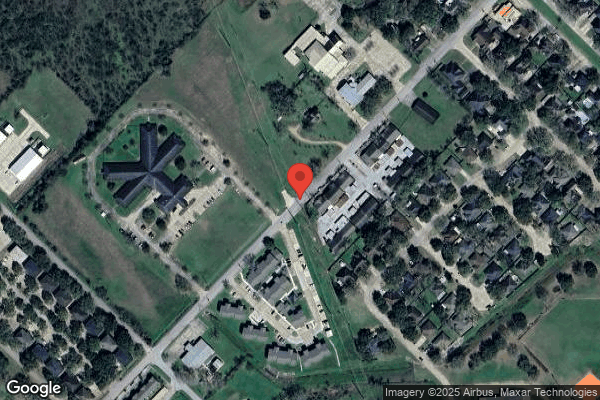

Avir at Sealy

1401 Eagle Lake Road, Sealy, TX 77474 (979) 885-2937
For profit - Corporation 90 Beds AVIR HEALTH GROUP Data: November 2025
Trust Grade
60/100
#409 of 1168 in TX
Last Inspection: March 2025

Within standard 12-15 month inspection cycle. Federal law requires annual inspections.

Overview

Avir at Sealy has a Trust Grade of C+, indicating it is slightly above average but not outstanding. This places it at #409 out of 1168 facilities in Texas, meaning it ranks in the top half of state facilities, and #1 out of 2 in Austin County, with only one local option being better. The facility's trend is improving, having reduced its issues from 5 in 2024 to 3 in 2025. However, staffing is a concern, with a low rating of 1 out of 5 stars and a turnover rate of 68%, significantly higher than the Texas average. Notably, there have been significant food safety concerns, including unsanitary conditions in the kitchen and a lack of full-time RN coverage, which could affect the quality of care. On the positive side, the facility has not incurred any fines, indicating compliance with regulations, and it has a decent level of RN coverage compared to other facilities.

Trust Score
C+
60/100
In Texas
#409/1168
Top 35%
Safety Record
Low Risk
No red flags
Inspections
Getting Better
5 → 3 violations
Staff Stability
⚠ Watch
68% turnover. Above average. Higher turnover means staff may not know residents' routines.
Penalties
✓ Good
No fines on record. Clean compliance history, better than most Texas facilities.
Skilled Nurses
⚠ Watch
Each resident gets only 19 minutes of Registered Nurse (RN) attention daily — below average for Texas. Fewer RN minutes means fewer trained eyes watching for problems.
Violations
⚠ Watch
17 deficiencies on record. Higher than average. Multiple issues found across inspections.
★★★☆☆
3.0
Overall Rating
★☆☆☆☆
1.0
Staff Levels
★★★★☆
4.0
Care Quality
★★★★☆
4.0
Inspection Score
Stable
2024: 5 issues
2025: 3 issues

The Good

  • 4-Star Quality Measures · Strong clinical quality outcomes
  • Full Sprinkler Coverage · Fire safety systems throughout facility
  • No fines on record

Facility shows strength in quality measures, fire safety.

The Bad

3-Star Overall Rating

Near Texas average (2.8)

Meets federal standards, typical of most facilities

Staff Turnover: 68%

21pts above Texas avg (46%)

Frequent staff changes - ask about care continuity

Chain: AVIR HEALTH GROUP

Part of a multi-facility chain

Ask about local staffing decisions and management

Staff turnover is elevated (68%)

20 points above Texas average of 48%

The Ugly 17 deficiencies on record

Mar 2025 3 deficiencies
CONCERN (E)

Potential for Harm - no one hurt, but risky conditions existed

Deficiency F0727 (Tag F0727)

Could have caused harm · This affected multiple residents

Based on record review the facility failed to use the services of a registered nurse for at least 8 consecutive hours a day, 7 days a week for 1 of 1 facilities reviewed for nursing services. The faci...

Read full inspector narrative →
Based on record review the facility failed to use the services of a registered nurse for at least 8 consecutive hours a day, 7 days a week for 1 of 1 facilities reviewed for nursing services. The facility did not have RN coverage for 12 days on 10/5/24, 10/6/24, 10/12/24, 10/13/24, 10/19/24, 11/2/24, 11/3/24, 11/16/24, 11/17/24, 11/30/24, 12/1/24, and 12/5/24. This failure could place the residents at risk of not receiving needed services and care. The findings were: Review of the CMS (Centers for Medicare and Medicaid Services) PBJ (Payroll Based Journal) staffing data report for quarter 1 2025 (October 1 - December 31) run date of 3/13/25 revealed the facility had no RN hours for Saturdays on 10/5/24, 10/12/24, 10/19/24, 11/2/24, 11/16/24, and 11/30/24. Review of the CMS PBJ staffing data report for quarter 1 2025 (October 1 - December 31) run date of 3/13/25 revealed the facility had no RN hours for Sundays on 10/6/24, 10/13/24, 11/3/24, 11/17/24, and 12/1/24. Review of the CMS PBJ staffing data report for quarter 1 2025 (October 1 - December 31) run date of 3/13/25 revealed the facility had no RN hours for Thursday 12/5/24. Review of the facility staffing list revealed RN A's hire date was 11/27/24. In an interview on 3/20/25 at 3:25 p.m. the DON stated she covered any shifts that an RN was not available, including weekends and holidays. The DON stated the facility had hired another RN (RN A) that works Thursday, Friday, Saturday, Sunday, and PRN. The DON is unsure why the CMS PBJ staffing report does not have RN hours for 12 days. The DON stated she does not utilize a time clock and is salaried. In an interview on 3/21/25 at 1:28 p.m. the Administrator confirmed the facility did not have a weekend RN previously but does now. The Administrator stated the consequences of not utilizing the services of an RN for 8 hours a day every day, could impact the quality of resident care. In an interview on 3/21/25 at 1:28 p.m. the Administrator stated the facility had no policy on utilizing an RN for 8 hours a day, 7 days a week and just follows the regulation.
CONCERN (F)

Potential for Harm - no one hurt, but risky conditions existed

Food Safety (Tag F0812)

Could have caused harm · This affected most or all residents

Based on observation, interview, and record review, the facility failed to store, prepare, distribute, and serve food in accordance with professional standards for food service safety for 1 of 1 kitch...

Read full inspector narrative →
Based on observation, interview, and record review, the facility failed to store, prepare, distribute, and serve food in accordance with professional standards for food service safety for 1 of 1 kitchen: A rack for the can goods had an orange brownish substance that had spilled on the rack and on the floor under the rack. The bins with flour had a white residue on the outside of the top and the sugar bin had holes under the handles and there was a black residue on the outside of the bin's top. 3 Shelves in the kitchen that held clean pots and pans were lined with foil and mesh covering on top with a dirty greasy film that covered them. The grill had black grease on the knobs and the fryer was covered with grease and food particles. The convection oven had a dark reddish-brown substance on the doors and a toaster was plugged in the wall on a shelf low near to the floor with crumbs over the top of the toaster. The cook did not have a beard restraint, he had long fingernails, and he wore a baseball cap that did not restrain his hair. The cook touched the inside lip of the plates while placing food on the plates and touched the food cart while he wore gloves. These failures could place residents who received meals and/or snacks from the kitchen at risk for food borne illness. The findings included: During observation of the kitchen with the Dietary Manager on 03/18/25 at 10:47 AM revealed storage rack with the can goods had an orange brownish substance that had spilled on the rack and on the floor. During an interview the DM said something leaked from a can and spilled but it had not been cleaned. She said she knew it had to be cleaned but had not got around to do it . Observation of the storage for rice, sugar, corn meal, flour, powdered milk were in bins without bags. On the totes was residue on the outside of flour totes and the storage bin with the sugar had a black residue on the outside and there were holes underneath the handles of the blue bin that was made by the manufacturer of the bin. During an interview the DM said there should be different containers and confirmed the holes were there and could allow insects to enter the tote, but the company did not give the funds needed to make the storage better. Observation of the shelves in the kitchen area with clean pots and pans, was layered with foil and on top of the foil, there was mesh coverings to prevent items from slipping. They were covered with a greasy film that had dust imbedded into the mesh. The surveyor touched the coverings and felt a greasy film and observed dirt in the greasy film. During an interview the DM said the shelves needed to be cleaned because they had not been cleaned. She said she would work on the shelves as soon as possible . The DM said the cleaning schedule was weekly and a deep clean was monthly, but items used were cleaned daily. Observation of the grill had old grease and food on the top and the knobs had a black greasy film. The fryer was covered with grease and particles of food. During an interview the DM said the fryer was used a week ago to fry fish and it should be cleaned after each use, but it had not been cleaned. Observation of the convection oven had crumbs and a dark reddish-brown substance on the doors. There was a toaster plugged in the wall on a lower shelf with crumbs on the top. During an interview the DM said the toaster should be cleaned after each use, but it had not been cleaned. The DM said the convection oven needed to be cleaned, it had not been cleaned. Observation on 03/19/25 at 09:51 AM revealed the [NAME] wore a baseball cap, his hair was long and bushy and the cap was not efficient to restrain the hair and he had no hair net. The [NAME] had a full beard and was not wearing a beard restraint. During an interview the [NAME] said it was necessary to wear a beard restraint so hair from his beard would not get into the food and contaminate it to cause illness to the residents. During an interview the DM said it was important for the staff to use hair nets and beard restraints to protect the food from hair contaminating the food that could cause food borne illness for the residents. During observation of the kitchen on 3/19/2025 at 11:45 AM the [NAME] wore gloves while serving the food on the plates and trays. The [NAME] touched the cart and grabbed the plates with his thumbs on the inside of the plate to place the food on the plates and then placed the plates on the cart. When asked by the surveyor why he wore gloves and touched other surfaces then touched the plates on the inside, he said he worked at 5-star restaurants, and he had no issues before wearing gloves. When he removed his gloves, his nails were very long and well beyond the nail beds. During an interview the DM said she did not know gloves were a problem, but she said the Cook's nails were too long. During an interview on 3/20/2025 at 2:26 PM the RD said she would encourage the facility to use airtight containers instead of the bins. She said she told the staff not to use gloves, only utensils to handle food. The RD said she told the DM a couple of months ago to clean sections at a time each week and weekly to maintain until monthly cleaning because it was important to keep the surfaces clean to prevent cross-contamination and maintain infection control. The RD said not keeping the surfaces clean could cause food borne illnesses for the residents. The RD said it was important to use airtight containers to prevent pests from contaminating the food that could cause food borne illness to the residents. The RD said it was important to wear hairnets and beard restraints, to keep nails clean and cut to prevent contamination of food that could cause food borne illnesses to the residents at the facility. Record review of the Dietary policy titled Food Preparation and Service dated November 2022 stated Food and nutrition services employees prepare, distribute and serve food in a manner that complies with safe food handling practices. Under General Guidelines #2. stated: Cross-contamination can occur when harmful substances, i.e., chemical or disease-causing microorganisms are transferred to food by hands (including gloved hands), food contact surfaces, sponges, cloth towels, or utensils that are not adequately cleaned. #3 stated food preparation staff adhere to proper hygiene and sanitary practices to prevent the spread of foodborne illness. Under Food Preparation Area #4 d. stated: cleaning and sanitizing work surfaces (including cutting boards) and foot-contact equipment between uses, following food code guidelines. Under Food Distribution and Service #8 stated: Food and nutrition services staff wear hair restraints (hair net, hat, beard restraint, etc.) so that hair does not contact food. #9 stated in part: food and nutrition services staff keep fingernails trimmed and clean.
MINOR (C)

Minor Issue - procedural, no safety impact

Staffing Information (Tag F0732)

Minor procedural issue · This affected most or all residents

Based on observation and interview, the facility failed to post the nurse staffing data on a daily basis at the beginning of each shift for 1 of 1 facilities reviewed for nursing services. The facili...

Read full inspector narrative →
Based on observation and interview, the facility failed to post the nurse staffing data on a daily basis at the beginning of each shift for 1 of 1 facilities reviewed for nursing services. The facility daily staff posting was not updated on 3/18/25 and 3/19/25. This could place residents, and visitors at risk of not knowing the facility's nursing staffing for the day. The findings were: During an observation on 3/18/25 at 9:30 a.m., the daily staff posting was on the right wall at the facility main entrance and was dated for 3/17/25. During an observation on 3/19/25 at 8:30 a.m., the daily staff posting was on the right wall at the facility main entrance and was dated for 3/18/25. During an observation on 3/19/25 at 2:00 p.m., the daily staff posting remained dated 3/18/25. During an observation on 3/19/25 at 3:10 p.m., the daily staff posting remained dated 3/18/25. In an interview on 3/19/25 at 3:12 p.m. the DON stated the facility had a staffing person but she was unsure who was responsible for posting the daily staffing. In an interview on 3/19/25 at 3:14 p.m. the Administrator stated she was unsure who was responsible for posting the daily staffing. In an observation and interview on 3/19/25 at 3:15 p.m. the AD was coming up the hall with a paper in her hand and stated she had the daily staffing. The AD took the old daily staff posting and replaced it with a current one for today. The AD stated the ADON had made it and the AD got busy with residents and forgot to post it but it had been on her desk. The AD stated the consequences of not posting the daily staffing could be people would not know the staffing levels. In an interview on 3/19/25 at 3:16 p.m. the DON stated the ADON was responsible for posting the daily staffing and had made it but not put it out yet. In an interview on 3/21/25 at 1:20 p.m. the Administrator stated the consequences of the daily staff posting not being posted could be people would not know what the staffing for the facility is that day.
Jan 2024 5 deficiencies
CONCERN (D)

Potential for Harm - no one hurt, but risky conditions existed

Pharmacy Services (Tag F0755)

Could have caused harm · This affected 1 resident

**NOTE- TERMS IN BRACKETS HAVE BEEN EDITED TO PROTECT CONFIDENTIALITY** Based on observation, interview and record review the facility failed to provide pharmaceutical services (including procedures t...

Read full inspector narrative →
**NOTE- TERMS IN BRACKETS HAVE BEEN EDITED TO PROTECT CONFIDENTIALITY** Based on observation, interview and record review the facility failed to provide pharmaceutical services (including procedures that assure the accurate acquiring, receiving, dispensing, and administering of all drugs and biologicals) to meet the needs for 1 of 5 residents (Resident #35) reviewed for medication administration in that: -LVN B failed to administer Resident #35 morning dose of baclofen 10mg by mouth TID. -the facility failed to reorder and administer Resident #35's Vitamin D 50,000-units once a week on Tuesdays per physician order. These failures placed residents at risk for unwanted pain and decrease in quality of life. Findings: Record review of Resident #35's face sheet (no date) revealed a [AGE] year-old male admitted to the facility on [DATE] with diagnoses that included the following: cerebral infarction (disrupted blood flow to the brain), vascular dementia (brain damage cause by multiple strokes that cause memory loss) , stiffness of left wrist, muscle wasting and atrophy (decrease in size) pain, low back pain, and vitamin D deficiency. Record review of Resident #35's quarterly MDS dated [DATE] revealed a BIMS score of 10 indicating that resident cognition was moderately impaired. Record review of Resident #35's Physician Orders revealed an order for Baclofen (used to treat muscle spasticity) 10mg tablet take 1 oral (by mouth) dx low back pain TID at 9:00am, 1:00pm, and 5:00pm order date 08/25/2023. Further review revealed an order dated 08/29/2023 Vitamin D 50,000-unit 1 tablet po once a day on Tuesdays. Record review of Resident #35's Care Plan dated 09/17/2023 and updated on 12/26/2023 revealed that resident was being care planned for pain related to contracture of the left hand and arm from CVA (cerebrovascular accident-stroke). The intervention included administer pain medication as per MD orders. Record review of Resident #35's MAR for the month of January 2024 revealed that resident did not receive the medication Baclofen 10mg TID by mouth at 9:00am on 01/09/2024. Observation on 01/09/2024 at 12:40pm of medication administration by LVN B administering medication Baclofen 10mg 1 tablet by mouth to Resident #35. The LVN did not have the medication Vitamin D 50,000-units available on her medication cart. LVN B went to the medication supply room to see if the facility had the medication Vitamin D 50,000-units in the medication supply room. Further observation was made of the facility not having the medication Vitamin D 50,000-units in the medication supply room. Interview on 01/09/2024 at 12:50PM, LVN B said medication Vit D 50,000-units was ordered to be administered to Resident #35 once a week every Tuesday. LVN B said she missed administering Resident #35's 9:00am dose of Baclofen 10mg po because she had to assist with breakfast in the dining room due to a CNA reporting to work late. LVN B said she would order the medication Vitamin D 50,00-units and the medication should arrive hopefully in the evening on 01/09/2024 when the pharmacy makes a delivery to the facility. LVN B said medications should be ordered a week in advance to ensure the resident (s) received their medications as ordered by the physician. LVN B said the nurse that last administered the medication should have been the one to reorder Resident #35's Vitamin D 50,000-units. Interview 01/09/24 at 12:45PM, the DON said the nursing staff had 1 hour before and 1 hour after to administer medications to the residents. The DON said she was aware that LVN B was assisting in the dining room with breakfast due to a staff member reporting to work late. The DON said the facility census was 43 and therefore, corporate did not allow extra staffing. The DON said she was unsure what the staffing was but believed the facility was staffed with 2 nurses and 3 CNA's. Record review of Resident #35's Progress Notes dated 01/09/2024 by the Regional Nurse revealed the following: .Vitamin D not available MD notified give medication when available to the facility . Interview on 01/09/2024 at 12:38pm, Resident #35 denied that he was in any pain at the present time. Interview on 01/09/24 at 1:20PM, the Regional Nurse said after reviewing Resident #35's medication administration record, she agreed that there were errors in administering the medications baclofen and vitamin D 50, 000-units. The Regional Nurse said the facility was working changing to liberalized medication administration (resident have a decision regarding when to take their medications). The Regional Nurse said the facility would be calling Resident #35's physician regarding the medication discrepancies to see how the physician wanted to proceed. The Regional Nurse said the facility nursing staff consisted of 3 nurses and 3 CNAs with a census of 43 residents therefore it did not require extra staffing. The Regional Nurse said she believed the nursing staff got off schedule when they heard that state was at the facility. Interview on 01/11/24 at 2:15PM, the Regional Nurse said regarding Resident #35's medication Vitamin D 50,000- units by mouth was administered on 01/10/24. The Regional Nurse said the physician was notified on 01/09/24 when the medication was not available at the facility and an order was given to place the medication on hold until the medication arrived at the facility. Further interview with the Regional Nurse said the medication baclofen 10mg by mouth to administer was changed to first dose being administered at 6:30AM instead of 9:00AM. The Regional Nurse said medications should be ordered at least 7 days prior to medication running out. The Regional Nurse said the facility did not have a policy on ordering medications. Record review of the facility policy on Medication Error Reporting and Adverse Drug Reaction Prevention and Detection 09/10 revealed in part: .The facility utilizes a system to assure that medication usage is evaluated on an ongoing basis. Medication errors and adverse drug reactions are assessed, documented, and reported as appropriate to the resident's attending physician and/or prescribers .Medication error/variance shall be defined as any preventable event that may cause or lead to inappropriate medication use or resident harm while the medication is in the control of health care professional, resident, or consumer. Such events may be related to prescribing, order communication, product labeling, packaging, dispensing, administration, education, monitoring and use . Record review of the facility policy on Medication Administration revised December 2012 revealed in part: .Medication shall be administered in a safe and timely manner, and as prescribed .
CONCERN (D)

Potential for Harm - no one hurt, but risky conditions existed

Laboratory Services (Tag F0770)

Could have caused harm · This affected 1 resident

**NOTE- TERMS IN BRACKETS HAVE BEEN EDITED TO PROTECT CONFIDENTIALITY** Based on record review and interview, the facility failed to maintain clinical records on each resident in accordance with accep...

Read full inspector narrative →
**NOTE- TERMS IN BRACKETS HAVE BEEN EDITED TO PROTECT CONFIDENTIALITY** Based on record review and interview, the facility failed to maintain clinical records on each resident in accordance with accepted professional standards and practices that are readily accessible for 1 of 8 residents (Resident #1) reviewed for clinical records in that: - Resident # 1 had blood tests that were missing and unavailable for review. This failure could place residents at risk of incomplete records which could impact their treatment and health. Findings include: Record review of Resident #1's face sheet on 1-11-24 revealed a [AGE] year-old female admitted to the facility on [DATE]. Her diagnoses included: cerebral infarction, muscle weakness, dysphagia (oral phase), unspecific lack of coordination, age-related cognitive decline, repeated falls, , type 2 diabetes mellitus with unspecified complications, gout, age-related osteoporosis without current pathological fracture, aphasia, unspecified severity without behavioral disturbance, psychotic disturbance, mood disturbance, anxiety, and major depressive disorder (single episode, unspecified). Record review of Resident #1's medication orders on 01-11-24 showed she had orders for two antiseizure medications, which were: Depakote (divalproex) tablet, delayed release for 250 mg 3 times a day starting 6/25/22. and Dilantin Extended capsule for 100 mg, 3 tablets at bedtime starting 6/25/22. Record review of the pharmacy review book for Resident #1 on 01-11-24 revealed a Note to Attending Physician/Prescriber from the consultant pharmacist (a pharmacist who reviews residents' medications and makes recommendations such as for adjustments to dosage) dated 2/28/23 which read, The resident is receiving Depakote and Phenytoin without current lab work on the chart. Please consider ordering Depakote and Phenytoin levels on the next lab day and repeat every 6 months to monitor therapy. Thank you. Underneath the Physician responded in agreement and ordered labs for Phenytoin and Depakote levels on 5/9/23. Record review of Resident # 1's clinical records revealed a physician's progress note dated 5/9/2023 which read, NP in to see resident today and noted per pharmacy recommendation to obtain Depakote and Phenytoin level on next lab draw. Further review revealed no record of the lab results. Record review of pharmacy review book revealed that the pharmacist consultant (PC) had written the same note for Resident #1 on 10/31/23 and 11/30/23, writing, Please investigate as the following lab results could not be located in this resident's chart: Depakote and Dilantin levels. Dilantin is the brand name for Phenytoin. Interview with the ADON on 1/11/24 at 12:44pm, the ADON said that she found one lab for Resident #1 dated 12/20/23. She did not see any other labs. She was unable to confirm other labs for resident were done, as she said the old laboratory company terminated the facility's online access to resident lab results. When asked what the purpose of lab monitoring was, she said it was to control levels and medications, to increase or decrease dosage when needed. Interview with the DON on 1/11/24 at 12:50pm, the DON said that she could not locate the labs because the facility switched lab company at the end of October 2023, and they did not have a paper copy of Resident #1's Depakote/Dilantin labs besides the one performed on 12/20/23. She said it was hard to access the lab results with the old company and she would have to call them and request it. She could not locate the lab results in the resident's paper chart. She could not specify how long it would take to receive the labs results. Interview with the RN on 1/11/24 at 1:03pm, the RN stated that physicians and surveyors should have access normally when needed, and that this was not the norm. The RN, LVN A and the ADON were working together and attempting to log into the laboratory website using the facility's login information and could not locate the lab results through the old portal. When asked what the purpose of monitoring labs were, she said that it was to not miss diagnoses and to know how to adjust dosage when needed. Interview with the PC on 1/11/24 at 3:07pm, the pharmacist had requested labs for Resident #1 for May, October, and November of 2023 but to his knowledge have not seen lab results since June. When asked where they would be located, he said in resident's chart. When asked what his procedure is if he doesn't receive the requested test results, he said it was to keep requesting them. Interview with Resident #1's physician on 1/11/24 at 4:35pm, he said the resident has not had seizures. He said he has Resident #1's Depakote/Dilantin test results for 12/20/23. He does not recall seeing Resident #1's labs for the previous months. Review of the facility's policy Medication Regimen Review and Reporting dated November 2017 reviewed on 01-11-24 stated that, The nursing care center assures that the consultant pharmacist has access to residents and the residents' medical records .
CONCERN (D)

Potential for Harm - no one hurt, but risky conditions existed

Infection Control (Tag F0880)

Could have caused harm · This affected 1 resident

**NOTE- TERMS IN BRACKETS HAVE BEEN EDITED TO PROTECT CONFIDENTIALITY** Based on observation, interview, and record review the facility failed to maintain an infection control program to provide a saf...

Read full inspector narrative →
**NOTE- TERMS IN BRACKETS HAVE BEEN EDITED TO PROTECT CONFIDENTIALITY** Based on observation, interview, and record review the facility failed to maintain an infection control program to provide a safe, sanitary, and comfortable environment to help prevent the transmission of infection for 1 of 12 residents (Resident #30) reviewed for infection control. -The facility failed to change Resident #30's oxygen nasal cannula tubing and humidifier bottle. This failure placed residents at risk for unwanted infection and hospitalization. Findings: Record review of Resident #30's face sheet(not dated) revealed a 71year old male admitted to the facility on [DATE] with diagnoses that included the following: malignant (cancerous) neoplasm (abnormal growth of tissue) of pancreatic duct (drains fluid into the small intestine), malaise (feeling of discomfort that consist of pain and fatigue), iron deficiency anemia (low red blood cell count), and chronic obstructive pulmonary disease (lung disease restricting air flow making it difficult to breathe). Record review of Resident #30's admission MDS dated [DATE] revealed that resident BIMS score was 15 indicating resident cognition was intact. Record review of Resident #30's Physician orders revealed the following order dated 10/27/2023 O2 at 2 liters per minute to keep O2 sats above 92% every shift. Further review did not reveal orders to change resident oxygen equipment. Record review of Resident #30's Care Plan dated 11/19/2023 and updated on 01/10/2024 revealed that resident was being care planned for COPD with an intervention that included the following: administer oxygen PRN or as ordered. Record review of Resident #30's General Administration History/TAR for the month of January 2024 revealed that the facility was administering oxygen to resident at 2 liters to keep O2 sat above 92%. Further review did not reveal any documentation of Resident #30's oxygen equipment being changed. Observation on 01/09/24 at 9:28AM revealed Resident #30 awake in bed wearing oxygen via nasal cannula at 2 liters. Further observation was made of resident's oxygen tubing and humidifier bottle was not dated. Resident had small amount of clear fluids inside of the oxygen tubing. Resident removed the tubing from his nose. Further observation was made of resident not in any respiratory distress. Resident used his call light to call for the nurse. Interview on 01/09/2024 at 9:30AM, Resident #30 said his oxygen cannula tubing had not been changed in about 2-3 and weeks and noticed a little water in the tubing. Resident said he was going to take off tubing for now until his oxygen tubing was changed. Resident said he could breathe without difficulty. Observation on 01/09/2024 at 12:50PM revealed Resident #30 wearing oxygen nasal cannula at 2 liters. The oxygen equipment (oxygen tubing and humidifier bottle) was not labeled. Further observation was made of an oxygen humidifier bottle along with oxygen tubing inside of resident trash can at the bedside. Interview on 01/09/2024 at 12:55PM Resident #30 said LVN A had come to his room and changed his oxygen tubing as well as the humidifier bottle. Interview on 01/10/2024 at 11:08AM, LVN A said she was told by another nurse who name she did not want to share said not to date oxygen equipment. LVN A said she did not know why the nurse told her this but think it had something to do with when the last time the state was at the facility. LVNA A said the oxygen tubing was supposed to be changed every week on a Sunday. LVN A said this was done for infection control purposes. LVN A said she would think the oxygen tubing needed to be labeled so the nurse could see when the last time the equipment had been changed. Interview on 01/10/24 at 11:15AM, the Regional Nurse said the facility stopped dating oxygen equipment about 2 years ago and documenting in the resident records when oxygen equipment was last changed. The Regional Nurse was unable to provide documentation of Resident #30's oxygen equipment was being changed. The Regional Nurse said after reviewing resident records including Physician orders, she could not find an order for changing resident oxygen equipment. The Regional Nurse said she would have to get an order to change the oxygen equipment and that Resident #30 should have had an order to change oxygen equipment. The Regional Nurse said the nurses should be documenting in the TAR when resident oxygen equipment was being changed. The Regional Nurse said the facility did not have a policy on maintaining oxygen equipment. Further interview with the Regional Nurse said the nurses were supposed to be changing oxygen equipment weekly on Sunday. The Regional Nurse said this was done for infection control and to prevent any respiratory infections. Record review of the facility policy on Infection Control revised August 2012 revealed in part: .Standard Precautions will be used in the care of all residents in all situations regardless of suspected or confirmed presence of infectious disease .
CONCERN (E)

Potential for Harm - no one hurt, but risky conditions existed

Deficiency F0727 (Tag F0727)

Could have caused harm · This affected multiple residents

Based on interview and record review, the facility failed to use the services of a registered nurse for at least 8 consecutive hours a day, 7 days a week for 7 of 7 weekends reviewed. - The facility ...

Read full inspector narrative →
Based on interview and record review, the facility failed to use the services of a registered nurse for at least 8 consecutive hours a day, 7 days a week for 7 of 7 weekends reviewed. - The facility failed to have registered nurse (RN) coverage for several weekends. This could place all residents at risk for not having their nursing care and medical needs assessed and met. Findings included: Record review of facility sign in sheets dated October 2023, November 2023, and December 2023 revealed the facility had 2 shifts that runs from 7 a.m. to 7 p.m. and 7p.m. to 7 a.m. Record review of the facility's monthly schedule for the month of October 2023, November 2023, and December 2023 revealed there was no RN coverage on the following days 24 hours periods: 10/07/2023, 10/08/2023, 10/21/2023, 10/22/2023, 10/25/2023, 10/26/2023, 11/3/2023, 11/4/2023, 11/05/2023, 11/17/2023, 11/18/23, 11/19/2023, 11/25/2023, 11/26/2023, and 12/01/2023, 12/02/2023, and 12/03/2023. Record review of the facility's sign in sheet for the month of October 2023, revealed there was no RN coverage on 10/02/23, 10/11/2023, 10/12/2023, 10/16/2023, 10/17/2023, 10/26/2023, and 10/30/2023. Record review of the facility's sign in sheet for the month of November 2023, revealed there was no RN coverage on 11/03/2023, 11/04/2023, 11/05/2023, 11/08/2023, 11/09/2023, 11/17/2023, 11/18/2023, 11/19/2023, 11/22/2023, 11/23/2023, 11/27/2023, 11/28/2023 and 11/31/2023. Record review of the facility's sign in sheet for the month of December 2023, revealed there was no RN coverage on 12/01/2023, 12/02/2023, 12/03/2023, 12/06/2023, 12/07/2023, 12/11/2023, 12/12/2023, 12/15/2023, 12/16/2023, 12/17/2023, 12/20/2023, 12/21/2023, 12/25/2023, 12/26/2023, 12/29/2023, 12/30/2023 and 12/31/2023. During an interview on 01/09/24 at 09:12 a.m., the Corporate Nurse stated that the facility does not have an administrator at this time. She stated that an interim administrator will be coming next week. She stated that the DON started on 10/23/2023. She stated that she was at the facility to assist during the survey. During an interview on 01/10/2024 at 09:00 AM, the Corporate Nurse stated that the facility had struggled to provide 8-hour RN coverage. She stated that she had filled in for some of the needed RN hours and will provide dates along with the schedules for all the RNs hours on weekends. She stated when they do not have RN coverage, they rely on their LVNs. During an interview on 01/11/2024 at 11:39 a.m., the Administrator stated that the RNs work during the week and every other weekend. She stated it had been a struggle to provide RN coverage. She stated that they have placed hiring ads offering a competitive wage for a RN supervisor but believes that the rural location of the facility was discouraging. During an interview on 01/11/2024 at 12:00 p.m., the VP stated the facility did not have any staffing waivers. During an interview on 01/11/29 24 at 12:25 p.m., the VP stated that the facility does not have any specific staffing policies on RN coverage. She stated that they follow state regulation. She stated they did use two-staffing agencies to assist with staffing coverage. During an interview on 01/24/24 2:29 p.m., the Corporate Nurse stated that the facility utilized a telehealth line for staff to call in for RN advice. She stated that normally, staff call her everyday all day long with concerns and she guides them. She stated corporate considered this facility high risk because it went without a DON and often with no RN coverage. She stated as a result, she monitored the facility's electronic activity board that allows her to view recent orders, progress notes, incidents, and new admissions keeping her aware of the daily needs of residents. She stated that they are actively trying to recruit RNs.
MINOR (C)

Minor Issue - procedural, no safety impact

Garbage Disposal (Tag F0814)

Minor procedural issue · This affected most or all residents

Based on observation, interview and record review, the facility must properly dispose of garbage and rubbish in accordance with current state laws for 1 of 1 dumpster reviewed for garbage disposal. Th...

Read full inspector narrative →
Based on observation, interview and record review, the facility must properly dispose of garbage and rubbish in accordance with current state laws for 1 of 1 dumpster reviewed for garbage disposal. The facility failed to ensure the dumpster lids and doors were secured. This failure could place residents at risk of infection from improperly disposed garbage. Findings include: Observation on 01-09-24 at 8:29 am, revealed the facility's dumpster area, which was in the lot behind the dietary department had a commercial-size dumpster 1/3 full of garbage. The left top lid was dented and located inside the dumpster, and the right lid was open. Interview on 11-09-24 at 9:37am, with the DM, she stated that the dumpster lids always must be closed to keep animals, rain, and debris out of the dumpster. She said she goes out there in the evening to monitor the dumpster. Interview on 11-10-23 at 1:36pm with the Maintenance Director, he stated that he is the one responsible for everything outside the building, including overseeing the dumpster. He said that kitchen staff and housekeeping have access to the dumpster. His responsibility is going out there every morning during his shift to check on the dumpster. He believed either a staff member did not close it at night or someone from the community might have come to dump things in, stuff that doesn't belong. It was important for properly closed lids so that the elements like rain doesn't fill up the dumpster. Record review of facility's policy and procedure, revised December 2008, titled Food-Related Garbage and Rubbish Disposal, reflected, garbage and rubbish containing food wastes will be stored in a manner that is inaccessible to vermin and outside dumpsters provided by garbage pick up services will be kept closed and free of surrounding litter.
Oct 2022 9 deficiencies
CONCERN (D)

Potential for Harm - no one hurt, but risky conditions existed

Deficiency F0801 (Tag F0801)

Could have caused harm · This affected 1 resident

Based on interview and record review, the facility failed to employ sufficient staff with the appropriate competencies and skills sets to carry out the functions of the food and nutrition service for ...

Read full inspector narrative →
Based on interview and record review, the facility failed to employ sufficient staff with the appropriate competencies and skills sets to carry out the functions of the food and nutrition service for 1 of 1 dietary supervisor (FSS) reviewed for dietary services. The facility did not ensure the Food Service Supervisor (FSS) had the appropriate license, certification, or qualifications. This failure could place the residents who consumed food prepared from the kitchen at increased risk of food borne illness and not receiving adequate nutrition. Findings included: A record review of the FSS personnel file indicates, Employee Salary and /Or Position Change indicated she was hired by facility on 05/19/16, as a cook in the dietary department. She was promoted to FSS on 09/16/21 and given 6 months to complete her certified dietary manager training. During an interview on 10/26/22 at 10:40 a.m., the FSS said she has not had time to step back and do what she needs to do as a FSS. She said she had to work a double today and she worked a double yesterday. She said the reason she had not gotten her Certified Dietary Manager/Certified Food Protection Professional credentialing exam certification is because she had been in a bind working doubles because she's been shorthanded, and things had fell behind. During an interview on 10/26/22 at 10:45 a.m., the FSS said her expectations for the kitchen for her to get her dietary manager certificate as soon as possible During an interview on 10/26/22 10:08 a.m., the Adm said she would have to see what a reasonable time frame is for the FSS to complete her Dietary Manager Certification. She said they had signed her up and paid for an online course titled Nutrition and Foodservice Professional Training, on 01/06/20. The ADM. promoted FSS on 09/15/21 to Food and Nutrition Services Supervisor and she was given 6 months to complete the course. Review of the Dietitian Policy, revised October 2017, indicates If a dietitian is not employed full time (35 or more hours per week) a director of food service management will be designated. This individual will: a. Be a certified dietary manager. b. Be a certified food service manager, or c. Be nationally certified in food service management and safety; or d. Have an associate's (or higher) degree in food service management or hospitality (must be from an accredited institution and include courses in food service or restaurant management); e. Meet any state requirement for food service or dietary managers; and f. F. receive frequent schedule consultations from a qualified dietitian or qualified nutrition professional.
CONCERN (E)

Potential for Harm - no one hurt, but risky conditions existed

Accident Prevention (Tag F0689)

Could have caused harm · This affected multiple residents

**NOTE- TERMS IN BRACKETS HAVE BEEN EDITED TO PROTECT CONFIDENTIALITY** Based on observation, interview, and record review the facility failed to ensure each resident had an environment that was free ...

Read full inspector narrative →
**NOTE- TERMS IN BRACKETS HAVE BEEN EDITED TO PROTECT CONFIDENTIALITY** Based on observation, interview, and record review the facility failed to ensure each resident had an environment that was free from accident hazards for 3 of 7 residents (Resident #13, #27 and #32) reviewed for accidents, hazards, and supervision, in that: CNA I failed to safely transfer Resident #27 with 2 people and CNA I used a Hoyer lift to transfer Resident #27 from her bed to a wheelchair by herself and Resident #27 slid out of the sling to the floor. Hazardous chemicals were not kept (alcohol rub and nail polish remover observed on bedside tables) locked away from Resident#13 and Resident #32. These failures could affect the residents by placing the residents at risk for injury. Findings included: 1. Record review of a Face Sheet dated 10/25/2022 for Resident #27 indicated she admitted to the facility on [DATE] and was [AGE] years old with diagnoses of encephalopathy (brain damage), anemia (low iron in the blood), age related osteoporosis (thin, brittle bones), Type 2 diabetes, and dementia (change in memory). Record Review of a Care Plan dated 8/12/2022 for Resident #27 indicated Resident has a self-care deficit needing extensive to total care in bed mobility, transfer with Hoyer lift x2 staff, and ADL needs of dressing, bath, hygiene, incontinent care, and mobility using a wheelchair staff propelled. She has history of falling not in last 90 days with potential for future falls related to mobility deficit, cognitive loss. 10/11/2022 slid out of Hoyer sling. An approach education provided to staff to ensure proper positioning in Hoyer sling and the use of 2 staff members for all transfers with lift. Staff assist with all transfers using Hoyer lift x2 staff up to wheelchair as tolerated. Record review of a Quarterly MDS dated [DATE] indicated Resident #27 had severe impairment in thinking with a BIMS score of 1. She was totally dependent with transfers and 2-person physical assist. Record review of a Fall/Incident Log dated October 2022 indicated Resident #27 had a witnessed fall on 10/11/2022 at 5:11 PM in the resident's room and was sent to the ER. Record review of a nurse progress note dated 10/11/2022 at 5:43 PM by RN J indicated, .Resident #27 had a fall from a mechanical lift while agency CNA I was trying to transfer her from bed to a wheelchair post shower. CNA I stepped out of the room and asked a medication aide for help. Medication aide looked for nurse in another resident's room to inform of situation. Resident #27 was lying on the floor on her left side upon nurse arrival. CNA I said she slipped out of Hoyer. RN J began speaking to Resident #27 in Spanish, asking where she felt pain. Resident #27 claimed she did not hit her head but complained of left hip pain and left arm pain. Resident #27 was transported to the ER for evaluation . During an interview on 10/24/22 at 2:38 PM, RN J said she had been employed at the facility for 10 months. She said on 10/11/2022 at the time of the incident with Resident #27 she was feeding another resident at the time and a medication aide came in the room and told her that Resident #27 was on the floor. She said when she walked in the room of Resident #27, there was agency CNA I in the room and CNA I said she was transferring Resident #27 and she slid out of the sling. She said Resident #27 was assessed and said her left arm and left hip were hurting and she had sent her out for evaluation at the ER. RN J said CNA I was in the room by herself and that was her first time to work at the facility and she has not been back. RN J said CNA I told them that she had worked at other facilities and was made aware prior to her working on the floor which residents were tube feeders and mechanical lift transfers. She said CNA I said, ok thanks. RN J said the ADON told her to remind CNA I that she needed to have someone with her during transfers with mechanical lift and she reminded CNA I, but she did not ask for help. Resident #27 was sent out to the ER, came back and no fractures were noted. During an interview on 10/24/2022 at 2:46 PM, ADON said the incident with Resident #27 that occurred on 10/11/2022 was with an agency CNA (CNA I). Resident #27 was sent out to the ER because she was complaining of pain. She said staff were in-serviced on mechanical lift usage and she said the agency staff (CNA I) would no longer be able to work at the facility again. She said CNA I was transferring Resident #27 without the assist of 2 people and Resident #27 slid out of the sling to the floor. She said Resident #27 was immediately sent to the ER and all CT scans were negative for fractures. She said she was responsible for ensuring staff were trained on transferring residents using mechanical lifts. During an interview on 10/25/2022 at 9:40 AM, Administrator said agency CNA I transferred Resident #27 in a mechanical lift by herself, and Resident #27 slid out of the lift sling to the floor. She said she interviewed CNA I after the incident and had her write out a statement. She said Resident #27 was immediately assessed by the nurse and was sent out the ER for evaluation. She said CNA I was asked to leave and was on their do not return to work list. She said the CNA's and nurses were in-serviced on safe use of mechanical lifts with 2 person transfers after the incident on 10/11/2022 but was unable to locate the in-service that was conducted. Record review of an Event Report for Resident #27 dated 10/11/2022 by RN J indicated a fall event occurred at the facility on 10/11/2022 at 5:51 PM. Resident #27 was being transferred in a mechanical lift in her room and had a fall. Resident #27 complained of pain in her left hip and left arm. Body observation indicated Resident #27 had limited range of motion on her left side. Resident #27's level of consciousness was alert and she responded to her name, pain, and environment. Record review of a signed statement by CNA I dated 10/11/2022 indicated, Resident #27 slipped out of the Hoyer lift while transferring from bed to wheelchair. This staff asked for assistance from the med aide to go get help. One person transfer with ADL's. I did not ask for assistance with transferring with the Hoyer lift. Record review of a signed statement by ADON dated 10/11/2022 indicated, CNA I from a staffing agency was given report at nurses station of who/which residents needing extensive care, who needed assist with meals, who ate in the dining room, and which of the residents she was assigned to that were Hoyer residents, which also included make her aware to ask for assist with Hoyer transfers, because protocol calls for 2 staff members. RN J was witnessed to all explanations given to CNA I. CNA I failed to ask for assist with transferring Resident #27 with Hoyer, resulting in resident sliding out of the sling. Resident was assessed by RN J with Resident #27 complaining of pain to left hip and left arm. Resident #27 was sent to ER for further evaluation. 2. Record review of a Face Sheet dated 10/25/2022 for Resident #13 indicated she admitted to the facility on [DATE] and was [AGE] years old with diagnoses of Alzheimer's disease, muscle wasting, and rash. Record Review of a Care Plan dated 8/10/2022 for Resident #13 indicated resident is was highly involved in assisting with ADL needs being primary supervision, set up, cueing to limited assistance of staff. Resident #13 used a wheelchair for primary mobility, does ambulate with a walker when with therapy service. Record review of a Quarterly MDS dated [DATE] indicated Resident #13 had a BIMS score of 5, indicating moderate cognitive impairment. She received set up assist with transfers and propelled self about unit. During an observation on 10/24/2022 at 11:30 a.m. Resident #13's room, a bottle of nail polish remover, approx. 4 oz. was sitting on the bedside table. 3. Record review of a Face Sheet dated 10/25/2022 for Resident #32 indicated she admitted to the facility on [DATE] and was [AGE] years old with diagnoses of Alzheimer's disease, strain of muscle, cough, and rash. Record Review of a Care Plan dated 10/18/2022 for Resident #32 indicated resident had a debility needing extensive assistance of staff x 2 in transfers to wheelchair and shower chair and going to bed. Resident #32 uses a wheelchair for primary mobility with staff propelled. Resident #32 had potential further decline related to her Alzheimer's Disease. Record review of a Quarterly MDS dated [DATE] indicated Resident #32 had a BIMS score of 15, indicating cognition intact. During an observation on 10/24/2022 at 11:30 am in Residents #32's room revealed a bottle of approx. 8 oz. Alcohol Rub on the bedside table along with a bottle of nail polish remover approx. 4 oz. During an observation and interview on 10/25/22 at 11:51 a.m. with Resident #32 revealed the same bottle of approx. 8 oz. Alcohol Rub on the bedside table along with a bottle of nail polish remover approx. 4 oz., same as observation on 10/24/2022. Resident #32 said she understood why she should not have these at bedside, since there was a resident that walk around the facility and could come into her room. Resident #13 said that it could be a problem if a confused resident drank it. Resident #32 said it was okay with her if the staff removed it due to the rubbing alcohol and nail polish remover being potentially harmful. During an interview with the Activity Director 10/25/22 at 12:10 p.m. the AD said they do have nail activities that include nail care and painting and the remover should be kept in the activity room locked up. The residents are supervised during use. The AD said the residents should not be allowed to keep polish remover in their rooms due to safety concerns and the potential for a wandering resident to pick it up. During an Interview with the ADON 10/25/22 at 12:15 p.m. she said that the residents cannot have alcohol and polish remover in the rooms, it was a safety hazard. It would be harmful if someone drank it. The ADON said it the Nail polish and alcohol was broought in by fammily and will be removed right away and they do have a resident who wanders in the facility and that could be a problem if she picked it up. During an observation on 10/25/22 at 12:23 p.m. of Resident's#13 and #32's bedside tables, the alcohol and nail polish remover is removed. During an interview on 10/25/22 at 12:26 PM the Administrator said Resident#13 and #32 should not be allowed to keep toxic chemicals at bedside. The polish remover and alcohol will be removed due to potential safety hazards. Record review of a facility policy titled Safety and Supervision of Residents with a revised date of December 2007 indicated, .Our facility strives to make the environment as free from accident hazards as possible. 4. Employees shall be trained and in serviced on potential accident hazards and how to identify and report accident hazards, and try to prevent avoidable accidents .
CONCERN (E)

Potential for Harm - no one hurt, but risky conditions existed

Deficiency F0730 (Tag F0730)

Could have caused harm · This affected multiple residents

Based on interview and record review, the facility failed to complete a performance review of every nurse aide at least once every 12 months and provide regular in-service education based on the outco...

Read full inspector narrative →
Based on interview and record review, the facility failed to complete a performance review of every nurse aide at least once every 12 months and provide regular in-service education based on the outcome of these reviews for 5 of 5 CNAs reviewed for training. (CNAs D, E, F, G, and H). The facility did not complete an annual performance review and provide regular in-service education based on the outcome of these reviews for CNAs D, E, F, G, and H. This failure could place residents at risk of being cared for by staff with inadequate training and skills. Findings Included: Record review of personnel files did not include documentation of any annual performance reviews for: CNA D - hire date of 02/28/2011 CNA E - hire date of 10/30/2012 CNA F - hire date of 05/19/2015 CNA G - hire date of 03/01/2007 CNA H - hire date of 04/02/2018 During an interview on 10/26/22 at 09:34 AM, ADM said that she could not provide any annual competency skills check offs for the CNA's. She said that she had 4 DON's recently and had some paperwork go missing. She said that she was sure that they had been done but was unable to provide proof. She said that ultimately, she was responsible for ensuring that trainings were done, but that the actual training would be done by the DON, or ADON. When asked what risks there could be to residents by being cared for by staff that may not be properly trained, she stated No, I really can't think of any. During an interview with ADON on 10/26/22 at 09:52 AM, she said that she was responsible for ensuring that annual competencies were done on CNA's in the absence of a DON. She said that she was sure that they were done but that they cannot provide any evidence to that fact. She said that there could be a risk to residents if they were cared for by untrained staff, such as infection control risk, and improperly dealing with behaviors with Alzheimer's or dementia residents. Record review of facility policy titled In-Service Requirements, undated, stated .address areas of weakness as determined in nurse aides' performance reviews and facility assessment .
CONCERN (E)

Potential for Harm - no one hurt, but risky conditions existed

Deficiency F0761 (Tag F0761)

Could have caused harm · This affected multiple residents

**NOTE- TERMS IN BRACKETS HAVE BEEN EDITED TO PROTECT CONFIDENTIALITY** Based on observation, interview, and record review, the facility failed to provide pharmaceutical services, including procedures...

Read full inspector narrative →
**NOTE- TERMS IN BRACKETS HAVE BEEN EDITED TO PROTECT CONFIDENTIALITY** Based on observation, interview, and record review, the facility failed to provide pharmaceutical services, including procedures that assures the accurate acquiring, receiving, dispensing, and administering of medications for 1 of 2 medication carts (nurse cart for halls 3 and 4) and 1 of 1 medication rooms reviewed for pharmacy services. The facility failed to dispose of expired medications from the medication storage room. The facility did not dispose of expired medications or date medications when they were opened from the nurse medication cart for halls 3 and 4. These failures could place residents who receive medications at risk of not receiving the intended therapeutic benefit of the medications, decreased quality of life, and hospitalization. Findings included: 1.During an observation in the medication room on 10/24/222 at 3:20 PM with RN J revealed the following: * 2 pack of medicated douches with an expiration date of 6/22. * A bottle of OTC fish oil with an opened date of 12/7/21 and an expiration date of 8/22. * An opened vial of Tuberculin PPD with lot number C5841AB and an expiration date of 6/17/23 had an opened date of 9/21/22. During an interview with RN J on 10/24/2022 at 3:25 PM, RN J said an opened vial of Tuberculin was good for 28 days after opening. She said the medication aides were responsible for stocking the medication room and removing expired medications. She said she only worked at the facility for 2 days a week on Mondays and Tuesdays and tried to remove expired items when she saw them. During an interview on 10/24/2022 at 3:38 PM, ADON said the medication aides were responsible for restocking the medications rooms. She said if Tuberculin was opened it should be used within 30 days. She said the Tuberculin was just out of date by about 3 days. She said she was unaware of the expired medications that were observed in the medication room. She said the pharmacist comes to the facility monthly and was scheduled to come in the next few days and would have let them know if medications were expired or out of date. She said going forward she would be doing more frequent monitoring of the medication room and carts. 2. During an observation of the nurse medication cart for halls 3 and 4 on 10/25/2022 at 9:10 AM with RN J revealed the following: * 1 bottle of glucose tablets (sugar tablets) with an opened date of 5/4/22 and expiration date of 9/22 * 1 bottle of clear lax (liquid laxative) with no open date and expiration date of 6/24 * a bottle of prostat sugar free (supplement for wound healing) with no open date and expiration date of 7/21/23 * 1 box of loperamide 2 mg tablets (diarrhea tablets) no open date and expiration date of 8/23 *tube of Aspercreme (muscle rub) with an open date of 6/24/22 and expiration date of 4/21 During an observation and interview on 10/25/2022 at 11:20 AM, RN J said the facility had been using agency staffing and she had been checking the nurse medication cart on the days she works which was only on Mondays and Tuesdays. She said she did not know the medication cart had expired medications or some of the medications did not have an open date of the OTC's. She said she would dispose of the expired medications, and she dated the bottle of clear lax, prostat sugar free and loperamide 2 mg tablets 10/25/2022 since the medications were not dated. She said OTC medications should be dated the date they are opened. She said if a resident was given medications that were expired, the medications may not provide an effective result. During an interview on 10/25/2022 at 3:30 PM, the ADON said the nurses and medication aides were responsible for ensuring their carts did not have expired medications. She said going forward she would provide more frequent monitoring of the medication carts. She said the facility did not have a DON and she had many things that she was responsible for but would try to do better. Record review of a facility policy titled Storage of Medications with a revised date of April 2007 indicated, .The facility shall store all drugs and biologicals in a safe, secure, and orderly manner. 4. The facility shall not use discontinued, outdated, or deteriorated drugs or biologicals. All such drugs shall be returned to the dispensing pharmacy or destroyed. Record review of a facility policy titled Administering Medication with a revised date of December 2012 indicated, .9. The expiration/beyond use date on the medication label must be checked prior to administering. When opening a multi-dose container, the date opened shall be recorded on the container. Record review of the FDA reference 22. [NAME] S, et al. Effect of oxidation on the stability of tuberculin purified protein derivative (PPD) In: International Symposium on Tuberculins and BCG Vaccine. Basel: International Association of Biological Standardization, 1983. Dev Biol Stand 1986; 58:545-552. Accessed at https://www.fda.gov on 10/25/2022 dated 11/9/2020 indicated .A vial of TUBERSOL which has been entered and in use for 30 days should be discarded. Do not use after expiration date .
CONCERN (E)

Potential for Harm - no one hurt, but risky conditions existed

Food Safety (Tag F0812)

Could have caused harm · This affected multiple residents

Based on observation, Interview and record review the facility failed to ensure food was stored, prepared, and distributed under sanitary conditions in 1 of 1 kitchen. The facility was reusing contain...

Read full inspector narrative →
Based on observation, Interview and record review the facility failed to ensure food was stored, prepared, and distributed under sanitary conditions in 1 of 1 kitchen. The facility was reusing containers that are labeled by the manufacture and had an expiration date stamped on the container but was not what was inside of the container. There was a container of tomato soup in the refrigerator with a received date of 10/10/22, there was no use by date, or expiration date, on the container. There was a container of ketchup in the refrigerator with a received date of 10/09/22, there were no use by date, or expiration date, on the container. There were chicken tenders in the freezer in a clear plastic bag, there were no date received, no use by date, or expiration date on the bag. These failures could place residents who consumed food prepared from the kitchen at risk of food-borne illness. Findings Include: . During an observation on 10/24/22 at 11:30 a.m., there were two containers in the refrigerator, one had tomato soup dated 10/10/22 and the other had ketchup dated 10/09/22, containers had dates received on them, but there was no use by dates, or expiration dates on the containers. During an observation on 10/24/22 at 11:36 a.m., there were frozen chicken tenders in a clear bag in the freezer, there was no label on the bag, no date received, no use by date, or expiration date. During an interview on 10/24/22 at 11:38 a.m., with the FSS, she said the staff in the kitchen were supposed to automatically put a sticker on the package when they received it, that includes the date received and use by date. She said it was the responsibility of all staff in the kitchen to check the refrigerator and make sure all foods were labeled and dated with an expiration date. She said it was her responsibility to teach them. During an interview on 10/26/22 at 10:11 a.m., with the ADM., she said her expectations for the kitchen was for all items in the kitchen to be labeled with date received, use by dates, and proper manufactures expiration date. She said not discarding the food on expiration date could cause the residents to get sick. During an interview on 10/26/22 at 10:15 a.m., with the FSS, she said it was her responsibility to make sure her staff in the kitchen, label foods with date received, and use by date.
CONCERN (F)

Potential for Harm - no one hurt, but risky conditions existed

Deficiency F0727 (Tag F0727)

Could have caused harm · This affected most or all residents

Based on interviews and record reviews the facility failed to use the services of a registered nurse for at least 8 consecutive hours a day, 7 days a week, for 14 of 26 days (10/5/22 through 10/09/22,...

Read full inspector narrative →
Based on interviews and record reviews the facility failed to use the services of a registered nurse for at least 8 consecutive hours a day, 7 days a week, for 14 of 26 days (10/5/22 through 10/09/22, 10/12/22 through 10/16/22, 10/19/22 through 10/21/22, and 10/23/22) and designate a registered nurse to serve as the director of nursing on a full-time basis for 1 of 1 facility. The facility did not provide RN coverage 8 consecutive hours per day, 7 days per week or have a registered nurse employed full time as a DON. This failure could put residents at risk for not receiving care from qualified staff responsible for staff oversight. Findings included: During an interview on 10/25/22 at 11:00 AM, the ADON said that RN coverage had been sporadic since 10/3/22 when the DON left, and the facility still had no full-time DON. Record review of a timecard report dated 06/01/22 to 10/24/2022 for RN J (the only RN employed by the facility) revealed that she only worked on Mondays and Tuesdays with the following hours: 10/3/22 for 12.73 hours 10/4/22 for 11.42 hours 10/10/22 for 11.98 hours 10/11/22 for 12.08 hours 10/17/22 for 12.18 hours 10/18/22 for 12.17 hours 10/24/22 for 12.08 hours During an interview on 10/25/22 at 01:00pm, the Regional Nurse said RN coverage was provided by an agency RN on 10/22/22. Record review of an agency time sheet, dated 06/4/22 through 10/22/22, revealed that there was RN coverage of 13 hours on 10/22/22 by RN K, who was an agency RN. Record review of facility nurse schedule for October 2022 indicated that there was no RN coverage for 10/5/22 through 10/09/22, 10/12/22 through 10/16/22, 10/19/22 through 10/21/22, and 10/23/22. During an interview on 10/26/22 at 9:34 AM, the Administrator said she had 4 DONs recently, but they do not currently have a full time DON. She said that they did have an RN on Monday's and Tuesday's. She said that she could not really think of any risks to the residents by not having an RN in the facility 8 hours per day, as her ADON was wonderful and did a great job with the DON responsibilities in the absence of a DON. She said she was aware the facility was required to have a full-time DON and RN coverage in the facility for 8 hours per day, 7 days a week. Record review of a facility policy titled Director of Nursing Services, dated August 2006, stated .The Director is employed full-time (40-hours per week) . also .The Nursing Services department is managed by the Director of Nursing Services. The Director is a Registered Nurse (RN), licensed by this state, and has experience in nursing service administration, rehabilitative and geriatric nursing . Requested policy for RN coverage from Administrator on 10/25/22 at 12:43 pm, none provided prior to exit.
CONCERN (F)

Potential for Harm - no one hurt, but risky conditions existed

Deficiency F0865 (Tag F0865)

Could have caused harm · This affected most or all residents

Based on interview and record review, the facility failed to maintain documentation and demonstrate evidence of its ongoing QAPI program that includes reports demonstrating systematic identification, ...

Read full inspector narrative →
Based on interview and record review, the facility failed to maintain documentation and demonstrate evidence of its ongoing QAPI program that includes reports demonstrating systematic identification, reporting, investigation, analysis, and prevention of adverse events; and documentation demonstrating the development, implementation, and evaluation of corrective actions or performance improvement activities. The facility failed to provide documentation that demonstrated evidence of their ongoing QAPI program. This failure could place residents at risk for quality deficiencies being unidentified with no appropriate plans or actions to be developed or implemented. Findings included: Record review on 10/26/22 at 09:21 a.m. of Monthly QAPI Meeting agendas and sign in sheets revealed the following: -Sign in sheet dated 03/03/22, for Fourth Quarter Data Oct, Nov, and Dec. 2021 missing DON signature. No action plans, no interventions or monitoring -Sign in sheets dated March 3/2022, for Third Quarter Data July August Sept. 2021 missing DON signature. No action plans, no interventions, or monitoring. -There is no sign in sheets or meeting minutes for first quarter: Jan, Feb and March 2022. No action plans, no interventions or monitoring -There is no sign in sheet or meeting minutes for second quarter: April, May and June 2022. No action plans, no interventions or monitoring -Sign in sheet dated 09/16/22, for data covered June, July and August 2022. No evidence of review of prior action plans or prior meetings for first and second quarter 2022. During an entrance interview on 10/24/122 at 11:15 a.m., the ADON said the QAA meetings were held quarterly and there had been three different DON hired at the facility in the past year and there was no full time DON on staff or full time RN. During an interview with the Administrator 10/26/22 at 09:40 AM, the administrator said she was responsible for coordination of QAPI, QAPI minutes, and actions plans. The Administrator stated I am looking for the sign in sheets, I can't find them. She said that the QAPI committee had been meeting quarterly, but we are going to start meeting monthly. During an interview on 10/26/22 at 09:45 a.m. the Area Nurse consultant said she was new to this facility since change of ownership in July 2022. The ANC said she was trying to find and organize the QA data for the Administrator. And what was provided was all they could find. During interviews with the Administrator on 10/25/22 at 9:00 a.m. and 4:00 pm. a copy of the Facility QAPI plan, policies were requested and none provided . Record Review of a generic General Guideline for QAPI Plan provided by the Area Nurse Consultant on 10/26/22 revealed the guideline contains with no date, company name or facility name included and reflected the following: Quality Assurance and Performance Improvement QAPI General Guidelines and documentation Maintain documentation and demonstrate evidence of its ongoing QAPI program that meets the requirements. Guidelines: The QAPI meeting will be held the second week of month on the same day of the week at the same time. All members must be prepared to discuss the areas of concern in their department, proposed interventions, and progress of the department to improve areas of identified in prior meetings. Each Long-Term facility must develop, implement, and maintain an effective, comprehensive, data driven QAPI program that focuses on indicators of the outcomes of care and quality of life. The facility must: * Maintain documentation and demonstrate evidence of its ongoing QAPI program that meets the requirements * The following reports should be reviewed prior to the meeting and brought to the QAPI Meeting: 1. Monthly Operation Summary 2. Facility Level Quality Measure Report for the prior 6 months Resident Level Quality Measure Report for the prior 6 months 3. Cumulative skin report 4. Infection Control Tracking and Trending 5. Preventative Health Care Report 6. Incident and accident Tracking and trending report 7. Weight Variance Report for the current month 8. GDR tracking report 9. Quality of care meeting reports 10. Concern/ Grievance reports for the month 11. Pharmacy and dietary consultant reports 12. Admission/ discharge log for the prior month 13. Hospital Representative Visit report 14. Other reports used for PI
CONCERN (F)

Potential for Harm - no one hurt, but risky conditions existed

Deficiency F0868 (Tag F0868)

Could have caused harm · This affected most or all residents

Based on interview and record review, the facility failed to ensure the facility's Quality Assessment and Assurance Committee met quarterly, for 1 of 1 facility, reviewed for QAA/QAPI. The facility fa...

Read full inspector narrative →
Based on interview and record review, the facility failed to ensure the facility's Quality Assessment and Assurance Committee met quarterly, for 1 of 1 facility, reviewed for QAA/QAPI. The facility failed to ensure they provided documentation showing the QAA/QAPI met for the first quarter (January, February, March) and second quarter (April, May, June) during 2022, to address identified issues and that the DON or RN designee attended. This failure could place residents at risk for quality deficiencies being unidentified and no appropriate plans of actions developed or implemented. Findings included: Record review on 10/26/22 at 09:21 a.m. of Monthly QAPI Meeting agendas and sign in sheets revealed the following: -Sign in sheet dated 03/03/22, for Fourth Quarter Data Oct, Nov, and Dec. 2021 missing DON signature, no action plans, no interventions or monitoring -Sign in sheets dated March 3/2022, for Third Quarter Data July August Sept. 2021 missing DON signature. no action plans, no interventions, or monitoring. -There is no sign in sheets or meeting minutes for first quarter: Jan, Feb and March 2022. No action plans, no interventions or monitoring -There is no sign in sheet or meeting minutes for second quarter: April, May and June 2022. No action plans, no interventions or monitoring -Sign in sheet dated 09/16/22, for data covered June, July and August 2022. No evidence of review of prior action plans or prior meetings for first and second quarter 2022. During an entrance interview on 10/24/122 at 11:15 a.m., the ADON said the QAA meetings were held quarterly and there had been three different DON hired at the facility in the past year and there was no full time DON on staff or full time RN. During interviews with the Administrator on 10/25/22 at 9:00 a.m. and 4:00 pm. a copy of the Facility QAPI plan, policies were requested, and none provided During an interview with the Administrator 10/26/22 at 09:40 AM, the administrator said she was responsible for coordination of QAPI, QAPI minutes, and actions plans. The Administrator stated, I am looking for the sign in sheets, I can't find them. She said that the QAPI committee had been meeting quarterly, but we are going to start meeting monthly. During an interview on 10/26/22 at 09:45 a.m. the Area Nurse consultant said she was new to this facility since change of ownership in July 2022. The ANC said she was trying to find and organize the QA data for the Administrator. And what was provided was all they could find. Record Review of a generic General Guideline for QAPI Plan provided by the Area Nurse Consultant on 10/26/22 revealed the guideline contains with no date, company name or facility name included and reflected the following: Quality Assurance and Performance Improvement QAPI General Guidelines and documentation Maintain documentation and demonstrate evidence of its ongoing QAPI program that meets the requirements. Guidelines: The QAPI meeting will be held the second week of month on the same day of the week at the same time. All members must be prepared to discuss the areas of concern in their department, proposed interventions, and progress of the department to improve areas of identified in prior meetings. Each Long-Term facility must develop, implement, and maintain an effective, comprehensive, data driven QAPI program that focuses on indicators of the outcomes of care and quality of life. The facility must: * Maintain documentation and demonstrate evidence of its ongoing QAPI program that meets the requirements * The following reports should be reviewed prior to the meeting and brought to the QAPI Meeting: 1. Monthly Operation Summary 2. Facility Level Quality Measure Report for the prior 6 months Resident Level Quality Measure Report for the prior 6 months 3. Cumulative skin report 4. Infection Control Tracking and Trending 5. Preventative Health Care Report 6. Incident and accident Tracking and trending report 7. Weight Variance Report for the current month 8. GDR tracking report 9. Quality of care meeting reports 10. Concern/ Grievance reports for the month 11. Pharmacy and dietary consultant reports 12. Admission/ discharge log for the prior month 13. Hospital Representative Visit report 14. Other reports used for PI
CONCERN (F)

Potential for Harm - no one hurt, but risky conditions existed

Deficiency F0882 (Tag F0882)

Could have caused harm · This affected most or all residents

Based on interview and record review, the facility failed to ensure that the designated individual responsible (Infection Preventionist-ICIP) for the infection control program participated on the qual...

Read full inspector narrative →
Based on interview and record review, the facility failed to ensure that the designated individual responsible (Infection Preventionist-ICIP) for the infection control program participated on the quality assessment and assurance committee. The facility did not ensure that the ICIP was a member of the facility's quality assessment and assurance committee and reported to the committee on a regular basis. This failure could affect the facilities ability to appropriately recognize and respond to communicable diseases and infections. Findings included: During an entrance interview and observation on 10/24/22 at 11:15 a.m., the ADON said the QAA meetings were held quarterly. The ADON said that the designated IP worked part-time at the facility as a staff nurse and provided a copy of the IP's certification dated 09/02/20. The ADON said that she was responsible for IC because they had three different RNs in position of DON in the past year and she had taken over the role since 10/03/22 when the DON left. The ADON said she was taking the IP course but had not finished certification for IP. During interviews with the Administrator on 10/25/22 at 9:00 a.m. and 4:00 pm. a copy of the QAPI plan, policies and all sign in sheets since last recertification visit was requested. During an interview with the Administrator 10/26/22 at 09:40 AM, the Administrator said she and the ADON were responsible for coordination of Infection Control activities QAPI, QAPI minutes and actions plans. The Administrator did not have certification for IP. The Administrator said due to overturn in the DON position, a designated IP may not have attended the meetings. Record review on 10/26/22 at 09:21 a.m. of Monthly QAPI Meeting agendas and sign in sheets provided by the Administrator: Sign in sheets dated 03/03/22, for Fourth Quarter Data Oct, Nov, and Dec. 2021 missing the IPs signature. The only nurse signature was the ADON, ( the ADON had not completed the required IP course for certification) No attached action plans, no interventions or monitoring Sign in sheets dated 03/03/22, for Third Quarter Data July, August, Sept. 2021 missing the IP's signature. The only nurse signature is the ADON, (the ADON had not completed the required IP course for certification) No attached action plans, no interventions or monitoring. There is no sign in sheets or meeting minutes for first quarter: Jan, Feb and March 2022. No action plans, no interventions or monitoring There is no sign in sheet or meeting minutes for second quarter: April, May and June 2022. No action plans, no interventions or monitoring Record Review of a generic General Guideline for QAPI Plan provided on 10/26/22 at 10:16 a.m. by the Area Nurse Consultant, the guideline contains with no date, company name or facility name included. The undated plan contains no specific plan for the facility. The Example/Generic Plan did not include the requirement for IP to be a member of the facility's quality assessment and assurance committee as required by regulation and report to the committee on the ICIP on a regular basis. The generic plan: Quality Assurance and Performance Improvement QAPI General Guidelines and documentation. Maintain documentation and demonstrate evidence of its ongoing QAPI program that meets the requirements. Guidelines: The QAPI meeting will be held the second week of month on the same day of the week at the same time. All members must be prepared to discuss the areas of concern in their department, proposed interventions, and progress of the department to improve areas of identified in prior meetings. Each Long-Term facility must develop, implement, and maintain an effective, comprehensive, data driven QAPI program that focuses on indicators of the outcomes of care and quality of life. The facility must: * Maintain documentation and demonstrate evidence of its ongoing QAPI program that meets the requirements. * The following reports should be reviewed prior to the meeting and brought to the QAPI Meeting: 1. Monthly Operation Summary 2. Facility Level Quality Measure Report for the prior 6 months Resident Level Quality Measure Report for the prior 6 months 3. Cumulative skin report 4. Infection Control Tracking and Trending 5. Preventative Health Care Report 6. Incident and accident Tracking and trending report 7. Weight Variance Report for the current month 8. GDR tracking report 9. Quality of care meeting reports 10. Concern/ Grievance reports for the month 11. Pharmacy and dietary consultant reports 12. Admission/ discharge log for the prior month 13. Hospital Representative Visit report 14. Other reports used for PI
Understanding Severity Codes (click to expand)
Life-Threatening (Immediate Jeopardy)
J - Isolated K - Pattern L - Widespread
Actual Harm
G - Isolated H - Pattern I - Widespread
Potential for Harm
D - Isolated E - Pattern F - Widespread
No Harm (Minor)
A - Isolated B - Pattern C - Widespread

Questions to Ask on Your Visit

  • "Why is there high staff turnover? How do you retain staff?"
  • "Can I speak with families of current residents?"
  • "What's your RN coverage like on weekends and overnight?"

Our Honest Assessment

Strengths
  • • No major safety red flags. No abuse findings, life-threatening violations, or SFF status.
  • • No fines on record. Clean compliance history, better than most Texas facilities.
Concerns
  • • 17 deficiencies on record. Higher than average. Multiple issues found across inspections.
  • • 68% turnover. Above average. Higher turnover means staff may not know residents' routines.
Bottom line: Mixed indicators with Trust Score of 60/100. Visit in person and ask pointed questions.

About This Facility

What is Avir At Sealy's CMS Rating?

CMS assigns Avir at Sealy an overall rating of 3 out of 5 stars, which is considered average nationally. Within Texas, this rating places the facility higher than 99% of the state's 100 nursing homes. This mid-range rating indicates the facility meets federal standards but may have areas for improvement.

How is Avir At Sealy Staffed?

CMS rates Avir at Sealy's staffing level at 1 out of 5 stars, which is much below average compared to other nursing homes. Staff turnover is 68%, which is 21 percentage points above the Texas average of 46%. High turnover can affect care consistency as new staff learn residents' individual needs.

What Have Inspectors Found at Avir At Sealy?

State health inspectors documented 17 deficiencies at Avir at Sealy during 2022 to 2025. These included: 15 with potential for harm and 2 minor or isolated issues.

Who Owns and Operates Avir At Sealy?

Avir at Sealy is owned by a for-profit company. For-profit facilities operate as businesses with obligations to shareholders or private owners. The facility is operated by AVIR HEALTH GROUP, a chain that manages multiple nursing homes. With 90 certified beds and approximately 40 residents (about 44% occupancy), it is a smaller facility located in Sealy, Texas.

How Does Avir At Sealy Compare to Other Texas Nursing Homes?

Compared to the 100 nursing homes in Texas, Avir at Sealy's overall rating (3 stars) is above the state average of 2.8, staff turnover (68%) is significantly higher than the state average of 46%, and health inspection rating (4 stars) is above the national benchmark.

What Should Families Ask When Visiting Avir At Sealy?

Based on this facility's data, families visiting should ask: "How do you ensure continuity of care given staff turnover, and what is your staff retention strategy?" "Can you walk me through typical staffing levels on day, evening, and night shifts?" "Can I visit during a mealtime to observe dining assistance and food quality?" "How do you handle medical emergencies, and what is your hospital transfer rate?" These questions are particularly relevant given the facility's high staff turnover rate and the below-average staffing rating.

Is Avir At Sealy Safe?

Based on CMS inspection data, Avir at Sealy has a clean safety record: no substantiated abuse findings (meaning no confirmed cases of resident harm), no Immediate Jeopardy citations (the most serious violation level indicating risk of serious injury or death), and is not on the Special Focus Facility watch list (a federal program monitoring the lowest-performing 1% of nursing homes). The facility has a 3-star overall rating and ranks #1 of 100 nursing homes in Texas. While no facility is perfect, families should still ask about staff-to-resident ratios and recent inspection results during their visit.

Do Nurses at Avir At Sealy Stick Around?

Staff turnover at Avir at Sealy is high. At 68%, the facility is 21 percentage points above the Texas average of 46%. High turnover means new staff may not know residents' individual needs, medications, or preferences. It can also be disorienting for residents, especially those with dementia who rely on familiar faces. Families should ask: What is causing the turnover? What retention programs are in place? How do you ensure care continuity during staff transitions?

Was Avir At Sealy Ever Fined?

Avir at Sealy has no federal fines on record. CMS issues fines when nursing homes fail to meet care standards or don't correct problems found during inspections. The absence of fines suggests the facility has either maintained compliance or corrected any issues before penalties were assessed. This is a positive indicator, though families should still review recent inspection reports for the full picture.

Is Avir At Sealy on Any Federal Watch List?

Avir at Sealy is not on any federal watch list. The most significant is the Special Focus Facility (SFF) program, which identifies the bottom 1% of nursing homes nationally based on persistent, serious quality problems. Not being on this list means the facility has avoided the pattern of deficiencies that triggers enhanced federal oversight. This is a positive indicator, though families should still review the facility's inspection history directly.