WOODLAND PARK NURSING & REHAB

101 WOODLAND PARK DR, SHEPHERD, TX 77371 (936) 628-3388
Government - Hospital district 100 Beds GULF COAST LTC PARTNERS Data: November 2025 3 Immediate Jeopardy citations
Trust Grade
0/100
#1159 of 1168 in TX
Last Inspection: July 2025

Inspected within the last 6 months. Data reflects current conditions.

Overview

Woodland Park Nursing & Rehab has received a Trust Grade of F, indicating significant concerns and poor performance overall. It ranks #1159 out of 1168 facilities in Texas, placing it in the bottom half of all nursing homes in the state, although it is the only option available in San Jacinto County. The trend is improving, as the number of issues decreased from five in 2024 to three in 2025. Staffing is rated 2 out of 5 stars, which is below average, and the turnover rate is 47%, slightly better than the state average. However, the facility has also accrued $101,785 in fines, which is concerning as it is higher than 83% of Texas facilities. Care practices have raised red flags, with critical incidents including a resident who fell and suffered a cervical fracture due to a lack of proper supervision and care planning, and another resident who did not receive adequate assistance after multiple falls. While the facility has a decent turnover rate, the overall quality of care and safety measures seems to be lacking, making it essential for families to weigh these serious concerns against any potential benefits.

Trust Score
F
0/100
In Texas
#1159/1168
Bottom 1%
Safety Record
High Risk
Review needed
Inspections
Getting Better
5 → 3 violations
Staff Stability
⚠ Watch
47% turnover. Above average. Higher turnover means staff may not know residents' routines.
Penalties
✓ Good
$101,785 in fines. Lower than most Texas facilities. Relatively clean record.
Skilled Nurses
⚠ Watch
Each resident gets only 15 minutes of Registered Nurse (RN) attention daily — below average for Texas. Fewer RN minutes means fewer trained eyes watching for problems.
Violations
⚠ Watch
17 deficiencies on record. Higher than average. Multiple issues found across inspections.
★☆☆☆☆
1.0
Overall Rating
★★☆☆☆
2.0
Staff Levels
★★★☆☆
3.0
Care Quality
★☆☆☆☆
1.0
Inspection Score
Stable
2024: 5 issues
2025: 3 issues

The Good

  • Full Sprinkler Coverage · Fire safety systems throughout facility
  • No fines on record

Facility shows strength in fire safety.

The Bad

1-Star Overall Rating

Below Texas average (2.8)

Significant quality concerns identified by CMS

Staff Turnover: 47%

Near Texas avg (46%)

Higher turnover may affect care consistency

Federal Fines: $101,785

Well above median ($33,413)

Significant penalties indicating serious issues

Chain: GULF COAST LTC PARTNERS

Part of a multi-facility chain

Ask about local staffing decisions and management

The Ugly 17 deficiencies on record

3 life-threatening 1 actual harm
Apr 2025 3 deficiencies 2 IJ
CRITICAL (J) 📢 Someone Reported This

A family member, employee, or ombudsman was alarmed enough to file a formal complaint

Immediate Jeopardy (IJ) - the most serious Medicare violation

Comprehensive Care Plan (Tag F0656)

Someone could have died · This affected 1 resident

**NOTE- TERMS IN BRACKETS HAVE BEEN EDITED TO PROTECT CONFIDENTIALITY** Based on observation, interview, and record review the facility failed to develop and implement a comprehensive person-centered ...

Read full inspector narrative →
**NOTE- TERMS IN BRACKETS HAVE BEEN EDITED TO PROTECT CONFIDENTIALITY** Based on observation, interview, and record review the facility failed to develop and implement a comprehensive person-centered care plan for each resident that includes measurable objectives and timeframes to meet a resident's medical, nursing, and mental and psychosocial needs and describes the services that are to be furnished to attain or maintain the resident's highest practicable physical, mental, and psychosocial well-being for 3 of 10 residents (Resident #1, Resident #2, and Resident #3) reviewed for care plans. * The facility failed to develop a person-centered care plan with interventions that addressed Resident #1's Fall Risk Assessment which indicated he was a high risk for falls. Resident #1 had a fall and was sent to the emergency room for assessment. A CT scan of the neck determined he had a fracture of one of the cervical vertebrae. * The facility failed to update Resident #2's care plan after she had 2 falls. * The facility failed to develop a person-centered care plan with interventions that addressed Resident #3's Fall Risk Assessment which indicated she was a high risk for falls after she had a fall. An Immediate Jeopardy (IJ) was identified on 04/23/25 at 04:44 p.m. and the IJ template was provided to the Administrator. While the immediacy was removed on 04/24/25 at 02:50 p.m., the facility remained out of compliance at a scope of pattern with the potential for more than minimal harm due to the facility's need to evaluate the effectiveness of the corrective systems. This failure could place residents who were assessed as high risk for falls at risk of serious harm and injury. Findings included: 1. Record review of face sheet dated 09/19/2024 indicated Resident #1 was a [AGE] year-old male admitted on [DATE]. His diagnoses included traumatic brain injury (head injury causing damage to the brain by external force or mechanism) from a MVA 30 years ago; paraplegia (injury to the spinal cord or brain that stops signals from reaching the lower body); arterial ulcers (skin injuries caused by inadequate blood supply to the affected area) to heel, ankle, and toe; intracranial injury (any injury occurring within the skull) with loss of consciousness; lack of coordination; osteoarthritis (inflammation of one or more joints); and abnormalities of gait and mobility. Record review of Fall Risk Assessments dated 07/06/24 and 08/04/24 indicated Resident #1 was a high risk for falls. Record review of Resident #1's comprehensive care plans initiated on 07/08/24 did not address Resident #1's Fall Risk Assessment of high risk with interventions to implement to prevent falls or injuries from falls. Record review of Resident #1's quarterly MDS assessment dated [DATE] indicated a BIMS score of 6 indicating Resident #1 had severely impaired cognition. Resident #1 required substantial/maximal assistance for transfers and all ADLs. He used a manual wheelchair. He had no falls since admission. Record review of Nurse Notes indicated an entry on 08/16/24 at 02:00 p.m. that Resident #1 was placed on a low air loss mattress due to open area to his sacrum. There was no documentation of interventions to prevent potential falls after placement. Record review of Nurse Notes indicated an entry on 08/17/2024 01:40 p.m. that Resident #1 was on his right side on the floor by his bed. He was assisted back to the bed. Resident #1 said he did not know how he fell. He just knew he was on the floor. He had a 5cm x 3cm swollen area right side of head, 3cm x 2cm skin tear on the lateral aspect of the right elbow, and the right side of his face had swelling. Record review of a telehealth noted dated 08/17/24 indicated Resident #1 had unwitnessed fall with a knot to right side of forehead and redness to right side of face. Record review of an incident report dated 08/17/24 indicated Resident #1 was found on the floor. According to the incident report, he was put back in the bed and a head-to-toe assessment was done with a 5cm x 3cm swollen area to the right side of head, a 3cm x 2cm skin tear on the lateral aspect of his right elbow, and the right side of his face had swelling. The NP saw Resident #1 via telehealth and ordered him to be sent to the hospital ER. Record review of the hospital CT scan report of the neck dated 08/17/24 showed Resident #1 had a question age-indeterminate non-displaced type 3 (extend into the body of the vertebra) odontoid (a bony element extending superiorly from the second cervical vertebra) fracture (break). He returned to the facility with an order to wear a neck brace for 8 weeks. Record review of a Bed Rail/Assist Bar Evaluation dated 08/18/24 indicated Resident #1 had assessment done for post fall. A. Evaluation Factors 1. Resident has expressed a desire to have bed rails/assist bar while in bed for their own safety and/or comfort. 1A. If selected, explain: Resident will use for turning and repositioning 6. Resident has a history of falls. 7. The resident is having problems with balance or poor trunk control. 7A. If yes, explain: Resident is on low air loss mattress and needs the rails for support C. Summary of Findings 1. Summary of findings: Resident will use rails as assist bar and bed bolsters used to help prevent legs from slipping over edge of the air mattress. Resident uses call light for assistance and historically has not tried to get up alone. Resident #1 had been discharged to the hospital on [DATE], did not return to the facility, and was not available for interview. During an interview on 04/22/25 at 03:15 p.m. DON J said she was working at the facility when Resident #1 had his fall that ended with the fractured neck. She said she remembered he could be non-compliant at times. She said the resident had no issues with any falls prior to the fall but if he was a high risk according to the assessment then interventions should have been in place. She said she did not remember if there were fall mats placed. She said she did remember the bed had partial rails on it prior to them having to put an air mattress on the bed due to an open wound. She said the air mattress obtained was too big, so they had to take the rails off. She said they had obtained one to fit the bed, but she guessed the rails were not put back on the bed and he fell the next day. She said the air mattress could be an increased risk for falls since they are slick, and you can't put sheets on them. 2. Record review of a face sheet dated 04/23/2025 indicated Resident #2 was a [AGE] year-old female initially admitted to the facility on [DATE] and readmitted on [DATE]. Her diagnoses included cerebral palsy (congenital disorder of movement, muscle tone, or posture due to abnormal brain development), schizoaffective disorder (mental health condition with a combination of symptoms of schizophrenia and mood disorder), chronic osteomyelitis of the left tibia and fibula (bone infection of the 2 bones of the lower leg), and lymphedema (a condition characterized by swelling caused by an accumulation of protein-rich fluid in the body's tissues primarily affecting the arms or legs). Record review of the current MDS dated [DATE] indicated Resident #2 had severely impaired cognition, required substantial/maximal assistance for all ADLs, and had no falls since last assessment. Record review of a Fall Risk assessment dated [DATE] indicated Resident #2 was not a high risk for falls. Record of the Incident Log from 07/21/24 through 12/07/24 indicated Resident #2 had an unwitnessed fall on 12/07/24. Record review of a care plan initiated on 12/07/24 indicated Resident #2 was a high risk for falls. She had a fall with no injury on 12/07/24. The only intervention was sent to ER for eval and treat of unrelieved pain. No other interventions to prevent falls or potential injuries from falls were developed. Record review of a Fall Risk assessment dated [DATE] indicated Resident #2 was a high risk for falls. Record of the Incident Log from 07/21/24 through 02/11/25 indicated Resident #2 had an unwitnessed fall on 02/11/25. i Record review of a Fall Risk assessment dated [DATE] indicated Resident #2 had a fall and was a high risk for falls. Record review of a care plan revised on 02/22/25 indicated on 02/11/25 Resident #2 had a fall with no injury and intervention was FNP review of medications, lab work, psych notified, notified PASRR LA for behavioral assessment. No other interventions to prevent falls or potential injuries from falls were developed. During an observation and interview on 04/23/25 at 11:25 a.m., Resident #2 was in her room in a wheelchair. Her bed had ¼ side rails. She was not able to answer questions. 3. Record review of a face sheet dated 04/23/25 indicated Resident #3 was a [AGE] year-old female admitted on [DATE]. Her diagnoses included end stage renal disease (last stage of long-term kidney disease), chronic obstructive pulmonary disease (a lung disease that blocks airflow making it difficult to breathe), type 2 diabetes mellitus (A chronic condition that affects the way the body processes blood sugar), bipolar disorder (mental disorder associated with episodes of mood swings ranging from depressive lows to manic highs), hypertension (condition in which the force of the blood against the artery walls is too high), atrial fibrillation (a type of irregular heartbeat), cardiac arrhythmia (occurs when the electrical signals that tell the heart to beat do not work properly), and heart failure (a condition that develops when the heart doesn't pump enough blood for the body's needs). Record review of the current MDS dated [DATE] indicated Resident #3 was cognitively intact, required partial/moderate assistance for bed mobility, was dependent with transfers, required substantial/maximal assistance with most ADLs, used a manual wheelchair, and had no falls since prior assessment. Record review of a Fall Risk assessment dated [DATE] indicated Resident #3 was not a high risk for falls. Record review of an incident report dated 01/22/25 indicated Resident #3 said she was sitting in her wheelchair getting a breathing treatment. She saw a bug crawling up the wall. She rolled to the wall, leaned forward. She forgot to lock the wheels. The wheelchair rolled out from under her. She landed flat on her bottom. Her back and tail bone hurts, 9/10 rating. Record review of an x-ray result for Resident #3 dated 01/22/25 indicated 1) x-ray of lumbar spine impression: No acute fracture or dislocation of the lumbar spine. 2) x-ray of sacrum/coccyx impression: No acute fracture or dislocation of the sacrum/coccyx. Record review of Resident #3's Fall Risk assessment dated [DATE] indicated the assessment was done due to a fall and she was at high risk for falls. Record review of Resident #3's care plan dated 01/24/25 indicated revisions to the care plan on 01/30/25 for ¼ rails on the bed for safety/enabler. There was no care plan for the fall she had on 01/22/25. During an observation and interview on 04/23/25 at 09:20 a.m., Resident #3 was in her bed. She said she had a fall a few months ago. She said the rails on her bed to help her with being able to turn in the bed. During an interview on 04/23/25 at 12:40 p.m., DON H said the MDS Nurse, the CN, the ADON, or herself were responsible for completing comprehensive care plans and updating the care plan as needed. DON H said her expectation would be for all residents at risk for falls or had a fall to have care plan initiated and updated with additional interventions. She said an air mattress would not increase a resident's risk for falls. She said interventions would be based on the resident's needs. During an interview on 04/23/25 at 01:30 p.m., the Administrator said nursing was responsible to complete all the care plans and updating them for the residents. Record review of a Falls and Fall Risk Managing policy revised March 2018 indicated: Policy Statement Based on previous evaluations and current data, the staff will identify interventions related to the resident's specific risks and causes to try to prevent the resident from falling and to try to minimize complications from falling. Policy Interpretation and Implementation Fall Risk Factors: 2. Resident conditions that may contribute to the risk of falls include: a. fever; b. infection; c. delirium and other cognitive impairment; pain; d. lower extremity weakness; e. poor grip strength; f. medication side effects; g. orthostatic hypotension; h. functional impairments; i. visual deficits; and j. incontinence. 3. Medical factors that contribute to the risk of falls include: a. arthritis; b. heart failure; c. anemia; d. neurological disorders; and balance and gait disorders; etc. Resident-Centered Approaches to Managing Falls and Fall Risk 1. The staff, with the input of the attending physician, will implement a resident-centered fall prevention plan to reduce the specific risk factor(s) of falls for each resident at risk or with a history of falls Monitoring Subsequent Falls and Fall Risk 1. The staff will monitor and document each resident's response to interventions intended to reduce falling or the risks of falling The Administrator and DON H were notified of the Immediate Jeopardy on 04/23/25 at 04:44 p.m. and was provided the Immediate Jeopardy template. The facility was asked to provide a Plan of Removal to address the Immediate Jeopardy. The following Plan of Removal was submitted by the facility and accepted on 04/23/25 at 8:30 p.m. F656- All items listed will be completed by 5:00 PM on 4/24/25 with continued follow-up for scheduled staff. 1. Administrator/DON initiated an in-service regarding policy and procedure for initiation of care plans for falls for licensed staff on 4/23/25. A post-test will be performed with staff over information in-serviced on by administration, and a score of 100% must be achieved. If less than 100%, staff will be reeducated and retest until 100% is achieved. 2. The corporate MDS Nurse and the facility MDS Nurse initiated a review of all care plans for current accident/interventions in place to ensure it's on the care plan and a viable intervention. This action started on 4/23/25. 3. Administrator/DON initiated an update on all fall risk assessments that they are accurate, interventions are in place and care plan coincides. 4. The Administrator and DON all licensed nursing staff on fall policy procedure and interventions post fall. This action started on 4/23/25. 5. MDS Nurse and DON will ensure new admissions have appropriate care plans placed for risk assessments. All licensed nursing staff will in-serviced on implementing interventions for new admissions. This action started on 4/23/2025. 6. Administrator and DON were in-serviced on 4/24/2025 by Regional Director of Clinical Services on all the policy mentioned above, and to notify regional/corporate staff of ALL falls/incidents care plans and are to notify regional/corporate staff of any discrepancies. Regional/corporate staff will follow-up on each fall/incident in question and direct with appropriate interventions. If staff are unable to attend any of the in-services, they will be required to complete the in-service before starting their assigned shift. Any agency will be in-serviced prior to the beginning of their shift. Any new hires will be in-serviced on hire, prior to working a shift. The Medical Director was made aware of the Immediate Jeopardy 04/23/25 at 5:15 p.m. and has been involved in developing the Plan of Removal. These conversations are considered part of the QA process. A QAPI meeting was held on 04/23/25 with attendance of Administrator, Director of Nursing, MDS Coordinator, Regional Director of Clinical Services, and Chief Operating Officer. This plan was initially implemented 04/23/25 and will be monitored through completion by corporate and regional staff. Plan of Removal completion date is 04/24/25 by 5:00 p.m. with continuation of oncoming staff and follow-up. Monitoring: Record review and interviews of completed: * Record review of the In-Services indicated the Administrator and DON H were in-serviced on 4/24/2025 by Regional Director of Clinical Services on Fall Risk Assessments, residents triggering for high risk for falls on assessment interventions were to be implemented, the Fall Policy and Procedure and interventions post fall, initiation of care plans for falls, and to notify regional/corporate staff of ALL falls/incidents care plans and are to notify regional/corporate staff of any discrepancies. * Record review of a resident list indicated the Corporate Nurse, DON H, and the MDS Nurse reviewed all care plans for current accident/interventions in place to ensure it's on the care plan and a viable intervention. Completed on 04/24/25. * Record review of a resident list indicated the Corporate Nurse, DON H, and the MDS Nurse initiated an update on all fall risk assessments that they are accurate, interventions are in place and care plan coincides. Completed on 04/24/25. * Record review of an In-Service signature sheet indicated the Administrator/DON H initiated an in-service regarding policy and procedure for initiation of care plans for falls for licensed staff on 4/23/25. A post-test will be performed with staff over information in-serviced on by administration, and a score of 100% must be achieved. If less than 100%, staff will be reeducated and retest until 100% is achieved. On 04/24/25 at 01:20 p.m. 13 licensed staff employed were in-serviced. One licensed staff on FMLA was left to in-service. * Record review of an In-Service signature sheet indicated the Administrator and DON H initiated an in-service for all licensed nursing staff on fall policy procedure and interventions post fall. On 04/24/25 at 01:20 p.m. 13 licensed staff employed were in-serviced. One licensed staff on FMLA was left to in-service. During an interview on 04/24/25 at 08:20 a.m., DON H said she had in-services on 04/23/25 on Fall Risk Assessments, residents triggering for high risk for falls on assessment interventions were to be implemented, the Fall Policy and Procedure and interventions post fall, initiation of care plans for falls, to notify regional/corporate staff of all falls/incidents care plans, and to notify regional/corporate staff of any discrepancies. During an interview on 04/24/25 at 08:25 a.m., the Administrator said he had in-services on 04/23/25 on Fall Risk Assessments, residents triggering for high risk for falls on assessment interventions were to be implemented, the Fall Policy and Procedure and interventions post fall, initiation of care plans for falls, to notify regional/corporate staff of ALL falls/incidents care plans, and to notify regional/corporate staff of any discrepancies. During an interview on 04/24/25 at 08:35 a.m., the MDS Nurse said she had in-services on 04/23/25 on Fall Risk Assessments, residents triggering for high risk for falls on assessment interventions were to be implemented, the Fall Policy and Procedure and interventions post fall, and initiation of care plans for falls. During an interview on 04/24/25 at 08:45 a.m., the ADON said she had in-services on 04/23/25 on Fall Risk Assessments, residents triggering for high risk for falls on assessment interventions were to be implemented, the Fall Policy and Procedure and interventions post fall, and initiation of care plans for falls. During an interview on 04/24/25 at 09:15 a.m., RN A said she worked the 6a to 6p shift. She said she had in-services on 04/24/25 on Fall Risk Assessments, residents triggering for high risk for falls on assessment interventions were to be implemented, the Fall Policy and Procedure and interventions post fall, and initiation of care plans for falls. During an interview on 04/24/25 at 09:25 a.m., LVN B said she worked the 6a to 6p shift. She said she had in-services on 04/24/25 on Fall Risk Assessments, residents triggering for high risk for falls on assessment interventions were to be implemented, the Fall Policy and Procedure and interventions post fall, and initiation of care plans for falls. During an interview on 04/24/25 at 10:03 a.m., LVN C said she worked the 6p to 6a shift. She said she had in-services on 04/23/25 on Fall Risk Assessments, residents triggering for high risk for falls on assessment interventions were to be implemented, the Fall Policy and Procedure and interventions post fall, and initiation of care plans for falls. During an interview on 04/24/25 at 10:06 a.m., LVN D said she worked PRN. She said she had in-services on 04/24/25 on Fall Risk Assessments, residents triggering for high risk for falls on assessment interventions were to be implemented, the Fall Policy and Procedure and interventions post fall, and initiation of care plans for falls. During an interview on 04/24/25 at 12:02 p.m., LVN E said she worked the 6p to 6a shift. She said she had in-services on 04/24/25 on Fall Risk Assessments, residents triggering for high risk for falls on assessment interventions were to be implemented, the Fall Policy and Procedure and interventions post fall, and initiation of care plans for falls. During an interview on 04/24/25 at 12:49 p.m., RN F said she was the weekend RN. She said she had in-services on 04/24/25 on Fall Risk Assessments, residents triggering for high risk for falls on assessment interventions were to be implemented, the Fall Policy and Procedure and interventions post fall, and initiation of care plans for falls. During an interview on 04/24/25 at 01:08 p.m., LVN G said she worked the 6p to 6a shift. She said she had in-services on 04/24/25 on Fall Risk Assessments, residents triggering for high risk for falls on assessment interventions were to be implemented, the Fall Policy and Procedure and interventions post fall, and initiation of care plans for falls. The Administrator and Regional Director of Operations were informed the Immediate Jeopardy was removed on 04/24/25 at 02:50 p.m. The facility remained out of compliance at a severity of no actual harm with potential for more than minimal harm that is not an immediate jeopardy and a scope of pattern due to the facility's need to evaluate the effectiveness of the corrected system that were put into place.
CRITICAL (J) 📢 Someone Reported This

A family member, employee, or ombudsman was alarmed enough to file a formal complaint

Immediate Jeopardy (IJ) - the most serious Medicare violation

Accident Prevention (Tag F0689)

Someone could have died · This affected 1 resident

**NOTE- TERMS IN BRACKETS HAVE BEEN EDITED TO PROTECT CONFIDENTIALITY** Based on observation, interview, and record review the facility failed to provide supervision and assistance devices to prevent ...

Read full inspector narrative →
**NOTE- TERMS IN BRACKETS HAVE BEEN EDITED TO PROTECT CONFIDENTIALITY** Based on observation, interview, and record review the facility failed to provide supervision and assistance devices to prevent accident for 3 of 10 residents (Resident #1, Resident #2, and Resident #3) reviewed for accidents/supervision. * The facility failed to ensure Resident #1 had interventions in place that addressed Resident #1's Fall Risk Assessment which indicated he was a high risk for falls. Resident #1 had a fall and was sent to the emergency room for assessment. A CT scan of the neck determined he had a fracture of one of the cervical vertebrae. * The facility failed to ensure Resident #2 had interventions in place after she had 2 falls. * The facility failed to ensure Resident #3 had interventions in place that addressed Resident #3's Fall Risk Assessment which indicated she was a high risk for falls after she had a fall. An Immediate Jeopardy (IJ) was identified on 04/23/25 at 04:44 p.m. and the IJ template was provided to the Administrator. While the immediacy was removed on 04/24/25 at 02:50 p.m., the facility remained out of compliance at a scope of pattern with the potential for more than minimal harm due to the facility's need to evaluate the effectiveness of the corrective systems. This failure could place residents who were assessed as high risk for falls at risk of at risk of potential accidents, serious injuries, serious harm, or death. Findings included: 1. Record review of face sheet dated 09/19/2024 indicated Resident #1 was a [AGE] year-old male admitted on [DATE]. His diagnoses included traumatic brain injury (head injury causing damage to the brain by external force or mechanism) from a MVA 30 years ago; paraplegia (injury to the spinal cord or brain that stops signals from reaching the lower body); arterial ulcers (skin injuries caused by inadequate blood supply to the affected area) to heel, ankle, and toe; intracranial injury (any injury occurring within the skull) with loss of consciousness; lack of coordination; osteoarthritis (inflammation of one or more joints); and abnormalities of gait and mobility. Record review of Fall Risk Assessments dated 07/06/24 and 08/04/24 indicated Resident #1 was a high risk for falls. Record review of Resident #1's comprehensive care plans initiated on 07/08/24 did not address Resident #1's Fall Risk Assessment of high risk with interventions to implement to prevent falls or injuries from falls. Record review of Resident #1's quarterly MDS assessment dated [DATE] indicated a BIMS score of 6 indicating Resident #1 had severely impaired cognition. Resident #1 required substantial/maximal assistance for transfers and all ADLs. He used a manual wheelchair. He had no falls since admission. Record review of Nurse Notes indicated an entry on 08/16/24 at 02:00 p.m. that Resident #1 was placed on a low air loss mattress due to open area to his sacrum. There was no documentation of interventions to prevent potential falls after placement. Record review of Nurse Notes indicated an entry on 08/17/2024 01:40 p.m. that Resident #1 was on his right side on the floor by his bed. He was assisted back to the bed. Resident #1 said he did not know how he fell. He just knew he was on the floor. He had a 5cm x 3cm swollen area right side of head, 3cm x 2cm skin tear on the lateral aspect of the right elbow, and the right side of his face had swelling. Record review of a telehealth noted dated 08/17/24 indicated Resident #1 had unwitnessed fall with a knot to right side of forehead and redness to right side of face. Record review of an incident report dated 08/17/24 indicated Resident #1 was found on the floor. According to the incident report, he was put back in the bed and a head-to-toe assessment was done with a 5cm x 3cm swollen area to the right side of head, a 3cm x 2cm skin tear on the lateral aspect of his right elbow, and the right side of his face had swelling. The NP saw Resident #1 via telehealth and ordered him to be sent to the hospital ER. Record review of the hospital CT scan report of the neck dated 08/17/24 showed Resident #1 had a question age-indeterminate non-displaced type 3 (extend into the body of the vertebra) odontoid (a bony element extending superiorly from the second cervical vertebra) fracture (break). He returned to the facility with an order to wear a neck brace for 8 weeks. Record review of a Bed Rail/Assist Bar Evaluation dated 08/18/24 indicated Resident #1 had assessment done for post fall. A. Evaluation Factors 1. Resident has expressed a desire to have bed rails/assist bar while in bed for their own safety and/or comfort. 1A. If selected, explain: Resident will use for turning and repositioning 6. Resident has a history of falls. 7. The resident is having problems with balance or poor trunk control. 7A. If yes, explain: Resident is on low air loss mattress and needs the rails for support C. Summary of Findings 1. Summary of findings: Resident will use rails as assist bar and bed bolsters used to help prevent legs from slipping over edge of the air mattress. Resident uses call light for assistance and historically has not tried to get up alone. Resident #1 had been discharged to the hospital on [DATE], did not return to the facility, and was not available for interview. During an interview on 04/22/25 at 03:15 p.m. DON J said she was working at the facility when Resident #1 had his fall that ended with the fractured neck. She said she remembered he could be non-compliant at times. She said the resident had no issues with any falls prior to the fall but if he was a high risk according to the assessment then interventions should have been in place. She said she did not remember if there were fall mats placed. She said she did remember the bed had partial rails on it prior to them having to put an air mattress on the bed due to an open wound. She said the air mattress obtained was too big, so they had to take the rails off. She said they had obtained one to fit the bed, but she guessed the rails were not put back on the bed and he fell the next day. She said the air mattress could be an increased risk for falls since they are slick, and you can't put sheets on them. 2. Record review of a face sheet dated 04/23/2025 indicated Resident #2 was a [AGE] year-old female initially admitted to the facility on [DATE] and readmitted on [DATE]. Her diagnoses included cerebral palsy (congenital disorder of movement, muscle tone, or posture due to abnormal brain development), schizoaffective disorder (mental health condition with a combination of symptoms of schizophrenia and mood disorder), chronic osteomyelitis of the left tibia and fibula (bone infection of the 2 bones of the lower leg), and lymphedema (a condition characterized by swelling caused by an accumulation of protein-rich fluid in the body's tissues primarily affecting the arms or legs). Record review of the current MDS dated [DATE] indicated Resident #2 had severely impaired cognition, required substantial/maximal assistance for all ADLs, and had no falls since last assessment. Record review of a Fall Risk assessment dated [DATE] indicated Resident #2 was not a high risk for falls. Record of the Incident Log from 07/21/24 through 12/07/24 indicated Resident #2 had an unwitnessed fall on 12/07/24. Record review of a care plan initiated on 12/07/24 indicated Resident #2 was a high risk for falls. She had a fall with no injury on 12/07/24. The only intervention was sent to ER for eval and treat of unrelieved pain. No other interventions to prevent falls or potential injuries from falls were developed. Record review of a Fall Risk assessment dated [DATE] indicated Resident #2 was a high risk for falls. Record of the Incident Log from 07/21/24 through 02/11/25 indicated Resident #2 had an unwitnessed fall on 02/11/25. Record review of a Fall Risk assessment dated [DATE] indicated Resident #2 had a fall and was a high risk for falls. Record review of a care plan revised on 02/22/25 indicated on 02/11/25 Resident #2 had a fall with no injury and intervention was FNP review of medications, lab work, psych notified, notified PASRR LA for behavioral assessment. No other interventions to prevent falls or potential injuries from falls were developed. During an observation and interview on 04/23/25 at 11:25 a.m., Resident #2 was in her room in a wheelchair. Her bed had ¼ side rails. There were no fall mats on the floor by the bed and the bed was not in the lowest position. She was not able to answer questions. 3. Record review of a face sheet dated 04/23/25 indicated Resident #3 was a [AGE] year-old female admitted on [DATE]. Her diagnoses included end stage renal disease (last stage of long-term kidney disease), chronic obstructive pulmonary disease (a lung disease that blocks airflow making it difficult to breathe), type 2 diabetes mellitus (A chronic condition that affects the way the body processes blood sugar), bipolar disorder (mental disorder associated with episodes of mood swings ranging from depressive lows to manic highs), hypertension (condition in which the force of the blood against the artery walls is too high), atrial fibrillation (a type of irregular heartbeat), cardiac arrhythmia (occurs when the electrical signals that tell the heart to beat do not work properly), and heart failure (a condition that develops when the heart doesn't pump enough blood for the body's needs). Record review of the current MDS dated [DATE] indicated Resident #3 was cognitively intact, required partial/moderate assistance for bed mobility, was dependent with transfers, required substantial/maximal assistance with most ADLs, used a manual wheelchair, and had no falls since prior assessment. Record review of a Fall Risk assessment dated [DATE] indicated Resident #3 was not a high risk for falls. Record review of an incident report dated 01/22/25 indicated Resident #3 said she was sitting in her wheelchair getting a breathing treatment. She saw a bug crawling up the wall. She rolled to the wall, leaned forward. She forgot to lock the wheels. The wheelchair rolled out from under her. She landed flat on her bottom. Her back and tail bone hurts, 9/10 rating. Record review of an x-ray result for Resident #3 dated 01/22/25 indicated 1) x-ray of lumbar spine impression: No acute fracture or dislocation of the lumbar spine. 2) x-ray of sacrum/coccyx impression: No acute fracture or dislocation of the sacrum/coccyx. Record review of Resident #3's Fall Risk assessment dated [DATE] indicated the assessment was done due to a fall and she was at high risk for falls. Record review of Resident #3's care plan dated 01/24/25 indicated revisions to the care plan on 01/30/25 for ¼ rails on the bed for safety/enabler. There was no care plan for the fall she had on 01/22/25. During an observation and interview on 04/23/25 at 09:20 a.m., Resident #3 was in her bed and the bed had ¼ rails. There were no fall mats on the floor next to the bed and the bed was not in the lowest position. She said she had a fall a few months ago. She said the rails on her bed to help her with being able to turn in the bed. During an interview on 04/23/25 at 12:40 p.m., DON H said the MDS Nurse, the CN, the ADON, or herself were responsible for completing comprehensive care plans and updating the care plan as needed. DON H said her expectation would be for all residents at risk for falls or had a fall to have care plan initiated and updated with additional interventions. She said an air mattress would not increase a resident's risk for falls. She said interventions would be based on the resident's needs. During an interview on 04/23/25 at 01:30 p.m., the Administrator said nursing was responsible to complete all the care plans and updating them for the residents. Record review of a Falls and Fall Risk Managing policy revised March 2018 indicated: Policy Statement Based on previous evaluations and current data, the staff will identify interventions related to the resident's specific risks and causes to try to prevent the resident from falling and to try to minimize complications from falling. Policy Interpretation and Implementation Fall Risk Factors: 2. Resident conditions that may contribute to the risk of falls include: a. fever; b. infection; c. delirium and other cognitive impairment; pain; d. lower extremity weakness; e. poor grip strength; f. medication side effects; g. orthostatic hypotension; h. functional impairments; i. visual deficits; and j. incontinence. 3. Medical factors that contribute to the risk of falls include: a. arthritis; b. heart failure; c. anemia; d. neurological disorders; and balance and gait disorders; etc. Resident-Centered Approaches to Managing Falls and Fall Risk 1. The staff, with the input of the attending physician, will implement a resident-centered fall prevention plan to reduce the specific risk factor(s) of falls for each resident at risk or with a history of falls Monitoring Subsequent Falls and Fall Risk 1. The staff will monitor and document each resident's response to interventions intended to reduce falling or the risks of falling The Administrator and DON H were notified of the Immediate Jeopardy on 04/23/25 at 04:44 p.m. and was provided the Immediate Jeopardy template. The facility was asked to provide a Plan of Removal to address the Immediate Jeopardy. The following Plan of Removal was submitted by the facility and accepted on 04/23/25 at 8:30 p.m. All items listed will be completed by 5:00 PM on 4/24/25 with continued follow-up for scheduled staff. 1. Administrator/DON initiated an in-service regarding policy and procedure for initiation of care plans for falls for licensed staff on 4/23/25. A post-test will be performed with staff over information in-serviced on by administration, and a score of 100% must be achieved. If less than 100%, staff will be reeducated and retest until 100% is achieved. 2. The corporate MDS Nurse and the facility MDS Nurse initiated a review of all care plans for current accident/interventions in place to ensure it's on the care plan and a viable intervention. This action started on 4/23/25. 3. Administrator/DON initiated an update on all fall risk assessments that they are accurate, interventions are in place and care plan coincides. 4. The Administrator and DON all licensed nursing staff on fall policy procedure and interventions post fall. This action started on 4/23/25. 5. MDS Nurse and DON will ensure new admissions have appropriate care plans placed for risk assessments. All licensed nursing staff will in-serviced on implementing interventions for new admissions. This action started on 4/23/2025. 6. Administrator and DON were in-serviced on 4/24/2025 by Regional Director of Clinical Services on all the policy mentioned above, and to notify regional/corporate staff of ALL falls/incidents care plans and are to notify regional/corporate staff of any discrepancies. Regional/corporate staff will follow-up on each fall/incident in question and direct with appropriate interventions. If staff are unable to attend any of the in-services, they will be required to complete the in-service before starting their assigned shift. Any agency will be in-serviced prior to the beginning of their shift. Any new hires will be in-serviced on hire, prior to working a shift. The Medical Director was made aware of the Immediate Jeopardy 04/23/25 at 5:15 p.m. and has been involved in developing the Plan of Removal. These conversations are considered part of the QA process. A QAPI meeting was held on 04/23/25 with attendance of Administrator, Director of Nursing, MDS Coordinator, Regional Director of Clinical Services, and Chief Operating Officer. This plan was initially implemented 04/23/25 and will be monitored through completion by corporate and regional staff. Plan of Removal completion date is 04/24/25 by 5:00 p.m. with continuation of oncoming staff and follow-up. Monitoring: Record review and interviews of completed: * Record review of the In-Services indicated the Administrator and DON H were in-serviced on 4/24/2025 by Regional Director of Clinical Services on Fall Risk Assessments, residents triggering for high risk for falls on assessment interventions were to be implemented, the Fall Policy and Procedure and interventions post fall, initiation of care plans for falls, and to notify regional/corporate staff of ALL falls/incidents care plans and are to notify regional/corporate staff of any discrepancies. * Record review of a resident list indicated the Corporate Nurse, DON H, and the MDS Nurse reviewed all care plans for current accident/interventions in place to ensure it's on the care plan and a viable intervention. Completed on 04/24/25. * Record review of a resident list indicated the Corporate Nurse, DON H, and the MDS Nurse initiated an update on all fall risk assessments that they are accurate, interventions are in place and care plan coincides. Completed on 04/24/25. * Record review of an In-Service signature sheet indicated the Administrator/DON H initiated an in-service regarding policy and procedure for initiation of care plans for falls for licensed staff on 4/23/25. A post-test will be performed with staff over information in-serviced on by administration, and a score of 100% must be achieved. If less than 100%, staff will be reeducated and retest until 100% is achieved. On 04/24/25 at 01:20 p.m. 13 licensed staff employed were in-serviced. One licensed staff on FMLA was left to in-service. * Record review of an In-Service signature sheet indicated the Administrator and DON H initiated an in-service for all licensed nursing staff on fall policy procedure and interventions post fall. On 04/24/25 at 01:20 p.m. 13 licensed staff employed were in-serviced. One licensed staff on FMLA was left to in-service. During an interview on 04/24/25 at 08:20 a.m., DON H said she had in-services on 04/23/25 on Fall Risk Assessments, residents triggering for high risk for falls on assessment interventions were to be implemented, the Fall Policy and Procedure and interventions post fall, initiation of care plans for falls, to notify regional/corporate staff of all falls/incidents care plans, and to notify regional/corporate staff of any discrepancies. During an interview on 04/24/25 at 08:25 a.m., the Administrator said he had in-services on 04/23/25 on Fall Risk Assessments, residents triggering for high risk for falls on assessment interventions were to be implemented, the Fall Policy and Procedure and interventions post fall, initiation of care plans for falls, to notify regional/corporate staff of ALL falls/incidents care plans, and to notify regional/corporate staff of any discrepancies. During an interview on 04/24/25 at 08:35 a.m., the MDS Nurse said she had in-services on 04/23/25 on Fall Risk Assessments, residents triggering for high risk for falls on assessment interventions were to be implemented, the Fall Policy and Procedure and interventions post fall, and initiation of care plans for falls. During an interview on 04/24/25 at 08:45 a.m., the ADON said she had in-services on 04/23/25 on Fall Risk Assessments, residents triggering for high risk for falls on assessment interventions were to be implemented, the Fall Policy and Procedure and interventions post fall, and initiation of care plans for falls. During an interview on 04/24/25 at 09:15 a.m., RN A said she worked the 6a to 6p shift. She said she had in-services on 04/24/25 on Fall Risk Assessments, residents triggering for high risk for falls on assessment interventions were to be implemented, the Fall Policy and Procedure and interventions post fall, and initiation of care plans for falls. During an interview on 04/24/25 at 09:25 a.m., LVN B said she worked the 6a to 6p shift. She said she had in-services on 04/24/25 on Fall Risk Assessments, residents triggering for high risk for falls on assessment interventions were to be implemented, the Fall Policy and Procedure and interventions post fall, and initiation of care plans for falls. During an interview on 04/24/25 at 10:03 a.m., LVN C said she worked the 6p to 6a shift. She said she had in-services on 04/23/25 on Fall Risk Assessments, residents triggering for high risk for falls on assessment interventions were to be implemented, the Fall Policy and Procedure and interventions post fall, and initiation of care plans for falls. During an interview on 04/24/25 at 10:06 a.m., LVN D said she worked PRN. She said she had in-services on 04/24/25 on Fall Risk Assessments, residents triggering for high risk for falls on assessment interventions were to be implemented, the Fall Policy and Procedure and interventions post fall, and initiation of care plans for falls. During an interview on 04/24/25 at 12:02 p.m., LVN E said she worked the 6p to 6a shift. She said she had in-services on 04/24/25 on Fall Risk Assessments, residents triggering for high risk for falls on assessment interventions were to be implemented, the Fall Policy and Procedure and interventions post fall, and initiation of care plans for falls. During an interview on 04/24/25 at 12:49 p.m., RN F said she was the weekend RN. She said she had in-services on 04/24/25 on Fall Risk Assessments, residents triggering for high risk for falls on assessment interventions were to be implemented, the Fall Policy and Procedure and interventions post fall, and initiation of care plans for falls. During an interview on 04/24/25 at 01:08 p.m., LVN G said she worked the 6p to 6a shift. She said she had in-services on 04/24/25 on Fall Risk Assessments, residents triggering for high risk for falls on assessment interventions were to be implemented, the Fall Policy and Procedure and interventions post fall, and initiation of care plans for falls. The Administrator and Regional Director of Operations were informed the Immediate Jeopardy was removed on 04/24/25 at 02:50 p.m. The facility remained out of compliance at a severity of no actual harm with potential for more than minimal harm that is not an immediate jeopardy and a scope of pattern due to the facility's need to evaluate the effectiveness of the corrected system that were put into place.
CONCERN (D) 📢 Someone Reported This

A family member, employee, or ombudsman was alarmed enough to file a formal complaint

Potential for Harm - no one hurt, but risky conditions existed

PASARR Coordination (Tag F0644)

Could have caused harm · This affected 1 resident

**NOTE- TERMS IN BRACKETS HAVE BEEN EDITED TO PROTECT CONFIDENTIALITY** Based on observation, interview, and record review, the facility failed to coordinate assessments with the PASRR program, includ...

Read full inspector narrative →
**NOTE- TERMS IN BRACKETS HAVE BEEN EDITED TO PROTECT CONFIDENTIALITY** Based on observation, interview, and record review, the facility failed to coordinate assessments with the PASRR program, including incorporating the recommendations from the PASRR evaluation report into a resident's care planning for 1 of 2 residents reviewed for PASRR assessments. (Resident #2) The facility did not provide and arrange for a specialized customized manual wheelchair for Resident #2 as recommended and agreed upon by the IDT within the time frame set by PASRR. This failure could place residents who are PASRR positive at risk of not receiving the necessary services/DME that would enhance their quality of life. Findings included: Record review of a face sheet dated 04/23/25 indicated Resident #2 was a [AGE] year-old female initially admitted to the facility on [DATE] and readmitted on [DATE]. Her diagnoses included cerebral palsy (congenital disorder of movement, muscle tone, or posture due to abnormal brain development), schizoaffective disorder (mental health condition with a combination of symptoms of schizophrenia and mood disorder), chronic osteomyelitis of the left tibia and fibula (bone infection of the 2 bones of the lower leg), and lymphedema (a condition characterized by swelling caused by an accumulation of protein-rich fluid in the body's tissues primarily affecting the arms or legs). Record review of the current MDS dated [DATE] indicated Resident #2 had severely impaired cognition, required substantial/maximal assistance for all ADLs, and used a manual wheelchair. Record review of an undated IDT and NFSS Complaint Report indicated Resident #2 had an initial IDT meeting on 10/18/24; services recommended and agreed on were OT Assessment, PT Assessment, ST Assessment, CMWC Service, and OT Service. The report also indicated an email was sent to the Administrator and MDS Nurse on 01/08/25 and a follow-up phone call was conducted on 01/27/25. Record review of a PCSP dated 01/27/25 for Resident #2 indicated Medicaid Eligibility was marked as 1. ME Confirmed; the IDT recommended and agreed on a CMWC, Specialized Assessment OT, Specialized Assessment PT, Specialized Assessment ST, Specialized OT, Specialized PT, Habilitation Coordination, and Independent Living Skills Training. Record review of an email dated 01/29/25 from the Administrator to the MDS Nurse regarding the NFSS PASRR Compliance Request indicated he was contacted by the PASRR Unit-Program Specialist by phone. He indicated in the email the NFSS needed to be completed in the portal as soon as possible. Record review of a care plan last revised 01/16/2025 indicated Resident #2 was PASRR positive (screening to identify if resident has PASRR conditions serious mental illness, intellectual disability, developmental disability or related conditions) for ID/DD: schizoaffective disorder-depressive type and cerebral palsy. Goals included for Resident #4 will receive specialized services to meet her needs related to ID/DD/MI to promote her highest level of function through the review period. Interventions included complete and submit new PL1 from the MDS for any re-admission or change of condition for the PE positive status for any new services she requires; agreed to receive the following services: Habilitation PT/OT/ST, Habilitation Coordination, and Independent Living Skills Training; notify local authority of routine IDT meeting, change of condition, and any specialized services needed; notify therapy dept. of PE positive status to ensure they are screening quarterly and prn for any specialized services she may require; and schedule IDT meeting with local authority, Physician, family, and any other entities involved with her care within 14 days of an admission. During an observation and interview on 04/21/25 at 11:30 a.m., Resident #2 was sitting in her standard wheelchair in her room. She was not able to answer surveyor's questions. During an interview on 04/23/25 at 09:02 a.m., the MDS Nurse said a meeting was done on 10/18/24 for Resident #4. She said the IDT recommended and agreed on a CMWC, Specialized Assessment OT, Specialized Assessment PT, Specialized Assessment ST, Specialized OT, Specialized PT, Habilitation Coordination, and Independent Living Skills Training. She said Resident #4 was in and out of the hospital and returned on Medicare A several times, so they were not able to submit the NFSS because she had changed payor source to Medicare A. She said she was aware of the required time frames for submitting information since she was the corporate MDS Nurse prior to taking the position of the facility MDS Nurse. During an interview on 04/23/25 at 09:50 a.m. the BOM said Resident #2's payor source was Medicare A for November and December 2024 because she had been in and out of the hospital frequently. She said Resident #2's payor source was Medicaid on 01/10/25 and remained until 03/13/25 when she returned to the hospital. During an interview on 04/24/25 at 01:27 p.m., the MDS Nurse said another meeting was done on 01/27/25 for Resident #2. She said the IDT recommended and agreed on a CMWC, Specialized Assessment OT, Specialized Assessment PT, Specialized Assessment ST, Specialized OT, Specialized PT, Habilitation Coordination, and Independent Living Skills Training again. She said the physician/Medical Director did not sign the PASRR NFSS form to be submitted and went out of the country. She said they had since changed the Medical Director and were in the process of getting the NFSS signed and submitted. During an interview on 04/23/25 at 11:30 a.m., DON H said the MDS Nurse was responsible for coordinating all things PASRR related. She said she was not employed at the facility at the time Resident #2 had the IDT meetings. She said as far as she knew the corporate MDS Nurse monitored the facility MDS Nurse. During an interview on 04/24/25 at 3:20 p.m., the Administrator acknowledged he sent an email on 01/29/25 to the MDS Nurse indicating the PASRR Unit Program Specialist had called about the NFSS form not submitted and it needed to be submitted immediately. He said the MDS Nurse was responsible for the PASRR. Record review of a facility policy titled Policy and Procedure for PL1/PASRR/NFSS/1012/PCSP revised 01/16/19 indicated . Rationale: The facility will ensure compliance with all Phase I and II guidelines of the PASRR process for Long Term Care 11. Notify physicians and obtain orders for recommended items, write orders in PCC, notify Therapy of new orders, and submit NFSS forms for specific recommendations. Remember the recommendations must be completed within 25 days of the submission of the IDT form.
Jul 2024 1 deficiency
CONCERN (D) 📢 Someone Reported This

A family member, employee, or ombudsman was alarmed enough to file a formal complaint

Potential for Harm - no one hurt, but risky conditions existed

Transfer Requirements (Tag F0622)

Could have caused harm · This affected 1 resident

**NOTE- TERMS IN BRACKETS HAVE BEEN EDITED TO PROTECT CONFIDENTIALITY** Based on interviews and record review, the facility failed to ensure appropriate information was communicated to the receiving h...

Read full inspector narrative →
**NOTE- TERMS IN BRACKETS HAVE BEEN EDITED TO PROTECT CONFIDENTIALITY** Based on interviews and record review, the facility failed to ensure appropriate information was communicated to the receiving health care institution or provider for 1 of 3 residents (Resident #1) reviewed for discharge communication documentation. Resident #1 was discharged to her home on [DATE]. She did not receive home health services until 07/09/24. The facility did not ensure the HHA received the required information prior to Resident #1's discharge. This failure placed residents at risk of not receiving necessary care and services. Findings included: Record review of Resident #1's face sheet dated 07/12/24 indicated she was a [AGE] year old female admitted on [DATE] and her diagnoses included sepsis (the body's extreme reaction to an infection), cerebral infarction (stroke), malignant neoplasm of overlapping sites of left breast (cancerous tumor), diabetes (high blood sugar), acute kidney failure (unable to filter waste products from the blood), and unspecified multiple injuries. Record review of Resident #1's baseline care plan dated 06/20/24 indicated Resident #1's goals included improve ADL skills, increase continence to achieve discharge plan, and planned to discharge home. Record review of a social service note dated 06/24/24 at 8:56 a.m., completed by ADMK B indicated Resident #1 was admitted to the facility on short-term rehabilitation. Resident #1 planned to discharge home with home health services. Record review of Resident #1's 5-day MDS dated [DATE] indicated she was usually understood, had severe cognitive impairment (BIMS score 3), required extensive assistance of 2+ person physical assist for bed mobility and was totally dependent on 2+ person physical assist for toileting. She had one or more unhealed pressure ulcers/injuries. Her Skin and Ulcer/Injury Treatments included a pressure reducing device for her bed, nutrition or hydration intervention to manage skin problems, pressure ulcer/injury care, application of nonsurgical dressings, and applications of ointments/medications other than to feet. Resident #1's overall Goal was to discharge to the community. Resident #1 wanted to talk to someone about the possibility of leaving the facility and returning to live and receive services in the community. A referral to local contact agency was not made was marked as unknown. Record review of Resident #1's physician orders dated 07/05/24 indicated discharge home 07/06/24 with home health. Record review of Resident #1's Final Transfer/Discharge from the facility dated 07/06/24 indicated Resident #1 was discharged home. Her diagnoses included sepsis and buttock wound and all medications were sent with Resident #1 and RP. She had a Foley catheter. She was at risk for falls, limited/non-weight bearing, needed medications crushed and Flagyl (antibacterial agent) was crushed and applied to buttock wound daily. Pressure ulcers covered both buttocks with foul drainage. She had impaired cognition and sensation. She was incontinent of bladder and bowel. HHA referral was checked YES. Provision of current Reconciled medication list to subsequent provided at discharge was checked as paper based (e.g. fax, copies, printouts). Record review of Resident #1's discharge summary fax cover sheet dated 07/03/24 indicated the summary was faxed to an HHA on 07/03/24. The fax cover sheet indicated sending is complete. The HHA's fax number noted on the fax sheet had an extra 6 in the number typed into the facility's fax machine and was not the correct HHA number. During an interview on 07/12/24 at 8:17 a.m., a family member said the facility had not sent Resident #1's discharge information to the HHA or arranged services. She said Resident #1 was discharged home on [DATE] with no medical equipment and no nurse services. She said Resident #1 received no services for two days after she was discharged from the facility because the HHA had not received Resident #1's discharge information. During an interview on 07/15/24 at 12:25 p.m., ADMK B she was responsible for completing the discharge process. She said she faxed Resident #1's discharge summary to the HHA on 07/03/24. She said she was not aware the HHA had not received Resident #1's discharge information until 07/09/24. She said she received a text from HHA CM C on 07/09/24 saying he had not received Resident #1's information. She said Resident #1 was discharged home on [DATE] with the HHA number and HHA CM's number to call if the HHA's staff did not arrive to provide service. She said she was not aware she had input the wrong number into the facility's fax machine. She said she thought the confirmation the fax was sent meant the receiving facility had received the information. She said it was important to ensure the HHA or other receiving provider received a resident's information to ensure continuity of care. During an interview on 07/15/24 at 11:43 a.m., HHA MDM A said the facility faxed Resident #1's discharge summary to the HHA on 07/09/24. She said the HHA had no information from the facility prior to 07/09/24. During an interview on 07/15/24 at 12:33 p.m., HHA CM C said he texted ADMK B on 07/09/24 when he was not able to locate Resident #1's discharge information. He said ADMK B had notified him on 07/03/24 of Resident #1's pending discharge and said she would send Resident #1's information. He said he received Resident #1's discharge information on 07/09/24 and nursing staff was sent out STAT on 07/09/24. During an interview on 07/15/24 at 12:45 p.m., the DON said she was not aware the HHA had not received Resident #1's information. She said she was not aware the fax cover sheet that indicated information sending was completed, did not confirm the receiving facility had received the information. She said it was important to ensure the HHA or other receiving provider received a resident's information to ensure continuity of care. Record review of the facility's Transfer or Discharge documentation policy dated 2001 (revised December 2016) indicated .2. Should a resident be transferred or discharged for any reason, the following information will be communicated to the receiving facility or provider: a. The basis for the transfer or discharge; (I) If the resident is being transferred or discharged because his or her needs cannot be met at the facility, documentation will include: (a) the specific resident needs that cannot be met; (b) this facility's attempt to meet those needs; and (c) the receiving facility's service(s) that are available to meet those needs. b. Contact information of the practitioner responsible for the care of the resident; c. Resident representative information including contact information; d. Advance Directive information; e. All special instructions or precautions for ongoing care, as appropriate; f. Comprehensive care plan goals; and g. All other necessary information , including a copy of the residents discharge summary, and any other documentation, as applicable, to ensure a safe and effective transition of care.
Jun 2024 4 deficiencies 1 Harm
SERIOUS (G) 📢 Someone Reported This

A family member, employee, or ombudsman was alarmed enough to file a formal complaint

Actual Harm - a resident was hurt due to facility failures

Accident Prevention (Tag F0689)

A resident was harmed · This affected 1 resident

**NOTE- TERMS IN BRACKETS HAVE BEEN EDITED TO PROTECT CONFIDENTIALITY** Based on observation, interview, and record review, the facility failed to ensure each resident received adequate assistance to ...

Read full inspector narrative →
**NOTE- TERMS IN BRACKETS HAVE BEEN EDITED TO PROTECT CONFIDENTIALITY** Based on observation, interview, and record review, the facility failed to ensure each resident received adequate assistance to prevent accidents for 1 of 13 residents (Resident #32) reviewed for accidents. The facility failed to ensure the Van Driver transferred Resident #32 safely out of the facility transport van using the mechanical wheelchair lift. Resident #32 fell out of the facility van and sustained a hematoma (a collection of blood outside of a blood vessel, which is caused by injury or trauma) to the back of her head. This failure could place residents at risk of injuries. Findings included: Record review of a face sheet dated 06/11/24 indicated Resident #32 was an [AGE] year-old female, admitted to the facility on [DATE], and her diagnoses included acute pyelonephritis (a bacterial infection that causes inflammation of the kidneys), cirrhosis of the liver (chronic liver damage from a variety of causes leading to scarring and liver failure), muscle weakness, and difficulty walking. Record review of a care plan revised 11/09/23 indicated Resident #32 used a wheelchair for locomotion and required assistance of one to transfer. Record review of a quarterly MDS dated [DATE] indicated Resident #32 was usually understood and had moderately impaired cognition. She had functional limitation in range of motion to her lower extremities, required assistance with transfers, and used a wheelchair for mobility. Record review of a nurse's note dated 06/07/24 at 12:25 p.m. and signed by LVN B indicated the Van Driver came running into the facility saying Resident #32 fell while unloading and was hurt. LVN B went to the parking lot, to the van. Resident #32 was in her wheelchair, on her back, on the ramp which was on the concrete. The resident was alert and complaining that her head and her back were hurting. The resident had a large lump on the back of her head. Resident #32 said she fell out of the back of the van and hit her head. Staff gently removed the wheelchair. LVN B called the ambulance and printed paperwork for transfer. MA A cradled the resident's head on a pillow. Resident #32 was joking with staff. The ambulance arrived quickly. The resident's neck was secured with a brace, and she was carefully transferred to a stretcher and transported to a hospital. Record review of an incident report dated 06/07/24 at 12:25 p.m. and signed by LVN B indicated the Van Driver failed to raise the lift, pushed Resident #32 backwards from the rear of the van causing the resident to fall. The resident was immediately assessed and remained conscious and still until EMS arrived. Resident #32 had a hematoma to the back of her head, but no other major injuries were identified in the emergency room. Staff education was initiated immediately regarding resident rights, incidents/accidents, and abuse/neglect. The van would not be used until all staff that are cleared to drive the van had been re-educated. Education would include: -Proper use of the lift. -If two or more residents were transported at one time the van driver must have another staff member present. -No resident was to be left alone on the van. -When exiting the van via the back door the driver must re-enter the van through the back door to ensure that the lift is in place for the exit of additional resident. -Van drivers/staff are responsible for the safety and well-being of residents in transport. Record review of CT scans dated 06/07/24 indicated Resident #32 had no acute posttraumatic abnormalities (no injuries) of her brain, chest, spine, abdomen, pelvis, hips. or face. Record review of an ER physician note dated 06/07/24 at 7:36 p.m., indicated Resident #32 was stable and was being discharged back to the facility with her RP's consent. During an observation and interview on 06/10/24 at 11:05 a.m., Resident #32 was lying in her bed. She said she had fallen out of the van and hurt the back of her head. She said she went to the hospital, and they did not find any broken bones. She said she had some pain to her back and the back of her head, but the nurses were giving her pain medications. She said the fall was an accident. During an interview on 06/11/24 at 9:05 a.m., Resident #32's RP said the facility notified him immediately after the incident. He said the facility sent her to the ER and CT scans showed no broken bones and no brain bleed. He said Resident #32 had experienced some soreness to the back of her head and her back, but she had been able to sleep and rest and was receiving pain medication. He said he was a retired EMT and was familiar with transporting. He said the incident occurred because the van driver forgot to raise the lift. He said he had spoken with the Administrator after the incident and the Van Driver was re-educated on transferring resident into and out of the van. During an interview on 06/11/24 at 9:50 a.m., the DON said the Van Driver had two residents on the van on 06/07/24 and had taken one into the facility and forgot to raise the lift back up for Resident #32. She said the van driver was transferring Resident #32 out of the van and the ramp was still down. The resident fell backwards and hit her head. The Van Driver also fell out of the van while attempting to stop Resident #32 from falling. She said the hospital determined the resident had no broken bones or brain bleed. She said the fall was due to driver error. She said all staff that were insured to drive the van were being re-educated on transport training and loading and unloading residents with the lift to prevent further incidents. During an interview on 06/11/24 at 9:55 a.m., the Administrator said the van and the wheelchair lift were tested on [DATE] by the Maintenance Director and found to have no mechanical issues. He said Resident #32's fall was due to driver error and not putting the lift back up for descent to the ground. He said the Van Driver was re-educated on loading and unloading residents in and out of the van. He said she demonstrated competency with van transport and the lift. He said his expectation for van transport was for residents to be transported safely and without incident. During an interview on 06/11/24 at 2:25 p.m., the Van Driver said she had been driving the van for about 6 months and had received training on van transport safety before she started driving. She said on 06/07/24 she had transported two residents to physician appointments. When she arrived back at the facility there was a vehicle parked in the spot where she usually parked and unloaded residents off the van. She said she got the first resident out of the van using the wheelchair lift and took him inside the facility. She said she left Resident #32 in the van alone. She said she returned to the van and entered through the side door and unfastened Resident #32's wheelchair from the safety belts. The resident was upset and complaining of being hot and asked her to hurry up. She then rolled Resident #32 backwards toward the wheelchair lift while standing in the front of the wheelchair. The resident then put her hands on the wheels of the chair pushing herself back. The Van Driver said she realized the lift was not up and grabbed the wheelchair to keep Resident #32 from falling. The resident fell backward out of the van hitting her head on the pavement and the Van Driver fell with her still holding onto the wheelchair. She said she ran into the facility yelling for help. Staff immediately ran outside to help the resident. The wheelchair was moved while MA A held Resident #32's head and neck steady. The ambulance was called, and Resident #32 was sent to the hospital. The Van Driver said she should have kept the lift in view while pushing the wheelchair onto it. During an observation and interview on 06/11/24 at 2:35 p.m., the Van Driver transferred the Maintenance Director sitting in a wheelchair onto the Wheelchair lift, lifted him up and into the van, and transferred him back down to the ground using the wheelchair lift. No mechanical issues were observed with the wheelchair lift. The Maintenance Director said he had examined and tested the van and the lift on 06/10/24 and found no mechanical issues. During an interview on 06/12/24 at 11:45 a.m., MA A said she was the first one out to the van when the Van Driver called for help. She said Resident #32 was laying with her head and back on the ground and her legs up on the wheelchair. She said she held the resident's head stable while staff removed the wheelchair and she continued to hold her head until ambulance arrival. During an interview on 06/12/24 at 1:06 p.m., LVN B said she went outside to check on Resident #32 after the incident and the resident was on her back on the ramp and had a large bump on the back of her head. Resident #32 said she fell out of the back of the van because the ramp was on the ground. She said the resident was awake and alert and never lost consciousness after the fall. LVN B said the ambulance arrived quickly and a neck brace was secured in place by EMS for transport to the hospital. Record review of an in-service dated 09/08/23 indicated the Van Driver had received training and performed satisfactory return demonstrations of van and lift operations which included: Load the resident by rolling the resident onto the lift always keeping the lift in view. Record review of an in-service dated 06/10/24 indicated the Van Driver was re-educated and performed a satisfactory return demonstration which included: Load the resident by rolling the resident onto the lift always keeping the lift in view. Record review of the facility policy Safety and Supervision of Residents revised July 2017 indicated Our facility strives to make the environment free from accident hazards as possible. Resident safety and supervision and assistance to prevent accident are facility-wide priorities.3. The care team shall target interventions to reduce individual risks related to hazards in the environment, including adequate supervision and assistive devices.4. Implementing interventions to reduce accident risks and hazards shall include the following: a. communicating specific interventions to all relevant staff; d. ensuring interventions are implemented . Resident Risks and Environmental Hazards-1. Due to their complexity and scope, certain risk factors and environmental hazards are addressed in dedicated policies and procedures. These risk factors and environmental hazards include: .b. Safe Lifting and Movement of Residents .
CONCERN (D) 📢 Someone Reported This

A family member, employee, or ombudsman was alarmed enough to file a formal complaint

Potential for Harm - no one hurt, but risky conditions existed

Assessment Accuracy (Tag F0641)

Could have caused harm · This affected 1 resident

**NOTE- TERMS IN BRACKETS HAVE BEEN EDITED TO PROTECT CONFIDENTIALITY** Based on interview and record review, the facility failed to ensure assessments accurately reflected the status for 3 of 13 resi...

Read full inspector narrative →
**NOTE- TERMS IN BRACKETS HAVE BEEN EDITED TO PROTECT CONFIDENTIALITY** Based on interview and record review, the facility failed to ensure assessments accurately reflected the status for 3 of 13 residents reviewed for assessments. (Residents #04, #10, and #41). The facility failed to complete an accurate resident assessment for Resident #04, #10, and #41's. The resident assessment indicated they received anticoagulant medications; however, the residents did not receive anticoagulants. This failure could place residents at risk of not having individual needs met and a decreased quality of life. Findings included: 1. Record review of a face sheet dated 06/11/24 indicated Resident #04 was a [AGE] year-old male admitted on [DATE] and readmission date of 04/16/2024. His diagnoses included anxiety and infection of his lower right leg. Record review of physician orders dated June 2024 for Resident #04 included aspirin (antiplatelet medication) 81 MG daily and clopidogrel (antiplatelet medication) 75 MG daily both with a start date of 04/10/24. There was not an order for an anticoagulant. Record review of the significant change MDS dated [DATE] indicated Resident #04 received an anticoagulant medication during the last seven days and received no antiplatelet medication. Record review of the care plan dated 04/22/24 indicated Resident #04 was on anticoagulant therapy with medications of aspirin and clopidogrel. 2. Record review of a face sheet dated 06/11/24 indicated Resident #10 was an [AGE] year-old female admitted on [DATE] and with a readmission date of 05/20/2024. Her diagnoses included diabetes (high blood sugar) and chronic kidney disease. Record review of physician orders dated June 2024 for Resident #10 included clopidogrel 75 MG daily and aspirin 81 MG daily with start date of 05/21/24. There was not an order for an anticoagulant medication. Record review of an admission MDS assessment dated [DATE] indicated Resident #10 received anticoagulant therapy and no antiplatelet medication. Record review of the care plan dated 05/20/24 indicated Resident #10 was at risk for bleeding, injury associated with daily use of antiplatelet medications. The goal indicated she would be free from discomfort or adverse reactions related to anticoagulant use. 3. Record review of a face sheet dated 06/11/24 indicated Resident #41 was a [AGE] year-old male admitted on [DATE] with readmission date of 10/18/2023. His diagnoses included heart failure. Record review of physician orders dated June 2024 for Resident #41 indicated he received aspirin 81 MG daily with a start date of 04/10/24. There was not an order for an anticoagulant medication. Record review of the quarterly MDS assessment dated [DATE] indicated Resident #41 received anticoagulant and no antiplatelet during the last 7 days. Record review of the care plan dated 05/20/24 indicated Resident #41 was at risk for bleeding, injury associated with daily use of antiplatelet medications. The goal indicated he would be free from discomfort or adverse reactions related to anticoagulant use. During an interview and record review on 6/11/24 at 2:45 p.m., the MDS Nurse said she was responsible for MDS assessments. She viewed the MDS and physician's orders for Residents #04, #10 and #41 and said those residents' MDS were not coded correctly. She said during the 7 days prior to MDS assessments the 3 residents did not receive anticoagulant. She said aspirin and clopidogrel should have been coded as an antiplatelet as she viewed the instructions of the RAI (Resident Assessment Instrument) manual. She said RAI manual was their policy. She said she had been trained on the RAI manual. During an interview on 6/11/24 at 3:00 p.m., the DON said her expectation was for the MDS assessments to be correct. She said if incorrect the care plan would not be correct, and the errors could affect resident care. During an interview on 6/11/24 at 3:30 p.m., the Administrator said she expected the MDS assessment to be correct. She said if the MDS was incorrect and it could affect resident care. Record review of the Long -Term Care Facility Resident Assessment Instrument 3.0 User's manual Version 1.18.11 dated October 2023 indicated . 1. Anticoagulant (e.g., warfarin, heparin, or low-molecular weight heparin): Check if an anticoagulant medication was taken by the resident at any time during the 7-day look-back period (or since admission/entry or reentry if less than 7 days). Anticoagulant: Check if there is an indication noted for all anticoagulant medications taken by the resident any time during the observation period (or since admission/entry or reentry if less than 7 days). 1. Antiplatelet: Check if an antiplatelet medication (e.g., aspirin/extended release, dipyridamole, clopidogrel) was taken by the resident at any time during the 7-day observation period (or since admission/entry or reentry if less than 7 days). Antiplatelet: Check if there is an indication noted for all antiplatelet medications taken by the resident any time during the observation period (or since admission/entry or reentry if less than 7 days).Do not code antiplatelet medications such as aspirin/extended release, dipyridamole, or clopidogrel as Anticoagulant.
CONCERN (D) 📢 Someone Reported This

A family member, employee, or ombudsman was alarmed enough to file a formal complaint

Potential for Harm - no one hurt, but risky conditions existed

ADL Care (Tag F0677)

Could have caused harm · This affected 1 resident

**NOTE- TERMS IN BRACKETS HAVE BEEN EDITED TO PROTECT CONFIDENTIALITY** Based on observation, interview and record review, the facility failed to ensure residents who were unable to carry out activiti...

Read full inspector narrative →
**NOTE- TERMS IN BRACKETS HAVE BEEN EDITED TO PROTECT CONFIDENTIALITY** Based on observation, interview and record review, the facility failed to ensure residents who were unable to carry out activities of daily living received the necessary services to maintain grooming, and personal and oral hygiene for 1 of 13 residents (Resident #10) reviewed for ADLs. The facility failed to ensure Resident #10 received a shower on 06/01/24, 06/04/24 and on 06/06/24. This failure could place the residents at risk of not receiving the care and services to maintain their highest level of physical, mental, and psycho-social well-being. Findings included: Record review of Resident #10's face sheet dated 06/11/24 indicated she was [AGE] years old, admitted on [DATE] and readmitted on [DATE], with diagnoses including muscle weakness and unsteady gait. Record review of the admission MDS assessment dated [DATE] indicated Resident #10's BIMS score was 13 indicating intact cognition. She made herself understood and understood others and required partial/moderate assistance from staff for showering. No behaviors of refusing care. Record review of Resident #10's care plan dated 05/20/24 indicated he required assistance from staff with showering. Record review of the undated shower list indicated Resident #10 was to be given a shower on Monday, Wednesday and Friday. Record review of Resident #10's electronic CNA task sheet dated June 2024 indicated no bath or shower was provided for Resident #10 on 06/01/24 (Saturday), 06/04/24 (Tuesday), or 06/06/24 (Thursday). The task sheet indicated she received one shower on 06/08/24 (Saturday). Record review of Resident #10's electronic record indicated no documentation of Resident #10 refusing care. During observation and interview on 06/10/24 9:39 a.m., Resident #10 said she had not received her 3 showers last week and said her last shower was last Sunday (06/02/24). She said her hair needed to be cleaned. Resident #10 was sitting in her bed in her room. Her hair was unkempt and greasy, and she was scratching her head. During an interview on 06/11/24 at 8:00 a.m., the DON said the charge nurse and the ADON were responsible for ensuring showers were given and her expectation was for the residents to be given showers on their scheduled days. During a phone interview on 6/11/24 at 9:47 a.m., the ADON said she had noticed a problem with showers not being given last week and she had performed an in-service last week on Monday (06/03/24). She said the facility did not use shower aides so the CNAs must give the showers now. She said her expectation was for the showers to be given 3 times a week for each resident. She said if day shift was unable to get to all showers evening must finish the showers. She said there must still be an issue with Resident #10 and the DON would have staff help her with a shower today and they would investigate why she had not been given a shower 3 x a week. Record review of the Bath, Shower/Tub dated February 2018 indicated Purpose The purpose of this procedure are to promote cleanliness, provide comfort to the resident and to observe the condition of the resident's skin.
CONCERN (F) 📢 Someone Reported This

A family member, employee, or ombudsman was alarmed enough to file a formal complaint

Potential for Harm - no one hurt, but risky conditions existed

Deficiency F0727 (Tag F0727)

Could have caused harm · This affected most or all residents

Based on interview and record review, the facility failed to use the services of a registered nurse for 8 at least consecutive hours 7 days a week for 2 of 4 quarters of 2023 (Quarter 4 July 01, 2023 ...

Read full inspector narrative →
Based on interview and record review, the facility failed to use the services of a registered nurse for 8 at least consecutive hours 7 days a week for 2 of 4 quarters of 2023 (Quarter 4 July 01, 2023 through September 30, 2023 and Quarter 1 October 01, 2023 through December 31, 2023) PBJ reports reviewed for RN coverage. The facility did not have RN coverage for 07/08/2023, 10/07/2023, and 10/08/2023. This failure could place residents at risk of lack of nursing oversight and a higher level of care. Findings included: Record review of the CMS PBJ reports indicated: * Quarter 4 2023 (July 01, 2023 through September 30, 2023) there were no RN hours on 07/08/23 (Saturday). * Quarter 1 2023 (October 01, 2023 through December 31, 2023) there were no RN hours on 10/07/23/10 (Saturday) and 01/08/23 (Sunday). During an interview on 06/12/24 07:50 a.m., the DON said PBJ reports were submitted by the facility's corporate office. She said on 07/08/23 the facility had contracted an agency RN to work, and the RN did not call to say she could not work and did not show up for her shift. She said she did not recall why the facility did not have RN coverage for on 10/07/23 and 10/08/23. She said the possible negative outcome of not having an RN working 8 hours a day 7 days a week was the facility not having a supervisor present in the facility to oversee resident care. During an interview on 06/12/24 at 08:05 a.m. the Administrator said the facility had a difficult time hiring RNs at the facility. He said the facility had hired a new RN in October and RN coverage at the facility had become less of a problem, but the facility had no RN coverage for 07/08/23, 10/07/23, and 10/08/23. He said possible negative outcome of not having 8 consecutive hours of RN coverage daily was the facility had no supervisor present to oversee resident care. Record review of facility policy titled Staffing, Sufficient and Competent Nursing, revised August 2022, indicated, . A registered nurse provides services at least eight (8) consecutive hours every 24 hours, seven (7) days a week. RNs may be scheduled more that eight (8) hours depending on the acuity needs of the resident.
May 2023 8 deficiencies
CONCERN (D)

Potential for Harm - no one hurt, but risky conditions existed

Assessment Accuracy (Tag F0641)

Could have caused harm · This affected 1 resident

**NOTE- TERMS IN BRACKETS HAVE BEEN EDITED TO PROTECT CONFIDENTIALITY** Based on interview and record review the facility failed to ensure an accurate MDS was completed for 2 of 16 residents reviewed ...

Read full inspector narrative →
**NOTE- TERMS IN BRACKETS HAVE BEEN EDITED TO PROTECT CONFIDENTIALITY** Based on interview and record review the facility failed to ensure an accurate MDS was completed for 2 of 16 residents reviewed for MDS assessment accuracy. (Residents #23 and #46) * The facility did not code Residents #23 and #46 for a daily use of a wander/elopement alarm on the MDS. This failure could place residents at risk for not receiving the appropriate care and services to maintain the highest level of well-being. Findings included: 1. Record review of a face sheet dated 05/10/23 indicated Resident #23 was an [AGE] year-old female admitted on [DATE]. Her diagnoses included progressive disease that destroys memory and other important mental functions, and loss of cognitive functioning. Record review of the physician orders dated March 2023 indicated Resident #23 had an order dated 01/26/23 for a Wander Guard alarm bracelet day and change every three months. Record review of an MDS dated [DATE] indicated Resident #23 under Section P Restraints and Alarms had wander/elopement alarm marked as not used. 2. Record review of a face sheet dated 05/10/23 indicated Resident #46 was an [AGE] year old male admitted on [DATE] with diagnoses included Alzheimer's disease and dementia. Record review of the physician orders indicated Resident #46 had an order for a Wander Guard alarm bracelet daily and change every 3 months for wandering with a start date of 04/07/22. Record review of a quarterly MDS assessment dated [DATE] indicated Resident #46 under Section P Restraints and Alarms had wander/elopement alarm marked as not used. Record review of a quarterly MDS assessment dated [DATE] indicated Resident #46 under Section P Restraints and Alarms had wander/elopement alarm marked as not used. During an interview on 05/10/23 at 11:25 a.m., the MDS nurse said he was responsible for making sure the MDS were correct and completed. He said marking the MDS no for the elopement alarms must have been an error in transcription and the error could have affected the care planning process. During an interview on 05/10/23 at 04:22 PM the DON said she knew the MDS nurse was working on correcting some of the MDSs for corrections. She said she expected the MDSs to be coded correctly to capture a resident's care and needs.
CONCERN (D)

Potential for Harm - no one hurt, but risky conditions existed

PASARR Coordination (Tag F0644)

Could have caused harm · This affected 1 resident

**NOTE- TERMS IN BRACKETS HAVE BEEN EDITED TO PROTECT CONFIDENTIALITY** Based on interview and record review, the facility failed to coordinate assessments with the pre-admission screening and residen...

Read full inspector narrative →
**NOTE- TERMS IN BRACKETS HAVE BEEN EDITED TO PROTECT CONFIDENTIALITY** Based on interview and record review, the facility failed to coordinate assessments with the pre-admission screening and resident review (PASARR) program to the maximum extent practicable to avoid duplicative testing and effort for 1 of 5 residents (Resident #2) reviewed for PASARR. The facility failed to refer Resident #2 for PASARR Level II assessments after their PL 1 (PASARR Level 1 Screening) was negative but had a diagnosis of bipolar disorder (a mental illness that causes unusual shifts in a person's mood, energy, activity levels, and concentration). This failure could place all residents who had a mental illness at risk for not receiving needed assessment, care, and specialized services to meet their needs. Findings included: Record review of face sheet dated May 2023 indicated Resident #2 was a [AGE] year-old female admitted to the facility on [DATE] with a diagnosis of bipolar disorder (a disorder associated with episodes of mood swings ranging from depressive lows to manic highs). Record review of a PASARR Level 1 Screening (PL 1) for Resident #2, completed by the referring facility on 08/08/22, indicated the resident was negative for mental illness, developmental disability and intellectual disability. Record review of an annual MDS dated [DATE] indicated Resident #2 was not considered by the state level II PASARR process to have serious mental illness or intellectual disability or a related condition and a negative Level II Preadmission Screening and Resident Review diagnosis. The assessment indicated Resident #2 had a BIMS (brief interview of mental status) score of 15 of 15 indicating intact cognition with a diagnosis of bipolar disorder. Record review of a quarterly MDS dated [DATE] indicated Resident #2 had a BIMS score of 11 out of 15 indicating moderately impaired cognition and a diagnosis of bipolar disorder. Record review of physician orders dated 05/08/22, indicated Resident #2 was prescribed Venlafaxine (a medication to treat depression) 150 mg one time a day for depression related to bipolar disorder with a start date of 8/10/22. Record review of a MAR dated 05/09/23 indicated Resident #2 received Venlafaxine 150 mg daily for depression related to bipolar disorder. During an interview on 05/09/22 at 3:23 p.m., the MDS nurse said he has been the MDS nurse since March 2023 but was off for military service March 18 - April 18, 2023. He said he has received some education on PASARR forms but was still in training. He said the DOR (director of reimbursement) and the MDS consultant for the facility were his back up. The MDS nurse said he was unaware of the 1012 form (a form completed for nursing home residents with a negative PL1 to determine whether to submit a new positive PL1on the Long Term care Portal because futher evaluation is needed for mental illness) until 05/08/2023. He said he now has been educated on 1012 forms. He said Resident #2 should have had a 1012 form completed after admission, but he was not here. He said he completed a 1012 form and sent to the physician yesterday. The MDS nurse said he was responsible for PASARR with corporate consultants overseeing him. He said the risk of not having the 1012 form completed timely was the facility would not be in compliance with PASARR and a resident could miss out on deserved services. During an interview on 05/09/23 at 3:30 p.m., the DOR, said the MDS nurse was responsible for PASRR forms with the Corporate MDS Nurse as a backup/ double check when he was unable to work. She said Resident #2 should have had a 1012 form completed after the diagnosis was received. She said a 1012 form was completed 05/08/23 and sent to the nurse practitioner. The DOR said the MDS nurse was still in training. She said the Corporate MDS nurse who started 05/09/23 was his back up. She said the risk was potential resident behaviors and interactions with other residents, and a resident could miss out on PASRR services. During an interview on 05/10/23 at 11:10 a.m., the Corporate MDS Nurse said 5/9/23 was her first day. She said all PL1s should be completed correctly and timely. She said a resident with diagnosis that qualified for positive status would require the PL1 be resent checked positive so the local authority could decide the status. The Corporate MDS consultant said a resident who acquired a diagnosis after admission should have had a 1012 form completed on acquiring a PASRR qualifying diagnosis. She said the MDS nurse was responsible for PASRR forms. She said she was responsible starting 05/08/23 to double check PASRR form. She said there was a lot of staff turnover, and it was just missed. The Corporate MDS Consultant said the risk to the resident was a resident would not receive deserved services. During an interview on 05/10/23 at 2:30 p.m., the DON said her expectation was for all PASRR forms to be completed accurately, and timely. She said the MDS nurse was responsible for all PASRR forms. She said the MDS nurse was still in training, and it was an oversite. The DON said the Corporate MDS nurse was the double check/ back up for the MDS nurse. She said the risk to residents was they could miss out on PASRR services that they could be offered. During an interview on 05/10/23 at 3:10 p.m., the Administrator said the MDS nurse was responsible for PASRR forms with the Corporate MDS nurse as a double check and back up. He said his expectation was for all PASRR forms to be completed accurately and timely. The Administrator said it was overlooked due to inexperience, the MDS nurse was still in training. The Administrator said the risk to residents was a resident may not receive needed services. Record review of a facility policy, titled, Policy and Procedures for PL1/ PASRR/ . revised 01/16/2019 indicated, . The facility will ensure compliance will all phase I and II guidelines for the PASRR process for long term care. 15 The 1012 form will be used and fax to the LA (local authority) when a Positive Diagnosis is identified on previously submitted PL1 marked negative.
CONCERN (D)

Potential for Harm - no one hurt, but risky conditions existed

Comprehensive Care Plan (Tag F0656)

Could have caused harm · This affected 1 resident

**NOTE- TERMS IN BRACKETS HAVE BEEN EDITED TO PROTECT CONFIDENTIALITY** Based on interview and record review the facility failed to develop and implement a comprehensive person-centered care plan for ...

Read full inspector narrative →
**NOTE- TERMS IN BRACKETS HAVE BEEN EDITED TO PROTECT CONFIDENTIALITY** Based on interview and record review the facility failed to develop and implement a comprehensive person-centered care plan for each resident, consistent with the resident rights that included measurable objectives and timeframes to meet a resident's medical, nursing, and mental and psychosocial needs that were identified in the comprehensive assessment for 1 of 16 residents (Resident #36) reviewed for comprehensive care plans. The facility failed to develop a care plan for Resident #36's anticoagulant medication, Apixaban. This failure could place residents at risk of not receiving the appropriate care and services to maintain their highest level of well-being. Findings included: Record review of a face sheet indicated Resident #36 was a [AGE] year-old female admitted [DATE] and readmitted [DATE] with diagnosis including atrial fibrillation (an irregular and often rapid heart rhythm that can lead to blood clots in the heart and increased the risk of a stroke). Record review of a quarterly MDS dated [DATE] indicated Resident #36 had a BIMS score of 6, indicating severely impaired cognition and received an anticoagulant medication 4 of 7 days. Record review of the physician orders dated May 2023 indicated Resident #36 was prescribed apixaban (a blood thinning medication) 5 mg two times a day for atrial fibrillation with a start date of 04/24/23. Record review of a care plan revised 05/03/23 did not indicate Resident #36 received anticoagulant therapy. Record review of MAR dated 05/09/23 indicated Resident #36 received apixaban 5 mg two times a day. Record review of the electronic record from May 1 to May 9, 2023, for Resident #36 did not include a care plan for the anticoagulant medication, apixaban. During an interview on 05/09/23 at 3:30 p.m., the MDS nurse said care plans were a team effort. He said the nurses were responsible for developing base line and acute care plans. The MDS nurse said he was responsible for updating the care plan when he completed the MDS. He said Resident #36's care plan for the anticoagulant was just overlooked. He said he had received education on care plans. The MDS nurse said the risk of not developing a care plan for a resident's anticoagulant was staff possibly not being made aware of needed care. During an interview on 05/09/23 at 3:55 p.m., RN A said she was Resident # 36's nurse on 05/08/23 and 05/09/23. She said Resident #36 received the anticoagulant apixaban but was not care planed and should have been. RN A said the nurse who received the order was responsible for developing care plans. She said the nurse who wrote the order was no longer at the facility. RN A said she was in-serviced on care plans. RN A said the risk of not developing a care plan addressing an anticoagulant medication was staff not monitoring the resident for side effects and staff not following what the physician intended with her care. During an interview on 05/10/23 at 2:35 p.m., the DON said Resident #36's apixaban should have been care planned. She said it was overlooked. She said the MDS nurse was responsible for reviewing and updating the care plan after completing the MDS. The DON said the charge nurses completed baseline care plans. She said the staff were educated on care plans. The DON said the ADON and herself were responsible to double check care plans in the weekly standards of care meetings. The DON said she randomly spot-checked care plans occasionally. She said the most recent care plan in-service would be 5/10/23. The DON said the risk of not developing a care plan for anticoagulants was someone not made aware of the bleeding risk and a resident not monitored for bleeding. She said her expectation was care plans completed accurately and timely. During an interview on 05/10/23 at 2:46 p.m., the ADON said the MDS nurse was responsible for care plans and the DON and ADON were responsible for double checking and being his backup. She said Resident #36's anticoagulant should have been care planned. She said it was missed. The ADON said the risk of not developing a care plan to address anticoagulants was staff may not be aware to monitor for side effects of the medication. During an interview on 05/10/23 at 3:20 p.m., the administrator said his expectation was care plans to be completed accurately, completely and timely. He said the DON and MDS nurse were responsible for care plans. He said it was overlooked. The administrator said Resident #36 anticoagulant should have been care planned. Record review of a facility policy , titled, Care Plans, Comprehensive Person Centered revised December 2016indicated, . A comprehensive, person-centered care plan that includes measurable objectives and timetables to meet the resident's physical, psychosocial and functional needs is developed and implemented for each resident. Describe the services that are to be furnished to attain or maintain the resident's highest practicable physical, mental and psychosocial well-being; .
CONCERN (D)

Potential for Harm - no one hurt, but risky conditions existed

Deficiency F0757 (Tag F0757)

Could have caused harm · This affected 1 resident

**NOTE- TERMS IN BRACKETS HAVE BEEN EDITED TO PROTECT CONFIDENTIALITY** Based on interview and record review the facility failed to ensure each resident's drug regimen was free of unnecessary medicati...

Read full inspector narrative →
**NOTE- TERMS IN BRACKETS HAVE BEEN EDITED TO PROTECT CONFIDENTIALITY** Based on interview and record review the facility failed to ensure each resident's drug regimen was free of unnecessary medication for 1 of 16 residents reviewed for unnecessary medication (Resident #36) The facility did not monitor Resident #36 for side effects of the anticoagulation medication apixaban (a blood thinning medication). This failure could place the residents at risk for adverse consequences of the anticoagulant medication. Findings included: Record review of a face sheet indicated Resident #36 was a [AGE] year-old female admitted [DATE] and readmitted [DATE] with diagnosis including atrial fibrillation (an irregular and often rapid heart rhythm that can lead to blood clots in the heart and increases the risk of a stroke). Record review of a quarterly MDS dated [DATE] indicated Resident #36 had a BIMS score of 6, indicating severely impaired cognition and received an anticoagulant medication 4 of 7 days. Record review of the physician orders dated May 2023 indicated Resident #36 was prescribed apixaban (a blood thinning medication) 5 mg two times a day for atrial fibrillation with a start date of 04/24/23. The orders dddid not address monitoring the anticoagulant medication. Record review of a care plan revised 05/03/23 did not indicate Resident #36 received anticoagulant therapy. Record review of MAR dated 0/5/09/23 indicated Resident #36 received apixaban 5 mg two times a day. Record review of the electronic record for Resident #36 did not indicate the nurses documented monitoring of side effects of anticoagulant daily with medication administration. During an interview on 05/09/23 at 3:55 p.m., RN A said she was Resident #36's nurse on 5/8/23 and 5/9/23. She said Resident #36 received the anticoagulant apixaban and was not monitored but should have been when she gave it. RN A said the nurses who provided care for Resident #36 were responsible to ensure the anticoagulant was monitored. She said the monitoring was usually in the MAR when she gave the medication. She said she was educated on monitoring anticoagulants. RN A said it was just missed. She said the risk of a resident on anticoagulants not monitored was a resident bleeding, a resident could fall hit their head and have a hematoma and staff be unaware the resident was on anticoagulants. During an interview on 05/10/23 at 2:35 p.m., the DON said Resident #36's apixaban was not monitored and should have been. She said her expectation was for all anticoagulants to be monitored as required. The DON said the nurses should have added monitoring into the computer on admission. She said the nurse who completed Resident #36's admission quit after less than a month. The DON said the ADON and herself were responsible for double check medications for monitoring. The DON said she looked over new admissions and the ADON looked over readmissions. She said Resident #36's monitoring was just overlooked. The DON said the risk of an anticoagulant medication not being monitored was staff possibly missing a resident having excessive bleeding or medication complications. During an interview on 05/10/23 at 2:45 p.m., the ADON said the nurses were responsible for adding monitoring into the computer system for anticoagulants. She said she and the DON were responsible for double checking to ensure anticoagulants were monitored. She said the staff were in-serviced on monitoring of medication but was unsure how long ago. The ADON said Resident #36's anticoagulant was not monitored and should have been. She said it was just missed. The ADON said the risk of an anticoagulant medication not monitored was possible missed bleeding, and excessive blood in stools missed. During an interview on 05/10/23 at 3:10 p.m., the administrator said his expectation was that all anticoagulant medications to be monitored as required accurately, completely and timely. The administrator said Resident #36's anticoagulant should have been monitored. He said it was just overlooked. Record review of a policy titled, Anticoagulant - Clinical Protocol revised November 2018, indicated, . The staff and physician will monitor for possible complications in individuals who are being anticoagulated and will manage related problems. a. If an individual on anticoagulant therapy shows signs of excessive bruising, hematuria, hemoptysis, or other evidence of bleeding, the nurse will discuss the situation with the physician before giving the next scheduled dose of anticoagulant.
CONCERN (E)

Potential for Harm - no one hurt, but risky conditions existed

Deficiency F0578 (Tag F0578)

Could have caused harm · This affected multiple residents

**NOTE- TERMS IN BRACKETS HAVE BEEN EDITED TO PROTECT CONFIDENTIALITY** Based on observation, interview, and record review, the facility failed to ensure the right to formulate an advance directive w...

Read full inspector narrative →
**NOTE- TERMS IN BRACKETS HAVE BEEN EDITED TO PROTECT CONFIDENTIALITY** Based on observation, interview, and record review, the facility failed to ensure the right to formulate an advance directive was provided for 4 of 5 residents reviewed for advanced directives. (Residents #16, #23, #31, and #50) * The facility did not have a valid Out of Hospital-Do Not Resuscitate (OOH-DNR) for Residents #16, #23, #31, and #50 This failure could place residents at risk of lifesaving procedures performed against their wishes resulting in bruising, broken ribs, electrical shocking of the heart, having a tube placed in the throat and provided artificial breathing methods, and possibly being brought back to life in an unaware and unresponsive state. Findings included: 1. Record review of a face sheet dated [DATE] indicated Resident #16 was a [AGE] year-old male admitted on [DATE]. His diagnoses included cerebral palsy and diabetes. He was designated as DNR (do not resuscitate). Record review of the EMR and hard chart for Resident #16 had a scanned OOH-DNR dated [DATE] with witness signatures of the AD and Admissions/Marketer. Record review of the quarterly MDS assessment dated [DATE] indicated Resident #16 was alert to person, place, and time with a BIMS (brief interview mental status) of 14 of 15 score which indicated he was cognitively intact. Physician orders dated [DATE] indicated Resident #16 had a DNR order dated [DATE]. During an interview on [DATE] at 8:35 a.m., The Administrator said he wanted the resident's advance directives to be filled out correctly. 2. Record review of a face sheet dated [DATE] indicated Resident #23 was an [AGE] year-old female admitted on [DATE]. Her diagnoses included high blood pressure, progressive disease that destroys memory and other important mental functions, and loss of cognitive functioning. She was designated as DNR. Record review of the current MDS dated [DATE] indicated Resident #23 was alert to person, place, and time with a BIMS of 99 indicating she was unable to complete the interview. Record review of physician orders for [DATE] indicated Resident #23 had an order dated [DATE] for DNR. Record review of the EMR and hard chart for Resident #23 had a scanned OOH-DNR dated [DATE] with witness signatures of the AD and Admissions/Marketer. The physician signature was in the wrong section, was not dated, did not have his license number, and was on the wrong line on the bottom of the form. During an observation and interview on [DATE] at 01:20 PM Resident #23 was up in her wheelchair propelling herself in the hallway. She said she did not want someone pounding on her chest if she died. 3. Record review of a face sheet dated [DATE] indicated Resident #31 was a [AGE] year-old female admitted on [DATE]. Her diagnoses included high blood pressure, seizures, and loss of cognitive functioning. She was designated as DNR. Record review of the current MDS dated [DATE] indicated Resident #31 was alert to person, place, and time with a BIMS of 14 of 15 indicating she was cognitively intact and could make her own decisions. Record review of physician orders for [DATE] indicated Resident #31 had an order dated [DATE] for DNR. Record review of the EMR and hard chart for Resident #31 had a scanned OOH-DNR dated [DATE]. The physician section did not have the printed name. During an observation and interview on [DATE] at 01:20 PM Resident #31 was in her room. She said she had a DNR because she did not want anything done. 4. Record review of a face sheet dated [DATE] indicated Resident #50 was a [AGE] year-old male admitted on [DATE]. His diagnoses included high blood pressure, a condition in which the heart's main pumping chamber (left ventricle) becomes stiff and unable to fill properly, chronic condition in which the pancreas produces little or no insulin, condition in which bones become weak and brittle, and bleeding from the small intestine or large intestine. He was designated as DNR. Record review of the current MDS dated [DATE] indicated Resident #50 was alert to person, place, and time with a BIMS of 08 of 15 indicating he had moderately impaired cognition and may need some help making decisions. Record review of physician orders for [DATE] indicated Resident #50 had an order dated [DATE] for DNR. Record review of the EMR and hard chart for Resident #50 had a scanned OOH-DNR dated [DATE] with witness signatures of the AD and Admissions/Marketer. During an observation and interview on [DATE] at 01:20 PM Resident #50 was in the bed. He said he thought he had a DNR. During an interview on [DATE] at 8:10 a.m., the Admissions/Marketer said she was responsible to implement advance directive on admissions and most of the time the nurses would tell her if family or resident wanted a new directive. The Admissions/Marketer said she was trained that the employees could sign as a witness and could sign if they were not performing direct care to the residents. She said if the directive was not filled out correctly, they would not be able to honor their wishes and CPR would be started. During an interview on [DATE] at 8:35 a.m., The Administrator said he wanted the resident's advance directives to be filled out correctly. During an interview on [DATE] at 04:22 PM the DON said she was unaware of the incomplete DNRs and could not have 2 staff signatures. She said these issues would make the DNR invalid and the residents would be a full code. She said the residents would have lifesaving procedures performed when they did not want them. Record review of the Out-of-Hospital Do-Not-Resuscitate Order accessed on [DATE] at https://www.hhs.texas.gov/regulations/forms/advance-directives/out-hospital-do-not-resuscitate-ooh-dnr-order indicated on page 2: Instructions for Issuing An OOH-DNR Implementation: The OOH-DNR Order may be executed as follows: In addition, the OOH-DNR Order must be signed and dated by two competent adult witnesses, who have witnessed either the competent adult person making his/her signature in section A, or authorized declarant making his/her signature in either sections B, C, or E, and if applicable, have witnessed a competent adult person making an OOH-DNR Order by nonwritten communication to the attending physician, who must sign in Section D and also the physician's statement section The original or a copy of a fully and properly completed OOH-DNR Order or the presence of an OOH-DNR device on a person is sufficient evidence of the existence of the original OOH-DNR Order and either one shall be honored by responding health care professionals . Definitions: Qualified Witnesses One of the witnesses must meet the qualifications in HSC §166.003(2), which requires that at least one of the witnesses not (7) an employee of a health care facility in which the person is a patient if the employee is providing direct patient care to the patient or is an officer, director, partner, or business office employee of the health care facility or any parent organization of the health care facility. The policy for advance directives dated [DATE] indicated advance directive will be respected in accordance with state law and facility policy.
CONCERN (E)

Potential for Harm - no one hurt, but risky conditions existed

Quality of Care (Tag F0684)

Could have caused harm · This affected multiple residents

**NOTE- TERMS IN BRACKETS HAVE BEEN EDITED TO PROTECT CONFIDENTIALITY** Based on observation, interview, and record review, the facility failed to provide the necessary care and services to maintain t...

Read full inspector narrative →
**NOTE- TERMS IN BRACKETS HAVE BEEN EDITED TO PROTECT CONFIDENTIALITY** Based on observation, interview, and record review, the facility failed to provide the necessary care and services to maintain the highest practicable psychosocial well-being consistent with the resident's comprehensive assessment and plan of care for 1 of 1 resident reviewed for quality of life. (Resident #51) The facility did not ensure Resident #51's orthopedic appointment report and orders were received and initiated causing a delay in her receiving physical therapy services as ordered by her orthopedic physician. This failure could contribute to residents decline in physical and psychosocial well-being. Findings included: Record review of a face sheet dated [DATE] indicated Resident # 51 was a [AGE] year-old female, admitted on [DATE]. Her diagnoses included fractured wrist and hand, fracture of the left socket of the hipbone, condition in which bones become weak and brittle, a mental health disorder characterized by persistently depressed mood or loss of interest in activities causing significant impairment in daily life. Record review of a hospital Discharge Assessment/Summary Report dated [DATE] indicated Resident #51 had discharge orders of non-weight bearing to right wrist and continue splint, toe-touch weight bearing to left lower extremity, follow up with orthopedic surgery, and 4 weeks of deep vein thrombosis prophylaxis (placed on blood thinner to prevent complications). Record review of physician orders indicated Resident #51 had an order dated [DATE] for follow up with orthopedic surgery. Record review of the admission MDS dated [DATE] indicated Resident #51 was cognitively intact with a BIMS score of 13 out of 15, she required extensive assistance of 2 persons for transfers, she was receiving no physical therapy, and she received restorative therapy for active range of motion and dressing and/or grooming. During interview on [DATE] at 10:30 a.m., Resident # 51 said she fell at the group home she lived in and injured her right wrist around the first of March this year. She said she later fell again and injured her hip and pelvis area. She said she just wanted to start her therapy so she can get better and go back to her group home. She stated, I don't want to stay here, my mother died in a nursing home. She said the bone doctor was not going to do any surgery for her hip and pelvis fractures just therapy to help her get stronger and back on her feet. During an interview on [DATE] at 8:30 a.m., the TA said Resident #51 saw the orthopedic physician on [DATE] at 1:45 p.m. because she took her to the appointment. She said she stayed with the resident for the appointment and the doctor verbally told the resident he was changing her weight bearing status to 50% and ordered therapy. She said the orthopedic office was supposed to fax over new orders to the facility and the DON or ADON would initiate the orders. She said she did not remember if she notified the DON of the appointment report. Record review of the EMR and hard chart from [DATE] through [DATE] for Resident #51 indicated: * there was no report from the orthopedic office visit from [DATE]; * there was no documentation in the nursing notes for changes in weight bearing status or therapy; * there was no physician order for change in weight bearing or physical therapy. A care plan initiated [DATE] and revised on [DATE] indicated Resident # 51 had an ADL Self Care Performance Deficit related to impaired mobility. Interventions included: * PT/OT evaluation and treatment as per physician orders. * Transfer-required 2-person staff participation for transfer with Hoyer lift There was no indication of her receiving PT or weight bearing status change. Record review of a quarterly MDS dated [DATE] indicated Resident #51 was cognitively intact with a BIMS score of 13 out of 15, she required extensive assistance of 2 persons for transfers, she was receiving no physical therapy, and she received restorative therapy for active range of motion and dressing and/or grooming. During an observation and interview on [DATE] at 11:00 a.m., the RA entered Resident #51's room to provide restorative care. The RA provided ROM exercises to the resident's left arm and ROM to her right lower extremity. The RA said Resident #51 only received restorative care not physical therapy at this time. During an interview on [DATE] at 8:15 a.m., the OT said therapy performed evaluations on residents once ordered from the physician. He said no order had been received for a therapy evaluation on Resident #51. He said the resident was receiving restorative care provided by the RA. During an interview and record review on [DATE] at 08:36 a.m., the TA entered the conference room and handed paperwork to the surveyor. She said the paperwork was from Resident #51's orthopedic appointment on [DATE]. The fax cover sheet with the paperwork was dated [DATE] at 08:35 a.m. Record review of an orthopedics office visit note dated [DATE] for Resident #51 indicated: 2. Fracture, Acetabulum, Closed, Left Plan: Order CT Protocol: Left Femur CT without contrast Plan: Physical therapy instructions/plan Physical therapy plan of care: 2-3 time(s) per week for 6-8 weeks. Weight bearing: Partial weight bearing 50% During an interview on [DATE] at 9:30 a.m., the DON said the orders received today on Resident # 51 will be initiated today. She said the TA should notify the DON and/or the CN of any new orders or plan of care changes identified during a physician's appointment. The DON said a negative outcome for facility not receiving new orders or plan of care changes immediately following appointments could cause the resident to have a delay in care and cause a decline in their physical status and ADLs.
CONCERN (E)

Potential for Harm - no one hurt, but risky conditions existed

Deficiency F0925 (Tag F0925)

Could have caused harm · This affected multiple residents

Based on observation, interview, and record review, the facility failed to maintain an effective pest control program for 1 of 1 kitchen reviewed for the environment. The facility did not maintain an ...

Read full inspector narrative →
Based on observation, interview, and record review, the facility failed to maintain an effective pest control program for 1 of 1 kitchen reviewed for the environment. The facility did not maintain an effective pest control program to ensure the kitchen was free of fruit flies. This failure could place residents at risk of potential spread of infection, cross-contamination, food-borne illness, and decreased quality of life. Findings included: During an observation and interview on 05/08/23 and started at 08:30 a.m., The DM pulled out a large box that contained approximately 8 bunches of 5-6 bananas each, and there were approximately 120 fruit flies flew out of the box. Approximately 20 flew to a standing cart that had trays of cookies and 2 of 3 trays were not covered and the fruit flies landed on the exposed cookies. The DM said there should not be fruit flies in kitchen at all, and the food would be thrown away. She denied knowing there were fruit flies in the kitchen and said the dietary staff were to report any pest to her and none had been reported. During an interview on 05/09/23 at 08:25 a.m., The Administrator said he wanted the kitchen not to have pests and provided the policy and the last reports from the pest control company. During an observation and interview on 05/09/23 at 11:00 a.m., observed approximately 2 fruit flies in the kitchen during the food serving process. The DM said there were still 1 or 2 fruit flies She said her and the administrator had thrown out the bananas yesterday and killed the fruit flies with spray and got another pest light for the kitchen. During a record review of the monthly pest control dated 04/20/23, 03/30/23 and 02/20/23 indicated the facility received monthly treatment for general pests. Review of the facility's policy on pest control dated May 2008 indicated Our facility shall maintain an effective pest control program. 1. The facility maintains an on-going pest control to ensure that the building is kept free of insects.
CONCERN (F)

Potential for Harm - no one hurt, but risky conditions existed

Deficiency F0727 (Tag F0727)

Could have caused harm · This affected most or all residents

Based on interview and record review, the facility failed to use the services of a registered nurse for at least 8 consecutive hours a day, 7 days a week for 10 of 10 months reviewed. (August 2022 thr...

Read full inspector narrative →
Based on interview and record review, the facility failed to use the services of a registered nurse for at least 8 consecutive hours a day, 7 days a week for 10 of 10 months reviewed. (August 2022 through May 2023) * The facility did not have RN coverage for Saturdays (SA) and Sundays (SU) in August 2022, September 2022, October 2022, November 2022, December 2022, January 2023. * The facility did not have RN coverage for 11/24/22 (Thanksgiving Day). * The facility did not have RN coverage for 7 days in February 2023. * The facility did not have the required eight consecutive hours of RN coverage for 4 days in March 2023. * The facility did not have RN coverage for 8 days in April 2023. * The facility did not have RN coverage for 2 days in May 2023. This failure could place residents at risk by leaving staff without supervisory coverage for RN specific nursing activities and for coordination of events such as an emergency care and disasters. Findings included: Record review of the CMS Payroll Based Journal report for the 4th quarter of 2022 (July1, 2022 through September 30, 2022) indicated there were no RN hours for the following dates: 08/06/22 (SA); 08/07/22 (SU); 08/13/22 (SA); 08/14/22 (SU); 08/20/22 (SA); 08/21/22 (SU); 08/27/22 (SA); 08/28/22 (SU); 09/03/22 (SA); 09/04/22 (SU); 09/10/22 (SA); 09/11/22 (SU); 09/17/22 (SA); 09/18/22 (SU); 09/24/22 (SA); and 09/25/22 (SU). Record review of the CMS Payroll Based Journal report for the 1st quarter of 2023 (October 1, 2022 through December 31,2022) indicated there were no RN hours for the following dates: 10/01/22 (SA); 10/02/22 (SU); 10/08/22 (SA); 10/09/22 (SU); 10/15/22 (SA); 10/16/22 (SU); 10/22/22 (SA); 10/23/22 (SU); 10/29/22 (SA); 10/30/22 (SU); 11/05/22 (SA); 11/06/22 (SU); 11/12/22 (SA); 11/13/22 (SU); 11/19/22 (SA); 11/20/22 (SU); 11/26/22 (SA); 11/27/22 (SU); 12/03/22 (SA); 12/04/22 (SU); 12/10/22 (SA); 12/11/22 (SU); 12/17/22 (SA); 12/18/22 (SU); 12/24/22 (SA); 12/25/22 (SU); and 12/31/22 (SA). Record review of RN time sheets for November 2022 indicated there was no RN coverage for the following dates: 11/05/22 (SA); 11/06/22 (SU); 11/12/22 (SA); 11/13/22 (SU); 11/19/22 (SA); 11/20/22 (SU); 11/26/22 (SA); 11/27/22 (SU) and on 11/24/22 (Thanksgiving). Record review of RN time sheets for December 2022 indicated there was no RN coverage for the following dates: 12/03/22 (SA); 12/04/22 (SU); 12/10/22 (SA); 12/11/22 (SU); 12/17/22 (SA); 12/18/22 (SU); 12/24/22 (SA); 12/25/22 (SU); and 12/31/22 (SA). Record review of RN time sheets for January 2023 indicated there was no RN coverage for the following dates: 01/01/23 (SU); 01/07/23 (SA); 01/08/23 (SU); 01/14/23 (SA); 01/15/23 (SU); 01/21/23 (SA); 01/22/23 (SU); and 01/28/23 (SA). Record review of RN time sheets for February 2023 indicated there was no RN coverage for the following dates: 02/04/23 (SA); 02/05/23 (SU); 02/11/23 (SA); 02/12/23 (SU); 02/18/23 (SA); 02/19/23 (SU); and 02/26/23 (SU). Record review of RN time sheets for March 2023 indicated there was no RN coverage for the following dates: 03/04/23 (SA); 03/18/23 (SA); 03/25/23 (SA); and 03/26/23 (SU). Record review of RN time sheets for March 2023 indicated there was less than 8 consecutive hours of RN coverage for the following dates: 03/04/23 (SA)-6.5 hours; 03/11/23 (SA)- 6.5 hours; 03/12/23 (SU)- 6.25 hours; and 03/19/23 (SU)-6.25 hours. Record review of RN time sheets for April 2023 indicated there was no RN coverage for the following dates: 04/01/23 (SA); 04/07/23 (SA); 04/08/23 (SU); 04/15/23 (SA); 04/16/23 (SU); 04/21/23 (SA); 04/22/23 (SU); and 04/29/23 (SA). Record review of RN time sheets for May 2023 indicated there was no RN coverage for the following dates: 05/06/23 (SA) and 05/07/23 (SU). During an interview on 05/09/23 at 3:18 p.m. BOM/HR said she was not able to obtain time sheets for prior to November 2022. She said they have had no RN for the weekends for several months. During an interview on 05/09/23 at 3:20 p.m. the ADM and Corporate Staff said they had no RN weekend coverage for over 8 months. They said they had advertised and listed on internet job sites but had no end results. They said their policy was to follow the regulations for the RN coverage. During an interview on 05/10/23 at 12 :42 PM the DON said they did not have RN coverage. She said they had a retired RN who was working some on the weekends but then had nurses leave and now she was using her just to keep the regular nursing staffing covered.
May 2023 1 deficiency 1 IJ
CRITICAL (J) 📢 Someone Reported This

A family member, employee, or ombudsman was alarmed enough to file a formal complaint

Immediate Jeopardy (IJ) - the most serious Medicare violation

Accident Prevention (Tag F0689)

Someone could have died · This affected 1 resident

**NOTE- TERMS IN BRACKETS HAVE BEEN EDITED TO PROTECT CONFIDENTIALITY** Based on observation, interview, and record review, the facility failed to ensure each resident received adequate supervision to...

Read full inspector narrative →
**NOTE- TERMS IN BRACKETS HAVE BEEN EDITED TO PROTECT CONFIDENTIALITY** Based on observation, interview, and record review, the facility failed to ensure each resident received adequate supervision to prevent accidents for 1 of 4 residents reviewed for accidents. (Resident #1) Resident #1 was assessed as requiring assistance of 2 staff members for bed mobility and total assistance of 1 for bathing. Resident #1 was assisted by one staff member for a bed bath, fell out of the bed, and sustained two brain bleeds. An Immediate Jeopardy was identified on [DATE] at 11:40 a.m. While the Immediate Jeopardy was removed on [DATE] at 04:14 p.m., the facility remained out of compliance at the scope and severity of actual harm and a scope of isolated. The facility was continuing to complete in-service training and monitoring the effectiveness of the Plan of Removal. This failure could place residents who required assistance with bed mobility and bathing at risk for falls, injuries, and hospitalization. Findings included: Record review of the face sheet dated [DATE] indicated Resident #1 was a [AGE] year-old male admitted on [DATE] and readmitted on [DATE]. His diagnoses included cerebral infarction (disrupted blood flow to the brain due to problems with the blood vessels that supply it), hemiplegia (complete loss of the ability to move some or all of the body) and hemiparesis (partial weakness) following cerebral infarction affecting right dominant side, traumatic subarachnoid hemorrhage (bleeding in the space between the brain and the tissue covering the brain from a brain injury), and traumatic subdural hemorrhage (blood between the brain and its outermost covering from an injury). Record review of the MDS dated [DATE] indicated Resident #1 had severely impaired cognition, required extensive 2-person assistance of physical assist for bed mobility (how resident moves to and from lying position, turns side to side, and positions body while in bed or alternate sleep furniture), required total assistance of 1 staff member for bathing, and had no falls since admission. Record review of the care plan dated [DATE] indicated Resident #1 required extensive assistance for bed mobility, required total dependency from staff for bathing, and was at high risk for falls. The care plan did not address how many staff were needed for bathing and bed mobility. Record review of a Fall Risk assessment dated [DATE] indicated Resident #1 was at high risk for falls and he had no falls in the last 3 months. Record review of an Incident Report dated [DATE] indicated CNA A was giving Resident #1 a bed bath, she touched a sore place on his right buttocks causing him to flinch and move about the bed. Resident #1 rolled off the bed onto the floor face down, lying on his right shoulder. Resident #1 had a large hematoma (blood pooling) to his left forehead, swelling to his right shoulder (the shoulder was tender to touch), and an abrasion to his right knee. He was not able to give account of fall. Record review of a written and signed statement dated [DATE] by CNA A indicated she was giving Resident #1 a bed bath. She wrote while I was cleaning his butt I noticed a sore and I put cream on his butt, he gripped his butt cheeks and jumped. I had one hand holding his hip but when he jumped I tried to grab him, but he fell off the bed. Record review of nursing notes with: * Entry dated [DATE] at 01:00 p.m. indicated while CNA A was giving Resident #1 a bed bath, she touched a sore place on his right buttocks causing him to flinch and move about the bed. Resident #1 rolled off the bed onto the floor face down and lying on right shoulder. Resident #1 had a large hematoma (blood pooling) to left forehead, swelling to right shoulder, the shoulder was tender to touch, and an abrasion to right knee. An ice pack was applied to left forehead and 911 called for transportation to the local hospital emergency room for evaluation and treatment. * Entry dated [DATE] 01:30 p.m. indicated Resident #1 was transported to the local hospital emergency room with 2 EMTs. * Entry dated [DATE] 06:00 p.m. indicated the local hospital contacted the facility and informed them Resident #1 was being transferred to a higher level of care hospital due to subarachnoid and subdural bleeding. The hospital indicated there was no fracture to the right shoulder. Record review of a hospital Neurosurgical Consultation report dated [DATE] indicated Resident #1 was brought to the emergency department after a fall from the bed during care. He underwent a CT (special x-ray equipment to help assess head injuries) of the head at the local hospital and was found to have a small subdural hematoma as well as subarachnoid hemorrhage. He was transferred to another hospital for higher level of care. Neurosurgery was consulted for further evaluation recommendations. At this time, no acute neurosurgical intervention was recommended. Recommendations due to the head injuries included for him to have systolic blood pressure (measures the pressure in the arteries when the heart beats) less than 130, the head of the bed was to be kept greater than 30 degrees, and he was started on Keppra (anti-seizure medication) 500mg twice daily for seizure prophylaxis for 7 days. During an interview on [DATE] at 09:25 a.m. the ADM said Resident #1 was being provided a bed bath by CNA A and the resident fell out of bed hitting his head. He said the resident was sent to the hospital due to hitting his head and was found to have bleeding, so he called in a report to the state office of a fall with an injury. He said the resident should have had 2 staff with the bed bath. During an observation on [DATE] at 11:20 a.m. Resident #1 was in his bed. He was clean, neat, and had no odors. He was not able to answer questions appropriately. An attempt was made to contact CNA A on [DATE] at 11:58 a.m. and she was not available for interview at time of the investigation. During an interview on [DATE] at 12:46 p.m. the DON said Resident #1 was being provided a bed bath by CNA A. She said the CNA turned him to his side to clean his buttock and apply barrier cream. She said he jerked and fell off the bed. She said he was a 2-person assist with bed mobility and there should have been 2 staff for his bed bath to prevent him from falling off the bed. She said the residents' information on what type of care they needed was in the [NAME] in the Point of Care system accessed by the CNAs. She said she expected all residents requiring 2-person assist with bed mobility to have 2 staff to provide a bed bath. She said now they had put in place for all persons with bed baths to be 2-person assist. During an interview on [DATE] at 10:16 a.m. the DON said she could not recall if the facility had a QAPI meeting to review the incident of Resident #1 falling out of the bed. She said all staff were in-serviced on the care plans and [NAME]. She did not provide a copy of all staffs' signature and related training for review. The ADM was notified on [DATE] at 11:40 a.m. that an Immediate Jeopardy situation was identified due to the above failures. The Immediate Jeopardy template was provided to the ADM. The facility's Plan of Removal was accepted on [DATE] at 01:00 p.m. PLAN OF REMOVAL read: The following is a plan of removal, which has been immediately implemented at the facility to remedy the Immediate Jeopardy which was imposed on [DATE]. 1. Resident #1 was assessed after the incident, Resident was treated for injuries. MD and family made aware of the incident the day it occurred, [DATE]. 2. Resident #1 was assessed for level of assistance during ADLs. 2 persons when turning in bed Resident #1's care plan was changed to 2 person bathing by Director of Nursing on [DATE]. She assessed him and also ordered assist rail to right side to assist resident to turn. Assist rails were installed on [DATE] by maintenance supervisor. 3. All residents in the facility were assessed by the DON and ADON to determine the level of assistance needed during care. Residents were all assessed by [DATE] by DON and ADON and again 5/6-7/23. All care plans and [NAME] will be updated by MDS nurse and corporate MDS nurse by [DATE] to reflect the level of care needed. 4. The DON and ADON will in-service all nursing staff on following the care plans and/or [NAME] and providing care with the appropriate level of assistance by [DATE]. Specifically noted on this in-service was one- or two-person care, for bed baths, bed mobility, and bathing and the difference between them and where to find the information. We must assist all residents in the safest manner possible. The shower list will also specifically say if the resident requires a two-person bed bath or for bed mobility as well, these will be the same. Transfer will only be listed on the [NAME]. For new residents always ask a charge nurse or use two people until the residents' abilities are assessed. A picture of the PCC was attached to in-service to show staff where to find the [NAME] tab. The levels of assistance will be available to find on PCC and at nurse's station. If staff not in-serviced by [DATE] they will be in-serviced prior to working shift. [NAME] and care plans updated by MDS nurse and corporate MDS nurse by [DATE]. All residents have the potential to be affected by this alleged deficient practice. The Medical Director was initially made aware of the Immediate Jeopardy, and has been involved in the development of the plan to remove. To monitor for compliance the Administrator and/or designee will check 3 residents care per week to ensure the proper level of assistance is being provided. The monitored residents will always be different than the prior week's residents. Any negative findings will be remedied with further training or disciplinary actions. This plan was initially implemented [DATE] and will be monitored through completion by corporate and regional staff. Monitoring: Observations, interviews, and record reviews were conducted on [DATE] from 2:15 p.m. through 4:14 p.m. and included 2 alert residents, 4 LVNs, and 9 CNAs, 2 medication aides (who work all shifts), the ADON, and the DON. Staff were able to identify residents' the care plans, the [NAME] system and how to find level of resident care, and who the abuse coordinator was. Staff provided appropriate resident supervision and redirection. There were no observed concerns. Staff were able to discuss the required level of staff assistance for ADLs. Staff were able to demonstrate the use of the [NAME] system for resident care needs. [NAME] for 10 residents were reviewed to ensure they matched with the resident's level of assistance required. Care plans matched the [NAME]. Facility audit for all residents indicated no issues or concerns and all care plans matched level of care in the [NAME]. Nursing staff were in-serviced on [DATE] and [DATE] where to find a resident's level of assistance in the [NAME]. Nursing staff who were unavailable and not in-serviced were on a list to receive training prior to their next scheduled shift. The [NAME] showed that Resident #1 was a 2-person assist. During an interview on [DATE] at 2:56 p.m., the DON said the audit of all residents' care plans and [NAME] revealed no issues or concerns. She said all residents' charts were reviewed and the care plans and [NAME] were corrected. She said all care plans reflected what the residents' current care needs. She said there will be no changes made to resident care needs without IDT discussion. All residents who required 2-person bed mobility also required 2-person assist for bed baths. A facility record audit dated [DATE] indicated all 55 residents' [NAME] and care plans were reviewed and updated. No residents indicated they were afraid during care or had complaints of their care. On [DATE] at 4:14 p.m., the Administrator was informed the Immediate Jeopardy was removed; however, the facility remained out of compliance at actual harm with a scope identified as isolated due to the facility's need to evaluate the effectiveness of the corrective systems.
Understanding Severity Codes (click to expand)
Life-Threatening (Immediate Jeopardy)
J - Isolated K - Pattern L - Widespread
Actual Harm
G - Isolated H - Pattern I - Widespread
Potential for Harm
D - Isolated E - Pattern F - Widespread
No Harm (Minor)
A - Isolated B - Pattern C - Widespread

Questions to Ask on Your Visit

  • "What changes have you made since the serious inspection findings?"
  • "Can I speak with families of current residents?"
  • "What's your RN coverage like on weekends and overnight?"

Our Honest Assessment

Strengths
  • • Licensed and certified facility. Meets minimum state requirements.
Concerns
  • • Multiple safety concerns identified: 3 life-threatening violation(s), 1 harm violation(s), $101,785 in fines, Payment denial on record. Review inspection reports carefully.
  • • 17 deficiencies on record, including 3 critical (life-threatening) violations. These warrant careful review before choosing this facility.
  • • $101,785 in fines. Extremely high, among the most fined facilities in Texas. Major compliance failures.
  • • Grade F (0/100). Below average facility with significant concerns.
Bottom line: This facility has 3 Immediate Jeopardy findings. Serious concerns require careful evaluation.

About This Facility

What is Woodland Park Nursing & Rehab's CMS Rating?

CMS assigns WOODLAND PARK NURSING & REHAB an overall rating of 1 out of 5 stars, which is considered much below average nationally. Within Texas, this rating places the facility higher than 0% of the state's 100 nursing homes. A rating at this level reflects concerns identified through health inspections, staffing assessments, or quality measures that families should carefully consider.
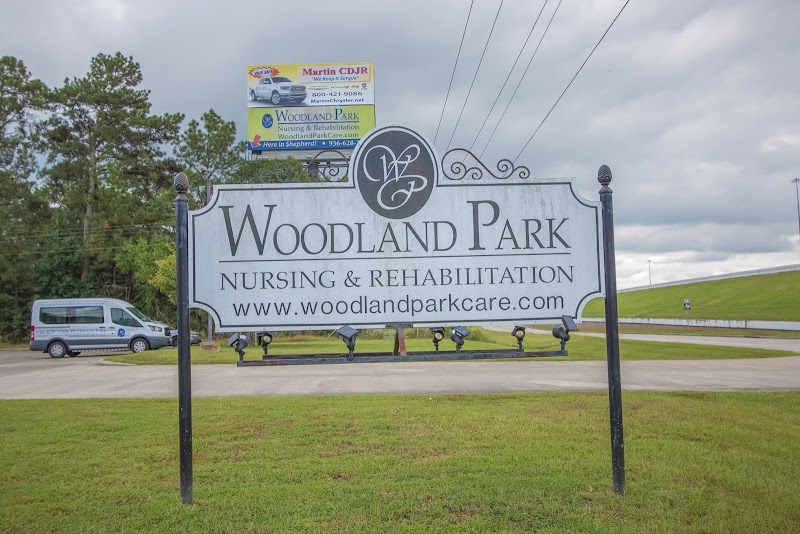
How is Woodland Park Nursing & Rehab Staffed?

CMS rates WOODLAND PARK NURSING & REHAB's staffing level at 2 out of 5 stars, which is below average compared to other nursing homes. Staff turnover is 47%, compared to the Texas average of 46%. RN turnover specifically is 80%, which is notably high. RNs provide skilled clinical oversight, so turnover in this role can affect medical care quality.

What Have Inspectors Found at Woodland Park Nursing & Rehab?

State health inspectors documented 17 deficiencies at WOODLAND PARK NURSING & REHAB during 2023 to 2025. These included: 3 Immediate Jeopardy (the most serious level, indicating potential for serious harm or death), 1 that caused actual resident harm, and 13 with potential for harm. Immediate Jeopardy findings are rare and represent the most serious regulatory concerns. They require immediate corrective action.
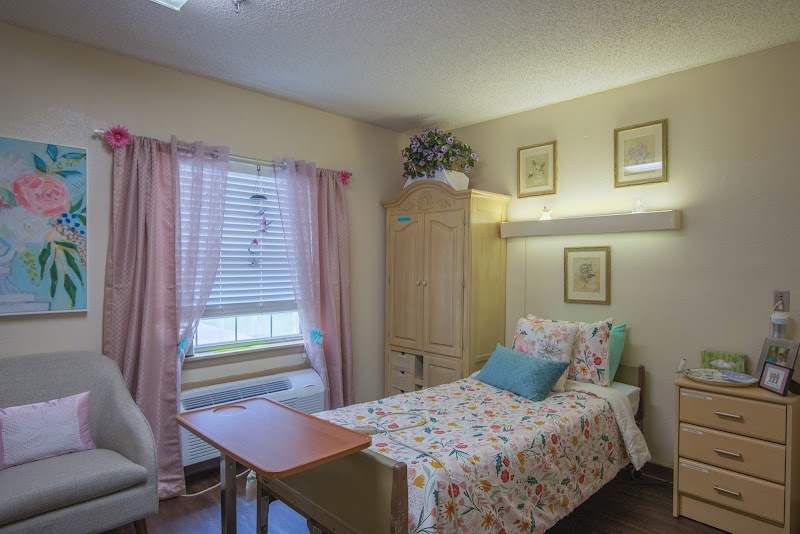
Who Owns and Operates Woodland Park Nursing & Rehab?

WOODLAND PARK NURSING & REHAB is owned by a government entity. Government-operated facilities are typically run by state, county, or municipal agencies. The facility is operated by GULF COAST LTC PARTNERS, a chain that manages multiple nursing homes. With 100 certified beds and approximately 49 residents (about 49% occupancy), it is a mid-sized facility located in SHEPHERD, Texas.
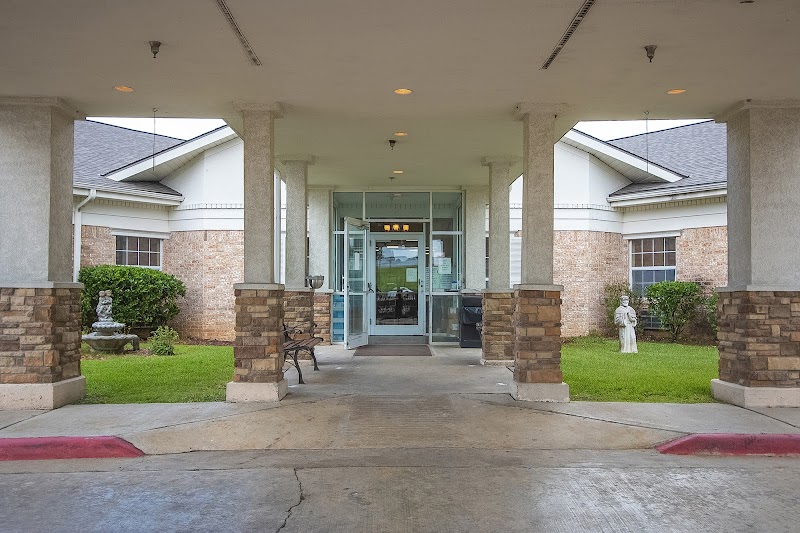
How Does Woodland Park Nursing & Rehab Compare to Other Texas Nursing Homes?

Compared to the 100 nursing homes in Texas, WOODLAND PARK NURSING & REHAB's overall rating (1 stars) is below the state average of 2.8, staff turnover (47%) is near the state average of 46%, and health inspection rating (1 stars) is much below the national benchmark.

What Should Families Ask When Visiting Woodland Park Nursing & Rehab?

Based on this facility's data, families visiting should ask: "What changes have been made since the serious inspection findings, and how are you preventing similar issues?" "Can you walk me through typical staffing levels on day, evening, and night shifts?" "Can I visit during a mealtime to observe dining assistance and food quality?" "How do you handle medical emergencies, and what is your hospital transfer rate?" These questions are particularly relevant given the facility's Immediate Jeopardy citations and the below-average staffing rating.

Is Woodland Park Nursing & Rehab Safe?

Based on CMS inspection data, WOODLAND PARK NURSING & REHAB has documented safety concerns. Inspectors have issued 3 Immediate Jeopardy citations (the most serious violation level indicating risk of serious injury or death). The facility has a 1-star overall rating and ranks #100 of 100 nursing homes in Texas. Families considering this facility should ask detailed questions about what corrective actions have been taken since these incidents.

Do Nurses at Woodland Park Nursing & Rehab Stick Around?

WOODLAND PARK NURSING & REHAB has a staff turnover rate of 47%, which is about average for Texas nursing homes (state average: 46%). Moderate turnover is common in nursing homes, but families should still ask about staff tenure and how the facility maintains care continuity when employees leave.

Was Woodland Park Nursing & Rehab Ever Fined?

WOODLAND PARK NURSING & REHAB has been fined $101,785 across 4 penalty actions. This is 3.0x the Texas average of $34,097. Fines at this level are uncommon and typically indicate a pattern of serious deficiencies, repeated violations, or failure to correct problems promptly. CMS reserves penalties of this magnitude for facilities that pose significant, documented risk to resident health or safety. Families should request specific documentation of what issues led to these fines and what systemic changes have been implemented.

Is Woodland Park Nursing & Rehab on Any Federal Watch List?

WOODLAND PARK NURSING & REHAB is not on any federal watch list. The most significant is the Special Focus Facility (SFF) program, which identifies the bottom 1% of nursing homes nationally based on persistent, serious quality problems. Not being on this list means the facility has avoided the pattern of deficiencies that triggers enhanced federal oversight. This is a positive indicator, though families should still review the facility's inspection history directly.