
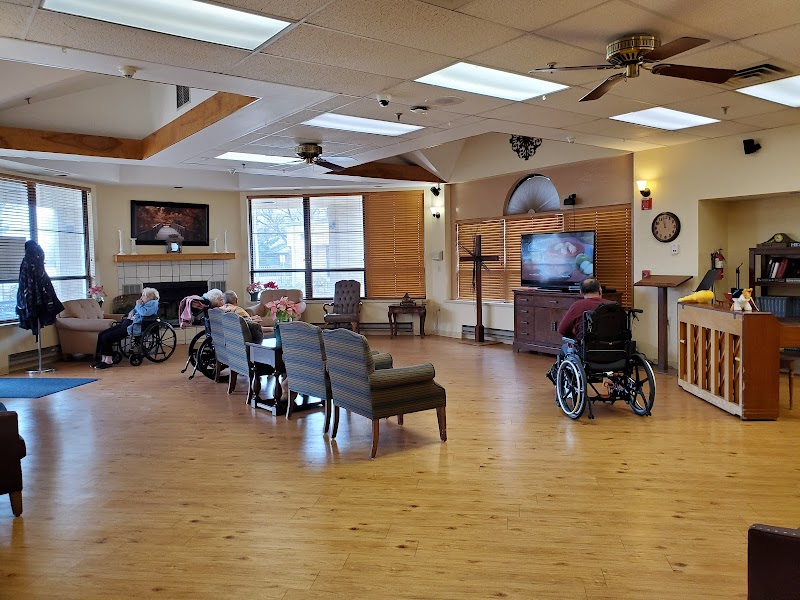
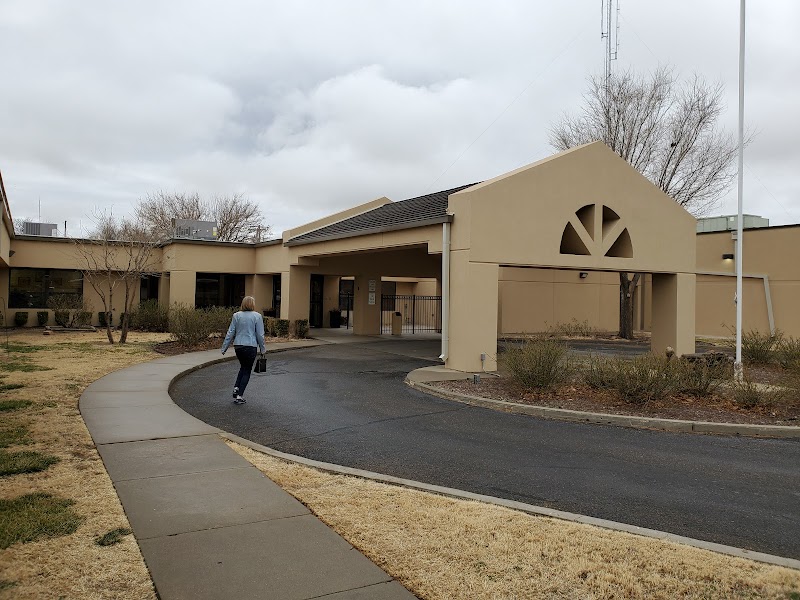
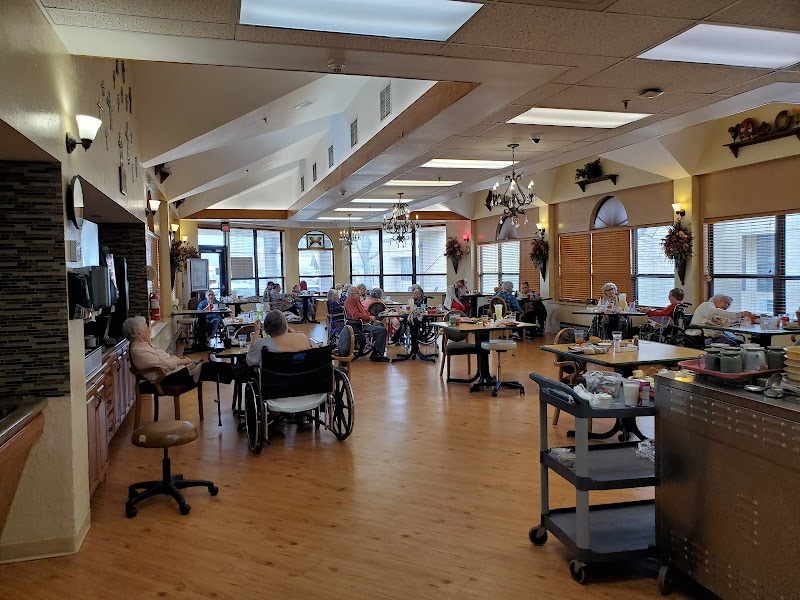
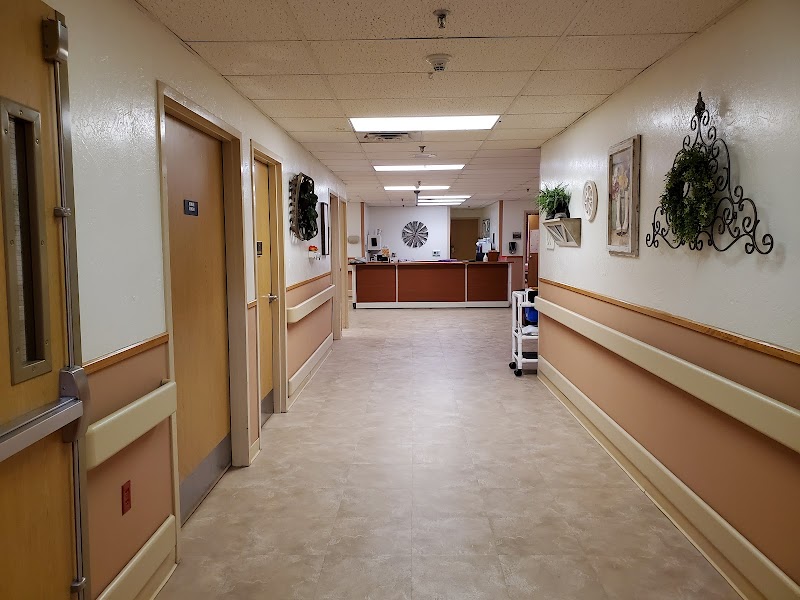
HANSFORD MANOR

707 S ROLAND ST, SPEARMAN, TX 79081 (806) 659-5535
Government - County 60 Beds Independent Data: November 2025
Trust Grade
80/100
#247 of 1168 in TX
Last Inspection: August 2024

Within standard 12-15 month inspection cycle. Federal law requires annual inspections.

Overview

Hansford Manor in Spearman, Texas, has a Trust Grade of B+, indicating it is above average and recommended for potential residents. It ranks #247 out of 1,168 facilities in Texas, placing it in the top half, and is the only nursing home in Hansford County, meaning it is the best local option. However, the facility's trend is concerning as the number of issues increased from 2 in 2023 to 3 in 2024. Staffing is a strong point with a low turnover rate of 0%, which is significantly better than the state average, but it only received 2 out of 5 stars for staffing, indicating room for improvement in this area. There have been no fines, which is promising, and while RN coverage is average, the facility has had several concerning incidents; for example, residents were allowed to keep cigarettes, posing a fire hazard, and care plans were not adequately developed, risking improper care for some residents. Overall, while Hansford Manor has some strengths, families should be aware of its weaknesses and recent increase in compliance issues.

Trust Score
B+
80/100
In Texas
#247/1168
Top 21%
Safety Record
Low Risk
No red flags
Inspections
Getting Worse
2 → 3 violations
Staff Stability
○ Average
Turnover data not reported for this facility.
Penalties
✓ Good
No fines on record. Clean compliance history, better than most Texas facilities.
Skilled Nurses
○ Average
Each resident gets 36 minutes of Registered Nurse (RN) attention daily — about average for Texas. RNs are the most trained staff who monitor for health changes.
Violations
○ Average
6 deficiencies on record. Average for a facility this size. Mostly minor or procedural issues.
★★★★☆
4.0
Overall Rating
★★☆☆☆
2.0
Staff Levels
★☆☆☆☆
1.0
Care Quality
★★★★★
5.0
Inspection Score
Stable
2023: 2 issues
2024: 3 issues

The Good

  • Full Sprinkler Coverage · Fire safety systems throughout facility
  • No fines on record

Facility shows strength in fire safety.

The Bad

No Significant Concerns Identified

This facility shows no red flags. Among Texas's 100 nursing homes, only 0% achieve this.

The Ugly 6 deficiencies on record

Aug 2024 3 deficiencies
CONCERN (D)

Potential for Harm - no one hurt, but risky conditions existed

Assessment Accuracy (Tag F0641)

Could have caused harm · This affected 1 resident

**NOTE- TERMS IN BRACKETS HAVE BEEN EDITED TO PROTECT CONFIDENTIALITY** Based on interview and record review, the facility failed to complete an assessment that accurately reflected the resident's sta...

Read full inspector narrative →
**NOTE- TERMS IN BRACKETS HAVE BEEN EDITED TO PROTECT CONFIDENTIALITY** Based on interview and record review, the facility failed to complete an assessment that accurately reflected the resident's status for 1 of 14 residents (Resident #4) reviewed for accuracy of MDS assessments. The facility failed to complete an accurate assessment for Resident #4, the assessment indicated she received insulin and did not. This failure could affect residents by placing them at risk for not receiving adequate care and services. Findings included: Record review of Resident #4's face sheet revealed a [AGE] year-old female admitted on [DATE] with diagnoses to include but not limited to hereditary motor and sensory neuropathy (nerve damage in the arms and legs), bipolar disorder, type 2 diabetes mellitus (high blood sugar levels), and chronic pain. Record review of Resident #4's Annual MDS assessment dated [DATE] revealed Resident #4 had a BIMS score of 13 out of 15 which indicated that she was cognitively intact. The MDS indicated in Section N0300 (Injections) that Resident #4 received 1 insulin injection from the 7 days during the MDS look back period. Record review of Resident #4's physician orders revealed no order for insulin injections. Orders for Ozempic .5 mg given subcutaneously in the afternoon every Wednesday related to type 2 diabetes mellitus dated 04/24/2024. Record review of Resident #4's Care plan dated 06/27/2024 indicated resident had Diabetes Mellitus with interventions of dietary consult for nutritional regimen and ongoing monitoring. No insulin injections were identified in the care plan. Record review of Resident #4's Medication Administration Record for June 2024 did not indicate any insulin injections were administered. During an interview on 08/20/2024 at 11:05 AM, Resident #4 stated that she does not take any insulin but was taking a medication called Ozempic for weight loss and that she was pre diabetic. Resident #4 stated that she does not get a lot of exercise being in a wheelchair, so the Ozempic was helping her lose weight. During an interview on 08/21/2024 at 9:14 AM, the ADM stated that she looked at the MDS Assessment for Resident #4 and stated that she saw where the MDS Coordinator marked insulin injections and stated that it must have been a typo. The ADM stated she could not argue that it was a mistake. During an interview on 08/21/2024 at 9:34 AM, the DON stated the MDS Coordinator was responsible for putting information in the MDS Assessment and that if that information was wrong it could affect the payrate and care of a resident. During an interview on 08/21/2024 at 9:43 AM, LVN A stated the MDS Coordinator was responsible for putting information in the MDS Assessment. LVN A stated that a possible negative outcome for putting wrong information in the MDS Assessment would be that a resident could get insulin instead of the accurate medication. During an interview on 8/21/2024 at 9:44 AM, the ADON stated the negative outcome for wrong information being in the MDS Assessment would be that the payrate for CMS would be wrong. During an interview on 08/21/2024 at 9:51 AM, the MDS Coordinator stated that the look back period for medication was 7 days for the MDS Assessment and she used the Resident Assessment Instrument for guidance. The MDS Coordinator stated that she was responsible for putting the information in the MDS Assessment and stated that she made a mistake by indicating that the resident was taking insulin when she was not. Record review of Resident Assessment Instrument (RAI) via CMS website. Section N: Medications Intent: The intent of the items in this section is to record the number of days, during the last 7 days that any type of injection, insulin, and or select medication were received by the resident. Steps for Assessment: 1. Review the resident's medication administration records for the 7-day look-back period (or since admission/entry or reentry if less than 7 days). 2. Review documentation from other health care locations where the resident may have received injections while a resident of the nursing home (e.g., flu vaccine in a physician's office, in the emergency room - as long as the resident was not admitted ). 3. Determine if any medications were received by the resident via injection. If received, determine the number of days during the look-back period they were received.
CONCERN (D)

Potential for Harm - no one hurt, but risky conditions existed

Comprehensive Care Plan (Tag F0656)

Could have caused harm · This affected 1 resident

**NOTE- TERMS IN BRACKETS HAVE BEEN EDITED TO PROTECT CONFIDENTIALITY** Based on observation, interview, and record review the facility failed to develop and implement a comprehensive person-centered ...

Read full inspector narrative →
**NOTE- TERMS IN BRACKETS HAVE BEEN EDITED TO PROTECT CONFIDENTIALITY** Based on observation, interview, and record review the facility failed to develop and implement a comprehensive person-centered care plan for each resident, consistent with resident rights that includes measurable objectives and timeframes to meet a resident's medical, nursing, and mental and psychosocial needs that are identified in the comprehensive assessment and describes the services that are to be furnished to attain or maintain the resident's highest practicable physical, mental, and psychosocial well-being for 2 (Resident #28 and Resident #101) of 14 residents reviewed for care plans. The facility failed to include bed rail use in the care plans of Resident #28 and Resident #101. These failures could place residents at risk of harm due to incorrect care and/or lack of monitoring. Findings Included: 1. Record review of Resident #28's admission record dated 08/19/24 revealed a [AGE] year-old male admitted to the facility on [DATE] with diagnoses that included, but were not limited to, dementia (a group of thinking and social symptoms that interferes with daily functioning), anxiety disorder (mental disorder characterized by significant and uncontrollable feelings of anxiety and fear), osteoarthritis (degenerative joint disease), muscle weakness, hallucinations (sensory experiences that appear real but are created by your mind), and repeated falls. Record review of Resident #28's quarterly MDS completed on 08/01/24 revealed the following: Section C: Resident #28 had no BIMS score but staff assessment of resident indicated severely impaired cognition. Section GG: Resident #28 used a w/c and was dependent on staff for all ADLs. Section I: Resident #28's primary medical condition was non-traumatic brain dysfunction. Section J: Resident #28 had one fall with no injury since his previous assessment. Section N: Resident #28 received antipsychotic, antianxiety, antidepressant, and opioid medications. Section O: Resident #28 received hospice services while a resident. Record review of Resident #28's care plan completed on 07/30/24 revealed he had impaired cognitive function and was at high risk for falls. The care plan made no mention of bed rails. Record review of Resident #28's Admit/Readmit Screener dated 04/14/23 revealed it was a reentry and right and left side half rails would be used. Side Rails are indicated and serve as an enabler to promote independence. Record review of Resident #28's order tab in his EHR revealed the following order: Resident may use enabler for bed mobility dated 04/14/23. Record review of Resident #28's Consent for Side Rails form revealed it was signed and dated by his family member on 01/31/20. During an observation on 08/19/24 at 10:57 AM Resident #28 was lying in his bed with eyes closed. He had a bed rail in the upright position on the top left side of the bed. During an observation on 08/20/24 at 01:55 PM Resident #28 was in his bed on his back with eyes closed. HOB was raised almost to sitting. Bed rail on the left side of the bed was in upright position. The bed was against the wall on the right side of the bed. 2. Record review of Resident #101's admission record dated 08/20/24 revealed a [AGE] year-old male admitted to the facility on [DATE] with diagnoses that included, but were not limited to, dementia (a group of thinking and social symptoms that interferes with daily functioning), insomnia (problems falling and staying asleep), and muscle weakness. Record review of Resident #101's MDS face sheet in the EHR revealed and admission MDS in progress. When this record was viewed Section C was completed and indicated a BIMS score of 3 which indicated severely impaired cognition. Record review of Resident #101's care plan initiated on 08/13/24 revealed he used antianxiety medication and had limited physical mobility due to weakness. Record review of Resident #101's order summary report dated 08/20/24 revealed the following order: Resident may use enabler for bed mobility dated 08/12/24. Record review of Resident #101's Admit/Readmit Screener dated 08/13/24 revealed ¼ rails would be utilized for bed mobility. Record review of Resident #101's Consent for Side Rails form revealed he signed and dated the form on 08/12/24. During an observation on 08/19/24 at 10:57 AM Resident #101 was lying on his back in bed with his eyes closed. Bilateral bed rails were in upright position on the top half of the bed. During an observation on 08/20/24 at 06:49 AM Resident #101 was lying on his back in bed. Bilateral bed rails were in upright position on the top half of the bed. During an observation and interview on 08/20/24 at 08:57 AM Resident #101 was seated in his w/c next to his bed. He had a friend seated on end of his bed visiting with him. Bilateral bed rails were in upright position on the top half of Resident #101's bed. When asked if he used the bed rails for mobility, Resident #101 stared at the bed rail nearest him for approximately 10 seconds. When his friend patted the rail and asked if Resident #101 used it, Resident #101 said, There could be a better one, but it is okay. When asked if the bedrail helped him move around in his bed, Resident #101 said, Yes. During an interview on 08/21/24 at 12:05 PM MDS Coordinator stated she was responsible for putting nursing information in the care plan including information regarding bed rails. She stated bed rails utilized in the facility were for mobility. She stated a possible negative outcome of not having bed rails listed in the care plan was that staff would not know they were used for mobility. During an interview on 08/21/24 at 12:15 PM ADM stated MDS Coordinator was responsible for putting bed rail use in the care plans of residents who used bed rails. She stated residents could die or could get hung up in the bed rails if they were not care planned for bed rail use. ADM stated having bed rail use in the care plan was important because, We want to keep them (residents) safe. Record review of facility policy titled Proper Use of Bed Rails and dated 10/02/24 revealed in part: . The facility will continue to provide necessary treatment and care to the resident who has bed rails in accordance with professional standards of practice and the resident's choices. Direct care staff will be responsible for care and treatment in accordance with the plan of care. The interdisciplinary team will make decisions regarding when the bed rail will be use [sic] or discontinued, or when to revise the care plan to address any residual effects of the bed rail. Record review of facility policy titled Care Plans and dated 04/12/23 revealed in part: . It is the policy of [NAME] Manor to provide care and services to each resident based on a plan of care. The plan o care is developed through the collaborative assessment of an interdisciplinary team, in conjunction with the resident, the resident's family or representative, and the attending physician. A. Baseline care plan will be: . Include the minimum healthcare information necessary to properly care for a resident including . 2. Physician orders . 3. The admitting nurse, or supervising nurse on duty, shall gather information from the admission physical assessment, . physician orders . The comprehensive care plan: 1. RAPs (Resident Assessment Protocol) provide criteria that trigger review of possible problem conditions to ensure that staff has identified the problems in a consistent and systematic manner. D. The care plan must include but is not limited to: . The care plan will attempt to manage resident risk Factors [sic] . Services that are furnished to attain or maintain the resident's highest practicable physical, mental and psychosocial well-being. E. The care plan will be periodically reviewed and revised as the resident's status changes, and services provided must be in accordance with each resident's written plan of care. Record review of facility policy title Care plans-Interdisciplinary Team and dated 01/09/18 revealed in part: . [NAME] Manor Care Planning/Interdisciplinary Team is responsible for the development of an individualized comprehensive care plan for each resident.
CONCERN (D)

Potential for Harm - no one hurt, but risky conditions existed

Deficiency F0700 (Tag F0700)

Could have caused harm · This affected 1 resident

**NOTE- TERMS IN BRACKETS HAVE BEEN EDITED TO PROTECT CONFIDENTIALITY** Based on observation, interview, and record review the facility failed to attempt to use appropriate alternatives prior to insta...

Read full inspector narrative →
**NOTE- TERMS IN BRACKETS HAVE BEEN EDITED TO PROTECT CONFIDENTIALITY** Based on observation, interview, and record review the facility failed to attempt to use appropriate alternatives prior to installing a side or bed rail for 2 (Resident #4 and Resident #101) of 14 residents reviewed for bed rails. The facility placed bed rails on the beds of Resident #4 and Resident #101 on the day the residents were admitted without attempting other interventions. These failures could place residents at risk of entrapment or injury due to bed rails. Finding included: 1. Record review of Resident #4's admission record dated 08/20/24 revealed a [AGE] year-old female admitted to the facility on [DATE] with diagnoses that included, but were not limited to, hereditary motor and sensory neuropathy (nerve damage that can cause pain, weakness, numbness, or tingling as well as motor symptoms like muscle weakness and loss of mass in different parts of the body characterized by impact on both afferent nerve cells [carry sensory information to the central nervous system] and efferent nerve cells [carry motor information away from the central nervous system]), bipolar disease (serious mental illness characterized by extreme mood swings such as extreme excitement or extreme depressive feelings), macular degeneration (medical condition resulting in blurred or no vision in the center of the visual field), and insomnia (problems falling and staying asleep). Record review of Resident #4's annual MDS completed on 06/20/24 revealed the following: Section B: Resident #4 required corrective lenses. Section C: Resident #4 had a BIMS score of 13 which indicated intact cognition. Section GG: Resident #4 had functional limitation in range of motion in both legs and utilized a w/c. She was independent in eating and required substantial/maximal assistance or was dependent across all other ADLs. Section I: Resident #4's primary medical condition was non-traumatic brain dysfunction. Section N: Resident #4 received antianxiety, antidepressant and opioid medications. Record review of Resident #4's care plan completed on 06/18/24 revealed Resident #4 was a moderate risk for falls, used an electric w/c, and had side rails for safety during care provision, to assist with bed mobility. Record review of Resident #4's Admit/Readmit Screener dated 06/28/23 revealed right and left half rails would be in use. Side rails are indicated and serve as an enabler to promote independence. Record review of Resident #4's order summary report dated 08/20/24 revealed the following order: Resident may use enabler for bed mobility dated 06/26/23. Record review of Resident #4's Consent for Side Rails form revealed she signed and dated the form on 06/28/23. During an observation on 08/19/24 Resident #4's bed had bilateral bed rails in upright position on the top half of the bed. During an observation on 08/20/24 at 11:05 AM Resident #4's bed had a bed rail in upright position on the right side of the top half of the bed. 2. Record review of Resident #101's admission record dated 08/20/24 revealed a [AGE] year-old male admitted to the facility on [DATE] with diagnoses that included, but were not limited to, dementia (a group of thinking and social symptoms that interferes with daily functioning), insomnia (problems falling and staying asleep), and muscle weakness. Record review of Resident #101's MDS face sheet in the EHR revealed and admission MDS in progress. When this record was viewed Section C was completed and indicated a BIMS score of 3 which indicated severely impaired cognition. Section GG was not yet complete. Record review of Resident #101's care plan initiated on 08/13/24 revealed he used antianxiety medication and had limited physical mobility due to weakness. Record review of Resident #101's order summary report dated 08/20/24 revealed the following order: Resident may use enabler for bed mobility dated 08/12/24. Record review of Resident #101's Admit/Readmit Screener dated 08/13/24 revealed ¼ rails would be utilized for bed mobility. Record review of Resident #101's Consent for Side Rails form revealed he signed and dated the form on 08/12/24. During an observation on 08/19/24 at 10:57 AM Resident #101 was lying on his back in bed with his eyes closed. Bilateral bed rails were in upright position on the top half of the bed. During an observation on 08/20/24 at 06:49 AM Resident #101 was lying on his back in bed. Bilateral bed rails were in upright position on the top half of the bed. During an interview on 08/20/24 at 08:22 AM Resident #101's family member stated she did not remember signing anything regarding consent for bedrails for Resident #101. During an observation and interview on 08/20/24 at 08:57 AM Resident #101 was seated in his w/c next to his bed. He had a friend seated on end of his bed visiting with him. Bilateral bed rails were in upright position on the top half of Resident #101's bed. When asked if he used the bed rails for mobility, Resident #101 stared at the bed rail nearest him for approximately 10 seconds. When his friend patted the rail and asked if Resident #101 used it, Resident #101 said, There could be a better one, but it is okay. When asked if the bedrail helped him move around in his bed, Resident #101 said, Yes. During an interview on 08/21/24 at 10:38 AM LVN B stated the RNs were responsible for bed rail assessments at admission. During an interview on 08/21/24 at 10:43 AM RN C stated RNs did monthly bed rail assessments as part of the regular monthly assessment of each resident. RN C said RN D did initial bed rail assessments prior to or at admission. During an interview on 08/21/24 at 10:46 AM RN D stated when she admitted a resident, she encouraged families and residents strongly to forego bed rails. She stated the other nurses who worked with families at admission did the same. She stated they educated families and residents on the risks of bed rails. She stated families often wanted bed rails because they felt the bed rails would keep their loved ones from falling. She stated the facility tried to follow family wishes. RN D stated alternatives to bed rails would include a concave mattress, fall mats, bed alarms, and ensuring items of importance are within reach. RN D said, I feel like if they (families and residents) have been educated properly and they still choose them (bed rails) it is their prerogative. RN D did not respond with any possible negative outcome to residents of installing bed rails prior to trying alternatives. During an interview on 08/21/24 at 11:07 AM DON stated residents could be negatively impacted if bed rails were installed prior to attempting alternatives. She said, There are a lot of negative outcomes; limits mobility, potential for entrapment, risk of them climbing out of bed over the rails and getting injured. She stated residents and their families often wanted bed rails if they came from a hospital setting where bed rails were used. During an interview on 08/21/24 at 11:28 AM ADM stated residents could be injured if bed rails were installed prior to attempting alternatives. Record review of facility policy titled, Proper Use of Bed Rails and dated 10/02/23 revealed in part: . Appropriate alternative approaches are attempted prior to using be rails. Informed consent from the resident or resident representative must be obtained after appropriate alternatives have been attempted prior to installation and use of bed rails.
Jun 2023 2 deficiencies
CONCERN (D)

Potential for Harm - no one hurt, but risky conditions existed

Infection Control (Tag F0880)

Could have caused harm · This affected 1 resident

**NOTE- TERMS IN BRACKETS HAVE BEEN EDITED TO PROTECT CONFIDENTIALITY** Based on observation, interview, and record review, the facility failed to maintain an infection prevention and control program ...

Read full inspector narrative →
**NOTE- TERMS IN BRACKETS HAVE BEEN EDITED TO PROTECT CONFIDENTIALITY** Based on observation, interview, and record review, the facility failed to maintain an infection prevention and control program designed to provide a safe, sanitary, and comfortable environment and to help prevent the development and transmission of communicable diseases and infections for 2 of 2 residents (Resident #3 and #40) and 1 of *(Nutrition Aide-(NA D) observed for infection control practices. NA D failed to use proper hand hygiene techniques when providing feeding assistance between Resident #3 and Resident #40. This failure may place resident at an increased risk for transmissible diseases. Findings include: Record review of Resident #3's face sheet dated 6/19/23 revealed an [AGE] year old male admitted to the facility on [DATE] with diagnoses that included, but were not limited to, Dementia (decreased ability of memory, thinking, activities of daily life), Unspecified Protein-Calorie Malnutrition (not enough protein or calories taken into body for normal metabolism), Cerebral Infarction (damage to tissues in the brain due to a loss of oxygen/blood to the area), Lack of Coordination (Difficulty with body movements, not purposeful), Need for Assistance with Personal Care. Record review of Resident #3's last quarterly MDS dated [DATE] revealed a BIMS score of 00 out of 15 which indicated he was severely impaired. Resident #3 required extensive assist with 2 persons assist with all ADL's. Resident #3 utilized a wheelchair for ambulation with limited assist with 1 person assist. Record review of Resident #3's care plan dated 5/3/23, revealed in part: Problem: Resident has ADL Self Care Performance Deficit related to Confusion, Dementia, Activity Intolerance. Goal: Resident will maintain current level of function in eating Interventions: Eating requires one staff participation to eat. Record review of Resident #40 face sheet dated 6/20/23 revealed a 71year old male admitted to the facility on [DATE] with diagnoses that included, but were not limited to, Dementia (decreased ability of memory, thinking, activities of daily life), Schizophrenia (a mental disorder characterized by delusions, hallucination, disorganized thoughts, speech and behavior), Vascular Dementia (Describing problems with reasoning, planning, judgment, memory and other thought processes caused by brain damage from impaired blood flow to your brain), Apraxia Following Other Cerebrovascular Disease (A neurological syndrome characterized by difficulty in performing daily tasks even if the instructions are understood. The person affected finds it difficult to tie shoelace, button the shirt, difficulty in making certain facial expressions) Record review of Resident #40's last quarterly MDS dated [DATE] revealed a BIMS score of 03 out of 15 which indicated he was severely impaired. Resident #40 required extensive assist with 2 persons assist with all ADL's. Resident #40 utilized a wheelchair for ambulation with limited assist with 1 person assist. Record review of Resident #40's care plan dated 5/16/23, revealed in part: Problem: Resident has ADL Self Care Performance Deficit related to Confusion, Dementia, Impaired Balance. Goal: Resident will maintain current level of function in eating Interventions: Resident requires supervision assistance to eat. Requires setup staff participation to eat. Observation on 6/19/2023 at 11:55 AM, during lunch dining, NA D did not change gloves when she picked up utensil of Resident #40 and cut up food. She walked over to Resident #3, picked up his utensils, walked to Resident #40, picked up his utensils and continued to feed Resident #40. She walked back and fed Resident #3. NA D did not change gloves or wash hands between feeding multiple residents. Interview on 6/19/2023 at 12:50PM, NA D stated, I know that it was my mistake. Referring to not washing her hands when going from one resident to another during dining observation. NA D stated possible negative outcome is Germs from one place to another place. Interview on 6/20/2023 at 08:22 AM with DON stated, The Nutrition Aide D should not have been wearing gloves to feed residents. She should have hand sanitized before going from one resident to another. DON stated possible negative outcome(s) could be Cross contamination. Record review of NA D employee file indicated she had been employed as a paid feeding attendant for twelve years. She has a Certification of Achievement for completed eight hours of Nutrition Aide Training Dated November 21, 2011. Record review of care plans for Resident #3 and Resident #40, both are designated as needing feeding. Record review of facility policy titled, Hand Hygiene dated 10/02/2023, stated the following: Policy Statement It is the policy to follow Standard Precautions, which includes hand hygiene to prevent the spread of infection and for the safety of our residents. Policy Interpretation and Implementation A. Hand washing must be used: 1. Before donning and after doffing PPE. Anytime hands become soiled. 4. Before and After Resident care involving body fluids, substances, and mucus membranes. B. Hand rubs: 1. May be used between glove changes if hands are not soiled. 2. Between care of each patient.
CONCERN (E)

Potential for Harm - no one hurt, but risky conditions existed

Accident Prevention (Tag F0689)

Could have caused harm · This affected multiple residents

**NOTE- TERMS IN BRACKETS HAVE BEEN EDITED TO PROTECT CONFIDENTIALITY** Based on observation, interview, and record review the facility failed to ensure the resident environment remained as free of ac...

Read full inspector narrative →
**NOTE- TERMS IN BRACKETS HAVE BEEN EDITED TO PROTECT CONFIDENTIALITY** Based on observation, interview, and record review the facility failed to ensure the resident environment remained as free of accident hazards as is possible for 14 of 49 residents (Resident #7 and the 13 residents residing on the north end of hall 1) reviewed for accident hazards. 1. Resident #7 was allowed to keep his cigarettes and lighter with him. 2. Three 200 mg tablets of Amiodarone were found on the floor of the north end of hall 1. These failures could place residents at risk of injury. Findings included: 1. Record review of Resident #7's face sheet, dated 06/19/23, revealed an [AGE] year-old male admitted to the facility on [DATE] with diagnoses that included, but were not limited to, unspecified dementia with behavioral disturbance (a group of thinking and social symptoms that interfere with daily functioning), unspecified mood disorder (a disorder with symptoms that cause distress or impairment in social and/or occupational function), nicotine dependence, anxiety disorder (mental disorder characterized by significant and uncontrollable feelings of anxiety and fear), and chronic obstructive pulmonary disease (inflammation of lung tissue due to non-infectious causes, which results in cough without mucus or phlegm, shortness of breath, and fatigue). Record review of Resident #7's Quarterly MDS, dated [DATE], revealed a BIMS of 5, which indicated severely impaired cognition. Section G of the MDS revealed Resident #7 required supervision and set up help with bed mobility, transfer, and walking. He required extensive assistance by one staff person for dressing, toilet use, and personal hygiene. Resident #7 was independent and required set up help only when eating. Record review of Resident #7's care plan dated, 04/26/23, revealed a focus area of impaired cognitive function/dementia or impaired thought processes r/t Dementia, impaired decision making. One of the interventions listed next to this focus area was I need supervision and assistance with all decision making. The care plan revealed a focus area of I smoke cigarettes. The goal for this focus area read, I will continue to be safe while smoking as evidenced by . turning my cigarettes and lighter in to the nurse after I smoke and out of reach of other residents. Included in the interventions listed for this goal were, I will comply with the smoking policy of [NAME] Manor. I will turn my lighter and extra cigarettes into the nurse or can keep out of the reach of other residents. Record review of Resident #7's Smoking Assessment, dated 04/04/23, revealed Resident #7 had cognitive loss and needed the facility to store his lighter and cigarettes. The smoking assessment further noted that Resident #7's care plan would be used to assure he was safe while smoking. An observation on 06/20/23 at 08:32 AM, revealed Resident #7 walking down the hall with his cigarettes and a black lighter in the wire basket of his walker. During an observation and interview on 06/20/23 at 08:40 AM, Resident #7 was sitting on the edge of his bed with his walker next to the bed. The wire basket of the walker contained a pack of cigarettes and a black lighter. Resident #7 stated he goes outside to smoke on his own. During an observation and interview on 06/20/23 at 08:48 AM, Resident #7 was lying on his left side in his bed. His walker was near the bed and the wire basket of the walker still contained a pack of cigarettes and a black lighter. When asked if he keeps his own cigarettes and lighter, Resident #7 stated, I have been. I'm not supposed to, but they don't care. During an observation on 06/21/23 at 09:50 AM, Resident #7 was lying in his bed asleep on his left side with his walker nearby. A black lighter was in the wire basket of the walker. During an interview on 06/21/23 at 11:23 AM, the DON stated smoking assessments were done at admission. She stated the RN's were responsible for the smoking assessments. The DON stated a negative outcome of allowing Resident #7 to keep his smoking paraphernalia rather than turn it into the nurses was, They could light the building on fire, I guess. When asked who is responsible to ensure Resident #7 turns in his lighter and cigarettes after smoking, the DON stated it is the charge nurse but activities staff tends to watch the smoking residents as they smoke outside the activities room. She said Resident #7 usually turned his lighter and cigarettes in to the nurse at the window (of the nurse's station in hall 1). During an interview on 06/21/23 at 11:39 AM, the ADM stated a possible negative outcome of allowing Resident #7 to keep his smoking paraphernalia rather than turn it in to the nurses was, It could cause some accidents and be detrimental to the health of the resident and other residents. When asked who was responsible to ensure Resident #7 turned in his smoking paraphernalia after smoking, the ADM said, Whoever sees him coming in. The charge nurse watches for it and whoever is there. 2. Observation on 06/19/23 at 10:47 AM, revealed a round white pill on the floor in the doorway of room [ROOM NUMBER] of hall 1. The pill had a capital A on one side and other side it had a B and a 4. During an interview on 06/19/23 at 10:48 AM, CNA C was shown the pill from the floor and offered to turn it in to the nurses' station. She stated if she ever found a pill on the floor, she would put it in her pocket and turn it in to a nurse. Observation on 06/19/23 at 10:52 AM, revealed two more round white pills on the floor in the hallway close to the wall between room [ROOM NUMBER] and room [ROOM NUMBER] and closer to room [ROOM NUMBER]. These pills had a capital A on one side and a B and a 4 on the other side. During an interview on 06/19/23 at 10:54 AM, RN A was given the three pills with a description of where they were found on the floor. During an interview on 06/19/23 at 10:58 AM, RN A stated the medication found on the floor of hall 1 came from a respite resident. She stated she spoke to the LVN doing medicine pass and discovered the LVN dropped the bottle of medication and it spilled. During an interview on 06/19/23 at 11:24 AM, RN A stated the nurse she spoke to regarding the spilled medication was LVN B. She stated, [First name of LVN B] is the little LVN in training. During an interview on 06/19/23 at 11:24 AM, LVN B stated, This morning I was trying to close the bottle and it slipped on me and fell on the floor and spilled. I picked up the ones that I could. I thought I got them all, but I guess some escaped me. During an interview on 06/19/23 at 02:14 PM, LVN B stated the medication she spilled on the floor was Amiodarone (medication used to treat certain types of serious irregular heartbeat to restore and maintain a regular steady heartbeat). During an interview on 06/21/23 at 11:33 AM, the DON stated her expectation of her staff when a bottle of medication was spilled was that they locate them all. She stated there was no way for LVN B to count the pills to determine if she had found all of the pills because the facility did not keep a record of how many pills came in with the respite resident. The DON stated a possible negative outcome of medication lying on floor was, Well, I guess any resident could eat them if they bent over and got them. During an interview on 06/21/23 at 11:39 PM, the ADM stated a possible negative outcome of medication lying on the floor of the facility was, If a resident were to pick it up and take it, they could have an adverse reaction. During an interview on 06/21/23 at 11:42 AM, RN A stated the facility would not count the medication a respite resident brought to the facility unless the medication was a narcotic. When asked for a possible negative outcome of medication lying on the floor of the facility, RN A stated, Someone could pick it up and ingest it. Record review of Midnight Census Report, dated 06/19/23, revealed the following residents resided on the north end of hall 1: Resident #1, Resident #11, Resident #19, Resident #20, Resident #27, Resident #28, Resident #31, Resident #33, Resident #41, Resident #44, Resident #46, Resident #97, and Resident #99 Record review of an undated, typed facility paper titled, Smokers revealed the following: .[first and last name of Resident #7] No designated Times Designated Area is outside of Activity Room Record review of an undated facility policy titled, Resident Smoking Policy revealed the following: The purpose of this policy is to establish reasonable precautions for residents' smoking safety, to the extent possible. c. Independent (Low Risk): Resident is capable of smoking independently with no more risk than the average smoker. May not retain personal smoking materials. Record review of facility policy titled, Medication Storage and dated 03/23/23 revealed the following: . The purpose of this policy is to ensure all medications housed on our premises will be stored in the pharmacy, medication rooms, and/or medication carts. It is the policy of [NAME] Manor that all drugs will be stored in locked compartments (i.e., medication carts, cabinets, drawers, refrigerators, medication rooms) . During a medication pass, medications must be under the direct observation of the person administering medications or locked in the medication storage area/cart.
Apr 2022 1 deficiency
CONCERN (D)

Potential for Harm - no one hurt, but risky conditions existed

PASARR Coordination (Tag F0644)

Could have caused harm · This affected 1 resident

**NOTE- TERMS IN BRACKETS HAVE BEEN EDITED TO PROTECT CONFIDENTIALITY** Based on observation, interview and record review, the facility failed to coordinate assessments with the pre-admission screenin...

Read full inspector narrative →
**NOTE- TERMS IN BRACKETS HAVE BEEN EDITED TO PROTECT CONFIDENTIALITY** Based on observation, interview and record review, the facility failed to coordinate assessments with the pre-admission screening and resident review program (PASRR) to the maximum extent practicable to avoid duplicative testing and effort for 1 of 13 (Resident #4) residents reviewed for PASRR. Resident #4 was not referred for PASRR Level II assessment when a diagnosis of Mental Illness was identified after admission. This failure could affect residents with mental illnesses and placed them at risk of not being assessed to receive needed services. Finding include: Record review of Resident #4's clinical record face sheet dated 4-28-2022 revealed she is a [AGE] year-old female resident admitted to the facility on [DATE] with diagnoses to include atrial fibrillation (irregular, often rapid heart rate), pressure ulcer, open wound, history of COVID-19, unspecified psychosis (a mental disorder characterized by a disconnection from reality), anemia (a condition in which the blood does not have enough healthy red blood cells), anxiety (intense, excess, and persistent worry or fear), pain, hypertension (a condition in which the force of the blood against the artery walls is too high), congestive heart failure (a chronic condition in which the heart dose not pump blood as well as it should), arthropathy(disease of the joints), muscle weakness, chronic kidney disease(longstanding disease of the kidneys leading to kidney failure), gastro-esophageal reflux disease(a digestive disease in which stomach acid or bile irritates the food pipe lining), and constipation. Record review of Resident #4's last completed MDS was an annual dated 1-28-2022 revealed she had a BIMS of 6 indicating she is severely cognitively impaired, and she had a functionality of requiring one-person assistance with most of her activities of daily living. Further review of section A1500 revealed the following: Is the resident currently considered by the state level II PASRR process to have a serious mental illness and/or intellectual disability or a relation condition.-Answer was 0: No. Record review of Resident #4's clinical record face sheet dated 4-28-2022 revealed she has the diagnosis of unspecified psychosis with onset date of 7-21-2020. Record review of Resident #4's PASRR Level 1Screening with date of assessment 9-10-2019 revealed the following: C0100 Mental Illness-No C0200 Intellectual Disability-No C0300 Developmental Disability-No There were no other PASRR Level 1 Screenings in Resident #4's chart. During an observation on 04/27/22 at 01:25 PM Resident #4 was in bed sleeping but awoke to knocking. Resident #4 was dressed well, wearing her glasses, and was laying on top of her covers. Resident #4 reported her lunch was good. She was limited with her answers and became confused easily. Resident #4 believed she was admitted to this facility this morning. She became increasingly confused with further questions and was unable to answer effectively. During an interview on 04/29/22 at 09:16 AM HR A verified that Resident #4 was PASSR negative with a Level 1 Screening date of 9-10-2019. HR A reviewed Resident #4's chart and verified that another PASRR Level 1 had not been done on this resident. HR A verified that Resident #4 had a diagnosis of Psychoses added 7-21-2020 that did qualify the resident for PASSR level II services. When questioned HR A stated, If there is a change in the resident's condition then we would do another PASRR. HR A then reported that SS B from Social Services was supposed to complete the PASRRs. During an interview on 04/29/22 at 09:19 AM SS B verified that Resident #4 did have a negative PASRR, and a qualifying diagnosis of Psychosis added on 7-21-2020. When questioned if Resident #4 should have had the PASRR updated when the diagnoses was added SS B stated, I don't know. When questioned if there could be negative consequences from not having PASRR Level II services when the resident qualifies SS B stated, The main thing is they will not receive the extra services provide by TMHP like counseling and stuff like that. They will not receive what PASRR will provide. Both HR A and SS B verified that once a PASRR is in the system then the DON follows up if it is positive. HR A checked the system and reported that she could not find any follow-up for Resident #4. During an interview on 04/29/22 at 09:32 AM the DON when questioned about the PASRR Level II services for Resident #4 stated, I can't tell you any answers on that . I don't remember the last Resident I called on.: When questioned if any consequences could arise from a resident not receiving level II services that they should qualify for from PASRR the DON stated, We do everything for them so they really wouldn't miss something. If there is anything the PASRR would provide we would provide it anyway. Record review of the facility provided policy titled Preadmission Screening (PASRR) dated 12-16-2016 revealed the policy contained no information to address a resident with a newly added qualifying diagnoses for MI, ID, or DD. During an interview on 04/29/22 at 10:36 AM the DON stated, Ya that is the only PASRR policy that we have.
Understanding Severity Codes (click to expand)
Life-Threatening (Immediate Jeopardy)
J - Isolated K - Pattern L - Widespread
Actual Harm
G - Isolated H - Pattern I - Widespread
Potential for Harm
D - Isolated E - Pattern F - Widespread
No Harm (Minor)
A - Isolated B - Pattern C - Widespread

Questions to Ask on Your Visit

  • "Can I speak with families of current residents?"
  • "What's your RN coverage like on weekends and overnight?"

Our Honest Assessment

Strengths
  • • Grade B+ (80/100). Above average facility, better than most options in Texas.
  • • No major safety red flags. No abuse findings, life-threatening violations, or SFF status.
  • • No fines on record. Clean compliance history, better than most Texas facilities.
Concerns
  • • No significant concerns identified. This facility shows no red flags across CMS ratings, staff turnover, or federal penalties.
Bottom line: Generally positive indicators. Standard due diligence and a personal visit recommended.

About This Facility

What is Hansford Manor's CMS Rating?

CMS assigns HANSFORD MANOR an overall rating of 4 out of 5 stars, which is considered above average nationally. Within Texas, this rating places the facility higher than 99% of the state's 100 nursing homes. This rating reflects solid performance across the metrics CMS uses to evaluate nursing home quality.

How is Hansford Manor Staffed?

CMS rates HANSFORD MANOR's staffing level at 2 out of 5 stars, which is below average compared to other nursing homes.

What Have Inspectors Found at Hansford Manor?

State health inspectors documented 6 deficiencies at HANSFORD MANOR during 2022 to 2024. These included: 6 with potential for harm.

Who Owns and Operates Hansford Manor?

HANSFORD MANOR is owned by a government entity. Government-operated facilities are typically run by state, county, or municipal agencies. The facility operates independently rather than as part of a larger chain. With 60 certified beds and approximately 44 residents (about 73% occupancy), it is a smaller facility located in SPEARMAN, Texas.

How Does Hansford Manor Compare to Other Texas Nursing Homes?

Compared to the 100 nursing homes in Texas, HANSFORD MANOR's overall rating (4 stars) is above the state average of 2.8 and health inspection rating (5 stars) is much above the national benchmark.

What Should Families Ask When Visiting Hansford Manor?

Based on this facility's data, families visiting should ask: "Can you walk me through typical staffing levels on day, evening, and night shifts?" "Can I visit during a mealtime to observe dining assistance and food quality?" "How do you handle medical emergencies, and what is your hospital transfer rate?" "Can I speak with family members of current residents about their experience?" These questions are particularly relevant given the below-average staffing rating.

Is Hansford Manor Safe?

Based on CMS inspection data, HANSFORD MANOR has a clean safety record: no substantiated abuse findings (meaning no confirmed cases of resident harm), no Immediate Jeopardy citations (the most serious violation level indicating risk of serious injury or death), and is not on the Special Focus Facility watch list (a federal program monitoring the lowest-performing 1% of nursing homes). The facility has a 4-star overall rating and ranks #1 of 100 nursing homes in Texas. While no facility is perfect, families should still ask about staff-to-resident ratios and recent inspection results during their visit.

Do Nurses at Hansford Manor Stick Around?

HANSFORD MANOR has not reported staff turnover data to CMS. Staff turnover matters because consistent caregivers learn residents' individual needs, medications, and preferences. When staff frequently change, this institutional knowledge is lost. Families should ask the facility directly about their staff retention rates and average employee tenure.

Was Hansford Manor Ever Fined?

HANSFORD MANOR has no federal fines on record. CMS issues fines when nursing homes fail to meet care standards or don't correct problems found during inspections. The absence of fines suggests the facility has either maintained compliance or corrected any issues before penalties were assessed. This is a positive indicator, though families should still review recent inspection reports for the full picture.

Is Hansford Manor on Any Federal Watch List?

HANSFORD MANOR is not on any federal watch list. The most significant is the Special Focus Facility (SFF) program, which identifies the bottom 1% of nursing homes nationally based on persistent, serious quality problems. Not being on this list means the facility has avoided the pattern of deficiencies that triggers enhanced federal oversight. This is a positive indicator, though families should still review the facility's inspection history directly.