AMISTAD NURSING AND REHABILITATION CENTER
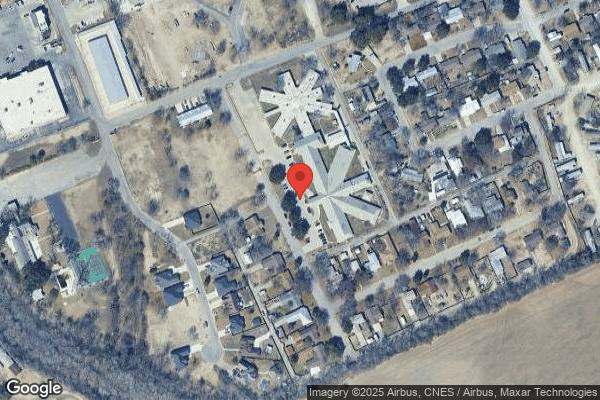
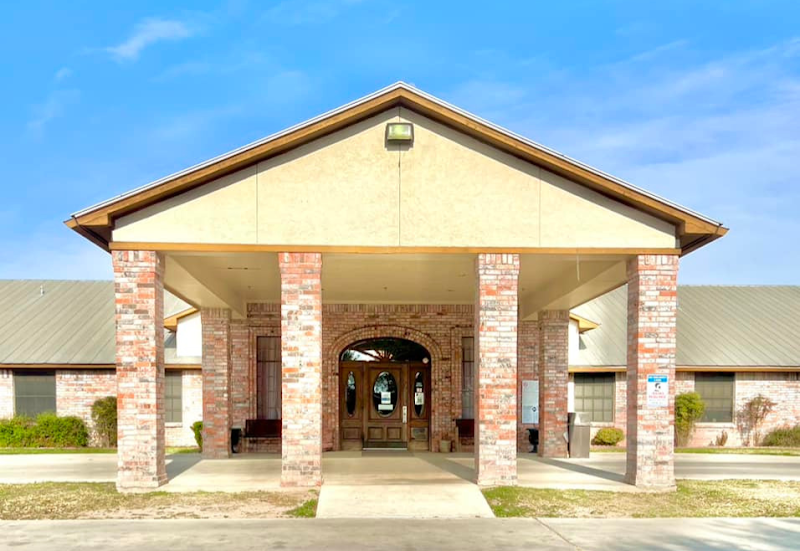
200 RIVERSIDE DR, UVALDE, TX 78801 (830) 278-5641
Government - Hospital district 200 Beds CREATIVE SOLUTIONS IN HEALTHCARE Data: November 2025
Trust Grade
75/100
#180 of 1168 in TX
Last Inspection: April 2025

Within standard 12-15 month inspection cycle. Federal law requires annual inspections.

Overview

Amistad Nursing and Rehabilitation Center in Uvalde, Texas, has a Trust Grade of B, indicating it is a good choice for care, though there is room for improvement. It ranks #180 out of 1,168 facilities in Texas, placing it in the top half, and #1 out of 2 in Uvalde County, meaning it is the best option locally. The facility's performance trend is stable, with 6 issues noted in both 2024 and 2025, and it has a solid staffing turnover rate of 37%, which is better than the Texas average of 50%. However, it has less RN coverage than 91% of Texas facilities, which raises concerns, and the absence of a full-time social worker could leave residents' psychosocial needs unmet. Specific issues include unclean resident rooms with visible damage and a failure to maintain proper food safety standards in the kitchen, which could pose risks to residents' health and comfort.

Trust Score
B
75/100
In Texas
#180/1168
Top 15%
Safety Record
Low Risk
No red flags
Inspections
Holding Steady
6 → 6 violations
Staff Stability
○ Average
37% turnover. Near Texas's 48% average. Typical for the industry.
Penalties
✓ Good
No fines on record. Clean compliance history, better than most Texas facilities.
Skilled Nurses
⚠ Watch
Each resident gets only 10 minutes of Registered Nurse (RN) attention daily — below average for Texas. Fewer RN minutes means fewer trained eyes watching for problems.
Violations
⚠ Watch
14 deficiencies on record. Higher than average. Multiple issues found across inspections.
★★★★☆
4.0
Overall Rating
★★☆☆☆
2.0
Staff Levels
★★★☆☆
3.0
Care Quality
★★★★☆
4.0
Inspection Score
Stable
2024: 6 issues
2025: 6 issues

The Good

  • Full Sprinkler Coverage · Fire safety systems throughout facility
  • No fines on record
  • Staff turnover below average (37%)

    11 points below Texas average of 48%

Facility shows strength in fire safety.

The Bad

Staff Turnover: 37%

Near Texas avg (46%)

Typical for the industry

Chain: CREATIVE SOLUTIONS IN HEALTHCARE

Part of a multi-facility chain

Ask about local staffing decisions and management

The Ugly 14 deficiencies on record

Apr 2025 6 deficiencies
CONCERN (D)

Potential for Harm - no one hurt, but risky conditions existed

Deficiency F0576 (Tag F0576)

Could have caused harm · This affected 1 resident

Based on interview and record review, the facility failed to ensure residents had the right to send and receive mail, and to receive letters, package and other materials delivered to the facility or t...

Read full inspector narrative →
Based on interview and record review, the facility failed to ensure residents had the right to send and receive mail, and to receive letters, package and other materials delivered to the facility or the resident through a means other than a postal service, including the right to privacy of such communications for 1 of 5 residents (confidential resident) reviewed for resident rights. The facility failed to ensure staff distributed mail received on Saturdays to the residents. This deficient practice could result in residents not receiving mail in a timely manner and a diminished quality of life. The findings were: During a confidential resident group meeting 1 of 5 members group stated they never received mail on Saturdays because the Front Office Staff didn't work on Saturdays. During an interview on 4/7/25 at 3:16 p.m., the Receptionist stated she worked for the facility for almost 3 years and usually worked from Monday to Friday and sometimes on the weekends. The Receptionist stated she delivered personal mail to the residents daily from Monday to Friday. The Receptionist stated she believed the mailman delivered mail on Saturdays and when the mail was delivered it was placed in a mailbox (large white bin) and stored in the admissions office, which included packages. The Receptionist stated they had a weekend Clerical Staff who was newly hired but stated she knew the mail was not distributed over the weekend because when she returned to the facility on Monday morning, the mailbox had mail and packages stored in the admissions office. The Receptionist further stated, if I lived here and received personal mail on a Saturday and had to wait until Monday, I wouldn't like it because it could be something I have been waiting for and they (the residents) probably don't get personal mail that often and it would be nice to know you are receiving something from somebody. The Receptionist stated she was responsible for delivering personal mail to the residents. During an interview on 4/7/25 at 3:28 p.m., the Admissions Coordinator stated the facility received mail delivery from Monday to Saturday. The Admissions Coordinator stated the Receptionist received the mail and distributed personal mail to the residents from Monday to Friday. The Admissions Coordinator further stated, the Activities Director used to deliver the mail to the residents, but the facility did not have an Activity Director. The Admissions Coordinator stated, on Saturday's mail delivery, they (the staff) put the mail in my office or in the Business Office Managers office. Nobody sorts it on the weekend. The Admissions Coordinator further stated the mail sits in my office or the BOM's office until Monday. The Admissions Coordinator stated mail delivery to the residents was important because it was the resident's connection to the outside since they don't get that many visitors . During an interview on 4/7/25 at 3:41 p.m., the BOM stated he generally worked Monday to Friday and sometimes weekends. The BOM stated he often did not receive any mail unless the Receptionist had delivered it to him. The BOM stated the Receptionist was responsible for sorting the mail, which included the resident's personal mail. The BOM stated, most of the time I come in on Sundays, if I worked on a weekend, I know Sunday there is no mail delivery. I don't really know if the mail is being delivered on Saturday. I don't usually work on Saturday. During an interview on 4/8/25 at 10:51 a.m., the ADM stated mail delivered on a Saturday should be distributed on Saturday. The ADM further stated they had a Receptionist (Clerical Staff) and a manager on duty on the weekends and they should be processing the personal mail to the residents on Saturday instead of holding onto it until Monday. I don't know what the process is right now. The ADM further stated mail delivery to the residents was their right. A telephone interview on 4/9/25 at 10:12 a.m. with the weekend Clerical Staff was attempted but was unsuccessful. The Clerical Staff did not return the State Surveyors call. Record review of the facility's policy and procedure titled Resident Mail Delivery and Distribution, dated 2011, revealed in part, .The health care center will develop a system to deliver and distribute resident mail in accordance with privacy and confidentiality regulations .The Activity Department appoints a specific staff member or volunteers to coordinate mail delivery every day that the facility receives mail or parcels
CONCERN (D)

Potential for Harm - no one hurt, but risky conditions existed

Deficiency F0583 (Tag F0583)

Could have caused harm · This affected 1 resident

**NOTE- TERMS IN BRACKETS HAVE BEEN EDITED TO PROTECT CONFIDENTIALITY** Based on observation, interview, and record review, the facility failed to ensure residents had a right to personal privacy and ...

Read full inspector narrative →
**NOTE- TERMS IN BRACKETS HAVE BEEN EDITED TO PROTECT CONFIDENTIALITY** Based on observation, interview, and record review, the facility failed to ensure residents had a right to personal privacy and confidentiality in his or her personal and medical records for 1 of 1 resident (Resident #52) reviewed for residents' rights. The facility failed to ensure LVN D locked the medication cart computer screen and left Resident #52's information exposed. This failure could place residents at risk of resident-identifiable information being accessed by unauthorized persons. The findings included: Record review of Resident #52's face sheet, dated 4/8/25, revealed an [AGE] year-old female who was admitted to the facility on [DATE] and re-admitted on [DATE]. Resident #52 had diagnoses which included cerebral infarction (type of stroke that occurs when blood flow to a part of the brain is blocked or significantly reduced, leading to tissue death), dementia (a decline in cognitive function that is severe enough to interfere with a person's daily life and activities), dysphagia (language disorder that results from damage to the brain affecting language), and urinary tract infection . Observation on 4/6/25 at 3:05 p.m. revealed the medication cart on Unit E had the computer screen open with Resident #52's information. Approximately a minute later, the DON walked into the unit and observed the medication cart on Unit E with the computer screen open with Resident #52's information. The DON then knocked on a resident room and notified LVN D . During an observation and interview on 4/6/25 at 3:06 p.m., LVN D stated the computer screen on the medication cart in Unit E was left with the computer screen open with Resident #52's information. LVN D stated she got distracted by a resident and forgot to lock the computer screen. LVN D stated, leaving patient information exposed was a HIPAA violation and information could be obtained by unauthorized persons, and it was an invasion of the resident's privacy. During an interview on 4/8/25 at 11:05 a.m., the DON stated it was her expectation that resident information should be private and stated she had seen the computer screen on the medication cart in Unit E open and in full view of the resident's information. The DON stated, the health information from that resident could be talked about and spread through to people who should not have that information. Record review of the facility's, undated, policy and procedure titled, Resident Rights, revealed in part, .The resident has a right to a dignified existence, self-determination, and communication with and access to persons and services inside and outside the facility, including those specified in this policy .The facility must protect and promote the rights of the resident .Privacy and confidentiality .The resident has a right to personal privacy and confidentiality of his or her personal and medical records
CONCERN (D)

Potential for Harm - no one hurt, but risky conditions existed

Incontinence Care (Tag F0690)

Could have caused harm · This affected 1 resident

**NOTE- TERMS IN BRACKETS HAVE BEEN EDITED TO PROTECT CONFIDENTIALITY** Based on observation, interview, and record review, the facility failed to ensure a resident who was incontinent of bladder rece...

Read full inspector narrative →
**NOTE- TERMS IN BRACKETS HAVE BEEN EDITED TO PROTECT CONFIDENTIALITY** Based on observation, interview, and record review, the facility failed to ensure a resident who was incontinent of bladder receives appropriate treatment and services to prevent urinary tract infections and to restore continence to the extent possible for 2 of 2 residents (Resident #68 and #40) reviewed for indwelling urinary catheter care/incontinence care: 1. The facility failed to ensure Resident #68's indwelling urinary catheter drainage bag was not touching the floor and failed to provide proper incontinence care. 2. The facility failed to ensure Resident #40's indwelling urinary catheter drainage bag was not touching the floor. This failure could place residents with indwelling urinary catheter devices at risk for the development of new or worsening urinary tract infections. The findings included: 1. Record review of Resident #68's face sheet dated 4/7/25 revealed a [AGE] year-old male admitted to the facility on [DATE] and re-admitted on [DATE] with diagnoses that included acute kidney failure (sudden loss of the kidneys' ability to filter waste products, balance fluids, and regulate electrolytes in the body), neuromuscular dysfunction of bladder (condition where the nerves and muscles that control bladder function do not work properly), retention of urine, and disorders of prostate (any condition that affects the small gland that produced seminal fluid which can affect urinary and reproductive function). Record review of Resident #68's most recent quarterly MDS assessment dated [DATE] revealed the resident was moderately cognitively impaired for daily decision-making skills, utilized an indwelling urinary catheter and was frequently incontinent of bowel. Record review of Resident #68's Order Summary Report dated 4/7/25 revealed the following: - Ensure catheter strap in place and holding every shift change as needed with order date 11/18/24 and no end date - Ensure foley bag is in privacy bag while in bed or wheelchair every shift with order date 11/18/24 and no end date - Empty drainage bag every shift with order date 11/18/24 and no end date - Monitor indwelling urinary catheter every shift for leakage, blockage, sediment, buildup, or low output every shift with order date 11/18/24 and no end date - Provide catheter care every shift with order date 11/18/24 and no end date Record review of Resident #68's comprehensive care plan with revision date 1/7/25 revealed the resident was incontinent of bowel and required assistance with toileting tasks and interventions that included to provide peri care after each incontinent episode. Further review of Resident #68's comprehensive care plan revealed the resident required the use of an indwelling urinary catheter with interventions that included to check tubing for kinks and maintain the drainage bag off the floor. During an observation on 4/6/25 at 12:29 p.m., Resident #68 was observed in the dining room eating lunch and the indwelling urinary catheter bag was strapped behind the resident's wheelchair touching the floor. During an observation on 4/7/25 at 8:18 a.m., Resident #68 was observed sitting up in the wheelchair and the indwelling urinary catheter bag was strapped behind the resident's wheelchair touching the floor. During an observation on 4/8/25 at 11:31 a.m., during catheter/incontinent care to Resident #68, CNA B used a disposable wipe to clean the resident's scrotum and wiped in the wrong direction from back to front. CNA B continued with catheter/incontinent care and used a disposable wipe to clean the resident's left inner thigh two times using the same area of the wipe. CNA B then took the same disposable wipe, folded it, and wiped Resident #68's right inner thigh two times using the same area of the wipe. CNA B completed catheter/incontinent care and assisted Resident #68 into the wheelchair. Resident #68's indwelling urinary catheter collection bag was strapped to the resident's wheelchair and the catheter drainage bag was observed touching the floor. During an observation and interview on 4/8/25 at 11:43 a.m., CNA B acknowledged Resident #68's indwelling urinary catheter drainage bag was touching the floor and should not have been because it was considered cross contamination and an infection control issue. CNA B further stated the indwelling urinary catheter drainage bag could get snagged on something or dislodge. CNA B stated, it can get caught on the wheels (of the wheelchair) when we are rolling him back and forth. CNA B acknowledged she had used the same area of the disposable wipe more than once while providing Resident #68 with catheter/incontinence care and considered it cross contamination. CNA B stated, wipe one time and then toss the wipe. CNA B acknowledged using the disposable wipe to wipe from back to front instead of from front to back when cleaning the resident's scrotum. CNA B stated wiping in the wrong direction was a problem because the germs could be wiped back up instead of away; same thing it's cross contamination and could result in the resident getting an infection, a rash, or something like that. CNA B stated she had received in-service competency training on catheter/incontinence care maybe a couple of months ago and had been in-serviced by ADON C. CNA C acknowledged it was the CNAs responsibility to ensure the indwelling urinary catheter bag was not touching the floor. During an interview on 4/8/25 at 2:04 p.m., ADON C stated, during incontinent care, it was expected to use the disposable wipe with one pass and then toss the wipe or turn the wipe and use a clean area. ADON C stated, if the wipe was used once, it should either be turned to a clean side, or the wipe should be tossed. ADON C further stated, no more than one pass should be made with the disposable wipe because that part of the wipe had already been used and there could be a problem with cross contamination and the resident could get an infection. ADON C stated the indwelling urinary catheter drainage bag was supposed to be kept off the floor because it could rupture or spill urine resulting in the resident getting an infection. During an interview on 4/8/25 at 2:17 p.m., the DON stated, it was her expectation, when using a disposable wipe during catheter/incontinent care, the wipe should only be used once. The DON stated, you don't wipe more than once with the same wipe because it's cross contamination; they are basically just wiping back the dirty to what was supposedly just cleaned. The DON further stated, when providing catheter/incontinent care, should be wiping away from the area that you are wiping. Always wipe from front to back because if not you could be causing an infection. The DON stated, the indwelling urinary catheter drainage bag should not be touching the floor; cross contamination; the bag dragging on the floor could cause infection, it can cause trauma, it could be accidently stepped on and dislodged. Record review of CNA B's Proficiency Audit dated 5/31/24 revealed she had satisfied the requirements for providing catheter care and perineal care. 2. Record review of Resident #40's admission sheet dated 4/7/25 indicated a [AGE] year-old man with an original admission date of 10/5/23 and a readmission date of 2/6/25. Resident #40 had diagnoses which included bladder dysfunction, hyperlipidemia (high cholesterol), dementia, muscle weakness, and chronic obstructive pulmonary disease (COPD). Record review of Resident #40's quarterly MDS assessment dated [DATE] indicated the resident was severely cognitively impaired for daily decision-making skills with a BIMS of 5, utilized an indwelling urinary catheter and was frequently incontinent of bowel. Record review of Resident #40's Order Summary Report dated 4/7/25 indicated the following: - Empty drainage bag every shift with order date 2/6/25 and no end date - Ensure catheter strap in place and holding every shift change as needed with order date 2/6/25 and no end date - Ensure foley bag is in privacy bag while in bed or wheelchair every shift with order date 2/6/25 and no end date Record review of Resident #40's comprehensive care plan with revision date 2/25/25 indicated the resident was incontinent of bowel and required assistance with toileting tasks and interventions that included Administer medications/treatments as per MD's order when indicated, Apply barrier cream as indicated, and Check resident frequent throughout the day and requested/required and assist with toileting as needed. Further review of Resident #40's comprehensive care plan indicated the resident required the use of an indwelling urinary catheter with interventions which included to check tubing for kinks and maintain the drainage bag off the floor. During an observation on 04/07/25 at 09:17 AM, Resident #40 was seen sitting in his wheelchair in the dining room with his catheter bag attached to the back of his wheelchair touching the floor. During an observation on 04/07/25 at 11:21 AM, Resident #40 was seen sitting in the dining room where he was moving his wheelchair back and forth. The bottom of the catheter bag was observed sliding back and forth on the ground as the wheelchair moved. During an observation on 04/08/25 at 08:06 AM, Resident #40 was seen self-propelling in his wheelchair from the dining room to the 100 Hall. The catheter bag was strapped to the bottom of the wheelchair with the bag dragging against the floor as he moved down the hallway. During an observation and interview on 04/08/25 at 12:01 PM, CNA E stated Resident #40's catheter bag should not be touching the ground because of cross contamination. At the time of the interview Resident #40 was observed sitting in the dining room with his catheter bag touching the floor. When asked who was responsible for making sure a resident's catheter bag did not touch the floor, CNA E stated, we are. During an interview on 04/08/25 at 12:09 PM regarding catheter bag placement, CNA F stated, the CNAs are responsible for making sure it's not touching the floor, and they are supposed to pick it up. CNA F stated, an infection or an accident can happen and a resident can get sick if there's cross contamination, and they should be checking it frequently. During an interview on 04/08/25 at 02:04 PM with ADON C, when asked if at any point should the catheter bag should be touching the floor, ADON C stated no, because it can rupture and spill the urine, and it can also be infection control, and the resident could get an infection. During an interview on 04/08/25 at 02:16 PM, the DON stated the expectation for the catheter bag is that it not be touching the floor. The DON stated, it could be cross contamination with the bag touching the floor and cause infection, and it could dislodge or be accidentally stepped on. Record review of the facility's policy and procedure titled Perineal Care, dated 5/11/22, noted .An incontinent resident or urine and/or bowel should be identified, assessed, and provided appropriate treatment and services .Gently perform perineal care, wiping from 'clean,' urethral area, to 'dirty,' rectal area, to avoid contaminating the urethral area - CLEAN to DIRTY! .Use a clean area of the washcloth or pre-moistened cleansing wipes for each stroke .Do not wipe more than once with the same surface . Record review of the facility's policy and procedure titled Catheter Care with revision date 2/13/2007 revealed in part, .Check the resident frequently to be sure he or she is not lying on the catheter and to keep the catheter and tubing free of kinks. Keep tubing off floor and minimize friction or movement at insertion site .Be sure the catheter tubing and drainage bag are kept off the floor .
CONCERN (D)

Potential for Harm - no one hurt, but risky conditions existed

Deficiency F0761 (Tag F0761)

Could have caused harm · This affected 1 resident

Based on observations, interviews, and record review, the facility failed to ensure drugs and biologicals used in the facility were labeled in accordance with currently accepted professional principle...

Read full inspector narrative →
Based on observations, interviews, and record review, the facility failed to ensure drugs and biologicals used in the facility were labeled in accordance with currently accepted professional principles for one of six medication carts (200 hall nurse cart) assessed for medication storage and labeling. The facility failed to ensure all medications located inside the 200 hall nurse cart were stored in labeled containers. This failure could place residents at risk of receiving inadequate treatments or ingesting medications for which they were not prescribed. The findings included: During an observation on 04/08/25 at 9:25 AM of the 200 hall nurse cart, five pills were observed lying in the bottom in the cart, not in labeled containers. During an interview on 04/08/25 at 9:25 AM regarding the loose pills in the 200 hall nurse cart, ADON C stated, they could get them confused and give it to a patient who isn't supposed to take them. ADON C stated, when they find loose pills they try to track what they are and then dispose of them. During an interview on 04/09/25 at 08:57 AM regarding the loose pills in the 200 hall nurse cart, the Acting Administrator stated, someone could get confused and give something to someone that they shouldn't have, and they wouldn't know what it is or who it's for. During an interview on 04/09/25 at 12:44 PM regarding the loose pills in the 200 hall nurse cart,LVN A stated, patients might not be getting their meds. LVN A stated, usually I go looking for it when a pill falls, and I should have looked through the cart to check for loose pills. LVN A stated, normally we just count narcotics, and if something falls, most of us get it immediately but they are also responsible for going through their cart. Review of the Medication Labeling Policy from the Pharmacy Policy & Procedure Manual 2003, noted All legend patient medications regardless of source shall be properly labeled as required in State regulations for Long Term Care Facilities. The policy further noted, Non-prescription drugs obtained from health food stores, or sources other than the provider pharmacy must be in the original manufacture's container.
CONCERN (E)

Potential for Harm - no one hurt, but risky conditions existed

Social Worker (Tag F0850)

Could have caused harm · This affected multiple residents

Based on interviews and record review, the facility with more than 120 beds failed to employ a qualified social worker on a full-time basis, for 1 of 1 social services staff reviewed for qualification...

Read full inspector narrative →
Based on interviews and record review, the facility with more than 120 beds failed to employ a qualified social worker on a full-time basis, for 1 of 1 social services staff reviewed for qualifications of Social Worker. The facility, licensed for 200 beds, did not employ a full-time social worker. This failure could place residents at risk of social service and psychosocial needs not being met. The findings included: Record review of the facility's Daily Census Report, dated 4/6/25, noted the facility had a total licensed bed capacity of 200. Record review of the Facility Summary Report from the Texas Unified Licensure Information Portal (TULIP) noted the facility had a total licensed capacity of 200 beds. Record review of the facility's Contract Binder, showed no contract with a licensed social worker. During an interview on 4/6/25 at 1:14 PM, the DON stated the facility did not have a social worker and had not had a social worker for a while. During an interview on 04/08/25 at 03:53 PM, the Acting Administrator stated it was very difficult to find a social worker in this area, and they have a sign on bonus, and they have made offers to people who back out. The Acting Administrator stated, it has to be over a year, since the facility had a social workder because there was not one here this time last year. The Acting Administrator stated, it is hard because they have to relocate here and after the tragedy they have a bad reputation. The Acting Administrator stated a social worker is needed because the social worker coordinates social services for the residents. The Acting Administrator stated, right now the services are being provided by the nurses, they are just not being done by a licensed social worker. During an interview on 04/09/25 at 11:51 AM, the Compliance Nurse stated, there is no policy on social services.
MINOR (C)

Minor Issue - procedural, no safety impact

Deficiency F0558 (Tag F0558)

Minor procedural issue · This affected most or all residents

**NOTE- TERMS IN BRACKETS HAVE BEEN EDITED TO PROTECT CONFIDENTIALITY** Based on observation, interview and record review the facility failed to ensure residents had the right to reside and receive se...

Read full inspector narrative →
**NOTE- TERMS IN BRACKETS HAVE BEEN EDITED TO PROTECT CONFIDENTIALITY** Based on observation, interview and record review the facility failed to ensure residents had the right to reside and receive services in the facility with reasonable accommodation of resident needs and preferences except when to do so would endanger the health and safety of the resident or others for 1 of 8 residents (Resident #4) reviewed for call light placement. The facility failed to ensure the call light was within reach for Resident #4. This deficient practice could place residents at risk of not receiving help as needed. The findings were: Record review of Resident #4's face sheet, dated 04/07/2025, revealed a female who was admitted to the facility on [DATE] and re-admitted on [DATE]. Resident #4 had diagnoses which included: polyosteoarthritis (arthritis affecting multiple joints), dementia (syndrome that progressively affects a persons cognitive ability) and muscle weakness. Record review of Resident #4's MDS assessment, dated 03/11/2025, revealed the resident's BIMS score was 3, which indicated severe cognitive impairment. Record review of Resident #4's care plan, initiated date of 3/19/2025, revealed Resident #4 potential for falls/injuries . Be sure the resident's call light is within reach.
Feb 2024 5 deficiencies
CONCERN (D)

Potential for Harm - no one hurt, but risky conditions existed

Deficiency F0559 (Tag F0559)

Could have caused harm · This affected 1 resident

**NOTE- TERMS IN BRACKETS HAVE BEEN EDITED TO PROTECT CONFIDENTIALITY** Based on record review and interview, the facility failed to ensure the right to receive written notice of a room change before ...

Read full inspector narrative →
**NOTE- TERMS IN BRACKETS HAVE BEEN EDITED TO PROTECT CONFIDENTIALITY** Based on record review and interview, the facility failed to ensure the right to receive written notice of a room change before the change was made for 1 of 1 resident (#46) reviewed for right to receive written notification. The facility did not provide evidence that Resident #46 was given a written notice of a room change before the resident was moved. This deficient practice could affect residents in the facility that are moved without required notification. Record review of Resident #46's face sheet dated 02/27/2024 revealed the resident was admitted to the facility on [DATE] and readmitted on [DATE] with diagnoses that included polyosteoarthritis, lack of coordination, difficulty walking, mild cognitive impairment, anxiety disorder, and presence of a cardiac pacemaker. Review of Resident #46's Quarterly MDS dated [DATE] revealed the resident had a BIMS score of 09 which indicated mild cognitive impairment. Interview with Resident #46 on 02/26/2024 at 1:40 p.m., Resident #46 said, I am upset with this place. The Resident stated there was a disagreement between the resident and the roommate, the resident left the facility for a doctor's appointment in the community the next morning, returned to the facility and all of the resident's belongings had been moved from the room in which the resident was residing and moved to a new room without notice. Resident #46 explained the personal photos and frames were removed from the walls of the original assigned bedroom, personal toiletries were removed from the drawers and clothes were removed from the closet. Resident #46 explained she was not asked if the personal belongings could be moved nor notified of the room change prior to leaving the facility for the doctor's appointment and felt that was wrong. Interview with the DON on 02/27/2024 at 6:12 p.m., the DON stated, Resident #46 was moved without notice and should not have been. The DON went on to explain there was miscommunication between herself and staff which led to Resident #46's personal belongings being moved before the resident was asked or notified about the move and while the resident was out of the facility at an appointment. The DON said that was wrong and all residents were to be provided with written notice prior to moving, it is a right and they should be offered a choice. Interview with the Administrator on 02/28/2024 at 3:22 p.m., the Administrator stated she was aware after the fact Resident #46 was moved without proper notification to the resident. The Administrator said, that should not have happened, the resident should have been spoken with and provided notification, we did complete and investigation and provide staff with additional education to prevent that from happening again. The Administrator stated, now all resident moves are to be approved by me to ensure all steps are appropriately followed. An undated policy provided by the facility, titled Room Changes SS03-12.0, revealed: If a resident is asked to relocate to another room, 5 days notice must be given to the resident of responsible party. The notice must be in writing and include the reason for the change.
CONCERN (D)

Potential for Harm - no one hurt, but risky conditions existed

Deficiency F0761 (Tag F0761)

Could have caused harm · This affected 1 resident

Based on observation and interview the facility failed to ensure drugs and biologicals were stored in accordance with currently accepted professional principles, in 1 of 7 (100 hall medication cart) m...

Read full inspector narrative →
Based on observation and interview the facility failed to ensure drugs and biologicals were stored in accordance with currently accepted professional principles, in 1 of 7 (100 hall medication cart) medication carts observed: The facility failed to assure that 100 hall medication cart was secure and inaccessible to unauthorized staff and residents. This deficient practice could place residents at risk of medication misuse and diversion. The findings were: Observation on 2/25/2024 at 10:02 am, the 100-hall medication cart was not locked as evidenced by the lock not being pushed in to engage the lock. Interview on 2/25/2024 at 10:03 am with LVN A, verified the medication cart was not locked and she proceeded to lock it. Interview on 2/28/2024 at 11:57 am with ADON B, he stated that the medication carts should be locked for safety reasons. He stated unlocked medication carts could place residents at risk of accessing medications or other items in the cart and cause medication misuse or diversion.
CONCERN (D)

Potential for Harm - no one hurt, but risky conditions existed

Social Worker (Tag F0850)

Could have caused harm · This affected 1 resident

Based on record review and interviews a facility with more than 120 beds, failed to employ a qualified social worker on a full-time basis, for 1 of 1 social services staff reviewed: The facility, lice...

Read full inspector narrative →
Based on record review and interviews a facility with more than 120 beds, failed to employ a qualified social worker on a full-time basis, for 1 of 1 social services staff reviewed: The facility, licensed for 200 beds, did not employ a full-time social worker. This failure could place residents at risk of social service and psychosocial needs not being met. The findings were: Record review of Facility Summary Report, undated, revealed the facility had a total licensed capacity for 200 beds. During a review of staff training and licensure on 02/28/24 at 11:30 am, the HR Director revealed the social worker did not have a current license since she was still in school. The HR Director stated the social worker will graduate in May and will then test for her LBSW license. During an interview with ADM and ADO on 02/28/24 at 1:19 pm, the ADM stated they hired the social services director (SSD) last October on 10-23-23 knowing she was still in school for social work. She would graduate in May with her LBSW and she may test just prior to her graduation date. The ADM stated they did have a corporate licensed social worker but she does not sign off on any of the current SSD's work or provide mentoring. The current social services director was doing her internship at another place since she was unable to do it at this facility. The ADM stated the social services director had responsibilities for discharge planning, assisted with setting up care plans, participates in the care plan meetings and did social history assessments. The ADO, who was the previous administrator at this facility, stated the last social worker left 10/05/23 so they were only without a social services person for a couple of weeks. The ADM stated the social services director came in to work in the afternoons, evenings and on the weekends and performed about 40 hours of work per week. During a phone interview on 02/28/24 at 4:12 pm, the SSD confirmed she was in school and would receive her LBSW license after she graduated in May and took the State test for Social Workers. The SSD stated she was currently in a class where they were doing practice tests and after that class she would have the real test scheduled. The SSD stated her plan was to have everything completed by the end of May. The SSD stated her responsibilities included discharge planning that involved setting up home health and DME, completing social histories and social assessments, setting up care plan meetings, assisting with the completion of DNRs, completing portions of the MDS, and talking with residents who were upset or needed some support. The SSD stated if she determined that a resident needed counseling, she would make a referral to the facility's psychological services contractor. The SSD acknowledged she only signed as a Social Service Director and would not use the title of Social Worker until she received her license. Record review of the staff roster, provided by the facility, undated, revealed the name of the SSD and had her title as Social Service - Licensed.
CONCERN (E)

Potential for Harm - no one hurt, but risky conditions existed

Safe Environment (Tag F0584)

Could have caused harm · This affected multiple residents

**NOTE- TERMS IN BRACKETS HAVE BEEN EDITED TO PROTECT CONFIDENTIALITY** Based on observation and interview, the facility failed to provide a safe, clean, comfortable and homelike environment for daily...

Read full inspector narrative →
**NOTE- TERMS IN BRACKETS HAVE BEEN EDITED TO PROTECT CONFIDENTIALITY** Based on observation and interview, the facility failed to provide a safe, clean, comfortable and homelike environment for daily living for 3 of 6 residents rooms (Resident rooms [ROOM NUMBER]) reviewed for environmental concerns in that: 1. Resident rooms for Residents #39, #52 and #46 had many scratches and removed paint changing the appearance of the door making them look dirty and damaged. 2. Resident #52's room had multiple scratches on the walls. These failures could affect residents who resided at the facility and could put them at risk of living in an unsafe, unclean, and uncomfortable and an un-homelike environment. Findings included: During an observation and interview of Resident #39's room on 02/26/2024 at 1:20 p.m., Resident # 39 stated, have you looked at these door frames, they don't look nice, the paint is coming off, they shouldn't be like that; this place gets paid a lot of money and it should look very good for us. During an observation and interview of Resident #52's room on 02/26/2024 at 1:35 p.m., Resident #52 stated, the wall is all scratched up because I can't move my wheelchair myself, when the staff helps me get to my side of the room, they sometimes hit the wall with my chair and it causes those scratches on the wall, they don't do it on purpose. During and observation and interview of Resident #46's room on 02/26/2024 at 1;40 p.m. Resident #46 stated, they need to paint. (while pointing at the door frame of the resident's room), It needs to look better for us. They get paid to make it look like it should. This is supposed to be our home. During an interview on 02/28/2024 at 3:38 p.m. the Administrator stated the hall 100 doorways should look like that, the scratches you see are from wear and tear throughout the years. She further stated, repainting is something our company is working on as part of a refresh for our building we do not have a specific date identified at this time, but that work will be completed by an outside contractor. The Administrator stated Resident #52's room walls should have been reported by staff but unfortunately had for some reason not been identified as in need of repair or repainting prior to the survey. During an interview on 02/28/2024 at 3:52 p.m. the MS stated he was not aware of the scratches on the walls in room Resident #52, he had already checked the facility electronic maintenance system to see if the damage had previously been reported and it had not. The MS said that should have been notified by staff making rounds as the resident requires assistance with operating the wheelchair. The MS said he was unable to paint the door frames because they are metal and the paint that has to be used creates odors. He stated the new company planned to have an outside contractor come in and repaint the door frames as part of a refresh, although he did not know when. The facility did not provide a policy prior to exit.
CONCERN (E)

Potential for Harm - no one hurt, but risky conditions existed

Food Safety (Tag F0812)

Could have caused harm · This affected multiple residents

Based on observation, interview, and record review, the facility failed to store, prepare, distribute, and serve food in accordance with professional standards for food service safety for 1 of 1 kitch...

Read full inspector narrative →
Based on observation, interview, and record review, the facility failed to store, prepare, distribute, and serve food in accordance with professional standards for food service safety for 1 of 1 kitchen. 1. There was a box with an opened clear plastic bag containing items identified as frozen fish, by the DM, partially opened exposing the fish to air and possible other contaminants in the freezer. 2. There was a clear large plastic bag of items identified as cut up sausage links, by the DM, with no label or date in the freezer. 3. There was one large plastic bag of a yellow substance identified as a bag of eggs with no label or date in refrigerator A. 4. There was a plastic container identified as a container of chorizo partially used with no opened date in refrigerator B. 5. There was an open bag of an item identified as coffee creamer by the DM opened and not sealed in the dry storage area. These failures could place residents who received meals and/or snacks from the kitchen at risk for food borne illness. The findings included: During an observation and interview with the DM on 02/25/2024 at 3:18 p.m. while viewing the freezers, the DM stated the large bag of cut up sausage links should be labeled with a date of some type since it had been removed from the original manufacturer's box. He stated it need to be labeled so kitchen staff would know whether or not it was safe to be served to the residents. During the same observation and interview the DM stated the items identified as fish in the freezer should not be exposed to air and should be properly sealed. He stated exposure to air as well as other possible substances that could possibly contaminate the fish and most importantly to ensure the residents get good quality food that is safe and fresh. During an observation and interview of refrigerator A with the DM on 02/25/2024 at 3:24 p.m. while viewing the contents of the facility refrigerators, the DM stated the large plastic bag of a yellow substance was eggs was unlabeled with no date and should have a date to make sure the eggs were good for the residents, During an observation and interview of refrigerator B with the DM on 02/25/2024 at 3:26 p.m. while viewing the contents of the facility refrigerators, the DM stated the container of chorizo should have been labeled with a date to make sure it was still fresh and should be served to the residents. During an observation and interview of the dry storage area with the DM on 02/25/2024 at 3:28 p.m. the DM stated the coffee creamer should be sealed to ensure the freshness, quality of the product and to help make sure the area stays free from pests and rodents. Review of facility policy titled, Dietary Services and Policy &Procedure Manual 2012, revealed the following: 4. Open packages of food are stored in closed containers with covers or in sealed bags and dated as to when opened. Record review of the Food Code, U.S. Public Health Service, U.S. FDA, 2022, U.S. Department of H&HS, revealed 3-501.17 Ready-to-Eat/Time Temperature Control for Safety Food, Date Marking. (B) Except as specified in (E) -(G) of this section, refrigerated, ready-to-eat, time/temperature control for safety food prepared and packaged by a food processing plant shall be clearly marked, at the time the original container is opened in a food establishment and if the food is held for more than 24 hours, to indicate the date or day by which the food shall be consumed on the premises, sold, or discarded, based on the temperature and time combinations specified in (A) of this section and: (1) The day the original container is opened in the food establishment shall be counted as Day 1; and (2) The day or date marked by the food establishment may not exceed a manufacturer's use-by date if the manufacturer determined the use-by date based on food safety. Record review of the Food Code, U.S. Public Health Service, U.S. FDA, 2022, U.S. Department of H&HS, 3-305.11, revealed: Preventing Contamination from the Premises - Food Storage. (A) Except as specified in (B) and (C) of this section, FOOD shall be protected from contamination by storing the FOOD: (1) In a clean, dry location; (2) Where it is not exposed to splash, dust, or other contamination.
Jan 2024 1 deficiency
CONCERN (D) 📢 Someone Reported This

A family member, employee, or ombudsman was alarmed enough to file a formal complaint

Potential for Harm - no one hurt, but risky conditions existed

Accident Prevention (Tag F0689)

Could have caused harm · This affected 1 resident

**NOTE- TERMS IN BRACKETS HAVE BEEN EDITED TO PROTECT CONFIDENTIALITY** Based on observation, interview, and record review, the facility failed to ensure each resident received adequate supervision an...

Read full inspector narrative →
**NOTE- TERMS IN BRACKETS HAVE BEEN EDITED TO PROTECT CONFIDENTIALITY** Based on observation, interview, and record review, the facility failed to ensure each resident received adequate supervision and assistance devices to prevent accidents for 1 of 8 residents (Resident #1) reviewed for accidents. The facility failed to safely provide ADLs including bed mobility for Resident #1 and prevent injury during incontinent care or dressing the resident. This failure could place ADL dependent resident at risk for accidents, injuries, and hospitalization. Findings included: Record review of Resident #1's, dated 01/19/2024, face sheet revealed the resident was an [AGE] year-old female admitted to the facility on [DATE], re-admitted on [DATE] and date of discharge was 08/11/23. Her diagnoses included Parkinson's disease (is a progressive disorder that affects the nervous system and the parts of the body controlled by the nerves), contracture of the right hand and left hand (A permanent tightening of the muscles, tendons, skin, and surrounding tissues that causes the joints to shorten and stiffen), polyarthritis (is a condition that affects five or more joints with pain and inflammation), dementia (A group of symptoms that affects memory, thinking and interferes with daily life), neuromuscular dysfunction of bladder (urinary bladder problems due to disease or injury of the central nervous system or peripheral nerves involved in the control of urination), cerebral infarction (Infarction refers to death of tissue. A cerebral infarction, or stroke, is a brain lesion in which a cluster of brain cells die when they don't get enough blood), aphasia (a person may be unable to comprehend or unable to formulate language because of damage to specific brain regions), and dysphagia (difficulty in swallowing food or liquid). Record review of Resident #1's quarterly MDS dated [DATE] revealed the Resident #1 was severely cognitively impaired. Section G functional status of the MDS reflected the resident was extensive assist and required two or more persons for bed mobility (how resident moves to and from lying position, turns side to side, and positions body while in bed or alternate sleep furniture), extensive assist and required one or more person assistance for dressing (how resident puts on, fastens and takes off all items of clothing .), extensive assist and required one or more person assistance for toilet use (how resident uses the toilet room, commode, bedpan, or urinal; transfers on/off toilet; cleanses self after elimination; changes pad; manages ostomy or catheter; and adjusts clothes), and extensive assist and required one or more person assistance for personal hygiene (how resident maintains personal hygiene, including combing hair, brushing teeth, shaving, applying makeup, washing/drying face and hands (excludes baths and showers)), and she used a wheelchair for mobility. Section G also revealed Resident #1 had impairments on both sides of her upper extremity (shoulder, elbow, wrist, hand) and lower extremity (hip, knee, ankle, foot). Section GG functional abilities and goals of resident #1's MDS under self-care revealed the resident was dependent- Helper does all of the effort. Resident does none of the effort to complete the activity. Or the assistance of 2 or more helpers is required for the resident to complete the activity for toileting hygiene and upper and lower dressing. The resident weighed 176 pounds at the time of the MDS. The resident had no falls or injuries since admission or reentry at the time of the MDS assessment. Active Diagnosis included progressive neurological conditions and received medication for pain within 5 days of the MDS assessment. Record review of Resident #1's undated care plan revealed Resident #1 was incontinent of bowel and requires assistance for toileting tasks initiated 11/09/2021 and interventions to check on resident at routine intervals to assess needs and offer assist with toileting tasks. Resident requires extensive x2 staff for toileting tasks. Altered ADL performance related but not limited to dementia, Parkinson's, history of CVA, recent hospitalization for pneumonia as evidenced by required assistance with all ADLs .Resident has contracture to upper and lower extremities initiated 11/09/2021 with interventions to assist resident to turn and reposition frequently throughout the day and as requested/required while in bed and up in W/C. She required extensive assistance x2 staff for bed mobility and turning and repositioning tasks. Potential for falls/injuries related to but not limited to dementia, impaired mobility, Parkinson's, medication side effects, has uncontrollable jerking body movements. Resident has had a recent fall, Date Initiated: 11/09/2021, interventions included bedside mat as ordered initiated 04/24/23, check on resident at routine intervals to assess needs, monitor safety issues and offer assistance date initiated 11/09/2021, Educate the resident, family, caregivers about safety reminders and what to do if a fall occurs, Date Initiated: 11/09/2021, Falling Star Program per facility protocol Date Initiated: 11/09/2021, and Make sure that frequently used and needed items are at bedside in easy reach Date Initiated: 11/09/2021. Record review of document titled Event Nurses-Note 8hr fall, dated 04/21/23, reflected: 1. Event: .CNA reported giving care to resident then noting resident having rolled out of bed onto floor next to bedside . 2. Fall: Unwitnessed fall, hit head . 5. Injury-skin tear or laceration: a. location of injury-right side of forehead b. size (cm)- 0.5 cm, Description: c. new/bleeding d. other information related to skin tear or laceration-noted with quarter sided knot forming to forehead, no LOC noted, PERL to bilt OU . 9. Pain: does the resident appear or state to be in pain? No . 14. Initial Treatment/New Orders: a. first aid in facility b. other-head CT stat 15. Resident statement: a. Resident statement related to event: resident nonverbal unable to communicate statement of event . 16. Notification: a. Physician notified a1. Date and time physician notification: 04/21/2023 9:45 a.m. 2b. date and time of responsible party notification: 04/21/23 9:50 a.m . 18. Physical Factors a. other-alternating air mattress in use at time of event. 19. Gait and Mobility (at time of event) a. Bed Mobility-3.) x2 or more staff assist b. Toileting 3.) x2 or more staff assist c. transferring- 4.0 mechanical lift d. walking 4.) does not walk e. check all the following that apply 3. Leans to the side 6. Balance problems 7. Lack of mobility strength . 20. Environment/Equipment: a. select all that apply 4. Staff assist-w/c, Geri, or Broda chair (specialized recliners or wheelchair) 21. Cognition/ Behavior at Time of Event a. select all that apply 2. Cognitive impairment signed by [LVN B] signed date 04/21/2023 Record review of the facility incident report for a fall, dated 04/21/23 time:9:45 a.m., reflected, [Resident #1], incident location: Resident room, Person preparing the report: [LVN C], Resident location: [room number] .Notes: 04/24/2023 Summary: While [CNA E] was providing incontinent care to resident. He reached for brief and noted resident roll off bed onto floor. Interventions: resident assessed and neuro checks initiated. MD gave orders for resident to be sent for stat CT scan. Resident returned with no new orders. Bedside mat placed at bedside. Air mattress checked for proper functioning and firmness. The DONs username was noted to the side of the note. Record review of Resident #1's CT report, dated 04/21/23, at 12:49 p.m. revealed, Superficial soft tissue hematoma over the right frontal bone and right parietal bone without underlying fracture seen. No intracranial hemorrhage, mass, or mass effect seen (a bruise with bleeding just beneath the skin on the right side of the forehead and the top-right part of the head. There is no break in the bones underneath, and there's no bleeding or swelling inside the skull.) The impression stated 1. No skull fracture or acute intracranial trauma seen. 2. Severe hydrocephalus (accumulation of fluid in the brain) and atrophy (shrinkage and wasting of brain tissue) present. Record review of a document titled Investigation Summary: [Resident #1] Allegation of Neglect, no date, reflected, 'the family member of [Resident #1] emailed the facility website asking for access to resident's online chart portal .In her request, she wrote that she needed access to [Resident #1's] chart due to [Resident #1's] neglect; alleging that the facility has neglected [Resident #1] due to a fall on 4/21/2023 on 6-2 shift. Investigation, interviews, and chart review were conducted. Interviews and investigation reveal that resident [Resident #1] had been given a shower on 4/21/2023 on 6-2 shift by [CNA E]. [CNA E] was assisting resident with incontinent care. According to interview, resident [Resident #1's] roommate was asking for assistance from the aide. [CNA E] turned around to get the brief and explain to the roommate that he would assist her after he completed with resident [Resident #1] when Resident #1 rolled off the bed. [CNA E] was unable to break the fall. The investigation revealed that resident [Resident #1] was lying in a pressure alternating mattress at the time of the fall and the mattress setting was on alternating. Review of the mattress reveals that the mattress inflates and deflates alternating air and uses pressure redistribution to stimulate blood flow to help treat and prevent pressure ulcers for those residents who are unable to move for themselves. Further review of chart reveals that facility staff acted swiftly and accordingly to assess and treat resident for her fall. The MD was notified immediately. The MD's orders were followed. Neuro checks were initiated due to fall and within normal limits. A CT scan was completed on 4/21/23 and results obtained. Results: superficial soft tissues are intact without evidence of injury, mass destruction; Impression: No skull fracture or acute intracranial trauma seen. Chart reveals that staff are assessing resident for pain. New mattress has been ordered and is set to arrive on Monday 5/01/2023. New mattress is an A.I.M. mattress (Air Immersion Mattress) which is an auto, self-inflating, pressure relief system that surrounds the resident with air. No malfunction noted with the current mattress as per interviews and investigation. New mattress will have side bolsters built in within the mattress which can help with comfort and safety along with continue to meet the needs of resident and compliant with the MD orders for a pressure alternating mattress. Intervention was placed; mat by bedside to help prevent injuries in case of falls. Conclusion: Incident/Accident report, along with interviews and investigation conclude that [Resident #1] rolled off from her bed when the nurse aide turned around to get a brief and while he was redirecting the resident's roommate. The Nurse Aide was unable to break the resident's fall. Evidence reveals that facility staff assessed resident and treated according to the MD orders. The investigation indicates that facility staff completed all assessments as required and there was no evidence to indicate that resident was neglected of any care that she needed. Conducted by: [Administrator] Record review of document titled Staff Interview, no date, revealed an interview with LVN C on 04/27/23 and reflected [LVN C] is the charge nurse that was assigned to resident [Resident #1] on 4/21/2023 6-2 shift when resident had a fall from her bed. [LVN C] states that resident had a shower on her shift on 4/21/2023. [LVN C] states that [CNA E] reported fall to her so she immediately went in to assess resident. [LVN C] states that she called [The MD] from her cell phone from resident's room when she assessed resident because she saw that resident had a bump on her head. She states she asked the doctor if she should send her to ER for eval and treatment. She states Dr gave order to send to CT scan. She contacted hospital and was able to get her out to get a CT scan pretty quickly. She states that her aide, [CNA E] reported to her that he had showered resident and had assistance transferring resident to bed. Once resident was in bed, [LVN C] states that [CNA E] told her that he was going to change her, put her brief on etc. [LVN C] states that [CNA E] told her that the roommate distracted him because she was insistent that she needed something and when he turned around to get the brief and tell the roommate that he would be with her as soon as he was finished with [Resident #1], she rolled off the bed. [LVN C] states she did not witness the fall. [LVN C] confirms that resident was using a pressure alternating mattress on her bed at the time of the fall. [LVN C] does not remember the settings of resident's mattress at the time of fall . 6 other LVNs and CNAs were interviewed on 04/27/23-04/28/23 from shifts before and after the fall. No other nurse aide interview was noted for the 6 a.m. to 2 p.m. shift on 04/21/23, the shift when the fall occurred. The document reflected the interviews were conducted by the Administrator and signed by the Administrator. Record review of a statement written by CNA E and signed on 04/25/23 reflected, I [CNA E] was in the middle of Resident #1's care after resident's shower. Resident #1 was laid down, bedding was changed and resident was positioned on bed sling [probable reference to Hoyer sling as the resident was a Hoyer lift for transfers] removed I went to grab a brief and resident's roommate started talking with me as I was explaining I would be tending to her as soon as I was done out of the corner of my eye I noticed her roll out of bed I'm not sure how it happened only that I could not break her fall in time. Record review of an untitled document, no date, revealed a statement from Resident #1's roommate Resident #2 and reflected interview of [resident #2] on 04/21/23 [resident #2] stated that [CNA E] was on the other side of the curtain with [resident #1]. [Resident #2] saw [CNA E] come out from the other side of the curtain to get a brief from the dresser. [Resident #2] stated that she asked [CNA E] to get her up to her wc. [Resident #2] stated that she heard a noise and saw [CNA E] call for help. An attempt to reach CNA E by phone on 01/19/2024 at 11:54 p.m for an interview was unsuccessful. During an observation and interview on 01/08/23 at 12:20 p.m. ADON A stated she completed a one-on-one coaching with CNA E on 04/24/23 and completed an in service on 04/24/23 and 04/25/23 with staff after Resident #1 fell from her bed when CNA E was changing the resident in her bed. ADON A recalled CNA E told her he was changing Resident #1's brief, reached for a brief in the dresser, could not control the resident because she was heavier set, and she fell to the floor. ADON A and the surveyor went to Resident #1's room; Resident #1's room at the time of the fall. The room contained two resident beds, with two smaller nightstand dressers next to head of the residents' beds, and one taller dresser across the room. ADON A pointed at the taller dresser in the room that was labeled diapers and stated in the room Resident #1's briefs were in the taller dresser. ADON A stated she estimated the taller dresser was 7-8 feet from the resident's bed. ADON A stated she provided coaching to CNA E to gather all his supplies prior to starting patient care. ADON A stated they believed the air mattress the resident had could have contributed to the fall and the topic of CNAs not touching the air mattress settings was covered in the in-service and abuse and neglect was covered in the in service. ADON A stated the in-service did not note if the topic of gathering all supplies prior to patient care was covered for the staff in-service on 04/24/23-04/25/23, after this incident. ADON A stated she did not recall having any other concerns or coaching with CNA E or other disciplinary action taken. ADON A stated she believed the CNA E quit but was unsure when he quit. During an interview on 01/18/2024 at 12:43 p.m. the DON recalled CNA E needed to put a brief on Resident #1 and reached over to grab a brief from the dresser next to the resident's bed. The DON stated staff would normally set up the supplies needed for care on the bedside table. The DON stated she was unsure if the resident need one or more staff for assistance with ADLs in bed and staff would refer to a documentation area where they could reference important information about the resident's requirements for help with toileting and transfers. The DON stated she guessed it came from the care plan and the MDS nurses would know if it automatically came from the care plan or was manually input to this reference area for the nurse aides to use. The DON stated because the resident was now deceased and was discharged in the EMR system they were not able to see what the reference would have been at that time for the nurse aides. The DON stated if CNA E was being investigated for abuse or neglect he would have been suspended without pay. The DON stated she could not recall if the CNA came back or not. The DON stated it would not be acceptable for staff to leave a resident unattended to gather supplies. The DON stated they could press the call light for help and ask other staff. The DON stated during incontinent care on a resident in bed, turning is required, and they should have had at least 2 staff members in the room with Resident #1. During an interview on 01/18/2024 at 2:37 p.m. LVN C recalled on 04/21/23 she was the charge nurse for the 6 a.m. to 2 p.m. shift. LVN C stated staff showered Resident #1 and CNA E was taking her back to her room and putting her back in bed. LVN C stated she heard screams from down the hall that Resident #1 had fallen out of bed during care. LVN C stated when she got to Resident #1's room the only staff in the room was CNA E. LVN C stated she was not sure if another staff was helping with Resident #1's care and could not recall if there were any other CNAs working in that hallway that day. LVN C stated she immediately assessed Resident #1 at the bedside, called the MD from the bedside, and received orders to send her out for a CT due to a hematoma she had forming. During an interview on 01/19/24 at 2:14 p.m. the HR Coordinator stated CNA E's date of hire was 11/17/2022 and his term date was 06/02/2023. The HR Coordinator stated CNA E was a no call no show and after 2 no call no shows it's an automatic termination. The HR Coordinator stated his last day of work was 05/30/23 and she termed him on 06/02/23. The HR Coordinator stated she did not try to contact the employees who were a no call no show, that was the supervisor's responsibility and it would have been the DON. The HR Coordinator stated CNA E only had one EDR form and 3 coaching forms in his file. The HR Coordinator stated she was not aware of any other concerns with CNA E. Record review of a facility document titled Coaching Form, dated 04/17/23, reflected situation POC (Point of care where nurse aides document patient care task they completed) not completed. Leaving resident unattended in shower room. Specific Coaching/Education given to the Employee: In-service on compliance of completing POC before leaving work. Check with charge nurse so they can check that work is completed at end of your shift. Gather supplies when showering resident (towels, shampoo, etc.). Never leave residents unattended in shower rooms. The Employee Response was blank and was signed by CNA E and ADON A. Record review of a facility document titled Coaching Form, dated 04/21/23, stated situation: briefs left in trash can in resident's room. Specific Coaching/Education given to the Employee: During incontinent care briefs are to be bagged and taken out of room upon completion of task/ care. Infection control-no gloves or briefs in trash can. No linen on the floor. The Employee Response was blank and was signed by CNA E and ADON A. Record review of a facility document titled Coaching Form, dated 04/24/23, reflected, Situation: POC left undone on 04/22/23. Specific Coaching/Education given to the Employee: Employee has been coach on important of completing POC before he leaves. Must check in with charge nurse before leaving to check that his computer work is completed. The Employee Response was blank and was signed by CNA E and ADON A. Record review of a facility document titled Coaching Form, dated 04/24/23, reflected, situation: While providing care to resident (#1), employee reached to get a brief and resident rolled out of bed. Specific Coaching/ Education given to Employee: personal needs gather all supplies that you will need to provide care before starting ADL. Position-always make sure resident is positioned correctly in bed or w/c. Do not leave them close to edge. Ensure they are in a comfortable position never leave a resident unattended while providing care or showering them. The Employee Response was blank and was signed by CNA E and ADON A. Record review of facility document titled Employee Disciplinary Report Action Request, dated 04/24/23, revealed CNA E was placed on unpaid suspension from 04/24/23 to 04/24/23 and may return on 04/25/23 for Employee was performing incontinent care and resident rolled off bed. Employee will be suspended pending further investigation. The document was signed by the DON, Administrator, and HR Coordinator on 04/24/23. Record review of facility document titled Employee Disciplinary Report, no date, revealed the date of the incident was 04/21/23. The type of disciplinary action was investigatory suspension. Specific reasons for disciplinary action . CNA E will be placed on suspension pending investigation into allegations of neglect by not providing resident care. Corrective plan of action, including time frame .: due to allegations CNA E will be placed on unpaid investigatory suspension. CNA E Will remain on investigatory suspension until the investigation is complete on the above allegation. CNA E Will be notified when the investigation is complete. If the investigation does not substantiate any wrong, he will receive retro pay for any shifts he may have missed while on suspension on the next payroll date. CNA E may provide a written statement regarding allegations under investigation. Employee comments were blank and the document was signed by the DON, Administrator, and CNA E on 04/25/23. Record review of a document titled Payroll Input/ Personnel Action Form, no date, revealed CNA E was terminated on 06/02/23 for no call no show and the last day worked was 05/30/23. The form indicated CNA E was eligible for rehire and yes for self-termination. The form was signed by the HR Coordinator and the Administrator. During a follow up interview on 01/19/23 at 4:41 p.m. the DON stated she was not sure if there was an in-service that reviewed the topic of gathering supplies prior to patient care. The DON stated the ADON did the in-services but she was responsible for the ADONs. The DON stated they believed the resident fell out of the bed because of her air mattress settings. The DON stated Resident #1 was not able to move herself but she did jerk. The DON stated she was not aware of a separate incident where CNA E left a resident unattended during care. The DON stated ADON A did the coaching form for CNA E on 04/17/23 and would have reported the incident to her. The DON stated she did remember what happened or what she found out and she would do a 1 on 1 with that staff member if something like that happened. The DON stated she knew CNA E was suspended once. The DON stated she knew of one other grievance with the CNA related to a diaper in the trash. The DON stated if they noted a staff member to had constant concerns with leaving residents alone during care they would terminate them. The DON stated however the coaching on 04/17/23 had no further documentation or reports so she was not sure if that was a resident who could have showered themselves and did not know why the coaching was done. The DON returned and stated they had nothing else from the 04/17/23 coaching form and they did not recall anything about who the resident was. The DON stated the Administrator did not recall anything about the 04/17/23 incident either. The DON stated the only hospital records they had from Resident #1's fall on 04/21/23 was the CT results. When asked if the resident was only sent out for a CT or sent to the ER the DON stated Resident #1 would have been admitted the ER and the had a CT done. Record review of facility inservice titled In Service Training Attendance Roster, dated 04/24/2023, revealed the topic of Abuse/Neglect reporting, air mattress settings-CNA DO NOT move settings-walking rounds, empty trash, complete POC were covered. 19 staff signed the in service. The inservice with the same exact topics were covered on 04/25/2023 and signed by 15 staff. Record review of all in-services for 2023 revealed no in-services were found regarding gathering supplies prior to resident care, not leaving the resident unattended during care, or use of correct number of staff required for assistance with ADLs. Hospital records for the incident on 04/21/23 involving Resident #1 were requested directly from the hospital by fax at 2:35 p.m. on 01/22/24 and had not been received as of 01/30/24. Record review of facility's policy titled Personal care: Perineal care, created 04/25/2022, effective 05/11/2022, stated Introduction-F676 An incontinent resident of urine and/or bowel should be identified, assess, and provided appropriate treatment and services .It is essential that residents use various devices, absorbent products .on a scheduled basis upon the resident's voiding pattern, professional standards of practice, and the manufacturers recommendations. Purpose this procedure aims to maintain the resident's dignity and self-worth and reduce embarrassment by providing cleanliness and comfort to the resident, preventing infections and skin irritation, and observing the resident skin condition. Definitions: fecal incontinence: the unintentional loss of solid or liquid stool. Urinary incontinence: the involuntary loss or leakage of urine. Policy content: equipment and supplies . if required incontinent pads, resident specific briefs . Procedure content: prepare 1.) assemble equipment and supplies .7.) provide privacy and modesty by closing the door and/or curtain. 8.) prepare and set up the workstation on the over bed or bedside table .Back 20.) reposition the resident to their side .26.) provide resident comfort and safety by re-clothing (if applicable incontinent pads and briefs).
Jan 2023 2 deficiencies
CONCERN (D)

Potential for Harm - no one hurt, but risky conditions existed

Comprehensive Care Plan (Tag F0656)

Could have caused harm · This affected 1 resident

**NOTE- TERMS IN BRACKETS HAVE BEEN EDITED TO PROTECT CONFIDENTIALITY** Based on interview and record review, the facility failed to develop and implement a comprehensive person-centered care plan tha...

Read full inspector narrative →
**NOTE- TERMS IN BRACKETS HAVE BEEN EDITED TO PROTECT CONFIDENTIALITY** Based on interview and record review, the facility failed to develop and implement a comprehensive person-centered care plan that includes measurable objectives and time frames to meet a resident's medical and nursing needs to be furnished to attain or maintain the resident's highest practicable physical, mental, and psychosocial well-being for 1 of 3 residents (Resident #86) reviewed for care plans in that: Resident #86's comprehensive person-centered care plan did not address the resident's risk or interventions due to right total knee replacement. This failure could place residents at risk of not receiving appropriate treatment and services. The findings were: Record review of Resident 86's face sheet, dated 1/06/23, revealed an admission date of 12/9/2022 with diagnoses that included PRESENCE OF RIGHT ARTIFICIAL KNEE JOINT (Knee replacement surgery replaces parts of injured or worn-out knee joints). Uncoordinated movement (is also known as lack of coordination, impairment, or loss of coordination). Anxiety disorder (any of group of mental conditions characterized by excessive fear of or apprehension about real or perceived threats, leading to altered behavior and often physical symptoms such as increased heart rate or muscle tension). Record review of Resident 86's most recent MDS quarterly assessment dated [DATE] revealed the resident BIMS score was 14 suggesting the patient was cognitively intact. Record review of Resident #86's care plan, last review/revision date 12/12/22 revealed the resident had a need for ADL (Activities of Daily Living) assistance related to Resident #86's knee replacement. Self-Care Performance Deficit, however, no mention of the right total knee replacement care plan was noted. Record review of Resident #86's physician's orders dated 1/6/23 revealed the resident to admit to skilled nursing care from 12/9/2022 - 12/29/2022 for R knee total knee replacement. Record review of hospital clinical paperwork revealed that resident had a right total knee replacement on 11/18/2022. During an interview on 01/6/22 at 09:06 a.m., the DON stated the MDS Coordinator, or any nurse, was responsible for updating the care plans. The DON stated the comprehensive person-centered care plan was essential because it identified the types of care and services residents were supposed to receive. She does not know why it was not done for Resident #86, but would look into it. During an interview on 01/06/22 at 9:22 a.m., the MDS Coordinator stated she was responsible for developing and revising the comprehensive person-centered care plan. The MDS Coordinator stated the comprehensive person-centered care plan was important because it contained information on how to care for Resident #86 and identified the types of services the resident needed. She did not know why it was not completed but thought it was because Resident #86 discharged very quickly. Record review of the facility policy and procedure titled, Comprehensive care planning, undated revealed in part, .Policy Statement .An individualized comprehensive care plan that included measurable objectives and timetables to meet the resident's medical, nursing, mental and psychological needs is developed for each resident .1. Our facility's Care Planning/Interdisciplinary Team .develops and maintains a comprehensive care plan for each resident that identifies the highest level of functioning the resident may be expected to attain .3. Each resident's comprehensive care plan is designed to: a. Incorporate identified problem areas .b. Incorporate risk factors associated with identified problems .8. Assessments of residents are ongoing and care plans are revised as information about the resident and the resident's condition change .9. The Care Planning/Interdisciplinary Team is responsible for the review and updating of care plans .d. at least quarterly .
CONCERN (E)

Potential for Harm - no one hurt, but risky conditions existed

Food Safety (Tag F0812)

Could have caused harm · This affected multiple residents

Based on observation, interview, and record review the facility failed to store, prepare, distribute and serve food in accordance with professional standards for food service safety for 1 of 1 facilit...

Read full inspector narrative →
Based on observation, interview, and record review the facility failed to store, prepare, distribute and serve food in accordance with professional standards for food service safety for 1 of 1 facility reviewed for food handling sanitation. 1. The facility failed to ensure units of water were located off of the ground. 2. The facility failed to dispose of baking soda after its past-due date. 3. The facility failed to evaluate the temperature of beef prior to being prepared to serve to residents. 4. The facility failed to dispose of past-date dairy items in the nutrition room. 5. The facility failed to maintain a temperature log of the refrigerator in the nutrition room. These failures could place residents at risk for cross-contamination and foodborne illnesses. The findings include: Observation on 1/04/2023 at 11:18 AM revealed a cardboard box of water containers on the floor within the dry food storage room. Observation on 1/04/2023 at 11:20 AM within the dry food storage revealed 8 units of small containers of baking soda with use by dates of 8/01/2021. Interview on 1/04/2023 at 11:22 AM, the DS stated the box of water was on the floor since last Wednesday (12/28/22). The DS stated the reason the water was on the floor was because the DS forgot to tell the maintenance supervisor to move it to the storage. The DS stated the baking soda was still in the dry food storage because the last food storage audit was not completed correctly. The DS stated he completed the food storage audit and did not notice the baking soda was expired. The DS stated the baking soda was at risk of being used for resident food and reducing nutritional value. The DS stated the water being on the floor was a potential for contamination. Observation and interview on 1/04/2023 at 11:52 AM, revealed the Salisbury steak not temperature checked prior to being removed from the oven, was placed on the steam table and reached 140 degrees. [NAME] A stated she does not take the temp prior to going on the steam table. [NAME] A stated the Salisbury steak is pre-cooked and is frozen in the reach-in freezer. In an interview on 1/04/2023 at 2:42 PM, the DS stated the nutritional room is maintained by nursing and housekeeping exclusively. Observation on 1/04/2023 at 3:21 PM revealed the nutrition room to contain a refrigerator without a temperature log, and within the refrigerator: 1 pint of ice cream with an expiration date of 9/14/2022, and 1 half gallon of dairy milk with an expiration date of 7/21/2022. Interview on 1/06/2023 at 9:15 AM, the DON stated nursing was responsible for auditing the nutrition room. The DON stated she was not certain who completed the last audit of the nutrition room but it is everyone's responsibility to remove expired items from the nutrition room. The DON stated the leftover dairy items that were expired in the nutrition room were left because the last audit was not completed thoroughly. The DON stated the refrigerator within the nutrition room is considered a personal refrigerator and thus not requiring a temperature log. The DON stated the risk associated with keeping the items within the nutrition room would be the food could be served to residents and cause foodborne illness. The DON stated her expectation for meats cooked in the kitchen are to be evaluated in their temperature to make sure they were cooked thoroughly, not just prior to being served. Interview on 1/06/2023 at 9:39 AM, the Administrator stated it is her expectation that food prepared in the kitchen be cooked to temperature to ensure bacteria is destroyed and temperature checked. The Administrator stated the risk associated with beef not being temperature checked would be the kitchen not knowing if the food is cooked thoroughly and potentially caused foodborne illness. The Administrator stated she expected the nutrition and food storage rooms be audited to remove expired items and failure to do so could cause foodborne illness. The Administrator stated her expectation for food and beverages such as water are to be stored away from the ground to prevent contamination and thus foodborne illness. The Administrator stated refrigerators used for food storage must be temperature logged. Record review of facility policy titled Charbroiled Beef Patty revealed a critical control point in cooking the beef patty was cook to an internal temperature of 155F held for 15 seconds. Record review of facility policy titled Personal Refrigerators revealed Residents of the facility may place a personal or dormitory size refrigerator in their room if space permits . Record review of facility policy titled Food safety revealed potentially hazardous food shall be maintained at: 140 degrees of above. Record review of facility policy titled Food Storage and Supplies revealed All food and supplies are to be stored six (6) inches above the flood on surfaces which facilitate thorough cleaning . Record review of the US Food Code, dated 2017, revealed To kill microorganisms, food must be held at a sufficient temperature for the specified time. Cooking is a scheduled process in which each of a series of continuous time/temperature combinations can be equally effective. For example, in cooking a beef roast, the microbial lethality achieved at 112 minutes after it has reached 54.4°C (130°F) is the same lethality attained as if it were cooked for 4 minutes after it has reached 62.8°C (145°F). Cooked beef and roast beef, including sectioned and formed roasts, chunked and formed roasts, lamb roasts and cooked corned beef can be prepared using one of the time and temperature combinations listed in the chart in § 3-401.11 to meet a 6.5-log10 reduction of Salmonella. The stated temperature is the minimum that must be achieved and maintained in all parts of each piece of meat for a least the stated time.
Understanding Severity Codes (click to expand)
Life-Threatening (Immediate Jeopardy)
J - Isolated K - Pattern L - Widespread
Actual Harm
G - Isolated H - Pattern I - Widespread
Potential for Harm
D - Isolated E - Pattern F - Widespread
No Harm (Minor)
A - Isolated B - Pattern C - Widespread

Questions to Ask on Your Visit

  • "Can I speak with families of current residents?"
  • "What's your RN coverage like on weekends and overnight?"

Our Honest Assessment

Strengths
  • • No major safety red flags. No abuse findings, life-threatening violations, or SFF status.
  • • No fines on record. Clean compliance history, better than most Texas facilities.
  • • 37% turnover. Below Texas's 48% average. Good staff retention means consistent care.
Concerns
  • • 14 deficiencies on record. Higher than average. Multiple issues found across inspections.
Bottom line: Generally positive indicators. Standard due diligence and a personal visit recommended.

About This Facility

What is Amistad's CMS Rating?

CMS assigns AMISTAD NURSING AND REHABILITATION CENTER an overall rating of 4 out of 5 stars, which is considered above average nationally. Within Texas, this rating places the facility higher than 99% of the state's 100 nursing homes. This rating reflects solid performance across the metrics CMS uses to evaluate nursing home quality.
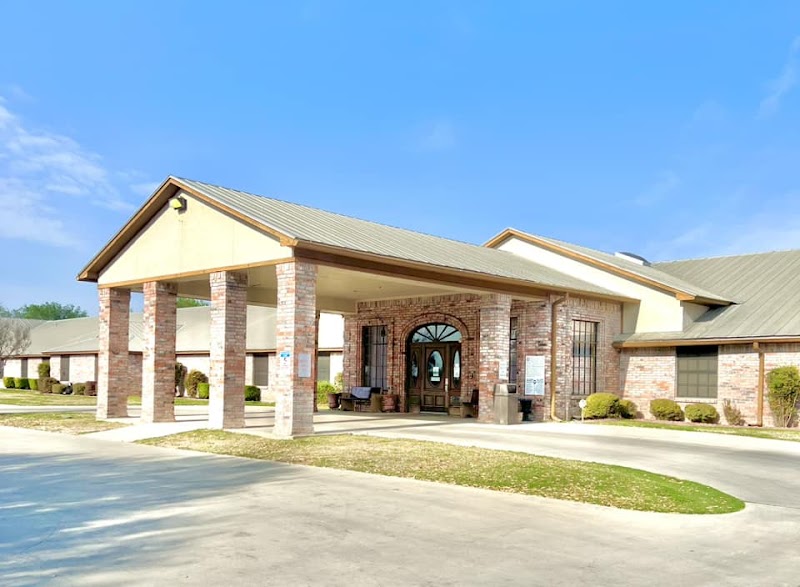
How is Amistad Staffed?

CMS rates AMISTAD NURSING AND REHABILITATION CENTER's staffing level at 2 out of 5 stars, which is below average compared to other nursing homes. Staff turnover is 37%, compared to the Texas average of 46%. This relatively stable workforce can support continuity of care.

What Have Inspectors Found at Amistad?

State health inspectors documented 14 deficiencies at AMISTAD NURSING AND REHABILITATION CENTER during 2023 to 2025. These included: 13 with potential for harm and 1 minor or isolated issues.
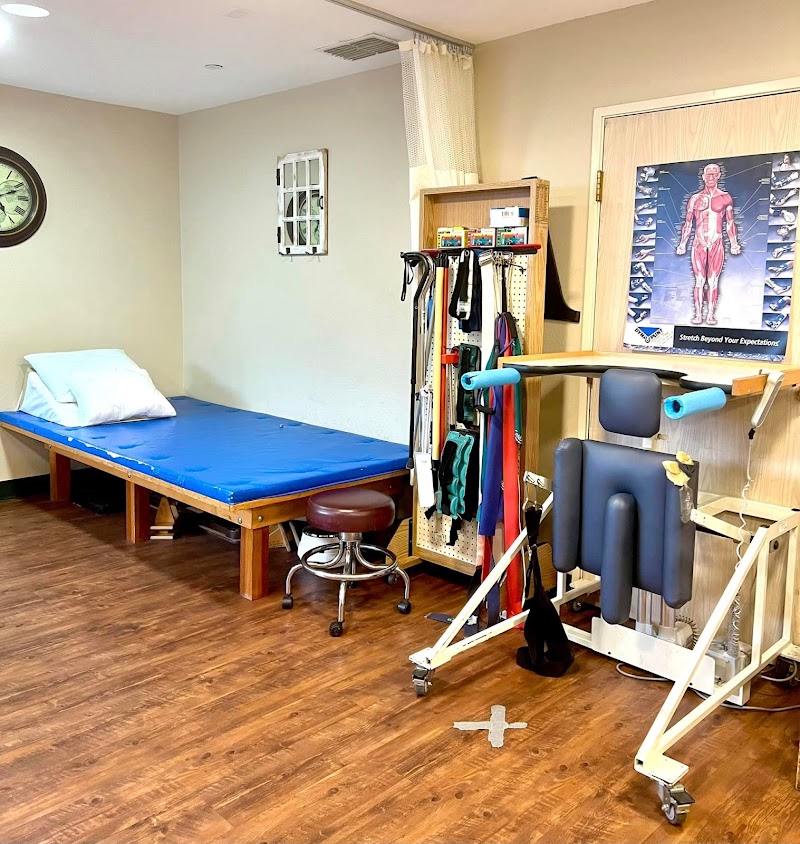
Who Owns and Operates Amistad?

AMISTAD NURSING AND REHABILITATION CENTER is owned by a government entity. Government-operated facilities are typically run by state, county, or municipal agencies. The facility is operated by CREATIVE SOLUTIONS IN HEALTHCARE, a chain that manages multiple nursing homes. With 200 certified beds and approximately 89 residents (about 44% occupancy), it is a large facility located in UVALDE, Texas.
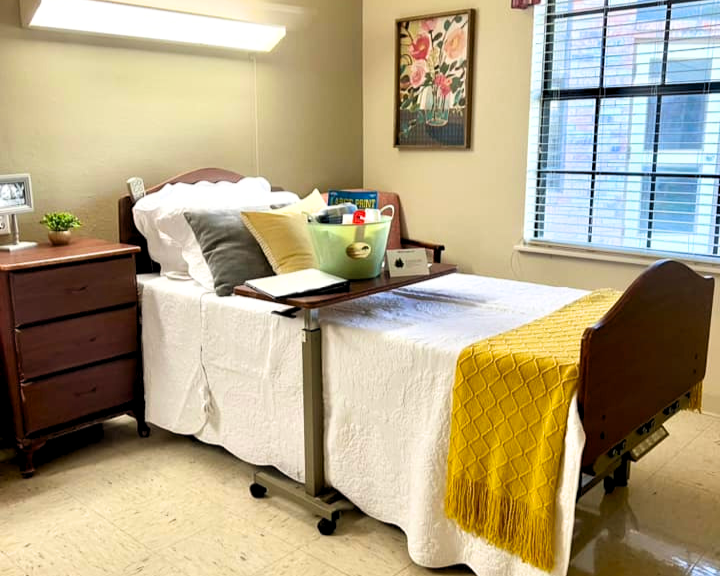
How Does Amistad Compare to Other Texas Nursing Homes?

Compared to the 100 nursing homes in Texas, AMISTAD NURSING AND REHABILITATION CENTER's overall rating (4 stars) is above the state average of 2.8, staff turnover (37%) is near the state average of 46%, and health inspection rating (4 stars) is above the national benchmark.

What Should Families Ask When Visiting Amistad?

Based on this facility's data, families visiting should ask: "Can you walk me through typical staffing levels on day, evening, and night shifts?" "Can I visit during a mealtime to observe dining assistance and food quality?" "How do you handle medical emergencies, and what is your hospital transfer rate?" "Can I speak with family members of current residents about their experience?" These questions are particularly relevant given the below-average staffing rating.

Is Amistad Safe?

Based on CMS inspection data, AMISTAD NURSING AND REHABILITATION CENTER has a clean safety record: no substantiated abuse findings (meaning no confirmed cases of resident harm), no Immediate Jeopardy citations (the most serious violation level indicating risk of serious injury or death), and is not on the Special Focus Facility watch list (a federal program monitoring the lowest-performing 1% of nursing homes). The facility has a 4-star overall rating and ranks #1 of 100 nursing homes in Texas. While no facility is perfect, families should still ask about staff-to-resident ratios and recent inspection results during their visit.

Do Nurses at Amistad Stick Around?

AMISTAD NURSING AND REHABILITATION CENTER has a staff turnover rate of 37%, which is about average for Texas nursing homes (state average: 46%). Moderate turnover is common in nursing homes, but families should still ask about staff tenure and how the facility maintains care continuity when employees leave.

Was Amistad Ever Fined?

AMISTAD NURSING AND REHABILITATION CENTER has no federal fines on record. CMS issues fines when nursing homes fail to meet care standards or don't correct problems found during inspections. The absence of fines suggests the facility has either maintained compliance or corrected any issues before penalties were assessed. This is a positive indicator, though families should still review recent inspection reports for the full picture.

Is Amistad on Any Federal Watch List?

AMISTAD NURSING AND REHABILITATION CENTER is not on any federal watch list. The most significant is the Special Focus Facility (SFF) program, which identifies the bottom 1% of nursing homes nationally based on persistent, serious quality problems. Not being on this list means the facility has avoided the pattern of deficiencies that triggers enhanced federal oversight. This is a positive indicator, though families should still review the facility's inspection history directly.