Hurricane Health and Rehabilitation
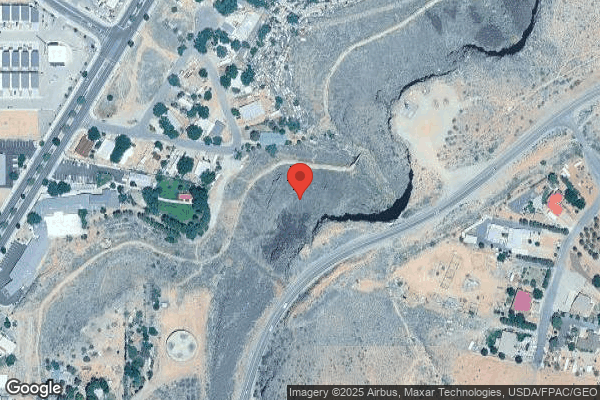
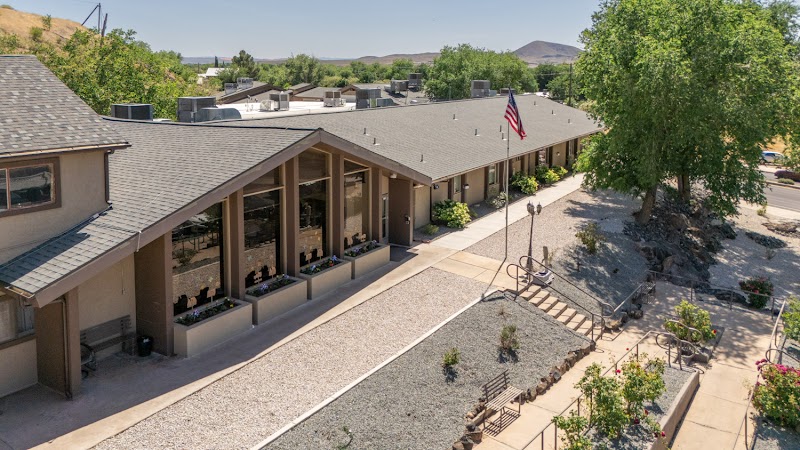
416 North State Street, Hurricane, UT 84737 (435) 635-9833
For profit - Corporation 60 Beds THE ENSIGN GROUP Data: November 2025
Trust Grade
68/100
#32 of 97 in UT
Last Inspection: October 2023

Over 2 years since last inspection. Current conditions may differ from available data.

Overview

Hurricane Health and Rehabilitation has a Trust Grade of C+, indicating it is slightly above average but not exceptional. It ranks #32 out of 97 facilities in Utah, placing it in the top half, and #3 out of 8 in Washington County, meaning there are only two local options that are better. The facility is improving, having reduced the number of issues from 4 in 2023 to 2 in 2024. Staffing is rated average with a 3/5 star score and a turnover rate of 59%, which is similar to the state average. However, there are concerns, as there is less RN coverage than 85% of Utah facilities, which is critical for addressing health issues. Recent inspections revealed significant problems, including an incident where a resident sustained a femur fracture due to inadequate supervision during transport, highlighting a serious safety concern. Additionally, the facility failed to ensure a safe environment by not adequately securing harmful chemicals, and there were issues with food service safety, including dirty kitchen facilities. These findings suggest that while there are strengths, such as an overall good rating, the facility still has notable weaknesses that families should consider carefully.
Trust Score
C+
68/100
In Utah
#32/97
Top 32%
Safety Record
Moderate
Needs review
Inspections
Getting Better
4 → 2 violations
Staff Stability
⚠ Watch
59% turnover. Above average. Higher turnover means staff may not know residents' routines.
Penalties
✓ Good
$12,335 in fines. Lower than most Utah facilities. Relatively clean record.
Skilled Nurses
✓ Good
Each resident gets 47 minutes of Registered Nurse (RN) attention daily — more than average for Utah. RNs are trained to catch health problems early.
Violations
⚠ Watch
12 deficiencies on record. Higher than average. Multiple issues found across inspections.
★★★★☆
4.0
Overall Rating
★★★☆☆
3.0
Staff Levels
★★☆☆☆
2.0
Care Quality
★★★★☆
4.0
Inspection Score
Stable
2023: 4 issues
2024: 2 issues

The Good

  • Full Sprinkler Coverage · Fire safety systems throughout facility
  • No fines on record

Facility shows strength in fire safety.

The Bad

Staff Turnover: 59%

13pts above Utah avg (46%)

Frequent staff changes - ask about care continuity

Federal Fines: $12,335

Below median ($33,413)

Minor penalties assessed

Chain: THE ENSIGN GROUP

Part of a multi-facility chain

Ask about local staffing decisions and management

Staff turnover is elevated (59%)

11 points above Utah average of 48%

The Ugly 12 deficiencies on record

1 actual harm
Jul 2024 1 deficiency 1 Harm
SERIOUS (G) 📢 Someone Reported This

A family member, employee, or ombudsman was alarmed enough to file a formal complaint

Actual Harm - a resident was hurt due to facility failures

Accident Prevention (Tag F0689)

A resident was harmed · This affected 1 resident

**NOTE- TERMS IN BRACKETS HAVE BEEN EDITED TO PROTECT CONFIDENTIALITY** Based on interview and record review, it was determined that for 1 of 7 sampled residents, the facility did not ensure each resi...

Read full inspector narrative →
**NOTE- TERMS IN BRACKETS HAVE BEEN EDITED TO PROTECT CONFIDENTIALITY** Based on interview and record review, it was determined that for 1 of 7 sampled residents, the facility did not ensure each resident received the supervision and assistance devices necessary to prevent an accident. Specifically, Resident 3 was not properly secured when transported in a facility vehicle and the resident subsequently slid out of their wheelchair and sustained a femur fracture. Resident Identifier: 3. In response to the incident involving Resident 3, the facility identified the quality deficiency and developed a corrective action plan. At the time of the complaint survey, it was determined the facility had implemented corrective measures and met the requirements of F689. Due to the facility's corrective measures, the noncompliance was determined to be past-noncompliance. The facility's corrective action plan, which was developed and implemented by 4/23/24, included the following measures: a. On 4/22/24, the date of the incident involving Resident 3, the facility entered into an agreement with an organization to implement and provide training and new protocols to transport facility residents. The organization utilized by the facility had experience manufacturing wheelchair securement's and occupant restraint systems for transporting individuals with special needs. All staff who performed transportation services for the facility were reeducated on proper securement of residents during transport, which included training videos produced by the contracted organization. Transportation staff attested to the completion of the training by signing training records. Transportation staff were then required to complete a post-training test. b. On 4/22/24, all staff members who performed transportation services were required to read and sign the Fleet Safety Program book. c. On 4/23/24, staff members were interviewed regarding safety during transportation. Administrative staff also interviewed residents to determine if there were additional concerns about safety during transportation. d. The facility's Quality Assurance Performance Improvement (QAPI) Committee approved the updated driver safety training program and implemented the following QAPI activities: -The transportation supervisor will audit the transport of each driver daily for 2 weeks, followed by audits on 3 random days of the week for 1 week, with an audit 1 day per week for 1 week. The transportation supervisor will perform ongoing random audits. -The transportation supervisor or designee will validate transportation driver's pre and post-securement, documenting the results every week for 4 weeks then bi weekly for 2 weeks, and 3 random audits every month thereafter. -The transportation supervisor will report any trends or concerns to the QAPI committee for review for 90 days. Any discrepancies will be addressed at time of discovery. Findings Include: Resident 3 was admitted to the facility on [DATE] and readmitted on [DATE]. Resident 3's diagnoses included diabetes mellitus type 2, hypotension, muscle weakness, a need for assistance with personal care, and difficulty in walking. On 4/22/24 at 4:28 PM, the facility electronically submitted a Form 358: Facility Reported Incident Initial Report (Form 358) to the Survey State Agency (SSA). The facility reported that on 4/22/24 at 1:00 PM, Resident 3 sustained injuries while being transported in a facility van by Transportation Driver (TD 1). On the Form 358, the facility documented that TD 1 explained, a car stopped right in front of him and he had to slam on his brakes. The resident [resident 3] slid out of her chair hit both of her knees and is feeling pain in both knee's (sic). The facility documented that Resident 3 was evaluated by a facility RN, emergency medical services (EMS) was called, and the resident was transported to the emergency room of a local acute care hospital. On 4/24/24, the facility electronically submitted a Form 359: Follow-up investigation report (Form 359) to the SSA. In their investigation, the facility reported that TD 1 explained that he neglected to put the lap belt on Resident 3 when transporting the resident back from an appointment. The facility documented that TD 1 further explained that he harnessed all four points of Resident 3's wheelchair, but he missed the lap belt strap. A review of resident 3's medical record was completed on 7/30/24. Facility staff completed a quarterly Minimum Data Set (MDS) assessment of Resident 3. The Assessment Reference Date was 4/3/24. As part of the MDS assessment, a facility staff member conducted a Brief Interview for Mental Status (BIMS), for which Resident 3's score was 11. Per the Centers for Medicaid Services (CMS) MDS 3.0 Resident Assessment Instrument Manual, a BIMS score of 11 represents moderately impaired cognition. Facility staff also assessed Resident 3 as requiring substantial to maximum assistance with mobility and that the resident used a wheelchair. On 4/22/24 at 12:26 PM, a facility nurse documented a Nursing Note in Resident 3's medical record. The nurse documented that Resident 3 had a fall in the transport van while returning from a doctor's appointment. The nurse documented that Resident 3 had an injury to her left knee and that the resident was sent to the emergency room. On 4/24/24 at 9:06 AM, a facility nurse documented a Nursing Note in Resident 3's medical record. The nurse documented that as Resident 3 was being transported to the facility, the resident was propelled out of the wheelchair, hitting the front seats. The nurse documented Resident 3 sustained a right leg injury and was transported to an acute care hospital. The nurse documented that an x-ray revealed Resident 3 sustained a right femur fracture. Note: Based on hospital radiology reports, Resident 3 sustained a left femur fracture. On 5/1/24 at 5:27 PM, a facility nurse documented a Nursing Note in Resident 3's medical record that the resident had readmitted to the facility. The nurse also documented Resident 3 had a large left arm bruise, two left hip sutures, one left knee suture, and that Resident 3 was to have weight bearing as tolerated. Resident 3's medical record included the resident's hospital discharge documentation that was dated 5/1/24. Per the hospital discharge documentation, upon Resident 3's presentation to the emergency room for the evaluation of the resident's left knee pain, x-ray results revealed the resident an acute left distal femoral shaft fracture. Resident 3 was initially hospitalized in the intensive care unit for close monitoring and treatment. On 7/30/24 at 11:28 PM, an interview was conducted with the Transportation Supervisor (TS). TS stated that on 4/22/24, TD1 called the facility to inform them that a resident had slid from the wheelchair during transport because TD 1 had to break hard. TS stated the incident occurred on the road just next to the facility. TS stated on 4/22/24, when the transportation van entered the parking lot, he was present along with a physical therapist, a nurse and the operations manager. TS stated when the van door was opened, it was apparent the resident had not been secured properly and the lap belt was not on. He stated Resident 3 was in notable pain and paramedics were called. On 7/30/24 at 1:48 PM, an interview was conducted with the facility's Operations Manager (OM). The OM explained that on 4/22/24, the day of incident involving Resident 3, the facility immediately updated and revised their process for ensuring transportation staff were trained and monitored. The OM stated the facility retained all prior training and included an observed daily check off for every transport to ensure the transportation driver did not forget anything before the facility van moved. The OM stated the onboarding process included new training on how to secure residents in the transportation van, as well as a post-training examination. The OM also stated that if an employee, who had been used to transport residents, had not provided transportation services within the previous 30 days, an observed check off would be required to ensure the drivers skills remained acceptable.
Mar 2024 1 deficiency
CONCERN (D) 📢 Someone Reported This

A family member, employee, or ombudsman was alarmed enough to file a formal complaint

Potential for Harm - no one hurt, but risky conditions existed

Deficiency F0760 (Tag F0760)

Could have caused harm · This affected 1 resident

**NOTE- TERMS IN BRACKETS HAVE BEEN EDITED TO PROTECT CONFIDENTIALITY** Based on interview and record review it was determined, for 1 of 6 sampled residents, that the facility did not ensure that resi...

Read full inspector narrative →
**NOTE- TERMS IN BRACKETS HAVE BEEN EDITED TO PROTECT CONFIDENTIALITY** Based on interview and record review it was determined, for 1 of 6 sampled residents, that the facility did not ensure that residents were free from any significant medication errors. Specifically, a resident 's Clozapine medication was omitted due to unavailability from the pharmacy. Resident identifier 5. Findings included: Resident 5 was admitted to the facility on [DATE] with diagnoses which included hydrocephalus, repeated falls, schizophrenia, dysphagia, flaccid neuropathic bladder, need for assistance with personal care, and muscle weakness. Resident 5's medical records were reviewed on 3/19/2024. On 3/19/23 at 10:43 AM, an interview was conducted with resident 5. Resident 5 stated that he had missed his psychiatric medication for 3 days because it was hard to get. Resident 5 stated they had to check his blood before they could get the medication. Resident 5 stated he had not slept for the 3 days when he did not get his medication. Resident 5 stated this had happened a few times and he believed it was his fault because he did not remind staff early enough to get his medication A physician order with an initiation date of 11/25/23 documented, Clozapine 100 mg (milligrams) give 3 tablets by mouth in the evening for Schizophrenia. On 12/9/23 at 8:41 PM, the eMAR (electronic medication administration record) - medication administration note documented that the Clozapine was not administered due to medication unavailable until labs drawn. A lab result report documented that resident 5's labs had been drawn on 11/28/23. The December Medication Administration Record (MAR) documented that the Clozapine was not administered to resident 5 on the following dates: a. 12/8 b. 12/9 On 1/15/24 at 1:57 PM, a Nursing note documented, blood work results from 1/12 and 1/13 faxed to [medical doctor]. On 1/16/24 at 5:26 PM, a Nursing note documented, Phone call made to [medical doctor] to verify lab results received, CMP (complete metabolic panel) and CBC (complete blood count). She verified receipt and will be sending medications. On 1/19/24 at 11:22 PM, the eMAR - medication administration note documented that the Clozapine was not administered due to waiting for pharmacy. The January MAR documented that the Clozapine was not administered to resident 5 on the following day: c. 1/19 On 2/14/24 at 10:06 PM, a Laboratory/Radiology Note documented CMP came back normal. CBC showed low RBC (red blood cell), hemoglobin, and hematocrit and high RDW (red cell distribution width) SD (standard deviation), with the differential normal. On 2/20/24 at 10:08 PM, an eMAR medication administration note documented that there were 2 tablets left, awaiting delivery from pharm (pharmacy) of the Clozapine. On 2/21/24 at 6:55 PM, an eMAR medication administration note documented the Clozapine was out of stock. On 2/22/24 at 7:26 PM, an eMAR medication administration note documented awaiting delivery from pharm of the Clozapine. On 2/23/24 at 6:43 PM, a Laboratory/Radiology note documented Results of CMP, CBC w(with)/diff (differential) and PT(prothrombin time)/INR (international normalized ratio) results faxed to [facility name omitted] provider for refill of Clozapine. On 2/23/24 at 8:43 PM, an eMAR medication administration note documented awaiting delivery from pharm of the Clozapine. On 2/24/24 at 8:54 PM, an eMAR medication administration note documented awaiting delivery from pharm of the Clozapine. The February MAR documented Clozapine was not administered to resident 5 on the following days: d. 2/20 e. 2/21 f. 2/22 g. 2/23 h. 2/24 It should be noted that no documentation could be found that the physician was notified that the Clozapine was not administered. On 3/19/24 at 12:39 PM, an interview was conducted with Licensed Practical Nurse (LPN) 1. LPN 1 stated resident 5 had his labs drawn and sent out to another provider in order to receive his medication. LPN 1 stated it usually only took 1 day to get the lab results back. LPN 1 stated if the order is put in the medical record then it will come up for the nurses to see and the blood will be drawn. LPN 1 stated he was unsure what to do if resident 5 ran out of medication because that specific medication was not one that the facility had a supply of. On 3/19/24 at 1:55 PM, an interview was conducted with the Director of Nursing (DON). The DON stated the facility had to wait on the other facility's doctor to review the residents labs and then wait for the other facility's pharmacy to send the medication. The DON stated that the facility did not stock that medication in the house supply and only had it if it was sent down from the other facility. The DON stated the orders were put in to have the residents blood drawn every 30 days and sent to the other provider but sometimes the months had more than 30 days and it messed up the timeline. On 3/19/24 at 2:15 PM, a follow up interview was conducted with the DON. The DON stated the resident had missed doses of his Clozapine in January, February and March. The DON stated it was their job to make sure the resident had the medication he needed. A review of the facility Medication Administration policy revealed, Medications will be accurately prepared, administered, and documented per physician order.
Oct 2023 4 deficiencies
CONCERN (D) 📢 Someone Reported This

A family member, employee, or ombudsman was alarmed enough to file a formal complaint

Potential for Harm - no one hurt, but risky conditions existed

Assessment Accuracy (Tag F0641)

Could have caused harm · This affected 1 resident

**NOTE- TERMS IN BRACKETS HAVE BEEN EDITED TO PROTECT CONFIDENTIALITY** Based on interview and record review, the facility did not ensure that 2 of 26 sample residents had an accurate Minimum Data Set...

Read full inspector narrative →
**NOTE- TERMS IN BRACKETS HAVE BEEN EDITED TO PROTECT CONFIDENTIALITY** Based on interview and record review, the facility did not ensure that 2 of 26 sample residents had an accurate Minimum Data Set (MDS) Assessment. Resident identifiers: 29 and 34. Findings include: 1. Resident 29 was admitted to the facility on [DATE] with diagnoses that included rheumatoid arthritis, severe protein-calorie malnutrition, diabetes mellitus, anemia, and dementia. Resident 29's medical record was reviewed on 10/16/23. Resident 29's quarterly MDS assessment completed on 6/14/23 did not include a Brief Interview for Mental Status (BIMS) score, even though the assessment indicated that the BIMS should be completed. Resident 29's annual MDS assessment completed on 9/14/23 did not include a BIMS score. 2. Resident 34 was admitted to the facility on [DATE] with diagnoses that included dementia, moderate protein calorie malnutrition, and altered mental status. Resident 34's medical record was reviewed on 10/16/23. Resident 34's initial MDS assessment completed on 5/17/23 did not include a BIMS score. Resident 34's quarterly MDS assessment completed on 7/7/23 did not include a BIMS score. On 10/18/23 at approximately 6:00 PM, an interview was conducted with the Regional Nurse Consultant (RNC). The RNC stated the that facility social worker was responsible to complete the BIMS score on the MDS. On 10/18/23 at approximately 7:30 PM, the social worker stated that she had been completing the BIMS but that the computer had not been saving her work.
CONCERN (D) 📢 Someone Reported This

A family member, employee, or ombudsman was alarmed enough to file a formal complaint

Potential for Harm - no one hurt, but risky conditions existed

Incontinence Care (Tag F0690)

Could have caused harm · This affected 1 resident

**NOTE- TERMS IN BRACKETS HAVE BEEN EDITED TO PROTECT CONFIDENTIALITY** Based on interview and record review it was determined, for 1 out of 26 sampled residents, that the facility did not ensure that...

Read full inspector narrative →
**NOTE- TERMS IN BRACKETS HAVE BEEN EDITED TO PROTECT CONFIDENTIALITY** Based on interview and record review it was determined, for 1 out of 26 sampled residents, that the facility did not ensure that a resident who was incontinent of bladder received the appropriate treatment and services to prevent urinary tract infections (UTI) and to restore continence to the extent possible. Specifically, a resident with a urinary catheter had a delay in treatment for a UTI. Resident Identifier: 39 Findings include: Resident 39 was admitted to the facility on [DATE] with diagnoses that included dementia, altered mental status, acute kidney failure, stage 3 chronic kidney disease, acute respiratory failure with hypoxia, adult failure to thrive, and anxiety disorder. Resident 39's medical record was reviewed on 10/17/23. On 10/9/23 at 12:47 PM, a nurse note documented, Resident has had an increase in confusion and restlessness. His urine is also cloudy with foul odor. Received orders to collect UA [urinalysis]. UA was collected and sent. A physician order with an start date of 10/9/23 and end date of 10/12/23 documented Collect UA with C&S [culture and sensitivity] one time only for Change in condition for 3 Days. Resident 39's Medication Administration Record [MAR] and Treatment Administration Record [TAR] for the month of October documented the UA and C&S to have been completed on October 9, 2023 at 7:56 PM. On 10/17/23 at 4:24 PM, an interview was conducted with the Infection Preventionist (IP). The IP stated they were unaware a UA with C&S was collected for resident 39. The IP stated they were unable to find the results in the resident's chart and needed to look into it further. The IP stated a culture was normally obtained to make sure a resident was on the right type of antibiotic for the infection. The IP stated it usually took 3 days for a culture to result. On 10/18/23 at 6:21 PM, an interview was conducted with the Director of Nursing (DON). The DON stated the IP had to call the hospital for the urine culture results yesterday. The DON stated the hospital was not sending the results timely. On 10/19/23 the facility provided additional documentation in the form of urine culture results. Resident 39's urine culture results were finalized on 10/11/23 at 9:01 PM and showed that resident 39 had bacterial growth from the urine . It documented the provider had reviewed the results on October 18, 2023. [Note: There was a 7 day delay in resident 39's course of treatment for their UTI.]
CONCERN (E) 📢 Someone Reported This

A family member, employee, or ombudsman was alarmed enough to file a formal complaint

Potential for Harm - no one hurt, but risky conditions existed

Accident Prevention (Tag F0689)

Could have caused harm · This affected multiple residents

**NOTE- TERMS IN BRACKETS HAVE BEEN EDITED TO PROTECT CONFIDENTIALITY** Based on observation, interview, and record review, it was determined for 1 of 26 sample residents, that the facility did not en...

Read full inspector narrative →
**NOTE- TERMS IN BRACKETS HAVE BEEN EDITED TO PROTECT CONFIDENTIALITY** Based on observation, interview, and record review, it was determined for 1 of 26 sample residents, that the facility did not ensure that the resident's environment remained free of accident hazards. Specifically, the facility did not provide adequate locks to prevent residents access to harmful chemicals. Resident identifier: 11. Findings include: Resident 11 was initially admitted on [DATE] and readmit on 1/24/22 with diagnoses which included vascular dementia with agitation, bipolar disorder, hemiplegia and hemiparesis following unspecified cerebrovascular disease affecting left non-dominant side, altered mental status, and dysphagia. Resident 11's medical record was reviewed 10/16/23 through 10/26/23. An incident progress note dated 10/10/23 at 6:38 AM, Nurse was by the laundry room when she heard someone yelling for help. When she checked inside the laundry room she found the patient sitting on the floor next to her wheelchair with a pile of socks on h ER [sic] lap. Resident stated that she did not know what had happened, but she was on the floor On 10/18/23 at 5:39 PM, an observation was made of the laundry room. The clean laundry room door was closed but unlocked, there was access to the dirty linen side of the laundry room. The dirty linen side of the laundry room had bleach, laundry detergent and laundry softener which had the potential to be accessed by residents. On 10/18/23 at 2:59 PM and interview with laundry staff (LS) was conducted. LS stated when she is not in the laundry room she will shut and lock the door. LS stated the rule is to keep the doors to the laundry room locked and closed when staff is not occupying the area. LS stated, a few weeks ago a resident was found in the laundry room. On 10/18/23 at 3:15 PM, an interview was conducted with the Plant Operation Director (POD). The POD stated that the facility was working on getting a better lock system for the laundry room to keep both the soiled and the clean laundry locked. The POD stated that the clean linen door would remained open an unlocked only if someone is in the laundry room, but if it is empty it the door should be closed and locked. On 10/18/23 at 5:45 PM, an interview was conducted with certified nursing assistant (CNA) 1. CNA 1 stated that the clean linen side of the laundry room is unlocked and the door directly leading to the soiled lined side remains locked. CNA 1 stated that the soiled lined side can be accessed through the clean linen side. CNA 1 stated that the clean lined side of the laundry room is locked during the night or if no one is close by the laundry room. CNA 1 stated that if the clean lined side is locked the key is located just next to the door on top of a black box. [Note: the key is easily accessible to the unlock the laundry room].
CONCERN (E) 📢 Someone Reported This

A family member, employee, or ombudsman was alarmed enough to file a formal complaint

Potential for Harm - no one hurt, but risky conditions existed

Food Safety (Tag F0812)

Could have caused harm · This affected multiple residents

Based on interview and observation, the facility did not store, prepare, distribute and serve food in accordance with professional standards for food service safety. Specifically, reusable ice packs w...

Read full inspector narrative →
Based on interview and observation, the facility did not store, prepare, distribute and serve food in accordance with professional standards for food service safety. Specifically, reusable ice packs were located in resident freezers, garbage cans in the kitchen were soiled, and kitchen cabinets were in disrepair. Findings include: 1. On 10/18/23 at 7:00 PM, an observation was made of the facility kitchen. The following was identified: a. There were 4 kitchen cabinets located next to the dishroom. The cabinets had been painted white, but were visibly soiled with a black grime on the outside, especially around the handles. Both the inside and outside surfaces of the cabinets were sticky to the touch. The shelves inside the cabinets were observed to be soiled with various substances. In addition, the cabinet doors were in a state of disrepair that did not allow the doors to completely cover the shelves when the doors were closed. b. There was a metal garbage can near the facility oven. The lid of the garbage can was connected to the garbage can and was open. The lid of the garbage can was observed to be entirely coated in several dried layers of debris and grime. c. There was a plastic garbage can near the facility dishroom. The garbage can had several areas of grime and sticky debris on the outside surface. 2. On 10/18/23 at approximately 7:05 PM, the refrigerator/freezer just outside the kitchen was observed to have a reusable ice pack inside. The ice pack was next to resident food. 3. On 10/18/23 at approximately 7:10 PM, the refrigerator/freezer just outside the Director of Nursing's office was observed to have a reusable ice pack inside. The ice pack was next to resident food. On 10/18/23 at approximately 7:10 PM, the Regional Nurse Consultant stated that reusable ice packs should not be in freezers with resident food. On 10/18/23 at approximately 7:05 PM, the facility Administrator stated that he was unaware that reusable ice packs should not be in freezers with resident food. The Administrator also stated that he was unaware of the condition of the kitchen cabinets next to the dishroom, but stated a complete remodel would be taking place within the next year.
Sept 2022 3 deficiencies
CONCERN (D)

Potential for Harm - no one hurt, but risky conditions existed

Infection Control (Tag F0880)

Could have caused harm · This affected 1 resident

**NOTE- TERMS IN BRACKETS HAVE BEEN EDITED TO PROTECT CONFIDENTIALITY** Based on observation, interview, and record review it was determined, for 2 of 19 sampled residents, that the facility did not m...

Read full inspector narrative →
**NOTE- TERMS IN BRACKETS HAVE BEEN EDITED TO PROTECT CONFIDENTIALITY** Based on observation, interview, and record review it was determined, for 2 of 19 sampled residents, that the facility did not maintain an infection prevention and control program designed to provide a safe, sanitary and comfortable environment and to help prevent the development and transmission of communicable diseases and infections. Specifically, observations were made during wound care of cross contamination during treatment application, lack of hand hygiene, and not changing soiled gloves. Additionally, observations were made of staff assisting a resident without the required Personal Protective Equipment (PPE) needed for the resident who was on contact/droplet precautions. Resident identifiers: 27 and 88. Findings included: 1. Resident 27 was admitted to the facility on [DATE] and was re-admitted on [DATE] with diagnoses which included sepsis, quadriplegia, pyelonephritis, acute kidney failure, pressure ulcer stage 2 of right and left ankle, hypertension, atrial flutter, anoxic brain damage, idiopathic hypotension, peripheral vascular disease, paroxysmal atrial fibrillation, contracture of right and left knee, cognitive communication deficit, and major depressive disorder. On 9/21/22 at 8:42 AM, an observation was made of resident 27's wound care provided by the wound care Physicians Assistant (PA) and Licensed Practical Nurse (LPN) 1. Upon arrival to resident 27's room the bedside table was draped with disposable pads and 4 x (by) 4 gauze pads, normal saline (NS), tongue depressors, gauze rolls, and medication cups filled with ointments were arranged on top. Resident 27 was positioned on his left lateral side. The PA and LPN 1 were at the resident's bedside with gloves already donned. The PA was observed to lift and unwrap the soiled gauze roll from the left foot, and then removed a soiled adhesive bordered foam dressing from the left foot. The left dorsal foot was observed with two wounds. The PA obtained a NS soaked gauze 4 x 4 pad from the bedside table and cleaned both wounds. The PA was observed to pick at the eschar of both wounds with his gloved index finger, removing some of the tissue. The PA then obtained a package with a sterile dermal curette from his front pocket and continued to debride both left dorsal foot wounds. The PA obtained measurements of the left dorsal foot wounds, distal wound measured 1.4 x 1.2 x 0.3 centimeters (cm) and the proximal wound measured 0.1 x 0.6 x 0.2 cm. The PA doffed his dirty gloves and washed his hands in the sink. It should be noted that the PA did not doff the dirty gloves, perform hand hygiene, and donn clean gloves after the soiled dressing was removed and prior to debridement of the wounds. LPN 1 was observed to unwrap the soiled gauze roll from resident 27's right foot. LPN 1 doffed the soiled gloves, performed hand hygiene, and donned clean gloves. The PA was observed to debride the right dorsal foot wound with a sterile scalpel. The PA obtained measurements of the right dorsal foot wounds, distal wound measured 0.7 x 0.5 cm and was intact, proximal wound measured 0.8 x 0.5 x 0.2 cm. The right ankle wound measured 0.3 x 0.6 cm and was intact. The PA was observed to clean all wounds with NS soaked gauze 4 x 4 pads. LPN 1 applied Medihoney with a tongue depressor to the wound bed of the right dorsal foot wounds and then using the same tongue depressor applied Medihoney to the right ankle wound bed. On 9/21/22 at 11:07 AM, an interview was conducted with LPN 1. LPN 1 stated that when performing wound care they should clean from the inside of the wound working outward, wiping away from the center. LPN 1 stated that after a wound was cleaned they should doff the dirty gloves, perform hand hygiene and donn clean gloves before applying the new dressing. LPN 1 stated that this would ensure that they did not cross contaminate any of the wound care from dirty to clean. LPN 1 stated that if they should touch any environmental surfaces or dirty dressings they should doff their gloves, perform hand hygiene, and donn clean gloves before continuing with the dressing change. LPN 1 stated that when she applied any creams or ointments to a wound bed she did not double dip the applicator into the creams, and that each wound should have a new applicator/tongue depressor used for treatment application. 2. Resident 88 was admitted to the facility on [DATE] with diagnoses which included traumatic subdural hemorrhage, repeated falls, and dehydration. On 9/19/22 at 2:01 PM, an initial tour was conducted of the facility. room [ROOM NUMBER] was observed to have a plastic container with 3 drawers and a sign that revealed Droplet-Contact precautions. The sign revealed to wear gown, gloves, surgical mask and eye protection. Resident 88 resided in room [ROOM NUMBER]. On 9/20/22 at 7:43 AM, an observation was made of an Activities staff member. The Activities staff member was observed in room [ROOM NUMBER] next to resident 88 in bed without a gown or gloves donned. The Activities staff member was observed with a surgical mask and eye protection only. Resident 88's medical record was reviewed on 9/20/22. Resident 88's physicians orders revealed Isolation Precautions: droplet. dated 9/16/22. Another physician's order dated 9/16/22 Isolation Precautions- contact, droplet .for covid surveillance. A list of residents COVID-19 vaccination status was provided. Resident 88 was listed as unvaccinated for COVID-19. On 9/21/22 at 12:28 PM, a sign titled contact precautions was outside room [ROOM NUMBER]. The sign revealed for staff to wear a surgical mask, gown, gloves and eye protection when entering the room. On 9/21/22 at 12:05 PM, an interview was conducted with the Assistant Director of Nursing (ADON)/Infection Preventionist (IP). The ADON/IP stated staff were to wear goggles, an N95 mask, gown and gloves into room [ROOM NUMBER]. The ADON/IP stated there were gowns, gloves and N95 masks in drawers outside the room. The ADON/IP stated that when staff entered room [ROOM NUMBER] their surgical mask was to be changed to an N95. The ADON/IP stated all staff including activities staff should wear the gown, goggles, N95 and eye protection when entering room [ROOM NUMBER].
CONCERN (E)

Potential for Harm - no one hurt, but risky conditions existed

Safe Environment (Tag F0584)

Could have caused harm · This affected multiple residents

**NOTE- TERMS IN BRACKETS HAVE BEEN EDITED TO PROTECT CONFIDENTIALITY** Based on interview and record review it was determined that the facility did not provide each resident with a safe, clean, comfo...

Read full inspector narrative →
**NOTE- TERMS IN BRACKETS HAVE BEEN EDITED TO PROTECT CONFIDENTIALITY** Based on interview and record review it was determined that the facility did not provide each resident with a safe, clean, comfortable and homelike environment. Specifically, there were walls in resident room with scratched drywall, chipped paint, a wall with drywall missing and baseboard pulling away from the wall. Findings include: 1. On 9/19/22 at 2:26 PM, an observation was made of room [ROOM NUMBER]. There were large scrapes on the wall with missing paint behind the bed. The scraps were visible from the hallway. 2. On 9/19/22 at 3:00 PM, an observation was made of room [ROOM NUMBER]. room [ROOM NUMBER] had a chunk of drywall missing toward the floor outside the bathroom. The trim was pulling away from the wall. 3. On 9/21/22 at 8:30 AM, an observation was made of room [ROOM NUMBER]. room [ROOM NUMBER] had large scrapes in the drywall with missing paint behind the bed. The scrapes were visible from the hallway. 4. On 9/21/22 at 9:00 AM, an observation was made of the facility with the Administrator. The Administrator stated the facility was planning to come up with a plan to plot out phases to patch and paint the holes in rooms. The Administrator stated that the plan had not been developed. The following was observed with Administrator: a. room [ROOM NUMBER] had scratch marks with different color paint by door. The scratches were visible from the hallway. b. room [ROOM NUMBER] had scratches with missing paint behind his bed. The scratches were visible from the hallway. c. room [ROOM NUMBER] had scratches on the wall that were visible from the hallway. d. room [ROOM NUMBER] was missing paint behind the bed. e. room [ROOM NUMBER] had a chunk out of wall and the baseboard was pulling from the wall outside the bathroom. f. room [ROOM NUMBER] had scratches behind the bed which were visible from the hallway.
CONCERN (E)

Potential for Harm - no one hurt, but risky conditions existed

Deficiency F0888 (Tag F0888)

Could have caused harm · This affected multiple residents

**NOTE- TERMS IN BRACKETS HAVE BEEN EDITED TO PROTECT CONFIDENTIALITY** Based on observation, interview and record review it was determined, for 5 of 5 contracted staff members, that the facility did ...

Read full inspector narrative →
**NOTE- TERMS IN BRACKETS HAVE BEEN EDITED TO PROTECT CONFIDENTIALITY** Based on observation, interview and record review it was determined, for 5 of 5 contracted staff members, that the facility did not ensure that all staff including contracted staff members were fully vaccinated for COVID-19, except for those staff who had been granted exemptions to the vaccination. Specifically, contracted staff members vaccination status were unknown. Staff member identifiers: Contracted Staff Member (CSM) 1, CSM 2, CSM 3, CSM 4 and CMS 5. Findings include: On 9/19/22 at 1:30 PM, an initial observation of the facility was conducted. There were contractor staff members observed to be working with wires and construction. There were contractors outside the dining room, in resident hallways and at the nurses station. On 9/20/22 at 8:34 AM, an interview was conducted with the Director of Nursing (DON). The DON stated the facility did not have contracted employees. On 9/20/22 at approximately 9:30 AM, an observation was made of (CSM) 1. CSM 1 was observed to be placing a gown and gloves on outside room [ROOM NUMBER]. CSM 1 was interviewed. CSM 1 stated she was a hospice company's Chaplin to visit with resident 88. CSM 1 stated she visited with resident 88 about three times per month but this was her first time to visit resident 88 at the facility. On 9/21/22 at 11:50 AM, an observation was made of four contractors working on ladders with power tools and wires. The contractors were observed in resident hallways, outside the dining room and at the nurses station. The contractors were observed to be wearing a surgical mask and no eye protection. On 9/21/22 at 12:16 PM, an interview was conducted with CSM 2. CSM 2 stated he was a contractor for the fire alarm system. CSM 2 stated he had been working at the facility on 9/19/22, 9/20/22, and 9/21/22 with CSM 3, CSM 4, and CSM 5. On 9/21/22 at 7:42 PM, an interview was conducted with the Assistant Director of Nursing (ADON)/Infection Preventionist (IP). The ADON/IP stated the company that was working on the fire system construction told her that they were unable to provide the staff members vaccination status because they would be sending different employees each day. The ADON/IP stated the company told her they would not be able to track the employees vaccination status. The ADON/IP stated that she tested the employees for COVID-19 daily before they started working in the facility. On 9/22/22 at approximately 10:00 AM, an interview was conducted with the DON. The DON stated that she did not have vaccination status for hospice personnel or for the contracted staff who were installing the new fire system.
Mar 2020 3 deficiencies
CONCERN (D)

Potential for Harm - no one hurt, but risky conditions existed

Deficiency F0657 (Tag F0657)

Could have caused harm · This affected 1 resident

**NOTE- TERMS IN BRACKETS HAVE BEEN EDITED TO PROTECT CONFIDENTIALITY** Based on interview and medical record review, it was determined, for 2 of 20 sample residents, that the facility did not review ...

Read full inspector narrative →
**NOTE- TERMS IN BRACKETS HAVE BEEN EDITED TO PROTECT CONFIDENTIALITY** Based on interview and medical record review, it was determined, for 2 of 20 sample residents, that the facility did not review and revise the comprehensive care plan. Specifically, two residents who had multiple falls did not have the care plan revised and updated with interventions in an attempt to keep residents safe. Resident identifiers: 3 and 15. Findings include: 1. Resident 3 was admitted to the facility on [DATE] with diagnoses which included atrial fibrillation, heart failure, orthostatic hypotension, arthritis, Alzheimer's Disease, depression and anxiety. On 3/4/20 resident 3's medical record was reviewed. Resident 3's medical record revealed that resident 3 had 7 falls on 3/20/19, 7/28/19, 8/4/19, 8/8/19, 8/21/19, 8/24/19 and 2/9 20. Resident 3's medical record revealed that he had sustained injuries of a bleeding forehead on 8/4/19 and 2/9/20. Resident 3's fall care plan revealed that there were no updates to the care plan, including fall dates and interventions after each fall. 2. Resident 15 was admitted to the facility on [DATE] with diagnoses which included renal failure, diabetes mellitus, cerebrovascular accident, acquired absence of left and right hand, dementia and depression. On 3/4/20 resident 15's medical record was reviewed. Resident 15's medical record revealed that resident 15 had 5 falls on 9/16/19, 11/1/19, 1/17/20, 1/19/20, 1/21/20. Resident 3's medical record revealed that he had sustained injuries of a laceration to his right arm stump on 9/16/19. Resident 15's fall care plan revealed that there were no updates to the care plan, including fall dates and interventions after each fall. On 3/04/20 at 2:10 PM, an interview was conducted with the facility DON. The facility DON stated that facility staff had implemented interventions for each fall. The facility DON stated that facility staff had not documented the interventions that had been put in place for the residents. The facility DON stated that there were previous care plans that had interventions in place, but, that the interventions had been resolved and not carried forward to current care plans. On 3/4/20 at 2:30 PM, the facility Administrator stated that they need to do a better job with our documentation.
CONCERN (D)

Potential for Harm - no one hurt, but risky conditions existed

Accident Prevention (Tag F0689)

Could have caused harm · This affected 1 resident

**NOTE- TERMS IN BRACKETS HAVE BEEN EDITED TO PROTECT CONFIDENTIALITY** Based on observation, interview and medical record review, it was determined for 2 of 20 sample residents, that the facility did...

Read full inspector narrative →
**NOTE- TERMS IN BRACKETS HAVE BEEN EDITED TO PROTECT CONFIDENTIALITY** Based on observation, interview and medical record review, it was determined for 2 of 20 sample residents, that the facility did not ensure that the resident environment remains as free of accident hazards as is possible. Specifically, two residents who had multiple falls, did not have interventions put in place in an attempt to prevent falls. Resident identifiers: 3 and 15. Findings include: 1. Resident 3 was admitted to the facility on [DATE] with diagnoses which included atrial fibrillation, heart failure, orthostatic hypotension, arthritis, Alzheimer's Disease, depression and anxiety. On 3/4/20 resident 3's medical record was reviewed. Incident reports for resident 3 revealed the following: a. 3/20/19, Nursing Description: Staff was doing round[s] in room [ROOM NUMBER] and found the resident sitting on the floor. Resident Description: Resident stated he was trying to get up to go to the restroom and slipped to the floor. Immediate Action Taken: Two person assist with transfer from floor to the resident recliner. Initiated neuro checks. No bruising or redness noted. No injuries. b. 7/28/19, Nursing Description: SN (skilled nurse) was called to patients room where pt (patient) was sitting on floor. SN and CNA (Certified Nursing Assistant) assisted pt off the floor to his bed. Resident Description: Pt reports he was trying to pick up some nuts off the floor that he spilled and he fell back on to his butt. Pt said he did not hit his head. Pt denied pain. Immediate Action Taken: SN and CNA transferred pt to a safe place to rest on his bed. Head to toe assessment. Neuro's initiated. VSS (vital signs stable), MD (medical doctor), wife and DON (Director of Nursing) notified. c. 8/4/19, Nursing Description: Loud bang heard by CNA, resident found in room sitting against armoire. Blood was dripping from left side of forehead, lip sustained small cut. Staff responded to assist resident. Resident Description: Resident stated that he was having a dream he was at the rodeo and was trying to get on a horse. Recliner was positioned as if resident was trying to get off recliner. When asked if his head hurt, he responded a little. Immediate Action Taken: Vitals taken, forehead cleansed and pressure applied to stop bleeding. Small 1.5 cm (centimeter) long 0.1 cm deep superficial cut on forehead noted. Triple antibiotic ointment applied and covered w (with)/dressing. BP (blood pressure) high 160/100, PCP (primary care physician) notified. d. 8/8/19, Nursing Description: Nurse went to step out of residents room, when resident got up. Nurse heard a crash. She turned to find resident sliding down with his back to the [NAME] (sic). Nurse stated he did not hit his head. Resident Description: Resident stated he was trying to get up, then he slipped and hit his [NAME] (sic). Immediate Action Taken: Nurse and CNA assisted to chair. Nurse performed head to toe assessment. Scrape to back was noted. PERRLA (pupils equal round reactive to light and accommodation). Vitals (sic) signs WNL (within normal limits). Resident denied transport to [Hospital]. MD, DON and wife notified. e. 8/21/19, Nursing Description: Staff were at the nurses station when a crash was heard. Staff entered into 17 to find the resident sitting in front of the open bathroom door on the floor. Resident Description: Resident stated he was trying to find the restroom and lost his balance and fell to the floor. Immediate Action Taken: Two person assist with transfer from floor to standing position. Upon assessment no injuries were noted. Initiated neuro checks. The resident was toilet[ed] and ambulated with staff back to his bed. f. 8/24/19, Nursing Description: Aide called nurse to dining room. Walked in to find resident laying on his back on the floor. Wife and laundry worker was standing there with him with several residents in the area as well. Patient Description: Resident stated he got light headed and passed out. He stated he wasn't in any pain. Immediate Action Taken: Wife stated that he stopped and looked sort of dazed and then started to go to the floor. He layed down on the floor afterwards. Checked resident for injuries, none found. Assisted resident into a wheelchair. Started neurovascular checks. Notified [Resident's physician] and DON. g. 2/9/20, Nursing Description: SN was called to patients room. Pt was on the floor and was bleeding from the Left side of his forehead. Patient Description: Pt reports that he was having a dream and next thing he knew he rolled out of his bed and hit his head on the bedside drawer. Immediate Action Taken: SN implemented a head to toe assessment. Pressure applied to hematoma on L (left) side of his forehead which was bleeding. SN with the assistance of staff transferred pt to his recliner. Traumatic wound on L side of forehead cleansed and Steri strips applied. Neuro's initiated. VSS. Pt refused to go to the hospital. 2. Resident 15 was admitted to the facility on [DATE] with diagnoses which included renal failure, diabetes mellitus, cerebrovascular accident, acquired absence of left and right hand, dementia and depression. On 3/4/20 resident 15's medical record was reviewed. Incident reports for resident 15 revealed the following: a. 9/16/19, Nursing Description: Resident found walking in room by CNA with blood running down stump on L arm. Resident was not using walker. CNA applied pressure and called for assistance from RN. RN asked resident how he started bleeding and he said it happened when he fell out of bed 10 minutes prior. Resident Description: RN asked what caused the fall and resident said he was tangled in his blanket. Resident said he did not hit his head. Resident denies pain. Immediate Action Taken: Head to toe assessment performed, no other injuries found at this time. VS and neuro checks initiated. Resident's stump cleaned small laceration found, and Band-aid applied. DON and MD notified. VS and neuros have been stable. b. 11/1/19, Nursing Description: CNA call nurse to room. Resident was laying on the floor on his left side. Resident Description: Resident stated 'I was parking my walker, I felt weak, and fell back against the wall, I slid down the wall and then rolled to my side. Immediate Action Taken: Nurse performed head to toe assessment. Redness noted on his back. Nurse and CNA assisted resident from floor to bed. Vitals and neuro signs initiated: both WNL. No other injuries noted. Resident denied hitting his head. Resident also denied transportation to [hospital] for further evaluation. MD, DON and family notified. c. 1/17/20, Nursing Description: Staff was doing rounds as he entered the room, he found the resident on the floor in front of the door. Resident Description: The resident stated he was trying to walk to his bed and he fell on the floor. Immediate Action Taken: Three person assist with transfer from floor to his bed. Initiated neuro checks. Upon assessment noted a[n] abrasion on the residents left elbow and left lumbar back. Wound on elbow was cleaned with wound cleaner and a band aid was applied. d. 1/19/20, Nursing Description: Housekeeper notified nurse that resident was on the floor. Nurse entered room to find resident face down on the floor next to his bed. Resident Description: Resident stated that he was trying to get out of bed to go to the bathroom. Immediate Action Taken: Nurse and CNA assisted resident off of floor and into bed. Nurse performed assessment. Bruising and an abrasion was noted to residents R side. Resident stated he hit his head. Vital signs were initiated and were WNL. Neuros were initiated and were WNL. Resident refused transport to [hospital] for further evaluation. Family, DON and MD notified. e. 1/21/20 Nursing Description: Nurse called to patient room by CNA. Patient was found on floor next to bed. Resident Description: Patient said he 'rolled over to get comfortable and fell off the edge of his bed.' He said his left elbow hurt. He declined Tylenol when offered. No new injuries noted. Immediate Action Taken: Patient offered and refused Tylenol. Staff frequently checked on patient for the rest of the night. Patient educated about feeling for the edge of bed before rolling. On 3/04/20 at 2:10 PM, an interview was conducted with the facility DON. The facility DON stated that facility staff had implemented interventions for each fall. The facility DON stated that facility staff had not documented the interventions that had been put in place for the residents. The facility DON stated that there were previous care plans that had interventions in place, but, that the interventions had been resolved and not carried forward to current care plans. On 3/4/20 at 2:30 PM, the facility Administrator stated that they need to do a better job with our documentation.
CONCERN (D)

Potential for Harm - no one hurt, but risky conditions existed

Deficiency F0761 (Tag F0761)

Could have caused harm · This affected 1 resident

**NOTE- TERMS IN BRACKETS HAVE BEEN EDITED TO PROTECT CONFIDENTIALITY** Based on observation and interview it was determined that the facility did not ensure safe and secure storage of drugs and biolo...

Read full inspector narrative →
**NOTE- TERMS IN BRACKETS HAVE BEEN EDITED TO PROTECT CONFIDENTIALITY** Based on observation and interview it was determined that the facility did not ensure safe and secure storage of drugs and biological's in accordance with accepted professional principles; or include the appropriate accessory and cautionary instructions, and the expiration date on the medication. Specifically, multiple medications in the medication or treatment carts were found to be expired. Findings include: 1. On [DATE] at 7:48 AM, the treatment cart in the Medicare unit was inspected. The medication cart contained twenty seven 0.18 ounces (oz) packets of Petroleum Jelly that expired on 11/16. The cart also contained ten 0.18 oz packets of Petroleum Jelly that expired on 7/17 and fifteen packets that expired on 12/18. 2. On [DATE] at 7:57 AM, the medication administration cart in the Medicare unit was inspected. The cart contained one bottle of 600 milligrams (mg) Calcium tablets that expired on 8/19 and bottle of 400 mg Folic Acid tablets that expired on 1/2020. The cart also contained 100 tablet bottle of Calcium Citrate+Vitamin D 3 that expired on 2/2020 and one 37.5 gram (gr) tube of Glucose 15 for treating low blood sugar that expired on 12/19. An interview was immediately conducted with Registered Nurse (RN) 1. RN 1 stated that the medications were expired and still available for use. 3. On [DATE] at 8:12 AM, the medication storage cabinet in the Medicaid unit was inspected. The cabinet contained one bottle of 24 caplets of Laxative that expired on 2/2020 and one bottle of Fleet Mineral Oil Enema that expired on 1/2020 per the manufacturing date. The Fleet Enema had a pharmacy label with an expiration date of [DATE]. 4. On [DATE] at 8:20 AM, the medication administration cart in the Medicaid unit was inspected. The cart contained 1 tube of Glucose 15 that expired on 12/2019. On [DATE] at 8:28 AM, Registered Nurse (RN) 3 was interviewed. RN 3 stated that when comes to expiration dates on medications, she would go with whichever date comes first. RN 3 stated that she was not sure why the pharmacy had a different expiration date from the manufacturing expiration date. On [DATE] at 8:38 AM, RN 2 was interviewed. RN 2 stated that she always followed the date on the pharmacy sticker. RN 2 stated that she followed the manufacturing expiration date on over-the-counter (OTC) medications. RN 2 stated that if she had medication with different pharmacy and manufacturing dates, she would need to do some verification with the pharmacy before administering medication. RN 2 stated that she usually followed the the information on the pharmacy sticker and that she was not sure why the manufacturing and the pharmacy expiration dates were different. On [DATE] at 9:23 AM, RN 1 was interviewed. RN 1 stated that when related to expiration dates, she followed the date on the pharmacy sticker. RN 1 stated that the manufacturing expiration date and the pharmacy expiration date were supposed to be same. RN 1 was not sure why these 2 dates did not match on some of the medications in her cart. On [DATE] at 10:09 AM, the Director of Nursing (DON) was interviewed. The DON that for both, the OTC (over the counter) and pharmacy medications, they followed the manufacturing expiration date. The DON stated that he did not know that the dates on the pharmacy labels were different from the manufacturing date. The DON stated that he never questioned the pharmacy about the expiration dates. The DON stated that the dates should be the same. The DON stated that they assigned two staff members who inspected each storage room and each medication administration cart once per week. The DON stated that all of the products that were in the cart and expired should not be there. The DON stated that the treatment cart in the Medicare unit was new and he was not sure how the Petroleum Jelly found there expired in 2016 when the cart was not even ready for use just 2 months ago. The DON stated that it was possible that the pharmacy or the online supplier sent them expired products and that the staff did not check the dates assuming that the products were brand new. The DON stated that he remembered that he had an in-service with the staff about medications expiration dates but he did not have any documentation and did not remember when that in-service was. The DON stated that during the in-service he was not very specific about which date to follow. The DON stated that they did not have a specific protocol regarding the expiration dates. On [DATE] at 10:43 AM, the Administrator was interviewed. The Administrator stated that they ordered some medications through their online supplier. The Administrator stated that Petroleum Jelly had not been ordered for awhile and he was not sure how the packages from 2016 ended up being in the treatment cart.
Understanding Severity Codes (click to expand)
Life-Threatening (Immediate Jeopardy)
J - Isolated K - Pattern L - Widespread
Actual Harm
G - Isolated H - Pattern I - Widespread
Potential for Harm
D - Isolated E - Pattern F - Widespread
No Harm (Minor)
A - Isolated B - Pattern C - Widespread

Questions to Ask on Your Visit

  • "Why is there high staff turnover? How do you retain staff?"
  • "Can I speak with families of current residents?"
  • "What's your RN coverage like on weekends and overnight?"

Our Honest Assessment

Strengths
  • • Licensed and certified facility. Meets minimum state requirements.
Concerns
  • • 12 deficiencies on record, including 1 serious (caused harm) violation. Ask about corrective actions taken.
  • • $12,335 in fines. Above average for Utah. Some compliance problems on record.
  • • 59% turnover. Above average. Higher turnover means staff may not know residents' routines.
Bottom line: Mixed indicators with Trust Score of 68/100. Visit in person and ask pointed questions.

About This Facility

What is Hurricane Health And Rehabilitation's CMS Rating?

CMS assigns Hurricane Health and Rehabilitation an overall rating of 4 out of 5 stars, which is considered above average nationally. Within Utah, this rating places the facility higher than 99% of the state's 100 nursing homes. This rating reflects solid performance across the metrics CMS uses to evaluate nursing home quality.
How is Hurricane Health And Rehabilitation Staffed?

CMS rates Hurricane Health and Rehabilitation's staffing level at 3 out of 5 stars, which is average compared to other nursing homes. Staff turnover is 59%, which is 13 percentage points above the Utah average of 46%. High turnover can affect care consistency as new staff learn residents' individual needs.

What Have Inspectors Found at Hurricane Health And Rehabilitation?

State health inspectors documented 12 deficiencies at Hurricane Health and Rehabilitation during 2020 to 2024. These included: 1 that caused actual resident harm and 11 with potential for harm. Deficiencies causing actual harm indicate documented cases where residents experienced negative health consequences.
Who Owns and Operates Hurricane Health And Rehabilitation?

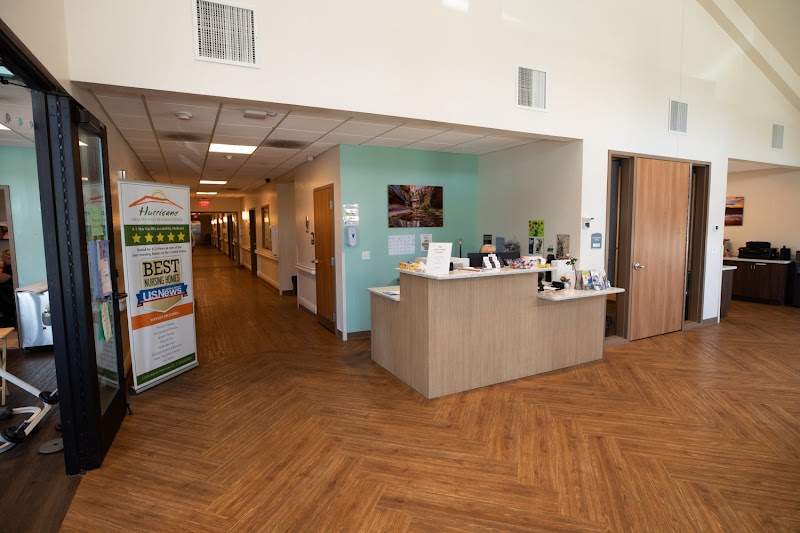
Hurricane Health and Rehabilitation is owned by a for-profit company. For-profit facilities operate as businesses with obligations to shareholders or private owners. The facility is operated by THE ENSIGN GROUP, a chain that manages multiple nursing homes. With 60 certified beds and approximately 46 residents (about 77% occupancy), it is a smaller facility located in Hurricane, Utah.

How Does Hurricane Health And Rehabilitation Compare to Other Utah Nursing Homes?

Compared to the 100 nursing homes in Utah, Hurricane Health and Rehabilitation's overall rating (4 stars) is above the state average of 3.4, staff turnover (59%) is significantly higher than the state average of 46%, and health inspection rating (4 stars) is above the national benchmark.

What Should Families Ask When Visiting Hurricane Health And Rehabilitation?

Based on this facility's data, families visiting should ask: "How do you ensure continuity of care given staff turnover, and what is your staff retention strategy?" "Can I visit during a mealtime to observe dining assistance and food quality?" "How do you handle medical emergencies, and what is your hospital transfer rate?" "Can I speak with family members of current residents about their experience?" These questions are particularly relevant given the facility's high staff turnover rate.

Is Hurricane Health And Rehabilitation Safe?

Based on CMS inspection data, Hurricane Health and Rehabilitation has a clean safety record: no substantiated abuse findings (meaning no confirmed cases of resident harm), no Immediate Jeopardy citations (the most serious violation level indicating risk of serious injury or death), and is not on the Special Focus Facility watch list (a federal program monitoring the lowest-performing 1% of nursing homes). The facility has a 4-star overall rating and ranks #1 of 100 nursing homes in Utah. While no facility is perfect, families should still ask about staff-to-resident ratios and recent inspection results during their visit.

Do Nurses at Hurricane Health And Rehabilitation Stick Around?

Staff turnover at Hurricane Health and Rehabilitation is high. At 59%, the facility is 13 percentage points above the Utah average of 46%. High turnover means new staff may not know residents' individual needs, medications, or preferences. It can also be disorienting for residents, especially those with dementia who rely on familiar faces. Families should ask: What is causing the turnover? What retention programs are in place? How do you ensure care continuity during staff transitions?

Was Hurricane Health And Rehabilitation Ever Fined?

Hurricane Health and Rehabilitation has been fined $12,335 across 1 penalty action. This is below the Utah average of $33,202. While any fine indicates a compliance issue, fines under $50,000 are relatively common and typically reflect isolated problems that were subsequently corrected. Families should ask what specific issues led to these fines and confirm they've been resolved.

Is Hurricane Health And Rehabilitation on Any Federal Watch List?

Hurricane Health and Rehabilitation is not on any federal watch list. The most significant is the Special Focus Facility (SFF) program, which identifies the bottom 1% of nursing homes nationally based on persistent, serious quality problems. Not being on this list means the facility has avoided the pattern of deficiencies that triggers enhanced federal oversight. This is a positive indicator, though families should still review the facility's inspection history directly.