Pinnacle Nursing and Rehabilitation Center
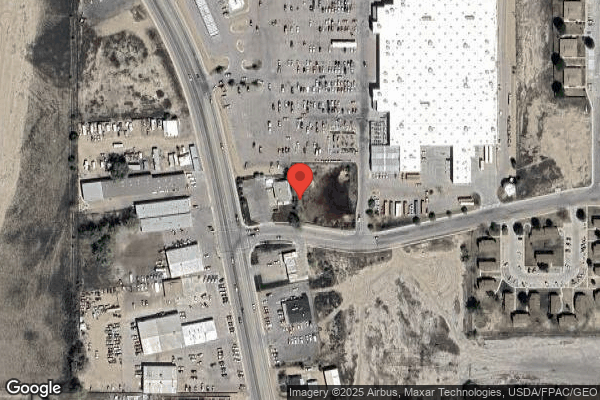
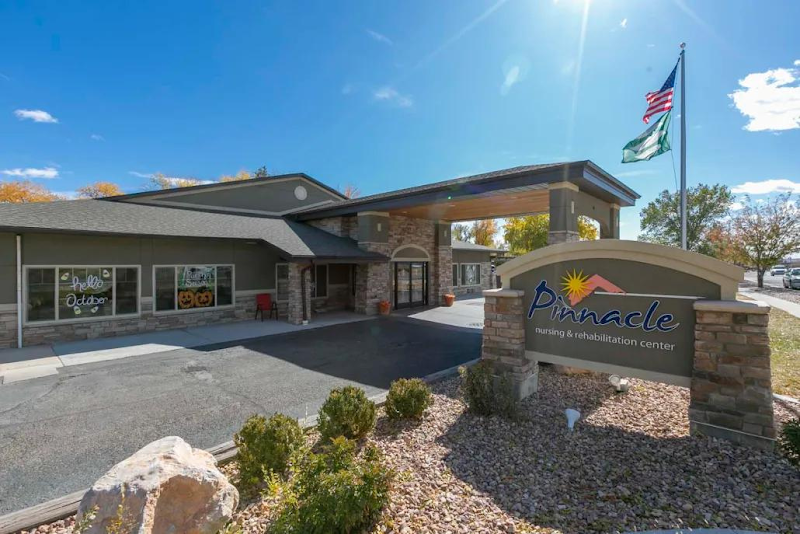
1340 East 300 North, Price, UT 84501 (435) 637-9213
For profit - Corporation 100 Beds THE ENSIGN GROUP Data: November 2025
Trust Grade
90/100
#17 of 97 in UT
Last Inspection: November 2023

Within standard 12-15 month inspection cycle. Federal law requires annual inspections.

Overview

Pinnacle Nursing and Rehabilitation Center has a Trust Grade of A, indicating it is an excellent facility that is highly recommended for care. It ranks #17 out of 97 nursing homes in Utah, placing it in the top half, and is the best option among the two facilities in Carbon County. However, the trend is concerning as the number of issues reported has worsened, increasing from 2 in 2022 to 7 in 2023. While staffing is decent with a 3 out of 5 star rating and a turnover rate of 48%, which is slightly below the state average, the facility has no fines on record, suggesting compliance with regulations. Specific incidents noted during inspections include a lack of timely reviews of care plans for some residents and issues with serving residents at different times during meals, which did not respect their dignity and rights. Overall, while there are strengths in staffing and no fines, the recent increase in reported concerns is a significant drawback to consider.
Trust Score
A
90/100
In Utah
#17/97
Top 17%
Safety Record
Low Risk
No red flags
Inspections
Getting Worse
2 → 7 violations
Staff Stability
⚠ Watch
48% turnover. Above average. Higher turnover means staff may not know residents' routines.
Penalties
✓ Good
No fines on record. Clean compliance history, better than most Utah facilities.
Skilled Nurses
✓ Good
Each resident gets 60 minutes of Registered Nurse (RN) attention daily — more than 97% of Utah nursing homes. RNs are the most trained staff who catch health problems before they become serious.
Violations
⚠ Watch
11 deficiencies on record. Higher than average. Multiple issues found across inspections.
★★★★★
5.0
Overall Rating
★★★☆☆
3.0
Staff Levels
★★★★★
5.0
Care Quality
★★★★☆
4.0
Inspection Score
Stable
2022: 2 issues
2023: 7 issues

The Good

  • 5-Star Quality Measures · Strong clinical quality outcomes
  • Full Sprinkler Coverage · Fire safety systems throughout facility
  • No fines on record

Facility shows strength in quality measures, fire safety.

The Bad

Staff Turnover: 48%

Near Utah avg (46%)

Higher turnover may affect care consistency

Chain: THE ENSIGN GROUP

Part of a multi-facility chain

Ask about local staffing decisions and management

The Ugly 11 deficiencies on record

Nov 2023 7 deficiencies
CONCERN (D) 📢 Someone Reported This

A family member, employee, or ombudsman was alarmed enough to file a formal complaint

Potential for Harm - no one hurt, but risky conditions existed

Resident Rights (Tag F0550)

Could have caused harm · This affected 1 resident

Based on observation and interview, it was determined for 22 of 33 that the facility did not treat each resident with respect and dignity. Specifically, the facility did not serve residents sitting at...

Read full inspector narrative →
Based on observation and interview, it was determined for 22 of 33 that the facility did not treat each resident with respect and dignity. Specifically, the facility did not serve residents sitting at the same table in the dining room at the same time. Resident identifiers: 3, 4, 6, 10, 11, 13, 16, 22, 26, 27, 29, 31, 32, 34, 37, 38, 41, 42, 154, 156, 205 and 206. Findings include: 1. A dining observation was conducted on 11/28/23 at 10:21 AM. The following was observed: a. There were multiple tables placed together to make a large table in the middle of the dining room. Residents were observed to be served at different times. Resident 10 and resident 13 were served at 10:43 AM. Resident 31 and resident 11 were served at 10:49 AM. Resident 16 was observed to be served at 10:51 AM. Resident 29 was served at 10:52 AM. Resident 26 was observed to enter the dining room at 10:52 AM and was served at 10:54 AM. Resident 3 was observed to be served at 10:58 AM. It should be noted there was a 15 minute difference between the first resident served and the last resident at the same table. 2. A dining observation was conducted on 11/30/23 at 10:24 AM. The following was observed: a. There were multiple tables placed together to make a large table in the middle of the dining room. Residents were observed to be served at different times. Resident 22 and resident 3 were served at 10:44 AM, resident 10 was served at 10:45 AM, resident 6 was served at 10:46 AM, resident 38 and resident 11 were served at 10:49 AM, resident 156 was served at 10:48 AM, resident 26 was served at 10:51 AM, resident 34 was served at 10:52 AM, and resident 29 and resident 13 were served at 10:53 AM. It should be noted there was a 9 minute difference between the first resident served and the last resident served at the same table. b. Another table near the Christmas Tree was observed. Resident 32 was served at 10:28 AM and resident 42 was served at 10:31 AM. c. Another table near the music speaker was observed. Resident 27 was served at 10:30 AM and resident 41 was served at 10:32 AM. d. Another table near the television was observed. Resident 4 was served at 10:28 AM and resident 206 served at 10:41 AM. e. Another table near the vending machine was observed to have resident 205 served at 10:37 AM, resident 37 at 10:41 AM and resident 154 served at 10:46 AM. On 11/30/23 at 10:43 AM, an interview was conducted with Certified Nursing Assistant (CNA) 1. CNA 1 stated that between 10:15 AM and 10:30 AM there were two CNAs from the halls that came to help residents that required assistance with eating. At 10:30 AM, two additional CNAs came to help pass drinks and put on clothing protectors. CNA 1 stated usually there was one staff member from the kitchen passing trays in the dining room. On 11/30/23 at 11:15 AM, an interview was conducted with Dietary Aide (DA) 2. DA 2 stated that at 10:00 AM, the hall meal carts were sent to the hallways. At 10:30 AM, the kitchen started to serve residents in the dining room. DA 2 stated residents that required assistance were fed first, then residents who tended to leave the dining room if they were not served quickly, and then any other residents last. DA 2 stated that two residents were served at a time. On 11/30/23 at 11:19 AM, an interview was conducted with the Dietary Manager (DM). The DM stated that at 10:00 AM, the first hall meal cart went to the hallway, followed by the second cart at 10:10 AM. The DM stated the kitchen staff then started to serve residents that required assistance in the dining room. The DM stated the residents that tried to leave the dining room before being served were served next and then the other residents. The DM stated that all residents sitting at the same table should be served together. The DM stated that 2 residents were served at a time. The DM stated there was one dietary staff member that passed trays in the dining room. On 11/29/23 at 4:06 PM, an interview was conducted with resident 4. Resident 4 stated that it usually took until somewhere between 5:00 PM and 5:30 PM for dinner to be served. On 11/29/23 at 4:19 PM, an interview was conducted with resident 34. Resident 34 stated that meals should be ready and served at 4:00 PM, but almost everyday he had to wait until 5:00 PM or later to be served his meal. On 11/30/23 at 11:27 AM, a a follow-up interview was conducted with resident 34. Resident 34 stated that it made him anxious when he had to wait for his meal to be served. Resident 34 stated that the long table in the center of the dining room was usually served last. On 11/30/23 at 11:28 AM, an interview was conducted with resident 6. Resident 6 stated that the kitchen only serves two residents in the dining room at a time.
CONCERN (D) 📢 Someone Reported This

A family member, employee, or ombudsman was alarmed enough to file a formal complaint

Potential for Harm - no one hurt, but risky conditions existed

Deficiency F0554 (Tag F0554)

Could have caused harm · This affected 1 resident

**NOTE- TERMS IN BRACKETS HAVE BEEN EDITED TO PROTECT CONFIDENTIALITY** Based on observation, interview, and record review it was determined, for 1 of 33 sampled residents, that the facility did not e...

Read full inspector narrative →
**NOTE- TERMS IN BRACKETS HAVE BEEN EDITED TO PROTECT CONFIDENTIALITY** Based on observation, interview, and record review it was determined, for 1 of 33 sampled residents, that the facility did not ensure that the resident right to self-administer medications was clinically appropriate and safe. Specifically, a resident was observed to have medications on the bedside table and was not evaluated to determine if they were safe to self-administer medications. Resident identifiers: 156. Findings included: Resident 156 was admitted on [DATE] with diagnoses which included osteomyelitis, Type 2 diabetes with foot ulcer, lymphedema, and cellulitis of right lower limb. On 11/27/23 at 12:57 PM, an observation was made of resident 156's room. There were three medication bottles observed on resident 156's bedside table. On 11/27/23 at 3:33 PM, a follow-up observation was made of resident 156's room. The three medications on resident 156's bedside table were the following: a. Bean-O b. Lactase Supplement c. Equate Gas Relief (simethicone 125 mg) Resident 156's medical record was reviewed on 11/27/23. An admission Minimum Data Set (MDS) assessment dated [DATE] documented that resident 156 had a Brief Interview for Mental Status (BIMS) score of 14. A BIMS score of 13 to 15 indicated cognition was intact. On 11/28/23 at 9:50 AM, an interview was conducted with Registered Nurse (RN) 2. RN 2 stated that none of the residents on her unit had medications at their bedside. RN 2 stated that if a resident were to have medications at their bedside the resident would need to be assessed and care planned to be able to self-administer. No documentation could be located in resident 156's medical record indicating that resident 156 had been evaluated to safely self-administer medications. No physician's order could be located for the three medications found on resident 156 bedside table. On 11/29/23 at 3:59 PM, an interview was conducted with Certified Nursing Assistant (CNA) 4. CNA 4 stated that she noticed that resident 156 had medications on her bedside table on 11/28/23 and she informed the nurse about it. On 11/29/23 at 4:18 PM, an interview with RN 2 was conducted. RN 2 stated that she found medication on resident 156's bedside table on 11/27/23 or 11/28/23, that was the first time she had seen the medications. RN 2 stated she took the medications from resident 156 and instructed resident she can have them back when she was discharged from the facility. On 11/29/23 at 1:10 PM, an interview with resident 156 was conducted. Resident 156 stated that she went to take her medications she had kept on her bedside table this morning and noticed that they were no longer there. Resident 156 stated that she was unaware when staff came in and took her medications from her room. Resident 156 stated that she wished she had her medications since she was dealing with diarrhea that morning. On 11/29/23 at 6:12 PM, an interview was conducted with Director of Nursing (DON). The DON stated that upon admission to the facility none of the residents were allowed to self-administer medication. The DON stated that if a resident really wanted to have any medication to self administer, the staff did an assessment. The DON stated that if a resident was approved to self administer medications, the resident was required to keep medication out of site from other residents. The DON stated that RN 2 came to her on 11/27/23 regarding resident 156 having medication on the bedside table. The DON stated she talked with RN 2 and resident 156 about the medications needing to be ordered from physician and placed in possession of facility staff. The DON stated resident 156 was okay with this and asked nursing staff for the medications when needed. On 11/30/23 at 11:13 AM, an interview was conducted with resident 156. Resident 156 stated that she would really like to have some of her medications to self administer. Resident 156 stated that over the past two days she had gas, diarrhea, and was feeling uncomfortable. Resident 156 stated that she took the medications regularly prior to admission.
CONCERN (D) 📢 Someone Reported This

A family member, employee, or ombudsman was alarmed enough to file a formal complaint

Potential for Harm - no one hurt, but risky conditions existed

Deficiency F0578 (Tag F0578)

Could have caused harm · This affected 1 resident

**NOTE- TERMS IN BRACKETS HAVE BEEN EDITED TO PROTECT CONFIDENTIALITY** Based on interview, observation, and record review it was determined, for 1 of 33 sampled residents, the facility did not allow ...

Read full inspector narrative →
**NOTE- TERMS IN BRACKETS HAVE BEEN EDITED TO PROTECT CONFIDENTIALITY** Based on interview, observation, and record review it was determined, for 1 of 33 sampled residents, the facility did not allow resident the right to request, refuse and/or discontinue treatment and to formulate an advanced directive. Specifically, a resident's Provider Order for Life-Sustaining Treatment (POLST) form did not match in their electronic medical record. Resident identifiers:156. Findings included: Resident 156 was admitted on [DATE] with diagnoses which included osteomyelitis, Type 2 diabetes with foot ulcer, lymphedema, and cellulitis of right lower limb. Resident 156's medical record was reviewed on [DATE]. An admission Minimum Data Set (MDS) assessment dated [DATE] documented that resident 156 had a Brief Interview for Mental Status (BIMS) score of 14. A BIMS score of 13 to 15 indicated cognition was intact. The Physician Orders for Life Sustaining Treatment (POLST) dated [DATE] was reviewed and marked as Do Not Resuscitate (DNR). Resident 76's Medication Administration Record (MAR) was reviewed and indicated a code status of CPR (Cardiopulmonary resuscitation)/Full Code. An active physician's order for resident 156 dated [DATE] states, CPR/ FULL CODE with no directions specified. On [DATE] at 1:10 PM, an interview was conducted with resident 156. Resident 156 stated that she requested that she was a DNR. Resident 156 stated that the red wristband she had on was to alert staff she did not want to be resuscitated if her heart was to stop. Resident 156 stated that she already had heart failure so if it was to stop, she did not want CPR. On [DATE] at 1:10 PM, an observation was made of a red wristband was on resident 156's left wrist. On [DATE] at 5:05 PM, an interview with Registered Nurse (RN) 2 was conducted. RN 2 stated that upon admission residents can choose to have a wristband placed on their wrist. RN 2 stated the green wristband was to alert staff the resident requested to be full code status, and a red wristband meant the resident requested a DNR status. RN 2 stated that if the wristband was not present, she reviewed the electronic medical record. RN 2 stated for resident 156 had a red band requested to be a DNR. RN 2 stated if the wrist band was not on resident 156 since the physician had not signed the POLST, she would treat as a full code. On [DATE] at 6:12 PM, an interview was conducted with the Director of Nursing (DON). The DON stated that when a resident admitted to the facility the advance directive was assessed and a POLST form was filled out and signed by the resident. The DON stated everyone came to the facility as full code status until the physician signed the POLST. The DON stated that the code status alert wristband should not go on until the order was signed and completed. The DON stated that a green wristband indicated a full code, and a red wristband was for a DNR.
CONCERN (D) 📢 Someone Reported This

A family member, employee, or ombudsman was alarmed enough to file a formal complaint

Potential for Harm - no one hurt, but risky conditions existed

Deficiency F0658 (Tag F0658)

Could have caused harm · This affected 1 resident

**NOTE- TERMS IN BRACKETS HAVE BEEN EDITED TO PROTECT CONFIDENTIALITY** Based on observation, interview, and record review, it was determined, the facility did not ensure that services provided met pr...

Read full inspector narrative →
**NOTE- TERMS IN BRACKETS HAVE BEEN EDITED TO PROTECT CONFIDENTIALITY** Based on observation, interview, and record review, it was determined, the facility did not ensure that services provided met professional standards of quality. Specifically, for 1 of 33 sampled residents, orders were being checked off as completed for catheter care when a catheter had been discontinued. Resident identifier: 31. Findings included: Resident 31 was admitted to the facility on [DATE] and re-admitted on [DATE] with diagnoses which included sepsis, urinary tract infection, unspecified kidney failure, disorders of peripheral nervous system, acidosis, and hyperkalemia. On 11/27/23 at 12:54 PM, an observation was made of resident 31 laying in bed, there was no Foley catheter bag hanging on his bed or near resident. Resident 31's medical record was reviewed on 11/27/23. Review of resident 31's physician's orders revealed the following: a. Catheter care q (every) shift with a start date of 11/10/23. A review of resident 31's November 2023 Medication Administration Record (MAR) for Catheter care q shift order revealed the following: a. 11/27/23 Day shift marked as completed. b. 11/27/23 Night shift marked as completed. c. 11/28/23 Day shift marked as completed. d. 11/28/23 Night shift marked as completed. e. 11/29/23 Day shift marked as completed. On 11/29/23 at 4:12 PM, an interview with Registered Nurse (RN) 2 was conducted. RN 2 stated that resident 31 had his catheter discontinued on either 11/27/23 or 11/28/23. RN 2 stated that the Certified Nursing Assistants (CNAs) completed the care regarding catheters. RN 2 stated she followed up with the CNAs to verify the ordered care was completed and then check off the order as administered. On 11/29/23 at 6:12 PM, an interview with the Director of Nursing (DON) was conducted. The DON stated that she discontinued and removed the catheter for resident 31. The DON stated that she forgot to discontinue the Catheter care q shift order. The DON stated that the nurse should take out any obsolete orders. The DON stated that nursing staff should be reading the orders prior to charting and marking the order as completed.
CONCERN (D) 📢 Someone Reported This

A family member, employee, or ombudsman was alarmed enough to file a formal complaint

Potential for Harm - no one hurt, but risky conditions existed

Quality of Care (Tag F0684)

Could have caused harm · This affected 1 resident

**NOTE- TERMS IN BRACKETS HAVE BEEN EDITED TO PROTECT CONFIDENTIALITY** Based on interview and record review, it was determined, for 2 of 33 sampled residents, that the facility did not ensure that re...

Read full inspector narrative →
**NOTE- TERMS IN BRACKETS HAVE BEEN EDITED TO PROTECT CONFIDENTIALITY** Based on interview and record review, it was determined, for 2 of 33 sampled residents, that the facility did not ensure that residents received treatment and care in accordance with professional standards of practice. Specifically, the facility did not identify a change in condition for a resident prior to her death and TED (Thrombo-Embolic Deterrent) hose were administered without a physician's order. Resident Identifiers: 31 and 51. Findings include: 1. Resident 51 was admitted on [DATE] and readmitted on [DATE] with diagnoses of atherosclerosis of native arteries of left leg with ulceration of other part of lower leg, muscle weakness (generalized), cognitive communication deficit, weakness, metabolic encephalopathy, peripheral vascular disease unspecified, embolism and thrombosis of arteries of the lower extremities, malignant neoplasm of unspecified site of female breast, occlusion and stenosis of unspecified carotid artery, non-pressure chronic ulcer of other part of left foot with other specified severity, abnormal weight loss, acute kidney failure, tubulo-interstitial nephritis not specified as acute or chronic, acquired absence of spleen, hypothyroidism unspecified, essential hypertension, hyperlipidemia, and pain. Resident 51's medical record was reviewed 11/27/23 through 11/30/23. A wound care noted dated 9/28/23 stated, Patient had revascularization procedure to left and right lower extremities approximately 3 weeks ago. Wounds on left food were stable for 1-2 weeks following. I consulted with [name of company removed] Vascular specialist as well as [name of company removed] Wound Clinic providers. Vascular specialist reported that the procedure was not successful as he hoped and was unable to clear extremely hardened plaque from blood vessels but did the best he could and wanted to give the patient several weeks to recover from surgery and offered a larger, more invasive procedure to follow if patient was up for it. Patient recovered from anesthesia and surgery slower than anticipated but wounds remained stable. The wound nurse at [name of facility] sent me a photo 9/25/23 that was very concerning for rapidly declining wound and possible gangrene to which I immediately recommended they contact the vascular surgeon for recommendations. Vascular advised patient go to [local hospital] emergency department where she had workup and consult that showed the only option for treatment would be above knee amputation to which patient and family declined. Patient was sent back to [name of facility] yesterday and patient will transition to palliative/hospice care. Wound orders as of today are meant to align with goals of palliative/hospice care. I spoke with patient and her niece who has been very involved in her care and they both feel like nothing could have been done better or different. Goals of treatment going forward are to manage pain and odor and prevent infection as best as possible. A nursing progress noted dated 10/24/23 stated, deceased note: CNA [Certified Nursing Assistant] [name removed] had called me back to the residents room to come assess something new. The LE [lower extremity] in the groin area had started to mottle and her breathing started to sound like Cheyne-Stokes so I gave resident some morphine 0.5 [milligram] to help with SOB [shortness of breath] and pain. Resident was diaphoretic, very clammy skin, very cold assessed her heart, very fluttery. Called in the charge nurse [name removed] and she assessed her as well. We called her time of death at 0128 [1:28 AM] 10-24-23. She was comfortable at time of death. I called family before she had passed to let them know she was going fast, then I called the DON [Director of Nursing] and [name of physician]. CNA's cleaned her up, did post mortem care before family showed. Let family visit as long as they wanted, then called [name removed] mortuary. Will be about 45 minutes to come and pick her up. Family will be staying till then. Son [name removed] took her bracelet and they put her had [sic] and teddy bear with her. The most recent nursing progress note prior to this note was dated 10/18/23. There was no information documented about palliative care in the note. A weekly Interdisciplinary Team Skin Review dated 10/5/23 stated that, .Resident still declining. Family and MD [Medical Doctor] aware. Being assessed for hospice. A weekly Interdisciplinary Team Skin Review dated 10/19/23 stated that, .Resident still declining. Family and MD aware. A weekly nursing assessment dated [DATE] stated that, Resident has had a decline in condition . On 11/28/23 at 3:42 PM, an interview was conducted with CNA 1. CNA 1 stated that to identify a change in condition in a resident, she observed for confusion, symptoms of urinary tract infection, unusual behaviors, skin tears, and weakness. CNA 1 stated if she suspected a change in condition, she informed a nurse. On 11/29/23 at 10:45 AM, an interview was conducted with CNA 3. CNA 3 stated that she remembered resident 51. CNA 3 stated that resident 51's legs bothered the resident frequently, and that she had to use a lift because she was unable to stand up. CNA 3 stated that resident 51 had been acting differently leading up to her death. CNA 3 stated that she was bed bound and in lots of pain, so she was put on comfort measures. On 11/29/23 at 10:30 AM, an interview was conducted with Registered Nurse (RN) 1. RN 1 stated when a resident was admitted to hospice, RN 1 made sure a resident had all of their correct medications, hospice performed an assessment, and hospice made changes to orders and medications as needed. On 11/29/23 at 10:50 AM, an interview was conducted with RN 2. RN 2 stated when a resident was admitted to hospice, the hospice performed an evaluation. RN 2 stated that sometimes hospice changed medications around, completed advance directive if the resident was experiencing a decline. RN 2 stated that she remembered resident 51. RN 2 stated that resident 51 had some sores on her foot and insufficient blood flow. RN 2 stated resident 51 had stents placed in her leg. RN 2 stated when resident 51 was readmitted to the facility after her surgery, she was placed on the short term hall for privacy. RN 2 stated that she was not sure if resident 51 was formally admitted to hospice, but she was receiving comfort care. On 11/30/23 at 8:21 AM, an interview was conducted with the Resident Advocate (RA). The RA stated that when a resident was admitted to hospice, she faxed information such as the resident's medication list and face sheet to the hospice company the resident or resident's family has chosen. The RA stated that referral paperwork for resident 51 was sent to hospice on 10/5/23 and provided a copy of the fax referral. The RA stated that she did not document when she provides a hospice referral in the medical record unless a resident was leaving the facility to go home on hospice. On 11/29/23 at 11:10 AM, an interview was conducted with the Director of Nursing (DON). The DON stated that resident 51 had been at the facility for several years. Resident 51 started to develop sores on one of her legs. The DON stated prior to the sores on her legs, resident 51 had been wheelchair bound and did not ambulate. The DON stated the sores on resident 51's legs were slow to heal. The DON stated the facility ordered an ankle brachial index test, which checks for blood flow. The DON stated there was found to be no blood flow in her leg with the sores. The DON stated resident 51 was sent to undergo surgery to take an artery from her other left and graft it onto the other leg. The DON stated the surgery did not work and a second surgery was discussed, however resident 51's family decided not to have the surgery. The DON stated resident 51 was admitted for several days before her leg turned purple. The DON stated the facility staff talked to resident 51's family about comfort care. The DON stated resident 51 was not provided hospice services because her son was not ready and did not want to put her on hospice. The DON stated resident 51's daily skilled nursing assessments stopped once she was moved from a skilled stay to private pay for comfort care after 10/16/23. The DON stated that decline was gradual, but that it was not a significant change. The DON stated since resident 51's decline was a gradual, there was no documentation regarding resident's decline or the comfort cares provided. 2. Resident 31 was admitted to the facility on [DATE] and re-admitted on [DATE] with diagnoses which included sepsis, urinary tract infection, kidney failure, disorders of peripheral nervous system, acidosis, and hyperkalemia. Resident 31's medical record was reviewed on 11/29/23. A review of physician's orders revealed no order for TED hose for resident 31. A Skin/Wound Progress Note date 10/9/23 at 12:06 PM stated .Swelling has come down to 1-2+ edema. Will discuss with therapy about compression. An Interdisciplinary team progress note dated 10/26/23 at 9:28 AM stated .Orders were put in. Appears [NAME] hose had bunched up on feet causing pressure in areas. Will remove [NAME] hose. Talked with therapy, okay to wrap if needed for edema but no [NAME] Hose . A review of Nursing Care Plan dated 10/25/23 revealed on 10/25/23 New onset infection related to abscess on left lateral foot. The intervention was wrap feet if needed/no TED hose. Another care plan dated 10/26/23 revealed on 10/24/23 actual impairment to skin integrity on left Dorsal ankle related to TED hose bunching and pressure. An intervention initiated on 10/26/23, TED hose removed. May wrap if needed for edema. On 11/29/23 at 10:30 AM, an interview with the Wound Nurse (WN) was conducted. The WN stated that resident 31 was experiencing edema in his legs and physical therapy (PT) recommended TED hose be placed on both legs. The WN stated during treatment the TED hose on his left leg bunched up around the bend of the ankle causing a wound to form in that area. The WN stated the TED hose were discontinued at that time. On 11/29/23 at 4:21 PM, an interview was conducted with Physical Therapist (PT) 1. PT 1 stated that therapy recommended TED hose and referred to the Minimum Data Set (MDS) coordinator to complete a physician's order in the resident's medical record. At 4:30 PM, a follow up interview was conducted with PT 1. PT 1 stated she was unable to locate the physician's order for the resident 31's TED hose. On 11/29/23 at 4:54 PM, an interview was conducted with the WN and the Director of Nursing (DON). The DON stated TED hose should be ordered by a physician with instructions on when to put the TED hose on and when to take them off. The DON stated staff were to check for skin break down when putting TED hose on and when removing the TED hose. The DON stated that TED hose tend to slip and bunch so staff needed to check for bunching to prevent skin breakdown.
CONCERN (D) 📢 Someone Reported This

A family member, employee, or ombudsman was alarmed enough to file a formal complaint

Potential for Harm - no one hurt, but risky conditions existed

Deficiency F0757 (Tag F0757)

Could have caused harm · This affected 1 resident

**NOTE- TERMS IN BRACKETS HAVE BEEN EDITED TO PROTECT CONFIDENTIALITY** Based on interview and record review it was determined, for 1 of 33 sampled residents, that the facility did not ensure that eac...

Read full inspector narrative →
**NOTE- TERMS IN BRACKETS HAVE BEEN EDITED TO PROTECT CONFIDENTIALITY** Based on interview and record review it was determined, for 1 of 33 sampled residents, that the facility did not ensure that each resident's drug regimen was free from unnecessary drugs. An unnecessary drug was any drug when used in excessive dose; or for excessive duration; or without adequate monitoring; or without adequate indication for its use; or in the presence of adverse consequences. Specifically, a resident's blood pressure medication was administered outside of the physician ordered parameters. Resident identifier: 35. Findings included: Resident 35 was admitted to the facility on [DATE] with diagnoses which included urinary tract infection, hypertension, musculoskeletal system, difficulty walking, major depressive disorder and atrial fibrillation. Resident 35's medical record was reviewed 11/27/23 through 11/30/23. A physician's order dated 9/14/23 revealed, Metoprolol Tartrate Oral tablet. Give 12.5mg [milligrams] by mouth two times a day related to essential (primary) hypertension. A physician's order dated 9/14/23 revealed Blood pressure to be checked during weekly nursing assessment. Hold any HTN [hypertension] medication if B/P [blood pressure] is less than 100 systolic and/or 50 diastolic. If B/P is out of parameters recheck twice a day until stable. A review of resident 35's blood pressures revealed the following outside of parameters: 1. On 9/23/23, 99/66 2. On 10/13/23, 97/73 3. On 10/22/23, 95/57 4. On 10/27/23, 91/65 5. On 10/28/23, 82/68 6. On 10/29/23, 97/57 7. On 10/30/23, 96/59 8. On 11/1/23, 91/63 9. On 11/3/23, 94/66 10. On 11/12/23, 85/45 11. On 11/20/23, 97/56 Resident 35's Medication Administration Record (MAR) for September, October and November 2023 were reviewed. Resident 35 was administered Metoprolol Tartrate twice daily on 9/23/23, 10/13/23, 10/22/23, 10/27/23, 10/28/23, 10/29/23, 10/30/23, 11/1/23, 11/3/23, 11/12/23, and 11/20/23. There were no nursing progress notes located in resident 35's medical record regarding why Metoprolol was administered when blood pressures were outside of parameters. There were no documented blood pressures twice daily until stable located in resident 35's medical record. On 11/29/23 at 10:18 AM, an interview was conducted with Registered Nurse (RN) 2. RN 2 stated physician's orders were obtained from the hospital and faxed to the pharmacy upon admission. RN 2 stated the nurse entered the physician's orders into the residents medical record. RN 2 stated blood pressure medications were held if the blood pressures was less than 100 for systolic and less than 60 for diastolic. RN 2 stated if there was a physician's order for parameters then the medication would be held according to those orders. RN 2 stated blood pressures were obtained by the Certified Nursing Assistant's (CNA's). RN 2 stated there was a daily list of resident that needed a blood pressures so the CNA's knew who's blood pressure to check. RN 2 stated the blood pressures were obtained between 6:00 AM and 7:00 AM. RN 2 stated that residents that were at the facility long term usually had weekly blood pressure checks unless there was an order. RN 2 stated if the blood pressure medication was not held with a low blood pressure, then the blood pressure could go lower and cause light headedness and dizziness. RN 2 was observed to review resident 35's blood pressures and stated it looked like the Metoprolol should have been held according to the physician ordered parameters. RN 2 stated resident 35 should have had blood pressures done twice daily until stable, but that was not documented. RN 2 stated there were no nursing progress notes regarding why the Metoprolol was administered with the low blood pressures and why the blood pressures were not rechecked. On 11/29/23 at 10:28 AM, an interview was conducted with RN 1. RN 1 stated blood pressures were always checked prior to blood pressure medication being administered. RN 1 stated CNA's checked blood pressures in the morning. RN 1 stated when she was passing medications, she obtained another blood pressure. RN 1 stated CNA's gave a paper form to the nurses with all the blood pressures and then the nurses documented the blood pressures in the medical record. RN 1 stated resident 35 should have a progress note if the medication was administered when the blood pressure was outside of the parameters. RN 1 stated there were no nursing progress notes regarding the blood pressures in resident 35's medical record. RN 1 stated there were no follow-up blood pressures documented in resident 35's medical record. RN 1 stated the Metoprolol should have been held and blood pressures rechecked. On 11/29/23 at 11:00 AM, an interview was conducted with the Director of Nursing (DON). The DON stated that RN 1 and RN 2 informed her that resident 35 had received Metoprolol when the blood pressures were outside of parameters. The DON stated she was not aware that the order was to obtain a blood pressure and then recheck twice daily until stable. The DON stated the physician's order for the parameters should have been connected to the physician's order for the Metoprolol, so the nurse checked the blood pressure and then administered the medications.
CONCERN (D) 📢 Someone Reported This

A family member, employee, or ombudsman was alarmed enough to file a formal complaint

Potential for Harm - no one hurt, but risky conditions existed

Deficiency F0777 (Tag F0777)

Could have caused harm · This affected 1 resident

**NOTE- TERMS IN BRACKETS HAVE BEEN EDITED TO PROTECT CONFIDENTIALITY** Based on interview and record review it was determine, for 1 of 33 sampled residents, that the facility did not obtain radiology...

Read full inspector narrative →
**NOTE- TERMS IN BRACKETS HAVE BEEN EDITED TO PROTECT CONFIDENTIALITY** Based on interview and record review it was determine, for 1 of 33 sampled residents, that the facility did not obtain radiology services only when ordered by a physician. Specifically, an x-ray was obtained without a physician order. Resident identifier: 28. Findings include: Resident 28 was admitted to the facility on [DATE] and readmitted on [DATE] with diagnoses which included muscle weakness, history of falling, dementia, major depressive disorder. Resident 28's medical record was reviewed 11/27/23 through 11/30/23. An x-ray dated 7/7/23 was in resident 28's medical record. There was no physician's order located in resident 28's medical record. On 11/30/23 at 10:01 AM, an interview was conducted with the Director of Nursing (DON). The DON stated that a physician's order was obtained for an x-ray but then it was sent with the resident to the hospital. The DON stated that the copy of the x-ray order was not kept in the residents medical record.
Feb 2022 2 deficiencies
CONCERN (D)

Potential for Harm - no one hurt, but risky conditions existed

Deficiency F0561 (Tag F0561)

Could have caused harm · This affected 1 resident

**NOTE- TERMS IN BRACKETS HAVE BEEN EDITED TO PROTECT CONFIDENTIALITY** Based on observation and interview it was determined, for 1 of 30 sample residents, that the resident was not able to make choic...

Read full inspector narrative →
**NOTE- TERMS IN BRACKETS HAVE BEEN EDITED TO PROTECT CONFIDENTIALITY** Based on observation and interview it was determined, for 1 of 30 sample residents, that the resident was not able to make choices about aspects of her life in the facility that were significant to the resident. Specifically, the facility did not allow the resident the right to smoke cigarettes at times deemed desirable to the resident, instead only allowing the resident to smoke during the facility designated smoking times. Resident identifier: 27. Findings include: Resident 27 was admitted to the facility on [DATE] with diagnoses which included lymphedema, phlebitis and thrombophlebitis, hyperlipidemia, acute bronchitis, and major depressive disorder. On 2/22/22 at 1:09 PM, an interview was conducted with Resident 27. In the interview Resident 27 stated that she wished that the facility .would let me smoke when I like. Resident 27 expressed a dislike of the facility's smoking schedule and stated- I've been a smoker my whole life but here I am being told no I can't go smoke, I gotta wait for staff. On 2/22/22 at 2:22 PM, an interview was conducted with Registered Nurse (RN) 1 who stated that residents were allowed to smoke at this facility, but a smoking schedule was followed. RN 1 obtained a physical copy of the smoking schedule and stated that some residents try to push it and go out whenever they want, but we stick to the schedule. It makes everything run much smoother. On 2/23/22 at 12:39 PM, an interview was conducted with the facility's Resident Advocate (RA). The RA stated, All our residents are supervised when they go out smoking and nobody is allowed to go out to smoke unless it's during one of the scheduled times. They all know this, the times are posted. On 2/23/22 at 12:46 PM, an interview was conducted with Certified Nursing Assistant (CNA) 3 who stated, Nobody is allowed to smoke without staff being there, it wouldn't be safe. Nobody can smoke on their own here-we have a schedule for that. On 2/23/22 a record review was conducted. Resident 27's smoking assessments from 12/20/21, 09/20/21, 06/20/21, and 03/20/21 indicated that Resident 27 was assessed as not having a need for assistance while smoking and assessed with the ability to light her own cigarette. On 2/23/22 an interview was conducted with the Director of Nursing (DON). I stick to the scheduled smoke times we have, and we have six times. I do have residents that push it and I try to accommodate that, and we may have it start late sometimes, but we don't ever skip it. Only just a late start. I don't have a resident that is safe here to smoke by themselves. If someone is safe 100% then they can go out by themselves. On 2/23/22 a copy of the facility's smoking policy was reviewed. The policy stated that facility designated smoking times were at : 8 AM, 11 AM, 2 PM, 6 PM, 9 PM, and 11 PM. The policy also stated that, If it is determined that a resident is a safe smoker, smoking materials will still be retained by nursing staff and they may come and request 1 or 2 cigarettes at the time they desire to go out to smoke unsupervised.
CONCERN (E)

Potential for Harm - no one hurt, but risky conditions existed

Deficiency F0657 (Tag F0657)

Could have caused harm · This affected multiple residents

**NOTE- TERMS IN BRACKETS HAVE BEEN EDITED TO PROTECT CONFIDENTIALITY** Based on interview and record review, it was determined that the facility did not conduct quarterly review assessments of the co...

Read full inspector narrative →
**NOTE- TERMS IN BRACKETS HAVE BEEN EDITED TO PROTECT CONFIDENTIALITY** Based on interview and record review, it was determined that the facility did not conduct quarterly review assessments of the comprehensive care plans by the interdisciplinary team (IDT). Specifically, for 4 out of 30 sampled residents, the facility did not have quarterly review assessments of the comprehensive care plans by the IDT. Resident identifiers: 4, 5, 42, and 250. Findings included: On 2/24/22 a review of resident records was completed regarding care planning. 1. Resident 5 was admitted to the facility on [DATE] with diagnoses which included dorsalgia, muscle wasting and atrophy, difficulty walking, cellulitis, muscle weakness, personal history of urinary tract infections (UTIs), fracture of one rib, right side, nondisplaced fracture of shaft of right clavicle, chronic pain, and adult failure to thrive. Resident 5's medical record indicated IDT-Care Plan Reviews were held on 7/6/21 and 10/21/21. Based on resident 5's medical record, resident 5 had not had an IDT-Care Plan Review since 10/21/21, which indicated resident 5 had not had an IDT-Care Plan Review in 4 months. 2. Resident 250 was admitted to the facility on [DATE] with diagnoses which included muscle wasting and atrophy, age-related physical debility, abnormalities of gait and mobility, personal history of COVID-19, mood (affective) disorder, abnormal posture, type 2 diabetes, pain, lack of coordination, dysphagia, major depressive disorder, anxiety disorder, and muscle weakness. Resident 250's medical record indicated an IDT-Care Plan Review was held on 6/30/21. Based on resident 250's medical record, resident 250 had not had an IDT-Care Plan Review since 6/30/21, which indicated resident 250 had not had an IDT-Care Plan Review in greater than 7 months. 3. Resident 4 was admitted to the facility on [DATE] with diagnoses that included muscle weakness and hallucinations. Resident 4's medical record was reviewed on 2/22/22. Resident 4's medical record indicated IDT Care Plan Reviews were held on 8/14/20, 7/12/21, and 1/17/22, instead of quarterly. 4. Resident 42 was admitted to the facility on [DATE] with diagnoses that included dementia and sleep terrors. Resident 42's medical record was reviewed on 2/22/22. Resident 42's medical record indicated IDT Care Plan Reviews were held on 7/16/21 and 12/15/21, instead of quarterly. On 2/24/22 at 10:45 AM, an interview was conducted with the Minimum Data Set (MDS) Registered Nurse (RN). The MDS RN stated that care planning meetings were held at least quarterly (every three months). She stated the Resident Advocate was responsible for scheduling the care planning meetings. On 2/24/22 at 11:30 AM, an interview was conducted with the Resident Advocate. The Resident Advocate stated that care planning meetings were held quarterly. She stated if the documentation was not in the Electronic Health Record (EHR) in the Standard Assessment tab under IDT - Care Planning Review type, the care planning meeting was not held. The Resident Advocate also stated that the EHR was supposed to alert staff that the care plan needed to be reviewed quarterly. The Resident Advocate stated she was unaware that the EHR was not alerting staff as it was supposed to, and this may have been the reason some of the care plans had not been reviewed in a timely manner.
Nov 2019 2 deficiencies
CONCERN (D)

Potential for Harm - no one hurt, but risky conditions existed

Drug Regimen Review (Tag F0756)

Could have caused harm · This affected 1 resident

**NOTE- TERMS IN BRACKETS HAVE BEEN EDITED TO PROTECT CONFIDENTIALITY** Based on interview and record review it was determined for 2 of 17 sample residents that the facility did not act upon pharmacy ...

Read full inspector narrative →
**NOTE- TERMS IN BRACKETS HAVE BEEN EDITED TO PROTECT CONFIDENTIALITY** Based on interview and record review it was determined for 2 of 17 sample residents that the facility did not act upon pharmacy recommendations in a timely manner. Specifically, recommendations to draw blood levels for medication monitoring were not followed up for several months. Resident identifiers: 24 and 25. Findings include: 1. Resident 25 was admitted to the facility on [DATE] with diagnoses of anemia, depression, anxiety disorder, hypothyroidism, type 2 diabetes mellitus, diabetic foot ulcer, and aftercare following surgical amputation. On 11/6/19 resident 25's medical records were reviewed. A review of progress notes/labs showed that a Thyroid Stimulating Hormone (TSH) level was drawn in July 2017. A review of resident 25's Pharmacy Consult Reports (PCR) revealed that in February of 2019 the Pharmacist noted that he couldn't find a recent TSH level for resident 25 and recommended that a TSH level be checked with the next routine labs, because resident 25 was receiving a medication to treat her hypothyroidism. In March of 2019 the Pharmacist noted that: there was not a recent thyroid lab for resident 25 and that the last TSH on file done July 2017. The recommendation was to check Thyroxine (T4) and TSH with the next routine lab draw. In April 2019 the Pharmacist requested that nursing follow up with the physician to see if yearly thyroid labs (TSH, T4) should be ordered. In September of 2019 the Pharmacist noted that he did not find a recent thyroid lab report to monitor the Levothyroxine supplement that resident 25 was receiving. The recommendation was to check the TSH, T4 levels with the next routine lab draw. A review of resident 25's physician orders revealed that on 11/6/19, a TSH level was ordered to be drawn that day, which was approximately 8 months after the pharmacist made the initial recommendation for the TSH level to be checked. 2. Resident 24 was admitted to the facility on [DATE] with diagnoses that included hypothyroidism, left femur fracture, anxiety disorder, hallucinations, dementia, diabetes mellitus, atrial fibrillation, and osteoarthritis. Resident 24's medical record was reviewed on 11/4/19. Resident 24's physician orders were reviewed and revealed that resident 24 was receiving Levothyroxine Sodium Tablet 100 micrograms (mcg) daily from admission on [DATE] through 10/18/19 for a diagnosis of hypothyroidism. A review of resident 24's laboratory results revealed that the last TSH level was drawn on 3/1/18. The TSH level on 3/1/18 was within normal limits listed on the laboratory sheet. A review of resident 24's pharmacy recommendations indicated that in February 2019, the pharmacist had recommended that resident 24 have a TSH level drawn again, as well as a Basic Metabolic Panel (BMP). Neither a BMP nor a TSH level could be located in resident 24's medical record after 3/1/18. On 11/6/19 at 9:15 AM, an interview was conducted with the Director of Nursing (DON). The DON stated that in August 2019, facility staff had identified that pharmacy recommendations had not been followed up on consistently, and they had since taken measures to correct this issue. The DON stated that she was under the impression that staff had gone back to insure that all pharmacy recommendations were acted upon. However, the DON confirmed that resident 24's TSH and BMP and not been drawn, even after the issue was identified in August 2019. With regard to resident 25, the DON confirmed that the resident's TSH and T4 had not been drawn despite multiple recommendations to do so by the pharmacist. The DON stated that resident 25's physician had been contacted that day and had ordered a TSH to be drawn.
CONCERN (D)

Potential for Harm - no one hurt, but risky conditions existed

Deficiency F0757 (Tag F0757)

Could have caused harm · This affected 1 resident

**NOTE- TERMS IN BRACKETS HAVE BEEN EDITED TO PROTECT CONFIDENTIALITY** Based on interview and record review, it was determined that for 2 of 17 sampled residents, the facility did not ensure that res...

Read full inspector narrative →
**NOTE- TERMS IN BRACKETS HAVE BEEN EDITED TO PROTECT CONFIDENTIALITY** Based on interview and record review, it was determined that for 2 of 17 sampled residents, the facility did not ensure that resident's drug regimen was free from unnecessary drugs. An unnecessary drug is any drug when used in excessive dose; or for excessive duration; or without adequate monitoring; or without adequate indications for its use; or in the presence of adverse consequences which indicate the dose should be reduced or discontinued; or any combinations of the reasons above. Specifically, the facility did not adequately monitor and order laboratory tests for residents on thyroid medication as recommended by pharmacists in the Pharmacy Consulting Report. Resident identifiers: 24 and 25. Findings include: 1. Resident 25 was admitted to the facility on [DATE] with diagnoses of anemia, depression, anxiety disorder, hypothyroidism, type 2 diabetes mellitus, diabetic foot ulcer, and aftercare following surgical amputation. On 11/6/19 residents medical records were reviewed. A review of progress notes/labs showed that a Thyroid Stimulating Hormone (TSH) level was drawn in July 2017. A review of resident 25's Pharmacy Consult Reports (PCR) revealed that in February of 2019 the Pharmacist noted that he couldn't find a recent TSH level for resident 25 and recommended that a TSH level be checked with the next routine labs, because resident 25 was receiving a medication to treat her hypothyroidism. In March of 2019 the Pharmacist noted that: there was not a recent thyroid lab for resident 25 and that the last TSH on file done July 2017. The recommendation was to check Thyroxine (T4) and TSH with the next routine lab draw. In April 2019 the Pharmacist requested that nursing follow up with the physician to see if yearly thyroid labs (TSH, T4) should be ordered. In September of 2019 the Pharmacist noted that he did not find a recent thyroid lab report to monitor the Levothyroxine supplement that resident 25 was receiving. The recommendation was to check the TSH, T4 levels with the next routine lab draw. A review of resident 25's physician orders revealed that on 11/6/19, a TSH level was ordered to be drawn that day, which was approximately 8 months after the pharmacist made the initial recommendation for the TSH level to be checked. 2. Resident 24 was admitted to the facility on [DATE] with diagnoses that included hypothyroidism, left femur fracture, anxiety disorder, hallucinations, dementia, diabetes mellitus, atrial fibrillation, and osteoarthritis. Resident 24's medical record was reviewed on 11/4/19. Resident 24's physician orders were reviewed and revealed that resident 24 was receiving Levothyroxine Sodium Tablet 100 micrograms (mcg) daily from admission on [DATE] through 10/18/19 for a diagnosis of hypothyroidism. A review of resident 24's laboratory results revealed that the last Thyroid Stimulating Hormone (TSH) level was drawn on 3/1/18. The TSH level on 3/1/18 was within normal limits listed on the laboratory sheet. A review of resident 24's pharmacy recommendations indicated that in February 2019, the pharmacist had recommended that resident 24 have a TSH level drawn again, as well as a Basic Metabolic Panel (BMP). Neither a BMP nor a TSH level could be located in resident 24's medical record after 3/1/18. On 11/6/19 at 9:15 AM, an interview was conducted with the Director of Nursing (DON). The DON stated that in August 2019, facility staff had identified that pharmacy recommendations had not been followed up on consistently, and they had since taken measures to correct this issue. The DON stated that she was under the impression that staff had gone back to insure that all pharmacy recommendations were acted upon. However, the DON confirmed that resident 24's TSH and BMP and not been drawn, even after the issue was identified in August 2019. With regard to resident 25, the DON confirmed that the resident's TSH and T4 had not been drawn despite multiple recommendations to do so by the pharmacist. The DON stated that resident 25's physician had been contacted that day and had ordered a TSH to be drawn.
Understanding Severity Codes (click to expand)
Life-Threatening (Immediate Jeopardy)
J - Isolated K - Pattern L - Widespread
Actual Harm
G - Isolated H - Pattern I - Widespread
Potential for Harm
D - Isolated E - Pattern F - Widespread
No Harm (Minor)
A - Isolated B - Pattern C - Widespread

Questions to Ask on Your Visit

  • "Can I speak with families of current residents?"
  • "What's your RN coverage like on weekends and overnight?"

Our Honest Assessment

Strengths
  • • Grade A (90/100). Above average facility, better than most options in Utah.
  • • No major safety red flags. No abuse findings, life-threatening violations, or SFF status.
  • • No fines on record. Clean compliance history, better than most Utah facilities.
Concerns
  • • 11 deficiencies on record. Higher than average. Multiple issues found across inspections.
Bottom line: Generally positive indicators. Standard due diligence and a personal visit recommended.

About This Facility

What is Pinnacle Nursing And Rehabilitation Center's CMS Rating?

CMS assigns Pinnacle Nursing and Rehabilitation Center an overall rating of 5 out of 5 stars, which is considered much above average nationally. Within Utah, this rating places the facility higher than 99% of the state's 100 nursing homes. This rating reflects solid performance across the metrics CMS uses to evaluate nursing home quality.
How is Pinnacle Nursing And Rehabilitation Center Staffed?

CMS rates Pinnacle Nursing and Rehabilitation Center's staffing level at 3 out of 5 stars, which is average compared to other nursing homes. Staff turnover is 48%, compared to the Utah average of 46%.

What Have Inspectors Found at Pinnacle Nursing And Rehabilitation Center?

State health inspectors documented 11 deficiencies at Pinnacle Nursing and Rehabilitation Center during 2019 to 2023. These included: 11 with potential for harm.
Who Owns and Operates Pinnacle Nursing And Rehabilitation Center?

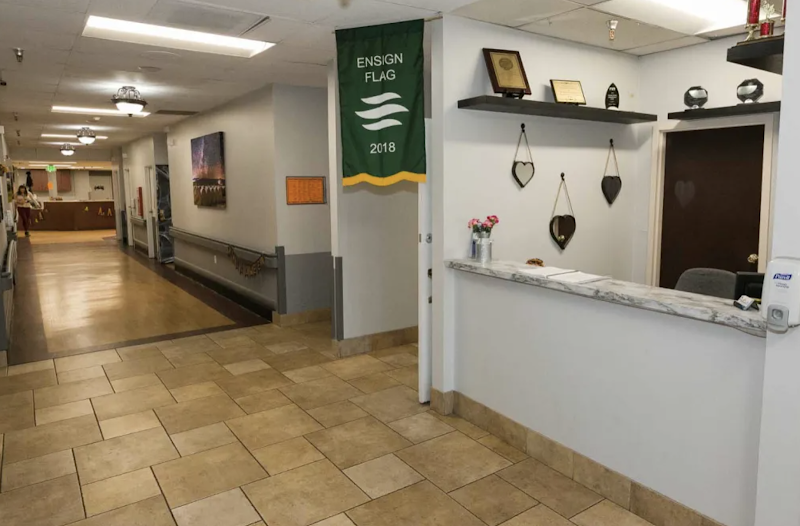
Pinnacle Nursing and Rehabilitation Center is owned by a for-profit company. For-profit facilities operate as businesses with obligations to shareholders or private owners. The facility is operated by THE ENSIGN GROUP, a chain that manages multiple nursing homes. With 100 certified beds and approximately 57 residents (about 57% occupancy), it is a mid-sized facility located in Price, Utah.

How Does Pinnacle Nursing And Rehabilitation Center Compare to Other Utah Nursing Homes?

Compared to the 100 nursing homes in Utah, Pinnacle Nursing and Rehabilitation Center's overall rating (5 stars) is above the state average of 3.4, staff turnover (48%) is near the state average of 46%, and health inspection rating (4 stars) is above the national benchmark.

What Should Families Ask When Visiting Pinnacle Nursing And Rehabilitation Center?

Based on this facility's data, families visiting should ask: "Can I visit during a mealtime to observe dining assistance and food quality?" "How do you handle medical emergencies, and what is your hospital transfer rate?" "Can I speak with family members of current residents about their experience?"

Is Pinnacle Nursing And Rehabilitation Center Safe?

Based on CMS inspection data, Pinnacle Nursing and Rehabilitation Center has a clean safety record: no substantiated abuse findings (meaning no confirmed cases of resident harm), no Immediate Jeopardy citations (the most serious violation level indicating risk of serious injury or death), and is not on the Special Focus Facility watch list (a federal program monitoring the lowest-performing 1% of nursing homes). The facility has a 5-star overall rating and ranks #1 of 100 nursing homes in Utah. While no facility is perfect, families should still ask about staff-to-resident ratios and recent inspection results during their visit.

Do Nurses at Pinnacle Nursing And Rehabilitation Center Stick Around?

Pinnacle Nursing and Rehabilitation Center has a staff turnover rate of 48%, which is about average for Utah nursing homes (state average: 46%). Moderate turnover is common in nursing homes, but families should still ask about staff tenure and how the facility maintains care continuity when employees leave.

Was Pinnacle Nursing And Rehabilitation Center Ever Fined?

Pinnacle Nursing and Rehabilitation Center has no federal fines on record. CMS issues fines when nursing homes fail to meet care standards or don't correct problems found during inspections. The absence of fines suggests the facility has either maintained compliance or corrected any issues before penalties were assessed. This is a positive indicator, though families should still review recent inspection reports for the full picture.

Is Pinnacle Nursing And Rehabilitation Center on Any Federal Watch List?

Pinnacle Nursing and Rehabilitation Center is not on any federal watch list. The most significant is the Special Focus Facility (SFF) program, which identifies the bottom 1% of nursing homes nationally based on persistent, serious quality problems. Not being on this list means the facility has avoided the pattern of deficiencies that triggers enhanced federal oversight. This is a positive indicator, though families should still review the facility's inspection history directly.