Thompson House Nursing Home
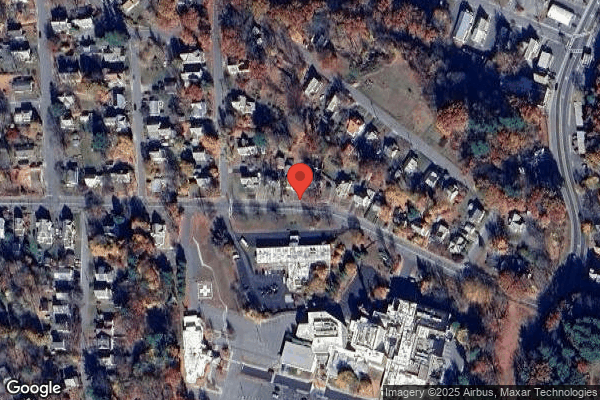
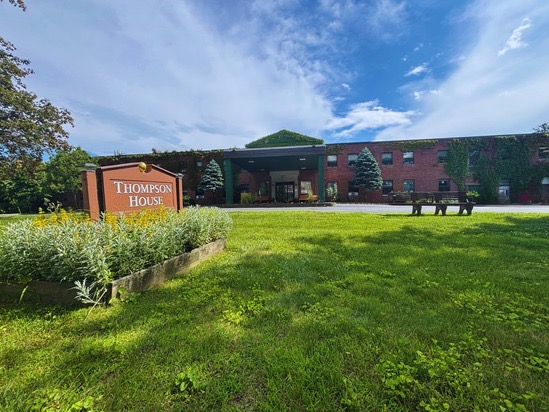
80 Maple Street, Brattleboro, VT 05301 (802) 254-4977
Non profit - Corporation 43 Beds Independent Data: November 2025
Trust Grade
90/100
#4 of 33 in VT
Last Inspection: January 2025

Within standard 12-15 month inspection cycle. Federal law requires annual inspections.

Overview

Thompson House Nursing Home has received an excellent Trust Grade of A, indicating it is highly regarded and well-recommended. It ranks #4 out of 33 facilities in Vermont, placing it in the top tier, and is also #1 out of 3 in Windham County, meaning it is the best local option available. The facility is on an improving trend, reducing issues from 5 in 2023 to 1 in 2025, which is a positive sign for families considering this home. Staffing is rated at 3 out of 5 stars with a turnover rate of 54%, which is slightly better than the state average, suggesting that while staff retention is decent, there is room for improvement. Notably, there have been no fines reported, which is encouraging. However, there are some areas of concern. Recent inspections have noted issues such as a failure to properly track grievances and potential cleanliness issues in the food storage area. Additionally, there were concerns about ensuring the safety of residents at risk of falls, including instances where care plans may not have been adequately followed. While these weaknesses are important to consider, the overall high ratings and lack of fines indicate that many aspects of care are being managed well.
Trust Score
A
90/100
In Vermont
#4/33
Top 12%
Safety Record
Low Risk
No red flags
Inspections
Getting Better
5 → 1 violations
Staff Stability
⚠ Watch
54% turnover. Above average. Higher turnover means staff may not know residents' routines.
Penalties
✓ Good
No fines on record. Clean compliance history, better than most Vermont facilities.
Skilled Nurses
✓ Good
Each resident gets 55 minutes of Registered Nurse (RN) attention daily — more than average for Vermont. RNs are trained to catch health problems early.
Violations
○ Average
8 deficiencies on record. Average for a facility this size. Mostly minor or procedural issues.
★★★★★
5.0
Overall Rating
★★★☆☆
3.0
Staff Levels
★★★★★
5.0
Care Quality
★★★★☆
4.0
Inspection Score
Stable
2023: 5 issues
2025: 1 issues

The Good

  • 5-Star Quality Measures · Strong clinical quality outcomes
  • Full Sprinkler Coverage · Fire safety systems throughout facility
  • No fines on record

Facility shows strength in quality measures, fire safety.

The Bad

Staff Turnover: 54%

Near Vermont avg (46%)

Higher turnover may affect care consistency

The Ugly 8 deficiencies on record

Jan 2025 1 deficiency
CONCERN (E) 📢 Someone Reported This

A family member, employee, or ombudsman was alarmed enough to file a formal complaint

Potential for Harm - no one hurt, but risky conditions existed

Accident Prevention (Tag F0689)

Could have caused harm · This affected multiple residents

Based on interview and record review, the facility failed to ensure each resident remains as free of accident hazards as is possible regarding reviewing interventions for effectiveness and attempting ...

Read full inspector narrative →
Based on interview and record review, the facility failed to ensure each resident remains as free of accident hazards as is possible regarding reviewing interventions for effectiveness and attempting new Care Plan interventions to prevent falls for residents identified as fall risks for 3 residents [Res. #29, #6 #7] of 18 sampled residents. Findings include: 1.) Per record review, Res.#29 was admitted to the facility with diagnoses that include dementia with mood disturbance and generalized muscle weakness. The resident's Care Plan identified the resident as at risk for falls and falls with injury related to deconditioning, gait/balance problems, vision/hearing problems and use of assistive devices (rolling walker), and muscle weakness. Res.#29's Care Plan also assessed the resident as having impaired cognitive function related to dementia and has limited physical mobility related to weakness, deconditioning and natural aging. Per review of Progress Notes for Res.#29 dated 12/15/24, the resident suffered an unwitnessed fall. Patient reports putting [h/her] arm out and has a Laceration/skin tear of left forearm. Further review of Progress Notes for Res.#29 dated 11/17/24 reveal a staff member saw this patient standing and going sideways. Writer runs to [h/her] side and catches [h/her] from hitting the floor. Per review of the facility's 'Nursing Policy/Procedure: Fall Prevention' [revised 5/10/22]: If falling recurs despite initial interventions, staff will implement additional or different interventions. Review of Res.#29's Care Plan revealed no new interventions to prevent future falls after both the fall on 11/17/24 and the fall on 12/15/24 which resulted in a laceration on the resident's arm. Further record review revealed on 1/2/25 This patient was noted to be laying on the floor next to [h/her] bed on the window side. Patient noted to have 2 skin tears: one on [h/her] forehead and one on the bridge of [h/her] nose. An interview was conducted with the Director of Nursing [DON] on 1/8/25 at 9:30 AM. The DON confirmed the resident suffered a fall on 11/17/24 and no new interventions were added to prevent future falls. With no new interventions in place, The DON confirmed the resident fell again on 12/15/24, resulting in a laceration on the resident's arm. The DON confirmed again that after 12/15/24 no new interventions were added to prevent future falls, and the resident suffered another fall on 1/2/25 resulting in 2 skin tears: one on [h/her] forehead and one on the bridge of [h/her] nose. 2) Per record review, Resident # 6 was admitted to the facility with diagnoses that include dementia, anxiety, diabetes, and peripheral vascular disease (a progressive disorder of the blood vessels causing a decrease in healthy function; legs and feet are most often affected). The resident's Care Plan identified the resident as a high risk for falls related to gait balance problems, deconditioning, unaware of safety needs. Additionally, the Care Plan assessed Resident # 6 as having impaired cognitive function related to dementia. Per review of the progress note dated 8/8/24, Resident #6 suffered a witnessed fall where s/he reached for an item on the table and fell forward from the wheelchair, hitting his/her nose. A second note progress note entered on 8/8/24 indicates that Resident #6 was sent to the Emergency Department to evaluate a nosebleed that would not stop. The Emergency Department note revealed a broken finger on his/her left hand and a skin tear on his/her left wrist. A review of a progress note on 12/31/24 indicates that Resident #6 had an unwitnessed fall, sliding down on his/her bed and landing on his/her knees on the floor. A review of Resident #6's care plan revealed no new interventions to prevent future falls after either of the falls on 12/31/24 or 8/8/24. Per interview with the Director of Nursing (DON) on 1/8/2024 at approximately 10:30 AM, s/he confirmed that Resident #6 suffered a fall on 8/8/24 resulting in injuries, and no new interventions were added to prevent future falls. The DON confirmed that the resident suffered a second fall on 12/31/24, and no new interventions were added to the care plan to prevent future falls. 3) Per record review, Resident #7 who has diagnoses that include obstructive hydrocephalus (excessive fluid buildup in the brain) with significant muscle weakness and contractures, unspecified convulsions, and cerebral palsy (a group of disorders that affect movement , muscle tone, or posture) was found to be at a high risk for falls on 1/15/2016 per their care plan. According to Resident #7's MDS (Minimum Data Set; a comprehensive assessment used as a care-planning tool) dated 5/1/24 Resident #7 is fully dependent on staff for all positioning and mobility and is unable to go from a lying to a sitting position without staff assistance. According to nursing notes dated 4/8/24 [Resident #7] was found on floor apparent fall was unwitnessed. Patient head on floor and lower body on bed. Patient was moaning. Per record review, there is no evidence of interventions or care plan updates to prevent future falls after the fall. On 11/5/24 Resident #7 fell out of the bed again. The following nursing note dated 11/5/24 states This nurse entered the room and observed resident on the floor . There is no evidence of care plan updates or fall interventions to prevent future falls after the second fall on 11/5/24. Per interview with the Director of Nursing [DON] on 1/8/25 at 9:30 AM, the DON confirmed that care plan updates were not made after Resident #7's fall on 4/8/24 or 11/5/24 as they should have been per facility protocol.
Sept 2023 3 deficiencies
CONCERN (E)

Potential for Harm - no one hurt, but risky conditions existed

Resident Rights (Tag F0550)

Could have caused harm · This affected multiple residents

3. Per observation on 9/20/2023 at 11:40 am, Resident #5 was seen being assisted off the elevator to the basement level of the facility by the Business Office Manager (BOM). The BOM turned the residen...

Read full inspector narrative →
3. Per observation on 9/20/2023 at 11:40 am, Resident #5 was seen being assisted off the elevator to the basement level of the facility by the Business Office Manager (BOM). The BOM turned the resident in the wheelchair and attempted to wheel her/him backwards off the elevator stating [s/he] won't pick up [his/her] feet. As the wheelchair started to move, the resident grabbed the hand bar in the elevator. The resident's facial expression was distressed, and he/she was attempting to communicate by making distressed verbal sounds. The BOM stated to the resident Come on dear let go and removed the resident's hand from the handrail by pulling her/his fingers off the rail. The BOM then brought the resident out of the elevator backwards. The BOM then turned the resident in a forward-facing position to proceed down the hall. The resident grabbed the handrail in the hall continuing to have a distressed facial expression. Again, the BOM removed the residents' hand from the handrail, making the resident release his/her grasp, stating, let go dear, we have to go. Per record review Resident #5 has diagnoses that include dementia, anxiety, and is deaf non-speaking. Review of Resident #5's care plan reveals that s/he has a communication problem related to deafness, non-speaking, impaired vision, and cognitive decline. Care plan interventions reveal that the resident can understand and communicate by lip reading, writing, communication board, gestures, sign language, and translator. Further interventions include face when speaking and make eye contact. At no time during the interaction between the BOM and Resident #5 was the BOM observed to be communicating with the resident by sign language, nor was s/he facing the resident when speaking to ensure that the Resident could read her/his lips. On 09/20/23 at 11:50 am the Director of Nurses (DON) and the facility Administrator, were informed of the interaction that was witnessed between the BOM and the resident. The DON revealed resident #5 is deaf and communicates only through sign language and lip reading. The DON and Administrator both confirmed that the interaction between the BOM and Resident #5 should not have happened in this manner. Based on observations and interviews the facility failed to treat 4 of 24 residents (Residents #39, 5, 28 & 14) with dignity and respect. Findings include: 1. On September 20, 2023, at approximately 10:30 AM the Surveyor walked through the dining/activities room observing a group activity involving several residents. Also in this room, 3 wheelchair-bound residents (Residents # 39, 5, and 28) were noted to each have a yellow 3x3 post-it note adhered to the front of their clothing. Upon further inspection, each note had what appeared to be a time written (10:32, 10:25, 10:40) on it. The Director of Nursing was consulted at 10:31 AM and stated residents were being provided with vaccines and these post-it notes indicated when the post-vaccine monitoring could end. The Director of Nursing stated the notes should not be affixed to residents. 2. On September 18, 2023, during observation of lunch service in the dining room, Resident #14 was noted to be seated at a round table with 2 other residents. At 12:25 PM the two diners seated with Resident #14 were provided with meals which they began to eat. At 12:35 PM Resident #14 made eye contact with and motioned for the Surveyor to approach. The Surveyor spoke to Resident #14 who appeared to be non-verbal but tapped on the table where their plate should be. The Surveyor then asked the Registered Nurse where Resident # 14's lunch was, the nurse stated, That's a good question and questioned the kitchen staff who passed the lunch out. The kitchen staff informed the nurse the resident had been noted to require increased assistance therefore the resident's lunch had been held back until feeding assistance was available. On September 19, 2023, at 1 PM the Director of Nursing confirmed all residents seated together should be served at the same time.
CONCERN (F)

Potential for Harm - no one hurt, but risky conditions existed

Grievances (Tag F0585)

Could have caused harm · This affected most or all residents

Based on observation, interview, and record review the facility failed to ensure that all grievances were tracked through to their conclusion by failing to document all decisions including steps taken...

Read full inspector narrative →
Based on observation, interview, and record review the facility failed to ensure that all grievances were tracked through to their conclusion by failing to document all decisions including steps taken to investigate the grievance, a summary of the pertinent findings or conclusions, whether the grievance was confirmed or not confirmed, and any corrective action taken or to be taken, and the date the written decision was issued. During observations on the second floor on 9/18/2023 at 1:00 PM there was a clear file holder containing a stack of papers that was affixed to the wall diagonally across the nurses station. Review of the papers in the holder revealed that they were Concern Forms that are intended to be used to file grievances. The provided contact information for the grievance officer included the name of the past Administrator, and there was no identifying information to indicate to residents and others that the Concern Forms were available in the holder. Per observation of the first floor on 9/20/2023 at 10:30 AM there was a file holder containing a manilla folder with papers in it affixed to the wall between the elevator and the Administrators office. Review of the papers revealed that they were Concern Forms. These forms did have the current Administrator's name and contact information however, there was no signage or writing on the folder to alert residents that there were Concern Forms available in the folder. Review of the Grievance Log and Grievances filed revealed that nine grievances filed since January of 2023 did not have documented action taken or the date they were resolved. During interview on 9/20/2023 at 1:16 PM with the administrator and director of nursing the administrator confirmed that the grievance forms did not have evidence that the grievances were acted on or the date they were resolved. At approximately 2:20 PM the DNS did provide email documentation of the actions taken however, this had not been tracked through the grievance process, and there was no documentation regarding written responses to these grievances.
CONCERN (F)

Potential for Harm - no one hurt, but risky conditions existed

Food Safety (Tag F0812)

Could have caused harm · This affected most or all residents

Based on observations the facility failed to store food in accordance with professional standards. Findings include: On September 20, 2023, at approximately 1PM during a tour of the dry food storage ...

Read full inspector narrative →
Based on observations the facility failed to store food in accordance with professional standards. Findings include: On September 20, 2023, at approximately 1PM during a tour of the dry food storage area with the Food Service Manager and Regional Food Service Director, the following observations were made: In the corners of shelves holding both bags and cans of food, there are accumulations of dried white, brown, and black debris, it is not possible to identify or rule out insect or rodent droppings in this debris. On another shelf there was a large bag (50 lbs.) of semolina that had the corner taped closed. Upon closer review it was noted the tape was not firmly adhered leaving the contents accessible. The Kitchen Manager and Regional Director noted they did not know the composition of the debris, and acknowledged the semolina bag was not sealed.
Mar 2023 2 deficiencies
CONCERN (E) 📢 Someone Reported This

A family member, employee, or ombudsman was alarmed enough to file a formal complaint

Potential for Harm - no one hurt, but risky conditions existed

Free from Abuse/Neglect (Tag F0600)

Could have caused harm · This affected multiple residents

Based on staff interview and record review, the facility failed to ensure each resident was free from neglect related to medication administration for 11 of 15 sampled residents (Residents #1-11). Fin...

Read full inspector narrative →
Based on staff interview and record review, the facility failed to ensure each resident was free from neglect related to medication administration for 11 of 15 sampled residents (Residents #1-11). Findings include: Per review of the facility's investigation report for a facility reported event, the investigation states, [LPN (Licensed Practical Nurse) 1] did not administer 36 medications on East/South medication care on the day shift weekend of 2/18/23 and 2/19/23 and did not administer 14 medications on day shift upper level East on 2/20/23. [They] signed off that these medications had been administered and initially denied not having administered the medications . During [their] termination [they] admitted to signing off medications which were not given. The investigation report goes on to state that the facility has routine medications delivered on a monthly cycle. LPN 2 received all new medication cards prior to their shift on 2/17/23. For medications administered once a day on the day shift, they administered the first pill in each card for Residents #1-7. On 2/20/23, LPN 2 came in for their shift after being off for 2/18 and 2/19 and discovered that the expected amount of pills had not been removed from the medication cards over the weekend for those medications. LPN 2 brought this to the attention of the DON (Director of Nursing), who performed an audit. The DON determined that the following medications were not administered to Residents #1-7 sometime between 2/18/23 and 2/19/23: Resident #1: Amlodipine 1 tablet Gabapentin 1 tablet Omeprazole 1 tablet Sertraline 1 tablet Oxybutynin 4 tablets Resident #2 Amlodipine 1 tablet Carbidopa Levodopa 1 tablet Resident #3 Keppra 1 tablet Metoprolol 1 tablet Omeprazole 1 tablet Resident #4 Montelukast 1 tablet Resident #5 Celexa 1 tablet Hydrochlorothiazide 1 tablet Potassium Chloride 3 tablets Buspirone 1 tablet Resident #6 Torsemide 1 tablet Seroquel 3 tablets Resident #7 Clopidogrel 2 tablets Losartan 2 tablets Potassium 3 tablets Sertraline 2 tablets Metoprolol 2 tablets Per review of the MARs (Medication Administration Records) for Residents #1-7, the following medications are all marked as having been administered by LPN 1. The DON then audited the medication cards for all Residents who had received care from LPN 1 the morning of 2/20/23 and found that the following medications were not administered to Residents #8-11 on 2/20/23: Resident #8 Sertraline 1 tablet Resident #9 Chlorthiadone 1 tablet Plavix 1 tablet B12 1 tablet Potassium 1 tablet Prednisone 1 tablet Sodium Chloride 1 tablet Resident #10 Amlodipine 1 tablet Omeprazole 1 tablet Resident #11 Fludrocortisone 1 tablet Mitodrine 1 tablet Carbidopa levodopa 3 tablets Per review of the MARs (Medication Administration Records) for Residents #8-11, the following medications are all marked as having been administered by LPN 1. Per review of a statement from Resident #11's spouse, who was visiting Resident #11 through the entire day shift, reports that Resident #11 did not receive any morning medications or either of their two scheduled gastrointestinal tube feedings from LPN 1 on 2/20/23. The MAR shows that these tube feedings were signed off as having been administered by LPN 1. Per interview on 2/28/23 at approximately 10:00 AM, the DON confirmed that LPN 1 admitted to having not administered the above medications to Residents #1-11, despite having signed them off as administered. The facility provided evidence of the following corrective measures taken by the facility prior to the start of the investigation: - All nurses were reevaluated for competency in medication pass procedure using a new evaluation tool. - All nurses were mandated to watch two inservice videos on medication pass expectations and pharmacy exchange practices and a roster was kept of those who completed the videos. - The Director of Nursing conducted a cycle exchange audit of March 2023 and plans to audit the next few monthly cycle exchanges in full as well as random audits thereafter. - The QAPI agenda for April 2023 includes a Performance Improvement Plan and agenda topics for prevention of future instances of medication withholding. As a result of these actions, this finding is considered past noncompliance.
CONCERN (E) 📢 Someone Reported This

A family member, employee, or ombudsman was alarmed enough to file a formal complaint

Potential for Harm - no one hurt, but risky conditions existed

Medical Records (Tag F0842)

Could have caused harm · This affected multiple residents

Based on staff interview and record review, the facility failed to ensure that medical records for each resident are accurately documented related to medication administration records for 12 of 15 sam...

Read full inspector narrative →
Based on staff interview and record review, the facility failed to ensure that medical records for each resident are accurately documented related to medication administration records for 12 of 15 sampled Residents (Residents #1-12). Findings include: Per review of the facility's investigation report for a facility reported event, the facility investigation confirms that LPN 1 marked all medications as administered on the day shifts that they worked on 2/18/23 and 2/19/23 for Residents #1-11 even though evidence shows that LPN 1 did not administer several medications for these residents (see F600). Per review of the MAR (medication administration record), Resident #12's 2:00 PM dose of Carbidopa-Levodopa 10-100 MG tablet 1.5 Tablets was left undocumented. Per review of the facility's investigation report, Resident #12's medication card audit did not show that a dose was skipped throughout the weekend of 2/18-2/19/23. Per interview on 2/28/23 at approximately 1:00 PM, the DON confirmed that LPN 1 did not document administration of Resident #12's 2:00 PM dose of Carbidopa-Levodopa despite the medication card audit showing that all expected doses were removed from the card. The facility provided evidence of the following corrective measures taken by the facility prior to the start of the investigation: - All nurses were reevaluated for competency in medication pass procedure using a new evaluation tool. - All nurses were mandated to watch two inservice videos on medication pass expectations and pharmacy exchange practices and a roster was kept of those who completed the videos. - The Director of Nursing conducted a cycle exchange audit of March 2023 and plans to audit the next few monthly cycle exchanges in full as well as random audits thereafter. - The QAPI agenda for April 2023 includes a Performance Improvement Plan and agenda topics for prevention of future instances of medication withholding. As a result of these actions, this finding is considered past noncompliance.
Sept 2022 2 deficiencies
CONCERN (D)

Potential for Harm - no one hurt, but risky conditions existed

Deficiency F0657 (Tag F0657)

Could have caused harm · This affected 1 resident

**NOTE- TERMS IN BRACKETS HAVE BEEN EDITED TO PROTECT CONFIDENTIALITY** 2. Per record review, resident #25 was admitted to the facility on [DATE] with diagnoses of parkinson's disease, unsteadiness on...

Read full inspector narrative →
**NOTE- TERMS IN BRACKETS HAVE BEEN EDITED TO PROTECT CONFIDENTIALITY** 2. Per record review, resident #25 was admitted to the facility on [DATE] with diagnoses of parkinson's disease, unsteadiness on feet, muscle weakness, history of falling and diabetes (not all inclusive). On 09/13/22 1045 am during observation, it was noted the resident suffers from tremors that could increases his/her fall risk. An interview on 9/12/22 at 11:00 AM with the resident reveals s/he had a fall out of his/her bed because s/he was having tremors in his/her lower extremities that caused him/her to slip out of bed to the floor. Per record review it was noted that on 9/12/22 at 0203 AM this resident fell out of bed. It was also documented that the resident also had a fall on 08/18/22 at 14:56 PM from the wheelchair at the nurse's station. Review of the Resident's comprehensive care plan does not reflect any updates or interventions for the 2 falls. Interview on 09/13/22 at 12:38 PM with Director of Nursing confirms that the care plan was not updated after recent falls and that the Care Plan should have been reviewed and updated after falls. Based on observation, record review, and interviews, it was determined that the facility failed to update 2 of 12 resident care plans in the survey sample. (Resident #22 and #25) 1. Record review revealed Resident #22's care plan listed a goal of [proper name omitted]will be free from discomfort or adverse reactions related to anti-anxiety therapy through the review date. Interventions for this goal were as follows: Educate [proper name omitted]/family/caregivers about risks, benefits and the side effects and/or toxic symptoms of Ativan. This goal was initiated on 08/20/2021 and was revised on 02/17/2022 with a target date of 09/18/2022. Review of the residents Medication Administration Record (MAR) revealed the resident did not have an order for Ativan. Review of all active and discontinued medications revealed an order for Ativan on 9/28/2021, this order was discontinued on 10/05/2021 and was not renewed. This order was discontinued 10/05/2021, prior to the care plan revision of this goal on 02/17/2022. Observation on 9/13/22 at approximately 12:45 PM in the main dining room on the first floor, revealed Resident #22 eating independently and she/he had a high edge/high lipped, divided plate with 3 sections for her/his meal. The resident had a goal listed on her/his care plan as follows: [proper name omitted] will improve [pronoun omitted] current level of function in ADLs [Activities of Daily Living] and mobility through the review date and an intervention specific to EATING that stated, [proper name omitted] is dependent on one staff for all meals and drinks. This care plan was initiated on 12/14/2020, it was revised on 12/15/2020, and has a target date of 9/18/2022. There was no mention in this care plan regarding the residents use of specialty equipment for eating. Interview on 9/13/22 at approximately 2:45 PM with the Director of Nursing (DON), confirmed the above findings and stated the residents care plan should have been updated to reflect Resident #22's care needs accurately.
CONCERN (E)

Potential for Harm - no one hurt, but risky conditions existed

Comprehensive Care Plan (Tag F0656)

Could have caused harm · This affected multiple residents

**NOTE- TERMS IN BRACKETS HAVE BEEN EDITED TO PROTECT CONFIDENTIALITY** 3. Per record review, resident #18 was admitted to the facility on [DATE] with diagnoses of Delusional disorder, Depression, Sch...

Read full inspector narrative →
**NOTE- TERMS IN BRACKETS HAVE BEEN EDITED TO PROTECT CONFIDENTIALITY** 3. Per record review, resident #18 was admitted to the facility on [DATE] with diagnoses of Delusional disorder, Depression, Schizophrenia, Anxiety disorder and Parkinson's (not all inclusive). The resident was prescribed Quetiapine (Seroquel) 25 milligrams (mg) twice daily and 75 mg at bedtime. S/he is also prescribed Fluoxetine 40 mg once daily for depression. Both drugs are considered Psychotropic medications. Psychotropic medications alter mood, perceptions, and behavior. The Minimum Data Set (MDS) is a Federally mandated clinical assessment tool used for long term care residents. The admission MDS had an Assessment Reference Date (ARD) of [DATE], Psychotropic medication use was triggered to be care planned as the resident is receiving Seroquel and Fluoxetine. On record review it was discovered the resident did not have a comprehensive care plan for Psychotropic drug use. [DATE] 09:30 AM The Director of Nursing (DON) and Care Coordinator confirms that there is not a care plan for Anti-psychotic medications in the resident's comprehensive care plan. Based on observations, interviews and record reviews, the facility failed to develop a comprehensive care plan to include measurable objectives and time frames for 3 residents in a sample size of 16 (# 18, 44 and 46). Findings include: 1. Review of medical record for resident # 44, reveals an admission to [NAME] House Rehabilitation and Nursing on [DATE] due to a fall with a right femur fracture. S/he was discharged on [DATE] (21 days) to a Residential Care home. This resident has numerous diagnoses: (not all inclusive) Parkinson's Disease, Insomnia, Irritable Bowel Syndrome, Cataract, Repeated Falls, Anxiety Disorder, Major Depressive Disorder, Abnormalities of Gait, Muscle Weakness, Cognitive Communication Deficit, Osteoporosis, Gastro-Esophageal Reflux Disease, and unspecified psychosis. Present in the record was evidence of an initial comprehensive assessment ([DATE]) which contained general information about the resident. This document is titled Baseline Care Plan v1.0, however there is no comprehensive person-centered care plan developed and implemented within 7 days after completion of the comprehensive assessment. The Comprehensive Care Plan must contain problem areas, goals, in which address the resident's medical, physical, mental, and psychosocial needs and include interventions in which the Interdisciplinary Team reviews and updates quarterly and as needed for any changes. There is evidence of a Care conference conducted on [DATE]. The Director of Nursing (DON) and Care Coordinator confirms by interview ([DATE] at 09:20AM) that a comprehensive care plan for resident #44 had not been completed. 2. Review of medical record for resident # 46, reveals an admission to [NAME] House Rehabilitation and Nursing on [DATE] and was found deceased on [DATE] (40 days). This resident had numerous diagnoses: (not all inclusive) Cerebral Infarction due to Thrombosis, Stenosis of Right Carotid Arteries, Cerebral Edema, Aftercare following Surgery on the Nervous System, Hypertension, Dysphagia, Major Depressive Disorder, Multinodular Goiter, Hemiplegia and Hemiparesis affecting Left Non-Dominant Side, and Gastroenteritis. Present in the record was evidence of an initial comprehensive assessment ([DATE]) which contained general information about the resident. This document is titled Baseline Care Plan v1.0, however there is no comprehensive person-centered care plan developed and implemented within 7 days after completion of the comprehensive assessment. The Comprehensive Care Plan must contain problem areas, goals, in which address the resident's medical, physical, mental, and psychosocial needs and include interventions in which the Interdisciplinary Team reviews and updates quarterly and as needed for any changes. There is evidence of a Care conference conducted on [DATE]. The Director of Nursing (DON) and Care Coordinator confirms by interview ([DATE] at 09:20AM) that a comprehensive care plan for resident #46 had not been completed.
Understanding Severity Codes (click to expand)
Life-Threatening (Immediate Jeopardy)
J - Isolated K - Pattern L - Widespread
Actual Harm
G - Isolated H - Pattern I - Widespread
Potential for Harm
D - Isolated E - Pattern F - Widespread
No Harm (Minor)
A - Isolated B - Pattern C - Widespread

Questions to Ask on Your Visit

  • "Can I speak with families of current residents?"
  • "What's your RN coverage like on weekends and overnight?"

Our Honest Assessment

Strengths
  • • Grade A (90/100). Above average facility, better than most options in Vermont.
  • • No major safety red flags. No abuse findings, life-threatening violations, or SFF status.
  • • No fines on record. Clean compliance history, better than most Vermont facilities.
Concerns
  • • No significant concerns identified. This facility shows no red flags across CMS ratings, staff turnover, or federal penalties.
Bottom line: Generally positive indicators. Standard due diligence and a personal visit recommended.

About This Facility

What is Thompson House Nursing Home's CMS Rating?

CMS assigns Thompson House Nursing Home an overall rating of 5 out of 5 stars, which is considered much above average nationally. Within Vermont, this rating places the facility higher than 99% of the state's 100 nursing homes. This rating reflects solid performance across the metrics CMS uses to evaluate nursing home quality.

How is Thompson House Nursing Home Staffed?
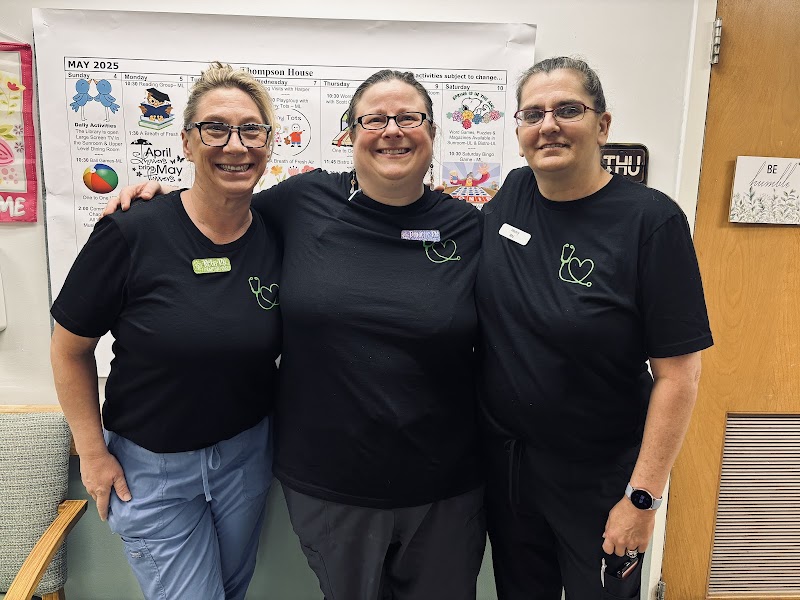
CMS rates Thompson House Nursing Home's staffing level at 3 out of 5 stars, which is average compared to other nursing homes. Staff turnover is 54%, compared to the Vermont average of 46%. RN turnover specifically is 60%, which is notably high. RNs provide skilled clinical oversight, so turnover in this role can affect medical care quality.

What Have Inspectors Found at Thompson House Nursing Home?

State health inspectors documented 8 deficiencies at Thompson House Nursing Home during 2022 to 2025. These included: 8 with potential for harm.

Who Owns and Operates Thompson House Nursing Home?

Thompson House Nursing Home is owned by a non-profit organization. Non-profit facilities reinvest revenue into operations rather than distributing to shareholders. The facility operates independently rather than as part of a larger chain. With 43 certified beds and approximately 40 residents (about 93% occupancy), it is a smaller facility located in Brattleboro, Vermont.

How Does Thompson House Nursing Home Compare to Other Vermont Nursing Homes?

Compared to the 100 nursing homes in Vermont, Thompson House Nursing Home's overall rating (5 stars) is above the state average of 2.8, staff turnover (54%) is near the state average of 46%, and health inspection rating (4 stars) is above the national benchmark.

What Should Families Ask When Visiting Thompson House Nursing Home?

Based on this facility's data, families visiting should ask: "Can I visit during a mealtime to observe dining assistance and food quality?" "How do you handle medical emergencies, and what is your hospital transfer rate?" "Can I speak with family members of current residents about their experience?"

Is Thompson House Nursing Home Safe?

Based on CMS inspection data, Thompson House Nursing Home has a clean safety record: no substantiated abuse findings (meaning no confirmed cases of resident harm), no Immediate Jeopardy citations (the most serious violation level indicating risk of serious injury or death), and is not on the Special Focus Facility watch list (a federal program monitoring the lowest-performing 1% of nursing homes). The facility has a 5-star overall rating and ranks #1 of 100 nursing homes in Vermont. While no facility is perfect, families should still ask about staff-to-resident ratios and recent inspection results during their visit.

Do Nurses at Thompson House Nursing Home Stick Around?

Thompson House Nursing Home has a staff turnover rate of 54%, which is 8 percentage points above the Vermont average of 46%. Moderate turnover is common in nursing homes, but families should still ask about staff tenure and how the facility maintains care continuity when employees leave.

Was Thompson House Nursing Home Ever Fined?

Thompson House Nursing Home has no federal fines on record. CMS issues fines when nursing homes fail to meet care standards or don't correct problems found during inspections. The absence of fines suggests the facility has either maintained compliance or corrected any issues before penalties were assessed. This is a positive indicator, though families should still review recent inspection reports for the full picture.

Is Thompson House Nursing Home on Any Federal Watch List?

Thompson House Nursing Home is not on any federal watch list. The most significant is the Special Focus Facility (SFF) program, which identifies the bottom 1% of nursing homes nationally based on persistent, serious quality problems. Not being on this list means the facility has avoided the pattern of deficiencies that triggers enhanced federal oversight. This is a positive indicator, though families should still review the facility's inspection history directly.