Premier Rehab and Healthcare at Burlington
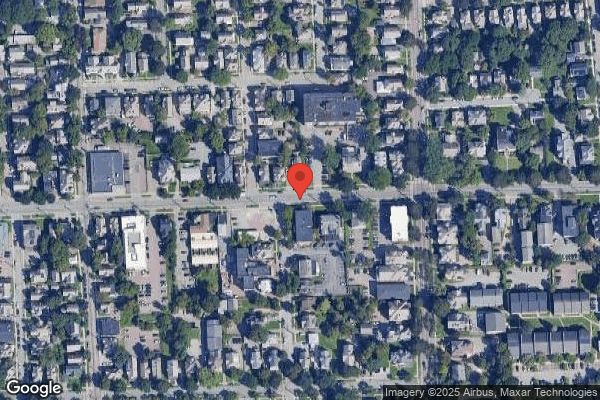
300 Pearl Street, Burlington, VT 05401 (802) 658-4200
For profit - Corporation 126 Beds STELLAR HEALTH GROUP Data: November 2025 3 Immediate Jeopardy citations
Trust Grade
0/100
#21 of 33 in VT
Last Inspection: December 2024

Within standard 12-15 month inspection cycle. Federal law requires annual inspections.

Overview

Premier Rehab and Healthcare at Burlington has received a Trust Grade of F, indicating poor performance and significant concerns about the care provided. It ranks #21 out of 33 facilities in Vermont, placing it in the bottom half, but it is #2 out of 5 in Chittenden County, meaning it is one of the better options locally. The facility is reportedly improving, with a decrease in issues from 17 in 2024 to just 2 in 2025, which is a positive sign. However, staffing is a major concern, with a turnover rate of 82%, much higher than the Vermont average of 59%, suggesting instability among caregivers. Notably, the facility has faced critical incidents, such as failing to provide necessary care for residents with existing skin injuries and not ensuring that staff are adequately trained in skin care, raising serious questions about resident safety and care quality.

Trust Score
F
0/100
In Vermont
#21/33
Bottom 37%
Safety Record
High Risk
Review needed
Inspections
Getting Better
17 → 2 violations
Staff Stability
⚠ Watch
82% turnover. Very high, 34 points above average. Constant new faces learning your loved one's needs.
Penalties
✓ Good
$85,784 in fines. Lower than most Vermont facilities. Relatively clean record.
Skilled Nurses
○ Average
Each resident gets 40 minutes of Registered Nurse (RN) attention daily — about average for Vermont. RNs are the most trained staff who monitor for health changes.
Violations
⚠ Watch
36 deficiencies on record. Higher than average. Multiple issues found across inspections.
★★☆☆☆
2.0
Overall Rating
★★☆☆☆
2.0
Staff Levels
★★★★☆
4.0
Care Quality
★★☆☆☆
2.0
Inspection Score
Stable
2024: 17 issues
2025: 2 issues

The Good

  • 4-Star Quality Measures · Strong clinical quality outcomes
  • Full Sprinkler Coverage · Fire safety systems throughout facility
  • No fines on record

Facility shows strength in quality measures, fire safety.

The Bad

2-Star Overall Rating

Below Vermont average (2.8)

Below average - review inspection findings carefully

Staff Turnover: 82%

36pts above Vermont avg (46%)

Frequent staff changes - ask about care continuity

Federal Fines: $85,784

Well above median ($33,413)

Moderate penalties - review what triggered them

Chain: STELLAR HEALTH GROUP

Part of a multi-facility chain

Ask about local staffing decisions and management

Staff turnover is very high (82%)

34 points above Vermont average of 48%

The Ugly 36 deficiencies on record

3 life-threatening 4 actual harm
May 2025 2 deficiencies
CONCERN (D) 📢 Someone Reported This

A family member, employee, or ombudsman was alarmed enough to file a formal complaint

Potential for Harm - no one hurt, but risky conditions existed

Free from Abuse/Neglect (Tag F0600)

Could have caused harm · This affected 1 resident

Based on record review and interview, the facility failed to assure that 2 of 4 residents reviewed were free from physical abuse (Resident #1 and Resident #3). 1. Per record review, Resident #1 was th...

Read full inspector narrative →
Based on record review and interview, the facility failed to assure that 2 of 4 residents reviewed were free from physical abuse (Resident #1 and Resident #3). 1. Per record review, Resident #1 was the victim of a physical assault on 5/18/25 at 9:30 AM. A progress note dated 5/18/25 says, Resident noted to have verbal altercation with [Resident #2], resulting in [Resident #2] hitting resident on the side of the face. Per interview with Resident #1 on 5/20/25 at 11:43 AM, s/he reported that Resident #2 was touching his/her belongings and when s/he tried to get Resident #2 to stop, it resulted in him/her getting hit in the head by Resident #2. A review of the facilities policy titled Abuse, Neglect and Exploitation dated 4/2025 states Abuse means the willful infliction of injury .with resulting physical harm, pain, or mental anguish .Instances of abuse of all residents, irrespective of any mental or physical condition, cause physical harm, pain, or mental anguish. Per interview with the [NAME] President of Clinical Operations, the Administrator, and the Assistant Director of Nursing on 5/20/25 at 3:29 PM, they confirmed that this incident occurred between Resident #1 and Resident #2. 2. Per record review, Resident #3 was the victim of a physical assault on 5/16/25 at 10:29 AM from Resident #4. A progress note dated 5/16/25 says, Resident was standing in the doorway, and another resident came up to [him/her] and punched [him/her] in the left side of the chest. Skin assessment completed. No bruising noted. Per interview with the [NAME] President of Clinical Operations, the Administrator, and the Assistant Director of Nursing on 5/20/25 at 3:35 PM, they confirmed that this incident occurred between Resident #3 and Resident #4.
CONCERN (D) 📢 Someone Reported This

A family member, employee, or ombudsman was alarmed enough to file a formal complaint

Potential for Harm - no one hurt, but risky conditions existed

Report Alleged Abuse (Tag F0609)

Could have caused harm · This affected 1 resident

Based on interview and record review, the facility failed to ensure that an allegation of abuse was reported to the licensing agency for 1 of 5 sampled residents (Resident #5). Per record review, the...

Read full inspector narrative →
Based on interview and record review, the facility failed to ensure that an allegation of abuse was reported to the licensing agency for 1 of 5 sampled residents (Resident #5). Per record review, the facility was unable to provide evidence that they submitted a report to the state licensing agency after Resident #5 reported an allegation of abuse; being hit with a wet towel by a staff member. Additionally, there is no evidence of an investigation in Resident #5's medical record. Per interview with Resident #5's nurse on 5/20/25 at 11:54 AM, she reported that she sent a message using the electronic health record (EHR) reporting this incident on 4/29/25 and that Resident #5's hospice nurse also communicated with the Assistant Director of Nursing and the former Director of Nursing about this allegation of abuse. She reported that the Director of Nursing and Administration were aware of the allegation of abuse. A review of the facilities policy titled Abuse, Neglect and Exploitation dated 4/2025 states that an Alleged Violation is a situation or occurrence that is observed or reported by staff, resident, relative, visor or others but has not yet been investigated and, if verified, could be indication of noncompliance. Additionally, the section titled Policy Explanation and Compliance Guidelines marked number 2 states The facility will designate an Abuse Prevention Coordinator in the facility who is responsible for reporting allegations or suspected abuse, neglect, or exploitation to the state survey agency and other officials in accordance with state law and that an immediate investigation is warranted when suspicion of abuse, neglect or exploitation, or reports of abuse, neglect or exploitation occur. The section of this policy titled Reporting/Response states The facility will have written procedures that include: Reporting of all alleged violations to the Administrator, state agency, adult protective services and all other required agencies . within specified timeframes . Per interview with the [NAME] President of Clinical Operations, the Assistant Director of Nursing, and the Administrator on 5/20/25 at 3:49 PM, they reported that the hospice nurse informed them of the allegation of abuse, but they didn't report the allegation to the state because they didn't believe abuse had occurred based on Resident #5 having hallucinations.
Dec 2024 8 deficiencies
CONCERN (D)

Potential for Harm - no one hurt, but risky conditions existed

Deficiency F0679 (Tag F0679)

Could have caused harm · This affected 1 resident

Based on observation, interview, and record review, the facility failed to provide activities that support the physical, mental, and psychosocial well-being of each resident for 1 of 29 sampled reside...

Read full inspector narrative →
Based on observation, interview, and record review, the facility failed to provide activities that support the physical, mental, and psychosocial well-being of each resident for 1 of 29 sampled residents (Resident #29). Findings include: Per record review, Resident #21 has a diagnosis of Parkinson's disease. Per a 10/5/24 Minimum Data Set (MDS; a comprehensive assessment used as a care-planning tool), Resident #21 has a BIMS of 14 (brief interview for mental status; a cognitive assessment score indicating cognitive intactness) and expressed for activity preferences that it is very important for him/her to do his/her favorite activities and go outside. Resident #21's care plan reads, While in the facility, [Resident #21] states that it is important that [s/he] has the opportunity to engage in daily routines that are meaningful relative to [his/her] preferences, created 10/3/23, and an intervention reads, It is important for me to go outside when the weather is good, staff, family and friends to assist outdoors weather permitting. I have my rock collection on the patio, revised on 1/3/24. Per interview on 12/2/24 at 2:16 PM, Resident #21 stated that s/he wants to go outside every day and the staff won't let him/her go out every day because there are not enough staff and s/he needs to be supervised when s/he goes outside. S/He explained that staff also tell him/her that it is too cold to go outside. Resident #21 explained that it is very important to him/her to go outside as much as possible and said that if s/he's going to be stuck here s/he wants to enjoy his/her time and go out into nature because it is very important. Resident #21 was not observed outside at any time during the recertification survey on 12/2/24 through 12/4/24. Activity logs dated 11/1/24 through 12/3/24 reveal that Resident #21 spent time outdoors on just 11/1/24; only once in 33 days. An 8/30/24 Advanced Practice Registered Nurse note reads, The patient says, 'I feel like I'm trapped in prison'. 'I can't get anyone to bring me outside'. Per interview on 12/4/24 at 3:14 PM an Activity Aide explained that s/he was aware of how important it is for Resident #21 to go outside as much as possible but is not sure there are enough staff to make that happen. S/He stated that Resident #21 should be able to go outside when s/he wants to but doesn't think there is anything in place to ensure that it happens.
CONCERN (D)

Potential for Harm - no one hurt, but risky conditions existed

Accident Prevention (Tag F0689)

Could have caused harm · This affected 1 resident

**NOTE- TERMS IN BRACKETS HAVE BEEN EDITED TO PROTECT CONFIDENTIALITY** Based on interview and record review, the facility failed to ensure that resident environments were free of accident hazards rel...

Read full inspector narrative →
**NOTE- TERMS IN BRACKETS HAVE BEEN EDITED TO PROTECT CONFIDENTIALITY** Based on interview and record review, the facility failed to ensure that resident environments were free of accident hazards related to smoking for one sampled resident (Resident # 86). Findings include: Per record review, Resident #86 was admitted to the facility on [DATE] and readmitted on [DATE] with diagnoses of osteomyelitis (infection of the bone), peripheral vascular disease and chronic kidney disease. Review of Resident #86's care plan states: [Resident #86] may not smoke per smoking evaluation/policy. [Resident 86] has been signing out and taking self-off property to smoke. The care plan interventions include, Educate patient/health care decision maker on the facility's smoking policy, Inform of and reinforce smoking restriction, Monitor patients [sic] compliance with non-smoking, Provide education/material regarding smoking cessation, and Provide smoking cessation medications if ordered. Per interview with Resident #86 on 12/4/24 at 9:29 AM Resident #86 stated that s/he signs him/herself out of the facility and goes out to smoke. S/he stated that s/he is not accompanied by a staff member. S/he stated that yesterday, 12/3/24, s/he went out to smoke a cigarette three times and did not sign out of the building. S/he stated that s/he does not keep his/her cigarettes and lighter in a locked box or with staff but that they are out of the way in his/her bedroom. S/he refused to tell surveyor where s/he kept his/her cigarettes in his/her bedroom. Per record review of the facility's OPS137 Smoking policy states, 2.6 Smoking supplies (including, but not limited to, tobacco, matches, lighters, lighter fluid, batteries, refill cartridges etc.) will be labeled with the patient's name, room number, and bed number, maintained by staff, and stores in a suitable cabinet kept at the nursing station. Per interview with Unit Manager on 12/4/24 at 9:35 AM it was confirmed that Resident #86's cigarettes and lighter are kept in his/her room and not kept at the nursing station. The Unit Manager stated that approximately 15 residents on the floor have dementia and are ambulatory.
CONCERN (D) 📢 Someone Reported This

A family member, employee, or ombudsman was alarmed enough to file a formal complaint

Potential for Harm - no one hurt, but risky conditions existed

Medication Errors (Tag F0758)

Could have caused harm · This affected 1 resident

Based on record review and interview, it was determined that the facility failed to ensure residents receiving PRN (as needed) medications were appropriately evaluated for psychoactive drug use beyond...

Read full inspector narrative →
Based on record review and interview, it was determined that the facility failed to ensure residents receiving PRN (as needed) medications were appropriately evaluated for psychoactive drug use beyond 14 days for 1 resident in a standard survey sample of 7 (Resident #51). Findings include: Record review revealed an as needed (PRN) order for Ativan Oral Tablet 0.5 MG (Lorazepam) Give 0.5 mg by mouth every 4 hours as needed for restlessness/agitation for 90 Days. This order had a start date of 11/4/24 and an end date of 2/2/25 (90 day order) signed by the ordering physician on 11/6/24. Interview on 12/4/24 at approximately 11:50 AM with the Unit Manager, who stated the ordering physician ordered this mediction for 90 days. They acknowledged the requirement for as needed (PRN) medications is to have physician documentation stating the medical rationale for an extended PRN order of greater than 14 days. There was no physician note providing a medical rationale for the extended 90 day order for this PRN medication or a documented resident evaluation for the appropriateness of this medication for greater than 14 days.
CONCERN (E) 📢 Someone Reported This

A family member, employee, or ombudsman was alarmed enough to file a formal complaint

Potential for Harm - no one hurt, but risky conditions existed

Resident Rights (Tag F0550)

Could have caused harm · This affected multiple residents

2. Per observation on 12/2/2024 at 1:00 PM, Resident #3 was at his/her door with the call light on. The Licensed Nursing Assistant (LNA ) answered the call light, and Resident #3 requested to use the ...

Read full inspector narrative →
2. Per observation on 12/2/2024 at 1:00 PM, Resident #3 was at his/her door with the call light on. The Licensed Nursing Assistant (LNA ) answered the call light, and Resident #3 requested to use the bathroom. The LNA told Resident #3 in front of this surveyor that s/he could not take him/her to the bathroom and that his/her LNA was on break and would take the resident to the bathroom when s/he returned. Per further observation at 1:30 PM, Resident #3 remained sitting at the door in his/her wheelchair waiting to use the bathroom. Resident #3 put his/her call light on and requested the LNA take him or her to the bathroom. The same LNA approached the resident and told him/her that s/he would need to wait until his/her LNA returned. Resident #3 began yelling out that s/he needed to use the bathroom, across the common area of the unit with other residents present. The Unit Manager responded to the room, approached the LNA and directed him/her to bring Resident #3 to the bathroom. Per record review of Resident #3's care plan dated 3/7/2024, s/he has stress incontinence (incontinence is the loss of bladder control resulting in loss of urine). The following interventions were implemented on 3/7/2024 -Resident to use toilet upon awakening, after meals, nightly and as needed - respond promptly to the resident's request to use the toilet. Per Interview on 12/2/2024 at 1:45 PM with the Unit Manager, s/he confirmed that the LNA was responsible for the resident's care while the assigned LNA was on break and should have provided care to Resident #3 as requested by the resident. 3. A Resident Council meeting with the survey team occurred on 12/4/24 at 10:27 AM, and there were six attendees, Residents #19, #1, #81, #17, #39, and #8. Per record review, Resident #19's has a BIMS of 15 (brief interview for mental status; a cognitive assessment score indicating cognitive intactness) dated 11/12/24, Resident #1 has a BIMS of 14 (indicating cognitive intactness) dated 11/9/24, Resident # 81 has a BIMS of 15 dated 11/13/24, Resident #17 has a BIMS of 15 dated 10/8/24, Resident #39 has a BIMS of 15 dated 10/24/24, and Resident #8 has a BIMS of 15 dated 10/4/24. A collaborative conversation involving all six residents revealed that they do not feel that they are treated with dignity and respect by all staff. Resident #1 stated that a lot of staff don't treat him/her like s/he is in his/her own home. Not all staff treat him/her with dignity. Foe example, not all staff knock on his/her door before coming in and a lot of staff give him/her an attitude. There are some staff that do all his/her personal care, even though s/he is able to wash up parts of his/her own body. S/He explained that s/he likes to wash the front of him/herself up and they won't let her which makes him/her upset because it would be faster and s/he would feel better to be able to participate in his/her own care. S/He has had aides yell at him/her and tell him/her to shut up. Sometimes staff won't put his/her call bell within reach and s/he ends up having to yell for help. S/He stated that s/he should be treated with dignity and respect in his/her own house but it doesn't feel like his/her home. Resident #17 explained that she was told by the LNA that they would not help him/her to bed because she could do it herself. S/he stated that s/he can see some staff pass his/her room when s/he has his/her call bell on and don't stop and if they do, they say they will be right back but end up coming back much later or with an attitude. Resident #8 stated that staff often rush his/her care. S/he explained that sometimes staff tell him/her s/he has to take a shower before dinner but that is not his/her preference; s/he would like to take a shower after dinner. They don't listen to him/her and staff have screamed at him/her for taking too long in the shower. Resident #19 said that staff never ask him/her what they need and don't help him/her at times and tell him/her it is because s/he is independent. All six residents individually confirmed that they did not believe that all staff treated them with dignity and respect and this sentiment was brought up multiple times during the conversation. Based on interview and record review, the facility failed to treat and care for each resident in a manner that maintains their dignity and respect for 8 out of 29 Residents in the sample (Residents #3, #88, #19, #1, #81, #17, #39, and #8) Findings include: Per interview with Resident #88 on 12/3/24 at approximately 10:05 AM, they stated that when they ring their call bell for assistance it takes over an hour most often before someone responds, and by then they have either wet or soiled themselves. Resident #88 stated it is very upsetting when this happens. Review of Resident #88's call bell log for the week of 11/26/24 - 12/2/24 revealed 16 times when the resident rang their call bell and the response time was 20 minutes or more. Of those calls, there were 8 times when the call bell was not responded to for greater than 30 minutes, and 3 times when the response time was greater than 1 hour. Review of Resident #88's current care plan, revealed they have an incontinence care plan that states the following: .is incontinent of urine at times and is unable to physically participate in a retraining program . The goal listed in this care plan is as follows: .will have incontinence care needs met by staff to maintain dignity and comfort and to prevent incontinence related complications. This care plan was last revised on 11/22/2024. Review of Resident #88's ADL (Activities of Daily Living) flow sheets for 11/26/24 - 12/2/24 revealed the resident was incontinent on all these days.
CONCERN (E)

Potential for Harm - no one hurt, but risky conditions existed

Grievances (Tag F0585)

Could have caused harm · This affected multiple residents

Per interview and facility policy review, the facility failed to establish a grievance reporting system that supports the resident's right to voice any grievance without discrimination, reprisal, or t...

Read full inspector narrative →
Per interview and facility policy review, the facility failed to establish a grievance reporting system that supports the resident's right to voice any grievance without discrimination, reprisal, or the fear of discrimination or reprisal for 6 of 29 sampled residents (Residents # 1, #19, #1, #81, #17, #39, and #8). Findings include: Facility policy titled, OPS204 Grievance/Concern, last revised on 10/15/24, reads, The patient/resident (hereinafter patient) has the right to voice grievances to the Center or any other agency or entity that hears grievances without discrimination or reprisal and without fear of discrimination or reprisal. A Resident Council meeting with the survey team occurred on 12/4/24 at 10:27 AM, and there were six attendees, Residents #19, #1, #81, #17, #39, and #8. Per record review, Resident #19's has a BIMS of 15 (brief interview for mental status; a cognitive assessment score indicating cognitive intactness) dated 11/12/24, Resident #1 has a BIMS of 14 (indicating cognitive intactness) dated 11/9/24, Resident # 81 has a BIMS of 15 dated 11/13/24, Resident #17 has a BIMS of 15 dated 10/8/24, Resident #39 has a BIMS of 15 dated 10/24/24, and Resident #8 has a BIMS of 15 dated 10/4/24. A collaborative conversation involving all six residents revealed that they do not feel that they are treated with dignity and respect by all staff. See F550 for more information. They relayed that they all know how to file a grievance and the process is successful for issues like missing personal property. However, when asked if they have reported their concerns about not being treated with dignity or respect to the facility, all six residents explained that they did not feel comfortable reporting how they are treated to anyone because they are afraid of repercussions. Resident #81 reported that if residents report rude, disrespectful, or rough behavior from the staff, they will get yelled at or ignored. All six residents individually confirmed that this was true for them and this sentiment was brought up multiple times during the conversation.
CONCERN (E) 📢 Someone Reported This

A family member, employee, or ombudsman was alarmed enough to file a formal complaint

Potential for Harm - no one hurt, but risky conditions existed

ADL Care (Tag F0677)

Could have caused harm · This affected multiple residents

3. Per record review, Resident #73's care plan reads, [Resident #73] has an ADL Self Care Performance Deficit r/t [related to] Spinal Stenosis [condition putting pressure on spinal cord and nerves], C...

Read full inspector narrative →
3. Per record review, Resident #73's care plan reads, [Resident #73] has an ADL Self Care Performance Deficit r/t [related to] Spinal Stenosis [condition putting pressure on spinal cord and nerves], C5-6 Myelopathy [compression of spinal cord], last revised on 4/10/23, and includes interventions revealing s/he requires assistance of 2 staff for transferring and toileting. Resident #73's care plan also states they are sometimes incontinent of bladder and bowel and has an intervention to encourage [Resident #73] to toilet upon awakening, after meals, nightly, and PRN [as needed], revised on 4/10/23. Resident #73 has a BIMS score of 13 (brief interview for mental status; a cognitive assessment score indicating cognitive intactness) dated 11/5/24. Per interview with Resident #73 and Resident #73's family member on 12/3/24 at 2:30 PM, Resident #73 stated that s/he is not being assisted with toileting as frequently as s/he needs. I ring the bell and sometimes it takes a very long time to get someone to help me. When asked to clarify what a long time is, Resident #73 stated sometimes an hour or more. Resident #73 stated that many times when they call for help toileting, help does not arrive until long after they have soiled themselves, causing them distress. Resident #73 also stated that if they could get the help they need in a timely manner, they would not have so many episodes of incontinence. Resident #73's family member stated that they visit Resident #73 almost daily and confirmed that they have witnessed wait times of 1-2 hours for Resident #73's call bell to be answered. 2. Per record review, Resident #18's care plan reads, [Resident #18] has an ADL Self Care Performance Deficit [related to] Activity Intolerance/weakness, Spondylopathy Lumbar [degeneration of the vertebrae and disks of the lower back], Morbid Obesity and Intervertebral Disc Degeneration Lumbar [condition that occurs when discs in lower back break down causing pain and stiffness], revised on 7/18/23, with interventions that include staff assistance for transferring and toileting. Resident #18 has a BIMS of 14 (brief interview for mental status; a cognitive assessment score indicating cognitive intactness) dated 11/27/24. Per interview on 12/3/24 at 9:29 AM, Resident #18 explained that when s/he uses the commode, s/he sometimes has to wait an hour or longer to have a staff help him/her off the commode if it is during meals. Staff report to him/her that s/he will have to wait until after meals are served because it is unsanitary to provide care while passing meal trays, S/he explained that this makes him/her upset because it begins to hurt when s/he sits for so long, and s/he also has to look at his/her food that was delivered get cold. S/He explained that it happens often enough for it to be a problem. Per interview on 12/4/24 at approximately 11:00 AM, a Licensed Nursing Assistant explained that s/he does not provide patient care, like toileting, while s/he is passing meal trays because it is unsanitary. Based on interview and record review, the facility failed to ensure that a resident who is unable to carry out activities of daily living (ADLs) without assistance receives the proper level of assistance for 3 of 29 sampled residents (Residents #18, #145, and #73) related to transferring and toileting. Findings include: 1. Per record review, Res.#145 was admitted to the facility with diagnoses that included a fracture of the right tibia and fibula [The lower leg is made up of two bones: the tibia and fibula. The tibia is the larger of the two bones]. Res.#145's Care Plan identified the resident as requires assistance/is dependent for ADL [Activities of Daily Living] care in personal transfer, toileting with interventions that include Provide with assist of one using the bedside commode with walker and gait belt for toileting. An interview was conducted with Res.#145 on 12/2/24 at 5:49 PM. The resident stated that I have been left sitting on the bedpan for 45 minutes, balling my [expletive] eyes out. The resident reported that due to h/her fracture, she needed assistance with toileting, and despite using the call bell and staff having placed h/her on the bedpan in the first place, s/he was left on the bedpan for an extended period of time which was painful.
CONCERN (F) 📢 Someone Reported This

A family member, employee, or ombudsman was alarmed enough to file a formal complaint

Potential for Harm - no one hurt, but risky conditions existed

Deficiency F0725 (Tag F0725)

Could have caused harm · This affected most or all residents

**NOTE- TERMS IN BRACKETS HAVE BEEN EDITED TO PROTECT CONFIDENTIALITY** 4. Per record review, Resident #18's care plan reads, [Resident #18] has an ADL Self Care Performance Deficit [related to] Activ...

Read full inspector narrative →
**NOTE- TERMS IN BRACKETS HAVE BEEN EDITED TO PROTECT CONFIDENTIALITY** 4. Per record review, Resident #18's care plan reads, [Resident #18] has an ADL Self Care Performance Deficit [related to] Activity Intolerance/weakness, Spondylopathy Lumbar [degeneration of the vertebrae and disks of the lower back], Morbid Obesity and Intervertebral Disc Degeneration Lumbar [condition that occurs when discs in lower back break down causing pain and stiffness], revised on 7/18/23, with interventions that include staff assistance for transferring and toileting. On 11/27/24, the residents was assessed as having a BIMS of 14, indicating the resident is cognitively intact. Per interview on 12/3/24 at 9:29 AM, Resident #18 explained that when s/he uses the commode, s/he sometimes has to wait an hour or longer to have a staff help him/her off the commode if it is during meals. Staff report to him/her that s/he will have to wait until after meals are served because it is unsanitary to provide care while passing meal trays. S/he explained that this makes him/her upset because it begins to hurt when s/he sits for so long, and s/he also has to look at his/her food that was delivered get cold. S/He explained that it happens often enough for it to be a problem. Review of the facility call bell history for 11/26/24 - 12/3/2024 revealed the following excessive wait times after the call light was activated in Resident #18's room: 11/27/24 - wait times of 75 minutes, 81 minutes, and 25 minutes. 11/28/24 - wait times of 36 minutes 56 minutes, and 25 minutes. 11/29/24 - wait times of 40 minutes and 32 minutes. 11/30/24 - wait times of 38 minutes and 36 minutes. 12/1/24 - wait times of 48 minutes, 45 minutes, 25 minutes, and 77 minutes. 12/2/24 - wait time of 97 minutes. 5. Per record review, Resident #73's care plan reads, [Resident #73] has an ADL Self Care Performance Deficit r/t [related to] Spinal Stenosis [condition putting pressure on spinal cord and nerves], C5-6 Myelopathy [compression of spinal cord], last revised on 4/10/23, and includes interventions revealing s/he requires assistance of 2 staff for transferring and toileting. Resident #73's care plan also states they are sometimes incontinent of bladder and bowel and has an intervention to encourage [Resident #73] to toilet upon awakening, after meals, nightly, and PRN [as needed], revised on 4/10/23. Resident #73 has a BIMS score of 13 (brief interview for mental status; a cognitive assessment score indicating cognitive intactness) dated 11/5/24. Per interview with Resident #73 and Resident #73's family member on 12/3/124 at 2:30 PM, Resident #73 stated that s/he is not being assisted with toileting as frequently as s/he needs. I ring the bell and sometimes it takes a very long time to get someone to help me. When asked to clarify what a long time is, Resident #73 stated sometimes an hour or more. Resident #73 stated that many times when they call for help toileting, help does not arrive until long after they have soiled themselves causing them distress. Resident #73 also stated that if they could get the help they need in a timely manner, they would not have so many episodes of incontinence. Resident #73's family member stated that they visit Resident #73 almost daily and confirmed that they have witnessed wait times of 1-2 hours for Resident #73's call bell to be answered. Record review of facility call bell wait times for Resident #73 from 11/27/24-12/2/24, there are wait times including 81 minutes on 11/27/24, 36 minutes on 11/30/24 and 97 minutes on 12/2/24. 6. Per record review, Resident #21 has a diagnosis of Parkinson's disease. Resident #21 has physician orders for the following Parkinson's medications: Carbidopa-Levodopa Oral Tablet 25-100 milligram (mg), to be given at 6:00 AM, 9:00 AM, 12:00 PM, 3:00 PM, 6:00 PM, and 9:00 PM daily; Carbidopa-Levodopa ER 25-100 mg Tablet extended release, to be given at 6:00 AM, 9:00 AM, 12:00 PM, 3:00 PM, 6:00 PM, and 9:00 PM daily; and Entacapone Oral Tablet 200 mg, to be given at 6:00 AM, 9:00 AM, 12:00 PM, 3:00 PM, and 6:00 PM daily. Per interview on 12/2/24 at 2:16 PM, Resident #21 explained that s/he is frustrated because s/he often does not get his/her Parkinson's medications when they are scheduled. S/He stated that it is important for him/her to get them when they are scheduled because the medication wears off and s/he starts to have more symptoms including tremors and difficulty speaking, which makes it difficult to do things. Per review of Resident #21's Medication Administration Audit Report from 11/1/24 through 12/4/24, Resident #21 had 8 of their Parkinson's medications administered an hour or more before or after the physician order scheduled time on the following dates: 11/15/24 (Carbidopa-Levodopa Oral Tablet 25-100 mg and Carbidopa-Levodopa ER 25-100 mg Tablet extended release), 11/18/24 (Carbidopa-Levodopa Oral Tablet 25-100 mg, Carbidopa-Levodopa ER 25-100 mg Tablet extended release, and Entacapone Oral Tablet 200 mg), and 11/25/24 (Carbidopa-Levodopa Oral Tablet 25-100 mg, Carbidopa-Levodopa ER 25-100 mg Tablet extended release, and Entacapone Oral Tablet 200 mg). 7. Per interview on 12/2/24 at 11:46 AM, Resident #90 stated that s/he is upset that his/her Parkinson's medications are not always on time. S/He explained that it is important to have his/her medications on time so his/her symptoms do not get worse. Per record review, Resident #90 has a diagnosis of Parkinson's disease. Resident #90 has physician orders for the following Parkinson's medications: Carbidopa-Levodopa ER 25-100 mg Tablet extended release, to be given at 8:00 AM and 8:00 PM. Resident had a physician order for Carbidopa-Levodopa Oral Tablet 25-250 mg, to be given at 4:00 AM, 8:00 AM, 1:00 PM, 6:00 PM, and 11:00 PM, which ended 11/8/24. Per review of Resident #90's Medication Administration Audit Report from 11/1/24 through 12/4/24, Resident #90 had 7 of their Parkinson's medications administered an hour or more before or after the physician order scheduled time on the following dates: 11/1/24 (Carbidopa-Levodopa Oral Tablet 25-250 mg), three times on 11/2/24 (Carbidopa-Levodopa Oral Tablet 25-250 mg), 11/3/24 (Carbidopa-Levodopa Oral Tablet 25-250 mg), 11/6/24 (Carbidopa-Levodopa Oral Tablet 25-250 mg), and 11/15/24 (Carbidopa-Levodopa ER 25-100 mg Tablet extended release). Facility policy titled Medication Administration and Documentation- General Policy #PHNE69, which is not dated, reads, Medication Administration and Documentation occurs in a timely and accurate manner. 2. Medications are to be administered within a two-hour time frame (i.e. one hour before or after the medication order time. Per interview on 12/4/24 at 9:00 AM, the Unit Manager explained that Parkinson's medications should be administered as close to the administration time as possible. 3. During Resident interviews conducted throughout the initial survey screening process, Residents #88, #73, #8, #1, #18, #70, #87, #90, #145, #295, #89, #309, and Resident #6's family member expressed concerns related to insufficient staffing leading to long wait times for care, and excessive call light times up to 45 minutes. Review of the facility call bell history for 11/26/24 - 12/3/2024 revealed call wait times for the above Residents and multiple other Residents on all open units up to an excess of 7 hours and 46 minutes making this a wide spread concern. Extended wait times of over 30 minutes after a call light was activated by the specific Residents in the sample are as follows: 11/26/24: room [ROOM NUMBER](Resident #89) activated at 6:29 PM - 111 minutes room [ROOM NUMBER] (Resident #70) activated at 8:05 PM - 62 minutes 11/27/2024: room [ROOM NUMBER] (Resident #70) activated at 5:32 AM - 68 minutes room [ROOM NUMBER] (Resident #88) activated at 5:32 AM - 69 minutes room [ROOM NUMBER] W (Resident #18) activated at 8:12 AM - 75 minutes room [ROOM NUMBER] (Resident #70) activated at 12:33 PM - 44 minutes room [ROOM NUMBER](Resident #295) activated at 12:54 PM - 36 minutes room [ROOM NUMBER] (Resident #70) activated at 2:15 PM - 43 minutes room [ROOM NUMBER] (Resident #8) activated at 3:45 PM - 41 minutes room [ROOM NUMBER] (Resident # 73) activated at 7:13 PM - 81 minutes room [ROOM NUMBER] (Resident #145) activated at 9:32 PM - 38 minutes 11/28/24: room [ROOM NUMBER] (Resident #89) activated at 4:15 AM - 90 minutes room [ROOM NUMBER] (Resident #70) activated at 5:07 AM - 94 minutes room [ROOM NUMBER] (Resident #88) activated at 9:34 AM - 42 minutes room [ROOM NUMBER](Resident #18) activated at 10:12 AM - 56 minutes room [ROOM NUMBER] (Resident #70) activated at 1:06 PM - 40 minutes room [ROOM NUMBER] (Resident #18) activated at 3:13 PM - 40 minutes room [ROOM NUMBER] (Resident #89) activated at 4:41 PM - 55 minutes room [ROOM NUMBER] (Resident #3) activated at 7:24 PM - 45 minutes room [ROOM NUMBER] (Resident #145) activated at 8:24 PM - 49 minutes 11/29/24: room [ROOM NUMBER] (Resident #70) activated at 5:23 AM - 56 minutes room [ROOM NUMBER] (Resident #5) activated at 6:58 AM - 48 minutes room [ROOM NUMBER] (Resident #44) activated at 9:01 AM - 316 minutes room [ROOM NUMBER] (Resident #70) activated at 9:02 AM - 44 minutes room [ROOM NUMBER] (Resident #89) activated at 12:26 PM - 51 minutes room [ROOM NUMBER] (Resident #77) activated at 1:48 PM - 47 minutes room [ROOM NUMBER] (Resident # 89) activated at 6:07 PM -103 minutes room [ROOM NUMBER] (Resident # 89) activated at 7:50 PM - 131 minutes 11/30/24: room [ROOM NUMBER] (Resident #89) activated at 6:05 AM - 149 minutes room [ROOM NUMBER] (Resident #89) activated at 8:36 AM - 466 minutes room [ROOM NUMBER] (Resident #18) activated at 8:56 AM - 52 minutes room [ROOM NUMBER] (Resident #44) activated at 10:26 AM - 37 minutes room [ROOM NUMBER] (Resident #73) activated at 10:49 AM - 36 minutes room [ROOM NUMBER] (Resident #8) activated at 12:22 PM - 42 minutes room [ROOM NUMBER] (Resident #44) activated at 12:25 PM - 66 minutes room [ROOM NUMBER] (Resident #89) activated at 12:42 PM - 106 minutes room [ROOM NUMBER] (Resident #88) activated at 1:25 PM - 42 minutes room [ROOM NUMBER] (Resident #18) activated at 1:31 PM - 44 minutes room [ROOM NUMBER] (Resident #70) activated at 3:33 PM - 73 minutes room [ROOM NUMBER] (Resident #44) activated at 6:08 PM - 44 minutes room [ROOM NUMBER] (Resident #70) activated at 6:35 PM - 42 minutes room [ROOM NUMBER] (Resident #89) activated at 6:35 PM - 83 minutes room [ROOM NUMBER] (Resident #77) activated at 7:33 PM - 58 minutes room [ROOM NUMBER] (Resident #37) activated at 8:14 PM - 41 minutes 12/1/24: room [ROOM NUMBER] (Resident #18) activated at 4:51 AM - 48 minutes room [ROOM NUMBER] (Resident #70) activated at 6:41 AM - 52 minutes room [ROOM NUMBER] (Resident #88) activated at 6:58 AM - 41 minutes room [ROOM NUMBER](Resident #18) activated at 7:32 AM - 45 minutes room [ROOM NUMBER] (Resident #5) activated at 8:17 AM - 43 minutes room [ROOM NUMBER] (Resident #44) activated at 9:21 AM - 69 minutes room [ROOM NUMBER] (Resident #70) activated at 10:28 AM - 42 minutes room [ROOM NUMBER] (Resident #70) activated at 12:47 PM - 44 minutes room [ROOM NUMBER] (Resident #70) activated at 1:55 PM - 70 minutes room [ROOM NUMBER] (Resident #18) activated at 2:35 PM - 77 minutes room [ROOM NUMBER] (Resident #88) activated at 5:49 PM - 90 minutes room [ROOM NUMBER] (Resident #88) activated at 7:25 PM - 56 minutes 12/2/24: room [ROOM NUMBER] (Resident #89) activated at 6:10 AM - 41 minutes room [ROOM NUMBER] (Resident #3) activated at 6:35 AM - 66 minutes room [ROOM NUMBER] (Resident #89) activated at 12:44 PM - 41 minutes room [ROOM NUMBER] (Resident #8) activated at 2:29 PM - 126 minutes 12/3/24: room [ROOM NUMBER] (Resident #44) activated at 10:02 AM - 38 minutes room [ROOM NUMBER] (Resident #89) activated at 12:47 PM - 35 minutes Review of the facility policy titled NSG101 Call Lights states: Policy All Genesis HealthCare patients will have a call light or alternative communication device within their reach at all times when unattended. Staff will respond to call lights and communication devices promptly. Purpose To ensure safety and communication between staff and patients. During an interview on 12/4/24 2:00 PM the Market Clinical Advisor confirmed that the call light log reflected excessively long wait times. Based on observation, interview, and record review, the facility failed to provide sufficient nursing staff with the appropriate competencies and skills sets to provide nursing and related services to assure resident safety and attain or maintain the highest practicable physical, mental, and psychosocial well-being of each resident, as determined by resident assessments and individual plans of care and considering the number, acuity and diagnoses of the facility's resident population in accordance with the facility assessment required at §483.71 regarding 13 residents [Res.#44, #145, #88, #73, #8, #1, #70, #87, #90, #295, #89, #21 and #6] of 44 sampled residents. Findings include: 1). Per record review, Res.#44 was admitted to the facility with diagnoses that included Right leg below knee amputation, anxiety disorder, and major depressive disorder. Res.#44's Care Plan identifies the resident as at risk for decreased ability to perform Activities of Daily Living [ADLs] requiring extensive assist of 2 with sit to stand for transfers. Per interview with Res.#44 on 12/02/24 at 12:01 PM, the resident reported s/he is unable to transfer out of bed into a wheelchair or onto a bedside commode without the assistance of 2 staff members for safety. The resident stated that unless s/he is transferred out of bed, s/he is unable to attend the group activities which are located on a different floor in the facility. Further review of Res.#44's Care Plan reveals the resident states that it is important that he has the opportunity to engage in daily routines that are meaningful relative to [h/her] preferences including I like to participate in bingo and music with groups of people. The Care Plan also identifies the resident as at risk for distressed/fluctuating mood symptoms related to: anxiety & depression, with interventions that include participation in activity preferences, Provide [Res.#44] with opportunities for choice during care/activities to provide a sense of control and Encourage [Res.#44] to attend activities that maximize [h/her] full potential while meeting [h/her]need to socialize. Review of Res.#44's quarterly Recreation Evaluation dated 10/4/24 identifies the resident has the following needs for special adaptation in order to participate in desired engagement opportunities: use of adaptive equipment- electric wheelchair for physical limitations. Per interview with Res.#44 on 12/02/24 at 12:01 PM, the resident stated, I miss activities because staff don't get here to get me out of bed in time. Sometimes my lunch doesn't get delivered until 2:00 o'clock, and Bingo is at 2:00. I have to choose: do I go [to activities] or do I eat? Sometimes they save me my lunch, other times I come back to my room and there is nothing there. An observation and interview were conducted with Res.#44 on 12/4/24 at 10:46 AM. Per observation, 2 staff were in the room with the resident, with the resident being transferred out of bed at 10:45 AM. The resident reported that staff transferring h/her out of bed happens a lot of times later than it is now. Per review of the facility's Activities Calendar for December 2024, Bingo is offered as an activity at 2:00 PM on Wednesdays and 10:30 AM on Saturdays. 2). Per record review, Res.#145 was admitted to the facility with diagnoses that included a fracture of the right tibia and fibula [The lower leg is made up of two bones: the tibia and fibula. The tibia is the larger of the two bones]. Res.#145's Care Plan identified the resident as exhibits or is at risk for alterations in comfort related to fracture of right tibia, fibula. An interview was conducted with Res.#145 and a friend visiting the resident on 12/03/24 at 2:25 PM. The resident's friend stated s/he was present on 12/2/24 at approx. 4:00 PM when the resident requested a muscle relaxant medication from nursing staff and stated that the resident had not received it when the friend left at 5:00 PM. An observation and interview were conducted with Res.#145 at 5:49 PM on 12/2/24, shortly after the friend had left. Res.#145 was observed yelling in h/her room stating that s/he had been waiting 2 1/2 hours for the muscle relaxant medication. Per interview, the resident stated that s/he had yet to receive the medication s/he had requested at 4:00 PM. A follow up interview on 12/3/24 with the resident revealed the resident reported s/he received the muscle relaxant medication at approximately 6:00 PM on 12/2/24, approximately 2 hours after requesting it. An interview was conducted with the Unit Manager [UM] of Res.#145's unit on 12/03/24 at 2:35 PM. The UM confirmed a wait time of approx. 2 hours for medication to relieve a resident's discomfort was too long. The UM stated staffing level was enough but could not explain why with enough staffing a resident would have to wait 2 hours for a medication.
MINOR (B)

Minor Issue - procedural, no safety impact

Deficiency F0806 (Tag F0806)

Minor procedural issue · This affected multiple residents

Based on observation, interview, and facility policy review, the facility failed to provide residents with food that accomodates preferences regarding drink options. Findings include: Per interview on...

Read full inspector narrative →
Based on observation, interview, and facility policy review, the facility failed to provide residents with food that accomodates preferences regarding drink options. Findings include: Per interview on 12/3/24 at 10:06 AM, Resident #40 expressed frustration that ginger ale is no longer available to residents as a beverage option. Per interview on 12/4/24 at 10:27 AM with active resident council members, all 6 residents interviewed (Residents #19, #1, #81, #17, #39, and #8) expressed that it is a problem that the facility took away the ginger ale. Facility policy titled FNS304 Person- Centered Choice, effective 5/1/23, reads, Drinks are provided, including water and other liquids consistent with resident needs and preferences. Per interview on 12/4/24 at 8:52 AM, a Licensed Nursing Assistant (LNA) explained that the facility has not had ginger ale as a drink option for about 6 months and residents continue to ask about it's availability. This LNA explained that they offer orange juice, lemonade, cranberry and fruit punch drink, coffee, and water but do not have ginger ale or any other type of soda beverage for the residents. Per observation, the drink cart did not have ginger ale or any soda products stocked. Per interview on 12/4/24 at approximately 3:45 PM, the Assistant Activities Director explained that residents do ask him/her about ginger ale but they just don't have it. Per interview on 12/4/24 at 5:25 PM, the Assistant Kitchen Manager confirmed that ginger ale is not offered and there are no alternatives to ginger ale, including soda products or carbonated drinks, available for the residents.
Jul 2024 6 deficiencies
CONCERN (D) 📢 Someone Reported This

A family member, employee, or ombudsman was alarmed enough to file a formal complaint

Potential for Harm - no one hurt, but risky conditions existed

Abuse Prevention Policies (Tag F0607)

Could have caused harm · This affected 1 resident

Based on interview and record review the facility failed to ensure the screening for abuse was completed according to their policy for 1 of 3 Licensed Nursing Assistants reviewed (LNA #1). Findings in...

Read full inspector narrative →
Based on interview and record review the facility failed to ensure the screening for abuse was completed according to their policy for 1 of 3 Licensed Nursing Assistants reviewed (LNA #1). Findings include: Facility policy titled HR205 Background Investigations, last revised 7/1/22 reads, Any applicants who indicate that they have been convicted of a crime should be interviewed by Center Human Resources (HR) to obtain information about the conviction. 4.1 The hiring manager will consult with their Market HR Manager or the HR Compliance Department to determine if the applicant is eligible for employment (i.e., the crime does not bar employment in the specific state). 4.2 All convictions will be considered in terms of relevance to the position. Review of LNA #1's human resource file reveals that s/he is a contracted employee. His/her background check reveals that s/he had a misdemeanor charge for disturbing the peace with fighting prior to his/her facility hire on 12/19/23. There is no evidence in his/her records that this charge was reviewed by the facility or cooperate HR team to determine if this employee is eligible for employment. Per interview on 7/2/24 at 4:06 PM, the Marker Operations Advisor confirmed that neither the facility nor the cooperate HR team reviewed the background check information for LNA #1 and should have.
CONCERN (D) 📢 Someone Reported This

A family member, employee, or ombudsman was alarmed enough to file a formal complaint

Potential for Harm - no one hurt, but risky conditions existed

Deficiency F0760 (Tag F0760)

Could have caused harm · This affected 1 resident

Based on staff interview and record review, the facility failed to ensure each resident is free from significant medication errors for one of three residents (Resident #12). Findings include: Per rec...

Read full inspector narrative →
Based on staff interview and record review, the facility failed to ensure each resident is free from significant medication errors for one of three residents (Resident #12). Findings include: Per record review, a hospital transition of care report (TOC) dated 02/01/2024 revealed that Resident #12 was transferred to the facility for sub-acute rehabilitation on 02/01/2024. S/he had the following diagnosis on admission: cerebrovascular accident with petechiae hemorrhaging (bleeding in the brain). There were several discrepancies related to the start date for his/her anticoagulation medication. The discharge medication list on page 7 of the TOC report identified the following Physician order: Apixaban [anticoagulation] 5 mg tablet Refills: 2 Commonly known as: ELIQUIS Take 1 Tablet by mouth 2 times daily. **Price check send results via EPICchat to .[hospital employee] Quantity: 60. There were multiple notes in the TOC that the anticoagulation medication was not to be started until after a follow up CT scan [imaging of the brain to identify bleeding] was performed. Page 3 of the TOC reads Currently holding anti-coagulation due to stroke burden and noted petechial hemorrhages on recent head CT Will have repeat head CT in 1 week to assess if patient can start AC [anticoagulation] along with daily aspirin. Follow up imaging: Head CT wo contrast (order in EPIC) [hospital electronic medical record] Do not start anti-coagulation until [Neurologist] evaluates the completed CT scan .On 1/30 spoke with his Cardiologist . regarding reduction of one of [his/her] anti-thrombotic's due to noted petechial hemorrhages on [his/her] Head CT. [Cardiologist] . Once cleared to start AC, [anticoagulation] [s/he] will be started on daily 81 mg Aspirin and most likely Apixaban. Next Head CT planned for 7 days post discharge. Page 4 reads Anticoagulation for A-fib/A-flutter: Currently holding anti-coagulation due to stroke burden and noted petechial hemorrhages on recent head CT. Will have repeat head CT in 1 week to assess if patient can start AC along with daily aspirin. Follow up imaging: Head CT wo contrast (order in EPIC). Do not start anti-coagulation until [Neurologist] evaluates the completed CT scan. Review of the Admitting Physician orders written on 02/01/2024 revealed an order for Apixaban [anti-coagulant] 5 mg twice a day, with a start date of 02/01/2024. Per review of facility MAR (medication administration record) Resident #12 received Apixaban on 02/01/2024 and 02/02/2024. Per record review there is no evidence that this order was clarified with the admitting physician. Per the Manufacturers Guidelines related to use of Apixaban (Eliquis), Bleeding Risk: ELIQUIS increases the risk of bleeding and can cause serious, potentially fatal, bleeding .Discontinue ELIQUIS in patients with active pathological hemorrhage [bleeding inside the body]. Facility policy Medication Errors, last revised 07/01/2024, reads Medication Error means the observed or identified preparation or administration of medications or biologicals which is not in accordance with the prescriber's order; manufacturer 's specifications (not recommendations) regarding the preparation and administration of the medication or biological . Significant Medication Error means one which causes the patient discomfort or jeopardizes their health and safety . The Center shall ensure medications will be administered as follows: 1.1 According to prescriber's orders . 2.1 Medication administered not in accordance with the prescriber's order. Examples include, but are not limited to: 2.1.1 Incorrect dose, route of administration, dosage form, time of administration. Per interview on 07/03/2024 at 12:00 PM, the Director of Nursing (DON) stated that the information on the transfer of care report had conflicting information regarding the start date for Resident #12's Apixaban. The DON also stated that medication reconciliation is done by the Admitting Nurse, reviewed by a second nurse and by the Physician prior to administration of any medication. The Director of Nursing further stated the expectation of Admitting Nurse is to review the entire transition of care report, including the discharge summary for orders that may be embedded in the information. S/he also stated that the information regarding discharge and admission orders to the facility from the hospital frequently have discrepancies. The DON stated nursing is expected to review all the discharge information and transition of care to reconcile medications and to clarify any discrepancies with the provider. The Physician gives nursing orders for admission, either in person, or over the phone. The nurse will enter the orders into the EHR (electronic health record). DON confirmed that there was no evidence that the orders were clarified with the Admitting Physician or the sending facility. Facility policy Medication Reconciliation effective 9/1/2022, states, The patient's medication orders will be reconciled at each transition of care. Medication reconciliation is the process of comparing a patient's existing medication orders to all the previous medications the patient has been taking. The process involves obtaining and maintaining a complete and accurate list of current medication use across all healthcare settings. Medication reconciliation involves collaboration with the patient representative and multiple disciplines including admission liaisons, physicians/advanced practice providers (APP), licensed nurses, and pharmacy. Medication reconciliation will be performed when patients are admitted /readmitted from hospital. For patients admitted from the hospital: obtain and review copies of Medication Administration Records (MARs), Treatment Administration (TARs), transfer forms, and Physician's Order Sheets (POS). Verify MAR/TAR information with transfer forms and POS, if available. A reconciliation of the patient's admission medication orders to the hospital and/or home care discharge orders will be made. Information to be reconciled includes but is not limited to: prescription medications; PRN [as needed] medications; herbals; vitamins; nutritional supplements; parental nutrition; infusion solutions; over the counter medications; vaccines and date of administration, if known; medication start and discontinue dates. Clarify medication orders with clinical staff from transferring hospital, when necessary. Any discrepancies discovered during reconciliation will be reported to the physician/APP before finalizing the current list of medications. A repeat reconciliation will be performed to compare hospital/home care discharge medication listing to current center medication listing to MAR. Any discrepancy discovered during repeat reconciliation will be reported to the physician/APP. Per interview on 7/17/2024 at 10:40 AM Resident #12's Admitting Physician who is also the Medical Director stated s/he are not always able to review the transfer of care or discharge summary prior to placing new orders. The Physician stated the expectation of nursing staff at time of admission is to accurately read and announce the medications over the phone. The physician stated he/she does not have access to transition of care report outside the facility. Admitting Physician stated s/he was not aware of orders to not prescribe the Apixaban for Resident #12 until after the CT scan review and would not have ordered if aware information in the transition of care. The Physician/Medical Director stated it is the responsibility of the admitting provider to clarify all discrepancies related to medication orders with sending facility.
CONCERN (D) 📢 Someone Reported This

A family member, employee, or ombudsman was alarmed enough to file a formal complaint

Potential for Harm - no one hurt, but risky conditions existed

Deficiency F0776 (Tag F0776)

Could have caused harm · This affected 1 resident

Based on interview and record review, the facility failed to provide radiology services to meet the needs of its residents for one applicable resident (Resident #1) related to not obtaining an x-ray. ...

Read full inspector narrative →
Based on interview and record review, the facility failed to provide radiology services to meet the needs of its residents for one applicable resident (Resident #1) related to not obtaining an x-ray. Findings include: Per interview on 7/1/24 at 4:44 PM, Resident #1 explained that s/he has numbness and pain on the left side of his/her body and is having a difficult time with rehabilitation because of it. S/He explained that a provider was aware and had ordered an x-ray a couple weeks prior but the x-ray has not been taken and s/he is not sure why. A Physician note dated 6/18/24 reads, left ankle pain/ numbness is problematic for rehab by exam there is not much to see but certainly painful will order left ankle film. Review of Resident #1's medical record does not indicate that an x-ray was ever obtained for Resident #1 after his/her provider visit on 6/18/24. Per interview on 7/1/24 at 5:12 PM, the Market Clinical Lead confirmed that an x-ray was never obtained for Resident #1 and should have been. S/He explained that the Physician did not follow the process to flag (alert nursing staff to enter the order) the order to obtain an x-ray.
CONCERN (F) 📢 Someone Reported This

A family member, employee, or ombudsman was alarmed enough to file a formal complaint

Potential for Harm - no one hurt, but risky conditions existed

Deficiency F0802 (Tag F0802)

Could have caused harm · This affected most or all residents

Based on observation, record review, and interview, the facility failed to ensure that there is sufficient support personnel to safely and effectively carry out the functions of the food and nutrition...

Read full inspector narrative →
Based on observation, record review, and interview, the facility failed to ensure that there is sufficient support personnel to safely and effectively carry out the functions of the food and nutrition services. This has the potential to affect all residents of the facility. Findings include: Per observation and interview with multiple residents on multiple units on 7/1/24, residents complained of food being unsatisfactory, cold when it should be hot, and served later than posted mealtimes. See F804 for more information. Per observation of dinner service on 7/1/24 on multiple units, dinner was being served by tray services (plated in the kitchen and delivered to the units on trays). A majority of the trays on each unit contained fish fillets, peas, and potatoes. While these plates were covered with clear domes or plastic wrap, there was no insulation plate to keep the plate warm. A meal delivery schedule posted on the 3rd floor revealed that dinner would be served at 5:15 PM that day. Per observation of dinner services on 7/1/24, residents were still being served dinner at 6:16 PM. The facility provided documentation of 13 days of dinner delivery times between 5/21/24 through 6/26/24. The logs show the time the dinner cart it scheduled to arrive at each floor and the time that it actually arrived. Of the 52 opportunities to deliver dinner within 10 minutes of the scheduled time, dinner was served within 10 minutes of the scheduled time only 12 times. Dinner was served late 40 of the 52 times (76 % of the time). Per interview on 7/1/24 at approximately 1:10 PM, the Unit Manager explained that food does become cold faster when it is provided by tray service and it is not unusual for it to be served late. Per interview on 7/1/24 at 2:44 PM, the Director of Nursing revealed that multiple complaints had been brought to the attention of the facility regarding food quality, temperature, and timeliness. The DON and the Administrator confirmed that they are aware that the contracted kitchen service company is short staffed and has been for a few months. Per an interview on 7/1/24 at 4:30 PM, the Kitchen Account Manager explained that meals are served strictly by tray service due to there not being enough staff to serve meals from each unit's meal service line. When they serve meals by tray service, it is typical for meals to become cold faster because they do not have insulated plate tops and bottoms. The delay in meal service is also because of the lack of staff, which will also contribute to the food being cold. Per a follow up phone interview on 7/5/24 at 2:45 PM, the Kitchen Account Manager explained that the kitchen has been short staffed every day since s/he started his/her role in April. S/He explained that the barriers to serving the food on time and warm is related to the lack of staff. S/He said that meal service requires 3-4 dietary staff and s/he currently has one.
CONCERN (F) 📢 Someone Reported This

A family member, employee, or ombudsman was alarmed enough to file a formal complaint

Potential for Harm - no one hurt, but risky conditions existed

Deficiency F0804 (Tag F0804)

Could have caused harm · This affected most or all residents

Based on observation, interview, and record review, the facility failed to ensure that food served to residents is palatable, attractive, and at an appetizing temperature. Findings include: 1. Residen...

Read full inspector narrative →
Based on observation, interview, and record review, the facility failed to ensure that food served to residents is palatable, attractive, and at an appetizing temperature. Findings include: 1. Resident and resident representative interview and observations reveal complaints about the palatability, the timeliness, and temperature of meals served. Per interview on 7/1/24 at 12:24 PM, Resident #3 explained that meals are often served late and that the food is gross. Per observation of lunch service on 7/1/24 on the fourth floor at 12:53 PM, staff were passing lunch trays and drinks to the residents on the unit. In the center of the dining room, three residents sat at a table in the center of the dining room. One resident was served their meal while the other two residents sat at the table. The second resident at the table was served their lunch at 1:00 PM. At 1:08 PM, the third resident at this table still did not have their lunch. Per observation and interview on 7/1/24 at 1:24 PM, Resident #4 explained that most meals are served late and that they are not hot when they arrive. Resident #4 stated that the food has gone downhill over the past few months. Per interview on 7/1/24 at 1:39 PM, Resident #5, stated that the food was not appetizing, was not served warm when it should be, and is always served late. Per interview on 7/1/24 at 1:43 PM, Resident #6 stated that the food was terrible at the facility. S/He explained that breakfast is okay but lunch and dinner are really bad. S/He is not offered a choice on what s/he has for meals and the food that s/he does get is served late and cold. S/He often has his/her spouse bring in meals because the food is not good enough to eat most of the time. Per observation and interview on 7/1/24 at 5:33 PM, Resident #7 and his/her representative were sitting at a table waiting for dinner to be served to Resident #7. Resident #7's Representative explained that Resident #7 is not eating because she does not like the food that is served. S/He explained that the food is always cold and typically late. S/He stated that sometimes when s/he requests an alternative main dish, what Resident #7 ends up getting is a meal with just the side dishes and no alternative for the main course. Resident #7's Representative revealed a copy of tonight's menu choices that s/he has gone over with facility staff. Tonight's meal, fish, peas, potatoes, and a roll, is crossed off and replaced with chicken salad sandwich. At 6:09 PM, Resident #7's dinner was delivered, a plate of peas, potatoes, and a roll. Resident #7's Representative said it is cold and Resident #7 won't eat it. S/He did not receive a chicken salad sandwich as requested. Per interview on 7/1/24 at 4:44 PM, Resident #1 stated that the food is not good at all and the staff do not give him/her options for an alternative meal. Per observation and interview on 7/1/24 at 5:51 PM, Resident #8 was moving food around on his/her plate with a fork. When asked how her dinner was, s/he said s/he it was cold and dry but s/he had no choice but to eat it. Per interview on 7/1/24 at 5:55 PM, Resident #10 explained how the food is not appetizing, cold, and does not come on time. Resident #10 explained that s/he can never get the chicken because it is so well done that you cannot cut through it and burgers are rock hard. S/He explained that sometimes breakfast is served at 10:00 AM, lunch can be served at 1:00 PM or later and dinner usually comes between 6 -7 but it is always late and is always cold by the time s/he gets it. Per observation and interview on 7/1/24 at 6:05 PM, Resident #3 is sitting in the dining room with two other residents who have both started to eat dinner. Resident #3 has not been served his/her meal yet. S/He stated that this happens all the time. Per observation and interview on 7/1/24 at 6:15 PM, Resident #4 and Resident #9 are sitting together. Resident #4 does not have a meal. S/He explained that s/he was served fish when he asked to have a grilled cheese sandwich for dinner. Resident #9 said the staff gave him fish for dinner but it is very cold and no one has come back to check on him/her or offer him/her a drink to go with dinner. Per interview on 7/1/24 at 6:32 PM, Resident #2 stated that s/he is sick to death of being served such awful food and not being offered choices for meals. S/He explained that his/her family has to supplement the food because it is so bad. Per interview and observation on 07/01/2024 at 6:30 PM, Resident #13 stated that s/he does not like most of the food served at the facility. S/He stated that the food often arrives cold and meals are frequently late. During the interview, dinner arrived at 6:40 PM. Resident #13 stated s/he often does not eat the meal served and relies on the snacks in his/her room from family. Resident #13 stated that the food used to be good at the facility and now I don't look forward to any meals. Per interview and observation on 07/01/2024 at 6:30 PM, Resident #13 stated that s/he does not like most of the food served at the facility. S/He stated that the food often arrives cold and meals are frequently late. During the interview, dinner arrived at 6:40 PM. Resident #13 stated s/he often does not eat the meal served and relies on the snacks in his/her room from family. Resident #13 stated that the food used to be good at the facility and now I don't look forward to any meals. 2. Observation, interview, and kitchen log reviews reveal that food is being regularly served late and is generally cold. Per observation of dinner service on 7/1/24 on multiple units, dinner was being served by tray services (plated in the kitchen and delivered to the units on trays). A majority of the trays on each unit contained fish fillets, peas, and potatoes. While these plates were covered with clear domes or plastic wrap, there was no insulation plate to keep the plate warm. A meal delivery schedule posted on the 3rd floor revealed that dinner would be served at 5:15 PM that day. Per observation of dinner services on 7/1/24, residents were still being served dinner at 6:16 PM. Per review of facility food temperature logs for June 2024, food temperatures were not documented for 20 of the 90 meals served. Per interview on 7/1/24 at approximately 1:10 PM, the Unit Manager explained that food does become cold faster when it is provided by tray service (plated in the kitchen and delivered to the units on trays) and the kitchen staff have not been serving the food off the line for a while. Per interview on 7/1/24 at 2:44 PM, the Director of Nursing (DON) revealed that multiple complaints had been brought to the attention of the facility regarding food quality, temperature, and timeliness. The DON and the Administrator confirmed that they are aware that the contracted kitchen service company is short staffed and has been for a few months. See F 802 for more information. Per an interview on 7/1/24 at 4:30 PM, the Kitchen Account Manager explained that meals are served strictly by tray service due to there not being enough staff to serve meals from each unit's meal service line. When they serve meals by tray service, it is typical for meals to become cold faster because they do not have insulated plate tops and bottoms. The delay in meal service is also because of the lack of staff, which will also contribute to the food being cold. Per a follow up phone interview on 7/5/24 at 2:45 PM, the Kitchen Account Manager explained that the kitchen has been short staffed every day since s/he started his/her role in April. S/He explained that the barriers to serving the food on time and warm is related to the lack of staff. S/He said that meal service requires 3-4 dietary staff and s/he currently has one.
CONCERN (F) 📢 Someone Reported This

A family member, employee, or ombudsman was alarmed enough to file a formal complaint

Potential for Harm - no one hurt, but risky conditions existed

Deficiency F0806 (Tag F0806)

Could have caused harm · This affected most or all residents

Based on observation, interview, and facility policy review, the facility failed to provide all residents appealing options of similar nutritive value when the menu options did not meet his/her expres...

Read full inspector narrative →
Based on observation, interview, and facility policy review, the facility failed to provide all residents appealing options of similar nutritive value when the menu options did not meet his/her expressed preferences. Findings include: 1. Multiple residents and resident representatives complained about not being offered a choice of meals. Per observation of the daily lunch menu posted on each unit for 7/1/24, the main course was listed as Ham and Cheese Sandwich on Wheat with Lettuce & Tomato OR Molasses BBQ chicken. Per observation on 7/1/24 at 12:44 PM, a plate with a ham and cheese sandwich was placed on a table where Resident #11 sits for lunch, along with a meal ticket that listed BBQ chicken, marinated vegetables, dinner roll, mixed fruit, and assorted beverages. The ticket stated that s/he had an allergy to pork. Resident #11 approached the table, looked at the plate in his/her spot, and stated what is this? What do I do with this? A Licensed Nursing Assistant (LNA) approached the table and looked at Resident #11's ticket and said s/he was not sure why Resident #11 got a sandwich instead of BBQ chicken and took away the plate. This LNA explained that s/he does not and has not seen other staff ask residents what they want for meals. Per observation and interview on 7/1/24 at 1:24 PM, Resident #4 had a ham sandwich on the table. When asked if s/he chose the ham sandwich over the BBQ chicken for lunch, s/he stated that s/he was never given a choice and if s/he was, s/he would have ordered the BBQ chicken. Resident #4 stated that the food has gone downhill over the past few months. Per interview on 7/1/24 at 1:43 PM, Resident #6 stated that the food was terrible at the facility. S/He explained that breakfast is okay but lunch and dinner are really bad. S/He is not offered a choice on what s/he has for meals and the food that s/he does get is served late and cold. S/He often has his/her spouse bring in meals because the food is not good enough to eat most of the time. Per observation and interview on 7/1/24 at 5:33 PM, Resident #7 and his/her representative were sitting at a table waiting for dinner to be served to Resident #7. Resident #7's Representative explained that Resident #7 is not eating because she does not like the food that is served and does not regularly get alternative choices to meet his/her preferences. S/He explained that the food is always cold and typically late. S/He explained that even though s/he has worked with the facility to be aware of the foods that Resident #7 prefers, using the menus provided by the facility, the food delivered is rarely what has been requested. S/He stated that sometimes when s/he requests an alternative main dish, what Resident #7 ends up getting is a meal with just the side dishes and no alternative for the main course. Resident #7's Representative revealed a copy of tonight's menu choices that s/he has gone over with facility staff. Tonight's meal, fish, peas, potatoes, and a roll, is crossed off and replaced with chicken salad sandwich. At 6:09 PM, Resident #7's dinner was delivered, a plate of peas, potatoes, and a roll. Resident #7's Representative said it is cold and Resident #7 won't eat it. S/He did not receive a chicken salad sandwich as requested. Per interview on 7/1/24 at 4:44 PM, Resident #1 stated that the food is not good at all and the staff do not give him/her options for an alternative meal. Per observation and interview on 7/1/24 at 5:51 PM, Resident #8 was moving food around on his/her plate with a fork. When asked how her dinner was, s/he said s/he it was cold and dry but s/he had no choice but to eat it. Per observation and interview on 7/1/24 at 6:15 PM, Resident #4 and Resident #9 are sitting together. Resident #4 does not have a meal. S/He explained that s/he was served fish when he asked to have a grilled cheese sandwich for dinner. Resident #9 said the staff gave him/her fish for dinner but it is very cold and no one has come back to check on him/her. Per interview on 7/1/24 at 6:32 PM, Resident #2 stated that s/he is sick to death of being served such awful food and not being offered choices for meals. S/He explained that his/her family has to supplement the food because it is so bad. S/He indicated that if s/he knew there was an alternative meal for dinner, s/he most likely would have ordered it because s/he hates fish. Per interview and observation on 07/01/2024 at 6:30 PM, Resident #13 stated that s/he does not like most of the food served at the facility. S/He stated that the food often arrives cold and meals are frequently late. During the interview, dinner arrived at 6:40 PM. Resident #13 stated s/he often does not eat the meal served and relies on the snacks in his/her room from family. Resident #13 stated that the food used to be good at the facility and now I don't look forward to any meals. Per interview and observation on 07/01/2024 at 6:40 PM, Resident #13 picked up a piece of fish and stated that s/he was unable to cut through or chew the meat. Resident # 13 held up the piece of fish and stated, it's like cardboard, and explained that s/he is unable to eat the fish. Resident #13 stated if his/her family did not bring in snacks, s/he would feel hungry because s/he doesn't like the food. Resident # 13 states his/her only alternative to what they serve at facility is soup his/her family brings him/her which the staff will not heat up. 2. Facility staff did not have a process in place to ensure residents were offered alternative, appealing options for meals Facility policy titled FNS 304 Person-entered Choice, effective 5/1/23 reads, [Residents] are offered a choice of nourishing, palatable, well balanced food and beverage options that meet their daily nutritional needs, taking into consideration the preferences of each resident. Residents who do not pre-select meals with Personal Choice Menus are offered point of service selections, including two choices of meals, as well as other always available items. Per observation of the daily lunch menu posted on each unit for 7/1/24, the main course was listed as Ham and Cheese Sandwich on Wheat with Lettuce & Tomato OR Molasses BBQ chicken. On 7/1/24 at 12:31 PM, a hot lunch test tray for the BBQ chicken was requested by this surveyor to the kitchen staff. A Kitchen [NAME] stated that the main lunch course that day was a ham and cheese sandwich and no one in the facility is getting the alternative BBQ chicken for lunch today. Per interview on 7/1/24 at 12:50 PM, a Licensed Practical Nurse explained that s/he was not aware of a process for residents to be asked their preferences of meals and had not seen it being done since s/he started working at the facility a couple weeks ago. Per interview on 7/1/24 at 1:34 PM, the Dietitian explained that residents are not offered the second choice on the menu (alternative daily menu item) prior to the meal and they would only be offered an always available alternative menu item after they were served something that they didn't want. The Dietitian explained that no one was asked if they wanted the BBQ chicken for lunch prior to it being served today. Per interview on 7/1/24 at 2:44 PM, the Director of Nursing (DON) stated that staff should be asking residents every day what they would like as a meal options.
Jun 2024 1 deficiency
CONCERN (E) 📢 Someone Reported This

A family member, employee, or ombudsman was alarmed enough to file a formal complaint

Potential for Harm - no one hurt, but risky conditions existed

Deficiency F0655 (Tag F0655)

Could have caused harm · This affected multiple residents

**NOTE- TERMS IN BRACKETS HAVE BEEN EDITED TO PROTECT CONFIDENTIALITY** Per interview and record review, the facility failed to include the resident and their representative in developing a baseline c...

Read full inspector narrative →
**NOTE- TERMS IN BRACKETS HAVE BEEN EDITED TO PROTECT CONFIDENTIALITY** Per interview and record review, the facility failed to include the resident and their representative in developing a baseline care plan and failed to provide the resident and the representative a baseline care plan summary for 3 of 3 residents sampled (Residents #1, #2, and #3). Findings include: 1. Record review reveals that Resident #1 was admitted to the facility on [DATE] for rehabilitation following a hospital stay related to a craniotomy (opening of the skull) for a subdural hematoma (brain bleed) post fall. Per a 3/30/24 nursing note, Resident #1 was transferred to the hospital on 3/30/24 after suffering an unwitnessed fall in which s/he suffered facial injuries. S/He was readmitted to the facility on [DATE]. Per Post admission Patient/Family Conference forms dated 3/27/24 and 4/5/24, there is no evidence that Resident #1 or their Representatives were in attendance to help develop Resident #1's base line care plan or that a baseline care plan summary was given to Resident #1 and their Representative after their admission or readmission to the facility. Per interview on 6/12/24 at 10:08 AM, Resident #1's Representative explained that s/he was concerned with the plan of care for Resident #1. S/He explained that Resident #1 had suffered a couple days after s/he was admitted which resulted in a 6-day hospital stay. S/He believes that the fall could have been avoided if proper care interventions were put into place, and s/he. The Representative explained that s/he was never invited to either of Resident #1's baseline care plan conferences, nor did s/he ever receive a copy of Resident #1's care plan at any point during Resident #1's stay. 2. Record review shows that Resident #2 was admitted from the hospital to facility on 4/11/24 for post-acute care following a lumbar (lower back) fracture. Per a Post admission Patient/Family Conference form dated 4/11/24, there is no evidence that Resident #2 or their Representatives were in attendance to help develop Resident #2 's baseline care plan or that a baseline care plan summary was given to Resident #2 and their Representative. Per telephone interview on 6/12/24 at 12:45 PM with Resident #2's Representative and confirmed that s/he was not given a copy of Resident #2's baseline care plan. 3. Record review reveals that Resident #3 was admitted to the facility on [DATE] for rehabilitation following a hospital stay related to a subdural hematoma post fall. Per nursing note dated 5/31/24, Resident #3 was transferred to the hospital on 5/31/24 for seizure-like activity. S/He was readmitted to the facility on [DATE]. Per Post admission Patient/Family Conference forms dated 4/17/24 and 6/7/24, there is no evidence that Resident #3 or their Representatives were in attendance to help develop Resident #3's baseline care plan or that a baseline care plan summary was given to Resident #3 and their Representative after their admission or readmission to the facility. Per interview on 6/12/24 at 1:08 PM, Resident 3's Representative stated that s/he was never invited to a post admission conference after Resident #3's admission or readmission. S/He stated that s/he was not given Resident #3's baseline care plan. Facility policy Person-Centered Care Plan last reviewed 10/24/22 states, The center must provide the patient and his/her representative with a summary of the baseline care plan .The medical record must contain evidence that the summary was given to the patient and resident representative .The Post admission Patient/Family Conference will be held with the patient, resident representative, care team, and community providers as available. The center will provide the patient and patient representative, if applicable, with advanced notice of care planning conferences to enable patient/representative participation. Per interview on 6/12/24 at 12:10 PM, a Social Service Specialist explained that if a family member was invited to a post admission care conference, it would be documented in the record or there would be an email to the family member with a link to a meeting. S/He explained that it is not part of the process to give the resident or their family member a copy of the resident's baseline care plan. Per interview on 6/12/24 at approximately 1:30 PM, the Social Service Director revealed that it is not a part of the process to give a resident or their family member and/or representative a copy of the resident's baseline care plan unless they ask for it. S/He confirmed that there was no evidence that the resident's family member and/or representative were invited to the post admission conference or that the resident and family member and/or representative were provided a copy of the resident's baseline care plan for Residents #1, #2, and #3.
May 2024 2 deficiencies 2 Harm
SERIOUS (G) 📢 Someone Reported This

A family member, employee, or ombudsman was alarmed enough to file a formal complaint

Actual Harm - a resident was hurt due to facility failures

Free from Abuse/Neglect (Tag F0600)

A resident was harmed · This affected 1 resident

**NOTE- TERMS IN BRACKETS HAVE BEEN EDITED TO PROTECT CONFIDENTIALITY** Based on interviews and record review, the facility failed to protect the resident's right to be free from neglect for one appli...

Read full inspector narrative →
**NOTE- TERMS IN BRACKETS HAVE BEEN EDITED TO PROTECT CONFIDENTIALITY** Based on interviews and record review, the facility failed to protect the resident's right to be free from neglect for one applicable resident (Resident #1) by neglecting to provide services that are necessary to avoid physical harm and emotional distress related to providing care to a port (port-a-cath; a device, typically implanted in the chest, used to access the central vein to deliver medications or obtain blood samples) for 1 applicable resident (Resident #1). As a result, Resident #1's port became infected and had to be removed which delayed Resident #1's chemotherapy. Findings include: Per record review, Resident #1 was admitted to the facility on [DATE] and has diagnoses that include ovarian cancer, congestive heart failure, and depression. A 4/3/24 facility nurse Practitioner note indicates that Resident #1 was admitted for sub-acute rehabilitation from the hospital following 3 rounds of chemotherapy and surgery to remove her uterus, ovaries, and tumors related to ovarian cancer. The note indicates that she will need additional rounds of chemotherapy in the future. A 4/29/24 hospital oncology physician visit note reveals that Resident #1's treatment plan is to receive her fourth dose of chemotherapy on 5/10/24. Per phone interview on 5/29/24 at 10:35 AM, Resident #1's Representative explained that when Resident #1 went to their appointment on 5/10/24 to receive their fourth round of chemotherapy, the staff identified that her port was infected. Resident #1 had their port removed, was admitted to the hospital and was unable to receive their fourth round of chemotherapy. The Representative explained that s/he was there at the chemotherapy appointment and stated the staff removed a blue .moldy or fungus looking bandage and described the site as red and inflamed and described the port site as black. The Representative stated that Resident #1 is still in the hospital, has not had her port replaced, and has not been able to receive her fourth dose of chemotherapy which has made her upset and very anxious. A hospital outpatient chemotherapy Registered Nurse note dated 5/10/24 states that I went to remove the gauze and Tegaderm [adhesive dressing which can be used for up to seven days] over the patient's port site and I found the gauze to be dried [with a] blackish colored substance. Her port site itself appeared ecchymotic [discolored skin resulting from ruptured blood vessels], tender, swollen and a black scab was present. [Patient] reports that it has 'itched.' She denies any fevers. Her [white blood count] is elevated. She is unsure if this dressing has ever been changed to the site assessed since her admission to Rehab [facility]. Plan to hold chemo today, have [radiology] assess the port site and admit patient for observation and antibiotics and likely port removal. Patient is upset/anxious but able to reassure patient. Included in the above notes are two photos of Resident #1's port site. The first photo reveals Resident #1's port site which appears to be approximately 1.5 cm x 1.5 cm, raised, and very red with a pinhole open black spot. The second photo shows the gauze that was removed from the port site being approximately 2.5 cm x 2.5 cm and covered in a black-ish substance. A hospital physician history and physical note dated 5/10/24 explains that Resident #1's chemotherapy was deferred today and she reports feeling like her whole body is achy, and say the port has been tender for 'awhile.' Physical exam findings reveal the chest is erythematous port site with pinhole at 6 o'clock. No active drainage, mildly tender to palpation. A hospital Physician progress note dated 5/14/24 reveals that [Resident #1] presents as a direct admit from the chemotherapy infusion suite, where she was found to have an infected port prior to her fourth cycle of chemotherapy. Infected port removed, now [status post] vancomycin (5/10-5/13) [antibiotic]. Decided to hold on port replacement yesterday given patient's fragility and pending chemotherapy break. Per phone interview on 5/29/24 at 11:01 AM, the hospital outpatient chemotherapy Registered Nurse (HRN #1), who wrote the above note, confirmed that the above nursing note was accurate. Per phone interview on 5/29/24 at 4:38 PM, a second hospital outpatient chemotherapy Registered Nurse (HRN #2) explained that on 5/10/24 Resident #1's port appeared to be infected. HRN #2 reviewed Resident #1's hospital medical record and confirmed that the port was not accessed at the hospital, including the two outpatient visits she had on 4/11/24 and 4/29/24, since 4/3/24. HRN #2 explained that the dressing that Resident #1 had covering her port was not intended to be on for an extended period of time. S/He explained that since Resident #1's port was over 2 weeks old when she arrived at the nursing facility on 4/3/24, the expectation would be for the dressing to be removed on admission to the facility so the port could be assessed and not cover the port again. S/He explained that the expectation of the facility would be to monitor the port site regularly without a dressing to notice any potential complications. Per interview on 5/28/24 at approximately 9:10 AM, the Director of Nursing (DON) explained that the hospital contacted the facility on 5/10/24 to let them know Resident #1 would not be returning to the facility because she was being admitted to the hospital. The DON explained that the facility initiated an investigation and discovered that Resident #1 had an infected port. There is no evidence that Resident #1's port was identified on admission to the facility on 4/3/24. While the Transfer of Care (hospital discharge summary) dated 4/3/24 does not reveal that Resident #1 has a port or any physician orders to care for Resident #1's port, the facility did not identify the port on the admission nursing assessment. Per the initial admission nursing assessment completed on 4/3/24, Resident #1's port is not identified, including the section that assesses for a port, device/treatment, and skin status, Integumentary. Per interview on 5/28/24 at 8:55 AM, a Unit Manger explained that on admission, a floor nurse will do the initial nursing assessment using an admission checklist. The facility tries to get the wound nurse to do the skin assessment with the floor nurse to identify any possible skin issues, including those that are not on the transfer of care document. The admission check list provided to this surveyor by the Unit Manager shows a section for IVs, PICC lines, and ports (devices inserted into the body used to deliver medications) with a checklist to obtain batch provider orders (dressing change, measurements, etc.) and a care plan. Per interview on 5/28/24 at 8:50 AM, Licensed Practical Nurse (LPN) #4 explained that if a resident had a port, nursing staff would need physician orders to remove or change a dressing, provide port care, and would also have an order to monitor the port site. A review of the facility investigation reveals the following transcripts of interviews conducted by facility leadership with staff. On 5/13/24 at 2:30 PM, the Licensed Practical Nurse (LPN #1) who documented and signed as preforming Resident #1 admission nursing assessment, including a comprehensive skin check, explained that s/he did not see the dressing on Resident #1's chest on admission because the only contact s/he had with Resident #1 was to give her medications and RN #1 did the skin assessment. LPN #1 states that s/he does recall Resident #1 having a dressing on her chest, but not until 5/7/24. On 5/14/24 at 4:15 PM, Registered Nurse (RN #1) who is the facility's lead skin nurse explains that s/he does not remember seeing gauze dressing or a port when s/he assessed Resident #1 on admission. Because the port was not identified on admission, Resident #1 did not receive physician orders to care for the port, including orders for dressing changes, and a care plan focus related to risk of infection related to a port, with interventions that include monitoring the port. After admission, there is no evidence that direct care staff provided Resident #1's services to prevent complications of her port at any time between 4/3/24 and 5/10/24. The staff neglected to complete comprehensive skin assessments, document the port, obtain care orders for the port, develop a plan of care for the port, provide care to the port, and monitor the port site for complications. Per review of weekly skin assessments completed by RN #2 on 4/17/24 and 5/1/24 and review of all Resident #1's nursing notes, there is no evidence that RN #2 was aware of Resident #1's port. Per a transcript of an interview conducted by facility leadership with RN #2 on 5/13/24 at 3:52 PM, RN #2 explained that s/he did not know Resident #1 had a port because s/he did not look at Resident #1's entire skin during skin assessments. Per interview on 5/28/2024 at 11:43 AM, RN #2 explained Resident #1's port should have been discovered and documented during weekly skin assessments and confirmed that skin assessments are to be a head to toe inspection of a resident's body. The following transcripts of interviews conducted by facility leadership with staff reveal that multiple licensed nurses were aware that Resident #1 did have a port. On 5/13/24 at 2:20 PM, LPN #4, who completed Resident #1's skin checks on 4/10/24 and 4/24/24, said s/he was aware that Resident #1 had a port under her dressing but was told by the skin lead nurse that oncology was addressing it. On 5/13/24 at 2:48 PM, LPN #2, said s/he was aware that Resident #1 had a dressing and figured people knew about it. On 5/13/24 at 2:54 PM, LPN #3, who completed Resident #1's skin check on 5/1/24, explained that Resident #1 had a chemo port under a dressing on her chest and didn't take off the dressing to look at the port. LPNs #2, #3, and #4 do not indicate in these interviews that they removed the dressing in order to monitor Resident #1's port site. Along with the weekly skin checks completed by licensed nursing staff on 4/10/24, 4/17/24, 4/24/24, 5/1/24, and 5/8/24, care documented in the POC (point of care; electronic documentation system for Licensed Nursing Assistants) shows that Licensed Nursing Assistants (LNAs) had multiple opportunities to observe Resident #1's entire skin, including the dressing covering Resident #1's port. Showers are documented as given on 4/10/24, 4/19/24, 4/22/24, 4/26/24, 4/30/24, and 5/7/24 and bed baths are documented as given on 4/3/24, 4/4/24, 4/7/24, 4/8/24, 4/13/24, 4/18/24, 4/20/24, 4/21/24, 4/25/24, and 5/2/24. The following transcripts of interviews conducted by facility leadership with staff reveal that the LNAs were aware of the bandage on Resident #1's chest and had discussed it with nursing staff. On 5/13/24 at 1:15 PM LNA #1 stated that s/he had given Resident #1 approximately 3 showers and remembers seeing a dressing on her chest and nursing staff had told him/her that it as ok to shower the resident as long as they covered the dressing. On 5/13/24 at 2:05 PM LNA #2 stated that s/he had given Resident #1 a shower shortly after she was admitted to the facility and remembers seeing a dressing on Resident #1's chest and being told by nursing staff that s/he could cover up the dressing for the shower. While interviews reveal that multiple direct care staff were aware that Resident #1 had a port there is no evidence that anyone provided any care to the port. Per review of Resident #1's medical record, including nursing assessments, skin assessments, nursing notes, provider notes, physician orders, care plan, Medication Administration Records, and Treatment Administration Records, Resident #1's port was not documented and there is no evidence that their port was cared for or monitored for 38 days, the entirety of their stay at the facility. Per a transcript of an interview conducted by facility leadership with the Unit Manager (UM) on 5/13/24 at 2:54 PM, the UM confirmed that staff did not make him/her aware that Resident #1 had a port. Per interview on 5/28/24 at 1:25 PM with the DON and the Market Clinical Lead, the Market Clinical Lead confirmed that there was no documentation that the staff monitored the port site or that staff had contacted the DON or a provider to obtain care orders for the port at any time during Resident #1's stay at the facility. The DON explained that no staff had come to him/her to address that Resident #1 did not have any care orders or a care plan for their port and confirmed that s/he did not know that Resident #1 had a port until she was admitted to the hospital following her chemotherapy appointment on 5/10/24 and stated that s/he should have been aware. Per review of the facility investigation, a document titled Plan of Action states Based on the investigation the facility noted the following: 1) admission assessment should have included removing the protective dressing over the port site and identify the port on admission 2) The facility should have initiated orders for care of the port 3) The facility should have a [care plan] for care of the port The above was confirmed by the Market Clinical Director on 5/28/2024 at 1:25 PM. ************** Per review of a facility Plan of Action and interview on 5/28/24 at 1:25 PM, the Director of Nursing (DON) and the Market Clinical Lead revealed that the facility implemented corrective action for the above deficiency. The facility completed a house wide audit of skin on 5/11/24 to ensure all ports were identified and no residents were identified to have ports. Education related to skin assessments, wound dressings, port dressing changes, and obtaining care orders for the port, and care planning for the port, completed on 5/15/24. The DON or designee will audit all new admissions for ports and audits will be reviewed at monthly QAPI meetings. Based on corrective actions completed by 5/15/24, prior to the onsite investigation, this citation is designated as past non-compliance. Reference regarding Tegaderm: https://multimedia.3m.com/mws/media/2243525O/nexcare-tegaderm-transparent-dressing.pdf
SERIOUS (G) 📢 Someone Reported This

A family member, employee, or ombudsman was alarmed enough to file a formal complaint

Actual Harm - a resident was hurt due to facility failures

Quality of Care (Tag F0684)

A resident was harmed · This affected 1 resident

**NOTE- TERMS IN BRACKETS HAVE BEEN EDITED TO PROTECT CONFIDENTIALITY** Based on interview and record review, the facility failed to provide care to a port [A port protects your veins during cancer tr...

Read full inspector narrative →
**NOTE- TERMS IN BRACKETS HAVE BEEN EDITED TO PROTECT CONFIDENTIALITY** Based on interview and record review, the facility failed to provide care to a port [A port protects your veins during cancer treatment. An implanted port is a type of central venous catheter .[that] lets the medication go into your bloodstream through your vein. It can be used to give you medication for several days in a row.1.] for 1 applicable resident (Resident #1) as evidenced by staff not conducting comprehensive skin assessments, obtaining and implementing orders for port care, and care planning for the care of a port. As a result, Resident #1's port became infected and had to be removed which delayed Resident #1's chemotherapy. Findings include: Per record review, Resident #1 was admitted to the facility on [DATE] for sub-acute rehabilitation following abdominal surgery and has diagnoses that include ovarian cancer, congestive heart failure, and depression. A 4/3/2024 facility nurse practitioner note indicates that Resident #1 was admitted for sub-acute rehabilitation from the hospital following three rounds of chemotherapy, surgery to remove her uterus, ovaries, and tumors related to ovarian cancer. The note indicates that she will need additional rounds of chemotherapy in the future. A 4/29/24 hospital oncology physician visit note reveals that Resident #1's treatment plan is to receive her fourth dose of chemotherapy on 5/10/24. A telephone interview was conducted 05/29/2024 at 10:35 AM with Resident #1's family representative who was present at the chemotherapy infusion appointment. The family representative discussed that when Resident #1 went to their appointment on 5/10/24 to receive their fourth round of chemotherapy, she instead was admitted to the hospital because of an infected port and was unable to receive their fourth round of chemotherapy. The family representative stated the staff removed a blue .moldy or fungus looking bandage. The family representative described the site as red and inflamed and described the port site as black. The medical team consulted with Oncology and admitted Resident #1 to the hospital that day [05/10/2024]. She did not have chemotherapy that day. IR (Interventional Radiology) removed the old port. The family representative discussed but they have not put a new port in yet and have thus not received any chemotherapy. The family representative discussed that Resident #1 is upset and anxious about her delayed chemotherapy. A hospital outpatient chemotherapy Registered Nurse note dated 5/10/24 states that I went to remove the gauze and Tegaderm [adhesive dressing which can be used for up to seven days] over the patient's port site and I found the gauze to be dried [with a] blackish colored substance. Her port site itself appeared ecchymotic [discolored skin resulting from ruptured blood vessels], tender, swollen and a black scab was present. [Patient] reports that it has 'itched.' She denies any fevers. [His/Her] [white blood count] is elevated. She is unsure if this dressing has ever been changed to the site assessed since her admission to Rehab [facility]. Plan to hold chemo today, have [radiology] assess the port site and admit patient for observation and antibiotics and likely port removal. Patient is upset/anxious but able to reassure patient. Included in the above notes are two photos of Resident #1's port site. The first photo reveals Resident #1's port site which appears to be approximately 1.5 cm x 1.5 cm, raised, and very red with a pinhole open black spot. The second photo shows the gauze that was removed from the port site being approximately 2.5 cm x 2.5 cm and covered in a black-ish substance. A hospital physician history and physical note dated 5/10/24 explains that Resident #1's chemotherapy was deferred today and she reports feeling like her whole body is achy, and say the port has been tender for 'awhile.' Physical exam findings reveal the chest is erythematous port site with pinhole at 6 o'clock. No active drainage, mildly tender to palpation. A hospital Physician progress note dated 5/14/24 reveals that [Resident #1] presents as a direct admit from the chemotherapy infusion suite, where she was found to have an infected port prior to her fourth cycle of chemotherapy. Infected port removed, now [status post] vancomycin (5/10-5/13) [antibiotic]. Decided to hold on port replacement yesterday given patient's fragility and pending chemotherapy break. Per phone interview on 5/29/24 at 4:38 PM, a hospital outpatient chemotherapy Registered Nurse (HRN #2) explained that on 5/10/24 Resident #1's port appeared to be infected. HRN #2 reviewed Resident #1's hospital medical record and confirmed that the port was not accessed at the hospital, including the two outpatient visits she had on 4/11/24 and 4/29/24, since 4/3/24. HRN #2 explained that the dressing that Resident #1 had covering her port was not intended to be on for an extended period of time. S/He explained that since Resident #1's port was over 2 weeks old when she arrived at the facility on 4/3/24, the expectation would be for the dressing to be removed on admission to the facility so the port could be assessed and not cover the port again. S/He explained that the expectation of the facility would be to monitor the port site regularly without a dressing to notice any potential complications. While the Transfer of Care (hospital discharge summary) dated 4/3/24 does not reveal that Resident #1 has a port or any physician orders to care for Resident #1's port, the facility did not identify the port on the admission nursing assessment. Per the initial admission nursing assessment completed on 4/3/24, Resident #1's port is not identified, including the section that assesses for a port, device/treatment, and skin status, Integumentary. Per record review the DON and Market Clinical Lead investigated the concern of resident #1's port. The investigation included transcripts of interviews conducted with staff involved with Resident #1's care from 4/3/24 to 5/10/24. Some interviews reveal that staff did not perform complete skin assessments to identify Resident #1's port. A majority of the interviews conducted with multiple direct care staff reveal that they were aware that Resident #1 had a port but did not provide any care to the port, including dressing changes or monitoring the port site under the bandage. Per review of Resident #1's medical record, including nursing assessments, skin assessments, nursing notes, provider notes, physician orders, care plan, Medication Administration Records, and Treatment Administration Records, Resident #1's port was not documented and there is no evidence that their port was cared for or monitored for 38 days, the entirety of their stay at the facility. Per a comprehensive record review revealing zero evidence that port care was performed, including comprehensive skin assessments, obtaining and implementing orders for port care, and care planning for the care of a port, in combination with review of the facility investigation related to Resident #1's port care, the facility neglected to provide care for Resident #1's port. See F600 for more information. Per interview on 5/28/24 at 1:25 PM with the DON and the Market Clinical Lead, the Market Clinical Lead confirmed that there was no documentation that the staff monitored the port site or that staff had contacted the DON or a provider to obtain care orders for the port at any time during Resident #1's stay at the facility. The DON explained that no staff had come to him/her to address that Resident #1 did not have any care orders or a care plan for their port and confirmed that s/he did not know that Resident #1 had a port until she was admitted to the hospital following her chemotherapy appointment on 5/10/24 and stated that s/he should have been aware. A facility investigation Plan of Action states Based on the investigation the facility noted the following: 1) admission assessment should have included removing the protective dressing over the port site and identify the port on admission 2) The facility should have initiated orders for care of the port 3) The facility should have a [care plan] for care of the port The above was confirmed by the Market Clinical Director on 5/28/2024 at 1:25 PM. **************** Per review of a facility Plan of Action and interview on 5/28/24 at 1:25 PM, the Director of Nursing (DON) and the Market Clinical Lead revealed that the facility implemented corrective action for the above deficiency. The facility completed a house wide audit of skin on 5/11/24 to ensure all ports were identified and no residents were identified to have ports. Education related to skin assessments, wound dressings, port dressing changes, and obtaining care orders for the port, and care planning for the port, completed on 5/15/24. Based on corrective actions completed by 5/15/24, prior to the onsite investigation, this citation is designated as past non-compliance. 1. Reference: About Your Implanted Port. Memorial [NAME] Cancer Center. https://www.mskcc.org/cancer-care/patient-education/your-implanted-port
Oct 2023 2 deficiencies 1 Harm
SERIOUS (G) 📢 Someone Reported This

A family member, employee, or ombudsman was alarmed enough to file a formal complaint

Actual Harm - a resident was hurt due to facility failures

Free from Abuse/Neglect (Tag F0600)

A resident was harmed · This affected 1 resident

Based on observation, interview, and record review, the facility failed to protect the resident's right to be free from physical abuse by another resident for three applicable residents (Resident #1, ...

Read full inspector narrative →
Based on observation, interview, and record review, the facility failed to protect the resident's right to be free from physical abuse by another resident for three applicable residents (Resident #1, #3, and #5). Findings include: 1. Record review reveals that Resident #1 has diagnoses that include personality disorder, depression, and dementia. On 7/11/23, Resident #1 is assessed to have a BIMS of 4 (brief interview for mental status; a cognitive assessment score indicating severe cognitive impairment). Resident #2 has diagnoses that include schizophrenia, depression, and post-traumatic stress disorder. On 8/14/23, Resident #2 is assessed to have a BIMS of 14 (indicating cognitive intactness). Review of facility resident to resident incident reports dated 9/15/23 for Residents #1 and #2 reveal that Resident #1 was found by nursing staff on the floor in the dining room at approximately 4:30 PM complaining of left arm and hand pain. Resident #2 was standing over Resident #1. A 9/15/23 progress note reveals that Resident #1 was sent to the emergency room after the incident and returned to the facility with a fracture to his/her left wrist. A 9/18/23 skin assessment reveals that Resident #1 has bruising on his/her left arm, left hip and coccyx. Per interview on 9/19/23 at 8:55 AM Resident #2 confirmed that s/he had swung at Resident #1 on 9/15/23. S/he stated it was because [Resident #1] was touching my walker and told me to go [explicit word] my mother. Resident #2 reported that s/he had previously been touched by Resident #1. On 9/19/23 at 9:03 AM, the Administrator reported that an incident had occurred between Resident #1 and #2 the previous month. Review of the facility's investigation dated 9/1/23 reveals that Resident #2 reported that Resident #1 had entered their room and grabbed their genitals while they were in their bed on 8/29/23. The facility investigation summary substantiated the event occurred without harm. Review of surveillance footage of the dining area on 9/15/23 at approximately 4:45 PM reveals Resident #2 sitting at a table with a few other residents when Resident #1 begins to move Resident #2's walker away from Resident #2. Resident #2 pulls the walker closer to themselves and Resident #1 immediately moves Resident #2's walker away again. This happens a couple more times before Resident #2 stands up from the table and strikes Resident #1, who then falls backwards onto the floor. No interventions by staff were observed in the footage until staff responded to Resident #1 being on the floor. Review of a facility investigation report summary dated 9/20/23 substantiates the event did occur and resulted in harm for Resident #1. 2. Record review reveals that Resident #3 has diagnoses that include dementia with behavioral disturbances, communication deficit, anxiety, and depression. On 7/19/23, Resident #3 is assessed to have a BIMS of 3 (indicating severe cognitive impairment). Resident #4 has diagnoses that include dementia with behavioral disturbances and depression. On 9/20/23, Resident #4 is assessed to have a BIMS of 6 (indicating severe cognitive impairment). Review of facility resident to resident incident reports dated 9/27/23 for Residents #3 and #4 reveal that Residents #3 and #4 were seen having a verbal disagreement at Resident #4's doorway. Resident #3 spit on Resident #4. Resident #4 then raised his/her cane and hit Resident #3 on their left shoulder. Witness statements indicate that this event occurred at approximately 5:00 PM. A 10/9/23 skin assessment reveals that Resident #4 has bruising on his/her left shoulder. A facility investigation summary dated 10/3/2023 substantiates the event did occur. This report reveals that Residents #3 and #4 had not had prior aggression with each other, however, Resident #3's medical record reveals a history of resident to resident altercations. Resident #3's care plan states that s/he wanders, exhibits physical behaviors and is at risk for resident to resident altercation related to: Cognitive Loss/Dementia, Poor impulse control, created on 3/24/23, and has multiple interventions to prevent being harmed or harming others including, Redirect [Resident #3] if wandering, entering other rooms, created on 7/10/23, and Monitor [Resident #3]'s whereabouts and redirect to staff supervised area as needed, created on 7/10/23. Review of facility resident to resident altercation investigation summaries reveal the following substantiated events: A 6/13/23 facility investigation summary reveals that on 6/8/23 Resident #3 entered Resident #6's room, yelled profanities, and hit Resident #6 on their right cheek. A 7/10/23 facility investigation summary reveals that on 7/6/23 Resident #3 entered Resident #6's room and Resident #6 struck Resident #3 on the back of their head. An 8/11/23 facility investigation summary reveals that on 7/6/23 Resident #3 entered Resident #6's room, grabbed, kicked, and struck Resident #6 in the face. 3. Record review reveals that Resident #5 has diagnoses that include severe dementia with agitation and psychotic disturbances, anxiety, cognitive communication deficit, and depression. On 8/1/23, Resident #5 is assessed to have a BIMS of 5 (indicating severe cognitive impairment). Resident #6 has diagnoses that include osteogenesis imperfecta (brittle bone disease) and cognitive communication deficit. On 8/17/23, Resident #6 is assessed to have a BIMS of 15 (indicating cognitive intactness) and uses a wheelchair for independent locomotion. Review of facility resident to resident incident reports dated 10/1/23 for Residents #5 and #6 reveal that Resident #6 was seen in the dining room approaching Resident #5 around a table, then punching Resident #5 in the jaw. Witness statements indicate that this event occurred at approximately 5:00 PM. A facility investigation summary dated 10/6/2023 substantiates the event did occur. Per interview on 10/9/23 at 3:50 PM, Resident #6 indicated that on 10/1/23 s/he was provoked by Resident #5 pulling on the tablecloth while waiting for dinner, almost spilling his/her drink. S/He confirmed that s/he did hit Resident #6 and revealed that s/he has been involved in altercations with other residents before. S/He explained that Resident #3 used to come into his/her room and it had been physical. Review of Resident #6's medical record and facility reported resident to resident altercations reveal that Resident #6 has a history of physical behaviors. Resident #6's care plan states that s/he exhibits, or has the potential to exhibit physical behaviors related to: Poor impulse control, hit another resident created on 7/9/23. A 7/10/23 facility resident to resident altercation investigation summary reveals that on 7/6/23 Resident #3 entered Resident #6's room and Resident #6 struck Resident #3 on the back of their head.
CONCERN (E) 📢 Someone Reported This

A family member, employee, or ombudsman was alarmed enough to file a formal complaint

Potential for Harm - no one hurt, but risky conditions existed

Report Alleged Abuse (Tag F0609)

Could have caused harm · This affected multiple residents

Based on interviews and record review, the facility failed to implement policies and procedures for ensuring the reporting of a reasonable suspicion of a crime in accordance with section 1150B of the ...

Read full inspector narrative →
Based on interviews and record review, the facility failed to implement policies and procedures for ensuring the reporting of a reasonable suspicion of a crime in accordance with section 1150B of the Act for 7 of 7 sampled alleged abuse allegations. Facility policy titled OPS300 Abuse Prohibition states: 7. Immediately upon receiving information concerning a report of suspected or alleged abuse, mistreatment, or neglect, the Administrator or designee will perform the following . 7.5 Notify local law enforcement, Licensing Boards and Registries, and other agencies as required. 11 All documentation related to allegations of abuse will be maintained at the Center for not less than three (3) years. The policy includes a table titled External Abuse Reporting Requirements which indicates the reporting of abuse to law enforcement requirements are no later than two hours after forming a suspicion that abuse occurred with serious bodily injury and no later than 24 hours after forming a suspicion that abuse occurred with no serious bodily injury. Per review of facility resident to resident abuse allegation investigation files, several files did not include evidence that the event was reported to law enforcement. Per interview on 10/10/23 at approximately 10:30 AM, the Market Clinical Lead revealed that the Administrator could not produce any of the missing evidence that the reports were submitted to law enforcement. S/He reported that the Administrator's email receipts of the submissions were unattainable. S/He stated that the facility would be submitting any missing reports. Per review of investigation files and additional evidence of reports, the following facility resident to resident abuse allegations were reported outside of the required timeframes to law enforcement within 24 hours (2 hours if serious bodily injury occurred): • An allegation of a physical resident to resident abuse occurred on 6/6/23 at 10:15 PM; this event was reported to law enforcement on 6/11/23 at 10:30 PM. • An allegation of a physical resident to resident abuse occurred on 7/6/23 at 12:15 PM; this event was reported to law enforcement on 10/10/23 at 2:45 PM. • An allegation of a physical resident to resident abuse occurred on 8/11/12 at 10:13 AM; this event was reported to law enforcement on 10/11/23 at 11:27 AM. • An allegation of a sexual resident to resident abuse occurred on 8/29/23 at 7:30 AM; this event was reported to law enforcement on 10/10/23 at 3:02 PM. • An allegation of a physical resident to resident abuse occurred on 9/15/23 at 4:30 PM; this event was reported to law enforcement on 9/18/23 at 3:04 PM. This event resulted in serious bodily injury for a resident, requiring the event to be reported within two hours. • An allegation of a physical resident to resident abuse occurred on 9/27/23 at 5:00 PM; this event was reported to law enforcement on 10/10/23 at 3:15 PM. • An allegation of a physical resident to resident abuse occurred on 10/1/23 at 5:00 PM; this event was reported to law enforcement on 10/4/23 at 11:59 PM. On 10/13/23 at 1:14 PM, the Interim Administrator confirmed that the Administrator at the time of the above events did not maintain records to show that s/he reported the alleged resident to resident abuse incidents to law enforcement in the required timeframe.
Sept 2023 1 deficiency
CONCERN (D)

Potential for Harm - no one hurt, but risky conditions existed

Deficiency F0679 (Tag F0679)

Could have caused harm · This affected 1 resident

Based on observation, staff interview, and record review, the facility failed to provide activities that support the physical, mental, and psychosocial well-being of each resident for 1 of 20 sampled ...

Read full inspector narrative →
Based on observation, staff interview, and record review, the facility failed to provide activities that support the physical, mental, and psychosocial well-being of each resident for 1 of 20 sampled residents (Resident #63). Findings include: Per record review, Resident #63 has diagnoses that include hemiplegia (paralysis on one side of the body) and a history of stroke. Resident #63's care plan reveals that s/he communicates nonverbally and requires assistances or is dependent of staff for all activities of daily living. Per interview on 9/12/23 at approximately 12:30 PM, Resident #63 indicated that s/he does not get out of bed to participate in activities or go outside often and would like to participate in those activities more. In addition, s/he revealed that they would like to listen to music more often. Per observation of Resident #63 during this interview, it would be impossible for him/her to utilize the stereo on their own as they are only able to minimally move one side of their body. Resident #63 was not observed out of bed at any point during the day on 9/11/23 through 9/13/23. Resident #63's care plan states that s/he has need for socialization secondary to: impaired cognition created on 10/27/2021, with a goal to accept 1:1 [one on one] room visit 2-3 [times a] week for socialization and stimulation thru next review, revised on 7/3/23, and an intervention to Inform of weekly activity calendar, programs and services as tolerated, patio location, Loves Reggae music, worked with [his/her] hands, sports, time outdoors, animals, travel. May be interested in attending Catholic services, music programs or specialty programs and opportunities to observe activities going on. Placed on weekly communion list, blessing only. Assist outdoors as the weather gets nice. 6/2/22 Provided with a radio for [his/her] room, staff to assist with set up, revised on 7/5/23. Review of the Participation Record for activities from June 2023 through August 2023 reveal that the only activities Resident #63 participated in for the past three months were: watching TV daily, participating in religious service weekly, engaging in two social visits, attending two special events, and going outside once. Listening to music was not documented as occurring at any point during these three months. Documentation reveals that Resident #63 only refused participating in activities once during this period. On 9/12/23 at approximately 1:30 PM, the Unit Manager explained that Resident #63 has a pattern of refusing activities. Per interview on 9/12/23 at 1:44 PM, the Activities Assistant said that s/he checks in with Resident #63 frequently to inform him/her of upcoming activities. S/he confirmed that these visits were not substantial enough to be considered one on one visits for socialization. S/he was unable to confirm that music is set up for Resident #63 by staff. Per interview on 9/12/23 at approximately 3:00 PM, the Director of Nursing confirmed that Resident #63's care plan did not include interventions to address refusal of participating in activities. On 9/13/23 at 12:02 PM, the Market Clinical Advisor confirmed that interventions are not being implemented to meet Resident #63's activity needs.
Mar 2023 3 deficiencies
CONCERN (D)

Potential for Harm - no one hurt, but risky conditions existed

Safe Environment (Tag F0584)

Could have caused harm · This affected 1 resident

**NOTE- TERMS IN BRACKETS HAVE BEEN EDITED TO PROTECT CONFIDENTIALITY** Based on observations, interviews, and record review, the facility failed to ensure a comfortable and safe temperature level for...

Read full inspector narrative →
**NOTE- TERMS IN BRACKETS HAVE BEEN EDITED TO PROTECT CONFIDENTIALITY** Based on observations, interviews, and record review, the facility failed to ensure a comfortable and safe temperature level for 1 of 31 sampled residents (Resident #52) . Findings include: Per interview at 9:15 AM on 03/27/23, Resident #52 stated s/he had informed multiple staff several times over the last few weeks that her/his room was very cold and the heater was not working. Sometimes staff would come, but the problem was never fixed. S/He said that staff are not listening to me. During this interview the room [room [ROOM NUMBER]] was observed to be 61 degrees Fahrenheit. On 03/29/2023 at 8:15 AM, Resident #52 stated that s/he was still freezing and was upset. At this time the room was observed to be 60 degrees Fahrenheit. Record review of the TELS logs [maintenance department work log] reveals that work orders were put in 4 times for Resident #52's heater. A log entry on 3/16/2023 at 9:12 AM reads, 501 Heater not working. A log entry on 3/16/2023 at 12:16 PM reads, Residents [residents in room [ROOM NUMBER]] are cold stating the heater is not working. A log entry on 3/20/2023 at 1:51 PM reads, 501 No heat. A log entry on 3/21/2023 at 10:43 AM reads, 501 heater blowing cold air. Per interview on 3/29/23 at approximately 10:00 AM, a maintenance staff member explained that s/he reset the heat in room [ROOM NUMBER] as a response to the above work orders. Per interview at 11:10 AM on 03/29/23, the Maintenance Director stated that when there is a maintenance issue, staff should put a work order into the TELS system. A maintenance staff will perform the work and document the result. In situations like this, maintenance should follow up to make sure the problem was fixed. S/He was aware that the heating unit in room [ROOM NUMBER] continued to malfunction after the last work order was put in on 3/21/23. S/He confirmed that there were no additional work orders entered into TELS after 3/21/23, no documentation of follow up for room [ROOM NUMBER]'s malfunctioning heater, and that the procedure was not followed.
CONCERN (D)

Potential for Harm - no one hurt, but risky conditions existed

Deficiency F0692 (Tag F0692)

Could have caused harm · This affected 1 resident

**NOTE- TERMS IN BRACKETS HAVE BEEN EDITED TO PROTECT CONFIDENTIALITY** Based on observation, interview and record review, the facility failed to maintain acceptable parameters of a resident's nutriti...

Read full inspector narrative →
**NOTE- TERMS IN BRACKETS HAVE BEEN EDITED TO PROTECT CONFIDENTIALITY** Based on observation, interview and record review, the facility failed to maintain acceptable parameters of a resident's nutritional status related to usual body weight for 1 of 31 residents sampled (Resident #5). Findings include: Per record review, Resident # 5 was admitted to the facility on [DATE] with the following diagnoses: multiple sclerosis, dementia, dysphagia [difficulty swallowing], hypothyroidism, and depression. Per Resident #5's vitals, s/he weighed 141.8 pounds on 2/1/23, and 153.2 pounds on 3/15/23, revealing a 11.4-pound weight gain. Facility policy and procedure titled NSG244 Weights and Heights Procedure states under the procedure for obtaining and documenting weights that If the body weight is not as expected, reweigh the patient. The weight will be entered in the [electronic medical record] Weights/Vital signs module on that shift. Further medical record review reveals there was no re-weight documented after the 3/15/23 weight gain for Resident #5. Per interview on 3/29/23 at 9:36 am, the Registered Dietitian confirmed that a re-weight for resident #5 was not documented. Per interview on 3/29/23 at 9:55 am the Registered Nurse Unit Manager (RN UM) stated that on 3/16/23 s/he had instructed a Licensed Nurse Aide to obtain the re-weight for Resident #5. The RN UM states that if this was a true weight gain, nursing would have done an assessment for excess fluid and updated the Provider. The RN UM confirmed that the re-weight should have been obtained and documented.
CONCERN (E)

Potential for Harm - no one hurt, but risky conditions existed

Deficiency F0657 (Tag F0657)

Could have caused harm · This affected multiple residents

Based on observation, interview, and record review, the facility failed to revise care plans related to refusal of activities of daily living (ADL) for 5 of 31 sampled residents (Residents #19, #24, #...

Read full inspector narrative →
Based on observation, interview, and record review, the facility failed to revise care plans related to refusal of activities of daily living (ADL) for 5 of 31 sampled residents (Residents #19, #24, #31, #39, and #55). Findings include: Per multiple observations on 3/26/23, 3/27/23, and 3/28/23, Residents #19, #31, #39, and #55 was wearing the same clothing on each day, with it becoming increasingly soiled by the third day of observation. Resident #24 was wearing the same clothing on 3/27/23 as s/he had on 3/26/23. Record review reveals the following: Resident #19's care plan reveals that The resident has an ADL Self Care Performance Deficit r/t [related to] CVA [stroke] and Depression, and a dressing intervention that indicated s/he requires 1 A [assist] and is able to (do up buttons, do zippers, put on shirt) on [his/her] own. Resident #24's care plan reveals that The resident has an ADL Self Care Performance Deficit r/t dementia, and a dressing intervention that indicates s/he requires (1) staff participation to dress. Resident #31's care plan reveals that The resident has an ADL Self Care Performance Deficit r/t Multiple Myeloma [blood cancer], COPD [chronic obstructive pulmonary disease ] and back pain, and a dressing intervention that indicates s/he is independent with dressing. provide supervision for safety/cueing. Resident #39's care plan reveals that The resident has an ADL Self Care Performance Deficit r/t Limited Mobility, has ADL deficit r/t cognitive and mobility deficits, and a dressing intervention that indicates s/he requires 1 staff participation to dress. Resident #55's care plan reveals that The resident has an ADL Self Care Performance Deficit r/t fatigue, SOB [shortness of breath] and HX [history] of CVA, and a dressing intervention that indicates s/he dresses independently however may require cues to change clothing. The care plans for Residents #19, #24, #31, #39, and #55 do not include interventions to address refusal of dressing. Per interview on 3/29/2023 at 10:08 AM, a Licensed Nurse Aide confirmed that Residents #19, #24, #31, #39, and #55 had a history of refusal for ADL care. Per interview on 3/29/2023 at approximately 9:00 AM, the Director of Nursing confirmed that if a resident has a history of refusal of care, the care plan should be revised to reflect that, and interventions should be added to address the refusal.
Feb 2023 3 deficiencies
CONCERN (D) 📢 Someone Reported This

A family member, employee, or ombudsman was alarmed enough to file a formal complaint

Potential for Harm - no one hurt, but risky conditions existed

Deficiency F0559 (Tag F0559)

Could have caused harm · This affected 1 resident

Based on interview and record review, the facility failed to ensure each resident's right to receive written notice, including the reason for the change, before the resident's room in the facility is ...

Read full inspector narrative →
Based on interview and record review, the facility failed to ensure each resident's right to receive written notice, including the reason for the change, before the resident's room in the facility is changed. Findings include: 1. Per interview on 2/13/2023 at approximately 11:30 AM, Resident #2 stated that in December of 2022, the facility informed them that they were going to be moved from the second floor to the 3rd floor, but that they did not provide them with written notice or give them a reason for the move. They stated that the facility ultimately did not make them move rooms after they refused. Per record review, there was no evidence of a written notice of room transfer provided to Resident #2. Per interview on 2/13/2023 at approximately 3:00 PM, the SW (social worker) confirmed that no written notice was given to Resident #2 when they were informed of the need to change their room. 2. Per interview on 2/13/2023 at approximately 12:30 PM, Resident #1 stated that the facility initiated a room change during the summer of 2022, but that they did not receive a written notice or a reason for the room change. Per record review, a room change occurred for Resident #1 on 8/25/2022. A progress note in Resident #1's chart from 8/23/2022 reads, SSD (Social Services Director) informed [Resident #1] of room change to occur for [them]. [Resident #1] was agreeable and agreed to move on 8/25/22. The record did not show that there was any evidence of a written notice of room transfer. Per interview on 2/14/2023, the Director of Nursing confirmed that no written notice of room transfer could be located for Resident #1.
CONCERN (D) 📢 Someone Reported This

A family member, employee, or ombudsman was alarmed enough to file a formal complaint

Potential for Harm - no one hurt, but risky conditions existed

Free from Abuse/Neglect (Tag F0600)

Could have caused harm · This affected 1 resident

Based on staff interviews and record review, the facility failed to ensure 1 of 9 applicable residents (Residents #4) were free from verbal abuse. Findings include: Per record review and confirmed via...

Read full inspector narrative →
Based on staff interviews and record review, the facility failed to ensure 1 of 9 applicable residents (Residents #4) were free from verbal abuse. Findings include: Per record review and confirmed via interview, a facility Registered Nurse (RN) verbally abused Resident #4 on 10/18/22. Per review of the facility's own investigation and confirmed by victim and witness statements, an RN began yelling and berating the resident and told the resident to be quiet. Even after the resident left the area and returned to his/her room the RN continued to harass him/her and said here comes the water works when the resident began to cry. Based on corrective actions completed prior to the onsite, this citation is designated as past non-compliance. The following actions were completed by the facility: 1. A report was made to The Agency as required on 10/19/22 and notification was made to Adult Protective Services (APS) on 10/19/22. 2. The Registered Nurse (RN) involved, was immediately suspended, and then terminated 10/21/22. 3. A report was made to the local police department on 10/21/22 and the Board of Nursing (BON) with a follow-up response from the BON on 1/21/2023. 4. Education regarding abuse prohibition and abuse reporting was provided to all staff on 10/19/22. 5. An analysis of the incident was discussed by the quality team (QAPI) on 10/31/22. 6. The facility updated their Partner Program questionnaire to ask, Do you feel safe? The facility updated their Partner Program (A program in which staff members partner with residents to ask them a variety of questions about their care) questionnaire to ask, Do you feel safe?
CONCERN (D) 📢 Someone Reported This

A family member, employee, or ombudsman was alarmed enough to file a formal complaint

Potential for Harm - no one hurt, but risky conditions existed

Pharmacy Services (Tag F0755)

Could have caused harm · This affected 1 resident

Based on observation, interview, and record review, the facility failed to provide pharmaceutical services to meet the needs of each resident for one of three sampled residents (Resident #3). Findings...

Read full inspector narrative →
Based on observation, interview, and record review, the facility failed to provide pharmaceutical services to meet the needs of each resident for one of three sampled residents (Resident #3). Findings include: 1. Per observation of medication administration and subsequent interview on 2/14/23 at approximately 8:00 AM, an LPN informed this surveyor that their cart does not contain 600 mg tablets of calcium. The Resident they were preparing to administer medications to (Resident #3) was to receive 600mg tablets of calcium, but the medication cart only contained 600mg calcium tablets with 5mg of Vitamin D. The LPN checked the medication room on the floor and confirmed that there were no 600 mg calcium tablets there. They stated that the cart has not contained the tablets for the last several days, so they administered the 600 mg calcium tablets with 5mg vitamin D instead. They also stated that they informed the employee who manages central supply about the missing tablets, but they had not been provided. Per record review, Resident #3 has an order for two 600 mg tablets of calcium one time a day. This order was initiated on 11/13/2021. The Medication Administration Record shows that the LPN marked the medication as administered from 2/11/2023 through 2/14/2023. Per observation of central supply and interview on 2/14/2023 at approximately 9:00 AM, the central supply employee confirmed that there were no 600 mg calcium tablets in the facility. They stated that nursing staff can access the central supply room with a key, and they are to write down what they take from it so that the central supply employee can know to order more. Observation of the log does not show that any 600 mg calcium tablets were logged as taken from central supply. They also confirmed that they had not been made aware of the missing supplements prior to 2/14/2023.
Jan 2023 6 deficiencies 3 IJ (3 affecting multiple)
CRITICAL (K) 📢 Someone Reported This

A family member, employee, or ombudsman was alarmed enough to file a formal complaint

Immediate Jeopardy (IJ) - the most serious Medicare violation

Quality of Care (Tag F0684)

Someone could have died · This affected multiple residents

**NOTE- TERMS IN BRACKETS HAVE BEEN EDITED TO PROTECT CONFIDENTIALITY** Based on record review and interview, the facility failed to provide care to an existing non-pressure related injury for 2 of 2 ...

Read full inspector narrative →
**NOTE- TERMS IN BRACKETS HAVE BEEN EDITED TO PROTECT CONFIDENTIALITY** Based on record review and interview, the facility failed to provide care to an existing non-pressure related injury for 2 of 2 sampled residents [Residents #2 and #8] and preventative skin care to residents at risk for development of non-pressure related injuries for 5 of 6 sampled residents [Residents #1, #2, #3, #6, and #8] consistent with facility policy and professional standards of practice. Findings include: Record review and interview reveal the facility had multiple systemic failures in its prevention and management of non-pressure injuries in accordance with facility policy and professional standard of practice. These included failure to: • Complete an accurate comprehensive skin evaluation on admission for Residents #1 and #2; • Complete skin risk evaluations per facility schedule for Residents #1, #2, #3, #6, and #8; • Document newly identified non-pressure ulcer skin impairments as a change of condition for Resident #2; • Accurately and regularly perform and document skin inspections (skin checks) per facility schedule for Residents #1, #3, #6, and #8; • Accurately and regularly perform non-pressure ulcer wound evaluations per facility schedule for Residents #2 and #8; • Perform and document daily monitoring of non-pressure ulcer wounds or dressings for Resident #8; • Revise care plans to reflect actual skin status for Resident #2; • Create care plans to monitor diabetic residents' feet for Residents #1, #3, and #8; and • Monitor diabetic residents' feet for Residents #1, #2, and #3. These failures contributed to the amputation of Resident #2's 5th toe, and put Residents #1, #2, #3, #6, and #8 at increased risk for new or additional non-pressure ulcer related skin impairments, creating an immediate jeopardy situation for serious injury to recur if immediate corrective action was not taken. Facility policy titled NSG236 Skin Integrity and Wound Management, last reviewed 9/1/22, states: A comprehensive initial and ongoing nursing assessment of intrinsic and extrinsic factors that influences skin health, skin/wound impairment, and the ability of a wound to heal will be performed. The plan of care for the patient will be reflective of assessment findings from the comprehensive patient assessment and wound evaluation. Staff will continually observe and monitor patients for changes and implement revisions to the plan of care as needed. Practice Standards include: 3. Complete risk evaluation on admission, re-admission, weekly for the first month, quarterly, and with significant change in condition. 5. The nursing assistant will observe skin daily and report any changes or concern to the nurse. 6. A licensed nurse will: 6.1 Evaluate any reported or suspected skin changes or wounds 6.2 Document newly identified skin/wound impairments as a change in condition 6.4 Perform and document skin inspection on all newly admitted /readmitted patients weekly thereafter and with any significant change of condition 6.5 Complete wound evaluation upon admission/readmission, new in-house acquired, weekly, and with unanticipated decline in wounds. 6.6 Perform daily monitoring of wounds or dressings for presence of complications or declines. 6.6.1 Document daily monitoring of ulcer/wound site with or without dressing. 8. Review care plan and revise as indicated. Facility policy titled Wound Dressing: Aseptic No Touch, last reviewed 12/1/2021, states staff are to verify the wound dressing order before changing dressings and document wound evaluation with unanticipated wound decline and/or weekly if assessment is due. The American Diabetes Association Standards of Care in Diabetes-2023 reveals on page S209 the recommendation for diabetics to perform daily examination of the feet to identify early foot problems. 1. Resident #2 Record review and interview reveal that a diabetic foot ulcer was discovered on Resident #2's left foot on 12/9/22. The facility failed to provide accurate and regular skin and wound assessments, initiate a change of condition in the electronic medical record (EMR), implement care plan interventions for daily diabetic foot monitoring, and revise his/her care plan to reflect his/her clinical condition and needs placing him/her at increased risk for wound complications and other non-pressure ulcer skin impairments. The deterioration of Resident #2's diabetic ulcer resulted in an amputation of his/her 5th toe on 1/4/23. Record Review: Resident #2 was initially admitted to the facility on [DATE] and readmitted to the facility from the hospital on 9/1/22 with diagnoses that include type 2 diabetes mellitus, chronic respiratory failure, hypertension, chronic pain syndrome, chronic kidney disease, arthritis, anemia, congestive heart failure, legal blindness, and depression. Resident #2's care plan dated 8/9/22 reveals s/he needs staff assistance for transferring and toileting. These clinical conditions and comorbidities are risk factors for developing skin injuries. A 9/1/22 transition of care note [discharge summary] from the hospital reveals on pages 5-8 that Resident #2 had multiple assessed wounds and dressings including: a right heel wound described as red, with a small open area and boggy with a foam dressing; a left heel wound described as red and boggy with a foam dressing; and a left planter foot wound, described as black, brown, and open to air. Upon return to the facility, the 9/1/22 nursing skin assessment does not document the above wounds noted in the 9/1/22 transition of care. Resident #2's care plan includes the following care plan focuses: • Resident is at risk of skin breakdown r/t [related to] Seborrheic Dermatitis [skin condition affecting the scalp] < DM [diabetes] and alterations in mobility, created on 8/9/22. Interventions include: Observe skin for signs/symptoms of skin breakdown i.e. redness, cracking, blistering, decrease sensation, and skin that does not blanche easily, created on 8/9/22, and Weekly skin check by license nurse, created on 8/9/22. • The resident has a diagnosis of diabetes: Insulin Dependent, created on 8/3/22. Interventions include: Diabetic foot checks daily. Observe feet/toes/ankles/soles/heels noting alteration in skin integrity, color, temperature, and cleanliness, created on 8/3/22. A Nurse Practitioner (NP) note dated 12/9/22 reveals in a physical exam that Resident #2 has a L [left] planter 5th mtp [Metatarsophalangeal; where the bones of the toe and foot meet] diabetic ulcer pale white lifting of dermis [middle layer of skin] beefy protrusion dime size. The provider notes There is this open area dorsal 5th mtp that no one was aware of. Severe neuropathy. The treatment plan indicates a referral to the wound nurse. The NP also notes a non-pressure chronic ulcer of other part of right foot with fat layer exposed. A skin check dated 12/9/22 reveals a new skin wound described as a .5 x .5 hard, blanchable, white area to bottom of left foot. There is no mention of a non-pressure chronic ulcer of the right foot as indicated in the NP's note from an hour earlier. Resident #2's care plan was updated on 12/10/22 to include Blanchable areas to heels. The care plan does not acknowledge Resident #2's left foot wound. No interventions were added to the care plan for wound care or wound evaluations. A Wound Nurse note dated 12/28/22 reveals an initial evaluation of Resident #2's diabetic foot wound measuring 1.1 x 1.1 x 4.3 cm. A 12/30/22 nursing home to hospital transfer form reveals that Resident #2 was transferred to the hospital on [DATE] due to pain in his/her left lateral foot. Review of Resident #2's medical record reveals that s/he does not have: • An accurate comprehensive readmission skin evaluation on 9/1/22; • A Braden Scale risk assessment [score predicting the risk of developing pressure sores] from 8/8/22 through 12/20/22; • A change of condition documentation for the wound identified on 12/9/22; • Weekly wound evaluations from 12/10/22 through 12/28/22; • Documentation of daily diabetic foot checks from 9/1/22 through 12/30/22; or • A care plan focus that reflects actual wounds. The facility was unable to produce evidence of missing risk assessments, change of condition documentation, wound evaluations, or documentation of diabetic foot checks for Resident #2 when requested on 1/10/23 at 10:20 AM by the surveyor. A 1/9/23 hospital progress note reveals that Resident #2 was admitted to the hospital on [DATE] for a left planter foot ulcer with osteomyelitis [bone infection] and MRSA [Methicillin-resistant Staphylococcus aureus; bacterial infection]. As a result, Resident #2 had a left 5th partial ray resection [amputation of 5th toe] on 1/4/23. Interview: On 1/5/23 at 2:48 PM the Medical Director confirmed that nursing orders for daily foot checks for diabetic residents is a standard of care and should be a standard nursing order for all diabetic residents. On 1/6/22 at 11:55 AM, the Director of Nursing confirmed that the facility policy titled Skin Integrity and Wound Management should be followed by nursing staff for all residents. On 1/6/22 at 12:30 PM, the Regional Clinical Consultant stated that it is up to nursing judgment to add diabetic foot checks into nursing orders or care plans as it is not something standard the facility does for all diabetics. S/He confirmed that there is not written policy or procedure in place to ensure that a residents transfer of care information for wounds is entered into [the electronic medical record system]. On 1/9/23 at 9:20 AM, the Unit Manager stated that there is a diabetic protocol that should be implemented for every resident with diabetes and once triggered, it will add orders for daily diabetic foot checks. S/He stated that a lot of the nurses are working to the order [only doing what there is an order for] and might not do daily diabetic foot checks if there is not an order on a resident's MAR. S/He stated that there is not a facility procedure on how to enter in orders and staff need something to refer to about the process. On 1/9/23 at 12:15 AM, a Licensed Practical Nurse (LPN) stated that s/he will do daily diabetic foot checks when they pop up on the medication administration record (MAR) or treatment administration record (TAR). On 1/9/23 at 1:22 PM, the Director of Nursing stated that when a change of condition form is filled out for new wounds, weekly skin and wound evaluations will auto populate in the EMR. S/He confirmed that a change of condition form is not being done all the time per facility policy and it might be due to a training issue. On 1/9/23 at 3:19 PM, an LPN stated that s/he will do a diabetic foot check when there is an order on the TAR to do one. On 10/10/23 at 10:20 AM, the Director of Nursing confirmed that the skin risk evaluation used by the facility was the Braden Scale for Predicting Pressure Sore Risk Assessment. On 1/10/23 at 11:55 AM, the Wound Nurse stated that if a provider plans for a resident to see the wound nurse, the referral should happen immediately. S/He confirmed that s/he did not get a referral to see Resident #2 until the end of December. On 1/18/23 at 9:40 AM, the Director of Nursing and the Market President confirmed that the failures to implement the skin and wound policies and procedures were due to a mix of staff not having the enough training on the policies and procedures and staff not having the competencies to implement them. 2. Resident #8 Record review and interview reveal that Resident #8 has venous ulcers on both legs since his/her initial admission. The facility failed to provide accurate and regular skin and wound assessments and create a care plan intervention for daily diabetic foot monitoring, placing Resident #8 at increased risk for wound complications and other non-pressure ulcer skin impairments. Record Review: Resident #8 was admitted to the facility on [DATE] with diagnoses that include type 2 diabetes mellitus, hypertension, peripheral vascular disease, chronic kidney disease, obesity, and coronary artery disease. Resident #8's Minimum Data Set (MDS; a comprehensive assessment used as a care-planning tool) dated 11/14/22 reveals that s/he is at risk for developing pressure ulcers and needs staff assistance for transferring and toileting. These clinical conditions and comorbidities are risk factors for developing skin injuries. Resident #8's care plan includes the following care plan focus: • [Resident #8] is at risk for skin break down related to osteoarthritis, PVD [peripheral vascular disease], bilateral mastectomy. Resident currently has venous ulcers to right and left posterior legs and abrasion to left calf, created on 11/27/20. Interventions include: Monitor/document location, size and treatment of skin injury. Report abnormalities, failure to heal, s/sx [signs and symptoms] of infection, maceration [moist skin] etc. to MD, created on 11/27/20, and skin/wounds will be checked weekly by licensed professional, created on 10/18/22. The care plan does not include daily diabetic foot checks. Resident #8's medication administration record (MAR) reveals an order to Cleanse BLE [bilateral lower extremities] with wound cleaner. Pat dry. Apply moisturizing cream to intact skin. For RLE [right lower extremity] only iodosorb cream. Apply iodine cadexomer gel to open areas and cover with foam [cover with Ag/silver foam if iodine not available]. Wrap with roller gauze (kerlix) and adhesive wrap (Coban) every evening shift, every 2 day(s) for venous ulcers. This order was documented as completed throughout October. Skin checks from 10/1/22 and 10/11/22 indicate that Resident #8 does not have any skin injuries or wounds. This information contradicts the dressing changes for wounds documented as performed in the MAR. Review of Resident #8's medical record reveals that s/he does not have: • A Braden Scale risk assessment from 2/12/21 through 1/11/23; • Weekly skin checks from 8/28/22 through 9/30/22; • Accurate skin checks from 10/1/22 through 10/17/22; • Weekly skin checks from 12/13/22 through 1/5/23; • Documentation of daily monitoring for wound/dressing on days that Resident #8's dressing was not changed; • Weekly wound evaluations from 9/9/22 through 9/28/22; • A weekly wound evaluation from 10/7/22 through 10/19/22; or • A care plan intervention for daily diabetic foot checks from 11/27/20 through 1/5/23. Interview: On 1/9/23 at 4:03 PM, the Regional Clinical Consultant stated that there is an expectation for staff to document any irregularities of the skin, not just wounds, whether they are new or not. S/he confirmed that skin checks are a full body assessment of a resident's skin. On 1/18/23 at 9:15 AM, the Unit Manager stated that traveling nursing staff do not get enough education when they are hired and that some staff do not document wounds on skin checks if the wound is not new. S/He confirmed that Resident #3 had venous ulcers on both legs during October 2022 and if skin checks stated that Resident #3 did not have any wounds on 10/1/22 or 10/11/22, the skin checks would not be accurate. On 1/18/23 at 11:00 AM, the Director of Nursing confirmed that there is no evidence that skin checks or wound evaluations were completed for the above dates per facility policy and Resident #8's care plan. 3. Resident #1 Record review and interview reveal that the facility failed to provide timely and regular skin and wound assessments, initiate a change of condition in the electronic medical record, and create and implement care plan interventions for daily diabetic foot monitoring, placing Resident #1 at increased risk for non-pressure ulcer skin impairments. Record Review: Resident #1 was readmitted to the facility on [DATE] following a hospital stay with diagnoses that included: type 2 diabetes mellitus, altered cardiac status, obesity, frequent incontinence, renal insufficiency, chronic obstructive pulmonary disease, chronic respiratory failure, severe chronic kidney disease, congestive heart failure, atrial fibrillation, amputation of the right toe, anemia, osteoporosis, hypertension, rheumatoid arthritis, muscle weakness, chronic pain, and history of urinary tract infections, seizures, and stroke. Resident #1's MDS dated [DATE] reveals that s/he requires two-person assist for bed mobility, toileting, and transfers. These clinical conditions and comorbidities are risk factors for developing skin injuries. Resident #1's care plan includes the following care plan focus: • Resident is at risk of skin breakdown r/t [related to] DM [diabetes], incontinence (B&B) [bowel and bladder]. Has redness to grain and abdominal folds. Has absence of right toes created on 2/16/22. Interventions include assess for changed in skin condition each shift, created on 2/16/22, and complete skin risk assessment as per facility policy, created on 2/16/22. The care plan does not include daily diabetic foot checks. Review of Resident #1's medical record reveals that s/he does not have: • A Braden Scale risk assessment from 3/13/22 through 1/3/23; • A comprehensive skin assessment on 9/14/22 readmission; • Weekly skin checks from 9/14/22 through 9/26/22; • Weekly skin checks from 11/25/22 through 12/13/22; • A care plan intervention for daily diabetic foot checks from 9/14/22 through 10/14/22; or • Documentation of daily diabetic foot checks from 9/14/22 through 12/13/22. The facility was unable to produce evidence of missing risk assessments, change of condition documentation, wound evaluations, or documentation of diabetic foot checks for Resident #1 when requested on 1/10/23 at 10:20 AM by the surveyor. Interview: On 1/4/23 at 2:55 PM, the Unit Manager stated that there is a glitch with putting in orders for readmissions. When a resident is out of the facility for three or more days, orders are deleted, and the nurse must start from scratch to put orders in. There is no way of knowing what the previous orders were for a readmission but standard nursing orders, like skin assessments, should be in the electronic medical record system. On 1/5/23 at 2:48 PM the Medical Director confirmed that head to toe skin checks are to be done for all residents on return from the hospital. On 1/6/23 at 10:52 AM, the Administrator confirmed that there was no evidence of a readmission skin assessment on 9/14/22. On 1/10/23 at 9:50 AM, an LPN stated that skin checks and diabetic foot checks will pop up on the TAR if they are due. When asked if the diabetic residents on his assignment that day need their feet checked every day, s/he stated he was unaware that they did. On 1/10/23 at 4:10 PM, Resident #1 stated that staff did not look at his/her feet every day. 4. Resident #3 Record review and interview reveal that the facility failed to provide regular skin assessments and create and implement care plan interventions for daily diabetic foot monitoring, placing Resident #3 at increased risk for non-pressure ulcer skin impairments. Record Review: Resident #3 was admitted to the facility on [DATE] with diagnoses that include type 2 diabetes mellitus, hypertension, left foot drop, muscle weakness, dementia, depression, and history of stroke. Resident #3's MDS dated [DATE] reveals that s/he is at risk for developing pressure ulcers and totally dependent on staff, requiring a two person assist for bed mobility, transferring, and toileting. These clinical conditions and comorbidities are risk factors for developing skin injuries. Resident #3's care plan includes the following care plan focus: • Patient is at risk for skin breakdown related to Advanced age (greater than 75 years), decreased activity, impaired Cognition, incontinence, limited mobility, nutritional concerns and or has actual skin integrity impairments-admitted with bruises to abdomen and bilateral arms, created on 12/21/22. Interventions include: Weekly skin check by license nurse created on 12/21/22. The care plan does not include daily diabetic foot checks. Review of Resident #3's medical record reveals that s/he does not have: • A Braden Scale risk assessment from 12/20/22 through 1/8/23; • A weekly skin check from 12/21/22 through 1/5/23; • A care plan intervention for daily diabetic foot checks from 12/20/22 through 1/5/23; or • Documentation of daily diabetic foot checks from 12/20/22 through 1/5/23. The facility was unable to produce evidence of missing risk assessments, skin checks, or documentation of diabetic foot checks for Resident # 3 when requested on 1/10/23 at 10:20 AM by the surveyor. 5. Resident #6 Record review and interview reveal that the facility failed to provide timely and regular skin and wound assessments placing Resident #6 at increased risk for non-pressure ulcer skin impairments. Record Review: Resident #6 was admitted to the facility on [DATE] with diagnoses that include multiple sclerosis, muscle weakness, and dementia. Resident #3's MDS dated [DATE] reveals that s/he is at risk for developing pressure ulcers and needs extensive or full assistance, requiring a two person assist for bed mobility, transferring, and toileting. These clinical conditions and comorbidities are risk factors for developing skin injuries. Resident #6's care plan includes the following care plan focuses: • Resident at risk for skin breakdown related to impaired mobility, advanced age, poor safety awareness, frail/fragile skin, incontinence, created on 8/18/22. Interventions include: Weekly skin check by license nurse, created on 8/18/22 and Observe skin for signs/symptoms of skin breakdown i.e. redness, cracking, blistering, decrease sensation, and skin that does not blanche easily, created 8/18/22. • The resident has potential for pressure ulcer development r/t [related to] decreased mobility, created on 2/15/21. Interventions include: Follow facility protocols for the prevention/treatment of skin breakdown, created on 2/15/21 and, Document/report to MD PRN [as needed] changes in skin status: appearance, color, wound healing, s/sx [signs and symptoms] of infection, wound size and stage, created on 2/15/21. A physician's order dated 7/27/22 states to Check skin condition to bilateral lower extremities daily every shift for fragile skin document in nurses note any new skin concerns. Review of Resident #6's medical record reveals that s/he does not have: • A Braden Scale risk assessment from 2/26/22 through 1/11/23; or • Weekly skin checks from 11/24/22 through 1/5/23. Interview: On 1/17/23 at 11:03 AM, the Director of Nursing confirmed there is no evidence that skin checks were done as care planned and ordered in December 2022.
CRITICAL (K) 📢 Someone Reported This

A family member, employee, or ombudsman was alarmed enough to file a formal complaint

Immediate Jeopardy (IJ) - the most serious Medicare violation

Pressure Ulcer Prevention (Tag F0686)

Someone could have died · This affected multiple residents

**NOTE- TERMS IN BRACKETS HAVE BEEN EDITED TO PROTECT CONFIDENTIALITY** Based on record review and interview, the facility failed to provide treatment to an existing pressure injury for 2 of 2 sampled...

Read full inspector narrative →
**NOTE- TERMS IN BRACKETS HAVE BEEN EDITED TO PROTECT CONFIDENTIALITY** Based on record review and interview, the facility failed to provide treatment to an existing pressure injury for 2 of 2 sampled residents [Residents #1 and #6] and preventative skin care to residents at risk for development of pressure injuries for 5 of 6 sampled residents [Residents #1, #2, #3, #6, and #8] consistent with facility policy and professional standards of practice. Findings include: Record review and interview reveal the facility had multiple systemic failures in its prevention and management of pressure injuries in accordance with facility policy and professional standard of practice. These included failure to: • Complete an accurate comprehensive skin evaluation on admission for Residents #1 and #2; • Complete skin risk evaluations per facility schedule for Residents #1, #2, #3, #6, and #8; • Document newly identified pressure injuries as a change of condition for Resident #1; • Accurately and regularly perform and document skin inspections (skin checks) per facility schedule for Residents #1, #3, #6, and #8; • Accurately and regularly perform wound evaluations for pressure injuries per facility schedule for Resident #1; • Provide pressure ulcer dressing changes or treatment for Resident #1; • Perform and document daily monitoring of pressure injuries or dressings for Resident #1; • Revise care plans to reflect actual skin status for Resident #1; • Create care plans to monitor diabetic residents' feet for Residents #1, #3, and #8; and • Monitor diabetic residents' feet for Residents #1, #2, and #3. These failures contributed to a below the knee amputation for Resident #'1, a delay in pressure ulcer treatment for Resident #6, and put Residents #1, #2, #3, #6, and #8 at risk for developing new or additional pressure ulcers, creating an immediate jeopardy situation for serious injury to recur if immediate corrective action was not taken. Facility policy titled NSG236 Skin Integrity and Wound Management, last reviewed 9/1/22, states: A comprehensive initial and ongoing nursing assessment of intrinsic and extrinsic factors that influences skin health, skin/wound impairment, and the ability of a wound to heal will be performed. The plan of care for the patient will be reflective of assessment findings from the comprehensive patient assessment and wound evaluation. Staff will continually observe and monitor patients for changes and implement revisions to the plan of care as needed. Practice Standards include: 3. Complete risk evaluation on admission, re-admission, weekly for the first month, quarterly, and with significant change in condition. 5. The nursing assistant will observe skin daily and report any changes or concern to the nurse. 6. A licensed nurse will: 6.1 Evaluate any reported or suspected skin changes or wounds 6.2 Document newly identified skin/wound impairments as a change in condition 6.4 Perform and document skin inspection on all newly admitted /readmitted patients weekly thereafter and with any significant change of condition 6.5 Complete wound evaluation upon admission/readmission, new in-house acquired, weekly, and with unanticipated decline in wounds. 6.6 Perform daily monitoring of wounds or dressings for presence of complications or declines. 6.6.1 Document daily monitoring of ulcer/wound site with or without dressing. 8. Review care plan and revise as indicated. Facility policy titled Wound Dressing: Aseptic No Touch, last reviewed 12/1/2021, states staff are to verify the wound dressing order before changing dressings and document wound evaluation with unanticipated wound decline and/or weekly if assessment is due. The American Diabetes Association Standards of Care in Diabetes-2023 reveals on page S209 the recommendation for diabetics to perform daily examination of the feet to identify early foot problems. 1. Resident #1 Record review and interview reveal that Resident #1 was readmitted to the facility from the hospital on 9/14/22 with a deep tissue pressure injury. The facility failed to provide timely and regular skin and wound assessments, provide pressure ulcer treatment and dressing changes, initiate a change of condition in the electronic medical record, revise his/her care plan to reflect his/her clinical condition and needs, and create and implement care plan interventions for daily diabetic foot monitoring, placing Resident #1 at increased risk for wound complications and developing additional pressure ulcers. The deep tissue injury progressed to an unstageable pressure wound by 9/29/22, fifteen days after readmission to the facility. Once the wound was documented as discovered, the facility continued to fail to implement skin integrity and wound management interventions. The deterioration of Resident #1's pressure injury resulted in a below the knee left leg amputation on 12/20/22. Record Review: Resident #1 was initially admitted to the facility on [DATE]. Since then, Resident #1 has had extended hospital stays of three or more days on 6/6/22-6/21/22, 6/22/22-6/30/22, 7/1/22-8/1/22, 8/14/22-8/25/22, 9/5/22-9/14/22, and 12/13/22-1/4/23. Resident #1 was readmitted to the facility on [DATE] following a hospital stay with diagnoses that included: type 2 diabetes mellitus, altered cardiac status, obesity, frequent incontinence, renal insufficiency, chronic obstructive pulmonary disease, chronic respiratory failure, severe chronic kidney disease, congestive heart failure, atrial fibrillation, amputation of the right toe, anemia, osteoporosis, hypertension, rheumatoid arthritis, muscle weakness, chronic pain, and history of urinary tract infections, seizures, and stroke. Resident #1's Minimum Data Set (MDS; a comprehensive assessment used as a care-planning tool) dated 9/14/22 reveals that s/he requires two-person assist for bed mobility, toileting, and transfers. These clinical conditions and comorbidities are risk factors for developing pressure ulcers. The transition of care (discharge summary) from the hospital on 9/14/22 reveals on page 3 that Resident #1 needed follow up with the podiatry clinic for a left heel ulcer. Page 6 indicates that Resident #1 had a left heel deep tissue pressure injury. It is documented on page 7 that on 9/14/22 at 9:30 am, the heel wound had a clean, dry, and intact foam dressing. There is no evidence that the facility completed a skin risk evaluation, skin inspection, wound evaluation, or monitoring of wound and/or dressing when Resident #1 was readmitted on [DATE]'s. Resident #1's care plan on 9/14/22 includes the following care plan focus: • Resident is at risk of skin breakdown r/t [related to] DM [diabetes], incontinence (B&B) [bowel and bladder]. Has redness to groin and abdominal folds. Has absence of right toes initiated on 2/16/22. Interventions include assess for changed in skin condition each shift, initiated 2/16/22, and complete skin risk assessment as per facility policy, initiated 2/16/22. The care plan does not address his/her deep tissue injury or include interventions to care for the wound present on 9/14/22. Also, the care plan does not include daily diabetic foot checks or reflect Resident #1's actual wound. A progress note signed and dated on 9/27/22 2:47 PM, thirteen days after readmission by the Unit Manager, reveals Evaluated left heel area found wrapped with kling [gauze bandage] covered with foam dressing noted to have circular necrotic center with yellow slough surrounding edges. Foul odor noted. Notified [physician]. awaiting return call. Foam dressing applied with kling. Will place resident on list for wound nurse on Thursday. Review of Resident #1's medication administration record (MAR), treatment administration record (TAR), Licensed Nurse Aide (LNA) documentation, physician's orders, progress notes, provider notes, and assessment tools does not reveal any of the following for Resident #1 between the time s/he was readmitted on [DATE] and the time the wound was first documented on 9/27/22: a comprehensive skin assessment, skin risk assessments, skin checks, nursing assistants reporting skin concerns to the nurse, wound evaluations, a change in condition form, orders for dressing changes or treatments, daily diabetic foot checks, or daily monitoring of wounds and/or dressings. A Wound Nurse note dated 9/29/22 documented the visit as the initial encounter and recorded that Resident #1's pressure ulcer appears infected. A Nurse Practitioner note dated 9/30/22 indicated that Resident #1's wound was approximately 3x2 inches in size and is described as eschar [dark, crusty tissue]. A Wound Nurse progress note from 10/6/22 indicates that the wound is 3.5 x 2.8 x 0.5 cm, unstageable, and improving. Resident #1's care plan was revised on 10/13/22 to include actual L [left] heel wound inner aspect, as a skin breakdown focus. An intervention for diabetic foot checks was added on 10/25/22. A Nurse Practitioner (NP) note dated 10/19/22 reveals that symptoms related to the injury [pressure ulcer] have worsened. The note discloses entire heel back eschar. Dressing removed was from 10/13. Foul smell. Redness around eschar. Reported to the DON [Director of Nursing] that the daily dsg [dressing] ordered is not being followed. Wound Nurse noted dated 10/20/22 reveals that the wound has increased in size to 5.5 x 6.1 x 0.2 cm, unstageable, and deteriorating. S/He writes that Resident #1's wound has worsened this week d/t [due to] issue with dressing changes. Resident #1's MAR or TAR does not reveal dressing orders or documentation that the dressing was changed from 10/7/22 through 10/19/22. Review of Resident #1's medical record reveals that s/he does not have: • A comprehensive skin assessment on 9/14/22 readmission; • A Braden Scale risk assessment [score predicting the risk of developing pressure sores] from 3/13/22 through 1/3/23; • Physician orders for wound dressing changes or treatment from 9/14/22 through 9/28/22; • Daily documentation of wound monitoring from 9/14/22 through 9/26/22; • Weekly skin checks from 9/14/22 through 9/26/22; • Weekly wound evaluations from 9/14/22 through 9/28/22; • Change of condition documentation for a new skin impairment identified on 9/27/22; • A care plan focus reflective of actual wound from 9/14/22 through 10/12/22; • Documentation of dressing changes from 10/7/22 through 10/19/22; • A weekly wound evaluation from 10/7/22 through 10/19/22; • Weekly skin checks from 11/25/22 through 12/13/22; • A care plan intervention for daily diabetic foot checks from 9/14/22 through 10/14/22; or • Documentation of daily diabetic foot checks from 9/14/22 through 12/13/22. The facility was unable to produce evidence of missing skin and wound assessments/evaluations, dressing and treatment orders, dressing changes, change of condition documentation, or diabetic foot checks for Resident #1 when requested on 1/10/23 at 10:20 AM by the surveyor. A 12/14/22 hospital orthopedic progress note reveals that Resident #1 was transferred to the emergency department on 12/13/22 and orthopedic surgery was consulted for his/her left heel ulcer. The note reveals: On exam left heel ulcer probes to bone with thin eschar, which with removal has substantial fibrinous and necrotic tissue. A hospital operative report from 12/20/22 states Given the extent and location of the wound, presence of peripheral artery insufficiency, and the infectious burden related to the left heel wound, multiple providers had discussed with the patient that a left transtibial amputation would be appropriate, and Resident #1 had his/her left leg amputated below the knee on that day. Interview: Per interview on 1/4/23 at 12:36 PM, the Unit Manager confirmed that there was a dressing on Resident #1's heel when s/he first discovered the wound. S/He was unable to determine how long the pressure ulcer had been present and how long the dressing had been in place for. Per interview on 1/4/23 at 1:01 PM, the Administrator (ADM) confirmed that there had not been an initial nursing assessment, including a skin assessment for Resident #1's readmission on [DATE]. The ADM confirmed that there was not a weekly skin check documented between 9/14/22 and the initial documentation of Resident #1's pressure ulcer by the facility. On 1/4/23 at 2:55 PM, the Unit Manager stated that there is a glitch with putting in orders for readmissions. When a resident is out of the facility for three or more days, orders are deleted, and the nurse must start from scratch to put orders in. There is no way of knowing what the previous orders were for a readmission but standard nursing orders, like skin assessments, should be there [in the EMR]. This could be one of the reasons Resident #1 did not have skin checks or diabetic foot checks as a nursing order. Per interview on 1/5/23 at 2:48 PM the Medical Director confirmed that nursing orders for daily foot checks for diabetic residents is a standard of care and should be a standard nursing order for all diabetics. S/He also confirmed that head to toe skin checks are to be done for all residents on return from the hospital. Per interview on 1/6/23 at 8:21 AM, Resident #1, stated that staff could have been more preventative with his/her care. S/He had noticed the spot on his/her foot months before staff started treating it and had told staff about his/her concern. S/He stated that by the time the Wound Nurse saw his/her heel, it was big and orange. S/He said that sometimes the dressing wouldn't be changed for 5-6 days. A later interview with Resident #1 on 1/10/23 at 4:10 pm reiterated the above and expanded to explain that staff did not look at his/her feet every day. [Resident #1's 1/10/23 minimum data set (MDS) assessment revealed the resident had no cognitive impairment with a brief interview for mental status (BIMS) score of 15 out of 15.] On 1/6/22 at 11:55 AM, the Director of Nursing confirmed that the facility policy titled Skin Integrity and Wound Management should be followed by nursing staff for all residents. On 1/6/22 at 12:30 PM, the Regional Clinical Consultant stated that it is up to nursing judgment to add diabetic foot checks into nursing orders or care plans as it is not something standard the facility does for all diabetics. S/He confirmed that there is not written policy or procedure in place to ensure that a residents transfer of care information for wounds is entered into [the electronic medical record system]. On 1/9/23 at 9:20 AM, the Unit Manager stated that there is a diabetic protocol that should be implemented for every resident with diabetes. Once triggered, it will add orders for daily diabetic foot checks. S/He stated that nurses are working to the order and might not do daily diabetic foot checks if there is not an order for it. S/He stated that there is not a facility procedure on how to enter in orders and staff need something to refer to about the process. On 1/9/23 at 12:15 PM, a Licensed Practical Nurse (LPN) stated that s/he will do daily diabetic foot checks when they pop up on the medication administration record (MAR) or treatment administration record (TAR). On 1/9/23 at 1:22 PM, the Director of Nursing stated that when a change of condition form is filled out for new wounds, weekly skin and wound evaluations will auto populate in the EMR. S/He confirmed that a change of condition form is not being done all the time and it might be due to a training issue. On 1/9/23 at 3:19 PM, an LPN stated that s/he will do diabetic foot checks if they are on the TAR. On 1/10/23 at 9:50 AM, an LPN stated that skin checks and diabetic foot checks will pop up on the TAR if they are due. When asked if the diabetic residents on his/her assignment that day needed their feet checked every day, s/he stated that s/he was unaware that they did. On 10/10/23 at 10:20 AM, the Director of Nursing confirmed that the skin risk evaluation used by the facility was the Braden Scale for Predicting Pressure Sore Risk Assessment. Per interview on 1/10/23 at 11:55 AM, the Wound Nurse stated that Resident #1's wound was severe when s/he first cared for it. S/He said there have been issues around dressings not being changed at the facility and she had made management aware. Sometimes staff cannot answer question about residents' wound management, and s/he encounters situations where wound evaluations were not correct. S/He has done informal education sessions with staff and has offered to do a formal educational session for staff, but management has not taken him/her up on the offer. On 1/18/23 at 9:40 AM, the Director of Nursing and the Market President confirmed that the failures to implement the skin and wound policies and procedures were due to a mix of staff not having the enough training on the policies and procedures and staff not having the competencies to implement them. 2. Resident #6 Record review and interview reveal that the facility failed to provide timely and regular skin and wound assessments placing Resident #6 at increased risk for developing pressure ulcers. This failure resulted in the discovery of three unstageable pressure ulcers and two deep tissue injuries 43 days after his/her last skin check. Record Review Resident #6 was admitted to the facility on [DATE] with diagnoses that include multiple sclerosis, muscle weakness, and dementia. Resident #3's MDS dated [DATE] reveals that s/he is at risk for developing pressure ulcers and needs extensive or full assistance, requiring a two person assist for bed mobility, transferring, and toileting. These clinical conditions and comorbidities are risk factors for developing pressure ulcers. Resident #6's care plan includes the following care plan focuses: • Resident at risk for skin breakdown related to impaired mobility, advanced age, poor safety awareness, frail/fragile skin, incontinence, created on 8/18/22. Interventions include: Weekly skin check by license nurse, created on 8/18/22 and Observe skin for signs/symptoms of skin breakdown i.e. redness, cracking, blistering, decrease sensation, and skin that does not blanche easily, created 8/18/22. • The resident has potential for pressure ulcer development r/t [related to] decreased mobility, created on 2/15/21. Interventions include: Follow facility protocols for the prevention/treatment of skin breakdown, created on 2/15/21 and, Document/report to MD PRN [as needed] changes in skin status: appearance, color, wound healing, s/sx [signs and symptoms] of infection, wound size and stage, created on 2/15/21. A physician's order dated 7/27/22 states to Check skin condition to bilateral lower extremities daily every shift for fragile skin document in nurses note any new skin concerns. A skin check was done on 11/9/2022. No skin injury/wound(s) were noted. A skin check on 1/6/22 reveals the following wounds were identified: • Unstageable pressure ulcer on left buttock (lateral). • Unstageable pressure ulcer on left buttock (medial). • Unstageable pressure ulcer on right heel. • Deep tissue injury on left lateral foot. • Deep tissue injury on left medial ankle. Review of Resident #6's medical record reveals that s/he does not have: • A Braden Scale risk assessment from 2/26/22 through 1/11/23; or • Weekly skin checks from 11/24/22 through 1/5/23. Interview On 1/17/23 at 11:03 AM, the Director of Nursing confirmed there is no evidence that skin checks were done as care planned and ordered in December 2022. 3. Resident #3 Record review and interview reveal that the facility failed to provide regular skin assessments and create and implement care plan interventions for daily diabetic foot monitoring, placing Resident #3 at increased risk for developing pressure ulcers. Record Review: Resident #3 was admitted to the facility on [DATE] with diagnoses that include type 2 diabetes mellitus, hypertension, left foot drop, muscle weakness, dementia, depression, and history of stroke. Resident #3's MDS dated [DATE] reveals that s/he is at risk for developing pressure ulcers and totally dependent on staff, requiring a two person assist for bed mobility, transferring, and toileting. These clinical conditions and comorbidities are risk factors for developing pressure ulcers. Resident #3's care plan includes the following care plan focus: • Patient is at risk for skin breakdown related to Advanced age (greater than 75 years), decreased activity, impaired Cognition, incontinence, limited mobility, nutritional concerns and or has actual skin integrity impairments-admitted with bruises to abdomen and bilateral arms, created on 12/21/22. Interventions include: Weekly skin check by license nurse created on 12/21/22. The care plan does not include daily diabetic foot checks. Review of Resident #3's medical record reveals that s/he does not have: • A Braden Scale risk assessment from 12/20/22 through 1/8/23; • A weekly skin check from 12/21/22 through 1/5/23; • A care plan intervention for daily diabetic foot checks from 12/20/22 through 1/5/23; or • Documentation of daily diabetic foot checks from 12/20/22 through 1/5/23. The facility was unable to produce evidence of missing risk assessments, skin checks, or documentation of diabetic foot checks for Resident #3 when requested on 1/10/23 at 10:20 AM by the surveyor. 4. Resident #8 Record review and interview reveal the facility failed to provide accurate and regular skin assessments and create a care plan intervention for daily diabetic foot monitoring, placing Resident #8 increased risk for developing pressure ulcers. Record Review: Resident #8 was admitted to the facility on [DATE] with diagnoses that include type 2 diabetes mellitus, hypertension, peripheral vascular disease, chronic kidney disease, obesity, and coronary artery disease. Resident #8's MDS dated [DATE] reveals that s/he is at risk for developing pressure ulcers and needs staff assistance for transferring and toileting. These clinical conditions and comorbidities are risk factors for developing pressure ulcers. Resident #8's care plan includes the following care plan focus: • [Resident #8] is at risk for skin break down related to osteoarthritis, PVD [peripheral vascular disease], bilateral mastectomy. Resident currently has venous ulcers to right and left posterior legs and abrasion to left calf, created on 11/27/20. Interventions include: skin/wounds will be checked weekly by licensed professional, created on 10/18/22. The care plan does not include daily diabetic foot checks. Resident #8's medication administration record (MAR) reveals an order to Cleanse BLE [bilateral lower extremities] with wound cleaner. Pat dry. Apply moisturizing cream to intact skin. For RLE [right lower extremitiy] only iodosorb cream. Apply iodine cadexomer gel to open areas and cover with foam [cover with Ag/silver foam if iodine not available]. Wrap with roller gauze (kerlix) and adhesive wrap (Coban) every evening shift, every 2 day(s) for venous ulcers. This order was documented as completed throughout October. Skin checks from 10/1/22 and 10/11/22 indicate that Resident #8 does not have any skin injuries or wounds. This information contradicts the dressing changes for wounds documented as performed in the MAR. Review of Resident #8's medical record reveals that s/he does not have: • A Braden Scale risk assessment from 2/12/21 through 1/11/23; • Weekly skin checks from 8/28/22 through 9/30/22; • Accurate skin checks from 10/1/22 through 10/17/22; • Weekly skin checks from 12/13/22 through 1/5/23; or • A care plan intervention for daily diabetic foot checks from 11/27/20 through 1/5/23. Interview: On 1/18/23 at 9:15 AM, the Unit Manager stated that traveling nursing staff do not get enough education when they are hired and that some staff do not document wounds on skin checks if the wound is not new. S/He confirmed that Resident #3 had venous ulcers on both legs during October 2022 and if skin checks on 10/1/22 or 10/11/22 stated that Resident #3 did not have any wounds on 10/1/22 or 10/11/22, the skin checks would not be accurate. On 1/18/23 at 11:00 AM, the Director of Nursing confirmed that there is no evidence that skin checks were completed for the above dates per facility policy and care plan. 5. Resident #2 Record review and interview reveal that the facility failed to provide an accurate comprehensive skin assessment on readmission and implement care plan interventions for daily diabetic foot monitoring, placing Resident #2 at increased risk for developing pressure ulcers. Record Review: Resident #2 was initially admitted to the facility on [DATE] and readmitted to the facility from the hospital on 9/1/22 with diagnoses that include type 2 diabetes mellitus, chronic respiratory failure, hypertension, chronic pain syndrome, chronic kidney disease, arthritis, anemia, congestive heart failure, legal blindness, and depression. Resident #2's care plan dated 8/9/22 reveals s/he needs staff assistance for transferring and toileting. These clinical conditions and comorbidities are risk factors for developing pressure ulcers. A 9/1/22 transition of care note [discharge summary] from the hospital reveals on pages 5-8 that Resident #2 had multiple assessed wounds and dressings including: a right heel wound described as red, with a small open area and boggy with a foam dressing; a left heel wound described as red and boggy with a foam dressing; and a left planter foot wound, described as black, brown, and open to air. A 9/1/22 nursing skin assessment does not document the above wounds noted in the 9/1/22 transition of care. Resident #2's care plan includes the following care plan focuses: • Resident is at risk of skin breakdown r/t [related to] Seborrheic Dermatitis [skin condition affecting the scalp] < DM [diabetes] and alterations in mobility, created on 8/9/22. Interventions include: Observe skin for signs/symptoms of skin breakdown i.e. redness, cracking, blistering, decrease sensation, and skin that does not blanche easily, created on 8/9/22 and Weekly skin check by license nurse, created 8/9/22. • The resident has a diagnosis of diabetes: Insulin Dependent, created on 8/3/22. Interventions include: Diabetic foot checks daily. Observe feet/toes/ankles/soles/heels noting alteration in skin integrity, color, temperature, and cleanliness, created on 8/3/22. Review of Resident #2's medical record reveals that s/he does not have: • An accurate comprehensive readmission skin evaluation on 9/1/22; • A Braden Scale risk assessment [score predicting the risk of developing pressure sores] from 8/8/22 through 12/20/22; or • Documentation of daily diabetic foot checks from 9/1/22 through 12/30/22. The facility was unable to produce evidence of missing risk assessments or documentation of diabetic foot checks for Resident #2 when requested on 1/10/23 at 10:20 AM by the surveyor.
CRITICAL (K) 📢 Someone Reported This

A family member, employee, or ombudsman was alarmed enough to file a formal complaint

Immediate Jeopardy (IJ) - the most serious Medicare violation

Deficiency F0726 (Tag F0726)

Someone could have died · This affected multiple residents

**NOTE- TERMS IN BRACKETS HAVE BEEN EDITED TO PROTECT CONFIDENTIALITY** Per record review and interview, the facility failed to ensure that licensed nurses and other nursing personnel have the knowled...

Read full inspector narrative →
**NOTE- TERMS IN BRACKETS HAVE BEEN EDITED TO PROTECT CONFIDENTIALITY** Per record review and interview, the facility failed to ensure that licensed nurses and other nursing personnel have the knowledge and competencies to provide skin and diabetic foot care for 5 of 6 sampled residents at risk for skin break down. Findings include: The facility's Facility Assessment, last updated 7/27/22, indicates that the facility is able to provide care and services related to skin integrity and management of medical conditions related to diabetes. Part 2: Services and Care We Offer Based on our Residents' Needs a. Skin integrity: Pressure injury prevention and care, wound care (surgical, pressure, other skin wounds) b. Management of medical conditions: Assessment, early identification of problems/deterioration, management of medical and psychiatric symptoms and conditions such as heart failure, diabetes, . Record review and interview reveals the facility had systemic failures in ensuring staff were trained and competent in skin integrity and wound management per facility policies and professional standards of care by failing to ensure nursing staff were competent in: • skin and wound assessment and skin and wound assessment documentation; • wound dressing changes. These failures put 5 of the 6 sampled residents [Residents #1, #2, #3, #6, and #8] at increased risk for developing new pressure ulcer and non-pressure ulcer skin impairments, and increased risk for pressure ulcer and non-pressure ulcer skin impairments complications for 4 of the 6 samples residents [Residents #1, #2, #6, and #8]. Resident #1 had a below the knee amputation as a result of pressure ulcer complications, Resident #2 had a 5th toe amputation as a result of diabetic ulcer complications, and Resident #6 had a delayed treatment for 5 pressure ulcers creating an immediate jeopardy situation for serious injury to recur if immediate corrective action was not taken. 1. It was established that training and competencies in skin assessment and wound care were not completed for all staff. Record Review: Review of 5 licensed nursing education records reveals the following: • 4 of 5 licensed nurses did not have skin assessment training. • 5 of 5 licensed nurses were not assessed for skin assessment competencies. • 4 of 5 licensed nurses did not have wound care training. • 3 of 5 licensed nurses were not assessed wound care competencies. • 5 of 5 licensed nurses did not have change of condition training. Interview: Per interview on 1/4/23 at approximately 11:00 AM, the Administer revealed that the Nurse Educator, Director of Nursing (DON), and Assistant Director of Nursing had all recently stopped working at the facility. A temporary DON, who had been working at the facility less than a week when the complaint investigation started, was going to be taking on all these roles until replacements were hired. Per interview on 1/9/23 at approximately 9:00 AM, a Licensed Practical Nurse (LPN) stated that s/he did have some competencies when hired in October, but skin assessment was not one of them. On 1/9/23 at 12:25, an LPN stated that the facility did not do skin assessment competencies with him/her. On 1/9/23 at 1:22 PM, the DON confirmed that a change of condition form is not being done all the time and it might be due to a training issue. S/He confirmed that nurse training does not include skin assessment competencies, but s/he has a plan to do so. S/He handed this surveyor a Skin Assessment Clinical Competency Validation worksheet and stated that this is what should be used to evaluate skin assessment competencies with staff. Review of this competency worksheet reveal critical elements of competency include evaluating skin on all parts of the body and documenting results, including: changes in temperature, color, moisture, turgor, and integrity in the medical record. On 1/10/23 at 9:50 AM, an LPN stated that s/he did not have any skin assessment competencies since s/he was hired. On 1/10/23 between 2:59 PM and 4:30 PM, 3 licensed nursing assistants (LNA), 3 LPNs, and 1 registered nurse (RN) could not locate the skin integrity and wound management policy when asked. When showed the policy, the above staff confirmed that they had never seen it before. 2. It was established that staff are not implementing skin risk assessment, skin checks, wound evaluations, or diabetic foot checks unless there is a UDA [user defined assessment; assessment due to complete], or a treatment order to do so. Facility policy titled NSG236 Skin Integrity and Wound Management, last reviewed 9/1/22, states: A comprehensive initial and ongoing nursing assessment of intrinsic and extrinsic factors that influences skin health, skin/wound impairment, and the ability of a wound to heal will be performed. The plan of care for the patient will be reflective of assessment findings from the comprehensive patient assessment and wound evaluation. Staff will continually observe and monitor patients for changes and implement revisions to the plan of care as needed. Practice Standards include: 3. Complete risk evaluation on admission, re-admission, weekly for the first month, quarterly, and with significant change in condition. 6. A licensed nurse will: 6.4 Perform and document skin inspection on all newly admitted /readmitted patients weekly thereafter and with any significant change of condition 6.5 Complete wound evaluation upon admission/readmission, new in-house acquired, weekly, and with unanticipated decline in wounds. The American Diabetes Association Standards of Care in Diabetes-2023 reveals on page S209 the recommendation for diabetics to perform daily examination of the feet to identify early foot problems. Record Review: Record review reveals the facility failed to perform: • Skin risk evaluations per facility schedule for Residents #1, #2, #3, #6, and #8; • Skin inspections (skin checks) per facility schedule for Residents #1, #3, #6, and #8; • Pressure injury and non-pressure injury wound evaluations per facility schedule for Residents #1, #2 and #8; • Daily diabetic foot checks for Residents #1, #2, and #3. See F684 and F686 for additional information regarding residents #1, #2, #3, #6, and #8. Interview: On 1/5/23 at 2:48 PM the Medical Director confirmed that nursing orders for daily foot checks for diabetic residents is a standard of care and should be a standard nursing order for all diabetic residents. On 1/9/23 at 9:20 AM, the Unit Manager stated that there is a diabetic protocol that should be implemented for every resident with diabetes. Once triggered, it will add orders for daily diabetic foot checks. S/He stated that a lot of the nurses are working to the order [only doing what there is an order for] and might not do daily diabetic foot checks if there is not an order on a resident's MAR. On 1/10/23 at 9:50 AM, an LPN stated that skin checks and diabetic foot checks will pop up on the TAR if they are due. When asked if the diabetic residents on his/her assignment that day need their feet checked every day, s/he stated s/he was unaware that they did. On 1/10/23 at 9:50 AM, an LPN stated that s/he will do weekly skin assessments if they come up on the TAR. S/He has never had to do a head-to-toe skin assessment because those are only done on admission, and s/he has never had to do a new admission skin assessment since s/he has started working at the facility a few months ago. S/He is not aware of daily foot checks for the two residents with diabetes on the unit. S/He stated that foot checks would pop up on the TAR if they were needed. On 1/10/23 at 3:09 PM, a RN explained that s/he will perform skin risk assessments, skin checks, and wound evaluations when they pop up as an alert in the electronic medical record. On 1/10/23 at 3:25 PM, an LPN, when showed the skin integrity policy, s/he stated s/he had never seen it before. S/he revealed that s/he only knows that a resident needs skin checks or foot checks by what is due on the UDA or MAR/TAR. On 1/18/23 at 9:40 AM, the Director of Nursing and the Market President confirmed that the failures to implement the skin and wound policies and procedures were due to a mix of staff not having the enough training on the policies and procedures and staff not having the competencies to implement them. 3. It was established that not all skin assessments are accurate; some staff are not doing a full body skin assessment during skin checks and some staff are only documenting new skin injuries on skin checks. Record Review: Resident #2 was readmitted to the facility from the hospital on 9/1/22. A 9/1/22 transition of care note [discharge summary] from the hospital reveals on pages 5-8 that Resident #2 had multiple assessed wounds and dressings including: a right heel wound described as red, with a small open area and boggy with a foam dressing; a left heel wound described as red and boggy with a foam dressing; and a left planter foot wound, described as black, brown, and open to air. A 9/1/22 readmission nursing skin assessment by the facility does not document the above wounds noted in the 9/1/22 transition of care. Resident #8 was admitted to the facility on [DATE]. Skin checks and wound care notes indicate that Resident #8 had chronic venous ulcers to right and left posterior legs since admission. Resident #8 has physician's orders for treatment and dressing changes of these wounds. Skin checks from 10/1/22 and 10/11/22 reveals that Resident #8 does not have any skin injuries or wounds which contradicts the information in progress notes, the medication administration record (MAR), and treatment administration record (TAR). Interview: On 1/9/22 at 10:48 AM, Resident #4 stated that s/he does not recall having full body skin assessments regularly. It might have happened a couple times. They look at my skin but not head to toe. I feel like I'd remember staff looking at my skin head-to-toe. On 1/9/23 at 1:22 PM, the DON confirmed that skin checks are a head-to-toe assessment of all parts of the resident's body. On 1/9/23 at 4:03 PM, the Regional Clinical Consultant stated that there is an expectation for staff to document any irregularities of the skin, not just wounds, whether they are new or not. S/He confirmed that skin checks are a full body assessment of a resident's skin. On 1/10/23 at 9:50 AM, an LPN stated that s/he will do weekly skin assessments if they come up on the TAR. S/He has never had to do a head-to-toe skin assessment because those are only done on admission, and s/he has never had to do a new admission skin assessment since s/he has started working at the facility a few months ago. S/He is not aware of daily foot checks for the two residents with diabetes on the unit. S/He stated that foot checks would pop up on the TAR if they were needed. Per interview on 1/10/23 at 10:55 AM, the Wound Nurse stated s/he had made management aware that there have been issues with dressing changes for residents. S/He has encountered situations where the facility's assessment of a wound is not consistent with her/his own. S/He has offered to do formal educational sessions with facility staff, but the facility has never taken up the offer. On 1/18/23 at 9:15 AM, the Unit Manager stated that traveling nursing staff do not get enough education when they are hired and that some staff do not document wounds on skin checks if the wound is not new.
SERIOUS (H) 📢 Someone Reported This

A family member, employee, or ombudsman was alarmed enough to file a formal complaint

Actual Harm - a resident was hurt due to facility failures

Administration (Tag F0835)

A resident was harmed · This affected multiple residents

Based on interview and record review, the facility was not administered in a manner that enables it to maintain the physical well-being of each resident, whereby actions and decisions by the facility'...

Read full inspector narrative →
Based on interview and record review, the facility was not administered in a manner that enables it to maintain the physical well-being of each resident, whereby actions and decisions by the facility's leadership team directly contributed to deficient practices at F684 and F686. Findings include: Findings of deficient practices at F684 and F686 establish that 5 of 6 sampled residents were not provided effective care to promote optimal skin health, prevent pressure injuries and non-pressure injury skin impairments, and promote healing. As a result, these 5 residents were put at increased risk for developing pressure ulcer and non-pressure ulcer skin impairments. Failure to provide care per facility policy and professional standards of practice contributed to Resident #1 receiving a below the knee amputation due to a pressure ulcer complication, Resident #2 receiving a left toe amputation due to a diabetic ulcer complication, and Resident #6 having five unidentified pressure injuries. Per interview on 1/4/23 at 3:15 PM, the Administrator stated that leadership was aware of issues related to skin assessment not being completed. S/he stated that skin assessments were addressed during the 11/11/22 QAPI (quality assurance & performance improvement) meeting. Per interview on 1/10/23 at 11:55 AM, the Wound Nurse stated that there have been issues around dressings not being changed at the facility and she had made management aware. Sometimes staff cannot answer question about residents' wound management, and s/he encounters situations where wound evaluations were not correct. S/He has done informal education sessions with staff and has offered to do a formal educational session for staff, but management has not taken him/her up on the offer. On 1/10/23 at 12:20 PM, the Administrator and Market President confirmed that they were aware of the issues with skin care and have been working on it since the QAPI meeting in November. When asked what the facility has done to ensure residents were receiving the appropriate skin care since the November QAPI meeting, the Administrator said that they completed facility wide skin checks, updated care plans, and have done staff education starting 1/6/23. When asked if these actions were planned or if they were initiated because of the complaint investigations, the Administrator responded that the process took time. On 1/19/23 the Market President of Special Projects confirmed in an email that the facility was not able to find significant evidence of improvement activities related to the QAPI plan in place for skin care.
CONCERN (F) 📢 Someone Reported This

A family member, employee, or ombudsman was alarmed enough to file a formal complaint

Potential for Harm - no one hurt, but risky conditions existed

Deficiency F0838 (Tag F0838)

Could have caused harm · This affected most or all residents

Based on record review and staff interview, the facility failed to address in their facility assessment what staff trainings and competencies are necessary to provide the level and types of care neede...

Read full inspector narrative →
Based on record review and staff interview, the facility failed to address in their facility assessment what staff trainings and competencies are necessary to provide the level and types of care needed for the population identified in the facility assessment. Findings include: Review of the facility's Facility Assessment Tool, last updated 7/27/22 states: Part 3: Facility Resources Needed to Provide Competent Support and Care for our Residents indicated the following under staff training/education and competencies: 3.4 Describe the staff training/education and competencies that are necessary to provide the level and types of support and care needed for your resident population. Include staff certification requirements as applicable. Potential data sources include hiring, education, competency instruction, and testing policies. The response refers to: Attachment: Education/In-services/Mandatories. The attachment titled 2022 Mandatory Annual Education Quarterly Crosswalk, lists mandatory training topics by quarter and suggests resources for training. Footnotes indicate Centers must determine the amount and types of additional training necessary based on a facility assessment. The attachment does not include an evaluation of the facility's training program or policies and procedures required to provide the care. On 1/18/23 at 11:50 AM, the Market President confirmed that the attachment did not include or address an evaluation of the facility's training program to ensure any training needs are met for all new and existing staff, individuals providing services under a contractual arrangement, and volunteers, consistent with their expected roles, or an evaluation of what policies and procedures may be required in the provision of care and that these meet current professional standards of practice.
MINOR (C) 📢 Someone Reported This

A family member, employee, or ombudsman was alarmed enough to file a formal complaint

Minor Issue - procedural, no safety impact

Deficiency F0843 (Tag F0843)

Minor procedural issue · This affected most or all residents

Based on staff interview and record review, the facility failed to have in effect a written transfer agreement with one or more hospitals approved for participation under the Medicare and Medicaid pro...

Read full inspector narrative →
Based on staff interview and record review, the facility failed to have in effect a written transfer agreement with one or more hospitals approved for participation under the Medicare and Medicaid programs. Findings include: Per review of facility documentation as part of the extended survey on 1/18/23, there is no written transfer agreement with any hospital. This was confirmed by the facility Executive Director on 1/18/23 at 11:41 AM.
Dec 2022 1 deficiency
CONCERN (D) 📢 Someone Reported This

A family member, employee, or ombudsman was alarmed enough to file a formal complaint

Potential for Harm - no one hurt, but risky conditions existed

Quality of Care (Tag F0684)

Could have caused harm · This affected 1 resident

**NOTE- TERMS IN BRACKETS HAVE BEEN EDITED TO PROTECT CONFIDENTIALITY** Based on staff interview and record review, the facility failed to ensure 1 applicable resident (Resident #1) received treatment...

Read full inspector narrative →
**NOTE- TERMS IN BRACKETS HAVE BEEN EDITED TO PROTECT CONFIDENTIALITY** Based on staff interview and record review, the facility failed to ensure 1 applicable resident (Resident #1) received treatment and care in accordance with professional standards of practice. Per record review and confirmed by staff interview, a staff nurse failed to assess Resident # 1 in accordance with professional standards and facility policy after a fall. Resident # 1 had a witnessed fall in his/her bathroom on [DATE]. The resident struck his/her head on the bathtub. Facility post fall management protocol states to evaluate the patient for injury, notify the physician and patient representative. Unwitnessed or falls with head injury will be observed for NVS (Neuro Vital Signs). Review of the NVS sheet for Resident # 1 showed that h/she was assessed q (every) 15 minutes x 2 hours, then q 30 minutes x 1 hour beginning at 7:00 AM on [DATE]. Resident # 1 was noted on the NVS sheet to be napping at the next 2 scheduled checks at 10:30 and 11:00 AM There were no additional entries on the NVS sheet. Record review indicates that Resident # 1 projectile vomited and was unresponsive at 12:30 PM on [DATE] and was sent to the hospital where he/she expired approximately 3 hours later that day. On [DATE] at 10:45 AM, the Licensed Practical Nurse (LPN) that completed the NVS sheet for Resident # 1 confirmed that h/she did not do NVS on Resident # 1 between 10:00 and 12 PM on [DATE]. The LPN stated that h/she should have woken up Resident # 1 to complete the NVS per facility protocol. The LPN stated that h/she had been educated regarding this protocol after the incident. On [DATE] at 12:05 PM, the facility Executive Director confirmed that staff had not done NVS per protocol and stated that all staff had been re-educated re. NVS and that audits have been completed. The facility provided evidence of the following corrective measures taken by the facility prior to the start of the investigation: - All nursing staff have been re-educated regarding facility protocol for neuro vital signs. - Audits regarding neuro vital signs and falls have been completed. - Related Quality Assurance and Performance Improvement (QAPI) initiatives have begun. As a result of these actions taken, this finding is considered past noncompliance.
Nov 2022 1 deficiency
CONCERN (D) 📢 Someone Reported This

A family member, employee, or ombudsman was alarmed enough to file a formal complaint

Potential for Harm - no one hurt, but risky conditions existed

Medical Records (Tag F0842)

Could have caused harm · This affected 1 resident

Based on staff interview and record review, the facility failed to maintain medical records on one applicable resident (Resident # 1) that are complete and accurately documented. Findings include: Per...

Read full inspector narrative →
Based on staff interview and record review, the facility failed to maintain medical records on one applicable resident (Resident # 1) that are complete and accurately documented. Findings include: Per record review, Licensed Nursing Assistant (LNA) staff did not accurately document Resident # 1's level of supervision during meals. Resident # 1, who has a diagnosis of dysphagia, oropharyngeal phase [difficulty swallowing], has a physician order dated 9/14/22 for all food to be in bowls and to be cut to bite size. The order required staff supervision with all meals and indicated the resident is to be upright for all PO [oral] intake. Review of LNA task documentation showed that between 10/17/22 - 11/14/22, staff documented Resident # 1's meal assistance as independent, no help or staff assistance at any time on 17 occasions. On 11/16/22 at 11:30 AM, a unit LNA stated that h/she is aware of Resident # 1's need for supervision with meals. When showed the LNA task documentation, h/she stated I must have put it I the wrong column because I was hurrying. The facility Executive Director confirmed in a written document dated 11/16/22 that Resident # 1 was documented as independent with meals on 17 of 90 occasions.
Understanding Severity Codes (click to expand)
Life-Threatening (Immediate Jeopardy)
J - Isolated K - Pattern L - Widespread
Actual Harm
G - Isolated H - Pattern I - Widespread
Potential for Harm
D - Isolated E - Pattern F - Widespread
No Harm (Minor)
A - Isolated B - Pattern C - Widespread

Questions to Ask on Your Visit

  • "What changes have you made since the serious inspection findings?"
  • "What safeguards are in place to prevent abuse and neglect?"
  • "Why is there high staff turnover? How do you retain staff?"
  • "Can I speak with families of current residents?"
  • "What's your RN coverage like on weekends and overnight?"

Our Honest Assessment

Strengths
  • • Licensed and certified facility. Meets minimum state requirements.
Concerns
  • • Multiple safety concerns identified: Federal abuse finding, 3 life-threatening violation(s), 4 harm violation(s), $85,784 in fines. Review inspection reports carefully.
  • • 36 deficiencies on record, including 3 critical (life-threatening) violations. These warrant careful review before choosing this facility.
  • • $85,784 in fines. Extremely high, among the most fined facilities in Vermont. Major compliance failures.
  • • Grade F (0/100). Below average facility with significant concerns.
Bottom line: This facility has a substantiated abuse finding. Extreme caution advised. Explore alternatives.

About This Facility

What is Premier Rehab And Healthcare At Burlington's CMS Rating?

CMS assigns Premier Rehab and Healthcare at Burlington an overall rating of 2 out of 5 stars, which is considered below average nationally. Within Vermont, this rating places the facility higher than 0% of the state's 100 nursing homes. A rating at this level reflects concerns identified through health inspections, staffing assessments, or quality measures that families should carefully consider.
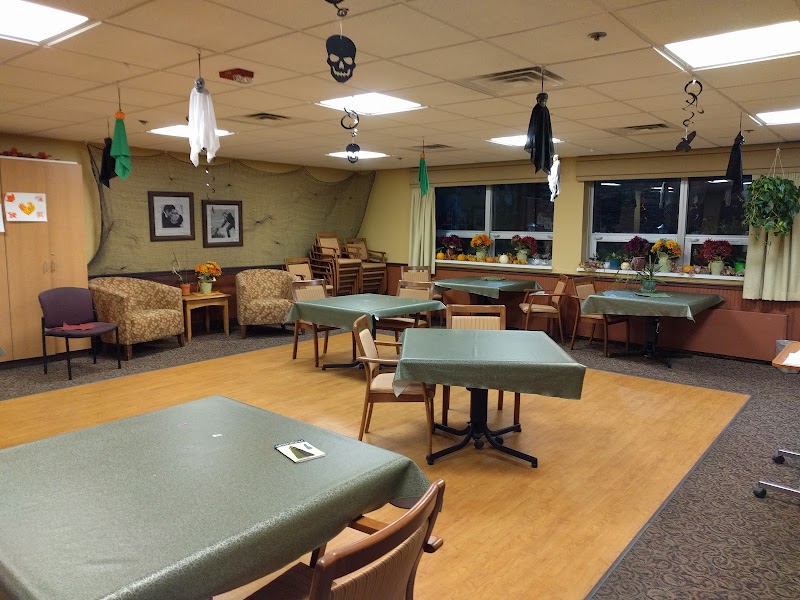
How is Premier Rehab And Healthcare At Burlington Staffed?

CMS rates Premier Rehab and Healthcare at Burlington's staffing level at 2 out of 5 stars, which is below average compared to other nursing homes. Staff turnover is 82%, which is 36 percentage points above the Vermont average of 46%. High turnover can affect care consistency as new staff learn residents' individual needs. RN turnover specifically is 70%, which is notably high. RNs provide skilled clinical oversight, so turnover in this role can affect medical care quality.

What Have Inspectors Found at Premier Rehab And Healthcare At Burlington?

State health inspectors documented 36 deficiencies at Premier Rehab and Healthcare at Burlington during 2022 to 2025. These included: 3 Immediate Jeopardy (the most serious level, indicating potential for serious harm or death), 4 that caused actual resident harm, 27 with potential for harm, and 2 minor or isolated issues. Immediate Jeopardy findings are rare and represent the most serious regulatory concerns. They require immediate corrective action.
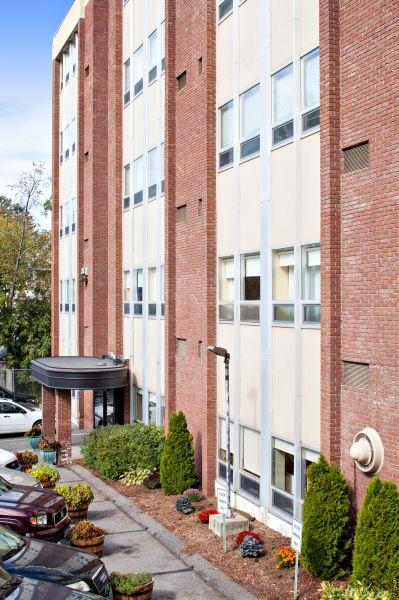
Who Owns and Operates Premier Rehab And Healthcare At Burlington?

Premier Rehab and Healthcare at Burlington is owned by a for-profit company. For-profit facilities operate as businesses with obligations to shareholders or private owners. The facility is operated by STELLAR HEALTH GROUP, a chain that manages multiple nursing homes. With 126 certified beds and approximately 105 residents (about 83% occupancy), it is a mid-sized facility located in Burlington, Vermont.

How Does Premier Rehab And Healthcare At Burlington Compare to Other Vermont Nursing Homes?

Compared to the 100 nursing homes in Vermont, Premier Rehab and Healthcare at Burlington's overall rating (2 stars) is below the state average of 2.8, staff turnover (82%) is significantly higher than the state average of 46%, and health inspection rating (2 stars) is below the national benchmark.

What Should Families Ask When Visiting Premier Rehab And Healthcare At Burlington?

Based on this facility's data, families visiting should ask: "What changes have been made since the serious inspection findings, and how are you preventing similar issues?" "What safeguards and monitoring systems are in place to protect residents from abuse or neglect?" "How do you ensure continuity of care given staff turnover, and what is your staff retention strategy?" "Can you walk me through typical staffing levels on day, evening, and night shifts?" These questions are particularly relevant given the facility's Immediate Jeopardy citations, the substantiated abuse finding on record, the facility's high staff turnover rate, and the below-average staffing rating.

Is Premier Rehab And Healthcare At Burlington Safe?

Based on CMS inspection data, Premier Rehab and Healthcare at Burlington has documented safety concerns. The facility has 1 substantiated abuse finding (meaning confirmed case of resident harm by staff or other residents). Inspectors have issued 3 Immediate Jeopardy citations (the most serious violation level indicating risk of serious injury or death). The facility has a 2-star overall rating and ranks #100 of 100 nursing homes in Vermont. Families considering this facility should ask detailed questions about what corrective actions have been taken since these incidents.

Do Nurses at Premier Rehab And Healthcare At Burlington Stick Around?

Staff turnover at Premier Rehab and Healthcare at Burlington is high. At 82%, the facility is 36 percentage points above the Vermont average of 46%. Registered Nurse turnover is particularly concerning at 70%. RNs handle complex medical decisions and coordinate care — frequent RN changes can directly impact care quality. High turnover means new staff may not know residents' individual needs, medications, or preferences. It can also be disorienting for residents, especially those with dementia who rely on familiar faces. Families should ask: What is causing the turnover? What retention programs are in place? How do you ensure care continuity during staff transitions?

Was Premier Rehab And Healthcare At Burlington Ever Fined?

Premier Rehab and Healthcare at Burlington has been fined $85,784 across 2 penalty actions. This is above the Vermont average of $33,937. Fines in this range indicate compliance issues significant enough for CMS to impose meaningful financial consequences. Common causes include delayed correction of deficiencies, repeat violations, or care failures affecting resident safety. Families should ask facility leadership what changes have been made since these penalties.

Is Premier Rehab And Healthcare At Burlington on Any Federal Watch List?

Premier Rehab and Healthcare at Burlington is not on any federal watch list. The most significant is the Special Focus Facility (SFF) program, which identifies the bottom 1% of nursing homes nationally based on persistent, serious quality problems. Not being on this list means the facility has avoided the pattern of deficiencies that triggers enhanced federal oversight. This is a positive indicator, though families should still review the facility's inspection history directly.