Greensboro Nursing Home
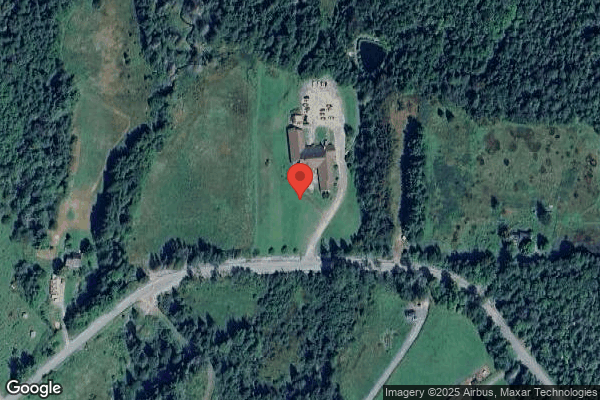
47 Maggie's Pond Road, Greensboro, VT 05841 (802) 533-7051
Non profit - Corporation 30 Beds Independent Data: November 2025
Trust Grade
70/100
#13 of 33 in VT
Last Inspection: July 2024

Within standard 12-15 month inspection cycle. Federal law requires annual inspections.

Overview

Greensboro Nursing Home has a Trust Grade of B, which means it is considered a good choice for families seeking care for their loved ones. It ranks #13 out of 33 nursing homes in Vermont, placing it in the top half of facilities in the state, and #2 out of 4 in Orleans County, indicating only one local option is better. The facility is trending positively, with issues decreasing from four in 2024 to just one in 2025. However, staffing is a concern, as it received only 1 out of 5 stars, but it has a low turnover rate of 0%, which is beneficial for resident care continuity. The home has no fines, which is a positive sign, and while RN coverage is only average, specific incidents highlighted include a lack of competency evaluations for some nursing staff and the absence of a certified dietitian and a water management program, raising potential safety and health concerns. Overall, while there are strengths in low fines and staff retention, the facility must address its staffing evaluations and health management protocols.

Trust Score
B
70/100
In Vermont
#13/33
Top 39%
Safety Record
Low Risk
No red flags
Inspections
Getting Better
4 → 1 violations
Staff Stability
○ Average
Turnover data not reported for this facility.
Penalties
✓ Good
No fines on record. Clean compliance history, better than most Vermont facilities.
Skilled Nurses
○ Average
Each resident gets 38 minutes of Registered Nurse (RN) attention daily — about average for Vermont. RNs are the most trained staff who monitor for health changes.
Violations
○ Average
8 deficiencies on record. Average for a facility this size. Mostly minor or procedural issues.
★★★☆☆
3.0
Overall Rating
★☆☆☆☆
1.0
Staff Levels
★★★★★
5.0
Care Quality
★★★☆☆
3.0
Inspection Score
Stable
2024: 4 issues
2025: 1 issues

The Good

  • 5-Star Quality Measures · Strong clinical quality outcomes
  • Full Sprinkler Coverage · Fire safety systems throughout facility
  • No fines on record

Facility shows strength in quality measures, fire safety.

The Bad

3-Star Overall Rating

Near Vermont average (2.8)

Meets federal standards, typical of most facilities

The Ugly 8 deficiencies on record

Jun 2025 1 deficiency
CONCERN (D) 📢 Someone Reported This

A family member, employee, or ombudsman was alarmed enough to file a formal complaint

Potential for Harm - no one hurt, but risky conditions existed

Report Alleged Abuse (Tag F0609)

Could have caused harm · This affected 1 resident

Based on interview and record review the facility failed to ensure that an allegation of abuse was reported to facility administration, Adult Protective Services, and the State Licensing Agency. Findi...

Read full inspector narrative →
Based on interview and record review the facility failed to ensure that an allegation of abuse was reported to facility administration, Adult Protective Services, and the State Licensing Agency. Findings include: Per record review Resident #77 was admitted in May of 2025 and began exhibiting aggressive behaviors requiring staff intervention and emergent transfer to the hospital. Review of the Accident/Incident witness interview tool dated 5/22/2025 that was completed by a Licensed Nursing Assistant (LNA) revealed that on 5/8/2025 she saw another LNA hit Resident #7 with a package of wipes. The interview tool states that the Resident was hitting the LNA and that the Resident stopped for a moment and lunged at the LNA. On 6/10/2025 at 2:15 PM the facility Administrator confirmed that the LNA who reported witnessing the other LNA hit Resident #77 with the package of wipes on 5/8/2025 failed to report it until 5/22/2025 and that she should have reported it at the time it occurred.
Jul 2024 4 deficiencies
CONCERN (E)

Potential for Harm - no one hurt, but risky conditions existed

Resident Rights (Tag F0550)

Could have caused harm · This affected multiple residents

**NOTE- TERMS IN BRACKETS HAVE BEEN EDITED TO PROTECT CONFIDENTIALITY** Based on observation, interview, and record review, for 1 applicable resident (Resident #13), the facility failed to protect the...

Read full inspector narrative →
**NOTE- TERMS IN BRACKETS HAVE BEEN EDITED TO PROTECT CONFIDENTIALITY** Based on observation, interview, and record review, for 1 applicable resident (Resident #13), the facility failed to protect the resident's privacy and treat the resident with respect and dignity. The facility also failed to ensure each resident has a right to self-determination and access to persons and services outside of the facility, by locking all doors to the facility 24 hours a day, 7 days a week. By creating a locked facility, there is a failure to ensure the right of each resident to exercise their rights as a citizen (or resident) of the United States or make personal choices about going outside without interference. This can potentially affect all residents of the facility and all visitors, including family, legal representatives, and advocates. Findings Include: 1. Per record review, Resident #13 has resided at this facility since [DATE]. S/he has a BIMS (Brief Interview for Mental Status) score of 3, which is indicative of severe cognitive impairment. Her/his diagnoses include dementia (a loss of cognitive function) and parkinsonism (a chronic progressive movement disorder); per the care plan, s/he has speech, language, and memory deficits and requires maximum assistance for all activities of daily living and includes an intervention of Allow adequate time to respond, repeat as necessary, do not rush, make eye contact, and request clarification from the resident to ensure understanding. On [DATE] at 8:30 AM, this surveyor observed an LPN (Licensed Practical Nurse) approach Resident #13, who was seated in a common area, eating breakfast with several other residents and visitors. The LPN approached Resident #13, stating, I'm going to apply your patch to your belly, while lifting the shirt of Resident#13 to just below breast level, exposing her/his abdomen and undergarments, including an incontinence brief. S/he removed the expired medication patch and applied a new one while holding Resident 13's shirt up, leaving her/his abdomen exposed. Per record review, a document titled Resident Rights Guidelines for all Nursing Procedures, on page 4, under the General Guidelines heading, F) close the entrance door and provide for the resident's privacy. Per interview with the LPN on [DATE] at approximately 9:30 AM, s/he stated, We give medications in the dining room here; it is such a small place. s/he confirmed that s/he had exposed Resident #13 to other residents and should have taken the resident to a private space. Per interview with the Director of Nursing (DON) and the Administrator on [DATE] at approximately 9:45 AM, the DON agreed that the LPN should not administer medications in a common area. Additionally, she/he confirmed that the resident was not treated with respect and dignity, and his/her privacy was not observed per their policy and the resident's rights. 2) During an observation on [DATE] at 10:10 AM, this surveyor encountered a barrier to entry to the facility. The entry door was locked. The only way to gain access was to press a doorbell, which alerted the staff. A staff member then had to come and physically open the door; once inside, there was a second locked door with a keypad to the right of it. The staff member explained that an additional code, different from the first, was needed to open the second door. Per record review, Resident #11 has resided at the facility since [DATE]; S/he has diagnoses of depression and anxiety. S/he has a BIMS of 15. Per interview with Resident # 11 on [DATE] at 11:56 AM, s/he stated that the facility had a rule that residents could only go outside with a staff member. The staff member has a code for both doors and remains outside with the resident, using the keypads to allow the resident to re-enter the building. Resident #11 expressed frustration that s/he could not go outside when s/he wanted to and had to wait for the availability of staff to accompany him/her. S/he stated that residents were not allowed to have the door codes and had to ask staff members to open the doors. We can only go out when it is pre-scheduled in a group or convenient for staff. Per interview with an Occupational Therapy Assistant (OTA) on [DATE] at 12:10 PM, s/he stated, The doors are always locked, and residents are not allowed to go outside the building to use the grounds without a staff member to supervise. Per interview on [DATE] at approximately 1:20 PM, a family member indicated the locked facility door presented a challenge. S/he visited her/his spouse during odd hours when a ride was available, often during early evening hours. S/he had to wait for staff to open the door and then had to find busy staff members to open the door to let him/her leave. S/he states the door code was not offered to her/him. During an interview on [DATE] at 1:50 PM a Resident's family member expressed that they do not like that s/he has to bother staff to enter or exit the facility. The family member stated that some visitors do have the code that is used to enter and exit the facility, but s/he does not. S/he also stated that sometimes staff are busy and s/he needs to wait until they come to get in. Per interview on [DATE] at 11:17 AM the facility Administrator confirmed that the facility doors are locked at all times. The Administrator stated that the doors are locked to ensure safety for the Residents and staff. The Administrator also confirmed that there is not a process in place to assess residents for the ability to go outside alone and residents and/or representatives have not given consent to reside in a locked facility. Per further interview the Administrator stated that s/he could not locate a policy or procedure for the doors being locked or a policy for operating a completely locked facility.
CONCERN (F)

Potential for Harm - no one hurt, but risky conditions existed

Deficiency F0726 (Tag F0726)

Could have caused harm · This affected most or all residents

Based on interview, staff education record review, and the facility assessment, the facility failed to ensure that licensed nurses and licensed nursing assistants were assessed for competency and skil...

Read full inspector narrative →
Based on interview, staff education record review, and the facility assessment, the facility failed to ensure that licensed nurses and licensed nursing assistants were assessed for competency and skill sets to provide care and respond to each resident's individualized needs. This has the potential to affect all residents. Findings include: Per review of 3 sampled Licensed Nursing Assistant's (LNA's) employee training files revealed 1 LNA file that lacked evidence of any competency evaluation required to demonstrate that they had the necessary skills to provide care needed. Review of the education and competency file for 3 Licensed Nursing Assistants (LNAs) revealed 1 LNA had no evidence that they were assessed for competency in the skills needed to care for the residents. 3. Review of the education and competency file for 3 Licensed Practical Nurse (LPN) revealed that 2 of the 3 had no evidence of annual competency evaluation of the skills needed to care for the residents. Per interview on 7/10/24 at 1:21 PM, the Administrator confirmed that there was no evidence of competency evaluation for the 3 staff members.
CONCERN (F)

Potential for Harm - no one hurt, but risky conditions existed

Deficiency F0801 (Tag F0801)

Could have caused harm · This affected most or all residents

Based on staff interviews and record review, the facility failed to employ either a full-time dietitian and/or a part-time dietitian; and a certified Director of Nutrition Services. Findings include: ...

Read full inspector narrative →
Based on staff interviews and record review, the facility failed to employ either a full-time dietitian and/or a part-time dietitian; and a certified Director of Nutrition Services. Findings include: Per review of the Dietary Manager's employee file there was no documented evidence of the certification required for Dietary Managers. An interview was conducted with the facility's administrator on 7/9/24 at approximately 4:10 PM. The administrator stated that the facility does not have a full-time dietitian. S/he also confirmed that the facility does not have a certified Director of Nutrition Services.
CONCERN (F)

Potential for Harm - no one hurt, but risky conditions existed

Infection Control (Tag F0880)

Could have caused harm · This affected most or all residents

Based on interview, the facility failed to establish and maintain a water management program to minimize the risk of Legionella ( a bacteria that causes inflammatory conditions of the lungs) and other...

Read full inspector narrative →
Based on interview, the facility failed to establish and maintain a water management program to minimize the risk of Legionella ( a bacteria that causes inflammatory conditions of the lungs) and other opportunistic pathogens in building water systems that would include an assessment to identify where Legionella and other opportunistic waterborne pathogens (e.g., Pseudomonas Acinetobacter) could grow and spread; and measures to prevent the growth of opportunistic waterborne pathogens (also known as control measures), and how to monitor them. Findings include: Per interview on 7/10/24 at approximately 11:00 AM, the Director of Nursing (DON), who is the Certified Infection Preventionist, indicated s/he did not have knowledge of a water management program specific to this facility. The maintenance director and the administrator were also asked for evidence of the program. Both confirmed they had no knowledge of the existence of such a program and confirmed that an assessment of the building had not been performed and a program to minimize the risk of Legionella and other opportunistic pathogens in the water system had not been developed.
Jan 2023 1 deficiency
CONCERN (F) 📢 Someone Reported This

A family member, employee, or ombudsman was alarmed enough to file a formal complaint

Potential for Harm - no one hurt, but risky conditions existed

Infection Control (Tag F0880)

Could have caused harm · This affected most or all residents

**NOTE- TERMS IN BRACKETS HAVE BEEN EDITED TO PROTECT CONFIDENTIALITY** Based on observations, interviews and CDC data review the facility failed to establish and maintain an infection prevention and ...

Read full inspector narrative →
**NOTE- TERMS IN BRACKETS HAVE BEEN EDITED TO PROTECT CONFIDENTIALITY** Based on observations, interviews and CDC data review the facility failed to establish and maintain an infection prevention and control program including a system for preventing, identifying, reporting, investigating, and controlling infections and communicable diseases for all residents, staff, volunteers, and visitors following accepted national standards as evidenced by: On 01/17/23 at 9:30 AM during an unannounced onsite investigation of a complaint, it was noted the staff, visitors in the common areas and the facility administrator were not wearing face masks (source control). When asked about the lack of face masks during the entrance meeting, the administrator replied that the Covid 19 levels did not require face masks. When asked what the current community transmission level is he/she admitted not knowing the level reported today stating the director of nurses checks it but she is away today. Per the surveyor's review of the transmission levels of Covid 19 in the State of [NAME] provided on the CDC website, the entire state of [NAME] had a Covid 19 transmission level of high or substantial which was conveyed to the administrator. Per the CDC Interim Infection Prevention and Control Recommendations for Healthcare Personnel During the Coronavirus Disease 2019 (COVID-19) Pandemic updated September 23, 2022, a tiered approach to COVID-19-specific infection control measures including the use of face coverings should be implemented. The infection control measures should be based on the community transmission rate which is the metric recommended to guide select practices in healthcare settings. At approximately 10:30 AM the acting director of nursing with the administrator showed the surveyor the data they were consulting, it was revealed that they were reviewing the community level which is a metric used in non-healthcare settings, not the community transmission rates, therefore, relying on an incorrect metric. The community transmission levels were high thus face masks are recommended for everyone in a healthcare setting when they are in areas of the healthcare facility where they could encounter residents.
May 2022 2 deficiencies
CONCERN (D)

Potential for Harm - no one hurt, but risky conditions existed

Comprehensive Care Plan (Tag F0656)

Could have caused harm · This affected 1 resident

Based on record review and interview, it was determined that the facility failed to develop a comprehensive care plan related to hospice for 1 of 14 resident's in a standard survey sample. (Resident i...

Read full inspector narrative →
Based on record review and interview, it was determined that the facility failed to develop a comprehensive care plan related to hospice for 1 of 14 resident's in a standard survey sample. (Resident identifier #9). Findings include: Review of Resident #9's medical record revealed a Significant Change MDS (Minimum Data Set) with an ARD (Assessment Reference Date) of 2/27/2022. Section J.1400 of this MDS is specific to the resident having a condition or chronic disease that may result in a life expectancy of less than 6 months - this section was coded a 1 which indicates the answer to this question is yes. Section O0100 Special Treatment, Procedures, and Programs; K. Hospice was documented as yes. The facility's Resident Roster Matrix, dated 5/2/22, listed Resident #9 as being a hospice resident. Review of Resident #9's current care plan did not include a care plan specific to hospice care and services. Interview on 5/4/22 at approximately 9:00 AM with the Administrator, confirmed that Resident #9 is receiving hospice services. Interview on 5/4/22 at approximately 9:25 AM with the DON (Director of Nurses), confirmed that Resident #9 has been receiving hospice services since February of 2022 and that a hospice care plan was not created for this resident by either the facility or the hospice provider. The DON stated that coordination of care is done verbally.
CONCERN (D)

Potential for Harm - no one hurt, but risky conditions existed

Deficiency F0657 (Tag F0657)

Could have caused harm · This affected 1 resident

**NOTE- TERMS IN BRACKETS HAVE BEEN EDITED TO PROTECT CONFIDENTIALITY** Based on staff interview and record review, the facility failed to revise the care plan as needed for 2 applicable residents (Re...

Read full inspector narrative →
**NOTE- TERMS IN BRACKETS HAVE BEEN EDITED TO PROTECT CONFIDENTIALITY** Based on staff interview and record review, the facility failed to revise the care plan as needed for 2 applicable residents (Residents #17 & #11). Findings include: 1.) Per record review, staff did not revise Resident # 17's care plan to reflect an actual pressure ulcer. There is a physician order dated 2/7/22 to cleanse bilateral buttock with wound cleaner, gently pat dry, skin prep surrounding healthy skin, apply 4 x 4 border foam dressing to bilateral buttock and change every 3 days and as needed. This order was renewed on 4/19/22. There is a care plan in place to address potential for pressure ulcer development related to decreased mobility. There is no indication of the actual wound in the care plan. On 05/03/22 at 2:00 PM, the Director Of Nurses (DON) confirmed that Resident # 17's care plan should have been and was not revised to reflect an actual pressure ulcer. 2.) Per record review, Res. #11 was admitted to the facility on [DATE] with diagnoses that include Functional quadriplegia, vascular dementia with behavioral disturbance, and attention and concentration deficit. The resident's Care Plan identified the resident as at high risk for falls related to poor safety awareness and weakness. Review of Nurses Notes for Res. #11 for 4/1/22 record [Res. #11] had unwitnessed fall while in TV/sunroom. [S/he] was not in chair. Found on floor a few feet away from the chair, on the floor, lying next to the wall next to the television. Assessed for injuries, found bruising on right forearm, with some swelling. Further review of Nurses Notes reveals on 4/22/22 I heard a noise; [Res.#11] in entranceway to sun-room, face down. Noted 1.5 centimeter mild abrasion on upper part of left forehead, and slight bump under skin, 1.5 centimeters. Per review of Res. #11's Care Plan, there were no interventions added after either fall to prevent the resident from suffering further falls and injuries. Per interview with the Director of Nursing [DON] on 5/04/22 at 8:52 AM the DON confirmed Res. #11's Care Plan was not updated after falls on 4/1/22 and 4/22/22. The DON stated the resident's Care Plan should have been updated but was not.
Understanding Severity Codes (click to expand)
Life-Threatening (Immediate Jeopardy)
J - Isolated K - Pattern L - Widespread
Actual Harm
G - Isolated H - Pattern I - Widespread
Potential for Harm
D - Isolated E - Pattern F - Widespread
No Harm (Minor)
A - Isolated B - Pattern C - Widespread

Questions to Ask on Your Visit

  • "Can I speak with families of current residents?"
  • "What's your RN coverage like on weekends and overnight?"

Our Honest Assessment

Strengths
  • • No major safety red flags. No abuse findings, life-threatening violations, or SFF status.
  • • No fines on record. Clean compliance history, better than most Vermont facilities.
Concerns
  • • No major red flags. Standard due diligence and a personal visit recommended.
Bottom line: Mixed indicators with Trust Score of 70/100. Visit in person and ask pointed questions.

About This Facility

What is Greensboro Nursing Home's CMS Rating?

CMS assigns Greensboro Nursing Home an overall rating of 3 out of 5 stars, which is considered average nationally. Within Vermont, this rating places the facility higher than 99% of the state's 100 nursing homes. This mid-range rating indicates the facility meets federal standards but may have areas for improvement.

How is Greensboro Nursing Home Staffed?

CMS rates Greensboro Nursing Home's staffing level at 1 out of 5 stars, which is much below average compared to other nursing homes.

What Have Inspectors Found at Greensboro Nursing Home?

State health inspectors documented 8 deficiencies at Greensboro Nursing Home during 2022 to 2025. These included: 8 with potential for harm.

Who Owns and Operates Greensboro Nursing Home?

Greensboro Nursing Home is owned by a non-profit organization. Non-profit facilities reinvest revenue into operations rather than distributing to shareholders. The facility operates independently rather than as part of a larger chain. With 30 certified beds and approximately 25 residents (about 83% occupancy), it is a smaller facility located in Greensboro, Vermont.

How Does Greensboro Nursing Home Compare to Other Vermont Nursing Homes?

Compared to the 100 nursing homes in Vermont, Greensboro Nursing Home's overall rating (3 stars) is above the state average of 2.8 and health inspection rating (3 stars) is at the national benchmark.

What Should Families Ask When Visiting Greensboro Nursing Home?

Based on this facility's data, families visiting should ask: "Can you walk me through typical staffing levels on day, evening, and night shifts?" "Can I visit during a mealtime to observe dining assistance and food quality?" "How do you handle medical emergencies, and what is your hospital transfer rate?" "Can I speak with family members of current residents about their experience?" These questions are particularly relevant given the below-average staffing rating.

Is Greensboro Nursing Home Safe?

Based on CMS inspection data, Greensboro Nursing Home has a clean safety record: no substantiated abuse findings (meaning no confirmed cases of resident harm), no Immediate Jeopardy citations (the most serious violation level indicating risk of serious injury or death), and is not on the Special Focus Facility watch list (a federal program monitoring the lowest-performing 1% of nursing homes). The facility has a 3-star overall rating and ranks #1 of 100 nursing homes in Vermont. While no facility is perfect, families should still ask about staff-to-resident ratios and recent inspection results during their visit.

Do Nurses at Greensboro Nursing Home Stick Around?

Greensboro Nursing Home has not reported staff turnover data to CMS. Staff turnover matters because consistent caregivers learn residents' individual needs, medications, and preferences. When staff frequently change, this institutional knowledge is lost. Families should ask the facility directly about their staff retention rates and average employee tenure.

Was Greensboro Nursing Home Ever Fined?

Greensboro Nursing Home has no federal fines on record. CMS issues fines when nursing homes fail to meet care standards or don't correct problems found during inspections. The absence of fines suggests the facility has either maintained compliance or corrected any issues before penalties were assessed. This is a positive indicator, though families should still review recent inspection reports for the full picture.

Is Greensboro Nursing Home on Any Federal Watch List?

Greensboro Nursing Home is not on any federal watch list. The most significant is the Special Focus Facility (SFF) program, which identifies the bottom 1% of nursing homes nationally based on persistent, serious quality problems. Not being on this list means the facility has avoided the pattern of deficiencies that triggers enhanced federal oversight. This is a positive indicator, though families should still review the facility's inspection history directly.