Pines Rehab & Health Center
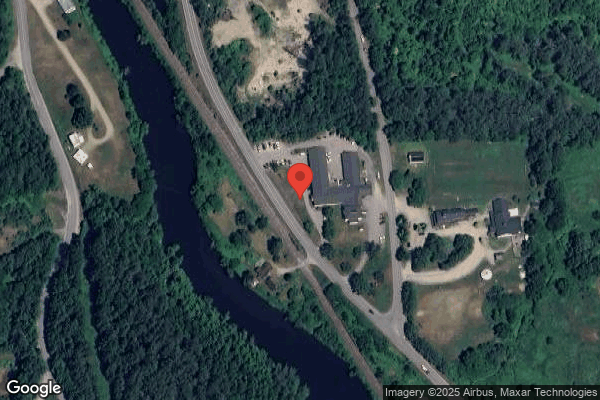
601 Red Village Road, Lyndonville, VT 05851 (802) 626-3367
For profit - Limited Liability company 60 Beds Independent Data: November 2025
Trust Grade
75/100
#9 of 33 in VT
Last Inspection: February 2025

Within standard 12-15 month inspection cycle. Federal law requires annual inspections.

Overview

Pines Rehab & Health Center in Lyndonville, Vermont has received a Trust Grade of B, indicating it is a good choice for families looking for care, though it is not without its concerns. It ranks #9 out of 33 facilities in the state, placing it in the top half, and it is the best option in Caledonia County. The facility is newly rated, so there is no trend data yet; however, they have not incurred any fines, which is a positive sign. Staffing is rated average with a turnover of 59%, which is on par with the state average, but there is less RN coverage than 87% of Vermont facilities, which could impact care quality. Specific incidents noted during inspections include failure to sanitize dinnerware and maintain a clean kitchen, as well as not implementing proper infection control measures to prevent diseases like Legionella. Additionally, a resident's care plan was not updated despite concerns about wandering residents entering their room, highlighting some areas for improvement.

Trust Score
B
75/100
In Vermont
#9/33
Top 27%
Safety Record
Low Risk
No red flags
Inspections
Too New
0 → 4 violations
Staff Stability
⚠ Watch
59% turnover. Above average. Higher turnover means staff may not know residents' routines.
Penalties
✓ Good
No fines on record. Clean compliance history, better than most Vermont facilities.
Skilled Nurses
⚠ Watch
Each resident gets only 28 minutes of Registered Nurse (RN) attention daily — below average for Vermont. Fewer RN minutes means fewer trained eyes watching for problems.
Violations
✓ Good
Only 4 deficiencies on record. Cleaner than most facilities. Minor issues only.
★★★★☆
4.0
Overall Rating
★★★☆☆
3.0
Staff Levels
★★☆☆☆
2.0
Care Quality
★★★★☆
4.0
Inspection Score
Stable
: 0 issues
2025: 4 issues

The Good

  • Full Sprinkler Coverage · Fire safety systems throughout facility
  • No fines on record

Facility shows strength in fire safety.

The Bad

Staff Turnover: 59%

13pts above Vermont avg (46%)

Frequent staff changes - ask about care continuity

Staff turnover is elevated (59%)

11 points above Vermont average of 48%

The Ugly 4 deficiencies on record

Feb 2025 4 deficiencies
CONCERN (D)

Potential for Harm - no one hurt, but risky conditions existed

Deficiency F0657 (Tag F0657)

Could have caused harm · This affected 1 resident

Based on observation, interview and record review, the facility failed to revise a care plan for 1 of 21 sampled residents (Resident #20) related to past trauma. Findings include: During an interview,...

Read full inspector narrative →
Based on observation, interview and record review, the facility failed to revise a care plan for 1 of 21 sampled residents (Resident #20) related to past trauma. Findings include: During an interview, on 2/24/25 at 12:55 PM, Resident #20 and his/her roommate stated that more than one wandering resident had entered their room in the middle of the night via a shared bathroom several times over the course of a few months. Resident #20 and his/her roommate requested that a lock be put on the bathroom door to prevent anyone from accessing their room via the shared bathroom, which was done. Resident #20 became visibly upset, with noticeable anxiety and agitation. His/her voice became louder and s/he was clutching the arms of his/her wheel chair during the interview, stating The staff always forget to lock it! Resident #20 is hearing impaired, and said I wouldn't hear someone come in if my back was to the bathroom door. During this interview, this surveyor observed Resident #20 check the bathroom door, which was unlocked at the time. Per record review, Resident #20 has a Care Plan for Actual Psychosocial Well-being problem related to sexual abuse at a young age dated 10/19/2023. There are no updates in the Care Plan regarding wandering residents entering his/her room, or regarding the need for the bathroom door to always locked from inside the resident's room. During an interview, on 2/26/25 at 1:20 PM, the Director of Nursing and the Clinical Lead both confirmed that Resident #20 should have interventions in his/her Care Plan relating to wandering residents and the need for the bathroom door to be locked at all times, and both confirmed that s/he does not have these interventions in place.
CONCERN (D)

Potential for Harm - no one hurt, but risky conditions existed

Accident Prevention (Tag F0689)

Could have caused harm · This affected 1 resident

Based on interview and record review, the facility failed to ensure residents remained free of accident hazards related to falls and care plan interventions for 2 residents [Residents #55 & #3] of 25 ...

Read full inspector narrative →
Based on interview and record review, the facility failed to ensure residents remained free of accident hazards related to falls and care plan interventions for 2 residents [Residents #55 & #3] of 25 sampled residents. Findings include: 1.) Per record review Resident #55 was admitted to the facility with diagnoses that include a history of falls, alcohol-induced dementia, lack of coordination, and muscle wasting. The resident's Care Plan identified the resident at risk for falls due to a primary medical history of falls, alcohol abuse, and increased weakness. Review of progress notes for the resident dated 2/1/25 reveal At 2:10 PM: Nurse was summoned to resident's room after [s/he] was found on the floor beside [h/her] bathroom door . Root cause of fall: Alone and unassisted- resident lacks safety awareness. Further review of progress notes reveal the next day, 2/2/25 at 04:45 AM: Resident was found on the floor, beside [h/her] bed in a sitting position. Resident was awake and alert. The following day, 2/3/25, Progress notes record at 12:00 AM Resident was found on the floor, in a sitting position beside [h/her] bed while this nurse was making rounds. When resident was asked what had happened, resident was speaking in word salad [unintelligible, extremely disorganized speech]. Resident is confused at baseline. Review of the facility's 'Resident Centered Approaches to Managing Falls and Falls Risk' policy [revised March 2018] records the staff will implement a resident centered fall prevention plan to reduce the specific risk factors of falls for each resident at risk or with a history of falls. The policy continues If falling occurs despite initial interventions, staff will implement additional or different interventions .if underlying causes cannot be readily identified or corrected, staff will try various interventions .until falling is reduced or stopped. Review of Resident #55's Care Plan reveals no new interventions added to prevent further falls after falls on consecutive days 2/1/25 and 2/2/25. A third fall in 3 days [2/3/24] then resulted in interventions being added. 2.) Per record review Resident #3 was admitted to the facility with diagnoses that included paranoid schizophrenia, bipolar disorder, and borderline personality disorder. The resident's Care Plan identified the resident at risk for falls due to a history of falls and muscle weakness. Review of progress notes for the resident dated 12/7/24 reveal At 3:10 this morning this nurse was called into room by this resident's roommate via call light. On arrival [Resident #3] is seen laying on floor on the side of [h/her] bed. [Resident #3] stated had pain in chest area when asked why stated 'I fell on my chest facing down' . Resident skin assessment completed and noted redness on mid chest area,. During the end of skin assessment noted tenderness tor right side of chest wall under axillary area. Area is tender to touch and has a slight skin color change. Resident states this area hurts. MD suggested resident to go to Hospital. When asked resident if [s/he] would like to go to hospital to get x-ray and seen by MD there [s/he] declined. Review of Resident #3's Care Plan reveals no new interventions added to prevent further falls after the fall on 12/7/24. An interview was conducted with the Director of Nursing [DON] on 2/26/25 at 10:33 AM. The DON stated the expectation is that after a fall interventions are added to a resident's the care plan immediately to prevent any additional falls. The DON confirmed Resident #55 fell on 2/1, 2/2, & 2/3/25 before new interventions were added into the care plan on 2/4, after resident had fallen twice with no new actions taken. The DON also confirmed no new interventions were added to Resident #3's care plan interventions to prevent future falls after a fall on 12/7/24.
CONCERN (F)

Potential for Harm - no one hurt, but risky conditions existed

Food Safety (Tag F0812)

Could have caused harm · This affected most or all residents

Based on observation, record review, and interview, the facility failed to ensure that dinnerware was sanitized and failed to maintain a clean kitchen environment, which has the potential to impact al...

Read full inspector narrative →
Based on observation, record review, and interview, the facility failed to ensure that dinnerware was sanitized and failed to maintain a clean kitchen environment, which has the potential to impact all residents in the facility. Findings include: On 02/24/25, at 10:41 AM, it was observed that the shelf under steam table was covered in a greasy residue with crumbs and dust adhering to it. This shelf contained the clean steam table trays, which were stacked, opening side down, on the soiled shelf. Crumbs were observed on the counter near and under the toaster, and there were brown stains on the counter at the window used to pass food and beverages to the dining room. The facility uses a high temperature dishwasher (which uses heat for sanitization rather than chemicals). Per regulatory requirements, the dishwasher must have a wash cycle temperature of 150 to 165 degrees Fahrenheit. A record review of the 12/2024 Dishwasher Temperature Log showed the following insufficient temperatures were recorded on the log by staff: 12/4/2024 148 degrees Fahrenheit (F), 12/5/2024 120 degrees F, 12/7/2024 140 degrees F, 12/8/2024 110 degrees F, 12/15/2024 125 degrees F, 12/16/2024 140 degrees F, 12/17/2024, 140 degrees F, and 12/21/2024 130 degrees F. During an interview, on 2/24/25 at 10:50 AM, the Certified Dietary Manager confirmed that the shelf under the steam table was not clean and that the counters were not clean. During an interview, on 2/26/25 at 10:16 AM, the Certified Dietary Manager confirmed wash cycle temperatures for the dishwasher were insufficient for sanitization on 12/4/2024, 12/5/2024, 12/7/2024, 12/8/2024, 12/15/2024, 12/16/2024, 12/17/2024, and 12/21/2024.
CONCERN (F)

Potential for Harm - no one hurt, but risky conditions existed

Infection Control (Tag F0880)

Could have caused harm · This affected most or all residents

**NOTE- TERMS IN BRACKETS HAVE BEEN EDITED TO PROTECT CONFIDENTIALITY** Based on interview, and record review, the facility failed to implement an infection prevention and control program designed to ...

Read full inspector narrative →
**NOTE- TERMS IN BRACKETS HAVE BEEN EDITED TO PROTECT CONFIDENTIALITY** Based on interview, and record review, the facility failed to implement an infection prevention and control program designed to help prevent the development and transmission of communicable diseases and infections related to Legionella prevention. Findings include: Per record review of the facility's water management program, there was no risk assessment to identify areas in the building that could grow and spread Legionella in the facility water system. Per the facility's Water Management for Legionella policy [effective date: 1/1/23] states, [NAME] kare locations will utilize water management practices to reduce the risk of growth of Legionella and other opportunities pathogens in building water systems .Core elements of the water management plan are: .describe the facilities water system using text and flow diagram, risk assessment with control methods and corrective actions, monitoring control measures . The facility's water management system policy did not include any testing protocols. An interview was conducted with the Infection Preventionist and Director of Maintenance on 2/26/25 at 10:50 AM. The Director of Maintenance and Infection Preventionist confirmed that the facility did not complete a risk assessment, including identifying areas in the building where Legionella could grow or reside.
Understanding Severity Codes (click to expand)
Life-Threatening (Immediate Jeopardy)
J - Isolated K - Pattern L - Widespread
Actual Harm
G - Isolated H - Pattern I - Widespread
Potential for Harm
D - Isolated E - Pattern F - Widespread
No Harm (Minor)
A - Isolated B - Pattern C - Widespread

Questions to Ask on Your Visit

  • "Why is there high staff turnover? How do you retain staff?"
  • "Can I speak with families of current residents?"
  • "What's your RN coverage like on weekends and overnight?"

Our Honest Assessment

Strengths
  • • No major safety red flags. No abuse findings, life-threatening violations, or SFF status.
  • • No fines on record. Clean compliance history, better than most Vermont facilities.
  • • Only 4 deficiencies on record. Cleaner than most facilities. Minor issues only.
Concerns
  • • 59% turnover. Above average. Higher turnover means staff may not know residents' routines.
Bottom line: Generally positive indicators. Standard due diligence and a personal visit recommended.

About This Facility

What is Pines Rehab & Health Center's CMS Rating?

CMS assigns Pines Rehab & Health Center an overall rating of 4 out of 5 stars, which is considered above average nationally. Within Vermont, this rating places the facility higher than 99% of the state's 100 nursing homes. This rating reflects solid performance across the metrics CMS uses to evaluate nursing home quality.

How is Pines Rehab & Health Center Staffed?

CMS rates Pines Rehab & Health Center's staffing level at 3 out of 5 stars, which is average compared to other nursing homes. Staff turnover is 59%, which is 13 percentage points above the Vermont average of 46%. High turnover can affect care consistency as new staff learn residents' individual needs. RN turnover specifically is 67%, which is notably high. RNs provide skilled clinical oversight, so turnover in this role can affect medical care quality.

What Have Inspectors Found at Pines Rehab & Health Center?

State health inspectors documented 4 deficiencies at Pines Rehab & Health Center during 2025. These included: 4 with potential for harm.

Who Owns and Operates Pines Rehab & Health Center?

Pines Rehab & Health Center is owned by a for-profit company. For-profit facilities operate as businesses with obligations to shareholders or private owners. The facility operates independently rather than as part of a larger chain. With 60 certified beds and approximately 56 residents (about 93% occupancy), it is a smaller facility located in Lyndonville, Vermont.

How Does Pines Rehab & Health Center Compare to Other Vermont Nursing Homes?

Compared to the 100 nursing homes in Vermont, Pines Rehab & Health Center's overall rating (4 stars) is above the state average of 2.8, staff turnover (59%) is significantly higher than the state average of 46%, and health inspection rating (4 stars) is above the national benchmark.

What Should Families Ask When Visiting Pines Rehab & Health Center?

Based on this facility's data, families visiting should ask: "How do you ensure continuity of care given staff turnover, and what is your staff retention strategy?" "Can I visit during a mealtime to observe dining assistance and food quality?" "How do you handle medical emergencies, and what is your hospital transfer rate?" "Can I speak with family members of current residents about their experience?" These questions are particularly relevant given the facility's high staff turnover rate.

Is Pines Rehab & Health Center Safe?

Based on CMS inspection data, Pines Rehab & Health Center has a clean safety record: no substantiated abuse findings (meaning no confirmed cases of resident harm), no Immediate Jeopardy citations (the most serious violation level indicating risk of serious injury or death), and is not on the Special Focus Facility watch list (a federal program monitoring the lowest-performing 1% of nursing homes). The facility has a 4-star overall rating and ranks #1 of 100 nursing homes in Vermont. While no facility is perfect, families should still ask about staff-to-resident ratios and recent inspection results during their visit.

Do Nurses at Pines Rehab & Health Center Stick Around?

Staff turnover at Pines Rehab & Health Center is high. At 59%, the facility is 13 percentage points above the Vermont average of 46%. Registered Nurse turnover is particularly concerning at 67%. RNs handle complex medical decisions and coordinate care — frequent RN changes can directly impact care quality. High turnover means new staff may not know residents' individual needs, medications, or preferences. It can also be disorienting for residents, especially those with dementia who rely on familiar faces. Families should ask: What is causing the turnover? What retention programs are in place? How do you ensure care continuity during staff transitions?

Was Pines Rehab & Health Center Ever Fined?

Pines Rehab & Health Center has no federal fines on record. CMS issues fines when nursing homes fail to meet care standards or don't correct problems found during inspections. The absence of fines suggests the facility has either maintained compliance or corrected any issues before penalties were assessed. This is a positive indicator, though families should still review recent inspection reports for the full picture.

Is Pines Rehab & Health Center on Any Federal Watch List?

Pines Rehab & Health Center is not on any federal watch list. The most significant is the Special Focus Facility (SFF) program, which identifies the bottom 1% of nursing homes nationally based on persistent, serious quality problems. Not being on this list means the facility has avoided the pattern of deficiencies that triggers enhanced federal oversight. This is a positive indicator, though families should still review the facility's inspection history directly.