St. Johnsbury Health & Rehab
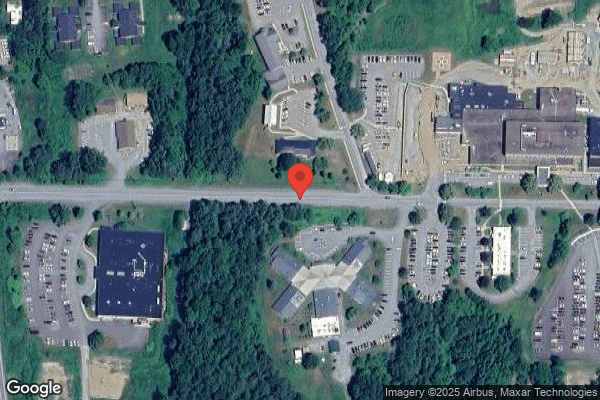

1248 Hospital Drive, Saint Johnsbury, VT 05819 (802) 748-8757
For profit - Limited Liability company 99 Beds GENESIS HEALTHCARE Data: November 2025 4 Immediate Jeopardy citations
Trust Grade
0/100
#32 of 33 in VT
Last Inspection: December 2024

Within standard 12-15 month inspection cycle. Federal law requires annual inspections.

Overview

St. Johnsbury Health & Rehab has a Trust Grade of F, indicating significant concerns about the facility's care and operations. Ranking #32 out of 33 in Vermont means it is in the bottom half of all state facilities, and it is the second and last option in Caledonia County. The facility's situation is worsening, with the number of issues increasing from 17 in 2024 to 27 in 2025. Staffing is a major concern, with a low rating of 1 star and a high turnover rate of 84%, much worse than the Vermont average of 59%. Additionally, fines totaling $434,090 are troubling, as they exceed those of all other facilities in the state, suggesting ongoing compliance problems. Specific incidents have raised serious alarm, such as failing to provide necessary care, which resulted in a resident suffering from unsafe blood sugar levels and psychosocial harm. Another critical finding involved neglecting to follow medical director duties, which had been noted as a repeat issue. While the facility does provide average RN coverage, the overall quality of care is significantly compromised. Families should weigh these serious shortcomings against any strengths when considering this nursing home.

Trust Score
F
0/100
In Vermont
#32/33
Bottom 4%
Safety Record
High Risk
Review needed
Inspections
Getting Worse
17 → 27 violations
Staff Stability
⚠ Watch
84% turnover. Very high, 36 points above average. Constant new faces learning your loved one's needs.
Penalties
✓ Good
$434,090 in fines. Lower than most Vermont facilities. Relatively clean record.
Skilled Nurses
⚠ Watch
Each resident gets only 27 minutes of Registered Nurse (RN) attention daily — below average for Vermont. Fewer RN minutes means fewer trained eyes watching for problems.
Violations
⚠ Watch
75 deficiencies on record. Higher than average. Multiple issues found across inspections.
★☆☆☆☆
1.0
Overall Rating
★☆☆☆☆
1.0
Staff Levels
★★★☆☆
3.0
Care Quality
★☆☆☆☆
1.0
Inspection Score
Stable
2024: 17 issues
2025: 27 issues

The Good

  • Full Sprinkler Coverage · Fire safety systems throughout facility
  • No fines on record

Facility shows strength in fire safety.

The Bad

1-Star Overall Rating

Below Vermont average (2.7)

Significant quality concerns identified by CMS

Staff Turnover: 84%

38pts above Vermont avg (46%)

Frequent staff changes - ask about care continuity

Federal Fines: $434,090

Well above median ($33,413)

Significant penalties indicating serious issues

Chain: GENESIS HEALTHCARE

Part of a multi-facility chain

Ask about local staffing decisions and management

Staff turnover is very high (84%)

36 points above Vermont average of 48%

The Ugly 75 deficiencies on record

4 life-threatening 7 actual harm
Jul 2025 17 deficiencies 2 IJ (2 facility-wide)
CRITICAL (L) 📢 Someone Reported This

A family member, employee, or ombudsman was alarmed enough to file a formal complaint

Immediate Jeopardy (IJ) - the most serious Medicare violation

Free from Abuse/Neglect (Tag F0600)

Someone could have died · This affected most or all residents

⚠️ Facility-wide issue

**NOTE- TERMS IN BRACKETS HAVE BEEN EDITED TO PROTECT CONFIDENTIALITY** Based on record review and interview, the facility failed to protect the residents' right to be free from neglect by not providi...

Read full inspector narrative →
**NOTE- TERMS IN BRACKETS HAVE BEEN EDITED TO PROTECT CONFIDENTIALITY** Based on record review and interview, the facility failed to protect the residents' right to be free from neglect by not providing goods and services to residents' that are necessary to avoid physical harm, pain, mental anguish or emotional distress by failing to develop and implement adequate systems to meet the care and service needs of residents.During the investigation the team identified many failures, some of which are widespread system failure, which included: providing adequate nursing staff to safely care for all residents;development of baseline care plans for newly admitted residents;development, revision, and implementation of comprehensive care plans to meet resident's needs;ensure all applicable residents have care plan interventions and supervision to prevent falls;administration of all ordered medications and treatments;ensure timely administration of all ordered medications and treatments;ensure ordered laboratory tests are performed timely and included in the residents' electronic health record (EHR);ensure ordered laboratory test results are reported to the ordering provider;ensure adequate treatment and prevention of pressure ulcers is provided to all applicable residents;ensure resident care is supervised by a physician;ensure all residents are receiving regulatory visits at the required intervals by the appropriate provider;provide 8 hours of consecutive RN coverage every day;ensure resident admitted or readmitted to the facility have admission orders to provide essential care to all residents;ensure the Medical Director is providing services per regulatory requirements;ensure the QAPI program is effective; and ensure the facility is adequately administered; ensuring all abuse and neglect allegations are reported to the Division of Licensing and Protection and Adult Protective Services in a timely manner; andensure the facility is administered in a manner that enables it to maintain the physical well-being of each resident.These failures put all residents at risk for serious harm and/or death. This is a repeat deficiency for this facility, with the violation cited during the previous complaint surveys dated 11/19/24, at a level D, and 5/28/25, at immediate jeopardy, level J. The facility was notified neglect at immediate jeopardy during this investigation on 7/18/25. The facility immediate Plan of Correction (POC) was accepted on 7/23/25 with a removal date of 7/23/25. Findings include:1.) A complaint investigation revealed that Resident #1, admitted to the facility on [DATE] with a diagnosis of insulin dependent diabetes, did not have admission orders for insulin or blood sugar checks as indicated in their discharge orders and did not have a care plan for diabetes management (baseline or comprehensive) until 5/28/25. There is no evidence that Resident #1 had any insulin during their stay at the facility and no evidence that his/her blood sugars were checked until 5/31/25, when it was asked to be done by their representative due to the significant decline in Resident #1's status, which lead the resident to be sent to the hospital. See F655 and F656 for more information. The complaint investigation also revealed that Resident #6, who was admitted to the facility on [DATE] with diagnoses that include diabetes, a right foot pressure ulcer, and a history of falls, did not have a baseline care plan or comprehensive care plan for diabetes management, fall prevention, or pressure ulcer prevention and treatment. Resident #6 also had laboratory service orders that were not preformed. As a result, the resident was sent to the Emergency Department to be treated for hyperglycemia, a stage two pressure ulcer of the right foot, and cellulitis of the right foot, which required antibiotics. This resident also suffered a fall at the facility. See F655, F656, F686, F689, F710, and F770 for more information.2.) During the investigation the team identified many widespread issues and system failures.a.) Laboratory services were not provided to Residents #2,# 3, #5, #6, and #7. A system issue was discovered that 30 laboratory orders had not been completed during the past 2 weeks. Also, providers were not being notified of results and lab results were not being entered into residents' medical records. These issues have the potential to impact all residents. See F770 and F773 for more information.b.) The Medical Director made clinical decisions to not manage Resident #1 and #6's diabetes with insulin and blood sugar monitoring based on a new protocol that he was implementing but had not been developed for facility staff to implement. Medical Director services were not being provided as per regulations regarding policy implementation, care coordination between all providers and the facility and have the potential to impact all residents. See F841 for more information.c.) Multiple issues were identified with medications not being administered or being administered late that have the potential to impact all residents. See F760 and F725 for more information.d.) Issues were identified related to insufficient nursing staff that have the potential to impact all residents. See F725 and F727 for more information.e.) Issues were identified related to the effectiveness of the QAPI program as evidenced by multiple repeat citations. The failure of the QAPI program has the potential to impact all residents. See F865 for more information.f.) Issues were identified related to the failure of the facility to be administered in a manner that enables it to maintain the physical well-being of each resident. The failure of administration has the potential to impact all residents See F835 for more information.g.) Issues were identified related to the development and revision of baseline and comprehensive care plans for Residents #1, #2, #3, #4, #5, #6, #8, #9, and #10. See F655, F656, and F657 for more information.h.) Issues were identified related to the failure to report allegations of abuse for Residents #12 and #13. See F609 for more information.i.) Issues were identified related to the facility's failure to ensure physician service were provided for Residents #6 and #8. See F710 and F712 for more information.
CRITICAL (L) 📢 Someone Reported This

A family member, employee, or ombudsman was alarmed enough to file a formal complaint

Immediate Jeopardy (IJ) - the most serious Medicare violation

Deficiency F0841 (Tag F0841)

Someone could have died · This affected most or all residents

⚠️ Facility-wide issue

**NOTE- TERMS IN BRACKETS HAVE BEEN EDITED TO PROTECT CONFIDENTIALITY** Based on document review and interview, it was determined that the facility failed to ensure the Medical Director duties per the...

Read full inspector narrative →
**NOTE- TERMS IN BRACKETS HAVE BEEN EDITED TO PROTECT CONFIDENTIALITY** Based on document review and interview, it was determined that the facility failed to ensure the Medical Director duties per the Medical Director Agreement and Medical Director facility policy were performed, including ensuring resident care policies were implemented and coordination of care was provided to ensure resident care and services were provided to all resident that were consistent with current professional standards of practice for 2 of 2 units. On 7/18/25 the facility was notified of non-compliance at the immediate jeopardy (IJ) level for Medical Director. This is a repeat deficiency for this facility, with the violation cited during the previous complaint survey, dated 4/8/25. On 7/23/25 the facility's IJ plan of correction was accepted. An unannounced onsite assessment of the IJ removal was conducted on 7/24/25 and the IJ was confirmed to be removed as of 7/23/25. Findings include:Review of a document titled, MEDICAL DIRECTOR AGREEMENT, signed by the Sr (senior) Director of Human Resources on 6/17/2025 and signed by the new Medical Director on 6/16/2025. Within this document, titled, SCHEDULE A, states the Medical Director Services are as follows: * Performance of administrative tasks consisting of the establishment, maintenance, and updating of medical care policies * Participation in the quality assurance program of the Company in a manner that seeks to ensure the consistency and quality of medical services provided by the technical and professional personnel of the Company, including making recommendations regarding the competency of the licensed professionals employed by and/or under contract with the Company * Ensuring that each resident's responsible physician attends to the residents' medical needs, participates in care planning, and follows the Company's policies and procedures * Attendance at committee meetings as liaison / resource person as appropriate and reasonably required * Periodic review and development of medical care policies and procedures as required to ensure compliance with Federal, State, and local laws, rules, and regulations governing the performance of medical services provided by the Company * Supervision of high-level quality of care delivered to residents, with supervision exercised over medical, dental, nursing, pharmaceutical, dietary, and rehabilitative services * Maintenance of a health and accident surveillance program for residents, including reviews and evaluation of incident reports or summaries of incident reports, identifying hazards to health and safety [and making recommendations to the commissioner] * Provision of advisory services and consultations for medical and nursing staff * Performance of all necessary general administrative tasks including assigning medical duties and scheduling, and communication of this information to appropriate staff * Assistance in the resolution of resident, family, and staff concerns as they relate to medical care services provided by the Company * Assistance in planning and providing medically related in-service programs * Participation in policy decision-making and direct supervision regarding quality of care and delivery of medical services to residents * Taking necessary action and corrective measures when a physician fails to provide services, which meet generally accepted standards of practice, including referring to the appropriate regulatory agency * Ensuring that the delegation of physician tasks to non-physician providers complies with Federal, State, and local laws and the Company's policies and procedures * Communication of medical staff responsibilities and medical care policies, procedures, and guidelines to all providers involved in resident care; responsible for written rules and regulations for all providers involved in resident care Review of the Medical Director job description states that the Medical Director is Board Certified as an MD or DO who provides the following functions in a facility: * Clinical Oversight * Staff Supervision * Policy and Procedure Development * Program Development and Planning * Quality Improvement * Community Engagement 1.) A complaint investigation revealed that Resident #1, admitted to the facility on [DATE] with a diagnosis of insulin dependent diabetes, did not have admission orders for insulin or blood sugar checks as indicated in their discharge orders and did not have a care plan for diabetes management (baseline or comprehensive) until 5/28/25. There is no evidence that Resident #1 had any insulin during their stay at the facility and no evidence that his/her blood sugars checked until 5/31/25, when it was asked to be done by their representative due to the significant decline in Resident #1’s status. See F655 and F656 for more information. Per offsite phone interview on 7/18/25 at 12:30 PM with the Medical Director, he stated they started in this role on 6/9/2025. They were aware that there was a contract for Medical Director and confirmed they had signed it. The following was revealed during this interview: A. Development, revision, and implementation of facility policies and procedures When asked about the role in the development, and revision of facility policy and procedures, they stated that they had not yet reviewed any of the facility policy and procedures. The Medical Director stated they were not aware of this document until 2 days ago when he was asked by the survey team if he had reviewed the document. The Medical Director was asked if s/he was aware of a policy or procedure specific to the care for residents with the diagnosis of diabetes. He stated that insulin is a dangerous medication and is over utilized. He stated that he plans to wean residents off insulin and if the resident is on a low dose of insulin, he would just discontinue it. He confirmed he had not reviewed the current facility policy and procedure for diabetes. He stated he would be creating a new policy and procedure to reflect the process of discontinuing sliding scale insulin and weaning residents off insulin. He confirmed that they would discontinue insulin for residents currently receiving low doses. B. Coordination of care The Medical Director was asked if he was aware of telehealth services being utilized in this building and how the services were being provided, he stated, Yes, telehealth services are being used in this building just for putting out fires. When asked who the telehealth providers were and which ones he had met or introduced themselves to, he stated, If you could name them, I can tell you which ones I've met or contacted to introduce myself to. The Medical Director was able to name two of the current providers and stated he had met with them to discuss residents at this facility. The Medical Director was asked how many residents medical records he has reviewed or discussed with the providers; he was able to name one resident. The Medical Director was asked which residents’ medical records he had reviewed he provided one resident name. The Medical Director was asked how he was coordinating care with their providers. He stated they look at the QAPI (Quality Assurance Performance Improvement) pieces, looking at psychotropic medications and he will be meeting with the providers quarterly to talk about regulatory changes, and address any issues that arise. The Medical Director stated that the QAPI meeting was scheduled for “this week but you people came in and we had to change it”. Per interview with the Administrator on 7/18/25 at approximately 4 PM, when asked about the QAPI meeting that was scheduled for “this week”, s/he stated, “oh we hadn’t scheduled one yet.” C. Medical Director oversight of other health care providers and facility staff The Medical Director was asked if he was aware of the 30 laboratory orders from 6/30/25 that had not yet been drawn, he stated that he had not been made aware of this issue until two days ago when he had attended a meeting with the surveyors and the previous DON (Director of Nurses) revealed this information. The Medical Director was asked at this time if he would consider this an acceptable practice or good resident care, he stated, this is not acceptable, and physician orders are to be carried out as ordered and in a timely manner. See F770 and F773 for more information. D. Participation in QAPI Issues were identified at an immediate jeopardy level related to not having an effective QAPI program. Multiple repeat deficiencies were identified during this survey. During a complaint survey on 11/19/24 the facility was cited for a deficiencies related to comprehensive care plans (F656) and abuse (F600), During a recertification survey dated 12/11/24, the facility was cited for deficiencies related to accidents, hazards, and supervision (F689), sufficient nursing staff (F725), notifying the ordering provider of laboratory results (F773), and state staffing requirements (S320). During a complaint survey dated 3/28/25 the facility was cited at a harm level for a deficiency related to accidents, hazards, and supervision (F689). During a complaint survey dated 4/9/25 the facility was cited at a widespread level for a deficiency related to the Medical Director (F841). During a complaint survey dated 5/28/25 the facility was cited at an immediate jeopardy level for a deficiency related to neglect (F600). See F865 for more information. The Medical Director was asked what role they performed in the QAPI Program. The Medical Director stated they would be attending the monthly meetings. The Medical Director was asked how they are involved in issues that arise related to coordination of care and implementation of resident care policies that are identified in QAPI or the QAA (Quality Assessment and Assurance) process. The Medical Director stated, I will address issues as they come up. The Medical Director was asked how they will use these meetings to ensure the best care is provided to the residents. He stated they will be reviewing the CASPER reports and previous meeting minutes. The Medical Director was asked if they have reviewed the current CASPER report or any of the facility's previous QAPI meeting minutes, he stated, no, I have not. The Medical Director was asked if they were aware of the facility's current outstanding citations and they stated, No, I am not. The Medical Director was asked if they had attended a QAPI meeting since starting in the medical director role, they stated that the QAPI meeting was scheduled for “this week but you people came in and we had to change it.” E. Sufficient staffing and timely medication administration Issues were identified with not having sufficient staff to provide resident care and services, including administering medications on time. See F725 and F760 for more information. The Medical Director was asked if he was aware that over the last few months there were many days when staffing levels fell below the federal and state regulations, he stated they were not aware of this issue until 2 days ago when s/he was part of a meeting and the previous DON confirmed this issue. The Medical Director was asked if they were aware of the magnitude of the resident's late medications report for the past 90 days (6,017 pages), and/or the resident missed medication report for the last 60 days (2,177 pages), he stated they were not aware of the extent of the medication issues in this building. F. Assisting in the development of educational programs for facility staff The Medical Director was asked how they assist in the developing, updating, and revision of educational trainings for the facility staff or other health care providers working in the facility. The Medical Director stated they have not participated or developed any of the staff trainings since assuming the role of Medical Director. G. Development, revision, and review of the Facility Assessment The Medical Director was asked to share their part in creating, updating, and/or revision the Facility Assessment tool (a comprehensive evaluation used to determine the resources, including staffing, equipment, and services, needed to provide competent care to residents). He was not aware of what this document was and had not reviewed this document since accepting the role of Medical Director in this facility. The Medical Director stated, I was not aware of what a Facility Assessment was until two days ago when we were discussing my role as the Medical Director. 2.) A complaint investigation revealed that Resident #6, admitted to the facility on [DATE], did not have admission orders for blood sugar checks as indicated in their discharge orders and did not have a care plan for diabetes management (baseline or comprehensive) until 5/28/25. There is no documented evidence that a provider reviewed Resident #6’s latest PCP (primary care physician) note dated 4/15/25, (which reveals that Resident #6 has well controlled diabetes using daily insulin), created a plan of care for the resident to manage their diabetes without insulin, or discussed this with the facility staff or other providers managing his/her care. Resident #6 was seen at the emergency room on 5/24/25, having acute hyperglycemia. See F655 and F711 for more information. Per phone interview on 6/20/25 at 11:22 AM, a Nurse Practitioner (Provider #2) was asked why Resident #6 did not have orders for insulin or blood sugar checks. He explained that he had not put in the admission orders. When asked how he knew that the admitting provider (previous Medical Director) had decided not to consider an order for insulin or perform blood sugars for Resident #6, he explained that he wasn’t aware as it wasn’t communicated in the visit note. Provider #2 had evaluated Resident #6 based on not having orders for insulin or diabetic medications. He stated that there is not enough collaboration with the care team, especially since residents are mostly receiving telehealth at the facility. When asked if he was aware that Resident #6 had just recently been on daily insulin prior to admission as indicated in the 4/15/25 PCP note he stated he was not sure that he saw that information but he hopes that if he did see it, he would have addressed it. Provider #6 was not aware that Resident #6 wasn’t getting blood sugar checks as indicated in the 4/30/25 TOC (transition of care). He explained that he is only in the facility every other week and needs to see 20 or more residents in a day and sometimes he does not get to review all the past medical documents. Provider #2 confirmed that Resident #6 should have had a baseline care plan for diabetes management. Per phone interview with the (previous) Medical Director on 6/23/25 at 1:19 PM, he explained that he decided to hold off on providing insulin and doing blood sugars for Resident #6 on admission. He explained that his plan was to hold on these orders for a month because insulin is a dangerous medication for this population (nursing home residents) and it would be more beneficial to manage symptoms. When asked how he communicated this with the facility and other providers, he explained that he doesn’t have a way to communicate with other providers properly and there is no place in the EHR (electronic health record) to communicate with other providers. When asked if this resident should have a plan of care related to diabetes management, he said yes and wasn’t aware that Resident #6 didn’t have a plan of care related to diabetes. When asked if the facility had a protocol related to diabetes management that reflected his clinical decisions, he confirmed that there was not as he was working on developing a new protocol. When asked how staff or other providers would know how Resident #6’s diabetes was to be managed, he explained that he talked to a nurse. However, there is no documented evidence that the Resident’s diabetes management had been discussed between any providers and nursing staff. 3.) Per interview on 7/18/25 at 10:04 AM, Provider #1 reveals that she is employed by a company contracted by the facility to provide medical staff. She has not collaborated with the Medical Director regarding resident care. A second interview with Provider # 2 on 7/18/25 at 10:39 AM reveals that he has been working in the facility since April. He does not regularly collaborate with the Medical Director regarding the care of the residents. He believes the current Medical Director is a Regional Medical Director who does not live in the state. When discussing the Medical Director, he referred to the previous Medical Director; was not aware that there was a new Medical Director. A third interview with Provider #4 on 7/18/25 at 2:00 PM revealed that he had been working in the facility on a day-by-day basis. He is scheduled to provide services regularly every other week. He spoke to the Medical Director for the first time in the morning of 7/18/2025. He has not collaborated with the Medical Director regarding resident care.
CONCERN (D) 📢 Someone Reported This

A family member, employee, or ombudsman was alarmed enough to file a formal complaint

Potential for Harm - no one hurt, but risky conditions existed

Pressure Ulcer Prevention (Tag F0686)

Could have caused harm · This affected 1 resident

**NOTE- TERMS IN BRACKETS HAVE BEEN EDITED TO PROTECT CONFIDENTIALITY** Based on interview and record review, the facility failed to provide safe and effective skin and wound care consistent with faci...

Read full inspector narrative →
**NOTE- TERMS IN BRACKETS HAVE BEEN EDITED TO PROTECT CONFIDENTIALITY** Based on interview and record review, the facility failed to provide safe and effective skin and wound care consistent with facility policy and professional standards of practice for preventing and treating existing pressure ulcers for 1 of 1 sampled residents (Resident #6). As a result, a resident with an admitting diagnosis of an unstageable pressure ulcer was sent to the emergency room related to cellulitis of the right foot requiring antibiotic treatment, and a stage 2 (Partial thickness loss of dermis presenting as a shallow open ulcer with a red or pink wound bed, without slough or bruising. May also present as an intact or open/ruptured blister) right foot ulcer. This is a repeat deficiency for this facility, with the violation cited during the previous recertification survey, dated 12/11/24. Findings include:Per record review, Resident #6 was admitted to the facility on [DATE] with diagnoses that include type 2 diabetes with diabetic neuropathy, unstageable pressure ulcer to the right heel, and history of repeated falls. A transfer of care note (TOC) dated 4/30/25 reveals that Resident #6 has Accu-Chek Glucometer and Freestyle Libre (both used to monitor blood sugars). Active medications list daily insulin on hold but does have an active order for a glucose sensor. The TOC refers to a Primary Care Provider (PCP) note as being sent with this information. This PCP note, dated 4/15/25, included in Resident #6's medical record at the time of admission to the facility, indicates that s/he has well controlled diabetes with the use of daily insulin and is seen by podiatry for his/her pressure ulcer.Per record review, Resident #6's baseline care plan does not include pressure ulcer treatment and prevention or diabetes management.Per record review, Resident #6 has a MDS (Minimum Data Set; a comprehensive assessment used as a care-planning tool) dated 5/8/25 which include CAAs [Care Area Assessments; key issues identified from the MDS used to identify areas for care planning] that triggered pressure ulcer/injury for care planning. Resident #6's comprehensive care plan and physician orders did not include pressure ulcer treatment and prevention until 5/23/25.Per an email dated 6/23/25, a Licensed Practical Nurse confirmed that Resident #6 did not have a care plan for pressure ulcer treatment and prevention until 5/23/25.Per record review, there are no nursing notes or skin assessments that show documentation of Resident #6's heel pressure ulcer until 5/23/25, when a skin and wound evaluation was completed. The wound evaluation reveals that Resident #6 has a right heel blister that was present on admission, measuring 1.8 cm x 1.3 cm. Increased pain is marked off as evidence of infection. Per record review, there is no evidence in any of the 12 provider visits that Resident had from 5/1/25 through 5/24/25 that a physician supervised the care of their diagnosis of a pressure ulcer. See F710 for more information. Per phone interview on 6/20/25 at 11:22 AM, a Nurse Practitioner (Provider #2) confirmed that Resident #6 should have had a care plan for pressure ulcers on admission.A 5/24/25 telehealth Nurse Practitioner note reveals that Resident #6 was sent to the Emergency Department (ED) on 5/24/25 due to right leg edema from knee to toe.The ED Physician Visit note dated 5/24/25 reveals that Resident #6 has a stage 2 right foot ulcer, cellulitis of right foot requiring antibiotic treatment, and acute hyperglycemia. The note reads, I noted that insulin was no longer on the patient's MAR [Medication Administration Record] and [s/he] has not been receiving this. Fingerstick blood sugar 265 today. I am concerned that infection will worsen without tighter glucose control. I spoke with the NP [Nurse Practitioner] on call at the [facility]. Discussed ED presentation course, She was surprised to hear insulin is not currently prescribed.
CONCERN (D) 📢 Someone Reported This

A family member, employee, or ombudsman was alarmed enough to file a formal complaint

Potential for Harm - no one hurt, but risky conditions existed

Accident Prevention (Tag F0689)

Could have caused harm · This affected 1 resident

**NOTE- TERMS IN BRACKETS HAVE BEEN EDITED TO PROTECT CONFIDENTIALITY** Based on interview and record review, the facility failed to develop and implement relevant, consistent, and individualized inte...

Read full inspector narrative →
**NOTE- TERMS IN BRACKETS HAVE BEEN EDITED TO PROTECT CONFIDENTIALITY** Based on interview and record review, the facility failed to develop and implement relevant, consistent, and individualized interventions to prevent falls from occurring for 1 applicable resident at risk for falls (Resident #6). This is a repeat deficiency for this facility, with the violation cited during the previous recertification survey, dated 12/11/25, and cited at a harm level during a complaint survey dated 3/28/25. Findings include:Based on interview and record review, the facility failed to develop and implement relevant, consistent, and individualized interventions to prevent falls from occurring for 1 applicable resident at risk for falls (Resident #6). This is a repeat deficiency for this facility, with the violation cited during the previous recertification survey, dated 12/11/25, and cited at a harm level during a complaint survey dated 3/28/25. Findings include:Per record review, Resident #6 was admitted to the facility on [DATE] with diagnoses that include type 2 diabetes with diabetic neuropathy, dementia, and history of repeated falls, muscle weakness, hearing loss, knee pain, and constipation. A transfer of care note (TOC) dated 4/30/25 reveals that Resident #6 had a fall on 4/24/25. A fall assessment included in the 4/30/25 TOC indicated that s/he is a fall risk, scored at 10 (a score of 4 or more is considered a risk for falling) based on 3 or more diagnosis, prior history of falls within 2 months, incontinence, visual impairment, impaired functional mobility, environmental hazards, poly pharmacy, pain affecting level of functioning, and cognitive impairment.Per record review Resident #6's baseline care plan does not have a focus for being at risk for falls and does not include interventions to prevent falls that are identified in the fall risk assessment. A 5/2/25 Nurse Practitioner note states s/he is at risk for falls, ambulates with the use of [his/her] walker. We will draw labs including vitamin D to see if there are any contributing factors. A 5/8/25 MDS indicated that Resident #6 had a fall in the last month prior to admission, triggering on the CAA [Care Area Assessment] Triggers Summary that falls should be addressed in his/her comprehensive care plan. Progress notes indicate that a care plan meeting occurred on 5/15/25. The comprehensive care plan created prior to this meeting did not address fall risks, prevention, or interventions. Per phone interview on 6/20/25 at 11:22 AM, a Nurse Practitioner (Provider #2) confirmed that Resident #6 should have had a care plan for falls on admission.Per record review, a 6/12/25 RMS (Risk Management System) report reveals that Resident #6 suffered an unwitnessed fall on 6/12/25. Resident #6 did not have a care plan to prevent falls until 6/13/25, after the 6/12/25 fall.
CONCERN (D) 📢 Someone Reported This

A family member, employee, or ombudsman was alarmed enough to file a formal complaint

Potential for Harm - no one hurt, but risky conditions existed

Deficiency F0710 (Tag F0710)

Could have caused harm · This affected 1 resident

**NOTE- TERMS IN BRACKETS HAVE BEEN EDITED TO PROTECT CONFIDENTIALITY** Based on interview and record review, the facility failed to ensure that residents' care is supervised by a physician for 1 of 1...

Read full inspector narrative →
**NOTE- TERMS IN BRACKETS HAVE BEEN EDITED TO PROTECT CONFIDENTIALITY** Based on interview and record review, the facility failed to ensure that residents' care is supervised by a physician for 1 of 14 sampled residents (Resident #6) by not ensuring a plan was in place to manage the resident's diabetes or pressure ulcer. As a result, a resident with an admitting diagnosis of an unstageable pressure ulcer was sent to the emergency room related to cellulitis of the right foot requiring antibiotic treatment, and a stage 2 (Partial thickness loss of dermis presenting as a shallow open ulcer with a red or pink wound bed, without slough or bruising. May also present as an intact or open/ruptured blister) right foot ulcer. Findings include:Per record review, Resident #6 was admitted to the facility on [DATE] with diagnoses that include type 2 diabetes with diabetic neuropathy, an unstageable pressure ulcer to the right heel, and history of repeated falls. A transfer of care note (TOC) dated 4/30/25 reveals that Resident #6 has Accu-Chek Glucometer and Freestyle Libre (both are used to monitor blood sugars). Active medications list daily insulin on hold but does have an active order for a glucose sensor. The TOC refers to a Primary Care Provider (PCP) note being sent with this information. This PCP note, dated 4/15/25, included in Resident #6's medical record at the time of admission to the facility, indicates that s/he has well controlled diabetes with the use of daily insulin and is seen by podiatry for his/her pressure ulcer. The PCP note [NAME] Resident #6's last A1c value to be 8.2 on 1/22/25 (a blood test that reflects average blood sugar levels over the past two to three months).Per record review, Resident #6 does not have a baseline or comprehensive care plan that includes pressure ulcer treatment and prevention or diabetes management.Per record review, a Physician Progress note dated 5/1/25, completed by the (previous) Medical Director, indicated that Resident #6 has a diagnosis of diabetes. The progress note revealed under Assessment/Plan to continue current care for diabetes. There is no other description in the note or in Resident #6's medical record, including their care plan, for what current care for the Resident's diabetes is for staff to follow. There is also no mention of Resident #6's right heel.Per phone interview with the (previous) Medical Director on 6/23/25 at 1:19 PM, he explained that he decided to hold off on providing insulin and doing blood sugars for Resident #6 on admission. He explained that his plan was to hold on these orders for a month because insulin is a dangerous medication for this population (nursing home residents) and it would be more beneficial to manage symptoms. When asked how he communicated this with the facility and other providers, he explained that he doesn't have a way to communicate with other providers properly and there is no place in the Electronic Health Record (EHR) to communicate with providers. When asked if this resident should have a plan of care related to diabetes management, he said yes and wasn't aware that Resident #6 didn't have a plan of care related to diabetes. When asked if the facility had a protocol related to diabetes management that reflected his clinical decisions, he confirmed that there was not as he was working on developing a new protocol. When asked how staff or other providers would know how Resident #6's diabetes was to be managed, he explained that he talked to a nurse.A 5/2/25 Nurse Practitioner History and Physical Note addresses Resident #6's diabetes as Stable, diet controlled. [S/He] is not on any insulin or oral diabetic medications There is no mention of Resident #6's right heel.Per phone interview on 6/20/25 at 11:22 AM, a Nurse Practitioner (Provider #2) was asked why Resident #6 did not have orders for insulin or blood sugar checks. He explained that he had not put in the admission orders. When asked how he knew that the (previous) Medical Director had decided not to consider an order for insulin or to perform blood sugars for Resident #6, he explained that he didn't know this but had evaluated Resident #6 based on not having orders for insulin or diabetic medications. He stated that there is not enough collaboration with the care team, especially since residents are mostly receiving telehealth at the facility. When asked if he was aware that Resident #6 had just recently been on daily insulin (per the 4/15/25 PCP note in Resident #6's medical record) and was not getting blood sugar checks as indicated in the 4/30/25 TOC (also in Resident #6's medical record), he stated he was not sure that he saw that information. He explained that he is only in the facility every other week and needs to see 20 or more residents in a day and sometimes he does not get to review all the past medical documents. Provider #2 confirmed that Resident #6 should have had a baseline care plan for pressure ulcers and diabetes management on admission.Resident #6 was seen a total of 12 times by providers between 5/1/25 and 5/23/25 for comprehensive exams or acute provider visits. S/He was seen on 5/1/25 by an MD, twice on 5/2/25 by two different NPs, one of which was a telehealth visit, on 5/4/25 by a NP for a telehealth visit, on 5/5/25 by a NP, on 5/6/25 by a NP for a telehealth visit, on 5/7/25 by a NP for a telehealth visit, on 5/8/25 by a NP for a telehealth visit, on 5/12 by a MD, on 5/21/25 by a NP for a telehealth visit, and on 5/24/25 by a NP for a telehealth visit,There is no evidence that during any of these visits a provider was aware that Resident #6 did not have a plan of care in place for diabetes management, and no evidence to show that a physician had supervised the care of Resident #6's heel.A 5/24/25 telehealth Nurse Practitioner note reveals that Resident #6 was sent to the Emergency Department (ED) on 5/24/25 due to right leg edema from knee to toe.The ED Physician Visit note dated 5/24/25 reveals that Resident #6 has a stage 2 right foot ulcer, cellulitis of right foot requiring antibiotic treatment, and acute hyperglycemia. The note reads, I noted that insulin was no longer on the patient's MAR [Medication Administration Record]and [s/he] has not been receiving this. Fingerstick blood sugar 265 today. I am concerned that infection will worsen without tighter glucose control. I spoke with the NP on call at the [facility]. Discussed ED presentation course, She was surprised to hear insulin is not currently prescribed.At the time of the 5/24/25 ED event, Resident #6 still did not have a care plan for diabetes management or pressure ulcer prevention or treatment.
CONCERN (D) 📢 Someone Reported This

A family member, employee, or ombudsman was alarmed enough to file a formal complaint

Potential for Harm - no one hurt, but risky conditions existed

Deficiency F0712 (Tag F0712)

Could have caused harm · This affected 1 resident

**NOTE- TERMS IN BRACKETS HAVE BEEN EDITED TO PROTECT CONFIDENTIALITY** Based on record review and interview, it was determined that the facility failed to ensure all regulatory provider visits were c...

Read full inspector narrative →
**NOTE- TERMS IN BRACKETS HAVE BEEN EDITED TO PROTECT CONFIDENTIALITY** Based on record review and interview, it was determined that the facility failed to ensure all regulatory provider visits were completed for 1 of 14 residents. (Resident #8). Findings include:Per record review for Resident #8 revealed that the resident was admitted on [DATE] with diagnosis of Unspecified Atrial Fibrillation, Hypokalemia, Acute on [sic] Chronic Diastolic (Congestive) Heart Failure, Hypomagnesemia, Urinary Tract Infection, Sepsis, Pain in left Shoulder, COPD, OSA, Major Depressive Disorder, Recurrent Severe Psychotic Features and Unspecified Open Wound of Lower Back and Pelvis without Penetration into retroperitoneum, Presence of Prosthetic Heart Valve, Severe Sepsis without Septic Shock, Chronic Respiratory Failure with Hypoxia, and Dependence on Supplemental Oxygen. Review of practitioner notes revealed the first physician visit occurred on 6/27/25, this does not meet the regulatory requirement of a 30 days physician onsite visit. Interview on 7/23/25 at approximately 4:10 PM, the current DON (Director of Nurses), confirmed that Resident #8 did not receive the required 30-day regulatory visit by a physician.
CONCERN (E) 📢 Someone Reported This

A family member, employee, or ombudsman was alarmed enough to file a formal complaint

Potential for Harm - no one hurt, but risky conditions existed

Report Alleged Abuse (Tag F0609)

Could have caused harm · This affected multiple residents

Based on record review and interview it was determined that the facility failed to report 2 allegations of abuse of a resident to the State Survey Agency in a timely manner. Findings include:1. Per re...

Read full inspector narrative →
Based on record review and interview it was determined that the facility failed to report 2 allegations of abuse of a resident to the State Survey Agency in a timely manner. Findings include:1. Per review of complaint #24087 regarding Resident #13, received on 5/29/25 from a provider who stated in their complaint that Resident #13 had alleged abuse by a facility staff member. The complaint also stated that the allegations of abuse were reported to the facility Director of Nursing (DON) on 5/28/25 by the provider over the phone. During an interview on 6/4/25 at approximately 1:00 PM the Director of Nursing confirmed that she had been contacted by the provider, however, was not provided with specific details and did not think she needed to report the allegation to the State agency. The facility Administrator filed a report on 6/4/25 after learning of this incident from the survey team. 2. Per record review, Resident #12's physician progress notes dated 6/21/25 revealed the resident had mentioned to the provider an allegation of staff to resident abuse where a CNA slapped (pronoun omitted) in the face.Interview on 7/23/25 1:10 PM with the Administrator who stated she had reported this allegation on 6/20/25 at 5:00 PM. Review of the state's complaint computer system revealed the report had not been received. Further review on 7/23/25 of the State's computer log of received complaints and facility reported incidents revealed the report had not been received. A call/interview to the State's Complaint Coordinator on 7/23/25 revealed the report had not been received. Interview on 7/24/25 at approximately 1:15 PM with the Administrator and a request for confirmation that this report was sent and received by the State's complaint unit revealed that there was no documented evidence to support this report had been received.
CONCERN (E) 📢 Someone Reported This

A family member, employee, or ombudsman was alarmed enough to file a formal complaint

Potential for Harm - no one hurt, but risky conditions existed

Deficiency F0655 (Tag F0655)

Could have caused harm · This affected multiple residents

**NOTE- TERMS IN BRACKETS HAVE BEEN EDITED TO PROTECT CONFIDENTIALITY** Based on interview and record review, the facility failed to develop a baseline care plan that includes the instructions needed ...

Read full inspector narrative →
**NOTE- TERMS IN BRACKETS HAVE BEEN EDITED TO PROTECT CONFIDENTIALITY** Based on interview and record review, the facility failed to develop a baseline care plan that includes the instructions needed to provide effective and person-centered care that includes communication, behavioral symptoms, psychotropic medication drug use, activities, dental care, pressure ulcers, falls, and diabetic care needs for 6 of 14 residents in the sample (Residents #1, #2, #3, #4, #6, and #8). Findings include: 1.) Per record review, Resident #6 was admitted to the facility on [DATE] with diagnoses that include type 2 diabetes with diabetic neuropathy, unstageable pressure ulcer to the right heel, and history of repeated falls. A transfer of care note (TOC) dated 4/30/25 reveals that Resident #6 had a fall on 4/24/25. A fall assessment included in the 4/30/25 TOC indicated that s/he is a fall risk, scored at 10 (a score of 4 or more is considered a risk for falling) based on 3 or more diagnosis, prior history of falls within 2 months, incontinence, visual impairment, impaired functional mobility, environmental hazards, poly pharmacy, pain affecting level of functioning, and cognitive impairment. The TOC reveals that Resident #6 “has Accu-Chek Glucometer and Freestyle Libre (both are used to monitor blood sugars).” Active medications list daily insulin on “hold” but does have an active order for a glucose sensor. The TOC refers to a Primary Care Provider (PCP) note being sent with this information. This PCP note, dated 4/15/25, included in Resident #6’s medical record at the time of admission to the facility, indicates that s/he has well controlled diabetes with the use of daily insulin and is seen by podiatry for his/her pressure ulcer. Per record review, Resident #6’s baseline care plan does not include being at risk for falls, diabetes management, or skin management. Per record review, a Physician Progress note dated 5/1/25, completed by the (previous) Medical Director, indicated that Resident #6 has a diagnosis of diabetes. The progress note revealed under Assessment/Plan to “continue current care” for diabetes. There is other description in the note or in Resident #6’s medical record, including their care plan, for what “current care” for diabetes is for staff to follow. Per phone interview on 6/20/25 at 11:22 AM, a Nurse Practitioner (Provider #2) confirmed that Resident #6 should have had a baseline care plan for pressure ulcers, falls, and diabetes on admission. Per phone interview with the (previous) Medical Director on 6/23/25 at 1:19 PM, he explained that he decided to hold off on providing insulin and doing blood sugars for Resident #6 on admission. He explained that his plan was to hold on these orders for a month because insulin is a dangerous medication for this population (nursing home residents) and it would be more beneficial to manage symptoms. When asked how he communicated this with the facility and other providers, he explained that he doesn’t have a way to communicate with other providers properly and there is no place in the Electronic Health Record (EHR) to communicate with providers. When asked if this resident should have a plan of care related to diabetes management, he said yes and wasn’t aware that Resident #6 didn’t have a plan of care related to diabetes. When asked if the facility had a protocol related to diabetes management that reflected his clinical decisions, he confirmed that there was not as he was working on developing a new protocol. When asked how staff or other providers would know how Resident #6’s diabetes was to be managed, he explained that he talked to a nurse. Per phone interview on 6/20/25 at 11:22 AM, a Nurse Practitioner (Provider #2) was asked why Resident #6 did not have orders for insulin or blood sugar checks. He explained that he had not put in the admission orders. When asked how he knew that the (previous) Medical Director had decided not to consider an order for insulin or to perform blood sugars for Resident #6, he explained that he didn’t know this but had evaluated Resident #6 based on not having orders for insulin or diabetic medications. He stated that there is not enough collaboration with the care team, especially since residents are mostly receiving telehealth at the facility. When asked if he was aware that Resident #6 had just recently been on daily insulin (per the 4/15/25 PCP note in Resident #6’s medical record) and was not getting blood sugar checks as indicated in the 4/30/25 TOC (also in Resident #6’s medical record), he stated he was not sure that he saw that information. He explained that he is only in the facility every other week and needs to see 20 or more residents in a day and sometimes he does not get to review all the past medical documents. Provider #2 confirmed that Resident #6 should have had a baseline care plan for pressure ulcers, falls, and diabetes management on admission. A 5/24/25 telehealth Nurse Practitioner note reveals that Resident #6 was sent to the Emergency Department (ED) on 5/24/25 due to right leg edema from knee to toe. The ED Physician Visit note dated 5/24/25 reveals that Resident #6 has a stage 2 right foot ulcer, cellulitis of right foot requiring antibiotic treatment, and acute hyperglycemia. The note reads, “I noted that insulin was no longer on the patient’s MAR [Medication Administration Record]and [s/he] has not been receiving this. Fingerstick blood sugar 265 today. I am concerned that infection will worsen without tighter glucose control… I spoke with the NP on call at the [facility]. Discussed ED presentation course, She was surprised to hear insulin is not currently prescribed.” Record review also reveals in a 6/12/25 RMS (Risk Management System) report that Resident #6 suffered an unwitnessed fall on 6/12/25. At the time of the 5/24/25 ED event, Resident #6 still did not have a care plan for diabetes management or pressure ulcer prevention or treatment. At the time of the fall on 6/12/25 Resident #6 still did not have a care plan to prevent falls. 2. Per record review, Resident #1 was admitted to the facility on [DATE] after a fall at home resulting in hospitalization. Review of the resident’s hospital discharge information dated 5/10/25, page 1 under Diagnosis revealed…….“(6) Insulin dependent diabetes mellitus Status: Chronic.” Review of the resident's Baseline Care Plan revealed no care plan specific to the resident’s diagnosis of diabetes mellitus. Review of the resident's admission MDS (Minimum Date Set assessment, a standardized comprehensive evaluation of a resident’s functional status, health, and preferences in a nursing home. Used to develop care plans, track resident progress, and for Medicare and Medicaid reimbursement), ARD (assessment reference date, the date that the assessment was completed) of 5/15/25 under MDS section I0020 revealed the following diagnoses: Non-Traumatic Brain Dysfunction; Hypertension; Renal insufficiency, renal failure, ESRD (end stage renal disease); Diabetes mellitus (DM); Hyperlipidemia; Thyroid disorder; Other fracture; Seizure disorder; Traumatic brain injury (TBI); Malnutrition (protein, calorie), risk of malnutrit [sic]; Depression; BENIGN NEOPLASM OF MENINGES, UNSPECIFIED; RHABDOMYOLYSIS; UNSPECIFIED CONVULSIONS; NEOPLASM OF COLON, UNSPECIFIED; VITAMIN D DEFICIENCY, UNSPECIFIED; HYPOMAGNESEMIA; UNSP FRACTURE OF RIGHT TALUS, SUBS FOR FX W ROUTN HEAL; [NAME] SUBDR HEM WITH LOC STATUS UNKNOW, SUBS. Interview on 7/24/25 at approximately 1:45 PM, the DON (Director of Nurses) confirmed the Resident #1 had a diagnosis of diabetes mellitus and the facility did not care plan her/him for this diagnosis. 3. Per record review, Resident #8 was admitted to the facility on [DATE] after a recent hospital stay. Review of the residents’ MDS revealed the following areas in which the resident required additional assistance: Communication, Behavioral Symptoms, Activities, Dental Care, and Psychotropic Drug Use. Review of the MDS CAA (Care Area Assessment, used to determine if a triggered area requires interventions and care planning) revealed that the facility stated it would proceed to creating a care plan for the above noted areas, however, did not. Interview on 7/18/25 at 12:15 PM, the current Medical Director confirmed that baseline care plans are to be completed and implemented within 48 hours of a resident's admission to the facility. Interview on 7/18/25 at 12:30 PM, the DON (Director of Nurses confirmed that baseline care plans are to be completed and implemented within 48 hours of a resident's admission to the facility. Interview on 7/24/25 at approximately 1:45 PM, the DON (Director of Nurses) confirmed the facility documented they would care plan this resident for the above areas and had not. 4. Per record review, Resident # 2 was admitted to the facility on [DATE] for rehabilitation services following a below-knee amputation (BKA) with diagnoses that include poorly controlled diabetes, coronary artery disease, and necrotizing fasciitis (Infection of the soft tissue). Per review, Resident #2’s baseline care plan does not document the Resident’s admission goals until 7/11/25. There is no documentation related to Resident # 2’s transfers, eating, toileting, dressing, personal hygiene, bathing, or therapy goals. Per interview on 7/17/25 at 2:29 PM, the Director of Nursing (DON) confirmed that Resident #2’s baseline care plan was not developed and implemented within 48 hours, and it also lacked the necessary information to properly care for the residents. 5. Per record review, Resident #3 was admitted to the facility on [DATE] after hospitalization for a fall. The baseline care plan does not document activities of daily living (ADL) assistance that includes bed mobility, eating, toileting, dressing, personal hygiene, or bathing. It also does not address personal preferences that include choosing between a tub or shower, choosing a bedtime, including family in care, reading, and listening to music until 6/25/25. There was no care plan to address fall risks initiated until 6/30/25. Per interview on 7/17/25 at 2:29 PM, the Director of Nursing (DON) confirmed that Resident #2’s baseline care plan was not developed and implemented within 48 hours, and it also lacked the necessary information to properly care for the Resident. 6. Per record review, Resident # 4 was admitted to the facility on [DATE] with diagnoses that include a fracture of the right femur. Review of the care plan reveals that there are no ADLs documented, including bed mobility, eating, toileting, assistance for transfers and ambulation, personal hygiene, dressing, and bathing. Further review indicates there are no personal choice interventions that include personal belongings, choosing between a tub or shower, taking a nap, including family or friends in care, benefitting from cognitive limitations by using reminders, using adaptive material, or using glasses, until 6/26/25. Per interview on 7/17/25 at 2:29 PM, the Director of Nursing (DON) confirmed that Resident #2’s baseline care plan was not developed and implemented within 48 hours, and it also lacked the necessary information to properly care for the Resident.
CONCERN (E) 📢 Someone Reported This

A family member, employee, or ombudsman was alarmed enough to file a formal complaint

Potential for Harm - no one hurt, but risky conditions existed

Comprehensive Care Plan (Tag F0656)

Could have caused harm · This affected multiple residents

**NOTE- TERMS IN BRACKETS HAVE BEEN EDITED TO PROTECT CONFIDENTIALITY** Based on record review and interview, it was determined that the facility failed to develop and implement comprehensive person-c...

Read full inspector narrative →
**NOTE- TERMS IN BRACKETS HAVE BEEN EDITED TO PROTECT CONFIDENTIALITY** Based on record review and interview, it was determined that the facility failed to develop and implement comprehensive person-centered care plans for 2 residents of 14 (Residents #1 and #8). This is a repeat deficiency for this facility, with the violation cited during the previous complaint survey, dated 11/19/24. Findings include:1.) Per record review, Resident #6 was admitted to the facility on [DATE] with diagnoses that include type 2 diabetes with diabetic neuropathy, unstageable pressure ulcer to the right heel, and history of repeated falls. A transfer of care note (TOC) dated 4/30/25 reveals that Resident #6 had a fall on 4/24/25. A fall assessment included in the 4/30/25 TOC indicated that s/he is a fall risk, scored at 10 (a score of 4 or more is considered a risk for falling) based on 3 or more diagnosis, prior history of falls within 2 months, incontinence, visual impairment, impaired functional mobility, environmental hazards, poly pharmacy, pain affecting level of functioning, and cognitive impairment. The TOC reveals that Resident #6 “has Accu-Chek Glucometer and Freestyle Libre (both are used to monitor blood sugars).” Active medications list daily insulin on “hold” but does have an active order for a glucose sensor. The TOC refers to a Primary Care Provider (PCP) note being sent with this information. This PCP note, dated 4/15/25, included in Resident #6’s medical record at the time of admission to the facility, indicates that s/he has well controlled diabetes with the use of daily insulin and is seen by podiatry for his/her pressure ulcer. Per record review, a Physician Progress note dated 5/1/25, completed by the (previous) Medical Director, indicated that Resident #6 has a diagnosis of diabetes. The progress note revealed under Assessment/Plan to “continue current care” for diabetes. There is other description in the note or in Resident #6’s medical record, including their care plan, for what “current care” for diabetes is for staff to follow. Per record review, Resident #6 has a MDS (Minimum Data Set; a comprehensive assessment used as a care-planning tool) dated 5/8/25 which include CAAs [Care Area Assessments; key issues identified from the MDS used to identify areas for care planning] triggered for care planning for “pressure ulcer/injury” and “falls.” Based on the MDS date, the comprehensive care plan should be implemented within 7 days following the MDS assessment (5/15/25). Per a 5/15/25 care plan meeting note, part of the interdisciplinary team met with the Resident #6 to review his/her plan of care. The Attending Physician is not listed as being in attendance and there is no documentation that they provided information to the team regarding Resident #6’s plan of care. Per phone interview with the (previous) Medical Director on 6/23/25 at 1:19 PM, he explained that he decided to hold off on providing insulin and doing blood sugars for Resident #6 on admission. He explained that his plan was to hold on these orders for a month because insulin is a dangerous medication for this population (nursing home residents) and it would be more beneficial to manage symptoms. When asked how he communicated this with the facility and other providers, he explained that he doesn’t have a way to communicate with other providers properly and there is no place in the Electronic Health Record (EHR) to communicate with providers. When asked if this resident should have a plan of care related to diabetes management, he said yes and wasn’t aware that Resident #6 didn’t have a plan of care related to diabetes. When asked if the facility had a protocol related to diabetes management that reflected his clinical decisions, he confirmed that there was not as he was working on developing a new protocol. When asked how staff or other providers would know how Resident #6’s diabetes was to be managed, he explained that he talked to a nurse. Per phone interview on 6/20/25 at 11:22 AM, a Nurse Practitioner (Provider #2) was asked why Resident #6 did not have orders for insulin or blood sugar checks. He explained that he had not put in the admission orders. When asked how he knew that the (previous) Medical Director had decided not to consider an order for insulin or to perform blood sugars for Resident #6, he explained that he didn’t know this but had evaluated Resident #6 based on not having orders for insulin or diabetic medications. He stated that there is not enough collaboration with the care team, especially since residents are mostly receiving telehealth at the facility. When asked if he was aware that Resident #6 had just recently been on daily insulin (per the 4/15/25 PCP note in Resident #6’s medical record) and was not getting blood sugar checks as indicated in the 4/30/25 TOC (also in Resident #6’s medical record), he stated he was not sure that he saw that information. He explained that he is only in the facility every other week and needs to see 20 or more residents in a day and sometimes he does not get to review all the past medical documents. Provider #2 confirmed that Resident #6 should have had a care plan for pressure ulcers, falls, and diabetes management on admission. Per an email dated 6/23/25, a Licensed Practical Nurse confirmed that Resident #6 did not have a care plan for: pressure ulcer treatment and prevention until 5/23/25 (8 days after the comprehensive care plan was created); falls until 6/13/25 (28 days after the comprehensive care plan was created, and diabetes until 6/3/25 (18 days after the comprehensive care plan was created). A 5/24/25 telehealth Nurse Practitioner note reveals that Resident #6 was sent to the Emergency Department (ED) on 5/24/25 due to right leg edema from knee to toe. The ED Physician Visit note dated 5/24/25 reveals that Resident #6 has a stage 2 right foot ulcer, cellulitis of right foot requiring antibiotic treatment, and acute hyperglycemia. The note reads, “I noted that insulin was no longer on the patient’s MAR [Medication Administration Record]and [s/he] has not been receiving this. Fingerstick blood sugar 265 today. I am concerned that infection will worsen without tighter glucose control… I spoke with the NP on call at the [facility]. Discussed ED presentation course, She was surprised to hear insulin is not currently prescribed.” Record review also reveals in a 6/12/25 RMS (Risk Management System) report that Resident #6 suffered an unwitnessed fall on 6/12/25. At the time of the 5/24/25 ED event, Resident #6 still did not have a care plan for diabetes management or pressure ulcer prevention or treatment. At the time of Resident #6’s fall on 6/12/25, s/he still did not have a care plan to prevent falls. 2. Per record review, Resident #1 was admitted to the facility on [DATE] after a fall at home resulting in hospitalization. Review of the Resident’s hospital discharge information dated 5/10/2025 revealed that the Resident had a diagnosis of chronic insulin dependent diabetes mellitus.) Review of the resident's admission MDS (Minimum Date Set assessment, a standardized comprehensive evaluation of a resident’s functional status, health, and preferences in a nursing home. Used to develop care plans, track resident progress, and for Medicare and Medicaid reimbursement), ARD (assessment reference date, the date that the assessment was completed) of 5/15/25 under section I0020 revealed that Resident #1 had a diagnosis of Diabetes mellitus (DM). Review of the resident's Comprehensive Care Plan revealed there was no care plan specific to the care needed to address Resident #1’s diagnosis of diabetes mellitus until 5/28/25. During an interview on 7/24/25 at approximately 1:45 PM, the DON (Director of Nurses) confirmed that Resident #1 had a diagnosis of diabetes mellitus, and the facility did not develop a base line care plan related to this diagnosis. 3. Per record review, Resident #8 was admitted to the facility on [DATE] after a recent hospital stay. Review of the Resident’s MDS revealed the following areas in which the resident required additional assistance: Communication, Behavioral Symptoms, Activities, Dental Care, and Psychotropic Drug Use. Review of the MDS Care Area Assessment (CAA, used to determine if a triggered area requires interventions and care planning) revealed that the facility stated it would proceed to creating a care plan for the above noted areas. However, further review of Resident #8’s care plan revealed that it did not. Interview on 7/24/25 at approximately 1:45 PM, the DON (Director of Nurses) confirmed the facility documented in the MDS that they would care plan Resident #8 for the above areas and had not.
CONCERN (E) 📢 Someone Reported This

A family member, employee, or ombudsman was alarmed enough to file a formal complaint

Potential for Harm - no one hurt, but risky conditions existed

Deficiency F0657 (Tag F0657)

Could have caused harm · This affected multiple residents

Based on record review and interview the facility failed to update comprehensive care plans in a timely manner for 6 of 14 sampled residents. (Resident ID #'s 2, 3, 4, 5, 9, and 10). Findings include:...

Read full inspector narrative →
Based on record review and interview the facility failed to update comprehensive care plans in a timely manner for 6 of 14 sampled residents. (Resident ID #'s 2, 3, 4, 5, 9, and 10). Findings include: Per record review on 7/21/25 of Resident #2's current care plan revealed the review due date was 7/3/25 and the target completion date was 7/10/25. Per record review on 7/21/25 of Resident #3's current care plan revealed the review due date was 6/25/25 and the target completion date was 7/7/25.Per record review on 7/21/25 of Resident #4's current care plan revealed the review due date was 6/24/25 and the target completion date was 7/1/25.Per record review on 7/21/25 of Resident #5's current care plan revealed the review due date was 6/24/25 and the target completion date was 7/8/25.Per record review on 7/21/25 of Resident #9's current care plan revealed the review due date was 6/5/25 and the target completion date was 6/12/25.Per record review on 7/21/25 of Resident #10's current care plan revealed the review due date was 7/1/25 and the target completion date was 7/8/25.Interview on 7/22/25 at 5:00 PM, the DON confirmed these care plans had not been updated by their due dates.
CONCERN (E) 📢 Someone Reported This

A family member, employee, or ombudsman was alarmed enough to file a formal complaint

Potential for Harm - no one hurt, but risky conditions existed

Deficiency F0773 (Tag F0773)

Could have caused harm · This affected multiple residents

Based on record review and interview, it was determined that the facility failed to notify ordering physician's when ordered lab draws had not been performed and provider's were not notified when labo...

Read full inspector narrative →
Based on record review and interview, it was determined that the facility failed to notify ordering physician's when ordered lab draws had not been performed and provider's were not notified when laboratory results had been received for 3 of 14 residents (Residents #5, #6, and #7) . This is a repeat deficiency from the recertification survey on dated on 12/11/24. Findings include: Per record review, Resident #6 has a diagnosis of diabetes. S/He had the following labs drawn, per physician order for “BMP, BNP, CBC, TSH, Vit D, A1C” on 5/23/25 which revealed that Resident #6 had a blood glucose on 330 (range 74-106) in addition to multiple other test results to be found out of range. The lab results in Resident #6 did not include a result for A1c values. Per review of a 6/26/25 Nurse Practitioner follow up note, the NP when discussing the resident and their blood sugar, the A1c results were still “pending.” Per an email dated 6/23/25, a Licensed Practical Nurse confirmed that the A1c value drawn on 5/23/25 was not in Resident #6’s medical record. She indicated that the A1c result from this date was 11.8 (The American Association of Clinical Endocrinologists (AACE) recommends initiating insulin for patients with an A1C over 8.0). There was no documented evidence that a provider was made aware of the A1c lab result. This result was not addressed by a provider until 7/7/25. Per phone interview on 6/20/25 at 11:22 AM, the Nurse Practitioner (Provider #2) that ordered Resident #6’s labs on 5/23/25 stated he has had problems with getting lab results from the facility. He explained that over the past two months, he has ordered around 250 labs and has only seen a few results. He explained that if lab results are not in the medical record, he has no way of knowing the results. He expressed that it is a big concern since lab work is necessary for this population (nursing home residents) and they deserve quality care. 2. Record review on 7/15/25, Resident #5 had a laboratory order that was entered on 6/30/2025 for the following labs: CBC (Complete Blood Count), CMP (comprehensive Metabolic panel that measures overall body function), a Lipid Profile (test that measures the overall cholesterol levels) and a TSH (blood test to measure how the thyroid is functioning). Interview on 7/16/2025 at 12:10 PM with the Assistant Director of Nursing (ADON), the labs ordered on 6/30/2025 for Resident #5 had not been drawn/collected. There were 30 outstanding lab orders between June 30, 2025, and July 15, 2025, that had not been processed. There was no documentation in the medical records that the provider was notified that these labs had not been drawn. 3. Record review on 7/15/25, Resident #7 had a laboratory order that was listed in their current orders and signed by the ordering prescriber on 2/14/25 that stated, CBC Lab draw monthly one time a day starting on the 1st and ending on the 3rd every month for resident is on clozapine with a start date of 2/14/2025 and was listed as an Active order. A new order was revealed during record review for a CBC law draw one day one dated 6/30/25 and there was no evidence in the resident's medical record that this had been drawn. Interview on 7/16/25 at approximately 12:12 PM with the ADON, for labs ordered on 6/30/25 for Resident #7 had not been drawn/collected and there were 30 outstanding lab orders between June 30, 2025, and July 15, 2025, that had not been processed. There was no documentation in the medical record that the provider had been notified that these labs had not been drawn. 4. Per interview on 7/18/25 at 10:04 AM, Provider #1 indicated she provides primarily telehealth visits to the residents. She reveals that she is frequently “chasing labs”. They are not filed in the residents' records; she feels that the facility lacks a system to obtain and properly document labs in the EMR. She is concerned that she will miss critical labs as the process seems to need structure. A second interview with Provider # 2 on 7/18/25 at 10:39 AM, where he indicated the facility has a multisystem breakdown when it comes to a process for labs. He has to order the same lab more than once to ensure it is completed. He frequently must contact the facility as the labs are not uploaded into the medical record. A third interview with Provider #3 on 7/18/25 at 11:15 AM revealed that she has been working full time for the facility since January, and lab values are difficult to obtain. The facility does not seem to have a good system. She can rarely find lab results in the record and frequently has to call the facility to access the hospital records to obtain the lab results.
CONCERN (F) 📢 Someone Reported This

A family member, employee, or ombudsman was alarmed enough to file a formal complaint

Potential for Harm - no one hurt, but risky conditions existed

Deficiency F0725 (Tag F0725)

Could have caused harm · This affected most or all residents

Based on the interview and record review, the facility failed to provide a sufficient number of Licensed Nursing Assistants (LNAs) and Registered Nurses (RN) for 8 consecutive hours a day to provide n...

Read full inspector narrative →
Based on the interview and record review, the facility failed to provide a sufficient number of Licensed Nursing Assistants (LNAs) and Registered Nurses (RN) for 8 consecutive hours a day to provide nursing services, considering the number, acuity, and diagnoses of the facility's resident population in accordance with the facility assessment. This is a repeat deficiency cited during a facility Recertification Survey on 12/11/24. Findings include:Per interview on 7/16/2025 at 12:19 PM, the Assistant Director of Nursing (ADON) revealed that she frequently works overtime to provide the facility with RN coverage. She is one of the two staff members who are trained to draw blood for labs. The facility has 30 outstanding labs that were ordered between 6/30/25 and 7/14/25 that have not been processed. She states she cannot keep up with them as there are not enough staff.Per record review, a Missed Medications Report between the dates of 5/17/25-7/17/25 revealed 2,177 pages of missed medications and treatments.Per review of the late medication report provided on 7/17/25, contained 6,017 pages of various late administered medications and treatments. Per interview on 7/18/25 at approximately 12:15 PM, the current DON, confirmed that the medications and treatments on the above noted late medication and treatment report were not administered per the prescriber's order or per the facility policy. Per interview on 7/18/25 at 2:51 PM, a Licensed Practical Nurse (LPN) revealed that she is a traveler, medication passes are late due to a lack of staff, and she encounters many interruptions to assist residents who need care.Per review of the facility's Hours Per Patient Day (PPD) report, the facility was below the minimum requirement staffing level to allow for 2.0 hours of direct care per resident per day on a weekly average by Licensed Nursing Assistants (LNAs) for 6 of the 10 sampled weeks. It failed to maintain required minimum staffing levels to allow 3.0 hours of direct care per resident per day (PPD) on a weekly average, including nursing, care, personal care, and restorative nursing care for 6 of 10 sampled weeks. See S321.Per the interview on 7/18/25 at 2:05 PM, the Administrator revealed she had requested more staff several times from corporate. She explained that the company has an internal agency staffing group that provides staff. She was told that the agency could not offer RN staff. The company will only procure staff from the internal agency.
CONCERN (F) 📢 Someone Reported This

A family member, employee, or ombudsman was alarmed enough to file a formal complaint

Potential for Harm - no one hurt, but risky conditions existed

Deficiency F0727 (Tag F0727)

Could have caused harm · This affected most or all residents

Based on interview and record review, the facility failed to ensure it used the services of a Registered Nurse (RN) for at least 8 consecutive hours a day, 7 days a week, for 18 days from 5/1/2025 to ...

Read full inspector narrative →
Based on interview and record review, the facility failed to ensure it used the services of a Registered Nurse (RN) for at least 8 consecutive hours a day, 7 days a week, for 18 days from 5/1/2025 to 7/13/2025. Findings include:A review of the facilities' staffing schedules from 5/1/25 to 7/13/25 revealed 8 days with no RN scheduled [6/21, 6/28, 6/29, 7/4, 7/5, 7/6, 7/12, 7/13] and 10 days [6/24, 6/30, 7/1, 7/2, 7/3, 7/7, 7/8, 7/9, 7/10, 7/11], where there were not 8 consecutive hours of RN services.Per interview with the Administrator on 7/17/2025 at 4:09 PM, where she confirmed that the facility did not have a Registered Nurse scheduled or present in the building for a minimum of 8 consecutive hours daily as required by regulation on the 18 days above.
CONCERN (F) 📢 Someone Reported This

A family member, employee, or ombudsman was alarmed enough to file a formal complaint

Potential for Harm - no one hurt, but risky conditions existed

Deficiency F0760 (Tag F0760)

Could have caused harm · This affected most or all residents

**NOTE- TERMS IN BRACKETS HAVE BEEN EDITED TO PROTECT CONFIDENTIALITY** Based on interview and record review, it was determined that the facility failed to ensure that residents were free from signifi...

Read full inspector narrative →
**NOTE- TERMS IN BRACKETS HAVE BEEN EDITED TO PROTECT CONFIDENTIALITY** Based on interview and record review, it was determined that the facility failed to ensure that residents were free from significant medication errors by not administering all medications as prescribed, and in a timely manner. This issue was determined to be widespread, potentially impacting all residents in the facility. Findings include: 1.Review of Resident #'1's diagnosis list revealed s/he had a diagnosis of diabetes mellitus. The Resident's hospital Discharge summary dated [DATE] revealed that the Resident was a long-term user of insulin and Insulin dependent diabetes mellitus: Status: Chronic. The hospital discharged the Resident to this facility with a medication list titled, Home Medication List that included insulin glargine [Lantus Solostar U-100 Insulin] 28 unit subcutaneous every morning. Last Taken: [DATE] 07:57 28 units. This Home Medication List consisted of 13 medications with dose and instructions/orders. Next to each medication was a check mark and on page #1 handwritten Entered PCC [Point Click Care] 5.10.25 1300 [nurse's signature]. Review of the Resident's MAR (medication administration record) for [DATE] revealed that the Resident had not been receiving insulin or finger sticks to check blood sugars. The residents list of current orders did not include the insulin order or an order to perform finger sticks to check the residents blood sugar levels. There were no orders in PCC for insulin administration for this resident or for finger sticks to monitor the residents blood glucose levels. During an interview on [DATE] at approximately 2:00 PM, with the nurse who signed their name to the Home Medication List stated she remembered entering these orders when she admitted the Resident to the unit at this facility. She confirmed she was the weekend Unit Manager.2. A request was made of the Director of Nursing (DON) on [DATE] at 3:59 PM via email for a 60-day report for missed medications and late medications. A 2,177-page missed medication report was received on [DATE] at 1:56 PM, this report also included missed treatments. Per review of the missed medication report, there were numerous missed medications. The missed medications would include the following:Gabapentin for painMetformin for diabetes managementXarelto an anticoagulantClozapine for schizophreniaClonazpam for anxietyAdvair Diskus for asthmaEliquis an anticoagulant (A-fib)Lisinopril for high blood pressureTopiramate for seizuresLevothyroxine for hypothyroidism (underactive thyroid)Lorazepam for anxietyRena - Vite a supplement for a resident on dialysisAmlodipine for high blood pressureZoloft for depression/moodOxycontin for chronic painLevetiracetam for seizuresProzac for depression/moodBreo-Ellipta for asthma or COPD (Chronic Obstructive Pulmonary Disease)Prazosin for high blood pressureDivalproex Sodium for anxietyDiazepam for anxietyDuloxetine for neuropathyOlanzapine for schizophreniaZiprasidone for bi-polar disorderCarbidopa - Levodopa for Parkinsons DiseaseApixaban an anticoagulantMetropolol Tartrate for high blood pressurePregabalin for neuropathyTizanidine for spasmsRopinerole for restless leg syndromeAlfuzosin for Benign Prostatic Hyperplasia (BPH)Oxycodone for painNovolog pen for the treatment of diabetes mellitus Included in this report were treatments and assessments that were not done and include:Wound care pain monitoringmonitoring for signs and symptoms of depressionmonitoring for effects of anti-coagulant useFluid intakeMonitoring vital signs Weekly weight checksMonitoring hemodialysis site for bleedingoxygen saturation and pulse monitoringapplication of oxygen at the right amountnight time snack offering and acceptancediabetic foot checks/monitoringWanderguard checks to ensure they are in place, have not expired, and are functioning appropriatelyApplication/removal of TED stocking (compression hose/stockings)Offloading of heels, bottom and other bony prominencesPer review of the facility policy and procedure titled, ADMINISTERING MEDICATIONS under the heading of Policy Interpretation and Implementation .3. Medications must be administered in accordance with the orders, including any required time frame. 4. Medications must be administered within one (1) hour of their prescribed time, unless otherwise specified (for example, before and after meal orders). Per interview on [DATE] at approximately 12:15 PM, the current DON (Director of Nursing), confirmed that the medications and treatments on the above noted report were not administered per the prescriber's order and per the facility policy. Per review of the late medication report provided on [DATE], contained 6,017 pages of various late administered medications and treatments. Per interview on [DATE] at approximately 12:15 PM, the current DON, confirmed that the medications and treatments on the above noted late medication and treatment report were not administered per the prescriber's order or per the facility policy. Per interview on [DATE] at approximately 12:30 PM, the Medical Director stated, they were not aware of the magnitude of the late and missed medications and treatments. He confirmed that nursing staff should be notifying the prescriber's when medications and/or treatments are not administered as ordered.
CONCERN (F) 📢 Someone Reported This

A family member, employee, or ombudsman was alarmed enough to file a formal complaint

Potential for Harm - no one hurt, but risky conditions existed

Laboratory Services (Tag F0770)

Could have caused harm · This affected most or all residents

**NOTE- TERMS IN BRACKETS HAVE BEEN EDITED TO PROTECT CONFIDENTIALITY** Based on staff interviews and record reviews, the facility failed have a functioning system to obtain laboratory services which ...

Read full inspector narrative →
**NOTE- TERMS IN BRACKETS HAVE BEEN EDITED TO PROTECT CONFIDENTIALITY** Based on staff interviews and record reviews, the facility failed have a functioning system to obtain laboratory services which has the potential to impact all residents and failed to obtain laboratory services to meet the needs of its residents for 4 of 14 sampled residents (Residents # 3, #5, #6, and #7). Findings include:1.) Per record review, Resident #6 was admitted to the facility on [DATE] with diagnoses that include type 2 diabetes with diabetic neuropathy, unstageable pressure ulcer to the right heel, and history of repeated falls. A transfer of care note (TOC) dated 4/30/25 reveals that Resident #6 had a fall on 4/24/25. A fall assessment included in the 4/30/25 TOC indicated that s/he is a fall risk, scored at 10 (a score of 4 or more is considered a risk for falling) based on 3 or more diagnosis, prior history of falls within 2 months, incontinence, visual impairment, impaired functional mobility, environmental hazards, poly pharmacy, pain affecting level of functioning, and cognitive impairment. The TOC reveals that Resident #6 “has Accu-Chek Glucometer and Freestyle Libre (both are used to monitor blood sugars).” Active medications list daily insulin on “hold” but does have an active order for a glucose sensor. The TOC refers to a Primary Care Provider (PCP) note being sent with this information. This PCP note, dated 4/15/25, included in Resident #6’s medical record at the time of admission to the facility, indicates that s/he has well controlled diabetes with the use of daily insulin and is seen by podiatry for his/her pressure ulcer. The PCP note [NAME] Resident #6’s last A1c value to be 8.2 on 1/22/25 (a blood test that reflects average blood sugar levels over the past two to three months). Per record review, a 5/2/25 Nurse Practitioner (NP; Provider #2) note stated Resident #6 “is at risk for falls, ambulates with the use of [his/her] walker. We will draw labs including vitamin D to see if there are any contributing factors.” An order was put in for laboratory services for “BMP, BNP, CBC, TSH, Vit D, A1C” but was never completed. Review of physician orders reveals that this order was struck out. Per an email dated 6/23/25, a Licensed Practical Nurse confirmed that the above lab order had been struck out because of incomplete documentation. A new order was put in for laboratory services for “BMP, BNP, CBC, TSH, Vit D, A1C” on 5/23/25 which revealed that Resident #6 had a blood glucose on 330 (range 74-106) in addition to multiple other test results to be found out of range. The lab results did not include a result for A1c values. Per an email dated 6/23/25, a Licensed Practical Nurse confirmed that these lab values were not in Resident #6’s medical record. She indicated that the A1c result from this date was 11.8 (The American Association of Clinical Endocrinologists (AACE) recommends initiating insulin for patients with an A1C over 8.0). A 5/24/25 telehealth Nurse Practitioner note reveals that Resident #6 was sent to the Emergency Department (ED) on 5/24/25 due to right leg edema from knee to toe. The ED Physician Visit note dated 5/24/25 reveals that Resident #6 has a stage 2 right foot ulcer, cellulitis of right foot requiring antibiotic treatment, and acute hyperglycemia. The note reads, “I noted that insulin was no longer on the patient’s MAR [Medication Administration Record]and [s/he] has not been receiving this. Fingerstick blood sugar 265 today. I am concerned that infection will worsen without tighter glucose control… I spoke with the NP on call at the [facility]. Discussed ED presentation course, She was surprised to hear insulin is not currently prescribed.” Per phone interview on 6/20/25 at 11:22 AM, the Nurse Practitioner (Provider #2) that ordered Resident #6’s labs on 5/2/25 stated he was not made aware that the labs ordered for Resident #6 on 5/2/25 had been struck out. He continued stating the labs would be valuable, including A1C values, which depending on the value, could change the medication management of diabetes for a resident. He has had problems with getting lab results from the facility. He explained that over the past two months, he has ordered around 250 labs and has only seen a few results. He explained that if lab results are not in the medical record, he has no way of knowing the results. He expressed that it is a big concern since lab work is necessary for this population (nursing home residents) and they deserve quality care. https://pmc.ncbi.nlm.nih.gov/articles/PMC6528396/#:~:text=The%20American%20Association%20of%20Clinical,the%20glycemic%20target%20(38). 2. Record review on 7/15/25, Resident #5 had a laboratory order that was entered on 6/30/2025 for the following labs: CBC (Complete Blood Count), CMP (comprehensive Metabolic panel that measures overall body function), a Lipid Profile (test that measures the overall cholesterol levels) and a TSH (blood test to measure how the thyroid is functioning). Interview on 7/16/2025 at 12:10 PM with the Assistant Director of Nursing (ADON), the labs ordered on 6/30/2025 for Resident #5 had not been drawn/collected. There were 30 outstanding lab orders between June 30, 2025, and July 15, 2025, that had not been processed. There was no documentation in the medical records that the provider was notified that these labs had not been drawn. 3. Record review on 7/15/25, Resident #7 had a laboratory order that was listed in their current orders and signed by the ordering prescriber on 2/14/25 that stated, CBC Lab draw monthly one time a day starting on the 1st and ending on the 3rd every month for resident is on clozapine with a start date of 2/14/2025 and was listed as an Active order. A new order was revealed during record review for a CBC law draw one day one dated 6/30/25 and there was no evidence in the resident's medical record that this had been drawn. Interview on 7/16/25 at approximately 12:12 PM with the ADON, for labs ordered on 6/30/25 for Resident #7 had not been drawn/collected and there were 30 outstanding lab orders between June 30, 2025, and July 15, 2025, that had not been processed. There was no documentation in the medical record that the provider had been notified that these labs had not been drawn. 4. Per record review, Resident #3 has diagnoses of disorder of the thyroid, hypertensive heart disease, and heart failure. Per the medical record, a lab order was entered on 6/30/2025 for the following labs: CBC ( Complete Blood Count), CMP ( comprehensive Metabolic panel), a screening blood test that measures overall body functions, a Lipid Profile ( a blood test that measures the overall cholesterol levels) and a TSH ( a blood test to measure how the thyroid is functioning). Per interview on 7/16/2025 at 12:10 PM with the Assistant Director of Nursing (ADON), the labs ordered on 6/30/2025 for Resident #3 had not been processed. There were 30 outstanding lab orders between June 30, 2025, and July 15, 2025, that had not been processed. There is no documentation in the medical records that the providers were made aware of the outstanding labs. She revealed that the facility staff’s responsibilities included performing venipunctures, obtaining and reviewing lab results, sending the results to providers, and following up on any interventions as determined by the providers. The facility has two staff members trained to perform venipunctures. She explained that there is one staff member with access to the hospital’s lab system. The facility has developed an internal system to track the outstanding labs. The same person has the only access to the system and is out of the building on vacation, leaving the facility without access to either program. Per interview on 7/18/20025 at 10:04 AM, Provider #1 revealed that she often has to “chase” lab results. She cannot locate the results in the medical record and notes that she frequently sees an outstanding order. She usually reorders them in a format that ensures they will be drawn that day. Per interview on 7/18/2025 at 10:39 AM, Provider #2 indicates the facility's system for obtaining labs is a multisystem failure. The facility does not have a system to ensure that labs are drawn promptly, results are obtained, provided to the provider, and entered into the medical records. He often reorders the same labs and submits his orders to be completed on that day to ensure they are done. He has to repeatedly call the facility to track down labs, discovering that the labs were never performed, results are not in the medical record, or the facility failed to notify him of the results. Per Facility Policy: “Lab and Diagnostic Test Results”, reviewed/revised 1/2024, “Nursing staff coordinate test processing, a nurse reviews all results, and all notifications are documented in the medical record…. The Director of Nursing (DON) or designee audits daily 24-hour reports for follow-up needs.” Per interview on 7/18/2025 at 10:02 AM with the DON and ADON, it was confirmed that the facility lacks a process to ensure they are meeting the needs of the residents by providing timely service, completing venipuncture, obtaining lab results, and ensuring the results are in the medical record. The facility does not have a policy that contains information about the timeliness of labs.
CONCERN (F) 📢 Someone Reported This

A family member, employee, or ombudsman was alarmed enough to file a formal complaint

Potential for Harm - no one hurt, but risky conditions existed

Administration (Tag F0835)

Could have caused harm · This affected most or all residents

Based on observation, interview, and record review, it was determined that the facility was not administered in a manner that enables it to maintain the physical well-being of each resident, whereby a...

Read full inspector narrative →
Based on observation, interview, and record review, it was determined that the facility was not administered in a manner that enables it to maintain the physical well-being of each resident, whereby actions and decisions by the facility's leadership team directly contributed to deficiencies that resulted in immediate jeopardy (F600 and F841). In addition, there are several repeat deficiencies. The identified failures by the lack of administrative oversight for a large amount of regulatory requirements in multiple areas of compliance put all residents at risk for more than minimal harm. Findings include:1.Interviews with the Medical Director; past and present, VP of Clinical Services, Administrator, and facility staff reveal that Resident #1 did not receive quality care and services specific to their long-standing diagnosis of Diabetes Mellitus, and they did not receive insulin although they had been a chronic user of insulin per their hospital discharge summary, ED (Emergency Department) notes/documentation, and interview with the Resident's son. See F655 for additional information The facility failed to ensure it used the services of a Registered Nurse (RN) for at least 8 consecutive hours a day, 7 days a week, for 18 days from 5/1/2025 to 7/13/2025. See F727 for additional information The facility provided report of missed medications from 5/17/25 to 7/17/25 which revealed a 2177-page report, and a late medications and treatment reports for May 2025 through July 17, 2025, consisting of a combined total of 6,017 pages. See F760 for additional information There were 30 outstanding lab orders between June 30, 2025, and July 15, 2025, that had not been processed. There was no documentation in the medical records that the provider was notified that these labs had not been drawn. See F770 and F773 for additional information An onsite complaint investigation was conducted on 6/3/25 - 6/4/25 and an extended survey conducted on 7/15/25 - 7/24/25, the survey team identified and notified the facility of deficiencies at the immediate jeopardy level for violations around F600 related to neglect, F835 related to Administration, F841 related to medical director, and F865 related to QAPI. On 7/24/25 a revisit was mad to the facility and the IJ's were removed for the above 4 deficiencies. Multiple repeat deficiencies were identified during this survey. During a complaint survey on 11/19/24 the facility was cited for a deficiencies related to comprehensive care plans (F656) and abuse (F600), During a recertification survey dated 12/11/24, the facility was cited for deficiencies related to accidents, hazards, and supervision (F689), sufficient nursing staff (F725), notifying the ordering provider of laboratory results (F773), and state staffing requirements (S320). During a complaint survey dated 3/28/25 the facility was cited at a harm level for a deficiency related to accidents, hazards, and supervision (F689). During a complaint survey dated 4/9/25 the facility was cited at a widespread level for a deficiency related to the Medical Director (F841). During a complaint survey dated 5/28/25 the facility was cited at an immediate jeopardy level for a deficiency related to neglect (F600). See F865 for more information. The facility's plans of correction for all repeat deficiencies above identified that either the nursing leadership team (Director of Nursing/Assistant Director of Nursing) and/or the Administrator were responsible for both auditing to ensure that regulatory requirements were met and reporting the audit results to the Quality Assurance Committee. Also refer to F841 regarding failure to provide administrative oversight to the Medical Director. Per interview on 7/16/25 at approximately 3 PM, the previous Director of Nursing (DON) was asked by the survey team if they felt they had enough nursing staff to meet the needs of the residents. She stated she had been working every day to help cover the units, but they were still short staffed. She stated that she would often be working a medication cart and not able to perform their job duties as the DON. She explained that she was a fairly new nurse when they were put into the role of DON. She stated that she did not want to be in this role but was told she was the only one qualified to fill this role. She confirmed that the facility was experiencing some significant nursing shortages, and it had been impacting the care of the residents. Per interview on 7/24/25 at approximately 2:45 PM, the Administrator explained that she was aware that there were some significant nursing shortages and it was impacting the care of the residents. 2. During offsite review of the initial complaint, additional information was requested from the facility on 6/20/25. There was no one available to answer questions or provide information to the surveyor regarding Resident #6's care history. The Director or Nursing and Administrator were not at the facility and were unavailable. The [NAME] President of Operations was available for a phone interview on 6/20/25 at 3:22 PM but was unable to verify medical records during the interview and was unable to answer clinical questions. She confirmed that there would be no one else to answer clinical questions that day and responses to the questions were not received until 6/23/25.
CONCERN (F) 📢 Someone Reported This

A family member, employee, or ombudsman was alarmed enough to file a formal complaint

Potential for Harm - no one hurt, but risky conditions existed

Deficiency F0865 (Tag F0865)

Could have caused harm · This affected most or all residents

Based on record review and interview of the facility's Quality Assurance and Performance Improvement Program (QAPI), the facility failed to address all systems of care in a comprehensive manner by ide...

Read full inspector narrative →
Based on record review and interview of the facility's Quality Assurance and Performance Improvement Program (QAPI), the facility failed to address all systems of care in a comprehensive manner by identifying problems and opportunities for improvement in the areas of treatment/services specific to meeting required regulatory visits; appropriate staffing levels: ensuring there was an RN in the building for 8 consecutive hours 7 days/week; residents care supervised by a physician to include required regulatory visits; laboratory orders were performed timely; neglect (cited at immediate jeopardy level); administration; and Medical Director (cited at immediate jeopardy level). The identified failure to have an effective Quality Assurance and Performance Improvement Program to identify problems and provide system oversight has the potential put all residents at risk for more than minimal harm. Findings include:During a complaint investigation with 3 complaints the facility was found to have deficient practices that resulted in 2 citations at immediate jeopardy level and 15 deficient practices with potential for more than minimal harm. Multiple repeat deficiencies were identified during this survey. During a complaint survey on 11/19/24 the facility was cited for a deficiencies related to comprehensive care plans (F656) and abuse (F600), During a recertification survey dated 12/11/24, the facility was cited for deficiencies related to accidents, hazards, and supervision (F689), sufficient nursing staff (F725), notifying the ordering provider of laboratory results (F773), and state staffing requirements (S320). During a complaint survey dated 3/28/25 the facility was cited at a harm level for a deficiency related to accidents, hazards, and supervision (F689). During a complaint survey dated 4/9/25 the facility was cited at a widespread level for a deficiency related to the Medical Director (F841). During a complaint survey dated 5/28/25 the facility was cited at an immediate jeopardy level for a deficiency related to neglect (F600).The facility's plans of correction for all repeat deficiencies above identified that either the nursing leadership team (Director of Nursing/Assistant Director of Nursing) and/or the Administrator were responsible for both auditing to ensure that regulatory requirements were met and reporting the audit results to the Quality Assurance Committee.Also refer to F841 regarding failure to provide administrative oversight to the Medical Director. Per review of facility's QAPI plan, page 2 states, Vision: We aim to be a regional leader in the advancement of long-term and subacute care by integrating excellent resident care, quality professional development, and substantive engagement with residents, families, staff, providers, and partners on the care continuum. Mission: It is our sacred responsibility - our daily opportunity - to provide better care than we did the day before in a manner that is fresh, new, even revolutionary. Purpose: With QAPI as our guiding principle, our facility has a Performance Improvement Program which systematically monitors, analyzes, and improves its performance to improve resident/patient outcomes. Key issues will be addressed on an ongoing basis to improve overall outcomes in the following areas including but not limited to: i. Clinical Care - QI/QM results, internal monitors for falls medication errors, pressure ulcers, incidents/accidents, infections, rehospitalizations, significant weight loss. ii. Quality of Life (QOL)---resident/family satisfaction surveys, resident/family concerns brought up at Resident Council meetings, concerns from care conferences and individual rounding with residents and family members.iii. Resident Choice---Individualized goals for care are addressed at care conferences, resident satisfaction with dining, resident engagement in recreation opportunities. iv. Organizational management practices: staffing admissions, discharges, resident funds, in house transfers, medical records and privacy etc. Per interview on 7/16/25 at approximately 3:00 PM, the Medical Director stated that they had not yet participated in a QAPI meeting and confirmed that they had not reviewed the previous months QAPI meeting minutes or agenda. The Medical Director was asked what his role will be in the QAPI meetings, and they stated they would review the CASPER reports, previous meeting minutes, outstanding projects, and they would be attending the monthly meetings. They had not reviewed the facility's previous 2567's (statement of deficiency reports) to include the facility's plans of correction from the last 4 surveys or the current outstanding citations. The Medical Director confirmed that they lived in the state of Florida and would be attending the monthly QAPI meetings via an internet-based audio-visual program. Per interview on 7/17/25 at approximately 5:30 PM, that Administrator confirmed the QAPI team has been working on staffing, staff education, resident rights, and abuse prevention. See F600, F609, F655, F657, F686, F689, F711, F712, F725, F727, F760, F770, F773, F835, and F841 for more information.
May 2025 5 deficiencies 2 IJ
CRITICAL (J) 📢 Someone Reported This

A family member, employee, or ombudsman was alarmed enough to file a formal complaint

Immediate Jeopardy (IJ) - the most serious Medicare violation

Free from Abuse/Neglect (Tag F0600)

Someone could have died · This affected 1 resident

**NOTE- TERMS IN BRACKETS HAVE BEEN EDITED TO PROTECT CONFIDENTIALITY** Based on interview and record review, the facility failed to protect the resident's right to be free from neglect for 1 [Residen...

Read full inspector narrative →
**NOTE- TERMS IN BRACKETS HAVE BEEN EDITED TO PROTECT CONFIDENTIALITY** Based on interview and record review, the facility failed to protect the resident's right to be free from neglect for 1 [Resident #1] of 3 sampled residents regarding staff having the knowledge and ability to provide care and services, but choosing not to do it, or acknowledge the request for assistance from a resident resulting in care deficits to a resident. Resident #1 suffered serious harm that rose to the immediate jeopardy level due to the facility's failure to prevent neglect. As a result, Resident #1 expereinced symptoms related to very high, unsafe blood sugar and psychosocial harm. Findings include: Review of the admission Packet given to every resident in the facility includes the facility's Abuse, Neglect and Exploitation Policy. The policy defines Neglect as the intentional or reckless failure or omission by a caregiver to: Provide care or arrange for goods or services necessary to maintain the health or safety of a vulnerable adult, including, but not limited to . medicine . supervision and medical services. Review of the facility's Annual Mandatory Education-All Staff includes training titled Resident Neglect. The training reads Neglect is the failure to provide the required structures and processes in order to meet the needs of one or more residents. This may include .the facility's failure to provide necessary staff .services .or staff supervision and oversight to meet the resident's needs. Neglect of goods or services may occur when staff are aware, or should be aware, of residents' care needs, based on assessment and care planning, but are unable to meet the identified needs due to other circumstances . Review of Resident #1's medical record reveals the resident has diagnoses that include: Diabetes mellitus [a disease in which the body's ability to produce or respond to the hormone insulin is impaired, resulting in elevated levels of glucose in the blood and urine] due to a underlying condition with hyperglycemia [high blood sugar], a history of a pancreatectomy [surgical procedure involving the removal of the pancreas]- [Your pancreas makes hormones (like insulin) that help control the levels of sugar in your bloodstream. When your blood sugar is too high, your pancreas makes insulin to lower it. Your body needs balanced blood sugar to run properly.] (https://my.clevelandclinic.org/health/body/21743-pancreas). Resident #1's medical history also includes hyperglycemic-hyperosmolar coma [a serious complication of diabetes characterized by extremely high blood sugar, significant dehydration, and altered mental state that can lead to coma. It's a life-threatening emergency]. According to the Mayo Clinic: It's important to treat High blood sugar, also called hyperglycemia. If it's not treated, hyperglycemia can become severe and cause serious health problems that require emergency care, including a diabetic coma. Hyperglycemia that lasts, even if it's not severe, can lead to health problems that affect the eyes, kidneys, nerves and heart. Hyperglycemia usually doesn't cause symptoms until blood sugar (glucose) levels are high - above 180 to 200 milligrams per deciliter (mg/dL). When to see a doctor: Seek immediate help from your care provider or call 911 if: Your blood glucose levels stay above 240 milligrams per deciliter (mg/dL) (https://www.mayoclinic.org/diseases-conditions/hyperglycemia/symptoms-causes/syc-20373631) Review of the facility's NURSING CARE OF THE RESIDENT WITH DIABETES MELLITUS policy [revised 1/2024] reads, The purposes of this guideline are to: Recognize, manage, and document the treatment of complications commonly associated with diabetes. The policy includes Glucose Monitoring, which lists The management of individuals with diabetes mellitus should follow relevant protocols and guidelines and Residents whose blood sugar is poorly controlled or those taking insulin may require more frequent monitoring, depending on the situation. The Nursing Care lists Normal ranges are defined as 80-130 before meals and <180 after meals. Hyperglycemia is considered anything above target reference ranges. An interview was conducted with Resident #1 on 5/14/25 at 9:37 AM. The resident stated s/he had h/her pancreas removed, and utilized a Dexcom device to monitor h/her blood sugar levels at all times. The resident raised the sleeve on h/her right arm to show a small white disk affixed to their upper arm. [the Dexcom is a wearable sensor sending real-time glucose readings automatically to a compatible smart device (such as an I-phone) or Dexcom receiver] (https://www.dexcom.com/get-started-cgm). Resident #1 demonstrated their present blood sugar reading on their I-phone, listed as 149. Resident #1 stated Last Friday my Dexcom read >400. It only goes up to 400. I told my nurse [Staff LPN] that my blood sugar was high. I don't have a pancreas. [Staff LPN] said 'you're only scheduled for blood sugar checks before meals. There are no checks after 5:00 PM.' This was at approximately 8:00 PM. The nurse said to 'go sleep it off.' I kept bugging her about 8 times to check my sugar. She got pissed, checked my sugar and it was the high 300's. I was mortified. I said I need to go to the Emergency Room. She said, 'Absolutely not.' I talked on the phone with my [Representative], who told me to call 911. So, I called the 911. [EMT #1 & #2] (Emergency Medical Technician- is a healthcare professional trained to provide basic emergency medical care) came and took me to the Emergency Department [ED]. They checked my blood sugar and it was 563. The resident reported at the time s/he was suffering from massive headaches, blurry vision, dots in my vision, nausea, and feeling mentally fuzzy. Per interview with Resident #1's Representative on 5/14/25 at 2:59 PM, the Representative reported on the phone call the resident was slurring [h/her] words, which the Representative reported he/she had witnessed in the past when the resident's blood sugars were extremely high. Review of the facility's NURSING CARE OF THE RESIDENT WITH DIABETES MELLITUS policy includes: symptoms of hyperglycemia may include the following: -Headache -Restlessness -Nausea and/or vomiting -Decreased awareness/senses An interview was conducted on 5/14/25 at 3:30 PM with the EMT #1 who responded to Resident #1's 911 call on 5/9/25. The EMT provided a written statement regarding what occurred between themselves and the Staff LPN and Resident #1, and during the interview confirmed the accuracy of h/her written account. Per review of the EMT #1's written statement: On May 9, 2025, I responded to an emergency call along with my assigned partner, [EMT #2]. At approximately 9:25 PM, we were dispatched to (Health and Rehab facility) for a patient-reported emergency. The initial dispatch information stated that a patient at the facility had personally called 911 and reported that '[h/her] sugar is out of control and the staff won't give [h/her] [h/her] insulin; [s/he] is experiencing nausea and has a headache.' We were met by a facility staff member who would later be identified as Licensed Practical Nurse [Staff LPN]. Upon requesting a report from [Staff LPN], [s/he] responded: 'We didn't call you guys. I told the patient if [s/he] really thought [h/her] sugar was a problem, [s/he] could call 911 themselves.' When asked to provide further details regarding the incident and the patient's condition, [Staff LPN] made the following statements: '[Resident #1] has been saying that [h/her] device, an implanted DexCom blood glucose monitor, shows [h/her] levels as 'High' and has been asking for me to check [h/her] blood sugar for a while. [S/he] doesn't have orders for [h/her] blood sugar to be checked after 5:00 PM., but [s/he] hounded me enough that I checked it anyways at 7:00 p.m., and it read 356.' When I, [EMT #1] asked what interventions were initiated to address the patient's elevated blood glucose, [Staff LPN] stated: 'Well, I don't have orders for [h/her] insulin after 5:00 PM., I wasn't going to call the physician after hours, and I definitely wasn't going to call the ambulance.' 'I wasn't even supposed to take a blood sugar after 5:00 PM., but [s/he] kept bugging me and if I hadn't, then it wouldn't be a problem now.' [S/he] further added: '[S/he] kept telling me that [s/he] needed to go to the hospital, but I wasn't going to send [h/her] out because [s/he] can just go to bed.' The patient reported multiple symptoms consistent with hyperglycemia, including but not limited to: Blurred vision with spots in the visual field, Excessive thirst and frequent urination, Headache and Nausea. The patient also presented [h/her] Dexcom continuous glucose monitor, which was actively displaying a reading of 'High.' The patient reported that [s/he] had repeatedly informed [Staff LPN] of [h/her] symptoms and the need for insulin to reduce [h/her] blood glucose levels. According to the patient, [Staff LPN] declined to provide insulin, did not consult with the on-call physician, and refused to initiate transport to the hospital. The patient reported that [Staff LPN's] only recommendation was to 'not worry and go to bed.' This is consistent with [Staff LPN's] own statements to [EMT #1 & #2]. Prior to departing the facility with the patient, EMT personnel requested standard transfer documentation from [Staff LPN], including but not limited to: -Patient's medical history -Current medications -Known allergies -Recent medication administration or dispensation records In response, [Staff LPN] declined, stating: 'We're not sending [h/her] out, so we're not sending any paperwork. [S/he] chose to do this [h/herself].' The patient was escorted to the ambulance, where EMT performed an independent blood glucose check, which yielded a reading of 563 mg/dL. This result is critically elevated, falling well outside the normal range, and indicative of a condition requiring immediate medical and pharmacological intervention. It is also more than 200 points higher than the level previously documented by [Staff LPN]: (356 at approximately 7:00 PM), indicating continued physiological deterioration over the period without intervention. Upon arrival at [the hospital], The patient was subsequently evaluated and treated in accordance with hospital protocols for severe hyperglycemia. Review of Emergency Department notes for Resident #1, dated 5/9/25 at 10:02 PM record This is a [AGE] year-old who currently resides at health and rehab. Patient states that [h/her] Dexcom is still on, it was registering high this evening. Patient states that [s/he] asked the nurse at health and rehab for insulin. Patient states that the nurse stated that [s/he] did not have an order for glucose check, or insulin and because [s/he] did not have these [s/he]was not going to give the insulin. Patient states that [s/he] requested that the facility doctor be contacted, and nursing recommended that if the patient wanted further evaluation [s/he] contact 911. Patient contacted EMS [Emergency Medical Services] they came to health and rehab and per EMS they also corroborated the story as well. Patient was then brought to the emergency department for further evaluation. [S/he] admits to feeling slightly dizzy and nauseous with a mild headache, and states that this is common when [h/her] sugars are high. Blood glucose was noted to be over 500. Concern for DKA versus HHNK. [DKA (Diabetic Ketoacidosis) and HHNK or Hyperosmolar Hyperglycemic Nonketotic Syndrome) are both serious complications of diabetes characterized by high blood sugar (hyperglycemia)] Will give a liter of normal saline, will give 12 units of insulin . Physician notes at 12:36 AM on 5/10/25 continue: We recommend to health and rehab staff that regular orders of glucose checks and as needed insulin be part of the patient's continued medical regiment. This was made clear in the discharge instructions. Review of Discharge Instructions for Resident #1 read: When you arrived your blood glucose level was over 500. You were given an appropriate amount of insulin which has now brought your glucose levels back down to a more normal limit. Please continue to monitor your sugars closely. ORDERS FOR HEALTH AND REHAB: It is critical that the patient has his blood sugars monitored regularly. Please make sure that there are in place orders from your facility physician for administration of insulin if the patient becomes hyperglycemic. If the patient does have concern for hyperglycemia, please reach out to your staff physician for insulin orders for administration. Review of the only progress note written by Staff LPN regarding Resident #1's care and treatment that evening, dated 5/10/25 at 2:40 AM reveals: Requested blood sugar check around 7:30 PM. Result 391. Resident requesting nurse contact physician for orders for insulin. Resident educated that it might not be a great idea to take short acting insulin at bedtime, that blood sugar might drop too low during night. Resident informed that I could check blood sugar in the AM if [s/he] wants. Resident spoke to [h/her] [Representative] and [Representative] told [h/her] to go to hospital if [s/he] wants this issue addressed. Resident then called 911 to bring [h/her] to ED across street. EMTs arrived for resident and nurse informed them of situation. Resident transported to ED. Around 2:00 AM ED called with report on resident stating that they checked [h/her] blood sugar and it was >500. Resident given 1 liter of saline and 12 units of insulin that was effective bringing down blood sugar to 130. Resident returned to facility with no further complaints. DON [Director of Nursing] made aware of situation. Further review of progress notes reveals no documentation of when or what information the DON was made aware of or any actions taken by the DON or Staff LPN upon Resident #1's return. Per review of Resident #1's medical record, there was no documentation of any materials received from the hospital after Resident #1's emergency room visit, or any required documents given to the resident prior to their transfer. Per the interview with EMT #1 on 5/14/25 at 3:30 PM, the EMT stated that he transported Resident #1 both to and from the Emergency Department on 5/9/25 and early morning 5/10/25. Per interview the EMT stated that Discharge Instructions including new physician orders were hand delivered upon Resident #1's return to the facility to the same Staff LPN who was responsible for Resident #1's care prior to the ED visit. The EMT stated that the new physician orders were handed directly to the Staff LPN and were highlighted and underlined and included orders for the resident's physician to be notified. Per interview with the facility's Administrator [ADM], the Regional Director of Nursing [RDN], and [NAME] President of Operations [VPO] on 5/14/25 at 1:56 PM, The [NAME] President of Operations [VPO] stated that the usual situation of a resident being sent to the hospital would include the facility documenting a change in condition and the physician being notified and confirmed this was not done for Resident #1. After reviewing Resident #1's medical record, the VPO stated that on 5/9/25 the resident's presentation was out of the 'norm' for the patient, with ADM adding In my opinion, the nurse should have called the doctor. Further review of Resident #1's medical record revealed 2 days earlier, on 5/7/25, Resident #1's blood sugar level at 7:53 PM was elevated and recorded at 346, and Resident #1's nurse at the time contacted the on-call physician service and received insulin orders to address the resident's elevated blood sugar level. Regarding the actions on 5/9/25, The ADM, RDN, and VPO stated the Staff LPN's actions toward Resident #1 were not handled professionally and the Staff LPN was not listening to [h/her] education, including the facility's Annual Mandatory Education-All Staff regarding resident Abuse and Neglect, and professional standards regarding staff having the knowledge and ability to provide care and services, but choosing not to do it, or acknowledge the request for assistance from a resident resulting in care deficits to a resident. The ADM, RDN, and VPO confirmed that despite the Staff LPN being handed ED notes and physician orders, the Staff LPN failed to enter any documentation of the ED visit in Resident #1's medical record, and no new physician orders were entered into the record or implemented in the resident's care and treatment, and no documentation that Resident #1's physician was notified of the ED visit or of elevated blood sugar levels.
CRITICAL (J) 📢 Someone Reported This

A family member, employee, or ombudsman was alarmed enough to file a formal complaint

Immediate Jeopardy (IJ) - the most serious Medicare violation

Deficiency F0658 (Tag F0658)

Someone could have died · This affected 1 resident

Based on interview and record review, the facility failed to ensure 1 [Resident #1] of 3 sampled residents received care and services according to accepted standards of clinical practice. Resident #1 ...

Read full inspector narrative →
Based on interview and record review, the facility failed to ensure 1 [Resident #1] of 3 sampled residents received care and services according to accepted standards of clinical practice. Resident #1 suffered serious harm that rose to the immediate jeopardy level due to the facility's failure to provide care in accordance with professional standards, As a result, Resident #1 experienced symptoms related to very high, unsafe blood sugar and psychosocial harm. Findings include: According to the American Nurses Association: Scope and Standards of Practice (http://www.Nursingworld.org © 2010 American Nurses Association) The Standards of Professional Nursing Practice are authoritative statements of the duties that all registered nurses, regardless of role, population, or specialty, are expected to perform competently. The Standards of Professional Nursing Practice include: 1.) Recognizes the healthcare consumer as the authority on her or his own health by honoring their care preferences. An interview was conducted with Resident #1 on 5/14/25 at 9:37 AM. The resident stated s/he had h/her pancreas removed, and utilized a Dexcom device to monitor h/her blood sugar levels at all times. The resident raised the sleeve on h/her right arm to show a small white disk affixed to their upper arm. [the Dexcom is a wearable sensor sending real-time glucose readings automatically to a compatible smart device (such as an I-phone) or Dexcom receiver] (https://www.dexcom.com/get-started-cgm). Resident #1 demonstrated their present blood sugar reading on their I-phone, listed as 149. Resident #1 stated Last Friday my Dexcom read >400. It only goes up to 400. I told my nurse [Staff LPN] that my blood sugar was high. I don't have a pancreas. [Staff LPN] said 'you're only scheduled for blood sugar checks before meals. There are no checks after 5:00 PM.' This was at approximately 8:00 PM. The nurse said to 'go sleep it off.' I kept bugging her about 8 times to check my sugar. She got pissed, checked my sugar and it was the high 300's. I was mortified. I said I need to go to the Emergency Room. She said, 'Absolutely not.' 2.) Derives the diagnoses or issues from assessment data. - Uses standardized classification systems and clinical decision support tools, when available, in identifying diagnoses. - Initiates and interprets diagnostic tests and procedures relevant to the healthcare consumer's current status. Review of Resident #1's medical record reveals the resident has diagnoses that include: Diabetes mellitus [a disease in which the body's ability to produce or respond to the hormone insulin is impaired, resulting in elevated levels of glucose in the blood and urine] due to a underlying condition with hyperglycemia [high blood sugar], a history of a pancreatectomy [surgical procedure involving the removal of the pancreas]- [Your pancreas makes hormones (like insulin) that help control the levels of sugar in your bloodstream. When your blood sugar is too high, your pancreas makes insulin to lower it. Your body needs balanced blood sugar to run properly] (https://my.clevelandclinic.org/health/body/21743-pancreas). Resident #1's medical history also includes hyperglycemic-hyperosmolar coma [a serious complication of diabetes characterized by extremely high blood sugar, significant dehydration, and altered mental state that can lead to coma. It's a life-threatening emergency]. According to the Mayo Clinic: It's important to treat High blood sugar, also called hyperglycemia. If it's not treated, hyperglycemia can become severe and cause serious health problems that require emergency care, including a diabetic coma. Hyperglycemia that lasts, even if it's not severe, can lead to health problems that affect the eyes, kidneys, nerves and heart. Hyperglycemia usually doesn't cause symptoms until blood sugar (glucose) levels are high - above 180 to 200 milligrams per deciliter (mg/dL When to see a doctor: Seek immediate help from your care provider or call 911 if: Your blood glucose levels stay above 240 milligrams per deciliter (mg/dL) (https://www.mayoclinic.org/diseases-conditions/hyperglycemia/symptoms-causes/syc-20373631) Per interview with Resident #1 on 5/14/25 at 9:37 AM, the resident stated after Staff LPN refused to call the physician, the resident spoke with [h/her] [Representative] on the phone and followed their instructions to call 911. Resident #1 reported So, I called the 911. [EMT #1 & #2] (Emergency Medical Technician- is a healthcare professional trained to provide basic emergency medical care) came and took me to the Emergency Department [ED]. They checked my blood sugar and it was 563. The resident reported at the time s/he was suffering from massive headaches, blurry vision, dots in my vision, nausea, and feeling mentally 'fuzzy'. Per interview with Resident #1's Representative on 5/14/25 at 2:59 PM, the representative reported on the phone call the resident was slurring [h/her] words, which the Representative reported s/he had witnessed in the past when the resident's blood sugars were extremely high. 3.) Modifies expected outcomes according to changes in the status of the healthcare consumer or evaluation of the situation. - Develops an individualized plan to provide direction to other members of the healthcare team. - Demonstrates caring behaviors toward healthcare consumers - Utilizes community resources and systems to implement the plan. An interview was conducted on 5/14/25 at 3:30 PM with the EMT #1 who responded to Resident #1's 911 call on 5/9/25. The EMT provided a written statement regarding what occurred between themselves and the Staff LPN and Resident #1, and during the interview confirmed the accuracy of h/her written account. Per review of the EMT #1's written statement: On May 9, 2025, I responded to an emergency call along with my assigned partner, [EMT #2]. At approximately 9:25 PM, we were dispatched to (Health and Rehab facility) for a patient-reported emergency. We were met by a facility staff member who would later be identified as Licensed Practical Nurse [Staff LPN]. Upon requesting a report from [Staff LPN], [s/he] responded: 'We didn't call you guys. I told the patient if [s/he] really thought [h/her] sugar was a problem, [s/he] could call 911 themselves.' When I, [EMT #1] asked what interventions were initiated to address the patient's elevated blood glucose, [Staff LPN] stated: 'Well, I don't have orders for [h/her] insulin after 5:00 PM., I wasn't going to call the physician after hours, and I definitely wasn't going to call the ambulance.' 'I wasn't even supposed to take a blood sugar after 5:00 PM., but [s/he] kept bugging me and if I hadn't, then it wouldn't be a problem now.' [S/he] further added: '[S/he] kept telling me that [s/he] needed to go to the hospital, but I wasn't going to send [h/her] out because [s/he] can just go to bed.' Prior to departing the facility with the patient, EMT personnel requested standard transfer documentation from [Staff LPN], including but not limited to: -Patient's medical history -Current medications -Known allergies -Recent medication administration or dispensation records In response, [Staff LPN] declined, stating: 'We're not sending [h/her] out, so we're not sending any paperwork. [S/he] chose to do this [h/herself].' The patient was escorted to the ambulance, where EMT performed an independent blood glucose check, which yielded a reading of 563 mg/dL. This result is critically elevated, falling well outside the normal range, and indicative of a condition requiring immediate medical and pharmacological intervention. It is also more than 200 points higher than the level previously documented by [Staff LPN]. Upon arrival at [the hospital], The patient was subsequently evaluated and treated in accordance with hospital protocols for severe hyperglycemia. Review of Emergency Department notes for Resident #1, dated 5/9/25 record We recommend to health and rehab staff that regular orders of glucose checks and as needed insulin be part of the patient's continued medical regiment. This was made clear in the discharge instructions. Review of Discharge Instructions for Resident #1 read: When you arrived your blood glucose level was over 500. You were given an appropriate amount of insulin which has now brought your glucose levels back down to a more normal limit. Please continue to monitor your sugars closely. ORDERS FOR HEALTH AND REHAB: It is critical that the patient has his blood sugars monitored regularly. Please make sure that there are in place orders from your facility physician for administration of insulin if the patient becomes hyperglycemic. If the patient does have concern for hyperglycemia, please reach out to your staff physician for insulin orders for administration. 4.) Assumes responsibility for the safe and efficient implementation of the plan. - Communicates consultation recommendations. Per review of the Lippincott Manual of Nursing, Common Departures from the Standards of Nursing Care include: failure to follow physician orders, follow appropriate nursing measures, communicate information about the patient. [Lippincott Manual of Nursing Practice-11th Edition 2018] Review of the only progress note written by Staff LPN regarding Resident #1's care and treatment that evening, dated 5/10/25 at 2:40 AM reveals: Around 2:00 AM ED called with report on resident stating that they checked [h/her] blood sugar and it was >500. Resident given 1 liter of saline and 12 units of insulin that was effective bringing down blood sugar to 130. Resident returned to facility with no further complaints. DON [Director of Nursing] made aware of situation. Further review of progress notes reveals no documentation of when or what information the DON was made aware of or any actions taken by the DON or Staff LPN upon Resident #1's return. Per review of Resident #1's medical record, there was no documentation of any materials received from the hospital after Resident #1's emergency room visit, or any required documents given to the resident prior to their transfer. Per the interview with EMT #1 on 5/14/25 at 3:30 PM, the EMT stated that [s/he] transported Resident #1 both to and from the Emergency Department on 5/9/25 and early morning 5/10/25. Per interview the EMT stated that Discharge Instructions including new physician orders were hand delivered upon Resident #1's return to the facility to the same Staff LPN who was responsible for Resident #1's care prior to the ED visit. The EMT stated that the new physician orders were handed directly to the Staff LPN and were highlighted and underlined and included orders for the resident's physician to be notified. An interview was conducted with the facility's Administrator [ADM], the Regional Director of Nursing [RDN], and [NAME] President of Operations [VPO] on 5/14/25 at 1:56 PM. Regarding the actions on 5/9/25, the ADM, RDN, and VPO stated the Staff LPN's actions toward Resident #1 were not handled professionally and the Staff LPN was not listening to [h/her] education, including professional standards regarding staff having the knowledge and ability to provide care and services, but choosing not to do it, or acknowledge the request for assistance from a resident resulting in care deficits to a resident. The facility staff confirmed they did not possess any paperwork or discharge information after Resident #1's ED visit on 5/9/25. At 4:15 PM on 5/14/25, the facility contacted the ED for copies of Resident #1's ED visit record. The facility immediately received copies of Resident #1's Hospital Record and ED Visit Note, dated 5/9/25, which included new physician orders from the ED. The ADM, RDN, and VPO confirmed that despite the Staff LPN being handed ED notes and physician orders, the Staff LPN failed to enter any documentation of the ED visit in Resident #1's medical record, and no new physician orders were entered into the record or implemented in the resident's care and treatment, and no documentation that Resident #1's physician was notified of the ED visit or of elevated blood sugar levels. Additionally, it was confirmed that Resident #1 was transferred out of the facility without any documentation from [Staff LPN], including the resident's medical history, current medications, known allergies, recent medication administration or dispensation records, and no required bed hold notification allowing the resident to return to the facility after the ED visit.
CONCERN (D) 📢 Someone Reported This

A family member, employee, or ombudsman was alarmed enough to file a formal complaint

Potential for Harm - no one hurt, but risky conditions existed

Deficiency F0554 (Tag F0554)

Could have caused harm · This affected 1 resident

Based on observation, interview, and record review, the facility failed to ensure 1 resident [Resident #1] of 3 sampled residents did not self-administer medications despite physician orders forbiddin...

Read full inspector narrative →
Based on observation, interview, and record review, the facility failed to ensure 1 resident [Resident #1] of 3 sampled residents did not self-administer medications despite physician orders forbidding this. Findings include: Review of Physician orders for Resident #1 dated 4/14/25 include Resident MAY NOT administer own meds. Further review of medication orders for Resident #1 includes Zenpep Oral Capsule Delayed Release Particles-give 5 capsules by mouth before meals for pancreatic enzymes. Start date 5/1/25. The scheduled administration times are 7:30 AM, 11:30 AM, & 4:30 PM. Review of Resident #1's Medication Administration Record [MAR] for May 2025, also includes an order for the Zenpep Oral Capsules- Give 3 capsules by mouth as needed for PM with snacks, 21 max caps a day, starting 5/1/25. There were no entries documented for the as needed for PM dose from the start dated of 5/1/25 to the day of the survey 5/14/25. Per observation and interview with Resident #1 on 5/14/25 at 9:37 AM, the resident stated [s/he] was in possession of the prescribed medication Zenpep Oral Capsule Delayed Release Particles and proceeded to show the surveyors multiple capsules in a clear plastic medicine cup. The resident stated this was the only medication [s/he] was allowed to keep by [h/herself], and that all the other medications were kept by nursing. Resident #1 stated that [s/he] took the medication whenever [s/he] wanted when [s/he] was about to eat something. The resident stated [s/he] did not report to nursing when [s/he] took the medication or how many times [s/he] took it. An interview was conducted with the facility's Administrator [ADM], the Regional Director of Nursing [RDN], and [NAME] President of Operations [VPO] on 5/14/25 at 1:56 PM. The facility staff confirmed that physician orders prohibited the resident from self-administering the Zenpep medication, and that Resident #1's MAR did not accurately reflect how many times the medication was administered, despite an order for a maximum of 21 caps a day.
CONCERN (D) 📢 Someone Reported This

A family member, employee, or ombudsman was alarmed enough to file a formal complaint

Potential for Harm - no one hurt, but risky conditions existed

Deficiency F0628 (Tag F0628)

Could have caused harm · This affected 1 resident

Based on interview and record review, the facility failed to ensure for1 of 3 sampled residents [Resident #1], that prior to transfer to an Emergency Department, appropriate information was communicat...

Read full inspector narrative →
Based on interview and record review, the facility failed to ensure for1 of 3 sampled residents [Resident #1], that prior to transfer to an Emergency Department, appropriate information was communicated to the receiving health care institution or provider, and before a nursing facility transfers a resident to a hospital the nursing facility must provide written information to the resident or resident representative that specifies the nursing facility's policies regarding bed-hold periods, during which the resident is permitted to return and resume residence in the nursing facility. Findings include: Review of Resident #1's medical record reveals the resident has diagnoses that include: Diabetes mellitus [a disease in which the body's ability to produce or respond to the hormone insulin is impaired, resulting in elevated levels of glucose in the blood and urine] due to a underlying condition with hyperglycemia [high blood sugar], a history of a pancreatectomy [surgical procedure involving the removal of the pancreas]- [Your pancreas makes hormones (like insulin) that help control the levels of sugar in your bloodstream. When your blood sugar is too high, your pancreas makes insulin to lower it. Your body needs balanced blood sugar to run properly] (https://my.clevelandclinic.org/health/body/21743-pancreas). Resident #1's medical history also includes hyperglycemic-hyperosmolar coma [a serious complication of diabetes characterized by extremely high blood sugar, significant dehydration, and altered mental state that can lead to coma. It's a life-threatening emergency]. According to the Mayo Clinic: It's important to treat High blood sugar, also called hyperglycemia. If it's not treated, hyperglycemia can become severe and cause serious health problems that require emergency care, including a diabetic coma. Hyperglycemia that lasts, even if it's not severe, can lead to health problems that affect the eyes, kidneys, nerves and heart. Hyperglycemia usually doesn't cause symptoms until blood sugar (glucose) levels are high - above 180 to 200 milligrams per deciliter (mg/dL). When to see a doctor: Seek immediate help from your care provider or call 911 if: Your blood glucose levels stay above 240 milligrams per deciliter (mg/dL) (https://www.mayoclinic.org/diseases-conditions/hyperglycemia/symptoms-causes/syc-20373631) An interview was conducted with Resident #1 on 5/14/25 at 9:37 AM. The resident stated s/he had h/her pancreas removed, and utilized a Dexcom device to monitor h/her blood sugar levels at all times. The resident raised the sleeve on h/her right arm to show a small white disk affixed to their upper arm. [the Dexcom is a wearable sensor sending real-time glucose readings automatically to a compatible smart device (such as an I-phone) or Dexcom receiver] (https://www.dexcom.com/get-started-cgm). Resident #1 demonstrated their present blood sugar reading on their I-phone, listed as 149. Resident #1 stated Last Friday my Dexcom read >400. It only goes up to 400. I told my nurse [Staff LPN] that my blood sugar was high. I don't have a pancreas. [Staff LPN] said 'you're only scheduled for blood sugar checks before meals. There are no checks after 5:00 PM.' This was at approximately 8:00 PM. The nurse said to 'go sleep it off.' I kept bugging her about 8 times to check my sugar. She got pissed, checked my sugar and it was the high 300's. I was mortified. I said I need to go to the Emergency Room. She said, 'Absolutely not.' I talked on the phone with my [Representative], who told me to call 911. So, I called the 911. An interview was conducted on 5/14/25 at 3:30 PM with the EMT #1 who responded to Resident #1's 911 call on 5/9/25. The EMT provided a written statement regarding what occurred between themselves and the Staff LPN and Resident #1, and during the interview confirmed the accuracy of h/her written account. Per review of the EMT #1's written statement: On May 9, 2025, I responded to an emergency call along with my assigned partner, [EMT #2]. At approximately 9:25 PM, we were dispatched to (Health and Rehab facility) for a patient-reported emergency. The initial dispatch information stated that a patient at the facility had personally called 911 and reported that '[h/her] sugar is out of control and the staff won't give [h/her] [h/her] insulin; [s/he] is experiencing nausea and has a headache.' We were met by a facility staff member who would later be identified as Licensed Practical Nurse [Staff LPN]. Upon requesting a report from [Staff LPN], [s/he] responded: 'We didn't call you guys. I told the patient if [s/he] really thought [h/her] sugar was a problem, [s/he] could call 911 themselves.' Prior to departing the facility with the patient, EMT personnel requested standard transfer documentation from [Staff LPN], including but not limited to: -Patient's medical history -Current medications -Known allergies -Recent medication administration or dispensation records In response, [Staff LPN] declined, stating: 'We're not sending [h/her] out, so we're not sending any paperwork. [S/he] chose to do this [h/herself].' The patient was escorted to the ambulance, where EMT performed an independent blood glucose check, which yielded a reading of 563 mg/dL. Upon arrival at [the hospital], The patient was subsequently evaluated and treated in accordance with hospital protocols for severe hyperglycemia. Review of Emergency Department notes for Resident #1, dated 5/9/25 at 10:02 PM record We recommend to health and rehab staff that regular orders of glucose checks and as needed insulin be part of the patient's continued medical regiment. This was made clear in the discharge instructions. Review of Discharge Instructions for Resident #1 read: When you arrived your blood glucose level was over 500. You were given an appropriate amount of insulin which has now brought your glucose levels back down to a more normal limit. Please continue to monitor your sugars closely. ORDERS FOR HEALTH AND REHAB: It is critical that the patient has his blood sugars monitored regularly. Please make sure that there are in place orders from your facility physician for administration of insulin if the patient becomes hyperglycemic. If the patient does have concern for hyperglycemia, please reach out to your staff physician for insulin orders for administration. Review of the only progress note written by Staff LPN regarding Resident #1's care and treatment that evening, dated 5/10/25 at 2:40 AM reveals: Around 2:00 AM ED called with report on resident stating that they checked [h/her] blood sugar and it was >500. Resident given 1 liter of saline and 12 units of insulin that was effective bringing down blood sugar to 130. Resident returned to facility with no further complaints. DON [Director of Nursing] made aware of situation. Further review of progress notes reveals no documentation of when or what information the DON was made aware of or any actions taken by the DON or Staff LPN upon Resident #1's return. Per review of Resident #1's medical record, there was no documentation of any materials received from the hospital after Resident #1's emergency room visit, or any required documents given to the resident prior to their transfer. Per the interview with EMT #1 on 5/14/25 at 3:30 PM, the EMT stated that he transported Resident #1 both to and from the Emergency Department on 5/9/25 and early morning 5/10/25. Per interview the EMT stated that Discharge Instructions including new physician orders were hand delivered upon Resident #1's return to the facility to the same Staff LPN who was responsible for Resident #1's care prior to the ED visit. The EMT stated that the new physician orders were handed directly to the Staff LPN and were highlighted and underlined and included orders for the resident's physician to be notified. Per interview with the facility's Administrator [ADM], the Regional Director of Nursing [RDN], and [NAME] President of Operations [VPO] on 5/14/25 at 1:56 PM, the [NAME] President of Operations [VPO] stated that the usual situation of a resident being sent to the hospital would include the facility documenting a change in condition and the physician being notified and confirmed this was not done for Resident #1. The facility's Administrator [ADM], the Regional Director of Nursing [RDN], and [NAME] President of Operations [VPO] stated the facility's expectation was to receive treatment information and a visit summary after any resident's transfer and return from the hospital. The facility's process includes scanning the materials into the electronic record and entering and immediately implementing any new orders received. The facility confirmed they did not possess any paperwork or discharge information after Resident #1's ED visit on 5/9/25. At 4:15 PM on 5/14/25, the facility contacted the ED for copies of Resident #1's ED visit record. The facility immediately received copies of Resident #1's Hospital Record and ED Visit Note, dated 5/9/25, which included new physician orders from the ED. The ADM, RDN, and VPO confirmed that despite the Staff LPN being handed ED notes and physician orders, the Staff LPN failed to enter any documentation of the ED visit in Resident #1's medical record, and no new physician orders were entered into the record or implemented in the resident's care and treatment, and no documentation that Resident #1's physician was notified of the ED visit or of elevated blood sugar levels. Additionally, it was confirmed that Resident #1 was transferred out of the facility without any documentation from [Staff LPN], including the resident's medical history, current medications, known allergies, recent medication administration or dispensation records, and no required bed hold notification allowing the resident to return to the facility after the ED visit.
CONCERN (D) 📢 Someone Reported This

A family member, employee, or ombudsman was alarmed enough to file a formal complaint

Potential for Harm - no one hurt, but risky conditions existed

Deficiency F0761 (Tag F0761)

Could have caused harm · This affected 1 resident

Based on observation, interview, and record review, the facility failed to ensure all drugs and biologicals were safely stored and accessible only by authorized personnel for 1 resident [Resident #1] ...

Read full inspector narrative →
Based on observation, interview, and record review, the facility failed to ensure all drugs and biologicals were safely stored and accessible only by authorized personnel for 1 resident [Resident #1] of 3 sampled residents. Findings include: Review of Physician orders for Resident #1 dated 4/14/25 include medication orders for Zenpep Oral Capsule Delayed Release Particles-give 5 capsules by mouth before meals for pancreatic enzymes. Start date 5/1/25. Review of Resident #1's Medication Administration Record [MAR] for May 2025, also includes an order for the Zenpep Oral Capsules- Give 3 capsules by mouth as needed for PM with snacks, 21 max caps a day, starting 5/1/25. Per observation and interview with Resident #1 on 5/14/25 at 9:37 AM, the resident stated [s/he] was in possession of the prescribed medication Zenpep Oral Capsule Delayed Release Particles and proceeded to show the surveyors multiple capsules in a clear plastic medicine cup. The resident stated this was the only medication [s/he] was allowed to keep by [h/herself], and that all the other medications were kept by nursing. Resident #1 stated that [s/he] took the medication whenever [s/he] wanted when [s/he] was about to eat something. The resident stated [s/he] did not report to nursing when [s/he] took the medication or how many times [s/he] took it. An interview was conducted with the facility's Administrator [ADM], the Regional Director of Nursing [RDN], and [NAME] President of Operations [VPO] on 5/14/25 at 1:56 PM. The facility staff confirmed the resident should not be in the possession of the Zenpep medication at any time and nursing failed to ensure that medication was stored and administered as ordered.
Apr 2025 3 deficiencies
CONCERN (F) 📢 Someone Reported This

A family member, employee, or ombudsman was alarmed enough to file a formal complaint

Potential for Harm - no one hurt, but risky conditions existed

Deficiency F0841 (Tag F0841)

Could have caused harm · This affected most or all residents

**NOTE- TERMS IN BRACKETS HAVE BEEN EDITED TO PROTECT CONFIDENTIALITY** Based on interview and record review the facility failed to ensure that the medical director fulfilled her/his responsibilities ...

Read full inspector narrative →
**NOTE- TERMS IN BRACKETS HAVE BEEN EDITED TO PROTECT CONFIDENTIALITY** Based on interview and record review the facility failed to ensure that the medical director fulfilled her/his responsibilities to effectively implement resident care policies and coordinate medical care for residents in the facility regarding the surveillance of, and development of policies that reflect current professional standards of practice to prevent the spread of potential COVID-19 infection, and coordinate care of residents. This has the potential to impact all residents. Finding include: Per review of the facility documented COVID-19 outbreak line listing for residents revealed that 12 tested positive for COVID-19 during the period of 1/14/25 and 1/26/25. There were no deaths or hospitalizations that resulted from this outbreak. Per interview with an Licensed Nursing Assistant (LNA) on 3/5/25 at 1:00 PM, she/he stated that they were given direction to pull all precaution carts, and to stop testing the residents and staff for COVID-19. She/he stated that these directives came from the DON (Director of Nursing) but she/he was telling staff based on the direction of the Medical Director. Per interview with a staff member on 3/5/25 at 1:20 PM, she/he stated that they were given guidance by the DON that came down from the Medical Director that all staff were to stop testing residents and themselves (staff) and that all precautions were stopped. She/he asked to remain anonymous for fear of retaliation. Per interview with an LNA on 3/5/25 at approximately 1:10 PM she/he stated that residents who test positive are placed on droplet precautions and that any resident that is placed on droplet precautions are required to stay in their room. She/he stated that there was a short outbreak of COVID-19 back in January of 2025. When asked how the outbreak was managed, she/he stated residents were tested and if they tested positive a precaution cart was placed outside of their room and staff were educated on how to use it's contents. She/he stated that some point, all the precaution carts were removed from the units and she/he had heard that the DON notified the nurses that they were not to test residents for COVID-19 and staff were directed to stop testing. Per interview with VP (Vice President) of Operations on 3/5/25 at approximately 4:15 PM, she/he confirmed that there was an outbreak at the facility and that the Medical Director did give direction to stop resident testing and staff were directed not to test also. She/he stated that the Medical Director did not believe in COVID and that she/he .did tell staff to pull the precautions and stop testing the residents for COVID and to treat symptoms like the cold. The surveyor asked if she/he felt this outbreak was well managed, she/he stated no. She/he stated that the owners of the company met with the Medical Director and reviewed with her/him the Medical Director job description, their expectations of managing the facility, CMS (Centers for Medicare and Medicaid Services) guidelines, managing COVID outbreaks, documentation efficiency, responsibilities in the facility, provider schedule, and support for notes and physician services policy statement specific to job duties. The facility provided documentation specific to a meeting the facility owners had with the Medical Director which revealed the following topics were covered in this meeting: Medelite/lnfinite policy [NAME] policy CMS guidelines Discuss recent COVID outbreaks Documentation efficiency Responsibilities in the facilities Provider schedule Support for notes New pay structure Per interview with the Administrator and DON on 3/5/25 at approximately 5:00 PM, both confirmed that the Medical Director gave direction to pull all the precaution carts and stop testing residents for COVID-19. During this interview, the Administrator, DON, and VP (Vice President) of Operations confirmed that the Medical Director did not follow the facility policy related to Covid-19. Per interview on 3/5/25 at approximately 5:30 PM with the Administrator, DON, and VP (Vice President) of Operations, a request was made by the survey team for additional documentation regarding education that was provided to the Medical Director acknowledging her/his job duties. This documentation was received on 3/7/25 and revealed the Medical Director signed this acknowledgement on 2/21/25.
CONCERN (F) 📢 Someone Reported This

A family member, employee, or ombudsman was alarmed enough to file a formal complaint

Potential for Harm - no one hurt, but risky conditions existed

Infection Control (Tag F0880)

Could have caused harm · This affected most or all residents

**NOTE- TERMS IN BRACKETS HAVE BEEN EDITED TO PROTECT CONFIDENTIALITY** Based on record review and interview, the facility failed to maintain an infection prevention and control program designed to pr...

Read full inspector narrative →
**NOTE- TERMS IN BRACKETS HAVE BEEN EDITED TO PROTECT CONFIDENTIALITY** Based on record review and interview, the facility failed to maintain an infection prevention and control program designed to provide a safe, sanitary and comfortable environment and to help prevent the development and transmission of communicable diseases and infections. This has the potential to impact all residents. Findings include: 1.) Review of the facility documented COVID-19 outbreak line listing revealed that 12 residents tested positive for COVID-19 between 1/14/25 and 1/26/25. Review of an email dated 1/23/25 from VDH ([NAME] Department of Health) to this facility, which confirmed VDH's receipt on 1/23/25 of the facility notification of a COVID-19 outbreak with the first onset of symptoms being on 1/14/25. The facility reported to VDH that residents who were COVID-19 positive had mild cold symptoms. On 1/23/25, the VDH nurse included a copy of a blank line listing and requested the facility fill it in with as much detail as possible and send it back to me. On 1/27/25 a second email from the VDH nurse was sent to the DON (Director of Nursing) and a cc (carbon copy meaning the email was sent to another recipient for informational purposes) again requesting the DNS to fill in the line list and return it to the VDH nurse. Review of VDH documentation, revealed on 1/28/25, a call was made to the VDH nurse from the facility administrator advising that the line listing was forthcoming. The facility submitted the line listing to the VDH nurse, which included a list of 13 residents. On 2/7/25, an email confirmation was sent to the DON from the VDH nurse that stated, what we ask to be reported is any individual who appears to have gotten sick in the facility and Any individual who fits that category - staff or resident who appears to have gotten sick by exposure to COVID-19 add that type of individual to the list and forward to me. One resident on the facility's line list did not contract COVID-19 at the facility therefore should not have been on the line list. Review of the line list that was provided to VDH revealed only residents who had tested positive were included and did not include staff members who had tested COVID-19 positive. Interview on 3/5/25 at approximately 1:15 PM with the Administrator, DON, and VP (Vice President) of Operations, it was confirmed that the line listing was not sent to VDH until 1/28/25, two weeks after the first facility positive case of COVID-19, and that there were resident and staff who tested positive for COVID-19. Interview on 3/5/25 at approximately 4:15 PM with the Administrator, DON, and the VP (Vice President) of Operations, confirmed the line listing did not include staff members who had tested positive for COVID-19. The Administrator explained that the VDH nurse told her/him over the phone that if the facility had less than 3 staff members who tested positive for COVID-19 they did not need to be on the line listing. The Administrator stated that only 1 staff member tested positive for COVID-19 during this outbreak. A phone call received on 3/11/25 at 3:18 PM from the facility VP (Vice President) of Operations, Administrator, DON, and VP (Vice President) of Operations, confirmed they were not able to provide written evidence to support the verbal direction provided by VDH specific to not including COVID-19 positive staff unless there were three or more positive staff cases. At this time it was also confirmed that staff were directed by the DON to stop testing themselves as well as residents per the direction of the Medical Director. 2.) The facility failed to follow facility policy specific to Coronavirus, prevention and control. The facility policy titled, CORONAVIRUS, PREVENTION AND CONTROL, reviewed/revised 3/5/2025, reads, The Infection Preventionist has established procedures for monitoring and reporting SARS-COV-2 activity in the facility. The Infection Preventionist maintains close communication and collaboration with local and state health authorities. The facility will actively monitor every resident for signs and symptoms of SARS-COV-2. Frequency of monitoring will be determined based on guidance from the CDC (Centers for Disease Control), CMS (Centers for Medicare and Medicaid), and DOH (Department of Health). For any resident who develops symptoms of SARS-COV-2: - COVID-19 transmission-based precautions will be initiated in consultation with MD; Testing for SARS-COV-2 will be conducted; Other sources of infection, including influenza, pneumonia, other respiratory viruses, and / or urinary tract infection will be ruled out, unless otherwise directed by local DOH and / or attending physician. Per interview on 3/5/25 at approximately 1:00 PM, surveyors were approached by a staff member who requested to remain anonymous stated they were involved in the last COVID-19 outbreak. She/he stated that direction had been given to all staff during the outbreak that staff were to stop testing for COVID-19. She/he stated that this direction came from the DON who is no longer at this facility and originated from the facility's medical director. She/he stated that they took away all of the precautions in one day. She/he stated that direction was given that all symptoms would be treated like the common cold. Per interview on 3/5/25 at approximately 1:30 PM, with a staff member who requested to remain anonymous stated, Dr. [proper name omitted] wanted all COVID testing stopped, that the test was also showing positive for Norovirus, and Influenza and that the test was not accurate. All patients were to be treated for the common cold, and that all testing and precautions were stopped in one day. She/he stated that the staff were not allowed to test themselves and all the N95 masks were pulled from the floor. Per interview on 3/5/25 at approximately 2 PM, the VP (Vice President) of Operations stated, the same issues you had with the doctor in [NAME] Health and Rehab, you have the same issues with her here. She/he stated yes, we know that things were not handled correctly with COVID, and things have been corrected. The VP (Vice President) of Operations stated that the Medical Director does not believe that COVID-19 is a thing and that treating for the common cold is appropriate in her/his medical opinion.
CONCERN (F) 📢 Someone Reported This

A family member, employee, or ombudsman was alarmed enough to file a formal complaint

Potential for Harm - no one hurt, but risky conditions existed

Deficiency F0882 (Tag F0882)

Could have caused harm · This affected most or all residents

Based on interview and record review, it was determined that that facility failed to ensure the staff member designated as the facility's Infection Preventionist (IP) had obtained specialized Infectio...

Read full inspector narrative →
Based on interview and record review, it was determined that that facility failed to ensure the staff member designated as the facility's Infection Preventionist (IP) had obtained specialized Infection Prevention and Control training beyond initial professional training. This has the potential to impact all residents. Findings include: During an interview with the Director of Nursing (DON) on 3/5/25 at approximately 2:45 PM, s/he stated that s/he was working as the DON and the Infection Preventionist until they found a replacement for the Infection Preventionist. S/he was working on her/his Centers for Disease Control (CDC) Infection Prevention and Control certification. S/he confirmed that the facility did not currently have a qualified designated Infection Preventionist for this facility. S/he stated that the corporate DON was providing oversight once per week of the infection prevention program. Per interview with the Administrator and the VP (Vice President) of Operations on 3/5/25 at approximately 5:00 PM, it was confirmed that the Infection Preventionist position was being temporarily managed by the DON and that s/he was not currently qualified but was almost done with the CDC Infection Prevention and Control certification. The corporate DON was providing weekly oversight to this and one other facility. The Administrator was asked for documentation of the dates and times the corporate DON had been to this facility since the Infection Preventionist position became unfilled. S/he stated s/he would gather this information and send via email to the survey team. On 3/11/25 the Administrator emailed the survey team the corporate DON's mileage documentation form that included mileage to this facility on 2/20/25 and again on 2/26/25, only two days.
Mar 2025 1 deficiency 1 Harm
SERIOUS (G) 📢 Someone Reported This

A family member, employee, or ombudsman was alarmed enough to file a formal complaint

Actual Harm - a resident was hurt due to facility failures

Accident Prevention (Tag F0689)

A resident was harmed · This affected 1 resident

Based on interview and record review, the facility failed to ensure residents remained as free from accidents as possible related to falls for 2 of 3 sampled residents (Residents #1 and #2) by failing...

Read full inspector narrative →
Based on interview and record review, the facility failed to ensure residents remained as free from accidents as possible related to falls for 2 of 3 sampled residents (Residents #1 and #2) by failing to provide adequate supervision and create and implement effective, timely interventions that would reduce the likelihood of future falls. As a result, Resident #1 suffered a fall that resulted in pain and a hip fracture that required surgery. This is a repeat deficiency for this facility, with violations cited during the previous recertification survey dated 12/11/24 and a partial survey dated 10/25/23. Findings include: 1. Per record review, Resident #1 has diagnoses that include history of falls, abnormalities of gait and mobility, muscle weakness, Alzheimer's disease, and paranoid schizophrenia. A 2/3/25 Physician admission note reads, Resident #1 is transferred here with [his/her spouse] due to increased care needs and inability to perform ADLs [activities of daily living]. [S/He] is [primarily] bed bound at times. [S/He] can and will ambulate in the [facility] with a front wheeled walker. Per record review, Resident #1 has care plan focuses that read, Resident is at risk for falls: cognitive loss, lack of safety awareness, initiated on 1/31/25, At risk for falls due to weakness, impaired mobility, history of falls, revised on 2/20/25, and, [Resident #1] requires assistance/is dependent for ADL care in bathing, grooming, personal hygiene, dressing, eating, bed mobility, transfer, locomotion, toileting) related to: Alzheimer's, initiated on 1/31/2025. Per review of facility risk management reports since 2/1/25, Resident #1 had falls on 2/14/25, 2/17/25, 2/25/25, 3/5/25, 3/6/25, 3/22/25, and 3/24/25. The reports indicate that the falls on 2/14/25, 2/17/25, 3/5/25, 3/6/25, 3/22/25, and 3/24/25 were unwitnessed by staff. A 3/6/25 progress note reads, Resident observed on the floor by bedside upon entering room after wife calls for help. Resident noted to be lying down on floor by bedside. A 3/7/25 progress note reveals that Resident #1 was transferred to the hospital [status post] fall evaluation per MD and resident. A 3/7/25 hospital emergency room Nurse Practitioner note indicates that Resident #1 presented with right hip pain and was found to have an acute fracture of the right hip requiring surgery. A 3/11/25 facility progress note indicates that Resident #1 returned to the facility on 3/11/25. A 3/14/25 Nurse Practitioner note reveals Resident #1 is being seen for a follow-up related to hip pain. The note states, [S/He] was recently in the hospital due to a fall in which he experienced a right hip fracture. [S/He] had it surgically repaired on 03/08/2025 . re-orient and more frequent patient checks recommended. A 3/16/25 Pain Assessment Interview reveals that Resident #1 reported to have experienced pain frequently over the past 5 days. Per record review, Resident #1's care plan was not revised after the falls on 3/5/25 and 3/6/25 until 3/10/25, 4 and 5 days after his/her previous falls. The new intervention put into place was Encourage resident to ring call be to assist with ambulation. Following Resident #1's fall on 3/22/25, Resident #1's care plan was revised with a duplicate intervention, Encourage resident to ring call bell and wait when assistance is needed. Following Resident #1's fall on 3/24/25, his/her care plan was revised to include Place walker near bed to encourage use when resident ambulates. This intervention was already added to Resident #1's care plan on 2/20/25. No interventions were put into place following any of the above falls related to providing additional supervision for Resident #1. Per interview on 3/18/25 at 12:29 PM, Resident #1's roommate and spouse explained that Resident #1 keeps falling because s/he tries to be as independent as possible when s/he should be getting help from staff. S/he explained that staff do not check on Resident #1 enough and worries that s/he can't leave the room because Resident #1 will not be supervised and will fall again. S/He stated that Resident #1 has been in extreme pain since his/her recent fall. Facility policy titled Falls Management, undated, reads Patients experiencing a fall will receive appropriate care and post-fall interventions will be implemented . Implement and document patient-centered interventions according to individual risk factors in the patient's plan of care. Adjust and document individualized intervention strategies as the patient condition changes. The policy does not speak to how soon after a fall that a resident's care plan would be required to be updated. Per interview on 3/27/25 at 10:30 AM, the Director of Nursing and the [NAME] President of Operations explained that new care plan interventions should be immediate, if possible, but the expectation is that a care plan is updated after a fall within 24 hours. Per an email from the Administrator on 3/28/25, the facility was unable to produce evidence of timely, effective care plan interventions following Resident #1's falls on 3/5/25, 3/6/25, 3/22/25, and 3/24/25. 2. Per record review, Resident #2's care plan reads, [Resident #2] is at risk for falls: cognitive loss, lack of safety awareness, Impaired mobility, Parkinson's disease, Osteoarthritis, initiated on 5/30/2024, and [Resident #2] requires assistance/is dependent for ADL care in bathing, grooming, personal hygiene, dressing, eating, bed mobility, transfer, locomotion, toileting) related to: Impaired balance, Limited mobility, unsteady gait, weakness, Dementia, Parkinson, initiated on 5/30/2024. Per review of facility risk management reports since 2/1/25, Resident #2 had falls on 2/3/25, 2/10/25 at 7:45 AM, 2/10/25 at 3:30 PM, 2/23/25, 2/25/25, 2/26/25, 3/12/25, 3/14/25, 3/17/25, and 3/23/25. The reports indicate that the falls on 2/3/25, 2/10/25 at 7:45 AM, 2/10/25 at 3:30 PM, 2/23/25, 2/25/25, 2/26/25, 3/12/25, and 3/23/25 were unwitnessed by staff and Resident #2 suffered a left elbow skin tear following the fall on 2/3/25. Per record review, Resident #2's care plan was not revised following the falls on 2/3/25, 3/15/25, and 3/23/25. Per an email from the Administrator on 3/28/25, the facility was unable to produce evidence of timely, effective care plan interventions following Resident #2's falls on 2/3/25, 3/15/25, and 3/23/25.
Jan 2025 1 deficiency
MINOR (C) 📢 Someone Reported This

A family member, employee, or ombudsman was alarmed enough to file a formal complaint

Minor Issue - procedural, no safety impact

Medical Records (Tag F0842)

Minor procedural issue · This affected most or all residents

Based on interview and record review, the facility failed to maintain medical records on each resident that are complete, accurately documented, and accessible for all residents. Findings include: Per...

Read full inspector narrative →
Based on interview and record review, the facility failed to maintain medical records on each resident that are complete, accurately documented, and accessible for all residents. Findings include: Per interview with the Medical Director on 1/21/2025 at 1:35 PM, s/he confirmed that s/he did not have access to electronic resident medical records for a few days after a change of ownership of the facility on 12/18/24. Per record review, there was no electronic or written documentation of any kind for Resident #1 and Resident #2 on 12/19/24, 12/20/24, 12/21/24, and 12/22/24, including medication and treatment administration records, licensed professional notes, including nurse's progress notes, diagnostic service reports, and resident assessments. During an interview with the Chief Nursing Officer (CNO) and the Facility Administrator on 1/21/2025 at 2:45 PM, they both confirmed that there was a gap in resident electronic medical records access and storage due to the transition from one owner to another taking place on 12/19/24 for all residents. The CNO stated that the gap in access and storage took place from 12/19/24 at 2:00 AM through 12/21/24. The CNO confirmed that during this time, staff recorded resident information in the previous owner's electronic medical record, and the facility staff no longer had access to it. The facility was unable to access or provide the missing documentation within 24 hours to the survey team.
Dec 2024 7 deficiencies
CONCERN (D)

Potential for Harm - no one hurt, but risky conditions existed

Deficiency F0578 (Tag F0578)

Could have caused harm · This affected 1 resident

**NOTE- TERMS IN BRACKETS HAVE BEEN EDITED TO PROTECT CONFIDENTIALITY** Based on interview and record review, the facility failed to ensure that a Resident's choice regarding his/her advance directive...

Read full inspector narrative →
**NOTE- TERMS IN BRACKETS HAVE BEEN EDITED TO PROTECT CONFIDENTIALITY** Based on interview and record review, the facility failed to ensure that a Resident's choice regarding his/her advance directives (wishes regarding life sustaining treatment) were properly documented, ordered, and care planned for 1 of 39 residents sampled (Resident #192). Findings include: Per record review Resident #192 has an Advance Directive dated [DATE] which states the Resident does not want CPR (Cardiopulmonary Resuscitation) if my heart stops, does not want a breathing machine for any length of time, and does not want a feeding tube for any length of time. Per interview with Resident #192, s/he has an Advanced Directive and does not want CPR if his/her heart stops, does not want a breathing machine for any length of time, and does not want a feeding tube for any length of time as stated in the Resident's Advanced Directives form. The Resident also showed this surveyor a Do Not Resuscitate bracelet that was applied during a recent hospitalization that they were still wearing stating that s/he had left it on just in case there was any confusion. Per record review, Resident #192 has a Care plan Focus that states s/he has an established Advance Directive with a Goal that states his/her wishes as expressed in the Advanced Directive will be followed through the next review. A Physician's order dated [DATE] states that the Resident is a Full Code, and the Resident's dashboard (the main screen of an electronic chart) also states that the resident is a Full Code. Neither the Physician's order or Resident dashboard reflect the Resident's wishes to be a DNR per her/his documented Advanced Directives. Per interview on [DATE] at 03:45 PM, a Nurse stated that the nursing staff uses the information on the dashboard to determine a resident's code status. During interview on [DATE] at 4:01 PM, the Director of Nursing (DON) confirmed that the Physician's order for life sustaining treatment did not reflect the Resident #192's wishes regarding life sustaining treatment that were documented in his/her Advanced Directives.
CONCERN (D)

Potential for Harm - no one hurt, but risky conditions existed

ADL Care (Tag F0677)

Could have caused harm · This affected 1 resident

**NOTE- TERMS IN BRACKETS HAVE BEEN EDITED TO PROTECT CONFIDENTIALITY** Based on interview and record review the facility failed to ensure that a resident received scheduled showers based on resident ...

Read full inspector narrative →
**NOTE- TERMS IN BRACKETS HAVE BEEN EDITED TO PROTECT CONFIDENTIALITY** Based on interview and record review the facility failed to ensure that a resident received scheduled showers based on resident preference and care plan for 1 of 2 residents in the applicable sample (Resident #49). Findings include: Review of Resident # 49's care plan revealed a focus that was last revised on 11/20/2024 related to resident preferences that stated It is important for me to choose between a tub bath, shower, bed bath or sponge bath. I prefer a shower as of now. Another care plan focus last revised on 10/31/24 related to resident activities of daily living states Provide opportunity for bathing preference: shower, tub bath, bed bath based on my tolerance. Tuesday/Friday, PRN [as needed]. use of bath bench with one assist. The Licensed Nursing Assistant (LNA) Care [NAME] (a tool that reflects the Resident care needs that is based off the Resident care plan) reflects that Resident #49 should be offered on Tuesdays and Fridays. Review of LNA documentation in the November and December 2024 in the Documentation Survey Report reflects that of the eight scheduled shower days in November Resident #49 received a shower on only two of them, 11/15/24 and 11/23/24. There were no other showers documented. The December Documentation Survey Report reveals that between 12/1/24- 12/10/24 there were no documented showers provided for the Resident. Resident #49 also has a care plan focus related to refusals of care and specifies refusals of showers. However, review of the Documentation Survey Reports for November and December 2024 there is only one documented refusal which is on the evening shift of 12/9/2024. There is no other documented evidence that the scheduled showers were refused. Per interview on 12/10/24 at 3:20 PM with an LNA who is familiar with Resident #49 s/he stated it is often challenging to provide scheduled showers because the facility is under staffed and stressed by the amount of work. The LNA stated that there are residents who prefer to shower multiple times a week and one who wanted daily showers but it can't be done due to staffing.
CONCERN (D)

Potential for Harm - no one hurt, but risky conditions existed

Pressure Ulcer Prevention (Tag F0686)

Could have caused harm · This affected 1 resident

**NOTE- TERMS IN BRACKETS HAVE BEEN EDITED TO PROTECT CONFIDENTIALITY** Based on observation, interview, and record review, the facility failed to provide care necessary to prevent an in-house acquire...

Read full inspector narrative →
**NOTE- TERMS IN BRACKETS HAVE BEEN EDITED TO PROTECT CONFIDENTIALITY** Based on observation, interview, and record review, the facility failed to provide care necessary to prevent an in-house acquired pressure ulcer for 1 of 4 residents in the applicable sample (Resident #192). Findings include: Per record review, Resident #192 was admitted on [DATE] for short term rehab with diagnoses that include type 2 diabetes with diabetic neuropathy (nerve damage caused by diabetes). cerebral infarction (a serious condition that occurs when blood flow to the brain is blocked), muscle weakness, absence of right foot (toes), absence of left leg below the knee, and hemiparesis (partial paralysis on one side of the body). During an interview on 12/9/24 at 11:15 AM Resident #192 presented a copy of her/his care plan that the facility had given to her/him and began to review several interventions that s/he alleged were not being implemented. The Resident stated that the care plan intervention to assist patient with turning and repositioning was not being performed. The Resident also stated that the care plan intervention of daily diabetic foot checks was not being done. During the interview, Resident #192 stated that s/he had developed a wound on his/her foot because s/he slides down in the bed and had been using the foot board to push her/himself back up. The Resident further stated that at times s/he has been unable to reposition self, and because s/he cannot feel her/his foot s/he was unaware of the open area until staff noted blood on the sheets of the bed. Review of the admission MDS (Minimum Data Set, an assessment tool used for implementing a standardized assessment and for facilitating care management in Long Term Care) dated 11/27/24 Section M Skin Conditions reveals that Resident #192 did not have any skin issues on admission. A Nursing Advanced Skilled Evaluation dated 11/22/24 and a Nursing admission Evaluation dated 11/23/24 identified no active skin issues. Review of the Resident's care plan revealed a focus initiated on 11/23/24 that identifies Resident #192 at risk for skin breakdown related to decreased activity and limited mobility with an intervention that reflects that the Resident should be assisted with turning and repositioning. Another care plan focus dated 11/23/24 regarding type 2 diabetes includes an intervention of diabetic foot check daily. Observe feet/toes/ankles/soles/heels noting alteration in skin integrity, color, temperature, and cleanliness. Toenails for shape, length and color . Another care plan intervention initiated on 11/24/24 states to observe skin for signs/symptoms of skin breakdown, i.e. redness, cracking, blistering, decreased sensation, and skin that does not blanche easily. S/he also has a care plan focus for requiring assistance with Activities of Daily Living, including extensive assistance of 1-2 for bed mobility initiated on 11/22/24. A review of Resident #192's Physician's orders reveals that daily diabetic foot checks were ordered to start on 11/25/24. Review of the Resident's Treatment Administration Record (TAR) for 11/2024 revealed that the diabetic foot checks were not completed on 11/28/24 and then was discontinued on 11/29/24. A Change in Condition form was completed by nursing on 12/4/24 for a blister/skin tear with no other description of the wound. On 12/6/24, two days after the wound was discovered, a Skin and Wound Evaluation form was completed describing an in-house acquired blister measuring total area of 3.9 cm, length 1.9 cm, width 2.6 cm, and depth not applicable, 100 % of wound covered, and the surface was intact on the right Dorsum (top of foot). A Wound photograph attached to the Skin Wound Evaluation also dated 12/6/24 shows a macerated, non-intact open blister with a large open crack from the top to the bottom of the wound on plantar aspect (the bottom of the foot). According to the Centers for Medicare and Medicaid Pressure Ulcer Guidelines a stage 2 pressure ulcer is a partial thickness loss of dermis presenting as a shallow open ulcer with a red or pink wound bed, without slough or bruising. May also present as an intact or open/ruptured blister. On 12/9/24 at 3:10 PM, this surveyor observed a dressing change to Resident #192's wound performed by nursing staff. This surveyor noted an open wound with red beefy tissue with serosanguinous drainage (a clear or pink fluid from a wound) on the removed bandage. During the dressing change the Licensed Nurse, who stated that they were very familiar with Resident #192 and her/his care, confirmed that the open blister was a in-house acquired pressure ulcer that developed after admission. The Licensed Nurse stated that it was likely caused by pressure when the patient would slide down in bed, and the sole of his/her foot pressing on the foot board of the bed. Reference: https://www.cms.gov/files/document/pocket-guidepressure-ulcers-and-injuries-stages-and-definitions.pdf
CONCERN (D)

Potential for Harm - no one hurt, but risky conditions existed

Deficiency F0773 (Tag F0773)

Could have caused harm · This affected 1 resident

**NOTE- TERMS IN BRACKETS HAVE BEEN EDITED TO PROTECT CONFIDENTIALITY** Based on interview and record review, the facility failed to provide or obtain laboratory services when ordered by a physician f...

Read full inspector narrative →
**NOTE- TERMS IN BRACKETS HAVE BEEN EDITED TO PROTECT CONFIDENTIALITY** Based on interview and record review, the facility failed to provide or obtain laboratory services when ordered by a physician for 1 of 3 sampled residents (Resident # 36). Findings include: Per record review, Resident #36 has diagnoses of anemia (a lack of healthy red blood cells to carry oxygen to the body's tissues), chronic kidney disease stage 5 (end-stage disease, the kidneys have lost nearly all of their ability to function and can no longer filter waste for the body). A progress note written by an on-call provider, contacted by the facility after Resident #36 had fallen, with a date of 12/1/2024, reads Recommendations: on-call provider [name omitted] gave orders for a BMP ( basic metabolic panel, a panel that measures substances in blood that reflect the body's chemical balance and metabolism), a CBC ( a complete blood count measuring red blood cells and clotting factors) and a PT/INR ( a prothrombin time/international normalized ratio, a test to help to determine if blood is clotting normally). A lab report dated 12/6/2024 from Northeastern [NAME] Regional Hospital indicates Resident #36's blood sample was not received until 12/6/2024, 5 days after the laboratory tests were ordered, and shows critical values that indicate a low hemoglobin (a protein in the blood that carries oxygen to the tissues). Per interview on 12/10/24 at approximately 3:36 PM, the Clinical Market Consultant and the Administrator confirmed that there had been a significant delay in obtaining the labs ordered by the provider.
CONCERN (E)

Potential for Harm - no one hurt, but risky conditions existed

Accident Prevention (Tag F0689)

Could have caused harm · This affected multiple residents

**NOTE- TERMS IN BRACKETS HAVE BEEN EDITED TO PROTECT CONFIDENTIALITY** Based on observation, interview, and record review, the facility failed to provide appropriate supervision to prevent accidents/...

Read full inspector narrative →
**NOTE- TERMS IN BRACKETS HAVE BEEN EDITED TO PROTECT CONFIDENTIALITY** Based on observation, interview, and record review, the facility failed to provide appropriate supervision to prevent accidents/incidents for one of 9 residents in the applicable sample (Resident #81). Findings include: Per interview conducted on 12/9/24 at 11:11 AM, Resident #192 said Resident #81 has entered his/her room without permission on several occasions, once climbing into Resident #192's bed, and once holding a fork in her/his hand. During an interview on 12/9/24 at 2:30 PM, Resident #80 said Resident #81 climbed onto his/her bed while s/he was in it and grabbed his/leg, causing pain. Resident #80 also said it frightens him/her when Resident #81 enters their room as it is often in the middle of the night. During an interview with Resident #84 on 12/9/24 at 2:57 PM, Resident #84 said that Resident #81 often enters his/her room without permission. Resident #84 feels that this is an invasion of his/her privacy and has complained about it. Per record review, Resident #81 was admitted to the facility with diagnoses that include Alzheimer's dementia. An admission MDS (Minimum Data Set, an assessment tool used to develop the resident care plan) dated 8/8/2024 reflects that the Resident has a BIMS (Brief interview for mental status, used to identify cognitive status) of 6 indicating severe cognitive imparment. A care plan intervention initiated 9/17/2024 to provide supervision assist of 1 for ambulation. The Resident Care [NAME] (a tool used to communicate resident care needs based off the resident care plan) instructs staff to Visualize resident to help prevent wandering into rooms. Multiple Nurses Progress Notes state the Resident wanders in the halls at night. A Nurse's Progress Note dated 11/05/24 states Resident wandering into other residents' rooms, taking things, sitting on other resident's beds, causing distress to other residents. A Nurse's Progress Note dated 11/28/24 states Resident #81 punched another resident while in the hallway. Per observation, Resident #81 was seen multiple times during the survey process wandering halls and entering other residents' rooms unaccompanied between 12/9/24 and 12/11/24. On 12/11/24 between 9:30 AM and 10:26 AM Resident #81 was initially sitting in a chair in the hall outside her/his room. There was no nursing staff present in the hall. A housekeeper who was entering and exiting other resident rooms would periodically stop and talk to Resident #81 and another Resident who was also sitting in a chair in the hall. At 9:48 AM a Licensed Nursing Assistant (LNA) walked by both residents not speaking to either of them and entered a room across the hall. At 9:52 AM the other Resident stood up and handed Resident #81 a fortified shake that had been left on the table in front of her/him. At 9:54 AM the hall continued to be unsupervised by staff. At 10:06 AM Resident #81 stood up and proceeded to walk up the hall without staff knowledge or supervision. At 10:10 AM s/he was observed standing at nurses station then walked down the hall and was standing at a resident room doorway. An LNA redirected her/him and asked her/him to move away from the door. The Resident wandered away and entered the Unit Manager's office. At 10:17 AM an LNA saw Resident #81 in the office and tried to get her/him to exit without success. The LNA then left the Resident in the office and walked down the hall. Resident #81 was then observed by this surveyor fiddling around touching papers and the computer keyboard located in the empty office. The Resident exited the office then at 10:19 AM s/he went back in. A nurse working at the medication cart saw her/him and said, come out of there you can't be in there. At 10:20 AM the Resident was standing at the doorway of the first room on the right. S/he then walked over to the medication cart and was touching the cups and papers. The nurse approached the medication cart and said [name omitted] what are you doing? You can't have those (referring to papers from the cart). At 10:23 AM Resident #81 was seen wandering around the nurse's station. There were staff at the station, however, none of them were actively supervising the Resident. At 10:26 AM Resident #81 was again standing at the medication cart unsupervised.
CONCERN (E)

Potential for Harm - no one hurt, but risky conditions existed

Deficiency F0742 (Tag F0742)

Could have caused harm · This affected multiple residents

5. Per record review, Resident #2 was admitted to the facility with a diagnosis of post-traumatic stress disorder (a condition of persistent mental and emotional stress occurring because of injury or ...

Read full inspector narrative →
5. Per record review, Resident #2 was admitted to the facility with a diagnosis of post-traumatic stress disorder (a condition of persistent mental and emotional stress occurring because of injury or severe psychological shock, typically involving disturbance of sleep and constant vivid recall of the experience, with dulled responses to others and the outside world). On 12/9/2024 at approximately 12:30 PM, an interview with Resident #2 indicated that s/he had not been provided with behavioral health services since September. As far as s/he knew, the services were no longer available to him/her. Per record review, Resident #2 was receiving Psychiatry Evaluations until services stopped at the facility on September 25, 2025. A final Psychiatry Evaluation dated 9/25/2025 reads, would benefit from continued behavioral health. On 12/10/2024 at approximately 3:00 PM, the Director of Nursing (DON) indicated behavioral health services had not been provided to Resident #2 since September of 2024. It was unclear to him/her when services would resume for the facility. The DON confirmed that the facility was not providing appropriate treatment and services for Resident #2 to attain his/her highest practicable mental and psychosocial well-being. Based on interview and record review, the facility failed to provide behavioral treatment and services to residents who display or are diagnosed with mental disorder or psychosocial adjustment difficulty in order to correct the assessed problem or to attain the highest practicable mental and psychosocial well-being for 5 of 9 (sampled residents (Residents #67, # 8, 74, #73, & #2). Findings include: Review of the facility's 'Behaviors: Management of Symptoms policy' [Policy NSG206 Revised 7/1/24] reveals Based on the comprehensive assessment, staff must ensure that a patient: who displays or is diagnosed with mental disorder or psychosocial adjustment difficulty receives appropriate treatment and services to correct the assessed problem or to attain the highest practicable mental and psychosocial well-being. Under 'Practice Standards', the policy includes Behavioral health care and services shall be provided in an environment that is conducive to mental and psychosocial wellbeing. 1. Per review of Res.67's Care Plan, Res. #67 is identified as exhibits verbal and physical behaviors related to: History of verbal outbursts directed toward others (e.g., use of abusive language, pattern of challenging/confrontational verbal behavior), Poor impulse control, refuses cares, history of resident to resident [altercations], with interventions that include, Evaluate need/provide for Psychiatric/Behavioral Health consultation. Per record review, Res. #67 was receiving Psychiatry Evaluations approximately 3-4 times a month since June 2024 until Psychiatry services stopped at the facility on September 25, 2024. Psychiatry Evaluations including the final one dated 9/25/24 recorded Res. #67 would benefit from continued behavioral health. A Chronic Care Management (CCM) evaluation was conducted on Res. #67 on 11/26/24, 2 months after h/her last Psychiatric Evaluation. The CCM evaluation records Patient is eligible for Behavioral Health Integration (BHI) services due to having diagnosed mental health conditions including Major depressive disorder, Generalized anxiety disorder. A comprehensive care plan has been developed. Barriers to the comprehensive care plan include lack of resources and/or support. An interview was conducted with the Clinical Market Lead [CML] on 12/11/24 at 9:45 AM. The CML confirmed that the facility did not have Psychiatric Services in place since 9/25/24. The CML reported that the facility was pursuing a clinician to provide psychiatric services but the clinician was in the credentialling process and the facility anticipated they would achieve that soon. The CML stated that in the interim, the facility was providing talk therapy to the residents by a qualified individual. Per record review and confirmed by the CML, there was no documentation in Res. #67's records of any talk therapy having been conducted or any documentation entered by the staff member named by the CML. A review of Res. #67's roommate's medical record [Res. #8] revealed on 12/9/24 the roommate reported to staff that [Res. #67] was yelling at [h/her]. [Res. #8] placed in another room for the night. 2. Further review of Res. #8's medical record revealed the resident's Care Plan identified Res.#8 as at risk for complications related to the use of psychotropic drugs for Schizophrenia, Dementia, Bi-Polar disorder. Per record review, Res. #8 was receiving Psychiatry Evaluations approximately once a month since h/her admission in July 2024 until Psychiatry services stopped at the facility on September 25, 2024. Psychiatry Evaluations including the final one dated 9/25/24 recorded Res. #8 would benefit from continued behavioral health. Per interview with the Clinical Market Lead [CML] on 12/11/24 at 9:45 AM the CML confirmed that the facility did not have Psychiatric Services in place since 9/25/24. The CML stated the facility was providing talk therapy to the residents by a qualified individual. Per record review and confirmed by the CML, there was no documentation in Res. #8's records of any talk therapy having been conducted or any documentation entered by the staff member named by the CML. 3. A review was conducted of Res. #74's Care Plan. The Care Plan identified Res. #74 as having been involved in resident to resident altercations. Per record review, Res. #74 was receiving Psychiatry Evaluations approximately 1-2 times a month since h/her admission in April 2024 until Psychiatry services stopped at the facility on September 25, 2024. Psychiatry Evaluations including the final one dated 9/9/24 recorded Res. #74 would benefit from continued behavioral health. Per record review, Physician notes dated 11/25/24, 2 months after Res. #74's last psychiatric evaluation, reveal the resident being seen by a Physician for increased anxiety. The following day, a Chronic Care Management (CCM) evaluation was conducted on Res. #74 on 11/26/24. The CCM evaluation records Patient is eligible for Behavioral Health Integration (BHI) services due to having diagnosed mental health conditions including: Generalized Anxiety Disorder, Major Depressive Disorder, Post-Traumatic Stress Disorder, Chronic Adjustment Disorder with Mixed Anxiety and Depressed Mood, Attention-Deficit Hyperactivity Disorder, Mild Cognitive Impairment. A comprehensive care plan has been developed. Barriers to the comprehensive care plan include lack of resources and/or support. Per interview with the Clinical Market Lead [CML] on 12/11/24 at 9:45 AM the CML confirmed that the facility did not have Psychiatric Services in place since 9/25/24. The CML stated the facility was providing talk therapy to the residents by a qualified individual. Per record review and confirmed by the CML there was no documentation in Res. #74's records of any talk therapy having been conducted. 4. A review of Res. #74's roommate's medical record [Res. #73] revealed on 12/9/24 the roommate reported that [Res. #74] was threatening [h/her] and trying to hit [h/her] with [his/her] cane and [Res. #73] felt unsafe. Further review of roommate Res. #73's medical record revealed the resident's Care Plan identified Res. #73 has a history of resident-to-resident altercations. Per record review, Res. #73 was receiving Psychiatry Evaluations approximately once a month since h/her admission in May 2024 until Psychiatry services stopped at the facility on September 25, 2024. Psychiatry Evaluations including the final one dated 9/25/24 recorded Res. #73 would benefit from continued behavioral health. Per interview with the Clinical Market Lead [CML] on 12/11/24 at 9:45 AM the CML confirmed that the facility did not have Psychiatric Services in place since 9/25/24. The CML stated the facility was providing talk therapy to the residents by a qualified individual. Per record review and confirmed by the CML there was no documentation in Res. #73's records of any talk therapy having been conducted.
CONCERN (F)

Potential for Harm - no one hurt, but risky conditions existed

Deficiency F0725 (Tag F0725)

Could have caused harm · This affected most or all residents

2. During an interview on 12/10/24 at 9:34 AM Resident #41 stated that the facility was very short staffed. When asked if there had been any negative outcomes related to lack of enough staff she/he st...

Read full inspector narrative →
2. During an interview on 12/10/24 at 9:34 AM Resident #41 stated that the facility was very short staffed. When asked if there had been any negative outcomes related to lack of enough staff she/he stated that his/her medication is frequently administered up to 4 hours late. Per record review Resident #41 had a Physicians Order for baclofen (a muscle relaxant),10 mg to be administered twice daily . Review of Resident #41's November 2024 Medication Administration Audit Report (MAAR) showed that on 11/1/24 the baclofen ordered to be given at 10:00 pm was not administered until 11/02/2024 12:59 AM, 2 hours and 59 minutes after the prescribed time. Resident #41 has another Physicians Order for gabapentin (a pain medication) 200 mg, twice daily. Per review of the MAAR on 11/1/24 the gabapentin was ordered to be given at 12:00 noon but was not administered until 2:51 PM, 2 hours and 51 minutes after the prescribed administration time. On 11/20/24 baclofen, gabapentin, senna and docusate (the latter two are bowel medications) were scheduled for administration at 8:00 PM. They were not administered until 12:42 AM, 4 hours and 42 minutes after the prescribed administration time. On 11/24/24 baclofen, gabapentin, senna and docusate were scheduled for administration at 8:00 PM. They were not administered until 10:04 PM, 2 hours and 4 minutes after the prescribed administration time. The December 2024 MAR reveals that on 12/1/2024 baclofen and gabapentin were scheduled for administration at 8:00 AM. They were not administered until 12:52 PM, 4 hours and 52 minutes after the prescribed administration time. Per interview on 12/11/2024 at aproximately 1:45 PM a Registered Nurse (RN) indicated the past few weekends were really short staffed. There were Licensed Nursing Assistant (LNA) call outs, leaving the nursing units very short. S/he indicated administrative staff filled in but they do not participate in patient care. This leaves the scheduled direct care staff to provide care. During an interview on 12/11/24 at 3:45 PM a Licensed Practical Nurse said that medication is sometimes given late due to understaffing, especially on the night shift. During an interview on 12/11/24 at 4:01 PM the Director of Nursing (DON) confirmed that Resident #41's MAAR reflected that the above medications were administered late. The DON stated that this was due to the level of resident acuity and insufficient nursing staff to provide the services needed to care for the residents. Based on observation, resident and staff interviews, and record review, the facility failed to ensure there are a sufficient number of skilled licensed nurses, nurse aides, and other nursing personnel to provide care and respond to each resident's basic needs and individual needs, such as timely medication administration, as required by the resident's diagnoses, medical condition, or plan of care, potentially impacting all residents of the facility. Findings include: 1. Per review of the facility's Medication Administration and Documentation-General policy, the responsibility of the licensed is nurse is listed as Administers medications within one hour before or after prescribed time. Per record review of Resident #3's Medication Administration audit report from 12/1/24 to 12/10/24 there were 52 medications that were given past the allotted time specified in the policy. The medications included Clonzaepam (medication used to treat anxiety), Topiramate (medication used to treat seizures), Eliquis (a medication to prevent strokes), Sertraline (a medication used to treat depression), Potassium chloride (medication used to treat low potassium), Advair (a medication used to treat respiratory problems), Fluticasone (a medication used to clear nasal sinuses), and Calcium-Vitamin D (a vitamin to increase calcium and Vitamin D in the bloodstream). Resident #3's list of medical diagnoses includes Major Depressive Disorder, Generalized Anxiety Disorder, Chronic Obstructive Pulmonary Disease, and hypertension. Per interview with LPN #1 and LPN #2 on 12/11/24 at 11:35 AM medications are often late because the licensed nurses must concentrate on patient care. LPN #1 and #2 discussed that sometimes medications are not prioritized due to other concerns and job duties occurring at the facility during medication administration times.
Nov 2024 3 deficiencies
CONCERN (D) 📢 Someone Reported This

A family member, employee, or ombudsman was alarmed enough to file a formal complaint

Potential for Harm - no one hurt, but risky conditions existed

Deficiency F0568 (Tag F0568)

Could have caused harm · This affected 1 resident

Based on record review and interviews, the facility failed to maintain proper bookkeeping procedures on transactions involving personal funds that included information on when transactions occurred, w...

Read full inspector narrative →
Based on record review and interviews, the facility failed to maintain proper bookkeeping procedures on transactions involving personal funds that included information on when transactions occurred, what type of transaction, and ongoing balances, and failed to provide a receipt for such transactions for 1 of 3 the applicable sample, (Resident # 2). Findings include: Per record review of a Facility Reported Incident (FRI), Resident # 2 reported to the facility that s/he was missing money. Per a record review of the medical file, Resident # 2 is legally blind and has a Brief Interview for Mental Status (BIMS) score of 15, indicating a high level of cognitive functioning. S/he has resided at the facility since 7/19/2023. Per Interview on 11/18/24 at approximately 11:30 AM, Resident # 2 conveyed that when s/he was admitted to the facility, s/he had a wallet containing $2,800.00. The facility removed the wallet to put it in a safe place. S/he has asked for and received money a few times to pay bills. Earlier this year, s/he asked for money to pay a bill and discovered approximately $800.00 missing from the wallet. S/he has not received a receipt for the remaining funds. Per interview on 11/19/2024 at approximately 3:30 PM with the Social Service Director, s/he explained that the facility designates two positions called cash handlers. The Social Service position is selected as the primary with a backup position. One of these two must be a signer when a transaction involving a resident's money occurs. S/he indicates there is a ledger where the transaction is recorded, which includes a remaining balance and must be signed by two people. A receipt is given to the resident. S/he was not employed at the facility when the money went missing. A review of the facility policy AR300 Cash Receipts indicates, Each Cash Handler designee will ensure proper receipt and deposit of all monies received at the facility. A record review of the facility investigation file determined no evidence of the amount of cash in the wallet when it was initially placed in the safe, subsequent documentation of cash withdrawals, or receipts for the resident containing a remaining amount. Per interview on 11/19/2024 at approximately 9:00 AM, the Director of Nursing (DON) confirmed that the facility did not maintain adequate bookkeeping information on resident funds and did not provide the residents with receipts for transactions on such funds.
CONCERN (D) 📢 Someone Reported This

A family member, employee, or ombudsman was alarmed enough to file a formal complaint

Potential for Harm - no one hurt, but risky conditions existed

Free from Abuse/Neglect (Tag F0600)

Could have caused harm · This affected 1 resident

**NOTE- TERMS IN BRACKETS HAVE BEEN EDITED TO PROTECT CONFIDENTIALITY** Based on interview and record review, the facility failed to ensure one resident [Resident #1] of two sampled residents remained...

Read full inspector narrative →
**NOTE- TERMS IN BRACKETS HAVE BEEN EDITED TO PROTECT CONFIDENTIALITY** Based on interview and record review, the facility failed to ensure one resident [Resident #1] of two sampled residents remained free from physical abuse. Findings include: The facility policy OPS Abuse Prohibition [last revised 10/24/22] states, Centers prohibit abuse, mistreatment, neglect, misappropriation of resident/patient (hereinafter patient) property, and exploitation for all patients .Abuse is defined as the willful infliction of injury, unreasonable confinement, intimidation, or punishment with resulting physical harm, injury, or mental anguish. An interview was conducted with Resident #1 on 11/18/24 at 1:30 PM. Resident #1 stated that on 8/14/24 at approximately 3:00 PM, Resident #1's roommate, who has a diagnosis of Alzheimer's Disease (a brain disorder that causes problems with memory, thought processing, and behavior) urinated on Resident #1's shoes and floor. The roommate then went through Resident #1's belongings. Resident #1 asked him/her to stop, and the roommate approached him/her and hit him/her in the jaw. A nurse's note on 8/14/24 at 4:29 PM reads, Resident [roommate] has been in and out of other resident's rooms all shift and is not easily redirectable and has struck multiple staff members this shift when they attempt to redirect him/her or remove [him/her] from said rooms. Per record review of a nursing progress note in the roommate's chart on 8/15/24 at 6:57 AM states, [Roommate] peed on another resident's shoes. Staff guiding [him/her] out of rooms, however resident physically abusive - hitting out at times. Staff using coaxing voice to assist with redirection. Per the facility's internal investigation, Resident #1 was moved to the opposite side of the building following the alleged incident. Per the facility's internal investigation notes, on 9/3/24 at approximately 9:45 PM, the former roommate entered Resident #1's room. The former roommate was told to leave the room by Resident #1. Per the facility's internal investigation [Former roommate] began shaking [Resident #1]'s bedside table back and forth and pushing the bedside table which s/he states went into [his/her] right side. A progress note from a nurse practitioner dated 9/3/24 at 10:22 PM states, At the time, pt [patient][Resident #1] denied any pain or injury, per nurse. Currently, the pt has told nurse [s/he] has some mild right lateral chest wall pain r/t [related to] where the tray table pushed against [him/her] at the time of the altercation. Pt told the nurse [s/he] is fine and declined offer to be seen in the ED [Emergency Department]. On 11/19/24 at 4:30 PM the Clinical Market Lead confirmed that Resident #1 was not free from abuse. Works Cited: Alzheimer's Disease' Alzheimer's disease - Symptoms and causes - Mayo Clinic. Accessed November 25, 2024.
CONCERN (D) 📢 Someone Reported This

A family member, employee, or ombudsman was alarmed enough to file a formal complaint

Potential for Harm - no one hurt, but risky conditions existed

Comprehensive Care Plan (Tag F0656)

Could have caused harm · This affected 1 resident

Based upon interview and record review, the facility failed to ensure Care Plan interventions were implemented for one resident [Res.#3] of 8 sampled residents Findings include: Per record review, Re...

Read full inspector narrative →
Based upon interview and record review, the facility failed to ensure Care Plan interventions were implemented for one resident [Res.#3] of 8 sampled residents Findings include: Per record review, Res.#3 was admitted to the facility with diagnoses that included osteomyelitis [bone infection caused by bacteria or fungi], diabetes, acute kidney disease, myocardial infarction [heart attack], hypertension [high blood pressure], and coronary artery disease [blood vessels supplying blood to the heart are blocked] and neuropathy [nerve pain]. Review of Res.#3's Care Plan reveals the resident was identified as: - Has an actual infection and is at risk for sepsis, has a history of sepsis [an infection of the blood stream] related to osteomyelitis of left foot -at risk for cardiovascular symptoms or complications related to atherosclerotic heart disease, hypertension. -At risk for fluid volume excess as evidence by acute kidney failure, chronic kidney failure -Has a diagnosis of diabetes -Exhibits alterations in comfort related to chronic knee infection, amputation of toes, diabetic neuropathy, osteomyelitis Review of Care Plan interventions include: -Administer meds as ordered -Administer antibiotic medications as ordered -Administer hypoglycemic [diabetic] medications as ordered -Medicate as ordered for pain Per review of the facility's 'Release of Responsibility for Leave of Absence/Therapeutic Leave form', Res.#3 left the facility with a family member at 7:00 AM on 11/5/24 and returned at 3:25 PM. Review of Res.#3's Medication Administration Record [MAR] on 11/5/24 reveals the resident did not receive 16 medications ordered to treat the above listed diagnoses. Further review of the MAR reveals Res.#3 was not offered the medications prior to leaving the facility at 7:00 AM, or any time after returning to the facility at 3:25 PM. Review of progress notes reveals no documentation that Res.#3's physician was notified that 16 medications were not given as ordered. Review of the medications the resident did not receive include: Carvedilol & Terazosin [used to treat high blood pressure and heart failure]; Linezolid [an antibiotic used to treat an infection in the resident's foot wound]; Gabapentin [used to relieve nerve pain]; Hydrochlorothiazide [used to treat fluid retention and the resident's chronic kidney disease]; and Insulin, Jardiance & Metformin [used to treat the resident's severe diabetes]. Interviews were conducted on 11/19/24 with both the nurse caring for Res.#3 prior to the resident leaving at 7:00 AM on 11/5/24, and the nurse responsible for the resident for that day including after the resident returned. Per interview with the first nurse, the nurse stated s/he did not think to inquire about the medications prior to the resident leaving that morning. The second nurse stated that s/he normally would call the physician to notify the physician that the medications were not given as ordered but did not. Per record review of Res.#3's MAR and confirmed during interview on 11/19/24 with the nurse responsible for administering the 16 medications, on 11/5/24, Res.#3 did not receive 16 medications as ordered to treat multiple diagnoses per the resident's Care Plan.
Sept 2024 2 deficiencies
CONCERN (D) 📢 Someone Reported This

A family member, employee, or ombudsman was alarmed enough to file a formal complaint

Potential for Harm - no one hurt, but risky conditions existed

Deficiency F0602 (Tag F0602)

Could have caused harm · This affected 1 resident

Based on record review and interviews, the facility failed to assure that residents are free from misappropriation of resident property related to personal funds for one resident (Resident #1) out of ...

Read full inspector narrative →
Based on record review and interviews, the facility failed to assure that residents are free from misappropriation of resident property related to personal funds for one resident (Resident #1) out of three residents sampled. Findings include: Per record review on Resident #1 has diagnoses of Atrial Fibrillation (a condition that causes the heart to beat irregularly), Cellulitis (a serious bacterial infection of the skin), Hypothyroidism (a disease that causes your thyroid to release too little thyroid hormone), and Metabolic Encephalopathy (a disease that causes brain impairment). Per report from APS (Adult Protective Services) received on 7/12/24, Resident #1 gave $400 to LNA #1 (Licensed Nursing Assistant) to fix his/her vehicle that had a broken back window. An internal investigation was supplied to the surveyor. Per the investigation and witness statements, LNA #1 was approached by Resident #1 once and declined the $400. Resident #1 approached LNA #1 a second time with $400 in an envelope. LNA#1 accepted the $400 from Resident #1. A police report was made by the Adminsitrator on 7/12/24. On 7/19/24 LNA #1 repaid Resident #1 the $400 she had accepted in an envelope. LNA #1 was terminated on 7/19/24 following the completion of the internal investigation. Per interview with the facility administrator at 1:46 PM s/he confirmed LNA #1 took the money from Resident #1. The NE, Administrator, and Clinical Marketing Advisor agreed that the facility did not protect Resident #1 from misappropriation of personal funds. It was determined that the facility had implemented actions to correct the noncompliance prior to the start of the re-certification survey, which included termination of LPN #1 on 7/19/24. The facility self-reported the concern on 7/12/24 to the state agency and the local police department. The facility also completed an internal investigation that was completed on 7/16/24. In the internal investigation, the facility discussed conducting random interviews with residents and staff asking if they have or know of any residents offering gifts/money and/or staff accepting gifts/money from residents. The facility will continue to monitor these results weekly x4 and monthly x3. The facility implemented an individualized performance improvement plan for LNA#2 and LNA#3 to re-educate on reporting suspected abuse, neglect, or misappropriation of property. LNA#2, LNA #3, and the facility's employees received additional education on the facility's abuse, neglect and misappropriation of property policy, the facility's policy on accepting gifts and gratuities from residents, and the Code of Conduct policy for the facility. The facility was able to demonstrate monitoring of the corrective action and sustained compliance. Works Cited Atrial Fibrillation. Mayo Clinic. Atrial fibrillation - Symptoms and causes - Mayo Clinic. Accessed September 30, 2024. Cellulitis. Mayo Clinic. Cellulitis - Symptoms & causes - Mayo Clinic. Accessed September 30, 2024. Hypothyroidism. Mayo Clinic. Hypothyroidism (underactive thyroid) - Symptoms and causes - Mayo Clinic Accessed September 30, 2024. Metabolic Encephalopathies. American Academy of Physical Rehabilitation (AAPR). Metabolic Encephalopathies (aapmr.org) Accessed September 30, 2024.
CONCERN (D) 📢 Someone Reported This

A family member, employee, or ombudsman was alarmed enough to file a formal complaint

Potential for Harm - no one hurt, but risky conditions existed

Report Alleged Abuse (Tag F0609)

Could have caused harm · This affected 1 resident

Based on record review and interviews, the facility failed to develop and/or implement policies and procedures for ensuring the reporting of a reasonable suspicion of a crime in accordance with sectio...

Read full inspector narrative →
Based on record review and interviews, the facility failed to develop and/or implement policies and procedures for ensuring the reporting of a reasonable suspicion of a crime in accordance with section 1150B of the Act for 1 resident (Resident #1) of three sampled residents. Findings include: Per report from APS (Adult Protective Services) received on 7/12/24, Resident #1 gave $400 to LNA #1 (Licensed Nursing Assistant) to fix his/her vehicle that had a broken back window. An internal investigation was supplied to the surveyor. Per the investigation and witness statements, LNA #1 was approached by Resident #1 once and declined the $400. Resident #1 approached LNA #1 a second time with $400 in an envelope. LNA#1 accepted the $400 from Resident #1. The alleged misappropriation was overheard by a Unit Manager and was reported to APS and the state agency on 7/12/24. On 7/19/24 LNA #1 repaid Resident #1 the $400 she had accepted in an envelope. LNA #1 was terminated on 7/19/24 following the completion of the internal investigation. A police report was filed on 7/12/24. Per witness statement from LNA #2 dated 7/13/24 states, About a week ago [LNA #1] came to me and said a Resident offered to help her fix window by giving her money .I told another [LNA] about it on 7/11/24 . Per witness statement from LNA #3, On Thursday 7/11/24 [LNA #2] stated [Resident #1] gave [LNA#1] $400 to fix [LNA #1]'s back window. Please don't tell anybody. Facility policy titled OPS300 Abuse Prohibition states: 6.1 Anyone that witnesses an incident of suspected abuse, neglect, involuntary seclusion, injuries of unknown origin, or misappropriation of patient property is to tell the abuser to stop immediately and report the incident to his/her supervisor immediately, regardless of shift worked. 6.1.1 The notified supervisor will report the suspected abuse immediately to the Administrator or designee and other officials in accordance with state law. 7. Immediately upon receiving information concerning a report of suspected or alleged abuse, mistreatment, or neglect, the Administrator or designee will perform the following . 7.2 Report allegations involving abuse (physical, verbal, sexual, mental) not later than 2 hours after the allegation is made. 7.4 Report allegations to the appropriate state and local authority(s) involving neglect, exploitation or mistreatment (including injuries of unknown source), suspected criminal activity, and misappropriation of patient property within 24 hours if the event does not result in serious bodily injury. 7.5 Notify local law enforcement, Licensing Boards and Registries, and other agencies as required. 7.7 Initiate an investigation within 2 hours of an allegation of abuse that focuses on: 7.7.1 whether abuse or neglect occurred and to what extent. Per interview with the facility administrator at 1:46 PM s/he confirmed LNA #1 took the money from Resident #1. S/he confirmed that LNA#1 and LNA #2 did not report the misappropriation of money to staff or state agency at the time of notice of this concern. Per interview with the NE, Administrator and Market Clinical Advisor 4:00 PM it was confirmed that LNA #2 and LNA #3 did not report the misappropriation of property immediately and within 24 hours. It was determined that the facility had implemented actions to correct the noncompliance prior to the start of the re-certification survey, which included termination of LPN #1 on 7/19/24. The facility self-reported the concern on 7/12/24 to the state agency and the local police department. The facility also completed an internal investigation that was completed on 7/16/24. In the internal investigation, the facility discussed conducting random interviews with residents and staff asking if they have or know of any residents offering gifts/money and/or staff accepting gifts/money from residents. The facility will continue to monitor these results weekly x4 and monthly x3. The facility implemented an individualized performance improvement plan for LNA#2 and LNA#3 to re-educate on reporting suspected abuse, neglect, or misappropriation of property. LNA#2, LNA #3, and the facility's employees received additional education on the facility's abuse, neglect and misappropriation of property policy, the facility's policy on accepting gifts and gratuities from residents, and the Code of Conduct policy for the facility. The facility was able to demonstrate monitoring of the corrective action and sustained compliance.
Apr 2024 2 deficiencies
CONCERN (D) 📢 Someone Reported This

A family member, employee, or ombudsman was alarmed enough to file a formal complaint

Potential for Harm - no one hurt, but risky conditions existed

Deficiency F0645 (Tag F0645)

Could have caused harm · This affected 1 resident

**NOTE- TERMS IN BRACKETS HAVE BEEN EDITED TO PROTECT CONFIDENTIALITY** Based on staff interview and record review, the facility failed to ensure that residents admitted with mental disorders are scre...

Read full inspector narrative →
**NOTE- TERMS IN BRACKETS HAVE BEEN EDITED TO PROTECT CONFIDENTIALITY** Based on staff interview and record review, the facility failed to ensure that residents admitted with mental disorders are screened prior to admission to a nursing facility to determine the appropriateness of admission and the need for specialized services for one of four sampled residents (Resident #1). Findings include: Per record review, Resident #1 was admitted to the facility on [DATE] with diagnoses of major depressive disorder and unspecified mental disorder. Resident #1 was also prescribed an antipsychotic medication (Lurasidone) prior to admission and continued receiving it while admitted to the facility. A pre-assessment screening and resident review (PASRR) Level 1 assessment was not filled out by the discharging hospital. The exemption reason was documented as Resident #1 would be unlikely to need admission greater than 30 days. Per progress note review, Resident #1 expressed suicidal ideation to facility staff on 4/11/24 and 4/17/24. Resident #1 also eloped from the facility on 4/17/24. Resident #1 did not return to the facility for care after they eloped on 4/17/24 and was formally discharged on 4/22/24. Per review of a local mental health crisis screening note performed on 4/17/24, Resident #1 has had a serious suicide attempt in the past and has been hospitalized within the last 6 months for treatment of their mental illness. Per a social services note from 4/11/24, This writer and resident discussed [their] past attempts of killing [themselves] via overdosing. There is no evidence in the record that a Level 1 assessment was ever completed on Resident #1 despite Resident #1 being admitted well over 30 days. The level 1 PASRR includes questions about a residents' mental health history. The three questions under the mental health section are as follows: - Does this individual have one of the following diagnosis? Schizophrenia, mood disorder, delusional disorder, personality disorder, somatoform disorder, psychotic disorder, anxiety disorder, substance use disorder, none, other mental disorder that may lead to chronic disability - Has this individual had a disability or significant impairment in major life functions in the past six months due to a psychiatric disorder or substance use disorder? - Has this individual had a hospitalization for associated condition or substance use disorder within the past three years? Had the level 1 PASRR been completed, Resident #1 would have been a candidate to have all questions answered as yes. Per interview on 4/26/24 at approximately 2:30 PM, the Market Operations Lead confirmed that a level 1 PASRR was not completed as required for Resident #1.
CONCERN (D) 📢 Someone Reported This

A family member, employee, or ombudsman was alarmed enough to file a formal complaint

Potential for Harm - no one hurt, but risky conditions existed

Comprehensive Care Plan (Tag F0656)

Could have caused harm · This affected 1 resident

**NOTE- TERMS IN BRACKETS HAVE BEEN EDITED TO PROTECT CONFIDENTIALITY** Based on staff interview and record review, the facility failed to ensure that each resident had a comprehensive, person-centere...

Read full inspector narrative →
**NOTE- TERMS IN BRACKETS HAVE BEEN EDITED TO PROTECT CONFIDENTIALITY** Based on staff interview and record review, the facility failed to ensure that each resident had a comprehensive, person-centered care plan that meets their psychosocial needs for one of 4 sampled residents (Resident #1). Findings include: Per record review, Resident #1 was admitted to the facility on [DATE] with diagnoses of major depressive disorder and unspecified mental disorder. Resident #1 was also prescribed an antipsychotic medication (Lurasidone) prior to admission and continued receiving it while admitted to the facility. Per progress note review, Resident #1 expressed suicidal ideation to facility staff on 4/11/24. A social services note from this day states, This writer spoke with resident . [they] told this writer that [they] wanted to 'kill [themselves]. I can't do this anymore .' .This writer and resident discussed [their] past attempts of killing [themselves] via overdosing. Resident stated again [they] wanted to die and requested to go to the hospital. Resident #1 expressed suicidal ideation again on 4/17/24. A nursing note from this day states, Resident stated to this nurse that [they] wanted to kill [themselves]. Social services and crisis prevention called. Per progress notes, Resident #1 ended up eloping from the facility on 4/17/24 and was ultimately brought to the emergency department for psychiatric evaluation. Per review of Resident #1's care plan, there was no care plan focus or interventions developed for Resident #1's suicidal ideations until 4/17/24. Per interview on 4/26/24 at approximately 3:00 PM, the Director of Nursing confirmed that Resident #1's care plan had not been developed for suicidal ideations in a timely manner to address their psychosocial needs. The facility was able to provide the following evidence of appropriate corrective actions taken place to address this regulatory violation prior to the State Survey Agency's entrance: - Facility-wide education regarding suicidal ideations and suicide care implementation. - Education of the social services director in charge of overseeing care plans. - House-wide audits to assess current state of compliance and ongoing compliance. - Quality improvement projects related to care of residents with suicidal ideations and care planning. As a result, this finding is considered past noncompliance.
Mar 2024 3 deficiencies
CONCERN (D) 📢 Someone Reported This

A family member, employee, or ombudsman was alarmed enough to file a formal complaint

Potential for Harm - no one hurt, but risky conditions existed

Deficiency F0602 (Tag F0602)

Could have caused harm · This affected 1 resident

**NOTE- TERMS IN BRACKETS HAVE BEEN EDITED TO PROTECT CONFIDENTIALITY** Based on record review and interview, the facility failed to protect residents' rights to be free of misappropriation of propert...

Read full inspector narrative →
**NOTE- TERMS IN BRACKETS HAVE BEEN EDITED TO PROTECT CONFIDENTIALITY** Based on record review and interview, the facility failed to protect residents' rights to be free of misappropriation of property related to medication for one applicable resident (Resident # 1). Findings include: Per review of the facility-reported investigation documentation, on 12/30/23, the facility was running low on the Oxycodone prescription for Resident #1 and was attempting to reorder the medication. The pharmacy reported they could not fill the prescription. Their records indicated the facility had received a 30-day supply on 12/11/23, which consisted of 180 tablets. Per record review of the Controlled Substance Logbook on B wing, it was revealed that an entry on 12/11/23, page 143, at 12:55 PM, Oxycodone, was signed by Licensed Practical Nurse #1 (LPN) and LPN #2. The number entered appears to be 90. However, this number is overwritten to indicate an amount of #120. The following four entries are overwritten to suggest that on 12/11 at 12:55 PM, #120 was entered instead of the original #90. Through an interview with LPN #1, the facility concluded that s/he had entered 90 into inventory rather than the #180 that was received from the pharmacy; when LPN #2 did not notice the discrepancy, s/he then overwrote the amount to reflect #120 and removed the remaining #60. Per record review, the facility completed a report with the [NAME] Board of Nursing for suspicion of narcotic diversion. by LPN #1. Per interview with Corporate Staff on 3/19/24 at approximately 4:20 PM, they confirmed that the LPN was terminated under suspicion of diversion; they agreed the facility had not protected Resident #1 from misappropriation of his/her medications.
CONCERN (D) 📢 Someone Reported This

A family member, employee, or ombudsman was alarmed enough to file a formal complaint

Potential for Harm - no one hurt, but risky conditions existed

Abuse Prevention Policies (Tag F0607)

Could have caused harm · This affected 1 resident

Based on Record review and interviews, the facility failed to implement its policy and thoroughly investigate the work history of prospective staff. Findings include: Per a record review of a facilit...

Read full inspector narrative →
Based on Record review and interviews, the facility failed to implement its policy and thoroughly investigate the work history of prospective staff. Findings include: Per a record review of a facility-reported incident (FRI), a Licensed Practical Nurse (LPN) was found to be involved in an incident on 12/11/23 in which 60 tablets of Oxycodone were unaccounted for. The FRI also reveals another incident in March 2024 in which the same LPN was named as a person of interest and investigated by a different facility for discrepancies in narcotic administrations. The LPN was terminated from employment as a result. A policy titled PS 300 Abuse Prohibition, page 4, #3 states, The center will screen potential employees for a history of abuse, neglect or mistreating patients, including attempting to obtain information from previous employers and /or current employers and checking with appropriate licensing boards and registries. Per interview with the Clinical Marketing Advisor on 3/19/2024 at approximately 3:30 PM, s/he confirmed the facility did not know about the LPN's involvement with the prior facility regarding narcotics. The facility learned about it when the investigation into this incident was initiated. The facility did not contact previous employers to determine if there were performance issues. An interview with a Human Resources representative on 3/22/24 at approximately 9:40 AM revealed that the LPN was terminated from employment by another facility as a person of interest in misappropriation of narcotics in March 2024. The facility that employed her/him at the time is a sister facility. The LPN was then placed at two more sister facilities, where s/he was terminated for various reasons before employment with this facility. Per interview with the Market Operations Advisor on 3/22/24 at approximately 10:30 AM, s/he revealed that it is the responsibility of the agency placing the employee to check with prior employers for performance, and the facility did not follow their own policy by failing to obtain information about previous performance issues.
CONCERN (D) 📢 Someone Reported This

A family member, employee, or ombudsman was alarmed enough to file a formal complaint

Potential for Harm - no one hurt, but risky conditions existed

Pharmacy Services (Tag F0755)

Could have caused harm · This affected 1 resident

**NOTE- TERMS IN BRACKETS HAVE BEEN EDITED TO PROTECT CONFIDENTIALITY** Based on record review and staff interviews, the facility failed to implement a system to reconcile controlled medications consi...

Read full inspector narrative →
**NOTE- TERMS IN BRACKETS HAVE BEEN EDITED TO PROTECT CONFIDENTIALITY** Based on record review and staff interviews, the facility failed to implement a system to reconcile controlled medications consistently and accurately for one applicable resident (Resident #1). Findings include: Per review of the facility-reported investigation documentation, on 12/11/23, the facility was running low on the Oxycodone prescription for Resident #1 and attempted to reorder the medication. The pharmacy reported they could not fill the prescription. Their records indicated the facility had received a 30-day supply of 180 tablets on 12/11/23. Per record review of the Controlled Substance Log Book on B wing, it was revealed that an entry on 12/11/23, page 143, at 12:55 PM, Oxycodone, was signed by Licensed Practical Nurse #1 (LPN) and LPN #2. The number entered appears to be 90. However, this number is overwritten to indicate an amount of #120 and signed by LPN #3. The following four entries are overwritten to suggest that on 12/11 at 12:55 PM, #120 was entered instead of the original #90. Those following four entries were signed off with a quantity left of 119, 118, 117, 116 by LPN #2 and LPN #3. The following entry on 12/12/2023 shows the remaining amount of Oxycodone as 115 without overwriting. Per a record review of the facility investigation report, the facility contacted the pharmacy on 12/31/23 and received written confirmation that the original amount of Oxycodone tablets delivered to the facility on 12/11 was 180. The facility policy titled NSG300Controlled Substances: Management of, last reviewed on 4/1/22 states: Storage: Two licensed nurses and/or authorized nursing personnel, per state regulations, are required to document the placement of controlled substances into inventory. Ongoing inventory: A complete count of all Schedule ii-IV controlled substances is required at the change of shifts per state regulation or at any time when narcotic keys are surrendered from one licensed nursing staff to another. The count must be performed by two licensed nurses and/or authorized nursing personnel, per state regulations. Discrepancies noted at any step of the process will be reported to appropriate persons. If a discrepancy is noted, the nursing supervisor will be notified and immediately initiate an investigation using the: Controlled Substances Discrepancy Investigation Form. The Administrator and Director of Nursing are responsible for notifying appropriate enforcement agencies, according to state and federal regulations, of any controlled substance discrepancy that cannot be clarified satisfactorily. Per interview with LPN#2 on 3/19/24 at approximately 2:20 PM, it was revealed that LPN #2 did not follow the procedure as outlined by the facility policy. LPN#2 did not count the inventory of Oxycodone as per the facility policy and did not make sure the narcotic count of Oxycodone was correct between shifts. A record review of the facility investigation revealed that the facility had reported the incident to the local police and Adult Protective Services and filed a complaint with the [NAME] Board of Nursing for suspicion of narcotic diversion. Per interview with the Clinical Market Consultant on 3/19/24 at approximately 4:20 PM, it was confirmed that the facility concluded that LPN#1 received #180 of Oxcycodone from the pharmacy, s/he submitted #90 into inventory. When LPN #2 did not notice the error, s/he overwrote the amount of Oxycodone inventory to reflect the amount of #120. LPN #2 and LPN#3 continued to enter the incorrect remaining amount of Oxycodone without counting the entire inventory.
Nov 2023 3 deficiencies 1 Harm
SERIOUS (G) 📢 Someone Reported This

A family member, employee, or ombudsman was alarmed enough to file a formal complaint

Actual Harm - a resident was hurt due to facility failures

Deficiency F0655 (Tag F0655)

A resident was harmed · This affected 1 resident

**NOTE- TERMS IN BRACKETS HAVE BEEN EDITED TO PROTECT CONFIDENTIALITY** Based on interview and record review, the facility failed to develop and revise a baseline care plan, specific to the person-cen...

Read full inspector narrative →
**NOTE- TERMS IN BRACKETS HAVE BEEN EDITED TO PROTECT CONFIDENTIALITY** Based on interview and record review, the facility failed to develop and revise a baseline care plan, specific to the person-centered care related to elopement for 1 applicable resident (Resident #1), who left the facility undetected, was found on the road by a local citizen and brought to the Emergency Department with multiple lacerations. Findings include: Record review reveals that Resident #1 was admitted to the facility on [DATE] with diagnoses that include Wernicke's encephalopathy (a neurological disorder that presents with confusion, muscle movement coordination disorder, and vision problems), dementia, orthostatic hypotension (low blood pressure after standing that can cause dizziness or lightheadedness), and history of falling. An 8/31/23 progress note reveals that an elopement assessment determined that Resident #1 is at high risk for elopement as evidenced by Resident #1's verbalizing the desire to leave the facility, reported family history of elopement, and recent general cognitive decline. A physician order was created on 8/31/23 for a WanderGuard Device (a bracelet that residents wear that sets off an alarm when a resident approaches a monitored door). A comprehensive Minimum Data Set (MDS; a comprehensive assessment used as a care-planning tool) dated 9/4/23 reveals that Resident #1 is independent with locomotion on and off the unit, does not require a mobility device, and exhibits behaviors of wandering daily. Resident #1 was determined to have a BIMS of 11 (brief interview for mental status; a cognitive assessment score indicating moderate cognitive impairment). Progress notes reveal Resident #1 has repeated behavior of wandering, desire to remove his/her WanderGuard, and success with removing his/her WanderGuard putting him/her at increased risk for elopement. An 8/31 note states, Resident often asks where the door is to go home, and stated to staff 'I'm all done here, I'm ready to go home to my dog.' [S/he] is pleasantly confused. A 9/3/23 note states, Resident noted to be in hallway attempting to open glass doors to fire extinguisher, assisted and redirected back to room where LNA had given [her/him] coffee [s/he] had asked for, upon entering room, noted wander guard bracelet in 2 pieces laying on dresser, resident states 'Oh it fell off.' A 9/4/23 note states, [Resident #1 is] alert but noted with confusion but pleasant with staff. Resident ambulates about facility and in [his/her] room. Resident did not voice any complaints. Staff noted [s/he] attempted to pull off wander guard x1 [once] this shift. will continue to monitor. A 9/6/23 note, created at 3:32 PM states, resident is alert and confused looking for a way home, easily redirected. denies pain or discomfort . Wandering occurs daily or almost daily [Resident #1] is experiencing anxiety about surroundings. [Resident #1] is experiencing delusions. Resident #1's baseline care plan includes the following care plan focus, Resident is at risk for elopement related to: Cognitive Loss/Dementia, created on 8/31/23. Although the baseline care plan had a few interventions, the interventions did not address known behaviors such as Resident #1's multiple attempts to remove his/her WanderGuard, active exit seeking, or wandering behaviors as described in the progress notes above prior to 9/7/23. Per review of a facility incident report dated 9/6/23, Resident #1 eloped from the facility on 9/6/23. The report describes that a visitor overheard the staff discussing the missing resident and the visitor stated that [s/he] saw the resident walking down the hill with a duffel bag. [S/He] went on to say that [s/he] saw that the resident's wrists were bloody so [s/he] picked [him/her] up and took [him/her] to the ED [Emergency Department] (NVRH). Incident report notes reveal that an LNA observed Resident #1 after dinner with a duffle bag and s/he was redirected back to his/her room. The LNA stated that Resident #1 is known to remove his/her WanderGuard and the resident was repeatedly asking 'when can I leave?' [The LNA] says that [s/he] had never seen [him/her] wander like [s/he] did tonight. The incident report does not reveal the time when Resident #1 was noticed missing at the facility or the time that the visitors reported to staff that they took a person to the ED. Per an Emergency Department visit Physician note dated 9/6/23, initiated at 6:47 PM, Resident #1 was confused when they arrived at the hospital. Resident #1 reported inaccurately that s/he was on his/her way back from Maine and was headed to South Royalton, VT. S/He was unsure how s/he arrived in St. Johnsbury and was planning on taking a bus home. Resident #1 reported that s/he slipped and fell on the pavement. The Physician's exam reveals that Resident #1 has 3 lacerations on his/her left hand and fingers, a right hand abrasion, and a right hand laceration requiring two sutures. This note reveals that the facility contacted the ED at 7:42 PM to report that Resident #1 had eloped from the facility. Per interview on 11/20/23 at 5:04 PM, the Director of Nursing confirmed that Resident #1's baseline care plan for risk for elopement did not include interventions that addressed known risk factors for elopement such as wandering, desire to return home, and his/her repeated attempts to remove the WanderGuard, and should have. Per interview on 11/21/23 at 2:24 PM, the Administrator was unable to determine the exact times events took place on 9/6/23. S/He confirmed that Resident #1 was last seen in the facility after dinner, which is served at 4:30 PM, and that the facility investigation into the event revealed that staff did not hear the alarm go off on the evening of 9/6/23.
CONCERN (D) 📢 Someone Reported This

A family member, employee, or ombudsman was alarmed enough to file a formal complaint

Potential for Harm - no one hurt, but risky conditions existed

Comprehensive Care Plan (Tag F0656)

Could have caused harm · This affected 1 resident

**NOTE- TERMS IN BRACKETS HAVE BEEN EDITED TO PROTECT CONFIDENTIALITY** Based on interviews and record reviews, the facility failed to implement a comprehensive care plan in relation to wandering and ...

Read full inspector narrative →
**NOTE- TERMS IN BRACKETS HAVE BEEN EDITED TO PROTECT CONFIDENTIALITY** Based on interviews and record reviews, the facility failed to implement a comprehensive care plan in relation to wandering and elopement for 1 of 3 sampled residents (Resident #1). Findings include: Record review reveals that Resident #1 was admitted to the facility on [DATE] with diagnoses that include Wernicke's encephalopathy (a neurological disorder that presents with confusion, muscle movement coordination disorder, and vision problems), dementia, orthostatic hypotension (low blood pressure after standing that can cause dizziness or lightheadedness), and history of falling. Progress notes reveal an elopement assessment on 8/31/2023 which determined that Resident #1 is at high risk for elopement and a Wanderguard (a monitoring device that utilizes an alarm system) would be implemented for safety. Progress notes reveal Resident #1 has repeated behavior of wandering, success with removing his/her WanderGuard, exit-seeking behavior, and a history of an actual elopement with injury resulting. A 9/3/23 note states, Resident noted to be in hallway attempting to open glass doors to a fire extinguisher, assisted and redirected back to the room where LNA had given [him/her] coffee [s/he] had asked for, upon entering room, noted wander guard bracelet in 2 pieces laying on the dresser, resident states 'Oh it fell off'. A 9/6/23 change of condition evaluation states Resident eloped from facility and fell as [s/he] was making [his/her] way down Hospital Hill. A 11/1/23 change of condition evaluation reveals that Resident attempted to leave the facility and was found between front door and outside door. A 11/17/23 note states, Wandering occurs up to 5 days a week and poses significant risk and is intruding on others. Resident #1's care plan reveals the following focus, Resident is at risk for elopement related to Cognitive Loss/Dementia. Interventions include Check Wanderguard - expiration Jan. 2024, created on 9/7/23, and Utilize and monitor security bracelet per protocol, created on 8/31/2023. An 11/7/23 interdisciplinary team meeting note reveals that elopement interventions will remain in place per care plan as a resident is still identified as a risk for elopement. A review of the Facility Policy titled Patient Security Bracelet NSG121 states, Resident/Patient (hereinafter patient) security bracelets (e.g., Wanderguard) will be inspected per manufacturer's recommendations but at a minimum of every shift for placement and daily for function. The expiration date, placement checks, and function inspections of the bracelet will be documented in the medical record. A review of the physician's orders reveals that orders for a Wanderguard, hourly monitoring, and check for daily function were discontinued on 10/4/2023. There was no documentation in Resident #1's medical record that s/he had an order for a Wanderguard or documentation that placement was checked three times daily and function was checked daily per facility policy and Resident #1's care plan from 10/5/23 through 11/20/23. Per interview on 11/20/23 at approximately 4:20 PM with the Director of Nursing, she/he stated that Resident #1 still had a Wanderguard and was unsure why the orders for the Wanderguard and monitoring placement and function were discontinued. S/He confirmed there was no evidence of a physician's order or documentation that the Wanderguard was checked for placement and function after 10/4/2023 in Resident #1's medical record and should be.
CONCERN (F) 📢 Someone Reported This

A family member, employee, or ombudsman was alarmed enough to file a formal complaint

Potential for Harm - no one hurt, but risky conditions existed

Grievances (Tag F0585)

Could have caused harm · This affected most or all residents

Based on staff interview, record review, and review of facility policy, the facility failed to establish a grievance policy that ensures written grievance decisions meet documentation requirements, po...

Read full inspector narrative →
Based on staff interview, record review, and review of facility policy, the facility failed to establish a grievance policy that ensures written grievance decisions meet documentation requirements, potentially impacting all residents in the facility. Findings include: Review of facility policy titled OPS204 Grievance/Concern, last revised 7/19/23, reveals that the policy does not address the documentation requirements for written grievance decisions. Although the policy does discuss the initiation of documenting the receipt of a grievance, it does not address that all written grievance decisions include the following: • date the grievance was received, • a summary statement of the resident's grievance, • the steps taken to investigate the grievance, • a summary of the pertinent findings or conclusions regarding the resident's concerns(s), • a statement as to whether the grievance was confirmed or not confirmed, • any corrective action taken or to be taken by the facility as a result of the grievance, • and the date the written decision was issued. 2 of 2 grievance forms sampled do not include the required elements for a written grievance decision. The forms do not include documentation of the steps taken to investigate the grievance, a statement as to whether the grievance was confirmed or not confirmed, or a date that the written decision was issued. On 11/20/23 at approximately 2 PM, the Market Operations Advisor confirmed that the two sampled grievance forms were not complete.
Oct 2023 4 deficiencies 3 Harm
SERIOUS (G) 📢 Someone Reported This

A family member, employee, or ombudsman was alarmed enough to file a formal complaint

Actual Harm - a resident was hurt due to facility failures

Free from Abuse/Neglect (Tag F0600)

A resident was harmed · This affected 1 resident

**NOTE- TERMS IN BRACKETS HAVE BEEN EDITED TO PROTECT CONFIDENTIALITY** Based on interviews and record review, the facility failed to protect the resident's right to be free from neglect for one appli...

Read full inspector narrative →
**NOTE- TERMS IN BRACKETS HAVE BEEN EDITED TO PROTECT CONFIDENTIALITY** Based on interviews and record review, the facility failed to protect the resident's right to be free from neglect for one applicable resident (Resident #1) by neglecting to provide services that are necessary to avoid physical harm and emotional distress related to refusing to allow Resident #1 to get out of bed, putting them at increased risk for medical complications related to immobility such as, urinary tract infection (UTI), pneumonia, and constipation and cardiovascular complications (which could promote a bowel obstruction); and failing to answer call bells and provide care for Resident #1 so that they maintain dignity and quality of life. Findings include: Per interview on 10/19/23 at 4:01 PM, Resident #1's Representative indicated that Resident #1 was neglected to be provided care while at the facility. S/He stated that Resident #1 was not allowed to leave his/her bed until 9/25/23, the day s/he was transferred to the hospital, was forced to wear a brief even though s/he was not incontinent and had requested multiple times to use the toilet, was not attended to in a timely manner by staff, and was left soiled for extended periods of time. S/He stated that Resident #1 was using a commode during the hospital stay for bowel elimination and was told by providers at the hospital prior to admission to the facility that Resident #1 should not being wearing briefs if s/he is continent of bowels because it would increase the chance of him/her getting a UTI . When the Representative asked the facility staff why Resident #1 was wearing a brief, staff told them that Resident #1 was incontinent of their bowels and was not allowed to be transferred out of bed. The Representative explained that Resident #1 was not incontinent of bowels, that they were only wearing briefs on admission because of the long drive from the hospital to the facility, in which Resident #1 had soiled themselves. S/He reports that both s/he and Resident #1 had asked to use the toilet and get out of bed multiple times and was told by facility staff that staff were not allowed to get them out of bed because s/he was not cleared to get out of bed. When the Representative explained that Resident #1 had been evaluated by therapy on 9/21/23, staff said there was no one to talk to about that and continued to refuse to transfer her/him out of bed to use the toilet or sit in a chair. The representative explained that s/he visited the facility multiple times during Resident #1's stay for extended periods of time and observed Resident #1 in a brief the entire time. Resident #1 had expressed back pain from being in bed so long and sadness that s/he might as well be at home because if I'm just going to be in bed all day, I can do that at home. Resident #1's Representative reported that staff did not attend to Resident #1's needs. S/he stated that Resident #1 was in the same johnny on 9/23/23 that s/he had worn in the hospital even though Resident #1 had his/her own clothes. S/he stated that s/he and other family members would have to go ask staff at the nursing station for help after not responding to call bells. S/He did not observe staff reposition Resident #1 while they were visiting. S/He stated that s/he repositioned Resident #1 in bed and found him/her laying on a knife. S/He stated that one day, Resident #1 was vomiting, and s/he went to get help from staff. Staff had told him/her that they would be there later. The vomit was dark, almost black. The Representative said that s/he had to help Resident #1 reposition themselves so that they would not choke on their vomit. S/He explained that Resident #1 was left to sit in dirty clothes and bed sheets covered in coffee and vomit for hours. Staff had reported that they were short staffed, and one LNA (Licensed Nurse Aide) had asked for help from Resident #1's family member to help him/her to a chair because s/he was going to collapse from being so busy. The Representative expressed great sadness that Resident #1 experienced this type of care during the last days of their life. Per record review, a transfer of care report signed by a physician from the sending hospital dated 9/21/23 reveals that Resident #1 was admitted to the hospital on [DATE] for atrial fibrillation (irregular, often rapid heart rate), NSTEMI (heart attack), and HFrEF (type of heart failure). On discharge from the hospital on 9/21/23 Resident #1 had an indwelling urinary catheter, was being discharged for acute rehabilitation, and their condition at discharge was described as improved. A facility admission nursing assessment dated [DATE] reveals that Resident #1 was admitted to the facility on [DATE] for therapy, teaching, and training, in addition to care management related to a stroke and cardiac conditions. Resident #1's health history included congestive heart failure, diabetes, cardiac disease, hypertension, and stroke. The assessment reveals that Resident #1 is incontinent of bowels and his/her current toileting method for bowel elimination is marked not applicable, (other choices include bathroom, commode, or bedpan). S/He has a urinary catheter on admission. On review of rehab service, Resident #1 indicates that s/he believes that s/he is capable of increasing independence in at least some activities of daily living (ADLs). Resident #1's mental status is described as alert and oriented to person and place. Per record review, physician orders include: May participate in activity and general conditioning program as desired. Activity as tolerated, with a start date of 9/21/23. An occupational therapy evaluation dated 9/21/23 reveals that Resident #1 is dependent for care for transfers, requiring 100% assistance or 2 or more helpers to transfer. Long term therapy goals established were for Resident #1 to return to their prior level of functioning (independent) with some modifications for ADLs by 10/20/23. The potential for Resident #1 reaching these rehab goals is described as fair rehab potential as evidenced by the ability to follow 1- step directions, able to make needs known, motivated to return to prior level of living and higher prior level of function. Per interview on 10/18/23 at 12:55, the Occupational Therapist who assessed Resident #1 on 9/21/23 revealed that Resident #1 was in a brief and soiled from the transfer to the facility when s/he was assessed. S/he stated that Resident #1 required a lift to transfer out of bed and communicated that to the staff on Resident #1's unit. Per interview on 10/19/23 at 9:13 AM, the Interim Therapy Director confirmed that Resident #1 was evaluated on 9/21/23 by Occupational Therapy and the assessment determined that s/he required total assistance for bed mobility and transfer. S/He explained that therapy services will alert nursing staff about the results and nursing will incorporate the results into a resident's plan of care. Nursing staff can also go by hospital notes or can assist a resident with bed mobility and transferring with maximum staff assistance until the therapy team can assess the resident. The Interim Therapy Director confirmed that Resident #1 was not seen by physical therapy until 9/25/23. A Lift Transfer Evaluation dated 9/21/23 indicates that Resident #1 is unable to independently reposition themselves in bed and recommendations reveal that Resident #1 requires at least 2 staff with repositioning device and suggests a total lift divided leg sling for transfer. Resident #1's care plan includes the following care plan focuses: • Resident exhibits or is at risk for cardiovascular symptoms or complications related to CVA [stoke], MI [heart attack], Cardiac arrhythmia [irregular heartbeat], created on 9/21/23. Interventions include: monitor weight as ordered, created on 9/21/23, and Encourage activities as ordered and tolerated, created on 9/21/23. • Resident is at risk for falls: CVA, Impaired mobility, created on 09/21/2023. Interventions include Ambulation assistance: (# staff) [left blank] with (Device) [left blank] Maximize physical activity to enhance general muscle tone, functioning of lower G.I. tract, and ability to mobilize to bathroom in response to urge to defecate, created on 09/21/2023. • Resident requires assistance with cares [related to] weakness, created on 9/23/23, total lift divided leg for transfers with assist of 2, created on 9/23/23. Per interview on 10/18/23 at 2:37 PM, a Licensed Nurse Aide stated that Resident #1's family had asked for Resident #1 to get out of bed so they could sit in a chair and s/he told the family that s/he couldn't get Resident #1 out of bed because s/he was not cleared to do so. S/He explained that s/he was never told what type of assistance Resident #1 required and would need a wheelchair, which s/he did not have, for support since Resident #1 was not strong enough to support his/herself in an armless chair. S/He explained that Resident #1 required a brief due to being incontinent of their bowels and believed they were not allowed to be transferred out of bed to use the toilet because they had not been assessed by therapy yet. Nursing Aide documentation from 9/21/23 through 9/25/23 reveals that Resident #1 was not bathed during their stay and did not refuse bathing and s/he was not transferred in or out of bed and did not refuse transfer from 9/21/23 through the evening shift on 9/25/23. Per record review, A 9/25/23 progress note reveals that Resident #1 was transferred to the hospital on 9/25/23 due to chest pain. A 9/25/23 hospital provider note reveals that Resident #1 presents to the ER [Emergency Room] with abdominal pain, chest pain, nausea, and vomiting, describing the pain as severe and constant for days. Resident #1 is described as alert, awake and with normal cognition. A 9/26/23 hospital provider note indicates that assessment reveals that Resident #1 has the following acute (newly acquired) complications: small bowel obstruction, urinary tract infection, pneumonia, and renal failure. The family reported to the provider that Resident #1's vomit was feculent smelling at the facility. Notes further reveal that Resident #1 was discharged home on hospice on 9/26/23. A [NAME] Certificate of Death reveals that Resident #1 passed away on 9/27/23 with the cause of death determined to be Sepsis in the Setting of Pneumonia, Acute Urinary Tract Infection, and Spontaneous Small Bowel Obstruction. Per interview on 10/19/2023 at 1:09 PM, the Market Clinical Lead stated that based on assessment, Resident #1 should have been able to transfer out of bed before 9/25/23 and confirmed there was no documentation that s/he was out of bed, offered to get out of bed, or refused getting out of bed. S/He stated that the use of a brief for Resident #1 was due to him/her being incontinent of their bowels on admission and confirmed that s/he should have been reassessed for incontinence following admission, which had not been done. S/He confirmed that wearing a brief increases the risk for bacterial growth, increasing their risk for a UTI.
SERIOUS (G) 📢 Someone Reported This

A family member, employee, or ombudsman was alarmed enough to file a formal complaint

Actual Harm - a resident was hurt due to facility failures

Accident Prevention (Tag F0689)

A resident was harmed · This affected 1 resident

**NOTE- TERMS IN BRACKETS HAVE BEEN EDITED TO PROTECT CONFIDENTIALITY** Based on observation, interview, and record review, the facility failed to ensure 3 of 3 sampled residents (Residents #2, #3, an...

Read full inspector narrative →
**NOTE- TERMS IN BRACKETS HAVE BEEN EDITED TO PROTECT CONFIDENTIALITY** Based on observation, interview, and record review, the facility failed to ensure 3 of 3 sampled residents (Residents #2, #3, and #4) remained free of accidents as possible related to creating and implementing interventions to reduce hazards for Residents #3 and #4; providing appropriate and sufficient supervision to prevent an avoidable accident for Residents #2, #3, and #4; and providing assistive devices necessary to prevent an avoidable accident from occurring for Resident #2. Findings include: 1. The facility failed to provide Resident #2 with sufficient supervision and assistive devices to prevent an avoidable fall from occurring. As a result, Resident #2 suffered a fall in which s/he was on the floor for an extended period, soiled and cold, and dislodged his/her G-tube (a feeding tube inserted through the abdomen and directly into the stomach). Resident #2 required a transfer to the ER (Emergency Room) and have an Naso Gastric tube (NG tube; a feeding tube inserted through the nose, down the throat, and into the stomach) inserted. Per record review, Resident #2 was admitted to the facility on [DATE] for rehab related to complications from a recent stroke. His/her admitting diagnoses include myasthenia gravis (a neurological order causing voluntary muscles to become weak), history of a stroke affecting the left side, dysphagia (swallowing difficulties) following stroke, and a gastrostomy tube (G-tube; a feeding tube inserted through the abdomen and directly into the stomach) placement. Per interview on 10/12/23 at 2:59 PM, Resident #2's Representative stated that Resident #2 was using a bedrail at home prior to admission to the facility to reposition themself in bed since s/he is very large and has muscle weakness. The Representative explained that this was discussed with the nurse at the facility on admission and it was determined that Resident #2 could receive a bedrail but s/he would not get it installed until the next day because maintenance had already left for the day. The Representative explained that s/he was very nervous to leave his/her spouse for the evening because s/he didn't have the bedrails and staff were not attentive to his/her needs as it took almost 2 hours for staff to respond to a call bell request earlier that evening. S/He revealed that Resident #2 fell out of bed that night while trying to reposition him/herself which caused his/her G-tube to rip out of his/her stomach and the need to be sent to the ER for reinsertion. The hospital was unable to reinsert the tube because the skin was damaged due to trauma from being ripped out and Resident #2 needed to get a NG tube inserted. This set back his/her progress related to swallowing therapy greatly, caused him/her pain, and created additional setbacks in therapy and pain related to requiring an additional surgery to reinsert the G-tube. Per a 9/13/23 physical therapy evaluation note, Resident #2's functional bed mobility assessment reveals that s/he requires supervision/stand by assistance for rolling left and right, and needs moderate assistance to go from lying to sitting and sitting to lying while in bed. Per record review a 9/13/23 bed rail evaluation reveals that Resident #2 is identified to have a balance deficit, weakness, and need for aid for independent pressure redistribution while in bed, contributing to the need to use a bed rail. A recommendation to use upper half side rails is determined and resident consent and physician order for bed rail use is obtained. Resident #2's care plan includes the following care plan focus: Resident/Patient requires assistance/is dependent for mobility, created on 9/13/23 with the following goal Resident will utilize upper half side rails bed rail(s) bilaterally for turning and repositioning, transferring from to bed. Per interview on 10/11/23 at 3:12 PM, the Licensed Practical Nurse (LPN) that completed Resident #2's bed rail evaluation on 9/14/23 stated that Resident #2 and his/her Representative had explained that s/he needs a bedrail to reposition themselves at bed at home and determined through the assessment that bedrails were recommended. The LPN stated that s/he obtained a physician order for the use of the bedrail and put in a work order to have the bedrails installed but knew that it wouldn't happen that day because the maintenance staff had already left for the day. S/He stated that s/he knew Resident #2 needed bedrails and did not make any other staff or management aware that Resident #2 did not have them installed. A facility incident report dated 9/14/23 at 3:30 AM reveals that the nurse found Resident #2 on the floor beside his/her bed wrapped in sheets. It describes Resident #2 as being incontinent of his/her bowel and bladder and having his/her G-tube removed from his/her abdomen. Resident #2 was sent to the ER to reinsert the G-tube. Per interview on 10/18/23 at 7:00 PM, the Registered Nurse (RN) who found Resident #2 on the floor on 9/13/23 stated that there was only him/herself and one aide on the unit for the entire night shift when typically there are two aides for that shift and confirmed that staffing was short that night. Per interview on 10/18/23 at 11:00 AM, Resident #2 and their Representative explained that Resident #2 was trying to reposition themselves in bed without the aid of a bedrail, which they normally use at home to reposition themselves, when s/he fell out of bed. Resident #2 stated that the fall occurred sometime after midnight, and they were found by staff sometime around 4:00 AM. S/He explained that while s/he does not know the exact length of time that s/he was on the floor, it was very painful and cold. The fall caused his/her G-tube to rip out of his/her stomach and s/he had an injury to a large toe. S/He was sent to the ER for replacement of the G-tube. The ER providers informed him/her they were unable to reinsert the G-tube because the tissue was damaged and s/he had to get an NG tube. The insertion of the NG tube set back his/her speech therapy progress. Per review of a 9/14/23 hospital ER visit note, Resident #2 was unable to have the G-tube reinserted until the abdomen healed, requiring a NG tube to be inserted for continued feeding purposes. A review of Licensed Nursing Assistant (LNA) documentation does not provide evidence that Resident #2 was cared for by LNA staff during his/her stay at the facility. All interventions that were identified as care tasks, including staff assistance with bed mobility and personal hygiene, for the shifts from 3:00PM on 9/13/23- 7:00 AM on 9/14/23 were left blank. Per interview on 10/19/2023 at 1:09 PM, the Market Clinical Lead stated that s/he cannot produce evidence that staff had checked on Resident #2 during the evening and confirmed that Resident #2 should have had a bedrail on his/her bed the night of 9/13/23. 2. The facility failed to provide Resident #4 with sufficient supervision and implement and revise interventions to prevent an avoidable fall from occurring. As a result, Resident #4 suffered 7 falls within 48 days in which outcomes for one of the falls included multiple areas of bruising and dislodgement of his/her catheter, requiring a transfer to the ER the following day. Per record review Resident #4 has diagnoses that include dementia, seizure disorder, history of falls, history of stroke with left side weakness, and urinary retention requiring a foley catheter (indwelling urinary catheter). An 8/17/23 MDS assessment reveals that Resident #4 requires a one person physical assist for locomotion on and off the unit and a two person assist for transferring; and uses a walker and wheelchair as a mobility device. Resident #4's care plan includes the following care plan focuses: • Resident is at risk for falls: Impaired mobility, decreased safety awareness. history of fall, created on 8/12/23. Interventions include: non skid strips on both sides of the bed, created on 8/14/23, and provide checks throughout shift, created on 8/13/23. • Resident requires assistance with cares [related to] left side weakness [status post] cva [stroke], created on 8/13/23. Interventions include, provide cueing for safety and sequencing to maximize current level of function, created on 8/13/23. Per review of facility incident reports since 9/1/23, Resident #4 had falls on 9/1/23, 9/17/23, 9/18/23, 9/26/23, 9/30/23, 10/11/23, and 10/14/23. The incident reports reveal the following: • On 9/1/23, Resident #4 had an unwitnessed fall in his/her room from his/her bed. • On 9/17/23, Resident #4 had an unwitnessed fall. • On 9/18/23, Resident #4 had an unwitnessed fall in his/her room from his/her bed. • On 9/26/23, Resident #4 had an unwitnessed fall. • On 9/30/23, Resident #4 had an unwitnessed fall resulting in bruising to his/her left hand and left knee. Resident #4 was found with his/her foley catheter pulled out and would not let staff replace it. A 10/1/23 progress note states, Resident agreed to replacement of foley following its inadvertent dislodgement last night during [his/her] fall. This writer re-inserted the foley and the catheter tube immediately filled with congealed blood and no urine was passed through. The foley was removed and an additional attempt was made with the same result. [On call provider] contacted and an order was provided to have resident transported to the ED [Emergency Department] for evaluation. • On 10/11/23, Resident #4 had an unwitnessed fall. • On 10/14/23, Resident #4 had a witnessed fall. Review of care plan revisions related to fall prevention for Resident #4 since 9/1/23 include the following: • Monitor for positioning in bed and reposition as needed, created on 9/4/23. • Provide checks to monitor for positioning, created on 9/18/23. This is a rephrase of prior interventions created on 8/13/23 and 9/4/23. • Redirect during self transfers, attempt repositioning in bed, created on 9/28/23. This is a rephrase of prior interventions created on 8/13/23, and 9/4/23. • Refer to pharmacy for [medication] review 10/13, created on 10/16/23. Per a 10/11/23 progress note, a medication review was performed on 10/11/23 for Resident #4. • Continue to encourage not to self transfer. monitor for sitting on edge of bed and reposition/redirect as needed, created on 10/16/23. This is a rephrase of prior interventions created on 8/13/23 and 9/4/23. While new care plan interventions were created after Resident #4's fall on 9/1/23 and 10/11/23, interventions were either not created or previous ineffective interventions were rephrased after the falls on 9/17/23, 9/18/23, 9/26/23, 9/30/23, and 10/14/23. Per observation on 10/18/23 at 10:36 AM, Resident #4 is in bed. Resident #4's bed is pushed against the wall . Nonskid strips are located underneath the bed and in the middle of the room as if they were placed to be on both sides of the bed if the bed were in the middle of the room. Per interview on 10/18/23 at 1:56 PM, the Nurse Manager confirmed that the skid strips were not effective for where the bed is place. Per interview on 10/18/23 at 1:59 PM, the Interim Director of Nursing stated that Resident #4's bed has been against the wall for about a month. Per interview on 10/18/23 at 12:20 PM, a Licensed Practical Nurse stated that the facility started one hour checks for location with Resident #4 about a week earlier. S/He explained that the staff started to keep track of the hourly checks on a piece of paper but it is not documented in Resident #4's record and is unsure if this is part of his/her plan. Per interview on 10/19/2023 at 1:09 PM, the Market Clinical Lead confirmed that Resident #4's care plan was not revised with new interventions to reduce the likelihood of another fall after all falls referenced above. S/He indicated that during a meeting held a week earlier, the interdisciplinary team recognized the need for more supervision for Resident #4 and created the intervention to complete one hour checks and confirmed that this was not entered into Resident #4's care plan or being documented in the record and it should be . 3. The facility failed to provide Resident #3 with sufficient supervision and implement and revise interventions to prevent an avoidable fall from occurring. As a result, Resident #3 suffered 6 falls within 48 days in which outcomes for two of the falls included multiple areas of bruising and a skin tear. Per record review, Resident #3 has diagnoses that include dementia, Parkinson's disease, depression, orthostatic hypotension, and a history/risk of falls. S/He was assessed on 8/17/23 to have a BIMS of 8 (brief interview for mental status; a cognitive assessment score indicating moderately impaired cognition). An 8/17/23 Minimum Data Set (MDS; a comprehensive assessment used as a care-planning tool) assessment reveals that Resident #3 requires 1 person physical assistance for walking. A care plan intervention created on 6/2/2023 states that Resident #3 requires supervision with the use of roller walker for ambulation. A 5/4/23 elopement evaluation states that resident is a known wander and fall risk. Resident #3 has an active physician order, since 4/7/23, for a Wander Guard/Wander Elopement Device due to poor safety awareness, and a 10/7/23 nursing note states, Wandering occurs daily or almost daily, for Resident #3. Per observation on 10/11/23 at 11:07 AM, Resident #3 was observed from the hallway in his/her bed with his/her legs entirely exposed. On approach, a large bruise was visible on his/her left leg between his/her knee and ankle. When asked how s/he got the bruise, Resident #3 said that s/he had fallen. S/He appeared weak and asked if s/he could have a drink. There were no drinks on his/her bedside table. When asked how s/he normally asks for a drink, s/he gestured to the call bell cable which was wrapped around the bedrail tightly. S/he was unable to reach it; if s/he could reach it, pulling on the cable wouldn't activate the system as it was wrapped too tightly. Per record review, Resident #3's care plan includes the following care plan focus: Resident is at risk for falls/has actual fall [history] of repeat falls, Parkinson's Disease, Muscle weakness, history of orthostatic hypotension. Recommended to have limited assist, however due to confusion she ambulated by herself, created on 9/23/22. Interventions created before 9/1/23 include: Implement the following safety precautions: proper footwear, created on 12/1/22, ensure call light is within reach, created 9/23/22, and Therapy/Rehab-PT/OT screen, created on 4/23/23. A 5/4/23 elopement evaluation states that resident is a known wander and fall risk. Per review of facility incident reports since 9/1/23, Resident #3 had falls on 9/1/23, 9/2/23, 9/14/23, 9/24/23, 10/7/23, and 10/14/23. The incident reports reveal the following: • On 9/1/23, Resident #3 had an unwitnessed fall in his/her room. • On 9/2/23 Resident #3 had an unwitnessed fall. Resident #3 had wandered into another resident's room and fell, hitting his/her head on furniture. As a result, Resident #3 had a skin tear to his/her lower left leg and large bruises on his/her left shoulder and elbow. • On 9/14/23, Resident #3 had an unwitnessed fall in his/her room. • On 9/24/23, Resident #3 had a witnessed fall. Staff found Resident #3 ambulating in the hall without his/her walker and s/he lost his/her balance. • On 10/7/23, Resident #3 had an unwitnessed fall in his/her room. A 10/10/23 progress note reveals bruising to Resident 3's leg. • On 10/14/23, Resident #3 had an unwitnessed fall in his/her room. Review of care plan revisions related to fall prevention for Resident #3 since 9/1/23 include the following: • Encourage resident to keep her nonskid socks on [her/his] feet, created on 9/1/23. This is a rephrase of a prior intervention created on 12/1/22. • Continue to encourage to wear non skid footwear, created on 9/4/23. This is a rephrase of prior interventions created on created on 12/1/22 and 9/1/23. • Therapy referral, created on 9/28/23. This is a rephrase of a prior intervention created on 4/23/23, In addition, a 9/5/23 progress note indicated that Resident #3 was recently referred to therapy. Although care plan interventions were created after Resident #3's fall on 9/1/23, 9/2/23, and 9/24/23, they were rewordings of prior interventions. No additional interventions were created after Resident #3's falls on 9/14/23, 10/7/23, and 10/14/23 falls. There are no care plan interventions addressing the wandering that occurred during the 9/2/23 fall as described above, until 10/12/23. Per interview on 10/18/23 at 12:33 PM, an LNA, when asked about interventions to prevent falls for Resident #3, indicated that there are not enough staff to provide Resident #3 with routine supervision. S/He explained that sometimes s/he might be the only LNA on the floor and in those times s/he is unable to complete care for all the residents on her/his assignment. Per observation on 10/18/23 at 3:30 PM, Resident #3 was sitting on his/her walker in his/her room, struggling to close his/her top dresser, which is located against the wall across the foot of her/his bed. S/He states that s/he is thirsty. There are six full cups of drinks on the bedside table which is located near the top of his/her bed. When asked if s/he realized there were drinks on the bedside table, s/he said that s/he could not reach them and asked for help getting into the bed. When asked if s/he could pull the call bell for help, s/he revealed that s/he did not know where it was. The call bell was clipped to the head of the bed, out of his/her reach. This was the second observation of Resident #3 unable to reach the call bell. Per interview on 10/19/2023 at 1:09 PM, the Market Clinical Lead confirmed that Resident #3's care plan was not revised with new interventions to reduce the likelihood of another fall after each fall referenced above .
SERIOUS (G) 📢 Someone Reported This

A family member, employee, or ombudsman was alarmed enough to file a formal complaint

Actual Harm - a resident was hurt due to facility failures

Incontinence Care (Tag F0690)

A resident was harmed · This affected 1 resident

**NOTE- TERMS IN BRACKETS HAVE BEEN EDITED TO PROTECT CONFIDENTIALITY** Based on interviews and record review, the facility failed to ensure that 1 of 3 sampled residents (Resident # 1) with a urinary...

Read full inspector narrative →
**NOTE- TERMS IN BRACKETS HAVE BEEN EDITED TO PROTECT CONFIDENTIALITY** Based on interviews and record review, the facility failed to ensure that 1 of 3 sampled residents (Resident # 1) with a urinary catheter receives appropriate treatment and services to prevent urinary tract infections and to restore continence to the extent possible. Findings include: Per record review, Resident #1 was admitted to the facility on [DATE] following a hospital stay for cardiac complications. Resident #1's health history included congestive heart failure, diabetes, cardiac disease, hypertension, and stroke. A hospital discharge note dated 9/21/23 reveals that Resident #1 had an indwelling urinary catheter. Facility policy titled NGS209 Catheter: Urinary- Justification for Use, last reviewed 8/7/23 states: Patients who have urinary catheters upon admission or subsequently receive one will be assessed for removal of the catheter as soon as possible unless the patient's clinical condition demonstrates that catheterization is necessary. If patient's situation meets any of the indwelling catheter criteria, obtain physician order, include in care plan, and follow Catheter: Indwelling Urinary-Care of procedure. Facility Procedure titled Catheter: Indwelling Urinary-Care of indicates that catheter care should be performed and documented twice a day and as needed, and the catheter drainage bag should be emptied when it becomes ½ to 2/3 full. Per record review, Resident #1's medication and treatment administration records and physician orders reveal that Resident #1 did not have an order for an indwelling catheter, orders to empty the catheter drainage bag, or orders for catheter care every day and night shift until approximately 8:30 PM on 9/23/23. The treatment record reveals that Resident #1's catheter drainage bag was only emptied six times during their stay and catheter care was only performed 4 times during their stay. There is no evidence that nursing staff or a physician assessed Resident #1 for removal of the catheter during their stay. Per interview on 10/19/23 at 4:01 PM, Resident #1's Representative stated that Resident #1 was using a commode during the hospital stay for bowel elimination and was told by hospital providers that Resident #1 should not being wearing briefs if s/he is continent of bowels because it would increase the chance of him/her getting a UTI (urinary tract infection ). When the Representative asked staff why Resident #1 was wearing a brief, staff told them that Resident #1 was incontinent of their bowels and was not allowed to be transferred out of bed. The Representative explained that Resident #1 was not incontinent of bowels, that they were only wearing briefs on admission because of the long drive from the hospital to the facility, in which Resident #1 had soiled themselves. S/He reports that both s/he and Resident #1 had asked to use the toilet and get out of bed multiple times and was told by facility staff that staff were not allowed to get them out of bed because they were not cleared to get him/her out of bed. The Representative explained that s/he visited the facility multiple times during Resident #1's stay, for extended periods of time, and observed him/her in a brief the entire time. Per interview on 10/18/23 at 2:37 PM, a Licensed Nurse Aide indicated that Resident #1 was wearing a brief because they were incontinent of their bowels and believed they were not allowed to be transferred out of bed to use the toilet because they had not been assessed by therapy yet. Per interview on 10/18/23 at 3:05 PM, the Nurse Manager stated that residents that are not incontinent should not be put in briefs and confirmed that incontinence should not be determined just by the status of the resident on admission, but also based on report from the sending facility, resident, or resident representative. Per record review, Resident #1 was transferred to the hospital on 9/25/23. A 9/25/23 hospital provider note reveals that Resident #1 presents to the ER (emergency room) with abdominal pain, chest pain, nausea, and vomiting, describing the pain as severe and constant for days. A 9/26/23 hospital provider note indicates that assessment reveals that Resident #1 has the following acute complications: small bowel obstruction, urinary tract infection (UTI), pneumonia, and renal failure. Notes further reveal that Resident #1 was discharged home on hospice on 9/26/23. A [NAME] Certificate of Death reveals that Resident #1 passed away on 9/27/23 with the cause of death determined to be Sepsis in the Setting of Pneumonia, Acute Urinary Tract Infection, and Spontaneous Small Bowel Obstruction. Per interview on 10/19/2023 at 1:09 PM, the Market Clinical Lead stated that the use of a brief for Resident #1 was due to him/her being incontinent of their bowels on admission and confirmed that s/he should have been reassessed for incontinence following admission, which had not been done. S/He confirmed that wearing a brief increases the risk for bacterial growth, increasing their risk for a UTI. S/He stated that the admitting nurse should have put in orders for Resident #1's catheter and catheter care. S/He confirmed that this was not done and there was no evidence that catheter care was performed before 9/23/23. S/He confirmed that a catheter care plan was not created until 9/25/23 and it should have been created within 48 of his/her admission.
CONCERN (F) 📢 Someone Reported This

A family member, employee, or ombudsman was alarmed enough to file a formal complaint

Potential for Harm - no one hurt, but risky conditions existed

Deficiency F0725 (Tag F0725)

Could have caused harm · This affected most or all residents

**NOTE- TERMS IN BRACKETS HAVE BEEN EDITED TO PROTECT CONFIDENTIALITY** Based on interviews and record review, the facility failed to ensure that the facility has sufficient nursing staff to provide n...

Read full inspector narrative →
**NOTE- TERMS IN BRACKETS HAVE BEEN EDITED TO PROTECT CONFIDENTIALITY** Based on interviews and record review, the facility failed to ensure that the facility has sufficient nursing staff to provide nursing services to maintain the highest practicable well-being. The lack of sufficient direct care staff has the potential to affect all residents residing in the home. Findings include: 1. Per record review, Resident #1 was admitted to the facility on [DATE] for therapy and care management related to a stroke and cardiac conditions. Resident #1 was transferred to the hospital on 9/25/23 and passed away on 9/27/23. Per Resident #1's care plan created on 9/23/23, s/he requires extensive assistance from staff for transferring, bed mobility, dressing, toileting, hygiene, and bathing. Per interview on 10/19/23 at 4:01 PM, Resident #1's Representative indicated that Resident #1 was neglected care while at the facility because staff did not attend to Resident #1's needs. The representative explained that s/he visited the facility multiple times during Resident #1's stay for extended periods of time S/he stated that Resident #1 was in the same johnny on 9/23/23 that s/he had worn in the hospital even though Resident #1 had his/her own clothes. S/he stated that s/he and other family members would have to go ask staff at the nursing station for help after not responding to call bells. S/He did not observe staff reposition Resident #1 while they were visiting. S/He stated that s/he repositioned Resident #1 in bed and found him/her laying on a knife. S/He stated that one day, Resident #1 was vomiting, and s/he went to get help from staff. Staff had told him/her that they would be there later. The vomit was dark, almost black. The Representative said that s/he had to help Resident #1 reposition themselves so that they would not choke on their vomit. S/He explained that Resident #1 was left to sit in dirty clothes and bed sheets covered in coffee and vomit for hours. Staff had reported that they were short staffed, and one LNA (Licensed Nurse Aide) had asked for help from Resident #1's family member to help him/her to a chair because s/he was going to collapse from being so busy. The Representative expressed great sadness that Resident #1 experienced this type of care during the last days of their life. 2. Per record review, Resident #2 was admitted to the facility on [DATE] for rehab related to complications from a recent stroke. Per a 9/24/23 facility incident report, Resident #2 suffered a fall on the morning of 9/14/23. A review of Licensed Nursing Assistant (LNA) documentation does not provide evidence that Resident #2 was cared for by LNA staff during his/her stay at the facility. All interventions that were identified as care tasks, including staff assistance with bed mobility and personal hygiene, for the shifts from 3:00PM on 9/13/23- 7:00 AM on 9/14/23 were left blank. Per interview on 10/12/23 at 2:59 PM, Resident #2's Representative indicated that on Resident #2's night of admission, Resident #2 had to wait almost two hours before someone answered his/her call bell. The Representative stated that s/he had approached the nursing station during this time to get help and multiple call bells were going off. Per interview on 10/18/23 at 7:00 PM, the Registered Nurse (RN) who found Resident #2 on the floor on 9/13/23 stated that there was only him/herself and one aide on the unit for the entire night shift when typically there are two aides for that shift and confirmed that staffing was short that night. 3. Review of facility incident reports from 9/1/23 through 10/18/23 for Residents #3 and #4 reveal that Resident #3 had 5 unwitnessed falls and Resident #4 had 6 unwitnessed falls during this time frame. See F689 for more information. Per interview on 10/18/23 at 12:33 PM, an LNA stated that s/he might be the only LNA on the floor and in those times s/he is unable to complete care for all the residents on her/his assignment. S/He indicated that there are a lot of residents on the unit that require a two person assist for activities of daily living care and there are not always staff to assist in caring for these residents. S/He indicated that Resident #3 requires more supervision than staff are able to provide. 4. Per interview on 10/19/23 at 1:09 PM, the Market Clinical Lead stated that there are frequently open shifts and call outs for direct care staff. S/He indicated that licensed nurses and nurse management often fill in for licensed nursing assistants. A review of direct care staff schedules for sampled dates for September and October of 2023 reveal multiple call outs and unscheduled shifts for licensed nursing assistants. The facility was unable to produce accurate direct care schedules that reflected which staff worked, in what role, and on which unit, for all the shifts sampled.
Aug 2023 10 deficiencies
CONCERN (D)

Potential for Harm - no one hurt, but risky conditions existed

Deficiency F0635 (Tag F0635)

Could have caused harm · This affected 1 resident

**NOTE- TERMS IN BRACKETS HAVE BEEN EDITED TO PROTECT CONFIDENTIALITY** Based on staff interview and record review, the facility failed to obtain accurate physician orders to provide necessary care an...

Read full inspector narrative →
**NOTE- TERMS IN BRACKETS HAVE BEEN EDITED TO PROTECT CONFIDENTIALITY** Based on staff interview and record review, the facility failed to obtain accurate physician orders to provide necessary care and services on admission for 1 of 7 newly admitted (within 30 days) sampled residents (Resident #10). Findings include: Facility policy OPS424 Medication Reconciliation, effective 9/1/2022, states, The patient's medication orders will be reconciled at each transition of care. Medication reconciliation is the process of comparing a patient's existing medication orders to all the previous medications the patient has been taking. The process involves obtaining and maintaining a complete and accurate list of current medication use across all healthcare settings. Medication reconciliation involves collaboration with the patient representative and multiple disciplines including admission liaisons, physicians/advanced practice providers (APP), licensed nurses, and pharmacy. For patients admitted from the hospital: obtain and review copies of Medication Administration Records (MARs), Treatment Administration (TARs), transfer forms, and Physician's Order Sheets (POS). A medication history will be obtained for all patients and documented in the patient's medical record as soon as possible after admission. A medication history: . May include review of ordered and/or over the counter medications taken prior to hospitalization. Per record review, Resident #10 was admitted to the facility on [DATE] for rehabilitation, wound management, and pain management, following a surgery. Per interview on 8/28/23 at 10:45 AM, Resident #10 stated that s/he did not receive a blood thinner or a diuretic (medication used to treat fluid retention) that s/he was taking at home for weeks after she was admitted to the facility and revealed that his/her stitches were removed almost a week later than they should have been. S/He stated that no one had asked him/her about what meds s/he was taking at home and his/her home medications were not reviewed until s/he informed nursing staff that s/he noticed significant fluid buildup in his/her stomach and legs. At that time, s/he was put back on a diuretic and blood thinner. Review of Resident #10's hospital discharge summary reveals that his/her stitches were scheduled to be removed on 8/11/23. Review of a Physician's Assistant admission note dated 8/4/23 states that Resident #10 is due to have [his/her] staples removed on 8/11/23, and has a history of pulmonary embolisms [PE; blood clot in lungs] and long-term use of anticoagulants [blood thinners]. This admission note does not reflect that home medications were reviewed with Resident #10. A progress note dated 8/20/23 states, Resident c/o [complains of] to this nurse about right lower quadrants swelling . Resident's legs also +2 pitting edema, resident told this nurse while [s/he] was home [s/he] was taking diuretics. Review of Resident #10's Physician Orders and medication and treatment administration records reveals the following orders, Staple removal on 8/16/23 from three incisions, with a start date of 8/16/23, five days after recommended in Resident #10's discharge summary; Furosemide [diuretic] for CHF [congestive heart failure; when the heart doesn't pump blood as efficiently as it should and can cause fluid buildup], fluid retention, with a start date of 8/21/23, 18 days after admission; and Apixaban [anticoagulant] for history of PE, with a start date 8/22/23, 19 days after admission.
CONCERN (D)

Potential for Harm - no one hurt, but risky conditions existed

Deficiency F0657 (Tag F0657)

Could have caused harm · This affected 1 resident

Based on interview and record review the facility failed to revise a comprehensive care plan to include interventions and achievable goals to reach or maintain the highest practicable well-being for 2...

Read full inspector narrative →
Based on interview and record review the facility failed to revise a comprehensive care plan to include interventions and achievable goals to reach or maintain the highest practicable well-being for 2 of 27 sampled (Residents #43 & #10). Findings include: 1. The care plan for Resident #43 was not updated to include a resident-centered goal based on individual strengths, weaknesses, and personal goals regarding mental health. Resident #43 was admitted to the facility in August 2022 with diagnoses including bipolar disorder, Aspergers Syndrome, and anxiety disorder. Per record review, Resident #43 has expressed feeling tired or having little energy as well as feeling down, depressed, or hopeless during MDS (Minimum Data Set, a Federal system collecting periodic comprehensive resident data) assessments done on November 16, 2022, February 6, 2023, March 12, 2023, and May 26, 2023. During an interview with Resident #43 on August 28, 2023, when asked if they attend activities they responded no and clarified when asked why I just don't like to. The care plan initiated on August 16, 2022, contains the nursing diagnosis of exhibits or is at risk for distressed/fluctuating mood symptoms related to bipolar disorder, Asperger's syndrome, and anxiety with a goal of will demonstrate improved mood by next review as evidenced by verbalizing he is satisfied with his care and attending 2 planned activities a week through the next review. During an interview with the Activities Director on August 30, 2023, at 2:50 PM they stated Resident #43 had briefly attended one planned activity during the past year and acknowledged Resident #43 stays in their room most of the time. The Activities Director confirmed there were no interventions in place to support the goal nor was the goal updated to reflect resident preference. 2. Per multiple observations on 8/28/23 and 8/29/23, Resident #30 was wearing the same clothing on each day, with it becoming increasingly soiled by the second day of observation. Per interview on 8/28/23 at 1:37 PM with Resident #30's Representative, s/he revealed that s/he had visited Resident #30 the previous day, on 8/27/23, and she is in the same clothes today as she was the day before. S/he continued to explain that s/he visits Resident #30 about 3 times a week and s/he is frequently in the same clothing. Review of Licensed Nursing Assistant documentation for the day shift (7:00 AM through 3:00 PM) for 8/1/23 through 8/23/23 reveals that Resident #30 refused to be dressed 5 of the 28 days. Per interview on 8/29/23 at 11:57 AM, a Licensed Nursing Assistant confirmed that Resident #30 refuses care all the time. Review of Resident #30's care plan reveals that Resdeint #30, requires assist for ADL [activities of daily living] care and eating due to cognitive impairment, created on 2/1/23, and interventions for dressing include, I like to layer my clothes, created on 6/16/23. There are no interventions describing what type of support Resident #30 needs for dressing and does not include interventions to address refusal of dressing. On 8/29/23 at approximately 12:30 PM, the Market Clinical Lead confirmed that Resident #30's care plan did not include interventions regarding refusal of ADL care. .
CONCERN (D)

Potential for Harm - no one hurt, but risky conditions existed

Quality of Care (Tag F0684)

Could have caused harm · This affected 1 resident

Based on interview and record review, the facility failed to ensure that residents received care related to symptoms, including assessment, monitoring, and testing, for 1 of 27 sampled residents (Resi...

Read full inspector narrative →
Based on interview and record review, the facility failed to ensure that residents received care related to symptoms, including assessment, monitoring, and testing, for 1 of 27 sampled residents (Resident #30). Findings include: Per interview on 8/28/23 at 1:40 PM, Resdeint #30's Representative revealed that a few weeks earlier, Resident #30 had a bad cough and had lost his/her sense of taste and smell. S/He stated that when s/he inquired with staff about testing Resident #30 for COVID 19, staff told him/her that Resident #30 did not get tested because everyone in the building has a cold right now. Review of Resdeint #30's physician orders reveals an order for Guaifenesin (cough medicine) extended release every 12 hours for 7 days for chest congestion starting on 8/10/23. There are no nursing assessments, provider assessments, or change of condition assessments documented regarding Resident #30's symptoms requiring cough medicine. There are no vital signs for monitoring Resdeint #30's condition, including temperature, respiratory rate, heart rate, and oxygen saturation, in progress notes, medication and treatment administration records, or vital sign documentation records after 7/24/23. There are no orders to administer a COVID-19 test or any test results indicating that Resident #30 was tested for COVID-19 around the time the cough medicine was being administered. Per interview on 8/30/23 at 9:40 AM, the Market Clinical Lead revealed that the COVID-19 policies and procedures include health department guidance. This guidance includes testing for COVID-19 when symptoms include cough and loss of taste or smell (https://www.healthvermont.gov/disease-control/covid-19). S/He confirmed that there was no evidence in Resident #30's medical record that Resident #30 was assessed, was being monitored for new or worsening symptoms, or had been tested for COVID-19 during the time when Resident #30 was taking cough medicine.
CONCERN (D)

Potential for Harm - no one hurt, but risky conditions existed

Deficiency F0740 (Tag F0740)

Could have caused harm · This affected 1 resident

Based on observations, interviews, and record review the facility failed to provide the necessary behavioral health care and services to attain or maintain the highest practicable physical, mental, an...

Read full inspector narrative →
Based on observations, interviews, and record review the facility failed to provide the necessary behavioral health care and services to attain or maintain the highest practicable physical, mental, and psychosocial well-being for 1 of 27 residents sampled (Resident #43). Resident #43 was not provided with behavioral health care services despite their displayed depressed behavior and assessments indicating depression. Resident #43 was admitted in August 2022 with diagnoses including bipolar disorder, Aspergers syndrome, and anxiety disorder. Resident #43 was observed on 8/28/23 at 9:30 AM, 11:30 AM, and 2 PM sitting in a wheelchair at the bedside in their room with their head down on folded arms resting on the over-bed table. On 8/29/23 Resident #43 was observed in the same place with their head down on folded arms at 9 AM and 3 PM. At 3:15 on 8/28/23 two Licensed Nursing Assistants who were familiar with Resident #43 stated [s/he] always sits like that. On 8/30/23 Resident #43 was again observed in the same place in the same position at 9:45 AM. During an interview with Resident #43 on 8/28/23 at 9:30 AM they denied attending activities and when asked if they had visitors they stated, Not really. A record review of the MDS (Minimum Data Set, a Federal system collecting periodic comprehensive resident data) section D Mood revealed on assessments done February 6, 2023, March 12, 2023, and May 26, 2023, Resident #43 admitted feeling tired or having little energy and feeling down, depressed or hopeless. During an interview with the Director of Social Services on 8/29/23 at 2:30 PM they stated awareness of these assessments and confirmed there were no behavioral health care services made available to Resident #43.
CONCERN (E) 📢 Someone Reported This

A family member, employee, or ombudsman was alarmed enough to file a formal complaint

Potential for Harm - no one hurt, but risky conditions existed

Safe Environment (Tag F0584)

Could have caused harm · This affected multiple residents

Based on observation, interview, and record review, the facility failed to ensure residents were provided with a clean and comfortable environment as evidenced by debris-covered floors in resident roo...

Read full inspector narrative →
Based on observation, interview, and record review, the facility failed to ensure residents were provided with a clean and comfortable environment as evidenced by debris-covered floors in resident rooms for days in a row. Findings include: Per observation on 8/28/23 at approximately 12:30 PM, the floors in resident rooms A3 and A6 were visibly dirty with copious amounts of dust, dirt, and old food crumbs. The amount of debris on the floor was indicative of several days' worth of buildup. There was a dried, crusted, dark brown stain from spilled liquid in front of A6 Bed 1's nightstand. Per observation on 8/28/23 at approximately 1:00 PM, the floors underneath the beds in room B22 had accumulated dust and debris under them. When the resident in Bed 1 was interviewed about the dirty floor at the time of the observation, the Resident stated, I've asked them to clean under my bed many times, but they won't! Per observation on 8/28/23 at approximately 4:30 PM, the floors in rooms A3, A6, and B22 were in the same state as earlier in the day. Per observation on 8/29/23 at approximately 8:00 AM, the floors in rooms A3, A6, and B22 had not been cleaned and additional accumulated dirt, dust, and crumbs were present. Per interview on 8/29/23 at approximately 8:10 AM, the Housekeeping Supervisor confirmed the dirty state of the floors in rooms A3, A6, and B22. The housekeeping supervisor confirmed that A3 and A6 rooms had not been cleaned the previous day, or the day prior to that (8/27/23). They confirmed that B22 had been cleaned on 8/28/23 but that the floor under the beds had not been addressed. The Supervisor went on to say that there were no scheduled staff on 8/27/23 due to staffing challenges, and that they came in to clean a few rooms for which there had been complaints but did not clean the majority of the rooms. Per record review of a grievance filed on 8/7/23 by a family member with complaints about dirty floors in resident rooms, the facility's written response stated that there is no housekeeping in the facility every other Sunday at this time due to staffing challenges.
CONCERN (E)

Potential for Harm - no one hurt, but risky conditions existed

Comprehensive Care Plan (Tag F0656)

Could have caused harm · This affected multiple residents

**NOTE- TERMS IN BRACKETS HAVE BEEN EDITED TO PROTECT CONFIDENTIALITY** Based upon interview and record review, the facility failed to implement Care Plan interventions related to diagnoses, weight mo...

Read full inspector narrative →
**NOTE- TERMS IN BRACKETS HAVE BEEN EDITED TO PROTECT CONFIDENTIALITY** Based upon interview and record review, the facility failed to implement Care Plan interventions related to diagnoses, weight monitoring, and medications for 1 resident [Res.#36] of 27 sampled residents. Findings include: Res.# 36 was admitted to the facility on [DATE] with diagnoses that include Chronic Kidney Disease, Morbid (Severe) Obesity, Retention of Urine, and Congestive Heart Failure [Congestive Heart Failure (CHF) occurs when the heart muscle doesn't pump blood as well as it should. When this happens, blood often backs up and fluid can build up in the lungs]. (https://www.mayoclinic.org/diseases-conditions/heart-failure/symptoms-causes/syc-20373142),. Review of Physician Orders for Res.#36 includes an order for Furosemide Oral Tablet 80 milligrams- Give 1 tablet by mouth two times a day for CHF. [Furosemide belongs to a group of medicines called loop diuretics (also known as water pills). Furosemide is given to help treat fluid retention (edema) and swelling that is caused by congestive heart failure, kidney disease, or other medical conditions. It works by acting on the kidneys to increase the flow of urine. In addition to using this medicine, treatment of your high blood pressure may include weight control.] (https://www.mayoclinic.org/drugs-supplements/furosemide-oral-route/description/drg-20071281) Further review of Physician Orders reveals an order dated 3/16/23 for Weight daily: one time a day for CHF on Furosemide. Notify MD if 5 lb. or more gain in 24 hours. Per review of the facility's Weights and Heights policy [effective 6/1/01, revised 6/15/22], regarding Obtaining and Documenting Weight: If the body weight is not as expected, re-weigh the patient. Under Significant Weight Change Management, the policy states: - Significant weight changes will be reviewed by the licensed nurse for assessment. - Significant weight change is defined as: - 5% in one month, 10% in six months. - The licensed nurse will: - Notify the physician/APP and Dietitian of significant weight changes. - Document notification of physician/APP and Dietitian in the PCC Weight Change Progress Note. - The licensed nurse will notify the: - Physician/APP of the Dietitian recommendations; - Patient representative of the weight change and Dietitian recommendations. Notification will be documented. Review of Res.#36's medical record reveals no documentation of weights completed as ordered on 31 days between 3/16/23 and 6/26/23, when the order was discontinued and changed to weekly weights. Additionally, review of recorded weights reveals weight changes over 24 hours of minus 45 lbs. [3/23: 323 lbs., 3/24: 278 lbs.], a gain of 12.1 lbs. [3/31: 267.4 lbs., 4/1: 279.5 lbs.], a gain of 7.5 lbs. [4/3: 281.5, 4/4: 289 lbs.], and a gain of 30.8 lbs. [4/12: 283.2, 4/13: 314 lbs.] with no reweight to ensure accuracy of the weights or notification of the physician regarding a weight gain of 5 lb. or more in 24 hours per the physician's order. On 6/26/23, the weight order was changed from daily to weekly weights. Review of weekly weights records a weight loss of 9.6 lbs. over 1 week [7/10: 333.4 lbs., 7/17: 323.8 lbs.] and a weight gain of 14 lbs. in 1 week [7/31: 324 lbs., 8/7: 338 lbs.]. Review of Res.#36's medical record reveals no physician notification of the resident's significant weight loss and gain. Nurses Notes dated 8/15/23 record chronic edema [swelling caused by too much fluid trapped in the body's tissues] bilateral lower extremities [legs]. Left lower extremity having large amount of drainage .Notified Physician's Assistant. On 8/20/23, the Physician was notified Res.#36 was reporting pain to h/her legs. Physician assessment notes record Left leg: with venous stasis changes [a condition of slow blood flow in the veins, usually of the legs] to lower leg noted. Generalized edema, erythema [abnormal redness] extending from foot up leg . The Physician ordered the resident sent to the hospital for a higher level of care. Review of Res.#36's Care Plan reveals the resident identified as at nutritional risk: morbid obesity, at risk for significant weight gains/losses as on Lasix [Furosemide], with interventions that include Weigh per order and alert dietitian and physician to any significant loss or gain and Monitor for changes in nutritional status such as . unplanned weight loss or gain and notify dietician/physician. An interview was conducted with Res.#36's Unit Manager [UM] and the facility's Clinical Lead on 8/29/23 at 11:40 AM. The UM and Clinical Lead confirmed that Physician Orders for Res.#36 included Daily Weights from 3/16/23 to 6/26/23, and the order was not completed on 31 days. Additionally, the UM and Clinical Lead confirmed that Res.#36's medical record included weights with significant losses and gains, with no Physician notification per order, per the resident's Care Plan, and per the facility's Weights and Heights policy.
CONCERN (E)

Potential for Harm - no one hurt, but risky conditions existed

Deficiency F0692 (Tag F0692)

Could have caused harm · This affected multiple residents

**NOTE- TERMS IN BRACKETS HAVE BEEN EDITED TO PROTECT CONFIDENTIALITY** Based upon interview and record review, the facility failed to assure that weights were monitored per physician orders regarding...

Read full inspector narrative →
**NOTE- TERMS IN BRACKETS HAVE BEEN EDITED TO PROTECT CONFIDENTIALITY** Based upon interview and record review, the facility failed to assure that weights were monitored per physician orders regarding a resident identified as at risk related to diagnoses and medications for 2 residents [Res.#36 and #10] of 27 sampled residents. Findings include: 1.) Res.# 36 was admitted to the facility on [DATE] with diagnoses that include Chronic Kidney Disease, Morbid (Severe) Obesity, Retention of Urine, and Congestive Heart Failure [Congestive Heart Failure (CHF) occurs when the heart muscle doesn't pump blood as well as it should. When this happens, blood often backs up and fluid can build up in the lungs]. (https://www.mayoclinic.org/diseases-conditions/heart-failure/symptoms-causes/syc-20373142),. Review of Physician Orders for Res.#36 includes an order for Furosemide Oral Tablet 80 milligrams- Give 1 tablet by mouth two times a day for CHF. [Furosemide belongs to a group of medicines called loop diuretics (also known as water pills). Furosemide is given to help treat fluid retention (edema) and swelling that is caused by congestive heart failure, kidney disease, or other medical conditions. It works by acting on the kidneys to increase the flow of urine. In addition to using this medicine, treatment of high blood pressure may include weight control.] (https://www.mayoclinic.org/drugs-supplements/furosemide-oral-route/description/drg-20071281) Further review of Physician Orders reveals an order dated 3/16/23 for Weight daily: one time a day for CHF on Furosemide. Notify MD if 5 lb. or more gain in 24 hours. Per review of the facility's Weights and Heights policy [effective 6/1/01, revised 6/15/22], regarding Obtaining and Documenting Weight: If the body weight is not as expected, re-weigh the patient. Under Significant Weight Change Management, the policy states: - Significant weight changes will be reviewed by the licensed nurse for assessment. - Significant weight change is defined as: - 5% in one month, 10% in six months. - The licensed nurse will: - Notify the physician/APP and Dietitian of significant weight changes. - Document notification of physician/APP and Dietitian in the PCC Weight Change Progress Note. - The licensed nurse will notify the: - Physician/APP of the Dietitian recommendations; - Patient representative of the weight change and Dietitian recommendations. Notification will be documented. Review of Res.#36's medical record reveals no documentation of weights completed as ordered on 31 days between 3/16/23 and 6/26/23, when the order was discontinued and changed to weekly weights. Additionally, review of recorded weights reveals weight changes over 24 hours of minus 45 lbs. [3/23: 323 lbs., 3/24: 278 lbs.], a gain of 12.1 lbs. [3/31: 267.4 lbs., 4/1: 279.5 lbs.], a gain of 7.5 lbs. [4/3: 281.5, 4/4: 289 lbs.], and a gain of 30.8 lbs. [4/12: 283.2, 4/13: 314 lbs.] with no reweight to ensure accuracy of the weights or notification of the physician regarding a weight gain of 5 lb. or more in 24 hours per the physician's order. On 6/26/23, the weight order was changed from daily to weekly weights. Review of weekly weights records a weight loss of 9.6 lbs. over 1 week [7/10: 333.4 lbs., 7/17: 323.8 lbs.] and a weight gain of 14 lbs. in 1 week [7/31: 324 lbs., 8/7: 338 lbs.]. Review of Res.#36's medical record reveals no physician notification of the resident's significant weight loss and gain. Nurses Notes dated 8/15/23 record chronic edema [swelling caused by too much fluid trapped in the body's tissues] bilateral lower extremities [legs]. Left lower extremity having large amount of drainage .Notified Physician's Assistant. On 8/20/23, the Physician was notified Res.#36 was reporting pain to h/her legs. Physician assessment notes record Left leg: with venous stasis changes [a condition of slow blood flow in the veins, usually of the legs] to lower leg noted. Generalized edema, erythema [abnormal redness] extending from foot up leg . The Physician ordered the resident sent to the hospital for a higher level of care. An interview was conducted with Res.#36's Unit Manager [UM] and the facility's Clinical Lead on 8/29/23 at 11:40 AM. The UM and Clinical Lead confirmed that Physician Orders for Res.#36 included Daily Weights from 3/16/23 to 6/26/23, and the order was not completed on 31 days. Additionally, the UM and Clinical Lead confirmed that Res.#36's medical record included weights with significant losses and gains, with no Physician notification per order and per the facility's Weights and Heights policy. 2.Review of Physician Orders for Resident #10 include an order for Furosemide to treat CHF and fluid retention, starting on 8/21/23 for 14 days, and an order to Obtain daily weights one time a day for on Furosemide for 14 days, starting on 8/22/23. Review of Resident #10's medical record reveals no documentation of weights completed as ordered on 8/27/23 or 8/28/23. Per interview on 8/30/23 at 10:30 AM, the Market Clinical Lead confirmed that weights were obtained for Resident #10 as ordered.
CONCERN (E)

Potential for Harm - no one hurt, but risky conditions existed

Drug Regimen Review (Tag F0756)

Could have caused harm · This affected multiple residents

Based on staff interview and record review, the facility failed to ensure that the physician reviewed the pharmacist's medication regimen review recommendations, took action to address the recommendat...

Read full inspector narrative →
Based on staff interview and record review, the facility failed to ensure that the physician reviewed the pharmacist's medication regimen review recommendations, took action to address the recommendations, and documented the rationale in the resident's medical record for two of five sampled residents (Residents #6 and #13). Findings include: 1. Per review of Resident #6's record, the pharmacist identified irregularities and made physician recommendations during the months of October 2022, January 2023, April 2023, July 2023, and August 2023. There is no documentation or evidence of physician acknowledgement of the recommendations, actions taken, or a rationale for the recommendations made for the months of October 2022, January 2023, or April 2023. Per interview on 8/30/23 at approximately 10:30 AM, the Market Clinical Lead confirmed that no documentation or evidence of physician response could be found for the 3 months in question. 2. Per review of Resident #13's record, the pharmacist identified irregularities and made physician recommendations during the months of August 2022, October 2022, January 2023, February 2023, July 2023, and August 2023. There is no documentation or evidence of physician acknowledgement of the recommendations, actions taken, or a rationale for the recommendations made for the months of August 2022, October 2022, January 2023, or February 2023. Per interview on 8/30/23 at approximately 10:30 AM, the Market Clinical Lead confirmed that no documentation or evidence of physician response could be found for the 3 months in question.
MINOR (B)

Minor Issue - procedural, no safety impact

Transfer Notice (Tag F0623)

Minor procedural issue · This affected multiple residents

Based on staff interviews and record reviews the facility failed to notify the resident and/or resident representative in writing of a transfer/discharge and send a copy of the notice to the Ombudsman...

Read full inspector narrative →
Based on staff interviews and record reviews the facility failed to notify the resident and/or resident representative in writing of a transfer/discharge and send a copy of the notice to the Ombudsman for 2 of 2 applicable residents (Residents #17 and #42). Findings include: 1.Per record review the progress note revealed on 7/7/2023 Resident #17 experienced decreased oxygen saturation and malaise and was transferred to an acute care hospital where they were assessed and returned to the facility. There is no indication in the clinical record that staff notified the resident and/or representative or the Ombudsman regarding transfer or discharge in writing as required by regulation. 2.Per record review the progress note revealed on 8/12/23 Resident #42 experienced chest pain and was transferred to an acute care hospital where they were admitted for care. There is no indication in the clinical record that staff notified the resident and/or representative or the Ombudsman regarding transfer or discharge in writing as required by regulation. On 8/29/2023 at approximately 2 PM the acting Administrator confirmed that written notice of transfer or discharge was not provided for either Resident #17 or Resident # 42 as required by regulation.
MINOR (B)

Minor Issue - procedural, no safety impact

Deficiency F0625 (Tag F0625)

Minor procedural issue · This affected multiple residents

Based on staff interview and record reviews the facility failed to provide written information regarding the bed-hold policy for 2 of 2 applicable residents (Residents #17 and #42). Findings include:...

Read full inspector narrative →
Based on staff interview and record reviews the facility failed to provide written information regarding the bed-hold policy for 2 of 2 applicable residents (Residents #17 and #42). Findings include: 1. Per record review, on 7/7/2023 Resident #17 experienced decreased oxygen saturation and malaise and was transferred to an acute care hospital where they were assessed and returned to the facility. There is no indication in the clinical record that staff notified the resident and/or representative of the bed-hold policy in writing as required by regulation. 2. Per record review, on 8/12/23 Resident #42 experienced chest pain and was transferred to an acute care hospital where they were admitted for care There is no indication in the clinical record that staff notified the resident and/or representative of the bed hold policy in writing as required by regulation. On 8/29/23 at approximately 2 PM the acting administrator confirmed that written information regarding the facility bed-hold policy had not been provided for either Resident #17 or Resident #42 as required by regulation.
Jun 2023 1 deficiency
MINOR (B) 📢 Someone Reported This

A family member, employee, or ombudsman was alarmed enough to file a formal complaint

Minor Issue - procedural, no safety impact

Deficiency F0943 (Tag F0943)

Minor procedural issue · This affected multiple residents

Based on interviews and observations the facility failed to provide training to their staff that at a minimum educates their staff on activities that constitute misappropriation of resident property. ...

Read full inspector narrative →
Based on interviews and observations the facility failed to provide training to their staff that at a minimum educates their staff on activities that constitute misappropriation of resident property. Resident #1 on two separate occasions provided his/her debit card to staff after which unauthorized charges or withdrawals were alleged to have been made resulting in an on-going investigation being conducted by local law enforcement. Resident #1 was admitted in 2013 with a left sided cerebral vascular accident (CVA), chronic obstructive pulmonary disease (COPD), atrial fibrillation and depression. A brief interview for mental status reveals Resident #1 has intact cognition. On 5/8/23 during an attempted delivery of 30-day discharge notice Resident #1 advised the facility administrator of an event approximately 9 months prior during which s/he lent a licensed nursing assistant (LNA) his/her debit card to put $40.00 worth of gas in his/her car, however, charges of approximately $1470.00 were made. Additionally, per the resident on 5/4/23 s/he provided a member of the activities staff his/her debit card to make purchases s/he approved but per the resident again unauthorized charges were made to his/her account. Resident #1 was interviewed on 6/21/23 at approximately 10:15 AM, during this interview the information Resident #1 had provided the facility was reviewed and confirmed. Resident #1 also confirmed his/her awareness of the on-going investigation being conducted by law enforcement. During an interview on 6/21/23 at approximately 1:20 PM the Senior Administrator confirmed knowledge of these alleged events stating that re-education regarding misappropriation and exploitation had been provided as a response to the allegations of misappropriation. A copy of the post-test given following the re-education was reviewed, and it is noted that of the 14 questions, only one referenced misappropriation and there were none about exploitation. The single question regarding misappropriation is as follows: If resident offered you a candy bar or can of soda as a gift, and you accepted, is this considered misappropriation of resident property? The response options are yes or no. Of note the Genesis Healthcare policy HR111 Accepting Gifts or Gratuities includes .employees may accept common courtesies usually associated with customary business practices. However, unless those courtesies are of nominal value and are not provided repeatedly, disclosure to the recipient's supervisor is required. The Centers for Medicare & Medicaid Services (CMS) definition of misappropriation is the deliberate misplacement, exploitation, or wrongful, temporary, or permanent use of a resident's belongings or money without the resident's consent. By this definition the response to question #1 would be no. A random sample of 4 LNA's in the facility at the time were asked the question posed by #1 and each one chose yes, it is misappropriation. Their answers confirmed a lack of staff education and understanding around this topic which is part of required training. The facility response to these allegations identified more than a month ago has not produced evidence of staff's ability to identify the elements of misappropriation or comprehension of the concept.
May 2023 3 deficiencies
CONCERN (D) 📢 Someone Reported This

A family member, employee, or ombudsman was alarmed enough to file a formal complaint

Potential for Harm - no one hurt, but risky conditions existed

Comprehensive Care Plan (Tag F0656)

Could have caused harm · This affected 1 resident

Based on observations, interviews and record review the facility failed to develop and implement a person-centered baseline care plan for one of four residents sampled (Resident #1). Findings include:...

Read full inspector narrative →
Based on observations, interviews and record review the facility failed to develop and implement a person-centered baseline care plan for one of four residents sampled (Resident #1). Findings include: Per record review, Resident #1 has diagnoses including quadriplegia, traumatic brain injury, aphasia, and dysphagia. Resident #1 is reliant on staff for all care and due to an impaired swallow reflex, does not take food or fluid by mouth; instead receives nutrition and hydration through a tube inserted directly into the stomach. Resident #1 was visited during this survey and found to communicate by blinking or a slight head movement, the meaning of which were confirmed by staff familiar with the resident (a blink is yes, and the head movement is no). At the time of visit (10 AM) Resident #1 was in bed and had received morning care. The resident had a significant thick opaque film covering his/her teeth and his/her tongue had a thick whitish coating. Two licensed nursing assistants (LNA) were interviewed regarding the provision of care for Resident #1 at approximatley 1 pm. The LNA's stated they were familiar with this resident and the care needs associated with his/her activities of daily living, including oral care. When asked about oral care, they noted s/he does not like to receive oral care, so they use toothettes (a small sponge on a stick similar to a lollipop). The LNA's were asked how they knew to use toothettes and replied that they just knew because they often care for Resident #1. They provided a copy of the LNA assignment card specific to this resident where under oral hygiene it states mouth care every shift and as needed without clarification of what to use or how to provide this care, and the personal care plan for him/her included the same. At approximately 2 pm during an interview with the Regional Clinical Director s/he confirmed this was not personalized and did not provide adequate information needed to provide oral care.
CONCERN (D) 📢 Someone Reported This

A family member, employee, or ombudsman was alarmed enough to file a formal complaint

Potential for Harm - no one hurt, but risky conditions existed

Deficiency F0657 (Tag F0657)

Could have caused harm · This affected 1 resident

Based on interviews and record review the facility failed to update a care plan regarding the provision of enteral nutrition (a way to provide nutrition through a tube inserted into the stomach) for o...

Read full inspector narrative →
Based on interviews and record review the facility failed to update a care plan regarding the provision of enteral nutrition (a way to provide nutrition through a tube inserted into the stomach) for one resident of 4 sampled. Findings include: Per record review, Resident #1 was admitted to the facility with diagnoses including quadriplegia, traumatic brain injury, aphasia, and dysphagia. Resident #1 is reliant on staff for all care, and due to an impaired swallow reflex, does not take food or fluid by mouth; instead receives nutrition and hydration through a tube inserted directly into the stomach. During record review, discrepancies between the following medical orders and the care plan were noted: Medical order states- When providing enteral feeding resident must be positioned in HIGH FOWLERS (upright position of 60-90 degrees) and should remain in standard-high fowlers (45-90 degrees for 45 minutes). Care plan states- Aspiration precautions: Keep head of bed elevated 45 degrees during tube feeding and for one hour after completion of tube feeding. Medical order states- Check residual volume - if greater than 125cc hold feeding and recheck in 1 hour. If still greater than 125 cc notify MD. Care plan states- Check for tube placement and gastric contents/residual volume per facility protocol and record. Hold feed in greater than 250 cc aspirate. During an interview with the Regional Clinical Director at approximately 2 pm s/he confirmed the care plan had not been updated to reflect the medical orders.
CONCERN (D) 📢 Someone Reported This

A family member, employee, or ombudsman was alarmed enough to file a formal complaint

Potential for Harm - no one hurt, but risky conditions existed

Tube Feeding (Tag F0693)

Could have caused harm · This affected 1 resident

Based on observations, interviews, and record review the facility failed to ensure one resident of four sampled (Resident #1) receiving enteral feeding (the delivery of liquid nutrition and hydration ...

Read full inspector narrative →
Based on observations, interviews, and record review the facility failed to ensure one resident of four sampled (Resident #1) receiving enteral feeding (the delivery of liquid nutrition and hydration through a tube directly into the stomach or small intestine) received appropriate care and services to prevent complications. Findings include: Resident #1 was admitted with diagnoses including quadriplegia, traumatic brain injury, aphasia (inability to speak) and dysphagia (swallowing dysfunction). As a result of dysphagia he/she is reliant on receiving nutrition through a tube in his/her stomach and is not allowed to take anything by mouth. A review of the medical record, care plan and medication administration record revealed the following discrepancies: Medical order states- When providing enteral feeding, resident must be positioned in HIGH FOWLERS (upright position of 60-90 degrees) and should remain in standard high fowlers (45-90 degrees) for 45 minutes after. Start date 12/13/2022 Care plan states- Aspiration precautions: Keep head of bed elevated 45 degrees during tube feeding and for one hour after completion of tube feeding. Date Initiated 08/05/2021 Medical order states- Check Residual Volume if greater than 125cc hold feeding and recheck in 1 hour. If still greater than 125cc notify MD four times a day. Start Date 3/30/23 Care plan states- Check for tube placement and gastric contents/residual volume per facility protocol and record. Hold feed if greater than 250 cc aspirate. Date Initiated 08/05/21 Medical order-Enteral Feed Order four times a day for Nutren 2.0 250 ml bolus four times daily 250 ml bolus NUTREN 2.0 flush 50 ml pre and post bolus- Start Date 4/14/23. This order does not contain what specific solution is to be used to flush the tube. The medication administration record was reviewed, and it was noted that the times to check for residual were 6 AM-10 AM-6 PM- 10PM; however the time to provide the feedings are 9 AM-1 PM-5 PM-9PM these times are not in sync with one another. Checking for residual volume is done prior to infusing additional liquid nutrition and used to determine if the feeding has been digested; preventing over-filling which can result in bloating, nausea and/or vomiting. Per this existing schedule, the check for residual is being done at 6 AM, 3 hours prior to the first daily feeding, the second check is done 1 hour after the initial feeding and 3 hours prior to the second daily feeding. The third and fourth checks also follow feeding times resulting in inaccurate information and not following the medical orders. At approximately 1 PM the Regional Clinical Director and Regional Dietician were interviewed regarding the timing of the residual check and infusion of the feeding. Per the Regional Dietician these orders were written by the facility dietician who is currently away but in review he/she noted the timing of the residual check and infusion had been in alignment prior to 4/14/23, when there had been a change in the feeding order. After reviewing the record, the Regional Dietician realized the timing of the feeding order had changed but the residual check had not and stated the timing of these procedures should align. The Regional Dietician was also asked if it is standard practice not to order what fluid should be used to flush the feeding tube pre and post bolus and replied that it should say to flush with water.
Apr 2023 4 deficiencies 2 Harm
SERIOUS (G) 📢 Someone Reported This

A family member, employee, or ombudsman was alarmed enough to file a formal complaint

Actual Harm - a resident was hurt due to facility failures

Quality of Care (Tag F0684)

A resident was harmed · This affected 1 resident

**NOTE- TERMS IN BRACKETS HAVE BEEN EDITED TO PROTECT CONFIDENTIALITY** Based on observation, record review, and interview, the facility failed to provide safe and effective skin and wound care consis...

Read full inspector narrative →
**NOTE- TERMS IN BRACKETS HAVE BEEN EDITED TO PROTECT CONFIDENTIALITY** Based on observation, record review, and interview, the facility failed to provide safe and effective skin and wound care consistent with facility policy and professional standards of practice for 1 applicable resident (Resident #1) with existing non-pressure ulcer wounds by failing to: accurately perform and document skin inspections (skin checks), accurately and regularly perform non-pressure ulcer wound evaluations per facility schedule, perform and document daily monitoring of non-pressure ulcer wounds or dressings, follow physician's orders for treatment and implement care plan interventions related to wound treatment. Findings include: Resident #1 was initially admitted to the facility on [DATE] and readmitted to the facility from the hospital on 3/20/2023 with diagnoses that include: type 2 diabetes, dementia, peripheral vascular disease, absence of two left toes, heart disease, major depressive disorder, and abnormalities of gait and mobility. A facility incident report reveals that Resident #1 had falls on 3/6/2023 and 3/10/2023. A provider note dated 3/9/2023 reveals that Resident #1 had complaints of pain to his/her left ankle/heel and right rib cage; and left foot bruising and swelling 3 days post fall. A change in condition note dated 3/10/2023 reveals the following nursing observations: LLE [left lower extremity] presents swollen bruised on 3/8 with open area to the planter area of the left foot, now red hot to touch, initial xray negative for fx [fracture], Resident with marked decreased in physical abilities and requires max assist with adls [activities of daily living], WBC [white blood cells] elevated. Refusing meals. Significant decline from usual baseline. A nursing note dated 3/11/2023 states that Resident #1 was sent to the hospital on 3/10/2023 for further evaluation. An emergency department provider note dated 3/11/2023 states that Resident #1's diagnosis of septic shock likely secondary to cellulitis and potential pneumonia. A Podiatry note dated 3/13/2023 reveals that Resident #1 had L [left] foot with full thickness ulceration plantar [bottom of the foot] L 2nd metatarsal [foot bones that connect to the toes] head present for months with probe to bone, exposed bone, and purulence, and recommendations were made for daily dressing changes, avoidance of anything but paper tape, and use of a prevalon or comparable heel offloading boot. A hospital provider progress note dated 3/14/23 states that the source Resident #1's septic shock was from a diabetic foot wound with osteomyelitis/cellulitis LLE. A hospital Discharge summary dated [DATE] reveals that Resident #'s 1 wound on the plantar surface of his/her left foot had been there for months, probed down to the bone, and had purulent drainage. It stated that Resident #1 did not want surgical management of his/her foot but agreed to wound treatment, dressing changes, pain medication, and antibiotics as needed. The note refers to the podiatrist's instructions regarding wound care/dressing changes to left foot and to consult a wound care nurse to evaluate and treat patient's foot wounds. A nurse note dated 3/20/2023 states that Resident #1 was readmitted from the hospital and had Dressing to left foot, moderate amount sero/sang drainage [Serosanguineous; pink watery fluid] to dressing. Dressing not removed at this time, awaiting wound care instructions. On 3/23/2023 at approximately 1:00 PM, Resident #1 was observed in bed. His/her legs were bare, and his/her left foot was dressed with multiple bandages and pressed into the footboard of the bed. The outer dressing was visibly bloody, along with the fitted bed sheet. On 3/23/2023 at 1:19 PM, a Licensed Nurse Aide (LNA) stated that Resident #1 needed supervision with some ADLs before s/he went to the hospital. Since Resident #1 has returned, they have had a change in ability and now require staff assistance for ADLs. The LNA noted that Resident #1 has not left his/her bed since s/he was readmitted . On 3/23/2023 at 1:55 PM, a Licensed Practical Nurse (LPN) and the Director of Nursing (DON) were observed inspecting Resident #1's dressings. A gauze wrap was removed from the lower section of the foot which was soiled with blood and fluid. Two padded bandages were revealed wrapping the back of Resident #1's left ankle area. These bandages were dated 3/19/23. At approximately 2:00 PM on 3/23/2023, an LPN stated that Resident #1 was not receiving appropriate wound care because the bandage that was on the wound was not appropriate for the amount of fluid that was coming out of it. S/he stated that sometimes s/he has to change the dressing twice in a shift because it gets so bad and that the wound has been there for a long time. On 3/23/2023 at 2:10 PM, the DON stated that Resident #1 does have a chronic diabetic foot ulcer and there are physician orders to treat it. S/He thinks that the wound has a history of opening and closing. S/he also thinks that the nursing staff were waiting to get dressing orders before doing a wound assessment and a dressing change per the nursing note on 3/20/23. Facility policy titled NSG236 Skin Integrity and Wound Management, last revised on 2/1/2023, states: A comprehensive initial and ongoing nursing assessment of intrinsic and extrinsic factors that influences skin health, skin/wound impairment, and the ability of a wound to heal will be performed. The plan of care for the patient will be reflective of assessment findings from the comprehensive patient assessment and wound evaluation. Staff will continually observe and monitor patients for changes and implement revisions to the plan of care as needed. Practice Standards include: 6. A licensed nurse will: 6.1 Evaluate any reported or suspected skin changes or wounds; 6.4 Perform and document skin inspection on all newly admitted /readmitted patients weekly thereafter and with any significant change of condition; 6.5 Complete wound evaluation upon admission/readmission, new in-house acquired, weekly, and with unanticipated decline in wounds; 6.6 Perform daily monitoring of wounds or dressings for presence of complications or declines. 6.6.1 Document daily monitoring of ulcer/wound site with or without dressing. Further review of Resident #1's medical record reveals the flowing: Resident #1's care plan includes the following focus: [Resident] has Diabetic Ulcer r/t Diabetes, Lack of sensation to affected area, created on 5/31/2022. Interventions include: Ensure appropriate protective devices are applied to affected areas, created on 5/31/2022, Monitor/document wound: Size, Depth, Margins: periwound skin, sinuses, undermining, exudates, edema, granulation, infection, necrosis, eschar, gangrene, Document progress in wound healing on an ongoing basis. Notify MD as indicated, created on 5/31/2022, and Treat wound as per facility protocol, created on 5/31/2022. Skin checks on 2/7/2023, 2/10/2023, 2/17/2023, 2/25/2023, and 3/4/2023 do not include documentation of Resident #1's diabetic foot ulcer. There are no physician's orders for wound care in February or the beginning of March 2023. The following physician's orders started on 3/9/2023: Ball of left foot. Cleanse with wound cleanser, pat dry, apply double layer xeroform to wound bed. Cover with DPD. every 1 hours as needed for wound care, and 3/10/2023: Ball of left foot. Cleanse with wound cleanser, pat dry, apply double layer xeroform to wound bed. Cover with DPD. every day shift for wound. There is no documentation in the treatment administration record (TAR) or medication administration record (MAR) that the wound was treated when Resident #1 returned from the hospital on 3/20/2023 through 2:00 PM on 3/23/2023. There are no weekly wound assessments or documentation of daily wound monitoring, of Resident #1's diabetic foot ulcer in February or March prior to 3/24/2023. On 4/7/2023 at 11:12 AM, the Market Clinical Lead confirmed that skin assessments should include all wounds, even if they are not new, until they are resolved. S/He confirmed that Resident #1 did not have: accurate skin assessments prior to transferring to the hospital on 3/10/2023, physician orders for his/her diabetic ulcer until 3/9/2023, and that wound assessments and monitoring did not occur until 3/24/2023.
SERIOUS (G) 📢 Someone Reported This

A family member, employee, or ombudsman was alarmed enough to file a formal complaint

Actual Harm - a resident was hurt due to facility failures

Pressure Ulcer Prevention (Tag F0686)

A resident was harmed · This affected 1 resident

**NOTE- TERMS IN BRACKETS HAVE BEEN EDITED TO PROTECT CONFIDENTIALITY** Based on observation, record review, and interview, the facility failed to provide safe and effective skin and wound care consis...

Read full inspector narrative →
**NOTE- TERMS IN BRACKETS HAVE BEEN EDITED TO PROTECT CONFIDENTIALITY** Based on observation, record review, and interview, the facility failed to provide safe and effective skin and wound care consistent with facility policy and professional standards of practice for 3 of 3 sampled residents (Residents #1, #2, and #3) to prevent and treat existing pressure ulcers by failing to: accurately perform and document skin inspections (skin checks), accurately and regularly perform pressure ulcer wound evaluations per facility schedule, perform and document daily monitoring of pressure ulcer wounds or dressings, obtain treatment orders from physician, follow physician's orders for treatment, implement care plan interventions related to wound treatment, and revise care plans to meet resident's skin and wound care needs. Findings include: 1. Record review and interview reveal that Resident #2 was at risk for developing pressure ulcers and developed three pressure ulcers after admission. The facility failed to provide timely and accurate skin and wound assessments, provide pressure ulcer treatment and dressing changes, create and revise his/her care plan to reflect his/her clinical skin condition and needs, and provide daily monitoring of existing pressure ulcers placing Resident #2 at increased risk for wound complications and developing additional pressure ulcers. Record review reveals that Resident #2 was admitted to the facility on [DATE] and has diagnoses that include: Heart failure, hypertension, history of stroke, type 2 diabetes, and neurogenic bladder. Resident #2's Minimum Data Set (MDS; a comprehensive assessment used as a care-planning tool) dated 2/6/2023 reveals that s/he is at risk for developing pressure ulcers. These clinical conditions and comorbidities are risk factors for developing pressure ulcers. On admission Resident #2 had the following physician orders: left heel protector to left heel at all times every shift, and calazimine to redness on coccyx [the lowest part of the back, directly below the sacrum], penis and scrotum two times a day for redness. On 2/7/2023, A skin assessment notes Pressure Area(s): Location(s): Redness/excoriation on sacrum and under both butt cheeks. Calazime cream applied. A progress note dated 2/12/23 reveals that a CNA [Certified Nurse Aide] alerted RN [Registered Nurse] of blister on left heel. No pain on assessment. Sponge dressing applied for protection. MD and DON [Director of Nursing] aware. Left voicemail for family. Foam foot protector in place. A 2/14/2023, a skin check notes that no skin injuries/wounds are identified. Resident #2 was transferred to the hospital on 2/19/2023 due to an altered mental state. A wound consult note from the hospital reveals that Resident #2 has right and left heel deep tissue injuries, a reddened area to the sacrum, and a pink area to the right medial thigh. The following recommendations were made for treatment to the sacrum and right medial thigh: provide skin hygiene with soap and water, pat dry, apply zincoxide skin barrier (orange tube), apply skin prep to periwound skin, apply small sacral mepilex [foam dressing] to sacrum, apply 4x4 mepilex to right medial thigh, and change dressing every 3 days and prn [as needed]. The following recommendations were made for treatment to the heels: provide hygiene to the lower extremities, pat dry, apply Lubriderm to shins and feet, paint heels with betadine and allow to dry, cover with mepilex, apply booties to bilateral feet, change dressing every other day and prn. Resident #2 was readmitted to the facility on [DATE]. A readmission nursing assessment identifies the following Rash(es): Description: On buttock, red, fungal MASD [moisture associate skin damage]: Description: coccyx Skin Tear(s): Description: small abrasions on coccyx, healing Pressure(s): Description: Left heel has purple blisters and small scab .5 cm. On 2/27/2023, a provider note reveals the following Pressure ulcer of right and left heel: Stable. Skin of bilateral heels are intact. Continue with wound care and heel protector boot on left foot. Groin rash: Stable. A 3/4/2023 skin check reveals injury to the buttocks area. There is no documentation of right or left heel wounds. A 3/10/2023 wound evaluation reveals that Resident #2 has an unstageable left heel pressure ulcer. On 3/10/2023, the treatment administration record (TAR) shows the first physician order for wound treatment to Resident #2's left heel. On 3/11/2023, the TAR shows the first physician order for wound treatment to Resident #2's right heel. A 3/11/2023 skin check reveals a scratch on Resident #2's nose. There is no documentation of the injuries/wounds to Resident #2's heels or sacrum. On 3/15/2023, the first wound evaluation was completed for Resident #2, revealing an unstageable left heel ulcer. No evaluations were done for Resident #2's sacrum or right heel. On 3/22/2023, wound evaluations reveal an unstageable left heel ulcer and a stage 3 pressure ulcer [full thickness skin loss] to the coccyx. On 3/22/2023, the TAR shows the first physician order for wound treatment to Resident #2's coccyx. On 3/22/2023, 51 days after admission, a care plan was created for Resident #2 with the following focus: Resident at risk for skin breakdown related to advanced age (great than 75 years), frail fragile skin, impaired cognition, incontinence and has actual skin breakdown. On 3/24/2023, wound evaluations reveal an unstageable left heel ulcer, a stage 2 pressure ulcer [partial-thickness skin loss with exposed dermis] to the right heel, a stage 3 pressure ulcer to the coccyx, and a deep tissue injury to the left hand. There is no documentation of daily wound monitoring of Resident #2's wounds prior to 3/24/2023. 2. Record review and interview reveal that Resident #1 was readmitted to the facility from the hospital on 3/20/2023 with a stage 2 pressure ulcer. The facility failed to provide timely and regular skin and wound assessments, provide pressure ulcer treatment and dressing changes, revise his/her care plan to reflect his/her clinical skin condition and needs, and provide daily monitoring of existing pressure ulcers, placing Resident #1 at increased risk for wound complications and developing additional pressure ulcers. Resident #1 was initially admitted to the facility on [DATE] and readmitted to the facility from the hospital on 3/20/2023 with diagnoses that include: type 2 diabetes, dementia, peripheral vascular disease, absence of two left toes, heart disease, major depressive disorder, and abnormalities of gait and mobility. Resident #1's MDS dated [DATE] reveals that s/he is at risk for developing pressure ulcers. These clinical conditions and comorbidities are risk factors for developing pressure ulcers. A facility incident report reveals that Resident #1 had falls on 3/6/2023 and 3/10/2023. A nursing note dated 3/11/2023 states that Resident #1 was sent to the hospital on 3/10/2023 for further evaluation. A Podiatry note dated 3/13/2023 reveals that Resident #1 had Partial thickness wounds medial and lateral ankle areas and posterior heel, and recommendations were made for daily dressing changes, avoidance of anything but paper tape, and use of a prevalon or comparable heel offloading boot. A hospital wound assessment dated [DATE] reveals that Resident #1 had a stage 2 pressure ulcer on his/her left ankle. A hospital Discharge summary dated [DATE] refers to the podiatrist's instructions regarding wound care/dressing changes to left foot and to consult a wound care nurse to evaluate and treat patient's foot wounds. A nurse note dated 3/20/2023 states that Resident #1 was readmitted from the hospital on 3/20/2023 and had Dressing to left foot, moderate amount sero/sang drainage [Serosanguineous; pink watery fluid] to dressing. Dressing not removed at this time, awaiting wound care instructions. On 3/23/2023 at approximately 1:00 PM, Resident #1 was observed in bed. His/her legs were bare, and his/her left foot was dressed with multiple bandages and pressed into the footboard of the bed. The outer dressing was visibly bloody, along with the fitted bed sheet. At 1:55 PM, a Licensed Practical Nurse (LPN) and the Director of Nursing (DON) inspected the dressings. A gauze wrap was removed from the lower section of the foot which was soiled with blood and fluid. Two padded bandages were revealed wrapping the back of Resident #1's left ankle area. These bandages were dated 3/19/23. On 3/23/2023 at 2:10 PM, the DON stated that s/he thinks that the nursing staff were waiting to get dressing orders before doing a wound assessment and a dressing change per the nursing note on 3/20/23. S/He confirmed that the readmission skin assessment did not include the wound on Resident #1's ankle and that there were no physician orders for treatment of the wound on his/her ankle. Further review of Resident #1's medical record reveals the flowing: Upon return to the facility, the 3/20/2023 nursing skin assessment does not document the pressure ulcer located on Resident #1's ankle. There are no physician's orders for wound care for Resident #1's pressure ulcer upon returning to the facility on 3/20/2023 through 3/32/2023. There is no wound assessments or documentation of daily wound monitoring of Resident #1's pressure ulcer from 3/20/2023 through 3/24/2023. Resident #1's care plan was not revised to include actual skin breakdown related to his/her left ankle pressure ulcer until 3/23/2023. On 3/23/2023 at 2:10 PM, the DON confirmed that no one in the facility has assessed Resident #1's wound, treated his/her wound, or updated his/her care plan to reflect the actual wound. 3. Record review and interview reveal that Resident #3 was at risk for developing pressure ulcers and developed three pressure ulcers after admission. The facility failed to provide timely and accurate skin and wound assessments, revise his/her care plan to reflect his/her clinical skin condition and needs, and provide daily monitoring of existing pressure ulcers placing Resident #3 at increased risk for wound complications and developing additional pressure ulcers. Record review reveals that Resident #3 was admitted to the facility on [DATE] and has diagnoses that include: heart failure, Alzheimer's disease, chronic embolism and thrombosis, osteoarthritis, hypertension, and anemia. Resident #3's MDS dated [DATE] reveals that s/he is at risk for developing pressure ulcers. These clinical conditions and comorbidities are risk factors for developing pressure ulcers. Resident #3's care plan for risk for skin break down was created on 2/10/2023, 7 days after admission. On 3/7/2023, a skin check reveals that resident #3 has 3 blood filled blisters to left outer foot and heel and rt [right] heel. On 3/10/2023, wound evaluations reveal a deep tissue pressure injury of the right heel, a deep tissue pressure injury of the left lateral foot, and a deep tissue pressure injury of the left heel. Skin checks on 3/21/2023 and 3/22/2023 do not reveal any skin injuries/wounds for Resident #3. On 3/23/2023, a skin check reveals that resident #3 has deep tissue pressure injuries to the left and right heel and an unstageable pressure ulcer to the left malleolus [ankle area]. Resident #3's care plan was not updated to reflect actual wounds until 3/23/2023. Facility policy titled NSG236 Skin Integrity and Wound Management, last revised on 2/1/2023, states: A comprehensive initial and ongoing nursing assessment of intrinsic and extrinsic factors that influences skin health, skin/wound impairment, and the ability of a wound to heal will be performed. The plan of care for the patient will be reflective of assessment findings from the comprehensive patient assessment and wound evaluation. Staff will continually observe and monitor patients for changes and implement revisions to the plan of care as needed.Practice Standards include: 6. A licensed nurse will: 6.1 Evaluate any reported or suspected skin changes or wounds 6.4 Perform and document skin inspection on all newly admitted /readmitted patients weekly thereafter and with any significant change of condition 6.5 Complete wound evaluation upon admission/readmission, new in-house acquired, weekly, and with unanticipated decline in wounds. 6.6 Perform daily monitoring of wounds or dressings for presence of complications or declines. 6.6.1 Document daily monitoring of ulcer/wound site with or without dressing. 9. Notify physician/APP to obtain orders. 11. Review care plan and revise as indicated. On 3/23/2023 at 2:10 PM, the Director of Nursing stated that skin checks should document all skin injuries and wounds, even if they have been there for a while. On 4/7/2023 at 11:12 AM, the Market Clinical Lead confirmed that skin assessments should include all wounds, even if they are not new, until they are resolved. S/He confirmed that Residents #1, #2, and #3 did not have consistently accurate skin checks, did not have daily monitoring of wounds and that their care plans were not updated to reflect actual wounds. S/He also confirmed the dates above for the creation of Resident #1, #2 wound treatment orders.
CONCERN (E) 📢 Someone Reported This

A family member, employee, or ombudsman was alarmed enough to file a formal complaint

Potential for Harm - no one hurt, but risky conditions existed

Deficiency F0655 (Tag F0655)

Could have caused harm · This affected multiple residents

**NOTE- TERMS IN BRACKETS HAVE BEEN EDITED TO PROTECT CONFIDENTIALITY** Based on interview and record review, the facility failed to develop a baseline care plan within 48 hours of admission that incl...

Read full inspector narrative →
**NOTE- TERMS IN BRACKETS HAVE BEEN EDITED TO PROTECT CONFIDENTIALITY** Based on interview and record review, the facility failed to develop a baseline care plan within 48 hours of admission that included the minimum healthcare information necessary to properly care for the resident for 4 applicable residents (Residents #2, #3, #4, and #5). Findings include: 1. Resident #2 was admitted to the facility on [DATE] and has diagnoses that include: heart failure, hypertension, history of stroke, type 2 diabetes, and neurogenic bladder. Resident #2's care plan for risk for skin break down was created on 3/22/2023, 51 days after admission, and his/her care plan for risk for falls was created on 3/30/2023, 59 days after admission. 2. Resident #3 was admitted to the facility on [DATE] and has diagnoses that include: heart failure, Alzheimer's disease, chronic embolism and thrombosis, osteoarthritis, hypertension, and anemia. Resident #2's care plan for risk for skin break down was created on 2/10/2023, 7 days after admission. 3. Resident #4 was admitted to the facility on [DATE] and has diagnoses that include: dementia, bipolar disorder, repeated falls, abnormalities of gait and mobility, COPD, major depressive disorder, and hypertension. Resident #4's care plan for risk for skin break down was created on 3/24/2023, 58 days after admission, and his/her care plan for risk for falls was created on 3/23/2023, 57 days after admission. 4. Resident #5 was admitted to the facility on [DATE] and has diagnoses that include: hypertension, repeated falls, osteoarthritis, type 2 diabetes, spinal stenosis, depression, and abnormalities of gait and mobility. Resident #5's care plans for risk for skin break down and risk for falls were created on 2/8/2023, 8 days after admission. Facility policy titled OPS416 Person-Centered Care Plan, last revised on 10/24/2023, states that a baseline care plan must be developed within 48 hours and include the minimum healthcare information necessary to properly care for a patient . On 3/23/2023 at 12:45 PM, the Director of Nursing confirmed that some baseline care plan areas have not been completed for all residents and stated that the unit manager had just received education on creating and revising care plans. On 3/23/2023 at 2:52 PM, the Unit Manager stated that s/he was made aware yesterday of the care areas that are required to be in baseline care plans. On 4/7/2023 at 11:12 AM, the Market Clinical Lead confirmed that the above residents did not have baseline care plans for the above areas within 48 hours of admission.
CONCERN (E) 📢 Someone Reported This

A family member, employee, or ombudsman was alarmed enough to file a formal complaint

Potential for Harm - no one hurt, but risky conditions existed

Accident Prevention (Tag F0689)

Could have caused harm · This affected multiple residents

**NOTE- TERMS IN BRACKETS HAVE BEEN EDITED TO PROTECT CONFIDENTIALITY** Based on interview and record review, the facility failed to ensure 3 of 3 sampled residents (Residents #1, #4, and #5) remained...

Read full inspector narrative →
**NOTE- TERMS IN BRACKETS HAVE BEEN EDITED TO PROTECT CONFIDENTIALITY** Based on interview and record review, the facility failed to ensure 3 of 3 sampled residents (Residents #1, #4, and #5) remained free of accident hazards as possible regarding implementing interventions to reduces hazards and risks and assessing interventions for effectiveness. Findings include: 1. Resident #1 was initially admitted to the facility on [DATE] and readmitted to the facility from the hospital on 3/20/2023 with diagnoses that include: type 2 diabetes, dementia, peripheral vascular disease, absence of two left toes, heart disease, major depressive disorder, and abnormalities of gait and mobility. Resident #1's Minimum Data Set (MDS; a comprehensive assessment used as a care-planning tool) dated 3/11/2023 reveals that s/he needs staff supervision for transferring and toileting, had a fall since the last MDS assessment, and was receiving antidepressant medications. These clinical conditions and comorbidities are risk factors for falls. A facility incident report reveals that Resident #1 had falls on 3/6/2023 and 3/10/2023. A provider note dated 3/9/2023 reveals that Resident #1 had complaints of pain to his/her left ankle/heel and right rib cage; and left foot bruising and swelling 3 days post fall. A change in condition note dated 3/10/2023 reveals the following nursing observations: Resident with bruised right sided rib cage, with pain upon deep breathing and or cough, xrays on the 6th negative for FX [fracture] or infiltrates, LLE [left lower extremity] presents swollen bruised on 3/8 with open area to the planter area of the left foot, now red hot to touch, initial xray negative for fx [fracture], Resident with marked decreased in physical abilities and requires max assist with adls [activities of daily living], WBC [white blood cells] elevated. Refusing meals. Significant decline from usual baseline. A nursing note dated 3/11/2023 states that Resident #1 was sent to the hospital on 3/10/2023 for further evaluation. Resident #1's care plan includes the following focuses: [Resident #1] is at risk for falls, created on 8/31/2021, and [Resident #1] has an ADL Self Care Performance Deficit r/t [related to] Unsteady gait, back pain, dizziness/giddiness, created on 8/31/2021. Interventions reveal that Resident #1 is independent with ambulation, bed mobility, and toileting. No interventions were created or revised after 7/14/2022 for his/her fall or ADL care plan. On 3/23/2023 at 1:19 PM, a Licensed Nurse Aide (LNA) stated that Resident #1 needed supervision with some ADLs before s/he went to the hospital. Since Resident #1 has returned, they have had a change in ability and now require staff assistance for ADLs. The LNA noted that Resident #1 has not left his/her bed since s/he was readmitted . 2. Resident #4 was admitted to the facility on [DATE] and has diagnoses that include: dementia, bipolar disorder, repeated falls, abnormalities of gait and mobility, COPD, major depressive disorder, and hypertension. Resident #4's MDS dated [DATE] reveals that s/he needs staff assistance for transferring, toileting, and locomotion, had falls in the month prior to admission, wanders daily, and was receiving antianxiety and antidepressant medications. These clinical conditions and comorbidities are risk factors for falls. A facility incident report reveals that Resident #4 had falls on 1/29/2023, 3/6/2023, 3/8/2023, 3/9/2023, and 3/12/2023. Resident #4's care plan for risk for falls was created on 3/23/2023, 57 days after admission. 3. Resident #5 was admitted to the facility on [DATE] and has diagnoses that include: hypertension, repeated falls, osteoarthritis, type 2 diabetes, spinal stenosis, depression, and abnormalities of gait and mobility. Resident #5's MDS dated [DATE] reveals that s/he needs staff assistance for transferring and toileting, had falls in the month prior to admission, and was receiving antidepressant medications. These clinical conditions and comorbidities are risk factors for falls. A facility incident report reveals that Resident #5 had falls on 2/15/2023, 3/3/2023, and 3/11/2023. Resident #5's care plans for risk for falls was created on 2/8/2023, 8 days after admission, and was not revised after the above falls. Facility policy titled NSG215 Falls Management, last revised on 6/15/2022, states under practice standards to Implement and document patient-centered interventions according to individual risk factors in the patient's plan of care. Adjust and document individualized intervention strategies as patient condition changes. On 3/23/2023 at 12:45 PM, the Director of Nursing stated that s/he is aware care plans are not being created or revised consistently in the facility and that residents should have risk for falls on their baseline care plans. S/he confirmed that Resident #1, #4, and #5's care plans were not updated after the falls listed on the facility incident report. On 4/7/2023 at 11:12 AM, the Market Clinical Lead confirmed the following: revisions were not made to Resident #1's care plan after his/her falls and that his/her care plan interventions for ADLs did not reflect his/her actual need; Resident #4 did not have a care plan for falls until 3/23/2023 and should have been developed within 48 hours of admission; and revisions were not made to Resident #5's care plan after his/her falls.
Jan 2023 2 deficiencies
CONCERN (D) 📢 Someone Reported This

A family member, employee, or ombudsman was alarmed enough to file a formal complaint

Potential for Harm - no one hurt, but risky conditions existed

Report Alleged Abuse (Tag F0609)

Could have caused harm · This affected 1 resident

Based on staff interview and record review, the facility failed to ensure that allegations of abuse are reported immediately, but not later than 2 hours, after the allegation is made. Findings include...

Read full inspector narrative →
Based on staff interview and record review, the facility failed to ensure that allegations of abuse are reported immediately, but not later than 2 hours, after the allegation is made. Findings include: 1. Per review of facility reported event investigation documentation, LPN (licensed practical nurse) 2 reported that LPN 1 told LPN 2 during a conversation that we should just kill [Resident #2] and just help [them] die. We can just give [them] extra morphine from another bottle and no one would even know. Per interview on 1/31/23 at approximately 12:30 PM, the Administrator stated that the conversation between the two LPNs took place on either 1/10/23 or 1/11/23. LPN 2 did not report this conversation to anyone else until 1/12/23 during a conversation with the facility's Scheduler. The Scheduler then reported the incident immediately to the Administrator and DON (Director of Nursing). The Administrator confirmed that LPN 2 should have reported this conversation immediately to a member of the leadership team. The Administrator also confirmed that the Scheduler is not considered an appropriate person for staff to report allegations of abuse to. Per review of the facility's emails, the facility did not report the incident to the appropriate agencies until 1/13/23 at 7:55 PM. Per interview on 1/31/23 at approximately 3:45 PM, the Administrator confirmed that they reported the allegation of abuse the day after they were informed of the abuse allegation and not within the timeframe specified in the regulation.
CONCERN (E) 📢 Someone Reported This

A family member, employee, or ombudsman was alarmed enough to file a formal complaint

Potential for Harm - no one hurt, but risky conditions existed

Pharmacy Services (Tag F0755)

Could have caused harm · This affected multiple residents

**NOTE- TERMS IN BRACKETS HAVE BEEN EDITED TO PROTECT CONFIDENTIALITY** Based on record review and staff interviews, the facility failed to implement a system to consistently and accurately reconcile ...

Read full inspector narrative →
**NOTE- TERMS IN BRACKETS HAVE BEEN EDITED TO PROTECT CONFIDENTIALITY** Based on record review and staff interviews, the facility failed to implement a system to consistently and accurately reconcile controlled medications for 2 of 5 sampled residents needing pain medication [Resident #1 and #2]. Findings include: 1. Per record review, Resident #1 was admitted to the facility on [DATE] with diagnoses that include mouth cancer, failure to throve and pain. Resident #1 has a physician's order for oxyCODONE HCl Solution 5 MG/5ML Give 5 ml via G-Tube four times a day for pain management. Per his/her medication administration record for December, oxycodone was administered as ordered from 12/1/22 through 12/10/22. Review of the controlled substance log for Unit B1 reveals on page 34 an entry on 12/10/22 that reads count corrected and indicates a remaining quantity of 80 ml. This is a reduction of 5 ml from the previous count. This line is initialed by two Licensed Practical Nurses (LPNs). Facility policy titled NSG300 Controlled Substances: Management of, last reviewed on 4/1/22, states: Discrepancies noted at any step of the process will be reported to appropriate persons. If a discrepancy is notes, the nursing supervisor will be notified and immediately initiate an investigation using the Controlled Substances Discrepancy Investigation Form. The Administrator and Director of Nursing are responsible for the notification of appropriate enforcement agencies, according to state and federal regulations, of any controlled substance discrepancy which cannot be clarified satisfactorily. On 1/31/23 at 3:42 PM, interview with Director of Nursing (DON) and Administrator revealed that leadership was not aware of this count correction. The DON stated that a count cannot be corrected with only two LPNs because a registered nurse is required for count corrections. The DON confirmed that the staff were not using the system in place for reporting discrepancies in controlled substances per facility policy. On 1/31/23 at approximately 4:20 PM, the Administrator confirmed that there is no system in place to safeguard accounting for controlled medications per facility policy. 2. Per review of Resident #2's controlled substance log, an LPN signed that 0.25 ml of morphine liquid was removed from the controlled substance drawer for Resident #2 on 1/11/2023 at 9:45 AM. Per review of Resident #2's MAR (medication administration record), no administration of morphine was recorded as given to Resident #2 on 1/11/2023. Per review of the facility's investigation documentation, an interview with the LPN who signed out the morphine on 1/11/2023 stated that they sometimes forget to mark medications as administered in a resident's MAR when they are busy. Per interview on 1/31/23 at 3:42 PM, the DON confirmed that the facility's procedure for documenting administration of controlled medications was not followed.
Aug 2022 4 deficiencies
CONCERN (D)

Potential for Harm - no one hurt, but risky conditions existed

Deficiency F0698 (Tag F0698)

Could have caused harm · This affected 1 resident

Based on Observation, interview, and medical record review, the facility failed to ensure that 1 out of 3 residents who receive Dialysis (Resident #9) received such services, consistent with professio...

Read full inspector narrative →
Based on Observation, interview, and medical record review, the facility failed to ensure that 1 out of 3 residents who receive Dialysis (Resident #9) received such services, consistent with professional standards of practice. Findings include: Resident #9 was admitted to the facility in the spring of 2022 with the diagnosis of End Stage Renal Disease and is dependent on Renal Dialysis. Per review of the 'ANA Standards of Nursing Practice Standards of Practice Standard 1: Assessment:' The registered nurse collects comprehensive data pertinent to the patient's health or the situation. (https://WWW.ohnurses.org) Regarding care of vascular access to hemodialysis (https://medlineplus.gov): 'Daily assessment of the vascular access site is necessary to avoid infection, blood clots, and other problems. Review of Res. #9's care plan reveals interventions to monitor the Central Venous Catheter [a catheter placed in a vein as an access site used for hemodialysis treatment] and to monitor the resident's condition, post Dialysis treatment. An interview was conducted with Res. #9 on 08/22/22 at 11:54 AM. Resident #9 stated that nursing staff do not monitor the resident's Central Venous Catheter Port. During an interview on 8/24/22 at 10:16 AM the unit B wing nurse confirmed resident #9 is alert and oriented and is aware s/he goes to dialysis 3 days a week. The nurse also confirmed that there are no directives for assessing or monitoring the resident's Central Venous Catheter site and no directives for assessing the residents condition post Dialysis treatment on the medication or treatment administration record. Additionally, per record review and confirmed by the unit B wing nurse, there is no Physician order for Dialysis found in Res. #9's medical record. On 8/24/22 at 10:39 AM an interview was conducted with the Director of Nursing (DON). The DON confirmed that there is no Physician order for Dialysis treatment in the medical record for resident #9. S/he also confirmed that there are no directives on the medication administration record or on the treatment administration record to monitor the Central Venous Catheter site or to assess the residents condition post Dialysis.
CONCERN (D)

Potential for Harm - no one hurt, but risky conditions existed

Pharmacy Services (Tag F0755)

Could have caused harm · This affected 1 resident

Based upon interview and record review, the facility failed to provide pharmaceutical services that assure the accurate acquiring, receiving, dispensing, and administering of all drugs to meet the nee...

Read full inspector narrative →
Based upon interview and record review, the facility failed to provide pharmaceutical services that assure the accurate acquiring, receiving, dispensing, and administering of all drugs to meet the needs of 2 [Residents #42 and #59] of 26 sampled residents. Findings include: 1.) Review of the medical record for Res. #42 reveals the resident was admitted to the facility with diagnoses that included Dementia with behavioral disturbance and Psychotic Disorder with delusions due to known physiological condition. Review of Physician Orders for Res. #42 include orders for Risperidone [an antipsychotic medication used to treat schizophrenia and bipolar disorder] Give 0.5 milliliters by mouth two times a day for behaviors associated with Dementia. Review of Res. #42's Care Plan reveals the resident identified as having a 'mood problem related to a diagnosis of major depression and anxiety', 'has impaired cognitive function or impaired thought processes related to Dementia', and 'uses psychotropic medications- Risperidone- related to Behavior management'. Care Plan interventions include administer medications as ordered. Review of Res. #42's Medication Administration Record [MAR] for 8/18/22 under the order for the medication Risperidone lists the medication code 'NN' for No. See nurse notes. Nurse notes dated 8/18/22 record the medication Risperidone as med on order, not administered. Review of Res. #42's MAR for 8/11/22 under the order for the medication Risperidone lists the medication code 'HD' for Hold/See nurse notes. Nurses' notes dated 8/11/22 at 6:37 PM record the medication as 'on order'. A second nurses' notes reveals This nurse called Concept Pharmacy again. Stated resident's Risperidone has not arrived at this facility as was told to this nurse by pharmacy tech on 08/09/22 [2 days earlier]. This nurse was told, again, by pharmacy tech medication will arrive this evening 08/11/2022. Further review reveals no further nurses notes or notations on Res. #42's MAR that the resident received their scheduled medication on 8/11/22. Review of Res. #42's MAR for 8/10/22 under the order for the medication Risperidone lists the medication code 'HD' for Hold/See nurse notes. Nurses' notes dated 8/10/22 record the medication as 'on order at this time'. Review of Res. #42's medical record reveals no documentation that the resident's Physician was notified of the missed doses of the antipsychotic medication, or that the pharmacy was consistently contacted each time the medication was unavailable to be given as ordered. 2.) Review of the medical record for Res. #59 reveals the resident was admitted to the facility with diagnoses that included Atrial Fibrillation [an irregular and often very rapid heart rhythm that can lead to blood clots in the heart], Nontraumatic Intracranial Hemorrhage [a spontaneous bleed into the brain] and Cerebral Infarction due to Embolism [stroke caused by a clot or obstruction]. Review of Physician Orders for Res. #59 include orders for Rivaroxaban Tablet- 15 milligrams- Give 1 tablet by mouth in the evening for atrial fibrillation, history of CVA [stroke]. Review of Res. #42's Care Plan reveals the resident identified as having 'altered cardiovascular status related to Atrial Fibrillation' and 'is on Anticoagulant therapy related to Atrial fibrillation'. Care Plan interventions for Res. #59 list 3 times 'Administer medications as ordered'. Review of Res. #59's Medication Administration Record [MAR] for 8/18/22 under the order for the medication Rivaroxaban lists the medication code '16' for hold. See nurses' notes. Nurses' notes dated 8/18/22 record the medication Rivaroxaban med not given, on order. Review of the Medication Administration Record [MAR] for 7/5/22 under the order for the medication Rivaroxaban is blank, with no corresponding code to explain if, if not, or why the medication was not given. Review of nursing notes reveals no note of explanation regarding the medication. Review of Res. #59's MAR on 7/4/22 under the order for the medication Rivaroxaban lists the medication code '16' for hold. See nurses' notes. Nurses' notes dated 7/4/22 record the medication Rivaroxaban not available, on order. Review of Res. #59's MAR on 6/26/22 under the order for the medication Rivaroxaban lists the medication code '16' for hold. See nurses' notes. Nurses' notes dated 6/26/22 record the medication Rivaroxaban on order. Review of Res. #59's medical record reveals no documentation that the resident's Physician ordered the medication held or was notified of the missed doses of the anticoagulant medication, or that the pharmacy was contacted when the medication was unavailable to be given as ordered. An interview and record review were conducted with the Director of Nursing [DON] on 8/24/22 at 9:30 AM. The DON confirmed the facility's Medication Administration Policy, under 'Practice Standards', includes: If medication(s) is not available, the nurse will: 5.1.1 Coordinate with pharmacy to procure the medication(s) as soon as possible and discuss possible substitution options with pharmacist, if applicable. 5.1.2 Notify the physician/APP of the unavailability of the medication(s). The DON confirmed that there was no documentation that the pharmacy was contacted or followed up with regarding the missed medications for both Res. #42 and Res. #59, or that the Physician was contacted regarding the missed medications.
CONCERN (E)

Potential for Harm - no one hurt, but risky conditions existed

Comprehensive Care Plan (Tag F0656)

Could have caused harm · This affected multiple residents

3. Per record review Resident #14 has diagnoses that include amputation of the left great toe and other toes, and a chronic diabetic foot ulcer. An active physician's order with start date of 5/3/2022...

Read full inspector narrative →
3. Per record review Resident #14 has diagnoses that include amputation of the left great toe and other toes, and a chronic diabetic foot ulcer. An active physician's order with start date of 5/3/2022 states ensure dressing is intact and on left foot not OPEN TO AIR. Resident is to wear special shoe while out of bed. every shift for diabetic ulcer and an active physician's order written on 6/5/2022 states Left foot- cadexomer 4x4, and kerlix every day. Every day shift for diabetic ulcer NO TELFA DRESSINGS Review of July 2022 and August 2022 Treatment Administration Record reveals that nurses had signed that the dressing had been applied, was intact, and that the resident was wearing the special shoe daily. During observations throughout survey Resident #14's foot was seen with no dressing, open to air, and at times in slippers. At no point during the survey was the resident observed with a dressing on the left foot or wearing a special shoe as ordered by the physician. On 08/22/22 at 12:06 PM during interview, Resident #14 was lying in bed with nothing on her/his feet. The foot was noted to have several toes amputated. The resident stated I had some toes taken off, and I have this sore here lifting the foot exposing a yellowish scabbed wound. On 8/23/2022 at approximately 2:30 PM the resident was observed in bed with slippers on her/his feet. There was no dressing on the left foot. During interview on 8/23/2022 at 3:20 PM the Registered Nurse (RN) confirmed that resident has an order for a daily dressing to her/his left foot. The RN stated that the nurses apply the dressing, but the resident takes it off. On 8/24/2022 at 9:15 AM the resident was again observed in bed with slippers on and no dressing on the left foot. On 8/24/2022 at 11:15 AM the resident was observed in the hall of A1 self-propelling around the unit in a wheelchair. The resident had the same pair of slippers on with no dressing on the left foot. Record review reveals that there is no documentation that supports that the resident has refused to allow the dressing application or that s/he removes the dressing after application. There are no documented refusals in the July 2022 and August 2022 TAR or progress notes. The care plan does not identify that the dressing is being declined, nor does it identify the risks that the declination poses to the resident, or the efforts made by the interdisciplinary team to educate the resident and their representative, as appropriate. The care plan also does not reflect the facility's attempts to find alternative means to address the identified risk/need of the refusal. During interview with the Director of Nursing and the Regional Director of Clinical Services on 08/24/22 at 10:00 AM, the Regional Director of Clinical Services confirmed that the resident care plan should address the refusal of care. Based upon interview and record review, the facility failed ensure a Care Plan was implemented regarding medications for Residents #42 and #59, or a Care Plan developed for wound care treatment for Resident #14, of 26 sampled residents. Findings include: 1.) Review of the medical record for Res. #42 reveals the resident was admitted to the facility with diagnoses that included Dementia with behavioral disturbance and Psychotic Disorder with delusions due to known physiological condition. Review of Physician Orders for Res. #42 include orders for Risperidone [an antipsychotic medication used to treat schizophrenia and bipolar disorder] Give 0.5 milliliters by mouth two times a day for behaviors associated with Dementia. Review of Res. #42's Care Plan reveals the resident identified as having a 'mood problem related to a diagnosis of major depression and anxiety', 'has impaired cognitive function or impaired thought processes related to Dementia', and 'uses psychotropic medications-Risperidone- related to Behavior management'. Care Plan interventions include administer medications as ordered. Review of Res. #42's Medication Administration Record [MAR] for 8/18/22 under the order for the medication Risperidone lists the medication code 'NN' for No. See nurse notes. Nurse notes dated 8/18/22 record the medication Risperidone as med on order, not administered. Review of the MAR for 8/11/22 under the order for the medication Risperidone lists the medication code 'HD' for Hold/See nurse notes. Nurses' notes dated 8/11/22 at 6:37 PM record the medication as 'on order'. A second nurses' notes reveals This nurse called Concept Pharmacy again. Stated resident's Risperidone has not arrived at this facility as was told to this nurse by pharmacy tech on 08/09/22 [2 days earlier]. This nurse was told, again, by pharmacy tech medication will arrive this evening 08/11/2022. Further review reveals no further nurses notes or notations on the MAR that the resident received their scheduled medication on 8/11/22. Review of the MAR for 8/10/22 under the order for the medication Risperidone lists the medication code 'HD' for Hold/See nurse notes. Nurses' notes dated 8/10/22 record the medication as 'on order at this time'. Review of the medical record reveals no documentation that the resident's Physician was notified the antipsychotic medication was not administered as ordered. 2.) Review of the medical record for Res. #59 reveals the resident was admitted to the facility with diagnoses that included Atrial Fibrillation [an irregular and often very rapid heart rhythm that can lead to blood clots in the heart], Nontraumatic Intracranial Hemorrhage [a spontaneous bleed into the brain] and Cerebral Infarction due to Embolism [stroke caused by a clot or obstruction]. Review of Physician Orders for Res. #59 include orders for Rivaroxaban Tablet- 15 milligrams-Give 1 tablet by mouth in the evening for atrial fibrillation, history of CVA [stroke]. Review of Res. #59's Care Plan reveals the resident identified as having 'altered cardiovascular status related to Atrial Fibrillation' and 'is on Anticoagulant therapy related to Atrial fibrillation'. Care Plan interventions for Res. #59 list 3 times 'Administer medications as ordered'. Review of Res. #59's Medication Administration Record [MAR] for 8/18/22 under the order for the medication Rivaroxaban lists the medication code '16' for hold. See nurses' notes. Nurses' notes dated 8/18/22 record the medication Rivaroxaban med not given,on order. Review of the Medication Administration Record [MAR] for 7/5/22 under the order for the medication Rivaroxaban is blank, with no corresponding code to explain if, if not, or why the medication was not given. Review of nursing notes reveals no note of explanation regarding the medication. Review of Res.#59's MAR on 7/4/22 under the order for the medication Rivaroxaban lists the medication code '16' for hold. See nurses' notes. Nurses' notes dated 7/4/22 record the medication Rivaroxaban not available, on order. Review of Res.#59's MAR on 6/26/22 under the order for the medication Rivaroxaban lists the medication code '16' for hold. See nurses' notes. Nurses' notes dated 6/26/22 record the medication Rivaroxaban on order. Review of Res. #59's medical record reveals no documentation that the resident's Physician ordered the medication held or was notified the anticoagulant medication was not administered as ordered. An interview and record review were conducted with the Director of Nursing [DON] on 8/24/22 at 9:30 AM. The DON confirmed that there was no documentation that the Physician was contacted regarding the missed medications for both Res. #42 and Res. #59, and confirmed that both residents' medications were not administered as ordered per the Care Plans.
CONCERN (E)

Potential for Harm - no one hurt, but risky conditions existed

Infection Control (Tag F0880)

Could have caused harm · This affected multiple residents

Based on observations, staff interviews and record review, the facility failed to establish and maintain an infection prevention and control program designed to provide a safe, sanitary and comfortabl...

Read full inspector narrative →
Based on observations, staff interviews and record review, the facility failed to establish and maintain an infection prevention and control program designed to provide a safe, sanitary and comfortable environment and to help prevent the development and transmission of communicable diseases and infections. Findings include: 1. On 08/22/22 at approximately 10:30AM, observation of Unit B rooms 15-28, red plastic containers with covers used for washable gowns were noted to be outside of most rooms due to an outbreak of COVID 19 virus. Residents who have the virus are on Transmission Based Precautions (TBP). The red containers were observed to contain yellow washable cloth gowns, paper gowns (yellow and blue and white), disposable gloves, paper towel and other disposable products. Upon donning and doffing Personal Protective Equipment (PPE), a Licensed Nurse Assistant (LNA) was observed to dispose a blue plastic disposable gown in the red bucket during a later observation at 12:20PM. Interview on 08/22/22 at 10:40 AM with an LNA revealed that s/he was following staff instruction to dispose of all PPE into the red buckets regardless of whether some items were disposable, and some were washable. On 08/22/22 at 01:50PM interview with a housekeeper on Unit B revealed that only soiled cloth gowns used for patients with COVID virus are to be put in the red buckets to be washed and confirmed that this practice should not be happening. Interview with the director of housekeeping and laundry on 08/23/22 at 08:00AM revealed that s/he had separated washable gowns and disposable products (gloves, covid tests, and paper products) from all red buckets so that the yellow gowns could be laundered. S/he revealed that this issue would be addressed at morning meeting with management. 2. On 08/22/22 at 12:15PM the unit nurse was observed to enter room B25 wearing a disposable white gown, an N95 mask and goggles to deliver a meal tray. The residents in this room were on transmission- based precautions due to COVID. The nurse then exited the room without removing the gown and proceeded to enter another room (B18) to deliver another meal tray across the hall while wearing the same gown. This room contained one resident located in a bed near the window who was positive COVID and one resident in the bed near the door who did not have COVID. Interview on 08/22/22 at 12:20 PM revealed the nurse understood this practice to be ok since all residents were sick with COVID. It was brought to her/his attention that not all residents were COVID positive. 3. On 08/23/22 at 08:20AM During the morning medication pass, a nurse on Unit B was observed giving inulin via subcutaneous injection to a resident in room B28-W without wearing gloves. This nurse confirmed that s/he was not wearing gloves to prevent the spread of infection. 4. On 08/24/22 08:00 AM During the morning medication pass, a nurse on Unit A was observed to administer insulin via subcutaneous injection without wearing gloves to a resident in room A10-W. S/he did not wash her/his hands or use sanitizer after contact with the resident and disposal of trash (glucometer strip, tissues, dirty cup) after leaving the room and before proceeding to enter the computer for the next resident. The nurse confirmed that s/he did not wear gloves when injecting insulin and did forget to sanitize. 5. Per observation in the laundry area on 08/23/22 at 8:00 AM, an operating large floor fan was heavily soiled with dust. The fan was approximately 5 feet away from and blowing over clean laundry. This was confirmed by by the Housekeeping and Laundry Manager at the time of the observation. The Manager stated that h/she was unsure who was responsible for cleaning the fan.
Understanding Severity Codes (click to expand)
Life-Threatening (Immediate Jeopardy)
J - Isolated K - Pattern L - Widespread
Actual Harm
G - Isolated H - Pattern I - Widespread
Potential for Harm
D - Isolated E - Pattern F - Widespread
No Harm (Minor)
A - Isolated B - Pattern C - Widespread

Questions to Ask on Your Visit

  • "What changes have you made since the serious inspection findings?"
  • "What safeguards are in place to prevent abuse and neglect?"
  • "Why is there high staff turnover? How do you retain staff?"
  • "Can I speak with families of current residents?"
  • "What's your RN coverage like on weekends and overnight?"

Our Honest Assessment

Strengths
  • • Licensed and certified facility. Meets minimum state requirements.
Concerns
  • • Multiple safety concerns identified: Federal abuse finding, 4 life-threatening violation(s), Special Focus Facility, 7 harm violation(s), $434,090 in fines, Payment denial on record. Review inspection reports carefully.
  • • 75 deficiencies on record, including 4 critical (life-threatening) violations. These warrant careful review before choosing this facility.
  • • $434,090 in fines. Extremely high, among the most fined facilities in Vermont. Major compliance failures.
  • • Grade F (0/100). Below average facility with significant concerns.
Bottom line: This facility has a substantiated abuse finding. Extreme caution advised. Explore alternatives.

About This Facility

What is St. Johnsbury Health & Rehab's CMS Rating?

CMS assigns St. Johnsbury Health & Rehab an overall rating of 1 out of 5 stars, which is considered much below average nationally. Within Vermont, this rating places the facility higher than 0% of the state's 100 nursing homes. A rating at this level reflects concerns identified through health inspections, staffing assessments, or quality measures that families should carefully consider.
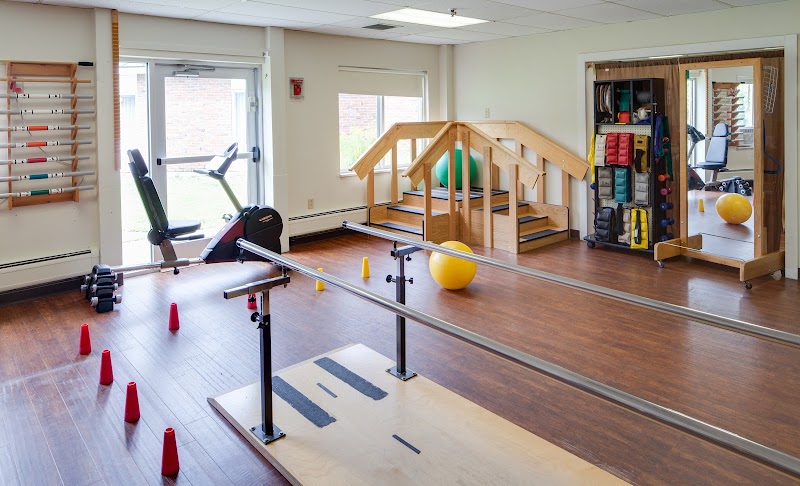
How is St. Johnsbury Health & Rehab Staffed?

CMS rates St. Johnsbury Health & Rehab's staffing level at 1 out of 5 stars, which is much below average compared to other nursing homes. Staff turnover is 84%, which is 38 percentage points above the Vermont average of 46%. High turnover can affect care consistency as new staff learn residents' individual needs. RN turnover specifically is 86%, which is notably high. RNs provide skilled clinical oversight, so turnover in this role can affect medical care quality.

What Have Inspectors Found at St. Johnsbury Health & Rehab?

State health inspectors documented 75 deficiencies at St. Johnsbury Health & Rehab during 2022 to 2025. These included: 4 Immediate Jeopardy (the most serious level, indicating potential for serious harm or death), 7 that caused actual resident harm, 60 with potential for harm, and 4 minor or isolated issues. Immediate Jeopardy findings are rare and represent the most serious regulatory concerns. They require immediate corrective action.

Who Owns and Operates St. Johnsbury Health & Rehab?

St. Johnsbury Health & Rehab is owned by a for-profit company. For-profit facilities operate as businesses with obligations to shareholders or private owners. The facility is operated by GENESIS HEALTHCARE, a chain that manages multiple nursing homes. With 99 certified beds and approximately 74 residents (about 75% occupancy), it is a smaller facility located in Saint Johnsbury, Vermont.

How Does St. Johnsbury Health & Rehab Compare to Other Vermont Nursing Homes?

Compared to the 100 nursing homes in Vermont, St. Johnsbury Health & Rehab's overall rating (1 stars) is below the state average of 2.7, staff turnover (84%) is significantly higher than the state average of 46%, and health inspection rating (1 stars) is much below the national benchmark.

What Should Families Ask When Visiting St. Johnsbury Health & Rehab?

Based on this facility's data, families visiting should ask: "What changes have been made since the serious inspection findings, and how are you preventing similar issues?" "What safeguards and monitoring systems are in place to protect residents from abuse or neglect?" "How do you ensure continuity of care given staff turnover, and what is your staff retention strategy?" "Can you walk me through typical staffing levels on day, evening, and night shifts?" These questions are particularly relevant given the facility's Immediate Jeopardy citations, the substantiated abuse finding on record, the facility's high staff turnover rate, and the below-average staffing rating.

Is St. Johnsbury Health & Rehab Safe?

Based on CMS inspection data, St. Johnsbury Health & Rehab has documented safety concerns. The facility has 1 substantiated abuse finding (meaning confirmed case of resident harm by staff or other residents). Inspectors have issued 4 Immediate Jeopardy citations (the most serious violation level indicating risk of serious injury or death). The facility is currently on the Special Focus Facility watch list (a federal program monitoring the lowest-performing 1% of nursing homes nationwide). The facility has a 1-star overall rating and ranks #100 of 100 nursing homes in Vermont. Families considering this facility should ask detailed questions about what corrective actions have been taken since these incidents.

Do Nurses at St. Johnsbury Health & Rehab Stick Around?

Staff turnover at St. Johnsbury Health & Rehab is high. At 84%, the facility is 38 percentage points above the Vermont average of 46%. Registered Nurse turnover is particularly concerning at 86%. RNs handle complex medical decisions and coordinate care — frequent RN changes can directly impact care quality. High turnover means new staff may not know residents' individual needs, medications, or preferences. It can also be disorienting for residents, especially those with dementia who rely on familiar faces. Families should ask: What is causing the turnover? What retention programs are in place? How do you ensure care continuity during staff transitions?

Was St. Johnsbury Health & Rehab Ever Fined?

St. Johnsbury Health & Rehab has been fined $434,090 across 3 penalty actions. This is 11.6x the Vermont average of $37,420. Fines at this level are uncommon and typically indicate a pattern of serious deficiencies, repeated violations, or failure to correct problems promptly. CMS reserves penalties of this magnitude for facilities that pose significant, documented risk to resident health or safety. Families should request specific documentation of what issues led to these fines and what systemic changes have been implemented.

Is St. Johnsbury Health & Rehab on Any Federal Watch List?

St. Johnsbury Health & Rehab is currently an SFF Candidate, meaning CMS has identified it as potentially qualifying for the Special Focus Facility watch list. SFF Candidates have a history of serious deficiencies but haven't yet reached the threshold for full SFF designation. The facility is being monitored more closely — if problems continue, it may be added to the official watch list. Families should ask what the facility is doing to address the issues that led to this status.