Springfield Health & Rehab

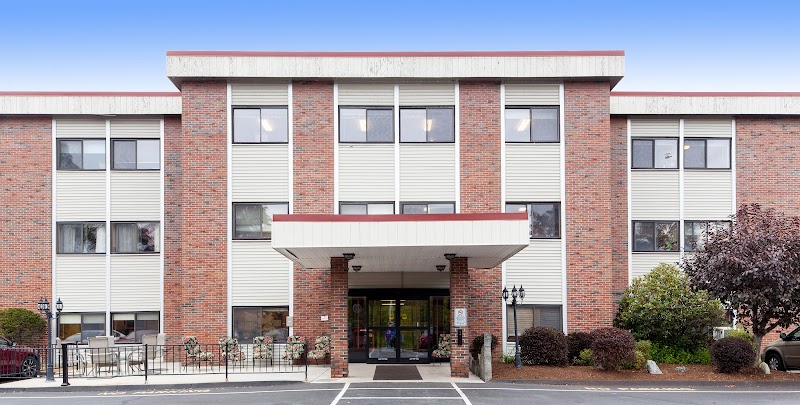
105 Chester Road, Springfield, VT 05156 (802) 885-5741
For profit - Limited Liability company 102 Beds GENESIS HEALTHCARE Data: November 2025 5 Immediate Jeopardy citations
Trust Grade
0/100
#31 of 33 in VT
Last Inspection: March 2025

Within standard 12-15 month inspection cycle. Federal law requires annual inspections.

Overview

Springfield Health & Rehab has received a Trust Grade of F, indicating poor performance with significant concerns about resident care. They rank #31 out of 33 facilities in Vermont, placing them in the bottom half, and #3 out of 3 in Windsor County, meaning there are no better local options. The facility's situation is worsening, as the number of reported issues increased from 22 in 2024 to 34 in 2025. Staffing is particularly concerning, with a low rating of 1 out of 5 stars and a high turnover rate of 76%, which is above the state average. Additionally, the facility has been fined $354,247, which is higher than 97% of Vermont facilities, indicating repeated compliance problems. Specific deficiencies include failures in ensuring proper medical consultations during critical situations, such as a COVID-19 outbreak, and neglecting to follow care plans for residents with serious medical needs, like pressure ulcers. This combination of weaknesses raises serious concerns about the quality of care and safety for residents at this facility.
Trust Score
F
0/100
In Vermont
#31/33
Bottom 7%
Safety Record
High Risk
Review needed
Inspections
Getting Worse
22 → 34 violations
Staff Stability
⚠ Watch
76% turnover. Very high, 28 points above average. Constant new faces learning your loved one's needs.
Penalties
✓ Good
$354,247 in fines. Lower than most Vermont facilities. Relatively clean record.
Skilled Nurses
○ Average
Each resident gets 36 minutes of Registered Nurse (RN) attention daily — about average for Vermont. RNs are the most trained staff who monitor for health changes.
Violations
⚠ Watch
79 deficiencies on record. Higher than average. Multiple issues found across inspections.
★☆☆☆☆
1.0
Overall Rating
★☆☆☆☆
1.0
Staff Levels
★★★☆☆
3.0
Care Quality
★☆☆☆☆
1.0
Inspection Score
Stable
2024: 22 issues
2025: 34 issues

The Good

  • Full Sprinkler Coverage · Fire safety systems throughout facility
  • No fines on record

Facility shows strength in fire safety.

The Bad

1-Star Overall Rating

Below Vermont average (2.7)

Significant quality concerns identified by CMS

Staff Turnover: 76%

30pts above Vermont avg (46%)

Frequent staff changes - ask about care continuity

Federal Fines: $354,247

Well above median ($33,413)

Significant penalties indicating serious issues

Chain: GENESIS HEALTHCARE

Part of a multi-facility chain

Ask about local staffing decisions and management

Staff turnover is very high (76%)

28 points above Vermont average of 48%

The Ugly 79 deficiencies on record

5 life-threatening 8 actual harm
Mar 2025 18 deficiencies
CONCERN (D)

Potential for Harm - no one hurt, but risky conditions existed

Deficiency F0552 (Tag F0552)

Could have caused harm · This affected 1 resident

**NOTE- TERMS IN BRACKETS HAVE BEEN EDITED TO PROTECT CONFIDENTIALITY** Based on interview and record review, the facility failed to ensure that the 1 of 27 residents in the sample (Resident #23) or h...

Read full inspector narrative →
**NOTE- TERMS IN BRACKETS HAVE BEEN EDITED TO PROTECT CONFIDENTIALITY** Based on interview and record review, the facility failed to ensure that the 1 of 27 residents in the sample (Resident #23) or his/her representative was informed in advance, by the physician or other practitioner or professional, of the risks and benefits of proposed care, of treatment alternatives or treatment options, and to choose the alternative or option he or she prefers. Findings include: Per record review, Resident #23 has a diagnosis of Alzheimer's and is no longer able to make his/her own medical decisions. S/he was recently treated for a fractured hip, that was surgically repaired on 3/6/25. Resident #23 was readmitted to the facility on [DATE]. Resident #23 has a Power of Attorney (POA) who makes his/her medical decisions. The following orders were written by the Physician on 3/14/25 Morphine Sulfate (concentrate) oral solution 20 mg/ml, give 0.5 milliliters (mls) by mouth every 2 hours as needed for hip fracture, post op pain; Comfort measures. Per interview with Resident #23's Representative on 3/24/25 at 4:20 PM, s/he stated s/he had not been informed of that Resident #23 had been prescribed morphine for pain control and or comfort measures. S/he stated s/he met with the Physician on 3/14/25, and that s/he asked not to have morphine or comfort measures started. S/he stated that S/he told the provider that Resident #23 needed time to recover from his/her hip fracture and surgery. Per further interview, the POA stated that when s/he visited Resident #23 on 3/15/25, Resident #23 was not able to stay awake or participate in any care during the visit. S/he stated that when s/he inquired about what medications Resident #23 had been given s/he learned that s/he was given morphine for pain. Per review of Resident #23's Medication Administration Record (MAR) dated 3/15/25, Resident #23 received 0.5 mls (10 milligrams) of morphine by mouth at 7:02 AM for a pain scale level of 0. Per further review of the MAR, the resident's assessment for pain had been documented as 0 on all three shift on 3/15/25. There was no documented evidence in the medication administration record or the progress notes as to why Resident #23 received the Morphine with a pain level of 0. Per a Physician note dated 3/14/25, visit titled comfort measures, the Physician stated [His/Her] daughter is ambivalent about using anything stronger than Tylenol .We discussed very low dose of morphine which would be easier to give. [Resident #23 's POA] is considering options. Per interview with the Physician on 3/25/25 at approximately 3:00 PM, she stated she knew Resident #23's Power of Attorney did not want to start the morphine and wanted only Tylenol for pain. However, she stated she was concerned that Resident #23 may need orders for comfort care after returning to the facility. The Physician stated it's hard to get medications to the facility in a timely manner and she wanted to have it available. She stated therefore she left the order in place in case it was needed for Resident #23. Per review of Resident #23 care plan dated 6/16/23 s/he had the following interventions Inform [Resident #23] and/or healthcare decision maker of any change in status or care needs [and] . Promote opportunities for [Resident #23] Health Care Decision Maker to participate in decisions regarding care. Per interview with the Unit Manager (UM) on 3/26/25 at approximately 2:00 PM, she stated that she knew that Resident #23's POA goals for him/her was to have Tylenol for pain and s/he had refused morphine in the past. The UM confirmed that there had not been communication between her and the Provider about starting the morphine or ordering comfort measures for Resident #23.
CONCERN (D)

Potential for Harm - no one hurt, but risky conditions existed

Investigate Abuse (Tag F0610)

Could have caused harm · This affected 1 resident

**NOTE- TERMS IN BRACKETS HAVE BEEN EDITED TO PROTECT CONFIDENTIALITY** Based upon interview and record review, the facility failed to assure that further potential abuse, neglect, exploitation, or mi...

Read full inspector narrative →
**NOTE- TERMS IN BRACKETS HAVE BEEN EDITED TO PROTECT CONFIDENTIALITY** Based upon interview and record review, the facility failed to assure that further potential abuse, neglect, exploitation, or mistreatment did not occur after an allegation of abuse for 1 resident [Resident #324] of one sampled resident regarding abuse allegations. Findings include: Per interview with Resident #324 on 3/24/25 at 1:25 PM, Resident #324 stated that Licensed Nurse #1 was withholding his/her pain medication as well as not treating his/her wounds and had inserted a silicone catheter when the resident had a potential allergy to silicone. Resident #324 was interviewed on 3/26/25 at 12:10 PM. Resident #324 stated s/he reported it to other nurses and Licensed Nurse #1 was moved to a different unit. However, the next day the nurse was seen outside his/her door and on the unit. Resident #324 stated s/he felt intimidated. Per interview with the Administrator on 3/24/25 at 2:13 PM, the Administrator stated s/he filed the concerns in a grievance. The Administrator confirmed that Licensed Nurse #1 was working on a different unit of the facility. Per record review of the facility's initial investigation report, the concerns of potential abuse were reported to APS [Adult Protective Services] and [NAME] [Department of Aging and Independent Living] Division of Licensing and Protection on 3/24/25 at 5:00 PM. Per the facility's Abuse, Neglect, and Exploitation policy [no reviewed/revised date] states, It is the responsibility of every employee, volunteer, and supervisor to facilitate the prevention of abuse, neglect, and exploitation of residents/patients . For any actual or suspicious act or sign of abuse, neglect or exploitation it is the responsibility of every employee and volunteer to make sure the resident is safe first . Explain to all parties involved that an internal investigation will occur and as applicable the incident will be reported to Licensing and Protection/Adult Protective Services and there may be an external investigation by them .To ensure [that] alleged victims remain safe, prohibit any contact between alleged perpetrator and alleged victim during this investigation phase. Per record review of the facility's initial investigation report states, If the AP [alleged perpetrator] is facility staff, removal of the alleged perpetrator's access to the alleged victim and other residents and assurance that ongoing safety and protection is provided for the alleged victim and other residents. Per interview with the Administrator on 3/26/25 at 10:43 AM, the Administrator confirmed that Licensed Nurse #1 was still working at the facility while the facility investigation was being conducted.
CONCERN (D)

Potential for Harm - no one hurt, but risky conditions existed

Deficiency F0635 (Tag F0635)

Could have caused harm · This affected 1 resident

**NOTE- TERMS IN BRACKETS HAVE BEEN EDITED TO PROTECT CONFIDENTIALITY** Based on staff interview and record review, the facility failed to obtain accurate physician orders to provide necessary care an...

Read full inspector narrative →
**NOTE- TERMS IN BRACKETS HAVE BEEN EDITED TO PROTECT CONFIDENTIALITY** Based on staff interview and record review, the facility failed to obtain accurate physician orders to provide necessary care and services on admission for 1 of 27 sampled residents (Resident #322). Findings include: 1). Per record review, Resident #322 was admitted on [DATE] after acute hospitalization, related to a fractured right hip, that was repaired on 3/13/25. Per his/her discharge summary and orders written by the hospital Physician on 3/20/25, Resident #322 was being admitted to rehabilitation for therapy, and pain control. Per further review of the discharge summary, Resident #322 had been receiving oral dilaudid for pain 4 times a day in addition to acetaminophen. Resident #322 was also noted to have swelling in his/her right hip after surgery and was being treated with aspirin 81 mg for prevention of deep vein thrombosis as recommended by a orthopedic surgeon. Per the discharge instructions the aspirin was to continue until 4/13/25. Per review of Resident #322's Discharge summary dated [DATE] s/he had the following orders that should have been continued at the facility upon admission, aspirin 81 mg extended release two times a day prevention deep vein thrombosis, hydromorphone oral tablet 2 mg every 4 hours as needed for pain, acetaminophen 650 mg every four hours as needed for pain, and senna 8.6 two times daily for constipation. There is no evidence that these medications were ordered prior to 3/24/25. Per record review nursing progress note dated 3/24/25 Notified NP that resident has RLE pitting +1 edema. There is no pain, skin intact, just swelling. Per review of the Nurse Practitioner telemed note dated 3/25/25, she stated [His/Her] right leg is still swollen from the calf to the the ankle. I ordered an ultra sound to rule out DVT but it has not been done yet. Assessment and plan per NP perform ultra sound as ordered. Per NP ordered dated 3/24/25 Ultra sound of right leg r/t DVT. However, there was no documented evidence in the medical record of the diagnostic test being completed. Per follow up Physician notes dated 3/26/25 and 3/27/25 titled telemed revealed no evidence of follow up ultra sound or mention of edema in the right lower extremity. There is no evidence that the diagnostic imaging was completed as ordered. Per interview with the Medical Director on 3/27/25 at 1:30 PM, she stated the admission process at the facility had been a problem. She stated that she should see all new admissions within 14 days of admission. She stated for new admissions and readmissions, nursing transcribes orders into the electronic health record and activates the orders before she is able to review them. She stated the process should be that all orders are reviewed by her, or a provider, before they are activated but that does not happen. She stated recently there had been an error when nursing transcribed a progress note as admission orders for one resident. This was later confirmed during interview to be the admission orders for Resident #322 entered on 3/20/25. Per interview on 3/27/25 at approximately 9:30 AM, the Unit Manager (UM) stated the current discharge process is as follows, one nurse will transcribe the orders from the discharge summary and enter them into the electronic health record. Then a second nurse verifies the orders and a message is sent to the provider. She stated that the orders are activated once the second nurse verifies them. The UM stated that she does not always receive notification back from the provider that she received the orders or if they are approved or not. She stated nursing activates all orders including medications unless it is a controlled medication. Per interview with the facility Administrator (Admin.) and the Director of Nursing (DON) on 3/27/25 at approximately 5:19 PM, the Admin. stated that when Resident #322 was admitted to the facility, they did not have the correct discharge summary or admitting orders to care for him/her. Per the Administrator, the orders that were entered into the electronic health record on 3/20/25 by nursing were from the previous hospital stay and not the actual discharge orders. She stated the facility was not made aware that they had the incorrect orders until 4 days after Resident #322's admission and start of care on 3/20/25.
CONCERN (D)

Potential for Harm - no one hurt, but risky conditions existed

Deficiency F0697 (Tag F0697)

Could have caused harm · This affected 1 resident

Based on interview and record review, the facility failed to ensure pain management was provided for 1 of 27 sampled residents (Resident #28). This is a repeat deficiency for this facility, with viola...

Read full inspector narrative →
Based on interview and record review, the facility failed to ensure pain management was provided for 1 of 27 sampled residents (Resident #28). This is a repeat deficiency for this facility, with violations cited during a previous complaint survey, dated 10/18/24. Findings include: Per the record review, the staff failed to ensure adequate pain control and administer pain medications per provider orders for Resident #28. During the survey, the Resident was observed calling out in pain on multiple occasions. Per record review of Resident #28's care plan, s/he entered hospice care on 3/29/2024 due to end stage diagnosis of chronic obstructive pulmonary disease (COPD; irreversible lung and airway damage that obstructs airways). Per interview with the resident on 3/25/2025 at approximately 12:30 PM, Resident # 28 indicated pain almost every day, particularly in between scheduled pain medications. Per observation on 3/25/2025 at 1:00 PM and on 3/26/2025 at 2:00 PM and 2:29 PM, Resident # 28 was heard from the hall, calling out in pain. A review of the MAR (Medication Administration Record) from March 1- March 26, 2025 shows the resident's pain level is recorded three times daily. During the 26 days reviewed on the MAR, on 10 occasions, Resident #28 reported his/her pain level as greater than 6, with 5 of the those recorded pain levels rated as a 9-10 (pain scale 1-10 with 10 being the worst imaginable). Per an interview with the UM (Unit Manager) on 3/26/2025 at 2:45 PM, she indicated the pain assessment is usually performed at the start of each shift, 7:00 AM, 3:00 PM and 11:00 PM. She stated Resident #28 receives scheduled pain medications but rarely asks for anything in between. A review of Resident #28's care plan dated 4/1/25, including the problem of pain, noted that s/he was on Hospice services with interventions assess pain, restlessness, agitation, constipation, and other symptoms of discomfort . Medicate as ordered and evaluate effectiveness. Review of provider's orders include the following scheduled pain medications: Morphine Sulfate oral solution, give 0.25 ml by mouth three times a day for pain /dyspnea (shortness of breath). Additionally, the following pain medication was ordered to be provided as needed for pain not controlled by the scheduled medication: Acetaminophen oral tablet, give 650 mg by mouth every 6 hours as needed for pain 2-4. There is no evidence Acetaminophen was administered to assist the resident with their pain in between scheduled doses of morphine. Per interview on 3/27/2025 at 11:30 AM, the hospice nurse who was providing care for the resident indicated that a resident on hospice was expected to have increased pain. He stated he would expect a resident to receive additional medications based on reported pain levels and that a resident on hospice would be assessed for pain more frequently than once per shift.
CONCERN (D)

Potential for Harm - no one hurt, but risky conditions existed

Unnecessary Medications (Tag F0759)

Could have caused harm · This affected 1 resident

Based on observation, interview, and record review the facility failed to ensure medication error rates were not 5% or greater. The total error rate for all observations was calculated at 12%. There w...

Read full inspector narrative →
Based on observation, interview, and record review the facility failed to ensure medication error rates were not 5% or greater. The total error rate for all observations was calculated at 12%. There were 25 observations and three medication errors. Findings include: Per observation of LPN #1 on 3/25/25 at 10:12 AM, LPN #1 administered Resident #50 one Omeprazole Oral Tablet Delayed Release 20 mg [milligram] tablet (a medication used for acid reflux), 2 puffs of Dulera Inhalation Aerosol 100-5 MCG/ACT [micrograms per actuation] (a medication used to treat asthma), and 31 units of Basaglar KwikPen Subcutaneous Solution Pen injector 100 units/mL [units per milliliter] (insulin used to treat high blood sugar) for a blood glucose reading of 333. Per record review of Resident #50's MAR [Medication Administration Record] for March 2025, the Omeprazole was due to be administered at 7:00 AM. The insulin and Dulera inhaler were due to be administered at 9:00 AM. Per record review of the facility's Administering Medications policy [last reviewed/revised 2/25/25] states, 4. Medications must be administered within one hour of their prescribed time, unless otherwise specified for example, before and after meal orders. Per interview with LPN#1 on 3/25/25 at 10:12 AM, LPN #1 confirmed that the above medications were late. She stated the medications were late because she was not used to working on this particular side of the facility.
CONCERN (D)

Potential for Harm - no one hurt, but risky conditions existed

Dental Services (Tag F0791)

Could have caused harm · This affected 1 resident

Based on interview and record review, the facility failed to promptly provide routine and emergency dental services to meet the residents' needs related to dental pain for one of 16 residents in the a...

Read full inspector narrative →
Based on interview and record review, the facility failed to promptly provide routine and emergency dental services to meet the residents' needs related to dental pain for one of 16 residents in the applicable sample (Resident #61). Findings include: An interview was conducted with Resident #61 on 3/24/25 at 11:56 AM. Resident #61 discussed that s/he has not seen a dentist since being at the facility since 8/7/24. S/he stated s/he was having dental pain. Per interview with Resident #61 on 3/26/25 at 10:25 AM, s/he stated s/he was in 10 out of 10 pain at times due to upper and lower right dental pain. Resident #61 stated, I have a lot of teeth that need to be pulled .I feel like I don't matter and that my health isn't being taken care of. Per record review of the facility's Dental Services policy [no last revised\reviewed date] states, Centers will provide or obtain an outside resource routine and emergency dental services, including 24-hour emergency dental care, to meet the needs of each patient .When necessary or if requested, Center staff will assist the patient in making dental appointments . Per record review, Resident #61 had a physician appointment on 2/7/25 related to tooth pain via tele-health video. The progress note discusses that there were no medication changes made. On 3/26/25 at 1:26 PM the Regional Director of Nursing confirmed there was no follow-up appointments or treatment to address Resident #61's dental concerns.
CONCERN (E)

Potential for Harm - no one hurt, but risky conditions existed

Transfer Notice (Tag F0623)

Could have caused harm · This affected multiple residents

**NOTE- TERMS IN BRACKETS HAVE BEEN EDITED TO PROTECT CONFIDENTIALITY** Based on interviews and record review, the facility failed to notify residents and/or their representative in writing of a trans...

Read full inspector narrative →
**NOTE- TERMS IN BRACKETS HAVE BEEN EDITED TO PROTECT CONFIDENTIALITY** Based on interviews and record review, the facility failed to notify residents and/or their representative in writing of a transfer/discharge for 3 out 3 sampled residents (Residents #14, #22, and #26). Findings include: Per facility Transfer or Discharge Policy reviewed 1/2024, The Resident and/or their representative will be notified in writing of the following information: a. Reason for transfer/discharge. b. Effective date of transfer/discharge. c. The location to which the resident is being transferred/discharged d. A statement of the resident's right to appeal the transfer/discharge e. The facility bed hold policy f. The name, address, and telephone number of the Office of the State Long-term Care Ombudsman Record review shows that Resident #14 was hospitalized on [DATE]. There is no record that a transfer/discharge notice was provided to the resident and/or their representative. Record review shows that Resident #22 was hospitalized on [DATE], 6/24/24, 9/9/24, and 7/25/24. There is no record that a transfer/discharge notice was provided to the resident and/or their representative. Record review shows that Resident #26 was hospitalized on [DATE] and 2/18/25. There is no record that a transfer/discharge notices were provided to the resident and/or their representative. On 3/26/25, at 9:39 AM, the Regional Director of Nursing confirmed that there was evidence that these transfer/discharge notices were given to any of these residents or representative.
CONCERN (E)

Potential for Harm - no one hurt, but risky conditions existed

Deficiency F0625 (Tag F0625)

Could have caused harm · This affected multiple residents

**NOTE- TERMS IN BRACKETS HAVE BEEN EDITED TO PROTECT CONFIDENTIALITY** Based on interviews and record review, the facility failed to notify residents and/or their representative in writing of the bed...

Read full inspector narrative →
**NOTE- TERMS IN BRACKETS HAVE BEEN EDITED TO PROTECT CONFIDENTIALITY** Based on interviews and record review, the facility failed to notify residents and/or their representative in writing of the bed-hold and returns policy for 3 out 3 sampled residents (Residents #14, #22, and #26). Findings include: Per facility Bed-holds and Returns Policy, reviewed 1/2024, Prior to transfers and therapeutic leaves, residents or resident representatives will be informed in writing of the bed-hold and return policy. 1. Record review shows that Resident #14 was hospitalized on [DATE]. There is no record that a Bed-hold Notice was provided to the resident and/or their representative. On 3/25/25, at 3:34 PM, this was confirmed by the facility Administrator. 2. Record review shows that Resident #22 was hospitalized on [DATE], 9/9/24, and 7/25/24. There is no record that a Bed-hold Notice was provided to the resident and/or their representative. On 3/26/25, at 9:03 AM, this was confirmed by the Regional Director of Nursing. 3. Record review shows that Resident #26 was hospitalized on [DATE] and 2/18/25. There is no record that a Bed-hold Notice was provided to the resident and/or their representative. On 3/26/25, at 9:39 AM, this was confirmed by the Regional Director of Nursing.
CONCERN (E)

Potential for Harm - no one hurt, but risky conditions existed

Deficiency F0699 (Tag F0699)

Could have caused harm · This affected multiple residents

Based on interview and record review the facility failed to ensure that residents are effectively assessed for past trauma experiences and address the needs of trauma survivors by identifying and mini...

Read full inspector narrative →
Based on interview and record review the facility failed to ensure that residents are effectively assessed for past trauma experiences and address the needs of trauma survivors by identifying and minimizing triggers and/or re-traumatization and developing an idevidualized care plan related to trauma for 4 of 4 residents in the applicable sample (Resident #22, #26, #28, and #51). Findings include: 1. During an interview with Resident #51 on 3/25/25 (date) at 10:31 AM s/he stated that she has had several traumatizing events throughout her/his life. These events include multiple sexual assaults and two fetal abortions, one with and one without consent. Per record review a Psychosocial Evaluation completed by the consultant Licensed Clinical Social Worker (LICSW) on 5/13/2024 Resident #51 has a history of trauma, anxiety, and SI (suicidal ideation). The Resident discussed severadl past traumatic events that occured throughout her/his life and the impact that they have had on them. A Comprehensive Trauma Screening completed as part of the 5/13/2024 Psychosocial Evaluation states: Section I: The following questions should be completed by the Facility Social Worker using information from the Resident's Medical Records. 1. Does the Resident have a previously documented diagnosis of: a. Mental disorder? Yes b. Psychosocial adjustment difficulty? Yes c. History of trauma? Yes 2. Post-Traumatic Stress Disorder? Yes Section II: The following questions should be asked to the Resident verbally when completing the Initial Psycho Social Assessment upon Admission. 1. Have you ever had a: a. Life-threatening illness? No b. Serious accident? Unable or unwilling to answer 2. Have you even been: a. Physically assaulted? Yes b. Physically threatened? Yes c. Sexually threatened? Yes d. Sexually assaulted? Yes 3. Have you ever been in a situation that was extremely frightening Yes 4. Have you witnessed any extremely frightening situations? Yes 5. Do you have a close relationship with someone who experienced any extremely frightening situations? Unable or unwilling to answer 6. Have you recently felt any of the following due to any of the situations just asked about? a. Decreased social interaction or withdrawn? No b. Angry? No c. Persistent negative mood state? Yes Per record review Resident #51 does not have an identified diagnosis of PTSD (Post-traumatic stress disorder). Further record review reveals that Resident #51's care plan does not identify or address the Resident's past traumatic experiences, or potential trauma triggers. During an interview on 3/26/25 at 12:35 PM with the Regional Director of Nurses (DON) and the facility DON, the Resident's Psychosocial Evaluation and care plan were reviewed. The Regional DON and the facility DON confirmed that Resident #51's Comprehensive Trauma Screening completed as part of the 5/13/2024 Psychosocial Evaluation identified that the Resident did suffer from PTSD and also confirmed that the Resident's care plan did not address past trauma experiences or potential trauma triggers. Per interview with the facility Social Worker (SW) on 3/26/25 at 2:56 PM she stated that the Social Services Assessment and Documentation Trauma History form is the tool that she uses to assess each Resident. When asked if she asks Residents about past traumatic experiences or potential triggers she stated No, that would be talk therapy, and I don't do that. The Comprehensive Trauma Screening that identified PTSD was reviewed with the SW, who confirmed that the screening tool had identified that the Resident does have PTSD. The SW was asked how documentation by the Consulting Social Worker regarding the Resident's condition is communicated. The SW stated that she does not review the Consulting Social Workers notes and there is no process to ensure issues identified by the Consulting Social Worker are communicated. When asked if PTSD should be care planned, the SW stated that Resident #51 was care planned for PTSD. The Resident's care plan was reviewed with the SW at the time of the interview and revealed that it had been updated to include PTSD on 3/26/2025, after the interview with the Regional DON and the facility DON. The SW confimed that the care plan had just been updated 3/26/2025 to include PTSD. 2. Per record review Resident #28 was admitted to the facility with diagnoses of anxiety disorder and post-traumatic stress syndrome. A review of a facility policy titled Trauma Informed Care reads: 1) Upon admission, the facility will assess each resident for a history of trauma in order to ensure they receive appropriate treatment and services. A questionnaire will be utilized for each resident by the social services department. Additional information may be obtained from the medical record, physical and emotional assessments, from the resident, and from family members who have shared this information. 2) Social Service personnel, in coordination with the interdisciplinary care team, will work to develop a plan of care aimed at mitigating/eliminating triggers. Record review shows no evidence that the Resident #28 was assessed for trauma or identification of possible triggers. A review of the Resident's care plan shows no evidence of a care plan to mitigate/eliminate triggers related to past trauma. Per interview on 3/26/25 at approximately 3:10 PM with Social Services, she confirmed the facility did not assess Resident #28 for triggers that may re-traumatize him/her and did not develop a care plan to mitigate potential past triggers. 3. Resident #22 has a diagnosis of post traumatic stress disorder (PTSD), but there are no triggers listed in his/her care plan. He/she has not had a Social Services Assessment discussing or listing triggers. On 3/26/25, at 3:15 PM, the Director of Social Services confirmed that there was no documentation about triggers in Resident #22's care plan and no admission assessment for triggers. 4. Resident #26 has a diagnosis of PTSD. Per a History and Physical Progress note, dated 1/8/2024, he/she has a history of sexual abuse as a child. Per a Regulatory Visit Progress Note, dated 3/8/2024, he/she has a history of sexual abuse as a child. Per a Psychological Services Supportive Care Progress note, dated 7/9/24, Resident #26 stated that [he/she] had to have a catheter recently, which [he/she] stated was triggering due to past sexual trauma. Resident #26 has a care plan for PTSD, but there is no mention of past sexual trauma or sexual trauma triggers. In Resident #26's admission Social Services Assessment, dated 11/25/23, there is no mention of sexual trauma or sexual trauma triggers. On 3/26/25 at 3:15 PM, The Director of Social Services confirmed that Resident #26's care plan does not include triggers for past sexual trauma and that Resident 26's admission Social Services Assessment does not mention past sexual trauma or discuss triggers relating to past sexual trauma.
CONCERN (E)

Potential for Harm - no one hurt, but risky conditions existed

Deficiency F0711 (Tag F0711)

Could have caused harm · This affected multiple residents

**NOTE- TERMS IN BRACKETS HAVE BEEN EDITED TO PROTECT CONFIDENTIALITY** Based on staff interview, and record review the physician failed to ensure that the onsite review of the resident's total progra...

Read full inspector narrative →
**NOTE- TERMS IN BRACKETS HAVE BEEN EDITED TO PROTECT CONFIDENTIALITY** Based on staff interview, and record review the physician failed to ensure that the onsite review of the resident's total program of care included necessary lab testing, treatment, and medication orders for 3 of 27 residents sampled (Resident #13, #26, and Resident #322). Findings include: 1). Per record review Resident #322 was admitted on [DATE] after an acute hospital stay related to a fractured right hip repaired on 3/13/25. Per his/her discharge summary/orders written by sending Physician on 3/20/25, Resident #322 was being admitted to rehabilitation therapy, and pain control. Per further review of his/her discharge summary, s/he had been receiving oral dilaudid for pain 4 times a day in addition to acetaminophen for pain. S/he was also experiencing constipation and was ordered to continue receiving medications to treat the symptoms. Resident #322 was also noted to have swelling in his/her right hip after surgery and was being treated with aspirin 81 mg for prevention of deep vein thrombosis (DVT) as recommended by orthopedic surgeon which was to continue until 4/13/25. Per review of Resident #322's Discharge summary dated [DATE] s/he had the following orders, aspirin 81 mg extended release two times a day prevention deep vein thrombosis, hydromorphone oral tablet 2 mg every 4 hours as needed for pain, acetaminophen 650 mg every four hours as needed for pain, and senna 8.6 two times daily for constipation. There was no documented evidence that these medications were ordered until 3/24/25 or administrated to the resident prior to date. Per Interview with the Medical Director on 3/27/25 at 1:30 PM she stated the admission process at the facility had been a problem. She stated that she should see all new admissions within 14 days of admission. She stated for new admissions and readmissions nursing transcribes orders into the electronic health record and activates the orders before she is able to review them. She stated the process should be that all orders are reviewed by her or a provider before they are activated but that does not happen. She stated recently there had been an error when nursing transcribed a progress note as admission orders for one resident. This was later confirmed during interview to be the admission orders for Resident #322 entered on 3/20/25. Per facility policy titled physician visits and initial history and physical [H&P] examinations, last reviewed on 3/27/25 A physician must conduct an initial H&P examination within 14 days of a resident's admission to ensure timely completion of the initial comprehensive assessments. The first physician visit must occur within the first 30 days of admission and must be conducted in person and not telehealth. Per record review of Resident #322 record s/he had a televisit on 3/21/25 titled visit type: follow up; chief complaint: Day 1 admission evaluation, [Resident #322] seen via telemed for a follow up visit to [his/her] day 1 evaluation. [S/he] states [s/he] is feeling okay today. [S/he] did not sleep very well [his/her] first night at the facility, [s/he] states [s/he] had right leg pain. The visit did not include Resident #322 entire discharge summary, orders, or plan of care. There was no evidence of discharge orders being initiated until 3/24/25, four days after admission. Per interview on 3/27/25 at approximately 9:30 AM with the Unit Manager stated the discharge process is as follows, one nurse will transcribe the orders from the discharge summary and enter them into the electronic health record. Then a second nurse verifies the orders, a message is sent to the provider. She stated that the orders are activated once the second nurse verifies them. The UM stated during interview that she does not always receive notification back from the provider that she received the orders or if they are approved or not. She stated nursing activates all orders including medications unless it is a controlled medication. Per interview with the facility Administrator and the Director of Nursing on 3/27/25 at approximately 5:19 PM, the Administrator stated that when the Resident #322 was admitted on [DATE] the facility did not have the correct discharge summary or admitting orders to care for them. Per the Administrator the orders that were entered into the electronic health record on 3/20/25 by nursing were from the previous hospital stay and not Resident #322's actual discharge orders to the facility. 2). Per record review, Resident #13 was readmitted to the facility on [DATE] after a acute hospital admission for COVID, gastrointestinal bleeding and NSTEMI (heart attack). Per further record review s/he was admitted to the hospital with a hemoglobin of 7.0 (low) and required multiple blood transfusions. Per further record review Resident #13 was receiving medications that increase his/her risk for bleeding, including antiplatelet and anticoagulation therapy. Per his/her discharge summary the following recommendations were made to the facility: continue anticoagulation therapy at a lower dose, follow up with provider and have a repeat complete blood count with differential on 1/15/25. Per interview on 3/27/25 at 9:30 AM, the Unit Manager confirmed that there were no orders to have repeat labs done as directed on discharge instructions for Resident #13. Per record review Resident #13 had no evidence of a required physician visit since returning from the hospital on 1/11/25. Per further review Resident #13 had 3 telehealth visits on 1/14/25, 1/15/25 and 1/17/25 all completed via telehealth. Per review of these visits, there was no evidence that the discharge orders were reviewed or acted upon in the medical record. Per interview with the Physician on 3/27/25 at 1:30 PM, she confirmed that the documented evidence shows that she did not complete the required visits with the residents and that she should have. She stated that she should see all residents that have been admitted or readmitted within 14 days of admission. Per interview on 3/27/25 at 10:09 AM with the facility Adminstrator she confirmed that there was no documented evidence of physician visit or accurate admission orders for Resident #13 per his/her discharge summary on 1/11/25. 3) Per record review, Resident #26 has diagnoses of schizoaffective disorder, anxiety and past traumatic brain injury. During an interview on 3/24/25 at 11:38 AM, when asked about a wound on his /her forehead, the resident said, That's from a car accident, a long time ago, but now they think it's cancer. Resident #26 was asked if anything is being done for his/her wound, he/she said They wash it everyday. A Provider's progress note, dated 11/25/24, describes lesions on the resident's face and scalp consistent with basal cell carcinoma (a type of skin cancer) and states referral to Dermatology ASAP. On 11/27/24, a Nursing progress note said the Resident was scheduled for a Dermatology appt on 12/17/24 at 1:15 PM. On 12/17/24, at 11:39 AM, Resident #26 was sent to Emergency Department for shortness of breath, nausea and pain in his/her back. The Resident did not return to the facility until 5:05 pm the same day, causing him/her to miss the Dermatology appointment There is no further mention of the skin issue in any Provider documentation. There is no rescheduled dermatology appointment documented. On 3/26/25, at 1:53 PM, The Regional Medical Director confirmed that the Dermatology appointment had not been rescheduled and that no one had followed up on Resident #26's possible basal cell carcinoma.
CONCERN (E)

Potential for Harm - no one hurt, but risky conditions existed

Deficiency F0757 (Tag F0757)

Could have caused harm · This affected multiple residents

**NOTE- TERMS IN BRACKETS HAVE BEEN EDITED TO PROTECT CONFIDENTIALITY** Based on interview and record review, the facility failed to ensure that 2 out of 10 applicable residents (Resident #20, #23) re...

Read full inspector narrative →
**NOTE- TERMS IN BRACKETS HAVE BEEN EDITED TO PROTECT CONFIDENTIALITY** Based on interview and record review, the facility failed to ensure that 2 out of 10 applicable residents (Resident #20, #23) remained free from unnecessary medications. Findings include: 1). Per record review, Resident #23 was readmitted to the facility on [DATE] status post fractured hip with surgical repair, and a history of Alzheimer's dementia. Resident #23 had the following medication orders written by the Provider on 3/14/25: Oxycodone 2.5 mg every 4 hours as needed for hip fracture post-op pain, start 3/14/25 with no evidence of stop date. Morphine 0.5 mls every 2 hours as needed for Hip fracture; post -op pain; Comfort measures, with no evidence of a stop date. A record review indicates a note entered by the Consulting Pharmacist on 3/13/25 indicating the submission of a New admission Medication Regime Review (MMR) with the following recommendations: Currently receiving Oxycodone PRN (as needed) without a stop date. Please evaluate the duration of therapy. Consider adding a stop date of 14 days, if appropriate. Per MRR, signed by the physician on 3/14/25, oxycodone had been discontinued; however, per the facility medication administration record (MAR), oxycodone continued to be prescribed without a end date. 2) Resident #20 had pharmacy recommendations made on 3/4/25 as follows Currently there is an active order for Lorazepam PRN without a specific stop date. Please note that CMS guidelines do not allow maintained open-ended orders for PRN psychotropic's on medication profiles, even for Hospice residents. Please evaluate and consider discontinue Lorazepam PRN, if appropriate. Per MMR review dated 3/4/25, signed on 3/27/25, stated that the Lorazepam was discontinued on 3/7/25. However, per review of Resident #20's MAR there is no evidence of stop date on the PRN medication. Per interview with the Regional Director of Nursing on 3/26/25 at approximately 2:00 PM she confirmed that PRN medications for Resident #20 and #23 did not have a stop dates and should have.
CONCERN (E) 📢 Someone Reported This

A family member, employee, or ombudsman was alarmed enough to file a formal complaint

Potential for Harm - no one hurt, but risky conditions existed

Medication Errors (Tag F0758)

Could have caused harm · This affected multiple residents

Based on interview and record review the facility failed to ensure that residents were free from unnecessary psychotropic medications for 5 of 10 Residents in the sample (Resident #12, #20, #29, #54, ...

Read full inspector narrative →
Based on interview and record review the facility failed to ensure that residents were free from unnecessary psychotropic medications for 5 of 10 Residents in the sample (Resident #12, #20, #29, #54, and #61). The facility also failed to implement 14 day stop dates on prescribed as needed (PRN) psychotropic medications for 3 of the 5 residents in the sample (Residents #12, #20, #54). Findings include: 1. Per record review Resident #54 has diagnoses that include dementia with mood disturbances. Review of the Resident's Care Plan reflects that s/he was admitted to Hospice services on 8/7/2024 due to the diagnosis of congestive heart failure. A Care Plan focus initiated on 1/19/2024 states that the Resident exhibits or has the potential to exhibit physical and verbal behaviors toward others. Per review of facility investigation reports, the Resident has had a recent history of aggressive physical behaviors toward other residents on 12/23/2024, 12/29/2024, and 1/8/2025. During meal observations on 3/24/2025 at 12:40 PM and 3/25/2025 at 12:15 PM, Resident #54 was observed sitting in a wheelchair at a table eating her/his meal independently. S/he appeared calm and there were no signs of distress. Review of Resident #54's Physician's orders revealed that on 1/10/2025 the Resident was prescribed Aripiprazole (an antipsychotic) 5 milligrams (mg) by mouth in the afternoon for sundowning (Sundowning is the name for a group of behaviors, feelings and thoughts people who have Alzheimer's or dementia can experience as the sun sets. The behaviors start or get worse around sunset or sundown . Symptoms include insomnia, anxiety, pacing, hallucinations, paranoia and confusion.) https://my.clevelandclinic.org/health/articles/22840-sundown-syndrome. On 1/27/25 the order for Aripiprazole was increased to 5mg twice daily, and an additional Physician's order also dated 1/27/2025 was added for Haloperidol (Haldol, an antipsychotic) 1mg two times a day for terminal agitation, and 1mg every 2 hours as needed (PRN) for terminal agitation. (Terminal agitation, also known as terminal restlessness or terminal delirium, refers to behaviors that occur in the days leading up to death. When a person nears the end of their life, they may become increasingly restless .In some cases, it might seem like their personality changes. They might become uncharacteristically angry or hostile. These are all things that may happen when [their] body begins to shut down .Terminal agitation generally occurs within the last two weeks of a person's life. But it's different for everyone. https://my.clevelandclinic.org/health/symptoms/terminal-agitation). There is also no stop date indicated for the PRN Haldol. Review of Resident #54's February 2025 Medication Administration Record (MAR) reveals that the scheduled Haldol for terminal agitation was administered twice daily per order, and the PRN Haldol was administered on 2/12/25. The MAR also reflects that starting on 1/28/2025, staff should document Non-Pharmacological Intervention(s) used before PRN anti-depressant, antianxiety, anti-psychotic or sedative/hypnotic medication Document by number:1 Reposition for comfort 2 massage 3 involve in activity/alt. activity to divert 4 provide quiet setting with reduced stimuli as needed 5 relaxation technique 6 music 7 remove from area 8 direction/distraction 9 toilet 10 ambulate 11 provide food/drink 12 educated 13 one:one 14 other -add to PN (progress note) the description. There is no documentation that any Non-Pharmacological interventions were attempted prior to administration of the PRN administration of Haldol. There is also no documentation that the Resident was experiencing symptoms of terminal agitation. Resident #54's March MAR revealed that the scheduled Haldol twice daily for terminal agitation per order, and one PRN dose on 3/1/25. There is no documentation that any Non-Pharmacological interventions were attempted prior to administration of the PRN administration of Haldol. There is no documentation that any Non-Pharmacological interventions were attempted prior to administration of the PRN administration of Haldol. There is also no documentation that the Resident was experiencing symptoms of terminal agitation. Per interview with the Unit Manager (UM) on 3/26/2025 at 10:07 AM when a resident is experiencing terminal agitation, they get restless sometimes they want to hold us, they may be frightened or restless moving all around. It varies for everyone, usually the last day or two before they die. The UM confirmed that Resident #54's is not in the active dying phase and her/his agitation is caused by her/his disease process, not from terminal agitation. Per interview with the facility's Medical Director on 3/27/2025 at 1:10 PM she had been asked by the management team to prescribe Resident #54 medications that would manage her/his aggressive behaviors. The Medical Director confirmed that the order for Haldol states that it is to be used for terminal agitation and that Resident #54 is not currently experiencing terminal agitation, and that the PRN order does not have a stop date. 2. Per record review Resident #12 was admitted to Hospice services on 1/16/2024 for end-of-life care. Review of Physicians order revealed an order dated 2/7/2025 for Seroquel (antipsychotic) 25 milligrams (mg) every 8 hours as needed for terminal agitation with no stop date. Review of the Resident's Medication Regimen Review reveals that on 3/4/2025 the Pharmacist noted that the Seroquel has no specified stop date and recommended discontinuing it. During an interview on 3/27/2025 at 4:36 PM the facility's Medical Director confirmed the Seroquel was ordered for terminal agitation, and that Resident #12 was not experiencing symptoms of terminal agitation. She also confirmed that there was no stop date for the PRN Seroquel and that she had just reviewed the pharmacy recommendations and will discuss discontinuing the Seroquel with the Resident's daughter. 3. Per record review Resident #29 has a Physician's order dated 2/27/2025 for Lorazepam 0.5 milligrams (mg) two times a day. There is no indication for use identified within the order. During an interview on 3/27/2025 at 1:10 PM the facility's Medical Director confirmed that there was no indication for the Lorazepam. 4. Per record review Resident #20 has the following orders without stop dates Lorazepam Oral Tablet 0.5 MG (Lorazepam) Give 0.5 mg by mouth every 4 hours as needed for Agitation/restlessness written on 3/7/2025 without a stop date or rationale written by the provider for continued use of PRN medications. Per record review Resident #20 had the following pharmacy recommendations made on 3/4/25, Currently there is an active order for Lorazepam PRN without a specific stop date. Please note that CMS guidelines do not allow maintained open-ended orders for PRN psychotropic's on medication profiles, even for Hospice residents. Please evaluate and consider discontinue Lorazepam PRN, if appropriate. Per interview with the Regional Director of Nursing on 3/26/25 at approximately 2:00 PM she confirmed that PRN medications for Resident #20 did not have a stop date and should have. 5. Per interview with Resident #61 on 3/24/25 at 11:54 AM s/he discussed that s/he was being prescribed Buspar [also known as Buspirone, a medication used to treat anxiety] and that it was not helping ease his/her anxiety. Per record review of Resident #61's MAR [Medication Administration Record] s/he had an order for Melatonin 5 mg [milligrams] tablet: Take 10 mg [milligrams] by mouth at bedtime for sleep with an order dated for 9/2/24. Resident #1 also had an order for Buspirone [Buspar] 5 mg [milligram] tablet: Take one tablet by mouth three times a day for anxiety with an order date of 10/2/24. Per record review, Resident #61 was prescribed Buspirone on 10/3/24, 1 tablet by mouth three times a day for anxiety. A psychiatric progress note dated 12/1/24 states, [S/he]'s treated for PTSD [Post-Traumatic Stress Disorder] sxs [symptoms] with sertraline [also known as Zoloft, an antidepressant] and recently added Buspar. Buspar is not helping anxiety and sertraline is not controlling sxs [symptoms] of anxiety, depression, insomnia .3.PTSD/Anxiety/Insomnia. Not controlled on present meds. Buspar not helping. Continue sertraline and trazadone. D/C [discontinue] Buspar. Add low dose Risperdal 0.5 mg [milligrams] HS [at bedtime] which may be beneficial for MS [Multiple Sclerosis, a disease that destroys the myelin sheath covering nerve cells]. Per record review of a psychiatric note dated 3/11/25 at 10:30 SM states, [Resident #61] takes Sertraline for depression/anxiety/PTSD, Trazodone for depression/insomnia, Sertraline Buspar for anxiety, Gabapentin for pain, and Melatonin for insomnia. The resident states that Buspar does not help [his/her] anxiety, and Risperidone worked better for controlling [his/her] PTSD and Anxiety. On 1/22/24 resident expressed suicidal ideation, stated 'I'm going to kill myself', 'I need Risperidone for my anxiety,' and was sent to the hospital. No medications changes were made. [S/he] has been cooperative but anxious. [S/he] has a history of attempted suicide . -start Risperidone 0.5mg [milligrams] BID [twice daily] Increase Sertraline to 100mg daily in AM [morning], DC [discontinue] Buspar-ineffective .GDR/DC [Gradual Dose Reduction/Discontinue] Buspar and Melatonin-ineffective. On 3/26/25 at 9:30 AM the DON [Director of Nursing] confirmed that the Buspar and Melatonin were not discontinued per psychiatric recommendation. An interview was conducted with the DON on 3/26/25 at 2:11 PM. The DON confirmed the medication changes were not addressed and stated, I can fix this.
CONCERN (E)

Potential for Harm - no one hurt, but risky conditions existed

Food Safety (Tag F0812)

Could have caused harm · This affected multiple residents

Based on observation and interview, the facility failed to maintain a clean kitchen environment, which has the potential to impact all residents in the facility. Findings include: On 3/24/25, at 10:2...

Read full inspector narrative →
Based on observation and interview, the facility failed to maintain a clean kitchen environment, which has the potential to impact all residents in the facility. Findings include: On 3/24/25, at 10:24 AM, it was observed that shelves under the main cooking counter/steam table were very dirty with dried food and crumbs. Clean pots and pans were stacked directly on the dirty shelves. Other shelves around the kitchen had dirty, food-stained paper under clean pans, cups and kitchen tools. The dietary manager confirmed shelves were not clean at this time. On 3/25/25, at 11:34 AM, in the first-floor kitchenette, a staff member picked up the ice scoop from inside the ice chest with bare hands and put the scoop back into the ice chest. This surveyor noted that the ice scoop was directly on the ice, with the handle touching the ice. There was a container on the counter to store the ice scoop. It was empty. On 3/25/25, at 12:15 PM, the ice scoop was still inside the ice chest. At this time, a Dietary Aide confirmed that the ice scoop should not be stored inside the ice chest, but rather in the container outside the ice chest.
CONCERN (E)

Potential for Harm - no one hurt, but risky conditions existed

Deficiency F0847 (Tag F0847)

Could have caused harm · This affected multiple residents

Based on interviews and record review the facility failed to ensure that the binding arbitration agreement was explained in a form or manner the resident or resident's representative acknowledges that...

Read full inspector narrative →
Based on interviews and record review the facility failed to ensure that the binding arbitration agreement was explained in a form or manner the resident or resident's representative acknowledges that he/she understands for 2 out of 3 residents sampled, (Resident #31 and Resident #43). Findings include: 1. Per record review, Resident #43's Minimal Data Set (MDS) states that he/she had a Brief Interview for Mental Status (BIMS) done on 3/11/25, with a score of 8, indicating that he/she is moderately cognitively impaired. Resident #43's representative, a sibling, signed this resident's Arbitration Agreement on 3/8/25. During an interview on 3/27/25, at 10:38 AM, Resident #43's representative stated They (the facility) emailed me a bunch of paperwork to sign but never explained it. I live in another state and work full time. They told me it was just routine admission paperwork that needed to be signed so [Resident #43] could be admitted He/she did not realize what arbitration was. He/she stated he/she would not have signed an arbitration agreement if he/she knew what it meant. 2. Per record review, Resident #31's MDS states that he/she had BIMS done on 3/11/25 with a score of 5, indicating severe cognitive impairment. Resident #31 signed his/her own Arbitration Agreement on 3/5/25. During a telephone interview on 3/27/25, at 11:57 AM, Resident #31's representative with Power of Attorney (POA) stated he/she gave permission via telephone for the resident to sign a Change in Medicare form. The POA stated he/she was never told about or gave permission for the Resident to sign an Arbitration Agreement. When asked he/she thought Resident #31 was capable of understanding the implications of an Arbitration Agreement, he/she said No. When asked if he/she would have signed an Arbitration Agreement as POA for Resident #31 he/she said No. During an interview on 3/27/25, at 11:06 AM, the Director of Admissions stated he/she emails forms to family out of state and they can call her if they have questions. He/she further stated Resident #31's POA gave permission for him/her to sign his/her own paperwork, but could not provide any documentation of this. When asked to explain an arbitration agreement, he/she stated If there is an issue, we ask them to come to us before seeking legal advice. When asked if he/she understood and explained to new Residents and their representatives that it took away the right for Residents and their representatives to use a court of law to settle a dispute, he/she Um, yes. During an interview on 3/27/25, at 5:03 PM, the Director of Admissions was asked about his/her training pertaining to Arbitration Agreements. He/she stated that there was minimal training on the subject and was told, Just tell them they don't have to sign it, that they can change their mind in 30 days, and, oh, yeah, it takes away all their legal rights.
CONCERN (F)

Potential for Harm - no one hurt, but risky conditions existed

Grievances (Tag F0585)

Could have caused harm · This affected most or all residents

Based on observation, interview, and record review of facility policy, the facility failed to establish a grievance policy that contains the correct information to support the residents' rights to fil...

Read full inspector narrative →
Based on observation, interview, and record review of facility policy, the facility failed to establish a grievance policy that contains the correct information to support the residents' rights to file a grievance for seven of the seven residents in the sample (Resident #62, #15, #51, #19, #30, #46, and #35). This has the potential to affect all residents in the facility. Findings include: A review of the Grievance /Concerns Policy & Procedure, posted in the lobby of the facility, contained information pertaining to the previous owners and named the current Administrator as the Grievance Officer, providing the wrong email address for the Administrator. A review of document Patient Concern/Grievance Policy, revised on 1/2024, reads: 1) The grievance officer is the Director of Social Services, and her name, extension, and location are posted throughout the facility. 2) If a resident/family member has a concern, they can approach /contact any facility staff member, or a resident concern form can be filled out . 6) There will be a follow-up with the residents and/or family member regarding the concern, which will be noted on the concern form and concern log. 7) Concern forms are available at the reception desk upon request. Once completed, all forms should be brought to the receptionist, who will deliver them to the Director of Social Services. Forms can also be placed in a secure box at the reception desk. A third document titled Resident Grievance/Complaint Procedures, reviewed/revised 12/2024 reads A resident representative, family member, visitor or advocate may file a verbal or written grievance or complaint concerning treatment, abuse, neglect, harassment, medical care, behavior of other resident or staff members, theft of property, etc., with fear of threat or reprisal in any form. Complaints may be filed anonymously. You are requested to follow the procedures outlined below when filing a written grievance or complaint. 1) Obtain a Resident Grievance/Complaint Form from the green nurse's station or from the Business Office 2) Answer all questions on the form as applicable. Be sure that all information is accurate. 3) Sign and date the form. 4) Give the completed form to the Administrator. If the Administrator is not available, you may leave the form with the supervisor on duty. 5) After you have filed the grievance, you will receive a written summary of the results of the investigation within a reasonable timeframe. 6) Should you disagree with the findings, recommendations, or actions taken, you may meet with the Administrator or file a complaint with any of the advocacy agencies listed on the Resident Resources List on the consumer bulletin board. The documents contain discrepancies regarding the identity of the Grievance Officer and the process for filing a grievance. The policy lacks information about the grievance officer's responsibilities, name, contact information, or a process to remain anonymous. Per observation, a facility tour on 3/26/25 at 2:00 PM did not disclose easily obtainable forms or signage indicating a process for filing a grievance or maintaining anonymity for the residents. A Resident Council meeting with the survey team occurred on 3/26/2025 at 2:00 PM, with seven attendees (Residents #62, #15, #51, #19, #30, #46, and #35). A collaborative conversation with all seven residents revealed they did not know how to file a grievance or where to find the information. Per interview with the Administrator on 3/28/24 at approximately 1:30 PM, she confirmed that the posted grievance document in the lobby contained incorrect information. She stated that the Social Service Director was now the Grievance Officer, and the policy did not include the required information per Federal Regulation. She agreed that the policy and procedures do not support the resident's rights to file grievances and that the supplied information is inconsistent. Per interview with Resident Council on 3/25/25 at 2:00 PM, Resident #51 stated they did not know how to file a grievance. Resident #51 discussed that s/he did not feel the facility responded to grievances promptly, and stated s/he was still waiting for a response for a grievance s/he had filed. Several residents also stated that they were fearful of retaliation if they voiced concerns.
CONCERN (F)

Potential for Harm - no one hurt, but risky conditions existed

Deficiency F0726 (Tag F0726)

Could have caused harm · This affected most or all residents

Based on the interview and staff education record review, the facility failed to ensure that 2 of 3 sampled licensed nursing assistants (LNAs) were assessed for the competency and skill sets needed to...

Read full inspector narrative →
Based on the interview and staff education record review, the facility failed to ensure that 2 of 3 sampled licensed nursing assistants (LNAs) were assessed for the competency and skill sets needed to provide care and respond to each resident's individualized needs. This is a repeat deficiency for this facility, with violations cited during a previous complaint survey, dated 4/16/24, and has the potential to affect all residents. Findings include: Per review of 3 LNA education records, 2 of the 3 sampled LNAs currently working at the facility did not have documentation of the competency evaluation required to demonstrate that they had the necessary skills to provide the care needed. Per interview on 3/26/24 at approximately 3:30 PM, the Director of Nursing (DON) indicated that she is responsible for assessing competencies. She is currently developing a system that has not been implemented yet. Per interview with the Regional Director of Nursing on 3/26/2024 at approximately 4:59 PM, she indicated the facility does not have hard copies of employee files that were also employees of the preceding owners. The current company has a system that accesses employee files online through the Human Resource System. The facility could not produce evidence of competencies for 2of 3 of the files sampled
CONCERN (F) 📢 Someone Reported This

A family member, employee, or ombudsman was alarmed enough to file a formal complaint

Potential for Harm - no one hurt, but risky conditions existed

Drug Regimen Review (Tag F0756)

Could have caused harm · This affected most or all residents

**NOTE- TERMS IN BRACKETS HAVE BEEN EDITED TO PROTECT CONFIDENTIALITY** Based on the record review and staff interview, the facility failed to ensure that monthly pharmacist drug regimen reviews, reco...

Read full inspector narrative →
**NOTE- TERMS IN BRACKETS HAVE BEEN EDITED TO PROTECT CONFIDENTIALITY** Based on the record review and staff interview, the facility failed to ensure that monthly pharmacist drug regimen reviews, recommendations, and attending physician responses were completed and documented in the resident record Medication Regimen Review (MRR) process for 10 of 10 Residents in the applicable sample (Residents #12, #13, #20 #22 #23# 26#29 #54 #61, and #64). This is a repeat deficiency for this facility, with violations cited during the previous recertification survey, dated 1/10/24. Findings include: 1. Per record review Resident #54 has diagnoses that include dementia with mood disturbances. A Care Plan focus initiated on 1/19/2024 states that the Resident exhibits or has the potential to exhibit physical and verbal behaviors toward others. Per review of facility investigation reports, the Resident has had a recent history of aggressive physical behaviors toward other residents on 12/23/2024, 12/29/2024, and 1/8/2025. Review of Resident #54's Physician's orders revealed a physicians order for Lorazepam 0.5 milligrams (mg) every 6 hours as needed for agitation for 90 days was started on 1/24/2025, and an order dated 1/27/2025 for Haloperidol (Haldol, an antipsychotic) 1mg two times a day for terminal agitation, and 1mg every 2 hours as needed (PRN) for terminal agitation. (Terminal agitation, also known as terminal restlessness or terminal delirium, refers to behaviors that occur in the days leading up to death. When a person nears the end of their life, they may become increasingly restless .In some cases, it might seem like their personality changes. They might become uncharacteristically angry or hostile. These are all things that may happen when [their] body begins to shut down .Terminal agitation generally occurs within the last two weeks of a person's life. But it's different for everyone. https://my.clevelandclinic.org/health/symptoms/terminal-agitation). There is no stop date indicated for the PRN Haldol. There is also no documentation that the Resident has been experiencing symptoms of terminal agitation. Review of Medication Administration record (MAR) reflects that starting on 1/28/2025, staff should document Non-Pharmacological Intervention(s) used before PRN anti-depressant, antianxiety, anti-psychotic or sedative/hypnotic medication Document by number:1 Reposition for comfort 2 massage 3 involve in activity/alt. activity to divert 4 provide quiet setting with reduced stimuli as needed 5 relaxation technique 6 music 7 remove from area 8 direction/distraction 9 toilet 10 ambulate 11 provide food/drink 12 educated 13 one:one 14 other -add to PN (progress note) the description. Further review reveals that there is no documentation that any Non-Pharmacological interventions were attempted prior to administration of the PRN administration of the Lorazepam or Haldol. Review of the Medication Regime Reviews (MRR) in Resident #54's record revealed no evidence that a monthly MRR had been completed since 12/3/2025. Review of a paper copy of a MRR dated 2/4/2025, that was provided by the Director of Nursing (DON) on 3/27/2025, that had not been signed by the Medical Director revealed a recommendation related to the order for Haldol as needed (PRN) with no stop date. This MMR did not address the use of Haldol twice daily for terminal agitation over the last two months, nor did it address the lack of documentation of non-pharmacological interventions documented in the MAR prior to administration of the Lorazepam or Haldol. During an interview with the Regional Pharmacist who oversees the Consultant Pharmacist on 3/27/2025 at 12:43 PM she stated that MRRs are completed on admission and at least monthly. When asked if the Consulting Pharmacist would be expected to identify a resident receiving Haldol for terminal agitation for over two months an irregularity, she stated no, they wouldn't. The Regional Pharmacist also stated that when recommendations are not addressed, they reapproach the facility about it. She stated that they have had to do so with this facility. Per interview with the facility's Medical Director on 3/27/2025 at 1:10 PM she stated that the MRRs go to the Director of Nursing (DON) and then the DON gives them to her to address. The Medical Director stated that she was three months behind with the MRRs. She also stated that she had addressed some of them over the past three months, but she was unsure what happened to them 2. Per record review a physician's order dated 2/7/2025 for Resident #12 to receive Quetiapine (Seroquel, an antipsychotic) 25 milligrams (mg) every 8 hours as needed for terminal agitation with no stop date. Further record review revealed that there was no documented evidence that a pharmacist had completed a monthly Medication Regimen Review (MRR) since 12/3/2024. Review of a paper copy of a MRR dated 3/4/2025, that was provided by the Director of Nursing (DON) on 3/27/2025, and signed by the Physician on 3/27/2025 revealed a recommendation related to the order for Quetiapine as needed (PRN) with no stop date. During an interview on 3/27/2025 at 1:10 PM the facility's Medical Director stated that she was three months behind with the MRRs. She also stated that she had addressed some of them over the past three months, but she was unsure what happened to them. The Medical Director confirmed that the PRN Seroquel did not have a stop date and it should have. 3. Per record review Resident #29 has a Physician's order dated 2/27/2025 for Lorazepam (benzodiazepine) 0.5 milligrams (mg) two times a day. There is no indication for use identified within the order. Further record revealed that there is no documented evidence that the pharmacist conducted a monthly Medication Regime Review since 12/3/2025. During an interview on 3/27/2025 at 1:10 PM the facility's Medical Director confirmed that there was no identified indication for the Lorazepam. She stated that she was three months behind with the MRRs. She also stated that she had addressed some of them over the past three months, but she was unsure what happened to them. Per interview with the Director of Nurses on 3/17/2025 at approximately 2:00 PM, she had requested that the pharmacy email the MRR pharmacy recommendations from January 2025 to present to her. When the MRRs for Resident #29 were requested, the DON stated that she had not received any for Resident #29.4. Per record review, Resident #64 was admitted to the facility on [DATE] and has the diagnoses of dementia, unilateral primary osteoarthritis of the left hip, and unspecified abnormalities of gait and mobility-presence of left artificial hip joint. Resident #64 had the following order Oxycodone HCL oral tablet 5 mg. Give 0.5 tablet by mouth every 4 hours as needed for pain, started on 2/15/2025. A facility policy Consultant Pharmacist Reports stated, The consultant pharmacist or designee, e.g., clinical pharmacist at the provider pharmacy, works with the facility personnel and electronic records to gather pertinent information related to the resident's status and/or request for consultation. The findings are faxed or e-mailed within 72 hours to the director of nursing or designee and documented and stored with the other consultant pharmacist recommendations in the resident's chart. A record review indicates a note entered by the Consulting Pharmacist on 2/18/2025 indicating the submission of a new admission Medication Regime Review. With the following recommendations: Currently receiving Oxycodone PRN (as needed) without a stop date. Please evaluate the duration of therapy. Consider adding a stop date of 14 days, if appropriate. Per interview with the DON on 3/27/25 at approximately 1:47 PM, she confirmed the facility had not established a process to ensure monthly pharmacist drug regimen reviews, recommendations, and attending physician responses were completed and documented in the resident record. 5. Per record review, Resident #23 was readmitted to the facility on [DATE] status post fractured hip with surgical repair, and a history of Alzheimer dementia. Resident #23 had the following medication orders written on 3/14/25, Oxycodone 2.5 mg every 4 hours as needed for hip fracture post-op pain, [and] Morphine 0.5 mls every 2 hours as needed for Hip fracture; post -op pain; Comfort measures. Per further review of medication orders there was no evidence of stop dates for as needed medication. A record review indicates a note entered by the Consulting Pharmacist on 3/14/25 indicating the submission of a New admission Medication Regime Review, (MMR). With the following recommendations: Currently receiving Oxycodone PRN (as needed) without a stop date. Please evaluate the duration of therapy. Consider adding a stop date of 14 days, if appropriate. Per MRR signed by the physician on 3/14/25, oxycodone had been discontinued however per the facility MAR oxycodone continued to be prescribed without a end date. 6. Per review of Resident #20's Medication Regimen Review (MRR) dated 1/2/25 the following recommendations were made by the facility pharmacy, Currently receiving Quetiapine (Seroquel) which can increase risk of falls. Per [Resident #20] clinical record, with recent falls. Please evaluate, consider tapering the dose or implementing alternative treatment, if necessary. Per further review of the medical record there was no documented evidence that the provider reviewed or acted upon the pharmacy recommendation. Resident #20 had additional recommendations made on 3/4/25 and as follows Currently there is an active order for Lorazepam PRN without a specific stop date. Please note that CMS guidelines do not allow maintained open-ended orders for PRN psychotropic's on medication profiles, even for Hospice residents. Please evaluate and consider discontinue Lorazepam PRN, if appropriate. Per MMR review dated 3/4/25 signed on 3/27/25 by the physician stated that the Lorazepam was discontinued on 3/7/25. However, per review of Resident #20's MAR, Lorazapam continues to be prescribed as needed without a stop date. Per interview with the Regional Director of Nursing at 3:00 PM on 3/26/25 there was no evidence of pharmacy review being acted on for Resident #20 or #23. 7. Per record review, Resident #13 was readmitted to the facility on [DATE] after an acute hospital admission for COVID, gastrointestinal bleeding and NSTEMI (heart attack). S/he was admitted to the hospital with a hemoglobin of 7.0 and required multiple blood transfusions. Per further record review Resident #13 was receiving medications that increase his/her risk for bleeding, including antiplatelet and anticoagulation therapy. Per his/her discharge summary the following recommendations were made to the facility on 1/11/25, continue anticoagulation therapy at a lower dose, follow up with provider and have a repeat complete blood count with differential on 1/15/25. Per interview on 3/27/25 at 9:30 AM the Unit Manager confirmed that there were no orders to have repeat lab work done as directed on discharged instructions for Resident #13. Per record review for Resident #13, there was no evidence of a pharmacy admission review on or around 1/11/25 when the resident returned to the facility. There was no evidence that the pharmacy reviewed the discharge summary or recommend the follow up laboratory blood work needed to monitor his/her medications including anticoagulation and antiplatelet therapy. Per consulting pharmacist service agreement The Pharmacy Consultant shall perform Medication Regimen Reviews for all newly admitted and readmitted residents, in accordance with guidance During an interview with the Regional Pharmacist who oversees the Consultant Pharmacist on 3/27/2025 at 12:43 PM, she stated the reviewing pharmacist would not have access to all the discharge information for residents, or access to the entire medical record for the residents. She stated due to limited accessto the medical record the reviewing pharmacist would not be aware of the discharging facilities recommendations for follow up lab work related to medications. Per interview with the Director of Nursing on 3/27/25 at 2:00 PM she confirmed that there was no evidence of pharmacy reviews for Resident #13 and the last completed review, per his/her medical record on was on 11/7/2024. 8. Per record review, Resident #61 has diagnoses of Multiple Sclerosis (an autoimmune disease that destroys the myelin covering around nerve cells) and Major Depressive Disorder. Per Resident #61's care plan, Resident #61 needs assistance for ADL [Activities of Daily living] with bathing, grooming, personal hygiene, dressing, eating, bed mobility, transfers. locomotion, and toileting. Per interview with Resident #61 on 3/24/25 at 11:54 AM Resident #61 reported that s/he was not receiving his/her Risperidone for anxiety. S/he stated that she was sent to the hospital after stating s/he would kill his/herself. Resident #61 discussed that s/he was being prescribed Buspirone [also known as Buspar, a medication used to treat anxiety] and that it was not helpful for reliving his/her anxiety. Per record review of Resident #61's MAR [Medication Administration Record] s/he had an order for Melatonin 5 mg [milligrams] tablet: Take 10 mg [milligrams] by mouth at bedtime for sleep with an order dated for 9/2/24. Resident #1 also had an order for Buspirone [Buspar] 5 mg [milligram] tablet: Take one tablet by mouth three times a day for anxiety with an order start date of 10/2/24. Per psychiatric note dated 2/11/25 at 7:19 PM states, [S/he] takes Sertraline and Trazodone for depression, Sertraline and Buspar [Buspirone] for anxiety, Gabapentin for pain and Melatonin for insomnia. The resident states the Buspar does not help [him/her] anxiety, and Risperidone worked better for controlling [his/her] PTSD. On 1/22/24 resident expressed suicidal ideation, stated I'm going to kill myself. I need Risperidone for my anxiety and was sent to the hospital. No medications changes were made. [S/he] has been cooperative but anxious. [S/he] has a history of attempted suicide . start Risperidone 1mg BID [twice daily], increase Sertraline to 100 mg [milligrams] daily in AM, DC [discontinue] Buspar-ineffective, Trazodone as ordered for now, GDR/DC [gradual dose reduction/discontinue] Buspar and Melatonin. Per a psychiatric progress note dated 3/11/25 at 10:30 AM states, Resident states that Buspar does not help [his/her anxiety], and Risperidone worked better for controlling [his/her] PTSD [Post Traumatic Stress Disorder] and Anxiety. On 1/22/24 resident expressed suicidal ideation, stated I'm going to kill myself, I need Risperidone for my anxiety, and was sent to the hospital. No medications changes were made. [S/he] has been cooperative but anxious. [Resident #61] has a history of attempted suicide . -start Risperidone 0.5mg [milligrams] BID [twice daily]Increase Sertraline to 100mg daily in AM [morning], DC [discontinue] Buspar-ineffective .GDR/DC Buspar and Melatonin-ineffective. Per record review of Resident #61's MAR [Medication Administration Record] from March 2025, Resident #61 never received his/her Risperidone or increase in Sertraline. Resident #61's MAR also shows that the resident continued to be prescribed Melatonin Per record review of a pharmacy medication regimen review dated 1/2/25 states, Currently receiving Buspar for anxiety. Based on available documentation, this medication has been ineffective in treating anxiety for this resident. Please evaluate continued need and consider discontinue if therapy is no longer necessary. The form is signed by the medical director on 1/7/25. On 3/26/25 at 9:30 AM the DON [Director of Nursing] confirmed that the Buspar and Melatonin was not discontinued and there were no orders put in for the increase in the Sertraline and start of Risperidone 1 mg [milligram]. An interview was conducted with the DON [Director of Nursing] on 3/26/25 at 2:11 PM. The DON confirmed the medication changes were not addressed and stated, I can fix this. Per interview with the Medical Director on 3/26/25 at 4:34 PM the Medical Director confirmed that she did not read the progress notes from psychiatry that contained these new orders. On 3/27/25 at 12:37 PM the Medical Director confirmed that Resident #61's Buspirone and Melatonin were not discontinued. 9. On 10/1/24 Resident #22 had a Pharmacy Progress Note indicating potential medication irregularities or other medication concerns. This note should have a corresponding Medication Regiment Review (MRR) with the pharmacy recommendation and the Providers' acknowledgement of those recommendations. The MRR cannot be found in Resident #22's chart. On 03/26/25, at 1:33 PM, the Regional Director of Nursing confirmed that there is no MRR for 10/1/24 in Resident #22's chart. 10. Resident #26 had Pharmacy Progress Note indicating potential medication irregularities or other medication concerns on 5/1/24, 2/4/25 (two separate recommendations) and 2/24/25 (three separate recommendations). This note should have a corresponding Medication Regiment Review (MRR) with the pharmacy recommendation and the Providers' acknowledgement of those recommendations. These MRRs cannot be found in Resident #26's chart. On 3/27/25, at 4:30 PM, the [NAME] President of Operations confirmed that these MRRs were not in the Residents chart. He/she did produce copies that had been signed on 3/27/24.
CONCERN (F)

Potential for Harm - no one hurt, but risky conditions existed

Deficiency F0947 (Tag F0947)

Could have caused harm · This affected most or all residents

Based on interview and review of employee training records, the facility failed to develop a system to document the minimum 12 hours of nurse aide training per year required to ensure the continuing c...

Read full inspector narrative →
Based on interview and review of employee training records, the facility failed to develop a system to document the minimum 12 hours of nurse aide training per year required to ensure the continuing competence of the LNAs ( Licensed Nursing Assistants). Findings include: Per review of the training records for 3 sampled staff members, there was no documented evidence of the 12 hours of training per year required to meet identified staff or resident needs. On 3/26/25 at approximately 3:00 PM, an LNA revealed she did not know how the facility tracked training records and relied on the facility to determine if she met the minimum standard hours. During an interview with the Regional Director of Nursing on 3/26/25 at approximately 4:55 PM, she stated the facility did not have complete access to the prior owner's employee records and had not yet developed a tracking system for current employees.
Mar 2025 16 deficiencies 5 IJ (2 facility-wide)
CRITICAL (J) 📢 Someone Reported This

A family member, employee, or ombudsman was alarmed enough to file a formal complaint

Immediate Jeopardy (IJ) - the most serious Medicare violation

Deficiency F0710 (Tag F0710)

Someone could have died · This affected 1 resident

**NOTE- TERMS IN BRACKETS HAVE BEEN EDITED TO PROTECT CONFIDENTIALITY** Based on observation, interview, and record review, the facility failed to ensure that the medical care of each resident is supe...

Read full inspector narrative →
**NOTE- TERMS IN BRACKETS HAVE BEEN EDITED TO PROTECT CONFIDENTIALITY** Based on observation, interview, and record review, the facility failed to ensure that the medical care of each resident is supervised by a physician for 3 of 15 sampled residents (Resident #7, #1, #4). As a result Resident #7 who was positive for COVID, did not receive specific monitoring or treatment for the COVID infection, and died of COVID, Resident #1's violent behaviors continued to put other residents at risk, and Resident #4 suffered injury that was not immediately assessed or treated. This citation is at the immediate jeopardy level due to medical care not being supervised by the physician resulting in residents not being treated for COVID, aggressive behaviors, and failure to assess resident with suspected injury to his/her head. Findings include: 1. Per review of the facility documented COVID-19 line list, Resident #7 tested positive for COVID-19 on [DATE] and was experiencing symptoms of lethargy (a general state of fatigue that involves a lack of energy and motivation for physical and mental tasks). Per record review there is no documented evidence in the Resident's record or facility reports that the Physician was notified on [DATE] that Resident #7 had tested positive for COVID-19 or that s/he was experiencing lethargy. There is also no documented evidence that the Physician was consulted regarding the treatment and care needs of Resident #7 related to COVID-19, and no documented evidence that the Resident was closely monitored after [DATE] or received any treatment specifically related to the COVID-19 infection. From 1/7-[DATE] the resident was being monitored for a previous dental infection, using a standardized sepsis questionnaire but the last vital signs were taken on [DATE]. Per record review, a Progress Note written by a Licensed Practical Nurse on [DATE] reveals that the Resident #7 was found in bed unresponsive and gurgling the physician was notified, s/he was sent to the hospital, and subsequently died. Per review of the Resident's Death Certificate the cause of death was cardiopulmonary arrest due to COVID, hypertension (high blood pressure), diabetes, coronary artery disease (disease in the heart's major blood vessels). Per further record review of the record there were no notes from a physician that they had supervised the change in condition for Resident #7 or that she was assessed or treated for COVID. Per CDC recommendations for high risk individuals Per the Centers for Disease Control individuals at high risk related to COVID include those with cardiovascular disease and diabetes. This includes heart failure, coronary artery disease, cardiomyopathies, and possibly high blood pressure (hypertension). People with diabetes are more likely to have serious complications from COVID-19. [The CDC recommends] Anyone that is [AGE] years of age, especially 65 and older, OR have certain underlying medical conditions, such as a weakened immune system, heart disease, obesity, diabetes, or chronic lung disease, regardless of age be treated with antivirals. During an interview on [DATE] at 4:15 PM the Medical Director, who is also the attending physician, stated that they were not sure if they had been notified of Resident #7's COVID-19 positive results. The Medical Director confirmed that she was not notified that Resident #7 was experiencing lethargy, and that the nurse should have notified her. See F710 for more information. 2. Per record review, a Nurse Progress note dated [DATE] revealed that Resident #1 entered into Resident #4's room while s/he was in bed. Resident #1 knocked over the bedside table and threw a can or cans of soda at Resident #4's in a skin tear to the left forearm and bruise on his/her forehead. There is no documented evidence in the record that Resident #4 received any additional monitoring related to being struck in the head. See F600 and F689 for more information. Per observation on [DATE] at approximately 10:00 AM, Resident #4 had evidence of bruising around his/her left eye, mid forehead and left side of forehead. There was a dressing on his/her left forearm dated [DATE]. During an interview on [DATE] at approximately 2:00 PM a Licensed Practical Nurse (LPN) confirmed that Resident #1 had hit Resident #4 in the head with a 12 pack of soda on [DATE]. Per record review, Resident #1 did not receive care from a physician related to his/her aggressive behavior or the event that occurred on [DATE] and Resident #4 did not receive immediate care after a head injury, including an assessment, from a physician related to injuries to their head and face. Review of the facility risk management report dated [DATE] reveals that the nurse had documented that the Physician had been notified of the incident. However, during an interview with the Physician, who is also the Medical Director, on [DATE] at 5:14 PM she stated that she had not been notified of the incident that occurred on [DATE]. The Physician stated that if she had been notified Resident #1 would have been sent out for evaluation for aggressive behavior and Resident #4 would have been sent to the emergency department for evaluation and a possible x-ray or scans. The Physician, also said that s/he would expect to be notified of incidents such as this. Per further interview with the Medical Director on [DATE] she stated she was unaware that Resident #1 had been violent toward the other residents. S/he stated that s/he had not been notified of the incident that occurred on [DATE].
CRITICAL (K) 📢 Someone Reported This

A family member, employee, or ombudsman was alarmed enough to file a formal complaint

Immediate Jeopardy (IJ) - the most serious Medicare violation

Notification of Changes (Tag F0580)

Someone could have died · This affected multiple residents

**NOTE- TERMS IN BRACKETS HAVE BEEN EDITED TO PROTECT CONFIDENTIALITY** Based on observation, interview, and record review the facility failed to ensure consultation with the attending physician durin...

Read full inspector narrative →
**NOTE- TERMS IN BRACKETS HAVE BEEN EDITED TO PROTECT CONFIDENTIALITY** Based on observation, interview, and record review the facility failed to ensure consultation with the attending physician during a COVID-19 outbreak, and failed to notify the physician of positive COVID-19 results for 3 of 11 residents who tested positive for COVID-19 (Residents #6, #7, and #12). The facility also failed to notify the physician after a resident physically assaulted another resident causing injury (Resident #1 and #4), and at the time of significant changes in condition regarding development of pressure ulcers (Resident #9). This citation is at the immediate jeopardy level due to the lack of notification and consultation with the physician during a COVID-19 outbreak and with significant changes in resident statuses puts all residents at risk for serious injury or death because of the noncompliance. Findings include: 1. Per record review, Resident #7 was admitted to the facility with the primary diagnosis of a non-ST segment elevation myocardial infarction (NSTEMI, a type of heart attack), and was no longer able to care for her/himself at home due to advancing dementia. A COLST (Clinicians orders for life sustaining treatment) dated [DATE] reflects that Resident #7 was a full code in the event of cardiac arrest. Per review of the facility documented COVID-19 line list, Resident #7 tested positive for COVID-19 on [DATE] and was experiencing symptoms of lethargy (a general state of fatigue that involves a lack of energy and motivation for physical and mental tasks). See F880 for more information. Per record review there is no documented evidence in the Resident's record or facility reports that the Physician was notified on [DATE] that Resident #7 had tested positive for COVID-19 or that s/he was experiencing lethargy. There is also no documented evidence that the Physician was consulted regarding the treatment and care needs of Resident #7 related to COVID-19, and no documented evidence that the Resident was closely monitored after [DATE] or received any treatment specifically related to the COVID-19 infection. From 1/7-[DATE] the resident was being monitored for a previous dental infection, using a standardized sepsis questionnaire but the last vital signs were taken on [DATE]. See F710 for more information. The facility policy titled Change in Resident Condition or Status states: 1. Purpose of Policy Our facility shall promptly notify the resident, his or her attending physician, and responsible party of changes in the residents' condition and/or status. IV. Policy Statement A. The Nurse Supervisor, Manager, or Charge Nurse will notify the resident's attending physician when 1. The resident is involved in any accident or incident that results in an injury including injuries of an unknown source. 2. There is a significant change in the resident's physical, mental, or psychological status. 3. There is a need to alter the resident's treatment significantly . Per record review, a Progress Note written by a Licensed Practical Nurse (LPN) on [DATE] reveals that the Resident was found in bed unresponsive and gurgling the physician was notified, s/he was sent to the hospital, and subsequently died. Per review of the Resident's Death Certificate the cause of death was cardiopulmonary arrest due to COVID, hypertension (high blood pressure), diabetes, coronary artery disease (disease in the heart's major blood vessels). During an interview on [DATE] at 4:15 PM the Medical Director, who is also the attending physician, stated that she was not sure if she had been notified of Resident #7's COVID-19 positive results. The Medical Director confirmed that she was not notified that the Resident was experiencing lethargy, and that the nurse should have notified her. The Medical Director also stated the nurse should have completed a change of condition notification. 2. Further review of the facility documented COVID-19 outbreak line list revealed that in addition to Resident #7, 10 other Residents and 15 staff members tested positive for COVID-19 between [DATE] and [DATE]. Per review of resident and facility records, 2 of the other Residents who tested positive (Residents #6, #12) had no documented evidence of physician notification in their medical records. During an interview on [DATE] at 4:15 PM the Medical Director, who is also the attending physician, stated that she was not sure if she had been notified of each resident who tested positive during the outbreak. The Medical Director confirmed that she had not been consulted with regarding the facility policies, mitigation plan, or COVID-19 guidance from [NAME] Department of Health (VDH). 3. Per record review Resident #1 was admitted to the facility with diagnoses that include cognitive communication deficit, and dementia with mood and behavioral disturbance. A Nurse Progress Note dated [DATE] revealed that Resident #1 entered Resident #4's room while s/he was in bed. Resident #1 knocked over the bedside table and threw a can or cans of soda at Resident #4's face resulting in bruising to his/her forehead, left eye, and a skin tear to the left forearm. There is no documented evidence in the record that Resident #4 received any additional monitoring related to being struck in the head immediately following the incident. During an interview on [DATE] at 3:06 PM Resident #4 stated that [s/he] is afraid to fall asleep because [Resident #1] will come in the room again. During an interview on [DATE] at approximately 2:00 PM a Licensed Practical Nurse (LPN) confirmed that Resident #1 had hit Resident #2 in the head with a 12 pack of soda on [DATE]. Review of the facility incident report dated [DATE] reveals that the nurse had documented that the Medical Director had been notified of the incident. However, during an interview with the Medical Director on [DATE] at 5:14 PM they stated that they had not been notified of the incident that occurred on [DATE]. The Medical Director stated that they would have had Resident #1 sent out to the hospital for evaluation due to aggression and Resident #4 would be sent out for evaluation for the need for an x-ray or scans had they been notified. The Medical Director also said that s/he would expect to be notified of incidents such as this. 4. Per record review a Skin Wound Evaluation dated [DATE] reveals that Resident #9 had a newly developed an in house acquired moisture associated skin damage (MASD) related to incontinence associated dermatitis (IAD) on their sacrum that measured 0.9 cm in length and 0.5 cm in width. The notification section of the form is blank indicating that there were no required notifications made. Assessments dated [DATE] documented the skin was intact. Per record review an Integrated Wound Care (IWC) Progress Note dated [DATE] states that Resident #9 is being seen for the evaluation and treatment of deep tissue injury (DTI), [a pressure-related injury to subcutaneous tissues under intact skin. Initially, these lesions have the appearance of a deep bruise. These lesions may herald the subsequent development of a Stage III-IV pressure ulcer even with optimal treatment. (NPAUP, 2005)] to the right trochanter (near the hip). Further record review revealed that there was no documented evidence that the physician was notified of the development of the DTI. An IWC Progress Note dated [DATE] reveals that the DTI had progressed to a stage 2 pressure ulcer (partial thickness loss of dermis presenting as a shallow open ulcer with a red or pink wound bed, without slough or bruising. May also present as an intact or open/ruptured blister). There is no evidence in the Resident's record that the physician was notified that the DTI had progressed to a stage 2 pressure ulcer. Per interview on [DATE] at 2:23 PM the Director of Nursing and the Regional Director of Nursing confirmed that there was no documented evidence that the physician was notified of Resident #9's recently developed pressure ulcers. During a dressing change observation on [DATE] at 3:10 PM the Licensed Practical Nurse (LPN) was observed changing dressings on Resident #9's sacrum, hip, and right outer ankle. There was a large dry wound noted on the outer aspect of the Resident's left foot. This surveyor asked the LPN and the Director of Nursing (DON) who was assisting with the treatment, if there was a treatment ordered for that area. Both the LPN and DON were not aware of the wound. The DON recommended that the LPN leave the wound open to air. There was no previous documentation of the wound on the outer aspect of the left foot and no documented physician notification. Review of the Resident's Treatment Administration Record revealed that there was no physician's order for treatment of the wound until [DATE]. Per interview on [DATE] at 5:14 PM the Medical Director stated that she had not been informed that Resident #9 had developed the pressure ulcers on his/her trochanter (hip), right ankle, and out aspect of the left foot. The physician confirmed that she should have been notified of the new pressure ulcers. Reference: http://www.npuap.org/resources/educational-and-clinical-resources/npuap-pressure-ulcer-stagescategories/
CRITICAL (K) 📢 Someone Reported This

A family member, employee, or ombudsman was alarmed enough to file a formal complaint

Immediate Jeopardy (IJ) - the most serious Medicare violation

Accident Prevention (Tag F0689)

Someone could have died · This affected multiple residents

**NOTE- TERMS IN BRACKETS HAVE BEEN EDITED TO PROTECT CONFIDENTIALITY** Based on observation, interview, and record review, the facility failed to provide adequate supervision to prevent 1 of 3 sample...

Read full inspector narrative →
**NOTE- TERMS IN BRACKETS HAVE BEEN EDITED TO PROTECT CONFIDENTIALITY** Based on observation, interview, and record review, the facility failed to provide adequate supervision to prevent 1 of 3 sampled residents (Resident #6) from gaining access to an alarmed stairwell and falling down a flight of 8 stairs, sustaining a head injury. The facility failed to ensure resident safety by not responding timely to a door alarm that is used to alert staff of potential resident elopement. The facility also failed to provide adequate supervision of 2 residents in the applicable sample (Resident #1 and Resident #4) to prevent a resident-to-resident assault that resulted in fear and injury to Resident #4. This citation is at the immediate jeopardy level due to the lack of adequate supervision to prevent mobile residents from entering secured, dangerous areas within the facility, prevent residents from leaving the unit or building, and prevent resident assault, putting all residents at risk for serious injury or death because of the noncompliance. This is a repeat deficiency for this facility, with violations cited during two partial surveys, dated 10/18/24 and 6/12/24. Findings include: 1. Per record review, Resident #6 has medical diagnoses that include dementia, Alzheimer's Disease, history of falling, and cognitive communication deficit. A care plan focus initiated on 6/16/23 indicates that s/he is at risk for elopement related to exit seeking behavior. Interventions implemented on 6/16/23 include door alarms on at all times, answer alarms promptly, redirect if near exits or doorways, and utilization of a Wander Guard device. A Nursing Progress Note dated 10/23/24 revealed that on 10/22/24 at approximately 7:00 PM Nurse #1 was giving medications out. There were TV's blaring, bathroom bells ringing on both sides of the hall, certain resident's screaming instead of using their call bell, and [residents] at the nurses station needing attention. This [ Nurse #1] r ealized a door alarm was going off and went to answer the alarm. The Resident was already on the other side of the East Stairway exit door when this nurse opened the door to the sounding alarm. This nurse observed [the resident] at the top of the stairs at which point the resident was in [her/his] wheelchair rolling forward and heard the resident scream and start to fall down the stairs, tumbling in somersaults-head over heels down the stairs with [her/his] wheelchair. The ground floor stopped [Resident #6's] fall and [her/his] head was resting on the floor while [her/his] body was still on the stairs with [her/his] wheelchair on top of [her/him]. This nurse lifted the wheelchair off the resident, checked for breathing, resident was unconscious, I ran up the stairs, screamed for 911 and help, and ran back down to the resident and held [the Resident's] neck in position until [s/he] regained consciousness again and was moving [her/his] head on [her/his] own, arm and legs, but c/o hip pain. [On call physician] assessed the patient and agreed [s/he] needed to be sent to the [emergency room] ER. Paramedics arrived and transported resident to [NAME] ER. A provider Encounter Note written on 10/22/23 states that Resident #6 was observed by nurse falling down one flight of stairs. Nurse states prior to the fall, multiple bathroom alarms were ringing and [s/he] could not differentiate those alarms from the stairway alarm. [S/he] reports going down the hall with [his/her] med cart and finally recognizing that the stairway alarm was alerting [her/him] and the door to the stairway was unlocked. When [s/he] checked the door, [s/he] saw [patient] standing at the top of the stairway starting to fall . States the patient has two lacerations to bilateral temporal areas of scalp and a possible left hip fracture. Review of the facility Incident Report dated 10/22/2024 states The resident went to the door was able to read the egress sign and pushed on the door until it released (as it is intended to do). According to the Incident Report, predisposing factors were noise and alarm on and sounding, and predisposing situation factors include active exit seeker, wanderer, and history of falls. Review of the facility incident folder revealed staff statements describing what they were doing at the time of Resident #6's fall and the nursing schedule for 10/22/24 reveals that there was one Licensed Practical Nurse (LPN, Nurse #2), who was off the floor at the time of the incident, and two Licensed Nursing Assistants (LNAs #1 and #2) one of which was on break (LNA #2), and one who was at the nurse's station documenting care (LNA #1), assigned to the east hall. The west hall had one LPN (Nurse #1) who was at the nurse's station administering medications, and three LNAs ( #3, #4, and #5), one who was off the unit (LNA #3) and two who were in Resident rooms providing care (LNA #4,and LNA #5). Leaving two staff members on the floor to respond to the alarm (Nurse #1 and LNA #1). Nurse #1 was the first to respond to the alarm finding Resident #6 in the stairwell. Per observation on 1/22/25 at 2:10 PM, the east stairway exit door was noted to have a cloth stop sign door banner across the doorway at approximately waist height. This banner was connected to a magnetic fixture that was connected to an alarm on the door by a string that was attached through a hole in the banner. This surveyor was able to disconnect the string easily without sounding the alarm. Per interview with the Administrator on 1/24/25 at 10:45 AM the incident occurred prior to her employment. She only had access to what information is in the Incident Report and incident file. When asked if there was access to the video from the hall surveillance camera film she stated that it does not save for that long of a period of time. 2. On entrance to the facility on 1/22/25 at 9:05 AM, the Wander Guard System had been activated and the alarm at the front door was sounding. There were no staff present, and the front lobby was empty. One staff member was observed getting into the elevator without concern for the alarm. Another staff member approached the elevator and asked the team if they had been helped. This surveyor asked them if the administrator was available. She went down the hall to get the Administrator, leaving the alarm on. When the Administrator approached s/he introduced herself and was informed why the team was there. While standing there, the alarm continued to sound. At this time she confirmed that it was the Wander Guard and stated it was alarming because at mealtimes, when residents get too close to the windows in the dining room upstairs, they set off the alarm. Approximately 10 minutes had elapsed between arrival and when the alarm was turned off. There was no investigation to determine if a resident had left the building. A list of 15 residents who have been identified as at risk for elopement was provided by the facility Administration. Per observations made on the second floor on 1/23/25 at approximately 1:15 PM, the Wander Guard alarm was sounding. There were two LNAs and one nurse in the nursing station area, none of whom responded to the alarm to ensure that a resident had not left the building. During an interview with the facility Administrator on 2/3/25 at 10:15 AM, she stated that the Wander Guard System had been repaired to make the distance between the Wander Guards and the alarm further apart. Although staff had received training regarding elopement and the Wander Guard alarm, they did not follow the facility policy/procedure. The Administrator confirmed that staff had been desensitized due to the frequency of it being set off . 3. A facility investigation report of an allegation of physical abuse in a resident-to-resident altercation submitted to the State Agency on 1/9/25 stated that on 1/8/25 Resident #1 entered the room of Resident #4 and threw a can of soda at his/her arm causing a skin tear to the left forearm and a bruise to the forehead. This was Resident #1's third resident-to-resident altercation investigated by the facility since 12/23/24. The facility did not revise Resident #1's care plan to include effective interventions for supervision to keep other residents safe. Per review of facility risk management report (RMS) documented on 1/8/25 by nursing staff [Resident #4] c/o (complained of) [Resident #1] coming into [his/her] room, [s/he] pushed the bedside table over, picked up a can of ginger ale, and [hit him/her] in the left arm with it causing a skin tear 1 cm x 1 cm. [S/he] received a bruise to [his/her] forehead. See F600 and F689 for more information. Per interview on 1/22/25 at approximately 10:00 AM, Resident #4 stated that Resident #1 came into his/her room while s/he was asleep and threw a 12 pack of soda at his/her face. Per observation Resident #4 had evidence of bruising around his/her left eye, mid forehead and left side of forehead. There was a dressing on his/her left forearm dated 1/17/25. Per further interview the s/he stated that s/he is afraid to sleep because [s/he] is worried that [Resident #1] will come back in [his/her] room. Per interview with an LNA #1 on 1/22/25 at 2:00 PM, he stated that there has been no education provided to staff related to how to manage Resident #1 behavior. He stated that when Resident #1 is agitated it is difficult to redirect him/her. He stated that when he cares for other residents, Resident #1 goes into other resident rooms and is hard to get him/her out. During an interview on 1/23/25 at approximately 2:00 PM, a Licensed Practical Nurse (LPN #1) confirmed that Resident #1 had hit Resident #4 in the head with a 12 pack of soda on 1/8/25 and that staff were not aware that Resident #1 was in the room until the event occurred. Per interview of a LPN #3 on 1/23/25 at approximately 10:50 AM, she stated she was concerned that all residents would be at risk from Resident #1, on the second floor unit because she feels there are not enough staff to keep Resident #1 from going into to other resident rooms. Per interview with LPN #2 on 1/23/25 at 10:55 AM, She stated that she is concerned that all residents on the second floor are at risk from Resident #1 because once s/he is in wheelchair, s/he is independent with mobility. The LPN stated Resident #1 has been found in multiple resident's rooms and is difficult to redirect due to his/her aggression. Per a nursing note dated 1/15/25 [Resident #1] entered [Resident #5's and Resident #14] room [Resident #1] had the following behavior note dated 1/15/25 Resident was found in another resident's room [Resident #5 and #14] . [the] resident was screaming and yelling at [him/her] to get out of [his/her] room, but the resident refused to leave. [Resident #1] threw motor to low loss air mattress on the floor. [S/he] started swinging at staff and grabbing other resident's bed and wall so [s/he] wouldn't leave. Resident finally returned to [his/her] room and laid down in bed. Per interview with the Medical Director on 1/23/2025 at 5:14 PM stated she was unaware that Resident #1 had been violent toward the other residents. She stated that she had not been notified of the incident that occurred on 1/8/2025. The Medical Director stated that she would have had Resident #1 sent out to the hospital for evaluation due to aggression and Resident #4 would have been sent out for evaluation for the need for an x-ray or scans had s/he been notified. See F580 and F710 for further information. The Medical Director also said that she would expect to be notified of incidents such as this. Per record review of Resident #4's medical chart there is no documented evidence that the facility assessed resident neurological status or reported to the provider that Resident #4 had an apparent head injury. The facility is unable to provide any documented evidence of how the bruise occurred to Resident #4's forehead, left eye and left side of face or that the bruising had been investigated. Per facility reported incidents Resident #1 had two other incidents in the last 30 days with other residents. Including an altercation on resident-to-resident altercation on 12/23/25, when Resident #1 pushed and punched Resident #3. Per facility investigation staff reported hearing Resident #1 threatening to kill Resident #3. Another facility incident was submitted on 12/29/24 stated that an unsolicited event occurred between Resident #1 and Resident #2 on 12/29/24 in which an Activity Aide .Witnessed [Resident #1] go down the hallway, go past [Resident #2], turn around, get behind [him/her] and hit [her/him] on the left side of back of head. Per a nursing behavior note dated 12/29/24 [Resident #1] had an incident with another resident today. [Resident #1] slapped [Resident #2] behind the head. This incident was witnessed and reported to this nurse. Per review of Resident #1's care plan dated 1/19/24 [Resident #1] exhibits or has the potential to exhibit physical and verbal behaviors. [Interventions include] listen to [Resident #1] and help [him/her] calm down .[12/20/24] remove [Resident #1] from public area when behavior is disruptive/unacceptable, offer [Resident #1] to lay down, and assist to room. Per further review of Resident #1's care plan dated 12/10/24 s/he is identified as risk for wandering and has an intervention include offer resident schedule time for appropriate walks/appropriate activity. Residents #1's care plan fails to address behaviors of entering into other residents rooms, or supervision after multiple resident to resident incidents. Per interview with the Director of Nursing on 1/23/25 at approximately 11:00 AM stated that he was aware of Resident #1's behaviors toward other residents on the unit and had discussed with the staff redirecting the resident. He stated the facility had not discussed a referral for a psychiatric evaluation or placement related after recent escalation in behaviors. he stated that he was unaware of the bruising to Resident #4 forehead and did not know if Resident #4 had been hit with a can or a 12 pack of soda. The DON confirmed that Resident #4 did have a small red area on his/her forehead after the incident. Per interview with the Regional Director of Nursing on 1/23/25 at approximately 6:00 PM stated that per Resident #1's task list s/he should have been on 15-minute checks starting 12/21/24 prior to the above incidents occurred. However, according to clinical lead there is no documented evidence that staff completed 15-minute checks or documented in the medical record. She also confirmed that this was not added to his/her care plan. Per interview of nursing staff on the second-floor unit on 1/23/25 at 6:30 PM they stated they were unaware of any residents on the unit who were receiving 15 minutes checks.
CRITICAL (L) 📢 Someone Reported This

A family member, employee, or ombudsman was alarmed enough to file a formal complaint

Immediate Jeopardy (IJ) - the most serious Medicare violation

Administration (Tag F0835)

Someone could have died · This affected most or all residents

⚠️ Facility-wide issue

**NOTE- TERMS IN BRACKETS HAVE BEEN EDITED TO PROTECT CONFIDENTIALITY** Based on observation, interview, and record review, the facility was not administered in a manner that enables it to maintain th...

Read full inspector narrative →
**NOTE- TERMS IN BRACKETS HAVE BEEN EDITED TO PROTECT CONFIDENTIALITY** Based on observation, interview, and record review, the facility was not administered in a manner that enables it to maintain the physical well-being of each resident, whereby actions and decisions by the facility's leadership team directly contributed to multiple deficiencies that resulted in harm and immediate jeopardy by failing to ensure that the physician was notified of changes, residents were free from abuse, care plans were implemented, pressure ulcer care and prevention was provided, adequate supervision of residents, residents' care is supervised by a physician, the responsibilities of the Medical Director were met, implement an effective infection prevention program, and have a qualified infection preventionist. Findings include: During an investigation of 3 facility reported incidents and 3 complaints, the facility was found to have deficient practices that resulted in 5 citations at Immediate Jeopardy level, 5 harm level citations, and 7 potential for more than minimal harm citations. On [DATE], the survey team identified and notified the facility of deficiencies at the immediate jeopardy (IJ) level for F689 related to violations around accidents, hazards, and supervision. This IJ determination also results in substandard quality of care. On [DATE], during an onsite extended survey, the survey team identified and notified the facility of deficiencies at the immediate jeopardy (IJ) level for violations around F-580 related to physician notification, and F-880 infection control. During off-site review on [DATE] additional immediate jeopardy was identified at F710 and F835. The identified failures by the lack of administrative oversight put all residents at risk for serious harm, injury, or death. 1. Per interview with the Medical Director (MD) on [DATE] at 1:42 PM the facility has had a lot of changes. The MD stated we lost the Director of Nursing (DNS) and critical access nurses. It had been a bad transition between owners. There are a lot of new people and travelers right now. Per interview on [DATE] at 3:20 PM, a resident's responsible party stated the lack of consistent administration has caused issues with resident care and follow through of issues and concerns. Per review of the facility's license to operate issued by the Division of Licensing and Protection since [DATE] reveals the following changes to administration: -There was a change in the Administrator twice within the past year; on [DATE] and [DATE]. -There was a change in the Medical Director three times within the past year; on [DATE], [DATE], and [DATE]. -There was a change in the Director of Nursing six times within the past year; on [DATE], [DATE], [DATE], [DATE], [DATE], and [DATE]. 2. As a result of the facility failing to ensure notification and consultation with the attending physician, a resident was physically assaulted by another resident and was not evaluated for potential significant injury that may have been caused by the assault, a resident did not receive treatment orders for a developed pressure ulcer, and residents did not receive treatment related to COVID, including a resident who suffered a COVID related death. This citation is at the immediate jeopardy level due to the lack of notification and consultation with the physician during a COVID-19 outbreak and with significant changes in resident statuses, putting all residents at risk for serious injury and/or death because of the noncompliance. See F580 for more information. 3. As a result of the facility's failure to provide adequate supervision, a resident gained access to an alarmed stairwell and fell down a flight of 8 stairs and sustained a head injury, a resident sustained a head injury when s/he was assaulted by another resident, and a security system to prevent wandering was observed to be ineffective. This citation is at the immediate jeopardy level due to the lack of adequate supervision to prevent mobile residents from entering secured, dangerous areas within the facility, prevent residents from leaving the unit or building, and prevent resident assault, putting all residents at risk for serious injury and/or death because of the noncompliance. This is a repeat deficiency for this facility, with violations cited during two partial surveys, dated [DATE] and [DATE]. See F689 for additional information. 4. As a result of the facility's failure to ensure that the medical care of each resident is supervised by a physician, a resident who was positive for COVID did not receive antiviral's and died of COVID, and a resident's violent behaviors caused a resident to suffer injury that was not assessed or treated by the physician and continued to put other residents at risk. This citation is at the immediate jeopardy level due to medical care not being supervised by the physician resulting in residents not being treated for COVID, aggressive behaviors, and failure to assess resident with suspected injury to his/her head. See F710 for additional information. 5. As a result of the facility's failure to implement an infection prevention and control program that follows the accepted national standards regarding preventing, identifying, and controlling communicable diseases and failing to follow the CDC (Centers of Disease Control) and state health department recommendations for outbreak management, related to testing and other mitigation strategies including containment and personal protective equipment (PPE) use, a resident died of COVID and the residents in the facility were in immediate jeopardy of serious harm and/or death. See F880 for additional information. 6. As a result of the facility failing to protect the resident's right to be free from physical abuse, a resident suffered injury and remained in persistent fear that s/he would be physically assaulted again. This deficient practice resulted in harm. See F600 for more information. 7. As a result of the facility's failure to implement care plan interventions related to skin and wound assessments, a resident's pressure ulcers worsened. This deficient practice resulted in harm. See F656 for more information. 8. As a result of the facility's failure to ensure that a resident received necessary treatment and services for pressure ulcers consistent with professional standards of practice to promote healing, by not obtaining physician's orders for treatment, not following care plan interventions, and not performing accurate skin and wound assessments, the resident's wounds deteriorated and caused him/her to develop additional pressure ulcers. This deficient practice resulted in harm. This is a repeat deficiency for this facility, with violations cited during the previous recertification survey, dated [DATE]. See F686 for additional information. 9. As a result of the facility's failure to ensure that a staff member with specialized Infection Prevention and Control training beyond initial professional training was designated as the facility's Infection Preventions (IP), the facility failed to prevent spread of COVID-19 through mitigation strategies that would be directed by an infection preventionist, and 1 resident died from COVID-19. The failure to designate a qualified infection preventionist caused harm and has the potential to impact all residents who reside in the facility. This is a repeat deficiency for this facility, with violations cited during the previous two recertification surveys, dated [DATE] and [DATE]. See F882 for additional information.
CRITICAL (L) 📢 Someone Reported This

A family member, employee, or ombudsman was alarmed enough to file a formal complaint

Immediate Jeopardy (IJ) - the most serious Medicare violation

Infection Control (Tag F0880)

Someone could have died · This affected most or all residents

⚠️ Facility-wide issue

**NOTE- TERMS IN BRACKETS HAVE BEEN EDITED TO PROTECT CONFIDENTIALITY** 3. Per record review Resident #9 has a urinary catheter and open pressure ulcers that require dressing changes. A care plan focu...

Read full inspector narrative →
**NOTE- TERMS IN BRACKETS HAVE BEEN EDITED TO PROTECT CONFIDENTIALITY** 3. Per record review Resident #9 has a urinary catheter and open pressure ulcers that require dressing changes. A care plan focus initiated on [DATE] reflects that the Resident requires the use of enhanced barrier precautions (EBP) related to indwelling device: Foley Catheter. Interventions initiated on [DATE] state use of face mask or eye protection if there is a risk of splash or spray and use of gloves and gown for high-contact care activities. A facility policy titled Enhanced Barrier Precautions states the Enhanced barrier Precautions require staff to wear a gown and gloves while performing high-contact care activities with all residents who are at higher risk of acquiring or spreading an MDRO [Multi-drug resistance organism]. 1. Enhanced barrier precautions will be applied to: . b. Residents with an indwelling medical device including central venous catheter, urinary catheter, feeding tube .regardless of their MDRO status. c. Residents with a chronic wound, regardless of their MDRO status. Chronic wounds include pressure ulcers, diabetic foot ulcers . High-contact resident care activities include: . g. Caring for or using an indwelling medical device (for example, central venous catheter, urinary catheter .) h. performing wound care (for example any skin opening requiring a dressing) Per observations on [DATE] at 2:55 PM a Licensed Practical Nurse (LPN) and Director of Nursing (DON) were observed entering Resident # 9's room with supplies to flush his/her foley catheter, which carries a moderate risk of splashing. They were both observed in the room over the bed without face mask and eye protection. When the LPN and DON exited the room they both went to the treatment cart and retrieved the supplies needed for Resident #9's treatments. Both the LPN and DON reentered the Resident's room and were observed performing wound care without wearing the proper personal protective equipment. Immediately after the wound care was performed this surveyor asked the DON why Resident #9 was on EBP and he stated that s/he would be on EBP due to his/her foley and open wounds. The DON confirmed that he and the LPN should have worn PPE during the catheter flush and the wound care per care plan and facility protocol. On [DATE] at 1:45 PM the LPN was again observed in Resident #9's room performing wound care without the indicated PPE. After exiting the room, the LPN was interviewed and stated that she should have donned PPE and she did not. Based on observations, interviews, and record review, the facility failed to implement an infection prevention and control program that follows the accepted national standards regarding preventing, identifying and controlling communicable diseases. Specifically, the facility failed to follow the CDC (Centers of Disease Control) and state health department recommendations for outbreak management, related to testing and other mitigation strategies including containment and personal protective equipment (PPE) use. The deficient practices associated with the lack of infection control measures led to the determination that the residents in the facility were in immediate jeopardy of serious harm and/or death. At the time that the facility was notified of the immediate jeopardy on [DATE] at 12:00 PM, 11 residents and 15 staff members had tested positive for COVID-19 since the beginning of the facility outbreak that began on [DATE]. 5 residents (Residents #1, # 3, #13, and #12 and #14) were positive for COVID-19 at the time of survey entrance. Of the 11 residents that tested positive for COVID-19 during this outbreak, 2 residents (Resident #7 and #8) were sent to the hospital with respiratory distress. Resident #7 died shortly after being transferred to the hospital on [DATE]. According to Resident's #7 Death Certificate dated [DATE], his/her cause of death included cardiopulmonary arrest due to COVID. Findings include: 1). The facility failed to follow facility policy and state health department recommendations for outbreak management related to contact tracing and testing strategies. Facility policy titled Coronavirus, Prevention and Control, dated 1/2024, reads, The Infection Preventionist maintains close communication and collaboration with local and state health authorities. Per policy, in the event of an outbreak, testing guidance reads, the facility will initiate contact tracing to identify residents or staff who may have had close contact . When close contacts can be identified, all HCP with higher risk exposure to the positive individual and all residents who had close contact with the positive individual will be tested on Day 1 following the exposure, and again on Day 3, and Day 5 following exposure .When close contacts cannot be identified, broad based (unit- based or facility - wide) will be conducted for staff and residents. Testing will be conducted for all residents and staff on the affected unit(s), who have not previously been positive in the past 30 days, immediately, and if negative again 48 hours later, and if negative 48 hours later (Day 1, 3 and 5). If additional cases are identified, testing should continue every 3-7 days until there are no new cases for 14 days. Policy also states that The facility will maintain records of all testing performed for surveillance, symptoms, or outbreak purposes. Records will include the names of the individuals tested, dates of testing, and results. Resident testing information will be recorded in the individual resident's electronic health record. Per an email dated [DATE], the [NAME] Department of Health (VDH) Epidemiologist revealed that the facility originally reported 1 positive on [DATE]. They did not report additional positives to VDH until [DATE] and did not indicate the number of positive cases, whether they were staff or residents, or include a line list. Guidance that was provided to the facility on [DATE] included A person's infectious period begins 2 days before symptom onset date or positive test date, whichever comes first. If a staff person worked during their infectious period and close contacts are identified, we recommend the close contacts are tested on Days 1, 3, and 5 post exposure. If a resident ends up testing positive, we recommend they isolate for 10 days (and come out of isolation on Day 11). Per the VDH Epidemiologist the last day they were contacted by the facility was on [DATE] when they sent an updated line list and they answered the following question. How are you currently managing masking, testing, isolation of residents, exclusion of staff? And they responded ., We are managing ok with testing and masking. The facility was unable to provide any contact tracing logs, or testing logs for residents or staff since the outbreak began. There was no one at the facility that was aware of the outbreak management plan, or the status of the COVID outbreak. Per an interview with the Director of Nursing (DON) on [DATE] at approximately 11:00 AM, he revealed that the facility did not have an Infection Control Nurse (ICN) since [DATE]. See F882 for more information. The DON was unable to provide evidence that the facility followed their policy or recommendation by VDH related to contact tracing, testing, or use of PPE . Per further interview he had not been in contact with VDH for any further guidance related to the outbreak and that they were not familiar with the current CDC or VDH guidance related to COVID-19. DON confirmed he was not aware of how many residents at the facility are positive for COVID and has no documented evidence of current outbreak status. During an interview on [DATE] at approximately 2:55 PM with the new Infection Control Nurse (ICN) she stated she had just been designated to the ICN role and had not been trained, did not possess the qualifications, and had not been provided with information related to the facility's current outbreak status or mitigation strategies. Per [NAME] Department of Health (VDH) on [DATE] via email stated the facility did not report the death of Resident #7 or seek additional guidance related to the COVID outbreak. Per VDH during emails the line list submitted by the facility was incomplete or not attached and did not always identify resident or staff member. 2. The facility was not observed implementing mitigation strategies, including proper PPE use while working with COVID-19 positive residents, and isolation. Staff were unaware of mitigation strategies and timelines for COVID-19 positive residents. Per observation on [DATE] at 11:00 AM on the second-floor unit, Residents #3, #12, #14, and #1 all have a personal protective equipment caddy outside the room and precaution signs posted on each door stating, stop isolation in addition to standard precautions staff and provider must: clean hands when entering and exiting, gown to be changed between residents, N95 respirator (facemask acceptable if N95 not available), eye protection (goggles or face shields) and gloves (changed between each resident). Facility policy titled Coronavirus, Prevention and Control, dated 1/2024, reads, COVID-19 transmission based precautions include: For staff entering the resident's room/provide care: use of N95 mask or equivalent, eye protection, gown and gloves. Per record review, Resident #15 tested positive for COVID-19 on [DATE], Resident #3 on [DATE], Resident #12 on [DATE], Resident #14 on [DATE] and Resident #1 on [DATE]. Based on the guidance provided to the facility by VDH, Resident #15 would bi in isolation, requiring transmission based precautions, through [DATE], Resident #3 through [DATE], Resident #12 through [DATE], and Resident #1 through [DATE]. Per observation on the unit on [DATE] at 11:20 AM, 1:20 PM, 2:00 PM and at 5:15 PM three different staff members were observed entering in and out of the precaution rooms wearing only a mask, without eye protection, gown, or gloves. The staff were not observed completing hand hygiene when entering or exiting the rooms. Per observation on the second-floor unit on [DATE] at 11:20 LNA #1 entered room of Resident #12 wearing only a mask, without eye protection, gown, or gloves. Resident # 12 tested positive for COVID on [DATE]. Per interview of LNA #1 who was observed entering Resident room [ROOM NUMBER] [DATE] at 2:00 PM room with only a mask and without gown and gloves (and without eye protection stated, at 2:05 PM I thought the residents were not on precautions anymore, and that the signs may be old. Per interview on [DATE] at 3:30 PM, the License Practical Nurse #2 (LPN) caring for Residents #14, #12, and #1 on the second floor stated that she was unsure if the precautions were still active and stated, the residents were positive a few weeks ago, I am pretty sure it's all cleared up. Per observation on [DATE] at approximately 1:00 PM, Resident #3 who tested positive for COVID on [DATE], was sitting in the activity dining area on the second-floor unit with another resident. Per interview on [DATE] at 5:10 PM, the LPN #2 caring for COVID positive residents on the (second floor unit stated that s/he was unaware if the residents should still be on precautions, then stated that s/he thinks the precautions signs are old and just have not been taking down. Per interview on [DATE] at 1:15 PM, the License Practical Nurse #3 caring for residents on the second-floor unit stated that she was not aware of the facility policy related to COVID-19 or the guidelines given by VDH. She confirmed that the residents did not maintain precautions and that they do not make residents stay in their room when COVID-19 positive. She stated that since the infection preventionist left on [DATE] there has not been guidance or education related to the current outbreak. Per interview on [DATE] at 4:15 PM, the Medical Director, who is also the attending physician at the facility, confirmed that she was not aware of the facility's COVID-19 policies or COVID-19 guidance from [NAME] Department of Health (VDH), including when to discontinue mitigation strategies. Per further interview she stated she was not made aware of all COVID positive residents and that she was not notified of Resident #7 lethargy.
SERIOUS (G) 📢 Someone Reported This

A family member, employee, or ombudsman was alarmed enough to file a formal complaint

Actual Harm - a resident was hurt due to facility failures

Free from Abuse/Neglect (Tag F0600)

A resident was harmed · This affected 1 resident

Based on observation, interviews, and record review, the facility failed to protect the resident's right to be free from physical abuse by a resident for 1 of 3 residents in the sample (Resident #4). ...

Read full inspector narrative →
Based on observation, interviews, and record review, the facility failed to protect the resident's right to be free from physical abuse by a resident for 1 of 3 residents in the sample (Resident #4). As a result, Resident #4 suffered injury and persistent fear that s/he would be physically assaulted again. Findings include: A review of a facility reported incident submitted to the State Agency on 1/9/25 of an allegation of physical abuse related to a resident-to-resident altercation that occurred on 1/8/25 at approximately 5:12 PM, revealed that Resident #1 entered the room of Resident #4 and threw a can of soda at Resident #4's arm causing a skin tear to the left forearm. Resident #4 also suffered a bruise to his/her forehead. A review of the nursing documentation and risk management notes reveals no evidence of how the bruise occurred to Resident #4's forehead. See F689 for more information. Per interview on 1/22/25 at approximately 10:00 AM, Resident #4 stated that Resident #1 came into his/her room while s/he was asleep and threw a 12 pack of soda at his/her face. Per observation, Resident #4 had evidence of bruising around his/her left eye, mid forehead and left side of forehead. There was a dressing on his/her left forearm dated 1/17/25. Per further interview s/he stated that s/he is afraid to sleep because [s/he] is worried that [Resident #1] will come back in [his/her] room. Per review of Resident #4's care plan dated 2/6/24 [S/he] requires assistance/dependent for movement related to weakness and due to bilateral ankle fractures s/he is unable to stand on her own, s/he requires a mechanical lift. The care plan also reveals that [Resident #4] is blind in the left eye . has a history of adjustment disorder and depression. [Interventions include] provide a calm environment, and assess for fear, and anxiety. Per the facility investigation, staff interviews dated 1/8/25, revealed staff were passing dinner trays, when one staff member noticed Resident #1 was exiting Resident #4's room. When the Licensed Nursing Assistant (LNA) serving drinks entered Resident #4s room she noted the nightstand was knocked over and Resident #4 reported being assaulted by Resident #1. During an interview on 1/23/25 at approximately 2:00 PM, a Licensed Practical Nurse (LPN #1) confirmed that Resident #1 had hit Resident #4 in the head with a 12 pack of soda on 1/8/25 and that staff were not aware that Resident #1 was in the room until the event occurred . Per review of Resident #1's care plan dated 1/19/24 [Resident #1] exhibits or has the potential to exhibit physical and verbal behaviors. [Interventions include] listen to [Resident #1] and help [him/her] calm down .[12/20/24] remove [Resident #1] from public area when behavior is disruptive/unacceptable, offer [Resident #1] to lay down, and assist to room. Per further review of Resident #1's care plan dated 12/10/24 s/he is identified as risk for wandering and has an intervention to offer resident schedule time for appropriate walks/appropriate activity. Residents #1's care plan fails to address behaviors of entering other residents' rooms, or the need for supervision after multiple resident to resident incidents. Per interview with an LNA #1 on 1/22/25 at 2:00 PM, he stated that there has been no education provided to staff related to how to manage Resident #1 behavior. He states that when Resident #1 is agitated it is difficult to redirect him/her. He stated that when he cares for other residents, Resident #1 goes into other resident rooms and is hard to get him/her out. Per interview of a LPN #3 on 1/23/25 at approximately 10:50 AM, she stated she was concerned that all residents would be at risk from Resident #1, on the second floor unit because she feels there are not enough staff to keep Resident #1 from going into other resident rooms. Per interview with LPN #2 on 1/23/25 at 10:55 AM, She stated that she is concerned that all residents on the second floor are at risk from Resident #1 because once s/he is in wheelchair, s/he is independent with mobility. The LPN stated Resident #1 has been found in multiple resident's rooms and is difficult to redirect due to his/her aggression. Per facility investigation reports, Resident #1 had a recent history of aggressive physical behaviors toward other residents, including an altercation on 12/23/25, when Resident #1 was witnessed pushing and punching Resident #3, and threatening to kill him/her. Then again on 12/29/24 when staff witnessed Resident #1 go down the hallway, go past Resident #2, turn around, get behind him/her and hit him/her in the back of the head. Per interview with Regional Director of Nursing on 1/23/25 at approximately 6:00 PM, she stated that per Resident #1's task list s/he should have been on 15-minute checks starting 12/21/24 prior to the above incidents occurring on 12/23/24, 12/29/24 and on 1/8/25. However, according to her, there is no documented evidence that staff completed 15-minute checks at any point since initiated on 12/21/24. She stated there was no evidence on Resident #1's care plan of the intervention and there should have been. She also stated there was no documented evidence of 15 minute checks in the record, which would have been done on paper then scanned into medical record. Review of Resident #1's medical record did not contain any evidence that 15 minute checks were performed. Per interview with an LPN on the second-floor unit on 1/23/25 at 6:30 PM, she stated she was unaware of any residents on the unit who were receiving 15 minutes checks including Resident #1.
SERIOUS (G) 📢 Someone Reported This

A family member, employee, or ombudsman was alarmed enough to file a formal complaint

Actual Harm - a resident was hurt due to facility failures

Comprehensive Care Plan (Tag F0656)

A resident was harmed · This affected 1 resident

Based on interview and record review the facility failed to implement care plan interventions related to skin and wound assessments for 1 of 15 residents in the sample (Resident #9). As a result of th...

Read full inspector narrative →
Based on interview and record review the facility failed to implement care plan interventions related to skin and wound assessments for 1 of 15 residents in the sample (Resident #9). As a result of the failure to follow care plan interventions Resident #9's pressure ulcers worsened. Findings include. 1. Per observation on 1/22/2025 at 3:10 PM a Licensed Practical Nurse (LPN) and Director of Nursing (DON) were observed performing wound care to Resident #9's pressure ulcers. The Resident was noted to have an excoriated sacrum with two open areas that were cleansed and a new dressing was applied. The pressure ulcer on his/her right hip was also cleansed and a new dressing was applied. The pressure ulcer on his/her right malleolus (ankle) was noted to be open with slough around the edges of the wound. This area was also cleansed and a new dressing was applied. There were 2 open area on the Resident's left distal foot that were cleansed and a new dressing applied. This surveyor noted a large dry wound on Resident #9's left lateral foot and asked the LPN and DON if there was a treatment ordered for that area. Both the LPN and DON were not aware of the wound. The DON recommended that the LPN leave the wound open to air. Per record review there was no documentation of the wound on the left lateral foot, no documented physician notification, and there was no treatment ordered for the wound until 1/30/2025, 8 days after it was identified. Review of Resident #9's Care Plan focus dated 3/8/2024 for at risk for skin breakdown reveals that it was not updated to include the stage 2 pressure ulcer on his/her left lateral foot until 1/29/2025. Per record review Resident #9 has a Care Plan focus dated 3/8/2024 that indicates s/he is at risk for skin breakdown related to: foley catheter use and fragile skin. On 1/10/2025 the Care Plan focus was revised to include MASD (moisture associated skin damage) to the sacrum and a deep tissue injury (DTI), (a pressure-related injury to subcutaneous tissues under intact skin. Initially, these lesions have the appearance of a deep bruise. These lesions may herald the subsequent development of a Stage [three and stage four] pressure ulcer even with optimal treatment. [NPAUP, 2005]) on his/her right hip. Interventions include weekly skin checks by licensed nurse (initiated on 11/7/22), and weekly wound assessment to include measurements and description of the wound (initiated on 5/12/2023). Review of the weekly checks titled Skin Observation/Check reveals that skin checks were documented on 12/31/2024 identifying moisture associated skin damage (MASD) related to incontinence associated dermatitis (denuded, excoriation), there are no documented wound measurements or description, 1/12/2025 identifying a right trochanter (hip) open area-tx in place, and sacrum, scattered open areas to bilateral buttocks-tx in place, there are no wound measurements or description, 1/20/2025 identified a coccyx ulcer and was updated on 1/29/25 to include right trochanter (hip), right ankle (outer), and left ankle (outer) no wound measurements or description, and on 1/31/2025 no wound measurements or description and only mentions that there is a coccyx wound, not documenting the presence of the four additional pressure ulcers that included an unstageable pressure ulcer to the right trochanter, an unstageable pressure ulcer on the right medial malleolus (ankle), a stage 2 pressure ulcer of the left proximal foot, a stage 2 pressure ulcer on the left distal foot. Per record review an Integrated Wound Care (IWC) Progress Note dated 1/7/2025 states that Resident #9 is being seen for the evaluation and treatment of deep tissue injury to the right trochanter (near the hip) measuring 4 cm length x 2. 1 cm width. The wound notes state Non-blanching discoloration, no open areas and no bogginess. An IWC Progress Note dated 1/14/2025 reveals that the DTI had progressed to a stage 2 pressure ulcer (partial thickness loss of dermis presenting as a shallow open ulcer with a red or pink wound bed, without slough or bruising. May also present as an intact or open/ruptured blister) measuring 4 cm length, 2 cm width, and 0.18 cm depth. There is no evidence in the Resident's record that the physician was notified that the DTI had progressed to a stage 2 pressure ulcer. Further record review reveals that Resident #9's wounds were not assessed or measured weekly between 1/14/25 - 1/28/25. An IWC Follow-up Progress Note dated 1/28/2025 reveals that Resident #9 was seen for follow-up for the pressure ulcer to the right trochanter that was now unstageable (Pressure ulcers that are known but not stageable due to coverage of the wound bed by slough [dead tissue within a wound], and/or eschar [dead tissue] )with 10% slough and 90% eschar and measures 3.5 cm length, 1.5 cm width, and 0.1 cm depth. The wound on Resident #9 sacrum is also documented as unstageable with 30% slough and 70% eschar measuring 10 cm length, 11 cm width, and 0.1 cm depth. A note states that there are 3 areas separated by skin bridge with periwounds intact and blanching. Three additional pressure ulcers had developed since the last consultation . An unstageable pressure ulcer on the right medial malleolus (ankle) was noted as 10% granulation (tissue is new connective tissue and blood vessels that form on wound surfaces during healing), 70% eschar, and 20% slough and measure 9.5 cm length x 2.5 cm width x 0.1 depth. A stage 2 pressure ulcer of the left proximal foot that measures 2.5 cm length, 0.3 cm width, and 0.1 cm depth. A stage 2 pressure ulcer developed on the left distal foot that measured 1.5 cm length, 1.5 cm width, and 0.1 cm depth. Per interview with the facility Administrator on 1/22/25 at 9:45 AM the IWC Consultant had been asked to reschedule the 1/22/25 visit. 2. Further record review reveals that Resident #9 has a care plan focus initiated on 4/25/2024 that states requires the use of enhanced barrier precautions (EBP) related to Indwelling device: Foley Catheter. An intervention initiated on 4/25/24 states Use of face mask or eye protection if there is a risk of splash or spray and Use of gloves and gown for high-contact care activities (personal protective equipment, PPE). Per observations on 1/22/2025 at 2:55 PM a Licensed Practical Nurse (LPN) and Director of Nursing (DON) were observed entering Resident # 9's room with supplies to flush his/her foley catheter. There was a sign on the Resident's door that indicated that EBP should be used. Both the LPN and DON were observed in the room without face mask and eye protection. Once the foley care was complete, the LPN and DON exited the room and gathered supplies for the scheduled wound care. The LPN and DON were then observed performing wound care on the 5 pressure ulcers without wearing the required PPE. Immediately after the wound care this surveyor asked the DON why Resident #9 was on EBP and he stated that he would be on EBP due to his/her foley and open wounds. The DON confirmed that he and the LPN should have worn PPE during the catheter flush and the wound care per care plan and facility protocol. On 1/23/2025 at 1:45 PM the LPN was again observed in Resident #9's room performing wound care without the indicated PPE. After exiting the room, the LPN was interviewed and stated that she should have donned PPE and she did not. Reference: http://www.npuap.org/resources/educational-and-clinical-resources/npuap-pressure-ulcer-stagescategories/
SERIOUS (G) 📢 Someone Reported This

A family member, employee, or ombudsman was alarmed enough to file a formal complaint

Actual Harm - a resident was hurt due to facility failures

Pressure Ulcer Prevention (Tag F0686)

A resident was harmed · This affected 1 resident

Based on observations, interviews, and record review, the facility failed to ensure that 1 of 3 residents in the applicable sample (Resident #9) received necessary treatment and services consistent wi...

Read full inspector narrative →
Based on observations, interviews, and record review, the facility failed to ensure that 1 of 3 residents in the applicable sample (Resident #9) received necessary treatment and services consistent with professional standards of practice to promote healing by not obtaining physician's orders for treatment, not following care plan interventions, and not performing accurate skin and wound assessments. This deficient practice caused Resident #9's wounds to deteriorate, and caused him/her to develop additional pressure ulcers. This is a repeat deficiency for this facility, with violations cited during the previous recertification survey, dated 1/10/25. Findings include: Per observation on 1/22/2025 at 3:10 PM a Licensed Practical Nurse (LPN) and Director of Nursing (DON) were observed performing wound care to Resident #9's pressure ulcers. The Resident was noted to have an excoriated sacrum with two open areas that were cleansed and a new dressing was applied. The pressure ulcer on his/her right hip was also cleansed and a new dressing was applied. The pressure ulcer on his/her right malleolus (ankle) was noted to be open with slough around the edges of the wound. This area was also cleansed and a new dressing was applied. There were 2 open area on the Resident's left distal foot that were cleansed and a new dressing applied. This surveyor noted a large dry wound on Resident #9's left lateral foot and asked the LPN and DON if there was a treatment ordered for that area. Both the LPN and DON were not aware of the wound. The DON recommended that the LPN leave the wound open to air. Per record review there was no previous documentation of the wound on the left lateral foot, no documented physician notification, and there was no treatment ordered for the wound until 1/30/2025. An Integrated Wound Care (IWC) Progress Note dated 1/7/2025 states that Resident #9 is being seen for the evaluation and treatment of deep tissue injury to the right trochanter (near the hip) measuring 4 cm length x 2.1 cm width. The wound notes state Non-blanching discoloration, no open areas and no bogginess. Keep clean and dry, apply skin prep and protective DPD (dry protective dressing) daily and PRN (as needed). There is no documented evidence that this treatment recommendation was initiated. Review of Resident #9's January 2025 Treatment Administration Record (TAR) reveals a wound treatment initiated on 1/11/2025 that states cleanse right hip with wound cleanser or normal saline. Pat dry. Apply sureprep (used to create a barrier film on peri-wound skin). Cover with optifoam (a foam wound dressing) dressing daily. There is no documented evidence that the newly developed pressure ulcer was treated when it was identified on 1/7/2025 until 1/11/2025, four days after it was identified. During an interview on 1/22/2025 at 2:23 PM the Director of Nursing (DON) and the Regional DON confirmed that although the pressure ulcer was identified and assessed by the IWC Consultant on 1/7/2025, there was no documented evidence that the IWC Consultant's recommendations for treatment were implemented, and no treatment orders were in place for the DTI until 1/10/2025. An IWC Progress Note dated 1/14/2025 reveals that the DTI had progressed to a stage 2 pressure ulcer (partial thickness loss of dermis presenting as a shallow open ulcer with a red or pink wound bed, without slough or bruising. May also be presented as an intact or open/ruptured blister) measuring 4 cm length, 2 cm width, and 0.18 cm depth. Resident #9 has a Care Plan focus that indicates s/he is at risk for skin breakdown related to: foley catheter use and fragile skin. On 1/10/2025 the focus was revised to include MASD (moisture associated skin damage) to the sacrum and a deep tissue injury (DTI; a pressure-related injury to subcutaneous tissues under intact skin. Initially, these lesions have the appearance of a deep bruise. These lesions may herald the subsequent development of a stage [three and stage four] pressure ulcer even with optimal treatment. [NPAUP, 2005] ) on his/her right hip. Interventions include weekly skin checks by licensed nurse (initiated on 11/7/22), and weekly wound assessment to include measurements and description of the wound (initiated on 5/12/2023). The Care Plan was not updated to reflect the unstageable pressure ulcer to the left distal foot, stage 2 pressure ulcer to the left lateral proximal foot, and the unstageable pressure ulcer to the right medial malleolus until 1/29/2025. Review of the weekly checks titled Skin Observation/Check reveals that skin checks were documented on 12/31/2024 with no wound measurements or description, 1/12/2025 with no wound measurements or description, 1/20/2025 no wound measurements or description, and on 1/31/2025 no wound measurements or description and only indicates that there is a coccyx wound, there is no documentation regarding the four additional pressure ulcers that included an unstageable pressure ulcer to the right trochanter, an unstageable pressure ulcer on the right medial malleolus (ankle), a stage 2 pressure ulcer of the left proximal foot, a stage 2 pressure ulcer on the left distal foot. Further record review reveals that there is no documented evidence that Resident #9's wounds were assessed or measured weekly between 1/15/25 - 1/27/25. An IWC Follow-up Progress Note dated 1/28/2025 reveals that Resident #9 was seen for follow-up for the pressure ulcer to the right trochanter that was now unstageable (Pressure ulcers that are known but not stageable due to coverage of the wound bed by slough [dead tissue within a wound], and/or eschar [dry dead tissue] ) with 10% slough and 90% eschar and measures 3.5 cm length, 1.5 cm width, and 0.1 cm depth. The wound on Resident #9 sacrum was also documented as unstageable with 30% slough and 70% eschar measuring 10 cm length, 11 cm width, and 0.1 cm depth. A note states that there are 3 areas separated by skin bridge with periwounds intact and blanching. The IWC Follow-up Progress Note dated 1/28/2025 also reflects three additional pressure ulcers had developed since the last consultation on 1/14/2025. An unstageable pressure ulcer on the right medial malleolus (ankle) was noted as 10% granulation (tissue is new connective tissue and blood vessels that form on wound surfaces during healing), 70% eschar, and 20% slough and measure 9.5 cm length x 2.5 cm width x 0.1 depth. A stage 2 pressure ulcer of the left proximal foot that measures 2.5 cm length, 0.3 cm width, and 0.1 cm depth. A stage 2 pressure ulcer developed on the left distal foot that measured 1.5 cm length, 1.5 cm width, and 0.1 cm depth. Per interview with the Director of Nursing (DON) and the Regional DON on 1/22/25 at 2:23 PM, Resident #9 was being followed by the IWC Consultant in the past for a DTI on her/his right trochanter that had resolved. On 1/7/2025 when the Resident returned from an appointment it was brought to the DON's attention by the Resident's family member that a new wound had developed on the Resident's hip. The DON confirmed that there was no documentation regarding the development of the DTI and no new orders for wound care were received until 1/10/2025. The DON also stated that a Skin Observation/Check was completed on 1/12/2025 however, there is no description or measurements of the wound, and he did not know why it fell through the cracks. The Regional DON also confirmed that the Skin Observation/Check completed on 1/12/2025 was the first documentation of the DTI . Per interview with the facility Administrator on 1/23/25 at 5:48 PM the IWC Consultant had been asked to reschedule the 1/22/25 visit. On 2/5/2025 at 12:30 PM the Administrator confirmed that the Wound Care Consultant had not provided consultation during the week of 1/20/25- 1/24/2025. Reference: http://www.npuap.org/resources/educational-and-clinical-resources/npuap-pressure-ulcer-stagescategories/
SERIOUS (G) 📢 Someone Reported This

A family member, employee, or ombudsman was alarmed enough to file a formal complaint

Actual Harm - a resident was hurt due to facility failures

Deficiency F0841 (Tag F0841)

A resident was harmed · This affected 1 resident

**NOTE- TERMS IN BRACKETS HAVE BEEN EDITED TO PROTECT CONFIDENTIALITY** Based on interview and record review the facility failed to ensure that the medical director fulfilled her responsibilities to e...

Read full inspector narrative →
**NOTE- TERMS IN BRACKETS HAVE BEEN EDITED TO PROTECT CONFIDENTIALITY** Based on interview and record review the facility failed to ensure that the medical director fulfilled her responsibilities to effectively implement resident care policies and coordinate medical care for residents in the facility regarding the surveillance of, and development of policies that reflect current professional standards of practice to prevent the spread of potential COVID-19 infection, and coordinate care of residents. This deficient practice resulted in ineffective COVID-19 mitigation, death of a resident from COVID-19, and resident abuse with injury. 1. Per review of the facility documented COVID-19 outbreak line list revealed that 11 Residents and 15 staff members tested positive for COVID-19 between [DATE] and [DATE]. Resident #7 tested positive for COVID-19 on [DATE] and was experiencing symptoms of lethargy (a general state of fatigue that involves a lack of energy and motivation for physical and mental tasks). Per record review, a Progress Note written by a Licensed Practical Nurse on [DATE], 6 days after being diagnosed with COVID-19, reveals that the Resident was found in bed unresponsive and gurgling the physician was notified, s/he was sent to the hospital, and subsequently died. Per review of the Resident's Death Certificate the cause of death was cardiopulmonary arrest due to COVID, hypertension (high blood pressure), diabetes, coronary artery disease (disease in the heart's major blood vessels). Per record review there is no documented evidence in Resident #7's record or facility reports that the Medical Director was notified that Resident #7 had tested positive for COVID-19 or that s/he was experiencing lethargy. There is also no documented evidence that the Physician was consulted regarding the treatment and care needs of Resident #7 related to COVID-19, and no documented evidence that the Resident was monitored or received any treatment related to the COVID-19 infection. During an interview on [DATE] at 4:30 PM the Medical Director stated that she had only been acting as the facility's medical Director since December and had not had a chance to review facility policies and procedures. She also had not reviewed the infection control policies related specifically to the COVID-19 outbreak. The Medical Director confirmed that she had no knowledge of what the facility was doing regarding surveillance and prevention of COVID-19 cases during the outbreak. The Medical Director stated the COVID-19 cases at the facility to her knowledge had been mild and that she had no formal conversations with the facility about mitigation strategies. Further review of the facility documented COVID-19 outbreak line list revealed that in addition to Resident #7, 10 other Residents and 15 staff members tested positive for COVID-19 between [DATE] and [DATE]. Per review of resident and facility records, 4 other Residents who tested positive (Residents #6, #12, #13, and #14) had no documented evidence of physician notification or consultation in their medical records. During an interview on [DATE] at 4:15 PM the Medical Director stated that she was not sure if she had been notified of each resident who tested positive during the outbreak. The Medical Director confirmed that they had not been consulted with regarding the facility policies, mitigation plan, or COVID-19 guidance from [NAME] Department of Health (VDH). 2. Per record review Resident #1 has a history of aggressive behavior towards others. There is no documented evidence in Resident #1's medical record that the Medical Director was aware of or consulted with regarding a violent incident toward another Resident. Per review of facility risk management report (RMS) documented on [DATE], [Resident #4] c/o (complained of) [Resident #1] coming into [his/her] room, [s/he] pushed the bedside table over, picked up a can of ginger ale, and [hit him/her] in the left arm with it causing a skin tear 1 cm x 1 cm. [S/he] received a bruise to [his/her] forehead. Per interview on [DATE] at approximately 10:00 AM, Resident #4 stated that Resident #1 came into his/her room while s/he was asleep and threw a 12 pack of soda at his/her face. Per observation Resident #4 had evidence of bruising around his/her left eye, mid forehead and left side of forehead. There was a dressing on his/her left forearm dated [DATE]. Per further interview the s/he stated that s/he is afraid to sleep because [s/he] is worried that [Resident #1] will come back in [his/her] room. Per interview with the Medical Director on [DATE] at 5:14 PM stated she was unaware that Resident #1 had been violent toward the other residents. She stated that she had not been notified of the incident that occurred on [DATE]. The Medical Director stated that if she had been consulted she would have had Resident #1 sent out to the hospital for evaluation due to aggression and Resident #4 would be sent out for evaluation for the need for an x-ray or scans had s/he been notified. The Medical Director also said that she would expect to be notified of incidents such as this. Per record review of Resident #4's medical chart there is no documented evidence that the facility assessed resident neurological status or reported to the provider that Resident #4 had an apparent head injury.
SERIOUS (G) 📢 Someone Reported This

A family member, employee, or ombudsman was alarmed enough to file a formal complaint

Actual Harm - a resident was hurt due to facility failures

Deficiency F0882 (Tag F0882)

A resident was harmed · This affected 1 resident

**NOTE- TERMS IN BRACKETS HAVE BEEN EDITED TO PROTECT CONFIDENTIALITY** Based on interview and record review, the facility failed to ensure the staff member designated as the facility's Infection Prev...

Read full inspector narrative →
**NOTE- TERMS IN BRACKETS HAVE BEEN EDITED TO PROTECT CONFIDENTIALITY** Based on interview and record review, the facility failed to ensure the staff member designated as the facility's Infection Preventions (IP) had obtained specialized Infection Prevention and Control training beyond initial professional training. This is a repeat deficiency for this facility, with violations cited during the previous two recertification surveys, dated [DATE] and [DATE]. As a result the facility failed to prevent spread of COVID-19 through mitigation strategies that would be directed by an infection preventionist, and 1 resident died from COVID-19 (Resident #7). The failure to designate a qualified infection preventionist has the potential to impact all residents who reside in the facility. Findings include: Record review reveals that 11 residents and 15 staff members had tested positive for COVID-19 during a facility outbreak that began on [DATE]. 5 residents (Residents #1, #3, #13, and #12 and #14) were positive for COVID-19 at the time of survey entrance on [DATE]. Of the 11 residents that tested positive for COVID-19 during this outbreak, 2 residents (Resident #7 and #8) were sent to the hospital with respiratory distress. Resident #7 died shortly after being transferred to the hospital on [DATE]. According to Resident's #7 Death Certificate dated [DATE], his/her cause of death included cardiopulmonary arrest due to COVID. See F880 for more information. During an interview with the Director of Nursing (DON) on [DATE] at approximately 11:00 AM, he stated that the facility did not have a qualified designated infection prevent (IP) since [DATE]. The DON also confirmed that the current designated staff member did not have the required specialized training to act as the Infection Preventionist. Per interview on [DATE] at 2:55 PM the staff member who was designated as the facility's Infection Preventionist did not have the required specialized training as of [DATE]. She stated that she had no specialized training in infection prevention and control. Per interview with the Administrator and Director of Nursing (DON) on [DATE] at approximately 10:00 AM the facility did not have a qualified designated infection preventionist from [DATE] until the new DON completed a CDC (Center for Disease Control and Prevention) Nursing Home Infection Preventionist Training Course on [DATE]. The facility went 14 days without a qualified IP during a COVID-19 outbreak.
CONCERN (D) 📢 Someone Reported This

A family member, employee, or ombudsman was alarmed enough to file a formal complaint

Potential for Harm - no one hurt, but risky conditions existed

Report Alleged Abuse (Tag F0609)

Could have caused harm · This affected 1 resident

Based on record review and interview, the facility failed to ensure that an allegation of resident to resident abuse was reported to the State Licensing Agency for 1 of 3 sampled residents (Resident #...

Read full inspector narrative →
Based on record review and interview, the facility failed to ensure that an allegation of resident to resident abuse was reported to the State Licensing Agency for 1 of 3 sampled residents (Resident #4) within 2 hours of the incident and failed to submit an investigation of the findings to the State Agency within 5 days. Findings include: A facility investigation submitted to the State Agency on 1/9/25 of an allegation of physical abuse related to a resident-to-resident altercation that occurred on 1/8/25 at approximately 5:12 PM, revealed that Resident #1 entered the room of Resident #4 and threw a can of soda at his/her arm causing a skin tear to the left forearm, and a bruise to his/her forehead Per nursing documentation and risk management notes there is no evidence of how the bruise occurred to Resident #4's forehead. The facility failed to report the incident to the State Agency within 2 hours of the occurrence. According to the State Agency the facility filed the report on 1/9/25 at 4:30 PM, over 23 hours after the facility was aware of the allegation, and the 5 day investigation was not submitted until 1/24/25, 15 days after the investigation began. Per facility titled Abuse Neglect and Exploitation last revised 1/2024 reads For any actual or suspicious act or signs of abuse, neglect or exploitation it is the responsibility of every employee and volunteer to make sure the resident is safe first .upon receipt of a report from a resident or family member of actual abuse neglect or exploitation employee or volunteer is to proceed with the reporting process immediately . Director of Nursing or designees will report incident within 2 hours after the allegation is made, if the events that cause the allegation do not involve abuse and do not result in serious bodily injury or no later than 24 hours if the allegation do not involve abuse. Per interview on 1/23/25 at approximately 3:00 PM with the facility Administrator, she stated she was unaware that Resident #4 had been hit in the forehead with a can or possibly a 12 pack of soda. She stated she did not realize the incident should have been reported to the Stage Agency within 2 hours. Per further interview the Administrator stated the 5 day investigation was also submitted late, and not sent to State Agency until 1/24/25.
CONCERN (D) 📢 Someone Reported This

A family member, employee, or ombudsman was alarmed enough to file a formal complaint

Potential for Harm - no one hurt, but risky conditions existed

Deficiency F0657 (Tag F0657)

Could have caused harm · This affected 1 resident

Based on observation, interview, and record review the facility failed to revise the care plan for 1 of 15 residents in the sample (Resident #4) related to resident to resident physical abuse and woun...

Read full inspector narrative →
Based on observation, interview, and record review the facility failed to revise the care plan for 1 of 15 residents in the sample (Resident #4) related to resident to resident physical abuse and wounds. Findings include: A facility investigation submitted to the State Agency on 1/9/25 of an allegation of physical abuse related to a resident-to-resident altercation that occurred on 1/8/25 revealed that Resident #1 entered the room of Resident #4 and threw a can of soda at his/her arm causing a skin tear to the left forearm and a bruise to his/her forehead. Review of Resident #4's care plan reveals there is no documented evidence that the facility revised the care plan to add interventions to monitor Resident #4 for complications related to resident to resident physical abuse resulting in injury. See F689 for more information. Per interview on 1/22/25 at approximately 10:00 AM with Resident #4 stated that s/he is afraid to sleep because [s/he] is worried that [Resident #1] will come back in [his/her] room. Per Resident #4's care plan dated on 6/27/24 [Resident #4] is at risk for skin breakdown related to advance age, frail, fragile skin, [and] limited mobility. The facility did not revise Resident #4's care plan to include new skin impairments (skin tear and bruise) or any interventions to assess, monitor, or treat the new wound. Per interview with the Director of Nursing on 1/23/25 at approximately 11:00 AM, he confirmed there had been no updates to Resident #4's care plan related to new skin wounds or the resident to resident altercation.
CONCERN (D) 📢 Someone Reported This

A family member, employee, or ombudsman was alarmed enough to file a formal complaint

Potential for Harm - no one hurt, but risky conditions existed

Quality of Care (Tag F0684)

Could have caused harm · This affected 1 resident

Based on observation, interview and record review the facility failed to provide quality care to 1 out of 15 residents in the sample (Resident #4) related to wound care that is not pressure. Findings ...

Read full inspector narrative →
Based on observation, interview and record review the facility failed to provide quality care to 1 out of 15 residents in the sample (Resident #4) related to wound care that is not pressure. Findings include: Per observation on 1/23/25 at approximately 10:00 AM, Resident #4 had a dressing on his/her left forearm dated 1/17/25. Per interview with Resident #4 at that time s/he stated that s/he had an injury to his/her left arm and that the nurses had placed a dressing to the area. Resident #4 further stated that a nurse had not changed the dressing in several days and pointed to the date on the bandage which was dated on 1/17/25. Review of the facility policy titled Wound Care last reviewed/revised in 1/2024 states the following information should be recorded in the resident's medical record 1. The type of wound care given. 2. The date and time the wound care was given. 3. The position in which the resident was placed. 4. The name and title of the individual performing the wound care. 5. Any changes in the resident's condition. 6. All assessment date (i.e., wound bed color, size drainage, ect.) obtained when inspecting the wound. Per record review, Resident #4 had the following dressing orders dated 1/9/25 Cleanse left forearm with normal saline, apply xeroform to skin tear and wrap with kerlix, and change daily. Although the dressing was documented as being changed per the Treatment Administration Record, the dressing was observed to have not been changed for 5 days, since 1/17/25, and there was no documentation of a wound assessment. Per interview of the Licence Practical Nurse (LPN #3) working with the Resident #4 on 1/23/25 at 10:30 AM, she confirmed the dressing on Resident #4's left forearm was dated 1/17/25 and appeared old. The LPN confirmed that Resident #4 had orders for daily dressing changes in his/her medical record starting 1/9/25.
CONCERN (E) 📢 Someone Reported This

A family member, employee, or ombudsman was alarmed enough to file a formal complaint

Potential for Harm - no one hurt, but risky conditions existed

Deficiency F0760 (Tag F0760)

Could have caused harm · This affected multiple residents

Based on interview and record review the facility failed to ensure that residents were free from significant medication errors for 2 of 3 residents in the applicable sample (Resident #10 and #11). Fin...

Read full inspector narrative →
Based on interview and record review the facility failed to ensure that residents were free from significant medication errors for 2 of 3 residents in the applicable sample (Resident #10 and #11). Findings include: 1. Per record review, Resident #10 tested positive for COVID-19 on 1/10/2025. A Physician's order dated 1/10/2025 states Paxlovid (300/100) Oral Tablet Therapy Pack 20 x 150 MG & 10 x 100 MG (Nirmatrelvir-Ritonavir) Give 3 tablet by mouth two times a day for COVID-19 treatment for 5 Days until finished . Review of Resident #10's Medication Administration Record (MAR) revealed that the start date was to be 1/10/2025 at 9:00 PM and end date on 1/15/2025 for a total of 10 doses. The MAR reflects that the first dose of Paxlovid was not administered until 1/13/2025 at 9:00 PM. The MAR revealed that Resident #10 only received 4 doses of the Paxlovid between 1/13/2025 - 1/15/2025. Review of the Order Audit Report confirms that the Paxlovid was not dispensed by the pharmacy until 1/13/2025. Further review of Resident #10's revealed a Physician's order with a start date of 1/11/2025 for Azithromycin Oral Tablet 250 mg give 2 tablets by mouth in the morning for infection- covid and sacral wound for 1 day and Azithromycin Oral Tablet 250 mg give 1 tablet by mouth in the morning for infection- covid and sacral wound for 4 days with a start date of 1/12/2025. The MAR indicates that Resident #10 did not receive the 2 tablets of 250 mg on 1/11/2025 or the 1 tablet of 250 mg twice daily on 1/12/25 or 1/13/2025. According to the MAR Resident #10 only received two doses of Azithromycin. Review of the Order Audit Report confirms that the Azithromycin was not dispensed by the pharmacy until 1/13/2025. Per interview on 2/5/24 at 12:30 PM a Registered Nurse (RN) confirmed that there was a delay in the Paxlovid and Azithromycin and that the resident did not receive full doses. She also confirmed that the medications had not been administered per Physician's order, the MD had not been aware of the missed doses, and that they were not rescheduled to include the full duration of treatment. 2. Per record review Resident #11 tested positive for COVID-19 on 1/9/2025. A Physician's Order dated 1/10/2025 states Paxlovid (150/100) Oral Tablet Therapy Pack 10 x 150 MG & 10 x 100 MG give 2 tablets orally two times a day for COVID-19 treatment for 5 Days until finished . An Order Audit Report reflects that the Paxlovid was not dispensed by the pharmacy on 1/14/2025. During an interview on 2/5/2025 at 6:06 PM, the DON and a Registered Nurse confirmed that the Paxlovid was not administered per Physician's order.
CONCERN (E) 📢 Someone Reported This

A family member, employee, or ombudsman was alarmed enough to file a formal complaint

Potential for Harm - no one hurt, but risky conditions existed

Medical Records (Tag F0842)

Could have caused harm · This affected multiple residents

Based on interview and record review the facility failed to ensure that resident's medical records contained nurse progress notes, complete and accurate assessments, and wound care consultant notes to...

Read full inspector narrative →
Based on interview and record review the facility failed to ensure that resident's medical records contained nurse progress notes, complete and accurate assessments, and wound care consultant notes to provide a picture of the resident's progress, including his/her response to treatments and/or services, and changes in his/her condition for 2 of 15 sampled residents (Resident #9 and #7). This is a repeat deficiency for this facility, with violations cited during a partial survey, dated 6/12/24, and the previous recertification surveys, dated 1/10/24. Findings include: 1. Review of the facility policy titled Charting and Documentation, The Policy Statement says All services provided to the residents, progress toward the care plan goals, or any changes in the resident's medical, physical. functional or psychological condition, shall be documented in the resident's medical record. The medical record should facilitate communication between the interdisciplinary team regarding the resident's condition and response to care. Review of the facility policy titled Wound Care last reviewed/revised in 1/2024 states the following information should be recorded in the resident's medical record 1. The type of wound care given. 2. The date and time the wound care was given. 3. The position in which the resident was placed. 4. The name and title of the individual performing wound care. 5. Any changes in the residents' condition. 6. All assessment date (i.e., wound bed color, size drainage, etc ) obtained when inspecting the wound . Per record review a Skin Wound Evaluation dated 12/10/24 reveals that Resident #9 had a newly developed in-house acquired moisture associated skin damage (MASD) related to incontinence associated dermatitis (IAD) on their sacrum that measured 0.9 cm in length and 0.5 cm in width. This is documented as a new wound; however, the form states continue with same treatment. Several areas of the evaluation are blank and there is no other description of the wound documented. A Skin Observation/Check dated 1/12/2025 reveals that Resident #9 had an existing open area to his/her right trochanter (hip) open area with a treatment in place and scattered open areas to the sacrum, bilateral buttocks treatment place, Sections C. Other skin conditions, D. Feet and toes, and E, Heels are blank. There are also no wound measurements documented. Review of a Skin Wound Evaluation on 1/23/25 revealed that on 1/20/2025 a Licensed Practical Nurse (LPN) completed the form indicating that Resident #9 had an existing area on his/her coccyx. There were no other areas documented. Further review of the form on 2/4/2025 revealed that the form had been updated on 1/29/2025, six days later, and now reflected an existing right trochanter (hip) ulcer, right ankle (outer) ulcer, and a left ankle (outer) ulcer. Under Section A. Body Audit part 2. it asks if there is a new skin alteration identified? The answer marked is no. There is no other information regarding the wounds or skin condition documented on the form. Sections C. Other skin conditions, D. Feet and toes, and E, Heels are blank. 1/23/25 there were no Nurse Progress Notes related to the development of new skin areas. No progress notes at all since 1/15/25 A Skin Observation/Check dated 1/312025 states that Resident #9 has an existing area on his/her coccyx. There is no description or details regarding the condition of the wound and the wounds to his/her right trochanter (hip), right ankle (outer), and a left ankle (outer) are not documented. Further record review revealed a physician's order dated 1/10/25 to cleanse wound location Right hip with wound cleanser or normal saline. Pat dry. Apply sureprep (used to create a barrier film on peri-wound skin). Cover with optifoam dressing (a foam wound dressing). as needed for removal or soilage. There was no evidence in the record that the physician was notified that Resident #9 had developed a new pressure ulcer. Per interview with the Director of Nursing (DON) and the Regional DON on 1/22/25 at 2:23 PM, Resident #9 was being followed by the IWC Consultant in the past for a DTI on her/his right trochanter that had resolved. On 1/7/2025 when the Resident returned from an appointment it was brought to the DON's attention by the Resident's family member that a new wound had developed on the Resident's hip. The DON confirmed that there was no documentation regarding the development of the DTI and no new orders for wound care were received until 1/10/2025. The DON also stated that a Skin Observation/Check was completed on 1/12/2025 however, there is no description or measurements of the wound, and he did not know why it fell through the cracks. The Regional DON confirmed that the Integrated Wound Care Progress Notes for 1/7/2025 and 1/14/2025 were just upload into the Resident's record on 1/22/2025. The RN also confirmed that the Skin Observation/Check completed on 1/13/2025 was the first documentation of the DTI. 2). Per review of Resident #7's medical record there was no documented evidence that s/he tested positive for COVID on 1/7/25. Per review of a COVID-19 line list, Resident #7 tested positive for COVID-19 on 1/7/2025 and was experiencing symptoms of lethargy (a general state of fatigue that involves a lack of energy and motivation for physical and mental tasks). Per review of the medical record there was no documentation that Resident #7 was positive for COVID, no documented nursing assessment related to being positive for COVID. The facility was unable to provide any documentation that the provider was notified of his/her positive test. There was no evidence that the Physician was consulted regarding the treatment and care needs of Resident #7. The facility was unable to provide documentation that Resident #7 received any treatment related to the COVID-19 infection or that s/he was assessed related to his/her high risk for complications related to co-morbities. Per Resident #7's care plan s/he had no evidence of interventions related to monitoring and assessing for complications related to COVID-19. During an interview on 2/4/2025 at 4:30 PM the Medical Director stated that she had only been acting as the facility's medical Director since December and had not had a chance to review facility policies and procedures. She also had not reviewed the infection control policies related specifically to the COVID-19 outbreak. The Medical Director confirmed that she had no knowledge of what the facility was doing regarding surveillance and prevention of COVID-19 cases during the outbreak. The Medical Director stated the COVID-19 cases at the facility to her knowledge had been mild and that she had no formal conversations with the facility about mitigation strategies. See F841 for more information.
CONCERN (F) 📢 Someone Reported This

A family member, employee, or ombudsman was alarmed enough to file a formal complaint

Potential for Harm - no one hurt, but risky conditions existed

Deficiency F0725 (Tag F0725)

Could have caused harm · This affected most or all residents

Based on interview and record review, the facility failed to ensure that there was sufficient staff to assure resident safety and attain or maintain the highest practicable physical, mental, and psych...

Read full inspector narrative →
Based on interview and record review, the facility failed to ensure that there was sufficient staff to assure resident safety and attain or maintain the highest practicable physical, mental, and psychosocial well-being of each resident, as determined by resident assessments and individual plans of care and considering the number, acuity, and diagnoses of the facility's resident population. This deficient practice had the potential to impact all residents who reside in the facility. This is a repeat deficiency for this facility, with violations cited during a partial survey, dated 4/16/24. Findings include: 1. During an interview with the Director of Nursing on 1/22/2025 at 12:03 PM, he stated that he is often working the medication cart due to short staff. Per interview with the designated Infection Preventionist, she was not able to complete training or follow up with the COVID-19 outbreak mitigation plan due to being out with COVID-19 and also working as a staff nurse. See F882 for more information. During an interview on 1/23/25 at 5:48 PM with the facility Administrator, the Integrated Wound Care (IWC)Consultant had been asked to reschedule the 1/22/25 visit due to lack of available staff to assist with wound rounds because they were working as a staff nurse passing medications. 2. Per record review of the daily nursing hours provided by the Administrator, the hours of direct care per resident per day by LNA staff fell below the State Licensing Agency requirment of 2 hours per day minimum for 4 of 8 weeks sampled. See S-320 for more information.
Nov 2024 1 deficiency
CONCERN (D) 📢 Someone Reported This

A family member, employee, or ombudsman was alarmed enough to file a formal complaint

Potential for Harm - no one hurt, but risky conditions existed

Free from Abuse/Neglect (Tag F0600)

Could have caused harm · This affected 1 resident

Based on interview and record review, the facility failed to ensure 1 of 2 residents in the sample were free from physical abuse (Resident #3). Findings include: Per record review a Nursing Note for ...

Read full inspector narrative →
Based on interview and record review, the facility failed to ensure 1 of 2 residents in the sample were free from physical abuse (Resident #3). Findings include: Per record review a Nursing Note for Resident #3 dated 10/31/2024 reads This RN (Registered Nurse) was called to the dining room on dementia unit by an LNA [license nursing assistant]. Who stated that [S/he] witnessed [Res #1] put [his/her] hands on another residents [Res #3] neck. While the resident was sitting at the table causing the resident to yell out. Per the facility investigation summary dated 10/31/2024 Staff reported that resident [Res #3] stuck [his/her] tongue out at the resident [Res #1]. [Res #1] then put [his/her] hands around [Res #3] neck . Review of the facility investigation confirmed that the altercation between Residents #1 and #3 did occur and was witnessed on 10/31/2024. Per interview with the Administrator on 11/19/2024 at approximately 10:00 AM the following interventions were implemented on 10/31/2024. The facility Identified all residents at risk on the 2nd floor for abuse, initiated a 1:1 for Resident #1, and immediately contacted family for permission to relocate Resident #3 for his/her safety. Per interview with Unit Manager on 11/19/2024 at approximately 11:00 AM Resident #1 has been assigned to staff 1:1 every shift and staff document continuous observation. Per review of facility documentation of the corrective actions taken by the facility after the incident, Resident #1 is being provided 1:1 staff to monitor behavior and redirect. Care plans for all residents were reviewed and updated. Family, physician, and authorities were notified, the incident was reported to the State Agency and investigated in the appropriate time frame. The perpetrator was psychologically evaluated, and medications were adjusted. Resident #3 was moved off the perpetrator's unit, and Social Services and Behavioral Health Services were involved in care and treatment for resident's post incident. Per further interview with the facility Administrator on 11/19/2024 at 3:00 PM, the facility had completed corrective actions after identifying this deficient practice, prior to the survey entrance; including identifying other residents at risk, monitoring, and entering concerns into the facility quality improvement program for ongoing follow up. Therefore, this deficiency is considered past noncompliance.
Oct 2024 3 deficiencies 3 Harm
SERIOUS (G) 📢 Someone Reported This

A family member, employee, or ombudsman was alarmed enough to file a formal complaint

Actual Harm - a resident was hurt due to facility failures

Accident Prevention (Tag F0689)

A resident was harmed · This affected 1 resident

**NOTE- TERMS IN BRACKETS HAVE BEEN EDITED TO PROTECT CONFIDENTIALITY** Based on observation, interview, and record review, the facility failed to ensure residents remained as free from accidents as p...

Read full inspector narrative →
**NOTE- TERMS IN BRACKETS HAVE BEEN EDITED TO PROTECT CONFIDENTIALITY** Based on observation, interview, and record review, the facility failed to ensure residents remained as free from accidents as possible related to falls for 1 of 6 sampled residents (Resident #1) by failing to provide adequate supervision and implement care plan interventions that would reduce potential serious consequences if a fall did occur. As a result, Resident #1 suffered a fall that resulted in a hip fracture and significant pain. Findings include: Per record review, Resident #1 has diagnoses that include morbid obesity, anxiety, and history of uterine cancer. A 7/23/24 Nurse Practitioner (NP) note reveals that Resident #1 was transferred from the facility to the hospital on 7/11/24 for symptoms of a CVA (stroke). S/He was readmitted to the facility on [DATE] post CVA treatment with aphasia (speech disorder) and left sided hemiparesis (muscle weakness or partial paralysis on one side of the body). Resident #1 has the following care plan focuses, [Resident #1] is at risk for falls secondary to deconditioning, gait/balance problems, revised on 2/21/24 and [Resident #1] has impaired communication as evidenced by: difficulty making self understood (expressive); aphasia secondary to CVA, initiated on 7/26/2024. Interventions include, bed centered in room, mattresses on both sides of bed as resident intentionally puts self from bed to mattress per [his/her] preference, revised on 5/18/24, Anticipate and meet the resident's needs, created 3/18/22 Bed in low position, created 8/2/24, and Frequent checks on [Resident #1], revised on 5/16/2023. A facility incident report dated 8/1/24 reveals that Resident #1 suffered an unwitnessed fall on 8/1/24 at approximately 7:30 PM and the resident was unable to give a description of the incident. The note reads, pt [patient] was anxious and was noted to be trying to get [his/her] legs out of the bed. pt was found on the floor beside [his/her] bed. [s/he] was transferred by hoyer lift [equipment to lift and transfer a person] back to bed assessed for injuries no injuries noted. An 8/1/24 fall evaluation note completed by a Physician Assistant after a virtual visit reads, [Resident #1] was in bed tonight, kicked [his/her] legs out of the sheets, and rolled out of bed and onto the floor. [S/He] was not injured per nursing report. I did ask the patient if [s/he] had any pain and [s/he] was not verbal at all with me. Per nurse this is [his/her] baseline. Per interview on 9/9/24 at 5:29 PM, the Licensed Nursing Assistant (LNA) that was assigned to Resident #1 on the shift (LNA #1) that s/he fell out of bed explained that s/he had put Resident #1 to bed after dinner with another LNA (LNA #2) using a Hoyer lift. LNA #1 stated that Resident #1 was moving his/her legs around in bed and seemed anxious. S/He told the nurse about it. Per phone interview on 9/23/24 at 12:55 PM, LNA #2 explained that Resident #1 was unable to speak after his/her stroke but was able to communicate with facial expressions, sounds, and small body movements and occasionally s/he could answer yes or no. S/He explained that when s/he was helping LNA #1 put Resident #1 into bed on the night of his/her fall, it was clear that s/he did not want to go into bed at that time. S/He said the Licensed Practical Nurse (LPN #1) was made aware of this but the LPN gave directions to the aides for Resident #1 to stay in bed. On 9/9/24 at 3:46 PM, LPN #1, who was assigned to Resident #1 at the time s/he fell out of bed, was interviewed. S/He explained that prior to his/her stroke in July, Resident #1 had anxiety, was able to move around in bed, and was able to talk. After Resident #1 had the stroke, s/he did not display signs of anxiety or move around in bed and was unable to communicate. The LPN explained that on the night of 8/1/24 the aides reported that Resident #1 was uncharacteristically anxious and was attempting to swing his/her legs out of bed. The LPN revealed that s/he did not notify the provider of this change of increased restlessness and anxiety. When asked what interventions s/he implemented to prevent the Resident #1 from falling out of bed, s/he explained that s/he told the aides to check on him/her. S/He said that when Resident #1 was found on the floor, his/her bed had been in the highest position and there were not any fall mats on the floor next to his/her bed. S/He explained that when s/he evaluated Resident #1 after the fall, Resident #1 was unable to communicate if s/he was in any pain from the fall but did not appear to be in any more pain than normal. Facility policy titled NSG215 Falls Management, last revised 3/15/24 reads, Implement and document patient centered interventions according to individual risk factors in the patient's care plan. Adjust and document individualized intervention strategies as patient condition changes. In addition to not following Resident #1's care plan for having his/her bed in the lowest position and fall mats placed on either side of his/her bed, there was no evidence in staff interviews or documentation in Resident #1's medical record that additional intervention strategies to prevent falls were implemented. There was no evidence of increased supervision, any type of assessment related to his/her increased anxiety and restlessness, or provider notification of Resident #1's change in behavior. Per interview on 9/9/24 at 1:49 PM, the Interim Director of Nursing explained that LPN #1 did not alert the provider of Resident #1's change prior to fall and should have. Per interview on 9/11/24 at 2:27 PM, the Nurse Practitioner (NP) was asked about Resident #1's baseline post stroke and prior to fall and if the LPN's description of Resident #1's behavior (increased anxiety and restlessness) the day of his/her fall was concerning. S/He stated that a provider should have been alerted to Resident #1's change in behavior prior to him/her falling. As a result of the fall on 8/1/24, Resident #1 was found to have a hip fracture, which was not discovered until 19 days after his/her fall. Resident #1 suffered pain which was not communicated to a provider for 19 days and continues to have significant right hip pain. While there is only one documented incident of pain for Resident #1 between 8/1/24 and 8/20/24, interviews with LNAs reveal that Resident #1 was in an increased amount of pain post-fall. Resident #1's Medication Administration Record reveals that PRN (as needed) pain medications were given 6 times between 8/1/24 and 8/20/24. Of the 6 times the Tylenol was administered, the only time a pain evaluation was completed was on 8/10/24, where Resident #1 is documented to have 3 out of 10 pain. The Nurse Practitioner stated during a phone interview on 9/11/24 at 2:27 PM that s/he had two post fall visits with Resident #1 and was unaware that s/he was in pain because it was not documented in his/her chart. See F697 for more information. An 8/20/24 nursing note states that Resident #1 was transferred to the Emergency Department (ED) for immediate evaluation and treatment for altered mental status. An 8/20/24 ED Registered Nurse (RN) note states that on admission to the ED [Resident #1] does respond to painful stimuli and slightly moves arms when transferring from EMS stretcher to ED stretcher. Per phone interview on 9/9/24 at approximately 12:30 PM with this RN, s/he explained that Resident #1 appeared to be in pain anytime they moved his/her legs. An 8/21/24 ED Physician Assistant note reveals that a CT scan (computerized x-ray) was preformed to rule out pneumonia. An 8/20/24 radiology report, signed at 11:34 PM reveals that Resident #1 has an Acute right femoral neck fracture [fracture in the hip joint]. Unexpected finding. A 9/16/24 Nurse Practitioner note reveals that Resident #1 was seen for a follow up visit related to [his/her] recent CVA, a fall with a right femur fracture with resulting physical deconditioning. Nursing evaluations up through 9/25/24 reveal that Resident #1 was still experiencing significant hip pain, some days reporting and/or displaying up to 10 out of 10 pain. The facility continued to fail to implement care plan interventions that would reduce potential serious consequences if a fall did occur. Per observation on 9/9/24 at approximately 11:00 AM, Resident #1 was observed in bed. The bed was in a high position and there were no mats on the floor. Per interview on 9/9/24 at 4:19 PM, the Market Clinical Advisor confirmed that s/he just observed that Resident #1's bed was not in the lowest position and there were no mats on the floor and should have been per his/her care plan.
SERIOUS (G) 📢 Someone Reported This

A family member, employee, or ombudsman was alarmed enough to file a formal complaint

Actual Harm - a resident was hurt due to facility failures

Deficiency F0692 (Tag F0692)

A resident was harmed · This affected 1 resident

**NOTE- TERMS IN BRACKETS HAVE BEEN EDITED TO PROTECT CONFIDENTIALITY** Based on interviews and record review, the facility failed to identify a resident at risk for impaired hydration status, address...

Read full inspector narrative →
**NOTE- TERMS IN BRACKETS HAVE BEEN EDITED TO PROTECT CONFIDENTIALITY** Based on interviews and record review, the facility failed to identify a resident at risk for impaired hydration status, address risk factors for impaired hydration status, and ensure that a resident receive sufficient fluid intake to maintain proper hydration and health for 5 of 7 sampled residents (Residents #1, #2, #3, #4, and #5). As a result, Resident #1 was admitted to the hospital with dehydration, a urinary tract infection (UTI), and developed a stage 2 pressure ulcer. Findings include: 1. Per record review, Resident #1 has diagnoses that include morbid obesity, type 2 diabetes, chronic kidney disease, anxiety disorder, major depressive disorder, delusional disorder, and history uterine cancer. A 7/23/24 Nurse Practitioner note reveals that Resident #1 was transferred from the facility to the hospital on 7/11/24 for symptoms of a CVA (stroke). S/He was readmitted to the facility on [DATE] post CVA treatment with aphasia (speech disorder) and left sided hemiparesis (muscle weakness or partial paralysis on one side of the body). Resident #1's care plan reads, [Resident #1] has an ADL Self Care Performance Deficit r/t Activity Intolerance, Impaired Mobility, and Morbid Obesity, revised on 2/21/24 and [Resident #1] has impaired communication as evidenced by: difficulty making self understood (expressive); aphasia secondary to CVA, initiated on 7/26/2024. A 7/22/24 Nutritional Assessment reveals that Resident has a new swallowing issue and should receive honey thickened liquids, is dependent on staff eating and drinking, and has a daily fluid need of 2100 cc (cubic centimeter; 30 cc = 1 fluid ounce). An 8/16/24 Occupational Therapy (OT) note indicates that Resident #1 requires Substantial/Maximal Assist for eating, including safely utilizing adaptive equipment using a two handled mug. Dependence in activities of daily living, communication problems, mental illness, diabetes, history of stroke, kidney disease, difficulty swallowing, and use of thickened liquids are risk factors for impaired hydration status*. Individuals who do not receive adequate fluids are more susceptible to urinary tract infections** and pressure injuries*** Resident #1 was not identified to be at risk for impaired hydration status. As a result, an interdisciplinary plan of care was not developed that identified a fluid intake goal or a hydration plan that could be monitored for effectiveness. Facility policy titled, FNS810 Hydration Plan, effective 5/1/23, reads, A hydration plan is developed for patients/residents (hereinafter resident) who are at risk for dehydration . For residents whose usual intake of fluids does not meet their needs, an individualized hydration plan is developed . Individual hydration plan interventions are documented on . Care plan . Plan is monitored for effectiveness and adjusted as needed. Facility policy titled, NSG223 Nutrition/Hydration Care and Services, revised 2/1/23, reads, interdisciplinary plan of care for enhancing oral intake, promoting adequate nutrition and hydration, and identifying individualized goals, preferences, and choices. Resident #1 has care plan interventions that include, Encourage resident to consume all fluids during meals. Offer/encourage fluids of Choice, created on 1/30/24. Provide rehab eating devices: 2 handled cup with sippy lid, lip plate and plastic bowl during meals currently [s/he] is being fed at meals prn [s needed] & working w/ OT on self-feeding, revised on 8/1/24. While these interventions are part of Resident #1's plan of care, a hydration plan was not developed to identify his/her risk for inadequate fluid intake. The lack of a hydration plan and identified hydration goals did not provide Resident #1's care team a plan to evaluate if s/he met his/her daily fluid intake need of 2100 cc. Per a phone interview on 9/23/24 at 4:44 PM, the Market Clinical Lead confirmed that Resident #1 was at risk for dehydration prior to his/her hospitalization on 8/20/24, should have been care planned for the risk, and was not. Resident #1 did not receive proper hydration and there was no evidence that providers were made aware of his/her insufficient fluid intake. Resident #1's POC (point of care; electronic documentation system for Licensed Nursing Assistants) documentation and Medication Administration Record were reviewed for daily fluid intake. The following were based on the combined total of the physician ordered once daily house supplement and recorded fluid intake for each shift for the two weeks prior to Resident #1's 8/20/24 hospitalization. 680 cc on 8/7/24, 1020 cc on 8/8/24, 360 cc on 8/9/24, 410 cc on 8/10/24, 900 cc on 8/11/24, 600 cc on 8/12/24, 920 cc on 8/13/24, 620 cc on 8/14/24, 660 cc on 8/15/24, 660 cc on 8/16/24, 1380 cc on 8/17/24, 270 cc on 8/18/24, 248 cc on 8/19/24, and 1048 cc on 8/20/24. Resident #1 did not meet his/her daily fluid needs for the two weeks prior to 8/20/24. There are no nursing notes for the two weeks prior to 8/20/24 reflecting that Resident #1 was not drinking and no notification was made to a provider to alert them s/he was not receiving adequate fluid intake. Per a phone interview on 9/23/24 at 12:55 PM, a Licensed Nursing Assistant (LNA) that was familiar with Resident #1 explained that Resident #1 wasn't drinking because s/he wouldn't drink the thickened liquid. S/He stated that nursing staff was aware that Resident #1 wasn't drinking and s/he was not aware of anything in place to help him/her stay hydrated. Per a phone interview on 9/11/24 at 2:27 PM, a Nurse Practitioner that had frequent visits with Resident #1 and was very familiar with their recent facility history explained that Resident #1 was at risk for developing a UTI, even more risk after s/he suffered a stroke. S/He and explained that it would be important to monitor Resident #1's fluid intake as a preventative strategy to reduce the risk for a UTI. S/He explained that s/he was not privy to documented fluid intakes and would rely on staff reports that they were not meeting their fluid goals. S/He confirmed that s/he was unaware that Resident #1 had poor fluid intake. Per a phone interview on 9/23/24 at 4:44 PM, the Market Clinical Lead reviewed Resident #1's fluid intake and confirmed that Resident #1 did not consume the recommended amount of fluids prior to his/her hospitalization on 8/20/24. S/He explained that the expectation would be that the aides would report to the nurse low fluid intake. The nurse would document the low fluid intake and evaluate the resident. S/He confirmed that s/he did not see any notes in August 2024 prior 8/20/24 that this was done. Resident #1 was hospitalized for 5 days related to complications of dehydration, including a UTI. An 8/20/24 nursing note states that Resident #1 was transferred to the Emergency Department (ED) on 8/20/24 for evaluation and treatment of altered mental status. An 8/20/24 ED Registered Nurse (RN) note reveals Resident #1 was not alert on arrival and screened positive for severe sepsis. A urinary catheter was placed in the ED a few hours after arrival. The note reads, While preparing to insert the indwelling urinary catheter, it was observed by ED staff that the patient had a gelatinous substance coming out of the vagina and urine was foul smelling, yellow, and cloudy resembling orange juice. Per a phone interview on 9/9/2024 at approximately 12:30 PM with this RN, s/he explained that staff attempted to put in the catheter multiple times because chunks of gelatinous discharge was coming from the vagina and urethra clogging the catheter. An 8/21/24 hospital Physician Assistant note show that Resident #1 was admitted to the hospital following the visit to the ED. The note details laboratory results obtained shortly after entering the ED revealing elevated BUN (blood urea nitrogen levels), creatine, sodium, and chloride levels (indicators of dehydration****). An 8/25/24 hospital Physician notes reveals that Resident #1 was admitted to the hospital for acute encephalopathy (a disturbance of brain function), AKI (acute kidney injury), hypernatremia (high sodium concentration in the blood), UTI with MRSA (methicillin-resistant Staphylococcus aureus), and dehydration. Resident #1 was also found to have a stage 2 pressure ulcer (Partial-thickness skin loss) on admission. 2. Per record review, Resident #2 was admitted to the facility on [DATE] with diagnoses that include acute kidney failure, urinary tract infection, type 2 diabetes, and morbid obesity. A 9/27/24 nutrition assessment reveals that Resident #2 fluid needs would be approximately 2,650 cc (the calculation was not completed; fluid needs were based on the metabolic adjusted body weight and fluid factor). Per Resident #2's care plan, a care plan focus for risk for dehydration as evidence by recent infectious process, was not added until 10/2/24. There is no care plan goal described to alert staff to his/her daily fluid needs. Resident #2's fluid intakes were not documented throughout his/her entire stay. A Licensed Nursing Assistant task to document fluid intake was not added to his/her care documentation until 10/12/24. Per interview on 10/18/24 at 2:51 PM, the Market Clinical Lead confirmed that Resident #2 was at risk for dehydration on admission, did not have a care plan for dehydration until 10/2/24, and his/her fluid intakes should have been documented and were not. 3. Per record review, Resident #4 has diagnoses that include dementia and adult failure to thrive. Per Resident #4's care plan, s/he has an ADL [activities of daily living] Self Care Performance Deficit [relate to] dementia], revised on 12/29/23. A 9/13/24 nutrition assessment reveals that his/her fluid needs are 1600 cc per day. While Resident #4's care plan does have interventions to encourage fluid intake, there is no care plan goal described to alert staff to his/her daily fluid needs. Per review of Licensed Nursing Assistant documentation, Resident #4 did not meet his/her fluid needs on any day between 9/1/24 and 10/18/24. 4. Per record review, Resident #3 has diagnoses that include dementia, legal blindness, and acute kidney failure. Per Resident #3's care plan, s/he requires assistance/is dependent for ADL care in bathing, grooming, personal hygiene, dressing, eating, bed mobility, transfer, locomotion, toileting, related to: Recent illness, fall, hospitalization resulting in fatigue, activity intolerance, confusion. A 7/29/24 nutrition assessment reveals that his/her fluid needs are 2000 cc per day and a 9/16/24 nutrition assessment reveals that his/her daily fluid needs were changed to 1720 cc. While Resident #3's care plan does have interventions to encourage fluid intake, there is no care plan focus for dehydration risk and there is not a goal described to alert staff to his/her daily fluid needs. Per review of Licensed Nursing Assistant documentation, Resident #3 did not meet his/her fluid needs on any day between 9/1/24 and 10/18/24. 5. Per record review, Resident #5 has diagnoses that include dementia and type 2 diabetes. Per Resident #5's care plan, s/he requires assistance/is dependent for ADL care in ADLs related to limited mobility, revised on 4/11/24. A 10/4/24 nutrition assessment reveals that his/her fluid needs are 2200 cc per day. Resident #5's care plan does not have interventions to encourage fluid intake and there is not a goal described to alert staff to his/her daily fluid needs. Per review of Licensed Nursing Assistant documentation, Resident #5 did not meet his/her fluid needs on any day between 10/4/24 and 10/18/24. Per interview on 10/16/24 at 1:57 PM, a Licensed Practical Nurse explained that s/he was unsure how to tell if a resident has met their fluid requirements for the day. Per interview on 10/16/24 at 2:14 PM, an LNA explained that s/he documents what residents have had for fluid in their charting system but does not report the fluid intakes to the nurse, only that a resident hasn't had anything to drink. Per interview on 10/18/24 at 2:51 PM, the Market Clinical Lead confirmed that Residents #3, #4 and #5's care plan did not include a measurable goal for daily fluid intake. * https://www.hhs.texas.gov/sites/default/files/documents/signs-symptoms-risk-factors-for-dehydration.pdf **Lean K, [NAME] RF, [NAME] S, [NAME] C. Reducing urinary tract infections in care homes by improving hydration. BMJ Open Qual. 2019 [DATE];8(3):e000563. doi: 10.1136/bmjoq-2018-000563. PMID: 31363503; PMCID: PMC6629391. ***Alice C. [NAME] BSN, RN, [NAME] E. [NAME] APRN, BC, [NAME] RN, MSN, CRRN, eds. 2022. Nurse's Pocket Guide: Diagnoses, Prioritized Interventions, and Rationales - 16th Ed. F. A. [NAME] Company. ISBN 978-1-7196-4307-8. eISBN 978-1-7196-4768-7. STAT!Ref Online Electronic Medical Library. https://online.statref.com/document/4aBTjpoI3pTWtB0kek_F0t. 10/4/2024 9:24:26 AM CDT (UTC -05:00). **** https://emedicine.medscape.com/article/906999-workup?form=fpf
SERIOUS (H) 📢 Someone Reported This

A family member, employee, or ombudsman was alarmed enough to file a formal complaint

Actual Harm - a resident was hurt due to facility failures

Deficiency F0697 (Tag F0697)

A resident was harmed · This affected multiple residents

**NOTE- TERMS IN BRACKETS HAVE BEEN EDITED TO PROTECT CONFIDENTIALITY** Based on interview and record review, the facility failed to provide pain management that met professional standards for 4 of 7 ...

Read full inspector narrative →
**NOTE- TERMS IN BRACKETS HAVE BEEN EDITED TO PROTECT CONFIDENTIALITY** Based on interview and record review, the facility failed to provide pain management that met professional standards for 4 of 7 sampled residents by not recognizing pain or evaluating existing pain and the causes (Resident #1) and revise a resident's care plan to address and manage pain (Residents #1, #3, #5, and #6). As a result, Resident #1 had a pattern of significant, untreated pain. Findings include: Per record review, Resident #1 has diagnoses that include morbid obesity, type 2 diabetes, and history of uterine cancer. A 7/23/24 Nurse Practitioner note reveals that Resident #1 was transferred from the facility to the hospital on 7/11/24 for symptoms of a CVA (stroke). S/He was readmitted to the facility on [DATE] post CVA treatment with aphasia (speech disorder) and left sided hemiparesis (muscle weakness or partial paralysis on one side of the body). Resident #1's care plan reads, [Resident #1] has acute pain/chronic pain Diabetic neuropathy [nerve damage], revised on 2/3/2023, with the goal The resident should voice a satisfactory level of comfort through the review date, revised on 7/30/24, and has the following interventions: Monitor/record/report to Nurse resident complaints of pain or requests for pain treatment, created on 3/18/22, and Tylenol prn [as need] for pain as ordered, created on 3/18/22. Resident #1's care plan reveals, [Resident #1] has impaired communication as evidenced by: difficulty making self understood (expressive); aphasia secondary to CVA, initiated on 7/26/2024. Staff failed to recognize Resident #1's increase of pain following a fall. A pain assessment interview dated 7/26/24 reads, Ask resident: 'Have you had pain or hurting at any time in the last 5 days?' The answer unable to answer is marked off. The assessment indicates that when the resident is unable to complete the pain assessment interview, A Staff Assessment for Pain must be manually scheduled and completed since the interview is considered incomplete. This is the last pain assessment interview in Resident #1's record. Per interview on 9/9/2024 at 1:49 PM, the Registered Nurse (RN) who filled out this assessment was asked where the staff interview was that this tool referred to. S/He explained that there are no additional pain interviews completed by staff. The RN explained that after Resident #1's stroke in July, s/he was unable to communicate verbally. S/He explained that staff would be expected to use a PAINAD scale (a pain assessment tool to assess people with cognitive impairment that consists of five categories: breathing, negative vocalization, facial expression, body language, and consolability on a 1-10 scale) when evaluating Resident #1's pain. S/He confirmed that this was not an intervention in his/her care plan and should have been. A facility incident report dated 8/1/24 reveals that Resident #1 suffered an unwitnessed fall on 8/1/24 at approximately 7:30 PM and the resident was unable to give a description of the incident. The note reads, pt [patient] was anxious and was noted to be trying to get [his/her] legs out of the bed. pt was found on the floor beside [his/her] bed. [s/he] was transferred by hoyer lift [equipment to lift and transfer a person] back to bed assessed for injuries no injuries noted. An 8/1/24 fall evaluation note completed by a Physician Assistant after a virtual visit reads, [Resident #1] was in bed tonight, kicked [his/her] legs out of the sheets, and rolled out of bed and onto the floor. [S/He] was not injured per nursing report. I did ask the patient if [s/he] had any pain and [s/he] was not verbal at all with me. Per nurse this is [his/her] baseline. Per review of the vital section of the electronic medical record, documented pain assessments reveal that Resident #1 had pain levels of 0 for all days between 8/1/24 and 8/20/24, except for one day on 8/10/24, where it is documented to be a 3 out of 10. When pain value entries are entered into the electronic medical record they are categorized as either using a numerical scale or a PAINAD scale. None of the entries between 8/1/24 and 8/20/24 are categorized as using the PAINAD scale to evaluate Resident #1's pain. (Licensed Nursing Assistant) LNA staff witnessed an increase in pain after Resident #1 fell out of bed on 8/1/24. This was not communicated to a provider. Per interview on 9/9/24 at 2:14 PM, a LNA that worked with Resident #1 explained that when s/he helped with Resident #1 with his/her ADL care after his/her fall, s/he was in significant pain. S/He explained that s/he had worked at the facility for a while and had a good relationship and knowledge of Resident #1. This LNA explained that when s/he had to move him/her to do his/her care Resident #1 was screaming in pain, grabbing, and biting the air. S/He stated that s/he had made nursing staff aware of this. Per phone interview on 9/23/24 at 12:55 PM, the Licensed Nursing Assistant (LNA) that found Resident #1 on the floor on 8/1/24 explained that Resident #1 was unable to speak after his/her stroke but was able to communicate with facial expressions, sounds, and small body movements and occasionally s/he could answer yes or no. The LNA stated that Resident #1 did not show signs of pain immediately after the fall while Resident #1 was on the floor, but s/he did have progressively increased pain the days following the fall, sometimes screaming in pain when helping with his/her care. S/He explained that s/he reported to nursing staff that Resident #1 was having increased pain multiple times and was told by nursing staff that they were already aware or that the pain was Resident #1's baseline. S/He reiterated that prior to the fall Resident #1 had signs of discomfort and the pain s/he had post fall was a significant change from his/her baseline. Per phone interview on 9/11/24 at 2:27 PM, the Nurse Practitioner (NP) who had visits with Resident #1 on 8/7/24 and 8/14/24, was asked about his/her concern for injury post fall. S/He explained that s/he was unaware that Resident #1 was in pain. S/He revealed that nursing staff did not alert him/her to an increase of pain. S/He did not see evidence of Resident #1 having pain per his/her pain assessments in his/her vitals, except for one report of 3 out of 10 pain, which on its own was not concerning. S/He confirmed that Resident #1 was non-verbal and would require staff to use the PAINAD to evaluate his/her pain. An 8/20/24 nursing note states that Resident #1 was transferred to the Emergency Department (ED) for immediate evaluation and treatment for altered mental status. An 8/20/24 ED Registered Nurse (RN) note states that on admission to the ED Resident #1, does respond to painful stimuli and slightly moves arms when transferring from EMS stretcher to ED stretcher. Per interview on 9/9/24 at approximately 12:30 PM with this RN, s/he explained that Resident #1 appeared to be in pain anytime they moved his/her legs. An 8/21/24 ED Physician Assistant note reveals that a CT scan was preformed to rule out pneumonia. An 8/20/24 radiology report, signed at 11:34 PM reveals that Resident #1 has an Acute right femoral neck fracture [fracture in the hip joint]. Unexpected finding. A 9/16/24 Nurse Practitioner note reveals that Resident #1 was seen for a follow up visit related to [his/her] recent CVA, a fall with a right femur fracture with resulting physical deconditioning. Nursing evaluations up through 9/25/24 reveal that Resident #1 is still experiencing significant hip pain, some days reporting and/or displaying up to 10 out of 10 pain. Staff failed to evaluate existing pain for Resident #1. Resident #1 has the following physician order Tylenol Oral Tablet 325 MG (Acetaminophen) Give 2 tablet by mouth every 4 hours as needed for pain, with a start date of 9/21/22. Resident #1's Medication Administration Record (MAR) reveals that the PRN Tylenol was administered 6 times between 8/1/24 and 8/20/24, on 8/7/24, 8/10/24, 8/11/24, 8/12/24, 8/13/24, and 8/14/24. Of the 6 times the Tylenol was administer, the only time a pain evaluation was completed was on 8/10/24, where Resident #1 is documented to have 3 out of 10 pain. Facility policy titled NSG227 Pain Management, revised on 11/1/23 reads, 5. At a minimum of daily, patients will be evaluated for the presence of pain by making an inquiry of the patient or by observing for signs of pain. 6. PRN pain medications will: 6.1 Be documented in the Medication Administration Record (MAR), 6.2 Have defined parameters for use, 6.3 Have reasons for PRN medication requests documented, and effectiveness and/or side effects/adverse drug reactions will be assessed and documented. Per a phone interview on 9/23/24 at 4:44 PM, the Market Clinical Advisor confirmed that there was not a documented evaluation of Resident #1's pain each time s/he was administered PRN pain medications and should have been. Staff failed to revise Resident #1's care plan to address and manage pain after a change in condition to meet the resident's goals for pain management. An 8/27/24 NP follow up visit note reveals that Resident was readmitted to the facility on [DATE] following a hospitalization where Resident #1 was found to have a displaced fracture of his/her right hip. The note references hospital records documenting pain with repositioning and the NP's exam revealed Resident #1 grimacing when lifting right leg off bed. The NP's assessments included an order for norco (hydrocodone-acetaminophen, opioid pain medication) for pain management related to his/her hip fracture. Facility policy titled NSG227 Pain Management, revised on 11/1/23 reads, 3. An individualize, interdisciplinary, person-centered care plan will be developed and include: 31. Addressing/Treating underlying cause of pain to the extent possible; 3.2 Non-pharmacological and pharmacological approaches; 3.3 Using specific strategies for preventing or minimizing sources of pain or pain related symptoms. Per review of Resident #1's care plan, related to pain was not updated to reflect pain related to his/her recent fracture or the use of the PAINAD scale until 9/9/24. 2. Per record review, Resident #6 has diagnoses that include right sided lumbago with sciatica (lower back pain that radiates down the right leg), polyneuropathy (nerve damage that can cause pain), stage 4 kidney disease, morbid obesity, and Alzheimer's disease. Resident #6 has the following physician orders, Lidocaine External Patch 4 % Apply to affected area topically in the evening for pain. This order does not indicate where his/her body s/he is having pain. S/He also has an order for Diclofenac Sodium External Gel 1 % (Diclofenac Sodium (Topical)) Apply to knees topically two times a day for pain relief. Recorded pain levels reviewed between 9/1/24 and 10/18/24 show that Resident #6 reported his/her pain to be an 8 or 9 (on a 1-10 pain scale) multiple times. A 9/24/24 nursing note reveals that Resident #6 has right lower back pain described as a 9, aching, and worse with movement. Resident #6's care plan reads, [Resident #6] exhibits or is at risk for alterations in comfort related to eye pain, revised on 5/19/23. His/her care plan does not include a pain focus related to his/her pain in his/her back or knees and does not include interventions to provide non- pharmacological pain interventions. Per Resident #6's Medication Administration Record, there is an area to document non- pharmacological pain interventions (NPI) every shift when pain is identified. This area is documented under NPI as n (no) or N/A from 9/1/24 through 10/18/24. Nursing notes show that non- pharmacological interventions were only documented twice during this time. Per interview on 10/18/24 at 2:51 PM, the Market Clinical Lead confirmed that residents experiencing pain should have care plans that identify the cause of pain and include non-pharmacological pain interventions and Resident #6 did not. 3. Per record review, Resident #3 has diagnoses that include dementia, legal blindness, and acute kidney failure. A 9/10/24 nurse note reveals that Resident #3 sustained a that morning fall with complaints of pain to his/her hip and went sent to the emergency department (ED). A 9/13/24 Nurse Practitioner note states that s/he had a hip fracture and underwent hip surgery. Records show Resident #3 was transferred back to the facility on 9/12/24. A 9/27/24 NP note states that Resident #3 had sustained two more falls since his/her surgery and was guarding hip and grimacing with movement. Recorded pain levels reviewed between 9/10/24 and 10/18/24 show that Resident #3 reported to be in pain multiple times, the highest being a 10 (on a 1-10 pain scale). Resident #3's care plan reads, [Resident #3] exhibits or is at risk for alterations in comfort related to chronic pain, revised 10/26/23. After returning to the facility following his/her hip surgery, Resident #3's care plan was not updated to reflect the underlying cause of his/her pain. Per interview on 10/18/24 at 2:51 PM, the Market Clinical Lead confirmed that residents experiencing pain should have care plans that identify the cause of pain and Resident #3 did not. 4. Per record review, Resident #5 has diagnoses that include dementia, spinal stenosis (narrowing of the spinal canal that puts pressure on the spinal cord and nerves), and osteoarthritis. Per Resident #5's care plan, s/he requires assistance/is dependent for ADL care in ADLs related to limited mobility, revised on 4/11/24. Per a 9/30/24 nursing note, Resident #5 suffered a fall resulting in a protrusion to the anterior part of his/her left arm and severe pain. S/He was transferred to the emergency department. A hospital Advanced Registered Nurse Practitioner note dated 9/30/24 reveals that Resident #5 had a closed nondisplaced fracture of the left humerus. Discharge instructions included a left upper extremity splint and sling and Percocet as needed for pain. Per Resident #5's care plan, s/he exhibits or is at risk for alterations in comfort related to pain, revised on 9/21/23. After returning to the facility following his/her 9/30/34 emergency department visit, Resident #5's care plan was not updated to reflect the underlying cause of his/her pain related to his/her fracture and was not updated to include the use of a splint and sling. Recorded pain levels reviewed between 9/30/24 and 10/18/24 show that Resident #5 reported to be in pain multiple times, the highest being a 10 (on a 1-10 pain scale). Per Resident #5's Medication Administration Record, there is an area to document non- pharmacological pain interventions (NPI) every shift when pain is identified. This area is documented under NPI as n (no) or N/A from 9/30/24 through 10/18/24 for 15 of the 19 pain level reports. Per interview on 10/18/24 at 2:51 PM, the Market Clinical Lead confirmed that residents experiencing pain should have care plans that identify the cause of pain and Resident #5 did not.
Jun 2024 4 deficiencies
CONCERN (D) 📢 Someone Reported This

A family member, employee, or ombudsman was alarmed enough to file a formal complaint

Potential for Harm - no one hurt, but risky conditions existed

Deficiency F0657 (Tag F0657)

Could have caused harm · This affected 1 resident

**NOTE- TERMS IN BRACKETS HAVE BEEN EDITED TO PROTECT CONFIDENTIALITY** Per interview and record review the facility failed to revise the comprehensive care plan related to a resident elopement from t...

Read full inspector narrative →
**NOTE- TERMS IN BRACKETS HAVE BEEN EDITED TO PROTECT CONFIDENTIALITY** Per interview and record review the facility failed to revise the comprehensive care plan related to a resident elopement from the facility for one sampled resident [Res.#1]. Findings include: Review of the medical record for Resident #1 reveals h/she is a [AGE] year-old admitted on [DATE] with diagnoses that include alcohol abuse, vascular dementia, psychotic disturbance, mood disturbance and anxiety. An interview was conducted on 6/12/24 at 12:48 PM with Resident #1's assigned Licensed Practical Nurse [LPN] during events on 5/25/24. The LPN stated on the morning of 5/25/24, Resident #1 had the wander guard present, and had triggered the alarm, then exited the building. The LPN stated that staff observed via the camera that Resident # 1 was outside and s/he was just sitting there. The LPN reported later We didn't realize [s/he] had left. We were in the process of searching for [h/her] for approximately 30 minutes when police called and reported picking up the resident. Per record review, on 5/25/24 at 9:28 PM, after Resident 1# eloped from the facility then left the facility Against Medical Advice [AMA] that same day, Resident #1 returned from the ER via ambulance and is now readmitted to this facility. Per record review, prior to eloping and leaving AMA, the resident was identified in their Care Plan as at risk for elopement related to: Resident/Patient expresses desire to leave the facility prematurely (not medically ready for discharge). Review of the facility's Elopement Policy includes: Follow-up: 4.1 Once the patient is found: Review the details associated with the elopement and revise the patient's care plan as indicated to mitigate elopement risk. [Center Operations Policies and Procedures: Elopement of Patient- revised 10/24/22] Further record review reveals upon Resident # 1 returning to the facility after eloping and leaving AMA, the resident's Care Plan no longer identified the resident as an elopement risk. Per interview with the facility's Director of Nursing [DON] on 6/12/24 at 1:28 PM, the DON confirmed Res.#1's Care Plan should identify the resident as having eloped and at risk for elopement, along with interventions to prevent future elopements, but the Care Plan does not.
CONCERN (D) 📢 Someone Reported This

A family member, employee, or ombudsman was alarmed enough to file a formal complaint

Potential for Harm - no one hurt, but risky conditions existed

Deficiency F0660 (Tag F0660)

Could have caused harm · This affected 1 resident

**NOTE- TERMS IN BRACKETS HAVE BEEN EDITED TO PROTECT CONFIDENTIALITY** Based on interview and record review the facility failed to provide a discharge plan for a resident who attempted to leave again...

Read full inspector narrative →
**NOTE- TERMS IN BRACKETS HAVE BEEN EDITED TO PROTECT CONFIDENTIALITY** Based on interview and record review the facility failed to provide a discharge plan for a resident who attempted to leave against medical advice for 1 sampled resident [Resident #1]. Findings include: Review of the medical record for Resident #1 reveals the resident is a [AGE] year-old admitted on [DATE] with diagnoses that include alcohol abuse, vascular dementia, psychotic disturbance, mood disturbance and anxiety, along with difficulty in walking, abnormalities of gait and mobility, and a history of falling. Review of the facility's Discharge Against Medical Advice [AMA] policy includes: If the patient continues to insist on discharge AMA and refuses a safe planned discharge: A Discharge Transition Plan will be provided to the patient or patient representative. Per further record review and confirmed during interviews with Resident #1 Unit Manager [UM], the Director of Nursing (DON) and the Administrator, there is no documentation that a Discharge Transition Plan was created for Resident #1 or that Resident #1 was given one. The DON confirmed Resident #1 signed an AMA form but stated the AMA form is not the Discharge Transition Plan. The Administrator reported I don't remember documentation about it [Discharge Transition Plan].
CONCERN (D) 📢 Someone Reported This

A family member, employee, or ombudsman was alarmed enough to file a formal complaint

Potential for Harm - no one hurt, but risky conditions existed

Accident Prevention (Tag F0689)

Could have caused harm · This affected 1 resident

**NOTE- TERMS IN BRACKETS HAVE BEEN EDITED TO PROTECT CONFIDENTIALITY** Based upon interview and record review, the facility failed to ensure that each resident receives adequate supervision to mainta...

Read full inspector narrative →
**NOTE- TERMS IN BRACKETS HAVE BEEN EDITED TO PROTECT CONFIDENTIALITY** Based upon interview and record review, the facility failed to ensure that each resident receives adequate supervision to maintain safety and prevent accidents regarding elopement and leaving the facility Against Medical Advice for 1 sampled resident [Res.#1]. Findings include: Review of the medical record for Res.#1 reveals the resident is a [AGE] year-old admitted to the facility on [DATE] with diagnoses that include alcohol abuse, vascular dementia, psychotic disturbance, mood disturbance and anxiety, along with difficulty in walking, abnormalities of gait and mobility, and a history of falling. Interviews with staff familiar with Res.#1 were conducted on 6/12/24. Staff, the Director of Nursing [DON] and the facility's Administrator [ADM] described the resident as cognitively delayed and has a dementia diagnosis, stating the resident .is tricky. My first impression is this [person] is out of [h/her] mind .some of the things [s/he] says are not realistic. The ADM reported I talk to [h/her] every day. [S/he] has had incidents with drugs and alcohol and bad decisions. Cognitively there is a big question .Anything complex I can see [s/he] is going to struggle. The facility conducted an elopement evaluation of Res.#1 on 12/5/23. The evaluation identifies the resident as having a diagnosis of dementia and Patient has expressed the desire to leave: e.g., go home, talked about going on a trip, attempted to pack belongings and exhibits attempts to maintain daily routines and leisure interests not consistent with their new environment routines that may result in exit-seeking behavior. The evaluation includes Patient exhibits one or more emotional state or behavior that may result in exit-seeking behavior: Hyperactivity (e.g. Restless Walking Patterns), Restlessness and/or Agitation, Boredom. Res.#1's Care Plan, initiated on 12/1/23, identifies the resident as at risk for elopement related to: Resident/Patient expresses desire to leave the facility prematurely (not medically ready for discharge), with a goal of will not attempt to leave the facility without an escort by next review. Interventions include: Utilize and monitor security bracelet per protocol. [identified as a wander guard] Res. #1's Care plan also identifies the resident as: - has impaired/decline in cognitive function or impaired thought processes related to a condition other than delirium: Dementia; - at risk for falls: Impaired mobility; - at risk for or is experiencing adjustment issues related to: Change in customary lifestyle and routines and/or difficulty accepting placement in center. An interview was conducted on 6/12/24 with Res.#1's Licensed Practical Nurse [LPN]. The LPN explained most of the residents with dementia have a wander guard, and the wander guard alarms are triggered on the ground floor and the elevator, and the front door closes and locks when the alarm is triggered. The LPN stated that Res.# 1 goes outside often, it's not unusual to see [h/her] there. The LPN reported that Res.#1's wander guard triggers the alarm, but the resident is familiar with the alarm system, waits until the door locks, then unlocks the door and exits. The LPN stated, There's a camera out front, and we will check it to see if [s/he] is there. An interview was conducted with Res. #1's Unit Manager [UM] on 6/12/24 at 12:39 PM. The UM reported that wander guards are used for safety reasons, and Res. #1 Does go outside, it's there to alert staff. The UM stated that Nurses do an elopement assessment and follow up with the wander guard. The UM reported that Res.#1 was identified as an elopement risk, and stated when a resident's wander guard triggered an alarm, for example at the facility's front entrance, Staff are expected to go down and see what is going on- we have an elopement protocol. Per review of the [NAME] Police Report to Adult Protective Services- Intake Report #0016 -5/25/24 9:45 AM: On 05/25/2024 I was on duty as a Police Officer in the town of [NAME]. I was called to a report of an elderly [person] walking on [NAME] Rd. It was later found to be the victim [Res.#1]who had left the [NAME] Health and Rehab facility without their knowledge. The victim made comments that [s/he] was going to walk to [NAME], which is approximately 37 miles away .It should also be noted the victim did not know which town [s/he] was currently in. An interview was conducted on 6/12/24 with Res.#1's Licensed Practical Nurse [LPN] from 5/25/24. The LPN stated on the morning of 5/25/24, Res. #1 had the wander guard present, had triggered the alarm, and exited the building. The LPN stated that staff observed via the camera that the resident was outside and s/he was just sitting there. The LPN reported later We didn't realize [s/he] had left. We were in the process of searching for [h/her] for approximately 30 minutes when police called reporting picking up the resident. Per review of the facility's Elopement Protocol under Unwitnessed Elopement: Follow-up: 4.1 Once the patient is found: 4.1.1 Perform a physical examination and psychosocial evaluation. Notify physician/advanced practice provider (APP) of any changes from baseline. 4.1.2 Notify all parties previously contacted (patient representative, law enforcement, etc.) to inform them of the patient's return or status. 4.1.3 Review the details associated with the elopement and revise the patient's care plan as indicated to mitigate elopement risk. 4. I.3.1 Review with staff and patient representative. 5. Documentation/investigation: 5.1 The nurse will: 5.1.1 Document the elopement in the Nurses' Notes including date, time, place, notification, and other pertinent information; 5.1.3 Enter the elopement into the PCC Risk Management Portal as a new event within 24 hours of the occurrence. 5.2 The Elopement Investigation will be completed within five days [Center Operations Policies and Procedures: Elopement of Patient- revised 10/24/22] Per review of Res.#1's medical record, there is no documentation of Res.#1 eloping unwitnessed from the facility on 5/25/24. Additionally, there is no documentation of any of the Elopement Protocol's Follow Up procedures being implemented including: Performing a physical examination and psychosocial evaluation, notifying the physician, reviewing the details associated with the elopement and revising the patient's care plan, or conducting an elopement investigation. An interview was conducted on 6/12/24 with Res.#1's Unit Manager [UM] regarding the events on 5/25/24. Regarding Res.#1 eloping from the facility, the UM reported Res. #1 was missing for 30 minutes, while we looked outside the Police called reporting they picked up the resident. The UM stated the expectation was to document in the resident's record regarding the elopement and confirmed this was not done. Additionally, the UM confirmed that the facility's Elopement Protocol was not followed on 5/25/24 regarding Res.#1's unwitnessed elopement. The UM reported that s/he did not file an incident report regarding Res.#1's elopement or notify the DON or ADM. An interview was conducted on 6/12/24 at 2:34 PM with the facility's Administrator [ADM]. The ADM confirmed Res. #1's elopement should have been documented in the medical record, stating, It absolutely should be in record, that's a risk, that's an unplanned event. Does it need to be evaluated? That's how it should have been handled. The ADM confirmed there is no documentation of any of the Elopement Protocol's Follow Up procedures being implemented. The ADM confirmed there was no incident report filed regarding Res.#1's elopement or documentation of an investigation conducted to determine how to prevent future elopements. 2.) Review of Res.#1's admission medical history includes notes from the Veterans Affairs Medical Center which list Patient had been evaluated by Psychiatry in October of 2022 and was found to lack capacity .does not realize the extent of [h/her] cognitive decline. Per review of Res.#1's medical record at [NAME] H&R reveals Physician Notes for Res.#1 dated 3/18/24 record the resident lacks capacity for complex medical decision making. Further review of Res.#1's medical record reveals shortly after being returned to the facility after eloping on 5/25/24 the resident attempted to leave Against Medical Advice [AMA] on the same day. Per review of Res.#1's Unit Manger [UM] notes dated 5/25/24 at 12:28 PM [Res.#1] expressed [h/her] desires to leave. [S/he] wants to go to [NAME]. 'I can walk there.' This RN and other multiple staff educated [Res.#1] on the concerns and dangers of [h/her] leaving. Discussion of how to make [h/her] stay more comfortable, [Res.#1] remained adamant on leaving. [Res.#1] did mention [h/her] plan of seeing a friend who lives on North Road in [NAME], [NAME]. [Res.#1] could not give a specific home address. DON and Administration aware of the situation. [Res.#1] signed paperwork. Left facility with rolling walker and a few belongings at 12:10 PM. An interview was conducted with Res. #1's Unit Manager [UM] on 6/12/24 at 12:39 PM. Regarding Res.#1's leaving AMA, the UM referred to the event as a Fiasco. The UM stated I would say no, it was not a safe choice. We knew it wasn't going to go well .using a walker [s/he] might stumble, get hit by a vehicle. [Res.#1] couldn't give an exact address where they were going, [s/he] doesn't have a place to stay. It wasn't a safe AMA. Per interview with the Director of Nursing [DON] on 6/12/24 at 1:28 PM the DON stated: My understanding is [Res.#1] is essentially homeless, there is a question of vascular dementia, Wernicke's encephalopathy*. [Leaving] AMA is a complex medical decision, being alert and oriented is different from making complex medical decisions. *Wernicke's encephalopathy is chronic alcohol use disorder causes symptoms such as Confusion, which may range from mild irritability and apathy to delirium and psychosis.[https://www.ncbi.nlm.nih.gov/books/NBK470344/] An interview was conducted on 6/12/24 at 2:34 PM with the facility's Administrator [ADM]. The ADM reported that leaving AMA Res.#1 would not be able to make it to [NAME] [37 miles away] on their own. The ADM stated that Res. #1 was not able to make long term plans, not thinking of consequences. The ADM confirmed he was aware of Physician notes stating Res.#1 was not able to make complex decisions. The ADM stated, Anything complex I can see [Res.#1] is going to struggle. Review of the facility's Discharge Against Medical Advice [AMA] policy includes: If a patient lacks medical decision-making capacity and insists on discharge AMA: - If the patient continues to insist on discharge AMA and refuses a safe planned discharge: 5.4.2 Contact patient representative. [Center Operations Policies and Procedures: Discharge Against Medical Advice AMA- revised 11/15/22] Review of Res.#1's admission record lists the resident's contacts in order as: -the resident's son -the resident's veterans' affairs Case Worker -a contact with no designation Per review of Res.#1's medical record, after the resident left AMA, there is no documentation that the resident's son or the resident's Case worker were contacted. Per record review, the Director of Nursing [DON] attempted to contact the third listed party, who has no determination as being the resident's representative, to see if she has spoken with [Res.#1] and if [the resident] is safe. Voicemail left due to no answer. The facility's Discharge Against Medical Advice [AMA] policy continues: - If the patient continues to insist on discharge AMA and refuses a safe planned discharge: 5.4.3 Contact law enforcement. 5.4.4 Contact Adult Protective Services. 5.4.5 Contact Ombudsman. 7. The Discharge Transition Plan will be provided to the patient or patient representative. Per review of Res.#1's medical record, after the resident left AMA, there is no documentation that law enforcement was contacted by the facility. Per review of the [NAME] Police intake, the facility was contacted by law enforcement and hospital staff after the resident had left AMA. Additionally, there is no documentation that Adult Protective Services [APS] or the Ombudsman were contacted regarding Res.#1 leaving AMA. Per record review and confirmed during interviews with Res.#1's Unit Manager [UM], the DON and the ADM, there is no documentation that a Discharge Transition Plan was created for Res.#1 or that the resident was given one. The DON confirmed Res.#1 signed an AMA form but stated the AMA form is not the Discharge Transition Plan. The DON stated that staff absolutely should know the process. The facility's Discharge Against Medical Advice [AMA] policy also includes: 5.5 Consider the patient an elopement risk and document per Elopement policy. The facility's Elopement Policy includes: Follow-up: 4.1 Once the patient is found: -Review the details associated with the elopement and revise the patient's care plan as indicated to mitigate elopement risk. -Identify patient's elopement risk upon admission, re-admission Per record review on 5/25/24 at 9:28 PM, after eloping from the facility then leaving the facility AMA that same day, Res.#1 has returned from the ER via ambulance and is now readmitted to this facility. Further record review revealed no Elopement Risk Evaluation completed upon Res.#1's readmission to the facility. Additionally, prior to eloping and leaving AMA, the resident was identified in their Care Plan as resident as at risk for elopement related to: Resident/Patient expresses desire to leave the facility prematurely (not medically ready for discharge). Upon returning to the facility after eloping and leaving AMA, the resident's Care Plan no longer identified the resident as an elopement risk. Review of Physician Orders for Res. #1 reveal an order for Wander guard/Wander Elopement Device due to poor safety awareness on walker every shift, which was continued after Res.#1's return on 5/25/24. Nursing Notes dated 5/26/24 record the wander guard was removed when patient left AMA and had not been replaced despite the Physician Order. Nursing Notes dated the next day on 5/27/24 record has not gotten a new one since [s/he] left AMA on weekend shift. Per review of Res.#1's medical record, Nursing Notes dated the following day, 5/28/24, report the resident attempted to leave the facility again. Per interview and record review, on 5/25/24 Res. #1 eloped unwitnessed from the facility, was found by the police and returned to the facility. Prior to and during their stay at the facility, Res.#1 was assessed multiple times as not having the capacity to make complex medical decisions but later the same day was allowed to leave the facility Against Medical Advice [AMA]. The facility did not report or document Res.#1's elopement or follow their Elopement Protocol. When the resident left AMA, the facility failed to follow their AMA protocol including contacting law enforcement and again implementing their Elopement Protocol. When the resident was returned to the facility, the resident was not evaluated as an elopement risk or care planned for elopement despite having just attempted to leave the facility. Additionally, Physician Orders regarding placement of a wander guard for safety were not implemented upon readmission, and per record review, the resident attempted to leave the facility again.
CONCERN (D) 📢 Someone Reported This

A family member, employee, or ombudsman was alarmed enough to file a formal complaint

Potential for Harm - no one hurt, but risky conditions existed

Medical Records (Tag F0842)

Could have caused harm · This affected 1 resident

**NOTE- TERMS IN BRACKETS HAVE BEEN EDITED TO PROTECT CONFIDENTIALITY** Based upon interview and record review, the facility failed to maintain medical records on each resident that are complete and a...

Read full inspector narrative →
**NOTE- TERMS IN BRACKETS HAVE BEEN EDITED TO PROTECT CONFIDENTIALITY** Based upon interview and record review, the facility failed to maintain medical records on each resident that are complete and accurately documented for 1 sampled resident [Res.#1]. Findings include: Per review of the [NAME] Police Report to Adult Protective Services- Intake Report #0016 -5/25/24 9:45 AM: On 05/25/2024 I was on duty as a Police Officer in the town of [NAME]. I was called to a report of an elderly [person] walking on [NAME] Rd. It was later found to be the victim [Res.#1] who had left the [NAME] Health and Rehab facility without their knowledge. The victim made comments that [s/he] was going to walk to [NAME], which is approximately 37 miles away .It should also be noted the victim did not know which town [s/he] was currently in. An interview was conducted on 6/12/24 with Res.#1's Licensed Practical Nurse [LPN] from 5/25/24. The LPN stated We didn't realize [s/he] had left. We were in the process of searching for [h/her] for approximately 30 minutes when police called reporting picking up the resident. Per review of Res.#1's medical record, there is no documentation of Res.#1 eloping unwitnessed from the facility on 5/25/24. Additionally, there is no documentation of any of the facility's Elopement Protocol's Follow Up procedures being implemented including: Document the elopement in the Nurses' Notes including date, time, place, notification, and other pertinent information [Center Operations Policies and Procedures: Elopement of Patient- revised 10/24/22] An interview was conducted on 6/12/24 at 2:34 PM with the facility's Administrator [ADM]. The ADM confirmed Res. #1's elopement should have been documented in the medical record, stating, It absolutely should be in record, that's a risk, that's an unplanned event. Additionally, the ADM confirmed Res.#1's record should include documentation of an incident report regarding Res.#1's elopement, documentation of an investigation conducted to determine the root cause of the elopement, an elopement risk evaluation and a portion of the resident's Care Plan which identifies Res.#1 as having eloped with revised interventions to prevent future elopements. The ADM confirmed none of this information was contained in Res.#1's medical record.
Apr 2024 3 deficiencies
CONCERN (E) 📢 Someone Reported This

A family member, employee, or ombudsman was alarmed enough to file a formal complaint

Potential for Harm - no one hurt, but risky conditions existed

Deficiency F0691 (Tag F0691)

Could have caused harm · This affected multiple residents

**NOTE- TERMS IN BRACKETS HAVE BEEN EDITED TO PROTECT CONFIDENTIALITY** Based on interview, and record review, the facility failed to ensure that Residents with colostomies receive care and services c...

Read full inspector narrative →
**NOTE- TERMS IN BRACKETS HAVE BEEN EDITED TO PROTECT CONFIDENTIALITY** Based on interview, and record review, the facility failed to ensure that Residents with colostomies receive care and services consistent with professional standards of practice and the comprehensive care plan for 2 of 2 sampled residents (Residents #1 and #2). Findings include: 1. Per record review, Resident #1 was admitted to the facility on [DATE] with a diagnosis of Diverticulitis (a chronic condition of the intestines), Failure to Thrive, and Colostomy Status (a colostomy is when the intestines are surgically diverted to exit out of an incision in the abdomen). Per review of a provider admission note entered on 4/5/24, the note states, Patient had recent colon resection for bowel obstruction approximately 2 and half weeks ago. [They were] sent back to the ER after having acute abdominal pain and having inability to care for [themselves]. Resident #1 was discharged to the hospital on 4/10/24 and did not return. Per further record review, Resident #1 was never ordered for any colostomy care, including emptying of the colostomy bag and changing of the colostomy bag. Resident #1's care plan did not contain any focus for colostomy care and assessment. Per review of the facility's Clinical Competency Evaluation checklist for Colostomy and Ileostomy Care, the first step in the checklist instructs the staff member performing the care to verify the order for care. The last step in the checklist instructs the staff member performing the care to document the procedure. Per interview on 4/16/24 at approximately 3:45 PM the Market Clinical Lead confirmed that the record contains no evidence that regular colostomy care or evaluation was ordered or performed for Resident #1 during their admission. 2. Per record review, Resident #2 was admitted to the facility on [DATE] with a diagnosis of Diverticulitis and Colostomy Status. Resident #2 was ordered to have colostomy bag changes every Monday, Wednesday, and Friday. These orders ran from admission to the facility through 3/12/24, then 3/18/24 through 4/12/24, and then from 4/15/24 to the present. There is no active order for colostomy changes every Monday, Wednesday, and Friday from 3/12/24 through 3/18/24. Per review of Resident #2's Treatment Administration Record, ordered colostomy care was not marked as administered on 3/6/24, 3/11/24, 3/18/24, 3/22/24, 4/1/24, and 4/12/24. Per interview on 4/16/24 at approximately 11:00 AM, the Director of Nursing confirmed that there are many missing administrations of the ordered colostomy care in Resident #2's record.
CONCERN (F) 📢 Someone Reported This

A family member, employee, or ombudsman was alarmed enough to file a formal complaint

Potential for Harm - no one hurt, but risky conditions existed

Deficiency F0725 (Tag F0725)

Could have caused harm · This affected most or all residents

**NOTE- TERMS IN BRACKETS HAVE BEEN EDITED TO PROTECT CONFIDENTIALITY** Based on resident interview, staff interview, and record review, the facility failed to ensure that there are a sufficient numbe...

Read full inspector narrative →
**NOTE- TERMS IN BRACKETS HAVE BEEN EDITED TO PROTECT CONFIDENTIALITY** Based on resident interview, staff interview, and record review, the facility failed to ensure that there are a sufficient number of skilled nurse aides to provide care and services to attain the highest practicable well-being for each resident and in accordance with each resident's plan of care. Findings include: 1. Per record review, Resident #2 was admitted to the facility on [DATE] following surgical intervention for diverticulitis (a chronic issue with the intestines) that resulted in a colostomy (when the intestines exit through a hole in the abdomen). As a result of this, Resident #2 receives all their care in bed. Per review of the care plan, Resident #2 requires substantial to total assist in bed for toileting, incontinence care, bathing, and grooming/hygiene. The care plan also states that Resident #2 is incontinent of urine. Per interview on 4/16/24 at approximately 9:30 AM, Resident #2 stated that they have had to wait hours on several occasions in order to have their urine-soaked brief changed by staff. They also stated that they only occasionally receive bed baths from staff and they would like to get bed baths more frequently. They attribute this to the facility not having enough staff. Per review of LNA task documentation, Resident #2 has only received 7 bed baths (on 3/23/24, 3/24/24, 4/1/24, 4/3/24, 4/4/24, 4/9/24, and 4/16/24) in the last 30 days. 2. Per record review, Resident #3's care plan states that they need assistance of 1 staff member for transfers, toileting, and hygiene. Per interview on 4/16/24 at approximately 1:00 PM, Resident #3 stated that it takes the facility a long time to answer the call bell, and that there have been occasions where they have had to wait over an hour to be toileted. One of these times, Resident #3 states that they had an accident before they could get to the toilet. 3. Per record review, Resident #4's care plan states that they are incontinent and require assistance of one staff member for transfers, hygiene, and toileting. Per interview on 4/16/24 at approximately 1:00 PM, Resident #4's representative stated that it often takes 30 minutes or more for Resident #4 to be toileted/cleaned up from the time that they put the call bell on. They stated that they visit the facility frequently and have seen it take over an hour for staff to answer residents' call lights on many occasions. They also stated that when they receive a call from a staff member asking them to get in touch for updates about Resident #4, it can take as many as 4-6 separate calls back before anyone at the facility even picks up the phone. 4. Per record review, Resident #5's care plan states that they require the limited assistance of 1-2 staff members for toileting and the full assistance of 1 staff member for transferring. Per interview on 4/16/24 at approximately 1:00 PM, Resident #5 stated that their call light is usually on for a half an hour before staff can come and answer it to see what they need. Resident #5 also stated that they often have to wait 10 minutes after using the toilet before a staff member is able to assist them off of the toilet. 5. Per record review, Resident #6's care plan states that they are occasionally incontinent of urine and require limited assistance of 1 for toileting and require the use of a Hoyer lift and 2 staff members for transfers. Per interview on 4/16/24 at approximately 1:00 PM, Resident #6 stated that they have to wait an average of 30 minutes to get their needs met using the call light system. Resident #6's spouse, who was there at the time of the interview, agreed with this estimate. 6. Per interview on 4/16/24 at approximately 1:30 PM, LNA (licensed nursing assistant) 1 stated that LNA staffing is not sufficient. LNA 1 is sometimes scheduled to work with only 2 other LNAs for an entire floor. Residents complain to LNA 1 frequently that their call lights are not being answered in a timely manner. LNA 1 stated that Residents are always wet and they regularly have to skip giving Residents showers because there isn't enough time or help to get them done. Call lights also take a very long time to get to. LNA 1 stated that they do not see administrative nurses helping with LNA assignments on any regular basis, and usually it's only a call light or two. Per interview on 4/16/24 at approximately 1:30 PM, LNA 2 stated that call bells are impossible to stay on top of with current LNA staffing. Having 5 LNAs scheduled for the floor is ideal and allows one LNA to address call lights while the other 4 complete their daily care for their assigned Residents. There are rarely 5 LNAs working on the floor, sometimes as few as 3 on days. Nursing administration does not take a full LNA assignment or stay for full/half shifts if they do come to assist. Per interview on 4/16/24 at approximately 1:30 PM, LNA 3 stated that LNA staffing is usually not efficient. Having 5 LNAs on the floor is ideal, but usually only 4 are scheduled and then there are often call outs that don't get replaced. Working with only 3 LNAs to a floor is very difficult and resident care does not always get completed in those situations. LNA 3 stated that it is very difficult to answer call lights and make sure residents are dry and well hydrated when staffing is short. Administrative nurses will check in occasionally when the floor is short LNA help and may answer a few call lights, but they don't take an LNA assignment. LNA 3 stated they have never seen administrative nurses work as an LNA for a full or even half shift. 8. Review of facility direct care staff schedules and PPD (direct care staff to resident ratios) for February and March 2024 reveals that the facility failed to maintain [NAME] State required minimum staffing levels to allow for 2.0 hours of direct care per resident per day on a weekly average by LNAs (licensed nursing assistants) for 7 of 8 sampled weeks. Per interview on 4/16/24 at approximately 2:00 PM, the Administrator and Clinical Market Lead stated that the facility is short LNA staff, but that nursing administration does go to the floors on occasion when a unit is short LNAs. However, they confirmed that the person performing the support, nor the length of time, are thoroughly tracked or documented in a way that would impact the PPD. They also confirmed that nursing administration is not taking a full assignment when they are assisting on the floors. Per interview on 4/16/24 at approximately 4:00 PM, the Administrator and Clinical Market Lead confirmed that LNA staffing is not sufficient to provide residents with the highest practicable level of well-being.
CONCERN (F) 📢 Someone Reported This

A family member, employee, or ombudsman was alarmed enough to file a formal complaint

Potential for Harm - no one hurt, but risky conditions existed

Deficiency F0726 (Tag F0726)

Could have caused harm · This affected most or all residents

Based on interview and record review, the facility failed to ensure that licensed nurses have the specific competencies necessary to care for Residents' needs as identified through resident assessment...

Read full inspector narrative →
Based on interview and record review, the facility failed to ensure that licensed nurses have the specific competencies necessary to care for Residents' needs as identified through resident assessments and the plan of care. Findings include: Per record review, Residents #1 and #2 both had colostomies while admitted to the facility. A colostomy is when the intestines are surgically diverted to exit out of an incision in the abdomen. Stool is then collected in a bag that must be emptied periodically. The bag must also be changed periodically. Per interview on 4/16/24 at approximately 11:00 AM, the facility Nurse Educator stated that they were not sure if ostomy care was part of the annual competencies that nurses have to complete, or if the competencies are completed as needed based on the current patient population. The facility Wound Nurse stated that they have shown some of the nurses who provided ostomy care to Residents #1 and #2 how to do it, but that they have not completed a competency checklist for each nurse for ostomy care that outlines the facility's procedure for ostomy care and ostomy bag changes. Per review of the facility's checklists for clinical competency validation, there is a checklist for Colostomy and Ileostomy Care which outlines all the procedural steps for providing such care and has a section for staff competency validation in which a met or not met box must be checked. Per interview on 4/16/24 at approximately 12:30 PM, the Clinical Market Lead confirmed that they found evidence of ostomy care as being on the list of annual competencies for nurses, but that they can find no evidence that the competency validation checlists were completed for each nurse in the last year.
Jan 2024 11 deficiencies
CONCERN (D)

Potential for Harm - no one hurt, but risky conditions existed

Deficiency F0557 (Tag F0557)

Could have caused harm · This affected 1 resident

**NOTE- TERMS IN BRACKETS HAVE BEEN EDITED TO PROTECT CONFIDENTIALITY** Based on interviews and record review, the facility failed to treat the resident with respect and dignity and failed to provide ...

Read full inspector narrative →
**NOTE- TERMS IN BRACKETS HAVE BEEN EDITED TO PROTECT CONFIDENTIALITY** Based on interviews and record review, the facility failed to treat the resident with respect and dignity and failed to provide an environment that promotes maintenance or enhancement of his or her quality of life, recognizing each resident's individuality for 1 of 5 (Resident # 334). Findings include: Per record review, Resident #334 was admitted to the facility on [DATE] with the following diagnoses: spinal stenosis, rheumatoid arthritis, morbid obesity, and end-stage renal disease. An activities of daily living (ADL) care plan initiated on 12/29/23 reflects that the resident requires assistance/is dependent for ADL care related to limited mobility. Her/his Brief Interview for Mental Status ( BIMS) score is 15, suggesting that s/he is cognitively intact. Per interview on 1/9/2024 at 8:30 AM, Resident # 334 indicated s/he had back pain and painful joints due to their arthritis, making it challenging to move around and care for her/him self. S/he feels limited in mobility and thinks that the Licensed Nursing Assistants (LNA) don't understand and tell her/him , You are not disabled; you should help yourself and not make us do all the work. S/he states that s/he was not feeling well during an evening shift and asked for assistance. The LNA was gone for a long time, s/he vomited and had to clean themself up. An LNA told them, s/he was on the light too much. Per interview with the Unit Manager (UM) on 1/10/24 @ 4:20 PM, s/he states that resident #334 goes to dialysis and returns during the dinner hour, often feeling nauseated and requiring immediate attention. S/he did not have immediate recall of this specific incident but could easily see how this might happen, s/he also states Resident #334 is new to the facility, and the staff may not be familiar with her/his habits. An interview with the Market Operations Advisor on 1/10/23 at approximately 4:40 PM, where s/he confirmed Resident #334 was not treated with dignity and respect.
CONCERN (D)

Potential for Harm - no one hurt, but risky conditions existed

Deficiency F0578 (Tag F0578)

Could have caused harm · This affected 1 resident

**NOTE- TERMS IN BRACKETS HAVE BEEN EDITED TO PROTECT CONFIDENTIALITY** Based on interview and record review the facility failed to ensure that a Resident's choice regarding life sustaining treatment ...

Read full inspector narrative →
**NOTE- TERMS IN BRACKETS HAVE BEEN EDITED TO PROTECT CONFIDENTIALITY** Based on interview and record review the facility failed to ensure that a Resident's choice regarding life sustaining treatment was updated on their COLST (clinician's order or orders for treatment or limitation of treatment such as intubation (insertion of a tube through a person's mouth or nose, then down into their trachea to open the airway and allow passage of air), mechanical ventilation (a machine that takes over the work of breathing when a person is unable to breath on their own), transfer to hospital, antibiotics, artificially administered nutrition, or other medical intervention) for one of 23 residents (resident #9). Per record review Resident #9 has a COLST that was signed on 12/13/2022 that reflects that Resident #9 would want a trial course in intubation and ventilation treatment if s/he were in respiratory distress. On 10/27/24 Resident #9 requested a change to their COLST to remove their previous choice to trial intubation and ventilation. A care plan meeting note written on 10/27/2023 that lists attendees as Resident #9, the Ombudsman, Wound Care Nurse, Director of Nursing, Business Office Manager, Activities Director, Social Services Director (SSD) and, Nurse Practitioner states COLST reviewed. Will need to be updated as [Resident #9] no longer wants intubation. Ombudsman states [s/he] will come back to update VT ([NAME]) advanced directives. Per record review a care plan focus initiated on 6/12/23 and revised on 9/21/23 states Resident #9 has an established advanced directive/living will and is a DNR (Do Not Resuscitate), and Resident #9 or healthcare decision maker shall participate in decisions regarding medical care and treatment through next review. Code Status: DNR. Allow opportunities for expression of feelings and ask questions. Inform resident/patient and/or healthcare decision maker of any change in status or care needs. During an interview with the Social Services Director (SSD) on 1/10/24 at 10:32 AM when asked about the notes reflecting that Resident #9 had requested changes to her/his advanced directives. The SSD stated that s/he had discussed this with Resident #9 and informed her/him that s/he could reach out to the Ombudsman for assistance or if she went back to the hospital they could make changes there but the SSD was unable to do it here. During interview on 1/10/24 at 11:22 AM the Clinical Market Lead confirmed that it was the expectation that the SSD assist residents with their Advanced Directives and to ensure that residents' COLSTs were updated to reflect their choices with life sustaining treatment.
CONCERN (D)

Potential for Harm - no one hurt, but risky conditions existed

Safe Environment (Tag F0584)

Could have caused harm · This affected 1 resident

Based upon observation, interview, and record review, the facility failed to provide a comfortable and homelike environment for 1 resident [Res.#40] of 32 sampled residents. Findings include: Review o...

Read full inspector narrative →
Based upon observation, interview, and record review, the facility failed to provide a comfortable and homelike environment for 1 resident [Res.#40] of 32 sampled residents. Findings include: Review of Res.#40's Care Plan reveals the resident is assessed as exhibits or has the potential to exhibit physical behaviors such as hitting and banging the wall, rearranging furniture, related to: Cognitive Loss/Dementia with psychotic features and primary open-angle glaucoma, bilateral, severe stage [damage to the Optic nerve that leads to vision loss]. Care Plan interventions for this include Have minimal decorations in resident's room due to resident behavior/glaucoma along with Facility will secure dresser to the wall [marked as Resolved on 1/2/24]. Per observation of Res.#40's room on 1/8/24, the room contained a single bed, a chair, and a nightstand located across the room from the bed with 4 books stored on a shelf below the nightstand drawer. There was no dresser in the room. The walls in the room were bare, with no artwork, posters, personal items, or activity calendar. There was no TV, radio, or CD player visible. There was no phone in the room. The room contained no mirror, and no personal items present except for a baby doll on the resident's bed, which contained a fitted sheet, no cover sheet, a single pillow, and a blanket. An interview was conducted with the facility's Marketing Clinical Advisor on 1/9/24. The Marketing Clinical Advisor confirmed that the resident's room does not contain a TV, radio, or CD player which are listed as preferred activities on the resident's Care Plan. The Marketing Clinical Advisor also confirmed that the walls in the room were bare, with no artwork, posters, or activity calendar. There was no phone in the room, and the room contained no mirror, no shelves and no personal items. The Marketing Clinical Advisor reported that the resident had previously pulled on items in the room but confirmed there were no progress notes in the resident's record documenting that behavior. The Marketing Clinical Advisor also confirmed though the resident's Care Plan listed a dresser secured to the wall, there was no dresser present in the room. The Marketing Clinical Advisor confirmed Res.#40's room was not comfortable or homelike.
CONCERN (D)

Potential for Harm - no one hurt, but risky conditions existed

Comprehensive Care Plan (Tag F0656)

Could have caused harm · This affected 1 resident

Based on observations, interview, and record review the facility failed to develop a comprehensive care plan related to the communication needs of one hearing impaired resident (Resident #6) in the sa...

Read full inspector narrative →
Based on observations, interview, and record review the facility failed to develop a comprehensive care plan related to the communication needs of one hearing impaired resident (Resident #6) in the sample. Findings include: During interview with Resident #6 on 1/9/24 at 10:10 AM s/he stated loudly I can't hear you. When asked if s/he had hearing aids, Resident #6 stated I don't read lips. Resident #6 smiled, shrugged her/his shoulders, and shook her/his head. Per record review Resident #6 was admitted to the facility with a significant hearing impairment. Activities care plan initiated by the Director of Recreation on 10/16/23 states would benefit from accommodation for hearing loss by using communication board, placement near speaker/leader, use of amplifiers/headphones and written instructions/gestures. On 1/10/24 the care plan was updated to reflect impaired communication as evidenced by impaired hearing. Intervention included Ensure that resident has [his/her] hearing aids in ears during day time hours, as [s/he] allows. Speak in normal tone voice clearly and slowly. Reduce external noise when communicating with patient (i.e. Turn off TV or radio) and Speak facing the patient. However, the care plan did not address communication needs related to hearing loss or interventions related to the use of a hearing aide since admission until 1/10/24. Per interview with the Social Service Director (SSD) on 1/10/24 at 10:45 AM Resident #6 does utilize hearing aides and a white board for communication when s/he is having trouble hearing staff. The SSD confirmed that Resident #6's care plan had not addressed communication needs or interventions related to hearing loss.
CONCERN (D)

Potential for Harm - no one hurt, but risky conditions existed

Deficiency F0679 (Tag F0679)

Could have caused harm · This affected 1 resident

Based upon observation, interview, and record review, the facility failed to provide appropriate activities per the resident's plan of care for 1 resident [Res. #40] of 32 sampled residents. Findings ...

Read full inspector narrative →
Based upon observation, interview, and record review, the facility failed to provide appropriate activities per the resident's plan of care for 1 resident [Res. #40] of 32 sampled residents. Findings include: Per review of Res.#40's medical record, the resident was admitted to the facility with diagnoses that include Glaucoma [damage to the Optic nerve that leads to vision loss] and Adjustment Disorder with Depressed Mood. Per observation, the resident resides in a room by themselves with a single bed and no roommate. Review of Res.#40's Care Plan reveals the resident is assessed as While in the facility, [Res.#40] states that it is important that [they] have the opportunity to engage in daily routines that are meaningful relative to [their] preferences, with the Care Plan Goal that the resident should attend/participate in activities of choice 3 times weekly. Care Plan interventions include I enjoy listening to music and prefer country, 60's, 70's, 80's on the radio, CD player, and live entertainment, I keep up with the news by discussions with another person, group discussions and listening to the radio, I enjoy watching/listening TV, Invite and assist [Res.#40], as needed, to activities of interest [the Care Plan Goal notes the resident enjoys Bingo], and Provide [Res.#40] one-to-one visits 1-2 times per week, individualized to [their] interests and needs. Per observation of Res.#40's room on 1/8/24, there was no TV, radio, or CD player visible. There was no phone in the room. There were no personal items present except for a baby doll on the resident's bed. Pe observation on 01/9/24 at 2:36 PM, Activities staff were conducting Bingo in the dining room on Res.#40's unit. Doors to the dining room were closed to residents in the unit's hallway. Per observation, during this time Res.#40 was sitting alone on the side of the bed in their room, their used meal tray from the lunch served greater than an hour and a half prior sitting on a bedside table. Review of Res.#40's One-to-One Activity log- which lists the frequency of One-to-One Activities as 1 to 2 times weekly reveals no activities documented for January 2024. For the entirety of 2023, the One-to-One Activity Log lists 11 times total the resident was offered one to one activity. The 11 times the resident was engaged in activities listed walked around [two times], guided back to her room [two times], walked and talked [two times], assisted with dinner/walked, socialized [two times], socialized/went for a walk and Brief Interview for Mental Status [an assessment used in nursing homes and other long-term care facilities to monitor cognition]- and talked- listed as an activity. There are no One to One Activities listed for 7 of 12 months of 2023 [ January through May, October, November]. Per review of Res.#40's Quarterly Recreation Evaluation, dated 11/17/23, the resident's Care Plan goal was achieved .[Res.#40] does well in most areas of activities. [Their] lack of vision and cognitive state limits what [they] can do sometimes and makes it difficult to fully participate .we will continue to provide 1:1 visits once a week. Per interview with the facility's Activities Assistant and the Marketing Clinical Advisor on 1/9/24, both staff members confirmed that the resident's room does not contain a TV, radio, or CD player which are listed as preferred activities, and that documentation illustrated that Res.#40 did not receive One-to-one activities per the Care Plan, including none documented for 7 of 12 months in 2023, and none documented for 2024 up to the date of the survey.
CONCERN (D)

Potential for Harm - no one hurt, but risky conditions existed

Drug Regimen Review (Tag F0756)

Could have caused harm · This affected 1 resident

Based on staff interview and record review, the facility failed to ensure that irregularities noted during monthly pharmacist medication regimen reviews are documented in a written report for one of 5...

Read full inspector narrative →
Based on staff interview and record review, the facility failed to ensure that irregularities noted during monthly pharmacist medication regimen reviews are documented in a written report for one of 5 sampled Residents (Resident #5). The facility also failed to ensure that the attending physician reviewing the report documents a rationale for not changing the medication according to the pharmacist's recommendations for one of 5 sampled Residents (Resident #5). Findings include: 1. Per record review, Resident #5's medication regimen was reviewed by the pharmacist on 2/1/2023. The Pharmacist Medication Regimen Review note states Comment/recommendations noted - see report. Per review of pharmacist recommendation reports for Resident #5, no report for February of 2023 could be located. 2. Per record review, the pharmacist recommended an increase in Resident #5's Basal Insulin order on 12/1/2023 through the pharmacist recommendation report. The attending physician marked disagree on the report and signed it. Per review of the record, no documented rationale could be found as to why the physician disagreed with this recommendation from the pharmacist. Per interview on 1/10/24 at approximately 2:23 PM, the Market Clinical Lead confirmed that they could not locate a pharmacist recommendation report for February of 2023, nor a physician rationale for the report in December of 2023.
CONCERN (D)

Potential for Harm - no one hurt, but risky conditions existed

Medication Errors (Tag F0758)

Could have caused harm · This affected 1 resident

Based on staff interview and record review, the facility failed to ensure that residents who use psychotropic drugs receive gradual dose reductions, unless clinically contraindicated, in an effort to ...

Read full inspector narrative →
Based on staff interview and record review, the facility failed to ensure that residents who use psychotropic drugs receive gradual dose reductions, unless clinically contraindicated, in an effort to discontinue the drugs for one of 5 sampled residents (Resident #5). Findings include: Per record review, Resident #5 receives the following psychotropic medications: - Clonazepam (an antianxiety medication) 1mg three times a day - Trazodone (an antidepressant) 50mg before bed - Duloxetine (an antidepressant) 120mg once a day - Latuda (an antipsychotic) 60 mg in the morning and 20mg at bedtime - Divalproex Sodium (an anticonvulsant used to treat mood disorders) 25 mg once a day Resident #5 has been on all of these psychotropic medications for over a year. The doses of these medications have either remained the same or have increased over the last year. There is no evidence in Resident #5's record to indicate that the physician has attempted a gradual dose reduction for any of these medications. There is also no documentation from the physician explaining why a gradual dose reduction of any of these psychotropic medications would be contraindicated for Resident #5. Per interview on 1/10/24 at approximately 2:30 PM, the Market Clinical Lead confirmed that there is no evidence that gradual dose reductions had been attempted for Resident #5's psychotropic medications.
CONCERN (D)

Potential for Harm - no one hurt, but risky conditions existed

Medical Records (Tag F0842)

Could have caused harm · This affected 1 resident

Based on staff interview and record review, the facility failed to ensure that required documentation and medical records are readily accessible. Findings include: 1. Per observation on 1/8/24 at appr...

Read full inspector narrative →
Based on staff interview and record review, the facility failed to ensure that required documentation and medical records are readily accessible. Findings include: 1. Per observation on 1/8/24 at approximately 2:15 PM, Resident #32's toenails were very long, extending approximately 1/3-1/2 inch out from the top of their toes. One of Resident #32's middle toes had grown down and around the top of the toe. Resident #32 stated that this toe was painful. Per record review, a podiatry request for nail care had been ordered in May of 2023, to be addressed during the Podiatrist's scheduled June 2023 visit to the facility. There are no records to confirm that Resident #32 had been seen that June or at any point after June up until the present. Per interview on 1/10/24 at approximately 12:00 PM, the Market Clinical Lead confirmed that no records could be located to indicate that Resident #32's toenails had been cut in June of 2023 or any point thereafter, though they believed that evaluations did take place. They confirmed that the records were not currently accessible in the facility and that they would have to wait until the Podiatry clinic was open to access the records. On 1/11/24 at 5:00 PM, the facility provided the podiatry records showing that Resident #32 received foot care and assessments from the Podiatrist in June of 2023 and September of 2023. 2. Per entrance conference on 1/8/24 at approximately 10:30 AM, the survey team requested a copy of the Infection Preventionist's specialized training certification. Per interview on 1/10/24 at approximately 4:30 PM, the Market Clinical Lead confirmed that the Infection Preventionist's certification documentation could not be located in the facility and they would have to get this documentation from the Center for Disease Control and Prevention. On 1/17/24 at approximately 2:30 PM, the facility provided a copy of the Infection Preventionist's training certification.
MINOR (C)

Minor Issue - procedural, no safety impact

Staffing Information (Tag F0732)

Minor procedural issue · This affected most or all residents

Based upon observation and interview, the facility failed to post nurse staffing data on a daily basis in a prominent place readily accessible to residents and visitors as required by federal regulati...

Read full inspector narrative →
Based upon observation and interview, the facility failed to post nurse staffing data on a daily basis in a prominent place readily accessible to residents and visitors as required by federal regulation. Findings include: Per observation on Monday, 1/8/24 at 10:24 AM, nurse staffing data dated Friday, 1/5/24 was posted in the facility lobby where all staff, residents, and visitors enter the building. Per interview with the facility's Marketing Operations Advisor, the Advisor confirmed the nurse staff posting observed on 1/8/24 was out of date and did not accurately reflect the facility staffing.
MINOR (C)

Minor Issue - procedural, no safety impact

Deficiency F0882 (Tag F0882)

Minor procedural issue · This affected most or all residents

Based on staff interview and record review, the facility failed to ensure that the individual who has completed the specialized training in infection prevention and control oversees the facility's inf...

Read full inspector narrative →
Based on staff interview and record review, the facility failed to ensure that the individual who has completed the specialized training in infection prevention and control oversees the facility's infection prevention and control program. Findings include: Per interview on 1/8/24 at approximately 10:30 AM, the DON (Director of Nursing) stated that the former IP (Infection Preventionist) was Nurse 1, who has since transitioned to work full time as the facility's wound nurse. While Nurse 1 is still kept up to date on the goings-on of the IPCP (infection prevention and control program), they are no longer overseeing the IPCP. The DON stated that they are taking primary accountability of ensuring all delegated IPCP tasks are being completed, along with the Administrator. The DON confirmed that they have not completed their specialized infection prevention and control training at this time. Per interview on 1/10/24 at approximately 4:30 PM, the Market Clinical Lead confirmed that while Nurse 1 has completed the specialized infection prevention and control training and was previously the facility's IP, they no longer oversee the IPCP. They also confirmed that the DON is currently overseeing the IPCP and will complete their specialized training shortly, but that they have not done so yet.
MINOR (C)

Minor Issue - procedural, no safety impact

Deficiency F0887 (Tag F0887)

Minor procedural issue · This affected most or all residents

Based upon interview and record review, the facility failed to maintain documentation related to staff COVID-19 vaccination that includes at a minimum, the following: (A) That staff were provided educ...

Read full inspector narrative →
Based upon interview and record review, the facility failed to maintain documentation related to staff COVID-19 vaccination that includes at a minimum, the following: (A) That staff were provided education regarding the benefits and potential risks associated with COVID-19 vaccine; (B) Staff were offered the COVID-19 vaccine or information on obtaining COVID-19 vaccine; and (C) The COVID-19 vaccine status of staff and related information as indicated by the Centers for Disease Control and Prevention's National Healthcare Safety Network (NHSN). Findings include: During the facility's Recertification Survey conducted 1/8 - 1/10/24, the facility was asked to provide documentation related to staff COVID-19 vaccination as required by Long Term Care federal regulations. Per interview with the facility's Marketing Operations Advisor on 1/9/24 at 5:13 PM, the facility did not have any of the required documentation.
Dec 2023 4 deficiencies
CONCERN (E) 📢 Someone Reported This

A family member, employee, or ombudsman was alarmed enough to file a formal complaint

Potential for Harm - no one hurt, but risky conditions existed

Safe Environment (Tag F0584)

Could have caused harm · This affected multiple residents

**NOTE- TERMS IN BRACKETS HAVE BEEN EDITED TO PROTECT CONFIDENTIALITY** Based on observation, resident interview, and staff interview, the facility failed to ensure residents have a clean and comforta...

Read full inspector narrative →
**NOTE- TERMS IN BRACKETS HAVE BEEN EDITED TO PROTECT CONFIDENTIALITY** Based on observation, resident interview, and staff interview, the facility failed to ensure residents have a clean and comfortable environment as evidenced by a dirty and unsanitary resident environment. Findings include: Unit observations and interviews occurring on 12/20/23 between approximately 9:00 AM and 9:30 AM on both resident care units with the following findings: -The floor in room [ROOM NUMBER] had multiple, large drops of a sticky substance where dried dirt had been tracked in by shoes and stuck to the floor. There were also many muddy footprints that had dried on the floor (the most recent muddy day in the location of the facility was two days prior). -The floor in room [ROOM NUMBER] had multiple dried, muddy footprints and old stains of a colored liquid. The bathroom toilet had an over-toilet commode that was caked in layers of creams and powders. The toilet bowl had large, dried feces splatters and mold growing in the bowl below the water line. At this time, the Resident in Bed #2 stated that housekeeping does not clean their room on a regular basis. -The floor in room [ROOM NUMBER] had multiple dried, muddy footprints and clumps of dried mud on the floor. The toilet bowl had large, dried feces splatters and mold growing in the bowl below the water line. Per joint observation and interview on 12/20/23 at approximately 9:30 AM, the Clinical Lead confirmed that the floors and toilets in these rooms were very dirty and that they would have housekeeping address it right away. On 12/20/23 at approximately 9:40 AM, additional observations and interviews were conducted on the units: -The floor in room [ROOM NUMBER] had multiple dried footprints and trash debris strewn across the floor and behind/under furniture. There were several clumps of dust behind the furniture as well. The resident in Bed #1 confirmed that housekeeping does not clean their room on a regular basis. -The floor in room [ROOM NUMBER] had dried mud and trash debris strewn across the floor under the beds in the room. -The floor in room [ROOM NUMBER] had dried mud, trash debris, and a thick layer of dust underneath and around the perimeter of the beds in the room.
CONCERN (E) 📢 Someone Reported This

A family member, employee, or ombudsman was alarmed enough to file a formal complaint

Potential for Harm - no one hurt, but risky conditions existed

Deficiency F0657 (Tag F0657)

Could have caused harm · This affected multiple residents

**NOTE- TERMS IN BRACKETS HAVE BEEN EDITED TO PROTECT CONFIDENTIALITY** Based on staff interview and record review, the facility failed to ensure that care plans were reviewed by the interdisciplinary...

Read full inspector narrative →
**NOTE- TERMS IN BRACKETS HAVE BEEN EDITED TO PROTECT CONFIDENTIALITY** Based on staff interview and record review, the facility failed to ensure that care plans were reviewed by the interdisciplinary team within 7 days after completion of the comprehensive assessment for two of three sampled residents (Resident #1 and #2). Findings include: 1. Per record review, Resident #1 was admitted to the facility on [DATE]. Per Minimum Data Set (MDS) records, comprehensive assessments were performed for Resident #1 on 5/10/23, 8/10/23, and 10/11/23. Records of care plan revision history show that the care plan was created on 5/16/23 and reviewed on 8/18/23 and 10/19/23. Per review of care plan meeting progress notes, a care plan meeting took place on 5/11/23 and consisted of members of the interdisciplinary team, including Resident #1 and their family. There are no other progress notes to date documenting any interdisciplinary team meetings to discuss reviewing/revising the care plan for Resident #1. Per interview on 12/20/23 at approximately 2:00 PM, the Administrator confirmed that no evidence could be found that any care plan meetings with the interdisciplinary team had taken place for Resident #1 following the completion of the 8/10/23 and 10/11/23 comprehensive assessments. 2. Per record review, comprehensive assessments were performed for Resident #2 on 10/18/23, 7/18/23, 4/17/23, 1/18/23, 10/18/22, 7/21/22, and 4/20/22. Records of care plan revision history show that the care plan was reviewed/revised on 10/25/23, 7/28/23, 4/24/23, 1/27/23, 10/28/22, 8/9/22, 7/28/22, and 4/21/22. Per review of care plan meeting progress notes, a care plan meeting took place on 4/26/2022 and consisted of members of the interdisciplinary team, including Resident #2's representative. Resident #2 was invited but declined to attend. The next documented interdisciplinary care plan meeting is not until 9/27/23. Per interview on 12/20/23 at approximately 2:00 PM, the Administrator confirmed that no evidence could be found that any care plan meetings with the interdisciplinary team had taken place for Resident #2 between April of 2022 and September of 2023.
MINOR (B) 📢 Someone Reported This

A family member, employee, or ombudsman was alarmed enough to file a formal complaint

Minor Issue - procedural, no safety impact

Deficiency F0712 (Tag F0712)

Minor procedural issue · This affected multiple residents

**NOTE- TERMS IN BRACKETS HAVE BEEN EDITED TO PROTECT CONFIDENTIALITY** Based on staff interview and record review, the facility failed to ensure that residents are seen by a physician once every 30 d...

Read full inspector narrative →
**NOTE- TERMS IN BRACKETS HAVE BEEN EDITED TO PROTECT CONFIDENTIALITY** Based on staff interview and record review, the facility failed to ensure that residents are seen by a physician once every 30 days for the first 90 days after admission and at least once every 60 days thereafter, with non-physician practitioners providing no more than every other required visit after the initial visit for 2 of 3 sampled residents (Resident #1 and #2). Findings include: 1. Per record review, Resident #1 was admitted on [DATE]. Per a provider progress note from 5/8/23, Resident #1's initial provider visit was performed by the facility's Nurse Practitioner employed at that time. The following provider visits were performed on 6/15/23, 7/6/23, and 8/7/23 by the same Nurse Practitioner, per progress notes. Following this, there are no provider visits documented that include a review of Resident #1's total program of care until 12/8/23. The provider visit documented in progress notes on 12/8/23 is completed by a physician, but not Resident #1's Attending Physician on file in their record at the time of the visit. Resident #1's program of care was not comprehensively assessed by a physician from admission on [DATE] until 12/8/23. 2. Per record review, Resident #2 was admitted to the facility on [DATE]. Within the last year, Resident #2 is documented has having received comprehensive provider visits on 3/22/23, 5/10/23, 6/16/23, 7/6/23, 8/7/23, and 12/8/23. All visits were conducted by nurse practitioners. Within the last year, Resident #2's program of care has not been comprehensively assessed by a physician. Per interview on 12/20/23 at approximately 2:00 PM, the Administrator confirmed that the former medical director's employment with the facility had been terminated in August of 2023 after discovering that they had not been fulfilling their duties as medical director/resident attending physician. An interim medical director was hired in October of 2023 but there was a large backlog of Residents who were overdue for physician visits. They hired a part time physician to work every Friday to help the facility get caught up with physician assessments as quickly as possible. The Administrator confirmed that there is a corrective plan in place to address the issue of physician's visits but that they are still working through the list of Residents who are overdue for physician assessment due to the large scope of the problem. As of this investigation, the issue has not been fully corrected.
MINOR (C) 📢 Someone Reported This

A family member, employee, or ombudsman was alarmed enough to file a formal complaint

Minor Issue - procedural, no safety impact

Grievances (Tag F0585)

Minor procedural issue · This affected most or all residents

Based on observation and staff interview, the facility failed to make information on how to file a grievance available to residents as evidenced by a lack of posted procedures on resident units. Findi...

Read full inspector narrative →
Based on observation and staff interview, the facility failed to make information on how to file a grievance available to residents as evidenced by a lack of posted procedures on resident units. Findings include: Per observation on 12/20/23 at approximately 9:30 AM, neither of the resident care units had prominently posted signage to inform residents on the facility's process for filing a grievance with the grievance official. Shortly after this initial observation, findings were shared with the Clinical Lead. A joint observation confirmed that neither resident care unit had posted signage detailing the procedure on how residents or representatives can file a grievance with the facility. The Clinical Lead confirmed that the proper signage had not been posted. Per review of the facility's policy titled Grievance/Concern, the policy states, A description of the procedure for voicing grievances/concerns will be on each unit in a prominent location.
Sept 2023 1 deficiency
CONCERN (E) 📢 Someone Reported This

A family member, employee, or ombudsman was alarmed enough to file a formal complaint

Potential for Harm - no one hurt, but risky conditions existed

Infection Control (Tag F0880)

Could have caused harm · This affected multiple residents

**NOTE- TERMS IN BRACKETS HAVE BEEN EDITED TO PROTECT CONFIDENTIALITY** Based on observation, staff interview, and record review, the facility failed to implement a system for reporting and controllin...

Read full inspector narrative →
**NOTE- TERMS IN BRACKETS HAVE BEEN EDITED TO PROTECT CONFIDENTIALITY** Based on observation, staff interview, and record review, the facility failed to implement a system for reporting and controlling communicable diseases as evidenced by insufficient reporting of new COVID-19 cases and insufficient transmission-based precautions for the care of residents with COVID-19. Findings include: 1. Per review of the facility-provided line list [a tool that tracks positive test results for staff and residents] for all positive COVID-19 staff and residents, 8 residents and 4 staff members had tested positive during the facility's COVID-19 outbreak at the time of investigation. The first positive case was discovered on 8/31/23 and the most recent case was discovered on 9/8/23. Per interview on 9/11/23 at approximately 10:00 AM, the [NAME] Department of Health Epidemiologist assigned to assist in the management of the facility's COVID-19 outbreak confirmed that, as of that time, the facility had only made them aware of 6 residents and 3 staff members who tested positive as part of this outbreak. They also only had required identifying information for one of the 9 reported positive cases. [NAME]'s Reportable and Communicable Disease Rule lists COVID-19 as a disease required to report within 24 hours of becoming aware of the positive case. The report must also include the name, date of birth , and sex of the person testing positive, among other required information. Per interview on 9/11/23 at approximately 1:00 PM, the Director of Nursing confirmed that the new Infection Preventionist had not been aware of the reporting requirements and the cases had not been reported as required. 2. Per observation on 9/11/23 at approximately 12:00 PM, LNA 1 was observed toileting a COVID-19 positive resident. The LNA had a loosely fitting N95 on their face and no other personal protective equipment. The LNA was observed touching the resident multiple times during the interaction and was well within 6 feet of the resident for the entire interaction. After the resident was assisted to the toilet, the LNA came out of the room. At this time, the LNA confirmed via interview that they should have been wearing gloves, eye protection, and a gown during the interaction with the resident. Per review of the facility's COVID-19 transmission based precaution procedure, direct care in the room of a COVID-19 positive resident requires the donning of an N95 mask, gloves, eye protection, and a gown to prevent transmission of the disease.
Mar 2023 1 deficiency
CONCERN (D) 📢 Someone Reported This

A family member, employee, or ombudsman was alarmed enough to file a formal complaint

Potential for Harm - no one hurt, but risky conditions existed

Comprehensive Care Plan (Tag F0656)

Could have caused harm · This affected 1 resident

**NOTE- TERMS IN BRACKETS HAVE BEEN EDITED TO PROTECT CONFIDENTIALITY** Based on interview and record review, the facility failed to implement the care plan for one of 3 sampled residents (Resident #1...

Read full inspector narrative →
**NOTE- TERMS IN BRACKETS HAVE BEEN EDITED TO PROTECT CONFIDENTIALITY** Based on interview and record review, the facility failed to implement the care plan for one of 3 sampled residents (Resident #1). Findings include: Per record review, Resident #1 has diagnoses of Post Traumatic Stress Disorder, Bipolar Disorder, Generalized Anxiety Disorder, and Major Depressive Disorder. Resident #1 has a care plan for Past experience of trauma as evidenced by feeling upset when reminded of a stressful experience from the past which was initiated on 2/5/2023. An intervention implemented on 2/17/2023 under this care plan focus states, [Resident #1] is triggered by the door to [their] room being shut. Door is to remain open at all times. Privacy curtain will be used during patient care. The [NAME] point of care documentation system for Nurse Aides also instructs staff to keep Resident #1's door open as they are triggered by their door being closed. The facility investigated a complaint by Resident #1 that took place on 2/28/2023. Resident #1 stated in an interview with the Social Services Director on 3/1/2023, [LNA 1] shut my door. I was very scared when [they] did that and [they do] that often. They leave me in the dark. Per review of a documented phone interview conducted with LNA 1 over the phone on 3/2/2023, LNA 1 stated that they shut the door to 'decrease agitation' . the door is shut frequently for these reasons and it sometimes works. She then stated that she was not aware that the door shouldn't be shut. Per review of a documented interview conducted with LNA 2 on 3/3/2023, LNA 2 stated On Tuesday night [2/28/2023], I did witness [LNA 1] walk past her door and slam it shut. I told [them they] cannot do that and I opened the door. Per interview on 2/29/2023 at approximately 12:30 PM, the Administrator confirmed that the care plan for Resident #1 was not followed.
Feb 2023 2 deficiencies
CONCERN (F) 📢 Someone Reported This

A family member, employee, or ombudsman was alarmed enough to file a formal complaint

Potential for Harm - no one hurt, but risky conditions existed

Deficiency F0725 (Tag F0725)

Could have caused harm · This affected most or all residents

**NOTE- TERMS IN BRACKETS HAVE BEEN EDITED TO PROTECT CONFIDENTIALITY** Based on observation, interview, and record review the facility failed to ensure that there was a sufficient amount of qualified...

Read full inspector narrative →
**NOTE- TERMS IN BRACKETS HAVE BEEN EDITED TO PROTECT CONFIDENTIALITY** Based on observation, interview, and record review the facility failed to ensure that there was a sufficient amount of qualified staff to administer medications as ordered by a Physician, provide staff training, and evaluate competencies of new staff. Findings include: Per interview with the Director of Nursing (DON) on [DATE] at 12:00 PM a Licensed Practical Nurse (LPN) had called in for their shift this morning, and they were using an all hands-on deck approach to provide care to the residents. This included the clinical reimbursement coordinator (CRC), Wound Care Registered Nurse, Activities, and Occupational Therapist (OT) being pulled from their original duties to assist in providing care and medication administration. The DON reported that several agency Licensed Nursing Assistants (LNAs) and nursing contracts had recently expired leaving the facility with short staffing, and they were in the process of implementing new contracts. Per observation of the second-floor unit with a census of 30 Residents on [DATE] at approximately 12:45 PM there was one LPN and one LNA assigned to provide care and pass medications for all 30 Residents. Per interview with the LPN on 2/14 at 12:45 PM, S/he had been the only Nurse to report to the second floor for duty. Later in the shift the Wound Care Registered Nurse did come up and assist with the rest of the medications. The LPN stated that it is impossible to get all the medications out within the allowed time frame [one hour before ordered or one hour after ordered] and therefore some are administered late. Review of the February 2023 medication administration records (MAR) of three Residents (Residents #1, #2, and #3) who reside on the second floor confirmed that medications are often administered untimely. Examples include; 2/13 and [DATE]. Residents #1, #2, and #3's medications were administered as follows: Resident #1 2/13- 8 out of 8 physicians ordered medications to be administered at 8:00 AM were documented as not being administered until 10:05 AM. Resident #2 2/13- 2 out of 2 physicians ordered medications to be administered at 7:00 AM are documented as not being administered until 11:02 AM. 2 out of 2 physicians ordered medications to be administered at 8:00 AM are documented as not being administered until 11:01 AM. 2/14- 2 out of 2 physicians ordered medications to be administered at 7:00 AM are documented as not being administered until 9:41 AM. 2 out of 2 physicians ordered medications to be administered at 8:00 AM are documented as not being administered until 9:41 AM. Resident #3 2/13 - 6 out of 6 physicians ordered medications to be administered at 8:00 AM were documented as not being administered at 10:53 AM. A physician ordered medication (Lorazepam 0.5mg) scheduled to be administered at 2:00 PM was not documented as being administered at all. 2/14- 6 out of 6 physicians ordered medications to be administered at 8:00 AM were documented as not being administered at 10:23 AM. Per interview with an LNA on [DATE] at 3:15 PM, S/he was new to the facility. S/he reported that the training S/he received included watching some videos and was then assigned to the unit with only one agency LNA. The LNA stated that S/he took a full assignment and the agency LNA was there if S/he had questions or needed help with the residents. When asked if S/he had been assessed for competency prior to taking an assignment S/he stated S/he had not. Per interview with a Wound Care Registered Nurse and the LPN scheduled on [DATE] at 3:25 PM the Wound Care Registered Nurse is often pulled to assist staff on the floor. S/he confirmed that S/he had assisted the LPN with medication pass this morning. During this interview, the nurse stated that S/he was new to the facility and that S/he had worked there in the past. When asked about what type of training S/he received prior to being assigned to the floor S/he stated that S/he had very limited training prior to assignment. The Wound Care Registered Nurse explained that the Staff Educator/Infection Preventionist only works three days per week and is also pulled to the floor to assist, impacting the amount of training and competency evaluation that can be done. Review of the Nursing Schedule from 1/16- [DATE] reflects that the RN Staff Educator/Infection Preventionist was scheduled 15 out of the 29 days. 5 of the scheduled shifts were scheduled as a floor nurse. This allowed for 10 out of 29 days being dedicated to both the staff education and infection preventionist role. During interview on [DATE] at 6:15 PM the DON confirmed the Staff Educator/Infection Preventionist had recently began working 3 days per week and the Staff Educator/Infection Preventionist was often assigned to the floor when S/he was working due to lack of staff. The DON also confirmed that a new evening shift agency LNA on the first floor unit had not been assessed for competency or provided training specific to the residents in their care prior to being given an assignment. The DON stated that S/he would stay on the floor with the new LNA for the rest of the shift, and that the LNA would not be assigned alone until S/he was assessed for competency and received orientation to the unit and residents.
MINOR (C) 📢 Someone Reported This

A family member, employee, or ombudsman was alarmed enough to file a formal complaint

Minor Issue - procedural, no safety impact

Staffing Information (Tag F0732)

Minor procedural issue · This affected most or all residents

Based on observation, interview, and record review the facility failed to ensure that Nurse Staff Information was posted daily. Findings include: On 2/14/23 at 12:18 PM the facility Daily Nurse Staffi...

Read full inspector narrative →
Based on observation, interview, and record review the facility failed to ensure that Nurse Staff Information was posted daily. Findings include: On 2/14/23 at 12:18 PM the facility Daily Nurse Staffing Form that is used to post Nurse Staff Information revealed that it had not been updated to reflect the Daily Nurse Staffing since 2/10/2023. Per interview with the Interim Director of Nursing on 2/14/2023 at 12:30 PM, the Scheduler is responsible to update the Daily Nurse Staffing Form and S/he was being trained at another facility this day. The DON confirmed that the posting had not been updated to reflect the Nurse Staffing levels since 2/10/2023.
Jan 2023 10 deficiencies
CONCERN (D)

Potential for Harm - no one hurt, but risky conditions existed

Deficiency F0657 (Tag F0657)

Could have caused harm · This affected 1 resident

2. Per record review, Resident #19 has diagnoses of morbid obesity, muscle weakness, and unspecified abnormalities of gait and mobility. Resident #19's care plan identifies them as being at risk for f...

Read full inspector narrative →
2. Per record review, Resident #19 has diagnoses of morbid obesity, muscle weakness, and unspecified abnormalities of gait and mobility. Resident #19's care plan identifies them as being at risk for falls secondary to deconditioning, gait/balance problems. There are no care plan interventions added or revised after 1/7/2023. Per review of progress notes, a nursing note from 1/7/2023 states, Notified that resident was lying on side mat on side of bed. Resident was able to get out of bed onto the pad. Resident wasn't on the floor and didn't have any injuries. Per review of the facility's policy for Falls Management the policy states unless there is evidence suggesting otherwise, a fall is considered to have occurred when a patient is found on the floor. Per interview on 1/26/2023 at approximately 12:00 PM, the Interim Director of Nursing confirmed that there were no updates to Resident #19's care plan after 1/7/2023 and that the circumstances of this incident meet the facility's definition of a fall. Based upon interview and record review, the facility failed to revise Care Plans to prevent future falls for 2 residents [Resident #11 and #19] of 21 sampled residents. Findings include: 1.) Per record review, Res. #11 was admitted to the facility with diagnoses that include muscle weakness, difficulty in walking, and repeated falls. Review of the resident's Care Plan reveals the resident was identified as having a potential for falls related to: Cognitive Impairment, Impulsivity or poor safety awareness, Incontinence, Dementia, Parkinson's disease. Review of Nurses Notes for Res. #11 on 1/11/23 record Heard resident yelling hello out of room. Upon entering room resident was lying on side of bed on floor on right side. Resident stated, I was trying to get out of bed. Further record review reveals on 1/23/23 a Change in condition form records Res. #11 slid down the side of bed onto buttock. Review of Res. #11's Care Plan reveals no new interventions added to prevent future falls after either of falls. The Care Plan records the last fall prevention intervention entered on 8/2/22. A single intervention dated 1/18/23, a week after the fall on 1/11/23, reads Monitor toileting needs before meals and at hour of sleep. The Care Plan lists this as a revision/new intervention, with the previous version, entered on 5/9/22, reading Monitor toileting needs. Per interview with the facility's Director of Nursing [DON] on 1/26/23 at 9:06 AM, the DON confirmed this was not a new intervention but repeating the previous one. The DON confirmed Monitoring toileting needs would include before meals and hour of sleep. The DON further confirmed that there were no new interventions or revisions added to Res. #11's Care Plan after either fall on 1/11/23 and 1/23/23 to prevent the resident from falling again.
CONCERN (D)

Potential for Harm - no one hurt, but risky conditions existed

Accident Prevention (Tag F0689)

Could have caused harm · This affected 1 resident

Based upon interview and record review, the facility failed to ensure that the resident environment remains as free of accident hazards as is possible including evaluating and analyzing hazards and ri...

Read full inspector narrative →
Based upon interview and record review, the facility failed to ensure that the resident environment remains as free of accident hazards as is possible including evaluating and analyzing hazards and risks, implementing interventions to reduce hazards and risks, and monitoring for effectiveness and modifying interventions when necessary for 2 residents [Resident #11 and #19] of 21 sampled residents. Findings include: 1.) Per record review, Res. #11 was admitted to the facility with diagnoses that include muscle weakness, difficulty in walking, and repeated falls. Review of the resident's Care Plan reveals the resident was identified as having a potential for falls related to: Cognitive Impairment, Impulsivity or poor safety awareness, Incontinence, Dementia, Parkinson's disease. Review of the facility's Falls Management Policy, revised 6/15/22, includes A fall is defined as unintentionally coming to rest on the ground, floor, or other lower level, but not as a result of an overwhelming external force (e.g., patient pushes another patient). An episode where a patient lost their balance and would have fallen if not for another person or if they had not caught themselves is considered a fall. A fall without injury is still a fall. Unless there is evidence suggesting otherwise, a fall is considered to have occurred when a patient is found on the floor. The policy further states Patients experiencing a fall will receive appropriate care and post-fall interventions will be implemented. Under 'Practice Standards' in the policy is listed Implement and document patient-centered interventions according to individual risk factors in the patient's plan of care. Review of Nurses Notes for Res. #11 on 1/11/23 record Heard resident yelling hello out of room. Upon entering room resident was lying on side of bed on floor on right side. Resident stated, I was trying to get out of bed. Further record review reveals on 1/23/23 a Change in condition form records Res. #11 slid down the side of bed onto buttock. Review of Res. #11's Care Plan reveals no new interventions added to prevent future falls after either of falls. The Care Plan records the last fall prevention intervention entered on 8/2/22. A single intervention dated 1/18/23, a week after the fall on 1/11/23, reads Monitor toileting needs before meals and at hour of sleep. The Care Plan lists this as a revision/new intervention, with the previous version, entered on 5/9/22, reading Monitor toileting needs. Per interview with the facility's Director of Nursing [DON] on 1/26/23 at 9:06 AM, the DON confirmed this was not a new intervention but repeating the previous one. The DON confirmed Monitoring toileting needs would include before meals and hour of sleep. Review of the facility's Fall/Incident log reveals only a single fall recorded for Res. #11 in January, on 1/11/23. Though the Change in Condition form dated 1/23/23 records Res.# 11 slid down the side of bed onto buttock [facility policy defines a fall as a fall is considered to have occurred when a patient is found on the floor] the form records the fall as Other change in condition, while leaving the option fall unchecked. Nursing Documentation the next day records reason for stay/documentation: Status post fall. Review of the facility's Post-Fall Management also includes: Document circumstances of the fall. An interview was conducted with the facility's Director of Nursing [DON] on 1/26/23 at 9:06 AM. The DON confirmed that when Res. #11 slid down the side of bed onto buttock on 1/23/23 that the resident experienced a fall. The DON confirmed that the fall on 1/23/23 should have been documented as fall but was not, and circumstances of the fall were not included in the resident's medical record. The DON also confirmed that the fall on 1/23/23 was not included in the facility's Fall/Incident Log, and that the Fall/Incident Log only records 1 of Res. #11's 5 falls in the last 6 months. The DON reported that the Fall/Incident Log is reported to the facility's Quality Assurance and Performance Improvement committee to help determine facility policy. The DON confirmed that the facility's Falls Management policy was not followed regarding identifying falls, documenting circumstances, and implementing new post-fall interventions to prevent future falls. 2. Per record review, Resident #19 has diagnoses of morbid obesity, muscle weakness, and unspecified abnormalities of gait and mobility. Resident #19's care plan identifies them as being at risk for falls secondary to deconditioning, gait/balance problems. Per review of progress notes, a nursing note from 1/7/2023 states, Notified that resident was lying on side mat on side of bed. Resident was able to get out of bed onto the pad. Resident wasn't on the floor and didn't have any injuries. There is no evidence in the record that the facility's post-fall procedure was initiated. Per review of the facility's incident and accident log, there is no fall listed for Resident #19 on 1/7/2023. There is also no evidence in the record that any assessment was done as to whether Resident #19 intentionally or unintentionally placed themselves on the mat beside their bed. Per review of the facility's policy for Falls Management the policy states unless there is evidence suggesting otherwise, a fall is considered to have occurred when a patient is found on the floor. Per interview on 1/26/2023 at approximately 12:00 PM, the Interim Director of Nursing confirmed that the circumstances of this incident meet the facility's definition of a fall and that the facility's post-fall protocol should have been initiated.
CONCERN (D)

Potential for Harm - no one hurt, but risky conditions existed

Incontinence Care (Tag F0690)

Could have caused harm · This affected 1 resident

Based on observation, interview, and record review, the facility failed to ensure that residents with urinary catheters receive appropriate treatment and services to prevent urinary tract infections f...

Read full inspector narrative →
Based on observation, interview, and record review, the facility failed to ensure that residents with urinary catheters receive appropriate treatment and services to prevent urinary tract infections for 2 of 2 sampled residents (Residents #42 and #9). Findings include: 1. Per observation on 1/24/2023 at approximately 1:00 PM, Resident #42 has a foley catheter in place (a catheter that drains urine from the bladder). Review of Resident #42's record confirms the placement of the foley catheter. Per review of Resident #42's orders, an order for Foley Catheter Care every shift for urinary elimination was initiated on 11/23/2020 but discontinued on 1/19/2023. Review of Resident #42's treatment administration record shows that catheter care was documented as provided every shift by nursing until 1/19/2023. After 1/19/2023, there is nothing in the record to verify that Resident #42 had received any catheter care. Per the facility's procedure guide titled Catheter: Indwelling Urinary - Care Of the procedure states the following: - 1. Perform Catheter care twice a day and PRN (as needed). - 21. Document 21.1 Catheter Care. Per interview on 1/26/2023 at approximately 12:00 PM, the Interim Director of Nursing confirmed that provision of catheter care is not documented anywhere in the record beyond the date of 1/19/2023. 2. Per record review, resident #9's care planned intervention reads, catheter care twice a day and PRN (as needed). There was no documentation of catheter care found in this resident's records from the time period of 01/11/23 through 01/25/23. The facility policy for Catheter Care reads that catheter care is to be performed twice daily and as needed. The policy also reads that this care will be documented in the resident's records. Review of the resident's Physician's Orders showed an order was in place for catheter care to be performed every shift, but this order was discontinued on 01/11/23. On 01/26/23 at 10:50 AM the Director of Nursing confirmed the physician's order for catheter care had been discontinued on 01/11/23 and was not reinstated until the night shift on 01/25/23. S/he stated an order should have been in place for catheter care per facility policy and per resident's care plan.
CONCERN (D)

Potential for Harm - no one hurt, but risky conditions existed

Deficiency F0692 (Tag F0692)

Could have caused harm · This affected 1 resident

**NOTE- TERMS IN BRACKETS HAVE BEEN EDITED TO PROTECT CONFIDENTIALITY** Based on staff interview and record review, the facility failed to provide proper assessment to ensure that residents maintain a...

Read full inspector narrative →
**NOTE- TERMS IN BRACKETS HAVE BEEN EDITED TO PROTECT CONFIDENTIALITY** Based on staff interview and record review, the facility failed to provide proper assessment to ensure that residents maintain acceptable parameters of nutritional status for one of 21 residents (Resident #19). Findings include: 1. Per record review, Resident #19 weighed 329.5 lbs on 03/23/2022. On 09/01/2022, the resident weighed 270.4 pounds, which is a -17.94 % loss over 6 months. There are no weights recorded for Resident #19 for the months of October, November, and December 2022. Per review of Resident #19's orders, an order was placed for weight in the [NAME] every 31 days for health monitoring on 7/1/2022 and was not discontinued until 12/20/2022. A new order for monthly weights was placed on 1/1/2023. Per a progress note on 10/20/2022, the note states, Please obtain updated weight for assessment and MDS (minimum data set) purposes. Per a Nutrition Problem assessment conducted on 12/20/2022 for Resident #19, the assessment states, Weight loss trend since admission, however current assessment of weight undeterminable. Per interview on 1/26/2023 at approximately 12:00 PM, the Director of Nursing confirmed that no weights could be found for the months of October, November, and December of 2022.
CONCERN (D)

Potential for Harm - no one hurt, but risky conditions existed

Deficiency F0699 (Tag F0699)

Could have caused harm · This affected 1 resident

Based on staff interview and record review, the facility failed to ensure that residents who are trauma survivors receive trauma informed care that mitigates triggers that may re-traumatize residents ...

Read full inspector narrative →
Based on staff interview and record review, the facility failed to ensure that residents who are trauma survivors receive trauma informed care that mitigates triggers that may re-traumatize residents for one of 21 residents (Resident #19). Findings Include: Per record review, Resident #19 has a diagnosis of Post Traumatic Stress Disorder. Per review of Resident #19's record, there was no evidence found that Resident #19 was assessed for triggers that may re-traumatize the Resident. There was also no evidence found in Resident #19's plan of care regarding the Resident's triggers or how staff can provide care that avoids re-traumatizing the Resident. Information about Resident #19's traumatic experiences is not readily available in the record to direct care staff. Per interview on 1/26/2023 at approximately 12:00 PM, the Interim Director of Nursing confirmed that they were not aware of this information being available in Resident #19's record.
CONCERN (D)

Potential for Harm - no one hurt, but risky conditions existed

Drug Regimen Review (Tag F0756)

Could have caused harm · This affected 1 resident

Based on record review and staff interview the facility Pharmacist failed to provide a report on drug review and or irregularities for 1 of 21 sampled residents (Resident #6). Findings include: 1. Per...

Read full inspector narrative →
Based on record review and staff interview the facility Pharmacist failed to provide a report on drug review and or irregularities for 1 of 21 sampled residents (Resident #6). Findings include: 1. Per record review for Resident # 6, there is no evidence of Pharmacy reviews for the following months; October 2022, September 2022 and July 2022. On 1/25/23 the Director of Nursing (DON) was informed of missing pharmacy reviews and on 1/26/23 the DON confirmed that at this time, she was unable to locate the pharmacy reviews for Resident #6.
CONCERN (E)

Potential for Harm - no one hurt, but risky conditions existed

Comprehensive Assessments (Tag F0636)

Could have caused harm · This affected multiple residents

**NOTE- TERMS IN BRACKETS HAVE BEEN EDITED TO PROTECT CONFIDENTIALITY** 7. Resident # 6 was admitted to the facility on [DATE]. A Minimum Data Set (MDS) dated [DATE] indicated that resident #6 had not...

Read full inspector narrative →
**NOTE- TERMS IN BRACKETS HAVE BEEN EDITED TO PROTECT CONFIDENTIALITY** 7. Resident # 6 was admitted to the facility on [DATE]. A Minimum Data Set (MDS) dated [DATE] indicated that resident #6 had not been assessed for pain, as evidenced by Section J of the MDS was coded Yes indicating that the pain assessment interview should be conducted. Further review reveals that all the pain assessment interview question that followed are coded not assessed. 8. Resident # 49 was admitted to the facility on [DATE]. A MDS dated [DATE] indicated that Resident # 49 had not been assessed for pain, as evidenced by section J of the MDS was coded Yes indicating that the pain assessment interview should be conducted. Further review reveals that all the pain assessment interview question that followed are coded not assessed. 9. Resident # 45 was admitted to the facility on [DATE]. A MDS dated [DATE] indicated that Resident # 45 had not been assessed for pain, as evidenced by Section J of the MDS was coded Yes indicating that the pain assessment interview should be conducted. Further review reveals that all the pain assessment interview questions that followed are coded not assessed. 10. Resident # 34 was admitted to the facility on [DATE]. A MDS dated [DATE] indicated that Resident # 34 had not been assessed for pain, as evidenced by Section J of the MDS was coded Yes indicating that the pain assessment interview should be conducted. Further review reveals that all the pain assessment interview question that followed are coded not assessed. 11. Resident # 30 was admitted to the facility on [DATE]. A MDS dated [DATE] indicated that resident #30 had not been assessed for pain, as evidenced by Section J of the MDS was coded Yes indicating that the pain assessment interview should be conducted. Further review reveals that all the pain assessment interview questions that followed are coded not assessed. 4. Per record review, Resident #4 had an MDS assessment conducted on 11/15/2022. The question should pain assessment interview be conducted? was marked as yes by the MDS Coordinator. Each question for the interview was marked as not assessed. 5. Per record review, Resident #19 had an MDS assessment conducted on 12/13/2022. The question should pain assessment interview be conducted? was marked as yes by the MDS Coordinator. Each question for the interview was marked as not assessed. 6. Per record review, Resident #18 had an MDS assessment conducted on 10/6/2022 and 1/6/2023. The question should pain assessment interview be conducted? was marked as yes by the MDS Coordinator on both assessments. Each question for the interview was marked as not assessed on both interviews. Per interview on 1/25/2023 at approximately 3:42 PM, the MDS Coordinator confirmed that residents who were marked as requiring pain assessment interview with not assessed marked in all fields were not completed as required. Based on staff interview and record review, the facility failed to conduct initially and periodically a comprehensive, accurate, standardized reproducible assessment of each resident's functional capacity for 11 of 21 applicable residents (Residents # 15, 27, 35, 4, 19, 18, 6, 49, 45, 34, 30). Findings include: 1. Resident # 15 was admitted to the facility on [DATE]. A Minimum Data Set (MDS) dated [DATE] indicated that Resident # 15 had not been assessed for pain. 2. Resident # 27 was admitted to the facility on [DATE]. An MDS dated [DATE] indicated that Resident # 27 had not been assessed for pain. 3. Resident # 35 was admitted to the facility on [DATE]. An MDS dated [DATE] indicated that Resident # 35 had not been assessed for pain.
CONCERN (E)

Potential for Harm - no one hurt, but risky conditions existed

Comprehensive Care Plan (Tag F0656)

Could have caused harm · This affected multiple residents

4. Per record review, resident #9's care planned intervention reads, catheter care twice a day and PRN (as needed). There was no documentation of catheter care found in this resident's records from th...

Read full inspector narrative →
4. Per record review, resident #9's care planned intervention reads, catheter care twice a day and PRN (as needed). There was no documentation of catheter care found in this resident's records from the time period of 01/11/23 through 01/25/23. The facility policy for Catheter Care reads that catheter care is to be performed twice daily and as needed. Resident #9 has a medical diagnosis list which includes a history of acute urinary tract infections; the most recent infection required hospitalization on 10/23/22. The diagnosis list also includes Benign Prostatic Hypertrophy and Inflammatory Reaction to Indwelling Catheter. Review of the resident's Physician's Orders showed an order was in place for catheter care to be performed every shift, but this order was discontinued on 01/11/23. A staff interview was performed on 01/25/23 at 1:50 PM with the nurse assigned to Resident #9. S/he stated catheter care should be signed out in the electronic Treatment Administration Record by nursing staff. This nurse stated s/he performed catheter care on all assigned shifts s/he worked, but s/he could show no documentation in the medical record of this. On 01/26/23 at 10:50 AM the Director of Nursing confirmed the physician's order for catheter care had been discontinued on 01/11/23 and was not reinstated until the night shift on 01/25/23. S/he stated an order should have been in place for catheter care per facility policy and per resident's care plan. 3. On 01/24/23 Resident #45 is observed to be sitting in a recliner chair in his/her room. Interview with Resident #45 reveals that S/he is experiencing pain and proceeded to raised his/her left arm and express facial grimacing . Resident #45 reveals that s/he had fallen recently, but s/he could not remember when, but knows that is when the pain started. Per Medical Record review, a progress note on 1/10/23 at 11:02 PM states Resident # 45 was found on the floor in his/her room laying on his/her left side. Progress note on 1/22/23 reveals Resident #45 was experiencing Left arm uncontrolled pain, Physician orders given to obtain X- ray and manage pain with Tylenol. X Ray report dated 1/23/23 reveals that resident #45 is diagnosed with a left 9th rib fracture. Review of Resident #45 care plan reveals pain problem was not updated with increased pain level. The Care plan does not address left 9th rib fracture. On 1/26/23, an interview with the Director of Nursing (DON) indicates that DON would expect that the pain care plan would be updated with increased complaints of pain. DON also would expect that the Left Rib fracture would be addressed on the care plan. DON confirms that the care plan has not been updated appropriately for increase pain or for Left rib fracture.Based on observation, interview and record review, the facility failed to develop/implement comprehensive, person-centered care plans regarding mental health, injury, and catheter care for four of 21 residents (Residents #45, 42, 19, and 9). Findings include: 1. Per record review, Resident #19 has a diagnosis of Post-Traumatic Stress Disorder (PTSD). Review of the care plan does not show any care plan focus for PTSD or include any interventions related to Resident #19's triggers and how to avoid re-triggering the Resident during interactions and care. Per interview on 1/26/2023 at approximately 12:00 PM, the Interim Director of Nursing confirmed that there was nothing in Resident #19's care plan regarding their triggers. 2. Per observation on 1/24/2023 at approximately 1:00 PM, Resident #42 has a foley catheter in place (a catheter that drains urine from the bladder) and review of Resident #42's record confirms this. Per review of Resident #42's care plan, there is a focus for urinary incontinence/indwelling catheter that was initiated on 11/24/2020. One of the interventions states catheter care every shift initiated on 1/19/2023. Per review of Resident #42's orders, an order for Foley Catheter Care every shift for urinary elimination was initiated on 11/23/2020 but discontinued on 1/19/2023. Review of Resident #42's treatment administration record shows that catheter care was documented as provided every shift by nursing until 1/19/2023. After 1/19/2023, there is nothing in the record to verify that Resident #42 had received any catheter care. Per interview on 1/26/2023 at approximately 12:00 PM, the Interim Director of Nursing confirmed that provision of catheter care is not documented anywhere in the record beyond the date of 1/19/2023.
CONCERN (F)

Potential for Harm - no one hurt, but risky conditions existed

Deficiency F0730 (Tag F0730)

Could have caused harm · This affected most or all residents

Based on interview, the facility failed to complete nurse aide performance reviews at least every 12 months as required. Findings include: On 01/24/23, a sampling of two Licensed Nurse Aide Performanc...

Read full inspector narrative →
Based on interview, the facility failed to complete nurse aide performance reviews at least every 12 months as required. Findings include: On 01/24/23, a sampling of two Licensed Nurse Aide Performance Review records were requested by the survey team for review. Per interview with the facility's Administrator and Administrator in Training on 01/26/23 at 9:05 AM, the facility was unable to produce the requested records or demonstrate that the required reviews were conducted.
CONCERN (F)

Potential for Harm - no one hurt, but risky conditions existed

Deficiency F0882 (Tag F0882)

Could have caused harm · This affected most or all residents

Based upon interview and record review the facility failed to ensure the staff member designated as the facility's Infection Preventionist had obtained specialized IPC training beyond initial professi...

Read full inspector narrative →
Based upon interview and record review the facility failed to ensure the staff member designated as the facility's Infection Preventionist had obtained specialized IPC training beyond initial professional training or education prior to assuming the role. Findings include: An interview was conducted with the staff member designated as the facility's Infection Preventionist on 1/26/23 at 11:23 AM. The staff member stated that they had assumed the role of the facility's Infection Preventionist in October 2022. Per record review and confirmed by the staff member, the staff member stated they had not been able to complete the required Infection Preventionist certification training.
Dec 2022 3 deficiencies
CONCERN (E) 📢 Someone Reported This

A family member, employee, or ombudsman was alarmed enough to file a formal complaint

Potential for Harm - no one hurt, but risky conditions existed

Comprehensive Care Plan (Tag F0656)

Could have caused harm · This affected multiple residents

Based on staff interview and record review, the facility failed to implement comprehensive person-centered care plans related to skin/wound care for 2 of 5 sampled residents (Residents #1 and #2). Fin...

Read full inspector narrative →
Based on staff interview and record review, the facility failed to implement comprehensive person-centered care plans related to skin/wound care for 2 of 5 sampled residents (Residents #1 and #2). Findings include: 1. Per record review, Resident #1 has a care plan focus of Resident has actual skin breakdown initiated on 8/31/2022. One of the care plan interventions includes Weekly skin check by licensed nurse, initiated on 8/31/2022. Per review of weekly skin check documentation since 8/31/2022, weekly skin checks were documented on 8/31/2022, 9/7/2022, 9/14/2022, 9/23/2022, 9/30/2022, 10/7/2022, 12/2/2022, and 12/13/2022. Per review of the facility's policy Treatments, the policy states under practice standards, 5. Perform treatment, as ordered. Per interview on 12/19/2022 at approximately 2:30 PM, the Administrator confirmed that weekly skin checks were not documented weekly per the care plan. 2. Per record review, Resident #2 has a care plan focus of Currently has treatments to bilateral great toes status post nail debridement by podiatry initiated on 11/4/2022 and revised on 12/8/2022. One of the care plan interventions includes Weekly skin check by licensed nurse, initiated on 11/4/2022. Per interview on 12/19/2022 at approximately 2:30 PM, the Administrator confirmed that no weekly skin checks were documented per Res. #2's care plan.
CONCERN (E) 📢 Someone Reported This

A family member, employee, or ombudsman was alarmed enough to file a formal complaint

Potential for Harm - no one hurt, but risky conditions existed

Deficiency F0658 (Tag F0658)

Could have caused harm · This affected multiple residents

**NOTE- TERMS IN BRACKETS HAVE BEEN EDITED TO PROTECT CONFIDENTIALITY** Based on staff interview and record review, the facility failed to assure that services provided by the facility are provided ac...

Read full inspector narrative →
**NOTE- TERMS IN BRACKETS HAVE BEEN EDITED TO PROTECT CONFIDENTIALITY** Based on staff interview and record review, the facility failed to assure that services provided by the facility are provided according to professional standards regarding documentation, following physician orders, and following facility protocols for wound care for 2 of 5 residents in the sample (Residents #1 and #2). Findings include: 1. Per record review, Resident #1 has a diabetic wound on the top of their left foot. On 10/21/2022, an order was placed for left forefoot - cleanse area, apply xeroform and bordered gauze every evening shift and was discontinued on 11/3/2022. Per Resident #1's treatment record, the wound dressing was marked as having been completed by Nurse 1 on 10/28/2022, 10/31/2022, and 11/1/2022 and by Nurse 2 on 10/29/2022. There was no administration of the dressing documented for the days 10/21/2022-10/27/2022, 10/30/2022, and 11/2/2022-11/3/2022. Per review of the facility's investigation documentation, the facility's Nurse Educator was performing wound rounds with the Nurse Practitioner on 11/3/2022 when the Nurse Educator observed Resident #1's left foot dressing dated 10/27/2022 with the Nurse Educator's initials. The Nurse Educator signed a statement on 12/8/2022 that stated the same information. Per record review, the facility's Nurse Practitioner, who performs wound rounds every Thursday, entered a progress note for Resident #1 on 11/3/2022 that states, Wound Care is consulted for the treatment of pressure ulcers to sacrum and bilateral buttocks, left forefoot wound and left knee abrasion. 11/3/2022 - Unfortunately it does not appear the dressing has been changed since the DON (Director of Nursing - the Nurse Educator was Interim DON at the time) did it last week on rounds. Per interview on 12/19/2022 at approximately 1:00 PM, the Nurse Educator confirmed that no one had changed the dressing on Resident #1's foot since they themselves had on 10/27/2022 until 11/3/2022, despite there being documentation that it had been changed on 10/28/2022, 10/29/2022, 10/31/2022, and 11/1/2022. The Nurse Educator also confirmed that the dressing was not documented as having been changed as ordered by the physician from 10/21/2022 through 10/27/2022, on 10/30/2022, and from 11/2/2022 through 11/3/2022. The Nurse Educator stated that they changed the dressing themselves on 10/27/2022 and 11/3/2022, but that they did not document that they did so in the treatment record. The Nurse Educator provided a picture of the wound, dated 10/27/2022 with the Nurse Educator's initials, which was date stamped on 11/3/2022 on their cell phone. Per review of the facility's policy Skin Integrity and Wound Management, the policy states, 6. The licensed nurse will: . 6.6 perform daily monitoring of wounds or dressings for presence of complications or decline. 6.6.1 document daily monitoring of ulcer/wound site with or without dressing. Per review of the facility's policy Treatments, the policy states under practice standards, 5. Perform treatment, as ordered. Per interview on 12/19/2022 at approximately 2:30 PM, the facility's administrator confirmed that the dressing change for Resident #1 had not been completed as ordered by the physician and had not been documented as completed when appropriate to do so. Ref: Lippincott Manual of Nursing Practice (9th Edition) Wolters, Kluwer Health/[NAME], [NAME], & [NAME] 2. An observation and interview were conducted with Res. #2 on 12/19/22. Per observation, the resident had multiple scabbed areas on h/her right shin that were open to air. There was a scabbed area on h/her right great toe, which was open to air and had no dressing. On h/her left great toe was a white gauze dressing with white tape. There was no date on the dressing. Per interview with the resident, the dressing on the left great toe gets changed every other day. The resident could not recall when the dressing was changed last. Review of Physician Orders for Res. #2 include Cleanse left great toe with normal saline, pat dry, apply Bacitracin Ointment and cover with a dry dressing and secure daily secondary to podiatry nail debridement one time a day for status post podiatry nail debridement until healed -Start Date 12/06/2022. Identical treatment orders are written for Res.#2's right great toe, also to start on 12/6/2022. Per review of Res. #2's Treatment Administration Record [TAR] beginning on 12/6/2022, the first day of wound treatment orders, the TAR has blank spaces for when Nursing initials after the treatment is completed on 4 of 13 days. On 12/12/2022, Nursing Notes record resident stated a nurse did it already today. Further review reveals no documentation recording that the dressing was changed by any Nursing staff. On Thursday, 12/8/2022 Nursing notes document that wound care team did this treatment. Per interview with Nurse Educator on 12/19/2022 at 1:00 PM, The Nurse Educator stated s/he is the only staff member that goes on weekly wound rounds with the physician. The Physician performs the wound rounds once a week, on Thursdays- that is the only day wound rounds are performed by the physician. The Nurse Educator stated that Resident #2 was on a dialysis treatment schedule of Tuesday, Thursday, and Saturday, and that the resident is picked up for dialysis treatment at 6:00 AM. The Nurse Educator stated that the resident would have been at dialysis on Thursday, 12/8/2022, and would not have been seen by h/him or the Physician. The Nurse Educator stated that h/she has never seen [Res.#2] regarding wounds and treatment. Per review of Res. #2's medical record and dialysis treatment book, there was no documentation regarding the resident missing h/her dialysis treatment on 12/8/2022. Per interview on 12/19/2022 at approximately 2:30 PM, the facility's administrator [ADM] stated they would attempt to contact the nurse who documented that the resident had been seen by the wound team and received treatment and would then contact the Surveyor. As of 1/4/2023, the Surveyor had not received any additional information from the facility. Per interview on 12/19/2022 the facility's ADM and the Nurse Educator confirmed Res. #2 had documented wounds on both lower extremities. Both ADM and the Nurse Educator confirmed there was no documentation that the resident had received ordered treatments on 4 of 13 days. Also, on 2 additional days treatment was documented as having been done by someone other than the resident's assigned nurse with no documentation to support that record, and in one case, with the resident not being in the facility and the staff member documented as having performed the treatment stating they had never seen the resident for treatment. Additionally, per observation of the resident on 12/19/2022, the resident was ordered to have dressing changed daily on both great toes on h/her feet. Per observation, there was no dressing on the resident's Right great toe, and the dressing on the resident's Left great toe had no date written on it as to when it was last changed.
CONCERN (E) 📢 Someone Reported This

A family member, employee, or ombudsman was alarmed enough to file a formal complaint

Potential for Harm - no one hurt, but risky conditions existed

Pressure Ulcer Prevention (Tag F0686)

Could have caused harm · This affected multiple residents

Based on staff interview, and record review, the facility failed to ensure that residents with pressure ulcers receives necessary treatment and services to promote healing for 2 of 5 sampled residents...

Read full inspector narrative →
Based on staff interview, and record review, the facility failed to ensure that residents with pressure ulcers receives necessary treatment and services to promote healing for 2 of 5 sampled residents (Residents #1 and #2). Findings include: 1. Per record review, Resident #1 has a diabetic ulcer on the top of their left foot. On 10/21/2022 an order was placed in Resident #1's chart for left forefoot - cleanse area, apply xeroform and bordered gauze every evening shift. This order was discontinued on 11/3/2022. Per review of Resident #1's treatment administration record, there are no dressing changes marked as administered for this wound for the dates of 10/21/2022 through 10/27/2022, 10/30/2022, or 11/2/2022 through 11/3/2022. Per interview on 12/19/2022 at approximately 1:00 PM, the facility's Nurse Educator confirmed that they performed the dressing changes for this wound on 10/27/2022 and 11/3/2022, but that they did not document this in Resident #1's record. The Nurse Educator also confirmed that dressing changes were not performed on any other day that this dressing change order was active, including for the days that they were signed off as administered (see citation F658). Per review of the facility's policy Skin Integrity and Wound Management, the policy states, 6. The licensed nurse will: . 6.6 perform daily monitoring of wounds or dressings for presence of complications or decline. 6.6.1 document daily monitoring of ulcer/wound site with or without dressing. Per review of the facility's policy Treatments, the policy states under practice standards, 5. Perform treatment, as ordered. Per interview on 12/19/2022 at approximately 2:30 PM, the facility's Administrator confirmed that Resident #1's dressing changes for the left foot wound had not been administered as ordered to promote healing. 2. Review of Physician Orders for Res. #2 include Cleanse left great toe with normal saline, pat dry, apply Bacitracin Ointment and cover with a dry dressing and secure daily secondary to podiatry nail debridement one time a day for status post podiatry nail debridement until healed -Start Date 12/06/2022. Identical treatment orders are written for Res.#2's right great toe, also to start on 12/6/2022. Per review of Res. #2's Treatment Administration Record [TAR] beginning on 12/6/2022, the first day of wound treatment orders, the TAR has blank spaces for when Nursing initials after the treatment is completed on 4 of 13 days. On 12/12/2022, Nursing Notes record resident stated a nurse did it already today. Further review reveals no documentation recording that the dressing was changed by any Nursing staff. On Thursday, 12/8/2022 Nursing notes document that wound care team did this treatment. Per interview with Nurse Educator on 12/19/2022 at 1:00 PM, The Nurse Educator stated s/he is the only staff member that goes on weekly wound rounds with the physician. The Physician performs the wound rounds once a week, on Thursdays- that is the only day wound rounds are performed by the physician. The Nurse Educator stated that Resident #2 was on a dialysis treatment schedule of Tuesday, Thursday, and Saturday, and that the resident is picked up for dialysis treatment at 6:00 AM. The Nurse Educator stated that the resident would have been at dialysis on Thursday, 12/8/2022, and would not have been seen by h/him or the Physician. The Nurse Educator stated that h/she has never seen [Res.#2] regarding wounds and treatment. Per review of Res. #2's medical record and dialysis treatment book, there was no documentation regarding the resident missing h/her dialysis treatment on 12/8/2022. Per interview on 12/19/2022 at approximately 2:30 PM, the facility's administrator [ADM] stated they would attempt to contact the nurse who documented that the resident had been seen by the wound team and received treatment and would then contact the Surveyor. As of 1/4/2023, the Surveyor had not received any additional information from the facility. Per interview on 12/19/2022 the facility's ADM and the Nurse Educator confirmed Res. #2 had documented wounds on both lower extremities. Both ADM and the Nurse Educator confirmed there was no documentation that the resident had received ordered treatments on 4 of 13 days. Also, on 2 additional days treatment was documented as having been done by someone other than the resident's assigned nurse with no documentation to support that record, and in one case, with the resident not being in the facility and the staff member documented as having performed the treatment stating they had never seen the resident for treatment. Additionally, per observation of the resident on 12/19/2022, the resident was ordered to have dressing changed daily on both great toes on h/her feet. Per observation, there was no dressing on the resident's Right great toe, and the dressing on the resident's Left great toe had no date written on it as to when it was last changed. Per interview on 12/19/2022 at approximately 2:30 PM, the facility's Administrator confirmed that Resident #2's dressing changes for bilateral foot wounds had not been administered as ordered to promote healing.
Dec 2022 2 deficiencies
CONCERN (D) 📢 Someone Reported This

A family member, employee, or ombudsman was alarmed enough to file a formal complaint

Potential for Harm - no one hurt, but risky conditions existed

Deficiency F0657 (Tag F0657)

Could have caused harm · This affected 1 resident

Based on staff interview and record review, the facility failed to revise the care plan following a fall for one of 3 sampled residents (Resident #1). Findings include: Per record review, a progress n...

Read full inspector narrative →
Based on staff interview and record review, the facility failed to revise the care plan following a fall for one of 3 sampled residents (Resident #1). Findings include: Per record review, a progress note from 9/3/2022 at 2:10 PM reads, Resident hollering more than usual, entered room and observed resident laying face down on floor parallel to bed. Assessed for injury at this time, not finding any multiple staff assisted resident back to bed. Per review of Resident #1's care plan for [Resident #1] is at risk for falls initiated on 12/1/2020, there were no updates or changes to the care plan interventions following the 9/3/2022 fall. Per record review, Resident #1 had a fall of a similar nature to the one that occurred on 9/3/2022. A progress note from 11/6/2022 at 5:39 AM reads, At approximately 0200am LNA (licensed nursing assistant) made me aware resident was on floor. When I arrived, res was face down on floor at bed side. On observation blood was noted on left side of head with bruising and swelling. Per interview on 12/1/2022 at approximately 3:00 PM, the Administrator confirmed that there was no new interventions or changes added to Resident #1's care plan following the 9/3/2022 fall.
CONCERN (F) 📢 Someone Reported This

A family member, employee, or ombudsman was alarmed enough to file a formal complaint

Potential for Harm - no one hurt, but risky conditions existed

Deficiency F0725 (Tag F0725)

Could have caused harm · This affected most or all residents

Based on observation, staff interview, and record review, the facility failed to ensure that the facility has sufficient nursing staff to provide nursing services to maintain the highest practicable w...

Read full inspector narrative →
Based on observation, staff interview, and record review, the facility failed to ensure that the facility has sufficient nursing staff to provide nursing services to maintain the highest practicable well-being of each resident for 3 sampled residents (Residents #2-4). Findings include: 1. Per observation of the first-floor unit on 10/30/22 at approximately 1000, the nurse assigned to care for all residents on the floor was the facility's MDS (minimum data set) coordinator. Per interview, they confirmed that the role they were filling was not their hired position. They stated that they were trying to finish morning medications scheduled for 8:00 AM. Per observation of the second-floor unit on 10/30/22 at approximately 1030, the nurse assigned to care for all residents on the floor was the facility's nurse educator and Infection Preventionist. Per interview, they confirmed that the role they were filling was not their hired position. They also stated that they have been filling in nurse vacancies on the units for several weeks. They stated that they were trying to finish morning medications scheduled for 8:00 AM. Per interview on 11/30/22 at approximately 1100, the facility Administrator stated that the facility has been struggling with finding enough nurses to fill vacancies, even with recruiting for agency nurses. The Administrator also stated that the facility was working to even out the resident census between the two floors (by moving residents from their original rooms) in the event that they can only find one nurse to cover both sides of one unit. The Administrator confirmed that they were currently operating short a nurse on the second floor and that there was a vacant nurse position for the coming evening shift that they were struggling to fill. Per interview on 11/30/22 at approximately 3:45 PM, an agency RN (registered nurse) stated that they have been at the facility on contract for 12 weeks. Of those 12 weeks, they have worked every day, often double shifts (evening shift into night shift). They stated that they are afraid to not work because they have seen residents not get their medications or treatments on their off shifts so frequently. They try to catch up on the missing medications and treatments during their shifts, or stay beyond their double shift into the morning to help pass medications. Per the nurse, they have been asked by the facility to be the only nurse for the entire facility on night shift on one occasion, though that did not end up being the case. Per phone interview on 12/1/22 at approximately 10:00 AM, a facility LPN (licensed practical nurse) who primarily works on the night shift stated that there is often no one scheduled to come in and relieve them in the morning. They often stay into the morning in order to give residents their medications. They confirmed that they have been the only nurse on night shift for the whole facility on one occasion, though they could not remember when it was. Per record review, Residents #2, #3, and #4 all had the following note in their chart on 11/25/22, written by the MDS Coordinator: MD (medical director) aware that AM medications on 11/24/22 were not given. Per interview on 12/1/22 at approximately 11:00 AM, the MDS Coordinator confirmed that the nurse assigned to the second-floor unit on the 12/24/22 day shift did not give morning medications to residents on the west wing, despite being assigned to both the east and west wing. It was the MDS Coordinator's job to inform the Medical Director and document the notification in all applicable resident records. Per interview on 12/1/22 at approximately 12:20 PM, the Administrator confirmed that the nurse assigned to the second floor on 12/24/22 day shift was aware that they were assigned all residents on the second floor but did not give morning medications to residents on the west wing. The Administrator also confirmed that this was a nurse sent from another facility to fill a vacancy in the facility's schedule.
Understanding Severity Codes (click to expand)
Life-Threatening (Immediate Jeopardy)
J - Isolated K - Pattern L - Widespread
Actual Harm
G - Isolated H - Pattern I - Widespread
Potential for Harm
D - Isolated E - Pattern F - Widespread
No Harm (Minor)
A - Isolated B - Pattern C - Widespread

Questions to Ask on Your Visit

  • "What changes have you made since the serious inspection findings?"
  • "What safeguards are in place to prevent abuse and neglect?"
  • "Why is there high staff turnover? How do you retain staff?"
  • "Can I speak with families of current residents?"
  • "What's your RN coverage like on weekends and overnight?"

Our Honest Assessment

Strengths
  • • Licensed and certified facility. Meets minimum state requirements.
Concerns
  • • Multiple safety concerns identified: Federal abuse finding, 5 life-threatening violation(s), Special Focus Facility, 8 harm violation(s), $354,247 in fines, Payment denial on record. Review inspection reports carefully.
  • • 79 deficiencies on record, including 5 critical (life-threatening) violations. These warrant careful review before choosing this facility.
  • • $354,247 in fines. Extremely high, among the most fined facilities in Vermont. Major compliance failures.
  • • Grade F (0/100). Below average facility with significant concerns.
Bottom line: This facility has a substantiated abuse finding. Extreme caution advised. Explore alternatives.

About This Facility

What is Springfield Health & Rehab's CMS Rating?

CMS assigns Springfield Health & Rehab an overall rating of 1 out of 5 stars, which is considered much below average nationally. Within Vermont, this rating places the facility higher than 0% of the state's 100 nursing homes. A rating at this level reflects concerns identified through health inspections, staffing assessments, or quality measures that families should carefully consider.
How is Springfield Health & Rehab Staffed?

CMS rates Springfield Health & Rehab's staffing level at 1 out of 5 stars, which is much below average compared to other nursing homes. Staff turnover is 76%, which is 30 percentage points above the Vermont average of 46%. High turnover can affect care consistency as new staff learn residents' individual needs. RN turnover specifically is 82%, which is notably high. RNs provide skilled clinical oversight, so turnover in this role can affect medical care quality.

What Have Inspectors Found at Springfield Health & Rehab?

State health inspectors documented 79 deficiencies at Springfield Health & Rehab during 2022 to 2025. These included: 5 Immediate Jeopardy (the most serious level, indicating potential for serious harm or death), 8 that caused actual resident harm, 60 with potential for harm, and 6 minor or isolated issues. Immediate Jeopardy findings are rare and represent the most serious regulatory concerns. They require immediate corrective action.

Who Owns and Operates Springfield Health & Rehab?

Springfield Health & Rehab is owned by a for-profit company. For-profit facilities operate as businesses with obligations to shareholders or private owners. The facility is operated by GENESIS HEALTHCARE, a chain that manages multiple nursing homes. With 102 certified beds and approximately 66 residents (about 65% occupancy), it is a mid-sized facility located in Springfield, Vermont.

How Does Springfield Health & Rehab Compare to Other Vermont Nursing Homes?

Compared to the 100 nursing homes in Vermont, Springfield Health & Rehab's overall rating (1 stars) is below the state average of 2.7, staff turnover (76%) is significantly higher than the state average of 46%, and health inspection rating (1 stars) is much below the national benchmark.

What Should Families Ask When Visiting Springfield Health & Rehab?

Based on this facility's data, families visiting should ask: "What changes have been made since the serious inspection findings, and how are you preventing similar issues?" "What safeguards and monitoring systems are in place to protect residents from abuse or neglect?" "How do you ensure continuity of care given staff turnover, and what is your staff retention strategy?" "Can you walk me through typical staffing levels on day, evening, and night shifts?" These questions are particularly relevant given the facility's Immediate Jeopardy citations, the substantiated abuse finding on record, the facility's high staff turnover rate, and the below-average staffing rating.

Is Springfield Health & Rehab Safe?

Based on CMS inspection data, Springfield Health & Rehab has documented safety concerns. The facility has 1 substantiated abuse finding (meaning confirmed case of resident harm by staff or other residents). Inspectors have issued 5 Immediate Jeopardy citations (the most serious violation level indicating risk of serious injury or death). The facility is currently on the Special Focus Facility watch list (a federal program monitoring the lowest-performing 1% of nursing homes nationwide). The facility has a 1-star overall rating and ranks #100 of 100 nursing homes in Vermont. Families considering this facility should ask detailed questions about what corrective actions have been taken since these incidents.

Do Nurses at Springfield Health & Rehab Stick Around?

Staff turnover at Springfield Health & Rehab is high. At 76%, the facility is 30 percentage points above the Vermont average of 46%. Registered Nurse turnover is particularly concerning at 82%. RNs handle complex medical decisions and coordinate care — frequent RN changes can directly impact care quality. High turnover means new staff may not know residents' individual needs, medications, or preferences. It can also be disorienting for residents, especially those with dementia who rely on familiar faces. Families should ask: What is causing the turnover? What retention programs are in place? How do you ensure care continuity during staff transitions?

Was Springfield Health & Rehab Ever Fined?

Springfield Health & Rehab has been fined $354,247 across 2 penalty actions. This is 9.7x the Vermont average of $36,621. Fines at this level are uncommon and typically indicate a pattern of serious deficiencies, repeated violations, or failure to correct problems promptly. CMS reserves penalties of this magnitude for facilities that pose significant, documented risk to resident health or safety. Families should request specific documentation of what issues led to these fines and what systemic changes have been implemented.

Is Springfield Health & Rehab on Any Federal Watch List?

Springfield Health & Rehab is currently an SFF Candidate, meaning CMS has identified it as potentially qualifying for the Special Focus Facility watch list. SFF Candidates have a history of serious deficiencies but haven't yet reached the threshold for full SFF designation. The facility is being monitored more closely — if problems continue, it may be added to the official watch list. Families should ask what the facility is doing to address the issues that led to this status.